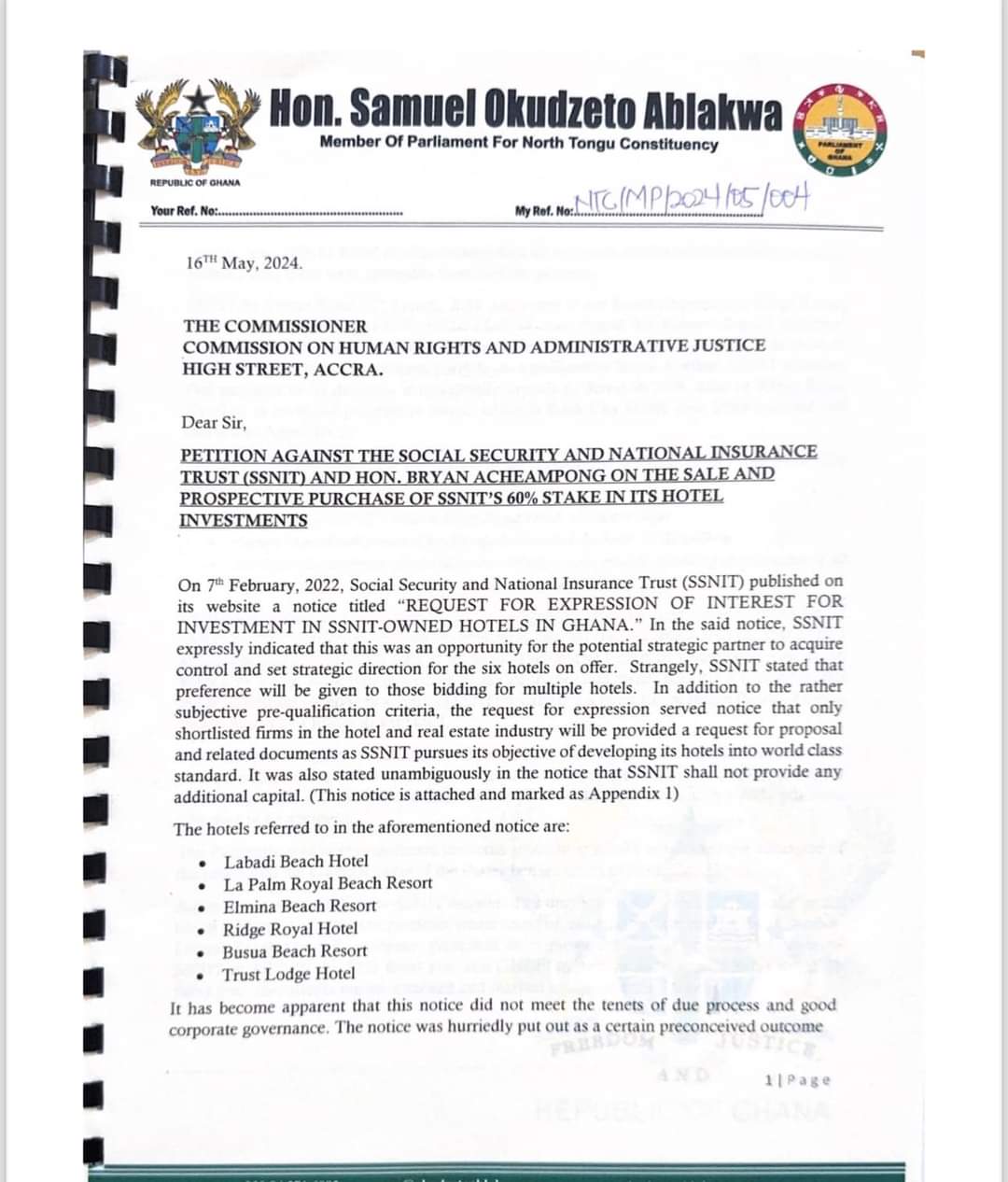
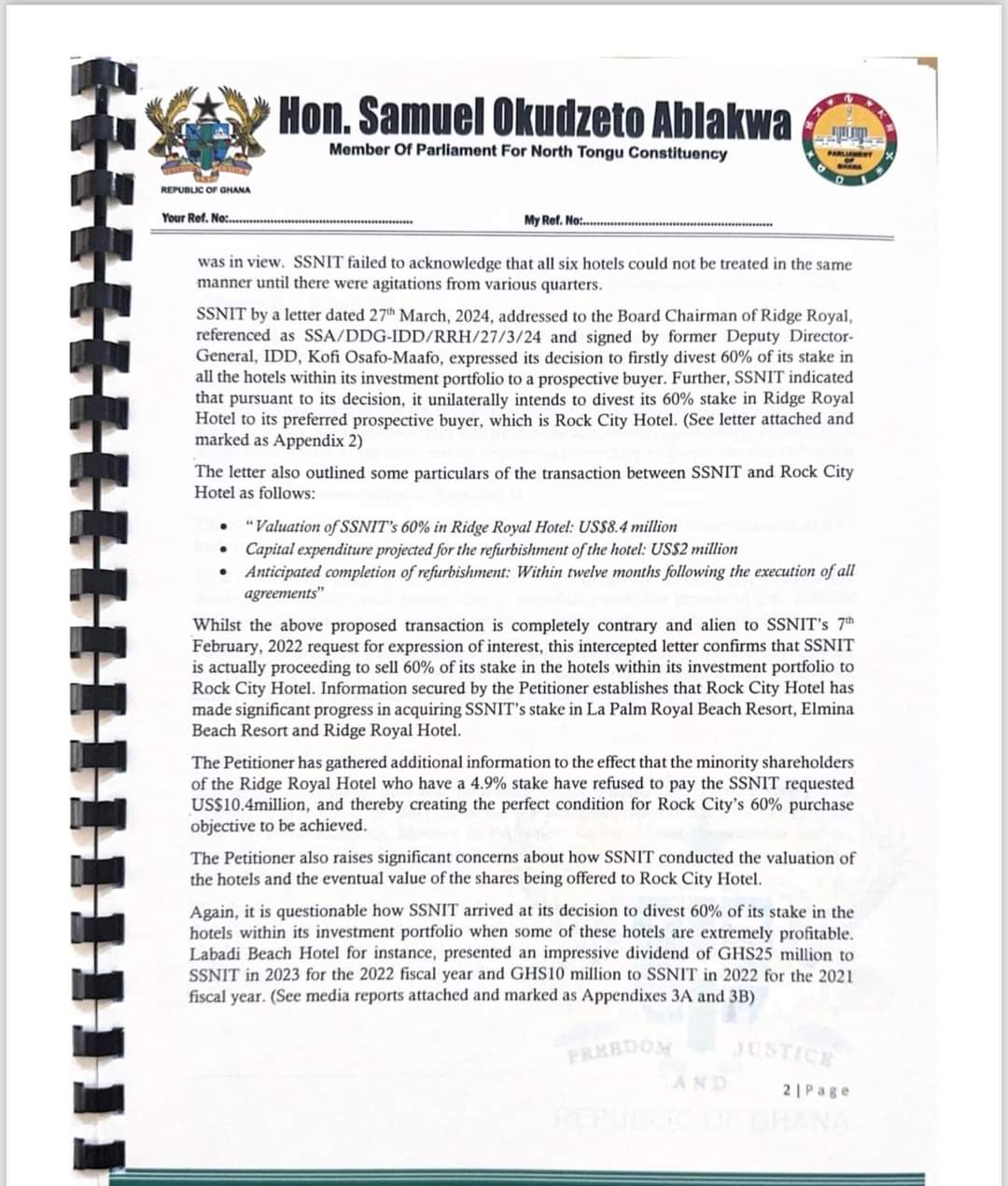
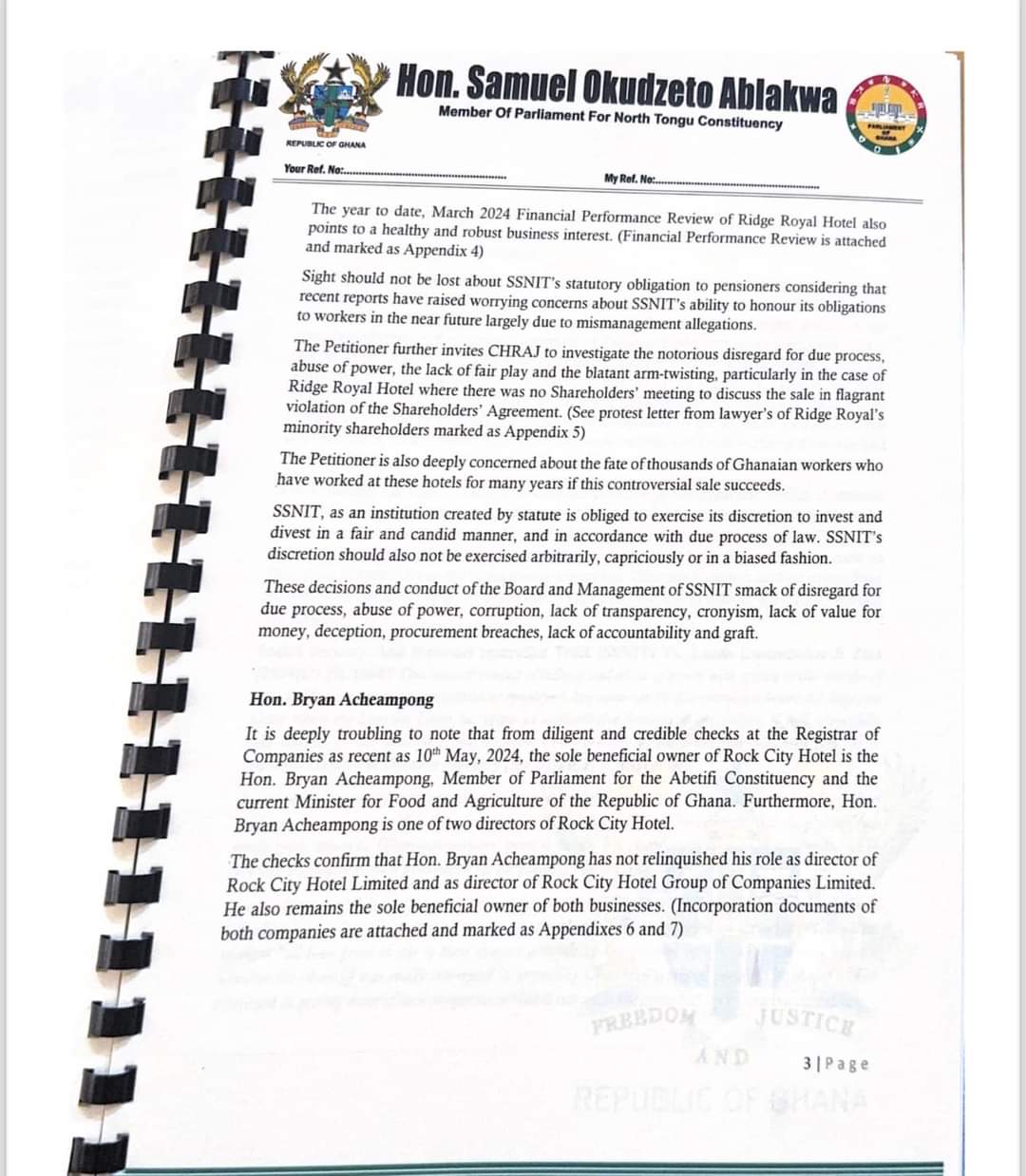
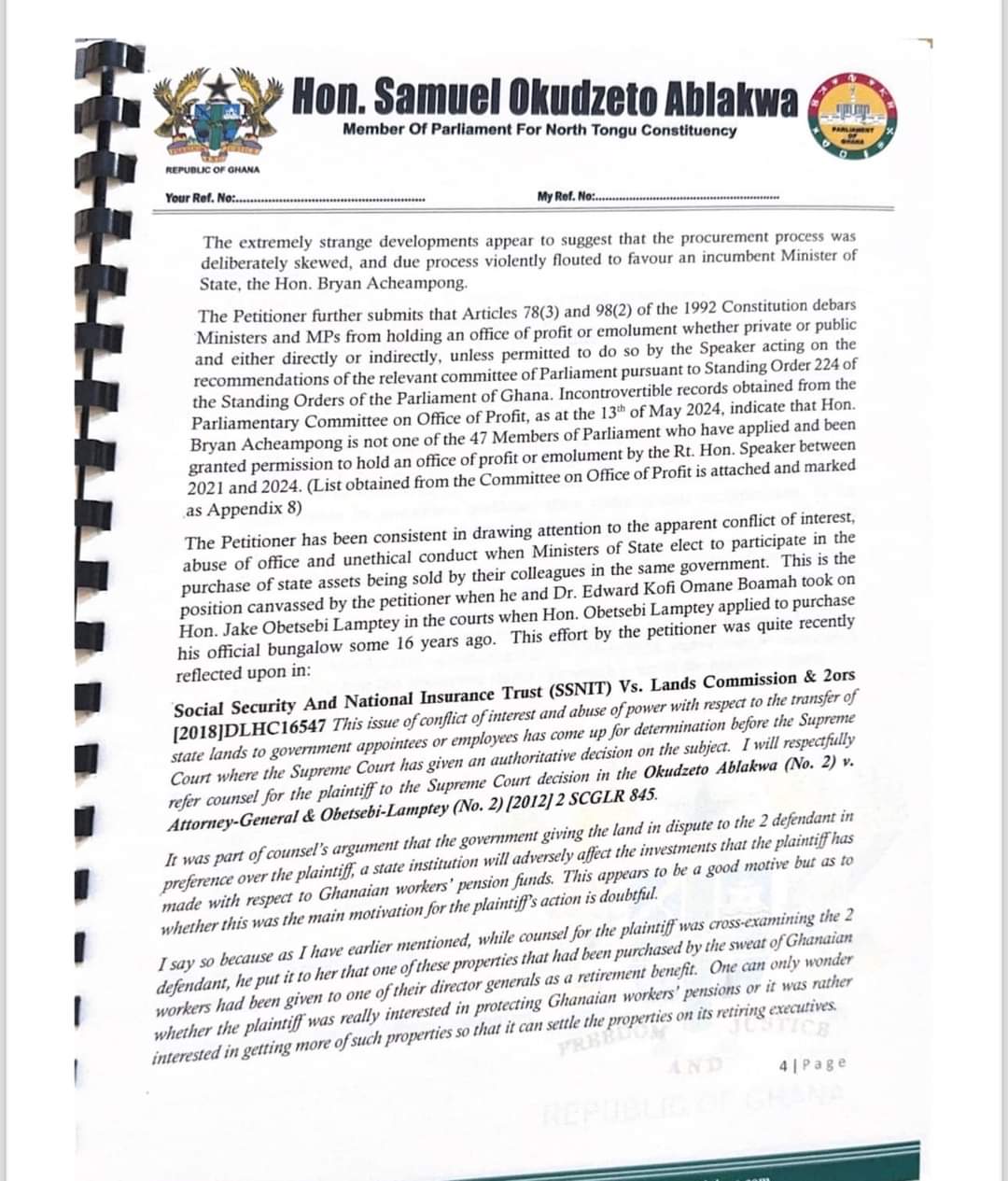
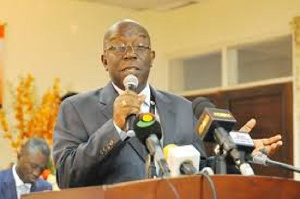
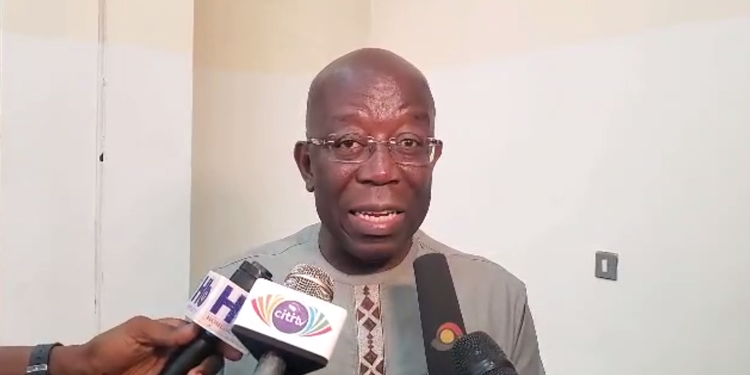
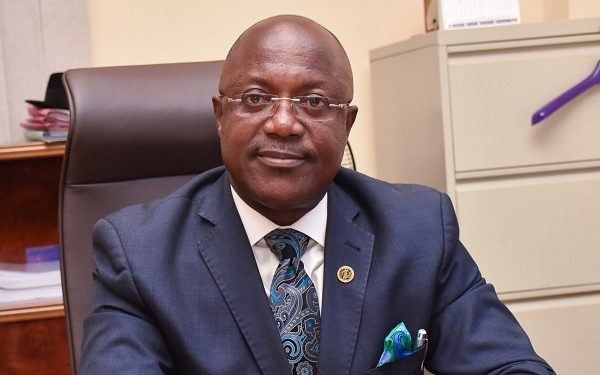
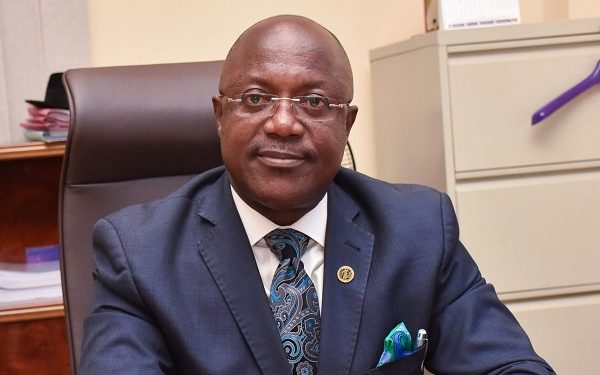
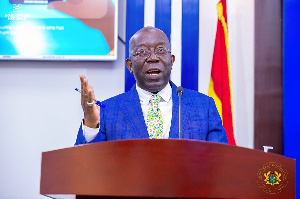
The Member of Parliament (MP) for North Tongu, Samuel Okudzeto Ablakwa, has responded to criticism from President Akufo-Addo’s counsel regarding his recent exposé on the sale of six state-owned hotels by the Social Security and National Insurance Trust (SSNIT) to the Minister of Food and Agriculture, Bryan Acheampong.
Akufo-Addo’s lawyer, Kow Essuman, pointed out that the SSNIT statement released showed that Bryan Acheampong’s Rock City began negotiations for the purchase of the six hotels in 2022, not 2018 as Ablakwa had claimed.
Mr Essuman advised Ablakwa to be cautious when presenting information to hold political leaders accountable, as spreading falsehoods could damage their reputations.
“Bro, sometimes you should take your time and read your own statements/posts. What started in November 2018 was the procurement process for the transaction adviser – see paragraph 4 of the SSNIT statement. The procurement process for the strategic partner commenced in February 2022 – see paragraph 7 of the SSNIT statement.
“In other words, Rock City came into the picture after February 2022 and not November 2018 as you sought to imply in your post. Accountability is good, but let’s be accurate,” Essuman wrote in a post shared on his X page on Monday, May 20, 2024.
Mr Ablakwa disclosed that he had petitioned the Commission for Human Rights and Administrative Justice (CHRAJ) to investigate and stop the minister from acquiring the hotels.
He said the minister’s actions not only constitute an abuse of power but also point to a lack of due process, procurement breaches, cronyism, graft, and a violation of the Constitution of Ghana.
SSNIT has also stated it is selling 60% shares of the six hotels to Bryan Acheampong’s company because they presented the best offer.
It also stated the shares of the hotels were advertised for every interested person to make a bid.
Background:
Samuel Okudzeto Ablakwa recently alleged that six hotels belonging to SSNIT are being sold to the Minister of Food and Agriculture, Bryan Acheampong.
In a post shared on social media on Friday, 17 May 2024, the MP indicated that documents he has intercepted show that negotiations to sell 60% of the shares of the six SSNIT hotels to the minister’s Rock City Hotel Limited are far advanced.
The North Tongu legislator pointed out that the sale of state properties to government officials constitutes an abuse of power and should not be allowed to happen.
The Social Security and National Insurance Trust (SSNIT) has announced that the process of securing a strategic investor for some of its hotels is in the final stages, emphasizing that no agreement has been concluded yet.
In a press release on Sunday, SSNIT denied any foul play in its decision to sell a 60% stake in its hotels to Rock City Hotel, which is owned by the Food and Agriculture Minister, Dr. Bryan Acheampong.
This announcement follows a formal petition lodged by North Tongu MP Samuel Okudzeto Ablakwa with the Commission on Human Rights and Administrative Justice (CHRAJ) to investigate allegations surrounding the sale of six hotels: Labadi Beach Hotel, La Palm Royal Beach Resort, Elmina Beach Resort, Ridge Royal Hotel, Busua Beach Resort, and Trust Lodge Hotel.
Mr. Ablakwa’s petition to CHRAJ calls for an investigation into several allegations, including conflict of interest, abuse of power, lack of due process, procurement breaches, cronyism, and graft.
In his petition, Mr. Ablakwa cites what he views as violations of constitutional provisions, specifically Articles 78(3) and 98(2) of the 1992 Constitution.
In a subsequent Facebook post on Friday, May 17, he argued that Dr. Bryan Acheampong’s alleged involvement in the hotel sale without the Speaker of Parliament’s permission constitutes a breach of parliamentary protocol regarding holding offices of profit.
“In my petition, I am inviting CHRAJ to investigate grave matters bothering on conflict of interest, abuse of power, lack of due process, procurement breaches, cronyism, and graft.”
“I have also drawn attention to blatant violations of Article 78(3) and 98(2) of the 1992 Constitution as diligent checks from Parliament’s Committee on Office of Profit reveal that Hon. Bryan Acheampong has not applied and does not have the permission of the Speaker of Parliament to hold an office of profit,” he said.
However, the Trust clarified that the strategy to partner with an investor to raise capital for its hotels and assist in their management began as far back as 2018, following the International Competitive Tendering (ICT) processes prescribed by the Public Procurement Act.
SSNIT stated that the process commenced in November 2018, after hiring a Transaction Advisor to guide the selection of a strategic investor, among other responsibilities.
“Further advertisements for an Expression of Interest (EOI) for a Strategic Partner for the SSNIT Hotels were placed in the Daily Graphic on 3rd February 2022 and in the Ghanaian Times on 7th February 2022. The advertisement was also published in The Economist Magazine on 26th February 2022,” it said.
SSNIT stated that six of the nine companies that responded to the advertisements were then shortlisted and issued with Request for Proposal documents.
“The qualifying firms were invited for the opening of their financial proposals. Based on the technical and financial evaluation, the Rock City Hotel emerged as the best. Based on the criteria set out in the RFP, Rock City Hotel submitted the best and strongest technical and financial proposal amongst those received.”
“Consequently, it is in negotiation with SSNIT to buy a 60% stake in each of the four (4) hotels (Labadi Beach Hotel, La Palm Royal Beach Resort, Ridge Royal Hotel and Elmina Beach Resort),” SSNIT stated.
They indicated that the bids for Busua Beach Resort and Trust Lodge were deemed unsuccessful, so these hotels are no longer part of the process.
The Trust emphasized that the process is still ongoing.
SSNIT stated that it will refrain from commenting further until the pending investigation with CHRAJ is completed.
“SSNIT will cooperate fully with CHRAJ throughout its investigation process,” it added.
This payment underscores SSNIT’s commitment to ensuring that pensioners receive their benefits on time.
The next scheduled payment is set for June 20, 2024. In the previous months, SSNIT has consistently made substantial payments to pensioners. In April 2024, GH¢439.41 million was disbursed to 247,002 pensioners.
March 2024 saw a payout of GH¢439.05 million to 246,407 pensioners. In February 2024, GH¢437.32 million was paid to 245,418 pensioners, while January 2024 recorded a payment of GH¢434.59 million to 244,509 pensioners.
SSNIT continues to facilitate the accessibility of these benefits to pensioners through their respective banks, ensuring a seamless process for the beneficiaries to receive their entitled amounts.
SSNIT pensioners can access their SSNIT benefits from their respective banks.
The Social Security and National Insurance Trust (SSNIT) has provided clarification regarding its decision to sell a 60% stake in four of its hotels to Rock City Hotel, owned by Bryan Acheampong, Ghana’s Minister for Food and Agriculture and Member of Parliament for Abetifi Constituency under the New Patriotic Party (NPP).
In a statement released on Sunday, May 19, SSNIT explained that Rock City Hotel Limited presented the strongest technical and financial proposal among the bids received, meeting the criteria outlined in the Request for Proposals (RFP).
SSNIT asserted that the selection process adhered strictly to the provisions of the Public Procurement Act and was conducted with transparency.
The Trust emphasized that the decision to engage with an investor was motivated by the aim to raise capital for further investments in their hotels and to enhance their management.
This initiative, initiated in 2018, followed International Competitive Tendering (ICT) procedures to ensure a fair and competitive selection process.
In its press release, SSNIT outlined the process, highlighting its commencement in November 2018 with the engagement of a Transaction Advisor.
The Trust clarified that the role of the Advisor was to facilitate the selection of a strategic investor to collaborate with SSNIT in the management and enhancement of the hotels.
“Based on the criteria set out in the RFP, Rock City Hotel submitted the best and strongest technical and financial proposal amongst those received. Consequently, it is in negotiation with SSNIT to buy a 60% stake in each of the four (4) hotels (Labadi Beach Hotel, La Palm Royal Beach Resort, Ridge Royal Hotel and Elmina Beach Resort).
“Bids for Busua Beach Resort and the Trust Lodge were considered to be unsuccessful so they are no longer part of the hotels covered in this process,” an excerpt of their statement said.
Following a formal petition lodged by North Tongu MP, Samuel Okudzeto Ablakwa, with the Commission on Human Rights and Administrative Justice (CHRAJ), an investigation is underway regarding the process surrounding the sale of six hotels.
The hotels mentioned in the petition include Labadi Beach Hotel, La Palm Royal Beach Resort, Elmina Beach Resort, Ridge Royal Hotel, Busua Beach Resort, and Trust Lodge Hotel.
However, SSNIT clarified that the bids were successful for only four hotels, not all six as claimed by the MP.
Mr. Ablakwa’s petition calls for an investigation into various allegations, including conflict of interest, abuse of power, lack of due process, procurement breaches, cronyism, and graft.
In his petition, Mr. Ablakwa highlights what he views as violations of constitutional provisions, specifically citing Articles 78(3) and 98(2) of the 1992 Constitution. He contends that these actions represent significant breaches of legal and ethical standards.
Additionally, in a Facebook post on Friday, May 17, Mr. Ablakwa argued that Bryan Acheampong’s alleged involvement in the hotel sale without the permission of the Speaker of Parliament constitutes a breach of parliamentary protocol regarding holding offices of profit.
According to Mr. Ablakwa, this is a serious violation that requires thorough investigation and accountability.
“In my petition, I am inviting CHRAJ to investigate grave matters bordering on conflict of interest, abuse of power, lack of due process, procurement breaches, cronyism, and graft.”
“I have also drawn attention to blatant violations of Article 78(3) and 98(2) of the 1992 Constitution as diligent checks from Parliament’s Committee on Office of Profit reveal that Hon. Bryan Acheampong has not applied and does not have the permission of the Speaker of Parliament to hold an office of profit,” he said.
SSNIT has stated that the strategy to partner with an investor to raise capital for its hotels and assist in their management began as far back as 2018 through International Competitive Tendering (ICT) processes as prescribed by the Public Procurement Act.
Member of Parliament for North Tongu, Samuel Okudzeto Ablakwa, has petitioned the Commission on Human Rights and Administrative Justice (CHRAJ) to investigate the sale of six hotels owned by the Social Security and National Insurance Trust (SSNIT) to Minister for Food and Agriculture, Bryan Acheampong.
Mr Ablakwa alleges that SSNIT is set to sell a majority 60% stake in the hotels to the Minister for Food and Agriculture, based on documents in his possession. He is urging CHRAJ to halt the sale to the Abetifi MP.
In his petition, Mr Ablakwa argues that the sale of SSNIT’s shares in the hotels lacks due process and violates procurement procedures.
“In my petition, I am inviting CHRAJ to investigate grave matters bothering on conflict of interest, abuse of power, lack of due process, procurement breaches, cronyism, and graft,” he said.
Mr Ablakwa also stated that the MP for Abetifi, who is the owner of Rock City Hotel Limited, has violated the Constitution. He emphasized that the MP has not sought nor received permission from the Speaker of Parliament to hold a lucrative office.
“I have also drawn attention to blatant violations of Article 78(3) and 98(2) of the 1992 Constitution as diligent checks from Parliament’s Committee on Office of Profit reveal that Hon. Bryan Acheampong has not applied and does not have the permission of the Speaker of Parliament to hold an office of profit,” part of the petition reads.
Mr Ablakwa also raised significant concerns about the possibility of job losses if the sale negotiations are finalized.
“I am additionally worried about potential job losses if this sale to Bryan Acheampong is finalised.”
The hotels in question include Labadi Beach Hotel, La Palm Royal Beach Resort, Elmina Beach Resort, Ridge Royal Hotel, Busua Beach Resort and Trust Lodge Hotel.
Read below the details of Ablakwa’s petition
As I earlier disclosed on Metro TV’s Good Morning Ghana programme, I have today successfully
Intercepted documents in my possession confirm that SSNIT is far advanced in selling a controlling 60% stake in six of its hotels to Rock City Hotel Limited owned by Hon. Bryan Acheampong, the MP for Abetifi and Minister for Food and Agriculture.
Hon. Acheampong is a director and the sole beneficial owner of Rock City Hotel Limited.
The six SSNIT hotels being sold are:
• Labadi Beach Hotel • La Palm Royal Beach Resort • Elmina Beach Resort • Ridge Royal Hotel • Busua Beach Resort • Trust Lodge Hotel
In my petition, I am inviting CHRAJ to investigate grave matters bothering on conflict of interest, abuse of power, lack of due process, procurement breaches, cronyism, and graft.
I have also drawn attention to blatant violations of Article 78(3) and 98(2) of the 1992 Constitution as diligent checks from Parliament’s Committee on Office of Profit reveal that Hon. Bryan Acheampong has not applied and does not have the permission of the Speaker of Parliament to hold an office of profit.
Since 2008, when Dr. Omane Boamah and I dragged the late Hon. Jake Obetsebi Lamptey to court over attempts to buy his official bungalow, I have always maintained that it is wrong, unethical and reprehensible for public officials, particularly, Ministers of State to participate in the purchase of state assets. It is a matter of principle.
Also, a number of these SSNIT hotels are very profitable and one wonders the rationale for the sale.
I am additionally worried about potential job losses if this sale to Bryan Acheampong is finalised.
May God help us to defeat state capture, and to scuttle this opaque and unethical transaction, which is certainly not in the national interest.
Chairman of the Public Accounts Committee (PAC) of Parliament, James Klutse Avedzi, has said he was not taken aback when the International Labour Organisation (ILO) reported that the reserves of the Social Security and National Insurance Trust (SSNIT) would be depleted by 2036.
To buttress his claim, he asserted that SSNIT does not venture into any profitable investments.
Speaking on TV3’s Hot Issues programme, the PAC Chair said the work of SSNIT needs to be revised to ensure profitability and growth.
“SSNIT continues to enter into investments that aren’t profitable. I wasn’t surprised at the ILO report on reserves of SSNIT depleting. Something must be done about the work of SSNIT,” James Klutse Avedzi stated.
According to the latest report from the International Labour Organisation (ILO), SSNIT will likely be unable to meet benefit payments by 2036 due to dwindling reserves.
The report further stated that the combined income from contributions, investment returns, and other sources would no longer cover annual expenses, including pension payouts, by 2036.
However, SSNIT countered this assertion in a statement, highlighting that it has consistently met pension obligations since the scheme’s inception in 1991 without any missed payment periods.
The Social Security and National Insurance Trust (SSNIT) has confirmed that the government has fulfilled its obligations regarding pension contributions for public sector employees.
Additionally, efforts are being made to address outstanding legacy debt.
This affirmation addresses worries raised by an International Labour Organization (ILO) actuarial review, which warned that without reforms to strengthen funding levels, SSNIT’s reserves could be exhausted by 2036.
During a press briefing, Joseph Poku, SSNIT’s Chief Actuary, shed light on the pension fund’s financial status and ongoing discussions with the government regarding legacy liabilities.
“With these legacy debts, before you can come to a final figure, there has to be an agreement. There has to be some kind of discussion with the state, with the government, and then we arrive at that target,” Mr. Poku stated.
He explained the complexities involved. “Even when it comes to the computation of debts, we have a way; we know based on the law, we need to sit with them as we are doing and then they’ll go through everything before we can arrive at a definite figure. I can’t give you a definite figure right now.”
The Chief Actuary clarified that outstanding debt comprises principal amounts as well as accrued interest and penalties. “The debt has a principle component and then the penalty. So we need to agree on all that before we can come out with the total debt that the government owes.”
On the urgency of increasing SSNIT’s contribution rate from the current 11 percent to the recommended 22 percent level, Mr. Poku stressed the need for extensive consultations with stakeholders. “We haven’t indicated a rate that we need to push. We need to engage employers. We need to engage workers. The labour unions are key…on coming out with a specific rate,” he said.
“We, actuaries, will give proposals – 10, 12, 15, 16 percent – whatever. But what I can tell you is the report says our contribution rate that will make the scheme more sustainable is 22 percent,” he said, acknowledging SSNIT is presently “doing half of what we are supposed to based on the actuary report.”
“We should rather be talking about that more and sensitising stakeholders so when we come to them and suggest any figure, they’ll know where we are coming from,” Mr. Poku advocated.
Addressing questions on reserve levels, the actuarial chief said providing a definitive lump sum is impractical given outstanding debts owed. “You cannot say our reserves are 13 billion or 20 billion because it’s a difficult figure to pinpoint. We have debt people owe that factors into the calculation once reconciled,” he added.
However, the Chief Actuary affirmed SSNIT’s active involvement in the ILO’s actuarial process. “SSNIT is conversant with every result in their report. We work with them, provide data and assumptions – everything was discussed before the final report.”
Responding to a query on how long benefits could be paid solely from reserves if no new funds came in, Mr. Poku explained SSNIT’s annual reserve-to-expenditure analysis underpinning such projections. “Given expenditures versus calculated reserves, it can take three years, four years, five years without contributions. The latest for 2022 will be 2.4 years – if you collect no contributions or returns, based on expenditures your reserve will last around three years.”
Crucially, Mr. Poku confirmed ongoing high-level negotiations between SSNIT and financial authorities regarding the unsettled pension debt amounts. “There’s an ongoing discussion on that. Fortunately, we’ve established at year-end, twice yearly, we sit with them and agree on the debt position. We’ve accepted and are negotiating how to pay once reconciled. “It’s not like we started and will end next month…We periodically reconcile debts, then try to make payment arrangements,” he added.
He concluded that SSNIT is currently working on a funding policy“with the ILO’s technical support to formalise long-term objectives, understand financing options, ensure sufficient assets and enhance transparency”.
The Social Security and National Insurance Trust (SSNIT) has responded to the study by the International Labour Organization (ILO) projecting a complete depletion of SSNIT’s reserve by 2036, calling it a prediction.
Joseph Poku, SSNIT’s Chief Actuary, stated that the study is conducted every three years as required by law, providing an overview of the scheme’s status, assets, and liabilities.
He added that it also offers management ideas on measures to ensure the scheme’s sustainability.
During a press conference on Monday, Mr. Poku cited previous projections, including a 2011 report that predicted SSNIT would be unable to pay funds by 2019, to emphasize that such forecasts should be taken with caution.
“The recommendations are not going to happen at all costs, that’s not what it is. So it gives you an idea that based on these assumptions, it’s likely to happen but there is no certainty. So, in 2011, it was projected that the scheme reserved will run or will be depleted.”
“The report (2011) says, among other things, that if contribution rates were not increased in the future, the annual expenditure on benefits and registration would exceed income from contributions and the funds from 2019 would just tank,” he said.
“What it said was that by 2019, we’re not going to have enough money to pay benefits. We are in 2024 and we have never defaulted in payments or benefits from 2019 up to date. So in this report, it’s not different from the reports that we’ve obtained over the years. Like I said, it gives you an idea of where you are going as a scheme, and then you take proactive measures to steer off, if there is any danger ahead of you,” Mr Poku explained.
Following an actuarial valuation study of the Social Security and National Insurance Trusts (SSNIT) viability, the International Labour Organization (ILO) projected a complete depletion of SSNIT’s reserve by 2036.
ILO’s study indicated that total income, including contributions, investment income, and other income, would no longer be sufficient to cover annual expenditures, including benefit payments to pensioners, by 2029.
“Starting in 2029, total income (contributions, investment income and other income) is no longer sufficient to pay for annual expenditures. The reserve starts to decrease. During the year 2036, the reserve drops to zero” the research emphasised.
SSNIT will rely solely on its reserves to meet payment demands, leading to a gradual depletion process until it reaches zero by 2036, as indicated by the valuation report.
Mr. Poku, while defending SSNIT’s sustainability, emphasized that there was no need for alarm. He acknowledged that reports over the years have consistently emphasized the necessity of increasing contribution rates.
“Ladies and gentlemen, it doesn’t count easy to increase contribution rates. It means the law has to be changed, we need to engage stakeholders, we have the employers, we have the workers as a group, we have our regulator, and the living parliament and government. So it goes through a process, and that process is a bit long,” Mr Poku said.
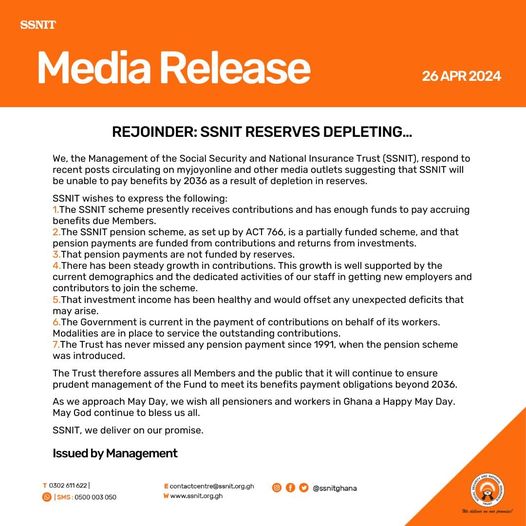
In an earlier press statement, SSNIT assured Ghanaians that the scheme is not solely funded by reserves and that they have sufficient funds to pay benefits owed to members.
“There has been steady growth in contributions. This growth is well supported by the current demographics and the dedicated activities of our staff in getting new employers and contributors to join the scheme.”
“Investment income has been healthy and would offset any unexpected deficit that may arise…The Trust has never missed any pension payment since 1991, when the pension scheme was introduced.”
SSNIT said the Government of Ghana continued to pay contributions on behalf of its workers, and that “modalities are in place to service the outstanding contributions”.
The Management reassured the public that it would “continue to ensure prudent management of the Fund to meet its benefits payment obligations beyond 2036.”
The Social Security and National Insurance Trust (SSNIT) has refuted claims suggesting that the Scheme might encounter difficulties in meeting its financial obligations to beneficiaries in the future, as outlined in the 2020 International Labour Organization Actuary Report.
Recognizing the speculative nature of the report’s findings, the Scheme emphatically stated that these projections do not correspond with the current realities on the ground.
Speaking to reporters in Accra on Monday, Joseph Poku, Chief Actuary of SSNIT, assured contributors that the scheme remains strong and adequately positioned to meet their needs.
“You cannot lift everything in there and say SSNIT is collapsing in the next 12 years; it is far from the truth. These are the processes…You take a period of 75 years and then, based on reasonable assumptions, you make projections. But remember, if you alter the assumptions, the results will differ. So, don’t take the report at face value; consider it alongside the underlying assumptions,” he further stated.
Mr. Poku further clarified that despite occasional delays in government contributions, the government has fulfilled its commitments up to January 2024. Ongoing engagements are in place to ensure sustained support.
“Monthly contributions have been paid up to January 2024,” he said, adding “While we recognize that March payments should have been made by now, it’s important to note that the government has fully covered January’s contributions, and part of February’s as well. Any delays are minimal, considering the overall timeline,” he said.
Former Attorney-General Betty Mould-Iddrisu has expressed concern over the apparent collapse of the Social Security and National Insurance Trust (SSNIT).
She finds it alarming that SSNIT’s reserves are on the brink of depletion, describing the revelation as shocking.
“It’s shocking, SSNIT is evidently on the verge of collapse,” Madam Mould-Iddrisu said on the Hot Issues on TV3 Sunday, April 28 with Kemmini Amanor while commenting on a prediction by the International Labour Organisation (ILO) that the reserves of SSNIT are going to be completely depleted by 2036.
According to the International Labour Organization (ILO), the total income, comprising contributions, investment income, and other revenue sources, will become insufficient to cover annual expenditures, including pension payments to retirees, by the year 2029.
“Starting in 2029, total income (contributions, investment income and other income) is no longer sufficient to pay for annual expenditures. “The reserve starts to decrease. During the year 2036, the reserve drops to zero” the research emphasised.
SSNIT, with no alternative payment methods, will rely on its reserves to meet payment demands, thus initiating the depletion process. According to the valuation report, this trend is expected to persist until 2036, when reserves are projected to diminish to zero.
The reserve ratio, indicating the year-end reserve compared to annual expenditures, declines from 3.4 to 0 between 2021 and 2036. Consequently, without contributions, investment income, or other revenue streams, the scheme will be unable to cover pension benefits.
The valuation report attributes this predicament primarily to government payment delays. As of December 31, 2021, government arrears accounted for 73.7% ofSSNIT’s total indebtedness of GH¢9.35 billion. This late payment significantly affects SSNIT’s expected investment returns, resulting in a 1.3% decrease, as highlighted in the report.
According to the study, “Past experience suggests that, by not paying on time and not paying the interest income on delayed contributions, the Government shifts an important part of the cost to the private sector”.
The Social Security and National Insurance Trust (SSNIT) has responded recent posts suggesting that it will not be able to pay benefits to members by 2036,
SSNIT’s management highlights a consistent upward trend in contributions, debunking claims of diminishing reserves.
Assuring that they have the capacity to fulfill its members’ benefit obligations with ample funds at its disposal.
This comes in response to assertions from the International Labour Organisation (ILO) suggesting that by 2036, SSNIT might struggle to meet benefit payments due to declining reserves.
In a statement conveyed to the Ghana News Agency, SSNIT management clarified that pension disbursements do not solely rely on reserves, among other pertinent points.
“The SSNIT Scheme presently receives contributions and has enough funds to pay accruing benefits due members. The pension scheme is a partially funded scheme and pension payments are funded from contributions and returns from investments.”
“…There has been steady growth in contributions. This growth is well supported by the current demographics and the dedicated activities of our staff in getting new employers and contributors to join the scheme,” the statement noted.
It added that “investment income has been healthy and would offset any unexpected deficit that may arise…The Trust has never missed any pension payment since 1991, when the pension scheme was introduced.”
Labour Analyst, Seth Abloso has voiced concerns regarding the ongoing debate surrounding the sustainability of the Social Security and National Insurance Trust (SSNIT), citing significant political interference in its management.
Speaking with Johnnie Hughes on 3FM Sunrise Morning Show, Abloso stressed, “It means SSNIT has not been managed to the expectation of its membership, and it’s clear. There is too much political interference in the management of SSNIT.”
Mr Abloso pointed to recent events within SSNIT, particularly the sudden removal of the Director-General, suggesting underlying issues.
“Only recently a Director-General was given the marching orders. The tone of the letter that asked him to go home clearly indicates that something was terribly wrong, and that thing will forever haunt him and his credibility.”
Regarding the appointment of a new Director-General, Mr Abloso noted inconsistencies, stating, “We were then told quickly that he has done nothing wrong. But the letter that sent him home, the first paragraph made reference to the appointment letter by the Public Services Commission. But in announcing the replacement, we didn’t see the Public Services Commission involved,” he said.
Furthermore, Abloso criticized the appointment of a Deputy Director-General allegedly associated with past controversial projects.
“They appointed a Deputy Director-General who not long ago was involved in signing papers for a certain AGYAPA project, even while serving as Deputy Director-General and without resigning from SSNIT,” he asserted.
Mr Abloso underscored the negative impact of political interference on SSNIT’s operations, urging vigilance from the labor force.
“You pushed him, a deputy Director-General who not too long ago was signing papers for a certain AGYAPA project even whilst he was Deputy Director-General and hasn’t resigned from SSNIT,” he stated.
“Political interference has been a source of anguish for SSNIT. The labor force should be deeply concerned,” he emphasized.
He also referenced historical concerns over SSNIT’s regulations, mentioning previous audits and recommendations for prosecution.
“These troubling regulations were highlighted in 2021. A forensic audit of SSNIT was commissioned by Yaw Osafo-Maafo, the then Finance Minister, conducted by Deloitte Worldwide Investment and other consultants,” he disclosed.
In conclusion, Abloso stressed the importance of accountability and transparency in SSNIT’s management, urging stakeholders to address the systemic issues affecting the institution.
In response to a report by the International Labour Organization (ILO) warning that Ghana’s Social Security and National Insurance Trust (SSNIT) could deplete its funds by 2036, labor expert Austin Gamey has called on organized labor to safeguard employer deductions to SSNIT.
Gamey pointed out that the pension scheme has been marred by corruption and government intervention.
Speaking on TV3’s Ghana Tonight programme on Thursday, April 25, 2024, Austin Gamey said, “The whole scheme has been bedevilled by corruption and government interference…The government must not manage the scheme. Organised labour must protect the deductions by employers”.
He emphasized the necessity of managing SSNIT without government intervention and advocated for oversight of fund managers to ensure proper accountability for entrusted funds.
As of the end of December 2021, the government’s debt to SSNIT amounted to GH¢9.35 billion, with late payments comprising GH¢6.9 billion of this total.
The government’s delayed payments have also resulted in a 1.3 percent reduction in SSNIT’s investment returns.
According to the ILO report, the government’s failure to make timely payments has effectively shifted a substantial financial burden onto the private sector.
“Past experience suggests that, by not paying on time and not paying the interest income on delayed contributions, the government shifts an important part of the cost to the private sector,” the report said.
The ILO forecasted that SSNIT would exhaust its funds in fulfilling its financial obligations to beneficiaries in the future.
The International Labour Organisation (ILO) has issued a warning regarding the sustainability of Ghana’s Social Security and National Insurance Trusts (SSNIT),stating that its funds may be depleted by 2036.
According to a report on myjoyonline.com, a recent study has revealed that SSNIT’s income will not be sufficient to cover its yearly expenses starting in 2029. This shortfall is projected to result in a gradual depletion of its reserves over time.
By the year 2036, the reserve ratio, which measures the ratio of reserves to total expenditures for the year, is anticipated to decline from 3.4 to zero.
“Starting in 2029, total income (contributions, investment income and other income) is no longer sufficient to pay for annual expenditures.
“The reserve starts to decrease. During the year 2036, the reserve drops to zero,” the report stated.
The primary cause of this situation is the government’s tardiness in fulfilling its obligations.
As of December 2021, the government’s debt to SSNIT stood at GH¢9.35 billion, with GH¢6.9 billion attributed to late payments.
This delay in government contributions has resulted in a 1.3 percent reduction in SSNIT’s investment returns.
The report indicates that the government’s failure to meet its financial responsibilities on time has shifted a considerable financial burden onto the private sector.
“Past experience suggests that, by not paying on time and not paying the interest incomeon delayed contributions, the government shifts an important part of the cost to the private sector,” the study stated.
The International Labour Organization (ILO) predicts that SSNIT’s reserve will be fully depleted by 2036, as per an actuarial valuation study on the trust’s sustainability.
ILO further states that the total income, which comprises contributions, investment income, and other revenue, will no longer cover annual expenses, including pension payments to retirees, by 2029.
“Starting in 2029, total income (contributions, investment income and other income) is no longer sufficient to pay for annual expenditures.
“The reserve starts to decrease. During the year 2036, the reserve drops to zero” the research emphasised.
SSNIT’s sole means of meeting payment demands is relying on its reserves, initiating the depletion process. This trend is expected to persist until 2036, as indicated in the valuation report, when the reserves are projected to reach zero.
The reserve ratio, calculated as the end-of-year reserve over the annual expenditures, declines from 3.4 in 2021 to 0 by 2036. Consequently, the scheme will be unable to pay pension benefits in the absence of contributions, investment income, or other revenue streams.
The delay in government payments emerges as the primary factor driving this scenario, as highlighted in the valuation report. Of the total indebtedness to SSNIT, amounting to GH¢9.35 billion as of December 31, 2021, 73.7% (equivalent to GH¢6.9 billion) is attributable to late contributions by the government.
The report underscores that this results in a 1.3% decrease in the expected returns on SSNIT’s investments.
According to the study, “Past experience suggests that, by not paying on time and not paying the interest income on delayed contributions, the Government shifts an important part of the cost to the private sector”.
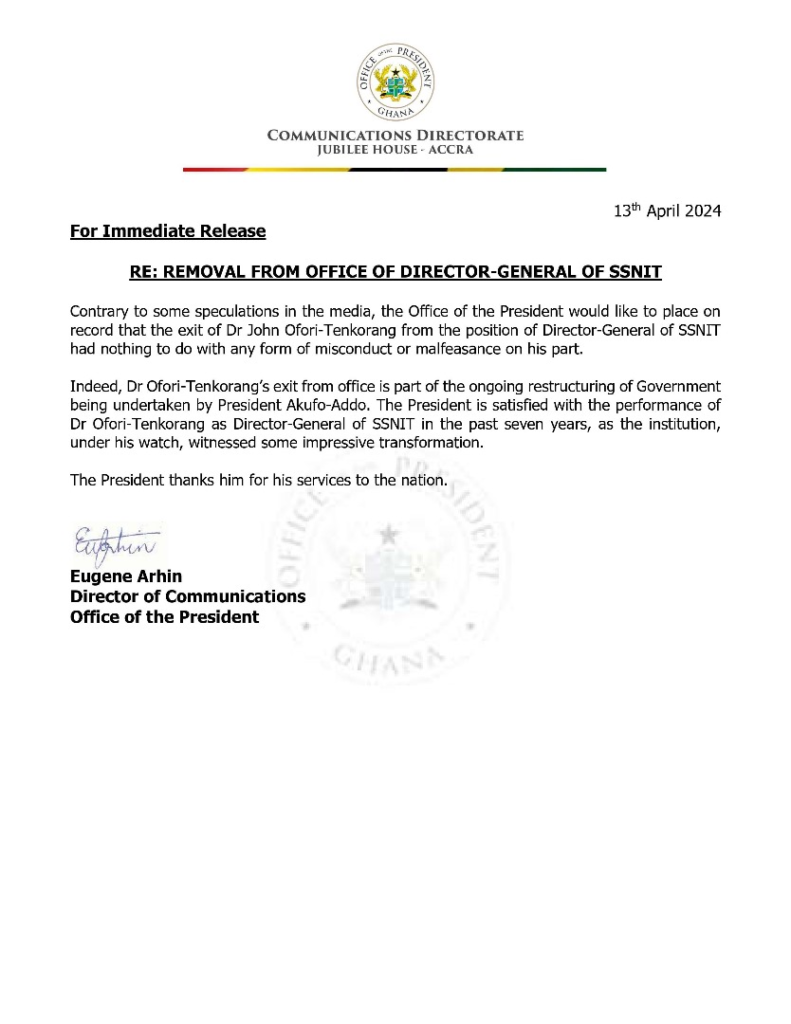
The Presidency has provided clarification on the dismissal of Dr. John Ofori-Tenkorang as the Director-General of the Social Security and National Insurance Trust (SSNIT).
In a statement released on Saturday, April 13, Eugene Arhin, the Director of Communications at the Presidency, explained that Dr. Ofori-Tenkorang’s dismissal was not a result of misconduct or malfeasance.
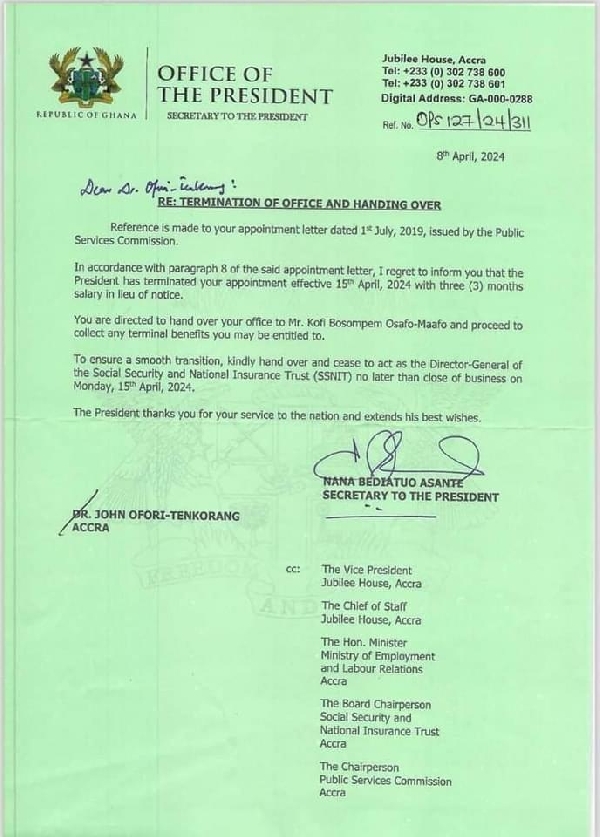
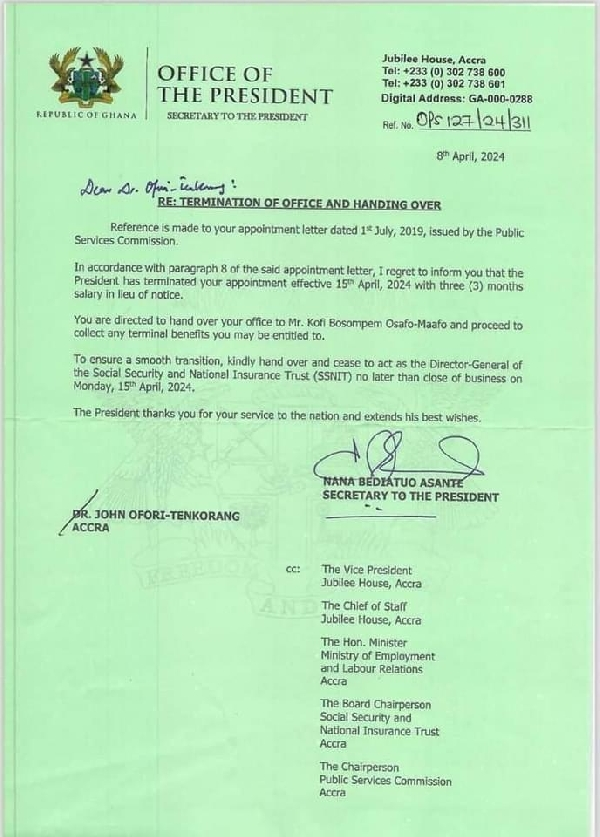
On Monday, April 8, President Akufo-Addo terminated Dr. Ofori Tenkorang’s tenure as the Director-General of SSNIT. He has been instructed to transfer his responsibilities to Kofi Bosompem Osafo-Maafo by Monday, April 15.
Contrary to rumors suggesting misconduct as the reason for his dismissal, the Presidency asserts that Dr. Ofori-Tenkorang’s departure is part of the ongoing restructuring initiated by President Akufo-Addo.
The Presidency also noted that President Akufo-Addo is pleased with Dr. Ofori-Tenkorang’s performance, as the institution experienced significant transformation under his leadership.
The Deputy Director General in charge of Finance and Administration at the Social Security and National Insurance Trust (SSNIT), Michael Addo, has resigned with immediate effect.
His resignation is reportedly due to tension between himself and the newly appointed Director General, Kofi Bosompem Osafo-Maafo.
Kofi Bosompem Osafo-Maafo is SSNIT Director-General
Sources suggest that Osafo-Maafo was allegedly mistreated during his tenure as a deputy, and his recent promotion to Director General may have prompted Addo’s decision to step down.
Mr Addo’s resignation came shortly after outgoing Director General, Dr. John Ofori Tenkorang, presented his handing over notes to the Board of the Trust on Friday, April 12, 2024, before the Monday deadline to vacate his position.
President Akufo-Addo terminated Dr. Ofori Tenkorang’s appointment on Wednesday, April 9, and appointed Kofi Bosompem Osafo-Maafo as his replacement.
This led to Pearl Nana Ama Darko, the Deputy Director General for Operations and Benefits, being reassigned to the role of Commissioner for Support Services at the Ghana Revenue Authority (GRA).
Juliana Kpedekpo has taken over from Pearl Nana Ama as the new Deputy Director General for Operations and Benefits.
The President is expected to appoint a new Deputy Director General for Investment and Development to replace Kofi Osafo-Maafo, as well as another deputy for Finance and Administration to succeed Michael Addo in the coming days.
President Akufo-Addo has appointed Kofi Osafo-Maafo, the son of Osafo-Maafo, as the new Director-General of the Social Security and National Insurance Trust (SSNIT), following seven years of serving as Deputy Director-General.
Kofi Osafo-Maafo is an executive with 25 years of experience in the investment management and investment banking industries, including 22 years in the UK.
He has held key roles advising leading UK-based global investment management firms on their equity investments, with a focus on mining and oil sector investments across Global Emerging Markets, Europe, and North America.
Previously, Kofi served as the Senior Investment Manager at Pictet Asset Management and held roles at HSBC Asset Management, F&C Asset Management, and the Abu Dhabi Investment Authority.
He also worked as an Investment Banker/Director at Unicredit Bank in London, overseeing European Oil Exploration and Production companies. Kofi has also worked as a consultant assessing iron ore investment opportunities in West Africa.
Kofi Osafo-Maafo holds a BSc (Hons) in Economics from Queen Mary, University of London, and a MA in International Business and Finance from the University of Reading.
He is an Associate Member of the UK Society of Investment Professionals and currently serves on the Board of CalBank Limited, a leading indigenous bank in Ghana, where he is a member of the Audit and Risk Management Subcommittees.
President Akufo-Addo has relieved Dr. John Ofori-Tenkorang of his duties as Director-General of the Social Security and National Insurance Trust (SSNIT).
Dr. Tenkorang has been instructed by the president to complete the handover process to Kofi Bosompem Osafo-Maafo, the Deputy Director-General for Investments, by April 15, 2024.
Reportedly, President Akufo-Addo has implemented several changes within the management of SSNIT, as stated by myjoyonline.com. Pearl Nana Ama Darko, the Deputy Director-General for Operations and Benefits, has been reassigned to the Ghana Revenue Authority (GRA) to assume the role of Commissioner for Support Services.
In response to these changes, President Akufo-Addo has appointed Juliana Kpedekpo as the new Deputy Director-General for Operations and Benefits. Additionally, the president is expected to nominate a new Deputy Director-General for Investment and Development in the near future.
A letter signed by the Executive Secretary to the President, Nana Asante Bediatuo, communicated the termination of Dr. Tenkorang’s appointment, stating that he will receive three months’ salary in lieu of notice.
The statement emphasized the need for a smooth transition and instructed Dr. Tenkorang to cease acting as the Director-General of SSNIT by the close of business on Monday, April 15, 2024.
President Akufo-Addo expressed gratitude for Dr. Tenkorang’s service to the nation and extended his best wishes.
Kofi Bosompem Osafo-Maafo, the Deputy Director-General for Investments, is the son of Ghanaian political figure Nana Yaw Osafo-Maafo, who currently serves as Senior Advisor to President Akufo-Addo.
Nana Yaw Osafo-Maafo previously held the position of Senior Minister in President Akufo-Addo’s first-term government from 2017 to 2020 and has served as a Member of Parliament for Akim Oda from 1997 to 2009, holding various government roles.
The recent series of dismissals and appointments by President Akufo-Addo, involving the removal of Dr. John Ofori-Tenkorang as Director-General of the Social Security and National Insurance Trust (SSNIT) and Rev. Dr. Ammishaddai Owusu-Amoah as Commissioner General of the Ghana Revenue Authority (GRA), has raised questions about the president’s motives.
President of IMANI-Africa, Franklin Cudjoe, expressed concerns regarding the lack of transparency and explanation surrounding these decisions, particularly in response to the sudden termination of the SSNIT Director-General’s appointment.
In a Facebook post, Cudjoe underscored the significant accomplishments achieved under the leadership of both the outgoing Commissioner General of GRA and the SSNIT Director-General, particularly in the areas of pension fund protection and financial performance improvement.
“First, it was the GRA board and its Commissioner that got axed crudely by an executive fiat – no reasons given. However, under the previous board, Ghana has, for the first time, attained 14% tax to GDP ( from 11-12% for many years), a critical milestone under Ghana’s IMF programme. Now, SSNIT’s Director-General, who has 9 months left of his tenure, has been sacked by the President with immediate effect. There are no reasons given for terminating the DG.
“The DG’s foresight and a bit of luck prevented our pensions from the unforgiving jaws of the cantankerous debt restructuring programme (DDEP) by holding minimal government paper. The DG’s leadership has been unrepentant in chasing government arrears and expanding coverage to the self-employed. The leadership has managed to divest SSNIT’s ownership in hotels to prevent haemorrhaging pension funds. Crucially, SSNIT has been scaling down on real estate investment, which has never been profitable but beloved by politicians with control over SSNIT,” he pointed out.
Observing the replacements of the two officials with individuals perceived as politically compliant, Cudjoe sounded the alarm regarding the potential risks associated with such appointments. He cautioned against appointing individuals solely based on political allegiance, emphasizing the importance of competence and independence in leadership roles.
Cudjoe’s concerns extend beyond the immediate implications for SSNIT and GRA. He questions the President’s overarching agenda, speculating whether these actions aim to consolidate political support or facilitate undisclosed contracts in the final hours of the President’s tenure.
He believes these concerns have widespread repercussions for the country, the government, the New Patriotic Party (NPP), and its flagbearer, Dr. Mahamudu Bawumia.
“The replacements in these two institutions, GRA and SSNIT, are seen by many as very pliant political obedients. And that is dangerous. What exactly is the President’s grand plan? Consolidate his base or push through curious contracts this last hour? These whimsical acts without explanation actually hurt the country, his government, party and Dr. Mahamudu Bawumia,” he wrote.
On April 9th, President Nana Addo Dankwa Akufo-Addo named son of Yaw Osafo-Maafo, who is the Senior Presidential Advisor, Kofi Bosompem Osafo-Maafo, as the new Director-General of the Social Security and National Insurance Trust (SSNIT).
Kofi had previously served as Deputy Director-General for seven years.
He succeeds John Ofori-Tenkorang, who was dismissed by President Nana Addo Dankwa Akufo-Addo.
Here is a profile of Kofi Bosompem Osafo-Maafo
With a career spanning 25 years in executive positions within investment management and investment banking, Kofi brings extensive experience, notably spending 22 years in the United Kingdom.
During this period, he held key advisory roles with prominent UK-based global investment management firms, particularly focusing on equity investments in the mining and oil sectors across Global Emerging Markets, Europe, and North America.
As Deputy Director-General, Investment and Development of SSNIT, Ghana’s national pension fund, Kofi led the restructuring of the multi-asset class investment portfolio.
Previously, he served as a Senior Investment Manager at Pictet Asset Management, the investment management arm of The Pictet Group, overseeing investments in mining, oil & gas, and material sectors.
Kofi’s career began at the Abu Dhabi Investment Authority, followed by roles at Aviva Investors, HSBC Asset Management, Halbis Capital, and F&C Asset Management.
He also held a position as Investment Banker/Director at the investment banking arm of Unicredit Bank in London, with analytical oversight for European Oil Exploration and Production companies.
Furthermore, Kofi has provided consultancy services, evaluating iron ore investment opportunities in West Africa.
Currently, Kofi sits on the Board of CalBank Limited, a leading indigenous bank in Ghana, contributing to its Audit and Risk Management Subcommittees.
He holds a BSc (Hons) in Economics from Queen Mary, University of London, and a MA in International Business and Finance from the University of Reading. Kofi is an Associate Member of the UK Society of Investment Professionals.
Vice President Dr. Mahamudu Bawumia highlighted the significant cost savings brought about by digitalization in Ghana.
He cited examples such as the Social Security and National Insurance Trust (SSNIT), which saved GHC480 million by removing 29,000 ghost pensioners, and the National Service Secretariat, which eliminated 44,000 ghost workers, resulting in savings of over GHC356 million.
Speaking at the launch of LEADing Justice in Accra, a strategic framework document outlining the Chief Justice’s vision for the Judiciary and Judicial Service of Ghana, Vice President Bawumia expressed his satisfaction that digitization was a central element of the Chief Justice’s vision.
He commended Ghana for its rapid progress in digitization and praised the Chief Justice for bringing renewed focus, dynamism, and energy to the Judiciary since assuming office the previous year.
“It is my hope that today’s event will herald a new dawn in the history of our judicial system propelled by efficiency, excellence, knowledge, and integrity.”
For instance, he noted that from independence until 2017, only four percent of the adult population possessed Tax Identification Numbers, as seen in the case of 2014.
“When we digitalized and gave everyone a Ghana Card and made the decision to make the Ghana Card Tax Identification number, we increased the proportion of individuals with Tax ID, the number moved from four per cent to 85 per cent just like that.
“We have also seen through digitalization that you can deal with corruption. We have eliminated ghost workers at the Controller and Accountant General Office just by using the Ghana Cards because the ghosts don’t have fingerprints.”
He emphasized that the judiciary’s reputation relies on key principles such as law, ethics, asset management, due process, and digitization, all of which represent significant advancements in the judicial system.
Having spearheaded the introduction of a case tracking system within the criminal justice sector in 2018, the Vice President expressed his satisfaction with the transformative impact of the e-system on the administration of justice.
He urged all Ghanaians to rally behind the Chief Justice’s vision, enabling the judiciary to fulfill its objectives, mandates, and targets for the betterment of the nation.
“As a government, we shall continue to do more for theJudicial Service to ramp up the other parts of the E-Justice system of the court and beyond the High Courts in Accra.
“We shall continue to invest in court infrastructure, residential accommodation for judges and magistrates and general re-tooling of the human resources of the institution to improve justice delivery. It is in our interest as a country to do so.”
The Minister of Justice and Attorney General, Mr. Godfred Yeboah Dame, characterized the launch as groundbreaking, as it marked the Chief Justice’s inaugural presentation of her vision for justice delivery in Ghana.
He emphasized that this event provided an unprecedented opportunity for ordinary citizens, from whom justice emanates, to gauge the Chief Justice’s performance fairly and accurately.
The Minister of Justice and Attorney General, Mr. Godfred Yeboah Dame, characterized the launch as groundbreaking, as it marked the Chief Justice’s inaugural presentation of her vision for justice delivery in Ghana.
He emphasized that this event provided an unprecedented opportunity for ordinary citizens, from whom justice emanates, to gauge the Chief Justice’s performance fairly and accurately.
Mr. Yaw Acheampong Boafo, President of the Ghana Bar Association (GBA), expressed full confidence in the Chief Justice’s ability to provide genuine leadership to the Judiciary.
He expressed optimism that the Chief Justice’s vision would not only be transformative but also inclusive, reaching out to all sectors of society.
President Nana Addo Dankwa Akufo-Addo has removed Dr John Ofori-Tenkorang from his position as Director-General of the Social Security and National Insurance Trust (SSNIT).
Dr. Tenkorang has been directed to hand over his duties to Kofi Bosompem Osafo-Maafo, the current Deputy Director-General for Investments, by April 15, 2024.
This decision follows various changes made by the president to SSNIT‘s management, as reported by myjoyonline.com.
Pearl Nana Ama Darko, formerly the Deputy Director-General for Operations and Benefits, has been reassigned to the Ghana Revenue Authority (GRA) as the Commissioner for Support Services.
In response to these changes, Juliana Kpedekpo has been appointed as the new Deputy Director-General for Operations and Benefits.
President Akufo-Addo is also expected to nominate a new Deputy Director-General for Investment and Development soon.
In a letter signed by the Executive Secretary to the President, Nana Asante Bediatuo, Dr. Tenkorang was notified of the termination of his appointment. He will receive three months’ salary in lieu of notice.
Bosempen Osafo-Maafo, the new appointee, is the son of Nana Yaw Osafo-Maafo, a prominent Ghanaian political figure who currently serves as Senior Advisor to President Nana Addo Dankwa Akufo-Addo.
Nana Yaw Osafo-Maafo previously held the position of Senior Minister in President Akufo-Addo’s first term government and has served in various government roles throughout his career.
On February 27, 2024, President Nana Akufo-Addo delivered his second-to-last State of the Nation address, offering an overview of his government’s performance over the past seven years.
The address was rich in statistics and strongly emphasised themes aimed at securing re-election for the New Patriotic Party (NPP).
The president provided updates on several key flagship projects, such as Free Senior High School education, One District One Factory, and Planting for Food and Jobs.
President Akufo-Addo also claimed credit for the increase in the number of informal sector workers enrolled in the country’s tier-one pension scheme, the Social Security and National Insurance Trust (SSNIT) contributions. Fact-Check Ghana has investigated the accuracy of this assertion and provided the following findings:
Claim: “In May last year, SSNIT launched the Self-Employed Enrolment Drive (SEED), an initiative which seeks to improve coverage and increase the contributor base of the SSNIT Scheme.
“Since the launch of the SEED initiative, some six hundred thousand (600,000) self-employed persons have been enrolled onto the programme, and now have some form of social security cover.”
Verdict: Completely False
Explanation: The SEED programme was launched in May 2023 to fulfil SSNIT’S mandate to extend pension coverage to all workers, including the self-employed.
During the launch of the initiative in Kumasi, SSNIT’s Director-General, Dr. John Tenkorang, highlighted that out of the 1.9 million active SSNIT contributors, only 32,000, representing approximately two percent, were self-employed. This suggests that many self-employed individuals may need state assistance or rely on family and friends for financial support during retirement.
To verify the President’s claim that 600,000 people had registered for the SEED project due to the initiative, Fact-Check Ghana reached out to SSNIT through the right to information (RTI), seeking information on the number of self-employed individuals registered for SSNIT from 2016 to 2023.
Through this process, Fact-Check Ghana discovered that in 2023, less than 59,000 individuals would be registered under the SEED initiative. This initiative aims to encourage informal sector workers to become contributors to the tier-one pension scheme.
In a media interview last November, the SSNIT Director-General mentioned that the number of self-employed individuals registered with the fund had increased from around 14,200 in May 2023 to over 57,000 by October 2023.
This aligns with the figures SSNIT provided to Fact-Check Ghana for 2023.
However, this contradicts the President’s statement of 600,000 registrations in his State of the Nation address.
When considering registrations from 2017 to 2023, the total number of self-employed individuals registered for SSNIT contributions is 187,468, still falling short of the President’s claim for 2023 alone.
Additionally, data from theNational Pension Regulatory Authority (NPRA) indicates that as of 2021, only about 600,000 out of an estimated 10.2 million informal sector workers are enrolled in at least one pension scheme.
Therefore, President Akufo-Addo’s assertion that 600,000 self-employed individuals registered for SSNIT contributions in 2023 alone is entirely false.
On February 27, 2024, President Nana Akufo-Addo delivered his second-to-last State of the Nation address, offering an overview of his government’s performance over the past seven years.
The address was rich in statistics and strongly emphasized themes aimed at securing re-election for the New Patriotic Party (NPP).
The president provided updates on several key flagship projects, such as Free Senior High School education, One District One Factory, and Planting for Food and Jobs.
President Akufo-Addo also claimed credit for the increase in the number of informal sector workers enrolled in the country’s tier-one pension scheme, the Social Security and National Insurance Trust (SSNIT) contributions. Fact-Check Ghana has investigated the accuracy of this assertion and provided the following findings:
Claim: “In May last year, SSNIT launched the Self-Employed Enrolment Drive (SEED), an initiative which seeks to improve coverage and increase the contributor base of the SSNIT Scheme.
“Since the launch of the SEED initiative, some six hundred thousand (600,000) self-employed persons have been enrolled onto the programme, and now have some form of social security cover.”
Verdict: Completely False
Explanation: The SEED programme was launched in May 2023 to fulfil SSNIT’S mandate to extend pension coverage to all workers, including the self-employed.
During the launch of the initiative in Kumasi, SSNIT’s Director-General, Dr. John Tenkorang, highlighted that out of the 1.9 million active SSNIT contributors, only 32,000, representing approximately two percent, were self-employed. This suggests that many self-employed individuals may need state assistance or rely on family and friends for financial support during retirement.
To verify the President’s claim that 600,000 people had registered for the SEED project due to the initiative, Fact-Check Ghana reached out to SSNIT through the right to information (RTI), seeking information on the number of self-employed individuals registered for SSNIT from 2016 to 2023.
Through this process, Fact-Check Ghana discovered that in 2023, less than 59,000 individuals would be registered under the SEED initiative. This initiative aims to encourage informal sector workers to become contributors to the tier-one pension scheme.
In a media interview last November, the SSNIT Director-General mentioned that the number of self-employed individuals registered with the fund had increased from around 14,200 in May 2023 to over 57,000 by October 2023.
This aligns with the figures SSNIT provided to Fact-Check Ghana for 2023.
However, this contradicts the President’s statement of 600,000 registrations in his State of the Nation address.
When considering registrations from 2017 to 2023, the total number of self-employed individuals registered for SSNIT contributions is 187,468, still falling short of the President’s claim for 2023 alone.
Additionally, data from theNational Pension Regulatory Authority (NPRA) indicates that as of 2021, only about 600,000 out of an estimated 10.2 million informal sector workers are enrolled in at least one pension scheme.
Therefore, President Akufo-Addo’s assertion that 600,000 self-employed individuals registered for SSNIT contributions in 2023 alone is entirely false.
There is a disparity in the data provided by government officials on pension coverage among self-employed individuals in Ghana.
On February 20, 2024, Director-General of SSNIT, Dr John Ofori-Tenkorang, said the Social Security and National Insurance Trust (SSNIT) has enrolled over 71,000 informal sector and self-employed persons onto the state-run Tier One pension scheme.
When he appeared before the Public Accounts Committee (PAC) of Parliament in Accra to respond to some infractions contained in the Auditor-General’s report on the fund, he said the significant increase of contributors from 14,200 to 71,000 as of May last year followed the implementation of a self-employed enrolment drive (SEED) initiative.
“The initiative has made it possible for artisans, carpenters, masons, tailors, auto-mechanics and traders to contribute towards their pension. SSNIT has targeted to enrol about 10 per cent of the 3.6 million self-employed Ghanaians who are yet to join the scheme although they fall within the required contributors age of 15 and 45,” he said.
NPP is now an Association of Liars. @NAkufoAddo and @MBawumia must be told that the lies on which they got to the offices of the President and Vice President respectively won't work anymore.
Just listen to the figures quoted by SSNIT Boss and another pathological deceptionist… pic.twitter.com/FlEOWaEjX9
But a week later, President Akufo-Addo provided a figure which is 529,000 less than what was communicated by Dr John Ofori-Tenkorang.
Presenting the State of the Nation Address (SONA) before Parliament in Accra on Tuesday, February 27, he said that since the launch of the Self-Employed Enrolment Drive (SEED) initiative by the Social Security and National Insurance Trust (SSNIT), some 600,000 self-employed persons have been enrolled on the programme.
“Mr Speaker, in speaking about the work space and jobs, our thoughts invariably turn to young people and for some people, to the formal sector and formal sector jobs. We often forget that formal sector employees form only a small part of the working population. This small percentage of the working population tends to be the ones that are covered by pension schemes and, unfortunately, the majority of workers in the country do not have any pensions.
“To that extent, in May last year, SSNIT launched the Self-Employed Enrolment Drive (SEED), an initiative which seeks to improve coverage and increase the contributor base of the SSNIT Scheme. Since the launch of the SEED initiative, some six hundred thousand (600,000) self- employed persons have been enrolled onto the programme, and now have some form of social security cover.”
The contradictory figures provided have left many Ghanaians pondering whether or not SSNIT can enroll 529,000 individuals in a week. Also, many are eager to find out which figure is indeed correct and which was fabricated.
Less than 1% of the over 6 million workers in the informal sector are currently covered by the Social Security and National Insurance Trust (SSNIT), a stark contrast to the 60% enrollment rate among the over 3 million workers in the formal sector.
SSNIT’s Director-General, John Ofori Tenkorang, revealed the introduction of the Self-Employed Enrollment Drive (SEED) in an effort to boost enrollments in the informal sector.
In a media interview, he stated, “When we started last year, we only had about 14,000 people enrolled on the SSNIT scheme as self-employed but today, we have about 71,000 people enrolled on the scheme as self-employed persons.”
Despite the progress, Tenkorang emphasized the challenge, noting that out of the 245,000 pensioners paid in the February payroll, only 630, constituting 0.3%, were retired self-employed individuals.
He acknowledged there is still a significant distance to cover in expanding coverage within the informal sector.
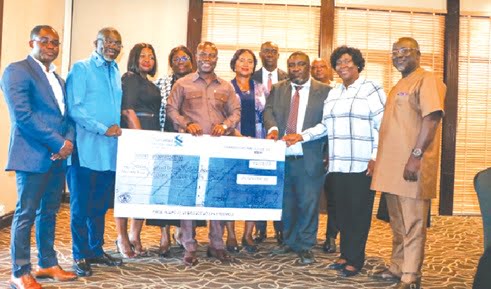
The Social Security and National Insurance Trust (SSNIT) continues its backing of the National Pensioners Association (NPA) by presenting a cheque of GHC1 million.
This contribution is specifically designated to bolster the healthcare services of pensioners enrolled in the NPA’s Pensioners Medical Scheme (PMS).
It upholds SSNIT Management’s commitment, dating back to 2017, to prioritize the welfare of pensioners under the SSNIT Scheme nationwide.
This latest donation is part of SSNIT’s ongoing support for the NPA. In previous years, SSNIT has provided GHC300,000 in 2018, GHC500,000 in 2019, and a brand new Toyota Hilux double cabin pickup vehicle in 2021 to help address transportation challenges encountered by NPA members.
This commitment underscores the Trust’s unwavering dedication to fulfilling its social responsibility towards all retirees within the SSNIT Scheme who have contributed significantly to the nation’s workforce during their active years.
Addressing attendees at a ceremony held at the SSNIT Pension House in Accra, Dr. John Ofori-Tenkorang, the Director-General of SSNIT, reiterated the Trust’s steadfast support for the activities and well-being of the National Pensioners Association (NPA).
He elaborated that SSNIT’s profound appreciation for pensioners has guided and strengthened the enduring relationship between SSNIT and the NPA throughout the years.
“This latest donation to the association will certainly not be the end. We will periodically extend help to you whenever possible as part of our social responsibility to make life a little more comfortable for you, our cherished pensioners.
“As you may recall, we have provided and renovated office accommodation for the association to enable members run their affairs. We also donated GH¢800,000 to support the association’s Medical Scheme in 2018 and 2019. I know these have gone a long way to improve the well-being of pensioners within the association,” Dr. Ofori-Tenkorang noted.
Mr. Stephen Boakye, the General Secretary of the NPA, expressed gratitude to SSNIT Management for their consistent support of the Pensioners Medical Scheme. He acknowledged the harmonious relationship between the NPA and SSNIT, particularly under the current SSNIT Management, and assured that the funds would be utilized for their intended purpose.
A beneficiary, Mr. Confidence Kofi Adjayi, underscored the pivotal role of the Pensioner Medical Scheme in his healthcare journey. He emphasized that the scheme has consistently covered his medical expenses, especially for eye care, whenever he sought treatment at the hospital.
Pensioners Medical Scheme
Established in September 2014, the Pensioners Medical Scheme (PMS) serves as a crucial pillar for members’ healthcare needs. It supplements the services provided under the National Health Insurance Scheme (NHIS) by catering to ailments not covered by the NHIS.
Covered ailments under the PMS include cervical cancer, breast cancer, prostate cancer, amputation, among others. As of December 31, 2023, a total of 3,778 pensioners have benefited from the PMS, demonstrating its significant impact and outreach within the pensioner community.
Recognizing the evolving healthcare landscape and the changing needs of its members, the association’s leadership is in discussions with their insurance provider, Liberty Insurance Company, to broaden the scheme’s coverage to include additional ailments. This proactive approach reflects the association’s commitment to continuously enhancing the healthcare support provided to its members.
By addressing these challenges and striving to expand coverage, the association aims to alleviate the financial burden associated with healthcare expenses for its members, ensuring they can access necessary medical services and treatments without undue financial strain.
Social Security and National Insurance Trust (SSNIT) has reaffirmed its commitment to the welfare of retirees by presenting a cheque of GHS1 million to the National Pensioners Association (NPA).
The donation, aimed at supporting the healthcare needs of pensioners enrolled in the NPA’s Pensioners Medical Scheme (PMS), underscores SSNIT’s dedication to prioritizing the well-being of pensioners nationwide.
This contribution marks a continuation of SSNIT’s ongoing support for the NPA. Since 2017, SSNIT has consistently demonstrated its commitment to the welfare of pensioners under the SSNIT Scheme.
Previous donations include amounts of GHS300,000.00 in 2018 and GHS500,000.00 in 2019 to bolster the Pensioners Medical Scheme. Additionally, in 2021, the NPA received a brand new Toyota Hilux double cabin pickup vehicle from SSNIT to address transportation challenges faced by its members.
Speaking at a ceremony held at the SSNIT Pension House in Accra, Dr John Ofori-Tenkorang, the Director-General of SSNIT, reiterated the Trust’s unwavering support for the activities and welfare of the NPA. Dr Ofori-Tenkorang emphasized SSNIT’s commitment to fulfilling its social responsibility towards retirees who have contributed to the nation’s workforce during their active years.
“The value SSNIT places on pensioners has guided and helped the Trust to strengthen the relationship that exists between SSNIT and the NPA over the past years,” stated Dr. Ofori-Tenkorang. He further assured pensioners that SSNIT would continue to extend support whenever possible to enhance their quality of life.
Mr. Stephen Boakye, the General Secretary of the NPA, expressed gratitude to SSNIT for its continuous support of the Pensioners Medical Scheme. He commended the cordial relationship between the NPA and SSNIT, particularly under the current management of SSNIT, and assured that the funds would be utilized for their intended purpose.
One beneficiary, Confidence Kofi Adjayi, lauded the supportive role of the Pensioner Medical Scheme in his healthcare journey. He highlighted how the Scheme has consistently covered his medical expenses, particularly for eye care, providing invaluable support to retirees in need.
SSNIT’s latest donation to the NPA underscores its commitment to ensuring the well-being of pensioners and further strengthens the bond between SSNIT and the retiree community.
Parliament has instructed the Executive Secretary of the National Identification Authority (NIA), Professor Kenneth Attafuah, to reimburse an amount exceeding GHc98,000 deducted from the Authority’s account as a penalty for the delayed transfer of Social Security and National Insurance Trust () contributions.
In response to the NIA’s failure to promptly remit SSNIT contributions, the penalty was covered using the Authority’s funds.
In alignment with the Auditor General’s recommendation, the Public Accounts Committee has confirmed that Professor Ken Attafuah and the financial controller should be surcharged with the cost of the penalty.
During a session before the Public Accounts Committee on Wednesday, February 7, the Executive Secretary of the NIA was given a one-month deadline to repay the specified amount.
Parliament has instructed the Executive Secretary of the National Identification Authority (NIA), Prof. Kenneth Attafuah, to reimburse over GHc98,000 deducted from the Authority’s account as a penalty for delayed transfer of Social Security and National Insurance Trust (SSNIT) contributions.
Due to the NIA’s failure to promptly remit SSNIT contributions, the penalty was covered using the Authority’s funds.
The Public Accounts Committee, concurring with the Auditor General’s recommendation, has affirmed that Prof. Ken Attafuah and the financial controller should be held responsible for the penalty’s cost.
During his appearance before the Public Accounts Committee on Wednesday, February 7, the Executive Secretary of the NIA was given a one-month deadline to reimburse the amount.
“The recommendation is that you should refund the money, the money should be refunded from the Chief Executive and Financial Controller. You have come to explain why you did not pay the money you withheld to SSNIT but the committee will not accept your explanation.
“So the recommendation of the Auditor General still holds, the Chief Executive and the Financial Controller should go and refund the money to the recovery account of the auditor general and this should be done in one month,” Chairman James Klutse Avedzi said.
The Social Security and National Insurance Trust (SSNIT) plans to enhance its efforts to include more individuals in the informal sector and self-employed category in Ghana into the state-operated Tier One pension scheme.
Building on the achievements of the previous year, marked by the introduction of the Self Employed Enrolment Drive (SEED), SSNIT envisions a more assertive strategy to promote the initiative.
The goal is to draw in a greater number of individuals in this demographic, ensuring a more secure future for them upon retirement.
The Director-General of SSNIT, Dr John Ofori-Tenkorang, who announced the Trust’s resolve last Thursday, said “We have developed a good initiative that will help many people to guarantee a better future in retirement and we must sustain the campaign this year and beyond.”
Expansion
The count of self-employed individuals enrolled in SSNIT witnessed a more than fourfold increase in the last two quarters of the previous year.
Starting from approximately 14,200 in May, the figure surged to over 57,000 by the end of the last month, and additional enrollments are anticipated.
This remarkable growth is credited to the vigorous efforts of the management of the state-operated pension scheme, with plans for further intensification in the coming year and beyond.
The campaign’s primary objective is to include a substantial number of workers from the informal sector of the economy into the pension scheme.
The director-general emphasized that although SSNIT has successfully enrolled tens of thousands of self-employed individuals into the scheme within a brief period, the upcoming task remains formidable. He asserted that “we will not relent but continue to push harder to increase the numbers into the hundreds of thousands and the millions per our laid down plan of action because we see the potential”.
According to the National Pensions Regulatory Authority (NPRA), approximately 600,000 out of the 6.7 million self-employed individuals in the country currently possess some form of pension coverage.
This implies that a substantial 6.1 million self-employed persons lack any form of pension coverage, presenting an opportunity that the managers of the tier one pension scheme intend to capitalize on.
Of the 6.7 million independent contractors in the nation, the National Pensions Regulatory Authority (NPRA) projects that 600,000 have pension coverage.
The managers of the tier one pension scheme hope to take advantage of the staggering 6.1 million self-employed individuals who do not have any kind of pension coverage.
Sustainability
Regarding the sustainability of the pension scheme, Dr. Ofori-Tenkorang reiterated the commitment of the scheme’s managers to ensure the continued viability of the pension system, which is crucial for both formal and informal workers.
He affirmed that the scheme remains solvent and viable, emphasizing the Trust’s responsibility to sustain it as one of the continent’s premier state-run pension programs, despite challenges from various sources.
The director-general of SSNIT pointed to initiatives like SEED and highlighted that the current scheme could be further enhanced with increased participation, hence the ongoing campaign.
Additionally, he mentioned that SSNIT is actively ensuring that its investments yield optimal performance, generating the necessary funds to consistently meet its obligations to workers on pension.
Dr Ofori-Tenkorang said much as some of the investments of SSNIT were not performing as expected, those equities were minute, “however, we are working around the clock to determine the appropriate action to take in the best interest of the scheme”, he assured.
He argued once more for people who haven’t joined the scheme to do so and not use unfavorable rumors about how it is run to avoid it.
SSNIT withholds pension funds of 19,100 over failure to do biometric authentication
Social Security andNational Insurance Trust (SSNIT) has retained GH¢480 million, representing funds for 19,100 pensioners who have not undergone biometric authentication.
The Director-General of SSNIT, Dr. John Ofori-Tenkorang, revealed this information during a press conference in Accra, stating that SSNIT is prepared to reimburse the funds when those individuals comply with the biometric authentication process.
He emphasised that SSNIT’s pension scheme obligates the organisation to continue pension payments until the pensioner’s demise.
Death
He said if a person passed away before the age of 72 for those under PNDC Law 247 and 75 for those under the National Pensions Act, 2008 (Act 766), the trust had to pay some money to his or her survivors.
“But if you live beyond those years, then we don’t have to pay anything to your survivors and every month, our operation is that we pay monies directly into your bank account.
“So what we need to do is make sure that we find a way to ascertain that we are actually paying legitimate pensioners. So we asked our cherished pensioners every year to let us know that they are alive,” he said.
That, the SSNIT boss said, was done by asking them to report to the SSNIT officer to biometrically authenticate them and that it was mindful of the fact that there were people who might not have mobility challenges and then could not be able to visit a SSNIT office.
Arrangements
In view of that, he said, there were alternative arrangements where “if you call us we would come to where you are and we would biometrically authenticate you”.
He said for people who had not come to authenticate themselves, “whose money we have withheld, we have about GH¢480 million so far”.
“There’s GH¢480 million that we could have paid out that we have not paid.
“This is because those people to whom it belongs have not come back to tell us that they are alive. So that is what we call ghost pensions,” he emphasised, and “as and when they resurrect, we stand ready to pay them,” he said.
Background
In 2014, participants in the SSNIT pension scheme, including retirees, were instructed to undergo biometric registration. This phased exercise, conducted in collaboration with employers, aimed to collect biometric data from existing contributors and generate 13 alphanumeric social security numbers for those with eight-digit numbers.
Additionally, the project sought to gather additional information on existing policyholders of the National Health Insurance Scheme (NHIS) and individuals registered with the National Identification Authority (NIA).
The biometric data collected would facilitate swift and straightforward verification of the identities of SSNIT contributors in the future.
SSNIT, a statutory public Trust established under the National Pensions Act, 2008 Act 766, is entrusted with administering Ghana’s Basic National Social Security Scheme. Its mandate includes overseeing the First Tier of the Three-Tier Pension Scheme, making it the largest non-bank financial institution in Ghana.
The Trust’s primary responsibility is to replace a portion of lost income for Ghanaian workers due to Old Age, Invalidity, or Death, with dependents receiving lump-sum payments. It is also tasked with providing Emigration benefits to non-Ghanaian members leaving Ghana permanently.
Established in 1972 under NRCD 127 to administer the National Social Security Scheme, SSNIT originally operated as a Provident Fund Scheme. In 1991, it transitioned into a Social Insurance Pension Scheme governed by PNDC Law 247.
Subsequently, Act 766 of 2008 reformed the pension scheme in Ghana, replacing all existing schemes, including Cap 30. In 2014, the National Pensions (Amendment) Act 883 further modified certain provisions of Act 766.
An alleged son of the late waakye icon Auntie Muni, Arafat, has unveiled disturbing details about the supposed cause of his mother’s death in an exclusive interview with Asaase Radio.
Arafat claims that his mother’s demise followed complications arising from what he said could have been incorrect medication administered at the SSNIT Hospital.
“Mummy was sick. She was complaining of leg pain. So we took her to the SSNIT Hospital. I think they were giving her, I don’t know whether it was wrong medication, so she got complicated, a lot of complicated, so she herself was calling for discharge. When they discharged her, we went home. The next two days we saw that the sickness was… so we rushed to UGMC. This morning at 3:00 AM, she passed away,” he narrated.
Arafat also shared that Auntie Muni had specifically instructed them to take her to Tamale for burial, and they were diligently following her wishes. “She said when she dies, we should take her to Tamale to bury her. So we followed the instructions she gave to us. This morning we are preparing to take her to Tamale for burial,” he added.
Auntie Muni, renowned for her delectable waakye sold at Labone junction in Accra for over 35 years, had never reportedly argued with a customer. In addition to her culinary skills, she was known as a philanthropist, supporting numerous needy individuals in her community.
News of her demise has left many in a state of mourning, especially her loyal customers and admirers, who have expressed their condolences and paid tribute to her on social media.
The hospital, which provides healthcare to SSNIT staff, their dependents, and the general public, has yet to respond to this claim.
🕊️/ Auntie Muni Dies: Arafat, the son of Auntie, explains the possible cause of her unfortunate demise on #AsaaseABS. Take a listen. ⤵️
This financial distribution follows the GH¢10 million in dividends declared in February of the same year for the 2022 financial period.
At an event in Accra where the company’s latest profits were announced, the Managing Director of the hotel, David Eduaful, said “as we honour our obligation of declaring dividends to the shareholder today, it is important to acknowledge the overwhelming support and patronage of our valued customers who continue to make us number one”.
Mr Eduaful attributed the “historic payout to the unwavering support from the Board of Directors, the hard work of the management and entire staff, and recently implemented cost-cutting and waste-minimisation measures”.
Mr. Eduaful emphasized that possessing employees with the right mindset and attitude, along with maintaining consistency in service delivery, were crucial factors in accomplishing the company’s overarching objectives.
“We continue to invest in the human capital of the hotel to be able to readily respond to the demands of today’s guests,” he added.
Commenting on the historic payout to SSNIT, the Chairman of the Board of the hotel, Professor Douglas Boateng, said “SSNIT respects the board, and has allowed us to perform our fiduciary responsibilities with virtually no interference from the 100 per cent shareholder”.
“Companies can declare profits, but not necessarily pay out dividends. If shareholders appoint the right board and allow them to responsibly discharge their duties, the end result is accountable governance and consistent performance. The best of Labadi Beach Hotel is yet to come, and yes, we can,” Prof. Boateng added.
The 2022 dividend represents a notable 150% increase compared to the previous year, despite the prevailing economic challenges. Labadi Beach Hotel, operating for 32 years, has been a source of pride in Ghana’s hospitality industry, consistently delivering world-class services at par with global standards.
Located near Kotoka International Airport and Accra’s central business district, the hotel features 164 rooms, including Presidential Suites, Executive Suites, and Superior Suites, along with various amenities such as bars, restaurants, conference facilities, a spa, a gym, fishing lagoon, and leisure pools.
Over the years, the hotel has hosted distinguished guests, including the British Monarchy, heads of state, and other prominent personalities.
Beyond its core mandate, Labadi Beach Hotel actively engages in social responsibility initiatives, sponsoring surgeries for hole-in-heart patients, providing food for street children, and organizing events for cured lepers, showcasing a commitment to community impact.
The Director General of the Social Security and National Insurance Trust, Dr. John Ofori Tenkorang, disclosed that approximately 57,000 self-employed individuals registered with SSNIT within the span of a year.
Prior to the initiation of the Self-employed Enrolment Drive (SEED) and the subsequent public awareness campaign, only 14,000 self-employed individuals had enrolled with SSNIT.
Nevertheless, he asserted that this substantial surge in enrollment occurred within a year of the SEED program’s launch and extensive public outreach efforts.
Dr. Tenkorang shared this information during a stakeholders’ meeting organized by SSNIT in partnership with the Trade Union Congress (TUC). The primary objective of the meeting was to increase awareness about SEED among informal sector workers and underscore the importance of their participation in the program.
He acknowledged that there were initial reservations about the program’s effectiveness, but the remarkable increase in enrollment within a year underscores people’s willingness to participate.
“The growth is tremendous…l think the future is very bright. The number suggests that people actually want to join the scheme because the benefits that we offer are enormous and second to none,” he stated.
Speaking to the press during a day-long engagement with leaders from various informal sector unions under the Trade Union Congress (TUC) in Kumasi, Ashanti region, on October 18, 2023, the Director General emphasized that the recent administration of SSNIT reflects their commitment to serving the best interests of the public.
He noted that a remarkable transformation has occurred in recent years, with efficiency and timeliness now defining the standard. He remarked, “When you submit your pension claim, it is typically processed and scheduled for the next month’s payment within an average of 10 business days.”
The Fair Wages and Salaries Commission (FWSC) has stated that after the payroll discrepancies are corrected, the Government will save GH36.1 million cedis.
The report claimed that the irregularities could be fixed and urged everyone to help clean up the payroll.
This was stated by Mr. Benjamin Arthur, Chief Executive of FWSC, on Monday in Accra following the Commission’s nationwide Payroll Monitoring Exercise, which began on April 3, 2023.
As of August 2023, he claimed that 5,759 staff from 17 universities had been included in the program.
The Payroll Monitoring Exercise seeks to sanitize the Public Sector Payroll by identifying and removing any current fraud and anomalies on the payroll.
To ensure that only valid pay and benefits are delivered to deserving recipients, this is done.
Phase one of the preparatory exercise involved 17 educational institutions and agencies in the Greater Accra Region.
The National Accreditation Board, National Council for Tertiary Education, Ghana Tertiary Education Commission, Ghana Academy of Arts and Sciences, and National Commission for Civic Education are a few of these.
The National Service Secretariat, the Ghana Library Authority, the University of Professional Studies, the Ghana Institute of Languages, and the Ghana Communication Technology University are further organizations.
Several irregularities were found throughout the exercise, Mr. Arthur stated.
He said some employees continued to change their date of births leading to cases where one person had “different dates of birth—one on the payroll, one on their management data, one communicated by the individual himself or herself and another one from SSNIT”.
According to him, some validation officers were being transferred while still validating for workers in their previous districts.
The Chief Executive further stated that some people who had official housing continued to get housing benefits.
He claimed that a lot of times, vehicle maintenance allowances were discovered on the payroll when they shouldn’t have been.
He also expressed concern about certain employees who were receiving vehicle maintenance benefits while still using company vehicles.
He urged the administration of institutions in the public sector to act right away to fix all of those inconsistencies.
The overall wage bill of employees on the payrolls of Single Spine and the Controller and Accountant General decreased steadily from April to August, according to Mr. Arthur, despite a rise in the number of employees during that time.
He ascribed some of that to the Commission’s monitoring effort.
He praised the administration of other institutions, the Internal Audit Agency (IAA), and the Controller and Accountant General’s Department for their cooperation.
“We use this occasion to say that all the collaborating institutions have helped, and they should keep on collaborating.”
Mr. Arthur stated that the Greater Accra and Western Regions would begin the second phase of the exercise on October 17 with assistance from the Local Government Services.
Exercises for verification would be conducted after that, he said.
In order to maintain equity and fairness for everyone, Madam Baaba Anquandah, Director, Salary Administration, FWSC, emphasized that the monitoring exercise was not intended to be a witch-hunting exercise.
MTN Ghana has handed over a cheque amounting to GH₵34,581,713.52 to the Social Security and National Insurance Trust (SSNIT) as the interim dividend for 2022 and 2023.
The dividend for 2023 amounted to GH₵9.9 million, while that for 2022 stood at GH₵24 million. SSNIT holds the position of the largest Ghanaian shareholder in MTN Ghana.
During the presentation ceremony in Accra, Mrs. Antoinette Kwofie, the Chief Financial Officer of MTN, highlighted that “the final dividend for 2022 was 12.4 pesewas per share, bringing the total dividend for 2022 to 16.4 pesewas for every share held by a shareholder in MTN Ghana. Additionally, we are paying 5 pesewas per share as the interim dividend for 2023.”
She noted that this engagement between MTN and their key investor aimed to encourage them to retain their investments within the MTN family and potentially increase their investment to further enhance localization efforts.
“For our final dividend for 2022, MTN Ghana gave all shareholders an option to opt for scrip dividend which was to take their dividend in shares all in cash,” she added.
It was implied that it was only for institutional investors when she added that they had individual investors who agreed to receive their dividend in shares, so increasing their interest in the company.
MTN Ghana, according to Mrs. Kwofie, is dedicated to creating a sustainable business and offering stakeholders and customers sustainable solutions.
“Shareholders should expect its pledge by growing investor communication to the market, grow revenues and protect its margins to maintain our dividend payout ratio above 60 per cent.
She emphasized, “This is our commitment to the market, and we will strive to fulfill it.”
Dr. John Ofori-Tenkorang, the Director-General of SSNIT, praised MTN Ghana for this achievement and expressed expectations of even higher dividends in the years to come. He stressed that “for us as investors, returns are one of the vital tools we rely on to ensure lifelong pension payments to our stakeholders.”
Dr. Ofori-Tenkorang affirmed SSNIT’s commitment to its mandate of collecting contributions from workers and prudently investing to ensure the sustained payment of benefits. He emphasized the importance of companies registering their employees with SSNIT to enhance their operations and secure adequate contributions for the benefit of their customers.
He further conveyed his organization’s eagerness to foster a mutually beneficial relationship with MTN.
Chief Executive of the National Pensions Regulatory Authority (NPRA), Hayford Atta Krufi, has expressed his support for the proposals to raise contributions to the Social Security and National Insurance Trust (SSNIT) tier one scheme.
These proposals have been put forth by SSNIT and various stakeholders within the pensions industry, with the aim of ensuring the sustainability of the scheme.
A recent actuarial report has highlighted that Ghana’s pension system could face significant challenges in the next decade if steps are not taken to reassess the contribution rates.
Mr. Krufi emphasized that any decision regarding contribution adjustments would rely on recommendations from various participants within the industry.
He made these remarks during an appearance on PM Express Business Edition with host George Wiafe.
“We should realize that government employers as well as the various union will be the ones making the payment and their view is very important”, he said.
He further mentioned that discussions are presently underway to determine whether there should be an increase in SSNIT contributions or not.
Additionally, Mr. Krufi revealed that the NPRA is actively engaged in the process of revising the investment guidelines applicable to SSNIT. This is part of broader efforts to lower the operational costs associated with SSNIT.
Regarding the calls for a review of the current retirement age, which is set at 60 years, Mr. Krufi explained that any decision in this regard would need to align with the constitution. Amending the law on retirement age would require the involvement of both the government and parliament.
“This has to do more with the country’s constitution. Discussions may start now with Parliamentarians in terms of role they can play, when it comes to the review of the pension”, he said.
The new National Pension Scheme was instituted by the National Pensions Act, Act 766 which ensures that every Ghanaian worker receives retirement benefits as and when due.
The Act 766 which was passed on December 12th, 2008 mandated the establishment of a new contributory Three-Tier Pension Scheme with the National Pensions Regulatory Authority (NPRA) to oversee the efficient administration of the composite pension scheme
The New Pension Scheme was launched on 16th September, 2009 and its implementation started in January 2010.
The First Tier is the Basic National Social Security Scheme for all workers in Ghana. It is a defined benefit scheme and mandatory for workers to have 13.5% contributions made on their behalf. The contribution is managed by SSNIT.
The Second Tier is a defined contributory Occupational Pension Scheme mandatory for workers with 5% contribution made on behalf of members. The contribution is managed privately by approved Trustees.
The Third Tier, which includes all Provident Funds and all other Pension Funds outside Tiers I and II is a voluntary scheme.
The Director-General of the Social Security and National Insurance Trust (SSNIT), Dr. John Ofori-Tenkorang, has announced that all SSNIT contributors are entitled to receive a National Health Insurance (NHIS) card at no cost.
He clarified that contributors are not required to pay any premiums for NHIS enrollment, although there may be a nominal administrative fee in some cases.
Dr. Ofori-Tenkorang emphasized that SSNIT has covered the necessary premium expenses, utilizing the 11 percent monthly deduction from the earnings of SSNIT contributors to fund NHIS premiums.
This ensures that contributors have access to healthcare services without additional charges.
This revelation was made during an interview with Odehyeeba Kofi Essuman, the host of the Ghana Yensom morning show on Accra 100.5 FM, on August 30, 2023.
Dr. Ofori-Tenkorang urged all SSNIT contributors and new subscribers to assert their entitlements when obtaining their NHIS cards, emphasizing that the registration process onto the NHIS registry is entirely free of charge.
Additionally, he confirmed that SSNIT contributors can seamlessly integrate into the NHIS registry without any fees and encouraged them to follow the established protocols during registration.
The Director-General also highlighted the benefits based on contributors’ years of service. Those who have contributed for 15 years are eligible for a premium coverage of 37.5 percent, while individuals with 35 years of contribution receive a more substantial premium coverage of 60 percent.
Railway Workers Union of Ghana has voiced deep concerns over what they perceive as the government’s inadequate dedication to addressing the pressing financial difficulties confronting the Ghana Railway Company Limited (GRCL).
Alarmed by the situation, the union has issued a stark warning, indicating that unless an urgent injection of capital is executed, the company could be on the brink of an imminent shutdown.
Having a workforce of approximately 1000 employees, the union has emphasized that the financial turmoil faced by the state-owned enterprise might result in its closure. This, in turn, would impact both the workers and their families, as per the union’s assertion.
“Our workers have not been paid for three months and if August should end, it would be four months. Our social security (SSNIT) contributions or payments are in arrears since October 2022. Tier two pension payments for workers have also not been settled since May 2022,” Godwill Ntarmah, General Secretary of the Railway Workers Union of Ghana, said.
Mr. Ntarmah spoke at a press conference in Takoradi regarding the disturbing financial position of Ghana Railways and how the workers are suffering and disappointed in the government’s lack of commitment to revive the company.
According to him, workers’ deductions or contributions to their various credit unions, such as the Ghana Ports and Harbours Authourity (GPHA) Credit Union and the Railway Union Cooperation Mutual Assistant Society (RUCOMAS), have also not been paid since 2021.
“Another issue of great concern to us is the determination of the fate of the GRCL retrenched staff of 2006, which need to be addressed by the government” he added.
As a wholly state-owned company, he said GRCL is facing serious challenges operating on the existing narrow-gauge rail line, which is in a very bad state coupled with the old-aged rolling stock resulting in series of derailment every now and then.
“These challenges have resulted in serious financial constraints which easily qualify the company as highly indebted company (HIPC),” he lamented.
He said workers expect some form of support from the government as it was the practice in the past.
He said the union strongly disagrees with the assertion that the company is a limited liability and therefore, should be able to work and generate enough to fund itself: “We disagree with this assertion. It is impossible for the company to generate enough funds to sustain itself”.
Ntarmah disclosed that frantic efforts by the leadership of the union to get President Nana Akufo-Addo’s attention have proven futile.
“We have no option than to engage you and use your medium to appeal to the President for an engagement with us to save GRCL from a total collapse. We are frustrated and disillusioned and we pray the President will hear us and give the needed audience,” he concluded.
Director-General of the Social Security and National Insurance Trust (SSNIT), Dr. John Ofori-Tenkorang, has disclosed that the Trust has successfully recovered GH¢154 million through the legal pursuit of employers who neglected to fulfill their obligations of paying their employees’ contributions during the initial half of 2023.
Dr. Ofori-Tenkorang indicated that based on available data and projections, the Trust is making steady progress towards achieving its objectives for the entirety of the year.
Speaking during a session with the media on the sidelines of the 2023 SSNIT Employers Breakfast Meeting held in Koforidua, Dr. John Ofori-Tenkorang highlighted that SSNIT is in the process of broadening its scope to encompass individuals within the informal sector.
“Our goal and objective is to ensure that we do not miss any pension payments to people who rely on us as their only source of income for their livelihood. We want to expand, and that is why we are going out there to do the tough work and convince the self-employed to join SSNIT” he stated.
“The highest-paid SSNIT pensioner was a self-employed person who was not an employee of anyone and used to earn GH¢100,000 a month” he revealed.
He advised businesses to make SSNIT contributions on time in order to avoid prosecution, which he claimed was frequently the Trust’s last resort.
“The SSNIT law states that it is the employer’s obligation to ensure that SSNIT payments are remitted to SSNIT. If employers do this diligently, then we would not have to send compliance officers after them. However, due to some misunderstanding or sheer devilishness, some employers fail to remit their contributions to SSNIT.”
He concluded that if after repeated reminders, reluctant employers still do not make contributions, then they would have no choice but to take them to court.
“Some of these prosecutions have led us to retrieve GH¢154 million in the first half of the year” he added.
Private sector membership in the Social Security and National Insurance Trust (SSNIT) has now exceeded that of public sector employees, as confirmed by SSNIT authorities.
During the 2023 Employers’ Breakfast Meeting, Dr John Ofori-Tenkorang, the Director General, made this announcement.
This event marked the fourth installment of a sequence of Employers’ meetings organized by SSNIT since 2019.
The event was attended by employers, and was on the theme “Providing Pension for all, the role of the Employer”.
He told journalists that private sector contributors represents 62.57 per cent of the total number of contributors currently.
He said the active private sector contributors of the SSNIT Scheme currently stood at 1,207,111, constituting 62.57 per cent, while the public sector contributors stood at 694,436, representing 36.01 per cent, and the self-employed at 27,501, constituting 1.43 per cent.
He further indicated that SSNIT is working to build more capital buffers in the next couple of years.
This he explained is to ensure the sustainability of the Trust,
“We had some headwinds vis-a-vis dividends from the banks last year. But we believe this is temporary and the next couple of years we will be back to trend.”
He said “SSNIT will keep faith with contributors and ensure that when pension fall due we pay them,” he said.
Ms. Pearl Nana Ama Darko, Director-General, Operations and Benefits, stated in her welcome address that these meetings have been highly informative and have generated important feedback for the Trust.
She also stated that the sessions had strengthened the interaction between management and the employees.
“I must say that we are very proud of you and your continuous commitment to ensure that your workers have futures that are fulfilling and reflective of the sacrifices they made during their work lives. Your consistent payments of their monthly social security contributions will ensure that they receive pensions when they retire due to old age or if become permanently invalid,” she said.
SSNIT she said has made some significant strides on the service delivery front, with the support of the staff.
“With your support, we were able to a large extent, implement the SSNIT and GhanaCard numbers merger, which has improved the Trust’s identification system, enhanced onboarding of new Members and eliminated costs of printing new cards. In the long term, the merger will greatly facilitate the ease of doing business with the Trust, improve contributions collection and claims processing.”
We also introduced an electronic payment platform known as ssnitpay in addition to the existing payment channels to facilitate contribution payment.
Now, employers can validate their Contribution Reports, generate Payment Advice and make payments in the comfort of their offices via Mobile Money (using the USSD code 7119#); direct debit (through www.portal.ssnit.org.gh) and at any of our 20 partner banks.
You don’t have to visit a SSNIT Branch or wait till the 14th of the ensuing month before paying contributions. I encourage you to use the electronic payment platform and enjoy the convenience. Remember, contribution payments made through Mobile Money are E-Levy exempt.,” she added.
The 2022 Auditor-General Report, has indicated that some fund managers owe the Social Security and National Insurance Trust (SSNIT) a total of GH¢483.365 million at the beginning of 2021.
However, only ¢6.076 million was received by SSNIT in 2021, leaving a substantial outstanding amount of ¢477.288 million yet to be recovered from the fund managers.
In light of this situation, the AG is advising SSNIT’s management to collaborate with the National Pensions Regulatory Authority (NPRA) to ensure that the fund managers promptly remit the unpaid balance without any further delay.
SSNIT’s management responded to the audit recommendation, stating that the advance mobilization amount for Antgya Ghana Limited is still pending recovery and remains in effect until the full repayment is received from the said company.
They also assured that they will be cautious in subsequent advance mobilizations to contractors, ensuring they do not exceed the threshold of 15% of the contract sum.
Furthermore, the report highlighted that SSNIT’s Short-Term Treasury Sub-Asset Portfolio has the potential to enhance the Trust’s liquidity position.
However, recent investments in the Short-Term Treasury Portfolio have been disappointing, as the Trust failed to meet its investment target of 6%.
A deeper analysis of the investment allocations to the Short-Term Treasury over five years revealed that while the Trust’s Total Investment Portfolio displayed an upward trend, the allocations to the Treasury Sub-Asset Portfolio have been declining relatively.
To address this issue, the Auditor-General recommended that SSNIT’s management increase their investment outlay in the Treasury Sub-Asset Portfolio to bolster its liquidity reserve, thereby providing stronger support to the Trust’s financial stability.
Out of the 45 unlisted companies in which the Social Security and National Insurance Trust (SSNIT) has made investments, ten of them have failed to pay any dividends to the Trust for the past decade.
As of December 2020, the combined investment value of these ten companies amounted to GH¢150.30 million.
Among these companies, only four have shown capital appreciation, exceeding the initial investment value. On the other hand, the remaining companies have individual values that fall below the amount originally invested by SSNIT.
The total portfolio value of all 45 companies reached GH¢3.26 billion as of December 2020, and within the same year, SSNIT’s share value in the ten companies amounted to GH¢326 million.
Campanies
The Social Security and National Insurance Trust (SSNIT) revealed a list of defaulting companies, including Golden Beach Hotels (GBH), CDH, Kumasi Abattoir, Accra Abattoir, Intercity STC Coaches Limited, Bayport Financial Services, Trust Logistics Limited, Africa World Airlines (AWA), SIMNet, and Metro Mass Transit Company Limited.
This disclosure occurred during a meeting with the Public Accounts Committee (PAC), where SSNIT’s management, led by Director-General Dr. John Ofori-Tenkorang, addressed certain infractions highlighted in the 2021 Auditor-General’s report of the company.
According to James Klutse Avedzi, the Chairman of PAC, the SSNIT representatives serving on the boards of these companies explained that they have not been profitable for the past ten years.
“This could have serious effect on sustainability or solvency of the Trust in a long time. We recommended that management should assess the operations of these companies to take strategic decisions to safeguard the interest of the Trust,” he said.
Response
Responding, the Deputy Director-General in charge of Investment, Kofi Osafo-Maafo, said: “We are working on the initiatives for a turnaround in their operational performance over a longer term. With that they will be able to pay dividends”.
He stated that the Trust was looking for a strategic investor to buy into Golden Beach Hotels (GBH).
“What we expect to get are strategic investors who have both the financial muscle and knowledge of managing hotels better to be able to turnaround performance of our hotels,” Mr Osafo-Maafo said.
Kumasi, Accra Abattoir
He claimed the Accra Abattoir was a CSR initiative that SSNIT was working to exit due to a similar pricing issue that prevented it from turning a profit. He also claimed the Kumasi Abattoir began as a CSR investment and had been challenged by non-commercial pricing.
“Following a board and shareholders resolution of the company, they are looking to dispose of four acres out of about 21 acres of land to settle the debt.
“Once the financing cost are out of the way, we expect the underlying financial performance of the company to be better,” Mr Osafo-Maafo said.
Regarding CDH, he stated that the Trust, which owned a 1.3% equity position in the business, was eager to leave the organization and that two of the group’s underlying financial asset management companies had had their licenses withdrawn.
“Since we last came here (PAC), we have found a buyer for our shares and a transactional advisor is now being procured to look at the valuation of our shares.
“We should be, hopefully, looking to exit CDH,” Mr Osafo-Maafo said.
Bayport Financial Services was mentioned as a non-bank financial organization that had initially planned to make a dividend payment to the Trust in 2024.
According to Mr. Osafo-Maafo, the business produced a profit and added to its reserves in 2022 and the year before.
“But as we are all aware within the financial sector and as a result of the Domestic Debt Exchange Programme, the banking and non-financial institutions are facing challenges and, therefore, the need to protect their balance sheet.
“We, therefore, do not expect them to pay a dividend this year. We are hopeful that if the economic conditions improve, they should be able to pay dividend on the back that they are now posting positive earnings,” he said.
Mr Osafo-Maafo said his outfit was looking forward to Trust Logistics Limited to leverage its existing assets as they had gone into partnership with Goil Company Ltd to leverage their landed assets.
“We are also in discussions with Central Oil Refinery and if that should come off then the primary issues of our competitiveness on the market and our ageing fleets will be resolved to improve its performance in order to pay dividends,” he said.
Intercity STC Coaches Limited
Mr Osafo-Maafo described the challenge with Intercity STC as “a more difficult situation” of pricing and operating cost.
“On the operating cost, they are facing head wings from fuel cost that has resulted in a much higher operating cost.”
“However, they were not able to get permission to improve their pricing that resulted in negative margins,” he said, adding that a meeting would be held at the end of September and December this year to assess the situation.
“And if their financial performance permits, there will be a plan in place to meet their indebtedness,” Mr Osafo-Maafo said.
He said that AWA was using leased aircraft to operate, which had an impact on the company’s operating costs.
“There are also internal issues that we are addressing with the majority shareholders with respect to corporate governance and we expect that if all of these come together the company should be able to pay dividend in 2024,” Mr Osafo-Maafo said.
Regarding SIMNet, the service provider for the National Lottery Authority, it was mentioned that they are currently pursuing a diversification strategy.
“If that should materialise, it will help transform the company. In the interim, we are working with the authority to renew their licence so that they improve their financial performance going forward,” Mr Osafo-Maafo said.
Additionally, he said that the Metro Mass Transit Company Limited was a CSR venture that had problems with pricing from a business perspective.
The Minister for Employment and Labour Relations, Ignatius Baffour-Awuah, has stated that Social Security and National Insurance Trust (SSNIT) will change its policy and refrain from investing in non-profit social ventures. The aim is to protect the funds of contributors and ensure their financial security.
Concerns were raised by the Public Accounts Committee (PAC) after the 2021 Auditor General’s report showed that 10 companies, including Metro Mass Transit and Kumasi Abattoir, had not paid dividends to SSNIT for the past decade.
PAC emphasized the need for SSNIT to manage funds effectively to ensure timely payment of members’ benefits.
The Minister acknowledged the importance of good investments to maintain the value of contributions and assured that SSNIT’s policy direction would prioritize profit-driven ventures, especially for companies like Metro Mass Transit and Kumasi Abattoir, which provide social services.
The Minister asserted that SSNIT’s financing of social projects would undergo a policy decision review to ensure contributors’ funds are utilized optimally and profitability is prioritized going forward.
Ghana National Association of Private Schools members have urged the government to change the contribution to the Social Security and National Insurance Trust (SSNIT).
According to Rev. Kow Richardson, National Executive Member of Senior High Schools in Effutu and Former Chairman of Ghana National Association of Private Schools, who spoke to the press, private schools are facing uncontrollable challenges.
He explained his point by saying that taxes on private schools are breaking their necks, and as a result, most private schools have closed, particularly when it comes to paying SSNIT to their employees.
The founder and proprietor of Uncle Rich Schools lament that the government should eliminate some of the taxes on private schools in order for them to expand their operations and employ more people, thereby lowering the unemployment rate.
He believes that the payment of SSNIT CONTRIBUTIONS, which is mandatory for all employers to make for their employees, is a good thing, but the percentages on the payment are too high. For example, if the employer pays his employee Ghc1,000, he must deduct 13% of that amount, add 5%, and pay SSNIT contributions. How much will he be paid at the end of the month?
“The current rate is high. Assume you receive Ghc1000 and must pay SSNIT contributions of approximately GHC269. What would be left? I propose that the percentage be reduced by ten percent. The law should be amended by Parliament. We could consider a constitutional amendment when the person reaches the age of 50.”
Workers in Ghana are obliged to contribute to the SSNIT Scheme during their working life to receive monthly pensions during retirement or when incapacitated. Upon the demise of the contributor, his/her nominated persons will receive the survivor’s benefit in cash.
Membership of the SSNIT Pension Scheme is open to workers in both private and public sectors. Only Officers and men of the Ghana Armed Forces and Categories of persons explicitly stated by the 1992 Constitution of Ghana are expressly exempted. The scheme is also optional for the self-employed.
The primary responsibility of the Trust is to replace part of the lost income of workers in Ghana due to Old Age, Invalidity or Death of a member where dependants receive lump sum payment. It is also responsible for the payment of Emigration benefits to a non-Ghanaian member who is leaving Ghana permanently.
The director general of theSocial Security and National Insurance Trust(SSNIT), Dr. John Ofori-Tenkorang, has stated that despite the current economic difficulties, the Trust has never defaulted on its obligations.
This is on the back of calls for SSNIT to review some of its investments in some sectors of the economy.
Admitting that some investments have gone, Dr. Ofori-Tenkorang assured that the large pool of pension funds are safe.
Speaking to the media, he explained that the SSNIT will continue to embark on reforms to ensure sustainability of thescheme.
“You have to make sure the economy is growing and try to bring in more workers into the scheme and that’s what we are doing. We have a young population that needs to be put to work and that can aid in the growth of the scheme,” he said.
“Concerns of the investments are over grown. We have not defaulted in our obligations no matter how bad the economy may look like .Some of the investments, I must say have gone bad but that doesn’t mean you should say you won’t contribute”, he added.
He furthered that, the move to bring in more informal sector players into the scheme has been positive due to its stakeholder consultation.
“Our mandate is to make sure all workers are covered. We have to face it head-on to make sure everyone is comfortable with the team, getting more workers on the scheme is good. In the past we didn’t tackle certain areas but we are now doing that”, he said.
The Social Security and National Insurance Trust (SSNIT) has issued a stern warning to enterprises that neglect to fulfill their SSNIT contributions for their employees, urging them to rectify the situation or face the corresponding consequences.
According to Charles Akwei Garshong, Public Relations Manager, failure to pay SSNIT contributions on time is a violation of the law.
He recommended firms contact SSNIT if they are having difficulty paying contributions on time so that both parties may work out a solution.
He added that failure to pay SSNIT contributions on time accrues interest or penalties.
Speaking on the sidelines of a workshop to train media on the Self-Employed Enrolment Drive (SEED), he stated that while it is not the objective of SSNIT to bring defaulters to court, they will do so when required to protect workers’ futures.
When proven accountable, defaulters could face a five-year prison sentence, a fine, or both, he cautioned.
“Businesses that fail to pay SSNIT contributions for workers or employees should be aware that they are breaking the law.” If you are having problems, please come to us so that we may discuss how we can help you pay your payments. The greater the delay in making contributions, the greater the interest or penalties.
We have no intention of dragging anyone to court, but we are protecting workers’ futures and do not want individuals to retire without a pension. We would first warn enterprises that are in default, and if they fail to pay, we would take them to court. But you should be aware that if you are taken to court, you might face years in prison, a fine, or both. So why wait for us to get to this position when you can simply pay the contributions on time?”
Meanwhile, he has asked employees to report employers who do not pay their SSNIT obligations.
He assured them that they were safe.
They have to contact SSNIT at 0302611622.
The SEED initiative is part of an endeavour to give pensions and other benefits to self-employed people in the informal sector.
SEED focuses on meeting the Trust’s (SSNIT) duty to provide pension coverage to all workers, particularly self-employed workers.
Under the Self-Employed Enrolment Drive (SEED), the Social Security and National Insurance Trust (SSNIT) is stepping up its efforts to register more than 500,000 self-employed individuals by the end of the year.
The focus on pension plan for the self-employed is to provide income replacement and a guaranteed source of income during old age or permanent disability for the self-employed mostly in the informal sector.
Out of an estimated workforce of 11.5 million, according to the 2021 Population and Housing Census, there are over 9.9 million working population with 6.7 million being self-employed in the informal sector, which forms about 85 per cent of the Ghanaian economy.
As of April 2023, however, only 1.9 million workers are active SSNIT contributors with the private sector providing 62 per cent, and the public sector having 36 per cent of contributors.
The self-employed, mostly from the informal sector, makes up 1.8 per cent.
Speaking at a media training programme on SEED, Mr Charles Akwei Garshong, the SSNIT Public Affairs Manager, said increasing the enrolment of self-employed was needed to help SSNIT fulfil its mandate of providing pensions for all workers in the country.
“It’s our responsibility to ensure that every worker in Ghana has social protection. The SEED would help reduce old-age poverty and over-dependence on benefactors such as family relations, friends, and the State,” he said.
He highlighted the modalities for contribution as a self-employed to include declaration of a monthly salary, paying 13.5 per cent of the declared salary monthly and subscribing to a flexible periodic payment option of either a monthly contribution, quarterly, semi-annually, or annually.
Those payments, he said, could be made through mobile money wallet, debit cards, partner banks, at SSNIT offices and via USSD code.
He, however, pointed out that declared salaries could only be adjusted annually.
Mr Garshong said the SEED initiative would include a “Ye wo Abonten” campaign, which would be held on the last Friday of every month where staff would visit targeted business enclaves and other public centres to educate and enrol self-employed and informal sector workers.
He called on the media to encourage the self-employed and workers in the informal sector to join the Scheme as it was one of the surest ways to reduce and prevent poverty among the aged.