Kenya’s director of public prosecution has vowed to take action after a BBC Africa Eye report revealed the organised smuggling of disabled children from Tanzania to Kenya for profit.
“I am actually ashamed and not trying to give an excuse, I promise to pick it up myself but the best thing is for us to have a conversation as East Africans”, Noordin Haji said on Tuesday.
“Lobbying is going to be one of the best things, let us engage politicians, civil servants – if we can agree and have a focus, I can assure you I will be part of that and also include my colleagues in the criminal justice system,” he added.
Tanzania meanwhile has also spoken of its “disappointment” at the BBC’s findings, and says it is already “working closely” with Kenya to tackle the scourge of child trafficking.
Many victims in these cases are taken from their parents with the promise of a better life. But once in Nairobi they are forced to beg on the streets with the proceeds going to their captors.
Fuel prices have hit new highs in Tanzania as tensions in eastern Europe continued to hurt the global oil market.
According to the latest cap prices for May for petroleum products, announced late Tuesday by the Energy and Water Utilities Regulatory Authority (EWURA), petrol will be sold at Tsh3,148 ($1.36) and diesel at Tsh3,258 ($1.40) per litre at the pump in Dar es Salaam, up from Tsh2,861 ($1.23) and Tsh2,692 ($1.16), respectively in April.
The new prices, effective Wednesday, May 4, represent an increase of 9.5 per cent for petrol and 17.1 per cent for diesel following hikes of 12 and 21 per cent, respectively in April.
According to EWURA, the retail price for kerosene in Dar es Salaam will be Tsh3,112 ($1.34) per litre compared to Tsh2,682 ($1.15) in April and Tsh2,209 ($0.95) in March.
“Prices of each petroleum product throughout the country will be computed based on the cost of the product received through the ports and the transport costs to the respective regions,” the agency said.
The most expensive selling point remains Kyerwa district in the Kagera region on the border with Rwanda and Uganda, where petrol now costs Tsh3,385 ($1.46), diesel Tsh3,495 ($1.51) and kerosene Tsh3,350 ($1.44) per litre.
EWURA explained that “about 93 percent” of the latest price changes were attributable to rising world oil market prices and “about 4 per cent to premiums”.
“Furthermore, prices in the country are comparable to prices applicable to neighbouring countries,” it added.
The new retail prices were announced as wholesale prices for petrol and diesel shipments offloaded at Tanzania’s main ports went past the Tsh3,000 or $1.3 per litre mark for the first time in April.
According to EWURA, petrol shipped in through the port of Dar es Salaam will cost Tsh3,015 ($1.302) per litre, while it will cost Tsh3,028 ($1.308) for coming in through Tanga and Tsh3,044 ($1.315) for Mtwara.
Diesel shipments were priced at Tsh3,125 ($1.35) per litre for Dar, Tsh3,131 ($1.353) for Tanga and Tsh3,176 ($1.372) for Mtwara.
Kerosene imports came through the port of Dar es Salaam only and will be sold at Tsh2,980 ($1.287) per litre wholesale without taking into account transport costs to other parts of the country.
Twitter’s policy that deals with the infringement of copyright is increasingly being used to maliciously target accounts run by Tanzanian human rights activists in order to silence them, internet rights campaigners allege.
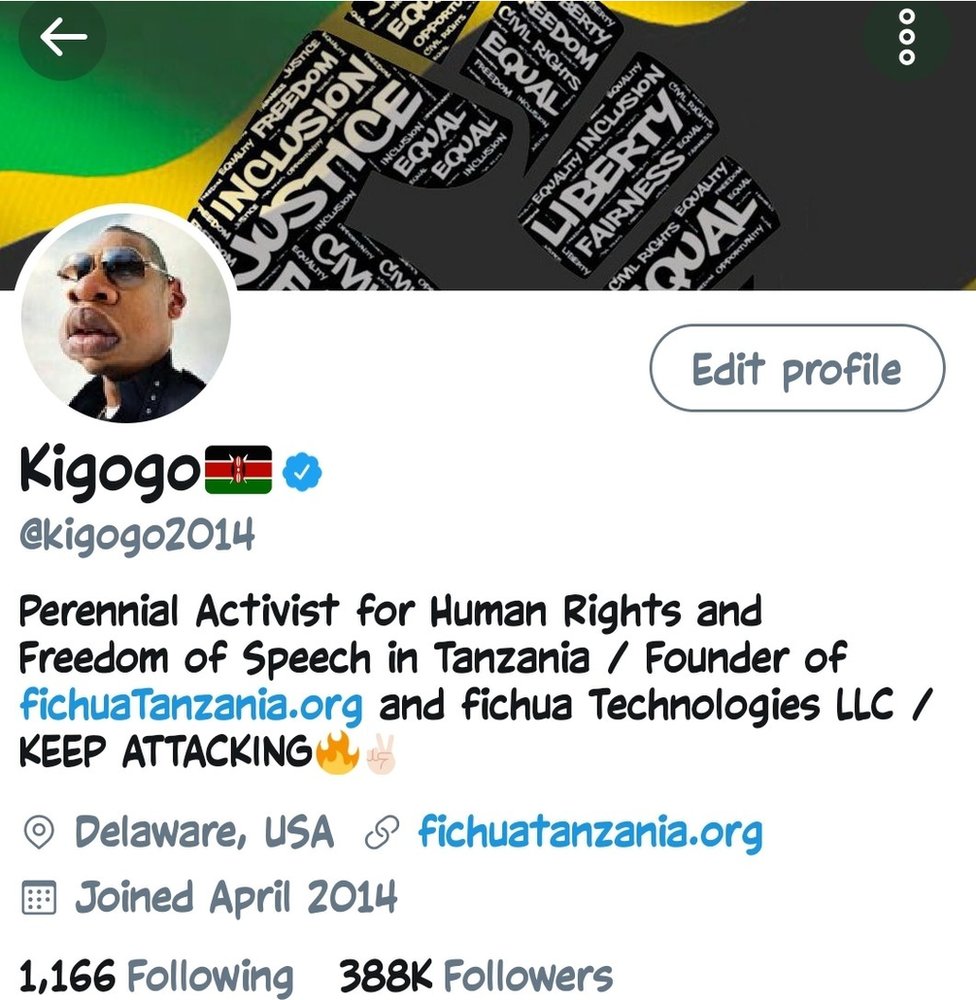
Every day on Twitter, Kigogo – a Swahili name that means a VIP or swashbuckling tycoon – doles out the latest gossip from Tanzania’s corridors of power.
The details are embarrassing and shocking at times but Kigogo’s nearly 400,000 Twitter followers love these revelations, dubbing Kigogo “our president of the Twitter republic”.
But critics have accused Kigogo of embellishing incidents and sometimes getting things wrong.
Suspended from Twitter
“I’m a whistleblower and I expose corruption and human rights abuses in the country,” Kigogo, whose identity is a closely guarded secret, told the BBC.
But shortly before the 28 October election, Twitter suspended the @Kigogo2014 account because of “more than 300” complaints to the social media platform that the account had breached its copyright policy – a charge Kigogo denied.
Internet rights campaigners allege that the policy is increasingly being used by “repressive governments” such as Tanzania’s to silence critics.
Twitter has not responded directly to these allegations but did release a statement in October decrying the blocking of the social media platform ahead of the election.
In one instance that Kigogo described, more than 1,000 tweets from @Kigogo2014 were copied and used to set up three websites, the complainants then used those websites to say that their copyright had been breached.
“After my account was suspended I reached out to Twitter but it was like I was dealing with bots not humans. I was getting programmed responses. No human brain was involved,” Kigogo said.
The attack came days after Kigogo tweeted about an alleged scheme by the ruling party to tamper with ballot papers ahead of the elections, in which President John Magufuli was seeking a second term.
The Tanzania National Electoral Commission denied allegations of fraud before and after the election.
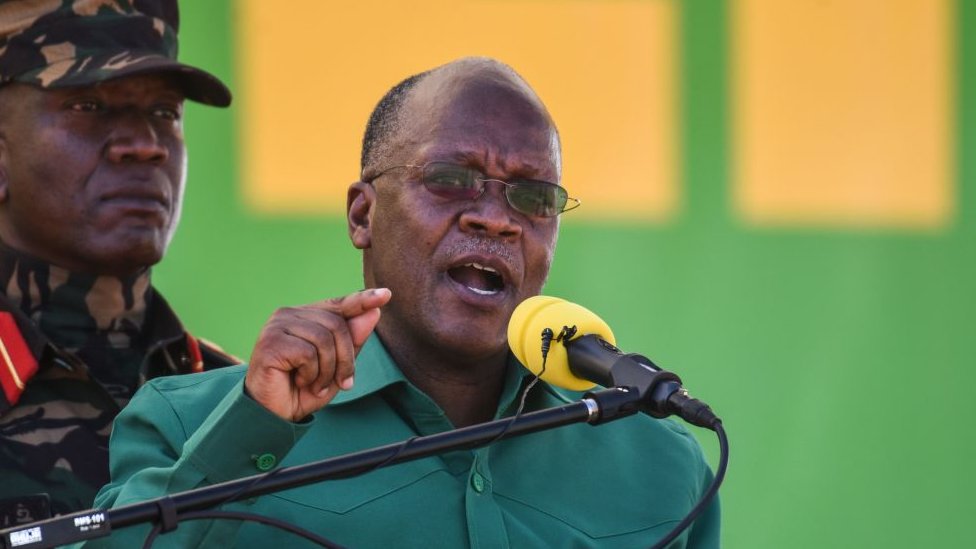
image captionPresident John Magufuli has been accused of cracking down on independent media and critics
The complainants appealed to Twitter to crack down on Kigogo for violating the US’s Digital Millennium Copyright Act, or DMCA, which Twitter and other popular US-based technology companies have to comply with around the world.
It gives guidance on how to manage copyright complaints including how to manage violations.
‘They wanted to unmask me’
The organisation says it has dealt with nine cases where copyright complaints have been used to target accounts from Tanzania.
“After Twitter suspended my account I was asked to give my personal information like my address and phone number which they said will be shared with the complainant,” Kigogo said.
“The strategy here was for the Tanzanian intelligence to find out more details about me that would help them unmask my identity, but I refused to comply.”
Kigogo’s account was suspended twice, for a total of 12 days.
Before the October attack “the account had been hacked… three times by, I suspect, Tanzanian intelligence”, Kigogo said.
The BBC asked Twitter for a comment but a spokesperson for the company referred us to a tweet the company posted on the eve of the Tanzania election urging the government to lift an internet shutdown.
Ahead of tomorrow's election in #Tanzania, we're seeing some blocking and throttling of Twitter. #TanzaniaDecides2020
The internet disruption started days before the vote.
Phone users were blocked from sending bulk text messages with some claiming SMSs containing names of opposition leaders were blocked.
The main social media platforms like Facebook, Twitter and Instagram were either blocked or restricted. It remains extremely difficult to access Twitter on a mobile phone, although some people are using Virtual Private Networks (VPNs) to beat the blockade.
The Dutch ambassador to Tanzania recently asked why the social media platform was still restricted.
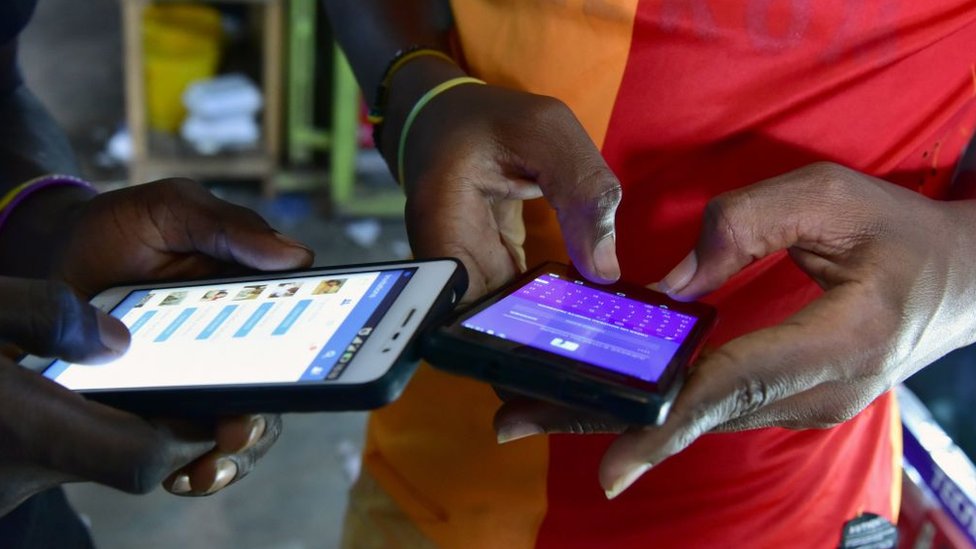
image captionAccess to popular social media services have been restricted or blocked since the October election
According to Peter Micek, head of the legal arm of internet rights group Access Now, Tanzania’s telecoms regulator had allegedly installed equipment that could throttle entire networks, block websites and degrade traffic so that video or photos could not be transmitted.
The BBC sought comment from the Tanzanian regulator but it has not responded.
Foes and supporters alike have been involved in frenzied speculation about the person behind @Kigogo2014 Twitter account and where they were based.
Some say it is being run by a well-connected state official or by a proxy.
Others have attempted to look for clues in the use of the caricatured face of hip-pop artist Jay Z as the account’s profile photo, an image that has been used by several Kigogo copycat accounts.
Several Tanzanian officials have publicly said they were looking for the person running the Twitter account, accusing them of incitement, leaking government secrets, spreading lies and threatening national security.
Kigogo’s tweets are often copied and forwarded on WhatsApp feeding a parallel information system in a country where there’s been an intensified crackdown on mainstream media and government critics since President Magufuli came into office in 2015.
You may also be interested in:
Journalist Maria Sarungi Tsehai, whose media business was shut down by the government, told the BBC that Twitter was the only place many influential Tanzanians felt they could gather to express their views.
“It’s a place for unfiltered comments and opinions,” she said.
She therefore couldn’t stay quiet after Kigogo and five other prominent Twitter accounts were suspended after copyright complaints days before the election.
Shortly after Ms Tsehai wrote an open letter to Twitter’s founder and CEO Jack Dorsey, asking him “to stop repression and our silencing through your well meaning system of managing copyright violations”, the accounts were reinstated and some verified with the help of Access Now.
‘Stop the fake claims’
Although Kigogo feels reassured about the account’s “added protection” and that Twitter was now aware of the nefarious misuse of its copyright policy, Kigogo says the company should do more.
“Things only changed after Maria wrote to Jack Dorsey, but I think they need to strengthen their due diligence system of checking copyright claims.
“If, for example, it’s a company then all documents that legitimise that company need to be vetted and confirmed, that’s the only way they can stop the fake claims.”
Access Now believes that Tanzania’s use of copyright law might be replicated in other African countries.
“The increasing trend of authorities exploiting copyright loopholes in Tanzania is incredibly concerning and poses a threat to freedom of speech across the entire continent,” Berhan Taye from Access Now told the BBC.
She added: “Social media platforms affected by the copyright loophole have no choice but to urgently address this issue, and help ensure governments can no longer deploy this tactic against their critics.”
Kigogo continues to regale his followers with juicy details but also relishes in the mystery the Twitter account has created and hopes it continues to keep Tanzanians guessing which pronoun best describes who he/she/they is or are.
The BBC has asked the spokesperson of the Tanzanian government for comment on the allegations made in this article, but we have not received a response so far.
A Tanzanian MP nominated for a government post has been dropped and replaced after he hesitated and struggled to take the oath of office.
Francis Ndulane, who was to become assistant minister in the mines ministry, attempted to say the words several times before being asked to take a seat as other nominees were called to take their oath.
A video of the event attended by President John Magufuli has been shared on YouTube, it starts at 5:28
In his remarks Mr Magufuli said that he had reviewed the CVs of all nominees before appointing them but added that Mr Ndulane would be replaced.
“I will give this position to someone who can take the oath properly,” the president said.
He told Mr Ndulane that he will keep his MP seat but “we will have to get a replacement”.
Mr Ndulane has not commented on why he struggled to take the oath.
Tanzanian President John Magufuli was sworn in Thursday for his second term in office in a packed stadium in Dodoma.
The National Electoral Commission (NEC) declared Mr Magufuli winner of the October 28 general election, after garnering 12.5 million votes representing 84.4 per cent of the total votes cast.
The president took his oath before Chief Justice Prof Ibrahim Juma at Jamhuri Stadium.
After signing his oath, he was handed the Constitution of the United Republic of Tanzania and was later given a spear and shield as symbols of leadership and head of the armed forces.
Presidents Yoweri Museveni of Uganda, Emmerson Mnangagwa of Zimbabwe and Azali Assoumani of Comoros were at the ceremony. Kenya sent its Cabinet Secretary for East African Community Adan Mohammed.
Tanzanians began voting on Wednesday morning to elect their president and members of parliament. The outgoing head of state John Magufuli, nicknamed the “bulldozer”, faces main opponent Tundu Lissu, who has been able to reinvigorate the opposition, largely stifled during the last five-years.
On the semi-autonomous archipelago of Zanzibar, the situation had become clearly tense on Tuesday, with an opposition candidate – briefly arrested – and an accusation from his party that security forces had killed 10 people.
On Wednesday morning, in the Garagara neighborhood on the outskirts of Stone Town in Zanzibar, where police fired tear gas and live ammunition on Tuesday, 48-year-old Mnao says she came to the polling station early so as to get home quickly.
“During the skirmishes with the police, a tear gas grenade landed in my house. I screamed, I cried, I was distraught. My heart was beating very fast and I was praying,” she said.
More than 29 million voters are called to the polls from 07H00 to 16H00 (04H00 to 13H00 GMT) in mainland Tanzania and 556,000 on the semi-autonomous archipelago of Zanzibar, which together constitute the United Republic of Tanzania (about 58 million inhabitants).
In Zanzibar, voters not only vote in national elections (presidential, legislative), but also to appoint the president and parliamentarians of the archipelago.
Several AFP correspondents have confirmed the opening of polling stations in the country, notably in Dodoma, the administrative capital, in Arusha, the big city of the North, and Moshi, a city located near Arusha, at the foot of Mount Kilimanjaro, the highest peak in Africa.
“I thank God for giving me this opportunity to choose my leaders. We ask that the Electoral Commission is impartial so that peace reigns,” Nestor Shoo told AFP Nestor Shoo, who arrived at 6:00 am in front of the polling station of Mwenge elementary school in Moshi.
There have been reports of the restriction of internet access across the country with some users experiencing difficulties in sharing and downloading images on whatsapp and tweeting.
Who are the candidates? –
Under Tanzania’s electoral rules, the winning candidate requires a simple majority to become president. Results are expected to be announced within one week.
Among the 15 candidates running for the presidential election, there is a duel between Mr. Magufuli, 60 years old, candidate for re-election under the green and yellow colors of the party CCM (“The Party of the Revolution”), in power since 1961, and Tundu Lissu, 52 years old, on behalf of Chadema (Party for Democracy and Progress).
During his first term in office, Magufuli, according to his critics, was authoritarian and adopted an abrupt style of governance, true to the nickname he earned as Minister of Public Works (2010-2015): the “bulldozer” or “Tingatinga” in Kiswahili.
Shortly after his election, his tolerance for any form of criticism seemed to collapse.
Political rallies outside the election period were banned, draconian laws against the media were passed, journalists, activists and opposition members were arrested.
Sixteen bullets in the skin –
Mr. Magufuli highlighted his fight against corruption, the extension of access to free education and a policy of major infrastructure projects in the hydroelectric and railway fields. He also resurrected the national airline.
Facing Mr. Magufuli stands Tundu Lissu, a lawyer by training, who returned to the country at the end of July after three years of exile.
In September 2017, after being arrested no less than six times during the year for various reasons, Mr. Lissu was the victim of an assassination attempt – which he claims was politically motivated – outside his home in Dodoma, the administrative capital.
He was shot 16 times. Twenty surgeries later, the 50-year-old limps, but still managed to campaign and attract crowds. So much so that in October, the leader of the popular opposition ACT-Wazalendo party, Zitto Kabwe, gave him his support, saying Lissu had “the best chance of beating Mr. Magufuli.
In return, Chadema sided for the Zanzibar archipelago presidency behind Seif Sharif Hamad, a veteran local opposition candidate running under the ACT-Wazalendo banner.
The election campaign was held without any consideration for the coronavirus, as Mr. Magufuli declared his country “free of Covid” in July, thanks to prayers.
The lack of opinion polls made it difficult to assess the popularity of the incumbent president and the public’s perception of his policies.
Under Magufuli, the economy continued to grow, before Covid-19, at an impressive 6% per year, but job creation was “few” and aggressive tax collection affected the private sector says Thabit Jacob, a Tanzanian political analyst based in Denmark.
The IMF expects Tanzania to escape recession this year, despite the pandemic. A growth of 1.9 percent is at least expected.
Police in Tanzania have blocked the convoy of opposition presidential candidate, Tundu Lissu, after he defied a ban not to campaign for a week.
The ban by National Electoral Commission (NEC) was imposed following complaints from the ruling CCM party and the opposition NRA party.
The parties accused Mr Lissu of falsely claiming that President John Magufuli had held a secret meeting with district bosses with the intention of influencing the outcome of the polls.
The ban ends on Friday.
The opposition Chadema party has tweeted photos of police blocking the convoy:
The election will be held on 28 October.
Jeshi la Polisi wenye silaha za moto na Mabomu ya machozi muda huu wameuzuia msafara wa Makamu Mwenyekiti wa Chadema Taifa na Mgombea Urais wa Jamhuri ya Muungano wa Tanzania Mhe. @TunduALissu maeneo ya Kiluvya ukiwa unaelekea Kibaha. pic.twitter.com/iBtlPUfuqQ
Uganda’s President Yoweri Museveni is recovering after a “strong” face mask he wore on his trip to Tanzania more than a week ago made him lose his voice.
Mr Museveni said that while face masks protect people against the coronavirus, he “had to put on a very strong one” in Tanzania and “when I came back my voice was affected”.
He did not elaborate, but it led to him calling off a trip to Jinja district in eastern Uganda on Saturday. He sent Vice-President Edward Ssekandi instead.
Tanzania’s President John Magufuli has played down the threat posed by the disease, and has previously said that the country is “coronavirus-free” and God has “spared” it from the virus.
When he welcomed Mr Museveni to the country, Mr Magufuli did not wear a face covering. He had guests laughing when he quoted the Ugandan president as telling him that he would be wearing a mask and he replied that “you can even come with a blanket”.
The two leaders signed an agreement allowing for the construction of a 1,445 km (898 miles) crude oil pipeline.
The $3.5bn (£2.7m) project will connect Uganda’s oil fields to Tanzania’s port of Tanga.
Tanzanian online media outlet Millard Ayo has become the first African media to hit one billion views on its YouTube channel.
It’s proprietor – who goes by the same name – has thanked those who visit his channel for news.
He tweeted a photo celebrating the milestone:
In June, Tanzanian artist Diamond Platinumz became the first African musician to hit one billion views.
A VERY BIG THANKS kwa yeyote aliyewahi kutumia hata kwa dakika 1 tu kwenye youtube ya millardayo, MUNGU ANA MAGUVU SANA tumefikisha VIEWS BILIONI MOJA, Youtube wametupongeza na kusema nimekua MWANDISHI/MEDIA ya kwanza AFRIKA nzima kupata 1 BILLION VIEWS!! 🙏🏿🙏🏿MAKUBWA YANAFATA !! pic.twitter.com/fCaD8TKvS6
The Kenyan government has included neighbouring Tanzania on its list of countries whose travellers are exempted from mandatory quarantine upon arrival.
The move is considered controversial as Tanzania has not published figures of Covid-19 cases in months.
The two East African nations have been locked in a diplomatic standoff since May when Kenya blocked Tanzanian truck drivers from entering the country.
The Kenyan government had long feared that its neighbour was not transparent on how it dealt with the pandemic. In June, President Magufuli declared Tanzania was “coronavirus free” thanks to prayers by citizens.
But the tension seems to be cooling off now.
Other countries whose travellers Kenya has exempted from mandatory quarantine include South Africa, the US, India, Mexico and Spain – who are among countries with the highest Covid-19 cases in the world.
The Kenyan authorities will still require all arriving travellers to have a Covid-19-free certificate. Passengers with body temperatures above 37.5 degrees will be quarantined.
Kenya has more than 36,000 confirmed cases of Covid-19 and more than 600 deaths.
Tanzania’s Communications Regulatory Authority has suspended privately-owned media house, Clouds TV, for a week for violating the broadcast code.
The regulator said the media house – which owns a TV station and radio stations – was suspended for announcing election statistics that had not been approved by the National Electoral Commission.
Tanzania is set to hold elections in October.
The broadcaster had reported that some politicians vying for parliamentary seats would stand unopposed after their rivals failed to meet the nomination criteria.
The electoral commission complained to the regulator about the report.
The media house has been told to apologise on air before the suspension starts on Friday.
This comes after the regulator recently introduced strict rules that require media outlets to secure a permit before airing material produced externally – including materials from international broadcasters.
Tanzania has banned three more Kenyan airlines as a standoff between the East Africa neighbours over Covid-19 escalates.
The Tanzania Civil Aviation Authority (TCAA) nullified the approval granted to Fly 540, Air Kenya Express and Safarilink Aviation.
The airlines operate daily flights to the tourist destinations of Kilimanjaro and Zanzibar.
“The basis of the decision to nullify our aproval for the three Kenyan airlines is the ongoing dispute between the two countries,” Tanzania Civil Aviation Authority director general general Hamza Johari is quoted as saying by the Citizen newspaper
Earlier, the national carrier Kenya Airways had been banned after Nairobi said passengers from Tanzania have to quarantine for 14 days when they arrive in the country.
President John Magufuli declared Tanzania free of coronavirus in June.
His government has been criticised for its relaxed approach to the disease.
As Tanzanian giants Young Africans SC is aiming at wrestling to win the league from bitterest rivals Simba SC next season, they are augmenting their squad with top quality.
The latest to be on the radar of the Yellow and Greens is Ghanaian goalkeeper Kofi Mensah who plays in Zambia.
The 23-year-old has been in scintillating form in the Zambia Super League for Power Dynamos.
Young Africans want to sign Mensah to bolster their goalkeeping department for the 2020/2021 campaign.
“Young Africans are interested in Mensah from Power Dynamos. With inconsistencies and injuries in their goalkeeping department, the club is considering making an offer for Mensah for next season,â€Â a close source told DucorSports.com
Kofi Mensah left Ghana for Lusaka Dynamos in 2019 after ending his stint with Ghana Premier League side Karela United.
After a short stints at Lusaka Dynamos, Mensah switched camp to sign for Power Dynamos
Tanzania’s opposition Chadema party office in the north-eastern town of Arusha has been “firebombed”, according to its leader Tundu Lissu.
Mr Lissu said the office was destroyed on the eve of his visit to the town on Friday.
He has termed the act as “terror and intimidation”.
The politician said his planned visit would still go on despite the attack.
Mr Lissu returned to Tanzania last month after surviving an assassination attempt in 2017 that saw him seek treatment in Kenya and Belgium.
Mr Lissu has been nominated by his party to run for the presidency in October’s general elections, but has said he lacks confidence in the electoral commission.
Tanzania Premier League outfit Namungo FC has completed the signing of Ghanaian striker Stephen Sey, the club announced.
Sey is joining them from Singida United who suffered relegation from the Tanzanian top-flight at the end of the season.
The 26-year-old forward put in an impressive performance in the just ended campaign which attracted Namungo.
The former Tudu Might Jets player will be participating in the 2020/2021 CAF Confederation Cup with his new club as they finished as runners-up in the Tanzania Federation Cup.
Namungo ended the Tanzania Premier League season on the 4th position.
The director of Africa Centre for Disease Control has expressed concern about Tanzania’s handling of the coronavirus pandemic.
Dr John Nkengasong told BBC’s Newsday that there was no enough data to determine the situation in Tanzania.
He said the centre had developed a continental joint response strategy to be able to defeat the virus.
“We continue to hope and plead that Tanzania could come forth and report the situation as it is so that we can work collaboratively to stem this virus out of the continent,” he said.
He emphasised on the need for all African countries to work together.
“We continue to reach out [to Tanzania] but we are not having the response that we expect,” he said.
Tanzania’s President John Magufuli has insisted that his country has been “saved” from the virus and declared the country virus free.
The country is getting ready for October elections and is an electioneering mood. People have been going about their business with no masks or social distancing.
Tanzania’s former President Benjamin Mkapa, who died on July 24 in Dar es Salaam, will be buried Wednesday at his home in Lupaso village of Masasi district in the Mtwara region.
The Tanzanian government announced this on Friday, saying the public will pay their last respects for three days – from Sunday to Tuesday – at Uhuru Stadium in Temeke district.
Prime Minister Kassim Majaliwa said the body will then be transported to Lupaso for the burial the following day.
THE PROGRAMME
On Sunday, the Catholic Church will hold a requiem mass at Uhuru Stadium from 10am, with the public allowed to attend.
“Tuesday will be a day for leaders to pay their last respects, with the exercise running until noon,” Mr Majaliwa said.
“For residents of Dar es Salaam who will not have time on Sunday and Monday, we invite them to pay their last respects on that day. The farewell exercise will go on until late in the night to ensure everyone get a chance,” he added.
THE BODY
Mr Mkapa’s body will be received at Nachingwea airport.
On Wednesday, the funeral service will begin in the morning, with villagers honouring the ex-President.
The burial service will begin at about 2pm, a time set because some people will travel from other regions for the ceremony.
KENYA MOURNING
On Friday, Kenyan President Uhuru Kenyatta announced three days of national mourning in honour of Mr Mkapa, eulogising him as “a great Statesman and a brilliant public servant who dedicated his entire adult life serving his beloved nation with honour, dignity and excellence”.
As such, the the Kenyan flag and the flag of the East African Community will fly at half-mast from Monday to Wednesday.
An opposition party in Tanzania has condemned the arrest of its leader describing it as a clear act of oppression and intimidation ahead of October’s elections.
The Alliance for Change and Transparency says Zitto Kabwe and seven colleagues have been accused by the police of unlawful assembly.
A party statement says police interrupted a legal political meeting in south-east Tanzania’s Linde Region and arrested them on trumped up charges.
The east African nation will hold general elections in October. President John Magufuli, who is expected to run for a second term, dissolved parliament last week.
Rights groups say oppression of the opposition has increased significantly since President Magufuli came to power in 2015 during which time there has also been a clampdown on the media.
Some students in Tanzania are heading back to high schools and colleges for the first time in about two months, but will have to follow strict guidelines to ensure their safety from coronavirus.
The school calendar was interrupted in March following the outbreak of the virus.
Amid, what the government says is a decline in infections, colleges are reopening and final-year school students can return to school.
President John Magufuli has said he will consider reopening schools for younger pupils if the infection rate continues to decline.
Faustine Bee, the vice-chancellor of Dodoma University, said students had been told to wear face mask, wash hands and social distance.
A school in Tanzania has denied reports that it had asked final year students to report back next week with money for ginger and lemons to boost immunity against COVID-19.
St Mary’s Mazinde school in Tanga district had been accused of asking parents to pay 750,000 Tanzanian shillings ($324; £264) to be used in buying the ginger and lemons.
The administration has however denied the reports, according to an announcement carried on local media.
State official Mwita Waitara had last week said students can report back to school with ginger and lemons to try and prevent catching the virus.
Tanzania’s President John Magufuli earlier in the month said his son had recovered from Covid-19 after inhaling steam and consuming ginger and lemons.
Schools are reopening on 1 June for all final year students and the government has issued guidelines that include handwashing and rearranging classes to ensure space between students.
At least 588 wild animals, including lions and giraffes, were killed by motorists in 2019 as they crossed roads within the Lake Manyara and Tarangire National Parks ecosystem in northern Tanzania, a statement has said.
The statement by the Ministry of Natural Resources and Tourism said the knockdown of the wild animals was mainly caused by lack of road signs that cautioned drivers over the presence of the wild animals.
Following the killings of the animals by motorists, Constantine Kanyasu, the Deputy Minister for Natural Resources and Tourism, ordered relevant authorities to fix road signs in the area that alerted motorists over the presence of the animals, said the statement.
The statement said Kanyasu made the order to fix road signs to the Tanzania National Parks Authority and the Tanzania National Roads Agency in a meeting with wildlife conservation experts held in Babati district in Arusha region that discussed ways of protecting wildlife corridors.
On the protection of the wildlife corridors, Kanyasu directed the permanent secretary in the Ministry of Natural Resources and Tourism to form a task force to guard wildlife corridors.
Tanzania has run short of sugar over the last three weeks causing frustration among traders and consumers.
Most shops have not stocked the commodity – and those selling it are charging nearly double the normal price.
The government attributes the shortage to the coronavirus pandemic, which it says disrupted importation schedules.
But it also blames some business people for hoarding sugar to create a false scarcity so that they can sell it at a higher price.
Tanzania imposed price controls for the commodity last month after local production fell because of poor weather conditions, Bloomberg reported.
The price of a kilogramme for domestic consumption was set at 2,700 Tanzanian shillings ($1.17; £0.94), but traders said it was unprofitable.
On Monday, around 1,500 tonnes of sugar arrived at the port of Dar es Salaam.
The director of the Tanzania Sugar Board, Kenneth Bengesi, said the consignment would soon start to be distributed across the country.
Tanzania consumes 590,000 tonnes of sugar annually for both domestic and industrial consumption, according to data from 2016. But the country produces an average of 300,000 tonnes every year.
Sugar shortages are not rare in the East African country.
Poor rains and price disagreements between the government and traders have in the past caused scarcity and sharp increases in prices.
Tanzania’s Constitutional and Legal Affairs Minister Augustine Mahiga has passed on this morning in the capital, Dodoma.
President John Magufuli Mahiga, in a statement, said Mr Mahiga fell ill at his home in the morning and was pronounced dead on arrival at a local hospital.
The statement said the deceased minister had a short illness.
Mr Mahiga was a long-serving diplomat who previously served as the Permanent Representative of Tanzania to the United Nations and as the UN Special Representative and Head of the United Nations Political Office for Somalia.
He was a regular on BBC programmes speaking on UN Affairs, Tanzania and East Africa matters.
Tanzania’s Prime Minister Kassim Majaliwa says the country now has 480 cases of coronavirus, following criticism on social media about the failure to give daily updates about the situation.
When the government last released figures a week ago there were 306 cases.
The lack of updates has led to speculation that the authorities were concealing the true number of cases.
President John Magufuli has urged people to engage in mass worship as a way of preventing the spread of Covid-19, the respiratory illness caused by coronavirus.
He said the virus was satanic and therefore could not thrive in churches.
Tanzania is overwhelmed by high cases of tuberculosis with limited capacity and resources for treatment and care and the situation is made worse by ignorance among the victims who report late to health centres for treatment and care.
About 7,800 people in Kagera Region contract Tuberculosis (TB) every year, but the only 2,300 patients were treated, according to the Regional Tuberculosis and Leprosy Coordinator (RTLC), Dr Paschal Peter.
Dr. Peter, who is based at Bukoba Regional Referral Hospital, calls for concerted efforts to curb the spread of the disease. Compared with other diseases caused by a single infectious agent, Tuberculosis is the second biggest killer, globally,” he said.
He says it is crucial for people to report to health facilities early for testing noting that of the 7,800 cited cases, only 2,300 patients were treated due to limited capacity and resourced. At the national level about 154,000 patients contract TB each year.
Lack of knowledge and delays in reporting to health facilities for early detection limit efforts to curb the spread of the disease. TB, as it’s commonly called is a contagious infection that usually attacks the lungs. It can also spread to other parts of the body, like the brain and spine.
Dr Peter says the number of TB patients increased from 1,732 cases detected in 2014, to 1,934 cases in 2015 and 2,121 in 2016. Figures for 2017 and 2018 were 2,158 and 2,214, while between January and April 1, this year 441 TB were detected. The prevalence of Tuberculosis in the country is 269/100,000.
This shows that TB is still a major burden in the country and this calls for renewed efforts by all to strengthen the current health delivery system and programme interventions for Tuberculosis in Tanzania.
Between January and March, this year nine patients were confirmed to have contracted Multi-Drugs Resistant (MDR) TB. Compared to 10 patients last year, he said adding that about 100 Accredited Drugs Dispensers (ADOs) and 20 registered traditional healers from Muleba, Missenyi, Ngara and Karagwe Councils were recently trained on TB management skills while efforts were being made to mobilise funds to conduct more sensitization seminars in controlling TB.
The region allocated one Genexpert TB testing machine to each of the district councils as more efforts were being made to control the spread of the disease as there were indications that the preventable disease was on the increase.
World Tuberculosis Day (WTD) celebrated annually on March 24 is marked to create public common awareness about efforts to combat one of the deadly diseases that is curable with the right administered drugs.
Furthermore, results have shown that TB is more prevalent in males than in females while the prevalence of HIV infection among TB suspects is 4.8 percent and 6.5 percent among TB patients.
There was considerable regional variation as in the previous years with 50 per cent of cases being contributed by only 6 regions – Dar- es-Salaam, Mwanza, Mbeya, Morogoro, Arusha and Tanga. Data indicated that 15 regions notified below the national average of 129 cases per 100,000 people.
The notification rate of new and relapses TB cases was 129 cases per 100,000 population which was slightly higher compared to that of 2015 that was 125 per 100,000 population. Since 1980, Tuberculosis patients have been on the rise up to 65,000 cases detected in 2013, compared to 11,000 cases reported in 1983.
In the past five years 63,000 people have been recorded by health facilities to be TB patients and each year securing treatment. Tuberculosis is an infectious disease that usually affects the lungs. Tanzania is the first country in the world to successfully combine the control of TB and Leprosy into a single programme.
The National Tuberculosis and Leprosy Programme (NTLP), which works to eradicate the disease as well as Leprosy, has been in the forefront in laying emphasis on early detection and treatment services to stop its spread.
Epidemiologists hint that several factors contribute to the spread of the disease in the country including HIV/AIDS scourge, which reduces the body’s immunity to become susceptible to be invaded by the bacteria. They also point failure by TB patients to report to health facilities on time for diagnosis, treatment as well as poor housing and over-crowding in stuffy places.
The Mycobacterium Tuberculosis bacterium causes TB. It is spread through the air when a person with TB (whose lungs are affected) coughs, sneezes, spits, laughs, or talks. TB is contagious, but it is not easy to catch. The chances of catching TB from someone you live or work with are much higher than from a stranger.
Most people with active TB who have received appropriate treatment for at least 2 weeks are no longer contagious.
Since antibiotics began to be used to fight TB, some strains have become resistant to drugs. Multidrug-resistant TB (MDR-TB) arises when an antibiotic fails to kill all of the bacteria, with the surviving bacteria developing resistance to that antibiotic and often others at the same time.
MDR-TB is treatable and curable only with the use of very specific anti-TB drugs, which are often limited or not readily available.
Campaign group Human Rights Watch (HRW) has accused the Tanzanian government of denying basic health services to LGBT people.
HRW’s report says arbitrary arrests and forced anal examinations are meted out to LGBT people, among other violations of their rights.
“The Tanzanian authorities have orchestrated a systematic attack on the rights of LGBT people, including their right to health. Manufactured threats around the so-called ‘promotion of homosexuality’ have displaced best practices and evidence-based approaches in guiding HIV policy in Tanzania,” said Neela Ghoshal, senior LGBT rights researcher at HRW.
Four years ago, Tanzania’s health ministry banned non-governmental organisations from distributing free lubricants to gay people as part of efforts to control the spread of HIV/Aids.
Health experts criticised the move and warned that it could put the lives of vulnerable populations at risk of HIV infection.
But Tanzania’s health ministry insists that public health centres provide services to people of all backgrounds without discrimination, and says there is no need for specialised services run by civil society organisations targeting LGBT people.
The government is yet to respond to the accusations in this new report but homosexual acts are illegal in Tanzania, and punishable by 30 years to life in prison for “carnal knowledge against the order of nature”.
This has led to many gay, lesbian, bisexual and transgender people to hide their sexuality.
At least 20 people in Tanzania were trampled to death at an open-air evangelical Christian church service in the north of the country, officials said on Sunday.
Government official Kippi Warioba, District Commissioner in the northern town of Moshi, said he feared the number of dead could still rise from the accident, which took place on Saturday afternoon.
“So far, 20 people have died, but the death toll could increase as there were also wounded,†Warioba told AFP.
The tragedy happened when a crowd of worshippers was attending a prayer ceremony on Saturday led by the popular preacher, Boniface Mwamposa, who heads the Arise and Shine Ministry Tanzania.
The stampede occurred when Mwamposa, who calls himself the “Apostleâ€, poured what he said was holy oil on the ground and the crowd surged toward to touch it in the hope of being cured of sickness, witnesses said.
“The Apostle Boniface Mwamposa poured sacred anointing oil on the ground,†one witness, Jennifer Temu, told AFP.
“Dozens of people immediately fell being jostled and trampled, and some died. We have counted 20 people killed — but there are also wounded.â€
“It was horrible, people trampled on mercilessly, jostling each other with elbows,†said another witness, Peter Kilewo.
“It was like the preacher had thrown bundles of dollars about… and there were all these deaths!â€
A study has unveiled the likely health risks for meat consumers in Tanzania for failure to consider the animal welfare and food safety.
This was disclosed yesterday by a representative of World Animal Protection, Dr Victor Yamo during the presentation of a report titled ‘consumers perception on animal welfare and food safety’ in Dar es Salaam.
He said meat consumers in the country are less concerned about how an animal is treated before it lands on the table for consumption.
“Throughout our survey which was conducted in Arusha and Dar es Salaam, we found that 37.2 per cent of Tanzanians do not consider meat being free from chemical contamination as important for their own well-being,” Dr Yamo said.
Moreover, Dr Yamo said 54.37 per cent of the participants did not consider how the animal is raised as a very important thing while 60.7 per cent and 56.8 per cent did not care the welfare of the animal during transportation and slaughter to be important.
“Our study also showed that 89.9 per cent of the respondents would purchase more meat only if it had food safety assurance marked from Supermarkets,” said him.
He then reminded consumers that the use of antibiotics in farm animals has led to proliferation of antimicrobial resistance which he said has serious impact on human health.
“If you treat animals well, they can bring good products for human consumption but, likewise, if you treat them poorly, they can produce products which are harmful for consumption,” he said.
He also pointed out that chicken remain the most loved meat in the country with 93 per cent of consumption while that of cow is 85 per cent.
The US State Department on Tuesday urged travellers to Tanzania to “exercise increased caution†due in part to threats that gay people may experience there.
The advisory comes as another indication that the Trump administration is not abandoning the Obama-era practice of speaking out on behalf of lesbian, gay, bisexual, transgender and intersex Africans.
“Members of the LGBTI community have been arrested, targeted, harassed, and/or charged with unrelated offenses,†the State Department said in an updated advisory on travel to Tanzania.
“Individuals detained under suspicion of same-sex sexual conduct could be subject to forced anal examinations.â€
The advisory comes about a year after Paul Makonda, regional commissioner of Dar es Salaam and an ally of President John Magufuli, announced last year that a newly formed surveillance squad would scrutinise social media in order to identify and arrest same-sex couples.
Additionally, the advisory also warns that “terrorist groups continue plotting possible attacks in Tanzania†in a addition to prevalence of violent crimes.
“Terrorists may attack with little or no warning, targeting embassies, police stations, mosques, and other places frequented by Westerners,” it said.
The US had issued a Tanzania travel warning in September that focused on an alleged case of Ebola. Government officials, however, subsequently denied that the disease was present in the country, and the new State Department advisory makes no mention of Ebola.
A number had been told they would not be allowed to take part due to spelling mistakes and other errors on official forms.
Several opposition parties – including the biggest, Chadema – had announced that they would boycott the local elections, condemning them as a mockery of the democratic process.
Tanzania’s highest court has upheld a landmark 2016 ruling that raised the minimum age of marriage to 18.
The Supreme Court of Appeals’ decision, announced Wednesday, was greeted by child welfare and women’s advocates as a win.
“This was a victory not only for girl children but also for Tanzanians in general,” said Ann Sangai of the Tanzania Gender Networking Program (TGNP), which advocates for girls and women’s rights.
A legal challenge led Tanzania’s high court to strike down two sections of the country’s marriage law in 2016, effectively raising a girl’s minimum marriageable age to 18 from as young as 14. But the Eastern African country’s attorney general appealed the decision last year on the grounds that the lower minimum age actually protected girls who became pregnant out of wedlock.
Human rights analysts say the court’s decision to uphold the law benefits millions of youths, especially those in traditional communities or rural, disadvantaged areas who are most vulnerable to early marriage.
The Tanzanian advocacy group Msichana Initiative led the effort to raise the minimum age to 18. One of its lawyers, Alex Mngongolwa, told VOA that permitting marriage at an earlier age contravened the country’s constitution and disrespected international conventions ratified by Tanzania’s Parliament.
A growing body of research indicates that early marriage — sometimes prompted by pregnancy — disrupts a girl’s education, limiting prospects not only for her but also for her family and community.
A court in Tanzania has blocked two top politicians from the opposition Chadema party from travelling abroad until they are cleared of sedition charges, the country’s private Citizen newspaper reports.
Vincent Mashinji, Chadema’s secretary-general, and MP Esther Matiko are facing charges, along with seven others including Chadema’s leader, for participating in a protest in February 2018, which saw a 22-year-old student killed by a stray bullet fired by police.
The paper says their lawyers had asked the court to adjourn the case and allow them to travel abroad to attend separate meetings.
Mr Masinji is supposed to travel to London to attend meetings for 10 days, while Ms Matiko is scheduled to go to Rwanda and later Belgium for five days of meetings.
But magistrate Thomas Simba rejected the requests on grounds that they would delay the case.
“The accused are supposed to start their defence on charges facing them, so by allowing them to travel it will derail the case,†Mr Simba is quoted as saying in court in Dar es Salaam.
He adjourned the case until 7 October, which is when the defence will start to put forward its case.
President John Magufuli has been criticised for limiting political freedoms since coming to power in 2015, and has banned political rallies.