Tag: tax

  • GRA to roll out revised VAT rates from January 1, 2026

    GRA to roll out revised VAT rates from January 1, 2026

    The implementation of the value-added tax reforms is set to commence from 1st January 2026 by the Ghana Revenue Authority (GRA).

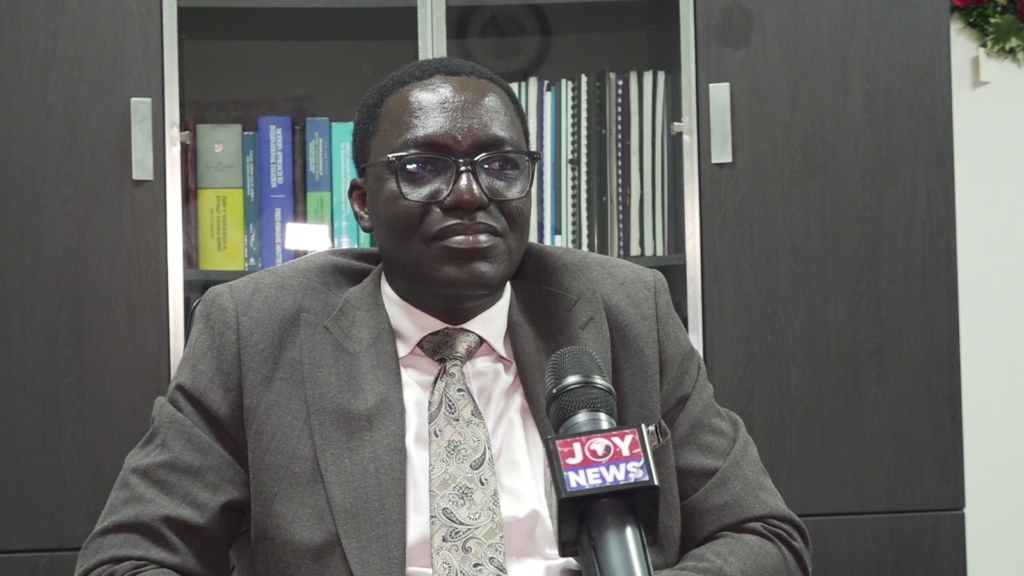
    New VAT, Commissioner for Domestic Tax Revenue Division, Dr. Martin Kolbil Yamborigya explained that hat customers will now be required to pay 20 % instead of 21.9% on their goods and services.

    “There will be a lot benefits for the tax payer because we have now re-coupled the National Health Insurance Levy and Ghana Education Trust Fund (GETFUND), so it will bring down the amount to be paid. This will mean that some savings will be made by businesses and also the fact that it has become an input tax to be claimed at the end of the day” he said.

    Following the passage and presidential assent of the VAT Bill 2025 in November fter it was presented to parliament during the 2026 Budget statement and economic policy presentation, the new law is set to simplify Ghana’s tax framework, consolidate existing regulations, abolish the COVID-19 Levy, and enhance compliance through digitalisation.

    The reforms aim to promote fairness and stimulate economic growth while strengthening domestic tax mobilisation. They also reflect recommendations from the International Monetary Fund to reduce bureaucratic hurdles in revenue collection.

    Among the key changes are the unification of the flat-rate system, lower effective tax rates, the ability to deduct GETFund and NHIL contributions as input tax, and measures to improve overall revenue efficiency.

    The law will also leverage digital platforms, including the E-VAT system, to ensure more accurate and transparent tax collection.

    Presenting the 2026 Budget Statement and Economic Policy to Parliament on Thursday, November 11, Finance Minister Cassiel Ato Forson hinted that the government had completed the design of a modernised Ghana Value Added Tax (VAT) system fit for the country’s economic transformation agenda.

    He mentioned, “As the new VAT reforms will do the following, we will abolish the COVID-19 Health Recovery Levy, Mr Speaker; we will abolish the decoupling of GetFund and National Insurance Levies from the VAT tax base. The current VAT rate will be reduced from 21.9% to 20%.

    “In the 2025 budget, in the mid-year fiscal policy review, government made a firm promise to reform Ghana’s Value Added Tax (VAT) system to make it fairer, simpler, and more efficient. We pledged to remove distortions, address the cascading effects inherited in the VAT system, strengthen compliance, and create a tax regime that supports both businesses and fiscal stability. These distortions have negatively impacted overall welfare, increasing the deadweight loss in the economy and reducing VAT compliance.

    “Today, Mr Speaker, I am proud to report to this House that we have finally delivered on that promise. After months of detailed analysis and broad consultations with stakeholders, we have completed the design of a modernised VAT system fit for Ghana’s economic transformation agenda. Government is therefore submitting to this House today, for approval, a bold package of VAT reforms that will make our tax system more equitable, transparent, and business-friendly.

    “The new VAT reforms will do the following: we will abolish the COVID-19 Health Recovery Levy. We will abolish the decoupling of GetFund and National Insurance Levies from the VAT tax base. We will abolish VAT on the recognition of minerals. We will reduce the effective VAT rate from 21.9% to 20%. We will raise the VAT registration threshold from GH₵200,000 to GH₵750,000.

    “We will extend VAT zero rating on the supply of local manufacturing textiles to 2028. Mr Speaker, for emphasis, we promised to abolish the COVID Levy, and with the support of this House, I am proud to say that today, the COVID Levy is accordingly abolished. By abolishing the COVID-19 Levy, the government is putting GH₵3.7 billion in the pockets of individuals and businesses in 2026 alone”.

    Earlier this year, President John Dramani Mahama’s administration repealed the betting tax, emissions tax, and other levies. The Electronic Transaction Levy (E-Levy), introduced in 2022, imposed a 1.5% tax on electronic transactions. Although it was later reduced to 1%, the levy remained unpopular, drawing criticism from businesses, consumers, and political stakeholders who argued that it stifled digital transactions and disproportionately affected low-income earners. Many contended that it placed an unnecessary burden on citizens.

    The removal of this tax was a core pledge in the NDC’s manifesto, aimed at reducing the cost of living and encouraging business expansion. With the repeal bill now signed into law, many Ghanaians can breathe a sigh of relief.

    Supporters of the repeal argue that eliminating these levies will promote digital transactions, stimulate economic activity, and improve disposable income for households and businesses. Meanwhile, the government has officially scrapped the COVID-19 Health Recovery Levy introduced during the pandemic era.

    Introduced on 31 March 2021 under Act 1068 during the tenure of former President Nana Addo Dankwa Akufo-Addo, the levy applied a 1% charge on the supply of goods and services in Ghana, excluding certain items. and on imports of goods and services. According to the New Patriotic Party (NPP), the levy was intended to help the government raise funds to fight the pandemic and support recovery efforts.

    However, presenting the 2026 Budget Statement and Economic Policy to Parliament on Thursday, November 11, Finance Minister Cassiel Ato Forson disclosed that the government has abolished the levy with immediate effect.

    According to him, the move will save individuals and businesses GH₵3.7 billion in taxes, money that can instead be invested back into their businesses or personal ventures.
  • Ghana to lose over GHS2bn revenue in 2026 due to removal of COVID-19 levy – Economist

    Ghana to lose over GHS2bn revenue in 2026 due to removal of COVID-19 levy – Economist

    The abolition of the COVID-19 Levy and removal of key taxes in the 2026 budget, as announced by Finance Minister Cassiel Ato Forson, is expected to create a significant revenue gap for the economy in 2026.

    According to Economist, Dr Adu Owusu Sarkodie on Joy News’ PM Express Business Edition, the government is placing its hope on compliance at a time when it has already abolished the E-Levy, which was fetching the government around 2 billion over a little over GH¢2 billion

    Adding that, the betting tax, which brought in “roughly about ¢300 billion,” has also been abolished.

    However, the most severe hit to government revenue comes from the removal of the COVID-19 levy, which was expected to bring in about ¢3 billion next year.

    “Covid-19 was giving us almost the same amount as the total royalties from oil and gas. This year, total royalties from oil and gas are estimated to be ¢2.9 billion. Covid-19 levy will be giving us ¢2.8 billion,” he stated.

    Finance Minister Cassiel Ato Forson has warned that removing the COVID-19 levy, on top of the ¢2 billion E-Levy, could slash government revenue by about ¢5 billion. He noted, however, that the government believes it can still raise funds by widening the tax base.

    “When you increase the base, if more people are paying, it’s better than a few people paying higher rates,” Dr. Sarkodie explained, highlighting the strategy shaping the fiscal outlook.

    The National Democratic Congress (NDC) government has honoured a promise it made before assuming office. In line with this, the government has officially scrapped the COVID-19 Health Recovery Levy introduced during the pandemic era.

    Introduced on 31 March 2021 under Act 1068 during the tenure of former President Nana Addo Dankwa Akufo-Addo, the levy applied a 1% charge on the supply of goods and services in Ghana, excluding certain items. and on imports of goods and services. According to the New Patriotic Party (NPP), the levy was intended to help the government raise funds to fight the pandemic and support recovery efforts.

    However, presenting the 2026 Budget Statement and Economic Policy to Parliament on Thursday, November 11, Finance Minister Cassiel Ato Forson disclosed that the government has abolished the levy with immediate effect.

    According to him, the move will save individuals and businesses GH₵3.7 billion in taxes, money that can instead be invested back into their businesses or personal ventures.

    The Finance Minister further added that, after months of detailed analysis and broad consultations with stakeholders, the Ministry has completed the design of a modernised Ghana Value Added Tax (VAT) system fit for the country’s economic transformation agenda.

    He mentioned that if approved by Parliament, the VAT reforms will make Ghana’s tax system more equitable, transparent, and business-friendly. “As the new VAT reforms will do the following, we will abolish the COVID-19 Health Recovery Levy, Mr Speaker; we will abolish the decoupling of GetFund and National Insurance Levies from the VAT tax base. The current VAT rate will be reduced from 21.9% to 20%,” he revealed.

    “In the 2025 budget, in the mid-year fiscal policy review, government made a firm promise to reform Ghana’s Value Added Tax (VAT) system to make it fairer, simpler, and more efficient. We pledged to remove distortions, address the cascading effects inherited in the VAT system, strengthen compliance, and create a tax regime that supports both businesses and fiscal stability. These distortions have negatively impacted overall welfare, increasing the deadweight loss in the economy and reducing VAT compliance.

    “Today, Mr Speaker, I am proud to report to this House that we have finally delivered on that promise. After months of detailed analysis and broad consultations with stakeholders, we have completed the design of a modernised VAT system fit for Ghana’s economic transformation agenda. Government is therefore submitting to this House today, for approval, a bold package of VAT reforms that will make our tax system more equitable, transparent, and business-friendly.

    “The new VAT reforms will do the following: we will abolish the COVID-19 Health Recovery Levy. We will abolish the decoupling of GetFund and National Insurance Levies from the VAT tax base. We will abolish VAT on the recognition of minerals. We will reduce the effective VAT rate from 21.9% to 20%. We will raise the VAT registration threshold from GH₵200,000 to GH₵750,000.

    “We will extend VAT zero rating on the supply of local manufacturing textiles to 2028. Mr Speaker, for emphasis, we promised to abolish the COVID Levy, and with the support of this House, I am proud to say that today, the COVID Levy is accordingly abolished. By abolishing the COVID-19 Levy, the government is putting GH₵3.7 billion in the pockets of individuals and businesses in 2026 alone,” he added.

    While delivering the 2025 Mid-Year Budget Statement to Parliament on Thursday, July 24, the Finance Minister assured Ghanaians that the VAT Act was undergoing a series of reforms to eliminate successive charges that increased the cost of goods and services. As such, the COVID-19 Levy, Ghana Education Trust Fund (GETFund), and National Health Insurance Scheme (NHIS) levies assented to by former President Akufo-Addo during the NPP-led government will be scrapped next year.

    He noted that his ministry would conclude the review process by the end of September, adding that the new bill would then be submitted to Parliament in October to be included in the 2026 Budget Statement. The new development is aimed at reducing financial burdens on Ghanaians, thus improving economic conditions. The current VAT flat-rate scheme, the minister asserts, should be replaced with a unified VAT rate for all businesses.

    Additionally, the VAT registration threshold will also be raised, a measure expected to exempt small and micro enterprises from registering for and paying VAT, as well as to encourage growth in the informal sector.

    To ensure compliance and transparency, the government plans to roll out fiscal electronic devices such as e-invoicing systems and electronic cash registers. Furthermore, public education campaigns and awareness programs will be implemented.

    “Rt. Hon. Speaker, the Ministry of Finance hopes to complete this process by September 2025, prepare a new VAT bill by October 2025, and submit it to Parliament as part of the 2026 Budget Statement. Mr Speaker, I would like to reassure Ghanaians that under the reforms, at a minimum, the COVID-19 levy will be abolished, the effective VAT rate will be reduced, and the punitive cascading effect of the GETFund and NHIS levies will be removed.

    “VAT flat rates will be removed, and a unified VAT rate will be implemented; the VAT registration threshold will be increased to exempt small and micro businesses; and compliance will be improved through public education, awareness creation, and the introduction of fiscal electronic devices,” he said.

    Earlier this year, President John Dramani Mahama’s administration repealed the betting tax, emissions tax, and other levies. The Electronic Transaction Levy (E-Levy), introduced in 2022, imposed a 1.5% tax on electronic transactions. Although it was later reduced to 1%, the levy remained unpopular, drawing criticism from businesses, consumers, and political stakeholders who argued that it stifled digital transactions and disproportionately affected low-income earners. Many contended that it placed an unnecessary burden on citizens.

    The removal of this tax was a core pledge in the NDC’s manifesto, aimed at reducing the cost of living and encouraging business expansion. With the repeal bill now signed into law, many Ghanaians can breathe a sigh of relief.

    Supporters of the repeal argue that eliminating these levies will promote digital transactions, stimulate economic activity, and improve disposable income for households and businesses.

  • AMA to clamp down on revenue defaulters from Nov. 10

    AMA to clamp down on revenue defaulters from Nov. 10

    Effective Monday, November 10, a special task force from the Accra Metropolitan Assembly (AMA) will visit businesses, shop owners, and property owners in Accra to recover all outstanding revenue owed to the Assembly.

    The exercise forms part of efforts to improve revenue generation and enhance service delivery across the city. According to the Head of Public Affairs for the AMA, Gilbert Nii Ankrah, in a statement, all businesses, property owners, and outdoor advertising firms operating in Accra that are yet to settle their debts are urged to do so before the stated timeline. He further called on business owners to comply with the directive to avoid any inconveniences.

    The statement added, “The Assembly urges all ratepayers to support this important exercise, as the funds collected will enable the AMA to continue delivering essential services such as sanitation, infrastructure development, and public safety for the benefit of all residents of Accra.”

    It concluded, “For any clarification or reconciliation of bills, ratepayers may also contact the Metro Director of Finance at the AMA Head Office.”

    Ratepayers who may not be available during the exercise have been directed by the Authority to leave behind valid receipts of payment covering Business Operating Permits (BOPs), Property Rates, and Outdoor Advertising Fees and Rents for verification by their caretakers. The Authority emphasised that individuals who flout the instruction will be penalised, adding that, “no excuses will be accepted from defaulters or their agents.”

    The operation will also crack down on unauthorised outdoor advertisements. The task force has been mandated to remove all illegal billboards, with the offending companies bearing the cost of removal. “Companies found to have erected such billboards without the requisite permits will be surcharged with the cost of removal,” the Assembly stated.

    AMA is one of the Two Hundred and Sixty-One (261) Metropolitan, Municipal and District Assemblies (MMDAs) in Ghana and among the Twenty-Nine (29) MMDAs in the Greater Accra Region. 

    It was established in 1898 but has undergone several changes in terms of name, size and number of Sub-Metros. When Ghana returned to constitutional rule in 1993, it derived its legal basis from Local Government Act, 1993, (Act 462) which currently has been amended as the Local Governance Act, 2016 (ACT 936), and under Legislative Instrument (L.I) 2034.

    Earlier today, the AMA undertook an exercise to remove unauthorised structures along the Korle Bu stretch, including canopies, wooden and metal sheds, shipping containers, kiosks, and tables, as well as illegal signage and banners. These were mounted along road shoulders and pedestrian walkways. The operation, which began from the Mamprobi Plaza through to the Korle Bu Teaching Hospital on the Guggisberg Avenue, follows an earlier directive for traders to relocate to the designated Korle Bu New Lorry Station Market.

    The exercise saw the removal of unauthorised structures, including canopies, wooden and metal sheds, shipping containers, kiosks, and tables, as well as illegal signage and banners that had been mounted along road shoulders and pedestrian walkways.

    Similarly, the Electricity Company of Ghana (ECG) launched a similar “Operation All Must Pay” initiative to facilitate the retrieval of outstanding debts owed by customers across the nation and to prosecute offenders involved in illegal connections. The exercise, which came to a close on September 30 after it began on September 9, targeted residential, commercial, industrial, and government institutions such as Ministries, Departments, and Agencies (MDAs).

    ECG further advised customers with arrears to pay their bills immediately to avoid disconnection and the payment of reconnection fees. It added that customers who are unable to access their bills should visit the nearest ECG office for assistance. Customers have been entreated to use their regular channels, including the ECG Mobile App, to pay their bills. Persons who do not have the App were directed to download it from the Google Play Store or call the ECG contact centre on 0302611611, or reach out through social media handles for assistance.

    In May, the AMA launched an exercise targeting areas around the AMA Head Office, including Kinbu Road to Railways, ECG Junction to the King Tackie Tawiah Statue, and Opera Square to Adabraka. Prior to the decongestion exercise, the Accra Mayor engaged traders, urging them to leave the streets voluntarily.

    The issue of congestion compelled transport operators to threaten strike action against the government and the Ghana Police Service. They gave authorities until Monday, May 19, to act or face a nationwide protest. However, the strike action was not executed.

    According to the operators, the growing encroachment of roads and pavements by traders poses serious safety risks and disrupts the free flow of traffic. They are demanding the immediate enforcement of the Road Traffic Regulations, 2012 (L.I. 2180), particularly those relating to trading on roads and pavements.

    Under Ghana’s Road Traffic Regulations, 2012 (L.I. 2180), specific provisions prohibit trading activities that obstruct pedestrian and vehicular movement. These regulations are designed to ensure the safety and free flow of traffic on public roads and pavements.

  • US’ 10% import tax threatens Ghana’s trade balance, foreign exchange earnings, cedi stabilization

    US’ 10% import tax threatens Ghana’s trade balance, foreign exchange earnings, cedi stabilization

    The newly announced 10% import tax by U.S. President Donald Trump is expected to have significant implications for Ghana’s trade balance, foreign exchange earnings, and the stability of the cedi.

    This tariff, which targets Ghanaian goods entering the U.S., is part of a broader protectionist policy that also includes a 34% levy on Chinese imports and a 20% tariff on European Union goods.

    Announcing the tariffs from the White House Rose Garden, President Trump justified the move as a means to correct long-standing economic imbalances.

    “Our country has been looted, pillaged, raped, and plundered by other nations. Taxpayers have been ripped off for more than 50 years. But that will not happen anymore,” Trump declared, invoking the 1977 International Emergency Powers Act to bypass Congress and implement the tariffs unilaterally.

    The imposition of a 10% import tax on Ghanaian goods means that products shipped to the U.S. will become more expensive, potentially reducing demand as buyers seek cheaper alternatives from untaxed markets.

    This could lead to a decline in Ghanaian exports, weakening the country’s trade balance and affecting foreign exchange inflows.

    In 2023, Ghana exported $1.74 billion worth of goods to the U.S., with key commodities including crude petroleum ($1.23 billion), cocoa beans ($154 million), and cocoa paste ($68.7 million). Over the past five years, Ghana’s exports to the U.S. had grown at an annualized rate of 22.7%, rising from $625 million in 2018 to $1.74 billion in 2023.

    However, the newly imposed tariffs could disrupt this trajectory. With lower foreign exchange earnings, the Ghanaian cedi may come under renewed pressure.

    The currency had already depreciated by 5.3% in the first quarter of 2025, with the Bank of Ghana reporting an exchange rate of GH¢15.53 to the U.S. dollar in March 2025.

    Amid concerns over the impact of the tariff, Virginia Evelyn Palmer, the U.S. Ambassador to Ghana, has sought to reassure Ghanaian businesses, highlighting the strength of the trade relationship between the two nations.

    “The life-saving programs are all to be continued. The new face of the partnership will maintain all of the life-saving programs. The U.S. and Ghana have a very warm, close relationship, as you all know, and that is founded on four pillars,” she stated.

    Ambassador Palmer also emphasized the continued importance of Ghana’s exports, particularly in gold and gas, and suggested that these commodities would remain competitive in global trade despite the tariff hikes.

    “We have the historical and cultural. Also, more than $3 billion in bilateral trade investment is one of the key pillars. There are also goods and services; gold coming from here, gas coming from here, and we have automobiles and pharmaceuticals coming from the United States. So, it is something that builds prosperity in all the countries. It is all to say that no matter what the changes in language and no matter the change in focus, Ghana is really an important part of the United States and we will continue to be so,” she added.

    Trump’s aggressive trade policies have already sparked backlash from major trading partners. While Canada and Mexico remain exempt under the USMCA trade deal, China is facing additional 34% tariffs, with an extra 20% penalty on goods related to fentanyl production.

    The European Union and other affected nations, including Ghana, are considering retaliatory measures, adding to growing economic uncertainty.
    Ghanaian exporters may need to diversify their markets, looking toward Europe, China, and ECOWAS countries to mitigate potential losses from the U.S. market.

    If the tariffs remain in place for an extended period, businesses reliant on U.S. trade may have to adjust supply chains, seek new buyers, or renegotiate trade agreements.

    Before the tariff announcement, Ghana’s trade balance had been showing positive signs. The country recorded a trade surplus of $1.64 billion in the first two months of 2025, equivalent to 1.9% of GDP.

    This surplus contributed to the buildup of foreign reserves, according to data from the Bank of Ghana.
    Total exports had grown 50% year-on-year, reaching $4.3 billion, driven largely by strong gold and cocoa exports.

    However, crude oil exports declined due to reduced production levels from Ghana’s three main operational oil fields. Imports also saw a 7.3% increase, reaching $2.7 billion.

    With the new 10% import tax in place, Ghana’s ability to sustain its trade surplus could be compromised.

  • Ghana hit by 10% import tax as Trump reveals new tariffs

    Ghana hit by 10% import tax as Trump reveals new tariffs

    United States of America (USA) President Donald Trump has announced sweeping tariff hikes, including a 10% import tax on goods from Ghana.

    The new measures, which also impose a 34% levy on Chinese imports and a 20% tariff on European Union goods, mark a significant escalation in trade tensions.

    Speaking from the Rose Garden, Trump framed the tariffs as a necessary response to decades of economic imbalance, declaring a national economic emergency.

    “Our country has been looted, pillaged, raped, and plundered by other nations,” Trump asserted. “Taxpayers have been ripped off for more than 50 years. But that will not happen anymore.”

    Invoking the 1977 International Emergency Powers Act, Trump bypassed Congress to implement the tariffs unilaterally. Countries with large trade surpluses with the U.S., including Ghana, will face a uniform 10% import tax, a move that could disrupt supply chains and economic relations worldwide.

    The announcement has already triggered turmoil in financial markets, with investors anticipating inflationary pressures and an economic slowdown. Analysts warn that higher import costs on essential goods—ranging from automobiles to textiles—could have ripple effects across industries.

    Olu Sonola of Fitch Ratings cautioned that the average U.S. tariff rate will surge from 2.5% in 2024 to 22%, heightening fears of a global downturn.

    “Many countries will likely fall into a recession,” Sonola warned. “If these tariff levels remain for an extended period, most economic forecasts will need to be revised drastically.”

    Economists have drawn comparisons between Trump’s tariffs and the notorious Smoot-Hawley Tariff Act of 1930, which deepened the Great Depression by igniting a worldwide trade war.

    Trade analysts Scott Lincicome and Colin Grabow of the Cato Institute have cautioned that history could repeat itself.

    “With today’s announcement, U.S. tariffs will reach levels not seen since the Smoot-Hawley Act, which contributed to the global economic downturn during the Great Depression,” they noted.

    Trump’s aggressive trade strategy has sparked backlash from key trading partners, many of whom are preparing countermeasures. While Canada and Mexico remain exempt under the USMCA trade deal, China faces compounded tariffs, including a 34% general tax and a 20% penalty related to fentanyl production.

    The European Union and other affected nations, including Ghana, are expected to respond with retaliatory tariffs, further fueling economic uncertainty.

    Despite opposition from lawmakers—particularly those representing U.S. agricultural and industrial sectors—the White House has shown no signs of reversing course. Trump remains defiant, insisting that the tariffs will generate significant revenue and restore fairness in global trade.

    As developing economies like Ghana brace for the economic fallout, concerns grow over the long-term impact of these policies on trade-dependent nations.

    Ghana’s trade balance as of February 2025

    Ghana’s Gross International Reserves reached $9.4 billion by the end of February 2025, aligning with the target set by the International Monetary Fund (IMF), data from the Bank of Ghana (BoG) reveals.

    This level of reserves was sufficient to cover 4.2 months of imports, reflecting an increase from $8.89 billion in December 2024, which covered four months.

    The country recorded a trade surplus of $1.64 billion in the first two months of 2025, equivalent to 1.9% of GDP. The surplus played a crucial role in the steady buildup of foreign reserves.

    Total exports experienced significant year-on-year growth of 50.0%, reaching $4.3 billion. This was largely driven by rising gold and cocoa exports, supported by increasing prices and higher production volumes.

    However, crude oil exports declined due to reduced output from Ghana’s three operational oil fields. Imports also recorded a 7.3% year-on-year increase, amounting to $2.7 billion.

    Ghana’s key export commodities showed mixed performances in the global market in early 2025.

  • Bill to abolish E-Levy, betting tax to be presented in Parliament today

    Bill to abolish E-Levy, betting tax to be presented in Parliament today

    The bill seeking to eliminate several taxes, including the Electronic Transaction Levy (E-Levy), the COVID-19 Levy, and the 10% tax on lottery winnings (betting tax), will be presented to Parliament today, March 13.

    Speaking on JoyNews on Tuesday, March 11, Finance Minister Dr. Cassiel Ato Forson revealed that the government plans to table the bills under a certificate of urgency to expedite their passage.

    “Tomorrow morning, I will be going to Parliament to submit the bills, and I expect Parliament to take them through a certificate of urgency,” Dr. Forson said.

    During the 2025 Budget Statement presentation on March 11, Dr. Forson proposed scrapping the Emissions Tax along with other levies.

    He remains optimistic that the repeal process will move swiftly, emphasizing the simplicity of the bills.

    “Repealing the taxes will be one clause each. Repealing the betting tax is very easy. The E-Levy and all of those things we are repealing are quite easy,” he noted.

    He pointed out that the Constitution provides for an expedited process for such bills.

    “It’s a revenue bill, and under the Constitution, you have any way to lay finance bills under a certificate of urgency,” he explained.

    Dr. Forson reassured that after Parliament’s approval, President John Dramani Mahama would immediately sign them into law.

  • Govt will not introduce new taxes in upcoming budget – Deputy Finance Minister-designate

    Govt will not introduce new taxes in upcoming budget – Deputy Finance Minister-designate

    The deputy finance minister-designate, Thomas Nyarko Ampem, has indicated that, in spite of the minority’s worries, the government will not impose new taxes in the next budget.

    In order to raise roughly 200 billion cedis this year, the government intends to impose new taxes, according to the Minority.

    But Nyarko Ampem brushed these worries aside, saying that rather than enacting new taxes, the government will concentrate on increasing tax compliance and broadening the tax base.

    “The Finance Minister has said this many times—we do not need to introduce new taxes to rake in more revenue. We are going to broaden the tax base. We are actually going to enhance compliance. And you will hear a lot of this in the budget when it is presented. And you’ll see.”

    He also emphasized that, because of Ghana’s restricted access to global bond markets, the country must optimize its economic rent from industries.

    “In fact, he hinted that as a country, we are not taking advantage of the economic rent that we are supposed to generate revenue from through the exploiting of industry… To be honest with you, because we have been denied access to the international bond market, we have to do two things—enhance revenue and also manage expenditure,” he stated.

    Nyarko Ampem reaffirmed that the budget, which is scheduled to be presented to Parliament on March 11, will prioritize bolstering domestic revenue mobilization without imposing additional taxes on the populace.

  • Suspended staff weren’t paying taxes to the govt – NEIP Boss

    Suspended staff weren’t paying taxes to the govt – NEIP Boss

    Eric Adjei, Chief Executive Officer of the National Entrepreneurship and Innovation Programme (NEIP), has exposed concerning financial irregularities within the organization, revealing that some suspended employees had been receiving payments without fulfilling their tax obligations to the government.

    In an interview, Mr. Adjei explained that upon taking office, he discovered a document outlining plans for affected staff to receive a three-month severance package.

    However, his investigation raised red flags when it became apparent that these individuals were being compensated through allowances rather than formal salaries—despite holding official appointment letters.

    “Upon arrival at the office, I sighted a document that indicated the staff would receive a severance for 3 months,” he revealed.

    Adjei noted that these staff members were not officially classified under the Public Service Commission or Civil Service and questioned the legitimacy of using operational funds to pay them.

    “I know that all the people in that office are being paid from the presidency. So if you can recruit people internally and pay them, there should be a compensation in the budget line of NEIP, which we don’t have. It is operational monies they bring. So indirectly, the money supposed to be used to run NEIP is being used to pay such people,” he stated.

    Highlighting the lack of formal employment recognition, Adjei said, “They are not either under the Public Service Commission or Civil Service. And so when I saw this, I said this is wrong.”

    Further investigations revealed that although these employees had appointment letters, their payments were classified as allowances rather than salaries.

    “When I checked the records at the Finance Department, the people that had appointment letters, if paid, it was captured as allowance. Who can keep receiving allowance for seven years in a government job when appointment letters have been issued?” he questioned.

    The NEIP boss emphasized the tax implications of this arrangement, stressing that employees receiving allowances were not subjected to the same tax obligations as salaried workers.

    “Every salary worker pays withholding tax. Because they were paid as allowance, they weren’t paying tax to the government,” Adjei stated.

    NEIP Responds with Staff Suspension Amid Legal Scrutiny

    In response to these discoveries, the NEIP has suspended staff members while management works to address the legal and administrative challenges surrounding employment formalization.

    In a statement, the organization explained that legal restrictions prevent the use of operational funds for staff payments under the current circumstances.

    “The legal implications surrounding employment issues prevent the use of operational resources for staff payments,” the notice stated.

    The suspension, which took effect on Monday, 24th February 2025, directs all staff to refrain from reporting to work until further notice. Management has indicated that only staff whose services are deemed essential may be recalled once the situation is resolved.

    “Once these issues are adequately addressed, management may recall specific staff members whose services are deemed necessary,” the statement added.

    Furthermore, employees in possession of NEIP property have been instructed to return all items to the HR Officer by the close of business on Tuesday, 25th February 2025. The statement warned that “failure to return any organizational property will be treated as an act of theft.”

    The NEIP has expressed gratitude to staff for their understanding and cooperation as the organization works to resolve the matter.

  • Prioritise economic health over political promises – Economist warns govt over proposed tax cuts

    Prioritise economic health over political promises – Economist warns govt over proposed tax cuts

    Economist Dr. Priscilla Twumasi Baffour has cautioned the government against hastily eliminating taxes it pledged to scrap if such actions could undermine national revenue.

    Speaking on Joy News’ PM Express Business Edition on Thursday, February 13, she emphasized that while tax cuts may be politically popular, economic considerations should take priority to prevent further strain on Ghana’s already fragile fiscal position.

    “It’s a difficult period, and I believe that there is nothing wrong if the government, I mean, the finance minister, comes out to say that we promised X, Y, and Z, but this is the reality—it is not possible,” she stated.

    According to her, the government still enjoys goodwill from Ghanaians, and instead of hastily scrapping multiple taxes, it should focus on what is economically practical.

    Dr Baffour cautioned that if the economy’s current trajectory shifts into further instability due to revenue shortfalls, the consequences would be disastrous.

    “The risk to businesses and Ghanaians as a whole is that if the trajectory that the economy is currently on switches and we enter into another phase of turbulence, it will be quite disastrous for everybody.

    “It affects people in terms of standards of living. Fixed-income earners really struggle with high inflation and all that,” she explained.

    She acknowledged that keeping some of the taxes in place might come at a political cost, but stressed that economic stability must be the priority.

    “Initially, it would mean some political cost, but I think that the government has a lot of room at the moment, and it should not be hasty in taking out all the taxes that it promised to remove if indeed it’s very difficult to make up for it,” she advised.

    Referencing past policies, Dr Baffour noted that the motivation behind removing what were once called “nuisance taxes” was to shift focus from taxation to production.

    However, she pointed out that economic growth in Ghana takes time and cannot immediately compensate for lost tax revenue.

    “The whole idea of, for example, taking out a lot of taxes, nuisance taxes as we heard some time ago, is the fact that you want to de-emphasize taxation and look at production.

    “But the reality is that in our context, growth is quite difficult. It takes quite some time to be able to observe a given substantial level of growth,” she remarked.

    Her remarks come amid mounting pressure on the government to deliver on its campaign pledge of tax cuts while navigating the challenges of economic recovery. The country continues to grapple with the effects of high debt, inflation, and revenue deficits.

    Dr. Baffour’s warning underscores the need for a balanced approach—while tax reductions may offer short-term relief to businesses and individuals, the overarching priority should be fostering a stable and resilient economy.

  • Govt withdraws tax collectors allegedly harassing businesses – Finance Minister

    Govt withdraws tax collectors allegedly harassing businesses – Finance Minister

    Finance Minister Dr. Mohammed Amin Adam has announced that the government has withdrawn Ghana Revenue Authority (GRA) officials allegedly harassing businesses as part of efforts to improve the investment climate in Ghana.

    This move follows concerns raised by members of the French business community regarding undue pressure from tax collectors.

    Addressing the French Chamber of Commerce at the Annual Cocktail event and the launch of the France-Ghana Economic Report 2023-2024, held at the French Ambassador’s residence in Accra, Dr. Amin Adam reassured French businesses of the government’s commitment to addressing their concerns and fostering a more favorable business environment.

    “I want to appeal to you to continue to stay in Ghana because we are addressing all the issues that you have raised with me,” he said, noting that actions had been taken to withdraw GRA officials accused of harassing businesses.

    “Issues relating to taxes and harassment of businesses by tax collectors, you will notice, have been resolved. We’ve had to withdraw all the tax collectors who were allegedly harassing businesses from those centres of operation, and so you won’t see them anymore,” he added.

    The GRA has faced repeated criticism for what some perceive as aggressive tax collection tactics. In March, New Patriotic Party Flagbearer Dr. Mahamudu Bawumia expressed concern that GRA’s high targets for tax officers lead to harassment of businesses.

    “They are harassing businesses. That harassment is coming from the sort of targets that are created at their office. They are setting unrealistic targets… so you come up with all sorts of stuff,” Dr. Bawumia said.

    Echoing similar sentiments, Alhassan Andani, former Chief Executive Officer of Stanbic Bank, recently likened the GRA’s approach to “a terrorist organization,” claiming the authority’s tactics often put undue pressure on businesses.

    “I know a number of organizations, when GRA gets into their space, it’s as if they deliberately do it to wriggle people’s arms to take money,” he remarked.

    Businesses in Ghana are currently grappling with high inflation, cedi depreciation, and multiple tax obligations, which continue to strain their operations. The GRA, tasked with ensuring compliance with tax laws, is under pressure to secure a stable revenue flow for the government amid these economic challenges.

  • Finance Minister admits to harassment of French businesses by tax collectors

    Finance Minister admits to harassment of French businesses by tax collectors

    Finance Minister Dr. Mohammed Amin Adam has acknowledged that some French businesses operating in Ghana have experienced undue harassment from Ghana Revenue Authority (GRA) officials.

    Speaking at the Annual Cocktail event with the French business community and the launch of the France-Ghana Economic Report 2023-2024, held at the French Ambassador’s residence in Accra, Dr. Amin Adam reassured the French Chamber of Commerce members that the government is working to resolve concerns surrounding the business climate in Ghana.

    He emphasized that recent steps have been implemented to ease the pressure on foreign investors.

    “I want to appeal to you to continue to stay in Ghana because we are addressing all the issues that you have raised with me,” Dr. Amin Adam said. He specifically addressed concerns over tax-related challenges, assuring attendees that action had been taken to withdraw GRA officials accused of harassing businesses.

    “Issues relating to taxes and harassment of businesses by tax collectors, you will notice, have been resolved. We’ve had to withdraw all the tax collectors who were allegedly harassing businesses from those centres of operation, and so you won’t see them anymore,” he added.

    The Finance Minister’s remarks aimed to reassure the French business community, highlighting that the government is dedicated to fostering a business-friendly environment and remains committed to sustaining foreign investments in Ghana.

  • NPP Caucus want Speaker to recall parliament due to $250m loan, tax exemptions bills

    NPP Caucus want Speaker to recall parliament due to $250m loan, tax exemptions bills

    The New Patriotic Party (NPP) Caucus in Ghana’s Parliament, on Wednesday, October 23, 2024, formally requested the Speaker of Parliament to reconvene the House to address pressing matters.

    In their letter, the Caucus outlined three critical issues that prompted them to invoke Article 112(3) of the 1992 Constitution and Standing Order 53 of Ghana’s Parliament.

    The NPP Caucus emphasized the urgency and national significance of the matters, including tax exemptions for beneficiaries of the One District, One Factory initiative, the approval of a $250 million Ghana Financial Stability Fund to strengthen the financial sector, and several bills that need the House’s attention upon reconvening.

    “We respectfully request that, upon recall of the House, the following urgent government business be deliberated upon and transacted, including any other business that comes before the House:

    1; Request for tax exemptions for designated beneficiaries under the One District, One Factory Programme.

    2. Ghana Financial Stability Fund, an International Development Association facility of Two Hundred and Fifty Million United States Dollars ($250,000,000).

    3. Bills:

    i. Environmental Protection Agency Bill, 2024

    ii. Social Protection Bill, 2023

    iii. Customs (Amendment) Bill, 2024

    iv. Budget Bill, 2023

    v. Ghana Boundary Commission Bill, 2023

    vi. Intestate Succession Bill, 2022

    The trigger for an urgent recall by the NPP Caucus comes on the back of the Speaker’s indefinite suspension of the House on Tuesday.

    Background

    On Tuesday, October 22, 2024, the Speaker of Parliament, Alban Bagbin, adjourned the sitting of the House sine die (indefinitely), just a week after Members of Parliament reconvened following a long recess.

    Speaker Bagbin, before suspending the proceedings of Parliament, indicated that even though the House had the numbers to form a quorum for a meeting, it did not have the numbers to make decisions per the Standing Orders of the House.

    The House did not have the numbers for decision-making because New Patriotic Party Members of Parliament had boycotted the sitting over the brouhaha on which political party should form the Majority Caucus.

    The Speaker mentioned the directive by the Supreme Court asking him to stay his declaration of four seats in the House vacant, which has made MPs of the National Democratic Congress (NDC) the Majority Caucus.

    Bagbin did not indicate whether he was going to adhere to the order of the court and went on to adjourn the House indefinitely.

    The Supreme Court of Ghana on October 18, 2024, stayed the ruling of Speaker of Parliament, Alban Bagbin, in the matter of the vacation of some four seats.

    This occurred as the highest court in the land, led by Chief Justice Gertrude Torkornoo, considered an application from the New Patriotic Party (NPP) Members of Parliament.

    The decision by the apex court effectively suspends the implementation of the Speaker’s ruling on October 17, 2024, pending further legal review and final determination.

    Bagbin had granted a motion by the Leader of the NDC caucus in Parliament, Dr Cassiel Ato Forson to declare some four seats vacant, making the NDC the party with majority members in Parliament.

    Delivering his ruling, the Speaker noted that the decision by the affected MPs to contest in the December 7, 2024, election as independent or on the ticket of a party different from the party on whose ticket they currently serve contravened Article 97(g) and (h) of the 1992 Constitution.

    He noted that the motive and operational effect of Article 97(g) and (h) was to cure the issues of cross-carpeting and defection as witnessed in parliaments of old.

    He stated that the intent of Article 97(g)(i) was to cure party loyalty throughout the stay of an MP in Parliament.

    He emphasised that the affected MPs, by their decision and the Notice of Polls issued by the Electoral Commission for the December 7, 2024, parliamentary elections, have vacated their seats.

    The affected seats and their MPs included Cynthia Morrison (Agona West), Kwadjo Asante (Suhum), Andrew Amoako Asiamah (Fomena), and Peter Kwakye Ackah (Amenfi Central).

    The NDC is upholding the Speaker’s ruling, while the NPP is supporting the Supreme Court’s decision.

  • Finance Ministry partners UK to improve tax analysis

    Finance Ministry partners UK to improve tax analysis

    The Ministry of Finance (MoF) has revealed its partnership with the Ghana Revenue Authority (GRA) and the UK Foreign, Commonwealth, and Development Office (FCDO) to analyze various tax policy issues and enhance long-term analytical skills for evaluating tax policy impacts in collaboration with the Institute for Fiscal Studies (IFS) in the UK.

    The researchers from the IFS are working alongside MoF and GRA as part of the FCDO-supported Centre for Tax Analysis in Developing Countries (TaxDev).

    This Tax System Survey represents a segment of this ongoing collaboration that commenced in 2016 and will continue until 2030.

    The MoF issued this statement following the release of an updated Survey of the Ghanaian Tax System, developed in partnership with TaxDev researchers from the IFS.

    The Survey, providing insights into Ghana’s tax system as of January 2024, serves as a vital resource for researchers, policymakers, and the public, updating the previous version published in 2021.

    In addition to detailing the main characteristics of the various taxes in Ghana, it analyzes recent policy trends, administration, revenue, and benchmarks tax rates and revenues against those of other countries.

    The key findings of the report include:

    At 13.8% in 2022, Ghana’s tax-to-GDP ratio remains below the government’s target of 18-20% by 2027. Though this ratio is almost 6 percentage points higher than in 2000, it continues to fluctuate and has made minimal gains since 2017.

    Much of the growth in Ghana’s tax revenues since 2000 has come from increased corporate and personal income tax takes, and VAT and similar taxes, though revenue growth from the PIT and VAT-type taxes has stagnated more recently. These three types of tax made up nearly 70% of total collections in 2022 – up from 57% in 2000.

    Tax collections from international trade have become far less important in the revenue mix, though they remain significant: 33% of overall tax revenues were collected on imported goods in 2022 (including VAT on imported products), compared with 54% in 2000. The contribution of import duties specifically to total tax revenue declined from 18% in 2000 to 13% in 2022.

    Ghana’s tax-to-GDP ratio is fairly typical of countries in sub-Saharan Africa. However, considering countries of a similar income level across the world, Ghana’s tax revenue collections are slightly below average: out of 28 lower middle-income countries with available data, Ghana ranked 16th in 2022.

    Analysis of tax rates and revenues across countries suggests differences in relative revenue mobilisation by tax type in Ghana. While recent growth in corporate income tax revenues means that they exceed revenues in other countries using similar tax rates, personal income tax and general sales tax revenues are lower than would be expected, all else being equal.

      In a  statement, the Finance Ministry said that “The Government of Ghana is committed to both evidence-based and transparent tax policymaking, with the Survey of the Tax System, alongside the Medium-Term Revenue Strategy, being a key part of this approach.”

      It added “The Ministry of Finance and the Ghana Revenue Authority  with the support of the UK Foreign, Commonwealth and Development Office (FCDO) have been collaborating with the Institute for Fiscal Studies (IFS) UK  to jointly conduct analysis of some tax policy issues and build long term analytical capacity in evaluating the impacts of tax policies. The work the researchers from the IFS undertake with the team from MoF and GRA falls under broader work being undertaken at the FCDO-funded Centre for Tax Analysis in Developing Countries (TaxDev). This Survey of the Tax System is just one part of this collaborative programme of work, which began in 2016 and is set to continue until 2030.”

    1. Minority slams alleged $350m tax exemption plan for government-linked businesses

      Minority slams alleged $350m tax exemption plan for government-linked businesses

      The Minority in Parliament has strongly opposed the government’s plan to grant $350 million in tax exemptions to certain businesses.

      Minority leader, Dr. Cassiel Ato Forson, argues that the current economic difficulties in Ghana make these exemptions unjustifiable.

      Speaking at an emergency parliamentary session on September 3 at the Accra International Conference Centre, Dr. Forson declared, “We will not accept a giveaway of $350 million to crony businesses in a very opaque and non-transparent manner. Right Honourable Speaker, giving away a tax exemption of $350 million is not an urgent issue that should warrant a recall.”

      Dr. Forson highlighted the severe economic challenges faced by Ghanaians, saying, “Ghana’s economy is bleeding, the cost of living continues to be high, and Ghanaians simply cannot make ends meet. These are the bread-and-butter issues that should concern any serious government, not the giveaway of much-needed tax revenues.”

      The Majority in Parliament had requested the $350 million tax waiver for 42 companies involved in the government’s One District One Factory (1D1F) initiative. Despite objections from the Minority about potential corruption and misuse of funds, Majority Leader Afenyo-Markin defended the proposal.

      In his debate on the State of the Nation Address on March 11, 2024, Afenyo-Markin argued that the tax exemptions are designed to spur economic growth rather than deplete state resources.

      “Tax exemptions are used to attract investments, but the NDC is looking at them with a very myopic view. Let me explain that when a government introduces tax exemptions, it aims to drive economic growth, and in effect, these tax exemptions become tax credits. It is not for free, so the NDC should not mislead Ghanaians,” Afenyo-Markin stated.

      The Ministry of Finance began seeking about $335 million in tax exemptions for 42 companies under the 1D1F initiative in 2021. The Exemptions Act, 2022 (Act 1083), introduced by former Finance Minister Ken Ofori-Atta, supports this process. Among the companies, Sentuo Oil Refinery Limited has requested the largest exemption amounting to $164,633,012.00.

    2. GRA engages traders to expand tax base

      GRA engages traders to expand tax base

      A key obstacle to revenue collection in the country is the failure to include all individuals within the tax bracket.

      To tackle this long-standing issue, the Ghana Revenue Authority is launching new initiatives and developing strategies to promote tax compliance.

      Joseph Asare, Accra East Area Director of the Domestic Tax Revenue Division at the Ghana Revenue Authority, shared this information during a sensitization event in Tema.

      “As the Commissioner General said we’re partnering with civil society organisations, religious bodies, the Chief Imam among other opinion leaders and we at the local level are getting closer to the associations, market women, clubs, and the rest”.

      “By getting closer to them, it will enable us take concerns and feedback and address them appropriately,” he said.

      Mr. Asare also mentioned that to facilitate tax payments and enhance compliance, the Ghana Revenue Authority has implemented online payment options, e-invoicing, and other convenient methods.

      He mentioned that during the COVID-19 pandemic, payment duties were briefly paused to assist taxpayers, and returning to pre-pandemic payment practices might be new for some traders.

      Philip Kyei, Vice Chair of the Tema Central Market, urged all traders to meet their tax responsibilities to contribute to the country’s development.

      “How do you expect the government build schools, road, and address other challenges if you don’t pay tax. I will urge GRA to reach all corners with the education to ensure compliance”.

      Letitia Adjei who runs convenience shop is ready to pay tax but is unhappy over deplorable network in areas including Washington in the Kpone-Katamanso municipality.

      She also expressed worry over the number of fees being paid to Tema Metropolitan Assembly which negatively impacts business.

      According to her, GRA has deferred this year’s payment to next year.

      The event was in two parts, tax education and health screening at Community One lorry terminal.

    3. FABAG urges the govt to eliminate duties on essential goods

      FABAG urges the govt to eliminate duties on essential goods

      Government have been asked by the Food and Beverages Association of Ghana (FABAG), to scrap duties on all essential commodities imported into the country.

      This is as a result of increasing worries about food insecurity, fueled by the persistent drought in northern Ghana and recent actions in Nigeria, where the government has lifted tariffs on key food imports.

      Nigeria’s move to introduce a duty-free policy on imported food items is part of its Presidential Accelerated and Stabilization Advancement Plan, aimed at controlling rising food prices. FABAG believes that Ghana should consider a similar strategy.

      The Association is pushing for the elimination of duties on crucial staples like rice, maize, and oil.

      This step is anticipated to ease the financial pressure on families, boost food availability, and lessen the harmful effects of malnutrition on at-risk communities.

      John Awuni, Executive Chairman of FABAG, also urged the government to make this initiative a priority to improve the quality of life for Ghanaians.

      “The government should be encouraged to take similar action by removing import duties on essential food items, allowing these goods to be imported, and ensuring they are not re-exported. This will lead to a significant reduction in the prices of essential food items in the market.

      “As it stands, the rate at which prices are increasing is unbearable, critically affecting the incomes and lives of people. The cost of living has become very challenging,” he stated.

    4. AG flags govt agencies for lack of transparency in 2023 gold export tax revenues

      AG flags govt agencies for lack of transparency in 2023 gold export tax revenues

      The Auditor General has raised concerns about the Controller and Accountant General, the Bank of Ghana, the Ghana Revenue Authority (GRA), and the Minerals Commission for not disclosing the amount of tax collected from gold exports in 2023.

      The Auditor General’s audit of nine gold mining companies found that these companies exported gold worth GH₵53.1 billion in 2023.

      However, there is no data available from the Bank of Ghana, GRA, the Controller, or the Minerals Commission to confirm the amount of royalties collected from these exports.

      Controller and Accountant General Kwasi Adjei acknowledged that accounting for gold-related revenues is an evolving issue but assured that the department is appropriately managing the funds received.

      He further stated that as long as the GRA successfully collects the funds and reports them to the Controller and Accountant General’s Department, the department can accurately account for them in the national financial records.

      “But when it comes to accounting for gold, there are some technicalities involved in getting the figures right, including provisions. So when the auditors brought this observation to our attention, we acknowledged it.

      “The way forward is to start establishing the systems and rules of engagement with all the relevant parties to ensure that we obtain the appropriate information on a timely basis for inclusion in the national accounts.”

      Mr. Adjei explained that the Controller and Accountant General’s Department uses the spot exchange rate and obtains the figures from the balance sheet provided in the bank statement.

      He explained that upon receiving instructions from the Ministry of Finance, the department requests the Bank of Ghana to manage the fund distribution.

      This procedure can take several days before the accounts are accurately allocated and debited.

      “We at the Controller’s office wait until the account is debited, and we use the spot rate at that time to do the computation. That is where the discrepancies are coming from.”

    5. World Bank hails Ghana for generous tax treatment of retirement funds

      World Bank hails Ghana for generous tax treatment of retirement funds

      The World Bank, in its eighth Ghana Economic Update, revealed that Ghana’s tax treatment of retirement funds is among the most generous globally, resulting in a significant loss of revenue for the government.

      The report notes that, on an international scale, pension taxation policy typically revolves around three key decisions: whether to Exempt (E) or tax (T) contributions to a retirement fund, whether to Exempt (E) or tax the interest or gains earned from these funds, and whether to Exempt (E) or tax withdrawals from the funds upon retirement.

      In Ghana, contributions to retirement or pension schemes, as well as the benefits received from them, are entirely tax-exempt.

      “Withdrawals of accrued benefits from a provident fund or personal pension scheme are tax exempt. Benefits from the Social Security and National Insurance Trust are also tax exempt.”

      “As a result, Ghana runs a generous EEE model. In addition, employer contributions are tax deductible, and additional contributions up to a maximum of 16.5 %t of a contributor’s monthly income are tax deductible for the purposes of determining the income of the contributor or their employer effectively lowering the taxable income”, it added.

      Several investments are tax exempts

      Additionally, the World Bank report highlighted that several forms of investment income, typically benefiting high-income individuals, are exempt from taxes. This exemption diminishes both the progressivity and effectiveness of the personal income tax (PIT) system.

      “Investment income that is exempt from taxation includes interest paid to an individual by financial institutions; interest on Ghanaian sovereign bonds; and interest or dividends paid to members of approved unit trusts or mutual funds. Moreover, an extensive withholding tax regime applies to payments from transactions made by business entities, simplifying tax management but also opening up opportunities for potential abuse: for example, rent derived from residential properties attracts a lower withholding rate (8.0%) than that from commercial properties (15%)”.

      This it said creates an incentive to misclassify commercial properties as residential.

    6. Govt’s decision to maintain current tax levels applauded by Deloitte

      Govt’s decision to maintain current tax levels applauded by Deloitte

      Deloitte Ghana’s analysis of the 2024 Mid-Year Budget Review acknowledges that the government’s decision to maintain current tax levels offers some relief to businesses and individuals.

      The audit and tax services firm cautions, however, that any additional tax increases could negatively affect private sector productivity, especially given the challenges of high inflation and currency depreciation.

      The analysis underscores that debt restructuring and the International Monetary Fund (IMF) programme have significantly reduced the country’s interest payments from GH₵55.9 billion—previously the largest expenditure item—to GH₵48.0 billion, now the second-largest.

      This reduction, according to Deloitte, provides the fiscal space needed for the government to implement key programmes aimed at revitalizing and transforming the economy.

      Furthermore, the Government of Ghana has projected an increase in capital expenditure from 2.5% of GDP in 2023 to 2.8% in 2024.

      Deloitte interprets this forecast as a strong focus on improving social infrastructure and essential services, potentially driving robust economic performance in the medium to long term.

      The firm also highlights that the reduction in total expenditure in the 2024 mid-year budget review largely results from savings on interest payments, which have decreased following the completion of external debt restructuring, including bilateral, multilateral, and Eurobond debts.

    7. Gov’t to revise some tax measures – Dep. Finance Minister

      Gov’t to revise some tax measures – Dep. Finance Minister

      Deputy Finance Minister in charge of Revenue, Dr. Alex Ampaabeng, has revealed that the government is in the process of reviewing various tax handles to enhance Ghana’s business and investment climate.

      He explained that this initiative aims to ensure that Ghana remains a prime investment destination for offshore investors.

      Recognizing investors’ concerns regarding the complex tax structure, Dr. Ampaabeng stated that the government will work closely with the Ghana Revenue Authority (GRA) to revamp the tax system.

      Addressing attendees at the Ghana Investment Promotion Centre’s Quarter 3 Ghana Club 100 CEOs breakfast meeting and the launch of the 21st Ghana Club 100 Awards, he emphasized the need for strategic collaboration among all sector stakeholders to drive sustained economic growth.

      “Looking forward, several initiatives are in motion to further improve our investment climate. We believe that a robust partnership between the private and public sectors can accelerate economic growth and foster sustainable development. The finance minister is dedicated to improving Ghana’s economy and refining the tax system,” he stated.

      “In our collaboration with the Ghana Revenue Authority, we are not only focusing on streamlining and revising administrative processes related to the tax structure but also on reviewing various tax handles within the country,” Dr. Ampaabeng added.

      Yofi Grant, the Chief Executive Officer of GIPC, highlighted the potential for growth and investment amidst current challenges, saying, “For me, trying times present opportunities for several reasons.”

      He observed that the aftermath of the pandemic and the ongoing Russian-Ukrainian conflict has prompted many countries to seek new opportunities and locations for operation.

      Acknowledging these global shifts, Mr. Grant noted that they have created emerging opportunities for Africa, particularly Ghana.

    8. Road tolls or no road tolls remove the “bad E-levy” tax – UGBS Professor

      Road tolls or no road tolls remove the “bad E-levy” tax – UGBS Professor

      Professor at the University of Ghana Business School, Patrick Asuming, has argued for the removal of the e-levy, regardless of whether road tolls are reinstated or not. He criticized the e-levy as a poorly conceived tax.

      Prof. Asuming also expressed skepticism about the government’s plan to reintroduce road tolls.

      He pointed out that the government has previously made similar promises to reinstate other abolished levies, which ultimately did not come to pass, leading him to doubt the current proposal.

      “The e-levy is a bad tax that should be removed with or without the road tolls. I am very suspicious that these road tolls will be back.

      In 2023 they stated that they were going to bring back some tolls that were removed but we didn’t hear anything about it. Now you are saying this.

      “I am not sure there is a real intention to bring back the road tolls. It was a bad idea to remove the road tolls,” he said on the Key Points on TV3 Saturday, July 27.

      The government is preparing to reinstate road tolls, which were discontinued in 2021. Finance Minister Dr. Mohammed Amin Adam announced that the Cabinet has approved a framework for reintroducing the tolls by 2025.

      He made this announcement during the mid-year budget review presented to Parliament on July 23.

      In June, Vice President Dr. Mahamudu Bawumia, the New Patriotic Party’s (NPP) flagbearer, advocated for the return of road tolls to enhance road infrastructure in Ghana.

      He noted that the government currently lacks sufficient funds for infrastructure projects and proposed that road tolling could be an effective solution to address this funding gap.

      “Let us go back to a system of broad-based road tolls. The tolling system has to come back, and I think it will come back.
      “It is a fundamental mistake of the government to place all road projects on the budget. The government doesn’t have enough money and the private sector has to be brought in,” he noted.

      Government canceled road toll collections in 2021 after introducing the e-levy which government said was to substitute the road tolls.
      However, the e-levy has failed to live up to its promise prompting government to bring back the tolls in 2025.

    9. Tax expert urge overhaul of VAT system and complete enactment of exemptions Act

      Tax expert urge overhaul of VAT system and complete enactment of exemptions Act

      Tax experts have emphasized the urgent need for reforms to Ghana’s Value Added Tax (VAT) system, which has become excessively complex and obstructs business operations.

      During the launch of a recent World Bank report titled ‘Strengthening Domestic Revenue Systems for Fiscal Sustainability’ at the 8th Ghana Economic Update, Abeku Gyan-Quansah, a Tax Partner at PwC, noted that Ghana’s VAT system features a variety of rates and categories, ranging from 0 to 15 percent.

      He pointed out that this complexity is creating challenges for businesses in adhering to tax regulations and is consequently leading to a loss of government revenue.

      “The VAT system is troubling. Why should we have a law that at a minimum, excluding levies should have about six different rates, which I guess probably a number of you have not paid particular attention to? The law has a zero, 3, 5, 12.5, 15, and 7 percent withholding VAT rates. Of course, I am not saying they all apply at the same time on all transactions but it creates complexities, which are very difficult to do business with,” he said.

      Exemptions Act of 2022

      Mr. Gyan-Quansah highlighted the unutilized opportunities within the Exemptions Act of 2022. This law permits the government to acquire equity interests in companies that receive tax exemptions. He believes that effectively applying this provision could substantially enhance government revenue.

      “The Exemptions Act provides a unique opportunity for the government to secure equity stakes in businesses benefiting from tax exemptions,” the speaker stated. “This approach could create a new revenue stream, fostering a more sustainable economic environment.”

      The expert called on parliamentarians to ensure the proper implementation of this law, highlighting that it offers a balanced approach by supporting businesses while safeguarding government interests.

      Regarding the issue of compliance Tax expert and consultant, Abdallah Ali-Nakyea said it is a persistent problem among businesses and traders.

      He underscored the need for stricter enforcement and clearer guidelines to ensure that VAT invoices are consistently issued, thereby reducing discrepancies and increasing overall tax compliance.

      “We still have businesses and traders asking whether you want a VAT invoice or not. This practice poses a significant challenge and contributes to what is known as the tax gap,” he said.

      He mentioned the implications of decoupling strict levies from the VAT system, which has significantly impacted business operations and compliance.

    10. GRA announces surpassing its 2024 mid-year revenue collection target despite facing challenges

      GRA announces surpassing its 2024 mid-year revenue collection target despite facing challenges

      The Ghana Revenue Authority (GRA) has announced that it exceeded its mid-year revenue collection target, despite encountering challenges in early 2024.

      Initially tasked with collecting 145.99 billion Cedis for the year, the authority managed to secure 68.05 billion Cedis by mid-year, marking a 0.2% increase over the targeted amount.

      Facing shortfalls in the first quarter, the GRA credits its turnaround to a focused 90-day plan implemented by new leadership in April.

      This strategy addressed revenue measures, staff welfare, and fostered a more collaborative approach with taxpayers and stakeholders.

      Key initiatives included:

      Launching the Electronic VAT Invoicing System in April, which registered over 600 top taxpayers and promises real-time data collection for VAT contributions.

      Introducing the Special Voluntary Disclosure Programme to encourage disclosure of undisclosed foreign income, bolstered by OECD information-sharing.

      Implementing the Upfront Payment of VAT Initiative to register over 176,000 new taxpayers by requiring VAT registration for importers of taxable goods.

      The GRA shifted from an enforcement-centered to a collaborative partnership model, enhancing customer service and taxpayer education through planned training programs. Collaborations with stakeholders, such as the Methodist Church, aim to leverage community ties for promoting tax compliance.

      Looking ahead, Commissioner-General Julie Essiam affirmed GRA’s commitment to achieving the full-year revenue target and a 20% Tax-to-GDP ratio by 2027.

      Administrative and legal reforms are prioritized to expand the tax base, curb tax avoidance, and ensure equity in the tax system.

    11. Any form of new tax will kill private businesses – ISSER to gov’t

      Any form of new tax will kill private businesses – ISSER to gov’t

      Director of the Institute of Statistical, Social and Economic Research (ISSER), Professor Peter Quartey, has advised government against the potential introduction of new taxes in the upcoming Mid-Year Budget Review.

      He emphasized that such measures could severely hamper private sector growth in Ghana, which is already struggling under the current economic conditions.

      The Finance Minister is set to present the Mid-Year Budget later this month, and Prof. Quartey has voiced strong opposition to the introduction of new taxes.

      He argued that private enterprises are currently grappling with significant challenges due to the ongoing economic difficulties in the country, compounded by stringent policies from the International Monetary Fund (IMF) program, including debt restructuring initiatives.

      “We do not want to see new taxes. It is certainly going to kill the private sector. Looking at government’s own programmes and policies, bringing new taxes will kill the private sector,” Prof. Quartey warned during an interview with Joy Business.

      He advocated instead for the removal of some existing taxes to alleviate the burden on businesses.

      Prof. Quartey highlighted that the government could improve revenue collection by better coordinating and implementing the existing tax framework.

      “Government must heed to the call not to introduce higher taxes but design measures to make the existing levies work,” he suggested.

      He also referenced the innovative policy ideas proposed by Vice President Dr. Mahamudu Bawumia, urging that these be incorporated into the Mid-Year Budget Review to provide much-needed relief to businesses.

      “We have seen some statements from the Vice President and the flagbearer of the New Patriotic Party (NPP). I believe they can work in the budget,” Prof. Quartey noted.

      He further argued that these forward-thinking policies should not be reserved merely for campaign promises to be implemented post-2024 elections but should be integrated into the current economic strategy to foster growth and stability.

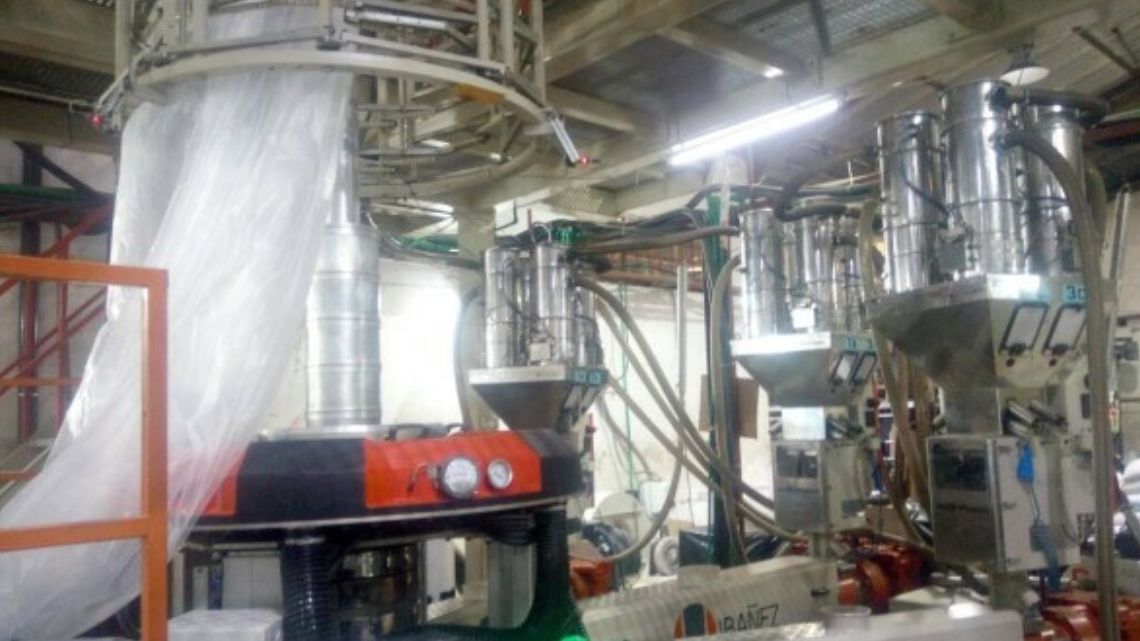
    12. 5% tax on locally manufactured plastics will collapse 30,000 jobs – Gov’t told

      5% tax on locally manufactured plastics will collapse 30,000 jobs – Gov’t told

      The Ghana Plastic Manufacturers Association (GPMA) has raised alarm over the potential impact of a planned 5% excise tax on locally manufactured plastics, warning that over 30,000 workers in the sector could face layoffs if the tax is implemented.

      President of the GPMA, Ebo Botchwey, expressed grave concerns about the detrimental effects of the proposed tax, emphasizing that it could lead to the shutdown of production plants and significantly increase prices of essential products such as medicines, beverages, and sachet water.

      Mr Botchwey argued that the timing of the tax implementation is unfavorable, particularly amid economic challenges exacerbated by exchange rate fluctuations.

      He criticized the government for imposing additional taxes without adequate consultation with industry stakeholders, noting that many businesses are already struggling to cope with existing tax burdens.

      “We have been burdened with numerous taxes, and imposing another one now shows a disregard for the growth of businesses,” Botchwey lamented. He highlighted the trend of companies relocating from Ghana due to high operating costs, which threatens the country’s competitiveness in the region.

      The Association of Sachet and Packaged Water Producers also expressed solidarity with GPMA’s stance, warning that they would be forced to halt production for a week if the tax is enforced.

      Magnus Nunnoo, President of the association, emphasized the impracticality of packaging water in alternative materials like paper, underscoring the essential role of plastics in their operations.

      Mr Nunnoo called for immediate suspension of the tax and urged comprehensive stakeholder consultations before any such measures are implemented. He appealed to Vice President Dr. Bawumia to intervene, highlighting the potential hardship the tax could impose on consumers, especially the economically vulnerable segments of society.

      President of the Ghana Union Traders Association (GUTA), Joseph Obeng, echoed these concerns, warning of severe supply chain disruptions if plastic manufacturers cease operations.

      He emphasized the critical role of plastics in packaging materials, essential for products like bottled and sachet water.

      “We cannot package water in paper; we still have to use plastic materials,” Obeng stressed, highlighting the domino effect that a shutdown of plastic manufacturing could have on various sectors reliant on plastic packaging.

      The stakeholders have given the Ministry of Finance a one-week ultimatum to respond to their concerns, threatening collective action if their demands are not met. They called on the government to halt harassment of plastic manufacturers and prioritize policies that support economic growth and job creation.

    13. EU disapproves taxation on lottery wins

      The European Lotteries has voiced disapproval of government taxation on lottery winnings and imposition of fees on the gaming sector.

      Phillipe Vlaemminck, Head of Legal at European Lotteries, speaking to the B&FT during a training program on responsible gaming organized by the National Lottery Authority (NLA) in Accra, remarked: “Lottery already has a positive impact on society in various ways, and thus it is crucial for some governments to reconsider imposing taxes on the industry”.

      He contended that individuals desire to participate in the lottery without the burden of taxes on the modest sums they win.

      Termed as a game of chance with societal benefits, Vlaemminck underscored that it is highly unnecessary for governments to tax lottery winnings, further adding: “That is the standard in many places such as the rest of Europe, the Americas and Asia which are tax free for winnings because the whole profit is given back to society”.

      The Ghana Revenue Authority (GRA) presently imposes a 10 percent withholding tax on all lottery earnings as income from lottery activities, while they are also subjected to a tax rate of 20 percent on Gross Gaming Revenue (GGR).

      Vlaemminck highlighted that when players incur losses, it is society that gains through developmental projects; and lottery merely provides a platform for individuals to fantasize, hence when they lose, society prevails.

      However, he remarked that Ghana runs an exceptionally dynamic lottery system in Africa and promotes the National Lottery Authority (NLA) as a prominent gaming operator across the continent.

      The European Lotteries observed that the NLA has demonstrated an increased dedication and curiosity in global developments within the industry, fostering knowledge exchange and positioning the Authority as a responsible gaming operator.

      Addressing the gathering, Sammi Awuku, Director-General of NLA, stated that the program is instrumental in assisting the Authority in monitoring and combating illicit lottery practices within the system.

      Mr. Awuku elucidated that the training, which includes certification, will enable lottery marketing firms and private lottery operators to comprehend the adverse effects of unlawful lottery operations on their own revenues and how they can aid the NLA in addressing the issue.

      He affirmed the NLA’s readiness to collaborate with the European Lotteries in any meaningful manner, including embracing the use of artificial intelligence and technology in the lottery sector.

      During the training, sessions covered responsible gaming, combating illicit lottery operations, anti-money laundering, and the utilization of emerging technologies in gaming.

    14. Mahama, Bawumia advocate for simplified tax reforms

      Mahama, Bawumia advocate for simplified tax reforms

      Vice President Dr. Mahamudu Bawumia and former President John Dramani Mahama have both advocated for a simplified tax structure to facilitate easier calculation and adherence.

      As the standard-bearers of the New Patriotic Party (NPP) and the National Democratic Congress (NDC) respectively, they expressed their intention to implement new tax frameworks aimed at alleviating the burden on businesses should they assume office.

      These sentiments on tax reform were shared during their addresses to business leaders and investors at the 8th CEO Summit, themed “Reigniting Business and Economic Growth: Charting a Path Forward.”

      Dr. Bawumia highlighted that many Ghanaian businesses struggle with understanding the computation and components of taxes paid to the Ghana Revenue Authority, often resulting in disputes between tax authorities and business proprietors.

      “I believe Ghana would benefit from a flat tax system as it makes it very easy, makes it very transparent and easy to comply and understand,” he said.

      He pledged to introduce a tax amnesty that would write off tax obligations of businesses and households within a certain period so “we start afresh on a clean slate.”

      “I also want to realign our import duty regime towards flat taxes in cedis on import duty so that there is predictability on our import duties. And I also want to realign our Ghana import regime to what persist with our nearest competitor, thus the port of Lome,” he said.

      Mr. Mahama stressed the importance of establishing a reasonable threshold for taxation to avoid overburdening law-abiding citizens and businesses while ensuring full compliance with tax obligations to the state.

      He promised that if elected president, he would simplify the Value Added Tax (VAT) and modernize its collection through the use of Point of Sale (POS) devices to enhance transparency.

      “We will abolish the e-levy and some taxes that have become a burden on businesses and households. And we will not burden you with endless tax audits and harass you with the Economic and Organised Crime Office,” he said.

    15. Ghana, Singapore agree on a carbon credit deal tax liabilities

      Ghana, Singapore agree on a carbon credit deal tax liabilities


      Ghana and Singapore have inked a pact enabling companies to purchase carbon credits from Ghana-based projects to offset a portion of their carbon tax liabilities.

      Singaporean firms can buy carbon credits, offsetting up to 5% of their taxable emissions if the invested projects meet Singapore’s eligibility standards.

      In 2024, the carbon tax has surged to $25 per tonne of CO2 emissions, a hike from the previous $5 per tonne, with plans to escalate to $50 to $80 by 2030.

      The collaboration aims to bolster climate ambitions for both nations and channel funds into climate mitigation endeavors, as per Singapore’s National Climate Change Secretariat, Ministry of Trade and Industry, and Ministry of Sustainability and the Environment.

      Carbon credit projects endorsed by the agreement will foster sustainable development, benefiting Ghana’s communities by creating jobs, enhancing water access, bolstering energy security, and curbing environmental pollution.

      Project developers are obliged to allocate 5% of proceeds from carbon credits to climate adaptation in Ghana, aiding the nation in preparing for climate change impacts.

      Additionally, developers must annul 2% of carbon credits upon issuance to aid in global greenhouse gas emission mitigation.

      This agreement coincides with Temasek-backed investment platform GenZero’s involvement in a forest restoration project in Ghana’s Kwahu region.

      The initiative, conducted alongside Singapore-based AJA Climate Solutions, aims to replenish degraded forest reserves and sustainably cultivate cocoa trees in shaded farms, fortifying against climate risks such as floods, heat stress, and pests.

      Verification of carbon credits from the Ghanaian project is slated to commence in 2028.

    16. We will not harass you with EOCO and burden you with endless tax audits – Mahama

      We will not harass you with EOCO and burden you with endless tax audits – Mahama

      Former President John Mahama asserts that if he emerges victorious in the presidential election on December 7, 2024, his subsequent administration will refrain from employing state institutions to intimidate businesses.

      Addressing attendees at the 8th Ghana CEO Summit in Accra on Monday, May 27, the ex-President additionally pledges to reduce government expenditure.

      “We will do this by pruning the huge government expenditures, preventing waste and corruption, and boosting revenues by expanding the tax net,” Mr Mahama noted. 

      “We will simplify the VAT and streamline its collection,” promised Mr Mahama. 

      Also, he said: “We will abolish the e-levy and some taxes that have become a burden on businesses and households.” 

      “We will not burden you with endless tax audits and harass you with EOCO.”

      The leader of the primary opposition party, the National Democratic Congress, stated that addressing the economy and restoring stability to the cedi would be among his top priorities within the first 100 days.

      “The number one priority will be stabilising the economy and restoring a stable currency by launching an urgent economic recovery and fiscal consolidation plan following a national economic dialogue to be held within one hundred days of assumption of office.”

    17. Focus on economic development, not tax waiver amounts – Afenyo-Markins tells minority

      Focus on economic development, not tax waiver amounts – Afenyo-Markins tells minority

      The Majority Leader in Parliament, Alexander Afenyo-Markin, has argued that concerns over the tax waivers granted to certain companies are misguided.

      The Effutu MP believes that the emphasis should be on the economic benefits these waivers bring rather than the sums involved.

      He made these remarks in response to the Minority in Parliament’s objections to the waivers.

      Afenyo-Markin suggested that fixating on the specific amounts of the waivers is an oversimplification and misrepresentation of the incentives’ true purpose and impact.

      Speaking on JoyNews’ AM show on Monday, he said, “Countries are competitive for investments, and they have all manner of incentives to attract people to bring capital. We are talking about post-Covid entrepreneurial decisions. Entrepreneurs would have to take decisions as to which country they would go to. You go to Qatar today, in their free zone their policy on foreign direct investments is so attractive.”

      “Tax wavers, for the first ten years, you are not supposed to pay tax on profit and all. You have that space. Now this government introduces one district, one factory. The aim of it is to create a space for businesses to thrive. If you give that incentive, that money, that capital is invested in the business. That is why I am saying, do not quantify it, that ‘oh, the government is giving tax incentives of three hundred million, oh, that money could have been used for something else’. You will get it wrong”.

      The Majority Leader of Parliament emphasized the significance of offering tax incentives to businesses in Ghana, highlighting the necessity for patience as companies advance through various development stages.

      The Effutu MP endorsed the government’s decision to grant tax waivers to 42 businesses, arguing that these incentives are essential for fostering expansion and exploration in the Ghanaian market.

      “In my own constituency, an Indian company has established a tissue factory, the first of its kind in West Africa, and this tissue factory is going to produce the raw material base for all the tissue companies. You know the tissue companies we have in Ghana; they all import the pulp, the jumbo; they come and cut it and all. This company is going to produce it, and they got attracted to Ghana because of the one district and one factory.

      “They are almost 60% done, and we are all in parliament dragging our feet. There are many companies going through the same thing. I am feeling it because if this company is completed, they will start employing my people. The companies that are importing would not have to import, so the pressure on the Cedi would go down, and if they had those tax incentives, they would be able to do their phase two and employ more,” he noted.


      In 2021, the Ministry of Finance began the process to secure about $335,072,712.13 in tax exemptions for 42 companies under the government’s One District One Factory (1D1F) initiative.

      The Exemptions Act, 2022 (Act 1083), was introduced to Parliament by the former Minister for Finance, Ken Ofori-Atta, in 2022.

      Notably, Sentuo Oil Refinery Limited is requesting the largest exemption amount, totaling $164,633,012.00.

    18. Income inequality deepens as  the poor bear heavier tax load than the wealthy – Expert

      Income inequality deepens as the poor bear heavier tax load than the wealthy – Expert


      Economist and finance expert, Professor Godfred Bokpin, highlights that low and middle-income earners in Ghana bear a heavier tax burden compared to the wealthy.

      He argues that these tax policies exacerbate the country’s inherent inequality, widening the gap between the poor and the rich.

      In an interview with the Ghana News Agency, Prof. Bokpin expressed concern over the government’s focus on consumption-based taxes, which disproportionately affect low-income individuals, contributing to increased inequality in the nation.

      “The way the government taxes the citizens is very important for narrowing inequality. Unfortunately, Ghana has chosen a path that worsens inequality because of the consumption-based taxes that we are focusing on. Such taxes affect the poor and marginalized more than they do the rich,” he said.

      He highlighted that taxes based on consumption, particularly those applied to petroleum products, the electronic levy (E-levy), and VAT hikes, disproportionately affect low-income individuals.

      According to Oxfam International, the wealthiest ten percent of Ghanaians currently consume 32 percent of the nation’s total output, while the poorest ten percent consume just two percent.

      Prof. Bokpin recommended that the government transition from consumption-based taxes to income taxes, targeting the country’s ultra-rich and high-income earners.

      He proposed that this strategy could yield $500 million in tax revenue for the government.

      “If we can look at our tax regime and ensure that those who have extra income are able to contribute more, it can help us generate more income for the country. If we had made some progress in taxing high-net-worth individuals, we would be able to raise $500 million from the super-rich. This country has many super-rich people. We might assume that times are hard, but all is well with the super-rich in the country. Focusing on taxing them can do a lot for us as a country,” he said.

      The economist encouraged the government to seek policies that encourage high-income individuals to pay more taxes.”

    19. Delay on tax exemptions for 42 companies, a deliberate attempt to discourage investors – Majority

      Delay on tax exemptions for 42 companies, a deliberate attempt to discourage investors – Majority

      The Parliament of Ghana is still pending tax exemptions for 42 selected companies under the One District, One Factory (1D1F) programme, owing to delays by the Parliament’s Finance Committee in completing the scrutiny of these firms.

      Mr Alexander Afenyo-Markin, the Majority Leader, has condemned this delay as a deliberate tactic by the Minority to obstruct the government’s initiatives aimed at attracting investment into the nation.

      In 2021, the government sought Parliament’s approval for tax exemptions for various businesses involved in the flagship 1D1F industrialization policy, aiming to signal Ghana’s business-friendly environment to the international investor community and boost economic contributions.

      However, extensive parliamentary delays, primarily due to demands for additional deliberation and scrutiny by members of the Minority caucus, have hindered the process. Mr Cassiel Ato Forson, a prominent figure in the Minority, strongly opposes advancing the entire list of exemptions from the committee stage, citing irregularities with some listed companies and their requested tax exemption amounts.

      Despite proposals to present 15 companies, deemed free of irregularities, to Parliament for approval, the Minority’s rejection has left the Majority Leader visibly frustrated.

      The prolonged delay, now in its fourth year, raises concerns about a deliberate effort to impede the government’s agenda, threatening to stifle industrial growth.

      These exemptions are intended to reduce operational costs, making it more attractive for businesses to establish and expand their operations. Without these incentives, affected companies may scale back their plans, leading to slower industrialization and fewer job opportunities, undermining the objectives of the 1D1F programme.

      Moreover, the ongoing impasse could negatively impact investor confidence in Ghana, as international investors seek stability and predictability in economic policies.

      The perception of political gridlock and uncertainty surrounding the tax exemption process may deter potential investors, fearing similar bureaucratic hurdles and a lack of policy consistency in the future. Parliament must leverage its unique numerical composition to foster strong bipartisan relations, creating a stable environment that favors businesses, regardless of the ruling government.

      Ensuring the timely approval of these tax exemptions could enhance Ghana’s industrialization efforts and signal to the global investor community the nation’s commitment to creating a conducive business environment.

      As the situation evolves, attention remains on whether Parliament can resolve these delays and proceed with the necessary approvals to support the 1D1F programme and the broader economic objectives of the nation.

    20. List of 42 companies requesting $335m tax waiver under 1D1F

      List of 42 companies requesting $335m tax waiver under 1D1F

      In 2021, the Ministry of Finance began the process to secure roughly $335,072,712.13 in tax exemptions for 42 companies under the government’s One District One Factory (1D1F) initiative.

      The Exemptions Act, 2022 (Act 1083), was introduced to Parliament by the former Minister for Finance, Ken Ofori-Atta, in 2022.

      Among the companies awaiting these exemptions, Sentuo Oil Refinery Limited stands out with the highest requested amount of $164,633,012.00.

      The One District One Factory (1D1F) initiative, envisioned by President Nana Addo Dankwa Akufo-Addo, aims to transform Ghana’s economy from one dependent on importing and exporting raw materials to a more robust economy focused on manufacturing, value addition, and exporting processed goods.

      This initiative is driven by the private sector, with the government creating a supportive environment for businesses.

      This support includes facilitating access to funding from financial institutions and providing assistance from various government agencies to help establish factories.

    21. Pipeline company in British Columbia claims that its “haulers” are not trucks for tax purposes

      Pipeline company in British Columbia claims that its “haulers” are not trucks for tax purposes

      A contractor working on the Coastal GasLink pipeline wanted to get $333,000 in tax rebates, but they were denied. They bought some equipment and said it wasn’t trucks, but the court decided that it was similar enough to trucks.

      Ledcor Pipeline Limited is the main company building the part of the Coastal GasLink pipeline that will carry natural gas from northern BC to an export terminal in Kitimat.

      The company said it should have gotten more than $333,000 in PST rebates for 11 pieces of equipment it called “haulers. ”

      The B.C government said yes to giving back more than $2.2 million for equipment the company bought for the project. But they said no to giving back money for 11 items that the company asked about.

      The province said that the machines are either trucks or vehicles that are “like trucks,” and these types of machines cannot get PST rebates. These rules are supposed to encourage investment in infrastructure after COVID-19.

      Earlier this week, a judge named Warren B. made a decision in the BC Supreme Court. Milman agreed with the province, saying that the things in question are most likely trucks and cannot get the rebates.

      ‘Haulers’ are trucks or other vehicles used for transporting goods.

      LPL took their case to court because the Ministry of Finance said no to their request for a rebate for the haulers. The company told the court that the ministry was mistaken to call the equipment “vehicles” because they were never used on public roads and were not allowed to be used on them.

      The company used the provincial Motor Vehicle Act’s definition of “vehicles” to back up its argument. The definition says that a vehicle is something that can transport or move a person or thing on a road.

      LPL argued that if the only requirement for a vehicle is that it can be used to transport something on a road, even things like toy cars, wagons, or refrigerators could be seen as vehicles.

      Milman agreed that “may” was unclear in the Motor Vehicle Act, but the judge still made a difference between LPL’s truck drivers and the less common items.

      The judge decided that when deciding if something is a vehicle, the important questions are whether it was made to carry things or people, and whether it can be used that way on a road.

      “In the disputed items situation, the answer to both questions is definitely ‘yes’,” according to Milman’s decision.

      “They have wheels, axles, tires, a frame, a driver’s seat, a container for carrying things, a door at the back, brakes, and parts to turn them. ” They are used to move things from one place to another. Toys and refrigerators are not the same in this way.

      ‘Almost definitely’ trucks

      Some vehicles can get money back from the government, but trucks can’t. The company said their trucks should count as vehicles, not trucks.

      The company said the vehicles were more like bulldozers, excavators, forklifts, or paving machines, which can get rebates in BC’s program.

      Milman still wasn’t sure.

      The judge threw out LPL’s case because the rebate program rules say it only applies to trucks and vehicles used for transporting things.

      The decision says we just need to look at the plain meaning of the words used, and we don’t need any special tools to understand it. “If the items in question are not really trucks, then they are definitely similar to trucks in some way, in my opinion. “

    22. I will not tax churches, gov’t should rather be paying them for the good works – Bawumia

      I will not tax churches, gov’t should rather be paying them for the good works – Bawumia

      Vice President Dr. Mahamudu Bawumia has pledged to provide incentives to churches in recognition of their contribution to the country’s development if he is elected president.

      During a meeting with the clergy as part of his Bono regional tour, Dr. Bawumia highlighted some interventions and contributions made by the church since independence to justify his pledge.

      At the gathering, the Flagbearer of the governing New Patriotic Party said “If you look at the work the church has done, we should rather be paying them rather than them paying us. Unless you don’t understand the work the church has done”.

      Dr Bawumia further explained that “If you look at the building, the way they’re trying to keep the society together, the universities, the hospitals, the schools, it’s just massive. Many churches have hundreds of schools so I don’t see and I will not have a situation where we’re taxing the churches. We rather want to give churches incentives to support what government is doing.”

      The flagbearer likened the church to development partners and announced his administration’s intention to forge a closer relationship with them.

      “I want us to be partners in the way that development partners are with us. You are our domestic development partners and we’ll give you incentives to do more.”

      The Vice President is concluding his Bono regional tour and is poised to extend his campaign to other regions as he seeks to succeed President Akufo-Addo.

    23. Exempt taxes on sanitary products not commercial churches – EAI to govt

      Exempt taxes on sanitary products not commercial churches – EAI to govt


      Executive Director of Educate Africa Institute (EAI), William Boadi, has urged the government to tax commercial churches and remove taxes on sanitary products.

      The petition focuses on two main issues: taxing churches involved in commercial activities and eliminating taxes on sanitary pads.

      Boadi highlights that as of March 15, 2024, Ghana has over 3,500 churches, many of which engage in profit-making ventures like consultancy services and selling beverages like Sobolo, which they market with religious symbolism.

      In an open letter to the government, he points out that despite these profitable activities, churches evade taxation, depriving the government of revenue for development projects.

      Boadi, speaking on behalf of concerned citizens, stresses the importance of holding religious institutions accountable for their commercial activities.

      “We, the undersigned citizens of Ghana, write to you with a plea for fairness and justice in our nation’s taxation policies.

      “As of March 15, 2024, there are reportedly 3511 churches operating within our borders, many of which engage in commercial activities such as consultations for a fee and the sale of local drinks like Sobolo, often marketed as symbolic of Jesus’s blood. Despite these profitable ventures, these churches evade taxation, depriving our government of much-needed revenue for development initiatives,” part of the latter said.

      Boadi contends that fair taxation policies for churches would ensure their equitable contribution to national development efforts.

      The petition also raises alarm over the government’s decision to tax sanitary pads, essential products for women’s health and hygiene. Describing menstruation as a natural biological process, Boadi argues that taxing sanitary pads places an unjust financial burden on women, particularly disadvantaged groups who struggle to afford these necessities.

      “Furthermore, we are deeply troubled by the government’s decision to impose taxes on sanitary pads, essential products for women’s health and hygiene. Menstruation is a natural biological occurrence, not a luxury or a business opportunity.

      “Yet, by taxing sanitary pads, the government places an unfair financial burden on women, particularly unemployed young women, who struggle to afford these necessities. This economic strain contributes to widespread challenges such as teenage pregnancies, perpetuating cycles of poverty and inequality,” the letter added.

      Read the full statement below:

      We, the undersigned citizens of Ghana, write to you with a plea for fairness and justice in our nation’s taxation policies. As of March 15, 2024, there are reportedly 3511 churches operating within our borders, many of which engage in commercial activities such as consultations for a fee and the sale of local drinks like Sobolo, often marketed as symbolic of Jesus’s blood. Despite these profitable ventures, these churches evade taxation, depriving our government of much-needed revenue for development initiatives.

      Furthermore, we are deeply troubled by the government’s decision to impose taxes on sanitary pads, essential products for women’s health and hygiene. Menstruation is a natural biological occurrence, not a luxury or a business opportunity. Yet, by taxing sanitary pads, the government places an unfair financial burden on women, particularly unemployed young women, who struggle to afford these necessities. This economic strain contributes to widespread challenges such as teenage pregnancies, perpetuating cycles of poverty and inequality.

      We urgently call upon the government to take the following actions:

      1. Taxation of Churches: It is high time for churches and religious institutions to be held accountable for their commercial activities. By engaging in consultations for profit and selling beverages like Sobolo without contributing taxes, these establishments are exploiting loopholes in our taxation system. Implementing fair taxation policies for churches would ensure that they contribute their fair share to national development efforts.

      2. Removal of Taxes on Sanitary Pads: Menstrual hygiene products are essential for women’s health and well-being. Taxing these products not only exacerbates gender inequalities but also undermines efforts to promote women’s health and dignity. Removing taxes on sanitary pads is a crucial step toward ensuring menstrual equity and alleviating the financial burden on women, particularly those who are unemployed or economically disadvantaged.

      3. Addressing Socioeconomic Impacts: The intersectionality of taxation policies and social issues cannot be ignored. High taxes on sanitary pads disproportionately affect women’s access to education, employment, and health care, perpetuating cycles of poverty and inequality. By implementing fair taxation policies and investing in menstrual health education and accessibility programs, the government can empower women and promote gender equality.

      In conclusion, we urge the government of Ghana to prioritize fairness, equity, and justice in its taxation policies by taxing churches appropriately and scrapping taxes on sanitary pads. These measures are essential for building a more equitable society where all citizens have equal access to the resources and support they need to thrive.

      We stand united in our call for action, and we implore the government to heed our petition for the betterment of our nation and its people.

      Sincerely,

      William Boadi

      Executive Director of Educate Africa Institute (EAI) and Educationist.

    24. GRA initiates awareness programs on annual income tax returns

      GRA initiates awareness programs on annual income tax returns

      The Ghana Revenue Authority designates April as Tax and Good Governance Month to inform and encourage taxpayers about filing their income tax returns and paying taxes.

      During this period, the GRA hosts seminars, workshops, and tax clinics to educate taxpayers about their responsibilities and the benefits of filing returns.

      Dr. Martin Kolbil Yamborigya, Assistant Commissioner and Head of Audit for the Large Taxpayer Office, emphasized the importance of raising awareness and reminding taxpayers of their filing obligations during a program for public sector workers.

      “We also educate them to understand that filing their tax return is not just for you to pay tax, but it also affords you or gives you the opportunity to claim certain benefits,” he said.

      He mentioned potential taxpayer benefits like child education, marital, and mortgage relief.

      “When you file your returns, you have access to that When you file your returns, you also have the opportunity to even claim an overpayment, assuming that as a result of this relief that you are enjoying, the taxes that you paid during the year is more than what you should have paid,” Dr Yamborigya said.

      “You will be in an overpayment position and then the law requires that when you have overpaid your tax, then the Commissioner General is supposed to refund that to you within 60 days after the overpayment has been established.”

      He emphasized that filing returns was mandatory, with penalties including fines and imprisonment for non-compliance.

      However, to incentivize voluntary compliance, Section 74 of the Revenue Administration Act was revised. It permits taxpayers to self-disclose accurate information to the Commissioner-General, potentially waiving penalties.

      “So we want to encourage people and this is something that is not just like a one-off amnesty. It is something that was incorporated into the law that at any time a taxpayer can always take advantage of that,” he said.


      Dr. Martin also urged individuals earning income abroad to voluntarily disclose and pay applicable taxes in Ghana, potentially avoiding penalties.

      Meanwhile, Dominic Adamnor Nortey, Chief Revenue Officer, clarified that taxing resident Ghanaians on foreign income wasn’t a recent imposition. He noted the law’s existence since 2016, mandating individuals in Ghana to declare all incomes earned, both domestically and internationally, for taxation.

      He added that enforcement of this law is now feasible due to the GRA’s enhanced information capabilities.

      “We don’t start anything when you don’t have the basis of getting information on people’s income outside. So, now that we have signed an agreement with about 170 countries where we exchange information, now we have information enough to believe that we can drive that aspect of the law and implement it successfully,” Mr Nartey said.

      “The Act is clear that anyone who earns income, whether small, big or whatever it is, you have to pay tax on it,” he said, adding that he had nothing to do with VAT at all.

    25. GRA focuses on foreign income tax to rake in revenue in place of VAT on electricity

      GRA focuses on foreign income tax to rake in revenue in place of VAT on electricity

      The Ghana Revenue Authority (GRA) has decided to monitor the foreign income of resident Ghanaians to rake in more revenue for the government in place of the Value Added Tax (VAT) on electricity that has been suspended owing to public criticism.

      According to GRA Commissioner-General, Juliet Essiam, this will establish a sustainable revenue stream extending beyond 2024.

      Julie Essiam expressed confidence in the sustainability of this measure, emphasizing its potential to effectively replace the anticipated GH¢1.8 billion revenue target.

      The Commissioner-General, in her brief remarks at the joint IMF, BoG and Ministry of Finance press conference held in Accra on April 13, 2024, noted that monitoring the foreign income of resident Ghanaians is not a novel measure since it has existed within the legal framework for some time, albeit lacking effective implementation.

      “We [GRA] will specifically speak to the measure that is replacing the VAT on electricity. So, the measure that we put in place is a compliance measure on foreign income of resident Ghanaians.

      “This measure is already in the law, as the minister said, so it is not a new measure. The difference is that its implementation and application have not been implemented effectively,” the GRA Commissioner-General said

      She noted that with the assistance of the Organization for African, Caribbean, and Pacific States (OACD), the Authority has gone through sustainable processes and structures to ensure that when implemented, the tax measure would go beyond 2024 in its revenue numbers.

      “So this is the measure that, together with the Government of Ghana and our mother ministry, the Ministry of Finance, is going to take place or is going to replace the VAT on electricity,” she added.

      As part of Ghana’s governmental initiatives, in partnership with the Ministry of Finance, this action aims to address the country’s fiscal requirements, particularly in revenue generation, with a focus on long-term solutions.

    26. Ghana will have the most favorable tax system in ECOWAS – Alan Kyerematen

      Ghana will have the most favorable tax system in ECOWAS – Alan Kyerematen

      AThe leader and founder of the Movement for Change and independent presidential hopeful has pledged to implement the lowest tax regime within the Economic Community of West African States (ECOWAS) bloc if elected president in the upcoming December 7 polls.

      Mr. Alan Kyerematen unveiled his vision for tax reform during a meeting with the leadership of the Ghana Union of Traders Association (GUTA).

      He outlined specific measures aimed at achieving this goal, including consolidating the existing National Health Insurance Levy and Ghana Education Trust Fund levies into the calculation of a new Value Added Tax (VAT) rate. He also stated that his government will abolish the Special Import Levy of 2% and further abolish the COVID-19 Health Recovery Levy. Additionally, he promised an elimination of the Ghana Health Service Disinfection Fee on imports and exports.

      He pledged his government’s commitment to abolish all taxes and charges on the importation of spare parts within two years of establishing the much-talked-about Government of National Unity. Furthermore, he promised a review and consolidation of all statutory fees on imports imposed by regulatory agencies under a new Cash Waterfall mechanism designed to alleviate the financial burden on importers.

      Mr. Kyerematen’s proposed reforms aim to streamline the tax system, reduce the tax burden on businesses and individuals, and promote economic growth and competitiveness.

      If elected, he said he intends to prioritize these measures to create a more conducive environment for trade and investment in Ghana.

      He concluded by stating that the trading community is a critical component of the Ghanaian economic architecture and emphasized the importance of deploying all efforts to make them competitive.

    27. LPG Marketing Companies Association petitions NPA to halt new tax on LPG

      The LPG Marketing Companies Association is urging the National Petroleum Authority (NPA) to suspend the implementation of its newly introduced $80 per metric ton (MT) tax on LPG.

      This tax is part of the Suppliers’ Premiums, specifically designated for Bottling Plant and Cylinder Investment Margins, a move the association believes is ill-timed.

      The association argues that consumers are already grappling with the high cost of living in the country, and the new tax will only add to their burden.

      The NPA announced its decision to levy a new tax on LPG as part of its recent revision of pricing structures, effective from April 1, 2024.

      However, Gabriel Kumi, Vice President of the association, expressed his concerns about the timing of the new tax during an interview on MarketPlace on Joy News, describing it as unfortunate.

      “In the coming days, we will be appealing to the NPA to take measures to remove this levy. The timing is so wrong and Ghanaians are already suffering and LPG consumption is declining. We can’t add salt to injury in this manner”, he said.

      The association also indicated that it will fearlessly resist the new tax should the NPA go ahead with its implementation.

    28. GRA harassing businesses in its revenue mobilisation exercise – Traders Advocacy Group Ghana

      GRA harassing businesses in its revenue mobilisation exercise – Traders Advocacy Group Ghana

      The Traders Advocacy Group Ghana (TAGG) has come to the defense of Vice President Dr. Mahamudu Bawumia’s recent criticisms against the Ghana Revenue Authority (GRA), asserting that the authority has unfairly targeted local businesses in its tax collection efforts.

      In a press release issued on March 27, 2024, TAGG supported Bawumia’s statements, alleging that the GRA’s revenue collection initiatives have led to what they describe as the “harassment” of businesses nationwide.

      TAGG accused the GRA of employing tactics that pose a threat to the survival of local businesses.

      Key concerns include allegations of extortion and harassment by GRA officials, particularly through the deployment of task forces to monitor traders and seize goods and cargo post-clearance at ports.

      Moreover, TAGG asserts that traders often face unjust tax evaluations and are required to pay amounts that surpass their capital for taxes they do not fully understand.

      “We, members of the Traders Advocacy Group Ghana (TAGG) wish to affirm the statement made by His Excellency Dr. Mahamudu Bawumia, the Vice President of the Republic, that the Ghana Revenue Authority (GRA) has been harassing businesses in its revenue mobilisation drive.

      “The Vice President, in our view, couldn’t have said it any better because his pronouncement is a true reflection of daily happenings in the business community. And the statement Traders Advocacy Group Ghana (TAGG) has issued before.

      “We, therefore, find the statement released by the Ghana Revenue Authority Workers Union (GRAWU) of the GRA which seeks to rebut the assertion of the Vice President most unfortunate and misleading to the trading public,” part of the press statement, which was signed by President of the group, Kwdwo Amoateng said.

      Furthermore, they underscore GRA officials’ intrusive conduct, such as stationing themselves at shops to oversee customer flow, contending that this discourages potential customers and undermines business sustainability.

      TAGG has urged pertinent stakeholders, including the GRA, to promptly address these concerns, stressing the imperative for a tax system that is conducive to business growth, fostering both revenue generation for the state and the development of local enterprises.

      “As members of the business community who have been victims of the incessant harassment by the GRA over the years in the name of collecting revenue for the State, we deem it necessary to put out the facts and chastise GRAWU for debunking what is the obvious truth.

      “To help Ghanaians appreciate the level of frustration we continue to suffer at the hands of the officials of GRA, we wish to state some of our concerns as follows;

      “Extortion and harassment by GRA officials: So many task forces are deployed to monitor traders when GRA could leverage on cutting-edge systems,” the statement added.

      This announcement is issued in direct response to a statement issued by the Ghana Revenue Authority Workers Union (GRAWU), which aimed to contest the Vice President’s claims.


    29. Board Chair of MTN discloses a GHS5.9bn paid in 2023 on taxes

      Board Chair of MTN discloses a GHS5.9bn paid in 2023 on taxes


      MTN Ghana‘s Board Chairman, Ishmael Yamson, revealed at the company’s annual general meeting (AGM) in Accra that in the previous year, MTN paid GH¢5.9 billion in direct and indirect taxes, along with an additional GH¢0.4 billion in fees, levies, and other payments to government agencies.

      These payments represented 47.1 percent of MTN’s total revenue contributed to the government for the 2023 financial year.

      Mr. Yamson reaffirmed MTN Ghana’s commitment to serving as a development partner to the government by contributing to the fiscal and socio-economic advancement of the country.

      In his update on the company’s performance for the year 2023, Mr. Yamson highlighted MTN’s successful navigation of challenges in the business environment to achieve notable success during the period. He attributed this success to the company’s ongoing commitment to the disciplined execution of its strategic objectives.

      “In the past year, the Ghanaian economy faced several challenges that impacted the business environment. These included elevated inflation and a tight monetary policy which led to an increase in the domestic cost of capital,” he said.

      In response to economic challenges, the government launched a three-year fiscal adjustment and reform program, supported by a US$3 billion Extended Credit Facility from the International Monetary Fund (IMF).

      As part of the IMF program requirements, the government initiated a Domestic Debt Exchange Program (DDEP) aimed at restoring the country’s debt sustainability. The initial phase of the DDEP, which primarily involved domestic creditors, resulted in reduced interest income on investments and prolonged the period required for bondholders, including financial institutions, to recover their invested capital in Treasury bonds.

      As a consequence, the cost of credit increased, access to new capital became limited, and the domestic investment environment was hindered. However, the second phase involving external creditors has yet to be finalized and implemented.

      “Despite these challenges, I am happy to report that our company has continued to demonstrate discipline in executing on its strategic goals for 2023. This success is a testament to the hard work, dedication and resilience of our employees, as well as the support of our valued partners,” the board chair added.

      Chief Executive Officer of MTN Ghana, Selorm Adadevoh, offered additional details on the company’s performance in 2023, noting that service revenue saw a year-on-year (YoY) increase of 34.6 percent. This growth was fueled by significant contributions from voice, data, and mobile money revenue streams.

      “This growth can be attributed to well-executed commercial strategies and our focused investment in maintaining high network quality, expanding coverage and delivering a good experience to our customers, as well as achieving progress in our pricing initiatives across the business,” he reported.

      According him, the national SIM re-registration exercise posed a challenge in the company’s subscriber base, resulting in a 6.3 percent YoY decrease.

      “Despite the challenges presented and the potential implications on the business, our unwavering commitment to providing high-quality services to attract new customers and retain existing ones helped partially mitigate the full impact of the national SIM re-registration exercise on the business,” he stated.

      Financial performance

      MTN Ghana’s financial report for 2023 shows a robust performance with a strong total revenue growth of 34.6 percent compared to the previous year.

      According to its annual report, the growth was achieved through targeted business strategies that led to an increase in voice, data and mobile money revenues.

      As part of the company’s commitment to disciplined execution, the management team executed the expense efficiency programme proactively to control costs, maintain profitability and ensure business growth.

      As a result, earnings before interest, taxes, depreciation and amortisation (EBITDA) grew by an outstanding 40.2 percent year-on-vear (YoY), and EBITDA margin also increased by 23 percentage points from 56.1percent in 2022 to 58.4percent, portions of the report read.

      Profit after tax also grew by 39.4 percent YoY and earnings per share increased by 29.5 percent YoY.

      “These impressive results demonstrate the company’s commitment to driving sustainable business growth in challenging times,” the report further noted.

    30. Stop sabotaging GRA for votes, only “vegetable minds” will believe your tax amnesty game – Lecturer to Bawumia

      Stop sabotaging GRA for votes, only “vegetable minds” will believe your tax amnesty game – Lecturer to Bawumia

      A lecturer at the University of Ghana Business School (UGBS), Professor Kobby Mensah, has criticized Vice President Dr Mahamudu Bawumia‘s recent pledge to grant tax amnesty to all businesses and individuals if he wins the 2024 elections.

      Professor Mensah argued that if Bawumia, who also serves as the flagbearer of the New Patriotic Party (NPP), has the capability to deliver on such a commitment, he should implement it during his current tenure in government rather than waiting for electoral victory.

      In a series of messages on social media, he accused the Vice President of potentially inciting businesses and individuals against the government, particularly the Ghana Revenue Authority (GRA), with his recent comments.

      “Because of political expediency a Vice President decides to illegitimise the business processes of a public institution, potentially inciting the people against the state,” he said in one of his posts.

      He added, “Only vegetable minds will believe Bawumia’s tax amnesty.

      “You are in govt, grant it now! You can only play with veggie minds.”

      Dr. Mahamudu Bawumia has pledged to grant tax amnesty to businesses and individuals with outstanding tax arrears if he is elected to lead Ghana in 2025. He believes this measure will allow businesses to start anew and encourage tax compliance.

      Speaking at an event organized by the Ghana National Chamber of Commerce & Industry and the Ghana Bar Association on March 20, 2024, Dr. Bawumia emphasized the importance of providing businesses and individuals with a fresh start.

      “I am going to start with a clean slate in 2025, and that is why in 2025, we are going to grant a tax amnesty to all businesses and individuals and start afresh.

      “All businesses and individuals will have a tax amnesty, and we will start afresh,” he said.

    31. We are now moving from taxation to robbery – Domelevo

      We are now moving from taxation to robbery – Domelevo

      Former Auditor-General Daniel Yao Domelevo has raised concerns about the state of affairs in Ghana, suggesting a shift from taxation to robbery.

      Mr Domelevo, known for his crusade against corruption, highlighted the need for a robust tax system to ensure revenue collection but cautioned against abusive practices that could harm citizens.

      Mr Domelevo is said to have made such a statement by 3news.com during an interview with Kemenni Amanor on Hot Issues on Sunday, March 17.

      Domelevo’s comments come amid ongoing discussions about tax reforms in Ghana, with the government aiming to improve revenue collection and address budget deficits.

      However, his statement reflects broader concerns about the impact of taxation on ordinary citizens and the need for transparency and accountability in tax administration.

      As it stands now, industry stakeholders are applying pressure to the newly appointed Minister of Finance, Dr. Mohammed Amin-Adam, urging the removal of what they deem as burdensome taxes from the national tax framework.

      These stakeholders argue that the upcoming Mid-Year Budget Review, slated for presentation to Parliament in the coming months, presents an opportunity to eliminate taxes such as the Electronic Levy (E-Levy), taxes on electricity consumption, and emission taxes, among others.

      Moreover, the proliferation of port charges is significantly impacting importers’ finances, hindering their ability to compete cost-effectively and fully capitalize on the advantages of the African Continental Free Trade Area (AfCTA).

      This action, according to them, would not only showcase Vice President Dr. Mahamudu Bawumia’s commitment, as he recently acknowledged the problematic nature of certain taxes in the country’s tax system, but also align with President Nana Addo Dankwa Akufo-Addo’s recent decision to replace his Finance Minister, Ken Ofori-Atta, along with several other ministers.

    32. Tax fraudster in Calgary sentenced, fined $50 thousand

      Tax fraudster in Calgary sentenced, fined $50 thousand

      A man from Calgary has been given a 12-month conditional sentence and has to pay a $50,000 fine for lying on his tax returns.

      The Canada Revenue Agency says that Sean Nethercott from De Winton, Alberta admitted to lying on his tax returns to avoid paying taxes and getting refunds and tax credits he didn’t deserve.

      Nethercott’s behavior was found after the Canada Revenue Agency (CRA) looked into his tax returns for 2014, 2015, and 2016.

      The agency says he didn’t report all of his income and made up expenses and deductions to pay less taxes.

      “Nethercott tried to cheat the tax system by making up reasons to get back $51,952 and claiming $28,637 in tax credits that he didn’t actually qualify for,” the CRA stated in a press release.

      In addition to the fine mentioned earlier, Nethercott will also have to pay all the taxes owed, plus any interest and penalties imposed by the CRA.

      The CRA works to keep Canada’s tax system honest, which helps Canadians with their social and economic health. The CRA is working hard to catch people who cheat on their taxes and make false claims using all the resources they have.

      “The CRA makes sure that people and businesses report all the money they earn and only get benefits they deserve. This helps important benefit programs go to the people who really need them. ” If you lie about how much money you make or claim things you shouldn’t, you might have to give back the money and could get in trouble.

      You can find information on how to report people for not paying their taxes on the Government of Canada’s website.

    33. Terrence Howard ordered to pay $900k to redeem unpaid tax

      Terrence Howard ordered to pay $900k to redeem unpaid tax

      A federal judge in Philadelphia has ruled that actor Terrence Howard must pay nearly $1 million in back taxes, interest, and penalties.

      This decision stems from allegations that Howard threatened a Justice Department lawyer and argued that it was immoral for the U.S. government to tax descendants of slaves.

      Howard reportedly evaded attempts by the IRS to collect $578,000 in income taxes that he allegedly failed to pay between 2010 and 2019. The Justice Department initiated a lawsuit against him in 2022.

      Despite ongoing efforts to engage Howard in court proceedings following the lawsuit, his only response was a voicemail left for the case’s lead tax attorney in November.

      In the voicemail, Howard expressed his perspective on the matter, stating, “Four hundred years of forced labor and never receiving any compensation for it… Now you have the gall to try and prosecute and charge taxes to the descendants of a broken people that you are responsible for causing the breakage.”

      The recording was cut off midsentence, but Howard continued the conversation when he called the attorney back, suggesting that the entire United States should belong to the descendants of slaves. He challenged the attorney to face him in court, stating, “We’re gonna bring you down.”

    34. Bawumia’s flat tax regime welcomed by Abossey Okai Spare Parts Dealers Association

      Bawumia’s flat tax regime welcomed by Abossey Okai Spare Parts Dealers Association

      The Abossey Okai Spare Parts Dealers Association has thrown its weight behind Dr. Mahamudu Bawumia’s proposition to introduce a simplified flat tax system should he assume the presidency.

      In a released statement, the association urged its members to support the initiative, believing it would greatly benefit spare parts businesses across the nation.

      They highlighted that the proposed flat tax structure could lead to reduced costs for spare parts, offering relief to commercial drivers who frequently factor these expenses into their transportation fares.

      Dr. Bawumia unveiled this proposal during a speech at the University of Professional Studies in Accra on Wednesday, February 7, as part of his presidential agenda.

      The NPP flagbearer made this known when he announced that if elected president in the 2024 elections, he would introduce a flat tax regime for the collection of taxes.

      According to him, the flat tax of percent of income for individuals and SMEs (which constitute 98% of all businesses in Ghana) will have appropriate exemption thresholds set to protect the poor.

      “With the new tax regime, the tax return should be able to be completed in minutes! We will also simplify our complicated corporate tax system and VAT regime,” he said.

      Addressing the nation on his vision for Ghana while speaking at the University of Professional Studies (UPSA) in Accra today, he stressed that there is a need to reform and refocus the Ghana Revenue Authority (GRA) towards broadening the tax base.

      The Association views this initiative as commendable and crucial for the welfare of spare parts dealers nationwide.

    35. Amnesty will not address problems with Ghana’s tax system – Economist

      Amnesty will not address problems with Ghana’s tax system – Economist

      A Professor of Economics at the University of Cape Coast (UCC), John Gatsi, has voiced skepticism regarding the proposed tax amnesty put forth by Vice President Dr. Mahamudu Bawumia.

      Prof. Gatsi doubts that this initiative will effectively increase tax compliance or tackle the underlying challenges associated with tax collection.

      Dr. Bawumia, the presidential candidate of the New Patriotic Party (NPP), has pledged to introduce a tax amnesty alongside a simplified flat tax system, aiming to foster a more straightforward and favorable environment for both citizens and businesses.

      This proposal, outlined during a speech at the University of Professional Studies, Accra, entails implementing a flat tax structure based on a percentage of income for individuals and Small and Medium Enterprises (SMEs), which constitute the majority of businesses in Ghana.

      The plan also includes provisions for exemption thresholds to shield low-income earners and guarantees a streamlined corporate tax framework and VAT system.

      However, Professor Gatsi challenges the efficacy of this approach, asserting that it fails to address the core obstacle in tax collection within the country.

      He contends that the primary issue lies in the lack of citizen commitment to voluntary tax payment, driven by a perceived absence of direct benefits.

      In an interview with Umaru Sanda Amadu on Eyewitness News, Professor Gatsi advocated for a shift in focus towards improving public services as a means to incentivize tax compliance.

      He posited that enhancing the quality and accessibility of public services would instill confidence in citizens regarding the tangible returns on their tax contributions, thereby fostering a culture of voluntary compliance.

      “Even if you give everybody tax amnesty for which everybody should start afresh, that will not bring about any change because that is not the main problem of tax collection in the country.”

      “The main problem is that people are not committed to the payment of taxes if they are supposed to voluntarily declare to pay taxes because it does not commensurate with the provision of public infrastructure for the people. Public transport is not the best. Access to public services is not the best for most people in Ghana, therefore they don’t see why they should be paying taxes. Those are the issues that should be addressed,” he said.

    36. Ghana suspends contentious power tax following commotion

      Ghana suspends contentious power tax following commotion

      The government of Ghana has stopped its plan to put a 15% tax on power because people were very angry about it and thought it would make living expenses even higher.

      The government wanted to charge VAT on people who use electricity at home.

      The worker’s unions didn’t like the new tax and said they will have protests all over the country next week.

      Officials now say that the plan has been postponed until discussions are held to solve the argument.

      A few days after the government started charging a fee for fuel emissions, people had different reactions to it.

      Ghanaians must now pay a yearly fee for the carbon emissions that come from their cars or trucks that run on petrol or diesel.

      Critics worry that the extra taxes could make the economy even worse, making it harder for people to afford things like gas that they need to live.

      The finance ministry told the two main power companies to stop adding the new tax for now.

      This is to talk a lot and to get support from people in the industry and labor unions, because there are serious concerns about how this will affect consumers and businesses. “The government wants the electricity companies ECG and NEDCO to stop charging VAT for now. They need to talk to important people like organized workers before they can start again. ”

      The TUC said the government has not told them officially about its decision.

      So, the protests that are supposed to happen next Wednesday are still happening according to Joshua Ansah, who is the TUC’s deputy secretary general. He told the media.

      Trade unions believe that adding more taxes will make it harder for families and companies, making the cost of doing business even more expensive.

      “We told the government that we can’t afford to pay VAT on electricity. We want the tax to be removed right away,” Mr Ansah said.

      Ghana is facing its worst economic problem in a long time, and the government is working hard to make more money.

      It agreed to a $3 billion (£2. 4 billion) rescue plan with the International Monetary Fund (IMF) to help with the crisis.

      For many years, Ghana has not had enough electricity, causing frequent power outages called “dumsor” in the Akan language.

      The country in West Africa gets a lot of its power from water and heat, but these sources are not always taken care of well.

      In recent years, the country has started depending a lot on gas for making electricity, and if there is not enough gas, then there are power cuts.

    37. My gov’t will provide tax amnesty to businesses – Bawumia

      My gov’t will provide tax amnesty to businesses – Bawumia

      Vice President Dr Mahamudu Bawumia has noted that his government will implement a policy where the government grants forgiveness or relief from tax penalties to businesses.

      This will allow businesses to settle their outstanding tax liabilities without facing additional penalties or legal consequences.

      “Government will provide a tax amnesty (i.e., a complete exemption from the payment of taxes for a specified period and the waiving of interest and penalties) up to a certain year to individuals and businesses for failures to file taxes in previous years so that everyone will start afresh,” he said.

      The NPP flagbearer made this known when he announced that if elected president in the 2024 elections, he will introduce a flat tax regime for the collection of taxes.

      According to him, the flat tax of percent of income for individuals and SMEs (which constitute 98% of all businesses in Ghana) will have appropriate exemption thresholds set to protect the poor.

      “With the new tax regime, the tax return should be able to be completed in minutes! We will also simplify our complicated corporate tax system and VAT regime,” he said.

      Addressing the nation on his vision for Ghana while speaking at the University of Professional Studies (UPSA) in Accra today, he stressed that there is a need to reform and refocus the Ghana Revenue Authority (GRA) towards broadening the tax base.

      “Unfortunately, the pressure that is placed on GRA staff to collect revenues makes them focus on existing tax payers. Sometimes they even have to go to sit in peoples shops to monitor sales (a process known as invigilation).

      In fact, many businesses feel harassed by this process and the constant audits of their operations. This has to stop. We must strike the right balance between collecting revenue and allowing businesses to thrive,” he added.

      He indicated that, per estimates, revenues amounting to 13% of GDP (or $24 billion in 2023) were not collected because people are outside the tax net.

      He is therefore optimistic that a flat-rate regime will solve these challenges.