Tag: tax

  • 14 Lands Commission staff relieved of their duties over stamp duty fraud 

    14 Lands Commission staff relieved of their duties over stamp duty fraud 

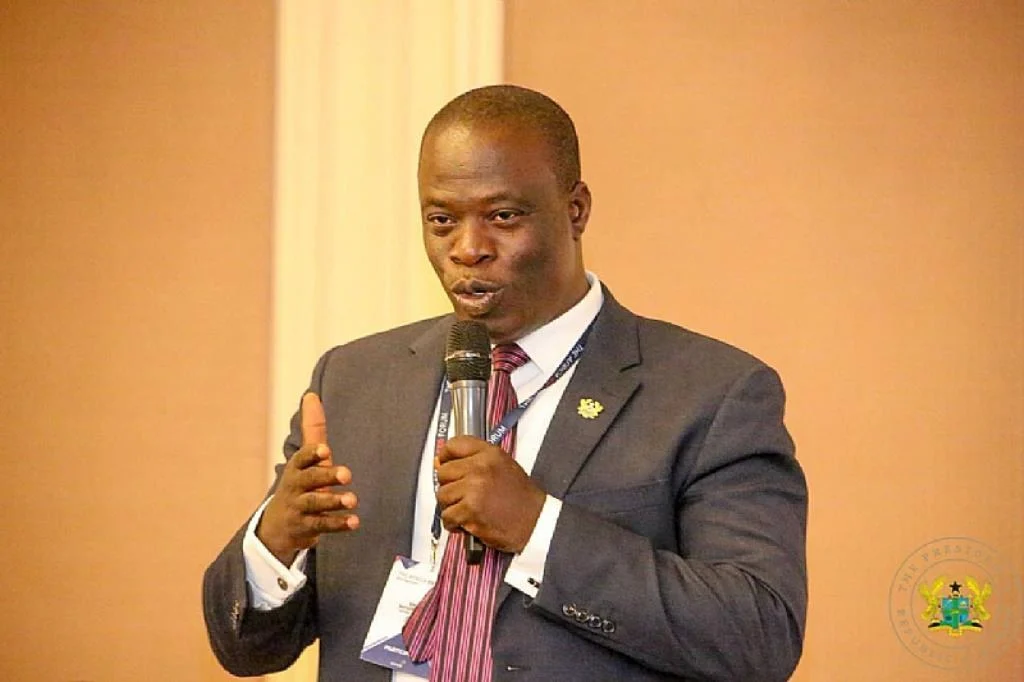
    Fourteen staff of the Lands Commission have been interdicted over their alleged involvement in fraudulent activities. The fraudulent scheme, detected in May 2022 by the Commission’s Audit Unit, revealed discrepancies in the tax figures paid by property owners during the registration of their properties.

    The alleged Stamp Duty fraud, amounting to an alleged GHS100 million tax loss, prompted swift action from the Commission. Mr. Benjamin Arthur, the Acting Executive Secretary of the Commission, announced the interdiction during the Executive Secretary’s Annual Briefing and launching of the Staff Awards Scheme in Accra on Friday.

    Subsequent investigations by the Commission revealed that the initially estimated tax loss had been exaggerated. Internal disciplinary action has been taken against the implicated staff members, who are currently undergoing court processes led by the National Investigations Bureau.

    In addition to the Stamp Duty fraud case, disciplinary procedures are being carried out against other Commission staff for fraudulent deletion and insertion of records, leading to false search reports.

    Mr. Arthur emphasized that while the Commission would provide the necessary job security for its staff, acts of indiscipline and fraud would not be condoned. He expressed the commitment of the management to assist state investigation bodies in weeding out any misconduct within the organization.

    The event also marked the unveiling of a five-year Business Strategic Plan (2023-2027) for the Commission. The plan outlines major goals, including enhancing financial sustainability, implementing digital reforms, and improving the competence and discipline of staff to elevate overall service delivery.

    Mr. Arthur announced the launch of an outreach program, the “You Deserve to Know” campaign, scheduled for this year. The campaign aims to educate the public about various aspects of the Commission’s operations, services, fees, and digital reform platforms. This initiative is expected to enhance the corporate image of the Commission, build public trust, and correct misconceptions about its role.

    The Acting Executive Secretary emphasized that the success of the corporate image redemption drive hinged on improvements in service delivery. He called for teamwork among staff and management to achieve the desired outcomes.

    Mr Benito Owusu-Bio, Deputy Minister of Lands and Natural Resources, expressed confidence in the Commission’s leadership and highlighted the Ministry’s plans for the year, including the digital transformation of land administration activities, the completion of the new Lands Commission’s head office, and an enhancement of the Commission’s corporate image. He expressed belief that Ghanaians would vouch for the credibility and efficiency of the Commission in the near future.

  • Ghana is losing multinational companies as a result of excessive taxes – PwC Ghana

    Ghana is losing multinational companies as a result of excessive taxes – PwC Ghana

    Tax Partner at PwC Ghana, Abeku Gyan-Quansah, has expressed concern about the excessive tax burden faced by Ghanaian businesses.

    He noted that, as a result of the high taxes, some multinational companies are opting to relocate their core operations outside of Ghana to address the challenge.

    Gyan-Quansah disclosed, “What we have picked up based on our work is that some of these firms have changed their business models by moving core operations outside Ghana to deal with the challenge [high taxes],” he added.

    He emphasized that these businesses are relocating to produce goods or services abroad and then exporting them back to Ghana.

    Highlighting the origin of the tax policies, he clarified that the elevated taxes are not imposed by the International Monetary Fund (IMF) but are part of the Ghanaian government’s own program submitted to the IMF.

    Gyan-Quansah pointed out that, according to the Article IV consultation report by the IMF, there are approximately 27 tax measures outlined by the government to enhance Ghana’s revenue situation.

  • 64% of Ghanaian employees are stressed due to low incomes – Report

    64% of Ghanaian employees are stressed due to low incomes – Report

    The 2023 Old Mutual Financial Services Monitor has disclosed that 64% of employed Ghanaians are facing financial stress, especially those with lower incomes (below GH¢3,000 per month) and those engaged in the informal sector.

    A significant 55% reported earning less than pre-2022 or recession levels.

    Instead of relying on personal savings, the majority (61%) turned to personal loans or borrowed from formal financial institutions to cover expenses.

    The report highlighted that 54% depend on personal savings as a source of income.

    Although only 10% sought loans from financial service providers, 24% borrowed from friends/family, and an additional 12% from a Susu.

    “In an effort to make ends meet, 61% have dipped into their savings. 54% rely on their personal savings as a source of income.

    “The incidence of taking out a loan from a financial services provider is low at 10%, but consumers are turning to other sources of borrowing – 24% have borrowed from friends/family, and a further 12% have borrowed from a Susu”.

    The report revealed that just over half of Ghanaian consumers are currently earning less than a year ago, predating the recession in September 2022.

    Consumer confidence in the Ghanaian economy is low, with less than one in six expressing confidence.

    Despite economic challenges, over 90% of Ghanaians believe their financial situation will improve in the next six months.

    The report attributes the tough economic environment to global and African factors such as poverty, debt, and rising food prices, impacting consumers worldwide and in Africa. The escalating cost of living has added pressure and eroded consumer buying power.

    The Old Mutual Financial Services Monitor aims to understand the financial behavior, perceptions, and attitudes of the working population in Ghana, offering a consumer perspective to economic data.

  • Adaklu MP accuses govt of dishonesty in implementing Vehicle Emission Tax

    Adaklu MP accuses govt of dishonesty in implementing Vehicle Emission Tax

    Minority Chief Whip in Parliament and Member of Parliament for Adaklu, Governs Kwame Agbodza, has criticized the government for proceeding with the implementation of the Vehicle Emission Tax, describing it as a deceptive way of reintroducing road tolls.

    Agbodza asserted that the tax, which came into effect on February 1, 2024, is not aimed at reducing emissions or combating climate change. Instead, he alleges it is a method of extracting money from motorists under the guise of environmental concerns.

    In his response on X, Kwame Agbodza challenged the government to provide clear explanations on how the tax revenue will be utilized to address environmental issues. He questioned the transparency of the government’s motives behind the implementation of the Vehicle Emission Tax.

    According to Agbodza, the Vice President, Dr Mahamudu Bawumia, bears responsibility for introducing what he labeled a draconian tax. He expressed skepticism about the government’s sincerity, stating, “Vehicle Emission Tax is nothing but the reintroduction of ROAD TOLLS. It has nothing to do with emissions and climate change mitigation. Government is not being honest with Ghanaians about it. If it were to be about Climate Change, they should have been telling us how the specific amounts collected will be applied.

    Dr Bawumia is to blame for the introduction of this new DRACONIAN EMISSION TAX.”

    Meanwhile, the new Vehicle Emission Tax imposes varying annual fees on different vehicle types:

    • Motorcycles & tricycles: GHS75 per annum
    • Motor vehicles, buses, and coaches up to 3000 cc: GHS150 per annum
    • Motor vehicles, buses, and coaches above 3000 cc: GHS300 per annum
    • Cargo trucks and articulated trucks: GHS300 per annum
  • We will increase transport fares due to government’s decision to implement emissions tax – GPRTU

    We will increase transport fares due to government’s decision to implement emissions tax – GPRTU

    The Ghana Private Road Transport Union (GPRTU) is considering a fare increase in response to the implementation of the Emissions Levy Act, 2023 (Act 1112).

    Despite the earlier suspension of a 20 percent fare hike in January, the government proceeded with the emissions levy tax aimed at reducing carbon emissions from vehicles.

    In dissatisfaction with the emissions levy tax, the GPRTU plans to transfer the levy cost to passengers.

    The spokesperson for GPRTU, Abass Imoro, revealed that despite engaging in discussions with the Transport and Finance Ministries, the tax was still implemented, compounding their existing challenges.

    Speaking to JoyNews, Imoro explained, “Fortunately for us, the government took that meeting seriously. We met with the Finance Minister and the Transport Minister as well. This particular issue was put to the Finance Minister who accepted to do something about it.

    “So we said we are already paying 10% on the little fuel we buy in the name of sanitation and pollution. Just unfortunately, the same pollution name has been changed and slapped us with the same issue again. 

    “We explained to him and he said if that is the issue, then, of course, he will look at what to do about it. So if nothing has been done and today the implementation has taken place, we won’t say much than to add it to our new fares we are working on,” Mr Moro said. 

    Simultaneously, the Okada Riders Association of Ghana expressed their intent to petition the Ghana Revenue Authority (GRA) against what they view as an unfair imposition of an emission levy.

    Unaware of the levy, the association emphasized the necessity for government engagement to gauge its favorability.

    They stressed the substantial impact of the tax on their finances and called for the government to address their concerns.

    “I’m paying my insurance and that is not the only amount a person [Okada rider] who is using a motorbike is going to be paying every year. 

    “He’s also going to pay his insurance, pay his roadworks and other things. When they call us, we will be able to tell them that no, this is too much for them. Let’s do it this way,” the association said.

  • Trump tax return leaker receives maximum imprisonment

    Trump tax return leaker receives maximum imprisonment

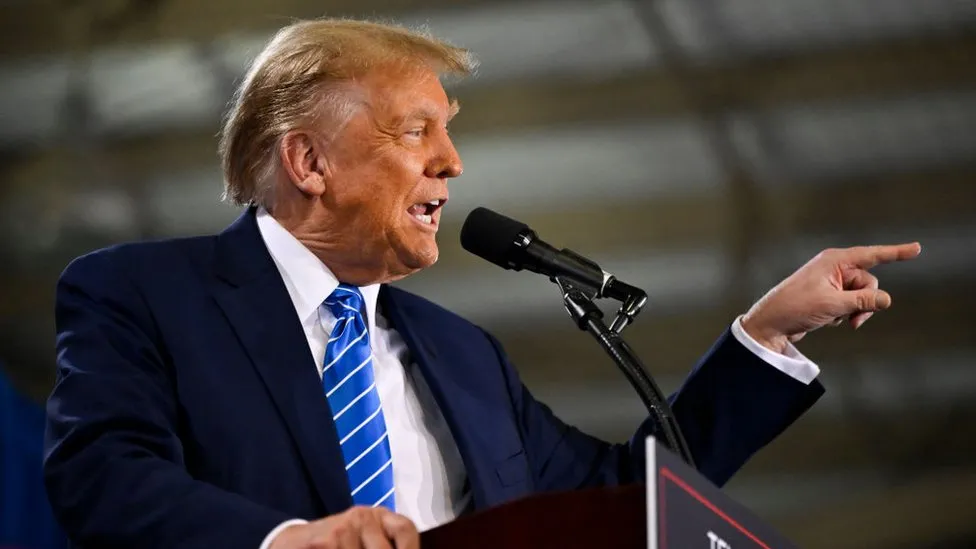
    A person who used to work for the US tax department has been given a five-year prison sentence for giving out Donald Trump’s private tax information to the news.

    Charles Littlejohn, who is 38 years old, has to be supervised for three years after he is released and he also has to pay a $5,000 fine for what he did.

    Littlejohn took tax information from many rich people while he was working for the IRS.

    A judge said on Monday that it was an attack on our country’s basic rules.

    More update on this story soon.

  • I am not backing down despite the intimidation – Cheddar tells govt

    I am not backing down despite the intimidation – Cheddar tells govt

    Founder of the New Force, Nana Kwame Bediako, also known as Cheddar, has stated that he remains resolute and steadfast in his position despite what he perceives as attempts by the government to intimidate or pressure him.

    Cheddar believes there are concerted efforts, possibly through the tax evasion allegations, to coerce or influence him in a way that could impact his political ambitions.

    The GRA had imposed a fine of GH¢50,000 on Bediako, claiming he failed to file personal income tax returns from 2013 to 2016. Despite settling an amount of GH¢209,171 between 2018 and 2020, a January 18 publication reported that Bediako allegedly neglected to file returns for the post-2020 period.

    In rejecting the tax evasion claims, Bediako has asserted that these allegations are part of a deliberate effort by the government to sabotage his political aspirations.

    In response to the tax evasion claims, Nana Kwame Bediako took to social media on January 18, 2024, to defend himself and address the situation.

    Speaking in local parlance he said “ I woke up this morning, only to see my pictures on the front cover of multiple publications alleging that I have evaded taxes. I have dedicated almost 22 or 23 years in this country. When it comes to taxes,  I have consistently fulfilled my obligations and continue to do so.”

    He emphasized that, given his regular importation of goods into the country, it would have been impossible for him to evade taxes without detection up to the present date.

    Emphasizing his commitment to fulfilling tax obligations, Nana Kwame Bediako, popularly known as Cheddar, pointed out that despite his consistently high income, he has consistently ensured the timely payment of taxes.

    Expressing bewilderment at the situation, Cheddar questioned the motives behind the Ghana Revenue Authority’s (GRA) choice to publish his pictures in connection with the tax evasion allegations.

    He suggested that this move by the government was a deliberate tactic to embarrass him. However, he noted that such actions would prove futile.

    “If we consider the state of the economy and the hardship we face as citizens, it appears the government was doing nothing to alleviate our difficulties.

    “The government intends to disgrace me, so it published my pictures in the papers. No, you cannot disgrace a man whom God has graced,” he said.

    He added that “The New Force, we are moving forward. We will not stop and no matter what you say, the way is forward.”

    Taking advantage of the situation, Cheddar used the opportunity to make a broader appeal to the government. He called on authorities to focus on creating more job opportunities to address the issue of unemployment, emphasizing that it’s crucial to have a larger portion of the population gainfully employed rather than relying on a few individuals.

    He pointed out his observation that the government, in his view, has struggled to meet its responsibilities. If elected, he pledged to provide transparency by furnishing evidence of how tax revenues are utilized, differentiating his approach from what he perceives as shortcomings in the current government’s accountability.

  • Gov’t wants to humiliate me – Cheddar replies tax fugitive claim

    Gov’t wants to humiliate me – Cheddar replies tax fugitive claim

    Founder of the New Force, Nana Kwame Bediako, also known as Cheddar, has countered accusations of tax evasion made by the Ghana Revenue Authority (GRA) while alleging that the government is attempting to undermine him due to his presidential ambitions in the 2024 elections.

    The GRA had imposed a fine of GH¢50,000 on Bediako, claiming he failed to file personal income tax returns from 2013 to 2016. Despite settling an amount of GH¢209,171 between 2018 and 2020, a January 18 publication reported that Bediako allegedly neglected to file returns for the post-2020 period.

    In rejecting the tax evasion claims, Bediako has asserted that these allegations are part of a deliberate effort by the government to sabotage his political aspirations.

    The GRA further estimated tax assessments for Bediako at GH¢2,088,228 and GH¢5,096,536 for the years 2021-2022, respectively, along with penalties for his failure to file his personal income tax returns.

    Bediako, also known as Cheddar, has vehemently denied these accusations, suggesting that the GRA aimed to disgrace him and tarnish his reputation. He expressed the belief that he was being targeted despite being one of the few individuals consistently fulfilling his tax obligations.

    In response to the tax evasion claims, Nana Kwame Bediako took to social media on January 18, 2024, to defend himself and address the situation.

    Speaking in local parlance he said “ I woke up this morning, only to see my pictures on the front cover of multiple publications alleging that I have evaded taxes. I have dedicated almost 22 or 23 years in this country. When it comes to taxes,  I have consistently fulfilled my obligations and continue to do so.”

    He emphasized that, given his regular importation of goods into the country, it would have been impossible for him to evade taxes without detection up to the present date.

    Emphasizing his commitment to fulfilling tax obligations, Nana Kwame Bediako, popularly known as Cheddar, pointed out that despite his consistently high income, he has consistently ensured the timely payment of taxes.

    Expressing bewilderment at the situation, Cheddar questioned the motives behind the Ghana Revenue Authority’s (GRA) choice to publish his pictures in connection with the tax evasion allegations.

    He suggested that this move by the government was a deliberate tactic to embarrass him. However, he noted that such actions would prove futile.

    “If we consider the state of the economy and the hardship we face as citizens, it appears the government was doing nothing to alleviate our difficulties.

    “The government intends to disgrace me, so it published my pictures in the papers. No, you cannot disgrace a man whom God has graced,” he said.

    He argued that if the GRA had concerns about his tax payments, they could have opted for a more diplomatic approach, such as scheduling a meeting with him, rather than resorting to the publicized method they employed.

    Taking advantage of the situation, Cheddar used the opportunity to make a broader appeal to the government. He called on authorities to focus on creating more job opportunities to address the issue of unemployment, emphasizing that it’s crucial to have a larger portion of the population gainfully employed rather than relying on a few individuals.

    He pointed out his observation that the government, in his view, has struggled to meet its responsibilities. If elected, he pledged to provide transparency by furnishing evidence of how tax revenues are utilized, differentiating his approach from what he perceives as shortcomings in the current government’s accountability.

  • I pay my taxes and I’ll continue to do so – Cheddar rubbishes GRA’s tax evasion claim

    I pay my taxes and I’ll continue to do so – Cheddar rubbishes GRA’s tax evasion claim

    Founder of the New Force, Nana Kwame Bediako, also known as Cheddar has refuted allegations of tax evasion made by the Ghana Revenue Authority (GRA).

    The GRA had accused Bediako of failing to file personal income tax returns from 2013 to 2016, resulting in a fine of GH¢50,000.

    In a publication dated January 18, it was reported that despite settling a sum of GH¢209,171 between 2018 and 2020, Bediako had once again neglected to file his returns for the post-2020 period. The GRA further estimated tax assessments for Bediako at GH¢2,088,228 and GH¢5,096,536 for the years 2021-2022, respectively, along with penalties for his failure to file his personal income tax returns.

    Bediako, also known as Cheddar, has vehemently denied these accusations, suggesting that the GRA aimed to disgrace him and tarnish his reputation. He expressed the belief that he was being targeted despite being one of the few individuals consistently fulfilling his tax obligations.

    In response to the tax evasion claims, Nana Kwame Bediako took to social media on January 18, 2024, to defend himself and address the situation.

    Speaking in local parlance he said “ I woke up this morning, only to see my pictures on the front cover of multiple publications alleging that I have evaded taxes. I have dedicated almost 22 or 23 years in this country. When it comes to taxes,  I have consistently fulfilled my obligations and continue to do so.”

    He emphasized that, given his regular importation of goods into the country, it would have been impossible for him to evade taxes without detection up to the present date. He highlighted that despite his consistently high income, he has always made sure to promptly fulfill his tax obligations.

    Expressing bewilderment at the situation, Cheddar questioned the motives behind the Ghana Revenue Authority’s (GRA) decision to publish his pictures in connection with the tax evasion allegations.

    “If we consider the state of the economy and the hardship we face as citizens, it appears the government was doing nothing to alleviate our difficulties.

    “The government intends to disgrace me, so it published my pictures in the papers. No, you cannot disgrace a man whom God has graced,” he said.

    He argued that if the GRA had concerns about his tax payments, they could have opted for a more diplomatic approach, such as scheduling a meeting with him, rather than resorting to the publicized method they employed.

    Taking advantage of the situation, Cheddar used the opportunity to make a broader appeal to the government. He called on authorities to focus on creating more job opportunities to address the issue of unemployment, emphasizing that it’s crucial to have a larger portion of the population gainfully employed rather than relying on a few individuals.

    He pointed out his observation that the government, in his view, has struggled to meet its responsibilities. If elected, he pledged to provide transparency by furnishing evidence of how tax revenues are utilized, differentiating his approach from what he perceives as shortcomings in the current government’s accountability.

  • “I have consistently fulfilled my tax obligations” – Cheddar

    “I have consistently fulfilled my tax obligations” – Cheddar

    Nana Kwame Bediako, the founder of New Force, has refuted allegations of tax evasion put forth by the Ghana Revenue Authority (GRA).

    The leader of New Force garnered attention in state newspapers due to his omission of personal income tax returns for the years 2013 to 2016, resulting in a fine of GH¢50,000.

    A publication dated January 18 highlighted that despite settling an amount of GH¢209,171 for the period between 2018 and 2020, Bediako once again failed to submit his returns for the post-2020 period.

    The publication further noted GRA’s estimation of Cheddar’s tax assessments to be GH¢2,088,228 and GH¢5,096,536 for the years 2021-2022, coupled with penalties for his non-compliance with personal income tax filings.

    In response, Mr. Bediako has asserted that the GRA’s allegations are an attempt to disgrace him and tarnish his reputation.

    He suggests that he is being unfairly targeted despite being among the few individuals consistently fulfilling their tax obligations.

    On January 18, 2024, Nana Kwame Bediako, popularly known as Cheddar, addressed the tax evasion allegations by utilizing social media platform X to provide his response.

    Speaking in local parlance he said “ I woke up this morning, only to see my pictures on the front cover of multiple publications alleging that I have evaded taxes. I have dedicated almost 22 or 23 years in this country. When it comes to taxes,  I have consistently fulfilled my obligations and continue to do so.”

    “If we consider the state of the economy and the hardship we face as citizens, it appears the government was doing nothing to alleviate our difficulties.

    “The government intends to disgrace me, so it published my pictures in the papers. No, you cannot disgrace a man whom God has graced,” he said.

    He further expressed that if the GRA harbored concerns about the timeliness of his tax payments, they could have opted for a meeting instead of the method they chose.

    Cheddar took the chance to call upon the government to generate more employment opportunities, aiming to alleviate unemployment rather than relying solely on a limited number of private individuals to sustain themselves.

    Emphasizing his observation that the government struggles to fulfill its obligations, he declared his intention to vie for the presidency of Ghana. Unlike the current government, he pledged to transparently showcase evidence of how tax revenues would be utilized under his leadership.

  • GRA reminds public of implementation of 10% tax on lotto winnings

    GRA reminds public of implementation of 10% tax on lotto winnings

    The Ghana Revenue Authority (GRA) has issued a reminder to the public that a 10% tax will be deducted from all gross winnings derived from lotteries, betting, gaming, and other games of chance, effective January 1st, 2024.

    This taxation measure applies to both the National Lottery Authority (NLA) and private lotto operators (PLOs).

    While the tax was initially introduced in August 2023, the NLA and PLOs were granted a six-month grace period for preparation.

    With the expiration of this grace period as of December 28th, 2023, the tax is now fully implemented from the start of the new year.

    Despite facing criticism from punters who argue that the tax diminishes their winnings, the GRA underscores the significance of this taxation for revenue generation and its contribution to national development.

    The authority stresses that compliance with the new tax is obligatory, and failure to withhold and remit the tax may result in penalties under Section 78 of the Revenue Administration Act, 2016 (Act 915).

  • GRA’s 10% levy on lotto and betting winnings to begin January

    GRA’s 10% levy on lotto and betting winnings to begin January

    The Ghana Revenue Authority (GRA) has officially communicated that, starting from January 1, 2023, the National Lottery Authority (NLA), Private Lotto Operators (PLOs), and other operators involved in games of chance will initiate the complete deduction of a 10% withholding tax on all gross winnings.

    This directive comes into effect following the conclusion of a six-month grace period granted to the NLA and PLOs for comprehensive preparations to implement the provisions of the Income Tax (Amendment) Act, 2023 (Act 1094).

    In a statement issued, the GRA underscored the significance of compliance with this new tax regulation. It explicitly warned that any failure on the part of these operators to adhere to the specified deduction would constitute an offense against the tax laws of Ghana.

    The GRA further highlighted that such offenses would be subject to sanctions in accordance with the provisions outlined in the Revenue Administration Act, 2016 (Act 915).

    This measure aligns with the broader strategy of the GRA to streamline and enhance the taxation framework related to gaming and lottery activities within the country.

    The withholding tax on gross winnings is seen as a crucial component in ensuring equitable tax contributions from entities engaged in the lucrative gaming and lottery sectors.

    The GRA expects strict adherence to these guidelines, emphasizing the legal consequences that may be imposed on those found in violation of the stipulated tax regulations.

    Read the full statement by GRA below:

  • NDC govt will revoke Akufo-Addo’s GHC100 emission tax – Asuogyaman MP

    NDC govt will revoke Akufo-Addo’s GHC100 emission tax – Asuogyaman MP


    The Member of Parliament for Asuogyaman, Thomas Ampem Nyarko, has announced that the upcoming NDC government, John Mahama, intends to eliminate the GHC100 yearly emission tax introduced by the current Akufo-Addo and Bawumia administration.

    Nyarko revealed that despite the minority caucus’s attempt to block the tax, the majority’s numerical advantage allowed its passage.

    Addressing commercial motorcyclists in Fintey, Osiabura, and Asikuma after providing free fuel for Christmas, Nyarko criticized the tax as insensitive and obnoxious.

    He assured that President Mahama and the NDC would eliminate the GHC100 tax on petrol and diesel engines, including motorbikes.

    The MP highlighted the expected positive impact on living standards through the implementation of a 24-hour economy by the next NDC government, scheduled to begin in 2025.

    The recently passed Emissions Levy Bill imposes a GHC100 annual fee on petrol and diesel vehicle owners starting January 2024. The aim is to promote eco-friendly energy sources and offset carbon emissions.

    The tax faced opposition from the Minority in Parliament, who labeled it a ‘wusie tax’ that could worsen citizens’ economic challenges.
    While the government emphasizes climate-positive actions, the move has sparked debates over its potential impact on various sectors, including commercial vehicles, private vehicles, ambulances, ‘okadas,’ and ‘aboboyaas.’

    If the bill receives presidential assent, companies will also be required to pay GH₵100 per tonne of carbon dioxide emission.

    The tax initiative aligns with broader environmental goals, as evidenced by the government’s decision to apply a zero-VAT rate on imported electric vehicles in the 2024 budget.

    Finance Minister Ofori-Atta previously outlined plans to expand the Environmental Excise Duty to cover plastic packaging, industrial emissions, and vehicle emissions, showcasing a comprehensive approach to environmental stewardship.

  • Promote our events, don’t just tax Us – GRA urged

    Promote our events, don’t just tax Us – GRA urged

    Ben Duker, a renowned Ghanaian Radio and TV producer, is advocating for a more diversified approach from the Ghana Revenue Authority (GRA).

    Instead of solely concentrating on event taxes, Duker suggests that GRA should also engage in promoting events through their social media platforms.

    Speaking on Angel 102.9 FM in Accra, Ben Duker noted that, despite monitoring the GRA’s activities over the years, he has not observed active promotion of artists’ events by the authority.

    While acknowledging the importance of tax payments as a form of responsible citizenship, he proposed that GRA could further contribute by supporting the events they tax.

    The experienced producer, known for his work with Adom FM and Kasapa FM before joining Angel FM, expressed concern about the substantial tax burdens faced by event organizers, especially when the financial returns are not evidently beneficial.

    “I have checked the social media handles of the Ghana Revenue Authority to see if they make efforts to promote any kind of event,” Ben Duker remarked.

    He pointed out the usual practice where the GRA establishes tables at events to gather taxes linked to ticket sales.

    While recognizing the significance of tax payment, Ben Duker urged the GRA to extend their role beyond mere collection. He emphasized the need for the GRA to actively support event organizers by utilizing their social media platforms to promote artists and programs.

    Duker proposed the posting of event flyers to boost program visibility, instilling confidence in potential attendees.

    Ben Duker pleaded with the GRA, stating, “I’m begging Ghana Revenue Authority, event organisers suffer before they are able to promote one event, including the money involved.”

    ” I’m begging you, this will take nothing from you. Just post the upcoming events like Black Sheriff and Stonebwoy’s programs on your page, and I believe it will spoil nothing so that when someone sees it, they will have faith in it with the reason that they have seen it on the GRA page,” he added.

    He clarified that the GRA’s promotion of events would help both the organizers and the general public, drawing more people to the events and ultimately increasing the authority’s tax income.

  • New emission tax will see GHACEM pay $36m to govt – Bright Simons claims

    New emission tax will see GHACEM pay $36m to govt – Bright Simons claims

    Vice President of the policy think tank IMANI Africa, Bright Simons, has projected that with the strict enforcement of the government’s new taxes, GHACEM, the largest cement company in the country, will be required to pay approximately $36 million in taxes.

    Mr Simons emphasized that GHACEM holds a significant share of over 50% in the country’s cement market and aims to produce 3 million tonnes annually.

    He wrote on X: “If GHACEM, Ghana’s largest cement corp, with ~50% share, continues hitting its 3 million tonnes a year target, it will face new taxes of $24m a Yr if Ghana strictly enforces the new carbon taxes it is introducing. If the Kumasi plant comes onstream, carbon taxes = $36m. AGI dey?”

    Mr Bright Simons pointed out that manufacturers would face an $8 tax for every ton of CO2 emitted during the manufacturing process.

    He expressed skepticism towards the Association of Ghana Industries for supporting the government’s proposal for the Import Restrictions bills.

    “Remember AGI was recently praising govt of Ghana for the import restrictions list? Okay, their time has come. Govt is slapping ~$8 tax for every ton of CO2 emitted by manufacturers. Cement, fuel, steel, aluminum & all high-energy industries should get ready to be smacked!” he wrote.

  • Details on new taxes introduced by Govt for the year 2024

    Details on new taxes introduced by Govt for the year 2024

    Minority Leader and Member of Parliament for Ajumako-Enyan-Esiam, shares details of purported new taxes being introduced by the Nana Addo Dankwa Akufo-Addo government.

    In a post on X on Sunday, December 3, 2024, the MP highlights sections of a tax bill that the government is reportedly seeking parliamentary approval for.

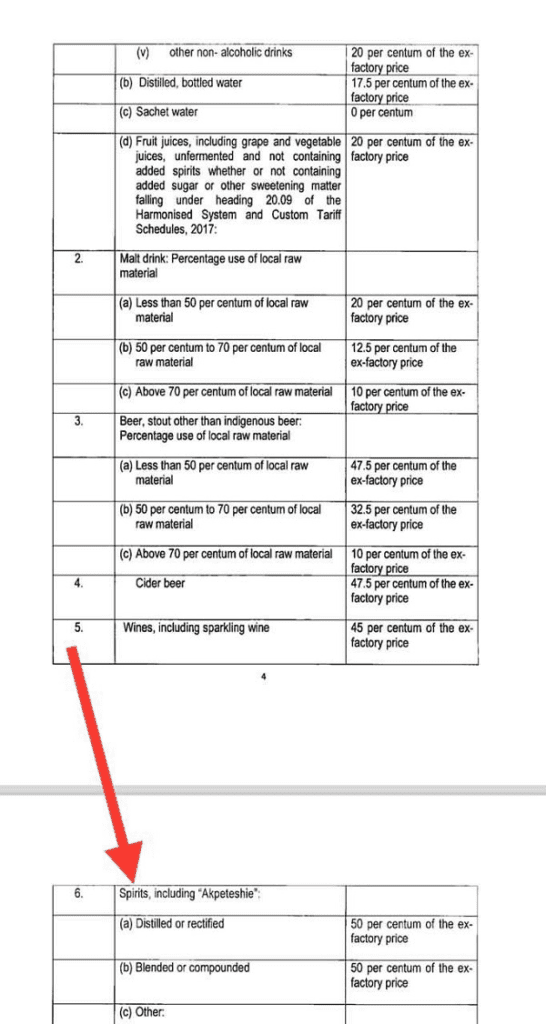
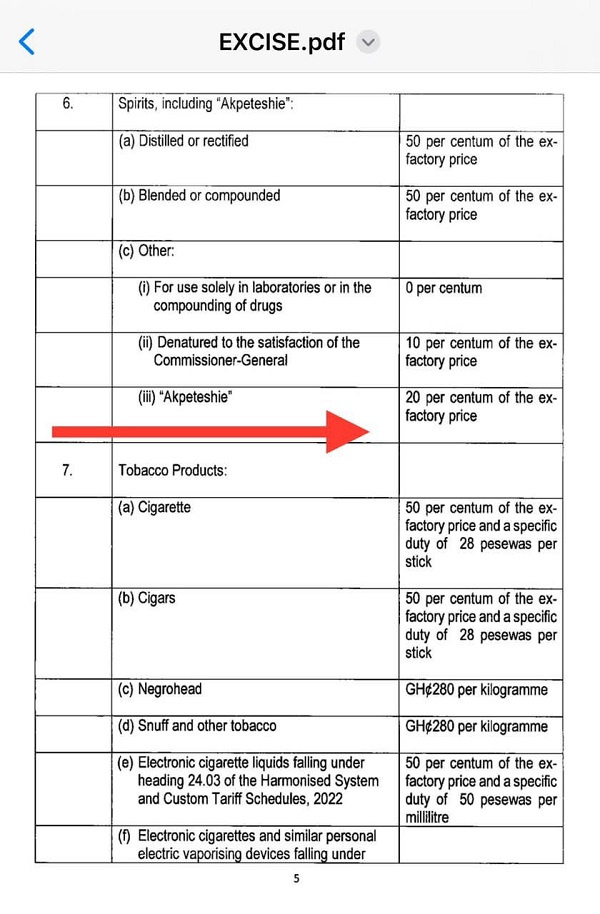
    Among the proposed taxes, he mentions a 20% tax on the local gin widely known as ‘akpeteshie.’ Additionally, the government is said to be aiming to implement a GH¢100 per vehicle annual tax on all petrol and diesel cars.

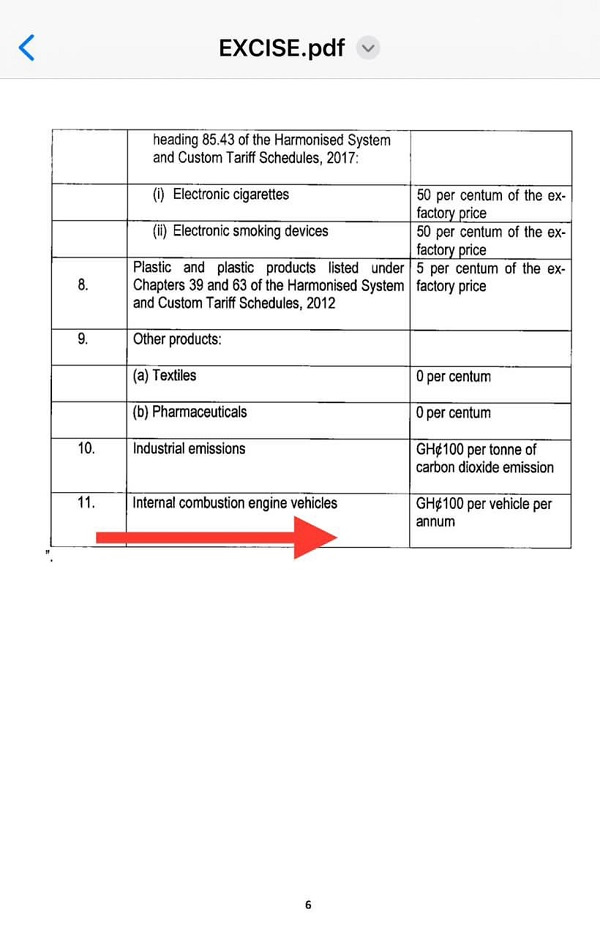
    “The Akufo-Addo/Bawumia government is imposing 20% tax on “akpeteshie” (they have run out of ideas). Petrol and diesel vehicle owners should also expect to pay a new annual tax of GHS100 per vehicle on all petrol and diesel cars (internal combustion engine vehicles).

    “This tax will be imposed on all trotros, aboboyaas, okadas, taxis, commercial buses, trucks, ambulances, construction and heavy-duty vehicles, water tankers, private cars, etc. Once your vehicle is powered by petrol or diesel, the government is imposing this tax on you. According to the government, this policy is aimed at promoting the use of cleaner/more eco-friendly sources of energy (like electric vehicles),” he wrote.

    The documents also indicate that the government wants to impose a carbon dioxide emission tax of GH¢100 per tonne on all businesses operating in the nation.

  • Government receives GHS 810.7m as tax from Newmont

    Government receives GHS 810.7m as tax from Newmont


    In the third quarter of 2023, Newmont Corporation’s Africa operations, including the Ahafo South and Akyem mines in Ghana, made substantial financial contributions to the Government of Ghana.

    The company reported total payments of GHS 810.70 million in taxes, royalties, levies, and carried interest. These payments were facilitated through the Ghana Revenue Authority, Forestry Commission, and Ministry of Finance.

    Specifically, the Ahafo South operation contributed GHS 441.90 million, while the Akyem operation contributed GHS 368.80 million during the quarter spanning July to September.

    The cumulative year-to-date payments from January 1st to September 30th, 2023, by Newmont Corporation’s Ghana operations amount to GHS 2.857 Billion. The breakdown of these payments is as follows:

    • GHS 1.829 billion as Corporate Tax;
    • GHS 522.99 million as Mineral Royalties;
    • GHS 291.59 million as Pay As You Earn;
    • GHS 120.12 million as Withholding Tax;
    • GHS 67.33 million as Carried Interest; and
    • GHS 25.75 million as Forestry Levy.

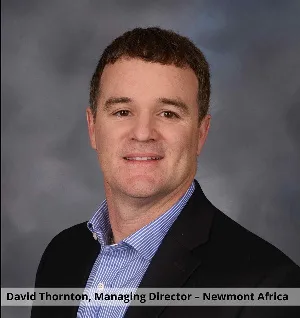
    “Newmont understands the value of its tax contributions in Ghana to support local and national development, and remains committed to accurate tax payments and disclosure, in accordance with its Extractive Industry Transparency Initiative (EITI) commitments,” said David Thorton, Managing Director of Newmont Africa.

    Construction has commenced on Newmont’s third mine in Ghana, known as the Ahafo North project. The new mine is projected to contribute between 275,000 and 325,000 ounces annually for the initial five full years of production. Commercial production is anticipated to commence in the second half of 2025.

    Once operational, the Ahafo North mine is expected to not only provide an additional direct revenue stream for the government but also contribute to employment generation, local development, and other mutually agreed-upon value-creation initiatives.

  • 2022 recorded a GHS6b tax contribution by Telecom Companies to Govt – Chamber of Telecom

    2022 recorded a GHS6b tax contribution by Telecom Companies to Govt – Chamber of Telecom

    The telecommunications sector has made significant tax contributions to the Ghanaian government, surpassing GH¢6.07 billion in 2022, marking a substantial increase from the GH¢4.02 billion paid in 2021.

    Major contributors include AT, MTN, Vodafone, ATC, Helios, Comsys, CSquared, Ericsson, and Huawei. Dr Kenneth Ashigbey, CEO of the Ghana Chamber of Telecommunications (GCT), revealed this information during the launch of the 2022 Mobile Industry Transparency Initiative report on November 21, 2023, in Accra.

    The industry’s tax contribution accounts for approximately 8.02% of the government’s total tax revenue of GH¢75.71 billion for 2022, as per the Ghana Revenue Authority’s 2022 annual report.

    The breakdown of tax contributions includes Corporate Income Tax (CIT) at GH¢1.27 billion (42.6%), Value Added Tax (VAT) at GH¢923 million, and Withholding Tax at GH¢697 million.

    Additionally, the Communication Service Tax amounts to GH¢511.6 million, while levies for GETFund, NHIS, and COVID-19 total GH¢768 million, among other contributions.

    Regarding the contentious Electronic Transfer Levy (E-Levy), the Chamber emphasized the need for further revision in the E-Levy rate to align it with the government’s digital drive strategy.

    “Our recommendation to the Ministry of Finance is to consider reducing the levy on transfer to 0.5 per cent and introduce a 0.5 per cent levy on cash-outs among other proposals,” the GCT said.

    Highlighting the crucial role of the telecommunications sector in socio-economic development, the Ghana Chamber of Telecommunications stressed that it should not be taxed similarly to industries like alcohol and tobacco.

    Dr. Ashigbey, the Chamber’s CEO, expressed concern that the amount paid to the government accounted for 46.31% of its revenue for the year, a slight decrease from 47.69% in 2021. This suggests an unsustainable burden that requires attention.

    Despite making a significant contribution of 2.27% to the country’s Non-Oil GDP, the Chamber pointed out that the telecom industry bears a “disproportionate tax burden,” contributing 7.28% to the government’s overall tax revenue.

    “This inequitable differential militates against government’s effort to transform the nation’s economy and urged that the in­dustry is viewed as partner rather than a pot of tax because elevated taxation levels have significantly impacted the industry.”

    Rather than being viewed as the “cash-cow” that is unduly taxed, he said, it was critical that the industry be seen as a key driver driving the development of other sectors including agriculture, education, health care, manufacturing, and government.

  • Africa gears up for 11th Pan-African Conference on taxation and illicit financial flows

    Africa gears up for 11th Pan-African Conference on taxation and illicit financial flows

    Stakeholders in Africa’s tax sector are preparing for the 11th Pan-African Conference on Illicit Financial Flows and Taxation (PAC) set to take place in Ghana.

    Organized by the Tax Justice Network Africa (TJNA) and The African Tax Administration Forum (ATAF), this conference provides a vital platform for exploring strategies that empower African nations to actively engage in international discussions impacting domestic resource mobilization and the prevention of illicit financial flows.

    Bringing together officials from Pan-African organizations, tax administrations, finance ministries, civil society groups, parliamentarians, and academia/researchers, the conference operates under the theme “Making Global Tax Governance Work for Africa.”

    Participants will engage in discussions to shape a unified African stance on international matters affecting domestic resource mobilization and to identify actions and solutions for key actors, including governments, parliamentarians, civil society, the private sector, and other policy players.

    Amid Africa’s developmental goals, the continent requires additional resources to address global crises, align with SDGs, and prioritize Agenda 2063.

    The Annual Sustainable Development Goals financing gap for Africa stands at approximately USD 190 billion (African Union 2023).

    Bridging this gap necessitates the development of regional value chains, fostering fair market access through intra-Africa trade, effective tax collection, and combatting illicit financial flows.

    PAC 2023 focuses on building partnerships and collaborations to mobilize collective action within the tax sector, recognizing that these alliances are critical for Africa to lead international conversations on domestic resource mobilization and illicit financial flows on the continent.

  • Useless! How many Ghanaians will benefit from waiving tax on imported electric vehicles – Ato Forson on 2024 budget

    Minority Leader in Parliament, Dr. Cassiel Ato Forson, has rendered certain tax reliefs outlined in the government’s 2024 Budget and Economic Policy useless.

    He contends that some of the specified tax reliefs will not provide substantial relief to Ghanaians, characterizing the entire budget statement as lacking substance after its presentation on the floor of parliament on November 15, 2023.

    In an interview on JoyNews, Dr. Ato Forson specifically labeled the government’s initiative to waive import duties on electric vehicles as ‘useless.’

    He argued that the majority of Ghanaians cannot afford to use electric vehicles, coupled with a scarcity of electric charging infrastructure in the country.

    “Let me make this point, I don’t know how many vehicles in Ghana are electric. Where are the charging ports? How many Ghanaians will benefit from it? Useless” the Minority Leader stated.

    “It is to encourage the use of semi-knocked-down electric cars. We live in an economy that we are even struggling to get power. How many cars in Ghana today are electric for them to say that we are giving tax exemption for electric cars? I don’t know if you own an electric car, I don’t own one. And go out and find out from people. As an MP, I don’t know of any individual or public transport that owns electric vehicles,” the lawmaker reiterated.

    Despite the fact that the EV policy is dependent on future energy transition initiatives, he emphasized that many Ghanaians are unlikely to gain from the change, so it may not be beneficial in the near run.

    “So, it is looking at the future probably but is not giving something presently to the ordinary Ghanaian. What the government must do first of all is to create an enabling environment for electric vehicles. This [Tax waiver] is not. The one to create the enabling environment will be access to charging ports,” Dr Ato Forson said.

    “…So, if I bring an electric vehicle here to start using it when I travel to Ajumako and for some reason I need to charge my vehicle, where are the charging ports? Which fuel station can I park in and charge my electric vehicle?” the MP questioned.

  • Mahama promises tax incentives for business as part of his 24hr economy policy

    Mahama promises tax incentives for business as part of his 24hr economy policy

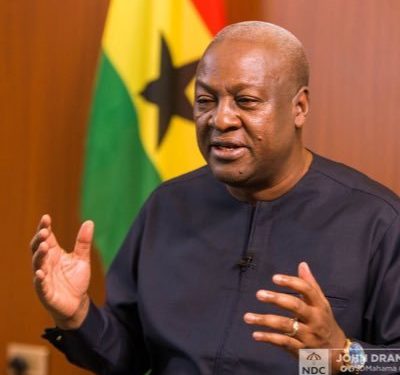
    Former President John Dramani Mahama has delineated the advantages that businesses can anticipate under the proposed implementation of a 24-hour economy, should he be re-elected as president.

    Among the benefits, he highlighted that businesses would receive tax incentives for voluntarily participating in the policy. Mr. Mahama emphasized that the adoption of this policy would not be mandatory for businesses.

    “I envision a 24-hour economy where hospital facilities, filling stations, manufacturers, construction companies, garbage collection companies, mining and extractive industries, agro-processing,  harbors and ports, financial services, digital start-ups will operate a three-shift system 24/7 in an atmosphere of safety and security.

    “This 24 hour economy I propose will be voluntary, it will not be imposed. Businesses will be encouraged to sign up with tax incentives provided for them and enhanced security and lower electricity tariffs after peak hours. Special meters will be deployed to provide what is known as time-of-use tariffs to deliver cheaper power to such businesses during the hours of especially 10 AM and 6AM,” he said while speaking to Catholic Bishops in Sunyani on Saturday, November 18.

    He further said that the 24-hour economy is meant to create jobs for all Ghanaians.

    “The 24-hour economy I proposed is for jobs and more jobs,” the flagbearer of the National Democratic Congress (NDC) stressed.

    At the beginning of his engagement with key stakeholders in his quest for power, on Tuesday, November 7, 2023, Mr. Mahama proposed the “24hr Economy” project when he met with representatives of the nation’s mother workers union.

    The purpose of the “Building Ghana Tour” is to inform the stakeholders about the policies that the incoming NDC administration plans to enact in order to transform the economy.

    During his engagement with key stakeholders on Tuesday, November 7, 2023, as part of the ‘Building Ghana Tour,’ Mr. Mahama introduced the ’24hr Economy’ project.

    This proposal was presented to officials of the country’s primary workers union, marking the commencement of his efforts to return to power.

    The purpose of these interactions with stakeholders is to inform them about the policies that the next NDC administration plans to implement for the transformation of the economy.

    He said “NDC was left alone as the solitary voice seeking to hold the government accountable and speaking up for the voiceless Ghanaian and we were often cast out as spoilt brats who were ranting just because we have lost power.”

    “Today, the chickens have come home to roost and we are all affected.”

    Earlier, he promised to build a cashew processing factory in Wenchi.

    Addressing a gathering in Wenchi on Friday, he noted, “Currently, cashews are harvested and exported to India for processing before distribution to other countries. The Indians profit more from cashews that we have struggled to plant and harvest.”

    “My leadership aims to introduce machinery in the Bono Region dedicated to cashew processing, designed for the efficient processing and packaging of cashews for export. This initiative is to retain any profits from cashews in the country,”  he added.

  • GRA ready to dissolve tax-defaulting companies

    GRA ready to dissolve tax-defaulting companies

    The Commissioner General of the Ghana Revenue Authority (GRA), Rev. Ammishaddai Owusu-Amoah, has emphatically asserted that the authority will employ all legal avenues, including the liquidation of companies, to enforce tax compliance.

    He mentioned that the GRA possesses the authority to initiate proceedings for the liquidation of companies that are in default of tax payments and have been unable to settle their obligations for an extended period.

    “Whatever compliance measures available in the law, GRA is ready to implement it to the latter, but we also want Ghanaians to know that we’re not in to collapse their companies. However we will do whatever necessary. Nobody should think they’re too big or too small to comply,” he warned.

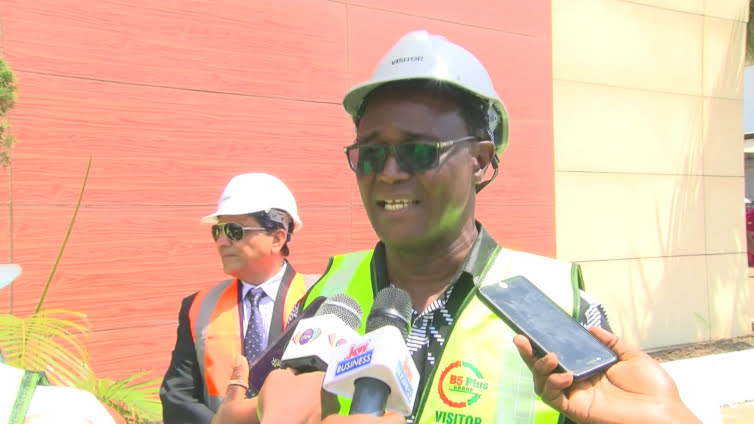
    Rev. Owusu-Amoah made these statements in an interview with Joy Business following the decision to liquidate United Steel Company as a means to settle the company’s outstanding tax obligations.

    United Steel Company faced financial distress amounting to ₵149 million and owed significant tax liabilities, totaling over ₵400 million along with penalties. The company was subsequently sold to B5Plus.

    Rev. Owusu-Amoah emphasized that no company, regardless of its size, is exempt from the possibility of liquidation if the situation demands it. He revealed that there are several other companies currently under consideration for liquidation.

    Furthermore, he advised companies that have been shuttered due to tax default to take the necessary measures to clear their tax arrears.

  • Responsibly pay your taxes – Finance minister urges public

    Responsibly pay your taxes – Finance minister urges public

    Minister of Finance, Ken Ofori-Atta, has called upon the public to fulfill their tax obligations, emphasizing the importance of taxation in enabling the government to generate revenue for economic growth.

    He stressed that paying taxes is a civic duty that every citizen must fulfill to contribute to the funding of policies and developmental projects aimed at improving the overall standard of living.

    Mr. Ofori-Atta made this appeal during his visit to the Sol Cement Manufacturing Company in Tema, which had been temporarily shut down due to tax arrears.

    He expressed concern over the significant company’s failure to meet its tax obligations to the government, highlighting that the company would not be allowed to resume operations until its outstanding taxes were settled.

    Mr. Ofori-Atta asserted that it is unlawful for companies to utilize the country’s infrastructure, services, and resources to generate substantial profits while evading tax payments.

    The Finance Minister commended the Ghana Revenue Authority (GRA) for its efforts in enforcing tax laws, underscoring the importance of these efforts in generating income for economic development.

    He regarded this situation as a signal of increased vigilance and emphasized that it serves as a reminder to other companies to meet their tax responsibilities.

    Mr. Ofori-Atta assured the GRA that the Ministry of Finance would provide support in their pursuit of effective tax collection.

    “When the GRA brings up their audit of a company we will follow up and support them”, he said.

    He further emphasized the need for citizens to stay watchful and support the compliance of taxpayers, while urging those engaged in such activities to cease their actions.

    Mr. Edward Gyamerah, the Commissioner of the Domestic Tax Revenue Division at GRA, noted that it had been two weeks since the factory was closed, yet no payment had been made.

    He explained that the company had suggested a payment plan, but the Authority was dissatisfied with the proposal.

    Mr. Gyamerah outlined the conditions for the company to resume its operations, stating that they would be allowed to operate when they paid at least 40% of the outstanding liability and established a satisfactory arrangement for settling the remaining 60%.

    The liability encompassed a three-year default, including all types of taxes.

    He mentioned that the company had a 30-day window to provide a satisfactory arrangement for settling their liability. Additionally, he cautioned that a failure to fulfill their financial obligation would result in the auctioning of the company to recover the outstanding taxes.

    “You cannot operate in a country and not pay tax, it is not done anywhere”, he said.

    The Commissioner emphasized the significance of the Finance Minister personally witnessing the shutdown and gaining insight into the grassroots aspects of tax collection.

    Amani Linbo Zhu, the General Manager of Sol Cement, appealed to the Authority for permission to resume their operations, citing the need to generate income to settle their debts.

  • South Africans alerted of proposed tax increased

    South Africans alerted of proposed tax increased

    South Africans will experience more difficult times as Finance Minister Enoch Godongwana has warned that taxes are expected to increase in the coming year.

    During his speech in parliament about the budget for the next few years, he mentioned that the economy wasn’t growing well, not enough money was being collected, and the interest costs on the country’s debt were quickly rising. Because of these reasons, it is likely that taxes will be increased.

    The government will continue to take steps to reduce its spending. This will involve making its departments smaller. Godogwana said this.

    He said he would make sure important services like healthcare, police, and education are safe from budget reductions.

    However, trade unions and civil society groups cautioned that limited funds would make it difficult to hire new teachers and put added strain on healthcare services.

    The government responded to social activists’ demands and decided to extend a monthly financial assistance given to over eight million people who are facing financial problems.

    The monthly payment started in 2020 to assist people temporarily during the Covid lockdowns.

  • AGI hopes for implementation of tax suggestions in 2024 budget

    AGI hopes for implementation of tax suggestions in 2024 budget

    The Greater Accra Regional Chairman of the Association of Ghana Industries (AGI), Tsonam Akpeloo, has expressed anticipation that Finance Minister Ken Ofori-Atta will implement recommendations for boosting the private sector.

    He emphasized the need to streamline the current tax system to support local manufacturers and reduce their tax burdens. In an interview with Joy Business, Mr. Akpeloo stated,

    “We are saying that we want the current tax regime to be streamlined in order to give room for private local manufacturers to able to thrive and relieve them from all the tax burden”.

    “The issue of taxation is very key for us, and we really looking forward for the finance minister to address that. We have had several meetings with him, and we only pray that they would want to implement some of the recommendations for the private sector”.

    This statement follows Finance Minister Ken Ofori-Atta’s announcement that the 2024 Budget will introduce programs and initiatives aimed at reducing the high cost of doing business in the country.

    Ofori-Atta emphasized that the budget will also tackle concerns related to excessive taxation impacting the private sector.

    He added that the government is committed to prioritizing the private sector and creating a conducive environment for its growth.

  • Customs officer allegedly charges woman GHC1,058 for not using ‘goro boys’ to retrieve items

    Customs officer allegedly charges woman GHC1,058 for not using ‘goro boys’ to retrieve items

    Efforts to combat corruption and streamline services for the benefit of Ghanaians remain ongoing.

    Nonetheless, despite the extensive efforts, it appears that certain officials at the Airport Customs Office in Accra persist in pressuring individuals to utilize the services of intermediaries known as ‘Goro Boys.’

    On October 10, 2023, a woman named Madam Gifty found herself facing a double tax charge on her parcel after she refused to employ the services of a “goro boy,” as suggested by a customs officer at the Airport Customs Office in Accra.

    Madam Gifty, who exclusively shared her account with GhanaWeb, detailed how she had imported an item worth GH¢1,200, weighing 6.9 kilograms, from Shein, which arrived in Ghana through Aramex.

    However, upon her visit to the Airport office, an officer named Kodjo informed Gifty that she needed to enlist the services of a goro boy (agent) to clear her item.

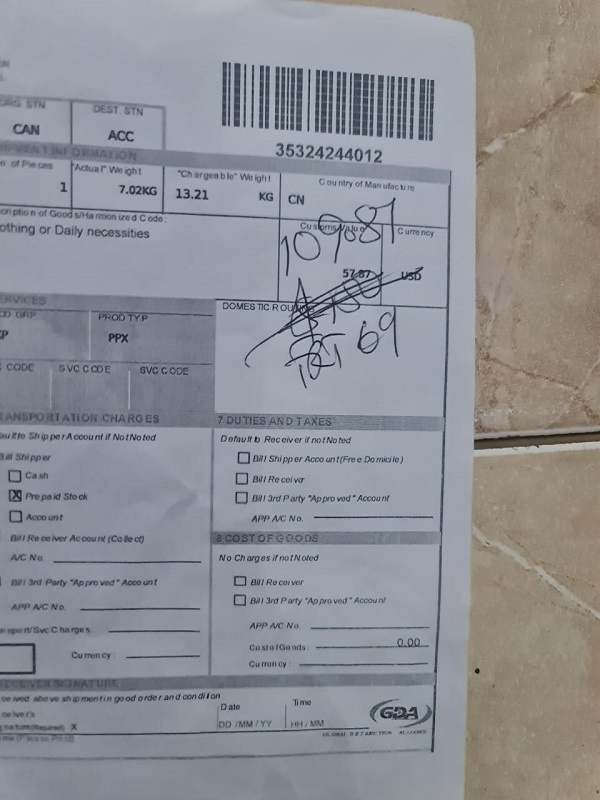
    Madam Gifty declined and insisted on adhering to the proper procedure to pay for her parcel, originally priced at $57, equivalent to over GH¢500.

    The customs officer proceeded to take her document, which indicated a payment of $57, and crossed out the printed price. He then manually wrote GH¢1,058 as the new amount using a pen, effectively increasing the fee.

    Despite Gifty’s insistence on paying the stated amount and receiving an official receipt rather than making an off-the-record payment, she was still charged for both the item’s value and weight, contrary to the established requirements.

    Below is how she shared her frustration with the media

    “I went to the office to clear my parcels, and the officer told me to use an agent, which I refused.

    “Knowing very well that I had declined to use the agent, I proceeded to pay my taxes based on the invoice ($57).

    “However, the officer ignored the item’s value on the invoice, canceled it with a pen, and charged $109 plus an additional $69, totaling $178.

    “This was done to pressure me into using ‘goro boys’ or engaging in an off-the-record deal with him. I refused and paid as per the official procedure.”

  • SMEs need to come up with plans to thrive amidst current economic challenges – CEO of Vodafone Ghana

    SMEs need to come up with plans to thrive amidst current economic challenges – CEO of Vodafone Ghana

    Chief Executive Officer of Vodafone Ghana, Patricia Obo-Nai, has encouraged Small and Medium-sized Enterprises (SMEs) to develop practical strategies for thriving in the challenging economic environment.

    She emphasized the importance of SMEs harnessing technology and innovation to grow and minimize operational expenses, thus ensuring the longevity of their businesses.

    During her address at the Vodafone Ghana Business Runway event in Accra, Patricia Obo-Nai made these remarks.

    “In these turbulent times, survival has become difficult but important. We believe merely being good is no longer enough. Businesses must fall on innovation, expansion and compliance.”

    “Innovation is also about doing the same thing differently and better so that you can compete with and compete effectively and also have some unique selling proposition which may not be that easy to replicate or actually in our case to help you to reduce your operational costs,” she added.

    Obo-Nai spoke on the theme: “Good to Great with Vodafone: Innovate, Comply and Expand.”

    The event convened specialists in finance, brand innovation, and tax compliance, providing SMEs with essential strategies for efficient business growth.

  • Ghana Revenue Authority goes after businesses avoiding tax payment

    Ghana Revenue Authority goes after businesses avoiding tax payment

    Assistant Commissioner, who heads the Accra Central Enforcement Unit of the Ghana Revenue Authority (GRA), Joseph Annan, has identified a tax system loophole.

    Efforts are being made to address this issue, which has become evident during the ongoing Value Added Tax (VAT) enforcement operation in Accra.

    Annan noted that many businesses were found to be in violation of tax laws. Some registered entities either failed to issue VAT invoices or were selectively issuing them. In response, the revenue collection authority will conduct additional compliance checks to compel tax defaulters to settle their obligations and hold them accountable.

    Assistant Commissioner Joseph Annan shared these insights with journalists in Accra following one of the enforcement exercises.

    “What it means is that, we have to do a lot more compliance checks.

    “Businesses operating in the country that have failed to register with the authority or comply with tax laws will be compelled to do the right thing,” he stated.

    Since June of this year, the Ghana Revenue Authority has intensified its initiatives for tax compliance and enforcement with the aim of achieving its collection target of GH¢106 billion.

    This objective signifies a 40% year-on-year growth.

  • Gov’t to introduce a ‘new E-levy’

    Gov’t to introduce a ‘new E-levy’

    Government has unveiled a comprehensive plan to revamp the Electronic Transfer Levy as a crucial component of its Medium Term Revenue Strategy.

    This initiative highlights a dedicated effort to modernise and enhance this taxation policy, bolstering its efficiency and effectiveness.

    In May 2022, the introduction of the e-levy – a tax on mobile money transactions that drew widespread criticism – imposed a 1.5% charge on all electronic and mobile money transactions exceeding GH¢100 per day. Its primary goal was to boost government revenue by securing larger tax contributions from Ghana’s informal sector.

    Then, in January 2023, the government lowered the tax rate from 1.5% to 1%. However, the notable feature of the levy – an exemption threshold for transactions below GH¢100 per day – still stands, even though its actual value has eroded due to inflation over the past year.

    The impact of this levy on Ghana’s public finances, its marginalized communities, and mobile money usage has sparked intense and divisive public debates, often devoid of empirical evidence.

    This comprehensive restructuring of the Electronic Transfer Levy might represent a progressive stance on digital-age taxation. 

    Crucially, it resonates with the government’s wider strategy to modernise its revenue collection techniques whilst ensuring a fair distribution of the tax load across varied economic sectors.

    Additionally, the medium-term revenue strategy details the subsequent reforms:

    Firstly, there are plans to broaden the withholding tax system, covering an array of tax categories. This measure seeks to improve taxpayer identification, make tax collection more efficient, and simplify the filing procedures, especially for incomes in the informal sector.

    Secondly, the strategy includes provisions to streamline tax returns and closely examine the updated taxation framework, all geared towards curbing tax evasion and fostering voluntary compliance.

    A key aspect of the strategy involves a thorough examination of archaic tax classifications, such as stamp duty, income tax stamp, and vehicle income tax. The aim is to align them with current market trends.

    Furthermore, the strategy aspires to amplify the taxation of rental income, ensuring a fairer contribution from this domain.

    Lastly, the strategy includes the adoption of taxation on Gross Gaming Revenue (GGR) for industry stakeholders and the introduction of withholding tax on winnings, signifying a considerable move towards a more inclusive and balanced tax system.

  • Stop taxing HIV anti-retroviral drugs donated to Ghana -NAP+ Ghana

    Stop taxing HIV anti-retroviral drugs donated to Ghana -NAP+ Ghana

    President of the Ghana Network of Persons Living with HIV and AIDS, (NAP+ Ghana), Elsie Ayeh, has called on the government to scrap the various taxes placed on anti-retroviral drugs donated to Ghana.

    AU Tax, ECOWAS Tax, and COVID-19 Tax have been placed on the drugs currently at the port, she said.

    According to her, it is unacceptable for the government to tax drugs that the country receives as donations.

    “We are calling on the government to remove that tax waiver. We know that the medication is free. Free in the sense that they were donated. Why should our country tax those medications that have come in free? That is what we don’t understand,” she said in an interview on JoyNews’ The Pulse on October 6, 2023.

    “Is that tax more important than the number of PLHIV who are virally suppressed at this time who have to continue taking their medication so that we remain healthy, we don’t transmit HIV and we also enable our country to reach that target that we are all heading towards? That is AIDS-free population by 2030. We don’t want the new infections coming on board,” she further stated.

    Her concern comes at a time when there is a shortage of anti-retroviral medication, specifically the Abacavir Lamivudine regimen, which is vital for Persons Living with HIV (PLHIV) nationwide.

    ‘We are just to go to the facility and get our medication, and that is what we confidently do every time we have to go to the clinic. And we know that these medications are at the harbour. We had talked about it, made moves to ensure that the medications were now okay for us to access but then surprisingly, it came as a surprise 2 days ago when we heard at Korle-Bu there were no medications, Abacavir Lamivudine regimen especially the which we know is among those drugs still at the harbour. Our members can’t do anything,” Elsie Ayeh said.

    A total of 354,927 people live with HIV AIDS. And out of this figure, 115,235 are males, while 239,692 are females

    On the matter, Director General or the Ghana Aids Commission, Dr Stephen Kyeremeh Atuahene has entreated the Ghana Health Service (GHS) to prioritize the HIV commodities to get them released immediately.

    “Because there are several containers of various health commodities at the port which are in the same category of non-clearance. So it is very necessary.”

    “Any break in supply of anti-retroviral medicines to people living with HIV is a serious risk to their lives and we should not do anything to undermine their lives,” he warned.

  • Govt to employ “warlike” strategies to address economic challenges effectively – Prof Bokpin

    Finance Professor at the University of Ghana, Professor Godfred A. Bokpin, has suggested that government should consider employing a strategy similar to what is done during wartime to tackle the economic difficulties currently affecting the nation.

    He emphasized that issues such as corruption, low tax revenues, public spending, and other economic obstacles need to be tackled deliberately.

    Professor Bokpin made these remarks during a roundtable dialogue organized by Caritas Ghana in Accra, which focused on examining the impact of Economic Recovery Programs on social protection in Ghana.

    The purpose of the dialogue was to highlight best practices, identify deficiencies and challenges, and propose recommendations and collaborative actions to ensure that Economic Recovery Programs in Ghana align with social protection objectives.

    The event brought together participants from academia, civil society groups, faith-based organizations, and policymakers.

    Professor Bokpin also highlighted the success of developed countries like Malaysia and South Korea, attributing their achievements to their aggressive efforts in combating corruption, intentionality, and consistency in addressing economic issues.

    ‘‘If we were efficient and prudent, less corrupt in utilising the tax revenues, the development outcome should be higher and better than what we have right now, and the reason we are in this sitaution cannot and should not simply be because we have nort taxed ourselves enough,’’ he stated.

    Professor Bokpin pointed out that Ghana’s Value Added Tax (VAT) is one of the highest in Africa, standing at approximately 21.9 percent, which he considered excessive. He mentioned that having such a system makes it challenging for the population to save and make proper investments to capitalize on the limited economic opportunities available.

    Reverend Sister Professor Eugenia Amporfu, an economist and professor at Kwame Nkrumah University of Science and Technology, urged the government to adopt a strategic approach to revenue collection.

    She attributed the high unemployment rate to the country’s inability to expand its industrial sector to accommodate the growing youth population.

    Professor Amporfu also called on Faith-Based Organizations and civil society groups to take the lead in promoting quality leadership and governance while demanding accountability from the government.

    Father Clement Kwasi Adjei, Secretary General of the National Catholic Secretariat, emphasized the importance of ensuring that the benefits of economic recovery are distributed equitably, reaching the most vulnerable segments of society.

    He stressed the critical role of social protection in ensuring that the needy, especially the poor and marginalized, have access to essential services, resources, and opportunities.

    Fr. Adjei further emphasized the need for stakeholders to engage in substantial discussions and knowledge sharing to generate actionable recommendations.

    These recommendations can guide policymakers and practitioners in designing and implementing comprehensive approaches to social protection that complement recovery programs.

  • GRA to broaden tax compliance procedures to generate essential income for development

    The Ghana Revenue Authority (GRA) has announced its intention to expand its tax compliance measures to generate the necessary revenue for development. To identify tax infractions by companies or customers, the GRA has utilized a test-purchase approach.

    Companies that fail to comply with these measures may be subject to a fine of GHC50,000 or face prosecution. In addition to these measures, the GRA will extend its tax operations to cover Personal Tax Income, Pay As You Earn (PAYE) tax, Tax Stamps, and Affixed Stamps on products.

    Customers are expected to adhere to Section 41 of the Value Added Tax (VAT) Act, which mandates them to issue tax invoices consistently.

    The GRA taskforce recently conducted an operation to enforce tax compliance, resulting in the invitation of eight shop operators and the arrest of two hotel managers. The establishments visited during the operation include Golden Key Hotel, Royal Cockpit Hotel, Kingsbridge Hotel, Floresent Boutique, Look & Pick Company Limited, Safcal Lodge, Adez Mart, Kidis B Mother Care, Mandamond, and Les Fam Company Limited, all located in the Ayawaso West Municipality.

    Some of these businesses were found to be non-compliant with the Commissioner’s tax invoice requirements, while others were not registered for VAT.

    Joseph Annan, Area Enforcement Manager of GRA in charge of Accra Central, emphasized that failing to issue VAT when registered with the Authority constitutes a violation of tax laws. The two individuals arrested during the operation will undergo assessment for a pre-emptive fine of GHC50,000 at the Customs Office Division of GRA in Accra, while eight shop owners were invited to the GRA head office.

    Annan noted that these shop owners had clearly violated VAT regulations, and the Authority had expanded its scope by including general tax compliance tests.

    “It looks like we have more grounds to cover beuacuse a lot more businesses are not registered and those who are registered are doing selective insurance of VAT invoice.”

    “What it means is that we have to do a lot more complaince checks,” he said.

    Mr Annan said to achieve the target of full compliance, all tax types would be checked depending on your business operations.

    “We may come to your shop on the strength of test purchase but we will look at other tax types that you are required to pay to ensure full compliance,” he added.

    He advised the public to demand VAT invoices while urging tax payers to comply with the law or face prosecution.

  • Shakira charged with tax offences for the second time

    The Spanish government has accused Colombian singer Shakira of not paying her taxes for a second time.

    Spanish prosecutors are accusing the singer of cheating the government out of €6. 7 million ($71 million, £58 million) in 2018.

    They say that this happened when she forgot to report the money she received in advance for her El Dorado World Tour, along with other payments.

    Spanish prosecutors began a second investigation in July 2023, but they only made the details public on Tuesday.

    The Spanish network RTVE states that the singer, who is 46 years old, knows about the new accusations. However, the news agency Reuters says that Shakira’s lawyers in Miami, where she currently resides, have not been informed about them yet.

    Instead, they were “working hard to get ready for the trial for the 2012-14 fiscal years, which starts on Nov 20,” they informed Reuters in a statement.

    The new charges are based on the fact that in 2018, Shakira was living in Barcelona with her partner, football star Gerard Pique. Because of this, she was supposed to pay taxes on all the money she earned from other countries while living there.

    They say that she chose to use her money for businesses that are based in countries with low taxes and secrets.

    Shakira will have to go to court in November for six different tax-related accusations in Barcelona. She claims she is not guilty of these charges.

    She is accused of not paying €14. 5m ($153m, £126m) in tax between 2012 and 2014, but she says she didn’t do anything wrong.

    “I believe I have enough evidence to support my argument, and I am hopeful that the outcome will be fair and in my favor,” she stated in September during an interview with Elle magazine in Spain.

  • GRA urges clients to voluntarily pay taxes, shuts down 4 shops

    GRA urges clients to voluntarily pay taxes, shuts down 4 shops

    The compliance and enforcement unit of the Ghana Revenue Authority (GRA) has taken action by shutting down four businesses for their failure to issue Value Added Tax (VAT) invoices as mandated by the Authority.

    The GRA requires all providers of taxable items, goods, or services to adhere to the legal obligation of issuing VAT invoices. Simultaneously, customers are obligated by law to obtain VAT invoices from business proprietors for their purchased goods.

    During its persistent drive to ensure compliance in the issuance of VAT invoices by companies, the GRA directed these shops to cease their operations.
    The closed establishments encompass Eve’s Panties Wholesale Store, Modern Floors Tiles Shop, Cup of Joy Ventures (Grocery Store), and Qingsong Trading Company Limited. These businesses are all situated within the Weija Gbawe Municipal District in the Greater Accra region.

    Mr. Joseph Annan, the Area Enforcement Manager of GRA overseeing Accra Central, informed the Ghana News Agency that the closure of these shops was prompted by the owners’ noncompliance with the requirement to issue VAT invoices.

    He conveyed that these operations form part of an ongoing nationwide VAT inspection initiative by the Authority, aimed at recovering outstanding taxes owed to the state.

    “It is as an offence not to issue VAT invoice and the law would take its own direction”.

    He noted that individuals violating the regulations could potentially face charges under sections 78 and 82 of the Revenue Administration Act, 2016 (Act 915), which specifically address noncompliance with tax laws and hindering tax administration, respectively.

    Mr. Annan emphasized that the GRA’s scrutiny would extend to all prior offenders starting from September 2022 to the present date, ensuring the continuation of compliance. He further remarked that business owners who failed to sustain compliance would be reported to the police.

    Highlighting the significance of timely tax payments, Mr. Annan underlined that it stood as the most effective and efficient means of showcasing one’s commitment to the nation’s development. This action illustrated that the citizens of the countries from which Ghana’s government borrowed funds were fulfilling their obligations.

    He called upon the public to fulfill their patriotic duty as citizens of Ghana by proactively issuing VAT invoices. Additionally, he encouraged both the public and taxpayers to promptly report any instances of tax violations to the GRA, thereby enabling necessary measures to be taken.

  • Govt has been considerate in charging 10% tax on betting – Kennedy Agyapong

    Govt has been considerate in charging 10% tax on betting – Kennedy Agyapong

    An aspiring flagbearer for the New Patriotic Party, Kennedy Agyapong, has entered the discourse regarding the government of Ghana’s implementation of a 10 percent tax on bets and lottery winnings.

    The Ghana Revenue Authority (GRA) recently announced its intention to commence the enforcement of a 10% withholding tax on all gross gaming winnings, starting from August 15, 2023.

    The Member of Parliament for Assin Central, Kennedy Agyapong, has expressed his strong opinion on the matter, asserting his wholehearted support for the Ghana Revenue Authority’s decision. He even went so far as to suggest that the tax rate should have been higher, considering his belief that betting holds unfavorable implications for the future.

    Agyapong argued that even in the United States, taxes are levied on windfall gains, which further underscores the appropriateness and commendable nature of the decision made by the Ghana Revenue Authority.

    “When you win an amount of 1 billion from the US lottery, your take home is 600 million, meaning about 400 million has been taxed because it’s free money which s taxable. So, they have been charitable to the youth with the 10 percent”, he told TV3.

    “I’m surprised the youth are asking me about betting. I will be honest because betting is not anything good for your future and that is why it should be punitive to discourage young men and women to take their destinies into their own hands instead of spending time on games. Whatever money you make today is temporal but what does one get from betting”, he added.

    When elected to office, he promised to create jobs, saying that the youth of Ghana can depend on him and give him the authority to address the country’s unemployment problem. He also said that the youth cannot be held responsible for the problem.

    Kennedy Agyapong joins Osei Kyei-Mensah-Bonsu as the second lawmaker to defend the choice to tax winnings from gambling and lotteries.

  • 10%  betting tax too small; It should be more – Kennedy Agyapong

    10% betting tax too small; It should be more – Kennedy Agyapong

    Assin Central MP, and aspiring presidential candidate for the New Patriotic Party (NPP), Kennedy Agyapong, has voiced his opinion with regards to the 10% tax slapped on betting. 

    He has declared his support for the tax. Speaking in an interview on 3XTRA, he opined that the current 10% tax is insufficient and should be increased. 

    Tax on betting took effect from Tuesday, August 15, 2023, across the country. This comes after the government amended the Tax Act, therefore, introducing withholding tax on winnings from sports betting and lottery.

    Although the Ghana Revenue Authority has stated that it intends to raise about GHC 1.2 million from lottery activities through this tax, the decision has been greeted with fierce rejection. 

    Ghanaians have condemned the tax and are calling for its withdrawal. Mr Agyapong on the other hand said the move by the government is a step in the right direction. 

    “The tax is in order and should have been more. In America, if you win a billion dollars lottery, you’ll take home about 6 million dollars. Why? Because it’s free money and it’s taxable,” he said, adding that the government has been charitable for slapping just 10% as tax on betting. 

    He additionally urged the youth to refrain from engaging in such activities, as they are detrimental to their future prospects.

    “Betting is nothing good for your future, that’s why it should be punitive to discourage the young  men and women coming up,” he added.

  • Tax on gaming activities to yield GHS400m revenue – GRA

    Tax on gaming activities to yield GHS400m revenue – GRA

    A representative of the Gaming Committee within the Ghana Revenue Authority (GRA), Spio Abaidoo, has indicated that the government could potentially yield approximately GH¢400 million in revenue from the recently implemented gaming tax.

    This novel tax imposition involves a 10 percent charge on earnings derived from bets and lotto victories, and the deductions will be executed directly at the source.

    In an interview with Citi News, Spio Abaidoo elaborated that, “they are the withholding agent by law of the Commissioner General.

    So, they will withhold and pay same to the Commissioner General on the 15th of every month. The amount since 2021 was around 400, so it was suggested that it also includes the gross gaining revenues from the entities. We are looking at something that is close to more than 400 million.”

    On Tuesday, August 15, 2023, the Ghana Revenue Authority (GRA) began implementing the 10% withholding tax on all gross gaming profits.

    The entity in charge of collecting taxes indicated that the new approach was in keeping with a change made to Act 1094, the Income Tax Act 2023 (No. 2) at the time.

    You may remember that the government announced plans to impose taxes on all winnings from gambling, gaming, and lotteries in April of this year.

    Many Ghanaians who participated in sports betting criticized the new levy harshly on social media.

  • NDC to protest against 10% tax on betting

    NDC to protest against 10% tax on betting

    The National Democratic Congress (NDC) youth wing has unveiled a series of strategies aimed at pressuring the government to retract the imposed 10% tax on betting.

    The move follows concerns that this taxation policy disproportionately burdens the country’s youth and the wider betting industry.

    The implementation of the 10% betting tax, intended to generate revenue, has faced criticism and opposition.

    NDC youth activists assert that this tax places an unfair burden on young Ghanaians who engage in betting for entertainment and sometimes as a source of income.

    The National Youth Organiser of the NDC, George Opare Addo, issued a press statement expressing the party’s discontent with the tax. He stated, “We are resolute in safeguarding the earnings that young people acquire through betting.

    Through protests, advocacy, civic engagements, and demonstrations, we will ensure our concerns are heard and demand that the Akufo-Addo/Bawumia Government reverses its decision.”

    The statement outlined their planned actions, which include staging protests at the Ministry of Finance and occupying government premises nationwide. They intend to initiate lawful demonstrations both conventionally and unconventionally, aiming to intensify the resistance against the tax.

    The statement also mentioned efforts to mobilize young individuals to confront government officials and call for an end to perceived corruption and insensitivity within the Akufo-Addo-Bawumia administration.

    Additionally, they plan to occupy the Parliament and other government agencies.

  • 10% withholding tax on betting, lottery winnings to start on August 15

    10% withholding tax on betting, lottery winnings to start on August 15

    The Ghana Revenue Authority (GRA) has revealed its intention to initiate the enforcement of a 10% withholding tax on all gross gaming winnings, starting from August 15, 2023.

    As outlined by the authority, the former 15% Value Added Tax (VAT) rate that was applied to each stake will no longer be in effect. Instead, the imposition of withholding tax will take place on the earnings accrued subsequent to each victory.

    The GRA went on to elaborate that this updated policy aligns with the amendment made to the Income Tax Act 2023 (No.2), Act 1094.

    Edward Gyamerah, a Commissioner of the Domestic Tax Revenue Division at the GRA, emphasized that stringent measures would be taken against any gaming company that fails to adhere to this new policy. He highlighted that firms found in violation of the law could face penalties, which might even involve the revocation of their licenses.

    “From August 15, we expect that when you are making the payments, you will withhold 10 percent to the Ghana Revenue Authority (GRA). As you have been appointed as withholding agents, the obligation is on you to withhold”, he said.

    The GRA also disclosed a revision to the Excise Duty Act, which broadened the application of excise duty to include all fruit juices and altered rates for specific goods.

  • First deputy Governor of Bank of Ghana urges for enhanced tax administration

    First deputy Governor of Bank of Ghana urges for enhanced tax administration

    First Deputy Governor of the Bank of Ghana, Dr. Maxwell Opoku-Afari, is advocating for an enhancement in the country’s tax administration.

    He pointed out that Ghana’s tax-to-GDP ratio ranks among the lowest when compared to its counterparts.

    Using the example of 2020, Dr. Opoku-Afari highlighted that the ratio of tax revenue to GDP was 13.4%, whereas the African average was 16%, Asia and the Pacific region was at 19.1%, Latin America and the Caribbean stood at 21.9%, and the OECD region had a considerably higher ratio of 33.5%.

    This discrepancy, he emphasized, underscores the necessity to broaden the tax base, upgrade tax policies, and refine revenue administration systems to boost revenue generation.

    During his address at the National Development Conference organized by the Church of Pentecost, he noted that expanding the tax base entails encouraging more individuals to fulfill their tax obligations and reducing tax exemptions.

    He also suggested introducing incentives for businesses that comply with tax requirements, thus fostering a culture of tax discipline. He asserted that the Revenue Assurance and Compliance Enforcement initiative would effectively reduce revenue leaks and augment domestic resource mobilization while ensuring adherence to tax obligations.

    Furthermore, Dr. Opoku-Afari indicated that the recent introduction of the Ghana card provides data on a greater number of employees and entities falling within the tax bracket. This situation demands that the Ghana Revenue Authority actively engage and incorporate these potential taxpayers into the tax system. The increased enrollment, he noted, could potentially alleviate the per capita tax burden by eliminating superfluous taxes, while simultaneously bolstering the tax-to-GDP ratio from a broader base.

    Addressing the efficiency of property tax collection, Dr. Opoku-Afari highlighted that Ghana has yet to fully exploit taxes such as property taxes. He opined that the rapidly growing real estate sector could significantly contribute to domestic revenue mobilization through efficient collection methods.

    He urged the government to leverage digital technologies to improve fairness, efficiency, and accountability in tax collection.

    Regarding taxation of the informal sector, the first deputy governor acknowledged that, akin to other African nations, Ghana faces uneven tax distribution due to a substantial informal sector that lies outside the tax net.

    Citing a World Bank study, he pointed out that nearly 90% of the labor force in Sub-Saharan Africa operates in the informal economy, in contrast to the OECD countries where the figure is less than 15%. Furthermore, the informal economy constitutes almost 40% of GDP in Sub-Saharan Africa, as opposed to just 18% in OECD countries. This situation poses challenges to the efficiency and fairness of the tax system, ultimately affecting tax morale and revenue.

    He stressed that a significant informal sector signifies that existing tax systems, inherited from Western countries, may not be effective in resource mobilization. Hence, he recommended introducing revenue administration reforms to improve tax collection.

    Drawing inspiration from Georgia, Dr. Opoku-Afari cited the introduction of a simplified tax regime based on annual revenues for Micro, Small, and Medium Enterprises. Micro enterprises were exempted from income tax, and Small Enterprises could opt for revenue-based taxation at rates of 3% or 5%, rather than profit-based taxation. This was among several tax reforms in Georgia, including the elimination of ineffective “nuisance taxes,” the replacement of progressive income tax rates with a flat rate of 20%, and a reduction in corporate income tax to 15%.

    He mentioned that the revenue lost due to lower tax rates was offset by a broader tax base, improved compliance, and stringent enforcement. While acknowledging that the specifics of the Georgia reforms might not be directly transferable to Ghana, he emphasized that tailored reforms could generate additional revenues to support government initiatives.

    Finally, Dr. Opoku-Afari strongly recommended addressing the issue of tax exemptions. He highlighted the IMF’s suggestions, which encompassed eliminating VAT exemptions (estimated at nearly 2% of GDP), phasing out tax holidays and exemptions, strengthening measures against profit shifting, and reducing customs exemptions. He also advised reviewing generous tax incentives offered to multinational corporations to attract investments, with the aim of ensuring a sustainable increase in tax revenue.

  • Unnecessary delays in tax waiver approval hurting business – Chair of trade committee laments

    Unnecessary delays in tax waiver approval hurting business – Chair of trade committee laments

    Chairman of the trade committee in parliament, Carlos Kingsley Ahenkorah, is troubled by the delay in the approval of tax exemptions for businesses under the One District-One Factory (1D1F) plan by parliament.

    He bemoaned the fact that the scenario has forced some investors to leave the nation, calling it a “worrying and killing” situation for the economy.

    Following the presentation of the business statement for the upcoming week, Carlos Ahenkorah made these remarks on the floor of the legislature.

    “This House has deferred exemptions for One District-One Factory since 2021, which are still outstanding. We are going on another long recess, and there doesn’t seem to be any light at the end of the tunnel for these 1D1F companies. It is very interesting to note that because of such delays and hindrances, some industries are moving away from Ghana.

    “It is becoming a bit worrying, if not too worrying – especially on the part of the trade committee which is bombarded by these complaints from 1D1F companies almost on a daily basis.”

    The legislator’s anger was caused by the fact that the waivers were not taken into consideration by parliament before to the upcoming weeklong break. Currently, there are about 150 outstanding tax exemptions for businesses that were presented to the House and then sent to the committee for review to make sure that exemptions are granted on the basis of merit.

    Kwaku Agyemang Kwarteng, the chairman of the trade committee and the MP for ObuasiWest, stated that two years is an excessive amount of time to hold businesses and investors waiting to start projects before receiving waivers.

    He bemoaned the expenses these businesses would have to pay for demurrage and freight at the ports.

    “The finance committee has had that referral since 2021. Up till now, up till now nothing is happening. It is very funny for anybody to import containers into this country and let it sit in the ports for two years, paying demurrage and port freight.

    “Are you telling me that any investor in this country who has borrowed money from the bank should sit down for two years before they get the exemption to clear their goods from the ports? What are you doing to industry? You are killing industry,” he said.

    He added: “Government only has exclusive rights over the duties there on the cargo, but not the rent of containers on the real estate space that they occupy – the container proper which belongs to the shipping line that is supposed to use it to move cargo back and forth,” he said, urging the House to as a matter of urgency include the matter in the week’s agenda to be considered before the House rises.

    Contributing to the matter, Minority leader Cassiel Ato Forson noted it is not true that the finance committee has deliberately declined to consider the matter.

    “It is wrong for you to think that the finance committee has failed to sit on the referral. We sat on it and we brought it to this House. This House rejected those referrals and asked the finance committee of which I am a member to re-look and do further research into the matter, and that is why we have not been able to present the report yet.

    “We are talking about 150 tax exemptions for companies amounting to billions of cedis,” the Minority leader stated.

    Adaklu MP Kwame Governs Agbodza hinted that the committee is purposefully preventing the passage of tax waivers in support of the claim.

    He contends that tax exemptions should not be awarded merely on the basis of popular desire, but rather on the basis of merit.

    “Let me remind you that we have granted tax waivers to many companies which are actually not doing anything; so encouraging us to give tax waivers just because the people have demanded them is not right,” he further stated.

    Tax exemptions cost the economy GH27 billion between 2008 and 2020, which prompted lawmakers to approve the Tax Exemptions bill in July.

    According to Minister of Finance Ken OforiAtta, it establishes a tax exemption framework with clear eligibility requirements for exemptions and is predicted to save the economy GH460 million in 2022.

  • Mid-year budget review was exclusive of new taxes

    Mid-year budget review was exclusive of new taxes

    The mid-year budget review did not include any mention of tax revisions, which may come as a relief to the business community and all Ghanaians.

    Prior to the budget presentation, various trade unions, experts, and the minority in parliament had warned the government against any potential tax hikes or the introduction of new taxes in the mid-year review.

    Finance Minister Ken Ofori-Atta, during the review’s presentation, emphasized that there was no need for a supplementary budget, indicating that the government did not seek additional funding for the projects outlined in the 2023 budget.

    Instead, the government made downward revisions to its Appropriation, reducing allocations from GH¢227.7 billion, as initially presented and approved in November 2022, to GH¢206.0 billion.

    Furthermore, key macro-fiscal targets for 2023 were also revised as part of the mid-year budget review.


    The Minister announced several revised economic indicators for 2023:

    i. The overall Real GDP growth rate is projected to be 1.5 percent, down from the previous estimate of 2.8 percent.

    ii. The Non-Oil Real GDP growth rate is expected to be 1.5 percent, down from the previous estimate of 3.0 percent.

    iii. The end-period headline inflation is projected to be 31.3 percent, significantly higher than the previous estimate of 18.9 percent.

    iv. The Primary Balance on Commitment basis is expected to have a deficit of 0.5 percent of GDP, which contrasts with the previous surplus of 0.7 percent of GDP. This adjustment aligns with the IMF-supported PC-PEG target for Primary balance.

    v. The Gross International Reserves (programme definition) are projected to be sufficient to cover at least 0.8 months of imports of goods and services by 2023.

    The Minister attributed the downward revision in projected growth for 2023 to a general slowdown in all three sectors of the economy, which was influenced by factors such as the fiscal consolidation plan and challenging global conditions.

    However, the Minister provided an optimistic outlook for the subsequent years. He stated that overall GDP growth is anticipated to rebound, with projections of 2.8 percent, 4.7 percent, and 4.9 percent for the years 2024, 2025, and 2026, respectively. These positive forecasts are attributed to the implementation of growth-oriented and structural transformation strategies outlined in the PC-PEG.

    Moreover, the Minister highlighted the importance of developing an enhanced Growth Strategy in accordance with the PC-PEG’s directives. This strategy aims to encourage private domestic and foreign investments to further stimulate economic growth and generate more job opportunities. The government expressed confidence in the private sector’s ability to contribute to this growth and employment expansion.

  • Financial irregularities in MDAs amounts to GHC1.412bn in 2022 –

    Financial irregularities in MDAs amounts to GHC1.412bn in 2022 –


    The 2022 Auditor-General’s report on the Public Accounts of Ghana revealed that approximately ¢1.412 billion were recorded as financial irregularities in that year.

    This figure represents an increase of ¢332 million compared to the ¢1.080 billion reported in 2021.

    The financial irregularities encompass various categories, including Tax Irregularities (¢1.247 billion), Cash Irregularities (¢57.471 million), Indebtedness/Loans/Advances (¢89,744 million), Payroll Irregularities (¢14.254 million), Stores/Procurement Irregularities (¢321,950), Rent Irregularities (¢2.142 million), and Contract Irregularities (¢556,333).

    Tax Irregularities

    Tax irregularities accounted for a significant portion of the total financial infractions, amounting to ¢1.247 billion, which constituted 88.3% of the reported cases.

    This figure included a sum of ¢327.63 million owed by 18 Oil Marketing Companies (OMCs) that defaulted in paying their rescheduled debt between January 2022 and December 2022.

    Additionally, ¢361,677 million was found to be owed by 2,557 registered VAT traders during the assessment period.

    The report attributed these irregularities mainly to the Ghana Revenue Authority’s failure to take appropriate measures and sanctions against defaulters among the OMCs and registered VAT traders.

    In response to these findings, the Auditor-General advised the Commissioner General of the Ghana Revenue Authority (GRA) to enhance the monitoring and supervision of staff to address these issues effectively.

    Cash Irregularities

    The sum of ¢57.471 million accounted for 4.1% of the total irregularities and constituted the total cash irregularities during the period. These irregularities were observed across various MDAs and were attributed to several factors, including unapproved disbursements, unpresented payment vouchers, unaccounted revenue, unsupported payment vouchers, funds not credited to the bank, non-lodgement of public funds, embezzlement of funds, and unretired imprest.

    In light of the absence of payment vouchers and supporting documents, the Auditor-General recommended that the Chief Executive Officer and the Director of Finance be held responsible for repaying the money.

    Indebtedness/Loans/Advances

    Total Indebtedness/Loans/Advances amounting to ¢89.744 million represented 6.4% of the total irregularities.

    A significant amount of these irregularities was ¢1.763 million owed by 72 farmers who received farm equipment on credit basis under the Ministry of Food and Agriculture’s Brazilian More Food Programme. 24.

    The report recommended that the Chief Director ensure that the Head of Tractor Accounts recovers the outstanding amount of ¢1.763 million from the beneficiaries.

    Payroll Irregularities

    An amount of ¢14.254 million was recorded as payroll irregularities during the reviewed period.

    Within the total payroll irregularities, ¢1.922 million represented unearned salaries paid to 95 unidentified individuals from an institution under the Ministry of Health.

    In response to these findings, the Auditor General recommended that the Regional Health Director and the Medical Director promptly initiate the recovery process for the full amount.

    The audit covered the period from January 2022 to December 2022.

    The audit objectives included reviewing the internal control and internal audit functions to assess the risks associated with the management and utilization of public resources. It also aimed to determine the presence of fairness and integrity in administrative decision-making and interactions with stakeholders.

  • GH¢15.1bn financial irregularities in public boards, corporations uncovered – AG report

    GH¢15.1bn financial irregularities in public boards, corporations uncovered – AG report

    The 2022 Auditor-General‘s (AG) report has revealed irregularities totaling more than GH¢15.1 billion in the operations of public boards, corporations, and statutory institutions.

    This amount marks a decrease of GH¢2.4 billion (13.86%) from the previous year’s figure of GH¢17.48 billion.

    It is noteworthy that the irregularities for the last year were composed of over GH¢15 billion that can be recovered (recoverable amount) and an administrative infraction of GH¢47.28 million.

    The recoverable amount constitutes 99.69% of the total, while the administrative portion accounts for 0.31%, representing an amount that cannot be recovered due to procurement and other irregularities.

    The Auditor-General emphasizes the strict implementation of its recommendations to ensure financial discipline in managing public resources.

    The irregularities primarily occurred in areas such as outstanding debts, loans, amounts recoverable, cash, payroll, procurement, tax, stores, and contracts.

    Over the period from 2018 to 2022, irregularities have been a recurrent issue in public boards and corporations, amounting to more than GH¢53.87 billion.

    The numbers gradually increased from GH¢3 billion in 2018 to GH¢17.5 billion in 2021, but it decreased to GH¢15.1 billion in 2022.

    The report highlights that most irregularity categories decreased in 2022 compared to 2021, even though 113 institutions were audited last year, slightly more than the 101 institutions audited in 2021.

    The administrative irregularities mainly comprised procurement irregularities and other procedural infractions and lapses in public financial management.

    However, it is important to note that these administrative irregularities did not lead to a loss of funds.

    The recoverable amount consisted of inter-governmental agency debts, other overdue receivables, locked up investments, unpaid taxes, unretired impress and advances, and loans given to employees of various institutions, as stated in the report.

    On the other hand, the administrative irregularities represented infractions arising from procurement, overdue payables, and the payment of penalties due to delayed payments to suppliers.

    These irregularities include inter-governmental agencies’ debts, trade debtors, staff debtors, outstanding loans, and cash locked up in non-performing investments.

    For instance, the report highlighted that Ghana National Gas Limited Company is owed $741.93 million, with $515.20 million owed by the Bui Power Authority, $215.78 million by the Ghana National Petroleum Corporation (GNPC), and GH¢1.40 million by the Northern Electricity Distribution Company (NEDCo).

    The irregularities were, in part, attributed to the absence of effective debt collection policies, the lack of credit controls for debt recovery, and management’s indifferent approach to loan recovery, according to the Auditor-General’s report.

    Furthermore, improper maintenance of records on debtors, the absence of debtors’ aging analyses, undocumented loan agreements specifying terms and conditions, failure to ensure loan repayments, and non-compliance with rules and regulations by management were identified as contributing factors to the irregularities.

    Recommendation

    “We recommended that management of public boards, corporations, and other statutory institutions should strictly adhere to rules and regulations with regard to debts management,” the report stressed.

    “They should also put in place proper policies for the management of loans and other receivables as well as ensuring that loans and debts are repaid on due dates to avoid or minimise the occurrence of bad debts,” the report further stated.

  • Nigeria: Manufacturers confused about tax on tobacco, alcohol

    Nigeria: Manufacturers confused about tax on tobacco, alcohol

    The Manufacturers Association of Nigeria is asking the Federal Government to clarify the increased excise taxes on tobacco and alcoholic beverages that are included in the 2023 Finance Act.

    Francis Meshioye, the president of MAN, praised President Bola Tinubu for postponing the implementation of several new taxes included in the Finance Act in an exclusive interview with The PUNCH.

    According to him, there is still some ambiguity around the government’s stance on the excise tax on alcoholic beverages and tobacco goods.

    He said, “About the excise tax increase on alcoholic beverages and tobacco products. It is not clear whether this has been suspended. It was mentioned by Alake that the President was conscious of this, but he did clarify whether this would be suspended. Our prayer has been that this should be totally suspended.”

    According to Meshioye, there was a plan for how the increase would be implemented, and the manufacturers had the previous administration’s assurance that they would follow the plan exactly as agreed.

    He added, “But all of a sudden, we find that this is not the case, that the Finance Act introduced an increase. This is very astonishing to us. We plead that if this part of what is being suspended by this Executive Order, we want it to be very clear so that our members will not have any problems in compliance and that there would be no threats from any other government agencies, especially Customs.

    “If otherwise, I want to use this medium to plead with the President to suspend it totally because the roadmap stipulates a gradual increase in excise duty. What I want the president to do is evaluate the impact of the increase already meted, which has been passed on to the consumers. How are they reacting to it? What does it mean to them? This is our plea to the President. He should engage the stakeholders. We are willing to dialogue with the administration and see how we can support the economy without jeopardising the interest of the manufacturers.”

  • Brazil controls sports betting, tax businesses despite scandal

    Brazil controls sports betting, tax businesses despite scandal

    On Tuesday, the Brazilian government issued a provisional decree to legalize sports betting and impose an 18% tax on the revenues of betting companies. This decision comes in the midst of a widespread investigation that has implicated numerous individuals in a match-fixing scandal.

    The decree, proposed by President Luiz Inacio Lula da Silva, has been forwarded to the congress for approval. The congress has a 120-day period to vote on it in order for the decree to remain valid. The finance ministry of Brazil anticipates that if the provisional measure is confirmed, the government will collect a minimum of 2 billion Brazilian reals ($420 million) in taxes from betting companies in the next year.

    Regarding Brazilian bettors, they will be exempt from paying tax on gains up to approximately $445 on each bet. However, any gains surpassing this amount will be subject to a 30% income tax.

    The ruling was issued less than a year after a Goias attorney’s office inquiry revealed that some players had been offered between $10,000 and $20,000 to carry out specific actions, such as obtaining yellow cards and resulting in penalties. Then, alleged crooks would make money on gambling websites.

    Brazilian championship sponsor galera.bet CEO Marcos Sabiá expressed his approval of the decision in a statement.

    “This decree is welcome because it brings us some regulation and legal protection,” Sabiá said. “It establishes the limits to the operation of betting companies, rights and assurances for betters, the prohibition for companies that do not have a license, and the means for cooperation between authorities and betting companies so we fight match-fixing.”

    This year, the inquiry has expanded to include the Brazilian Congress and Federal Police as well as roughly 20 games from the top flight and second divisions of the nation as well as certain smaller state leagues.

    The Associated Press was informed by a district attorney in May that the scandal might have an international impact. According to local media, accused perpetrators stated having contacts in Lithuania, Greece, and the United States.

    15 soccer players from Brazil’s first and second divisions are among the 31 people accused of participating in the plan who have already been charged by a Goias court.

  • ‘Illegal’ disinfection tax on imported vehicle bemoaned by Franklin Cudjoe

    Founder and president of the policy think tank IMANI Centre for Policy and Education (Imani Africa), Franklin Cudjoe, expressed surprise over a tax deduction known as “Disinfection Fee” on imported vehicles and questioned when such a tax was introduced.

    He bemoaned the fact that there are simply too many levies on imported cars.

    “Ah. Where from this GHS disinfection tax of GH¢140 cedis on each imported vehicle? When was this announced? There are just too many taxes feeding on each vehicle imported,” he complained on social media.

    According to Mr. Cudjoe, the tax, or disinfection fee, on a 2023 Toyota Land Cruiser SUV was GH 143.38. On each imported automobile, there are over twenty additional taxes paid.

    To the dismay of those who import vehicles, the government has subsequently initiated the collection of the Disinfection Fee even though there hasn’t been a formal notice about it in the public realm.

    Due to the numerous taxes and levies imposed on each imported vehicle, the price of vehicles has dramatically increased. Despite calls for a reduction in the amount of taxes, it seems as though more will be introduced.

  • Take a second look at tax exemptions in the country – Prof Abotsi to govt

    Take a second look at tax exemptions in the country – Prof Abotsi to govt

    Dean of the School of Law at the University of Professional Studies Accra (UPSA), Professor Ernest Kofi Abotsi, is cautioning that the existing tax system may compel businesses to reduce their tax responsibilities towards the government.

    He has advised government to take practical measures to reduce the tax burden on businesses.

    Professor Abotsi, who is a constitutional and corporate law expert made the comments on PM Express Business Edition with host, George Wiafe on July 8, 2023.

    “The more taxes businesses have to pay to the state, the more they are inclined to hire and cut back on their operations going forward”, he said.

    According to him, one of the ways to the deal with the tax avoidance challenge, which it is legal, is to “tighten the screws”.

    Some business organisations are already appealing to the Finance Minister, Ken Ofori-Atta to use the Mid-Year Budget to review some of Ghana’s taxes.

    Citing some examples, Professor Abotsi recalled some concerns of business organisations seeking to enter Ghana by first enquiring about the tax system.

    “They want to compare the tax regime in Ghana to other countries in the region, before they make a move,” he said.

     “We believe that it is time for the government to take a second look at the tax exemptions in the country. It’s one area that we are losing a lot when it comes to revenue”, he added.

    Business Registration and the Regulatory Environment

    Professor Abosti pointed out that even though business registration has improved over the years, more needs to be done to bring relief to entrepreneurs.

    “If you are converting an institution that has been more than 50 years old, to deal with these current issues in the country when it comes to business registration, obviously there might be some difficulties”.

    “There was a times that we were doing very bad when it comes to business registration, but it appears we have made significant progress over the years”.

    He suggested that there must a comprehensive approach to solving the challenges faced by businesses.

    “ They often look at the tax regime, enforcement of contracts, power supply, the market  position in the sub region and ease to raw materials, as well as the regulatory environment”, he observed.

    He is also the view that, there has been substantial progress made by the Office of the Registrar of Companies that which must be commended.  

     AfCFTA and opportunities for Ghana

    Professor Abotsi advised businesses to take advantage of the African Continental Free Trade Agreement(AfCFTA) to network and expand their operations.

    He stated that Ghana has become the commercial capital of the AfCFTA by hosting the secretariat in Accra.

    “If we do not go beyond hosting the secretariat as a country, we may not realize the associated benefits that the trade pact offers to the various African countries and Ghana”.

  • Introduce tax relief measures in mid-year budget review – Business community to govt

    Introduce tax relief measures in mid-year budget review – Business community to govt

    Stakeholders in the business community have called on the government to introduce tax relief measures during the upcoming mid-year budget review.

    As per Section 28 of the Public Financial Management Act, the Finance Minister is required by law to present this review to Parliament within six months of the financial year’s commencement.

    The presentation for this year is scheduled for July 27.

    The business community highlights the importance of addressing taxation concerns and creating a favorable environment for businesses to flourish.

    The CEO of the Ghana National Chamber of Commerce and Industry, Mark Badu Aboagye, suggests that the government should focus on broadening the tax base instead of burdening a few individuals with taxes.

    “Let us find more innovative ways to increase revenue without necessarily burdening the private sector and businesses. Increasing your tax revenue is not about introducing new taxes or increasing the rate of existing taxes. It’s about how efficient you are.”

    “We have gotten to a level where businesses are at the peak of stress. If you are introducing a new tax, you are in a way killing all the businesses. Let us be efficient in the collection of taxes to improve. The more you increase tax rates, the less your tax revenue,” Mr. Aboagye said.

  • Betting firms pay GHS450m as tax to government in 4 years

    Betting firms pay GHS450m as tax to government in 4 years

    Data available at the Ghana Revenue Authority (GRA), has it that betting companies have since 2019 paid an estimated GH450million to the government in various forms, including taxes and licensing fees.

    The US$100 billion global sports betting industry has significantly aided in the growth of the world economy, including Ghana, according to secretary of the Ghana Association of Sports Betting Operators (GHASBO), Dr. Kweku Ainuson, who made this announcement at a compliance workshop organized for members of the Association in Accra.

    GHASBO has urged the government, through the GRA, to reconsider the implementation date of the amended Act, which imposes a tax on all betting winnings, currently set for July 1, 2023.

    Director of Betway Ghana, Mr. Ainuson, revealed that GHASBO has written a letter to the GRA, expressing their appeal.

    Furthermore, GHASBO is actively working on establishing a self-compliance regulation mechanism to ensure that all its members adhere to the law.

    The association also expressed its willingness to provide financial support for any corporate social responsibility initiatives initiated by the Gaming Commission.

    On March 31, 2023, Parliament passed the Income Tax (Amendment) (No.2) bill, 2022 into law, reintroducing a 10 percent tax on lottery winnings that had been eliminated in 2017.

    The new tax, which affects betting and lottery winnings, will apply to domestic punters. In addition, betting companies operating in the country will face a 20 percent tax on their revenue.

    Following the law’s passage, Ghanaians expressed diverse views. While some hailed the decision as a means of generating cash for the state, others criticised it as yet an additional burden on an already over-taxed population.

    A representative of the GRA, Thomas Agorsor, said since passage of the act and its ascent into law, the Authority has not collected any taxes in winnings from operators. He however said that from July 1, 2023, operators which have failed to calibrate their system must cease operations.

    He indicated that enough of a grace period – of almost two months – has been given for operators to re-calibrate and meet the deadline.

    Currently, a total of twenty-one betting companies are operating in the country.

    Board Chairman of the Gaming Commission, Gary Nimako Marfo, stated that the outfit has instituted sufficient monitoring systems to ensure all genuine winners receive their winnings from operators.

    He urged aggrieved gamblers to address grievances to the Commission for immediate redress.

    Head of Compliance at the Financial Intelligence Centre (FIC), Seth Nana Amoako, said the FIC is committed to ensuring that all betting companies are compliant with anti-money laundering laws and other international standards.

    According to him, all betting companies are mandated to keep records of their customers and update the same at all times; and are expected to conduct risk assessments to ascertain delivery channels, geographical locations and customer base.

    The Data Protection Act 2000, Act 843, mandates that all betting companies are registered by the Data Protection Commission and provides for the protection of data collected by online betting companies.

    The sanctions regime of non-compliant companies is between 160 to 10,000 penalty units, in addition to 10 years imprisonment for data breaches.

    The one-day GHASBO regulatory compliance workshop powered by Betway was organised in collaboration with the Gaming Commission and Ghana Revenue Authority.

    Representatives of other stakeholders including the Criminal Investigations Department (CID) Unit of the Ghana Police Service, Data Protection Commission, Financial Intelligence Centre, and Telecommunications Service Providers were in attendance.