Another week, another unwelcome and unnecessary change to Twitter thanks to Elon Musk.
The social media playform typically kept the viewing metrics for tweets private, allowing users to see how their content was being engaged with but not the public. However, Twitter has now made it so that tweets have a public view count alongside retweets, quote tweets, and likes. The feature started to roll out on Thursday, and is now showing up for users on web and the iOS and Android apps.
Per a Twitter FAQ, not all tweets will have public view counts. Community tweets, Twitter Circle tweets, and older tweets will not have the data available. “Anyone who views your Tweet counts as a view, regardless of where they see your Tweet (e.g. Home, Search, Profiles, Tweets embedded in articles, etc.) or whether or not they follow you. Even an author looking at their own Tweet counts as a view,” reads the FAQ. “Multiple views may be counted if you view a Tweet more than once, but not all views are unique. For example, you could look at a Tweet on web and then on your phone, and that would count as two views.”
When users began to question what the point of a view count on tweets is, Musk shared a justification. “Tweets are read ~100 times more than they are liked,” he shared, ignoring how engagement has always been a far more important metric on Twitter, especially when it comes to advertisers.
Tweets are read ~100 times more than they are liked — Elon Musk (@elonmusk) December 23, 2022
Other users highlighted the user interface design of views, which currently sit on the left hand side under tweet. Elon, who recently shared a poll to decide whether he should step down as Twitter CEO, asked users if the impression count should be moved to the right or stay on the left.
Elon Muskdeclared on Tuesday that he intends to continue leading Twitter until he can find a suitable candidate to take his place.
Musk’s announcement came after millions of Twitter users asked him to step down in an unscientific poll the billionaire himself created and promised to abide by.
“I will resign as CEO as soon as I find someone foolish enough to take the job!” Musk tweeted. “After that, I will just run the software & servers teams.”
Since taking over San Francisco-based Twitter in late October, Musk’s run as CEO has been marked by quickly issued rules and policies that have often been withdrawn or changed soon after being made public.
He has also alienated some investors in his electric vehicle company Tesla who are concerned that Twitter is taking too much of his attention.
Some of Musk’s actions have unnerved Twitter advertisers and turned off users. They include laying off half of Twitter’s workforce, letting go of contract content moderators and disbanding a council of trust and safety advisors that the company formed in 2016 to address hate speech, child exploitation, suicide, self-harm and other problems on the platform.
Musk, who also helms the SpaceX rocket company, has previously acknowledged how difficult it will be to find someone to take over as Twitter CEO.
Bantering with Twitter followers last Sunday, he said that the person replacing him “must like pain a lot” to run a company that he said has been “in the fast lane to bankruptcy.”
“No one wants the job who can actually keep Twitter alive. There is no successor,” Musk tweeted.
As things stand, Musk would still retain overwhelming influence over the platform as its owner. He fired the company’s board of directors soon after taking control.
Prior to deactivating his Twitter account for good, the Philly rapper posted one last tweet, sharing an explanation with his followers regarding why he’s leaving.
“Ima deactivate Twitter forever and go to a new social where it’s more good vibes based off building, creating and motivation,” he wrote. “Whoever run my shit turn this off forever … ima takeover my YouTube account to replace me interacting with supports! Too many bots and weird people.”
Shortly after posting the tweet, Meek Mill officially deactivated his account. However, he is still active on Instagram, where he has more than 23 million followers.
Meek’s Twitter departure arrives after Elon Musk, who acquired the platform in October for $44 billion, shared a poll on Sunday asking users: “Should I step down as head of Twitter? I will abide by the results of this poll.”
Musk’s poll received over 17.5 million responses, with 57.5 percent of the voters saying he should step down.
“As the saying goes, be careful what you wish, as you might get it,” Musk tweeted as the results began to roll in. “Those who want power are the ones who least deserve it,” he added in another tweet.
“Those who want power are the ones who least deserve it,” he added in another tweet.
Elon Musk has stated that he will step down as Twitter’s CEO once he finds someone “foolish enough to take the job.”
Prior to this, the billionaire made a commitment to follow the outcome of a Twitter poll in which 57.5% of respondents favoured his leaving the position.
He claims that even after a replacement is found, he will continue to lead the software and servers teams.
The platform’s modifications since his takeover have drawn a lot of flak.
Should I step down as head of Twitter? I will abide by the results of this poll.
Since Mr Musk bought the social media site in October, he has fired about half of its staff and attempted a rollout of Twitter’s paid-for verification feature before putting it on pause. The feature was relaunched last week.
Civil liberties groups have also criticised his approach to content moderation, accusing him of taking steps that will increase hate speech and misinformation.
On Friday, Mr Musk was condemned by the United Nations and European Union over Twitter’s decision to suspend some journalists who cover the social media firm.
The UN tweeted that media freedom was “not a toy”, while the EU threatened Twitter with sanctions.
This is the first time the multibillionaire has responded to the poll launched on Sunday asking if he should resign. Finding someone to take over the social media platform may be a challenge, according to Mr Musk. Some people speculate Twitter co-founder Jack Dorsey could also come back to run the company. He resigned as chief executive in November 2021.
“No one wants the job who can actually keep Twitter alive,” he tweeted following the poll.
No one wants the job who can actually keep Twitter alive. There is no successor.
Other names mentioned as possible replacements include Sheryl Sandberg, Facebook’s former chief operating office, Sriram Krishnan, engineer and close confidante to Mr Musk, and Jared Kushner, US former presidential adviser and son-in-law of Donald Trump.
In the past Mr Musk has obeyed Twitter polls. He is fond of quoting the Latin phrase vox populi, vox dei which roughly means “the voice of the people is the voice of God”.
Should I step down as head of Twitter? I will abide by the results of this poll.
In response to a tweet saying Twitter Blue subscribers “should be the only ones that can vote in policy related polls. We actually have skin in the game”, Mr Musk said: “Good point, Twitter will make that change.”
Twitter’s paid-for verification feature was rolled out for a second time last week after its launch was paused. The service costs $8 per month, or $11 for people using the Twitter app on Apple devices, and gives subscribers a “blue tick”.
Previously a blue tick was used as a badge of authenticity and was free.
For weeks, investors have called on Mr Musk to step down from running the social media platform, saying he has been distracted from properly running Tesla.
Shares in the the electric car company have plummeted more than 65% over the past year.
Mr Musk sold billions of dollars worth of Tesla shares to help fund his purchase, which helped to push the shares down.
After a majority of users voted for him to resign, Elon Muskdeclared that Twitter will only permit accounts with a blue tick to vote on changes to policy.
In a poll that Mr. Musk posted on Twitter, asking if he should step down as CEO, 57.5% of respondents said “yes.”
He hasn’t addressed the poll’s outcome directly since that time.
But he has stated that Twitter will change its rules so that only subscribers will be able to vote on corporate policy.
One user claimed that so-called bots appeared to have voted heavily in the poll about Mr Musk’s role at the firm. Mr Musk said he found the claim “interesting”.
The billionaire had said when he ran the poll that he would abide by the result. If he does quit as chief executive, he will remain as Twitter’s owner.
Bruce Daisley, former vice president of Twitter, compared any potential change to that of a football manager. “The chairman still remains and Elon Musk is going to be that ever-present voice in the back of the room,” he told the BBC’s Today programme.
In response to a tweet saying Twitter Blue subscribers “should be the only ones that can vote in policy related polls. We actually have skin in the game”, Mr Musk said: “Good point, Twitter will make that change”.
Twitter’s paid-for verification feature was rolled out for a second time last week after its launch was paused. The service costs $8 per month, or $11 for people using the Twitter app on Apple devices, and gives subscribers a “blue tick”.
Previously a blue tick was used as verification tool for high-profile accounts as a badge of authenticity and was free.
On Monday, Mr Musk held a poll on his future as chief executive. More than 17.5 million users voted and the majority backed him stepping down.
Should I step down as head of Twitter? I will abide by the results of this poll.
While the poll was running he replied to one user suggesting there was no replacement chief executive lined up, saying: “No one wants the job who can actually keep Twitter alive. There is no successor.”
The technology tycoon, who also runs electric car maker Tesla and space rocket firm Space X, has faced much criticism since taking over the site.
He has obeyed the results of his Twitter polls in the past and quoted the phrase “vox populi, vox dei”, a Latin phrase which roughly means “the voice of the people is the voice of God”.
Mr Musk bought Twitter for $44bn (£36bn) in October after attempting to back out of the deal.
Since taking control, he has been criticised for his approach to content moderation, with some civil liberties groups accusing him of taking steps that will increase hate speech and misinformation.
On Friday, he was condemned by the United Nations and European Union over Twitter’s decision to suspend some journalists who cover the social media firm. He has also fired about half of Twitter’s staff.
Mr Daisley said through Mr Musk’s activity, you could “get a hint” over what he was thinking through his replies to users.
“He does seem to be quibbling with the vote,” he added.
Mr Musk has also been accused of neglecting his electric car company Tesla, which is where most of his wealth is. Tesla shares have lost more than 60% in value this year, with some saying his obsession with Twitter is destroying the brand.
Last week, Leo KoGuan, the third largest individual shareholder in Tesla, called for Mr Musk to step down as the boss of the electric car maker.
“Elon abandoned Tesla and Tesla has no working CEO. Tesla needs and deserves to have [a] working full time CEO,” he tweeted.
After scheduled flights from the US were delayed for several hours, British Airways issued an apology.
The airline reported that a technical problem with its third-party flight planning supplier was urgently under investigation.
BA travellers have mentioned spending hours in lines at airports.
The airline apologised for any inconvenience caused to its customers’ plans and said it tried to get planes out of the gate as quickly as possible.
Passengers have taken to Twitter to report waiting at John F. Kennedy International Airport for more than three hours.
Others said they had been sitting on planes parked on runways for hours, before being moved back to the airport.
In a statement, British Airways said: “Our flights due to depart the USA tonight are currently delayed due to a technical issue with our third-party flight planning supplier, which we are urgently investigating.
“We’re sorry for any disruption this will cause to our customers’ plans, our aim is for these flights to depart as quickly as possible.”
The poll comes as Twitter says it will shut down accounts solely designed to promote other social media platforms.
The measure would also affect accounts that linkoff to or contain usernames from platforms such as Facebook, Instagram, Mastodon, Truth Social, Tribel, Nostr and Post, the company said in a tweet.
But cross-content posting from other sites will still be allowed.
Former Twitter boss Jack Dorsey, who recently invested in Nostr, replied to the Twitter post with one word: “Why?”.
In a reply to another user posting about the Nostr promotion ban, Dorsey said, “doesn’t make sense”.
On Saturday, Washington Post reporter Taylor Lorenz was suspended for breaking the new rule before it had been formally announced.
After being reinstated on Sunday she posted a link to the tweet she claimed got her barred.
Twitter had already blocked users from sharing some links to Mastodon, the platform many Twitter users moved to after Mr Musk’s takeover.
But in a series of tweets on Sunday Twitter said: “We recognize that many of our users are active on other social media platforms. However, we will no longer allow free promotion of certain social media platforms on Twitter.
“Specifically, we will remove accounts created solely for the purpose of promoting other social platforms and content that contains links or usernames for the following platforms: Facebook, Instagram, Mastodon, Truth Social, Tribel, Nostr and Post.”
Examples of possible violations could include tweets such as “follow me @username on Instagram” or “check out my profile on Facebook – facebook.com/username”, it said in a blog setting out the details.
Any attempts to bypass the restrictions would also be a breach, it added.
Those who break the rules for the first time or as in an “isolated incident” could be asked to delete the offending tweets or be temporarily locked out of their accounts.
But any subsequent offenses “will result in permanent suspension”, it said.
Users can continue to post content to Twitter from prohibited platforms, however, and paid adverts from those sites will still be allowed.
Casually sharing occasional links is fine, but no more relentless advertising of competitors for free, which is absurd in the extreme
A few hours after the announcement, Mr Musk appeared to contradict it by tweeting that “casually sharing occasional links is fine, but no more relentless advertising of competitors for free, which is absurd in the extreme”.
Meanwhile, the boss of Post, one of the prohibited platforms, promoted his site in a tweet following the announcement.
“We make it easy to add all your social media links to your profile since none of us only use one platform,” Noam Bardin tweeted, adding “Freedom = Choice.”
There has been flurry of controversial changes at Twitter since Mr Musk bought the social media site for $44bn (£36bn) in October.
He has fired around half of its staff and attempted a chaotic rollout of Twitter’s paid-for verification feature before putting it on pause. The feature was relaunched last week.
The billionaire’s approach to content moderation has also been criticised, with some civil liberties groups accusing him of taking steps that will increase hate speech and misinformation.
On Friday,he reinstated a number of journalists he had suspended for allegedly sharing location data about him after the EU and UN called it an attack on press freedom.
A strong backlash in Europe has been sparked by Elon Musk’s decision to abruptly ban prominent tech journalists from Twitter.
Germany issued a press freedom alert, and a top EU official warned Twitter to abide by EU regulations or risk sanctions.
“Freedom of the press cannot be switched on and off as you please,” Germany’s foreign ministry tweeted on Friday. “As of today these journalists are no longer able to follow us, to comment or criticize. We have a problem with that @Twitter.”
Věra Jourová, the European Commission’s vice president for values and transparency, said the “arbitrary suspension” of journalists was “worrying,” and she indicated that the company could face penalties as a result.
“The EU’s Digital Services Act requires respect of media freedom and fundamental rights. This is reinforced under our #MediaFreedomAct,” Jourová said in a post on Twitter, adding that Musk “should be aware of that.”
“There are red lines,” she continued. “And sanctions, soon.”
On Thursday evening, Twitter banned the accounts of several high-profile journalists from top news organizations without explanation, including CNN’s Donie O’Sullivan, The New York Times’ Ryan Mac and The Washington Post’s Drew Harwell.
Neither Musk nor Twitter responded to a request for comment Thursday evening, and the platform did not explain precisely why the journalists were barred from the platform.
Musk falsely claimed that the journalists had violated his new “doxxing” policy by sharing his live location, amounting to what he described as “assassination coordinates.” CNN’s O’Sullivan did not share the billionaire’s live location.
Shortly before his suspension, O’Sullivan reported on Twitter that the social media company had suspended the account of an emerging competitive social media service, Mastodon, which has allowed the continued posting of @ElonJet, an account that posts the location of Musk’s private jet.
Other reporters suspended Thursday had also recently written about the account.
European leaders previously said they were watching how Musk’s takeover of Twitter would affect the platform.
Thierry Breton, a top EU official, warned Musk in late November that the social media platform must take significant steps to comply with the bloc’s content moderation laws.
“Twitter will have to implement transparent user policies, significantly reinforce content moderation and protect freedom of speech, tackle disinformation with resolve, and limit targeted advertising,” Breton said at the time. “All of this requires sufficient AI and human resources, both in volumes and skills. I look forward to progress in all these areas and we will come to assess Twitter’s readiness on site.”
It appears that Twitter’s new owner Elon Musk made a significant effort to exert one-sided authority over the platform on Thursday evening when he abruptly banned the accounts of several prominent journalists from leading news organisations.
The accounts of Donie O’Sullivan of CNN, Ryan Mac of The New York Times, Drew Harwell of The Washington Post, and other journalists who have aggressively covered Musk in recent weeks have all been abruptly and permanently suspended. Additionally blocked was the account of progressive, independent journalist Aaron Rupar.
Musk falsely claimed that the journalists had violated his new “doxxing” policy by sharing his live location, amounting to what he described as “assassination coordinates.” CNN’s Donie O’Sullivan did not share the billionaire’s live location.
A beginner’s guide to Mastodon, the Twitter alternative that’s on 🔥
Shortly before his suspension, O’Sullivan reported on Twitter that the social media company had suspended the account of an emerging competitive social media service, Mastodon, which has allowed the continued posting of @ElonJet, an account that posts the updated location of Musk’s private jet.
Other reporters suspended Thursday had recently written about the account.
Doxxing refers to the practice of sharing someone’s home address or other personal information online. The banned account had instead used publicly available flight data, which remain online and accessible, to track Musk’s jet.
The bans raise a number of questions about the future of the platform, which has been referred to as a digital town square. It also called into serious question Musk’s supposed commitment to free speech.
Musk has repeatedly said he would like to permit all legal speech on the platform. In April, on the same day he announced he would purchase Twitter, he had tweeted: “I hope that even my worst critics remain on Twitter, because that is what free speech means.”
A CNN spokesperson said the company has asked Twitter for an explanation, and it would “reevaluate our relationship based on that response.”
“The impulsive and unjustified suspension of a number of reporters, including CNN’s Donie O’Sullivan, is concerning but not surprising. Twitter’s increasing instability and volatility should be of incredible concern for everyone who uses Twitter,” the spokesperson said.
A New York Times spokesperson called the mass bans “questionable and unfortunate,” adding: “Neither The Times nor Ryan have received any explanation about why this occurred. We hope that all of the journalists’ accounts are reinstated and that Twitter provides a satisfying explanation for this action.”
“Elon says he is a free speech champion and he is banning journalists for exercising free speech,” Harwell told CNN on Thursday. “I think that calls into question his commitment.”
Rupar, too, said he had heard “nothing” from Twitter about the suspension.
Several organizations condemned Twitter’s decision, with the head of the American Civil Liberties Union saying: “It’s impossible to square Twitter’s free speech aspirations with the purging of critical journalists’ accounts.”
The president of the Society of Professional Journalists (SPJ) said in a statement it was “concerned” about the suspensions, and that the move “affects all journalists.”
Flight tracking controversy
The @ElonJet account, which had amassed more than 500,000 followers, was permanently suspended Wednesday after Twitter introduced a set of new policies banning accounts that track people’s live locations. Musk also blocked any account linking tosuch information. Previously, there were no location sharing-related restrictions on Twitter.
The changes came after Musk reinstated previous Twitter rule-breakers and stopped enforcing the platform’s policies prohibiting Covid-19 misinformation.
“I do think this is very important for the potential chilling impact this can have for freelance journalists, independent journalists around the world, particularly those who cover Elon Musk’s other companies, like Tesla and SpaceX,” O’Sullivan told CNN Thursday after his account was suspended.
As the furor over the account suspensions unfolded, some Twitter users reported the platform had begun intervening when they attempted to post links to their own profiles on alternative social networks, including Mastodon.
Those reports were confirmed Thursday evening by a CNN reporter who was blocked from sharing a Mastodon profile URL and was given an automated error message that said Twitter or its partners had identified the site as “potentially harmful.”
It appears Elon Musk, the self-proclaimed “free speech absolutist,” has suspended an account that monitors his private jet.
CNBC reports @ElonJet was removed from the platform on Wednesday morning, just days after its owner, 20-year-old college student Jack Sweeney, claimed the account had been limited and restricted. Sweeney reportedly created the account in summer 2020, using publicly available, open-source data to track the billionaire tech mogul’s aircraft usage. He’s also the man behind @CelebJets, which uses the same sources to monitor the private jets of Drake, Mark Cuban, Jeff Bezos, Taylor Swift, and other stars.
Sweeney tweeted from his personal account Wednesday, “Well it appears @ElonJet is suspended. … This is coordinated and Elon is well aware I’m sure.”
About a week after acquiring Twitter for $44 billion, Muskinsisted he had no intention of removing Sweeney’s account from the platform.
“My commitment to free speech extends even to not banning the account following my plane,” he tweeted on Nov. 7, “even though that is a direct personal safety risk.”
As of Wednesday night, all of Sweeney’s accounts—including his personal one—had been suspended from Twitter. Musk explained the decision shortly after, saying: “Real-time posting of someone else’s location violates doxxing policy, but delayed posting of locations are ok.”
Sweeney, a sophomore at the University of Central Florida, expressed skepticism over the explanation, and said the move conflicted with Musk’s so-called commitment to free speech.
“If that was true, then it would have been suspended a month ago,” he told the Daily Beast. “They can bend the rules how they want to bend the rules for certain people. … [In] a town square, there’s, like, police, but you’re allowed to protest. But here…he’s literally just disabled the account.”
In early 2022, Protocol reported that Musk had offered Sweeney $5,000 to remove @ElonJet because of security concerns. The then-19-year-old claimed he rejected the offer, but said he would delete the account in exchange for an internship. Musk reportedly blocked him shortly after.
Sweeney said he will continue to monitor Musk’s private jet and post the data on the social networking service Mastodon.
The Twitter Safety account shared tweets on the matter on Wednesday as well:
A portion of the remarks reads, “When someone shares an individual’s live location on Twitter, there is an increased risk of physical harm. Moving forward, we’ll remove Tweets that share this information, and accounts dedicated to sharing someone else’s live location will be suspended.”
Ghanaian comedian, Derrick Kobina Bonney popularly known as DKB and actor Prince David Osei have expressed opposing views over the recent appreciation of the Ghana cedi against the US dollar and other major currencies.
As of Wednesday, December 14, 2022, the US dollar experienced a gradual drop in value, thereby, trading against the cedi at a buying price of GHC10.3948 and a selling price of GHC10.4052.
Identifying that this was a good sign, the actor took to Twitter to express excitement over the development.
A pleased David Osei also rescinded his decision to protest the poor state of the country’s economy as declared earlier.
“Hallelujah the Cedi is appreciating remarkably. 9.56ghc to a 1$. The economy is gradually getting back on track!! Now we need to see the effect in our daily lives, goods and services.. God bless ????????,” Prince David Osei’s Twitterpost captured.
But DKB believes that the development isn’t worth celebrating if prices of goods and services are still stagnant.
“A reducing exchange rate with no correlating reduction on food prices and fuel prices is useless,” he responded to the actor’s post.
In what seemingly graduated into an exchange, Prince David Osei did not let things slide as he took to Twitter with a reply to DKB.
The actor said DKB should learn to appreciate the little changes and be hopeful that things get better instead of criticizing.
“So would you have preferred the cedi went up to 20ghc per $ before the end of the year? We know we have issues as a country but let’s be hopeful for the small changes we seeing?”
It did not end there as DKB retweeted Prince David Osei’s post and threw jabs at the actor who once campaigned for the ruling New Patriotic Party.
“You have no option but to celebrate small victories because you have committed to them and you owe allegiance. I don’t owe allegiance to any party, I talk for Ghanaians. Until prices reduce and cash burden on us goes down, we won’t celebrate any damn small Victories! Tueh!
After a significant decline in the value of his shares in the electric vehicle manufacturer Tesla this year, Elon Musk is no longer the richest man in the world.
According to Forbes and Bloomberg, Bernard Arnault, the head of luxury goods company LVMH, has surpassed Elon Musk for the top spot. Mr. Musk previously held that position.
Mr. Musk is Tesla’s CEO and the company’s largest shareholder, with a reported 14% stake.
In October, he finished a $44 billion takeover of the social media site Twitter.
Forbes estimates that Mr. Musk is now worth about $178 billion (£152 billion).
In contrast, Bernard Arnault is worth $188 billion.
Mr Musk’s Twitter deal was only completed after months of legal wrangling, and some have cited the distraction of the takeover as one of the factors behind Tesla’s share price fall.
After building a stake in Twitter at the start of the year, Mr Musk made his $44bn offer in April, although many considered this offer to be too high.
In July, he pulled out of the deal, citing concerns over the number of fake accounts on the platform.
Eventually Twitter executives took legal action to hold Mr Musk to his offer.
Dan Ives from investment firm Wedbush Securities said the “circus” surrounding the Twitter deal has weighed on Tesla’s share price.
“Musk has gone from a superhero to Tesla’s stock, to a villain in the eyes of the Street, as the overhang grows with each tweet,” he told the BBC.
“The Twitter circus show has hurt the Musk brand andit’s a major overhang on Tesla’s stock. Musk is Tesla and Tesla is Musk.”
Mr Musk sold billions of dollars worth of Tesla shares to help fund his purchase, which helped to push the shares down.
Investors have also been concerned that demand for the company’s electric cars may slow, as the economy weakens, higher borrowing costs discourage buyers and other companies boost their electric vehicle offerings.
Tesla has also been hit by recalls, as well as government probes of crashes and its autopilot feature.
On Monday, Twitter’s paid verification feature will be available once more. It was halted last month after being inundated with impersonators.
It is still $8 per month, but there is a $11 fee for those who use the Twitter app on Apple devices.
Elon Musk, the owner of Twitter, has previously stated in tweets that he dislikes the commission fee Apple charges on in-app purchases.
One of Twitter Blue’s extra features is an edit button.
This has long been a feature requested by many Twitter users, although there are others who argue that it increases the potential for the spread of disinformation, if a tweet is altered after being widely shared.
Blue-tick subscribers will also see fewer ads, have their tweets amplified above others, and be able to post and view longer, better quality videos, the platform says.
Previously a blue tick was used as verification tool for high-profile accounts as a badge of authenticity. It was given out by Twitter for free – but only the firm itself decided who got one.
Mr Musk argues that this was unfair.
Those who had a blue tick under the previous regime currently still have them, but now some of these users also have a message which appears if the tick is pressed saying the account is a “legacy verified account” and “may or may not be notable”.
However, those check marks will now eventually be replaced with either gold (for businesses) or grey (for others such as authorities) badges, according to Twitter’s own account.
Under the new system, subscribers who change their names or display photos will lose their blue tick until the account has been reviewed by Twitter.
Fake accounts
The service had a chaotic initial launch in November, when people started impersonating big brands and celebrities and paying for the blue-tick badge in order to make them look authentic.
Many pretended to be Elon Musk himself.
In one instance, a user claiming to be the US pharmaceutical firm Eli Lilly tweeted “insulin is free”, causing the real firm’s share price to tumble – however, Eli Lilly has since agreed that insulin prices could indeed be lower.
Having said that, anecdotally, quite a few accounts appeared to take the opportunity to subscribe for legitimate reasons.
Twitter changes
Elon Musk has made a number of sweeping changes since he took over Twitter at the end of October after buying it for $44bn (£38bn).
He said the firm was operating at a loss of $4m per day, and that it needed to become profitable.
He has laid-off around half its workforce, introduced bedrooms at Twitter HQ in San Francisco for the remaining staff working long hours, and begun re-instating controversial banned accounts, including the rapper Ye (Kanye West), former US president Donald Trump and influencer Andrew Tate.
Mr Musk also says Twitter accounts which have been inactive for a certain period of time will be deleted. This has caused dismay among those who say they cherish the accounts of loved ones who have died.
Film director Rod Lurie tweeted that his “heart was broken” at the thought of the account of his late son, Hunter, disappearing.
Unlike Facebook, Twitter users cannot nominate someone to take control of their account after their death although state executors can contact the firm with requests.
Elon Musk has responded to rumors that Twitter had converted workplace space into sleeping quarters, criticizing claims that San Francisco police may be looking into such developments.
According to a Forbes report on Monday, employees were met this week with what the publication’s sources billed as “modest bedrooms featuring unmade mattresses, drab curtains and giant conference-room telepresence monitors.” The report noted this setup marked a noticeable improvement in comparison to the sleeping bag-esque environment previously documented on social media, perhaps most prominently in the widely shared tweet below from last month.
More recently, regional Bay Area outlet KQED reported that city building inspector officials were launching an investigation, as did the Washington Post. The latter cited a Department of Building Inspection spokesperson as stating the intention of such an inquiry is to ensure a space is being “used as intended,” adding that “no one is above the law.”
In a response shared to Twitter, which has made headlines in recent months for no longer enforcing a COVID-19 misinformation policy and for firing a slew of workers, Musk framed the situation as “providing beds for tired employees” before very Republicanishly trying to steer the conversation toward fentanyl. He also tagged San Francisco Mayor London Breed in the post.
Image via Twitter
Complex has reached out to reps for San Francisco’s Department of Building Inspection for additional comment. This story may be updated. As for reaching out to Twitter, there’s seemingly no point in doing that anymore.
Meanwhile, Musk’s brain-computer interface company Neuralink has been reported to be facing a federal investigation over alleged Animal Welfare Act violations.
The BBC has obtained photos of Twitter office spacethat has been converted into bedrooms, which San Francisco authorities are investigating as a possible violation of building codes.
One image shows a room with a double bed, a wardrobe, and slippers.
According to an ex-employee, new Twitter CEO Elon Musk has been staying at the company’s headquarters since he purchased it.
He emailed all Twitter employees last month, saying they “will need to be extremely hardcore” to succeed.
San Francisco’s Department of Building Inspection has confirmed it is investigating potential violations following a complaint.
Mr Musk said the city was attacking companies for providing beds to “tired employees”.
In a now-deleted tweet, Mr Musk posted that he would work and sleep in the office “until the org is fixed”.
The BBC has also been given pictures of sofas at Twitter being used as beds.
Image caption, Former staff say wardrobes have been moved into Twitter’s HQ
“It looks like a hotel room,” said one former worker. They went on to say that Mr Musk regularly sleeps at the Twitter HQ in San Francisco.
Twitter did not immediately respond to a request for comment from the BBC.
Last month Mr Musk – who completed his Twitter takeover in October – emailed all staff at the company saying they would need to work “long hours at high intensity”.
California state senator Scott Wiener told the BBC on Wednesday: “He’s now making them [workers] sleep at Twitter.
“It’s clear that he doesn’t really care about people. He doesn’t care about the people who work for him.”
A Department of Building Inspection official told the BBC’s US partner CBS News: ‘We need to make sure the building is being used as intended.”
Image caption, Two sofas with bedding on them
In a reply to a journalist on Twitter, Mr Musk posted that the city should prioritise protecting children from the consequences of opioid drug misuse.
‘Office armchairs’
Forbes broke the story of “sad little conference-room sleeping quarters at the company’s recently depopulated headquarters”, noting it was an apparent improvement on the improvised sleeping-bag-on-the-floor arrangement posted on Twitter by one employee.
The bedrooms, Bloomberg reported, are also said to accommodate staff from Tesla and other Musk-owned businesses brought in to work at Twitter, “some of whom travel to Twitter for work meetings”, sources told the publication.
Department of Building Inspection official Patrick Hannan told the San Francisco Chronicle it investigated all complaints and there were different rules for residential buildings, even those used for short-term stays.
In May 2020, before Mr Musk’s takeover, Twitter told employees they could work from home “forever” if they so wished because its remote-working measures during Covid lockdowns had been a success.
A new version of the GH1 coin with improved security measures has been introduced, according to the Bank of Ghana (BoG).
“The upgraded GH¢1 coin is bi-metallic with an outer gold and inner silver. The coin has a pronounced rough edge and incorporates a latent image, which appears in a rectangular form below the Scale of Justice at the back,” parts of a statement issued by the BoG read.
Ordinary, this announcement should be welcomed news to Ghanaians because it will help prevent fraud and help ensure that the country’s currency is secured.
But Ghanaians on social media are not taking the announcement of the new GH¢1 coin, which will be in circulation from Monday, December 12, 2022, well.
Some Tweeps have been questioning the time of the move by the BoG and the amount it might have cost the country, given the current economic hardships.
“Useless people, how much will this cost us huh? as for Nana Addo the least said about him the better,” one Twitter user wrote.
Some also said that the BOG should focus on stabilising the value of the Ghana cedi rather than issuing new currencies.
“Under Akufo Addo our currency has depreciated badly n he has introduced new denominations new features on our currency n wiping out some…what development paaa will this bring to the nation, of what benefit is this…Total waste,” another Ghanaian wrote.
Elon Muskhas stated that he and Apple CEO Tim Cook have “resolved the misunderstanding” regarding Twitter’s possible removal from the app store.
On Monday, Mr Musk accused Apple of threatening to remove the platform from its app store and announced that the company had halted the majority of its advertising on the site.
However, the Twitter CEO stated on Wednesday, “Tim was clear that Apple never considered doing so.”
He did not specify whether Apple’s advertising was discussed during the meeting.
The meeting between the two tech titans comes as many businesses have stopped spending on Twitter due to concerns about Mr Musk’s content moderation plans for the site – a major setback for the company, which relies on such spending for the majority of its revenue.
Entering a feud on Monday, Mr Musk accused Apple of “censorship” and criticised its policies, including the charge it levies on purchases made on its app store.
“Apple has mostly stopped advertising on Twitter. Do they hate free speech in America?” he said.
But he later told his followers he was meeting with Mr Cook at Apple’s headquarters, adding: “Good conversation. Among other things, we resolved the misunderstanding about Twitter potentially being removed from the App Store. Tim was clear that Apple never considered doing so.”
News of the meeting with Apple came after Mr Musk was told he faced “huge work ahead” to bring Twitter into compliance with new European Union rules on disinformation or face a possible ban.
EU commissioner Thierry Breton made the comments in a meeting with Mr Musk on Wednesday, saying the social media site would have to address issues such as content moderation, disinformation and targeted adverts.
Approved by the EU earlier this year, the Digital Services Actis seen as the biggest overhaul of rules governing online activity in decades, imposing new obligations on companies to prevent abuse of their platforms.
Major companies are expected to be in compliance with the law some time next year.
If firms are found to be violation, they face fines of up to 6% of global turnover – or a ban in the case of repeated serious breaches.
In a statement after the meeting, Mr Breton said he welcomed Mr Musk’s assurances that he would get Twitter ready to comply.
“Let’s also be clear that there is still huge work ahead, as Twitter will have to implement transparent user policies, significantly reinforce content moderation and protect freedom of speech, tackle disinformation with resolve, and limit targeted advertising,” he said.
“All of this requires sufficient AI [Artificial Intelligence] and human resources, both in volumes and skills. I look forward to progress in all these areas and we will come to assess Twitter’s readiness on site.”
The EU plans to conduct a “stress test” in 2023 ahead of a wider audit, his office said.
Since his $44bn takeover of Twitter last month, Mr Musk has fired thousands of staff, reinstated formerly banned users such as Donald Trump and stopped enforcing other policies, such as rules aimed at stopping misleading information on coronavirus.
The moves have alarmed some civil rights groups, who have accused the billionaire of taking steps that will increase hate speech, misinformation and abuse.
In a blog post on Wednesday, Twitter said none of its policies had changed, but that it was experimenting in an effort to improve the platform more quickly and would rely more on steps to limit the spread of material that violate its rules – offering “freedom of speech but not freedom of reach”.
“Our trust & safety team continues its diligent work to keep the platform safe from hateful conduct, abusive behavior, and any violation of Twitter’s rules,” the company added.
“The team remains strong and well-resourced, and automated detectionplays an increasingly important role in eliminating abuse,” it said.
In a series of tweets on Monday, Elon Musk said that Apple Inc (AAPL.O) had threatened to ban Twitter Inc from its app store without providing any explanation.
He also claimed that the iPhone manufacturer had ceased running advertisements on the social networking site.
The wealthy CEO of Twitter and Tesla claimed Apple was putting pressure on Twitter regarding requirements for content control.
Apple has not confirmed the action, but it would not be out of the ordinary given that it regularly enforces its policies and has already deleted apps like Parler and Gab.
Apple reinstated Parler in 2021 after the app updated its content and moderation procedures, the companies said at the time. Parler is a favorite among American conservatives.
“Apple has mostly stopped advertising on Twitter. Do they hate free speech in America?,” Musk, who took Twitter private for $44 billion last month, said in a tweet.
He later tagged Apple Chief Executive Officer, Tim Cook’s Twitter account in another tweet, asking “what’s going on here?”
Apple did not immediately respond to requests for comment.
“It wasn’t clear to me how far up the Apple food chain that idea went internally and without knowing that, it isn’t clear how seriously to take any of this,” said Randal Picker, a professor at the University of Chicago Law School.
According to ad measurement company Pathmatics, the most valuable company in the world spent less on Twitter advertisements between Nov. 10 and Nov. 16 than it did in the week before Musk signed the Twitter transaction, when it spent $220,800 between Oct. 16 and Oct. 22.
According to the Washington Post, which cited an internal Twitter document, Apple was the biggest advertiser on Twitter in the first quarter of 2022, spending $48 million and contributing to more than 4% of overall revenue during that time.
Twitter did not immediately respond to a Reuters request for comment on the report.
The up to 30% commission Apple charges software developers for in-app purchases was one of the complaints Musk listed on Twitter. Musk posted a meme implying he was prepared to “go to war” with Apple rather than pay the commission.
Companies like Epic Games, the developer of “Fortnite,” have criticized and sued the fee, and it has garnered the attention of regulators throughout the world.
Musk’s efforts to increase Twitter’s subscription fees, in part to offset advertisers’ flight due to concerns over content moderation, may be hindered by the commission.
Since the acquisition, businesses ranging from General Mills Inc (GIS.N) to luxury carmaker Audi of America have discontinued or suspended their Twitter advertising, and Musk claimed earlier this month that the company had experienced a “massive” decline in revenue.
About 90% of Twitter’s revenue comes from ad sales.
The self-described “absolutist” of free expression, whose business has restored multiple Twitter accounts, including that of former US President Donald Trump, has accused activist groups of exerting pressure on advertising.
Ben Bajarin, the director of consumer technology at the research firm Creative Strategies, suggested that Musk might be interpreting Apple’s app review procedure too broadly.
According to what he heard, it is a two-way interaction. “App approval from Apple is not flawless by any means and a continually frustrating process for developers,” he said.
Twitter’s widely criticized premium service is coming back.
Company CEO Elon Musk announced the move on Friday, weeks after suspending paid verifications. The previous service allowed all users to purchase the coveted blue check for $8 a month; however, Twitter paused the option shortly after its rollout, as a growing number of accounts started abusing the offer to impersonate celebrities, athletes, and companies.
Musk explained the updated service will have a color-coded verification system that distinguishes notable people and entities that are of public interest.
“Gold check for companies, grey check for government, blue for individuals (celebrity or not) and all verified accounts will be manually authenticated before check activates,” Elon tweeted, adding the change was “painful, but necessary.”
Sorry for the delay, we’re tentatively launching Verified on Friday next week.
Gold check for companies, grey check for government, blue for individuals (celebrity or not) and all verified accounts will be manually authenticated before check activates.
Musk said the service was “tentatively launching” on Dec. 2.
The update comes a day after Musk confirmed he would grant “general amnesty” for some suspended accounts. He shared the news after conducting a poll in which the majority of users supported reinstating accounts that have not “broken the law or engaged in egregious spam.” More than 72 percent of respondents voted in favor of the move.
“The people have spoken. Amnesty begins next week,” Musk tweeted, adding “Vox Populi, Vox Dei,” a Latin phrase that means “The voice of the people is the voice of God.”
Earlier this month, Musk reinstated the accounts of several polarizing figures, including Kanye West, Andrew Tate, Jordan Peterson, and former president Donald Trump. The latter said he has no plans to return to the platform.
“I hear we’re getting a big vote to also go back on Twitter. I don’t see it because I don’t see any reason for it,” Trump said during the Republican Jewish Coalition’s annual leadership meeting, referencing the platform’s recent struggles. “They have a lot of problems at Twitter, you see what’s going on. It may make it, it may not make it.”
Elon Musk says Twitter will provide a “general amnesty” to some suspended accounts from next week.
This came after he started a poll on Wednesday asking Twitter users whether accounts that had “not broken the law or engaged in egregious spam” should be let back on the social media platform.
Several accounts, such as that of former US President Donald Trump, have already been reinstated by Mr Musk.
The world’s richest man bought Twitter for $44bn (£36.3bn) last month.
More than 3.1m Twitter users responded to Mr Musk’s poll, with 72.4% of them voting “Yes”.
“The people have spoken. Amnesty begins next week,” Mr Musk, who has 118.7m followers on the platform, later tweeted.
He also used a Latin phrase which translates to “the voice of the people is the voice of God”.
Mr Musk did not give details on how the amnesty process would be carried out.
On Saturday, he reinstated the account of Donald Trump, after running a poll in which users narrowly backed the move.
But the former US president may not return to the platform, as he said “I don’t see any reason for it”.
He has announced plans to run again for the US presidency in 2024.
His Twitter account was suspended in 2021 on grounds that it risked inciting violence, after Trump supporters had stormed the US Capitol.
Mr Musk has also reactivated the Twitter accounts of rapper Ye (formerly Kanye West) and influencer Andrew Tate.
Infowars host Jones has been forced to pay $1.44bn in damages after falsely and repeatedly claiming that the 2012 Sandy Hook school shooting in the US, in which 20 children and six adults were killed, was a hoax.
Mr Musk wrote that his own child had died, and that he “had no mercy” for anyone who “would use the deaths of children for gain, politics or fame”.
Previously he said no decision about banned accounts would be made until a moderation board had been appointed.
Mr Musk completed his $44bn purchase of Twitter on 28 October after months of wrangling.
He has since laid off half of the firm’s 7,500-strong workforce, and hundreds more staff are believed to have left, following an email saying that long hours and “hardcore” work would be required of those who remained.
ElonMusk admitted to his Twitter staff that the platform’s Content Moderation Council is all for show and that at the end of the day he decides what gets posted.
In a video obtained by TMZ, Musk is seen addressing his staff in a Saturday Zoom meeting, where he informs them he has the final say over content shared on Twitter. He added that any evidence to the contrary is “simply not true.”
“I wanna just be clear about, we are gonna do a content council, but it’s an advisory council,” Musk said. “They’re not the ones who actually—at the end of the day it will be me deciding it and any pretense to the contrary is simply not true. Because at the end of the day I can choose who’s on it, that content council, and I don’t need to listen to what they say.”
The leaked video comes as Kanye West and most notably Donald Trump have been welcomed back to Twitter in recent days. Ye had been suspended from the platform following an antisemitic tweet in October, and addressed his 32 million followers by tweeting “Shalom” on Sunday, a Hebrew greeting. As for the ex-POTUS, his account was banned in 2021 following the Capitol riot.
When confirming Trump’s suspension in a public statement, Twitter said it had “permanently” barred the account because of a risk of “further incitement of violence.” Trump has yet to take advantage of his reinstated account.
Despite those reinstatements, Musk said he wouldn’t allow Infowars founder Alex Jones to return to Twitter, after he was banned in 2018.
When asked whether Musk would allow Jones to return, he simply tweeted “no” and when asked why, said he had “no mercy” for those who “use the deaths of children.”
Laid-off employees at Twitter’s Africa headquarters are accusing Twitter of “deliberately and recklessly flouting the laws of Ghana” and trying to “silence and intimidate” them after they were fired.
The team has hired a lawyer and sent a letter to the company demanding it comply with the West African nation’s labor laws, provide them with additional severance pay and other relevant benefits, in line with what other Twitter employees will receive.
They have also petitioned the Ghanaian government to compel Twitter to “adhere to the laws of Ghana on redundancy and offer the employees a fair and just negotiation and redundancy pay,” according to a letter to the country’s Chief Labour Officer obtained by CNN.
“It is clear that Twitter, Inc. under Mr Elon Musk is either deliberately or recklessly flouting the laws of Ghana, is operating in bad faith and in a manner that seeks to silence and intimidate former employees into accepting any terms unilaterally thrown at them,” the letter states.
Twitter laid off all but one of the African employees just four days after the company opened a physical office in the capital Accra following Musk’s takeover. But the staff of about a dozen were not offered severance pay, which they say is required by Ghana’s labor laws, based on their employment contracts. They also claim they were not informed about the next steps — unlike employees in the United States and Europe — until a day after CNN reported on their situation.
CNN contacted Twitter for comment but received no response.
In the letter to Twitter Ghana Ltd, obtained by CNN, the African employees rejected a “Ghana Mutual Separation Agreement” from Twitter, which they say was sent to their personal emails offering final pay that the company claims to have been arrived at after a negotiation.
Several members of the team and their lawyer told CNN that there was no such negotiation on severance pay. They claim it was below what is required by law and contradicts what Musk tweeted that departing employees would receive.
“Everyone exited was offered 3 months of severance, which is 50% more than legally required,” Musk tweeted. Twitter informed the Ghana-based employees in early November that they would be paid until their last day of employment — December 4. And they will continue to receive full pay and benefits during the 30-day notice period.
“It was very vague, did not talk about outstanding leave or paid time off, and just asked us to sign if we agree. I never bothered to go back to the document because it is rubbish and is still in violation of labor laws here,” one former employee told CNN on condition of anonymity.
The Accra-based team accuses Twitter of dealing with them in bad faith, not being transparent, and discriminating against them compared to laid-off employees in other jurisdictions.
“The employees are distressed, humiliated, and intimidated by this turn of events. There are non-Ghanaian employees, some with young families, who moved here to take up jobs and have now been left unceremoniously in the lurch, with no provision for repatriation expenses and no way to communicate with Twitter, Inc. and discuss or plead their case,”the notice to Ghana’s Chief Labour Officer says.
Their attorney, Carla Olympio, says the sudden termination of almost the whole team violated Ghanaian employment law because it is considered a “redundancy” which requires three-month notice to authorities and a negotiation on redundancy pay.
“In stark contrast to internal company assurances given to Twitter employees worldwide prior to the takeover, it seems that little attempt was made to comply with Ghana’s labor laws, and the protections enshrined therein for workers in circumstances where companies are undertaking mass layoffs due to a restructuring or reorganization,” she wrote in a statement to CNN.
The employees said in their appeal to Ghana’s Chief Labour Officer that Twitter’s formal entry into the continent started with “great fanfare and with the support of the government,”and they expect similar attention to their plight now.
They are demanding 3 months’ gross salary as severance pay, repatriation expenses for non-Ghanaian staff, vesting of stock options provided in their contracts, and other benefits such as healthcare continuation that were offered to staff worldwide.
CNN has reached out to Ghana’s Employment and Labor Relations ministry for comment.
The employees of the Twitter Africa office in Ghana have initiated steps to take legal action against their employer, Elon Musk, over the imbalance in the severance pay they have been offered.
This is in comparison to other colleagues of the microblogging site in other parts of the world, like the United States, where a proper outline of severance packages have been offered to the sacked employees.
It would be recalled that at the start of November 2022, just a few days after the Twitter Africa office started physical operations from its location in Accra, all the staff of the office received termination notifications via their personal emails.
The CNN’s Larry Madowo reported that this was so because the Twitter Africa staff had been locked out of their work emails as well as from accessing their working machines.
“The company is reorganizing its operations as a result of a need to reduce costs. It is with regret that we’re writing to inform you that your employment is terminating as a result of this exercise.
“Your last day of employment will be 4th December, 2022. You will be placed on garden leave until your termination date,” the termination notices to them on November 4 read.
The earlier story also indicated that unlike other staff of Twitter in other locations of the world, the Africa staff received no indications of severances.
“At least for the African staff, that email did not even mention them by name; it just said ‘see attached.’ And even though Elon Musk said everybody who got fired would be getting at least three months severance above the law – that’s in the US, those in Africa office didn’t get a next step, or if they’re going to get any severance at all, which some lawyers in Ghana are now pointing out could be a violation of Ghanaian employment law,” Larry Madowo added.
But in an updated report by the CNN, it has said that the displeased sacked Africa staff want fairness in the severances they are being offered.
The staff have since taken a lawyer who is on the verge of suing the world’s richest man, Elon Musk, over this matter, Larry has said.
“They are asking to be treated the same way Twitter treated employees who were departing in the US and Europe; they want three months severance pay like Elon promised and other relevant benefits: stock investing, continued healthcare, and that sort of thing.
“But they feel that’s not happened; they have not been treated the same way as everyone at Twitter,” he stated.
The journalist also reported that it was only after the CNN’s first report on this subject that Twitter offered the Africa staff a severance pays.
He added that the team got personal emails that claimed to give them what they called “Ghana mutual separation agreement and it offered a certain figure. They say this email claims to have been arrived at after a negotiation with the staff but they say they have actually never negotiated with anyone at Twitter.
“In fact, they don’t even have a way to contact anyone at Twitter because their emails keep bouncing back. So, they’ve rejected that severance pay offer, they have hired a lawyer and have written a demand notice to Twitter, asking Twitter to comply with Ghanaian employment laws.”
The Africa staff of Twitter have also petitioned the Ministry of Employment in Ghana to compel Twitter to do the right thing, he added.
Here is a portion of that notice to the authorities in Ghana:
“It is clear that Twitter, under Elon Musk, is either deliberately or recklessly flouting the laws of Ghana, is operating in bad faith and in a manner that seeks to silence and intimidate former employees into accepting any terms unilaterally thrown at them.
“Without pressure from higher authorities, they are clearly not willing to provide a fair or just package in order to minimize the hardship of this takeover and resulting loss of jobs on their workforce in Africa.”
It is worth mentioning that the Twitter Africa staff includes some employees who were hired from Nigeria and other countries and they want to be paid to move back to their countries.
ElonMusk has reinstated former President Donald Trump’s Twitter account.
The move came after Musk polled his 117 million followers with the final results being 51.8 percent who voted “yes” and 48.2 percent who voted “no.” The final results tallied votes from 15,085,458 people.
Musk has previously restored Kathy Griffin, the Babylon Bee, and Jorden Peterson who all have active Twitter accounts now.
He also mentioned that Twitter’s new policy since he took over as owner is “freedom of speech, but not freedom of reach. Negative/hate tweets will be max deboosted & demonetized, so no ads or other revenue to Twitter. You won’t find the tweet unless you specifically seek it out, which is no different from rest of Internet.”
In a statement, NAACP President Derrick Johnson wrote after learning of Trump returning to Twitter: “In Elon Musk’s Twittersphere, you can incite an insurrection at the U.S. Capitol, which led to the deaths of multiple people, and still be allowed to spew hate speech and violent conspiracies on his platform. If Elon Musk continues to run Twitter like this, using garbage polls that do not represent the American people and the needs of our democracy, God help us all.”
Trump announced on Nov. 15 that he is running for president in 2024. It hasn’t been made formal on whether he’ll return to Twitter or if he’s sticking with Truth Social.
Trump’s last tweet was from Jan. 8, 2021.
To all of those who have asked, I will not be going to the Inauguration on January 20th.
The artist formerly known as Kanye West is back on Twitter.
“Testing Testing Seeing if my Twitter is unblocked,” Ye wrote in a tweet posted on Sunday.
West also tweeted the word “shalom,” a Hebrew greeting.
West was locked out of his Twitter account after posting the now infamous tweet in which he vowed to go “death con 3 on JEWISH PEOPLE.” The tweet was considered a violation of the platform’s policies. Access to his Instagram account was also restricted prior to Twitter acting in a similar fashion.
Several brands cut ties with West in response to his series of anti-Semitic remarks. After Adidas terminated its Yeezy deal, Forbes reported Ye was “no longer a billionaire,” as his net worth plummeted to $400 million. While everyone seemed to be turning their back on Kanye, Twitter’s new CEO Elon Musk has welcomed back the disgraced rapper to the platform with open arms, even responding to his tweet.
Musk didn’t receive the same response from Donald Trump after reinstating his Twitter account. According to Reuters, Trump seemed like he was going to remain on Truth Social, the social media platform he founded. “I don’t see any reason for it,” he said when asked about a possible return to Twitter during a panel at the Republican Jewish Coalition’s annual leadership meeting.
Only time will tell if Twitter can withstand Elon’s string of sweeping internal changes to the platform.
Twitter’s new owner Elon Musk has said Donald Trump’s account has been reinstated after running a poll in which users narrowly backed the move.
“The people have spoken,” tweeted Mr Musk, saying that 51.8% of more than 15 million Twitter users voted for the ban to be lifted.
But the former US president may not return to the platform, earlier saying: “I don’t see any reason for it”.
His account was suspended in 2021 due to the risk of incitement of violence.
Twitter’s previous management acted just days after Donald Trump’s supporters stormed the US Capitol in Washington DC on 6 January.
Hundreds of rioters entered the complex as the US Congress attempted to certify Joe Biden’s victory in the presidential election. The ensuing violence led to the deaths of four civilians and a police officer.
Soon after the riots, Donald Trump’s Facebook, Instagram and YouTube accounts, which all had tens of millions of followers – were also suspended.
Several months later, he launched his own social media platform, Truth Social.
Earlier this week, the Republican announced that he would once again run for the US presidency in 2024.
Mr Musk, the world’s richest man, took control of Twitter in October in a $44bn (£37bn) deal.
He immediately embarked on a series of radical changes within the social media giant, amid concerns that he might loosen Twitter’s regulations on hate speech and misinformation.
With just over a week before the US midterm elections on 8 November, he responded to questions about whether he would reinstate Mr Trump’s account by tweeting: “If I had a dollar for every time someone asked me if Trump is coming back on this platform, Twitter would be minting money!”
Earlier this week, he told employees that the company’s office buildings would be temporarily closed, with immediate effect.
The announcement comes amid reports that large numbers of staff were quitting after Mr Musk called on them to sign up for “long hours at high intensity” or leave.
Social media giant, Twitter is facing a new crisis at its headquarters which may result in the closing down of the company.
Earlier this week, the firm’s new owner, Elon Musk said employees had to commit to working long hours and would “need to be extremely hardcore” or leave the company.
In an email to staff, Musk said workers should agree to the pledge if they wanted to stay.
The email also stated that employees who refuse to sign the form by 5 pm Eastern on Thursday, November 17th, would be let go and would receive three months of severance pay.
The message sent to Twitter staff
“If you are sure that you want to be part of the new Twitter, please click yes on the link below,” Musk said.
However, after long hours for workers to check “yes” on a Google form accepting Elon Musk’s proposal of working “long hours at high intensity”, it seems a large number of employees have rejected his vision.
In light of this, the firm is on the verge of collapse and losing even more employees following the mass layoffs of engineers and managers who keep the firm running.
Users of the platform have taken to its blogging site to express their concerns and worries.
Twitter employees say given the scale of the resignations this week, they expect the platform to start breaking soon. Some “legendary engineers” have reportedly left one by one.
I swear to god, if Twitter shuts down, we at LazytSpo is gonna to be dissapointed. for the love of god, please save Twitter altogether, because otherwise, it will be game over for Twitter. #RIPTwitter
Meanwhile, Elon Musk is deeply concerned about how many remaining employees could leave the company.
The departures of the employees raise new questions about whether the remaining Twitter engineers will be able to reliably keep the service up and running.
Twitter no longer has communications staff, but Musk so far hasn’t publicly commented on the resignations.
Social media giant, Twitter is facing a new crisis at its headquarters which may result in the closing down of the company.
Earlier this week, the firm’s new owner, Elon Musk said employees had to commit to working long hours and would “need to be extremely hardcore” or leave the company.
In an email to staff, Musk said workers should agree to the pledge if they wanted to stay.
The email also stated that employees who refuse to sign the form by 5 pm Eastern on Thursday, November 17th, would be let go and would receive three months of severance pay.
The message sent to Twitter staff
“If you are sure that you want to be part of the new Twitter, please click yes on the link below,” Musk said.
However, after long hours for workers to check “yes” on a Google form accepting Elon Musk’s proposal of working “long hours at high intensity”, it seems a large number of employees have rejected his vision.
In light of this, the firm is on the verge of collapse and losing even more employees following the mass layoffs of engineers and managers who keep the firm running.
Users of the platform have taken to its blogging site to express their concerns and worries.
Other comments making waves on Twitter are of the belief that the micro-blogging site will survive amidst the mass cut.
In a message seen by the BBC, workers were told that the offices would reopen on Monday 21 November.
It did not give a reason for the move.
The announcement comes amid reports that large numbers of staff were quitting after new owner Elon Musk called on them to sign up for “long hours at high intensity” or leave.
The message went on to say: “Please continue to comply with company policy by refraining from discussing confidential company information on social media, with the press or elsewhere.”
The Washington Post reported that , the new owner of the social media firm stated in an email to employees that if they wanted to stay, they should agree to the pledge.
Those who do not sign up by Thursday will receive three months’ severance pay, according to Mr Musk.
The BBC has reached out to Twitter for comment.
Mr Musk stated in an email to staff, which The Guardian obtained, that Twitter “will need to be extremely hardcore” in order to succeed.
“This will entail working long hours at a high level of intensity. Only outstanding performance will result in a passing grade “He stated.
Workers were told that they needed to click on a link by 17:00 EST on Thursday, if they want to be “part of the new Twitter”.
He added: “Whatever decision you make, thank you for your efforts to make Twitter successful.”
The world’s richest man has already announced half of Twitter’s staff are being let go, after he bought the company in a $44bn (£38.7bn) deal.
Mr Musk said he had “no choice” over the cuts, as the company was losing $4m (£3.51m) a day. He has blamed “activist groups pressuring advertisers” for a “massive drop in revenue”.
Last week, the entrepreneur told Twitter staff that remote working would end and “difficult times” lay ahead, according to reports.
In an email to staff, the owner of the social media firm said workers would be expected in the office for at least 40 hours a week, Bloomberg reported.
Mr Musk added that there was “no way to sugar-coat the message” that the slowing global economy was going to hit Twitter’s advertising revenues.
But tech investor Sarah Kunst said the real reason Twitter is facing difficulties is because Mr Musk’s takeover has saddled the company with debt.
His behaviour since the takeover has also led some advertisers to pause their spending, she said.
“He’s now trying to inflict that pain and uncertainty on the employees,” she said.
She added that there was a question mark over how enforceable Mr Musk’s email about hours to staff really was.
“Can you just send an email to staff who already work for you and just unilaterally change their working contract? That remains to be seen.”
Musk shows his ruthless side
Elon Musk likes to think of himself as “hardcore”.
He says he works 100+ hour weeks. He sometimes sleeps at the office.
And he wants that for his staff too.
His management philosophy is about putting together small collections of highly motivated and capable employees.
He says he’d much rather have a small number of exceptional people than many who are “pretty good and moderately motivated”.
With this email, he appears to applying that philosophy.
He wants just true believers at Twitter, people who are fully aligned with what he’s doing.
There are plenty of staff who do believe in Twitter’s mission. There are also staff working for Twitter who will relish working closely with Mr Musk.
And of course, if everyone at Twitter decided to take Elon Musk’s offer of severance at once, it’s hard to see how Twitter could function in the short term.
Mr Musk himself has been sleeping at Twitter in recent weeks, even while leading electric carmaker Tesla and rocket company SpaceX.
He described his work habits in a US court on Wednesday, where he appeared to defend the eye-popping $56bn pay package he received from electric carmaker Tesla in 2018.
“I pretty much work all the time, with rare exceptions.” he said.
In response to questioning, he later added that the “fundamental organisational restructuring” at Twitter would be complete by the end of this week.
One way Mr Musk could lighten his workload is by sharing the leadership of his other companies.
At the hearing, James Murdoch, a Tesla director and the son of media tycoon Rupert Murdoch, said that Mr Musk had identified a potential successor to head the car maker.
Asked to confirm that Mr Musk had never identified a potential new Tesla chief executive, Mr Murdoch said “he actually has”, adding that it had happened in the “last few months”. He didn’t identify who the potential successor was.
“Elon Musk is not going to be doing candlelight dinners and playing ping pong in Twitter’s cafeteria and this is a shock to the system,” he said.
“But he also needs to play nice in the sandbox because if key Twitter engineers and developers leave, this will be a major void in the Twitter ecosystem,” he warned. “There’s a careful balance ahead for him, in this tightrope act.”
Tesla and CEO Elon Musk will spend this week in court to defend the massive compensation package that helped make him the world’s richest man.
The week-long trial in Delaware Court of Chancery will examine the 2018 compensation plan that the automaker’s board of directors created for Musk.
The automaker said at the time it could be worth nearly $56 billion, making it the largest compensation package for anyone on earth from a publicly traded company, and the net value today is $50.9 billion.
Even in the rarified air of CEO pay, Musk’s compensation plan stood apart. Millions upon millions of dollars are often lavished on corporate executives of the biggest companies, but the plan to pay Musk initially totaled in the tens of billions, as long as he met performance goals.
It wasn’t in cash – top executive pay rarely is – but in shares of the company. The higher Tesla went, the more those shares would be valued, the more Musk would be awarded and the more those shares would be worth.
And as Tesla’s stock shot ever upwards, it helped propel him to a net worth of over $300 billion at one point, all while shareholders reaped the potential gains.
But all the while, Musk was sharing his time between his many other endeavors. SpaceX began regularly sending astronauts to the International Space Station.
The Boring Company built a Loop under the Las Vegas Convention Center. And then, of course, he bought Twitter.
Huge CEO Pay
Musk isn’t the only one to benefit from the rise in value of Tesla shares and options,however. So have shareholders. The market value of Tesla has soared more 1,000% since they approved his pay package in March of 2018.
The case could be significant for Tesla, given the serious questions raised about its executive compensation, according to corporate governance experts. Tesla’s board of directors has defended the compensation package.
The trial may also invigorate debate over executive compensation, including large stock grants they receive. S&P 500 CEOs averaged $18.3 million in compensation in 2021, 324 times the median pay at the companies. That disparity has grown in recent years.
Amazon CEO Andy Jassy, for example, received compensation valued at $212.7 million in 2021. Apple CEO Tim Cook received nearly $100 million last year. Microsoft CEO Satya Nadella was paid nearly $50 million in 2021.
The plaintiff, Richard J. Tornetta, claims on behalf of Tesla shareholders that Musk exploited his control over the company and its board of directors to secure the huge compensation package in order to “fund his personal ambition to colonize Mars.”
Musk entered March 2018, the month shareholders approved the compensation plan, at No. 41 on the Bloomberg Billionaire’s Index, due largely to his involvement in Tesla and SpaceX. At the time, Tesla was a promising but troubled automaker.
It had lost nearly $2 billion the year before and struggled to overcome production delays as it manufactured its mass-market Model 3 sedan.
Musk spoke of being in “production hell” as well as “delivery logistics hell” during the year, and joked about going bankrupt.
Many questioned if the company could survive as an independent automaker.
Tesla’s board of directors felt that with proper execution the automaker could become one of the world’s most valuable companies and wanted to encourage Musk to lead it for the long term.
The compensation plan included 12 batches of stock that Musk would receive if milestones were hit, including the market capitalization of Tesla as well as its revenue and adjusted earnings. (Each batch of stock would be earned if Tesla’s market capitalization increased an additional $50 billion above $100 billion. Other milestones included hitting $35 billion in annualized revenue and $3 billion in adjusted earnings.)
The plan, originally set to pay out over the course of a decade, turned out to be wildly lucrative for Musk and in astonishing time. Tesla was the best-performing US stock in 2020 and became America’s most valuable automaker ever. Its small SUV, the Model Y, became the best-selling car in Europe recently.
Musk has reached many of the milestones that trigger the payouts, and he is expected to earn the final batch early next year.
The payment plan helped lead to Musk becoming the world’s richest person, with an estimated net worth of $184 billion, according to the Bloomberg Billionaire’s Index.
His true net worth can be challenging to estimate as a significant portion is invested in SpaceX, a private company that does not have to publicly reveal detailed financials that could show a decline or increase in value. Tech stocks and the entire stock market more broadly have fallen sharply this year.
A Duty to Shareholders
Richard Tornetta, who originally filed the lawsuit in June 2018, claims that the Tesla board of directors has breached its fiduciary duties for waste, and Musk has breached his own fiduciary duties for unjust enrichment.
Tornetta argued in his original 2018 complaint that the compensation plan was unnecessary to incentive Musk as he already had a large ownership stake in the automaker.
The lawsuit was certified as a class action case by the court in January 2021. The case has taken years to move through the system due to the drawn-out nature of litigation, including working through a motion from Tesla to dismiss the complaint.
The Tornetta complaint alleges that the board of directors that created Musk’s compensation plan lacked sufficient independence from him. The board included Musk’s brother Kimbal as well as friends Anthony Gracias and Steve Jurvetson. (Jurvetson and Gracias have since left Tesla’s board.)
Carla Hayn, a professor who teaches corporate governance at the UCLA business school, told CNN Business that the case is serious for Tesla as it will be a heavy burden for the automaker to prove the compensation and the process to create it was fair.
“This is a huge package,” Hayn said of the compensation plan. “Did they need to give away this much of the company to Musk to align his interests and keep him as CEO?”
She noted that Institutional Shareholder Services and Glass Lewis, advisory firms, both recommended in 2018 that Tesla stockholders reject the compensation plan.
Institutional Shareholder Services cautioned that the plan “locks in unprecedented high pay opportunities for the next decade,” and noted that Musk already owned 22% of Tesla, aligning his interests with it. But shareholders did approve the plan, she noted.
Tesla’s Board
Hayn noted that Musk’s close relationships with the board members could be problematic for Tesla in the case.
“Given that entire board is very much under the influence of Musk it’s hard to know that anything that they did would be following proper process,” she said.
Tesla’s board of directors have claimed that it created the plan “after more than six months of careful analysis with a leading independent compensation consultant as well as discussions with Elon.”
“We gave Elon the ability to share in the upside in a way that is commensurate with the difficulty of achieving them,” they said at the time.
Tesla did not respond to a request for comment and generally does not engage with the professional news media.
The trial is expected to last a week. Chancery court judges at times rule from the bench, but that’s uncommon. It may take weeks to months before a decision is issued.
Musk has become something of a regular at the Delaware Court of Chancery.Last month his acquisition of Twitter nearly went to trial at the court.
He testified before the court last year in a dispute over Tesla’s acquisition of SolarCity. A judge ruled in Musk’s favor this April.
Musk’s unique management style will be a topic of discussion. He leads several ventures outside of Tesla: the aerospace company SpaceX; his tunneling venture The Boring Co.; a brain interface startup, Neuralink; and Twitter. It’s uncommon for executives to hold multiple CEO titles.
Doja Cat took to Twitter to beg the platform’s new CEO – Elon Musk – for help after she accidentally locked her display name as “christmas.”
“i don’t wanna be christmas forever @elonmusk please help i’ve made a mistake,” the pop star tweeted early Thursday morning.
Doja Cat appeared to change her display name on Twitter on October 31, the announcement accompanied by a “Merry Christmas” graphic posted to her feed.
Doja Cat: ‘I don’t wanna be christmas forever @elonmusk please help i’ve made a mistake’
Since Musk took over Twitter, he has been making rapid and inconsistent changes to the social media site’s verification program.
The system was previously used to verify authentic users who own accounts of public interest – like government officials, celebrities, and journalists. But now, Musk said anyone who pays $8 per month can get the blue check mark.
According to The Verge, users who were previously verified under Twitter‘s legacy policy can no longer change their display names on the app, at least for now, to prevent impersonations.
“why can’t i change my name on here,” Doja Cat tweeted Thursday.
She followed up with another tweet: “how do i change it also f*ck you elon”
President Akufo-Addo says Twitter’s decision to fold up its satellite office in Africa is unfortunate.
“We had looked forward to its presence,” he told journalists in the US.
The President added: “It was not too long ago that it was up, but I understand it is part and parcel of a global restructuring of a company that is taking place under the new owner.”
“I think that is very unfortunate that, that should take place. The more organisations like that have local outlets, the better for all of us.”
The tumultuous start to Elon Musk’s reign saw sweeping reductions in the workforce at the social media company.
Musk’s Twitter laid off nearly all the employees in its only African office just four days after it opened in the Ghanaian capital Accra.
reports say that only one employee appears to have been retained in the Ghana office after the global job cuts.
“It’s very insulting,” one former employee said in an interview with CNN. “They didn’t even have the courtesy to address me by name. The email just said ‘see attached’ and yet they used my name when they gave me an offer.”
Musk has fired half of Twitter staff, ushered out most of the top executives, and ordered the remaining staff to stop working from home.
The company has reportedly also made huge reductions in India, one of its biggest markets. It laid off more than 90% of its staff in Asia’s third-largest economy last weekend, according to a Bloomberg report.
The staff at Tumblr have some thoughts about Twitter’s decision to offer verification to anyone for $7.99 a month.
In a post made on the social media network’s staff page on Thursday, Tumblr introduced the option for users to purchase two blue checkmarks to appear next to their account name for $7.99. For those who haven’t been keeping up with Elon Musk’s straight-up catastrophic takeover of Twitter, subscribers of Twitter Blue can now get themselves verified on the platform for $7.99. The decision has been met with criticism, and has even been abused by individuals impersonating notable figures like LeBron James.
“Hi! We’re introducing Important Blue Internet Checkmarks here on Tumblr,” the post announcing Tumblr’s double blue checkmark subscription. “They’re a steal at $7.99—that’s cheaper than some other places, when you consider that you get not one but TWO checkmarks for your blog on web only (for now). Why, you ask? Why not? Nothing matters! ¯\_(ツ)_/¯.”
On the checkout page for the subscription, per Insider, Tumblr clarifies that the tick is not a true verification but a “coveted status symbol” and nothing more. “This is not a verification status; it’s an Important Blue Internet Checkmark, which in 2022 is just as legit,” reads the disclaimer. “Also the Important Blue Internet Checkmark may turn into a bunch of crabs at any time.”
The mockery of Musk’s questionable decisions following his $44 billion acquisition of the company comes after a chaotic week, which saw countless staff let go and multiple top security executives resign. Musk recently admitted that his blue check verification program “maybe” a “dumb decision,” and as of Friday Twitter has paused its subscription service.
As reported by CNBC, the iPhone app no longer allows users to sign up for Twitter Blue. Platformer managing editor Zoë Schiffer tweeted that the decision was made “to help address impersonation issues,” which is something almost everyone warned about before Musk just went and greenlit the idea anyway.
Existing subscribers will still have access to their features, but for the time being Twitter Blue is inaccessible.
The controversy around Twitter Blueunder Elon Musk has continued today. Citing Impersonation abuse from users, Twitter has suspended its Blue Subscription Service in an attempt to resolve the growing issue.
The option to sign up for the verification service has seemingly disappeared from the platform. A new update from an internal note has now identified misuse of the service as a reason for its suspension.
JUST IN: Twitter suspends Blue subscription paid verification services, citing impersonation abuse.
For as much change that occurred in Elon Musk’s first two weeks as head of the biggest social media platform in the world, the $8 Twitter Blue service has dominated much of the conversation.
Questions of verification, and just what is offered, have been a huge aspect of the dialogue. Subsequently, it seems as though the platform has suspended the utilization of the service until it can combat a growing impersonation problem.
Source: The Indian Express
An internal note to staff suggested that the subscription service be paused while efforts are made to deter impersonation. Moreover, the suspension seemingly only impacts potential new subscribers, as Twitter Blue users still have access to the features of the service.
The pause follows Musk’s admitting earlier this week that a paid verification model could be, “a dumb decision, we’ll see.” Additionally, the question surrounding how the platform would tackle impersonation was a massive one for potential subscribers.
Source: OpIndia
The new CEO has been outspoken about his desire to craft a Twitter that lessens the allure of verification. Conversely, the problem stands in a solution not yet being found for those who will abuse a verification that is easily accessible.
Twitter Blue has seemingly factored heavily into Musk’s plans to generate revenue for the platform. This issue will likely befairly vital for the new owner, and remaining staff, to combat.
A raft of key executives then resigned from the platform.
“I’ve made the hard decision to leave Twitter,” tweeted chief security officer Lea Kissner, who reportedly stepped down with other key privacy or security executives.
Yoel Roth, the site’s head of trust and safety, then resigned just a day after staunchly defending Mr Musk’s content moderation policy to advertisers.
Late on Thursday, Mr Roth’s Twitter bio described him as “Former Head of Trust & Safety at @Twitter.”
Mr Roth had became the public face of Twitter’s content moderation after Mr Musk took over.
Mr Musk had praised him for defending Twitter’s ongoing efforts to fight harmful misinformation and hate speech.
I’ve heard Twitter in its current state described as an aeroplane, mid-flight, without pilots.
The sudden departure of the head of trust and safety, the chief information security officer, and both the chief privacy and compliance officers is a dramatic development. It’s not clear how soon they will be replaced, while the firm remains this unstable and sweeping job cuts have already been made.
From a security perspective, Twitter will, like all big platforms, be a constant target for hackers and bad actors around the world, meaning it cannot afford to take its eye off the ball and it must continue to ensure that its systems are robust, and threats are monitored.
As for users’ privacy, you don’t need me to tell you how important that is. And indeed, as we’ve seen, the US regulators are already keeping a very close eye on what’s going on.
Elon Musk, on the other hand, says engagement and user numbers are higher than ever. We only have his word for it – I have to say that anecdotally I’m seeing plenty of Twitter Blue subscribers who seem happy with their new “blue tick”. And however many of them there are, that’s all fresh income that the firm did not previously have.
But it’s also causing its own headache because now anybody can have a badge which until very recently was a symbol of authenticity – including fakes.
Musk has also said that bankruptcy is not out of the question. While it may feel like we are watching Twitter speeding towards the edge of a cliff, I think it’s too early to tell whether it will manage to put the brakes on in time. In the early days of Facebook, Mark Zuckerberg’s motto was “move fast and break things” – Elon Musk appears to have taken this to another level.
Official, or not?
The Twitter Blue subscription service allowed users to pay £6.99 ($7.99) per month for a blue tick. There would be a separate grey “official” badge for some high-profile accounts.
But on Wednesday Musk scrapped the new grey tick almost immediately, which added to the confusion.
However, on Friday new grey official badges for large organisations began reappearing on some Twitter profiles.
There has also been the emergence of fake accounts impersonating celebrities and politicians such as NBA star LeBron James and former UK prime minister Tony Blair.
US-based PR strategist Max Burns said he had seen fake accounts with the verified blue tick badge bought through Twitter Blue posing as support accounts for real airlines and asking customers who were trying to contact them on Twitter to direct message the fake accounts instead.
“How long until a prankster takes a real passenger’s ticket information and cancels their flight? Or takes their credit card info and goes on a spending spree?” he said.
“It will only take one major incident for every airline to bail on Twitter as a source of customer engagement.”
Doja Cat couldn’t figure out how to change her name on Twitter—which is currently “Christmas” —and enlisted ElonMusk’s help. But not before relaying an expletive to the Tesla CEO.
She took to the platform to write, “why can’t i change my name on here” and “how do i change it also fuck you elon.”
She then tweeted directly to Musk, writing, “i don’t wanna be christmas forever @elonmusk please help i’ve made a mistake.”
He replied, “Working on it!” and a couple of minutes later, “Pretty funny though,” to which she said, “Thanks Elon.”
Following her appeal to Musk, Doja went on a rant on Twitter’s forthcoming pay-to-be-verified program. “You guys are paying $8 a month to come on here and go to war with people who are not in agreement with who your favorite pop star is. You’re paying $8 a month to come on here and say shit like, ‘Bye!’ You’re coming on here for $8 a month to post porn and then get into an argument. I think I can stop there. Okay cool, bye.”
The verification program was originally priced at $20 per month until Musk proposed a lower fee amid backlash. It was also reported that he recently told advertisers that this may be a “dumb decision.
Fella Makafui as of November 11, 2022, had deleted every photo from her Instagram account following a cryptic post she shared on Twitter two days prior.
It is unclear why she cleared her photos but the decision has fueled speculations.
Although it is early to say her November 8, 2022, post where she talks about wanting to make a drastic decision was a reason for this, many still want to grasp what is happening in her camp and that of her husband, Medikal.
A day after her post on Twitter, her significant other, Medikal, likewise confused netizens with an assertion he made about marriage.
In the rapper’s post shared on blogger, Nkonkonsa’s page on Instagram, he said spouses ought to appreciate, be humble and accommodating to their husbands.
“Wives should be respectful, submissive, appreciative and stress-free,” the rapper said.
Medikal and Fella Makafui married on March 7th, 2020, and they have a daughter called Island Frimpong. At the wedding ceremony, the bride collapsed while dancing with her husband in the full glare of family and friends but later said it was a prank.
“I’m an actress, I mean I have been pranking him so I was like let me see if he was going to get scared today. I love you so much,” she said.
Her claim divided opinions with some chastising her for spewing lies while others argued that it was unwise for a bride to pull a stunt if her narrative was anything to go by.
Separately, Mr Musk is said to have told Twitter employees that bankruptcy is not out of the question.
Since Mr Musk began firing thousands of employees last week, the company has been in disarray.
The ability for users to buy verified status as part of a new subscription has raised concerns that Twitter could be swamped with fake accounts.
On Thursday, Yoel Roth, who had been Twitter’s head of trust and safety, updated his profile on the social media platform to indicate that he was no longer in the role.
Chief privacy officer Damien Kieran and chief compliance officer Marianne Fogarty resigned, according to reports, and the company’s chief security officer Lea Kissner also quit.
The departures may increase the risk of Twitter violating regulatory orders. The firm was fined $150m (£119m) in May for selling users’ data, and had to agree to new privacy rules.
“We are tracking recent developments at Twitter with deep concern,” Douglas Farrar, the FTC’s director of public affairs, said.
“No chief executive or company is above the law, and companies must follow our consent decrees.”
Mr Farrer said the FTC had “new tools to ensure compliance, and we are prepared to use them”.
Twitter paid the fine in May to settle allegations it had illegally used users’ data to help sell targeted ads.
In addition to the fine, it had to agree to new rules, and put in place a beefed-up privacy and security programme – overseen by the executives reported to have quit.
Since taking charge, Mr Musk has fired former chief executive Parag Agrawal and other top management, and the company’s advertising and marketing chiefs have also left, adding to concerns that Twitter does not have enough people in place to oversee that it remains compliant with regulations.
Money concerns
In a separate development, Mr Musk reportedly told employees in a meeting that he was not certain about the future financial performance of the company, and that bankruptcy was a possibility.
“We just definitely need to bring in more cash than we spend. If we don’t do that and there’s a massive negative cash flow, then bankruptcy is not out of the question,” Mr Musk is understood to have said.
He also urged employees to work with a “maniacal sense of urgency,” according to reports.
Twitter was approached for comment. Technology website The Verge, which published a full transcript of Mr Musk’s address to employees, reported that Twitter no longer had a communications department.
A number of big advertisers have been spooked by the direction Mr Musk is taking the social media firm.
Twitter makes most of its money through advertising, but some large advertisers have paused spending while they take stock of the changes that Mr Musk is bringing in.
On Thursday, Chipotle Mexican Grill said it had pulled back its paid and owned content on Twitter “while we gain a better understanding on the direction of the platform under its new leadership”.
It joined other brands, including car firms General Motors, Volkswagen and Audi, drugs giant Pfizer, and food manufacturer General Mills, which owns brands including Cheerios and Lucky Charms.
Some brands aresaid to be concerned that Mr Musk will relax content moderation rules and reverse permanent Twitter bans given to controversial figures, including former US President Donald Trump.
The state-owned News Agency of Nigeria alleges that the Nigerian government is “closely monitoring” Twitter in the wake of the billionaire Elon Musk’s takeover.
It quotes Information Minister Lai Mohammed as saying the government will not allow any social media platform to plunge the country into crisis.
In January, Twitter agreed to demands to register in Nigeria and pay local taxes in order to end a seven-month ban after the government had accused it of siding with secessionists.
The minister on Thursday raised concerns for “what will become of our agreement with Twitter in view of the change in its ownership”.
He is quoted as saying:
Quote Message: We are closely monitoring the evolving developments at Twitter. It has never been our intention to ban any social mediaplatform or stifle free speech. Not at all. But we will also not sit by and allow any platform whatsoever to throw our nation into crisis.”
We are closely monitoring the evolving developments at Twitter. It has never been our intention to ban any social media platform or stifle free speech. Not at all. But we will also not sit by and allow any platform whatsoever to throw our nation into crisis.”
The news agency adds that the minister said he and the government were engaging positively with the different social media platforms, including Facebook, Google (which owns YouTube) and Twitter.
Following Elon Musk’s acquisition of Twitter on October 27, the world’s richest man proposed a range of controversial changes to the platform. With mounting evidence that he is making it up as he goes along, these proposals are tweeted out in a stream-of-consciousness manner from Musk’s Twitter account.
Primarily to raise revenue, one of the ideas was to charge US$8 a month to obtain a verified status – that is, the coveted blue tick badge next to the account handle.
Within the space of a few days, the paid verification change has already been rolled out in several countries, including Australia, under the Twitter Blue subscription service.
More than just verification
According to Twitter, the blue tick lets people know an account of interest is authentic. Currently, there are seven categories of “public interest accounts”, such as government office accounts, news organisations and journalists, and influencers.
Yet this seemingly innocuous little blue icon is far from a simple verification tool in Twitter’s fight against impersonation and fraud.
In the public view, a verified status signifies social importance. It is a coveted status symbol to which users aspire, in large part because Twitter’s approval process has made it difficult to obtain.
That’s partly because the blue tick has a controversial history. After receiving widespread condemnation for verifying white supremacists in 2017, Twitter halted its verification process for more than three years.
There’s a fundamental mismatch between what Twitter wants the blue tick to mean versus how the public perceives it, something the Twitter Safety team itself acknowledged in 2017.
Verification was meant to authenticate identity & voice but it is interpreted as an endorsement or an indicator of importance. We recognize that we have created this confusion and need to resolve it. We have paused all general verifications while we work and will report back soon
But they didn’t resolve it. When Twitter resumed verifying accounts systematically in 2021, it wasn’t long until the process began to fail again, with blue ticks being handed out to bots and fake accounts.
Moreover, the public is still confused about what the blue tick signifies, and views it as a status symbol.
Lords and peasants
Musk’s stream-of-consciousness policy proposals may reflect his own preference for interacting with verified accounts. Despite his repeated claims of “power to the people” and breaking the “lords and peasants” system of verified versus non-verified accounts, I ran a data analysis of 1,493 of Musk’s tweets during 2022, and found that more than half (57%) of his interactions were with verified accounts.
Evidently, having a verified status makes one worthy of his attention. Thus, Musk himself arguably views the blue tick as a status symbol, like everyone else (except Twitter).
However, Musk’s US$8 blue tick proposal is not only misguided but, ironically, likely to produce even more inauthenticity and harm on the platform.
A fatal flaw stems from the fact that “payment verification” is not, in fact, verification.
Fact from fraud
Although Twitter’s verification system is by no means perfect and is far from transparent, it did at least aspire to the kinds of verification practices journalists and researchers use to distinguish fact from fiction, and authenticity from fraud. It takes time and effort. You can’t just buy it.
Despite its flaws, the verification process largely succeeded in rooting out a sizable chunk of illegitimate activity on the platform, and highlighted notable accounts in the public interest. In contrast, Musk’s payment verification only verifies that a person has US$8.
Just to make this as clear as possible.
What verification means now: We’ve confirmed this person or company is who they say they are.
What verification will mean in the future: I have $8.
Elon could still back out of this, but that’s the fundamental change that he’s proposing.
Payment verification can’t guarantee the system won’t be exploited for social harm. For example, we already saw that conspiracy theory influencers such as “QAnon John” are at risk of becoming legitimised through the purchase of a blue tick.
Opening the floodgates for bots
The problem is even worse at larger scales. It is hard enough to detect and prevent bot and troll networks from poisoning the information landscape with disinformation and spam.
Now, for the low cost of US$800, foreign adversaries can launch a network of 100 verified bot accounts. The more you can pay, the more legitimacy you can purchase in the public sphere.
To make matters worse, Musk publicly stated that verified accounts who pay US$8 will be granted more visibility on the platform, while non-verified accounts will be suppressed algorithmically.
He believes this will solve hate speech and fake accounts by prioritising verified accounts in search, replies and mentions. If anything, it will have the opposite effect: those with enough money will dominate the public sphere. Think Russian bots and cryptocurrency spammers.
Consider also that the ability to participate anonymously on social media has many positive advantages, including safety for marginalised and at-risk groups.
Giving users tools to manage their public and personal spheres is crucial to self-identity and online culture. Punishing people who want to remain anonymous on Twitter is not the answer.
Worse yet, connecting social media profiles to payment verification could cause real harm if a person’s account is compromised and the attacker learns their identity through their payment records.
A cascade of consequences
Musk’s ideas are already causing a cascading series of unintended consequences on the platform. Accounts with blue ticks began changing their profile handle to “Elon Musk” and profile picture to parody him. In response, Musk tweeted a new policy proposal that Twitter handles engaging in impersonation would be suspended unless they specify being a “parody”.
Going forward, any Twitter handles engaging in impersonation without clearly specifying “parody” will be permanently suspended
Users will not even receive a warning, as comedian Kathy Griffin and her 2 million followers discovered when her account was suspended for parodying Musk.
Musk’s vision for user verification does not square up with that of Twitter or the internet research community.
While the existing system is flawed, at least it was systematic, somewhat transparent, and with the trappings of accountability. It was also revisable in the face of public criticism.
On the other hand, Musk’s policy approach is tyrannical and opaque. Having abolished the board of directors, the “Chief Twit” has all the power and almost no accountability.
We are left with a harrowing vision of a fragile and flawed online public square: in a world where everyone is verified, no one is verified.
Archbishop Nicholas Duncan-Williams, founder of Action Chapel International has taken the woes of the Ghana cedi into prayer.
The local currency has become a major victim of an economic downturn that has been epitomized by massive depreciation against the United States dollar, galloping inflation (currently at over 40%) and the general rise in the cost of living.
The ‘Papa’ as he is known, however, believes that prayer was a good means of arresting and stabilizing the depreciating currency aside from economic and political interventions.
In a November 7, 2022 video posted on his official Twitter handle, Duncan-Williams implores his congregation to open their mouths and pray for the stability of the cedi.
“All things are possible to him that believes, I said all things are possible to him that believes. We speak to the cedi. We prophesy to the cedi, let the cedi stabilize.
“Open your mouth, put your hands together, prophesy, speak to the cedi… open your mouth, speak to the cedi, prophesy, arrest the cedi, stabilize it in prayer. In the name of Jesus,” he added.
Shortly after taking over as the owner and CEO of Twitter, Elon Musk has scrapped resting days for Twitter employees. According to sources, all days of rest have been eliminated from the calendar of his staff.
The monthly one-paid rest day, which was meant to help reduce burnout among staffers, started during the COVID-19 pandemic and the policy change is an indication that Musk will set new standards for Twitter.
Recall that he had earlier interrupted one of Twitter’s “days of rest” before he became the company’s owner and CEO.
The new CEO is reportedly planning to lay off about half of Twitter’s 7,500-employee workforce, with impacted workers expected to learn their fate on Friday, November 5, according to Bloomberg.
A Nigerian man has reportedly cancelled his wedding and relocated abroad alone after his fiancée insisted that N1 million which is equivalent to ¢32k is too small for their wedding.
According to Twitter user who shared the story online, the couple were planning to relocate to the UK together after their wedding and the man was footing all the bills as the lady and her family were struggling financially — “Heard a gist of this guy that told his babe that he only has ?1M to spend on their wedding.According to him,he upped the budget to 1M cos the lady’s family were having a bad time financially….”
He further disclosed that the man had a lesser budget for the wedding but later increased it to N1million but the lady insisted that the money was still too small for her dream wedding.
Out of frustration and anger, the man cancelled the wedding and relocated to the UK alone.
Heard a gist of this guy that told his babe that he only has ?1M to spend on their wedding.According to him,he upped the budget to 1M cos the lady’s family were having a bad time financially.But the lady insisted 1M is too small,so the guy cancelled the wedding and japa to UK
Let me add a bit of background so you can see that boys are trying . The would be best man told me his friend initially wanted a very lowkey stuff cos money no too dey and the fact that he’s the only one to shoulder everything.
It was out of i want to satisfy my babe that made him shift ground only for her to say 1m sef no go reach. This is a woman that will not be spending a dime o. Even the schools they applied to for Msc as a means to japa after wedding,it was the guy footing all the bills. You get !”
Facebook’s parent company, whose stock has lost more than two-thirds of its value, also announced plans to cut discretionary spending and extend its hiring freeze into the first quarter.On Wednesday, Meta Platforms Inc announced the layoff of 13% of its workforce, or more than 11,000 employees, in one of the largest technology layoffs this year as the Facebook parent company battles rising costs and a weak advertising market.
The massive layoffs, the first in Meta’s 18-year history, come on the heels of thousands of layoffs at other leading technology companies such as Elon Musk’s Twitter and Microsoft Corp.
The pandemic boom that boosted tech companies and their valuations has turned into a bust this year in the face of decades-high inflation and rapidly rising interest rates.
Meta, whose shares have lost more than two-thirds of their value, said it also plans to cut discretionary spending and extend its hiring freeze through the first quarter.
“Today I’m sharing some of the most difficult changes we’ve made in Meta’s history,” the company’s founder Mark Zuckerberg said in a message to employees announcing the layoffs.
“I want to take accountability for these decisions and for how we got here. I know this is tough for everyone, and I’m especially sorry to those impacted.”
Potential recession
An economic slowdown and a grim outlook for online advertising – by far Meta’s biggest revenue source – have contributed to the company’s woes. This summer, Meta posted its first quarterly revenue decline in history, followed by another, bigger decline in the fall.
Some of the pain is company-specific, while some is tied to broader economic and technological forces.
Last week, Twitter laid off about half of its 7,500 employees, part of a chaotic overhaul as Musk took the helm. He tweeted there was no choice but to cut the jobs “when the company is losing more than $4M/day”, though did not provide details about the losses.
Meta has worried investors by pouring more than $10bn a year into the “metaverse” as it shifts its focus away from social media.
Zuckerberg predicts the metaverse, an immersive digital universe, will eventually replace smartphones as the primary way people use technology.
Meta and its advertisers are bracing for a potential recession. There is also the challenge of Apple’s privacy tools, which make it more difficult for social media platforms such as Facebook, Instagram and Snap to track people without their consent and show them specially tailored advertisements.
Competition from TikTok is also an a growing threat as younger people flock to the video sharing app over Instagram, which Meta also owns.
Meta’s profits fell to $4.4bn in the last quarter, a 52 percent decrease year-on-year.
“Fundamentally, we’re making all these changes for two reasons: our revenue outlook is lower than we expected at the beginning of this year, and we want to make sure we’re operating efficiently,” wrote Zuckerberg.
Activists throughout Asiaare concerned about the social media platform’s future under billionaire Tesla founder Elon Musk.
Singaporean activist and journalist Kirsten Han uses Twitter to discuss topics that the Singapore government would prefer to keep private.
Han’s outspoken posts draw attention to migrant workers’ rights, the government’s denial of racism, and, most frequently, the hundreds of executions of non-violent drug offenders carried out in the city-state over the last few decades.
Han has been condemned on the floor of Singapore’s parliament and targeted by the police for her work, which she also tweets about to her verified account’s 29,000 followers.
In June, Han was required to turn over access to her Twitter, Facebook Instagram accounts when she was investigated under Singapore’s Public Order Act for holding a four-person vigil against the death penalty. Police cited Han’s postings on her social media accounts, including Twitter, as evidence for launching the probe, which is ongoing.
Han has no plans to stop using Twitter, but how she uses it may change as the rules governing the platform face a radical shake-up under new owner Elon Musk.
Musk plans to scrap Twitter’s identity authentication system as soon as this week, offering the distinctive blue check mark, once reserved for verified high-profile users, to anyone willing to pay $8 a month.
While Han is still waiting for the details of the changes to unfold, she is concerned about the prospect of internet trolls impersonating her and sowing confusion among her followers.
“I assume I’m going to lose the blue tick at some point, but then it also seems – as the details come out – that the blue tick verification thing is just going to be available to whoever pays,” Han told Al Jazeera.
More fundamentally, Han worries that Musk does not understand the responsibility that is now on his shoulders.
“He’s a businessman who, just from observation, has a somewhat overinflated sense of how qualified he is to do things,” she said.
“He doesn’t seem qualified or really that knowledgeable about how communication and social media and tech platforms work, and the responsibilities that they have, which is quite worrying.”
Many live in countries where freedom of speech is severely curtailed by authorities. For such users, Twitter can be a vital window to the outside world, a rare platform for open debate – often from behind the veil of anonymity – or both.
For critics, the concerns range from questions about Musk’s ideological leanings and his business interests in countries like China to doubts about his understanding of the complexities of social media.
The Tesla founder, a self-described “free speech absolutist” who has accused Twitter of exhibiting left-wing bias, has pledged to reshape moderation policies on the platform to encourage the airing and debate of a wider spectrum of views.
On Friday, Musk set in motion a radical restructuring of the company by firing about half of Twitter’s 7,500 employees, including the entire human rights team, according to former legal counsel Shannon Raj Singh.
Al Jazeera did not receive a response to requests for comment sent to the Twitter accounts of the company’s communications teams or its head of safety and integrity, Yael Roth.
In countries like Myanmar, where Twitter has played an important role in sharing information since a military coup in 2021, Musk’s takeover has prompted anxiety and concern.
Despite a government crackdown on social media and both domestic and foreign media, anonymous accounts have continued to disseminate information about state-sponsored violence and anti-government protests.
Yadanar Maung, a spokesperson for Justice for Myanmar, an account with 165,000 followers, said Twitter had already been failing to counter psychological warfare and misinformation shared by Myanmar’s military administration on social media.
Now, things could take a turn for the worse as moderation becomes even more sparse and government-linked accounts proliferate, Maung said.
“We are concerned that changes will make Twitter more dangerous for Myanmar users who are under threat from an illegitimate military junta, and that Twitter under Elon Musk could provide greater space for the junta and its supporters to spread disinformation and hate speech,” Maung told Al Jazeera.
Tesla’s largest production facility is located in Shanghai, China [File: Aly Song/Reuters]
Activists are also worried about how Musk, the chief executive of Tesla,SpaceX and Neuralink, could be influenced by China, where he has major business interests.
Tesla has established its biggest production facility in Shanghai and earlier this year opened a showroom in Xinjiang, where Beijing has carried out a lengthy campaign of repression against the Uighurs and other ethnic minority Muslims, even as major Western brands publicly distanced themselves from the region.
“The worry is that if Elon Musk is potentially corrupt or trying to appease the Chinese government, he will be handing over data and he will be giving the Chinese government access to data,” Vicky Xu, an Australia-based researcher and journalist who has documented her harassment by pro-Beijing accounts on social media, told Al Jazeera.
“Twitter is such an important platform for advocacy and dissent. With Elon Musk, even if he’s never going to hand over any data to China, even if the Chinese government was not able to influence him, there’s still a psychological fear that a lot of dissidents or activists feel that this platform is just not as free as before and it is not as impartial as before or not as pro-democracy as before.”
While Twitter, like other Western social media platforms, is blocked in China, Beijing oversees a large number of state-sponsored “wolf warrior” accounts that project its messaging and monitor the social media activity of Chinese dissidents living abroad.
Many of these accounts also harass users who post about issues deemed sensitive to China, such as Taiwan’s political status or political repression in Hong Kong, Xinjiang, and Tibet.
Sandra, a Hong Kong-based Chinese-language Twitter account with more than 47,000 followers, said a concern for dissidents like her is the abuse of Twitter’s function for reporting inappropriate content by state-backed accounts and bots.
The Hong Kong democracy activist said she was suspended from Twitter for 6 months in 2019 after being targeted by pro-Beijing accounts for posting about the city’s anti-government protests.
Sandra said many Chinese dissident accounts have faced similar issues, with appeals taking months to reach a resolution.
It is unclear if the situation will get worse with fewer “guard rails” on the platform, she said, while there is also concern about whether Chinese state media will continue to be clearly labelled as such.
Sandra, who asked to remain anonymous due to the sweeping crackdown on dissent in Hong Kong, said she was still waiting to see how the changes would play out.
“I have not decided yet,” she told Al Jazeera.
Veteran Thai journalist Pravit Rojanaphruk says many Thais are worried about what will happen to their personal data after Musk’s takeover of Twitter [File: AP Photo]
In Thailand, Twitter is one of the few spaces where citizens can take advantage of anonymity to debate the future of the monarchy without risking jail under the country’s tough lèse-majesté laws.
Pravit Rojanaphruk, an award-winning journalist who was previously charged with sedition for criticising the military government, said many Thais are worried about what will happen to their personal data and whether military-backed accounts will proliferate.
“Twitter is one of the two premier or most popular social media apps when it comes to political discussion. It’s the least censored in Thailand, even compared to Facebook. Many of the Thai users are actually using a nom de plume,” Pravit told Al Jazeera.
“They aren’t using a real identity when it comes to sensitive discussions about the monarchy, and we don’t know [how] Elon Musk is going to interpret this debate about using anonymous accounts.”
Twitter seems to be in disarray ever since ElonMusk took over as CEO late last month.
Musk seems to backtracking after declaring late last month that “comedy is now legal on Twitter.”
It took less than two weeks, and Musk doesn’t appear to be laughing anymore, as he has now threatened to “permanently suspend” anyone who impersonates another person without identifying themselves as a “parody” account.
His war on impersonators comes after people have been impersonating him on the platform. Musk recently said Twitter users must pay $7.99 per month for a verification check mark, without detailing how the platform would determine the difference between the actual person and the bad actor. Musk said that if someone with a paid verified account is caught impersonating someone else, their profile will be suspended and their money will be pocketed.
Great question. Twitter will suspend the account attempting impersonation and keep the money!
So if scammers want to do this a million times, that’s just a whole bunch of free money. pic.twitter.com/QUrxqb59I0
Food Network chef Valerie Bertinelli also participated in the Twitter handle trend, but eventually reverted back to her actual name.
Okey-dokey I’ve had my fun and I think I made my point. 😬 I’m just not a ‘trending’ kind of gal. Never have been, never want to be.
Have a safe Sunday everyone! xo 🤍
Meanwhile, after Musk laid off 3,700 employees, slashing the company’s workforce by about half, there seems to be an about-face.
The layoffs were met with a class-action lawsuit which argued that such a move violated the WARN, or federal Worker Adjustment and Retraining Notification Act. The law requires that big companies provide at least a 60-day window before moving forward with sweeping job cuts.
Bloomberg reports some of those workers who were fired are now being asked to return because their dismissal occurred by mistake.
Elon Muskhas stated that Twitter users who engage in impersonation without clearly identifying themselves as a parody account will be permanently suspended.
Twitter had previously issued a warning before suspending accounts, but he announced that there would now be no warning.
A number of accounts that changed their names to Elon Musk and mocked the billionaire have already been suspended or blocked.
Late last month, Twitter’s new billionaire owner took over the company.
He laid off roughly half of the company’s employees at the end of last week.
He has also confirmed plans to allow users to buy blue-tick, verified status.
Detailing the new policy on parody accounts, Mr Musk tweeted: “Previously, we issued a warning before suspension, but now that we are rolling out widespread verification, there will be no warning.”
He added that “any name change at all will cause temporary loss of verified checkmark”.
Going forward, any Twitter handles engaging in impersonation without clearly specifying “parody” will be permanently suspended
The BBC is not responsible for the content of external sites. View original tweet on Twitter
Several accounts that had changed their name to the new Twitter owner have been suspended or placed behind a warning sign, including those of US comedian Kathy Griffin and former NFL player Chris Kluwe.
Other accounts, including one parodying former US President Donald Trump by comedian Tim Heidecker, are yet to be suspended.
Mr Musk has previously said he opposed permanent bans on Twitter, including that of Mr Trump’s official account. Mr Musk said last week that banned accounts would not be reinstated until there was “a clear process for doing so”. He pointed out that he was not banning an account that followed his private plane.
The New York Times reported on Sunday that Twitter was delaying the rollout of verification check marks to subscribers of its new service until after Tuesday’s US midterm elections. At the weekend, the social media site’s website app began offering an update that will charge $8 (£7) a month for its blue, verified checkmark.
On Friday, the billionaire said Twitter was losing more than $4m per day, insisting that this gave him “no choice” over culling around half the company’s 7,500-strong workforce.
The cuts – as well as Mr Musk’s fierce advocacy of free speech – have caused speculation that Twitter could water down its efforts on content moderation.
However, Mr Musk has insisted that the firm’s stance towards harmful material remains “absolutely unchanged”. UN human rights chief Volker Turk wrote him an open letter, warning that Twitter had a responsibility to avoid amplifying harmful content.
Elon Musk says Twitter users engaging in impersonation without clearly specifying it as a parody account will be permanently suspended.
Twitter previously issued a warning before suspending accounts, but there would now be no warning, he announced in a series of tweets.
The company’s new owner laid off around half of the company’s workforce at the end of last week.
He also confirmed plans to allow users to buy blue-tick verified status.
Detailing the new policy on parody accounts, Mr Musk tweeted: “Previously, we issued a warning before suspension, but now that we are rolling out widespread verification, there will be no warning.”
He added that “any name change at all will cause temporary loss of verified checkmark”.
Going forward, any Twitter handles engaging in impersonation without clearly specifying “parody” will be permanently suspended
The BBC is not responsible for the content of external sites.View original tweet on Twitter
Several accounts that had changed their name to Elon Musk and mocked the billionaire have been suspended or placed behind a warning sign, including those of US comedian Kathy Griffin and former NFL player Chris Kluwe.
Other accounts, including one parodying former US President Donald Trump by comedian Tim Heidecker, are yet to be suspended.
Mr Musk has previously said he opposed permanent bans on Twitter, including that of Mr Trump’s official account. Mr Musk said last week that banned accounts would not be reinstated until there was “a clear process for doing so”.
The New York Times reported on Sunday that Twitter was delaying the rollout of verification check marks to subscribers of its new service until after Tuesday’s US midterm elections. At the weekend, the social media site’s website app began offering an update that will charge $8 (£7) a month for its blue, verified checkmark.
On Friday, the billionaire said Twitter was losing more than $4m per day, insisting that this gave him “no choice” over culling around half the company’s 7,500-strong workforce.
The cuts – as well as Mr Musk’s fierce advocacy of free speech – have caused speculation that Twitter could water down its efforts on content moderation.
However, Mr Musk has insisted that the firm’s stance towards harmful material remains “absolutely unchanged”. UN human rights chief Volker Turk wrote him an open letter, warning that Twitter had a responsibility to avoid amplifying harmful content.
In the wake ofElon Musk’stakeover of Twitter, some users have been seeking alternative platforms. One of the biggest beneficiaries has been Mastodon. But what is it?
The social network says it now has over 655,000 users – with over 230,000 having joined in the last week.
On the surface Mastodon looks like Twitter – account users write posts (called “toots”), which can be replied to, liked and re-posted, and they can follow each other.
Under the bonnet, though, it works in a different way.
That’s one of the reasons it is attracting fresh users, but it has caused some confusion to new people signing up.
The BBC is not responsible for the content of external sites.View original tweet on Twitter
The platform is six years old but its current activity is unprecedented and it is struggling under the weight of new joiners.
Here’s a brief guide to finding your way around it.
What are all these servers?
The first thing you have to do when you sign up is choose a server. There are loads of them, They are themed – many by country, city or interest – like UK, social, technology, gaming and so on.
It doesn’t hugely matter which one you are on because you will be able to follow users on all the others anyway, but it does give you a starting community who are more likely to post things you are interested in as well.
Some of the popular ones – such as social and UK – are currently running very slowly because of demand.
Ryan Wilding, who is running the Mastodon.UK server via his firm Superior Networks, said he had over 6,000 new joiners in 24 hours and had to pause registration.
“I wanted to see what the hype was about,” he said.
“I stood the server up at 10pm Friday night, and I woke up next morning to 1,000 people I didn’t know would rock up.”
How do you find people?
The server you choose becomes part of your user name – so for example, I used my current Twitter handle, zsk, and chose the UK server, making my user name @zsk@mastodon.uk. And that’s my address there – what you would look up to find me.
If you are on the same server, you can search just using the person’s name, but if they are on a different server you will need their full address.
Unlike Twitter, Mastodon won’t suggest followers you may be interested in.
You can also search hashtags.
Why are the servers there?
Okay, this is complicated, but I’m going to try to keep it very simple.
Mastodon is not one platform. It’s not one “thing” and it is not owned by one person or firm. All of these different servers link together, and form a collective network, but they are owned by different people and organisations.
This is called decentralised, and fans of decentralised platforms like them for exactly this reason – they can’t be run at the whim of a single entity, bought or sold.
However the downside of this is that you are instead at the whim of the person or organisation running your server – if they decide to abandon it, you lose your account. Mastodon is asking server owners to give their users three months notice if they decide to close it.
The original founder of Twitter, Jack Dorsey, is working on a new network called BlueSky, by the way – and he has said he wants that to be decentralised too.
How is Mastodon moderated?
This is a real hot potato. At the moment all the servers have their own moderation rules, and some have none. Some servers are choosing not to link to others that are full of bots or seem to have a high quantity of hateful content – this means they will not be visible to those on the servers where they are blocked. Posts can also be reported to the server owners.
If it’s hate speech or illegal content then those owners can delete it – but that does not necessarily delete it everywhere.
It’s going to be a huge issue if this platform continues to grow.
There are already reports of people being targeted by hateful content and the BBC has seen examples of homophobic abuse.
Are there any ads?
No. There are no ads although there’s also nothing to stop you writing a post promoting your company or product.
Mastodon also doesn’t offer a curated experience like Twitter does in terms of how you view posts – you generally see what your followers are saying, as they say it.
Is it free to use?
It depends which server you are on – some are asking for donations, as they don’t get paid, but it is largely free.
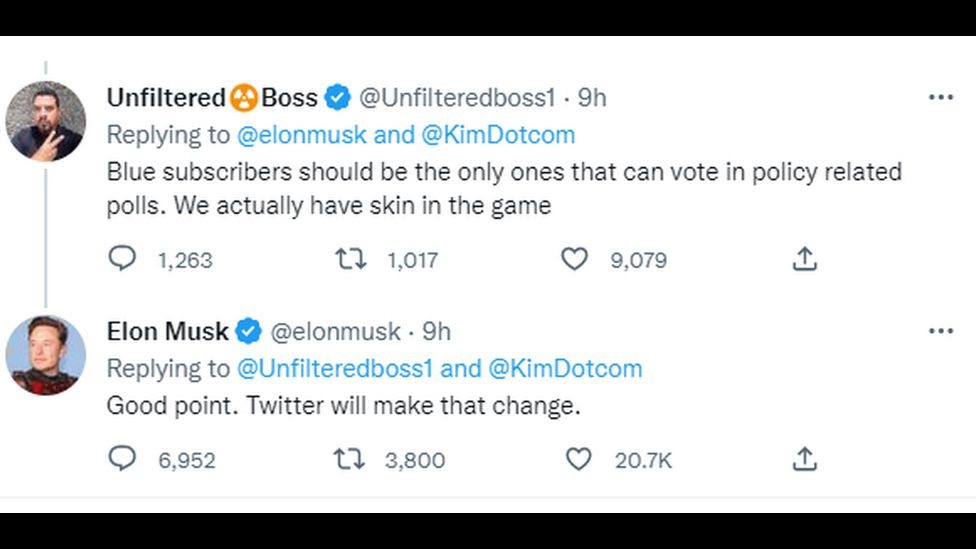

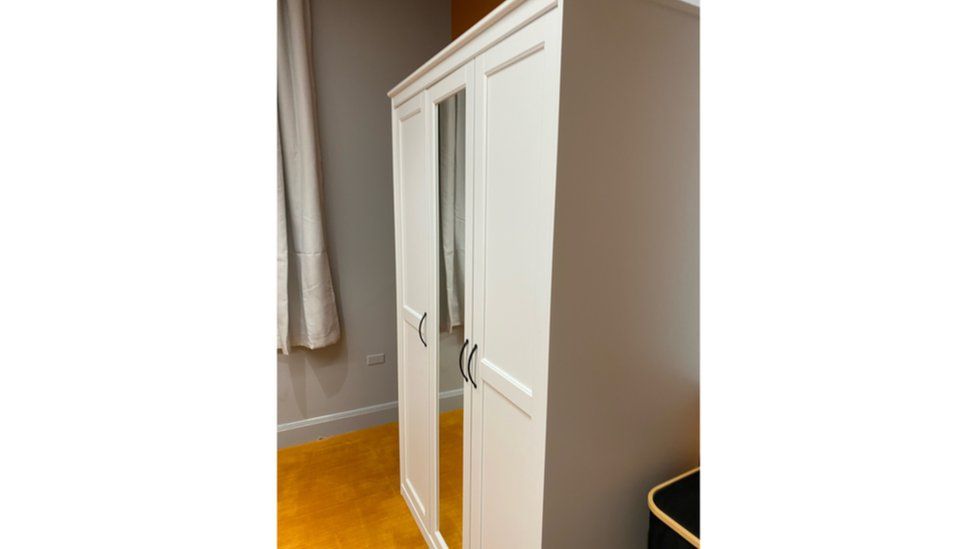
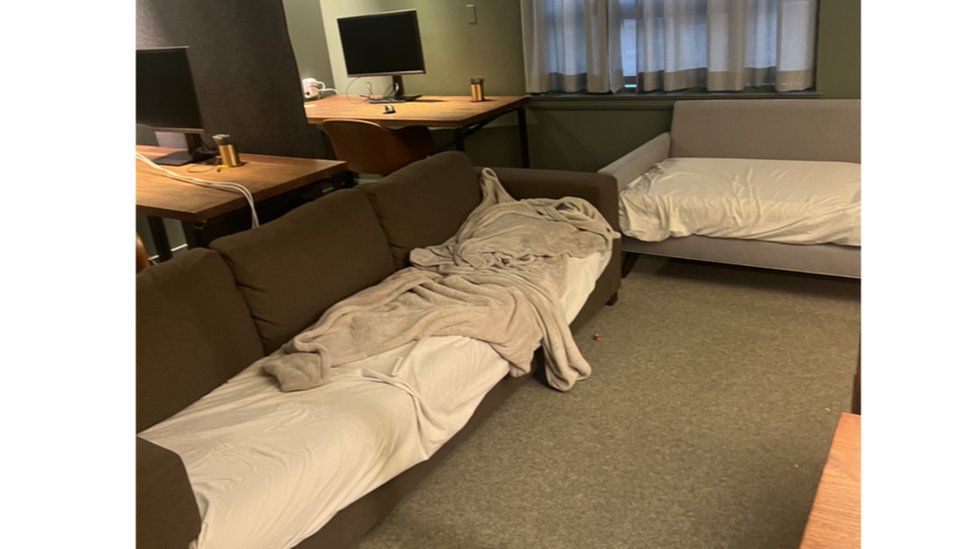
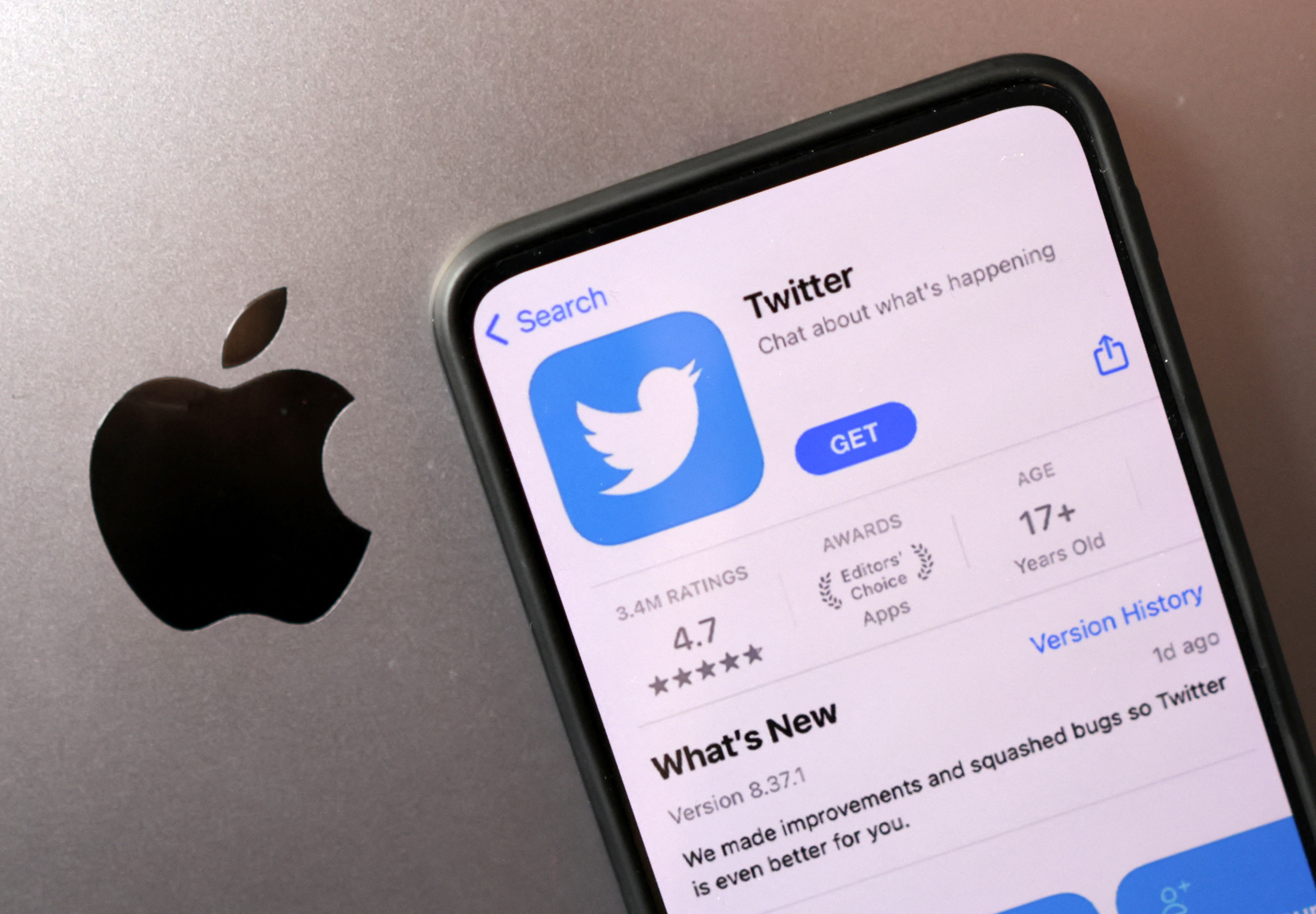

 (@Caption__Master)
  Twitter employees say given the scale of the resignations this week, they expect the platform to start breaking soon. Some “legendary engineers” have reportedly left one by one.

 (@FHeartsHS)
 (@kojodarkoo)