Tag: Twitter

  • Twitter could soon charge users to DM celebs and other ‘very important Tweeters’

    Twitter is clearly under heavy financial pressure.

    In the week since Elon Musk purchased Twitter for $44 billion, the social media giant has been trying to find ways to cut costs and boost revenue. Musk reportedly told investors he plans to eliminate 3,700 jobs at Twitter Inc., which is about half of the company’s workforce. He’s also announced potential changes to the Twitter Blue subscription service, including the addition of an $8-per-month fee for the highly coveted “verified” badge.

    However, the cost-saving ideas don’t end there. According to the New York Times, the company is also working on a paid direct messaging feature focused on “Very Important Tweeters.” Sources “with knowledge of the matter” say the platform could soon charge users to send direct messages to high-profile figures, including celebrities and professional athletes.

    Internal documents reviewed by the Times state Twitter points to an early prototype in which a user is shown asking Post Maline about his favorite records.

    The message would appear in a special box designated for paid DMs.

    The company did not provide the exact cost of each VIT message, but said it could be “as little as a few dollars.”

    Source: Complex.com


  • Twitter: Musk defends deep cuts to company’s workforce

    Twitter’s new owner Elon Musk has defended sacking about half the company’s workforce, saying he had “no choice” as Twitter was losing more than $4m (£3.5m) a day.

    A tweet from Yoel Roth, Twitter’s head of safety and integrity, referred to “approximately 50% cuts company-wide”.

    But Mr Musk said the social media giant’s commitment to content moderation was “absolutely unchanged”.

    Mr Musk, the world’s richest man, took over Twitter in a $44bn (£38.7bn) deal.

    The billionaire insisted in his own tweet that all those losing their jobs were offered three months of severance pay, “which is 50% more than legally required”.

    As reports emerged on Friday that thousands of staff at Twitter around the world were losing their jobs, questions were asked over the future of employees responsible for taking down harmful material.

    Online safety groups and campaigners have suggested Mr Musk might relax moderation policies, making Twitter less effective at removing hate-speech and disinformation from the platform.

    Permanent Twitter bans given to controversial figures – including former president Donald Trump – could also be removed.

    These concerns were fuelled by Mr Musk’s comments on Friday, which sought to blame Twitter’s “massive drop in revenue” on “activist groups” who were “trying to destroy free speech in America”.

    But Mr Roth’s tweet thread, posted later in the day, confirmed that most of the more than 2,000 content moderators working on “front-line review” were not impacted.


    He said the “reduction in force” affected around 15% of those working in Twitter’s trust and safety organisation – compared with what he said was a 50% cut seen across the company.

    Mr Roth added that combating misinformation remained a “top priority” during the US midterm elections. Most Americans will vote on Tuesday, in a key test for Joe Biden’s presidency.

    The president voiced his concern about the takeover on Friday, saying “Elon Musk goes out and buys an outfit that sends – that spews lies all across the world… How do we expect kids to be able to understand what is at stake?”

    As the scale of the job cuts became clear, notices provided by Twitter to officials in California revealed that around 983 staff were being laid off in that US state alone.

    It concerns 784 employees in San Francisco, 106 in San Jose, and 93 in Los Angeles, according to filings seen by the BBC.

    An internal email sent to staff earlier on Friday said the mass job cuts were “unfortunately necessary to ensure the company’s success moving forward”.

    Staff confirmed on Twitter they had been logged out of work laptops and Slack, a messaging system.

    Many staff revealed that they had been axed in posts on the platform, painting a picture of cuts that spanned the globe and hit departments that ranged from marketing to engineering.

    They included communications, content curation and product development employees.

    A team that focused on research into how Twitter uses algorithms – an issue that was a priority for Mr Musk – was also sacked, according to a tweet from a former senior manager at the company. But that was later denied.

    Almost all of Twitter’s revenue currently comes from advertising, and Volkswagen is among the brands that has stopped spending with it since Mr Musk bought Twitter.

    “We are closely monitoring the situation and will decide about next steps depending on its evolvement,” Europe’s biggest carmaker said.

    On Thursday, food manufacturer General Mills, which owns brands including Cheerios and Lucky Charms, did the same.

    It said it was continuing to monitor Twitter’s “new direction” and wanted to “evaluate [its] marketing spend”.

    Other brands to have paused paid activity on the platform include car firms General Motors and Audi, and drugs giant Pfizer.

    Mr Musk has been looking for ways to cut costs and make money in different ways from the platform, including plans to charge a monthly subscription fee for users to be verified on the platform.

    He also proposed that those paying the $8 per month fee would get their Tweets boosted in replies, mentions, and searches, prompting criticism from some people on Twitter that he was creating a two-tier system that would benefit those willing to pay.

    Twitter employees filed a class action lawsuit on Thursday which argued the company was making big job cuts without giving 60 days’ notice, in violation of federal and Californian law.


    Source: BBC

  • Twitter’s manager for Ghana and Nigeria confirms exit amidst Elon’s mass layoffs

    After a week of suspense over rumoured layoffs after Elon Musk’s takeover last week, the job cuts have become a reality. Unfortunately, Ghana’s own Benard Kafui Sokpe has confirmed his exit from working with the bird app.

    Bernard Kafui Sokpe, popularly known as Meistermind on Twitter, senior partner manager for Ghana and Nigeria Twitter partnerships in Ghana, tweeted to confirm his current job status and in solidarity with the thousands of other ex-twitter employees.

    Meistermind tweeted: “It’s been a year working at a place I never imagined I’ll ever get to work. I’m glad that I could represent Africa & I didn’t let us down. My best career experience by far & it was beautiful whilst it lasted. Much love to all the amazing tweeps that made it worth it. #OneTeam”

    According to a companywide email from Twitter, workers were instructed to go home and not go to the offices on Friday. As badge access was to be revoked until further notice.

    “In an effort to place Twitter on a healthy path, we will go through the difficult process of reducing our global workforce. We recognize that this will impact a number of individuals who have made valuable contributions to Twitter, but this action is, unfortunately, necessary to ensure the company’s success moving forward,” the email read.

    Twitter's manager for Ghana and Nigeria confirms exit from Twitter amidst Elon's mass layoffs
    Twitter email to employees preceding layoffs

    However, the email notice did not mention the total number of employees who will lose their jobs. It was also not signed by Elon Musk or any executive. Just a generic “Twitter” signoff.

    Mr Elon Musk, after buying Twitter on October 27, 2022, at a whopping $44 billion, fired its chief executive and other top managers. Managers were also asked to reevaluate their team’s performances whilst other executives resigned.

    #One Team is currently trending on Twitter as ex-employees share their experiences. Some employees said they couldn’t access the company’s laptops or log in to their official work emails.

    These changes are said to have been in effect sometime at 3 am this dawn. Thus, affected employees woke up this morning without a job – and with no warning.

    Source: 3news

  • Megan Thee Stallion shoots down inaccurate report about 1501 legal battle

    Megan Thee Stallion is squashing misinformation.

    The Grammy-winning rapper took to Twitter on Thursday to address a report about her legal battle with 1501 Certified Entertainment, the Houston-based record label that signed her in 2018. Megan sued the company for $1 million earlier this year, claiming her most recent releases—Something for Thee Hotties and August’s Traumazine—fulfilled her contractual obligations and permitted her to cut ties with the imprint.

    1501 and its owner, ex-professional baseball player Carl Crawford, argued that October 2021’s Something for Thee Hotties did not count toward Megan’s contract quota, as it only contained 29 minutes of original material.

    On Friday, hip-hop blog Fck Yaya shared a legal document indicating a judge had ruled in favor of 1501 and Crawford, determining Something for Thee Hotties did not meet the definition of a 45-minute album.

    “The recording known as Something for Thee Hotties does not meet plaintiff/counter-defendant Megan Pete’s p/k/a/ Megan Thee Stallion ‘minimum recording commitment’ or ‘product commitment’ for the second option period under the contracts between the parties,” the document read. “Plaintiff/counter-defendant Megan Pete’s p/k/a Megan Thee Stallion has not yet satisfied her ‘minimum recording commitment’ or ‘product commitment’ for the third optiopn period under the contracts between the parties.”

    Megan caught wind of the report and immediately pointed out that the court has yet to make a summary judgment, and the document was released by mistake.

    “No judge has ruled anything abt this 1501 case, this information is not accurate,” she tweeted. “The court date for this isn’t even until DECEMBER 12TH…we HAVE NOT went to court and got a summary judgment. Please stop spreading misinformation thanks.”

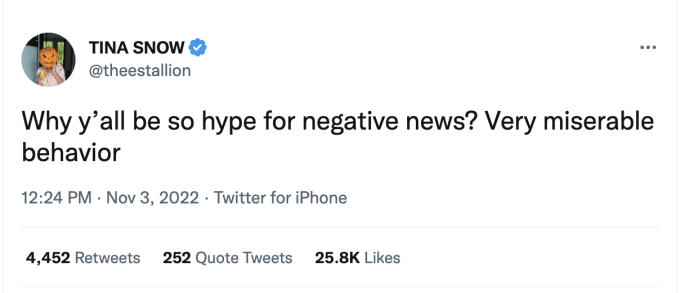
    Meg went on to question why everyone seemed to be “so hype for negative news” and proceeded to post proof that the aforementioned ruling had been voided.

    “Not that the truth ever matters to the people who hate on me for engagements online 🤷🏽‍♀️” she wrote, “but Notice of VOID thanks to the COURT for clarifying a mistake.”

    Megan Thee Stallion Calls Out Inaccurate Report About 1501 Legal Battle

    Megan Thee Stallion Calls Out Inaccurate Report About 1501 Legal Battle

    The notice of void judgment read: “On November 2nd, 2022, the court entered a judgement/order on a summary judgement motion that had not been heard and was not ripe for consideration or ruling. On November 3rd, 2022, having become aware of the erroneous judgement/order, the issue was brought to the clerk of the court…the court rendered the ‘judgement/order’ void.”

    Also on Thursday, Megan quote-tweeted a since-deleted post presumably referring to 1501, writing that “the men over in that camp haven’t been clearing my music to be synced anywhere (shows, movies, etc) so I ALMOST couldn’t even do my Amazon performance tonight!”

    Source: Complex.com

  • Trevor Noah slams Elon Musk over Twitter verification fee, NAACP calls out ‘life-threatening hate’ on platform

    Trevor Noah is the latest to express frustration over Elon Musk’s plans to attach a fee to Twitter verification.

    As previously reported by the Verge, Musk wanted to launch a new version of Twitter Blue under which currently verified users would be given 90 days to sign up for a paid subscription or risk losing their blue checkmark. The proposed monthly fee was then reported to be $20, although Musk later suggested $8 instead in response to criticism from author Stephen King. Of course, lowering the amount of any such fee misses the entire point of the argument against the fee itself.

    At any rate, the $8 figure has continued to be floated, prompting continued discussion. Addressing the plans during a recent episode of The Daily Show from Atlanta, Noah ultimately delivered a proposal of his own.

    “For months now, Musk has said that he wanted to own Twitter, right?” Noah said. “And the reason he wanted to own Twitter is because he wanted to make sure that it became a haven for free speech. He wanted to change it to that. Because let’s be honest, up until now, you know, people have really held back on Twitter. I always find myself scrolling and thinking, ‘But what do you really think? Why are you so reserved, sir?’”

    Evidence suggests that bad actors are trying to test the limits on @Twitter. Several posts on 4chan encourage users to amplify derogatory slurs.For example, over the last 12 hours, the use of the n-word has increased nearly 500% from the previous average. pic.twitter.com/mEqziaWuMF

    — Network Contagion Research Institute (@ncri_io) October 28, 2022

    Musk’s takeover, Noah noted, gave users a sampling of what jokingly referred to as “extra free speech” in recent days.

    “In the first 12 hours under Elon’s ownership, the use of the n-word on Twitter shot up 500 percent,” he said.

    This figure was also highlighted in a statement from the NAACP on Wednesday. In the statement, the organization confirmed it had recently met with Musk to express its concerns over “the dangerous, life-threatening hate, and conspiracies that have proliferated on Twitter under his watch.”

    According to NAACP President Derrick Johnson, who was joined in the meeting by members of the Stop Hate for Profit coalition, not taking “necessary actions” in response will lead to lives being placed at risk.

    During his Daily Show monologue, Noah pointed out how many arguments are made under the guise of free speech but are in reality about simply wanting “to hate on people.” He also took issue with Musk’s tweeted rationale for the fee, joking that he should instead charge white people to be racist.

    “I think this eight-dollars-a-month thing is ridiculous,” Noah said a little over six minutes into the video below. “If you ask me, if Elon Musk wants to make money from Twitter, what he should do, don’t charge people for blue checkmarks. No. Charge white people to say the n-word. Twitter will be the most profitable company in history. Racists are gonna be taking out loans.”

    In a tweet shared Tuesday, Musk himself addressed having met with multiple organizations to discuss what he described as ways to “continue to combat hate [and] harassment” on the platform. In a follow-up message, he also addressed where things stand with regards to previously suspended users potentially being allowed back on the platform. For the time being, Musk said, there is no “clear process” for handling these cases, although such a thing is indeed in the works.

    Source: Complex.com

  • ‘Your feedback is appreciated, now pay $8’: Elon Musk replies US politician

    Elon Musk, the new Twitter chief known for his humorous replies, did it again. Replying to an American politician, Musk made it clear that he’s stern about his decision of charging $8 for blue tick.

    An American Congress politician Alexandria Ocasio-Cortez taking it to Twitter mocked Elon Musk over the recent announcement that Twitter will now charge eight dollars for ‘blue tick’ verification. The announcement has flooded the microblogging site with reactions since then.

    The politician tweeted, “Lmao at a billionaire earnestly attempting to sell people on the concept that ‘free expression’ is actually an $8/month membership plan.”

    Musk responded to Cortez’s tweet by saying, “Your feedback is appreciated, now pay $8.” Musk then immediately tweeted again with a screenshot of Cortez’s website charging $58 pointing out that he is costing way much less than Cortez.

    Cortez said that her Twitter mentions and notification stopped working after tweeting and later received a text message saying that she “seem to have gotten under a certain billionaire’s skin.”

    Musk acknowledged that he has been receiving a lot of criticism after the announcement. He then replied, “To all complainers, please continue complaining, but it will cost $8.”

    After Musk revealed that verified users must pay $8 to preserve their ‘elite status symbol,” and the platform descended into chaos. Notably, celebrities, politicians, business leaders, and journalists are all given the verification badge, Republic World reported.

    However, a lot of individuals have raised concerns over the decision of charging for verification and the high possibility of the spread of false information.


    Source: wionews.com

  • Paul Pelosi: Online, unsubstantiated claims about attack circulate

    Within hours of House Speaker Nancy Pelosi‘s husband being attacked by a hammer-wielding intruder at the couple’s home, a slew of unsubstantiated claims began to circulate in fringe far-right circles, contradicting the official police account of what happened.

    One of the most widely circulated myths about the attack is that Pelosi and his attacker, David DePape, were in a relationship and had a drunken brawl.

    There is also an online claim that both DePape and Pelosi were in their underwear when police arrived, or that the two men knew each other and were friends prior to the attack.

    But the FBI complaint against DePape quotes a witness as saying he was dressed “in all black” carrying a large black bag on his back, and, according to the complaint, Pelosi did not know DePape.

    Another claim circulating is that two blogs and a Facebook account, which show signs that DePape was radicalised, were fake and only created on the day of the attack to support the narrative that he believed in far-right conspiracy theories.

    But the BBC has screenshots of the blogs which show he had made posts as early as August, weeks before the attack.

    Many of these misleading claims have since gone viral after being amplified by new Twitter chief Elon Musk and a number of conservative influencers.


  • Twitter Africa officially starts operations from Accra HQ

    Twitter declared its existence in Africa in April 2021 and mentioned Ghana as the location of the continent’s headquarters.

    The following quote was included in the official announcement of the change: “Twitter’s aim is to serve the public conversation, and increasing the number of individuals who feel comfortable engaging in it is crucial, for the world and for Twitter.

    “Today, April 12, 2022, we’re happy to report that we are currently actively creating a team in Ghana. This is in keeping with our growth strategy.”

    The company subsequently rolled out vacancies and recruited staff, but it turned out that most of them were working from their respective countries as the headquarters was being set up.

    On November 1, 2022, a Senior Partner Manager of the Africa office announced that the headquarters in Accra had been opened.

    According to the official who goes by the handle @mistameister, all staff left their respective home desks to work from the headquarters for the first time.

    “A year ago Twitter entered Africa via Ghana. Today we officially opened Twitter’s Africa HQ in Accra, and for the first time all Tweeps in the region left their home desks and convened to work as #OneTeam,” he captioned a tweet accompanied by a photo of the team.

    Why Twitter chose Ghana?

    As a champion of democracy, Ghana is a supporter of free speech, online freedom, and the Open Internet, of which Twitter is also an advocate.

    Furthermore, Ghana’s recent appointment to host The Secretariat of the African Continental Free Trade Area aligns with our overarching goal to establish a presence in the region that will support our efforts to improve and tailor our service across Africa.

  • $8 monthly fee for Twitter blue tick – Elon Musk says

    Elon Musk has said Twitter will charge $8 (£7) monthly to Twitter users who want a blue tick by their name indicating a verified account.

    As part of changes after a $44bn (£38bn) takeover of the social media site, Mr Musk said it was “essential to defeat spam/scam”.

    A blue tick mark next to a username – normally for high-profile figures – is currently free.

    The move could make it harder to identify reliable sources, say critics.

    Mr Musk, the world’s richest person, added that paid users would have priority in replies and searches, and half as many advertisements.

    “Power to the people! Blue for $8/month,” the billionaire said on Twitter, criticising the old method of blue tick verification as a “lords and peasants system”.

    Twitter’s former method of verifying users for a blue tick included a short online application form, and was reserved for those whose identities were targets for impersonation, such as celebrities, politicians and journalists.

    The company introduced the system in 2009, after it faced a lawsuit accusing it of not doing enough to prevent imposter accounts.

    But Mr Musk is facing a hefty challenge as he works to overhaul Twitter’s business, which has not posted a profit in years.

    He has said he wants to reduce Twitter’s reliance on advertising, even as some companies have grown concerned about advertising on the site under his leadership.

    General Motors – a rival of Mr Musk’s electric car company Tesla – said last week it was suspending advertising on the site.

    Meanwhile, some other major brands have more quietly put a temporary halt to advertising on the platform as they wait to see how Mr Musk’s changes play out, a media buyer for a leading advertising firm told the BBC.

    On Monday, one of the world’s biggest advertising companies, IPG, advised its clients to suspend Twitter adverts for a week, citing a need for more clarity on the Twitter’s plans to ensure “trust and safety” on the platform. IPG is given billions of pounds per year, by some of the world’s biggest brands, to handle their marketing budgets.

    The charge for blue tick privileges drew scepticism after original reports that said the charge could be $20 (£18) monthly.

    Many on the platform echoed the statement of author Stephen King, who wrote in response to reports of changes that instead Twitter “should pay me”.

    Mr Musk wrote to Mr King saying, “We need to pay the bills somehow!”

    Source: BBC

  • Elon Musk posts a conspiracy theory about the Pelosi attack on Twitter

    Before deleting his post, Tesla CEO Elon Musk linked to an unsubstantiated article about Nancy Pelosi’s husband.

    Elon Musk, the new owner of Twitter, tweeted an article containing a conspiracy theory about the attack on Nancy Pelosi’s husband before deleting the post hours later.

    Musk’s tweet on Sunday linked to an article making unsubstantiated claims about Paul Pelosi’s personal life and the role it may have played in last week’s attack at his and his wife’s home in San Francisco.

    Musk tweeted the article by the Santa Monica Observer, a website with a history of publishing misinformation, after Hillary Clinton posted an LA Times article about the suspected attacker, David DePape, and criticised Republicans for spreading “hate and deranged conspiracy theories”.

    In response to Clinton’s tweet, Musk posted the article while adding there was a “tiny possibility there might be more to this story than meets the eye”.

    US media outlets have linked DePape, who is accused of attacking Pelosi with a hammer, to blog posts espousing far-right and extreme views online, including the QAnon conspiracy theory.

    Musk, who has described himself as a “free-speech absolutist”, appeared to have deleted his tweet several hours after posting it without explanation.

    The Tesla CEO’s controversial tweet comes as his $44bn purchase of the social media platform is at the centre of a heated debate about the limits of free speech in the digital age.

    Musk, the world’s richest man, has criticised Twitter’s moderation policies and accused the social media giant of having a left-wing bias.

    The billionaire has stressed the need for a “common digital town square” where a wide range of beliefs can be debated while insisting he does not favour a “free-for-all hellscape”.

    Critics have expressed fears that Musk’s ownership of the platform could result in a surge in hate speech and misinformation, while conservatives have heralded the takeover as a corrective to Big Tech censorship.


  • Elon Musk reportedly wants to charge Twitter users $20 per month for verification

    Elon Musk is wasting no time making changes at his newly-acquired Twitter.

    According to The Verge, the tech mogul wants to charge people $19.99 a month for the new Twitter Blue subscription, which currently stands at $4.99 a month. And based on the outlet’s sources, one of the benefits of the new subscription package will include verification on Twitter. For users who are currently verified, they will have to subscribe 90 days after the current plan is put into place, or risk losing their blue checkmark.

    Perhaps more jarring than the new subscription model is the deadline that Musk has allegedly put in place. Per The Verge, Musk has given employees until November 7 to put this new plan into place. If they fail to meet that date, they’ll be fired.

    While the move may come as a surprise to some, Musk has previously hinted that he would make such a change.

    The whole verification process is being revamped right now

    — Elon Musk (@elonmusk) October 30, 2022

    “The whole verification process is being revamped right now,” Musk tweeted just days after acquiring Twitter.

    While his tenure as Twitter’s head honcho is just days old, Musk is already ruffling feathers. Earlier this week, it was reported that use of the N-word had increased on the platform since Musk’s takeover. That prompted LeBron James to call on Musk to do something.

    I dont know Elon Musk and, tbh, I could care less who owns twitter. But I will say that if this is true, I hope he and his people take this very seriously because this is scary AF. So many damn unfit people saying hate speech is free speech. https://t.co/Sy0jvXIBnC

    LeBron James (@KingJames) October 29, 2022

    “I don’t know Elon Musk and, tbh, I could care less who owns twitter,” James tweeted. “But I will say that if this is true, I hope he and his people take this very seriously because this is scary AF. So many damn unfit people saying hate speech is free speech.”

    Source: Complex.com

  • Musk intends to establish a ‘content moderation council’ for Twitter

    Before the council meets, no major decisions or account reinstatement will be made, according to the outspoken billionaire businessman.

    Elon Musk has announced his intention to form a “content moderation council with widely diverse viewpoints” at Twitter in his first policy actions since taking over the social media company on Friday while emphasising that no changes to the platform’s moderation policies have been implemented thus far.

    “No major content decisions or account reinstatements will happen before that council convenes,” the outspoken billionaire businessman said amid concerns that former US President Donald Trump’s account might be reinstated.

    “To be super clear, we have not yet made any changes to Twitter’s content moderation policies,” he added in a later tweet.

    Twitter formally became the private property of Musk, CEO of Tesla and SpaceX, on Friday, steering the platform down an uncertain path under the stewardship of one of its most vocal critics.

    Scrutiny quickly turned to how the platform will operate under a self-proclaimed free-speech absolutist who some users fear will turn Twitter into a global stage for hate speech and disinformation.

    Musk’s sealing of the on-again, off-again $44bn deal ended a months-long soap opera of corporate chicanery, involving insults, threats, and lawsuits.

    “The bird is free,” tweeted the billionaire Tesla founder and space pioneer in reference to the company’s logo. “Let the good times roll.”

    The deal drew contrasting reactions, with former US president Donald Trump cheering the change of leadership on a platform that had banned him, while activists warned of a surge in harassment and misinformation.

    European politicians were quick to signal to Musk that the continent had regulations for social media companies.

    “In Europe, the bird will fly by our rules,” tweeted Thierry Breton, the EU internal market commissioner.

    Musk had promised to dial back content moderation and was expected to clear the way for Trump to return to the platform.

    The then-president was blocked over concerns he would ignite more violence like the 2021 deadly attack on the US Capitol to overturn his election loss.

    Taking to his own Truth Social platform, Trump said he was “very happy that Twitter is now in sane hands” – but gave no commitment to rejoin if allowed.

    Far-right users were quick to rejoice at Musk’s ownership, posting comments such as “masks don’t work” and other taunts, under the belief that moderation rules would now be relaxed.

    ‘A huge responsibility’

    Yale University philosophy professor Jason Stanley, who has characterised Trump’s rise as a sign of mounting fascism in the United States, said he would alter his approach to posting.

    “For the moment I am staying on Twitter. But I am going to try to be much more careful about what I say now that Elon Musk is in charge. Cascading hate speech targeting can destroy your week,” he said.

    Right-wing political commentator Ben Shapiro said he gained 40,000 Twitter followers on Friday, while the actor Mark Hamill, a liberal, said he had lost almost 6,000 followers over the last three days.

    Musk reportedly fired Twitter chief executive Parag Agrawal and other senior officials – though the company did not reply to a request for comment and Agrawal still listed himself as CEO on his Twitter profile.

    But Ned Segal, Twitter’s chief financial officer since 2017, announced his departure.

    “At its best, (Twitter) democratizes communication and knowledge, ensuring accountability and equal distribution of info,” Segal said. “It’s a huge responsibility for everyone that shares in the work. I wish them strength, wisdom, and foresight.”

    Musk, who is using a combination of his own money, funds from wealthy investors, and bank loans to finance the deal, has conceded he is overpaying for a company that has regularly posted eye-watering losses.

    How to monetize?

    Twitter says it has 238 million daily users – dwarfed by the likes of Facebook’s nearly two billion – and has not been able to monetise in the same way as its rivals.

    However, it holds an outsized influence on public debate because it is the favoured platform for many companies, politicians, journalists and other public figures.

    Though he has promised that Twitter will not become a “free-for-all hellscape,” Musk reportedly plans deep staff cuts that would gut teams that oversee content.

    Despite Musk posting a letter to advertisers saying he wants Twitter to be a forum where rival viewpoints can be debated in a “healthy manner”, US auto giant General Motors said on Friday it has “temporarily paused” paid ads on the platform.

    “We are engaging with Twitter to understand the direction of the platform under their new ownership,” said a GM spokesman.

    Media watchdog Media Matters for America sounded the alarm over the future of a Musk-led Twitter, particularly the effect on imminent US midterm elections.

    The platform “is now on a glide path to becoming a supercharged engine of radicalization” and a “fever swamp of dangerous conspiracy theories, partisan chicanery, and operationalized harassment,” the organisation’s head Angelo Carusone said.


  • Donald Trump: Twitter in ‘sane hands’ after Elon Musk deal amid speculation ex-president’s ban could be revoked

    The former president’s Twitter ban could be lifted soon, as Musk previously blasted the decision as “morally wrong.”

    Donald Trump has stated that he is “very happy that Twitter is now in sane hands” following Elon Musk’s acquisition of the company.

    Musk’s $44 billion purchase of Twitter was completed on Thursday, and he reportedly fired the company’s CEO and two other top executives.

    The world’s richest man tweeted “the bird is freed” and “let the good times roll”.

    He’s promised to overhaul the service by getting rid of fake accounts and ensuring it’s a place where a “range of beliefs can be debated in a healthy manner”.

    Donald Trump – arguably once Twitter’s most famous user – was banned after the siege on the US Capitol in January 2021 for allegedly inciting violence with two of his posts.

    His banishment could be about the end, however, as Musk has previously said the ban was a “mistake” and “morally wrong”.

    Trump celebrated the takeover on TruthSocial, a conservative social media platform he created, by posting that Twitter “will no longer be run by Radical Left Lunatics and Maniacs that truly hate our country”.

    Many on the right of the political spectrum have long argued that Twitter and other social media sites are biased against their views and quick to ‘deplatform’ them.

    Musk’s approach to Twitter could allay some of those accusations as he’s described himself as a “free speech absolutist”.

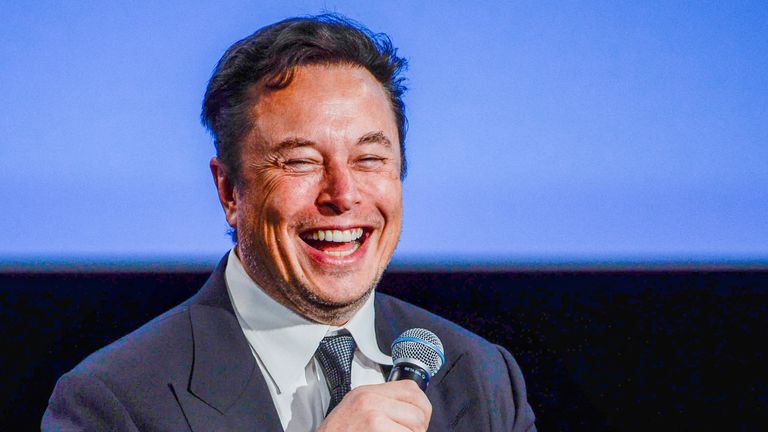
    Tesla founder Elon Musk attendsthe Offshore Northern Seas 2022 conference in Stavanger, Norway
    Image:Musk has big plans for his new purchase

    However, he also assured advertisers Twitter would not become a “free-for-all hellscape, where anything can be said with no consequences”.

    The former president said the service would become “smaller but better” and that it must “work hard to rid itself of all the bots and fake accounts”.

    He also claimed his own TruthSocial had become a “phenomena” that last week had “bigger numbers” than TikTok, Twitter, and Facebook.

    It’s unclear what figures he’s referring to, but the claim is likely to be false given the huge user base of those services.

    Musk’s purchase of Twitter was completed a day before the 28 October deadline to avoid the deal going to court. The company had taken legal action to force the deal through after Musk backed out in July over the number of fake and spam accounts.

    Earlier this week, Musk posted a bizarre video of himself entering Twitter’s San Francisco headquarters carrying a sink alongside the message: “Entering Twitter HQ – let that sink in”.

    He’s also now updated his Twitter bio to “Chief Twit”.

    According to reports, Musk told staff during his visit it was not true he was planning on cutting up to 75% of Twitter staff after acquiring the company.

    It was previously reported that Musk told investors he was hoping to cut around three-quarters of the firm’s 7,500 employees.

    He has told investors he plans to sell users premium subscriptions to reduce reliance on ads, allow content creators to make money, and enable payments, according to Reuters news agency.


  • Elon Musk completes $44bn Twitter takeover

    The world’s richest man, Elon Musk, has completed his $44bn (£38.1bn) takeover of Twitter, according to US media and an investor in the firm.

    He tweeted “the bird is freed”, in an apparent reference to the deal closing.

    A number of top executives, including the boss, Parag Agrawal, have reportedly been fired.

    It brings to a close a saga that saw Twitter go to court to hold the multi-billionaire to the terms of a takeover deal that he had tried to escape.

    Twitter has not yet confirmed the takeover, but an early investor in the company told the BBC that the deal had been completed.

    Mr Musk, a self-styled “free speech absolutist”, has been critical of Twitter’s moderation policies and the news will be greeted with mixed feelings by Twitter users and employees.

    Many people on the right of US politics will celebrate the exit of Mr Agrawal as chief executive. They view people like Mr Agrawal, and his predecessor, Jack Dorsey, as liberals who are curtailing free speech.

    They also think that under their stewardship, Twitter has censored conservative voices – an accusation that Twitter denied.

    Mr Agrawal, chief financial officer Ned Segal, and the firm’s top legal and policy executive, Vijaya Gadde, are no longer with the company, according to US media reports.

    Mr Agrawal and Mr Segal were escorted out of Twitter’s San Francisco headquarters after the deal closed, the Reuters news agency reported.

    Twitter co-founder Biz Stone thanked Mr Agrawal, Mr Segal and Ms Gadde for their “collective contribution” to the business.

    Meanwhile, Bret Taylor – who had served as Twitter’s chairman since last November – updated his LinkedIn profile to indicate that he was no longer in the post.

    It is not clear yet whether the reported board clear-out is the opening salvo in company-wide job cuts.

    Ross Gerber, president and chief executive of Gerber Kawasaki Wealth and Investment Management, and a shareholder in both Twitter and Mr Musk’s other company Tesla, told the BBC that reports suggesting 75% of staff at the social media company will lose their jobs were “inaccurate”.

    He said job losses would depend on “how good the staff is” but and that the original figure mentioned was 50%.

    “There are a lot of talented people at Twitter, especially on the engineering side and they want to retain as much of that talent as possible,” Mr Gerber said.

    “Really what they’re looking at from the trimming side is management [and] they’ve already started with upper management,” said Mr Gerber. He said cuts are then likely to extend to product managers “and products they’ve been working on that aren’t going anywhere”.

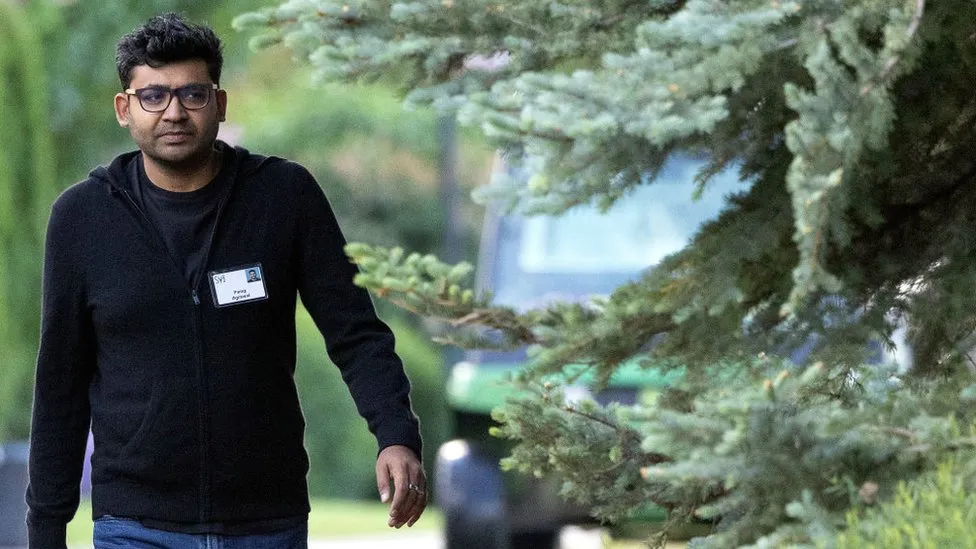
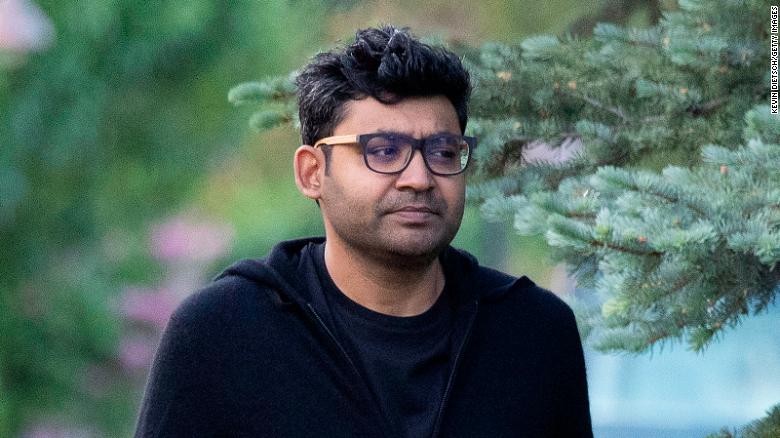
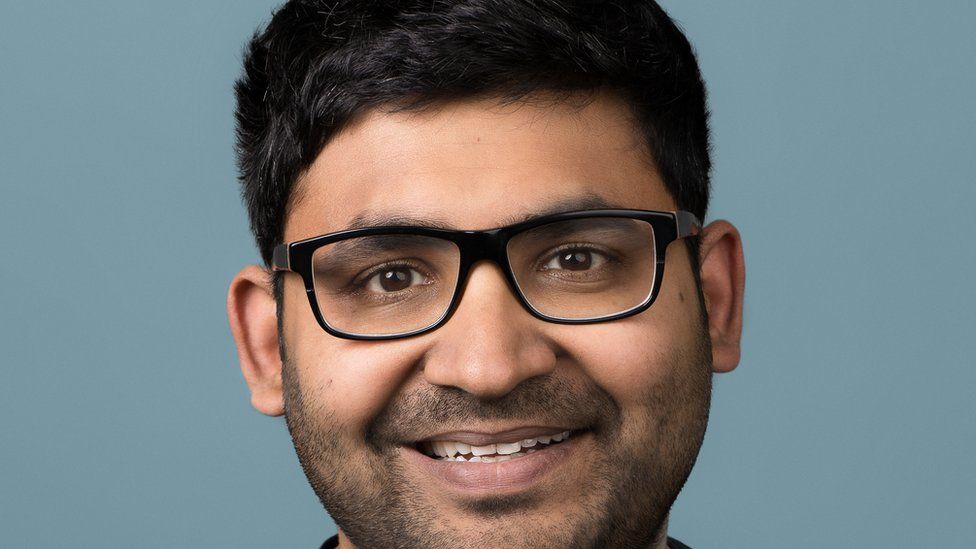
    Twitter CEO Parag AgrawalIMAGE SOURCE,GETTY IMAGES
    Image caption,

    Twitter’s boss Parag Agrawal is already out, reports say

    The social media platform’s shares will be suspended from trading on Friday, according to the New York Stock Exchange’s website.

    Mr Musk said he bought the social media platform to help humanity and he wanted “civilisation to have a common digital town square”.

    Earlier this week, Mr Musk tweeted a video of himself walking into Twitter’s headquarters in San Francisco carrying a kitchen sink with the caption: “let that sink in!”

    He also changed his Twitter profile to read “Chief Twit”.

    On a recent earnings call, the Tesla owner said Twitter was “an asset that has just sort of languished for a long time, but has incredible potential, although obviously myself and the other investors are overpaying for Twitter right now”.

    A long road

    Mr Musk’s early investments in Twitter initially escaped public attention. In January, he began making regular purchases of shares, so that by the middle of March he had accumulated a 5% stake in the firm.

    In April, he was revealed as Twitter’s largest shareholder, and by the end of the month, a deal was finally reached to buy the company for $44bn.

    He said he planned to clean up spam accounts and preserve the platform as a venue for free speech.

    But by mid-May Mr Musk, a prolific Twitter user, had begun to change his mind about the purchase, citing concerns that the number of fake accounts on the platform was higher than Twitter claimed.

    In July, he said he no longer wished to acquire the company. Twitter, however, argued the billionaire was legally committed to the acquisition and eventually filed a lawsuit to hold him to the deal.

    In early October, Mr Musk revived his takeover plans for the company on condition that legal proceedings were paused.

    Change ahead

    There has been no comment yet from Twitter about its new management team, but whoever becomes its next chief executive, it is clear that Mr Musk will ultimately be in charge of the company.

    He fell out with Mr Agrawal in early April – when he sat briefly on Twitter’s board.

    In private messages revealed in court filings, Mr Musk talked about how Mr Agrawal didn’t understand how to fix the social media platform’s problems.

    It appears now Mr Musk is at the helm, many people who have been banned for hate speech or disinformation may be invited back to the platform.

    Mr Musk has described the decision to exclude former US President Donald Trump as “foolish” and said he would reverse it.

    Mr Trump was permanently suspended from Twitter in January 2021 following the attack by his supporters on the Capitol building in Washington which resulted in the deaths of five people. Twitter said it wanted to avoid the risk that his tweets would incite further violence.

    Mr Trump has insisted he won’t be reactivating his account – preferring instead to post on his own platform Truth Social.

    Mr Musk has posted that his plans for Twitter include “X, the app for everything”.

    Source: BBC

  • Elon Musk reportedly fires Twitter Executives after closing acquisition

    Elon Musk is apparently cleaning house.

    According to the Washington Post, the billionaire tech mogul completed his Twitter acquisition on Thursday night, following months of legal threats and skirmishes. Sources told the outlet that Musk wasted little time making his first big moves as the platform’s sole owner, and immediately terminated some top executives: chief financial officer Ned Segal; Vijaya Gadde, head of legal policy, trust, and safety; and chief executive officer Parag Agrawal. One insider, who spoke on the condition of anonymity, also said Twitter’s general counsel, Sean Edgett, was given the boot.

    Earlier this week, Musk was spotted entering the company’s San Francisco headquarters as he prepared to finalize the $44 billion deal. He also updated his Twitter bio to include “Chief Twit,” sparking speculation he would soon fire Agrawal and take over the CEO position.

    Last week word arrived that Musk was looking at a layoff of nearly 75 percent of Twitter’s staff, bringing the number from 7,500 to just over 2,000. The company was reportedly looking to lay off 25 percent of its workforce.

    The road to Musk’s acquisition has been long and rocky. He inked a deal to purchase the company back in April, but threatened to pull out of the deal just weeks later. Musk accused the platform of misleading him about the actual size of its user base, and claimed it was concealing the actual number of spam accounts. Twitter sued Musk in an effort to enforce the original agreement. Musk responded with a countersuit.

    Several weeks ago, a Delaware judge told the parties they had until Oct. 28 to close the acquisition; if they failed to do so, the case would go to trial.

    Though the deal has been finalized, uncertainty continues to loom over Twitter’s future. Musk attempted to alleviate those concerns in a lengthy statement shared on Thursday, where he outlined his plans for the platform.

    “There is currently great danger that social media will splinter into far right wing and far left wing echo chambers that generate more hate and divide our society,” Musk wrote.

    “In the relentless pursuit of clicks, much of traditional media has fueled and catered to those polarized extremes, as they believe that is what brings in the money, but, in doing so, the opportunity for dialogue is lost.”

    Source: Complex.com

  • Chance the Rapper’s wife addresses his ‘Like’ of Explicit Tweet

    Chance the Rapper’s wife has come to his defense.

    The Grammy-winning rapper began trending this week after he was accused of “liking” sexually explicit content on Twitter. The tweet in question—posted by a trans pornography account back in March—asked users their to chose between three types of trans content: “dating,” “adult games,” and “webcam,” all of which were accompanied by a hyperlink.

    To no one’s surprise, the “like” immediately caused a stir on social media. While many defended Chano, others responded with bigoted, transphobic takes—some of which were directed at his wife, Kirsten Corley Bennett.

    On Friday, Bennett took to social media to set the record straight and address the bothered “trolls.” She accused the haters of making a big deal out of nothing, and insisted Chance’s “like” wasn’t intentional.

    “Y’all really be reachin’,” she began. “He’s never gonna address this, but all I have to say is we were literally at an event all night … the night before last, until late. We were celebrating, and sometimes you ‘like’ shit by accident. So all y’all little trolls coming for page, that are getting blocked, y’all can go to hell.”

    You can watch Bennett’s full video below.


    View this post on Instagram


    A post shared by The Shade Room (@theshaderoom)

    Source: Complex.com


  • Ugandan general defiant on president’s Twitter ban

    Ugandan General Muhoozi Kainerugaba says “no one will ban him from anything” a day after his father, President Yoweri Museveni, directed that he stops commenting on government affairs on Twitter.

    The president’s intervention followed Gen Kainerugaba’s controversial tweets a fortnight ago where he threatened to invade neighbouring Kenya, prompting a public apology and diplomatic meetings to reaffirm ties.

    On Monday, the president said the general would stay clear of “talking about other countries and partisan politics of Uganda” on Twitter.

    But in a riposte hours later, Gen Kainerugaba wondered whether such a gag was “some kind of joke”.

    Gen Kainerugaba is known for his controversial tweets, including expressing support for Russia’s invasion of Ukraine, and Tigrayan rebels fighting the Ethiopian government.

    Source: BBC

  • Man climbs high-tension pole at Kasoa over hardship in Ghana

    A middle-aged-looking Ghanaian man has reportedly climbed a high-tension pole at Kasoa, a community in the Central Region.

    His decision was to protest the current economic hardship in the country, eyewitness accounts said.

    In a viral video, which was sighted by GhanaWeb, the man was seen quickly climbing the high-tension pole as bystanders made many pleas in attempts to get him down.

    Also in the video, a vehicle of the Ghana Police Service could be seen, creating the impression that the police officers were on the scene to help get the man off the pole before he endangered his life even more.

    A journalist, Kwaku Asante, who shared the video on Twitter, said that the man climbed the pole because he was fed up with life.

    “A man has climbed the high tension poles in Kasoa and, according to eyewitnesses, says he won’t come down despite the police on site. He says he’s tired of life and the economy,” Asante tweeted.

    An onlooker, with a Nigerian accent, was also heard running commentary in the background of the video, saying that a Ghanaian man is had climbed the pole because of the hardships in the country.

    “The police are around to rescue this Ghana man who says he is tired of life. They should let him get to the top,” the man said in Pidgin English.

    The Ghana Police Service has not commented on the incident yet.

    Watch the incident below:

  • BREAKING: Ghana’s Kwasi Kwarteng fired as UK finance minister

    Kwasi Kwarteng of Ghanaian descent has been relieved of his duties as the Finance Minister of the United Kingdom.

    He was appointed on Tuesday, September 6, 2022 by newly sworn-in Prime Minister Liz Truss.

    Mr Kwarteng was the first black person to assume such a position in the United Kingdom.

    His dismissal comes amid speculation that Prime Minister Truss will today, October 14, announce a U-turn on parts of the mini-budget.

    Mr Kwasi Kwarteng, serving for 39 days, becomes the second shortest-serving UK chancellor on record.

    The shortest serving chancellor, Iain Macleod, died of a heart attack 30 days after taking the job in 1970.

    Since 2019, the UK has had four chancellors, including Nadhim Zahawi who served the third shortest tenure with 63 days during a short-lived reshuffle under Boris Johnson, and Sajid Javid who served 204 days – the fourth shortest tenure on record.

    Kwasi Kwarteng reacts

    In a letter to the Prime Minister, Kwarteng said he took on the job “in full knowledge that the situation we faced was incredibly difficult”.

    He wished Prime Minister Liz Truss well with her plans for the economy, noting that “we’ve been colleagues and friends for many years”.

    He also promised  to support Truss from the backbenches.


  • Kanye West: JP Morgan Chase has severed connections with rapper

    JP Morgan Chase, the world’s largest bank, has ended its connection with rapper and designer Kanye West, now known as Ye, and his Yeezy brand.

    A conservative commentator shared a letter from the bank alerting Mr West of the decision on Twitter.

    At the weekend, his Twitter and Instagram accounts were suspended after he posted anti-Semitic messages.

    The BBC understands the letter from JP Morgan pre-dated recent controversies, as it was sent on 20 September.

    In the letter, the bank gave Mr West until 21 November to transfer his business.

    JP Morgan Chase declined to comment.


    Mr West had previously taken to social media to criticise JP Morgan’s leadership and said they would not give him access to the bank’s chief executive Jamie Dimon.

    He told Bloomberg in September that he was severing ties with his corporate partners and that “it’s time for me to go it alone”.

    Representatives for Mr West did not immediately respond to a request for comment from the BBC.

    The move by JP Morgan comes as Mr West’s business partnerships have come under increased scrutiny.

    Last week, sportswear firm Adidas said it was reviewing its deal with him days after he showed a “White Lives Matter” T-shirt design at Paris Fashion Week.

    The company did not mention the controversy but said “successful partnerships are rooted in mutual respect and shared values”.

    Mr West responded on Instagram, claiming the firm “stole” his designs. That post now appears to have been deleted.

    Adidas told the BBC it had made the decision to put the partnership under review after “repeated efforts to privately resolve the situation.”

    A spokesperson for the German sportswear company also said that the “Adidas Yeezy partnership is one of the most successful collaborations in our industry’s history.”

    Last month, Mr West said he was ending his partnership with the retailer Gap.

    He accused the firm of failing to honour the terms of the deal, including by failing to open standalone stores for his Yeezy fashion label.


  • Elon Musk refutes claims he spoke to Putin about Ukraine war

    Elon Musk has refuted claims that he communicated with Vladimir Putin before putting his recommendations for stopping Russia’s invasion of Ukraine in a Twitter poll.

    Ian Bremmer, head of the Eurasia Group political risk consultancy, alleged that Mr Musk had personally told him about the conversation with Mr Putin.

    But Mr Musk has now refuted this.

    “I have spoken to Putin only once and that was about 18 months ago. The subject matter was space,” Mr Musk tweeted.

    Last week, the Tesla CEO asked his 107.7 million followers to vote on ways to resolve the Ukraine war.

    The suggestions included a proposal to hold votes in parts of Ukraine occupied by Russia that the Kremlin says it has annexed. His comments were welcomed by Moscow.

    The multi-billionaire said: “Russia leaves if that is the will of the people.”

    President Putin has already declared four Ukrainian regions to be part of Russia, following so-called referendums denounced as fraudulent by Kyiv and its Western allies. Russia does not fully control any of the four regions.

    Mr Musk also suggested the world should “formally” recognise Crimea – illegally annexed by Moscow in 2014 – as part of Russia.

    In a newsletter, Mr Bremmer wrote that Mr Musk told him the Russian president was “prepared to negotiate”, but only if Crimea remained under Russian control if Ukraine accepted a form of permanent neutrality, and if Kyiv recognised Russia’s annexation of Luhansk, Donetsk, Kherson, and Zaporizhzhia.

    Mr Bremmer said the SpaceX boss told him that Mr Putin said these goals would be accomplished “no matter what” and that there was the potential of a nuclear strike if Ukraine invaded Crimea.

    But Mr Musk has since denied the reports.

    Mr Musk’s initial poll caused widespread controversy.

    Ukrainian Foreign Minister Dmytro Kuleba said people proposing Ukraine give up on its people and land “must stop using the word ‘peace’ as a euphemism to ‘let Russians murder and rape thousands more innocent Ukrainians, and grab more land’”.

    Russian chess grandmaster Garry Kasparov called Mr Musk’s tweet “moral idiocy, repetition of Kremlin propaganda, a betrayal of Ukrainian courage & sacrifice”.

    Kremlin spokesman Dmitry Peskov welcomed Mr Musk’s suggestions, stating: “It is very positive that somebody like Elon Musk is looking for a peaceful way out of this situation.”

    Early in the war, the billionaire gained widespread popularity in Ukraine after sending a number of his Starlink internet terminals to the country. He was subsequently invited to visit by Ukrainian President Volodymyr Zelensky.

    But his recent tweets have seen that relationship sour, with Mr Zelensky last week hitting out at his Twitter polls.

    US federal law prevents private citizens from conducting foreign affairs without the permission or involvement of the US government.

    The Logan Act was signed into law by President John Adams in 1799, but nobody has ever been prosecuted under it.


  • Social media users condemn Sarkodie for missing Nana Ampadu’s funeral

    Social media users, notably those on Facebook and Twitter, have criticised Ghanaian rapper Michael Owusu Addo, better known in the entertainment industry as Sarkodie, for missing the funeral of Highlife legend Nana Ampadu.

    After apologizing for the incident on both social media platforms, some users took to the comment sections to express their discontentment.

    While some believe Sarkodie deliberately refused to attend the funeral, others indicated that the rapper could have made use of a personal assistant or reminder on his phone to prompt him.

    Others also shared the view that the apology was an insult while others believe Sarkodie should mend his relationship with the family of Nana Ampadu.

    Pac Anokye Lord Knows, a Facebook user, wrote: “Naa…You already have it in mind that u won’t go..we are not children to come tell us stories..Shame to You”.

    “You must honour the MASTERS. This excuse is best left not said. Actually an INSULT to the memory of arguably one of the Greatest Global Musicians of all time,” Lloyd Amoah also wrote on Facebook.

    The situation on Twitter was no different as users also expressed similar sentiments on the matter. Fidelis Banaaleh in a Twitter post said Sarkodie missed the funeral because it was not his priority.

    “You missed it because it wasn’t a priority for you senior.. in an age where phones have reminders? hmm to whom much is given much is expected Mr Sarkodie.. understand that the young are learning from you,” he tweeted.

    Sarkodie apologizes for missing Nana Ampadu’s funeral

    In a Facebook post on October 9, Sarkodie said he was ashamed of himself and hurt for missing Nana Ampadu’s funeral despite being reminded about it by veteran actor, David Dontoh.

    He said even though David Dontoh’s reminder lingered on his mind, it apparently skipped him on the day of the event.

    Sarkodie added that it was bad enough for him to be missing the funerals of legends stressing that he needs to do better.

    He wrote: “Ashamed and hurt for not making it to the Legend Nana Ampadu’s funeral … Uncle David Dontoh told me about it last Sunday… Crazy how I had it on my mind from then and still missed it but all the same Rest In Peace Grandpa May the almighty keep you safe No excuse makes sense to even myself missing all these legends’ funerals… Need to do better”.

    Nana Ampadu died on Tuesday, September 28, 2021, while on admission at the Intensive Care Unit of the University of Ghana Medical Centre (UGMC) in Accra with his funeral slated for October 8.

    A day after his passing, Sarkodie made a post on social media revealing that the late music icon had once given him wise advice about not posting private stuff on social media.

    A state funeral in Accra was organized for the late Nana Kwame Ampadu and he was subsequently transported to his hometown at Obo Kwahu, in the Eastern Region, on Saturday,

    October 8, 2022, where he has been laid to rest.


  • UCC: KiDi speaks on obstructed performance

    Musician KiDi has apologised to his fans for missing the advertised performance at the University of Cape Coast’s (UCC) SRC Week events.

    The “Champagne” singer explained via an Instagram Stories post that despite being ready to entertain fans, he was unable to do so because of a technical issue.

    “Sorry UCC,” KiDi said.

    “I really wanted to give you guys a show [but] I couldn’t do that with a dysfunctional sound system,” he noted.

    The multiple award-winning singer and record producer had apparently “waited for 3 hours for the problem to be solved” but to no avail.

    “Thank you for the love still,” he concluded.

    On Saturday, KiDi came on stage as part of the UCC’s SRC Week celebrations at Casford Field.

    While the cheering fans waited for KiDi to sing, the microphone malfunctioned.

    Per a video circulating on Twitter, he could be seen testing the microphone several times with no luck except for echoes and disturbing feedback.

    He eventually walked off stage, much to the disappointment of fans.

    Social media reacted by criticizing the school for its poor sound system.

    Meanwhile, KiDi’s latest project is an extended play (EP) that has 4 songs on it and is called ‘4Play’.


  • Twitter won’t ‘take yes for an answer’ – Elon Musk

    Billionaire Elon Musk has said that he intends to complete buying Twitter by the end of the month, but the firm “will not accept yes for an answer.”

    He said in a court document that the social media site had expressed worries about the “theoretical possibility of a future failure to get debt financing” to pay for the deal.

    Twitter said it did not trust that the offer would come through.

    Twitter sued Mr Musk in July after he tried to back out of buying the firm.

    Mr Musk asked the court to put that legal fight on hold.

    Mr Musk said litigation was no longer necessary after he said in a surprise move this week that he was prepared to go forward with the original takeover plan, pending receipt of the financing and an end to the legal battle.

    “There is no need for an expedited trial to order defendants to do what they are already doing,” Mr Musk’s attorneys wrote in a filing.

    “Yet, Twitter will not take yes for an answer. Astonishingly they have insisted on proceeding with this litigation, recklessly putting the deal at risk and gambling with their stockholders’ interests.”

    In its own filing for Delaware Chancery Court on Thursday, Twitter said it was opposed to suspending litigation, calling such a move “an invitation to further mischief and delay.”

    It said it did not trust Mr Musk’s promisesnoting that one bank helping to finance the deal had testified this week that it had not received any notice from Mr Musk about plans to move forward.

    “Defendants can and should close next week,” the company wrote. “Until defendants commit to close as required, Twitter is entitled to its day in court.”

    Mr Musk announced a plan to buy Twitter for $54.20 per share in April. But he backed away from the deal just a few weeks later saying he was concerned that spam accounts on the platform were higher than Twitter had claimed.


    Twitter ultimately sued to force Mr Musk to complete the deal.

    In its lawsuit, Twitter argued Mr Musk was worried about the price he had agreed to pay, after a sharp downturn in the value of tech shares, including Tesla, the electric car company he leads and is the base of much of his wealth.

    Mr Musk was due to be questioned this week as part of the preparation for the trial, which was scheduled to begin on 17 October. The trial is now postponed to 28 October to allow a deal to close, according to a court filing.

    Shares in Twitter ended the day down more than 3%, amid investor doubts the deal will go through.


  • Twitter shares surge 22% after Musk proposes to buy company at original price

    Billionaire Elon Musk has agreed to follow through with a deal to buy Twitter at the original price, the company disclosed Tuesday, causing Twitter shares to skyrocket and possibly ending a seven-month legal saga just two weeks before the world’s wealthiest man and the social media company were set to meet in court.

    KEY FACTS

    Musk offered to buy Twitter for $54.20 per share, or $44 billion, matching the terms he agreed to in April before he later attempted to back off the deal, according to a letter dated Monday and filed with the Securities and Exchange Commission.

    The brief 177-word note said Musk is willing to move forward with the deal provided there is an immediate stay on Twitter’s lawsuit to push the purchase through ahead of the five-day trial in Delaware slated to begin October 17.

    Twitter shares rose 12.7% to $47.93 after Bloomberg reported on the letter, but trading was halted shortly after 12 p.m. ET due to pending news.

    The stock later surged to $52.02—just below Musk’s agreed-upon purchase price—after trading resumed shortly before the market close, a 22.3% daily rise that brought the share price to its highest level since last November.

    The company’s intends to “close the transaction at $54.20 per share,” Twitter spokesperson Brenden Lee wrote to Forbes, in a statement mirroring the company’s prior comments on Musk’s hesitation.

    KEY BACKGROUND

    Twitter accepted Musk’s unsolicited takeover bid on April 25, three weeks after the billionaire disclosed he purchased a 9.2% stake in the company. Musk, a vocal opponent of the platform’s content moderation policy, quickly began to express cold feet and said he had concerns about the number of fake and spam accounts on the site or bots. He formally requested out of the deal on July 8, arguing Twitter has lowballed the number of bot accounts in its public filings.

    Twitter sued Musk four days later and argued his reasons for backing out of the deal were invalid. The company pushed a state court in Delaware to force Musk to buy Twitter along the originally agreed-upon terms, setting the stage for a high-stakes trial later this month. As the trial date drew nearer, more revelations about both Twitter and Musk emerged.

    Musk’s lawyers suggested last month his case was bolstered by a whistleblower complaint from Twitter’s former head of security, who alleged the company knowingly misled regulators and investors about the number of bots on the site. And last week, hundreds of Musk’s texts with celebrities like Twitter co-founder Jack Dorsey, controversial podcaster Joe Rogan, and Gov. Ron DeSantis (R-Fl.) were disclosed as part of the suit.

    FORBES VALUATION

    We estimate Musk to be worth $236 billion, the largest fortune in the world by more than $80 billion, largely due to his stakes in Tesla and SpaceX.

    TANGENT

    Tesla shares fell about 5% in the hour after the report, paring gains earlier in the day, before recovering to a 2.4% gain on the day. Shares of the electric vehicle maker dropped about 20% in April amid a more modest broad market decline.

    CRUCIAL QUOTE

    “This is a clear sign that Musk recognized heading into Delaware Court that the chances of winning vs. Twitter board was highly unlikely and this $44 billion deal was going to be completed one way or another,” Wedbush analyst Dan Ives wrote in a note to clients Tuesday.

  • BREAKING: Twitter shares halted after report Elon Musk deal to go ahead

    Twitter shares have been suspended. This follows a report that Elon Musk will proceed with a takeover of the social media platform.

    Mr Musk is set to buy Twitter at the original price he offered months ago before he walked away from a deal, according to Bloomberg News.

    Shares in Twitter were up almost 13% before trading was halted.

    Mr Musk was due to face Twitter in court later this month he tried to pull out of the takeover.

    More soon……

    Source: BBC

  • I felt embarrassed about all of it – KiDi opens up on resurfaced tweets

    Award-winning musician, KiDi has disclosed how embarrassed he felt when tweets he shared when he was in his teens resurfaced online somewhere last week.

    Speaking on Daybreak Hitz on Hitz FM, the artiste revealed that he was going through so much the day his old posts resurfaced on social media.

    “So, I was already dealing with a lot…I didn’t even have time to breathe and reset…I remember when it happened I was having my EP listening session. I actually had to leave in the middle of it,” he disclosed.

    According to the artiste, he broke into tears in public.

    “I broke down in the middle of people, it was just a lot for me, so I had to leave and go home. I felt really embarrassed about all of it,” he said.

    The ‘Touch it’ vocalist distinguished that although he felt terrible, it was no excuse for some of the things he had said in his old tweets.

    He added that he couldn’t believe some of the posts that were shared came from him.

    “I tweeted things that were inappropriate and unkind. As I mature, I came to be extremely regretful of these actions and how they affected the parties involved,” the ‘Gyal Dem Sugar’ hitmaker noted.

    Opening up on how he has become a better person with time, he added that “a lot of the things and values we hold now, we had to go through certain things in life to arrive at this place that we are, we had to unlearn a lot of things we grew up with and relearn certain things to also know that this is not okay.”

    The singer added that he trusts the public figures whom he rubbished would understand he was a stupid young boy with little sense who said all those things and they find it in them to forgive him.

    “I am guessing and hoping that they know that this was a young foolish boy. I wasn’t even KiDi was Nana Dwamena who just had a phone and was misbehaving so I am hoping they can see through all of that and know that I wasn’t the person I was at the time,” he said.

  • Worlasi announces new single with Kwabena Kwabena

    Singer Worlasi has announced the impending release of a new song titled ‘Caveman’.

    Stating that the song will be out on streaming platforms on Saturday, October 1, 2022, he also indicated featuring Highlife star Kwabena Kwabena on it.

    Worlasi made the announcement on Twitter with a snippet of the song attached in a visualizer which spans 17 seconds.


  • Web 3.0 & the future of the internet

    The internet may have evolved from a niche pastime to an essential part of our day-to-day life but for many, it’s problematic.

    The internet in its current form, Web 2.0, has become too centralized with only a handful of big technology companies – and governments – dominating the market.

    There’s even a collective name for these giants who have transformed the way we work, shop and socialize: FAANG – Facebook (now Meta), Amazon.com, Apple, Netflix and Google-owner Alphabet.

    Web 3.0 is the third generation of the internet, a decentralized online ecosystem based on the blockchain. The term was coined by a computer scientist named Gavin Wood in 2014. Wood co-founded Ethereum, the decentralized blockchain platform behind the cryptocurrency ether (ETH).

    In a podcast with CNBC, Wood explained that the biggest issue with Web 2.0 is trusting the people behind the services: “We’ve managed to architect ourselves into this somewhat dystopian version of what the world could be,” he said.

    This is why, for many, Web 3.0 is about looking at the internet in a more distributed and democratic way. It’s also a critical building block towards creating the metaverse, an immersive online world. Venture capitalists are investing billions of dollars into this future vision while others remain sceptical, calling Web 3.0 a marketing buzzword and a pyramid scheme.

    Both Elon Musk and Jack Dorsey, the former CEO of Twitter, are known to be ‘against’ the concept, Musk tweeting that “Web 3 isn’t real” and that he couldn’t see a compelling use-case for the VR-driven metaverse.

    Brian Solis, a world-renowned digital anthropologist and futurist, explains to FORBES AFRICA that even though the promise of the internet that we’re using today was wonderful, it has negative impacts and consequences that we’re only just beginning to understand: “I was one of the biggest champions of social media and I still believe in its promise,” he says.

    “I don’t necessarily believe in the capitalism behind it and how it has evolved… but those same principles can apply and should apply to Web 3.0.”

    Solis also differentiates between the aspirational sense of what Web 3.0 could be and where we are today. “There are many aspects of the hype cycle in Web 3.0 – the metaverse, blockchain, NFTs, crypto… they lay the foundation for what we can build in terms of utility and scale.”

    While global research and consultancy agency Gartner says Web 3.0 won’t necessarily overtake Web 2.0 before the end of the decade, it will enable new business and social models where users own their own data, identity, content and algorithms.

    And that is what makes Web 3.0 so valuable – it shifts digital power back into the hands of the user, rather than to a secondary platform, integrating both the physical and digital world.

    Will Africa enter the Metaverse?

    For Africa, it’s a little different. While the concept of a digital currency may be confusing at first, Africa embraced mobile money in 2007 with M-Pesa. Africa’s willingness to adopt new technologies that benefit its growing population should not be taken for granted – what was once a basic SIM card-based money transfer application is now a fully-fledged financial service.

    Liebe Jeannot, the founder and manager partner of Akazi Capital, a blockchain-based impact fund that invests in female entrepreneurs in sub-Saharan Africa, is optimistic about Web 3.0. “We’re still in early days. This is only the beginning of the cycle so I’m excited to see how things will evolve based on what’s happened in the past but also in terms of new entrants coming into the space,” she says.

    A study by Chainalysis, a blockchain data platform with an extensive global research hub, found that Africa not only had the third-fastest growing cryptocurrency economy globally in 2021, it led the world in the share of overall crypto transaction volume coming from peer-to-peer. Today, the second-largest bitcoin market can be found in Nigeria, which also happens to be only one of five nations with a government-introduced central bank digital currency.

    “Even though there are countries in Africa with really high crypto-adoption rates, so much of the continent hasn’t jumped on board. It speaks to the fact that when we talk about Web 3.0, it’s a concept that’s quite removed from a lot of people in terms of their lives and what they think it can do,” adds Jeannot. “As soon as you can bring those concepts close to home and show them concepts that they can relate to, that’s when you’ll have more people entering the space with things becoming more user-friendly in terms of the way in which we interact with technology.”

    Jeannot believes that Africa is ready to unlock Web 3.0. And that this new, future vision for the internet will become a reality in the same way that we use email.

    “We don’t have to understand the technology behind it, what goes on behind the scenes in terms of code, but we understand the way we interact with it and how we apply it to our daily life,” she says. “It’s going to be a similar thing with Web 3.0. NFTs, for example, play an interesting role because people relate to art – you collect it or you enjoy it but in order to buy NFTs, it doesn’t have to be complicated,” says Jeannot.

    “The space is so diverse with many different projects that speak to different parts of who we are as people. There’s still a lot of room for African projects by Africans and as we start bringing more people from the continent into the space as investors, there’ll be more of an appetite from people wanting to consume and be a part of Web.3.0.”

    Source: Forbes

  • In the Musk lawsuit, the CEO of Twitter will be interrogated

    The CEO of Twitter, Parag Agrawal, will be questioned in a deposition on Monday as part of the ongoing legal action the company is pursuing to compel Elon Musk to finish buying the social media company for $44 billion.

    According to a court filing, lawyers for Musk are set to question Agrawal at 9 a.m. PT. Musk himself is set to be deposed by Twitter’s lawyers on Monday and Tuesday, according to an earlier court filing.
    The testimony comes as both sides barrel toward a high-profile trial set for mid-October.
    Musk has sought to extricate himself from the merger agreement, first by claiming that Twitter’s spam account problem is far greater than it has let on, and later by citing allegations of longstanding unaddressed security vulnerabilities disclosed by the company’s former head of security.
    Those allegations, which were also submitted to the US government under a whistleblower process, were first reported by CNN and The Washington Post last month.
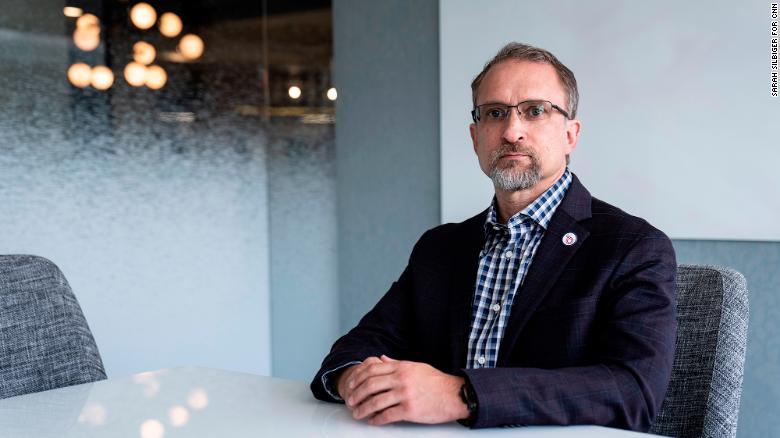
    Monday’s deposition could force Agrawal to answer questions linked to the whistleblower allegations by Peiter “Mudge” Zatko, who led Twitter’s security team from November 2020 until he was fired this January.
    Twitter has previously said that Zatko’s allegations paint a “false narrative” of the company and that Musk’s claims are “factually inaccurate, legally insufficient and commercially irrelevant.”
    Earlier this month, leading members of the Senate Judiciary Committee sent Agrawal a letter seeking similar information and requested responses by Sept. 26, but it is not clear whether Twitter has responded to the letter. The committee did not immediately respond to a request for comment.
  • Football fans turn heat on social media user for claiming Beyonce is popular than Ronaldo

    A Nigerian Twitter has resurrected the fury of football fans across the world after claiming that American musician Beyonce appeals to more people globally than football great Cristiano Ronaldo.

    The fans are seething that the Twitter user by name ‘Imoteda’ sought to belittle the popularity of Cristiano Ronaldo by comparing Beyonce to him.

    Imoteda found it ‘weird’ that people assume footballers are very popular and that not a single player on the planet can be compared to Beyonce in terms of popularity.

    Imoteda’s post reads “So many people think football players are crazy popular. It’s so weird. Like how can you say a football player is more popular than Beyonce? Then name two football players that even I wouldn’t recognize.”

    The reactions have been outright condemnation of her post as many believe that not only Ronaldo but a host of football stars are more popular than the globally-acclaimed RnB star.

    Some have referenced instances where Ronaldo garnered huge supporters online to back their claim that he is the more popular figure of the two.


    Source: Ghanaweb

  • Twitter users shocked as import duty on car skyrockets from GH¢49K to GH¢55K within a month

    Many people are perplexed after reading a social media post about a car dealer who experienced a sharp increase in the final duty and taxes due for an imported vehicle within a month.

    Sharing the specifics of the tax invoice, the anticipated payment amount increased from GH49,000 to GH55,000 in a single month.

    The initial cost is reduced by GH6,000 by this new charge.

    Among the roughly 11 fees levied on a single car were the ECOWAS levy, Network Charge COVID Health, Network Charge VAT, Import NHIL, and Network Charge NHIL.

    A Twitter user identified as @BrodoSchemes shared the invoice detailing the rather significant change on his page saying; “From 49k to 55k real quick! A difference in just about a month.”

    His post has since drawn varied reactions from Ghanaians on Twitter who bemoaned the increase and indicated that the system is somewhat designed to deprive citizens of making headway in their daily lives.

    Another car dealer, sharing a similar experience on the same app said a 2015 Honda Civic duty cost almost GH¢33,000 while the container fee cost around GH¢3,400.

    He added that should the agent, clearing and towing charges come into effect, one would be looking at paying about GH¢40,000 in duty charges at the ports for the vehicle.

    In reaction to the post, another tweep wrote, “For you to understand what this man is saying better, let me give you some small comparison…Duty for a 2016 Honda Civic in May 2021 was GH¢ 15,527.40.”

    Meanwhile, some users have attributed the profiteering nature of Ghanaians to the cause of the high import duty on goods.

  • Barcelona defender Jules Kounde trends on social media after a banter with Ghanaian influencer

    Barcelona defender, Jules Kounde is trending on Twitter after hitting back at Ghanaian influencer, Kaly Jay, who asked about the player’s salary.

    Kounde initially posted sad emojis on his Twitter page. Kaly Jay quoted the tweet and savagely asked about the cause of the player’s post in a manner that triggered Kounde to reply.

    “You haven’t received your salary yet?” Kaly Jay, who is a staunch Chelsea fan wrote in the quoted tweet.

    The French international in reply wrote: “Salary has been paid in full, thanks for your concern my G.”

    Kounde’s reply has gone viral and has triggered several reactions from Barcelona fans who have lauded the player for his reply.

    Jules Kounde who was a prime target for Chelsea, snubbed the London side to sign for Barcelona, at the time the Spanish Club were in financial difficulties.

    Below are some reactions


    Source: Ghanaweb

  • Dutch town Bodegraven-Reeuwijk has sued Twitter over a paedophilia rumour

    A Dutch town has filed a lawsuit against Twitter for spreading the rumour that a group of paedophiles who worship Satan formerly lived there.

    In 2020, three men spread the first untrue information that Bodegraven-Reeuwijk was the scene of the abuse and murder of several children in the 1980s.

    The primary perpetrator said he had seen the crimes when he was a young boy. He had grown up in a town close to The Hague.

    Local authorities want to see all posts relating to the alleged events removed.

    The claims have prompted dozens of people to travel to the town’s Vrederust cemetery to leave flowers and tributes at the graves of seemingly random dead children.

    Twitter’s lawyer, Jens van den Brink, declined to comment ahead of a hearing at The Hague District Court on Friday.

    Last year, the same court ordered the three original men to remove all tweets about the town, but the claims continue to circulate.

    The town’s lawyer, Cees van de Sanden, said Twitter had not responded to a request in July that it find and remove all posts related to the claims.

    Mayor Christiaan van der Kamp said that claims were “very painful and sometimes even threatening for the relatives of the deceased”, RTL Nieuws reported.

    The three men behind the claims are currently serving jail sentences following convictions in separate cases for incitement and making death threats against a number of people, including Dutch Prime Minister Mark Rutte.

  • Why Chelsea sacked Thomas Tuchel

    London-based journalist, Ben Jacobs has broken down the events that led to Chelsea manager Thomas Tuchel’s shocking dismissal on Wednesday, September 7, 2022.

    Jacobs explained on Twitter that, one of the main reasons for Tuchel’s dismissal was the manager’s decision to abandon his new role of getting involved in the club’s transfers in order to focus on fieldwork, which resulted in the club missing out on their key targets, Raphinha and Jules Kounde during the summer window.

    One of the major decisions Todd Boehly made after taking over from Roman Abramovic as Chelsea owner was axing sporting director, Marina Granovskaia and assuming the role temporarily to work alongside Tuchel on the club’s transfers.


    According to Jacobs, Tuchel’s cold reaction to the club’s transfer business prompted Boehly to step up and do things on his own, which resulted in the club renewing the contracts of Reece James and Azpilicueta as well as making some signings.

    Jacobs continued that Boehly after carrying out all the duties by himself had a feeling of a new era, hence, Tuchel’s sacking was on the horizon.

    Therefore, the firing of Tuchel on Wednesday was not solely based on Chelsea’s poor run or the disappointing 1-0 loss to Dinamo Zagreb in the Champions League. But, Boehly is in search of a manager who is willing to assume the authority of being influential on and off the pitch.

    Thomas Tuchel managed his 100th game as Chelsea manager in the defeat to Zagreb and was hoping to do so again, but it all appears to be a pipe dream.

    He recorded 62 wins, 19 draws, and 19 losses within his period as Chelsea manager. He won three major titles, UEFA Champions League, UEFA Super Cup, and the FIFA Club World Cup.

    After six games, Thomas Tuchel leaves the club in sixth place with 10 points, a win and two draws behind leaders Arsenal.

  • Low income earnings: Snapchat readies to lay of 20% workers

    Snapchat will cancel a number of new projects and lay off 20% of its workforce.

    As a result of the restructuring, which was anticipated following a year of subpar financial outcomes, around 1,200 staff would lose their employment.

    A year ago, the corporation had a $130 billion (112 billion) value. It is now only worth around $20 billion (£17 billion).

    Snapchat said the cuts would help the company save an estimated $500m (430m) in annual costs. The company’s CEO said the changes would be “difficult”.

    Despite reducing spending in some areas, Snapchat must now “face the consequences of our lower revenue growth and adapt to the market environment,” its CEO Evan Spiegel said.

    Mr Spiegel said he wanted to focus the company’s attention on its traditional lifeblood – making money from advertising.

    It means the jettisoning of projects like mobile games and Pixy, the small drone designed to take selfies.

    Social media companies like Snapchat, Meta, and Twitter have all struggled recently as the vast majority of their revenues are based on advertising.

    However, high inflation and nervousness around the state of the global economy have left many advertisers reluctant to spend.

    Snapchat has also been affected by privacy updates by Apple – introduced last year.

    The changes have made it more difficult for advertisers to track people on their phones – which makes targeted adverts less focused.

    The reason why social media companies can charge so much to advertisers is that they hold so much information about their users. Without that information, advertisers are less willing to spend.

  • Twitter is vulnerable to Russian and Chinese influence, whistleblower says

    Twitter is exceptionally vulnerable to exploitation by foreign governments in ways that threaten US national security, and may even have foreign spies currently active on its payroll, according to Peiter “Mudge” Zatko, the whistleblower at the center of a massive public disclosure effort reported Tuesday by CNN and The Washington Post.

    A combination of weak cybersecurity controls and poor judgment has repeatedly exposed Twitter to numerous foreign intelligence risks, according to Zatko, who was Twitter’s head of security from November 2020 until he was fired in January.
    From taking money from untrusted Chinese sources to proposing the company give into Russian censorship and surveillance demands, Twitter execs including now-CEO Parag Agrawal have knowingly put Twitter users and employees at risk in the pursuit of short-term growth, Zatko alleges.
    CNN sought comment from Twitter on more than 50 distinct questions in response to the overall disclosure, along with specific questions on the allegations outlined in this story. Twitter did not respond to CNN’s questions on foreign intelligence risks, but a company spokesperson has said Zatko’s allegations overall are “riddled with inconsistencies and inaccuracies, and lacks important context.”
    The national security allegations are part of an explosive, nearly 200-page disclosure to Congress, the Justice Department and federal regulators that accuses Twitter’s leadership of covering up critical company vulnerabilities and defrauding the public.
    Zatko, a longtime cybersecurity expert who has held senior roles at Google, Stripe and the Defense Department, submitted his disclosure to authorities last month after what he described as months of trying unsuccessfully to sound the alarm inside Twitter about the dangers it faced.
    While the disclosure to Congress is edited to omit sensitive details pertaining to the national security claims, a more comprehensive version with supporting documents has been delivered to the Senate Intelligence Committee and to DOJ’s national security division, according to the disclosure.

    Peiter Zatko, known as Mudge in the computer hacking community, poses for a portrait on August 22.

    Among its accusations, the whistleblower disclosure claims the US government provided specific evidence to Twitter shortly before Zatko’s firing that at least one of its employees, perhaps more, were working for another government’s intelligence service. The disclosure does not say whether Twitter acted on the US government tip or whether the tip was credible.
    The whistleblower disclosure could further inflame bipartisan concerns in Washington about foreign adversaries and the cybersecurity threat they pose to Americans.
     In recent years, policymakers have worried about authoritarian governments siphoning US citizens’ data from hacked or pliable companies; leveraging tech platforms to subtly influence or sow disinformation among US voters; or exploiting unauthorized access to gather intel on human rights critics and other perceived threats to non-democratic regimes.
    Twitter’s alleged flaws could potentially open the door to all three possibilities.
    In response to the disclosure, the Senate Intelligence Committee’s top Republican, Marco Rubio, vowed to look further into the allegations.
    “Twitter has a long track record of making really bad decisions on everything from censorship to security practices. That’s a huge concern given the company’s ability to influence the national discourse and global events,” Rubio said. “We’re treating the complaint with the seriousness it deserves and look forward to learning more.”
    In the months before Russia invaded Ukraine, Agrawal — then Twitter’s chief technology officer — seemed prepared to make significant concessions to the Kremlin, according to Zatko’s disclosure.
    Agrawal proposed to Zatko that Twitter comply with Russian demands that could result in broad-based censorship or surveillance, Zatko alleges, recalling an interaction he had with Agrawal at the time.
    The disclosure does not provide details about exactly what Agrawal suggested. But last summer Russia passed a law pressuring tech platforms to open local offices in the country or face potential advertising bans, a move western security experts have said could give Russia greater leverage over US tech companies.

    Parag Agrawal, CEO of Twitter, at the Allen & Company Sun Valley Conference on July 7 in Sun Valley, Idaho.

    Agrawal’s suggestion was framed as a way to grow users in Russia, the disclosure says, and while the idea was ultimately discarded, Zatko still saw it as an alarming sign of how far Twitter was willing to go in pursuit of growth, according to the disclosure.
    “The fact that Twitter’s current CEO even suggested Twitter become complicit with the Putin regime is cause for concern about Twitter’s effects on U.S. national security,” Zatko’s disclosure says.
    Twitter is also in a compromised position in China, the disclosure to Congress claims. The company has allegedly accepted funding from unnamed “Chinese entities” who now have access to information that could ultimately unmask people in China who are illegally circumventing government censorship to view and use Twitter.
    “Twitter executives knew that accepting Chinese money risked endangering users in China,” the disclosure says. “Mr. Zatko was told that Twitter was too dependent upon the revenue stream at this point to do anything other than attempt to increase it.”
    Zatko’s 80-page disclosure outlining his allegations, along with nearly two dozen additional supporting documents, is becoming public just two weeks after a former Twitter manager was convicted of spying for Saudi Arabia. The former employee had allegedly abused his access to Twitter data to collect information on suspected Saudi dissidents, including their phone numbers and email addresses, and allegedly fed that information to the Saudi government.
    That security breach, first uncovered in 2019, underscores the gravity of Zatko’s allegations, which describe Twitter as an extremely porous organization with alarmingly lax cybersecurity controls compared to its corporate peers.
    In order to do their jobs, roughly half of Twitter employees have excessive permissions granting access to live user data and the active Twitter product, according to the disclosure, a practice Zatko says is a significant departure from the standards of other major tech companies where access is tightly controlled and employees largely work in special sandboxes isolated from the consumer-facing product.
    “Every engineer” at the company, Zatko alleges, “has a full copy of Twitter’s proprietary source code on their laptop.”
    Twitter has told CNN its handling of source code does not fall outside of industry practices, and that Twitter’s engineering and product teams are authorized to access the company’s live platform if they have a specific business justification for doing so.
    The company also said it uses automated checks to ensure laptops running outdated software cannot access the production environment, and that employees may only make changes to Twitter’s live product after the code meets certain record-keeping and review requirements.
    The disclosure alleges Twitter has trouble reducing its cybersecurity risks because it can’t control, and often doesn’t know, what employees may be doing on their work computers.
    Data Zatko disclosed from Twitter’s internal cybersecurity dashboards shows that four in 10 employee devices — representing thousands of laptops — do not have basic protections enabled, such as firewalls and automatic software updates.
    Employees are also able to install third-party software on their computers with few technical restrictions, the disclosure says, which on multiple occasions has allegedly resulted in employees installing unauthorized spyware on their devices at the behest of outside organizations.
    In its responses to CNN, Twitter said employees use devices overseen by other IT and security teams with the power to prevent a device from connecting to sensitive internal systems if it is running outdated software.
    Twitter has internal security tools that are tested by the company regularly, and every two years by external auditors, according to a person familiar with Zatko’s tenure at the company.
    The person added that some of Zatko’s statistics surrounding device security lacked credibility and were derived by a small team that did not properly account for Twitter’s existing security procedures.
    John Tye, founder of Whistleblower Aid and Zatko’s lawyer, told CNN “we absolutely stand by the contents of Mudge’s disclosure.”
    A person using Twitter.
    A person using Twitter.
    The Indian government has successfully “forced” Twitter to hire agents working on its behalf, the disclosure says, “who (because of Twitter’s basic architectural flaws) would have access to vast amounts of Twitter sensitive data.” Twitter has withheld that fact from its public transparency reports, the disclosure adds.
    In the past year, the Indian government has pushed to expand its control over social media within its borders, clashing with Twitter over content removals, forcing tech platforms to hire legal and law enforcement liaisons in the country and even conducting raids on Twitter’s local offices.
    The person familiar with Zatko’s tenure said the Indian government agents the disclosure refers to were in fact the legal and law enforcement liaisons required under Indian law.
    Many tech platforms are global enterprises, and in some cases, as with Russia’s attempt to force tech companies to open local headquarters, their employees can become unwitting points of leverage for governments wanting to exert pressure on the companies.
    Corporate and user data stored on, or accessible by, employee computers can be at risk of being accessed or seized by local authorities. The employees themselves, or their families, may be at risk of being threatened or coerced.
    But Twitter’s unique cybersecurity vulnerabilities has meant that its local offices have become particularly sensitive targets, Zatko alleges. India, Nigeria and Russia have all “sought, with varying success, to force Twitter to hire local [full-time employees] that could be used as leverage,” the disclosure says.
    Twitter’s business practices don’t just undermine the United States’ interests but those of all democratic nations, the disclosure alleges, citing the company’s handling of a Nigerian government decision to block Twitter for months last year over a presidential tweet that was widely interpreted as a threat against some Nigerian citizens and subsequently removed by Twitter.
    Nigeria lifted its ban on Twitter in January, after the government said the social media platform had agreed to all of its conditions. The conditions include adhering to Nigerian laws on “prohibited publication.”
    Despite Twitter’s claims to have been in negotiations with Nigeria after it suspended the company, those talks never actually occurred, Zatko alleges.
    Twitter’s alleged misrepresentations about engaging the Nigerian government not only harmed the company’s investors, the disclosure says, but it also gave Nigerian officials cover to demand far greater concessions from Twitter than the company otherwise would have given.
    The concessions, according to Zatko’s disclosure, have “harmed free expression rights and democratic accountability for Nigerian citizens.”
    Source: CNN
  • Twitter’s $44 billion legal battle :Elon Musk’s billionaire friends subpoenaed

     Twitter made legal summons to billionaire investors Chamath Palihapitiya and Marc Andreessen on Monday according to documents obtained by The Post.
    According to the report, Twitter also summoned investors Jason Calacanis, Keith Rabois, and Joe Lonsdale as well as board members David Sacks, Stephen Jurvetson, who founded SpaceX and Tesla, and one of the businessmen who assisted Musk in founding PayPal.

    The legal requests could require the men to testify in court when the five-day trial starts in October.

    Rabois declined to comment on the subpoena when contacted by Insider. Twitter, Musk, Palihapitiya, Andreessen, Sacks, Jurvetson, Calacanis, and Lonsdale did not respond to a request for comment from Insider ahead of publication.

    Lonsdale dubbed the social media company’s legal requests a “giant harassing fishing expedition,” on Twitter.

    Joe Lonsdale (@JTLonsdale) August 1, 2022

    Sacks also responded to the subpoena on Twitter with an image of a middle finger.

    David Sacks (@DavidSacks) August 2, 2022

    The social media company is requesting information from Musk’s social circle related to any communication between the Tesla CEO and his social circle related to bots or spam. The legal request also includes any information related to Musk’s appearance at the All-In Summit in May an event he attended with Palihapitiya, Sacks, and Calacanis. At the Miami event, Musk appeared to backtrack on his plans to buy Twitter, weeks before he officially attempted to pull out of the $44 billion deal in July.

    Notably, some of the individuals that received legal requests from Twitter have not been openly involved in Musk’s deal to purchase the company. Though, Calacanis and Andreessen have publicly helped the billionaire in his efforts to finance the deal.

    The missives to Musk’s social circle came after several banks that were helping finance the deal, including Morgan Stanley, Citigroup, and Bank of America.

    The case is being tried in Delaware. Last month, Twitter appeared to win its first battle against Musk when Chancery Court judge Kathaleen St. J. McCormick agreed to an expedited trial. The social media company is suing to compel Musk to buy the company for $44 billion.

    Multiple experts previously told Insider that Musk faces an uphill battle in his efforts to get out of the deal due to the ironclad contract he signed earlier this year.

  • Twitter blames Musk, weak ad market for drop in revenue

    Twitter on Friday July, 22 blamed uncertainties related to its US$44 billion acquisition  Elon Musk and a weakening digital ad market for a surprise fall in quarterly revenue.

    Twitter, which has sued Musk for dropping his offer to buy the company, said advertising revenue rose just 2 per cent to US$1.08 billion.

    It reported second-quarter revenue of US$1.18 billion, compared with US$1.19 billion a year earlier. Analysts were expecting US$1.32 billion, according to Refinitiv IBES data.

    Twitter shares were down 3 per cent in trading before the bell.

    The company’s results come after Snapchat parent Snap posted weak results and declined to make a forecast, citing “incredibly challenging” conditions as advertisers cut back on spending.

    Twitter and its peers, including Snap and Alphabet, saw an uptick in revenue last year as brands spent heavily on advertising online, eyeing a recovery from the pandemic.

    But inflation pressures and fears of a recession this year have forced brands to rethink their marketing budgets.

    At the same time, Gen Z-favorite TikTok and tech giant Apple, which gives users the choice to opt of data tracking, are grabbing market share in the digital ad space.

    Sources: REUTERS

  • Musk to hold first meeting with Twitter staff this week

    Elon Musk will speak to Twitter employees on Thursday for the first time since launching his $44bn (£36.2bn) bid for the company in April.

    The multi-billionaire Tesla boss is expected to take questions from Twitter’s workers at the meeting.

    Mr Musk has warned he may quit the deal if the firm fails to provide data about fake accounts on the platform.

    The event was announced by Twitter’s chief executive Parag Agrawal in an email to staff on Monday.

    Mr Agrawal told employees they could submit questions to Mr Musk in advance of the meeting.

    Elon Musk puts Twitter deal on hold over fake account details

    The news, which was first reported by Business Insider, was confirmed to the BBC by a spokesperson for Twitter.

    The all-hands meeting will be the first time Mr Musk will have spoken directly with the company’s workforce since launching his takeover bid.

    Earlier this month, he threatened to walk away from the deal, accusing the social media company of “thwarting” his requests to learn more about its user base.

    In a letter filed with regulators, Mr Musk said he was entitled to do his own measurement of spam accounts.

    The letter formalised a dispute that had simmered for weeks after he declared the deal “on hold” pending further information.

    Analysts have said that Mr Musk might be using the issue to try to renegotiate the price or even walk away from the deal. They said his decision to raise the matter on social media was unconventional, making it difficult to establish how serious he was.

    Elon Musk threatens to walk away from Twitter deal

    When Mr Agrawal defended the company’s process for identifying fake accounts in a series of tweets, Mr Musk responded with a poo emoji.

    The company’s shares stood at $37.03 each at the end of New York trading on Monday, well below Mr Musk’s offer price of $54.20.

    Source: BBC

  • Elon Musk threatens to walk away from Twitter deal

    Elon Musk has threatened to walk away from his $44bn takeover of Twitter, accusing the social media company of “thwarting” his requests to learn more about its user base.

    In a letter filed with regulators, Mr Musk said he was entitled to do his own measurement of spam accounts.

    The letter formalises a dispute that has simmered for weeks after Mr Musk declared the deal “on hold” pending further information.

    Twitter has defended its estimates.

    But Mr Musk has said he believes spam and fake accounts represent a far greater share than the less than 5% of daily users that Twitter reports publicly.

    “As Twitter’s prospective owner, Mr Musk is clearly entitled to the requested data to enable him to prepare for transitioning Twitter’s business to his ownership and to facilitate his transaction financing. To do both, he must have a complete and accurate understanding of the very core of Twitter’s business model – its active user base,” lawyer Mike Ringler wrote in the letter.

    “Based on Twitter’s behaviour to date, and the company’s latest correspondence in particular, Mr Musk believes the company is actively resisting and thwarting his information rights,” the letter said.

    “This is a clear material breach of Twitter’s obligations under the merger agreement and Mr Musk reserves all rights resulting therefrom, including his right not to consummate the transaction and his right to terminate the merger agreement.”

    The dispute has raised more doubts about the future of the takeover, which Twitter’s board approved in April.

    “Twitter has and will continue to cooperatively share information with Musk to consummate the transaction in accordance with the terms of the merger agreement,” the company said in a statement.

    Twitter, which has said Mr Musk waived typical rights to due diligence in his eagerness to clinch the deal, added that it intended to complete the takeover at the agreed price and terms.

    Mr Musk, who faces a $1bn break-up fee and possible lawsuit if he opts out, first raised the issue of the spam accounts on social media last month, saying the deal was on hold but he remained committed to the acquisition.

    Analysts have said the Tesla boss might be using the issue to try to renegotiate the price or even walk away. They said Mr Musk’s decision to raise the issue on social media was unconventional, making it difficult to establish how serious he was.

    When Twitter chief executive Parag Agrawal defended the company’s process in a series of tweets, Mr Musk responded with a poo emoji.

    Mr Musk has said he believes that bots could account for 20% or more of Twitter users. The letter, filed with the US Securities and Exchange Commission, confirms that the two sides have gone back and forth on the issue since early May.

    It says Mr Musk merits “reasonable cooperation” as he tries to line up financing for the deal.

    “Twitter’s latest offer to simply provide additional details regarding the company’s own testing methodologies, whether through written materials or verbal explanations, is tantamount to refusing Mr Musk’s data requests,” the letter says.

    “Twitter’s effort to characterize it otherwise is merely an attempt to obfuscate and confuse the issue.”

    Mr Musk’s plans for the company have drawn intense scrutiny from regulators around the world, while raising some alarm among investors of electric car company Tesla and rocket firm SpaceX, which Mr Musk also leads.

    He has lined up outside investors to help pay for the takeover and is also using equity and loans backed by his Tesla shares, which have been hit in recent weeks as market turmoil wipes billions from the values of companies including Tesla.

    The decline has also made Mr Musk’s offer of $54.20 per share for Twitter look even more generous. On Monday, Twitter shares were trading below $39, down 3%. They have yet to return to the highs they hit last month shortly after Mr Musk revealed he had purchased about 9% of the firm’s shares.

    Susannah Streeter, senior investment and markets analyst at Hargreaves Lansdown, said the letter marked the “strongest signal yet that the Tesla founder is prepared to walk away”.

    “This is a move Twitter investors have for weeks been steeling themselves for: the moment when Elon Musk’s haphazard ruminations in tweets have been distilled into an official letter to regulators,” she said. “However, given the added volatility which has hit the tech sector since Mr Musk made his offer, it’s highly likely he’s after a cheaper price even if Twitter does provide the data requested in support of its initial analysis.”

    Source: BBC

  • Twitter investors sue Elon Musk and platform over takeover bid

    Twitter investors are suing Elon Musk and the social media platform over the handling of the billionaire’s $44bn (£34.9bn) bid for the company.

    The case alleges he violated California corporate laws in a number of ways.

    It accuses the Tesla boss of “wrongful conduct” as his “false statements and market manipulation have created ‘chaos’ at Twitter’s headquarters in San Francisco”.

    Twitter shares are around 27% lower than Mr Musk’s $54.20 offer price.

    The lawsuit also claimed Mr Musk benefitted financially by delaying the disclosure of his significant stake in Twitter, and his plan to become a board member of the company.

    It also claimed that several tweets posted by Mr Musk, who is a regular Twitter user with more than 95m followers, were “misleading”.

    It included a post in which Mr Musk said his takeover bid for the social media firm was on hold because of his doubts over the number of fake accounts on the platform.

    The tweet on 13 May “constituted an effort to manipulate the market for Twitter shares as he knew about the fake accounts,” the lawsuit said.

    It also said Mr Musk “doubled down” on his allegations four days later, by stating on Twitter that the deal “cannot go forward”.

    On Friday, Frank Bottini, who is one of the lawyers representing the Twitter investors, told the BBC that the lawsuit was filed as Mr Musk “continues to disparage the company he wants to buy for $44bn in an effort to renegotiate the purchase price”.

    “The complaint we filed in San Francisco seeks to hold Musk liable for his unlawful conduct,” Mr Bottini said.

    Analysts have speculated that Mr Musk may be looking for ways to lower his takeover offer or walk away from the deal.

    He has tweeted several times that he was concerned about the number of fake accounts, or bots, on Twitter.

    A bot is a software programme that sends out automated posts and is often associated with misinformation on social media platforms.

    Mr Musk has also hinted that he may seek to pay less for Twitter than the $44bn agreed with the company’s board in March.

    Speaking at a technology conference earlier this month, he said striking a deal at a lower price was “not out of the question”.

    The proposed class-action lawsuit was filed this week at the US District Court for the Northern District of California by investor William Heresniak, who said he was acting “on behalf of himself and all others similarly situated”.

    A class-action is a lawsuit that has been filed or is defended by an individual acting on behalf of a group of people.

    Mr Musk’s lawyers and Tesla did not immediately respond to a BBC request for comment on Friday.

    Twitter declined to comment when contacted by the BBC.

    Earlier this month, Twitter confirmed that two of its bosses who had been leading its consumer and revenue operations were leaving the company.

    The firm has also paused most hiring except for “business critical roles”.

    Source: BBC

  • Elon Musk puts Twitter deal on hold over fake account details

    Elon Musk has said his $44bn (£35bn) deal to buy Twitter is on hold after he queried the number of fake or spam accounts on the social media platform.

    He said he was waiting for information “supporting [the] calculation that spam/fake accounts do indeed represent less than 5% of users”.

    Mr Musk added later that he was “still committed to [the] acquisition”.

    However, analysts speculated he could be seeking to renegotiate the price or even walk away from the takeover.

    Mr Musk’s tweets sent Twitter’s share price plunging 10% in morning trade in New York.

    Even before his comments, the company’s stock had been selling for less than the $54.20 per share Mr Musk has offered, a sign that the markets were not convinced he would complete the buyout.

    Dan Ives, a tech analyst at investment firm Wedbush Securities, said Mr Musk’s comments would “send this Twitter circus show into a Friday the 13th horror show”.

    “Many will view this as Musk using this Twitter filing/spam accounts as a way to get out of this deal in a vastly changing market,” he wrote in a note.

    “The nature of Musk creating so much uncertainty in a tweet (and not a filing) is very troubling to us… and now sends this whole deal into a circus show with many questions and no concrete answers as to the path of this deal going forward.”

    Mr Musk has been vocal about “defeating the spam bots”, identifying it as a key goal following his planned takeover of the company.

    Twitter has long faced accusations of not doing enough to address automated, fake accounts posting content.

    In a filing more than two weeks ago, Twitter estimated that fake accounts accounted for fewer than 5% of its daily active users during the first three months of this year. It cautioned that the figures were based on estimates and could be higher.

    Those claims were not different from what the firm had shared in previous disclosures.

    The number of spam bots on the service is a key statistic, as a higher than expected figure could hurt the ability to grow advertising revenue or paid-for subscriptions, said Susannah Streeter, analyst at Hargreaves Lansdown.

    But she said it was not clear how genuine Mr Musk’s concerns were.

    “There will also be questions raised over whether fake accounts are the real reason behind this delaying tactic, given that promoting free speech rather than focusing on wealth creation appeared to be his primary motivation for the takeover,” she said.

    “The $44bn price tag is huge, and it may be a strategy to row back on the amount he is prepared to pay to acquire the platform.”

    Weeks of market turmoil in the US have wiped billions off the value of many companies – including once favoured tech firms.

    Tesla, the electric car company where Mr Musk serves as chief executive, has also seen its shares plunge – a hit to Mr Musk, whose status as the world’s richest person is bound up in his stake in the company and who had planned to rely on his shares to help finance the Twitter purchase.

    Last month, he raised $8.5bn by selling shares. He also planned to use the shares to secure $6.5bn in loans.

    After Mr Musk tweeted that the deal was temporarily on hold, Tesla’s share price gained more than 5%.

    Source: BBC


  • Elon Musk strikes deal to buy Twitter for $44bn

    The board of Twitter has agreed to a $44bn (£34.5bn) takeover offer from the billionaire Elon Musk.

    Mr Musk, who made the shock bid less than two weeks ago, said Twitter had “tremendous potential” that he would unlock.

    He also called for a series of changes from relaxing its content restrictions to eradicating fake accounts.

    The firm initially rebuffed Mr Musk’s bid, but it will now ask shareholders to vote to approve the deal.

    Mr Musk is the world’s richest person, according to Forbes magazine, with an estimated net worth of $273.6bn mostly due to his shareholding in electric vehicle maker Tesla which he runs. He also leads the aerospace firm SpaceX.

    “Free speech is the bedrock of a functioning democracy, and Twitter is the digital town square where matters vital to the future of humanity are debated,” Mr Musk said in a statement announcing the deal.

    “I also want to make Twitter better than ever by enhancing the product with new features, making the algorithms open source to increase trust, defeating the spam bots, and authenticating all humans,” he added.

    “Twitter has tremendous potential – I look forward to working with the company and the community of users to unlock it.”

    The move comes as Twitter faces growing pressure from politicians and regulators over the content that appears on its platform. It has drawn critics from left and right over its efforts to mediate misinformation on the platform.

    In one of its most high-profile moves, last year it banned former US President Donald Trump, perhaps its most powerful user, citing the risk of “incitement of violence”.

    At the time Mr Musk observed: “A lot of people are going to be super unhappy with West Coast high tech as the de facto arbiter of free speech.”

    News of the takeover has been cheered by the right in the US, although Mr Trump on Monday told Fox News he had no plans to re-join the platform.

    The White House declined to comment on the takeover but spokesperson Jen Psaki told reporters: “No matter who owns or runs Twitter, the president has long been concerned about the power of large social media platforms.”

    On Twitter, MP Julian Knight, chairman of the UK’s Digital, Culture, Media and Sport Committee, called the deal an “extraordinary development in the world of social media”.

    “It will be interesting to see how a privately owned Twitter (run by a man who is an absolutist over free speech) will react to global moves to regulate.”

    BBC environment analyst Roger Harrabin says scientists are nervous about the potential impact of the takeover on the climate debate.

    He notes that Twitter announced last week it would ban advertisements that deny the scientific consensus on the climate crisis, with the firm admitting that misleading information can undermine efforts to protect the planet.

    Elon Musk and Twitter logo
    Image source, Getty Images


    Controversial history


    Mr Musk, who has more than 80 million followers on Twitter, has a controversial history on the platform himself.

    In 2018 US financial regulators accused him of misleading Tesla investors with his tweets, claims that were resolved in a $40 million settlement and that Mr Musk continues to deny.

    And in 2019 he was hit with a defamation suit – which he successfully defeated – after calling a diver involved in rescuing schoolboys in Thailand “pedo guy” on the platform.

    On Monday, Mr Musk, who has been known to clash with journalists and block critics, suggested that he saw Twitter as a forum for debate.

    “I hope that even my worst critics remain on Twitter, because that is what free speech means,” he wrote just hours before the deal was announced.

    Can Musk turn Twitter around?


    As part of the takeover, which is expected to close later this year, Twitter’s shares will be delisted and it will be taken private.

    Mr Musk has suggested this will give him freedom to make the changes he wants to the business.

    Among other ideas, he has suggested allowing longer posts and introducing the ability to edit them after they have been published.

    Twitter shares on Monday closed more than 5% higher after the deal was announced.

    But the price remained lower than Mr Musk’s $54.20 per share offer, a sign that Wall Street believes he is overpaying for the firm.

    Mr Musk has said he doesn’t “care about the economics” of the purchase. However, he will take on a company with a chequered record of financial performance.

    Despite its influence, Twitter has rarely turned a profit and user growth, particularly in the US, has slowed.

    The company, founded in 2004, ended 2021 with $5bn in revenue and 217 million daily users globally – a fraction of the figures claimed by other platforms such as Facebook.

    Bret Taylor, chair of Twitter’s board, said it had fully assessed Mr Musk’s offer and it was “the best path forward for Twitter’s stockholders”.

    Parag Agrawal
    Image source, Twitter Image caption, Parag Agrawal succeeded Twitter co-founder Jack Dorsey in November

    It is not clear who will lead the company moving forward. Twitter is currently led by Parag Agrawal, who took over from co-founder and former boss Jack Dorsey last November.

    But in his offer document, Mr Musk told Twitter’s board: “I don’t have confidence in management.”

    Mr Agrawal told employees on Monday that the future of Twitter is uncertain.

    “Once the deal closes, we don’t know which direction the platform will go,” he said, according to the Reuters news agency.

    Mr Musk’s targeting of Twitter has moved at remarkable speed. It emerged at the beginning of April that he had become the largest shareholder in the firm with a 9.2% stake.

    He was then invited to join Twitter’s board but turned down the offer before launching a surprise bid for the company on 14 April, saying he wanted to “unlock” its potential as a bastion of freedom of speech.

    Twitter tried to fend off his bid, threatening to dilute the shareholdings of anyone who bought more than a 15% stake in the firm. However, its stance shifted after Mr Musk revealed more financial details about his proposed bid.

    He has secured $25.5bn of financing for the deal and will take a $21bn stake in the business.

    The board unanimously approved the bid, which will now be presented to shareholders for a vote.

    line
    Analysis box by James Clayton, North America technology reporter

    Elon Musk: Twitter’s new king


    The speed this move has happened at had many heads in Silicon Valley spinning.

    From nowhere, Elon Musk is the absolute monarch of Twitter.

    He himself has said it’s not about the “economics”, this is about power and influence.

    By taking the company private he will exercise total control over Twitter.

    He has the power to do with the company as he pleases. In practice that will mean a much lighter moderation policy.

    He also says that he will make its algorithm public – so that people can better understand how Twitter works.

    The move leaves the door open to Donald Trump’s return to the platform, though he apparently says he would rather use his own social media platform Truth Social for now.

    For years conservatives have argued that Twitter is biased against them – and the news has left Republicans in the US delighted.

    Others have been left dismayed at what Twitter might look like without strong platform moderation.

    You only need to look at how much criticism Facebook has received for not taking down groups linked to the QAnon conspiracy theory, or the Stop the Steal movement to imagine how much criticism Elon Musk is in store for.

    The danger that Twitter now faces is that unfettered free speech on social media can become very ugly, very quickly.

  • Wiley sorry for tweets ‘that looked anti-Semitic’ after Twitter ban

    Grime artist Wiley has apologised for “generalising” about Jewish people after being banned from social media.

    In an interview with Sky News, the artist insisted: “I’m not racist.”

    “My comments should not have been directed to all Jews or Jewish people. I want to apologise for generalising, and I want to apologise for comments that were looked at as anti-Semitic.”

    Twitter had earlier banned his account permanently after a public backlash over a perceived lack of action.

    “We are sorry we did not move faster,” Twitter said in a statement.

    Sky News reported that the offensive tweets were sparked by a falling-out between the rapper and his former manager, who is Jewish. The pair cut ties in recent days.

    “I just want to apologise for generalising and going outside of the people who I was talking to within the workspace and workplace I work in,” Wiley said.

    “I’m not racist, you know. I’m a businessman. My thing should have stayed between me and my manager, I get that.”

    However, the artist appeared in the interview to refuse to distance himself from most of the anti-Semitic comments he posted on social media.

    Wiley’s series of anti-Semitic tweets appeared on Friday night.

    One tweet read: “I don’t care about Hitler, I care about black people”, and compared the Jewish community to the Ku Klux Klan.

    Twitter did not immediately respond, prompting a public outcry and a 48-hour boycott of Twitter by many users over what they said had been an unacceptable delay.

    The social network eventually banned Wiley for violating its “hateful conduct” policy – a day after Facebook and Instagram had deleted the music star’s accounts for “repeated violations” of their rules.

    Twitter said it had decided to make an earlier temporary ban permanent, and wipe all his past posts from its platform, “upon further consideration”.

    “We deeply respect the concerns shared by the Jewish community and online safety advocates,” the statement said, promising to continue to tackle anti-Semitism.

    The star, known as the “godfather of grime”, was awarded an MBE for services to music in 2018.

    He told Sky News he would hand back the honour following calls for him to be stripped of it, saying he had “never wanted it”.

    “I never felt comfortable going to get it. Just look at Britain’s colonialism history,” he said.

    When asked what he would like to say to his fans, he responded angrily saying fans were fickle and, at 41, he was no longer “current” and was at the end of his career.

    Source: bbc.com

  • Twitter shuts thousands of accounts linked to China, Russia and Turkey

    Twitter on Friday said it had removed tens of thousands of “state-linked” accounts used by China, Russia and Turkey to push their own propaganda, sow misinformation or attack critics.

    By far the biggest network uncovered was linked to China, the US social media giant said, comprised of a “highly engaged core” of 23,750 accounts that was boosted by a further 150,000 “amplifier” accounts.

    The Turkish network was made up of 7,340 accounts while the Russian group was 1,152 strong.

    All accounts and their content have been removed from Twitter but have been placed on an archive database for researchers.

    Twitter said the Chinese network was detected with the help of systems it used to previously delete state-linked accounts last August at the height of huge and often violent pro-democracy protests in Hong Kong.

    The current network had “failed to achieve considerable traction” but was “involved in a range of manipulative and coordinated activities”.

    “They were tweeting predominantly in Chinese languages and spreading geopolitical narratives favourable to the Communist Party of China while continuing to push deceptive narratives about the political dynamics in Hong Kong,” Twitter wrote in its analysis.

    Analysis: Network aimed at Chinese diaspora

    The Australian Strategic Policy Institute (ASPI) — a Canberra based think-tank — analysed the dataset ahead of the announcement and said the network was primarily looking to sway views within the global Chinese diaspora.

    As well as pushing Beijing’s narrative on the Hong Kong protests, the network did the same for the coronavirus pandemic and criticising Taiwan.

    Some of the group also later “pivoted” to the US government’s response to seething racial injustice protests “to create the perception of moral equivalence with the suppression of protest in Hong Kong,” ASPI wrote.

    “While the Chinese Communist Party won’t allow the Chinese people to use Twitter, our analysis shows it is happy to use it to sow propaganda and disinformation internationally,” Fergus Hanson, director of ASPI’s cyber centre, wrote.

    Twitter — along with YouTube, Google and Facebook — is banned in China, which uses a “Great Firewall” to scrub its internet and censor negative information.

    In recent years Beijing has pushed to be much more visible on such companies with state media and ambassadors embracing platforms that regular Chinese citizens cannot access.

    In its analysis, Twitter said the Turkish network was detected in early 2020 and was primarily aimed at boosting domestic support for President Recep Tayyip Erdogan and his ruling party.

    The Russian accounts were involved in “cross-posting and amplifying content in an inauthentic, coordinated manner for political ends” including promoting ruling United Russia and attacking political dissidents.

    Source: france24.com

  • Coronavirus: Twitter removes more than 170,000 pro-China accounts

    Twitter has removed more than 170,000 accounts it says were tied to an operation to spread pro-China messages.

    Some of those posts were about the coronavirus outbreak, the social media platform has announced.

    The company said “a core network” of 23,750 highly active accounts had been deleted, along with another 150,000 “amplifier accounts”.

    Twitter also revealed it has shut down more than a thousand Russia-based misinformation accounts.

    The firm said the Chinese network, which was based in the People’s Republic of China (PRC), had links to an earlier state-backed operation it broke up alongside Facebook and YouTube last year.

    That operation had been pushing out messages about the political situation in Hong Kong.

    “While this network is new, the technical links we used to identify the activity and attribute it to the PRC remain consistent with activity we initially identified and disclosed in August 2019,” Twitter said in its company blog, which was also tweeted by the firm’s founder Jack Dorsey.

    The US-based messaging platform added that it had been “thoroughly studying and investigating past coordinated information operations from the PRC.”

    While the 23,750 accounts were the main focus, 150,000 accounts were identified as helping to boost the messages online.

    Twitter said the two interconnected sets of accounts were caught early and typically had very few followers with low levels of engagement.

    “In general, this entire network was involved in a range of manipulative and coordinated activities. They were tweeting predominantly in Chinese languages and spreading geopolitical narratives favourable to the Communist Party of China (CCP), while continuing to push deceptive narratives about the political dynamics in Hong Kong,” the blog said.

    Twitter also said it had discovered a network of accounts linked to a media website it found to be “engaging in state-backed political propaganda within Russia”. This network of accounts, totalling 1,152, has now been suspended. “Activities included promoting the United Russia party and attacking political dissidents,” Twitter’s blog added.

    Combating misinformation

    Last week, Twitter accused US President Donald Trump of making false claims in some of his posts, although the platform has come under fire for not removing coronavirus misinformation.

    Earlier this week, the company said it was trialling a new “read before you retweet” pop-up aimed to promote “informed discussion”.

    The message will appear on articles that users share that they haven’t yet opened on the site.

    Mr Dorsey, Twitter’s high-profile chief executive, has also been making headlines recently by pledging money to anti-coronavirus efforts and racial equality organisations.

    Source: bbc.com

  • Twitter accuses President Trump of making ‘false claims’

    Twitter has accused the US president of making false claims, in one of the app’s own articles covering the news.

    The move – which effectively accuses the leader of lying – refers to a tweet by Donald Trump about his first defense secretary.

    Mr. Trump had tweeted that he had given James Mattis the nickname “Mad Dog” and later fired him.

    But Twitter’s article says that the former general resigned, and his nickname preceded Trump’s presidency.

    It follows last week’s explosive confrontation, which saw Twitter fact-check two of President Trump’s tweets and labels another as glorifying violence.

    The latest confrontation was prompted by a strongly-worded statement issued by General Mattis last night, in which he criticised the president’s handling of the protests that followed the killing of George Floyd.

    Gen Mattis described Donald Trump as “the first president in my lifetime who does not try to unite the American people – does not even pretend to try. Instead, he tries to divide us.”

    The president fired back quickly in a tweet saying that the one thing he and predecessor Barack Obama had in common was “we both had the honour of firing Jim Mattis, the world’s most overrated general. I asked for his letter of resignation and felt good about it”.

    “His nickname was ‘Chaos’, which I didn’t like, and changed it to ‘Mad Dog’,” he added.

    Twitter later published what it calls a Moment, a summary of a news story that you can see when you press the platform’s search button. It has also been promoted within the What’s Happening box that appears on Twitter’s website.

    The article says that “Mattis resigned from the position… after the administration decided to withdraw US troops from Syria”, and attributes the fact to a report by the Associated Press news agency.

    It then refers to journalists at CNN, the National Review, the Washington Post and The Dispatch as having written that the nickname ‘Mad Dog’ had been used before Trump’s presidency, with published references dating back to 2004.

    Moments are curated by an internal team at Twitter. They provide a summary of a recent development before presenting some related tweets.

    This is not the first time the tool has been used to call out Donald Trump.

    In March 2019, it said the president had misidentified a co-founder of Greenpeace, and in April 2020 it said he had falsely claimed he could force states to reopen during the Covid-19 pandemic.

    But what is interesting here is that Twitter has chosen to raise the temperature of its clash with the president over what could be seen as a relatively minor issue.

    It was on 20 December 2018 that Gen Mattis announced his resignation, effective from 28 February 2019.

    A furious Mr Trump then announced his defence secretary was going from 1 January and stated he’d essentially fired him. So you could at least argue that, as in many cases, there is a blurry line between a resignation and a firing.

    Perhaps Twitter’s chief executive Jack Dorsey is looking on, with a degree of schadenfreude, at what has happened in recent days at Facebook.

    There, Mark Zuckerberg’s determination not to follow Twitter’s lead and take some kind of action over the president’s posts has sparked open revolt.

    Facebook staff, who previously would only grumble anonymously about the company’s practices, have put their names to statements deploring Mr Zuckerberg’s failure to act.

    This morning, nearly three dozen former employees, including some who had helped write the original guidelines on what can and cannot be posted, published an open letter accusing Mr. Zuckerberg of a “betrayal” of Facebook’s ideals.

    Last week, it felt as though Twitter might be putting its future in danger by taking on the president.

    This week, it feels as though Mr. Zuckerberg’s failure to act might leave him facing an even bigger crisis than the Cambridge Analytica scandal.

    Source: bbc.com

  • George Floyd protests: Twitter bans over #DCBlackout hoax

    Twitter has suspended hundreds of accounts for spreading claims about a Washington DC “blackout” which never happened.

    Amid widespread civil unrest in the US, thousands to tweets using the #DCBlackout hashtag claimed that communications had been blocked in the capital to cripple protests.

    But there was no evidence of this.

    Twitter also said it had banned an account for inciting violence while impersonating a protest group.

    The #DCBlackout hashtag trended on Twitter on Monday, with millions of tweets and retweets claiming that internet and phone communications were cut late in the night as the protests continued.

    But reporters covering the protests had no such problems, and Twitter collated several of their tweets into a prominent link in Twitter’s main website sidebar. An internet monitoring service also said there was no indication of any widespread disruption.

    A Twitter spokesperson said the social media site had “suspended hundreds of spammy accounts” that used the #DCBlackout hashtag, citing the company’s platform manipulation and spam policies.

    The DC blackout hoax is a classic example of an internet rumour spiralling out of control.

    The hashtag first started going viral on Twitter in the early hours of Monday. Panicky messages about a blackout also spread on Facebook, Reddit and later on Instagram too.

    Some of the most shared posts were sent by users who were not based in Washington DC or even in the US.

    Despite the lack of evidence of a blackout, the hashtag garnered more than 500,000 tweets from 35,000 unique accounts in a matter of hours and became a global trend.

    Concerned residents in and around Washington DC then saw the trend on their social media feeds and began posting about it to find out what was going on.

    So by the time Twitter removed it from its “trending topics” list, the claim may have been seen by millions worldwide.

    This is a playbook we have seen over and over again.

    When a major event is developing, rumours and claims about an emotional topic can go viral without any evidence to support them.

    Twitter also suspended another account which claimed to represent the left-wing Antifa group, calling for violence.

    But the antifa_us account turned out to be operated by a known white nationalist group operating under an assumed name, Twitter told US media.

    Before it was suspended, it tweeted messages including: “Tonight … we move into the residential areas … the white hoods … and we take what’s ours”.

    Source: bbc.com

  • George Floyd: Twitter changes its profile to honour Black Lives Matter amid protests

    Twitter has changed its profile on the microblogging site to support the Black Lives Matter movement.

    Twitter changed its profile picture and backdrop in addition to adding the official “#BlackLivesMatter” hashtag to its bio.

    Violent erupted in cities across the United States over the death of George Floyd, a black Minnesota man who was killed by a white Minneapolis police officer.

    It was previously reported clashed with police in the United States following the death of an unarmed black man after a white officer knelt on his neck during an arrest.

    Footage of the restraint was shared widely online after a bystander filmed the policeman pinning the shirtless suspect, George Floyd, to the ground in Minneapolis, Minnesota.

    A report by Washington Post showed the four officers involved in the arrest have since been fired with the city’s mayor Jacob Frey saying that was the right call.

    Demonstrators took to the streets where Floyd died, with some chanting and carrying banners that read “I can’t breathe”- the last words the man said before dying.

    They marched towards a police station where windows and a patrol car were damaged and graffiti sprayed on the building.

    Twitter changed its profile to honor Black Lives Matter amid ...

    Source: yen.com.gh