Tag: US

  • US journalist Evan Gershkovich is detained in Russia on suspicion of spying

    US journalist Evan Gershkovich is detained in Russia on suspicion of spying

    Evan Gershkovich, an experienced Russia correspondent, was working in Yekaterinburg at the time of his incarceration.

    The Wall Street Journal emphatically disputed the accusations against him while expressing its “great worry” for his safety.

    The reporter was allegedly “caught red-handed,” according to the Kremlin.

    The reporter had been “operating on US directions” and “gathering state secrets,” according to the FSB, which claimed to have “halted criminal actions.”

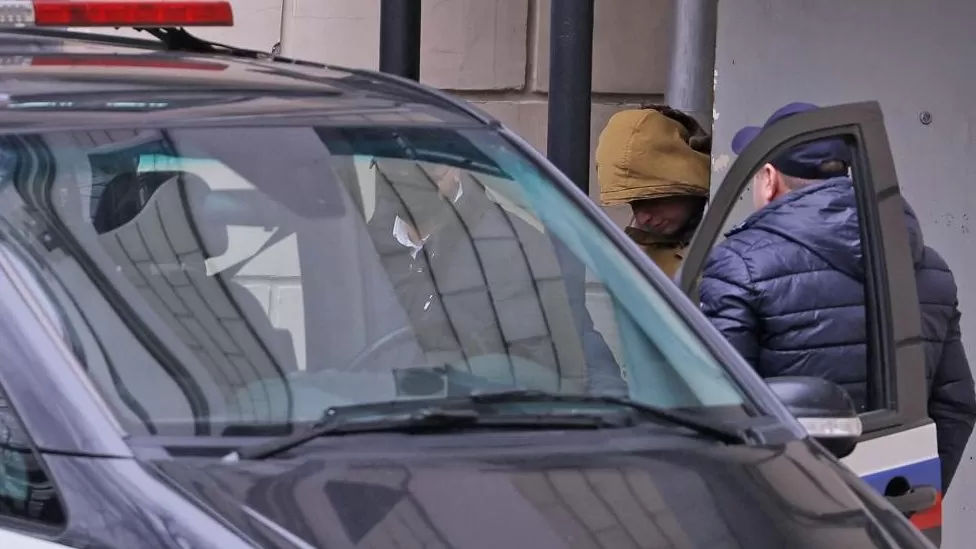
    A few hours later, the security agency brought him to Moscow’s Lefortovo District Court for his official detention.
    Afterwards, he was spotted being driven away after being seen being removed from the building.
    His imprisonment was mandated by the court until May 29.

    His lawyer said he had not been allowed into the courtroom and Tass news agency reported the journalist had denied the charge. The court had earlier been cleared of staff and visitors because of a bomb threat, Russia’s Ria state news agency said.

    The FSB confirmed in its statement that Evan Gershkovich had foreign ministry accreditation while working in Yekaterinburg 1,800km (1,100 miles) east of Moscow.

    His last WSJ piece this week reported on Russia’s declining economy and how the Kremlin was having to deal with “ballooning military expenditures” while maintaining social spending.

    But the FSB claimed he had been detained “acting on US instructions” and that he had “collected information constituting a state secret about the activities of a Russian defence enterprise”. A criminal espionage case was launched by the FSB’s investigation department, it added.

    In a statement, the Wall Street Journal said it stood in solidarity with the reporter and his family: “The Wall Street Journal vehemently denies the allegations from the FSB and seeks the immediate release of our trusted and dedicated reporter, Evan Gershkovich.”
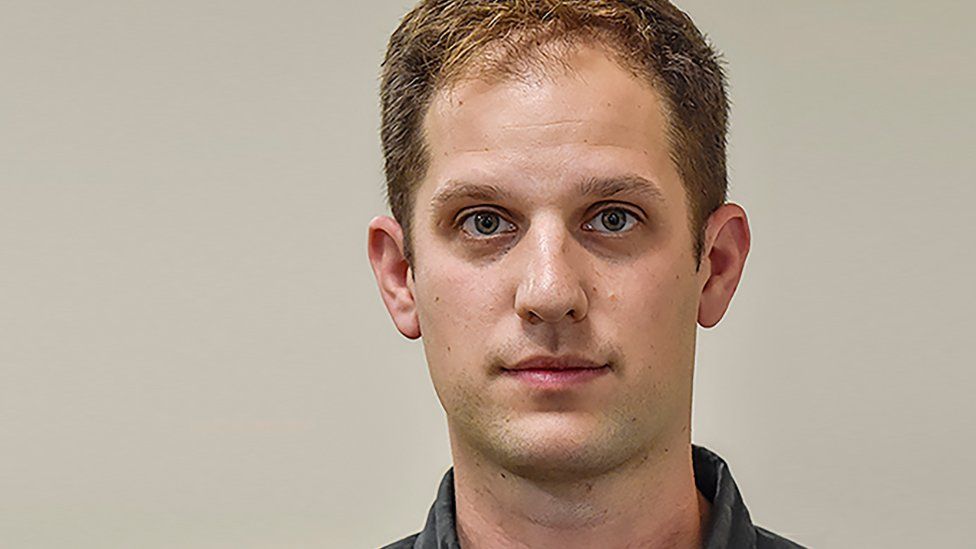
    Evan Gershkovich
    Image caption, Evan Gershkovich has also worked for the Moscow Times and Agence France Presse

    The Kremlin also commented on the detention of the American journalist. “This is the responsibility of the FSB, they have already issued a statement,” said spokesman Dmitry Peskov. “The only thing I can add is, as far as we know, he was caught red-handed.”

    Espionage in Russia carries a maximum jail term of 20 years.

    Even before the full-scale invasion of Ukraine in February 2022, reporting from Russia had become increasingly difficult.

    Independent journalists were labelled “foreign agents” and BBC Russia correspondent Sarah Rainsford was expelled from the country.

    When the war began, Russia introduced a criminal offence for reporting “fake news” or “discrediting the army”, under which dozens of Russians have been convicted for criticising the invasion on social media.

    Almost all independent media were silenced, shut down or blocked, including major outlets TV Rain, Echo of Moscow radio and newspaper Novaya Gazeta. Many Western media chose to leave Russia.

    Evan Gershkovich has covered Russia for the Wall Street Journal for more than a year, having worked there previously for the AFP news agency and the Moscow Times.

    Russian political expert Tatyana Stanovaya said his detention had come as a shock. In the FSB’s view of espionage, “collecting information” could simply mean gathering comments from experts, she said, while acting on US instructions could simply refer to his editors at the Wall Street Journal.

    Russian foreign ministry spokeswoman Maria Zakharova said what a Wall Street Journal employee was doing in Yekaterinburg had “nothing to do with journalism”. It was not the first time the status of “foreign correspondent” had been used to “cover up activities that are not journalism”, she said.

    Tensions between the Kremlin and the West have become increasingly tense in the 13 months of Russia’s war in Ukraine. Press freedom watchdog Reporters Without Borders said it was “alarmed by what looks like retaliation”.

    Russian Deputy Foreign Minister Sergei Ryabkov told local news agencies that it was too early to discuss prisoner swaps: “I would not even put the question in this plane now, because you understand that some exchanges that happened in the past took place for people who were already serving sentences.”

    Several US citizens are being held in Russia. Days before the invasion, American basketball star Brittney Griner was detained at a Moscow airport and jailed for carrying cannabis oil. It was 10 months before she was freed in exchange for notorious Russian arms dealer Viktor Bout.
  • Two US army aircraft crash, crew feared dead

    Two US army aircraft crash, crew feared dead

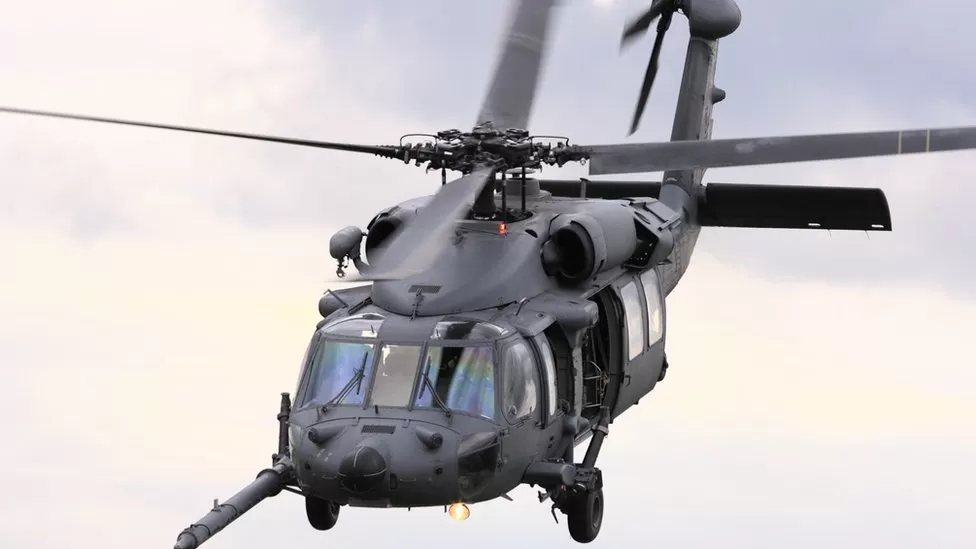
    A number of people are believed to have been killed after two US Army helicopters crashed in Kentucky.

    The state’s Governor, Andy Beshear, said it was “tough news” with “early reports of a helicopter crash and fatalities are expected”.

    Local news reports say the incident happened at about 21:35 local time (01:35 GMT), and as many as nine people may have been killed.

    Local military confirmed their helicopters were involved in the crash.

    It happened in the Trigg County area, close to the large Fort Campbell military base.

    In a statement to the BBC, a Fort Campbell spokesperson said two HH60 Blackhawk helicopters had crashed during “a routine training mission”.

    “The status of the crew members are unknown at this time,” they said.

    “The command is currently focused on caring for the service members and their families.”

    They added the incident was under investigation and more information would be released as it becomes available.

    The Fort Campbell military base is located a short distance from Trigg County.

    The helicopters involved are from the 101st Airborne Division, which is the only air assault division in the US Army and has been sent to conflict zones internationally.

  • Nashville school shooting: Police report indicates attacker hid guns in parents’ house

    Nashville school shooting: Police report indicates attacker hid guns in parents’ house

    According to investigators, the shooter who murdered six people at a Tennessee school on Monday lawfully purchased seven firearms and kept them hidden at home.

    According to investigators, the suspect’s parents believed the 28-year-old shouldn’t possess weapons and were unaware that the weapons were hidden in their home.

    In the incident at the Covenant School, six individuals were killed, including three nine-year-old children.

    According to authorities, the suspect was receiving “doctor’s care for an emotional disorder.”

    Officers then disclosed that the goal was not a specific person but rather the school.

    Tennessee doesn’t have any laws allowing police to take weapons from dangerous suspects.

    Despite the absence of such so-called red-flag laws, police said they would still have sought to have the weapons confiscated if authorities had had any warning that the suspect could have posed a threat.

    The pupils killed in the attack were Evelyn Dieckhaus, Hallie Scruggs and William Kinney.

    Three adult employees at the privately run Christian school also died: Cynthia Peak, 61, Katherine Koonce, 60, and Mike Hill, 61.

    Police have spoken to the parents of the suspect, Audrey Hale, who was killed by police less than 15 minutes after the attack began.

    Hale, who identified as transgender and was a former student at the school, was armed with three guns, including a semi-automatic rifle.

    The attack took place after the killer conducted surveillance of the premises, drew maps and wrote what police described as a “manifesto”.

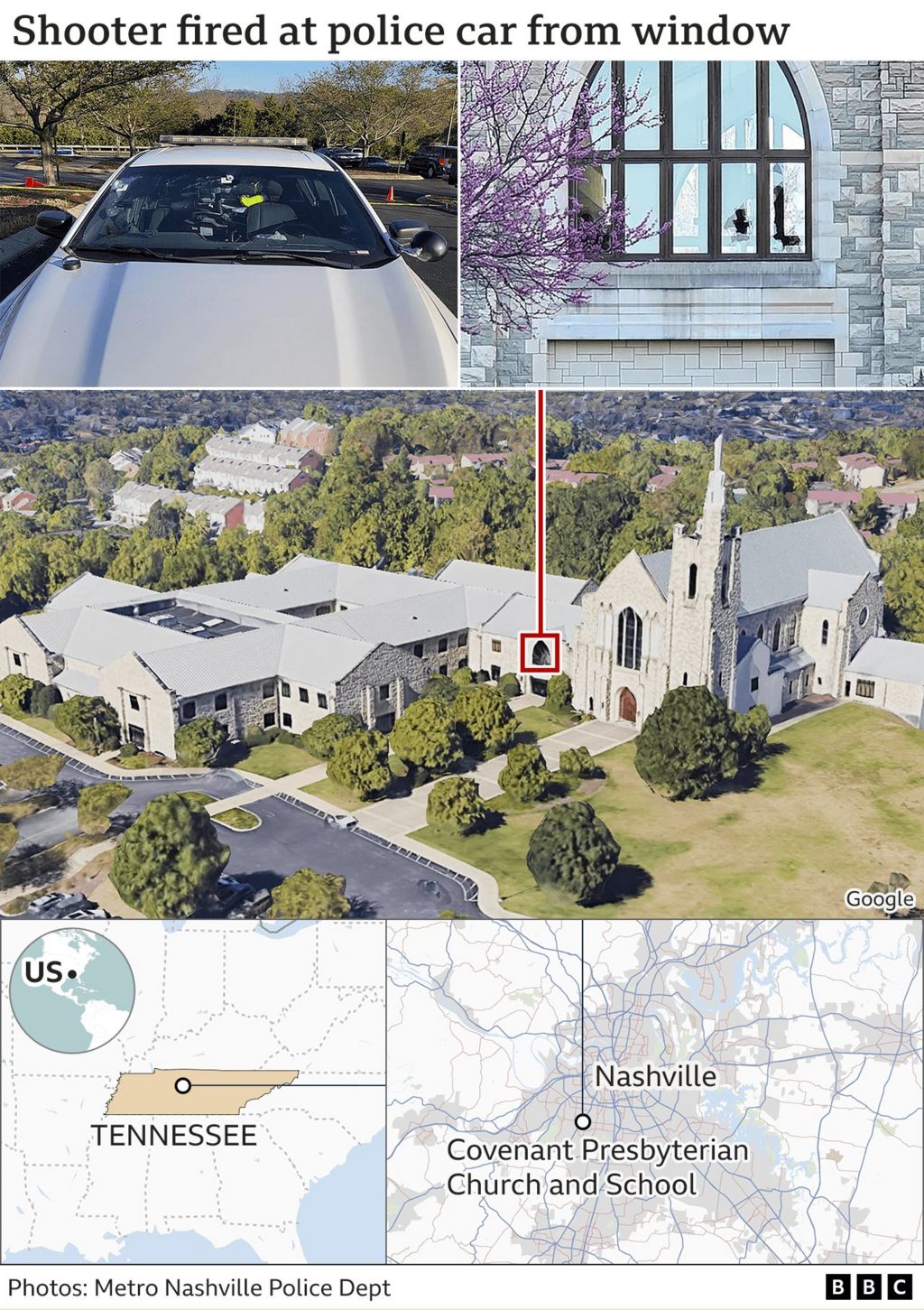
    Map of shooting scene

    A police spokesman said the attacker did not target any person in particular, but did target “this school, this church building”.

    Hale’s parents thought the suspect had owned only one gun, but that it had been sold.

    They believed the suspect “should not own weapons”, and were unaware the suspect “had been hiding several weapons within the house”, said Nashville Police Chief John Drake on Tuesday.

    The weapons were legally purchased from five shops around the city.

    The killer “was under care – doctor’s care – for an emotional disorder”, Chief Drake said, without providing further details.

    If there had been reports of suicidal or violent tendencies, he added, police would have sought to confiscate the guns.

    “But as it stands, we had absolutely no idea who this person was or if [the suspect] even existed,” he said.

    Police received the first call about the incident at 10:13 local time (15:13 GMT) on Monday.

    The suspect drove to the school in a Honda Fit and got into the building by firing through one of the doors, which were all locked.

    Video later released by Nashville police shows the shooter opening fire to shatter glass panes on the front doors, then wandering the school’s deserted corridors – at one point walking past a room labelled “Children’s Ministry”.

    In the CCTV footage, the suspect is wearing what appears to be a protective vest and carrying an assault-style rifle in one hand, with a second weapon visible hanging from the left hip.

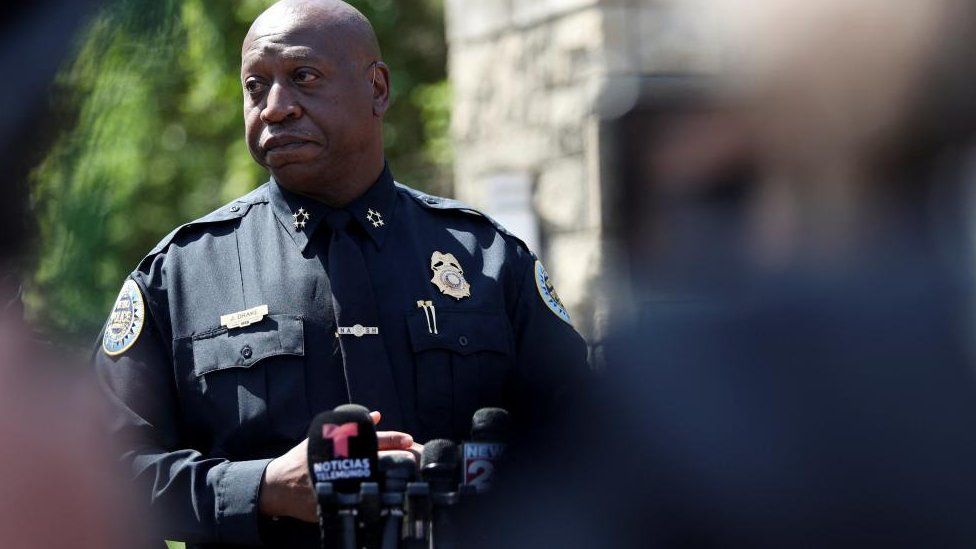
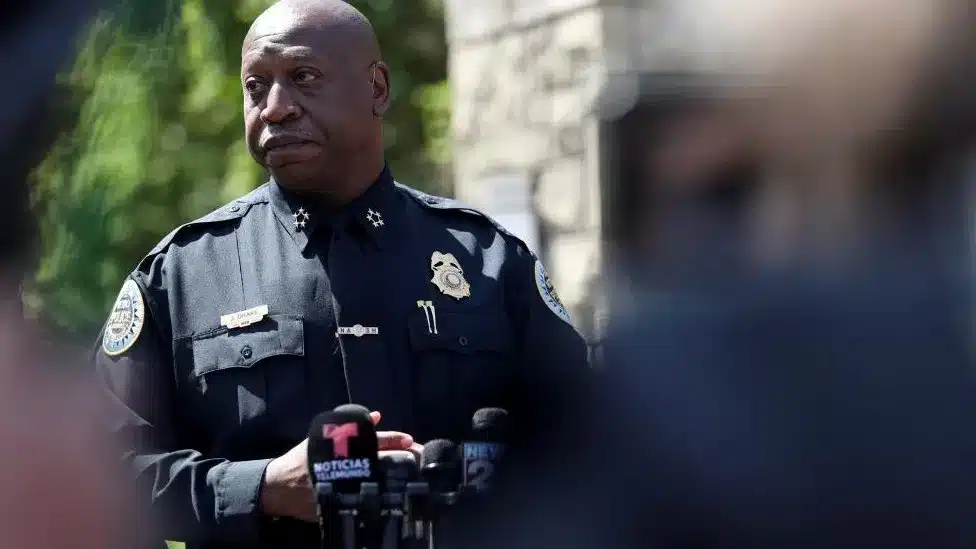
    Police Chief John Drake
    Image caption,Police Chief John Drake said the suspect may have had firearms training

    The suspect fired shots on the ground floor before moving to the building’s second floor.

    As police cars arrived, the shooter fired on them from the second floor, striking one vehicle in the windscreen.

    “We believe there has been some training to have been able to shoot from a higher level,” Chief Drake said.

    He said the suspect had stood away from the glass to avoid being an easy target for police.

    One officer was injured by broken glass. Police rushed inside and shot the suspect dead at 10:24, said Chief Drake.

    President Joe Biden on Tuesday called for Congress to pass new gun control legislation.

    “As a nation, we owe these families more than our prayers,” he said. “We owe them action.”

    US Attorney General Merrick Garland was asked during a Senate hearing in Washington DC whether the attack will be investigated as a hate crime targeting Christians.

    He said it was too early to say and that agents were still working to identify a motive.

    The attack was America’s 131st mass shooting so far this year, according to Gun Violence Archive, a non-profit that tracks gun violence data.

    There have been 15 mass shootings at schools or universities in the US since the Columbine High School massacre in 1999, according to a database maintained by the Associated Press.

    https://www.youtube.com/watch?v=FBX_lI822P4

    Source: BBC

  • Kamala Harris delivers public lecture

    Kamala Harris delivers public lecture

    Vice President of the United States of America, Kamala Harris, delivered a public lecture at Black Star Square.

    The Vice President has spoken about women empowerment since her arrival in Ghana. She also says US will invest in Africa.

    She will later visit Cape Coast Castle, the place in Ghana where shackled Africans were held in squalid dungeons before being shipped off into slavery in the U.S. and elsewhere.

    Source: The Independent Ghana

  • Kamala-Africa visit: China forcing US to deepen relation with continent?

    Kamala-Africa visit: China forcing US to deepen relation with continent?

    First it was the US secretary of state who visited Africa, then the vice president, and later in the year the president is anticipated to go.

    This flurry of trips by senior US government officials reflects a growing understanding that the country has to strengthen its ties to Africa.

    All of this occurs in the face of escalating opposition from other major world powers, particularly China and Russia.

    Vice-President Kamala Harris started her nine-day trip in Ghana on Sunday, where she was greeted by drummers and dancers at Kotoka International Airport. She will later go to Tanzania and Zambia.

    Ghana, with its focus on strengthening ties with the African diaspora as well as a record of several peaceful democratic transfers of power, provides an ideal launchpad for Ms Harris.

    Her trip, according to an official statement, is intended to “build on” December’s US-Africa summit in Washington where President Joe Biden said the US was “all in on Africa’s future”.

    But it is that future, boosted by a youthful and growing population as well as the continent’s immense natural resources, that have attracted a lot of other powerful nations vying for influence.

    While Secretary of State Anthony Blinken’s recent visit to Ethiopia and Niger focused on these countries’ security challenges, the vice-president’s tour will take her to nations facing serious economic problems.

    Ghana’s once-thriving economy is going through its most difficult financial crisis in decades.

    The country is seeking to restructure its debt amid surging inflation of over 50%. Finance Minister Ken Ofori-Atta has just been in Beijing leading negotiations with the Chinese government.

    “So far, very positive and encouraging meetings in China,” the finance minister tweeted as he expressed optimism that it would secure external assurances “very soon”.

    It needs the assurances to unlock financial support from the International Monetary Fund (IMF).

    It is not clear what, if any help, Ms Harris can offer, but it will be under pressure to act like a willing partner in the wake of Mr Ofori-Atta’s China visit.

    ‘US a friend – like China and Russia’

    Economist and professor of finance at the University of Ghana, Godfred Alufar Bokpin, does not think the visit will deliver “an immediate dividend” to help alleviate the country’s financial woes.

    “Having China on board is complicated,” he said, while noting that Ms Harris’ visit was “a very important” one for Ghana as it “elevates our relationship with the US to another level”.

    He told the BBC the interest the US is showing in the country and its debt crisis “is good” but he is worried about what he described as “unfavourable terms of trade” with creditor nations.

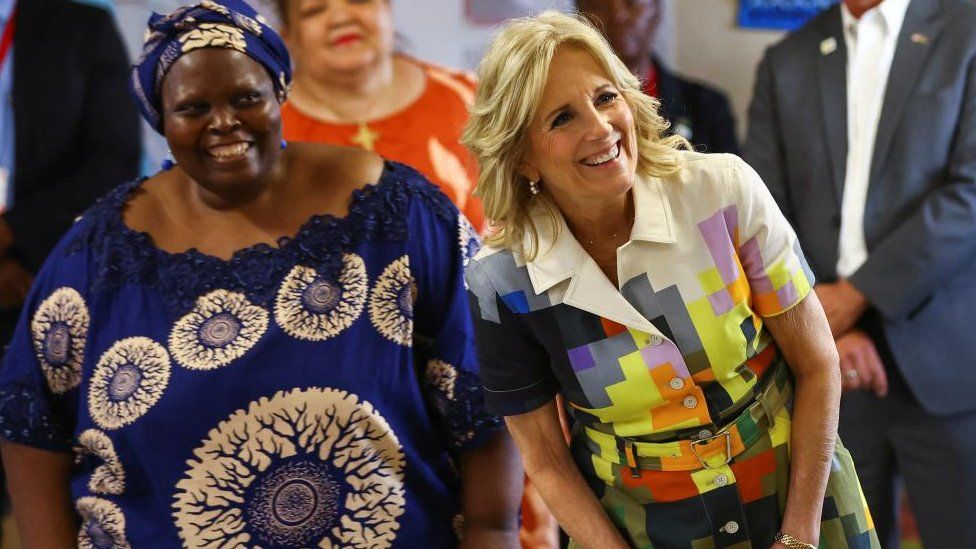
    U.S. first lady Jill Biden reacts next to Patricia Sola, founder of Hope Initiative Southern Africa, at the center, in Windhoek, Namibia, February 23
    Image caption,First Lady Jill Biden, seen here in Namibia in February, was another US dignitary to have recently visited the continent

    Zambia finds itself in a similar position to Ghana.

    The copper-rich nation became the first African country to default on its debt when the Covid pandemic hit.

    It is in prolonged discussions with China to restructure its debt and has also sought financial support from the IMF.

    The Reuters news agency quotes a senior US official as saying Ms Harris “would discuss the best ways for the international community to address debt challenges faced by Ghana and Zambia”.

    Like Prof Bokpin, Zambian analyst Dr Sishuwa Sishuwa thinks China holds more influence when it comes to restructuring debt. But the US wants to be seen as the more reliable partner.

    There is a growing sentiment on the continent that Africa should have a free choice in its relationships with the rest of the world.

    “Zambia sees the United States in the same way as it sees China and Russia – a friend,” Dr Sishuwa told the BBC.

    “When a country turns to China, or Russia, or the US for support, this should not be seen as snubbing one major power bloc or the other.”

    He said attempts to seek exclusive relationships with African countries may be counterproductive and unsustainable.

    This echoed South African President Cyril Ramaphosa’s comments during a visit to Washington last year when he said: “We should not be told by anyone who we associate with.”

    Senior US officials have told the BBC it is not their intention to tell African countries who they can be friends with.

    The US has however been keen to emphasise its focus on democracy in its relationships with African countries, something the vice-president is also expected to discuss during her visit.

    President Hakainde Hichilema of Zambia is due to co-host a virtual Summit for Democracy, along with four other heads of state including President Biden, shortly before receiving Ms Harris in the country.

    It is one of the values, along with human rights and good governance, that the US government says underpins its relationships with the continent – and sets it apart from China and Russia.

    Scepticism in Africa

    China has a non-interference policy in countries’ internal political affairs – something that has smoothed its engagement with autocratic leaders.

    And Russia’s presence in African countries that have experienced coups recently – Burkina Faso and Mali – has led to a souring of relations between them and the West, especially France, the former colonial power which had maintained close ties to both countries.

    Russia’s invasion of Ukraine has no doubt given Western nations an added sense of urgency in winning over more African countries. UN votes to condemn it divided African nations which accounted for half of all abstentions, including Tanzania which is also on Ms Harris’ itinerary.

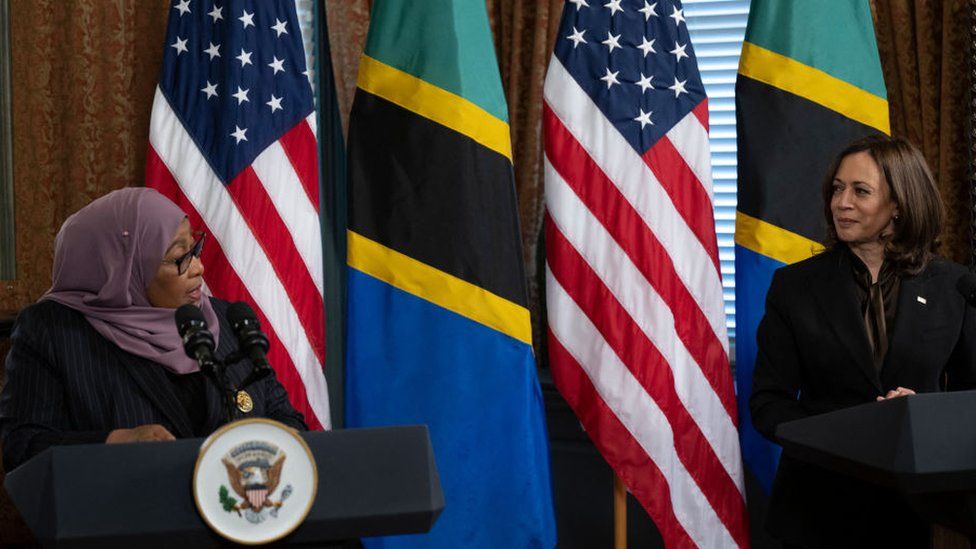
    US Vice President Kamala Harris listens to Tanzania's President Samia Suluhu Hassan make a statement to the press before a meeting in the Eisenhower Executive Office Building April 15, 2022
    Image caption,Tanzania’s President Samia Suluhu Hassan first met Vice-President Harris in Washington nearly a year ago

    The US vice-president – the first woman to hold that position – will meet President Samia Suluhu Hassan, her country’s first female head of state.

    This shared experience of being pioneering women is creating a buzz in Tanzania.

    Many are also touting the visit as an endorsement of the progress the country is making and its growing visibility on the global map.

    It was not that long ago that Tanzania was something of an outcast under the presidency of John Magufuli, who was seen as having autocratic tendencies, curtailing the activities of the opposition and independent media.

    Ms Harris is the most senior US official from the Biden administration to visit Africa and the fifth since December’s US-Africa summit.

    Others have been the Treasury Secretary Janet Yellen, US ambassador to the UN Linda Thomas-Greenfield, First Lady Jill Biden and Mr Blinken.

    But with the renewed interest comes a demand from the continent to be treated fairly.

    Ghana’s Prof Bokpin said there was a level of scepticism about the heightened interest in Africa.

    “There’s a belief that a new Scramble for Africa is in play,” referring to the subdivision of the continent by European nations in the late 19th Century which led to decades of colonialism and exploitation.

    “This engagement needs to emphasise mutual respect,” he added.

    Source: BBC

  • Zambia warns USA against LGBTQ agenda ahead of Harris’ arrival

    Zambia warns USA against LGBTQ agenda ahead of Harris’ arrival

    Leader of the largest opposition party in Zambia, Patriotic Front (PF), Given Lubinda, has expressed concern over attempts by the westerners to impose acceptance of LGBTQ activities in the southern African country.

    PF leader Given Lubinda, referenced a presidential memorandum and an executive order issued by US President Joseph Biden on promoting equality for LGBT persons on Wednesday March 22, 2023.

    “As Patriotic Front, we beseech Zambians not to allow the US to impose its values in Zambia. We must defend ourselves,” Mr Lubinda said.

    “Since both bilateral relations and foreign assistance of the US are tied to LGBTQ rights, Zambia might have to review its relationship with the US,” he added.

    He urged Zambians not to “abandon our norms, national values, religious and cultural standing to please the Americans”.

    The party’s remarks come days ahead of the planned visit by US Vice-President Kamala Harris to the country next week.

    On 14 March, President Hakainde Hichilema pledged to uphold Zambia’s laws that criminalise homosexuality and termed as falsehoods claims that his government supported gay rights.

    During her nine-day tour of Africa that starts on 26 March, Ms Harris is also due to visit Ghana and Tanzania, where same-sex relations are illegal.

    In Uganda, lawmakers on Tuesday approved an anti-gay bill which imposes harsh penalties for anyone who engages in same-sex activity.

  • Ugandan govt tells the US to ”stop wasting humanity” over  anti-LGBTQ+ law

    Ugandan govt tells the US to ”stop wasting humanity” over anti-LGBTQ+ law

    The government of Uganda has responded to the government of the United States after a threat of economic repercussion over a recently passed law that discriminates against same-sex relationships and the LGBTQ+ community.

    President Yoweri Museveni was quoted in the statement that was shared on the social media site Twitter as strongly opposing same-sex relationships in Uganda.

    The response posted on social media platform, Twitter, comprised quotes by president Yoweri Museveni stating the country’s strict opposition to same-sex relations.

    The government’s official Twitter handle posted a quote from Museveni’s recent response on the issue when he appeared before Parliament to deliver an address.

    “The western countries should stop wasting the time of humanity by trying to impose their practices on other peoples. Europeans and other groups marry cousins and near relatives.

    “Here, to marry within the clan, is taboo (Omuziro). Should we impose sanctions on them for marrying relatives?” a follow-up tweet read.

    In another response, the handle specifically quoted a tweet by Anthony Blinken, the US Secretary of State with a quotation by Museveni in a 2014 interview with CNN.

    The quote read: “If the West doesn’t want to work with us because of homosexuals, then we have enough space here to live by ourselves and do business with other people.” (CNN, 2014).

    QUOTE

    “If the West doesn’t want to work with us because of homosexuals, then we have enough space here to live by ourselves and do business with other people” (CNN, 2014).-@KagutaMuseveni https://t.co/VOxRE5UPg3

    — Government of Uganda (@GovUganda) March 23, 2023

    White House warns of potential ‘repercussions’ if LGBTQ law takes effect

    The United States on Wednesday, March 22, warned of sanctions if Uganda’s anti-Lesbians, Gay, Bisexual, Transgender, Queer legislation is signed into law.

    “We would have a look at whether or not there might be repercussions that we would have to take, perhaps in an economic way, should this law actually get passed,” John Kirby, spokesperson for the National Security Council said in a media briefing at the White House.

    Lawmakers in the East African country had by a majority voted to pass the legislation a day earlier to much uproar by activists and rights groups.

    Elements of the bill include:

    – A person who is convicted of grooming or trafficking children to engage them in homosexual activities faces life in prison.

    – Individuals and institutions which support or fund LGBT rights activities also face prosecution.

    Local news channels also reported a proposed 20-year jail term for ‘any entity that funds or promotes any form of homosexuality’.

    Uganda is a deeply traditional and religiously conservative country. The president is known to have harsh words for homosexuals and LGBTQ persons have routinely been raided.

    The final leg of making the bill into law is the signature of president Yoweri Museveni.

  • Blinken claims US “actively” trying to reestablish diplomatic relations with Libya

    Blinken claims US “actively” trying to reestablish diplomatic relations with Libya

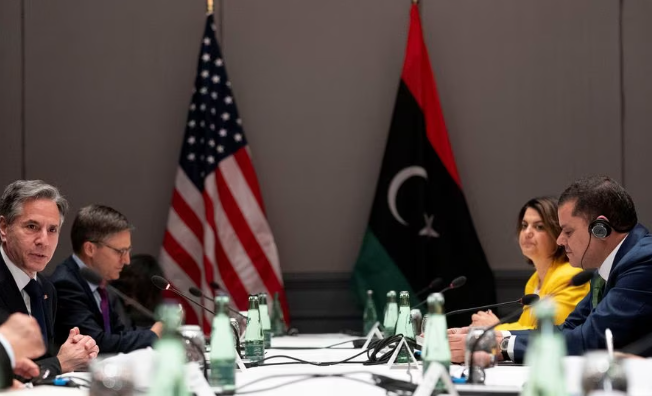
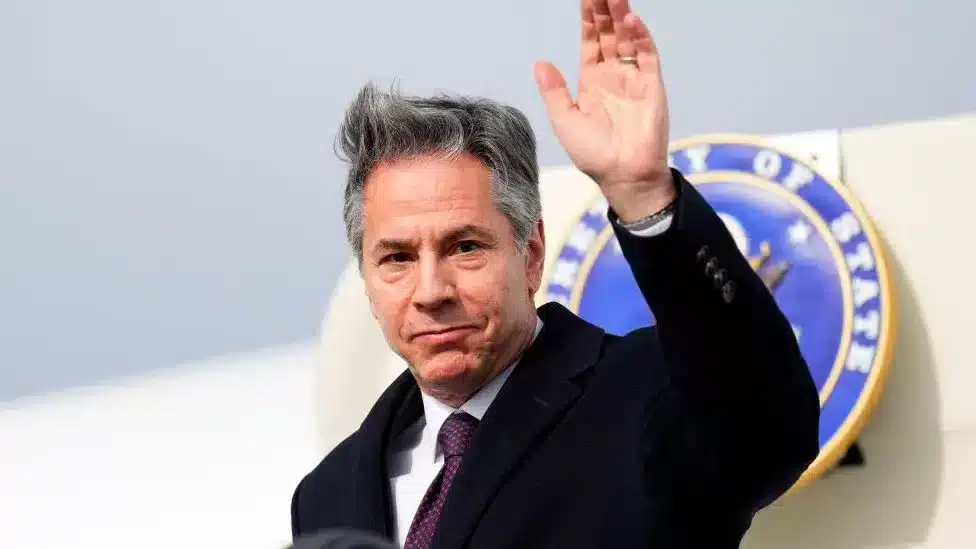
    The U.S. Secretary of State, Antony Blinken has said on Wednesday that the US is “actively” working to resume diplomatic relations with Libya, but he would not specify a timeline for when the embassy would reopen.

    After Muammar Gaddafi was overthrown in a NATO-backed rebellion in 2011, Libya has had little peace. The country divided in 2014 into opposing eastern and western factions, and the last significant fighting was finally resolved in 2020 with a ceasefire.

    Washington shut its embassy in Tripoli in 2014 and moved to its mission to neighboring Tunis following intensifying violence between rival factions. U.S. Special Envoy for Libya, Richard Norland, has operated out of the Tunisian capital, and took occasional trips into Libya.

    A September 2012 assault on the U.S. consulate in Benghazi, since closed, killed four Americans including the then U.S. ambassador to Libya, Chris Stevens.

    “I can’t give you a timetable other than to say that this is something we’re very actively working on. I want to see us be able to re-establish an ongoing presence in Libya,” Blinken said at a Senate Appropriations subcommittee hearing.

    Blinken did not provide any details on the active work he referred to.

    Assistant Secretary Barbara Leaf, top diplomat for the Middle East and North Africa, is currently touring the region, traveling to Jordan, Egypt, Libya, Lebanon, and Tunisia March 15-25.

    In Libya, the State Department said, Leaf will meet with senior Libyan officials “to underscore U.S. support for UN-facilitated efforts to promote consensus leading to elections in 2023.”

    “There’s also an important moment where through the work of the UN envoy, there may be, and I emphasize maybe, a path forward to moving Libya in a better direction including getting election for legitimate government and our diplomats are deeply engaged in that,” Blinken added.

    The OPEC member country has been locked in political stalemate since late 2021 when a scheduled election was canceled because of disputes over the rules and the eastern-based parliament, the House of Representatives, withdrew support from the interim government.

    Peacemaking efforts have focused on getting the House of Representatives and the High State Council to agree on a constitutional basis for elections and on voting rules.

    The United Nations’ special envoy for Libya last month moved to take charge of a stalled political process to enable elections that are seen as the path to resolving years of conflict.

  • West Coast and Northeast prepare for snowfall and hazardous driving conditions

    West Coast and Northeast prepare for snowfall and hazardous driving conditions

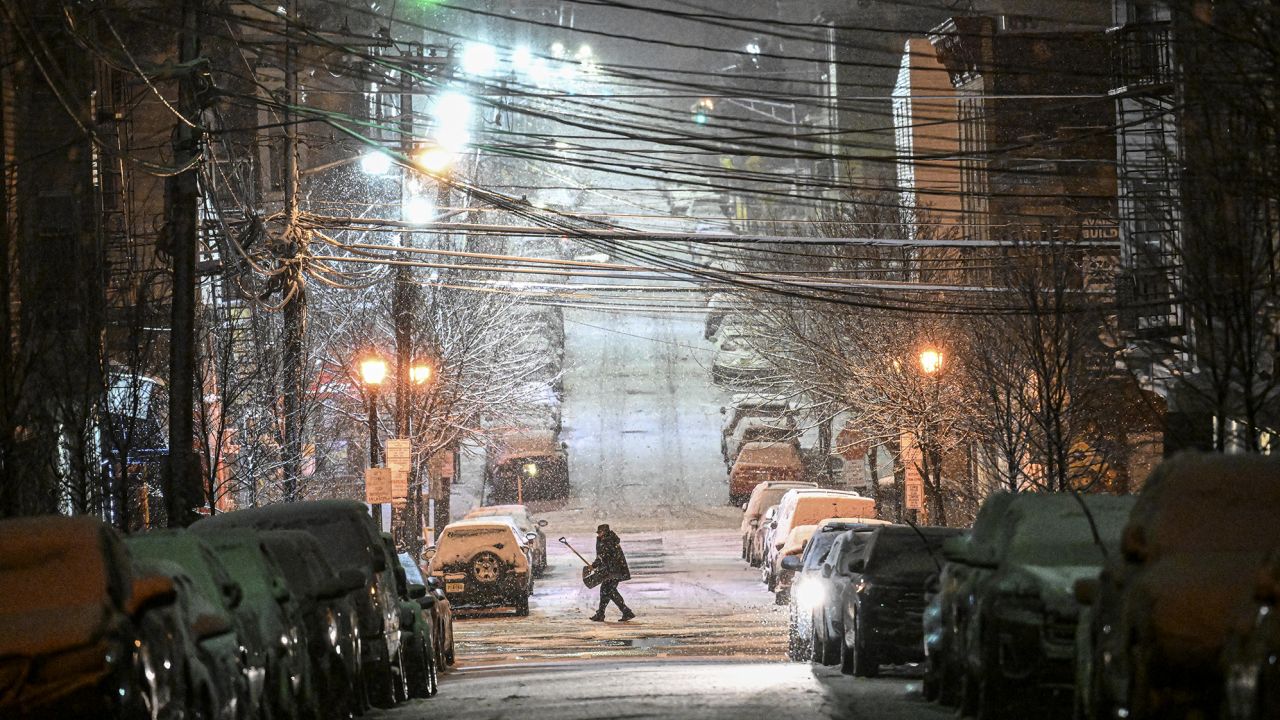
    A succession of storms hitting the opposite ends of the US have left communities on the West Coast and in the Northeast struggling with heavy snowfall, strong winds, power outages, and hazardous driving conditions.

    On Tuesday, there are winter weather advisories for almost 23 million people nationwide.
    While snow continues to fall across parts of New York and New England‘s interior, several alerts are still in effect in the Northeast.

    While a strong storm is delivering heavy snow to lower elevations, including the Portland and Seattle areas, the most of the advisories are for regions in the West, including blizzard warnings for the Sierras.

    In Southern California, some residents of mountain communities were left stranded as snow-covered roads became too dangerous to navigate.

    In the East, a storm that has already brought tornadoes, damaging winds and hail to the central US is moving north. The system will spread further into northern New England on Tuesday as cold air moves over the region and brings 4 to 8 inches of snow, according to the National Weather Service.

    New York City is no longer under any winter weather alerts after it recorded its biggest snow event of a nearly snowless season. Central Park recorded 1.8 inches of snow from the storm by 7 a.m. Tuesday, bringing the total for this winter to 2.2 inches. That’s the lowest seasonal snowfall on record for the park, which is more than 2 feet below its normal seasonal snowfall.

    Areas outside the city got between 2 and 4 inches of snow overnight and could get up to 6 inches by the time the system moves out.

    The snow will continue falling throughout the day in upstate New York and parts of New England, with widespread totals up to 8 inches possible and some isolated areas getting even more.

    In Rhode Island, where Gov. Daniel McKee warned of a difficult morning commute, all Providence schools were closed Tuesday. Connecticut also announced closures of schools in Hartford as well as all state office buildings as the state readied for a significant snowstorm to come through that could bring heavy snowfall of 5 to 7 inches and isolated amounts up to 10 inches.

    South of the freeze line, Philadelphia is forecast to see rainy conditions Tuesday.

    More than 210,000 homes and businesses across the US were without power Tuesday, mainly in Michigan and California, according to PowerOutage.us.

    On the West Coast, back-to-back winter storms have left some residents in Southern California’s San Bernardino County stranded since last week with dwindling supplies of food and fuel, officials said.

    The county declared a local emergency Monday after several feet of snow left mountain roads nearly impassable. “Residents of mountain communities found themselves trapped at home or unable to reach home due to several feet of snow that fell over the weekend, with more to follow during the next several days,” a news release from the county said.

    Crews have been working to create single-lane pathways for first responders but are seeking state and federal assistance clearing the snow, the news release said.

    In Blue Jay, in the San Bernardino Mountains, Lisa Griggs walks 20-30 minutes through several feet of snow to get to the nearest grocery store, she told CNN. On Monday, the manager told her the store was running low on food, she said.

    Rick Varikian was visiting his sister in Blue Jay when he got stuck there by the snow with three other adult family members and six children, he told CNN.

    “My car doesn’t work and there’s no fuel at all,” Varikian said. “There’s 10 of us right now in the house and we’re running low on food.”

    “We’re getting to the end of where we can be comfortable just feeding our child,” a Crestline, California, resident told CNN affiliate KCBS/KCAL. “It’s frustrating.”

    Both Griggs and Varikian are hoping help will make its way up the mountain soon.

    “We need manpower. We can’t do this by ourselves. We’re not used to this much snow. Thank god we still have electricity and internet so we can at least communicate and let the people know what’s going on up here,” Griggs said.

    More than 600 Orange County middle school students were among those stuck in the San Bernardino mountains after getting snowed in while attending camps last week. The students were supposed to return home Friday but were stranded over the weekend until the California Highway Patrol escorted buses down the mountain so they could reunite with their families, according to an Irvine Unified School District spokeswoman.

    Two more rounds of heavy snow are expected in the Sierra Nevada and Northern California over the next few days, with snowfall rates over 2 inches per hour and wind gusts up to 60 mph forecast, the weather service said. In the higher mountain ranges, snowfall amounts over a foot are likely.

    An avalanche warning is in effect through Wednesday morningfor the central Sierra Nevada, including the Lake Tahoe area.

    Heavy snow will make it as far east as the Colorado Rockies and as far south as northern Arizona, bringing hazardous travel conditions Tuesday and Wednesday, the weather service said.

    Snow and wind will combine in the Sierra Nevada to create blizzard conditions and make travel “verydangerous to impossible,” the weather service warned.

    “If you plan to travel by road at elevations above 1,000 feet through West Coast states, be prepared for rapidly changing conditions and have winter driving supplies,” the service said.

    Interstate 80 at the California-Nevada state line was closed Monday night due to whiteout conditions.

    California Highway Patrol in Truckee tweeted that officers were responding to drivers stuck in snow all day Tuesday, warning drivers not to try to drive I-80 over Donner Summit.

    “Travel conditions are extremely dangerous with zero visibility and blizzard conditions! Stay home and don’t put your life in danger!!,” CHP said.

    In Oregon, a section of the 5 Freeway was closed, with the weather service there warning that patchy blowing snow could significantly reduce visibility.

    With the risk of getting trapped in a car on a snowy road a reality, officials are urging those who venture onto the roads to be prepared.

    “Bring chains and know how to use them. Bring an emergency kit that includes warm clothes, snacks and water in case you are delayed. Make sure your vehicle is ready with good tires and working wiper blades,” the Oregon Department of Transportation said.

    At least 11 school districts in northwest Oregon were closed due to heavy snow and winter weather warnings.

    As the Northeast and West Coast prepare for more snow, residents in Central US are recovering from tornadoes and severe winds.

    The central US tallied 14 tornado reports Sunday – including nine in Oklahoma – and another five in Illinois on Monday.

    In Oklahoma, the storm ripped roofs off homes, flipped cars, downed trees and littered neighborhoods with debris. As many as 12 people have been reported injured in the state.

    There were 185 storm reports Sunday across the Southern Plains, mainly of strong winds across Kansas, Texas and Oklahoma. That number includes 15 tornado reports and 15 hail reports, with several hailstones reportedly 1.75 inches in diameter.

    Weather experts will work to determine whether the system can be classified as a derecho, a widespread, long-lived windstorm, which typically causes damage in one direction across a relatively straight path.

  • Ex-US President Jimmy Carter to enter hospice care – Foundation

    Ex-US President Jimmy Carter to enter hospice care – Foundation

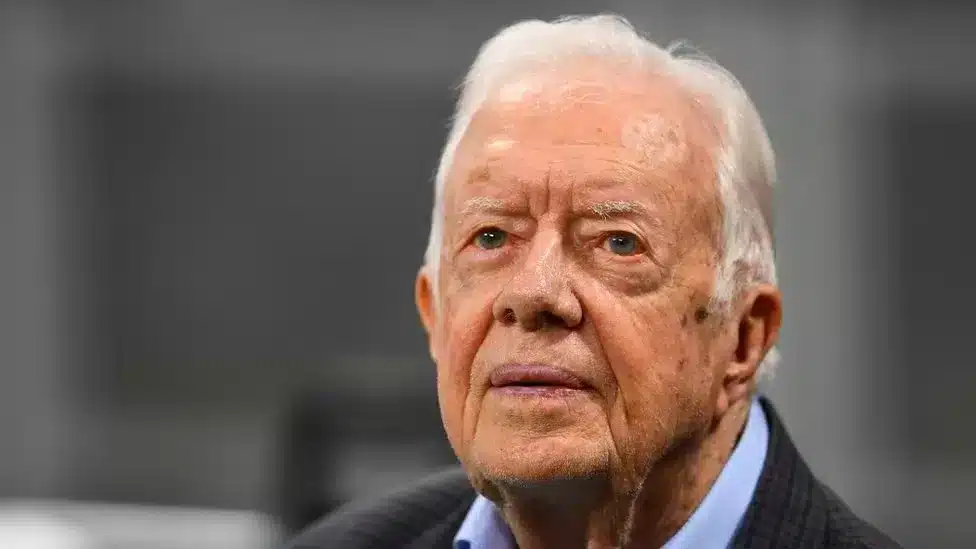
    At his Georgia home, former US President Jimmy Carter will stop receiving medical treatment and transition to hospice care, his foundation announced on Saturday.

    The Carter Center stated that Mr. Carter has made the decision to “spend his remaining time at home with his family,” but did not provide any other information.

    Recent health problems for Mr. Carter, 98, included a melanoma that metastasized to his liver and brain.

    He served as the nation’s oldest living president from 1977 until 1981.

    Mr. Carter encountered numerous foreign policy difficulties while serving as president, and the Democrat lost to Ronald Reagan in the race for reelection.

    “He has the full support of his family and his medical team. The Carter family asks for privacy during this time and is grateful for the concern shown by his many admirers,” the Carter Center said in a statement on Saturday.

    Terminally ill patients may seek hospice care instead of going through further medical treatment. The priority is not to provide further treatment, but to provide comfort towards the end of a patient’s life.

    Mr Carter’s grandson, Jason Carter, a former Georgia state senator, tweeted that he visited “both of my grandparents yesterday.”

    “They are at peace and – as always – their home is full of love. Thank you all for your kind words,” he said.

    In 2021, Mr Carter and his wife Roslyn celebrated their 75th wedding anniversary. They have four children together.

    Born in Georgia in 1924, Mr Carter entered politics in the 1960s when he was elected as state senator, before becoming the state’s governor in 1971.

    Five years later he defeated the sitting Republican President Gerald Ford to become the 39th commander-in-chief.

    But problems quickly mounted for Mr Carter as president.

    At home, an oil crisis produced high inflation and unemployment, and he struggled to persuade Americans to accept the required austerity measures.

    The high-point of the Carter years was the signing of the Camp David Accords in 1978 in which Egypt formally recognised the state of Israel. He also signed a treaty returning control of the Panama Canal to Panama.

    But in 1979 the last Shah of Iran was overthrown and 66 Americans were taken hostage in Tehran in the aftermath. Mr Carter cut off diplomatic relations with Iran in response and introduced a trade embargo.

    However, the public did not believe he was being tough enough and his popularity slumped as the US hostages were held for 444 days. His approval ratings took a further hit after an attempt to rescue the hostages failed and eight US military members were killed.

    Iran then delayed the release of the hostages until after Ronald Reagan was sworn in.

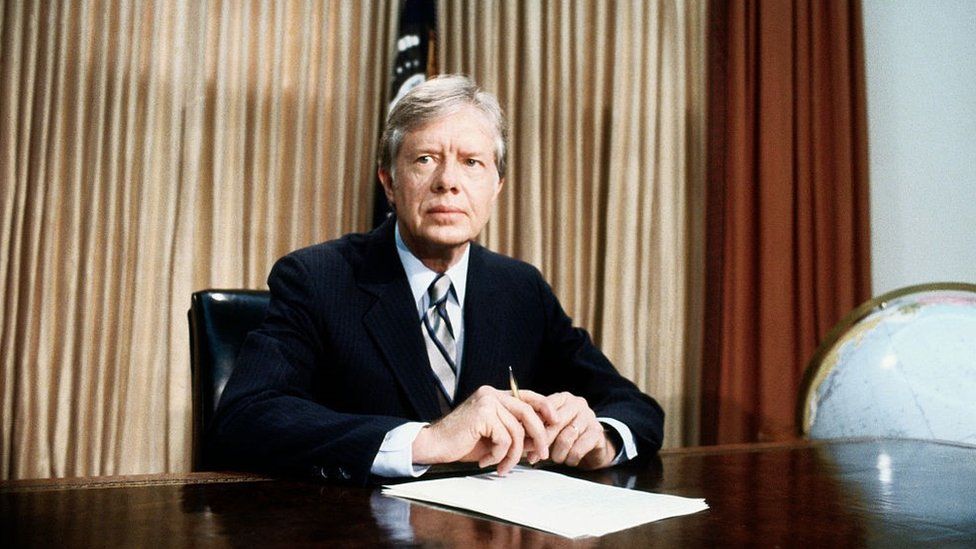
    Jimmy Carter
    Image caption,Carter defeated the sitting Republican President Gerald Ford to become the 39th president

    Since leaving the White House, Mr Carter has remained active, carrying out humanitarian work with his Carter Center.

    He led a delegation that sought to persuade military leaders in Haiti to surrender power in 1994 and he brokered a ceasefire in Bosnia that helped pave the way for the future peace treaty there.

    He went on to gain an international reputation for his work in promoting human rights, winning a Nobel Peace Prize in 2002.

    With Nelson Mandela, he founded The Elders, a group of global leaders who committed themselves to work on peace and human rights.

    He also travelled extensively – well into his early 90s – and took part in annual trips to build homes with the Habitat for Humanity charity.

    But the former president has also battled a host of health issues in recent years. In August 2015, Mr Carter had a small cancerous mass removed from his liver.

    The following year he announced that he needed no further treatment, as an experimental drug had eliminated any sign of cancer.

    He has frequently expressed a striking calmness when dealing with his health challenges.

    “I’m perfectly at ease with whatever comes,” he said in 2015. “I’ve had an exciting, adventurous and gratifying existence.”

    Mr Carter celebrated his most recent birthday in October in Plains, the tiny Georgia town where he and his wife were born between the First World War and the Great Depression, and where they returned when he left office.

    A host of senior US politicians – including Democratic Senate leader Chuck Schumer, New York Governor Kathy Hochul and Georgia Senator Raphael Warnock – offered their thoughts and prayers to Mr Carter’s family as news broke on Saturday night.

    “In this tender time of transitioning, God is surely walking with him,” Senator Warnock tweeted. “May he, Rosalynn & the entire Carter family be comforted with that peace and surrounded by our love & prayers.”

    Source: BBC

  • Ukraine war: US Secretary of State says China likely to supply Russia weapons

    Ukraine war: US Secretary of State says China likely to supply Russia weapons

    According to US Secretary of State Anthony Blinken, China is considering sending Russia arms and ammunition for the conflict in Ukraine.

    According to Mr. Blinken, CBS News has learned that Chinese businesses are already giving Russia “non-lethal support” and that Beijing may do so in the future.

    He warned that this escalation would have “severe ramifications” for China.

    China has refuted claims that Russia has asked for military hardware.

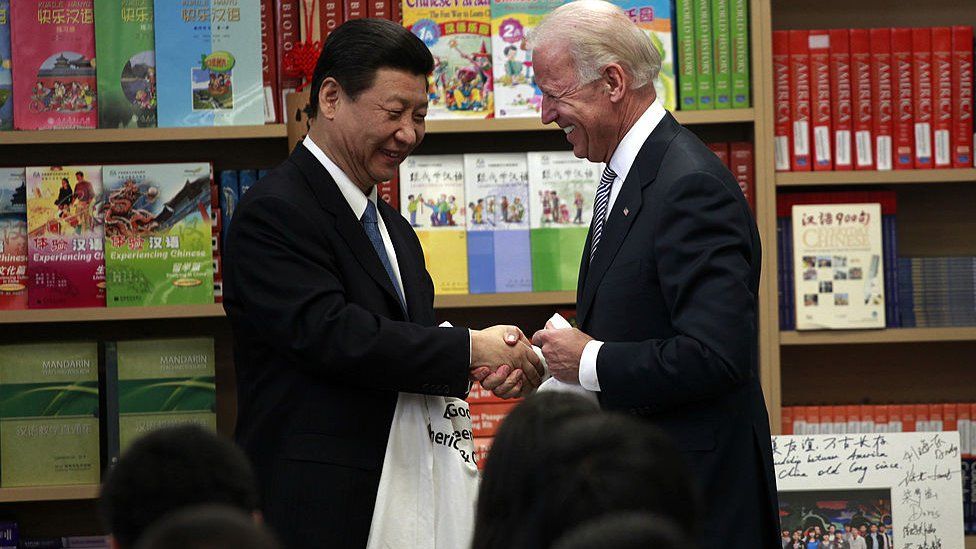
    Chinese President Xi Jinping is an ally of Russian President Vladimir Putin and is yet to condemn Russia’s invasion – but he has sought to remain neutral in the conflict and has called for peace.

    Mr Blinken was speaking to CBS after he met China’s top diplomat, Wang Yi, on Saturday at the Munich Security Conference.

    He said that during the meeting he expressed “deep concerns” about the “possibility that China will provide lethal material support to Russia”.

    “To date, we have seen Chinese companies… provide non-lethal support to Russia for use in Ukraine. The concern that we have now is based on information we have that they’re considering providing lethal support,” he said.

    He did not elaborate on what information the US had received about China’s potential plans. When pressed on what the US believed China might give to Russia, he said it would be primarily weapons as well as ammunition.

    The US has sanctioned a Chinese company for allegedly providing satellite imagery of Ukraine to the mercenary Wagner Group, which supplies Russia with thousands of fighters.

    Mr Blinken told CBS that “of course, in China, there’s really no distinction between private companies and the state”.

    If China provided Russia with weapons, that would cause a “serious problem for us and in our relationship”, he added.

    Relations between Washington and Beijing were already poor after the US shot down an alleged Chinese spy balloon in early February. Both sides exchanged angry words, but equally both sides appeared embarrassed by the incident and seemed ready to move on.

    But if China were to deliver weapons to help Russian forces in Ukraine, then US-Chinese relations would deteriorate much more severely.

    Mr Blinken’s warning seems to be clearly designed to deter China from doing that.

    Mr Blinken also said the US was worried about China helping Russia evade Western sanctions designed to cripple Russia’s economy. China’s trade with Russia has been growing, and it is one of the biggest markets for Russian oil, gas, and coal.

    Nato members, including the US, are sending a variety of weapons, ammunition and equipment to Ukraine, including tanks. They have stopped short of sending fighter jets, and Mr Blinken would not be drawn on whether the US would help other countries supply jets.

    “We’ve been very clear that we shouldn’t fixate or focus on any particular weapons system,” he said.

    He did, however, say that the West must ensure Ukraine had what it needed for a potential counter offensive against Russia “in the months ahead”. Russia is currently trying to advance in eastern regions of Ukraine, where some of the fiercest fighting of the war has taken place.

    Mr Wang said in Munich yesterday that China had “neither stood by idly nor thrown fuel on the fire” for the Ukraine war, Reuters reported.

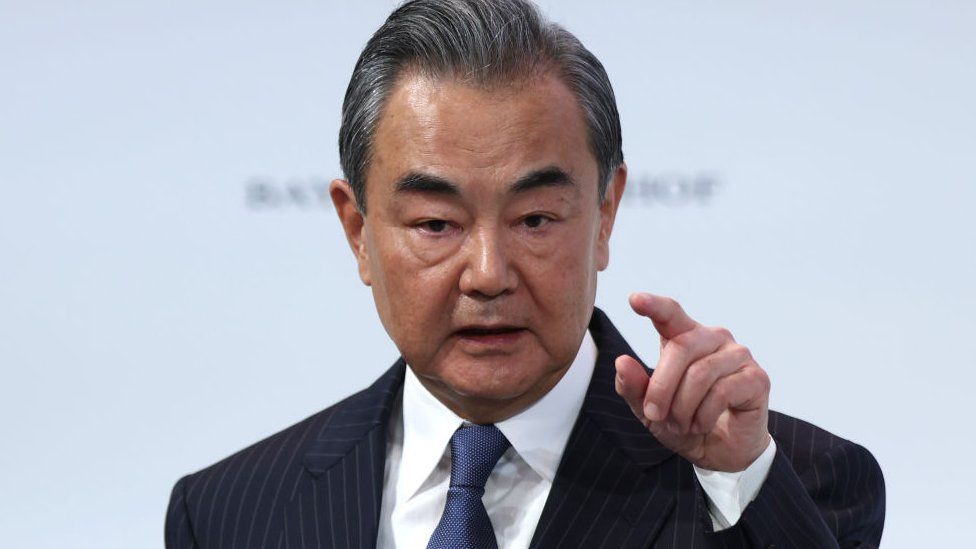
    Chinese foreign affairs Minister Wang Yi
    Image caption,Chinese foreign affairs Minister Wang Yi delivered a speech in Munich on Saturday

    China would publish a document that laid out its position on settling the conflict, Mr Wang said. The document would state that the territorial integrity of all countries must be respected, he said.

    “I suggest that everybody starts to think calmly, especially friends in Europe, about what kind of efforts we can make to stop this war,” Mr Wang said.

    He added that there were “some forces that seemingly don’t want negotiations to succeed, or for the war to end soon”, but did not say who he meant.

    The Chinese President, Mr Xi, is scheduled to deliver a “peace speech” on the anniversary of Russia’s invasion of Ukraine on Friday, 24 February, according to Italy’s foreign minister Antonio Tajani.

    Mr Tajani told Italian radio that Mr Xi’s speech would call for peace without condemning Russia, Reuters reported.

    During their meeting, Mr Blinken and Mr Wang also exchanged strong words on the deepening row over an alleged Chinese spy balloon that was shot down over the US.

    Mr Blinken said during the meeting that the US would not “stand for any violation of our sovereignty” and said “this irresponsible act must never again occur”.

    Mr Blinken told CBS that other nations were concerned about what he called China’s “surveillance balloon program” across five continents.

    Mr Wang, meanwhile, called the episode a “political farce manufactured by the US” and accused them of “using all means to block and suppress China”. China has denied sending a spy balloon.

    And on Sunday morning, Beijing warned that the US would “bear all the consequences” if it escalated the argument over the balloon. China would “follow through to the end” in the event “the US insists on taking advantage of the issue”, it said in a foreign ministry statement reported by Reuters.

    Source: BBC

  • 6-year-old boy takes gun to school in Virginia

    6-year-old boy takes gun to school in Virginia

    The mother of a six-year-old son who carried a gun to his elementary school in Virginia has been detained; this is the most recent occurrence of its kind to occur in the US state.

    On Thursday afternoon, workers at Little Creek Elementary School in Norfolk alerted the police, who were then given the firearm by the school.

    Although nobody was hurt, a mother claims the youngster threatened to shoot her daughter in class.

    Another six-year-old shot and injured his teacher in the state last month.

    In the most recent incident, the boy’s mother was accused on Friday of enabling the boy’s misbehavior and giving him access to a loaded gun.

    Another mother told a local news station that the boy had brought a loaded gun to school in his backpack and threatened to shoot her daughter during physical education class on Thursday. But the woman only found out about the threat from another parent.

    Her daughter did not tell her because she thought she might get in trouble. The girl told the broadcaster that after coming home from school she went to her bedroom “and tried to play but couldn’t”.

    The incident echoes the case of a six-year-old boy who brought a gun to class nearby in Newport News, Virginia, on 6 January with near-fatal consequences.

    He shot and seriously injured his teacher, 25-year-old Abby Zwerner, who is now suing the district that runs Richneck Elementary School.

  • Watch out for an ‘unprecedented’ response: North Korea warns ahead of South-US drills

    Watch out for an ‘unprecedented’ response: North Korea warns ahead of South-US drills

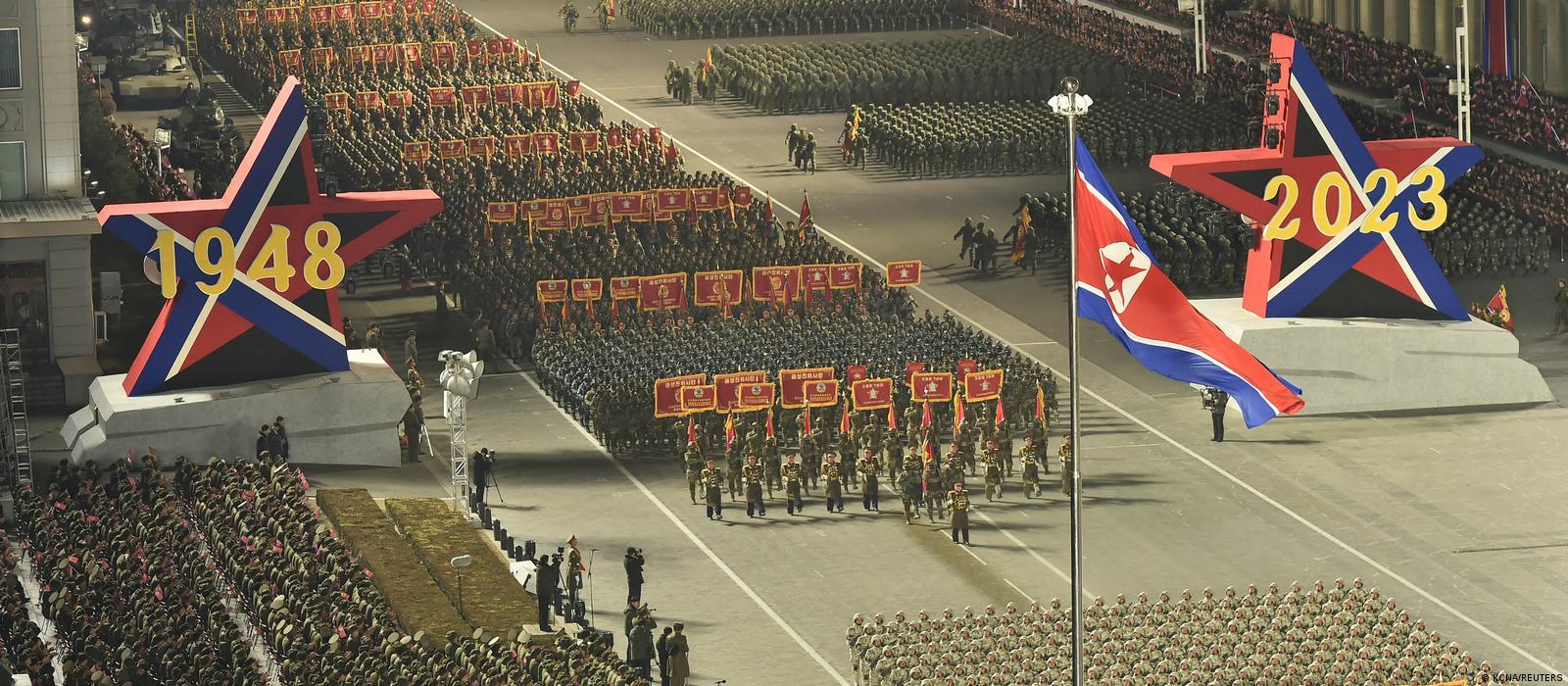
    Pyongyang has threatened an “unprecedentedly strong” response to the upcoming joint military exercises between the US and South Korea. The allied efforts to more effectively combat North Korea’s threats include the exercises scheduled for next week.

    As South Korea and the US get ready for their annual joint military exercises, North Korea on Friday threatened a “unprecedentedly persistent, strong” response.

    Shortly after South Korea announced joint tabletop exercises for the following week, a statement was made.

    “In case the US and South Korea carry into practice their already announced plan for military drills that [North Korea], with just apprehension and reason, regards as preparations for an aggression war, they will face unprecedentedly persistent and strong counteractions,” the North Korean Foreign Ministry said in a statement carried by state media.

    Pyongyang called South Korea and the US “the arch-criminals deliberately disrupting” regional peace and stability.

    “This predicts that the situation in the Korean Peninsula and the region will be again plunged into the grave vortex of escalating tension,” the statement said.

    Planned simulated drill on North Korea’s use of nukes

    The South Korea-US joint drills, called the Deterrence Strategy Committee Tabletop Exercise, are set to begin on February 22 at the Pentagon in Washington.

    The drills are part of efforts to thwart North Korea’s increasing nuclear and missile threats.

    The exercises would involve defense policymakers from both sides, Seoul’s Defense Ministry said.

    Military drills with the United States had been scaled back during the coronavirus pandemic. But they are now being bolstered under South Korean President Yoon Suk Yeol, as he looks to reassure an increasingly nervous South Korean public of Washington’s commitment to deter Pyongyang. 

    North Korea condemns UN Security Council

    North Korea’s Foreign Ministry also cautioned that if the United Nations Security Council (UNSC) continues to be “inveigled” by Washington, it will reconsider additional actions beyond normal military activities, without elaborating further.

    The ministry has accused the US of fueling tensions and using UNSC as “a tool for illegal hostile policy” to pressure North Korea.

    In 2022, North Korea conducted a record number of military tests, firing about 70 ballistic missiles.

    The tests included nuclear-capable weapons with the ability to strike targets in South Korea or reach the US mainland.

  • EOCO “hunts” for 400 stolen vehicles from US and Canada

    EOCO “hunts” for 400 stolen vehicles from US and Canada

    Ninety-five vehicles believed to have been stolen and smuggled into the country will be seized by the Economic and Organised Crime Office (EOCO) following a court order.

    EOCO in a statement noted that the freezing order from the court would enable them to seize 95 more vehicles.

    This, according to them will add up to 41 others seized earlier in collaboration with the US Federal Bureau of Investigations (FBI) and the Royal Canadian Mounted Police (RCMP) in December 2022.

    EOCO added that the court order obtained would also restrain anyone from disposing of the vehicles.

    According to the statement, information available to EOCO indicates that about 400 luxury vehicles suspected to have been stolen from the USA and Canada were in the country.

    The said vehicles were alleged to have been obtained through fraud and other crimes and shipped into the country, with some being displayed for sale in a number of garages in Accra.

    Meanwhile, the Deputy Head of EOCO, Nana Antwi says the culprits will face the law.

    According to him, although the vehicles cannot be seen in the garages, EOCO is convinced that the vehicles are in the country, adding that “they would be taken one after the other.”

    “We are in the process of asking for special documents or orders to do a publication of those suspected vehicles, we have their chassis numbers and ask those in possession to voluntarily submit, failing which we will draw a plan to get all of them,” he said.

    Source: Myjoyonline

  • Eritrean leader claims US supported rebels in Tigray conflict

    Eritrean leader claims US supported rebels in Tigray conflict

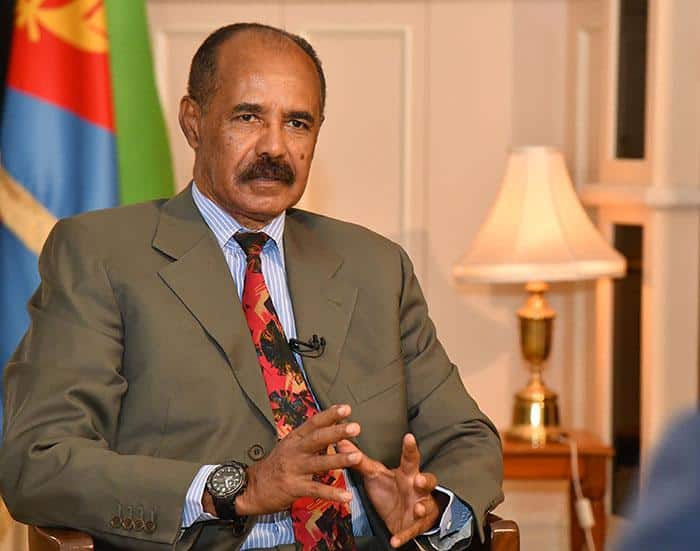
    The US is allegedly responsible for helping Tigrayan rebels during the recently ended civil war in northern Ethiopia, according to Eritrean President Isaias Afwerki.

    The president alleged that the US hurried the peace agreement between Ethiopia and the Tigray People’s Liberation Front (TPLF) in a Sunday interview with local media to stop the rebels from losing on the battlefield.

    After a two-year civil conflict that claimed tens of thousands of lives and left millions in desperate need of humanitarian aid, a peace agreement was struck in South Africa in November 2022.

    In the interview, Mr. Isaias also made the first admission that the conflict claimed the lives of hundreds of thousands of people, though he made no mention of Eritrean casualties.

    Last week, the reclusive leader denied reports that Eritrean troops committed war crimes in neighbouring Ethiopia where they had been deployed to fight alongside federal troops and pro government militia.

  • US officials say Chinese balloons can gather intelligence

    US officials say Chinese balloons can gather intelligence

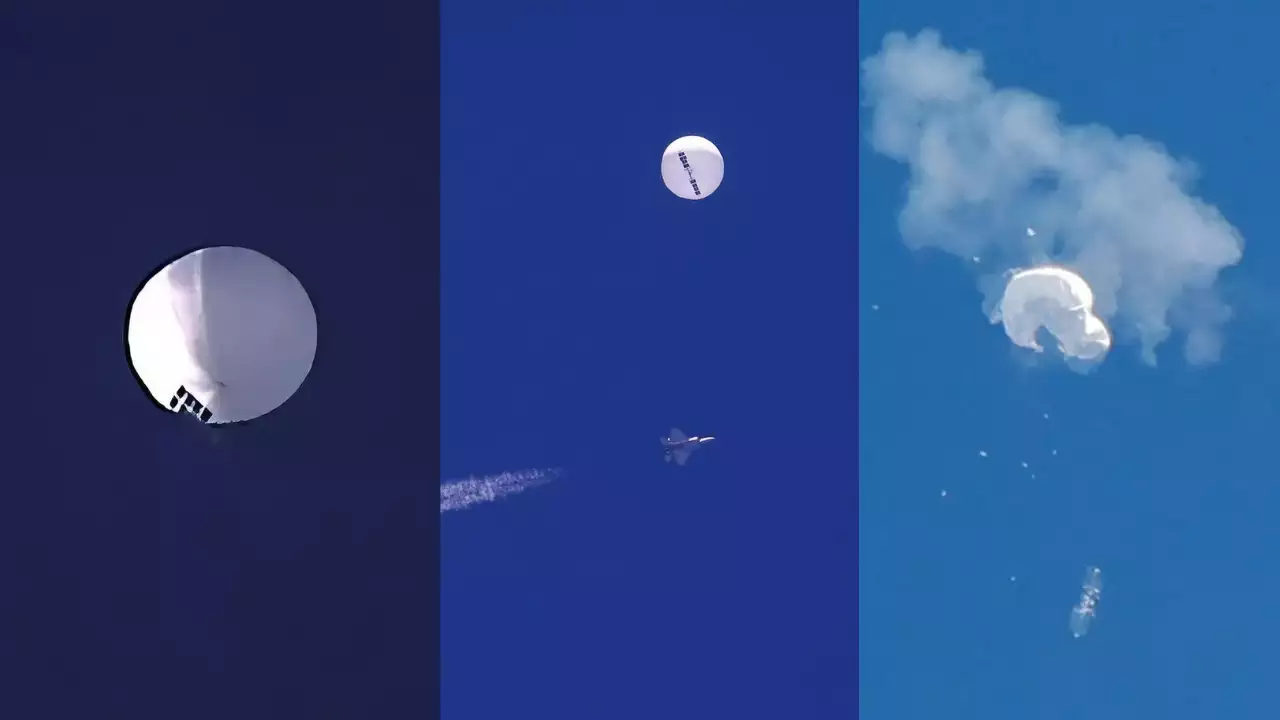
    A US official says a suspected Chinese spy balloon that the US shot down this week was able to gather communications signals.

    A senior State Department official revealed in a background briefing that it had numerous antennas capable of “intelligence collection operations.”

    Congressmen from the US passed a non-binding resolution Thursday criticising China for the balloon.

    China has refuted claims that the balloon was used for espionage.

    It has claimed that the balloon was a weather instrument that got lost.

    The US, however, believes the balloon is part of a wider fleet of surveillance balloons that has spanned five continents.

    House of Representatives lawmakers called the balloon it a “brazen violation of United States sovereignty” as the body voted 419 to 0 on Thursday morning to condemn its use.

    Its appearance in US airspace has provoked a diplomatic crisis and led US Secretary of State Antony Blinken to cancel a trip to China – the first such high level US-China meeting there in years. The US military used a fighter jet to shoot the balloon down over the Atlantic Ocean over the weekend.

    China has said the decision to shoot down the balloon was “irresponsible” and did not “create a proper atmosphere for dialogue” between the two countries.

    High resolution images revealed the balloon – which was about 200 ft (60 metres) tall – had large solar panels capable of operating “multiple active intelligence collection sensors” as well as antennas that were able to collect and geo-locate communications, the senior State Department official said on Thursday.

    The US is considering taking action against groups linked to the Chinese government that were involved in the balloon’s flight, the State Department official said.

    The latest US government information suggests that the craft indeed was some type of surveillance balloon, experts told the BBC.

    “The types of antennas are meant for surveillance technology and this is not something you would expect for any type of scientific mission,” said Gregory Falco, an assistant professor at Johns Hopkins University’s Department of Civil and Systems Engineering.

    It’s still not possible to glean exactly what type of data China might have been trying to gather on the balloon mission, experts said, but it may have intercepted radio, cell phone and other communications from the military bases it flew over, said Matt Kroenig, the senior director of the Scowcroft Center for Strategy and Security at the Atlantic Council.

    The balloon’s large solar panels – as well as the fact that it was able to hover over US airspace for long periods of time – is concerning, Dr Falco said.

    “They have a high-powered system that can do a lot of data relay,” said Dr Falco. “I don’t know exactly what they were collecting, but all the mechanics are there for getting a lot of data back to their satellites.”

    The US may have taken countermeasures to prevent China from gathering data, including jamming equipment, Dr Kroenig said.

    But it could have been “too little too late”, Dr Falco said, adding that there was likely a gap in time before the US was aware of the craft and could take action.

    https://emp.bbc.com/emp/SMPj/2.47.2/iframe.htmlMedia caption,

    Watch: BBC security correspondent Gordon Corera explains the US/China row

    US Congress hold balloon hearings

    US intelligence, military and foreign policy officials began briefing members of Congress on Thursday about the balloon.

    The hearings come amid mounting criticism of the Biden administration’s handling of the incident from his political opponents.

    On Wednesday, an open letter from Republican Senators Marco Rubio and Roger Wicker said they lack “a clear understanding” of the government’s response to the balloon.

    Speaking to senators, US Army Lieutenant General Douglas Sims said that “the risk of Chinese intelligence collection was low to moderate” as the balloon flew over the US.

    The potential of harming civilians on the ground if it was shot down over land, conversely, was “moderate to significant”.

    Officials also defended the timing of the balloon’s destruction, saying that doing so over rough terrain in Alaska or the cold waters of the Northern Pacific would have made recovery efforts difficult and dangerous.

    At a Wednesday news conference, Defence Department spokesman Brigadier General Pat Ryder confirmed that the US believed similar balloons had operated over North and South America, South East Asia, East Asia and Europe.

  • US cancer death rate drops by 30% since 1991

    US cancer death rate drops by 30% since 1991

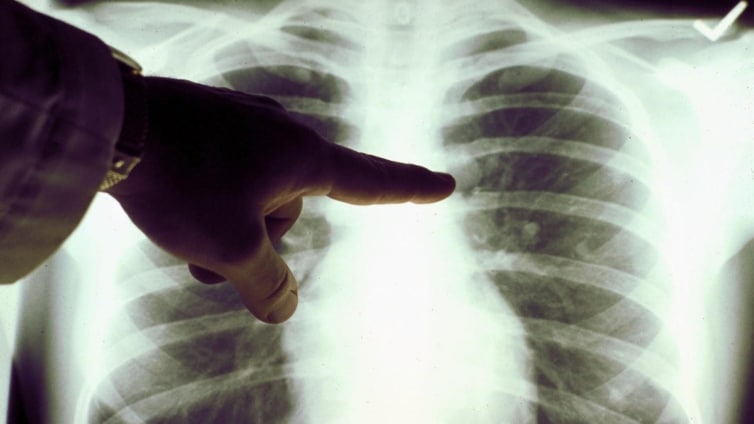
    Death rates from cancer in the US have fallen by 32% over the three decades from 1991 to 2019, according to the American Cancer Society.

    The decline is thanks to prevention, screening, early diagnosis and treatment of common cancers, including lung and breast cancer.

    The drop has meant 3.5m fewer deaths.

    However, cancers are still the second leading cause of death in the US, after heart disease.

    In 1991, the cancer death rate was 215 per 100,000 people and in 2019 it dropped to 146 per 100,000 people.

    Lung cancer, of which there are 230,000more cases each year, kills the most patients, 350 per day.

    But people are being diagnosed sooner, and technological advancements have increased the survival rate by three years.

    Breast cancer rates have actually increased by 0.5% a year since the mid-2000s, which the American Cancer Society report attributes to “more women having obesity, having fewer children, or having their first baby after age 30”. Increased presence of fat tissue can elevate levels of the hormone oestrogen, which has been linked to the cancer.

    Though having fewer children or having them later has been linked to increasing breast cancer chances, the link is not well understood.

    Mortality rates from breast cancer, though, have declined.

    The research found that “at least 42% of the projected new cancers are potentially avoidable”, noting that 19% of cancers are caused by smoking and 18% of cancers are “caused by a combination of excess body weight, drinking alcohol, poor nutrition, and physical inactivity”.

    The report also examined racial and economic disparities in cancer outcomes.

    The Covid-19 pandemic added to already existing difficulties for marginalised groups to get cancer screenings and treatment.

    For nearly every type of cancer, white people have a higher survival rate than black people. Black women with breast cancer face a 41% higher death rate than white women.

    One bright spot was that cancer death rates in children and adolescents have seen large declines. Since the 1970s, cancer death rates in children have declined by 71% and by 61% for those ages 15 to 19.

    Cancer is the second most common cause of death, after accidents, for children one to 14 years old.

    Some cancer progress in children has lagged behind adult research due to “lower enrolment in clinical trials, differences in tumour biology and treatment protocols, as well as treatment tolerance and compliance,” according to the report.

    Source: BBC

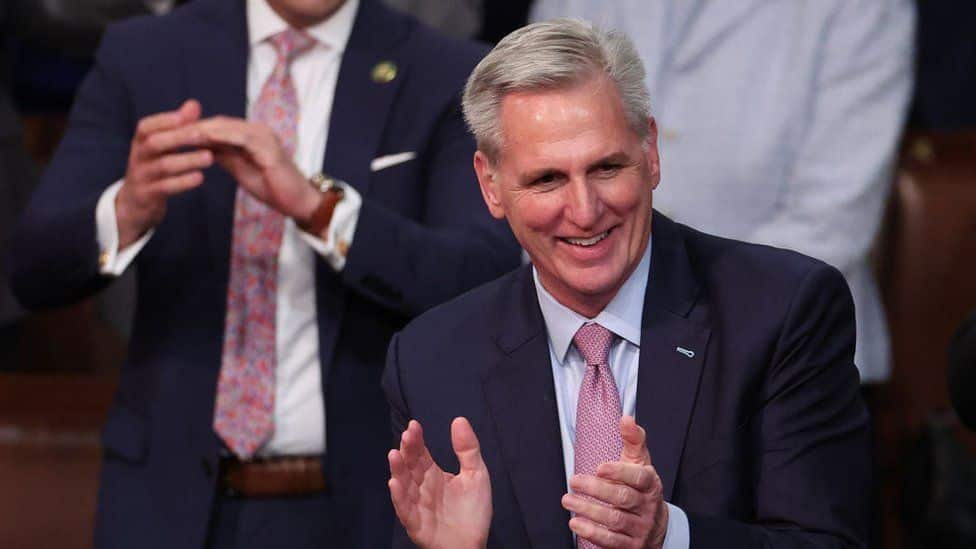
  • US has a new Speaker, Kevin McCarthy

    US has a new Speaker, Kevin McCarthy

    Kevin McCarthy was selected as the new Speaker of the US House of Representatives following tense debates that nearly led to physical altercations between Republican Party members.

    Despite holding a majority in the house, Mr. McCarthy’s party had to endure 15 voting rounds before its victory was certified.

    On the House floor before the vote, a spectacular lobbying effort was launched to persuade party defector Matt Gaetz to support Mr. McCarthy.

    Late on Friday, six holdouts—among them the Florida congressman—decided to give up.

    Rep. Mike Rogers, a McCarthy supporter, and Mr. Gaetz previously got into tense arguments in the chamber and came dangerously close to fighting.

    Mr. Gaetz was forcibly detained by his colleagues after the Alabama lawmaker shouted and pointed a finger at him.

    The Speaker sets the agenda for the House and is in charge of all legislative business. The post is second in line for the presidency after the US vice president.

    Speaking after his confirmation, Mr McCarthy wrote on Twitter: “I hope one thing is clear after this week: I will never give up. And I will never give up for you, the American people.”

    US President Joe Biden congratulated Mr McCarthy for his win and said he looked forward to co-operating with the Republican Party.

    “The American people expect their leaders to govern in a way that puts their needs above all else, and that is what we need to do now,” he said.

    Republicans have already pledged to launch investigations into Mr Biden’s family business dealings and administration.

    After the 13th ballot was adjourned, Mr McCarthy insisted to reporters that he would “have the votes” to take the speakership on the next round.

    In a remarkable turnaround in the 12th round of voting, Mr McCarthy was able to persuade 14 Republican holdouts to cast their vote for him. A 15th rebel followed suit for the 13th ballot.

    But the California congressman was still three votes short of the 217 he needed to take the prized gavel, and in chaotic and dramatic scenes, he again failed to win on the 14th ballot.

    The dissidents included members of the House Freedom Caucus, who argue that Mr McCarthy is not conservative enough to lead them as they work to stymie Democratic President Joe Biden’s agenda.

    Mr McCarthy has offered various concessions to the rebels, including a seat on the influential rules committee, which sets the terms for debate on legislation in the chamber.

    He also agreed to lower the threshold for triggering a vote on whether to unseat the Speaker, to only one House member, leading to the possibility that the Republican coalition could easily fracture again even after Mr McCarthy’s victory.

    Senior Democratic Party lawmakers accused Mr McCarthy of ceding power to an extreme wing of his party and likened the stand-off to the riot exactly two years ago on Capitol Hill by Trump supporters who disrupted Mr Biden’s certification as president.

    “Two years ago insurrectionists failed to take over the Capitol,” Congressman Eric Swalwell wrote on Twitter. “Tonight Kevin McCarthy let them take over the Republican Party.”

    And Virginia Congressman Don Beyer referred to the angry scenes among Republicans that followed the 14th count.

    “Unsettling that this process ends in threats of violence in the House Chamber, on this of all days,” he said. “Maybe it didn’t determine the outcome, but that is no way to conduct the people’s business. A dark and sobering moment will probably be remembered long after this session ends.”

    The minority Democrats had continued to vote in unison for their leader, New York’s Hakeem Jeffries, the first black person ever to lead a party in Congress.

    Friday was the first day that Mr McCarthy’s vote count actually surpassed that of Mr Jeffries.

    Not since 1860 in the build-up to the American Civil War has the lower chamber of Congress voted this many times to pick a speaker. Back then it took 44 rounds of ballots.

    In November’s midterm elections, Republicans won the House by a weaker-than-expected margin of 222 to 212. Democrats retained control of the Senate.

  • Barbara Walters: Trailblazing US news anchor dies aged 93

    Pioneering US TV broadcaster Barbara Walters has died aged 93 after a career spanning half a century.

    She became the first US female network news anchor when she joined ABC News in 1976.

    Born in Boston at the start of the Great Depression in 1929, she won 12 Emmy awards.

    As well as every US president from Richard Nixon to Donald Trump, she interviewed a host of music and pop culture stars.

    “Barbara Walters passed away peacefully in her home surrounded by loved ones,” said publicist Cindi Berger in a statement on Friday night.

    “She lived her life with no regrets. She was a trailblazer not only for female journalists, but for all women.”

    The showbusiness booking agent’s daughter began her career in journalism in 1961 with NBC, where she became a segment producer of women’s interest stories.

    She rose through the ranks of the male-dominated industry to make history in 1974 by becoming the first female co-host of a US news programme, on NBC’s morning-time Today Show.

    Promotional portrait of television journalist Barbara Walters on the set of the Today Show, New York City, in 1976
    Image caption,Walters was the first female co-host of a US news programme, on NBC’s morning-time Today Show

    When she broke the glass ceiling again by becoming the first female network news anchor, on ABC’s evening bulletin, her unprecedented $1m salary made her a media superstar.

    “I have been blessed with a life I never expected,” Walters said back in 2000 as she received a Lifetime Achievement Award from the National Academy of Television Arts and Sciences.

    She retired from a 52-year career in 2014 with a last appearance on her daytime show, The View.

    She was joined on the programme by Hillary Clinton and media mogul Oprah Winfrey, both frequent Walters interview subjects.

    “I can’t believe this day has come, and I can’t believe it’s for real,” Ms Clinton told Walters.

    Over her long career she interviewed a long list of world leaders including UK Prime Minister Margaret Thatcher, Russian President Vladimir Putin, Cuban President Fidel Castro as well Egyptian President Anwar Sadat and Israeli Prime Minister Menachem Begin.

    She also interviewed Syrian President Bashar al-Assad a few months after a public uprising that would eventually turn into the country’s civil war.

    Tributes have been flooding in for Walters.

    Journalist Dan Rather said that “journalism has lost a pillar of professionalism, courage, and integrity”.

    News anchor Don Lemon tweeted: “She was obviously amazing on television but I selfishly loved spending time with her in person. Sitting next to her at a dinner party was the best seat in the house.

    “With love, respect and admiration – rest in peace Barbara Walters.”

    Oprah Winfrey described Walters as “such a powerful and gracious role model”.

    Disney’s chief executive, Bob Iger, said “Barbara was a true legend, a pioneer not just for women in journalism but for journalism itself.

    “She was a one-of-a-kind reporter who landed many of the most important interviews of our time, from heads of state and leaders of regimes to the biggest celebrities and sports icons.”

    Anchor of ABC World News Tonight, David Muir, tweeted: “So often we toss around the words icon, legend, trailblazer – but Barbara Walters was all of these.

    “And perhaps, above all else, Barbara Walters was brave. She paved the way for so many – we learned from her – and remain in awe of her to this day.”

    ABC News Correspondent, Deborah Roberts, who worked alongside Walters, described her as an “inimitable trailblazer”.

    Senator Chuck Schumer said: “Barbara Walters was a trailblazing journalist, so many of her interviews were unforgettable. She broke the glass ceiling for so many women and girls.”

    American actress Lynda Carter said: “Barbara Walters was an American institution.

    “As the first female national news anchor, she opened the door to endless possibilities for so many girls who wanted to work in TV, myself included. Her impact cannot be overstated.”

    Singer Jennifer Hudson said: “A true trailblazer and icon! She lived a full life and leaves behind such a powerful legacy.”

    NBA legend Kareem Abdul-Jabba said Walters “never flinched when questioning the world’s most powerful people”.

    “She held them accountable. She cared about the truth and she made us care too. Fortunately, she inspired many other journalists to be just as unrelenting. We are all better off because of her.”

    Actor Hugh Jackman said Walters was “a trail blazer, wickedly funny, generous, open-hearted and a good friend.

    “She also gave some of the most memorable dinner parties we’ve ever been to.”

  • US bomb cyclone: At least 28 dead and hundreds of thousands of homes without power in brutal storm

    At least 28 people have died in the US as the country grapples with a brutal winter storm.

    Blizzard conditions have left almost 300,000 homes and businesses without power, as temperatures plunge to well below freezing.

    More than 3,000 flights were cancelled on Saturday, with some airports closed.

    On Friday more than 200 million people were under some form of weather warn

    Warning of 90mph winds and 20cm of snow

    Icy conditions on the roads prompted many authorities to warn against non-essential travel, and hundreds of people who did venture out found themselves stranded in their vehicles.

    Among those who have died are three people in car crashes in Kentucky, and another three in Oklahoma, two of which happened as winds blew the drifting snow.

    In Montana, the National Weather Service warned that the eastern slope of Glacier National Park and nearby foothills and plains could see up to 20.3cm of snow and winds of up to 90mph.

    Montana saw a temperature of -45.6C (-50F) earlier in the storm, while yesterday’s low belonged to the remote town of Havre – also in Montana – which saw -39C (38F).

    In Maine, more than 107,000 properties are without power and utility bosses have warned it could take days before supply is fully-restored, while some other states have asked customers to cut back on their usage to avoid rolling blackouts.

    ing.

  • Nobody from nowhere would bully us – Rwanda’s Kagame shoots down US pressure over Rusesabagina

    In response to the US request to free government critic Paul Rusesabagina, Rwandan President Paul Kagame stated that nobody would “bully us” regarding domestic matters in his country.

    When discussing African issues outside of the US-Africa Summit in Washington, Mr. Kagame was asked if the US’s support of Mr. Rusesabagina through Antony Blinken was “helping or hurting” his case.

    Mr. Kagame claimed that because “this person is a celebrity,” “somebody in America” wanted the case to be “nullified.”

    On terrorism-related charges, Mr. Rusesabagina and 20 other defendants were found guilty last year.

    “If we let him free, how about these other 20 who pointed him as even being their leader?” President Kagame asked.

    “We have made it clear, there isn’t anybody going to come from anywhere to bully us into something to do with our lives – you can maybe make an invasion and overrun the country,” he added sarcastically.

    Mr Rusesabagina, 68, was depicted as a hero in a Hollywood movie on the Rwandan genocide.

    He was sentenced to 25 years in jail after being tricked into boarding a private jet from Dubai to Rwanda’s capital Kigali, thinking he was heading to Bujumbura in Burundi.

    Mr Rusesabagina’s family has called the trial a sham, saying he was taken to Rwanda, from exile, by force.

    The US has stated that Mr Rusesabagina is being “wrongfully detained” in Rwanda

  • US imposes sanctions against former Guinean president

    The former president of Guinea, Alpha Condé, will now face penalties, according to American authorities’ announcement on Friday.

    The sanctions are related to violence against opponents before being ousted in a coup in 2021.

    The former Guinean leader will have his US assets frozen. All transactions involving Alpha Condé will also be criminalized.

    Condé became the first democratically elected president of Guinea in 2010 but after two terms was accused of rising authoritarianism, culminating in a bloody crackdown against protestors in 2020.

    According to the US Treasury Department, Alpha Condé, who is now 84 years old, was engaged in serious human rights abuse.

    Source: BBC


  • Iran, now Russia’s “biggest military supporter,” US say during Ukraine war

    The US claims that there is now a full-fledged defense alliance between Russia and Iran.

    Russia is giving an unprecedented level of military support, said US national security council spokesman John Kirby.

    The US has seen reports that the two countries are considering joint production of lethal drones, he added.

    Australia has announced it is sanctioning three Iranians and one Iranian business for supplying Russia with drones to use against Ukraine.

    Co-operation between Russia and Iran has been highlighted recently, with Ukraine accusing Russia of using Iranian drones in its attacks.

    After initially denying sending any drones to Russia, the Middle Eastern country later admitted it had supplied some before the invasion of Ukraine.

    Mr Kirby said that a partnership between Iran and Russia to produce drones would be harmful to Ukraine, Iran’s neighbours and the international community.

    “Russia is seeking to collaborate with Iran in areas like weapons development, training,” he said, adding that the US fears that Russia intended to “provide Iran with advanced military components” including helicopters and air defence systems.

    “Iran has become Russia’s top military backer…” he said. “Russia’s been using Iranian drones to strike energy infrastructure, depriving millions of Ukrainians of power, heat, critical services. People in Ukraine today are actually dying as a result of Iran’s actions.”

    In response to Mr Kirby’s comments, UK Foreign Secretary James Cleverly said that Iran had become one of Russia’s main military supporters and that the relationship between them was threatening global security.

    The “sordid deals” between the two countries have seen Iran send hundreds of drones to Russia, he said.

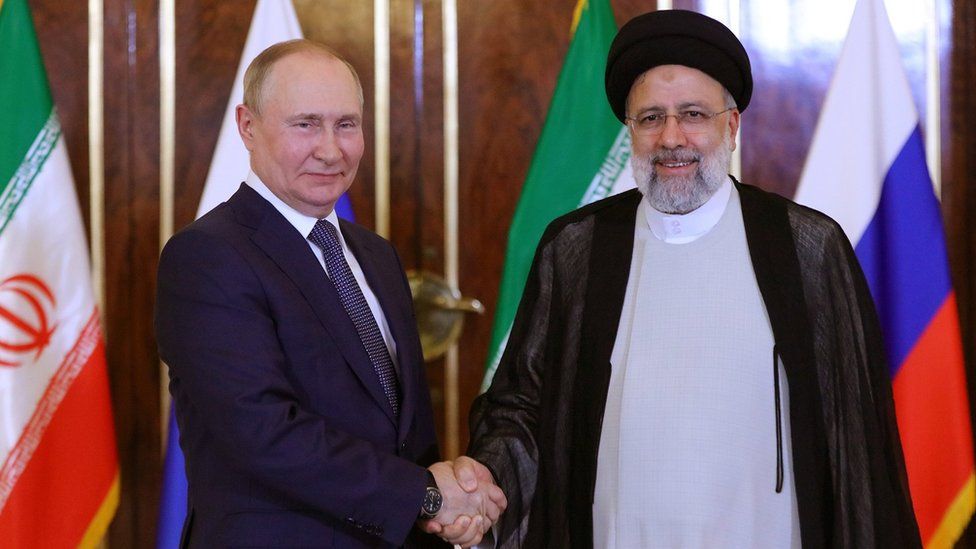
    Russian President Vladimir Putin meets Iranian President Ebrahim Raisi in July.Image source, Getty Images
    Image caption, Russian President Vladimir Putin with Iranian President Ebrahim Raisi in July.

    “In return, Russia is offering military and technical support to the Iranian regime, which will increase the risk it poses to our partners in the Middle East and to international security,” he added.

    He said the UK agreed with the US that Iranian support for the Russian military would grow in the coming months as Russia tried to get hold of more weapons, including hundreds of ballistic missiles.

    Ukraine accused Iran of supplying Russia with “kamikaze” drones used in a series of attacks which killed at least eight people on 17 October.

    After denying this, Iran later admitted sending a “limited number” of drones to Russia, “many months” before the war in Ukraine.

    Ukraine’s President Volodymyr Zelensky said this was a lie and that Ukraine was shooting down about 10 Iranian drones a day.

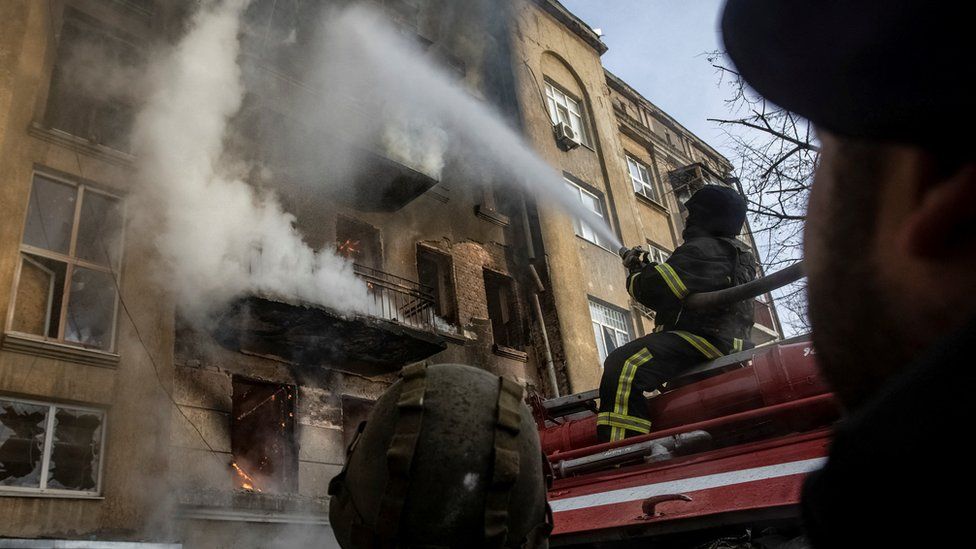
    Firefighters put out a blaze at a residential building hit by a Russian military strike in BakhmutImage source, Reuters
    Image caption, Russia’s war on Ukraine continues to affect many cities and regions, including Bakhmut in the Donbas

    On Saturday, Penny Wong, Australia’s foreign minister, said in a statement: “The supply of drones to Russia is evidence of the role Iran plays in destabilising global security. This listing highlights that those who provide material support to Russia will face consequences.”

    She also announced measures against 19 other people and two entities, including Iran’s Morality Police, for the brutal treatment of anti-government protestors following the death of 22-year-old Mahsa Amini in custody earlier this year.

    In other developments:


    • Russia has turned the Ukrainian city of Bakhmut into “burnt ruins”, President Zelensky says, following months of deadly fighting in the eastern Donbas region
    • The United Nations says Belarus will allow the transit of Ukrainian grain through its territory for export from Lithuanian ports
    • The head of a Ukrainian human rights organisation that was jointly awarded this year’s Nobel Peace Prize – Oleksandra Matviichuk of the Centre for Civil Liberties – has called on nations to set up an international tribunal to try Russian President Vladimir Putin for Russia’s war in Ukraine
    • The International Olympic Committee says it will explore a proposal to allow athletes from Russia and Belarus to take part in sporting events in Asia – despite an international ban.

    Source: BBC

  • Murdered US-based Ghanaian singer to be buried December 3

    On Saturday, December 3, 2022, Britney Boateng, a Ghanaian singer living in the United States of America who was fatally murdered by her sister-in-law, will be laid to rest.

    The requiem ceremony will be place at the Ebenezer United Methodist Columbus Ohio – 3330 Cleveland Ave, Columbus, OH 43224 – from 9:30am to 11am, according to an obituary seen by GhanaWeb.

    At Glen Rest Memorial Estate, Britney Boateng’s mortal remains will be buried.

    It would be recalled that on Tuesday, November 22, 2022, it was reported that Britney Boateng was shot dead by her sister-in-law, Tyona Dodson after an argument.

    Information gathered by GhanaWeb from multiple international online platforms indicated that the incident, which took place in East Columbus on Friday, November 18, 2022, ended the life of 22-year-old Britney Boateng.

    She was pronounced dead at 1:12 a.m., the Columbus Division of Police said.

    A report by 10tv.com said that “officers were called to the 400 block of South Weyant Avenue, just north of East Main Street, around 1 a.m. Police found Britney Boateng with a gunshot wound, who was pronounced dead at 1:12 a.m.”

    The police have since charged Tyona Dodson with murder.

  • US appeals court denies Trump ‘special master’ request in documents case

    A US appeals court has ended a “special master” review of documents seized from Donald Trump’s Mar-a-Lago estate.

    The ruling is a win for the US Department of Justice, which is probing if Mr Trump took classified documents with him when he left the White House.

    The “special master” is an independent lawyer who decides if any of the records are covered under attorney-client or executive privilege.

    Investigators can now review the documents in full.

    The ruling was made on Thursday by a three-judge panel in the Atlanta-based 11th Circuit US Courts of Appeal, after the Department of Justice challenged a September decision that granted Mr Trump’s request for the special master review.

    In its ruling, the appeals court wrote that there was no “judiciary license to interfere in an ongoing investigation”.

    “The law is clear. We cannot write a rule that allows any subject of a search warrant to block government investigations after the execution of the warrant. Nor can we write a rule that allows only former presidents to do so,” the court wrote.

    A special master review would have delayed the Department of Justice’s inquiry into Mr Trump’s handling of classified documents, as the government was banned from reviewing or using the materials until it was complete.

    Raymond Dearie, a 78-year-old New York judge who was first nominated by Republican President Ronald Reagan in 1986, was assigned as the special master with his case.

    It is unclear if Mr Trump and his lawyers will appeal against Thursday’s ruling.

    Mr Trump is being investigated for allegedly taking national classified documents with him to his private Florida home in Mar-a-Lago after he left the White House.

    The authorities say these documents should have been handed over to the National Archives – as required of US presidents upon leaving office.

    The FBI seized 15 boxes of White House documents in January, which officials said contained “highly classified reports”, some of which were “intermixed with other records” and contained Mr Trump’s “handwritten notes”. They also seized another 20 boxes in August.

    In total, the Department of Justice alleged that 11 sets of classified documents were taken from the White House by Mr Trump.

    The former president denied any wrongdoing, and argued that he had declassified all the documents as president and that they were kept securely at his Mar-a-Lago home.

    When requesting a special master, Mr Trump’s lawyers argued some of the documents are covered by attorney-client privilege – meaning they can be withheld under a US law that allows people to keep conversations with their lawyers private.

    Trump records probe timeline


    • January 2022 – The National Archives retrieves 15 boxes of White House records from Mar-a-Lago, and says some of the documents it received at the end of Trump administration were torn up
    • February – Reports emerge that classified files were found in the Mar-a-Lago cache and National Archives has asked DoJ to investigate
    • April – US media report the FBI has begun a preliminary investigation
    • 3 June – A senior DoJ official and three FBI agents travel to Mar-a-Lago to review items in a basement. According to Mr Trump, he told them: “Whatever you need, just let us know”
    • 8 June – Federal investigators write to a Trump aide to ask that a stronger lock be used to secure the room storing the items. Trump says that request was quickly fulfilled
    • 22 June – The Trump Organization receives a DoJ summons for CCTV footage from Mar-a-Lago
    • 8 August – Dozens of agents search Mar-a-Lago, seizing more than 33 boxes, some containing top secret files, according to the warrant
    • 12 August – Warrant released, showing that 11 sets of classified documents were taken
    • 25 August – Judge orders justice department to release a redacted version of court papers that convinced him to authorise a search of the Trump estate
    • 5 September – A judge grants Mr Trump’s request for a “special master” to review the documents
    • 1 December – A US appeals court reverses the earlier special master decision, giving the DoJ full access to documents seized from Mar-a-Lago

    Source: BBC

  • Liberia president’s son scores for US at World Cup

    Timothy Weah, the son of Liberia’s President George Weah, scored for the US in their World Cup opener against Wales that ended in a draw.

    Tim Weah finished smartly after a surging run and pass by Christian Pulisic.

    Gareth Bale rode to Wales’ rescue with a late penalty.

    President Weah is in Qatar for nine days to watch his American-born son play in the World Cup.

    His trip has sparked controversy back home after the country’s finance minister said the president was “entitled” to $2,000 (£1,700) daily allowance during his stay in Qatar.

    Critics say awarding Mr Weah such a huge amount a day goes against his promise to reduce public spending in favour of his “pro-poor agenda”.

    Source: BBC

  • The US wants to play in China’s backyard

    Nowhere has Xi Jinping’s assertive foreign policy had a greater impact than in South East Asia, China’s strategic backyard.

    But as Beijing’s power has grown, so has Washington’s unease – and now after years of see-sawing, the US is trying engage with the region again.

    When he attends the annual summit of the Association of South East Asian Nations or Asean this week in Cambodia, President Joe Biden becomes the first US leader to make that trip since 2017. He was there virtually last year too. And then he goes to Indonesia, another important player in the region, where he is scheduled to meet Chinese leader Xi Jinping before they both attend the G20 meeting.

    But the US is now operating in a more treacherous diplomatic environment than in the past.

    Asean, once considered essential for diplomacy in the Asia-Pacific, has struggled to remain effective in an increasingly polarised world. It has fashioned itself as a zone of peace and neutrality, where its 10 member states seek consensus, avoid criticising each other and feel free to engage different powers. Its small and weak secretariat, and lack of any process for enforcing decisions on members, reflects this mindset.

    This worked well while there was a broad, US-led global consensus that championed trade and growth. But China’s arrival on the global market and growing influence from the early 2000s coincided with diminishing US interest, as it focussed on the Middle East.

    China embarked on a charm offensive in the region, following former leader Deng Xiaoping’s mantra “hide your strength, bide your time”. But under Mr Xi, now in power for 10 years, China’s strength was no longer hidden.

    In the last decade, China’s occupation and military development of reef islands in the South China Sea has brought it into direct conflict with other claimants, particularly Vietnam and the Philippines. Attempts by Asean to get China to agree to a “code of conduct” in the disputed areas have gone nowhere. Beijing has simply stalled negotiations for 20 years. It has also dismissed an international court ruling in 2016 that its claims are invalid.

    It has been just as evasive on problems caused by its large-scale damming of the Mekong River.

    Vice President Joe Biden (R) and Chinese Vice President Xi Jinping shake hands after receiving gifts and answering students questions in a Mandrin language class at International Studies Learning Center February 16, 2012 in South Gate, CaliforniaImage source, Getty Images
    Image caption, Mr Xi with Mr Biden in 2012, when the latter was the US vice-president

    But the countries that make up Asean are in a sticky position. First, China is so important economically, and so powerful militarily, that few dare confront it openly.

    Even in Vietnam, which went to war with China only 43 years ago and where anti-China sentiment runs high, the ruling communist party is cautious when dealing with its giant neighbour. They share a long border, China is Vietnam’s largest trading partner, and a vital link in the supply chain that fuels its world-beating exports.

    Second, China has effectively destroyed Asean unity by picking off smaller states, such as Laos and Cambodia, which are now so dependent on Beijing’s largesse they are more or less client states. This was clear even in 2012, when Cambodia last took the rotating Asean chair, and blocked a final statement critical of Beijing’s position in the South China Sea.

    While wariness of China might sound like good news for the US, the truth is South East Asian countries have also become disenchanted with Washington.

    They see it as an unreliable partner, too preoccupied with human rights and democracy. The US forced the region to accept hugely unpopular and tough economic measures after the 1997 Asian financial crash, disengaged almost completely during President George Bush’s war on terror, and has since flipped from President Obama’s much-hyped “pivot” to Asia, to President Trump’s narrow approach to what he called unfair Asian trading practices.

    The US focus today on the Quad alliance with Japan, India and Australia has also weakened Asean, leaving it feeling stuck between two powerful sides. And Washington’s willingness to challenge China in Asia frightens them because they have a great deal to lose from a superpower confrontation.

    For all its overtures, no US administration has been willing to pursue free trade agreements – and that has certainly soured the deal for what is perhaps the most trade-dependent region in the world.

    A relationship with China, on the other hand, has already led to the world’s largest trading bloc linking Asean, China, Japan, South Korea, Australia and New Zealand.

    Even Indonesia, the largest Asean state and with the region’s most China-sceptic foreign policy, has under President Joko Widodo eagerly sought Chinese investment, loans and technology.

    The US can draw comfort from the knowledge that Asean will still engage other powers as much as possible – as a counterweight to China. And China is unlikely ever to have close military allies here, in the way the US does in Japan and Australia.

    But all Asean countries – to varying degrees – now accept that China will be the dominant power in this region and one that is unwilling to make concessions where its own interests are at stake.

    The question for Mr Biden: is it too late for the US to reshape alliances in China’s backyard?


    Source: BBC

  • South Korea scrambles warplanes after detecting 180 North Korean aircraft

    South Korea mobilized 80 military aircraft in response to the large presence of North Korean fighters and bombers.

    South Korea scrambled 80 military aircraft, including advanced F-35 fighter jets, after detecting 180 North Korean warplanes flying within North Korean territory – the nuclear-armed country’s latest defiant show of military strength.

    The Joint Chiefs of Staff (JCS) of South Korea said on Friday that North Korean warplanes were detected in various areas inland as well as along the country’s eastern and western coasts, but they did not fly particularly close to the inter-Korean border.

    None of those planes breached the South Korean military’s virtual “tactical action” line, which is designated to be located 20-50km (12-31 miles) north of the two countries’ land and sea boundaries. The action line is for monitoring purposes to give the South enough time to respond to provocations or attacks.

    The South scrambled 80 of its warplanes, including an unspecified number of F35 fighters, but there were no immediate reports of incidents involving the two air forces.

    The JCS said South Korean forces were “maintaining a firm readiness posture for further provocations” and monitoring the situation in coordination with the United States.

    Al Jazeera’s Rob McBride, reporting from the South Korean capital, Seoul, said some of the North Korean aircraft movements had been close enough to the Demilitarized Zone (DMZ) that separates the two Koreas to trigger the scrambling of South Korean jets in response.

    “The South Korean military has announced that during the day – from late morning local time through to mid-afternoon here – they have been detecting flight by around 180 military aircraft of different types in North Korea – right across the breadth of the North Korean part of the peninsula,” he said.

    The Korean People's Airforce holding a military drill in an undisclosed location in this photo released in 2013 by North Korea's official Korean Central News Agency (KCNA) [File: KCNA/AFP]
    The Korean People’s Army Air Force holding a military drill in an undisclosed location in this photo released in 2013 by North Korea’s official Korean Central News Agency [File: KCNA/AFP]

    Months of tension between North Korea and allies South Korea and the US appears to be reaching a new level as Pyongyang moves to demonstrate its opposition to ongoing military exercises south of its borders, while also showcasing its new military firepower.

    ‘Uncontrollable phase’

    North Korea had warned Seoul and Washington that their decision this week to hold the “Vigilant Storm” joint military air drills would receive a response.

    When South Korea and the US announced on Thursday they were extending the Vigilant Storm exercises by a day in response to North Korea’s earlier missile launches, an official in Pyongyang warned that the situation had entered a dangerous phase.

    “It is a very dangerous and false choice,” Pak Jong-chon, secretary of the Central Committee of North Korea’s ruling Workers’ Party, said of the decision to extend the drills.

    “The irresponsible decision of the US and South Korea is shoving the present situation, caused by provocative military acts of the allied forces, to an uncontrollable phase,” he said, according to South Korea’s Yonhap News Agency.

    The Vigilant Storm drills – which began on Monday and are now scheduled to end on Saturday – involve some 240 fighter jets and other military aircraft conducting about 1,600 joint missions. The air drills followed after the South Korean military wrapped up the 12-day Hoguk 22 field exercises, in which an undisclosed number of US military personnel had participated.

    North Korea is vehemently opposed to such training exercises, saying the military drills are preparing for an eventual attack on its territory.

    In a visit described as “highly choreographed” amid the tension on the Korean Peninsula, South Korea’s Minister of Defence Lee Jong-sup toured a US airbase on Thursday with US Secretary of Defense Lloyd Austin, Yonhap reported.

    US Secretary of Defence Lloyd Austin and South Korea's Minister of National Defence Lee Jong-sup talk in front of a B-1 bomber during a visit to Andrews Air Force Base on November 3, 2022 [Mandel Ngan/pool/AP]
    Austin and South Korea’s Defence Minister Lee Jong-sup talk in front of a B-1 bomber during a visit to Andrews Air Force Base on November 3, 2022 [Mandel Ngan/Pool via AP]

    The tour by the defence chiefs of the US Air Force’s Joint Base Andrews in Maryland, which is home to nuclear-capable B-1B and B-52 bombers, was an opportunity to “highlight America’s military might amid evolving North Korean threats”, Yonhap reported.

    During the visit, the US defence secretary “underscored Washington’s ‘ironclad’ security commitment to the defence of the South”, Yonhap said.

  • North Korea: Pyongyang fires suspected ICBM

    North Korea fired an intercontinental ballistic missile (ICBM) on Thursday but it failed mid-flight, say the South Korean military.

    The ICBM launch is Pyongyang’s seventh this year, and comes amid concerns that it will soon test a nuclear weapon.

    It comes a day after both Koreas fired missiles in an escalation of tensions.

    That exchange saw the most number of missiles launched by the North in a single day.

    North Korea’s multiple launches comes as the US and South Korea are staging their largest-ever joint air drills, which Pyongyang has strongly criticised as “aggressive and provocative”.

    On Thursday North Korea fired a long-range missile at around 07:40 local time (23:40 GMT), according to a statement from South Korea’s Joint Chiefs of Staff. A source confirmed with the BBC that it was an ICBM.

    It flew for about 760km (472 miles) and reached a height of around 1,920 km.

    But the launch was “presumed to have ended in failure”, South Korea’s military said.

    Pyongyang also fired two short-range ballistic missiles.

    The launches led the Japanese government to issue a rare emergency alert on Thursday morning to residents in some of its northern regions, telling them to stay indoors.

    Tokyo initially said the missile had flown over Japan, but Defence Minister Yasukazu Hamada later said it did “not cross the Japanese archipelago, but disappeared over the Sea of Japan”.

    Prime Minister Fumio Kishida later condemned North Korea’s “repeated missile launches”, calling them an “outrage”.

    The US said the launch demonstrated the threat North Korea’s missile programme poses to neighbours and international peace and security.

    “Our commitments to the defence of the Republic of Korea and Japan remain ironclad,” a State Department spokesman said.

    Meanwhile South Korea’s Vice Foreign Minister Cho Hyun-dong and US Deputy Secretary of State Wendy Sherman said the launches were “deplorable, immoral” during a phone call on Thursday, according to South Korea.

    It comes just a month after North Korea launched a ballistic missile over Japan – the first time it had done so in five years.

    The North has tested a record number of missiles this year as tensions have risen.

    Despite crippling sanctions, Pyongyang conducted six nuclear tests between 2006 and 2017 and is believed to be planning a seventh.

    It has continued to advance its military capability – in breach of United Nations Security Council resolutions – to threaten its neighbours and potentially even bring the US mainland within striking range.

    Wednesday’s launch saw one of Pyongyang’s ballistic missiles cross the Northern Limit Line (NLL), a disputed maritime border between the Koreas.

    It landed outside South Korea’s territorial waters but was the closest a North Korean missile got to the border.

    Seoul responded with warplanes firing three air-to-ground missiles that also crossed the disputed maritime demarcation line. It fired a total of 23 missiles on Wednesday.

    And they were launched from various points across the country, according to Kim Jong-dae, a visiting scholar of Yonsei Institute for North Korean Studies.

    “South Korea and the US believe that if they find the starting point of the provocation, they can precisely strike it. But there are starting points all over North Korea, and North Korea is posing multi-dimensional, systematic and simultaneous threats that they can fire (missiles) anywhere in their land. This is a situation which I’ve seen for the first time,” he told local news channel YTN.

    With accelerated activity from North Korea since late September, “the end of this is likely to be the seventh nuclear test, to prove their nuclear capabilities and determination,” Park Won-gon, North Korean studies professor at Ewha Woman University, told the BBC.

    “It’s unrealistic to expect North Korea to denuclearise, as it wants de facto nuclear state status to sit on the negotiation table with the US.”


    Source: BBC

  • CVS and Walgreens have agreed to pay $10 billion to settle opioid-related lawsuits

    Two of the country’s largest pharmacies have agreed to pay more than $10 billion to settle thousands of lawsuits stemming from their roles in the US opioid crisis.

    The proposed deals with CVS and Walgreens are the latest chapter in a long legal saga in which companies have been accused of contributing to the abuse of addictive painkillers.

    Settlements with pharmaceutical companies and distributors have already brought in more than $30 billion.

    The pharmacies deny any wrongdoing.

    But they have lost some high-profile, smaller legal battles recently, with a judge ordering the two firms and Walmart to pay more than $650m (£567m) to two Ohio counties.

    CVS chief executive Karen Lynch said on a call with analysts that the settlement was in the “best interests of all parties and helps put a decades-old issue behind us”.

    Local governments, Native American tribes, and others behind the total of more than 3,000 lawsuits will now decide whether or not to accept the settlement. It would allow them to funnel money to help them address the local costs of a crisis that the US says has claimed more than 560,000 lives since 1999.

    Lawyers for the plaintiffs that helped negotiate the deal called the proposal an “important step” to holding the pharmacies “accountable”.

    “Once effectuated, these agreements will be the first resolutions reached with pharmacy chains and will equip communities across the country with the much-needed tools to fight back against this epidemic and bring about tangible, positive change,” the legal team said in a statement.

    Since former US President Donald Trump declared the opioid epidemic a national emergency in 2017, the situation has worsened.

    Overdoses involving opioids jumped 30% in 2020 and another 15% last year, with illegally manufactured fentanyl driving the recent crisis, according to the US Centers for Disease Control and Prevention.

    The situation has strained public resources, with the economic toll of the opioid crisis in 2020 alone mounting to $1.5tn, according to a congressional report last month.

    Advocate, author, and recovering addict Ryan Hampton said many are ready for the years of legal fighting to an end, but that the settlements have fallen short of early hopes. He warned that policymakers will need to commit more resources if they hope to do more than make a dent in the crisis.

    “It is my hope that these dollars are put to use immediately on the ground, 100% of them,” he said. “That’s my hope. My fear is that when the dollar is distributed… that yes, it’s nothing but it’s nowhere near enough.”

    While the settlements often outline how the funds should be spent – sending funds to facilities that offer treatment programmes, for example – Mr Hampton said the jury is still out on the overall impact.

    “They’re much needed but are we really just plugging a hole in the dam at this point?” he said. “We’re going to need massive federal investment that goes beyond litigation dollars if we’re going to get anywhere near preventing these tragic overdose deaths.”

    In the lawsuits brought by local communities, Native American tribes, and other parties since 2017, the pharmacy chains were accused of ignoring red flags while handling prescriptions for the drugs.

    CVS said it would pay about $5bn over 10 years to settle the claims, while Walgreens Boots Alliance has agreed to pay $5.7bn over 15 years.

    Walmart has also reached a $3.1bn deal, Reuters reported. Walmart declined to comment.


  • US sanctions IS group in Somalia over arms smuggling

    The US has sanctioned the Islamic State group (IS) in Somalia and several of its alleged members said to be smuggling arms in East Africa.

    The IS mainly operates in the country’s north-east where it targets security forces and civilians in attacks.

    Despite receiving regional and international support, Somalia continues to grapple with deadly militant violence.

    IS Somalia has been active in the Horn of Africa nation since 2015.

    The sanctioned individuals are accused of providing support to the group’s intelligence unit, smuggling arms across East Africa and co-ordinating high-profile attacks.

    Some were former members of the al-Shabab group.

    In October, the US blacklisted several al-Shabab members also said to be trafficking weapons between Somalia and Yemen where al-Qaeda and the Islamic State are entrenched.

    Violent attacks by Somalia’s militant groups have claimed many lives and instilled widespread fear.

    Somalia is heavily dependent on international support to disrupt illicit arms and financing networks aiding activities by al-Shabab and the Islamic State.

    Source: BBC

  • Elon Musk posts a conspiracy theory about the Pelosi attack on Twitter

    Before deleting his post, Tesla CEO Elon Musk linked to an unsubstantiated article about Nancy Pelosi’s husband.

    Elon Musk, the new owner of Twitter, tweeted an article containing a conspiracy theory about the attack on Nancy Pelosi’s husband before deleting the post hours later.

    Musk’s tweet on Sunday linked to an article making unsubstantiated claims about Paul Pelosi’s personal life and the role it may have played in last week’s attack at his and his wife’s home in San Francisco.

    Musk tweeted the article by the Santa Monica Observer, a website with a history of publishing misinformation, after Hillary Clinton posted an LA Times article about the suspected attacker, David DePape, and criticised Republicans for spreading “hate and deranged conspiracy theories”.

    In response to Clinton’s tweet, Musk posted the article while adding there was a “tiny possibility there might be more to this story than meets the eye”.

    US media outlets have linked DePape, who is accused of attacking Pelosi with a hammer, to blog posts espousing far-right and extreme views online, including the QAnon conspiracy theory.

    Musk, who has described himself as a “free-speech absolutist”, appeared to have deleted his tweet several hours after posting it without explanation.

    The Tesla CEO’s controversial tweet comes as his $44bn purchase of the social media platform is at the centre of a heated debate about the limits of free speech in the digital age.

    Musk, the world’s richest man, has criticised Twitter’s moderation policies and accused the social media giant of having a left-wing bias.

    The billionaire has stressed the need for a “common digital town square” where a wide range of beliefs can be debated while insisting he does not favour a “free-for-all hellscape”.

    Critics have expressed fears that Musk’s ownership of the platform could result in a surge in hate speech and misinformation, while conservatives have heralded the takeover as a corrective to Big Tech censorship.


  • Trevor Noah: I never said the entire UK was racist comic says, after the Rishi Sunak controversy

    After a backlash over a skit he did about Rishi Sunak’s appointment as Prime Minister, comedian Trevor Noah says he did not claim “the entire UK is racist.”

    Earlier this week, Noah said on the US news show The Daily Show that there had been a “backlash” over Mr Sunak.

    In the UK, many people, including ex-chancellor Sajid Javid, called Noah’s remarks “simply wrong.”

    But Noah has now defended his segment, saying he was reacting to racists, and: “That’s why I said. ‘Some people’.”

    Mr Sunak is the UK’s first British Asian prime minister and officially took over as Conservative leader and PM on Tuesday, after a leadership process.

    In the original comments on the US programme, Noah – who is South African and grew up during apartheid – said: “You hear a lot of the people saying ‘Oh, they’re taking over, now the Indians are going to take over Great Britain and what’s next?’

    “And I always find myself going ‘So what? What are you afraid of? I think it’s because the quiet part that a lot of people don’t realise what they’re saying is, ‘We don’t want these people who were previously oppressed to get into power because then they may do to us what we did to them.’”

    During his skit, Noah played a clip from radio station LBC during the latest Conservative leadership race a week ago, when a caller falsely claimed Mr Sunak was “not even British”.

    Mr Javid tweeted in response that the comments from the comedian were “so wrong” and that Britain “is the most successful multiracial democracy on earth and proud of this historic achievement”.

    Former Tory leadership contender Rory Stewart said Mr Noah’s remarks were “completely bizarre” and an example of “lazy stereotyping”.

    Downing Street said on Thursday that Mr Sunak did not believe Britain was a racist country.

    Presenter Piers Morgan also tweeted that US media was “falsely portraying Britain as a racist country”.

    Noah finally responded on Friday evening, saying: “C’mon Piers, you’re smarter than that.

    “I wasn’t saying “The entire UK is racist”, I was responding to the racists who don’t want Rishi as PM because of his race. That’s why I said. “Some people”.”

    Presentational white space

    Noah has long spoken about racial equality, publishing a book in 2017 titled Born a Crime, a reference to the fact he was born in South Africa to a white Swiss father and a black Xhosa mother, at a time when such a relationship was punishable by imprisonment.

    He began his career in South Africa, releasing a string of stand-up specials and hosting a late-night talk show before relocating to the US in 2011.

    He has hosted The Daily Show – a late-night talk and satirical news programme – since 2015 but last month announced he would be standing down.

    Mr Sunak was born in Hampshire, south-east England, to Indian parents – a pharmacist mother and a GP father – and is married to Akshata Murty, with whom he has two young daughters Krishna and Anoushka.

    &


  • Musk intends to establish a ‘content moderation council’ for Twitter

    Before the council meets, no major decisions or account reinstatement will be made, according to the outspoken billionaire businessman.

    Elon Musk has announced his intention to form a “content moderation council with widely diverse viewpoints” at Twitter in his first policy actions since taking over the social media company on Friday while emphasising that no changes to the platform’s moderation policies have been implemented thus far.

    “No major content decisions or account reinstatements will happen before that council convenes,” the outspoken billionaire businessman said amid concerns that former US President Donald Trump’s account might be reinstated.

    “To be super clear, we have not yet made any changes to Twitter’s content moderation policies,” he added in a later tweet.

    Twitter formally became the private property of Musk, CEO of Tesla and SpaceX, on Friday, steering the platform down an uncertain path under the stewardship of one of its most vocal critics.

    Scrutiny quickly turned to how the platform will operate under a self-proclaimed free-speech absolutist who some users fear will turn Twitter into a global stage for hate speech and disinformation.

    Musk’s sealing of the on-again, off-again $44bn deal ended a months-long soap opera of corporate chicanery, involving insults, threats, and lawsuits.

    “The bird is free,” tweeted the billionaire Tesla founder and space pioneer in reference to the company’s logo. “Let the good times roll.”

    The deal drew contrasting reactions, with former US president Donald Trump cheering the change of leadership on a platform that had banned him, while activists warned of a surge in harassment and misinformation.

    European politicians were quick to signal to Musk that the continent had regulations for social media companies.

    “In Europe, the bird will fly by our rules,” tweeted Thierry Breton, the EU internal market commissioner.

    Musk had promised to dial back content moderation and was expected to clear the way for Trump to return to the platform.

    The then-president was blocked over concerns he would ignite more violence like the 2021 deadly attack on the US Capitol to overturn his election loss.

    Taking to his own Truth Social platform, Trump said he was “very happy that Twitter is now in sane hands” – but gave no commitment to rejoin if allowed.

    Far-right users were quick to rejoice at Musk’s ownership, posting comments such as “masks don’t work” and other taunts, under the belief that moderation rules would now be relaxed.

    ‘A huge responsibility’

    Yale University philosophy professor Jason Stanley, who has characterised Trump’s rise as a sign of mounting fascism in the United States, said he would alter his approach to posting.

    “For the moment I am staying on Twitter. But I am going to try to be much more careful about what I say now that Elon Musk is in charge. Cascading hate speech targeting can destroy your week,” he said.

    Right-wing political commentator Ben Shapiro said he gained 40,000 Twitter followers on Friday, while the actor Mark Hamill, a liberal, said he had lost almost 6,000 followers over the last three days.

    Musk reportedly fired Twitter chief executive Parag Agrawal and other senior officials – though the company did not reply to a request for comment and Agrawal still listed himself as CEO on his Twitter profile.

    But Ned Segal, Twitter’s chief financial officer since 2017, announced his departure.

    “At its best, (Twitter) democratizes communication and knowledge, ensuring accountability and equal distribution of info,” Segal said. “It’s a huge responsibility for everyone that shares in the work. I wish them strength, wisdom, and foresight.”

    Musk, who is using a combination of his own money, funds from wealthy investors, and bank loans to finance the deal, has conceded he is overpaying for a company that has regularly posted eye-watering losses.

    How to monetize?

    Twitter says it has 238 million daily users – dwarfed by the likes of Facebook’s nearly two billion – and has not been able to monetise in the same way as its rivals.

    However, it holds an outsized influence on public debate because it is the favoured platform for many companies, politicians, journalists and other public figures.

    Though he has promised that Twitter will not become a “free-for-all hellscape,” Musk reportedly plans deep staff cuts that would gut teams that oversee content.

    Despite Musk posting a letter to advertisers saying he wants Twitter to be a forum where rival viewpoints can be debated in a “healthy manner”, US auto giant General Motors said on Friday it has “temporarily paused” paid ads on the platform.

    “We are engaging with Twitter to understand the direction of the platform under their new ownership,” said a GM spokesman.

    Media watchdog Media Matters for America sounded the alarm over the future of a Musk-led Twitter, particularly the effect on imminent US midterm elections.

    The platform “is now on a glide path to becoming a supercharged engine of radicalization” and a “fever swamp of dangerous conspiracy theories, partisan chicanery, and operationalized harassment,” the organisation’s head Angelo Carusone said.


  • Donald Trump: Twitter in ‘sane hands’ after Elon Musk deal amid speculation ex-president’s ban could be revoked

    The former president’s Twitter ban could be lifted soon, as Musk previously blasted the decision as “morally wrong.”

    Donald Trump has stated that he is “very happy that Twitter is now in sane hands” following Elon Musk’s acquisition of the company.

    Musk’s $44 billion purchase of Twitter was completed on Thursday, and he reportedly fired the company’s CEO and two other top executives.

    The world’s richest man tweeted “the bird is freed” and “let the good times roll”.

    He’s promised to overhaul the service by getting rid of fake accounts and ensuring it’s a place where a “range of beliefs can be debated in a healthy manner”.

    Donald Trump – arguably once Twitter’s most famous user – was banned after the siege on the US Capitol in January 2021 for allegedly inciting violence with two of his posts.

    His banishment could be about the end, however, as Musk has previously said the ban was a “mistake” and “morally wrong”.

    Trump celebrated the takeover on TruthSocial, a conservative social media platform he created, by posting that Twitter “will no longer be run by Radical Left Lunatics and Maniacs that truly hate our country”.

    Many on the right of the political spectrum have long argued that Twitter and other social media sites are biased against their views and quick to ‘deplatform’ them.

    Musk’s approach to Twitter could allay some of those accusations as he’s described himself as a “free speech absolutist”.

    Tesla founder Elon Musk attendsthe Offshore Northern Seas 2022 conference in Stavanger, Norway
    Image:Musk has big plans for his new purchase

    However, he also assured advertisers Twitter would not become a “free-for-all hellscape, where anything can be said with no consequences”.

    The former president said the service would become “smaller but better” and that it must “work hard to rid itself of all the bots and fake accounts”.

    He also claimed his own TruthSocial had become a “phenomena” that last week had “bigger numbers” than TikTok, Twitter, and Facebook.

    It’s unclear what figures he’s referring to, but the claim is likely to be false given the huge user base of those services.

    Musk’s purchase of Twitter was completed a day before the 28 October deadline to avoid the deal going to court. The company had taken legal action to force the deal through after Musk backed out in July over the number of fake and spam accounts.

    Earlier this week, Musk posted a bizarre video of himself entering Twitter’s San Francisco headquarters carrying a sink alongside the message: “Entering Twitter HQ – let that sink in”.

    He’s also now updated his Twitter bio to “Chief Twit”.

    According to reports, Musk told staff during his visit it was not true he was planning on cutting up to 75% of Twitter staff after acquiring the company.

    It was previously reported that Musk told investors he was hoping to cut around three-quarters of the firm’s 7,500 employees.

    He has told investors he plans to sell users premium subscriptions to reduce reliance on ads, allow content creators to make money, and enable payments, according to Reuters news agency.


  • Georgia Senate race: Second woman called Herschel Walker a “hypocrite” for opposing abortion

    A high-profile Republican Senate candidate running on an anti-abortion platform is facing allegations from a second woman that he paid for her abortion.

    Herschel Walker, a former American football star, hopes to unseat Georgia’s Democratic incumbent in the midterm elections next month.

    The latest accuser called him “a hypocrite” unfit to be a US senator.

    The ex-NFL star has denied both claims, calling the latest one “foolishness”.

    Mr Walker, backing former US President Donald Trump, is running neck and neck with Democrat Raphael Warnock in November’s mid-term race.

    The second woman spoke anonymously to reporters over Zoom, saying Mr Walker pressured her into ending her pregnancy. Neither woman has revealed her identity publicly.

    The woman, who is being named by her lawyer only as “Jane Doe”, told reporters on Wednesday that she had a years-long relationship with Mr Walker while he was married and that he had driven her to a clinic.

    She did not appear on camera during the virtual news conference in Los Angeles.

    “He had publicly taken the position that he is about life and against abortion under any circumstance, when in fact he pressured me to have an abortion and personally ensured that it occurred by driving me to the clinic and paying for it,” she said.

    Her lawyer, Gloria Allred, cited exhibits including alleged love letters, a 1992 voicemail, and a hotel receipt that proved the two had a relationship in the late 1980s and 1990s. The BBC has not inspected the purported evidence.

    Speaking at a campaign event in Dillard, Georgia, just before the news conference, Mr Walker – who has staked out a strong anti-abortion stance – called the latest accusation a “lie”.

    “I’m done with this foolishness,” he said. “I already told people this is a lie, and I’m not going to entertain, continue, to carry a lie along.”

    “And I also want to let you know that I didn’t kill JFK either,” he joked, accusing the Democrats of politically dirty tricks against him.

    The new accuser, who says she is an independent voter that supported Donald Trump, said she became pregnant in 1993 by Mr Walker while he was playing for the Dallas Cowboys.

    She said Mr Walker “encouraged” and gave her money to have an abortion, but after she became emotional on her first visit to the clinic to complete the procedure, he returned with her the following day and “waited for hours in the parking lot until I came out”.

    “I was devastated because I felt like I was pressured into having the abortion,” she said.

    Earlier this month, Mr Walker denied a claim from another anonymous woman that he had pressured her and paid for her to get an abortion in 2009.

    Mr Walker is challenging the incumbent, Mr Warnock, a pastor at Ebenezer Baptist Church in Atlanta who supports abortion. The extremely close race could determine which party controls the US Senate after next month’s elections.

    Warnock campaign spokeswoman Rachel Petri said in a statement on Wednesday: “Today’s new report is just the latest example of a troubling pattern we have seen play out again and again and again.”

    Mr Warnock has himself been assailed over reports his church was evicting low-income tenants from apartments it owns, and that he ran over his ex-wife’s foot in a car during a domestic dispute.


  • North Korean tensions: Why is Kim Jong-un putting more on the country?

    Tensions with North Korea come and go, but the situation on the Korean peninsula is the most volatile it has been in five years, and it appears to be getting worse.

    The North has fired a missile over Japan in the last month, forcing residents to seek shelter; this is a hostile and provocative act. It has launched several other ballistic missiles, flown warplanes close to the South Korean border, and fired hundreds of artillery shells into the sea, which have landed in a military buffer zone established by the two Koreas in 2018 to maintain peace.

    Technically, the two countries are still at war.

    On Monday a North Korean merchant ship crossed the countries’ sea border, causing both sides to fire warning shots. South Korea says the incursion was intentional.

    So, what is Kim Jong-un up to? There are three reasons North Korea tends to launch missiles – to test and improve its weapons technology, to send a political message to the world (primarily the US), and to impress its people at home and shore up loyalty to the regime.

    It can be hard to decipher which of these ends Pyongyang’s actions serve, but this time Mr Kim has been explicit. State media has reported several times that the recent launches and drills are in response to military exercises being run by the US, South Korea, and Japan. The North has blamed its enemies for escalating tensions and says its launches are a clear warning they should stop.

    Washington, Seoul, and Tokyo have been holding large-scale military exercises, separately and together, for the past two months, to show they are ready for a North Korean nuclear attack. There is little doubt these have antagonised Mr Kim, who has always viewed such exercises as his enemies rehearsing for an invasion. The reason North Korea started developing nuclear weapons in the first place was to stop itself from being invaded.

    But there is a less explicit reason he could be upping the pressure now. Some believe may be preparing the ground for a more provocative test – the detonation of a nuclear weapon for the first time in five years, or even a small-scale attack on South Korea.

    Last year he laid out a five-year plan, detailing all the new weapons he planned to develop. It included smaller battlefield nuclear bombs and short-range missiles to carry them. The recent tests are evidence Mr Kim is not only working his way through this weapons wish list but that he is training his troops to use them. He used some of the recent drills, he said, to simulate a nuclear attack on South Korea.

    Now Mr Kim needs attention. He needs the world to notice the progress he has made if he is one day to get harsh international sanctions on his country lifted. Sanctions haven’t stopped North Korea from developing weapons, as they were designed to, but they are hurting its economy.

    Talks aimed at reducing those sanctions have long stalled and North Korea is slipping down the global agenda. The world is far more concerned with the war in Ukraine, and the rise of an authoritarian China. President Biden’s position is that sanctions on North Korea can only be eased when it agrees to give up all its nuclear weapons.

    In the meantime, Washington and Seoul have agreed to strengthen their defence of the Peninsula by holding the military exercises Pyongyang hates so much, and responding to its provocations with force. Following the North’s latest round of missile launches and drills, South Korea sent up warplanes and shot artillery of its own.

    If Mr Kim is to get the US to negotiate on terms more favourable to him, he must prove how dangerous his country has become. Last month he declared North Korea to be a nuclear weapons state, a position he said was irreversible.

    We should be worried about how assertive it seems to have become, said Kim Jong-dae, a former advisor in South Korea’s Defence Ministry. He pointed out how in the past North Korea has waited until US forces have finished their military exercises before retaliating. This time they fired artillery into the sea while exercises were ongoing.

    “We have never seen this audacity and aggression before, it is different. It is the North acting like a nuclear state,” he said.

    The US and South Korean governments believe preparations for North Korea’s seventh nuclear weapon test are complete and the North is waiting for the opportune political moment to act. An attractive window is opening, with China’s Communist Party Conference now over and the US midterm elections approaching.

    Meanwhile, South Korea is in the midst of yet another round of war games, with the US scheduled to join in. These may well provide Kim Jong-un with the pretext he has been waiting for.


  • US: Iranian drone trainers are assisting Russian soldiers in Crimea

    The US says Iranian military trainers are in Crimea teaching Russian soldiers how to utilise Iranian-made drones to attack targets in Ukraine.

    “We can confirm that Russian military personnel based in Crimea have been piloting Iranian UAVs and using them to conduct kinetic strikes across Ukraine, including in strikes against Kyiv in recent days,” US State Department spokesman Ned Price told a daily briefing with reporters.

    “We assess that … Iranian military personnel were on the ground in Crimea and assisted Russia in these operations,” Price said.

    He added “we do have credible information,” but did not provide evidence.


  • Install currency board to save the cedi – Prof. Hanke reiterates

    Steve H. Hanke a professor of Applied Economics at the Johns Hopkins University, has reiterated his point that the managers of the Ghanaian economy need to establish a currency board in order to save the fallen cedi against the dollar.

    The Professor, who is based in the US, for some time now has been monitoring and commenting on the Ghanaian economy and how the legal tender is depreciating against the US dollar.

    He noted in his October 20 tweet that the cedi has depreciated by 43.98% against the US dollar since January 2022 to be placed 4th on his weekly Hanke’s currency watchlist.

    He said, for the cedi to gain its strength and appreciate against the US dollar, the President together with the managers of the Ghanaian economy must install a currency board.

    “The Ghanaian cedi has depreciated against the USD by 43.98% since Jan 2022, which is why #Ghana takes the 4th place in this week Hanke’s #CurrencyWatchlist. To save the cedi, GHA must install a #CurrencyBoard, NOW,” Prof. Steve Hanke’s tweeted.

    The Ghanaian cedi has depreciated against the USD by 43.98% since Jan 2022, which is why #Ghana takes the 4th place in this week Hanke’s #CurrencyWatchlist. To save the cedi, GHA must install a #CurrencyBoard, NOW. pic.twitter.com/uxSNShZ0Yc

    — Steve Hanke (@steve_hanke) October 20, 2022

    The Cedi has recently been classified by Bloomberg as the worst-performing currency against the US Dollar.

    Currently, the Cedi is trading at around GH¢13 – GH¢14 to a dollar at some forex bureaus. The depreciation rate is a contributory factor for the ongoing shop closures ordered by the Ghana Union of Traders Association (GUTA).

    According to the group, the fast depreciation of the Cedi is eroding their profits and also increasing the cost of doing business.


  • Netflix set to launch an ad-supported service in November

    Netflix will introduce a new streaming alternative with advertisements in November, introducing a less expensive service as it battles to retain subscribers.

    The plan will be offered in 12 countries, including the United Kingdom, the United States, Canada, Mexico, and Australia.

    The service will cost £4.99 per month in the UK and $6.99 in the US, according to the company.

    Netflix has been losing customers as competition and cost of living pressures mount.

    The company lost more than 1 million subscribers in the first half of this year. It is due to provide an update of that figure to investors next week.

    ‘Price for every fan’

    Netflix’s move into advertising is a big change for the company, which pioneered the idea of subscription-based streaming.

    But as more entertainment companies roll out online streaming platforms, it has had a harder time retaining subscribers, especially as households concerned about the rising cost-of-living look for ways to cut back.

    In the UK, the least expensive plan without commercials starts at £6.99 a month.

    “We’re confident that … we now have a price and plan for every fan,” the company said in a press release.

    “While it’s still very early days, we’re pleased with the interest from both consumers and the advertising community and couldn’t be more excited about what’s ahead.”

    Subscribers to the new offering should expect to see an average of four to five minutes of adverts per hour, the company said.

    Some films and TV series also will not be available due to licensing restrictions.

    The company said it planned to expand the offering to more countries over time.

    Many of Netflix’s competitors already combine streaming with adverts or have plans to.

    Disney, for example, is due to roll out an advert-supported service in December in the US. That plan will start at $7.99 a month.

    Jeremi Gorman, Netflix’s president of worldwide advertising, said it had nearly sold out all the available ad time for the launch, a sign of the interest from advertisers in reaching younger audiences that are increasingly turning away from traditional television.

    Netflix is asking people who sign up for the ad service for gender and birth date information as part of efforts to target ads.

  • US and Mexico makes pact to lessen migration from Venezuela

    A deal between the US and Mexico permits some Venezuelan migrants to enter the US; but, those who do so illegally will be deported to Mexico.

    The agreement is expected to reduce strain at the US-Mexico border, as Venezuelans continue to depart the crisis-hit country in large numbers.

    Starting immediately, flights will be arranged for 24,000 migrants to arrive in the United States.

    Some six million people have left Venezuela in the past five years.

    The exodus is one of the largest migrations in the world, fuelled by violence, food, fuel, and medicine shortages, and repression by the government of President Nicolás Maduro.

    It has seen people desperate to improve their lives walking thousands of miles along dangerous routes to try to reach the US-Mexico border, where they then try to enter illegally or claim asylum.

    Under the new deal, which is effective immediately, the 24,000 eligible Venezuelan migrants – a tiny fraction of those who have fled – will be allowed to access the US by air, and stay for up to two years.

    They must still be in Venezuela, and not have made the trek to the US-Mexico border, the US Department of Homeland Security said in a statement.

    They will also need to have a person or organization based in the US to provide financial support and back up their claim to be part of the programme.

    It will come as a huge relief to those who are set to benefit from it. In theory, they will be spared the exhausting and dangerous journey to the US border and instead will be able to fly into the country, where support measures are in place.


    However, one major policy shift is that any undocumented Venezuelans who cross the southern border now face expulsion to Mexico – where previously, authorities usually did not accept expulsions of Venezuelans.

    This is a part of a controversial Trump-era policy called Title 42, which allows the US to swiftly expel undocumented migrants, thus taking away their chance to claim asylum. It was brought in during the pandemic to help prevent the spread of Covid-19 in holding facilities, officials said.

    Until now most Venezuelans who crossed into the US were not turned back – instead, they were temporarily allowed in and had the chance to apply for asylum.

    Now, Venezuelans found to have entered the US illegally – of which there are many thousands – could be sent to Mexico.

    The US and Mexican governments have said the policy is designed to discourage people from making the perilous trek across South America and Mexico – which they have been doing in record numbers over the past year as Venezuela’s economic and political situation worsens.


    The programme is based on a similar US model called Uniting for Ukraine, which offered safe haven to more than 100,000 Ukrainians who fled their country after Russia invaded earlier this year.

    The so-called “humanitarian parole programme” has been launched with the US midterm elections looming in November.

    The Biden administration is undoubtedly hoping the idea of helping Venezuelans who are fleeing poverty, political turmoil, and violence will play well politically, especially if it is combined with also expelling thousands who crossed the southern border illegally.

    However, with the vote so close, it may have a limited impact, and in the meantime, many thousands of desperate and tired Venezuelan migrants are caught in the middle.

    Map showing emigration routes

    The BBC uses the term migrant to refer to all people on the move who have yet to complete the legal process of claiming asylum. This group includes people fleeing war-torn countries, who are likely to be granted refugee status, as well as people who are seeking jobs and better lives, who governments are likely to rule are economic migrants.


  • North Korea says, missile launches represented a nuclear attack drill on the South

    The recent volley of missile launches, according to North Korea, was a “simulation” of a nuclear strike on the South.

    It occurs at a time when intelligence reports suggest North Korea is getting ready to conduct its first nuclear test in five years.

    Pyongyang has fired seven sets of missiles in recent weeks in retaliation for the US and South Korean military exercises.

    On Monday, state media published extensive reports claiming the missiles were designed to carry nuclear weapons.

    They said the military practised loading the missiles with tactical nuclear warheads, which are small short-range weapons aimed for use on the battlefield.

    They also claimed to have successfully simulated hitting South Korea’s military bases, ports and airports, and said the launches were a warning to US and South Korea.

    State news agency KNCA ran photos of leader Kim Jong-un overseeing and “guiding” the tests.

    Kim Jong-un surrounded by military officials as he observes a test launch
    IMAGE SOURCE,KCNA/REUTERS Image caption, State media also published several pictures of Kim Jong-un presiding over the missile launches

    US and South Korean intelligence officials have been suggesting that the North may soon test a nuclear weapon for the first time since 2017.

    Experts believe it could also use the opportunity to detonate a smaller tactical device for the first time – the sort which would fit into the missiles it has been testing.

    Last month North Korea revised its nuclear laws, expanding the range of scenarios in which it could deploy nuclear weapons. Mr Kim also declared North Korea an “irreversible” nuclear power.

    It has also markedly stepped up its frequency of missile firings this year, carrying out over 40 missile launches this year so far – its most ever.

    Most of the launches in the past fortnight have been short-range missiles, which landed in the sea between North Korea and Japan.

    But North Korea also fired a longer-distance missile over Japan last Tuesday – which analysts say is a new intermediate-range ballistic missile, based on the weapon’s design.

    This year has seen the North test-fire missiles from a variety of launch sites including trains and convoys – moving platforms which would make it harder for the weapons to be destroyed in a strike, analysts have suggested.

    They also noted that Monday’s state media reports framed the recent launches as “tactical nuclear operations units” – instead of describing them purely as missile tests – suggesting that North Korea has now developed a system for deploying nuclear weapons.

    The 25 September-October 9 barrage were a response to the US deploying its nuclear-powered aircraft carrier the USS Ronald Reagan to waters around the Korean peninsula, and holding joint drills with Seoul and Tokyo.

    The acceleration marks a significant change from when Pyongyang pursued denuclearisation talks with then US President Donald Trump between 2018 and 2019.

    Analysts say North Korea is also reacting in response to South Korea’s President Yoon Suk-yeol, who was elected in May and has pursued a more hawkish stance to the North and closer ties with the US.

    North Korea’s recent launches

    • Sunday 25 September: A short-range missile fired the day after a US naval carrier arrived in waters around the Korean peninsula. 600km distance/60km altitude
    • Wednesday 28 September: Two short-range missiles fired on the eve of US Vice President Kamala Harris’ visit to Seoul and the DMZ. 360km distance/30km altitude
    • Thursday 29 September: Two short-range missiles after Harris departed South Korea. 300km distance/50km altitude
    • Saturday 1 October: Two short-range missiles fired amid continuing US-South Korea-Japan drills. 400km distance/50km altitude
    • Tuesday 4 October: An intermediate-range ballistic missile fired over Japan. 4,500km distance/2,800km altitude
    • Thursday 6 October: Two short-range missiles fired. 800km distance/50km altitude
    • Sunday 9 October: Two more short-range missiles


  • In two weeks: North Korea carries out sixth missile launch

    On Thursday, North Korea launched two more ballistic missiles, making it the sixth such banned launch in less than two weeks.

    On Wednesday, Pyongyang defined its recent offensive as “just counteraction measures” in response to joint military exercises between the US and South Korea.

    On Tuesday Pyongyang fired a missile over Japan, prompting the US to call an emergency UN Security Council meeting.

    At the meeting, the US accused Russia and China of protecting the North from stronger sanctions.

    By opposing further sanctions Moscow and Beijing had given Pyongyang “blanket protection”, the US ambassador to the UN said. The Chinese and Russian representatives said increased dialogue was better than punishment.

    For the past two months the US, South Korea, and Japan have been holding a series of combined exercises as they practice how to defeat and deter a North Korean attack. These drills have antagonised North Korean leader Kim Jong-un, who sees them as proof his enemies are preparing for war.

    In its statement, the North accused the US of “escalating the military tensions on the Korean peninsula”.

    On Wednesday the US, Japan, and South Korea carried out further drills, which they said were a response to Tuesday’s launch. The US said there was “no equivalency” between a banned missile test-fire and security drills.

    The US also redeployed its aircraft carrier the USS Ronald Reagan near the Korean peninsula

    South Korea and Japan said the first of Thursday’s missiles, launched at about 06:00 local time (21:00 GMT) flew about 350km (217 miles) with a maximum altitude of around 100km, while the second missile had a flight range of about 800km at an altitude of around 50km.

    The recent flurry of launches is strongly reminiscent of the period leading up to its last nuclear weapon test in 2017.

    Back then, as is happening now, the North tested missiles, there was no dialogue with the US, and Pyongyang fired two missiles over Japan.

    Satellite imagery shows that the North has been restoring tunnels at their nuclear testing site, which they had claimed to have destroyed in 2018 during a short-lived diplomatic rapprochement with the US under President Trump.

    Last month, North Korea also revised its nuclear laws, with leader Kim Jong Un declaring his country an “irreversible” nuclear power.

    With everything in place, Kim appears to be waiting for a politically opportune moment to carry out its seventh nuclear test.

    Analysts believe a test is most likely to happen during the window of three weeks between the Communist Party Congress in China later this month and the US mid-term elections in early November.

    North Korea’s recent launches

    • Sunday 25 September: A short-range missile fired the day after a US naval carrier arrived in waters around the Korean peninsula. 600km distance/60km altitude
    • Wednesday 28 September: Two short-range missiles fired on the eve of US Vice President Kamala Harris’ visit to Seoul and the DMZ. 360km distance/30km altitude
    • Thursday 29 September: Two short-range missiles after Harris departed South Korea. 300km distance/50km altitude
    • Saturday 1 October:Two short-range missiles fired amid continuing US-South Korea-Japan drills. 400km distance/50km altitude
    • Tuesday 4 October: An intermediate-range ballistic missile fired over Japan. 4,500km distance/2,800km altitude
    • Thursday 6 October: Two more short-range missiles fired. 800km distance/50km altitude
  • Ukraine war: Russian officials warn US of possible military clash

    Moscow has cautioned that the US’s decision to provide greater military assistance to Ukraine “increases the potential of a direct military collision” between the West and Russia.

    Anatoly Antonov, the Russian ambassador to the US, referred to it as an “urgent threat” to Moscow and labelled the US as “a participant in the battle.”

    Earlier, the US announced another $625m (£547m) in military aid to Ukraine.

    Advanced US weaponry has been credited with helping Ukraine build momentum against occupying Russian forces.

    Ukrainian troops have made significant advances in the country’s northeast and south in recent weeks.

    The latest US hardware includes another four of the high-precision Himars multiple rocket systems.

    In all, Washington has committed nearly $17bn in military support for Kyiv since Russian President Vladimir Putin invaded Ukraine on 24 February.

    In a statement on Thursday, Mr Antonov warned that the US decision “to continue pumping the Kyiv regime with heavy weapons only secures Washington’s status as a participant of the conflict”.

    He said this would result in “protracted bloodshed and new casualties”.

    “We call on Washington to stop its provocative actions that could lead to the most serious consequences,” the Russian ambassador said.

    After suffering a string of major defeats on the battlefield in Ukraine in recent weeks, Russia has vowed to defend itself with all means available – not ruling out the use of its nuclear weapons.

    Moscow is also pushing ahead with its annexation attempts of four Ukraine regions: Donetsk and Luhansk in the east, and Kherson and Zaporizhzhia in the south.

    However, Russia does not fully control any of the regions, and Ukrainian troops have been making rapid advances in the Kherson region in recent days.

    Mr Antonov’s warning comes shortly after US President Joe Biden and Vice-President Kamala Harris discussed further military co-operation with Ukraine’s President Volodymyr Zelensky.

    In a statement, the White House stressed that “the United States will never recognize Russia’s purported annexation of Ukrainian territory.

    “President Biden pledged to continue supporting Ukraine as it defends itself from Russian aggression for as long as it takes.”

    The statement said the new military aid package included “Himars, artillery systems and ammunition, and armoured vehicles”.

    The US-made HIMARS -High Mobility Artillery Rocket System – has been used to hit Russian targets such as command posts and ammunition depots.

    It has also been used to target bridges, including those on the approach to Russian-occupied Kherson, which Ukraine is trying to reclaim.

  • Venezuela releases 7 American inmates; the US releases 2

    Seven Americans were released by Venezuela in exchange for the release of two of President Nicholas Maduro’s wife’s nephews who had spent years in prison due to drug smuggling convictions in the US.

    The Biden administration exchanged the most imprisoned Americans ever, including five oil executives who had been held for nearly five years, on Saturday.

    “These individuals will soon be reunited with their families and back in the arms of their loved ones where they belong,” President Joe Biden said in a statement.

    “Today, after years of being wrongfully detained in Venezuela, we are bringing home” the seven men, whom the president cited by name. “We celebrate that seven families will be whole once more.”

    The prisoner swap amounts to a rare gesture of goodwill by Maduro as the socialist leader looks to rebuild relations with the US after vanquishing most of his domestic opponents.

    The deal follows months of back-channel diplomacy by Washington’s top hostage negotiator and other US officials – secretive talks with a major oil producer that took on greater urgency after sanctions on Russia put pressure on global energy prices.

    Those freed include five employees of Houston-based Citgo – Tomeu Vadell, Jose Luis Zambrano, Alirio Zambrano, Jorge Toledo and Jose Pereira – who were lured to Venezuela in 2017 to attend a meeting at the headquarters of the company’s parent, state-run-oil giant PDVSA. Once there, they were hauled away by masked security agents who burst into a Caracas conference room.

    Also released was Matthew Heath, a former US Marine corporal who was arrested in 2020 at a roadblock in Venezuela on what the Department of State has called “specious” weapons charges, and Osman Khan who was arrested in January.

    The US freed Franqui Flores and his cousin, Efrain Campo, nephews of “First Combatant” Cilia Flores, as Maduro has called his wife.

    The men were arrested in Haiti in a Drug Enforcement Administration sting in 2015 and immediately taken to New York to face trial. They were convicted the following year in a highly charged case that cast a hard look at US accusations of drug trafficking at the highest levels of Maduro’s administration.

    The Biden administration has been under pressure to do more to bring home the roughly 60 Americans it believes are held hostage abroad or wrongfully detained by hostile foreign governments.

    While much of the focus is on Russia, where the US has so far tried unsuccessfully to secure the release of WNBA star Brittney Griner and another American Paul Whelan, Venezuela has been holding the largest contingent of Americans suspected of being used as bargaining chips.

    At least four other Americans remain detained in Venezuela, including two former Green Berets involved in an attempt to oust Maduro in 2019.

    “To all the families who are still suffering and separated from their loved ones who are wrongfully detained – know that we remain dedicated to securing their release,” Biden said.

  • Hurricane Ian: Death toll up above 80, response criticised

    As certain government officials come under fire for their handling of the storm, the number of people killed as a result of Hurricane Ian in the Southeast United States has surpassed 80.

    Since Category 4 Hurricane Ian made landfall on Florida’s Gulf Coast on Wednesday with maximum sustained winds of 249 km per hour, at least 85 storm-related fatalities have been verified (155 miles per hour).

    Florida accounted for all but four of the fatalities.

    The sheriff’s office in coastal Lee County, which includes devastated Fort Myers, said it had counted 42 dead, with 39 deaths reported by officials in neighbouring counties.

    Officials in Lee County have faced questions over whether they mandated evacuations in time.

    Cecil Pendergrass, chairman of the county’s board of commissioners, said on Sunday that evacuation orders were given as soon as the hurricane’s direction became clear. Even then, some people chose to ride out the storm, Pendergrass said.

    “I respect their choices,” he said at a press conference. “But I’m sure a lot of them regret it now.”

    Deanne Criswell, the Federal Emergency Management Agency administrator, said the federal government planned to unleash a huge amount of aid, focusing its attention on Florida first. President Joe Biden and first lady Jill Biden are due to travel to the state on Wednesday.

    Criswell told Fox News Sunday that the federal government, including the Coast Guard and Department of Defense, had moved into position “the largest amount of search and rescue assets that I think we’ve ever put in place before”.

    Still, she warned that dangers remain.

    “We see so many more injuries and sometimes more fatalities after the storm,” Criswell said. “Standing water brings with it all kinds of hazards — it has debris, it could have power lines.”

    A car on a destroyed road surrounded by water and fallen trees after Hurricane Ian in Florida
    Ian made landfall on Florida’s Gulf Coast on Wednesday as a Category 4 hurricane, with maximum sustained winds of 249km/h (155mph) [Marco Bello/Reuters]

    Authorities in North Carolina said at least four people had been killed there. No deaths were immediately reported in South Carolina, where Ian made another US landfall on Friday.

    Chugging over land since then, Ian has diminished into an ever-weakening post-tropical cyclone, but water levels have continued to rise in some flooded areas, inundating homes and streets that were passable just a day or two earlier.

    The National Hurricane Center forecast more heavy rainfall was possible across parts of West Virginia and western Maryland into Sunday morning, and “major to record flooding” in central Florida.

    Washed away

    As the full scale of the devastation became clearer, officials said some of the heaviest damage was inflicted by wind-driven ocean surf that smashed into seaside communities and washed buildings away.

    Satellite images from the National Oceanic and Atmospheric Administration showed beach cottages and a motel that lined the shores of Florida’s Sanibel Island had been destroyed in storm surges. Although most homes appeared to still be standing, roof damage to all was evident.

    Surveys from the ground showed that the barrier island, a popular tourist getaway that was home to some 6,000, was devastated.

    “It’s all just completely gone,” Sanibel’s city manager, Dana Souza, said. “Our electric system is pretty much destroyed, our sewer system has been damaged badly and our public water supply is under assessment.”

    The National Guard and the Coast Guard were flying in helicopters to the islands to rescue people after Sanibel’s only bridge to the mainland collapsed.

    More than 700,000 businesses and homes remained without power on Sunday afternoon in Florida alone, where more than 2 million customers lost electricity the first night of the storm.

  • Biden blasts Russia’s “shameless” annexation efforts

    A “so-called referendum” conducted by Russia in Ukrainian territory has been denounced by Joe Biden as a “shameless and transparent endeavor by Russia to acquire parts of neighboring Ukraine.”

    The US president made the comments during a White House summit with Pacific Island nations.

    Mr Biden said the results of Russia’s “referendums” “were manufactured in Moscow”.

    He added “the United States will never, never, never recognise Russia’s claims on Ukraine sovereign territory.

    The US and its allies have promised to adopt even more sanctions than they’ve already levied against Russia and to offer millions of dollars in extra support for Ukraine.

  • Ghana’s Eugene Quaynor dies in tragic car crash in US

    Ghanaian footballer, Eugene Quaynor, on Wednesday, September 28, 2022, died in a car crash in the United States.

    The fatal accident occurred at East 71st Street and South Yale Avenue after Eugene Quaynor stopped under the red light.

    The driver who caused the accident was driving at high speed when he got to the section of the traffic light. He rammed into Quaynor’s car from behind to push the player’s car into the middle of the road.

    Eugene Quaynor’s sedan car instantly burst into flames.

    Reports have it that the late footballer attempted to escape but he was stuck inside his car and lost his life.

    A report from the Tulsa Police Department (TPD) revealed that the driver of the large SUV who caused the accident is suspected to have been driving under the influence of alcohol. He also sustained minor injuries and was taken to the hospital.

    The 23-year-old Ghanaian player is said to have passed away three days after celebrating his birthday on September 22nd.

    Eugene Quaynor was born in Accra, Ghana and schooled at the Oyoko Methodist SHS where he led his team to win the ‘interco’ games. He later furthered his education at the University of Ghana where he helped the school place third at the GUSA games.

    Quaynor later gained a scholarship to further his studies in the United States at Oral Roberts University to study Sports Management.

    The Ghanaian player who played as a tough tackling footballer was the captain of the Oral Roberts football team at the time of his death. Eugene Quaynor’s last match for his team was on the day of his death in a 3-1 win over Lindenwood men’s team.

  • After Hurricane Ian: Joe Biden to visit Florida

    Following one of the “deadliest” hurricanes to ever hit Florida, the US president has plans to travel there. As the storm travels north, further warnings have been issued.

    In the wake of Hurricane Ian, US President Joe Biden announced on Thursday that he is arranging a trip to Florida.

    “When the conditions allow it, I’m going to be going to Florida,” the president said.

    Biden was speaking at FEMA emergency management headquarters in Washington, which has been organizing the federal response to the disaster that has laid waste to swathes of the southern peninsula state.

    “This could be the deadliest hurricane in Florida history,” he said, adding that “The numbers… are still unclear, but we’re hearing reports of what may be a substantial loss of life.”

    At least six deaths have been reported, but this number is expected to climb as rescue workers spread across the affected areas.

    More than 2.5 million homes and businesses had been left without power by Thursday.

    The National Hurricane Centre (NHC) issued a hurricane warning for the coastline of South Carolina, as Ian headed further north with maximum sustained winds of 70 mph (110 km/h).

    Damaged homes and debris are shown in the aftermath of Hurricane Ian

    Hurricane Ian has left vast amounts of damage and destruction in its wake

  • Marco Rubio’: This storm is bigger than the state of Florida’

    Asked what he was most worried about in an interview with Fox News, he replied: “The water. The flooding.” We talk about storm surges. We talk about flooding,” he said.

    “We’re talking about people drowning to death, dying because of water is way too high…”I worry and now we pray for people who didn’t heed the evacuation warnings,” Rubio said.

    “This is a massive storm. This storm is bigger than the state of Florida. It’s wider than the peninsula.”

    Source: Skynews