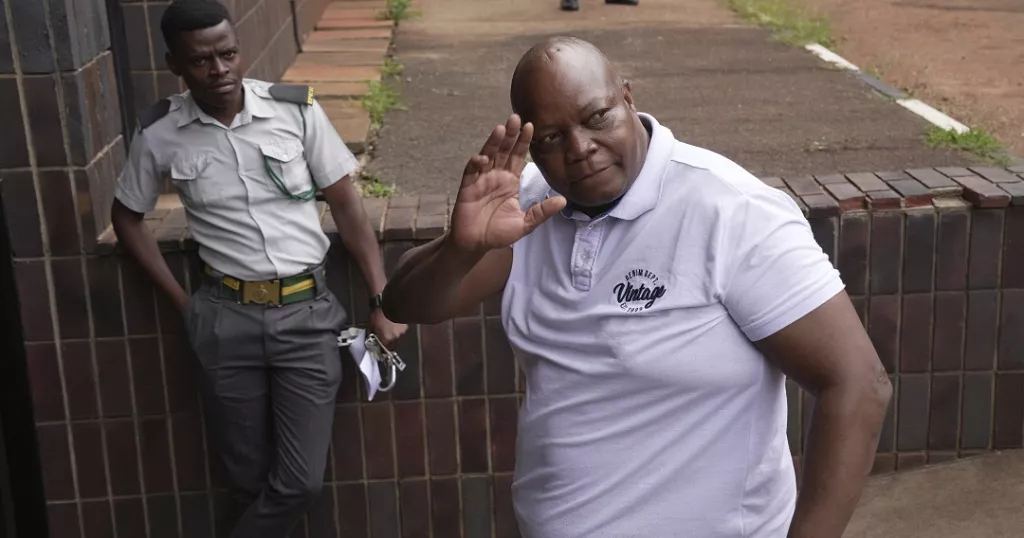
A Zimbabwean immigration officer,Nhlanganisi Sibanda, has caused turmoil in a police officer’s marriage after exposing his two-year affair with the officer’s wife, Tafadzwa Sigauke, following a bitter breakup over a laptop.
The affair, which began in 2023, was kept secret until Sibanda decided to inform Tafadzwa’s husband about their relationship. His actions came after Tafadzwa refused to return a laptop he had gifted her during their time together.
Tafadzwa, who is also a student, said she ended the relationship due to Sibanda’s increasing pressure for intimacy and his obsession with reclaiming the laptop. She was stunned when he retaliated by contacting her husband.
“Honestly, Sibanda behaved like a child,” she said. “We met in Gwanda, where he pursued me, and I eventually agreed to the relationship. He gave me the laptop as a present, but I told my husband I bought it on an instalment.”
She added that Sibanda’s decision to inform her husband was immature and has thrown her marriage into crisis. Her husband is now reportedly furious and considering legal action against the immigration officer.
“No one discovered our relationship – he told my husband himself,” Tafadzwa said. “I won’t return the laptop; I’m a student and need it. This whole situation shows his poor judgment.”
The case has sparked conversation online about personal responsibility, emotional retaliation, and professionalism in public service. Sibanda has not commented publicly on the matter.
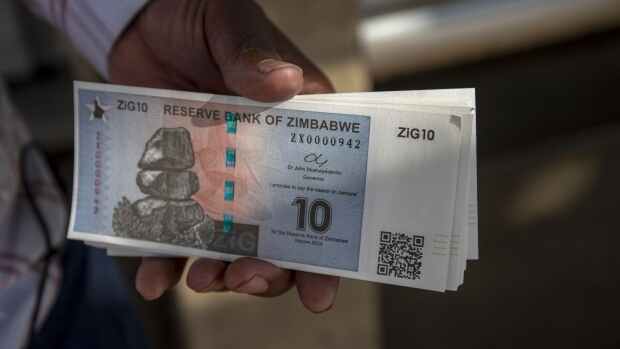
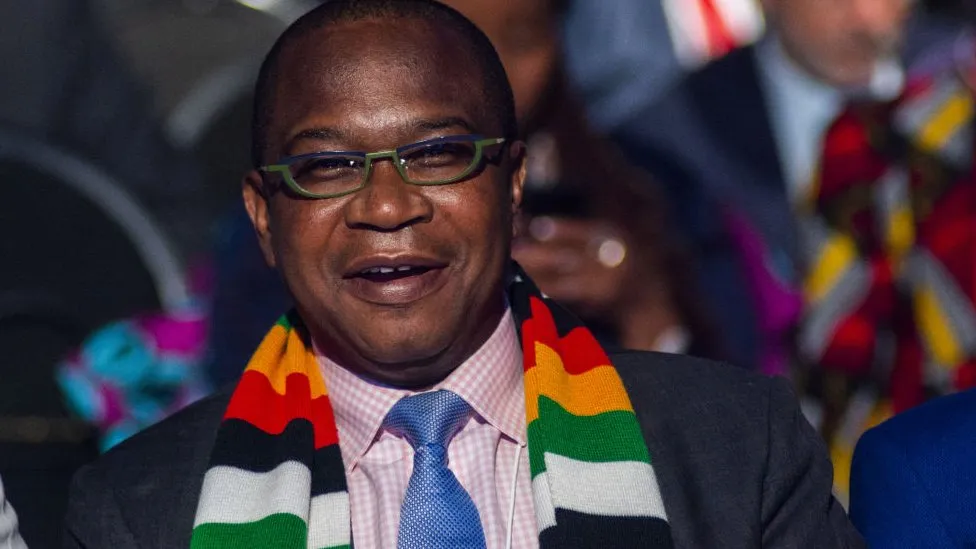
Zimbabwe plans to allow its gold-backed currency, the ZiG, to float freely on the foreign exchange market, according to the deputy governor of the central bank, Innocent Matshe.
While he refrained from providing a specific timeline, Matshe emphasized that the goal is to create a market-driven exchange rate free from administrative control.
“The idea is to have price discovery that is not interfered with by administrative measures,” Innocent Matshe said Wednesday in an interview in Bulawayo, the nation’s second-biggest city. “The endgame is a floating exchange-rate which is free from interference.”
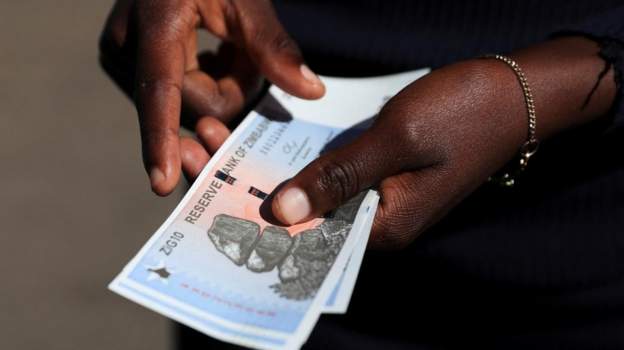
The ZiG, short for Zimbabwe Gold, was introduced in April as the nation’s sixth attempt in 15 years to establish a functional local currency.
The move aimed to replace the US dollar as the primary unit of exchange. However, the currency has depreciated significantly on the unofficial market, leading the central bank to devalue it by 43% on September 27.
Despite the adjustment, the market rate remains significantly higher, with the ZiG trading at 35-40 per US dollar compared to the central bank’s official rate of 26.69.
Matshe indicated that the transition to a floating exchange rate will depend on market conditions and did not specify when it would occur.
He acknowledged the criticisms of the central bank’s control over the official exchange rate, which businesses argue has led to an overvalued currency and price distortions in the economy.
However, Matshe also emphasized that the central bank would not fully relinquish its role in ensuring the efficient functioning of the market.
“All central banks do intervene in the market when the price discovery mechanism fails for one reason or the other,” he said.
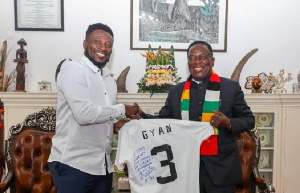
Gyan took to his social media channels to share his meeting with President Mnangagwa, emphasizing their discussions centered around the welfare of African youth.
“I’ve dedicated the last few days to fostering significant partnerships in Southern Africa, aiming to enhance the welfare of the youth in Ghana and beyond.
“Meeting President @edmnangagwa at the State House in Harare to deliberate on the future of Africa was a privilege. I’m elated to have had this chance,” Gyan expressed in a tweet dated Wednesday, May 15, 2024.
Dentaa Amoateng, a media personality and former Asante Kotoko management member, was the first to disclose Asamoah Gyan’s visit to Zimbabwe.
According to her, the Ghanaian footballer traveled to Zimbabwe with a variety of Ghanaian dishes.
Amoateng showcased the extensive selection of meals Gyan and his companion, Franklin, sent to Zimbabwe through a TikTok post.
The assortment included traditional Ga kenkey, spicy shito, sardines, corned beef, fried fish, loaves of bread, canned milk, and gari, ensuring a taste of home while abroad.
Gyan’s reputation as Ghana’s most formidable forward is well-established, with an impressive tally of 51 goals at the international level.
He particularly stands out for his World Cup performances, having scored six goals—a pioneering record for an African player.
Former management member ofKumasi Asante Kotoko, Dentaa Amoateng,has provided a glimpse into the travel arrangements of Ghanaian football icon Asamoah Gyan and his companion Franklin during their brief trip to Zimbabwe.
In a TikTok post, Amoateng humorously showcased the extensive array of food items that Gyan and Franklin packed for their journey, jokingly suggesting they may have brought along the entire supply of Accra’s culinary delights.
Their packed assortment included traditional Ga kenkey, spicy shito, sardines, corned beef, fried fish, bread loaves, canned milk, and gari, ensuring a taste of home while away.
Amoateng’s connection with Gyan dates back years, with some reports indicating she once managed the football star.
Additionally, she recently served on the Asante Kotoko board until its dissolution by the Asantehene, Otumfuo Osei Tutu II.
Gyan’s status as the Black Stars’ most prolific striker is well established, boasting an impressive tally of 51 international goals.
His accomplishments in the World Cup are particularly noteworthy, having scored six times—a record for any African player.
Zimbabwe’s Finance Minister Mthuli Ncube has directed govt agencies to accept payments in new gold-backed currency amid reports of severe shortages
In a recent statement, Mr. Ncube announced that the Zimbabwe Gold (ZiG), launched just last month, is now the official currency for transactions within the country.
He emphasized that all government entities are mandated to accept payments in ZiG.
Furthermore, Mr. Ncube stated that the government would soon implement regulations to enforce adherence to the official exchange rate, which will be determined freely by the banking system according to demand and supply dynamics.
“All ministries, departments, and agencies (MDAs) and the private sector alike are hereby advised to accept and recognise the ZiG as the official currency for all financial transactions, and payment for all goods and services, effective immediately,” the minister added.
Introduced to stabilize Zimbabwe’s economy amidst escalating inflation, the new currency has struggled to alleviate acute change shortages and scarcity, as reported by the New Zimbabwe news website.
Despite its circulation beginning late last month, the currency marks the third introduced in Zimbabwe within the past decade.
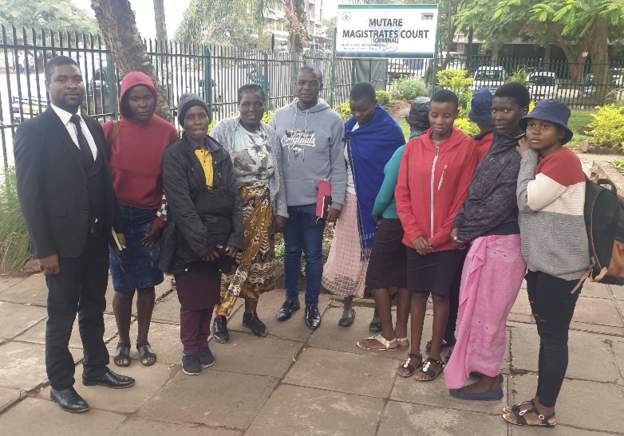
Local media in Zimbabwe report that nine women, who were arrested for allegedly booing the first lady, have had their charges dropped.
According to presidential spokesperson George Charamba, the charges were withdrawn on the instructions of First Lady Auxillia Mnangagwa.
“Both the first lady and police commissioner general agreed the officers on the ground overreacted,” Mr Charamba was quoted as saying.
The women, aged between 19 and 49, were reportedly accused of booing Mrs. Mnangagwa after not receiving food and clothing handouts she was distributing at a charity event in the eastern Manicaland province last Wednesday.
“Prosecutors charged that the women, who were seated on the ground stood up and started booing the first lady while she was making her closing remarks during her address intending to disrupt her speech and show disgruntlement that they had not received anything from her,” the Zimbabwe Lawyers for Human Rights (ZHLR), who represented the women in court, said.
They had been accused of “unlawful, abusive and insulting” behaviour towards the first lady and were subsequently charged with disorderly conduct, ZHLR added.
The organisation said the women denied the charges, arguing that they had been arrested for leaving the event while the first lady was still speaking.
The organization stated that the women refuted the allegations, contending that they were arrested for departing the event while the first lady was still addressing the audience.
Zimbabwe boasts breathtaking landscapes, including lush national parks, majestic rivers, and captivating waterfalls, as well as diverse wildlife. With so much to offer, it’s no wonder it’s a top destination in Africa.
While the options are endless, let’s narrow it down to five must-do activities. Whether you’re a first-time visitor or returning for more adventures, these recommendations from BookAllSafaris.com will help you make the most of your trip to Zimbabwe.
Hwange National Park
Zimbabwean travel is synonymous with African safaris, and for good reason. Hwange National Park stands out as one of the premier safari destinations on the continent, renowned for its vastness and natural beauty.
Established in 1928, Hwange National Park holds the distinction of being the largest natural reserve in Zimbabwe. Its expansive territory is home to an impressive array of wildlife, boasting approximately 400 bird species and 100 mammal species, including eight large carnivores and 19 large herbivores.
For those seeking an authentic African safari experience, Hwange delivers precisely that. It’s where Cecil the lion once roamed before tragically being lured out of the park and killed by an American hunter.
Victoria Falls National Park
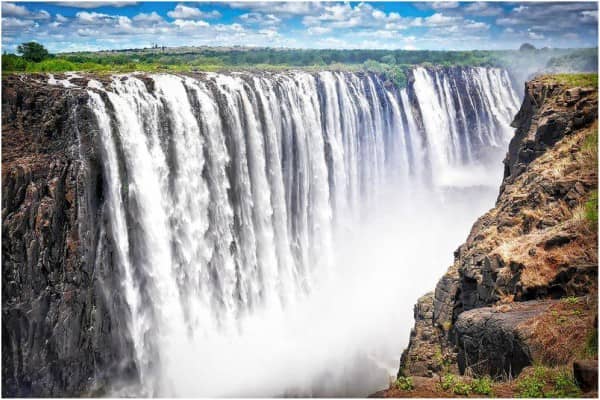
Victoria Falls has earned its place on CNN’s prestigious list of Seven Natural Wonders of the World.
Positioned between Zambia and Zimbabwe, this magnificent waterfall stands as a testament to nature’s grandeur, with a height of 355 feet (108 meters) and an average flow rate of 38,430 cubic feet per second (1088 cubic meters per second).
As one of the most breathtaking waterfalls globally, Victoria Falls is an essential destination for any traveler, offering an awe-inspiring spectacle of cascading water.
Pairing a visit to the falls with a safari adventure creates an unforgettable experience, allowing you to immerse yourself in both the natural wonders of the landscape and the abundant wildlife of the region.
Kuimba Shiri Bird Sanctuary
A mere 20-minute drive from Zimbabwe’s capital, Harare, you will find the Kuimba Shiri Bird Sanctuary. Located on the shore of the Chivero lake, the sanctuary houses over 460 bird species.
Established two decades ago by Gary Stafford, the Kuima Shiri Bird Sanctuary serves as a refuge for injured, sick, or abandoned birds from across the nation.
Visitors are invited to engage with the avian residents through daily bird flying sessions and captivating bird shows, offering a glimpse into the remarkable hunting skills of birds of prey as they fish from the sanctuary’s lake.
Beyond its role in avian rehabilitation, the sanctuary provides a serene and family-friendly environment. With amenities such as pony rides and a range of children’s activities, it offers a delightful experience for visitors of all ages.
Wild & Life Trust and ZEN
Situated in Harare, the Wild and Life Trust (WILT) serves as an animal sanctuary dedicated to the care of rescued wildlife, including injured, orphaned, and protected species, some of which are endangered.
For visitors, WILT offers a unique opportunity to interact with animals that they may not encounter elsewhere. It’s one thing to spot a giraffe on safari, but quite another to have the chance to approach it and even pet it.
Booking in advance is essential, as noted on their website. While admission tickets may seem steep (priced at $95 for adults, $80 for teenagers aged 12 to 16, and $50 for children under 12), the sanctuary boasts an impressive 266 excellent reviews on TripAdvisor, ensuring visitors a memorable and worthwhile experience at WILT.
Avondale Flea Market
If you’ve had enough of trekking through national parks or you feel as you have seen your fair share of wild animals, we recommend you take a spin through the Avondale Flea Market in Harare.
It’s a big flea market, where you can find pretty much anything, from electronics, to souvenirs, clothes and jewelry.
If you’ve never been to a flea market, the whole haggling concept might throw you off your groove, but worry not, you’ll get the hang of it quickly!
You can find cheap souvenirs, artwork and whatever else you want, but we do suggest you bring a guide or a local with you if you’ve never been to a flea market. Happy shopping!
Job Sikhala, a prominent opposition figure in Zimbabwe, has been fined and given a nine-month suspended prison sentence for publishing falsehoods on social media.
Harare magistrate Feresi Chakanyuka delivered the sentence to Sikhala, a former Zengeza West legislator, on Thursday, stipulating that he must refrain from committing a similar offense in the future.
Sikhala, who was convicted last week for disseminating falsehoods, was also fined US$500, with payment due by March 4, 2024. Failure to pay will result in a two-month prison term.
In response to the verdict, Sikhala’s lawyer, Harrison Nkomo, argued that his client should never have been charged under a law previously ruled unconstitutional by the top court.
“We are going to file our appeal to express our dissatisfaction with the judgement. We disagree with it. It lacks foundation, it is unsound, and it is wrong for a court to convict someone based on a law that no longer exists,” stated Nkomo.
Sikhala, an outspoken official with the main opposition Citizens Coalition for Change party and a former member of parliament, is viewed by many as a symbol of resistance against Zimbabwe’s ruling ZANU-PF party and President Emmerson Mnangagwa. He was arrested in June 2022 in connection with the killing and dismembering of an activist from his party.
Sikhala denied the charges, asserting that he was acting as the family’s legal representative, aiding in the search for the missing activist, Ali, whose body parts were later found in a well.
The 52-year-old Sikhala was convicted in January and given a suspended sentence, allowing his release from the harsh and overcrowded Chikurubi maximum security prison, where he had spent almost two years in pre-trial detention on unrelated charges. He accuses the government of using the courts as weapons and is due to appear again on Friday.
Zimbabwe’s cabinet has endorsed proposed legislation to abolish the death penalty, signaling a significant step in ending capital punishment in the nation.
Information Minister Jenfan Muswere announced the decision on Tuesday Jan 6, stating that it followed extensive consultations nationwide.
If approved by parliament, the bill would establish life imprisonment as the maximum sentence.
President Emmerson Mnangagwa has previously voiced opposition to capital punishment, a stance influenced by his own experience: in 1965, he was sentenced to death for alleged involvement in a bombing during the fight against white minority rule, though his sentence was commuted due to his age.
Zimbabwe’s death penalty originates from colonial-era laws, and the nation has not executed anyone since 2005.
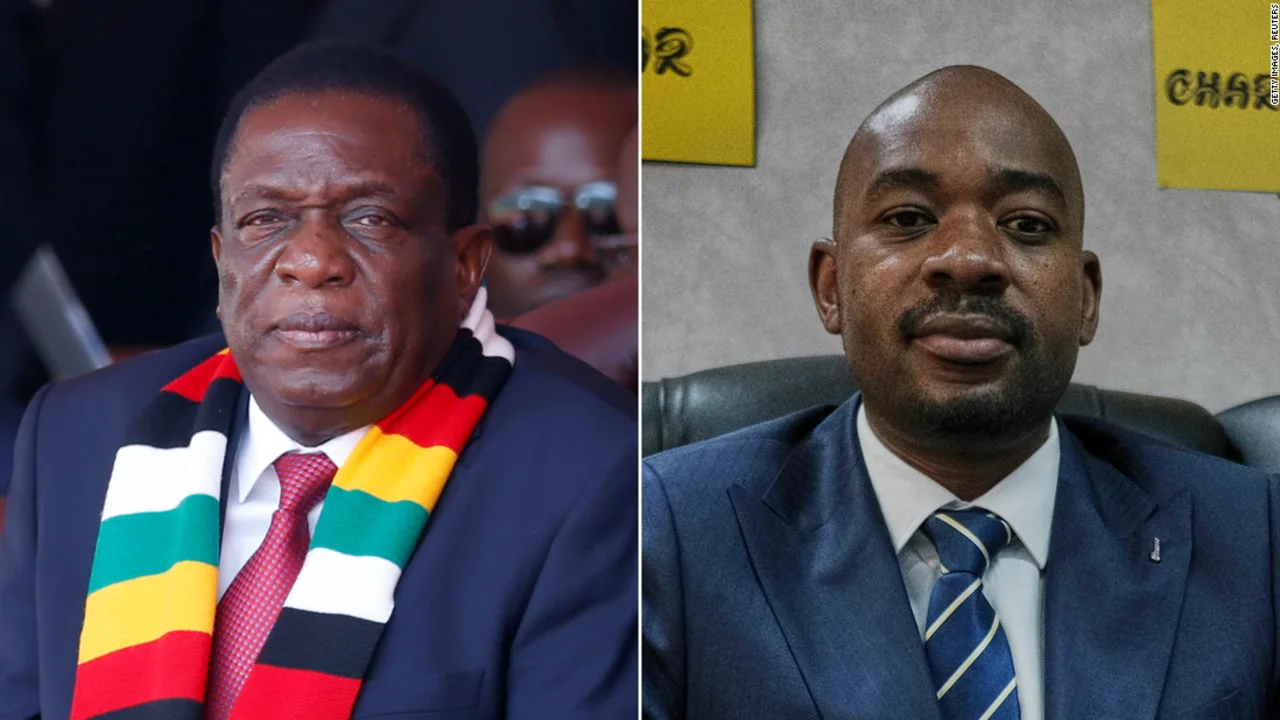
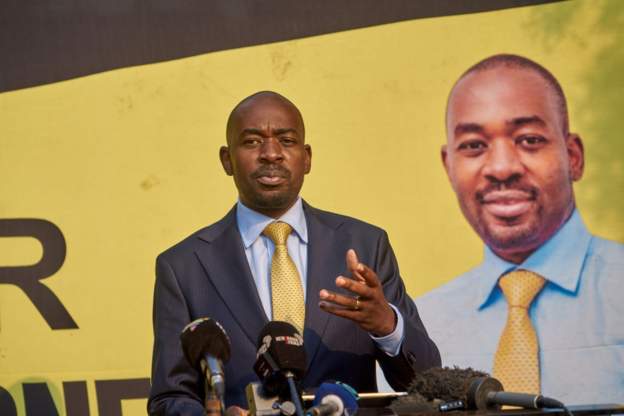
“I don’t want to be involved in dirty politics,” he said in a statement that was 13 pages long on Thursday.
He got 44% of the votes in the presidential election last year. Some people said there was cheating.
However, some members of his party, CCC, lost their jobs because of sabotage, according to Mr.
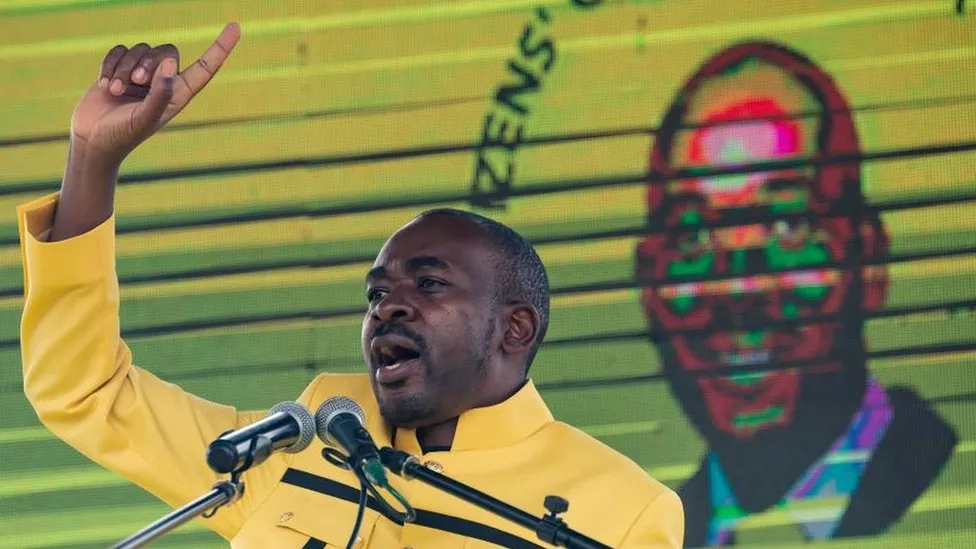
Mr Chamisa, a 45-year-old, is a Christian pastor and lawyer. He is going to start a new political party.
It’s not certain how many of the CCC’s MPs and councillors will go with him.
Although he has a lot of support, especially in cities, some people who don’t like Mr Chamisa say he is not a good leader and this has caused problems in the opposition. This has made it easier for President Emmerson Mnangagwa to stay in control.
In his letter, he said the CCC had been “hurt”, accusing the ruling Zanu-PF party of being responsible – allegations it denied.
“He said that the original CCC idea has been changed and taken over by ZANU PF using government institutions in a bad way. ”
In the statement, the old leader of CCC said it was President Emmerson Mnangagwa’s fault for many problems in Zimbabwe, like bad hospitals, cholera and social services breaking down.
He said that many people in his group were paid to work against it.
In 2017, President Mnangagwa took over as the leader after a peaceful takeover that removed Robert Mugabe, who had been in power for a long time.
He was seen as a symbol of hope and change for the struggling country.
However, there are still a lot of problems in Zimbabwe, such as high prices, not enough jobs, and limits on freedom of speech.
Mr Chamisa has been involved in opposing politics for more than twenty years.
He says that he has been in danger and had to escape an attempt on his life in 2022 when his group was attacked during an election. He was hurt badly in 2007 when the government tried to stop the opposition. His skull was cracked.
Before, he was in charge of a different group called the MDC. He left that group because there was a fight for control. Then, in 2022, he started his own group called the CCC.
Deputy Minister of Health, Dr Sibongiseni Dhlomo, has advised the public to stay vigilant and uphold personal hygiene practices as the country registers two laboratory-confirmed cases of cholera in Limpopo, both imported from Zimbabwe.
The first case, involving a 43-year-old male patient in the Musina sub-district, Vhembe District, has been discharged from Musina hospital after testing positive.
The second case is a 27-year-old man, also from Zimbabwe, who reported symptoms at Hellen Franz hospital under Capricorn District Municipality.
He has a stable health condition and remains in isolation since his return from Zimbabwe on January 10, 2024.
The local outbreak response team is active in investigating and providing health education to contacts.
South Africa remains on high alert for potential imported cholera cases from Zimbabwe, which is grappling with an outbreak claiming over 200 lives.
Collaborating with the Border Management Authority, the Health Department has heightened health screening at Beitbridge border post to prevent cholera importation.
Deputy Minister Dhlomo commends the honesty and cooperation of the suspected cholera patients, urging others with travel history to affected areas to follow suit.
Travelers along the N1 are advised to avoid potentially contaminated surfaces in public places and practice thorough handwashing.
Anyone experiencing cholera-like symptoms, regardless of travel history, is urged to seek immediate medical attention. The public is reminded to avoid drinking water from unsafe sources unless properly treated to prevent infection.
Distributed by APO Group on behalf of Republic of South Africa: Department of Health.
A lot of people in Zimbabwe are surprised that Mthuli Ncube was chosen as the “Best African Finance Minister of the Year” because the country’s economy is struggling.
One person on X, which used to be called Twitter, said the award was like praising a captain for steering a ship into an iceberg.
Another person said it was the funniest joke of the past ten years.
Zimbabwe has a very high unemployment rate, as high as 85%, according to experts.
According to Reuters, most transactions are done in US dollars because people don’t trust their local currency.
Reputation Poll International is a company that gives awards for good reputation. They gave Mr Ncube an award on Sunday.
The minister, chosen by President Emmerson Mnangagwa in 2018, told the Herald newspaper that he was happy to get the honor.
He said that the recognition was for the work he and the Treasury team did to lead the transformation of the economy.
But, activist Hopewell Chin’ono said that the award was a “disrespect” to Zimbabweans.
He was very surprised, especially after Mr. Ncube’s new budget, when Mr. Chin’ono called it “the worst budget for the people that Zimbabwe has ever had”.
Taxes will go up and the cost of a passport will increase to $200 (£160) from $120, which will make it the most expensive in the region.
Mr Chin’ono said that Mr Ncube is running the worst economy in the world because of his bad and dishonest decisions.
Zimbabwe’s economy has been having a difficult time for many years. The Zimbabwe dollar was stopped being used in 2009 because prices were going up really fast – even by the hour – due to very high inflation.
Critics say the ruling Zanu-PF party, led first by Robert Mugabe and then by Mr Mnangagwa, did not manage things well. They say that the Western countries’ sanctions are the reason for their problems.
Zimbabwe had by-elections on the weekend because some MPs from the main opposition party were removed.
Zanu-PF candidates won 7 out of 9 by-elections, but they still need 3 more seats to have enough power to change the constitution.
Zimbabwe is having elections to fill vacant positions, but some people are trying to keep the main opposition candidates from running. This is happening as President Emmerson Mnangagwa strengthens his power.
The vote happened because some CCC MPs had lost their seats.
This was made by someone who said they were the leader of the party.
The result could make the government have a very large majority.
The CCC didn’t win the general election in August but they got more than 100 out of 280 seats in parliament. This means that the ruling Zanu-PF party was not able to win enough votes to have the power to make changes to the constitution.
Some people think the party made these by-elections happen in places where it recently lost on purpose.
The CCC has a lot of fighting among its members and the current crisis seems to be mostly caused by the CCC itself.
This is important because President Mnangagwa’s party needs just a few more seats to have a strong majority in parliament.
Once it passes that limit, changes to the constitution can be made. It wouldn’t be surprising if people start talking about getting rid of the limit on how long a president can serve.
Six years ago, many people in Zimbabwe thought that when Robert Mugabe was removed from power, the country would become more democratic.
It is surprising that some in the opposition seem to be helping the president gain more power.
In October, Sengezo Tshabangu, who was not well-known in Zimbabwe, wrote a letter to the head of parliament saying that some CCC members were no longer part of the party.
The leader of CCC, Nelson Chamisa, said that Mr Tshabangu is not real and asked the speaker to not pay attention to the letter.
But Mr Chamisa was not listened to when the speaker announced that there were empty positions in the areas. The by-elections on Saturday happened as a result of that.
The police in Limpopo, South Africa, stopped and questioned 133 people who they think might have been trafficked.
According to the police, a group of kids and grown-ups were traveling in 10 small buses. This was reported by the public broadcaster SABC News.
“We asked all the people involved, like Home Affairs, to come and see where they are from. ” “In most cases, these people will probably be sent back to their own country’s border,” said Hlulani Mashaba, a spokesperson for the province.
This is the third time they have made an announcement like this since last weekend.
On Sunday, officials in Limpopo said they stopped over 400 kids who came from Zimbabwe and were not with any grown-ups.
Zimbabwean officials said that there were only 124 children, and they denied that there were more.
Save the Children organization disagrees with South Africa’s statement that the children were being taken there to be used for bad purposes.
Police said they saved 33 people from being trafficked in a different place in Gauteng province.
South African police stopped lots of buses with 443 young kids from Zimbabwe.
This happened after the BMA and the police conducted a covert operation at the Beitbridge border post on Saturday night.
Michael Masiapato, the commissioner of BMA, said that more than 40 buses carrying children were stopped at the North Gate of the border post with Zimbabwe before they could enter South Africa.
He said the kids were traveling without their parents or guardians and without permission letters, even though they had passports like they were supposed to.
The bus drivers said the kids were going to play sports, but the reports said their Zimbabwean grandparents sent them to their parents in South Africa.
Mr Masiapato said that the children were being taken against their will. They got in touch with authorities in Zimbabwe and sent the children back to their home country.
He said that the problem of moving people against their will is getting worse and he promised to keep doing missions during the holiday season.
More than one million people from Zimbabwe live and work in South Africa. It is thought that the kids were going to visit their parents in South Africa for Christmas break after their schools closed.
South Africa has been dealing with a lot of people entering the country illegally from Zimbabwe in the north.
In late September, the environment minister of Zimbabwe gave a foreign company control of almost 20% of the country’s land. Blue Carbon was a small and new company, only less than a year old. But the person in charge was not new to business. He was a royal from Dubai with a family that had been in power for a long time and had a lot of money from oil.
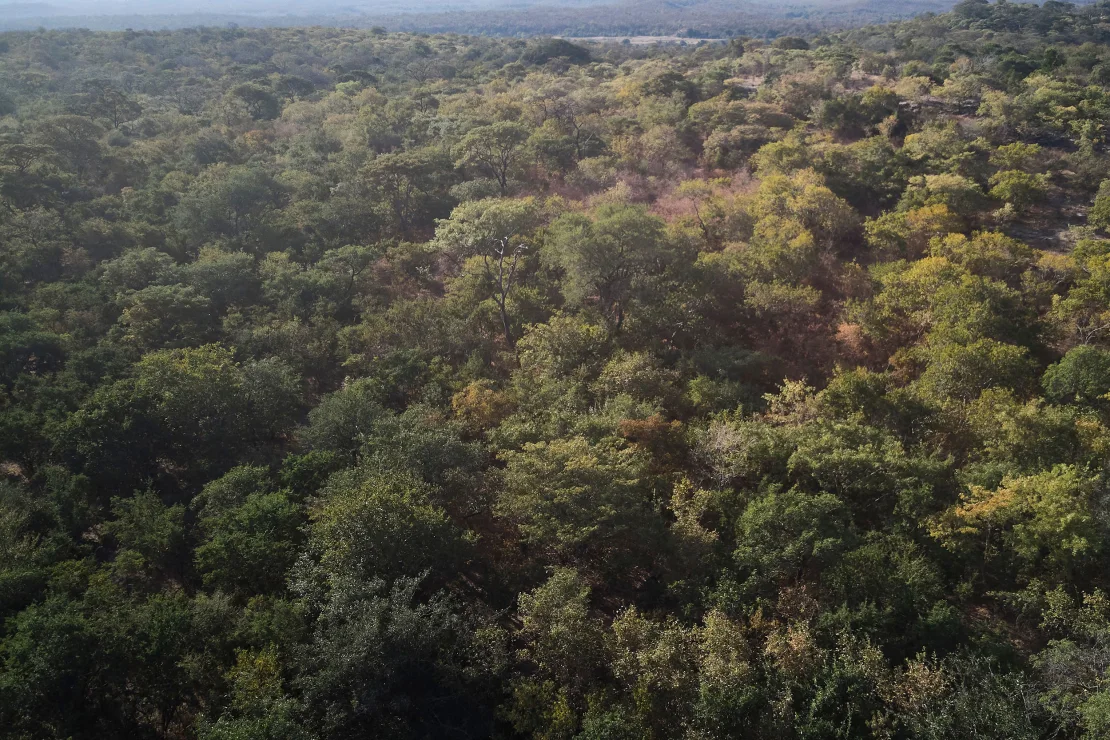
The company Blue Carbon from Dubai has bought a lot of forest land in Africa to protect it from being cut down. This will stop a lot of carbon dioxide from going into the air and heating up the planet.
Blue Carbon can take the savings from the conservation and sell them to companies and governments as carbon credits. These credits can help them make up for the pollution they create from burning fossil fuels that harm the planet.
Several forest conservation agreements were announced in the months leading up to the annual United Nations‘ climate summit. The summit will be held in December in the United Arab Emirates and will include deals with Zimbabwe, Zambia, Kenya, Liberia, and Tanzania. But many experts and environmental activists CNN talked to say that these deals are just another way for the oil-producing country to keep extracting fossil fuels while making it seem like they care about the environment.
Meanwhile, the UAE wants to use all its oil in 50 years, even though scientists say we should stop using fossil fuels long before that.
A person who speaks for the company didn’t tell CNN if they would sell the credits to the UAE. But because the chairman of Blue Carbon, Sheikh Ahmed Dalmook Al Maktoum, is related to Dubai’s royal ruler, who is also the UAE’s prime minister, most analysts think the credits will be sold to the UAE to help with their big carbon footprint. They could also be sold to other countries and companies that need oil in the Gulf and other places. CNN has asked the UAE government for a comment.
Blue Carbon did not tell CNN the size of all its projects, the amount of money it has given for funding, or how many credits it wants to make. The agreements are just starting and not finished yet.
The company said it will share its deals at the COP28 summit in Dubai as a plan for carbon trading. Every year, leaders and negotiators from almost 200 countries come together at the climate summit to make decisions about using less fossil fuels. The UAE will use its COP28 presidency to try to make sure that carbon removal from both forests and oil and gas is a big part of solving the climate crisis. This means taking carbon from the air when oil and gas are burned and storing it underground.
People who care about the environment don’t like carbon removal because they think it allows companies to keep making and burning fossil fuels and make a lot of money. Scientists also have doubts about whether it actually works.
The UAE stands to lose a lot of money. Oil and gas make up about 30% of its economy and 13% of the things it sells to other countries, according to the US Department of Commerce. Over 80 countries want to stop using fossil fuels. Wind and solar power are now just as cheap as oil and gas in many places, so eventually, they will replace them.
If fossil fuel companies and lobbyists can convince the world at COP28 not to trust wind and solar too much, and to keep using oil and gas, then it might happen.
The UAE is getting a lot of criticism because Sultan Al Jaber, who runs the big oil and gas company ADNOC, is leading the negotiations. Over 100 US Congress and European Parliament members want Al Jaber to be replaced as COP28 president in May.
Al Jaber says that he doesn’t think it’s a problem to have many different jobs at once. He has talked about this in several interviews. ADNOC told CNN in an email that they think he is the best person to lead the talks because of his experience leading Masdar and the oil and gas company.
Al Jaber believes that companies that use fossil fuels should be involved in discussions about the environment to make sure that the transition to green energy really happens.
The argument makes sense to some people, but climate advocates don’t believe it. They say the fossil fuel industry has had plenty of time to lead on the issue, but they haven’t. Some companies that produce fuels from ancient plant and animal remains were the first to realize that their products are causing changes in the Earth’s climate. About forty years ago, they kept making money from coal, oil, and gas.
Jamie Henn, who started Fossil Free Media, said that ADNOC is using the UN climate talks to make themselves look good even though they are one of the biggest oil companies. “The UAE wanted to host this meeting to show that their oil and gas industry can help with the climate problem. ”
In 2020, the UAE contributed about 0. 53% of the world’s CO2 emissions. Even though it has a small population of around 10 million people, it ranks as the sixth-largest carbon polluter per person. Even though the UAE has fewer people, it was the seventh-largest oil producer in the world in 2022.
Henn thought it was ridiculous that fossil fuel companies were controlling the negotiations.
“It feels like the tobacco control talks are being controlled by Philip Morris. ” “We have to have that at COP. ”
The COP, which happens in a new city every year, has never had this many obvious conflicts of interest before. Al Jaber is leading efforts to address climate change and reduce the use of fossil fuels. Blue Carbon is closely connected to the royal family and leaders of the UAE, making it hard to tell if they are truly supporting carbon offsets or just want to keep producing fossil fuels.
The rules for buying and selling carbon credits will be decided in Dubai at COP28.
When CNN asked Blue Carbon if they were planning to do more carbon offset deals in Africa, a company spokesperson said they would announce some new initiatives at COP28. A source familiar with the COP28 agenda said the company will use the deals to promote carbon credits as an important part of addressing climate change.
Many countries have agreed to work with Blue Carbon, which is not surprising. The company that owns it, Global Carbon Investments, has agreed to give Zimbabwe $1. 5 billion in advance for carbon credits. This is more money than the country spends on education and childcare, which are its biggest national expenses when added together.
Forest-rich countries can make money from carbon credit schemes because they don’t get enough financial help from rich countries to deal with the climate crisis.
Destroying forests or allowing them to deteriorate contributes to at least 12% of the world’s emissions that cause the planet to become warmer. They are valuable for the environment because they can take in carbon dioxide from the air.
However, many people have criticized the idea of trading carbon credits for not cutting down forests. Some of the largest companies that certify carbon credits have been found to use methods that make their projects seem more effective at fighting climate change than they really are.
In the beginning of November, Renat Heuberger, the boss of a company called South Pole, quit his job. His company was supposed to trade carbon credits. But people found out that they had lied about how much the credits helped the environment in a forest project in Zimbabwe.
South Pole said that the news reports about over-issuing carbon credits are not true. They think the reports are exaggerated and misleading. They are denying the allegations made by the media.
A South Pole spokesperson told CNN in an email that Heuberger left because the company needed a new leader for quality assurance and careful controls.
“Supporting efforts to protect forests is a good idea. ” “But the problem is that protecting forests is not a simple solution,” Julia Jones, a scientist who works to protect nature at Bangor University in Wales, explained.
She said we need to save forests and reduce emissions a lot all over the world. “Trying to balance one with the other, without spending a lot to reduce emissions, is a problem. ”
Land ownership is another problem. In some situations, native people and landowners have been forced out of their land to make room for big projects. They see their homes, which were once considered not very valuable, being used by companies and countries to make a lot of money, even if it harms the environment.
The Forest Peoples Programme, a group that is not part of the government, says that more and more people are being forced to leave their homes in Kenya because the government is giving away land for carbon credits.
“Companies want to make a lot of money from Africa’s forests, and it seems like they are trying to take control of them. ” Justin Kenrick, who works for the Forest Peoples Programme, said this in an email to CNN. “In Kenya, they are still trying to conserve nature, but they are doing it in a way that doesn’t work. They are forcing the people who know how to take care of the forests out of their homes. ”
No matter what happens at COP28, ADNOC, the oil and gas company owned by the UAE government, could benefit a lot. This is especially true if they can show the world that they are focused on producing the most energy. The phrase “Minimum Emissions” is a good way to help the environment, especially as the Earth gets hotter and scientists urge for quick reductions in using fossil fuels.
A person from ADNOC did not say how many people from the company would go to COP28 when asked by CNN. They also said that the idea that the company would gain from the conference is wrong and has no basis.
ADNOC plans to increase its oil production by 41% and its gas production by one-third by 2030, compared to this year. This information comes from an analysis by Global Witness, a non-profit that focuses on environmental and human rights issues. Global Witness said that its greenhouse gas emissions have gone up by 40%.
Other oil companies like Shell and BP have different plans compared to the production increase. Shell’s production is expected to stay the same, while BP plans to reduce their production by 25% by 2030. By 2030, ADNOC plans to produce more than both companies.
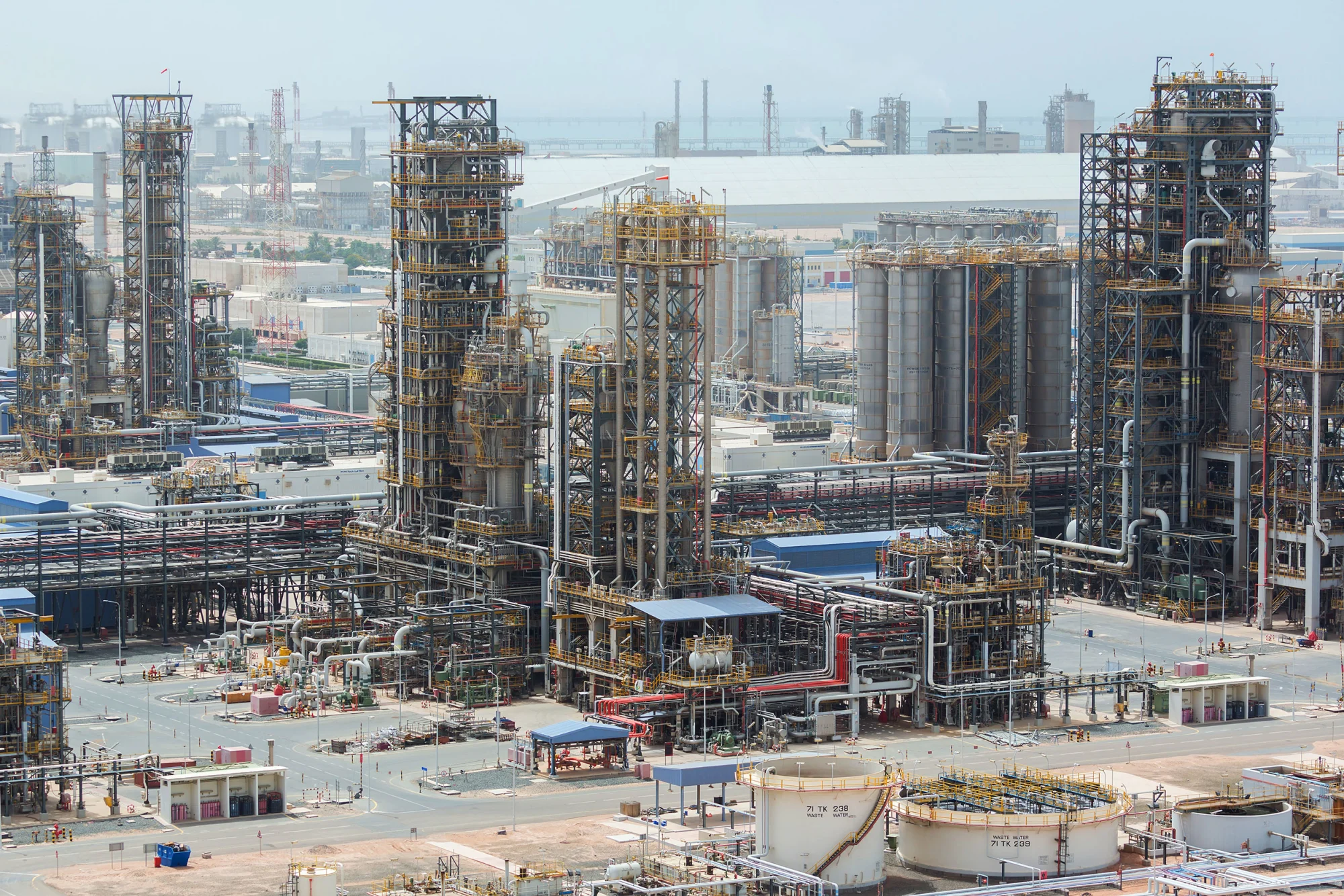
ADNOC is becoming a big global oil company. It’s buying oil and gas fields in other countries and partnering with BP to explore for gas in the eastern Mediterranean. The company is also investing in renewable energy and chemical projects, according to what they told CNN.
ADNOC wants to reduce the amount of CO2 it produces when it grows. They said they aim to capture 10 million metric tons of CO2 a year by 2030. But Global Witness says this number is much too big.
ADNOC can currently produce 800,000 metric tons per year. It wants to make 3 megatons more each year once it finishes building two new facilities. Even if ADNOC’s facilities start working, it would take them over 340 years to catch all the carbon they’re expected to emit between 2023 and 2030. This includes the carbon from their operations and the carbon released from using their oil and gas.
ADNOC did not talk about the calculation in its reply to CNN. They only mentioned their goal to reach net zero by 2045 and that they will spend $15 billion to achieve this.
“Before this year, most people probably didn’t know about ADNOC. ” Patrick Galey, a senior investigator at Global Witness, told CNN that the more we learn about this company, the more we realize that it is very different from other companies. Its CEO is supposed to work on reducing emissions at COP28, but the company seems to be going in a different direction.
“ADNOC wants to make a lot of oil for many years and also wants to expand their production of oil and gas. ”
The UAE company will grow after 2030 based on how much negotiators support carbon capture at COP28, and if it can find new customers overseas. COP28 might change ADNOC into a big global oil company.
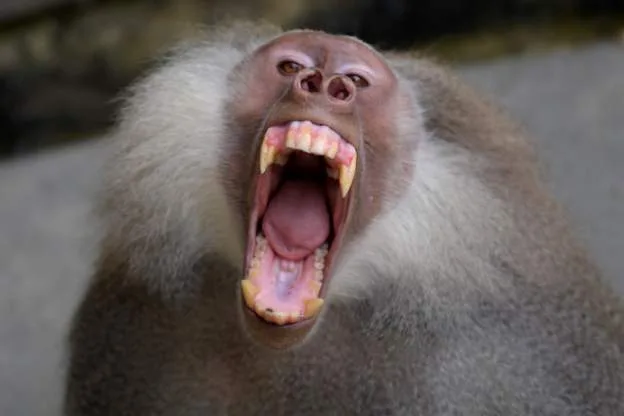
Baboons usually don’t care about people, but they can get aggressive and attack if they are bothered. They can be very dangerous because they have sharp teeth and claws.
In September, the environment minister of Zimbabwe gave control of a huge amount of land – almost 20% of the country – to a foreign company that is not well known. Blue Carbon was a recently started company that was small and led by a chief who was not new to running businesses. He was a royal from Dubai with a wealthy family known for ruling the city for a long time and having a lot of money from oil.
The company Blue Carbon from Dubai has gotten a lot of land in Africa to protect forests from being cut down. This will stop a lot of CO2 from going into the air and causing global warming. The land they got is as big as the United Kingdom.
Blue Carbon can use the conservation to make carbon credits. They can sell these credits to companies and governments. This helps to balance out the pollution caused by burning fossil fuels.
Several agreements to protect forests in Zimbabwe, Zambia, Kenya, Liberia, and Tanzania were announced before the United Nations’ COP28 climate summit in December. The summit will be hosted by the United Arab Emirates.
The UAE wants to use up all its oil in 50 years, even though scientists say we should stop using fossil fuels long before that.
A person speaking for the company did not tell CNN if the company will sell the credits to the UAE. However, because the chairman of Blue Carbon is related to Dubai’s ruler, it is assumed by many experts that the credits will be sold to the UAE to help reduce its carbon footprint. They could also be sold to other countries and companies that rely on oil in the Gulf and other places. CNN asked the UAE government to comment.
Blue Carbon did not tell CNN how big its projects are, how much money it has given out, or how many credits it wants to make. The deals are still in the early stages and have not been finished yet.
The company said it will show its deals at a big meeting in Dubai as an example of how to trade carbon. The yearly climate summit is a meeting where leaders from almost 200 countries will gather to figure out how and when to reduce the use of fossil fuels. The UAE will use its COP28 presidency to work hard to make sure that carbon removal is included as a major solution to the climate crisis. This means taking carbon out of the air, not just from forests, but also from burning oil and gas, and then storing it underground.
Climate supporters don’t like carbon removal and scientists don’t think it works well. They think it lets companies keep using fossil fuels and making money.
The UAE stands to lose a lot of money. Last year, oil and gas made up about 30% of the country’s total economic output and 13% of the products it sells to other countries, as stated by the US Department of Commerce. More than 80 countries want to stop using fossil fuels, and renewable energy like wind and solar is becoming cheaper than oil and gas in many places. So, eventually, market forces will make oil and gas go away.
If fossil fuel companies and lobbyists can persuade the world at COP28 to not depend too much on wind and solar power, and to keep extracting oil and gas.
The UAE is getting a lot of criticism because Sultan Al Jaber, who is in charge of the country’s oil and gas company and is their international climate envoy, is leading the negotiations. Over 100 US Congress members and European Parliament members in May asked for Al Jaber to be removed as COP28 president.
Al Jaber doesn’t think it’s a problem to have many jobs at once, he said in several interviews. ADNOC also said to CNN in an email that no one is better qualified to lead the talks. They mentioned his experience leading the nation’s renewable energy and oil and gas companies.
Al Jaber believes that companies that produce gas, oil, or coal should be involved in talks about climate change to make sure that the shift to renewable energy really happens.
Climate advocates don’t believe the argument because they think the fossil fuel industry has had enough time to take action on the issue, but hasn’t. Some companies that sell oil and gas were among the first to realize that their products were causing the Earth’s climate to change. About 40 years ago, they still made money from coal, oil, and gas.
“I believe that ADNOC is using the UN climate negotiations to make people think they care about the environment, even though they are one of the biggest oil companies in the world,” said Jamie Henn, who runs a non-profit group called Fossil Free Media that wants to stop using fossil fuels. “From the beginning, the UAE wanted to host this COP to show that they and their oil and gas industry are working to be part of the solution to climate change. ”
In 2020, the UAE produced about 0. 53% of the world’s CO2 emissions. Even though it has a small population of around 10 million people, it is the sixth-biggest polluter for every person. Even though the UAE has a small number of people, it was the seventh largest oil producer in the world in 2022.
Henn thought it was silly that the talks were being controlled by fossil fuel companies.
The international tobacco control negotiations are being controlled by Philip Morris, just like how they control things. Fortunately, the UN has rules that keep tobacco lobbyists out of the negotiations. “We need that at the COP. ” can be rewritten as “We need that at the conference of the parties. ”
The COP, which meets in a different city every year, has never had so many obvious conflicts of interest. Al Jaber is leading efforts to address climate change and reduce use of fossil fuels. Blue Carbon is closely connected to the UAE’s leaders, making it hard to tell if they support carbon offsets or want to keep producing fossil fuels.
In Dubai, at COP28, they will decide how to buy and sell carbon credits.
When CNN asked Blue Carbon if they were planning to make more deals to reduce carbon in Africa, a company spokesperson said they would announce new initiatives at COP28. A source familiar with COP28’s agenda said the company plans to use the deals to encourage using carbon credits to help with climate change.
Many countries have joined to work with Blue Carbon, and this is not a big surprise. The company that owns it, Global Carbon Investments, has promised to give $1. 5 billion to Zimbabwe as an advance payment for carbon credits. This is more money than the country spends on education and childcare put together, which are Zimbabwe’s largest national expenses.
With not much money coming from rich to poor countries to deal with the climate crisis, carbon credit schemes offer a new way for countries with a lot of forests to make money.
Destroying forests or letting them decay contributes to about 12% of the Earth’s temperature increase. They are important for the environment because they can take in carbon dioxide from the air.
However, many people have criticized the idea of trading carbon credits for not cutting down forests. Some of the largest companies in the world that claim to reduce carbon emissions may be using methods that make their impact on fighting climate change seem bigger than it actually is.
In November, Renat Heuberger, the CEO of South Pole, a company that trades carbon credits, resigned because it was found that they had exaggerated the environmental benefits of their Kariba forest project in Zimbabwe.
We are happy when people spend money to save forests. “Conserving forests is not a quick fix solution,” said Julia Jones, a scientist at Bangor University in Wales.
She said that we need to stop cutting down more forests and reduce emissions a lot. “Balancing the two without big investment in cutting emissions causes problems. ”
Land ownership is also a problem. Sometimes, native people are forced to leave their land so that big companies can make money from it, even though the land used to be seen as worthless.
According to the Forest Peoples Programme, more people are being forced to leave their homes in Kenya because the government is giving land for carbon credits.
“Those who have power over Africa’s forests can make a lot of money, and it looks like big companies are trying to take over Africa’s forests,” said Justin Kenrick, a senior advisor at the Forest Peoples Programme, in an email to CNN. “At the same time, conservation efforts in Kenya continue to follow a flawed colonial strategy of removing the people who are most knowledgeable about how to protect their forests. ”
No matter what happens at COP28, ADNOC, a company in the UAE that sells oil and gas, could benefit a lot. They might win big if they can show the world that they can provide the most energy. The “Minimum Emissions” slogan is a good way to help the environment, even as the earth gets hotter and scientists urge for quick cuts in using fossil fuels.
A spokesperson from ADNOC did not say how many people would go to COP28 for the company, but said that the idea that the company would gain from the conference is wrong.
ADNOC plans to increase the amount of oil they produce by 41% and the amount of gas they produce by 33% by the year 2030. This information comes from a study done by Global Witness, a non-profit organization that focuses on protecting the environment and human rights. This means that its greenhouse gas emissions have increased by 40%, according to Global Witness.
Other oil companies like Shell and BP have different plans than ExxonMobil. Shell’s production is expected to stay the same, while BP plans to reduce their production by 25% by 2030. ADNOC wants to produce more than both companies by 2030.
ADNOC is growing to become a big global oil company. It is buying oil and gas fields in other countries like Azerbaijan and partnering with BP to buy a part of Israel’s NewMed Energy to explore for gas in the eastern Mediterranean. It is also investing in projects related to things like solar and wind energy, as well as chemicals, the company told CNN.
ADNOC can currently produce 800,000 metric tons of something each year. But it wants to make 3 more megatons each year from two new facilities that are not finished yet. Even if ADNOC builds the facilities, it will take them more than 340 years to capture all the planet-heating carbon they are expected to emit between 2023 and 2030. This includes emissions from their operations and the use of their oil and gas.
ADNOC did not mention the calculation in its response to CNN. They only said their goal is to reach zero emissions by 2045 and they have put $15 billion towards this goal.
Before this year, most people probably never heard of ADNOC. Patrick Galey from Global Witness told CNN that the company’s CEO is supposed to reduce emissions at COP28, but the more we learn about the company, the more different it seems.
“ADNOC plans to keep making lots of oil for many years, and wants to become one of the top companies for making even more oil and gas. ”
Surprisingly, COP28 could be where ADNOC becomes a big worldwide oil company.
The outbreak has killed many people and there are over 7,000 suspected cases.
The city officials say the spread of the outbreak is reminding people of a deadly outbreak in 2008, when many people died.
“The mayor Ian Makone said there is a state of emergency due to cholera,” according to the local news.
The government is asking for help to stop the spread of a disease and make sure people have clean water. They say they need more help than they are getting.
Health officials are having a hard time dealing with the large number of people getting sick after the outbreak, according to the International Federation of the Red Cross (IFRC).
It says there are not enough doctors and nurses to take care of the sick people, and not enough medical supplies to stop the sickness from spreading.
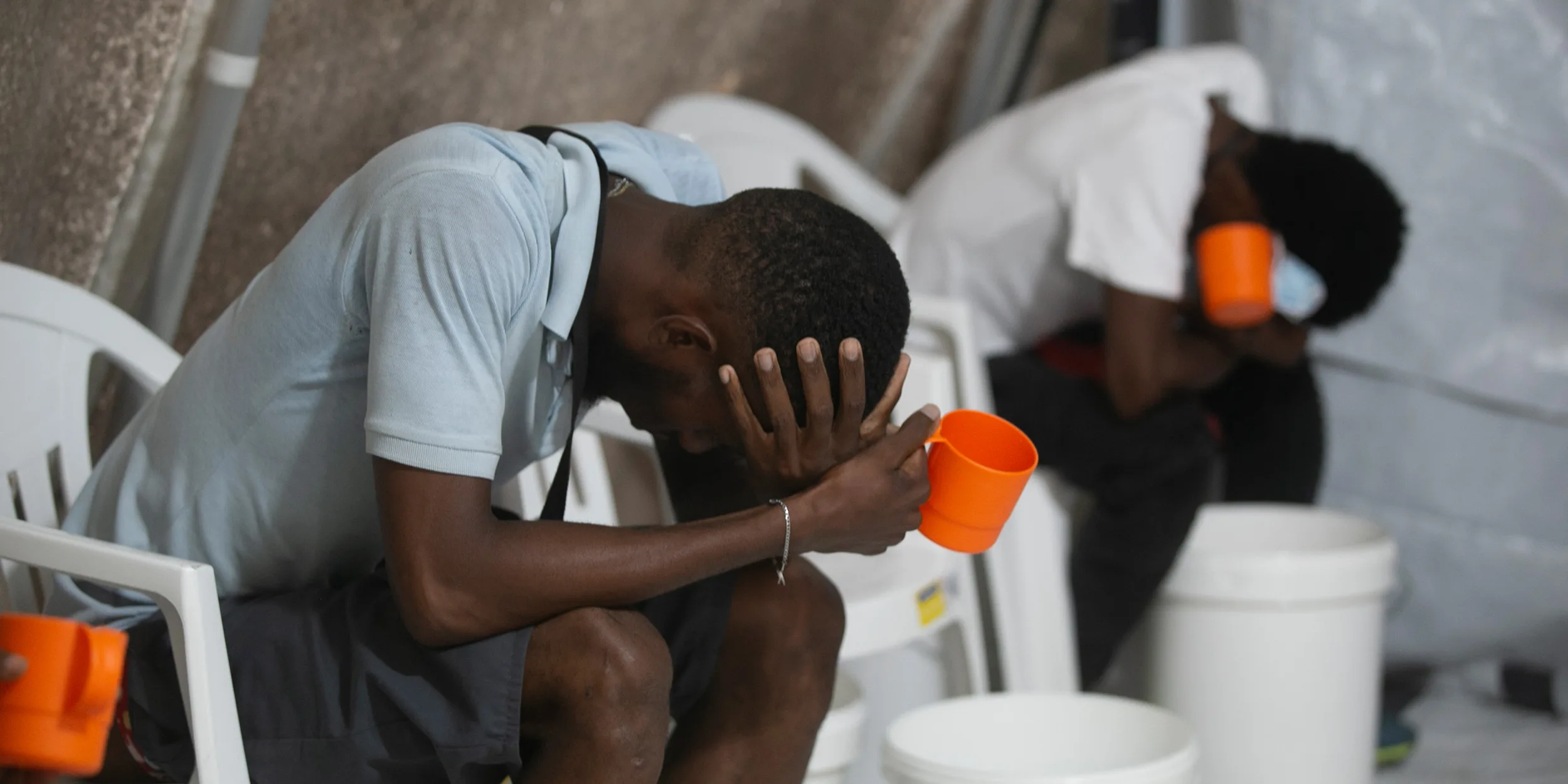
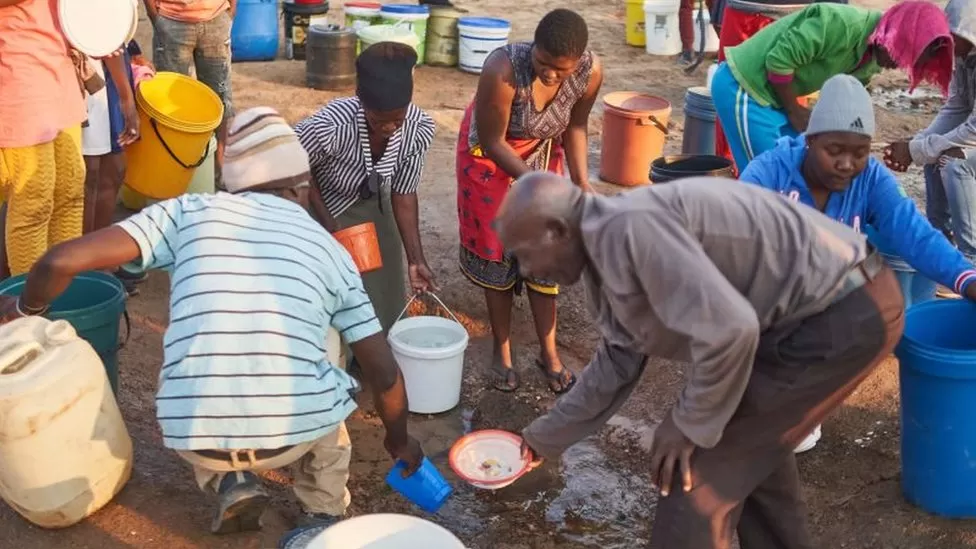
Zimbabwe has been fighting a serious cholera outbreak because people don’t have clean water.
The middle of the new sickness outbreak is in Kuwadzana, a crowded area in Harare. Almost half of the reported cases are from there, the authorities say.
Cholera is a disease that makes you have really bad diarrhea. It happens when you eat or drink something with a germ called Vibrio cholerae in it.
It is given a special drink to replace the fluids and salts lost from diarrhea and vomiting.
On Thursday, the mayor of Harare said that the cholera outbreak is similar to the one that happened in 2008.
The disease spread and more than 4,000 people died. About 100,000 people got sick. This made it hard for basic services to work in the country.
This made President Robert Mugabe agree to share power with his rival Morgan Tsvangirai.
“The mayor said on Thursday that the cholera outbreak has become very serious. ”
On Tuesday, the health department said that there were 7,398 possible cases of illness, 50 people died, and 109 are in the hospital.
The health minister visited the center of the outbreak and announced plans to deal with it. This includes getting rid of street food sellers and bringing in clean water by truck.
The Red Cross says the sickness is spreading fast, affecting many different areas in 45 out of 62 districts and in all 10 provinces of the country.
It means the disease will likely spread to different countries.
Other countries nearby, like Malawi, South Africa, and Mozambique, have also had many cholera outbreaks before.
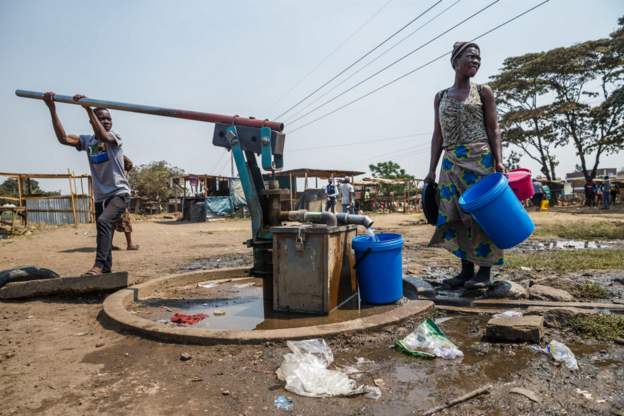
Zimbabwe’s lack of clean water has forced the country to fight for months to stop the deadly cholera from spreading through its towns and cities.
“If the water comes at all it’s often dirty,” Regai Chibanda, a 46-year-old father of five from the sprawling township of Chitungwiza, told me.
Cholera, a severe diarrheal illness caused by the ingestion of food or water contaminated with the Vibrio cholerae bacterium, has been spreading rapidly in Zimbabwe due to overcrowded and unsanitary conditions. This disease has had devastating consequences for the nation, particularly during the 2008-2009 outbreak when over 4,000 people lost their lives amidst the turmoil of a political and economic crisis marked by hyperinflation that reached an astonishing 80 billion percent. This crisis eventually led to the establishment of a historic power-sharing government, which took measures to combat the epidemic.
Today, Zimbabwe is grappling with a resurgence of inflation, and cholera has re-emerged in all ten provinces of the country, primarily affecting children who are often left unsupervised in sweltering conditions as their parents seek work.
The outbreak initially began in February, and as of the end of October, official reports from the Health and Childcare Department indicate nearly 6,000 cases and around 123 suspected deaths.
President Emmerson Mnangagwa, who secured a controversial re-election in August for his second term, has vowed to implement a nationwide program to drill boreholes.
This program will be complemented by the installation of solar-powered water points, primarily aimed at serving approximately 35,000 villages lacking access to clean drinking water.
In Zimbabwe’s capital, Harare, residents endure prolonged periods without consistent water supply from the Harare City Council.
In Chitungwiza, a satellite township of Harare, more than 50 cholera-related deaths were reported by the end of October. Chitungwiza, despite its size and population, grapples with inadequate infrastructure for water supply and urban planning, as it continues to accommodate a growing population that seeks employment, leading to rural-to-urban migration.
“In Chitungwiza things are not good as far as water is concerned. There have been many people affected by cholera and every year it’s the same,” said Mr Chibanda, who commutes by car daily to central Harare for his job as a printer. He said he had heard of several deaths in his neighbourhood.
“Our water supply is not good, residents are resorting to buying mineral water from the supermarkets to save their lives but of course it’s hitting their pockets.”
The situation is the same in Mutare, the capital of Manicaland’s eastern highlands: more cholera cases and a city that struggles to provide its citizens with clean water, the most basic necessity.
There are a lot of cholera information alerts on social media, but for most people, the situation was best described by a comment posted earlier this month on the health ministry’s Facebook page by a resident of the southern city of Bulawayo: “How can we wash our hands? We don’t have running water in Bulawayo – for almost two weeks now.”
Zimbabwe’s top opposition leader, Nelson Chamisa, says his party won’t take part in upcoming elections to fill 15 parliamentary seats. He believes these elections are unlawful because the current members were removed from parliament in a questionable way.
The seats were empty because a man, who claimed to be the temporary leader of the Citizens Coalition for Change (CCC) party, announced that the MPs were not part of the party anymore.
As a result, there will be by-elections on 9 December because the parliamentary speaker said the seats were empty earlier this month.
Mr Chamisa said that he doesn’t agree with the removal of the lawmakers. He called Sengezo Tshabangu an imposter for claiming to be the party’s secretary-general.
During an interview on Wednesday, Mr. Chamisa stated that his party will not take part in the “unconstitutional” by-elections because he believes it would be a waste of time.
“He said that we don’t do any illegal activities. ”
A court will listen to a case about whether the Members of Parliament (MPs) can be removed from their positions on November 2nd.
Jane Mucheni, along with many other women, spent twelve days sleeping on the ground beneath a blue tent near Bay Horse Mine, an abandoned gold mine located in Chegutu, approximately 110 kilometers (seventy miles) west of Harare, the capital of Zimbabwe.
The women were waiting for their husbands and sons, who had been reported missing following the September 30 mine collapse, to return, alive or dead.
Before the authorities broke off the effort to free the trapped miners, nine people had perished and twenty-two had been rescued, infuriating the bereaved families of the missing.
“We still have up to 30 people that are underground at the moment,” Daniel Garwe, the acting minister of local government said on Wednesday. “The ground is moving which is threatening the lives of rescue teams. Operations have been stopped for now until a suitable area to enter the ground is established.”
The mothers, including Mucheni, whose sons France, 23, and Tinashe, 17, went missing two weeks ago, a day before Bay Horse collapsed, are horrified over the most recent discovery. The mine region is the quietest it has been in years, and they have not yet been located.
“It’s hard to leave knowing those rocks are pressing down on my children,” Mucheni, a farmer, told Al Jazeera. “We have tried everything, every morning we have prayed [to God] and last week we even had a traditional ceremony to call on our ancestors to help us. Those who have been here with their big cars parked haven’t done anything, doesn’t anyone care?”
Every day, twelve artisanal miners descended the 250-meter trench with crude picks and shovels in hand to look for their fellow miners who were buried. They persisted until the administration canceled the rescue effort in spite of the extreme heat and overpowering scent of human remains.
A risky search for fortune
Mine accidents are not uncommon in Zimbabwe.
In Zimbabwe’s gold-rich regions, many unemployed young men have long earned their livelihoods in unregulated, unsafe mines. The Bay Horse mine, which recently collapsed, was abandoned because artisanal miners had removed its safety pillars in the hopes of discovering gold ore.
The government declared the accident a national disaster, highlighting concerns about mining safety and the effectiveness of rescue efforts in Zimbabwe’s extractive industry. Farai Maguwu, director of the Centre for Natural Resource Governance (CNRG) in Harare, describes the gold industry as a “crime scene” plagued by corruption, and artisanal miners, known locally as makorokoza, often work in hazardous conditions.
In the first quarter of 2023, Zimbabwe reported $376.73 million in export earnings, according to the Fidelity Gold Refinery (FGR), a state agency. Although over half of these earnings are attributed to small-scale miners, the FGR noted a 19% drop in deliveries compared to the same period in 2022 due to heavy rains, with 6.19 tonnes in gold deliveries.
However, Maguwu believes this is not a true representation of Zimbabwe’s potential due to illegal exports exceeding three times that amount and smuggling involving high-ranking state officials, as exposed in the Gold Mafia series by Al Jazeera’s Investigative Unit earlier this year.
Maguwu revealed that the CNRG had submitted several petitions to parliament, recommending regular mine inspections by the Ministry of Mines and the Environment Management Agency. They also sought reforms to enhance safety and reduce illicit financial flows in the mining sector. In response, they received a letter from parliament in 2021 stating that it would consider the recommendations, but nothing further transpired.
“When a disaster such as this occurs, it’s the small-scale miners who take the risk to go down, they don’t have the right rescue equipment and they just burrow in the ground while the politicians don’t seem interested because these are the lives of poor miners, politicians seem to only worry about the gold,” he told Al Jazeera.
A trail of tears
In the search operation, the team also managed to recover six bodies and various decomposing body parts belonging to unidentified individuals. Among the rescuers was Trymore Gavaza, 39, who played a part in retrieving his 28-year-old brother, Tawanda’s body. Tawanda had been trapped amidst large stones.
Though the recovery of his brother provided Gavaza with some comfort, he holds reservations about the mission’s continuity due to what he perceives as inadequate government support.
“The politicians came here and made a lot of promises, but no real equipment was given to help and if the rainy season starts soon nobody will go down,” he explained.
He remembers descending into the 250-meter pit, navigating over a kilometer through a subterranean tunnel. This arduous journey took nearly two hours, as they had to squeeze through narrow spaces created by fallen rocks. Their destination was where multiple bodies were located. It took them five days to discover the remains of a man they believe to be Thomas Pasi, Gavaza’s cousin.
“I’m thankful the other guys found Thomas. Even though the body isn’t the person we knew, the teeth and the hair told me it’s him, I know it’s him,” he said. “We tried to remove other miners, but the dead were trapped just staring at us with their eyes open.”
He claimed that Gavaza had quit his job as a chikorokoza to open his own grocery store in the village with his brother. With their uncle’s assistance, Tawanda had constructed an almost roof-level shop. But Tawanda made one last journey to Bay Horse Mine to make some quick cash to support the last stages of his shop’s construction. It was to be his last voyage.
Mucheni is milling around at the mine gates, unsure of whether to stay or go home, facing the dreadful possibility that she may never see her sons again, or their bodies, either alive or dead.
“If God could just take me, [if] I could die like my sons then it would be better,” she told Al Jazeera. “I have already lost so much, my husband died a long time ago and now I have lost both my children, I can’t go on,” she cries.
Zimbabwe’s ruling party, Zanu-PF, has rejected a letter written by someone named Tafadzwa Manyika. Manyika, who says he is the party’s temporary secretary-general, asked for 70 legislators to be removed from parliament because they are no longer party members. Farai Marapira, who runs the information department for Zanu-PF, said to the BBC that Mr. Manyika is not recognized as a member of the party.
The person said that we have a set of rules called a constitution, our organization is organized and well-known (unlike the CCC), we have someone elected as a leader, and we don’t have temporary officials. The letter is similar to one sent before, which led to 15 members of the opposition Citizens Coalition for Change party being kicked out of parliament last week and their seats being declared empty.
Sengezo Tshabangu, who said he was the temporary leader of CCC, wrote a letter stating that the 15 lawmakers were no longer part of CCC.
The CCC thought he was pretending to be someone else, working for the ruling party. They believed he was trying to make the number of opposition MPs smaller, so that Zanu-PF could have more control in parliament. Even though the leader of the CCC, Nelson Chamisa, had sent a letter saying that the MPs being recalled were still part of the party, the parliamentary speaker, Jacob Mudenda, who is a senior Zanu-PF member, still went ahead with the recalls.
In Zimbabwe, if a Member of Parliament stops being a part of the political party they were elected with, they can be removed from their position.
However, it doesn’t mention who is allowed to do it. The recalls lead to new elections being held.
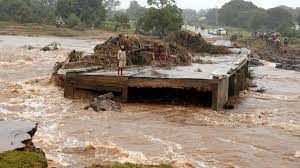
Heavy rains and floods caused damage to houses and important structures in Zimbabwe. Unfortunately, five children, four of them from the same family, lost their lives because of this.
On Monday night, four people were killed by lightning while they were sleeping with their mother in a small house in eastern Manicaland province. The mom was okay and not injured.
The other child died because their head got hurt after heavy rain caused flooding in a village in Gokwe North, in the central Midlands province. The flooding also damaged more than 17 homes.
Two more kids from the village were said to have gone to the hospital.
According to the weather agency, there will be a lot of rain, thunderstorms, strong winds, and hail in many areas between Monday and Tuesday.
Zimbabwe Teachers’ Association, have indicated that there is a considerable teacher outflow from Zimbabwe, with some 300 teachers departing the nation each month.
The main reason for this exodus is Zimbabwe’s relatively low wages as compared to other countries in southern Africa.
The nation must discover strategies to retain and attract teaching talent, even though wage increases are difficult owing to financial limitations.
Zimbabwe’s typical teacher makes a maximum of $350 per month, which results in a loss of qualified teachers who are essential for guiding the country’s kids, and budget restrictions make it difficult to hire extra teachers who are required to support the students of the nation.
For many years, the education system in Zimbabwe was regarded as one of the greatest on the continent. This was one of the few successes under the rule of former president Robert Mugabe.
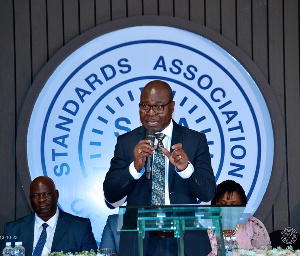
Professor Alex Dodoo, the Director General of the Ghana Standards Authority, has urged both Ghana and Zimbabwe to make use of the trade and investment opportunities provided by the General Cooperation Agreement.
This agreement, signed between the two countries in June of this year, aims to leverage the favorable trade conditions facilitated by the African Continental Free Trade Area (AFCFTA).
During the 2023 World Standards Day Celebrations in Zimbabwe last week, Professor Alex Dodoo emphasized that the GCA offers a unique chance to generate wealth and enhance the quality of life.
He further mentioned that the GCA is expected to lay the foundation for the establishment of a Ghana-Zimbabwe Permanent Joint Commission for Cooperation, which will focus on key areas of development.
“The areas of collaboration include Trade; Transport; Agriculture; Fisheries; Livestock Breeding; Industry; Mining; Culture; Education; Health; Environmental Protection; Water Engineering; Sports; ICT among others,” the GSA boss explained.
As a result, he emphasized the need for robust trade connections between Ghana and Zimbabwe to drive economic growth and improve the lives of their respective populations.
This year’s World Standards Day theme was “Shared Vision for a Better World: Incorporating SDG3 – Good Health and Well-being.” This annual event, observed on October 14th, serves as a tribute to the collaborative work of numerous global experts who create voluntary technical agreements published as International Standards.
GCA signing
The General Cooperation Agreement was signed in June of this year in the presence of Presidents Emmerson Dambudzo Mnangagwa and Nana Addo Dankwa Akufo-Addo.
Deputy Minister of Foreign Affairs and Regional Integration Kwaku Ampratwum Sarpong and Zimbabwe’s Minister of Finance and Economic Development Professor Mthuli Ncube signed the agreement on behalf of Ghana.
The government of Zimbabwe has put rules in place to manage a cholera outbreak that may have caused the death of over 100 individuals.
The actions taken include stopping some social gatherings and limiting the number of people who can go to funerals in places affected by the outbreak. This includes many districts in the country and parts of the capital city, Harare. Shaking hands and serving food at funerals are no longer allowed.
The health department said on Wednesday that they suspect 100 people have died from cholera. They have tested 30 of these cases and confirmed that they did indeed have cholera.
The ministry also stated that there were 905 cases of cholera, out of more than 4,600 cases in which cholera was suspected.
Zimbabwe often has outbreaks of cholera.
One of the most severe incidents between 2008 and 2009 caused the death of over 4,200 individuals and made nearly 100,000 others sick.
In August, Unicef said that the outbreaks were caused by bad toilets, not enough clean water, regular sewer problems, and bad trash management. This happened because there are more people living in cities in the country.
Rescue teams in Zimbabwe are still looking for people who are alive, even after three days, there was an accident in an old gold mine in the Chegutu district. Sadly, 10 illegal miners have died.
According to a provincial official named Marian Chombo, around 42 workers were trapped underground when the Bay Horse Mine in Chegutu collapsed on Friday.
According to the locals, 21 people have been saved and they think 10 more are stuck in the debris.
Ten people have died, according to the reports. State media reported that a few of the dead bodies were discovered trapped under rocks.
On Saturday, Constantino Chiwenga, who is Zimbabwe’s Vice President, said that as many as 13 people may have died from the accident.
Chiwenga said that the government will help pay for the funeral of the person who died.
The miners went into the mine, which is about 150 meters deep, by using unauthorized entry points.
Chombo requested help from mining companies in the province for the rescue operations.
She said that the mines have knowledge and other machines and tools that could be useful.
Many people in Zimbabwe work as small-scale miners. Zimbabwe has lots of gold and diamond deposits. Accidents happen often in southern African country due to illegal mining sites.
In 2019, rescuers found the bodies of around twenty illegal gold miners in a flooded mine located in a rural area of the Mashonaland West province.
A mine shaft collapse in Zimbabwe has resulted in six fatalities and the entrapment of 15 others, according to state media reports.
The incident occurred at the Bay Horse gold mine in Chegutu, located 100km (62 miles) west of the capital Harare on Friday morning, leaving over 30 individuals trapped.
Thirteen miners have reportedly escaped or been rescued, while efforts to reach those still underground are ongoing, as reported by the television channel ZBC.
The cause of the collapse remains unknown. The Zimbabwe Miners Federation has announced that its secretary general and the chairman of the Chegutu Miners Association will visit the site to investigate the incident.
Zimbabwe, rich in gold, platinum, and diamond reserves, frequently experiences mining accidents due to rudimentary mining methods and lax safety standards.
In 2019, heavy rain led to the drowning of numerous miners in the Silver Moon and Cricket mines near the town of Kadoma in the country’s center.
The European Union said it will stop giving money to Zimbabwe’s electoral group because they are worried about how they operated during the August elections.
Since 2022, the European Union (EU) has been contributing funds to a project aimed at helping the Zimbabwe Electoral Commission (Zec) enhance its abilities.
The United Nations Development Programme was leading a project that will be finished by December 2024.
The EU gave $4. 7m (£37m) and we have used some of it.
But, the EU announced on Tuesday that it would withdraw from the project. The reason for this is that international election observers have expressed concerns about the independence and transparency of ZEC during the 2023 elections.
The union also mentioned that the decision to stop funding will help in effectively managing the EU development funds.
The EU has stopped giving aid to Zimbabwe and has told Zec (an organization in Zimbabwe) and Zimbabwe’s finance ministry about their decision.
But the union said it would keep watching what happens in Zimbabwe and might start helping again.
The European Union (EU) has announced the suspension of financial aid to Zimbabwe’s electoral body due to concerns surrounding its conduct during the contested August elections.
Since 2022, the EU has been among the donors supporting a project aimed at enhancing the capabilities of the Zimbabwe Electoral Commission (ZEC). This project, managed by the United Nations Development Programme, was originally set to conclude in December 2024.
The EU had contributed $4.7 million (£3.7 million) to this project, with some funds already expended.
However, on Tuesday, the EU disclosed its decision to withdraw support from the project, citing ongoing scrutiny of the project “due to concerns raised by several international election observers regarding the independence and transparency of ZEC during the 2023 elections.”
The EU emphasized that this withdrawal of funding is intended to encourage responsible management of EU development funds.
The process of suspending aid has begun, and the EU has communicated its plan to both ZEC and Zimbabwe’s finance ministry. Nevertheless, the EU also stated its intent to continue monitoring developments in Zimbabwe and may consider resuming support in the future.
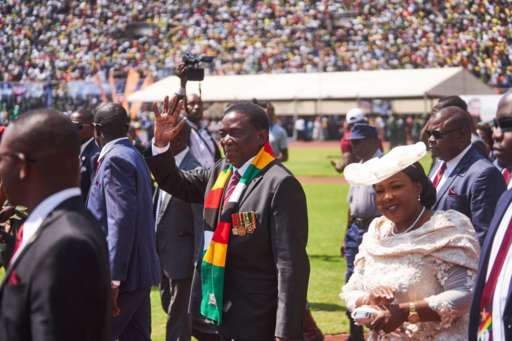
Zimbabwe’s President Emmerson Mnangagwa, who was inaugurated after winning a contested election, has accused external forces of attempting to finance unrest during the elections.
He was sworn in before the chief justice, with cheers from a large crowd of supporters.
However, the main opposition party, Citizens Coalition for Change, boycotted the ceremony and called for fresh elections, labeling President Mnangagwa’s victory as a massive fraud.
Despite regional criticism of the election, the presence of South Africa’s President Cyril Ramaphosa at the inauguration was seen as an endorsement.
President Mnangagwa pledged to improve the living conditions of the impoverished and uphold the constitution. His primary challenge will be uniting a deeply divided nation.
In the aftermath of battling liver and colon cancer, Heath Streak, a former Zimbabwe cricket captain and the country’s all-time leading wicket-taker, passed away at the age of 49.
“In the early hours of this morning, Sunday, 3 September, the greatest love of my life and the father of my beautiful children, was carried to be with the angels from his home where he wished to spend his last days surrounded by his family and closest loved ones,” his wife, Nadine Streak, wrote on social media.
As reported by ESPN, Heath Streak had been undergoing specialized treatment at a hospital in Johannesburg, South Africa, on a biweekly basis since May.
Heath Streak, renowned for his remarkable fast bowling skills and batting prowess, played a pivotal role in Zimbabwean cricket teams that competed competitively against the sport’s larger nations in the late 1990s and early 2000s.
Unfortunately, his cricketing career came to an ignominious end in 2021 when he was banned for eight years for violating the International Cricket Council (ICC) Anti-Corruption Code.
In May of this year, it was announced that Streak was seriously ill, and in August, reports of his demise circulated following a social media post by former teammate Henry Olonga. Streak swiftly clarified that he was still alive, but not before numerous former teammates and opponents paid tribute to him.
Streak, one of Zimbabwe’s cricketing greats, was a robust fast bowler capable of extracting movement from challenging pitches. He amassed 236 wickets at an average of 28.14 in 65 Test matches, a record unmatched by any other Zimbabwean cricketer who took more than 80 Test wickets. He also contributed 1,990 runs with an average of 22.35 in Tests, including his highest score of 127 (not out) against the West Indies in Harare in 2003.
In One-Day Internationals (ODIs), Streak claimed 237 wickets, surpassing his closest competitor by 104 wickets. He also scored 2,901 runs in 187 ODIs.
Among his memorable Test performances, his six for 73 against India, even as they posted a formidable total of 366, stands out. This performance led Zimbabwe to a 10-wicket victory in Harare in 2005.
Streak served two terms as Zimbabwe’s captain, with a brief interruption due to a dispute with Zimbabwe Cricket in 2001 regarding pay and racial quota issues. One of his notable captaincy achievements was Zimbabwe’s first Test victory against India in Harare in 2001. He took seven wickets in the match, including dismissing Sachin Tendulkar in both innings and contributing 40 runs in the first innings.
Streak led Zimbabwe in 68 ODIs, including the 2003 World Cup in Southern Africa, where Zimbabwe advanced to the Super Six stage. His tenure as captain ended in 2004 during a period of upheaval in Zimbabwe Cricket when 15 leading players rebelled against the administration, leading to a temporary loss of Test-playing status for the weakened team.
He retired from international cricket in 2005. Subsequently, after his final stint as a player with the English county Warwickshire, he embarked on a coaching career. His coaching journey included roles in Bangladesh, India, England, and Scotland.
Streak served as Zimbabwe’s head coach from 2016 to 2018, but he was dismissed from the position when the team failed to qualify for the 2019 World Cup.
In a significant setback to his career, Streak received an eight-year ban from the ICC for sharing information and player contact details with an undisclosed individual in India. He accepted responsibility for his actions but maintained that he had never been involved in match-fixing.
On Friday, Zimbabwe’s primary oppositionparty, the Citizens Coalition for Change (CCC), issued a call for nationwide protests and demanded a rerun of elections, asserting that President Emmerson Mnangagwa had secured a second term in office through fraudulent means.
This appeal from the CCC came just one day after President Mnangagwa declared the election to be valid and cautioned that there would be a crackdown on individuals inciting disorder.
“I warn anybody who may want to bring any chaos in this country we are ready,” he said during a ceremony to open a lithium plant. “Whoever shall preach hate speech will be responsible for their hate speech, our prisons are not full.”
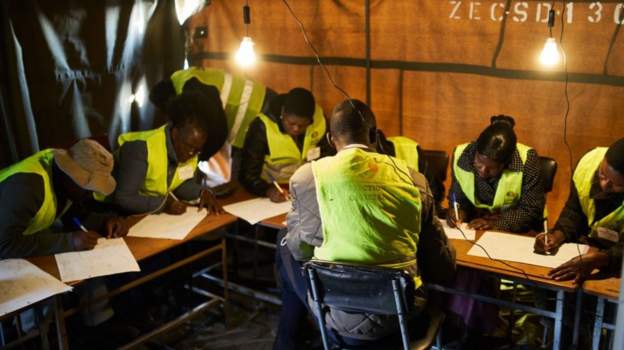
The electoral commission, in a statement issued late on Saturday, announced that President Mnangagwa had garnered approximately 53% of the vote, placing CCC leader Nelson Chamisa in second position with 44%. Mnangagwa’s ruling ZANU-PF party was declared the victor of the parliamentary election but fell slightly short of the two-thirds majority required to amend the constitution.
The credibility of these elections has been scrutinized by analysts, as they were marred by the arrest of vote monitors. In contrast, ZANU-PF has asserted that there were no irregularities, with President Mnangagwa urging those with grievances to seek legal redress through the courts.
Three gunmen who allegedly tried to assassinate the National Democratic Congress (NDC) chairman for Binduri constituency, Mr. Martin Ariku, at his residence have been killed by some brave residents, according to TV3.
The attackers reportedly surrounded the house of the NDC chairman and shot randomly, causing panic among the community members who came to the chairman’s rescue.
A shootout ensued between some residents and the attackers, resulting in the death of three of them. One of them died on the spot, while the other two escaped and later died from their injuries in different locations.
The TV3 report identified the deceased as Nashiru Razak, 32, Abdul Bashid, 23, and Muniru Bashiru, 22, who hailed from Sagabo, Patrame, and Pusum in the Bawku municipality.
Following the incident, the Upper East Regional Police Commander, DCOP Darko Offei Lomotey, and his team visited the crime scene in Bazwa to commence investigation.
In the process, DCOP Lomotey, urged the residents to be vigilant and support the police with relevant information to aid the investigation process.
“We also encourage you, all of you, if you have some information that you want to share with us. If you see something, you don’t say something, what will we do? You see something, you say something and we will do it all. All the security, military, police, immigration, prisons all of us will do something. So we are appealing to all of you and we want you to go to sleep without fear that somebody hiding somewhere will harm you,” he was quoted by TV3.
DCOP Lomotey also encouraged the residents to use the police hotlines for assistance and to report any suspicious activities.
“Because security is a shared responsibility, much of the work that we do is fuelled by information. Give us information, you give the information, we work on it and then the larger society will get the benefit,” he added.
According to a TV3 report, some residents who preferred to remain anonymous expressed their shock and concern about the targeting of prominent individuals in the area. They thus called for increased security surveillance in Bazwa
According to a TV3 report, this was not the first time that gunmen on motorbikes had attacked people in Bazwa. On August 21, 2023, unidentified gunmen on motorbikes opened fire on a group of people at Bazwa, killing two in the process
Meanwhile, security has been heightened in the town as investigations continue to fish out the perpetrators.
Three out of the seven assailants said to have attempted to attack the NDC constituency chairman for Binduri at his residence have been killed.
The leader of the Citizens Coalition for Change, who was responsible for the opposing group, claimed that the election results on Wednesday were false and emphasized that this perspective was shared by international observers. It’s not unexpected that these elections have caused disagreement. During a press conference, Mr. Chamisa, who received 44% of the votes compared to Mr. Mnangagwa’s 526%,claimed that the electoral organization declared incorrect results.
He has not shown proof of his claims yet and he has one week to bring his case to court.
Mr Chamisa declared that Zimbabwe will experience a transformation, whether President Mnangagwa’s party, Zanu-PF, desires it or not. Chamisa emphasized that he would not patiently wait for another five years.
Mr Mnangagwa has ignored international criticism of the election and claims that Zimbabwe’s voting process is just.
Some observers, including those from southern Africa, said that the poll did not meet international standards and the requirements of Zimbabwe’s constitution.
The Zimbabwe Electoral Commission has officially declared the winner of the 2023 presidential race. President Emmerson Mnangagwa won the election with 2,350,711 votes, which is 52. 6% of the total votes. Nelson Chamisa, from the Citizens Coalition for Change party, got 1,906,734 votes, which is 44% of the total votes. This information was tweeted by Zimbabwe’s Information Ministry on Saturday. For anext ended period, Zimbabwe’s politics have remained under the control of the Zanu-PF party,indicating victory for the 80-year-old person. They have been the most powerful party in the country since it became independent from Britain in 1980.
Chamisa, who is 45yearsold, was very hopeful about winning but now he does not accept the results that were announced by the electoral organization. It is currently uncertain if he will take legal action.
The party he belongs to criticized the delayed delivery of voting supplies, which caused long wait times for voters. They also mentioned some suspected problems with how the voting was done.
The CCC said that some of its candidates were left off the ballots. The ballots also had pictures of the ruling party’s candidates instead of the CCC’s candidates.
The group that oversees elections did not answer those claims.
Voting continued for an additional day in some areas of Zimbabwe, where the voting process began late on Wednesday. The president made a rule that allows voting to continue until Thursday in three provinces, including the capital city Harare where Chamisa’s party has a lot of people who support it.
People thought the polls were peaceful, but they said the election process didn’t meet many regional and international standards.
The handling of the election in Zimbabwe, where the votes are being counted, has drawn criticism from election observers from southern African nations.
The calm voting, according to the regional organisation known as SADC, fell short of some local laws and its own rules.
More than 40 poll watchers were detained late on Wednesday as they attempted to calculate their own vote total to compare with the official result.
Rights groups have denounced the arrests.
In the midst of high unemployment and rising inflation, President Emmerson Mnangagwa is running for re-election.
Nelson Chamisa of the opposition Citizens Coalition for Change is his main rival.
Zimbabweans are heading to the polls today, August 23, in their second election since a military coup in 2017 removed Robert Mugabe, who had been in power since the country’s independence in 1980.
There are 6.6 million registered voters in a total population of over 15 million. They will directly elect the president, 210 members of parliament, and 1,970 local elected representatives.
The president must secure an absolute majority. If none of the candidates obtains 50% of the votes, a second round of voting will be held.
Parliamentary and local council candidates only need to obtain a simple majority.
There are eleven presidential candidates, including ten men and one woman. Over 600 candidates are running for parliament.
Each presidential candidate paid $20,000 to appear on the ballot, while parliamentary aspirants paid $1,000 each.
Polling stations, numbering more than 12,300, will be open from 5:00 AM to 5:00 PM GMT.
Except for diplomats and their families, Zimbabweans living and working abroad are unable to vote unless they are physically present in the country.
Final election results are expected to be announced within five days after the poll.
President of Zimbabwe and the head of the ruling Zanu-PF party, Emmerson Mnangagwa, has exercised his voting right as the country’s elections commence on Wednesday. The President cast his vote in the company of the First Lady, Amai Dr. Auxillia Mnangagwa, at Sherwood Park Primary School located in Kwekwe city.
This presidential race has garnered the participation of 11 candidates, notably including the 80-year-old incumbent President, as well as the principal opposition leader, 45-year-old Nelson Chamisa. Chamisa leads the Citizen’s Coalition for Change (CCC) party.
Zimbabwe‘s president and leader of the ruling Zanu-PF party, Emmerson Mnangagwa, has placed his vote as the country’s elections start today.
He cast his vote with the First Lady, Amai Dr. Auxillia Mnangagwa, at Sherwood Park Primary School in the city of Kwekwe.
There are 11 people running for president, including an 80-year-old current president and a 45-year-old leader named Nelson Chamisa. Nelson leads a group called the Citizen’s Coalition for Change (CCC).
The second round of voting in Zimbabwe‘s general elections has begun since the late leader Robert Mugabe was overthrown in a 2017 coup.
Approximately 6.6 million Zimbabweans have registered to vote in a population of more than 15 million.
In addition to 1,970 local and municipal leaders, Zimbabweans will elect a new president and 210 national lawmakers.
Zimbabweans are voting in presidential and parliamentary elections after a campaign dominated by the country’s soaring inflation.
The day has been declared a holiday to give the 6.62 million registered voters a chance to cast a ballot.
Ten candidates, including Nelson Chamisa of the main opposition Citizens Coalition for Change (CCC), are running against President Emmerson Mnangagwa.
For a candidate to win, they must receive more votes than 50% of the total.
A run-off election for president will be held on October 2 if there is no clear winner.
It is the first election since the passing of Robert Mugabe, who for many years ruled Zimbabwean politics and the country’s dominant Zanu-PF party.
Nearly two years after being overthrown by the military and replaced by Mr. Mnangagwa, he passed away in 2019.
Polling stations opened at 07:00 local time (05:00 GMT) and voters are also choosing local councillors.
Election officials were establishing polling places in the capital city of Harare ahead of election day and removing political posters that were nearby to comply with electoral laws.
According to police chief Godwin Matanga, police have been stationed all over the nation to uphold order, and prison guards will increase their numbers.
He insisted that despite a few skirmishes, the time leading up to the election had been largely peaceful.
Opposition parties claim that an excessive amount of their rallies were either prohibited by the police or interfered with.
Violence earlier in the month resulted in the death of one CCC supporter. 15 suspects have been detained by the police in relation to the case.
The Zimbabwe Electoral Commission (Zec) has warned people not to wear nail varnish or nail extensions on their left pinkie finger, which will be marked with indelible ink after voting.
Monitoring organisations have voiced concerns about alleged irregularities on the voter list, alleging that some names have been transferred from their usual voting locations to other areas.
Boundary changes made at the last minute have also drawn criticism, as voters might not be aware that their designated polling location has changed.
Mr. Mnangagwa, who is running for re-election, is eager to have the vote approved internationally so that Zimbabwe’s foreign debt can be restructured and possibly new lines of credit that have been frozen for more than 20 years can be opened.
He has had difficulty controlling the inflationary roller coaster, which peaked in the single digits in late 2017. Annual inflation peaked at 176% in June, according to data released this week, but has since dropped to 77.2% from 101.3% in July.
With a mining boom and significant investments in infrastructure, Zanu-PF claimed that the president’s work speaks for itself and that no manifesto was necessary.
However, the CCC claims that the average person has not benefited, as one in four Zimbabweans no longer has a regular job. Mr Chamisa says he plans to scrap the volatile local currency if he wins.
Polls close at 19:00 local time (17:00 GMT). The presidential results are due within five days.
Ten significant dates in Zimbabwe’s history since gaining independence in 1980 are listed below.
1980: independence
After 90 years of British colonization and a seven-year conflict between black nationalists and white supremacists that claimed more than 27,000 lives, Southern Rhodesia attained independence on April 18, 1980, and changed its name to Zimbabwe.
Robert Mugabe, the head of the Zimbabwe African National Union (ZANU) and one of the heroes of independence, served as prime minister from 1980 to 1987 and promoted a policy of amity with the white majority.
1983-84: Massacres in Matabeleland
Robert Mugabe, who wants to create a single party, cracks down violently on Joshua Nkomo’s supporters soon after he takes office in an effort to unify the country.
In the Matabeleland region (southwest), during this period of repression known as “Gukurahundi” (“separating the wheat from the chaff” in the dominant Shona language), some 20,000 civilians, mostly Ndebele speakers, were slain.
1987: Mugabe President
In 1987, the party of Robert Mugabe and that of Joshua Nkomo merged, forming the Zanu-Patriotic Front (ZANU-PF). Robert Mugabe becomes President after a constitutional reform .
1999: birth of the opposition
Trade unionist Morgan Tsvangirai founded the opposition Movement for Democratic Change (MDC) party in 1999.
He campaigned for the rejection, in a referendum the following year, of a draft new Constitution aimed at authorizing the expropriation of white farmers without compensation.
2000: land reform
In February 2000, despite the “no” victory in the referendum, Mugabe launched a violent occupation and then the expropriation of 90% of the farms belonging to white owners, to redistribute them to black Zimbabweans.
This policy causes the bankruptcy of agriculture and plunges the economy, strangled by sanctions from Western countries, into two decades of crisis.
2002: electoral violence
In March 2002, Robert Mugabe was re-elected in a disputed election marked by violence.
Five years later, opposition leader Morgan Tsvangirai was arrested before a banned rally against the regime, and beaten by the police while in detention.
Images showing him with his swollen face and partially shaved head, revealing a gash on his head, go around the world.
2009: unity government
In March 2008, when the devastated economy was compounded by vertiginous hyperinflation, the MDC (opposition) took control of Parliament.
Tsvangirai is ahead of Mugabe in the first round of the presidential election but gives up contesting the second in the face of repression. Alone in the running, Mugabe was re-elected in June.
Under pressure from the West and his neighbors in southern Africa, Mugabe accepts the formation of a government of national unity. Morgan Tsvangirai became Prime Minister in February 2009.
2017: Mnangagwa succeeds Mugabe
After 37 years in power, Mugabe was forced to resign in 2017 under pressure from the army. He will die two years later in Singapore.
The generals who took power nominate ex-vice president Emmerson Mnangagwa, nicknamed the “crocodile”, as their successor.
The following year, Mnangagwa narrowly won the elections (50.8% of the vote). The opposition contests the results, the army kills six people during demonstrations.
2019: demonstrations violently repressed
From October 2018, the country experienced several months of protests against the high cost of living, which turned into a riot in January 2019 after a sharp rise in fuel prices. At least 17 civilians are killed. The opposition accuses the new regime of surpassing Mugabe in brutality.
2022: launch of the CCC, opposition coalition
Following splits in the opposition, Nelson Chamisa, loser of the presidential election in 2018, launched a new party, the Citizens’ Coalition for Change (CCC), in January in view of the August elections.
His campaign was marked by strong repression by the power, considered more brutal than under Mugabe, between prohibited meetings and the imprisonment of opponents.
In the aftermath of Robert Mugabe’s removal as Zimbabwe’s president in 2017, his successor, Emmerson Mnangagwa, vowed to usher in a new era for the nation’s populace.
However, as President Mnangagwa vies for re-election in the upcoming polls this month, Zimbabweans continue to grapple with persistent challenges – including soaring inflation, widespread poverty, and an atmosphere of apprehension.
Adorned with a scarf that bears the colors of Zimbabwe’s flag around his neck, the Zanu-PF leader, Mnangagwa, dismisses such criticisms, asserting that if the nation doesn’t rally behind him, it faces a bleak future. His supporters point to a surge in mining activities and foreign investments during his tenure to bolster their defense of his leadership.
Dubbed “the crocodile” due to his strategic political acumen, he ascended to power in the aftermath of a military intervention and widespread protests that compelled the resignation of long-standing leader Mr. Mugabe, who had been Mr. Mnangagwa’s mentor.
The military uprising was ignited by Mr. Mugabe’s decision to dismiss Mr. Mnangagwa from his position as vice-president.
Mr. Mnangagwa, living up to his moniker, demonstrated resilience in response and managed to unseat Zimbabwe’s sole ruler. However, he is also associated with some of the most egregious atrocities committed under the ruling party’s regime since the nation gained independence in 1980.
Former comrades from the liberation struggle once characterized him as a “very cruel man.”
Nevertheless, his offspring perceive him differently, viewing him as principled albeit emotionally reserved. His daughter, Farai Mlotshwa, the eldest of his nine children born from two marriages and a property developer, once portrayed him as a “softie.”
As he endeavored to attract foreign investors and counteract his formidable reputation in 2018, he conveyed to the BBC, “I am as gentle as wool. I embody a gentle demeanor in life.”
And as he sought to woo foreign investors and dispel his ruthless reputation in 2018, he told the BBC: “I am as soft as wool. I am a very soft person in life.”
Image caption,His supporters still bring out a cuddly crocodile toy during Zanu-PF rallies
The exact year of Mr Mnangagwa’s birth is not known – but he is thought to be 80.
Born in the central region of Zvishavane, he is a Karanga – the largest clan of Zimbabwe’s majority Shona community.
Long before he came to power, he was seen as “the architect of the commercial activities of Zanu-PF”, a 2001 United Nations report said.
Despite his money-raising role, Mr Mnangagwa, a lawyer who grew up in Zambia, has a fearsome reputation that was cemented after independence during the civil war that broke out in the 1980s between Mr Mugabe’s Zanu party and the Zapu party of Joshua Nkomo.
As national security minister, he was in charge of the Central Intelligence Organisation (CIO), which worked hand in glove with the army to suppress Zapu.
Thousands of civilians – mainly ethnic Ndebeles, seen as Zapu supporters – were killed in a campaign known as Gukurahundi, before the two parties merged to form Zanu-PF.
Mr Mnangagwa has denied any role in the massacres. As president he has tried to broach reconciliation. Some have felt his comments glib given the deep wounds in Matabeleland, but an initiative to allow exhumations and reburials has been agreed.
Elsewhere, he still enjoys the support of many of the war veterans who led the campaign of violence against white farmers and the opposition from 2000.
They remember him as one of the men who, following his military training in China and Egypt, directed the fight for independence in the 1960s and 1970s.
‘Torture scars’
Mr Mnangagwa’s official profile says he was the victim of state torture after being arrested by the white-minority government in the former Rhodesia in 1965, when the “crocodile gang” he led helped blow up a train near Fort Victoria (now Masvingo). He spent 10 years in prison.
A close friend of Mr Mnangagwa, who did not want to be named, once said: “He has scars from that period… perhaps that explains why he is indifferent. Horrible things happened to him when he was young.”
His ruthlessness resurfaced during the 2000 parliamentary campaign in Kwekwe Central when opposition candidate Blessing Chebundo defeated Mr Mnangagwa.
During a bitter campaign, Mr Chebundo escaped death by a whisker when the Zanu-PF youths who had abducted him and doused him with petrol were unable to light a match.
Eight years later Mr Mnangagwa reportedly masterminded Zanu-PF’s response to Mr Mugabe losing the first round of the presidential election to long-time rival Morgan Tsvangirai.
The military and state security organisations unleashed a campaign of violence against opposition supporters, leaving hundreds dead and forcing thousands from their homes.
Mr Tsvangirai then pulled out of the second round and Mr Mugabe was re-elected.
Ice cream plot
Mr Mnangagwa was seen as Mr Mugabe’s right-hand man – that is until the former first lady Grace Mugabe became politically ambitious and tried to edge him out.
Image caption,Emmerson Mnangagwa, pictured here in 2016, was close to Robert Mugabe (C) until the former first lady (L) eyed the presidency
Their rivalry took a bizarre turn when he fell ill in 2017 at a political rally led by Mr Mugabe and had to be airlifted to South Africa.
His supporters suggested that a rival group within Zanu-PF had poisoned him and appeared to blame ice cream from Mrs Mugabe’s dairy firm.
Mr Mnangagwa referenced this plot himself and also blamed a group linked to the former first lady for an explosion at a Zanu-PF rally in Zimbabwe’s second city Bulawayo, in which two people died.
Their rivalry has continued – and when Mr Mugabe died in 2019, President Mnangagwa wanted him interred at the national Heroes Acre burial ground, but Mrs Mugabe refused.
But his overtures on the economic front have been welcomed by some businesses.
In 2017, Zimbabwe’s GDP was $17.5bn (£13.7bn) and has since averaged at $25.31bn.
The government has also attracted hundreds of millions of dollars in investment, mainly in mining. For example, platinum giant Zimplats will invest $1.8bn over the next 10 years, following negotiations with government.
With the largest lithium reserves in Africa, the government also hopes to profit from world demand for the key component in batteries – and last month a Chinese firm opened up a lithium processing plant in Goromonzi.
The president’s supporters are confident about his place in the history books, with the government renaming 10 streets Emmerson Dambudzo Mnangagwa Rd in a 2019 project to honour African icons rather than British ones.
But critics say most changes introduced by President Mnangagwa have not benefitted the ordinary Zimbabwean.
Zimbabwe had one of the highest inflation rates in the world last month – prices in July had rocketed by 101.3% since the previous year. Unemployment also remains rife, with only 25% of Zimbabweans holding formal jobs.
His vow to guarantee human rights appears hollow, with little changing in this regard since Mr Mugabe’s departure.
Critics continue to be arrested and taken to court for insulting the president – an offence punishable by one year in jail or a fine or both. A man in Harare was charged in April after allegedly being overheard by a policeman saying that Mr Mnangagwa would lose the next election.
Members of opposition party the Citizens Coalition for Change (CCC) have also been convicted in the run-up to the vote on what they describe as fabricated charges aimed at weakening the party. The party says the police have banned several of its meetings since July, and nearly 100 gatherings since it was formed in January last year.
This week 40 CCC members, including an parliamentary candidate, were arrested while campaigning in the capital Harare – and remain in custody. The recent killing of a CCC backer, allegedly by Zanu-PF supporters, further raised concerns about rights.
International outlook
Mr Mugabe’s removal raised hopes that Zimbabwe would rebuild its relationship with the West.
Image caption,A coal powered electricity generator, funded by China, was opened this month
Under Mr Mnangagwa, the country has applied to be readmitted to the Commonwealth. Mr Mugabe’s government pulled Zimbabwe out in 2003 after the nation was suspended for human rights violations.
“Zimbabwe had made progress in its journey to re-join the Commonwealth family”, with an encouraging assessment visit last year, a Commonwealth Secretariat spokesperson told the BBC.
A Commonwealth observer group was also in the country to obverse the coming elections, seen as a “significant step in the country’s democratic governance”, they added.
Despite this apparent thawing in relations, Zimbabwe still remains under US economic and travel sanctions and a European Union arms embargo.
Mr Mnangagwa, however, has bolstered ties with China and Russia – and has also hosted Iran’s president for a state visit last month when he said they were both “victims” of Western sanctions.
Civil society groups and the opposition doubt the election on August 23 will be free or fair. They also point out that 43 years in power and access to state media gives Mr Mnangagwa’s Zanu-PF party a huge advantage over its opponents.
A bullish Mr Mnangagwa told supporters at a rally earlier this month: “No-one will stop us from ruling this country.
Zimbabwean authorities have reported the apprehension of 40 members affiliated with the primary opposition party on grounds of obstructing traffic and inciting disorder during a campaign event on Tuesday. This occurrence transpired just a week before the national elections are scheduled to take place.
In anticipation of the forthcoming elections, slated for August 23, tensions are mounting within this southern African nation. Analysts foresee a tense atmosphere due to an increased crackdown on dissent and apprehensions about potential vote manipulation.
During the campaign event held on Tuesday in a southwestern suburb of the capital city Harare, the opposition party Citizens’ Coalition for Change (CCC) encountered interference from law enforcement, leading to the disruption of their supporters, as reported by party spokeswoman Fadzayi Mahere.
The police have officially confirmed that they took into custody 40 activists associated with the CCC. The authorities assert that the party initially communicated its intention to conduct a rally but subsequently deviated from the prearranged location.
The group “went on a car rally procession” in a nearby area, and stopped at a traffic light “openly blocking traffic”, police said, adding that CCC supporters “started chanting party slogans and singing”.
Social media users posted video of a packed junction of people wearing the yellow uniforms of the CCC, some of them were crammed within the bed of a small truck.
The opposition has long alleged that it was unfairly singled out for attention by the government in the run-up to the election, with its members being detained and numerous CCC activities being halted.
A report by Human Rights Watch this month said the upcoming ballot will be held under a “seriously flawed electoral process” that does not meet global standards for freedom and fairness.
It accused police of “partisan conduct” and of using “intimidation and violence against the opposition”.
In the presidential election next week, President Emmerson Mnangagwa, 80, of the ZANU-PF, who has led the country since its independence in 1980, is running for re-election.
Nelson Chamisa, a preacher and CCC leader who is 45 years old, is his biggest rival.
Ghana has been listed among the top 10 countries globally experiencing the highest food inflation rates.
As indicated in the Food Security Report published by the World Bank, Ghana’s Nominal Food Inflation (year-on-year) of 54% positioned the country in the 8th rank.
However, its Real Food Inflation (year-on-year) of 12% positioned it at the 9th spot.
In the Nominal Food Inflation category, Venezuela claimed the first position with a year-on-year inflation rate of 414%. Following suit were Lebanon (280%), Zimbabwe (256%), Argentina (117%), Suriname (71%), Egypt (66%), and Sierra Leone (58%), in the 2nd to 7th rankings, respectively.
Regarding Real Food Inflation, Zimbabwe (80%), Egypt (30%), Lebanon (26%), Turkey (16%), Rwanda (15%), Burundi (14%), Lao (14%), and Sierra Leone (13%) captured the 1st to 8th positions respectively, representing the countries with the most pronounced food inflation rates.
According to the report, its latest data covering the period from February 2023 to May 2023, which includes food price inflation figures, reveals a notable surge in inflation across numerous low- and middle-income nations.
In fact, inflation rates surpassing 5% were observed in 63.2% of low-income countries, 79.5% of lower-middle-income countries, and 67.0% of upper-middle-income countries. Many of these countries are also grappling with double-digit inflation rates.
Furthermore, the report highlights that a substantial 78.9% of high-income countries are currently contending with elevated food price inflation. The regions most heavily affected by this trend span Africa, North America, Latin America, South Asia, Europe, and Central Asia.
From a genuine economic perspective, the inflation rates for food prices have outpaced the overall inflation rates (measured by the year-on-year change in the Consumer Price Index) in a significant 80.1% of the 166 countries where both food CPI and overall CPI indices are available.
Maize, wheat prices go up but rice price remains stable
The report also revealed an increase in maize and wheat prices, which closed 12% and 14% higher, respectively, after declining in the first half of July 2023. It consequently drove the increase in the cereal price index, whereas rice prices have remained stable.
On a year-on-year basis, maize and wheat prices are 15% and 17% lower, while rice prices are 16% higher. Maize, wheat, and rice prices are 8%, 11% and 3% higher, respectively, than in January 2021
The 2023 State of Food Insecurity and Nutrition in the World report highlights the state of global hunger and food insecurity and the challenges and opportunities that urbanization presents in the context of agrifood systems.
The report expressed concern about Russia’s withdrawal from the Black Sea Grain Initiative (BSGI) in global markets.
Wheat and maize prices rise, but rice prices stay the same
The report also unveiled a rise in the prices of maize and wheat, which rebounded by 12% and 14%, respectively, following a decline in the first half of July 2023. This upswing played a pivotal role in driving an increase in the cereal price index, whereas rice prices have maintained their stability.
In a year-on-year comparison, prices for maize and wheat have seen a decrease of 15% and 17% respectively, while rice prices have risen by 16%. Notably, current prices for maize, wheat, and rice are elevated by 8%, 11%, and 3% respectively compared to their levels in January 2021.
The 2023 State of Food Insecurity and Nutrition in the World report offers insights into the global landscape of hunger and food insecurity, shedding light on the challenges and opportunities that come with urbanization in the context of agrifood systems.
Of particular concern highlighted in the report is Russia’s withdrawal from the Black Sea Grain Initiative (BSGI) within the global markets.
Parere Kunyenzura spent 187 days in a prison cell last year in Harare’s central business district for organizing what the police deemed an illegal gathering.
Throughout his imprisonment, he endured the harsh conditions of the prison without trial. While fellow inmates came and went, he remained, haunted by the persistent and overpowering stench of human waste and urine.
The conditions were particularly unbearable during the night when more than 100 inmates, including Kunyenzura, were locked up from 3 pm to 6 am.
They huddled together on the floor, sharing lice-infested blankets left behind by previous inmates. It was a situation that none of them desired, but they had to endure the challenging circumstances of their confinement.
During his time in jail, Kunyenzura frequently saw many inmates resort to defecating in plastic buckets. “The toilets don’t have a flushing system or don’t have the sitting bowls. Of the few that do, the flushing system doesn’t work,” he told Al Jazeera.
The Zimbabwe Transformative Party (ZTP) leader and cleric Kunyezura would silently pray that no one would experience episodes of diarrhea. However, one night some poorly prepared spinach started a messy incident, and the inmates had to put up with the foul odor of feces for up to 15 hours before everything was cleansed.
“It was a crisis,” he told Al Jazeera. The buckets were not enough.”
Misheck Nyembe, a 72-year-old pensioner who spent 13 days behind bars in January for attending a political meeting the police had not given a permit for, told Al Jazeera that the prison was “infested with lice” and his body was itchy for weeks after his release. Nyembe, who ate only food provided by his family during his detention, said the prison meals were only “fit for pigs”.
“Everything about prison [in Zimbabwe] is horrible,” said Wilbert Mandinde, programmes coordinator at Zimbabwe Human Rights NGO Forum, which advocates for prisoners’ rights, including the right to vote and have access to water. “The conditions are terrible in the sense that they are congested.”
‘A need to decongest’
The Southern African nation has depended extensively on prisons built during the colonial era since gaining independence from Britain in 1980. These facilities have long been overworked and are currently breaking under the weight of Zimbabwe’s escalating economic problems.
The Zimbabwean judicial ministry reports that there are 46 prisons in the country. Two are reserved solely for female inmates, 17 are reserved for men, and the remaining rooms are coed.
As of March 2021, the jails were housing 23,000 convicts despite having a 17,000-capacity. According to the justice ministry, Harare’s Remand Prison, which had a capacity of 800 people when it was completed in 1910, today houses roughly 2,220 inmates.
Even a 2018 pardon of almost 3,000 prisoners by the government did not help significantly.
In 2022, the World Prison Brief, published by the University of London’s Institute for Crime & Justice Policy Research, ranked Zimbabwe’s prisons as the 75th most overcrowded globally on a list of 203 countries. The database lists its occupancy rate at 130 percent.
“Post-independence, we have done very little in terms of building new prisons. Additionally, the country’s population has increased tremendously since independence,” Mandinde told Al Jazeera.
From independence to the last population count in 2022, Zimbabwe’s population had swelled from 7 million to 15 million people. Madinde added that population growth in the midst of an economic downturn has spurred an increase in criminal activity.
“The economy is bad and criminal activity has risen, and this has caused the overcrowding of facilities. … There are instances where we have been at more than 100% holding capacity,” he said. “The number of people in prison remains very high, and there is a need to decongest the prison.”
United Nations resolutions on basic treatment of prisoners stipulate that they be treated “fairly and with dignity”, regardless of the nature of their crimes. They have set out the basic minimum standards for their treatment, including food, clothing, medical care and access to legal assistance.
But in Zimbabwe, these standards have become nonexistent as the country’s economic woes have worsened, analysts said.
“Ever since the country started experiencing an economic meltdown almost two decades ago, prisons have been failing to perform their mandate of providing a decent diet among other things,” said Edison Chihota, chief executive of Zimbabwe Association for Crime Prevention and Rehabilitation of the Offender (ZACRO).
Rising inflation means allocated funds are no longer enough to feed prisoners or fund organisations like ZACRO, he said. Consequently, prison authorities now rely on private sector donations for essential needs.
A prison warden who spoke to Al Jazeera on the condition of anonymity said he was struggling to survive on a salary with constantly depreciating value.
It remains unclear what the budget allocation to the Zimbabwe Prisons and Correctional Services (ZPCS) is because it is disbursed at the discretion of the justice ministry.
Mandinde told Al Jazeera that there was also no long-term plan to tackle the overcrowding of prisons.
“We had this serious problem when COVID-19 hit, which required people to be isolated and reduced inmates,” he said. Other than presidential amnesties, there has been no plan to decongest the prison. We have seen that with amnesty, those pardoned inmates end up back in prison in no time.”
Neither ZPCS spokesperson Meya Khanyezi nor Information Minister Monica Mutsvangwa responded to Al Jazeera’s requests for comment on the allegations or general state of the prisons.
A tool of repression
Former inmates of the Harare Remand facility told Al Jazeera that they either witnessed or suffered violence at the hands of prison guards.
“Not a day went by without someone getting beaten up for no apparent reason. It was the order of the day,” Kunyenzura said.
Others complained of filmed strip searches, and some inmates said they were forced to attend church services, regardless of their religious rights and beliefs, and beaten for not singing or participating enough.
Another increasing burden on the prison system is the rise in detentions of activists and opposition figures without trial for long periods of time. In the past year, close to 100 opposition supporters have been arrested and detained for varying periods.
That, Kunyenzura says, is evidence that the justice system is now a tool to silence critics.
“Our judiciary system is by and large captured by [the ruling party] Zanu-PF. … It seemed to us during our persecution that the magistrates were simply told, ‘Do XYZ to suspect so and so,’ and they didn’t have control over the matter,” Kunyenzura said. “At the back of their minds, we were political offenders.”
Even a 2018 pardon of almost 3,000 prisoners by the government did not help significantly.
In 2022, the World Prison Brief, published by the University of London’s Institute for Crime & Justice Policy Research, ranked Zimbabwe’s prisons as the 75th most overcrowded globally on a list of 203 countries. The database lists its occupancy rate at 130 percent.
“Post-independence, we have done very little in terms of building new prisons. Additionally, the country’s population has increased tremendously since independence,” Mandinde told Al Jazeera.
From independence to the last population count in 2022, Zimbabwe’s population had swelled from 7 million to 15 million people. Madinde added that population growth in the midst of an economic downturn has spurred an increase in criminal activity.
“The economy is bad and criminal activity has risen, and this has caused the overcrowding of facilities. … There are instances where we have been at more than 100% holding capacity,” he said. “The number of people in prison remains very high, and there is a need to decongest the prison.”
United Nations resolutions on basic treatment of prisoners stipulate that they be treated “fairly and with dignity”, regardless of the nature of their crimes. They have set out the basic minimum standards for their treatment, including food, clothing, medical care and access to legal assistance.
But in Zimbabwe, these standards have become nonexistent as the country’s economic woes have worsened, analysts said.
“Ever since the country started experiencing an economic meltdown almost two decades ago, prisons have been failing to perform their mandate of providing a decent diet among other things,” said Edison Chihota, chief executive of Zimbabwe Association for Crime Prevention and Rehabilitation of the Offender (ZACRO).
Rising inflation means allocated funds are no longer enough to feed prisoners or fund organisations like ZACRO, he said. Consequently, prison authorities now rely on private sector donations for essential needs.
A prison warden who spoke to Al Jazeera on the condition of anonymity said he was struggling to survive on a salary with constantly depreciating value.
It remains unclear what the budget allocation to the Zimbabwe Prisons and Correctional Services (ZPCS) is because it is disbursed at the discretion of the justice ministry.
Mandinde told Al Jazeera that there was also no long-term plan to tackle the overcrowding of prisons.
“We had this serious problem when COVID-19 hit, which required people to be isolated and reduced inmates,” he said. Other than presidential amnesties, there has been no plan to decongest the prison. We have seen that with amnesty, those pardoned inmates end up back in prison in no time.”
Neither ZPCS spokesperson Meya Khanyezi nor Information Minister Monica Mutsvangwa responded to Al Jazeera’s requests for comment on the allegations or general state of the prisons.
A tool of repression
Former inmates of the Harare Remand facility told Al Jazeera that they either witnessed or suffered violence at the hands of prison guards.
“Not a day went by without someone getting beaten up for no apparent reason. It was the order of the day,” Kunyenzura said.
Others complained of filmed strip searches, and some inmates said they were forced to attend church services, regardless of their religious rights and beliefs, and beaten for not singing or participating enough.
Another increasing burden on the prison system is the rise in detentions of activists and opposition figures without trial for long periods of time. In the past year, close to 100 opposition supporters have been arrested and detained for varying periods.
That, Kunyenzura says, is evidence that the justice system is now a tool to silence critics.
“Our judiciary system is by and large captured by [the ruling party] Zanu-PF. … It seemed to us during our persecution that the magistrates were simply told, ‘Do XYZ to suspect so and so,’ and they didn’t have control over the matter,” Kunyenzura said. “At the back of their minds, we were political offenders.”
An official accusation alleging that Zambia’s head coach Bruce Mwape sexually assaulted a player at the Women’s World Cup is being looked into by Fifa.
Mwape is accused of touching one of his players’ chests while they were in New Zealand for a training session on July 29.
“A complaint has been received,” a Fifa spokesperson said.
However, the Football Association of Zambia (FAZ) stated that it was a “surprise” and that “it has not received any such complaint”.
Two days prior to Zambia’s last group match against Costa Rica, which they won 3-1 for their first World Cup triumph, the alleged event is believed to have occurred during a training session.
The spokesperson for Fifa further stated, “Fifa takes any allegations of misconduct extremely seriously and has a clear process in place for anyone in football who wants to report an incident.”
After placing third in Group C, Zambia was eliminated and has since gone home.
Two individuals have been arrested by the police in Zimbabwe following the death of an opposition supporter during political clashes at a campaign rally south of the capital, Harare, on Thursday.
A video circulating on social media showed members of the Citizens Coalition for Change (CCC) fleeing the scene in vehicles while being pursued by a group of people throwing stones.
Local human rights monitors have reported an increase in violence and rights violations as the country prepares for general elections later this month.
The police are currently conducting investigations into the incident that resulted in the death of Tinashe Chitsunge.
Though official details are limited, eyewitnesses from CCC claim that they were heading to a pre-booked venue for a rally in Glen Norah. They allege that supporters of the ruling Zanu-PF party, who had gathered at the rally grounds, chased them away, tore up their campaign posters, and pelted them with stones.
They assert that Mr. Chitsunge was struck and fell to the ground, possibly being run over by a vehicle affiliated with CCC as it was fleeing the violence.