The main opposition Citizens Coalition for Change (CCC) in Zimbabwe reported that an opposition supporter, Tinashe Chitsunge, was tragically killed while en route to an election rally.
This incident occurred during a period of escalating contention and violence in the campaign.
According to CCC spokesperson Fadzayi Mahere, Chitsunge was part of a group of supporters who were attacked and stoned as they were making their way to a rally in Glen Norah, a suburb of the capital, Harare.
Social media posts showed images of a man lying on the ground in a pool of blood, with the party’s yellow T-shirts covering his head.
Videos shared on social media depicted the attack, as a large group threw a barrage of stones at a lorry carrying CCC supporters, tearing campaign posters off the vehicle.
In response to the tragedy, Zimbabwe’s Ministry of Information conveyed its condolences and stated that the police were investigating the incident.
The violence surrounding the campaign has raised concerns and highlighted the need for peace and security during this crucial period in Zimbabwe’s political landscape.
Twelve members of Zimbabwe’s main opposition party have been disqualified from contesting the upcoming August parliamentary elections by a high court ruling.
The judge stated that their membership applications, submitted under the Citizens Coalition for Change (CCC), were received after the cut-off time of 16:00 on June 21. This was the day when nomination courts were in session to receive applications.
As a consequence of this ruling, candidates from the ruling Zanu-PF party will be elected unopposed in three seats within Bulawayo, the country’s second-largest city, which was previously considered an opposition stronghold.
The disqualifications came about after the obscure opposition party, the Elected Early Democrats (EED), challenged the nominations of the 12 candidates, arguing that the electoral body had unlawfully accepted their papers. The registration process on June 21 was fraught with chaos, leading to the rejection of numerous applications, primarily from opposition candidates, due to challenges in the payment system.
One positive outcome was United Zimbabwe Alliance’s Elisabeth Valerio successfully challenging the rejection of her papers, making her the sole woman on the presidential ballot.
In response to the high court ruling, the CCC spokesperson, Fadzayi Mahere, stated that the 12 disqualified candidates would challenge the decision.
Zimbabweans are scheduled to vote on August 23 to elect councillors, members of parliament, and a president.
Former Arsenal and Manchester City defender, Kolo Toure, faced accusations of cheating on his then-fiancée, Awo, with a UK-based Zimbabwean model named Kessel Kasuisyo.
In a 2012 interview with Mirror, Kessel claimed that she had a two-year fling with the Ivorian footballer without knowing his real identity. According to Kessel, during their affair, Toure introduced himself as ‘Francios’ and portrayed himself as a Ghanaian car salesman operating in Africa.
Throughout the duration of their relationship, which lasted from September 2010 to December 2012, Toure allegedly concealed his true identity. He avoided taking pictures with Kessel and used his Islamic heritage as a pretext to prevent her from meeting his parents.
Kessel only discovered Toure’s true identity when a friend suggested that she search for the player’s information online after seeing his picture. To her surprise, she found out that Toure was already married to Awo.
“I am devastated. On some of the wedding pictures he is crying but a few weeks before he was in my bed.
“Two or three weeks after the wedding he was at mine. Around the time he got married, he called and said he was back in Africa and had just sold two cars.
“I believed everything he said, I am hurt and confused by it all. Maybe he wanted me to be a second wife. I just don’t know. Everything about his strange behaviour now all makes sense.”
“Two or three weeks after the wedding he was at mine. Around the time he got married, he called and said he was back in Africa and had just sold two cars.
“I believed everything he said, I am hurt and confused by it all. Maybe he wanted me to be a second wife. I just don’t know. Everything about his strange behaviour now all makes sense.”
Kessel told Mirror that they met at a nightclub in Manchester in September 2010 and they began talking before they exchanged numbers.
“He started chatting me up and we swapped numbers,” she said.
“Then he gave me a lift home. The next day he called me and we met at a hotel. I told him he looked familiar and he just said maybe he looks like somebody. He said he sold cars in Africa and did some charity work.”
“He said he came from Ghana and was a student too. He said his father was a minister. I am not a fan of football. I thought maybe I had seen him on telly with his father,” he added.
She claimed that during that time, Toure sent him expensive gifts like lingerie and even a £1,000 ring as a sign of his devotion to her.
Toure would vanish and then emerge nine months later, she said, adding that he always had a cap and sunglasses hiding his face when he visited her. She went on to describe their on-and-off connection.
“He asked if I wanted to meet up and I told him I had my own flat now. He came around in a big car. He was wearing a cap and big sunglasses.
“I told him it was my birthday and he asked me if I would wear some of the stuff he bought me so I got dressed up and we ended up in the bedroom.
“The next time I saw him he bought me a birthday present. He got me a gold watch and some 18-carat diamond earrings.
Kessel said Toure used to call her through a private number with the excuse that he does not want her to waste her money in reaching him.
“He used to call me constantly but from a private number so I couldn’t call back. I was suspicious, but he said he didn’t want me to waste my money calling.
“He once gave me £500 to send to my mother in Zimbabwe. Another time he gave me £200 for food because my fridge was empty. I started to question him about exactly what he did and he would say just selling cars. Things were on and off.”
Kolo Toure never reacted to the allegation that popped up after his marriage in 2012.
They tied the knot after nine years of dating and currently have two children, a daughter, and a son.
A Nigerian investigative journalist and filmmaker recently recounted his distressing encounter with Zimbabwean authorities when he attempted to enter the country using a Ghanaian refugee passport. His ordeal sparked an online diplomatic discussion on Twitter after he was denied entry.
David Hundeyin took to Twitter on Wednesday, July 19, 2023, at 7:32 PM to express his frustration, sharing how he was detained for a staggering 7 hours upon his arrival at Harare Airport, despite presenting a refugee passport from Ghana.
In a series of tweets, the journalist described being confined to a malodorous locked room for nearly 7 hours and only being permitted to use the washroom after 10 hours of detention.
Hundeyin further clarified that although he traveled with a Ghanaian refugee passport, the authorities insisted he could not enter thecountrywithout a visa, leading to the unfortunate situation. The incident sparked conversations on Twitter about the challenges faced by journalists and travelers in similar situations.
“They said that despite using the travel document of a country with a visa-free relationship, my nationality is still Nigerian, and thus, I need a visa,” he tweeted.
David Hundeyin provided a comprehensive account of the events leading to his detention and the reasons behind it. This came after Zimbabwe’s Permanent Secretary in the Information, Publicity, and Broadcasting Service, Nick Manwana, shared some details about the incident in a tweet.
According to David’s explanation, he had no prior knowledge of the visa requirement for traveling to Zimbabwe, as he possessed a refugee passport from Ghana. The refugee passport should have granted him visa-free entry into the country.
He further expressed that in the past two years, he had utilized the same Ghanaian refugee passport to visit numerous countries worldwide without encountering any issues. It was only in Zimbabwe that he faced refusal of entry with this particular passport.
The incident sparked discussions online, raising awareness about visa policies and the challenges faced by travelers, particularly those with refugee passports, when trying to enter certain countries.
“I wasn’t aware that it is standard operating procedure in Zimbabwe for the country’s minister of information to tweet the asylum status of a foreigner, but since you’ve resorted to telling half truths, perhaps you should mention to your audience that I came into Zimbabwe with this valid Ghanaian refugee passport, which I have used to travel extensively over the world for 2 years.
“I’m sure you saw the valid UK Visa inside it. I’m also sure that you saw the numerous entry and exit stamps inside it belonging to multiple jurisdictions inside and outside Africa. Only in Zimbabwe have I EVER had an issue travelling with this document.
“You might also want to share with your audience that I put a call through to the Zimbabwean embassy in Accra before I travelled, to confirm that I did not need a visa, and that J was expressly advised that as long as the airline was happy to recognise the travel document, I would have no problem coming into Zimbabwe visa-free,” he tweeted.
Being the journalist he is, a number of people, after seeing the series of tweets by David Hundeyin, prompted authorities in Zimbabwe, from which Nick Mangwana, the Permanent Secretary in the Information, Publicity and Broadcasting Service responded to one of them.
In the tweet, Nick wrote that although the journalist had documents showing he was from Ghana as a refugee, he was Nigerian and as such, he needed a visa to enter their country.
“David came with Ghanaian Refuge papers claiming he was a Nigerian who was a refugee from his home country. His country of Asylum is Ghana after claiming to be running away from persecution in Nigeria.
“People in this category certainly need Visas to enter Zimbabwe. He wasn’t coming in to work as a journalist. He said he was just coming to visit but without getting a Visa in Ghana first. Other parts of his story were also unsatisfactory to the immigration authorities. He was considered not a candidate for entry into Zimbabwe,” he said in the first of his reactions to a Twitter user’s message.
The Zimbabwean authority further explained in other replies that David Hundeyin was also not fully honest with officials.
While refraining from confirming whether or not they detained the journalist for hours, Nick Mangwana said, in response to a question in that respect, that “That’s his side of the story.”
The journalist tweeted again that he eventually got released and safely returned home, although it is unclear whether that is in Ghana or in Nigeria.
In August, Zimbabwe will vote amid allegations of a stepped-up crackdown on the opposition and one of the highest rates of inflation in the world.
Despite the removal of longtime leader Robert Mugabe in 2017, many claim that not much has changed.
There are concerns in the lead-up to the election about how free and fair the voting will be in a nation that is attempting to repair its reputation.
When are the elections?
On August 23, Zimbabweans will cast ballots to choose a president, council members, and members of parliament. If there is no clear winner in the presidential election, a run-off will be held on October 2nd, six weeks from now.
Who is running for president?
Twelve candidates have been approved by the Zimbabwe Electoral Commission.
This is far less than the 23 who ran in the previous election in 2018, no doubt as a result of the candidates’ increased expenses, which have gone from $1,000 (£800) to $20,000 (£16,000).
But two men are most likely to compete:
Current PresidentEmmerson Mnangagwa of the ruling Zanu-PF party Leader of the opposition Nelson Chamisa of the Citizen’s Coalition for Change Since Robert Mugabe was forced to step down by the military in 2017, Mr. Mnangagwa, 80, has been in charge of Zimbabwe. A year later, he won a contentious election. Before their breakup, he was Mugabe’s longtime ally.
Mr Chamisa, 45, came second in 2018, winning 44% of the vote. A 2020 court ruling stripped him of the leadership of the main opposition Movement for Democratic Change (MDC) and he subsequently lost access to party assets and state funding.
He formed the CCC in 2022, remains hugely popular in urban areas and is the main face of the opposition.
Other contenders include Douglas Mwonzora, the MDC’s new leader and Elisabeth Valerio, the only female candidate.
She had been disqualified but successfully challenged the Zimbabwe Electoral Commission’s decision to reject her nomination papers.
Saviour Kasukuwere, an exiled former Mugabe ally, has been barred from standing on the basis that he has been living outside the country for more than 18 months – a decision he is also challenging.
Who will win?
Zanu-PF has the advantage of incumbency, state power and access to state resources. The party, which has been in power since independence in 1980, also retains strong support in rural areas.
However with the economy in such a mess, many people, especially those in urban areas and the youth, think it is time for a change.
Rural voters normally turn out in huge numbers, unlike urban and youth voters, which could work against the opposition. The government has also refused to allow Zimbabweans living abroad to vote – which could also work against Mr Chamisa.
Image caption,This is the first general election that the CCC will be contesting
Polling so far has predicted different results, so it is hard to use that as a guide as to who may end up president.
Furthermore, human rights activists say that in the past Zanu-PF has used various tactics to stay in power, including violence and intimidation, state-media blackouts and negative coverage of the opposition. Zanu-PF has previously denied using dirty tricks against its opponents.
What are the main issues?
The cost-of-living crisis continues to be at the core of voters’ concerns, with the last three years having been some of the worst in a decade. In the 12 months leading up to May this year, prices rose by 86.5%, one of the highest annual inflation rates in the world.
Meanwhile, businesses are struggling to cope with crippling power outages and an unstable local currency, which lost 86% of its value between January and early June.
Allegations of corruption also remain a source of frustration, with a very low rate of prosecution. During the Covid pandemic, equipment was allegedly procured at inflated prices – the health minister was fired but then exonerated by the courts.
How do the elections work?
For members of parliament and council candidates, the election is won on a first-past-the-post basis – in other words the person who has the most votes.
In the presidential race, however, a candidate needs more than 50% of the vote to be declared the winner, otherwise there will be a run-off election between the top two.
When will we get the results?
By law the presidential election results must be announced within five days after voting ends.
Will they be free and fair?
Civil society groups and the opposition doubt that polls will be free or fair. They cite what they say has been a systemic crackdown on government critics.
The arrests and convictions of opposition figures and government critics has intensified over the last two years.
The electoral reforms that the opposition have demanded for years – to level the playing field, provide access to public media and remove ex-military personnel from the electoral body – have not happened.
CCC leader Mr Chamisa says more than 60 of the party’s meetings were banned, or disrupted by police during by-elections last year, prompting fears it will happen again.
As former Zimbabwean politician Jonathan Moyo put it, Zanu-PF will not “reform itself out of power”.
What happened in the last election in 2018?
This will be the second time Mr Mnangagwa and Mr Chamisa face each other.
Five years ago, the president won in the first round with 50.8% of the vote, but violence followed polling day in which six people were killed when security forces opened fire on protesters.
Observers generally commended the freedom of movement during the campaign period and relative peace on voting day, but the EU for example noted major shortcomings including state resources being misused in favour of the incumbent.
The EU said the final results as announced by the Electoral Commission contained numerous errors.
Mr Chamisa’s party failed in its legal challenge to have the result overturned after arguing that the presidential and parliamentary vote tallies were off by tens of thousands.
Ebrahim Raisi, the president of Iran, arrived in Zimbabwe on Thursday for what is anticipated to be his final stop on a threenation journey to Africa, and was greeted by residents shouting anti-Western chants.
Emmerson Mnangagwa, the president of Zimbabwe, welcomed Raisi at the international airport in Harare and congratulated him for demonstrating “solidarity.”
Both nations are subject to U.S. economic sanctions, and Raisi’s journey to Africa, which has already included stops in Kenya and Uganda, exemplifies Iran’s efforts to forge new alliances in an effort to lessen the impact of those severe economic restrictions.
Iran and Zimbabwe already have a joint permanent commission on political and trade relations.
They also share historical ties and Mnangagwa thanked Raisi for Iran’s help in a liberation war in the 1970s that eventually led to the southern African nation breaking free of white minority rule.
“When we went to war, Iran was our friend. I am happy you have come to show solidarity,” Mnangagwa said in brief remarks on the tarmac at the Robert Gabriel Mugabe International Airport named after the late Zimbabwean leader Mnangagwa helped oust in a coup in 2017.
Dozens of supporters came out to see Raisi arrive, with some waving Zimbabwe’s and Iranian flags, and some holding placards with Raisi’s face on them. They also sang songs criticizing the West as “white masters” intent on interfering in Zimbabwe.
Members of Zimbabwe’s Muslim community also came to the airport to welcome Raisi and he inspected an honor guard by Zimbabwe’s military.
On his visit to Uganda on Wednesday, Raisi sharply criticized Western nations’ support for homosexuality and LGBTQ+ rights, calling it “one of the dirtiest things.” He said Uganda’s recently-passed anti-gay legislation and Western criticism of it was “another area of cooperation for Iran and Uganda.”
Zimbabwe also has anti-gay laws, and homosexuality and same-sex marriages are illegal. However, Mnangagwa has not attacked homosexuality, unlike his predecessor, the late Mugabe, who described gays as “worse than dogs and pigs.”
The last visit by an Iranian leader to Zimbabwe was in 2010 by then-President Mahmoud Ahmadinejad.
The Zimbabwe Football Association (Zifa) has been unblocked by FIFA, and an interim committee has been formed to run the organization for the next 12 months.
Zimbabwe will be included in the draw for the African nations who will compete in the 2026 World Cup thanks to the decision of the body that governs world football.
“I want to assure Zimbabwe that you have the complete support of Fifa and of the Confederation of African Football (Caf) in ensuring that Zimbabwean football reaches the heights we’ve all desired,” Solomon Mudege, Fifa’s head of development in Africa, said at a news conference in Harare on Tuesday.
In February 2022, Zimbabwe was expelled from FIFA after Zifa was suspended by the nation’s government-appointed Sports and Recreation Commission (SRC).
Fifa forbids outsiders from meddling with a football association’s operations.
As a result, Zimbabwe was disqualified from the qualifying rounds for the 2023 and 2024 editions of the Africa Cup of Nations, among other tournaments, and Zifa’s Fifa financing was suspended.
The SRC became involved due to suspicions of fraud inside Zimbabwean football’s ruling body as well as reported sexual harassment of female referees by Zifa technical employees.
Obert Zhoya, a former Zifa official, was placed on five years of administrative leave in September 2022 after Fifa found that he had harassed three female referees.
‘Worth the small window of pain’
Many countries take swift action to reverse any Fifa ban but Zimbabwe has proven unusual in that the SRC was prepared to take as much time as it deemed necessary to address serious concerns within Zifa.
National sports minister Kirsty Coventry, who is Africa’s most decorated Olympian thanks to her seven swimming medals, says that it has been worth delaying any return, given the seriousness of the issues which caused it.
“I know many judged us very harshly for the decision we took, but the way in which our football was running was heavily dependent on what the administrators wanted and was only for their benefit,” said Coventry.
“We have an opportunity to build and rebuild a solid foundation that sees all of the stakeholders thriving – our fans, youth players, women’s and men’s players, coming together, uniting.
“It was hard, but it was worth it, to have a way forward that’s going to benefit us as a country – 110% it was worth it.
Former Olympic gold medallist Kirsty Coventry has been Zimbabwe’s sports minister since 2018
“When we are winning tournaments, we will all be saying that it was worth that small window of pain.”
Zimbabwe has never won a Nations Cup – at any level, nor in any category – but has won several regional titles, with the last coming when they won the Cosafa Cup, contested by southern African countries, in 2018.
In a letter signed by secretary general Fatma Samoura, Fifa says that all of the conditions for lifting the suspension have been met.
Having previously insisted on the reinstatement of the Zifa board, led by Felton Kamambo, since the four-year mandate of the board expired last December, Fifa has ruled that “from a legal standpoint it is no longer possible for Kamambo” and his fellow officials to resume their position of leadership.
Fifa had also objected to the SRC appointing a restructuring committee, but since the latter ceased to exist in December, that objection is also moot.
With Zimbabwe back in the international fold, concerns will now mount over the country having no stadium approved to host international football.
Minister Coventry insisted there are plans for the National Sports Stadium in Harare to be renovated to meet international standards, which is a requirement for Caf to allow the capital to stage matches again.
The normalisation committee will be led by former Dynamos FC chairman Lincoln Mutasa, former Highlanders player Sikhumbuzo Ndebele, former national women’s team coach and captain Rosemary Mugadza, and lawyer Nyasha Tashinga Sanyamandwe.
The committee, whose personnel are determined by both Fifa and Caf, must follow strict procedures to access much-needed funds from Fifa’s Forward programme, which can dispense up to $2m a year to member associations.
“During the term of the normalisation committee, Fifa Forward funds will be paid in monthly instalments and upon receipt of a budget, monthly reporting and other supporting documents such as bank statements,” Samoura stated.
“In addition, a forensic audit of Zifa’s accounts will be carried out as soon as possible.”
The famous line from George Orwell’s satirical novel Animal Farm, “All animals are equal, but some animals are more equal than others,” has struck such a chord in Zimbabwe that novelist Petina Gappah translated it into the native Shona tongue.
“There is something about the story that spoke so much to the reality of Zimbabwe,” the award-winning Zimbabwean writer and lawyer told the BBC about the book first published in 1945.
It has long been a favourite in Zimbabwe in English – studied in some schools – and became a huge hit when it was serialised in a local newspaper around two decades ago, with readers blown away by its astute metaphor of a liberation struggle gone wrong.
It is something Gappah and fellow translator, poet Tinashe Muchuri, decided to focus on with their slight twist of the title in Shona, opting for Chimurenga Chemhuka, meaning “Animal Revolution”.
The word chimurenga is a reference to the liberation war fought during white-minority rule that led to Zimbabwe’s independence in 1980, bringing to power Robert Mugabe, who went on to lead the country for 37 years until he was overthrown in a coup.
Image caption,Petina Gappah says the Shona translation’s use of different dialects adds layers and humour to the story for Zimbabweans
Through the Shona translation, Gappah said they had been able to bring added depth, meaning and humour for readers as their characters use the different Shona dialects spoken around Zimbabwe.
“In the 1960s the language was standardised throughout the entire country,” Gappah told the BBC World Service.
“So I’d be learning standard Shona at school but at home I’d be speaking Karanga because my family is Karanga.
“What we thought we’d do with the book is have the narration in standard Shona but the animals all speak different dialects – almost as though they’re coming from all the four corners of Zimbabwe.”
It allows the story to reflect the power struggles that have played out with the ruling Zanu-PF party, as Zimbabweans know that current President Emmerson Mnangagwa is Karanga, while Mugabe, his long-time ally turned rival, was from the Zezuru clan.
The story is about farm animals rising up against their human owner to create a new and equal society, said to be an allegory of what happened under Communism in the Soviet Union.
When journalist and editor Geoffrey Nyarota took the decision to serialise Animal Farm in 2000 in the Daily News, once Zimbabwe’s best-selling paper, he said many took Napoleon, the pig who gains power through intimidation and manipulation, to be Mugabe.
“Animal Farm is a microcosm of political developments in post-independence Zimbabwe,” Nyarota told the BBC World Service in 2003, a few months before the Daily News was banned by the authorities and he was forced to go into exile for several years.
Image caption,The Daily News was banned in 2003 under tough media laws – a special edition was brought out for a Commonwealth Summit later that year
In the Zimbabwean context, Mr Jones, the former owner of the farm, represented colonialism while the vicious dogs who Napoleon secretly trains to later gain power, were Zanu-PF’s youth militia, he said.
“The youth brigade… are removed from their families and put through courses of political indoctrination in some camps far out in the rural areas and then they are unleashed on an unsuspecting innocent public and they have caused much damage.”
Voter intimidation and violence have marred several Zimbabwean elections – with the country gearing up for another poll in August and a renewed crackdown on opposition figures and government critics.
The sheep – continually bleating the pigs’ propaganda slogans – Nyarota likened to Zanu-PF’s women’s league “whose existence seems to be for the sole purpose of singing praise songs of… the ruling party”.
The pigs in Animal Farm start to act more and more like humans – living it up in the old farmer’s house, while the rest of the animals toil away, often cold, hungry and over-worked.
Even with changing political events and the death of Mugabe in 2019, the parallels are ones that Zimbabweans still recognise as inflation soars once more and electricity is scarce, making life a daily struggle.
Image caption,Presidential elections have been set for 23 August
The book has continued to inspire Nyarota, who penned his first novel last year, which he dubbed “truthful fiction” looking at “endemic corruption”.
“Orwell was able to look into the future, as it were, and was able to forecast the future of our independent nations. Orwell’s future is the present that I now graphically seek to capture in The Honourable Minister,” he told the NewsDay website.
But for Gappah, the Shona translation is less about political comment or resistance and more about making mischief and her love of languages.
Her project began by chance in 2015 when she started to translate snippets of English literature into Shona to entertain her Facebook friends.
“Then I thought to myself: ‘Why don’t I try a larger project?’ So I did the first page of Animal Farm and I invited friends on Facebook, writers and other people interested in language, to join me and it just ballooned from there.”
It grew to such an extent that at one time around 20 people were involved “and it became really messy”, she said.
It was whittled down to a core group and then eventually retranslated, overhauled and edited by Gappah and Muchiri.
“But I’ll be grateful for that initial first group,” Gappah said.
Their translating partnership with House of Books, a small Zimbabwean publisher, is set to continue with Things Fall Apart by Nigerian author Chinua Achebe – a seminal work that deals with the impact of colonialism in Africa – next on their list.
“And at some point we’re going to tackle Shakespeare, because Julius Caesar, for example is a very Zimbabwean story,” said Gappah.
The play, first performed in 1599, is about a group of conspirators who decide to assassinate a general, saying it is for the good of the state to prevent him from becoming a tyrant.
Ghana andZimbabwehave signed a historic general cooperation agreement, paving way for a formal framework to enhance political and socio-economic relations between the two countries.
The agreement was signed yesterday in Accra in the presence of Zimbabwean President Emmerson Dambudzo Mnangagwa.
The signing ceremony was attended by Finance and Economic Development Minister Professor Mthuli Ncube and Ghana’s Deputy Minister for Foreign Affairs, Kwaku Ampratwum Sarpong.
The event took place on the sidelines of the ongoing 30th Annual Meetings of the African Development Bank. The signing was also witnessed by Zimbabwe’s Ambassador to Ghana, Kufa Chinoza, and Ghana’s envoy to Harare, Ambassador Grant Ntrakwa.
Following the signing ceremony, Deputy Minister Sarpong emphasized the historic nature of the event. He noted that although Zimbabwe and Ghana have maintained relations for over 60 years, no formal agreements have been in place to enhance cooperation until now.
Deputy Minister Sarpong highlighted the significance of formalizing the relations between the two countries, allowing for a more focused approach to cooperation. Priority areas such as agriculture, tourism, and aviation will be explored for collaboration.
He emphasized the need for diligent implementation to elevate the bilateral relations between Ghana and Zimbabwe.
Ambassador Chinoza, speaking to the media after the signing ceremony, regarded the agreement as a crucial starting point.
He expressed the hope that it would eventually evolve into a comprehensive joint permanent and bi-national cooperation agreement.
Ambassador Chinoza emphasized the importance of further enhancing cooperation between the two countries.
The historical connection between Zimbabwe and Ghana traces back to their founding Presidents, Robert Mugabe and Kwame Nkrumah, both driven by the pan-Africanist ideology. The shared history includes Mugabe marrying in Nkrumah’s country.
Zimbabwe has been actively seeking to strengthen cooperation with various countries as part of its Second Republic’s engagement and re-engagement initiative.
This pursuit of collaboration comes after years of isolation resulting from sanctions imposed by the United States and the European Union, which aimed to isolate Zimbabwe from the international community due to its implementation of the Fast Track Land Reform program.
The program aimed to rectify colonial injustices related to land ownership and ensure equitable access to land for indigenous Zimbabweans.
President Mnangagwa returned to Zimbabwe following the signing ceremony, concluding his visit to Ghana.
The International media has been told by the a Zimbabwean nurse that they are the “poorest of the poorest” globally and in the southern African.
Douglas Chikobvu said he and his colleagues were paid a “pittance” given Zimbabwe’s high inflation and that he had attempted to leave the country in search of greener pastures.
His comments come as Zimbabwe’s Vice-President Constantino Chiwenga wants to make it a criminal offence for recruitment agencies to poach health workers from Zimbabwe.
He says his country should not be subjected to training doctors and nurses for the benefit of other nations.
However, his proposed legislation has been met with anger and frustration.
Mr Chikobvu said the workload at Zimbabwean hospitals was immense and warned that basic “tools” to do a job like medicine and personal protective equipment were lacking.
He said his ideal country to relocate to would be the US, where he believes nurses are valued, or the UK, where he says medical professionals can work “nicely”.
Zimbabwe’s government says it doesn’t have enough funds for salary hikes or better equipment.
Zimbabwe’s richest man Strive Masiyiwa, who recently regained his status as one of Africa’s billionaires with a net worth exceeding $2 billion, has experienced a significant setback in his fortune over the past two weeks.
Masiyiwa, renowned as the founder of Econet Wireless Zimbabwe, the country’s largest telecom conglomerate, has seen his net worth decline by $100 million in the past two weeks, marking a noteworthy downturn.
Just two weeks ago, Masiyiwa’s net worth reached an impressive $2.2 billion, which propelled his year-to-date wealth gains to $1 billion.
The ascent placed him in a position to potentially surpass current holder Patrice Motsepe as the richest Black billionaire in Southern Africa.
However, recent developments have led to a decline in Masiyiwa’s net worth, which now stands at $2.1 billion. The decline in his net worth can be attributed to a significant pullback in the share price of one of his publicly listed companies, EcoCash Holdings.
EcoCash Holdings, an intelligent technology firm focusing on digital and financial solutions to promote financial inclusion and shared economies, has witnessed an 8.93-percent slump in its shares on the Zimbabwe Stock Exchange since May 17.
This decline has resulted in the company’s market capitalization falling below $1.2 billion and Masiyiwa’s 30-percent stake dropping to a value below $340 million.
Despite the recent setback, Masiyiwa’s net worth is still up by a remarkable $900 million since the start of the year. This places him among the many African billionaires who have experienced significant wealth growth in 2023.
In other news, last week, U.S. President Joe Biden announced a remarkable $300 million credit facility provided by the U.S. International Development Finance Corporation for Africa Data Centres, a leading network of interconnected data facilities owned by Masiyiwa.
The funding, made possible by the U.S. government’s Partnership for Global Infrastructure and Investment initiative, aims to establish a cutting-edge data center in Ghana, reinforcing Africa’s position in the ongoing digital revolution.
In an effort to alleviate the issue of overcrowded prisons in Zimbabwe, the country has implemented a presidential amnesty order resulting in the release of approximately one-fifth of all prisoners.
The Zimbabwe Prisons and Correctional Service (ZPCS) disclosed that over 4,000 inmates, predominantly men, were granted their freedom in what was described as a commendable gesture.
However, it is important to note that the amnesty excluded individuals convicted of violent crimes, robbery, treason, and public order offenses.
The prisons in Zimbabwe have been grappling with severe overcrowding, making this initiative a necessary step towards addressing the problem.
This action has been taken in anticipation of general elections scheduled for August. President Emmerson Mnangagwa is currently facing numerous challenges including a high cost of living, inflation, and power cuts.
The release of prisoners serves as part of the government’s broader efforts to tackle these issues and promote stability within the country.
Tragedy struck in Zimbabwe as a nine-year-old girl met a fatal end while attempting to escape from traditional Nyau dancers who were performing in the suburb of Mabvuku, located east of the capital city, Harare.
According to a police statement released on Wednesday, the young girl fell to the ground and lost her life while fleeing from the Nyau dancers at a local school in Mabvuku on Monday. The police are currently conducting investigations into the incident but have not provided further details.
Nyau dancers, also known as zvigure/izitandari in the Shona language, are known to instill fear in children with their enigmatic dances and attire. While adults associate them with various myths and traditions, young children perceive them as menacing figures, as reported by local media.
The Nyau dancers primarily belong to the Chewa community, which is located in the northwestern regions of Zimbabwe, as well as in Malawi and Zambia. Their performances serve as a means to preserve and transmit the culture and history of the Chewa people.
Principal of Ghana International School (GIS), Mary Ashun is among the top 10 finalist for the Africa Education Medal 2023.
Founded last year by T4 Education and HP in collaboration with Microsoft, the Africa Education Medal is Africa’s most prestigious education accolade.
The Africa Education Medal was established to recognise the tireless work of those who are transforming education across the continent – to celebrate the stories of those who have lit the spark of change so others will be inspired to take up the torch. It is given to an outstanding individual who has demonstrated impact, leadership, and advocacy in the field of education.
Mary Ashun is Principal of Ghana International School (GIS), an independent not-for-profit school that provides an internationally diverse experience which instils mutual understanding, promotes holistic development, and teaches life skills to produce responsible global citizens.
Projects she has championed through GIS include support for students from under-equipped schools, teacher training and resource capacity building in remote villages, collaborative international educator visits as well as fostering student efforts to be innovative in the Arts and Sciences.
Dr. Ashun advocates for all children, especially the marginalised in education. In March 2021, she learned about a young man who sat entrance exams and gained admission to the most prestigious public boarding school in Ghana. On checking in to his dormitory he was denied entry because he had dreadlocks. Dr. Ashun wrote a paper titled “The Issue of the Other When it Comes to Admissions” and published it on Ghanaweb. The ensuing heated national discourse on whether a Rastafarian student could be denied his place in a public boarding school put her opinion and that of others of like minds at the centre of a national debate. While the issue raged on in the court of law, a group of committed GIS parents worked with her and a scholarship was arranged for him. She admitted the student in question to GIS, making a statement of inclusion and acceptance. In advocating for his right to an education
irrespective of his religion, she showed her students the power of their voices and the need to live out the school motto of ‘Understanding Of Each Other’.
Prior to joining GIS, Dr. Ashun was a school principal in Canada and also taught Sciences and Maths from K – 12 and lectured at Redeemer University (Ontario) in the Faculty of Education, teaching and supervising pre-service and in-service teachers.
Dr. Ashun created a teacher conference called TIME (Teachers, Inspiring, Motivating & Empowering). At these conferences, researcher teachers are able to share their action research, master teachers share strategies that work well in different kinds of classrooms, and administrator teachers share insights relating to parent engagement, supporting teacher growth and self-care for educators. Each year, a fifth of the spaces are reserved for educators from underserved regions.
As Chair of the Mastercard Foundation Young Africa Works Advisory Board, Dr. Ashun has been a panellist on EdTech Mondays, a programme that showcases technological innovation in schools. This is streamed online and is a key component of Mastercard Foundation’s drive to make learning relevant and accessible across Africa.
Her work with the African Leadership Academy and the Anzisha Fellowship also allows her to mentor the next generation of African entrepreneur educators. Through the programme she has mentored educators from Algeria, Uganda, Zimbabwe, South Sudan, Egypt, Senegal, Nigeria, and Congo, sharing her experiences with them as they transform education in refugee communities or innovate with micro-schools in North Africa.
Mayank Dhingra, Senior Education Business Leader, Southern Europe, Middle East and Africa, at HP said:
“My warmest congratulations to Mary Ashun on being named a Top 10 finalist for the Africa Education Medal 2023. Her tireless work to improve education stands as an inspiration to us all and I hope many others will follow in her footsteps to become leaders in the field.
“HP has a bold goal to accelerate digital equity for 150 million people globally by 2030. Only by joining forces and aligning with NGOs, government, educators and businesses can we truly improve the education environment. The Africa Education Medal brings together all those who are changing the face of African education, whose vital work deserves to be celebrated.”
Vikas Pota, Founder and CEO of T4 Education, said:
“Africa’s teachers and school leaders, and its leaders of governments, NGOs and businesses, all play a crucial part in unlocking the continent’s potential through quality education. African education stands at a crossroads in the wake of the pandemic, but if leaders from across the continent in every field can work together then they can build the lasting change needed.
“I congratulate Mary Ashun on her achievements in leading Ghana International School and I hope her success serves as a rallying cry for changemakers to come forward and make a difference.”
The Top 10 finalists for the Africa Education Medal are:
Mary Ashun, Principal of Ghana International School, Ghana
Laura Kakon, Chief Growth & Strategy Officer of Honoris United Universities, Morocco
Rogers Kamugisha, Country Director of Educate!, Rwanda
Grace Matlhape, CEO of SmartStart, South Africa
Mary Metcalfe, former policymaker and CEO of Programme to Improve Learning Outcomes (PILO), South Africa
Martha Muhwezi, Executive Director of FAWE, Uganda
Jean-Claude Nkulikiyimfura, Executive Director of Agahozo-Shalom Youth Village, Rwanda
Simi Nwogugu, CEO of JA Africa, Nigeria
Sara Ruto, Former Chief Administrative Secretary of Kenya’s Ministry of Education and former CEO of PAL Network, Kenya
Snehar Shah, CEO of Moringa School, Kenya
Nominations for the Africa Education Medal opened in February 2023 for individuals working to improve pre-kindergarten, K-12, vocational and university education who are either educators, school administrators, civil society leaders, public servants, government officials, political leaders, technologists, or innovators.
The winner of the Africa Education Medal will be announced in July. Finalists will be assessed by a Jury comprising prominent individuals based on rigorous criteria.
ABOUT T4 EDUCATION:
We believe every child everywhere deserves a good education. We are building the world’s largest community of teachers and schools to achieve this. Together. Our digital media platform provides opportunities for educators to network, collaborate, share good practices, and support each other’s efforts to improve learning and school culture. We work to amplify teachers’ voices because the world we want to see will only be built by listening to those at the heart of education.
Our global community of over 200,000 teachers and our digital media platform provides an engine for organisations to run education prizes that cut through in both the international media and the public consciousness.
In an effort to lower the price of food amid a new cost-of-living crisis, Zimbabwe has eliminatedtaxesand the requirement for import licenses for basic food items.
The measures followed the setting up of a government taskforce to investigate spiralling food prices.
According to the Famine Early Warning Systems Network (Fews Net), a global network of partners reporting on food insecurity, bread, sugar, and wheat flour prices increased by about 40% in Zimbabwe between February and April.
It said maize meal prices shot up by nearly 60% and rice and vegetable oil prices increased by about 20%.
Using the official exchange rate, the Zimbabwe dollar has dropped 32% in value against the US dollar since the beginning of April, however on the black market it’s fallen by almost double that.
The government blames businesses for using the black market rate to price their goods.
On Monday May 8 2023, the Central Bank of Zimbabwe issued a digital token that is backed by gold as legal tender.
The aim is to help stabilize the Zimbabwean dollar and protect citizens from currency fluctuations.
The gold-backed digital tokens will be a form of electronic money backed by Zimbabwe’s gold reserves, held by the Central Bank.
The Bank’s intention is to allow Zimbabwean dollar holders to exchange their currency for the gold-backed tokens, offering protection against the volatility of the local currency.
Over the past year, the value of the Zimbabwean dollar has declined significantly, with one US dollar now worth approximately 1,000 Zimbabwean dollars, compared to 150 Zimbabwean dollars a year ago.
Zimbabwe currently operates with the Zimbabwean dollar and the US dollar.
Zimbabwe has been drowning in double and sometimes triple digit inflation for over a decade.
President Emmerson Mnangagwa promised to turn his country into a middle-income economy by 2030. But since taking office, he has been unable to restore confidence in the local currency.
A 21-year-old final-year student at Ghana’s University of Cape Coast, Miss Selasi Ama Domi-Kuwornu, has emerged winner of Ms. Geek Africa 2023.
She won herself a certificate, laptop, smartphone, and a cash prize of US$5,000. Ascend Digital also promised to give her a cash price of US$1,000 in addition to a job opportunity in Accra to enable her secure better future.
She would also be sponsored by GITEX Africa to participate in the GITEX Africa Digital Summit, from 31st May to 2nd June 2023 in Marrakech, Morocco.
The Summit is aimed at connecting tech titans, governments,SMEs, Start-ups, coders, investors, and academia to accelerate, collaborate and explore new ventures.
The international win for Miss Selasi Ama Domi-Kuwornu didn’t come from an easy side. She was contested by six (6) other young ladies knowledgeable in ICT from Rwanda, Kenya, Benin, Zambia, Zimbabwe, and Niger.
All applicants presented a solution that was original, scalable, and feasible within Africa and beyond which seeks to address challenges in Africa using technology.
The project of the girls was judged based on the theme of Transform Africa Summit organized by the Smart Africa Alliance, “Connect, Transform and Innovate” focusing on challenges that are unique to the African continent.
Miss Selasi Ama Domi-Kuwornu presented a project named, “Kasa-Cash”, an offline system that enables illiterates, physically challenged, unserved and underserved communities to be able to effortlessly perform financial services without third-party assistance.
The other young ladies presented IT solutions on ‘femme entrepreneur’ from Niger, ‘Smart Miner Monitoring System’ from Rwanda, ‘Tekeleza to solve water crisis’ from Kenya, ‘Just Live’ from Zambia, ‘Management of solar power generation systems’ from Zimbabwe, and ‘Blood connect’ from Benin.
The win comes after she won the 2019 Ms. Geek Ghana competition when she was a level 100 student of UCC.
She won the competition by beating nine other contestants by receiving ¢10,000, a laptop, internet connection for one year, and assistance to develop her Concept into prototype.
Miss Geek Launched
The Ministry of Communications and Digitalisation on October 9th, 2019, launched the Ms. Geek Ghana Competition, aimed at empowering girls in the field of ICT.
The sector Minister, Mrs.Ursula Owusu-Ekuful, launching the competition, mentioned that her Ministry is committed to highlighting the role females bring to the tech-sector and will also offer young girls an opportunity to showcase what they have.
“Students of Mamfe Methodist Girls won the International Robotics Competition, and they informed me that they have also developed a solution to the bed-bug infestation in our second cycle institutions. There are probably many more of such hidden talents utilizing technology to solve common everyday challenges,” she added.
In line with this, the Ministry called on all girls between the required age to take up the challenge in order to stand a chance of representing Ghana in subsequent years of the Ms. Geek Africa Competition.
The Minister, Hon. Ursula Owusu-Ekuful, also called on stakeholders to support the competition to encourage more girls to consider a career in science and technology. The competition will empower young girls by educating them in science, technology, engineering, and mathematics (STEM).
“I am encouraging all technology companies, telecommunications companies to partner with us so that we can provide exciting prizes not just to the top 3 finalists but to all the top 10 finalists to encourage, inspire and motivate them to continue innovating.”
About Ms. Geek
The competition seeks to change the attitude of young girls towards the adoption of ICT and also equip them with digital skills, which is in line with the SDG goal 5 objectives of achieving gender equality and empowering all women and girls.
The competition is opened to females between the ages of 13 to 25 years to submit a technology-based solution aimed at solving the basic challenges we face in Ghana and Africa as a whole.
Among the objectives is to inspire girls/women across Ghana, every year, to solve challenges in the country using technology.
It also encourages 15 percent of girls/women in Ghana to pursue careers in technology, science, mathematics, and engineering within five years.
It also aims at promoting innovation among 20 percent of Ghanaian Girls in STEM annually; and to contribute to the attainment of the Sustainable Development Goals; ‘Goal 1 – No Poverty, Goal 2 – Zero Hunger, Goal 5 – Gender Equality, Goal 8 – Decent Work and Economic, and Goal 10 – Reduced Inequalities’.
In the most recent episode of Al Jazeera’s Gold Mafia investigative film, a notorious gold smuggler revealed the identity of six African politicians.
The self-proclaimed gold dealer Alistair Mathias, who admitted in the movie to assisting to launder money and storing bribe earnings for prominent African politicians, including presidents, named the six in various contexts.
Most of the presidents mentioned are in the southern African bloc. He mentioned King Mswati in eSwatini as well as presidents of Zimbabwe (where most of their fraudulent activities takes place), South Africa, Zambia, DR Congo and Ghana.
When undercover agents met him in South Africa and asked about his continental connections, he spoke up: “Next door Swaziland, the king is a close friend of mine. Zambia’s president is a close friend of my friend.
DRC Congo, the president is inviting me several times to come and build a refinery. Ghana’s president is a good friend of mine, in fact he was my lawyer. Cyril Ramaphosa here, I know his kids,” he said whiles a close ally added: ”Zimbabwe is easy.”
Mathias stressed: “In Zimbabwe, ED is my partner, I can’t say it in public because he is sanctioned,” he added. ED is the initials of the Zimbabwean president Emmerson Mnangagwa.
At the tail end of the film, however, he told Al Jazeera wrote what he told them when confronted with evidence:
“Alistair Mathias denied that he designed mechanisms to launder money and said that he never laundered money or gold or offered to do such things.
“He told us he had never had any working relationship with Emmerson Mnangagwa, Ewan Macmillan or any of the African politicians he identified to our reporters.
“Mr Mathias denied ever being awarded any tender by the Ghanaian government or entering any government contracts in any African country.
“President Akufo-Addo of Ghana told us that he had no recollection of acting as a lawyer for Alistair Mathias or his company.”
Emmerson Mnangagwa, the president of Zimbabwe, has accepted an invitation to the coronation of King Charles III, which will take place on May 6 at Westminster Abbey in London.
On Tuesday in the nation’s capital, Harare, the president and the UK ambassador met to talk about the upcoming coronation.
Ambassador Melanie Robinson tweeted a picture of the meeting in which they also talked about “trade, investment projects and the importance of peaceful, free and fair elections later this year”.
“The president has been invited and has accepted that invitation and will be travelling to London for that,” Ms Robinson is quoted as saying by the state-owned Herald newspaper.
Following the implementation of land reforms during the administration of former long-time leader Robert Mugabe, Britain’s relations with Zimbabwe deteriorated.
Both the US and the EU continue to impose sanctions on organizations and leaders in Zimbabwe, including President Mnangagwa.
Zimbabwe will soon adopt a law that will make it unlawful for other countries to hire its health staff, according to the vice president of the country, Constantino Chiwenga.
The move aims to prevent the loss of valuable healthcare professionals to other countries, which has been a long-standing issue for Zimbabwe’s healthcare system.
The disappearance of medical personnel, according to Mr. Chiwenga, who is also the health minister, is equivalent to human trafficking.
He announced harsher punishments for individuals who, in his opinion, had robbed the country of its human capital.
“If one deliberately recruits and makes the country suffer, that’s a crime against humanity. People are dying in hospitals because there are no nurses and doctors. That must be taken seriously,” Mr Chiwenga said on Wednesday April 5 2023.
“Zimbabwe frowns at this heinous crime which is also a grave violation of human rights,” he added.
Local media say more than 4,000 nurses and doctors have left Zimbabwe since February 2021.
The UK’s National Health Service has been an attractive destination for Zimbabwean doctors and nurses as wages are far higher than those paid back home.
Last month, the UK halted the recruitment of Zimbabwean health workers after the southern African country was placed by the World Health Organisation on the red list, which denotes countries facing serious health personnel challenges.
According to the Zimbabwe Medical Association, the country has about 3,500 doctors for a population of 15 million people.
Zimbabwe is facing an economic crisis characterized by high inflation that has significantly reduced wages.
Vice-President Constantino Chiwenga has stated that Zimbabwe intends to pass legislation making it illegal for foreign countries to hire its medical professionals.
The loss of medical specialists, according to Mr. Chiwenga, who is also the minister of health, is comparable to human trafficking.
He declared that individuals he accused of depriving the country of its human capital would face harsher punishments.
“If one deliberately recruits and makes the country suffer, that’s a crime against humanity. The people are dying in hospitals because there are no nurses and doctors. That must be taken seriously,” Mr Chiwenga said on Wednesday.
“Zimbabwe frowns at this heinous crime which is also a grave violation of human rights,” he added.
Local media say more than 4,000 nurses and doctors have left Zimbabwe since February 2021.
The UK’s National Health Service has been an attractive destination for Zimbabwean doctors and nurses as wages are far higher than those paid back home.
Last month, the UK halted the recruitment of Zimbabwean health workers after the southern African country was placed by the World Health Organisation on the red list, which denotes countries facing serious health personnel challenges.
According to the Zimbabwe Medical Association, the country has about 3,500 doctors for a population of 15 million people.
Zimbabwe is battling an economic crisis that has seen wages decimated by endless inflation.
Rights activists has charged the Zimbabwe Electoral Commission (ZEC) on Tuesday April 5 2023 with exposing the phone numbers of voters who they claimed had received “intimidation” texts from the ruling party ahead of the country’s presidential and parliamentary elections scheduled for August.
According to local NGO Team Pachedu, voters, some of them newly registered, have received personalized text messages in Shona (the local language), including the name of the constituency to which they belong and signed with the name of President Emmerson Mnagwa, who is running for re-election.
“This information only appears on the new electoral lists and only the ZEC (electoral commission) is supposed to have access to it,” stressed the organization contacted by AFP.
In addition, “the people who receive the messages are new registrants” as well as opposition supporters “who have never provided their details” to the ruling Zanu-PF, added Team Pachedu.
The organization has declared its intention to sue.
Asked by AFP, the electoral commission denied having provided any contact details.
“We have not given anything to anyone,” said its vice president, Rodney Simukai Kiwa. “We are shocked to hear that,” he added.
When contacted by AFP, Zanu-PF did not respond.
According to Team Pachedu, the “intimidation tactic” of sending text messages on private numbers had already been used during the last elections in 2018.
The organization had denounced irregularities in the division of electoral districts last month.
President Mnangagwa is regularly accused of muzzling the opposition. But unable to revive an economy that has been in crisis for two decades, he is facing growing discontent.
A prominent opposition figure in Zimbabwe, Fadzayi Mahere, was found guilty of spreading false information by retweeting a video in 2021 that claimed a traffic cop had murdered a child.
It transpired that the child was alive, and had not sustained any injuries.
Magistrate Taurai Manwere said her tweet was reckless, and intended to undermine public confidence in the police. The magistrate said she should have first verified the information.
She has not yet been sentenced.
Ms Mahere’s party – the Citzens’ Coalition for Change (CCC) – condemned the conviction.
“She’s being persecuted for her political beliefs,” it said.
Al Jazeera’s recent undercover report has revealed that Ghana serves as one of the many conduits used for money laundering by one ‘financial architect’.
The exposé dubbed “Gold Mafia” recorded Ewan Macmillan, a retired Zimbabwean businessman also known as “Mr Gold” in the shady business, recommending his Canadian colleague, Alistair Mathias, to the undercover reporters who sought his assistance to launder money.
“There is an opportunity, a hell of a big opportunity to wash money here. You want US dollars in a bank account which would be better to have a bank account in Dubai, US dollars. The best thing is to meet my partner from Dubai. He knows how we do things here. He can help you with how you can bring the money here, no problem. I can give my partner gold in Dubai and he can just pay you anywhere in the world.
I need him to come up with a plan of how to wash your money. And he’s clever. He washes money for the Russians,” Mr Macmillan said.
It was during the encounter with Mr Alistair Mathias, who is based in Dubai, that it was revealed that some African countries have been heavily utilised for close to 13 years for money laundering.
Ghana, Zimbabwe, South Africa, Zambia and Mozambique are just a few regions Alistair Mathias exploits to launder money.
“I’ve been doing it for about 13 years now, 14 years. In Ghana I do one ton. I do $40 million every month out of Ghana,” Mr Mathias said.
Alistair Mathias’ posture as he engaged the undercover reporters
Mr Alistair Mathias, with the period given, has smuggled gold worth 6,720 billion out of Ghana.
“This region (Zimbabwe), I do probably about 500 to one ton again. I do roughly about $70 to $80 million every month. We can export from Zambia. I can export from South Africa,” he is recorded to have said.
The report does not provide additional information such as the mode in which he is able to launder money and the agents that aid this work.
Meanwhile, Al Jazeera has released the second episode of the four-part investigative series into gold smuggling in Africa.
An undercover report by Al Jazeera’s Investigative Unit released in March 2023 has shed light on a bigger issue than just money laundering by members of “Africa’s Gold Mafia”.
In the report, Zimbabwean diplomat and pastor, Uebert Angel, who was caught on camera admitting to laundering millions of dollars through a gold-smuggling scheme, made a statement about President Emmerson Mnangagwa’s rule.
According to Uebert Angel, Mnangagwa will be president until he dies.
Uebert Angel and President Emmerson Mnangagwa
“Okay, let me just say don’t worry. He will be president, okay? Don’t worry about it.This president will be president until he dies. That’s all. I’ve said a lot,” he is recorded saying.
Uebert Angel mentioned his role as an ambassador at large and the influence it gives him in Zimbabwean affairs while talking to undercover Al Jazeera journalists who pretended to be Chinese nationals looking to launder large sums of money.
“I’m [an] ambassador at large. I’m [an] ambassador to 85 countries. But on this special envoy, I’m a representative of the president. That means I can sign contracts. I can sign treaties with governments without the president getting involved,” he noted.
According to the reports, Uebert claimed several times that Mnangagwa was aware of his schemes. “I can call the president now, not tomorrow, now and put him on speaker, it’s not an issue, We are the government.” he mentioned.
“You want gold, gold we can do it right now, we can make the call right now, and it’s done,” Angel told Al Jazeera’s reporters. “It will land in Zimbabwe – Zimbabwe can’t touch it too until I get to my house. So, there can be a diplomatic plan. So, it is a very, very easy thing,” he said.
Mnangagwa, who has been in power since 2017 after ousting Robert Mugabe, served as Vice President of Zimbabwe from 2014.
It is unclear whether Uebert Angel’s statement was prophetic or not, but his prophecies have come true in the past.
During the 2020 Ghanaian presidential election, Uebert Angel prophesied President Akufo-Addo’s victory. Akufo-Addo received 51.59% of the vote, beating former president Mahama, who secured 47.36%, according to the Electoral Commission.
However, concerns over “vote-rigging” in Zimbabwe’s previous elections raise suspicions about the legitimacy of Mnangagwa’s presidency.
Uebert Angel’s ambassadorial appointment was made in 2021 by President Mnangagwa, who was declared president-elect in August 2018 by the Zimbabwe Electoral Commission after obtaining 50.8% of the votes.
Emmerson Mnangagwa took the oath of office in August 2018
His opponent, Nelson Chamisa, who represented the Movement for Democratic Change Alliance, secured 44.3% of the vote cast.
Chamisa accused Mnangagwa of “trying to bastardise the result,” and then proceeded to court but his election challenge was thrown out.
Nelson Chamisa lost the 2018 election
Meanwhile, the revised constitution limits the president to two 5-year terms, and the Zimbabwe Electoral Commission is yet to announce the exact date for the next general election to be held in 2023, but it has revealed that it would be held in either July or August.
A classroom in Zimbabwe has collapse into a sinkhole in the Zimbabwean city of Kwekwe causing at least 14 elementary school students suffering injuries.
Chairs and desks were ingested, and one child is said to have suffered significant injuries.
The Globe and Phoenix school is close to two gold mines and local authorities have blamed the accident on illegal underground mining.
Classes have been suspended and officials are trying to find other schools for the pupils.
Earlier the news site ZimLive.com tweeted photos taken at the school in Kwekwe, which is about 200km (125 miles) south-west of the capital, Harare:
The MP told the AFP news agency on the phone from the scene of the accident: “They are still blasting and the whole school premises is shaking.”
Under the Universal Health Coverage (UHC), everyone has access to the complete spectrum of high-quality medical treatments they require whenever and wherever they need them, without having to struggle financially to do so.
It covers the full continuum of essential health services, from health promotion to prevention, treatment, rehabilitation, and palliative care. According to the latest UHC index Zimbabwe stands at 55% above the Sub-Saharan Africa average of 46%.
To make health for all (UHC) a reality for all in Zimbabwe, His Excellency Honorable Vice President and Minister of Health and Child Care (MoHCC), Dr C.D.G.N Chiwenga recently launched the Health Resilience Fund (HRF), a pooled donor funding mechanism which seeks to accelerate progress towards achieving UHC. The fund was launched together with the National Health Strategy (NHS) 2021-2025, the NHS Investment Case and the National Health Sector Coordination Framework (HSCF). The priority interventions to be funded under the HRF will be informed by the NHS and the HSCF will enable stronger collaborations and coordinated response to the health issues in Zimbabwe.
Three UN Agencies (UNFPA, UNICEFand WHO) together with the MoHCC will take leadership in the implementation of the HRF. The donors who have pooled the funding into the HRF include the European Union, the Government of Ireland, and the United Kingdom.
Speaking during the launch of HRF and strategies, Dr Chiwenga emphasized on the importance of collaboration in the achievement of UHC. “As the name suggest the HRF is designed to ensure resilient and sustainable health system. The challenges and lessons learnt were critically analyzed to come up with health interventions which consider scarcity of resources and the need for improved efficiency in our programming,” he said.
“The government remains focused on achieving the highest standard of health care and quality of life possible for all its citizens,” he added.
The HRF is aligned with Zimbabwe’s National Development Strategy 1 (NDS1) and the National Health Strategy (NHS) 2021-2025. The HRF will contribute improving health care for vulnerable mothers, new-born, children, and adolescents in Zimbabwe under the coordination of the MoHCC with support from WHO, UNFPA, and UNICEF. The Fund with a budget of approximately USD 90 million will focus on three health pillars: ending preventable maternal, newborn, child, and adolescent deaths; global health security; and health systems strengthening. WHO will provide technical and operational support to MoHCC in strengthening public health emergency surveillance and response at all levels of the health system including community level under the HRF.
The United Nations Resident and Humanitarian Coordinator for Zimbabwe Mr Edward Kallon noted,“the HRF and the result of partnerships among partners, will also impact positively on other sectors, Education, WASH, gender equality and equity, job creation, thus enabling the achievement of other SDGs, including strengthening the resilience of the people of Zimbabwe,” he said.
Speaking during the HRF and strategies launch, European Union Ambassador to Zimbabwe Mr Jobst von Kirchman, highlighted “the EU committed $USD45 million towards the HRF. A healthy population is the engine of a country’s economy,” he said.
The MoHCC developed NHS (2021–2025) to guide the implementation of programs to improve the health and wellness of the population. The NHS (2021-2025) focuses on building on a resilient and sustainable health system premised on UHC policies approach. Given the considerable gap between the costs of the proposed set interventions and strategies of NHS 2021-2025 and resources available, the MoHCC developed the Investment Case to the National Health Strategy (2021–2025) to ensure mobilize required resources that will be directed towards prioritized high impact interventions. The need for collaboration and coordination remains key in accelerating the implementation of the NHS 2021-2025 as Zimbabwe progresses towards UHC.
In addition, to strengthen the intra-ministerial and multi sectoral coordination MoHCC developed the Health Sector Coordination Framework (HSCF). The latter’s main objective is to coordinate shared effort by the MoHCC and all key stakeholders with a stake in financing, planning, and implementing health related interventions to maximize health outcomes and ultimately attaining UHC.
Speaking on behalf of WHO Zimbabwe Country Representative a.i Professor Jean-Marie Dangou, Dr Lincoln Charimari (Emergencies Incident Manager) noted, “WHO remains committed to support Zimbabwe to achieve UHC. The HRF and new strategies are timely interventions that will significantly contribute towards building sustainable and resilient health systems which can adequately respond to public health emergencies and ensure health security.”
Diamonds has been discovered in a light aircraft that crash-landed near Zimbabwe’s capital, Harare, which were being transported under heavy security.
Government-owned Herald news site reported the plane crashed in an open field on Monday afternoon after a suspected engine fault. It had five people on board, police are reported as saying.
Police said the diamonds were being transported from a mine in the southern town of Zvishavane that is operated by mining giant Murowa Limited.
The company is quoted as confirming the crash but it did not comment on the diamond consignment.
The diamonds were secured at the crash site and transported to Harare under security, the news site reports.
Instead of addressing the concerns of NHS workers and teachers, Britain is plundering talent from Zimbabwe.
The United Kingdom, which is buckling under a deepening shortage of nurses and teachers after exiting the European Union, is raiding, among other countries, its former colony Zimbabwe for key public sector workers: nurses, doctors and teachers.
This is cruel. It appears unstoppable. Yet it also captures a vicious cycle in which foreign aid meant to help countries like Zimbabwe strengthen their education and health systems is undermined by migration of trained talent to those very same donor nations.
More than 4,000 nurses and doctors have left Zimbabwe since February 2021. The UK is by far the destination of choice: data from the British Home Office in 2022 reveals that Zimbabwe is now in the top five skilled worker visa recipient countries.
This is a big drain. According to the Zimbabwe Medical Association, the country has a paltry 3,500 doctors for a population of 15 million people. Access to nurses is poor, too — just 2.6 per 1,000 people as of 2017, reveals the World Bank. In a key 1,000-bed public hospital, managers told reporters that services were crippled when dozens of nurses and doctors left for the UK in 2021.
Of course, the UK — like any other country — must look after its interests first. But the imbalance between a $3.2 trillion economy (the UK) and a $28bn economy (Zimbabwe) is such that the scramble for medical personnel isn’t a fair contest.
Consider this: despite the woes of the National Health Service (NHS), the UK still has 8.5 nurses per 1,000 people — more than three times the number in Zimbabwe. And poaching talent from a country like Zimbabwe comes cheap. The UK spends £230,000 ($281,000) in training each doctor — much of which it saves when it imports trained and skilled medical professionals.
Simply put, at a time when healthcare workers are leaving the NHS in droves because of poor pay and conditions, the British government — instead of addressing their concerns — is plundering doctors and nurses from former colonies like Zimbabwe.
A classroom raid
If that’s not alarming enough, the UK is now wooing Zimbabwean teachers, too. From February 2023, Zimbabwe will join a select group of nations and territories whose educators will be eligible to get Qualified Teacher Status (QTS) which would allow them to work long-term as teachers in the UK.
Nigeria, Ghana and South Africa are the only other African nations on the list. Teacher unions fear that many of the country’s 135,000 public school teachers might be tempted to take up posts in the UK. For the last four decades, Zimbabwe has boasted one of Africa’s most impressive post-colonial educational outcomes with the World Economic Forum ranking it fourth-best on the continent in 2016.
Yet it is futile to blame the UK when Zimbabwe bears the lion’s share of responsibility for the crisis it now stares at. The country’s inability to pay doctors, nurses and teachers living wages is a key reason why they’re seeking greener pastures.
According to the Zimbabwe Statistics Agency, a state body, a quarterly survey in April 2022 showed that most workers in the country were earning an equivalent of $120 a month. Wages have fallen far behind skyrocketing inflation.
Zimbabwe’s government has demanded “compensation” from the UK for luring the nation’s healthcare workers. Zimbabwe reportedly spends $70,000 to train each doctor. But if the government was paying its doctors, teachers and nurses better in the first place, the temptation for them to move abroad would have been much lower.
In addition to unsatisfactory salaries, medical professionals and teachers complain that the basic tools they need to do their jobs are in shortage – the result of the underfunding of schools and hospitals, and costly corruption and leakages highlighted by Zimbabwe’s auditor general.
Give and take
Still, this outflow of skilled professionals from a struggling nation like Zimbabwe to the UK sets up an ironic dynamic. Last November, the UK was winning applause from the Global Fund, which is dedicated to fighting HIV, tuberculosis and malaria, for doling out a £1bn ($1.23bn) tranche of support to the initiative. The UK has set aside £35m ($45m) in aid specifically for “a resilient health system in Zimbabwe” from 2021 to 2025.
Yet, how can lavishing aid money on a poor country’s healthcare while raiding its most precious assets — nurses, paramedics, social workers and doctors — make it resilient? In June last year, peers in the UK’s own House of Lords described this practice as “immoral and wrong”.
Admittedly, morality hasn’t ever been a priority for the UK in its relations with African nations. And there’s little that’s right about the way Zimbabwe’s governments treat its healthcare workers, teachers or indeed, citizens in general.
Nevertheless, the results of the brain drain from Zimbabwe are clear: A sick system is getting even sicker.
DISCLAIMER: Independentghana.com will not be liable for any inaccuracies contained in this article. The views expressed in the article are solely those of the author’s, and do not reflect those of The Independent Ghana
Cuthbert Gudza, 33, a street money trader, repairs damaged U.S. banknotes, outside a shopping centre, in Kuwadzana township, Harare, Zimbabwe January 18, 2023. REUTERS
Despite promises by Zimbabwean Finance Minister Mthuli Ncube to stabilise the southern African country’s currency, it keeps plunging with the Reserve Bank of Zimbabwe (RBZ) auction results showing that the exchange rate stands at Z$732 against the US dollar, up from Z$705 last month.
The Zimbabwean dollar’s (ZWL) free-fall is attributed to fiscal and monetary policy failures, as well as the authorities’ inability to deal with the thriving illegal foreign currency trade in the country.
Black market transactions are openly conducted in the streets unabated despite government threats to arrest money dealers.
26 opposition party members who were detained for hosting what the police claimed was an unlawful gathering were granted bail by aZimbabwean court on Friday.
Before a crucial election this year at a yet-to-be-announced date, fears of a crackdown on opposition politicians were stoked by the arrest of Citizens Coalition for Change (CCC) members, including two Members of Parliament.
“This confirms that the arrest was an abuse of process in the first place,” CCC spokeswoman Fadzayi Mahere told journalists outside court. “All this shows that the regime’s paranoia has reached fever pitch and they notice that they are staring defeat in the face.”
Zimbabwean police on Jan. 14 fired teargas at the CCC party gathering in Harare and arrested its members. The defendants’ lawyers argued that the arrests were unlawful as the gathering was at a private space.
Arguing against bail, prosecutors said the party had not sought clearance to hold the meeting. Zimbabwe laws require that political parties apply for approval from police two weeks in advance before holding a gathering.
The arrests came after a wave of politically motivated violence against opposition supporters in rural Zimbabwe, raising fears of repression ahead of this year’s presidential election.
The CCC, led by the youthful Nelson Chamisa, will battle President Emmerson Mnangagwa’s ZANU-PF for the second time at the poll.
The opposition party, born out of the old Movement for Democratic Change (MDC), enjoys massive urban support and is seen as a threat to ZANU-PF’s 43-year-old stranglehold on power.
Masimba Mupavaenda, the school’s headteacher, stated that “stylish haircuts” were not tolerated at George Stark High School.
“Learners have a tendency of coming to school unprepared… there are some who have stylish hair, some have tints and all sorts of hairstyles which do not promote good learning,” Mr Mupavaenda said.
The just over two-minute long video shows him running a pair of scissors across the students’ hair.
Critics commenting on Twitter said his actions were an “abuse”, “colonial”, “ignorant”, “humiliating” and offensive”.
But one supporter applauded Mr Mupavaenda saying it was necessary to instil discipline.
“Thank you sir, as a former staff at the GSHS, it has been our mandate to bring discipline and sanity at the institute, keep up the good work sir. I am so delighted to see you pushing towards the disciplinary pole! keep it up.”
“Rules are there to be followed. The parents know the rules and so do the students. You either tow the line or face the music. Well done for implementing what we already know,” another said.
This comes after a video that appeared to show a gang questioning and assaulting individuals holding an opposition meeting was widely shared on social media.
The incident has increased worries that some of the violence that has marred previousZimbabwean elections will reoccur during this year’s election.
The video purports to have been shot in Murehwa, northeast of Harare, and shows a woman questioning a group of people while criticising them for siding with the opposition.
After that, men beat an elderly man repeatedly with wooden poles while holding him down on the ground.
The punishment is carried out in front of a young child.
The opposition Citizens Coalition For Change says this is one of many pieces of evidence that show the governing Zanu-PF party has unleashed vigilante groups ahead of elections.
A Zanu-PF official in the area has distanced his party from the attack.
Rights groups have often accused the governing party of using systematic violence as a tool to win elections.
Zimbabwe has banned all lithium exports after the government said it was losing 1.7 billion euros from exporting it as a raw mineral and not processing it into batteries in-country.
Lithium is so valuable as a component of electronic batteries – mostly for cars mobile phones and computers – that it’s known as “white gold.” The price has gone up by 1,100 percent in the past two years alone.
Zimbabwe has the largest amount of the mineral in Africa and has enough of it to supply a fifth of the world’s needs, the government says.
Whilst it’s on track to become one of the world’s largest lithium exporters, the government says it should start its own battery industry rather than allow foreign companies to dominate battery production
If it succeeds it will mark a sea change for Zimbabwe’s economy.
Like many other mineral-rich African states, it has allowed its raw minerals to be extracted by multinationals for decades without developing local industries that could process them, and create many jobs.
The Zimbabwean Ministry of Mines and Mining Development said it would also clamp down on the artisanal miners digging up lithium and smuggling the mineral across borders.
Zimbabwe’s ruling Zanu-PF party has blamed the country’s severe power outages on former long-time leader Robert Mugabe.
Zimbabweans have been subjected to power outages lasting up to 18 hours per day for the past two weeks. The crisis worsened as a result of low water levels at the Kariba South power station.
According to a Zanu-PF spokesman, the country is currently dealing with the consequences of the previous administration’s “neglect” to invest in power generation over the years.
“The economic management of the last two decades of [President] Mugabe is retarding the speed of recovery; but you can’t doubt that there’s a recovery which is going on,” Chris Mutsvangwa told South African broadcaster eNCA.
The party has been in power since 1980 when the country gained independence from Britain.
Four of the 23 African billionaires tracked by Billionaires Africa are on track to be multimillionaires rather than billionaires by the end of 2022, as macroeconomic volatility, geopolitical tensions, and supply chain disruptions continue to have an impact on the performance and valuation of the companies they own.
With the financial performance of some African companies under pressure, the decline in these companies’ valuations has resulted in a significant decrease in the net worth of many African billionaires.
Strive Masiyiwa, a leading billionaire who has seen his net worth decline from nearly $3 billion at the start of the year to $1.2 billion at the time of writing this report, is one of four billionaires on the verge of losing their billionaire status, despite having an exciting year with his appointment to the board of the Gates Foundation and the roll-out of several data centers across Africa through Africa Data Centers.
While some of these African billionaires are currently worth only a billion dollars, others are worth nearly $1.2 billion; however, the threat remains that if the market value of the companies they own continues to fall, these four billionaires could lose their billion-dollar net worth in the new year or before the year ends.
#1 Strive Masiyiwa
Net worth: $1.2 billion
Nationality: Zimbabwean
Zimbabwe’s richest man Strive Masiyiwa, the world’s 2,257th richest man and one of Africa’s richest businessmen, is one of the African billionaires on the verge of losing their billionaire status.
His net worth has dropped from $2.7 billion at the start of the year to $1.2 billion at the time of writing this report.
The decline in his net worth can be attributed to the performance of his stakes in Econet Wireless Zimbabwe, which he founded in 1998, and EcoCash Holdings, a diverse smart technology group that uses digital and financial technologies to create shared economies, drive financial inclusion and promote economic empowerment.
#2 Othman Benjelloun
Net worth: $1.2 billion
Nationality: Moroccan
Othman Benjelloun is the world’s 2,212th richest man and one of Africa’s richest billionaires, according to Forbes. The Moroccan billionaire is best known for co-founding BMCE Bank of Africa, of which he is currently chairman and CEO.
Benjelloun’s net worth has fallen by $300 million since the beginning of the year, from $1.5 billion at the start of the year to $1.2 billion at the time of writing this report, due to a decline in the market value of his holdings in multinational pan-African banking conglomerates, BMCE Group and O Capital Group, a leading investment group based in Casablanca, Morocco’s largest city.
#3 Yasseen Mansour
Net worth: $1.1 billion
Nationality: Egyptian
Yasseen Mansour, Egypt’s sixth-richest man and the world’s 2,334th wealthiest man, is currently worth $1.1 billion at the time of writing this report, down from $2.2 billion at the start of 2020.
The leading billionaire has a stake in the Mansour Group, a family-owned conglomerate. Aside from his business interests in Mansour Group, Mansour is the chairman of Palm Hills Development, a leading Egyptian real estate group.
#4 Samih Sawiris
Net worth: $1 billion
Nationality: Egyptian
Samih Sawiris, the younger brother of Egyptian billionaires Naguib and Nassef Sawiris, derives the majority of his fortune from his family’s investments in OCI N.V., a global producer and distributor of nitrogen and methanol products, and Orascom Development, which builds and operates resorts in Egypt, Montenegro, and Switzerland.
Unlike his brothers, who have both been able to maintain or increase their wealth figures, Samih Sawiris has seen his net worth drop by more than $100 million since the start of 2022, from $1.1 billion at the beginning of January to $1 billion at the time of writing this report.
Electricity shortages that have been plaguing Zimbabwe are set to worsen after an authority that manages the country’s biggest dam said water levels are now too low to continue power generation activities.
The Zambezi River Authority, which runs the Kariba Dam jointly owned by Zimbabwe and neighbouring Zambia, said in a letter dated Nov. 25 that water levels are at a record low and electricity generation must stop.
The Kariba South Hydro Power Station provides Zimbabwe with about 70% of its electricity and has been producing significantly less than its capacity of 1,050 megawatts in recent years due to receding water levels caused by droughts.
The Kariba plant has been generating 572 megawatts of the 782 megawatts of electricity produced in the country, according to the website of the state-run power firm, Zimbabwe Power Company.
The dam “no longer has any usable water to continue undertaking power generation operations,” said the authority’s chief executive officer, Munyaradzi Munodawafa, in a letter to the Zimbabwe Power Company.
The authority “is left with no choice” except to “wholly suspend” power generation activities pending a review in January when water levels are expected to have improved, said Munodawafa in the letter seen by The Associated Press and widely reported in local media.
The authority has been reporting low levels of water at Kariba Dam during this period preceding the rainy season in recent years, but not enough to shut down power generation activities.
Coal-fired power stations that also provide some electricity are unreliable due to ageing infrastructure that constantly breaks down, while the country’s solar potential is yet to be fully developed to meaningfully augment supply.
Households and industries have been going for hours, and at times days, without electricity due to shortages in recent months.
The State-run Herald newspaper reported on Monday that an ongoing expansion of a major coal-fired power station, Hwange, could help plug the shortages exacerbated by the Kariba plant shut down if it goes live by year-end as scheduled.
The finance ministers of Ghana and Zimbabwe have been delivering their annual budgets amid the cost-of-living crisis that has hit the whole world.
And both announced an increased in Value Added Tax (VAT), which you pay when you buy goods.
In Ghana, Finance Minister Ken Ofori Atta – who is under pressure to resign because of the deepening economic crisis – pushed it up from 12.5% to 15%.
But in some good news for Ghanaians, the finance minister cut the tax on all electronic transactions from 1.5% to 1%, barely a year after its introduction.
In Zimbabwe, the tax on foreign currency transactions has been halved to 2% while a banking tax for the purchase of wheat has been dropped to keep bread prices low.
On Wednesday (Nov 23), Zimbabwean president Emmerson Mnangagwa officially opened the Fifth Session of the Ninth Parliament of Zimbabwe.
He delivered his State of the Nation address in a newly built Parliament. The multimillion-dollar building was gifted by the Asian economic giant China.
Mnangagwa called for peace as the country prepares for general elections.
“Political players seeking the people’s mandate during the upcoming 2023 harmonized general elections must maintain and consolidate the current peace, unity, harmony, and love that we have built.”
In late October, Zimbabwe’s ruling party, ZANU-PF, endorsed the president as the sole party candidate ahead of next year’s polls.
80-year-old, Emmerson Mnangagwa, came to power in 2017 after toppling long-time ruler Robert Mugabe in a coup backed by the army.
Speaking before lawmakers, Mnangagwa also reiterated calls for an end to economic sanctions.
“The need for the unconditional removal of sanctions which have constrained socio-economic growth for decades remains urgent and imperative,” he pleaded.
The UN Special Rapporteur on the negative impact of unilateral coercive measures on the enjoyment of human rights issued a report in October recommending: the “lifting unilateral sanctions in line with the principles of international law”.
As well as “avoiding de-risking policies and over compliance in accordance with the due diligence rule; and engaging in meaningful structured discussions on political reform, the rule of law and human rights.”
Zimbabwe’s President Emmerson Mnangagwawill on Wednesday formally open a new 650-seat parliament in the capital, Harare, that was funded by China.
President Mnangagwa will use the occasion to deliver a state of the nation address, the state-run Herald newspaper reports quoting the clerk of parliament.
The finance minister will on the next day present the 2023 national budget, the newspaper adds.
China funded the project as a gift to Zimbabwe. It houses the national assembly and the senate.
A war in far-away Ukraine has worsened Zimbabwe’s decades old multi-layered economic crisis with the southern African country’s agriculture industry being the hardest hit amid heightened food insecurity and rising cost of living, United Nations agencies have warned.
In a report titled: Impact of the Ukraine Crisis in Zimbabwe that covers the period between February 2022 and when Russia invaded its neighbour and October, the World Food Programme (WFP), International Organisation for Migration (IOM) and Food and Agriculture Organisation (FAO) painted a gloomy picture of the situation in Zimbabwe.
Before the war between Russia and Ukraine broke out, Zimbabwe’s economy was already saddled with rising inflation, low foreign direct investments, unsustainable foreign debt levels and corruption, among a litany of problems.
Zimbabwe was also emerging from a devastating Covid-19 pandemic that led to unprecedented economic disruptions globally.
The outbreak of the war led to a spike in prices, supply chain disruptions and a general deterioration of macro-economic and living conditions.
UN agencies that have been feeding more than half of Zimbabwe’s population for years fear that the Russia-Ukraine conflict will make things even harder for the southern African country.
“The faraway war has had direct effects on increasing food, fuel and fertiliser prices and disrupted supply chains and trade, leading to fiscal tightening and a widening of inequalities and governance issues,” the agencies said in the report.
“Poor households have further fallen into food insecurity emanating from the increased cost of living.
“While some of these factors cannot be directly linked to the Ukraine crisis, analysis shows that the conflict in Europe has exacerbated vulnerability and migration as a coping mechanism.”
The WFP, IOM and FAO have been jointly monitoring the impact of the Ukraine-Russia conflict on rising food prices, food security, access to essential needs and agricultural inputs, and migration patterns in Zimbabwe.
They concluded that the situation was “precarious because inflation still remains very high, the lean season has begun earlier than usual, high costs for agricultural inputs— particularly fertiliser are being observed, and there is possibility of a delayed start of the rainy season in the primary crop-producing northern regions of the country.”
Zimbabwe’s inflation, which is pegged at more than 280 percent, remains one of the highest globally and the only country in southern Africa with headline inflation above 50 percent.
The country is expected to struggle to get fertiliser for the forthcoming season.
Zimbabwe uses around 800 000 tonnes of fertiliser a season and over half of it is imported from Russia and Belarus.
“Zimbabwe depends heavily on fertiliser imports (ammonium nitrate, urea, potash, and ammonia gas) from Russia and Belarus and the conflict has far reaching consequences on availability and affordability,” the UN agencies added.
“In fact, 70 percent of the fertilisers used in Zimbabwe are imported as raw materials and or finished products and this exposes the market to the effects of global shortages and price volatility.
“These higher prices are making fertilisers unaffordable and out of reach to communal farmers and will have a negative effect on productivity of maize, soya beans and other crops in the main 2022/23 cropping season.”
Globally, the conflict has had a significant impact on the supply of fertiliser raw materials – creating a shortage and leading to all-time high price increases of over 100 percent.
“The rise in logistical costs by over 100 percent due to increased demand and a shortage of shipping vessels and fuel, has increased the landed fertiliser prices in Zimbabwe and other import dependent countries,” the agencies added.
Zimbabwe has also been struggling with fuel imports. The country gets most of its fuel from Mozambique, South Africa and Singapore.
The price of fuel, which was already on an upward trend prior to the start of the Ukraine-Russia conflict, experienced a sharp increase immediately after the start of the Ukraine crisis.
Fuel prices rose by 17 percent for petrol from US$ 1.51 a litre in March to US$1.77 a litre in June, while diesel rose by 25 percent from US$1.51 a litre in March to US$ 1.88 a litre in June.
“This upward trend was also observed on the global market and is largely attributed to the effects of the Ukraine-crisis,” the report added.
“In June, the government of Zimbabwe enacted measures to stabilise the price of fuel, resulting in a reduction of the average cost by 10 percent.
“However, the current price remains 18 percent higher than it was during the pre-crisis period.
“The rising costs of fuel contributed to the increase in the price of basic food and non-food commodities.”
During the same period, Zimbabwe also recorded a 15 percent decrease in the supply of vegetable oil.
The decrease was attributed to the Ukraine crisis as Zimbabwe imports 96 percent of its sunflower oil from abroad, making it vulnerable to the effects of the disruption in global supply chains.
Russian and Ukrainian exports account for nearly a quarter of the global total for the commodity.
The sharp rise in prices has seen the cost of a basic food basket in Zimbabwe increasing by an average of seven percent between January and September this year.
The price of bread increased by more than 100 percent from US$1 a loaf in January to about US$2.10 a loaf in May.
There was also a slight decrease in remittances, which the UN agencies said could be attributed “partially to the impact of the crisis in countries where remittances originate from.”
“Among those who received remittances, 90 percent reported that these were not adequate to cover essential needs,” the report added.
“Of the households who reported receiving remittances, between 62 and 75 percent use the remittances mainly for food, followed by education (17 to 21%) and health services (four to seven percent.”
Zimbabwe’s economy has been lurching from one crisis to another for the past two decades.
The economic problems started surfacing in 1997 when the regime of the late Robert Mugabe paid unbudgeted pensions to veterans of the country’s 1970s liberation war, leading to a currency collapse.
The situation got worse in 1999 when Zimbabwe sent its troops to fight in Democratic Republic of Congo civil war that also drew armies from Uganda, Rwanda and Angola.
A violent land reform programme that displaced nearly 5 000 commercial farmers precipitated the e
Disputed elections and human rights violations led to the country’s economic isolation, which has taken a serious toll on the economy.
Zimbabwe is one of the few African countries that have been vocal in their support of Russia’s excursion into Ukraine.
Resources at scale are needed to provide communities in fragile settings with access to safe water, core to foster climate resilience, say African Development Bank and UNICEFduring ongoing COP27 in Egypt
According to a recent report by Oxfam, Hunger in a Heating World[1], 7 of the 10 countries most vulnerable to climate risks are in Africa. One of these is Zimbabwe, which has been facing extreme climate episodes including droughts and storms, with increasing frequency and intensity over the last twenty years. Zimbabwe is ranked second in the 2021 Global Climate Risk Index(link is external)[2], and the latest evidence indicates that the country will continue to warm through 2080.
Harare, Zimbabwe’s capital and its most populous city, with a population of 2.4 million people, has not been spared the effects of climate change. Its natural water supply, Lake Chivero, which is fed by the Manyame river, has registered a general decline in the available stored water and increased variability of inflows due to changing rainfall patterns.
Environmental degradation in the catchment area of Chivero and Manyame has increased surface runoff, soil erosion and siltation, resulting in volume reductions of 6% and 10%, respectively of the original design capacity. In addition, increased pollution in the catchment spurred greater need for water treatment chemicals to make it safe for human consumption.
The impacts of climate change are further compounding complex and multidimensional challenges to secure water service delivery to Harare. The city has been facing a profound challenge to keep services in line with rapid population growth and to fund the maintenance of an outdated and dilapidated network that is inadequate to current and future demands.
Water scarcity leaves residents reliant on unsafe water sources, and compels them to queue for hours to fetch freshwater from safer sources. Water rationing is still a reality for many, who go for days or weeks without potable water due to climate change-related water scarcity.
Fault Shumba, his wife, Marvelous, and their children, aged 3 and 5, who live in Mabvuku, a suburb east of Harare, know this daily struggle. Accessing clean and reliable water became an impossible task after the municipal water supply to their house ran dry three years ago.
Marvelous says: ‘’Water has always been a challenge in my neighborhood. For drinking water, my family and surrounding community members relied on a few boreholes that were always congested due to high demand. Desperation also caused my family to fetch water, a task often left to children, at unsafe sources like shallow wells, which sometimes dried up.”
Fault Shumba, Marvelous and their two children.
She added that she woke up as early as 2 am to queue at the borehole. “A borehole near my home was particularly congested because it served many people and the shopping centre, clinic and people from neighboring wards. The bush pump could no longer meet the high demand. Disorder, fights and bullying characterized the situation around the manual borehole,” Marvelous said. In response, community health clubs are being set up to enhance the social cohesion in the suburbs and prevent conflicts around the piped water system.
The Harare Water Department supplies an estimated 4.5 million people in Harare Metropolitan province, Chitungwiza and other satellite towns nearby.
The estimated demand is 800 megalitres/day against current production of 500 megalitres/day and a design capacity of 704 megalitres/day at the two water treatment plants (Morton Jaffray and Prince Edward).
Further, power cuts have reduced the effectiveness of water treatment systems. Communities have too often resorted to using unsafe water sources, which exposes them to water-borne diseases.
In response, the Government of Zimbabwe and UNICEF, with financial support from the African Development Bank, partnered to improve access to climate resilient water services. Harare has faced cholera and typhoid outbreaks in the past but the COVID-19 pandemicsharpened the need for access to basic services, including water, especially for vulnerable households.
The introduction of a locally-based solarized piped water scheme in Mabvuku, has provided a pumped supply of safe water close to the community. “We appreciate the solar-powered piped water scheme that was installed as alternative water supply systems to combat COVID-19 and other WASH-related diseases in our suburb, Mabvuku”, says Fault.
The Shumba are among the 850,000 people that have benefited from the introduction of solarized piped water schemes in Harare Province.
In recognition of the growing impact of climate change on the vulnerable, the African Development Bank has partnered with UNICEF, the Zimbabwean government, and civil society organizations including Oxfam, Welthungerhilfe, GOAL, Africa Ahead and the Zimbabwe Red Cross Society) to mount a response to COVID-19.
The African Development Bank, through its Transition Support Facility (TSF), has supported the funding and implementation of renewable sources of energy to power alternative water sources for vulnerable communities, reducing the need for children to fetch water and the risk of such diseases as diarrhea.
As a result of the initiative, 61 solar-powered piped water schemes have been established, 164 boreholes rehabilitated, and 15 new water points constructed, reaching over 854,975 people. The communities also benefited from 10,000 WASH hygiene kits, including to people living with a disability or with HIV/AIDS. In total, over 1.8 million people were reached with health and hygiene messages, among other project activities.
Sudan, Ethiopia, Senegal, Zimbabwe, Egypt, Tunisia, Mali, Mozambique, Morocco, Mauritania, Niger, Eritrea, Algeria, Sudan, Benin, Rwanda, Chad, Kenya, and Libya are just a few of the many African nations that have been identified as among the thirty (30) nations in the world that are most at risk from the effects of climate change.
According to reports, these nations are experiencing the negative effects of climate change, including food crises, ocean acidification from rising CO2 levels, droughts, flood risks, storms, melting glaciers, rising sea levels that affect low-lying areas and coastal cities, declining crop yields, especially in tropical regions, and water shortages.
These negative effects are leading to the destruction of tropical forests, forest fires, Malnutrition and heat stress, spread of vector-borne disease e.g., malaria, dengue fever etc., Physical displacement of populations and risks of mass migrations, Damage to ecosystems and species extinction, Sudden shifts in weather patterns and many more problems that are confronting humanity and the environment.
Thus, international economist and a member of tralac Advisory Board who is also a former Chief Economist at the Word Trade Center, Patrick Low has challenged African countries to seize the opportunity of the ongoing COP 27 in Egypt to concentrate on Green Growth to improve competitiveness and enhance access in big markets.
Addressing the 2022 tralac Annual Conference in Nairobi, Kenya, Patrick Low who currently serves as a fellow of the Asia Global Institute emphasized that there is the need for a clear and united African position to addressing the climate issues affecting the continent considering the fact that Africa’s population will double by 2050.
Patrick Low distinguished between two main approaches to tackling climate change issues; namely abatement and adaptation where abatement which is also referred to also mitigation seeks to reduce emissions while adaptation refers to preparing the environment to sustain a given level of global warming. He however advised Africa to focus on the sustained growth trajectory relying on particularly the current integrated continental trading under AfCFTA.
“Africa’s challenge is not abatement, but rather mapping out a sustainable growth trajectory. Green growth will improve competitiveness and enhance access in big markets,” he advised.
The Geneva-based consultant on trade and trade-related matters also charged the continent to Support the development of a negotiated carbon price among major emitters and a market for carbon credits particularly when all the major emitters are not necessarily part of the top-tier list of countries that face the worse threats from climate change.
“It is in all countries’ interest to act maximally, especially the major emitters on abatement and the richer countries also with finance for adaptation around the world,” he recommended.
Patrick Low encouraged Africans to continue pushing for countries particularly big emitters of CO2 to fulfill their commitment to climate change financing in order to have funds tackle the adaptation approach of handling climate change.
“Keep up the pressure on financing, remind RoW that Africa is an important carbon sink,” the international economist advocated.
He added that adaptation is about reducing the impact of global warming and big emitters can pursue meaningful abatement policies, but this is less true of small emitters who are the most vulnerable to climate change with disparate income and development levels, vulnerabilities afflicting dozens of countries powerless to address them, even though everyone can play the appropriate part and therefore a Unified Africa can team with other parts of the world to corporate on the levels of addressing all climate change issues.
Feared by many, the Gule Wamkulu dancers of Zimbabwe are often described as a secretive and ritualistic society.
The negative image goes hand in hand with a reputation for violence, something that the organiser of the first Gule Wamkulu festival in Harare wants to change.
“We are celebrating our ancestors who brought the culture from Malawi but have since passed on. Look at my age, I am young. What pains me is that people see our culture as belonging to people who can’t think and are not educated”, said festival organiser, Notice Mazura.
The society’s reputation has been tarnished in Zimbabwe due to the proliferation of copycat groups that commit crimes such as extortion, theft, sexual abuse and assault.
“These people are evil. They move around with weapons and are violent criminals. If they meet someone they don’t like, they sometimes attack them”, denounced Mufakose township resident, George Desha.
The leader of the Gule Wamkulu organization claims it is necessary to distinguish between the genuine practitioners and copycat dancers.
“The appearance of Gule Wamukulu and sometimes the behaviour of the Nyau dancers are the ones that make people assume and think that they may be violent, or they’ve got other things attached to it. Some even attach Gule Wamukulu with witchcraft, which is not it, that’s not it. But, of course, people from Gule Wamukulu Nyau dance know a lot of medicines (traditional medicines, Ed.) just like the others”, said Kennedy Kachuruka, leader of the Gule Wamkulu Organization.
The origins of this dance can be traced back to the 17th century and the Chewa people spanning the countries of Malawi, Mozambique and Zambia in southern Africa.
Tinashe Farawo had the grim task of delivering the mutilated body of a 30-year-old farmer who had been trampled to death by an elephant in northern Zimbabwe to his distraught family.
It is something that Zimbabwe Parks and Wildlife Management Authority (Zimparks) rangers have to do all too frequently as they police a battle between humans and encroaching wildlife. The farmer from Mbire district was one of 46 people killed by wild animals in Zimbabwe this year.
Hwange National Park, the country’s large nature reserve spanning 14,600 sq km (5,637 sq miles) in north-western Zimbabwe, has the capacity to sustain 15,000 elephants.
Yet officials say the population there now stands at around 55,000, with many straying into surrounding areas in search of food and water.
And the jumbos are greedy – a single elephant consumes up to 200 litres (44 gallons) of water a day and around 400kg (about 62st) of tree leaves and bark – causing great distress to already impoverished subsistence farmers.
IMAGE SOURCE,GETTY IMAGES Image caption, Farmers near Hwange hang up bottles of a smelly concoction that repels elephants
As delegates from more than 180 countries gather in Panama for the two-week meeting of the Convention on International Trade in Endangered Species (Cites), Mr Farawo believes that communities who live on this frontline are being ignored.
“You cannot always come up with solutions in air-conditioned buildings,” the Zimparks spokesperson told the BBC.
Zimbabwe has proposed to Cites that certain provisions that restrict the trade of raw ivory and elephant leather be relaxed, arguing that the money raised from their sale could support conservation of the growing elephant population.
If those mulling the proposal have never been to Hwange, how can they understand the plight of communities there, Mr Farawo asks.
‘We don’t want aid’
In May, Zimbabwe convened an African Elephant Summitbut failed to unite countries on the continent to fight the ban on the global ivory trade, issued under Cites in 1989.
Only Zambia, Namibia and Botswana backed Zimbabwe’s push for permission sell off its ivory stockpiles, mostly from elephants that had died from natural causes and which would be worth hundreds of millions of dollars.
The same countries also support trophy hunting as a way to finance community projects for those who live close to game parks.
“We don’t want to need aid, we want the chance to trade so we can fund our programmes,” Mr Farawo said.
But Kenya, which opposes both hunting and the sale of ivory, did not attend the summit. The East African country symbolically burnt its ivory stockpile confiscated from poachers and illegal traders in 2016.
While Burkina Faso, Equatorial Guinea, Mali and Senegal have proposed to Cites that the elephants in southern Africa be upgraded to give them “threatened-with-extinction status”, further restricting any trade.
Jim Nyamu, who heads the Kenya-based Elephant Neighbours Centre, argues that lifting the trade in ivory in southern Africa would impact East Africa, where elephant numbers remain a concern.
He points to Cites’ decision to allow a one-off ivory sale from Botswana, Namibia and Zimbabwe to Japan and China in 1997 and 2008, saying it led to an increase in poaching.
“No country should be encouraged to work in insolation,” the anti-poaching campaigner told the BBC.
Mr Nyamu believes in alternatives like eco-tourism, which have the potential to bring in more money to communities than hunting.
Wild animals in towns
But there is little support for this on the ground in Botswana, which controversially resumed trophy hunting in 2019 as a way to reduce its burgeoning 130,000-strong elephant population.
In Botswana’s Chobe district, which borders Zimbabwe, elephants outnumber the population of 28,000 people. Like nearby Hwange, the area’s national park is unfenced.
Chieftainess Rebecca Banika, a Chobe traditional leader, told the BBC that her community received $560,000 from hunting proceeds last year, along with the meat of dead tuskers.
“We are suffering but even though we are angry, we don’t fight the animals because we derive some benefit from them,” she said.
Frank Limbo, a 64-year-old retired banker and now farmer, says sightings of wild animals were rare during his youth but now they are all over the town of Kasane in Chobe.
Image caption, Frank Limbo was charged by three elephants in 2015 – one gorged his thigh as he hid behind a tree
They wander into backyards and several of his relatives have been either killed or maimed and entire food harvests destroyed overnight.
He is also the unlikely survivor of two terrifying wildlife attacks.
In 2004 a lioness was chasing down his pet dog on his farm, when it turned on him – luckily for him an armed friend shot her dead.
Eleven years later, while preparing his fields for planting, a herd of elephants wandered past. Moments later three returned and charged him.
“They all came making those the noises they do when they attack – wailing – and I was also yelling and wailing.”
He was saved by running behind a tree: “They couldn’t get to me fully but one gorged me from my knee to my upper thigh. I thought I was dead.”
Some conservationists in southern Africa also question the figures on which decisions about elephants are made.
BBC
“We love them; we can’t do away with them; we have to live side-by-side. But it should be a win-win”
To this end the Kavango-Zambezi Transfrontier Conservation Area (Kaza TFCA), which spans reserves in Angola, Botswana, Namibia, Zambia and Zimbabwe, organised a joint aerial elephant census in August – the figures of which will be released next year.
It followed a decision last year by the International Union for the Conservation of Nature (IUCN), which keeps a “red list” of threatened species, to list the African savanna elephants as endangered.
It cited population decline – a 95% fall over the last century as a result of poaching, shrinking habitats and a growing human population.
Netsai Bollmann from Kaza TFCA says the data used was based on estimates.
The elephant census initiative shows that countries in southern Africa, where elephant populations are growing, want more sovereignty in determining what happens to their wildlife.
In Zimbabwe, which has just approved plans to set up a fund to help people attacked in wildlife attacks, Edson Gandiwa – a wildlife researcher who works at Zimparks – says the problem with the elephant conservation debate is that it is too emotionally charged.
“They are a keystone or flagship species. [But] it’s not only about elephants, it’s about biodiversity. We need all animals to be there,” he told the BBC.
Mr Limbo agrees, saying the 2.5 million people who live near Kaza TFCA wildlife areas deserve to be consulted by international groups before global policies are implemented.
He maintains the attack he suffered has not affected theway he feels about elephants: “It’s part of living in this area, we love them.
“They are our natural resources, we can’t do away with them – we have to live side-by-side. But it should be a win-win.”
A NASArocket carried it first-ever domestic satellites of Zimbabwe and Uganda into orbit.
Three Zimbabwean scientists who received support and training in Japan created and put together the country’s first satellite, known as ZimSat-1.
Uganda’s satellite, the PearlAfricaSat-1 was also built by three of its own aerospace engineers, and hope that it will be able to set up its own command station to manage it.
Once in orbit, the two satellites will collect images to help support research into weather forecasting, as well as monitoring border security, and disaster prevention for their countries.
Outrage on social media
But for Zimbabweans, facing tough economic times, the launch was not without controversy and has provoked strong reactions on social networks. The cost of the project was not disclosed.
‘Launching a satellite when the economy is fragile is stupid. Poverty has increased in the last five years. You can’t buy a car when your family is starving,’ posted @patriot263.
Zimbabwe has been in a deep economic crisis for the past two decades and remains under international sanctions. In September, the IMF announced that growth forecasts were still down due to a drop in agricultural production.
Zimbabwe’s ruling party, ZANU-PF, endorses President Emmerson Mnangagwa as sole party candidate ahead of next year’s polls.
Speaking on Saturday at the party’s congress in Harare, President Mnangagwa called for unity in the party.
“Let us mobilize and encourage our people to register to vote and turn up in numbers to vote for ZANU-PF on election day” (…) “Never grow tired of preaching unity, never grow tired of preaching peace and never grow tired of preaching love, never grow tired of preaching harmony among our people”, declared he president during his speech.
Eighty year-old, Emmerson Mnangagwa, came to power in 2017 after toppling long-time ruler Robert Mugabe in a coup backed by the army.
In 2018 he won disputed elections which his main rival Nelson Chamisa, then leader of the Movement for Democratic Change (MDC) insists were rigged.
The fresh statements come after a delegation from Zimbabwe held talks with officials from both institutions.
The Zimbabweans are looking for the skulls of late-19th Century anti-colonial heroes, which they believe could be in the UK.
But these have not yet been found.
The authorities in Zimbabwe have long suspected that the remains of some of the leaders of an uprising against British rule in the 1890s – known as the First Chimurenga – were taken to the UK as trophies.
In doing a search of its archive, the Natural History Museum did uncover 11 remains “that appear to be originally from Zimbabwe” – but its records do not connect them with Nehanda. These include three skulls taken in 1893, thought to be from Zimbabwe’s second city, Bulawayo, as well as remains uncovered in mineshafts and archaeological digs and later donated.
Cambridge University’s Duckworth Laboratory has not been so specific, simply saying it has “a small number of human remains from Zimbabwe”, but in a statement sent to the BBC it said it had not identified any of these as belonging to First Chimurenga figures.
The Natural History Museum, with 25,000 human remains, and the Duckworth Laboratory, with 18,000, have some of the largest such archives in the world.
These have come from a variety of sources including archaeological excavations of ancient sites, but for many the exact origins have been obscured by time.
During the colonial era, body parts were sometimes removed from battlefields or dug up from graves either as trophies or for research into a now-discredited scientific field.
In the 19th Century, phrenology, which investigated the idea that human characteristics could be determined by the shape of the skull, was very popular in the UK and other parts of Europe. Phrenological societies would collect skulls to help develop the theory, which for some extended to racial classification.
Some researchers set out to show that skull shape indicated that people from different parts of the world were inherently inferior.
Some of the archives that now exist in the UK are amalgamations of what had been amassed by defunct phrenological societies as well as private collectors.
Zimbabwe’s government believes that somehow the skulls of the country’s heroes ended up in the archives of a British museum.
Chief among them were spiritual leaders, including Charwe Nyakasikana, who became known as Mbuya (Grandmother) Nehanda as she was the medium of the revered ancestral spirit Nehanda. She was arrested after being accused of murdering a British official.
Nehanda was then hanged and her body decapitated, it is believed. What happened next is not clear, but in recent years, Zimbabwean officials have made several public statements saying it ended up in the Natural History Museum.
With a death cry of “my bones will surely rise”, Nehanda became an increasingly potent symbol for those fighting against white-minority rule in what was then known as Rhodesia from the late 1960s.
Zimbabwe gained independence in 1980.
Image source, ShutterstockThe Mbuya Nehanda statue in Harare was put up in 2021
A three-metre statue of Nehanda now stands over a major road in the centre of Harare. At its unveiling in 2021, President Emmerson Mnangagwa pledged to continue to call for the return of her skull and others from the Natural History Museum.
For Zimbabweans, the removal of the head “means that you have literally punished the person beyond the grave”, Godfrey Mahachi, who led the delegation to the UK, told the BBC in 2020 when the visit was being planned.
“If the head is separated, that means that the spirit of that person will forever linger and never settle.”
Despite not finding what the Zimbabwean delegation was looking for, both the Natural History Museum and Cambridge University say they are committed to working with the Zimbabwean government to repatriate what was found.
As part of its policy of repatriation, earlier this year, the Natural History Museum returned ancestral Moriori and Maori remains.
In a press statement following a recent cabinet meeting, Zimbabwe’s government said that the delegation that went to the UK was satisfied that “there are indeed human remains of Zimbabwean origin in the UK”.
“Government will spare no effort to ensure the repatriation of our ancestors,” it added.
The Zimbabwean delegation also held talks with the British Museum, Oxford University’s Pitt Rivers Museum, the University of Manchester Museum and the UK’s National Archives. But no details are given about what was discussed.
Despite the lack of success in this trip to the UK, the historical significance to Zimbabwe of the remains of Nehanda and others means that the search will continue.
The Natural History Museum in London and Cambridge University have stated their willingness to work with Zimbabwe to return human remains taken during the colonial era.
The new statements come after a Zimbabwean delegation met with officials from both institutions.
Zimbabweans are looking for the skulls of late-nineteenth-century anti-colonial heroes, which they believe are in the United Kingdom.
But these have not yet been found.
The authorities in Zimbabwe have long suspected that the remains of some of the leaders of an uprising against British rule in the 1890s – known as the First Chimurenga – were taken to the UK as trophies.
The most significant among them was a woman who became known as Mbuya Nehanda. She was executed in what is now the capital, Harare, and is revered as a national heroine.
In doing a search of its archive, the Natural History Museum did uncover 11 remains “that appear to be originally from Zimbabwe” – but its records do not connect them with Nehanda. These include three skulls taken in 1893, thought to be from Zimbabwe’s second city, Bulawayo, as well as remains uncovered in mineshafts and archaeological digs and later donated.
Cambridge University’s Duckworth Laboratory has not been so specific, simply saying it has “a small number of human remains from Zimbabwe”, but in a statement sent to the BBC, it said it had not identified any of these as belonging to First Chimurenga figures.
The Natural History Museum, with 25,000 human remains, and the Duckworth Laboratory, with 18,000, have some of the largest such archives in the world.
These have come from a variety of sources including archaeological excavations of ancient sites, but for many, the exact origins have been obscured by time.
During the colonial era, body parts were sometimes removed from battlefields or dug up from graves either as trophies or for research into a now-discredited scientific field.
In the 19th Century, phrenology, which investigated the idea that human characteristics could be determined by the shape of the skull, was very popular in the UK and other parts of Europe. Phrenological societies would collect skulls to help develop the theory, which for some extended to racial classification.
Some of the archives that now exist in the UK are amalgamations of what had been amassed by defunct phrenological societies as well as private collectors.
Zimbabwe’s government believes that somehow the skulls of the country’s heroes ended up in the archives of a British museum.
Chief among them were spiritual leaders, including Charwe Nyakasikana, who became known as Mbuya (Grandmother) Nehanda as she was the medium of the revered ancestral spirit Nehanda. She was arrested after being accused of murdering a British official.
Nehanda was then hanged and her body decapitated, it is believed. What happened next is not clear, but in recent years, Zimbabwean officials have made several public statements saying it ended up in the Natural History Museum.
With a death cry of “my bones will surely rise”, Nehanda became an increasingly potent symbol for those fighting against white-minority rule in what was then known as Rhodesia in the late 1960s.
Zimbabwe gained independence in 1980.
IMAGE SOURCE, SHUTTERSTOCK Image caption, The Mbuya Nehanda statue in Harare was put up in 2021
A three-meter statue of Nehanda now stands over a major road in the centre of Harare. At its unveiling in 2021, President Emmerson Mnangagwapledged to continue to call for the return of her skull and others from the Natural History Museum.
For Zimbabweans, the removal of the head “means that you have literally punished the person beyond the grave”, Godfrey Mahachi, who led the delegation to the UK, told the BBC in 2020 when the visit was being planned.
“If the head is separated, that means that the spirit of that person will forever linger and never settle.”
Despite not finding what the Zimbabwean delegation was looking for, both the Natural History Museum and Cambridge University say they are committed to working with the Zimbabwean government to repatriate what was found.
As part of its policy of repatriation, earlier this year, the Natural History Museum returned ancestral Moriori and Maori remains.
In a press statement following a recent cabinet meeting, Zimbabwe’s government said that the delegation that went to the UK was satisfied that “there are indeed human remains of Zimbabwean origin in the UK”.
“Government will spare no effort to ensure the repatriation of our ancestors,” it added.
The Zimbabwean delegation also held talks with the British Museum, Oxford University’s Pitt Rivers Museum, the University of Manchester Museum, and the UK’s National Archives. But no details are given about what was discussed.

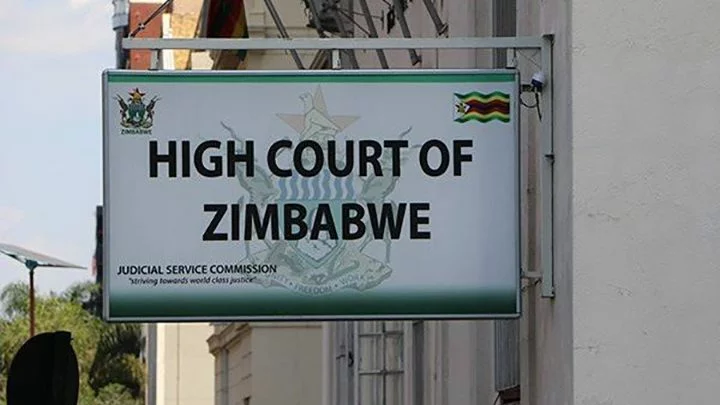
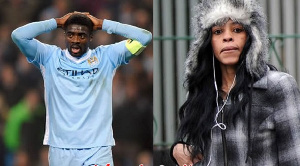
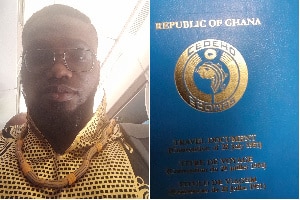
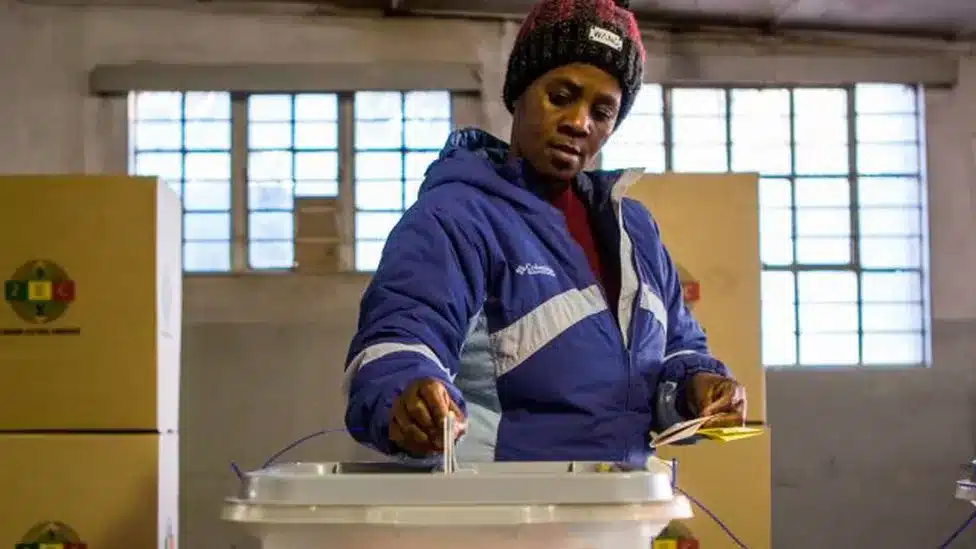
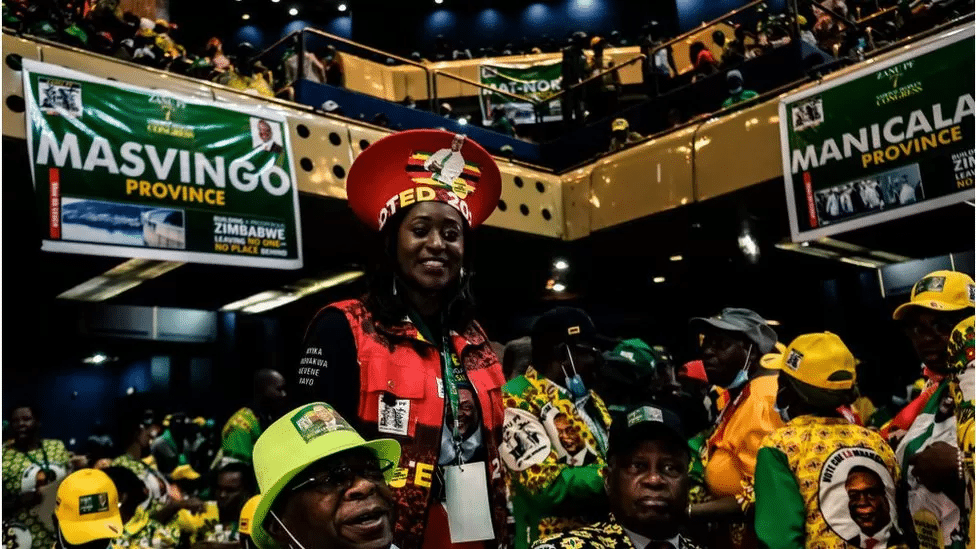
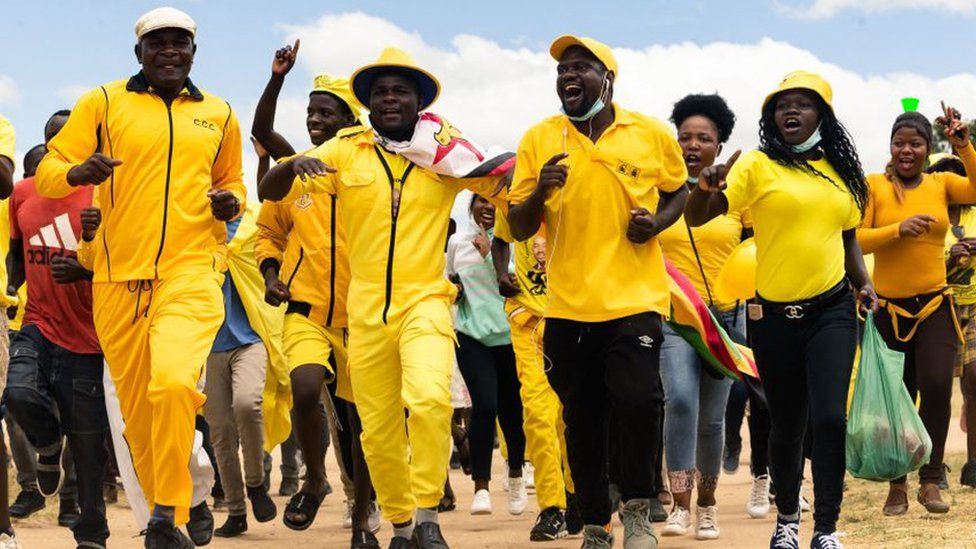
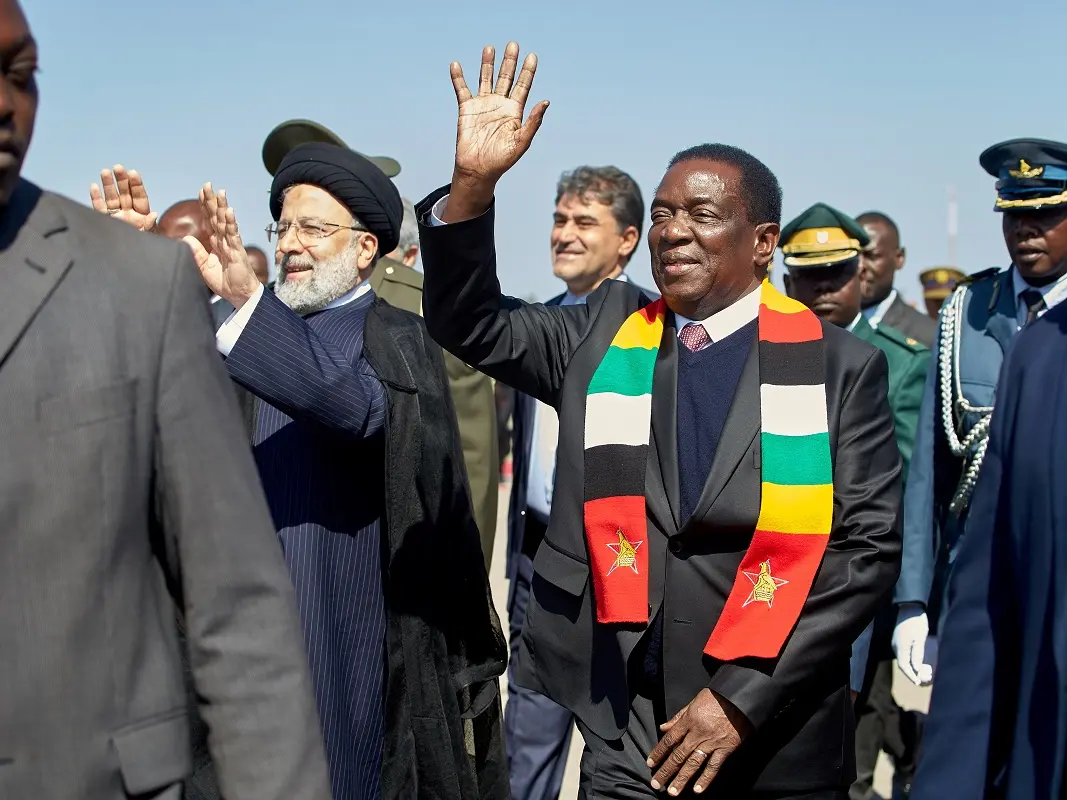

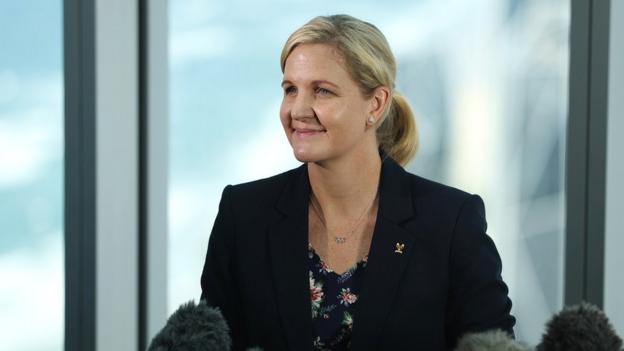
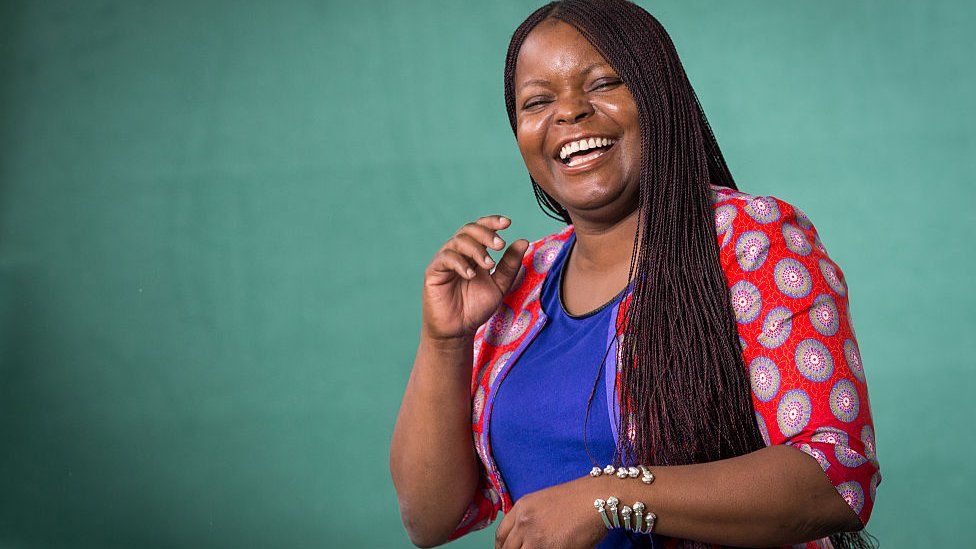
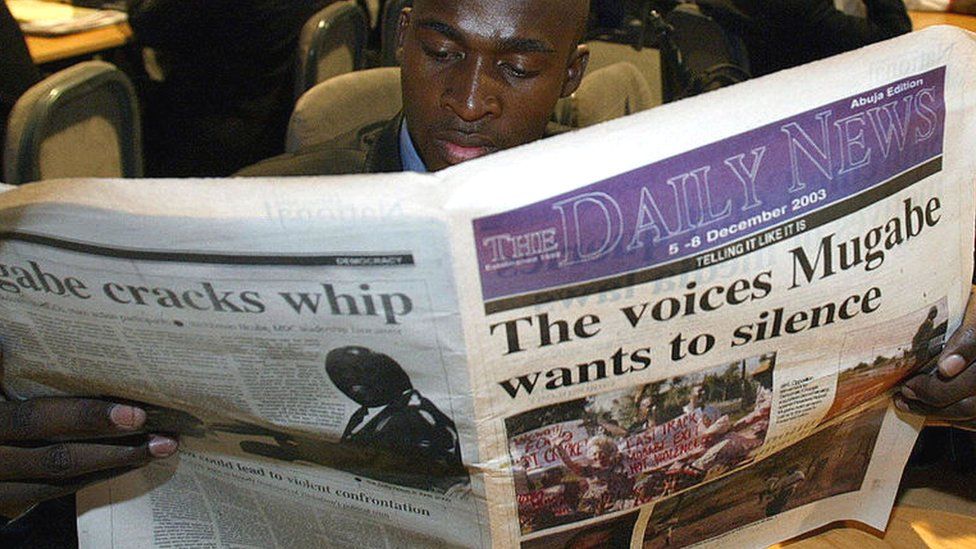
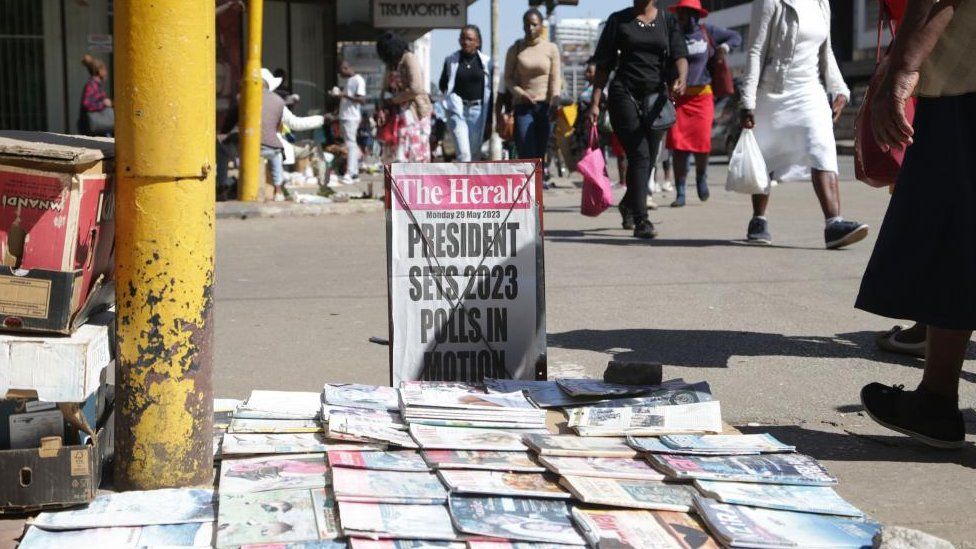

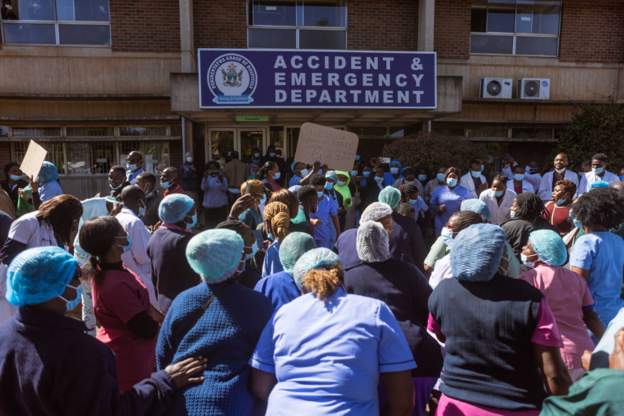
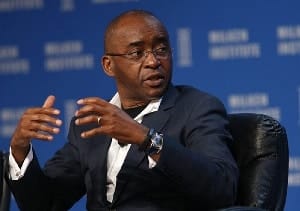
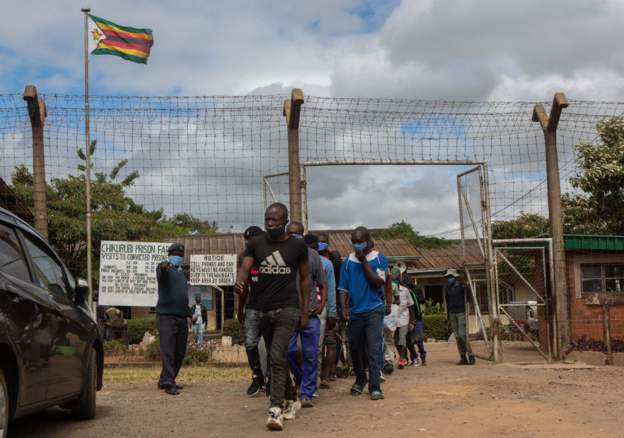
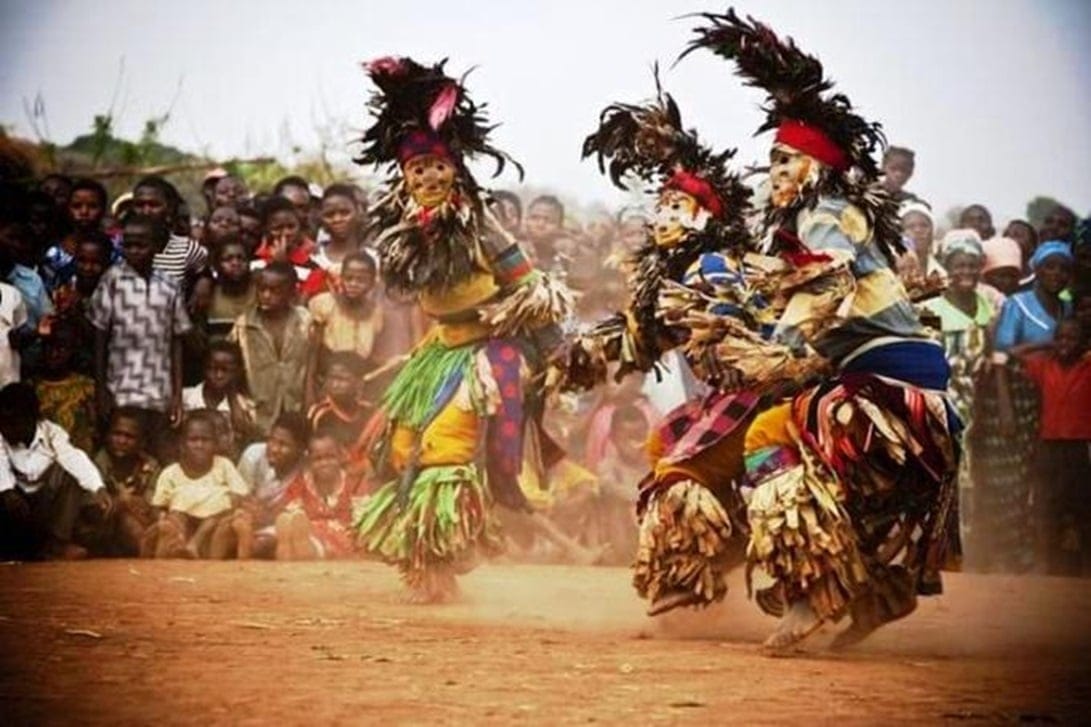


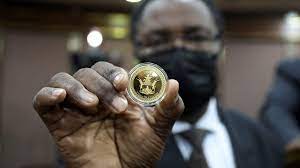
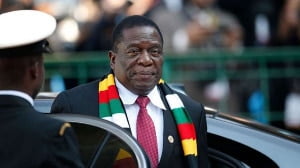
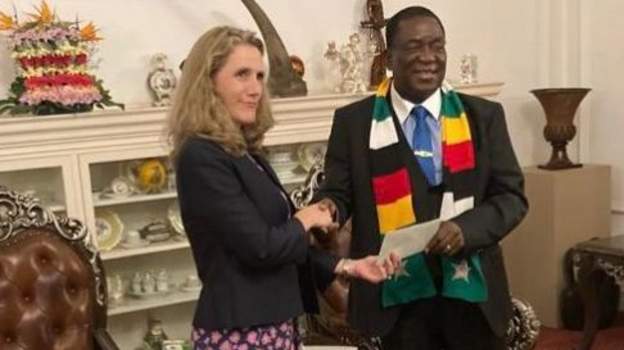
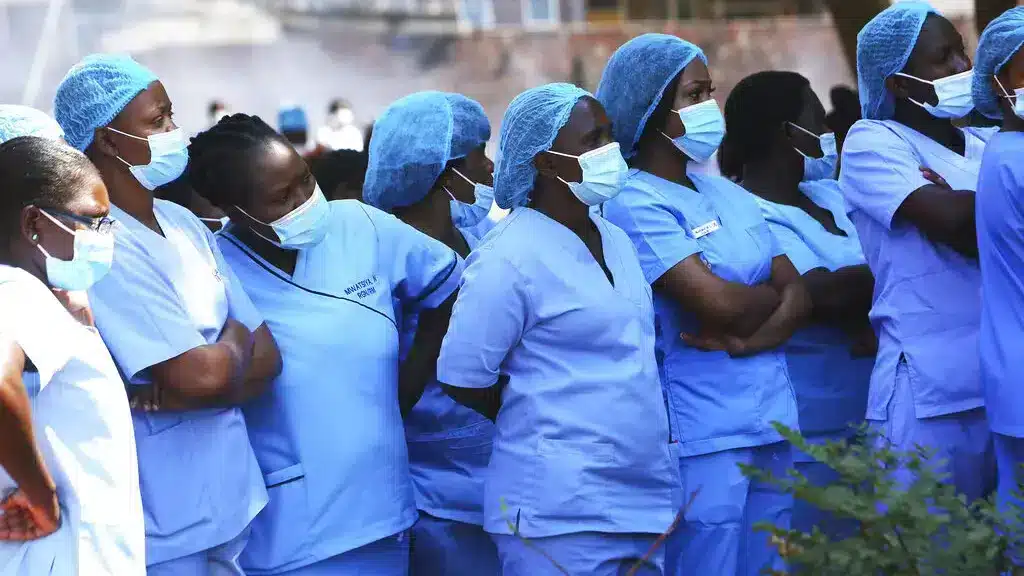
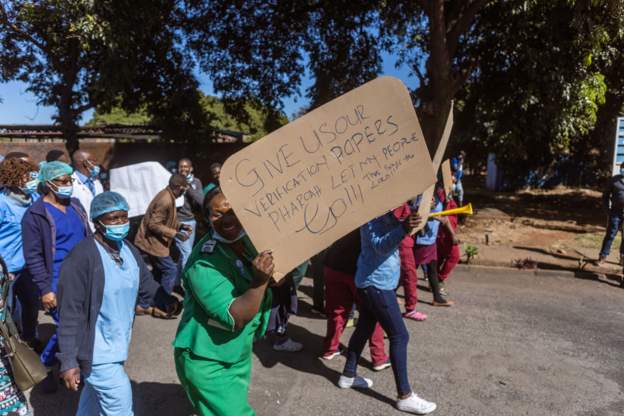
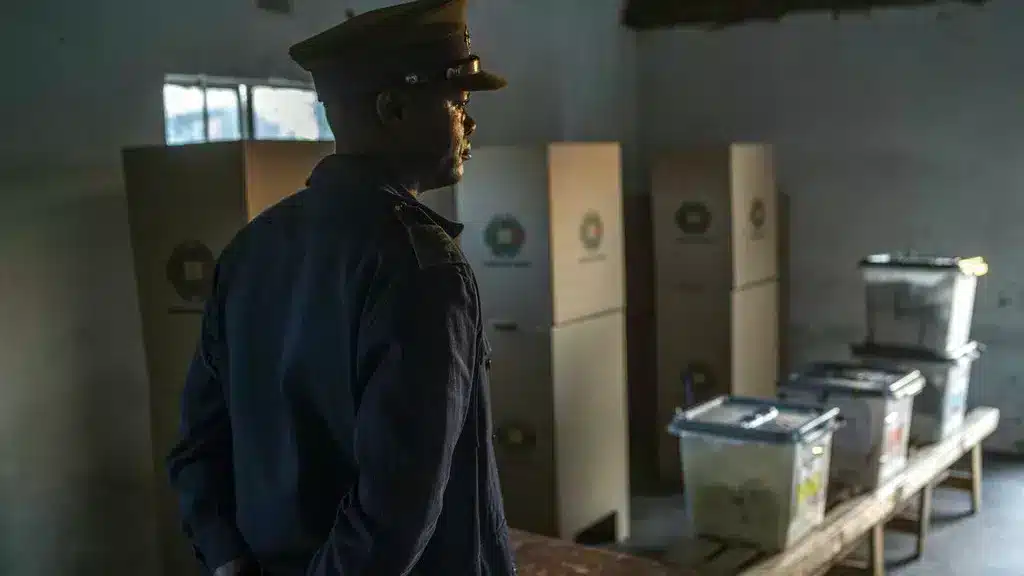

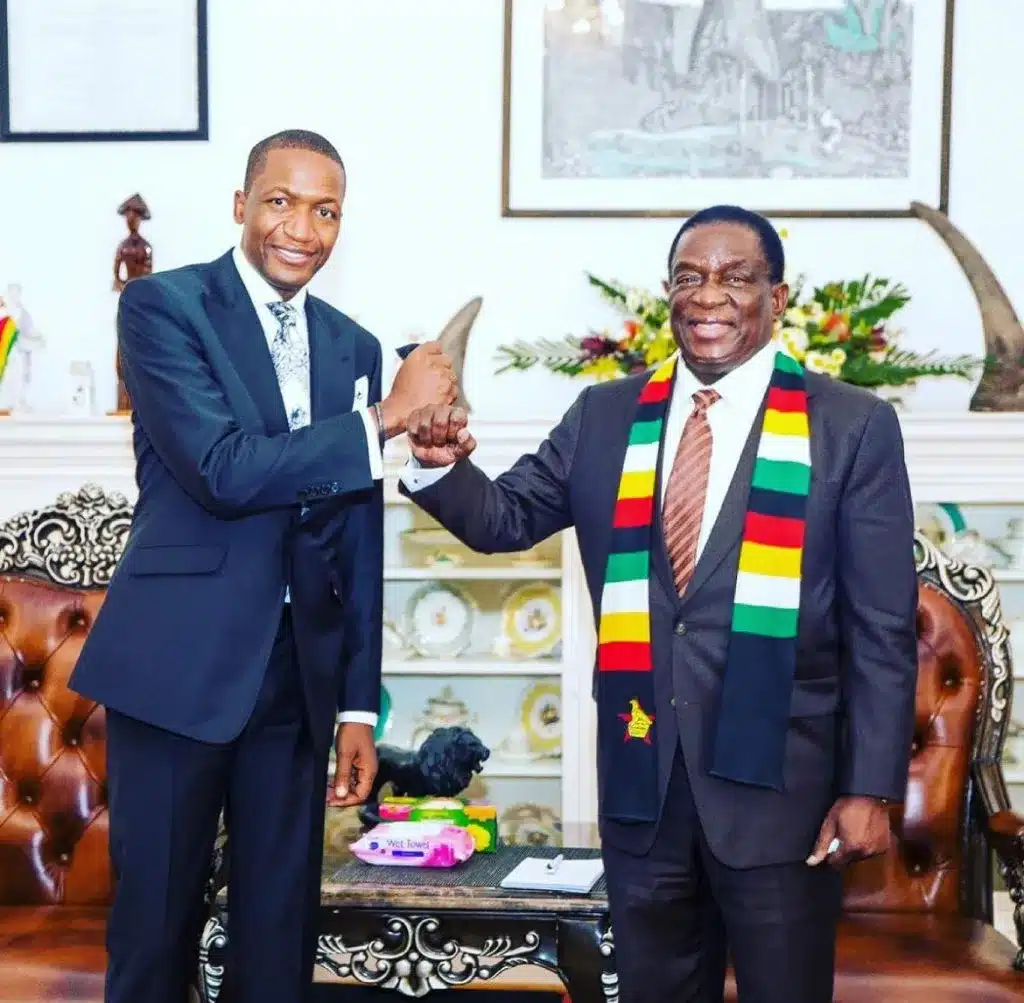
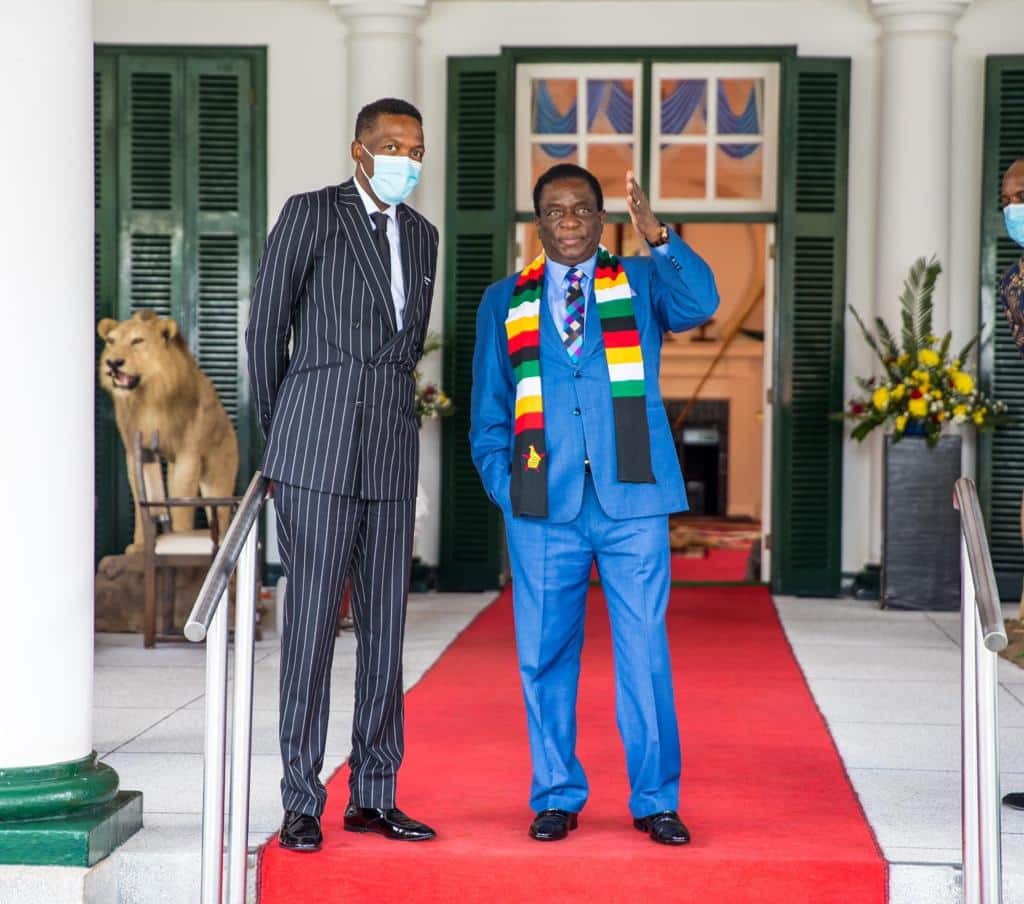
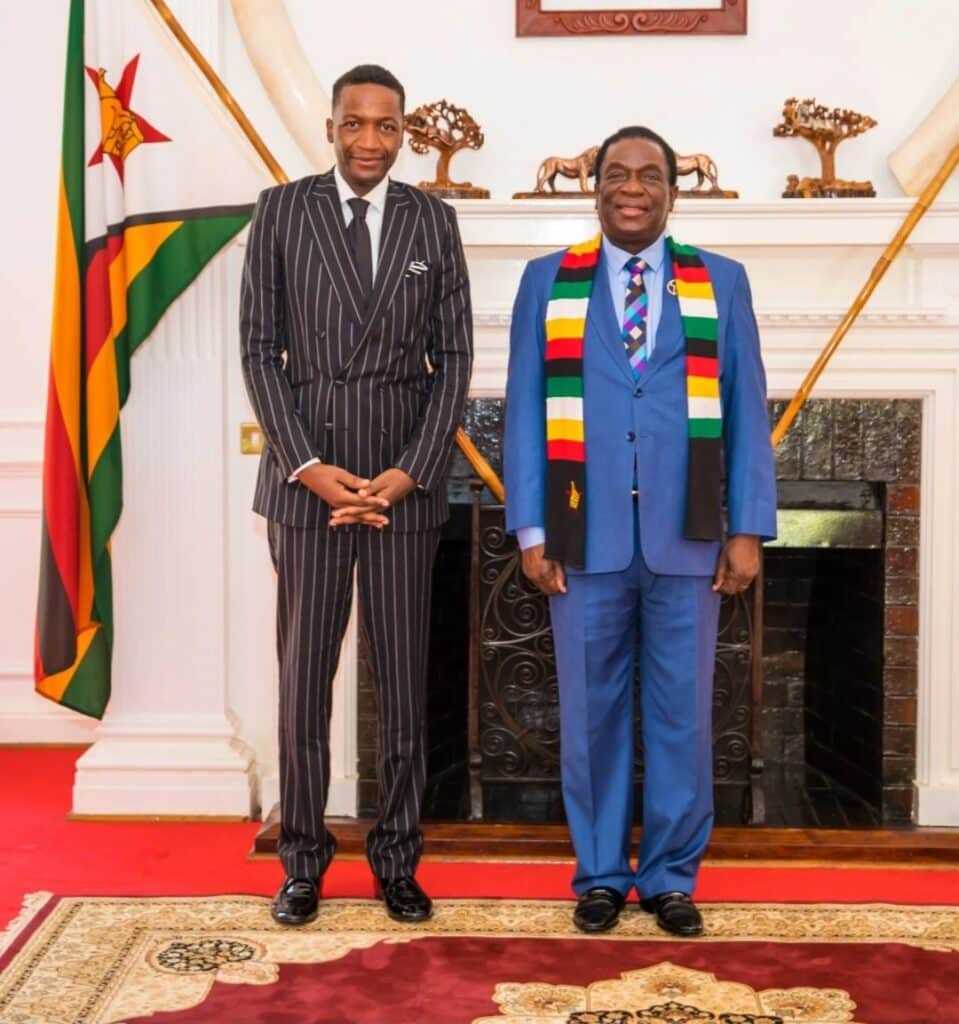
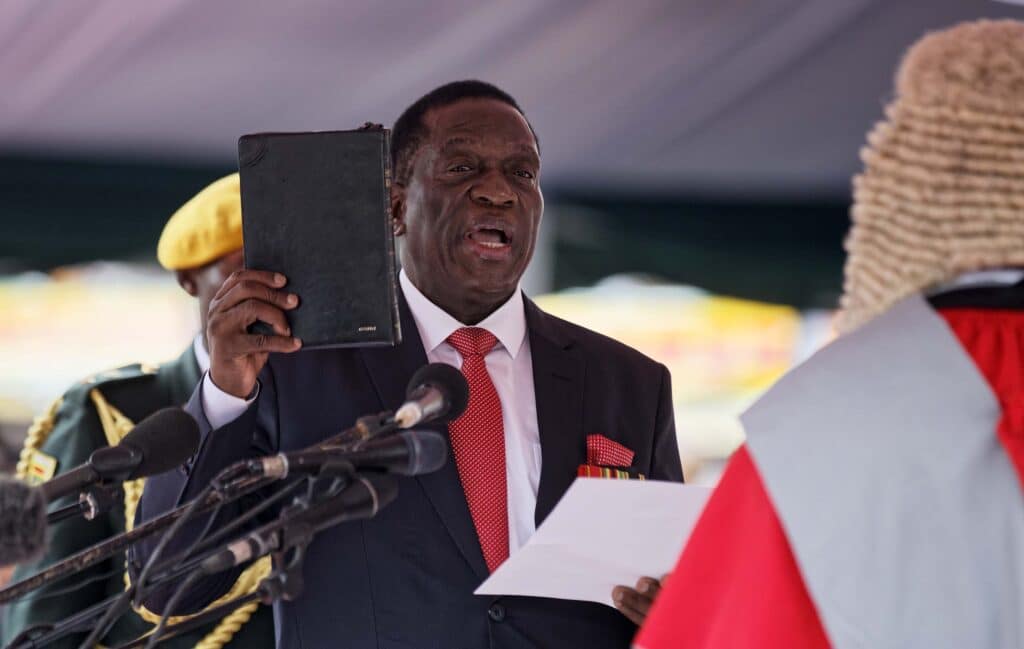
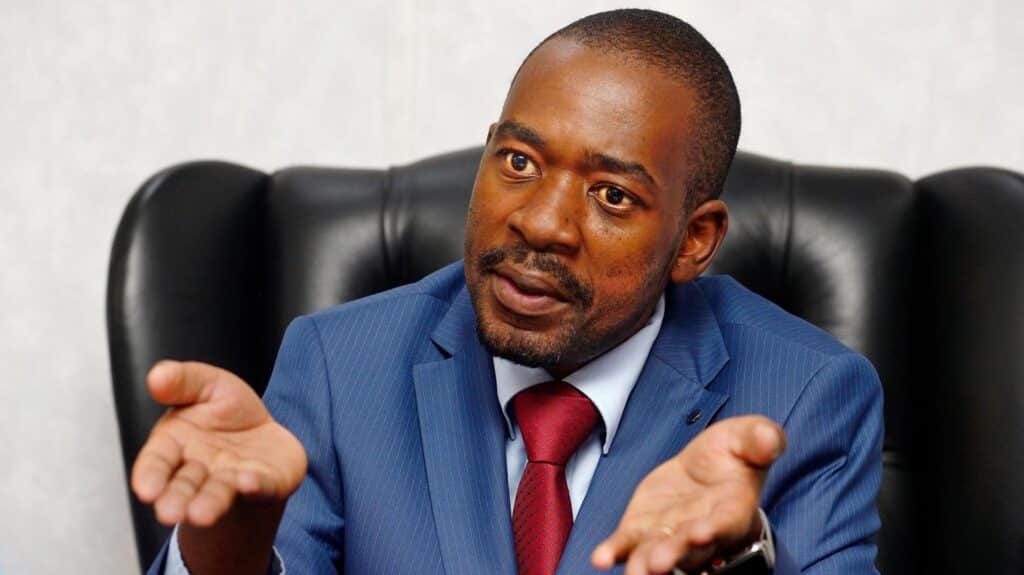
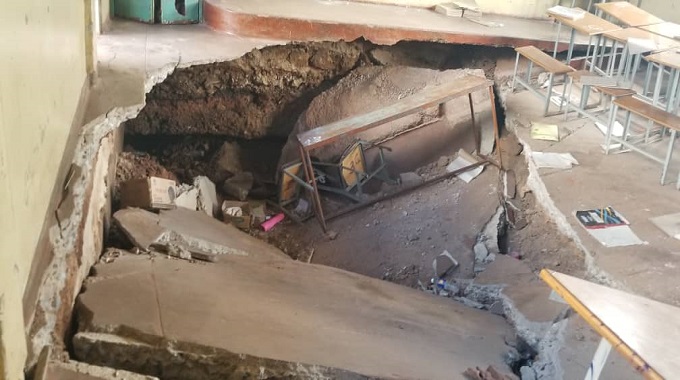

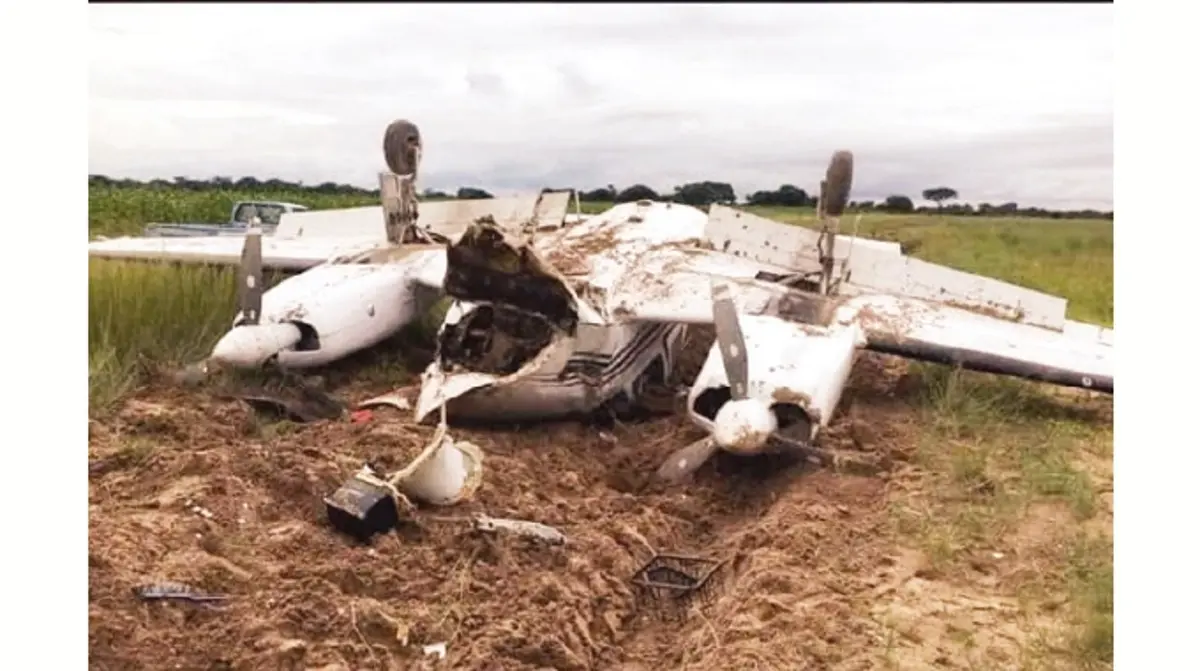
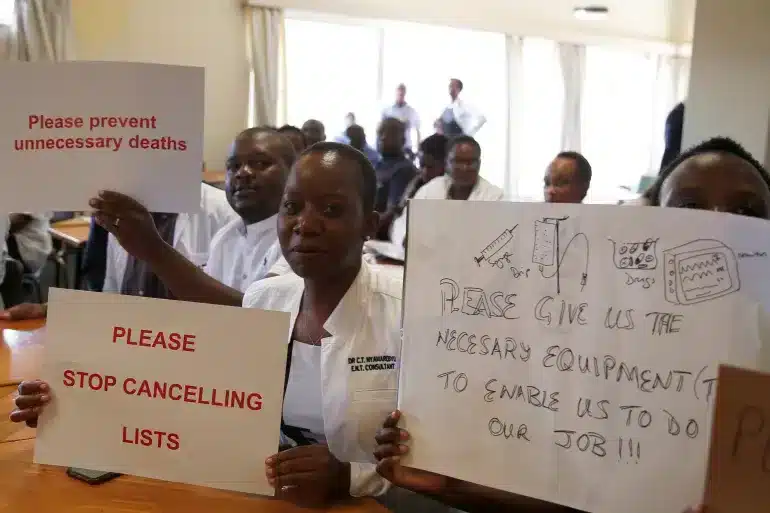
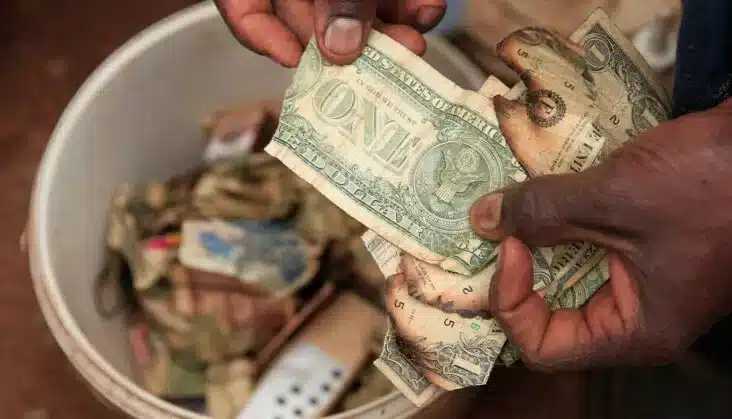
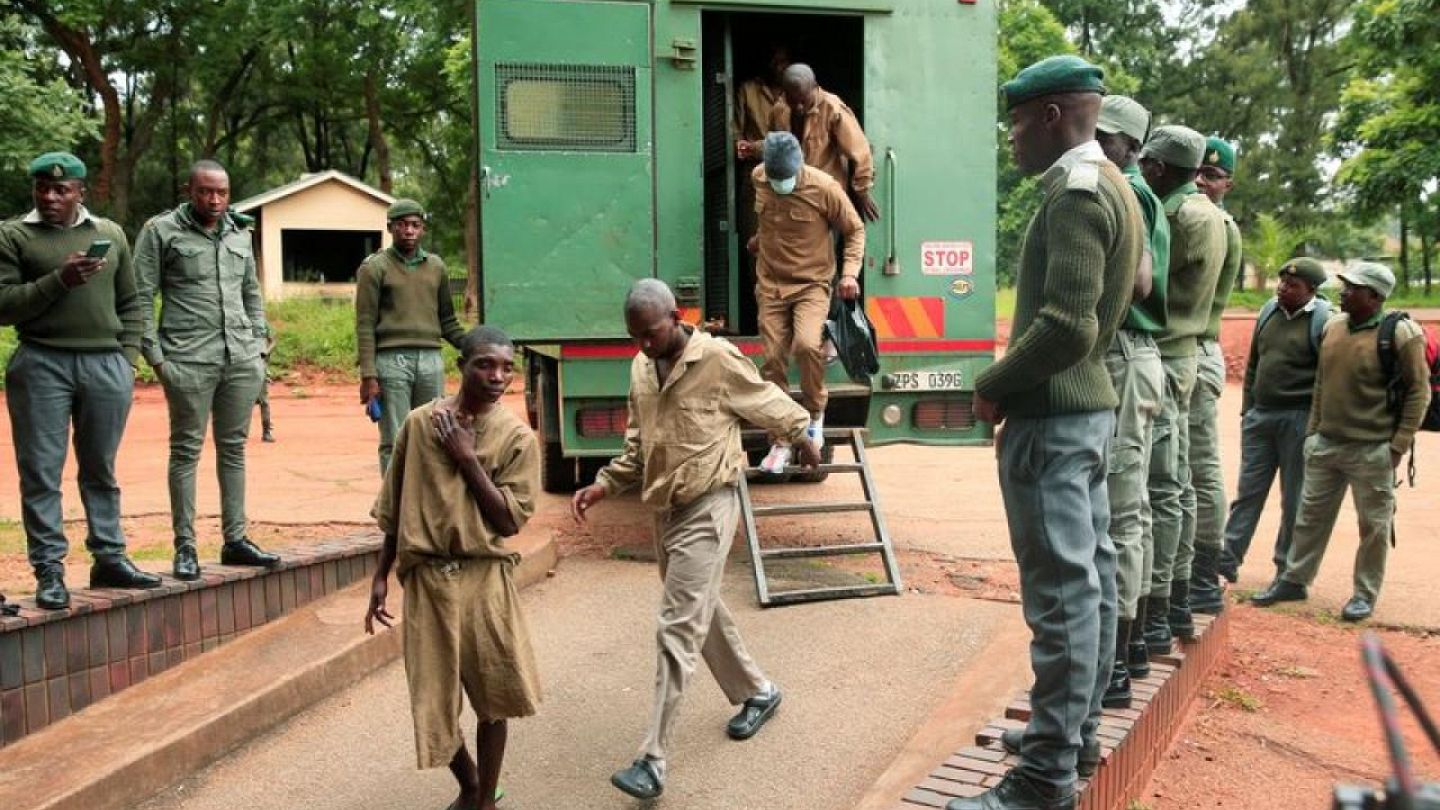

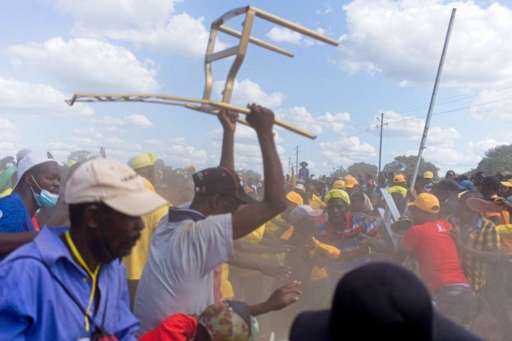

 Fault Shumba, Marvelous and their two children.