When HTMS Sukhothai was patrolling the Gulf of Thailand late on Sunday, it capsized in strong waves.
Thirty-one sailors are missing after their warship capsized in rough seas in the Gulf of Thailand, and Thai navy ships and helicopters are searching for them.
While on patrol late Sunday night, 37 kilometres (22 miles) off the country’s southeast coast, the HTMS Sukhothai capsized.
The navy reported that as of Monday afternoon, 31 of the 75 crew members of the corvette were still missing. The navy reported that although the high waves that caused the accident had diminished since the sinking, they were still high enough to put small boats in danger.
A statement from the air force on Monday said it was assisting in the operation. It did not give details.
Prime Minister Prayut Chan-o-cha said the cause of the incident was being investigated. “I am following the news closely,” he said in a statement. “About five people are seriously injured.”
A rescued crew member interviewed by Thai PBS television said he floated in the sea for three hours before he was rescued. He said the ship was buffeted by waves 3 metres (10 feet) high as it was sinking.
“The waves are still high and we cannot search for them from the horizontal line,” navy spokesman Pokkrong Monthatphalin told Thai PBS. “We have to fly the helicopters and search for them from a bird’s eye view instead.”
Military personnel and rescue crews have been deployed to search for survivors of the capsizing of the HTMS Sukhothai [Lillian Suwanrumpha/AFP]
Eleven of the rescued sailors were being treated in hospital. The navy denied a local media report that one death had been confirmed, saying the fatality was from an accident involving another boat.
Thailand’s Meteorological Department had issued a weather advisory for the general area just a few hours before the accident, saying thundershowers were expected in the Gulf of Thailand along with waves 2 to 4 metres (7 to 14 feet) high. It suggested that all ships “proceed with caution” and warned small craft not to go to sea until Tuesday.
The Sukhothai was built in Tacoma, Washington, in the United States and was commissioned in 1987. It is a midsized corvette, an armed vessel typically used for patrolling close to shore waters. It has a maximum displacement of 959 tonnes and a length of 76.8 metres (252 feet).
The warship had been on patrol 32km (20 miles) from the pier in Bangsaphan district in Prachuap Khiri Khan province. Pokkrong said the ship had been on a regular patrol to assist any fishing boats needing help.
“Our top priority now is to rescue all the sailors,” he said. “We will plan to have the ship salvaged later.”
Northern and central Thailandare seeing their coldest temperatures of the year, and far southern Thailand has been experiencing storms and flooding in recent days.
In an article for The Sun, the former Top Gear host spoke about the Duchess of Sussex, which social media users called “entirely unacceptable”.
The administration of US President Joe Biden has stated that Washington “looks forward to working closely” on shared objectives with newly appointed Peruvian President Dina Boluarte after top US diplomat Antony Blinken spoke on the phone with the troubled South American leader.
The talks between Blinken and Boluarte were confirmed by the US Department of State on Sunday, as unrest in Peru persists in the wake of President Pedro Castillo’s ouster earlier this month. Two days prior, the call had occurred.
“Secretary Blinken encouraged Peru’s institutions and civil authorities to redouble their efforts to make needed reforms and safeguard democratic stability,” the State Department said in a statement.
Boluarte was sworn in by Peru’s Congress to replace Castillo on December 7 after lawmakers ousted the former president, who had announced plans to “temporarily” dissolve Congress and rule by decree in what he said was an effort to “re-establish the rule of law and democracy”.
Boluarte previously served as vice president to Castillo, who has been arrested on charges of rebellion and conspiracy after his removal. On Thursday, a Peruvian court extended the left-wing leader’s pre-trial detention to 18 months.
Castillo had faced multiple crises during his short tenure as president. Sworn in July 2021, the teacher and union leader from rural Peru faced corruption allegations, a grim approval rating, and a stillborn legislative agenda thwarted by an opposition-dominated Congress.
Now Boluarte is facing a crisis of her own as demonstrators demand her resignation.
Blinken’s call with Boluarte came amid political chaos and ongoing anti-government protests calling for early elections and Castillo’s release.
“The United States looks forward to working closely with President Boluarte on shared goals and values related to democracy, human rights, security, anti-corruption, and economic prosperity,” the State Department said.
“Secretary Blinken stressed the need for all Peruvian actors to engage in constructive dialogue to ease political divisions and focus on reconciliation.”
In a national address on Saturday, Boluarte called on Congress to authorise early elections “in line” with the demands of the people of Peru.
Boluarte’s administration had declared a nationwide state of emergency on Wednesday, suspending freedom of movement and assembly in a bid to quell the unrest, which has left several people dead.
Sri Lanka Navysays , 104 people were discovered on board a trawler suspected of leaving Myanmar on its way to Indonesia.
An official said that the Sri Lankan navy rescued 104 Rohingya refugees who were stranded off the Indian Ocean Island nation’s northern coast.
A large number of mainly Muslim Rohingya suffer hardships in cramped refugee camps in Bangladesh after they escaped violence by the Myanmar military. The UN said the military operation was carried out with “genocidal intent,” and it was investigating Myanmar officials.
Many Rohingya in Bangladesh and Myanmar risk their lives every year by attempting to reach Southeast Asian countries such as Malaysia and Indonesia on rickety vessels. Their numbers have surged following deteriorating conditions in the camps and last year’s military coup in Myanmar.
The boat was first detected by the Sri Lanka navy when it was 3.5 nautical miles (6.5km) from the shore.
The Sri Lankan navy boat towing the trawler [Sri Lanka Navy/Screengrab via Reuters]
A search and rescue operation was launched to eventually tow the vessel to the island nation’s northern harbour on Sunday night, navy spokesman Captain Gayan Wickramasuriya said.
“The people have been handed over to the police,” Wickramasuriya told Reuters news agency. “The police will present them before a magistrate who will decide the next step.”
A navy statement said 104 Myanmar nationals were found on board the small trawler suspected to have originated from Myanmar and was heading to Indonesia when it ran into engine trouble in rough seas.
Wickramasuriya said 39 women and 23 minors were among the rescued people. An 80-year-old man, as well as a woman and her two children, all suffering from minor sickness, were admitted to hospital.
In 2017, more than 730,000 Rohingya fled to neighbouring Bangladesh following the Myanmar military crackdown that witnesses said included mass killings and rape.
Myanmar authorities say they were battling an armed rebellion and deny carrying out systematic atrocities. But rights groups and media have documented killings of civilians and the burning of villages during the crackdown.
North Korea has released satellite imagery of the South Korean cities of Seoul and Incheon, which are thought to have been shot during the test.
North Korea has conducted a “important, final phase” test in the development of a military reconnaissance satellite, which the country plans to complete by April 2023, North Korean state media has reported.
According to the Korean Central News Agency (KCNA), North Korea’s National Aerospace Development Administration conducted the test on Sunday at the country’s Sohae satellite launching station in Cholsan, North Pyongan Province.
A rocket carrying what was described as a “test-piece satellite” — including multiple cameras, image transmitters and receivers, a control device and a storage battery — was launched at a “lofted angle” to an altitude of 500km (311 miles), according to KCNA.
According to KCNA, the test was designed to review satellite imaging capabilities, data transmission, and a ground control system.
“We confirmed important technical indicators such as camera operating technology in the space environment, data processing and transmission ability of the communication devices, tracking and control accuracy of the ground control system,” an unnamed North Korean aerospace spokesperson said in the KCNA dispatch.
North Korea plans to complete “preparations for the first military reconnaissance satellite by April, 2023,” the official said in the KCNA report.
South Korea’s Yonhap news agency reported on Monday that KCNA also released satellite imagery of the South Korean capital “Seoul and its adjacent city of Incheon presumed to be shot from the test-piece satellite”.
🆕 Just In: North Korea says yesterday’s rocket launch was part of its tests for a military reconnaissance satellite. Page 2 of Monday’s Rodong Sinmun carries an image of the launch and a photo talen by the satellite of downtown Seoul. (cont) pic.twitter.com/UUjS8WryX8
On Sunday, North Korea also fired two medium-range ballistic missiles, which flew for an estimated 500km (311 miles) before splashing down in the sea off the country’s eastern coast. On Friday, Pyongyang announced that it had tested a high-thrust solid-fuel engine which experts said would facilitate quicker and more mobile launch of its ballistic missile arsenal.
In an emergency meeting on Sunday, top South Korean security officials deplored what they described as North Korea’s continued provocations that they said came despite “the plight of its citizens moaning in hunger and cold due to a serious food shortage”.
South Korea will respond by boosting trilateral security cooperation with the United States and Japan, according to South Korea’s presidential office.
North Korean leader Kim Jong Un has promised to develop high-tech weaponry — including spy satellites and tactical nuclear weapons — as a means to both deter and provide real-time information on military actions by the US and regional allies South Korea and Japan, which he claims are threatening his country.
Pyongyang has test-fired an unprecedented number of ballistic missiles this year, including a Hwasong-17 intercontinental ballistic missile (ICBM) — called the ‘monster missile’ — in defiance of international sanctions.
On Friday, the Japanese government adopted a national security strategy that would allow it to carry out preemptive strikes and double its military spending to give itself more offensive footing against threats from China and North Korea.
The strategy marks a significant break from Japan’s strictly self-defence-only post-World War II military posture. The Japanese strategy names China as “the biggest strategic challenge”, ahead of North Korea and Russia, to Japan’s efforts to ensure peace, safety and stability.
Japan’s Defence Ministry also said on Sunday that it had detected a fleet of five Chinese warships, including an aircraft carrier off the southern Japanese island of Okidaitojima the previous day. Ministry officials said Chinese fighter jets and helicopters were engaging in takeoff and landing exercises on the carrier and that Japan responded by scrambling fighter jets and dispatching a destroyer to the area.
On Sunday, December 11, brothers Samuel and Finlay Butler, their cousin Thomas Stewart, and a fourth boy, Jack Johnson, fell through ice into Babbs Mill Lake.
An inquest heard that four boys drowned after falling through the ice of a frozen lake.B
Brothers, Samuel and Finlay Butler, their cousin Thomas Stewart, and a fourth boy, Jack Johnson, were “playing” when they fell into Babbs Mill Lake on Sunday, 11 December according to the inquest
The four children were all in cardiac arrest when rescuers pulled them from the water and rushed them to the hospital.
Two of the boys, Jack, 10, Thomas, 11,died later that day, while Finlay died the following day.
Samuel, aged six, was taken to hospital in a critical condition, but died three days later, on December 14.
Over the weekend, hundreds of people gathered for a vigil at a makeshift memorial near the scene to pay tribute to the boys.
An initial inquest hearing, held on Monday in Birmingham, was told three of the boys were rescued after 22 minutes in the water, while a fourth was pulled from the lake after 31 minutes.
Senior Coroner for Birmingham and Solihull Louise Hunt described the circumstances as a “devastating tragedy”, as she opened and adjourned the four inquests.
A full inquest is due to be heard in July, with Ms Hunt saying the hearing will look at the “circumstances leading to the deaths and the cause of death.”
She addressed her closing remarks to the boys’ families, none of whom were physically present in court, and said: “I’d like to offer you all my sincere condolences
“Your boys’ deaths are a devastating tragedy for you all and it is difficult for us all to comprehend the pain and grief you all must feel at this terrible time.
“In due course, I hope the inquest will help you understand what happened, including the valiant attempts by the emergency services to save the boys.”
Detective Inspector Jim Edmonds, of West Midlands Police, who gave details of how people initially raised the alarm, also praised the subsequent “heroic efforts” of the emergency services to save the boys.
He also told the inquest that emergency services had responded “at pace” after receiving initial reports.
Last week, a relative of Jack warned children “not to take risks on open water” following the tragedy.
The relative, who asked not to be named, told Sky News: “The kids were playing on the ice, they shouldn’t have been, but kids will be kids. They did not see the harm and danger, it was just fun for them.
The relative, who approached Sky News, referred to the boys who died in the incident as the “little princes”.
Meanwhile, in a statement, released through West Midlands Police, the parents of Thomas, Finlay and Samuel, said: “As a family we are devastated at the loss of our beautiful boys Tom, Fin and Sam in such tragic circumstances.”
Thomas’ older brother paid tribute to him and his cousin in a statement, writing: “Thomas was such a lively little soul, he had a big heart for such a young kid and he was so beautiful. He loved being outside playing with his mates.
“I love you Tom, big bro will take care of the family and I will see you soon.”
Paying tribute to his cousin, Finlay, he wrote: “Can’t forget about my dinosaur man Fin, he loved dinosaurs so much and always showing me new things he built on Minecraft and all the new stuff he learnt on it. Gonna miss you little man.”
The controversial UK government plan to send asylum seekers on a one-way trip to Rwanda is legal, according to judges.
Two High Court judges have ruled that the UK government’s plan to send asylum seekers on a one-way trip to Rwanda is legal, winning a victory for proponents of the divisive policy.
However, the judges also stated on Monday that the government did not take into account the unique circumstances of those it attempted to deport, indicating that additional legal disputes will arise.
The case has a court hearing scheduled for the following month, and appeals are most likely.
Several asylum seekers, aid groups and a border officials’ union filed lawsuits to stop the Conservative government from acting on a deportation agreement with Rwanda that would see refugees who arrive in the UK by boat sent to the East African country.
The asylum seekers would then have to present their asylum claims in Rwanda. Those not granted asylum in Rwanda would, under the plan, be able to apply to stay on other grounds or to try to get resettled in a third country.
“The court has concluded that it is lawful for the government to make arrangements for relocating asylum seekers to Rwanda and for their asylum claims to be determined in Rwanda rather than in the United Kingdom,” Judge Clive Lewis said.
But he added that the government “must decide if there is anything about each person’s particular circumstances which means that his asylum claim should be determined in the United Kingdom or whether there are other reasons why he should not be relocated to Rwanda”.
“The Home Secretary has not properly considered the circumstances of the eight individual claimants whose cases we have considered,” the judge said.
‘Very disappointed’
Ever Solomon, head of the charity Refugee Council, said the group was “very disappointed” by the ruling.
“Treating people who are in search of safety like human cargo and shipping them off to another country is a cruel policy that will cause great human suffering,” he said.
Al Jazeera’s Harry Fawcett, reporting from the Royal Courts of Justice in London, said the verdict, “a major decision made by the court in favour of the government”, could be appealed.
“If the road runs out in the UK, there is also the possibility that it could go to the European Court of Human Rights in Strasburg as well,” he said.
“And that’s where this potentially becomes even more controversial as the European Court of Human Rights has the power to rule government policy unlawful.”
A protestor holds a placard while demonstrating outside the High Court in London [Peter Nicholls/Reuters]
More than 44,000 people who crossed the Channel in small boats have arrived in Britain this year, and several have died in the attempt, including four last week when a boat capsized in freezing weather.
Human rights groups say the government’s deal with Rwanda is illegal and unworkable, and that it is inhumane to send people thousands of miles to a country they don’t want to live in.
They also cite Rwanda’s poor human rights record, including allegations of torture and killings of government opponents.
Britain has paid Rwanda 120 million pounds ($146m) under the deal struck in April, but no one has yet been sent to the country.
The UK was forced to cancel the first deportation flight at the last minute in June after the European Court of Human Rights ruled the plan carried “a real risk of irreversible harm”.
The British government is determined to press on with the policy, arguing that it will deter people-trafficking gangs who ferry migrants on hazardous journeys across the Channel’s busy shipping lanes.
Home Secretary Suella Braverman, who has called the Channel crossings an “invasion of our southern coast”, told the Times of London it would be “unforgivable” if the government did not stop the journeys.
Rwanda’s reaction
Rwandan government spokeswoman Yolande Makolo welcomed the British court’s decision.
“This is a positive step in our quest to contribute innovative, long-term solutions to the global migration crisis,” she said.
The UK government has argued that while Rwanda was the site of a genocide that killed more than 800,000 people in 1994, the country has since built a reputation for stability and economic progress. Critics say that stability comes at the cost of political repression.
The UK receives fewer asylum seekers than many European nations, including France, Germany and Italy, but thousands of refugees from around the world travel to northern France each year in hopes of crossing the Channel.
Some want to reach the UK because they have friends or family there, others because they speak English or because it’s perceived to be easy to find work.
The government wants to deport all people who arrive by irregular routes and aims to strike Rwanda-style deals with other countries.
Critics point out there are few authorised routes for seeking asylum in the UK, other than those set up for people from Ukraine, Afghanistan and Hong Kong.
The facility in northwest Bannu town is the scene of a standoff after Pakistani Talibanmen overpower security guards, steal weapons, and take hostages.Pakistani authorities have started negotiations in an effort to end a standoff with attackers who have taken over a counterterrorism facility in the country’s northwest and are holding several security personnel hostage.
According to reports on Monday, security forces have encircled the heavily fortified military cantonment that houses the interrogation centre in Bannu district, where about 20 Tehreek-e-Taliban Pakistan (TTP) fighters — also known as the Pakistani Taliban — are holed up.
Bannu is located just outside of North Waziristan, a region of Pakistan’s Khyber Pakhtunkhwa province that is dominated by tribes and borders Afghanistan. The area has long served as a refuge for TTP combatants.
Pakistan has been fighting an armed rebellion by the TTP since 2007 when it emerged. The group associates itself with Afghanistan’s Taliban and is fighting for the enforcement of their strict interpretation of Islamic law in the country, the release of their members who are in government custody, and a reduction of Pakistani military presence in the country’s former tribal regions.
There has been a surge in attacks on security forces since the TTP pulled out of peace talks with Islamabad last month.
Security officials stand guard on a blocked road outside the Bannu facility [Muhammad Hasib/AP]
According to Mohammad Ali Saif, a provincial government spokesman, the attackers were demanding safe passage to Afghanistan.
“We are in negotiations with the central leaders of the Pakistani Taliban in Afghanistan,” the Reuters news agency quoted Saif as saying.
He said the authorities were yet to receive a response from the TTP, adding that relatives of the attackers and area tribal elders were also involved in initiating talks with the hostage-takers.
Authorities said at least one counterterrorism official was killed by the attackers who snatched weapons from the guards during their interrogation, Reuters said.
Several significant TTP members were present at the centre, Saif said.
He did not say how many security personnel were being held hostage. An intelligence officer told Reuters, however, that there were six hostages – four from the military and two counterterrorism officials.
Security officials patrol near the counterterrorism centre in Bannu, Pakistan [Muhammad Hasib/AP]
Pakistan’s Dawn newspaper on Monday said the situation at the facility remains tense 15 hours after it was seized and that there has been no breakthrough in negotiation with the TTP attackers.
There were concerns that the military could storm the facility if the negotiations fail.
In a video message circulating on social media, the hostage-takers threatened to kill the officers if their safe passage was not arranged.
Pakistan’s military has conducted several offensives in the tribal regions since 2009, the time when the area was in full control of armed groups.
The operations forced the groups and their leadership to run into neighbouring Afghanistan where Islamabad says they set up training centres to plan and launch attacks inside Pakistan, a charge Kabul denies.
The attackers in control of the interrogation facility had demanded a safe passage to Afghanistan, a TTP statement sent to Reuters said. It added that the TTP had also conveyed the demand to Pakistani authorities, but hadn’t heard back any “positive” response.
A statement by the TTP said the hostage-takers were demanding safe passage to North or South Waziristan districts and had “mistakenly mentioned Afghanistan” in a video they released on Sunday.
The hostage situation came a day after the TTP claimed the killings of four policemen in a nearby district.
Also on Monday, a roadside bombing targeted a security convoy in North Waziristan, killing at least two passersby, police said. No group immediately claimed responsibility for the bombing.
One of Ankara’s main demands in order to approve Stockholm’s NATO membership is the extradition of Bulent Kenes.
Ankara’s main demand for Stockholm to ratify its NATO membership—the extradition of a Turkish journalist in exile—was rejected by Sweden’s Supreme Court.
Bulent Kenes, the former editor-in-chief of the Zaman daily, was unable to return because of “several hindrances,” the court stated on Monday. Turkey accuses Kenes of taking part in an attempt to assassinate President Recep Tayyip Erdogan in 2016.
The political nature of the case, some of the charges against Kenes, and the fact that he was granted asylum in Sweden made extradition impossible, the court added.
“There is also a risk of persecution based on this person’s political beliefs. An extradition can thusly not take place,” judge Petter Asp said in a statement.
As a result, “the government … is not able to grant the extradition request”.
‘Fabricated’ allegations
Kenes, who now works for the Stockholm Center for Freedom – an association founde
d by other Turkish dissidents in exile – told the AFP news agency that he was “happy” by the decision and stressed the allegations against him were “fabricated by the Erdogan regime”.
The exiled journalist is the only person Erdogan has identified by name among dozens of people Ankara wants extradited in exchange for approving Sweden’s membership bid.
When pressed about “terrorists” he wanted extradited from Sweden, Erdogan told reporters during a joint news conference with Swedish Prime Minister Ulf Kristersson in early November in Ankara that Kenes was on the list.
Ankara has blocked Sweden’s membership process, with the extradition of Kurdish refugees and other Turkish dissidents the main sticking point.
Stockholm has repeatedly stressed that its judiciary is independent and has the final say in extraditions.
In a shooting that took place in the Toronto suburbs, five people were killed and another was injured.
Police Chief Jim MacSween told reporters that the shooting occurred in an apartment complex and that the suspect also passed away on Sunday after exchanging gunfire with law enforcement personnel.
A hospital was visited by the injured person, who had non-life-threatening wounds.
Sunday night, police were called to the scene.
“Once the officers arrived they were met with … a horrendous scene where numerous victims were deceased,” MacSween told reporters.
Police are investigating the motive and whether there was a connection between the victims and the male suspect, who has not been named. The suspect allegedly acted alone.
The victims were found in different apartments in the building, which is located in Vaughan, in the suburbs about 30km (20 miles) north of Toronto.
Residents were evacuated immediately and dozens of ambulances and police officers were at the scene.
Canada has experienced a surge in gun violence, which has prompted it to recently legislate to ban handguns.
In April 2020, a gunman disguised as a policeman killed 22 people in the eastern province of Nova Scotia, Canada’s worst mass shooting.
In September this year, a man stabbed 11 people to death and wounded 18 others, mainly in an isolated Indigenous community in Saskatchewan province.
Firearms-related violent crimes account for less than 3 percent of all violent crimes in Canada – but since 2009, the per capita rate of guns being fired with intent to kill or wound has increased five-fold.
Canada banned 1,500 types of military-grade or assault-style firearms in May 2020, days after the Nova Scotia shooting.
The Ukrainian government has rejected calls by seasoned US diplomat Henry Kissingerthat the time had come for a negotiated peace with Russia in order to lessen the likelihood of a devastating world war as “appeasing the aggressor”
The idea was put forth in an opinion piece written by former US Secretary of State Henry Kissinger and published in the Spectator magazine. Kissinger was the mastermind behind the detente policy toward the Soviet Union during the Cold War under disgraced US President Richard Nixon and later President Gerald Ford.
“I have repeatedly expressed my support for the allied military effort to thwart Russia’s aggression in Ukraine,” Kissinger wrote.
“But the time is approaching to build on the strategic changes which have already been accomplished and to integrate them into a new structure towards achieving peace through negotiation,” he wrote.
“The preferred outcome for some is a Russia rendered impotent by the war. I disagree,” Kissinger continued.
Former Secretary of State Henry Kissinger in 2019 [File: Jaime R. Carrero/Reuters]
“For all its propensity to violence, Russia has made decisive contributions to the global equilibrium and to the balance of power for over half a millennium. Its historical role should not be degraded. Russia’s military setbacks have not eliminated its global nuclear reach, enabling it to threaten escalation in Ukraine,” he added.
Kissinger, who has met Russian President Vladimir Putin multiple times, proposed at the World Economic Forum in Davos in May that Ukraine should let Russia keep Crimea, which it annexed in 2014, and that Russia withdraw to the front lines before its February 2022 invasion.
“Mr. Kissinger still has not understood anything … neither the nature of this war, nor its impact on the world order,” Ukrainian presidential aide Mykhailo Podolyak said on Telegram.
“The prescription that the ex-Secretary of State calls for, but is afraid to say out loud, is simple: appease the aggressor by sacrificing parts of Ukraine with guarantees of non-aggression against the other states of Eastern Europe,” he said.
‘The time is approaching to build on the strategic changes which have already been accomplished and to integrate them into a new structure towards achieving peace through negotiation.’
Ukraine has said that it does not believe that Putin — who has said that he is prepared for a long war in Ukraine — is serious about peace, and that there can be no peace until every Russian soldier leaves its territory, including Crimea.
Podolyak added: “All supporters of simple solutions should remember the obvious: any agreement with the devil — a bad peace at the expense of Ukrainian territories — will be a victory for Putin and a recipe for success for autocrats around the world.”
Kremlin officials were not available for comment late on Sunday.
⚡️Zelensky aide rebuffs Kissinger’s proposal for negotiated peace with Russia.
Kyiv dismissed former U.S. Secretary of State Henry Kissinger’s suggestion that the time is approaching to achieve peace through negotiation with Russia, saying his proposal “appeases the aggressor.”
In May, Ukrainian President Volodymyr Zelenskyy denounced suggestions that Ukraine should cede control of territory to Russia in order to secure peace, comparing such a move with the appeasement of Adolf Hitler’s Nazi Germany.
Those “great geopoliticians” who suggest this are disregarding the interests of Ukrainians, “the millions of those who actually live on the territory that they propose exchanging for an illusion of peace”, Zelenskyy said at the time.
“Whatever the Russian state does, you will always find someone who says, ‘let’s take its interests into account’,” Zelenskyy said.
CIA Director William Burnssaid in an interview published on Saturday that while most conflicts end in negotiation, the CIA’s assessment was Russia was not serious yet about a real negotiation to end the war.
From beers to cars to supermarkets, Mexico and other postcolonial societies are grappling with a whiteness epidemic.
Scrolling through Facebook recently on my phone in Mexico, I came upon an advertisement informing me in Spanish: “The moment has arrived to renew yourself.” A company based in the northern Mexican state of Nuevo León offered to loan me up to 250,000 pesos — more than $12,000 — to pursue the plastic surgery of my choice. An image of a bikini-clad white woman with blond hair provided additional encouragement.
A perusal of the company’s Facebook page revealed that she was not the only white person selected to promote these surgically focused financial services. In fact, not a single non-white person had been chosen to embody “renewal”. This in a country where the vast majority of people are not white, and where a soaring national poverty rate — nearly 44 percent at the end of 2020 — means most folks could never afford a $12,000 loan.
And yet the Nuevo León firm is scarcely alone in its extra-white marketing approach. Generally speaking, the chromatic composition of Mexican advertising exists in glaring defiance of the physical diversity of Mexico’s primarily mestizo (mixed heritage) and Indigenous population. As is the case elsewhere in Latin America and in other countries subjected to European colonial depredations, the Spanish colonial legacy in Mexico has meant that lighter skin is associated with societal superiority and economic advantage. And what is the point of advertising if not to make people want to be something “better” than they are?
Nowadays in Mexico, the citizen-consumer is bombarded with advertising images that blatantly illustrate the overlap of racism and classism in the social hierarchy. From beer and car companies to department stores and supermarket chains, the whiteness of ads has become a sort of sinister elephant in the room, urging poor Mexicans to spend their way out of socioeconomic misery into an impossibly whiter future.
As social anthropologist Juris Tipa notes in a 2020 peer-reviewed paper on “colourism” in Mexican advertising, the overwhelmingly dominant casting profile requested by firms for commercial advertisements is “international Latino” — which basically translates into someone with light skin, dark hair, and dark eyes, “reinforcing the imagery of a ‘Europeanised Latin Americanity’” at the expense of the average Mexican.
Meanwhile, the Afro-Mexican population — which is more than 2.5 million strong — is effectively rendered invisible by the commercial advertising landscape, as Juris observes. In contributing to the perpetuation of a vicious cycle of colourist discrimination, advertising firms and their clients have helped maintain a colonial “pigmentocracy” in Mexico.
Sometimes, the Mexican advertising industry gets publicly called out for its racist shenanigans — like in 2018 when an ad campaign for Indio beer featured a bunch of fair-skinned Mexicans sporting t-shirts on which the phrase “pinche indio” (“f****** Indian”, a prevalent insult in Mexico) was partially crossed out and replaced with “orgullosamente indio” or “proudly Indian”. According to the minds behind the campaign, its objective was to raise awareness of discrimination in the country — something that is clearly best achieved by having white people appropriate Indigenous identity.
When I asked a middle-aged Mexican man — a descendant of Totonac people from the state of Veracruz — what he made of the faux wokeness of the whole Indio campaign, he shrugged and reckoned it was no worse than the ads from decades past for Mexico’s Superior beer brand, which had involved frolicking blond women, the US actress Farrah Fawcett, and the slogan “la rubia que todos quieren,” or “the blond that everyone wants”.
Of course, the unbearable whiteness of advertising is hardly confined to Mexico. Travelling by bus years ago through Peru, I recall questioning the logic behind populating highway billboards with Scandinavian-type models in a country where the majority of humans are brown.
From soda advertisements in El Salvador to laundry detergent ads in Colombia to the “Elite” toilet paper brand found throughout Latin America, the consensus appears to be that whiteness sells — a result, in part, of the superior societal value placed on white skin.
On the other side of the world, too, colonial legacies of racist colourism die hard. In West Africa in 2017, the German company Nivea came under fire for promoting a cream that promised “visibly fairer skin”. That same year, Nivea was forced to pull a deodorant ad proclaiming “White Is Purity”. Naturally, the company is still making bank five years later. Welcome to capitalism.
Speaking of capitalism, University of Hawaii professor L Ayu Saraswati, whose essay on “shaming the colour of beauty” in Indonesia was published in 2012 in the scholarly journal Feminist Studies, documents how transnational corporations like Unilever and L’Oreal have “aggressively marketed their skin-whitening creams throughout Asia, Africa, Europe, and the United States”. And while this may be business as usual in the globalised era, it also constitutes corporate complicity in the normalisation of racism.
Unilever is the parent company of Dove, the US soap brand that had its own “oops” marketing moment in 2017 with an ad that showed a Black woman turning into a white woman. It bears mentioning, though, that the US is usually exempt from the unbearable whiteness of advertising, as the industry often instead prefers a multicoloured, multiethnic approach that projects an image of harmonious egalitarianism — and that stands in stark contrast to the domestic US reality of dog-eat-dog neoliberalism, institutionalised racism, and general non-democracy.
Call it false advertising — and a handy justification for the US’s self-declared right to impose its will on the rest of humanity.
But back to that Mexican financial services firm and the loan that can turn you into a blond white woman in a bikini. As the current US brand of racist capitalism wreaks havoc in Mexico and across the Global South — and poor people are taught to aspire to socioeconomic advancement in a system designed to keep them poor — all this whiteness looks pretty dark, indeed.
DISCLAIMER: Independentghana.com will not be liable for any inaccuracies contained in this article. The views expressed in the article are solely those of the author’s, and do not reflect those of The Independent Ghana
When it sank in choppy waters in the Gulf of Thailand,the HTMS Sukhothai was carrying 106 passengers, according to the navy.
After a navy ship sank in the Gulf of Thailand during a storm, Thailand’s military sent ships, helicopters, and planes to try and find the dozens of sailors who are still missing.
The Royal Thai Navy reported that 106 people were aboard the HTMS Sukhothai when it went down late on Sunday night.
31 sailors were still in the water as of Monday morning’s midday, according to the military, who reported that 75 sailors had been saved. The Bangkok Post newspaper claimed that at least three of the survivors had “seriously injured.”
The HTMS Sukhothai had taken on seawater after it was hit by strong waves, causing it to tilt to one side, according to the Bangkok Post. The corvette class ship, which had been in use since 1987, also suffered a power blackout.
The vessel sank at 11:30pm local time (16:30 GMT) on Sunday.
The Thai navy said it had dispatched three frigates and two helicopters with mobile pumping machines to assist the disabled ship by removing seawater, but the rescue efforts were unsuccessful due to strong winds.
A picture shared by the navy showed the grey vessel flipped over onto its side, while another image on a scanner screen showed the bow of the ship and a gun turret poking out above the waterline as it went down.
The 31 sailors still missing are all believed to be afloat in the stormy sea, wearing life jackets, the Bangkok Post reported.
The incident occurred while the warship was on patrol at sea 32km (20 miles) from the pier at Bangsaphan district in Prachuap Khiri Khan province.
While northern and central parts are seeing their coldest temperatures of the year, far southern Thailand has been experiencing storms and flooding in recent days.
Lionel Messi finally won the biggest prize in football – the only trophy to have eluded him – and it was he that fans back home hailed for their victory.
Argentina’s triumph in the World Cup final has sent hundreds of thousands of ecstatic fans pouring out onto the streets of Buenos Aires.
The rollercoaster game saw Lionel Messi’s team give up leads of 2-0 and 3-2 before ultimately prevailing over France in a nail-biting penalty shootout.
Messi finally won the biggest prize in football – the only trophy to have eluded him – and it was he that fans back home called out for their victory.
Image:Argentina fans are pictured climbing street lights as they celebrate winning
“I can’t believe it! It was difficult, but we did it, thanks to Messi,” said Santiago, 13, as he celebrated with his family outside the former home of Argentine football legend Diego Maradona.
Bearing flags, hats and the country’s iconic blue-and-white jerseys, fans took over Buenos Aires’ downtown and other iconic spots within minutes of the win.
“It is an immense joy after so much tension,” said lawyer Nicolas Piry, 46.
“The harmony between the team, headed by a leader who plays at a level making him the best in the world, and the players’ condition in general led us to this well-deserved success. Let’s go Argentina!” he added.
There were similar scenes of jubilation among Argentina fans who had travelled to Qatar for the tournament.
“Probably for the people of my generation one of the biggest things we have ever lived (through),” one supporter told Sky News.
“I thought I died for a moment, my heart stopped for a minute. It was a battle until the last minute.”
There were more sombre scenes in the French capital, where dreams of two World Cup titles in a row for Les Bleus were dashed in heart-breaking fashion.
In the packed Belushi sports bar in Paris, some stood still, shaking their heads in disbelief in the match’s aftermath as Kylian Mbappe’s historic hat-trick brought France just short of glory.
“To lose on penalties is horrible,” said high school student Ousman Diaw, who used his French flag to shield him from the rain as he headed home.
“Messi deserves it though. He’s a good player and he had done everything except this.”
“It’s so disappointing. We came back and believed we could do it,” said supporter Romain Cyne.
Riot police were seen moving towards fans along the Champs Elysee in Paris and in Nice, small fires were seen in one street as a group of people congregated with one holding a flare, as local media reported clashes.
Des échauffourées dans le centre-ville de Nice, des poubelles en feu sur la Libération pic.twitter.com/xexS0c59OT
It’s been an absolute privilege to watch Lionel Messi for nearly 2 decades. Moment after moment of spellbinding, breathtakingly joyous football. He’s a gift from the footballing Gods. So pleased that he’s lifted the ultimate prize in our sport. Gracias y felicidades, campeón. pic.twitter.com/XTiZUcovLI
Messi’s club teammate Neymar posted his congratulations on Instagram, as social media was awash with people crowning the Argentinethe greatest player of all time.
Meanwhile, tweets came in praising Messi from the likes of Declan Rice and Andy Murray, who tweeted: “Is messi the best athlete of all time? Forget just football. What a man.”
‘Hundreds of thousands of rounds of artillery ammunition’ will be included in the new package, according to Sunak’s office, for use against Russia.
A new $304 million package of military aid for Ukraine to support its counteroffensive against Russia will be announced by British Prime Minister Rishi Sunak.
According to a statement from the prime minister’s office released on Monday, the package contains “hundreds of thousands of rounds of artillery” and is intended to guarantee “a constant flow of critical artillery ammunition to Ukraine throughout 2023.”
Later on Monday, according to his office, Sunak will make the declaration at a Joint Expeditionary Force (JEF) summit in Latvia.
The JEF summit brings together leaders from Denmark, Estonia, Finland, Iceland, Latvia, Lithuania, the Netherlands, Norway, Sweden and the United Kingdom, and was called to discuss the “ongoing efforts to counter Russian aggression in the Nordic and Baltic regions”, the statement said.
At the meeting, Sunak will call on Nordic, Baltic and Dutch counterparts to maintain or exceed 2022 levels of support for Ukraine in 2023.
“The UK is already Europe’s leading provider of defensive aid to Ukraine, including sending Multiple Launch Rocket Systems and recently, 125 anti-aircraft guns,” the statement added.
“We have also provided more than 100,000 rounds of ammunition since February, with the deliveries directly linked to successful operations to retake territory in Ukraine.”
Since Russia invaded Ukraine on February 24, the UK has committed some $7.43bn in aid, according to the Kiel Institute for the World Economy, a Germany-based group that tracks support for Kyiv.
The UK is the second-biggest donor nation to Ukraine after the United States, which has pledged some $51bn in humanitarian, financial and military aid, according to the Kiel Institute.
Sunak’s office said the British leader had updated Ukrainian President Volodymyr Zelenskyy on the latest aid last week.
The pair had met in person when Sunak visited Kyiv last month.
Zelenskyy is meanwhile expected to address the JEF summit in the Latvian capital, Riga, via video link, according to Sunak’s office.
The JEF meeting will also discuss further air defence support for Ukraine, which has been scrambling to fend off Russian missile attacks on its critical infrastructure, including its power grid, it said.
In light of the 10.1% inflation rate, the governmentinitiative aims to make it easier for commuters to get to work, school, and appointments.
130 operators outside of London have limited bus fares to £2 in an effort to assist commuters with the rising cost of living.
The £60 million project, which will cap the number of single journeys, is funded by the Department of Transportation.
The average bus fare in England is currently £2.80, but in rural areas with few services, that cost can increase to over $5.
One-way ticket prices will now be capped at £2 by 130 bus companies, including National Express and Stagecoach. The programme is not applicable in London.
Children’s tickets are also being frozen at £1 for a single journey.
The government initiative hopes to help passengers get to work, school and appointments more cheaply amid 10.1% inflation.
Buses minister Richard Holden said: “Brits love buses. They’re the most popular form of public transport in England, making up half of all journeys.
“The scheme will also take two million car journeys off the road and it’s fantastic to see so many bus operators signing up.”
National Express chief executive Tom Stables added: “More people using buses is good for the economy, environment and wider society.
“Bus travel is simple, cheap and easy and there’s never been a better time to get onboard.”
Delegates at a UN summit are debating a new draft agreement as there are only hours left to secure a global agreement to stop the destruction of nature.
A compromise text has been proposed in a last-ditch effort to forge agreement among close to 200 nations.
The UN summit on biodiversity in Montreal is viewed as a “last chance” to restart nature.
The degree of ambition and the best way to finance the plans, however, have caused severe disagreements.
One big sticking point has been over how to fund conservation efforts in the parts of the globe that harbour some of the world’s most outstanding biodiversity.
Biodiversity refers to all the Earth’s living things and the way they are connected in a complex web of life that sustains the planet.
IMAGE SOURCE,GETTY IMAGES Image caption, Biodiversity includes all living things, big and small, and the way they fit together in a web of life
A new text of the agreement was released on Sunday by China, the official president of the summit, which is also known as COP 15. It had to be moved to Canadian soil due to Covid restrictions in China.
The text has been passed to ministers who are expected to discuss the proposals behind closed doors. Environmental groups said these were nervous hours.
“We cannot afford a roll back on ambition; addressing the biodiversity crisis cannot wait – nature will not wait,” said Dr Amy McDougall of BirdLife International.
The document has strong language around ensuring the rights of indigenous peoples are protected and addresses the question of finance with proposals to boost the flow of international finance to developing countries.
IMAGE SOURCE,IISD MIKE MUZURAKIS Image caption, On Saturday, ministers considered progress made on the proposals
“It has a lot of really positive elements and if governments truly implement it nature will be better off by 2030 than it is now,” said Sue Lieberman of the Wildlife Conservation Society.
However, there has been criticism over a lack of focus on oceans in the agreement being negotiated, with questions over how much of the world’s oceans are included in a target to protect 30% of the planet by 2030. And some have raised concerns about the strength of targets for reducing extinctions of plants and animals.
Tony Juniper, head of the government’s advising body for nature in England, tweeted that the new plans were too weak, saying calls for ambition on finance must be matched by stronger ambition for nature recovery.
On Saturday, ministers made impassioned speeches about the need to agree on clear goals to put nature on a path to recovery by the end of the decade.
“Nature is our ship. We must ensure it stays afloat,” said EU Commissioner for Environment, Oceans and Fisheries, Virginijus Sinkevicius.
Colombia’s environment minister, Susana Muhamed, drew applause when she called for ambition in protecting the planet for the good of all. “Nature does not have boundaries,” she said.
Countries have been meeting in Montreal, Canada, in what is billed a “last chance” to agree a plan that will halt and reverse the loss of biodiversity.
Scientists have warned that with forests and grasslands being lost at unprecedented rates and oceans under pressure from pollution, humans are pushing the Earth beyond safe limits.
This includes increasing the risk of diseases, like SARs CoV-2, Ebola and HIV, spilling over from wild animals into human populations.
A key sticking point has been finance. In echoes of the climate summit, COP 27, in Egypt, some countries have been calling for a new fund to be set up to help preserve biodiversity, but this was rejected by others.
The draft biodiversity framework includes four broad goals around protecting nature and sharing its benefits.
It also includes 22 targets ranging from the sustainable use and management of wildlife to the restoration of destroyed habitats and using fewer plastics and pesticides.
The UN is requesting that nations in South East Asia’s Andaman Sea region help a boat carrying at least 150 Rohingya refugees that has been idling without power for the past two weeks.
Many passengers, including children, have already passed away, according to those on board the boat who have been reached via satellite phone.
They claimed that there was a shortage of food and water.
On Friday, the UN issued its appeal, but there has been no response as of yet.
The small fishing boat left southern Bangladesh last month and has now been at sea for more than three weeks. Those on board are believed to have been trying to reach Malaysia.
The boat is open, with little shelter, and its engine appears tohave failed a few days after it departed.
It has now drifted hundreds of kilometres off course into Indian waters, near the Nicobar Islands.
An activist helping Rohingya in Bangladesh made contact with someone on the boat on Sunday.
“We are dying here,” the refugee said, adding that those on board had not eaten anything for more than a week.
The Rohingya are an ethnic minority in Myanmar many of whose members fled to Bangladesh in 2017 to escape a campaign of genocide launched by the Burmese military.
Many Rohingya try to escape from overcrowded refugee camps in southern Bangladesh by taking high-risk sea journeys at this time of year, after the monsoon in the region has passed.
Their numbers have grown because of deteriorating conditions in the camps, while more Rohingya who are still in Myanmar are also trying to leave following the military coup there last year.
At least five boats are known to have left in the past two months.
One of them with more than 100 Rohingya on board was rescued by Sri Lanka’s navy off the island’s northern coast on Sunday evening, Sri Lanka’s navy said.
The group included women and children. Four people were taken to hospital for minor sickness, a navy spokesman said.
A Hawaiian Airlines flight from Phoenix to Honolulu was hit by severe turbulence, resulting in at least 36 injuries, 11 of which were serious.
On Sunday, the incident took place just before the aircraft, which was carrying 278 passengers and 10 crew, came in to land.
Twenty people were transported to nearby hospitals with injuries ranging from head injuries to lacerations, bruises, and loss of consciousness.
At the time of the turbulence, there were reports of thunderstorms in the region.
On Sunday at 10:50 (20:50 GMT), flight HA35 touched down at Daniel K. Inouye International Airport.
In a statement from Hawaiian Airlines read: “Medical care was provided to several guests & crew members at the airport for minor injuries while some were swiftly transported to local hospitals for further care.”
Of the 20 people taken to hospital, 17 were passengers and three were crew members. A 14-month-old baby and a teenager are among them.
The airline said it was conducting a “thorough investigation” of the plane – an Airbus A330 – before it returns to service.
With the launch of Harry and Meghan’s six-part Netflix documentary series, which detailed the breakdown of relationships and their departure for North America, the rift between the Duke and Duchess of Sussex and the rest of the family widened this month.
The Archbishop of Canterbury has expressed his hope that Harry and Meghan can “find a way forward” with the Royal Family, but he also noted that it must happen at the “right time.”
With the launch of Harry and Meghan’s six-part Netflix documentary series, which detailed the breakdown of relationships and their departure for North America, the rift between the Duke and Duchess of Sussex and the rest of the family widened this month.
Rev Justin Welby, who officiated at the couple’s wedding in 2018, was asked if he can see a way in which the Sussexes could reconcile with the Royal Family.
“I can’t really comment on it because I married them and there’s sort of pastoral confidentiality,” he told BBC’s Sunday With Laura Kuenssberg programme.
Image:’There’s always a way forward,’ said the Archbishop of Canterbury
But he said reconciliation is certainly possible.
“There’s always a way forward, but it has to be at the right time,” he said.
“And, as a Christian, I live in the belief that forgiveness comes from God through Jesus Christ and that God, particularly at this time of the year, God breaks into the world to open the way to forgiveness through the Christ channel.
“But the way we welcome that opportunity is different for everyone. And there has to be a right time.”
During the interview Mr Welby also said people get absolutely “crucified” nowadays when they make a mistake.
“I think also we’ve become very unforgiving. When people make a mistake, they’re absolutely, to use a phrase from my own world, crucified for it – sorry, I couldn’t think of another word.”
Buckingham Palace and Kensington Palace – the offices of the monarch and the Cambridges, respectively – have remained silent over Harry’s allegations in his Netflix show.
The Sunday Times reports that the Duke and Duchess of Sussex want to sit down with the Royal Family to discuss their grievances in a bid to patch things up before King Charles’s coronation in May.
It suggested the pair feel aggrieved that the family instigated a reconciliation between charity campaigner Ngozi Fulani and Lady Susan Hussey, but no such attempt was made by the royals to repair things with the Sussexes.
Lady Hussey is a former lady-in-waiting who had made “unacceptable” comments about Fulani’s heritage
Harry also claimed in the Netflix series that Kensington Palace “lied to protect my brother” when it issued a statement denying a story William had bullied him out of the Royal Family.
The King is said to be hurt by Harry and Meghan’s criticism of the Royal Family, but has not given up hope of building bridges, the Daily Express newspaper reported.
West Midlands Police said last week that officers were searching the garden of a home in Clarence Road, Handsworth, after receiving information indicating a death there in 2020.
On December 9, a man, 40, and a woman, 41, were arrested on suspicion of causing or allowing the death of a child and wilful neglect.
Both have been accused of neglect.
They have been remanded in custody.
Post-mortem tests on the body are due to be held, the police force said.
The force said the home’s current occupiers were not connected to the inquiry.
The health secretary says that in order to protect patients during this week’s ambulance strike, unions must guarantee that there will be “sufficient” staffing.
On Wednesday, workers in England and Wales will strike over pay; however, life-threatening situations will be attended to.
Unions claim that discussions with ambulance trusts to create comprehensive plans for cover are still ongoing.
There is a lack of clarity regarding what is being offered, according to Steve Barclay.
He said it was for the unions to ensure they “meet their obligations” for emergency cover so that people in crisis get the care they need.
But Unite leader Sharon Graham, whose union is co-ordinating the ambulance strikes with Unison and GMB, said Mr Barclay will “have to carry the can if patients suffer”.
“It’s Steve Barclay who is holding the country to ransom,” she told the Daily Mirror.
Unions say the government has the power to stop the ambulance strike – and action by nurses on Tuesday – if it signalled a willingness to discuss pay.
The ambulance walkouts will involve paramedics as well as control room staff and support workers.
The action by the three main ambulance unions – Unison, GMB and Unite – will affect non-life threatening calls, meaning those who suffer trips, falls or other injuries may not receive treatment.
Members of GMB are set to follow up the action with another walkout on 28 December.
The government’s emergency Cobra committee will meet this morning to discuss how to lessen the impact of the ambulance strike. Ministers have already announced members of the military will be on standby to help out.
The unions representing NHS workers have asked for above-inflation pay rises for staff.
The governments in England and Wales have given staff an average rise of 4.75%, with a guaranteed minimum of £1,400.
Mr Barclay has said the government’s pay award met the requirements of the recommendations of the independent NHS Pay Review Body and what was being asked for was “unaffordable”.
While visiting an emergency call centre in Chelmsford on Sunday, Mr Barclay declined to be drawn on reports the government had ruled out a one-off payment for NHS workers to break the strikes deadlock, saying discussions between his department and the prime minister on the issue were private.
He added: “But I’m keen to continue a dialogue with the trade unions because there’s a range of issues that matter to staff,” he said, referring to issues such as technology and safety.
Both Unison and the Royal College of Nursing (RCN) union have threatened further strikes in the new year if an agreement is not reached.
Unison’s health of health Sara Gorton urged Mr Barclay to “do the right” thing both for NHS workers and patients and “host genuine talks and put a better pay offer on the table”.
“Ministers should take their heads out of the sand, stop pretending they can’t boost wages and stop ignoring aworsening staffing crisis,” she said.
After less than 9% of eligible voters participated in the country’s parliamentary elections, Tunisia’s main opposition coalition demanded that President Kais Saied step down.
Nejib Chebbi, the leader of the National Salvation Front, called Saturday’s election a “fiasco” and called for large-scale demonstrations to demand immediate presidential elections.
The majority of opposition parties abstained from the vote.
They charge Mr. Saied with rolling back the democratic gains made since the 2011 uprising, which he vigorously refutes.
After sacking the prime minister and suspending parliament in July 2021, a year later Mr Saied pushed through a constitution enshrining his one-man rule after a vote that was also boycotted by the main opposition parties.
The new constitution replaced one drafted soon after the Arab Spring in 2011, which saw Tunisia overthrow late dictator Zine al-Abidine Ben Ali. It gave the head of state full executive control and supreme command of the army.
IMAGE SOURCE,EPA Image caption, A former law professor, Kais Saied (right) has been in power since 2019
Mr Saied, 64, says such powers were needed to break a cycle of political paralysis and economic decay.
His supporters agree with him, saying the impoverished North African nation needs a strong leader to tackle corruption and other major issues that hinder the country’s development.
Tunisia’s electoral officials said late on Saturday that 8.8% of the roughly nine-million-strong electorate had voted in the parliamentary elections.
Speaking shortly afterwards, Mr Chebbi said: “What happened today is an earthquake, From this moment, we consider Saied an illegitimate president and demand he resign after this fiasco,”
He told the AFP news agency that Mr Saied should leave office “immediately”, saying the poll proved that there was “great popular disavowal” from the public of his style of governing.
The National Salvation Front, a coalition of several political parties, also called for mass rallies and sit-ins.
President Saied has so far made no public comments on the issue.
Tunisia’s uprising 11 years ago is often held up as the sole success of the Arab Spring revolts across the region – but it has not led to stability, either economically or politically.
President Cyril Ramaphosa of South Africa is locked in a tight party leadership race with his former health minister, whom he forced to resign amid corruption allegations.
According to reports, Zweli Mkhize is enjoying a last-minute surge at the African National Congress conference in Johannesburg.
The candidates are competing for the votes of 4,426 delegates.
The victor will steer the party into the 2024 general elections.
Mr Mkhize would become ANC leader if he wins, but Mr Ramaphosa would remain president.
Mr Ramaphosa had faced calls to resign ahead of the conference over an alleged cover up of theft of a large sum of foreign currency that was hidden in a sofa at his private farm.
An independent report commissioned by the speaker of parliament said Mr Ramaphosa may have broken the law but he has denied any wrongdoing.
On Tuesday, ANC MPs were instructed to back Mr Ramaphosa and vote down an attempt to start an impeachment process. Only a handful defied the whip clearing a huge hurdle that would have locked him out of the party leadership race.
On Friday, some delegates heckled Mr Ramaphosa, with some displaying the name of his Phala Phala farm where the theft took place.
Mr Mkhize’s supporters also chanted “change” and “He [Ramaphosa] is not coming back!”
The former health minister was forced to leave office last year after allegations emerged that a communications company linked to his family benefited from a contract at the height of the Covid pandemic. He has denied any wrongdoing.
Supporters of candidates running for the party’s presidency and other six top seats have been involved in intense lobbying ahead of the vote which is expected to be completed later on Sunday.
An explosion and gunfire attack in northern Iraq claimed the lives of at least nine police officers.
On Sunday, the attack occurred close to the oil-rich city of Kirkuk, which is located about 290 kilometres (180 miles) from Baghdad.
The Islamic State organisation has taken ownership.
Three Iraqi soldiers were killed by a roadside bomb on Wednesday near Baghdad, and IS has already claimed responsibility for the attack.
According to officials speaking to AFP, the attack on Sunday started when a bomb targeted a truck carrying police close to the village of Chalal al-Matar.
After the explosion, there was “a direct attack with small arms.”
“An assailant has been killed and we are looking for the others,” the official added, saying that two policemen were also wounded in the attack.
An official from the Ministry of the Interior in Baghdad confirmed the attack.
IS once held 88,000 sq km (34,000 sq miles) of territory stretching from eastern Iraq to western Syria and imposed its brutal rule on almost eight million people.
But Iraqi forces declared victory over the Islamist group in December 2017, after its troops drove IS militants from the Syrian border zone where the Islamists’ final strongholds had been.
The group was driven from its last territory in 2019, but the UN warned in July that it remained a persistent threat.
It is estimated to have between 6,000 and 10,000 fighters in Syria and Iraq, who are based mostly in rural areas and continue to carry out hit-and-run attacks, ambushes and roadside bombings.
In its report, the UN observed that despite “significant leadership losses,” the group has been able to “exploit security gaps and conditions conducive to the spread of terrorism to recruit and to organise and execute complex attacks”.
The poll comes as Twitter says it will shut down accounts solely designed to promote other social media platforms.
The measure would also affect accounts that linkoff to or contain usernames from platforms such as Facebook, Instagram, Mastodon, Truth Social, Tribel, Nostr and Post, the company said in a tweet.
But cross-content posting from other sites will still be allowed.
Former Twitter boss Jack Dorsey, who recently invested in Nostr, replied to the Twitter post with one word: “Why?”.
In a reply to another user posting about the Nostr promotion ban, Dorsey said, “doesn’t make sense”.
On Saturday, Washington Post reporter Taylor Lorenz was suspended for breaking the new rule before it had been formally announced.
After being reinstated on Sunday she posted a link to the tweet she claimed got her barred.
Twitter had already blocked users from sharing some links to Mastodon, the platform many Twitter users moved to after Mr Musk’s takeover.
But in a series of tweets on Sunday Twitter said: “We recognize that many of our users are active on other social media platforms. However, we will no longer allow free promotion of certain social media platforms on Twitter.
“Specifically, we will remove accounts created solely for the purpose of promoting other social platforms and content that contains links or usernames for the following platforms: Facebook, Instagram, Mastodon, Truth Social, Tribel, Nostr and Post.”
Examples of possible violations could include tweets such as “follow me @username on Instagram” or “check out my profile on Facebook – facebook.com/username”, it said in a blog setting out the details.
Any attempts to bypass the restrictions would also be a breach, it added.
Those who break the rules for the first time or as in an “isolated incident” could be asked to delete the offending tweets or be temporarily locked out of their accounts.
But any subsequent offenses “will result in permanent suspension”, it said.
Users can continue to post content to Twitter from prohibited platforms, however, and paid adverts from those sites will still be allowed.
Casually sharing occasional links is fine, but no more relentless advertising of competitors for free, which is absurd in the extreme
A few hours after the announcement, Mr Musk appeared to contradict it by tweeting that “casually sharing occasional links is fine, but no more relentless advertising of competitors for free, which is absurd in the extreme”.
Meanwhile, the boss of Post, one of the prohibited platforms, promoted his site in a tweet following the announcement.
“We make it easy to add all your social media links to your profile since none of us only use one platform,” Noam Bardin tweeted, adding “Freedom = Choice.”
There has been flurry of controversial changes at Twitter since Mr Musk bought the social media site for $44bn (£36bn) in October.
He has fired around half of its staff and attempted a chaotic rollout of Twitter’s paid-for verification feature before putting it on pause. The feature was relaunched last week.
The billionaire’s approach to content moderation has also been criticised, with some civil liberties groups accusing him of taking steps that will increase hate speech and misinformation.
On Friday,he reinstated a number of journalists he had suspended for allegedly sharing location data about him after the EU and UN called it an attack on press freedom.
After India claimed that four cough syrups linked to child deaths in TheGambia passed inspection in-home tests, the WHO reaffirmed its decision to take action.
In October, the WHO issued a warning, advising authorities to halt sales of the syrups, which were produced by an Indian company.
According to a representative of the Indian government, the WHO’s accusation of the syrups was “presumptuous.”
But the health organisation claimed that it was only carrying out its mandate.
“WHO’s mandate is to issue global alerts about potential risks. WHO stands by the action taken,” an official told the BBC over email.
The health body added that the “contaminated syrups are dangerous and should not be in any medicine, ever”.
In late July, medical authorities in The Gambia detected an increase in cases of acute kidney injury among children under the age of five. The government later said around 69 children had died from these injuries.
In October, the WHO said these deaths may be linked to the four cough syrups made by Maiden Pharmaceuticals, an Indian company.
The WHO said it had tested samples of the syrups – Promethazine Oral Solution, Kofexmalin Baby Cough Syrup, Makoff Baby Cough Syrup and Magrip N Cold Syrup – and found that they contained “unacceptable amounts of diethylene glycol and ethylene glycol as contaminants”.
Diethylene glycol and ethylene glycol are toxic to humans and could be fatal if consumed.
India then said that it was investigating the products and ordered Maiden Pharmaceuticals to stop production at its main factory in the northern state of Haryana.
On 13 December, Dr VG Somani, India’s drugs controller general, wrote a letter to the WHO saying that the samples it tested at a government laboratory “were found not to have been contaminated” with the compounds.
“As per the test reports received from [the] government laboratory, all the control samples of the four products have been found to be complying with specifications,” he added.
The test results are being further examined by a panel of Indian experts.
A senior adviser to India’s information and broadcasting ministry told the BBC that the WHO had been “presumptuous” in blaming the cough syrups for the deaths of the children.
“Subsequent inspections, tests and studies by Government of India’s notified bodies and technical team have shown that WHO’s presumptuous statement was untrue and incorrect,” said Kanchan Gupta, adding that the health body had “[jumped] the gun without valid scientific reasons”.
“When many children die of mysterious sickness, it’s a tragedy that means WHO had to act quickly,” the agency told the BBC.
“WHO-contracted laboratories in Ghana and Switzerland tested the suspected cough syrups products from The Gambia and confirmed excess levels of ethylene glycol and diethylene glycol,” it said, adding that it immediately shared the results with authorities in The Gambia and India, as well as with Maiden Pharmaceutical officials.
In his letter, Dr Somani also said that the panel had requested “specific information” from the WHO on “further details essential to establish the causality” but had not received this yet. The letter did not specify what information the committee had asked for.
When contacted, Dr Somani’s office asked the BBC to get in touch with India’s health ministry. The BBC has emailed the ministry for comment.
India produces a third of the world’s medicines, mostly in the form of generic drugs.
Home to some of the fastest growing pharmaceutical companies, the country is known as the “world’s pharmacy” and meets much of the medical needs of African nations.
Dr Somani said in the letter that the WHO’s statement, which was “amplified by the global media”, had damaged the reputation of the Indian pharmaceutical industry.
According to a minister speaking to the BBC, Russia’s presence in West Africa is “neither constructive nor helpful,” and Britain is worried about the Russian mercenaries operating there.
During his visit to the area, UK Development Minister Andrew Mitchell reaffirmed his country’s commitment to assisting West African coastal nations stop the movement of militants from the Sahel and maintain general security.
He has, however, also voiced concern over how “very difficult” it has been to communicate security-related issues with the Burkina Faso government.
In order to evaluate Ghana’s capacity to fend off the jihadists, Mr. Mitchell has been visiting a military base in the northern part of the country.
It comes after Ghana’s President Nana Akufo-Addo said Russian mercenaries from the Wagner group have been operating near the country’s northern border with Burkina Faso.
He described Wagner’s presence as “distressing” during a meeting with US Secretary of State Antony Blinken this week.
He alleged that the military junta in Burkina Faso had hired Wagner mercenaries to help fight extremists and awarded them a mining concession as a form of payment. Burkina Faso has not commented on the claim.
In recent weeks, hundreds of people fleeing militants attacks in Burkina Faso have crossed the border into northern Ghana.
Rescue operations are still underway at the scene northeast of Kuala Lumpur, where a landslide occurred early this morning.
In the early morning hours, a landslide buried a campsite close to Kuala Lumpur, Malaysia, killing at least 19 people. More than a dozen people are still missing, and search and rescue operations are ongoing.
“The total is 19 people (dead),” Norazam Khamis, director of the Selangor state fire and rescue department, told reporters on Friday.
Two of the victims were “believed to be a mother and her child in a state of embrace buried under the earth”, he said, adding that 14 people were still missing.
Emergency services, including officers from 12 fire stations and civil defence, said they rushed to the scene– in a hilly part of the state of Selangor – after receiving a distress call at 2.24am on Friday (18:24 GMT on Thursday).
The Ministry of Local Government and Development said that dozens were pulled from the mud and debris with the injured taken to hospital. Authorities said rescue efforts would continue but if it rained, they would have to stop.
Damaged cars are seen amongst the debris during a rescue and evacuation operation following the landslide [Korporat JBPM/Reuters]
The National Disaster Management Agency (NADMA) earlier said that 92 people were at the site when the disaster happened.
The landslide struck at the side of the road near an organic farm about 45 minutes northeast of the capital, Kuala Lumpur. The farm operates three camping areas – one by the river, one with a view of the farm and one at the hilltop – and is a popular getaway for families from the city.
Camper Leong Jim Meng told the New Straits Times newspaper that he and his family were asleep when the landslide happened.
“We felt the earth move and the soil came down,” the 57-year-old said, adding that the mud covered their tent but they managed to escape to the car park area where he called the emergency services.
She said she and her mother managed to crawl out of their tent even after it was toppled in the landslide, but that one of her brothers had died and the other had been admitted to hospital.
“Everything happened too quickly,” she said.
She said she and her mother managed to crawl out of their tent even after it was toppled in the landslide, but that one of her brothers had died and the other had been admitted to hospital.
Kejadian Tanah Runtuh Fathers Organik Farms Gohtong
Pasukan Khas Pertahanan Awam (PASPA) dan APM Hulu Selangor bersama membantu pasukan keselamatan untuk bersama dalam operasi mencari dan menyelamat mangsa tanah runtuh di Fathers Organik Farms Gohtong, Batang Kali, pic.twitter.com/2WmMmBH9lq
— Official Angkatan Pertahanan Awam Malaysia (@APMtwiter) December 16, 2022
Pictures shared on social media showed rescue workers searching through piles of mud and fallen trees to find survivors.
Prime Minister Anwar Ibrahim said he was “shocked” at the news of the landslide and had been briefed on the rescue efforts. He said some ministers were on the ground, and that he would visit the site later on Friday.
“Let’s pray for the people of Malaysia and hope that this mission goes smoothly,” he said in a statement.
Malaysia is in the midst of the monsoon and experiencing regular downpours.
Landslides are not uncommon in the areas near the capital in the rainy season.
According to Nga Kor Ming, the local government development minister, 61 people so far have been found safe after the predawn landslide near the town of Batang Kali, just outside Kuala Lumpur and near a mountain casino resort.
In March, officials in Selangor said they had identified some 150 slopes at high risk of landslides, many of them around the hills to the east of Kuala Lumpur.
A large landslide after 10 days of torrential rain in the same area led to the collapse of a block of apartments at the Highland Towers condominium complex in December 1993. Some 48 people died in the disaster, making it the worst building collapse in Malaysian history.
Prince Harrysaid that he and Prince William had “been through hell together” in his 2021 interview with Oprah Winfrey, but the final episodes of Netflix’s Harry & Meghan revealed a rift.
More than ever, Prince Harry is discussing his relationship with his brother, Prince William.
The 38-year-old Duke of Sussex discussed his strained relationship with his 40-year-old brother in brand-new episodes of Harry & Meghan that debuted on Thursday on Netflix.
During the Sandringham Summit, in which Harry and William sat down with Queen Elizabeth and Prince Charles to discuss how the Sussexes could both lead an independent life while remaining of service to the Queen, “It became very clear very quickly that that goal was not up for discussion or debate,” said Harry. “It was terrifying to have my brother scream and shout at me, and my father say things that simply weren’t true and my grandmother quietly sit there and sort of take it all in.”
Leaving the monumental meeting without a clear path forward, “The saddest part of it was this wedge created between myself and my brother, so that he’s now on the institution’s side,” Harry continued. “Part of that I get, I understand, right, that’s his inheritance. So to some extent, it’s already ingrained in him that part of his responsibility is the survivability and continuation of this institution.”
CHRIS JACKSON/GETTY
To that end, Harry opened up about the family’s relationship with the press: how there’s “leaking, but there’s also planting, of sorts,” and how “if the comms team want to be able to remove a negative story about their principal [royal figure], they will trade and give you something about someone else’s principal. So the offices end up working against each other.”
“William and I both saw what happened in our dad [King Charles III]’s office, and we made an agreement that we would never let that happen to our office,” Harry continued.
However, in 2020, Harry felt that promise was broken when William’s office released a joint statement from the brothers rebutting reports that Harry and Meghan’s step back from royal life had to do with bullying by William.
Prince Harry and Prince William. KARWAI TANG/WIREIMAGE
“We couldn’t believe it,” Harry said. “No one had asked me permission to put my name to a statement like that. And I rang M and I told her and she burst into floods of tears because within four hours, they were happy to lie to protect my brother. And yet, for three years, they were never willing to tell the truth to protect us.”
In this week’s issue of PEOPLE, a palace source shares that Prince William and Kate Middleton are avoiding the Harry & Meghan docuseries, having aides watch instead.
Despite an apparent olive branch following Queen Elizabeth’s death in September, when Prince Harry and Meghan joined Prince William and Kate to view tributes to the monarch outside Windsor Castle, the relationship between the brothers remains strained.
“It will take a long time before there is harmony between the brothers,” says a source close to the royal household. “There is a lot of anger there.”
CHRIS JACKSON/GETTY
In the first three episodes of the Netflix series following the Duke and Duchess of Sussex, Meghan spoke about her lack of understanding of royal life, including her surprise when she first met Kate.
“When Will and Kate came over and I had met her for the first time, they came over for dinner,” Meghan said in Harry & Meghan. “I remember I was in ripped jeans and barefoot.”
“Like I was a hugger, always been a hugger,” she added. “I didn’t realize that that is really jarring for a lot of Brits.”
“I guess I’d start to understand very quickly that the formality on the outside, carried through on the inside,” she continued. “There is a forward-facing way of being and then you close the door and you relax now. But that formality carries over on both sides. And that was surprising to me.”
A friend of the Princess of Wales tells PEOPLE in this week’s cover story that the royal is “warm and friendly.”
“Kate’s a big hugger,” the friend says. “She is warm and friendly and greets everyone with a big hug and kiss. It comes naturally to her to be like that.”
PAUL GROVER- WPA POOL/GETTY
In Prince Harry and Meghan’s 2021 interview with Oprah Winfrey, Harry said his relationship with Prince William “is space at the moment,” but added that he “loves William to bits — we’ve been through hell together.”
“And you know, time heals all things, hopefully,” he said.
Volumes one and two Harry & Meghan are now streaming on Netflix.
Foreign ministry of Burkina Faso has noted that, it has summoned Ghana’s ambassador to protest allegations that the embattled Sahel nation has hired Russian mercenaries.
This comes after Ghana’s President Nana Akufo-Addo alleged on Wednesday that Burkina Faso had hired the mercenaries during the us-Africa Leaders Summit in Washington DC.
“Today, Russian mercenaries are on our northern border. Burkina Faso has now enteredinto an arrangement to go along with Mali in employing the Wagner forces there,” Akufo-Addo said.
Speaking alongside United States Secretary of State Antony Blinken, Akufo-Addo also alleged that Burkina Faso had offered Wagner a mine as payment.
In a statement issued after its meeting with Ghana’s ambassador, Burkina Faso’s Ministry of Foreign Affairs said it had “expressed disapproval” about the statements made by the Ghanaian president.
“Ghana could have undertaken exchanges with the Burkinabe authorities on the security issue in order to have the right information,” it said.
However, it did not confirm or deny the allegations. In a separate message to Reuters, a foreign ministry spokesperson said, without elaborating: “In any case, Burkina has not called on Wagner.”
Burkina Faso also recalled its ambassador from Ghana for a meeting, the spokesperson said.
Authorities in Ouagadougou have not commented publicly on speculations of working with Wagner, a mercenary group that was hired in neighbouring Mali to help fight armed groups.
In a response on Thursday to Akufo-Addo’s remarks, Wagner did not directly address Ghana’s concerns. But the response, attributed to Wagner founder Yevgeny Prigozhin, accused Western governments and United Nations forces of carrying out some of the offences Wagner has been accused of in Africa.
The prospect of Wagner expanding its presence in Africa has troubled Western powers such as France and the US, who say the group exploits mineral resources and commits human rights abuses in countries where it operates.
Burkina Faso’s government spokesman did not answer calls and did not reply to a message requesting comment.
An official at Ghana’s foreign ministry said no one was immediately available for comment.
Burkina Faso is struggling to contain some of the same armed groups present in Mali and, like its neighbour, is ruled by a military government that came to power on promises to improve security.
Mali’s decision to employ Wagner forces last year alienated it from its regional and Western allies and was one of the reasons why French forces pulled out of the country.
Wagner forces have also fought in Libya, the Central African Republic and Mozambique.
Two police officers were killed in a suspected ambush in rural Australia. The suspects appear to have posted a video during the attacks where they confessed to the killings.
Although the Queensland Police claimed to be aware of the tape, they could not confirm whether Gareth and Stacey Train were on it.
Police shot the couple and Gareth’s brother Nathaniel before killing them along with two other officers and a neighbour.
Police are investigating the group’s potential ties to conspiracies.
Officials said the suspects used “many weapons”, but are yet to reveal what kind – or any motive for the attack.
But Prime Minister Anthony Albanese on Thursday said it was a “vicious and deadly ambush”. The Queensland Police unionboss Ian Leavers claimed the property was set up with a sophisticated surveillance system and a stockpile of guns and ammunition.
In videos uploaded to a YouTube account – first reported by local media outlet Crikey on Friday morning – a pair sharing the likeness of Gareth and Stacey rail against police.
On the account, which has since been deleted, they use the names Daniel and Jane. Crikey and other local outlets have reported they are Gareth and Stacey’s middle names.
The BBC has verified the existence of the YouTube account using internet archives, but not the identity of its owners.
The most recent video appears to show Gareth, 47, and Stacey, 45, shrouded in darkness, admitting to the killings. The man refers to “devils” and “demons”.
The video was published at 19.39 on Monday, three hours after four officers arrived at the property in Wieambilla – 270km (168 miles) west of Brisbane – and were met with a hail of bullets.
Two constables – Matthew Arnold and Rachel McCrow – were killed, as was 58-year-old Alan Dare, a neighbour who turned up at the house concerned it was on fire.
After a six-hour standoff, specialist police shot and killed the three suspects.
Gareth’s brother and Stacey’s ex-husband, Nathaniel Train, is the missing man police were at the property to check on. He does not feature in the video.
In a statement, Queensland Police said it would be “inappropriate” to comment on the video while the “complex and thorough” investigation is underway.
Queensland Police Commissioner Katarina Carroll has previously said the investigation will looking into the suspects’ online activity.
“We’re definitely investigating every avenue – whether it be premeditated, some of the stuff that’s online from these people,” she said.
On Thursday, Home Affairs Minister Clare O’Neil said radicalisation was likely to have played a role in the shooting.
“Radicalisation is not new. But… conspiracy theories, disinformation and misinformation – problems as old as time – are being turbocharged by technology into terrible acts of violence,” she told parliament.
“I still can’t believe she knows who I am,” the Duchess of Sussex said after Beyoncé surprised her with a text.
Beyoncé was there for Meghan Markle.
In volume two of Harry & Meghan, which hit Netflix Thursday, the Duchess of Sussex, 41, was touched when the music superstar, 41, reached out to her the day after her and Prince Harry’s interview with Oprah Winfrey aired in March 2021.
In episode six, the Duke and Duchess of Sussex worked side by side in their sunny homeoffice in Montecito, California, when Meghan said, “Beyoncé just texted” as Prince Harry, 38, theatrically gasped.
“Just checking in,” Meghan said with a smile of the message. “I still can’t believe she knows who I am!”
“Go and call her,” Harry suggested. “No, it’s okay,” his wife replied. “She said she wants me to feel safe and protected. She admires and respects my bravery and vulnerability and thinks I was selected to break generational curses that need to be healed.”
NETFLIX
“That’s well said,” Prince Harry replied, as the camera panned away.
During the wide-ranging conversation with Oprah, which aired on CBS, the California couple talked about losing police protection, escalating strain with the rest of the royal family, and the sex of their baby on the way (daughter Lilibet would be born that June). In perhaps the most shocking moments of the interview, Meghan revealed that she experienced suicidal thoughts and that within the royal family, there were “concerns and conversations about how dark [their child’s] skin might be when he’s born.”
Almost immediately after Oprah with Meghan and Harry: A CBS Primetime Special aired, the 28-time Grammy winner posted a tribute to the Duchess of Sussex on her website.
NIKLAS HALLE’N/AFP/GETTY
“Thank you Meghan for your courage and leadership,” Beyoncé wrote alongside a photo of the pair at the U.K. premiere for The Lion King almost two years before. “We are all strengthened and inspired by you.”
Meghan and Beyoncé seemed to hit it off when they met in July 2019 at the London movie premiere for the live-action revamp of The Lion King, in which the “Single Ladies” singer voiced Nala. “My princess,” Beyoncé was spotted saying, as she leaned in for a hug with Meghan.
Prince Harry, Meghan Markle and Beyonce. NIKLAS HALLE’N/AFP/GETTY
Observers said that there was a “familiarity” between the two women, so much that many had a hard time believing this was their first time meeting. Their husbands Prince Harry and JAY-Z soon joined the conversation, where the talk quickly turned to their children.
“The best advice I can give you, always find some time for yourself,” JAY-Z, 53, told the Sussexes, who had recently welcomed son Archie Harrison, now 3 ½.
Volumes one and two Harry & Meghan are now streaming on Netflix.
A strong backlash in Europe has been sparked by Elon Musk’s decision to abruptly ban prominent tech journalists from Twitter.
Germany issued a press freedom alert, and a top EU official warned Twitter to abide by EU regulations or risk sanctions.
“Freedom of the press cannot be switched on and off as you please,” Germany’s foreign ministry tweeted on Friday. “As of today these journalists are no longer able to follow us, to comment or criticize. We have a problem with that @Twitter.”
Věra Jourová, the European Commission’s vice president for values and transparency, said the “arbitrary suspension” of journalists was “worrying,” and she indicated that the company could face penalties as a result.
“The EU’s Digital Services Act requires respect of media freedom and fundamental rights. This is reinforced under our #MediaFreedomAct,” Jourová said in a post on Twitter, adding that Musk “should be aware of that.”
“There are red lines,” she continued. “And sanctions, soon.”
On Thursday evening, Twitter banned the accounts of several high-profile journalists from top news organizations without explanation, including CNN’s Donie O’Sullivan, The New York Times’ Ryan Mac and The Washington Post’s Drew Harwell.
Neither Musk nor Twitter responded to a request for comment Thursday evening, and the platform did not explain precisely why the journalists were barred from the platform.
Musk falsely claimed that the journalists had violated his new “doxxing” policy by sharing his live location, amounting to what he described as “assassination coordinates.” CNN’s O’Sullivan did not share the billionaire’s live location.
Shortly before his suspension, O’Sullivan reported on Twitter that the social media company had suspended the account of an emerging competitive social media service, Mastodon, which has allowed the continued posting of @ElonJet, an account that posts the location of Musk’s private jet.
Other reporters suspended Thursday had also recently written about the account.
European leaders previously said they were watching how Musk’s takeover of Twitter would affect the platform.
Thierry Breton, a top EU official, warned Musk in late November that the social media platform must take significant steps to comply with the bloc’s content moderation laws.
“Twitter will have to implement transparent user policies, significantly reinforce content moderation and protect freedom of speech, tackle disinformation with resolve, and limit targeted advertising,” Breton said at the time. “All of this requires sufficient AI and human resources, both in volumes and skills. I look forward to progress in all these areas and we will come to assess Twitter’s readiness on site.”
Doria Ragland, a hands-on grandmother in California, was by her daughter’s side for her royal wedding and the birth of Archie.
Meghan Markle and Doria Ragland. PHOTO: STEVE PARSONS – POOL / GETTY
Meghan Markle and her mom Doria Ragland have a strong daughter-mother bond.
Ragland has been by her daughter’s side through it all, from Meghan’s early career as an actress to falling in love with Prince Harry.
When Meghan and Prince Harry were still living in the U.K., Ragland often traveled from her home state of California to visit her daughter and son-in-law during milestone moments like their 2018 royal wedding and the birth of their son Archie in 2019. Now that the Duke and Duchess of Sussex have moved stateside, Ragland is closer than ever to her daughter and two grandchildren.
“Meghan draws a lot of strength from her mother. Doria is classy, chic and confident, but not unapproachable,” Meghan’s longtime friend and makeup artist Daniel Martin told PEOPLE in 2018. “I definitely feel Meghan gets a lot of that from her mother.”
Ragland spoke about her daughter’s relationship with Harry for the first time in the 2022 Netflix documentary Harry & Meghan, admitting “the last five years have been challenging.” Still, she couldn’t be happier that Meghan found “the one” and seems to be quite the proud grandmother, too.
From her love of yoga to the way she made royal history alongside her daughter, here is everything to know about Meghan Markle’s mom, Doria Ragland.
She lives in California
Meghan Markle and Doria Ragland. SYLVAIN GABOURY/PATRICK MCMULLAN VIA GETTY
Ragland was born in Ohio on Sept. 2, 1956. She eventually moved to California, where she met her ex-husband Thomas Markle in the late ’70s, according to a 2015 essay Meghan wrote for Elle. After Ragland and Markle wed, they welcomed Meghan in 1981 and moved to the San Fernando Valley in Los Angeles.
Though Ragland and Markle split when Meghan was young, Ragland has remained in California and lives not far from Meghan and Prince Harry’s Montecito home.
She is a yoga instructor
It is no secret that Meghan is a fan of yoga — and she seems to have inherited her love for the exercise from her mother. Ragland is a yoga instructor and former social worker and has been seen attending yoga classes both solo and with Meghan.
Ahead of the royal wedding in 2018, Ragland even joined Oprah Winfrey for yoga at the media mogul’s home. “She’s great at yoga, so I said, ‘Bring your yoga mat and your sneaks in case we just want to do yoga on the lawn,’ ” Winfrey told Entertainment Tonight.
And yoga isn’t the only way Ragland stays active — she has also shown an interest in running. She participated in the 21st Annual Alive and Running 5k for Suicide Prevention run in Los Angeles in 2019.
She calls Meghan “Flower”
BEN STANSALL/AFP/GETTY
When Meghan was young, Ragland gave her the nickname “Flower.” The Duchess of Sussex revealed the sweet moniker on her now-defunct lifestyle blog The Tig, listing her many nicknames as “Meg, MM, M&M, and Flower (which my mom has called me since I was little).”
The name of Meghan and Harry’s daughter, Lilibet, also seems to be a nod to Ragland’s endearing term for Meghan. While the couple paid tribute to Queen Elizabeth when naming their baby girl in 2021 (the late Queen’s family nickname was Lilibet), they call her Lili for short.
She faced challenges during Meghan’s early relationship with Prince Harry
Doria Ragland. NETFLIX
In the 2022 Netflix documentary Harry & Meghan, Ragland opened up about the early days of her daughter’s relationship with the royal. “We were on the phone, and she says, ‘Mommy, I’m going out with Prince Harry,’ and I start whispering, ‘Oh my God,’ ” she recalled.
“And so it was from the beginning, it was very sort of, ‘Oh my God, nobody can know,’ ” she added.
According to Ragland, Prince Harry was “handsome,” “really nice” and had “great manners” when she first met him. “And they looked really happy together,” she said of Meghan and Harry. “Once it was announced that they were together, it seemed kind of like a novelty.”
After Meghan and Harry’s relationship was made public in 2017, Ragland noted that she felt “stalked by the paparazzi.” She explained, “I felt unsafe a lot. I can’t just go walk my dogs. I can’t just go to work. There was always someone there waiting for me.”
She escorted Meghan to her 2018 wedding to Prince Harry
Doria Ragland and Meghan Markle. OLI SCARFF/AFP VIA GETTY IMAGES
After meeting Queen Elizabeth and Prince Philip for the first time at Windsor Castle the day before Meghan’s royal wedding to Prince Harry in 2018, Ragland spent the evening with her daughter at Cliveden House Hotel.
The following morning, Ragland traveled with Meghan to St. George’s Chapel in a red Rolls-Royce. However, despite speculation that Ragland would walk her daughter down the aisle after it was revealed that Meghan’s father wouldn’t attend the wedding, the bride chose to walk solo before being joined by Prince Charles halfway to the altar.
For her role as mother-of-the-bride, Ragland wore a bespoke pale green dress and day coat designed by the creative directors of Oscar de la Renta, Fernando Garcia and Laura Kim. She accessorized with a custom Stephen Jones hat and Aquazzara heels.
She is a doting grandmother
Ragland became a first-time grandmother in 2019 when Meghan and Prince Harry welcomed their son, Archie Harrison Mountbatten-Windsor. The Duchess of Sussex’s mother was in London for the baby’s birth on May 4, 2019, with a statement from the royal family saying Ragland was “overjoyed by the arrival of her first grandchild.”
She was also present when Meghan and Harry introduced the newborn to the Queen and Prince Philip — a moment that made royal history as it marked the first time a British monarch was pictured next to a royal baby’s Black grandmother.
Ragland became a grandmother for a second time with the arrival of Meghan and Harry’s daughter, Lilibet Diana Mountbatten-Windsor, in June 2021.
She has joined Meghan and Prince Harry at many events
BEN STANSALL/AFP/GETTY
The proud mom was on hand to support Meghan at her first royal hosting event in September 2018, which celebrated the publication of Together: Our Community Cookbook with a palace luncheon.
In 2022, Ragland also joined Meghan and Prince Harry at the 53rd annual NAACP Image Awards where the Duke and Duchess received the President’s Award.
“My mom’s here with us tonight, and we all feel very proud,” Meghan said at the end of her acceptance speech.
She made a surprise cameo on Meghan’s podcast Archetypes
BRIAN LAWLESS – WPA POOL/GETTY
Even though Ragland wasn’t a guest on Meghan’s Archetypes podcast, the yoga instructor did FaceTime her daughter while Meghan was recording an episode.
“Oh sugar, my mom’s FaceTiming me,” Meghan told her guest before answering the call. “Hey, how’s my girl?” asked Ragland over the phone before telling her daughter she had on a “smiley face.”
Once the brief call ended, Meghan narrated, “But my mom did this thing … you may have heard this clicking sound that she was doing.”
“My mom literally just pulled out a reference of what I came up with as a cool handshake to do with her when I was about 8, which was snap, scissors, cut, chicken wing. I’m 41 years old and she’s like, okay — that’s great.”
She continued, “And it just put me right back into the past. Thinking about my childhood, our little quirks together … and then, with this episode on my brain, it got me thinking about all the ways my mom supported me, how she took care of me and the house and herself … and how she just juggled so much.”
A gift that Jaroslaw Szymczyk received in Ukraine unexpectedly exploded on Wednesday, sending the head of Poland’s police to the hospital with minor wounds.
“Yesterday at 7:50 a.m., an explosion occurred in a room adjacent to the office of the Police Chief,” Poland’s Interior Ministry said on Thursday.
“During the Police Chief’s working visit to Ukraine on December 11-12 this year, where he met with the heads of the Ukrainian Police and Emergency Situations Service, he received some gifts, one of which exploded.”
The statement alleged the gift came from one of the heads of Ukrainian services.
Poland has asked Ukraine to clarify what happened and a case was “immediately opened” with the prosecutor’s office and corresponding services, it said.
Photo by Artur Widak/NurPhoto/Shutterstock Artur Widak/NurPhoto/Shutterstock
Szymczyk has been hospitalized for observation. A member of staff from the Police Headquarters also suffered minor injuries, but did not need hospitalization, according to the statement.
Kyiv blames Russia for bloody packages containing ‘animal eyes’ sent to Ukrainian embassies across Europe
The incident follows a slew of suspicious mail sent to Ukrainian embassies in Europe, pushing Ukraine to put all of its overseas diplomatic stations under heightened security.
Kyiv’s embassies in Hungary, the Netherlands, Poland, Croatia, Italy, Austria, as well as the consulates general in Naples and Krakow, have received suspicious packages, according to Oleh Nikolenko, spokesperson for the Ministry of Foreign Affairs of Ukraine.
FIFA turned down Volodymyr Zelensky’s request to deliver a message of world peace before the World Cup final kicked off on Sunday, a source told CNN.
According to the source, Zelensky’s office offered to appear in a video link to spectators in the stadium in Qatar before the game and was taken aback by the response. It’s not clear if Zelensky would deliver a live or recorded message.
“We thought FIFA wanted to use its platform for the greater good,” the source said.
However, talks between Ukraine and the sport’s governing body are still underway, the source added.
The request, while unorthodox, is unsurprising. Kyiv has repeatedly tried to use major world events, regardless of their theme, to keep the global spotlight on the war in Ukraine.
Zelensky has appeared via video at everything from the Group of 20 Nations summit to the Grammys and the Cannes Film Festival. He’s also done interviews and conversations with a diverse array of journalists and famous entertainers, including Sean Penn and David Letterman.
It appears that Twitter’s new owner Elon Musk made a significant effort to exert one-sided authority over the platform on Thursday evening when he abruptly banned the accounts of several prominent journalists from leading news organisations.
The accounts of Donie O’Sullivan of CNN, Ryan Mac of The New York Times, Drew Harwell of The Washington Post, and other journalists who have aggressively covered Musk in recent weeks have all been abruptly and permanently suspended. Additionally blocked was the account of progressive, independent journalist Aaron Rupar.
Musk falsely claimed that the journalists had violated his new “doxxing” policy by sharing his live location, amounting to what he described as “assassination coordinates.” CNN’s Donie O’Sullivan did not share the billionaire’s live location.
A beginner’s guide to Mastodon, the Twitter alternative that’s on 🔥
Shortly before his suspension, O’Sullivan reported on Twitter that the social media company had suspended the account of an emerging competitive social media service, Mastodon, which has allowed the continued posting of @ElonJet, an account that posts the updated location of Musk’s private jet.
Other reporters suspended Thursday had recently written about the account.
Doxxing refers to the practice of sharing someone’s home address or other personal information online. The banned account had instead used publicly available flight data, which remain online and accessible, to track Musk’s jet.
The bans raise a number of questions about the future of the platform, which has been referred to as a digital town square. It also called into serious question Musk’s supposed commitment to free speech.
Musk has repeatedly said he would like to permit all legal speech on the platform. In April, on the same day he announced he would purchase Twitter, he had tweeted: “I hope that even my worst critics remain on Twitter, because that is what free speech means.”
A CNN spokesperson said the company has asked Twitter for an explanation, and it would “reevaluate our relationship based on that response.”
“The impulsive and unjustified suspension of a number of reporters, including CNN’s Donie O’Sullivan, is concerning but not surprising. Twitter’s increasing instability and volatility should be of incredible concern for everyone who uses Twitter,” the spokesperson said.
A New York Times spokesperson called the mass bans “questionable and unfortunate,” adding: “Neither The Times nor Ryan have received any explanation about why this occurred. We hope that all of the journalists’ accounts are reinstated and that Twitter provides a satisfying explanation for this action.”
“Elon says he is a free speech champion and he is banning journalists for exercising free speech,” Harwell told CNN on Thursday. “I think that calls into question his commitment.”
Rupar, too, said he had heard “nothing” from Twitter about the suspension.
Several organizations condemned Twitter’s decision, with the head of the American Civil Liberties Union saying: “It’s impossible to square Twitter’s free speech aspirations with the purging of critical journalists’ accounts.”
The president of the Society of Professional Journalists (SPJ) said in a statement it was “concerned” about the suspensions, and that the move “affects all journalists.”
Flight tracking controversy
The @ElonJet account, which had amassed more than 500,000 followers, was permanently suspended Wednesday after Twitter introduced a set of new policies banning accounts that track people’s live locations. Musk also blocked any account linking tosuch information. Previously, there were no location sharing-related restrictions on Twitter.
The changes came after Musk reinstated previous Twitter rule-breakers and stopped enforcing the platform’s policies prohibiting Covid-19 misinformation.
“I do think this is very important for the potential chilling impact this can have for freelance journalists, independent journalists around the world, particularly those who cover Elon Musk’s other companies, like Tesla and SpaceX,” O’Sullivan told CNN Thursday after his account was suspended.
As the furor over the account suspensions unfolded, some Twitter users reported the platform had begun intervening when they attempted to post links to their own profiles on alternative social networks, including Mastodon.
Those reports were confirmed Thursday evening by a CNN reporter who was blocked from sharing a Mastodon profile URL and was given an automated error message that said Twitter or its partners had identified the site as “potentially harmful.”
The Radisson Bluin central Berlin’s lobby has a million-liter aquarium that has burst, flooding the hotel and the streets around it.
The 14 m (45 ft) tall “AquaDom,” which held 1,500 tropical fish, is referred to as the largest free-standing cylindrical aquarium in the world.
Two people were hurt by glass shards, according to the police, and there was “incredible maritime damage.”
Social media photos of the hotel’s foyer revealed extensive damage.
The street in front of the building, which was closed due to flooding, was covered in debris from the break.
The aquarium was modernised two years ago, and there is a clear-walled lift built inside for use by visitors. Some of the rooms in the hotel are advertised as having views of it.
Berlin’s fire brigade said more than 100 firefighters were in attendance and it was not clear what caused the break.
Berlin’s public transport authority said Karl-Liebknecht street outside the hotel had been closed off due to “an extreme amount of water on the road”.
Videos posted to social media early on Friday showed extensive damage to the aquarium with the tank appearing to be empty and water running out of pipes into the foyer.
IMAGE SOURCE,FABRIZIO BENSCH / REUTERS Image caption, The AquaDom in Berlin contained about 1,500 tropical fish and over a million litres of water
Just months after joining a significant UN women’s rights group, member states of the UN have expelled Iran. The unusual turnabout occurs as Iran is alarmed by a protest movement that was started after a young woman died while in the care of the nation’s so-called “morality police”
A resolution by the United States to “remove with immediate effect the Islamic Republic of Iran from the Commission on the Status of Women for the remainder of its 2022-2026 term” was approved by 29 members of the UN’s Economic and Social Council on Wednesday.
8 member states participated in the vote, and 8 member states abstained
Addressing the council on Wednesday, US Ambassador to the UN Linda Thomas-Greenfield said that “women and activists have appealed to us, the United Nations, for support.”
“The reason why is straightforward. The Commission is the premier UN body for promoting gender equality and empowering women. It cannot do its important work if it is being undermined from within. Iran’s membership at this moment is an ugly stain on the Commission’s credibility,” Thomas-Greenfield added.
Iran condemned the US resolution, calling it an “illegal request” and said it weakens the rule of law in the United Nations.
Iran’s ambassador and permanent representative to the United Nations, Amir Saeed Irvani, said the resolution to remove Iran was built on “baseless claims and fabricated arguments using fake narratives,” according to state news agency IRNA on Wednesday.
Iran had only just begun its four-year term on the 45-member Commission on the Status of Women – which was created to advocate for gender equality globally – after being elected to the body in April.
In recent months, the country has been gripped by mass protests sparked by the September death of 22-year-old Mahsa Amini, who died after being detained in Tehran by a police unit that enforces strict dress codes for women, such as wearing the compulsory headscarf.
Iran’s demonstrations, often led by women, have since coalesced around a range of grievances with the regime. Authorities have unleashed a deadly crackdown on demonstrators, with reports of forced detentions and physical abuse being used to target the country’s Kurdish minority group.
‘A journey of a thousand lies’
Another representative from Iran’s delegation to the UN responded to the vote, saying, “My delegation condemns any politicization of women’s rights and rejects all accusations made in particular by the US and certain EU members.”
She also described Iran’s “efforts to promote and protect women’s rights” driven by the country’s “rich culture and well-established constitution.”
Iran is “a progressive society that takes into consideration the needs and listens to the voices of its women and girls eagerly and strives toward a better future for and with its women and girls,” she said.
A UN report released in March 2021 described Iranian women and girls as treated like “second class citizens.” The report cited widespread child marriage involving girls between the ages of 10 and 14, weak protections against domestic violence, and lack of legal autonomy for women, among other issues.
“Blatant discrimination exists in Iranian law and practice that must change. In several areas of their lives, including in marriage, divorce, employment, and culture, Iranian women are either restricted or need permission from their husbands or paternal guardians, depriving them of their autonomy and human dignity. These constructs are completely unacceptable and must be reformed now,” said the report’s author Javaid Rehman at the time.
Following months of protests, Iran’s Attorney General Mohammad Jafar Montazeri said in early December that the country’s parliament and judiciary were reviewing the law that requires women to wear a hijab in public, according to pro-reform outlet Entekhab.
But there is no evidence of what, if any, changes could be forthcoming to the law, which came into effect after the Islamic Revolution in 1979.
Reacting to news of Iran’s removal from the body, Louis Charbonneau, UN director at Human Rights Watch said it was a “welcome step,” but remained a “far cry” from true accountability.
In a statement to CNN, Charbonneau added, “What’s needed is urgent coordinated pressure on Iran to end its campaign of violence, credible prosecutions of individuals who are directly responsible for these appalling violations of human rights, and an end to the severe discrimination against women.”
Two police officers have been shot dead in Mississippi in the early hours of early Wednesday morning in Bay St. Louis, according to officials.
Mississippi Gov. Tate Reeves identified the slain officers as Officer Branden Estorffe and Sgt. Steven Robin, according to a tweet from his verified account.
“I am heartbroken by this terrible loss of two brave law enforcement officers. I am praying for their family, friends, their fellow officers, and the entire Bay St. Louis community,” Reeves wrote. “Mississippians will never forget the sacrifice of these heroes.”
The two officers received a call for service at a Motel 6 on Highway 90,according to a news release from the Mississippi Bureau of Investigation. The officers encountered a woman who shot both officers before turning the gun on herself.
One officer died on the scene, and the second officer was taken to the hospital but later died.
Bay St. Louis Police Chief Toby Schwartz said at a Thursday news conference that both Robin and Estorffe were “trusted colleagues and outstanding officers.”
Robin was a 12-year law enforcement veteran who rose through the ranks to become a supervisor, Schwartz said, and served with the Bay St. Louis Police Department since 2019.
“He knew it was his job to make great cops out of young rookies,” he said. “He truly embraced his place as a role model in the profession. Steven did his job as supervisor extremely well, he provided so much love to those entering the profession.”
Robin was known to have a serious face described as “stone-like,” though Schwartz said Robin always had the best intentions for his officers.
Estorffe grew up in a law enforcement family and was known for his quick wit and charm, Schwartz said.
“Branden was an exceptional cadet who was truly going places in law enforcement and our police department,” he said. “He had a maturity, politeness and a professionalism about him not many 23- year-olds have.”
Neighboring law enforcement agencies are providing resources and responding to calls as the department processes the loss, according to Schwartz. Funeral information will be provided in the days ahead, he said.
The US is stepping up its efforts to slow down China’s development in the semiconductor sector, which is essential for everything from smartphones to military equipment.
Washington announced some of the broadest export controls yet in October, mandating licences for firms exporting chips to China made with US tools or software, regardless of where in the world they were produced.
Washington’s regulations also forbid US citizens and people with green cards from working for specific Chinese chip manufacturers. Permanent residents of the US with a green card are permitted to work there.
It is severing a vital conduit for American talent to travel to China, which will have an impact on the advancement of high-end semiconductors.
Why is the US doing this?
Advanced chips are used to power supercomputers, artificial intelligence and military hardware.
The US says China’s use of the technology poses a threat to its own national security.
Alan Estevez, undersecretary at the US Commerce Department announced the rules, saying his intention was to ensure the US was doing everything it could to prevent “sensitive technologies with military applications” from being acquired by China.
“The threat environment is always changing and we are updating our policies today to make sure we’re addressing the challenges,” he said.
Meanwhile, China has called the controls “technology terrorism”.
Countries in Asia that produce chips – such as Taiwan, Singapore and South Korea – have raised concerns about how this bitter battle is affecting the global supply chain.
And there were three significant developments in the chip conflict over the past week.
More Chinese firms on ‘entity list’
The Biden administration has added 36 more Chinese companies, including major chipmaker YMTC to Washington’s “entity list”.
It means American companies will need government permissionto sell certain technologies to them, and that permission is difficult to secure.
The US restrictions have broad implications. Last week, UK-based computer chip designer Arm confirmed that it was not selling its most advanced designs to Chinese firms including tech giant Alibaba because of US and UK controls.
Arm said it was “committed to adhering to all applicable export laws and regulations in the jurisdictions in which it operates.”
China complains to WTO
China has filed a complaint against the US with the World Trade Organization (WTO) over its export controls on semiconductors and other related technology.
This is the first WTO case Beijing has brought against the US since President Joe Biden took office in January 2021.
In its WTO filing, China alleged that the US is abusing export controls to maintain “its leadership in science, technology, engineering and manufacturing sectors”.
It added that US actions threatened “the stability of the global industrial supply chains”.
The US said in response that the trade body was “not the appropriate forum” to settle concerns related to national security.
US Assistant Secretary of Commerce for Export Administration Thea Kendler said “US national security interests require that we act decisively to deny access to advanced technologies.”
The complaint specifies that the US has imposed restrictions on the export of approximately 2,800 Chinese goods, but only 1,800 of these were allowed under international trade rules.
The United States has 60 days to try to resolve the matter. If not, China will be allowed to request for a panel to review its case.
Earlier this month, the WTO ruled that US tariffs on steel and aluminium that were imposed by the US under former President Donald Trump violated global trade rules.
Two-thirds of all the goods China sells to the US are subject to tariffs.
The US said it “strongly rejects” the ruling and has no intention of removing the measures.
Talks with Japan and the Netherlands
Japan and the Netherlands could possibly impose export controls on China – limiting the ability of Japanese and Dutch companies to sell advanced products to the Chinese market.
On Monday, White House national security advisor Jake Sullivan said the US had discussions with the two major suppliers of chip making equipment around adopting similar US controls on Beijing.
“I’m not going to get ahead of any announcements,” Mr Sullivan told reporters. “I will just say that we are very pleased with the candour, the substance and the intensity of the discussions.”
The US controls do not only target chipmakers. They also affect manufacturers of chip making equipment.
Big companies in Japan or the Netherlands could lose out on a large and lucrative buyer of their high end machines.
Peter Wennink, the chief executive of Dutch chip equipment maker ASML Holding NV, questioned if the Netherlands should restrict exports to China.
Mr Wennink said that the Dutch government, in response to US pressure, had already stopped ASML from selling its most advanced lithography machines to China since 2019.
“Maybe [the US thinks] we should come across the table, but ASML has already sacrificed,” he told Dutch media.
The Scottish government’s proposal to amend the laws governing gender recognition has the support of a UN human rights expert.
A final parliamentary vote on the Gender Recognition Reform (Scotland) Bill has been held.
Gender identity expert Victor Madrigal-Borloz has urged MSPs to pass the proposals into law in order to protect trans people and guarantee adherence to human rights laws.
This comes after a different UN expert claimed that men who are violent could “abuse” the system.
People will no longer require a diagnosis of gender dysphoria to apply for a gender recognition certificate under the terms of the proposed new laws.
The Gender Recognition Reform (Scotland) Bill, which is expected to pass next week, will also reduce the time required for an applicant to live in their acquired gender.
The Scottish government argues the current process to change a person’s legal gender is too difficult and invasive.
It says there is “no evidence” women and girls will be harmed by the bill.
However critics, including Harry Potter author JK Rowling, have voiced concern that it could undermine hard fought for women’s rights.
Mr Madrigal-Borloz, the independent expert on protection against violence and discrimination based on sexual orientation and gender identity, gave evidence to the Scottish Parliament on gender recognition reforms in June 2022.
In a letter published on Friday, he said the legislation would bring Scotland in line with international human right standards.
He also has expressed concern about “arbitrary obstacles” for legally recognising gender identity. He said such measures contravene human rights obligations, branding them “authoritarian and anti-democratic”.
And he said any efforts to water down the legislation could be born ofprejudice against trans women – who are “among the most vilified, disenfranchised and stigmatised” people in the world.
He added: “Through my work in dozens of countries I have witnessed shocking acts of violence to which they are subjected, including killings, torture, beatings, and systematic social exclusion from health, employment, housing, and education.
“United Nations human rights bodies that have spoken on the matter have constantly found that legal recognition of gender identity through self-identification is the most efficient and appropriate way to ensure the enjoyment of human rights, and I am yet to learn of a country in which this is not the case.”
Reform fears ‘not supported by evidence’
In theory, only a small number of people would be directly affected by any reforms, with the NHS estimating that transgender people make up about 0.5% of the population.
However, some campaigners are concerned that allowing anyone to “self-identify” as a woman could impact on the rights women have fought for decades to secure, and which are themselves enshrined in equalities law.
There are also concerns about access to women-only spaces and services, including hospital wards and refuges.
First Minister Nicola Sturgeon has said that some people have “genuinely held concerns” about the plans but argued that others have latched onto the issue to spread transphobia.
IMAGE SOURCE,GETTY IMAGES Image caption, Campaigners have raised concerns about the gender recognition reforms
Mr Madrigal-Borloz, a senior visiting researcher at the Harvard University Law School Human Rights Program, argued the evidence from other countries where self-identification is standard does not support fears about abuse of the system by predatory males.
“Throughout history, unsubstantiated myths falsely portraying marginalized groups of people as dangerous to others have been levelled to try to justify imposing arbitrary and deeply discriminatory restrictions on their human rights,” he said.
“As recently as a few decades ago in the UK, and still today in many other countries around the world, such harmful myths falsely portrayed lesbian women and gay men as predatory – causing great harm. Today, we see such harmful narratives repackaged and redeployed against trans women.”
Safety fears
Reem Alsalem, UN special rapporteur on violence against women and girls, warned last month that the Scottish bill could endanger people.
She said it “would potentially open the door for violent males who identify as men to abuse the process of acquiring a gender certificate and the rights that are associated with it”.
“This presents potential risks to the safety of women in all their diversity (including women born female, transwomen, and gender non-conforming women),” she wrote in a letter to the UK government.
On Friday, Russian forces launched missile and drone attacks against Ukraine’s major cities, including the capital Kyiv, Kharkiv in the north, Odesa in the south, and Kryvih Rih in the centre.
This week, the number of attacks on Ukrainian cities increased as Russia targeted the nation’s infrastructure for civilian use.
While Kharkiv’s electricity was out, explosions were reported in Kiev’s northeast.
After a residential building in Kryvih Rih was struck, authorities issued a warning about potential casualties.
Several other cities were also hit as alerts were put out across Ukraine. Vitaliy Kim, the mayor of the southern city Mykolaiv, said as many as 60 missiles were thought to have been fired.
The governor of Sumy, a region close to Ukraine’s northern border with Russia, said power there was also out.
Kyiv Mayor Vitaliy Klitschko appealed to people not to leave shelters.
Millions of Ukrainians have gone without power as winter bites in Ukraine. UN human rights commissioner Volker Turk warned on Thursday that further attacks on power facilities could “lead to a further serious deterioration in the humanitarian situation and spark more displacement”.
Civilians have already been killed this week in Russian strikes. Two people died in shelling in the southern city of Kherson on Thursday.
US President Joe Biden is reportedly finalising plans to send Patriot air defence missiles to Ukraine, after months of requests from Kyiv.
A bill allowing local forces to participate in the conflict against jihadists in the northern Cabo Delgado province has been approved by Mozambique‘s parliament.
The army and its allies from Rwanda and the southern African regional bloc have been working with local militias to combat jihadists in the province.
The bill’s presenter in parliament, Defence Minister Cristovao Chume, acknowledged that the Mozambican army was insufficiently equipped to combat jihadist activities on its own.
In order to support the army “in combating and containing the spread of jihadist incursions,” he said it was urgent to establish local forces.
He said they would protect community settlements and public and private infrastructure, similar to strategies used in other jurisdictions where national security was compromised.
A case has been brought before the International Criminal Court(ICC) by the family of a Palestinian activist who passed away while being held by Palestinian security forces.
During a raid in the occupied West Bank in June 2021, Nizar Banat, an outspoken opponent of the Palestinian Authority (PA), was beaten on the head and body.
His family pleaded with the ICC to bring charges against the guilty parties because they no longer trusted the PA’s judicial system.
The first time a Palestinian has taken their government to court is in this instance.
The PA has not commented on the move, but it has apologised for Banat’s death and charged 14 low-ranking security officers with taking part in the beating and other offences.
Banat, who was 42, was known for social media posts in which he accused powerful individuals of corruption and called on Western countries to stop providing financial assistance to the PA, which governs parts of the West Bank that are not under full Israeli control.
He was arrested and allegedly tortured eight times by the PA’s forces in the years before his death.
On 24 June 2021, Banat was sleeping at his cousin’s home in the southern West Bank city of Hebron when it was raided by Preventive Security Service officers. His family allege that the officers beat him with metal bars before taking him away. He later died while still in their custody.
A Palestinian human rights group said a post mortem indicated that Banat’s death was “unnatural”, with evidence of “bruises and abrasions in many areas of the body”, including the head, neck and chest, as well as “binding marks on the wrists and rib fractures”.
His death sparked rare protests in Ramallah, with crowds demanding the resignation of President Mahmoud Abbas, who has been in power since 2005 and cancelled long-delayed elections last year.
Military prosecutors subsequently charged a Preventive Security Service commander and 13 other officers who were involved in the arrest. They all pleaded not guilty at the start of their military trial in September 2021.
The Banat family’s lawyer, Hakan Camuz, said “multiple postponements, witnesses smearing and the grotesque temporary release” of the defendants for a nine-day holiday in June had marred the proceedings to the point where they had decided to drop the military case.
They instead resolved to submit a referral to ICC’s prosecutor, who will conduct a preliminary examination to decide whether there is a reasonable basis to initiate an investigation.
“For those of us who live in corrupt countries where genuine justice is out of reach, the ICC remains our hope for an unpoliticised investigation and prosecution of criminals,” Banat’s brother, Ghassan, said outside the court in The Hague on Thursday.
“The way they killed him and are trying to get away with it reflects the level of impunity and of moral corruption that plagues this regime,” he added.
The ICC prosecutor opened a formal investigation into alleged war crimes in the occupied territories last year, following a request from the Palestinians. Israel, which rejects the ICC’s jurisdiction, said it would not co-operate.
“If this new power plant is built,”, says Janos, a tall, friendly nuclear engineer who works in Reactor block 2 of the existing nuclear power station at Paks, “it will be good for the town, and good for the country.”
It’s a big if.
Despite the Hungarian government’s unswerving commitment to the Paks 2 project, despite the Russian commitment to supply the finance and technology, the Russian war in Ukraine is making the new power station less likely by the day.
It is the biggest single investment in Hungarian history.
The government claims it will make the country less dependent on Russia, from which Hungary gets most of its oil and gas. Critics say it will make Hungary even more dependent on Russia for much of this century.
Paks 1 nuclear power station, on the shore of the Danube and an hour’s drive south of Budapest, was built by the Soviet Union in the 1980s, and its four reactors still supply around 40% of Hungary’s electricity needs.
Their working life is due to end in the 2030s. In 2014, Prime Minster Viktor Orban signed a deal with Russian President Vladimir Putin to build two new 1,200 MW reactors beside the old ones.
Russia will finance the plant with a €10bn loan, which Hungarian consumers should pay back in their electricity bills, starting in 2026, when the plant was due to come on line.
Years of delays with permits meant that ground-clearing work at the site only began last August.
While Hungary has pressed ahead with Paks 2, last May Finland cancelled a similar, Russian-built plant on the Hanhikivi peninsula in mid-construction, because of the Russian invasion of Ukraine.
IMAGE SOURCE,FENNOVOIMA Image caption, Finland cancelled its first nuclear plant for 50 years citing delays and the war in Ukraine
The war in Ukraine is now hanging like a dark cloud over the Paks project, too.
Fighting in the early days of the war around Ukraine’s former nuclear plant at Chernobyl and artillery duels around the Zaporizhzhia plant, the biggest in Europe, have harmed the project.
Even those who believe in Paks 2 with an almost religious zeal sound worried.
“Isolation of Russia is not a solution, even in this war situation,” says Attila Aszodi, former government commissioner for Paks 2.
BBC
I really believe that the war will be closed in a short time with conditions that can leave the project running
Dyed-in-the-wool opponents, such as former Green MEP Benedek Javor, are more blunt.
“Paks 2 is a purely political project,” he says, pointing to close relations established by Viktor Orban with Russian Vladimir Putin since 2009.
Since Russia’s invasion of Ukraine, the Hungarian leader has pushed back repeatedly against EU sanctions on Russia and its officials have maintained close diplomatic ties with Moscow.
“From an energy perspective it’s not necessary to build [Paks 2], and it’s definitely not necessary to build it with the Russians,” says Mr Javor.
He argues the money would be better spent on renewables like solar, from which Hungary already gets 10% of its energy, and improving the electricity grid.
This autumn, the government abruptly ended subsidies for households installing solar panels, because the grid could not cope with the new inputs.
The Fidesz government has also made wind power practically impossible,by banning the construction of turbines within 10km (6.2 miles) of a settlement.
“We might arrive at a point where Paks 2 cannot be constructed but there is no alternative,” says Mr Javor. “Then Hungary will have a serious problem with the security of supply.”
The list of complications from the war in Ukraine is long.
Many major components of the plant are supposed to be built in Russia, and transported overland.
The original plan was to bring them through Ukraine and there are no obvious alternative routes.
Several thousand welders are supposed to be employed.
Back in 2014, everyone I asked said Ukrainian welders would be found. And the plant is not simply a Russian one.
Under EU pressure, it is now a hybrid, using Russian hardware and a control system to be built by the Siemens-led, French-German consortium Framatome.
The turbines are supposed to be built by GE Hungary, a subsidiary of US firm General Electric. It is hard to imagine US, German and French engineers working shoulder to shoulder with their Russian comrades, 400 km from the border of a country the Russians shell day and night.
There are other question marks, too. How will Russia supply nuclear fuel? How will Hungary send highly radioactive used fuel elements back to Russia?
And will the EU eventually extend sanctions to nuclear technology and employees of Russian state nuclear firm Rosatom?
Nuclear power transformed Paks from a small, sleepy, riverside town into one of the richest in provincial Hungary.
The streets are lined with hairdressers, clothes shops, restaurants and bars – 2,700 people work at Paks 1, with another 7,000 dependent on the plant as sub-contractors.
During construction, Paks 2 is supposed to attract 10,000 more. Smart new blocks of flats are nearly finished for the Russian engineers to be employed here. But, for now, the town is holding its breath.
“To tell the truth, I just don’t know what will happen. I’m not a prophet. I can’t predict when it will be built,” says Janos, from Reactor block 2.
Hungary’s Foreign Minister Peter Szijjarto, who’s in personal charge of the project, recently met Rosatom directors in Istanbul and still speaks confidently of 2030.
While he is optimistic Russia will deliver on its promises, the reluctance of Hungary’s EU partners towork on any Russian energy project because of the war is likely to cause Budapest future headaches.
In Australia,toxic spinach has prompted an urgent health alert after consumers experienced severe sickness and hallucinations.
Nine people who consumed the Riviera Farms baby spinach from Costco required medical attention.
According to medical professionals, these patients have also experienced delirium, elevated heart rates, and blurred vision.
The spinach, according to Riviera Farms, was tainted by a weed, but no other products were impacted.
New South Wales Health has warned any packets of the brand’s spinach with an expiry date of December 16 are not safe to consume and should be thrown out.
It also urged anyone who has experienced any unusual symptoms after eating the spinach to immediately seek hospital care.
“No one has died, so we’re very happy with that and we hope it remains that way, but these people are quite sick… to the point of marked hallucinations, where they are seeing things that aren’t there,” Dr Darren Roberts, from the state’s Poisons Information Centre, told the Sydney Morning Herald.
A Riviera Farms spokesperson said they had taken action immediately, asking shops to remove them from shelves.
“There is no suggestion, and to our knowledge no possibility, that any other products have been impacted by this weed,” they said.
All of those affected so far are from Sydney, NSW Health said, but it has alerted authorities in other states as it investigates.
According to the local government, a fire in an apartment building outside of Lyon, France, has claimed the lives of ten people, five of them children.
In a statement issued by authorities, it was stated that a “sizeable fire” had started in a seven-story apartment building in Vaulx-en-Velin.
Ten other people reported minor injuries, and four people are in critical condition.
170 firefighters who were dispatched to the scene at 03:25 put out the fire (02:25 GMT).
According to local officials, two firefighters were among the injured.
Olivier Klein, the minister delegate of cities and housing for the Borne region, tweeted on Friday morning: “The provisional tally sends chills down your spine.
The minister of the interior, Gerard Darmanin, said the cause of the fire is still unknown and praised the work of the firefighters who rescued people in “extremely difficult conditions”.
He added that the children who died were all aged between three and 15.
Mr Darmanin added that an inquiry into what sparked the firewould be launched later on Friday.


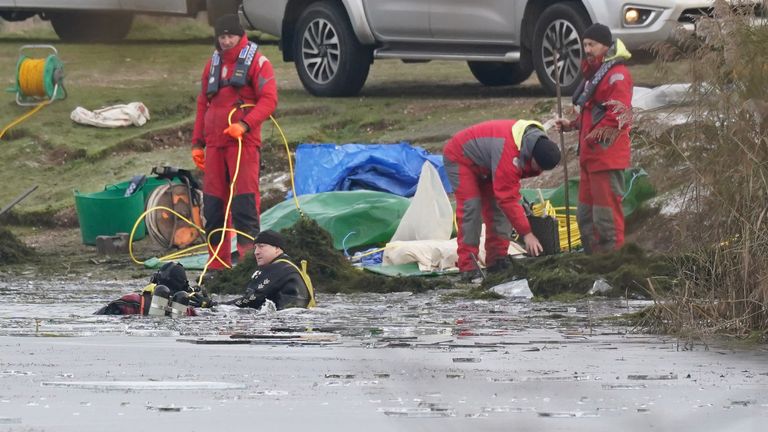


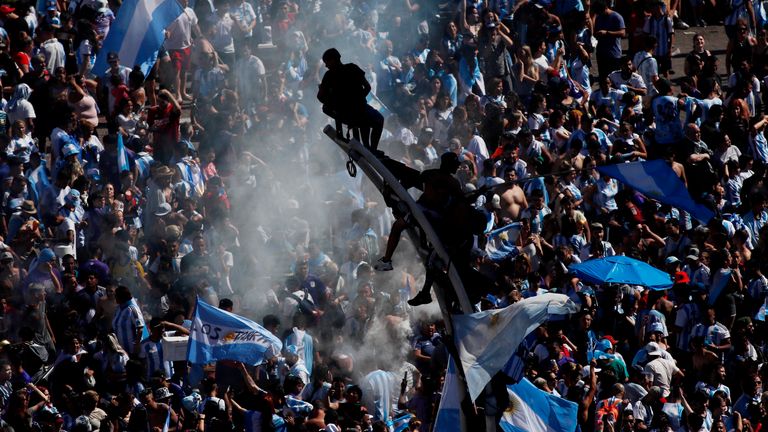
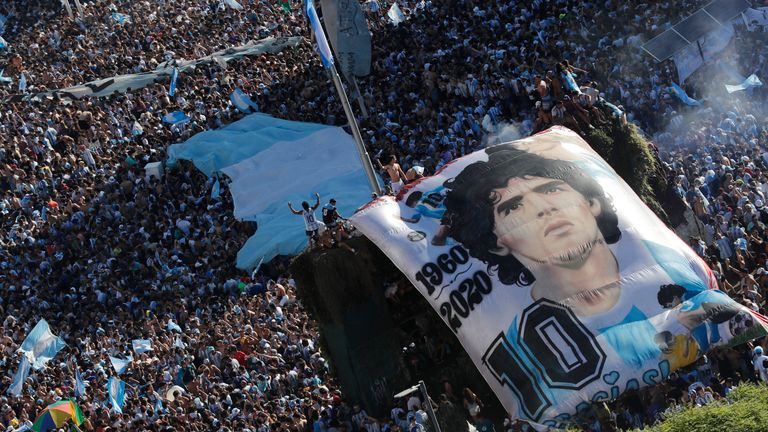
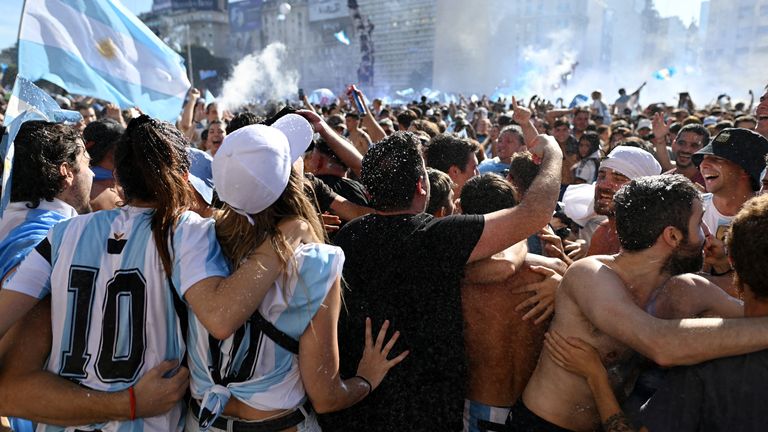
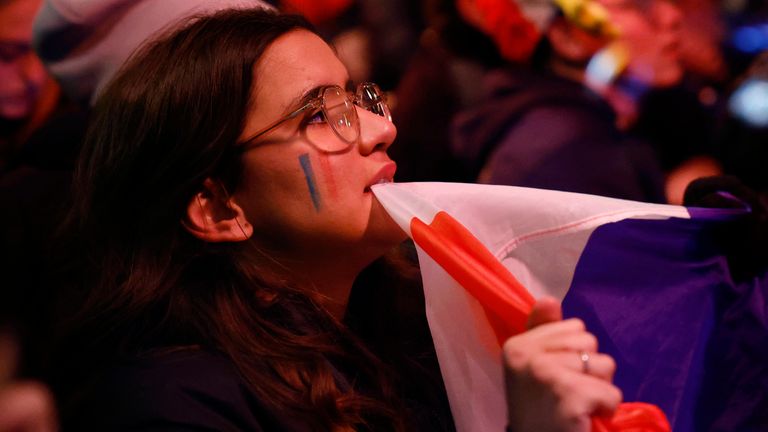
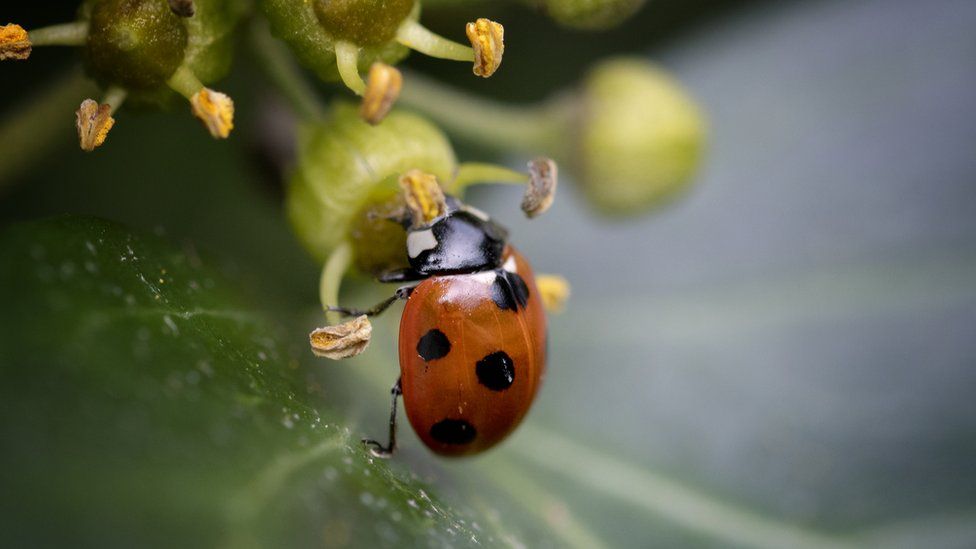
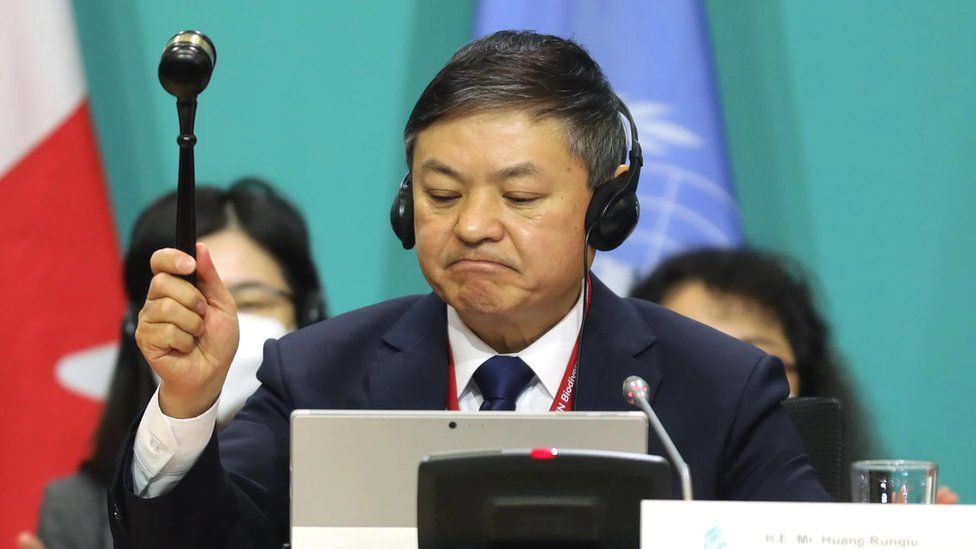
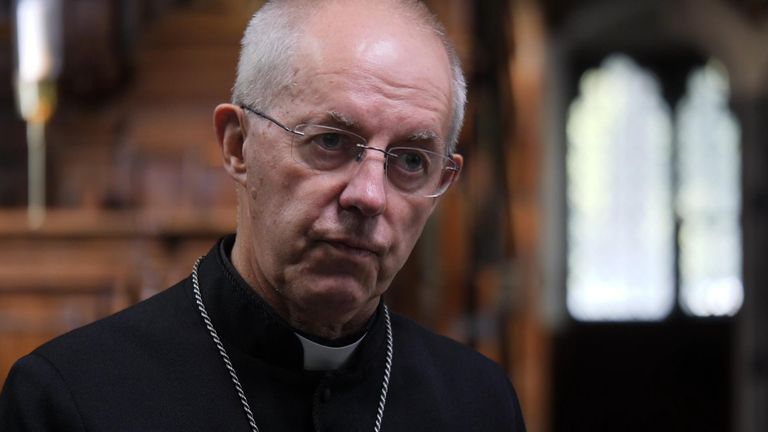

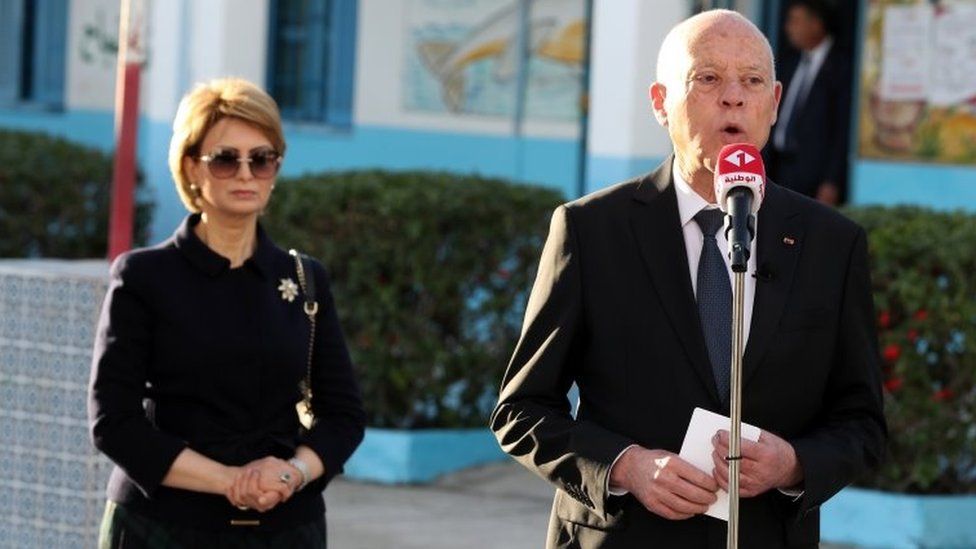


:max_bytes(150000):strip_icc():focal(389x189:391x191):format(webp)/prince-william-prince-harry-121322-2b18af9b9f8248a59fa0a29d06baaeef.jpg)
:max_bytes(150000):strip_icc():focal(749x0:751x2):format(webp)/prince-harry-william-3-2c8c16afc3b44a4f93c2fd9fbdc5dd57.jpg)
:max_bytes(150000):strip_icc():focal(999x0:1001x2):format(webp)/prince-harry-meghan-markle-25-5364b4ef842647acae10973b2b82b24c.jpg)
:max_bytes(150000):strip_icc():focal(999x0:1001x2):format(webp)/prince-harry-meghan-markle-11-fe10223c071840e29b4ef4994652743e.jpg)
:max_bytes(150000):strip_icc():focal(1184x349:1186x351):format(webp)/harry-meghan-working-from-home-121522-ae8e2a06bd634100ade21726017c578c.jpg)
:max_bytes(150000):strip_icc():focal(999x0:1001x2):format(webp)/meghan-markle-beyonce-2-2000-31bd90b8b679484691c3728e6d7f636a.jpg)
:max_bytes(150000):strip_icc():focal(1079x390:1081x392):format(webp)/meghan-harry-lion-king-cast-6-1-2000-23b7da16eb0c4da0ac843f0d27d991b5.jpg)
:max_bytes(150000):strip_icc():focal(879x406:881x408):format(webp)/Doria-Ragland-meghan-markle5-2000-1f2dafc7dd6d467d834b1821b6285b95.jpg)
:max_bytes(150000):strip_icc():focal(692x279:694x281):format(webp)/meghan-doria-ragland-eada70565447412e80c6e087d55bdd49.jpg)
:max_bytes(150000):strip_icc():focal(999x0:1001x2):format(webp)/meghan-markle-131-6ff8f4c1ee154e079c5f717ac3dc6485.jpg)
:max_bytes(150000):strip_icc():focal(749x0:751x2):format(webp)/harry-meghan-netflix-documentary-doria-ragland-120822-1-7617140d78574a998af33d25216faab3.jpg)
:max_bytes(150000):strip_icc():focal(999x0:1001x2):format(webp)/Doria-Ragland-meghan-markle3-2000-d0cfb778da74440b9e0abeda0b9fe728.jpg)
:max_bytes(150000):strip_icc():focal(999x0:1001x2):format(webp)/meghan-markle-231-1-597f5b295e9948378ee8834e70a56b58.jpg)
:max_bytes(150000):strip_icc():focal(599x0:601x2):format(webp)/doria-ragland-bb1cda1900ea4b0988e8b100cd234637.jpg)