B-BOVID Farms’ multi-award-winning founder, Issa Ouedraogo, is imploring the government to increase funding for climate change adaptation and sustainable agriculture, which will boost national productivity, resilience, and emissions reduction.
He clarified that climate-smart agriculture is a comprehensive strategy for managing landscapes, cropland, livestock, forests, and fisheries that addresses the interrelated problems of food security and climate change.
“Our success in the application of social and scientific innovation to agribusiness is ample evidence that with strategic thinking, commitment and long-term investment, Ghana can reap the benefits of sustainable agriculture sooner rather than later.
“The growing country population and changing diets are driving up the high demand for food and different taste and flavours of course; that is why I have introduced the alternative farmer’s day on the farm initiative, which will be celebrated every year on our farms to inspire tomorrow’s leaders visiting my Farms and also show them the bounties of nature that is protected and nurtured lovingly, to both young and the old” he added.
The Social Entrepreneur made these remarks in an interview with this reporter on Ghana’s Agricultural Sector and how a concerted, systematic, national action must be adopted to stop negative human activities that destroy our country and the fact that human survival could be at risk.
He mentioned that as part of the strategy to promote the concept of social entrepreneurship among its network of smallholder farmers, B-BOVID has set up an Alternative Livelihood Center that provides opportunities in fish farming, animal husbandry, beekeeping and organic farming to create hundreds of jobs, ensure additional incomes for farmers and address the problem of malnutrition across the region.
“The Center also supports the farmers with seedlings, new varieties of seeds, and a shopping centre where farm implements are subsidised for its farmers.
“The company practices a socially inclusive model of agriculture that incorporates agroforestry techniques, mechanisation, alternative livelihood enhancement, eco-diversity, ecological tourism, research and marketing, rain harvesting technology that enables farming throughout the year to ensure food security, coupled with an intensive program for youth training and empowerment as its core mandate,” he said.
According to him, his indigenous Ghanaian agribusiness company has actively pursued and modelled its business operations on climate change adaptation, agroforestry and biodiversity for over 18 years with incredible results.
“B-BOVID has become a renowned centre of excellence and innovation in agribusiness in Ghana, attracting government delegations, foreign guests, researchers including university professors, ambassadors, local and international media, chiefs and community leaders, students, investors, and students from various research institutions” he indicated.
He used the opportunity to call on government to protect local investors and organisations in the sector from individuals and organisations who connive to dupe them of their expertise and concepts.
“The premise is that without organizational protectionism a nation could lose long-established industries and organisations that first made a product in a particular country.
“If not addressed immediately; this will eventually result in the loss of jobs, rising unemployment, and eventual decrease of a region or nation’s gross domestic product (GDP),” he said.
In order to better prepare for sudden, violent storms, a new European satellite is set to launch on Tuesday. This satellite will greatly improve storm forecasting.
The Meteosat-12 weather satellite, which will keep an eye on Africa, the Middle East, and Europe, will be launched into space by an Ariane rocket.
It is the first satellite in a brand-new, multibillion-euro observation system.
It replaces more than 20-year-old technology and is arguably the most significant European space launch of the year.
“Look at the storm that impacted in Germany, the Netherlands and Belgium last year where over 200 people lost their lives. These events are tragic,” said Phil Evans, the director general of Eumetsat, the inter-governmental organisation that manages Europe’s weather satellites.
“More accurate, frequent and relevant observations from space are absolutely essential to provide better forecasts and warnings which help us reduce and mitigate the impacts of these severe weather events.”
Europe has had its own meteorological spacecraft sitting high above the planet since 1977. The new imager that’s going up on Tuesday is the third generation in the series.
Meteosat-12 will return a full picture of the weather below it every 10 minutes, five minutes faster than is currently the case. It will be able to see even smaller features in the atmosphere, down to 500m across, and view them in more wavelengths of light.
National forecasting agencies such as the UK Met Office and Meteo France will see a big jump in the amount of data they receive.
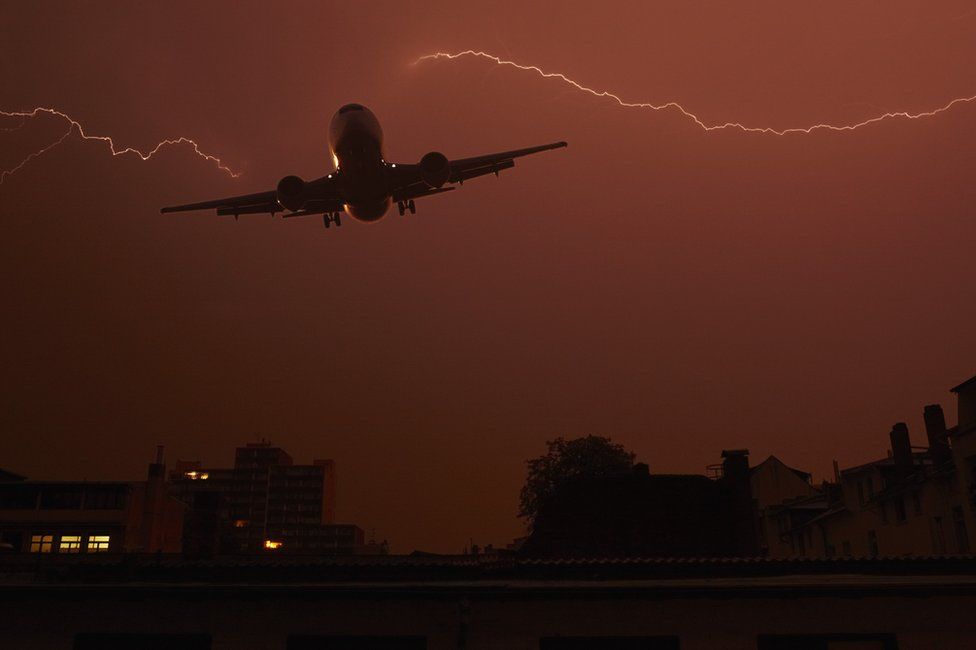
One of the major innovations is the inclusion of a camera to detect lightning. The agencies believe this will be a boon to what they call “nowcasting” – the ability to track and forewarn of imminent, hazardous events. That’s because lightning is a tracer for violent wind gusts, heavy precipitation and hail.
It’s long been possible to track lightning from its radio frequency emissions, but these are largely air to ground strikes, and 90% of lightning is air-to-air, or intra-cloud.
“The new Meteosat instrument is set to be a game-changer,” said Simon Keogh from the UK Met Office. “It will give us a much better handle on total lightning. That’s something we need to know if we’re forecasting for helicopter operations in the North Sea, for example. Likewise, if there are hazardous materials being unloaded from aircraft, even passengers, we need to know if there is a lightning risk,” he told BBC News.
IMAGE SOURCE,TAS Image caption, Six satellites have been procured in bulk. It means one or two will stay in storage for perhaps 10 years
The new generation system will eventually see three spacecraft working in unison.
A second imager will go up in 2026 to acquire more rapid – every 2.5 minutes – pictures of just Europe. Before that, in 2024, a “sounding” spacecraft will launch to sample the temperature and humidity down through the atmosphere.
With replacement satellites already ordered for the first working trio, Europe is guaranteed coverage well into the 2040s.
This capability doesn’t come cheap. Member states of the European Space Agency (Esa) have funded the research and development to the tune of €1.4bn (£1.2bn). Eumetsat nations are picking up the ongoing costs expected to be €2.9bn (£2.5bn).
IMAGE SOURCE,GETTY IMAGES Image caption, The inclusion of a lightning imager is set to be a game-changer
“It’s a long process with trade-offs,” said Paul Blythe, who’s steered the Meteosat development for Esa.
“Some of the detector elements and the optical elements that we have on board have taken six, seven, eight years to bring to fruition from the initial setting of the requirements through lots of development work and finally getting the product to build into the satellite. After that, we have to qualify the whole system. It isn’t a quick activity.
“We will benefit from an economy of scale by buying six satellites at once. If you only buy three or four then it’s clear the next generation will cost even more.”
If €4.3bn (£3.7bn) still sounds like a lot of money, it is worth recognising the returns that stem from good weather forecasting.
In giving the public the confidence to go about their daily lives, in helping to reduce accidents on the roads, or enable sectors such as aviation and shipping to operate more efficiently – there is a clear added value to the economy that repeated analyses have judged to be worth billions every single year.
Meteosat-12 is scheduled to launch on its Ariane rocket from Europe’s spaceport in French Guiana at 17:30 local time (20:30 GMT).
Taiwan’s Defense Ministry announced Tuesday that China has sent a record 18 nuclear-capable H-6 bomber aircraft into Taiwan’s air defence zone as Beijing continues to increase strain on the autonomous island.
According to Taiwan’s Defense Ministry, a total of 21 Chinese warplanes were sent into Taiwan’s southwest air defence identification zone (also known as an ADIZ) in the 24-hour period between Monday morning and Tuesday morning.
According to the ministry, it kept an eye on the situation and tracked the Chinese aircraft using both its fighter jets and land-based missile systems.
Since Taipei started publishing daily data on Chinese fighter incursions in 2020, the flights mark the highest number of H-6 sorties in a 24-hour period.
An ADIZ is unilaterally imposed and distinct from sovereign airspace, which is defined under international law as extending 12 nautical miles from a territory’s shoreline.
China’s ruling Chinese Communist Party views Taiwan – a democratically governed island of 24 million – as part of its territory, despite having never controlled it. It has long vowed to “reunify” the island with the Chinese mainland, by force if necessary.
Tensions surrounding Taiwan have increased markedly this year. A visit to the island by United States House Speaker Nancy Pelosi in August prompted Chinese fury and an immediate flurry of military exercises.
Since then, Beijing has stepped up military pressure tactics on the island, sending fighter jets across the median line of the Taiwan Strait, the body of water separating Taiwan and China.
For decades, the median line had served as an informal demarcation line between the two, with military incursions across it being rare.
In November, US President Joe Bidenmet Chinese leader Xi Jinping in-person for the first time during his presidency at the G20 summit in Indonesia. Afterward, Biden described the three-hour meeting as “open and candid,” and cast doubt on an imminent invasion of Taiwan.
Formal bilateral talks on climate cooperation are expected to resume as well as part of a broader set of agreements between Biden and Xi – with China having previously halted talks as part of retaliation for Pelosi’s visit to Taiwan.
The oldest member of the K-pop supergroup BTS, Jin, started his mandatory military service on Tuesday amidst high security at a South Korean army training facility.
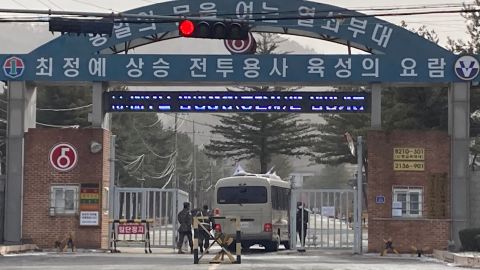
After entering the Yeoncheon army base in northern Gyeonggi province, where security personnel and the media outnumbered the few hundred fans who had gathered to see the star – despite his earlier requests for them to stay away – Jin, 30, will spend 18 months in uniform.
Just before 2:00 p.m., six black vans entered the base in a motorcade that was thought to be carrying Jin and his security team.
Numerous banners along the roadway welcomed Jin and the other recruits to the base, which is less than 10 miles (16 kilometers) from the Demilitarized Zone that separates South Korea from North Korea.
Among the conscripts joining the 5th Infantry Division Tuesday was Kim Seok-jin, 20, from Daejon – who shares the same full name as the superstar recruit.
Waiting outside a restaurant across from the base with his parents, Kim showed off his new buzz haircut – the same style Jin had gotten a few days earlier – and said he was nervous as he waited to go inside.
“But I’m excited too to go in with Jin,” he said, adding that he hoped they might become friends.
Among the BTS fans outside the base Tuesday was Lee Hey-Kyoung, a 40-year-old from Seoul, who combined subway, bus and taxi rides to make the trip to the base Tuesday morning.
“It’s a very cold winter and I’m thinking of him going to suffer in the military. That’s why I came here,” Lee said.
“We wish him all the best and stay safe and healthy and we will wait him the 18 months,” she said.
Military service is compulsory in South Korea, where almost all able-bodied men are required to serve in the army for 18 months by the time they are 28 years old.
South Korea’s parliament passed a bill in 2020 allowing pop stars – namely those who “excel in popular culture and art” – to defer their service until the age of 30.
In October, BTS’ record label said that all seven members of the group were planning to undertake military service. BTS is expected to reconvene as a group around 2025, according to BIGHIT Music.
Jin’s service will begin with a five-week basic training course before being assigned to a unit, based on standard practice.
Kim Seok-jin, 20, from Daejon, the exact same name as the musical superstar, poses for pictures at Yeoncheon, South Korea, on December 13, 2022. Brad Lendon/CNN
Jin’s military routine
Park Si-woo, 23, who underwent training at the base in 2021, told CNN that Jin will likely find himself in barracks with about 40 other recruits sharing bunk beds.
Park said recruits will wake up around 6:30 a.m. to begin their daily routine, which involves physical workouts, plus combat and weapons training.
The recruits must give up their mobile phones, so Jin’s initial contact will be through letters that fans can submit online that will then be printed out and given to him. Military officials said Jin would get limited access to his cell phone at the weekend.
One thing Jin and the other recruits may appreciate is the food, Park said, adding: “We were given a lot of snacks during the training – beef jerky, butter waffle snacks, and drinks.”
Once integrated into South Korea’s forces, Jin will be one of about 560,000 army troops, according to the South Korean army website.
The military base in Yeoncheon, South Korea, on December 13, 2022. Brad Lendon/CNN
BTS have become worldwide superstars since debuting in 2013, earning No. 1 singles in more than 100 countries, more than 46 million followers on Twitter and awarded Time magazine’s Entertainer of the Year in 2020.
They have also become an important part of the South Koreaneconomy – a 2019 study showed BTS was responsible for 0.3% of the country’s gross domestic product with $4.9 billion in revenue.
Critics say BTS is a one-of-a-kind phenomenon.
“BTS’ place in the scene is unique,” said music critic Yoonha Kim. “I think no more needs to be said. In fact, not only in the K-pop scene but looking at the entire Korean music history, no such group existed and it will be difficult for another to emerge in the future.”
Six people, two of whom were police officers, have been shot and killed at a remote Australian property following an alleged ambush.
270 kilometres (168 miles) west of Brisbane, Queensland, in Wieambilla, police said they were looking for a missing person when they came under fire.
Three suspects were fatally shot by police after a protracted siege. According to authorities, a reason is still unknown.
Australia was experiencing a “heartbreaking day,” according to Prime Minister Anthony Albanese.
Four police officers – who are armed in Australia – initially went to the property on Monday afternoon local time, after a request from New South Wales police.
Constables Matthew Arnold, 26, and Rachel McCrow, 29, were shot dead as they approached the property. Another officer suffered a “bullet graze” and the fourth escaped without physical injury, police said.
A neighbour, 58-year-old Alan Dare, was killed by the suspects after going to the property to investigate.
The siege involved “many weapons” and continued for hours, before the suspects – two men and a woman – were shot by specially trained officers, authorities said.
One was identified as Nathaniel Train, 46, a former school principal and the missing person police had been sent to check on.
The others were his brother Gareth Train, 47, and Gareth’s wife Stacey Train, 45, who co-owned the property.
Queensland Police Commissioner Katarina Carroll described the attack as an “unimaginable tragedy” and the force’s largest loss of life in a single incident in many years.
“Those officers did not stand a chance. The fact that two got out alive is a miracle,” she said after visiting the scene on Tuesday.
The uninjured officer – a rookie sworn in only weeks ago – managed to find cover and call for help.
The suspects had then tried to draw her out by lighting a fire, said Queensland Police Union president Ian Leavers.
“She did not know whether she was going to be shot, or [if] she was going to burnt alive,” he told the Australian Broadcasting Corporation (ABC).
“I do know she was sending messages to loved ones, saying she was at a point where she thought it was her time. What was going through her mind, one cannot comprehend.”
Specialist police later arrived and took over the operation.
“Both under 30 years of age. Both had wonderful careers and lives ahead of them,” the visibly emotional commissioner told reporters.
Several media outlets reported that Gareth Train appeared to have contributed often to online forums which promoted conspiracy theories. In posts he had expressed a distrust of police and wrongly claimed the country’s deadliest mass shooting was a government ploy to disarm Australians, The Guardian reported.
Australia introduced some of the world’s strictest gun regulations after 35 people were killed in a massacre by a lone gunman at Port Arthur, Tasmania, in 1996.
Since then, there have been only three mass shootings – defined in Australia as those resulting in at least four deaths, excluding perpetrators.
Mr Albanese said Monday’s shooting was devastating “for everyone who loved these Australians” and “our hearts go out to those in the grip of terrible grief”.
He noted it would be a “rough day indeed” for all police officers and their families. “This is not a price that anyone who puts on the uniform should ever pay,” he said.
Local MP David Littleproud said it had left his community “numb”.
“[These] are small country towns where this sort of thing just doesn’t happen,” he told the ABC.
The deaths will be investigated by the coroner and the police response will be examined by the force’s ethical standards command, in line with standard practice.
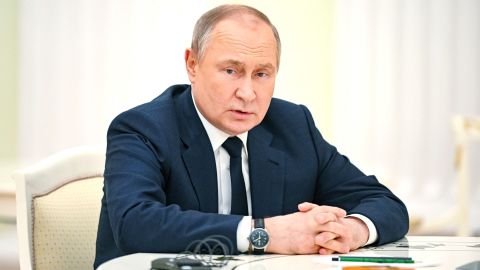
For the first time in ten years, Russian President Vladimir Putinwill not hold his customary large year-end news conference, according to the Kremlin.
However, the president “we hope the president will after all find an opportunity to talk” to the media according to spokesman Dmitry Peskov.
The cancellation was not explained, but it coincides with a rise in unease among Russians over Mr. Putin’s choice to invade Ukraine in February.
Since then, Russian troops have experienced a number of traumatic setbacks.
“Regarding the big press conference, yes, it won’t happen before the New Year,” Mr Peskov told reporters on Monday.
But he added that Mr Putin could find a way to talk to the media, stressing that “he does it regularly”.
Over the past 10 years, the carefully choreographed annual press conferences attended by dozens of journalists – both Russian and foreign – usually lasted for hours in Moscow.
Mr Putin went to great lengths to be seen on national TV as a leader directly involved with ordinary Russians, patiently answering a wide range of questions – from regional reporters about fixing poor roads in remote villages and publicly castigating local officials, to the world of grand geopolitics.
But a number of opposition Russian experts have said that – in the absence of press freedom – such gatherings resembled staged shows, where pro-Kremlin reporters were reduced to asking the country’s all-powerful ruler mostly flattering questions.
They said the fact a handful of independent journalists were also present – but not always given a chance to ask questions – did not change the overall picture.
Still, such conferences were closely monitored by politicians around the world, who were trying to gauge the direction the Kremlin leader was keen to take Russia.
In June the Kremlin also postponed President Putin’s annual televised marathon phone-in with members of the public – and did not set a new date for it.
The Kremlin leader is also required by the constitution to make an annualState of the Union speech to parliament by the end of the year. Mr Peskov said this issue was under review.
Court has told Abu Agila Masud, man accused allegedly creating the bomb that brought down Pan Am flight 103 over Lockerbie, Scotland, 34 years ago that he would not face the death penalty.
The US alleges that Abu Agila Masud was a Libyan intelligence operative and played a key role in the 1988 attack, which left 270 people dead.
Scottish and US officials announced on Sunday that Mr Masud was in US custody.
He is the first person charged on US soil in connection with the attack.
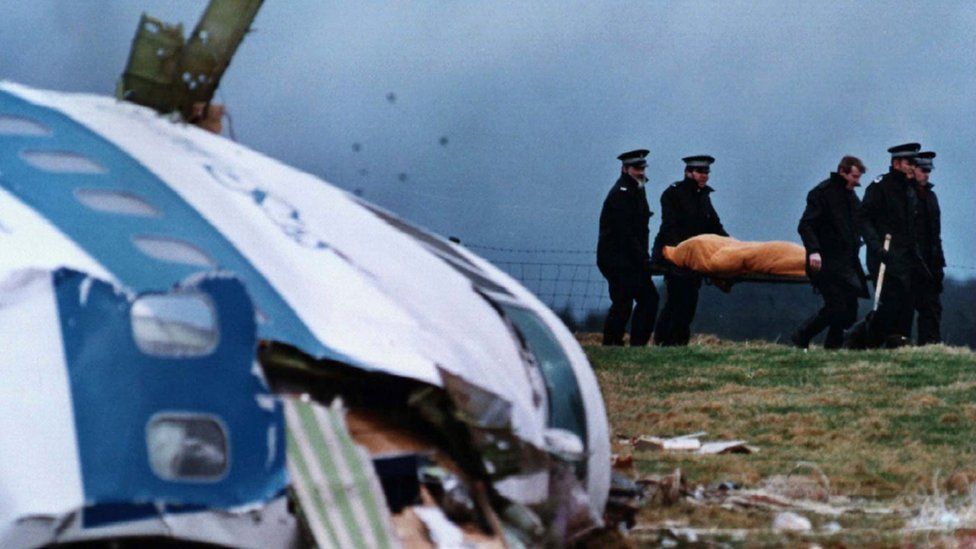
A device on board the Boeing 747 exploded as the flight was flying over the English-Scottish border, killing 243 passengers, six crew and 11 local residents on the ground – including a family of four.
The dead were citizens of 21 different countries, including 190 Americans and 43 Britons.
It remains the deadliest terrorist incident to have taken place on British soil.
At Monday’s hearing, US Magistrate Judge Robin Meriweather elected to delay the formal reading of charges until after Mr Masud secures legal representation for his trial. He did not enter any plea.
He spoke his full name into the record, and was informed by the judge that a translator was present to interpret court proceedings into Arabic for him. He was ordered to remain in custody at least until a detention hearing on 27 December.
Mr Masud is facing multiple charges, including destruction of aircraft resulting in death. Prosecutors said at Monday’s hearing that they would not seek the death penalty and Mr Masud could face life imprisonment if convicted.
Wearing a teal prison jumpsuit, he lightly limped into court with a medical mask covering his white beard.
As the judge read out the three charges, he interrupted to say in Arabic: “I can’t talk until I’ve spoken to my attorney.”
He is currently seeking legal counsel, which the judge said was his right after Mr Masud rejected the offer of free representation from the public defender’s office.
Some of the families of the victims were in court – they told the BBC beforehand they were nervous. They sat silently as the hearing got under way.
Each of the charges he faces include a possible sentence of life in prison, the death penalty or a fine of up to $250,000 (£203,000).
But US prosecutors told the court they would not seek death, as they believe the punishment was not legally available at the time of his alleged crime.
The US justice department first announced criminal charges against Mr Masud in December 2020. At the time, US prosecutors alleged that he had worked for Libyan intelligence in a number of roles between 1973 and 2011, including as an explosives expert.
The case against Mr Masud partly rests on an interview he gave to Libyan officials in 2012 after he was taken into custody following the overthrow of Muammar Gaddafi’s government. In the interview, he admitted building the bomb used in the attack and setting its timer to explode while the aircraft was in flight. Mr Masud also claimed that Gaddafi had thanked him and two co-conspirators “for their successful attack” on the US.
A number of observers have voiced concerns that the confession may have been coerced in the chaotic months following the regime’s fall, when Libya did not have a fully functioning legal system.
IMAGE SOURCE,REUTERS Image caption, The Pan Am flight was bombed just days before Christmas
At a news conference on Monday, Victoria Cummock – whose husband John died in the bombing – called the US prosecution a “major milestone” for the families of the victims.
She added that the apprehension of Mr Masud was the “first tangible step” by US authorities to hold anyone accountable for the bombing after what she described as a “decades-long miscarriage” of justice.
It remain unclear how Mr Masud came to be in US custody. In late November, it was reported that he had been kidnapped by armed militia members in Tripoli.
In 2001, one of the other co-conspirators identified by US and Scottish officials – Abdelbaset al-Megrahi – was convicted by a Scottish court convened in the Netherlands for his role in the attack. The Scottish government released him on compassionate grounds in 2009, and he died in Libya three years later.
To date, Megrahi – who always maintained his innocence – has been the only person convicted in connection with the attack.
Scotland’s Lord Advocate Dorothy Bain, who is the most senior Scottish law officer in the government, said in a statement that she would travel to Washington DC next week to meet prosecutors and attend commemoratives events with victims’ families.
In a statement on Monday, she called the US prosecution of Mr Masud a “legal breakthrough”, adding that Scottish authorities welcomed the American inquiry.
“The recent developments demonstrate that there can be no time limits placed on the pursuit of justice,” Ms Bain said.
The disputed Himalayan border between Indian and Chinese troops has seen fighting, the first known incident involving the two nuclear-armed Asian nations in almost two years.
According to a statement from India’s Ministry of Defense, the encounter, which happened on Friday in the Tawang Sector of the country’s northeastern state of Arunachal Pradesh, a desolate area that borders southern China, resulted in minor injuries to soldiers on both sides.
Long a source of conflict between New Delhi and Beijing, the 2,100-mile (3,379-kilometer) disputed border saw tensions spike in June 2020 after hand-to-hand combat between the two sides in Aksai Chin-Ladakh resulted in the deaths of at least 20 Indian and four Chinese soldiers.
Speaking to lawmakers Tuesday, India’s Defense Minister Rajnath Singh accused China’s People’s Liberation Army (PLA) troops of trying to “unilaterally” change the status quo by attempting to cross the line of actual control (LAC) – the two countries’ de facto border.
“The ensuing faceoff led to a physical scuffle in which the Indian Army bravely prevented the PLA from transgressing into our territory and compelled them to return to their posts,” Singh said, adding there were no serious injuries on the Indian side.
In its earlier statement, the Indian Defense Ministry said both sides “immediately disengaged from the area” and the countries’ respective commanders there held a flag meeting to discuss the issue in “accordance with structured mechanisms to restore peace and tranquility.”
Indian and Chinese troops disengaging from disputed border area, New Delhi says
Singh said that meeting occurred Sunday and the Chinese side was “asked to refrain from such actions and maintain peace and tranquility” along the border. The issue was also being addressed through diplomatic channels, he added.
China’s Foreign Ministry did not directly acknowledge the incident in a regularly scheduled news briefing on Tuesday.
“As far as we know, the China-India border area is generally stable, and both sides have maintained smooth communications on boundary-related issues through diplomatic and military channels,” spokesman Wang Wenbin said when asked about India’s statement on the incident, pointing reporters to “competent authorities” for “specifics.”
China hoped India would be “on the same page” to “jointly preserve the peace and stability of the China-India border,” he added.
Disputed border
India and China went to war over their border regions in 1962, eventually establishing the LAC. But the two countries do not agree on its precise location and both regularly accuse the other of overstepping it, or seeking to expand their territory. There have been a series of mostly non-lethal scuffles over the position of the border in the years since, including the previously most recent known example in 2021, according to a statement from the Indian Army at the time.
In September, the Indian government said that Indian and Chinese troops had begun disengaging from the Gogra-Hotsprings border area in the western Himalayas, two years after clashes at the frontier strained diplomatic ties.
That statement came ahead of a regional summit in Uzbekistan attended by both Indian Prime Minister Narendra Modi and Chinese leader Xi Jinping.
Activities in the region remain closely watched on both sides.
On November 30, China’s Foreign Ministry criticized high altitude joint exercises conducted between US and Indian troops in northern India’s Uttarakhand, saying that the exercises did “not help build bilateral trust” and that Beijing had expressed concerns to New Delhi.
China has grown wary of India’s ties with the United States in recent years,as China-US relations have cratered and the Quad security dialogue, which includes India, the US, and American allies Japan and Australia has become more active.
Modi and Chinese leader Xi last met at the Group of 20 (G20) summit in Bali last month, where the two shook hands but did not have a bilateral sit-down.
Speaking to Parliament last week prior to the skirmish, Indian Foreign Minister Subrahmanyam Jaishankar said there had been “abnormality” in China-India relations in recent years due to border concerns, and that New Delhi “diplomatically” had been “very clear” with China that they “will not tolerate attempts to unilaterally change” the LAC.
“Solong as they continue to seek to do that, and if they have built up forces, which in our minds constitute a serious concern in the border areas, then our relationship is not normal,” Jaishankar said, in response to a question on Sino-Indian relations, adding that the military commanders “continue to engage each other.”
The world’s only nonuplets—nine infants born simultaneously—have safely returned to Mali, where they were born.
In the wee hours of Tuesday, the parents and their nine infants arrived at the airport in the capital, Bamako, where Health Minister Diéminatou Sangaré met them.
Since leaving the Ain Borja clinic, where the infants were born on May 4, 2021, they had been residing in a flat with medical assistance in Casablanca, Morocco.
They broke the Guinness World Record for the most children delivered in a single birth to survive.
The babies – five girls and four boys – were conceived using in vitro fertilisation (IVF) treatment and were delivered by C-section.
Vincent Clerc ,has been appointed by shipping giant A.P. Moller-Maersk to replace Soren Skou as Chief Executive Officer as of Jan 1. Vincent Clerc has been with the company for about two and half decades and was announced on Monday as the new CEO.
Company veteran Clerc, who currently heads the company’s Ocean & Logistics business, is taking the helm at a time of slowing demand for transport and logistics as a global recession looms.
“The strong tailwinds that benefited the supply chain industries during the pandemic are coming to an end,” said chair of the board Robert Maersk Uggla in a statement.
“With an increasingly challenging outlook, the board believes Vincent holds the right experience and capabilities as CEO to pursue and oversee Maersk’s strategic and organizational development in the years to come,” he added.
Clerc, a Swiss citizen born in 1972, joined Maersk in 1997 and has since held several senior positions, including Chief Trade and Marketing Officer and Chief Commercial officer.
He has been pivotal in the firm’s expansion beyond its core ocean freight business. Copenhagen-based Maersk is one of the world’s biggest shipping and logistics companies, handling supply chain logistics for large customers like Walmart and Nike.
It employs more than 100,000 people in 130 countries. Skou, who has been in the job since 2016, oversaw the group’s transformation from a conglomerate into an integrated logistics company.
Tuesday’s special session of the South African parliamentis scheduled to discuss a legal experts’ panel report that suggested President Cyril Ramaphosa may have violated his oath of office.
This has to do with the Phala Phala farm scandal that the president is currently dealing with, in which Mr. Ramaphosa has been charged with covering up the theft of foreign currency from his own game farm back in 2020.
The outcome of the vote on President Ramaphosa’s impeachment by MPs will determine the future of the president.
Calls for his resignation have been fueled by evidence of possible misconduct following accusations that he covered up the theft of foreign currency from his game farm.
Mr Ramaphosa has repeatedly denied any wrongdoing.
The governing ANC party has instructed its 230 lawmakers, including those known to be against the president, to reject the report because its findings have been challenged in court.
But some could break ranks and side with opposition parties for impeachment proceedings to get under way.
If Mr Ramaphosa survives the encounter in parliament, he is likely to be re-elected as ANC president at the party’s elective conference which starts on Friday.
The Democratic Republic of Congo’s government has “strongly” condemned what it called the “illegal presence” of journalists who support Rwanda in Congolese territory.
DR Congo’s information ministry stated that “propagandist media” were being escorted to various locations in eastern DR Congo by M23 rebel soldiers and Rwandan forces.
“This act should draw the attention of both the national and international community to Rwanda’s new campaign of lies and misrepresentation of the facts, promoting false testimony of local people and twisting the truth about the massacre in Kishishe,” it said in a statement.
— Ministère de la Communication et Médias/RDC (@Com_mediasRDC) December 12, 2022
ReportReport this social embed, make a complaint
Rwanda has always denied involvement in the violence in DR Congo.
Last week the US urged Rwanda to end its support for the M23 rebel group – but Rwanda said the responsibility ought to be placed on DR Congo.
It came amid a UN investigation that found that at least 131 civilians in DR Congo died in a November attack by the M23 rebel group.
The UN report last week said the massacre took place in two villages – Kishishe and Bambo – in the Rutsuhuru district of the eastern North Kivu province.
DR Congo says its government is determined to pursue legal means againstthose responsible for international crimes including the mass killings in Kishishe.
In an investigation into alleged bribes from the World Cup host Qatar, Belgian investigators searched offices at the European Parliament in Brussels on Monday.
Since Friday, there have been 20 searches conducted in Belgium, and parliament president Roberta Metsola warned MEPs that “democracy is under attack.”
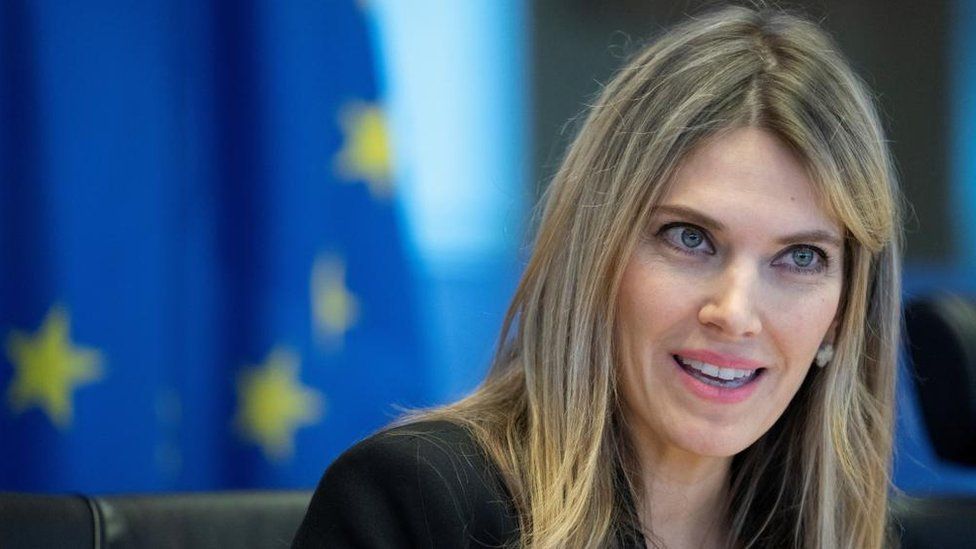
Four people have been taken into custody by Belgian police, including Greek MEP and vice-president of the European Parliament Eva Kaili.
Any wrongdoing has been refuted by Qatar. On Tuesday, MEPs will discuss the scandal.
Since Friday, the IT resources of 10 parliamentary employees have been “frozen” to prevent the disappearance of data necessary for the investigation.
The four suspects arrested by Belgian police have been charged with “participation in a criminal organisation, money laundering and corruption”, prosecutors said in a statement on Sunday.
Ms Kaili – an MEP for eight years – was suspended from her duties as one of 14 vice-presidents by parliament president Metsola.
She has also been suspended from the parliament’s Socialists and Democrats Group and expelled from the Greek centre-left Pasok party.
IMAGE SOURCE,REUTERS Image caption, Eva Kaili was arrested on Saturday and has reportedly had her assets frozen
Prosecutors in Greece have reportedly frozen all of Ms Kaili’s assets.
Six people were detained on Friday as part of the investigation into allegations that Qatar bribed EU officials to win influence. Two were later released.
No suspects have been publicly named, but Ms Kaili is understood to be among those who have been indicted.
The three other accused are all Italian citizens and her partner Francesco Giorgi, who is a parliamentary assistant, is among those reportedly charged.
The BBC’s Brussels correspondent, Jessica Parker, says details released by Belgian authorities in the last few days left many people’s jaws on the floor in EU circles.
MEPs who spoke to our correspondent say they are shocked by both the scale and blatancy of the accusations.
‘European democracy under attack’
European Commission President Ursula von der Leyen said the accusations were “very serious” and called for the creation of a new ethics body to oversee the bloc.
Ms Metsola vowed to MEPs that the parliament’s integrity would be restored.
“European democracy is under attack and our free and democratic societies are under attack,” she said.
Watchdogs and MEPs said the bribery investigation could represent one of the biggest corruption scandals in the parliament’s history.
Prosecutors said they suspected a Gulf state had been influencing economic and political decisions of the parliament for several months, especially by targeting aides.
Local media has named the state as Qatar, although the Qatari government said any claims of misconduct were “gravely misinformed”.
Ms Kaili’s responsibilities as vice-president include the Middle East. She has been a defender of Qatar in the past.
The European Parliament is the EU’s only directly elected institution. Some 705 members of parliament, elected by voters in the 27 nations which make up the EU, meet to scrutinise proposed legislation and vote through European law.
MEPs generally enjoy immunity from prosecution, but not in cases where “a member is found in the act of committing an offence”, the parliament says.
Sam Bankman-Fried, the founder of the defunct cryptocurrency exchange FTX, has been arrested in The Bahamas, according to the country’s attorney general.
He is expected to appear in a magistrates court in Nassau, the Caribbean country’s capital, on Tuesday.
According to police, Mr Bankman-Fried was arrested for “financial offences” against US and Bahamas laws.
FTX declared bankruptcy in the United States last month, rendering many users unable to withdraw their funds.
According to a court filing last month, FTX owed nearly $3.1 billion (£2.5 billion) to its 50 largest creditors.
It is unclear how much people who have funds in the exchange will get back at the end of bankruptcy proceedings – though many experts have warned it may be a small fraction of what they deposited.
The FTX exchange allowed customers to trade normal money for cryptocurrencies like Bitcoin.
Mr Bankman-Fried was once viewed as a young version of legendary US investor Warren Buffett, and as recently as late October had a net worth estimated at more than $15bn.
He had become well known in Washington DC as a political donor, mostly to Democrat politicians or groups, supposedly supporting pandemic prevention and improved crypto regulation.
Mr Bankman-Fried will be held in custody “pursuant of our nation’s Extradition Act,” the Attorney General of the Bahamas said in a statement.
“Earlier this evening, Bahamian authorities arrested Samuel Bankman-Fried at the request of the US Government, based on a sealed indictment filed by the SDNY [Southern District of New York]. We expect to move to unseal the indictment in the morning and will have more to say at that time,” the US Attorney’s office in Manhattan said in a tweet.
Wall Street regulators also said that they would be taking action against Mr Bankman-Fried.
“We commend our law enforcement partners for working to secure the arrest of Mr Sam Bankman-Fried in the Bahamason federal criminal charges,” US Securities and Exchange Commission (SEC) official Gurbir Grewal said in a statement.
“The Securities and Exchange Commission has separately authorised charges relating to Mr. Bankman-Fried’s violations of our securities laws, which will be filed publicly tomorrow in the Southern District of New York,” he added.
Mr Bankman-Fried had been due to testify about the collapse of FTX before the US Congress on Tuesday.
However, he will now be unable to testify, according to Congresswoman Maxine Waters, who said in a statement that she was surprised to hear that he had been arrested.
Mr Bankman-Fried’s lawyer did not immediately reply to a BBC request for comment.
A Statement from the Royal Bahamas Police Force on the arrest of Samual Benjamin Bankman-Fried.
Police wish to inform that 30-year-old SAMUEL BENJAMIN BANKMAN-FRIED of California, U.S.A, has been arrested. pic.twitter.com/Mr85S2fzcN
The BBC is not responsible for the content of external sites.View original tweet on Twitter
FTX, the owner and operator of the FTX.COM cryptocurrency exchange, was founded in 2019 by Mr Bankman-Fried, a former Wall Street trader and ex-Google employee Gary Wang.
It became the second largest crypto exchange in the world, trading about $10bn of cryptocurrencies a day.
But on 11 November FTX filed for bankruptcy protection after users pulled $6bn from the platform in three days and rival exchange Binance abandoned a rescue deal. At the same time, Mr Bankman-Fried resigned as FTX’s chief executive.
In a series of interviews and public appearances in recent weeks, Mr Bankman-Fried has acknowledged that mistakes were made at the firm, but sought to distance himself from accusations of illegal activity.
“I didn’t ever try to commit fraud,” he said at the New York Times’ DealBook Summit at the end of last month.
The collapse of FTX came during a tumultuous year for the cryptocurrency industry. This year Bitcoin has lost more than 60% of its value, while other cryptocurrencies have also slumped.
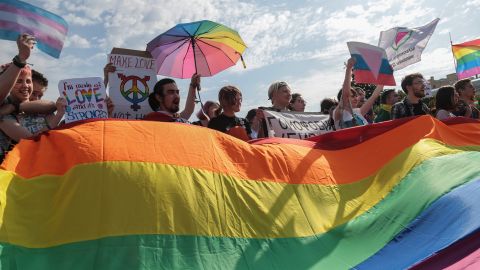
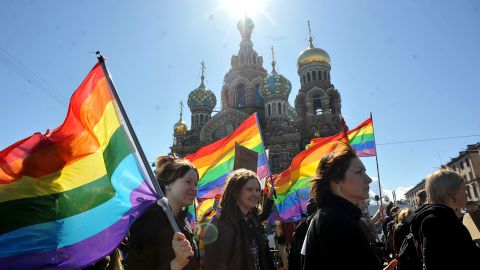
US Ambassador to Ghana Virginia Palmersays, calls for the protection of the rights of people of same-sex orientation should not be misconstrued as an attempt to push such interests.
“We don’t want your straight children to be gay, we want your gay children to be safe and I think it is very important that any sort of threat on one group demonstrates that the rights of other people can be encroached upon,” she said.
In an interview with JoyNews’ Foreign Affairs programme, Ambassador Palmer stated that all forms of discrimination are bad, thus the need for social protection policies to safeguard the minority group.
In Ghana, intimate same-sex relationships are punishable by a three-year prison sentence.
A bill named the “Promotion of Proper Human Sexual Rights and Ghanaian Family Values”, was proposed months after Ghana’s first LGBT community centre opened in Accra in January last year.
The bill seeks to increase jail terms to up to a decade and makes cross-dressing and public displays of same-sex affection punishable by fines or detention. It also makes the distribution of material deemed pro-LGBTby news organisations or websites illegal.
She also declared a state of emergency in areas where there have been protests.
In the south-western Apurmac region, clashes between demonstrators and police killed two teenagers.
Ms Boluarte took office on Wednesday after her predecessor, Pedro Castillo, was impeached for attempting to dissolve Congress.
Ms Boluarte said in a televised address to the nation early Monday local time that she would introduce legislation in Congress to hold elections in April 2024 rather than April 2026.
The move represents an about-turn as she had said upon taking office that she would serve out the remainder of Mr Castillo’s five-year term in office in full.
But protests, some of which turned violent, in the regions of Apurímac, Arequipa and Ica by people demanding fresh elections increased the pressure on Ms Boluarte.
Andahuaylas airport in Apurímac had to be closed as protesters and police clashed and smoke could be seen billowing from its buildings.
In her address, Ms Boluarte said that she would also propose a series of constitutional reforms to achieve “a more efficient, transparent and participatory system of government”, but did not go into detail about what those reforms would be.
“I call on all the parties and the Peruvian people to take part in this process so that we’re guided by a wave of democratic feeling,” she said.
Peru was thrown into political crisis last week when then-President Pedro Castillo took to national TV to announce the dissolution of the opposition-controlled Congress just hours before the legislative body was due to vote on his impeachment.
Within hours, Dina Boluarte – who until then had been Mr Castillo’s vice-president – was sworn in as Peru’s new leader.
But while Mr Castillo’s approval ratings had been very low, those of Congress have been even lower and thousands of Peruvians have taken to the streets to demand general elections be held as soon as possible.
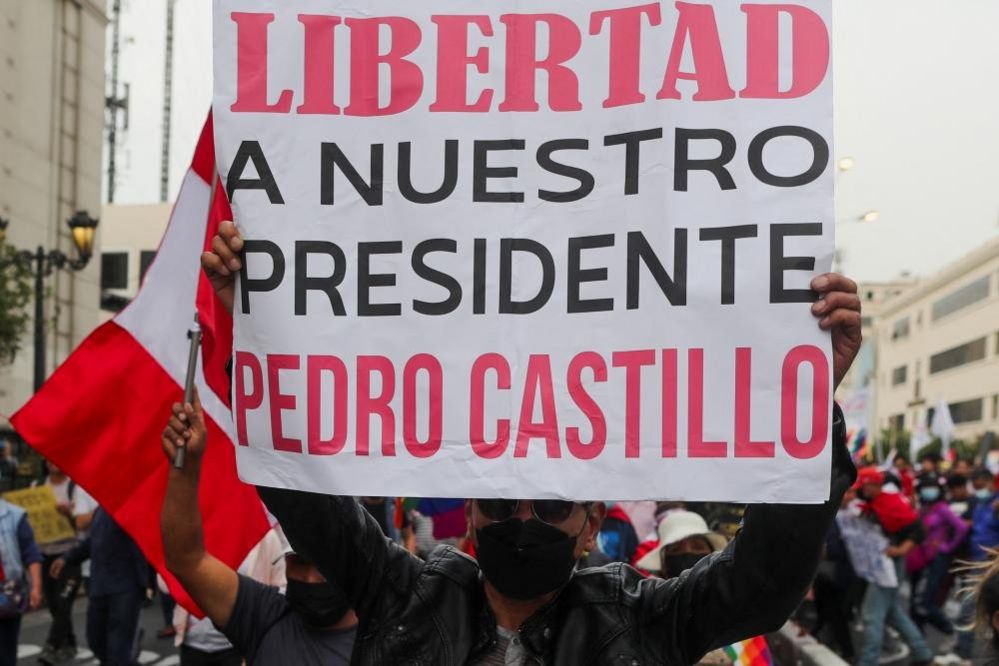
Many of those protesting are also demanding the release of Mr Castillo, who is in police custody.
IMAGE SOURCE,REUTERS Image caption, Some protesters held up banners demanding “Freedom for our President Pedro Castillo”
Mexico’s foreign minister, Marcelo Ebrard, said on Thursday that officials “had started consultations with Peruvian authorities” over Mr Castillo’s asylum request.
But shortly afterwards, Mexico’s ambassador in Lima was summoned and warned by Peruvian officials that they considered Mr Ebrard’s comments an interference in the country’s internal affairs.
A court ordered last week that Mr Castillo be held in preliminary detention for seven days while an investigation is carried out into whether he should be charged with rebellion.
His supporters have called for a strike on Monday and are planning to block key roads.
How Ms Boluarte deals with the protests is seen as a key test for her presidency and whether she will be able to hold on to power until April 2024.
Peru’s politics have suffered from instability for years with the legislative and the executive almost constantly at loggerheads.
Operations have resumed at the Ukrainian Black Sea port of Odesaafter Russia attacked energy facilities in the city with Iranian-made drones.
The port in the country’s south was shut after strikes on Saturday knocked out power to 1.5 million people and all non-critical infrastructure.
With sub-zero temperatures expected this week, Ukraine’s president said it could take days to restore power.
Under a UN-brokered agreement, Odesa is one of three ports used to ship grain.
The agreement, mediated by Turkey and the UN, allows Ukrainian products to be transported safely to the rest of the world. The deal has helped bring down soaring global food prices.
Although operations at Odesa port were briefly stopped on Sunday, Ukraine’s agriculture minister said grain exports would not be suspended.
In total, Russia launched 15 Iranian-made drones at the regions of Odesa andneighbouring Mykolaiv, 10 of which were shot down, Ukraine’s armed forces said.
“The situation in the Odesa region is very difficult,” Ukraine’s President Volodymyr Zelensky said in his nightly address. “Unfortunately the hits were critical, so it takes more than just time to restore electricity. It doesn’t take hours, but a few days.”
Thousands of people have made use of the region’s “points of invincibility” – facilities which supply electricity and warmth to residents during blackouts.
Images posted on social media showed dozens of people crowding round power points charging their phones.
The strikes on Ukraine’s energy infrastructure, which intensified in mid-October, have left millions of people in nearly all regions of the country without power, as temperatures drop below zero.
A complete blackout across the entire country is a now realistic scenario, Ukraine’s Foreign Minister Dmytro Kuleba told German television on Sunday.
Russia’s frequent attacks on Ukraine’s power grid have led to calls for the West to supply Kyiv with better air defence weapons.
On Sunday, US President Joe Biden told President Zelensky that Ukraine’s air defence was a priority for Washington.
The two spoke in a phone call before a meeting of G7 leaders on Monday, where further sanctions against Russia and Iran will be discussed.
The proposed measures would target Iran over its supply of drones to Russia, while EU foreign ministers are set to discuss a ninth package of sanctions which would place almost 200 more individuals and entities on its sanctions list.
East of Odesa, Ukrainian strikes killed two people in the Russian-occupied city of Melitopol over the weekend, according to Moscow-installed local authorities.
The city has been under occupation since early March and is a major logistics hub for Russian forces in the south-east.
It is strategically located between Mariupol to the east, Kherson and the Dnipro River to the west, and Crimea to the south
A Belgian judge has charged four people with receiving money and gifts from a Gulf state in order to influence decisions in the European Parliament, putting the European Union’s credibility at risk.
Prosecutors searched 16 homes in Brussels on Friday and seized 600,000 euros ($631,800) as part of an investigation into money laundering and corruption.
Initially, six people were detained. Prosecutors said in a statement on Sunday that four people had been charged and two had been released. They did not name any of the individuals involved.
Prosecutors said they had suspected for months that a Gulf state was trying to influence decisions in Brussels.
As various media outlets reported that Qatar was the Gulf state at the centre of the allegations, a Qatari official said the country “categorically rejects any attempts to associate it with accusations of misconduct”.
“Any association of the Qatari government with the reported claims is baseless and gravely misinformed,” the official said in a statement sent to Al Jazeera on Sunday.
“The State of Qatar works through institution-to-institution engagement and operates in full compliance with international laws and regulations,” the official added.
‘Very worrisome’
European Union Foreign Affairs chief Josep Borrell said on Monday that the news is “very worrisome”.
Borrell said the investigation did not involve anyone from the EU’s diplomatic service.
“There is nothing and no one being referred to neither from the External Action Service nor from the delegations,” he said.
The European Parliament said on the weekend it had suspended the powers and duties of one of its vice presidents, Greek socialist Eva Kaili, in light of the Belgian investigation.
The Greek socialist PASOK party said in a statement that it was expelling Kaili from its ranks.
It was not immediately clear if she had been charged in the case. Her office did not answer telephone calls or respond to an email requesting comment.
Prosecutors said they had also searched the home of a second EU politician on Saturday, without detaining anyone.
Belgian Socialist party member Marc Tarabella confirmed it was his home and that a computer and mobile phone had been taken.
“The justice system is doing its work of gathering information and investigating, which I find totally normal. I have absolutely nothing to hide and I will respond to all questions of the investigators,” he said in a statement.
Credibility at stake
European Economics Commissioner Paolo Gentiloni told Italy’s Rai 3 television that the case appeared to be “very serious”.
“If it were confirmed that someone took money to try to influence the opinion of the European Parliament, it will really be one of the most dramatic stories of corruption in recent years,” he added.
Irish Foreign Minister Simon Coveney said on Monday that the news is “damaging”.
“This is a scandal that we need to expose the truth around so we can ensure it doesn’t happen again,” Coveney told reporters in Brussels.
The credibility of the European Union is at stake, German Foreign Minister Annalena Baerbock warned on Monday.
“This is an unbelievable incident which has to be cleared up completely with the full force of law,” she told reporters as she arrived for a meeting with her EU counterparts in Brussels.
“This is about the credibility of Europe, so this has to trigger consequences in various areas.”
The European Parliament is due to vote this week on a proposal to extend visa-free travel to the EU for Kuwait, Qatar, Oman and Ecuador.
As attacks mount, advocates say the government must do more to combat hate speech and gun crimes.
Following a spate of recent attacks in the United Stateson LGBTQ communities, advocates say the government must do more to protect vulnerable citizens.
A man opened fire at a gay and lesbian nightclub in Colorado late last month, killing five people and injuring at least 17 others. The suspect is accused of hate crimes, murder, and assault.
During a year in which President Joe Biden has warned of rising violence against LGBTQ communities, right-wing protesters have increasingly targeted drag shows.
Days after the Colorado shooting, the Department of Homeland Security issued a bulletin highlighting the risk of terrorism against LGBTQ citizens and other marginalised groups, noting that “lone offenders and small groups motivated by a range of ideological beliefs and/or personal grievances continue to pose a persistent and lethal threat”.
But while this acknowledgement is a step in the right direction, rights groups say, it is not enough.
“We are living in a time where there is this rising threat of violence from extreme far-right group across the spectrum of marginalised communities. It’s frightening, but it’s not surprising, unfortunately,” Laurel Powell, a spokesperson for the Human Rights Campaign, a Washington-based LGBTQ+ advocacy group, told Al Jazeera.
“The world we live in today is not one where you can easily divide online and the ‘real world’ … It doesn’t happen in a vacuum, and is being driven by very loud and animated extremist individuals who are stoking this hate online – and it, unfortunately, has real-world consequences.”
Social media companies and other internet platforms must do more to provide a space free from harassment, she said, while the plague of gun violence in the US also needs to be addressed.
“The epidemic of hate against the LGBTQ+ community can’t be separated from the fight against gun violence,” Powell said. “They’re inextricably linked.”
“The scary thing is how it has continued to increase in being more overtly violent,” Tonya Agnew, a spokesperson for the New York-based Family Equality group, which advocates for LGBTQ issues, told Al Jazeera.
“After Club Q [the Colorado shooting], it was just so scary,” she added, noting that the presence of gun-toting protesters outside local drag events marks an alarming trend. “Having armed protesters standing outside because someone happens to be wearing a lot of makeup and a fabulous outfit and reading to children, they find that offensive. So, it’s really just a scary time.”
The animus of protesters has been reflected in hundreds of legislative proposals introduced around the country this year in an effort to restrict the rights of those in LGBTQ communities. This only serves to embolden people who harbour bigoted beliefs, Agnew said.
The recent midterm elections, however, offer some reason for hope, Powell said, “The people who went all-in with their anti-LGBTQ+ rhetoric, for the most part, didn’t win. That message did not resonate with people,” she said.
“We know the vast majority of Americans are in favour of marriage equality. We know that the vast majority of Americans, when asked the question, ‘Do you believe that it’s a parent’s right to give their children the healthcare they need?’ – of course, they agree with that.”
Ashton Rose, a non-binary college student in Minnesota, said the Department of Homeland Security’s bulletin only matters to the extent that it is followed by legislative action.
“Are we going to start talking about reforming gun legislation? Are we going to start being more critical of casual hate speech in the media? Are we going to start supporting families?” Rose asked.
“This is part of the straight [person] silence thing. It shouldn’t be our job to have to stop people from killing us … The responsibility shouldn’t fall entirely on us,” they said. “And yet, it often feels like it does. It’s not enough for allies to be like, ‘Oh I’m here for you and support you.’
“People need to be using the power they have when they can, because we can’t do it all.”
Viktor Bout was released from a 25-year US prison sentence last week in exchange for basketball star Brittney Griner.
According to the party’s leader, a Kremlin loyalist, Russian arms dealer Viktor Bout, who was released from US custody last week in a prisoner swap for American basketball star Brittney Griner, has joined the ultranationalist Liberal Democratic Party (LDPR).
On Monday, LDPR leader Leonid Slutsky said on Telegram that “the Liberal Democratic Party’s party card” had been “personally handed” to Bout.
“I am sure that Viktor Bout – a strong-willed and courageous person – will take a worthy place in it. Welcome to our ranks!,” he wrote in a post that included a picture of the two men.
Founded in 1991, the LDPR espouses a hardline, ultranationalist ideology that demands Russia reconquer the countries of the former Soviet Union.
It has been one of the most vehement supporters of the invasion of Ukraine, often calling for a more severe approach from Moscow.
In recent years, the party has assumed a subordinate role in Russia’s political system but provides token opposition to the ruling United Russia bloc while remaining aligned with the Kremlin on most issues.
Bout returned to Russia on December 8 after being released from a 25-year prison term in exchange for Griner, who was arrested in mid-February after officials at Moscow airport when cartridges containing cannabis oil in her luggage.
Griner, who the US State Department has said was “wrongfully detained”, was sentenced to nine years in prison in August.
Bout had been arrested by US authorities in Thailand in 2008, with prosecutors charging that his extensive arms smuggling in hotspots across the world amounted to material support of “terrorism”. The Kremlin has maintained the arrest was politically motivated.
Dubbed the “merchant of death”, Bout has also been implicated in violating or contributing to violating UN arms embargoes in Angola, Sierra Leone, Liberia and the Democratic Republic of the Congo.
The prisoner swap came during the ninth month of Russia’s invasion of neighbouring Ukraine, a conflict that tanked already strained ties between Washington and Moscow and complicated release negotiations.
In Russia, Bout’s release was viewed as a victory for Moscow.
Meanwhile, the administration of US President Joe Biden faced criticism for agreeing to the exchange, with detractors citing the disparity in the severity of charges against Bout and Griner.
Biden critics were particularly upset that US officials were unable to secure the release of Paul Whelan, a former marine serving a 16-year sentence for alleged espionage in Russia, in the deal.
The LDPR has a history of recruiting controversial personalities into Russian politics, with its founder and long-time leader Vladimir Zhirinovsky gaining a reputation as a political showman for his outrageous stunts and eccentric behaviour before his death in April.
In 2007, Andrey Lugovoy a former KGB agent wanted in Britain for the murder the previous year of former Russian spy Alexander Litvinenko, was elected to parliament for the LDPR.
In his first interview since his release, Bout told the state-run Russia Today channel that the West sought to “destroy and divide Russia” in the years since the dissolution of the Soviet Union.
National Grid has shut down two coal plants that were on standby to generate electricity in the event that supplies were disrupted due to cold weather.
On Monday, the company asked Drax, which owns Britain’s largest power station, to prepare two coal-fired units.
It is still planning to run a test of its scheme, which offers bill credits to households that reduce peak-time electricity use on Monday evenings.
The move comes as the United Kingdom experiences a cold spell.
It means that as more people heat their homes, demand for energy rises, and a lack of wind has reduced the amount of renewable energy available.
It is understood because of the cold temperatures, Monday will be the highest demand day for electricity so far this winter.
National Grid said earlier on Monday that while it had asked Drax to warm up its two coal-fired units at its site near Selby, North Yorkshire, the plants might not be used. It confirmed at lunchtime the power station had been told to stand down.
It said households should “continue to use energy as normal”.
The UK receives electricity via subsea cables from European countries including France, Norway, Belgium and the Netherlands, but higher demand in Europe could potentially disrupt supplies to the UK and would trigger the need for coal-generated energy.
In October, National Grid warned there was a risk of blackouts over the winter months as a last resort if energy supplies reach low levels.
Fintan Slye, executive director of National Grid, told the BBC on Monday that power outages were “still a possibility”, but said the network operators remained “cautiously optimistic through the winter that we will be able to manage it”.
“We have enough supplies secured through the rest of the day that we can manage that and ensure there’s no disruption to customers’ supplies,” he told the BBC’s Today programme.
However, the electricity system operator (ESO) arm of National Grid said it was running a test of a scheme on Monday that offers discounts on bills for households who cut their electricity use at peak times between 17:00 and 19:00.
It allows people to save cash if they avoid high-power activities, such as cooking or using washing machines, when demand is high. National Grid has said this could save households up to £100 over the winter.
But only homes with smart meters and whose supplier is signed up to the “Demand Flexibility Scheme” will be able to take part. About 14 million homes, less than half of all households in England, Scotland and Wales, have a smart meter installed.
Mr Slye said the test had been triggered because National Grid wanted to “test how consumers would respond when the weather was really cold”. It is understood a decision was made by National Grid at 14:30 GMT on Sunday.
According to National Grid ESO’s website, British Gas, EDF, Eon and Octopus are signed up to the scheme but Scottish Power appears not to be.
Octopus told the BBC that almost 250,000 of its customers had signed up to Monday’s two-hour test so far, adding that its customers across the country had been paid £1m so far from taking part in previous “saving sessions”.
British Gas also confirmed it would be contacting customers to take part in Monday’s scheme, but EDF said it would not be participating as it was finalising its plans.
On Monday, Twitter’s paid verification feature will be available once more. It was halted last month after being inundated with impersonators.
It is still $8 per month, but there is a $11 fee for those who use the Twitter app on Apple devices.
Elon Musk, the owner of Twitter, has previously stated in tweets that he dislikes the commission fee Apple charges on in-app purchases.
One of Twitter Blue’s extra features is an edit button.
This has long been a feature requested by many Twitter users, although there are others who argue that it increases the potential for the spread of disinformation, if a tweet is altered after being widely shared.
Blue-tick subscribers will also see fewer ads, have their tweets amplified above others, and be able to post and view longer, better quality videos, the platform says.
Previously a blue tick was used as verification tool for high-profile accounts as a badge of authenticity. It was given out by Twitter for free – but only the firm itself decided who got one.
Mr Musk argues that this was unfair.
Those who had a blue tick under the previous regime currently still have them, but now some of these users also have a message which appears if the tick is pressed saying the account is a “legacy verified account” and “may or may not be notable”.
However, those check marks will now eventually be replaced with either gold (for businesses) or grey (for others such as authorities) badges, according to Twitter’s own account.
Under the new system, subscribers who change their names or display photos will lose their blue tick until the account has been reviewed by Twitter.
Fake accounts
The service had a chaotic initial launch in November, when people started impersonating big brands and celebrities and paying for the blue-tick badge in order to make them look authentic.
Many pretended to be Elon Musk himself.
In one instance, a user claiming to be the US pharmaceutical firm Eli Lilly tweeted “insulin is free”, causing the real firm’s share price to tumble – however, Eli Lilly has since agreed that insulin prices could indeed be lower.
Having said that, anecdotally, quite a few accounts appeared to take the opportunity to subscribe for legitimate reasons.
Twitter changes
Elon Musk has made a number of sweeping changes since he took over Twitter at the end of October after buying it for $44bn (£38bn).
He said the firm was operating at a loss of $4m per day, and that it needed to become profitable.
He has laid-off around half its workforce, introduced bedrooms at Twitter HQ in San Francisco for the remaining staff working long hours, and begun re-instating controversial banned accounts, including the rapper Ye (Kanye West), former US president Donald Trump and influencer Andrew Tate.
Mr Musk also says Twitter accounts which have been inactive for a certain period of time will be deleted. This has caused dismay among those who say they cherish the accounts of loved ones who have died.
Film director Rod Lurie tweeted that his “heart was broken” at the thought of the account of his late son, Hunter, disappearing.
Unlike Facebook, Twitter users cannot nominate someone to take control of their account after their death although state executors can contact the firm with requests.
In their latest Harry and Meghan series on Netflix trailer, Prince Harry said “They were happy to lie to protect my brother, they were never willing to tell the truth to protect us”.
Ahead of the second half of the series, the trailer shows the couple saying why they stepped down from royal duties.
“I wasn’t being thrown to the wolves, I was being fed to the wolves,” says Meghan.
However this brief teaser does not yet say who is being accused of lying or undermining the Duke and Duchess of Sussex, or who was manipulating how they were seen by the public.
But the tone does suggest these could be more hard-hitting episodes, after the first half of the documentary series had fewer bombshells or revelations than expected.
The most potentially controversial moment is the reference to Prince William – with the trailer showing the two royal brothers together.
The commentary from Prince Harry says: “They were happy to lie to protect my brother”, but without saying who “they” were or the context of why Prince William was being protected.
“I wonder what would have happened to us had we not got out when we did?” says Prince Harry, who now lives with Meghan in California.
Meghan speaks of security worries – and a clip shows Prince Harry saying they were on a “freedom flight”, suggesting that this was their departure away from the pressure they felt around them in the UK.
Christopher Bouzy, whose firm tackles abuse and misinformation on social media, appears in the trailer saying: “They were actively recruiting people to disseminate disinformation.”
There are clips of the couple enjoying their new life, but Prince Harry adds: “To move to the next chapter, you’ve got to finish the first chapter.”
Two police officers and a member of the public were killed in a shooting at a remote Queensland property.
Officers were responding to reports of a missing person in Wieambilla, which is located 270 kilometres (168 miles) west of Brisbane.
The offenders are still at large, according to police at a press conference. Residents have been told to stay inside “until further notice.”
Queensland Police Commissioner Katarina Carroll said four officers responded to the scene.
One received a “bullet graze”, while another escaped the property. Both are receiving treatment in hospital, she said.
Ms Carroll said the offenders are yet to be taken into custody, and that the police operation involves PolAir – which provides aerial support to police – and specialist forces.
She added that it is the largest loss of life suffered in one incident in recent times, paying tribute to the officers who “paid the ultimate sacrifice to keep our community safe”.
Mark Ryan, Queensland Police Minister, also spoke at the news conference, describing the incident as “a traumatic, confronting and devastating event for our community”.
Australian Prime Minister Anthony Albanese said it was a “heartbreaking day for the families and friends” of the Queensland Police officers who lost their lives in the line of duty.
The search at the lake, which is about five miles east of Birmingham city centre, is still ongoing, but police have not confirmed that anyone else is missing.
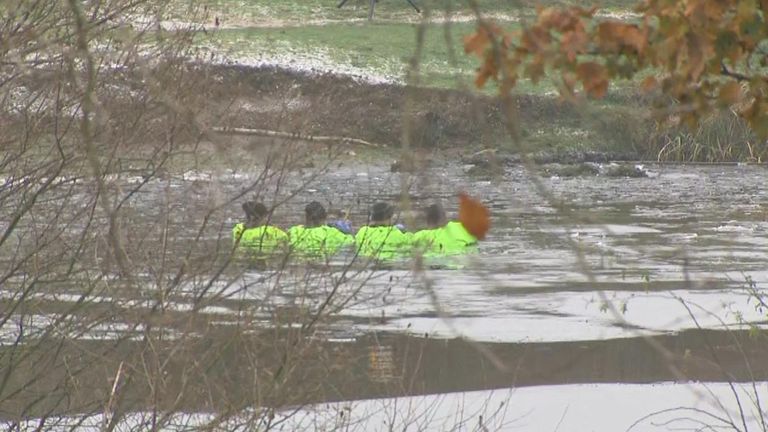
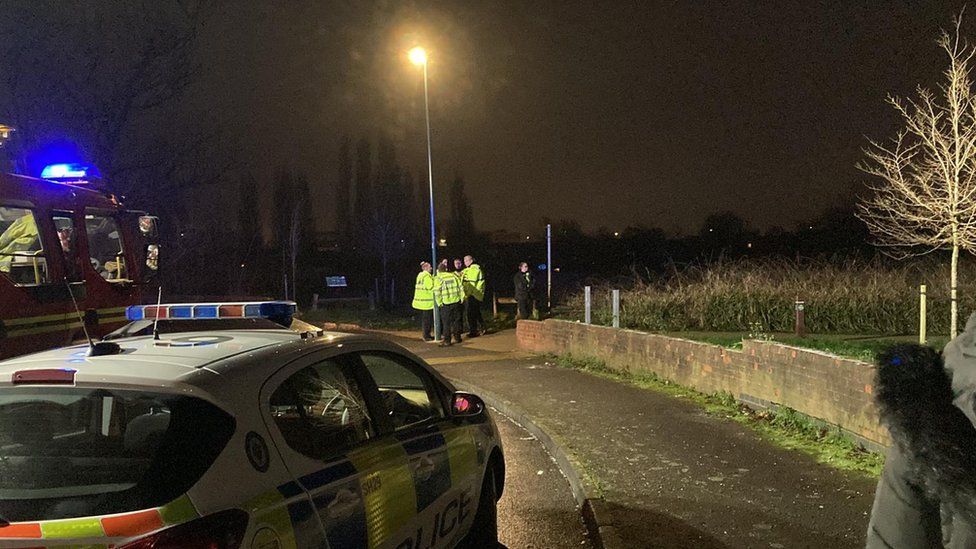
Police have confirmed that three boys, aged eight, ten, and eleven, died after falling through an icy lake in Solihull.
A fourth boy, aged six, was critically injured in the incident at Babbs Mill Park on Sunday afternoon.
Authorities have warned that the search is “no longer a search and rescue operation” after unconfirmed reports of up to six children falling in.
When rescuers rescued the four children, they were all in cardiac arrest.
They were taken to hospital but police said in an update that three of them “could not be revived”.
Reports from the scene and social media videos indicate they were playing on the ice and fell through, the fire service said.
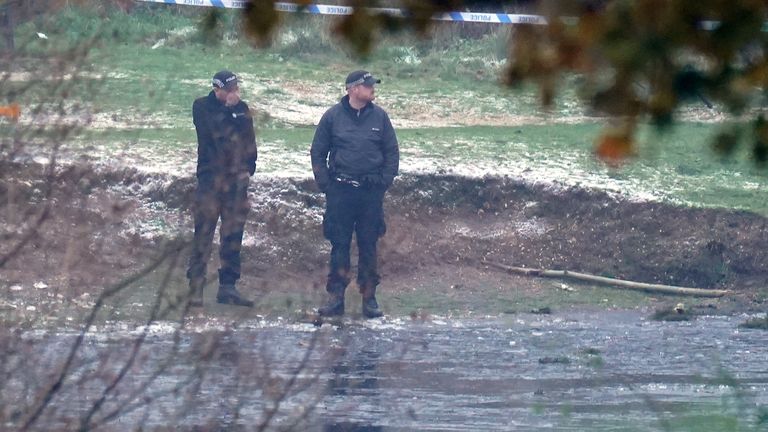
Police officers were wading chest deep in the lake this morning, though they have not yet confirmed that anyone else is missing.
West Midlands Fire Service said police and members of the public were already trying to reach the children when they arrived on Sunday.
According to new capacity figures from the United States, hospitals in the United States are about as overcrowded as they were during the omicron surge. Department of Health and Human Services
A triple virus threat, or “tripledemic,” is a significant contributor.
According to Johns Hopkins University, flu cases are higher than usual, RSV is on the rise, and more coronavirus variants are emerging.
According to some paediatricians, the so-called “tripledemic” is particularly hard on children.
“We think it’s just a bad cold, and it isn’t. It can be so much worse,” said Dr. Edith Bracho-Sanchez, pediatrician at Columbia University Irving Medical Center.
She’s talking about the flu and its potential complications in children.
“The pneumonia that can come after, the ear infections that can come after, the dehydration that lands kids in the hospital, the sinusitis that can happen in older kids, even febrile seizures,” Bracho-Sanchez added.
Medical experts strongly recommend getting a flu shot.
Also, children as young as 6 months may be able to get an updated shot for COVID-19 soon.
For treatment, Walgreens is starting free home delivery of prescription Paxlovid.
The Centers for Disease Control and Prevention said vaccines and anti-viral therapies are still in the works for RSV, but pandemic mitigation strategies help stop all three viruses.
“It’s our individual choices that are going to help protect ourselves, our loved ones and our other community members,” said Dr. Keri Althoff, associate professor at Johns Hopkins Bloomberg School of Public Health.
Ambulance workers are set to strike, raising concerns among the public about their ability to respond in an emergency, but their union has stated that the government has the authority to halt their strike.
As the government holds emergency COBRA meetings to limit disruption while ten different industries go on strike this week, troops are being trained to drive ambulances.
Over the weekend, government sources stated that no decision had been made to submit a formal request to the Ministry of Defence, but that one was “not far away.”
But the Cabinet Office confirmed on Sunday night military personnelare being deployed to NHS hospital trusts across the UK to “familiarise themselves with vehicles” ahead of ambulance strikes planned for 21 and 28 December.
There will be 750 military personnel deployed, with 600 driving ambulances and 150 in support roles to cover 10,000 ambulance workers going on strike.
Two emergency COBRA meetings will also be held this week as ministers step up plans to limit disruption caused by industrial action, which is set to take place every day until the end of the year.
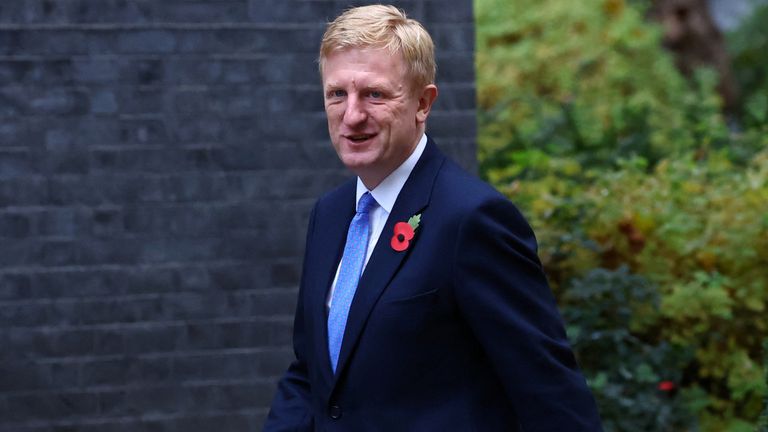
Cabinet Office minister Oliver Dowden will lead a meeting with his department on Monday to help “protect the public” against a lack of service caused by the strikes.
Starting from Monday, 10 sectors are set to strike this week: rail, the NHS, the Eurostar, buses, National Highways, baggage handlers, Royal Mail, nurses, driving examiners and civil servants.
The Cabinet Office said the government’s priority is to protect “those who may need access to emergency services support and limit disruption as much as possible, particularly at a time when increased numbers of people will be travelling for the festive period and NHS services are under huge pressure due to the impact of COVID”.
They will be attended by ministers from the Department for Transport, Department of Health and Social Care, the Home Office and the Ministry of Defence.
Image:Oliver Dowden will chair two emergency COBRA meetings on strikes this week
The Cabinet Office said the government has been planning to limit disruption since unions first proposed the December strikes last month.
Mr Dowden said: “We regret the stance unions have taken as it will only serve to disrupt the lives of millions of people up and down the country at what is an important time for them and their families.
“We urge union bosses to call off these damaging strikes and to keep talking.
“But it is right that each department across government plans for disruption and put in place the appropriate contingency measures to limit it as much as possible over the coming weeks.”
On Friday, Sky News reported military personnel had started training at Heathrow and Gatwick airports to check passports as Border Control staff are set to go on strike over Christmas.
A total of 600 military personnel are being deployed to help and around 1,400 civil servants are volunteering.
NHS workers who are Unison members in Northern Ireland will kick off this week’s strikes.
Nurses in England, Wales and Northern Ireland, who are members of the Royal College of Nursing, will go on strike for the first time ever on Thursday and again on 20 December.
Union bosses have said the strikes could still be called off if the government sits down and tries to resolve all the different disagreements over pay and conditions.
Foreign Secretary James Cleverly told Sky News on Sunday unions should negotiate with the independent pay review bodies, not with ministers.
RMT rail union leader Mick Lynch requested an urgent meeting with Rishi Sunak.
The prime minister’s spokesman said: “The government has played its part by facilitating a fair and decent offer and the RMT and its members should vote this deal through and end this harmful disruption.”
Unison said the government has the power to halt the strikes by making an effort to “put a proper pay plan on the table”.
“Instead of putting plans in place for the strike days, ministers should be concentrating all their efforts on ending the disputes,” Sara Gorton, head of health at Unison, said.
“Speaking to unions about improving wages can work wonders as the Scottish government has found. It’s time ministers in Westminster did the same. They should stop talking tough, put a proper pay plan on the table and get the unions in to discuss it.”
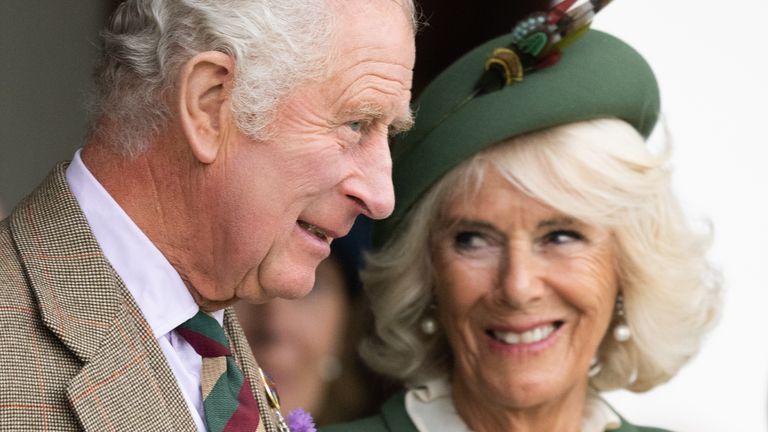
On September 3, five days before Her Majestydied, award-winning photographer Sam Hussein captured the image.
For his first Christmas card as monarch, King Charles has chosen a photograph taken just days before the Queen’s death.
It shows His Majesty and the Queen Consort in September, when he was still Prince of Wales, at the Braemar Royal Highland Gathering.
The photograph was taken on September 3, five days before Her Majesty died, by award-winning photographer Sam Hussein.
The King is captured from the side as Camilla smiles at him warmly.
He is dressed in a tweed suit with a red, green and beige tie, while the Queen consort is wearing a green suit and matching hat with a pheasant motif and pearl earrings.
During the event in Aberdeenshire, the King officially opened a new structure celebrating the Queen’s Platinum Jubilee.
He cut a heather rope to mark the opening of the Queen Elizabeth Platinum Jubilee Archway.
His mother was unable to attend because of her declining health.
The couple then watched competitors taking part in events including the caber toss, hammer throw and tug-of-war.
Camilla and the Princess Royal were presented with heather posies by 10-year-old Chloe Guy and 12-year-old Cassie Stewart, who are both members of the Braemar Royal Highland Society’s dancing class, before the games got under way.
It appears that the Queen Consort took a sprig of flowers and put it in her buttonhole, as shown in the Christmas card photograph.
So far, three men have been charged with murder in connection with the incident, and they are scheduled to stand trial in July of next year.
Police are looking for two men in connection with the summer murder of a man in south London.
On August 7, around 5.34 a.m., detectives were called to the scene in South Norwood after a man was discovered unresponsive outside of Aldi on Station Road.
The man, identified later as Abdul Rahman, was pronounced dead at the scene.
Police have now said they are keen to speak to two men who were in the area and may have seen Abdul before he died.
They also added that “these individuals are not suspects, but we know they were in the area” between 8.30pm and 5.50am the night and following morning of the murder.
The information the men have “could be vital to us getting justice for Abdul”, officers said, and have urged people to step forward “if anyone recognises them”.
Image:Pic: Met Police
Three men have been charged with murder in relation to the incident and have been remanded in custody.
Violent protests in Peruforces authorities to airport. According to authorities two people have lost their lives in the protests.
Social media photographs showed smoke billowing from the Andahuaylas airport in the country’s south.
The transport ministry said in a statement that demonstrators surrounded 50 police officers and airport workers.
Protests against President Pedro Castillo’s impeachment have continued in Lima.
Police fired tear gas on Sunday to disperse demonstrators in the city.
Peru’s aviation body Corpac – part of the ministry of transport – said Andahuaylas airport had been seriously affected since Saturday afternoon, experiencing attacks, vandalism and fires being started.
It said 50 airport workers and police officers had been surrounded in the airport terminal, and added that some people had been taken hostage.
Peru’s national police later said officers had been to the airport with state police, and that one officer had been injured.
One protester was killed, police said, adding that they were taking steps to clarify the situation around the death. Peru’s ombudsman said the person killed was an adolescent.
The death of a second person in the unrest in Andahuaylas was later reported by Interior Minister César Cervantes.
Both police and the ombudsman appealed for an end to recent violence.
Hundreds of people marched through Lima on Thursday and Friday, demanding Mr Castillo’s release and the resignation of his successor, Dina Boluarte.
Three thousand people protested in Andahuaylas on Saturday. Some tried to storm a police station, according to state media.
At least 16 protesters and four police officers were injured in marches in the city, the ombudsman reported.
Mr Castillo had widespread support in the south of the country.
According to figures obtained by Labour through Freedom of Information requests to NHS trusts across the country, the most expensive shift was £5,234, which covered agency fees, money spent at the doctor, and other costs.
Hospitals in England have paid up to £5,200 for a single shift by an agency doctor, as the NHS is under increasing strain.
According to figures obtained by Labour through Freedom of Information requests to NHS trusts across the country, the most expensive shift cost £5,234.
The party asserted that it was paid for by a trust in the north of England.
Labour contended that its investigation demonstrates the extent of the staffing crisis in English hospitals.
It shared figures showing that the NHS has been forced to spend billions of pounds ondoctors and nurses, provided by agencies, due to workforce shortages.
One in three NHS trusts paid an agency more than £3,000 for a single doctor’s shift last year, while three quarters paid more than £2,000, the party said.
It said “desperate hospitals” had no other choice and blamed the Conservatives, saying they had failed to train enough doctors and nurses.
Wes Streeting, Labour’s shadow health secretary, said: “Desperate hospitals are forced to pay rip-off fees to agencies, because the Conservatives have failed to train enough doctors and nurses over the past 12 years.
“It is infuriating that, while taxpayers are paying over the odds on agency doctors, the government has cut medical school places, turning away thousands of straight-A students in England.”
The party has pledged to tackle NHS staff shortages by doubling the number of medical school places to train 15,000 doctors a year and training 10,000 new nurses and midwives every year, with plans also to double the number of qualifying district nurses.
Earlier this year,MPs warned of “the greatest workforce crisis” in the history of the NHSwas putting patients and staff at “serious risk”.
Put together by MPs from the cross-party Health and Social Care Committee, the report pulled no punches when addressing the government over the growing crisis.
They said there was a shortage of 12,000 hospital doctors, and more than 50,000 nurses and midwives – and that the government had “no credible plan” for making the situation any better.
Projections have suggested an extra 475,000 jobs will be needed in health and an extra 490,000 jobs in social care by the early part of the next decade in order to ease the strain.
A Conservative source told Sky News: “We have recruited record numbers of doctors and nurses to support our NHS – with almost 4,000 more doctors and over 9,000 more nurses compared to September 2021.
“Labour cannot be trusted to support our NHS – they have no plan to grip inflation,resolve strikes or boost the workforce. Instead, they waste time playing political games and defending their union paymasters.”
On December 11, a SpaceX Falcon 9 rocket launched from the Cape Canaveral Space Force Station in Florida, carrying the first Arab-built lunar spacecraft into space.
The Rashid Rover was built by Dubai’s Mohammed bin Rashid Space Centre (MBRSC) in the United Arab Emirates (UAE) and is being delivered by the HAKUTO-R lander, which was designed by Japanese lunar exploration company ispace. If the landing is successful, HAKUTO-R will be the first commercial spacecraft to make a controlled landing on the moon.
The mission is taking a low energy route to the moon and is due to arrive around April 2023. Once there, the rover will spend one lunar day (equivalent to 14.75 days on Earth) on the surface, conducting its main operations. It will spend a second lunar day conducting secondary operations, to check whether the rover will survive the moon’s tough nighttime environment, before decommissioning.
Scheduled to touch down in the Atlas crater the northeast part of the moon, the roverhas been designed to withstand the lunar night, when temperatures can reach as low as -183°C, or -297.4°F.
The Rashid Rover, named after the late Sheikh Rashid Al Saeed, the former ruler of Dubai, will analyze the plasma on the lunar surface and conduct experiments to understand more about lunar dust. Razor-sharp lunar dust particles can stick to and erode spacesuits and equipment, causing operational problems for astronauts.
The rover will be entirely solar-powered and equipped with four cameras, including a microscopic and thermal one.
The launch comes shortly after that of NASA’s Artemis I lunar mission and marks the first step in the UAE’s ambitious moon exploration program. The Gulf state plans to send several vehicles, including rovers and orbiters, to the moon, with a second rover planned to launch as soon as 2025.
Construction of the 10kg, four-wheel Rashid Rover began in 2017 at the MBRSC. It was designed by an entirely Emirati team. “The team did a great job in starting the mission and designing it,” Hamad Al Marzooqi, project manager of the Emirates Lunar Mission at the MBRSC told CNN.
The MBRSC is also using the mission to fuel ambitious plans for a Mars colony. It is hoping to build the first human settlement on the Red Planet by 2117. Al Marzooqi hopes that the lunar surface mission will be a stepping stone to Mars.
“We are starting small,” he says, “but we hope that this small step will be eventually the starting point to reach our targets.”
As the impact of the Queen’s funeral continues to play out in UK growth figures, there is no reason to rejoice.
According to preliminary official figures, the economy returned to growth in October, which experts believe could be the last for some time.
The Office for National Statistics (ONS) reported 0.5% growth in October, following a 0.6% contraction in September, which was largely attributed to disruption to normal activity due to the Queen’s funeral bank holiday.
The partial recovery in October, which was slightly stronger than expected, was largely explained by the return of normal working days rather than any real surge in output.
The ONS charted the main boost coming from wholesale and retail activity – both significantly affected by closures as a mark of respect to the late Queen.
As such, economists still expect a recession to be confirmed at the end of the year.
That is because output is tipped to be negative during the current fourth quarter as a whole, following the 0.2% dip recorded for the third quarter to September.
The Bank of England and Office for Budget Responsibility – which have both already declared their belief that the UK is in recession – expect the downturn to last throughout 2023 but remain shallow.
Economic activity has slowed as a result of high inflation, mostly caused by Russia’s war in Ukraine, curbing appetite for spending.
Interest rate rises from the Bank, aimed at curbing inflation, have raised borrowing costs to further dampen demand.
Fixed rate mortgages, also, are yet to ease back to levels seen before the September mini-budget which saw financial markets baulk at the spending plans of the-then Liz Truss-led government.
New chancellor Jeremy Hunt, who has since rowed back on the growth measures, said of the latest growth figures: “High inflation, exacerbated by Putin’s illegal war, is slowing growth across the world, with the IMF predicting a third of the world economy will be in recession this year or next.
“While today’s figures show some growth, I want to be honest that there is a tough road ahead.
“Like the rest of Europe, we are not immune from the aftershocks of Covid-19, Putin’s war and high global gas prices.
“Our plan has restored economic stability and will help drive down inflation next year, but also lay the foundations for long-term growth through continued record investment in new infrastructure, science and innovation.”
The Bank, which raised its rate by 0.75 percentage points last month, is widely expected to impose a further hike of 0.5 percentage points this week.
It is anticipating an easing in energy-driven inflation ahead but forecast to maintain the pressure given that the rate of inflation is at a 41-year high of 11.1%.
Figures for November, due on Wednesday, are expected to show an annual rate of 10.9% according to economists polled by the Reuters news agency.
As it dismantles large parts of its repressive zero-Covid policy, China is readying for an unprecedented wave of Covid-19 cases, with a leading expert warning that Omicron variants were “spreading rapidly” and signs of an outbreak rattling the country’s capital.
Authorities announced Monday that the “mobile itinerary card” health tracking function would be deactivated the following day.
The system, which is distinct from the health code scanning system still required in a limited number of places in China, used people’s cell phone data to track their travel history in the previous 14 days in an attempt to identify those who had visited a city designated by authorities as “high-risk.”
It had been a point of contention for many Chinese people, including due to concerns around data collection and its use by local governments to ban entry to those who have visited a city with a “high-risk zone,” even if they did not go to those areas within that city.
But as the scrapping of parts of the zero-Covid infrastructure come apace, there are questions about how the country’s health system will handle a mass outbreak.
Throughout the weekend, some businesses were closed in Beijing, and city streets were largely deserted, as residents either fell ill or feared catching the virus. The biggest public crowds seen were outside of pharmacies and Covid-19 testing booths.
Media outlet China Youth Daily documented hours-long lines at a clinic in central Beijing on Friday, and cited unnamed experts calling for residents not to visit hospitals unless necessary.
As China moves away from zero-Covid, health experts warn of dark days ahead
Health workers in the capital were also grappling with a surge in emergency calls, including from many Covid-positive residents with mild or no symptoms, with a hospital official on Saturday appealing to residents in such cases not to call the city’s 911-like emergency services line and tie up resources needed by the seriously ill.
The daily volume of emergency calls had surged from its usual 5,000 to more than 30,000 in recent days, Chen Zhi, chief physician of the Beijing Emergency Center said, according to official media.
Covid was “spreading rapidly” driven by highly transmissible Omicron variants in China, a top Covid-19 expert, Zhong Nanshan, said in an interview published by state media Saturday.
“No matter how strong the prevention and control is, it will be difficult to completely cut off the transmission chain,” Zhong, who has been a key public voice since the earliest days of the pandemic in 2020, was quoted saying by Xinhua.
Changes, and concerns
The rapid rollback of testing nationwide and the shift by many people to use antigen tests at home has also made it difficult to gauge the extent of the spread, with official data now appearing meaningless.
Authorities recorded 8,626 Covid-19 cases across China on Sunday, down from the previous day’s count of 10,597 and from the high of more than 40,000 daily cases late last month. CNN reporting from Beijing indicates the case count in the Chinese capital could be much higher than recorded.
One note seen on a residential building in Beijing is indicative of the larger situation, reading: “Due to the severe epidemic situation in recent days, the number of employees who can come to work is seriously insufficient, and the normal operation of the apartment has been greatly affected and challenged.”
Posters used for health code scanning and barriers used for health screening are seen dismantled at Nanjing South railway station on Friday in Nanjing, China. Yifan Ding/Getty Images
The country is only days out from a major relaxation of its longstanding zero-Covid measures, which came as a head-spinning change for many Chinese living under the government’s stringent controls and fed a longstanding narrative about the deadliness of Covid-19.
Last Wednesday, top health officials made a sweeping rollback of the mass testing, centralized quarantine, and health code tracking rules that it had relied on to control viral spread. Some aspects of those measures, such as health code use in designated places and central quarantine of severe cases, as well as home isolation of cases, remain.
Outside experts have warned that China may be underprepared to handle the expected surge of cases, after the surprise move to lift its measures in the wake of nationwide protests against the policy, growing case numbers and rising economic costs.
While Omicron may cause relatively milder disease compared to earlier variants, even a small number of serious cases could have a significant impact on the health system in a country of 1.4 billion.
Zhong, in the state media interview, said the government’s top priority now should be booster shots, particularly for the elderly and others most at risk, especially with China’s Lunar New Year coming up next month – a peak travel time where urban residents visit elderly relatives and return to rural hometowns.
Health authorities on Sunday ordered improvements in medical capabilities in rural areas by the end of the month.
Measures to be undertaken include increasing ICU wards and beds, enhancing medical staff for intensive care and setting up more clinics for fevers, China’s National Health Commission said in a statement.
‘Over-hyping’
Meanwhile, experts have warned a lack of experience with the virus – and years of state media coverage focusing on its dangers and impact overseas, before a recent shift in tone – could push those who are not in critical need to seek medical care, further overwhelming systems.
Bob Li, a graduate student in Beijing, who tested positive for the virus on Friday said he wasn’t afraid of the virus, but his mother, who lives in the countryside, stayed up all night worrying about him. “She finds the virus a very, very scary thing,” Li said.
“I think most people in rural China may have some misunderstandings about the virus, which may come from the overhyping of this virus by the state in the past two years. This is one of the reasons why people are so afraid,” he said, adding that he still supports the government’s careful treatment of Covid-19 during the pandemic.
There are clear efforts to tamp down on public concern about Covid-19 – and its knock-on effects, like panic buying of medications.
China’s market watchdog said on Friday that there was a “temporary shortage” of some “hot-selling” drugs and vowed to crackdown on price gouging, while major online retailer JD.com last week said it was taking steps to ensure stable supplies after sales for certain medications surged 18 times that week over the same period in October.
A hashtag trending on China’s heavily moderated social media platform Weibo over the weekend featured a state media interview with a Beijing doctor saying people who tested positive for Covid-19 but had no or mild symptoms did not need to take medication to recover.
“People with asymptomatic inflections do not need medication at all. It is enough to rest at home, maintain a good mood and physical condition,” Li Tongzeng, chief infectious disease physician at Beijing You An Hospital, said in an interview linked to a hashtag viewed more than 370 million times since Friday.
The search and rescue operation has been renamed a “recovery operation,” according to the chief of police.
Five people have been confirmed dead following an explosion and fire at a block of flats in Jersey, up from three previously.
A dozen people are still believed to be missing.
The search for bodies will take “weeks, not days,” police said on Sunday, and will be “meticulous and painstaking.”
The emergency services are no longer looking for survivors, according to Chief of Police Robin Smith.
‘Scene of utter tragedy’ at Jersey blast site
Asked if those who are missing had died, Mr Smith said: “We’ve now moved into the recovery phase [of the operation]. So inevitably and tragically and sadly that is the case.”
He said while the search of the debris left following the explosion would not be “quick”, it would be both “careful and sensitive”.
Image:Chief ambulance officer Peter Gavey speaking at a press conference
‘Something has gone horribly wrong’
Firefighters, specialist rescue teams and dogs worked through the night to search for survivors in the debris of the block in St Helier.
Mr Smith said teams were now “working on participating with all the services, including health and safety, to understand how this has occurred.”
Jersey’s chief fire officer, Paul Brown, said: “Something clearly has gone wrong because a building has exploded and collapsed. And horribly [wrong] as well.”
Image:Pic: Government of Jersey
Mr Brown went on: “We’re all devastated that Islanders have been lost and that families and loved ones are suffering and will continue to do so.”
Family liaison officers are currently working with the families of those affected by the blast, and while authorities say they are in touch with all next of kin, victims are yet to be publicly identified.
‘Utter devastation’
The extent of the devastation was evident in video footage posted to Twitter by the Jersey government, which showed piles of rubble, crushed cars and a blown-out window in a neighbouring building.
Image:A sniffer dog on the scene. Pic: Government of Jersey
Mr Smith said that the tower block had “completely collapsed” and “doesn’t even look like a building” after the “very, very significant explosion”.
Around 40 people are being housed in alternative accommodation following the blast, which happened at around 4am on Saturday morning.
‘Too early to speculate’ about cause
The fire service was called to the building at around 8.30pm on Friday night, hours before the blast, after residents reported smelling gas.
When asked what could cause such a “ferocious” explosion, Paul Brown, the chief fire officer, said there were “many different potential causes”, but it was too early to speculate.
Image:CCTV of the blast
Residents who lived in the flats have been moved to St Helier Town Hall, where they continue to be supported.
Dominic Raab, the deputy prime minister, tweeted that he was “deeply saddened” by the incident and commended the work of the emergency services response, adding: “We stand ready to support in any way we can.”
It’s the second tragedy for Jersey in days, after a skipper and two crew members were killed last week when their fishing boat collided with a freight vessel.
Three women were killed, including a friend of Italy’s new prime minister,when a man opened fire at a cafe in Rome, injuring four others.
Those inside were attending a meeting of the residents’ committee of a nearby block.
The mayor of Rome, Roberto Gualtieri, called the shooting a “grave episode of violence” and said he would attend an emergency meeting on Monday.
A suspect, 57, has been apprehended. According to reports, he has a history of disagreements with some of the committee’s board members.
According to Italy’s La Repubblica newspaper, the committee’s vice-president, Luciana Ciorba, was at the cafe in the Fidene district.
She said the gunman had entered the bar on Sunday shouting “I’ll kill you all” before using his pistol. He was reportedly overpowered by other residents before being detained by police.
Of those people injured, believed to be two women and two men, one remains in a serious condition.
Prime Minister Giorgia Meloni named one of the women killed as her friend Nicoletta Golisano. The other dead women were named as Elisabetta Silenzi and Sabina Sperandio.
In a Facebook post, where she sent her condolences to Ms Golisano’s family, Ms Meloni said she would always remember her friend for being “beautiful and happy”.
“Nicoletta was a protective mother, a sincere and discreet friend, a woman strong and fragileat the same time,” she wrote.
“But above all she was a professional with a sense of duty out of the ordinary… Nicoletta was my friend.”
“It’s not right to die like that,” she added. “Nicoletta was happy, and beautiful, in the red dress she bought for her 50th birthday party a few weeks ago. For me she will always be beautiful and happy like that.”
Ms Meloni also said that a shooting range from which the suspect had allegedly stolen the gun used in the attack had been closed and was under investigation.
Police are yet to comment on the motivation of the suspect, who has been named by the Italian press but not officially. The attack is not thought to have been political.
Reports suggest the suspect and the apartment block’s board of residents have been locked in a bitter dispute for some time.
Giorgia Meloni, leader of Italy’s far-right Brothers of Italy party, became the country’s first female prime minister in October.
IMAGE SOURCE,EPA Image caption, Forensic teams examined the scene of the shooting
Zimbabwe’s ruling Zanu-PF party has blamed the country’s severe power outages on former long-time leader Robert Mugabe.
Zimbabweans have been subjected to power outages lasting up to 18 hours per day for the past two weeks. The crisis worsened as a result of low water levels at the Kariba South power station.
According to a Zanu-PF spokesman, the country is currently dealing with the consequences of the previous administration’s “neglect” to invest in power generation over the years.
“The economic management of the last two decades of [President] Mugabe is retarding the speed of recovery; but you can’t doubt that there’s a recovery which is going on,” Chris Mutsvangwa told South African broadcaster eNCA.
The party has been in power since 1980 when the country gained independence from Britain.
African leaders are making their way to Washington ahead of President Joe Biden’s US-Africa summit.
According to organisers, the three-day summit, which begins on Tuesday, will aim to demonstrate President Biden’s administration’s commitment to the continent.
The summit has been invited to 49 heads of state, including African Union Commission Chairperson Moussa Faki Mahamat.
Mali, Guinea, Sudan, and Burkina Faso were not invited because they are suspended by the African Union. Eritrea was also left out.
Some African leaders have been tweeting about their departure to the summit:
We’ve left for the #USA to participate in the #USAfricaLeadersSummit22 to be hosted by @POTUS@JoeBiden.
While there we’ll hold bilateral talks with fellow Heads of State and Corporate leaders to showcase #Zambia. 🇿🇲 🇺🇸
But he didn’t show up, which enraged many of his Ghanaian fans, including those who had flocked to the venue and waited for hours to see him perform.
Live Hub, the show’s promoters, accused the Afrobeats singer of “breaching his contractual obligation.”
However, on Sunday night, the singer apologized to “everyone who made the effort to come out for me [on Saturday night].” “I was pumped and looking forward to doing this show.”
“Unfortunately, up until the day of this show, there continued to be safety and production issues that prevented me from putting on a high-quality show that my fans deserve,” he posted on Twitter.
He said he and his team were workingon “delivering a show to my amazing fans in Ghana”.
Iran has carried out its second public execution in response to a nearly three-month wave of anti-government demonstrations.
Majid Reza Rahnavard was hanged in Mashhad, according to the country’s judiciary.
He was found guilty of stabbing and killing two security personnel.
Last Thursday, the first execution linked to the protests took place, with Mohsen Shekari being hanged, prompting widespread condemnation.
At the time, UK Foreign Secretary James Cleverly warned that the world could not “turn a blind eye to the abhorrent violence committed by the Iranian regime against its own people.”
The current protests are in response to the death of Mahsa Amini, a 22-year-old woman who was arrested by the country’s morality police in September and died in custody.
She was held for allegedly wearing her hijab, or headscarf, “improperly”.
The unrest, which began in the capital Tehran where Ms Amini died, has spread to some 160 cities in all of Iran’s 31 provinces.
It is considered one of the most serious challenges to the Islamic Republicsince the 1979 revolution.
As England prepared to return home from the World Cup in Qatar,captain Harry Kane said the team would be “mentally and physically stronger for the next challenge.”
England lost 2-1 in the quarter-finals, with Kane missing an 84th-minute penalty after matching England’s scoring record of 53 goals.
Gareth Southgate’s team checked out of their hotel in Al Wakrah before flying home.
“Absolutely gutted,” said Kane.
Writing on social media, the Tottenham forward added: “We’ve given it everything and it’s come down to a small detail which I take responsibility for. There’s no hiding from it, it hurts and it’ll take some time to get over it but that’s part of the sport.
“Now it’s about using the experience to be mentally and physically stronger for the next challenge. Thanks for all the support throughout the tournament – it means a lot.”
Speaking about Kane’s penalty miss, former England striker Alan Shearer told BBC Radio 5 Live: “That’s the life of a center-forward. You put yourself in those positions and it will haunt Harry for the rest of his life.”
England departed their hotel in Qatar at about 12:30 pm local time and is expected to land in the UK later on Sunday.
Players waved to fans gathered outside the hotel as they boarded a coach, with midfielder Jude Bellingham taking the time to sign memorabilia.
England center-back Harry Maguire echoed his captain’s words and also paid special tribute to Southgate, who has said he will “review and reflect” on his side’s exit with the Football Association before making a decision on his future.
Southgate, who has been England’s manager since 2016, has a contract that runs until the Euro 2024 finals.
“Last night hurt. Absolutely gutted. Special thanks to Gareth and you amazing fans who kept believing in me. I love my country and I hope we made you proud,” said Maguire on social media.
Under Southgate, England reached the 2018 World Cup semi-finals and the Euro 2020 final before their elimination by the defending champions in Qatar.
“Gareth has been amazing with me, amazing with every player in the team,” Maguire said in an interview.
“I’m sure if you asked every player in the team they wouldn’t be able to speak highly enough of him, his man-management, the way that this team has been built and developed over a period of time.
“Over the last five or six years with Gareth in charge, you can really see the development. I know being an England manager is so tough, they get every decision they make scrutinized, every squad they make, ‘he should be in’ or ‘he shouldn’t be in’. Every team he picks, ‘he should play or ‘he shouldn’t play’… that is being an England manager.
“He knows how to handle it. He handles everything really well and tactically he gets all the big decisions right and he has proven that again this tournament.”
Southgate was also backed by midfielder Declan Rice, who said he hoped his manager continued in the job.
“If you guys could come in and see how well everyone’s been on it, you would have thought we would have gone the whole way as a collective but for me, personally, I hope he stays,” he said.
“Obviously, I don’t know. There’s a lot of talk around that. I think he’s been brilliant for us. I think there’s a lot of criticism that’s not deserved. I think he’s taken us so, so far. Further than what people can expect.
“He got everything spot on again, it’s not on him. It’s not on him at all – the tactics were right, and we played the right way.
“I really hope he stays because the core group that we’ve got and what he’s made for us, it’s so special to be a part of. I love playing under him and I love playing for England.”
‘We will come again’
Marcus Rashford was among a host of England players who posted on social media on Sunday, with the Manchester United forward promising that the Three Lions “will come again”.
Rashford was England’s joint-top scorer with Bukayo Saka in Qatar, scoring three goals.
“The last few weeks have been a rollercoaster of emotions, each and every one of our team gave everything we had to be ready for what was thrown at us, we got close, but not close enough,” he said.
“I’ll make a promise that we will come again.”
Midfielder Jordan Henderson said it was a “tough one to take”, adding “sometimes football isn’t fair”.
Earlier, FA chief executive Mark Bullingham said the team was “hurting” after the last-eight defeat.
“Like all England fans we feel the pain of losing a quarter-final, along with the coaches, players, and support team who are hurting this morning,” he said in a statement.
“Gareth and Steve [Holland] prepared the team exceptionally well throughout the tournament. The players were committed to winning the trophy and were very well led by Harry Kane.
“But sport can have fine margins and on the day, against the current world champions, it was not to be.
“This is a very exciting young English squad and, despite the intense disappointment of last night, they should be very proud of their performances in Qatar.
“We are incredibly proud of Gareth, the players, the coaches, and the support team and appreciate all the hard work they put in. “
Gareth Southgate leaves the hotel
James Maddison and Kyle Walker share a hug
Jude Bellingham waves to fans gathered outside England’s hotel
Following the resignation of three prominent MPs, the SNP’s Westminster leader, Stephen Flynn, has announced a front bench reshuffle.
After the 34-year-old took over from Ian Blackford, Pete Wishart, Chris Law, and Stewart McDonald all stepped down.
Stewart Hosie, a former Cabinet Office spokesperson, is now in charge of the economy brief.
Meanwhile, David Linden is in charge of social justice, Dave Doogan of defense, and Chris Stephens of leveling up.
It follows reports of divisions in the SNP, which Mr Hosie has dismissed as “complete fiction”.
In his resignation letter, Mr McDonald said the SNP was at its best “when we collaborate as a united party” and urged the new leadership to “keep this at the forefront of their mind and work in that spirit across the party”.
Mr Flynn said his team was “entirely focused on standing up for Scotland’s interests”.
Referring to three recent opinion polls which suggested there is majority support for independence, he said members were ready to “harness that momentum”.
He said: “Scotland continues to face the cost of living crisis, made worse by Tory ‘wreckonomics’, and we are still being hit with the disastrous impacts of leaving the EU.”With the Tories and Labour both backing Brexit and denying democracy by standing in the way of a Scottish independence referendum, only the SNP is truly standing up for the people of Scotland. “Support for independence is growing because people know that it is the only route back to the EU and the only way to escape the broken Westminster system. The SNP Westminster team will work hard to make it happen.”
IMAGE SOURCE,TWITTER/@STEPHENFLYNNMP Image caption, Mr Flynn (sitting alongside new deputy leader Mhairi Black) was elected as the SNP’s Westminster leader at the group’s AGM on Tuesday evening
Mr Flynn had initially been expected to be the only candidate to replace Ian Blackford, who was regarded as being a close ally of First Minister Nicola Sturgeon.
But Alison Thewliss unexpectedly threw her hat in the ring after sources close to Mr Flynn were quoted in the media as saying he intended to replace much of the party’s front bench team in the Commons.
The Aberdeen South MP defeated Ms Thewliss – who is also seen as being closer to Ms Sturgeon – by 26 votes to 17 in a vote of the party’s MPs.
Previously Mr Flynn had been the party’s business, energy, and industrial strategy spokesman.
A Libyan man has been arrested by Scottish police on suspicion of creating the bomb that destroyed Pan Am Flight 103 over Lockerbie 34 years ago and is in US jail.
The United Statescharged Abu Agila Masud two years ago, stating that he was a crucial figure in the December 21, 1988, attack.
270 persons were killed in the Boeing 747 explosion.
It is the deadliest terrorist incident to occur on British territory.
All 259 passengers and crew on board the jumbo jet bound for New York from London died while another 11 people were killed in Lockerbie when wreckage destroyed their homes.
Last month it was reported that Masud had been kidnapped by a militia group in Libya, leading to speculation that he was going to be handed over to the American authorities to stand trial.
A US Justice Department spokesperson told the Reuters news agency that Masud would make an initial appearance in a federal court in Washington.
He was the only man to be convicted over the attack.
Megrahi was jailed for life but was released on compassionate grounds by the Scottish government in 2009 after being diagnosed with cancer.
He died in Libya in 2012.
Megrahi, who always proclaimed his innocence, launched two appeals against his 27-year sentence. One was unsuccessful and the other was abandoned.
A spokesperson for the Crown Office and Procurator Fiscal Service (COPFS) said: “The families of those killed in the Lockerbie bombing have been told that the suspect Abu Agila Mohammad Mas’ud Kheir Al-Marimi (“Mas’ud” or “Masoud”) is in US custody.
“Scottish prosecutors and police, working with UK government and US colleagues, will continue to pursue this investigation, with the sole aim of bringing those who acted along with Al Megrahi to justice.”
Lockerbie bombing timeline
US and British investigators indicted Megrahi in 1991 but he was not handed over by the Libyans until April 1999.
May 2000 – A special trial under Scots law starts on neutral ground at Camp Zeist in the Netherlands.
31 January 2001 – Former Libyan intelligence officer Megrahi is found guilty of mass murder and jailed for life with a minimum term of 27 years.
IMAGE SOURCE, REUTERS Image caption, The Pan Am flight was bombed just days before Christmas
March 2002 – Megrahi loses an appeal against his conviction.
September 2003 – The Scottish Criminal Cases Review Commission (SCCRC) is asked to investigate Megrahi’s conviction.
June 2007 – The SCCRC recommends that Megrahi is granted a second appeal against his conviction.
18 August 2009 – Megrahi’s move to drop his second appeal is accepted by judges at The High Court in Edinburgh.
20 August 2009 – Megrahi, who has terminal prostate cancer, is released from prison on compassionate grounds.
May 2012 – Megrahi dies at his home in Tripoli, aged 60.
July 2015 – Scottish judges rule that relatives of the Lockerbie bombing victims should not be allowed to pursue an appeal on Megrahi’s behalf. Courts had previously ruled that only next of kin could proceed with a posthumous application.
July 2017 – Megrahi’s family launched a new bid to appeal against his conviction.
March 2020 – The Scottish Criminal Case Review Commission said Megrahi’s conviction can be taken to a fresh appeal.
November 2020 – Five Scottish judges hear the third appeal against Megrahi’s conviction on grounds of a possible miscarriage of justice.
27 bodies, suspected to be migrantsfrom Ethiopia, have been “dumped” by the side of the road in the Ngwerere region, north of Zambia’s capital Lusaka.
According to Police Spokesperson Danny Mwale, they most likely died from suffocation while traveling.
A victim who was discovered “gasping for air” has been sent urgently to a nearby hospital, he said.
Most migrants traveling to South Africa come through Zambia, primarily from the Horn of Africa.
Mr Mwale said residents of Ngwerere found the bodies on Sunday at 06:00 local time (04:00 GMT).
He said the police believe the migrants are Ethiopian nationals based on the identity documents found on them.
“Our preliminary investigations indicate that a total number of 28 persons,all males aged between 20 and 38, were dumped in Meanwood Nkhosi along Chiminuka road in Ngwerere area by unknown people,” the police said in a statement.
The bodies have been taken to Zambia University Teaching Hospital mortuary.
In neighbouring Malawi, the authorities discovered 25 bodies of Ethiopian migrants in a mass grave in October.
The police there said they had evidence to link the stepson of Malawi’s ex-President Peter Mutharika to the grim discovery.
South Ukraine has come under attack from both sides of the war, with Kyiv retaliating near Melitopol after Russia fired drones at Odesa.
The Ukrainian army claimed to have shot down 10 drones on Saturday, but an additional five struck electrical infrastructure, knocking out electricity for about 1.5 million people.
Later, the exiled mayor of Melitopol, a Ukrainian, claimed that a strike had been launched against the Russian-controlled city.
According to Ukrainian officials, Russia used Iranian-made drones in its drone strike on the Ukrainian port city of Odesa.
“The situation in the Odesa region is very difficult,” President Volodymyr Zelensky said in his nightly video address. “Unfortunately the hits were critical, so it takes more than just time to restore electricity. It doesn’t take hours, but a few days.”
Since October, Moscow has been targeting Ukraine’s energy infrastructure with large waves of missile and drone strikes.
In Melitopol, pro-Moscow authorities said a missile attackhad killed two people and injured 10, while Ivan Fedorov, the exiled mayor, said scores of “invaders” had been killed.
“Air defence systems destroyed two missiles, and four reached their targets,” Yevgeny Balitsky, the Moscow-appointed governor of the occupied part of the Zaporizhzhia region, said on the Telegram messaging app.
He added that a “recreation centre” where people were dining had been destroyed in the Ukrainian attack with Himars missiles.
Reports from the Debt Management Office (DMO)indicate that Nigeria’s overall debt stock increased to N44.06 trillion as of September 30, 2022, up from N42.84 trillion on June 30.
According to a recent announcement by the Debt Management Office, Nigeria’s debt profile does not appear to be decreasing as the amount increased once more by over N1 trillion in just three months, between June and September 2022.
According to the DMO, Nigeria’s overall debt stock increased to N44.06 trillion as of September 30, 2022, up from N42.84 trillion on June 30.
The debt “comprises the Total Domestic and External Debt Stockof the Federal Government of Nigeria (FGN), all State Governments, and the Federal Capital Territory (FCT),” the Debt Management Office said in a release on Friday.
According to DMO, the increase in the public debt stock was largely due to new borrowings by the federal government to finance the deficit in the 2022 Appropriation Act, as well as new borrowings by state governments.
With a proposal to further borrow over N11 trillion to fund the 2023 budget deficit, President Muhammadu Buhari may bequeath a debt profile in excess of N55 trillion when he leaves office next May.
Former President Olusegun Obasanjo, under whose leadership Nigeria cleared its external debts, earlier in the year criticised the incumbent regime for accumulating debt for future generations, describing it as a “foolish” and “criminal” act.
But Buhari’s media adviser, Femi Adesina, justified the huge borrowings, saying the regime is borrowing for infrastructural development, unlike past governments who looted loans.
SaharaReporters had in September reported how amid the gruelling economic challenges facing the country, the Buhari-led government between January and March 2022 incurred N2trillion in Public Debt, bringing total debts to a record N41trillion.
The country in the first quarter of 2022 alone spent an average of N9.94 billion on debt servicing.
“A World Bank report showed that in terms of debt to GDP ratio, Nigeria is low but for debt service to revenue ratio, we are very high. So, if you look at the tax-to-GDP ratio of these other countries, they are in multiples of Nigeria.
“The World Bank survey report of about 197 countries revealed that Nigeria is number 195, meaning we beat only two countries and that was Yemen and Afghanistan and I don’t think we want to be like those places,” DMO’s head, Patience Oliha, had warned in September.
Yana and Yaroslava, two young mothers, do not want to take their 6-year-old kid out of Russia. However, they worry that they won’t have much of a choice due to a strict new anti-gay law imposed by Russian lawmakers.
“We are citizens, same as everyone else. We pay taxes and support charities. But the government is doing everything to force us to leave the country. Honestly, it is scary to stay,” Yaroslava told CNN.
Russia’s upper house of parliament gave its final approval in late November to a new legislative package that toughens an existing law on so-called “LGBTQ propaganda,” and it was signed into law Monday by President Vladimir Putin. The added restrictions on “propaganda” seen as promoting “non-traditional sexual relations and/or preferences” carry heavy penalties – a move activists say will put LGBTQ communities under heightened scrutiny and surveillance.
As the Kremlin prepared to finalize the expansion of the 2013 discriminatory anti-gay law, members of the LGBTQ community in Russia told CNN they feared the uncertain future ahead.
“We are the most vulnerable category within LGBT.We have a child, and they (Russian authorities) can put pressure on us,” Yaroslava said.
Activists say a new legislative package that beefs up an existing anti-gay law is a threat to LGBTQ people in Russia. Igor Russak/SOPA Images/LightRocket/Getty Images
Yana and Yaroslava, both self-employed marketing workers, are raising their child in Russia’s second-largest city of St. Petersburg. Both lesbians, have asked not to disclose their last names for security reasons.
“Our mere existence is illegal for our state and even for our child,” Yaroslava said.
“According to the law, we are people of non-traditional sexual orientation and children should not see us or that we exist at all. Our son sees us. By that logic, our very existence is ‘propaganda of non-traditional sexual relations’ within our family. That means we are illegal.”
The pair say they have created a bubble of protection around their family in order to avoid scrutiny from authorities. The measures include using private accounts on social media, having access to a network of trusted people, sending their son to a private kindergarten where the fact a kid has two moms is less likely to spark a homophobic reaction, and using a private hospital where they run less risk of a doctor calling child protection authorities to make inquiries about their family set-up, they said.
But, the couple says they are reluctant to leave because of a lack of financial resources and available relocation programs in LGBTQ-friendly countries, even though they are fearful about living under the toughened legislation.
‘We expect a new wave of hatred’
Some publishers self-censored certain texts that explore relationships between LGBTQ characters ahead of the implementation of the new law. Olga Maltseva/AFP/Getty Images
The new legislative package ratchets up the country’s existing ban on spreading so-called “propaganda of non-traditional sexual relations” among minors, making it illegal to share any information across all media and all ages.
Some have taken to self-censorship in anticipation of the law’s passage.
Enter your email to sign up for CNN’s “Meanwhile in China” Newsletter.
close dialog
Moscow-based publisher Eksmo took preemptive measures by censoring some fragments of the book “Shattered,” which contains descriptions of sexual scenes between two men, even before the law was finalized. The publisher explained it had hidden 3% of the text – covering it in black ink – “in order not to hide the fact of censorship,” the publisher said in a press release.
“I’m glad that the publisher decided not to cut out the text, but rather to paint it over in black. Where there were feelings, the characters’ attraction, where there was their experience of getting to know their own sexuality, there will now be empty black lines,” said the author, Max Falk, according to the press release. The story, published in October, is about the “love and friendship of two young men” from different social circles in Russia.
Recent novels centered on LGBTQ characters have attracted swathes of readers, causing a stir among Russian lawmakers.
The 2021 bestseller “Summer in a Pioneer Tie,” which explores the budding romance between two men who met in a summer camp in Soviet Kharkiv in the 1980s, sold a record 200,000 hard copies and 32,000 online copies. Lawmakers and public figures responded by lashing out with criticism and calling for beefed-up anti-LGBTQ legislation.
“As an author of books that raise [the LGBTQ] topic, of course, I am very concerned about this,” gay writer Ksenia told CNN. She asked not to give her last name for fear of repercussions.
Alexander Belik, an activist for LGBTQ rights in Russia, said the Kremlin’s crackdown on gay people would spark a new wave of hatred Alexander Belik
On the day the bill passed through the lower house of Parliament, Ksenia discovered both her books containing LGBTQ references had disappeared from Labirint, an online bookstore. The store confirmed in a press release they had “temporarily suspended” selling some books to “analyze their content for the presence of prohibited information in them.”
“Self-censorship is a big thing,” Ksenia told CNN, pointing out that the law had not even come into effect at the time of speaking.
“I don’t know how this law will affect the distribution of this content, but I assume that somehow people will find it,” Ksenia added.
‘I wanted to resume my transition at all costs.’ Trans Ukrainians uprooted by war struggle to continue treatment
She is hopeful that the new package will not stop books about LGBTQ characters from being published and read.
As human rights activists anticipate censorship in the form of blocked websites, banned books, and regular fines, LBGTQ bloggers and content creators are making their social media channels private and deleting posts, according to the Sphere Foundation, an organization that defends the rights of LGBTQ people in Russia and has launched a petition against the new bill.
“We expect a new wave of hatred,” Alexander Belik, head of the Sphere Foundation’s advocacy program, told CNN. “This law enhances public rhetoric of hate.”
Since the debate on the restrictions began, LGBTQ people have become increasingly worried for their safety, according to Belik.
“The community is in an alarming state,” Belik said of the new law, suggesting that it will induce self-censorship among LGBTQ advocacy groups who fear a potential Kremlin crackdown.
“We urge the LGBTQ community not to succumb to panic and continue living their lives,” Belik said.
He said the organization would continue fighting for the abolition of the law and support those who may be persecuted under it.
Russian politicians condemn ‘foreign values’
The Kremlin has consistently described LGBTQ communities in Russia as existing in opposition to “traditional values,” a line of rhetoric that activists say directly harms LGBTQ people across the country.
Since the first law on “gay propaganda” passed in 2013, Russia has seen repeated crackdowns on the gay community, most notably in 2017 and again in 2019 in the southern region of Chechnya, where activists reported dozens of men and women were detained and some tortured and killed for their sexual orientation, and no proper investigation followed.
Putin framed what he described as the Western renunciation of “traditional values” as a “challenge” to Russian society in a speech in September announcing the annexation of four Ukrainian regions, in violation of international law. At the time, he was facing unusual criticism even from Kremlin loyalists over Moscow’s huge losses on the battlefield in Ukraine, and low morale at home.
“Do we want our schools to impose on our children, from their earliest days in school, perversions that lead to degradation and extinction? Do we want to drum into their heads the idea that certain other genders exist along with women and men and to offer them gender reassignment surgery? Is that what we want for our country and our children?” Putin said inside the Kremlin’s Georgievsky Hall.
“This is all unacceptable to us. We have a different future of our own,” Putin continued.
Russian President Vladimir Putin has described LGBTQ communities in Russia as existing in conflict with “traditional values.” Kremlin Press Service/Anadolu Agency/Getty Images
The new package bans all materials that the authorities consider to be LBGTQ “propaganda,” making such material illegal among Russians of all ages, constituting an offense liable to a fine of up to $6,400 for individuals and up to roughly $80,000 for legal entities. Foreigners could receive up to 15 days in jail or deportation for breaking the law. The main difference between the original iteration of the law and the expanded version is that now, the prohibition of so-called same-sex “propaganda” will apply across all ages and across all media.
The chairman of Russia’s lower house of parliament, Vyacheslav Volodin, dubbed the new legislation an “Answer to Blinken Law,” referring to a tweet in which US Secretary of State Antony Blinken condemned the proposed expansion of the ban.
“It is the best answer to the Secretary of State Mr. Blinken. Stop imposing on us foreign values. You destroyed your values – we’ll see how it all ends, but it will definitely be sad,” Volodin said to the State Duma – Russia’s lower house – after it voted unanimously to pass the amendments in the final reading.
Putin’s enforcement of anti-LGBTQ laws is part of a wider trend of repressive policies as the Kremlin situates itself in opposition to so-called Western values, according to Dan Healey, a professor of modern Russian history at the University of Oxford.
“Those are being knit into a wider social and cultural and defense policy, you know, around so-called traditional values. And it’s just reducing the space within which a non-heterosexual existence can comfortably take place in Russia,” Healey told CNN.
“The consequences for LGBTQ people in Russia are wide-ranging and really, really repressive. They become a kind of underground people who are unable to become visible in public space.”
Transgender rights under threat
Russian activists claim the authorities’ renewed targeting of LGBTQ communities in Russia is linked to Moscow’s faltering war in Ukraine.
They suggest the purpose of the new legislative package is to distract the nation from the domestic backlash against Putin’s partial mobilization, announced in September, and the war of attrition that has exhausted the nation’s military resources.
“Among other things, it is also diverting attention from what is happening in the country. As soon as it gets a little worse, we have an enemy to point at: it’s because of them that it’s so rough,” said Anton Macintosh of Russia’s first transgender support group, T-Action. The organization was labeled a “foreign agent” – a status close to “traitor” that obstructs operating in Russia – the day after Russia’s parliament passed the third and final reading of the law.
Macintosh said his organization had been contacted by increasing numbers of people worried that they would not be able to receive proper medical support in their gender transition processes. The process is currently legal if a person passes an extensive review to obtain a psychiatrist’s note, Macintosh said, but it remains unclear how the new legislative package will be implemented.
Vanya Solovey, of the trans rights group Transgender Europe, told CNN the Kremlin’s new package increases the stigma that trans people in Russia have to face. Vanya Solovey
“Unlike a cisgender person, when visiting a doctor or being admitted to the hospital, a transgender person doesn’t have the option to hide their status,” Macintosh said, referencing the physical changes resulting from hormone therapy. “Will there be proper healthcare available for transgender people?”
The less access to support groups a transgender person has the more terrified and hopeless they are likely to feel, Macintosh explained. Stigmatizing their status causes even more emotional strain, he said.
“We receive a lot of suicidal letters. We do surveys every three months asking about emotional well-being. A lot of people have been sharing hard feelings about how they don’t know how they are going to live,” Macintosh said.
“This is not only an anti-gay law, but this is also explicitly an anti-trans law,” said Vanya Solovey, an advocacy and program officer for Eastern Europe and Central Asia at the trans rights group Transgender Europe, referencing the part of the package that forbids the promotion of information that could cause people to want to change their gender assigned at birth.
“It explicitly targets raising awareness about gender transition. And this is, of course, very concerning,” he added.
“When someone (Putin) at this high level of authority spreads these misconceptions, again this increases the stigma that trans people have to face.”
‘Another brick in building an autocracy’
When the bill passed its first reading in the State Duma in October, Russia’s first transgender politician, Yulia Alyoshina, made the decision to step down from her role as a regional head of the Civic Initiative party, and end her political career.
“I have never been involved in such propaganda, but I have no idea how to continue to conduct public political activity as an openly transgender woman,” she said in a Telegram post.
Yulia Alyoshina, Russia’s first transgender politician, said the new law was discriminatory and would make life tougher for Russia’s LGBTQ community. Yulia Alyoshina
Alyoshina said she had been discriminated against as a transgender politician on numerous occasions since she got her new passport in 2020, but says this law will complicate further the already difficult life of all LGBTQ people in Russia.
“The law is discriminatory,” she told CNN. “Any kind of information can fall under the term ‘propaganda.’ As it is not clearly spelled out, this will be left to the discretion of the courts.”
“The text of the law rejects the social equivalence of ‘traditional’ and ‘non-traditional’ preferences,” she added. “This means that LGBT people in Russiaare recognized by the authorities at the legislative level as socially unequal. In other words, second-rate people.”
Alyoshina said the new package is characteristic of an authoritarian government’s policy towards society.
“The sexual life of citizens is a part of human freedom that an authoritarian regime cannot tolerate,” she said. “The adoption of the law is just another brick in building an autocracy in Russia.”
Image caption, The site was lit up as the search for survivors continued overnight
Specialist teams from the UK’s Ministry of Defence and fire services have been supporting local crews in the search for survivors.
They include the South West Hazardous Area Response Team, alongside an Urban Search and Rescue Team from Hampshire & Isle of Wight Fire & Rescue Service.
Chief fire officer Paul Brown earlier told a press conference: “The primary challenge is the fact that we have a dangerous structure that has collapsed.
“Anything that we do, or do in the wrong way, may then jeopardise the chance of survival of anyone who might be rescued.”
Two people who were in the hospital earlier have been released and one other person is receiving treatment.
The blast happened at about 04:00 GMT on Saturday.
Police chief Mr Smith said “there are a number of working hypotheses” as to what had happened but warned people “not to speculate”.
IMAGE SOURCE,MB INFOCUS/GOOGLE Image caption, The flats at Haut De Mont are shown as they appear following the explosion and as they were prior to the blast
Jersey’s gas supplier, Island Energy, said it was working with the fire service to understand what had happened.
It was earlier confirmed the fire service had attended the scene on Friday night after the smell of gas was reported.
The chief fire officer was asked if the call on Friday had had anything to do with the cause of the explosion.
Mr Brown said: “I will give you an answer to that but what I’d like to do for the moment is focus on the emergency response, talk to my colleagues and consider those bits that are subject to investigation and make sure I don’t tell you something that I need to tell someone else first.”
Ms Moore said “all the facts will have to be gathered” and there would be a “full investigation”.
The three-storey building which collapsed is owned by Andium Homes which is a state-owned but independent company that rents out properties.
It said it was focusing on supporting residents at the estate.
IMAGE SOURCE,PA MEDIA Image caption, Emergency services continued their search through the night
Ms Moore said residents displaced by the blast were being found somewhere to stay.
“This is going to take some days and we will keep everyone updated and fully informed, and we will do our very best to ensure everybody is properly looked after,” she added.
Image caption, The Town Church opened for islanders to light candles and pay their respects
The Town Church opened on Saturday evening for islanders to light candles and pay respects to those who had died.
Justice Secretary and Deputy Prime Minister Dominic Raab tweeted he was “deeply saddened” by the news.
The incident comes days after three fishermen were reported missing following a collision at sea on Thursday.
Ms Moore said: “It’s been a really tough week, it’s just been unprecedented.
“Two very different tragedies, but I think it showed the resilience we have and the amazing emergency response that we have been able to muster, but also the companionship of our near neighbours who have joined in our efforts and we’re really grateful to them.”