The UK has hitback after Moscow accused a Royal Navy unit of causing explosions along a key gas pipeline between Russia and Europe.
It said Russia had made the “false claims of an epic scale” to “detract from the disastrous handling of the illegal invasion of Ukraine”.
To detract from their disastrous handling of the illegal invasion of Ukraine, the Russian Ministry of Defence is resorting to peddling false claims of an epic scale
This invented story, says more about arguments going on inside the Russian Government than it does about the west
It also mentioned “arguments going on inside the Russian government”, referring to reports of disquiet among Vladimir Putin’s top officials over the war situation.
British military experts have said Russia’s claim is a “straight lie” and that the navy would not have the means to carry out such an attack.
Moscow has claimed that explosions at the Nord Stream 1 and 2 gas pipelines were caused by a UK navy unit.
It provided no evidence to support its claim.
Last month, at least 50 metres of the underwater pipeline that transports Russian gas to Europe were destroyed.
Danish police have said “powerful explosions” caused four holes in the pipelines.
German, Danish, and Swedish authorities have been investigating the incident but it is still not known who or what caused the blasts.
In a statement, Russia’s Defence Ministry said: “According to available information, representatives of this unit of the British Navy took part in the planning, provision and implementation of a terrorist attack in the Baltic Sea on September 26 of this year.”
Although Western leaders have not directly accused Russia of being behind the attack, the EU has previously said Moscow was using its gas supplies as a weapon against the West.
The war in Ukraine has put pressure on gas supplies, pushing up prices for many European countries.
The State Department has ordered that non-emergency US embassy employees and their families leave Abuja, Nigeria, “due to the heightened risk of terrorist attacks there.”
In addition, the department issued a “Level 3” travel advisory for the entire country, urging people to “reconsider travel to Nigeria due to crime, terrorism, civil unrest, kidnapping, and maritime crime.”
The State Department authorised the departure of non-emergency US government employees and family members earlier this week, after previously warning of planned terror attacks in Nigeria’s capital Abuja.
“Targets may include, but are not limited to, government buildings, places of worship, schools, markets, shopping malls, hotels, bars, restaurants, athletic gatherings, transport terminals, law enforcement facilities, and international organizations,” its October 23 advisory said of the alleged plots.
In an updated travel advisory issued Thursday, the State Department flagged 15 other Nigerian states in its “Do Not Travel” list due to risks ranging from terrorism to kidnapping and criminal activities perpetrated at sea.
In a similar advisory to British nationals, the UK government advised against nonessential travel to the Nigerian capital, while warning against all travel to 12 Nigerian states.
A popular Abuja mall closed its doors Thursday for the protection of staff and customers, its management said, adding that it was reviewing the security situation in consultation with authorities.
Nigeria’s police chief, Usman Alkali Baba, said there were “no imminent threats” in the country’s Federal Capital Territory.
“The Inspector General of Police, therefore, allays the fear of residents in the FCT and admonishes them to go about their lawful businesses and normal social lives/engagements as all hands are on deck to nip any security threat in the bud and respond to distress calls promptly,” a statement by his office said Thursday.
“The IGP similarly reiterates the commitment of the Nigeria Police to eliminating all threats, as well as protection of lives and property of all residents of the country,” the statement added.
Insurgency has remained rife in northeastern Nigeria, even as the country also struggles to contain motorbike riding gangs known locally as ‘bandits’ who carry out deadly attacks on communities in the northwestern region.
Nigeria also grapples with widespread kidnappings for ransom and maritime crimes in its southern region.
Hundreds of prisoners were broken free in a prison raid in the country’s capital in July. According to authorities, all inmates linked to Boko Haram escaped during the attack.
The Islamic State group claimed responsibility for the raid.
After spotting a missing, injured hiker through a train window, a Colorado train passenger assisted in her rescue.
According to a Facebook post from the San Juan County Office of Emergency Management, the passenger was riding Colorado’s Durango and Silverton Narrow Gauge Railroad on October 10 when she noticed the hiker through the window and alerted the train conductor.
Rats with backpacks could help rescue earthquake survivors
The hiker, a woman from New Mexico, went missing after she began a hike on the Colorado Trail, says the office. She left the trail and headed along the Animas riverbank, where she fell, breaking her leg. She spent two nights injured in the wilderness, according to the office.
After the second night, she managed to find a high-visibility spot on the riverbank – and flagged down the passing train.
Two train staff who were also trained medics crossed the river and stayed with the hiker until the Silverton Medical Rescue team arrived, according to the office.
The missing hiker had broken her leg and spent two nights in the wilderness. From SJCOEM/Facebook/Silverton Medical Rescue
The rescue operation was complex: the search and rescue team were flown in on a helicopter and used ropes to transport the injured hiker across the river. Then, a helicopter flew the patient to a nearby hospital. The search and rescue team was transported out of the riverbank area on a small train, according to the office.
“Another person in a moment of need was successfully brought home due to teamwork and collaboration,” wrote the office.
In recent days, war analysts have painted a picture of Russian forces struggling to make significant gains across Ukraine.
According to the Institute for the Study of War in the United States, they are “not making significant progress around Bakhmut, Donetsk Oblast, or anywhere else along the front lines in Ukraine.”
However, it said Russia is still trying to push a narrative that it is making major progress in Bakhmut, a city in Ukraine’s eastern Donetsk region.
Analysts said the information operation is likely an attempt to “improve morale” and “possibly the personal standing” of Russian oligarch Yevgeny Prigozhin, who is behind the Wagner mercenary group.
The notorious Wagner group is “largely responsible” for the minimal gains around Bakhmut, but the ISW said the advances have been “at a languid speed and a significant cost”.
Mr Prigozhin, who reportedly confronted Vladimir Putin over Russia’s stalling war effort, acknowledged the slow pace of the ground operations near Bakhmut last week.
He said his Wagner forces were advancing just 100 to 200m per day, which he absurdly claimed was a normal rate for modern advances.
A large proportion of the pot – some £3bn – is being spent on housing refugees, mainly from Ukraine, according to the Centre for Global Development (CGD).
The UK is now spending more of its aid budget at home than in poorer countries, development experts have said.
That is because a large proportion of the pot – some £3bn – is being spent on housing refugees, mainly from Ukraine, according to the Centre for Global Development (CGD).
The UK aid budget is around £11bn, with some £4bn going to multilateral institutions including the World Bank.
Of the remaining £7bn, which is administered by the UK directly, more than half will be spent domestically this year, including some £3bn on housing refugees, according to CGD’s analysis.
While the UK is allowed to count refugee-hosting costs as official development assistance (ODA) under internationally agreed rules, it is one of only a few countries – and the only one in the G7 – to fund all the costs of Ukrainian refugees from its existing aid budget, the Washington and London-based think tank said.
Rishi Sunak was criticised for cutting the budget from 0.7% to 0.5% of national income during his time as chancellor, for setting a precedent for letting the Home Office and other departments use the pot, and for stretching the rules on what can be counted as aid.
Ranil Dissanayake, the policy fellow at CGD, said: “The development budget – the pot of money we put aside to help the world’s poorest people – is being squeezed from every angle.
“Not only was it slashed by almost a third, Rishi Sunak then set a precedent as chancellor for letting other departments claim whatever they could back from this pot.
“Saying we spend 0.5% of our national income on aid is becoming meaningless, when such a huge proportion of this pot is being spent domestically, rather than on helping people facing enormous hardship across the world.”
The appointment was seen as significant as Mr Mitchell, a former international development secretary, could increase pressure on Mr Sunak to honour his pledge to return to 0.7% international aid spending by 2024-25.
However, the prime minister is considering freezing the budget for an extra two years – saving £4bn a year – as he eyes ways to plug a multi-billion pound fiscal black hole, the Telegraph reported.
A spokesperson at the Foreign, Commonwealth and Development Office said: “Across government, there are significant pressures on the 0.5% ODA budget due to the costs of accepting refugees from Afghanistan and Ukraine as well as wider migration challenges. Obviously how many refugees arrive in any particular period is not certain, so there is not fixed cost.
“We remain one of the largest global aid donors, spending more than £11 billion in aid in 2021, and UK aid has recently gone towards those in need in the Horn of Africa and Pakistan.”
Octopus has announced that it will acquire Bulb’s 1.5 million customers. The failure of Bulb inNovember 2021 was the most significant of dozens of energy supplier failures.
Octopus Energy has completed its acquisition of Bulb, a failed energy rival supported by billions of pounds in government funding for nearly a year.
Octopus stated that it is acquiring Bulb’s 1.5 million customers in order to “put an end to taxpayer losses and uncertainty for Bulb customers and employees.”
It added: “Octopus is paying the government to take on Bulb’s customer base – it is believed that this will represent a higher amount per customer than suppliers typically paid to take on any of the 29 suppliers who have failed since September 2021.
“Taxpayers will also benefit from a profit share agreement for a period of up to four years.”
It comes after Ovo Energy launched an 11th-hour bid to prevent Octopus from swallowing the nationalised supplier.
Ovo submitted an offer for Bulb soon after it collapsed into insolvency a year ago but subsequently pulled out of the auction.
Bulb’s collapse in November 2021 was the most significant among dozens of supplier failures, with Ofgem, the industry regulator, facing heavy criticism for its approach to licensing new entrants to the market.
The government has already been forced to spend billions of pounds buying gas to supply Bulb customers because the company did not hedge its purchases in order to fix its cost base.
Wholesale gas prices have soared over the last year, with Vladimir Putin’s invasion of Ukraine having a particularly pronounced impact on global energy markets.
That would allow the buyer to secure sufficient forward supplies of gas to steer the company through the winter months.
Octopus intends to repay the government funding over a period lasting a number of months, according to sources close to the situation.
Incumbent Brazilian President Jair Bolsonaro and his left-wing challenger Luiz Inácio Lula da Silva squared off in their final televised debate before the tense run-off vote on Sunday.
According to polls, Lula is the slight favourite to run for a third term, capping a remarkable political comeback following his imprisonment on corruption convictions that were later overturned. However, Bolsonaro outperformed polls in the first round of voting earlier this month, and many analysts believe the election could go either way.
During Friday’s free-wheeling debate, the deeply polarising figures attacked each other’s character and record, accused each other of lying and refused repeatedly to answer each other’s questions.
“Brazilians know who the liar is,” said Lula, as the two locked horns over minimum wages and the left-wing politician’s history of corruption allegations.
“Stop lying Lula, stop lying. It’s getting ugly,” said Bolsonaro.
Lula, who served as president between 2003 and 2010, also highlighted that Bolsonaro’s government has not yet provided an increase to the minimum wage above inflation.
“This man governed for four years and there was not one percent of a real increase,” Lula said at the TV Globo debate in Rio de Janeiro, which lasted two and a half hours. He said the minimum wage is now worth less than when Bolsonaro was inaugurated.
Bolsonaro quickly promised to lift the minimum wage from $229 a month to $265 next year, though that was not included in his 2023 budget proposal sent to Congress, which the incumbent president’s allies control.
The debate was the second head-to-head confrontation between the two men, and the grand finale of a brutal campaign marked by months of mudslinging, negative advertisements, and a flood of disinformation on social media.
Lula leads polls
Still, most analysts and focus groups with undecided voters suggested the president had done little to shake up a race that polls show broadly stable since Lula led the first round of voting on October 2 by five percentage points.
That result was better for Bolsonaro than most polls had shown, giving him a boost of momentum to start the month, but the past two weeks of the campaign have presented headwinds.
On Sunday, one of Bolsonaro’s allies opened fire on Federal Police officers coming to arrest him. A week earlier Bolsonaro had to defend himself from attack advertisements after he told an anecdote about meeting Venezuelan migrant girls in suggestive terms.
In their first head-to-head debate this month, Lula blasted Bolsonaro’s handling of a pandemic in which nearly 700,000 Brazilians died, while Bolsonaro focused on the corruption scandals that tarnished the reputation of Lula’s Workers’ Party.
On Friday night, both candidates returned repeatedly to Lula’s two terms as president from 2003 to 2010, when high commodityprices helped to boost the economy and combat poverty. Lula promised to revive those boom times, while Bolsonaro suggested current social programmes are more effective.
Mothers from the US, Canada, the UK, and other western countries, are fighting to get their children out of Saudi Arabia after marriage breakdowns to Saudi nationals. A campaigner says many don’t get the help they need from their own governments.
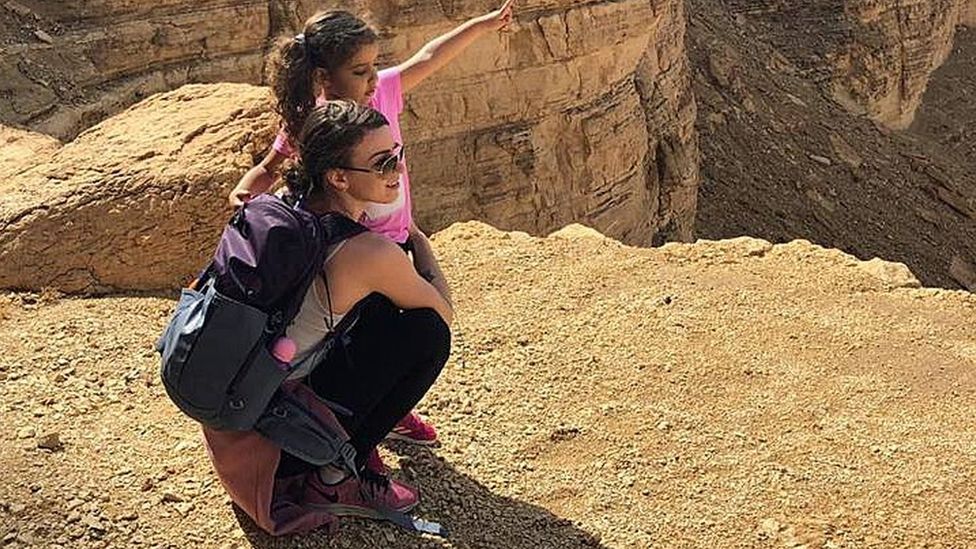
At first, all seemed fine when American mum, Carly Morris, arrived in Saudi Arabia with her five-year-old daughter, Tala. The child’s Saudi father, whom she had married and later divorced during his seven-year scholarship in the USA, had persuaded her to come for a short visit. He had arranged a thirty-day visa for them both so that his parents could meet their granddaughter for the first time.
Carly’s holiday mood first took a knock on checking into the hotel her ex-husband had booked for her and Tala. Their room had no windows or internet access and her mobile phone would not work there. Though Carly says she soon had much more to worry about.
“The week after we arrived he asked for my passport and my birth certificate so that he could start processing her [Tala] exit permit. Though what he really did, I later found out, was he transferred her to Saudi citizenship.”
Dual citizenship is not recognised in Saudi Arabia so from this point on Tala, who had been born and raised in America, was considered a Saudi citizen only. This meant that under the country’s male guardianship system she could not leave the country unless her Saudi father agreed. It was soon clear that this was the last thing he would do.
Carly says her Saudi ex-husband began collecting Tala each morning and not bringing her back until late in the evening. Left alone all day in her basic hotel room with little money she relied on boxes of food he would leave for her. Finally, after nearly two years of appealing to him to take their daughter home, Carly began writing to members of the US congress and others who she hoped might help her.
This, she says, angered her former husband.
“When he found that I was reaching out to people outside of the kingdom asking for help, he abducted my daughter for a period of two months. He and his family fled their home even. During that time he filed for custody of her.”
In the papers filed as part of the custody proceedings, the father denied having abducted Tala.
After failing to get any constructive replies from American politicians, Carly wrote to the White House for help. She never heard back but her hopes nonetheless soared when the US President, Joe Biden, visited Riyadh in July. That effort too came to nothing, along she insists with appeals to US Embassy staff in Riyadh.
Back in America, Carly’s increasingly worried mother, Denise White, has come to believe that Saudi economic and political importance means US diplomats are reluctant to act. The Gulf kingdom is one of the world’s biggest oil producers, which gives it powerful political leverage, especially during the current energy crisis.
Speaking from her home in California, Mrs White says she is deeply concerned about her granddaughter’s lack of education, after being told that Tala has not been to school once in the past three years.
Carly has also voiced fears about the psychological impact on Tala of being caught in the middle of a custody battle in a country far from her home.
“I can’t get her to speak to anyone when social affairs people come here. She will not speak to any strangers. If I try to do video for my family she hides from the camera. I’m really worried about her socially at this point.”
IMAGE SOURCE, BETHANY ALHAIDARI Image caption, Bethany Alhaidari, from the Human Rights Foundation, says dozens of women are in the same situation as Carly
Statistics compiled by the US-based Human Rights Foundation show that Carly is one of nearly 50 American mothers fighting to get their children out of Saudi Arabia after marrying Saudi nationals. That is in addition to many from Canada, the UK, and other Western countries.
The foundation’s Bethany Alhaidari, who herself spent two years trying to get a Saudi exit visa for her daughter, says none have been successful over the past year. Many, she insists, simply don’t get the help they need from their own governments.
“There tends to be a sentiment, even in the US government, of ‘You did this to yourself, you should have known better. So I feel like we face a wall a lot of times with that attitude.”
The US embassy in Riyadh told the BBC that the welfare of US citizens was the “highest priority” of the state department and that the embassy was in regular contact with Carly and in touch with the Saudi government.
After a long court battle Carly was finally given custody of Tala, but told not to leave the Saudi city she is staying in, never mind the country itself. With no funds of her own, she says she had become a kind of prisoner within her own four walls.
“At that point, I had gone two years not even stepping outside. I sat inside this hotel every single day. Not one person has seen my face… not one person has knocked on my door”.
IMAGE SOURCE, BETHANY ALHAIDARI Image caption, Bethany Alhaidari says it took her two years to get her daughter back
Since speaking out on this issue Carly has been accused by Saudi authorities of “disrupting public order”, with the prosecution seeking a jail term as punishment.
She is also facing another even bigger new worry. Well before meeting her husband, Carly had converted to Islam and she insists her beliefs have never wavered since. But just days after she won back custody of her daughter, her ex-husband’s father officially accused her of denouncing her faith and insulting Saudi Arabia and all Muslims. Still unable to bring her daughter back home she also now faces a potential death sentence but pins much of the blame on herself.
“I was warned. Many people told me like, do not to enter that country. If you enter you will never get your daughter back. And I didn’t listen to the warnings… and I’m here in this situation three years later”.
The Saudi authorities and Carly’s ex-husband have been approached for comment but have not yet responded.
DISCLAIMER: Independentghana.com will not be liable for any inaccuracies contained in this article. The views expressed in the article are solely those of the author’s, and do not reflect those of The Independent Ghana
After a backlash over a skit he did about Rishi Sunak’s appointment as Prime Minister, comedian Trevor Noah says he did not claim “the entire UK is racist.”
Earlier this week, Noah said on the US news show The Daily Show that there had been a “backlash” over Mr Sunak.
In the UK, many people, including ex-chancellor Sajid Javid, called Noah’s remarks “simply wrong.”
But Noah has now defended his segment, saying he was reacting to racists, and: “That’s why I said. ‘Some people’.”
Mr Sunak is the UK’s first British Asian prime minister and officially took over as Conservative leader and PM on Tuesday, after a leadership process.
In the original comments on the US programme, Noah – who is South African and grew up during apartheid – said: “You hear a lot of the people saying ‘Oh, they’re taking over, now the Indians are going to take over Great Britain and what’s next?’
“And I always find myself going ‘So what? What are you afraid of? I think it’s because the quiet part that a lot of people don’t realise what they’re saying is, ‘We don’t want these people who were previously oppressed to get into power because then they may do to us what we did to them.’”
During his skit, Noah played a clip from radio station LBC during the latest Conservative leadership race a week ago, when a caller falsely claimed Mr Sunak was “not even British”.
Mr Javid tweeted in response that the comments from the comedian were “so wrong” and that Britain “is the most successful multiracial democracy on earth and proud of this historic achievement”.
Former Tory leadership contender Rory Stewart said Mr Noah’s remarks were “completely bizarre” and an example of “lazy stereotyping”.
Downing Street said on Thursday that Mr Sunak did not believe Britain was a racist country.
Presenter Piers Morgan also tweeted that US media was “falsely portraying Britain as a racist country”.
Noah finally responded on Friday evening, saying: “C’mon Piers, you’re smarter than that.
“I wasn’t saying “The entire UK is racist”, I was responding to the racists who don’t want Rishi as PM because of his race. That’s why I said. “Some people”.”
C’mon Piers you’re smarter than that. I wasn’t saying “The entire U.K. is racist”, I was responding to the racists who don’t want Rishi as PM because of his race. That’s why I said. “Some people” 🙃https://t.co/QQgEQ45wJUhttps://t.co/bhurdPvsE8
Noah has long spoken about racial equality, publishing a book in 2017 titled Born a Crime, a reference to the fact he was born in South Africa to a white Swiss father and a black Xhosa mother, at a time when such a relationship was punishable by imprisonment.
He began his career in South Africa, releasing a string of stand-up specials and hosting a late-night talk show before relocating to the US in 2011.
He has hosted The Daily Show – a late-night talk and satirical news programme – since 2015 but last month announced he would be standing down.
Mr Sunak was born in Hampshire, south-east England, to Indian parents – a pharmacist mother and a GP father – and is married to Akshata Murty, with whom he has two young daughters Krishna and Anoushka.
A US manwho had been imprisoned for nearly four decades for murder was released after new DNA evidence pointed to a different person.
Maurice Hastings was sentenced to more than 38 years in state prison for the 1983 murder of Roberta Wydermyer and two attempted murders in California.
However, new DNA evidence pointed to another man who died in prison in 2020.
Now 69, Mr Hastings has been released from prison after his 1988 conviction was vacated on 20 October.
LA County District Attorney George Gascón described his conviction as a “terrible injustice”.
“The justice system is not perfect, and when we learn of new evidence which causes us to lose confidence in a conviction, it is our obligation to act swiftly,” he added in a statement.
Roberta Wydermyer was found in the boot of her car with a single gunshot wound to the head in 1983. She had earlier been sexually assaulted.
Mr Hastings was subsequently charged with murder and prosecutors sought the death penalty.
After a hung jury, a second jury convicted him and he was sentenced in 1988 to life in state prison without the possibility of parole.
At the time of the victim’s autopsy, semen was detected in an oral swab. Mr Hastings had maintained his innocence from the moment he was arrested, but a request for DNA testing of the swab in 2000 was denied by the district attorney.
Eventually he was able to put in a claim of innocence to the DA’s Conviction Integrity Unit in 2021 and DNA testing in June found that the semen was not his.
The DNA profile instead matched a man who had been convicted of an armed kidnapping where he placed his female victim in a trunk of a vehicle.
Following a court hearing on 20 October to vacate his conviction, Mr Hastings told reporters he wasn’t bitter and wanted to enjoy the rest of his life.
“I prayed for many years that this day would come,” the Associated Press quoted Mr Hastings as saying. “I am not pointing fingers; I am not standing up here a bitter man, but I just want to enjoy my life now while I have it.”
TheRoyal Navy‘s commander-in-chief has ordered an investigation into allegations of bullying and sexual harassment directed at women in the Submarine Service.
Several whistleblowers who served in the fleet told the Daily Mail that they were mistreated at all levels.
The First Sea Lord, Adm Sir Ben Key, called the allegations “abhorrent,” adding that “sexual harassment has no place in the Royal Navy and will not be tolerated.”
“Anyone who is found culpable will be held accountable,” he said.
The allegations, revealed in detail by the Mail, include male crew members compiling a list setting out the order in which women would be assaulted in the event of a catastrophic event.
One woman told the Mail she was sexually assaulted by a man of a higher rank as she slept. She claimed one senior officer punched her in the kidney.
She alleged that another left naked pictures of models for her and posted 50p coins into her cabin, suggesting she would perform a sexual act in return.
Other women alleged they were frequently asked to perform sex acts and were often screamed at and hit with clipboards and pens.
Former Navy Rear Adm Chris Parry told the BBC’s Today programme he believed the issue was also a reflection of wider society.
“I’m afraid some of the sexualised behaviour that we see in the normal working place is transferred to submarines, as you would expect, and of course in a compressed environment everything becomes exaggerated,” he said.
He said the issue requires leadership, including “zero tolerance from the top down and the bottom up” when it comes to accusations of sexual harassment.
“It is about leadership. But it’s very difficult in submarines where you are living cheek by jowl with everybody and you don’t have a mature society putting people into those submarines.”
He said when he commanded ships with a mix of genders he took “very seriously” accusations of assault.
‘Unacceptable’
The Submarine Service is “unseen and unhindered,” according to the Ministry of Defence (MoD) website, which says it has “built an enduring reputation for professionalism and courage”.
The service includes the Vanguard Class submarines that provide the UK’s nuclear deterrent.
Figures revealed in a Freedom of Information (FOI) request showed that, as of 2019, just 1% of Submarine Service personnel were female.
Responding to the allegations, Adm Sir Ben said: “I want to reassure our people, and anyone who is reading this, that any activity which falls short of the highest of standards the Royal Navy sets itself is totally unacceptable and not a true reflection of what service life should be.
“These allegations are abhorrent. Sexual assault and harassment has no place in the Royal Navy and will not be tolerated.”
The MoD said that while most Navy staff enjoy rewarding careers, some navy personnel, predominantly women, have been affected by inappropriate sexualised behaviour.
It said it accepted more needs to be done to improve the experience of all personnel and mechanisms for reporting sexual offences were being improved.
Earlier this year, media reports emerged detailing allegations of bullying, drinking, misogyny and sexual harassment in the Red Arrows.
A series of incidents within the flagship aerial display team prompted the Chief of the Air Staff to order an inquiry, which has yet to report.
Last year, Diane Allen, a retired lieutenant colonel from the British Army, said the military needed its own Me Too moment, referring to the movement which saw people share their experiences of sexual harassment.
Speaking to the BBC’s Woman’s Hour in May last year about the issue in the Army and the Royal Air Force, she said she was concerned that “even the good people in the military are feeling coerced not to speak up when they see poor behaviour”.
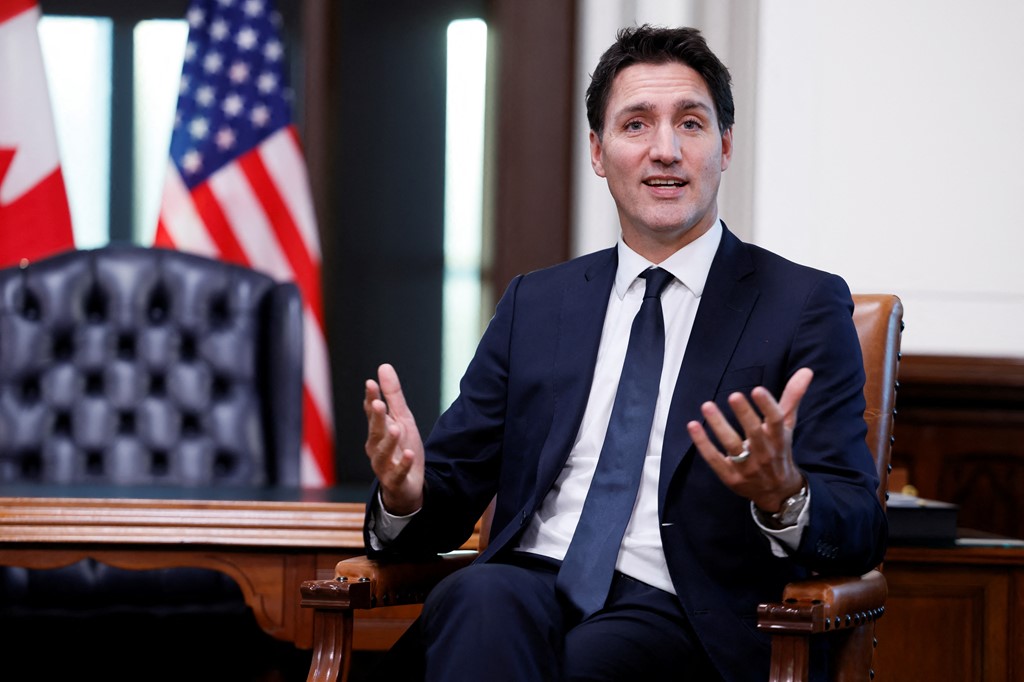
When protesters descended onthe city last winter, Ottawa police did their best under “inhuman circumstances,” according to the force’s former chief.
On Friday, Peter Sloly testified at an inquiry into Canada’s use of the Emergencies Act to end the ‘Freedom Convoy’ protests, saying that police were under enormous pressure at the time.
The protests began on January 29 and lasted three weeks.
Prime Minister Justin Trudeau invoked the Emergencies Act on 14 February.
Mr Sloly resigned as chief of Ottawa police on 15 February amid criticism of his force’s response to the protests.
Testimony presented before the Public Order Emergency Commission so far has suggested the force was dealing with power struggles, communication gaps and infighting as it scrambled to control the anti-vaccine mandate and anti-government protests.
In an emotional defence of police actions on Friday, Mr Sloly said his force tried to deal with the protests while facing a lack of resources and staffing issues.
“It was too cold and it was too much. But they did their very best. And I am grateful to them,” he said.
The Public Order Emergency Commission began six weeks of hearings on 13 October, and in other recent developments:
Some police forces were weighing bringing in military assistance in early February to help with the protests, according to tabled documents, though Mr Trudeau was saying publicly at the time he was wary of such a move.
Canadian intelligence services believed the protests to be driven largely by domestic concerns and did not see signs of funding from “foreign actors” despite money flowing in from Canada and elsewhere to online fundraising platforms in support of the protesters.
The inquiry has summoned Ontario Premier Doug Ford to testify, believing he has relevant evidence to share as his provincial government worked to end the protests with Mr Trudeau and Ottawa. Mr Ford has challenged the summons in court.
The winter protests paralysed much of Ottawa’s city centre with hundreds of heavy trucks, while smaller, shorter-lived protests elsewhere blocked two key US-Canada border crossings.
The protests in Ottawa – deemed an illegal blockade by police and the federal government – were eventually cleared by police on the weekend of 18 February.
The public inquiry, which is required under law when the Emergencies Act is invoked, will hear from more witnesses over the coming weeks, including Mr Trudeau.
His government has said that the use of the Emergencies Act – for the first time since it became law in 1988 – was a necessary “last resort” to deal with unprecedented protests.
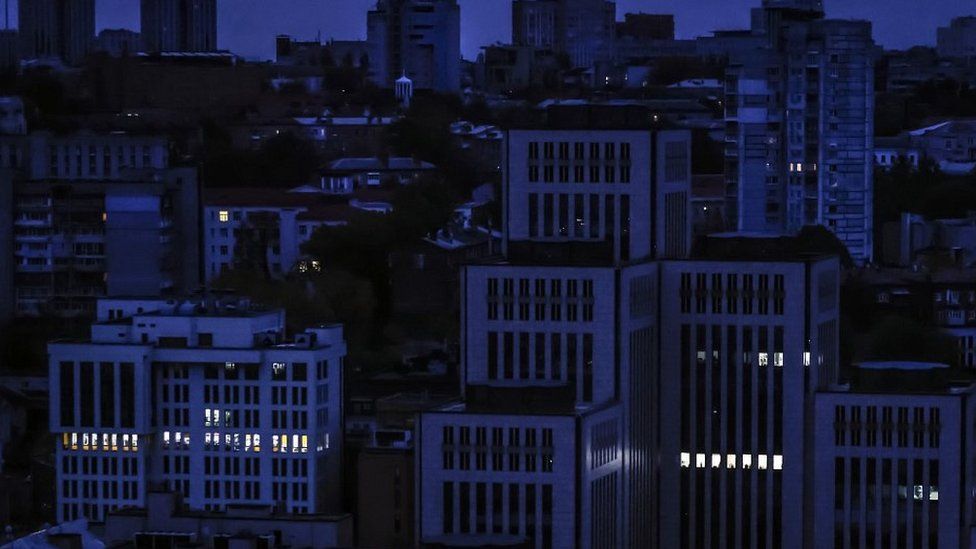
Because of Russian attacks on energy infrastructure, Ukrainian authorities have warned residents in Kyiv to expect longer power outages lasting more than four hours.
Rolling blackouts are affecting not only Kyiv but also Ukraine’s central regions, including Dnipro.
According to President Volodymyr Zelensky, approximately four million people have been affected, but “the shelling will not break us.”
This month Russia launched dozens of missiles and Iranian-made drones.
Ukraine’s energy infrastructure is being pounded by the air attacks – Mr Zelensky says about a third of the country’s electric power stations have been destroyed.
The Kyiv region has lost 30% of its power capacity, the private energy company DTEK says, meaning “unprecedented” power cuts will be necessary.
“Unfortunately the scale of restrictions is significant, much larger than it was before,” said DTEK director Dmytro Sakharuk.
The power cuts have meant curbs on the use of street lights and electric-powered public transport, besides the discomfort in people’s homes.
IMAGE SOURCE,EPA Image caption, The scene in Dnipro as street lighting is switched off
The EU and other international allies of Kyiv have condemned the deliberate targeting of civilian infrastructure – attacks that Ukraine sees as war crimes.
Ukraine’s second city Kharkiv, heavily damaged by Russian shelling, also faces long power cuts, along with the central cities of Zhytomyr, Poltava and Chernihiv.
Russia stepped up its missile attacks on Ukraine’s power stations and other civilian infrastructure in retaliation for the 9 October bombing of the Kerch Bridge – a key link to Russian-annexed Crimea.
President Vladimir Putin called that blast a Ukrainian “act of terrorism”. The bridge is a symbol of his campaign to incorporate large swathes of Ukraine into Russia.
A power station employee called Pavlo, quoted by AFP news agency, said “we are confronted by such damage for the first time”. The unnamed plant had twice been targeted by missiles and then by an Iranian-made “kamikaze” drone.
He said repairs had been underway for more than two weeks, but “there are difficulties in that the equipment that has been damaged is unique – it’s hard to find the same parts”.
In other developments:
Russia said it had mobilized 300,000 reservists – the target number set by defence minister Sergei Shoigu. He said 41,000 of those called up had already been deployed to the battlefield in Ukraine
Russia also said it had completed an operation to move thousands of civilians out of occupied Kherson, ahead of an expected battle with Ukrainian forces for the strategic southern city
President Zelensky accused Russia of dismantling medical facilities in Kherson – removing “equipment, ambulances, just everything” – and pressurising doctors to move to Russia
Chechen leader and Putin ally Ramzan Kadyrov admitted that a Chechen unit had suffered “big losses” – 23 fighters killed and 58 wounded in a Ukrainian artillery attack
UN Secretary-General Antonio Guterres has urged all parties to renew the grain export deal, which is due to expire next month. Russia has suggested it might not renew the deal. The agreement allowed Ukraine to resume exports in the Black Sea which had been blockedwhen Russia invaded.
South Africans are not big fans of royalty, but the upcoming official coronation of the new Zulu king has the country captivated – and marks a watershed moment in the country’s history.
The event will include a number of firsts for the country.
President Cyril Ramaphosa will formally recognise King Misuzulu ka Zwelithini as monarch, marking the first time a black president has been involved in a Zulu coronation.
It will be the first Zulu coronation since South Africa became a democracy in 1994. It will also finally put an end to the fierce family feud that dogged his succession to the throne – an embarrassing battle played out in public.
The last coronation took place on a rainy day back in 1971 under the apartheid government, when King Goodwill Zwelithini ka Bhekuzulu was crowned.
Then, as now, South Africa’s traditional leadership was regulated by the government. But the white-minority authorities at the time expected the young monarch to wear Western attire.
He attended the event in a suit – a leopard skin sash the only nod to Zulu couture.
As the crowds gather at the Mabhida Stadium in the coastal city of Durban on Saturday for his son’s government-backed coronation, they will be hoping for a more ostentatious display of Zulu culture when President Ramaphosa hands over the certificate that endorses Misuzulu as the ninth Zulu king.
“It’s a joyous occasion, the beginning of a new era,” explains Sihawukele Ngubane, a professor of African languages at the University of KwaZulu-Natal and expert on Zulu culture.
“The apartheid-era government bestowed the certificate to the king back then. This time we expect our king to wear his traditional garb because we now live in a democracy and there’s absolutely no obligation for his majesty to wear British-inspired clothing.”
In first, the coronation is going to be broadcast live on national television.
A fifth of South Africa’s population is Zulu – the country’s largest ethnic group -and its monarchy has a yearly taxpayer-funded budget of more than $3.6 (£3.2m).
It is the money that tends to put South Africans off royalty – given the country has eight monarchs officially recognised by the government, all funded by taxpayers.
Many question the seemingly lavish lives that some of the traditional leaders lead, with luxury cars and large properties.
Saturday’s state coronation comes two months after a traditional one that took place for King Misuzulu at KwaKhangelamankengane Palace in KwaZulu-Natal province – with festivities attended by thousands of people.
The Zulu royal household receives one of the biggest budget allocations, though KwaZulu-Natal’s provincial government states that this money is not just spent on the family – it also covers staff salaries, maintenance of palaces, and programmes that deal with traditional ceremonies and social cohesion.
Political parties across the divide have welcomed the new king, including the Economic Freedom Fighters, led by controversial politician Julius Malema. The Zulu Inkatha Freedom Party says it has put aside its difference with the governing African National Congress (ANC) ahead of the event.
Only the South African Communist Party seems unhappy, its members plan to picket the event to raise awareness about the political situation in neighbouring Eswatini, as its absolute monarch, King Mswati III, is attending the coronation of King Misuzulu, his nephew.
The media fanfare that followed the succession saga has brought King Misuzulu to the attention of the South African nation – and endeared him to some.
He trended on social media as young South Africans felt they could identify with him, casually teasing him when he fluffed his first speech.
He made it a few months after his father had died and before his official succession had been resolved. It was a powerful appeal to people in KwaZulu-Natal to stop the looting and riots that broke out in July 2021 following the arrest of former President Jacob Zuma, a proud Zulu, for contempt of court.
It was the worst violence the country had witnessed since the end of apartheid, but as he tried to read the speech in Zulu, he struggled and he ended up reading it much more fluently in English.
For Prof Ngubane, it shows that although King Misuzulu may only hold a ceremonial position, he is considered someone that many look up to as a moral authority.
“In Zulu, we say: ‘Umlomo ongathethi manga’, which means ‘What the king says goes’.”
And when he oversaw last month’s Reed Dance – a rite of passage ceremony for teenage girls – the monarch spoke out against gender violence in a country that has one of the world’s highest rates of rapes and sexual assaults.
IMAGE SOURCE,AFP Image caption, The Reed Dance is a rite of passage for young Zulu women and teenage girls
“Violence against women and children is an embarrassment to our nation. A woman is to be respected and protected. We must do better as men,” he said.
On the side-lines of those rehearsing for the Durban coronation, some young women tell us why the event means so much to their generation.
“We are excited to attend to show him that we are 100% behind him as king,” one of them says.
Who is Misuzulu ka Zwelithini?
Born on 23 September 1974 in Kwahlabisa
Educated privately at St Charles College in Pietermaritzburg
Studied at Jacksonville University in the US, where he lived for several years
An estimated 11,000 foreign children and women remain in the refugee camps of Roj and al-Hol in northeastern Syria.
The Australian government has returned four Australian women and their 13 children from a Syrian refugee camp to the state of New South Wales, according to home affairs minister Clare O’Neil.
The repatriation is part of a plan to bring back from Syria dozens of Australian women and children who are relatives of dead or imprisoned ISIL (ISIS) fighters and have been held at the al-Hol and Roj detention camps in Kurdish-controlled northeastern Syria for several years.
Australia first repatriated eight children and grandchildren of two dead ISIL fighters from a Syrian refugee camp in 2019 but has held off repatriating any others until now.
“The decision to repatriate these women and their children were informed by individual assessments following detailed work by national security agencies,” O’Neil said in a statement on Saturday.
The women and children left the Roj refugee camp in northern Syria on Thursday afternoon and crossed the border into Iraq to board a flight home, the Sydney Morning Herald and state broadcaster ABC reported on Friday.
O’Neil said at all times the focus has been on the safety and security of “all Australians” as well as those involved in the repatriation, with the government having “carefully considered the range of security, community and welfare factors in making the decision to repatriate”.
The repatriation followed similar moves by the United States, Italy, Germany, France, the Netherlands, Belgium, the United Kingdom, and Canada, O’Neil said.
She said allegations of illegal activity would continue to be investigated by state and federal law enforcement authorities.
“Any identified offences may lead to law enforcement action being taken,” O’Neil said, adding that New South Wales was providing “extensive support services” to assist the group to reintegrate into Australia.
In a statement on Saturday attributed to the repatriated women, the group said they were “deeply thankful” to be back in Australia and they expressed regret for the “troubles and hurt” caused by their actions, particularly to their families.
Asking for privacy and space to reconnect with their loved ones, the women expressed hope that “all Australian children and their mothers will soon be repatriated from the camps in Syria”.
Human Rights Watch researcher Sophie McNeill said the repatriation was a “long overdue step”.
“For years, the Australian government has abandoned its nationals to horrific conditions in locked camps in northeast Syria,” McNeill said.
“Australia can play a leadership role in counterterrorism through these orderly repatriations of its nationals, most of them children who never chose to live under ISIS,” she said.
In a statement congratulating Australian Prime Minister Anthony Albanese for his “strong leadership” on the repatriation plan, the humanitarian organisation Save the Children said that an estimated 11,000 foreign children and women remain in the Roj and al-Hol camps.
Before the council meets, no major decisions or account reinstatement will be made, according to the outspoken billionaire businessman.
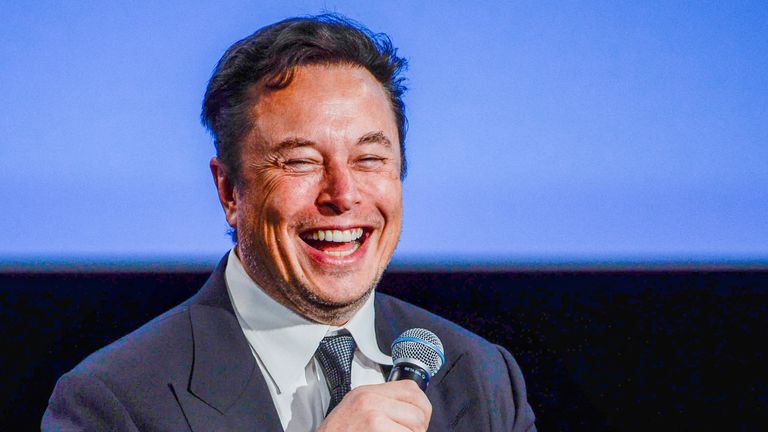
Elon Musk has announced his intention to form a “content moderation council with widely diverse viewpoints” at Twitter in his first policy actions since taking over the social media company on Friday while emphasising that no changes to the platform’s moderation policies have been implemented thus far.
“No major content decisions or account reinstatements will happen before that council convenes,” the outspoken billionaire businessman said amid concerns that former US President Donald Trump’s account might be reinstated.
“To be super clear, we have not yet made any changes to Twitter’s content moderation policies,” he added in a later tweet.
Twitter formally became the private property of Musk, CEO of Tesla and SpaceX, on Friday, steering the platform down an uncertain path under the stewardship of one of its most vocal critics.
Scrutiny quickly turned to how the platform will operate under a self-proclaimed free-speech absolutist who some users fear will turn Twitter into a global stage for hate speech and disinformation.
To be super clear, we have not yet made any changes to Twitter’s content moderation policies https://t.co/k4guTsXOIu
Musk’s sealing of the on-again, off-again $44bn deal ended a months-long soap opera of corporate chicanery, involving insults, threats, and lawsuits.
“The bird is free,” tweeted the billionaire Tesla founder and space pioneer in reference to the company’s logo. “Let the good times roll.”
The deal drew contrasting reactions, with former US president Donald Trump cheering the change of leadership on a platform that had banned him, while activists warned of a surge in harassment and misinformation.
European politicians were quick to signal to Musk that the continent had regulations for social media companies.
“In Europe, the bird will fly by our rules,” tweeted Thierry Breton, the EU internal marketcommissioner.
Musk had promised to dial back content moderation and was expected to clear the way for Trump to return to the platform.
The then-president was blocked over concerns he would ignite more violence like the 2021 deadly attack on the US Capitol to overturn his election loss.
Taking to his own Truth Social platform, Trump said he was “very happy that Twitter is now in sane hands” – but gave no commitment to rejoin if allowed.
Far-right users were quick to rejoice at Musk’s ownership, posting comments such as “masks don’t work” and other taunts, under the belief that moderation rules would now be relaxed.
‘A huge responsibility’
Yale University philosophy professor Jason Stanley, who has characterised Trump’s rise as a sign of mounting fascism in the United States, said he would alter his approach to posting.
“For the moment I am staying on Twitter. But I am going to try to be much more careful about what I say now that Elon Musk is in charge. Cascading hate speech targeting can destroy your week,” he said.
Right-wing political commentator Ben Shapiro said he gained 40,000 Twitter followers on Friday, while the actor Mark Hamill, a liberal, said he had lost almost 6,000 followers over the last three days.
Musk reportedly fired Twitter chief executive Parag Agrawal and other senior officials – though the company did not reply to a request for comment and Agrawal still listed himself as CEO on his Twitter profile.
But Ned Segal, Twitter’s chief financial officer since 2017, announced his departure.
“At its best, (Twitter) democratizes communication and knowledge, ensuring accountability and equal distribution of info,” Segal said. “It’s a huge responsibility for everyone that shares in the work. I wish them strength, wisdom, and foresight.”
Musk, who is using a combination of his own money, funds from wealthy investors, and bank loans to finance the deal, has conceded he is overpaying for a company that has regularly posted eye-watering losses.
How to monetize?
Twitter says it has 238 million daily users – dwarfed by the likes of Facebook’s nearly two billion – and has not been able to monetise in the same way as its rivals.
However, it holds an outsized influence on public debate because it is the favoured platform for many companies, politicians, journalists and other public figures.
Though he has promised that Twitter will not become a “free-for-all hellscape,” Musk reportedly plans deep staff cuts that would gut teams that oversee content.
Despite Musk posting a letter to advertisers saying he wants Twitter to be a forum where rival viewpoints can be debated in a “healthy manner”, US auto giant General Motors said on Friday it has “temporarily paused” paid ads on the platform.
“We are engaging with Twitter to understand the direction of the platform under their new ownership,” said a GM spokesman.
Media watchdog Media Matters for America sounded the alarm over the future of a Musk-led Twitter, particularly the effect on imminent US midterm elections.
The platform “is now on a glide path to becoming a supercharged engine of radicalization” and a “fever swamp of dangerous conspiracy theories, partisan chicanery, and operationalized harassment,” the organisation’s head Angelo Carusone said.
Officials in the Philippines have revised a previous figure of more than 70 deaths from Tropical Storm Nalgae, which has caused flash floods and landslides in provinces in the country’s south.
The tropical storm, which has maximum sustained winds of 95km (59 miles) per hour and gusts of up to 160kph (99.4 mph), made landfall in the eastern Catanduanes province early on Saturday.
The southern region ofMindanao has been the hardest hit with 40 bodies recovered so far, national civil defence chief Rafaelito Alejandro said at a news conference in Manila.
Fatalities were also reported earlier in Sultan Kudarat, in South Cotabato, and in the Visayas region in the central Philippines.
Earlier on Saturday, the civil defence office had reported 72 dead, but Alejandro said the toll was reduced after local “validation”.
More than 30 people have been injured and 15 are missing, spokesman and civil defence chief for the southern region Naguib Sinarimbo told Agence-France Presse.
Rescuers help residents evacuate in Kalamansig, Sultan Kudarat on October 28, 2022 [Regional Maritime Unit 12, Sultan Kudarat Maritime Police/AFP]
Storm Nalgae will bring heavy and at times torrential rains over the capital, Manila, and nearby provinces on Saturday as it cuts through the main Luzon island and heads to the South China Sea, the state weather agency said in its latest bulletin.
Barnaby Lo, reporting for Al Jazeera from Manila, said on Saturday that the capital had experienced around 10 hours of continuous rain and the precipitation was expected to continue through to Sunday.
The Philippine Atmospheric, Geophysical, and Astronomical Services Administration warned on Saturday that Nalgae (known locally as Paeng) will continue to cause flooding and rain-induced landslides as it crosses the country.
TROPICAL CYCLONE BULLETIN NO. 15
Severe Tropical Storm #PaengPH (NALGAE)
Issued at 5:00 AM, 29 Oct. 2022
Valid until next bulletin at 8:00 AM today
Search and rescue teams pulled bodies from the water and thick mud after Nalgae triggered flooding and landslides in the south of the country on Friday.
“We are now gathering all rescue teams and will conduct a briefing before deployment,” Nasrullah Imam, a disaster agency official at Maguindanao province, said on Saturday. “It’s no longer raining so this will help our search and operation.”
An average of 20 tropical storms hit the Philippines annually.
Philippine President Ferdinand Marcos Jr sent condolences to those who had lost their lives in the storm and reassured the public that emergency services were deploying with supplies of food and other items to the hardest-hit areas.
More than 7,000 people were evacuated ahead of the storm’s landfall, the civil defence office said.
The coast guard has also suspended ferry services through most of the archipelago nation due to rough seas, stranding hundreds of vessels and thousands of passengers at ports. Civil aviation authorities said that more than 100 flights had been cancelled so far.
The storm struck at the beginning of a long weekend in the Philippines when millions return to their hometowns to visit the graves of their relatives.
Scientists have warned that such storms, which also kill livestock and destroy key infrastructure, are becoming more powerful as the world gets warmer because of climate change.
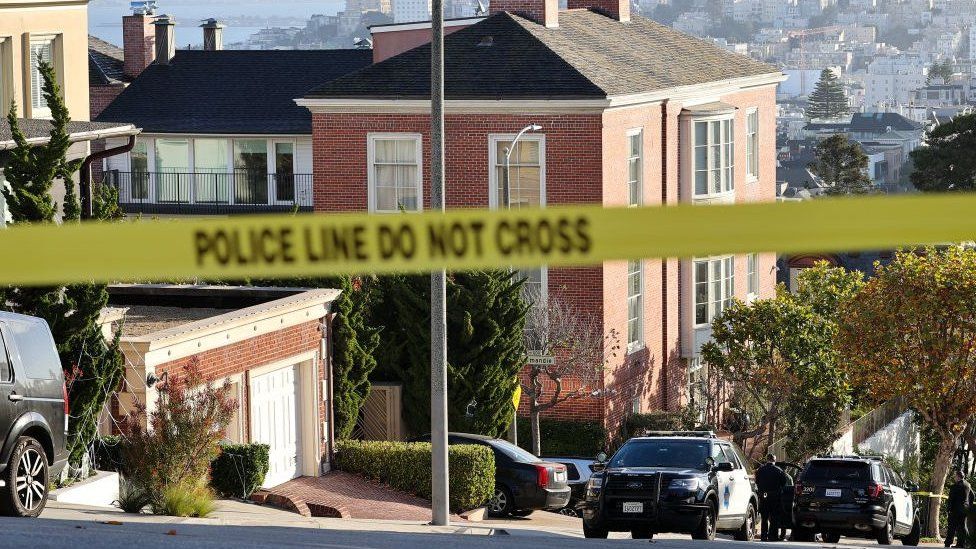
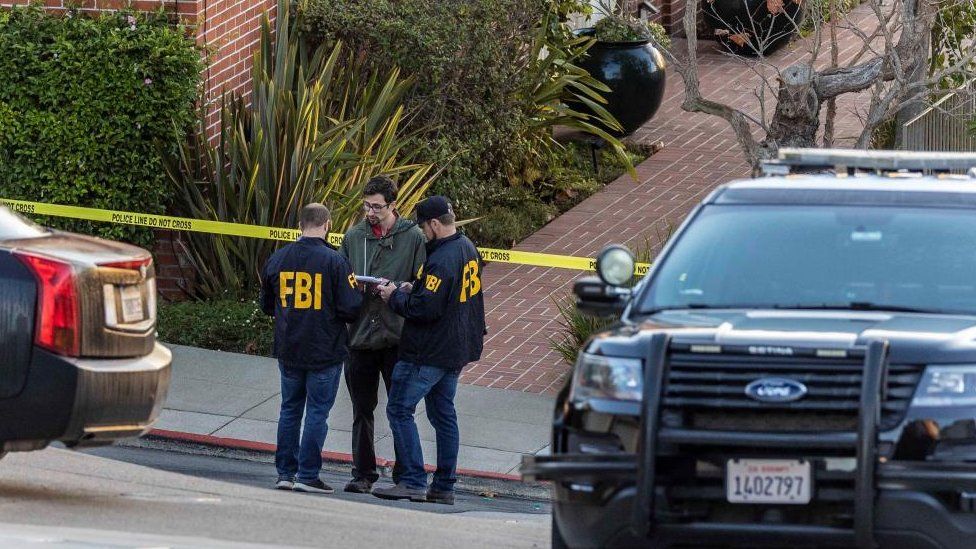
Paul Pelosi, the husband of US House of Representatives Speaker Nancy Pelosi, is recovering from surgery after being attacked at the couple’s San Francisco home by a hammer-wielding intruder.
Mr. Pelosi, 82, suffered a fractured skull as well as injuries to his right arm and hands, but he is expected to recover fully.
The attack has heightened fears of political violence in the run-up to the midterm elections on November 8.
The suspect, David Depape, 42, is said to have demanded to see Mrs Pelosi.
President Biden described the attack as “despicable” and denounced a corrosive political climate for contributing to violence.
“Enough is enough is enough,” he said during a speech in Philadelphia. “Every person of good conscience needs to clearly and unambiguously stand up against the violence in our politics, regardless of what your politics are.”
Hours after the attack, the US government distributed a bulletin to law enforcement across the nation warning of a “heightened threat” of domestic violent extremism against candidates and election workers driven by individuals with “ideological grievances”.
However, police investigating the attack on Mr Pelosi – which they have deemed an attempted murder – told reporters a motive had not yet been fully determined.
‘Paul Pelosi made secret 911 call’
Mrs Pelosi – who was on the other side of the country in Washington DCat the time of the assault – flew back to see her husband in hospital.
A spokesman for the senior Democrat said Mr Pelosi had been attacked in the early hours of Friday morning “by an assailant who acted with force, and threatened his life while demanding to see the Speaker”.
San Francisco Police Chief William Scott said officers had responded to a call at around 02:27 local time (09:27 GMT) on Friday.
They found Mr Pelosi and the suspect struggling over a hammer, but it was wrested from Mr Pelosi by the intruder, who violently assaulted him with it.
The suspect was tackled and disarmed by officers. He had attempted to tie up Mr Pelosi “until Nancy got home”, law enforcement sources told CBS News. He reportedly shouted “where’s Nancy?” during the incident.
He is also facing charges of assault with a deadly weapon, burglary, and several other felonies, Chief Scott said.
He said the suspect had gained access through a rear entry to the four-bedroom Pelosi home in the upmarket neighbourhood of Pacific Heights. Footage shows a smashed glass door at the property.
The suspect is currently in hospital, but police declined to share details about his medical condition.
At the start of the break-in, Mr Pelosi told the intruder he needed to use the bathroom then made a secret 911 call on his mobile phone and left the line open, allowing a dispatcher to hear him talking to the suspect, reports the Los Angeles Times.
Chief Scott confirmed it was Mr Pelosi who had called the police and that a quick-thinking emergency dispatcher had been “able to read between the lines” and send officers.
“This was not a random act,” said the police chief of the attack. “This was intentional.”
He added: “Everybody should be disgusted by what happened this morning.
Far right web activity
A blog, website and social media accounts under the name of the suspect seen by the BBC are filled with anti-Semitic memes, Holocaust denial, references to far-right websites and conspiracy theories such as QAnon.
He also posted debunked allegations of election fraud. His recent posts were rambling and touched on a host of far-right and extremist talking points.
Older messages by the suspect promote hemp jewellery and quartz crystals. He was also a nudist activist who had listed himself as a member of the Green Party, according to the San Francisco Chronicle.
The suspect grew up in the western Canadian province of British Columbia before moving to the US and becoming estranged from family members back home, his stepfather told the Globe and Mail newspaper.
IMAGE SOURCE, GETTY IMAGES
Mrs Pelosi is one of the most powerful politicians in the country. She was re-elected to a fourth term as Speaker of the House of Representatives in 2021, making her second in line to the presidency after Vice-President Kamala Harris.
The Baltimore native has represented the San Francisco area in Congress since 1987 and typically splits her time between California and Washington DC.
Her husband, the multimillionaire founder of a venture capital firm, lives primarily in San Francisco, where he was born and raised.
The couple have been married since 1963 and have five children.
Members of Congress have been on high alert over security threats since the riot at the US Capitol in January 2021. Mrs Pelosi’s office in the building was ransacked by supporters of then-President Donald Trump during the attack.
Russia saysonly 3 percent of food exported from Ukraine under a deal that allowed its grain shipments to resume has gone to the world’s poorest countries. It says Western nations have received half.
“The geography of the recipients of these cargoes has turned out to be completely inconsistent with the initially declared humanitarian objectives,” Russia said in a statement.
“Needy states such as Somalia, Ethiopia, Yemen, Sudan, and Afghanistan have received just 3 percent of the food, mostly from the World Food Programme,” it said.
Since the signing of the UN-backed Black Sea Grain Initiative in July in Turkey, several million tonnes of corn, wheat, sunflower products, barley, rapeseed, and soya have been exported from Ukraine.
But President Vladimir Putin and other Russian officials have since complained that there are serious problems with the deal, raising fears that Moscow could block those exports unless its demands are met.
The US willprovide a new $275m military assistance package for Ukraine to help it battle Russia’s invasion, the Pentagon has announced.
The package includes ammunition for Himars precision rocket launchers, various types of 155 mm artillery rounds, anti-armor systems, small arms ammunition, and four satellite communications antennas, Deputy Pentagon Press Secretary Sabrina Singh told journalists.
“We’re seeing Ukrainian infrastructure and electrical grids being targeted by the Russians and these antennas provide an additional capability on the ground at a critical time when Ukraine’s infrastructure is being hit,” Singh said.
This month, Russia resumed strikes on Kyiv, targeting critical infrastructure and forcing Ukraine to implement rolling blackouts.
According to Mr Klitschko, the city’s electricity deficit currently ranges between 20% and 50%.
It is, therefore, still operating in an emergency capacity.
Ukraine’s main power supplier, Ukrenergo, said it hopes to eliminate the shortages within two to three weeks – if there are no further strikes.
Mr Klitschko said: “The city is doing everything possible to save electricity consumption. In particular, trolleybuses have been replaced by buses on many routes of communal public transport.
“At the same time, the capital is not going to stop the metro. Once again, I call on the citizens of Kyiv and businesses to reduce electricity consumption!
“The risk of a major blackout, when a lack of electricity can lead to even greater consequences and an even greater shutdown, there is.”
Ukrainianian Foreign MinisterDmytro Kuleba said he had received a call from his Iranian counterpart Hossein Amirabdollahian on Friday.
Within it, Mr Kuleba said he had demanded that Tehran stop sending weapons to Russia.
Ukraine and its Western allies have accused Iran of sending “kamikaze” drones to Russia – which have then been used to devastating effect.
Iran denies the charge, which relates to attacks in major Ukrainian cities.
“I demanded Iran to immediately cease the flow of weapons to Russia used to kill civilians and destroy critical infrastructure in Ukraine,” he saidUkrainian minister demands Iran stop ‘supplying weaponry to Russia’
Ukrainian Foreign Minister Dmytro Kuleba said he had received a call from his Iranian counterpart Hossein Amirabdollahian on Friday.
Within it, Mr Kuleba said he had demanded that Tehran stop sending weapons to Russia.
Ukraine and its Western allies have accused Iran of sending “kamikaze” drones to Russia – which have then been used to devastating effect.
Iran denies the charge, which relates to attacks in major Ukrainian cities.
“I demanded Iran to immediately cease the flow of weapons to Russia used to kill civilians and destroy critical infrastructure in Ukraine,” he said
Today, I received a call from Iranian Foreign Minister Hossein Amir Abdollahian, during which I demanded Iran to immediately cease the flow of weapons to Russia used to kill civilians and destroy critical infrastructure in Ukraine.
Canada announced on Fridaythat it will sell a five-year government-backed bond to raise funds for Ukraine.
It will also impose new sanctions on 35 Russian individuals, including executives from Gazprom.
“Canadians will now be able to go to major banks to purchase their sovereignty bonds, which will mature with interest after five years,” Prime Minister Justin Trudeau said.
“These funds will go to support the government of Ukraine so they can continue to support the Ukrainian people.”
The proceeds will “help the (Ukrainian) government continue operations, including providing essential services to Ukrainians, like pensions, and purchasing fuel before winter,” a statement added.
The equivalent of the income raised will be channelled “directly to Ukraine” through an International Monetary Fund-administered account.
Mr Trudeau also announced new sanctions on 35 senior officials of energy sector entities, including Gazprom “and its subsidiaries,” according to a statement, plus six other “energy sector entities.”
“We will continue to tighten the screws on anyone abetting this illegal invasion,” he said.
Donald Trump has stated that he is “very happy that Twitter is now in sane hands” following Elon Musk’s acquisition of the company.
Musk’s $44 billion purchase of Twitter was completed on Thursday, and he reportedly fired the company’s CEO and two other top executives.
The world’s richest man tweeted “the bird is freed” and “let the good times roll”.
He’s promised to overhaul the service by getting rid of fake accounts and ensuring it’s a place where a “range of beliefs can be debated in a healthy manner”.
Donald Trump – arguably once Twitter’s most famous user – was banned after the siege on the US Capitol in January 2021 for allegedly inciting violence with two of his posts.
His banishment could be about the end, however, as Musk has previously said the ban was a “mistake” and “morally wrong”.
Trump celebrated the takeover on TruthSocial, a conservative social media platform he created, by posting that Twitter “will no longer be run by Radical Left Lunatics and Maniacs that truly hate our country”.
Many on the right of the political spectrum have long argued that Twitter and other social media sites are biased against their views and quick to ‘deplatform’ them.
Musk’s approach to Twitter could allay some of those accusations as he’s described himself as a “free speech absolutist”.
Image:Musk has big plans for his new purchase
However, he also assured advertisers Twitter would not become a “free-for-all hellscape, where anything can be said with no consequences”.
The former president said the service would become “smaller but better” and that it must “work hard to rid itself of all the bots and fake accounts”.
He also claimed his own TruthSocial had become a “phenomena” that last week had “bigger numbers” than TikTok, Twitter, and Facebook.
It’s unclear what figures he’s referring to, but the claim is likely to be false given the huge user base of those services.
Musk’s purchase of Twitter was completed a day before the 28 October deadline to avoid the deal going to court. The company had taken legal action to force the deal through after Musk backed out in July over the number of fake and spam accounts.
Earlier this week, Musk posted a bizarre video of himself entering Twitter’s San Francisco headquarters carrying a sink alongside the message: “Entering Twitter HQ – let that sink in”.
He’s also now updated his Twitter bio to “Chief Twit”.
According to reports, Musk told staff during his visit it was not true he was planning on cutting up to 75% of Twitter staff after acquiring the company.
It was previously reported that Musk told investors he was hoping to cut around three-quarters of the firm’s 7,500 employees.
He has told investors he plans to sell users premium subscriptions to reduce reliance on ads, allow content creators to make money, and enable payments, according to Reuters news agency.
A Dutch fishing boat rescued a British man in the Channel after his kayak capsized and he was left clinging to a buoy for days.
Teunis de Boer, the captain, said he saw the kayaker waving frantically as his boat Madeleine sailed by.
“He was clearly in distress,” the captain said, according to Dutch media.
After the man was given water and a chocolate bar, he was airlifted to a hospital by French authorities.
The drama unfolded late on Thursday morning several miles west off the French coast, in a shipping lane of the Dover Strait, also known as the Pas de Calais.
The boat captain said he was checking they were not steering too close to the Colbart Nord buoy when he suddenly saw something moving around on it. “I picked up the binoculars and saw a young man just in his swimming trunks waving at us like a madman,” he told the De Telegraaf website.
URKER VISSERS REDDEN BRITSE KAJAKKER | De bemanning van de kotter BL936072 ‘Madelaine’ van rederij De Boer & Zonen, heeft rond 11 uur in het Kanaal een Engelse kajakker gered van een lichtboei. Hij werd bij toeval ontdekt toen de kotter in de buurt van de Cobalt-bank ging vissen. pic.twitter.com/8Oq1AZ1u2P
They threw the Briton lifebuoys and hauled him on board. “He was covered in bruises and explained that he’d stayed alive by scraping mussels off the buoy and eating little crabs and seaweed,” Mr De Boer told public broadcaster NOS. He was dehydrated and suffering from hypothermia, so the crew wrapped him in blankets.
A French coastguard helicopter was quickly on the scene and flew the Briton to a hospital in nearby Boulogne.
What is less clear is how long he had survived clinging to the buoy. The fishing boat captain said the man had told them he had left Dover in his kayak on 15 October, 12 days before he was picked up.
In a statement, the French maritime prefect for the Channel and North Sea said, however, that he had left Dover around 48 hours earlier.
The prefecture warned anyone planning to cross the Channel of the risks involved in such an undertaking, pointing out that conditions were often very dangerous and more than 400 merchant ships passed through it every day.
Britse kajakker na dagen op een lichtboei door Nederlandse vissers gered. Maakt het goed. pic.twitter.com/0EEZ57mTxl
Two police officers have been fired as a result of the ongoing protests in Iran.
According to state media, the dismissal was due to “malpractice” by police during clashes in the city of Zahedan on September 30.
Dozens were killed in those protests, which erupted in response to allegations that a senior police officer had raped a teenage girl.
Although not directly related, widespread unrest following the death of another young woman in police custody poses a serious challenge to the Islamic Republic.
Mahsa Amini, 22, died on 16 September.
She had been detained three days earlier by the morality police in Tehran and fell into a coma after collapsing at a detention centre.
She was arrested for allegedly wearing her Islamic headscarf “improperly”.
There were reports that officers had beaten her with a baton and banged her head against a vehicle, but policedenied she had been mistreated and said she had suffered a heart attack.
It is not clear how many people died in the 30 September clashes which have now led to the dismissal of the two senior police officials in the south-eastern city of Zahedan, the capital of Sistan Baluchistan province.
Some reports by human rights organisations have put the number at more than 80.
There have been regular protests in the city since then – on Friday security forces were said to have again fired at crowds after prayers at the city’s mosques.
It is rare for Iranian authorities to sack senior officials involved in suppressing protests against the country’s top leadership.
Sistan Baluchistan province, which borders both Pakistan and Afghanistan, has a sizeable Sunni Muslim population. Iran is a majority Shia country.
Authorities have said the security forces were attacked by armed Baluchi separatists – something the imam of the city’s biggest mosque has denied.
Norway-based Iran Human Rights says at least 234 protesters, including 29 children, have been killed by security forces in crackdowns around Iran so far. Iran’s leaders have portrayed the unrest as “riots” instigated by foreigners.
Footage posted on social media and verified by the BBC shows widespread recent protests in many cities – an upsurge that came after police reportedly opened fire on protesters in Saqqez, home city of Ms Amini, on Wednesday, 40 days after she died.
The BBC and other independent media are banned from reporting from inside Iran, making state media and other reports hard to verify. Authorities have also heavily disrupted the internet, hampering the ability of protesters to post on social media.
The Islamic Republic of Iran has seen protests before. But not like this.
The authorities are still trying to dismiss and discredit them as “rioters influenced by foreigners”.
It’s hard to square that with extraordinary images of teenage schoolgirlsrejecting obligatory headscarves, and of women of all ages walking bare-headed in public spaces.
It’s hard, too, to see Iran returning to days where so-called morality police can police women’s dress the way they’ve done for decades.
This is now about more, much more than what women wear.
In the past, major uprisings have fizzled out or were forcibly suppressed, after months of unrest. But, with every week, this wave seems to strengthen.
The full force of Iran’s security apparatus has yet to be unleashed. The authorities will do whatever it takes to preserve the Islamic Republic.
But Iran’s protesters, especially a new generation of women and men, also seem ready to do whatever it takes to change their lives, and much more.
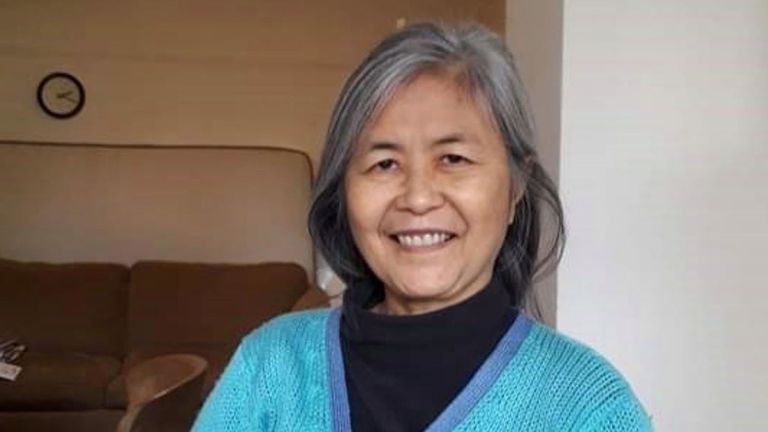
Jemma Mitchell, 38, became the first woman in England and Wales to be sentenced live on television for the murder of Mee Kuen Chong, 67, and the disposal of her headless body in woods more than 200 miles away.
A woman was sentenced to 34 years in prison for murdering and decapitating her friend in a money dispute.
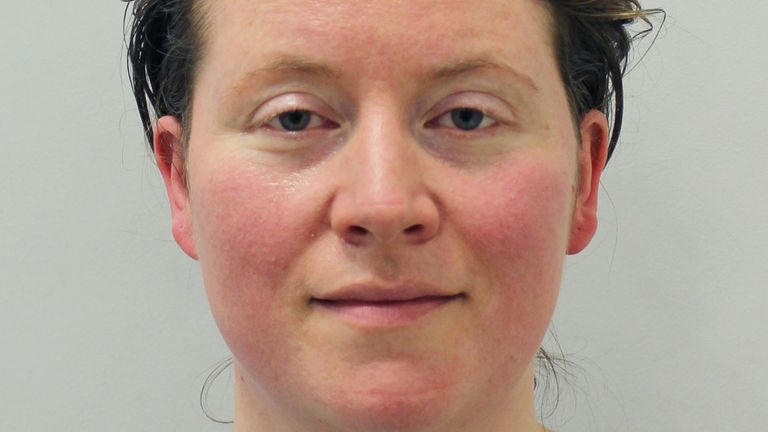
Jemma Mitchell, 38, became the first woman in England and Wales to be sentenced live on television for killing Mee Kuen Chong, 67, also known as Deborah, and dumping her headless body in some woodland in Salcombe, Devon, more than 200 miles away.
Sentencing her on Friday, Judge Richard Marks KC described her as “extremely devious”.
“You have shown absolutely no remorse,” he told her at the Old Bailey. “It appears you are in complete denial as to what you did, despite the overwhelming evidence against you.
“The enormity of your crime is profoundly shocking, even more so given your apparent religious devotion as well as the fact that Deborah Chong was a good friend to you and had shown you good kindness,” he said.
Judge Marks said Mitchell and her mother were living in a house in Willesden, northwest London, and had been cheated out of most of the £230,000 they paid two builders to add another floor to the property.
Image:Mee Kuen Chong, who was also known as Deborah
Mitchell denied having anything to do with her death and declined to give evidence during the trial.
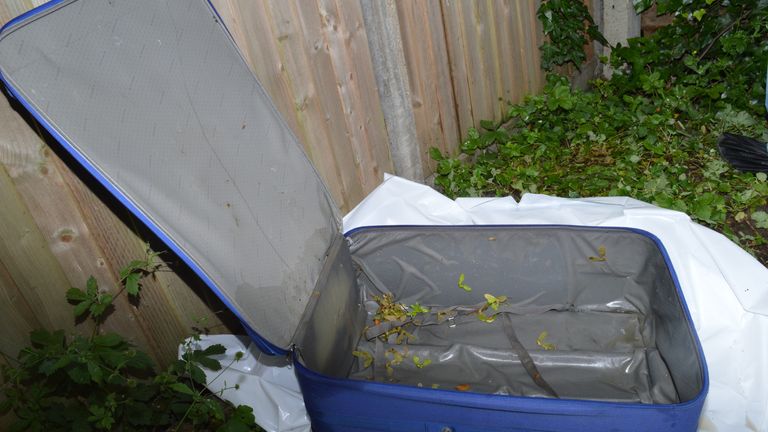
Jurors viewed CCTV footage of Mitchell arriving at Ms Chong’s home in Wembley, northwest London, carrying a large blue suitcase on the morning of 11 June last year.
More than five hours later, she emerged from the property with the suitcase appearing bulkier and heavier.
Judge Marks said: “That large suitcase contained Deborah Chong’s body. I have no doubt that you killed her when inside her house.”
CCTV of Mitchell with the blue suitcase in London
After Ms Chong’s lodger reported her missing, Mitchell claimed she had gone to visit family friends “somewhere close to the ocean”.
The prosecution said Mitchell stored her remains in the garden of the house she shared with her retired mother until 26 June when she put the suitcase in a car she had hired and drove down to Devon.
Image:Woodlands in Salcombe, Devon where Ms Chong’s remains were found
Image:The blue suitcase used to transport Ms Chong’s body
Headless body found by holidaymakers
On her way to Salcombe, Mitchell was forced to drive into a service station after the car blew a tyre. A repairman who changed the wheel described an “odd musty smell” inside the vehicle, jurors heard.
After the delay, she dumped her body and her head near Bennett Road in Salcombe.
Ms Chong’s headless corpse was found by holidaymakers the next day. Her skull was recovered a few metres away from the body following a police search.
A post-mortem examination confirmed that Ms Chong had suffered a skull fracture along with other injuries consistent with an assault.
Experience in dissecting bodies
The court heard Mitchell and Ms Chong, who met through church,had exchanged several messages about renovating Mitchell’s home.
They were both “devout Christians”, the judge added.
Mitchell decided to murder her victim after she pulled out of giving her the £200,000 to pay for the refurbishment of her £4m home.
The judge said Ms Chong had a “serious history of mental illness”, was on anti-psychotic medication, and was “particularly vulnerable, both mentally as well as physically” before she died.
He also said as part of her degree in human sciences from King’s College London, Mitchell “was taught anatomy” and “had experience in the dissection of human bodies”.
“That no doubt stood you in good stead,” he said.
Judge Marks said there were three aggravating factors to Mitchell’s crimes – her planning, her victim’s vulnerability and “the chilling aspect” of what she did to the victim’s body after she died.
She had a previous conviction for breach of a non-molestation order, but was of “effective previous good character”.
Following her conviction, Detective Chief Inspector Jim Eastwood, who led the investigation, said: “Mitchell has never accepted responsibility for Deborah’s murder so there are questions which remain unanswered.
“Why she kept her body for a fortnight, why she decapitated her, why she deposited her remains in Salcombe.
“What we do know is that these were evil acts carried out by an evil woman and the only motive clearly was one of financial gain.”
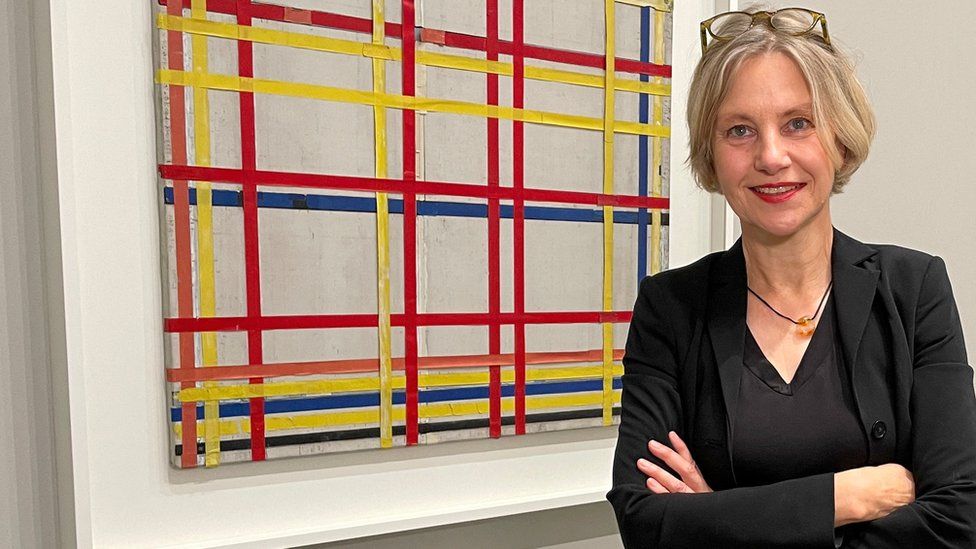
An art historian says , an artwork by the abstract Dutch painter Piet Mondrian has been hanging upside down in various galleries for 75 years.
Despite the recent discovery, the work, titled New York City I, will continue to be displayed upside down in order to avoid damage.
The 1941 photograph was first shown in 1945 at New York’s MoMA.
It has hung at the art collection of the German state of North Rhine-Westphalia in Düsseldorf since 1980.
Curator Susanne Meyer-Büser noticed the longstanding error when researching the museum’s new show on the artist earlier this year, but warned it could disintegrate if it was hung the right side up now.
New York City I is an adhesive-tape version of the similarly named New York City painting by the same artist.
‘Wrong way around’
“The thickening of the grid should be at the top, like a dark sky,” Meyer-Büser told The Guardian, about the unfinished and unsigned red, blue and yellow striped lattice artwork.
“Once I pointed it out to the other curators, we realised it was very obvious. It is very likely the picture is the wrong way around,” she added when contacted by the BBC.
IMAGE SOURCE,PETRA WISCHGOLL Image caption, Curator Susanne Meyer-Bueser poses in front of the Piet Mondrian painting New York City I in the Kunstsammlung NRW
The evidence seems to bear this theory out, as the similarly-named New York City, which is on display at Paris’s Centre Pompidou, displays a thickening of lines at the top, rather than the bottom.
Furthermore, a photograph of the influential Dutchman’s studio, taken days after his death shows the same picture sitting on an easel the other way up.
The image was published in the American lifestyle magazine Town and Country in June 1944.
Mondrian, who was born in the Utrecht region of The Netherlands in 1872, is regarded as one of the greatest artists of the 20th Century, and a pioneer of the modern abstract style, minimalism and expressionism.
As the co-founder of the De Stijl art group and movement, and in search of “universal beauty”, he evolved a non-representational form which he termed Neoplasticism.
Moving to Paris in 1911, he experimented in Cubism, but his name is these days synonymous with modernism.
His work had a huge influence, not only on the art world but also in the fields of design, architecture and fashion.
According to the Düsseldorf gallery, His recently re-visited series of New York City paintings from 1941 and 1942, shortly before his death aged 71, was seen as “a revolution in Mondrian’s strict concept of Gestalt” [shape].
The gallery describes Referring to New York City I as “a lively, dynamic rhythm of coloured, red, blue and yellow stripes [which] took the place of the radically reduced pictorial language with the geometric structure and the reduction to the primary colours as well as black and white.”
Taiwan has askedChinese veterinary experts to assist in the treatment of a critically ill male panda.
Tuan Tuan, a giant panda, was given to Taiwan by Beijing in 2008, along with his breeding partner, Yuan Yuan.
However, the 18-year-old bear has become increasingly ill, and Taiwanese zookeepers believe he has a brain tumour.
Taiwan has called on vets from mainland China to help assess Tuan Tuan as he moves into end-of-life care.
The two pandas were donated during a period of warmer relations between the neighbours, although their names combined mean “reunion” or “unity” – probably a reference to Beijing’s desire to reabsorb Taiwan one day.
Relations have since soured between China and Taiwan, which Beijing regards as a breakaway province.
It is not clear when the vets will arrive, but Taiwan officials said they were processing their visa applications.
Since their arrival, Tuan Tuan and Yuan Yuan have become huge attractions in Taiwan.
“He was small and so cute when he first got here,” Heng Ling-lin, who brought her children to Taipei Zoo to sign get-well notes, told the AFP news agency.
“He was like everybody’s baby,” she added. “It breaks my heart now to see him like this.”
Downing Street announced that the UK and France will step up cooperation to combat migrant crossings in the English Channel.
Rishi Sunak spoke with President Emmanuel Macron for the first time as Prime Minister on Friday.
According to No. 10, the two men expressed a commitment to “deepening” their work to prevent “deadly journeys.”
A statement from the Elysée Palace after the call made no specific mention of migrant boats.
There have already been promises to deepen cooperation earlier in October after then-Prime Minister Liz Truss met with Mr Macron in Prague earlier this month.
The pair pledged an “ambitious package of measures” to be announced this autumn.
Downing Street has refused to give details on any future plans or when an announcement will be made.
But Mr Sunak is said to have “stressed the importance for both nations to make the Channel route completely unviable for people traffickers”.
In 2021, the UK agreed to pay France £54m to boost patrols along France’s northern coast.
A report, in The Times, says Mr Sunak wants to close a new deal with France, including targets for how many boats are stopped.
It has been claimed that the French “pulled the plug” on a draft agreement back in the summer after Liz Truss said the “jury’s out” on whether Emmanuel Macron was a friend or foe.
The Elysée has previously declined to comment while Ms Truss and Mr Macron appeared to patch things up after their October meeting in Prague.
The new prime minister chose on Friday to strike a markedly warm tone towards the French president.
Following their phone call, No 10 emphasized areas of cooperation – including climate change, defence, the war in Ukraine, and energy.
According to Downing Street, Mr Sunak “stressed the importance he places on the UK’s relationship with France – our neighbour and ally”.
The Elysée said Mr Macron spoke of his willingness to deepen ties in defence and energy.
The UK and France have clashed in recent years over post-Brexit fishing rights, the AUKUS security pact, and migration.
In November 2021, 27 people died in the worst-recorded migrant tragedy in the Channel.
But the UK was disinvited from a ministerial meeting on the issue after Mr Macron accused Boris Johnson– prime minister at the time – of not being serious.
There is speculation that Mr Sunak may forge a more positive relationship with the French president than with his two predecessors.
They are close in age, often seen as “slick” in appearance, and worked in banking before turning to politics.
IMAGE SOURCE, REUTERS Image caption, They clashed but before leaving office, Mr Johnson described the French president as “a très bon buddy”
“I think in terms of style, they’re quite compatible,” says Lord Ricketts, who previously served as the UK’s ambassador to France.
However, the cross-bench peer notes that in substance, they’re a long way apart on certain issues.
Mr Sunak was a Brexit supporter in 2016 while Emmanuel Macron is passionately pro-European.
The new prime minister has also signalled he intends to push ahead with certain policies, strongly disliked by the Elysée.
They include sending asylum seekers to Rwanda and pursuing legislationthat could allow ministers to override parts of the post-Brexit deal for Northern Ireland.
“But at least there’ll be a more serious dialogue than there ever was under Boris Johnson, provided Rishi Sunak can stay away from using France as a political football,” says Lord Ricketts.
In August, before leaving Downing Street, Boris Johnson said Emmanuel Macron was a “très bon buddy” and described the UK-France relationship as one of “huge importance.”
King Charleshas been named the ceremonial commander of the Royal Marines, a position previously held by his son, Prince Harry, Duke of Sussex.
Prince Harry was Captain General of the Royal Marines until he retired and moved to the United States.
The position was previously held by the King’s father, the Duke of Edinburgh, as well as his grandfather, George VI.
The King said he was “exceptionally proud” to follow in their footsteps.
The Duke of Edinburgh held the position of Captain General for 64 years before he was succeeded by Prince Harry in 2017.
Prince Harry’s position was removed in February 2021, along with his other honorary military titles and patronages, after he stopped being a working royal.
This week, the prince’s publishers announced that his memoirs, with his view of these events, would be published in January.
The announcement of the King as the new Captain General was made on the 358th anniversary of the founding of the Royal Marines, in October 1664 during King Charles II’s reign.
King Charles III praised the Royal Marines for their “courage, determination, self-discipline, and a remarkable capacity to endure in the most extreme environments”.
After being stabbed and witnessing “a person die in front of me” in an Italian supermarket, Arsenal’s Pablo Mar said he felt “lucky” to have avoided life-threatening injuries.
Mar underwent surgery at Milan’s Niguarda hospital to reconstruct two injured muscles in his back.
A 47-year-old supermarket employee was killed in Thursday’s attack in Milan, according to Italy’s Carabinieri police.
Another employee was left injured along with four customers, including Marí.
The 29-year-old, who is on loan at Monza from Arsenal, had been walking around the supermarket with his wife and son when he was stabbed in the back, reports Gazzetta dello Sport.
“After the hard moment we experienced yesterday, both my family and I want to communicate that fortunately, we are all fine despite the circumstances,” Mari wrote on Twitter on Friday afternoon, alongside a picture from his hospital bed.
“We want to thank all the messages of support and affection that we are receiving.
“In addition, we want to send our condolences and all our strength to the family and friends of the deceased person, and we sincerely wish that all injured people recover as soon as possible.”
Después del duro momento que vivimos ayer, tanto mi familia como yo queremos comunicar que afortunadamente estamos todos bien a pesar de las circunstancias, y agradecer todos los mensajes de apoyo y cariño que estamos recibiendo. pic.twitter.com/8NywRczNS8
Monza said Marí’s surgery went well, adding that he will remain in the hospital for two or three days before startingthe rehabilitation process.
“This type of muscle injury usually requires two months of rest before one can resume physical activities,” the club said.
Italian outlet Corriere della Sera reported that former Napoli player Massimo Tarantino was among those who immobilised and disarmed the attacker before police arrived.
“I’m not a hero. I didn’t do anything special,” said 51-year-old Tarantino.
Monza chief executive Adriano Galliani said the club have asked the Italian football league to postpone Monday’s Serie A match at home to Bologna scheduled for Monday because the team is “in a total state of shock”.
“I’m happy with the outcome of the surgery, but we asked to postpone the next league game,” Galliani told Gazzetta.
“Last night our players were crying. The boys are in shock. We do not know if our request will be accepted or not.”
Marí joined Arsenal from Brazilian side Flamengo in January 2020 and played 19 times for the Gunners before joining Udinese on loan at the start of the year.
The husband of US House of Representatives Speaker Nancy Pelosi has been “violently assaulted” after a break-in at their California home.
Paul Pelosi, 82, was taken to hospital and is expected to make a full recovery, a spokesperson said.
The suspect, who has not been named, is in custody but the motive for the attack is unclear.
Mrs Pelosi was not at the San Francisco residence when the incident took place on Friday morning.
“The Speaker and her family are grateful to the first responders and medical professionals involved, and request privacy at this time,” a spokesman for the senior Democrat said.
Two people who spoke on condition of anonymity told the Associated Press that the attacker had specifically targeted the residence.
The assailant used a hammer to gain entry, two sources told CBS News, but it is unclear if it was used to attack Mr Pelosi.
Mrs Pelosi is one of the most powerful politicians in the country. She was re-elected to a fourth term as Speaker of the House of Representatives in 2021, making her second in line to the presidency after Vice-President Kamala Harris.
The Baltimore native has represented the San Francisco area in Congress since 1987, and typically splits her time between California and Washington.
She is currently fundraising and campaigning with Democrats around the country ahead of the midterm elections on 8 November, and was in Washington with her security detail at the time of the attack.
Her husband, the multimillionaire founder of a venture capital firm, resides primarily in San Francisco where he was born and raised.
The couple have been married since 1963 and have five children. Their combined net worth, primarily from Mr Pelosi’s investments, has made the speaker one of the richest members of Congress.
The FBI and the US Capitol Police, which has a field office in California, are assisting San Francisco police with the investigation.
Members of Congress have been on high-alert over security threats since the riot at the US Capitol in January 2021. Mrs Pelosi’s office in the building was ransacked by supporters of then-President Donald Trump during the attack.
And last year, her San Francisco home was reportedly vandalised with graffiti saying “cancel rent”.
Senior Republicans, such as Senate Leader Mitch McConnell, have also been targeted by vandalism in recent times and politicians have raised concerns about an increase in threats.
IMAGE SOURCE,REUTERS Image caption, FBI agents work outside the couple’s San Francisco home – the agency and US Capitol Police are assisting the investigation
In a statement, the White House said President Joe Bidenwas “praying for Paul Pelosi and for Speaker Pelosi’s whole family”.
Chuck Schumer, the top Democrat in the Senate, said: “What happened to Paul Pelosi was a dastardly act. I wish him a speedy recovery.”
Both added that they had spoken to Mrs Pelosi since the incident.
Earlier this year, Mr Pelosi was convicted of driving under the influence of alcohol and causing injury after he crashed his car. The financier pleaded guilty in August and was sentenced to five days in jail.
Rihanna has released her first solo single in six years, a song from the upcoming Black Panther sequel’s soundtrack.
Lift Me Up was released on Friday, following the singer’s social media tease of her return to music earlier this week.
The song will be featured in Marvel’s Black Panther: Wakanda Forever, which is due out in November.
Director Ryan Coogler said Rihanna’s involvement in the project was to honour the late actor Chadwick Boseman.
“Honestly, I think it was Chad,” he said. “A lot of improbable things needed to happen for it to come through and Rihanna was very clear that she did that for him.”
Boseman starred in the first Black Panther film and also appeared in Da 5 Bloods, 21 Bridges, and the James Brown biopic Get On Up.
He died in 2020, four years after being diagnosed with colon cancer. Last year, Boseman was posthumously nominated for an Oscar for his performance in Ma Rainey’s Black Bottom.
Coogler added: “We knew [Rihanna] was at a point in her life as well where she was focusing on different things – focused on business, motherhood, which is a big theme in our film. We were holding out hope that maybe it could work out and boy did it for this song.”
Lift Me Up has been co-written by Rihanna, Coogler, and Nigerian singer-songwriter Tems, who has previously worked with Drake, Justin Bieber, Future, Wizkid, Beyonce, and Khalid.
The song is produced and co-written by Swedish composer Ludwig Göransson, who scored the first Black Panther film as well as Creed, Venom, and Tenet.
It is downtempo but uplifting and sees Rihanna’s distinctive vocals projected over a smooth accompaniment of delicate keys and strings. The singer is accompanied by a subtle backing choir as the atmospheric song builds to its climax.
She sings: “Lift me up, hold me down, keep me close, safe and sound / Hold me when you go to sleep, keep me in the warmth of your love when you depart, keep me safe and sound.”
Fans warmly welcomed the release of the single on social media, with many joking via a string of memes that the song was making them levitate, but others describedit as a “disappointing” comeback and “definitely a movie soundtrack song”.
IMAGE SOURCE, REUTERS Image caption, Black Panther director Ryan Coogler said Rihanna wanted to pay tribute to the late actor Chadwick Boseman with the song
Lift Me Up is the first solo single from Rihanna since the release of her album Anti in 2016.
Since then, she has collaborated with other artists such as PartyNextDoor and N.E.R.D. and appeared on the hugely successful Wild Thoughts alongside DJ Khaled and Bryson Tiller.
But the singer has largely stayed quiet on the music front in recent years, as she focused on expanding her fashion, lingerie, skincare, and cosmetics brand Fenty, as well as recently having a baby boy with rapper A$AP Rocky.
She also appeared opposite Sandra Bullock and Cate Blanchett in 2018’s film Ocean’s 8, an all-female reboot of the Ocean’s 11 franchise.
Rihanna will headline the prestigious half-time show at February’s Super Bowl in Arizona, her first live performance in over five years.
Her involvement in Wakanda Forever will increase fans’ anticipation for the sequel to Black Panther, which was a huge box office success and scored a best picture nomination at the Oscars.
The movie, released on 11 November, will see stars including Letitia Wright and Lupita Nyong’o reprise their roles as the kingdom of Wakanda fights to protect itself from invading forces in the wake of King T’Challa’s death.
He went on to say that Moscow had carried out 4,500 missile strikes and over 8,000 air raids in total.
Mr Zelensky, speaking from Kyiv and standing next to what appeared to be a downed Iranian Shahed drone, pledged to “clip the wings” of Moscow’s air power.
Western officials believe Iran has supplied a large number of drones to Russia, but Moscow and Tehran deny it.
It comes as US Secretary of State Antony Blinken called Russia’s aggressive use of drones “appalling”.
The top US diplomat accused Russian commanders of using the devices to “kill Ukrainian civilians and destroy the infrastructure they rely on for electricity, for water, for heat” during a visit to the Canadian capital Ottawa.
“Canada and the United States will keep working with our allies and partners to expose, to deter, and to counter Iran’s provision of these weapons,” Mr Blinken said.
In recent weeks, Russian attacks have targeted Ukraine’s civilian infrastructure, damaging the country’s electricity and water supply just as temperatures begin to drop.
Western countries say Iran is supplying its domestically developed drones to Moscow and that Iranian military experts are on the ground in Russian-occupied Crimea to provide technical support to pilots.
Kyiv has identified the drones used in some attacks on its infrastructure as Iranian Shahed-136 drones. They are known as “kamikaze” drones because they are destroyed in the attack – named after the Japanese fighter pilots who flew suicide missions in World War Two.
But Tehran has repeatedly denied that it has struck any arms deal with the Kremlin, and Moscow also denies using Iranian drones.
On Wednesday, Iran’s Foreign Minister Hossein Amir-Abdollahian called the accusations “baseless” and urged Ukraine to “present any evidence supporting the accusations”.
“If… it becomes clear to us that Russia has used Iranian drones in the war against Ukraine, we will definitely not be indifferent about this issue,” he added.
Tehran’s regional adversary, Israel, has also attacked Iran over the alleged exports. During a meeting with US President Joe Biden at the White House on Thursday, President Isaac Herzog slammed the regime’s activities.
“The fact that Iran, following its activities in killing its own citizens, in working towards nuclear weapons endlessly, endangering the entire world and the region — and now killing innocent civilians in Ukraine, clearly that gives you a picture of what Iran is all about,” Mr Herzog said.
Prior to the visit, he had pledged to share “proof” with Mr Biden that Iran was supplying the weapons.
Meanwhile, US officials have said they will supply Ukraine with an additional $275m (£237m) of military aid, according to the Associated Press.
The assistance is expected to be used to restock ammunition for Ukrainian artillery systems,including the HIMARS launchers that Kyiv’s forces have used to great effect.
On the ground, fighting has slowed in recent days, with a much anticipated Ukrainian advance on the southern city of Kherson stalled due to poor weather.
Facebook parent Meta Platformsreported earnings Wednesday that fell short of expectations, pummeling the company’s stock in after-hours trading as the social media giant with metaverse ambitions scrambles to cut costs amid advertising headwinds spurred by concerns about the global economy.
KEY FACTS
Meta reported a net income of $4.4 billion, or $1.64 per share, cratering 49% year over year and falling short of expectations for $1.89 per share; revenue of $27.7 billion fared slightly better than the $27.4 billion analysts were forecasting, but down 4% from one year ago.
The company also said its revenue this quarter would fall between $30 billion and $32.5 billion—toward the lower end of average analyst expectations.
Meta shares sank 11% to $115 immediately after the report, pushing losses to more than 61% this year alone—far worse than the tech-heavy Nasdaq’s 30% decline.
In a pre-earnings note, Bank of America analyst Justin Post downgraded shares of Meta to a neutral rating, saying the firm’s investment in the immersive virtual reality world known as the metaverse “will remain [an] overhang” on the stock, costing an estimated $10.7 billion next year even as economic concerns potentially intensify.
The report comes less than a month after Meta announced plans to cut costs by restructuring some teams and instituting a hiring freeze as advertising revenue growth slows amid economic pressures, which are quickly mounting: On Monday, an investor with more than $300 million worth of shares urged the company to further slash expenses by laying off employees.
In the earnings release, Meta CFO David Wehner said the company has “increased scrutiny on all areas of operatingexpenses” but it also said its employee headcount would remain roughly flat next year from current levels; in the third quarter, the company’s free cash flow, which measures cash left over after operating expenses, cratered to $173 million from $9.5 billion a year ago.
FORBES VALUATION
$47.2 billion. That’s how much Meta founder Mark Zuckerberg,38, was worth when the market closed on Wednesday. At one point worth more than $130 billion, Zuckerberg’s fortune has plunged by more than 60% since Meta stock peaked in September 2021.
KEY BACKGROUND
Global economies have started to slow down as central banks including the Federal Reserve work to combat inflation by tempering consumer demand with higher interest rates. Recent earnings reports have started to reflect the pressures. On Tuesday, Alphabet stock plunged after the Google parent missed third-quarter sales and profit expectations. The company’s YouTube advertising unit posted a much weaker-than-forecast $7.1 billion, versus average expectations of about $7.5 billion. In a note, analyst Adam Crisafulli of Vital Knowledge pointed out that YouTube and social media advertising is typically much less resilient during economic downturns than other types of ads.
CRUCIAL QUOTE
“I had hoped the economy would have more clearly stabilized by now,” Zuckerberg reportedly told employees at a meeting outlining the company’s cost-cutting plan last month. “But from what we’re seeing it doesn’t yet seem like it has, so we want to plan somewhat conservatively.”
The teenager’s remains were found last week, more than three years after she went missing on her way to work at a finance company in Milton Keynes.
The family of Leah Croucher have said their “faint glimmer of hope” of her being alive has been “brutally extinguished” after the teenager’s remains were found in the loft of a house.
In a tribute to their “bright, funny young” daughter, the 19-year-old’s family said they knew the “heartbreaking news” of her death would “come one day” but they are “devastated” to have been proven right
“The deepest, darkest grief that we, Leah’s family and friends are experiencing over the past weeks shows us that glimmer was actually, foolishly, a shining beacon of hope, which has now been brutally extinguished in the cruellest and harshest of ways,” they said.
“It has been a long way to fall back to reality.”
Leah’s remains were found last week, more than three years after she went missing on her way to work at a finance company in Milton Keynes.
Items belonging to the teenager, who was a European Taekwondo champion, were also found in the same property in Loxbeare Drive, Furzton, a few minutes from her home.
Her family described feeling a “pain almost too big to bear” following her disappearance, but added: “There is little that compares to the deep chasm Leah’s death has brought to us”.
Harry writing a book was controversial enough – but the title is another stab at the firm
“Leah was a bright, funny young woman who was a kind, loyal, helpful, and caring soul,” their statement continued.
“Her smile lit up the room, and her laugh cheered all who heard it. Leah had a wonderful sense of humour, and found joy in everything she did.”
‘We will soon be able to lay Leah to rest’
They added that while their “lives are darker”, they have taken “solace” in believing Leah “will only finally die when the last of us who remember her die”.
“We will soon be able to lay Leah to rest, as she deserves, and say our final goodbyes, be able to grieve at Leah’s graveside and lay flowers for her,” her family added.
“We have missed Leah for so long already, and now have the rest of our lives to mourn her, as well as the memories we will never be able to make.
Writing to Leah directly, the family said: “We hope soon that we will be able to look at pictures of you again, but they are too painful to even think about at the moment.”
“Give Haydon a big kiss and a big hug from us baby, we miss and love you both so much, but hope that you are together now, looking out for each other as always.
The tribute was referring to Haydon Croucher, Leah’s brother, who died on 24 November 2019, nine months after she went missing.
Who is the prime suspect?
The prime suspect in Leah’s murder investigation has been named by police as convicted sex offender Neil Maxwell, who was found dead on 20 April 2019 after he took his own life.
Police started searching the property on 10 October this year after receiving a tip-off from a member of the public.
Officers had visited the house on two earlier occasions but insisted this was the first time Leah’s disappearance was linked to the address – despite conducting about 4,000 house-to-house calls.
At the annual meetings of the World Bank and IMF this month, lobbyists circulated photographs of Ghana’s Finance Minister Ken Ofori-Atta sitting together with Britain’s Chancellor of the Exchequer Kwasi Kwarteng.
Before the end of the week, Chancellor Kwarteng was on a flight back to London, forced to cancel his participation in the rest of the summit because his job was at risk. Within days, the British government had collapsed, and Prime Minister Liz Truss had joined Kwarteng on the back benches.
This week Ghana’s Ofori-Atta faces a rebellion from MPs in his own party, calling for his resignation and accusing him of mismanaging the economy. The risk that London’s political drama plays out similarly in Accra must worry Ofori-Atta and President Nana Akufo-Addo.
Common shaky ground
On the surface, both men are relatively similar; Ghanaian economists and bankers are in charge of the fiscus of two countries with a shared colonial experience.
However, there is a deeper layer to the symbolic ties between the Chancellor and the Minister.
Kwasi Kwarteng’s woes are universally acknowledged to have stemmed from his botched mini-budget. At a time of widespread anguish about inflation and interest rate hikes in America, the mini-budget, with its ideological flourish of “the largest tax cuts since 1972” and unfunded growth pills, rang of neoliberal excess.
Interestingly, the heaviest backlash came from the markets. A Conservative Prime Minister and her Chancellor didn’t expect the blowback to come from the financial heartlands.
After all, caps on bankers’ bonuses were to be scrapped, and the highest tax rate (for the top 1.1%, roughly a third of whom work in financial services) was to be brought down from 45% to 40%. Planned corporation tax increases were dropped.
And a raft of regulations bogging down business was to be cut’ more free zones, with even fewer taxes and regulations, created. A Conservative newspaper, the Daily Mail, crooned: “A Tory budget at last!”
Surely the grandees of the historic square mile of central London, the fount of global capitalism, would jump on board? The charm offensive of the Chancellor, himself a JPMorgan alum and longtime finance guy, must have seen to that?
They didn’t.
Analysts deciphered the consequences of a mini-budget to include a massive spate of borrowing at a time of rising interest rates, an undoing of the Bank of England’s efforts to tackle inflation, and a squeeze of middle-class incomes (in the ~£60,000 to ¬£120,000 band), with potential effects on demand.
The market took a longer horizon and broader-demographic perspective. That aligns with the increasingly nuanced view of the link between pro-growth tax cuts and market benefit that has emerged from the vast literature on the Trump tax cuts.
So, the markets revolted.
Yields on long-term government securities, a measure of investors’ sense of the state’s creditworthiness and likely cost of future borrowing, rose by a staggering 150 basis points. The pound sterling sank immediately.
Lunging for stability, the blindsided Bank of England announced a £65 billion program to buy back government bonds caught in therout, reversing an earlier plan to sell £80 billion more into the market. Only the wholesale repudiation of the Kwarteng-Truss mini-budget could calm the markets.
Off the straight and narrow
It is mainly the short-lived tenor of Britain’s most recent episode of fiscal adventurism that marks it out from Ghana.
In their six years in power, the ruling party in Ghana has sought to transform the country’s finances into a rollercoaster capital market play. It has devised various unprecedented fiscal devices to do so.
It has securitised future tax streams, grabbed the cash up-front, and splashed on massive capital and welfare projects. The securitisation extravaganza has touched taxes meant to fund the educational sector, energy sector levies, and road taxes.
As future revenue streams have been packaged into products on the capital markets and sold and spent upfront, the government’s budget has become rigid, unable to respond to international pressure. The government’s love for fiscal gaming encouraged support for a domestic debt securities market (GFIM) in Ghana.
At its birth in 2015, total trade turnover hovered around cedis 5 billion in local currency units. In the first nine months of this year, trade volumes exceeded cedis170 bn.
Even adjusted for inflation, it has grown ten times, but almost all securities traded are government-issued. This means they reflect more than anything the government’s unrelenting use of the capital markets to fund a degree of fiscal expansion never before witnessed. And not just domestically.
From tripling Eurobond issuances, to opening up domestic debt to foreign investors, Ghana’s government took capital market liberalisation to every possible extreme. At one point, Ghana ranked number five worldwide for foreign ownership of domestic debt.
International capital maestros like Michael Hasenstab, at the height of his “Emerging Markets Bond King” reputation, piled in. In 2017, Ghana rode on the back of such powerbrokers to launch Africa’s largest-ever dollar-denominated domestic bond.
Bills, bills, bills
All this fiscal brinksmanship came at a cost: debt servicing.
Today, Ghana is on course to spend nearly 60% of all government revenue just dealing with debt. This is up from about 10% a decade and a half ago when the international community forgave a chunk of Ghana’s debt pile from previous decades of excesses.
Now, Ghana’s capital market friends have brought out the whips. They have shut her out of the market and are dumping the bonds they bought previously.
Their actions have finally driven Ghana to the IMF for much-needed disciplining. Inflation is hovering around 40% and the cedi has plunged from about 5.8 to the dollar at the beginning of the year to more than 14.5 to the dollar.
It seems that the government’s bubbly enthusiasm for capital market devices, and the massive hoard of fees and commissions (some shared by companies founded by the Finance Minister and his deputy), have not been sufficient to keep the love story going.
These days, far from endearing politicians to the markets, neoliberal fiscal adventurism is a sure way to invite their painful censure.
People are avoiding buying soap and deodorant because they are already struggling to pay their other bills.
Thousands of people are refusing to go to work because they cannot afford basic hygiene products, according to a charity.
A report suggests that 3.2 million adults in Britain are in hygiene poverty and many are ashamed to go to work because they cannot afford items such as soap and deodorant.
The Hygiene Bank, which conducted the research with YouGov, said 12% of people they’d questioned had avoided facing colleagues as a result of this “hidden crisis”.
Chief executive Ruth Brock said: “It’s much more widespread than we feared, it’s increasing, and it’s disproportionately impacting the most vulnerable.
“I think it just doesn’t occur to people in the same way that fuel and food poverty do.
“But the truth is by the time you’re not switching on your heating or you’re going to a food bank for food essentials, you’ve stopped buying essential hygiene products weeks before.”
According to the report, people in hygiene poverty were most likely to go without shaving products, deodorant, washing powder, and other cleaning products.
A quarter of the 2,200 people asked said they had gone without a loo roll or soap, and 30% of women had not bought period products.
Hygiene Bank was set up in 2018 after Lizzy Hall watched the Ken Loach movie I, Daniel Blake, in which a single mother steals sanitary towelsand deodorant. People donate products to charity which are then distributed to organisations such as charities and schools which pass them on to people who need them.
One mother said: “I wash my hair once a week now, used to be every other day… I don’t buy body wash anymore, I use the froth from the shampoo.”
‘A toss-up between toothpaste and heating’
Another said that it was regularly a “toss-up” in her house between buying toothpaste or having the heating on for a few minutes.
Half of the people in hygiene poverty said that it made them feel anxious or depressed and a similar number said they were ashamed and embarrassed.
One person said: “I used to go out and see my friends, but I got anxiety about the way I looked and smelt, so I became a recluse, I was so upset that my life had changed.”
Rising fuel and food prices have exacerbated the problem and new figures show almost half of UK adults are struggling to make ends meet.
Data from the Office for National Statistics released on Tuesday showed that 45% of adults who pay energy bills were finding it very, or somewhat, hard to afford them, up from 40% in June.
Separate data also showed that the price of the lowest-priced supermarket items had risen by 17%.
The controversial Russianban on promoting so-called “gay propaganda” appears to be expanding to include all adults.
The move is a toughening of an existing 2013 law that makes providing LGBT information to children a criminal offense.
Those found guilty face heavy fines for promoting what Russia refers to as “non-traditional sexual relations.”
The initial approval of the extension was voted through by the Russian State Duma unanimously.
Earlier this week, officials had urged politicians in Russia’s lower house of parliament to enact the extension – portraying it as part of a broader battle over civilisational values with the West and linking it to the decision to invade Ukraine.
Under the proposal, information about “non-traditional lifestyles” or “the rejection of family values” would be considered legally the same as pornography, the promotion of violence, or stoking racial, ethnic, and religious tensions.
It also bans the “propaganda of paedophilia” – which the Russian government often conflates with being gay.
Another element of the extensions prohibits information that might “cause minors to desire to change their sex”, a reference to transgender people.
If enacted, the law would allow any information on the internet discussing LGBT topics to be blocked and films deemed to contain positive depictions of being gay to be banned
Human rights campaigners and LGBT groups say the extension means that any act or public mention of same-sex couples is functionally being criminalised.
The wide-ranging ban also extends to advertising and books – both non-fiction and literature – raising censorship concerns from publishers, who have warned of the risk that it could even affect classics of Russian literature.
The law sets out fines of between 50,000 roubles (£705; $815) and 400,000 roubles, while non-Russians who violate the ban face expulsion from the country.
The bill has broad support but will first be approved by the upper house of the Russian parliament, the Federation Council before it is ratified by President Vladimir Putin.
On Monday, politicians in the Duma heard claims from one of the law’s key backers that the information about LGBT people being shared with Russians was part of a “hybrid war” being waged by the West against the country.
Alexander Khinshtein, the head of the parliament’s information committee, said Russian soldiers fighting as part of the invasion of Ukraine were there to protect traditional Christian values.
But he saved some of his most trenchant criticism of the West for railing against the cartoons South Park and Peppa Pig.
He presented his colleagues with screenshots of the TV programmes that he claimed were part of a war being “waged against our society”, directing his ire at the episode of Peppa Pig in which Penny the Polar Bear appears with two mothers as a particularly egregious example of this so-called propaganda.
Khinshtein, an MP from Mr. Putin’s United Russia Party, told the Duma that the “special operation” – what the Russian government insists on calling its war in Ukraine – is happening “not only on the battlefield but also in the minds and souls of people”.
His rhetoric follows that of the Russian president, who has made being anti-gay a cornerstone of his domestic agenda and authoritarian rule.
In a speech annexing four Ukrainian territories last month, Mr Putin ranted about families with a “parent number one and a parent number two” – in what has been interpreted as a criticism of same-sex families.
The head of Russia’s Orthodox Church, Patriarch Kirill,has also backed the new legislation. He has portrayed Russia’s war in Ukraine as a battle between those who support pro-Western gay pride events, and those who reject them.
A transgender Thai celebrity media tycoon has paid $20 million (£17.1 million) for the company that runs the Miss Universe beauty pageants.
JKN Global Group, which produces television shows in Thailand, is led by Anne Jakapong Jakrajutatip.
She has appeared in Thai versions of reality shows such as Project Runway and Shark Tank.
Her purchase of the company, which was once co-owned by Donald Trump, comes as the pageant becomes more inclusive.
Ms Jakrajutatip has been outspoken about her experiences as a transgender woman.
She said in a statement that the Miss Universe Organizationwas a “strong, strategic addition” to her company’s portfolio.
“We seek not only to continue its legacy of providing a platform to passionate individuals from diverse backgrounds, cultures, and traditions but also to evolve the brand for the next generation,” she added.
“Our relationships with global partners and brands have never been stronger, and our progressive approach continues to position us at the forefront of our industry,” Miss Universe Organization chief executive Amy Emmerich and president Paula Shugart said.
IMAGE SOURCE,GETTY IMAGES Image caption, Donald Trump sold the Miss Universe Organization in 2015
The Miss Universe Organization was co-owned by Mr Trump from 1996 to 2015.
The former US president sold the company after two television partners said they would not broadcast the pageant, over comments Mr Trump made about illegal immigrants on his 2016 presidential campaign.
The remarks were made when she put on weight after winning contest in 1996, the Venezuela-born model said.
“When I purchased the pageants many years ago, they were in serious trouble,” Mr Trump said in a statement following the company’s sale to US talent agency WME-IMG in 2015.
“It has been a great honour making them so successful. The pageants are now in the hands of a great company that will shepherd them to even greater levels of success.”
Push for diversity
Ms Jakrajutatip’s purchase came as the Miss Universe pageant has moved towards being more inclusive.
From next year, organisers have said that married women and mothers will be allowed to compete for the title.
The competition was previously only open to women who had never been married and had no children.
The pageant has been held annually for 71 years and is broadcast in more than 160 countries.
Sir Jeffrey Donaldson, the DUP leader, has stated that his party does not believe any progress has been made to alleviate concerns about the Northern Ireland Protocol, and thus will not support the nomination of ministers to the executive.
Speaking to reporters today, Sir Jeffrey said: “We were given a clear mandate in the assembly elections that we would not nominate ministers to an executive until decisive action is taken on the protocol to remove the barriers to trade within our own country and to restore our place within the United Kingdom internal market.
“That remains our position.
“And so today we will not be supporting the nomination of ministers to the executive.”
He went on to say he would “not rest” until the issue was resolved.
In a money dispute, a woman was found guilty of murdering and decapitating her friend.
Jemma Mitchell, 38, was charged with murdering devout Christian Mee Kuen Chong and disposing of her headless body more than 200 miles away in order to inherit hundreds of thousands of pounds.
Mitchell, an alternative therapist, hit the 67-year-old over the head with a weapon at her London home and left her decapitated and badly decomposed body in woods in Salcombe, Devon, two weeks later.
The prosecution claimed Mitchell had planned to murder the divorcee and fake her will to inherit the majority of her estate which was worth more than £700,000.
Jurors were told that Mitchell came up with the plan to murder her friend, known as Deborah after she backed out of giving her £200,000 to pay for repairs for Mitchell’s £4 million dilapidated family home.
Mitchell denied having anything to do with her friend’s death and declined to give evidence at her trial.
A jury at the Old Bailey deliberated for seven hours before finding Mitchell guilty of murder.
Detective Chief Inspector Jim Eastwood, who led the investigation, described it as a “truly despicable crime”.
With the proceeds from his book sales, Prince Harry hopes to support British charities such as Sentebale and WellChild.
The title and details of Prince Harry’s memoir have been revealed.
The Duke of Sussex’s story, SPARE, is set to be released on January 10, 2023.
SPARE appears to be a reference to the phrase ‘heir and a spare – suggesting his attitude toward his place in the Royal Family.
Details of Princess Diana’s funeral are mentioned in the book, with the publishers saying: “SPARE takes readers immediately back to one of the most searing images of the twentieth century: two young boys, two princes, walking behind their mother’s coffin as the world watched in sorrow-and horror.
“As Diana, Princess of Wales was laid to rest, billions wondered what the princes must be thinking and feeling and how their lives would play out from that point on.”
Billed as “his story at last”, the book also delves into his “personal journey from trauma to healing”.
“With its raw, unflinching honesty, SPARE is a landmark publication full of insight, revelation, self-examination, and hard-won wisdom about the eternal power of love over grief,” a description of the book reads.
Prince Harry is hoping to support British charities, including Sentebale and WellChild, with donations from the proceeds of his book sales.
“Penguin Random House is honoured to be publishing Prince Harry’s candid and emotionally powerful story for readers everywhere,” said the publisher’s chief executive, Markus Dohle.
“He shares a remarkably moving personal journey from trauma to healing, one that speaks to the power of love and will inspire and encourage millions of people around the world.”
The memoir will be available in English in the UK, Ireland, Australia, New Zealand, India, South Africa, and Canada, and it will also be published in 15 additional languages, including Spanish, Italian, German, and Chinese.
Rishi Sunaktold Australia’s Prime Minister Anthony Albanese that he is “excited” about the two countries relationship.
During a phone call today, the new Tory leader told Mr Albanese that the free trade agreement, Aukus, and the UK’s potential accession to a comprehensive and progressive Trans-Pacific Partnership agreement were all examples of the two countries’ strong relationship.
A Downing Street spokeswoman said: “The prime minister said he was excited by the relationship between the UK and Australia, which was built on deep friendship and a shared approach to global challenges.”
The new prime minister also “welcomed” Australia’s strong support to Ukraine, including the decision to deploy the Australian military to the UK to train Ukrainian forces.
“Both looked forward to meeting in person at the G20 next month,” the spokeswoman added.
In his first week in office, the PM is fighting a battle on two fronts: over his home secretary and the widely anticipated government spending squeeze.
The latter has already stirred Tory unrest, with former minister Maria Caulfield suggesting the government should stick to the 2019 manifesto and saying indecision over pensions means “people start to worry”.
The PM notably hasn’t ruled out that the pensions triple lock could be on the chopping board, unlike his predecessor Liz Truss, as speculation mounts over a new age of austerity when the chancellor unveils his budget plans next month.
Rishi Sunak has repeatedly said “difficult decisions” are on the horizon.
The more immediate threat, though, is Suella Braverman.
The home secretary, whose backing boosted Mr Sunak’s leadership bid, broke the minister code “multiple times”, Tory MP Jake Berry said last night.
The former party chairman’s comments were seized on by Labour this morning – and they show backbench MPs are already able to make Mr Sunak’s life difficult.
This morning another Tory MP, Caroline Nokes, said there are “big questions hanging over this whole issue”.
There are indeed questions: Was the PM warned by the cabinet secretary when he appointed Mrs Braverman (as one source told political editor Beth Rigby)?
Why did he not heed that warning? And what were the exact circumstances of her breach of the ministerial code?
For a new prime minister who says he wants to do things differently, Mr Sunak may well need to address these questions directly.
One cabinet source told me the PM would not risk losing his home secretary, sacking her would certainly be a bold move that would rumble the carefully balanced semblance of party unity.
The government says she admitted her mistake and is allowed a second chance, but it is clear Mr Sunak’s decision to appoint Mrs Braverman has come at a political cost.
DISCLAIMER: Independentghana.com will not be liable for any inaccuracies contained in this article. The views expressed in the article are solely those of the author and do not reflect those of The Independent Ghana
After surviving drone attacks and bombing in their first few months of life, four lion cubs and a black leopard cub from war-torn Ukraine have found refuge in a Polish zoo, according to the International Fund for Animal Welfare (IFAW).
The cubs were transferred to animal rescue organisations in Kyiv and Odesa after a crackdown on the exotic pet trade in Ukraine, and are now in Poznan zoo in western Poland awaiting onward travel.
IFAW said it had partnered with a sanctuary in the United States and one in Europe to care for the cubs, who were bred in captivity and cannot be released into the wild.