Author: Abigail Ampofo

  • Calls grow for Mordaunt to withdraw as Tories aim for party unity – but she’s digging in

    As the race to get on the ballot enters its dying hours, Penny Mordaunt is digging in. 

    The number of MPs publicly backing her hovered around 20 all weekend and anyone hoping Boris Johnson’s exit would see a flurry of his backers joining her camp will be disappointed.

    Even Mr Johnson’s most passionate backers, like Nadine Dorries and James Duddridge, are rowing in behind Mr Sunak. It is clear which way the wind is blowing.

    With over half the parliamentary party now backing the former chancellor, the pressure is mounting on Ms Mordaunt.

    Former Chancellor George Osborne has taken to Twitter to urge her to step aside. He said that “she can’t command the support of a majority of MPs” and Mr Sunak is best placed to “reinforce the return of market credibility”.

    But there is no sign of Ms Mordaunt giving up – her team says she is continuing to speak to colleagues from across the party and is “in it to win it”.

    Allies say behind the scenes the numbers are closer than they seem.

    Some MPs do believe the membership should have a say and want a contest – not a coronation.

    Last time round Ms Mordaunt secured the backing of 105 MPs in the final round and there are still enough undeclared votes for her to make it onto the ballot.

    But one of the biggest jobs for whoever takes over will be uniting a deeply divided parliamentary party; with three hours to go calls for Conservative MPs to unite around Mr Sunak are getting louder.

    DISCLAIMER: Independentghana.com will not be liable for any inaccuracies contained in this article. The views expressed in the article are solely those of the author’s, and do not reflect those of The Independent Ghana

    Source: Sky News 


  • Blackford writes to Starmer on the next general election

    The SNP’s Westminster leader, Ian Blackford, has written to Labour leader Sir Keir Starmer, asking him to table a motion of no confidence.

    Writing to Sir Keir, Mr Blackford said: “As opposition leaders, we simply cannot stand idly by as the Tories attempt to impose their third prime minister in the space of three months. Now is the time to act.”

    He added that the “rules of Westminster” means that only the leader of the Opposition – Sir Keir – can submit a formal no-confidence motion.

    Mr Blackford acknowledges that the SNP and Labour will have different goals from the election but he hopes “we can act together to stop this shambles”.

    Meanwhile, the Liberal Democrats are trying to use a “presentation bill” to amend the law which repealed the Fixed Terms Parliament Act to call for a general election this year.

    The likelihood of this working is probably quite slim.

    Wendy Chamberlain, the Liberal Democrats’ chief whip, said: “We future of our country cannot be left to another Conservative stitch-up. It must be in the hands of voters who deserve a say through a general election now.”


  • Sunak addressing Tory Eurosceptics this morning

    Rishi Sunak is addressing a caucus of arch-Eurosceptic Conservative MPs this morning, Sky News understands.

    The European Research Group (ERG) was instrumental in opposing Theresa May’s Brexit deal.

    Mr Sunak is speaking to them this morning in Westminster.

    Both Mr Sunak and Penny Mordaunt were Brexit supporters, so will both be hoping for the ERG’s endorsement.

    Mark Francois, the chair of the ERG, will be making a statement at lunchtime today.

    Source:Skynews


  • Former Chancellor Osborne: Sunak will be PM by end of the day

    George Osborne, who was chancellor during the David Cameron years, doesn’t have much expectation of Penny Mordaunt persuading 100 backers and taking this to a vote of Tory members…

    Further, Mr Osborne thinks Ms Mordaunt should stand aside this morning.

    He said: “Penny Mordaunt should drop out this AM.

    “She can’t command the support of a majority of MPs.

    “An uncontested election of Rishi Sunak today would reinforce the return of market credibility and show the Tories have rediscovered a will to win.

    “She should then be part of his top team.”

    Mr Osborne said that Mr Johnson’s decision to not run in the campaign was a “very welcome and sensible judgment”.


  • Labour: Starmer rules out new oil and gas licences

    Sir Keir Starmer has said that a Labour government would not issue further gas and oil licences.

    It comes after his party helped clinch Liz Truss’s doom last week with a vote to outlaw fracking. Tory whips transformed it into a confidence vote in the government, and while Ms Truss survived the vote, the pandemonium that followed – with reports of MPs being abused – meant she was gone within 24 hours.

    Speaking to LBC this morning, Sir Keir said: “We accept there’s got to be a transition, so where there is oil and gas already being yielded that needs to continue as part of the transition, but no new sites, no new fields to be opened.

    “We need to transition to renewables. We can do it … we can double our onshore wind, we can triple our solar energy and we can quadruple our offshore wind – and the sooner we do that, the better.

    “I do think that new nuclear, as well, and hydrogen is part of the equation.”

    Sir Keir was asked about a number of topics.

    He said, “it was a straight no” when asked if the UK would rejoin the EU if Labour took power.

    And he said the only way to get people a “sustainable pay rise” is to grow the economy.

    Sir Keir said to do this institutions like the OBR and Bank of England need to be respected.

    He also said that there was “not a great deal” between Labour and the Conservatives on immigration – although he did say he would scrap the Rwanda scheme.

    Sir Keir said: “Now we don’t have free movement anymore, then you either have a pure numbers game or you have a points-based system that says ‘well, for certain types of jobs, certain types of roles here, you would get a number of points. I think that makes sense.

    “So, in that sense, not a great deal between the major parties on immigration.

    “We would have a slightly different approach and I would particularly want to welcome really good students.”

  • Hurricane Roslyn wreaks havoc on Mexico’s Pacific coast

    On Sunday, a major hurricane made landfall in western Mexico, bringing severe rainfall, flash flooding, and landslides.

    Roslyn, a category 3 hurricane, made landfall in Nayarit state, with maximum winds of 195 kilometres per hour (120mph).

    The hurricane has already been downgraded to a tropical cyclone and is likely to pass over the weekend.

    Images of its aftermath showed flooded roads and upturned vehicles in Nayarit, with collapsed rooves and damaged homes in the worst affected area Tecuala.

    Further south along the coast in Sayulita, people were pictured wading through and clearing mud from the streets in the area.

    Flash flooding and power outages also hit the town of Puerto Vallarta in neighbouring Jalisco state, but only minor damage was caused, according to the state’s governor.

    Upturned lorry in Tecuala, Nayarit state
    IMAGE SOURCE,REUTERS Image caption, Upturned lorry in Tecuala, Nayarit state

    People clearing the streets of mud in Sayulita, Nayarit state
    IMAGE SOURCE,AFP Image caption, People clearing the streets of mud in Sayulita, Nayarit state

    Flooded streets in Puerto Vallarta, Jallisco state
    IMAGE SOURCE,AFP Image caption, Flooded streets in Puerto Vallarta, Jallisco state

    Enrique Alfaro Ramirez said people who had evacuated the area have since started returning to their homes. Flights have also resumed, he said.

    He added, however, that beaches would remain closed for the time being.

    Prior to the hurricane’s landfall, more than a dozen municipalities in Nayarit and Jalisco set up emergency shelters for those who had been evacuated.

    In May, 11 people were killed after Hurricane Agatha struck southwestern Oaxaca state.

    Scientists from the US weather service have predicted a very active hurricane season for this year with above-average numbers of named storms, hurricanes, and major hurricanes.


  • Brazilian politician throws grenades towards police in Rio de Janeiro state

    A Brazilian politician has been arrested after he threw grenades at police officers who arrived at his home in the state of Rio de Janeiro to arrest him.

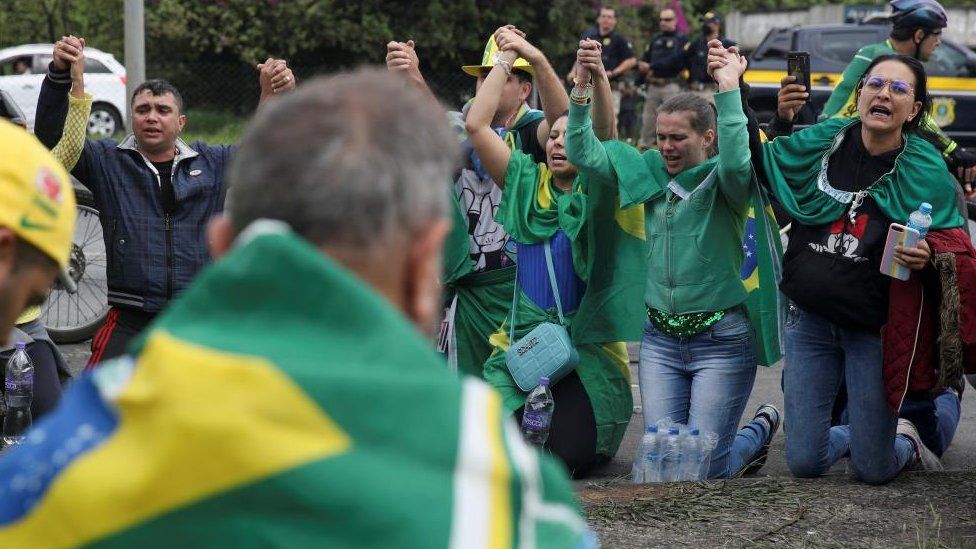
    Before surrendering on Sunday, Roberto Jefferson, an ally of far-right President Jair Bolsonaro, wounded two officers.

    Previously, a Supreme Court judge ordered his incarceration for disrespecting Chief Justice Cármen Luca. He had already been placed under house arrest for threatening her.

    Mr Bolsonaro reacted by saying those who fired at police should be arrested.

    The two officers were wounded by shrapnel from a grenade during the attack in Comendador Levy Gasparian, north of the state capital Rio de Janeiro. They were taken to the hospital and later discharged.

    Mr Jefferson, the 69-year-old former leader of the PTB political party, also fired a number of shots from a rifle, shattering the windshield of a police car.

    Supreme Court Judge Alexandre de Moraes had ordered the politician to be detained on the grounds that he violated the conditions of house arrest.

    Political tensions are high in Brazil ahead of Sunday’s presidential election run-off between Mr Bolsonaro and left-winger Luiz Inácio Lula da Silva.

    Lula – who is still seen as the front-runner – fell short of the 50% of valid votes needed to prevent a run-off in the first round earlier this month.


  • Protests in Berlin and other US cities in support of Iranian women

    Thousands of people took to the streets of Berlin and other US cities to show their support for Iranian women facing government repression.

    Protests have taken place in Berlin, Washington, and Los Angeles in solidarity with Iranian women who have been subjected to a violent government crackdown.


  • Rishi Sunak leads Penny Mordaunt in the final hours of the PM race

    After Boris Johnson announced his withdrawal from the campaign to become the United Kingdom’s next Prime Minister, Rishi Sunak has emerged as the frontrunner.

    Among Conservative MPs, the former chancellor presently has the most declared supporters.

    The focus now shifts to whether his remaining opponent, Penny Mordaunt, will satisfy the requisite 100 MPs when nominations end at 14:00 BST.

    Mr Johnson withdrew from the race to succeed Liz Truss on Sunday.

    The former prime minister – who was in No 10 until just seven weeks ago – claimed he had met the threshold required to stand but in a statement said “you cannot govern effectively unless you have a united party in Parliament”, adding that now was “simply not the right time”.

    Many of Mr Johnson’s supporters were caught by surprise at his withdrawal. Essex MP James Duddridge, who gave the first indication that Mr Johnson was intending to run in the Tory leadership race, simply tweeted: “Well that was unexpected. Off to bed!”

    With Mr Johnson out of the leadership race, several MPs have begun switching their nominations to the two remaining candidates.

    Some 180 out of 357 Tory MPs have gone public with who they are backing, with Mr Sunak garnering support from 155 and Ms Mordaunt securing 25 backers.

    Ms Mordaunt’s team said she was still in the running and within “touching distance” of getting enough backers, while Mr Sunak’s team said they were taking nothing for granted.

    Damian Green, a former cabinet minister in Theresa May’s government and who is backing Ms Mordaunt, said her numbers are “well above” the published figure.

    “We’re confident of getting to 100 before the deadline of two o’clock and putting to colleagues that the case that Penny is the person best positioned to unify the party,” he told BBC Radio 4’s Today Programme.

    If she does reach 100 backers, the race could then go to an online ballot of Conservative Party members, with the winner of that being announced by Friday.

    Penny Mordaunt in an interview outside the BBC on Sunday
    IMAGE SOURCE,PA MEDIA Image caption, Penny Mordaunt in an interview outside the BBC on Sunday

    Mr Sunak is the firm favourite to replace Ms Truss as PM and could do so by as early as Monday afternoon if Ms Mordaunt fails to meet the benchmark.

    Chancellor Jeremy Hunt, who scrapped many of Ms Truss’s major economic plans announced in September’s mini-budget, has endorsed Mr Sunak.

    In a piece in the Daily Telegraph on Monday, Mr Hunt said: “To restore stability and confidence, we need a leader who can be trusted to make difficult choices.

    “We have a leader who can do just that in Rishi Sunak.”

    He added that Mr Sunak had been “proved right” over his “unfunded tax cut” warnings during the summer’s Tory leadership campaign.

    Whoever wins the race will be the UK’s third prime minister in less than two months.

    But there are growing calls from opposition parties for an immediate general election – with Labour’s Deputy Leader Angela Rayner saying Mr Sunak had not given a public interview since the leadership process began.

    “The Tories are about to hand Rishi Sunak the keys to the country without him saying a single word about how he would govern,” she said. “No one voted for this.

    “Perhaps it’s not surprising he’s avoiding scrutiny: after all, he was so bad that just a few weeks ago he was trounced by Liz Truss.

    “It’s why we need an election now – people deserve a vote on the future of the country.”

    SNP’s Westminster leader Ian Blackford also said Tory MPs should put pressure on their next leader to immediately call for a general election.

    “That the Tories can foist upon us a third prime minister in just three years without an election, in the midst of a cost-of-living crisis and economic crisis of their making, speaks to how unfair and undemocratic this Westminster system is,” he said.

    Former culture secretary Nadine Dorries has said it would now be impossible to avoid a general election, taking aim at the remaining two candidates.

    Ms Dorries, a long-time ally of Mr Johnson, tweeted that Mr Sunak and Ms Mordaunt, “despite requests from Boris, refused to unite, which would have made governing utterly impossible”.

    Ms Truss, who replaced Mr Johnson in No 10 following a lengthy leadership campaign in the summer, resigned as prime minister after 45 days in office marked by turmoil. She will become the shortest-serving prime minister in British history when she stands down.

  • Algeria’s presidency: Saudi crown prince ‘not attending Arab summit on doctors’ advice’

    Algeria’s presidency says, Prince Mohammed will not attend the upcoming Arab League meeting since his physicians have recommended he should not travel.

    Saudi Crown Prince Mohammed bin Salman will not attend an upcoming Arab conference in Algeria due to physicians’ advice to avoid travel according to the Algerian presidency.

    Saudi Arabia offered no immediate acknowledgment of the comments on Saturday by Algeria about the condition of Prince Mohammed, who has quickly risen to power under his 86-year-old father King Salman.

    Statements carried in Arabic and French on the Algeria Press Service late on Saturday referred to a statement from the office of President Abdelmadjid Tebboune about a telephone call between him and Prince Mohammed.

    In the call, Prince Mohammed “apologised for not being able to participate in the Arab Summit to be held on November 1 in Algiers, in accordance with the recommendations of doctors who advise him not to travel”, the statement read.

    “For his part, Mr President said he understood the situation and regretted the impediment of the Crown Prince, His Highness the Emir Mohammed Bin Salman, expressing his wishes for his health and well-being.”

    A statement on the state-run Saudi Press Agency acknowledged a call between Tebboune and the prince but offered no word on the doctors’ advice. It just said the call focused on “the aspects of bilateral relations between the two fraternal countries” and possible joint cooperation.

    The Arab League Summit in Algeria represents the first time the regional body has met since the COVID-19 pandemic took hold across the world.

    The Arab League, founded in 1945, represents 22 nations across the Middle East and North Africa, though Syria has been suspended amid its long-running war. While unified in the call for the Palestinians to have an independent state, the body has otherwise been largely fractious and unable to enforce its mandates.

    Prince Mohammed came to power in 2015 as deputy crown prince, then became crown prince some two years later after King Salman removed Prince Mohammed bin Nayef, a once-powerful figure as head of Saudi Arabia’s counterterrorism efforts and a close ally of the United States.

    His rise to power has seen the kingdom undergo rapid changes, like allowing women to drive and opening movie theatres while loosening the grip of ultraconservatives. He also launched a purported corruption crackdown that targeted the richest men in the kingdom and led an internationally criticised Arab coalition that staged a military campaign in Yemen.

    US intelligence services linked Prince Mohammed to the 2018 killing and dismemberment of Washington Post columnist Jamal Khashoggi, a critic of the prince’s policies. The kingdom has denied the prince was involved, though its prosecution of the government squad behind Khashoggi’s slaying has been held behind closed doors.

    Recently, the prince has come under intense US criticism over Saudi Arabia’s leading OPEC and allied nations to agree to an oil production cut of 2 million barrels per day.


  • TikTok accused by filmmaker for permitting hateful comments on video

    A TikTok video about sexual consent has been inundated with comments from men accusing women of assault.

    Many of them mention Andrew Tate, the divisive influencer who has been barred from multiple sites due to his misogynist views.

    The two-minute video, posted by an account with approximately 1,700 followers, has been viewed almost 1.2 million times.

    Its creator Emmeline Hartley says she believes TikTok’s algorithms are driving more hate toward the film.

    People using TikTok are served content based on a mixture of videos they have previously liked, and on which people like them have watched and commented.

    TikTok said misogyny was prohibited on the platform.

    “Our community guidelines specifically call it out as a hateful ideology and we are crystal clear that we do not want that content on our platform,” said a spokesperson.

    It added that it had removed more than 100 comments from Ms Hartley’s video, which it said was a small proportion of the number that had been left.

    A behind-the-scenes shot. A woman is performing in front of a film crew.
    IMAGE SOURCE, EMMELINE HARTLEY Image caption, Emmeline Hartley performs in the film as well as having created it

    Ms Hartley said she had found it impossible to make direct contact with someone from the platform to get help.

    “We don’t have the capacity or the manpower to respond to all the comments,” Ms Hartley said.

    “I thought, ‘what have I done? I’ve made a film that’s helping rape culture.”

    She says she has seen other videos on TikTok that have been swamped with abusive comments where the creator is appealing for likes and positivity to help “pull them back from the wrong side of TikTok”.

    Fictional story

    Ms Hartley’s original video, Keep Breathing, was 18 minutes long and made in 2018, with funding from various local organizations in Derby and backed by the British Film Institute.

    It is a fictional story featuring a couple arguing in a lift about a previous sexual encounter, interwoven with flashbacks to the evening it took place.

    The characters had both been drinking alcohol, they met in a nightclub, and there were misunderstandings about how they were going to get home and whether the man was going to stay with the woman.

    A still from a film. A man and woman stare at one another inside a lift.
    IMAGE SOURCE,EMMELINE HARTLEY Image caption, Ms Hartley said the film was intended to be nuanced, and to explore complex issues around consent

    However, the clip she posted to TikTok in September featured only the pair’s argument and not the contextual flashbacks. When Ms Hartley tried to add a separate video featuring those, they were repeatedly removed by TikTok on the grounds that they were explicit.

    She has now been able to share the context but says there are still many comments which are abusive towards women.

    Although she considered removing the videos, Ms Hartley says she is content that she decided to share the post.

    “I don’t regret it, but I’m trying to navigate how to respond,” she said.

    “Some of the comments have been healthy, a couple of people have changed their minds while replying to each other. I think it’s important, it needs to go out there.”

    How the algorithm works

    Social media consultant Matt Navarra said that TikTok’s algorithm functions as a recommendation service, drawing both on the previous activity of the individual user and others like them, in order to serve up new content with which the person is also likely to engage.

    This keeps them on the platform for longer and more frequently, which is good for advertisers and therefore also good for TikTok’s advertising revenue.

    “It means if this content has been seen, engaged with, and liked by a group of users who are, for example, Andrew Tate fans, then it’s likely to show that piece of content to even more people who are that sort of user,” he said. “It’s self-perpetuating.”

    The creator cannot stop this train once it is in motion, because they have no control over the algorithm itself and there are limited options for reporting issues, Mr Navarra added.

    In July it was reported that Meta, which owns Facebook and Instagram, was going to make its algorithm more similar to TikTok’s, rather than prioritising content from accounts that individuals were already following.


  • Rising tensions: The two Koreas exchange warning shots along the sea boundary

    The moves come amid increased tensions over North Korea’s onslaught of nuclear tests.

    North and South Korea have fired warning shots off their western coasts, accusing each other of breaching their maritime border amid rising tensions over Pyongyang’s nuclear tests.

    South Korea’s Joint Chiefs of Staff (JCS) said it broadcast warnings and fired warning shots to repel a North Korean merchant vessel that crossed the Northern Limit Line (NLL), the de facto sea boundary, at approximately 3:40 am local time on Monday (18:40 GMT Sunday).

    North Korea’s military said it fired 10 rounds of artillery warning shots toward its territorial waters, where “naval enemy movement was detected”. It accused a South Korean naval ship of intruding into North Korean waters on the pretext of cracking down on an unidentified ship.

    “We ordered initial countermeasures to strongly expel the enemy warship by firing 10 shells of multiple rocket launchers near the waters where the enemy movement occurred,” the North Korean People’s Army said in a statement carried by the official KCNA news agency.


    JCS said the North Korean artillery firings breached a 2018 inter-Korean accord on reducing military animosities and undermining stability on the Korean Peninsula. It said the North Korean shells did not land in South Korean waters but that it is boosting its military readiness.

    There were no reports of clashes, but the poorly marked sea boundary of the Korean Peninsula’s west coast is a source of long-running animosities between the two countries. It is the scene of several bloody inter-Korean naval skirmishes and violence in recent years, including North Korea’s shelling of a South Korean island and its alleged torpedoing of a South Korean navy ship that killed 50 people in 2010.

    The latest exchange of fire came amid simmering tension, with North Korea carrying out weapons tests at an unprecedented pace this year.

    In recent weeks, North Korea has launched short-range ballistic missiles and hundreds of artillery rounds off its east and west coasts on several occasions in protest over its southern neighbour’s military activities.

    South Korea’s troops kicked off their annual Hoguk defence drills last week, designed to run until October 28, and boost their own and combined ability with the United States to counter North Korea’s nuclear and missile threats. The two allies are also set to hold joint air force drills next week involving some 240 warplanes, including F-35 fighters operated by both nations. The drills are aimed at inspecting the two countries’ joint operation capabilities and improving combat readiness, the South Korean military said on Tuesday.

    Pyongyang has reacted angrily to the exercises, calling them provocations and threatening countermeasures. Seoul and Washington say their exercises are defensive and aimed at deterring North Korea.

    “Pyongyang’s politics of blaming external threats and projecting confidence in military capabilities can motivate greater risk-taking,” said Leif-Eric Easley, a professor at Ewha University in Seoul. “North Korean probing of South Korean perimeter defenses could lead to a serious exchange of fire and unintended escalation.”


  • Andrew Wylie: Salman Rushdie has lost sight in one eye

    Author Salman Rushdie lost vision in one eye and uses one hand as a result of his stabbing in New York in August as reported by his agency.

    “He has about 15 more wounds in his chest,” Andrew Wylie, a New York-based agent, also told Spain’s El País newspaper. “It was a brutal attack.

    Mr Wylie said he could not disclose the novelist’s whereabouts. The assault occurred at an event in New York state.

    Mr Rushdie has long faced death threats for his 1988 novel The Satanic Verses.

    Some Muslims regard the book as blasphemous. The man charged over the attack, US-born Hadi Matar, 24, has pleaded not guilty to attempted murder.

    “He’s lost the sight of one eye,” Mr Wylie said in his interview with El País. “He had three serious wounds in his neck. One hand is incapacitated because the nerves in his arm were cut.”

    Asked if the author was still in hospital, Mr Wylie replied: “I can’t give any information about his whereabouts. He’s going to live… That’s the more important thing.”

    The attack took place at the Chautauqua Institution in New York State on 12 August. Mr Rushdie was about to give a speech about how the US has served as a haven for writers.

    The novelist was forced into hiding for nearly 10 years after The Satanic Verses was published. Many Muslims reacted with fury to it, arguing that the portrayal of the Prophet Muhammad insulted their faith.

    Sir Salman Rushdie pictured onstage
    IMAGE SOURCE, REUTERS

    He faced death threats and the then-Iranian leader, Ayatollah Ruhollah Khomeini, issued a fatwa – or decree – calling for Mr Rushdie’s assassination, placing a $3m (£2.5m) bounty on the author’s head.

    The fatwa remains active, and although Iran’s government has distanced itself from Mr Khomeini’s decree, a quasi-official Iranian religious foundation added a further $500,000 to the reward in 2012.

    Mr Wylie told El País that he had discussed such threats with Mr Rushdie over the years. “The principal danger that he faced so many years after the fatwa was imposed is from a random person coming out of nowhere and attacking.

    “So you can’t protect against that, because it’s totally unexpected and illogical. It was like John Lennon’s murder.”

    Mr Rushdie was born in India in 1947. He was sent to boarding school in England before studying at the University of Cambridge. In 2007, he was knighted for services to literature.

    There has been an outpouring of support for him, with the attack widely condemned as an assault on freedom of expression.

  • Newmarket: King Charles to sell 14 of Queen Elizabeth II’s

    King Charles III is selling some of the racehorses inherited from his mother, Queen Elizabeth II.

    Her late Majesty was an ardent racehorse breeder as well as a racegoer and rider.

    On Monday, Tattersalls auction house in Newmarket announced the sale of 14 of Queen Elizabeth II’s “brood mares.”

    They include Just Fine, trained by Sir Michael Stoute, who oversaw more than 100 royal winners, and Love Affairs.

    Tattersall’s spokesman Jimmy George said: “It’s nothing out of the ordinary. Every year they would sell horses.

    “The Queen had brood mares of her own, she would breed them and sell them. You can’t keep them all.”

    The Queen carried on riding horses into her 90s
    IMAGE SOURCE,GETTY IMAGES Image caption, The Queen, an avid racegoer and rider, also bred horses from her stud at Sandringham

    Mr George said the sale of the Queen’s horses did not symbolise the end of the Royal household’s connection with racing.

    He said: “Every year owners sell stock. His Majesty is just doing what owners do.”

    It was from her father, King George VI, that the Queen inherited the Royal Stud, a racehorse breeding centre at Sandringham that produced many of her winners.

    Her racing manager John Warren previously said horses were a “tremendous getaway” from other duties and her support had been a major boost for British racing.

    “I’m sure if the Queen had not been bred into being a monarch she would have found a vocation with horses. It was just simply in her DNA,” he said.


  • Philippines: Exam hats with ‘anti-cheating’ inscriptions by students go viral

    Images of students wearing “anti-cheating caps” for college examinations have gone viral on social media in the Philippines, eliciting laughter.

    Students at one college in Legazpi City were asked to wear headwear to prevent them from peeping at the papers of their classmates.

    Many others replied by making their own contraptions out of cardboard, egg cartons, and other repurposed items.

    Their tutor told the BBC she had been looking for a “fun way” to ensure “integrity and honesty” in her classes.

    Mary Joy Mandane-Ortiz, a professor of mechanical engineering at Bicol University College of Engineering, said the idea had been “really effective”.

    It was implemented for recent mid-term exams, which were sat by hundreds of students at the college in the third week of October.

    A student wears a homemade hat made of egg boxes during a college exam in the Philippines
    IMAGE SOURCE,MARY JOY MANDANE-ORTIZ1px transparent line

    Prof Mandane-Ortiz said her initial request had been for students to make a “simple” design out of paper.

    She was inspired by a technique reportedly used in Thailand some years previously.

    In 2013, an image went viral to show a room of university students in Bangkok taking test papers while wearing “ear flaps” – sheets of paper stuck to either side of their head to obscure their vision.

    Prof Mandane-Ortiz said her engineers-in-training took the idea and ran with it – in some cases innovating complex headgear in “just five minutes” with any junk they found lying around.

    Others donned hats, helmets, or Halloween masks to fulfill the brief.

    A student wears a homemade hat adorned with lollipops during a college exam in the Philippines
    IMAGE SOURCE, MARY JOY MANDANE-ORTIZ
    A string of the professor’s Facebook posts – showing the youngsters wearing their elaborate creations – garnered thousands of likes in a matter of days, and attracted coverage from Filipino media outlets.

    They also reportedly inspired schools and universities in other parts of the country to encourage their own students to put together anti-cheating headwear.

    Prof Mandane-Ortiz said her tutees performed better this year, having been motivated by the strict examination conditions to study extra hard.

    She added that many of them finished their tests early – and nobody was caught cheating this year.

    A student wears homemade goggles during a college exam in the Philippines
  • ‘Extreme evil’ – President Macron on murder of 12 year old girl

    In his first comments on the murder of a 12-year-old girl, Emmanuel Macron described it as an act of “extreme evil.”

    The French president stated that the family of the girl, Lola, deserved “the nation’s esteem and care.”

    Lola’s body was discovered in a plastic trunk outside her apartment building in Paris last Friday.

    A 24-year-old woman has been remanded in custody on suspicion of murder, rape, and acts of torture.

    The woman is an Algerian immigrant whose residence permit had expired and who was under orders to leave the country.

    Parties on the right and far-right have focused on this as a sign of a weak immigration policy.

    Members of the far right held a rally in memory of Lola on Thursday in Paris, despite pleas by her family not to politicise her death.

    In Brussels, where he was attending a European Council summit, Mr Macron told journalists: “I think all parents experience in their flesh what Lola’s parents experience.

    “I think of her parents, her brother, and her half-brother, the distress of this family which is incredibly dignified and united.

    “When we are faced with extreme evil, and we experience that it is possible in our society and that it is there, that is what is dizzying,” he added.

    A tribute is being organized in the northern town of Fouquereuil, where Lola’s family is from and where they have retreated.

    She is due to be buried on Monday in another local northern town. Interior Minister Gérald Darmanin is due to attend, invited by her parents, according to BFMTV.

    Lola disappeared last Friday after failing to make the short walk home from school in the 19th district of northeast Paris. By late evening, her body had been found inside a trunk on wheels.


  • The IMF delegation meets with Ukrainian leaders and worries about dwindling tax collections

    An IMF team met with Ukrainian officials in Vienna this week and will continue to work on Ukraine’s request for additional programme monitoring in the coming weeks, according to IMF mission leader Gavin Gray.

    Gray said IMF staff met Ukrainian authorities and discussed its findings with Finance Minister Serhiy Marchenko and Governor of the National Bank of Ukraine Andriy Pyshnyi.

    He added that Russia’s invasion had caused tremendous human suffering and had a severe economic impact, with the fiscal deficit rising to unprecedented levels.

    But IMF officials were encouraging Ukraine to refrain from measures that erode tax revenues.


  • EU to give Ukraine 1.5 billion euros next year

    The European Union will send Kyiv 1.5 billion euros each month in 2023 to assist Ukraine in its struggle against Russia’s invading soldiers, according to the bloc’s leader.

    European Commission President Ursula von der Leyen said that the EU had given Ukraine 19 billion euros this year. “It is very important for Ukraine to have a predictable and stable flow of income,” she said, adding that Kyiv estimated its monthly needs at 3-4 billion euros “for the basics.”

    The EU chief told a news conference the EU would finance 1.5 billion euros per month of that, with the rest expected to come from the United States and international institutions.

    “That will give a total of 18 billion for the next year – an amount Ukraine can count on and where there is a stable and reliable, predictable flow of income.”


  • Clarke is the latest cabinet member to back Johnson

    The leveling up secretary, Simon Clarke, is the second cabinet minister to officially back Boris Johnson as Tory Party leader.

    In a joint statement to Daily Telegraph with the Tees Valley mayor, he says Johnson would lead “a broad-based, inclusive government drawing on talent from right across the Conservative Party, driven by a disciplined Downing Street”.

    Business Secretary Jacob Rees-Mogg has already backed Johnson, while Defence Secretary Ben Wallace said he was “leaning” towards supporting him.

    Clarke, a Truss loyalist, said Johnson “is the person we need to lead our country and our party” as he can unite the UK, make Brexit a success, and control illegal immigration.

    No one has yet confirmed they are entering the race, but the BBC’s latest tally suggests Rishi Sunak would have the backing of 56 MPs, Johnson would have 33 and Penny Mordaunt would be on 17.


  • Hasta la vista – how Johnson hinted at his return

    With suggestions that former Prime Minister Boris Johnson may stand to be the leader of the Conservatives once more, let’s re-examine some of his final statements as PM.

    When he made his resignation speech in September, one of his remarks fuelled much speculation.

    “Like Cincinnatus, I am returning to my plough,” he said from the lectern outside No 10 Downing Street.

    The reference from the Oxford University classics graduate seemed somewhat obscure to the ordinary listener and led to a rise in online searches for Cincinnatus.

    Those who weren’t clued up on Ancient Roman history learned that Cincinnatus was said to be a legendary 5th Century BC Roman leader, who was called upon to lead Rome in a time of crisis, before later returning to his farm after resigning.

    The crucial point people took from this historical tale, however, was that Cincinnatus supposedly made a comeback as a ruler later on.

    Many have interpreted this as a suggestion from Johnson that he himself perhaps wishes to return as leader.

    In his final session at Prime Minister’s Questions in Parliament earlier in July, Johnson also bid goodbye by quoting Arnold Schwarzenegger in the film Terminator 2: Judgement Day.

    “Hasta la vista, baby,” he said, which translates as, “see you later”.

    DISCLAIMER: Independentghana.com will not be liable for any inaccuracies contained in this article. The views expressed in the article are solely those of the author and do not reflect those of The Independent Ghana

    Source: BBC.com


  • After an 11-hour session, the EU failed to reach an agreement on a gas price cap

    At least 15 EU countries seek a price cap in response to popular outrage over rising living costs, but Germany is adamantly opposed.

    Despite hours of squabbling, European Union leaders have failed to achieve an agreement on a proposal to help protect their citizens from rising energy prices.

    The group’s leaders emerged from their second summit in as many weeks at about 2 am in Brussels (00:00 GMT) with a “roadmap” to agreeing on a set of measures to lower energy bills, which have soared as a result of Russia’s invasion of Ukraine.

    While the announcement of the summit text made a public show of unity among the 27 member states, the absence of any decision on capping gas prices indicated negotiations would remain difficult.

    “We do now have a very good and solid roadmap to keep on working on the topic of energy prices,” European Commission President Ursula von der Leyen told reporters in the early hours of Friday morning.

    No timeframe was given on when a decision on price caps would be made, with EU energy ministers due to meet in Luxembourg on Tuesday for further discussions.

    The published text calls on the European Commission and EU countries to find ways to shield consumers from the high prices “while preserving Europe’s global competitiveness… and the integrity of the Single Market”.

    “There is a strong and unanimously shared determination to act together, as Europeans, to achieve three goals: lowering prices, ensuring the security of supply, and continuing to work to reduce demand,” said meeting host Charles Michel, the EU Council president.

    The EU has been squabbling for months over which joint initiatives to adopt in negotiations made more challenging by the varying energy mixes in each country.

    At least 15 EU states want a cap on gas prices amid growing public anger over the cost of living in countries including France and Belgium.

    But Germany, the EU’s biggest economy, has resisted the call, arguing a cap risked freezing Europe out of the gas market and reducing incentives for energy saving.

    Chancellor Olaf Scholz said the meeting outcome was a “good signal of solidarity” but there was frustration among other leaders.

    Before the war, the EU got 40 percent of its gas from Russia, but in July it agreed to cut Russian gas usage by 15 percent. The move prompted Moscow to cut supplies, further contributing to the rise in prices. European gas prices reached a record high of more than 343 euros ($335) per megawatt-hour in late August.

    “We are asked to show solidarity in sharing energy, but there is no solidarity on our calls for containing prices,” Italy’s outgoing Prime Minister Mario Draghi told his peers, an EU official familiar with the closed-door discussions told the Reuters news agency.

    Prime Minister Alexander de Croo of Belgium, which exports gas to neighbouring Germany, shared similar sentiments.

    “Solidarity should not just be on supply — it should also be on prices,” he told the gathering, according to the official.

    French President Emmanuel Macron, who had gone into the summit saying Germany was isolating itself, expressed satisfaction with the result.

    “The next two or three weeks will allow the commission to come up with these mechanisms” to be implemented.

    He said it sent a “very clear signal to the markets of our determination and our unity”.


  • EU pledges €18bn for Ukraine next year

    The European Union has promised to give Ukraine €18 billion next year to keep the country running while it fights Russian troops.

    European Commission President Ursula von der Leyen made the announcement after the bloc’s 27 leaders met in Brussels.

    She said the EU has so far given €19bn, adding: “It is very important for Ukraine to have a predictable and stable flow of income.”

    It is estimated Ukraine needs about €3-4bn a month “for the basics” and the EU will finance €1.5bn of this, with the rest to come from other countries and international institutions.

    “That will give a total of €18bn for the next year – an amount Ukraine can count on and where there is a stable and reliable, predictable flow of income,” she said.

    The bloc is divided over further strengthening sanctions on Russia and Iran over claims that Russia is using Iranian-made drones in its war.

    Poland and the three Baltic states suggested banning Russian diamond imports and phasing out steel trade more quickly, but Belgium and Italy are among those opposed.

    Hungary is against any sanctions on Russia, while Germany and France have said current measures already go far.


  • Prime Minister to keep Jeremy Hunt as chancellor – Former deputy governor of the Bank of England

    The former deputy governor of the Bank of England says the future Prime Minister will have to keep Jeremy Hunt as chancellor.

    Prof Charlie Bean has been telling BBC Radio 4’s World At One programme that appointing a new chancellor would “generate volatility”.

    He says any change to Hunt’s economic programme would be “problematic”,

    “It is a significant tying of hands.”

    Prof Bean praises Hunt for doing “quite a good job” of calming the markets and setting out a broad direction by “unwinding two-thirds” of the cost of Kwasi Kwarteng’s mini-budget which caused financial chaos last month.

    He says there could be some “tweaking at the margins” of Hunt’s plans – but it would be “problematic” if the new PM came in and said they wanted a more significant change in the economic package ahead of the financial statement on 31 October.


  • Who are Tory MPs backing so far?

    As we said earlier, we’ve been keeping an eye on the number of Conservative MPs who have declared their support for potential contenders in the leadership election so far.

    Take a look at our latest tally:

    • Rishi Sunak – 56
    • Boris Johnson – 33
    • Penny Mordaunt – 17

    No one has publicly said they’re running yet.

    Our tally is based on MPs telling the BBC who they’re backing, or publicly declaring for a potential candidate, as compiled by the BBC.

    You may say see different counts online – as others may be including MPs who‘ve privately told them who they’re backing.

    We’ll bring you updates on the numbers as we get them.

    Other names being floated as potential contenders are former Home Secretary Suella Braverman and international trade secretary Kemi Badenoch. Defence Secretary Ben Wallaceearlier ruled himself out of the contest.

    Candidates need the support of at least 100 MPs by 14:00 on Monday – a much higher threshold than the last leadership race.

    Source: BBC.com


  • Johnson may struggle to unify party

    “You have to really want it,” said Defence Secretary Ben Wallace about the job of prime minister today.

    He clearly does not want it himself.

    But he also clearly would like to see the return of his old political friend Boris Johnson.

    The two go back a long way. In 2016, Wallace ran Johnson’s failed leadership bid after the Brexit referendum.

    When Johnson resigned this summer, Wallace is said to have worried that losing him as a leader without a plan for a successor would land the party in trouble.

    His support today was not totally unqualified. He did nod towards “questions” around Johnson.

    The trouble is they are more than just “questions” for a significant number of Tory MPs who remember Johnson for the chaos he brought to Downing Street, the fact he broke the law while in office, was fined, saw dozens of resignations, and is still being investigated by parliament for lying.

    Wallace said today a new Tory leader had to have a focus on unity, but that’s something Johnson may struggle to bring to his party.

    DISCLAIMER: Independentghana.com will not be liable for any inaccuracies contained in this article. The views expressed in the article are solely those of the author’s, and do not reflect those of The Independent Ghana

    Source: BBC.com

  • What is going on in Kherson?

    We stated in the previous hour that Ukraine had hit a critical bridge near Kherson, so here’s a rundown of what’s going on in the south.

    Ukrainian forces have increased pressure on Russian positions in the occupied zone, focusing on resupply routes across the Dnieper.

    Ukraine has long trailed a full-scale counteroffensive on the region, hoping to take back control. The city of Kherson was one of the first urban areas captured by Moscow’s forces and remains the largest city under Russian occupation. It is a key target for both sides due to its key industries and major river port.

    The region of Kherson has been illegally annexed by Russia, and Vladimir Putin imposed martial law there earlier this week in an attempt to assert Russian authority.

    In recent weeks, Ukraine has targeted key crossings along the Dnieper river to cut off Russian resupplies.

    The Antonivskyi Bridge – the main route from Crimea to Russian-held territories in southern Ukraine – was struck late last night.

    Russian authorities have set up ferry crossings and pontoon bridges to ferry supplies to Kherson after the bridge was made inoperable.


  • US and Russian defence ministers have a phone conversation about Ukraine

     The defence ministers of Russia and the United States spoke by phone today according to reports.

    According to the Russian state-owned news agency RIA, Russia’s Sergei Shoigu spoke with his American counterpart Lloyd Austin.

    The report said they “discussed topical issues of international security, including the situation in Ukraine”.

    “Today’s talks between Shoigu and the head of the Pentagon are the second since the start of the special operation in Ukraine,” the report said.

    “The last ones were in May, the topic of discussion then was the same – topical issues of international security, including the situation in Ukraine.”

    Russia’s defence ministry said in a post on Telegram that the call did take place.

    The Pentagon said Mr Austin had “emphasised the importance of maintaining lines of communication amid the war in Ukraine“.


  • Burkina Faso’s coup leader is sworn in as the country’s new president

    The young army commander who took power in the latest coup in Burkina Faso has been sworn in as interim president.

    Capt Ibrahim Traoré, 34, promised to retake territory from Islamist extremists and organise elections in July 2024 as he took the oath of office.

    The ceremony was streamed live on the national broadcaster RTB

    September’s coup was the second in Burkina Faso in the past eight months.

    Thousands have been killed and two million people forced from their homes during the country’s seven-year insurgency.


  • Calls for Liz Truss not to be paid the yearly £115,000 as ex-prime minister

    Sir Keir Starmer has urged Liz Truss not to take an allowance of up to £115,000 per year after she resigned as Prime Minister.

    Liz Truss resigned from the lectern outside No. 10 on Thursday, following only 44 days on the job.

    It means she will be able to claim the Public Duty Costs Allowance (PDCA), which is currently fixed at £115,000 and is available to all previous prime ministers.

    But the Labour leader said she’s “not earned the right” to the entitlement.

    Former prime ministers are able to draw on the PDCA for any costs that arise as a result of public duties.

    But Sir Keir, speaking to the BBC, said: “She shouldn’t take that entitlement. After 44 days she has not earned the right to that entitlement, she should turn it down.”

    Liberal Democrat leader, Ed Davey, has also said she should not claim the money.

    “Most people have to work at least 35 years to get a full state pension,” Mr Davey told LBC radio. “I think working 45 days shouldn’t give you a pension that is many many times what ordinary people out there get after a lifetime of work”

    Their remarks follow similar calls from unions and campaigners for the prime minister to turn it down.

    What is the allowance?

    The PDCA was announced by former prime minister John Major in March 1991 in the wake of Margaret Thatcher’s resignation.

    It was introduced in order to assist former prime ministers still active in private life, with payments only made to meet the actual cost of continuing to fulfill public duties.

    The costs are a reimbursement of incurred expenses for office costs and secretarial costs “arising from their special position in public life” – for example, office costs, salaries for staff who help them with their work in public life, or travel to events where they’re appearing as an ex-PM.

    It is not paid to support private or parliamentary duties.

    Sir John Major
    Image caption, John Major announced the measure in 1991

    All former prime ministers are eligible to draw on the PDCA. John Major, Tony Blair, Gordon Brown, David Cameron and Theresa May have all claimed the allowance after leaving No 10. It is not yet known whether Boris Johnson has claimed the allowance as the figures, which are released every year, have not yet been published.

    The current limit on what they are able to draw is set at £115,000 and has remained frozen since 2011.

    Former PMs have not always claimed the full amount, and it is not paid automatically, so they have to provide receipts.

    Both John Major and Tony Blair claimed the full amount for 2020-21, Gordon Brown claimed £114,712, David Cameron claimed £113,423 and Theresa May claimed £57,382.

    The fund also allows former PMs to claim up to 10% of the cost of this allowance to fund the pensions of staff who work in their post-prime ministerial offices.

    There is also a severance payment, which amounts to a one-off payment of 25% of the annual salary for the post that ministers have left. For prime ministers, it is about £19,000 (25% of £79,000 annual salary).


  • Prison swap: Fourteen prisoners released by Ukraine

    The Associated Press shared images of prisoner transfer this morning.

    Ukraine has released 14 inmates in Novoazovsk, in the separatist Donetsk People’s Republic.

    We don’t have any details about the Ukrainian prisoners released in the swap at this stage.


  • Reports: Swedish speed cameras are allegedly being utilised in Russian home-built drones

    Reports from a news source indicate that Sweden’s speed cameras are disappearing and ending up in Russian-made drones in Ukraine.

    According to the Swedish newspaper Aftonbladet, more than 100-speed cameras have been destroyed and looted around the country since the end of August.

    It is suspected that Russia uses the equipment in drones being deployed in Ukraine.

    Swedish police told the newspaper: “We are aware of rumours that the equipment is being used in Russian home-built drones, but cannot go into detail about our intelligence work.”

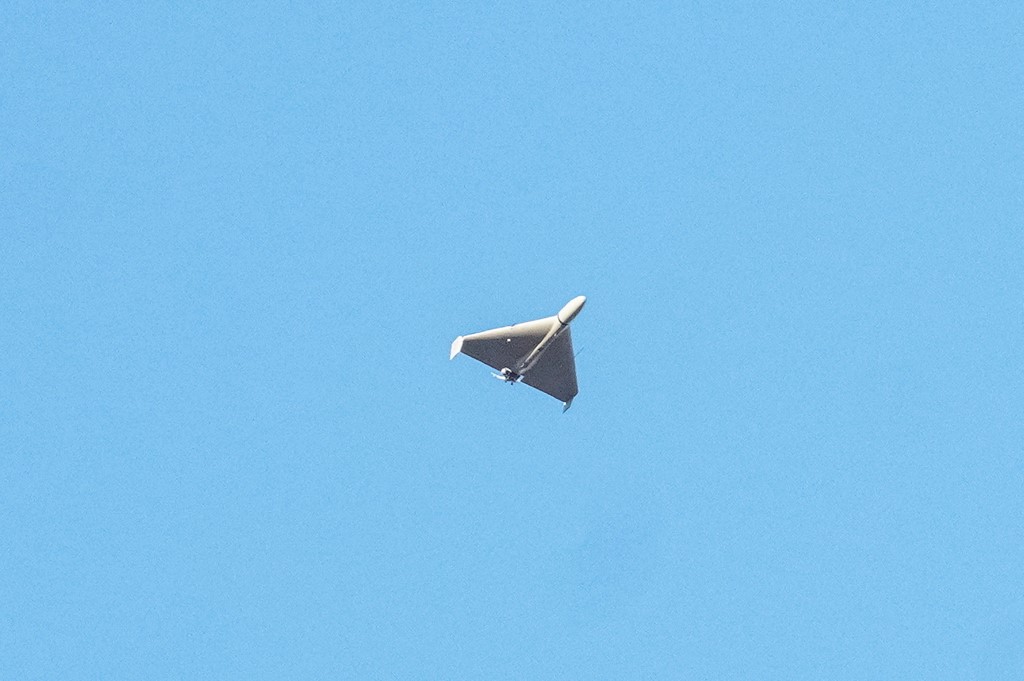
    The Ukrainian Defence Ministry has previously posted a video online of a crashed Russian drone being taken apart.

    It showed a Canon camera (similar to that used in Swedish speed cameras) attached to the drone with Velcro.


  • Ukraine deletes tweet with Boris Johnson meme

    After Liz Truss’ resignation, the official Twitter account of Ukraine’s government issued a tweet that appeared to be sympathetic to the former leader, fueling rumors that Boris Johnson will try to reclaim his position as Prime Minister.

    Mr Johnson is well-liked in Kyiv for his support for the country in its fight against Russia’s invading forces.

    However, the meme based on the Netflix series Better Call Saul and posted by the @Ukraine account triggered a significant backlash, with some even pointing to the Uxbridge MP’s alleged links with Russian figures including Evgeny Lebedev – newspaper owner and son of ex-KGB agent Alexander.

    Evgeny Lebedev was made a lifelong peer in the House of Lords during Mr Johnson’s tenure as PM.

    The tweet was later deleted.


  • The Kremlin has refused to disclose whether Putin has ordered troops to leave Kherson

    The Kremlin has avoided answering whether President Vladimir Putin has ordered his military to leave Kherson.

    Dmitry Peskov, Russia’s spokesman, addressed the question to the defense ministry, stating, “This question concerns the conduct of the special military operation.”

    “I recommend you address it to the defence ministry.”

    It comes as Russian-installed officials are evacuating tens of thousands of residents from the western side of the Dnipro river, which splits the region.

    It also comes after Ukraine’s President Volodymyr Zelenskyy accused Russia of planning to blow up a major dam in the region.

    Meanwhile, Russia said that Ukrainian forces had killed at least four people and injured 13 in a missile attack on civilians leaving Kherson.

    Mr Peskov also took a subtle dig at what he hinted was a lack of democracy involved in the process to choose a new British prime minister following the resignation of Liz Truss.

    Asked about the possible return of Boris Johnson to the top post, he said: “We do not expect insight and political wisdom from anyone in the countries of the collective West, let alone Britain.

    “Especially in Britain, where people do not choose the person at the head of the executive branch, who appears as a result of internal party shake-ups.”


  • What is our current notions about the Kakhovka dam?

    Russia and Ukraine have accused each other of plotting to blow up the Dnipro River’s Kakhovka hydropower facility.

    According to Volodymyr Zelenskyy, such a move would wreak extensive destruction.

    What do we know about the dam?

    • 30 meters tall, two miles long
    • Built-in 1956 as part of the hydro-electric plant
    • A 18km3 reservoir – about equal to the Great Salt Lake in Utah, US
    • Supplies water to a number of areas including the Crimean peninsula and the Zaporizhzhia nuclear power plant

    What would happen if it was blown up?

    Much of the Kherson region would be flooded.

    Destroying the hydroelectric power plant would also add to Ukraine’s energy supply issues – the war has damaged a third of its national power network.

    Mr Zelenskyy told the European Council on Thursday that destroying the dam would mean “a large-scale disaster”.

    It would also show Russia had accepted it could not hold onto the region, he added.

    Sergei Surovikin, commander of Russian forces in Ukraine, said earlier in the week that Ukrainian forces were preparing a massive strike on the dam.

    He agreed such a strike could be a disaster.

    Pic: Copernicus Sentinel-2 L2A
    Pic: Copernicus Sentinel-2 L2A


  • US: Iranian drone trainers are assisting Russian soldiers in Crimea

    The US says Iranian military trainers are in Crimea teaching Russian soldiers how to utilise Iranian-made drones to attack targets in Ukraine.

    “We can confirm that Russian military personnel based in Crimea have been piloting Iranian UAVs and using them to conduct kinetic strikes across Ukraine, including in strikes against Kyiv in recent days,” US State Department spokesman Ned Price told a daily briefing with reporters.

    “We assess that … Iranian military personnel were on the ground in Crimea and assisted Russia in these operations,” Price said.

    He added “we do have credible information,” but did not provide evidence.


  • Ukraine conserves energy following damage to power plants

    Ukrainians are experiencing their first large-scale statewide power outages as officials reduce supply.

    The action is intended to enable energy providers to repair power plants damaged by Russian air attacks.

    The president’s office told Ukrainians late on Wednesday to minimise electricity use from 7 am to 11 pm and prepare for temporary blackouts if this was not done.

    No schedule was announced for the outages, but cities such as the capital, Kyiv, and Kharkiv announced curbs on the use of electric-powered public transport such as trolleybuses.

    They also reduced the frequency of trains on the metro.

    President Volodymyr Zelenskyy has said Russian air strikes damaged 30 percent of Ukraine’s power stations in just over a week.


  • Estonian prime minister calls for special tribunal on Moscow

    The Estonian Prime Minister has called for a special tribunal to investigate Moscow.

    “We have agreed sanctions in Iran because they are participating in the war … we are going to discuss Iran today, and we are going to discuss China and developments there,” Kallas said on her way to the second day of an EU summit.

    “We definitely have to discuss the legal response to the crimes of aggression that have been committed in Ukraine … that can only be addressed by a separate tribunal,” she added.


  • Kremlin: ‘We do not expect insight’ from the UK in picking a new Prime Minister

    Following Liz Truss’s announcement that she was going to step down as prime minister, the Kremlin said it did not expect Britain to choose its new leader with “political wisdom.”

    Asked about the possible return of Boris Johnson to the top post, Kremlin spokesman Dmitry Peskov said: “We do not expect insight and political wisdom from anyone in the countries of the collective West, let alone Britain. Especially in Britain, where people do not choose the person at the head of the executive branch, who appears as a result of internal party shake-ups.”

    Former prime minister Boris Johnson, an outspoken supporter of Ukraine, was ousted in July after a wave of scandals.

    At the time, Russian media and officials celebrated the news of his departure.

    Russia has likewise warmly welcomed news of Truss’s imminent departure.


  • Oleksandr Starukh: Zaporizhzhia region governor says three people injured in early attacks

    The territory was targeted by S300 missiles, according to Oleksandr Starukh, governor of Zaporizhzhia Oblast.

    He said: “A residential building and infrastructure facilities were destroyed.

    “According to preliminary information, there are no casualties.

    “There are three wounded.

    “The data is being verified.

    “As a result of the attack, the gas system was damaged in a residential high-rise building, there was a fire, and a wall was destroyed.

    “Specialised services are already working in the city of events.

    “The occupier also targeted a school in one of Zaporizhzhia’s districts.

    “The roof of the school was damaged and the windows were broken.

    “There were also hits on infrastructure facilities and open areas.


  • Elon Musk compliments a prominent Putin loyalist in a bizarre Twitter interaction

    Elon Musk, the inventor of Tesla, has become increasingly significant in discussions about the Ukraine conflict, amid new accusations that he has communicated with Vladimir Putin.

    He drew severe criticism after proposing a peace plan in which Ukraine ceded Crimea to Russia.

    His latest intervention involves a somewhat bizarre Twitter exchange with former Russian prime minister, senior Kremlin official, and prominent Putin ally Dmitry Medvedev.

    Musk had complimented Mr Medvedev on a “pretty good troll” after he ridiculed outgoing prime minister Liz Truss.

    He then asked the deputy chairman of the Security Council of Russia about it the current situation in Bakhmut, which has faced intense Russian shelling over recent days.

    Mr Medvedev concluded (for now at least) the seemingly friendly discussion by suggesting he would see Musk “in Moscow on the Victory Day”.


  • Government borrowing soars, as retail sales fall far more than predicted

    Surging inflation means the cost of servicing government debt hit a record level last month, according to figures from the ONS, which also reported that consumers were now back buying less than they were before the COVID pandemic.

    The latest official data on the state of the public finances and consumer spending makes for grim reading as the country awaits its next leader.

    The Office for National Statistics (ONS) reported that public sector net borrowing came in at £20bn last month – £3bn more than economists had expected.

    The report pointed to a record debt interest payment total of £7.7bn for the month of September – much of which could be attributed to rising inflation as a quarter of payments on the £2.4trn debt mountain are linked to the RPI measure.

    Government spending increased by £5.8bn to £79.3bn as a result of the jump in interest, the ONS said.

    It separately revealed that retail sales volumes fell 1.4% on the previous month, meaning that “consumers were now buying less than before the pandemic”.

    It was likely to reflect not only the deteriorating cost of living crisis that has squeezed consumer budgets this year but also the impact of store closures for the funeral of the Queen.

    The Queen's funeral flanked by navy
    Image: Many retailers closed their stores out of respect for the Queen on the day of her state funeral on 19 September

    The borrowing figures cover the start of Kwasi Kwarteng’s short and turbulent tenure as chancellor.

    He was appointed on 6 September before being fired weeks later following the market chaos that followed the tax giveaway mini-budget on 23 September.

    While the contentious measures have now been largely overturned by the new Chancellor Jeremy Hunt, the backlash temporarily raised the interest rate demanded by investors to hold UK government debt.

    That has fed into fixed-rate mortgage costs.

    Kwasi Kwarteng waves to the media as he leaves 11 Downing Street after being sacked. Pic: AP
    Image: Much of the borrowing – the second-highest September total on record – came while Kwasi Kwarteng was chancellor

    It also led to the pound falling to a record low against the US dollar – with continued sterling weakness adding to the country’s import costs and therefore inflation.

    The chancellor’s medium-term fiscal plan, due on Halloween, will aim to restore market confidence in the UK’s public finances.

    But it will now fall under the oversight of a new PM following the resignation of the ill-fated mini-budget’s architect, Liz Truss.

    The Tories expect their new leader to be in place in a week’s time – days before Mr Hunt is due to outline how he plans to balance the books while also maintaining a measure of support for struggling households and businesses.

    A survey by the City watchdog found that almost 32 million people, or 60% of adults, were already finding it a heavy burden or somewhat of a burden to pay their bills because of the growing cost of living crisis.

    The Financial Conduct Authority’s financial lives survey, which was taken between February and June, said the total was up six million from 2020 when the economy went into lockdown to fight the COVID-19 pandemic.

    Another closely watched survey, compiled by GfK, found that confidence among British consumers remained close to the lowest level on record last month.

    The chancellor said in the wake of the ONS data: “Strong public finances are the foundation of a strong economy.

    “To stabilise markets, I’ve been clear that protecting our public finances means difficult decisions lie ahead.

    “We will do whatever is necessary to get drive down debt in the medium term and to ensure that taxpayers’ money is well spent, putting the public finances on a sustainable path as we grow the economy.”

  •  Pakistan Election Commission has disqualified former Prime Minister Imran Khan

    Former Prime Minister barred from serving in parliament due to ‘corrupt practises.’

    In a unanimous ruling, Pakistan’s electoral commission ruled former Prime Minister Imran Khan guilty of “corrupt practises” and barred him from running for office.

    Khan’s Pakistan Tehreek-e-Insaf (PTI) party immediately rejected Friday’s verdict. It said it would file an appeal to the Islamabad High Court to challenge the ruling and called on supporters to take to the streets.

    The case against Khan was filed in August by a member of the Pakistan Muslim League Nawaz, contending that the former prime minister had bought gifts given by foreign dignitaries from the state gift depository (also called Toshakhana) but did not disclose the assets in the declarations submitted to the commission.


  • Seven reasons why Boris Johnson ‘cannot return’

    A Labour MP and leading critic of Boris Johnson has given seven reasons why he opposes the former Prime Minister’s return.

    Chris Bryant is the chair of the Standards Committee, which is investigating whether Mr Johnson misled parliament with his comments on partygate – however, Mr Bryant recused himself so that he could continue his criticism.

    But the Rhondda MP mentioned this as his number one reason for opposing Mr Johnson getting a second term.

    If things go against Mr Johnson, he could end up being suspended as an MP and facing a by-election.

    Mr Bryant’s other problems with Mr Johnson were listed in a tweet – including the fact that “he lies and can’t help it” and that his government collapsed due to ministers resigning.


  •  Israeli troops kill a Palestinian adolescent in the Jenin incursion

    The Palestinian health ministry says, Salah al-Braiki, 19, was murdered during violent clashes and confrontations following an Israeli army attack on Jenin.

    Ramallah occupied West Bank-Sources indicate that  Israeli forces killed a Palestinian teenager during a military operation on the northern occupied West Bank city of Jenin.

    Salah al-Braiki, 19, was shot in the neck and died shortly afterward at the Jenin public hospital, the Palestinian health ministry reported to Al Jazeera on Friday.

    Al-Braiki was pronounced dead at 1:45 am (22:45 GMT on Thursday), less than an hour after the Israeli army and special forces raided the city of Jenin and its refugee camp, during which confrontations with unarmed youth and intense armed clashes with Palestinian fighters broke out.

    At least three other Palestinians were wounded by Israeli live ammunition, the ministry said.

    Israeli forces also arrested Baraa Alawneh, the cousin of 26-year-old fighter Ahmad Alawneh who was killed by the army during a large raid on Jenin on September 28.

    Tensions in the occupied West Bank have been boiling up since last year, as Palestinian shootings at Israeli military checkpoints and soldiers, particularly in the northern cities of Jenin and Nablus, increased.

    At least three Israeli soldiers have been killed since September 14 – one during a raid on Jenin, and two in separate shootings on military checkpoints last week in Nablus and occupied East Jerusalem.

    As part of a military operation, it calls “Breaking the Wave”, Israel has intensified raids, arrests, and killings in Jenin and Nablus, as Palestinian armed resistance becomes more organised.

    According to local media, the Salem checkpoint north of Jenin has been targeted with at least five shootings by Palestinian fighters since the start of October.

    Israel has imposed a blockade on Nablus and its villages for more than 10 days, affecting the movement of about 420,000 Palestinians as it searches for suspects of a shooting at a nearby illegal settlement of Shavei Shomron in which one soldier was killed.

    Residents, political groups, and civil society institutions are demanding the lifting of the siege as it begins to have a serious effect on the economy and life in the area.

    According to the health ministry, Israeli forces have killed 175 Palestinians since the start of the year, including 124 people in the West Bank, and 51 in the besieged Gaza Strip. Approximately half of those killed in the West Bank was from Jenin and its villages.

    The total death toll also includes 41 children, 17 of whom were killed during Israel’s three-day assault on Gaza in August.

    The United Nations has said that 2022 “is the highest year for Palestinian fatalities in the West Bank, compared to the same period in the previous 16 years”.


  • Israel and Ukraine discuss air defence systems following drone strikes

    Ukraine’s foreign minister says he has spoken with Israeli Prime Minister Binyamin Netanyahu about the harm inflicted by “Russian missiles and Iranian-made drones.”

    Ukrainian and Israeli officials met to discuss Kyiv’s request for Israeli air defence support, just days after Russia purportedly used Iranian “kamikaze” drones in a new wave of air strikes on war-torn Ukraine.

    Ukrainian foreign minister Dmytro Kuleba said on Thursday he had spoken on the phone to Israeli Prime Minister Yair Lapid and “discussed in detail” the provision of air and missile defense systems and technology.

    “I informed him [about the] unspeakable suffering, loss of life, and destruction caused by Russian missiles and Iranian-made drones,” he tweeted.

    Lapid’s office said in a statement on Thursday that the Israeli prime minister had expressed “deep concern” over the military ties between Russia and arch-foe Iran.

    Ukraine this week accused Russia of using four Iranian-made drones to bomb Kyiv and said its air defences have shot down 223 Iranian drones since mid-September.

    The Kremlin said it had no knowledge of its army using Iranian drones in Ukraine and Tehran said the claims that it is providing Russia with weapons are “baseless”.

    European Union countries, however, said they had found evidence supporting Kyiv’s claim and on Thursday adopted sanctions on Iran over its provision of drones to Russia.

    The phone call between Kuleba and Lapid came two days after Ukraine stepped up appeals for Israeli help with air defence systems to intercept Iranian drones and ballistic missiles.

    In the request, Ukraine also demanded that Israel train its forces in operating the systems, Axios reported.

    Israel has walked a delicate diplomatic line since the start of the Russian invasion in late February, seeking to preserve ties with Moscow.

    While condemning Russia’s move, it has limited its assistance to humanitarian relief, citing a desire to ensure the well-being of Russia’s Jews and to continue cooperation with Moscow over war-ravaged neighbour Syria.

    On Wednesday, Israeli defence minister Benny Gantz reiterated Tel Aviv’s position that it would not sell weapon systems to Ukraine.

    According to a statement by his office, however, Gantz had asked Ukraine “to share information about their needs for air defence alerts”.

    Israel would be able to “assist in the development of a life-saving civilian early-warning system”, the statement said. Ukraine’s ambassador had asked for systems that would shoot down the drones instead.

    Russia warned on Monday that an Israeli move to bolster Kyiv’s forces would severely damage relations between Moscow and Tel Aviv.


  • Google: India punishes a tech giant $161 million for unlawful business practices

    The Indian government fined Google 13 billion rupees ($161 million; £144 million) for dominating the market with its Android platform.

    The country’s competition regulator has accused Google of entering into “one-sided agreements” with smartphone manufacturers in order to keep the dominance of its apps.

    It has ordered Google to “cease and desist”  from such behaviour.

    Google has not responded to the fine or the accusations yet.

    The Competition Commission of India (CCI) said in a statement on Thursday that Google was “abusing” the licensing of its Android operating system for a range of smartphones, web searches, browsing, and video hosting services.

    It said that Google was entering into forced agreements with players in the space to ensure that its bouquet of apps – such as Google Chrome, YouTube, Google Maps and others – were used.

    The statement added that this practice was stifling competition and gave Google continuous access to consumer data and lucrative advertising opportunities.

    The CCI has also asked Google to not force device manufacturers to pre-install its apps and that it must allow manufacturers and users to install apps of their choice during the initial device setup.

    “Markets should be allowed to compete on merits and the onus is on the dominant players (in the present case, Google) that its conduct does not impinge this competition on merits,” the statement said.

    Google is facing a series of anti-trust cases in India and authorities are also probing Google’s conduct in the smart TV market and its in-app payments system.

    The Android-related inquiry was started in 2019, following complaints by consumers of Android smartphones.

    The case is similar to the one Google faced in Europe, where regulators imposed a $5bn fine on the company for using its Android operating system to gain an unfair advantage in the market.


  • Keir Starmer is at the forefront of calls for an emergency general election

    Following the resignation of the prime minister, Labour leader Sir Keir Starmer has called for an emergency general election.

    Sir Keir stated that the country “cannot afford another experiment at the leadership of the Conservative Party.”

    Liz Truss resigned as Prime Minister after only 45 days in office, citing she “could not deliver on the mandate on which I was elected.”

    A new prime minister is expected to be announced by 28 October.

    It will be the second Conservative Party leadership election this year.

    The Liberal Democrats, the SNP. Plaid Cymru and the Green Party have also been calling for an immediate general election.

    Scotland’s first minister has said a UK general election is a “democratic imperative” following the resignation of the prime minister.

    “This is an almighty mess, and it is people the length and breadth of the UK who are paying the price of this,” she told the BBC

    “Fundamentally the UK now needs to have a democratic choice over its next prime minister.”

    Liberal Democrat leader Ed Davey said: “We do not need another Conservative prime minister lurching from crisis to crisis, we need a general election.

    “It is time for Conservative MPs to do their patriotic duty, put the country first, and give the people a say.”

    He later told BBC Breakfast that no candidate could provide stability because the party is “so divided”.

    “The shambolic nature of the modern Conservative Party doesn’t give me any faith in them,” he said.

    The next general election is not due to take place until at least 2024 after the Conservatives won a landslide majority in the last one in 2019.

    Ms Truss was elected by the Tory membership in September, but she lost authority after a series of U-turns.

    In a brief speech outside Downing Street, Ms Truss said the Conservative Party had elected her on a mandate to cut taxes and boost economic growth.

    She will become the shortest-serving PM in British history when she stands down.

    Leading pollster Professor Sir John Curtice said whoever leads the Conservative party next should “enjoy the next 18 months to two years, because that will probably be their tenure”.

    “Parties and governments who preside over a fiscal crisis have nearly always struggled at the ballot box at the next election,” Sir John said.

    An Opinium poll this week projected a 1997-style landslide for Labour, with the party winning 411 seats.

    The same poll, conducted for the TUC interviewing more than 10,000 adults, predicted the Conservatives would be reduced from 356 MPs to 137.

    Dog by polling station sign
    IMAGE SOURCE, GETTY IMAGES

    Sir Keir said: “This is not just a soap opera at the top of the Tory party – it’s doing huge damage to the reputation of our country.

    “We need a general election so the public can have their say on this utter chaos.

    “There’s a manifesto that is going to be ready whenever an election is called,” Sir Keir told the BBC’s Newscast podcast.

    “I’ve had a team working on that. I’ve had a team working on general election preparedness. We’ve moved our teams onto a general election footing.

    “We’re very, very prepared should there be a general election.”

    In his speech to the TUC conference on Thursday, Sir Keir said Labour had a long-term plan to “deliver cheaper bills and higher living standards for working people, growth and jobs in every part of our country”.

    He outlined some of the policies he announced at Labour’s annual conference last month, including those in its “green prosperity plan”

    The plan includes pledges to create a publicly-owned renewable energy firm, achieve carbon-free electricity by 2030, and insulate 19 million homes.


  • Hans Niemann files a $100 million lawsuit over allegations of chess cheating

    The grandmaster is suing world champion Magnus Carlsen, as well as the online portal Chess.com.

    Hans Niemann, the 19-year-old American grandmaster at the centre of an alleged cheating controversy, has filed a slander and libel suit against world champion Magnus Carlsen, internet platform Chess.com, and others, seeking at least $100 million in damages.

    The lawsuit, filed at a US District Court in Missouri on Thursday, also listed Carlsen’s online chess platform Play Magnus, Chess.com executive Danny Rensch, and US grandmaster Hikaru Nakamura as defendants.

    Niemann claimed that the defendants are “colluding to blacklist” him from the professional chess world and that he has been shunned by tournament organisers since five-time world champion Carlsen publicly accused him of cheating.

    Niemann had previously been banned from Chess.com for cheating online, having admitted he had not played fairly in non-competitive games on the website in his youth but denied any wrongdoing while contesting over-the-board games.

    Carlsen’s surprise defeat to Niemann and his subsequent withdrawal from the Sinquefield Cup in St Louis, Missouri in September sparked a furore of comments and allegations, including from Nakamura, that Niemann had cheated.

    Weeks after the Sinquefield Cup, Carlsen resigned after just one move against Niemann in an online tournament and said later in September he believed Niemann had “cheated more – and more recently – than he has publicly admitted”.

    In a statement on Thursday, lawyers for Chess.com said there was no merit to Niemann’s allegations and that the company was saddened by his decision to take legal action.

    “Hans confessed publicly to cheating online in the wake of the Sinquefield Cup, and the resulting fallout is of his own making,” the statement read.

    “Chess.com looks forward to setting the record straight on behalf of its team and all honest chess players.”

    Chess.com banned Niemann after the first match against Carlsen and published a report earlier this month that said he had likely cheated more than 100 times in online games.

    Niemann’s lawsuit said that Chess.com banned him “from its website and all of its future events to lend credence to Carlsen’s unsubstantiated and defamatory accusations of cheating”.

    “Carlsen, having solidified his position as the ‘King of Chess,’ believes that when it comes to chess, he can do whatever he wants and get away with it,” the complaint added.

    The lawsuit further accused Nakamura, a streaming partner of Chess.com, of publishing “hours of video content amplifying and attempting to bolster Carlsen’s false cheating allegations”.

    The International Chess Federation (FIDE) said it would open an investigation into the allegations of cheating last month.


  • Sanna Irshad Mattoo: Pulitzer award-winning Kashmiri journalist was prevented from leaving India

    A Pulitzer Prize-winning photojournalist from Indian-administered Kashmir has alleged that immigration officials at Delhi airport prevented her from travelling to the United States.

    Sanna Irshad Mattoo received a Pulitzer Prize for her coverage of the Covid-19 outbreak and was on her way to the award ceremony.

    Ms Mattoo said she was stopped “despite having a valid visa and ticket”.

    The Indian government has not made a statement yet on why she was stopped.

    News agency PTI quoted Jammu and Kashmir police officials as saying that she had been placed on a no-fly list.

    Ms Mattoo said this was the second such incident in four months. The journalist told the BBC she asked officials why she hadn’t been allowed to travel but was not given a reason.

    She said she was “heartbroken” at not getting the chance to attend the ceremony, describing the Pulitzer as a “dream for every journalist”.

    Several activists and journalists have been stopped from leaving or entering the country this year.

    In March, journalist Rana Ayyub – who writes for the Washington Post – was stopped at Mumbai airport when she was about to board a flight to the UK to deliver a speech at the International Centre for Journalists.

    Ms Ayyub was allowed to travel a few days later after she won an appeal against the decision in the Delhi High Court and got permission.

    In April, former Amnesty India chief Aakar Patel was stopped twice from boarding a flight to the US at Bangalore airport.

    This followed a federal investigation into Amnesty allegedly breaking India’s foreign currency exchange laws during Mr Patel’s tenure as its chief. The agency called him a “flight risk”. He was later asked by a court not to leave the country without its permission.

    In August, Angad Singh, an Emmy-nominated American journalist of Indian origin, was reportedly deported to New York soon after he landed in Delhi.

    While the Indian government did not comment on the incident, Mr Singh’s family said his passport was confiscated at the airport before he was deported. His mother alleged his treatment was a response to the documentaries the journalist had made on India’s Covid crisis and farmers’ protests for Vice News.

    Earlier this year, the federal government deported Professor Filippo Osella, an anthropologist at the University of Sussex, who had been visiting India for more than 30 years.

    Prof Osella challenged his deportation in the Delhi High Court, calling it arbitrary and unconstitutional. He also said he was treated like “a hardened criminal” by Indian authorities without being given a reason for his deportation.

    Last week, the Indian government defended its decision in court, saying that the academician had been placed in the “highest category of blacklisting” based on “sufficient material” against him.

  • India’s vaccine manufacturer destroys 100 million doses of expired Covid vaccine

    Serum Institute of India (SII), an Indian vaccine manufacturer, stated it had to dispose of 100 million doses of its Covid-19 vaccine after they expired.

    According to CEO Adar Poonawalla, the company ceased making Covishield in December of last year due to low demand.

    SII, the world’s largest vaccine manufacturer, has been producing the local version of AstraZeneca’s Vaxzevria jab.suit for several years.

    Covishield accounts for over 90% of the doses given in India.

    India has administered over two billion doses of Covid-19 vaccines. More than 70% of the Indian population has taken at least two doses, according to the federal health ministry.

    In January 2022, India began giving boosters to healthcare and frontline workers, and those above 60 years with comorbidities. It was later expanded to all adults.

    In July, free booster doses – or precaution doses as the government calls them – were provided to all adults for 75 days to mark 75 years of India’s independence.

    But so far, India has administered just 298 million booster doses, according to the health ministry.

    “The booster vaccines have no demand as people now seem fed up with Covid,” Mr Poonawala told reporters on Thursday. “Honestly, I’m also fed up. We all are.”

    According to Mr Poonawala, the SII had around 100 million doses of Covishield in stock. The vaccines – which have a shelf life of nine months – expired in September this year.

    The CEO was speaking on the sidelines of the annual general meeting of the Developing Countries Vaccine Manufacturers Network (DCVMN) in the western Indian city of Pune.

    “Going forward, when people take a flu shot every year, they may take a Covid vaccine along with it,” Mr Poonawala said. “But in India, there is no culture of taking a flu shot every year, like in the West.”

    Meanwhile, Mr Poonawala said the SII had completed trials for the Covid vaccine Covovax as a booster dose. The company expects the vaccine to get approval within the next two weeks.

    It has also partnered with the US biotech company Novavax for an Omicron-specific booster, he said.