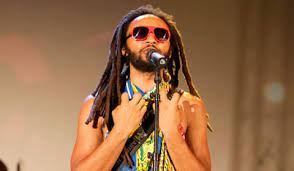
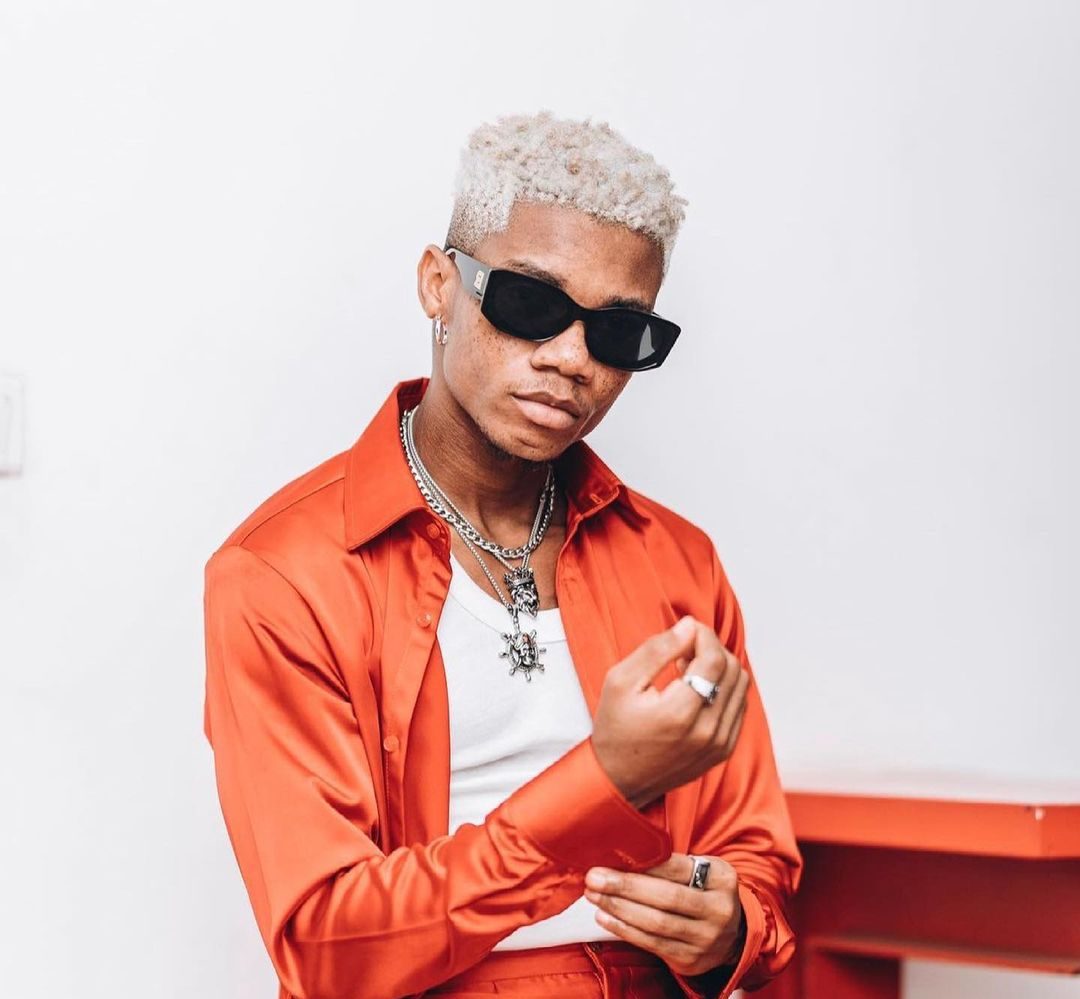
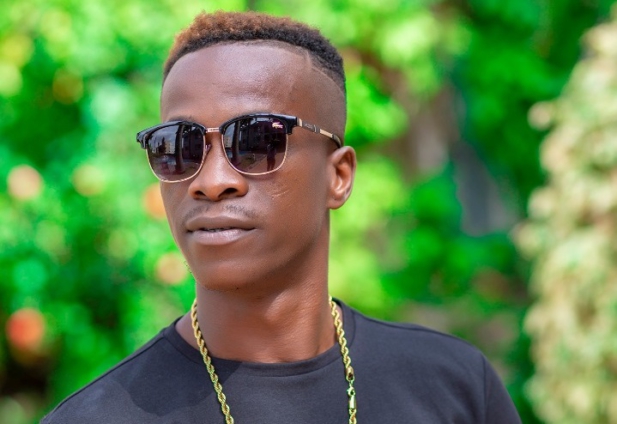
Ghanaian highlife sensation, KK Fosu, advocates for the protection and support of fellow musicians Kuami Eugene and Kelvynboy, stressing the importance of nurturing their talent and ensuring their well-being.
Speaking on the Daybreak Hitz show with Andy Dosty, KK Fosu emphasized the need for Ghanaians to pamper and uplift these artists.
Reflecting on his own career, the “Anadwo Yede” hitmaker shared that if he had received the same level of care and support earlier in his career, he might still be flourishing today.
KK Fosu hinted at past experiences where he felt neglected by certain individuals, which he believes contributed to his shorter-lived success in the industry.
Expressing concern for the future of Kuami Eugene and Kelvynboy, KK Fosu hopes to prevent them from facing similar challenges he encountered, urging the Ghanaian community to embrace and nurture their talents.
“What some people did to me, I do not want them to do to the likes of Kelvyn Boy and Kuami Eugene. Let’s pamper them to help them last long in the music industry,” the musician said.
In a casual moment over ice cream with a late-night television talk show host on Monday, US President Joe Biden hinted at the possibility of a new ceasefire in the Gaza War, suggesting it could be achieved as early as the upcoming Monday.
“My national security adviser informs me that we’re nearing an agreement,” he remarked.
His remarks, later clarified by the White House, stirred reactions within the American Palestinian community.
Then, on Tuesday night in Michigan, a pivotal state in the November presidential election, over 100,000 individuals in the Democratic primary chose “uncommitted” in protest, orchestrated by pro-Palestinian groups.
“This is a signal,” noted Lexis Zeidan, one of the organizers, on Tuesday evening.
This week has underscored for Mr. Biden the electoral risks associated with the Middle East conflict and the White House’s handling of it.
Since the conflict’s onset following the October 7 attacks, the president has grappled with navigating Middle East policies that alienate segments of his support base.
Yet, the Biden administration is proceeding cautiously in terms of substantive policy shifts. Despite domestic pressures this week, the administration has largely maintained its current stance.
During a briefing on Thursday, US State Department Press Secretary Matt Miller reiterated the US’s provision of aid to Israel, supporting the nation’s “legitimate right” to self-defense and prevention of future attacks akin to October 7.
“There’s a misconception that the United States can dictate sovereign decisions to other nations,” he remarked. “Israel makes its sovereign decisions, and we make clear our areas of disagreement.”
Behind the scenes, US officials have hinted at potential delays in further arms shipments to Israel and other potential measures under consideration.
While most opinion polls indicate that the American public generally supports Israel in the conflict, there’s a notable divide within key components of President Biden’s Democratic coalition, particularly among young voters and people of color.
Navigating these domestic political dynamics is complex for the administration. They must balance various constituencies within the Democratic Party, each claiming significance to the president’s re-election prospects.
In response to the conflict, pro-Palestinian groups in the US have called for a permanent ceasefire, backing diplomatic efforts at the United Nations, and even threatening to withhold American military aid to Israel unless there’s a change in course.
Jim Zogby, president of the Arab American Institute, expresses the sentiment of many, stating that the Biden administration’s current efforts feel insufficient, describing them as “ham-fisted, half-measure statements about how we were sorry we didn’t express more sympathy and we’re working behind the scenes.”
In Michigan, the protest vote against Biden was significant, though it fell short of the margin by which he won the state in 2020. This contrasts with the narrow margin by which Democrat Hillary Clinton lost Michigan to Trump in 2016.
Mitch Landrieu, the campaign’s national co-chair, acknowledges the complexity of the situation, emphasizing the need for thorough engagement and resolution: “Every issue is complicated, and this is one of them that needs to be worked through.”
With eight months until the election, Biden campaign officials are hoping that the prospect of a binary choice between Mr Biden and Donald Trump will encourage dissenting voices in the Democrat political coalition to ultimately fall into line.
Campaign officials are already pointing to a number of controversial policies Mr Trump implemented during his presidential term, such as moving the US embassy in Israel to Jerusalem and support for Jewish settlements on the West Bank.
But with new headlines of civilian bloodshed in Gaza virtually every day, emotions are raw. This week the death toll in Gaza surpassed 30,000, according to the Hamas-run health ministry. And on Thursday at least 117 Palestinians were killed and hundreds were injured during an aid delivery in Gaza.
“We’re supposed to be in the position where you hurt us, you ignore us, you pay no attention to our feelings, but we’ll have to vote Democrat?” says Mr Zogby. “Why can’t you apply that same logic on the side of the Jewish community?”
Meanwhile, Israeli Prime Minister Benjamin Netanyahu has being going to lengths to dash any White House hopes that a change in rhetoric will put more pressure on Israel to conclude the war.
“From the beginning of the war, I have been leading a diplomatic campaign whose goal is to deflect the pressure to end the war prematurely,” he said this week.
Mr Netanyahu seems finally attuned to the US domestic political situation, as well, and says the American public overwhelmingly supports his cause.
All of this suggests Mr Biden has few easy means to extricate himself from his current political predicament.
“He’s been dealt a very, very limited, difficult hand to play,” says Sragow. “If I was a member of the senior staff advising Biden, I don’t know what I would say other than just do what you think in your heart is the right thing to do.”
The pro-Palestinian groups in the US would probably echo this sentiment, except they firmly believe the president’s heart is in the wrong place – and that he is poised to pay a high political price for it come November.
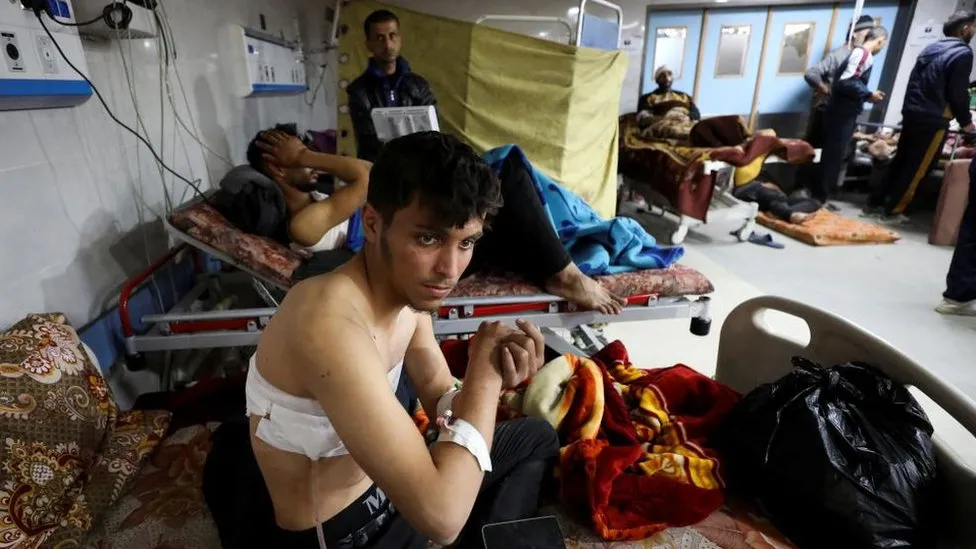
The UN has indicated that a large number of those receiving medical attention for wounds after a rush on an aid convoy in Gaza on Thursday were shot.
UN observers saw some of the approximately 200 patients still receiving care at the al-Shifa Hospital in Gaza City.
Israel has been accused of firing at civilians by Hamas, the group in charge of Gaza, but Israel has responded that there was a “stampede” after its troops fired warning shots.
Global leaders have demanded a thorough investigation.
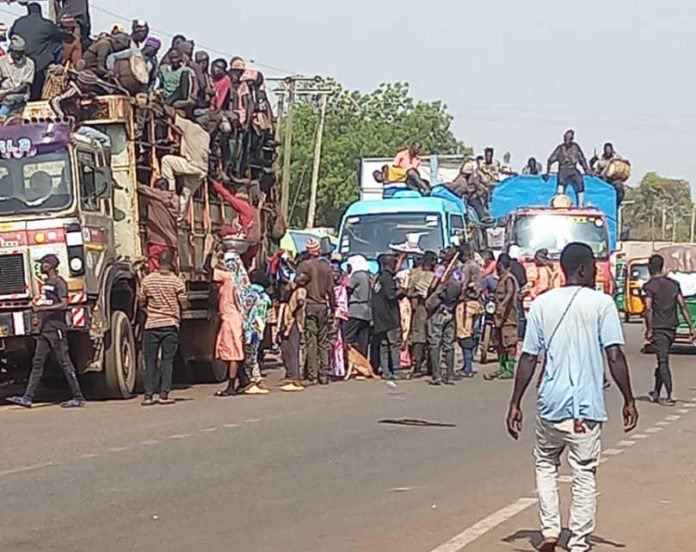
The incident started in the early hours of Thursday morning when hundreds of people descended on an aid convoy that was being followed by the Israeli military along a coastal road.
The World Food Programme has issued a warning that there will soon be a famine in northern Gaza, where an estimated 300,000 people lack access to clean water and food. The region has received very little aid in recent weeks.
There are gunshots audible in the video from the scene, and witnesses can be seen scurrying over lorries and hiding behind them.
According to the health ministry run by Hamas in Gaza, the incident resulted in at least 112 deaths and 760 injuries.
In a statement on social media, Rear Adm Daniel Hagari, spokesman for the Israel Defense Forces (IDF), said, “Dozens of Gazans were injured as a result of pushing and trampling.”
The IDF’s Lt Col Peter Lerner also told Channel 4 News that a “mob stormed the convoy” and that Israeli troops “cautiously [tried] to disperse the mob with a few warning shots”.
Mark Regev, special adviser to the Israeli prime minister, had earlier told CNN that Israel had not been involved directly in any way and that the gunfire had come from “Palestinian armed groups”, though he did not provide evidence.
Giorgios Petropoulos, head of the Gaza sub-office of the UN Co-ordinator for Humanitarian Affairs (OCHA) told the BBC he and a team sent to al-Shifa hospital found a large number of people with gunshot wounds.
He said all but a handful of the 70 to 80 patients in the emergency room he visited had been injured during the convoy incident.
In addition to those with gunshot wounds, he said doctors had treated many who had fallen down or been trampled – but he was unable to say with certainty which group was larger.
Mr Petropoulos said those with gunshot injuries had suffered wounds in the upper and lower body. One patient told him he had been shot in the chest and who had walked to Shifa to get treatment.
“He said they (Israeli troops) usually shoot in the air. This time, they shot into the thickest part of the crowd,” Mr Petropoulos said.
However, Mr. Petropoulos emphasized that because UN personnel were not present during the incident, it was extremely difficult to determine the exact course of events.
Prior to this, the BBC was informed by Dr. Mohamed Salha, the temporary hospital manager at al-Awda hospital, that 176 patients had been admitted, 142 of whom had gunshot wounds.
He added that the others had suffered broken limbs.
Responding to the incident, UK Foreign Secretary Lord Cameron called the deaths “horrific” and said there “must be an urgent investigation and accountability”.
“This must not happen again,” he said.
He added that the incident could not be separated from the “inadequate aid supplies” entering Gaza and called the current levels “simply unacceptable”.
US President Joe Biden announced that the US would begin dropping aid into Gaza by air, saying: “Innocent people got caught in a terrible war, unable to feed their families. We need to do more, and the United States will do more.”
After Hamas gunmen killed roughly 1,200 people in southern Israel on October 7 and kidnapped 253 more, the Israeli military launched a massive air and ground campaign to destroy the organization, which is banned as a terrorist organization by Israel, the UK, and other countries.
More than 30,000 people, including 21,000 women and children, have died in Gaza since then, according to the health ministry run by Hamas. At least 70,450 people have also been injured.
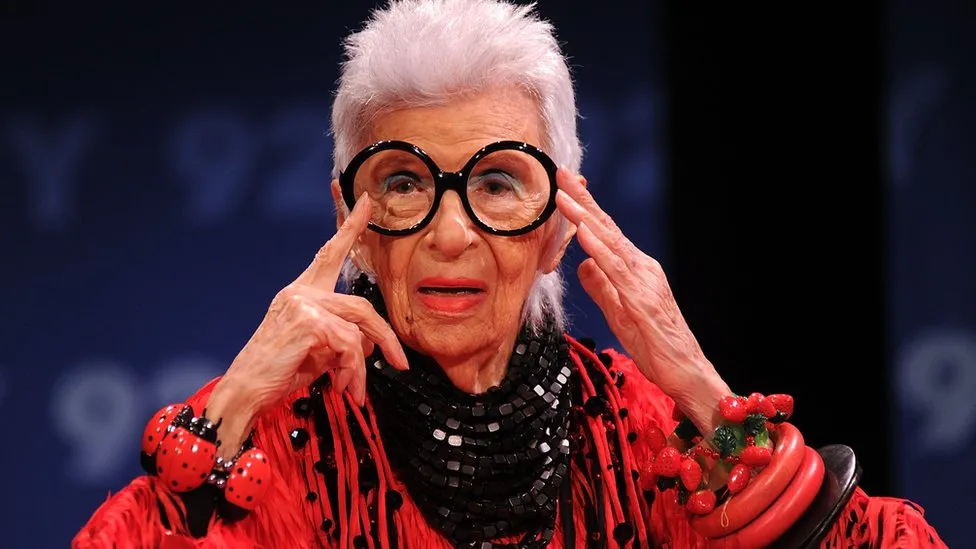
Recognized for her unique style, characterized by cropped white hair, oversized glasses, vibrant lipstick, and chunky beads, the self-proclaimed “geriatric starlet” left an indelible mark on the fashion world.
During the 1980s and 90s, Apfel reached the pinnacle of her fame, becoming a fixture at Paris fashion shows for over fifty years.
Notably, she catered to a clientele of esteemed celebrities, including Greta Garbo and Estée Lauder.
Her passing was shared with her nearly three million Instagram followers through a post featuring Apfel adorned in her iconic oversized round glasses, marking the end of an era in fashion.
Iris Apfel was aged 97 when she signed a modelling contract with global agency IMG Models, who also represent Gigi Hadid and Karlie Kloss
US designer Tommy Hilfiger was among those to pay tribute as he praised Apfel as an “innovator and leader” in the world of textiles and style, who “will go down in history”.
“Iris Apfel has become a world-famous fashion icon because of her incredible talent not only as an artist, but as an influencer,” he said.
“She has had an amazing effect on so many people with her huge heart and magic touch with everyone she meets.”
Throughout her illustrious career, Apfel co-founded the international textile manufacturing company Old World Weavers in 1950 alongside her husband, Carl, who passed away at the age of 100 in 2015.
US singer Lenny Kravitz and Ted Lasso actress Hannah Waddingham were among those who paid tribute to her legacy.
Born into a Jewish family in New Yorkin 1921, Apfel initially pursued studies in art history, later specializing in interior design, with a particular focus on textiles.
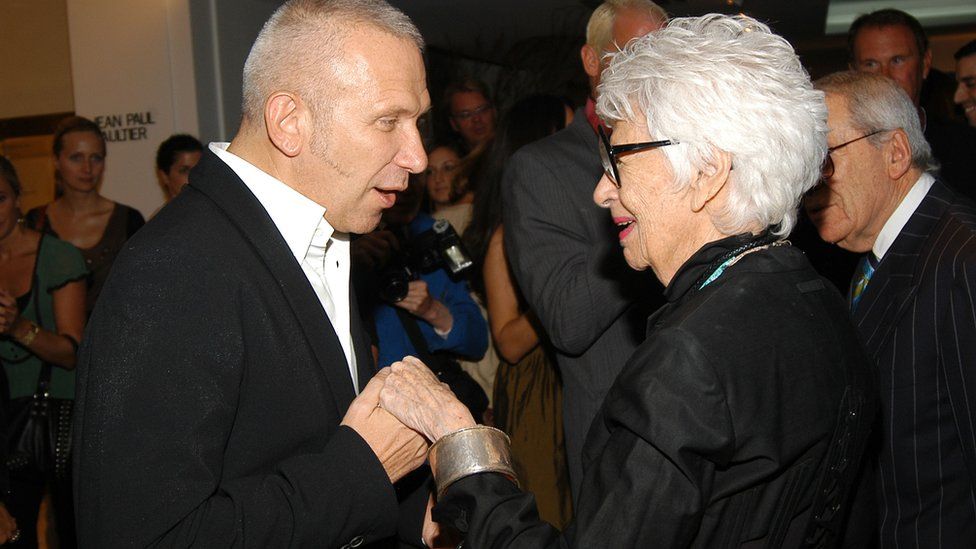
Image caption,Jean Paul Gaultier and Iris Apfel in New York City in September 2006
For decades, she made significant contributions as an interior designer, including involvement in restoration projects at the White House. However, it was in her 80s that she emerged as a trendsetter, and remarkably, she pursued a professional modeling career at the age of 97.
‘A kaleidoscope of colour’
Apfel’s agent Lori Sale said working alongside her was “the honour of a lifetime”.
“I will miss her daily calls, always greeted with the familiar question: ‘What have you got for me today?’ Testament to her insatiable desire to work,” Ms Sale said.
“She was a visionary in every sense of the word. She saw the world through a unique lens – one adorned with giant, distinctive spectacles that sat atop her nose.
“Through those lenses, she saw the world as a kaleidoscope of colour, a canvas of patterns and prints.
“Her artistic eye transformed the mundane into the extraordinary and her ability to blend the unconventional with the elegant was nothing short of magical.”
In 2014, she was the subject of a documentary, Iris, made by acclaimed director Albert Maysles.
Speaking to BBC Newsnight in 2015, she said she thought “dressing up should be fun” and was a “chance to play”.
“It’s part of my life because I’m a creative person and I think other people should indulge in a bit of creativity,” she said.
Asked what she thought of the idea of age-appropriate dress, she said that “if you can pull it off, it’s appropriate”.
Just two days following the purchase of a car for his taxi business, Samuel Nyamekye, a taxi driver, found himself the victim of theft as his newly acquired vehicle was stolen.
Seeking recourse for his anguish, Nyamekye visited Angel 96.1 FM in Kumasi to share the distressing ordeal of losing something he had bought with his hard-earned life savings.
I bought my car just two days ago before it was stolen yesterday – Taxi driver weeps . pic.twitter.com/lEH0QyRtxL
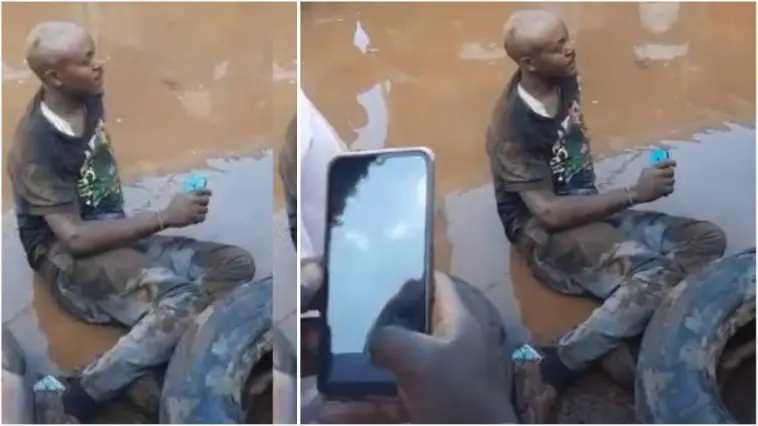
Just a week and a day ago, a poignant video emerged online, showcasing the renowned Ghanaian gospel musician, Edward Akwasi Boateng, in a moment of hardship.
In the viral footage, he appeared visibly fatigued as he engaged in the humble task of selling pen drives in the market, using a megaphone.
It was revealed that he resorted to this means to raise funds for his sons’ school fees, as he had no other means of support at the time.
The sight of the “M’akoma So Ade” hitmaker in such financial straits elicited empathy from numerous netizens and fans.
Thankfully, support poured in as people began donating to him via a mobile money number he shared on social media.
Prophet Bernard El Bernard, the head pastor of Spirit Life Revival Ministry, further extended kindness by presenting valuable gifts to Boateng on Sunday, February 25, 2024.
These gifts included a brand new car, full scholarships for his children up to university, and a monthly allowance to alleviate his recent financial struggles.
In gratitude, Boateng returned to the Asafo VIP station to express appreciation to the station master who filmed and shared the video online.
Contrary to expectations of ridicule, this act of gratitude turned out to be a profound blessing, further underscoring the outpouring of support and goodwill towards Boateng during his time of need.
Renowned Ghanaian songstress, Efya, has joined the chorus of disapproval regarding the airing of sexual acts on a live show on United Television.
In a viral video circulating on Ghpage.com, a woman is observed engaging in explicit behavior with a dildo, while a man fondles her genitals through her sheer attire.
Reports indicate that the footage originates from the ‘Red Light’ program, hosted by Ghanaian actress Vickie Zugah on UTV.
The video has sparked widespread criticism across various social media platforms.
In response, Efya expressed her dismay, highlighting the lack of sensibility in showcasing such explicit content on national television, disregarding the fact that both young people and adults are viewers.
“Why are there live sexual acts being telecasted on national television?! Ugh, why? Mehn!,” the musician posted.
Efya suggests that the prevalence of certain events in modern Ghanaian society indicates a concerning decline in values, implying that if things weren’t so readily accessible or cheapened, such occurrences wouldn’t be as common.
“Bro! The standards have fallen so low!”, she added.
Gospel artist Diana Asamoah has strongly criticized Kumawood actor Kwaku Manu, labeling him as lacking common sense.
This backlash follows a lengthy video where Kwaku Manu called out Diana Asamoah for her unwarranted criticisms of their colleague, Evangelist Edward Akwasi Boateng.
In her response, Evangelist Diana Asamoah asserted her readiness to confront the Kumawood actor. She stated that while Kwaku Manu might resort to physical attacks, she would counter him spiritually using the word of God.
“If you do not come and attack me, I will not attack you. I have seen many people with shallow minds in Christ coming to social media to attack me”, she said.
“If you try me, I will use the word of God to attack you. When it comes to the word of God, you cannot challenge me. I don’t care about the number of people that attack me, I will deal with them all”, the Gospel musician added.
Gospel artist Diana Asamoah has strongly criticized Kumawood actor Kwaku Manu, labeling him as lacking common sense.
This backlash follows a lengthy video where Kwaku Manu called out Diana Asamoah for her unwarranted criticisms of their colleague, Evangelist Edward Akwasi Boateng.
In her response, Evangelist Diana Asamoah asserted her readiness to confront the Kumawood actor. She stated that while Kwaku Manu might resort to physical attacks, she would counter him spiritually using the word of God.
“If you do not come and attack me, I will not attack you. I have seen many people with shallow minds in Christ coming to social media to attack me”, she said.
“If you try me, I will use the word of God to attack you. When it comes to the word of God, you cannot challenge me. I don’t care about the number of people that attack me, I will deal with them all”, the Gospel musician added.
Celebrated Ghanaian gospel artist, Celestine Donkor, is gearing up to launch her next musical marvel following her successful collaboration with Obaapa Christy.
This time, she’s teaming up with Piesie Esther, known for her hit song “Mo.”
Their collaboration, titled “Come and See,” marks the second installment in Celestine’s series of features with fellow female gospel artists from Ghana and beyond. The purpose behind these collaborations, according to Celestine, is to strengthen bonds within the female gospel music community, a rarity in the industry.
In addition to “Come and See,” Celestine is also set to release a song themed around the International Central Gospel Church’s (ICGC) 2024 theme, “God.” Back in 2009, when the church’s theme was “Supernatural,” Celestine crafted a song to complement it.
This year’s theme song, “God,” features Perez Musik and Raphiya. Both tracks are scheduled for release on March 6, 2024.
In the aftermath of the passing of Ghana’s former head of State FLT. LT. Jerry John Rawlings, a woman named Abigail garnered attention by publicly claiming to be the biological daughter of the late president.
Abigail’s assertions surfaced during JJ Rawlings’ funeral, where she disclosed that her mother, Rose Agbodzi Sende, an Ewe from Togo residing in Accra, allegedly conceived her with Rawlings in 1967 when he was 20 years old and in his final year at Achimota.
According to Abigail, Rawlings urged her mother to keep the pregnancy a secret to avoid jeopardizing his future endeavors.
Abigail is rumored to have been born to a single mother around the time JJ Rawlings was beginning his Airforce Cadet career.
Her mother, Rose Agbodzi Sende, handed Abigail to an elderly woman in Adabraka when another man sought to marry her.
In an interview with Kofi Adoma yesterday, Abigail expressed her desire for a DNA test to confirm her lineage as Rawlings’ daughter.
During the interview, Abigail emotionally disclosed that she now relies on leftover food for sustenance.
She lamented feeling cursed in life as nothing she attempts seems to succeed.
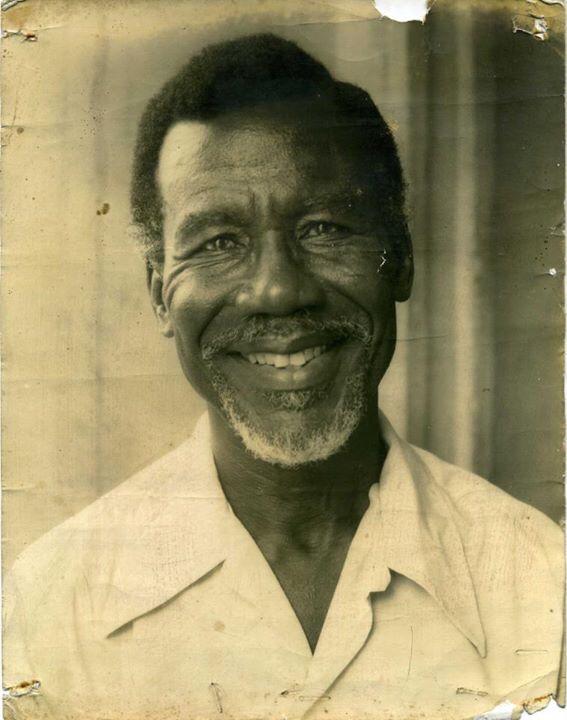
Nii Amon Kotei was a renowned artist, sculptor, painter and musician who became famous for his works including Ghana’s Coat of Arms.
He was born on May 24, 1915, at La in Accra, and trained as a surveyor and became distinguished as the designer of the Coat of Arms which was introduced on March 4, 1957.
Kotei was commissioned to design the Coat of Arms by Ghana’s first president, Osagyefo Dr. Kwame Nkrumah and the then British Colonial administration as independence drew near in 1957.
Ghana’s Coat of Arms symbolises government’s sanction and it is found at important government institutions like the Osu Castle, the Courts and other government offices.
Do you know Nii Amon Kotei, the designer of Ghana’s Coat of Arms?
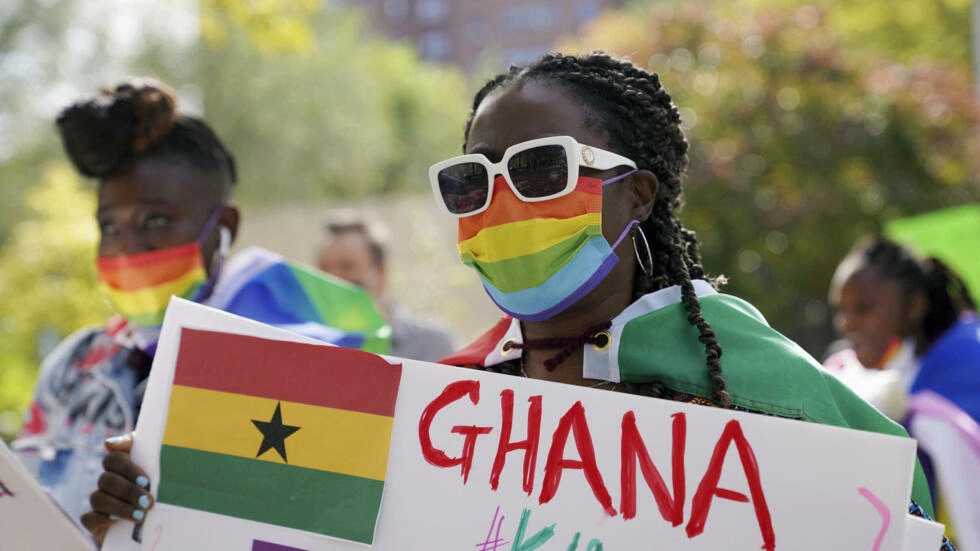
The International Monetary Fund (IMF) has expressed its concern regarding recent developments in Ghana following the approval of a bill proposing imprisonment for individuals identifying as LGBTQ.
In a statement from its Washington headquarters, the IMF underscored its dedication to diversity and inclusion, highlighting these principles as essential within the organization.
The IMF emphasized its internal policies against discrimination based on personal characteristics, including gender, gender expression, or sexual orientation, noting that economies embracing diversity tend to flourish.
The bill, passed with bipartisan support, not only criminalizes LGBTQ identification but also targets the financing of LGBTQ groups and sanctions discrimination against them. President Nana Akufo-Addo’s approval is necessary for the bill to become law.
While acknowledging the significance of the situation, the IMF refrained from commenting on the bill until it is signed into law, stressing the importance of thoroughly assessing its economic and financial implications.
Ghana’s financial stability, closely linked to IMF assistance amid debt restructuring, adds complexity to the situation. The IMF had agreed to release a second tranche of $600 million to Ghana earlier this year.
Following the news of the anti-LGBTQ legislation, Ghana’s dollar bonds experienced a decline, ranking as the second-worst performers in a Bloomberg index monitoring emerging-market sovereign hard-currency debt.
All 14 of Ghana’s dollar notes saw a drop in value, with bonds maturing in 2034 experiencing the most significant impact, reaching their lowest level since January 12.
A federal judge in Philadelphia has ruled that actor Terrence Howard must pay nearly $1 million in back taxes, interest, and penalties.
This decision stems from allegations that Howard threatened a Justice Department lawyer and argued that it was immoral for the U.S. government to tax descendants of slaves.
Howard reportedly evaded attempts by the IRS to collect $578,000 in income taxes that he allegedly failed to pay between 2010 and 2019. The Justice Department initiated a lawsuit against him in 2022.
Despite ongoing efforts to engage Howard in court proceedings following the lawsuit, his only response was a voicemail left for the case’s lead tax attorney in November.
In the voicemail, Howard expressed his perspective on the matter, stating, “Four hundred years of forced labor and never receiving any compensation for it… Now you have the gall to try and prosecute and charge taxes to the descendants of a broken people that you are responsible for causing the breakage.”
The recording was cut off midsentence, but Howard continued the conversation when he called the attorney back, suggesting that the entire United States should belong to the descendants of slaves. He challenged the attorney to face him in court, stating, “We’re gonna bring you down.”
Negative! It’s not advisable because parents being nude in front of their kids can cause discomfort or misunderstanding, clashing with cultural or family norms valuing privacy and modesty. This situation might leave children unsure about social expectations or suitable conduct, affecting their grasp of boundaries and personal space. Upholding privacy regarding nudity could be deemed more fitting, fostering a sense of respect for personal boundaries and establishing clear limits within the family and society at large. Encouraging modesty could aid children in developing a respect for privacy and others’ bodies.”
Michael Lamai
It can traumatise the child
To begin with, I do not believe it is proper at all because of the psychological trauma it might cause the child growing up. In addition, I honestly feel it is wrong, and this is so because children mostly learn from the things they see rather than what they are told and so, this might end up becoming something the children believe to be normal and okay to do in the presence of just anybody. In conclusion, I feel that parents who undress or get naked in the presence of their children might think that it does not matter because they are kids but in the long run, it would lead to disrespect to the adults and intrusion of privacy of both the parents and children, a boundary that was supposed to have been a norm, thereby causing a divide in the home.
Tawab Arileshere
I will ruin a child in some way
When kids are very young, the consensus seems to be yes, since babies and toddlers are generally oblivious to nudity and what it means to a person, but as they tend to get older and especially when you are talking about a child of the opposite sex, the answer is not quite so. Nudity between parents and children is fine as long as both are fully comfortable, but for me, it is not appropriate regardless of age, though I know it can happen sometimes but not regularly. For a child to see their parents’ naked bodies in a desexualised way can also help them understand that women are more than just objects and that their bodies are not inherently shameful. Kids are super curious, if they want to see what a body part looks like, they can Google it. They should have resources to learn about the safe body. So sometimes, it’s safe and better in some ways. The fear is that exposing a child to nudity will ruin them in some way, or at least embarrass them, but these concerns are unfounded and not true. Family and parent nudity gives children an opportunity to talk about boundaries, bodies, and safety, children who see their parents’ naked bodies are safer from sexual abuse.
Collins Christopher
I do not subscribe to it
The idea of parents being naked around their kids varies based on our cultural beliefs and religious practices. As a guy, I see it’s more about what each family feels comfortable with. Some families see it as okay, like a natural thing, to be naked around one another. It’s about openness and accepting our bodies. But for others, it’s about privacy and modesty, so they prefer everyone being covered up, teaching boundaries, and respecting cultural norms. It’s important to balance this by considering how old the kids are, what the family believes in, and what everyone feels comfortable with. Parents need to talk to their kids about feeling good about their bodies and respecting others’ privacy too. The idea of parents being naked around their kids depends on what the family thinks is right, based on their values and comfort levels. It’s about creating a healthy understanding of our bodies while respecting everyone’s feelings and beliefs. My comments above are based on a general perception. However, personally, I don’t subscribe to that ideology and will not encourage being naked in the presence of my kids. However, I will teach them the best way to be knowledgeable about their bodies and respect people as well as our religious and cultural perceptions of such.
Oyafunke Busola
I would prefer avoiding nudity around my kids
Nudity in front of children is subjective and varies with culture, religion, and age. A three-year-old perceives their parents’ nudity differently than a teenager would. Parents should be aware that nudity can spark curiosity in kids, requiring open communication and education about privacy and exposing body parts. I would prefer avoiding nudity around my kids to prevent discomfort or misconceptions. There is concern that children might become too comfortable with nudity, especially when it involves individuals they shouldn’t see. So, parents must teach their children about nudity in general. Therefore, I advocate for parents to maintain modesty and keep their clothes on around their kids.
Abiola Edun
There should be privacy in every home
I think it is very bad for children to see their parents naked. There should be privacy in every home. Besides, when the kids are growing up, they start having emotional feelings and anything physical can actually affect their emotions so it is not good for parents to be naked in the presence of their children. And we also have the issue of the internet and what they get access to watch or what they read can lead to the children developing negative ideas. So, it is better not to indulge them in things like that. Every parent should stay away when naked, know what to wear around the house, know how to set boundaries for their privacy and know how to keep themselves clothed around the children.
Bridget Umujakporue
It is inappropriate
I do not think it is appropriate for a parent to be completely naked before their children. There is a limit to how much of their bodies they expose to their children at certain ages of their lives while growing up. They have to teach them decency when it comes to dressing appropriately. The level or extent of nudity a parent chooses to expose to their children depends on how they have raised them and also how their relationship is and the kind of person the child turned out to be. The child might be a shy person irrespective of how free-spirited the parents might have raised them to be; this can cause them to feel uncomfortable in such a situation. It depends on the family and the type of upbringing the child had while growing up.
Mary Omuvi
It exposes them to immoral thoughts
I would say no, and this is because as the child keeps growing and turning into a teenager or a young adult if parents keep undressing in their presence, the child will feel it is okay to undress anywhere or in the presence of certain persons. For example, I have a family member whose little sister has been seeing their mother unclothed regularly and one day when their dad came back from work, the girl said to him, in the presence of everybody, “This thing is in our mummy’s private part,” while pointing at her father’s beards. So, it gets to a certain stage that parents need to teach their children how to be private with their bodies. Children can think of improper things when they keep seeing their parents naked and it can lead to bad ideas.
Abigail Samuel
It won’t protect the child’s innocence
In my opinion, it depends on the age. At ages one to six years, there is nothing to be worried about because their (the child’s) mind has not formed an idea about it especially if they are not exposed to any sexual content. From the age of seven, it is the parent’s duty to try and be modest in the presence of their children. I grew up with a father who was always in his boxers when he was at home and it never bothered me as a child, My mum was and is still conservative about being naked in the presence of her kids and it was normal in our house and none of us (I and my siblings) thought of it as weird. But intimately, the innocence of children is supposed to be protected and it’s the responsibility of the parents to do that.
Philomina Patrick
There should be boundaries for privacy and respect
From my perspective as a mother, I find it inappropriate for parents to be consistently naked in the presence of their children. Establishing boundaries is vital for fostering a healthy sense of privacy and respect within the family. While open communication about nudity and body parts is very crucial to the child’s upbringing and letting a child know that regularly exposing oneself may blur the lines of appropriateness and decency. As parents, it is crucial to model behaviours that align with good morals and societal expectations, ensuring our children grow up with a balanced understanding of modesty, integrity, and dignity. Maintaining a level of modesty highly contributes to a child’s comfort and helps instill values of personal space and privacy. Striking this balance promotes a positive environment for a child’s emotional well-being and encourages the development of healthy attitudes toward their bodies and others.
Zambia’s President Hakainde Hichilema has taken action in response to the prolonged drought gripping the country by declaring a national disaster.
In an address to the nation on Thursday, President Hichilema highlighted that 84 out of Zambia’s 116 districts are grappling with the effects of the drought.
The country has been grappling with scarce rainfall, raising concerns about potential food shortages and a strain on electricity supply, as a significant portion of Zambia’s energy is hydroelectric.
Water levels at the Kariba Dam, a key source of hydroelectric power for both Zambia and Zimbabwe, have plummeted to around 11.5% of usable storage as of December last year.
The president emphasized that the drought would hamper the generation of more than 450 megawatts of electricity and impact nearly half of the land used for agricultural purposes.
To address the looming crisis, President Hichilema pledged to augment food supplies by importing additional maize and other essentials.
He also announced plans to mobilize Zambia’s defence forces to aid in relief efforts and implement long-term strategies to combat drought.
Furthermore, President Hichilema called on farmers to adopt irrigation techniques to mitigate the effects of the dry spell, which has already impacted around one million farmers across the nation.
In a collaborative approach, the president affirmed his government’s commitment to working with various stakeholders, including opposition leaders and religious institutions, to address the crisis.
The severity of the situation has been evident on social media, with numerous posts depicting parched fields and failing crops, underscoring the urgent need for action.
MTN Nigeria Plc reported a loss before tax of N177.8 billion, a significant shift from the pre-tax profit of N518.8 billion in the previous year.
This substantial change was attributed to the telecom operator’s significant forex loss of N740.4 billion, primarily due to the steep devaluation of the naira in 2023.
The company’s audited results for the year ended December 31, 2023, revealed this information in a release on Friday.
As a result of the financial downturn, MTN reported a loss after tax of N137 billion, in stark contrast to the restated Profit After Tax (PAT) of N348.7 billion reported in 2022.
The telecommunications company indicated that the impact of this financial downturn also affected negative retained earnings and shareholders’ equity, reported at N208 billion and N40.8 billion, respectively, as of December 2023.
Taking into account the significant net forex loss, the restated Profit After Tax (PAT) would have been N344.5 billion, showing a decrease of 14.3 percent.
The report stated, “The significant devaluation of the naira in 2023 resulted in a materially higher net forex loss of N740.4bn (2022 restated: N81.8bn), reflected within net finance costs, which resulted in a reported loss after tax of N137bn compared to a restated PAT of N348.7bn in 2022.”
On June 14, 2023, the Central Bank of Nigeria made alterations to the country’s forex operations, mandating the merging of all market segments into the investor and exporter window. Additionally, they reintroduced the ‘willing buyer, willing seller’ model to enhance forex liquidity.
As a result, there was a substantial 96.7 percent shift in the exchange rate since the NAFEM rate was announced at N907/US$ at the end of December 2023, as the market sought an equilibrium level.
MTN noted that this significant movement in the exchange rate had a notable impact on its operations, particularly its operating expenses and net finance costs.
“The most significant of these exposures relate to the tower lease costs, which comprised the bulk of the 45-50 percent foreign currency exposure in our operating expenses in 2023.”
MTN noted that majority of the lease costs were indexed to the dollar but were invoiced and paid in 9zzt.
“Our tower lease costs are recognised in line with IFRS 16 and IAS 21, which has had several impacts on our financial performance,” the operator said.
The CEO of MTN Nigeria, Karl Toriola commented, “2023 witnessed a very challenging operating environment characterized by rising inflation, currency devaluation, and foreign exchange shortages, complicated by geopolitical disruptions and cash shortages in Q1 arising from a redesign of the naira. These factors created severe headwinds for our customers and our business during the year.
Throughout the year, the inflation rate surged, peaking at 28.9 percent in December 2023, marking the highest level in 18 years. The average rate stood at 24.5 percent.
The CEO highlighted that this increase was further aggravated by soaring fuel prices, driven by the removal of the fuel subsidy in May 2023. Diesel and petrol prices surged by 66.4% and 257.1% in 2023, reaching N1,416.8/litre and N600/litre, respectively.
To counteract the impact of these challenges on its operations, Toriola emphasized that the company remained committed to investing in network infrastructure. This strategic approach, characterized by prudent capital allocation and operational efficiencies, aimed to bolster capacity and extend coverage.
“This enabled us to meet the rising demand for data and, coupled with compelling and competitive propositions for our customers, accelerate the growth of our commercial operations,” he said.
Other notable highlights from the report include: a 5.3 percent increase in total subscribers to 79.7 million; a 12.7 percent rise in active data users to 44.6 million; a significant 163.2 percent surge in active mobile money (MoMo PSB) wallets to 5.3 million; a 22.4 percent growth in service revenue to N2.5 trillion; a 12.3 percent increase in earnings before interest, tax, depreciation, and amortization (EBITDA) to N1.2 trillion; and a 4.5 percentage point decrease in EBITDA margin to 48.7 percent.
The Federal Government might seek over $10 billion from Binance as a penalty in efforts to bolster the value of the naira.
In an interview with the BBC on Friday morning, Bayo Onanuga, the Special Adviser to the President on Information and Strategy, disclosed this potential action.
Onanuga asserted that Binance reaped significant profits from what he termed as “illegal transactions” in Nigeria, causing substantial losses to the nation.
He further contended that Binance lacks registration or physical presence in Nigeria. Moreover, he highlighted how certain users exploited the platform to manipulate dollar-naira rates, leading to a drastic depreciation of the naira’s value.
In further clarification to Punch’s correspondent, Onanuga emphasized, “I mentioned compensation discussions and potential fines. I used the term ‘May’.”
The Presidential Spokesperson affirmed Binance’s cooperation with the Nigeriangovernment, providing valuable information and suspending naira-denominated transactions.
The Office of the National Security Adviser confirmed Nigerian authorities’ investigation into the cryptocurrency exchange platform.
This development follows Binance’s guilty plea and agreement to pay $4.3 billion to settle criminal money laundering charges brought by the U.S. Department of Justice.
The Nigeria Football Federation (NFF) has announced the departure of head coach Jose Poseiro.
Portuguese coach Poseiro revealed the separation on his X page on Friday.
“Yesterday, we concluded our contract with the NFF. It was a pride and honour to coach the Super Eagles. It has been 22 months of immense dedication, sacrifice, emotion, and enormous enthusiasm. We feel a sense of fulfilment,” he stated
Upon concluding his 22-month tenure with the West African nation, Mr. Poseiro conveyed his gratitude to the current administration and the former President of the NFF.
“We would like to express our gratitude to Sir Amaju Pinnick (the president who signed us), President Ibrahim Gusau, General Secretary Mohammed Sanusi, Secretary Dayo Enebi, the NFF, all the Staff, and especially all the PLAYERS, with whom leading has been a great pleasure.
“Guys, we are thankful; it has been a privilege to be part of this family. We will miss you, but we will always be there for you, no matter where you are. A big hug to all of you.”
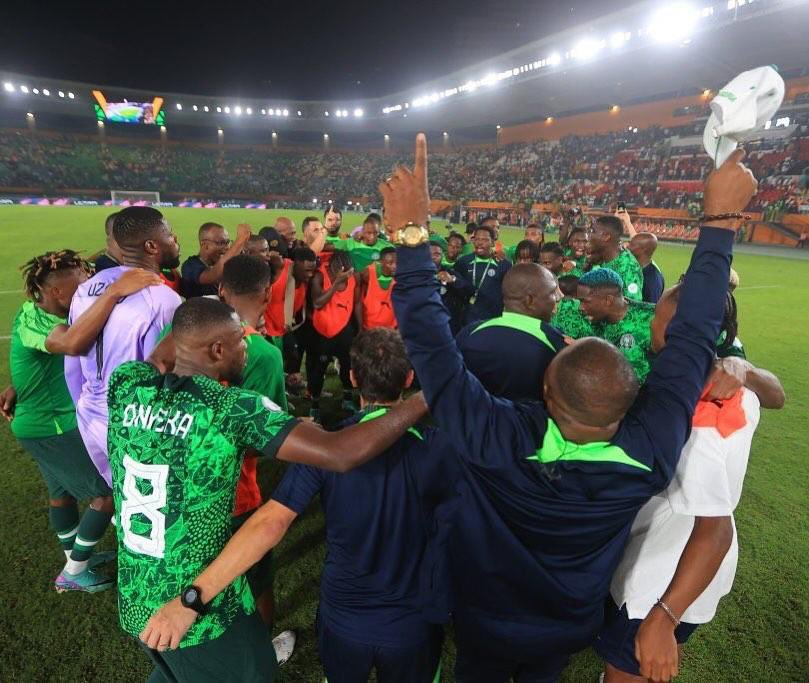
Jose Poseiro led the Super Eagles to the finals of the 2023 African Cup of Nations, losing 2-1 to host Côte d’Ivoire.
It was the first final Nigeria since the AFCON in South Africa in 2013.
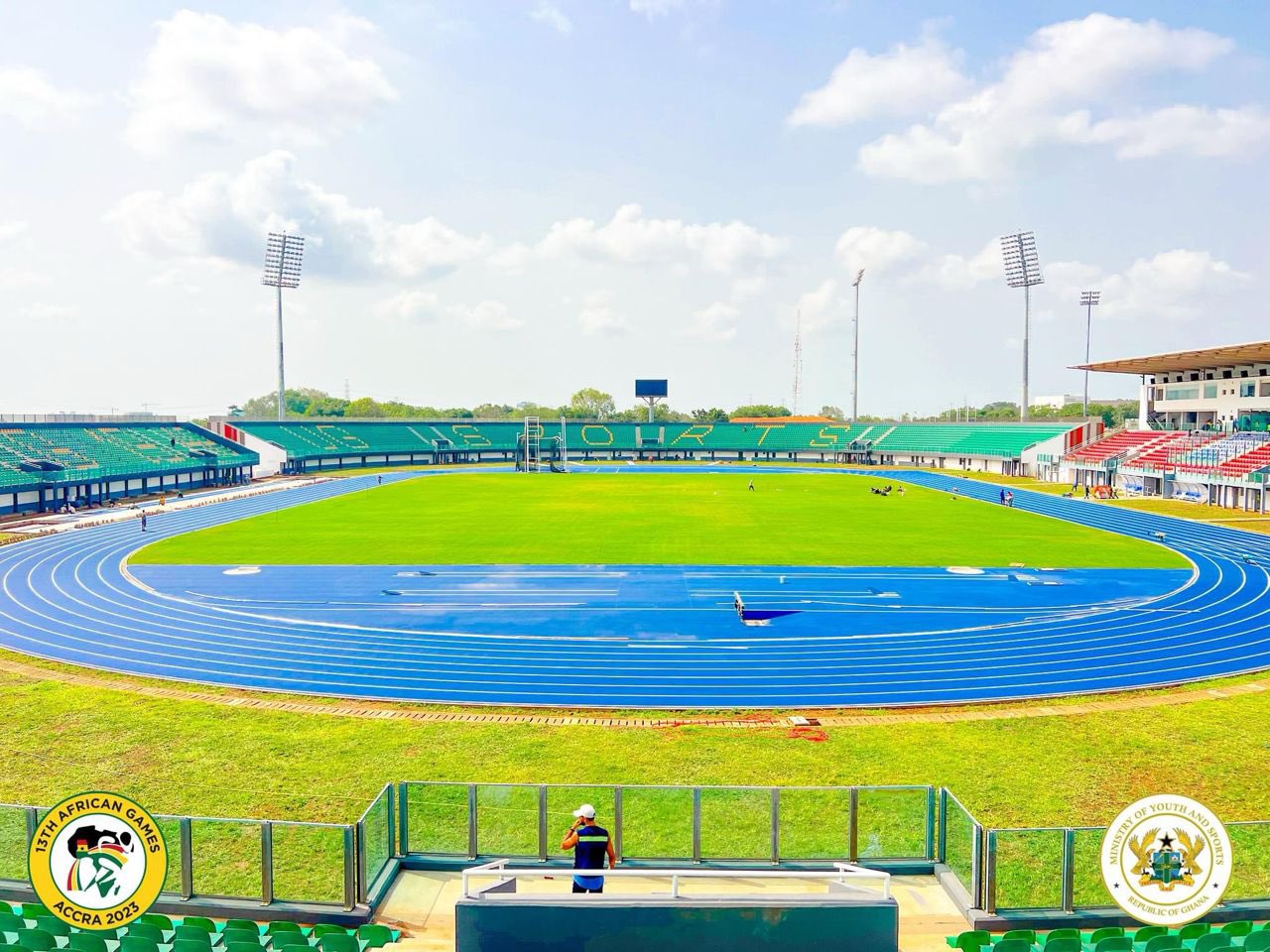
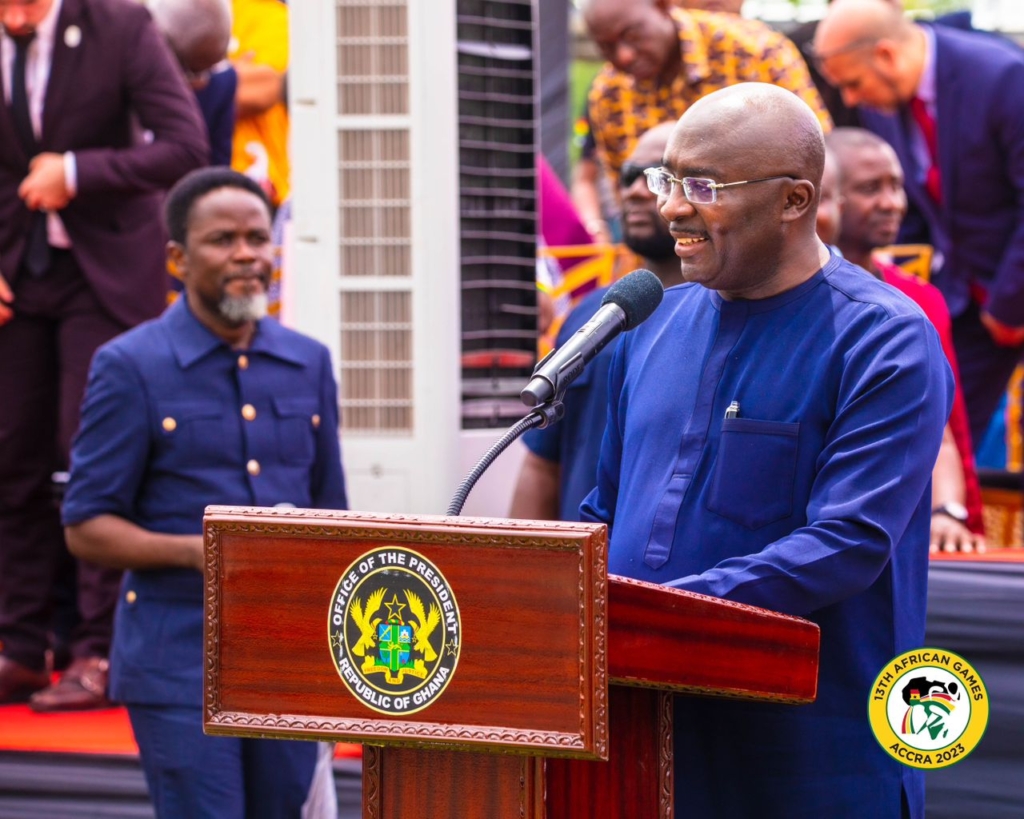
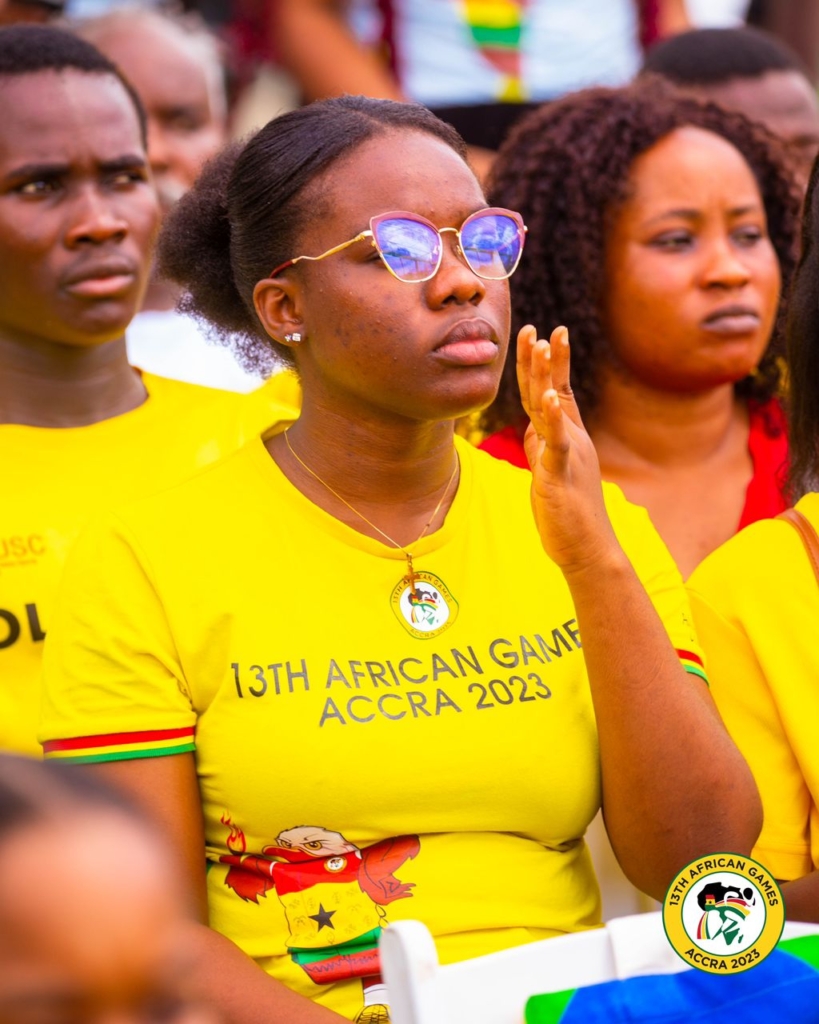
On March 1, 2024, Vice President Dr. Mahamudu Bawumia inaugurated the University of Ghana stadium (Legon Stadium) in Accra.
The colorful ceremony marked the completion of the 11,000 capacity facility, which will be a venue for the upcoming 13th edition of the African Games in Accra.
Dr. Bawumia emphasized the significance of the African Games in the continent’s history during the commissioning ceremony.
“I believe it is common knowledge that the Great Pan African and First President of the Republic of Ghana, Osagyefo Dr Kwame Nkrumah is a founding member of the Games. The Games thus inhabit the Spirit of Africa and Pan Africanism.
“Our theme for this edition of the Games, “Experience the African Dream”, is thus steeped in the core values of unity, independence, political and economic cooperation, as well as historical and cultural awareness.”
He added that “this is the age of the African Renaissance. The continent is tagged by Trade Finance Global with the potential to shape geopolitics and world economics for decades to come.
“This potential would not marginally materialize to propel our people into prosperity without conscious and intentional action on the part of everyone, especially leadership across all social divides and facets of society.”
The United Nations, he said, had “Identified sports as the most appropriate vehicle for sustainable socio-economic development and made a pronouncement as such in 2018. Combined with the youthful bulge of our demographic dividend, the opportunity is here, and the time is now. Ghana is ready to host the world.
“It is in recognition of many social and cultural benefits inherent in sports that the Government of His Excellency Nana Addo Dankwa Akufo-Addo, President of the Republic, took the bold decision to bid for and win the rights for Ghana to host this edition of the African Games. This visionary step has resulted in the construction of international standard sporting facilities such as the University of Ghana Sports Stadium and Rugby Field and the Borteyman Sports Complex.
“Construction of these facilities have not been easy, but we know that the returns would be immediate and substantial”, he concluded.
More than 13,000 elite athletes, sports experts, technicians, officials, and volunteers are anticipated to take part in the African Games, concluding on Saturday, March 23.
The African Games serve as a platform for the continent’s top sporting talents to come together, compete, and celebrate African cultural diversity in an atmosphere of unity and camaraderie.
A new mother declined her partner’s request to cook for his parents just two days after giving birth to their child.
When the man complained about her not doing anything at home, she reminded him that she was sent home from the hospital to rest.
He suggested she make her famous roast, but she pushed back, saying it wasn’t fair given her recent childbirth and her cooking throughout her pregnancy.
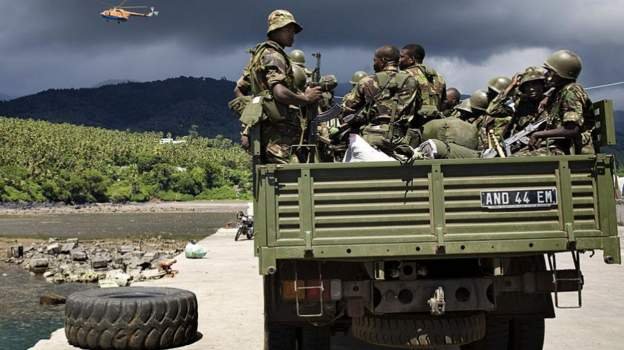
Witnesses have reported that two Tanzanian military armoured vehicles were struck by shells fired by M23 rebels in the Congolese town of Sake.
The incident, which occurred on Thursday, resulted in the injury of one Tanzanian soldier and a civilian, according to a Congolese military source and an eyewitness.
However, the Tanzanian army spokesperson stated that they were not informed of the attack.
Tanzania, along with South Africa and Malawi, deployed troops to the Democratic Republic of Congo (DR Congo) as part of the Southern African Development Community (Sadc) mission. Sadc troops, in collaboration with the Congolese army, have been engaged in clashes with M23 rebels since early February, particularly in the vicinity of Sake. Earlier this month, two South African soldiers were killed in an attack in the same area.
The Sadc intervention followed the withdrawal of the East African Community force, which was ordered by Congolese President Felix Tshisekedi due to perceived inefficiency in combating the M23 insurgency.
In light of the recent escalation in violence, the Congolese army has been advising residents to evacuate Sake. While some have opted to remain, a significant number have fled to the outskirts or to the nearby city of Goma, approximately 25km (15 miles) away.
The United Nations estimates that the recent hostilities have displaced around 215,000 people towards Goma, exacerbating the humanitarian crisis in a region already burdened with a large refugee population.
Remember Alewa? That sweet, sticky candy that seemed to vanish from the shelves, leaving behind nothing but fond childhood memories?
Well, guess what? You can make alewa in the comfort of your home using this simple and engaging guide on how to make Alewa at home.
Let’s embark on this sweet journey together, reviving a taste that feels like a warm hug from the past.
Ingredients:
Sugar
Flavouring of your choice
Grated ginger
Lime juice
Food coloring
Corn syrup
Instructions:
Prepare your workspace: Lightly grease a baking sheet or tray and set aside. This will be where you pour your Alewa mixture to cool and harden.
Melt the sugar: In a medium saucepan, combine the sugar and corn syrup over low heat. Stir continuously until the sugar dissolves completely and the mixture starts to bubble.
Color it up: Once the sugar has fully dissolved, add a few drops of your chosen food coloring to the mixture. Stir well to ensure the color is evenly distributed.
Add flavors: Add the grated ginger and your chosen flavor to the saucepan. Mix these ingredients into the sugar mixture thoroughly.
The lime twist: Squeeze in the lime juice. The acidity will not only add a subtle tang but also help prevent the sugar from recrystallizing.
Cooling time: Pour the mixture onto the greased baking sheet. Spread it out into a thin layer, and let it cool.
Pulling time: While it’s still warm, bring the mixture together and pull it apart till the color becomes light. You can now cut it into shapes.
Let it set: Allow the Alewa to cool and set completely. Once set, you can break it into pieces if you spread it out on a sheet.
Enjoy!: Your homemade, colorful Alewa is ready to be enjoyed. Store any leftovers in an airtight container to keep them fresh.
This Alewa recipe not only brings a classic treat into the modern kitchen but also adds a playful twist with the use of food coloring.
It’s a perfect way to share a piece of tradition with friends and family, all while adding your personal touch to the flavors and colors.
Ghanaian musician and activist Wanlov Da Kubolor has vehemently criticized the recent passage of Ghana’s Anti-Gay Bill by the nation’s parliament, condemning it as fundamentally unfair and driven by bias and bigotry.
During an interview with Ohemaa Woyeje on Angel FM, Wanlov Da Kubolor voiced his disappointment at the imposition of prison terms solely based on an individual’s sexual orientation.
He contended that such punitive actions are unjustifiable and highlighted the inconsistency of singling out homosexuality for punishment while overlooking other morally questionable behaviors.
“If the basis of the bill which was passed was on morality grounds, there are other similar morally wrongs that are plaguing the country and should receive similar reactions, not only homosexuality,” Wanlov Da Kubolor remarked.
The musician also called for uniformity in moral standards, arguing that other behaviors ought to be treated the same way if homosexuality is decried by religious and cultural convictions.
“If we oppose homosexuality because it goes against biblical teachings, then we should also condemn other morally wrong behaviors like adultery, smoking, and drunkenness, which are also on the rise.”
He urged a more accepting and caring attitude toward people with different sexual orientations, emphasizing that since sexual orientation differences do not cause offense to others, they should not be criminalized or punished.
The passage of the Anti-Gay Bill has sparked criticism from some human rights organisations and foreign governments, including the US Embassy in Ghana who have urged government to uphold its commitments to human rights and equality for all its citizens.
The Bank of Ghana Monetary Policy Committee (MPC) has announced a surprising 100 basis points reduction in the key policy rate on Monday, January 29, 2024, lowering it from 30% to 29%.
This move has raised eyebrows, with many questioning the expected impact on lending rates, inflation, exchange rates, and overall economic growth. Some are skeptical about whether the officials at the Bank of Ghana have thoroughly analyzed the correlation between interest rates, inflation, and exchange rates in the country.
The cautious 1% rate cut to 29% is particularly puzzling, considering their forecast that headline inflation would “ease to 15%±2% by the end of 2024 and gradually trend back to within the medium-term target range of 8%±2% by 2025.”
This decision raises doubts about the confidence of our top economists in their own forecasts and numbers. There is concern that they may not fully believe in their own assessments, especially with their recent claim of signs of an “emerging recovery,” after previously stating that the economy had “turned the corner.”
Policy rate and open market operations
I recognize the intricate relationship among various macroeconomic factors. As highlighted in my previous article titled “BOG has failed us,” our excessively high interest rates have contributed significantly to our persistent inflation rates, the continuous depreciation of the cedi, business closures, unemployment, and worsening poverty levels. This situation has forced many young Ghanaians to seek better opportunities abroad.
I find it surprising that the IMF has not only supported but also insisted on this approach for years. The consequence is that businesses are compelled to borrow at exorbitant rates, such as 36%, leading to a doubling of indebtedness almost every two years (following the Rule of 72). This scenario has hindered our efforts to diversify and restructure the economy, leaving it overly reliant on the export of raw materials and the importation of finished products.
For over two decades, we have been victims of this short-sighted monetary policy approach, which has created structural barriers to economic progress. Consequently, Ghana has struggled to meet the convergence criteria for the Ecowas single currency, the Eco. Urgent measures are required to stimulate our economy, and a mere 1% reduction in the interest rate from 30% to 29% will not suffice.
The cedi has endured significant depreciation over the years, with the dollar gaining nearly 200% against the cedi since 2017. Without the currency redenomination of 2007, one US dollar would now be equivalent to a large sum of cedis, approximately GH₵120,000. Stabilizing the exchange markets becomes challenging when treasury bill investors continue to enjoy a 30% nominal return on their cedis. The principles of parity laws suggest that achieving stability under these circumstances is unlikely.
Global shocks or self-inflicted tragedy?
BOG will blame global shocks for our woes. But as I pointed out previously, Zambia and Kenya, for example, exposed to the same global shocks, have done remarkably better. Zambia recorded 12.9% and 13.1 inflation rates in November 2023 and December 2023, respectively. Kenya recorded 6.8% and 6.6%, respectively. Today, the Bank of Zambia’s prime rate is 11% and that of the Central Bank of Kenya 13%.
Reckless borrowing and corruption have combined with high cost of borrowing to make Ghana Africa’s most indebted country. Sadly, after taking the difficult step to reduce domestic debt through the draconian DDEP, we are still piling up short term debt – 91 Day Bill at 29.35%, 182 Day Bill at 31.95% and 364 at 32.49% – even when demand is very high.
High interest rates evidence instability. Thus, the unnecessarily high domestic interest rates have fed into external market perception of our outlook, giving international capital market predators a field day. We cannot through our policy rate give an impression of high inflation or high credit risk outlook and expect the external financial markets to think differently.
BOG’s approach has been costly for us in the international financial markets, where it has created an exaggerated risk perception, with adverse implications for our credit rating. COCOBOD is currently suffering the consequence, having to borrow at an unprecedented 8%.
Who is benefiting?
In the business sector, banking has been and will be the only beneficiaries, baring any future haircuts. And soon, we will be hearing the usual BOG’s self-serving statement that, “The banking industry’s performance has defied the general economic downturn with strong growth across key metrics including total assets and deposits, as well as sustained improvement in profitability…”.
But it does not require any banking ingenuity to make money in a 30% plus interest rate environment, even after providing for high levels of non-performing loans.
British financial economist and lecturer at Aston University in Birmingham, Dr. Sajid Mukhtar Chaudhry, was right when he said that banks in Ghana are too profitable. He suggested the imposition of a ‘Bank Tax’, as done by the likes of Australia, to generate more revenue for the Government.
He thinks “it is not normal for banks to be that profitable”, and he expressed surprise that banks “earn much more than other industries” in Ghana.
Ultimately though, BOG were themselves victims of their bad monetary policy, announcing massive losses in 2022, totaling GH₵60 billion, and year-end negative net worth of GH₵55 billion, making it technically bankrupt.
This is unprecedented in our history. The loss, equal to about 10% of our 2022 GDP, is one of the largest one-year losses ever recorded by a central bank.
Why the reluctance to cut rates?
But why is BOG clinging to a policy and an approach that has not only failed to keep inflation in check, but also made it difficult to effect the needed structural changes in the economy?
The Bank’s virtual monopoly over government business and their ability to print money, no doubt, makes it a survivor.
One thing is clear however: BOG, given its extravagant spending, cannot hold its own in a low interest rate environment. This probably explains the need for the Bank to keep its policy rate high to protect its main revenue source – interest income. Its “interest and similar income” amounted to GH₵5.09 billion in the difficult post-COVID 2022, up 47% from GH₵3,46 billion in 2021, and represents 92.7% of its total operating income of GH₵5.49 billion.
It may also be the case that BOG is reluctant to see interest rates fall quickly at this critical time when it needs to make more money to survive bankruptcy. A GH₵55 billion negative net worth is a huge burden.
Living in a different world
Details of BOG’s 2022 annual report says a lot. As I pointed out previously, budgeted and actual expenditures do not look like those of a struggling country’s central bank: US$ 250 million for a new head office, equivalent to 0.35% of our GDP; GH₵97.4 million for travel; GH₵131 million for motor vehicle maintenance/running; GH₵32 million for communication; GH₵67 million for computers; GH₵207,7 million for premises and equipment; GH₵336.9 million for currency issue (currency in circulation amounted to GH₵40.73 billion); GH₵287.83 million for other administrative expenses, etc.
Personnel costs amounted to GH₵1.62 billion. With a total of 2,203 employees, this meant an average remuneration of a colossal GH₵735,361 per employee in 2022 or GH₵61,280 monthly per employee, including several allowances. These employees also had staff loans amounting to GH₵1.247 billion, an average of GH₵566,046 per head.
BOG is also reported to be remodeling its regional offices, while investing GH₵142 million in a 50-bed guest house in Tamale.
I still cannot believe BOG and its staff are living in a completely different reality. Apart from its excessive operating expenses, proper cost-benefit analysis would not justify its investment in a new head office building and non-core activities like a hospital and guest houses.
BOG vs Bank of England (BOE)
It is hard to believe how some BOG’s operating income and expenses compare with those of Bank of England (BOE). For example, BOG spent GH₵1.62 billion (£147.27 million at 2022 average cedi-pound exchange rate) on its 2,203 employees, translating to £66,851 per staff. BOE on the other hand, with an average labour force of 4,675 per their 2021-22 financial report, spent £448 million, an average of £95,829 per staff.
Unlike BOE staff, BOG staff also enjoyed staff loans, with an average of GH₵566,046 (£51,459) outstanding per employee.
BOG vs BOE: SOME INCOME AND EXPENDITURE FIGURES
Bank of Ghana: 2022
Bank of England: 2021-22
Item
Amount £
Amount £
Item
Gross Interest Income: GH₵5.094b
463.09m
NA*
Gross Interest Income
Net Interest Income: GH₵1.811b
164.64m
13m
Net Interest Income
Fee & Commission: GH₵254.85m
23.17m
£34m
Fee Income
Net Loss: GH₵60.81b
5.53b
7m
Net Profit
Average staff cost for the year: GH₵735,361
66,851
95,829
Average staff cost for the year
Average staff cost/month: GH₵61,280
5,571
7,986
Average staff cost/month
Average loan per staff: GH₵566,046
51,459
Nil
Average loan per staff
Non-executive director remuneration/ month: GH₵42,500
3,864
1,250
Non-executive director remuneration/ month*
*NA: Not Available
BOG vs BOE: EMPLOYEES AND REGULATED INSTITUTIONS
Bank of Ghana: 2022
Bank of England: 2021-22
Item
Number
Number
Item
Employees
2,203
4,675
Employees (average)
Institutions regulated or supervised
794*
Over 1,400
Institutions regulated or supervised
*Including 405 Foreign Exchange Bureaux.
BOE’s reports disclose the remuneration of individual executives. But BOG’s financial statements do not. So, a comparison is not possible. But BOG’s ten (10) non-executive directors earned GH₵5.1 million in 2022, averaging GH₵510,000 (£46,364) per director for the year, or GH₵42,500 (£3,864) per month.
BOE’s statement on the remuneration of non-executive directors shows that BOG’s non-executive directors are much better remunerated than their BOE counterparts. BOE’s rates, which were effective from 1 June 2009, were set at £15,000 per annum (£1,250 per month) for non-executive directors. Committee Chairs receive a little more. Non-executive directors do not receive any additional fees for serving on Committees.
I wonder whether BOG directors’ allowances were determined “in consultation with the Minister of Finance” as required under the Bank of Ghana Act.
One wonders also how the technically bankrupt institution is funding its exorbitant expenditures. BOG’s extravagance is typical of poorly supervised cash-rich state-owned enterprises, many of which increase remuneration and expenditures at will, as shown by the trend in staff numbers and costs at BOG captured below:
RECENT TRENDS: STAFFING AND STAFF COSTS AT BANK OF GHANA
Year
2010
2019
2020
2021
2022
Staff numbers
1,538
2,053
2,101
2,190
2,203
Total staff cost: GH₵(m)
91.28
809.80
1,013.26
1,260.13
1,620.64
Average staff cost: GH₵/month
4,946
32,870
40,190
47,950
61,304
Non-executive directors
8
10
10
10
10
Total non-executive directors’ fees: GH₵(m)/year
NA
1.96
2.63
3.17
5.10
Fees per non-executive director: GH₵/month
1,200*
16,333
21,917
26,417
42,500
*Estimate, based on average GH₵683 Board fee per month
and average GH₵517 sitting allowance per month only,
So, can budget considerations be an important reason for BOG continuously keeping interest rates high, by linking it to year-on-year inflation instead of expected inflation?
Effectiveness of BOG’s inflation targeting
I want to emphasise that BOG’s approach to inflation targeting:
has not worked and is unlikely to work because its policy rates (currently 29%) do not appear to have any relationship with its target or expected inflation rates (currently 15% by year-end), and
has only succeeded in importing past inflation into the future, trapping us in a vicious circle of high inflation→ high interest rate→ high cedi depreciation→ high inflation, making Ghana’s inflation and currency depreciation rates some of the worst on the continent.
By virtually indexing its policy rate to year-on-year inflation, BOG has indexed our economy to past inflation. This kind of indexation produced the self-fulfilling prophesy that led to the real crisis in Brazil in 1999, when the value of the Brazilian real dropped 35%.
As I pointed out previously, the reduction that we saw in the headline inflation rate recently was largely the result of what happened to prices one year earlier, the effect of which should die out. It should also be noted that, even though maintaining the current high policy rate will not help the fight against inflation, a reduction in BOG’s policy rate from 30% to 20%, for example, should not necessarily produce inflationary consequences. Thus, the timid 1% reduction may have been influenced by the survival issues surrounding BOG itself.
Urgent need for change
In its Annual Report and Accounts 1 March 2021 – 28 February 2022, BOE described itself as “a human and humble Bank, in step with the changing world”. Their definition of a human Bank “is one where colleagues feel able to be themselves and speak openly and honestly about their views. A humble Bank is one where we listen as much as we speak, and recognise that we are made stronger by learning from others. And a Bank in step with the changing world is one that looks outwards and forwards and applies those insights to our enduring mission”.
Having failed over the years to keep inflation in check, it is sad to see BOG pursue the same approach that has failed to deliver the desired outcomes. It is about time BOG listens and applies more forward-looking principles in pursuing its mission. Success in policy formulation requires open-mindedness, outstanding imagination, and sound judgement.
BOG’s objectives and autonomy
I want to emphasise that price stability is not an end in itself. Probably more important are growth and employment generation, in which the BOG must show interest. We need to clarify BOG’s mandate and improve its governance to mitigate the profit motive.
As I pointed out previously, no institution of state can claim absolute autonomy, and neither does the independence of the BOG require that the Governor should be Chairman as well. It will, at the very least, enhance internal check if the two roles are separated.
At BOE, the effectiveness and authority of its Court (Board) of Directors provides the necessary balance. The Court:
has an independent non-executive chairman
has an Independent Evaluation Office that supports its work, and
may commission external performance reviews (including, retrospectively, into policy decisions).
All said, if BOG does not change its predatory lending practices, it will continue to undermine the real sectors of our economy and frustrate efforts to develop the bond and mortgage markets. Worst still, we will, sooner than later, be back to the IMF for the 18th time.
Disclosure and for the records
It is almost twenty-one years, May 2003, since I first complained about BOG’’s reactionary self-fulfilling monetary policy approach putting us in a vicious circle of high inflation→ high interest rate→ high cedi depreciation→ high inflation. I received support from the distinguished economist, the late Hon. JH Mensah. I was subsequently appointed to the Board of BOG by HE President JA Kufuor, 2003-2008, and later by HE President Prof. JEA Mills, 2009-13. But I could not persuade the Bank to change its approach.
President of the Ghana Catholic Bishops’ Conference, Rev. Matthew Kwasi Gyamfi, has criticized the imprisonment penalties outlined in the newly passed anti-LGBTQI bill. He believes that incarcerating individuals based on their sexual orientation will not resolve the issue but rather exacerbate it.
Speaking on Accra-based Citi FM, Rev. Gyamfi reiterated the church’s endorsement of the bill but called for a reconsideration of the punitive measures. He emphasized the importance of implementing more rehabilitative and corrective measures.
“We think that in the case of this particular law and the way it is being implemented, being placed in prison as the punishment that they have chosen, it is not going to solve the problem.
Because you see if you round up same-sex people and you know our prisons, they are going to end up in the same room and what is going to prevent them from going through these activities in the prison?
“And you are not going to put them there forever because they are going to be there for three months to six months. And then they practice this and come out as more experts at it than when you sent them there. Then you release them back into society. So, what is going to happen?
“That is why we were concerned about a punishment that will correct them, that will reform them. So if the government is going this way or if the parliament is going this way that is why we are suggesting that in the prison there, they should add more of the corrective and reformative measures,” he stated.
On Wednesday, February 28, 2024, Parliament approved the Proper Human Sexual Rights and Family Values bill, popularly known as the anti-LGBTQ bill.
This law prohibits LGBTQ activities, including their promotion, advocacy, and financial support.
Those convicted could be sentenced to imprisonment for six months to three years, while those promoting or sponsoring such activities could face three to five years in jail.
The Ghana Revenue Authority (GRA) underscores the vital role of the Electronic Transaction Services Levy (e-levy) in bolstering the nation’s revenue, citing its substantial contribution.
Having generated GH₵1.19 billion in 2023, surpassing its target by GH₵83.15 million, the GRA urges stakeholders to refrain from initiatives aimed at scrapping the levy.
Digital financial services (DFS) taxation, including the e-levy, significantly enhances Ghana’s tax to GDP ratio and broadens the tax base to include the informal sector, according to the state-owned tax collection agency.
Charles Addae, Deputy Commissioner of GRA, attributes the e-levy’s success to technological advancements like the integration of charging entities into the Electronic Management System (ELMAS) and measures to combat tax evasion.
Addae emphasizes the importance of maintaining the current revenue stream and cautions against proposals to abolish the e-levy, particularly amidst political debates. He underscores the necessity of boosting the tax to GDP ratio for national development and calls for collective support from all stakeholders.
“There are talks that the tax would be cancelled in the near future, but we are pleading that it’s better we sustain the current generation value raised to cushion the economy. Otherwise, we would be depending too much on loans.
“The idea for e-levy is not how to introduce new tax types but to deepen tax revenue generation in a way that does not affect the already existing businesses that are paying taxes. The tax has been very unpopular as the populace are not seeing the tax to be a good source, but with education and better deployment of technology, we are seeing progress,” he said.
The International Center for Tax and Development (ICTD)’s Research Director, Dr. Martin Hearson, emphasized worries about the e-levy’s regressive character and informal workers’ low level of trust in the government. Hearson supported a review of the levy in order to address these concerns, even though he acknowledged the revenue generated.
“There were serious concerns about the fact that if you introduce a tax like this, it affects growth in the mobile money market, but the impact that we saw was only modest and temporary and in the long-run, it seems the growth has continued in spite of the tax,” he said.
The Electronic Transaction Services Levy (e-levy), initially proposed at a rate of 1.75 percent in the 2022 Budget Statement and Economic Policy, later adjusted to 1.5 percent, has demonstrated resilience and effectiveness in revenue generation. Despite initial skepticism, it amassed GH₵1.19 billion in 2023, indicating a growing acceptance and understanding among Ghanaians.
The Ghana Revenue Authority’s (GRA) advocacy for the continued implementation of the e-levy highlights its pivotal role in revenue generation and economic progress, even amidst calls for its reassessment to address various concerns.
This insight is drawn from discussions held during the ‘Taxing Mobile Money – Lessons and Ways Forward’ conference, jointly organized by the International Center for Tax and Development and the GRA in Accra.
Bola Ray, CEO of EIB Network and noted philanthropist, demonstrates his generosity by welcoming market woman Mama Toli to his office.
This act reflects his commitment to giving back to society, as he had expressed his desire to meet Mama Toli in person through his official Instagram page.
“I like Mama Toli sooo much, someone should work it out for us to meet and I will do a lunch with her”, the media personality posted a video of Mama Toli and asked if someone could help him meet her in person.
Assisted by Ghanaian dancer and official starter, Bola Ray treated Mama Toli to lunch along with Chris Attoh, following their meeting at the media mogul’s office.
In viral videos and pictures, Bola Ray is captured presenting a refrigerator to Mama Toli to support her in her selling endeavors.
A South African town, plagued by the disappearance of a six-year-old girl missing for over 10 days, has received support in its quest for answers.
Joshlin Smith vanished from her home in an informal settlement in Saldanha Bay, near Cape Town in the Western Cape province, last Monday. Her disappearance has captured national attention, highlighting the alarming rate of missing children, with reports indicating one child goes missing every five hours in the country.
A reward of 100,000 rand ($5,100; £4,100) has been offered for information leading to the girl’s location, prompting extensive searches of sewers and pits in the area.
Concerns arose when reports suggested police were scaling back their efforts. In response, Mayor Andrè Truter appealed to the provincial government for additional support. As a result, more investigators, drones, dog units, and rescue volunteers were deployed to aid in the search on Thursday.
The girl was last seen under the care of her mother’s boyfriend, Jacquin Appollis, who was unable to provide information about her whereabouts. Amidst the search efforts, there have been reports of angry mobs searching homes in the area.
Joshlin’s mother revealed to local news service EWN that some community members had accused her and Mr. Appollis of involvement in her daughter’s disappearance. However, both individuals have vehemently denied any wrongdoing.
A tragic shooting incident unfolded in the heart of Johannesburg, South Africa, claiming the life of a university student and leaving another severely injured. Gunmen shot and killed two men inside a parked car on a bustling street, with stray bullets hitting the students as their bus passed by the scene.
The victims were caught in the crossfire, with one student declared dead at the scene and the other rushed to the nearest hospital for urgent medical treatment. Both men in the vehicle were also pronounced dead.
The incident shocked witnesses, who described the scene as chaotic and terrifying. Images shared on social media depicted the grim aftermath, showing a body hanging out of a car window and emergency responders tending to the injured.
Authorities have yet to make any arrests in connection with the shooting. While gun crime is unfortunately common in South Africa, the brazen nature of this daylight attack has heightened concerns among residents.
The University of Johannesburg confirmed that both affected students were enrolled at their institution. The deceased, an 18-year-old undergraduate, was on his way home when the shooting occurred. The university is offering counseling services to those who witnessed the traumatic event.
Speculation surrounds the motive behind the shooting, with some suggesting it may be related to taxi violence, although police have not confirmed this. Witnesses reported seeing a gunman fleeing the scene in a white getaway car.
The shooting underscores the ongoing issue of violence in South Africa, where an average of 34 people are shot dead every day, according to police crime statistics. Police and forensic investigators are currently at the scene, working to piece together what happened and bring those responsible to justice.
CEO of the Ghana Association of Banks (GAB), John Awuah, has emphasized the necessity of a clear connection between lowering interest rates and enhancing the economic landscape.
He cautioned against compelling banks to reduce interest rates if the underlying economic fundamentals do not align with such adjustments.
“Instances where the economy had turned around with some variables improving, the banks did moved quickly to review their rates. We should not try and get to that era where interest rates are forced down when it is not backed by the economic fundamentals”, he warned.
Mr. Awuah made this revelation during an interview on PM EXPRESS BUSINESS EDITION with host George Wiafe. He contended that banks consistently lower interest rates whenever other macroeconomic indicators show improvement.
“There have been several examples in the past which showed that when all these factors that influence interest rates drop, the banks have gone ahead to revise their rates”, he maintained.
Policy rate reduction and inflation rate
The Monetary Policy Committee at its first meeting on January 23, 2023, cut the policy rate by 100 basis points to 29.0%. The inflation rate since July 2023 witnessed some significant drop until that marginal spike in January 2024.
Recalling some instances where the banks have reduced interest rates, Mr. Awuah pointed out that in times when the indicators have improved, financial institutions have used variable rates on loans.
“You should check with anyone who secured a facility at a variable rate and you realise that commercial banks in question have change their rates”, he added.
High interest rates and impact on commercial banks
The Bank of Ghana pegged average interest rates by the end of December 2023 at around 30.19%, from 25.51% in December 2022.
However, some analysts have described the rate as high posing financial challenges to businesses.
Responding to assertions that banks profit from high interest rates, Mr. Awuah argued that the high interest rates rather lead to high default rates.
“I don’t think it’s fair to link the profits that commercial banks are making purely to the high interest rates”, he stressed.
“For instance every, GH¢100 given out by commercial bank there is a likelihood that GH¢20 will not be paid back”, he added.
Interest rates in Ghana
The interbank weighted average rate remained well-aligned within the policy corridor by the end of 2023.
The weighted average rate increased to 30.19% in December 2023 from 25.51% in December 2022, in line with the monetary policy rate and supported by adjustments made in the cash reserve ratio.
The average lending rates of banks eased marginally to 33.75% in December 2023 from 35.58% a year earlier.
The Development Bank Ghana (DBG) has reiterated its dedication to fostering the advancement of women entrepreneurs in the nation.
During the Investment Climate Reform (ICR) Facility – Development Bank Ghana Stakeholder Workshop, the bank’s Deputy Chief Executive, Michael Mensah-Baah, unveiled DBG’s initiative to empower 500 women-led enterprises.
These businesses are set to benefit from the GH₵1 billion fund, which DBG and its partners aim to deploy to support Micro, Small, and Medium Enterprises (MSMEs).
Mensah-Baah highlighted DBG’s collaboration with pertinent stakeholders and likeminded financial institutions to realize this objective within the next three to five years.
“DBG is a wholesale lending institution, that is, we lend to other financial institutions so we need to have partners who are like-minded like us, who will work with us, and who share this same ambition of being able to support women-led businesses,” he said on Wednesday.
This initiative is a direct response to the significant challenge of limited access to financial assistance for women.
During discussions with the media at the event, Mr. Mensah-Baah recognized the existing gap in financial access. Despite women owning 50 percent of businesses in Ghana, only 10 percent of these businesses have access to funding.
He emphasized that the workshop aimed to identify and overcome the obstacles hindering women entrepreneurs from accessing the financial support they need.
“The issue we have discovered is that women who are available to receive this funding still struggle to get funding and we needed to have this workshop to understand some of the barriers that prevent them from accessing the funding.
“This is because even though the funding is available and the women are unable to access it, we won’t achieve our ambition of providing long-term capital for these women,” he stated.
According to him, the bank will not only provide financial support but will also offer capacity-building and technical assistance to empower women-led businesses.
He believed this technical training would support women-led businesses, facilitate their growth, and transform their businesses from micro-enterprises into large corporate entities in Ghana.
Emina Abrahamsdotter of the GFA Consulting Group, on her part encouraged collaboration between stakeholders to improve women’s access to finance in the country.
She also noted that staff of DBG and 15 other financial institutions will be trained on gender equality, gender mainstreaming and women’s financial empowerment.
Taking her turn, the Team Lead of Women Banking of Access Bank Ghana, Charity Ahadzie highlighted the numerous challenges faced by women entrepreneurs including lack of access to networking opportunities, information and finance.
She therefore noted that educating and training these women is a crucial form of empowerment to assist them grow their various businesses.
Madam Ahadzie therefore noted that her outfit which is a PFI-partner of DBG readily undertakes capacity building events to ensure that “whatever they are learning they will be able to plow it back into their businesses that way when you lend to them their businesses will grow and they will be able to repay.”
A viral video from South Africa has sparked a range of reactions, capturing the moment a heartbroken man interrupts his boyfriend’s wedding.
In the footage, the distraught man, who is gay, can be seen and heard expressing his anguish as his boyfriend exchanges vows with a woman. He laments being used and discarded after a relationship of over 5 years.
Despite efforts by bystanders to calm him down, he continues to voice his frustrations loudly, expressing his intent to disrupt the entire event.
Musician KiDi expresses strong confidence in the success of his newest single, “Danger.”
Set to be available on all streaming platforms starting midnight on Thursday, February 29, the song is anticipated to make a substantial splash in the music industry.
Speaking during an interview with Citi TV at a Press soiree hosted at the Mix Restaurant in Accra, KiDi conveyed his unwavering optimism about the track’s potential impact.
“It took me like a month to write this song… It’s a great song which I believe would go far,” he said.
He also took the chance to thank the producers for their contributions to the song’s creation.
Hiplife artist Kaakyire Kwame Fosu, also known as KK Fosu, emphasized his preference for singing lyrics he has written himself during an interview on Daybreak Hitz with Andy Dosty.
He stated that whenever he is given lyrics for a song, he takes the initiative to rewrite them to align with his personal writing style.
“I can’t sing a song that somebody has written for me, I don’t know how to do that. Even when you write it, I must change it to my progression. I will make sure I arrange your song for you if your song is not good,” he said.
He refuted allegations suggesting that Paa Kwesi Dobble wrote the lyrics for his song “Oga” during his past dispute with Samini (formerly known as Batman). Additionally, the hiplife artist clarified that the song was not intended as a response to Samini at all.
“So when you grant an interview, and you tell me you wrote Oga, can you write my song for me? Double paa kewsi can you stand before me?” he said.
The singer of the hit song “Anadwo Yede” also acknowledged that he was the one who started the fan army trend in the music business.
“Ask about D camp. When we talk about this nation-nation thing, I started it.”
Additionally, he is urging Ghanaians to support up-and-coming musicians in order to extend their careers in the music business.
“What some people did to me, I do not want them to do to the likes of Kelvyn Boy, Kwame Eugene. Let’s pamper them to help them last long in the music Industry”
The Hiplife artist reflects on the disbandment of ‘The Trinity,’ a music group he was part of, suggesting that more efforts could have been made to prevent its collapse. The ensemble included artists such as Samini, Kokoveli, and K.K Fosu, among others. K.K Fosu further disclosed that ‘The Trinity’ was assembled by media mogul Bola Ray.
The Commission on Human Rights and Administrative Justice (CHRAJ) has declared its intention to support any group that takes legal action against the anti-LGBTQ+ bill, should President Akufo-Addo approve it.
The bill proposes harsh penalties, including up to three years in prison for individuals identifying as LGBTQ+ and a maximum five-year jail term for those involved in forming or funding LGBTQ+ groups. Despite efforts by some MPs to replace prison sentences with community service and counseling, these attempts were thwarted.
Concerns have been raised by civil society organizations and the international community, with the United States expressing particular concern about potential human rights violations.
Matthew Miller, a spokesperson for the State Department, warned of serious implications for Ghana’s economic development, emphasizing that the bill could infringe upon constitutionally protected freedoms such as speech, press, and assembly for all Ghanaians.
“The bill would also undermine Ghana’s valuable public health, media and civic spaces, and economy. International business coalitions have already stated that such discrimination in Ghana would harm business and economic growth in the country,”the statement added.
But according to the Commission on Human Rights and Administrative Justice’s constitutional mandate, the president cannot sign the bill into law.
Joseph Whittal, the Commissioner of CHRAJ, stated to Blessed Sogah on JoyFM’s Top Story on February 29 that should the bill be approved, his organization would either lead or support any appeal to the Supreme Court.
“We can’t just get up and throw them [LGBTQ persons] out and say, we don’t need them. Your culture gave birth to these people. You need to protect them as well. It’s early days, yes, but I can imagine that we will be close to joining such groups or even taking the lead,”he said.
The expectation among Ghanaians is that President Akufo-Addo will either sign the bill or give a statement to parliament explaining his reasons for not allowing it to pass.
He refuted allegations suggesting that Paa Kwesi Dobble wrote the lyrics for his song “Oga” during his past dispute with Samini (formerly known as Batman). Additionally, the hiplife artist clarified that the song was not intended as a response to Samini at all.
The singer of the hit song “Anadwo Yede” also acknowledged that he was the one who started the fan army trend in the music business.
The Judicial Service has rescinded its directive regarding ‘No Ghana Card, No Court Document,’ which was initially issued in January.
According to a recent circular from the Judicial Secretary, Justice Cyra Pamela C.A Koranteng, individuals were originally mandated to present their Ghana Cards for identification when obtaining judgments.
Failure to do so would have led to the denial of the court document.
Justice Cyra Pamela, however, claimed that the aforementioned circular was not authorized in a letter dated Thursday, February 29, which was directed to Court Registrars.
“I write with reference to a circular issued in the name of the Judicial Secretary, on 31st January 2024 on the subject of proving one’s identity by producing a Ghana card to obtain Judgements.”
“Kindly note that this circular was not authorised by the Judicial Secretary, consequently, it is hereby withdrawn with immediate effect,” Justice Cyra Pamela C.A Koranteng said in the letter.
In the meantime, Court Registrars are being urged to follow the directive by the Office of the Judicial Secretary, which has promised to provide guidelines on preventing fraudulent activities.
“Please expect to receive directives in respect of measures to be taken to curb improper use of court orders by fraudsters. Kindly take note for your immediate compliance.”
The Christian community has expressed its enthusiasm following the passage of the Anti-LGBTQ+ bill by Parliament on Wednesday, February 28, after three years of deliberation.
The bill criminalizes behavior that proponents deem deviant and its promotion.
While the news has sparked mixed reactions, with some Civil Society Organizations (CSOs) threatening legal action if it becomes law, the Christian community views the passage as a positive and exciting development.
The group of CSOs argues that the objectives of the bill are unnecessary.
Rev. Father Clement Kwesi Adjei, Secretary General of the Catholic Bishops Conference, spoke to JoyNews a day after the bill’s passage, stating that the church is delighted by the development as it aligns with Christian principles.
“The leadership of the Catholic Church is very happy about the passage and hoping that the President will assent to this bill so that it becomes law.
“Congratulations to Parliament for the 100 per cent and that is our objective. From the Christian point of view, the bill seeks to promote what Christianity is all about,” he said.
Rev. Dr. Kwabena Opuni Frimpong, Former General Secretary of the Christian Council, urged the president to approve the bill, citing widespread support among citizens.
“We have seen enough and where we have reached, it’s the President who must put this matter to sleep by assenting to the bill.
“Let us build our country. The president raised this, that we must build Ghana Beyond Aid. This is the time… even if people will run away from us with their aid, let them do what in our own consciousness we know this is right for us. Even if we are wrong, we must be sincerely wrong,” he added.
Kofi Brokeman, a beloved Ghanaian delicacy consisting of roasted ripe plantain accompanied by roast groundnuts, has long been cherished for its affordability and value-for-money appeal.
Historically, one could enjoy a satisfying meal of Kofi Brokeman for as little as GH₵5, making it accessible to all, regardless of financial status.
The nickname “Kofi Brokeman” originated from its reputation as a meal that even the financially strapped could afford.
Despite its popularity among prominent individuals, the essence of affordability remained. Similar concepts, such as Nigeria’s “Boli,” further emphasize its widespread appeal.
However, the recent surge in prices has undermined the rationale behind Kofi Brokeman, leading to a decline in sales. Many of the women who traditionally roasted this delicacy in various locations, including city centers, offices, and markets, have been forced out of business.
Those who persist in the trade now sell small slices of plantain for between GH₵3 and GH₵10, a stark increase from the previous prices of GH₵1 to GH₵2. Even the accompanying groundnuts, once priced at 50 pesewas, now fetch GH₵2, with reduced quantities.
In affluent areas like Spintex and East Legon, prices are even higher, exacerbating the financial burden on consumers. The impact extends beyond Kofi Brokeman to its cousin, Kelewele, a fried plantain snack seasoned with spices. Once considered a luxury due to the added cost of vegetable oils, Kelewele has also become prohibitively expensive for many.
The ripple effect of rising food prices is evident in other delicacies as well. The cost of a small sliced roasted yam has surged from GH₵1 to GH₵5, while the accompanying roasted koobi (salted fish) now commands prices between GH₵5 and GH₵10 for the small size. These price increases have reshaped the culinary landscape, forcing consumers to reconsider their purchasing habits and limiting access to once-affordable treats.
Market survey
A market survey by The Mirror disclosed the seriousness of the problem from a supply chain perspective. For example, though cassava is one of the common crops in Ghana and the easiest to cultivate, it is currently expensive and hard to come by. Cassava is used to prepare starch, fufu, kokonte, banku, agbeli kaaklo and gari. However, the high prices have affected such foods which are for the average Ghanaian.
A medium tuber of yam is sold between GH₵15 and GH₵20, while three medium tubers are GH₵50. Cocoyam, which is also used by others for fufu, is five pieces for GH₵20. It is for this reason that most people who are in the fried yam business are beginning to add banku to their business as a ball of banku is cheaper than tiny slices of fried yam.
For those who patronised the chop bars for fufu, you need to buy between GH₵10 to GH₵20 worth of fufu minus meat if you were to meaningfully fill your stomach.
Last weekend, this reporter went to the Mallam Atta Market, Madina, Kaneshie, Mallam, Agbogbloshie, Makola, Tema station and Texpo Spintex markets but the situation was just the same. Most foodstuffs were just expensive and all the traders were lamenting about the situation.
Vegetable
Garden eggs, kontomire and okra have all joined the expensive train. For instance, five medium-sized garden eggs are going for GH₵5, meaning one is for GH₵1, the same price that could have bought about 10 pieces in the past.
Tomatoes have equally assumed the same position making consumers wonder what food vendors are exactly cooking for people to buy.
Some people have attributed the scarcity of some foodstuffs to Ghana’s over-dependence on natural rainfall to grow food to feed its citizens in this global warming and climate change dispensation, which is a threat to food security in the country. Hikes in transportation fares are also another factor.
Some foodstuffs sellers and vendors told The Mirror that most farmers do not engage in commercial cassava and plantain cultivation simply because arable land is now prime real estate for housing development.
Madam Boatemaa Kyere, who has been selling plantain, cocoyam and kontomire at the Madina Market for the past 30 years, said most lands, which were used for farming, had been sold to estate developers, therefore, contributing immensely to the shortage of most of the major foodstuffs.
She swore that the rate at which farmlands had been consumed by real estate development was beyond anything she had seen in her lifetime.
This assertion can be true to some extent as most of the lands around the Trade Fair Site, La, Madina, Dodowa, Aburi, Lashibi, Ashaley Botwe, Kasoa and many others are all being developed by estate developers.
In the past, these were areas where some farmers grew okra, onions, tomatoes, mangoes, garden eggs, pepper and other vegetables, which made foodstuffs less expensive.
Catholic Bishops, Christian Council have sent a congratulatory message to parliament after agreeing to pass Anti-LGBTQ+ bill into law.
The bill criminalizes behavior that proponents deem deviant and its promotion.
While the news has sparked mixed reactions, with some Civil Society Organizations (CSOs) threatening legal action if it becomes law, the Christian community views the passage as a positive and exciting development.
The group of CSOs argues that the objectives of the bill are unnecessary.
Rev. Father Clement Kwesi Adjei, Secretary General of the Catholic Bishops Conference, spoke to JoyNews a day after the bill’s passage, stating that the church is delighted by the development as it aligns with Christian principles.
“The leadership of the Catholic Church is very happy about the passage and hoping that the President will assent to this bill so that it becomes law.
“Congratulations to Parliament for the 100 per cent and that is our objective. From the Christian point of view, the bill seeks to promote what Christianity is all about,” they said.
The Ho High Court has handed down life sentences to three individuals following their conviction on charges of conspiracy to commit murder, murder, and abetment of crime.
A panel of seven jurors, tasked with deliberating the case, unanimously reached a guilty verdict on all three counts against the defendants.
The trio was implicated in the shooting deaths of four individuals at the Omanhene Palace in Pai Kantanka, Oti Region, amid a chieftaincy dispute in 2019.
Upon hearing the verdict, two of the convicted individuals, Kwabena Aduam and Amanpene Gyane, broke down in tears in the courtroom, while Kwabena Asante, who had been in custody, displayed little emotion.
The families and friends of Aduam and Gyane, who had been out on bail, were overcome with grief, while relatives of the deceased celebrated the court’s decision, expressing gratitude for the dispensation of justice.
In delivering the judgment, His Lordship Justice George Buadi noted inconsistencies in witness statements and cross-examination involving all three defendants.
“They tried to act clever by pleading alibi but evidence from the investigator proved beyond reasonable doubt that they indeed committed the crime”, he said.
In response to the verdict, Senior State Attorney Moses Asampoa expressed gratitude to the court, particularly the jurors, for upholding the principles of justice. He emphasized that the decision would serve as a deterrent to individuals contemplating taking the law into their own hands.
Background
The perpetrators stormed the chief’s palace armed with locally manufactured shotguns and opened fire in broad daylight, resulting in the death of one individual on the scene.
Three others sustained severe injuries and were rushed to Worawora Government Hospital for treatment but succumbed to their injuries while undergoing medical care.
Following extensive investigations, the police apprehended two suspects within the town. After several months, they arrested Asante, who had fled to neighboring Togo.
The region has been plagued by a series of chieftaincy disputes despite a court ruling confirming Nana Diawuo Bediako II as the rightful chief, a decision that has been officially recognized by the National House of Chiefs.
Vice President and Flagbearer of the New Patriotic Party (NPP), Dr. Mahamudu Bawumia, highlighted the significant achievements of the NPP government in Zongo communities over the past seven years.
During a meeting with the National Muslim Council, Dr. Bawumia presented a comprehensive list of over 200 accomplishments. The National Muslim Council, comprising various stakeholders from Zongo and Muslim communities, including the Muslim Caucus of Parliament, had visited Dr. Bawumia and his campaign team to submit their proposals for inclusion in the 2024 Manifesto.
The proposals addressed key developmental areas such as education, health, and social issues within Zongo communities.
Upon receiving a copy of the proposal from the National Muslim Council, Dr. Bawumia expressed appreciation for their input. He emphasized the NPP’s unwavering dedication to the advancement of Zongo communities, citing the establishment of a statutory development vehicle for Zongo Development as evidence of this commitment over the past seven years.
“Until recently, politics in the Zongos was reduced to the provision of rice and sugar and that was it. We were not discussing policies in Zongo politics and since I got into politics, I thought this should change, that is why we have focused more on policies and structures for the Zongo communities,” Dr. Bawumia said.
“We spoke about sustainable development for Zongo communities with policy structures, and we established the Zongo Development when we got the opportunity. They have done so much in the area of educational infrastructure and scholarship, health, entrepreneurial support, astro turfs, and many others as you have seen,” he added.
“Our idea coming into office was that the most important area to focus on to develop people is education. So we really focused a lot on education across the country, and in Zongo communities, through the Zongo Development Fund, we have built quite a number of classroom blocks, rehabilitated some, and offered tertiary education grants and scholarships to many brilliant but needy students.”
“In addition to this, our Free SHS policy has offered opportunities to many, including females, to have access to secondary education.”
In a significant move to safeguard wildlife and reserves in Gonjaland, youth in the Savannah Region have united to halt hunting activities in the area.
Traditionally, group hunting by Dagombas has been prevalent in the region. However, recent developments have raised concerns among Gonja residents, prompting decisive action.
Representing communities across the seven districts of the Savannah Region, the youth intercepted a cargo vehicle transporting over 50 hunters and their dogs at Buipe in the Central Gonja district. With determination, they prevented the hunters from entering the Gonja forest reserve to hunt.
Their stance is fueled by a dedication to preserving and protecting the animals inhabiting the reserve areas of Gonjaland. The youth argue that outsiders have no entitlement to exploit these resources for personal gain, citing the environmental impact and potential depletion of wildlife.
As discussions on hunting practices persist, the actions of Gonja residents highlight the significance of community-driven conservation efforts in safeguarding biodiversity and maintaining ecological balance.
More than 600 parents gathered at the West African Examination Council (WAEC) office in Sunyani, Bono region, demanding the release of their children’s exam results.
WAEC had withheld the results of some candidates from last year’s WASSCE due to suspected examination malpractices.
At a meeting between WAEC officials and the parents, the examination body stated that the only solution was for the affected students to retake the exams.
This decision angered the parents, who had invested significantly in their children’s education.
The parents argued that their children were not at fault and refused to allow them to retake any papers.
Spokesperson Mr. Agyemang Prempeh emphasized that the students should not be punished for the negligence of WAEC invigilators who failed to supervise the exams properly.
The aggrieved parents urged the government to intervene, pointing out that the affected students’ peers had already progressed to tertiary education.
Efforts by Adom News to obtain a response from WAEC officials in the region were unsuccessful.
In accordance with a directive from the National Communications Authority (NCA), MTN Ghana has blocked 4.8 million subscribers who failed to re-register their SIM cards with the Ghana card.
As a result, the telecom giant reported a decrease in its subscriber base by 6.3%, amounting to 26.8 million subscribers by the end of 2023.
MTN Ghana had initially blocked 5.4 million SIMs that were not registered with the Ghana card as of May 31, 2023. However, 600,000 SIMs from this group were successfully re-registered.
The nationwide re-registration of all SIM cards using the Ghana National ID card was initiated by the NCA through telecom operators in October 2021. The exercise was concluded at the end of May 2023.
Two senior executives from Binance, a global cryptocurrency exchange platform, were detained in Nigeria amid allegations of manipulating the country’s exchange rate.
The executives arrived in Nigeria to discuss the suspension of the trading platform with Nigerian authorities.
Bayo Onanuga, the presidential spokesman, accused Binance of fixing the country’s exchange rates and acting as the central bank in an interview with local media. He expressed concerns that if not addressed, Binance could harm Nigeria’s economy.
Central Bank Governor Olayemi Cardoso stated that approximately $26 billion had passed through Binance Nigeria in cryptocurrency trades involving sources and users that cannot be adequately identified.
Binance officials have yet to respond to these claims.
Last December, Nigerian authorities lifted a two-year ban on cryptocurrency transactions due to concerns about money laundering and terrorism financing.
The government sees the clampdown on Binance as part of its efforts to stabilize the local naira currency, which has depreciated significantly in recent months.
The passing of stringent anti-LGBTQ+ legislation in Ghana has drawn deep concern from the United States, which views it as a threat to constitutional freedoms.
Matthew Miller, spokesperson for the US State Department, expressed this concern, stating, “The bill would also undermine Ghana’s valuable public health, media, and civic spaces, and economy.”
The US has called for a review of the bill’s constitutionality.
The newly passed bill, approved on Wednesday, imposes severe penalties, including up to three years in prison for individuals identifying as LGBTQ+ and up to five years for those involved in forming or funding LGBTQ+ groups.
Criticism of the bill has come from various quarters, with organizations like Rightify Ghana strongly condemning it, describing it as regressive and posing a serious threat to the rights and freedoms of LGBTQ+ individuals in the country.
Winnie Byanyima, executive director of UNAids, warned that the bill, if enacted, could incite violence against LGBTQ+ citizens and obstruct access to essential services, undermining social protection and jeopardizing Ghana’s development progress.
Per Ghana’s constitution, the bill will be presented to President Nana Akufo-Addo, who will have seven days to notify the speaker of parliament whether he approves it. If he refuses, he then has 14 days to provide reasons, including provisions he believes should be reconsidered by parliament.
The provincial government in KwaZulu-Natal, South Africa, has announced intentions to construct a new palace for the Zulu monarch, King Misuzulu kaZwelithini.
During her State of the Province Address on Wednesday, Premier Nomusa Dube-Ncube revealed this plan, citing Zulu customs which suggest that the king’s residence should not be at his late father’s palace.
Ms. Dube-Ncube expressed satisfaction with the positive relationship between her government and the Zulu king, stating, “In consultation with His Majesty, we are finalizing plans to build a new palace for the king in Nongoma.”
She also assured continued government support to the reigning king, similar to the assistance provided to the late monarch.
This announcement occurs amidst ongoing legal challenges to the king’s legitimacy. In December, a court deemed President Cyril Ramaphosa‘s official crowning of the new Zulu king as “unlawful and invalid,” prompting an inquiry into the king’s accession to the throne’s conformity with customary laws.
An outbreak of meningitis in Nigeria’s northeastern Yobe state has resulted in the tragic loss of at least 17 schoolchildren across five schools, as confirmed by local authorities.
According to Mohammed Sani-Idris, the state commissioner for education, among the victims are students from both primary and boarding secondary schools.
The total number of suspected cases stands at 473, highlighting the severity of the situation.
Meningitis, characterized by acute inflammation of the brain and spinal cord’s outer layers, poses a significant threat to life if not promptly diagnosed and treated. Vaccination stands as an effective preventive measure against this infectious disease.
Earlier, the Nigeria Centre for Disease Control and Prevention (NCDC) issued a public health advisory emphasizing the heightened risk of meningitis during the dry season, especially in densely populated areas with poor ventilation.
The majority of meningitis cases in Nigeria occur within the “Meningitis Belt,” encompassing all 19 states in the northern region. This geographical concentration underscores the importance of targeted preventive measures and vigilant surveillance to mitigate the impact of such outbreaks.