Author: Amanda Cartey

  • “We distance ourselves from court dispute”- Akosua Serwaa’s children declare

    “We distance ourselves from court dispute”- Akosua Serwaa’s children declare

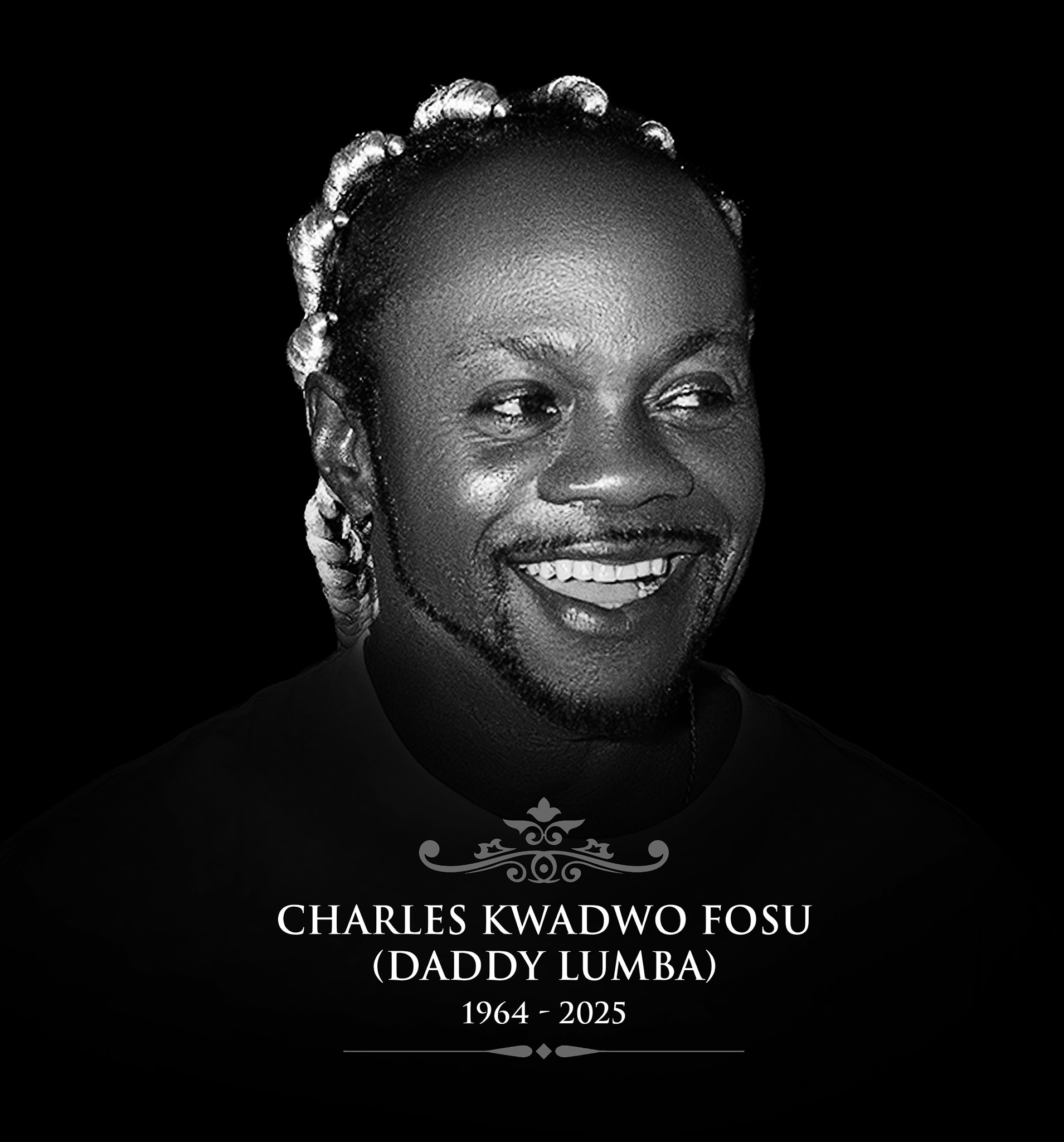
    Children of Daddy Lumba and Akosua Serwaa have distance themselves from all court issues surrounding the death of their father.

    This comes after Akosua Serwaa filed an injunction against the late musician’s funeral scheduled for December 6, demanding that she be recognized as the only surviving wife of the musician and not Odo Broni, who is currently claiming that title.

    In a letter signed by one of the children Charlyn Fosuh, on behalf of all of Daddy Lumba’s children with Akosua Serwaa Fosuh, the children wrote, “It has come to our attention that there is an ongoing court process regarding the funeral and burial arrangements of our beloved father, the late Charles Kwadwo Fosuh, affectionately known as Daddy Lumba.”

    “We, the children of Akosua Serwaa and Daddy Lumba, wish to clarify that we are not parties to this legal process and that we do not wish to be involved in any disputes or conflicts surrounding the funeral arrangements,” it further indicates.

    The children say their only concern is to lay their late father to rest peacefully and with dignity in a befitting way possible.

    Adding that they are united in love and respect for their father.

    They also called on the public and media to moderate commentary about the family and the ongoing legal proceedings.

    “We kindly ask the general public, especially the media and social media commentators, to be measured and respectful in their commentary regarding the family, any ongoing legal matters, and the funeral arrangements. We believe our father deserves a farewell that reflects the peace, dignity, and unity he valued in life,” the statement said.

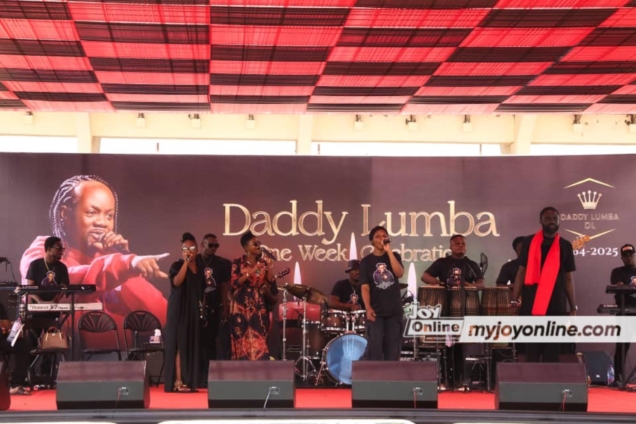
    The final funeral rite of the late legend has been slated for Saturday, December 6, 2025.

    The event will be held at the Baba Yara Sports Stadium, as thousands of mourners, including family, friends, industry colleagues, and fans from across the country and beyond, are expected in attendance.

    In July this year, a statement by the counsel for the Fosu family confirmed that the music veteran passed on July 26, after a short illness.

    He succumbed to the illness at the Bank Hospital in Accra, per reports.

    The statement reads: “With profound sorrow and deep grief, the Fosu family announces the passing of Ghana’s beloved musical icon, Charles Kojo Fosu, popularly known as Daddy Lumba, who passed away earlier today, Saturday, July 26, 2025, after a short illness.”

    “Daddy Lumba was more than a musician; he was a cultural icon whose music touched countless lives. His soulful voice provided the soundtrack to our love stories, and his poignant lyrics captured the poetry of our struggles, dreams, and resilience.”

    The bereaved family has respectfully requested privacy as they navigate this profound grief. Details of funeral arrangements will be shared in the coming days.

    Article image 1

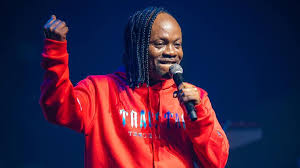
    Profile of the late veteran musician

    Daddy Lumba was renowned for his incredible talent as a singer, composer, songwriter, recording artist, and producer.

    With an illustrious career that has spanned over three decades, Daddy Lumba was widely regarded as the greatest and most influential musician in Ghanaian history.

    Many artists in Ghana, including Ofori Amponsah, Sarkodie, Kuami Eugene, Paa Solo of Sibo Brothers, Oheneba Kissi, KiDi, and others, consider him their major inspiration in the music industry.

    Daddy Lumba was born 60 years ago to Mr. Johnson Kwadwo Fosuh and Madam Comfort Gyamfi, also known as Ama Saah, in Nsuta, near Mampong in the Ashanti Region of Ghana. Both of his parents were teachers, and he was the second of three siblings.

    His educational journey began in Nsuta Kyebi, and he completed junior high school at Suame Methodist, Kumasi in 1979. Subsequently, he attended Adu Gyamfi Senior High School in Jamasi, but later transferred to Juaben Senior High School, where he completed his secondary education in 1984.

    Daddy Lumba’s music career took off in the early 80s when he formed the Nkwanta Wesley Singers, gaining fame at the Anokye Krom Cultural Center.

    During his time at Juaben Senior High School, he led the school choir and composed the song “Lumba Lumba,” dedicated to the freedom fighters in South Africa. This song’s popularity earned him the nickname “Daddy Lumba”, which later became his stage name. He also formed the Lumba Brothers band during his school days, which included his girlfriend at the time, Theresa.

    After completing school, Daddy Lumba, with the help of his high school sweetheart Theresa Abebrese, traveled to Germany. There, he met Ernest Nana Acheampong, and they formed another Lumba Brothers group, recording their debut album, “Yee Ye Aka Akwantuom,” in 1986. Financial constraints delayed the album’s release until 1989, and eventually, the duo split.

    Daddy Lumba then launched his solo career and released his debut solo album, “Obi Ate Meso Buo,” in 1990. The album received immense popularity and critical acclaim, featuring classics like the title track and “Theresa,” dedicated to his ex-lover. He has since released 33 albums, including notable ones like “Sika Asem,” “Aben Wo Ha,” “Wo Ho Kyere,” “Awosoo,” “Give Peace A Chance,” and “Ahenfo Kyiniye.” His latest project, “Ofon Na Edi Asem Fo,” was released in December 2022, reuniting him with longtime collaborator Kweku Mensah.

    In addition to his own success, Daddy Lumba is renowned for nurturing the careers of budding artists who went on to become legends in their own right.

    Some of these artists include Felix Owusu, for whom he produced the debut album “Vida” in 1992, Afia Ampofowaa, Kwabena Sunkwa, Ofori Amponsah with the “Woho Kyere” album in 1999, Selina Orleans, Akua Serwaa Bonsu, Borax, Ateaa Tina, and many others.

    His contributions to Ghanaian music and the support he provides to upcoming talents have solidified his status as an iconic figure in the country’s music industry.

    With his passion, talent, and dedication to the craft, Daddy Lumba continues to be a role model for aspiring musicians, leaving an indelible mark on the rich musical landscape of Ghana.

  • Skit maker Ben South invests GHS60,000 in new movie, “24”

    Skit maker Ben South invests GHS60,000 in new movie, “24”

    Ghanaian skit maker Ben South has disclosed the cost of producing his latest movie titled “24.”

    According to him, he invested GHS60,000 to feature actors like, Maame Serwaa, AJ Brown, and Quecy Official, who have all appeared in several Ghanaian short films and digital series.

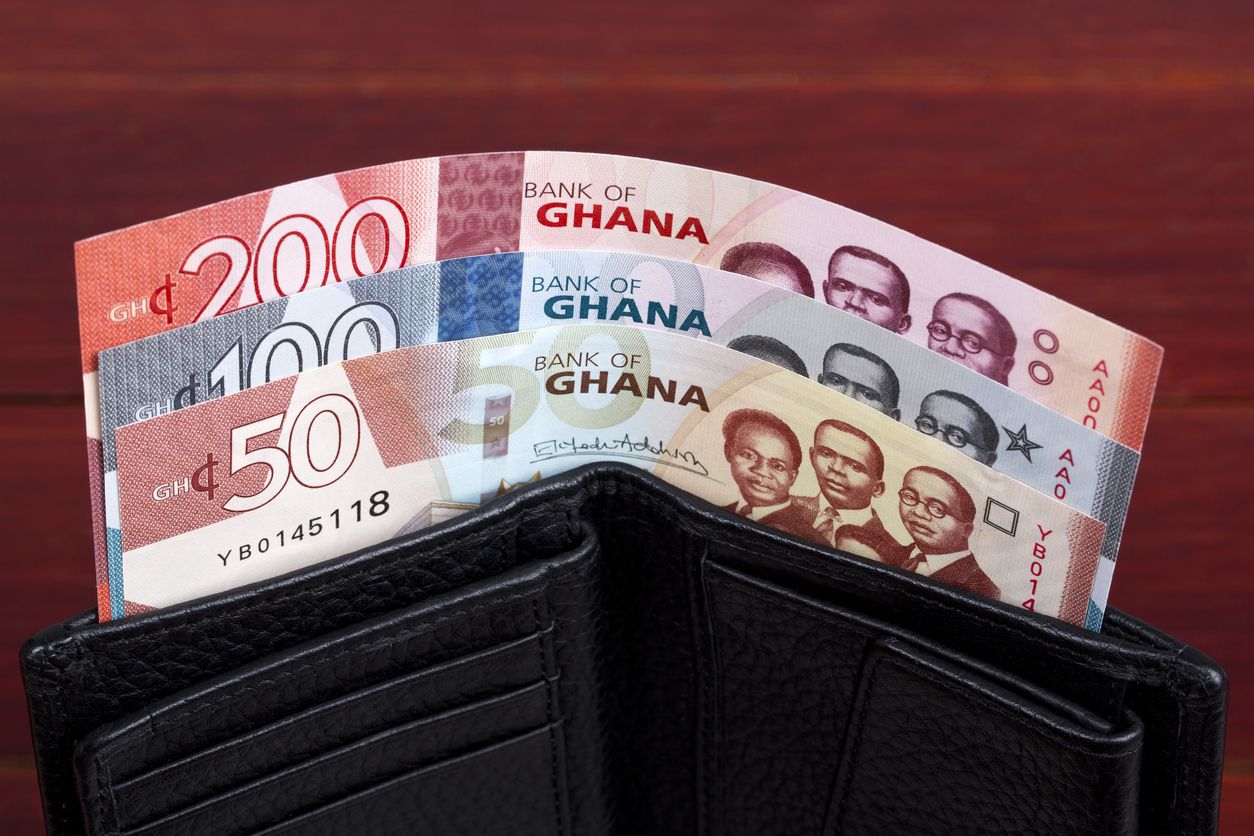
    “Some of the actors took GH¢2,000, some took GH¢3,000. The entire budget for the production is 5,000 dollars, that is GH¢ 60,000 cedis,” he disclosed to  to Kwame Dadzie on Joy FM’s Showbiz A-Z.

    Speaking on the inspiration behind the title of the movie, Ben South stated, “I chose the title so people could not easily predict the storyline,” he added.

    Ben South previously produced the short film titled “Wrong Target”, garnering positive views for its direction and cinematography.

    The filmmaker hinted that 24 explores human emotions and moral choices within a 24-hour period and will premiere later this year.

    Popular Kumawood actor and filmmaker Kwadwo Nkansah, known in the entertainment industry as LilWin, opened up about the financial struggles of Ghana’s film industry, revealing that many filmmakers are forced to fund their own productions due to a lack of investors.

    In an interview with Graphic Showbiz, LilWin emphasized that the film sector is grappling with financial constraints, which has left actors and producers with no choice but to invest their own resources to keep the industry alive.

    “At the moment, our industry is struggling mainly due to a lack of investment. This has forced some of us to finance our own film productions,” he stated.

    Despite these challenges, LilWin encouraged his colleagues to take control of their careers by exploring filmmaking and directing rather than relying solely on acting opportunities, a step that seems to have been taken by Ben South.

    “I encourage my colleagues to take action because you can’t sit idle, waiting for a producer to give you a role. If you have what it takes, create your own movie,” he advised.

    Having personally experienced the burden of self-financing, LilWin noted that all his projects have been executed without external financial support.

    “Today, I can proudly say that all my movies and TV productions were financed solely by me, without any external backing. So you can imagine the quality I could achieve if I had an investor supporting me,” he added.

    He cited his latest film, A Country Called Ghana, as a testament to what Ghanaian filmmakers can accomplish despite financial hardships.

    “A Country Called Ghana is the best production in recent times, just like the classic I Told You So. It has won several awards, including Best Indigenous Film at the 2024 Nollywood Film Festival, as well as Best Production Design and Best Makeup at the 2024 Imo International Film Festival,” he revealed.

    The movie, which was also nominated for Movie of the Year at the 2024 Black Star International Film Festival (BSIFF), features top Nollywood stars such as Ramsey Nouah, Charles Awurum, and Victor Osuagwu, popularly known as Awilo Sharp Sharp.

    LilWin remains hopeful that with the right investment, the Ghanaian film industry can thrive, attract international recognition, and create more opportunities for talents in the sector.

    Renowned Ghanaian filmmaker Leila Djansi has sparked a debate among industry players, questioning whether they will continue making excuses for the state of Ghana’s film industry or take action to improve it.

    “Good and bad can coexist in anything. But at what point do we stop excusing the bad and start fixing it?” she asked in a Facebook post, calling for a shift from complacency to progress.

    Djansi criticized the industry’s reluctance to embrace constructive criticism, urging filmmakers to compare their work with productions from other African countries such as Nigeria, Zambia, Kenya, and South Africa.

    “Take two of your most recent critically acclaimed films from the previous three years and compare them to two from Nigeria, Zambia, Kenya, and South Africa. Look at them side by side and ask yourself if we are actually gaining any momentum,” she challenged.

    She lamented that since Azali’s Oscar submission in 2018, Ghana’s subsequent entries have not been up to standard.

    “In 2018, we got Azali for the Oscars, and since then, every single submission has been a joke. A literal joke. Some of the films would convince you to burn your Ghana card,” she stated.

    Djansi stressed that the problem is not a lack of talent but an unwillingness to elevate the industry through hard work and innovation.

    Sharing a personal experience, she recalled how a Creative Artists Agency (CAA) agent once critiqued her storytelling approach. Instead of dismissing the feedback, she took it as an opportunity to grow.

    “What he actually said to me was, ‘Go take risks with your storytelling.’ I grew up,” she revealed.

    She urged filmmakers to stop dismissing criticism as hate or jealousy and instead use it as a tool for improvement.

    “Stop enduring mediocrity, please. Instead of these knee-jerk reactions, instead of acting like people just want to hate, forget the who and the how and actually listen. Sit with the criticism. Use it to rise,” Djansi advised.

    With her bold remarks, Djansi hopes to ignite a mindset shift in the Ghanaian film industry, pushing creatives to move beyond excuses and take the necessary steps to compete on the global stage.

  • Cover up the shame and settle the dispute privately – Charlotte Oduro tells Akosua Serwaa and Odo Broni

    Cover up the shame and settle the dispute privately – Charlotte Oduro tells Akosua Serwaa and Odo Broni

    Ghanaian counsellor and motivational speaker, Rev. Charlotte Oduro, has urged the two wives of the late Daddy Lumba, Akosua Serwaa and Odo Broni, to settle their differences privately to protect the musician’s reputation

    “Why don’t they allow peace to rain. These things can be handled, and whether we like it or not, these women have children with him. So, I would plead with the family to cover the shame and sit these two women down to settle the issue,” she stated in a video sighted on Instagram.

    Akosua Serwaa has filed a case at the Kumasi High Court, seeking a court declaration that she is the late musician’s rightful and only surviving wife.

    According to the legal suit, Akosua Serwaa says she and Daddy Lumba were legally married in Germany on December 23, 2004, under a monogamous law that allowed only one wife. She maintains that this marriage was valid until Lumba’s death on July 26, 2025.

    Due to that, she insists it’s legally impossible for any other woman — including Odo Broni — to claim to be his wife.

    In her suit, she’s asking the court to stop Odo Broni and anyone else from taking control of the late musician’s body or organizing his funeral. She also wants the court to order the family head, Abusua-Panin Kofi Owusu, not to recognize Odo Broni as Lumba’s wife.

    In response, lawyers for the family of the late highlife legend Charles Kwadwo Fosuh, popularly known as Daddy Lumba, have clearly stated that Daddy Lumba and Serwaa Fosuh his first wife, were divorced before his death.

    According to a statement dated October 1, 2025, from Baba Jamal & Associates, legal representatives of the Fosuh Royal Family of Parkoso and Nsuta, the family rejected Serwaa Fosuh’s claims and maintained that she “has no right to determine how the Fosu Royal family buries their dead.”

    The letter, signed by Fati Ali-Yallah, Esq., stated that by Akan customary tradition, Serwaa Fosuh had already dissolved her marriage to the late musician when she presented traditional drinks to the family years ago, an act the family said signified her intent to end the union, which was acknowledged by Daddy Lumba at the time.

    “By the traditions of the Akans generally and the Fosu Royal family in particular, the presentation of drinks by a wife to the husband’s family, when accepted, effectively dissolves the marriage between the two,” the letter read.

    The family claimed that about 15 years ago, Serwaa Fosuh declined to return to Ghana with her husband for medical care and eventually abandoned him when he fell ill.

    They further stated that in 2018, she wrote to inform him of her plans to file for divorce, but Daddy Lumba paid no attention to it, saying he had already moved on with his life.

    Lumba’s final funeral rite has been slated for Saturday, December 6, 2025.

    The event will be held at the Baba Yara Sports Stadium, as thousands of mourners, including family, friends, industry colleagues, and fans from across the country and beyond, are expected in attendance.

    In July this year, a statement by the counsel for the Fosu family confirmed that the music veteran passed on July 26, after a short illness.

    He succumbed to the illness at the Bank Hospital in Accra, per reports.

    The statement reads: “With profound sorrow and deep grief, the Fosu family announces the passing of Ghana’s beloved musical icon, Charles Kojo Fosu, popularly known as Daddy Lumba, who passed away earlier today, Saturday, July 26, 2025, after a short illness.”

    “Daddy Lumba was more than a musician; he was a cultural icon whose music touched countless lives. His soulful voice provided the soundtrack to our love stories, and his poignant lyrics captured the poetry of our struggles, dreams, and resilience.”

    The bereaved family has respectfully requested privacy as they navigate this profound grief. Details of funeral arrangements will be shared in the coming days.

    Article image 1

    Profile of the late veteran musician

    Daddy Lumba was renowned for his incredible talent as a singer, composer, songwriter, recording artist, and producer.

    With an illustrious career that has spanned over three decades, Daddy Lumba was widely regarded as the greatest and most influential musician in Ghanaian history.

    Many artists in Ghana, including Ofori Amponsah, Sarkodie, Kuami Eugene, Paa Solo of Sibo Brothers, Oheneba Kissi, KiDi, and others, consider him their major inspiration in the music industry.

    Daddy Lumba was born 60 years ago to Mr. Johnson Kwadwo Fosuh and Madam Comfort Gyamfi, also known as Ama Saah, in Nsuta, near Mampong in the Ashanti Region of Ghana. Both of his parents were teachers, and he was the second of three siblings.

    His educational journey began in Nsuta Kyebi, and he completed junior high school at Suame Methodist, Kumasi in 1979. Subsequently, he attended Adu Gyamfi Senior High School in Jamasi, but later transferred to Juaben Senior High School, where he completed his secondary education in 1984.

    Daddy Lumba’s music career took off in the early 80s when he formed the Nkwanta Wesley Singers, gaining fame at the Anokye Krom Cultural Center.

    During his time at Juaben Senior High School, he led the school choir and composed the song “Lumba Lumba,” dedicated to the freedom fighters in South Africa. This song’s popularity earned him the nickname “Daddy Lumba”, which later became his stage name. He also formed the Lumba Brothers band during his school days, which included his girlfriend at the time, Theresa.

    After completing school, Daddy Lumba, with the help of his high school sweetheart Theresa Abebrese, traveled to Germany. There, he met Ernest Nana Acheampong, and they formed another Lumba Brothers group, recording their debut album, “Yee Ye Aka Akwantuom,” in 1986. Financial constraints delayed the album’s release until 1989, and eventually, the duo split.

    Daddy Lumba then launched his solo career and released his debut solo album, “Obi Ate Meso Buo,” in 1990. The album received immense popularity and critical acclaim, featuring classics like the title track and “Theresa,” dedicated to his ex-lover. He has since released 33 albums, including notable ones like “Sika Asem,” “Aben Wo Ha,” “Wo Ho Kyere,” “Awosoo,” “Give Peace A Chance,” and “Ahenfo Kyiniye.” His latest project, “Ofon Na Edi Asem Fo,” was released in December 2022, reuniting him with longtime collaborator Kweku Mensah.

    In addition to his own success, Daddy Lumba is renowned for nurturing the careers of budding artists who went on to become legends in their own right.

    Some of these artists include Felix Owusu, for whom he produced the debut album “Vida” in 1992, Afia Ampofowaa, Kwabena Sunkwa, Ofori Amponsah with the “Woho Kyere” album in 1999, Selina Orleans, Akua Serwaa Bonsu, Borax, Ateaa Tina, and many others.

    His contributions to Ghanaian music and the support he provides to upcoming talents have solidified his status as an iconic figure in the country’s music industry.

    With his passion, talent, and dedication to the craft, Daddy Lumba continues to be a role model for aspiring musicians, leaving an indelible mark on the rich musical landscape of Ghana.

  • Study reveals silent spread of STIs among young Ghanaian women

    Study reveals silent spread of STIs among young Ghanaian women

    Several young  Ghanaian women are inadvertently living with reproductive and sexually transmitted infections.

    This is according to a new national study led by Dr. Laud Anthony Basing from the Department of Medical Diagnostics at the Kwame Nkrumah University of Science and Technology (KNUST), Kumasi.

    He described the results as a wake-up call to improve sexual health awareness and routine testing among young women.

    “These infections are spreading quietly because most people don’t show signs of being sick,” he explained. “We can’t wait for symptoms before acting. Early testing must become a normal part of healthcare for young women.”

    At the London School of Hygiene & Tropical Medicine (LSHTM), researchers presented findings from the study involving close to 3,000 young women and adolescent girls aged 15–24 from nine Ghanaian regions.

    Participants came from diverse backgrounds, including schools, universities, sex worker networks, and head porter communities.

    The research discovered that over 40 percent had at least one infection, though most were unaware of it due to the absence of symptoms.

    Candida-related yeast infections were the most prevalent, impacting more than half of those tested. Chlamydia trachomatis ranked next, affecting roughly one-quarter, with additional detections of gonorrhoea and trichomoniasis.

    He cautioned that untreated infections can lead to long-term problems such as infertility and pregnancy complications.

    The study also highlights how limited access to testing and open conversations about sexual health are allowing infections to go undetected among Ghana’s youth.

    “This is not just research; it’s about protecting the future of young women and giving them the tools to take charge of their health,” he added.

    In 2023, researchers from the Kwame Nkrumah University of Science and Technology (KNUST) uncovered intriguing insights into the risk factors for diabetes and hypertension in rural populations.

    As reported in the February 2024 issue of the journal Health Open Research, individuals engaged in fishing and farming, along with students and apprentices, showed lower probabilities of developing diabetes.

    The 2022 study, which involved over 2,500 participants, focused on the Asante Akim North Municipality in Ghana’s Ashanti region, examining factors linked to hypertension and diabetes.

    Additionally, the research found that those who consumed snacks during work hours had a decreased likelihood of developing diabetes.

    This surprising result indicates that certain dietary practices may help reduce the risk of this chronic disease.

    The study’s conclusions challenge the common belief that diet, alcohol consumption, tobacco use, and physical activity are major risk factors for hypertension and diabetes in rural settings.

    Instead, the research highlighted sociodemographic factors like age, gender, and marital status, along with inadequate health screenings, as key predictors of these conditions.

    The findings emphasize the critical need for better health education and comprehensive screening programs to manage hypertension and diabetes in rural areas.

    Raising awareness and ensuring access to regular health check-ups could be crucial for early diagnosis and treatment, thereby alleviating the impact of these chronic illnesses.

    The researchers urge health authorities and policymakers to act swiftly to address the sociodemographic determinants and implement extensive health screening initiatives to protect rural health.

    The study’s authors include Dr. Joseph Kwasi Brenyah, Prof. Yeetey Enuameh, Dr. Bernard Okoe-Boye, Dr. Francis Asenso-Boadi, Mr. Roland Miah, Dr. Peter Twum, and Dr. Ebenezer Dassah.

    Additional contributors are Mr. Samuel Frimpong Odoom, Dr. Thomas Peprah Agyekum, Dr. Nana Ayisi-Boateng, Mr. Richard Adade, Prof. Fred Stephen Sarfo, and Dr. Arti Singh.

    Last year, Dr. Isaac Okyere, a Senior Lecturer at the Department of Surgery, School of Medicine and Dentistry, Kwame Nkrumah University of Science and Technology (KNUST), advised against early relationships for tertiary students.

    He emphasized that the heart, being an emotional organ, can weaken under stress, increasing the risk of hypertension.

    Dr. Okyere shared these insights during a monthly podcast organized by the E-Learning Centre of KNUST, focusing on “Heart Health: The Heart of Man and Total Wellbeing.”

    Early emotional involvement often leads to heartbreaks, which can significantly impact students’ emotional and psychological well-being, affecting their academic performance.

    “There is much life ahead of you. If you have the so-called “broken heart syndrome”, you are putting stress on the heart. One can go through and have psychiatric issues while another may not feel anything. Guard your heart with all diligence. Be careful with your relationship here on campus. There is so much stress awaiting you outside campus in terms of work, and marriage among others,” he advised.

    Students have been cautioned against engaging in activities like the “September rush,” where returning students seek romantic relationships with incoming female freshmen.

    It has been reported that some students are already living as couples on campus, highlighting the prevalence of relationships among the student body.

    Recent research from the National Library of Medicine in 2021 revealed concerning statistics among Ghanaian students in secondary educational institutions. The study found that 19.91% of students were hypertensive, while 26.07% were prehypertensive.

    These findings suggest a potential rise in hypertension prevalence among the adult population in the future if preventive measures are not implemented.

    Dr. Isaac Okyere emphasized the importance of youth managing their diet, monitoring glucose, cholesterol, blood pressure levels, and reducing alcohol consumption and smoking habits.

  • Lands Minister was misinterpreted on “$10 billion to fight illegal mining” comment – Spokesperson

    Lands Minister was misinterpreted on “$10 billion to fight illegal mining” comment – Spokesperson

    The claim suggesting that Ghana would need $10 billion to combat illegal mining has been out rightly debunked.

    Spokesperson for the Ministry of Lands and Natural Resources, Paa Kwesi Schandorf clarified that the sector minister never mentioned such an amount anywhere on record.

    According to Schandorf, the report misrepresents the minister’s comments.

    “The minister did not categorically indicate that we needed $10 billion to fight illegal mining. What he said was that if we were to quantify the financial implications of dealing decisively with the environmental crisis, even the country’s entire budget may not suffice,” Mr Schandorf stated in an interview with Asaase Radio.

    He added that the minister has engaged TV3 to correct the error, as it was during an interview on the station’s Hot Issues that people misinterpreted him.

    According to him, the Minister has engaged TV3 to clarify the misunderstanding, which stemmed from his earlier interview on the station’s Hot Issues programme.

    Among measures taken to protect water bodies from illegal miners is the deployment of the National Anti-Illegal Mining Operations Secretariat (NAIMOS).

    The Secretariat includes the Ghana Armed Forces, the Ghana Police Service, the Ghana Immigration Service, the National Intelligence Bureau (NIB), the Narcotics Control Commission, and the National Security Secretariat.

    Addressing the security forces, the Minister for Lands and Natural Resources, Emmanuel Amarh Kofi-Buah, directed the team to ruthlessly counter the activities of galamsey operators as they are the enemies of the state.

    “Any recalcitrant entering into these zones is not merely a trespasser. They are an enemy of the state. You are to be firm. You are to be resolute. You are to be ruthless.

    “And please, take it from me, you will take no obstructionist instruction from any big man. Remember, the biggest man in Ghana is the President of the Republic, and he’s the one who has sent you,” Mr. Kofi-Buah charged.

    NAIMOS has destroyed a well-known illegal mining base at Aboso in the Western Region, referred to as ‘Gunway.’

    ‘Gunway’ is a neighbourhood known for harboring hardened illegal miners. It was raided through an intense intelligence effort on Monday, October 5, 2025.

    The operation resulted in the demolition of several makeshift structures that served as drug dens and hideouts within the crime-infested enclave at Aboso in the Prestea-Huni Valley District.

    Beyond the demolition, the taskforce confiscated multiple pieces of mining equipment used for illicit operations that have been destroying the environment.

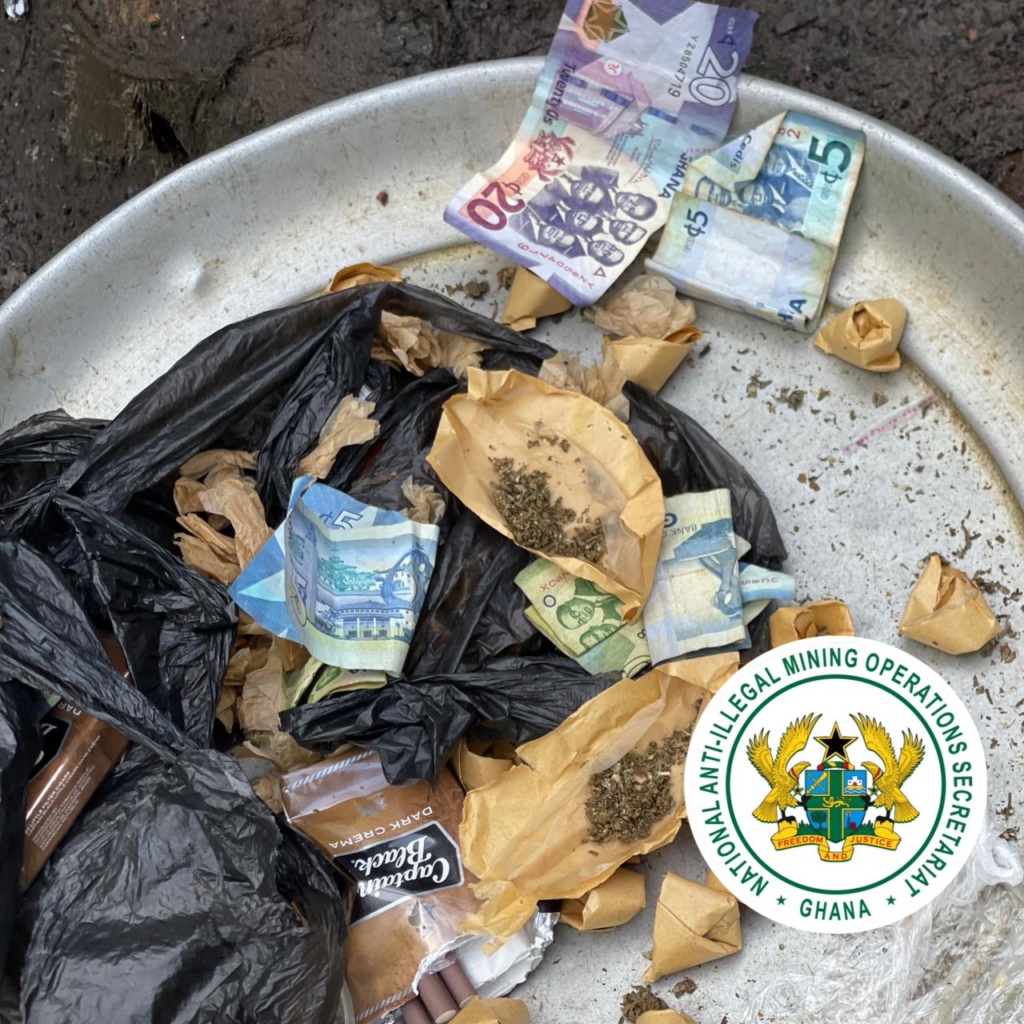
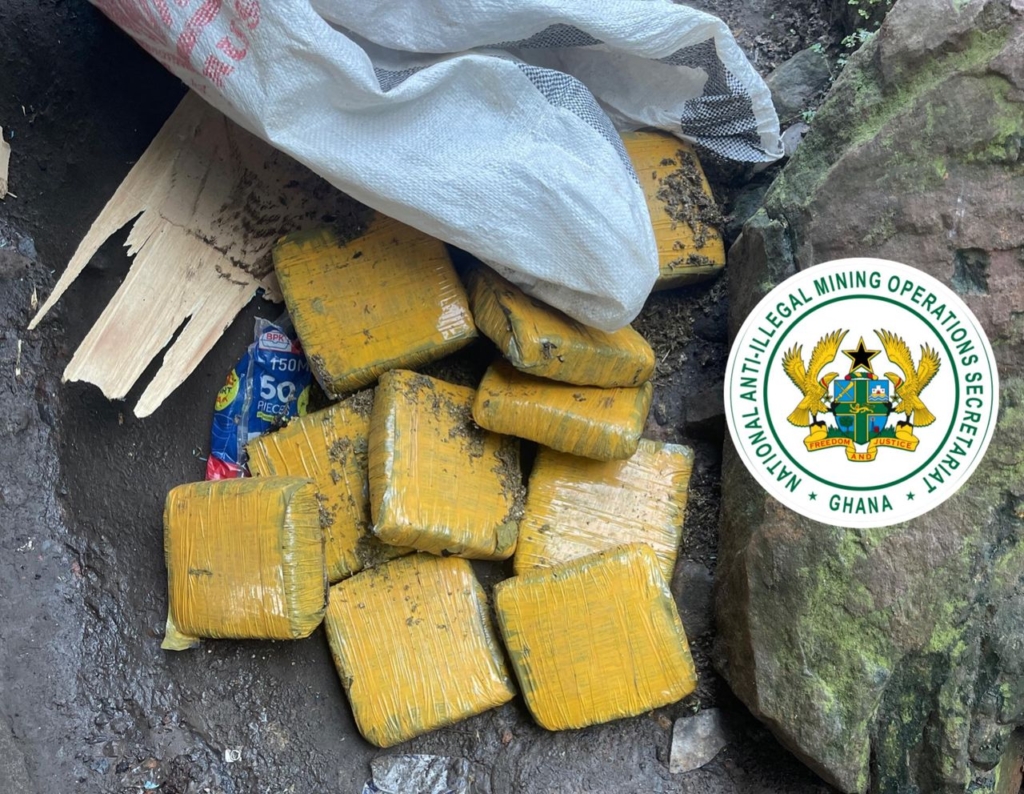
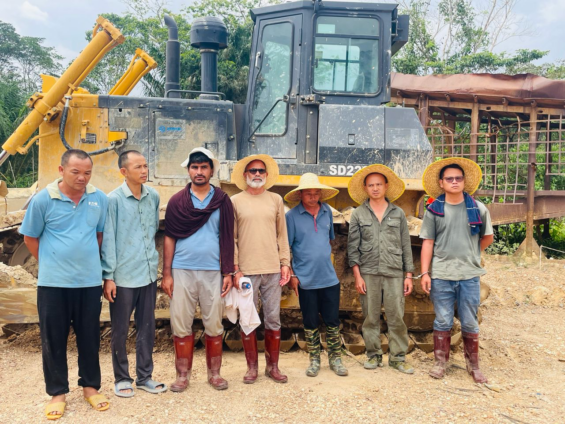
    During the raid, some residents engaged in illegal mining, gambling, drug use, and narcotics trading surrendered to the NAIMOS officers on site.

    Authorities also recovered quantities of hard drugs from the suspects, including seven parcels of Indian hemp.

    A similar operation was conducted by NAIMOS in June this year, during which criminal groups were warned to vacate the ‘Galamsey’ area.

    However, despite persistent appeals from traditional leaders and locals, the offenders continued their illegal activities.

    Last week, the Commanding Officer in charge of Ghana’s National Anti-Illegal Mining Operations Secretariat (NAIMOS), Colonel Dominic Buah, signaled an imminent and aggressive crackdown on illegal miners in the country.

    According to him, they are the most wanted offenders in the country. Thus, his outfit would support the exposure of individuals destroying the country’s water bodies.

    “I would like to send this warning to illegal miners, their assignees and financiers that they are the first or prime enemies of the state, and they will be dealt with as such.

    “There will be no room for them to escape or to hide. NAIMOS will smoke them out very soon. There’s no resting place for them,” he said at a stakeholder engagement with Civil Society Organisations (CSOs) at the Jubilee House on Friday, October 3, 2025

  • Govt dragged to court over deportation deal with U.S 

    Govt dragged to court over deportation deal with U.S 

    A legal action has been initiated against the government by the Civil society organization Democracy Hub over its controversial policy of deporting foreign nationals arrested for illegal mining (galamsey) without prosecution.

    According to the group’s writ of summons, filed at the High Court in Accra, the government’s deportation approach breaches Section 99 of the Minerals and Mining Act, 2006 (Act 703), which mandates prosecution for illegal mining offenses.

    “The selective decision not to prosecute foreign nationals, while prosecuting Ghanaians for the same offences, constitutes unequal treatment before the law,” and “Deportation, in the absence of conviction, does not satisfy the objectives of deterrence and may embolden perpetrators,” the group indicated in its writ.

    The Minister for Interior Muntaka Mohammed-Mubarak, the Ghana Immigration Service (GIS), and the Attorney-General are the main parties cited in the lawsuit. 

    According to the organisation, Ghana’s justice system operates on double standards, with locals prosecuted while foreign nationals involved in the same offenses are only deported.

    It rejected the government’s claim that deportees are later prosecuted in their home countries, labelling the assertion “speculative and unsubstantiated.”

    Democracy Hub is also pushing for transparency by demanding that the state make public any diplomatic exchanges or reports proving such prosecutions. The lawsuit seeks court declarations to invalidate the deportation policy, stop future deportations without trial, and compel disclosure of all documents concerning deported individuals.

    The group is further requesting GH¢300,000 as compensation for legal costs.

    According to Myjoyonline.com, over 100 foreign nationals, including Chinese citizens, have been deported for engaging in illegal mining (commonly known as galamsey) and related offences since the NDC government took office.

    A prominent environmental advocacy group, Eco-Conscious Citizens, also opposed the government’s  policy of deporting foreign nationals involved in illegal mining (galamsey) without trial.

    During an engagement with the Ashanti Regional Police Command in April, Minister Muntaka announced that the government would deport foreigners involved in illegal mining activities instead of prosecuting them. He argued that this approach would protect the environment and save the country money.

    “We have resolved, as a new policy, that for two things—whether you’re involved in galamsey or cutting down our trees unlawfully, or engaging in fraudulent activities, whether through computer fraud or other means—when we arrest any foreigner, we are not interested in prosecuting them. Our first option is to take them back to their country,” Muntaka stated.

    The decision has faced backlash from environmental groups, with Eco-Conscious Citizens strongly opposing it. The group’s Coordinator, Awula Serwah, shared her concerns during an interview on Morning Starr with Naa Dedei Tettey. She emphasized that merely deporting offenders without any legal consequences would fail to serve as a deterrent to future violations.

    “If someone is involved in environmental terrorism, destroying our forest reserves and poisoning our water bodies, and what you’re saying is that they can come to Ghana, engage in these activities, and when we catch them, we just pay for their fare to return to their country without prosecution, no jail time, and no restitution—then that’s not a deterrent,” Serwah said.

    Serwah went on to explain that such a policy would encourage more foreigners to engage in galamsey, as the risks of facing severe legal consequences are minimized. She also pointed out that Ghana’s porous borders make it easy for offenders to return under different identities, referencing the case of Aisha Huang, a notorious galamsey queenpin who was deported but later returned to continue illegal mining activities.

    She argued that the policy undermines the rule of law, particularly the provisions of the Lands and Minerals Act, which mandates the prosecution of individuals caught engaging in illegal mining. “The idea that we won’t prosecute them to save money doesn’t stand scrutiny. You need to deal with them robustly to discourage them from coming. You need to prosecute and imprison them, and then after they’ve served their sentences, they can return to their country,” Serwah added.

    Eco-Conscious Citizens urged the government to reconsider its approach, calling for tougher measures such as prosecution and imprisonment to deter foreign nationals from engaging in illegal mining in Ghana.

    Months ago, the Interior Ministry stressed that the deportation policy is not intended to favour foreigners or show leniency. Instead, it is designed to prevent further abuse of Ghana’s legal system and to safeguard national interests.

    “You arrest about 80 Chinese, and you have to find a place to keep them, and then sometimes even vehicles to take them to court are a problem. You go to court and they succeed in getting bail,” Deputy Interior Minister Ebenezer Terlarbi argued on JoyNews’ PM Express.

    Mr Terlarbi further explained that the sheer logistical, legal, and financial burden of keeping foreign galamsey suspects in Ghana’s already overstretched prison system has forced the government to consider what he called a “more innovative” path.

    “We are looking at 1,400 inmates we have now, and feeding them is even a problem. So if there’s a way not to exacerbate the situation by sending them back to their home countries, I think that I would opt for that,” he stated.

  • Gov’t tightens security on School Placement System after arrests 

    Gov’t tightens security on School Placement System after arrests 

    The government has intensified security measures and restricted access to the Computerized Schools Selection And Placement System (CSSPS) portal to prevent manipulation and ensure accountability.

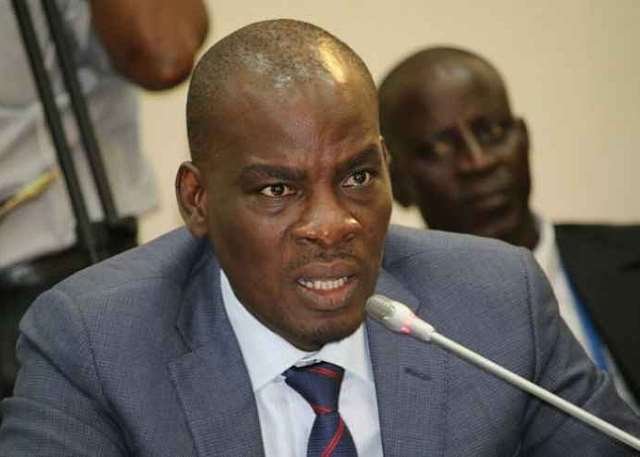
    This was announced by the Minister for Education, Haruna Iddrisu, while addressing journalists at a press briefing in Accra where he debunked false claims of bribery and manipulation in the school placement process. 

    “We’ve limited access to the portal, and it’s part of our management of it. Sitting here as a minister, I don’t have access to the portal. The deputy does not have access. The chief has no access. The director of GES does not have access. We’ve adopted this strategy so that we can hold each individual accountable,” he stated.

    According to the sector minister, over three people who were spreading false claims of bribery and manipulation in the ongoing placement exercise have been arrested. 

    Preliminary investigations revealed that the individuals had no links to the placement process and could not provide any evidence to support their claims.

    He added that the national security operatives got the intel to investigate the placement process when three individuals were earlier arrested over similar incidents. 

    “You know I’m not the police, so it’s the police who will give you that information. But what I can assure you is that there are even more than three. We have a very robust cybersecurity system, which is able to monitor and police fraudulent activities associated with the placement,” he stated.

    “A few weeks back, we got national security to arrest three. They were interrogated. You recall when I said that, why would somebody with an aggregate of 37 be posted into a Category A school? That emanated from the earlier arrest,” he said.

    Mr Iddrisu acknowledged that although the current system has its flaws, the Ministry is taking steps to resolve the challenges in future placement exercises.

    “Those who expect that I would have done some magic this year, I’m sorry to disappoint you. I will work to fix it as a problem in the future,” he assured.

    Meanwhile, the Education Minister also announced that Cabinet has approved the absorption and payment of salary arrears for 6,200 teachers who have been working for months without pay.

    “A few weeks ago, myself and the Chief Director received a petition from some teachers who were unhappy with the government over their unending work for a number of months without pay,” he revealed.

    “I’m happy to announce that Cabinet has given approval for the 6,200 teachers to be absorbed. We’ll begin the process in due course. They will have their IDs and back pay.”

    He further disclosed that Cabinet has authorised the Ministry of Finance to vire about GH¢1.1 billion to cover payments for both health workers and teachers.

    “Cabinet gave the Minister of Finance approval to vire about GH¢1.1 billion to absorb a category of health workers and teachers,” he said. “The process will start soon, so there’s no need for further picketing.”

    As per a circular dated Wednesday, September 17, signed by the acting Deputy Director-General for Quality and Access at the GES, Dr Munawaru Isshaque and addressed to all regional directors, freshers will report to their designated schools from October 18.

    The statement warned school authorities against enrolling students against the placement list generated by the CSSPS Secretariat, stressing the need for transparency and impartiality during the registration process.

    “Admission of students should strictly follow the placement list generated by the CSSPS Secretariat. No school is permitted to admit students outside the official placement without prior written approval from GES,” parts of the circular read.

    483,800 have been placed into various Senior High Schools across the country out of the 590,000 candidates.

    On Monday September 1, the school placement portal was opened for new entrants students to verify their school choices, biodata, and other relevant information ahead of the final placement. The deadline for the fact-checking exercise was brought to a close on Monday, September 8.

    Of this figure,248,038 are females (51.4%), and 234,783 are males (48.6%). However, 107,509 candidates (18.2%) could not be matched with their initial school choices due to high demand for certain Category A schools.

    There have been recent speculations that the Education Ministry solely depends on a rigid score system to place students in Senior High Schools. But the Ministry has described the claims as misleading and inaccurate. Deputy Education Minister, Dr Clement Apaak, has emphasized that multiple factors influence how students are assigned to specific Senior High Schools.

    According to an official statement signed and issued by the Deputy Education Minister on Saturday August 30, the Ministry noted that the Computerised School Selection and Placement System used in designating SHS graduates to various schools considers the aggregate and raw scores of students, the availability of vacancies in schools, and the popularity of specific programmes.

    The statement added that the Ministry does not demand or accept rewards from parents or guardians to guarantee that students are placed in schools of their choice as speculated.

    “The Ministry confirms that this information is not only false but also maliciously misleading. The placement is based on a combination of factors, including aggregate and raw scores, availability of vacancies in the various schools and programmes of study. Limited vacancies and high competition can affect placement. The Ministry unequivocally states that no form of payment or inducement is required or solicited from parents, guardians, or their representatives for the purpose of securing placement.

    “All interactions with the Ministry and Ghana Education Service (GES) officials are expected to adhere to the highest standards of integrity and transparency. The public is advised to be cautious and report any cases of extortion or bribery attempts related to student placements. Stakeholders are encouraged to report miscreants to the nearest police station,” parts of the statement read.

  • Akosua Serwaa’s 2018 divorce document resurfaces online

    Akosua Serwaa’s 2018 divorce document resurfaces online

    The late Daddy Lumba’s estranged wife Serwaa Fosuh who filed for divorce in 2018, has had the document resurface online. 

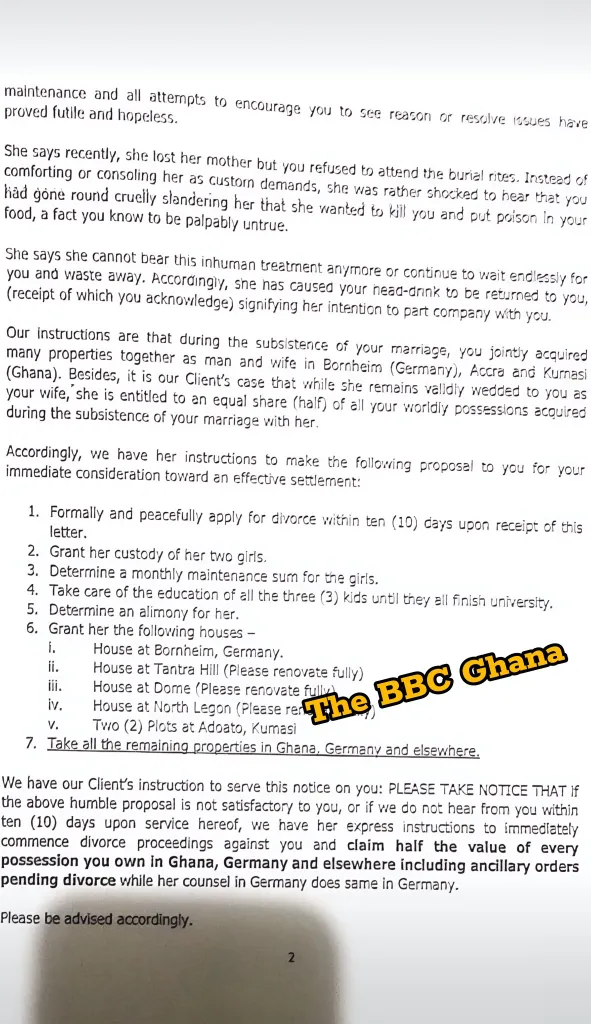
    The document indicates that it was submitted in 2018 through Mercer & Company and addressed to Mr. Charles Kwadwo Fosuh (Lumba), detailing years of emotional distress, betrayal, and alleged abuse that reportedly characterized their marriage.

    The notice accused the celebrated highlife musician of abandoning his lawful wife for another woman after 34 years of marriage and three children together.

    The legal document, dated February 4, 2018, reads in part:

    “Our instructions are that for thirty-four (34) years, you have known our client as your wife with whom you have three (3) children but without any reasonable cause, you have deserted the matrimonial home for the past five (5) years and have gone to marry another woman with whom you now stay and have many children.”

    According to the letter, Akosua Serwaa, also referred to as Mrs. Akosua Fosuh, was represented by Mercer & Company in Ghana and co-counsel in Germany, where she and Lumba initially lived as husband and wife.

    The correspondence went further to accuse the highlife icon of bigamy and multiple acts of infidelity.

    “Even though you know that bigamy is a criminal act, you boldly refer to your mistress and hold her out in public, on social and other media platforms as your wife, regardless of the penal consequences,” the notice stated.

    In what seemed to be an emotional revelation, Serwaa also alleged that she had discovered Lumba fathered more than seventeen children outside their marriage.

    “Our Client says she has now discovered to her chagrin that in addition to the three (3) children you have with her, you also have over seventeen (17) more children born out of wedlock through your numerous mistresses and concubines, some of whom were her close associates.”

    Beyond infidelity, Serwaa accused Lumba of physical and psychological abuse.

    “She opines that contrary to your cool public image, you have countlessly violently abused her physically and psychologically that she has many marks on her body and an almost deformed lip to confirm your violent and abusive nature.”

    Despite the suffering, she noted that she had endured everything “in the name of love and for the sake of her children,” but could no longer remain silent.

    “She says she had borne all these inhuman treatment and simmered her painful sentiments underneath her in the name of love and for the sake of her children but you have interpreted it as her weakness.”

    When the divorce notice first emerged in 2018, rumors of Daddy Lumba’s romantic escapades were already widespread.

    What has renewed public attention now, however, is not only the legal battle but also Akosua’s claim that the musician disrespected her late mother. Reports indicate that Lumba allegedly left immediately after the funeral, a move that angered Akosua — especially upon discovering his continued involvement with another woman.

    The final funeral rite for the late musician has been slated for Saturday, December 6, 2025.

    The event will be held at the Baba Yara Sports Stadium, as thousands of mourners, including family, friends, industry colleagues, and fans from across the country and beyond, are expected in attendance.

    In July this year, a statement by the counsel for the Fosu family confirmed that the music veteran passed on July 26, after a short illness.

    He succumbed to the illness at the Bank Hospital in Accra, per reports.

    The statement reads: “With profound sorrow and deep grief, the Fosu family announces the passing of Ghana’s beloved musical icon, Charles Kojo Fosu, popularly known as Daddy Lumba, who passed away earlier today, Saturday, July 26, 2025, after a short illness.”

    “Daddy Lumba was more than a musician; he was a cultural icon whose music touched countless lives. His soulful voice provided the soundtrack to our love stories, and his poignant lyrics captured the poetry of our struggles, dreams, and resilience.”

    The bereaved family has respectfully requested privacy as they navigate this profound grief. Details of funeral arrangements will be shared in the coming days.

    Article image 1

    Profile of the late veteran musician

    Daddy Lumba was renowned for his incredible talent as a singer, composer, songwriter, recording artist, and producer.

    With an illustrious career that has spanned over three decades, Daddy Lumba was widely regarded as the greatest and most influential musician in Ghanaian history.

    Many artists in Ghana, including Ofori Amponsah, Sarkodie, Kuami Eugene, Paa Solo of Sibo Brothers, Oheneba Kissi, KiDi, and others, consider him their major inspiration in the music industry.

    Daddy Lumba was born 60 years ago to Mr. Johnson Kwadwo Fosuh and Madam Comfort Gyamfi, also known as Ama Saah, in Nsuta, near Mampong in the Ashanti Region of Ghana. Both of his parents were teachers, and he was the second of three siblings.

    His educational journey began in Nsuta Kyebi, and he completed junior high school at Suame Methodist, Kumasi in 1979. Subsequently, he attended Adu Gyamfi Senior High School in Jamasi, but later transferred to Juaben Senior High School, where he completed his secondary education in 1984.

    Daddy Lumba’s music career took off in the early 80s when he formed the Nkwanta Wesley Singers, gaining fame at the Anokye Krom Cultural Center.

    During his time at Juaben Senior High School, he led the school choir and composed the song “Lumba Lumba,” dedicated to the freedom fighters in South Africa. This song’s popularity earned him the nickname “Daddy Lumba”, which later became his stage name. He also formed the Lumba Brothers band during his school days, which included his girlfriend at the time, Theresa.

    After completing school, Daddy Lumba, with the help of his high school sweetheart Theresa Abebrese, traveled to Germany. There, he met Ernest Nana Acheampong, and they formed another Lumba Brothers group, recording their debut album, “Yee Ye Aka Akwantuom,” in 1986. Financial constraints delayed the album’s release until 1989, and eventually, the duo split.

    Daddy Lumba then launched his solo career and released his debut solo album, “Obi Ate Meso Buo,” in 1990. The album received immense popularity and critical acclaim, featuring classics like the title track and “Theresa,” dedicated to his ex-lover. He has since released 33 albums, including notable ones like “Sika Asem,” “Aben Wo Ha,” “Wo Ho Kyere,” “Awosoo,” “Give Peace A Chance,” and “Ahenfo Kyiniye.” His latest project, “Ofon Na Edi Asem Fo,” was released in December 2022, reuniting him with longtime collaborator Kweku Mensah.

    In addition to his own success, Daddy Lumba is renowned for nurturing the careers of budding artists who went on to become legends in their own right.

    Some of these artists include Felix Owusu, for whom he produced the debut album “Vida” in 1992, Afia Ampofowaa, Kwabena Sunkwa, Ofori Amponsah with the “Woho Kyere” album in 1999, Selina Orleans, Akua Serwaa Bonsu, Borax, Ateaa Tina, and many others.

    His contributions to Ghanaian music and the support he provides to upcoming talents have solidified his status as an iconic figure in the country’s music industry.

    With his passion, talent, and dedication to the craft, Daddy Lumba continues to be a role model for aspiring musicians, leaving an indelible mark on the rich musical landscape of Ghana.

  • Edward Akwasi Boateng to soon divorce his wife over Daddy Lumba, wives saga

    Edward Akwasi Boateng to soon divorce his wife over Daddy Lumba, wives saga

    Veteran Ghanaian gospel musician, Edward Akwasi Boateng, has publicly announced plans to legally divorce his wife following the late Daddy Lumba’s and his wives saga.

    In the aftermath of Daddy Lumba’s death months ago, he two wives have been locked in a dispute over who should be acknowledged as his lawfully wedded wife.

    Thus, the “Makoma So Adee” singer was asked by the host to share his opinion on the ongoing entitlement brouhaha.

    The gospel singer, without hesitation, stated, ” As I sat here I caught myself tapping my feet. I cant wait to visit the Kumasi Municipal Assembly (KMA).”

    Host: Why are you going to KMA?

    Edward Akwasi Boateng:I’ll tell you more after the show. Right now, we’re by the roadside. I’ve been deeply enlightened. Ei! With all the toil I’m going through, if I don’t put proper measures in place, someone might one day show up claiming to be my rightful wifen after my death, yet, this same person left me when I needed her the most.

    He had stated a year ago, his ex-wife threatened to divorce him before her family finally returned his ‘Etiri nsa’ (dowry) about five years ago.

    He recounted losing several properties, including 17 cars, and how his former wife refused to let him use hers, leaving him to walk.

    Evangelist Edward also spoke about starving due to his inability to provide housekeeping money. He mentioned that his wife chose to feed outsiders while letting him go hungry.

    Despite efforts by many pastors, including Evangelist Akwasi Awuah and Pastor George Owusu Mensah, to reconcile the marriage, his ex-wife remained adamant.

    Evangelist Edward Akwasi Boateng, who has been single for the past five years, expressed his readiness to remarry. He stated that at age 53, he has prepared himself well for a second marriage.

    In February last year, Evangelist Edward Akwasi Boateng, was seen facing challenging times on the streets of Kumasi, where he was selling pendrives, CDs, and even bread.

    Once prosperous, his current circumstances reflect a stark contrast to his former life of wealth and success.

    The reasons behind his situation were not entirely clear, but reports suggest that his wife played a significant role. It is said that she took control of his assets by having him sign certain documents, leaving him with very little.

    In an interview, Evangelist Boateng opened up about his struggles, including the dissolution of his marriage. He revealed that his wife had threatened divorce multiple times before the marriage ultimately ended.

    Despite efforts by several pastors, including Evangelist Akwasi Awuah, to reconcile them, their interventions were unsuccessful.

    Despite these challenges, Evangelist Boateng maintains a strong faith in God, believing that things will eventually improve.

    His story serves as a reminder of the unpredictability of life’s twists and turns and the importance of resilience in the face of adversity.

    Prophet Bernand El Bernard, the head pastor of Spirit Life Revival Ministry, has delivered a life-changing gift to well-known gospel artiste Edward Akwasi Boateng during a church service on Sunday, February 25, 2024.

    Captured in a video shared by blogger Zhikay Ikejunior, the heart-warming moment unfolded at the Spiritual Revival Ministry in Accra. Prophet Bernand, alongside his congregation, welcomed Boateng and surprised many by unveiling a series of valuable gifts. These included a brand-new car, an all-expense-paid scholarship for Boateng’s children up to university, and a monthly allowance to alleviate his recent financial crisis.

    The touching gesture left Boateng visibly moved and speechless, expressing profound gratitude for the unexpected support extended to him during these challenging times.

    This act of benevolence follows the circulation of a viral video on the internet, showcasing Boateng selling pen drives and CDs at a bus station in Kumasi. The footage shed light on the gospel musician’s financial struggles, triggering an outpouring of empathy and support from the public.

    Boateng’s journey through adversity traces back to the breakdown of his marriage two years ago, during which he endured maltreatment and unfair treatment due to financial strain. The artist was forced to sell nearly 17 vehicles he owned to cope with mounting challenges.

    Despite Boateng’s storied career and successful hits such as “Makoma so Ade,” “Kae asem a waka,” and “mebo wodin,” financial hardships continued to plague him, prompting widespread concern from fans and well-wishers. His recent public appearance selling merchandise served as a poignant reminder of the struggles he faced, igniting a wave of compassion and solidarity from those aware of his predicament.

    Prophet Bernand’s extraordinary act of kindness serves as a beacon of hope and inspiration, reminding us of the transformative power of compassion and generosity in times of need. As Boateng embarks on a new chapter, buoyed by the support of his community and the unwavering kindness of strangers, his story stands as a testament to the resilience of the human spirit and the profound impact of selfless acts of kindness.

  • Ex-NSA officials Osei Assibey and Gifty Oware dragged to court over GHS653m fraud

    Ex-NSA officials Osei Assibey and Gifty Oware dragged to court over GHS653m fraud

    Two former top directors of the National Service Authority (NSA), former Executive Director, Osei Assibey Antwi, and the former Deputy Executive Director, Gifty Oware-Mensah, have been charged with orchestrating two distinct schemes that siphoned public funds through “ghost” service personnel and fraudulent bank loans.

    Osei Assibey Antwi has been slapped with fourteen serious charges for his alleged involvement in what is being described as one of the most significant financial loss cases in recent years.

    The accusations include causing financial loss to the Republic, with the main charge claiming he approved payments of allowances to over 60,000 ghost national service personnel, leading to a total loss of GH¢500,861,744.02.

    He is additionally charged with several counts of theft amounting to GH¢8,256,000, said to have occurred between August 2023 and May 2024.

    Prosecutors further allege that Mr. Antwi diverted project funds, authorizing the withdrawal of GH¢106 million from the NSA’s Kumawu Farm Project account on five different occasions without using any of it for the intended purpose.

    The state also contends that he engaged in money laundering by transferring GH¢8.26 million into his personal e-zwich account and taking control of the funds despite knowing they were criminal proceeds.

    In total, the alleged offences connected to Mr. Antwi are valued at approximately GH¢615,117,744.02.

    Gifty Oware-Mensah, on the other hand, has been charged with five offences, including Stealing, Willfully Causing Financial Loss, Using Public Office for Profit, and Money Laundering.

    Court documents indicate that Oware-Mensah, who managed the Finance and Procurement units of the NSA, allegedly masterminded a sophisticated scheme centered on the Authority’s “marketplace” platform — a system intended to offer hire-purchase services to national service personnel.

    Prosecutors claim she gained control of a private entity, Blocks of Life Consult, and created a list of 9,934 fictitious names within the NSA database.

    She is said to have then approached the Agricultural Development Bank (ADB), falsely asserting that her company had supplied goods to those ghost beneficiaries and required a loan, using their fake allowances as collateral.

    This deception allegedly led to a loan arrangement between ADB and the NSA, which resulted in GH¢31.5 million being paid directly into her company’s account. Of that amount, she is accused of transferring over GH¢22.9 million to another company where she also served as a director.

    Investigations revealed that no goods were ever delivered to any service personnel.

    Her actions, with interest included, are alleged to have cost the state a total of GH¢38,458,248.87.

    Meanwhile, a new posting and management system designed to automate allowance payments and eliminate ghost names from the national service payroll has been introduced by the National Service Authority (NSA).

    Acting Chief Executive Officer of the Authority, Ruth Dela Seddoh, said, the enhanced digital platform integrates directly with Ghana’s national identification database to verify personnel identities and ages against tertiary institution records, effectively eliminating ghost names and duplicate entries.

    He told the media  on Tuesday, October 7, the system introduces end-to-end automation, from posting to allowance processing, to ensure only verified personnel are paid.

    “The payroll is automatically generated from verified and appraised personnel data, ensuring that only eligible and validated service personnel receive their allowances.

    “The system checks, cross-checks, and confirms all records before processing payments,” she explained.

    Ruth Dela Seddoh disclosed that attendance monitoring has been upgraded through geofencing technology, which ensures personnel can only check in when they are physically at their designated workplaces, an initiative designed to curb absenteeism and eliminate proxy attendance.

    Apart from payroll improvements, the upgraded system incorporates a smart placement algorithm that automatically assigns personnel to institutions based on their qualifications, regional choices, and institutional requirements.

    The platform also simplifies approval processes, attendance validation, and report submission, minimizing delays and the need for manual handling.

    Every service personnel will now have access to a customized dashboard showing their posting information, institution details, duty records, and a digital certificate with a QR code for instant authentication.

    Institutions, on the other hand, will benefit from a new interface that enables them to request, supervise, and assess personnel with greater ease.

    Madam Seddoh emphasized that the redesigned platform marks a significant stride toward promoting transparency, accountability, and digital efficiency in the administration of national service.

    “Every click, every activity, and every approval is digitally recorded. It’s a complete audit trail that protects everyone and ensures consistency, transparency, and trust,” she said.

    The new system will link with the NSS Connect mobile app to deliver instant updates, alerts, and access to official information.

    A couple of months ago, Attorney-General (A-G) and Minister for Justice, Dr. Dominic Ayine, revealed that eight individuals, including three former officers of the National Service Authority (NSA), had admitted to their involvement in the misappropriation of funds at the National Service Scheme (NSS).

    Providing an update on the case as part of the Government Accountability Series on Monday, July 28, Dr. Ayine disclosed that eight individuals want to plead guilty in exchange for lighter punishment in this regard.

    He explained that the office intended to file formal charges last week; however, it has been postponed following new revelations regarding the ongoing case.

    The new evidence, he noted, is tied to a Bank of Ghana account linked to former NSA Director-General, Mr. Osei Assibey, suggesting potential embezzlement involving public funds.

    According to him, a total of GH¢189 million was deposited into the account of Mr. Osei Assibey; however, GH¢80 million can not be accounted for.

    Furthermore, nearly GH¢2 million was allegedly withdrawn using two cheques that carried Mr. Assibey’s name and account information.

    The A-G has stated that the office has reached out to the Bank of Ghana, the Ministry of Finance, and the Controller and Accountant-General’s Department for further information and documentation.“The National Service Authority scandal case was due to be filed last week. However, we stumbled upon evidence of malfeasance involving an account at the Bank of Ghana.“Out of the GH¢189 million transferred, GH¢80 million cannot be traced. Two cheques linked to the former Director-General were used to withdraw just under GH¢2 million,” Dr. Ayine stated.

    He added that some of the accused have shown readiness to provide testimony against their fellow accused, with several vendors and service providers also reportedly willing to support the prosecution as witnesses.Earlier this year, a non-profit investigative body, The Fourth Estate, released a report into the payroll records from 2017 to 2023 and the 2024 National Service Year.

    The finding revealed serious irregularities within the NSA, uncovering how a 72-year-old Kenyan, Kwame Donkor, was wrongly listed as a beneficiary. Mr Donkor was enlisted on the payroll with a photo and not an official ID card, which is unusual.

    However, the photo belonged to Emmanuel Mutio, a Human Resource Manager at a private IT company in Kenya. The 72-year-old Kenyan had his name appear on the payroll 226 times as a registered beneficiary.

    The Fourth Estate initially uncovered the issue in November 2024, but the NSA obtained a court order preventing them from publishing the findings.

    After the court lifted the injunction, the report was finally released. In response, President John Dramani Mahama ordered a probe into the matter.

    The NIB, upon the President’s directive, interrogated the former Deputy Director of the National Service Authority (NSA), Gifty Oware-Mensah, and Kwaku Ohene Djan, who is also a former Deputy Executive Director of the National Service Authority.

    The payroll fraud reportedly cost Ghana GHȼ50 million monthly. In May, the Authority interdicted two of its officials in the Brim North District, Eastern Region.

    During a press briefing on Monday, March 24, the AG provided an update on the progress of the investigations, revealing significant findings, particularly regarding financial irregularities within the National Service Scheme.

    He disclosed that investigators had gathered substantial evidence pointing to corruption and financial mismanagement within the scheme.

    “I can confirm that investigation will conclude in the National Service and Sky Train scandals by the middle of April for prosecutions to proceed,” he said during a briefing.

    Dr. Ayine further indicated that authorities had traced suspicious financial transactions involving senior officials.

    “In the National Service scandal, eight suspects have been interrogated, and a good number of them have started ‘singing’ literally. We will give you details of their songs at the appropriate time,” he stated.

    Also in June, the office of the A-G revealed that a whopping GHC548,333,542.65 was lost to the criminal enterprise perpetrated by executives, directors, and staff at NSA.

    Providing a breakdown during a press briefing today, June 13, the A-G stated that “In the 2022/2023 service year, 350,926,977.12 was lost to the state. For the 2023/2024 service year, 32,881,157.07 was lost to the republic.”

    He further added, “The criminal enterprise that resulted in the loss of this colossal loss of sum of money involved the creation of ghost names in the NSA payroll system by some directors and staff, which was subsequently exploited to misappropriate state funds for their gain.”

    Former Deputy Executive Director of the National Service Authority (NSA), Gifty Oware-Mensah, has been named as one of the suspects who will be charged and prosecuted.

    In May, two NSA officials in the Brim North District, Eastern Region, were interdicted by the Authority.

    An official release by the NSA on Wednesday, May 14, found the culprits guilty of their involvement in a “well-orchestrated act of systemic fraud” within the area.

    The NSA explained that the culprits falsified records to approve and process monthly allowances for 78 personnel: at least 29 in the 2024/2025 service year and 49 in the 2023/2024 service year.

    The Authority has noted that the suspension of the district manager and the MIS manager remains in effect pending the outcome of investigations.

    “The Management of the National Service Authority (NSA), through a collaboration with a whistleblower, has uncovered a well-orchestrated act of systemic fraud involving the District Manager and the MIS Manager in the Birim North District of the Eastern Region.

    “During a meeting convened this morning, both individuals were presented with substantial evidence of their misconduct. In further discussions the two officers admitted to their direct involvement in the fraudulent activity. As a result, the Management of the Authority has interdicted the two officers, pending further investigations,” parts of the release read.

    The Attorney-General has pledged to uphold justice by ensuring that all individuals involved are held accountable and made to answer before the law.

    “No individual found culpable will be shielded from accountability,” he assured.

  • Ghana Medical Trust Fund headquarters officially commissioned today

    Ghana Medical Trust Fund headquarters officially commissioned today

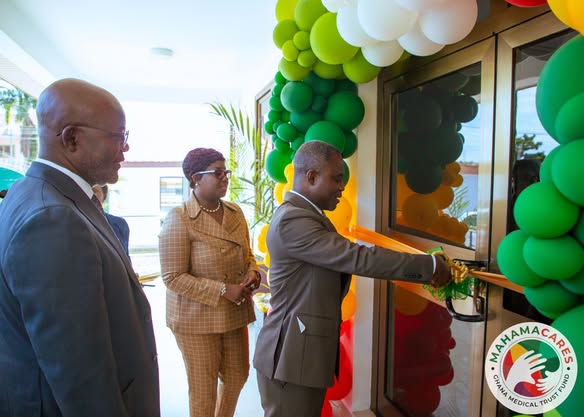
    The headquarters of the Ghana Medical Trust Fund has officially been commissioned by the Minister of Health, Kwabena Minta Akandoh, together with the Administrator of the Trust Fund, Obuobia Darko-Opoku, and her team.

    This marks a significant milestone in establishing a home for the Fund’s growing operations and nationwide initiatives.

    The occasion represents more than the opening of a building. It signifies a foundation of hope, a commitment to sustainability, and a future where every Ghanaian can access quality healthcare with dignity and ease.

    From the provision of essential medical equipment, to the training and capacity building of health professionals, financial support mechanisms, direct patient care, and the development of research and data systems, the Fund continues to advance its mandate to combat Non-Communicable Diseases (NCDs) and strengthen Ghana’s healthcare system.

    With visionary leadership and the unwavering support of our partners, the Ghana Medical Trust Fund stands ready to deliver on its mission to heal, to serve, and to build a healthier nation, one life at a time.

    The Ghana Medical Trust Fund, part of the MahamaCares initiative, was officially unveiled to offer financial assistance to individuals battling long-term and life-threatening illnesses.

    The launch ceremony was held at the University of Ghana Medical Centre (UGMC) in Accra on Tuesday, April 29.

    The fund has been designed to ease the financial burden on patients suffering from chronic conditions, including kidney disease, cancer, and cardiovascular ailments.

    The MahamaCares initiative is expected to enhance access to critical treatment for vulnerable groups across the country, providing timely support where medical costs often become a barrier to care.

    President John Dramani Mahama became the first major contributor to the initiative as he pledged to donate half of his annual salary.

    He recalled how his father died of prostate cancer in 2001, followed by his mother’s passing in 2016 due to hypertension-related complications. He also shared the case of a staff member whose child requires expensive weekly dialysis to survive.

    Calling on businesses to follow suit, the president urged the private sector to consider supporting the fund as part of their Corporate Social Responsibility (CSR) efforts.

    “I want to encourage corporate Ghana, businesses, the mines, the banks, and all the other companies that the Ghana Medical Trust Fund is coming to your clients who save their money in your banks or do business with you. Some of them are even your own staff.

    “So, as part of your Corporate Social Responsibility (CSR), if you give anything, consider that you are giving to your own staff or customers. So, I would like to encourage all corporations in Ghana, both private and public, to at the end of the year, donate some portion of their annual CSR to Ghana Medical Fund because it is going to do a lot of good to the country,” he stated.

    The Mahama Cares initiative is expected to significantly improve access to critical medical treatment for underprivileged patients, while advancing national efforts toward healthcare equity and support for vulnerable groups.

    Joining the list this time round are service commanders of the Ghana Armed Forces (GAF) who have donated one month’s basic salary.

    Chief of Defence Staff, Brigadier General William Agyapong, made this donation known to President John Mahama during a courtesy visit on Friday, May 16.

    “We are intrigued, and it is heartwarming to know that persons with conditions such as cancers, cardiovascular diseases, chronic kidney failure, stroke, among many others, will equally benefit from this fund. Your Excellency, that is why my military command and I have decided to contribute our one-month basic salary to the fund,” he said.

    On his part, the president expressed gratitude to the military command for their donation, highlighting their love the country.

    “Let me take this opportunity to thank our high command for this initiative. It shows that aside from your primary responsibility of protecting our territorial boundaries and wielding weapons, you have a heart and soul beating in your chest.

    “You have love for the country and love for the people you are protecting. On behalf of the people of Ghana, I thank you for this,” he said.

    In addition, the general public has been encouraged to make contributions through the short code *255#, accessible on all mobile networks.

  • We are putting structures in place to reduce post-harvest losses for KETU South farmers – Deputy Agriculture Minister

    We are putting structures in place to reduce post-harvest losses for KETU South farmers – Deputy Agriculture Minister

    Deputy Minister for Food and Agriculture and Member of Parliament for Ayawaso West Wuogon, John Dumelo, has announced that the government is taking steps to minimize post-harvest losses in the Volta Region.

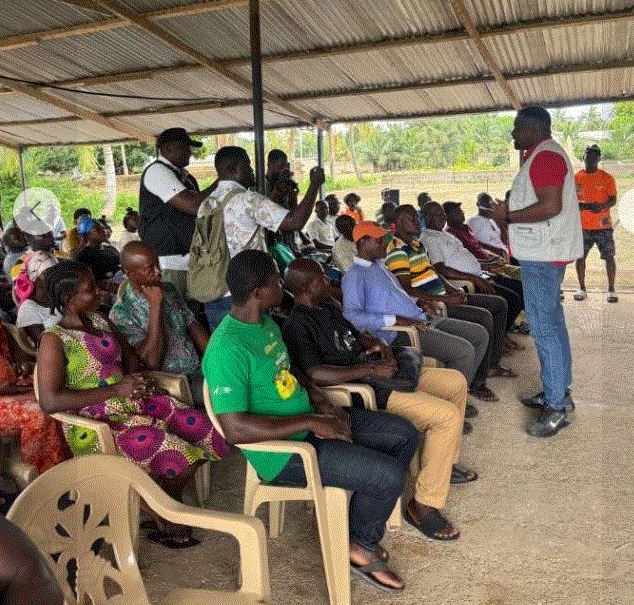
    According to a post shared on his Facebook page, on October 12, 2025, the Ayawaso West Wuogon Member of Parliament met with farmers in Angloga and Ketu South in the Volta region to discuss their challenges and assure them of the government’s support.

    “On Friday, I visited onion/tomato farmers in Angloga and Ketu South in the Volta region to listen to their concerns. I assured the farmers that the Government stands with them, and we have started putting structures in place to reduce post-harvest losses. #idey4u,” Honourable John Dumelo wrote.

    In 2024, Ghana’s agricultural sector faced significant financial losses, with post-harvest challenges costing the nation approximately $1.9 billion annually, according to the World Food Programme (WFP).

    The losses, which primarily affect perishable goods, are largely attributed to inadequate post-harvest infrastructure, such as insufficient machinery, lack of market access, inadequate warehousing, bushfires, and poor road conditions.

    Miss Elorm Goh, Executive Director of Agrisolve, highlighted the severe impact of these losses on smallholder farmers, who were losing about 30 percent of their income due to post-harvest inefficiencies.

    Speaking at a technical stakeholders’ breakfast meeting in Accra, she emphasized the gravity of the situation, stating, “If you lose even one percent of your produce, it’s a big deal, but in this case, farmers are losing up to 50 percent due to post-harvest challenges.”

    The meeting, organized by the Graphic Communications Group in partnership with the WFP, focused on transforming agricultural productivity in Ghana by reducing post-harvest losses.

    Miss Goh called for increased government intervention, particularly in fostering private sector participation to improve infrastructure, including the provision of adequate warehouses and processing machinery.

    “If we provide the roads, the right machinery for harvesting of produce, and more cold rooms for storage, farmers won’t be losing between 40 to 50 percent of their toil, and that will definitely be income for them,” she added.

    In addition to infrastructure improvements, Miss Goh urged financial institutions to develop innovative, tailor-made solutions for those involved in the agricultural value chain, aiming to reduce post-harvest losses and boost farmers’ incomes.

    Mr. Steven Odartefio, Head of Food Systems at the WFP, underscored the need for local government structures to facilitate connections between agribusinesses and farmers.

    “Farmers are losing their output, which has an impact on their pocket. Although they harvest more, they supply less because by the time it gets to the end market, certain activities contribute to losses of the produce,” he noted. He advocated for government support in linking agribusinesses with farmers to help transform produce and benefit smallholder farmers.

    Madam Marbara Clemens, Country Director for the WFP in Ghana, discussed a partnership with the MasterCard Foundation, which aims to provide technical support and post-harvest equipment to 100,000 smallholder farmers.

    This initiative is designed to reduce post-harvest losses and improve agricultural productivity through innovative solutions delivered by a network of aggregators.

    Madam Clemens also called for a national effort to address challenges across the agricultural value chain, from seed production to processing, to make the sector more appealing to the youth.

    She emphasized that prioritizing the patronage of locally produced goods would significantly enhance food security and improve the livelihoods of smallholder farmers.

    Meanwhile, last month, farmers in nine regions were earmarked to receive 100 water-pumping machines seized from galamsey sites to support the implementation of the government’s Feed Ghana Programme.

    This was announced by the Minister for Food and Agriculture (MoFA), Mr Eric Opoku while presenting the machines at the Agricultural Engineering Service Directorate Office at Amrahia in Accra last week.

    According to him, nine hundred(900) machines were seized by a task force in the fight against galamsey and will be handed to farmers in Upper East, Upper West, North East, Savannah, Northern, Greater Accra, Volta, Oti, and Bono East for agricultural use following a court order.

    “We wanted to avoid a situation where these machines, after being distributed, end up at galamsey sites again. That is why we deliberately chose regions without active illegal mining operations,” Mr. Opoku explained.

    Mr. Opoku stated that the equipment had undergone inspection by the Ministry of Food and Agriculture’s technical personnel, who found them in safe condition for use on farms.

    Speaking on behalf of the beneficiary regions, the Northern Regional Minister, John Ali Adolf, assured that the machines would be used for their intended purposes and would never be returned to any galamsey site. He added that, as regional ministers, they would periodically monitor the use of the machines.

    “We wouldn’t want anyone, for any reason, to ever attempt galamsey activities in our regions. These machines will be used to help farmers on their farms so that they can water crops across the seasons, especially during the dry season,” he explained.

    Mr. Adolf expressed gratitude to President John Dramani Mahama for his dedication to the fight against galamsey in the country.

    Government’s efforts to clamp down on illegal mining activities

    The government has rolled out an official order requiring all machinery used in mining operations to be registered with the Driver and Vehicle Licensing Authority (DVLA) by August 1. A statement issued by the Ministry of the Interior on Tuesday, July 15, states that the state will confiscate unregistered mining equipment after the deadline.

    “The Government, as part of efforts to reform the mining sector in the country, requires that all machinery used in mining activities must be registered with the Driver and Vehicle Licensing Authority (DVLA) by 1st August 2025. Equipment that remains unregistered after this deadline will be confiscated by the State,” the Ministry stated on its website.

    Mr. Mubarak empowered the Ghana Police Service and DVLA to begin strict enforcement of the new rule from August 2. “The Ghana Police Service and DVLA have been directed to enforce this directive from 2nd August 2025 onward rigorously. The general public, especially those who use mining machinery, are advised to take note and comply with the directive,” he wrote.

    The Ministry reiterated its resolve to maintain national peace through effective internal security and law enforcement. Meanwhile, a similar directive was issued months ago, asking excavator owners and operators to register their machines with the DVLA within two weeks or risk losing them to the state as the government intensifies efforts to clamp down on illegal mining activities.

    The Chief Executive Officer (CEO) of the DVLA, Julius Neequaye Kotey, issued the directive in Accra, warning that effective June 1, any excavator not registered with the DVLA would be confiscated. Speaking at a press briefing, Mr. Kotey announced that the Ghana Police Service and the DVLA’s operational team had commenced nationwide enforcement after the deadline, arresting and impounding excavators being used at mining sites or for commercial purposes without proper documentation.

    “This exercise will help identify every excavator that enters the country and trace how it is being used. The goal is to ensure we can monitor and hold people accountable,” Mr. Kotey said.

    The directive aligns with Section 38 of the Road Traffic Act, 2004 (Act 683), which mandates the registration of all motor vehicles and trailers, including farm and heavy-duty equipment. Despite the law, the DVLA found many unregistered excavators operating in mining areas, some of which had been used in illegal activities.

    Mr. Kotey emphasized that the DVLA, with its 34 offices nationwide, could register all excavators and farm machinery within two weeks and was ready to strictly enforce the directive. “Excavators in the hands of illegal miners have worsened the destruction of our environment. This is why we must act,” Mr. Kotey said.

    To further control the situation, the DVLA, in collaboration with key agencies like the Minerals Commission, National Security, the Ghana Ports and Harbours Authority (GPHA), and the Customs Division of the Ghana Revenue Authority (GRA), commenced tagging all newly imported excavators.

    In addition to tagging new imports, the Minerals Commission was tasked with leading a team to tag all excavators already in the country. Legal small-scale mining sites have also been geo-fenced, with their site coordinates integrated into the Ghana Mine Repository and Tracking software for better oversight.

    The move is part of broader government efforts to combat illegal mining. Three months ago, Lands and Natural Resources Minister Emmanuel Armah-Kofi Buah announced the rollout of a system to monitor excavator imports and usage, involving port tagging and digital tracking in partnership with several state agencies. According to the sector minister, the third most valuable item imported into the country is excavators, worth GHC6.2 billion.

    Crackdown on illegal mining activities

    In April, a total of 47 individuals were arrested for engaging in illegal mining activities along the Tano River and within the Aboi, Subri, and Nimiri forests in the Western Region. This followed a special four-day intelligence-led operation that commenced on April 17 within the Samreboi enclave.

    According to the Ghana Police Service, the suspects included 39 Ghanaians and 8 Chinese nationals. The Police indicated that a significant amount of equipment and materials believed to have been used for the mining operations were retrieved, including seventeen excavators, one bulldozer, four motorbikes, two Toyota Hilux vehicles, one Rav4 vehicle, four pump-action guns, one single-barrel gun, fifty-four live BB cartridges, and eight pumping machines.

    Prosecution began for the arrested suspects. On Tuesday, 41 of them were arraigned, with 29 remanded into police custody to reappear before the court on April 30, 2025. Twelve others were also remanded to return to court on May 2, 2025. The remaining seven were put before the court on April 23, 2025.

    Two coordinated operations conducted on Friday, June 20, at Nikanika and Adeade in the Central Region led to the arrest of three suspects and the seizure of several pieces of mining equipment. The operations were executed by the Ghana Police Service through its Special Anti-Galamsey Task Force.

    The task force proceeded to a mining site at Nikanika. Although no operators were found at the scene, the team retrieved one single-barrel shotgun loaded with a cartridge and three water-pumping machines. The task force extended its operation to Adeade, where three suspects—Prosper Quansah, Chrispin Nartey, and Owusu Gambra—were arrested with an excavator on a lowbed trailer.

    One SANY excavator, four unregistered Haojin motorbikes, and one lowbed vehicle with registration number GN 2136-24 were seized from the scene. All exhibits were secured in police custody.

    Some 12 accused persons standing trial for engaging in illegal mining activities at Tumetu near Princess Town in the Ahanta West Municipality of the Western Region were remanded into prison custody. While 10 of the accused persons were arrested at a palm plantation, two were arrested at the Elluabo Chavene Ghana Rubber Estate Limited (GREL) plantation.

    This was due to a coordinated police intelligence-led operation within the Ahanta West Municipality. The accused persons are Lord Yankey, Caleb Adu Kwaw, Stephen Agyei, Ebenezer Barnes, Mathew Somagevi, Paa Grant, Bashiru Kaviru, Joseph Borney, Aminu Issah, Kofi Sogah, Albert Normah, and Robert Mensah. Four water-pumping machines, one tricycle with registration number M-20-WR 1045, and two motorbikes were retrieved from the sites, according to the police.

    All twelve accused persons admitted to the offence during police interrogations. They were subsequently put before the Takoradi Harbour Area Circuit Court ‘A’ and remanded into prison custody at Sekondi, reappearing before the court on Tuesday, July 8.

    Additionally, fifteen individuals are in police custody for engaging in illegal mining activities at Manso Adubia. They were arrested following a special intelligence-led operation at Watreso and Preacher Krom.

    The suspects include Tahiru Ibrahim (24), Shaibu Idrissu (23), Boateng Emmanuel (27), Jamon Kwaku Samuel (21), Yaro Patrick (29), Kofi Boakye (21), Gubong Mathew (45), Fatawu Zackari Seidu (26), Abdul Malik Seidu (22), Dauda Tahiru (23), Sampson Grace (21), Boolangkpuo Freda (24), Arima Hagar (26), Kwarteng Vasco (30), and Kwame Adutwum (24).

    Two excavator control boards, two automatic pump-action guns, two Musler 12 firearms, 59 BB cartridges, three AA cartridges, one water-pumping machine, two power generators, one vulcanizing machine, and one Apsonic motorbike were seized from the site.
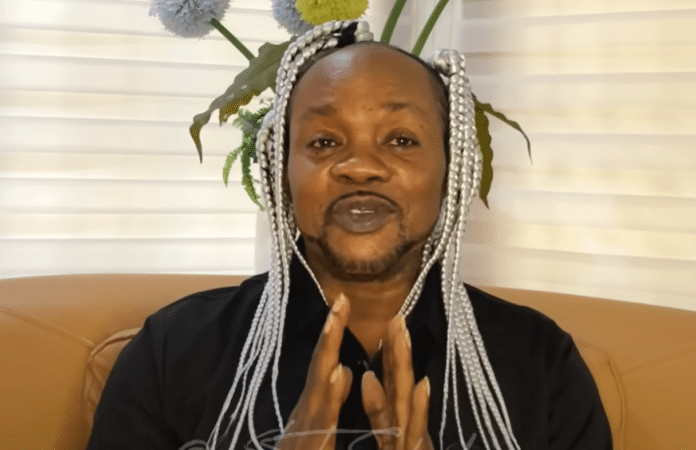
  • “I pray, journal, and cry to overcome life challenges” – Michy

    “I pray, journal, and cry to overcome life challenges” – Michy

    Some people resort to drinking and smoking to overcome the overwhelming challenges they encounter in life.

    But an Entrepreneur and entertainer, Diamond Michelle Gbagonah, popularly known as Michy has shared that she makes every effort to make smiles out of limes.

    At a recent public forum over the week, the former partner of dancehall artist Shatta Wale, prayer and journaling are among the practices she has adopted to overcome life challenges.

    “I would say I’m a good friend to solitude,” Michy explained, describing her deliberate practice of withdrawing from social situations when she feels emotionally overwhelmed. Rather than presenting a false front of constant composure, she’s learned to recognize when she needs time alone to process her feelings before re-engaging with the world,” she stated during a question and answer session at the forum.

    Ghanaian musician, AratheJay, has described all the hardships he faced at the genesis of his music career as sacrifices that led to his breakthrough.

    “There are some things you need to sacrifice. If you have to go and come late to sleep outside like I did. You sleep outside and no one is coming to open the door for you…or you will go to your friend and probably he is not even there but your people at home will think you are with your friends having a good time,” he stated.

    He admitted that his parents played a role in the challenges he faced, but he believes their actions were driven by love.

    “There was a time they had to send a message to everyone on my contact list that no one should call me,” the musician shared.

    He recounted events such as his parent cautioning his contacts from talking to him, sleeping outside in the cold after returning from events late at dawn among others

    Ghanaian Highlife artist KK Fosu has also stated that, despite the challenges he faced in his music career, quitting was the last things he considered to do.

    According to him, music is not just a career but the heartbeat of his very existence.

    “In life, you have to be a soldier and never give up. You see, the challenges will come, but you have to face them. Despite the temptations to doubt and the burden of challenges, I have never once wished to turn away from music. It is my heart, my spirit, my everything,” he reportedly said.

    KK Fosu expressed gratitude to God for the gift of writing and composing songs everyday consistently.

    Adding that, he might not be seen in the public eye frequently, but he is working assiduously behind the scenes.

    “You might see me quiet or taking things slowly, but behind the scenes, the creativity never ceases. I write and compose every single day. I always thank God for this gift, and I reaffirm: we don’t stop. We never stop,” he added.

    He has however, announced plans to launch an initiative to discover and nurture the next generation of Ghanaian music stars.

    “My fans should get ready for a global Dstyle Concert and also our talent hunt aimed at nurturing the next generation of Ghanaian music stars,” the Ghanaian artiste stated.

    Highlife musician, Kuami Eugene, has also confidently stated that the impact he has made through his music will not go down the drain because he departed from Lynx Entertainment.

    Many have raised concerns that Kuami Eugene’s career may not rise again since he has left Lynx Entertainment. However, the singer believes otherwise.

    In a video on X, the ‘Angela’ hitmaker said he has sung several hit songs, and most of them enjoy consistent play at events and in media houses.

    “I sang Angela, confusion, wish me well, kwani kwani remix, obiaa to, open gate, no dulling, killing me softly and many more. So, it will take years for people to forget me.”

    “During weddings, they play several of my love hit songs for the couple and the bridal party to dance. There are several songs with my name on them, how can you forget me?” he added.

    Ghanaian musician, AratheJay, has described all the hardships he faced at the genesis of his music career as sacrifices that led to his breakthrough.

    “There are some things you need to sacrifice. If you have to go and come late to sleep outside like I did. You sleep outside and no one is coming to open the door for you…or you will go to your friend and probably he is not even there but your people at home will think you are with your friends having a good time,” he stated.

    He admitted that his parents played a role in the challenges he faced, but he believes their actions were driven by love.

    “There was a time they had to send a message to everyone on my contact list that no one should call me,” the musician shared.

    He recounted events such as his parent cautioning his contacts from talking to him, sleeping outside in the cold after returning from events late at dawn among others

    Ghanaian Highlife artist KK Fosu has also stated that, despite the challenges he faced in his music career, quitting was the last things he considered to do.

    According to him, music is not just a career but the heartbeat of his very existence.

    “In life, you have to be a soldier and never give up. You see, the challenges will come, but you have to face them. Despite the temptations to doubt and the burden of challenges, I have never once wished to turn away from music. It is my heart, my spirit, my everything,” he reportedly said.

    KK Fosu expressed gratitude to God for the gift of writing and composing songs everyday consistently.

    Adding that, he might not be seen in the public eye frequently, but he is working assiduously behind the scenes.

    “You might see me quiet or taking things slowly, but behind the scenes, the creativity never ceases. I write and compose every single day. I always thank God for this gift, and I reaffirm: we don’t stop. We never stop,” he added.

    He has however, announced plans to launch an initiative to discover and nurture the next generation of Ghanaian music stars.

    “My fans should get ready for a global Dstyle Concert and also our talent hunt aimed at nurturing the next generation of Ghanaian music stars,” the Ghanaian artiste stated.

    Highlife musician, Kuami Eugene, has also confidently stated that the impact he has made through his music will not go down the drain because he departed from Lynx Entertainment.

    Many have raised concerns that Kuami Eugene’s career may not rise again since he has left Lynx Entertainment. However, the singer believes otherwise.

    In a video on X, the ‘Angela’ hitmaker said he has sung several hit songs, and most of them enjoy consistent play at events and in media houses.

    “I sang Angela, confusion, wish me well, kwani kwani remix, obiaa to, open gate, no dulling, killing me softly and many more. So, it will take years for people to forget me.”

    “During weddings, they play several of my love hit songs for the couple and the bridal party to dance. There are several songs with my name on them, how can you forget me?” he added.

  • Akosua Serwaa was deceived into thinking Odo Broni was a househelp – Lawyer

    Akosua Serwaa was deceived into thinking Odo Broni was a househelp – Lawyer

    Lawyer William Kusi, counsel for Daddy Lumba’s wife, Akosua Serwaa, has disclosed that she lived her life believing the lie that Odobroni was a househelp to the late Daddy Lumba.

    Due to this the lawyer stated that Akosua Serwaa had no basis to suspect a romantic affair between the late musician and Odo Broni.

    “She once told me a story, when she was coming to Ghana, it was Odo Broni who arranged the room for her to sleep in. One day, she’ll get the opportunity to speak on these things. At the time, she thought Odo Broni was a househelp, but later she realised they both had children together. We should sympathise with the woman because she has been through a lot,” Lawyer Kusi said.

    This comes after Akosua Serwaa filed a case at the Kumasi High Court, seeking a court declaration that she is the late musician’s rightful and only surviving wife.

    According to the legal suit, Akosua Serwaa says she and Daddy Lumba were legally married in Germany on December 23, 2004, under a monogamous law that allowed only one wife. She maintains that this marriage was valid until Lumba’s death on July 26, 2025.

    Due to that, she insists it’s legally impossible for any other woman — including Odo Broni — to claim to be his wife.

    In her suit, she’s asking the court to stop Odo Broni and anyone else from taking control of the late musician’s body or organizing his funeral. She also wants the court to order the family head, Abusua-Panin Kofi Owusu, not to recognize Odo Broni as Lumba’s wife.

    Daddy Lumba’s, final funeral rite has been slated for Saturday, December 6, 2025.

    The event will be held at the Baba Yara Sports Stadium, as thousands of mourners, including family, friends, industry colleagues, and fans from across the country and beyond, are expected in attendance.

    In July this year, a statement by the counsel for the Fosu family confirmed that the music veteran passed on July 26, after a short illness.

    He succumbed to the illness at the Bank Hospital in Accra, per reports.

    The statement reads: “With profound sorrow and deep grief, the Fosu family announces the passing of Ghana’s beloved musical icon, Charles Kojo Fosu, popularly known as Daddy Lumba, who passed away earlier today, Saturday, July 26, 2025, after a short illness.”

    “Daddy Lumba was more than a musician; he was a cultural icon whose music touched countless lives. His soulful voice provided the soundtrack to our love stories, and his poignant lyrics captured the poetry of our struggles, dreams, and resilience.”

    The bereaved family has respectfully requested privacy as they navigate this profound grief. Details of funeral arrangements will be shared in the coming days.

    Article image 1

    Profile of the late veteran musician

    Daddy Lumba was renowned for his incredible talent as a singer, composer, songwriter, recording artist, and producer.

    With an illustrious career that has spanned over three decades, Daddy Lumba was widely regarded as the greatest and most influential musician in Ghanaian history.

    Many artists in Ghana, including Ofori Amponsah, Sarkodie, Kuami Eugene, Paa Solo of Sibo Brothers, Oheneba Kissi, KiDi, and others, consider him their major inspiration in the music industry.

    Daddy Lumba was born 60 years ago to Mr. Johnson Kwadwo Fosuh and Madam Comfort Gyamfi, also known as Ama Saah, in Nsuta, near Mampong in the Ashanti Region of Ghana. Both of his parents were teachers, and he was the second of three siblings.

    His educational journey began in Nsuta Kyebi, and he completed junior high school at Suame Methodist, Kumasi in 1979. Subsequently, he attended Adu Gyamfi Senior High School in Jamasi, but later transferred to Juaben Senior High School, where he completed his secondary education in 1984.

    Daddy Lumba’s music career took off in the early 80s when he formed the Nkwanta Wesley Singers, gaining fame at the Anokye Krom Cultural Center.

    During his time at Juaben Senior High School, he led the school choir and composed the song “Lumba Lumba,” dedicated to the freedom fighters in South Africa. This song’s popularity earned him the nickname “Daddy Lumba”, which later became his stage name. He also formed the Lumba Brothers band during his school days, which included his girlfriend at the time, Theresa.

    After completing school, Daddy Lumba, with the help of his high school sweetheart Theresa Abebrese, traveled to Germany. There, he met Ernest Nana Acheampong, and they formed another Lumba Brothers group, recording their debut album, “Yee Ye Aka Akwantuom,” in 1986. Financial constraints delayed the album’s release until 1989, and eventually, the duo split.

    Daddy Lumba then launched his solo career and released his debut solo album, “Obi Ate Meso Buo,” in 1990. The album received immense popularity and critical acclaim, featuring classics like the title track and “Theresa,” dedicated to his ex-lover. He has since released 33 albums, including notable ones like “Sika Asem,” “Aben Wo Ha,” “Wo Ho Kyere,” “Awosoo,” “Give Peace A Chance,” and “Ahenfo Kyiniye.” His latest project, “Ofon Na Edi Asem Fo,” was released in December 2022, reuniting him with longtime collaborator Kweku Mensah.

    In addition to his own success, Daddy Lumba is renowned for nurturing the careers of budding artists who went on to become legends in their own right.

    Some of these artists include Felix Owusu, for whom he produced the debut album “Vida” in 1992, Afia Ampofowaa, Kwabena Sunkwa, Ofori Amponsah with the “Woho Kyere” album in 1999, Selina Orleans, Akua Serwaa Bonsu, Borax, Ateaa Tina, and many others.

    His contributions to Ghanaian music and the support he provides to upcoming talents have solidified his status as an iconic figure in the country’s music industry.

    With his passion, talent, and dedication to the craft, Daddy Lumba continues to be a role model for aspiring musicians, leaving an indelible mark on the rich musical landscape of Ghana.

  • Lumba’s one-week: We incurred no debt, but heavy media presence limited donataions – Family head

    Lumba’s one-week: We incurred no debt, but heavy media presence limited donataions – Family head

    The late Daddy Lumba’s family head,  Abusuapanin Kofi Owusu, has disclosed that heavy media presence at the musician’s one-week celebration prevented people from reaching the donation table.

    “There is no truth to that rumour. The programme went beautifully, and we did not incur any debt. We received so much help from everyone. I must commend the press as well for coming in numbers to cover it well. Although the sheer number of pressmen even stopped some people from coming to donate, we still managed to receive so many donations and make a handsome return,” he said in an interview with Gossips24tv.

    Daddy Lumba’s final funeral rite has been slated for Saturday, December 6, 2025.

    The event will be held at the Baba Yara Sports Stadium, as thousands of mourners, including family, friends, industry colleagues, and fans from across the country and beyond, are expected in attendance.

    In July this year, a statement by the counsel for the Fosu family confirmed that the music veteran passed on July 26, after a short illness.

    He succumbed to the illness at the Bank Hospital in Accra, per reports.

    The statement reads: “With profound sorrow and deep grief, the Fosu family announces the passing of Ghana’s beloved musical icon, Charles Kojo Fosu, popularly known as Daddy Lumba, who passed away earlier today, Saturday, July 26, 2025, after a short illness.”

    “Daddy Lumba was more than a musician; he was a cultural icon whose music touched countless lives. His soulful voice provided the soundtrack to our love stories, and his poignant lyrics captured the poetry of our struggles, dreams, and resilience.”

    The bereaved family respectfully requested privacy as they navigate this profound grief. Details of funeral arrangements will be shared in the coming days.

    Article image 1

    Profile of the late veteran musician

    Daddy Lumba was renowned for his incredible talent as a singer, composer, songwriter, recording artist, and producer.

    With an illustrious career that has spanned over three decades, Daddy Lumba was widely regarded as the greatest and most influential musician in Ghanaian history.

    Many artists in Ghana, including Ofori Amponsah, Sarkodie, Kuami Eugene, Paa Solo of Sibo Brothers, Oheneba Kissi, KiDi, and others, consider him their major inspiration in the music industry.

    Daddy Lumba was born 60 years ago to Mr. Johnson Kwadwo Fosuh and Madam Comfort Gyamfi, also known as Ama Saah, in Nsuta, near Mampong in the Ashanti Region of Ghana. Both of his parents were teachers, and he was the second of three siblings.

    His educational journey began in Nsuta Kyebi, and he completed junior high school at Suame Methodist, Kumasi in 1979. Subsequently, he attended Adu Gyamfi Senior High School in Jamasi, but later transferred to Juaben Senior High School, where he completed his secondary education in 1984.

    Daddy Lumba’s music career took off in the early 80s when he formed the Nkwanta Wesley Singers, gaining fame at the Anokye Krom Cultural Center.

    During his time at Juaben Senior High School, he led the school choir and composed the song “Lumba Lumba,” dedicated to the freedom fighters in South Africa. This song’s popularity earned him the nickname “Daddy Lumba”, which later became his stage name. He also formed the Lumba Brothers band during his school days, which included his girlfriend at the time, Theresa.

    After completing school, Daddy Lumba, with the help of his high school sweetheart Theresa Abebrese, traveled to Germany. There, he met Ernest Nana Acheampong, and they formed another Lumba Brothers group, recording their debut album, “Yee Ye Aka Akwantuom,” in 1986. Financial constraints delayed the album’s release until 1989, and eventually, the duo split.

    Daddy Lumba then launched his solo career and released his debut solo album, “Obi Ate Meso Buo,” in 1990. The album received immense popularity and critical acclaim, featuring classics like the title track and “Theresa,” dedicated to his ex-lover. He has since released 33 albums, including notable ones like “Sika Asem,” “Aben Wo Ha,” “Wo Ho Kyere,” “Awosoo,” “Give Peace A Chance,” and “Ahenfo Kyiniye.” His latest project, “Ofon Na Edi Asem Fo,” was released in December 2022, reuniting him with longtime collaborator Kweku Mensah.

    In addition to his own success, Daddy Lumba is renowned for nurturing the careers of budding artists who went on to become legends in their own right.

    Some of these artists include Felix Owusu, for whom he produced the debut album “Vida” in 1992, Afia Ampofowaa, Kwabena Sunkwa, Ofori Amponsah with the “Woho Kyere” album in 1999, Selina Orleans, Akua Serwaa Bonsu, Borax, Ateaa Tina, and many others.

    His contributions to Ghanaian music and the support he provides to upcoming talents have solidified his status as an iconic figure in the country’s music industry.

    With his passion, talent, and dedication to the craft, Daddy Lumba continues to be a role model for aspiring musicians, leaving an indelible mark on the rich musical landscape of Ghana.

    @gossips24tv

    EXCLUSIVE: “We made profits from Daddy Lumba’s One Week Celebration” – Daddy Lumba Abusuapanin reveals

    ♬ original sound – Gossips24 TV
  • Daddy Lumba and Serwaa Fosuh were divorced before his death –

    Daddy Lumba and Serwaa Fosuh were divorced before his death –

    Lawyers for the family of the late highlife legend Charles Kwadwo Fosuh, popularly known as Daddy Lumba, have clearly stated that Daddy Lumba and Serwaa Fosuh his first wife, were divorced before his death.

    This comes as a response to a court action filed by Akosua Serwaa Fosuh, seeking recognition as the musician’s only surviving spouse.

    According to a statement dated October 1, 2025, from Baba Jamal & Associates, legal representatives of the Fosuh Royal Family of Parkoso and Nsuta, the family rejected Serwaa Fosuh’s claims and maintained that she “has no right to determine how the Fosu Royal family buries their dead.”

    The letter, signed by Fati Ali-Yallah, Esq., stated that by Akan customary tradition, Serwaa Fosuh had already dissolved her marriage to the late musician when she presented traditional drinks to the family years ago, an act the family said signified her intent to end the union, which was acknowledged by Daddy Lumba at the time.

    “By the traditions of the Akans generally and the Fosu Royal family in particular, the presentation of drinks by a wife to the husband’s family, when accepted, effectively dissolves the marriage between the two,” the letter read.

    The family claimed that about 15 years ago, Serwaa Fosuh declined to return to Ghana with her husband for medical care and eventually abandoned him when he fell ill.

    They further stated that in 2018, she wrote to inform him of her plans to file for divorce, but Daddy Lumba paid no attention to it, saying he had already moved on with his life.

    Lumba’s final funeral rite has been slated for Saturday, December 6, 2025.

    The event will be held at the Baba Yara Sports Stadium, as thousands of mourners, including family, friends, industry colleagues, and fans from across the country and beyond, are expected in attendance.

    In July this year, a statement by the counsel for the Fosu family confirmed that the music veteran passed on July 26, after a short illness.

    He succumbed to the illness at the Bank Hospital in Accra, per reports.

    The statement reads: “With profound sorrow and deep grief, the Fosu family announces the passing of Ghana’s beloved musical icon, Charles Kojo Fosu, popularly known as Daddy Lumba, who passed away earlier today, Saturday, July 26, 2025, after a short illness.”

    “Daddy Lumba was more than a musician; he was a cultural icon whose music touched countless lives. His soulful voice provided the soundtrack to our love stories, and his poignant lyrics captured the poetry of our struggles, dreams, and resilience.”

    The bereaved family has respectfully requested privacy as they navigate this profound grief. Details of funeral arrangements will be shared in the coming days.

    Article image 1

    Profile of the late veteran musician

    Daddy Lumba was renowned for his incredible talent as a singer, composer, songwriter, recording artist, and producer.

    With an illustrious career that has spanned over three decades, Daddy Lumba was widely regarded as the greatest and most influential musician in Ghanaian history.

    Many artists in Ghana, including Ofori Amponsah, Sarkodie, Kuami Eugene, Paa Solo of Sibo Brothers, Oheneba Kissi, KiDi, and others, consider him their major inspiration in the music industry.

    Daddy Lumba was born 60 years ago to Mr. Johnson Kwadwo Fosuh and Madam Comfort Gyamfi, also known as Ama Saah, in Nsuta, near Mampong in the Ashanti Region of Ghana. Both of his parents were teachers, and he was the second of three siblings.

    His educational journey began in Nsuta Kyebi, and he completed junior high school at Suame Methodist, Kumasi in 1979. Subsequently, he attended Adu Gyamfi Senior High School in Jamasi, but later transferred to Juaben Senior High School, where he completed his secondary education in 1984.

    Daddy Lumba’s music career took off in the early 80s when he formed the Nkwanta Wesley Singers, gaining fame at the Anokye Krom Cultural Center.

    During his time at Juaben Senior High School, he led the school choir and composed the song “Lumba Lumba,” dedicated to the freedom fighters in South Africa. This song’s popularity earned him the nickname “Daddy Lumba”, which later became his stage name. He also formed the Lumba Brothers band during his school days, which included his girlfriend at the time, Theresa.

    After completing school, Daddy Lumba, with the help of his high school sweetheart Theresa Abebrese, traveled to Germany. There, he met Ernest Nana Acheampong, and they formed another Lumba Brothers group, recording their debut album, “Yee Ye Aka Akwantuom,” in 1986. Financial constraints delayed the album’s release until 1989, and eventually, the duo split.

    Daddy Lumba then launched his solo career and released his debut solo album, “Obi Ate Meso Buo,” in 1990. The album received immense popularity and critical acclaim, featuring classics like the title track and “Theresa,” dedicated to his ex-lover. He has since released 33 albums, including notable ones like “Sika Asem,” “Aben Wo Ha,” “Wo Ho Kyere,” “Awosoo,” “Give Peace A Chance,” and “Ahenfo Kyiniye.” His latest project, “Ofon Na Edi Asem Fo,” was released in December 2022, reuniting him with longtime collaborator Kweku Mensah.

    In addition to his own success, Daddy Lumba is renowned for nurturing the careers of budding artists who went on to become legends in their own right.

    Some of these artists include Felix Owusu, for whom he produced the debut album “Vida” in 1992, Afia Ampofowaa, Kwabena Sunkwa, Ofori Amponsah with the “Woho Kyere” album in 1999, Selina Orleans, Akua Serwaa Bonsu, Borax, Ateaa Tina, and many others.

    His contributions to Ghanaian music and the support he provides to upcoming talents have solidified his status as an iconic figure in the country’s music industry.

    With his passion, talent, and dedication to the craft, Daddy Lumba continues to be a role model for aspiring musicians, leaving an indelible mark on the rich musical landscape of Ghana.

  • Ghanaian farmers get boost as Ivory Coast pushes cocoa price to $4.50 per Kilo

    Ghanaian farmers get boost as Ivory Coast pushes cocoa price to $4.50 per Kilo

    Africa’s top cocoa producer, Ivory Coast, has increased its cocoa farmgate price to an unprecedented $4.50 (2,800 CFA francs) per kilogram, a move expected to uplift farmer incomes and shape the political atmosphere before the October 25 presidential election.

    According to a report by Africa Business Insider, President Alassane Ouattara, who is seeking a fourth term, announced the price adjustment from $3.40 earlier this year, citing a response to surging global cocoa prices in 2024.

    For the Ivorian economy, cocoa remains a cornerstone, contributing roughly 14% to GDP, supplying 40% of the world’s cocoa, and sustaining about five million people directly or indirectly.

    The government’s latest move comes as it sets prices for the 2025/26 crop season, drawing attention from market observers who interpret it as both an economic relief strategy and a politically calculated decision ahead of the polls.

    Analysts believe the development could trigger a ripple effect across West Africa’s cocoa belt, notably in Ghana and Nigeria, where governments often follow Ivorian pricing trends.

    In Ghana, the Cocoa Board (COCOBOD) may soon face mounting pressure to raise local farmgate prices to discourage cross-border smuggling and maintain farmer confidence.

    As global demand climbs and climate change threatens future yields, Ivory Coast’s bold price hike underscores a shifting dynamic—one where African cocoa producers are asserting greater control over trade terms in one of the world’s most valuable commodities.

    Meanwhile, Minister for Foreign Affairs, Honourable Samuel Okudzeto Ablakwa, and the Ambassador of the Kingdom of Morocco, Her Excellency Imane Ouaadil, on July 28, handed over two thousand (2,000) tons of fertilizer, equivalent to 40,000 bags of fertilizer, to the Ministry of Food and Agriculture.

    According to the Foreign Ministry, the fertilizer was donated to the West African country by the Kingdom of Morocco during the official visit of Mr Okudzeto Ablakwa to Morocco last month as part of the two countries’ commitment to sustainable agriculture to enhance food security.

    Deputy Minister for Food and Agriculture, John Setor Dumelo, received the donated fertilizers on behalf of the Minister for Food and Agriculture, Eric Opoku. He expressed gratitude to the Morrocan government for the donation. He assured that farmers will receive the fertilizers to aid crop production.

    “Yesterday, 40,000 bags of fertilizer was donated to Ghana by the Kingdom of Morocco through the Ministry of Foreign Affairs. On behalf of my boss Hon Eric Opoku, I want to say a big thank you to Hon Ablakwa and Her Excellency Ouaadil for this kind gesture. We at the Ministry of Agriculture will ensure the fertilizers get straight to the deserving farmers as soon as possible,” he wrote in a post on the X platform on July 29.

    Stakeholders in the agricultural sector have bemoaned the absence of a single chemical fertiliser plant in the country. The Institute for Fiscal Studies noted that the absence of such a plant is having an adverse impact on crop production and the contribution of the agricultural sector to the country’s economy i.e. the Gross Domestic Product (GDP). The sector’s contribution to the country’s GDP declined from 26.9% in 2010 to 22.7% in 2023.

    In March this year, Senior Research Fellow at the Institute for Fiscal Studies, Dr. Said Boakye said, “We need to establish several fertiliser manufacturing plants to ensure that adequate and affordable fertiliser is available to farmers, which will help boost agricultural productivity.”

    “The sad reality is that Ghana lacks a single chemical fertiliser plant. In our rice studies, we have been comparing with Vietnam, where they have more than 7,000 plants. Vietnam’s success in achieving high agricultural productivity is largely due to fertilisers being readily available to farmers at no cost, along with incentivized prices,” he added.

    The Institute for Fiscal Studies has entreated the government to allocate significant funding to establish a fertiliser manufacturing plant.

    Ghana’s engagement with Morocco

    Foreign Affairs Minister Samuel Okudzeto Ablakwa, who also doubles as the Member of Parliament for North Tongu, was in the Kingdom of Morocco from 5th to 6th June for a visit aimed at strengthening the longstanding bilateral relations between Ghana and Morocco and identifying new opportunities for economic cooperation and strategic partnerships.

    During the visit, the Ministries of Foreign Affairs of Ghana and Morocco signed a Memorandum of Understanding (MoU) on political consultations during the Ministerial Session with Moroccan Minister H.E. Mr. Nasser Bourita, which is expected to facilitate regular diplomatic dialogue and promote mutual understanding on regional and international issues.

    Another outcome of the visit was the commitment to the signing of a bilateral visa waiver agreement for holders of ordinary passports to facilitate trade and tourism and deepen people-to-people engagements between both countries. Pending the finalisation of the agreement, the immediate implementation of an Electronic Travel Authorisation (ETA) in favour of Ghanaian travellers to Morocco was announced.

    The Ghanaian minister also paid courtesy calls on the Minister for Industry and Trade, H.E. Mr. Ryad Mezzour; Minister for Transport and Logistics, H.E. Mr. Abdessamad Kayouh; Director-General of the Moroccan Agency for International Cooperation, Amb. Mohamed Methqal; as well as the Vice-President of the General Confederation of Moroccan Entreprises (CGEM), Mr. Mehdi Tazi.

    The discussions with the Moroccan Government officials focused on enhancing cooperation in key sectors such as maritime and air transport, trade and investment, and human resource development, among others. Both sides reaffirmed their commitment to promoting stronger institutional collaboration and private sector engagement.

    Mr Okudzeto Ablakwa also had fruitful discussions with the Ghanaian community in Morocco and briefed them about developments back home.

    Following the minister’s meeting, the Foreign Affairs Ministry announced Ghanaian citizens who wish to visit Morocco will not need traditional visas to do so.

    He revealed that a streamlined online travel authorisation has replaced the previous application process for Ghanaian citizens.

    According to him, the latest move will grant the application within 24 hours without the need to visit the Moroccan embassy.

    “With immediate effect, Ghanaians will no longer require traditional visas to travel to Morocco. An online authorization which will be granted within 24-hours without embassy appointments is all that’s needed,” he wrote.

    The visa waiver to Morocco is expected to increase tourism, improve trade, and strengthen the relationship between Morocco and Ghana.

    “With existing direct flights which would be increased following this new agreement, we expect this bilateral visa waiver policy to greatly facilitate trade, tourism and deepen people to people engagements between both countries,” he added.

    The Moroccan government is also investing in the education of Ghanaians. In March this year, the government of Morocco announced an increase in scholarships for Ghanaian students, raising the number from 90 to 180 starting this year.

    This development follows high-level discussions between Ghana’s Minister of Foreign Affairs, Samuel Okudzeto Ablakwa, and the Moroccan Ambassador to Ghana, Her Excellency Imane Ouaadil.

    During their engagement, Ambassador Ouaadil reassured that Ghanaians and other Africans residing in Morocco remain safe, dispelling social media claims that 700 Africans were being massacred.

    She clarified that the circulated footage was from a border incident on June 24, 2022, which resulted in the deaths of 23 individuals. The incident was investigated by Moroccan and Spanish authorities, with no Ghanaian casualties recorded.

    Beyond education, Morocco and Ghana have agreed to establish a visa waiver for all categories of travelers between the two nations. The agreement is expected to be presented to both parliaments for ratification soon.

    “We have both additionally pledged to deepen collaboration in Agribusiness, Tourism, and Security,” Ablakwa stated.

  • Oscar-winning actress Diane Keaton is dead

    Oscar-winning actress Diane Keaton is dead

    Oscar-winning actress Diane Keaton has died at the age of 79.

    The news was shared by Producer and friend of Keaton, Dori Rath, confirmed the actress’s death to CBS News, the BBC’s US partner.

    The “People magazine,” citing a family spokesperson, reported that Keaton died in California on Saturday.

    Producer and friend of Keaton, Dori Rath, also confirmed the actress’s death to CBS News, the BBC’s US partner.

    Paying tribute, her First Wives Club co-star Bette Midler wrote on Instagram: “The brilliant, beautiful, extraordinary Diane Keaton has died. I cannot tell you how unbearably sad this makes me.”

    Actor Ben Stiller also paid tribute on X, writing: “Diane Keaton. One of the greatest film actors ever. An icon of style, humor and comedy. Brilliant. What a person.”

    Keaton, who was born in Los Angeles, shot to fame in the 1970s through her role as Kay Adams-Corleone in The Godfather films.

    She was also known for starring roles in films including Father of the Bride, First Wives Club and Annie Hall, which won her the Academy Award for Best Actress in 1978.

    “She was hilarious, a complete original, and completely without guile, or any of the competitiveness one would have expected from such a star. What you saw was who she was … oh, la, lala!”

    Keaton, who was born in Los Angeles, shot to fame in the 1970s through her role as Kay Adams-Corleone in The Godfather films.

    For Annie Hall, Keaton also won the Golden Globe Award for Best Actress in a Comedy or Musical Motion Picture and the BAFTA Award for Best Actress in a Leading Role.

    Throughout her more than five-decade career, Keaton starred in dozens of other films including The Family Stone, Because I Said So, And So It Goes, as well as a number of other Woody Allen films, like Play It Again, Sam, Sleeper, Love and Death and Manhattan.

    Keaton made her film debut in the 1970 romantic comedy Lovers and Other Strangers. Her most recent film was the 2024 comedy Summer Camp where she starred alongside Eugene Levy and Kathy Bates.

    Keaton also directed several films, the first of which was a 1987 documentary, Heaven, chronicling people’s beliefs about the afterlife. Her 1995 film Unstrung Heroes – a comedy-drama starring Andie MacDowell, John Turturro and Michael Richards – was selected for Cannes Film Festival’s Un Certain Regard, which showcases unique stories by emerging directors.

    Most recently, Keaton directed Hanging Up in 2000, a comedy-drama starring herself, Meg Ryan and Lisa Kudrow.

    Both in her film roles and in her personal life, Keaton was known for her unique style, which often featured menswear and a wide-brimmed hat.

    Keaton was nominated for three further Oscars – all in the best actress category – for her work in Something’s Gotta Give, Marvin’s Room and Reds.

    She never married and had two adopted children – a daughter, Dexter, and a son, Duke.

    In her 2011 autobiography, titled Then Again, Keaton wrote: “I have assessed my happiness ratio and this is the result. I am totally content whenever the ones I love are happy about something little, big, insignificant, whatever.

    “I just don’t think anyone could possibly have the same wonderful, intense, compelling feelings that I have for this family of mine.”

    Months ago, Ninety-eight-year-old legendary broadcaster, Mike Eghan, known for his famous television program, “The Mike Eghan Show” in the 1970’s also died.

    A source close to the family announced his passing on June 5 to the media.

    Among the pioneering hosts of electronic media and show business, Mr Eghan was referred to as “The Magnificent Emperor.”

    His programme, “The Mike Eghan Show” became widely known for its catchy phrase, “Welcome, welcome welcome to the show,” which was rebranded as his signature tune and was loved in every Ghanaian household.

    His 60-year career started as a disc jockey. He proceeded to be a radio presenter and eventually became a television host.

    Mr Eghan hosted programmes for the Ghana Broadcasting Corporation as well as the BBC World Service, London.

    He autographed a book titled “The Emperor’s Story, from the Centre of the World” in 2019, long before his retirement, cataloging his life, work, and impact in the media terrain.

    The late Mr Eghan worked as an Entertainment Manager with the Volta River Authority, returned to London to work with the BBC, before returning home to revive the Mike Eghan Show.

    He was a regular co-host of Radio Dance Time with David Larbi on the only radio station in Ghana at the time, Radio Ghana.

    During his five-year stint with the British Broadcasting Corporation between 1965 and 1970, after which he returned home to join the commercial service of the Ghana Broadcasting Corporation, GBC 2, the legend made a seismic impact with his innovative style of presenting musical programmes on radio known as disc jockeying.

    He became a popular household name among the likes of Joe Larty and Eddie Faakye.

    In 1971, he once again proved his brilliance when he served as a master of ceremonies for his historic “Soul to Soul’ court at Black Star Square, which brought together top American performers and Ghanaian artists.

    Later in life, the ninety-eight-year-old legendary broadcaster moved to venture into the hotel business.

  • I was the last to record my verse on “Dorobucci” because it was crap to me – Tiwa Savage

    I was the last to record my verse on “Dorobucci” because it was crap to me – Tiwa Savage

    Nigerian afrobeat artiste, Tiwa Savage has shared that “Dorobucci” used to be a song that did not make any sense to her.

    Due to her perception, she was hesitant to record her verse, making her the last Mavin artist to contribute to the track while her colleagues were already excited about it.

    What changed her mind to begin appreciating the song was when she heard the final version in the studio upon her return to Nigeria after a trip to Dubai.

    “Don’t know if people know this, but Don Jazzy played ‘Dorobucci’ in the hotel when we were in Dubai for my wedding, and honestly, I thought it was such a crap song.”

    “When I got back to Nigeria, and I got to the studio, and I heard the song that I heard him play in Dubai, I was flabbergasted. I was so angry, like, I don’t know, because this had happened with ‘Eminado’ too, and I did not like it.”

    “I was the last person to record my verse, because I was looking at everybody and I was like, ‘Do you guys really like this?” she said.

    Tiwa Savage, looking back on the song’s success, praised Don Jazzy’s creativity and ability to craft hits that connect with fans.

    “We all know what happened to the record. I don’t know what Don Jazzy does, but yeah, that was… I heard it, and I didn’t want to tell him. I was like, man, who… I was like, is it Reekado he’s doing this song for? Is it Korede or D’ija? Not knowing I would be on the song too, and it turned out to be phenomenal. Shoutout to Don Jazzy too,” she said.

    Meanwhile, the Nigerian musician has stated that she is not comfortable with being referred to as the “Queen of Afrobeats.”

    “Yeah, they call me the Queen of Afrobeats, but there are a lot of us that are Queens,” she said on GhanaWeb’s X Space on September 12, 2025.

    The award-winning artist believes that many other female artists deserve such a title.

    Meanwhile, renowned event MC and entertainment pundit, MC Portfolio, has shared his view on whether Stonebwoy deserves recognition as one who introduced the Afro-Dancehall genre or not.

    During a conversation on GhanaWeb Entertainment’s X Space on Friday, July 4, MC Portfolio emphasized that an individual cannot claim ownership of the English word “Afro‑Dancehall,” as a genre.

    He asserts that it demands a clear brand and an ambassador to carry it forward.

    “You cannot leave out Stonebwoy. He has been someone who is very vocal and intentional about drumming the genre. We are not being fair to Stonebwoy if we don’t give him his flowers,” he asserted.

    In an unrelated event, veteran dancehall musician Samini has warned netizens to resist attempts likely to spark a feud between him and Stonebwoy, another dancehall artiste.

    This comes after the “My Own” hitmaker was questioned on X about his contribution to championing the Afro-dancehall genre.

    The user with an account name Repost King noted, “Smh… assuming you right, how well did you champion this. What has been your effort in bringing to light Afro-dancehall. The fact that you advised him on fusing ayigbe to his songs doesn’t make you the originator. You are a legend undisputed but Afro-dancehall has always been 1Gad’s.”

    In response, Samini stated, “Put some respect on my name G. SMH I blame @stonebwoy. Tell me the difference. After that tell me who named it and who renamed it. Don’t make me and @stonebwoy fight ooo. He knows the truth I beg. DONT. Man start vex these foolish newbies. Massa talk to your fans oooo. Yooooo.”

    Stonebwoy takes pride in being the pioneer of the Afro-dancehall genre, which has provided a nurturing environment for numerous emerging artists.

    The award-winning singer, who has earned the title of one of the country’s greatest exports, is fulfilled to have witnessed the growth and widespread use of Afro-Dancehall tunes.

    “It is literally broken down as Afrobeat and dancehall. It is very simple in that context. I am only very confident enough to have coined this name more than a decade ago and I have been living up to it till today.

    “I believe that it is a very beautiful space to be in. It will interest you to know that there are tons of African youths who are into the Afro-dancehall style and paying a lot of respect to the name, Stonebwoy for being a fierce force and pushing this to the world,” the dancehall musician elaborated in an interview on +44 Podcast with Sideman & Zeze Millz in May 2023.

    Article image 1

    Stonebwoy paid tribute to the founding founders and big names who created the dancehall genre and saw it grow.

    Afro-Dancehall was birth when young Stonebwoy received a calling back in 2007. It took careful deliberation and hard work to come out with the perfect name that suits this kind of music which combines African sounds and dancehall.

    “My history with Afro-dancehall is that I should be, you know what they say that an idea is not in one man’s head…it will interest you to know that I have been pushing Afro-dancehall as a coin as a term from early when I started my career before I launched properly. It was the calling I had…I sat and wonder what I was going to call it and as far as 2007 and 2008, I have been about it,” he said.

    The hitmaker has been making waves following the release of his 17-track album titled ‘5th Dimension’ in April 2023.

    Stonebwoy was adjudged the Best Reggae/Dancehall Artiste at the 24th edition of the Vodafone Ghana Music (VGMA).

    Last year, he triumphed at the 2024 International Reggae and World Music Awards (IRWMA) by clinching the prestigious title of Best African Dancehall Entertainer.

    The event, held at the Lauderhill Performing Arts Center in Fort Lauderdale on March 22nd, 2024, marked the 41st anniversary of the awards ceremony and highlighted exceptional talent while also promoting Health Awareness.

    Among the other notable winners were Nigerian star Wizkid, who secured the Best Afrobeat Entert

  • BoG has spent more than $7.4bn in ‘saving’ the cedi since 2022 – Report

    BoG has spent more than $7.4bn in ‘saving’ the cedi since 2022 – Report

    Ghana’s total foreign exchange interventions since the height of its economic crisis in 2022 have exceeded $7.4 billion, according to International Monetary Fund (IMF) data analysed by JoyNews Research.

    The data reveal that the Bank of Ghana (BoG) injected about $1.9 billion into the forex market in 2022, the year of the crisis. Interventions fell to $1.1 billion in 2023 but surged again to $3 billion in 2024.

    In just the first quarter of 2025, the Central Bank added another $1.4 billion, signalling continued efforts to stabilise the local currency.

    Earlier this month, the BoG announced plans to inject $1.15 billion through its Domestic Gold Purchase Programme (DGPP). The move, aimed at easing pressure on the cedi, will bring this year’s total forex support to over $2 billion. The Bank said the funds would be disbursed through twice-weekly, price-competitive spot auctions accessible to all licensed banks.

    Following the announcement, the cedi appreciated by 2.5%, reflecting renewed investor confidence in the Central Bank’s strategy. Analysts expect the local currency to maintain its strength against the US dollar through the final quarter of 2025, as offshore FX inflows and a liquid interbank market offset high dollar demand from the energy, services, and manufacturing sectors.

    Dollar interventions have surged sharply in the past two fiscal years, accounting for more than 60% of total injections over the last four years. These interventions have supported one of the strongest performances of the Ghana cedi in recent memory.

    According to the World Bank’s 2025 Africa Pulse Report, the cedi was the best-performing African currency against the US dollar during the first eight months of 2025, appreciating by more than 20% year-to-date.

    This strong showing is attributed to the BoG’s aggressive forex interventions, coupled with rising export earnings from gold and cocoa and steady remittance inflows.

    JoyNews Research data indicate that with the latest round of support, total interventions since 2022 could reach about $8.6 billion. The BoG attributes this year’s efforts to robust inflows from gold and cocoa exports and sustained remittance receipts.

    Gold has remained a critical lifeline for Ghana’s external sector, with prices hitting an all-time high of $4,000 per ounce this week. This surge has strengthened the Central Bank’s ability to generate foreign exchange without heavily depleting its reserves.

    Ghana is expected to retain its position as Africa’s top gold exporter, with projected export revenues surpassing $15 billion by the end of 2025, representing about 65% of total export inflows.

    This windfall has provided the BoG with the “forex muscle” needed to sustain interventions while keeping a strong reserve position. The IMF’s latest Staff-Level Approval report confirms that “in collaboration with the Fund, the BoG has developed a structured foreign exchange operations framework to intermediate FX flows and smooth excessive market volatility, while accumulating international reserves.”

    Ghana’s international reserves have now exceeded $10.7 billion, providing roughly 4.5 months of import cover. The IMF further noted that “international reserves accumulation continues to exceed the ECF-supported program targets, while the cedi appreciated markedly in the first half of the year.”

    Historical data show that most of the Central Bank’s forex interventions typically occur in the latter part of the year. In 2024, for example, about 67% of the $3 billion injected was recorded in the final four months, coinciding with the election period.

    While these consistent interventions have stabilised the cedi in the short term, they raise concerns about long-term sustainability. Analysts caution that Ghana’s reliance on gold-backed interventions exposes the economy to fluctuations in global commodity prices, underscoring the need for a more diversified foreign exchange framework.

    As it stands now, the Bank of Ghana’s decisive moves have given the cedi rare strength, but maintaining that momentum will depend on how effectively the country channels its export windfall, particularly from gold into lasting economic stability.

    Last month, Ghanaian economist, Professor Godfred Bokpin, projected the local currency to stabilise between the range of GH₵13.5 and GH₵14 per U.S. dollar by December this year.

    Speaking to the media on Tuesday, September 16, he explained that the recent fluctuations of the value of the cedi are a natural market phenomenon influenced by supply and demand dynamics.

    He noted that increased government spending will keep the currency under pressure, urging Ghanaians to remain positive and hold on to the country’s core economic strengths (like productivity, revenue generation, exports, etc., which determine long-term stability.

    He stated, “We have our peak period and then we have our low period as well. In the peak period, when we experience what we call cash flow mismatch in terms of inflows and then outflows…businesses would import in anticipation of Christmas and all of that. So the demand will pick up.”

    Ghana cedi’s strong performance was a central theme highlighted by President John Mahama during an interaction with potential investors in Singapore and Japan weeks ago.

    President Mahama emphasised the robust performance of the local currency to underscore Ghana’s macroeconomic stability and attractiveness as a destination for foreign capital.

    However, the cedi’s brief gains were short-lived after its rapid depreciation made it the worst-performing currency. According to Bloomberg’s recent report released on Thursday, September 4, the Ghana cedi is the worst-performing currency among all trading currencies, attributing the depreciation to a surge in demand for dollars by companies paying for imports.

    “A surge in demand for dollars by companies paying for imports has ended the Ghana cedi’s recent strong performance,” Bloomberg said.Bloomberg attributed the new development to the “strong gold prices,” while emphasizing that Ghana’s cedi has seen more than a ten percent (10%) depreciation in the current quarter.

    This, Bloomberg noted, has erased the fifty percent gain against the dollar in April and June. According to Bloomberg, the cedi traded 0.1 per cent weaker at GH¢11.9507 per dollar at 1:50 a.m. Despite the losses, it has gained 23 per cent so far this year.

    “Now, the currency, which had ranked first globally on the back of strong gold prices, has weakened by 13 per cent in the current quarter. Bloomberg data showed this was the steepest fall worldwide, erasing part of the 50 per cent gain recorded between April and June,” the report said.

    But Bloomberg has indicated that “Despite the losses, it has gained 23 per cent so far this year based on market data.” Reacting to Bloomberg’s report, the Bank of Ghana (BoG) noted, “The cedi should be stable within a reasonable range,” the central bank said in an emailed response.

    “Our role is to ensure fluctuations remain orderly, that they reflect fundamentals, and that they do not undermine confidence in the broader economy.”

    Bloomberg, in April this year, ranked the cedi as the best-performing currency with a sixteen percent (16%) gain against the dollar. What made the cedi earn the tag as the worst-performing currency is the steepest decline on the global level.

    The cedi’s appreciation in the last eight months helped ease inflationary pressures, pushing consumer inflation down to 21.2 per cent, the lowest in eight months at the time.

    Ghana’s import-dependent economy brings in a wide range of goods, from food to machinery, with demand typically rising toward the end of the year as businesses prepare for the Christmas season.

    The higher demand for dollars has piled pressure on the cedi, while the Bank of Ghana’s (BoG) limited supply of foreign exchange has added to the strain.

    Head of Market-Risk Management at UMB Bank, Mr. Hamza Adam, said banks that submitted dollar requests on behalf of clients to the Bank of Ghana last week received only half of what they asked for. “This week the central bank is trying to meet all demand,” he said by phone from Accra on September 3, 2025.

    Meanwhile, before Bloomberg reported on the cedi, BoG addressed the concerns of Ghanaians concerning the fast depreciation of the cedi, calling for calm. Bank of Ghana Governor, Dr. Johnson Asiama, during an interview with Joy Business, which was aired on Wednesday, August 27, mentioned that the current depreciation of the cedi was temporary, assuring a comeback soon.

    “The Bank of Ghana operates a managed floating system in terms of framework; therefore, these blips will happen. But the assurance is that this is a short-term issue, and the challenges are being addressed,” he assured.

    According to data from the Bank of Ghana, which was shared on 23rd August, the Ghana cedi had seen a five percent (5%) depreciation. Between August 23 and August 28, the Ghanaian cedi depreciated from GH¢10.43 to around GH¢11.00 per US dollar.

    The sharpest movement was between August 23 and 24, where the cedi depreciated from GH¢10.43 to GH¢10.90. The dollar was selling at GH¢10.43 on August 23, GH¢10.90 on August 24, and between August 25–27, it staggered between GH¢10.85–11.00.

    As of August 28, it had crossed GH¢11, sparking major concerns. On Dr. Johnson Asiama’s part, the current depreciation is a result of the temporary shortage of foreign exchange supply in the market, resulting from the effects of the currency appreciation coupled with other phenomena that, “…we are beginning to see those phenomena at play. Imports become a lot cheaper, so it’s just natural to begin to see pressure build up on the currency.”

    He said there is no need for panic as the economic indicators are obviously strong, giving signs of a cedi recovery soon enough. Dr. Asiama attributed the depreciating cedi to the decline in remittance inflows, sharp appreciation of the cedi, and limited interbank trading.

    “…what is happening is just because of the sharp appreciation, we are beginning to have some cash flow problems, specifically because we have seen some decline in terms of remittance inflows. Also, imports become a lot cheaper, so it’s just natural to begin to see pressure build up on the currency. Over the last two months, we have also seen very limited interbank trading,” he stated.

    The Ghana cedi saw a remarkable appreciation against major trading currencies worldwide over the past six months. During the presentation of the 2025 Mid-Year Fiscal Policy Review on July 24, the Minister for Finance, Dr. Cassiel Ato Forson, revealed that the cedi has recorded a remarkable turnaround in the first six months of 2025, appreciating by 42.6% against the US dollar.Dr. Forson described the cedi’s performance as “impressive” and the first of its kind in the history of Ghana’s economy. The cedi, which was initially always experiencing depreciation, is currently showing resilience against the dollar.

    He noted that the cedi, which was previously trading at about GH¢17.0 to the US dollar, had strengthened to GH¢10.4 as of July 23.

    “Mr. Speaker, the cedi’s performance in the first half of this year has been impressive! The Ghana cedi experienced significant appreciation against all major trading currencies in the first six months of 2025. I am happy to inform the House that our precious cedi, which once upon a time was trading at about GH¢17.0 to the US dollar, was trading at about GH¢10.4 as of yesterday, 23rd July, 2025,” he revealed.

    In high spirits, the minister adopted the catchphrase from Ghanaian highlife musician King Paluta’s energetic party anthem “For the Popping (Apicki),” released on December 27, 2024, and said, “This level of appreciation of the Ghana cedi has never happened in the history of our nation. Ghanafo, cedi no apicki! Apicki apicki apicki!”

    He continued that the strength of the cedi has not appreciated against just the US dollar but against the British pound as well. The cedi also gained 30.3% against the British pound and 25.6% against the euro during the same period.

    This marks a sharp contrast to the same period in 2024, when the cedi depreciated by 18.6% against the dollar, 17.9% against the pound, and 16.0% against the euro.

    “Similarly, the cedi, which was once trading at GH¢21.0 to the Great British Pound, was trading at about GH¢14.1 as of yesterday, 23rd July. Mr. Speaker, as of the end of June 2025, the cedi appreciated by 42.6% against the US dollar, 30.3% against the British pound, and 25.6% against the euro.

    With these gains over the past few months, Dr. Cassiel stated that all the losses in the previous years had been reversed. “Mr. Speaker, I repeat, so far, we have almost reversed all the cedi depreciation in 2022, 2023, and 2024,” he mentioned.

  • “It was really hard to get people to take me seriously” – Tems on her early struggles as a musician

    “It was really hard to get people to take me seriously” – Tems on her early struggles as a musician

    Grammy-winning Nigerian RnB singer and songwriter Tems has revealed that she struggled with recognition as a producer and singer in the early stages of her music career. 

    According to her, experiences made her feel unsafe, overlooked and unsupported.

    In a recent interview with CNN, Tems shared, “It was really hard to get people to take me seriously, not just as a producer, but as a singer. I didn’t feel safe, and I didn’t feel seen, and I didn’t feel supported for a very long time.”

    It was tough for her at the time due to her belief that authenticity was the foundation for her to excel,  

    “Authenticity is everything to me. That’s the only thing I cannot compromise on because that’s all that I have, who I really am,”the singer said.

    Nonetheless, she has now grown to a point where she channels her influence through the Leading Vibe initiative, aimed at supporting women behind the scenes in the music industry.

    The project provides them with the skills, resources, and networks they need to grow in their careers. It also seeks to reduce the gender imbalance in the industry by helping women rise and earn the recognition they deserve.

    Tems revealed that she intends to expand The Leading Vibe to Kenya as part of efforts to empower more women and change the story of women in musice next destination, to empower more women and redefine the narrative of women in music.

    Nigerian Grammy Award-winning singer Temilade Openiyi, affectionately addressed as Tems, has set a record as the first African artist to perform at the inaugural FIFA Club World Cup Final Halftime Show.

    The tournament held on Sunday night at the MetLife Stadium in East Rutherford, New Jersey, in the US, saw Tems offer a stunning display while singing her hit track “Love Me JeJe” alongside a group of yellow- and white-clothed choreographers.

    She performed alongside global stars like Doja Cat and J Balvin, with surprise appearances from Coldplay and Emmanuel Kelly.

    The show was co-produced by FIFA and Global Citizen. The performance opened with J Balvin’s hits “Mi Gente” and “Reggaeton,” followed by Tems’ Grammy-winning track.

    The conclusion of the revamped, expanded Club World Cup was attended by 81,118 people at MetLife Stadium.

    This year’s Club World Cup is the first to feature 32 teams and 48 games.

    The expansion featured four African countries: Al-Ahly of Egypt, Mamelodi Sundowns of South Africa, Tunisia’s Esperance Sportive de Tunis, and Morocco’s Wydad Casablanca.

    Chelsea played against PSG in the finals and triumphed by 3-0, which was a surprise to many given the French club’s heavy win against Spanish giants Real Madrid.

    The Blues secured their second Club World Cup title following Palmer’s brace, and the other goal came from the 43rd minute, João Pedro.

    Palmer was awarded the best player of the night, winning the Golden Ball, and Robert Sanchez won the Golden Glove for best keeper.

    Chelsea earned a record-breaking $123 million in total, including a $40 million bonus for winning the final.

    She drew global attention to the vast and diverse world of African music, urging fans and listeners to explore beyond just Afrobeats.

    Speaking during an interview with Fashion Bomb Daily at the 2025 Met Gala held on May 5, Tems emphasized that while Afrobeats has gained massive international recognition, it only scratches the surface of Africa’s musical landscape.

    “I feel like we can go further in every single aspect of sound. We’re not just like Afrobeats,” Tems said. “There’s Amapiano, there’s Afrosoul, there’s R&B, there’s Afro Jazz. There are so many genres in Africa that people have not fully tapped into yet.”

    Tems, known for her soulful and genre-blending music, has often infused elements of R&B and Afrosoul in her work—demonstrating the musical richness she speaks of. Her call to action highlights the need for global audiences to open up to the broader spectrum of African sounds that reflect different emotions, cultures, and stories across the continent.

    She added that Africa’s musical identity is not monolithic and deserves a deeper appreciation that goes beyond what’s trending on global charts.

    Tems’ comments come at a time when more African artists are gaining international exposure and redefining the soundscape of world music. Her words serve as a reminder that Africa is not just a contributor to global music trends but a wellspring of original, evolving genres waiting to be discovered and celebrated.

    Her statement has sparked renewed conversations online, with many music lovers echoing the need to explore and support the diversity within African music.

    Months ago, Tems, grew weary of unsolicited comments about her body over the past seven years in the public eye.

    She shared an unapologetic message on X, addressing the constant critique of her physical appearance, particularly her curves.

    “I never thought I’d need to say it but you are all weird. “It’s small, it’s flat, it’s fat.” Dog ITS MINE,” the singer wrote.

    Fans have frequently demanded to see her body, with phrases like ““Show us your bumbum” becoming a common request.

    Tems responds with a playful defiance saying, “So me too, I will turn and say ‘see Nah show ME yours first?? See how that feels?”

    Despite the pressure, the “Love Me Jeje” hitmaker makes it clear that her body is just what it is.

    Stressing that, “it is just a body, I will add and lose weight.” Adding that her freedom to exist is her topmost concern.

    She has never hidden her body, but she is no longer willing to justify anything to anyone.

    “The more you don’t like my body, the better for me actually. But it is enough now, move on from my bum.”

    Adding his voice to the matter, Tems’ manager, Muyiwa Awoniyi, warned critics against disrespecting his artistes, Tems, Omah Lay (Stanley), and Lekan.

    According to him, he is not perturbed by personal attacks, however, he will not hesitate to deal with anyone who disrespects his clients.

    “Said it before and I’ll say it again. Insulting me? I’m fine with it. But if you insult Temi, Stanley or Lekan? We will have a problem. ‘Till next time, bye for now,” he wrote.

  • Getting called to the bar is my most joyful experience of my 35 years of life – Serwaa Amihere

    Getting called to the bar is my most joyful experience of my 35 years of life – Serwaa Amihere

    Radio and Television broadcaster Serwaa Amihere has shared that being called to the BAR has been the most joyful experience of her life in the past 35 years.

    She was speaking at her graduation lunch yesterday in Accra in a beautifully decorated space filled with her loved ones.

    “I tweeted that today is the happiest day of my life yet. I am hopeful that I will have happier days, but in my thirty-five years, today is my happiest day. And I have invited carefully people that I love that I know that love me back as well to celebrate this day with me.”

    At lunch, she also mentioned that the feat, even though a reality, it feels incredible to her.

    “Today I have become a lawyer, and I still can’t believe it,” ESQ SerwaaAmiherwe mentioned.

    Serwaa Amihere was called to the BAR yesterday, October 10, 2025.

    Sharing a glimpse of her journey on social media, the now barrister indicated that she deliberately kept the news away from the public over the past 5 years.

    “Making this known in a post shared via social media, she said “40 subjects. 40 exams. Over 2,500 lecture-hours. More than 8,000 hours of private studies and group discussions. A thousand plus judicial decisions. Several volumes of textbooks and monographs.”

    “Dozens of enactments, and many more dozens of pens, pencils, markers, highlighters, and sticky notes. Sleepy days and sleepless nights. This is the aspect of my life which I’ve carefully kept away from the public in the last 5 years. Thanks to God, my beloved family and you, wonderful individuals, who supported me through it all. To a new chapter,” Serwaa wrote in a post.

    The Ghana School of Law admitted 824 lawyers-in-waiting to the Bar on October 10, 2025.

    The ceremony signified the end of years of perseverance, commitment, and determination by the prospective lawyers.

    Announcing the call to the Bar, the Ghana School of Law stated, “A new generation of lawyers is ready to serve with integrity and excellence.”

    In 2023, Kennedy Osei, son of Dr Osei Kwame Despite, was also called to the bar.

    He joins the tall list of graduates called to the bar, clad the black and white attire matching it with a peruke that brought a sense of formality and solemnity to their graduation ceremony, Friday, November 11, 2022.

    In a post he shared on his Instagram, he posed wearing his graduation gown while seated with one leg crossed on the other.

    His caption that accompanied the post read, “The Time Is Here: KENNEDY ASANTE OSEI ESQ. #GODFIRST. Thank you.”

    His post has attracted many social media users and some stars to congratulate the businessman on achieving a higher milestone.

    Reacting to his post, netizens shared many clapping emojis with others who expressed joy and shock after the post was shared barely one hour ago.

    So far, his post has amassed close to seven thousand likes with over a hundred comments.

    A social media reaction shared by Afia Schwarzenegger read, “Eishhhhhhh my learned colleague…[with five clapping emojis].”

    Clemento Suarez also added, “Congratulations my fellow atta papa” while Selassie Ibrahim kept it simple with a warm “Congratulations.”

    In the same year, the wife of actor turned politician John Dumelo, Gifty Mawunya Nkornu, was called to the bar.

    She was called to the bar on Friday, May 5, 2023.

    This was made public by her husband in Facebook post.

    A proud husband took to his social media handles to celebrate his wife for her achievement.

    John Dumelo shared a photo of his wife in her judicial gown and wig, plus another picture taken with their kids.

    “Congratulations my love for being called to the Ghana Bar today. You are now Mrs Gifty Mawunya Dumelo Esq. I have cases for you already lol. Love you,” he wrote.

    The couple got married in 2018 and share two children.

    The General Legal Council (GLC) reversed its decision to admit Ms. Elorm Ababio, who is widely recognized on social media as Ama Governor, to the bar.

    This change was communicated in a letter dated October 18, 2023, signed by Justice Cynthia Pamela Addo, the Secretary to the GLC.

    The GLC explained that although Ms. Ababio had submitted the appropriate application and was initially scheduled to be called to the bar on October 20, 2023, the council has now reconsidered its decision.

    According to the letter, upon receiving her application, Ms. Ababio had been informed that her conduct would be closely monitored by the Council, in adherence to the regulations governing the legal profession.

    “In line with the General Legal Council’s letter dated 13th March, 2023, Council was to observe and monitor your conduct during the time leading up to the submission of your application to be called to the bar” the GLC stated.

    The letter indicated that Ms Ababio couldn’t meet the criteria, hence her application to be called to the Ghanaian bar has been declined.

    “At the meeting of the General Legal Council held on Tuesday, 17th October, 2023, your application to be called to the bar was declined on account of elements noted in your public conduct prior to the application,” the Council explained.

    The General Legal Council (GLC) has allowed Ms. Elorm Ababio, popularly known as Ama Governor, to re-apply for admission to the bar any time after October 20, 2023.

    The GLC will continue to monitor Ms. Ababio’s conduct until it is satisfied that she meets the standards required for admission to the bar.

    Elorm Ama Ababio, also known as Ama Governor, is a Ghanaian YouTuber, social media influencer, and aspiring lawyer. In November 2022, a complaint was filed against her for behavior on social media that was deemed unsuitable for the legal profession. The complainant argued that Ama had been featured in viral videos that were not in line with the conduct expected of a prospective lawyer.

    As a result, she was denied admission to the bar, despite having completed her legal studies, passed her exams, and successfully completed her interview. Ama, along with the support of various Ghanaians on social media, engaged in legal battles and online petitions against the General Legal Council.

    In September, Ama publicly asserted that her sexual orientation should not be a barrier to her admission to the bar. She claimed victory in her legal battle against the Council and was set to be called to the bar in October 2023. However, with only a few days remaining before her enrollment ceremony, she has been informed that she must re-apply.

  • I have disappointed Sarkodie, he should forgive me – Shatta Wale

    I have disappointed Sarkodie, he should forgive me – Shatta Wale

    Ghanaian Dancehall musician Charles Nii Armah Mensah, popularly known as Shatta Wale, rendered apologies to Rapper Sarkodie and his wife Tracy for failing to withhold what was meant to be a secret.

    According to him, Sarkodie bought eight cars to support his transport business, called Shaxi, and the rapper trusted him to keep the information away from the public.

    Unfortunately, Shatta Wale appeared on TikTok live on October 10, to disclose the information to Ghanaians while hailing the rapper as a “genuine industry player.”

    “When he bought the car, he told me not to tell anybody, but I told him we all have to support each other. I know he won’t be happy that I have said this on live.

    “Tracy is my baby. We are sorry for entering his (Sark) account. I am sure Tracy would ask why he didn’t inform her that he wanted to purchase cars for me. Shoutout to the Sark natives,” he added.

    In 2024, Shatta Wale revealed that he invested over $2 million into his ride-hailing service, Shaxi, which was launched in 2023.

    His decision, he explained, was driven by a desire to create jobs and support individuals rather than spending on personal luxuries.

    “I wanted to make extra money to support people. Why else would I start a business?” Shatta Wale stated, reflecting on his motivation.

    He highlighted that instead of indulging in personal luxuries like Lamborghinis or Rolls Royces, he directed $2.2 million into Shaxi. This investment covered app development, acquiring a fleet of mini cars, and promotional activities.

    Despite his public persona, Shatta Wale emphasized his compassionate nature and underscored the importance of community support. Shaxi, a portmanteau of “Shatta” and “taxi,” aims not only to compete with other ride-sharing services but also to contribute positively to Ghanaian society by providing employment opportunities, particularly for youth and fans of his music.

    In May this year, the Chief Executive Officer (CEO) of the Youth Employment Agency (YEA) met with the Shatta Wale, the CEO of SHAXI—a ride-hailing platform established in 2021—for a youth employment partnership.

    This strategic partnership with SHAXI will create thousands of jobs for Ghanaian youth who remain unemployed or seek better job opportunities.

    As part of this collaboration, YEA will support the first 2,000 vehicles that subscribe to the SHAXI platform with GHC500 worth of fuel coupons every month for six months.

    “This bold move is designed to ease the operational cost for drivers and encourage more youth participation in the transport business,” YEA noted.

    SHAXI vehicles that operate on a 24-hour basis will receive additional incentives. This ensures that at least two young people can be employed per vehicle, working in shifts, and maximizing both income and job creation potential.

    YEA noted that “this is a true game-changer in public-private collaboration where innovation and star power are used to drive real impact in youth employment!”

    On his part, Shatta Wale noted that he is open to making more investments in the tech industry to provide more jobs to the youth.

    This is not the first initiative being taken by YEA; in April this year, the agency entered a one-year agreement with SoccaBet Ghana to create 500 job placements.

    Also, the agency, in partnership with the Ghana Fire Service, will recruit 5,000 young Ghanaians as fire assistants across the country.

    The Youth Employment Agency (YEA) and the Ghana Police Service have signed a Memorandum of Understanding (MoU) to recruit 12,000 young individuals across the country to serve as Community Police Assistants (CPAs).

    Speaking at the signing ceremony on Monday, May 19, at the Ministry of Interior, the Chief Executive Officer (CEO) of YEA, Malik Basintale, noted that the government’s priority is not solely about creating job opportunities but “involving our youth in building safer communities.”

    “We are here today because we have found some 12,000 jobs within the Ghana Police Service. Every day and anytime I wake up, the first thing that comes to mind is where I can find jobs for young people out there.”

    “His Excellency the President is always willing to hear the number of jobs that have been found and delivered to young people. Today, we have found 12,000 more jobs for young people out there, and we are ready to exhibit in the coming days,” he added.

  • Ghana Association of Banks raises alarm over loan defaults by doctors

    Ghana Association of Banks raises alarm over loan defaults by doctors

    About 70 percent of medical doctors in Ghana who secure loans from local banks reportedly fail to repay them, according to the Chief Executive Officer of the Ghana Association of Banks (GAB), John Awuah.

    Speaking on PM Business Edition on JoyNews, as monitored by GhanaWeb Business, Mr. Awuah described the situation as a growing challenge for the banking sector.

    He explained that despite being viewed as credible professionals, many doctors take personal loans from banks and later travel abroad without settling their debts.

    Mr. Awuah noted that the problem is largely linked to medical practitioners who relocate overseas for work after acquiring loans locally.

    “Let me tell you, we have heard of doctors. These are on the moral pecking order. When you see a medical doctor, you almost 100% assume that they are not fallible. They don’t make mistakes, and things like borrowing and payment will come to them naturally,” he said.

    “Do you know what doctors are doing to the banking system, particularly those who are offshoring their services, like migrating to other jurisdictions to work? They have bank accounts. They use your bank statements,” he added.

    He further mentioned that the Ghana Association of Banks has initiated talks with the Ministry of Foreign Affairs to address the matter through diplomatic engagement.

    “Wherever they are going, they are working there and earning, and one would think that as medical practitioners, they will just say, ‘I have a liability in Ghana, which enabled me to demonstrate that I can fund my travel, so let me come and settle. About 70% of them are not paying,” he stated.

    He concluded by saying, “There are processes we are going through with the Ministry of Foreign Affairs to contact the diplomatic corps, since you don’t just wake up and write to them. We have started already, there is a letter logged at the ministry.”

    The latest Ghana Human Development Report, titled “The Future Value of Work in Ghana,” has raised alarms about the potential deterioration of the country’s health system if urgent measures are not taken to address the significant outflow of locally trained doctors and nurses.

    The report highlights a troubling trend: 24 percent of nurses trained in Ghana are currently employed abroad due to unfavorable working conditions. The situation is even more severe for doctors, with half of the country’s trained physicians having left for better opportunities overseas.

    Authored by the United Nations Development Program (UNDP) in collaboration with the Statistical Service and the National Development Planning Commission, the report emphasizes that the Ghanaian health sector is in a precarious state.

    It calls for immediate policy and pragmatic interventions to prevent a total collapse of the healthcare system.

    During the COVID-19 pandemic, Ghana’s health system showcased its ability to handle emergencies effectively. However, the sector continues to face significant challenges, including shortages of essential materials such as personal protective equipment (PPE) and a dwindling workforce due to the emigration of qualified health personnel.

    The Global Partnership Network’s 2024 data underscores the gravity of the situation, estimating that 50 percent of doctors and 24 percent of nurses trained in Ghana are working abroad.

    This migration is attributed to poor working conditions for healthcare professionals within the country. The report stresses that without prompt intervention, the already fragile health system could deteriorate further.

    To address these issues, the Future of Work report outlines several strategies to make the healthcare system more responsive to the nation’s evolving health needs. As the disease burden grows more complex due to factors like environmental issues, changing age structures, and lifestyle shifts, the healthcare system must adapt accordingly.

    The report identifies 11 critical areas within Ghana’s health policy that require strengthening, including health promotion, palliative care, and rehabilitative care, which have traditionally lagged behind preventive and curative care. It advocates for a greater focus on health promotion, particularly primary healthcare and environmental health, to enhance both direct and indirect impacts on human capital development.

    Furthermore, the report suggests adopting a life course approach to health delivery. This approach would address the needs of various population groups, such as the elderly, individuals with disabilities, and marginalized communities in urban slums, who often cannot fully benefit from existing curative and preventive care services.

  • Ghana faces serious health risk as UNICEF and, FDA detect lead in everyday products

    Ghana faces serious health risk as UNICEF and, FDA detect lead in everyday products

    A new joint research by the United Nations Children’s Fund (UNICEF) and the Food and Drugs Authority (FDA) has revealed disturbing levels of lead contamination in many products used daily by Ghanaians, posing serious health threats, particularly to children and pregnant women.

    The report according to Class Fm explains that lead, a toxic heavy metal, can cause lasting harm to a child’s health and development even in small quantities.

    Prolonged exposure, it said, may lead to brain damage, poor growth, learning difficulties, and a reduction in intelligence quotient (IQ).

    The study, which covered all sixteen regions of Ghana, found multiple sources of lead exposure in common household materials. It discovered that 80 percent of traditional eyeliners, locally referred to as kaji kaji or kholi, contained extremely high levels of lead. It also revealed that 25 percent of white baked clay, known as shire, ayilor, or farinkasa and commonly eaten by pregnant women, were contaminated. In addition, 42 percent of turmeric powder and 4 percent of corn-based “Tom Brown” samples contained traces of the toxic metal.

    The research further identified outdated plumbing systems and certain cooking utensils as potential contributors to the problem. In some cases, lead was found to leach into drinking water or be released during food preparation.

    UNICEF emphasized that lead poisoning is completely preventable and called for collective national action to protect children and families. The agency urged the government to intensify public education, strengthen product safety regulations, and promote widespread screening to enable early detection and treatment.

    “Every child deserves a healthy start in life,” UNICEF stated, reaffirming its commitment to collaborate with the Government of Ghana, the FDA, and other partners to eliminate lead exposure and safeguard public health.

    The findings serve as a wake-up call for stronger regulatory enforcement, increased consumer awareness, and urgent measures to reduce the presence of lead in homes and the environment across Ghana.

    Research conducted by the Environmental Protection Agency (EPA), in 2024 indicates that a significant number of fish and water bodies in the country have been contaminated with mercury due to its use in gold refining by illegal miners.

    Dr. Jackson Adiyiah Nyantakyi, the Ashanti Regional Director of the EPA and a researcher, stated, “Mercury has infiltrated a considerable number of fish in our water bodies,” emphasizing that this poses a serious public health risk.

    He urged everyone to support the government in curbing illegal mining practices before the situation escalates.

    In addition to its environmental implications, Dr. Nyantakyi highlighted in an interview with the Ghana News Agency (GNA) in Sunyani that mercury remains a poisonous chemical harmful to human health and well-being.

    He pointed out that abnormal skin rashes, body discoloration, rough skin, and other physical defects in infants could be linked to the effects of mercury absorption in the body.

    Dr. Nyantakyi warned that research has indicated widespread mercury contamination in many water bodies, leading to the poisoning of numerous fish, and expressed concerns that the situation could deteriorate further if illegal mining activities (galamsey) are not effectively controlled in the country.

    “My fears are that many Ghanaians eat lot of kenkey and fishes and who might tell if the fish you are eating is contaminated and so it is imperative for everybody to contribute his or her quota towards fighting illegal mining in the country”, he explained.

    In Ghana, Dr. Nyantakyi explained that gold refiners primarily use either Cyanidation (cyanide) or Amalgamation (mercury). Since the use of cyanide is illegal, illegal miners predominantly use large quantities of mercury for gold refining purposes.

    He said because their activities were illegal, the miners “use mercury anyhow and thereby pollute our environment and water bodies which is a serious public health concern that threatens human existence.”

    He emphasized that combating illegal mining was not solely the government’s responsibility, urging everyone, particularly those in mining communities—assembly members, traditional authorities, youth groups, and associations—to stay vigilant and assist in combating the problem.

    Dr. Nyantakyi explained that mercury, being a toxic chemical, can enter the human bloodstream through skin absorption, inhalation into the lungs and digestive system, and uptake by fish and microorganisms.

    He noted that sources of mercury emissions include volcanic activity, rock weathering, movement of water bodies, forest fires, biological processes, and deliberate use of the chemical.

    “Mercury easily infiltrates water bodies, the sediment and fishes and that is why we must all contribute to the national fight against illegal mining”, Dr Nyantakyi stated.

  • Wontumi released; meets GHS25m bail conditions, spends 3 night in police custody

    Wontumi released; meets GHS25m bail conditions, spends 3 night in police custody

    Ashanti Regional Chairman of the New Patriotic Party (NPP), Bernard Antwi Boasiako, widely known as Chairman Wontumi, has been released from police custody after spending three nights in detention.

    His release followed the fulfillment of bail requirements totaling GHS25 million, imposed in connection with two separate illegal mining cases currently before the court.

    On October 7, he was unable to meet the bail conditions set by the Criminal Division of the High Court in Accra.

    In one of the cases, the court granted him GHS15 million bail with two sureties, while in the other, an additional GHS10 million bail was set, also with two sureties—one of whom must justify with landed property.

    The court further directed Wontumi to report to investigators once every week for the first month and prohibited him from traveling outside the country without explicit approval.

    The NPP regional chairman is facing several mining-related charges, including engaging in illegal mining activities and aiding environmental degradation within the Tano Nimire Forest Reserve.

    A bail of GHS1 million with two sureties has been granted to the Ashanti Regional Chairman of the New Patriotic Party (NPP), Bernard Antwi Boasiako, popularly known as Chairman Wontumi.

    This development comes after Chairman Wontumi appeared before the Criminal Investigations Department (CID) of the Ghana Police Service on Monday, October 6, over alleged involvement of Akonta Mining in illegal mining (galamsey) activities.

    A week ago, Chairman Wontumi, who is said to be the owner of Akonta Mining, appeared at the CID with his lawyer, Andy Appiah-Kubi, following an order from the Attorney General (A-G), Dr. Dominic Ayine.

    Speaking to the media, Wontumi’s legal counsel, Andy Kwame Appiah-Kubi, revealed that his client had been charged with mining-related offences.

    “The charges are related to mining. Wontumi has been charged with mining without a license and other related offenses,” he disclosed.

    On Friday, October 3, Dr. Ayine had threatened to arrest him if he failed to surrender to the CID. According to the Attorney General, little progress had been made in investigating the allegations as key documents were withheld by some officials of the previous administration.

    In April, the Minister for Lands and Natural Resources, Emmanuel Armah-Kofi Buah, revoked Akonta Mining’s license for illegally mining within the Tano Nimiri Forest Reserve in the Western North Region.

    The Minister noted that the company had extended its illegal activities to both the Aboi and Tano Nimiri Forest Reserves, despite possessing a valid license to operate outside forest reserves.

    In response, the company refuted the claims, stating in a press release: “We are not responsible for the activities in the Tano Nimiri Forest Reserve. That responsibility lies solely with the Forestry Commission and the Ministry of Lands and Natural Resources.”

    The company added that the accusations were “a deliberate attempt by the Minister to tarnish the reputation of the company. The decision by the Minister to publicly accuse us and call for the revocation of our license without any investigation or hearing is not just unfair, it is a clear breach of natural justice and a politically motivated act.”

    Chairman Wontumi’s expected reappearance comes amid mounting pressure on the Mahama-led administration to end illegal mining activities in the country. The menace continues to threaten Ghana’s water bodies, food crops, forest reserves, and energy infrastructure.

    In a meeting with Civil Society Organisations (CSOs) on Friday, October 3, President John Dramani Mahama noted that he can only declare a state of emergency over the issue when his government’s advisors approve it.

    According to him, the advisors believe the country can overcome galamsey by adopting best practices in small-scale mining, including technologies that help neutralize or remove harmful chemicals from water bodies.

    President Mahama added that the country could eradicate the long-term problem if it deployed more troops and invested more resources in the fight. “While we are fighting the menace, I am also saying we should uptake technology in order to protect the environment. So yes, let’s fight illegal mining, but at the same time, let’s bring the new technology that will help us protect our environment.

    “Now with the elephant in the room, state of emergency, yes, I have the power to do it, but the president acts on the advice of the National Security Council. As of now, this moment, the National Security Council believes that we can win the fight against galamsey. Declaring a state of emergency… I want to assure you that the day they advise me otherwise, that boss, now we need a state of emergency, I won’t hesitate,” he said.

    Meanwhile, the Parliamentary Select Committee on Energy has issued a stern warning about the potential future repercussions of galamsey if the country fails to find a lasting solution. During a visit to the Anwomaso Thermal Power Station in Kumasi on Wednesday, October 1, Deputy Ranking Member Collins Adomako-Mensah revealed how Ghana’s power installations are being tampered with by illegal miners.

    According to him, electricity generation authorities—including the Ghana Grid Company (GRIDCo), the Bui Power Authority (BPA), WAPCO Gas Pipeline, and the Volta River Authority—risk shutting down due to attacks on their infrastructure.

    “When we were engaging the other participants, two things came up—one has to do with galamsey, and it is having a heavy, heavy toll on the energy sector, not just about water. GRIDCo complained about galamsey.

    “Their pylons, people are digging where they have a lot of their pylons. Yesterday we were at Bui, and the Bui water situation is deteriorating because of the galamsey situation surrounding their water bodies,” he said.

    In September, GRIDCo expressed grave concern over the encroachment on its transmission tower sites by galamsey operators, who are digging dangerously close to the foundations.

    Acting Deputy Chief Executive Officer of Engineering and Operations Frank Otchere stated that maintenance teams now face attacks when attempting to access certain areas.

    “Unfortunately, there are some areas that even when our maintenance teams go there, they get shot at. And some of them have had to run away,” he disclosed, adding that the situation has made it impossible for GRIDCo to operate in certain locations without security support.

    He added that galamseyers are weakening the towers, which are carefully engineered to withstand immense weight and pressure, and appealed for urgent assistance from national security agencies to protect transmission corridors and avert potential collapses.

    “This engagement aims to provide a platform for frank and constructive dialogue between the Government and civil society on the menace of illegal mining, with a view to harnessing collective expertise, perspectives, and solutions to address this national challenge,” the letter stated.

    Ongoing research by a forensic histopathologist and former Head of Pathology at KNUST and Komfo Anokye Teaching Hospital (KATH), Prof. Dr. Paul Poku Sampene Ossei, has revealed alarming trends in rising cases of spontaneous abortions among pregnant women in Ghana.

    Approximately 500 cases have been recorded, linked to severe contamination of placentas and the presence of heavy metals, such as lead and mercury, resulting from galamsey activities.A spontaneous abortion is the unintentional expulsion of an embryo or fetus from the uterus before it is viable.

    Speaking on JoyNews’ Newsfile on Saturday, September 27, Prof. Sampene warned that galamsey is poisoning unborn babies and endangering mothers. “I have about 500 cases where women go to the hospital and abort their babies because of the concentration of these heavy metals in their placenta,” he disclosed.

    According to him, his research involved over 4,000 placentas examined from different regions across Ghana. The results showed dangerous levels of heavy metal contamination on both the maternal and fetal sides. “The placentas are all contaminated, polluted with heavy metals,” he said.

    The dangers extend beyond pregnancy losses. Another effect of galamsey is the excessive use of alum to address the increasing turbidity of water. Ghana Water Company Limited, the nation’s largest water supplier, has resorted to using higher concentrations of alum. Prof. Sampene cautioned that high levels of aluminium hydroxide pose serious health risks.

    “One of the consequences of excessive alum use is kidney disease, which is already on the rise. Of course, people are talking about turbidity, and then the Water Company is saying that they are using more alum.

    “Alum is aluminium hydroxide. When taken at higher concentrations over a long period, it can cause kidney problems, irritate the respiratory tract, and lead to neurological defects. All these things have been proven, and we have to be very careful about them now. This goes apart from the effects we are seeing around,” he explained.

    Among recent measures to protect water bodies from illegal miners is the deployment of the National Anti-Illegal Mining Operations Secretariat (NAIMOS).

    The Secretariat includes the Ghana Armed Forces, the Ghana Police Service, the Ghana Immigration Service, the National Intelligence Bureau (NIB), the Narcotics Control Commission, and the National Security Secretariat.

    Addressing the security forces, the Minister for Lands and Natural Resources, Emmanuel Armah Kofi-Buah, directed the team to ruthlessly counter galamsey operators as they are enemies of the state.

    “Any recalcitrant entering into these zones is not merely a trespasser. They are an enemy of the state. You are to be firm. You are to be resolute. You are to be ruthless. And please, take it from me, you will take no obstructionist instruction from any big man. Remember, the biggest man in Ghana is the President of the Republic, and he’s the one who has sent you,” Mr. Kofi-Buah ch

  • Kwaw Kese slams “Politicization” in Ghana’s Music Awards

    Kwaw Kese slams “Politicization” in Ghana’s Music Awards

    Renowned Ghanaian Hiplife rapper, Kwaw Kese, has stated that Ghana’s numerous music award schemes have become tainted by “politicization,” with favoritism and financial influence undermining genuine recognition.

    The rapper reflected on his experience at the 2023 Telecel Ghana Music Awards (TGMA), where his track “Awoyo Sofo” earned a nomination for Hip-Hop song of the Year but did not win.

    “That award was supposed to be mine,” Kwaw insisted. “Awoyo Sofo was bigger than all the songs in that category. Little kids were even playing it. But this industry is politics. If you don’t play along, they cut you off.”

    He argued that the current award system values popularity and votes over artistic excellence.

    “People can buy votes. I’ve seen it happen. Someone can buy 10,000 votes and win. So what happens to the artist who deserves it but doesn’t have money to buy votes?” he questionedDuring his Hitz FM interview which was monitored by MyNewsGh.

    The “Abodam” star called for reforms to ensure fairness, hinting that some board members have conflicts of interest.

    “Some people on the board are managers of artists. How do you expect transparency in such a setup?” he asked.

    Despite the alleged politics, Kwaw said he remains unshaken and proud of his influence on the streets.

    “They can keep Accra and their awards. When we go to the hinterlands, that’s where you’ll see who really commands the crowd,” he said.

    “I still charge higher than most of the new guys because I perform for two hours straight — that’s real artistry.”

    At the Telecel Ghana Music Awards (TGMAs) in 2024, DJ Black stirred up a storm by playing a medley of Shatta Wale’s hits during the jam session, leading to a divided reaction among fans of Shatta Movement.

    Songs like “Hosanna,” “Dancehall King,” “Shatta City,” and “Ayoo” resounded through the venue, triggering a wave of responses on social media, including from Shatta Wale himself.

    Some viewers found it contradictory for Charterhouse to feature Shatta Wale’s music after his withdrawal from the event, seeing it as a conflicting move.

    However, others argued that Charterhouse inadvertently acknowledged Shatta Wale’s significance by including his music, hinting at his indispensable role despite past disagreements.

    Adding to the discussion, Captain Smart suggested Shatta Wale should take legal action against Charterhouse for playing his songs if he was barred from participating.

    He emphasized the crowd’s enthusiastic response to Shatta Wale’s tracks compared to others, implying Charterhouse’s reliance on his music for the event’s success.

    Captain Smart also criticized Charterhouse, highlighting foreign influences, particularly from Nigeria, in Ghana’s entertainment industry. He pointed out the frequent awarding of Best African Artiste accolades to Nigerian artists as evidence of biased decision-making.

    The 25th edition of the Telecel Ghana Music Awards, held at the Grand Arena, Accra International Conference Center on June 1, 2024, showcased captivating performances from Ghanaian musicians. Stonebwoy emerged as the ‘Artiste of the Year,’ adding to the event’s memorable moments.

    Media personality Deloris Frimpong Manso, popularly known as Delay, expressed her disappointment over the exclusion of King Paluta’s hit song Makoma from the 2025 Telecel Ghana Music Awards (TGMA) nominations.

    Taking to her X page on Tuesday, March 18, Delay questioned the fairness of the selection process, stating that such incidents reinforce the need for constant prayer.

    “How King Paluta’s ‘Makoma’ wasn’t nominated is why I keep praying without ceasing. Under your very eyes, what belongs to you will be snatched away if you cease praying,” she wrote.

    Her comment has sparked widespread discussion, with fans and industry stakeholders echoing similar sentiments. Many believe Makoma was one of the most popular and impactful songs of the year and deserved recognition.

    Meanwhile, King Paluta and his team have officially petitioned the TGMA organizers, seeking an explanation for the omission. They revealed that the song was submitted for four major categories: ‘Most Popular Song of the Year,’ ‘Record of the Year,’ ‘Hiplife Song of the Year,’ and ‘Songwriter of the Year.’

    According to the team, Makoma not only gained massive airplay and public appeal but also met all ethical and moral standards required by the awards scheme.

    As reactions continue to pour in, many are calling on the TGMA board to ensure transparency and fairness in the nomination process.

  • Serwaa Amihere called to the BAR today

    Serwaa Amihere called to the BAR today

    Radio and Television broadcaster Serwaa Amihere has been called to the BAR today, October 10, 2025.

    Sharing a glimpse of her journey on social media, the now barrister indicated that she deliberately kept the news away from the public over the past 5 years.

    “Making this known in a post shared via social media, she said “40 subjects. 40 exams. Over 2,500 lecture-hours. More than 8,000 hours of private studies and group discussions. A thousand plus judicial decisions. Several volumes of textbooks and monographs.”

    “Dozens of enactments, and many more dozens of pens, pencils, markers, highlighters, and sticky notes. Sleepy days and sleepless nights. This is the aspect of my life which I’ve carefully kept away from the public in the last 5 years. Thanks to God, my beloved family and you, wonderful individuals, who supported me through it all. To a new chapter,” Serwaa wrote in a post.

    The Ghana School of Law is set to admit 824 lawyers-in-waiting to the Bar today, October 10, 2025.

    The ceremony signifies the end of years of perseverance, commitment, and determination by the prospective lawyers.

    Announcing the call to the Bar, the Ghana School of Law stated, “A new generation of lawyers is ready to serve with integrity and excellence.”

    In 2023, Kennedy Osei, son of Dr Osei Kwame Despite, was also called to the bar.

    He joins the tall list of graduates called to the bar, clad the black and white attire matching it with a peruke that brought a sense of formality and solemnity to their graduation ceremony, Friday, November 11, 2022.

    In a post he shared on his Instagram, he posed wearing his graduation gown while seated with one leg crossed on the other.

    His caption that accompanied the post read, “The Time Is Here: KENNEDY ASANTE OSEI ESQ. #GODFIRST. Thank you.”

    His post has attracted many social media users and some stars to congratulate the businessman on achieving a higher milestone.

    Reacting to his post, netizens shared many clapping emojis with others who expressed joy and shock after the post was shared barely one hour ago.

    So far, his post has amassed close to seven thousand likes with over a hundred comments.

    A social media reaction shared by Afia Schwarzenegger read, “Eishhhhhhh my learned colleague…[with five clapping emojis].”

    Clemento Suarez also added, “Congratulations my fellow atta papa” while Selassie Ibrahim kept it simple with a warm “Congratulations.”

    In the same year, the wife of actor turned politician John Dumelo, Gifty Mawunya Nkornu, was called to the bar.

    She was called to the bar on Friday, May 5, 2023.

    This was made public by her husband in Facebook post.

    A proud husband took to his social media handles to celebrate his wife for her achievement.

    John Dumelo shared a photo of his wife in her judicial gown and wig, plus another picture taken with their kids.

    “Congratulations my love for being called to the Ghana Bar today. You are now Mrs Gifty Mawunya Dumelo Esq. I have cases for you already lol. Love you,” he wrote.

    The couple got married in 2018 and share two children.

    The General Legal Council (GLC) reversed its decision to admit Ms. Elorm Ababio, who is widely recognized on social media as Ama Governor, to the bar.

    This change was communicated in a letter dated October 18, 2023, signed by Justice Cynthia Pamela Addo, the Secretary to the GLC.

    The GLC explained that although Ms. Ababio had submitted the appropriate application and was initially scheduled to be called to the bar on October 20, 2023, the council has now reconsidered its decision.

    According to the letter, upon receiving her application, Ms. Ababio had been informed that her conduct would be closely monitored by the Council, in adherence to the regulations governing the legal profession.

    “In line with the General Legal Council’s letter dated 13th March, 2023, Council was to observe and monitor your conduct during the time leading up to the submission of your application to be called to the bar” the GLC stated.

    The letter indicated that Ms Ababio couldn’t meet the criteria, hence her application to be called to the Ghanaian bar has been declined.

    “At the meeting of the General Legal Council held on Tuesday, 17th October, 2023, your application to be called to the bar was declined on account of elements noted in your public conduct prior to the application,” the Council explained.

    The General Legal Council (GLC) has allowed Ms. Elorm Ababio, popularly known as Ama Governor, to re-apply for admission to the bar any time after October 20, 2023.

    The GLC will continue to monitor Ms. Ababio’s conduct until it is satisfied that she meets the standards required for admission to the bar.

    Elorm Ama Ababio, also known as Ama Governor, is a Ghanaian YouTuber, social media influencer, and aspiring lawyer. In November 2022, a complaint was filed against her for behavior on social media that was deemed unsuitable for the legal profession. The complainant argued that Ama had been featured in viral videos that were not in line with the conduct expected of a prospective lawyer.

    As a result, she was denied admission to the bar, despite having completed her legal studies, passed her exams, and successfully completed her interview. Ama, along with the support of various Ghanaians on social media, engaged in legal battles and online petitions against the General Legal Council.

    In September, Ama publicly asserted that her sexual orientation should not be a barrier to her admission to the bar. She claimed victory in her legal battle against the Council and was set to be called to the bar in October 2023. However, with only a few days remaining before her enrollment ceremony, she has been informed that she must re-apply.

  • Signing up with a label is great, but they take steps without your consent – Yaw Tog

    Signing up with a label is great, but they take steps without your consent – Yaw Tog

    Ghanaian rapper Thorsten Owusu Gyimah, popularly known as Yaw Tog, has highlighted some drawbacks artistes face when they are signed to record labels.

    Yaw Tog was discussing his life following his discision to become an independent artiste.

    In an interview on 3Music on October 9, 2025, the rapper said signing up with a record label was great, but he was displeased with occasions where steps were taken without his consent.

    A situation he described as one of the downsides of being signed to a record label.

    “For me I like to be independent and I also like to go into deals, not 360 deals but partnership deals. It has been a great journey since I wanted to be an independent artiste.”

    He continued, “I think being independent is calm but the pressure is too much. You have to have your team and control everybody to make sure everything is set. With labels, they run everything for you and sometimes, you don’t even get to know what they are doing and that’s the bad side of it,” he said.

    Meanwhile, Ghanaian highlife star Kwabena Kwabena sparked debate over the existence of true record labels in Ghana.

    Speaking on Joy FM’s Showbiz A-Z with Kwame Dadzie, the Adult Music hitmaker questioned the widely held belief that the Ghanaian music industry operates with established record labels.

    When asked if he would accept to sign to a Ghanaian record label if the terms are favourable, he replied: “are there record labels in Ghana?”

    “No, no, no. I am sorry there is no record label in Ghana,” he said.

    Like Kwabena Kwabena, some people argue that many so-called record labels in the music industry are, in reality, just management and promotional firms.

    He believes that while these entities offer label services, they do not function as traditional record labels in the true sense of the term.

    On the other hand, some argue that the size of a record label does not define its legitimacy, as businesses worldwide vary in scale but often perform similar roles.

    Several music companies in Ghana are commonly referred to as record labels, including RuffTown Records, Highly Spiritual Music, Lynx Entertainment, Black Avenue Musik, Mimlife Records, SarkCess Music, MicBurnerz Music, and Flip the Music, among others.

    Ghanaian artist Mr. Drew also opened up about how working at Kaywa’s Highly Spiritual Music record label prepared him for the challenges ahead in his career.

    According to him, because he got involved in various activities embarked on by the label, he did not encounter problems when he left the record company.

    He told Kwame Dadzie on Joy FM’s entertainment analysis programme, Showbiz A-Z that he even had to pay for some of the projects.

    “I did fund some of the stuff while I was on the label,” he noted.

    Asked if that was the initial agreement, he said “no.”

    He mentioned that he wasn’t worried about using his own money to foot some of the bills because he felt he had a vision so he needed to make things work for himself even though he had a record label.

    He added that there were certain things he wished her knew earlier before getting into the music industry seven years ago.

    “I think the business side of it. You actually need to learn a lot. The paper work side of it. Yea, you have to work a lot. From clearance to even how your money is going to trickle in from different places, even after you are done working with somebody, how you are going to get your earnings, you know there is a lot that you have to learn,” he told Kwame Dadzie.

    He also indicated that because his contract with Highly Spiritual was supposed to have been the 360 type, he initially didn’t think it was necessary for him to know much about the business side of the craft.

    However, he stated that going independent as an artiste has been a learning experience for him.

    “Once you get off the label you learn a lot,” he said.

    Known for hit songs such as ‘Dwe’, ‘Mood’, ‘This Year’, ‘Case’ and ‘Sneaky’, Mr. Drew is currently out with a new EP titled ‘The Loverboy.’

  • NSA addresses data mismatch challenges affecting national service registration

    NSA addresses data mismatch challenges affecting national service registration

    The National Service Authority (NSA) has responded to concerns raised by prospective national service personnel over data mismatch issues that have hindered some from completing their registration on the National Service Portal.

    In a press release issued on Thursday, October 9, 2025, and signed by the Director-General, Ruth Dela Seddoh, the Authority confirmed that since the opening of the National Service Portal on Wednesday, October 8, 2025, for the 2025/26 service year, management’s attention had been drawn to a number of challenges affecting applicants’ registration.

    The NSA noted that the main issue identified was the inability of some applicants to register due to discrepancies in their Date of Birth (DOB) and Name details submitted by their tertiary institutions compared to what appears on their Ghana Cards.

    Consequently, the Authority asked prospective personnel to strictly comply with a set of rules to address their concerns.

    “That where the details of a prospective national service personnel, as submitted by his/her tertiary institution, do not match with his/her Ghana Card, the person in question must swear an affidavit, gazette it, and submit the same to the school. The school will then forward the details to the Authority to amend its records, thereby allowing the personnel to register.”

    “In the event that the details of a prospective national service personnel as submitted by his/her tertiary institution were wrongly captured by the said institution, the prospective personnel must notify the institution of the error. The tertiary institution shall rectify the error and communicate same to the Authority.”

    Additionally, all tertiary institutions are to submit corrected data to classlist@nss.gov.gh with a copy to tweneboah.kodua@nss.gov.gh.

    “The Authority is committed to ensuring that all eligible prospective personnel duly register to undertake their mandatory national service in areas of national priority for national development,” the statement emphasized.

    The NSA further urged applicants to seek assistance from its district and regional offices or reach out to the Head Office for clarification and support.

    “In case of further clarification, please do not hesitate to contact our District and Regional offices for the necessary support. Alternatively, you may please contact our support services at the Head Office,” the Authority advised.

    The Authority reassured the public that all eligible applicants will be duly registered to serve in key areas that contribute to Ghana’s development goals.

    Meanwhile, a new posting and management system designed to automate allowance payments and eliminate ghost names from the national service payroll has been introduced by the National Service Authority (NSA).

    Acting Chief Executive Officer of the Authority, Ruth Dela Seddoh, said, the enhanced digital platform integrates directly with Ghana’s national identification database to verify personnel identities and ages against tertiary institution records, effectively eliminating ghost names and duplicate entries.

    He told the media  on Tuesday, October 7, the system introduces end-to-end automation, from posting to allowance processing, to ensure only verified personnel are paid.

    “The payroll is automatically generated from verified and appraised personnel data, ensuring that only eligible and validated service personnel receive their allowances.

    “The system checks, cross-checks, and confirms all records before processing payments,” she explained.

    Ruth Dela Seddoh disclosed that attendance monitoring has been upgraded through geofencing technology, which ensures personnel can only check in when they are physically at their designated workplaces, an initiative designed to curb absenteeism and eliminate proxy attendance.

    Apart from payroll improvements, the upgraded system incorporates a smart placement algorithm that automatically assigns personnel to institutions based on their qualifications, regional choices, and institutional requirements.

    The platform also simplifies approval processes, attendance validation, and report submission, minimizing delays and the need for manual handling.

    Every service personnel will now have access to a customized dashboard showing their posting information, institution details, duty records, and a digital certificate with a QR code for instant authentication.

    Institutions, on the other hand, will benefit from a new interface that enables them to request, supervise, and assess personnel with greater ease.

    Madam Seddoh emphasized that the redesigned platform marks a significant stride toward promoting transparency, accountability, and digital efficiency in the administration of national service.

    “Every click, every activity, and every approval is digitally recorded. It’s a complete audit trail that protects everyone and ensures consistency, transparency, and trust,” she said.

    The new system will link with the NSS Connect mobile app to deliver instant updates, alerts, and access to official information.

    A couple of months ago, Attorney-General (A-G) and Minister for Justice, Dr. Dominic Ayine, revealed that eight individuals, including three former officers of the National Service Authority (NSA), had admitted to their involvement in the misappropriation of funds at the National Service Scheme (NSS).

    Providing an update on the case as part of the Government Accountability Series on Monday, July 28, Dr. Ayine disclosed that eight individuals want to plead guilty in exchange for lighter punishment in this regard.

    He explained that the office intended to file formal charges last week; however, it has been postponed following new revelations regarding the ongoing case.

    The new evidence, he noted, is tied to a Bank of Ghana account linked to former NSA Director-General, Mr. Osei Assibey, suggesting potential embezzlement involving public funds.

    According to him, a total of GH¢189 million was deposited into the account of Mr. Osei Assibey; however, GH¢80 million can not be accounted for.

    Furthermore, nearly GH¢2 million was allegedly withdrawn using two cheques that carried Mr. Assibey’s name and account information.

    The A-G has stated that the office has reached out to the Bank of Ghana, the Ministry of Finance, and the Controller and Accountant-General’s Department for further information and documentation.“The National Service Authority scandal case was due to be filed last week. However, we stumbled upon evidence of malfeasance involving an account at the Bank of Ghana.“Out of the GH¢189 million transferred, GH¢80 million cannot be traced. Two cheques linked to the former Director-General were used to withdraw just under GH¢2 million,” Dr. Ayine stated.

    He added that some of the accused have shown readiness to provide testimony against their fellow accused, with several vendors and service providers also reportedly willing to support the prosecution as witnesses.Earlier this year, a non-profit investigative body, The Fourth Estate, released a report into the payroll records from 2017 to 2023 and the 2024 National Service Year.

    The finding revealed serious irregularities within the NSA, uncovering how a 72-year-old Kenyan, Kwame Donkor, was wrongly listed as a beneficiary. Mr Donkor was enlisted on the payroll with a photo and not an official ID card, which is unusual.

    However, the photo belonged to Emmanuel Mutio, a Human Resource Manager at a private IT company in Kenya. The 72-year-old Kenyan had his name appear on the payroll 226 times as a registered beneficiary.

    The Fourth Estate initially uncovered the issue in November 2024, but the NSA obtained a court order preventing them from publishing the findings.

    After the court lifted the injunction, the report was finally released. In response, President John Dramani Mahama ordered a probe into the matter.

    The NIB, upon the President’s directive, interrogated the former Deputy Director of the National Service Authority (NSA), Gifty Oware-Mensah, and Kwaku Ohene Djan, who is also a former Deputy Executive Director of the National Service Authority.

    The payroll fraud reportedly cost Ghana GHȼ50 million monthly. In May, the Authority interdicted two of its officials in the Brim North District, Eastern Region.

    During a press briefing on Monday, March 24, the AG provided an update on the progress of the investigations, revealing significant findings, particularly regarding financial irregularities within the National Service Scheme.

    He disclosed that investigators had gathered substantial evidence pointing to corruption and financial mismanagement within the scheme.

    “I can confirm that investigation will conclude in the National Service and Sky Train scandals by the middle of April for prosecutions to proceed,” he said during a briefing.

    Dr. Ayine further indicated that authorities had traced suspicious financial transactions involving senior officials.

    “In the National Service scandal, eight suspects have been interrogated, and a good number of them have started ‘singing’ literally. We will give you details of their songs at the appropriate time,” he stated.

    Also in June, the office of the A-G revealed that a whopping GHC548,333,542.65 was lost to the criminal enterprise perpetrated by executives, directors, and staff at NSA.

    Providing a breakdown during a press briefing today, June 13, the A-G stated that “In the 2022/2023 service year, 350,926,977.12 was lost to the state. For the 2023/2024 service year, 32,881,157.07 was lost to the republic.”

    He further added, “The criminal enterprise that resulted in the loss of this colossal loss of sum of money involved the creation of ghost names in the NSA payroll system by some directors and staff, which was subsequently exploited to misappropriate state funds for their gain.”

    Former Deputy Executive Director of the National Service Authority (NSA), Gifty Oware-Mensah, has been named as one of the suspects who will be charged and prosecuted.

    In May, two NSA officials in the Brim North District, Eastern Region, were interdicted by the Authority.

    An official release by the NSA on Wednesday, May 14, found the culprits guilty of their involvement in a “well-orchestrated act of systemic fraud” within the area.

    The NSA explained that the culprits falsified records to approve and process monthly allowances for 78 personnel: at least 29 in the 2024/2025 service year and 49 in the 2023/2024 service year.

    The Authority has noted that the suspension of the district manager and the MIS manager remains in effect pending the outcome of investigations.

    “The Management of the National Service Authority (NSA), through a collaboration with a whistleblower, has uncovered a well-orchestrated act of systemic fraud involving the District Manager and the MIS Manager in the Birim North District of the Eastern Region.

    “During a meeting convened this morning, both individuals were presented with substantial evidence of their misconduct. In further discussions the two officers admitted to their direct involvement in the fraudulent activity. As a result, the Management of the Authority has interdicted the two officers, pending further investigations,” parts of the release read.

    The Attorney-General has pledged to uphold justice by ensuring that all individuals involved are held accountable and made to answer before the law.

    “No individual found culpable will be shielded from accountability,” he assured.

  • All approved YEA staff have consistently received salaries – YEA debunks unpaid salary reports

    All approved YEA staff have consistently received salaries – YEA debunks unpaid salary reports

    Reports that three hundred (300) staff of the Youth Employment Agency (YEA) have not been paid their ten (10) months’ salary have been debunked by the agency.

    According to the agency, the Chief Executive Officer (CEO) of YEA, Mr. Malik Basintale, assumed office in February 2025, therefore, it is factually inaccurate for any group to allege that the CEO has failed to pay them for ten months when he has been in office for only eight months.

    Upon assumption of office, the CEO inherited the existing payroll, which was presented to the Board of YEA and duly approved. Since February 2025, all staff members captured on the official payroll have been paid consistently up to September 2025. No individual whose name was duly verified and approved has been left out of the payroll,” the agency wrote in a statement signed by the Director of Corporate Affairs, Suadique Musah.

    The statement further shared that, in keeping with transparency, the YEA management undertook a comprehensive staff audit earlier this year to ensure that only legitimate employees are maintained on the payroll.

    “This exercise, far from being punitive, was to protect the integrity of the Agency and safeguard public funds. All staff who participated in the audit have been paid accordingly and continue to receive their entitlements.”

    However, the YEA emphasised that certain categories of staff had their contracts expire before the CEO assumed office.

    In such cases, management directed that they reapply for renewal through their respective directors.

    As such, those whose contracts were renewed have since been placed on the payroll.

    The Youth Employment Agency assures the public and all stakeholders that the Agency remains committed to protecting the interests of its staff, ensuring accountability, and delivering on its mandate to create sustainable employment for Ghanaian youth.

    In May this year, the Youth Employment Agency (YEA) announced a fully sponsored employment opportunity for eligible Ghanaians to work in Abu Dhabi, United Arab Emirates, as factory hands.

    According to details released by the agency, the programme is entirely free of charge, with no application fees, intermediary charges, or hidden costs. Selected candidates will be placed in well-paying roles, with all recruitment facilitated directly by YEA.

    Applicants must meet specific criteria to qualify. Interested individuals should be between the ages of 22 and 35 years, stand at least 1.65 meters tall, and weigh between 65 and 75 kilograms. While a Higher National Diploma (HND) or higher qualification is considered advantageous, it is not a strict requirement.

    The agency is particularly encouraging women to take advantage of this international job opportunity, as part of efforts to promote gender inclusivity in the workforce.

    This initiative forms part of YEA’s broader goal of creating sustainable employment pathways for Ghanaian youth, both locally and abroad.

    In the same month, the Agency signed a one-year Memorandum of Understanding (MoU) with the Ghana National Fire Service (GNFS) to recruit 5,000 young people as Fire Assistants nationwide to address youth unemployment and boost emergency response capacity.

    The partnership, led by YEA’s Chief Executive Officer, Malik Basintale, is expected to create thousands of job opportunities for the youth while supporting the Ghana Fire Service in its mission to protect lives and property.

    The signing ceremony, held in Accra, attracted high-level government officials including the Minister for the Interior and the Minister for Youth Development and Empowerment, signalling a strong endorsement of the initiative by the state.

    This collaboration reflects a broader national strategy aimed at equipping young Ghanaians with practical roles in public service, while also enhancing the country’s capacity to respond to fire and related emergencies effectively.

    When he first assumed office Malik Basintale, issued a bold message to staff, emphasizing the need for selfless service over personal gain.

    Addressing employees during an engagement at the agency, Basintale cautioned against prioritizing personal enrichment over the mission of the organization.

    “If your intention is to make money and look for money, then today, you better resign and go home. We are not here to look for money; we are here to work and make His Excellency President of the Republic of Ghana, John Mahama, proud,” he declared.

    He reassured staff of a supportive and collaborative work environment, urging them to remain focused on the core objective of creating jobs for Ghanaian youth.

    “I feel the environment is safe and conducive for all of us to cohabitate. There shouldn’t be any fear. I have one mandate: to achieve in delivering jobs to the unemployed youth. It is very dear to my heart,” he added.

    The appointment of Basintale, who also serves as the Deputy National Communications Officer for the National Democratic Congress (NDC), has drawn significant attention. On January 26, he invited all well-wishers to join him as he officially assumed his new role at YEA.

    A group of supporters believed to be affiliated with Basintale was seen at the agency’s premises to celebrate his appointment.

    This leadership change follows the resignation of Kofi Baah Agyepong, who stepped down after two years at the helm, citing personal commitments and future aspirations. President John Dramani Mahama subsequently appointed Basintale to steer the agency toward its mission of tackling youth unemployment in Ghana.

    In a message shared on X (formerly Twitter), Malik Basintale expressed his gratitude to President Mahama and vowed to fulfill the responsibilities of his new role. “Thank you, Mr President, H.E John D. Mahama. We shall not fail you❤️🙏🏽🇬🇭,” he wrote.

  • Ghana’s debt deal expands as Spain becomes latest signatory

    Ghana’s debt deal expands as Spain becomes latest signatory

    Government has announced its fifth bilateral restructuring agreement with the Kingdom of Spain as the latest.

    This was announced by the Finance Minister Cassiel Ato Forson on Wednesday October 8 after signing the agreement with Spain’s Ambassador to Ghana, H.E. Ángel Lossada Torres-Quevedo. 

    “On behalf of the Republic of Ghana, I signed a Bilateral Debt Restructuring Agreement with the Kingdom of Spain, represented by their Ambassador to Ghana, H.E. Ángel Lossada Torres-Quevedo.  To date, we have concluded five bilateral restructuring agreements with France, Finland, the United Kingdom, China EXIM Bank, and now Spain, “ He shared on his X page.

    Adding that this signing marks another important milestone in Ghana’s debt restructuring journey. 

    Mr Ato Forson is optimistic that Ghana will complete the process and close this challenging chapter in our economic management history by the end of this year, considering valuable lessons learnt from this experience. 

    He said, government is determined to maintain sound fiscal discipline and never again “allow ourselves to reach such unsustainable levels of debt.”

    “I remain confident that the measures we are implementing will safeguard our recovery and strengthen Ghana’s resilience,” Ato Forson expressed.

    On behalf of the Government and people of Ghana, Ato Forson expressed deep appreciation to Spain for their cooperation, understanding, and unwavering support throughout this process.

    Meanwhile, the government formally signed a bilateral debt restructuring agreement with the United Kingdom (UK) as part of efforts with the External Creditor Committee to unlock funds for  ‘The Big Push’ initiative and other government programs.

    Taking to the X platform on Wednesday, September 24, the Finance Minister Dr. Cassiel Ato Forson revealed that the  US$256 million deal signed between the two countries is a key step in managing Ghana’s debt better.“On behalf of the Republic of Ghana, I signed a Bilateral Debt Restructuring Agreement with the United Kingdom, represented by His Majesty’s Trade Commissioner for Africa, Mr. John Humphrey. The agreement covers about US$256 million and represents another important step in Ghana’s debt restructuring efforts,” he wrote.

    According to the Finance Minister, the UK’s participation will motivate other lenders to act fast and finalize their part of the debt restructuring.

    In addition, Ghana is working with UK Export Finance (UKEF) to reinstate financing for several priority projects, including the Bolgatanga–Bawku–Pulimakom Road Project, the Modernisation of the Komfo Anokye Teaching Hospital (KATH), the Obetsebi Lamptey Interchange and Ancillary Works Project Phase II, the construction of Phase 1 of the Tema–Aflao Road Project and the Redevelopment and Modernisation of Kumasi Central Market.

    The deal was sealed in Accra on Wednesday, September 24, after UK Export Finance, and His Majesty’s Trade Commissioner to Africa, John Humphrey paid an official visit to Ghana. Also present at the signing ceremony were the UK High Commissioner to Ghana, H.E. Christian Rogg; the Chief Director of the Ministry of Finance, Mr. Patrick Nomo; and other officials.

    A couple of months ago, the Government also brought to an end the series of engagements with China geared towards enhancing the debt restructuring efforts.

    Minister for Finance, Dr Cassiel Ato Forson, who described the meetings as helpful and a big step forward in solving the country’s debt problems, revealed this information in a post on social media on Tuesday, July 1.

    According to him, these talks are part of the government’s efforts to fix the economy, reduce the country’s debt burden, and ensure that the lives of ordinary Ghanaians are protected.

    Dr. Forson added that the progress made in China puts Ghana in a stronger position to complete this difficult process and build a more stable and inclusive economy.

    In April this year, the sector minister announced Ghana’s preparedness to conclude bilateral agreements for the restructuring of its $5.1 billion official bilateral debt by June, a goal that Finance Minister Dr. Cassiel Ato Forson had described as “ambitious.”

    This followed the signing of a Memorandum of Understanding (MoU) with the Official Creditor Committee (OCC) on January 28.

    This information is outlined in the 2025 Budget Statement and Economic Policy, which highlights Ghana’s fiscal strategies, including debt restructuring efforts aimed at stabilizing the economy.

    Highlighting the importance of this process, the Finance Minister stated, “We look forward to the support of this august House in achieving this objective within the established timeframe.”

    The agreement formalizes the key terms of the restructuring, which were outlined in an Agreement in Principle (AIP) reached on January 12, 2024. It includes an extension of debt service repayments and provides approximately $2.8 billion in debt relief. Additionally, the MoU establishes a cut-off date of December 31, 2022, and imposes limits on disbursements during Ghana’s IMF-supported program from 2023 to 2026.

    The signing of the MoU paves the way for negotiations with individual OCC member countries. As part of the process, Ghana has commenced data reconciliation and validation exercises with several creditors in preparation for the bilateral agreements.

    In addition to official bilateral debt restructuring, the government is engaging commercial creditors, including Chinese commercial lenders, plurilateral institutions, and private banks, to restructure approximately $2.7 billion in commercial debt. Discussions on draft Non-Disclosure Agreements (NDAs) are already underway, with a financial proposal for restructuring expected to be presented soon.

    Furthermore, Ghana’s Domestic Debt Exchange Programme (DDEP), launched in December 2022, has significantly influenced the domestic debt market. The government has relied on short-term securities to finance the budget, raising GH¢45.4 billion in net proceeds from treasury bill issuances.

    The government remains committed to honoring its debt obligations, having successfully paid GH¢19.0 billion in DDEP bond coupons in 2024 and an additional GH¢9.5 billion in February 2025. The Finance Ministry believes these efforts, coupled with effective engagement with market participants, will enhance transparency, restore investor confidence, and stabilize the financial market.

  • Health Ministry to vaccinate 2.5m girls in new HPV vaccination campaign nationwide 

    Health Ministry to vaccinate 2.5m girls in new HPV vaccination campaign nationwide 

    The Ghana Health Service is set to earmark papillomavirus (HPV) vaccination, targeting 2.5 million girls aged between nine and fourteen.

    The exercise which was launched on Wednesday, October 8, and attended by religious and traditional leaders, schoolchildren and other partners will be carried out in schools, health facilities and community outreaches following its successful piloting in the country from 2013 to 2018.

    Speaking at the ceremony held at Osu in Accra and chaired by the Deputy Director-General of Ghana Education Service, Professor Smile Gavua Dzisi, Health Minister Kwabena Mintah Akandoh stated that the mortality rate for HPV was very high and the country needed to fight in unity against cervical cancer.

    “And this Vaccine has been approved by our Food and Drugs Authority( FDA) and the Wealth Health Organization (WHO). This is just the beginning of His Excellency Mahama’s free primary healthcare initiative to give preventive health care its real meaning. Many times, we go to the hospital when we are sick, but most of these diseases can be prevented.”

    “Today, I’m excited to tell you that HPV is preventable, and we are ready to fight it. It is going to be part of our routine immunization program. After today, we are targeting not less than 2.5 million girls, and subsequently, it will be part of our routine immunization,” Mr Akandoh explained.

     The Health Minister noted that the rollout of new vaccines in the country has been met with widespread rumours and conspiracy theories questioning their safety.

    “Let me assure you that this HPV vaccine is safe, effective, and Ghana is not the first country to administer the vaccine. At best, we are joining other African countries like Rwanda, South Africa and Botswana,” he said.

    He noted that getting the vaccine privately without government support could cost between GH¢1,000 and GH¢3,000, a price that would make it difficult for vulnerable and low-income Ghanaians to afford. 

    “Therefore, let us all support it because it is going to be part of our routine programme,” he appealed.

    Adding that the vaccine would not be forced on anybody as consent forms had been distributed in the various schools.

    The Health Minister noted that the initiative marked the beginning of President John Dramani Mahama’s free primary healthcare programme, aimed at giving true meaning to preventive health care.

    Mr. Akandoh urged all caregivers to support the campaign and ensure that girls between the ages of nine and fourteen receive the HPV vaccine, describing the disease as preventable and stating, “and we are ready to fight it.”

    Representing the Director-General of the Ghana Health Service, the Director of Public Health, Dr. Franklin Asiedu-Bekoe, described the vaccine as more than just a medical measure, a pledge to protect the health, aspirations, and future of Ghanaian girls.

    He explained that although the HPV vaccine has been available worldwide since 2006 and in parts of Africa for several years, this launch marks the first time it is being introduced nationwide in Ghana, free of charge, to guarantee equal access for all girls aged nine to fourteen.

    Dr. Asiedu-Bekoe also emphasized the need for unity and dedication to eliminate preventable cancers and secure a healthier, brighter future for the nation’s young women.

    Cervical cancer is one of the leading causes of death among women in Ghana claiming the lives of mothers, daughters, sisters and friends every year.

    HPV on the other hand is also a small, non-enveloped DNA virus that infects skin or mucosal cells, according to the World Health Organization (WHO). The virus is highly transmissible, with most individuals acquiring an infection at some point in their lives, particularly soon after the onset of sexual activity.

    More than 3,000 women are diagnosed annually, and over half do not survive, although it is preventable. 

    The UNICEF Representative, Pauliina Sarvilahti, stated that the introduction of the vaccine signified a shared dedication to safeguarding the health, dignity, and future of every girl in Ghana.

    She explained that the HPV vaccine is a reliable, safe, and effective measure capable of preventing most cases of the disease, saving an estimated 17.4 lives for every 1,000 girls immunized.

    Ms. Sarvilahti further noted that Ghana’s decision to adopt a single-dose schedule has made access to protection easier than ever before.

    “UNICEF is proud to stand alongside the Ghana Health Service, the Ghana Education Service, GAVI, WHO, and our many other partners in this effort. Together, we have secured over 2.5 million doses to ensure no eligible girl is left behind,” and in principle, averting about 40,000 deaths caused by cervical cancer,” Ms Sarvilahti stated.

    However, she emphasized that vaccines on their own are not sufficient; they must be supported by public education, the building of trust, and efforts to promote broad acceptance.

    “To every parent and caregiver across Ghana, especially mothers and fathers of girls aged 9 to 14, this is your moment to act. By ensuring your daughter receives this vaccine, you are giving her the gift of protection, of health, and of opportunity. Every girl deserves a future where her health is not a barrier to her dreams,” Ms Sarvilahti said.

    In June this year, Ghana received its first shipment of the human papillomavirus (HPV) vaccine to protect the health of girls and women against cervical cancer.

    The information was made known by the lead agency responsible for procuring and shipping the vaccines, the United Nations Children’s Fund (UNICEF) Ghana, on Tuesday, June 18.

    According to UNICEF, over 2.5 million additional doses of the HPV vaccine will arrive in the coming weeks, following the initial batch of 441,860 doses.

    The Ghana Health Service (GHS) embarked on a campaign exercise in September this year spanning five days.

    It added, “By including the HPV vaccine in the national Expanded Programme on Immunization (EPI) routine vaccines, Ghana is taking a significant step to protect future generations from cervical cancer.”

  • Ga Mantse joins MUSIGA’s golden jubilee celebrations

    Ga Mantse joins MUSIGA’s golden jubilee celebrations

    The Musicians Union of Ghana (MUSIGA) have gained full support from the Ga Mantse, His Royal Majesty Nii Teiko Tsuru II, as the association marks its golden jubilee.

    According to reports by Myjoyonlineline.com Nii Teiko Tsuru II urged artistes to be mindful of their lyrics and the influence their music wields on society.

    Adding the MUSIGA was encouraged to take the lead in advancing the local music industry, ensuring it remains a force for cultural preservation and socio-economic growth.

    In response, MUSIGA President Bessa Simons appreciated the Ga Mantse for making room for them in his royal  abode.

    “We are deeply honoured by the Ga Mantse’s trust and support. MUSIGA remains committed to nurturing our artists and the industry, ensuring our music not only entertains but also inspires positive change and reflects the rich cultural heritage of Ghana,” Bessa Simons said.

    Meanwhile, Myjoyonlin.com announced that the Ga Mantse has been formally named as Chief Patron of MUSIGA.

    The Musicians Union of Ghana (MUSIGA) has extended an invitation to the launch of its Golden Jubilee celebrations on Thursday, 7th November 2024.

    According to a statement on their website, it is a momentous event marking 50 years of unity, advocacy, and transformation in the Ghanaian music industry. 

    It indicates that MUSIGA was founded in 1975, and has championed the growth of Ghana’s music community, advocating for musicians’ rights and fostering solidarity among artists. 

    According to the General Secretary of the union Samuel Kofi Agyemang, this launch will take place at the Accra Tourist Information Centre (ATIC) at 11 a.m., where MUSIGA will unveil its New Digital Management System, a step forward that positions the Union at the forefront of the digital era.

    The event will bring together MUSIGA’s national and regional executives to reflect on the Union’s five-decade journey while sharing their vision for a dynamic future. The new digital platform promises streamlined membership services, enhanced industry insights, and greater visibility for Ghanaian music on local and global stages.

    This Golden Jubilee is a tribute not only to MUSIGA’s rich legacy but also to its continued dedication to progress. “Together in Rhythm,” MUSIGA’s powerful slogan, captures the spirit of unity and resilience that has defined the Union since its inception.

    As MUSIGA celebrates its past, it also looks forward with a pledge to innovate, inspire, and impact Ghana’s music industry for generations to come. This launch is a call to all members, partners, and music lovers across the nation to celebrate with MUSIGA as it embarks on its next 50 years—stronger and more unified than ever, “Together in Rhythm.”

    Months ago, British actor and filmmaker Idris Elba received royal backing from the Ga Mantse, King Tackie Teiko Tsuru II, for his ambitious plan to establish a world-class film studio in Ghana.

    During a grand ceremony at the Ga Mantse Palace in Accra on Tuesday, March 25, 2025, Elba was honoured as a son of the Ga land in recognition of his contributions to the African diaspora and his commitment to Ghana’s creative industry.

    The event featured traditional drumming, dancing, and cultural displays, underscoring the significance of the occasion. Elba was welcomed by Justice Naa Yaale, Chief of Staff to the Ga Mantse and daughter of Ghana’s independence hero, Ako Adjei.

    Speaking at the gathering, the award-winning filmmaker reaffirmed his dedication to strengthening Africa’s film industry. He announced that 22 acres of land near Osu Castle have been secured for the development of a film studio and school aimed at training and employing young Ghanaian creatives.

    “One of the goals I have tried to achieve is to bring the industry back to Africa,” Elba stated. “We have earmarked 22 acres of land beside Osu Castle for a fantastic studio and school that will serve our community in Accra.”

    His vision is to establish a globally recognized production hub in Ghana, enabling local filmmakers to thrive while attracting international collaborations.

    King Tackie Teiko Tsuru II praised the initiative, describing it as a step in the right direction for Ghana’s creative industry. He highlighted the importance of equipping the youth with the right tools to succeed.

    “Our children lack direction, our youth lack direction, and we need these tools,” the Ga Mantse said. “So, coming in to put up a studio and to partner with us is the way forward. That is why we will support it absolutely so that the creative arts industry, especially, creating Ga content, can move to its next step.”

    Elba’s film studio project is expected to boost Ghana’s film and entertainment industry, providing new opportunities for aspiring filmmakers, actors, and production crews. The royal endorsement further strengthens his mission to position Ghana as a major player in African cinema.

  • “I love and hate shows featuring too many artistes” – Kojo Cue

    “I love and hate shows featuring too many artistes” – Kojo Cue

    Rapper Kojo Cue has shared his opinion about musical concerts that line up too many artists for performance.

    According to him, the practice makes it challenging for fans as they barely recall the impact made by each performer.

    Responding to a question regarding his absence from Sarkodie’s Rapperholic Homecoming concert, which took place on September 27, 2025, at the Baba Yara Sports Stadium, Kojo told Hitz FM, “I have a love-hate relationship with shows that have everyone on it. It’s not helping our show culture, because every artist is on every show, so why won’t one save their money to attend Rapperholic instead?”

    He added that the artists who are the headliners of shows are overshadowed because too many artists are allowed to mount the stage.

    “There are too many people billed on a show. I think a Sark show should have about two more artistes and himself and that’s it. So that when people go for other shows, they know it’s different and have more experiences,” he said.

    Talking about concerts featuring too many artistes, Sarkodie thrilled fans with a unique, exciting entry at his Rapperholic concert in Kumasi weeks ago.

    Despite the delays in the commencement time of the concert, his legendary entrance to the stage melted any possible disappointment or anger.

    It began with a poetic prelude where the poet praised Sarkodie as one whose glory cannot be boxed or hidden, a reference to his kingship, his heritage as the son of the Ashanti Kingdom, highlighting his well-known title “Landlord”, positioning not just a rapper, but a voice of heritage.

    The speaker invoked the spirit of Kumasi and the Ashanti Kingdom, framing Sarkodie’s homecoming as a symbolic return to the source of his strength. One of the lines of the poet was her praise for Sarkodie as one who “ does not just rhyme, but remembers. He does not just perform, he preserves,” she delivered her rich culture and praise-loaded poem for Sarkodie, with the Ashanti Flag projected on the huge LED screens behind her.

    As the poem ended, Sarkodie’s nickname “Obidi” blazed across the stage in flaming letters, followed by a glowing crown that hovered above, symbolising his reign in Ghanaian rap.

    Following the grand display before the ‘landlord’s’ appearance on stage, it began to rain; however, the downpour didn’t dampen the fans’ energy, and they stayed put until Sarkodie appeared.

    He finally showed, opening the stage with his “Original” song in which he addresses critics, cementing his reputation as a pioneer and not a product of hype. His journey through the rap journey with a line in the song which says, “I didn’t come to fit in, I came to stand out.”

    He was surprised on stage by dancehall artist Shatta Wale, whose appearance was welcomed with loud and explosive cheers by fans. The duo performed their decade-old song “Megye Wo Girl”.

    Sarkodie playfully shoved Shatta Wale as he joined him on stage, and their chemistry was electrifying, making it a highlight of the night.

    Then followed Sarkodie’s performance with legendary rapper Obrafour. The landlord had to pause the high-energy flow to introduce Obrafour, calling him “the reason I rap”. As a sign of respect, he knelt before Obrafour on stage, a deeply emotional moment that drew cheers and chants of “legend, legend!” from the crowd. They performed a remix of “Oye Ohene”.

    Kweku Flick joined Sarkodie on stage while they performed their song “Yɛbɛyɛ Fine”, which translates to “We’ll be fine” in Twi. They both moved in sync with dancers dressed in streetwear fused with traditional prints.

    The current Kumasi star, King Paluta, thrilled fans with their “Africa We Dey” song. Sarkodie opened with a verse on unity and struggle, then passed the mic to Paluta, who unleashed rapid-fire Twi bars.

    Other artists that showed up at the concert were Medikal, who did a solo performance marked with a playful moment chasing Shatta Wale on stage.

    Efya, Gyakie, Kofi Kinaata, Olive The Boy, Donzy, Oseikrom SikaniJay Bahd, Ypee, Beeztrap KOTM, Skyface SDW, Kwesi Amewuga, Lalid, Kofi Jamar, among other acts. Some fans were also invited on stage to freestyle live.

    About Rapperholic 2025

    The concert was held on Saturday, 27, at the Baba Yara Sports Stadium in Kumasi. When the stadium was announced as the venue to host the concert, concerns were raised by football enthusiasts and stakeholders about the authority approving the concert to be held at the stadium when Ghana is preparing for an international match. Ghana has a mixed history when it comes to the quality of our pitches, with rare cases of consistent maintenance often from hosting football, concerts, and rallies. Lack of pitch covers, among others.

    The Baba Yara pitch is undergoing renovations to meet CAF and FIFA standards, including turf upgrades and drainage improvements.

    Hence, to address these concerns, the Director General of the National Sports Authority (NSA), Yaw Ampofo Ankrah, clarified that while his outfit has given the rapper the green light to host the concert at the stadium, he has been banned from extending his activities to the pitch itself.

    Acknowledging the poor state of pitches in the Ghana government’s efforts to renovate and add to the number of stadiums nationwide, he explained that, “Sarkodie is prohibited from using the pitch to host the Rapperholic event. The pitch is important to us, and there is no way the event will be hosted on the pitch,” he said during an appearance on Asempa FM’s Ultimate Sports Show.

    He continued that, while Sarkodie has explicitly been told to stay away from the pitch itself, he cautioned that sanctions would be applied if the arrangements were violated.

    “We are aware that there is an agreement in place stating that a penalty or fine will be incurred should that happen, but we are not interested in pursuing that. There are no pitch covers, so we have to put measures in place to ensure that the pitch is safe,” he noted.

    Sarkodie, responding to the NSA’s directive, took to his social media platform X (formerly Twitter) to assure fans that, as he had been explicitly directed from the outset, he expressed his intention to host the concert at the stadium and would not break any rules.

    “The rules were set from day 1, and we are not ready to break it (sic),” he said.

    When did Rapperholic start

    The Rapperholic Concert was founded in 2012 to showcase Sarkodie’s music, celebrate Ghanaian rap, and thrill fans with exciting performances from both local and foreign artists. The concert is usually headlined by Sarkodie, who mostly gives opportunities to emerging rappers to perform. Rapperholic is mostly nothing short of an actual display of fashion and culture, with fans dressing in streetwear, among others.

    Sarkodie visits Otumfuor

    Sarkodie visited Otumfuo Osei Tutu II at Manhyia Palace to formally seek royal blessing for the Rapperholic Kumasi Edition. During the meeting, Otumfuo warmly welcomed Sarkodie’s initiative and said:

    “They don’t allow me to go out often, but this one, I would like to attend and watch the event myself.”Sarkordie was there with his team to officially inform the King about the upcoming concert and also seek his blessings and consent.

    Article image 1

    After advising the rapper and his team to stay humble, he said he’s happy to attend the event if invited.

    Article image 2

    The Asante Overlord’s comments show his regard for the rapper’s craft. Months ago, he also expressed his admiration for celebrated Ghanaian musician Kofi Kinaata. He was honoured by the Asantehene Otumfuo Osei Tutu II for his contribution to youth development through music.

  • NSS rolls out new system to ensure timely payments, eliminate fake entries – NSA

    NSS rolls out new system to ensure timely payments, eliminate fake entries – NSA

    A new posting and management system designed to automate allowance payments and eliminate ghost names from the national service payroll has been introduced by the The National Service Authority (NSA).

    Acting Chief Executive Officer of the Authority, Ruth Dela Seddoh, said, the enhanced digital platform integrates directly with Ghana’s national identification database to verify personnel identities and ages against tertiary institution records, effectively eliminating ghost names and duplicate entries.

    He told the media  on Tuesday, October 7, the system introduces end-to-end automation, from posting to allowance processing, to ensure only verified personnel are paid.

    “The payroll is automatically generated from verified and appraised personnel data, ensuring that only eligible and validated service personnel receive their allowances.

    “The system checks, cross-checks, and confirms all records before processing payments,” she explained.

    Ruth Dela Seddoh disclosed that attendance monitoring has been upgraded through geofencing technology, which ensures personnel can only check in when they are physically at their designated workplaces, an initiative designed to curb absenteeism and eliminate proxy attendance.

    Apart from payroll improvements, the upgraded system incorporates a smart placement algorithm that automatically assigns personnel to institutions based on their qualifications, regional choices, and institutional requirements.

    The platform also simplifies approval processes, attendance validation, and report submission, minimizing delays and the need for manual handling.

    Every service personnel will now have access to a customized dashboard showing their posting information, institution details, duty records, and a digital certificate with a QR code for instant authentication.

    Institutions, on the other hand, will benefit from a new interface that enables them to request, supervise, and assess personnel with greater ease.

    Madam Seddoh emphasized that the redesigned platform marks a significant stride toward promoting transparency, accountability, and digital efficiency in the administration of national service.

    “Every click, every activity, and every approval is digitally recorded. It’s a complete audit trail that protects everyone and ensures consistency, transparency, and trust,” she said.

    The new system will link with the NSS Connect mobile app to deliver instant updates, alerts, and access to official information.

    A couple of months ago, Attorney-General (A-G) and Minister for Justice, Dr. Dominic Ayine, revealed that eight individuals, including three former officers of the National Service Authority (NSA), had admitted to their involvement in the misappropriation of funds at the National Service Scheme (NSS).

    Providing an update on the case as part of the Government Accountability Series on Monday, July 28, Dr. Ayine disclosed that eight individuals want to plead guilty in exchange for lighter punishment in this regard.

    He explained that the office intended to file formal charges last week; however, it has been postponed following new revelations regarding the ongoing case.

    The new evidence, he noted, is tied to a Bank of Ghana account linked to former NSA Director-General, Mr. Osei Assibey, suggesting potential embezzlement involving public funds.

    According to him, a total of GH¢189 million was deposited into the account of Mr. Osei Assibey; however, GH¢80 million can not be accounted for.

    Furthermore, nearly GH¢2 million was allegedly withdrawn using two cheques that carried Mr. Assibey’s name and account information.

    The A-G has stated that the office has reached out to the Bank of Ghana, the Ministry of Finance, and the Controller and Accountant-General’s Department for further information and documentation.“The National Service Authority scandal case was due to be filed last week. However, we stumbled upon evidence of malfeasance involving an account at the Bank of Ghana.“Out of the GH¢189 million transferred, GH¢80 million cannot be traced. Two cheques linked to the former Director-General were used to withdraw just under GH¢2 million,” Dr. Ayine stated.

    He added that some of the accused have shown readiness to provide testimony against their fellow accused, with several vendors and service providers also reportedly willing to support the prosecution as witnesses.Earlier this year, a non-profit investigative body, The Fourth Estate, released a report into the payroll records from 2017 to 2023 and the 2024 National Service Year.

    The finding revealed serious irregularities within the NSA, uncovering how a 72-year-old Kenyan, Kwame Donkor, was wrongly listed as a beneficiary. Mr Donkor was enlisted on the payroll with a photo and not an official ID card, which is unusual.

    However, the photo belonged to Emmanuel Mutio, a Human Resource Manager at a private IT company in Kenya. The 72-year-old Kenyan had his name appear on the payroll 226 times as a registered beneficiary.

    The Fourth Estate initially uncovered the issue in November 2024, but the NSA obtained a court order preventing them from publishing the findings.

    After the court lifted the injunction, the report was finally released. In response, President John Dramani Mahama ordered a probe into the matter.

    The NIB, upon the President’s directive, interrogated the former Deputy Director of the National Service Authority (NSA), Gifty Oware-Mensah, and Kwaku Ohene Djan, who is also a former Deputy Executive Director of the National Service Authority.

    The payroll fraud reportedly cost Ghana GHȼ50 million monthly. In May, the Authority interdicted two of its officials in the Brim North District, Eastern Region.

    During a press briefing on Monday, March 24, the AG provided an update on the progress of the investigations, revealing significant findings, particularly regarding financial irregularities within the National Service Scheme.

    He disclosed that investigators had gathered substantial evidence pointing to corruption and financial mismanagement within the scheme.

    “I can confirm that investigation will conclude in the National Service and Sky Train scandals by the middle of April for prosecutions to proceed,” he said during a briefing.

    Dr. Ayine further indicated that authorities had traced suspicious financial transactions involving senior officials.

    “In the National Service scandal, eight suspects have been interrogated, and a good number of them have started ‘singing’ literally. We will give you details of their songs at the appropriate time,” he stated.

    Also in June, the office of the A-G revealed that a whopping GHC548,333,542.65 was lost to the criminal enterprise perpetrated by executives, directors, and staff at NSA.

    Providing a breakdown during a press briefing today, June 13, the A-G stated that “In the 2022/2023 service year, 350,926,977.12 was lost to the state. For the 2023/2024 service year, 32,881,157.07 was lost to the republic.”

    He further added, “The criminal enterprise that resulted in the loss of this colossal loss of sum of money involved the creation of ghost names in the NSA payroll system by some directors and staff, which was subsequently exploited to misappropriate state funds for their gain.”

    Former Deputy Executive Director of the National Service Authority (NSA), Gifty Oware-Mensah, has been named as one of the suspects who will be charged and prosecuted.

    In May, two NSA officials in the Brim North District, Eastern Region, were interdicted by the Authority.

    An official release by the NSA on Wednesday, May 14, found the culprits guilty of their involvement in a “well-orchestrated act of systemic fraud” within the area.

    The NSA explained that the culprits falsified records to approve and process monthly allowances for 78 personnel: at least 29 in the 2024/2025 service year and 49 in the 2023/2024 service year.

    The Authority has noted that the suspension of the district manager and the MIS manager remains in effect pending the outcome of investigations.

    “The Management of the National Service Authority (NSA), through a collaboration with a whistleblower, has uncovered a well-orchestrated act of systemic fraud involving the District Manager and the MIS Manager in the Birim North District of the Eastern Region.

    “During a meeting convened this morning, both individuals were presented with substantial evidence of their misconduct. In further discussions the two officers admitted to their direct involvement in the fraudulent activity. As a result, the Management of the Authority has interdicted the two officers, pending further investigations,” parts of the release read.

    The Attorney-General has pledged to uphold justice by ensuring that all individuals involved are held accountable and made to answer before the law.

    “No individual found culpable will be shielded from accountability,” he assured.

  • Offset reflects on how he contributed to the collapse of his marriage to Cardi B

    Offset reflects on how he contributed to the collapse of his marriage to Cardi B

    American rapper and ex-husband of Cardi B, Offset has reflected on some past mistakes that contributed to the collapse of his marriage to American rapper Cardi B

    According to him, he found himself in an imperfect situation, however, he also made mistakes. 

    Speaking on Baby, This Is Keke Palmer on Tuesday, Oct. 7, the Migos rapper admitted that he failed to adequately present himself as the husband he ought to be.

    “I was definitely not perfect in the situation. I made a lot of mistakes.

    There’s a lot of things that I did wrong. She did things that were wrong too.”

    Offset, 33, said watching their divorce unfold in public has been particularly tough. When host Keke Palmer asked if he would have done anything differently, he responded, “I should’ve respected her way more. I made bad decisions as a man, like stepping out.”

    Accepting accountability for his actions, Offset added, “That’s why when she left, I had to take that on the chin. I was being selfish. And I can say that as a man. I’m a grown man.”

    Despite their split, the rapper emphasized that he and Cardi share a lasting bond through their three children, Kulture, 7, Wave, 4, and Blossom, 13 months, and must continue to co-parent. He also criticized social media for pushing “nasty” narratives about their breakup.

    Cardi B, 32, who is now expecting her fourth child , her first with NFL player Stefon Diggs, recently told Jay Shetty on his On Purpose podcast that she had emotionally detached from the marriage long before it ended.

    “I felt the love dying,” she said. “It took months for the heart to say, ‘You’re done.’”

    The Bongos rapper filed for divorce from Offset in July 2024 after seven years of marriage. Their divorce has not yet been finalized.

    a couple of years ago, Cardi B revealed in an Instagram Live that she had been dropping hints that she and her partner Offset, were no longer together on social media.

    “I’ve been single for a minute now, but I have been afraid to like… not afraid, I just don’t know how to tell the world. But I feel like today has been a sign,” she said. “The last time I got on Live, I kind of wanted to tell you guys. But I didn’t know how to tell you, so I changed my mind. But it has been like this for a minute now. I just took it as a sign.”

    The “sign” she was referring to was some online messiness in which Offset’s name was part of an allegation of infidelity that he has denied on social media.

    “I don’t think it’s true, I don’t care to find out,” Cardi B said of the chatter.

    It appeared she prefered to concentrate on the future.

    “I want to start 2024, like, fresh, open,” she said during the IG Live. “I don’t know. I’m curious for a new life, for a new beginning. And yeah, I’m excited.”

    In October 2017, the pair publicly announced their engagement when he proposed to her onstage. Subsequently, it was disclosed that they had privately tied the knot in his hometown of Atlanta in September of the same year.

    Together, they share a daughter named Kulture, aged 5, and a son named Wave, aged 2.

    Cardi B and Offset have experienced multiple separations in the past, notably in 2018 when he made a grand gesture by crashing her performance at the Rolling Loud Festival in Los Angeles to plead for her reconciliation.

    Meanwhile, the Grammy-winning rapper Cardi-B has revealed that the process to divorce her estranged husband, Offset has stalled because of his demands from her, such as money and properties.

    During a livestream on X spaces on Monday, the 32-year-old confidently stated that she will not succumb to those demands.

    “The only reason why I’m still married is because somebody wants me to pay for their taxes,” the Grammy-winning rapper stated without mentioning Offset’s name. “Y’all wanna know the tea? The only way I can get out of my marriage is if I pay for somebody else’s taxes, even though I pay for my own, and give them one of my properties. I’mma fight for that. This is no love shit. I’m not gonna stop living my life,” Cardi B stated.

    It is alleged that Cardi B spilled the tea over backlash from netizens because she has already moved on with another man, Stefon Diggs and is expecting a baby with him.

    In 2023, Cardi B responded to public accusations of adultery made by her husband, Offset. The situation garnered attention as both parties navigate the challenges within their relationship.

    Offset stated in an Instagram post uploaded on his official Instagram account that his wife slept with a man behind his back.

    “My wife fcked a nigga on me gang yall nigga know how I come,” Offset said.

    Cardi B fashioned a song out of her answer on Twitter, implying that her husband was accusing her of the same thing he does.

    The couple’s relationship has been rocky in the past, with multiple public breakups and reconciliations.

    Cardi B had stated that if she ever divorced her spouse, she would write hit songs about the event. She further stated that if they divorced, she would marry another wealthy man.

    Cardi B went on to advise her fans not to lend their ears to Offset’s words. She emphasized that he was attempting to shift blame onto her for actions he knew he was guilty of. Urging her followers not to pay attention to Offset’s words, she dismissed him as a mere “country man.”

    She asserted her identity as Cardi B and reminded everyone that she was not just anybody.

    Cardi B confidently stated that if she were involved with anyone intimately, she would make it known, highlighting her refusal to engage in clandestine amorous affairs.

    In her words:

    “You can’t accuse me of the things you know you are guilty of and I see that it’s easy for you to blame everything on me.

    “Don’t pay attention to that country man you all.

    “Come on now, I’m Cardi B and I think motherfuckers forget I’m Cardi B. If I was giving out my body to anybody, it would be out. I’m not just anybody.”

    Netizens have reacted to the incident, with many expressing sympathy for Cardi B and condemning her husband’s actions.

    Others said Offset can’t handle everything he throws at her and that he should be more understanding of his wife’s career.

    authentik_fitwears said: “She said she’s gon upgrade dude.”

    callmedamy said: “Let the divorce begins.”

    captain__linda said: “Did I hear her say upgrade.”

    ndukauba_anthonia commented: “So he can’t work it out with her? Seek counselling, maybe he’s gained extra weight or maybe doesn’t know better ways of satisfying her…”

    king_mayorblack reacted: “Man had a taste of his medicine.”

    iam_veekee_ reacted: “Most Nigerian men deserves a character like cardi B.”

    evelyn_ xX said: “Pray for your wife. Be a good husband.”

    worha sonia said: “The day offset married Cardi B he married both gold and thorn, he should pick which one he wants to live with.”

    In 2023, Cardi B announced she had broken up with her spouse, rapper Offset.

    She revealed in an Instagram Live that she had been dropping hints that she and her partner are no longer together on social media.

    “I’ve been single for a minute now, but I have been afraid to like… not afraid, I just don’t know how to tell the world. But I feel like today has been a sign,” she said. “The last time I got on Live, I kind of wanted to tell you guys. But I didn’t know how to tell you, so I changed my mind. But it has been like this for a minute now. I just took it as a sign.”

    The “sign” she was referring to was some online messiness in which Offset’s name was part of an allegation of infidelity that he has denied on social media.

    “I don’t think it’s true, I don’t care to find out,” Cardi B said of the chatter.

    It seems like she would prefer to concentrate on the future.

    “I want to start 2024, like, fresh, open,” she said during the IG Live. “I don’t know. I’m curious for a new life, for a new beginning. And yeah, I’m excited.”

    In October 2017, the pair publicly announced their engagement when he proposed to her onstage. Subsequently, it was disclosed that they had privately tied the knot in his hometown of Atlanta in September of the same year.

    Together, they share a daughter named Kulture, aged 5, and a son named Wave, aged 2.

    Cardi B. and Offset have experienced multiple separations in the past, notably in 2018 when he made a grand gesture by crashing her performance at the Rolling Loud Festival in Los Angeles to plead for her reconciliation.

  • I won’t travel abroad to live there parmanently – Maame Serwaa

    I won’t travel abroad to live there parmanently – Maame Serwaa

    Kumawood actress Clara Benson, popularly known as Maame Serwaa has revealed that traveling to settle abroad is far away from her plans.

    According to her, there is so much business going on for her in Ghana, thus, settling abroad will only crash her endeavors and not do her any good.

    The only reason she travels abroad now is strictly for work and she returns when she is done.

    “I only travel abroad for work and then return. But relocating there permanently is not part of my plans. It would be difficult for me to move abroad to work because there are many Ghanaians there. And for me, if I relocate and it’s not for school, I wouldn’t want to be idle, I would definitely want to work. But if a Ghanaian sees you working at McDonald’s, they would mock you.”

    “It’s not wrong to work at McDonald’s, but you know how our people are, they would start talking. Some would say, ‘When she was in Ghana, she spent all her money on lifestyle and slayqueening,’ even when that’s not the case,” she told Nana Romeo on Okay FM during an interview.

    Earlier this year, Maame Serwa revealed her plans to establish her own film production company aimed at nurturing young talent in Ghana’s movie industry.

    Speaking in an interview on Onua FM on March 6, 2025, the actress expressed her long-standing desire to explore the production side of the film industry.

    “I’ve had the idea of being a producer when I decided to experience more, even though I’m an actress and I know a lot about the job. I want to understand how directors and producers operate and gain that experience as well. When I completed school, I met with my management and told them I wanted to start my own production and also audition young talents,” she stated.

    Maame Serwaa lamented that misconceptions about the Ghanaian movie industry, particularly claims of producers demanding sexual favors in exchange for roles, have discouraged many aspiring actors from pursuing their dreams.

    “People in Ghana have talent, but they are scared to put themselves out there because of the things they’ve heard. Many ask if it’s true that producers demand sex in return for roles. Due to this, some parents are hesitant to allow their children to pursue acting,” she said.

    The actress, however, dismissed such claims based on her personal experience, stating that the producers she has worked with uphold professional standards.

    “The producers I’ve worked with are all big names, and they have never and will never ask for sex in exchange for roles. I don’t know what’s going on or which producers have come into the industry that have changed things,” she added.

    Maame Serwaa emphasized her commitment to proving that young talents can be groomed into successful actors based solely on their abilities.

    “This is the time to prove to people that their fears are unfounded. If you have the talent, why not? We can help develop that talent and make you one of the stars we see on screen,” she affirmed.

    Her initiative aims to create a safe and professional environment for budding actors, ensuring that their skills and passion for the craft are the only criteria for success in the industry.

    She has shared insights into her financial journey after spending over a decade in the movie industry.

    In an interview on Accra FM, the renowned Kumawood star revealed that despite her years of hard work, she has yet to buy a car of her own.

    However, she noted that her earnings have been invested wisely, allowing her to acquire land in both Kumasi and Accra, where she has already begun building a house.

    “As I sit here, I don’t have a car after working all my life. My dream car is a G-Wagon but I have a plot of land in Accra which I have started building. I have completed my building in (sic) Kumasi,” she said.

    The actress added that she is open to receiving a car as a gift from her fans, although she expects her first vehicle to be purchased with her own money.

    “I know how to drive but I won’t go and borrow a car because I don’t feel comfortable with that. I want my first car to be from my pocket so I can brag that I bought it myself. However, if someone wants to gift me a car, it shouldn’t be because of my beauty but because I am talented and hardworking,” she established.

    Maame Serwaa also addressed the issue of cyberbullying.

    She urged netizens to refrain from hiding behind the internet to verbally abuse others without empathy.

    “Just be nice to people because it doesn’t cost much to be nice. Don’t be fake… Don’t think about yourself always, think about people too,” she added.

  • I became a dropout from Legon, UPSA to pursue music – Kojo Blak

    I became a dropout from Legon, UPSA to pursue music – Kojo Blak

    Some musicians made sacrifices at the early stages of their music career in other that their dreams could see the light of day.

    As such, Ghanaian Afrofusion artiste, McDonald Adotey Braide, popularly known as Kojo Blak, said he had to drop out of two universities to focus more on his career as a circular musician.

    In an interview on Asempa FM’s Showbiz Review with host Adu Kumi, the musician revealed that he was certain music was his true calling.

    He therefore made the tough decision to drop out of school and pursue it, even without any support from his father.

    “I was a science student, but I dropped out of two universities, Legon and UPSA. It was not financial; I knew music was the thing for me,” he said.

    Rapper Thorsten Owusu Gyimah popularly known as Yaw Tog has revealed he has no immediate plans to continue his education.

    According to him, he does not currently have any plans to return to school because he does not have enough money saved.

    “I am doing music, I’m working so that’s what I’m focused on. University does not pay, university won’t give me money to survive in life so I’ve planned my life that I have to make money before I go back to school. If I go back to school, how will I fend for myself and what money will I use to pay my fees?

    Article image 1

    “I’ve made plans on when I will be going to school but right now I’m gathering the money,” he said on Kumasi-based Hello FM.

    The ‘Sore’ hitmaker acknowledging his parents’ efforts said that he does not want to burden them with school fees.

    “Yeah everyone is supporting me. At my level, I cannot ask my old lady for money. I’m now the man of the house. It’s not like they have no control over me anymore but now I also contribute to take care of the family,” he said.

    Meanwhile, some have succeeded in balancing their education with their music career.

    Fast-rising Ghanaian juvenile singer and songwriter, Fotocopy, who performed at the just-ended Free Wave Concert, disclosed in 2022, how he manages school and music.

    Speaking with GhanaWeb’s Paula Amma Broni, he mentioned that he focuses on music on the weekend while doing school on the weekdays.

    “I do music on weekends, and from Monday to Friday, I go to school. Right now, I am on vacation, so it’s all music,” he added.

    The young musician stated that he feels blessed due to the success he has chalked up as a child.

    Fotocopy pointed out that some artistes have been in the business for close to a decade but haven’t featured prominent artistes, while he has been able to do so.

    “I feel so great because not every artiste could get what I am getting. Having a song with Shatta Wale makes me feel so good because some people can stay in the industry for five years, or ten years but they couldn’t get even Kofi Kinaata to get on their song,” he shared.

    At the Freedom Wave Concert, the young musician dazzled patriots with his performance.

    He was among some of the top artistes, like Wendy Shay, and Medikal, who were present at the concert.

    Ghana’s top live performance painter, popularly known as Chukwu the Painter, also disclosed that he always trailed in exams despite being at Alpha Beta school.

    According to him, he never paid a dime as a student in Alpha Beta because his parent were among those who set the school running from the begining.

    Due to this, it was very troubling for his parents when he trailed consistently in class.

    “The sad thing for my parents was that I was not academically good. So my dad used to always beat me because “you have been very fortunate you’ve gotten into a good school, you are not paying any cedi, and you are failing, like why? And we were 31 in class. And you know when we are writing exams, we are arranged according to names. And my last name is U. So if you arrange us alphabetically in the exam hall, I am part of the last. If we write the exams and finish, Ebi me I dey chop last,” he told Derick Elorm Ashilevi on the Talk No Dey Cook Rice Podcast show.

    It may interest you to know that even though Chukwu Ude partly hails from Nigeria, he has never visited Nigeria and cannot speak his Igbo language.

    “Right now, growing up, I even feel very embarrassed to even say it. I feel very sad I can’t even speak the language. I am a full Igbo boy,” he said.

    Talking about some challenges faced by some celebrities regarding their education, popular Ghanaian actress, whose real name is Belinda Naa Ode Oku, but known by many as Adwoa Smart revealed that relentless teasing and bullying forced her to abandon her education.

    Her colleagues were making fun of her appearance and stature.

    In a recent interview, Adwoa Smart opened up about her painful past, sharing how constant mockery from her classmates led her to lose interest in school.

    “I stopped going to school because my mates were laughing at me because of my size… It got so bad that I lost interest in going to school so I dropped out,” she disclosed.

    She further expressed her disappointment in the school authorities for failing to intervene and address the bullying she endured. “The teachers didn’t help me at all. They were supposed to protect me, but they didn’t,” she said, her voice filled with frustration.

    When asked why she didn’t consider transferring to another school, Adwoa explained, “It was beyond me… I was very young and couldn’t make decisions on my own… If it were to be now I would’ve continued.”

    Despite these early challenges, Adwoa Smart has overcome her struggles to become a celebrated figure in Ghana’s entertainment industry. Her story sheds light on the damaging effects of bullying and underscores the importance of fostering a supportive and inclusive atmosphere in schools.

    The actress, is best known for her role in the popular Akan Drama TV series, Obra.

  • Daddy Lumba to be buried on Dec 6

    Daddy Lumba to be buried on Dec 6

    Highlife musician Charles Kojo Fosu, popularly known as Daddy Lumba’s final funeral rite has been slated for Saturday, December 6, 2025.

    The event will be held at the Baba Yara Sports Stadium, as thousands of mourners, including family, friends, industry colleagues, and fans from across the country and beyond, are expected in attendance.

    In July this year, a statement by the counsel for the Fosu family confirmed that the music veteran passed on July 26, after a short illness.

    He succumbed to the illness at the Bank Hospital in Accra, per reports.

    The statement reads: “With profound sorrow and deep grief, the Fosu family announces the passing of Ghana’s beloved musical icon, Charles Kojo Fosu, popularly known as Daddy Lumba, who passed away earlier today, Saturday, July 26, 2025, after a short illness.”

    “Daddy Lumba was more than a musician; he was a cultural icon whose music touched countless lives. His soulful voice provided the soundtrack to our love stories, and his poignant lyrics captured the poetry of our struggles, dreams, and resilience.”

    The bereaved family has respectfully requested privacy as they navigate this profound grief. Details of funeral arrangements will be shared in the coming days.

    Article image 1

    Profile of the late veteran musician

    Daddy Lumba was renowned for his incredible talent as a singer, composer, songwriter, recording artist, and producer.

    With an illustrious career that has spanned over three decades, Daddy Lumba was widely regarded as the greatest and most influential musician in Ghanaian history.

    Many artists in Ghana, including Ofori Amponsah, Sarkodie, Kuami Eugene, Paa Solo of Sibo Brothers, Oheneba Kissi, KiDi, and others, consider him their major inspiration in the music industry.

    Daddy Lumba was born 60 years ago to Mr. Johnson Kwadwo Fosuh and Madam Comfort Gyamfi, also known as Ama Saah, in Nsuta, near Mampong in the Ashanti Region of Ghana. Both of his parents were teachers, and he was the second of three siblings.

    His educational journey began in Nsuta Kyebi, and he completed junior high school at Suame Methodist, Kumasi in 1979. Subsequently, he attended Adu Gyamfi Senior High School in Jamasi, but later transferred to Juaben Senior High School, where he completed his secondary education in 1984.

    Daddy Lumba’s music career took off in the early 80s when he formed the Nkwanta Wesley Singers, gaining fame at the Anokye Krom Cultural Center.

    During his time at Juaben Senior High School, he led the school choir and composed the song “Lumba Lumba,” dedicated to the freedom fighters in South Africa. This song’s popularity earned him the nickname “Daddy Lumba”, which later became his stage name. He also formed the Lumba Brothers band during his school days, which included his girlfriend at the time, Theresa.

    After completing school, Daddy Lumba, with the help of his high school sweetheart Theresa Abebrese, traveled to Germany. There, he met Ernest Nana Acheampong, and they formed another Lumba Brothers group, recording their debut album, “Yee Ye Aka Akwantuom,” in 1986. Financial constraints delayed the album’s release until 1989, and eventually, the duo split.

    Daddy Lumba then launched his solo career and released his debut solo album, “Obi Ate Meso Buo,” in 1990. The album received immense popularity and critical acclaim, featuring classics like the title track and “Theresa,” dedicated to his ex-lover. He has since released 33 albums, including notable ones like “Sika Asem,” “Aben Wo Ha,” “Wo Ho Kyere,” “Awosoo,” “Give Peace A Chance,” and “Ahenfo Kyiniye.” His latest project, “Ofon Na Edi Asem Fo,” was released in December 2022, reuniting him with longtime collaborator Kweku Mensah.

    In addition to his own success, Daddy Lumba is renowned for nurturing the careers of budding artists who went on to become legends in their own right.

    Some of these artists include Felix Owusu, for whom he produced the debut album “Vida” in 1992, Afia Ampofowaa, Kwabena Sunkwa, Ofori Amponsah with the “Woho Kyere” album in 1999, Selina Orleans, Akua Serwaa Bonsu, Borax, Ateaa Tina, and many others.

    His contributions to Ghanaian music and the support he provides to upcoming talents have solidified his status as an iconic figure in the country’s music industry.

    With his passion, talent, and dedication to the craft, Daddy Lumba continues to be a role model for aspiring musicians, leaving an indelible mark on the rich musical landscape of Ghana.

  • National Service to begin on Nov. 3 as  registration officially begins today

    National Service to begin on Nov. 3 as registration officially begins today

    The National Service Authority (NSA) has announced the commencement of registration for the 2025/2026 service year, beginning today, Wednesday, October 8, 2025. The registration exercise will close on Wednesday, October 15, 2025.

    In a statement, the Authority explained that the new registration process follows President John Mahama’s directive to overhaul the previous Central Service Management Platform (CSMP), which was found unsatisfactory after a Technical and Forensic Audit.

    The NSA said it has since developed a more secure and efficient digital system designed to promote transparency, strengthen data protection, and allow real-time verification of applicants’ information.

    It noted that all registrations completed in June 2025 have been rendered invalid due to data integrity concerns, including inconsistencies in age and identity details. As such, all prospective National Service Personnel are required to re-register on the new platform.

    The Authority assured that individuals who legitimately registered during the earlier exercise will receive full refunds of their service fees.

    “All previous registrations from June 2025 have been declared null and void. Every prospective service personnel must re-register on the new platform,” the statement emphasized.

    Meanwhile, the NSA announced that all National Service Personnel are expected to report to their assigned postings on Saturday, November 1, 2025, ahead of the official start of the service year on Monday, November 3, 2025.

    Months ago, the National Service Authority (NSA) revealed that 3,500 graduates risk not participating in the 2025/2026 national service programme over invalid accreditation by 22 tertiary institutions.

    According to the Authority in a press release dated Tuesday, June 17, it received 135,990 submissions for this year from 122 tertiary institutions; however, “3,597 of these submissions, representing graduates from 22 institutions, have not been processed, as those institutions are currently not accredited and remain unknown to the Ghana Tertiary Education Commission (GTEC).”

    The Authority has therefore issued a 30-day ultimatum to the tertiary institutions that are yet to renew their licenses.

    NSA cautioned that unaccredited tertiary institutions that miss the deadline to regularize their status will negatively impact their students’ chances of participating in the 2025/26 national service.

    “This is part of broad efforts to clean up the national service system and safeguard public resources,” the NSA said in a statement.

    The NSA is yet to give details of the tertiary institutions that currently possess expired accreditation.

    The Ghana Tertiary Education Commission has been working to ensure that all tertiary institutions in the country meet the required accreditation standards.

    In 2024, it announced a temporary halt to the processing of new accreditation applications for academic programs in all public universities, including technical universities.

    Meanwhile, PIN codes for 132,393 prospective national service personnel ahead of the 2025/2026 service year have been released.

    The NSA indicated that this year’s intake dropped by an average of 26% compared to the past three years, with a 36% decline in 2022/2023.

    908 PIN codes for private applicants are currently awaiting final verification from the related institutions to be released.

    In a related event, Deputy Director of the National Service Scheme (NSS), Fuseini Donkor, has explained that personnel under the scheme will undergo a military orientation programme, not full military training.

    This is due to a newly introduced module by the incumbent government aimed at building discipline and preparedness among Ghanaian youth.

    In March this year, the National Service Authority (NSA) deployed the first batch of trained teachers for the 2025/2026 national service year.

    A total of 13,700 graduates from accredited teacher training colleges will begin their service in various educational institutions across the country.

    In an announcement, the NSA directed all assigned personnel to verify their placements and complete necessary documentation. “All deployed Service Personnel MUST log onto the Authority’s website at www.nsw.gov.gh to check their placements and print their appointment letters for endorsement from their designated User Agencies,” the statement read.

    The newly deployed teachers are expected to begin service on April 2, 2025, while the regional validation process will take place from March 26 to April 11, 2025, at all NSA regional centers nationwide.

    Reaffirming the mandatory nature of national service, the Authority cited the governing law: “Per the National Service Authority (Act 1119) 2024, every Ghanaian citizen who has attained the age of eighteen (18) years or more and has completed an Accredited Tertiary Institution is MANDATED to undertake national service to the State.”

  • Banks record 48.5% surge in shareholders’ fund from Jan-June 2025

    Banks record 48.5% surge in shareholders’ fund from Jan-June 2025

    Banks have recorded a 48.5% surge to GH¢48.0 billion in shareholder funds in the first half of 2025.

    This is according to the Bank of Ghana’s July 2025 Banking Sector Development report as reported by myjoyonline.com.

    It marks an improvement from the 44.9% growth recorded during the same period last year. 

    The central bank attributed the increase to stronger profit performance across the sector and ongoing recapitalization measures by banks that had previously fallen below capital requirement.

    The report also indicated that short-term debt instruments, or bills, made up the largest share of banks’ investment portfolios, accounting for 60.3% in June 2025 up from 39.9% a year earlier.

    On the other hand, the share of long-term securities fell to 39.4% from 59.8% over the same period, while equity investments remained minimal and unchanged at 0.3%.

    On the other hand,  the International Monetary Fund (IMF), reported in July this year that five banks, including National Investment Bank (NIB), were struggling to meet their recapitalisation requirements.

    This was contained in the IMF’s July 2025 Country Report, which shared findings from the country’s Fourth Review under the Extended Credit Facility, along with assessments of Ghana’s banking sector, fiscal performance, and debt sustainability.

    “…a few banks (including one state-owned) are materially behind on their recapitalisation schedule due to slow progress against shareholder capital commitments, higher NPLs, and/or delayed booking of credit impairments and required provisioning identified under the BoG’s 2023 asset quality assessments” parts of the report revealed.

    Recapitalisation requirements refer to the minimum amount of money (capital) that a bank is required to have to stay financially strong and stable to avert a collapse despite incurring losses.

    The report also noted that banks that were still struggling with recapitalisation requirements were under intensified monitoring by the Bank of Ghana (BoG) and were subject to corrective measures aimed at accelerating their recapitalisation plans to achieve a CAR of 13% by the end of March 2025.

    “Parliamentary approval and implementation of the World Bank-funded segment of the GFSF could help some banks achieve CAR targets by end-2025, provided that they secure capital injections sufficient to reach capital levels eligible for access,” the Fund projected.

    The IMF further emphasized that “stepped-up efforts to improve the crisis management and resolution framework, enhance financial-sector safety nets, and address legacy issues at the specialised deposit-taking institutions were also important.”

    According to the reports, about 13 banks that faced capital deficits after the implementation of the Domestic Debt Exchange Programme (DDEP) by the erstwhile government have now met their requirements, with some even exceeding their recapitalization requirements as of the end of 2024.

    The IMF believes that these banks are performing well and on track due to increased profits and support from the Ghana Financial Stability Fund (GFSF)—a net fund that was set up in August 2023 under the Akufo-Addo-led administration to support financial institutions affected by Ghana’s DDEP.

    It also says these banks are likely to reach the required safety level of 13% (called the Capital Adequacy Ratio, or CAR) on their own—without needing extra help—by the end of 2025.

    “The Bank of Ghana has implemented risk containment measures to support banking system stability. It appropriately intensified monitoring and escalated measures at weak, undercapitalised banks to promote timely recapitalisation. The Ghana Financial Stability Fund (GFSF), established in August 2023, has provided targeted support to banks, contributing to improved profitability and recapitalisation progress,” the report noted.

    The IMF stated that the government is working to support the struggling banks as part of efforts to strengthen the country’s financial stability.

    “The authorities have taken intensified actions to address undercapitalised banks. Looking ahead, further strengthening financial sector stability requires fully implementing the plan to strengthen NIB, finalising the reform strategy to support state-owned banks’ viability and sustainability, and developing contingency plans to address weak banks that fail to recapitalise,” the report stated.

    Earlier reports indicated that 15 out of 21 banks had recorded losses as a result of the Domestic Debt Exchange Programme.

    Finance Minister Dr Cassiel Ato Forson has announced the government’s decision to recapitalize National Investment Bank (NIB), Agricultural Development Bank (ADB) and Consolidated Bank Ghana Limited (CBG).

    Fuller details of this comprehensive recapitalization plan will be unveiled during the upcoming mid-year review, Dr Forson noted in a post on X on July 9.

    In May last year, the erstwhile government earmarked GH¢2.3 billion for the recapitalization of the National Investment Bank (NIB).

    “As part of the implementation of the Post Covid-19 Programme for Economic Growth (PC-PEG), Cabinet has approved the plan for restructuring and recapitalization of the National Investment Bank (NIB),” the former Finance Minister Dr. Mohammed Amin Adam said.

    The recapitalization plan was to involve a programmed equity injection of about GHS2.3 billion over a year, with the first tranche of GHS400 million expected to be transferred to NIB before the end of May last year.

    This initiative was critical to strengthening the governance structure, enhancing operational efficiency, and improving risk management to ensure the financial viability of NIB.

  • Inflation expected to hit 8% target by December – BoG

    Inflation expected to hit 8% target by December – BoG

    The Bank of Ghana has projected that headline inflation will fall within its medium-term target of 8 ± 2% by the end of 2025.

    The Central Bank attributed this expected decline to tighter monetary policy, the strengthening of the cedi, and continued fiscal consolidation efforts.

    It added that supply-side pressures have eased, resulting in lower food and overall inflation, with risks now tilted to the downside.

    Nonetheless, the Bank warned that some upward risks persist, including supply chain disruptions, global trade tensions, a 2.5% increase in utility tariffs, and a new 1.0% energy levy on ex-pump prices, which could push inflation up.

    Looking ahead, the Bank expects exchange rate stability to continue, supported by a stronger external sector and a buildup of international reserves that have exceeded program targets under the IMF’s Extended Credit Facility.

    It noted that a tight monetary policy stance, fiscal discipline, and stable crude oil prices are likely to cushion the economy against inflationary pressures.

    Meanwhile, Inflation dropped to 9.4% in September 2025, marking the ninth consecutive monthly decline, driven mainly by a fall in food prices.

    Ghana Statistical Service attributed the development to the slowdown in food price increases. As of June, the country recorded a 13.7 percent rate, a 4.7 percent decline from the 18.4 percent rate reported in May.

    Food inflation fell by 6.5 percentage points to 16.3 percent, down from 22.8 percent in May, whereas non-food inflation dropped by 3 percentage points to 11.4 percent.

    The Upper West Region recorded the highest regional inflation of 32.3%, largely due to food inflation and utilities. The Bono region recorded the lowest of 8.4%.

    On a regional level, the Upper West Region once again recorded the highest inflation at 24.8%, though this was down from 32.3% in June. This figure is more than twice the national average of 12.1%. In contrast, the Central Region posted the lowest rate at 7.7%.

    Before the release of GSS’s recent data, an economic research firm, IC Research, projected that Ghana’s inflation rate would experience a significant decline, dropping to 16% by the end of June.According to IC Research, the projected improvement is partly driven by the appreciation of the local currency and a reduction in fuel prices, both of which are easing inflationary pressures.

    “The June 2025 CP [Consumer Price Index]I data window recorded a 29.5% month-on-month and 35.3% year-on-year appreciation of the Ghanaian cedi against the US dollar. This exerted downward pressure on prices of imported items, with notable declines in petroleum prices and transport fares.The announced 15.0% reduction in commercial transport fares will continue to restrain transport inflation with downside spillovers for other items.

    “Additionally, we estimate that the lower transport cost likely eased the month-on-month pressure observed for vegetables & tubers last month, potentially sustaining food disinflation in June [2025]. Consequently, we forecast a 240 basis points decline in the June 2025 annual inflation to 16.0% with the month-on-month rate at 0.8%”, IC Research added.

    Ghana ended the year 2024 with 23.8% inflation. In January 2025, inflation slightly declined to 23.5%. And since then, it has continued to ease. In February, inflation declined to 23.1%; it saw another decrease in March to 22.4% and declined again in April to 21.2%.

    Due to the consistent decline in the inflation rate and recorded progress with other macroeconomic variables, the Bank of Ghana’s (BoG) Monetary Policy Committee has reduced the monetary policy rate from 28 percent to 25 percent.

    Governor of the Bank of Ghana, Dr Johnson Asiama, noted that the deceleration was underpinned by the tight monetary policy stance, fiscal consolidation, easing food supply constraints, as well as the strong recovery of the cedi.

    In line with the easing underlying inflation pressures, the Bank’s main core inflation measure, which excludes energy and utility items, has declined markedly.

    “Similarly, inflation expectations by banks, consumers, and businesses are broadly anchored,” he added.

    He further revealed that “growth in monetary aggregates remained subdued during the first half of the year, primarily due to the tight monetary policy stance, strong liquidity management, and reduced government borrowing.”

    “In line with the disinflation process and easing inflation expectations, interest rates at the short end of the money market have declined sharply, and in turn, reduced the cost of government borrowing”.

    According to Dr Asiama, data on budget execution indicated a strong commitment to fiscal consolidation as expenditures adjusted within set targets to accommodate the revenue shortfalls during the first half of 2025.

    As a result, the overall fiscal deficit on a commitment basis was 0.7 percent of GDP, outperforming the budget target of 1.8 percent of GDP.

    “The external sector has improved markedly, with a record current account surplus of US$3.4 billion in the first half of 2025, supported mainly by higher prices and increased production volumes of gold and cocoa.

    “The current account surplus, together with the outturns in the capital and financial accounts, culminated in an overall balance of payment surplus of US$2.2 billion, significantly higher than the US$588.5 million recorded in June 2024. On this score, Gross International Reserves stood at US$11.1 billion at end-June 2025, equivalent to 4.8 months of import of goods and services, compared to US$8.9 billion (4.0 months of import cover) as at end-December 2024,” he added.

    Overall, the Committee noted that macroeconomic conditions have significantly improved, “inflation expectations are broadly anchored, external buffers have strengthened, and confidence in the economy is returning.”

    The cedi has rebounded strongly against the major trading currencies. The cedi has recorded a remarkable turnaround in the first six months of 2025, appreciating by 42.6% against the US dollar.

    The cedi also appreciated by 30.3% against the British pound and 25.6% against the euro during the same period. Meanwhile, the Bank of Ghana has projected that inflation is likely to decline further and fall within the medium-term target range of 6 to 10 percent during the third quarter of 2025, ahead of earlier expectations.

    “The July forecast also shows that headline inflation is expected to decline further in the third quarter of 2025 and trend within the medium-term target of 8±2 percent by the end of 2025, earlier than initial projections,” the Governor noted.

  • W/R: NAIMOS storms Aboso, destroys hideout for hardened galamseyers, drug addicts

    W/R: NAIMOS storms Aboso, destroys hideout for hardened galamseyers, drug addicts

    The National Anti-Illegal Mining Operation Secretariat ( NAIMOS) has destroyed a well-known illegal mining base at Aboso in the Western Region, referred to as ‘Gunway.’

    ‘Gunway’ is a neighbourhood known for harboring hardened illegal miners. It was raided through an intense intelligence effort on Monday, October 5, 2025.

    The operation resulted in the demolition of several makeshift structures that served as drug dens and hideouts within the crime-infested enclave at Aboso in the Prestea-Huni Valley District.

    Beyond the demolition, the taskforce confiscated multiple pieces of mining equipment used for illicit operations that have been destroying the environment.

    During the raid, some residents engaged in illegal mining, gambling, drug use, and narcotics trading surrendered to the NAIMOS officers on site.

    Authorities also recovered quantities of hard drugs from the suspects, including seven parcels of Indian hemp.

    A similar operation was conducted by NAIMOS in June this year, during which criminal groups were warned to vacate the ‘Galamsey’ area.

    However, despite persistent appeals from traditional leaders and locals, the offenders continued their illegal activities.

    Last week, the Commanding Officer in charge of Ghana’s National Anti-Illegal Mining Operations Secretariat (NAIMOS), Colonel Dominic Buah, signaled an imminent and aggressive crackdown on illegal miners in the country.

    According to him, they are the most wanted offenders in the country. Thus, his outfit would support the exposure of individuals destroying the country’s water bodies.

    “I would like to send this warning to illegal miners, their assignees and financiers that they are the first or prime enemies of the state, and they will be dealt with as such.

    “There will be no room for them to escape or to hide. NAIMOS will smoke them out very soon. There’s no resting place for them,” he said at a stakeholder engagement with Civil Society Organisations (CSOs) at the Jubilee House on Friday, October 3, 2025.

    Meanwhile, President John Dramani Mahama has disclosed that scientific tests are being carried out on new chemicals that could help restore polluted waterbodies and rivers due to illegal mining, popularly known as galamsey.

    Speaking at a high-level stakeholder engagement on Galamsey in Accra on Friday, October 3, with members of the Civil Society Organisations (CSOs), President Mahama said, “There are new chemicals that have come that allow you to treat water and take out the toxins and the heavy metals. One of them is called dowtine. The people came, and we sent them there. They took samples, tested. We are waiting for them to bring the results back.”

    He has asked Ghanaians to exercise patience regarding the longstanding battle against illegal mining (galamsey) activities. During a meeting with Civil Society Organisations (CSOs), President Mahama said declaring a state of emergency will not end the menace.

    According to him, government advisors believe the country can overcome galamsey by adopting best practices in small-scale mining, including technologies that help neutralize or remove harmful chemicals from water bodies. Additionally, the President pledged to honor scores of Ghanaians’ calls by declaring a state of emergency when his advisors give him the nod to do so.

    President Mahama believes that the country can eradicate the long-term canker if it deploys more troops as well as invests more resources in the fight. He concluded that the battle seems to be a long one, but his administration is committed to fighting it.

    “While we are fighting the menace, I am also saying we should uptake technology in order to protect the environment. So yes, let’s fight the illegal mining but at the same time, let’s bring the new technology that will help us protect our environment.

    “Now with the elephant in the room, state of emergency, yes, I have the power to do it, but the president acts on the advice of the National Security Authority, and as at now, this moment, the National Security Authority believes that we can win the fight against galamsey without declaring a state of emergency. I want to assure you that the day they advise me otherwise, that boss, now we need a state of emergency, I won’t hesitate,” he added.

    Individuals present at the meeting included government officials and civil society leaders. The engagement comes at a time when there is mounting pressure on the Mahama-led administration to declare a state of emergency regarding the issue, due to its adverse effects on the environment.

    The menace continues to threaten not only Ghana’s waterbodies, food crops, and forest reserves but also the country’s energy infrastructure.

    The Parliamentary Select Committee on Energy has given a stern warning about the potential future repercussions of galamsey if the country fails to find a lasting solution to the menace.

    During a visit to the Anwomaso Thermal Power Station in Kumasi on Wednesday, October 1, Deputy Ranking Member, Collins Adomako-Mensah, made a startling revelation about how Ghana’s power installations are being tampered with by illegal miners.

    According to him, the country’s electricity generation authorities, including the Ghana Grid Company (GRIDCo), the Bui Power Authority (BPA), WAPCO Gas Pipeline, and the Volta River Authority, risk shutting down over attacks on their infrastructure.

    “When we were engaging the other participants, two things came up—one has to do with galamsey, and it is having a heavy, heavy toll on the energy sector, not just about water. GRIDCo complained about galamsey. Their pylons, people are digging where they have a lot of their pylons. Yesterday we were at Bui, and the Bui water situation is deteriorating because of the galamsey situation surrounding their water bodies.

    He added, “GRIDCo complained about galamsey. Their pylons, people are digging where they have a lot of their pylons. Yesterday we were at Bui, and the Bui water situation is deteriorating because of the galamsey situation surrounding their water bodies.”

    In September, GRIDCo expressed grave concern over the encroachment on its transmission tower sites by galamsey operators, who are digging dangerously close to the foundations.

    Acting Deputy Chief Executive Officer of Engineering and Operations, Frank Otchere, made this known at GRIDCo headquarters in Tema on Thursday, September 25.

    Mr. Otchere stated that maintenance teams now face attacks when they attempt to access certain areas.

    “Unfortunately, there are some areas that even when our maintenance teams go there, they get shot at. And some of them have had to run away,” he disclosed, adding that the situation has made it impossible for GRIDCo to operate in certain locations without security support.

    He added that the galamseyers are weakening the towers, which are carefully engineered to withstand immense weight and pressure. He appealed for urgent assistance from national security agencies to protect transmission corridors and avert the potential collapse of towers.

    “This engagement aims to provide a platform for frank and constructive dialogue between the Government and civil society on the menace of illegal mining, with a view to harnessing collective expertise, perspectives, and solutions to address this national challenge,” the letter stated.

    Ongoing research by a forensic histopathologist and former Head of Pathology at KNUST and Komfo Anokye Teaching Hospital (KATH), Prof. Dr. Paul Poku Sampene Ossei, has revealed alarming trends in the rising cases of spontaneous abortions among pregnant women in Ghana.

    Approximately five hundred cases of spontaneous abortions (miscarriages) have been recorded in research that links these cases to severe contamination of placentas and the presence of heavy metals, such as lead and mercury, resulting from galamsey activities.

    A spontaneous abortion is the unintentional expulsion of an embryo or fetus from the uterus before it is viable. Speaking on JoyNews’ Newsfile on Saturday, September 27, Prof. Sampene warned that galamsey is poisoning unborn babies and endangering the lives of mothers.

    “I have about 500 cases where women go to the hospital and abort their babies because of the concentration of these heavy metals in their placenta,” he disclosed.

    According to him, his research involved over 4,000 placentas examined from different regions across Ghana. The results showed dangerous levels of heavy metal contamination on both the maternal and foetal sides. “The placentas are all contaminated, polluted with heavy metals,” he said.

    The dangers of these metals extend beyond pregnancy losses. Another effect of galamsey is the excessive use of alum to address the increasing turbidity of water.

    Ghana Water Company Limited, the nation’s largest water supplier, has resorted to using higher concentrations of alum. Prof. Sampene cautioned that high levels of aluminium hydroxide pose serious health risks.

    According to him, one of the consequences of excessive alum use is kidney disease, which is already on the rise. He warned that if left unchecked, “Ghana will be in big trouble.”

    “Of course, people are talking about turbidity, and then the Water Company is saying that they are using more alum. Alum is aluminium hydroxide, that is the full name, aluminium hydroxide, and this aluminium hydroxide, when taken for a long period, in fact at higher concentration, has a lot of what you call health effects. One of them is kidney problems.

    “When you use alum, that’s aluminium hydroxide, which is used to purify the water, especially when they are using that concentration, which I believe is so high, it’s going to cause kidney problems, it’s going to irritate the respiratory tract, and it’s going to cause what we call neurological defects.

    “All these things have been studied and proven to be important, and we have to be very careful about them now. This goes apart from the effects that we are seeing around,” he explained.

    Among the recent measures taken to protect water bodies from illegal miners is the deployment of the National Anti-Illegal Mining Operations Secretariat (NAIMOS).

    The Secretariat includes the Ghana Armed Forces, the Ghana Police Service, the Ghana Immigration Service, the National Intelligence Bureau (NIB), the Narcotics Control Commission, and the National Security Secretariat.

    Addressing the security forces, the Minister for Lands and Natural Resources, Emmanuel Amarh Kofi-Buah, directed the team to ruthlessly counter the activities of galamsey operators as they are the enemies of the state.

    “Any recalcitrant entering into these zones is not merely a trespasser. They are an enemy of the state. You are to be firm. You are to be resolute. You are to be ruthless.

    “And please, take it from me, you will take no obstructionist instruction from any big man. Remember, the biggest man in Ghana is the President of the Republic, and he’s the one who has sent you,” Mr. Kofi-Buah charged.

  • Desist from unprofessional conduct on social media or lose your license – Nursing Council to nurses

    Desist from unprofessional conduct on social media or lose your license – Nursing Council to nurses

    The Nursing and Midwifery Council of Ghana has warned that nurses who conduct themselves unprofessionally on social media risk losing their licenses.

    A release shared by the Council and sighted by The Independent Ghana states that its attention has been drawn to several issues involving the misuse of the Nursing and Midwifery uniform in the creation of social media content that purports to educate the public or fellow practitioners without due authorization, the use of abusive, derogatory, and offensive language directed at leadership and other stakeholders, as well as the dissemination of misleading or unverified health information under the guise of professional advice.

    In view of these concerns, the Council stated, “all Students and Practitioners are hereby cautioned to desist from engaging in any form of unprofessional conduct, particularly on social media. The Council will not hesitate to invoke its legal and regulatory measures, including suspension or revocation of licenses, against any individual who breaches the Code of Conduct.”

    The statement further reminded all students and practitioners that the Nursing and Midwifery professions are grounded in the principles of integrity, respect, professionalism, and ethical responsibility.

    Thus, any conduct that undermines these values not only tarnishes the image of the profession but also erodes public trust in the healthcare system.

    It urged all stakeholders to uphold the dignity and integrity of the Nursing and Midwifery professions and to report any such misconduct to the Council for appropriate action.

    Meanwhile, members of GRNMA on June 2 withdrew from their posts over delays in their 2024 Collective Agreement.

    To ensure that the general public continued to access quality healthcare, the Health Ministry instructed all hospital managers, particularly Directors of Nursing Services and their deputies, to be present at work at all times during the period of the industrial action.

    The ambulance service was directed to remain on standby in every district to support emergencies promptly.

    Additionally, all health facilities were to establish coordinating structures that could effectively manage emergencies and maintain continuous communication with ambulance services to ensure a swift response when needed.

    Furthermore, the Director-General of the Ghana Health Service, along with Chief Executive Officers and Medical Directors of Teaching Hospitals, was required to provide daily reports to the Acting Chief Director on the status of healthcare service delivery within their respective institutions.

    To manage the anticipated surge in patient numbers due to the ongoing industrial action, the Ministry of Health pledged to collaborate with quasi-government health facilities. This partnership aimed to ease the pressure on public health institutions and ensure continuous care delivery.

    The ministry also advised rotational nurses and those currently undergoing mandatory clinical training to refrain from participating in any form of industrial action. Their cooperation was crucial in maintaining essential services during the period of the strike.

    Ongoing monitoring of the situation would be conducted by the ministry to ensure that all necessary logistics and resources were made available to mitigate the impact of the strike.

    Despite these interventions, the GRNMA strike had a significant impact. In public health facilities, nurses withdrew their services, leaving many patients stranded.

    In response to the strike action, the National Labour Commission (NLC) filed an ex parte application on Thursday, June 5.

    A 10-day injunction was placed on the nationwide strike after the Industrial and Labour Division of the High Court in Accra described the protest as illegal.

    However, the GRNMA disclosed that it had yet to formally receive a court order restraining the strike.

    Public Relations Officer of the GRNMA, Joseph Krampah, insisted that the group would continue its strike until an official injunction notice was served.

    According to him, although the association is law-abiding, it could not obey unofficial reports.

    “They think that they should serve us a letter; we can’t prevent them, but what constitutes an illegal strike? When in Ghana has the Labour Commission said that this strike is legal? It is only illegal when they don’t inform your office about the intended strike, and we did—you had the letter,” Krampah said.

    He added: “If you are declaring it as illegal or whatever and you are bringing injunction, that is your job to do, and we respect the court and the NLC very much. We are law-abiding people. But just things that we have not seen, we cannot act on them. I am saying that we haven’t received any letter. None of the executives have been served any letter about that. So till we know that, aluta continua.”

    During the period, the Health Minister, Mintah Akandoh, revealed that the government was incapable of meeting the conditions of service for the Ghana Registered Nurses and Midwives Association (GRNMA), who were striking.

    The sector minister announced that the conditions of service being requested were not captured in the 2025 budget statement; hence, implementing them “would completely throw the economy off gear if implemented in the manner it currently exists.”

  • Richie Mensah named Voting member of Grammy Recording Academy

    Richie Mensah named Voting member of Grammy Recording Academy

    Ghanaian music executive Richie Mensah has been selected as a voting member of the Recording Academy, the body behind the Grammy Awards.

    He revealed the news by posting an artwork from the Academy confirming his appointment.

    Richie captioned the artwork, “thank you Recording Academy for the honour.”

    Ghanaians have expressed excitement towards him, viewing it as a significant stride for the music industry.

    In Nigeria, Nigerian Superstar Davido also officially secured a place in the Recording Academy as a Grammy voting member. 

    He joined the team responsible for vetting entries, nominating and ultimately selecting Grammy winners.

    Davido’s induction was announced in a video shared on Instagram by The Academy on Tuesday September 23.

    The Academy, which organizes the prestigious Grammy Awards will hold its 68th Annual Grammy Awards on February 1, 2026, at the Crypto.com Arena, Los Angeles.

    Meanwhile, Pastor Nana Yaw Boakye of Royalhouse Chapel International, popularly known as MOGmusic, a Ghanaian gospel musician, also achieved a significant milestone by becoming a member of the Recording Academy in 2023.

    MOGmusic’s admission into the Recording Academy makes him the first Ghanaian gospel artist from Ghana to receive this honor. His application was approved by the Grammy Board, granting him membership into the esteemed organization.

    Upon receiving the news, MOGmusic expressed his elation, describing it as a dream come true.

    This is the pinnacle every musician wishes to get to,” he said. “I am glad to be putting Ghana on the map once again.”

    He further noted that his admission into the academy is motivation for him to do more as a gospel musician.

    MOGmusic has taken his music career to new heights with the release of his latest album, ‘Koinonia Phase II.’

    This follows the success of his previous album, ‘Koinonia Phase I,’ which garnered international acclaim with hit songs like “Grace,” “Mala,” “Your Presence,” “Almighty God,” “Choral Praise,” “Glory to the Lamb,” and “There’s Power.”

    The highly anticipated new album features eight tracks and includes collaborations with esteemed gospel musicians such as Pastor Donnie McClurkin, Pastor Kojo Frimpong, Ps Shadrack Mensah Kwesi, Joey Saff, and Kobby Salm.

    The songs on the album include “Nyankopong,” “Glorious,” “Holy Chant,” “We Cry Yahweh” featuring Pastor Kojo Frimpong, “Be Lifted Medley” featuring Donnie McClurkin, “Covenant Keeper,” “Yesu” featuring Joey Saff and Kobby Salm, and “African Praise” featuring Ps Shadrack Mensah Kwesi.

    MOGmusic, a two-time winner of the VGMA Male Vocal Performance category, has gained global recognition for his soul-stirring music.

    His notable tracks, including the award-winning “Be Lifted,” “Elohim,” and “Living God,” have solidified his position as a prominent figure in the gospel music industry.

    Highly acclaimed multi-instrumentalist, Kwame Yeboah, has recently become a member of the Recording Academy of the Grammy Awards, further solidifying his international recognition.

    This news follows closely after gospel musician MOGMusic also shared his invitation to join the Academy.

    Previous Ghanaian musicians who have been members of the Recording Academy include Rocky Dawuni, Stonebwoy, and Wiyaala.

    “I am honoured to be a Member of this years @recordingacademy.

    I’ll be joining an amazing team of professional Musicians, Artists and Creators to serve and to celebrate music in all its creative form.

    Thank you for your support and looking forward to contributing with this new opportunity,” Kwame wrote on his Facebook page.

    Kwame Yeboah, a talented musician hailing from Ghana, is renowned for his skills as a guitarist, keyboardist, producer, and recording engineer.

    As the leader of the Ohia Beyeya Band, he has collaborated with acclaimed artistes like Stevie Wonder, Shaggy, and Ms Dynamite.

    In Ghana, he has also collaborated with notable names such as Kojo Antwi, Becca, and Osibisa. Kwame Yeboah’s impressive portfolio speaks to his versatility and the caliber of his musical prowess.

    On a different matter regarding the Grammy Awards, Ghanaian musician Kofi Kinaata has addressed his stance on the pursuit of GRAMMY awards, emphasizing the importance of hard work and dedication over mere ambition.

    In an interview with Nana Romeo on Accra FM on May 16, 2024, Kinaata explained why he doesn’t often talk about winning GRAMMYs, unlike many of his peers.

    “It’s not like I don’t want GRAMMYs. It’s not won by words; it’s rather won by your works. We all play shows abroad… It’s a process. There’s more work to be done at home before we aim for such an award,” he said.

    Kinaata’s comments highlight his belief in tangible accomplishments and consistent effort as the true path to achieving such recognition.

    He urged the music community to continue working hard, stating, “A lot of musicians are playing shows; let’s keep working. Those who are ripe for GRAMMYs, we will support them, those who are not there yet, we shall get there.”

    The GRAMMY Awards, presented by the Recording Academy since 1959, are one of the most prestigious accolades in the music industry, recognizing artistic and technical excellence across various genres and categories.

    Winners are selected by voting members of the Recording Academy, comprising musicians, producers, and other industry professionals.

  • Stephen Appiah rubbished fan’s call to appreciate me – Grace Ashly on quitting support for Black Stars

    Stephen Appiah rubbished fan’s call to appreciate me – Grace Ashly on quitting support for Black Stars

    Gospel musician Grace Ashly has revealed that her support for the Black Stars dwindled after their captain, Stephen Appiah hurled discouraging words at her.

    She recalled in a video shared on X on October 6, 2025, that, years ago, while she was in  the company of Stephen Appiah, a fan urged him to appreciate her for the role she has played in helping the Black stars gain the attention of Ghanaians.

    However Stephen rubbish the fan’s suggestion.

    “Wherever Stephan Appiah is right now, I want him to remember an incident that happened between us at the airport. There was a time when the Black Star team wasn’t performing, so they weren’t attracting support from Ghanaians… We went to Kumasi during a game between Black Stars and Gambia to mobilise people to the stadium.

    “On our way, Stephen Appiah was part of our team, but we didn’t know. We found out when we got to the airport. It was then that one man told him to support me for my efforts with the Black Star, because through me, Ghanaians are supporting football. What Stephen told him was that I am working for the state; therefore, if I think the state is not supporting me, I should stop,” she said.

    Months ago, the gospel musician expressed her belief that Ghana’s national football team, the Black Stars, performs better under National Democratic Congress (NDC) administrations.

    Speaking in an interview with Nana Romeo, the singer, known for her patriotic football anthems, highlighted her preference for the NDC’s leadership when it comes to sports development in Ghana.

    “When the NDC is in government, many aspects of life in Ghana, especially in sports, tend to improve. Also, I have the freedom to pursue my goals for the Black Stars when the NDC is in power. Let’s pray for the NDC’s success,” she said.

    Grace Ashly, who has composed several songs for the Black Stars, also reaffirmed her readiness to contribute more to the national team if given the chance.

    “I am always ready to do more songs for the Black Stars if I am given the opportunity by the leaders,” she added.

    The gospel singer has played a major role in boosting national team spirit with her music. Her 2014 World Cup song, Yenie, was widely embraced by football fans and became a nationwide hit.

    Her comments have sparked debate, with some sports fans supporting her stance, while others argue that football success is not tied to political leadership.

    Photos show posters circulating for an independent parliamentary bid by a major figure in the gospel music industry.

    Madam Grace Ashly, known for her public support of the governing New Patriotic Party (NPP), is rumored to be seeking to become the lawmaker for the Anyaa-Sowutuom Constituency in the Greater Accra Region.

    Bright posters featuring her face have been placed at strategic locations in the constituency, which is currently represented by outgoing NPP MP Dickson Adomako-Kissi.

    The posters display her name prominently, along with the tagline “Opportunities for All.” Her emblem, a local lantern, appears in the top left corner of the poster, set against a dominant orange background.

    Ashly’s last known political affiliation was with the Movement For Change, led by former NPP minister Alan Kyerematen.

    If her candidacy is confirmed, she will join two other showbiz industry figures running for Parliament as independent candidates: Kwame Asare Obeng, also known as A Plus, for the Gomoa East seat in the Central Region, and Kwadwo Nkansah, also known as LilWin, for the Afigya Kwabre South seat in the Ashanti Region.

    Meanwhile, Photos show posters circulating for an independent parliamentary bid by a major figure in the gospel music industry.

    Madam Grace Ashly, known for her public support of the governing New Patriotic Party (NPP), is rumored to be seeking to become the lawmaker for the Anyaa-Sowutuom Constituency in the Greater Accra Region.

    Bright posters featuring her face have been placed at strategic locations in the constituency, which is currently represented by outgoing NPP MP Dickson Adomako-Kissi.

    The posters display her name prominently, along with the tagline “Opportunities for All.” Her emblem, a local lantern, appears in the top left corner of the poster, set against a dominant orange background.

    Ashly’s last known political affiliation was with the Movement For Change, led by former NPP minister Alan Kyerematen.

    If her candidacy is confirmed, she will join two other showbiz industry figures running for Parliament as independent candidates: Kwame Asare Obeng, also known as A Plus, for the Gomoa East seat in the Central Region, and Kwadwo Nkansah, also known as LilWin, for the Afigya Kwabre South seat in the Ashanti Region.

  • Speaker announces indefinite resumption of parliament

    Speaker announces indefinite resumption of parliament

    The commencement of the Third Meeting of the First Session of the Ninth Parliament of the Fourth Republic has been postponed.

    Speaker of Parliament, Alban Sumana Kinsfor Bagbin, announced in a release that, Parliament was initially scheduled to reconvene on Tuesday, October 14, for the start of the new meeting.

    However, circumstances beyond control have led to the new decision.

    “I, Alban Sumana Kingsford Bagbin, Speaker of Parliament, hereby give notice that the commencement of the Third Meeting of the First Session of the Ninth Parliament of the Fourth Republic is deferred until further notice due to circumstances beyond my control,” the notice dated October 6, stated.

    The notice was issued pursuant to a Notice to Summon Parliament that was earlier dated September 29.

    The Speaker, however, assured that further communication will be made once the circumstances necessitating the delay are resolved.

    Meanwhile, Members of Parliament (MPs) were expected to reconvene in October, following their recess for the Second Meeting of the First Session of the Ninth Parliament of the Fourth Republic.

    This information was made known by the First Deputy Speaker, Honourable Bernard Ahiafor, on Friday, July 31. The legislators on Tuesday, May 17, began their official work following a recess for Easter celebrations last year.

    Parliament, from May to August this year, convened a total of 43 sittings; during this period, the legislative body passed several key bills, endorsed certain proposals, and debated several matters of national importance.

    Just a few days ago, Parliament wrapped up its debate on the Mid-Year Review Budget Statement and Economic Policy of the Government of Ghana for the 2025 financial year, which was presented by Finance Minister Dr Cassiel Ato Forson.

    In the course of the debate, the Deputy Majority Leader and Member of Parliament (MP) for Cape Coast South, George Kweku Ricketts-Hagan, acknowledged the government’s efforts while describing the budget’s content as commendable.

    According to him, Ghana now fully controls its gold resources. This, he described as a major and transformative achievement for the country.

    In his submission on the floor of the House, Minority Leader Alexander Afenyo-Markin contested the government’s celebratory claims regarding the performance of the local currency. He added that “2022 was a storm for the cedi, but I dare argue, despite all of this, the NPP government stabilized the cedi in 2023.”

    Also from the Minority side, Hon. Michael Kwesi Aidoo, Member of Parliament for Oforikrom, criticised the incumbent government for failing to address the real concerns of Ghanaians despite its claims of restoring the value of the cedi.

    He stressed, “Whenever you say anything about the issues of the economy, our colleagues will refer you to the dollar, that the dollar has reduced. Mr. Speaker, as I speak to you today, it has not reflected in our pockets.” To him, the Mid-Year Budget Review had nothing new except repetition of words.

    Also from the Minority Caucus, Member of Parliament for Takoradi, Kwabena Okyere Darko-Mensah, pushed back against the government’s assertion that its homegrown policies are fueling economic growth.

    He argued that the previous New Patriotic Party (NPP) administration’s policies have driven growth in agriculture and fisheries, hence boosting Gross Domestic Product (GDP).

    On Thursday, July 24, Finance Minister Dr. Cassiel Ato Forson delivered to Parliament the 2025 Mid-Year Budget Review. This was in accordance with Section 28 of the Public Financial Management Act, 2016 (Act 921), to inform the country on its economic performance and fiscal strategy halfway through the year.

    In his delivery, the sector minister noted that in less than 200 days the incumbent government has brought back clarity, certainty, stability, and purpose to the country’s economic policy direction. Dr. Cassiel Ato Forson revealed that in the first six months of the year, the government’s expenditure stood at GH¢109.7 billion, equivalent to 7.8% of the GDP.

    He noted that the current expenditure was 14.3% below the programmed amount of GH¢128.0 billion, equivalent to 9.1% of GDP. According to the sector minister, this reflects the government’s strong expenditure control.

    During the presentation of the 2025 budget statement, the minister noted that total expenditures (commitment) for 2025 have been programmed at GH¢270.9 billion, down from GH¢279.2 billion in 2024.

    Primary expenditure on a commitment basis (expenditures net of interest payments) is projected at GH¢206.8 billion in 2025 (14.8% of GDP), presenting a significant decline from 19.8% of GDP in 2024 and lower than the 2023 level of 15.6% of GDP.

    Providing a breakdown of the total expenditure in six months, the minister said that primary expenditure, or non-interest expenditures on a commitment basis, amounted to GH¢84.3 billion, or 6.0% of GDP. This is an improvement of about GH¢13.3 billion over the target of GH¢97.5 billion, which is 7.0% of GDP.

    The Finance Minister noted that although Ghana is relying on the domestic market for financing, “We have borrowed less than we planned, signifying strong expenditure control and fiscal discipline.”

    Presently, the government is revising both revenue and expenditure projections to reflect the impact of the additional revenue from the Energy Sector Levies (Amendment) Act, 2025 (Act 1141).

    Total expenditure on a commitment basis has been revised downward to GH¢269.5 billion from the original budget projection of GH¢270.9 billion. However, primary expenditure has been revised upwards to GH¢209.6 billion from the original budget projection of GH¢206.8 billion.

    Total revenue and grants have been revised upwards from the 2025 budget target of GH¢227.1 billion to GH¢229.9 billion, or from 16.2% of GDP to 16.4% of GDP, representing a nominal increase of 1.3%. “The additional revenue of GH¢2.9 billion will come from the increase in revenues from the amendment to the Energy Sector Levies Act,” the minister added.

    Interest payments have been revised downwards by GH¢4.3 billion, from the original budget projection of GH¢64.1 billion to GH¢59.9 billion. Domestic interest, on the other hand, has been revised downward by GH¢5.1 billion, mainly on account of gains from the reduction in the treasury bill rates as a result of the implementation of our prudent debt management policies.

    However, external interest payments have been revised upward by GH¢795 million to make additional provision for debt service due on post cut-off date disbursements made by our bilateral creditors since 2023. Energy sector payments have also been revised upwards by GH¢2.9 billion to provision for fuel purchases for power generation.In June, Parliament gave the nod to the reinstatement of July 1 as a statutory public holiday following the amendment of the Public Holidays and Commemorative Days (Amendment) Bill, 2025, which amends Act 601.

    The amended Act grants an additional holiday for the Muslim community, Shaqq Day, a statutory public holiday to be observed the day after Eid-ul-Fitr. In the same vein, August 4 has been removed from the list of public holidays as Founders’ Day, and instead, September 21 will now be observed as Founder’s Day.

    In the same period, Parliament vetted and approved seven (7) justices of the Supreme Court nominated by President John Dramani Mahama.

    Parliament prior to its recent recess passed the following bills: the Fisheries and Aquaculture Bill 2025, the University for Development Studies Bill 2025, the Ghana Medical Trust Fund Bill 2025, also known as MahamaCares, and the Social Protection Bill 2025.

    The first two bills were approved by the House on July 19. Minister for Fisheries and Aquaculture Hon. Emelia Arthur was present in Parliament for the approval of the Fisheries and Aquaculture Bill 2025.

    The sector minister revealed to the House that the bill has been revised to reflect Ghana’s commitment to the Blue Economy agenda by harnessing marine and aquatic resources sustainably to support economic growth, social inclusion, food security, and environmental protection.

    Chairman of the Parliamentary Select Committee on Food, Agriculture, and Cocoa Affairs, Hon. Jasaw Seidu Godfred, while presenting the committee’s report, noted that the sustainable management, utilization, and exploitation of the fisheries and aquaculture resources require the existence of a robust legal framework that governs fishing activities, regulates resource extraction, and ensures compliance with international and national environmental standards.

    He indicated that the fisheries and aquaculture sectors contribute significantly to national development in areas such as job and wealth creation, poverty reduction, gross domestic product contribution, and foreign exchange.

    Minister of Education, Honourable Haruna Iddrisu, also appeared before Parliament for the approval of the University for Development Studies Bill 2025. Explaining the purpose of the bill to the House, Honourable Haruna Iddrisu noted that the bill seeks to establish the University for Development Studies (UDS) through the re-enactment of P.N.D.C.L. 279.

    This, he said, will help to restructure and empower the University for Development Studies to provide quality and higher education to meet the diverse and developmental needs of the country.

    On his part, Chairman of the Education Select Committee of Parliament, Honorable Peter Nortsu-Kotoe, acknowledged the significant structural changes that have taken place since the establishment of the UDS over the past 32 years of its existence.

    He highlighted the need to review P.N.D.C.L. 279 to bring the law into conformity with current policy and best practices adopted in public universities in Ghana to enhance the effectiveness of tertiary institutions in achieving their mandate.
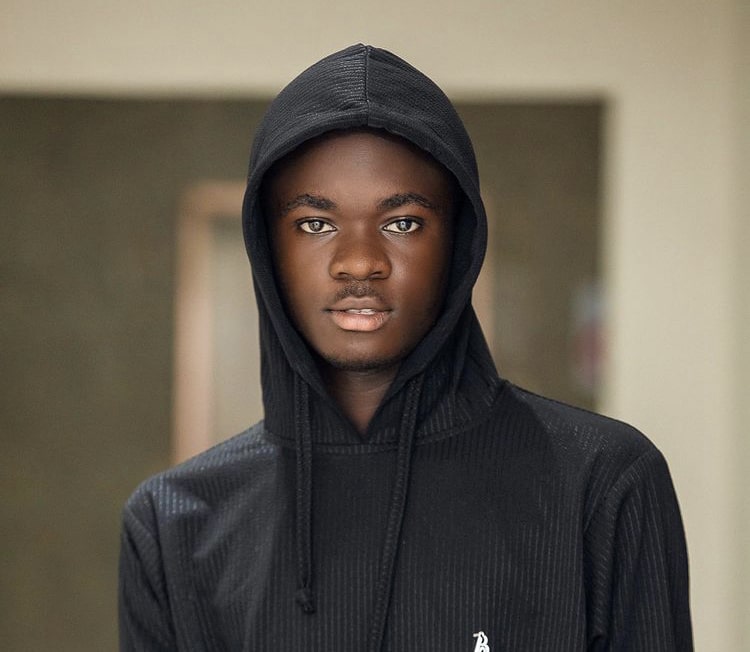
    The Ghana Medical Trust Fund Bill, 2025, also known as MahamaCares, which was laid before Parliament on Monday, July 21 and subsequently approved, was opposed by the Minority. The caucus warned that it could put a strain on the National Health Insurance Scheme (NHIS) budget and its operations.

    The Mahama Cares fund is expected to play a pivotal role in enhancing healthcare access for many Ghanaians, particularly those battling chronic diseases and unable to afford the necessary medical treatment. The Bill seeks to end favoritism in awarding scholarships, ensuring allocations are based on merit and need.

    The Social Protection Bill 2025 will provide a legal framework for social protection programmes that will enhance accessibility and equity in the delivery of social services to the impoverished communities.

    “This bill will give legal backing and strengthen regulations of many social intervention initiatives in the country,” the Minister for Gender, Children, and Social Protection, Agnes Naa Momo Lartey, said on the floor of Parliament on Thursday, July 31.

    The Bill was passed after it faced strong opposition from the Minority in Parliament on Wednesday, July 30, who claimed that the proceedings lacked the required quorum. However, it has paved the way to set up the Social Protection Fund aimed at providing financial resources to tackle emergencies and the mobilisation of funds for social protection delivery.

    The programmes include the Livelihood Empowerment Against Poverty (LEAP), the Ghana School Feeding Programme, Basic Education Capitation Grants, and the National Health Insurance Exemption, among others.

    Parliament, however, halted the consideration of the Ghana Scholarships Authority Bill, 2025, to allow for further consultations with stakeholders.

    Meanwhile, Parliament is set to introduce the Ghana Investment Promotion Authority (GIPA) Bill, which aims to amend the Ghana Investment Promotion Centre (GIPC) Act. Among the key changes is the proposed renaming of the institution from “Centre” to “Authority,” along with revisions to other core provisions.

    The Ghana Deposit Protection (Amendment) Bill is next on Parliament’s agenda. The Bill proposes to change or improve certain parts of the order that protects people’s savings in case a bank fails.

    The Exemptions (Amendment) Bill is a proposed law that intends to enhance how tax and duty exemptions are given in Ghana, ensuring that benefits are given to individuals who deserve them.

    The other Bills yet to be deliberated by Parliament include the Customs (Amendment) Bill, the Income Tax (Amendment) Bill, the Revenue Administration (Amendment) Regulations, the Public-Private Partnership Regulations, Fees and Charges (Miscellaneous Provisions) Amendment Regulations, the Exemptions Regulations, and the Conduct of Public Officers Bill.

    Also, the Criminal and Other Offences Procedure (Amendment) Bill, Economic and Organised Crime Office Bill, Ghana Industrial Property Office Bill, Intestate Succession Bill, Legal Education Reform Bill, Legal Profession Bill, Notaries Public (Amendment) Bill, Presidential Transition (Amendment) Bill, State Property and Contract (Amendment) Bill, and Tribunals Bill are set to receive Parliament’s attention.

  • Bono Regional House of Chiefs questions legitimacy of Sampa Chieftaincy registration

    Bono Regional House of Chiefs questions legitimacy of Sampa Chieftaincy registration

    The Bono Regional House of Chiefs has raised concerns over what it describes as an illegitimate process leading to the registration of Nana Samgba Gyafla III into the National Register of Chiefs, deepening tensions surrounding the Sampa chieftaincy dispute.
    In a statement issued after an emergency meeting on October 3, 2025, the House accused the National House of Chiefs of “unilaterally entering the name of Nana Samgba Gyafla III into its register” despite procedural irregularities and unresolved legal matters.
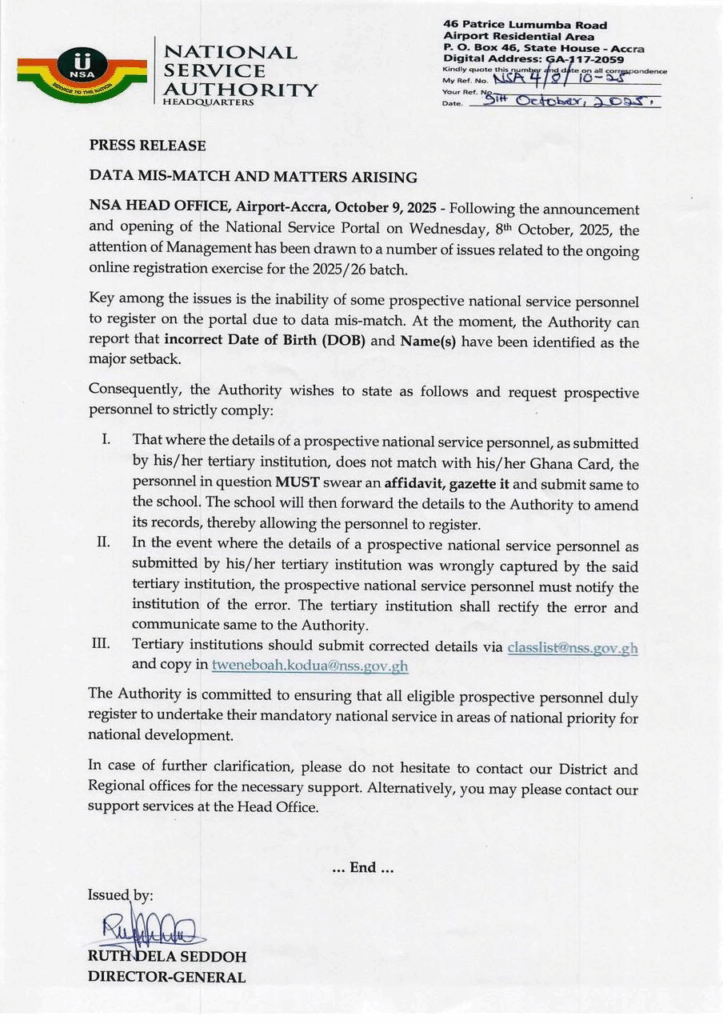
    According to the Bono Regional House of Chiefs, it had earlier rejected the chieftaincy declaration forms submitted for the said chief, citing non-compliance with required standards. However, following a High Court order in Kumasi, the House was compelled to receive, process, and forward the forms to the National House of Chiefs.

    The statement added that the House’s President and Registrar were later cited for contempt for their initial refusal to comply with the court directive.

    “What is more troubling is that, when the said order was eventually complied with, the President and the Registrar of the National House of Chiefs purportedly entered the name of Nana Samgba Gyafla III into the register unilaterally,” the statement noted.

    The Bono Regional House of Chiefs has expressed dismay over the development, suggesting that the decision to register the name without broader consultation has contributed to renewed tensions in Sampa.

    The House said it remains committed to ensuring that due process is followed in resolving the dispute and maintaining the integrity of the chieftaincy institution.

    In 2024, the Sofoase Yefere Royal Family of Wenchi, connected to the Busia family, submitted a judicial review request to the High Court in Sunyani.

    This application, filed on July 25, 2024, seeks a Mandamus order to compel the Judicial Committee of the Bono Regional House of Chiefs to assemble a panel to address a longstanding chieftaincy dispute.

    The original petition, lodged on July 24, 2019, challenges the selection of Mr. Abrefa Damoah as Wenchihene, arguing that it violates the constitution and the Chieftaincy Act, 2009 (Act 759).

    Initially, the Bono Regional House of Chiefs issued an injunction preventing Damoah from assuming the role of Wenchihene.

    However, this injunction was later overturned by the National House of Chiefs, which instructed the Bono Regional House of Chiefs to swiftly address the underlying case.

    Despite this directive, the Bono Regional House of Chiefs, under the leadership of Dormahene Nana Agyeman Badu II, has yet to form a panel to hear the matter.

    This delay has led the Sofoase Yefere Royal Family to pursue legal action. The High Court in Sunyani has scheduled the next hearing for October 4, 2024.

    The application was filed by Dr. Obeng Gyan Busia, the head of the Sofoase Yefere Royal Family, through his lawyer, Kwabena Asare Atuah of Asamoah-Cheremeh Chambers.

    In the same year, President of the Bono Regional House of Chiefs, Osagyefo Oseadeyo Agyemang Badu II, gave the government a one-month deadline to put an end to illegal mining, commonly known as galamsey, throughout the country.

    In a stern warning, Oseadeyo Agyemang Badu II indicated that if the government fails to take action within the specified time frame, the chiefs will be compelled to take matters into their own hands and reclaim their lands from the encroaching illegal mining activities.

    This ultimatum was delivered during a courtesy visit by John Dramani Mahama, the flagbearer of the National Democratic Congress (NDC), who was touring the region as part of his campaign.

    “We’re giving this incumbent government one month to use legal means to stop people involved in this Galamsey. The government should deploy police and soldiers into the forests to stop them.

    “If the government fails to do this, the land is ours, we will just reclaim it and we won’t allow any sort of mining to take place,” he said.

    The University Teachers Association of Ghana (UTAG) on the other hand has demanded an immediate prohibition on gold prospecting in rivers, forests, and other vulnerable areas.

    In a statement released on September 9, 2024, and endorsed by nine UTAG presidents, the association called for a complete ban on illegal mining activities, commonly known as galamsey.

    Similarly, the Ghana Bar Association (GBA) has issued a critical assessment of the illegal mining situation, asserting that the crisis is worsening.

    The GBA criticized the government’s lack of effective action and condemned the politicization of the issue, labeling it as irresponsible, shocking, and regrettable.

  • Ghanaian Raggae/Dancehall artistes have no competitors in Africa – Ras Kuuku

    Ghanaian Raggae/Dancehall artistes have no competitors in Africa – Ras Kuuku

    Ghanaian Reggae and Dancehall musician, Ras Kuuku, has expressed confidence in Ghanaian Raggae/Dancehall artistes, describing them as incomparable among artistes in Africa.

    According to him, the Raggae/Dancehall genre can be attributed to some powerful voices who have consistently produced songs with depth in lyrics, stage craft, and international appeal that is envied by other African countries.

    “If you study the scene well, you will realise that Ghanaian Reggae/Dancehall artistes are the real leaders on the continent. From our lyrics to our stage presence, from the messages in our music to how we are projecting on international platforms, no African country can challenge what we are doing right now,” Ras Kuuku said.

    He, however, asserted that Ghanaians fail to acknowledge the depth of impact made locally and internationally through Reggae/Dancehall songs.

    “The sad part is that it is our own people who fail to see it. Instead of celebrating what we have, they waste time comparing us to others or pushing beef culture, which does not help anybody,” he added.

    Ras Kuuku criticized the ongoing comparisons among Ghanaian musicians, saying they hinder unity and global progress.

    He urged fans, stakeholders, and the media to support local artists rather than fuel divisions, while reminding fellow musicians that Reggae and Dancehall are rooted in activism and social awareness.

    “Reggae/Dancehall was never just about dancing and hype. It is music that speaks to the realities of the people, especially those in the ghettos. It has always been about rebellion against oppression, standing up for justice, and giving a voice to the voiceless,” he said.

    On the other hand, Nigeria is often recognized as having the most thriving entertainment industry in Africa, positioning it as a significant rival to other nations, including Ghana.

    This perception sparked numerous debates among industry players and stakeholders, with some Ghanaian entertainers openly acknowledging Nigeria’s dominance.

    However, comedian OB Amponsah holds a contrasting view on the matter.

    Speaking on Joy Prime’s Changes show, he dismissed the idea that Nigeria is a competitor for Ghanaian comedians.

    According to him, the African continent is vast, with countless opportunities in different countries. He encouraged Ghanaian entertainers to broaden their horizons and explore markets beyond Nigeria.

    “The space is big and Africa is huge, and when you travel outside Ghana, you would realise that there’s a lot of common stuff that we all share as Africans. So, I feel like the space is broad and we should explore beyond the Nigerian mentality because even between us and Nigeria, there’s Togo.”

    He further told Roselyn Felli that the majority of Ghanaian comedians, including himself, have performed in other international countries in the same way as their Nigerian counterparts.

    According to him, attention has been shifted from Nigerians, although their entertainers are usually invited to perform on platforms together with Ghanaians.

    “I feel like our focus is too much on Nigeria. I’ve performed in Rwanda, Zambia, and South Africa. Oh Joo and Ebenezer Dwomoh went to Kenya to do shows; Jacinta has performed at Apollo. So, Nigerians are not like our competition,” he cleared.

    OB Amponsah emphasized that Ghanaian comedians have successfully ingrained stand-up comedy into the fabric of the local entertainment scene, giving them a competitive edge over their Nigerian counterparts when performing on Ghanaian stages.

    He further suggested that instead of seeing Nigerian entertainers as rivals, Ghanaian performers should focus on penetrating the Nigerian market to make a mark in their industry.

    The comedian also highlighted a growing trend among Ghanaian comedians to collaborate with international acts beyond Nigeria. This approach, he noted, is aimed at expanding their reach and establishing a stronger presence on the global stage.

    Also, George Britton, CEO of GB Records, discussed the potential benefits of Sarkodie partnering with a major label.

    During an interview on ClassFM’s Morning Show with Prince Benjamin, Britton reflected on Sarkodie’s accomplishments and considered whether his global recognition matched that of Burna Boy.

    Britton noted that Burna Boy’s name is widely recognized, even on the streets of London, and expressed a desire for Ghanaian artists to reach similar levels of fame. He emphasized that international collaborations are crucial for Ghanaian artists to break into global markets and media.

    With 15 years of experience in talent management, Britton highlighted the necessity for Ghanaian artists to negotiate deals with international labels. He warned that without these partnerships, the country could miss out on significant revenue and opportunities in music tourism.

    Sarkodie, on the other hand, has taken pride in his independent success. In his 2024 Hennessy Cypher, he criticized traditional record deals, comparing them to being “caged in a zoo.” This highlights his preference for maintaining artistic freedom and control over his career.