Ghana’s annual food import bill, which amounts to $3.5 billion, could rise further if the government fails to take decisive action against illegal mining.
This warning comes from a new study conducted by the Environmental Protection Agency (EPA) and Pure Earth, which has revealed extensive contamination of mercury, arsenic, lead, and other heavy metals across artisanal and small-scale gold mining areas.
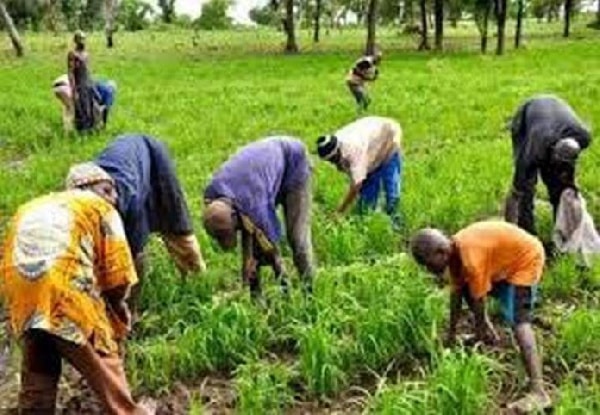
In response, the Executive Director of the Peasant Farmers Association of Ghana (PFAG), Bismark Nortey, cautioned that the cost of food imports may increase significantly if farmlands and water resources continue to be degraded.
“I urge all ministries and government agencies responsible to use this report as a benchmark to protect our farmers. If the situation continues and farmers are forced to abandon production, the impact on our nation will be catastrophic. The current amount we spend on food imports, which we have already complained about, could escalate even more if nothing is done, especially as Ghanaian consumers become increasingly cautious about the safety of locally produced food,” he told Citi Business News.
The year-long study, titled Mercury and Other Heavy Metals Impact Assessment, was conducted between August 2024 and September 2025 by Pure Earth in collaboration with the EPA. It examined soil, water, air, fish, and food crops across six regions: Ashanti, Eastern, Central, Western, Western North, and Savannah.
Earlier this year, when Ghana’s annual food import bill stood at about $2 billion, the PFAG called on the government to make strategic investments in the agricultural sector to reduce the country’s growing dependence on imports.
The association stressed that Ghana has the capacity to produce a significant portion of its imported food items locally if the right policies and support systems are implemented. Acting Executive Director of PFAG, Bismark Nortey, emphasized the urgent need for policy interventions to boost productivity and lower the cost of food production.
Speaking to Citi Business News, he noted that the high cost of agricultural inputs and services is a major contributor to food price inflation in the country.
“Currently, one of the major causes of the high cost of food is the fact that we are spending so much on production. We are spending so much on the cost of input and agricultural services. These are because these things are so high. If the government can find a mechanism to either subsidize or reduce the prices of these inputs, then we can produce at low cost, and that will translate into high productivity,” he said.
Mr. Nortey further highlighted the pressing need for greater access to mechanized farming to replace the outdated reliance on manual labor.
“If you go to a lot of farming districts, they have no access to mechanization, so we are still using the hoe and cutlass, which is not helping,” he stated.
He stressed that with targeted investments in smallholder farming, infrastructure, and all-year-round agricultural production, Ghana could significantly reduce its food imports and strengthen food security.
“If we are able to invest in agriculture, we are able to invest in smallholder farming and infrastructure, I am sure the kind of monies that we spend on importing the food we have the capacity to produce…we are one step away from reducing our dependence on that food import,” he added.
The PFAG maintained that prioritizing agriculture through policy reforms and financial support would not only reduce Ghana’s reliance on imported food but also create jobs, enhance food security, and strengthen the local economy.
In 2024, the Association issued a grave warning about a looming generational food and nutrition crisis if urgent action was not taken against illegal mining. It called on the government to impose a ban on these activities to safeguard the environment, protect farmers’ livelihoods, and ensure food security.
In a statement released on Tuesday, September 10, PFAG highlighted the severe impacts of illegal mining on Ghana’s agriculture. Over 1.2 million hectares of farmland have been lost to these activities, while vital water bodies and irrigation facilities have been polluted, making it difficult to sustain agricultural production.
The Association noted that the cocoa sector and food crop production have been particularly affected, with farmers struggling to access clean water and fertile soil. PFAG warned that if these challenges are not addressed, they could lead to a catastrophic generational food crisis.
“Failure to act now will have devastating consequences for future generations,” PFAG stressed, adding that they support an immediate ban on illegal mining. They also encouraged farmers to back national efforts to end these harmful practices.
Major rivers, including the Bonsa and Pra, have suffered severe pollution from toxic chemicals used in mining operations. Additionally, forest reserves such as Tano Nimiri have been irreversibly damaged. Health unions, alarmed by the widespread environmental destruction, have echoed PFAG’s call for a ban as a critical measure to prevent further harm.
Under the Minerals and Mining Act, 2006 (Act 703), the Inspections and Compliance Division of the Minerals Commission is responsible for conducting mine inspections and ensuring adherence to mining laws. The Act also requires that licensed miners operate strictly within legal parameters.
However, PFAG pointed out that regulatory institutions have struggled to enforce these laws effectively, with some mining companies continuing operations in violation of regulations. The EPA, mandated to integrate environmental policy and planning to ensure long-term sustainability, has not been able to adequately curb illegal mining.
In a related development, several unions, led by the Ghana Medical Association (GMA) and supported by groups such as the Ghana Registered Nurses and Midwives Association (GRNMA) and the Health Services Workers Union of Ghana (TUC), have called for a ban on small-scale mining. They cite serious environmental degradation and public health concerns tied to illegal mining as reasons for their demand.