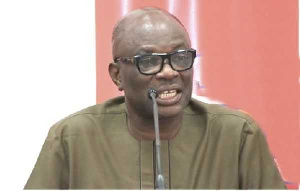
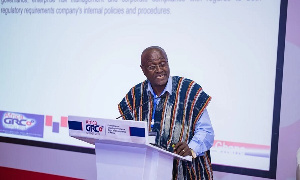
Ken Ofori-Atta, the Minister of Finance, has reaffirmed his optimism in the ongoing economic growth trajectory, emphasizing that the nation is on a consistent path to recovery.
During the signing ceremony of a €42 million financing agreement for green transition in agribusiness and public financial management between the European Union and the Government of Ghana, he highlighted that even the International Monetary Fund (IMF) can vouch for the nation’s progress.
He said as quoted by myjoyonline.com: “In Marrakesh, the IMF said we have done our part and this is a testament of what we are doing. We are recovering steadily. This agreement with the EU reflects our shared commitment to sustainable development and economic progress.”
“Together, we will pave the way for a double digital and green transition, boost the private sector, including the agribusiness sector, and strengthen financial management systems,” he explained.
The European Union Ambassador to Ghana, Irchad Razaaly, also said the agreement is an avenue for the expansion of the EU’s strategy.
“Together, these areas represent a comprehensive approach to sustainable development that will impact not only Ghana but also serve as a catalyst for the implementation of the EU’s Global Gateway strategy that seeks smart, clean and digital investments with its partner countries,” he stated.
On Monday, there were protests in Lagos and the Federal Capital Territory, Abuja, as young people protested the National Assembly members’ allocation of sport utility vehicles.
The youths who gathered in large numbers in the Lagos neighborhood of Ikeja held placards and chanted, among other things, “Fund hospitals, not SUVs,” “Pay living wage, not SUVs,” “Return the SUVs Now,” and “Fund education, not SUVs.”
As stated by the demonstrators, “Lawmakers buying SUVs with public funds is insensitive when the majority are suffering.”
One of the protesters, Juwon Sanyaolu said, “Workers are still battling for a living wage as the N33,000 minimum wage is not sustainable but we have people at NASS taking delivery of exotic vehicles with about N160bn. Students are dropping out of school because of costly fees. It’s insensitive. They must return the SUVs and fund education.”
He further said, “They’re the ones receiving hardship allowance. What hardship are they facing? What hard work are they doing?”
In Abuja, some youths also gathered at the Unity Fountain to protest.
“This is the right time for Nigerian people to stand up for their rights and say enough is enough.
“Fuel is now N650 per litre but senators are buying SUVs worth N160m while people are suffering,” a protester Emmanuel Larry said in Abuja.
On Sunday, reports emerged that members of the Green Chamber had commenced receiving their SUVs, while the legislators in the Red Chamber are expected to receive the first batch of their SUVs this week.
The remaining batch of SUVs for lawmakers is anticipated to arrive before December.
These actions come after the leadership of the National Assembly announced their decision to procure imported SUVs for each lawmaker and bulletproof vehicles for principal officers.
This move has sparked significant criticism among Nigerians, leading to the Socio-Economic Rights and Accountability Project filing an application in a Federal High Court in Lagos to halt the lawmakers from taking delivery of the SUVs until the organization’s applications for injunction are heard and resolved.
The future of Sol Cement, a Chinese-owned cement manufacturing company, remains uncertain as the Ghana Revenue Authority (GRA) closed down its operations due to outstanding taxes amounting to GH¢700 million.
Nearly a week after the closure, both the company’s premises and its officials are barred from accessing the facility by an order issued by the GRA.
A visit by GhanaWeb Business on October 30, 2023, to the Sol Cement site in the Tema Industrial Area revealed a lack of activity, with only security personnel remaining on duty.
An anonymous security personnel stated that they are hopeful that the situation will be resolved, as more than 300 Sol Cement workers were sent home following the GRA’s audit exercise.
The Chinese-owned firm was cited for VAT violations, corporate income tax evasion, and unpaid penalties, spanning over two years.
The GRA’s action is part of its tax compliance measures aimed at ensuring that both domestic and foreign companies adhere to Ghana’s tax laws.
Efforts to obtain further information from the GRA regarding the company’s future have proven unsuccessful at the time of this report.
Companies operating in various sectors in Ghana are advised to comply with tax laws to avoid a similar situation.
An Italian woman has undergone a staggering 20 body modifications to make her dream of “transforming” into a cat a reality, showcased in TikTok videos that have garnered millions of views.
Despite facing criticism and being branded “psychotic” and “troubled” by her detractors, this woman embracing a cat-like lifestyle asserts that she feels perfectly at ease with her choices.
“I’m thinking that I would be a pretty cool cat lady,” Chiara Dell’Abate, 22, — who goes by Aydin Mod online — told Media Drum World of her pussycat pilgrimage.
The 11-year-old Rome resident’s lifelong obsession with body modification started when she got her first ear piercing and stretching.
Chiara Dell’Abate, a 22-year-old known as Aydin Mod, has embarked on a transformative journey through body modifications to realize her dream of becoming a tabby.
Five years later, Aydin Mod has accumulated over 72 piercings, resembling a human Pinhead from “Hellraiser.”
Presently, her extensive body modifications include pierced nostrils, 0.8cm upper lip piercings, a 1.6 cm inner labia piercing, split tongue modifications, a blepharoplasty (eyelid cosmetic surgery), and ten subdermal implants on both hands.
In addition to her otherworldly appearance, she sports four horns, six genital beads, eyeball tattoos, and has had her nipples removed.
Dell’Abate expresses amazement at the body’s capacity for transformation through body modifications and now aspires to embody a human kitten.
“Now that I’m more into plastic surgeries besides mods, I’m thinking that I would be a pretty cool cat lady,” said Dell’Abate.Mediadrumworld/ Aydin Mod
The cat lover claimed that although she never intended to look like a cat, people’s comparisons to her served as the inspiration for her lifelong Halloween costume.
“I think becoming a cat lady is more appropriate for me as I don’t really want to look like a cartoon character,” explained Dell’Abate. “I have always loved cats, and I think I’ll look really bold and fierce as a cat lady with the right body mods.”
While the Italian already has very cat-like mods — notably her pointed ears, permanent eyeliner, forehead implants, and claw-like nails — she has a ways to go before her meow-tamorphosis is complete.
“To achieve the full cat-like look, I will need a cat eyes lift or canthoplasty — surgery to produce more elongated and naturally almond-shaped eyes — teeth reshaping, upper lip cut, more fillers,” Dell’Abate explained. “I’ll put a thing called transdermal, which is like a huge micro dermal to attach a tail and definitely more tattoos.”
Stated differently, a cat ate her tongue along with the rest of her body.
In addition to the planned boob job and additional tattoos, the serial body modifier also has these cat-inspired changes. She also intends to make a slit in her septum with a scalpel.
Although getting tattoos and getting surgery on a regular basis might seem painful, Dell’Abate claims that she is “more or less used to it.”
“Procedures of any kind hurt a lot, but the pain is temporary and not a big deal to me,” she explained.
Aydin shows off her eyeball tattoo.
The human sphinx’s unique look has made her a magnet for haters.
“God help us all,” commented one critic on a TikTok video of Dell’Abate poking her forked tongue through her lip piercings.
“I have so many questions … None of which I actually want answering,” quipped another.
A third wondered, “When did your life going wrong.”
“What happens inside someone’s head that makes them think that is a good idea??” wrote another critic. “I’m genuinely curious.. how is that not just straight-up embarrassing?”
Another criticized, “There is a huge difference between self-modification and mutilation. She has been turned into a monster.”
“It’s crazy to see how much the human body can change and what you can actually achieve from body modifications. It blows my mind every time,” Dell’Abate claimed.
However, the would-be cat woman claimed that not all the feedback has been negative.
“I receive a lot of kindness mostly,” she insisted. “People write to me about how much I inspire them to be free and have changed their views on appearances and beauty.”
Ultimately, Dell’Abate sees her mods as a form of “self-expression” that’s not rooted in others’ perceptions (which sounds a bit like the cosmetic equivalent of a worldwide privacy tour but we digress).
“Through them (body mods), I feel free to stay true to myself, regardless of what people think,” the womanscaper declared They make me feel good, and that’s what matters.”
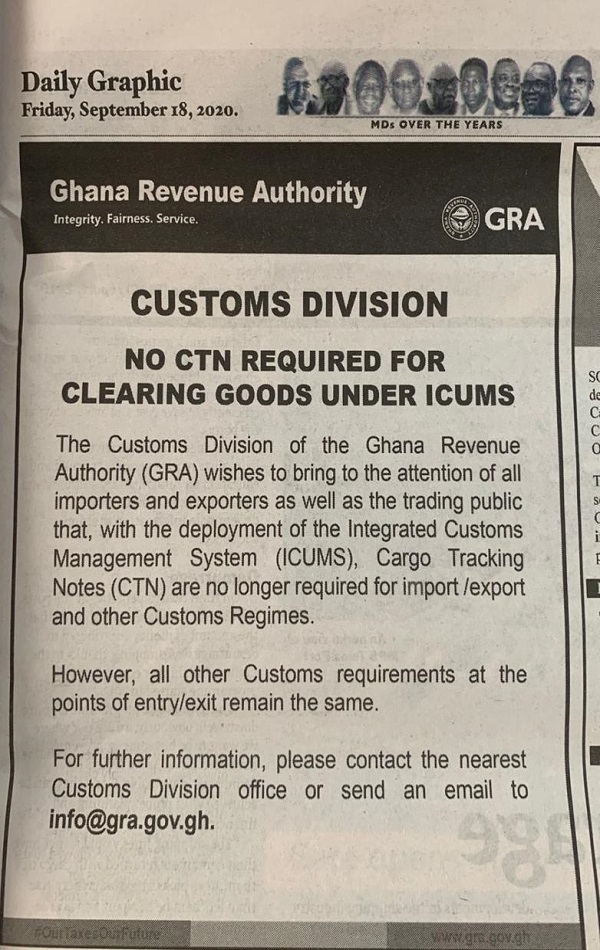
The Ghana Union of Traders Association (GUTA) has cautioned against the potential reintroduction of the Cargo Tracking Network (CTN) at the ports, set to take effect on November 1, 2023.
The CTN is a system designed to furnish the Ghana Customs Division and other relevant stakeholders with real-time shipment data, facilitating efficient oversight of cargo review processes and import traffic management into Ghana.
Dr. Joseph Obeng, the President of GUTA, responded to this development in an interview with GhanaWeb Business, expressing strong opposition from the business community, particularly at a time when many companies are still grappling with the lingering effects of the ongoing economic downturn.
“This CTN was first introduced in 2018 and as a result of severe agitation of the policy within the business community, it was taken off and is now being smuggled back at a time when most businesses are struggling under the effects of the economic hardship and other cost of doing business,” the GUTA president told GhanaWeb Business via phone on October 31, 2023
“We [GUTA] therefore entreat the business community to ignore this directive which takes effect from November 1, 2023, until the right and relevant stakeholder engagement has been held with the business community over the CTN’s reintroduction,” Dr Obeng added.
The GUTA president went on to say that the trading community had been led to believe that the current ICUMS would address the CTN’s bottlenecks, so the CTN would not be approved.
“We know ICUMS has been efficient since its implementation at the ports and so a reintroduction of the CTN would be counterproductive to the business community. The CTN impedes the ease, time and cost of doing business as we have always argued over in the past. Businesses are currently experiencing serious challenges we are not going to accept a reintroduction of this counterproductive CTN policy,” the GUTA president emphasised.
In the meantime, the trading community swiftly opposed the CTN when it was first implemented at the ports in 2018 because they thought it would make doing business more difficult, time-consuming, and expensive.
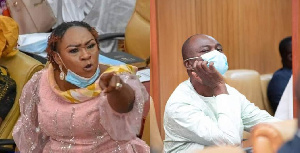
An audio recording has emerged, featuring the Member of Parliament for Awutu Senya East, Mavis Hawa Koomson, criticizing fellow Member of Parliament and New Patriotic Party (NPP) flagbearer hopeful, Kennedy Ohene Agyapong, on a WhatsApp platform.
In the viral voice note, Hawa Koomson is heard accusing Kennedy Agyapong of being a braggart, using the help he provides to people as a means to insult them. She claims that she has personally refused help from Agyapong in the past due to his reputation for being outspoken and likely to use such assistance against the recipient in the future.
Amongst the jaw-dropping revelations made by the fisheries Minister is the alleged GHC500 million to be claim by the Assin North MP.
“Kennedy as you see him has over GHC500 MILLION to collect from COCOBOD. Even Electricity Company of Ghana, he has been supplying them with meters and electric poles since President Kufour time, The party (NPP) has really helped him”
“So I am not part of those Kennedy Agyapong gives help. That is why when he came to Christ for All Mission to brag and I heard about it I called KT Hammond and Afenyo Markin that these are the lies Kennedy has come to Kasoa to peddle so I want to confront him. Thankfully to God, I met him at KT Hammond’s office where I confronted him and told him my mind because I know I don’t have my hand in his mouth,” she said.
Hawa Koomson also mentions an incident in 2012 when Agyapong claimed to be giving out cars, and she chose not to accept the offer because she did not want to be subject to potential insults from him in the future. She further asserts that she is not among those who receive help from Kennedy Agyapong.
The statement was made in response to an attack by a pro-Ken NPP member on the party’s WhatsApp platform in the Awutu Senya East Constituency.
Hawa Koomson, who openly supports Vice President Dr. Mahamudu Bawumia in the NPP flagbearer contest, accuses Kennedy Agyapong of not being a true member of the party. She questions his loyalty, citing his threats to abandon the party and move abroad if he is not elected as the flagbearer.
Furthermore, Hawa Koomson alleges that Agyapong has profited from NPP contracts and is now using his financial assistance to the party as a means to push for his election as the flagbearer. These accusations have likely stirred up controversy within the party and may impact the dynamics of the ongoing flagbearer contest.
The Institute for Energy Security (IES) has forecasted that the upcoming pricing window, commencing on November 1, 2023, is unlikely to witness any changes in fuel prices.
This absence of price adjustments is primarily attributed to a marginal reduction in the international market prices of refined petrol, diesel, and Liquefied Petroleum Gas (LPG).
Remarkably, this stability persists despite the recent depreciation of the cedi over the past few weeks.
According to the IES statement, the anticipated fuel prices per litre will remain steady, with petrol at ¢12.35, diesel at ¢15.90, and Liquefied Petroleum Gas (LPG) at ¢12.90 per kilogramme (Kg).
“Following a marginal drop in the price of Gasoline [petrol], Gasoil [diesel], and LPG by some 0.01%, 0.95%, and 1.71% respectively on the international market, a depreciation of the Ghana cedi against the U.S. dollar, fuel prices are likely to remain relatively unchanged on the domestic fuel market.
“Although the Ghana Cedi depreciated by 1.32% to the U.S. Dollar, the Institute for Energy Security (IES) is projecting that ex-pump prices of key market products will be maintained in the first two weeks of November 2023, largely due to the falls in international prices of the commodities,” the IES noted.
In a heartfelt and candid revelation, renowned TikToker, Asantewaa, has bravely confronted her personal struggles with infertility.
According to her, she is puzzled by how other women on social media attack her for not having a child without considering her mental health.
In a viral video, she emphasized that people should understand that she, like other women, isn’t divine and can’t miraculously have a child at will.
Instead, she believes she’ll have a child when it’s in God’s plan and time.
“It is sad for people to attack some women and I happen to be one of them. It breaks my heart so much especially when I see fellow women who are able to pick a camera, sit behind it and attack other women without considering the mental health of the person. I mean we are also human beings. So if you….[sobbing and shedding tears]…If you think you can just pick your phone and say anything at all and go scot free…. I mean…we are not God. I am not God to produce a child on my own. So at God’s own time I will be able to give birth or in whatever time God has decide for me to have children,” she sorrowfully expressed.
It is worthy of note that the title of the video said she is barren, but she was not heard in the video mentioning this precisely.
While she recently refuted allegations of divorce stemming from her inability to conceive after marriage, Asantewaa clarified that her marital journey has not been flawless.
She acknowledged experiencing challenges and fluctuations with her husband. Nevertheless, she assured that her marriage is solid, contrary to the rumors circulating on social media.
The well-known TikToker asserted that some are astonished by her capability to sustain her marriage, considering that many public figures struggle in this regard.
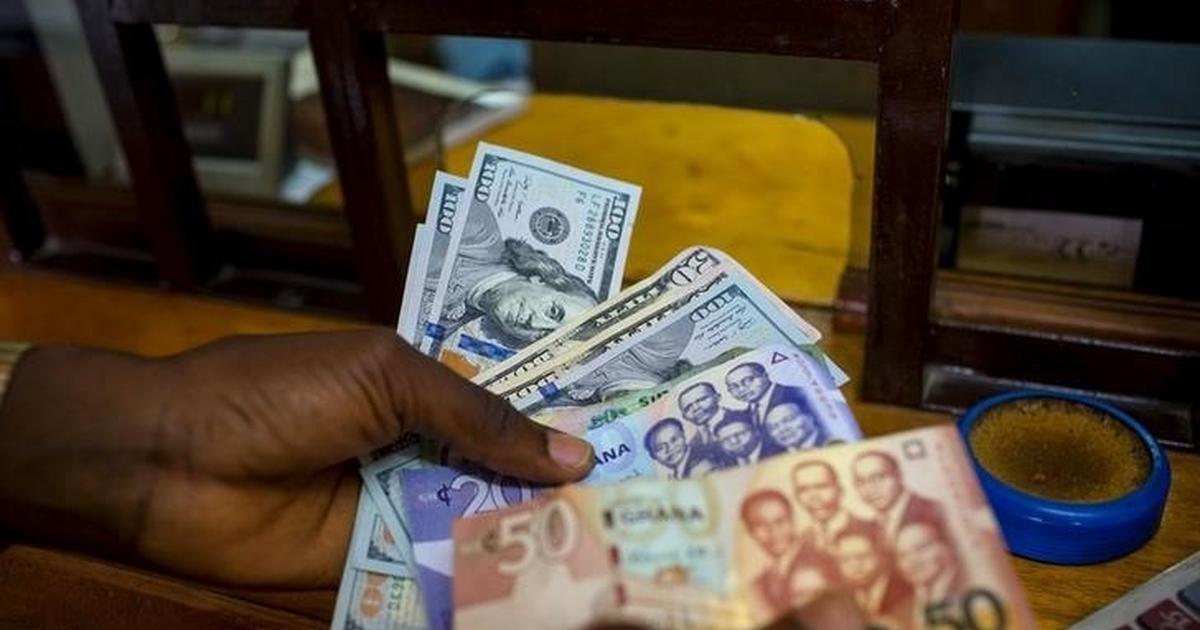
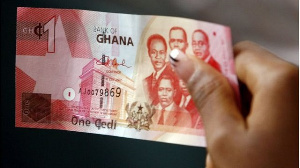
On October 31, 2023, the Bank of Ghana’s Interbank forex rates indicate the following currency exchange values:
Ghana Cedi is trading against the US Dollar at a buying price of 11.4656 and a selling price of 11.4770. At a Forex bureau in Accra, the US Dollar is being bought at a rate of 11.90 and sold at 12.20.
Against the Pound Sterling, the Cedi is trading at a buying price of 13.9364 and a selling price of 13.9515. At a Forex Bureau in Accra, the Pound Sterling is being bought at a rate of 14.25 and sold at a rate of 14.75.
The Euro is trading at a buying price of 12.1768 and a selling price of 12.1879. At a Forex Bureau in Accra, the Euro is being bought at a rate of 12.40 and sold at a rate of 12.80.
The South African Rand is trading at a buying price of 0.6103 and a selling price of 0.6110. At a Forex bureau in Accra, the South African Rand is being bought at a rate of 0.35 and sold at a rate of 0.95.
The Nigerian Naira is trading at a buying price of 69.1578 and a selling price of 70.2911. At a Forex bureau in Accra, the Nigerian Naira is being bought at a rate of 8.00 Naira for every 1 Cedi and sold at a rate of 14.00.
For the CFA, it is trading at a buying price of 53.8203 and a selling price of 53.8694. At a Forex bureau in Accra, the CFA is being bought at a rate of 17.00 CFA for every 1 Cedi and sold at a rate of 19.50 CFA for every 1 Cedi.
Note that these rates may be different at a forex bureau near you. Our forex bureau rates are provided by Afriswap Bureau De Change in Osu, Accra.
Our forex bureau rates are provided by Afriswap Bureau De Change in Osu, Accra.
The interest rates on treasury bills have risen for the 35th consecutive time this year, with the 365-day bill now standing at 33.4%.
The Bank of Ghana’s latest auction results indicate that interest rates for the 91-day bill and the 182-day bill have also increased, reaching 29.81% and 31.67%, respectively.
Despite these elevated rates, the government has consistently experienced oversubscriptions in its recent auctions. While concerns exist about the government’s ability to manage maturing debts, the International Monetary Fund (IMF) has noted that the current rates are within an acceptable range and still lower than the inflation rate.
In the most recent auction held on October 27, 2023, the government successfully raised GH¢2.58 billion. The results revealed a slight oversubscription of GH¢347.57 million, surpassing the target of GH¢2.238 billion.
According to the Bank of Ghana’s results, none of the bids submitted in this week’s auction were accepted.
The 91-day bill received total subscriptions of GH¢1.72 billion, the 182-day bill accepted GH¢537.90 million, and the 364-day bill accepted GH¢248.91 million.
The government’s next auction target has been set at GH¢2.152 billion.
In response to a decrease in gold production, Burkina Faso has amended its mining code to allow for higher royalty rates during prosperous periods.
The minimum royalty rate for gold spot prices exceeding $1,500 per ounce has been raised from 5% to 6%, as stated in a decree issued by the military government and reported by Bloomberg. This rate will further escalate to 6.5% for spot prices between $1,700 and $2,000, and to 7% for prices exceeding $2,000.
In 2022, gold output in Burkina Faso, one of Africa’s major gold producers, experienced a 13% decline, totaling 58.2 tons, according to government data.
This decline was attributed to deteriorating security conditions and the closure of at least five mines, which followed two coups during the same year.
While stability clauses regulate the state’s stake in mining operations, there are no such provisions for royalties, which apply to both existing and new contracts.
Endeavour Mining, Burkina Faso’s largest gold producer, declined to comment on the matter. Mining companies operating in the country, including Iamgold Corp. and Nord Gold, face ongoing security challenges as the ruling junta grapples with a growing Islamist insurgency.
Colonel Ibrahim Traore assumed leadership of Burkina Faso in September 2022 after ousting fellow soldier Colonel Paul-Henri Sandaogo Damiba, who had seized power in January of the same year.
Traore has pledged to regain control of territories lost to militants, but attacks by armed groups persist.
In response to the coups, international partners like the US and France have suspended aid and budgetary support.
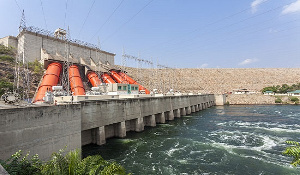
Zoomlion Ghana Limited, a private waste management company, has refuted reports that it has been hired by the Volta River Authority to fumigate Lower Volta areas that have been devastated by floods caused by overflowing water from the Akosombo and Kpong dams.
“We want to emphasise that Zoomlion has not been contracted by VRA to undertake any fumigation activities in the said affected areas”, the company said, adding that the “allegations are baseless and lack any factual basis”.
“Management categorically refutes these misleading, false and unfounded assertions”, the company insisted.
The business announced that on Monday, October 23, 2023, a number of relief goods valued at more than 500,000 cedis were given to the spillage victims by its executives and management.
Additionally, it noted that “a sister company, Ecozoil, also donated almost 500 life jackets to the media and rescue team supporting the situation on the ground”.
“At the same presentation event, the company, in addition to the items presented, announced its intention to also fumigate the areas once the water had receded”, the company explained.
Zoomlioj said it remains “unwavering in our commitment to upholding our corporate social responsibility and providing steadfast support to the communities in the Volta Region and in other ways to our mother Ghana, despite the unwarranted distractions caused by such baseless accusations”.
“We want to reassure all stakeholders that our dedication to serving and uplifting communities remains resolute, and we will continue to prioritise the well-being and support of those in need, irrespective of such false allegations”, Zoomlion added.
The Coalition of Stakeholders on Electricity Contracts and Arrangements (COSECA), an energy think tank, emphasizes that the optimization of hydroelectric power generation in the nation must primarily serve the interests of the Ghanaian population, rather than being solely geared towards the export market.
Additionally, COSECA has urged the government to enhance the hydroelectric power generation mix to help lower electricity costs for the people of Ghana.
To address this issue, the group has appealed to the government, specifically through the Public Utilities Regulatory Commission (PURC), to rectify this disparity by implementing an automatic adjustment mechanism.
In a press release reported by GhanaWeb Business, COSECA stated that,
“The rains that have caused floods to ordinary Ghanaians ironically have not improved the generation mix with an increased hydro component that potentially can reduce the tariff to the benefit of Ghanaians. COSECA strongly believes that the generation mix has to be rationalized to ensure that the benefit of increased hydro generation is passed on to Ghanaians and not the export market.”
“This situation needs to be rectified using the automatic adjustment mechanism to redistribute over and under-recoveries to the benefit of Ghanaians,” the release read in part.
It also “observed that only ECG contributes to the provision of reserve margin (18% target as per Energy Commission) required for maintaining reliability of the transmission grid. The cost associated with this reserve margin capacity requirements is substantially borne by customers of ECG, with no payment made by the other bulk customers supplied by VRA and other load-serving entities in the deregulated market as their load share allocation.”
During their Sunday service, a branch of the Church of Pentecost in South Africa experienced an unsettling incident when it was attacked by armed individuals.
In a video that has rapidly gained attention, the church’s leader was captured delivering a sermon in the local Twi dialect. Suddenly, he fell silent and, despite attempting to regain his voice moments later, found himself unable to speak, eventually dropping to his knees.
Shortly thereafter, the video showed armed robbers entering the scene, brandishing firearms and instructing all church members to lie on the floor.
One of the armed individuals, as depicted in the video, quickly confiscated the pastor’s phone from the pulpit.
Following a successful robbery of all churchgoers, the armed men departed from the church premises, leaving the traumatized members behind.
Spouse of renowned highlife musician Nana Quame, Dorcas, has decided to share the painful experiences she endured during their failed marriage.
In a candid and emotional revelation, Dorcas recounted how Nana Quame abandoned her in the United Kingdom to be with his mistress.
This heart-wrenching ordeal pushed her to the brink, as she even contemplated suicide during a live Facebook session.
Dorcas disclosed that she has been diagnosed with cancer and has battled depression, which she attributes to her tumultuous marriage with the highlife artist.
She further revealed that Nana Quame, known for his hit song “Asew Konofo,” was unfaithful throughout their union and is currently residing with his mistress in the United States of America.
In a poignant twist, Dorcas mentioned that Nana Quame’s mother had cautioned her about his ungrateful nature prior to their marriage. Regrettably, she had disregarded this advice, blinded by love.
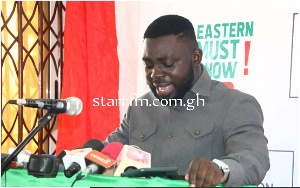
In their inaugural series of press conferences named “Eastern Must Know,” the Eastern Regional Communications Bureau of the National Democratic Congress (NDC) tackled a pressing issue – the widespread theft of railway tracks that has been plaguing the region.
During the press conference held on Monday, October 30, 2023, the NDC shed light on the troubling situation of illegal removal and sale of rail tracks and steel sleepers from disused railway lines throughout the region.
The NDC has alleged the active involvement of certain members of the New Patriotic Party (NPP) in the unlawful dismantling and trading of these rail tracks, impacting numerous constituencies in the area, including Nsawam, Achiase, Upper West Akyem, New Juaben (North and South), Fanteakwa South, Asene Manso Akroso, and others.
Kojo Dankwah, the Regional Communications Officer of the NDC, asserted that in Nsawam, NPP leaders had collaborated with Chinese individuals to harvest the rail lines, employing young men as participants in this illicit enterprise.
Similar activities were reportedly observed in Akroso and other regions, with NPP members allegedly implicated.
“Once again, our investigations in Akroso township, Osenho, Edison, Appiadiam, Bekiase, Kumikrom, and the surrounding areas have unveiled a distressing reality. We have discovered that a criminal enterprise is actively operational in the areas mentioned above, and even more troubling, is the involvement of certain individuals associated with the NPP (New Patriotic Party). The names that have surfaced include Ahmed Tijani, who serves as the NPP Nasara Coordinator and a sitting Assembly member for Akroso Amanfrom.
In addition, Kojo Attah, a fervent advocate of the NPP and a former assemblyman for Akroso Kyenso, is implicated. Furthermore, we have identified an individual known as Apolo, purportedly the brother of the current District Chief Executive (DCE) for Asene Manso Akroso, Honorable Alex Nkoom” the NDC alleged.
The situation was exacerbated by accusations of police involvement in shielding the suspected wrongdoers.
The NDC claimed that, in certain instances, law enforcement officers provided continuous protection to these individuals, hindering the pursuit of justice.
Moreover, allegations of political interference in the investigative process were brought to attention, casting doubts on fairness and the pursuit of justice.
The NDC underscored the significant threat these incidents pose to Ghana’s development, particularly considering the substantial costs associated with constructing railway lines.
They called for the immediate apprehension and prosecution of those responsible, the development of a comprehensive action plan by the police to address this issue, and an independent investigation into the alleged involvement of Vice President Dr. Mahamudu Bawumia.
In conclusion, the NDC appealed for collaborative efforts to tackle these pressing concerns and ensure the protection of Ghana’s future. They stressed the importance of holding the government accountable and seeking resolutions to combat lawlessness and corruption.
The party therefore made the following:
“We demand the immediate and unwavering apprehension of Baffour Awuah the NPP Constituency Organiser of Achiase and his associates, and we insist on the unrelenting pursuit of their prosecution. We fiercely and resolutely insist on a detailed and unambiguous action plan from the police for the swift annihilation of this menace. We passionately and unwaveringly call for a fully independent and exhaustive investigation to probe the alleged involvement of the Vice President.
And sternly impose a strict 48-hour ultimatum on the police to apprehend all culprits; their failure will compel us to mobilize all available forces for uncompromising citizen arrests, without hesitation”.
The press conference stressed the need for swift action and vigilant oversight to protect the nation’s railway infrastructure and advance its development.
On November 1, 2023, the Abossey Okai Spare Parts Dealers Association has declared their intention to hold a sit-down strike.
The primary objective of this strike is to underline their demand for the Ghana Revenue Authority (GRA) to revoke the implementation of the Electronic Value Added Tax (E-VAT) compliance.
The GRA’s enforcement team has been conducting visits to the shops and warehouses of association members in the Greater Accra and Ashanti Regions. These visits were prompted by the association’s non-compliance with the electronic tax collection system.
It is important to note that the Association’s stance is not against the introduction of E-VAT but rather the daily presence of GRA officials in their members’ workplaces.
“We support the government’s drive to mobilize more revenue but the way and manner the GRA is going about it is embarrassing”, Mr Takyi Addo, Head of Communication for the Association, said.
They argue that the frequent visits create the perception that their members are engaging in tax evasion.
Mr. Takyi Addo emphasized that the purpose of the sit-down strike is to address these concerns regarding the manual enforcement approach and to hold the Ghana Revenue Authority responsible for its actions.
Mr. Addo provided this clarification during an interview with classfmonline.com over the weekend.
The association has called on the public to take note that there will be no business conducted in Abossey Okai, a prominent center for the trade of second-hand car spare parts, from November 1 to 3, 2023, as the strike is in progress.
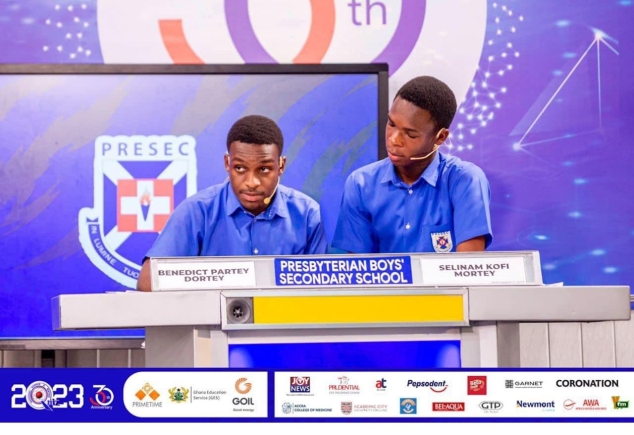
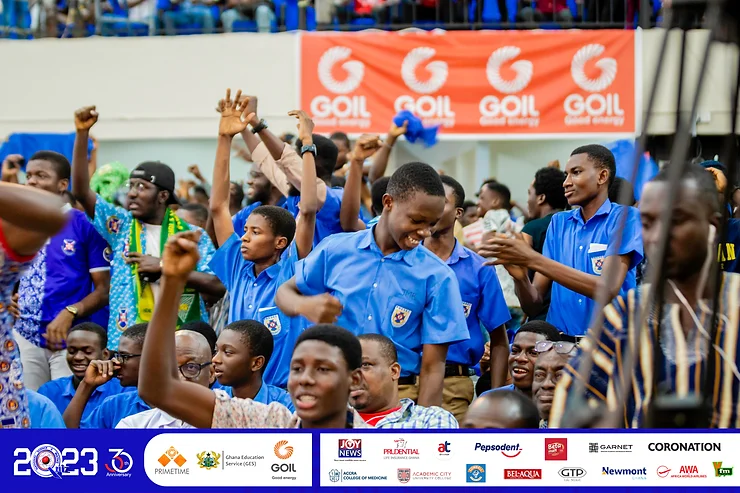
On Monday, October 31, 2022, Presbyterian Boys’ Secondary School, commonly known as Legon PRESEC, clinched the title at the 2023 National Science and Maths Quiz (NSMQ).
In a closely contested match, they triumphed over Achimota and Opoku Ware schools. When the competition concluded, Legon PRESEC had accumulated 40 points, while Achimota secured 28 points, and Opoku Ware had 23 points.
This victory adds to Legon PRESEC’s impressive record, making it their eighth NSMQ championship. They have already claimed victory seven times in the past.
The 2023 NSMQ marked the 30th anniversary of this prestigious academic event. It commenced on October 6, 2023, and culminated on October 31, 2023.
In celebration of the 30th Anniversary, this year’s NSMQ took place in two distinct regions: KNUST in Kumasi and the National Theatre in Accra. This historic development marked the first occasion when the National Championship extended across two regions.
KNUST served as the venue for the initial four stages of the competition, with the Grand Finale held at the National Theatre on October 31, 2023.
The winning school, Legon PRESEC, was awarded the title of the 30th Anniversary champions of the 2023 National Science and Maths Quiz.
The highly anticipated 2023 National Science and Maths Quiz (NSMQ) grand finale was expected to be an epic showdown.
Presbyterian Boys Senior High School (PRESEC), Opoku Ware School (OWASS), and Achimota School clashed today, vying for the prestigious championship.
The first four rounds of the competition were intense, with all schools demonstrating their prowess.
However, the final round separated the champions from the contenders, and PRESEC emerged as the last school standing.
With an impressive score of 40 points, they established themselves as the dominant force, successfully defending the title they had secured in the 2022 edition.
Achimota School came close with just under 30 points, but they couldn’t salvage the situation.
Now, PRESEC can proudly claim their eighth NSMQ victory, the most in 30 years.
The public prosecutor in Senegal has initiated a formal investigation into the exhumation and burning of a corpse believed to be that of a gay man in the holy city of Touba.
The deceased, a young man who passed away on Friday, was transported to Senegal’s second-largest city for burial in accordance with Islamic traditions and his family’s wishes. However, unidentified individuals arrived at the cemetery, located the man’s grave, and proceeded to remove his body. Shockingly, they set it ablaze in front of a large and cheering crowd.
Local sources have suggested that the young man was targeted due to allegations of his sexual orientation.
Despite attempts to maintain secrecy, the mother of the deceased had buried her son discreetly. Nevertheless, word spread about the accusations against the deceased, leading to the shocking incident.
The local religious authorities in Touba declined to comment when contacted by the BBC.
The public prosecutor, Abasse Yaya Wane, has strongly condemned the incident, describing it as an act of “extreme seriousness, amounting to barbarism.” Wane has affirmed that the ongoing investigation aims to identify the individuals responsible and ensure they face legal consequences.
This incident has triggered significant outrage among the population in Touba and the wider Kaolack region in western Senegal. Many residents have expressed their belief that such acts belong to another era and have called upon the authorities to bring those accountable to justice.
It’s worth noting that Senegal has a predominantly Muslim population, and the country criminalizes homosexuality, subjecting offenders to penalties ranging from one to five years of imprisonment.
This tragic occurrence is reminiscent of a similar incident in Guinguinéo, central Senegal, where the grave of an alleged homosexual individual was desecrated in 2008.
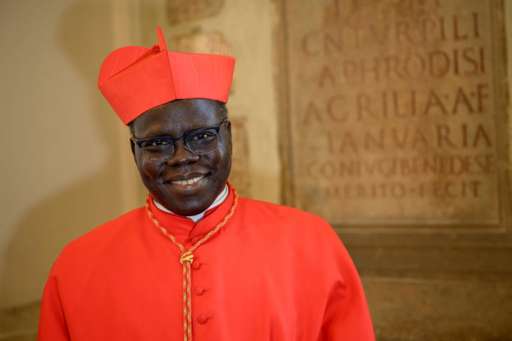
Cardinal Stephen Ameyu Martin Mulla, Archbishop of Juba in South Sudan, has disclosed that Pope Francis has issued a directive to bishops, emphasizing the importance of promoting women’s leadership in various capacities within their dioceses.
Cardinal Mulla, who was recently elevated to the rank of Cardinal by Pope Francis, returned to South Sudan from the Vatican.
This elevation to the rank of Cardinal was part of a larger move by Pope Francis in September, where he promoted three African archbishops to the status of Cardinal.
The other two clerics were Cardinal Protase Rugambwa from Tanzania and Cardinal Stephen Brislin from South Africa. This decision was part of the appointment of 21 new cardinals.
Addressing an enthusiastic gathering at St. Theresa’s Cathedral in the capital, Juba, Cardinal Ameyu mentioned that his return was slightly delayed due to Pope Francis’ request for his participation in a synod dedicated to discussing the Church’s role in evangelization.
Pope Francis’ call for prioritizing women’s leadership highlights the evolving and inclusive approach being adopted within the Catholic Church. This emphasis on gender equality in leadership roles underscores the importance of fostering diversity and equal representation in the Church’s activities.
“In the synod, the Pope says ‘let’s put women first’. If we put women first, this church will stand strong. God willing in our archdiocese we will respect the work done by women in all the committees in our Church.
“Today our life [in South Sudan] has been broken by the war, it has been broken by quarrels in our families, it has been broken by mothers leaving the house, it has been broken by irresponsible fathers who leave the house – all of us have a broken life,” Cardinal Ameyu said.
In a significant legal decision, the Supreme Court of Ghana has upheld the ownership rights of the Nungua Stool over the disputed Adjiringanor/Borteyman Lands, concluding a prolonged legal dispute initiated by Empire Builders Ltd, which had laid claim to a substantial portion of the land.
This dispute traces its origins back to 1999 when Empire Builders filed a lawsuit against Top Kings Enterprise Ltd, seeking a declaration of title to a 456.25-acre parcel of land in Adjiringanor-North, Accra. Empire Builders also sought general damages for trespass, a perpetual injunction against interference with their land, and the annulment of Top Kings’ land certificate.
The legal battle persisted with Empire Builders appealing to both the Court of Appeal and, ultimately, the Supreme Court. However, in the final judgment, the Supreme Court found no substantial basis for an appellate intervention with the trial High Court’s findings and upheld the ownership rights of the Nungua Stool.
The Supreme Court emphasized that Empire Builders failed to substantiate their title to the land, and there was compelling evidence supporting the Nungua Stool’s claim as the rightful owner.
The court also noted that the Nungua Stool had been granting leases to its subjects, and the Government of the Gold Coast had acquired land from the Nungua Stool in the 1940s.
Subsequently, Empire Builders pursued a separate lawsuit at the Adenta High Court, which was also dismissed. In response to this, the Paramount Chief of Nungua Traditional Area issued a stern warning to encroachers, urging them to cease their actions immediately.
The Paramount Chief emphasized that individuals or groups encroaching on the Borteyman Lands should anticipate legal repercussions. However, those who had legitimately acquired leases from the Nungua Stool were encouraged to approach the palace with their documents for verification.
The Nungua Stool further announced plans for a comprehensive exercise, potentially involving the removal of illegal structures on the disputed land. Homeowners were assured of their safety and promised “fatherly care.”
This protracted legal battle, spanning over two decades, has conclusively established the Nungua Stool as the rightful owner of the Adjiringanor/Borteyman Lands. Encroachers and those who may have been misled by previous claims have received a clear and urgent warning to rectify their positions.
“On this note, as the Paramount Chief of Nungua Traditional Area and the occupant of the Nungua Stool, I’m sounding a warning to the unscrupulous encroachers, being individuals or group of individuals on the Borteyman Lands to desist from their actions immediately before they face the full rigors’ of the law. Those who think they have legitimately acquired the lease from the Nungua Stool should report to the palace with their document in no time for authentication.
“We are assuring all and sundry that by the end of this year there is going to be a massive exercise, you can call it demolishing if you wish, so the earlier you report to the palace, the better for you,” the Nungua traditional council stated.
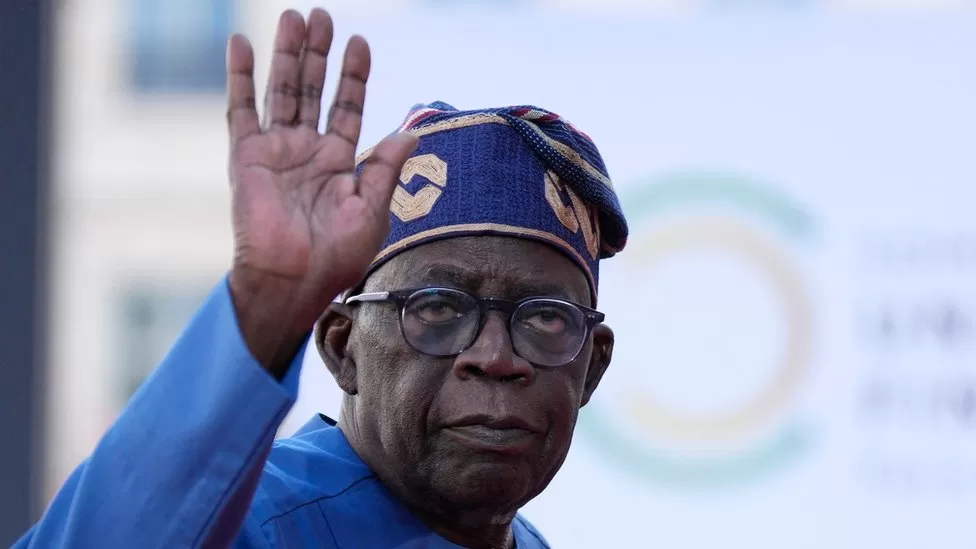
In a significant legal development, a Nigerian court ruling on Thursday upheld President Bola Ahmed Tinubu’s election victory, bringing an end to a highly contested and protracted election trial that had the potential to push Africa’s largest democracy to the brink of a constitutional crisis.
Tinubu had been declared the winner of the February election by the country’s Independent National Electoral Commission (INEC), despite concerns raised by international observers about irregularities in the electoral process.
Opposition candidates, led by Atiku Abubakar of the People’s Democratic Party (PDP), who finished as the runner-up in the election, contested the results on the grounds of electoral malpractice and ineligibility. Their case had been dismissed by the Presidential Elections Petitions Tribunal (PEPT) in September, prompting Abubakar’s legal team to swiftly file an appeal at Nigeria’s highest court, the final recourse for electoral disputes.
In the Thursday ruling, the judges of the Supreme Court rejected this appeal and upheld the lower court’s decision. Chief Justice John Okoro, presiding over the case, cited the inability to accept new evidence that Abubakar’s legal team had recently acquired through the deposition of a Chicago State University official in a U.S. court.
The evidence, according to analysts, raised questions about Tinubu’s educational qualifications, and Abubakar’s legal team aimed to use it as proof that the president had presented a forged certificate to INEC, which would constitute a crime under Nigerian law if proven.
However, experts noted that this move came too late in the legal proceedings, making it an ineffective strategy.
“You can’t bring fresh evidence in a case that has already been decided at first instance,” Martin Obono, a lawyer and political commentator told Al Jazeera, referring to the initial decision of the lower election tribunal. The opposition, Obono added, was also unable to strongly prove that Tinubu had lost the elections.
“You have to prove that you won and either your votes did not count, or there was overvoting somewhere,” Obono said. “That is the only way that elections have been upturned in Nigeria, not through these technical issues.”
The decision made on Thursday was expected. In Nigeria’s six-decade history, the Supreme Court has never reversed the outcome of a presidential election. But thousands of Nigerians were following the President Tinubu missing credentials case with great interest, drawn in by the drama it created, and it seemed almost like a first.
Mystery certificate
President Tinubu’s Controversial Political Career and the Aftermath of the Supreme Court Ruling
President Tinubu’s political journey has long been shadowed by controversy, particularly regarding inconsistencies in his credentials. These discrepancies first surfaced after he assumed the role of governor in Lagos in 1999. In a 2002 Supreme Court hearing, his legal team attributed these inconsistencies to a clerical error and invoked his immunity as governor, shielding him from prosecution.
Following the conclusion of his governorship in 2007, the noise surrounding these allegations subsided as his political influence continued to grow. However, these claims resurfaced last year when he declared his intention to run for the presidency.
Accusations have ranged from adopting another person’s identity to numerous allegations of corruption during and after his two-term governorship. Questions about the true source of his wealth, with some linking it to narcotics, have also been raised.
His opponents had previously argued that Tinubu was ineligible to run in the February election due to allegations of drug trafficking while residing in Chicago. While U.S. government statements confirmed that Tinubu forfeited $460,000 in 1993 in connection with a drug trafficking syndicate, he was not formally indicted or convicted.
Although a university degree is not a requirement to run for president in Nigeria (the minimum educational qualification being a school leaving certificate or its equivalent), President Tinubu did not submit one.
The Supreme Court’s ruling is final under Nigerian law and cannot be overturned. President Tinubu celebrated the decision as a victory, stating that it strengthens his resolve to do more. Nevertheless, opposition parties expressed their dissatisfaction, with supporters of Peter Obi, the Labour Party (LP) candidate who came third in the February election, accusing the top court of not giving due consideration before announcing its decision.
The PDP, led by Abubakar, expressed disappointment and grave concern with the Supreme Court’s reasoning. While there was initial speculation about possible further actions, the understanding is that the Supreme Court’s judgment is binding and cannot be appealed.
Both Abubakar and Obi are likely to challenge President Tinubu in the next elections scheduled for 2027.
With the election dispute resolved, President Tinubu now faces the pressing challenge of a deteriorating economic outlook. Since assuming office in May, the Nigerian naira has reached historic lows, despite economic reforms announced on his first day as president. Removal of fuel subsidies led to soaring fuel prices, even though Nigeria is a significant oil producer. Food prices have also surged, reaching levels not seen since 2007, according to the World Bank.
South Africa has proposed the deployment of what it terms a “rapid protection force” by the United Nations to intervene in the Israel-Gaza conflict with the objective of safeguarding the civilian population from further bombardment.
In a strongly-worded statement, South Africa’s international relations ministry has drawn attention to the tragic loss of children’s lives in the ongoing conflict and has accused Israel of violating international law.
Israel, on the other hand, has justified its actions, including the bombardment and ground invasion of Gaza, by citing self-defense as a response to the killing of 1,400 people by Hamas on October 7th.
Additionally, 230 people were reported as kidnapped hostages during the conflict.
The Hamas-run health ministry in Gaza has reported that more than 8,000 people have lost their lives since the commencement of Israel’s retaliatory bombing campaign.
A renowned Ghanaian celebrity hairstylist, has provided insights into his thriving career. With a focus on making his profession more appealing and respected, the celebrity barber discussed the financial rewards and exposure he has gained.
Nate operates upscale barber shops in prime locations across Accra, with branches in East Legon, Osu, and a new establishment in Washington DC, United States.
During an interview with Berla Mundi, Nate shared a pivotal moment in his career, highlighting his experience working with Nigerian singer Wizkid, for whom he serves as the official Ghanaian barber. He mentioned that he charges no less than $1,000 for each haircut he gives to Wizkid.
“Wizkid doesn’t pay anything less than a $1,000. It’s the grace. For someone like him, I don’t take money, he just blesses me,” he told Berla Mundi.
According to Nate, “Small god,” his friend, made it possible for them to meet for the first time, and the rest is history.
“So, I met him through a friend of mine called small god. One day I was in the salon and I saw Wizkid walking through my door and I asked if I am dreaming. This is someone I admire so much and having him in my salon was just a blessing. Most of these celebrities’ request for home services but he appreciated me and came all the way to my salon. I respect that so much,” he stated.
Numerous celebrities, such as Ludacris, Michael Blackson, Black Sherif, KiDi, King Promise, Darkovibes, and many more, have received services from the CEO of “Hairmasterz.”
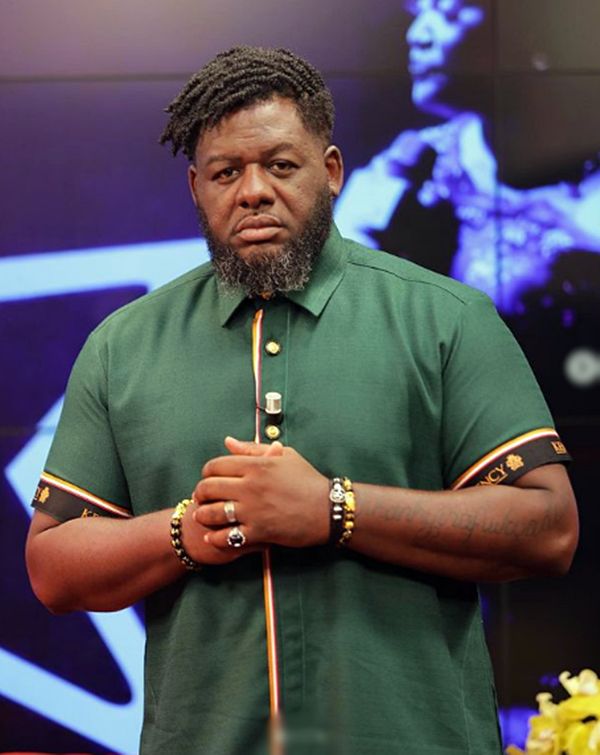
Former manager of Shatta Wale, Bullgod, has issued a warning to the host of United ShowBiz, MzVee, after she asked him to tone down his voice in a discussion.
He firmly stated that no one should attempt to dictate to him how he should communicate on the show.
According to him, he has full ownership of his body and the right to use any tone of voice that suits him.
The boss of Bullhaus further emphasized that he cannot afford to speak in a calm manner, as doing so could potentially be detrimental to him.
Bulldog started a conversation where he said, “I am a Ga, so let me talk about the Ga tradition. There are three days when it comes to a funeral. The wake, the burial, the thanksgiving. So we call it “Kpeshi, yala and Adetseani.” Now when you come to keep wake with us, you dont eat, we dont serve you food. It is a serious moment. There is a reason why its called the wake-keeping(in a loud aggressive tone)
So MzVee interjected and said in a local palance: “can you come down?”
Bulldog responds: “No No..ah…don’t tell me how to speak. I beg, These are my lungs and my heart. My own throat and my eyes. If I speak slowly I will die. Why?, he quizzed.
The discussion was connected to the passing of the late Ga Manye, Naa Dedei Omaedru III, whose funeral ceremonies showcased the traditions and events of the Ga culture.
She was laid to rest on Saturday 28th October, 2023.
At the Ga Mantse palace in North Kaneshie, in Accra, there were red and black decorations everywhere which signify mourning.
All activities lined up as the Ga state pays last respect to its queen mother are going smoothly as planned.
The activities started on Thursday, with Asafo companies (warriors) parading the streets of Accra amid the firing of muskets.
Famous Ghanaian songstress, Wendy Shay, has made a statement indicating that she has learned a valuable lesson in the aftermath of an accident she was involved in on September 9 2023.
According to her, she totally lost her car to improper insurance documentations as she was not aware of so much after she returned from Germany.
Hence, she has acquired all the Knowledge that will make her do the right thing when such occasions come.
My car is spoilt. I could not have it back. You know, when I returned from Germany, I did not know so much here. I did not know anything about insurance that must be done comprehensively. But I have learnt all that so I will do that when I buy a new car. I did not know alot of things but through the accident I have learnt a lot of things,” Wendy Shay told MzVee on United ShowBiz.
Wendy Shay, was involved in a car accident on September 10, 2023, on the ACP Estate and Kwabenya stretch in Accra.
The incident, according to an eyewitness, occurred a few minutes after midnight on Sunday.
“Between the ACP Junction and the Kwabenya stretch, you know the road is usually clear at night, and so the cars are usually at top speed, even though there is police presence on the road. A short distance away from the KNUST Accra Campus Junction, coming out of the valley, I saw people gathered around a car. So, I decided to park and see what was happening. Upon checking, I realized a lady was coming out of a car. She had dreadlocked hair just like Wendy Shay.
“So, I said, let me rush and see, and upon getting closer, I saw it was Wendy Shay. The Wrangler she was using has a custom registration, ‘Shay.’ Quickly, I got closer to her and asked her what was happening. She said she can’t talk much, as she’s in severe pain in the head because she hit her head on the dashboard,” Deputy News Editor of UTV, Prince Obimpeh, said in a live interview on United ShowBiz.
As for how the accident occurred, the eyewitness said the artiste collided with a tipper truck loaded with sand, which was facing her direction after she attempted to evade the truck.
“Had it not been for the gutter by the road into which part of her car skidded, Wendy Shay’s Wrangler would have toppled over,” the eyewitness reported.
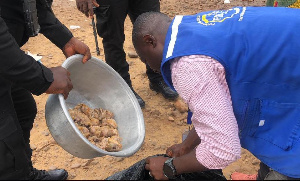
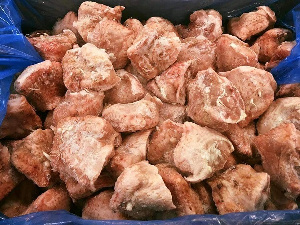
Boxes of turkey tail, or “chofi,” which were being sold in Suhum and Nsawam in Ghana’s Eastern Region, were seized by the Food and Drugs Authority.
On Monday, October 30, 2023, the seizure was carried out in coordination with the Ghana Police Service.
Nonetheless, the FDA pointed out that Ghana has outlawed the product since 1999. On the Accra-Kumasi highway between Suhum and Nsawam, chofi is a popular dish.
“Although chofi is a staple enjoyed by many Ghanaians, the FDA announcing the seizure on X, noted that the action was to ensure a ‘healthier Christmas’.”
Our Eastern Regional Office, working with the Ghana Police Service, organized a swoop at Suhum and Nsawam to seize turkey tail, also known as Chofi, that was being sold as part of the FDA’s efforts to ensure a healthier Christmas.
“It would be recalled that the product has been banned in Ghana since 1999,” the statement added.
Read the full statement below:
As part of the FDA's activities to ensure a healthier Christmas, our Eastern Regional Office in collaboration with the Ghana Police Service, has organized a swoop at.. pic.twitter.com/tQf07dO6FU
Nigerian students applying for admission to foreign universities expended a total of $340.84 million to support their applications from January to June 2023, according to data analysis by The PUNCH.
This figure is based on data from the Central Bank of Nigeria, specifically related to the amount spent on educational services under the sectoral utilization for transactions eligible for foreign exchange.
The Central Bank reported that in April 2023, there was a total expenditure of $40.54 million on foreign education, and in May 2023, this amount increased to $48.81 million. However, in June 2023, there was a noticeable decrease, with the bank reporting an expenditure of $32.61 million.
When comparing this expenditure with the $218.88 million recorded in the first quarter of 2023, there is a decrease of $96.92 million or 44.28 percent.
Additionally, the first quarter of 2023 performed poorly when compared to figures from the second quarter of 2022, indicating a decrease of $124.42 million, equivalent to a 50.5 percent decline.
The PUNCH reported that the funds remitted to foreign academic institutions lacked significant reciprocity, with limited inflows from foreign sources into the local education sector.
Experts have predicted that the challenges with the Central Bank’s supply have led international students to seek dollars from Bureau De Change operators due to delays by banks in processing Form A requests.
Recent data released by the Home Office of the United Kingdom revealed a 222.8 percent increase in study visas issued to Nigerians, with 65,929 visas issued as of June 2022 compared to 20,427 during the same period in 2021.
The Central Bank currently faces a backlog of accumulated forex demand on the official market, pushing individuals and businesses to resort to the black market for dollar transactions. Dollar inflows to Nigeria have decreased in recent years due to declining investment and lower crude oil exports, which contribute over 90 percent of the country’s export income.
In an earlier interview, Dr. Anderson Ezeibe, the National President of the Academic Staff Union of Polytechnics, expressed concerns about the government’s inadequate investment in the education sector and its negative impact on education in Nigeria.
“You go to tertiary institutions and you see dilapidated buildings, lecturers and students alike are not happy, students do not have access to good equipment for practicals, and at the end of the day, the system continues to churn out half-baked graduates.
“The only solution to this is for the government to invest fully in the sector. If we operate world-class schools in the country, there will be no need for people to go to other countries to obtain a good education.”
Prof. Alabi Thomas, an education professor at the Federal University of Technology, Minna, also attributed the migration to government policies that have, in his opinion, continued to severely damage the education sector.
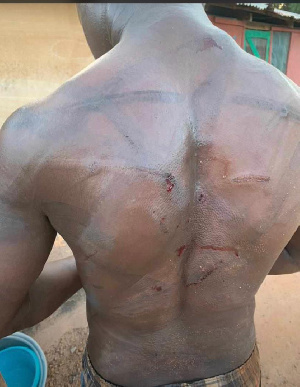
Osuma Musah, the District Chief Executive for Garu in the Upper East, said that his organization was unaware that the military was organizing an operation in the region.
This follows reports of recent atrocities in the Upper East region by both the military and civilians.
Even uniformed security personnel with the District Security (DISEC) Council were unaware of the military operation, according to the DCE, who was speaking on Morning Starr with Francis Abban.
“Not at all, not in the least of suspicion, we didn’t even suspect it. So when we started having these calls I had to call DISEC members one by one, ‘What’s it what is happening’ but they didn’t know.
“If you know how the military operates, when they have a target operation they don’t trust anybody to let you know what is happening. They just come in the middle of the night like they did. They will usually finish before you know what has happened,” Mr. Musah stated.
He continued: “Even DISEC members who are uniform people or security personnel, they didn’t know.”
The government is being urged to carry out a comprehensive investigation into the attack on civilians in the Garu and Tempane Members of Parliament’s respective constituencies.
The members of parliament for Garu, Albert Alalzuuga Akuka, and Tempane, Lydia Akanvariba Adakudugu, claim that military officers entered their areas and took actions that caused harm to the locals.
“It has come to our attention that a concerning incident occurred in our constituencies today, Sunday, 29th October 2023 around dawn at 2:00 am. Military officers entered our constituencies and engaged in actions that resulted in harm to the residents.
“This unprovoked action by the Military on innocent civilians is uncalled for and must be condemned by all peace-loving people. Any form of violence and brutalities meted on citizens, especially when it is perpetrated by those who are supposed to serve and protect them must be condemned unequivocally,” the two MPs stated.
They continued: “We are deeply disturbed by these reports, especially considering the volatile nature of the area vis-a-vi the Bawku Conflict (Note that Garu and Tempane are part of the Bawku Traditional Area), and we are therefore actively seeking more information about the situation.”
A crackdown initiated by the Eastern Regional Food and Drugs Authority (FDA) has effectively halted the sale of turkey tail meat in Suhum and Nsawam/Adoagyiri, areas where demand for this product was notably high.
Collaborating with the Ghana Police Service, the operation led to the arrest of several retailers and meat sellers, accompanied by the confiscation of cartons of turkey tail.
In Ghana, this fried turkey tail is commonly referred to as “Tsofi.” Health experts have expressed concerns about this poultry product due to its high fat content, which exceeds 15 percent. Consuming large quantities of such fatty foods could potentially elevate the risk of developing various cancers, including those affecting the lungs, breasts, colon, and brain.
During the operation, the team encountered resistance from the retailers, who responded with insults and allegations of political interference.
They contended that the intention was to create hardships for members of certain political parties by undermining their businesses.
However, the Authority clarified to the Ghana News Agency that its primary commitment was to ensure consumer safety at all times.
Despite widespread public awareness regarding the health hazards associated with the sale of turkey tail, there remained a thriving market for this product, as noted by Madam Anita Owusu-Kuffour, the Eastern Regional Acting Head of the FDA.
She explained that in 1999, the Ministry of Trade and Industry issued a communication to all importers, explicitly stating that poultry and poultry products with a total fat content exceeding 15 percent were prohibited from being imported into the country.
Nevertheless, it was evident that turkey tails had found their way into Ghana, suggesting that they were likely smuggled through unapproved routes or falsely declared at approved entry points.
“We need to make it a collective responsibility to make sure such products are not available on the market for sale,” Madam Owusu-Kuffour said.
She emphasized that those apprehended would face legal proceedings to ensure compliance with the law, serving as a deterrent to others.
The authority conducted the proper disposal of the confiscated meat products.
Mr. George Ampofo Ayeh, the Public Relations Officer of the FDA in the Eastern Region, referenced the Public Health Act of 2012 (Act 851), Section 100, Subsection (3). This section outlines specific criteria that must be met for a food product to be deemed safe for consumption.
These criteria encompass the absence of poisonous or harmful substances, overall suitability for human or animal consumption, the exclusion of filthy, putrid, rotten, decomposed, or diseased components, adherence to prescribed standards, and the avoidance of adulteration or any harm to health.
In the context of penalties and defenses outlined in Section 110, Subsection (1), anyone who violates sections 97 to 108 commits an offense. Penalties for this offense may include fines ranging from 1000 to 7500 penalty units, imprisonment for a minimum of four years to a maximum of fifteen years, or a combination of both.
The FDA’s primary objective is to protect public health by upholding stringent standards that ensure the safety, quality, and efficacy of various products. These products encompass drugs, food, cosmetics, medical devices, household chemicals, clinical trials, and tobacco products.
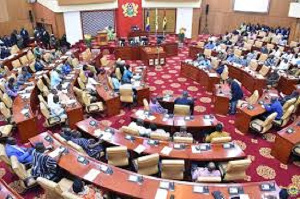
The next scheduled date for the Parliament to reconvene is Tuesday, October 31, 2023. The previous session ended in August.
The Eighth Parliament of the Fourth Republic has begun its Third Meeting of the Third Session with this.
Members of Parliament are expected to gather at Parliament House in Accra by 10:00 a.m., according to a statement signed by the Clerk to Parliament, Cyril K.O., and posted on the platform of the Minority Chief Whip.
The statement reads, “In accordance with Standing Order 32(2) of the Parliament of Ghana, I, Cyril Kwabena Oteng Nsiah, Clerk to Parliament, hereby inform Honourable Members of the Third Meeting of the Third Session of the Eighth Parliament of the Fourth Republic, which will commence on Tuesday, 31st October at Ten O’clock in the morning at Parliament House, Accra.”
Below is the statement
The Third Meeting of Third Session of the Eighth Parliament of the Fourth Republic starts on 31/10/2023. pic.twitter.com/CtdyCqDZlO
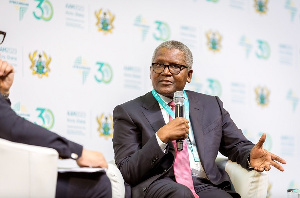
Dangote Cement has posted impressive earnings of nearly N1tn from its Nigerian operations in the first nine months of this year. The unaudited interim financial statements for the period ending September 2023, filed with the Nigerian Exchange Limited, reveal that Dangote Cement recorded N933.08 billion in earnings during this period, representing a significant 4.76% increase compared to N890.65 billion for the same period in 2022.
During this period, the company’s Pan-African operations generated N588.24 billion in revenue, reflecting an extraordinary 103.89% increase over the N288.51 billion in revenue recorded in 2022.
Profit from Dangote Cement’s Nigerian operations surged to N856.45 billion by the end of September 2023, compared to N336.25 billion in 2022. However, its Pan-African operations reported a loss of N54.35 billion, an improvement from the N127.67 billion loss recorded in 2022.
Overall, the cement group experienced a substantial 28.63% increase in its revenue, totaling N1.51 trillion for the period ending September 2023, compared to N1.18 trillion in September 2022.
With a finance cost of N20.67 billion, a loss on foreign-denominated transactions at N99.02 billion, and an income tax expense of N127.34 billion, the group’s profit for the period reached N277.55 billion, marking a 30.24% increase from N213.10 billion recorded in 2022.
For the third quarter, Dangote Cement reported revenue of N563.77 billion, an increase from the N369.22 billion reported in Q3 2022. Profit for Q3 2023 reached N98.95 billion, reflecting a substantial 141% increase from N40.99 billion.
Earnings per share increased by 29.6%, reaching N16.08, and the company’s net debt amounted to N507.7 billion.
Dangote Cement attributed its net exchange loss on foreign-denominated transactions to the significant devaluation of the Nigerian Naira in June 2023, with the Naira falling from N465 per dollar at the end of May 2023 to N756/$ in June 2023, leading to a net exchange loss of N116.1 billion from third-party loans and payables in the Nigerian entities.
The company also mentioned that its cash and cash equivalents included restricted cash used for unclaimed dividends, letters of credit, and debt service reserve accounts.
As of September 2023, Dangote had publicly issued bonds amounting to N266 billion, with coupon rates ranging from 11.25% to 13.5%, with tenures between 3 and 10 years. Additionally, commercial papers were issued under a program with a face value of N170 billion, with tenures ranging from 176 days to 267 days and discounts ranging from 10% to 13%.
Speaking on the results, Chief Executive Officer, Arvind Pathak, said “This positive nine-month result is a combination of our strong value proposition, improved operational efficiency and a sustained drive to contain cost amidst an accelerating inflationary environment. We achieved double-digit growth in Group revenue at N1.514.6bn, while EBITDA rose to an all-time high of N662.8bn, up 28.5 per cent. Again, we continue to show the strength in the diversity of our operations. Our pan-African operations generated a record revenue and EBITDA growth of 103.9 per cent and 255.4 per cent, respectively, contributing 41.9 per cent to Group volumes. This unprecedented growth was driven by sustained demand across our countries of operation.
“We will continue to explore emerging opportunities and export strategies around the region to further consolidate the Group performance. Albeit the current inflationary environment and its impact on operating costs, we have flagged off the ‘distributors promo’ across various regions in Nigeria. This, we believe would support our customers by creating a positive income effect for purchasers of Dangote Cement.”
In terms of outlook, Pathak, said, “Looking ahead, we are at the final stage in the completion of our 1.5Mta grinding plant in Cote d’Ivoire, having commissioned our 0.45Mta Takoradi plant in the first half of the year. We are focused on improving our value proposition, anchored on our promise to deliver strong and superior cement to our unwavering customers. I am very pleased with the direction of our business and confident we will finish the year strong.”
Dangote Cement is Africa’s leading cement producer with 52.0Mta capacity across Africa.
The Office of the Special Prosecutor (OSP) has released its investigative findings regarding suspected corruption and corruption-related offenses involving Charles Adu Boahen, a former Minister of State at the Ministry of Finance.
The investigation was prompted by a request from President Nana Addo Dankwa Akufo-Addo on November 14, 2022.
The request stemmed from allegations made against Charles Adu Boahen, as revealed in an investigative documentary titled ‘Galamsey Economy,’ produced by investigative journalist Anas Aremeyaw Anas.
On the same day in 2022, President Akufo-Addo terminated Charles Adu Boahen’s appointment as Minister of State at the Ministry of Finance following the exposé.
The documentary unveiled a scene in which the Minister requested a $200,000 appearance fee to facilitate a potential businessman’s access to Vice President Mahamudu Bawumia, as part of the businessman’s effort to establish a commercial bank in Ghana.
Charles Adu Boahen revealed to Tiger Eye that the Vice President, Dr Mahamadu Bawumia, needs “just US$200,000 token as an appearance fee” and some positions by an investor for the Vice President’s siblings to get his backing and influence in establishing a business in Ghana.
This information was disclosed during a meeting with Tiger Eye detectives in a hotel room in the United Arab Emirates. The detectives were conducting an undercover investigation while posing as businessmen.
The OSP has finally released a comprehensive report on the results of its investigation into the former Minister of State, nearly a year later.
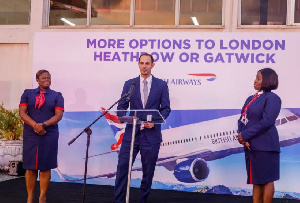
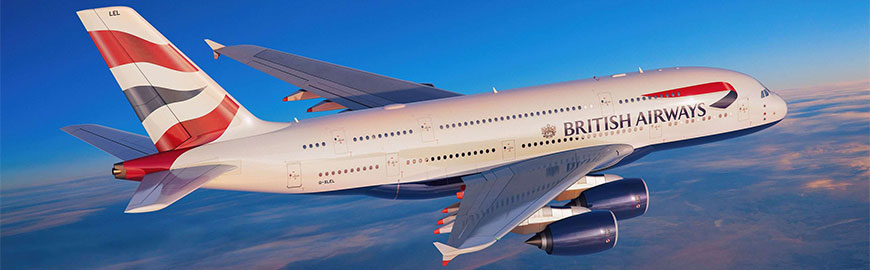
British Airways is now providing Ghanaian passengers traveling from Accra to London with enhanced direct flight options.
Responding to increased demand on the London-Accra-London route, the London-based airline has introduced a total of ten weekly flights to serve Accra’s Kotoka International Airport.
Effective from Sunday, October 29, 2023, British Airways has incorporated an additional three flights to its existing daily London-Accra-London service.
These supplementary flights operate into London’s Gatwick Airport, utilizing a Boeing 777, on Tuesdays, Thursdays, and Saturdays, offering Ghanaian travelers a wider selection of flight times and airport choices.
To mark this new service, the airline is presenting a special launch offer with fares starting from $2,947 in Club World and $689 in World Traveller for flights from Gatwick to Accra.
The Gatwick airport provides Ghanaian expatriates and UK holidaymakers with an alternative London gateway. Additionally, premium customers, Gold, and Silver Executive Club members can enjoy the recently refurbished airport lounges.
This expansion in service also augments cargo capacity on the route, creating more opportunities for Ghanaian exporters to efficiently transport perishable goods and other products to the market through IAG Cargo, the cargo division of the International Airlines Group, the parent company of British Airways.
With a history of over 85 years of servicing Accra’s Kotoka International Airport, British Airways continues its commitment to providing exceptional service on the Accra-London route.
A recent research report has revealed that private wealth in Ghana has experienced remarkable growth over the past decade, outpacing the continental average by 30%.
This places Ghana as the second-highest in private wealth growth, following Ethiopia, which recorded an astonishing 81% increase.
This notable disparity underscores a growing wealth gap within the nation. Private wealth in Ghana has been advancing at a faster pace than per capita income growth, which saw a 27.5% increase.
This sets Ghana apart from the wider African continent, where wealth levels have been on a general decline. Capital flight, often used as an indicator for private wealth, has been identified as a concerning factor in this trend.
A recent discussion at the Research Dissemination on Capital Flight and Natural Resources in Ghana, organized by the National Development Planning Commission (NDPC), featured insights from Professor Leonce Ndikumana of the Department of Economics at the University of Massachusetts. Professor Ndikumana explored the remarkable surge in private wealth within the country.
Research findings indicate that individual private wealth in Ghana now stands at an impressive US$56 billion. However, this wealth is significantly unequally distributed, with 110 Ghanaians possessing over US$10 million in liquid assets, not including other assets like real estate.
The findings raise questions about income inequality and wealth distribution in Ghana, emphasizing the need for policies and strategies to address this growing gap and ensure a more equitable distribution of wealth.
“This wealth concentration vividly underscores the alarming income disparity within the country,” he said. “Where the wealthiest individuals perceive Ghana as well-developed, others – such as cocoa farmers – struggle to make ends meet despite the overall growth of wealth.”
Professor Ndikumana however expressed optimism regarding the concentration of wealth, suggesting it could potentially fuel domestic investors to engage in mineral resource exploration and sectors like cocoa production.
He advocated incentives for domestic investors similar to those offered to foreign investors, as this could facilitate the emergence of Ghanaian enterprises which harness the nation’s natural resources.
Notably, Professor Ndikumana highlighted that this wealth disparity is not unique to Ghana as it is a recurring trend across many African countries, which often focus on attracting foreign investors while underestimating the potential of their domestic counterparts.
“Contrary to misconceptions, data clearly show there are sufficient local individuals with the means to invest, ” Professor Ndikumana said.
Capital flight: a pervasive issue in Ghana and beyond
Professor Ndikumana shed light on the significant issue of capital flight, emphasising that it is not unique to Ghana but affects many African nations.
Ghana, over the past five decades, has experienced an estimated loss of US$50billion through capital flight. This capital flight primarily benefits private asset holders abroad, and a portion of it occurs through trade mis-invoicing, whereby traders manipulate the value of imports and exports.
Focusing on the gold sector, Professor Ndikumana noted that Ghana is not receiving its equitable share of the value generated from its gold resources. As natural resources belong to the nation, he stressed the need to revise agreements in order to ensure Ghana benefits more from its exploitation.
A concerning discrepancy was also identified in Ghana’s reported gold exports compared to statistics from its trading partners. In some cases, countries report receiving less gold from Ghana than Ghana reports exporting, raising concerns of potential capital misreporting or mis-invoicing in gold trade. Furthermore, Professor Ndikumana highlighted mining laws that allow foreign mining firms to retain most foreign exchange earned from gold exports in their home countries.
The professor provided an example that raised suspicions, saying Ghana reports South Africa as the primary destination for its gold exports – but South Africa records almost no gold imports from Ghana. Ghana exported US$15million worth of gold to South Africa, while South Africa reported only US$6.8million of gold imports from Ghana – raising questions about the whereabouts of Ghana’s exported gold.
Additionally, the under-invoicing of gold exports to the United Arab Emirates was discussed, with evidence suggesting it serves as a channel for capital flight. The opacity of gold trade statistics, along with large statistical gaps in gold exports, is a significant concern and a sign of export mis-invoicing. The overall conclusion is that Ghana’s benefits from its gold exploitation fall well below expectations.
Cocoa Sector and Value Distribution
Turning to the cocoa sector, Professor Ndikumana noted that the likelihood of capital flight through trade mis-invoicing is minimal due to the sector’s regulation and government oversight. However, the issue lies in the distribution of value. While cocoa generates substantial value, it primarily benefits foreign companies – with cocoa farmers receiving a meagre 4 percent of the market value for chocolate sold internationally.
To improve the well-being of cocoa farmers, the professor recommended processing more cocoa within the country to create jobs and increase value. He suggested that Ghana reconsider its agreements with mining companies, potentially adopting production-sharing models and encouraging national companies’ involvement in resource exploitation.
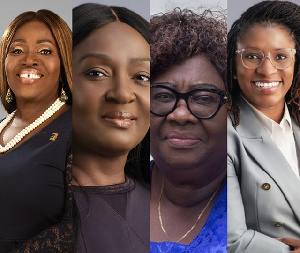
The 2023 Board Diversity Index, a collaboration between TheBoardroom Africa (TBrA) and the Ghana Stock Exchange, highlights Ghana’s remarkable advancements in achieving gender equality in corporate boardrooms, particularly within companies listed on the Ghana Stock Exchange.
The report reveals a substantial 12 percent increase in the number of women serving in boardrooms of Ghana-listed companies, rising from 67 in 2022 to 75 in 2023.
TheBoardroom Africa stated that this growth is particularly noteworthy in Ghana, where women make up nearly half of the workforce. However, it also underscores the ongoing imperative of dedicated efforts to promote gender equality in leadership roles.
The report’s key findings offer a comprehensive overview of gender diversity within Ghanaian listed companies’ boardrooms, emphasizing the significant impact of women chairs on boardroom diversity.
“Companies led by women as Chairpersons exhibit significantly higher boardroom diversity, with 80% of them having 30% or more women on their boards, while only 26% of companies with male Chairs reach this threshold,” it said.
The report states that women now make up 14% of Chairs, 12% of CEOs/MDs, 22% of CFOs, and 13% of COOs on Ghana’s listed boards, indicating a rise in the proportion of women in C-suite or Chair roles.
But in contrast to 2022, there are now 2% more chairs, 5% more CFOs, and 7% more COOs than there were in the previous year. Meanwhile, the number of CEOs and MDs has dropped by 1%.
Women board directors
Companies with women board directors are on the rise, demonstrating a positive trend where 89% of listed companies now have at least one woman on their board, as compared to 88% in the previous year.
Notably, consumer-facing sectors such as advertising & communications, fast-moving consumer goods, and telecommunications exhibit a strong presence of women directors, with 100% of their companies having more than 30% women directors.
The financial services sector in Ghana stands out with the highest number of women board directors, accounting for 34 (45%) of women directors, as stated in the report.
In contrast, the proportion of male-only boards is decreasing, with the percentage of listed companies without any women on their boards dropping from 12% in 2022 to 11% in 2023.
Founder and CEO of TheBoardroom Africa, Marcia Ashong, emphasized the significance of strategic efforts to promote gender diversity in Ghanaian listed boards. She highlighted the importance of fostering an inclusive culture and securing unwavering commitment from top leadership to prioritize and advocate for gender diversity.
The 2023 report findings further emphasize the influential role of women chairs in advancing female representation on boards.
“We remain steadfast in our commitment to ongoing collaboration with the Ghana Stock Exchange and other stakeholders to advance this vital agenda,” Marcia Ashong said.
Gender diversity is not only morally required, but it also serves as a catalyst for good governance and improved stock performance, according to Abena Amoah, Managing Director of the Ghana Stock Exchange. She further stated that there is ample evidence to support the claim that businesses that prioritize diversity at all levels of leadership make better decisions, spur innovation, and ultimately produce stronger financial results.
“At the Ghana Stock Exchange, we see gender diversity as a fundamental component of responsible and sustainable business practices, and we are committed to supporting our listed companies in achieving greater diversity and, in turn, greater success,” she said.
The 2023 Ghana Board Diversity Index report provides a comprehensive analysis of the current state of gender diversity in corporate boardrooms, identifies areas for growth and improvement, and serves as a call to action for all stakeholders—businesses, policymakers, and civil society—to accelerate progress toward gender equality in leadership.
About The Boardroom Africa
The Boardroom Africa (TBrA) is the largest regional network of female executives in Africa. Our goal is to improve access to board opportunities for women and accelerate the presence of women on boards by working with development finance institutions, private equity investors and companies to accelerate the appointment of women on boards and build a growing pipeline of board-ready women while inspiring and educating the business community on the power of diverse leadership.
About Ghana Stock Exchange
The Ghana Stock Exchange (GSE) was established in November 1990 with the mission to provide an efficient securities market for national economic development through access to capital and investment. Since then, GSE has facilitated the mobilisation of long-term capital by corporate bodies, businesses, and the government and provided a reliable platform for the trading of issued securities. There are three markets created under the GSE brand: the Main Market, Ghana Alternative Market (GAX) for SME’s and Ghana Fixed Income Market (GFIM) for trading of government and corporate bonds. For more information, visit www.gse.com.gh.
About the Board Diversity Index
Since 2017, TheBoardroom Africa has monitored gender diversity on Africa’s listed boards. This index evaluates the composition of boards by country, documenting the count of women occupying board seats and tracking their presence in Chair and other executive roles. Research to-date encompasses publicly listed boards in Ghana and 11 other African nations.
About The Board Diversity Charter
The Board Diversity Charter (BDC) is a joint initiative co-founded by TheBoardroom Africa (TBrA) and Alitheia Capital to raise awareness of diversity as a critical driver of success for business and society. Joining the charter signals an organisation’s commitment to developing and implementing initiatives that seek to build and maintain diversity and equality in the boardroom.
The Charter’s current signatories (organisations that have already achieved 30% women in the boardroom) and pledge partners (organisations publicly committing to strive to achieve 30% women in the boardroom) include leading DFIs and organisations such as British International Investment, Norsad Capital, Woodside Africa Group, DEG, FCMB Bank and more. Companies interested in becoming a Board Diversity Charter Signatory or Pledge Partner can apply here.
President William Ruto has stated that by the end of the year, Kenya will no longer require visas for any visitors from Africa.
“It is time we… realise that having visa restrictions amongst ourselves is working against us,” he told an international conference.
The African Union (AU) has pursued the objective of achieving visa-free travel across the continent for the past decade. However, progress in this regard has been sluggish, despite the existence of regional agreements and bilateral arrangements.
As of a 2022 report endorsed by the AU, only Seychelles, The Gambia, and Benin grant entry to all African citizens without requiring a visa.
Nonetheless, the Africa Visa Openness Index, which gauges the degree of openness of each African country to visitors from other African nations, indicates that most countries are moving towards streamlining entry procedures and reducing restrictions on visitors from other countries on the continent.
In 2022, Kenya was ranked 31st out of 54 states on this index. During an address to an audience in Congo-Brazzaville, President Ruto expressed his concern that the current state of affairs was detrimental to business.
“When people cannot travel, businesspeople cannot travel, entrepreneurs cannot travel, we all become net losers.
“Let me say this: As Kenya, by the end of this year, no African will be required to have a visa to come to Kenya,” he said to loud cheers from the conference delegates.
“Our children form this continent should not be locked in borders in Europe and also be locked in borders in Africa.”
He addressed an assembly convened with the aim of safeguarding some of the planet’s largest rainforests.
The African Union (AU) introduced its African passport back in 2016, envisioning a future where all African citizens could travel freely across the continent without the need for visas. However, the widespread availability of this passport remains a challenge.
This is, in part, due to concerns regarding security, smuggling, and the potential impact on local job markets. If eliminating all visa restrictions is currently deemed too ambitious, the Visa Openness Index report puts forth several alternative measures. These measures encompass reducing fees, standardizing visa on arrival for African visitors, and implementing a secure e-visa system.
Starting on Sunday, October 29, 2023, travelers from Ghana heading to London will enjoy more travel options. British Airways is introducing three additional flights per week from Gatwick to Accra and back.
With this move, the number of flights between Accra and London will go up, providing passengers with increased choices for flight times and airport destinations. The new flights will be flying into London Gatwick.
This expanded service aims to enhance the travel experience for customers flying between London and Accra, in addition to British Airways’ existing daily flights between the two cities, connecting Accra and London Heathrow Terminal 5.
The new flights departing from Accra will take off at 21:20 GMT on Tuesdays, Thursdays, and Saturdays, reaching London Gatwick at 04:00 GMT. The return journey from London to Accra will leave at midday, landing in Accra at 18:35 GMT. British Airways plans to operate these flights using Boeing 777-200 aircraft.
He also mentioned that Gatwick offers Ghanaian expatriates and UK vacationers another entry point to London. Moreover, premium customers, along with Gold and Silver Executive Club members, can enjoy the recently renovated lounges, making their travels more comfortable for holidays or family visits.
Furthermore, these new services contribute to the cargo capacity on this route, creating more chances for Ghanaian exporters to efficiently transport perishable items and other goods to the market. This is made possible through IAG Cargo, the cargo division of International Airlines Group, the parent company of British Airways.
Pricing
British Airways, which has been serving Ghana for more than 85 years, is offering a launch special to commemorate the beginning of the new services. Tickets from Gatwick to Accra start at $2,947 in Club World and $689 in World Traveller.
According to some industry analysts, the service’s launch may have an effect on the cost of tickets for the Accra–London route in the upcoming months.
Introduction of new offerings to passengers
As cabin crew, pilots, and check-in agents transition from their current Julien MacDonald uniforms to the new British Airways uniform, passengers on these flights will soon begin to see the new uniform as well.
Ozwald Boateng OBE, a British Ghanaian fashion designer and tailor, is credited by British Airways with creating the uniforms.
The A350 fleet, which is British Airways’ newest and most fuel-efficient aircraft type and has the newest business class seat, the Club Suite, is used on all flights from London Heathrow to Accra.
Former Deputy Information Minister, Felix Kwakye Ofosu, recently provided insight into the factors contributing to the UK court’s dismissal of Ghana’s appeal against a US$140 million judgment debt.
Kwakye Ofosu highlighted that the absence of the Attorney General during the court proceedings, attributed to Ghana’s elections and the COVID-19 pandemic, significantly influenced the court’s decision.
During his appearance on the “Good Morning Ghana” show, Kwakye Ofosu expressed his concerns about the situation, emphasizing the importance of the Attorney General’s presence during such critical legal proceedings.
“The Attorney General has made us lose $140 million due to petty political issues. It sounds funny but it is not. $140 million, especially for a country facing the economic challenges that we are, is a significant amount. We are currently seeking the next tranche of IMF extended rate facility, which is around $600 million. Yet, we have to allocate an additional $140 million in this already strained economy to pay off an entirely avoidable debt.”
Kwakye Ofosu further criticized the Attorney General’s decision not to appear in the UK court, stating, “The Attorney General, while the UK courts were in session for the hearing, was in Ghana claiming that there was an election. Did the Attorney General’s office close down due to an election? What role was the Attorney General playing in an election? It was as though he was even contesting for a parliamentary seat. Even if he was, he had an obligation to defend the state.”
He continued, “They cited elections and COVID as excuses, as if there was no COVID in the UK. The UK courts did not entertain these excuses and dismissed the case. Now, we are on the verge of losing some of our assets in the United Kingdom because Trafigura has attached those assets to offset the debts we owe them.”
This recent development follows a judgment debt claim made by GPGC, a subsidiary of the global commodities firm Trafigura, against the Ghanaian government. The company filed a lawsuit against the Ghanaian government regarding the termination of two power agreements and ultimately secured a US$140 million judgment debt issued by a UK court.
The dispute centered on the method of delivering legal proceedings related to the judgment debt claim to the government. Ghana argued that, based on existing laws, the government should have been served through diplomatic channels, as opposed to the alternative methods used.
The UK High Court ruled against Ghana, determining that the provisions of the State Immunity Act, which Ghana had cited, did not provide a valid basis for preventing Trafigura from serving the judgment debt documents via postal and email services.
Consequently, Ghana now faces the possibility of having its state assets in London confiscated by a Trafigura subsidiary to satisfy the US$140 million judgment debt.
S&P GlobalRatingsannounced on Friday that it has downgraded Egypt to B-/B with a stable outlook. Previously, the agency had given Egypt a B/B rating, and in April, it had shifted its outlook on the nation to negative.
The downgrade is a result of Egypt’s ongoing challenges in implementing monetary and structural reforms, according to S&P.
The agency also pointed out that interest expenditures now account for approximately 40% of Egypt’s government revenues, which could pose a potential threat to the sustainability of its debt.
“The stable outlook balances the risk that the Egyptian authorities may be unable to finance high external debt redemptions or address the country’s foreign currency shortage against the possibility of an acceleration of key monetary and economic reforms that would help bridge Egypt’s large external financing gap,” S&P said.
S&P Global Ratings has forecasted that Egypt’s economic growth will average around 4% over the next three years. However, they noted that this projection is sensitive to factors such as exchange rates, inflation trends, and the potential impact of the Israeli-Hamas conflict on tourism.
Additionally, Fitch Ratings downgraded Egypt’s Long-Term Foreign-Currency Issuer Default Rating (IDR) to ‘B’ from ‘B+’ in the first half of 2023, with a negative outlook.
Fitch expressed concerns about Egypt’s increased external financing risk, driven by high financing requirements, constrained external financing conditions, and the susceptibility of Egypt’s financing plan to investor sentiment.
These challenges arise amid uncertainty in exchange rate trends and reduced external liquidity buffers.
“We see a risk that a further delayed transition to a flexible exchange rate will further undermine confidence, and, potentially, delay the IMF programme.
“The rating action also captures a marked deterioration of public debt metrics, including a renewed deterioration in government interest costs/revenue, which, if not reversed, would put medium-term debt sustainability at risk”, Fitch said in its rating note.
Analysts have pointed out that there is growing uncertainty regarding Egypt’s capacity to fulfill its external financing requirements. This uncertainty is attributed to the ongoing limitations in terms of market access and the lack of confidence from the market in the Central Bank of Egypt’s (CBE) new exchange rate system, which has impeded the inflow of foreign currency (FC).
The incomplete transition to a flexible exchange rate regime has resulted in renewed shortages of foreign currency in February 2023. Although the official exchange rate has stabilized, this followed a series of devaluations that had caused the Egyptian pound’s value against the US dollar to decrease by approximately 50% compared to the beginning of 2022.
“In our view, the stabilisation partly reflects the reluctance of market participants to transact in the foreign exchange (FX) market, given high uncertainty around the future exchange rate level, and also interventions by public sector banks, further damaging confidence in the durably flexible exchange rate regime and the value of the currency”.
As long as there is a significant need for external financing, Fitch believes that the exchange rate will continue to decline before stabilizing in the fiscal year that ends in June 2024.
Fitch states that the country’s need for external financing will be more difficult in FY24 as a result of the government’s increasing external debt maturities, which will total approximately USD7.2 billion in FY24 compared to USD4.3 billion in FY23.
This includes USD2.1 billion in maturities related to Eurobonds (up from USD0.8 billion in FY23). But even after a significant decline in 2022, external liquidity buffers are still inadequate.
A bus and multiple cars were involved in a “horrific collision” on an Egyptianhighwayon Saturday that resulted in at least 35 fatalities and over 50 injuries, according to state media.
In Egypt, where the highway code is routinely broken and roads are frequently in poor condition, traffic accidents are commonplace.
“A horrific collision on the Cairo-Alexandria desert road near Wadi al-Natrun led to the death of 35 people, at least 18 of whom burnt to death,” said Al-Ahram news website, indicating “at least 53 were injured”.
Pictures shared on social media displayed a flipped truck resting on scorched asphalt in the fast lane.
Several cars, some still burning, and at least one bus and a minibus, both severely damaged by fire, can be seen further on.
As thick black smoke spirals into the air, crowds of people can be seen standing by the road, staring at the crash scene and the line of cars.
According to official statistics, the country with the largest population in the Arab world saw 7,000 fatal traffic accidents in 2021.
Big Brother Naija (BBNaija) alumni, Phyna, is generating buzz in the media yet again due to a recent video featuring her alongside the well-known crossdresser Bobrisky.
The video became a sensation as it portrayed Phyna, who was seated beside Bobrisky, displaying a facial expression that caught people’s attention.
Numerous online observers speculated that the reality star seemed irritated by Bobrisky. Another portion of the video showed Bobrisky leaning in to talk with Phyna, whose reaction led many to believe she felt uncomfortable in his presence.
Phyna’s visible reluctance further fueled the discussion.
In response to the video, some netizens suggested that Bobrisky may not have been the cause of Phyna’s reaction, implying that it might have been related to other factors, such as an unpleasant smell.
Netizens react to Phyna’s video with Bobrisky:
zeezaina_: “Phyna is high and bob is shy.”
bidotata: “Snelling Gbola but Bob supported phyna that year ooo for bbn.”
zemenor21: “Risky dey irritate Phyna.”
surest_22: “Na every minute phyna day trend una day find this girl trouble Ooo if she clear the air now they’ll say she’s razz.”
lordmayor012: “Senior man forget to Brush before she comot for house.”
olamide_____28: “Senior man dey smell.”
unruly_770: “Something dey smell for there.” unusal_mily: “She’s uncomfortable.”
flamezyofficial_: “One of them dey endure odour(either body or mouth, or even both), Oyinbo dey call am perseverance.”
A tragic accident on the Cairo-Alexandria road in Egypt’s Beheira governorate led to the loss of 32 lives and left dozens more injured, according to the health ministry.
The collision, which took place on Saturday morning, involved a passenger bus and several cars, some of which ignited into flames. Many of the victims suffered severe burns.
Health authorities dispatched approximately 20 ambulances to the scene, and those wounded were transported to medical facilities in Wadi al-Natrun and Al-Nubaria.
Egypt frequently experiences road accidents due to poor road conditions and non-compliance with traffic regulations.
A fuel station attendant finds himself in trouble after an attempt to deceive a customer has gone viral.
In a widely circulated video observed by GhanaWeb Business, the attendant appears to have employed illicit methods to overcharge a customer for fuel.
The incident occurred at a Shell station operated by an individual named ‘Kofi.’ Reportedly, the attendant recorded a fuel purchase of GH¢1,150 into the system while only dispensing GH¢886 worth of fuel to the customer.
The attendant, apparently underestimating the customer’s scrutiny, was promptly confronted once it became evident that he was involved in an unlawful practice.
Upon realizing he had been exposed, the attendant knelt and implored the customer for forgiveness.
“Kofi, so you have registered a fuel purchase of GH¢1,150 on the screen whereas you only gave me GH¢886 worth of fuel. So you thought my mind wouldn’t be on what you’re doing, the car has a camera and I was just looking at you quietly,” the angry consumer said as he confronted the fuel attendant.
While recording the confrontation on his phone, the consumer further exclaimed, “Look at me, I’m sending this to your Director…Is that what you people do here!?. You gave me fuel of GH¢886 yet you have entered GH¢1,150 and you wanted me pay with the POS so you can tell them to give you the money back!?.”
Watch the video below:
Don't be the reason why people will stop doing good to others. He could hve just asked the man for some money than trying to steal right in front of him. The dishonesty in the work is bad. pic.twitter.com/Fpn6l0ogDE
In a surprising turn of events, the East African force established to combat militia violence in the Democratic Republic of Congo (DR Congo) has been instructed to exit the country after just 11 months of deployment.
The Congolese government, citing concerns about the group’s perceived ineffectiveness, announced its decision not to extend the mandate of the East Africa Community (EAC) Regional Force. This decision follows several months of grievances and complaints from Kinshasa regarding the force’s ability to address the ongoing security challenges in the region.
This decision comes at a critical juncture as violence between the M23 rebel group and pro-government militias reignites in DR Congo’s troubled eastern region, raising concerns about the stability and security of the area.
What was the regional troop’s mandate?
The East African Community (EAC), a coalition of seven nations, dispatched its troops to the Democratic Republic of Congo (DR Congo) in response to renewed clashes involving the M23 rebel group. This deployment was swiftly organized after DR Congo’s entry into the regional alliance.
The M23, which was formed over a decade ago, has seized significant swaths of territory in the eastern part of DR Congo, claiming to protect the interests of ethnic Tutsis against Hutu militias that it believes receive support from the government.
The first wave of troops came from Burundi in August of the previous year, followed by contingents from Kenya, South Sudan, and Uganda. Kenya assumed overall command of the EAC’s Regional Force.
The Regional Force’s mission officially revolves around overseeing the withdrawal of armed groups from territories they have occupied. However, the Congolese government and local communities have been pressing for direct military engagement against groups like the M23.
This force was established to collaborate with the United Nations troops already stationed in the country. The UN peacekeeping force, known as Monusco, has faced growing criticism for its inability to quell the conflict over its 25-year deployment.
President Félix Tshisekedi expressed his desire for Monusco to withdraw from the country by December.
In a recent statement, the EAC emphasized its commitment to working closely with the government to facilitate the safe return of internally displaced individuals to their homes and enhance the overall protection of civilians.
The mandate of this mission has been extended twice since its inception.
Why does DR Congo want East African troops to leave?
The EAC’s troops have faced consistent criticism from both the Congolese government and various civil society organizations since the beginning of their mission.
President Tshisekedi, in particular, has emerged as one of the primary vocal critics of the force. He has repeatedly expressed dissatisfaction with their perceived ineffectiveness and has issued ultimatums, demanding more assertive action against the M23 rebels or their departure from the country.
The inability to bring an end to the ongoing conflict has triggered protests against both the EAC force and Monusco. In one such demonstration in September, the situation escalated into a tragic event, resulting in the loss of over 40 lives.
Local media reports have indicated that Communications Minister Patrick Muyaya emphasized the government’s stance, stating, “The message is crystal clear: the EAC regional force must vacate the Democratic Republic of Congo by December 8, as previously agreed upon, as it has not been able to resolve the issue, especially with regard to the M23.”
What has the EAC force achieved?
The EAC force claimed that since arriving in the Democratic Republic of the Congo last year, it has supervised the removal of armed personnel from a number of locations, including Karuba, Mushaki, Kiloriwe, and Kitchange.
Nevertheless, attaining total stability has shown to be difficult. The force has encountered operational and logistical challenges.
A Kenyan soldier serving with the force was killed on Tuesday by a rebel mortar attack. He was the first soldier from Kenya to be killed.
The EAC claimed earlier this month that hostilities had arisen between its forces and armed groups due to propaganda.
Why has fighting resumed?
The mineral-rich eastern region of DR Congo has been grappling with numerous armed groups for an extended period.
After an unstable six-month truce, clashes have reignited this month between the M23 rebels and pro-government forces, known as Wazalendo.
The government based in Kinshasa accused the M23 of failing to disarm and honor the ceasefire. In retaliation, the M23 placed responsibility on pro-government forces for restarting hostilities.
While DR Congo’s army claims it is still adhering to the truce, witnesses on the ground dispute this assertion, indicating that soldiers and pro-government loyalists have been jointly battling the M23.
Civilians have been ensnared in the renewed violence, with reports of at least 60 individuals losing their lives in attacks on the Rutshuru territory in North Kivu just last week, as confirmed by a local official.
Tanzanian authorities have reported that two Tanzanian students are missing in Israel in the midst of the continuing Palestinian-Israeli conflict.
The Ministry of Foreign Affairs and East African Cooperation issued a statement in the capital city of Dodoma, confirming that the missing students are part of a group of 260 Tanzanian students who are studying modern agricultural methods and techniques in Israel.
The government is actively collaborating with relevant authorities and other stakeholders to determine the whereabouts of the missing students and ensure their safety.
The ministry is also maintaining regular communication with the families of the missing students to provide updates on the ongoing efforts.
In a related development, nine Tanzanians living in Israel have chosen to take up the government’s offer of assistance to return home. They were received at the Julius Nyerere International Airport in Dar es Salaam on October 18.
Graphic Business has reported that more than half of the foreign remittances entering Ghana cannot be adequately accounted for, a problem stemming from the deregulation of the foreign remittances sector.
The introduction of fintech companies following the Payment Systems and Services Act of 2019 has had a negative impact on the stability of the local currency, according to Banking Consultant Dr. Richmond Atuahene. He stated that if all remittances were accurately tracked, they could have significantly bolstered the local currency.
In 2021, Ghana received $4.5 billion, and in 2022, it received $4.7 billion, according to a World Bank report. However, the Auditor-General’s Report on the Consolidated Statements of Foreign Exchange Receipts shows that remittances for those years amounted to $2.11 billion and $2.12 billion, respectively.
Dr. Atuahene emphasized that this reveals discrepancies in the country’s remittance data compared to the World Bank’s assessment. The World Bank tracks remittance figures from the source, suggesting that the Bank of Ghana (BoG) may not be monitoring all remittances.
He suggested that this situation could be a consequence of the sector’s deregulation, with fintech companies potentially not reporting their remittances to the BoG, which would be a clear violation of the Foreign Exchange Act.
“This may be due to the deregulation of the sector, with fintech companies potentially not declaring their remittances to the BoG, in violation of the Foreign Exchange Act.”
Concerns are raised by the disparities between the BoG’s balance of payments and the World Bank report, which show that over half of the remittances received in Ghana are not included in the latter’s figure.
“When you take the World Bank report and the BoG figures, you see some discrepancies between the two.
So it’s either we are not tracking all the remittances because it seems more than half of the remittances that come into the country are not reflecting on the BoG’s balance of payment.”
“In 2019, we passed the Payment Systems and Services Act which was accompanied by a National Payment Strategic Plan which created the enabling environment for other private Money Transfer Companies (MTC) and Fintechs to play an active role in receiving remittances and it appears their activities are the reason why we are not capturing all the remittances.” he said.
Dr. Atuahene thinks that the volatility of the local currency is caused by fintech companies hoarding foreign currencies rather than turning them over to the BoG. Ensuring accurate monitoring of all remittances has the potential to greatly boost the nation’s economy.
“When you go into the Foreign Exchange Act, it states categorically that no institution can hold foreign currency except BoG or the authorised dealer banks but due to the introduction of these MTCs and fintechs, people are now sending their remittances through them and they end up holding on to the foreign currencies and don’t surrender them to the BoG.”
“If all these funds were coming into the banking system, the banks would have used it in supporting payments of imports and BoG wouldn’t have to come in to sell forex to the Bulk Oil Distributing Companies (BDCs).”
“I worked as a foreign exchange dealer in a bank and we used to go to some of these MTCs and Fintechs for foreign currencies, which is a clear indication that they have been holding on to them,” he disclosed.
In order to find flaws and leaks, he also demanded a forensic audit of all remittances entering the nation.
Furthermore, he suggests that in order to ascertain whether remittances are a constant in Ghana’s balance of payments, the Ministry of Finance, the Ministry of Foreign Affairs and Regional Integration, and the Bank of Ghana should collaborate with development partners such as the World Bank.
In response to concerns about a potential supply shortage and record-high cocoa futures driven by production forecasts, Ivory Coast’s cocoa sector regulator is taking action.
They will not permit bean grinders to accumulate stocks exceeding authorized limits during the primary October to March harvest period.
The cocoa industry is grappling with reduced production, particularly in Ivory Coast and Ghana, the world’s top two cocoa producers, responsible for over 70% of global output. Poor weather conditions are expected to cause Ivory Coast’s main crop to decline by approximately 25% this season compared to the previous year.
Ivory Coast’s cocoa exporters and bean grinders are typically subject to annual purchasing limits aligned with their export contracts.
However, an exemption is granted by the regulator, the Coffee and Cocoa Council (CCC), allowing grinders to stockpile enough beans to cover 45 days of grinding operations. This exemption traditionally gives them a competitive edge, ensuring a consistent bean supply to maintain their operations without disruptions.
In the current context, the CCC recognizes that this exemption could disadvantage exporters who might struggle to access the necessary volumes to fulfill their export agreements. Yves Brahima Kone, the managing director of the CCC, conveyed this concern, emphasizing the need for equitable access to cocoa resources.
“We will not allow bean processors to purchase beyond the purchase limit this year because everyone may not be able to get the cocoa they need,” Kone said.
“We are forced to make this difficult decision. There won’t be enough cocoa for everyone,” he added.
Grinders express concerns that the inability to stockpile beans may lead to shortages, affecting their capacity to meet export contracts. Some Ivory Coast grinders have conveyed to Reuters that this decision will have an impact on their production. Over the past two seasons, they have been running at full capacity, driven by a decline in cocoa grinding in Europe due to operational costs.
European bean grinders have scaled back their grinding capacity and have requested their branches in Ivory Coast to substantially increase their monthly grinding volumes to compensate.
Consequently, the monthly average of cocoa grinding in Ivory Coast has seen a steady rise, reaching nearly 60,000 metric tons per month in September, compared to around 45,000 tons in the 2019/2020 period.
This data is based on information from the Ivory Coast exporters association, GEPEX, which includes major bean processors such as Cargill, CEMOI, OLAM, and Barry Callebaut.
“With the gas and electricity crisis in Europe, it has become much more profitable to grind cocoa locally in Ivory Coast, which had led us to accelerate the pace here since 2021,” said a director of grinding plant in San-Pedro, who requested anonymity to speak candidly.
712,000 tonnes of grinding capacity can be found in Ivory Coast. It competes with the Netherlands to be the world’s top grinder. Ivory Coast has seen record highs in grinding over the last two years, with last season’s record of over 700,000 tons being reached.
712,000 tonnes of grinding capacity can be found in Ivory Coast. It competes with the Netherlands to be the world’s top grinder. Ivory Coast has seen record highs in grinding over the last two years, with last season’s record of over 700,000 tons being reached.