The Bill & Melinda Gates Foundation is set to allocate $40 million to support the accessibility of mRNA vaccines for protection against various diseases in Africa.
This funding will be directed towards a Belgian biotech company, as well as two prominent African vaccine manufacturers.
Quantoom Biosciences, based in Nivelles, will receive $20 million to advance its work on enhancing the mRNA manufacturing platform, known as Ntensify.
Simultaneously, the Institut Pasteur de Dakar in Senegal and Biovac in South Africa will each receive $5 million to acquire this technology.
An additional $10 million will be made available to other vaccine manufacturers interested in utilizing this platform.
mRNA vaccines played a pivotal role in revolutionizing the global response to the COVID-19 pandemic. However, access to these vaccines was severely unequal.
In response, various initiatives have emerged to address this imbalance and harness this innovative technology to combat existing threats that disproportionately impact lower-income nations, such as malaria and tuberculosis.
The World Health Organization initiated its mRNA vaccine technology hub in Cape Town in April of the current year. Notably, Afrigen Biologics, a member of this hub, has already developed Africa’s first mRNA vaccine for COVID-19 in the laboratory.
Nevertheless, the production of mRNA vaccines remains costly, particularly when scaling up production to meet the demands of testing and deploying safe and effective vaccines.
Quantoom’s Ntensify platform offers a solution by enabling more cost-effective and efficient production of mRNA batches at scale, as highlighted by a Gates Foundation spokeswoman ahead of the official announcement at the 2023 Grand Challenges Annual Meeting in Dakar on Monday.
“(This) is an important and necessary step towards vaccine self-reliance in the region,” said Dr Amadou Sall, chief executive of the Institut Pasteur de Dakar.
Ntensify originally received its funding from the Gates Foundation through its parent company, Univercells, back in 2016.
Afrigen has already begun utilizing this platform, including its application in the development of vaccines for Rift Valley fever and gonorrhea. Gates and Afrigen have indicated that this platform has the potential to reduce vaccine development costs by half when compared to traditional mRNA technology.
“The second generation (of mRNA) is to reduce the cost,” said Petro Terblanche, Afrigen’s chief executive, on a phone call from Dakar on Sunday.
More than 2.4 million Liberian citizens will on Tuesday October 10, participate in elections to choose their president and members of the legislature.
Currently, there are 19 candidates vying for the presidency, with the incumbent President George Weah of the Coalition of Democratic Change (CDC) seeking a second six-year term.
Among the leading contenders are former Vice President Joseph Nyuma Boakai and businessman Alexander Cummings. Both Boakai and Cummings were previously part of a four-party opposition alliance known as the Coalition of Political Parties (CPP).
However, the coalition has since disbanded due to reported disagreements over the allocation of the presidential ticket for this election cycle.
Additionally, Tiawan Gongloe, a renowned human rights lawyer and law professor, is in the race representing the Liberian People’s Party.
Gongloe previously served as the country’s solicitor general during the administration of former President Ellen Johnson-Sirleaf, who made history as Africa’s first elected female leader in 2006.
However, gender inclusivity in politics remains a challenge in many parts of the continent, including Liberia. Out of the 20 presidential contenders in Tuesday’s election, only two are women, one of whom is Sara Nyanti, a former deputy special representative in the United Nations Mission in South Sudan.
George Weah
Running for a second term, President Weah has confidently stated his intention to secure an outright victory in the initial round of elections. Weah has held the presidency since 2017 and is seeking re-election as the candidate for the Coalition of Democratic Change (CDC).
Weah’s running mate remains the current vice president, Jewel Howard-Taylor, who was previously married to former president Charles Taylor, now serving a 50-year sentence for crimes against humanity committed in neighboring Sierra Leone, in a British prison.
At 57 years old, Weah is banking on his track record, citing achievements such as the implementation of a tuition-free program for undergraduate students at public universities in 2018. His government also covers the West African Senior School Certificate Examination (WASSCE) fees for 9th and 12th graders in public schools.
Additionally, the administration has expanded access to electricity and reduced costs from 38 cents per kilowatt to an average of 15 cents per kilowatt. The government has undertaken several road construction projects across the country.
However, critics argue that corruption has been pervasive during Weah’s tenure. They also highlight concerns about the state of the economy and the rising cost of food, which led to protests in December of the previous year and in June of 2019, reflecting what they perceive as government shortcomings.
In his manifesto, President Weah pledges to decrease out-of-pocket expenses for medical care through the establishment of a mandatory social health insurance scheme. He also commits to providing off-the-grid solar energy for public hospitals and secondary schools.
Furthermore, his promises include creating sustainable employment opportunities by formalizing artisanal and small-scale mining activities and providing training in sexual and gender-based violence for public prosecutors.
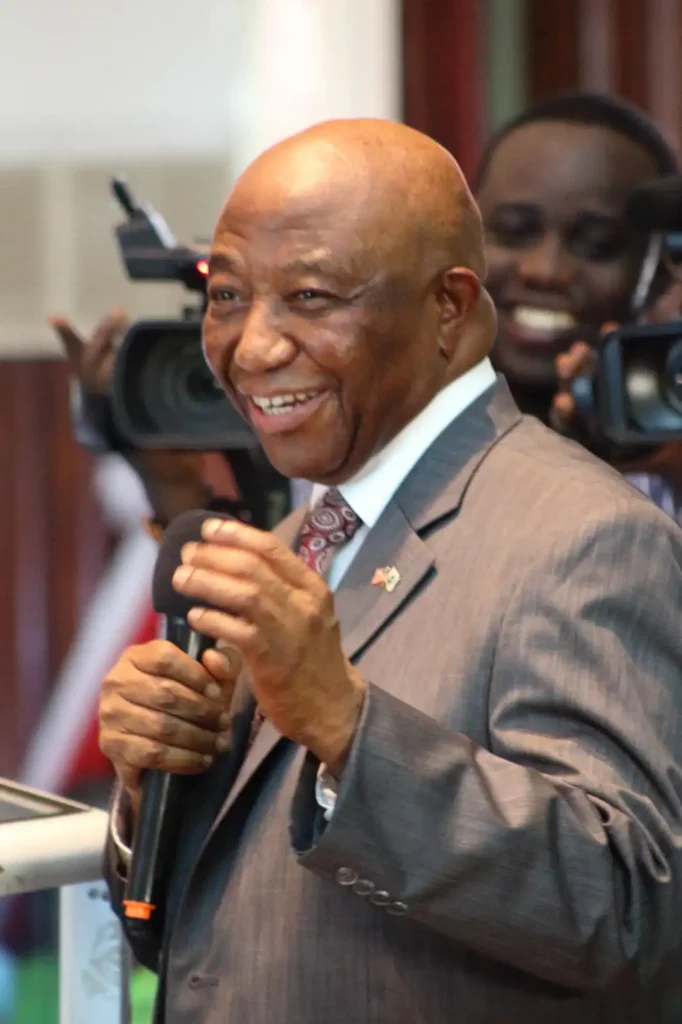
Joseph Boakai
With decades of experience within Liberia’s public sector, Joseph Nyuma Boakai enjoys extensive name recognition and is now setting his sights on the presidency as a candidate for the Unity Party (UP). The 78-year-old previously held the position of Minister of Agriculture from 1983 to 1985 and served as Vice President from 2006 to 2018 under President Johnson-Sirleaf.
In this election year, Boakai has forged an alliance with the Movement for Democracy and Reconstruction (MDR), a party founded by former warlord-turned-senator Prince Johnson. Consequently, Boakai has selected MDR senator Jeremiah Koung as his running mate. Both Johnson and Koung originate from and hold significant sway in Nimba, the country’s second most populous county. Notably, MDR had previously formed an alliance with the CDC in 2017, supporting the CDC in the second round of elections that ultimately led to George Weah’s victory. This alliance dissolved in 2022 due to Johnson’s complaints about the lack of job opportunities for his constituency.
For many observers, Boakai’s second bid for the presidency represents a rematch with Weah, as both candidates faced off in the 2017 elections. Neither candidate secured the required absolute majority in the first round, leading to a runoff election, which Weah ultimately won.
Drawing on his extensive experience, Boakai has prioritized agriculture as a central campaign issue, pledging to boost domestic rice production and establish three agricultural machinery hubs within the country. He has also committed to improving infrastructure by paving highways that connect county capitals and facilitate cross-border trade with neighboring countries.
Additionally, the former vice president has promised to collaborate with the legislature to establish a specialized court to expedite cases related to corruption and economic crimes. He also intends to support the private sector in developing initiatives to recycle solid waste into renewable energy.
Nonetheless, critics have raised concerns about Boakai’s age, arguing that, at 78 years old, he may be too elderly to effectively govern. Boakai has denied facing health challenges, despite such allegations.
Alexander Cummings
Alexander Cummings initially gained prominence in Liberian politics when he ran for the presidency in 2017, securing fifth place in the election. This year, he is once again vying for the presidency as a candidate of the Collaborating Political Party (CPP), a coalition consisting of Cummings’ Alternative National Congress and the Liberty Party.
At 57 years of age, Cummings brings a wealth of corporate experience to his political career. He served as the head of Coca-Cola’s African subsidiary from 2001 to 2008 and subsequently held the position of global Chief Administrative Officer until his retirement in 2016.
During his tenure at Coca-Cola, Cummings played a pivotal role in the establishment of the Africa Foundation, which contributed significantly to the continent’s response to the HIV/AIDS pandemic. In recognition of his humanitarian efforts, he was honored with Liberia’s highest national distinction, the Humane Order of African Redemption, by President Johnson-Sirleaf in 2011.
Cummings has anchored his campaign on the goal of diversifying Liberia’s economy. To achieve this, he has pledged to create a $20 million empowerment fund within his first 100 days in office, aimed at supporting women, youth-owned businesses, and farmers. Additionally, he plans to temporarily freeze all existing taxes and regulations for review to foster a more business-friendly environment. He has also advocated for a “buy Liberian” policy to prioritize the purchase of locally-made products, thereby stimulating indigenous businesses.
Furthermore, Cummings has expressed his support for the establishment of a war crimes court to prosecute key individuals involved in Liberia’s civil wars of 1989-1997 and 1999-2003.
Government has unveiled a comprehensive plan to revamp the Electronic Transfer Levy as a crucial component of its Medium Term Revenue Strategy.
This initiative highlights a dedicated effort to modernise and enhance this taxation policy, bolstering its efficiency and effectiveness.
In May 2022, the introduction of the e-levy – a tax on mobile money transactions that drew widespread criticism – imposed a 1.5% charge on all electronic and mobile money transactions exceeding GH¢100 per day. Its primary goal was to boost government revenue by securing larger tax contributions from Ghana’s informal sector.
Then, in January 2023, the government lowered the tax rate from 1.5% to 1%. However, the notable feature of the levy – an exemption threshold for transactions below GH¢100 per day – still stands, even though its actual value has eroded due to inflation over the past year.
The impact of this levy on Ghana’s public finances, its marginalized communities, and mobile money usage has sparked intense and divisive public debates, often devoid of empirical evidence.
This comprehensive restructuring of the Electronic Transfer Levy might represent a progressive stance on digital-age taxation.
Crucially, it resonates with the government’s wider strategy to modernise its revenue collection techniques whilst ensuring a fair distribution of the tax load across varied economic sectors.
Additionally, the medium-term revenue strategy details the subsequent reforms:
Firstly, there are plans to broaden the withholding tax system, covering an array of tax categories. This measure seeks to improve taxpayer identification, make tax collection more efficient, and simplify the filing procedures, especially for incomes in the informal sector.
Secondly, the strategy includes provisions to streamline tax returns and closely examine the updated taxation framework, all geared towards curbing tax evasion and fostering voluntary compliance.
A key aspect of the strategy involves a thorough examination of archaic tax classifications, such as stamp duty, income tax stamp, and vehicle income tax. The aim is to align them with current market trends.
Furthermore, the strategy aspires to amplify the taxation of rental income, ensuring a fairer contribution from this domain.
Lastly, the strategy includes the adoption of taxation on Gross Gaming Revenue (GGR) for industry stakeholders and the introduction of withholding tax on winnings, signifying a considerable move towards a more inclusive and balanced tax system.
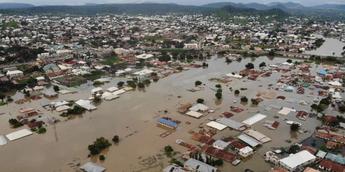
A burst dam unleashed a torrent of water in Yaounde, the capital of Cameroon, resulting in the tragic loss of at least 23 lives, as reported by the army’s rescue unit on Monday.
The incident occurred on Sunday around 4:00 PM local time (1500 GMT) when a colonial-era dam failed, allowing water from a nearby small lake to flood the area, according to Assola Joseph, a local leader in the Mbankolo neighborhood.
On Monday morning, residents and rescue teams were engaged in the painstaking task of sifting through the wreckage, which included debris, shattered timber, uprooted banana trees, and corrugated sheeting, all scattered across a steep hillside.
According to a Reuters journalist on-site, a minimum of five bodies have been retrieved, and a minimum of 30 houses have been obliterated.
Managing Editor of the Insight newspaper, Kwesi Pratt Jnr., has strongly criticized Dr. Ernest Addison, the Governor of the Bank of Ghana, for his response to the #OccupyBoG demonstrators who gathered at the bank’s premises on Tuesday, October 3, 2023.
The protesters had marched to the Bank of Ghana with the demand for the resignation of Dr. Ernest Addison and his deputies, alleging that their mismanagement had led to a substantial loss of GH¢60.8 billion for the bank.
The Governor, according to a publication by Central Banking, in response to the protest says it was “completely unnecessary” and emphasized neither he nor his deputies will step down.
“The Minority in parliament have many channels to channel their grievances in civilised societies, not through demonstrations in the streets as hooligans,” Central Banking further quoted Dr. Addison.
Kwesi Pratt finds the Governor’s choice of words very unfortunate.
According to him, if protesters are hooligans, then Dr. Addison is a “beneficiary of the hooliganism” because the President who appointed him was once an active member of demonstrations in the country.
Mr. Pratt wished the Governor had abstained from making such comments, stating “he didn’t talk properly at all”.
“That hooliganism partly contributed to you becoming a Governor. Those who have the authority and have appointed you to become a Governor at the Bank of Ghana were actively involved in demonstrations. So, if the demonstration is hooliganism, then you are a beneficiary of hooliganism .
“I’m ashamed for the Governor and Bank of Ghana,” he replied while discussing the matter on Peace FM’s morning show “Kokrokoo”.
The Minister of Finance, Ken Ofori-Atta, has announced that both he and Dr. Ernest Addison, the Governor of the Bank of Ghana, will assume positions on the board of the Ghana Cocoa Board.
Furthermore, he noted that a dedicated desk will be established to oversee the board’s ongoing activities.
This statement was made in response to inquiries about the future of COCOBOD amid concerns about high levels of debt.
“Both the Governor and I will now be on the board and the Ministry will set up a desk that will work with the Finance division at COCOBOD so that we manage the future in a much stronger way,” he said while addressing the press on October 6, 2023.
During the press briefing, Dr. Ernest Addison, the Governor of the Bank of Ghana, indicated that this year’s Cocoa Syndicated Loan will be reduced in size to approximately $800 million, a decrease from the initial amount of $1.2 billion.
He clarified that this reduction is in line with debt sustainability measures outlined in the IMF program aimed at restoring stability in the macroeconomic conditions within the cocoa value chain.
Dr. Addison confirmed that COCOBOD, the cocoa regulator, will still be granted the syndicated loan facility for the current year.
“I think that they’re still getting the syndicated loan this year but its just that the size of the syndication is gone from I think $1.2 billion to $800 million,” he noted.
However, the change is projected to have an influence on Ghana’s cocoa output for the 2023/2024 harvest season.
Former National Vice Chairman of the National Democratic Congress (NDC), Professor Joshua Alabi, has expressed apprehensions regarding the forthcoming 2024 elections.
He has implied that President Nana Akufo-Addo and the Electoral Commission (EC) are gearing up for a highly contentious struggle to maintain their grip on power.
In his view, the actions and stances of both the president and the EC suggest that they may engage in aggressive tactics during the elections.
Furthermore, Professor Alabi, an experienced politician and academic, has urged the youth to actively participate in shaping Ghana’s future, underscoring their potential to drive substantial change in the country.
“At the same time, the president’s actions, pronouncements, and excuses coupled with the posture of the electoral commissioner suggest that they are not prepared to give up power easily. They are prepared for a very dirty fight.
“This, therefore, marks the beginning of a powerful journey followed by passion and energy for our youth, the force that has the potential to reshape the very fabric of our party and the nation as a whole. Comrades, you are not merely the future; you are the driving force of the present.”
Professor Alabi also touched upon the prevailing economic difficulties confronting Ghana and the responsibility of political leadership in tackling these issues.
He alluded to President Akufo-Addo’s remarks regarding the government’s purported incapacity to resolve the economic challenges it had allegedly generated.
In his view, the president’s statement serves as an indication to the NDC that they have an opportunity to seize power in the upcoming 2024 elections.
“The president has told the whole nation that he and his team are not capable of solving the economic mess that they have created and if his favourite candidate and possibly their flagbearer is a member of his team, then the signal is that Ghanaians must wait for the NDC.
“Bawumia is going to be the flagbearer and Bawumia is a member of his team, so what he is telling us is that wait for the NDC,” he added.
National Investment Bank (NIB) employees have outlined a series of challenges that have adversely affected the bank in recent years, leading to its current precarious state.
In an open letter, these employees have appealed to the government for assistance in recapitalizing the bank to prevent its potential collapse.
Among the issues raised, the workers mentioned various internal problems, including the impact of the Domestic Debt Exchange Programme, contributing to the bank’s current predicament.
They noted that the Bank of Ghana’s embargo on granting of loans for the past six (6) years is “practically depriving the bank of huge interest income and technically out of trade and business.”
“Secondly, a chunk of non-performing loans totaling over GHS2.1 billion granted to companies and individuals to execute government of Ghana projects. These companies and individuals have executed the projects, raised Interim Payment Certificates, and are yet to be paid by the government.
“Thirdly, the Bank’s investments in Government of Ghana bonds of GHS857,000.00 held up and affected by the Domestic Debt Exchange Program (DDEP) is also not helping matters,” parts of the statement read.
The staff further noted that despite these challenges, the Bank has performed “excellently well by increasing its deposit position from GHS3.2 billion in August 2022 to GHS5.1 billion in August 2023.”
“Deposit increases month on month and the target of a billion-year ending December 2023 is highly achievable. The goodwill from our loyal customers has been amazing as the bank opens over 2,000 new accounts every month. The bank’s nationwide customer cash collection service is second to none.
“Internal management staffing restructuring has been successful. The staff strength saw a reduction from 1700 in 2021 to a little over 900 in July 2023. There is still the edge for further downsizing to ensure efficiency and increase savings,” the statement said.
Workers are also calling with the government to reconsider its decision to transfer NIB operations to the Agricultural Development Department.
The United States has declared the resumption of food aid deliveries for refugees in Ethiopia, ending a five-month suspension. This decision followed the agreement of Ethiopian authorities in Addis Ababa to withdraw from the distribution of these supplies.
In May, Washington halted aid distribution, following a similar action by the UN, citing evidence of “widespread and coordinated” food aid theft.
The Ethiopian government introduced reforms, leading to the reinstatement of aid, which included strengthening monitoring, oversight, and enhancing commodity tracking, according to a statement by USAid. Ethiopia has also “transferred responsibility” for the dispatch and warehousing of food aid.
The resumption of aid will benefit hundreds of thousands of refugees currently residing in Ethiopia, primarily from neighboring countries such as Sudan, South Sudan, Somalia, and Eritrea.
However, the pause on food aid for around 20 million Ethiopians in dire need of humanitarian assistance remains in effect.
Officials in the conflict-affected Tigray region had previously reported to the BBC that at least 1,400 people had died of starvation in the region since the aid suspension, while in the neighboring Amhara region, where recent conflicts are compounded by drought, many have perished due to the lack of food aid.
The Senegalese government has upheld the ban it imposed on the social media platform TikTok back in August.
Officials had implemented the ban, alleging that TikTok had become a platform of choice for individuals spreading hateful and subversive messages that posed a threat to the country’s stability.
Senegal’s Communications Minister, Moussa Bocar Thiam, stated on Thursday that TikTok would only be reinstated if the company agreed to a pact allowing for the removal of accounts promoting what he referred to as inflammatory content.
“For the time being, the restriction is being maintained pending the conclusion of a comprehensive written agreement,” Mr Thiam said, following discussions with representatives of the company.
The ban on TikTok was prompted by the arrest of opposition leader Ousmane Sonko.
Government officials asserted that the app had been employed to disseminate “hateful and subversive messages,” which contributed to the country’s instability amid the violent protests triggered by Mr. Sonko’s detention.
Furthermore, the government has stipulated that TikTok must commit to providing equitable compensation to its Senegalese content creators as a condition for reinstatement.
Algerian authorities have implemented stricter health measures at their borders to mitigate the potential spread of bedbugs, a problem that has become prevalent in France.
The Ministry of Health in North Africa has outlined plans to introduce “health monitoring and disinfection procedures for aircraft, ships, and vehicles at entry points.”
This move comes amid concerns that these blood-sucking insects may infiltrate Algeria due to the significant number of people traveling from France.
The ministry, however, clarified that no bedbug infestations have been reported within the country while urging the public to remain vigilant.
Algeria’s neighbor, Morocco, has also taken preventive measures to reduce the risk of bedbugs entering its territory.
The recent bedbug infestation in cities like Paris has raised widespread concerns, particularly regarding health and safety in anticipation of next year’s Olympic Games.
Uganda’s police are touting their operation as a “success” in thwarting supporters of opposition leader Bobi Wine from welcoming him back to the country.
On Thursday, his followers had planned to receive him at Entebbe International Airport and accompany him on a sizable 50 km (30-mile) march to his residence. However, the police deemed this march illegal.
The security forces reported that, as part of their operation, they detained 40 suspects, including a Member of Parliament, on charges of “inciting violence.”
The police issued a statement, stating, “Joint deployments, including both overt and covert officers, were strategically positioned, and snap checkpoints were established on all roads leading to Entebbe… Various items intended for use in processions, such as red berets, handheld megaphone speakers, and white and red [party] T-shirts… were recovered and exhibited.”
On Thursday, Bobi Wine claimed he was forcibly taken by “goons” and placed under house arrest upon his return from South Africa. However, the police refuted the arrest claims, asserting that the 41-year-old singer-turned-politician was merely “escorted” to his home.
Approximately 4 million liters of alcohol are anticipated to be produced from Bui Sugar Limited when it commences its operations, according to Eric Opoku Acheampong, the Deputy Director of Lands and Impact at Bui Power Authority.
In an interview on GhanaWeb TV’s BizTech program hosted by Ernestina Serwaa Asante, he revealed that the sugarcane plantation spans across 6,000 hectares of land in the Bui region.
Mr. Opoku Acheampong further explained that Bui Sugar Limited is projected to process a total of 6,000 metric tonnes of sugar each year.
During the interview with BizTech host Ernestina Serwaa Asante, he mentioned that the Bui Sugar Limited project, which commenced approximately a year and a half ago, is expected to provide employment opportunities for 1,000 individuals within the Bui enclave.
Currently, around 200 people are employed and actively working on the farmland.
Addressing concerns about the project’s sustainability, the Deputy Director of Lands and Impact at BPA emphasized that measures have been put in place to ensure that it does not suffer the same fate as the well-known Komenda Sugar Factory. He explained that adequate infrastructure and raw materials for processing have been secured to support its success.
“This sugarcane plantation is going to be the biggest in the whole country…we are going to plant about 6,000 hectares of land for sugarcane. Based on it, we are going to do a processing plant. The processing plant will process about 60,000 metric tonnes of sugar annually and so, we’ll produce about 4 million litres of alcohol out of it,” Mr Opoku Acheampong told host of BizTech, Ernestina Serwaa Asante.
He added that, “We are developing the base for the factory so we will always operate…when we finish with the base, then we’ll also help the farmers around who will want to enter into sugarcane production then we assist them with the facilities to be able to add to what we have.”
Touching on employment, he said, “Because this is the beginning of the project, so far, we are rolling between 150 to 200 at a time but at the full operation, we’re targeting about 1,000 employees at this place…”
Eric Opoku Acheampong announced that the Bui Sugar Limited processing plant would be commissioned in October 2024.
Kenyan President William Ruto is scheduled to embark on a trip to China later this month with the aim of securing a $1 billion (£820 million) loan to fund road projects that have come to a standstill, as revealed by his deputy, Rigathi Gachagua.
Gachagua conveyed this information during an interview on Inooro FM radio in a local language. He highlighted that numerous construction contractors across the country had halted their projects due to non-payment for their work.
Despite Kenya’s already substantial debt to China, President Ruto intends to request an additional $1 billion, simultaneously seeking an extension of the repayment period for existing debts. The essence of the request to China is essentially, “We acknowledge our existing debt; can we engage in discussions to extend the repayment schedule, allowing for a more gradual repayment, and could you consider providing additional funds to facilitate the completion of our road infrastructure?”
Currently, Kenya owes China over $8 billion, with most of the loans having been acquired during the tenure of former President Uhuru Kenyatta to finance various infrastructure projects.
Deputy President Gachagua also addressed concerns related to the extravagant spending of government officials. He explained that this was one of the primary reasons why the President had initiated measures to restrict foreign trips.
Earlier in the week, the Kenyan presidency issued a directive prohibiting public officials from undertaking non-essential foreign trips in an effort to reduce government expenditure. Additionally, all ministries have been instructed to reduce their budgets for the upcoming fiscal year by 10%.
These austerity measures have been introduced in response to widespread complaints from Kenyan citizens regarding the escalating cost of living and the imposition of tax hikes by the government, with accusations of excessive government spending playing a central role in the discontent.
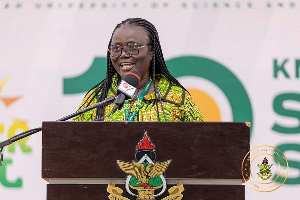
Vice-Chancellor of Kwame Nkrumah University of Science and Technology (KNUST), Professor Rita Akosua Dickson, has underscored the university’s dedication to narrowing the divide between academic knowledge and its real-world application within the nation.
Prof. Rita Akosua Dickson has noted that the existing curriculum at the university promotes a robust and collaborative partnership between the institution and various industries.
She disclosed that KNUST has continually enhanced collaborative engagement between its diverse faculties and the industrial sector over the years. This concerted effort aims to improve learning outcomes, ensuring the education provided equips graduates to contribute effectively to economic development.
“With the evolving needs of the 21st-century workplace, it has become imperative for academics to align its research, teaching, and learning approaches with industry expectations, and that is exactly what we are doing at KNUST,” she said.
Speaking at the 10th Summer School event on Tuesday, October 3, 2023, which was held at the campus of KNUST under the theme, “Academia-Industry Partnership for National Development”, Professor Akosua Dickson said the University continues to improve and sustain the quality of teaching and learning, something that has to enable graduates from KNUST to meet the standards of the fourth industrial revolution.
“At KNUST, one thing we are mindful of is that our teaching and learning process must have the objective of being fit for purpose, especially from the perspective of the industry for national development.
“I am of the firm belief that this year’s Summer School will once again offer us an opportunity to deliberate extensively on pragmatic issues that, will help enhance the readiness of our graduates for the industry and reduce the gap between academic knowledge and practical application,” she said.
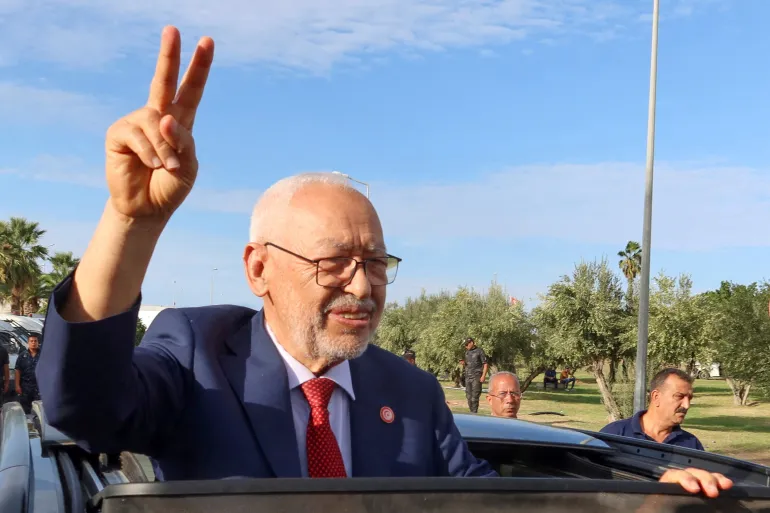
The families of four incarcerated Tunisian politician are urging the International Criminal Court (ICC) to examine claims of political persecution, while their legal representative is appealing to the EU, UK, and US to impose sanctions on President Kais Saied’s administration.
President Saied faces allegations of imprisoning over 20 individuals solely for criticizing his policies and of engaging in severe repression against black migrants.
This call for international intervention comes on the heels of the recent arrest of Abir Moussi, the leader of the opposition Free Constitutional Party.
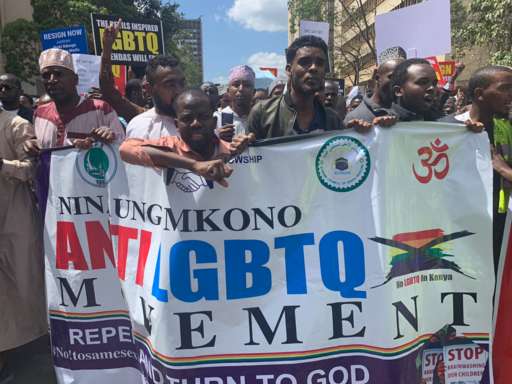
An anti-gay demonstration is currently underway outside the Supreme Court in Nairobi, Kenya’s capital.
Numerous civil society and religious organizations are venting their frustration over a recent court ruling permitting the registration of gay and lesbian associations within the country.
Among the protesters, some are brandishing signs demanding the resignation of the Supreme Court judges.
A decade ago, a government-funded entity rejected the registration of an LGBTQ rights organization, citing the promotion of same-sex conduct in a nation where homosexual activity remains illegal.
However, this year, judges overturned that decision.
Kenya’s President, William Ruto, has called on religious leaders to advocate for what he terms as traditional values.
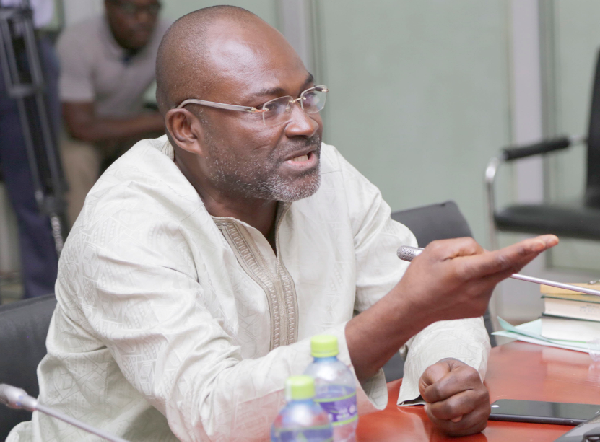
Flagbearer hopeful of the governing New Patriotic Party, Kennedy Agyapong has expressed his opinion about Ashanti Regional Chairman of the New Patriotic Party (NPP), Bernard Antwi Boasiako, describing him as someone who lacks courage and bravery.
According to him, he expected Chairman Wontumi to face him if he feels intimidated by him.
However, Agyapong believes that Wontumi’s declaration of intent to report him to the police in any scenario demonstrates a reluctance to confront him face-to-face.
“ I thought a bold man will always say Tthat if you challenge me again or threaten me I’m also going to face you. But if you resort to a police, It means you are coward, case close. We are not going to talk about it again. Because i will never call a police and come face to face and give you a show down”, Ken Agyapong expressed.
Kennedy Agyapong’s campaign team in the Ashanti Region has dismissed the warning issued by Bernard Antwi Boasiako, the Ashanti Regional Chairman of the New Patriotic Party (NPP), regarding the potential arrest of the flagbearer aspirant.
Agyapong’s team contends that Chairman Wontumi lacks a valid basis for threatening legal action against the Member of Parliament for Assin Central.
Earlier, Chairman Wontumi had declared his intention to pursue legal action against Kennedy Agyapong if he continued to make what he considered threatening statements towards him, during a press conference in Kumasi.
In response, Kennedy Agyapong’s team held a news conference to counter the earlier statement by Chairman Wontumi and openly challenged him to go ahead and arrest the Assin Central MP.
They further asserted that the information available to them indicates that Chairman Wontumi has actually been involved in activities that could justify his own arrest.
Kennedy Agyapong, a presidential candidate hopeful within the ruling New Patriotic Party (NPP), has candidly expressed his distress towards some party members especially those whom he asserts to have supported and aided in the past..
According to to him, there are several individuals in the party he has assisted but they are now rallying behind Vice President Bawumia in his bid for the presidency, rather than supporting his own presidential aspirations
For this reason he said “ I am very very bitter. Especially those who are not ministers that I have helped. My wife tells me to try and control the rage. I am very bitter.These MPs, the help that I have given them and some of them they come and their excuse is that if I support you… and it is true. One MP declared that he was going to support me and they threatened him that your market at Akim Oda they are not going to do it.”
“That is how bad the situation is, they have threatened a lot of MPs that if you don’t follow one person, they are going to bring another person to contest you, and all of them are afraid,” he stated.
Mr Agyapong additionally stated that “I wouldn’t have known my enemies if I had not contested.”
Also, he specifically mentioned an MP, Alfred Obeng-Boateng, who represents the Bibiani-Anhwiaso-Bekwai constituency in the Western North Region.
According to Ken, he had personally provided assistance and actively campaigned for Obeng-Boateng in the past.
But despite his past support, Obeng-Boateng is now actively campaigning against him.
“Last week one of them that I helped, I will never forgive him but after November 4th he will see what will happen. You see, if you are not even going to vote for me, you have a choice and I don’t have a problem.
“But the people in his constituency know that I went there to campaign for him, and this man picks up a phone and calls delegates, telling them not to vote for Kennedy Agyapong, but to vote for number two on the ballot. And then one of them asked him why, and he said Kennedy Agyapong doesn’t know how to talk,” he added.
He continued “I campaigned for him in Bibiani; I am not afraid of him, Alfred Obeng. I left his place at 1:00 a.m. for this man to tell me that I don’t know how to talk. I can never forgive that guy.”
A hopeful candidate for the flagbearer position within the New Patriotic Party (NPP), Kennedy Agyapong, has singled out one MP, Alfred Obeng-Boateng, representing the Bibiani-Anhwiaso-Bekwai constituency in the Western North Region for campaigning against him.
According to Ken, this is a man he rallied so much support for in the past.
He finds it very disappointing that Mr Alfred Obeng-Boateng is now heavily campaigning against him.
“Last week one of them that I have helped, I will never forgive him but after November 4th he will see what will happen. You see, if you are not even going to vote for me, you have a choice and I don’t have a problem.
“But the people in his constituency know that I went there to campaign for him, and this man picks up a phone and calls delegates, telling them not to vote for Kennedy Agyapong, but to vote for number two on the ballot. And then one of them asked him why, and he said Kennedy Agyapong doesn’t know how to talk,” he added.
He continued “I campaigned for him in Bibiani; I am not afraid of him, Alfred Obeng. I left his place at 1:00 a.m. for this man to tell me that I don’t know how to talk. I can never forgive that guy.”
He also revealed that during a difficult phase in Obeng-Boateng’s career, he extended his assistance, recounting, “When he encountered issues at BOST and was dismissed, he often sought solace in my home, sometimes staying until as late as 1:00 am.”
Kennedy will vie for the NPP flagbearer position, competing against three other contenders: Dr. Bawumia, Dr. Owusu Afriyie Akoto, and Francis Addai-Nimoh.
The NPP has scheduled the leadership transition for November 4, 2023, when they will select a successor to President Nana Addo Dankwa Akufo-Addo as the party’s leader.
Ghana, once heralded as a pioneering African economic success story, now finds itself grappling with an unparalleled financial crisis.
In recent days, the streets of the capital city, Accra, have witnessed hundreds of protestors demanding the resignation of the governor of the Bank of Ghana and his two deputies due to a staggering loss of approximately 60 billion Ghanaian cedis ($5.2 billion; £4.3 billion) during the 2022 financial year.
This demonstration, known as #OccupyBoG, was spearheaded by the opposition National Democratic Congress (NDC) party. The protesters, adorned in red attire, including shirts, scarves, and berets, voiced their grievances through songs and displayed banners bearing messages such as “stop the looting, we are suffering.”
The opposition alleges that the central bank engaged in unlawful money printing to extend loans to the government, resulting in the devaluation of the currency and severe inflationary pressures.
Furthermore, the NDC has voiced criticism against the bank for its expenditure, including over $762,000 on both domestic and international travel, marking an 87% increase compared to the previous year, and $250 million on a new office complex. These financial details, according to the opposition, are documented in an internal audit.
The NDC has accused Dr. Ernest Addison, the governor of the central bank, of acting recklessly and mismanaging the financial situation. While the bank has faced mismanagement allegations in the past, the magnitude of this particular loss is unparalleled.
“We have never seen anything like this in our history. If the Bank of Ghana wants to recover from this loss… it will take them more than 45 years,” says economist Professor Godfred Bokpin, from the University of Ghana.
The bank refutes allegations of mismanagement and asserts that the losses were primarily attributable to exchange rate fluctuations and the failure of state institutions to repay their loans. Additionally, it points to the government’s decision to borrow $700 million from the bank and not fully repay it as a contributing factor to the ongoing crisis.
Critics have also accused the bank’s leadership of exacerbating rampant inflation and economic hardship through their actions. Lawyer Martin Kepbu questions, “During the period when they were printing billions for the government, did they not anticipate the potential repercussions?”
Why has this happened?
Ghana is currently grappling with its most severe economic crisis in a generation. In the previous year, the inflation rate soared to a historic high of 54%, and it continues to hover above 40%. Multiple credit rating agencies have downgraded the country, making it challenging to secure international borrowing.
As of September 2022, Ghana’s total debt had surged to $55 billion, necessitating that over 70% of the government’s income be allocated to service this debt—an unsustainable situation that led to defaults on a significant portion of its debt payments.
In response, the government sought assistance from the International Monetary Fund (IMF) and secured a $3 billion bailout earlier this year, contingent upon meeting specific requirements. Chief among these was the need to reduce the nation’s debt interest payments to a manageable level by 2028, thereby ensuring sufficient resources for economic governance.
To fulfill this commitment, Ghana’s government initiated a debt restructuring process by renegotiating terms with creditors, proposing reduced interest rates and extended repayment periods to alleviate the strain on public finances. However, some creditors declined to participate in this debt exchange program.
On August 9th, the Bank of Ghana released a statement indicating that the government had informed it of its inability to meet the IMF’s requirement, and, as a result, would not repay half of the $700 million borrowed from the bank. Instead, these funds would be allocated to the debt restructuring process, with no interest payment to the bank.
The Bank of Ghana, as the lender of last resort, has been accused of having its status misused by the government, led by President Nana Akufo-Addo, and of violations of the bank’s regulations.
“The Bank of Ghana Act is very clear that printing money or financing the government is limited to 5% of the previous year’s fiscal revenue, which means that in principle supporting the government is not a crime but don’t go beyond 5%,” says Professor Bokpin.
If the 5% threshold is exceeded, the bank’s officials are required by law to report to parliament. Failure to report could result in a fine or a term of jail of up to two years.
Implications for the bank
However, it’s important to note that the Bank of Ghana’s financial situation doesn’t imply insolvency.
Unlike commercial banks, it doesn’t operate with the primary goal of generating profits, and thus, this loss shouldn’t disrupt its regular operations. Furthermore, as the lender of last resort, it possesses the capability to create its own currency as needed.
Nonetheless, experts argue that the central bank’s loss carries significant consequences. It erodes the moral authority of the bank in its role of overseeing Ghana’s commercial banks and erodes confidence in the nation’s financial system.
While central banks worldwide have encountered similar challenges, what sets Ghana apart is the scale of the loss relative to the size of its economy.
In contrast, the Bank of England, for example, anticipates a net loss of approximately $180 billion over the next decade, which will be covered by the UK government. However, the UK’s economy is measured in trillions of dollars, making the loss proportionally less impactful.
Inflation in Ghana is still running at more than 40%
According to Bright Simons, a Ghanaian social innovator and writer, the bank’s losses cannot be compared to those of other countries. “Their attempt to deflect blame by pointing to losses by other central banks makes no sense because the magnitude of their losses far outweighs those of other peer banks.”
“A lot of the mess is down to the bank’s accommodative stance on the government’s loose fiscal policy,” he says.
In other words, by creating money the bank has allowed the government to live beyond its means.
Human Impact
According to a recent report by the World Bank, as of last month, an estimated 850,000 Ghanaians have been pushed into poverty due to soaring inflation.
The income levels of Ghanaians have been steadily eroded, significantly impacting their purchasing power. The persistently high prices of essential commodities such as food, fuel, and utilities have placed a heavy burden on many households, making it increasingly challenging to make ends meet.
Adding to the country’s woes, the central bank is now facing scrutiny both domestically and from the IMF. As per the terms of the IMF loan agreement, should the government seek additional bailouts, the central bank’s hands will be tied, forcing it to decline such requests.
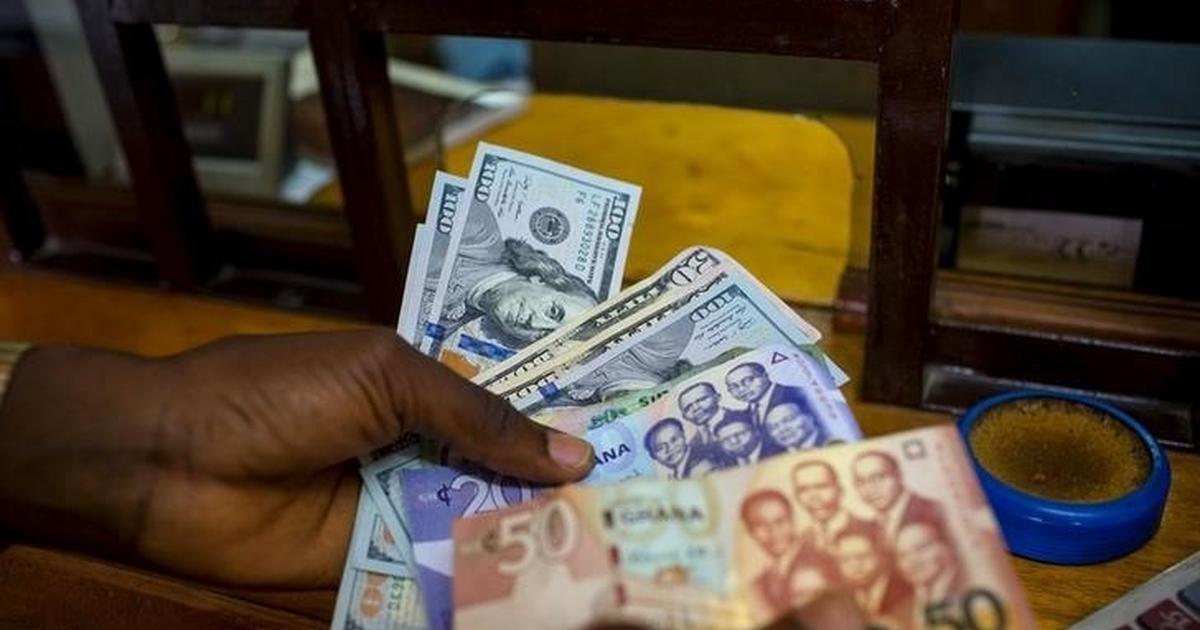
Today, on October 6, 2023, as per the Bank of Ghana’s Interbank forex rates, the Ghana Cedi is trading against the US Dollar with a buying price of 11.2193 and a selling price of 11.2305.
In Accra’s Forex bureau, the Dollar is being purchased at a rate of 11.65 and sold at 11.95.
Against the Pound Sterling, the Cedi has a buying price of 13.6584 and a selling price of 13.6731.
At an Accra-based Forex Bureau, the Pound Sterling is being bought at 14.10 and sold at 14.60.
The Euro’s trading figures indicate a buying price of 11.8172 and a selling price of 11.8280.
At a Forex Bureau in Accra, the Euro is available for purchase at a rate of 12.00 and sale at 12.50.
The South African Rand has a buying price of 0.5749 and a selling price of 0.5753.
At a Forex bureau in Accra, the South African Rand is traded at 0.35 for purchase and 0.95 for sale.
The Nigerian Naira’s exchange rate shows a buying price of 68.1093 and a selling price of 68.3748.
At an Accra-based forex bureau, the Nigerian Naira is bought at a rate of 10.00 Naira for every 1 Cedi and sold at 15.00 Naira for every 1 Cedi.
For the CFA, the rates indicate a buying price of 55.4580 and a selling price of 55.5087.
At a forex bureau in Accra, the CFA is acquired at a rate of 16.50 CFA for every 1 Cedi and sold at 20.50 CFA for every 1 Cedi.
Note that these rates may be different at a forex bureau near you. Our forex bureau rates are provided by Afriswap Bureau De Change in Osu, Accra.
Our forex bureau rates are provided by Afriswap Bureau De Change in Osu, Accra.
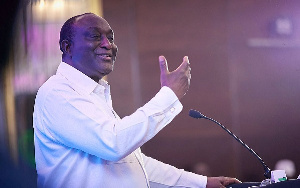
Founder of the Movement for Change, Alan Kwadwo Kyerematen, has underscored the inclusion of private-sector financing within his Great Transformational Plan (GTP) for infrastructural development.
Kyerematen contends that Ghana’s lack of progress stems from a historical reliance on government budget allocations for developmental projects, despite insufficient available funds.
He envisions that private-sector financing can serve as a catalyst to bridge this financial gap, thus expediting infrastructural development throughout Ghana.
The GTP comprises a comprehensive 15-point strategy aimed at propelling Ghana into a modern, industrialized nation. Its core focus areas encompass industrialization, agriculture, energy, healthcare, and education.
Kyerematen places particular emphasis on industrialization as the linchpin for job creation and economic expansion. He has committed to pursuing an assertive industrialization policy should he assume the presidency.
Mr. Kyerematen expresses optimism that he will garner support from a diverse range of stakeholders, including members of the NDC, NPP, CPP, professionals, and the general public.
Former People’s National Convention (PNC) General Secretary, Atik Mohammed, has made assertions that there is a leadership gap in the NPP due to recent striking revelations made by some members of the party.
According to him, there is a lack of accountability and no leader taking responsibility to restore order and unify those who have drifted away from the party.
“Gone were the days where there were people like J.H.Mensa, BJ da Rocha, Dan Botwe and such figure heads who will call people people to other but its not like that anymore.”
“I have seen that there is showdowns and bombshells in the NPP. This shows there is a serious vacuum in the NPP.
Recently, tensions have escalated between Mr. Kennedy Agyapong and certain members of the New Patriotic Party (NPP), including Ashanti Regional Chairman Bernard Antwi Boasiako, widely known as Chairman Wontumi. Chairman Wontumi, during a press conference in Kumasi, issued a threat to have Kennedy Agyapong arrested if he made further threats against him.
In response, Kennedy Agyapong’s campaign team in the Ashanti Region has dismissed Chairman Wontumi’s threat to have the flagbearer aspirant arrested.
He says the current dispute between Chairman Wontumi and Kennedy Agyapong has the potential of affecting the party’s chances during the 2024 elections.
He thus urged leaders of the NPP to rise up and silence every foe before the general election unfolds.
The Deputy National Communications Officer of the opposition National Democratic Congress (NDC), Godwin Ako Gunn, has strongly criticized the Central Bank’s governor, Dr. Ernest Addison, characterizing him as an arrogant and discourteous public official.
According to Ako Gunn, he believes that if he were not representing the NDC, he would have used the term “mentally unstable” to describe Addison.
“It is unfortunate that the governor has chosen to disrespect Ghanaians. He opened his mouth and made reckless and irresponsible remarks about people whose taxes pay him. Hooligans are lawless people, and describing taxpayers who pay his monthly salary demonstrates how disrespectful he is,” Mr Ako Gunn stated
The only appropriate observation in this situation is that he lacks self-respect, and as a result, he lacks respect for the people of Ghana. His remarks were deeply troubling. He is employed in an institution plagued by theft, corruption, and mismanagement. If this were not the case, there would be no justification for spending GHC 135 million on car repairs.
The Governor of the Bank of Ghana has informed Central Banking that he rejects the call from the country’s primary opposition party for his resignation. On October 3, the Minority group marched to the central bank’s headquarters, demanding the resignations of Dr. Addisson and his deputy governors, citing the bank’s reported GHC 60 billion loss for the 2022 fiscal year.
Ernest Addison, on the other hand, claims that “the demonstration was completely unnecessary” and that neither he nor his deputies intend to resign.”
Reacting to the comments, Ako Gun said ”I would have declared him mentally unstable if I weren’t a communicator for the NDC. Listen to what I’m saying; I didn’t insult him. I only stated that I would have; I did not describe him as such.”
He made the remarks during an interview on Rainbow Radio 87.5 FM’s Nyankonton Mu Nsem.
Between January 2022 and August 2023, the Nigerian government incurred losses of approximately N843 billion due to gas flaring, according to data from the National Oil Spill Detection and Response Agency (NOSDRA).
NOSDRA’s latest gas flare report revealed that oil and gas companies operating in the country flared 147.1 billion standard cubic feet (SCF) of gas, valued at $514.9 million or about N390 billion (based on the Central Bank of Nigeria’s current exchange rate of N757.5 to a dollar) from January to August 2022.
Similarly, from January to August 2023, these companies flared 171.1 billion SCF of gas valued at approximately $599 million or N453 billion.
This totals to about N847 billion lost between the same periods in 2022 and 2023.
The report reveals that during the first eight months of this year, the volume of gas flared was 16.28% higher compared to the same period in 2022. This gas flaring in the initial eight months of this year had the potential to generate 17,100 gigawatts/hour of electricity while emitting 9.1 million tons of carbon dioxide into the atmosphere.
Furthermore, the report points out that the responsible companies were subject to penalties totaling $342 million, approximately N251 billion. However, it’s worth noting that a significant portion of these penalties was never collected by the Federal Government.
In contrast, during the period between January and August 2022, the oil firms faced penalties of about $294 million (N223 billion). During this time, the gas that was lost had the potential to generate 14,700 GWh of electricity, with an equivalent carbon dioxide emission of 7,800 tonnes.
Some of the companies responsible for these actions, as mentioned by NOSDRA, include Shell Petroleum Development Company, Nigerian Petroleum Development Company, Chevron Nigeria, Mobil Oil, Elf Petroleum Nigeria, Nigeria Agip Oil Company, Addax Petroleum, Texaco Overseas (Nigeria), Cromwell, and South Atlantic Petroleum, among others.
These companies flared gas from Oil Mining Leases 04, 05, 11, 13, 14, 17, 18, 22, 28, 23, 24, 38, 40, 42, 43, 72, 49, 54, 90, 95, 67, 70, 104, 59, 99, 100, 101, 102 and Oil Prospecting Licenses 222, 316 and 306, among others.
The report comes on the heels of FG’s pledge to the United Nations in 2020, to attain zero gas flare by 2060, ten years after the UN’s 2050 target.
Former PNC General Secretary, Atik Mohammed, has criticized Minority leader, Ato Forson over one of the reasons he led a delegation on 3rd October, 2023 to demand the resignation of BoG Governor.
In his view, Ato Forson’s assertion that the governor should step down because he injected money into the system, leading to Cecilia Dapaah stashing some of it under her bed, is unfounded and lacks merit.
He stated that Ato Forson must be under the influence of an unusual spirit to make such allegations and use them as a basis for the governor’s resignation.
So he said that spirit needs to be casted out of Ato Forson.
“They also emphasized that the Central Bank injected money into the system, and people distributed it among themselves. What particularly disturbs me is their claim that some of this money was given to Cecilia Dapah to stash under her bed. Ah, Ato Forson said it. He explained that the funds injected into the system by the central bank are the same funds that Cecilia Dapaah received and stored under her bed. I’m not kidding. Ato Forson said it. Can you imagine this? And this calls for the basis to call for the resignation of the BoG Governor. We need to cast out that spirit of Gbeshi from this minister,” Atik explained.
The Minority Caucus in Parliament and the National Democratic Congress (NDC) led a protest on October 3 to demand the resignation of the governor of the Bank of Ghana, Dr. Ernest Addison, and his two deputies.
The action followed the Central Bank’s loss of GH¢60.81 billion in the 2022 fiscal year and the use of over $250 million for the construction of a new headquarters at North Ridge.
The organizers of the protest marched to the BoG headquaters with the expectation of meeting the governor.
Unfortunately, they met his absence, even though he delegated the BoG head of security to receive the letter on his behalf.
Thus, the minority refused to handover their petition and vowed to return to the BoG headquaters in due time.
Governance Lecturer at the Central University, Dr. Benjamin Otchere-Ankrah, has condemned Member of Parliament from Madina, Francis-Xavier Kojo Sosu for his outburst during the #OccupyBoG demonstration last Tuesday.
Mr Soso was heard pronouncing vulgur words to the the leadership of the Bank of Ghana when he engaged the media.
He however rendered an apology hours later, explaining that his actions were out of character as he was angry.
In reaction, Dr Otchere believes that Mr Sosu does not deserve to be a Member of Parliament or be acknowledged as an honourable.
He wondered why the MP has not been summoned by the Privileges Committee over his comments
“He must bow his head in shame, that a whole member of parliament as he is could make such filthy pronouncement. If it were someone else, they would likely have been called before the privileges committee. Isn’t it? You don’t talk like this. Its a shame to stand in public and talk like that as an MP,” the lawyer stated.
Dr Otchere is not the only individual dissatisfied with the Madina MP’s utterance.
Former Member of Parliament (MP) for the Bantama constituency, Dr. Henry Kwabena Kokofu, has also vented his spleen.
He noted that for an individual with such authority, it is unpardonable to utter such an utterance, irrespective of one’s mood or sentiment.
“A whole Member of Parliament who was elected—what sort of anger is it that you couldn’t control? You said you were going to have the BoG governor removed. You protested but did not go to meet him. You met the security head you claim was a watchman and kept your petition. You said you’d return, and we said okay. So why the insult? The words you said cannot be said anywhere. Why?” he quizzed during an interview on Peace FM’s Kokrokoo show.
According to Dr. Henry Kwabena Kokofu, such individuals cannot urge Ghanaians to vote for them to return to power.
“Are these the kind of people who want us to vote for them come 2024? Ghanaians are watching,” he said.
President’s Advisor on Health, Dr. Anthony Nsiah Asare, has called on Ghanaians to consider donating portions of their bodies to those in need.
This, he believes, can aid in the resolution of the country’s renal failure problems.
He added that it might also help Ghana become a medical tourism destination in West Africa.
“People should also know how to donate parts of their bodies. You know we have two kidneys and normally we need out one kidney to carry out all the processes so you can easily donate,” he said.
He further said that, “To me, the most important thing is the eye. When anyone is about to die and your eye is good, you can remove your eyes and then donate the cornea to somebody because after all when you die, you close your eyes so when the eyes are not there, nobody would even notice.”
Mr. Nsiah Asare shared this statement during his participation in the Kidney Health Matters discussion on JoyNews on Thursday, October 5, 2023.
When questioned about actions taken regarding organ donation, the former Director General of Ghana Health Service mentioned that legislation would be enacted to address this matter.
“There is a document which is being reviewed so that we have a law… so that we can harvest the organ, store the organ and also donate it. It is not only for kidneys,” he said.
He also noted that the government is building the capacity of surgeons in that area.
He further challenged hospitals with renal dialysis units to buy essentials in bulk to save cost.
Dr. Asare also advised pharmaceutical companies to go into the manufacturing of consumables that will decrease the cost of dialysis.
Ghanaian forward Abdul Fatawu Issahaku has expressed his lifelong aspiration to play football in England.
The 19-year-old, who is on loan from Sporting Lisbon, made the move to Leicester City just a day before the end of the summer transfer window.
Despite his prior experience in the Champions League, Fatawu considers his venture into England’s second-tier football as a significant achievement.
“Their journey is to go back to the Premier League. That’s a big opportunity for me to help,” he said.
“For me [joining] Leicester is a big achievement. When I heard they were interested, I was so happy because it’s been my dream to play in England,” stated Fatawu in an interview with BBC Radio Leicester.
“For me, [joining] Leicester is a big achievement. When I heard they were interested, I was so happy because it’s been my dream to play in England.”
Since putting on the blue jersey, the Ghanaian national has featured in seven matches for Enzo Maresca’s team, earning a place in the starting lineup for Leicester’s last three Championship games.
Leicester City has shown impressive form this season, winning nine out of ten Championship matches, securing the leading position in the league standings.
Fatawu’s influence was noticeable in their recent match against Blackburn, where he notched his first assist of the season by setting up Wout Faes for an important goal in their dominant 4-1 win at Ewood Park.
Police in Uganda deployed tear gas to disperse supporters of the main opposition candidate, Bobi Wine, who were attempting to reach his residence on the outskirts of Kampala.
Earlier, security officers apprehended Bobi Wine at Entebbe Airport upon his return from an overseas trip. Bobi Wine, a frequent critic of President Yoweri Museveni, ran against him in the previous election and has faced numerous arrests.
Plain-clothes security agents forcibly took Bobi Wine from the plane at Entebbe Airport and transported him to his home in Kampala, seemingly with the intent of preventing opposition supporters from staging a welcome rally.
Despite the fact that elections are more than two years away, Bobi Wine has already initiated his campaign and hopes to challenge Yoweri Museveni for the presidency. Museveni’s own son has expressed a desire to run for president as well.
For over two decades, the military has been employed to stifle the opposition in Uganda.
Barcelona has officially announced that their striker, Robert Lewandowski, is dealing with an injury and is expected to be sidelined for approximately three to four weeks.
Lewandowski was on the field with his teammates for the Porto match, but he was forced to exit in the 34th minute due to a harsh tackle from Porto’s Fabio Cardoso that occurred in the 28th minute. Initially, it appeared that he might continue playing, as he remained on the bench with the other substitutes.
However, subsequent medical assessments have confirmed that the former Bayern Munich player will be unavailable for around four weeks. This injury adds him to the list of sidelined players, which includes Frenkie De Jong, Raphinha, and Pedri.
As a result of this injury, the 35-year-old will miss Barcelona’s upcoming match against Granada this weekend, as well as Poland’s upcoming Euro 2024 qualifiers against the Faroe Islands and Moldova.
There’s also a possibility that Lewandowski may be sidelined for the first El Clasico of the season, scheduled for October 28th.
Accra Lions’ U18 team wrapped up their European tour on Thursday, October 5, in Serbia.
The youth squad from Accra, Ghana, embarked on this European tour to provide players with valuable exposure and engage in friendly matches.
In the concluding match of their European tour, the Accra Lions U18 team faced off against Red Star Belgrade’s U18 side. Despite expectations of a closely contested match, the Ghanaian team’s superior quality and strength resulted in a one-sided affair.
Ultimately, the Accra Lions U18 team secured a well-deserved 5-0 victory over their opponents, making the game look effortless.
During the match, Dominic Amponsah, a rising talent, scored two goals in the first half, while goals from David Oduro, Baba Salifu Apiiga, and Stephen Narh sealed the impressive triumph against the youth team of the Serbian giants.
The New Patriotic Party (NPP)’s Parliamentary Candidate for La Dadekotopon Constituency, Dr. Joseph Gerald Tetteh Nyanyofio, has offered advice to parents and teachers. He urged them to avoid making comparisons and discriminating among the children and pupils they oversee. Dr. Nyanyofio emphasized that such actions could have negative consequences and leave lasting scars on a child’s self-concept.
Drawing inspiration from prominent figures in Ghana’s political history like Dr. Kwame Nkrumah, Dr. Ako Adjei, Kwegir Aggrey, and Nii Anyetei Kwakwranya, he stressed the importance of not underestimating the foundational stage of a child’s education. He pointed out that preschool and the basic level of education significantly contribute to a child’s intellectual development.
Dr. Nyanyofio shared his own educational journey, highlighting a period of academic struggle during his early school years, where he faced disdain from families and some teachers due to his academic performance. However, he experienced a remarkable transformation from the basic level through to tertiary education, ultimately earning a Ph.D.
On the occasion of World Teachers’ Day, he encouraged parents and teachers to recognize and nurture the unique talents of each child for the benefit of national development. He emphasized the importance of equal investment in every child’s education.
Additionally, Dr. Nyanyofio challenged children to cultivate qualities like patriotism, discipline, honesty, and hard work while maintaining confidence in their ability to tackle academic challenges. He encouraged them to make wise choices in the present to prepare for leadership roles in the future.
“Be courageous enough to dream bigger than you can even achieve,” he charged them.
He was optimistic about the nation’s future prospects, stating that “if all sectors of our national life fail, but our education system is on track, we shall recover and succeed. On the other hand, if all systems of our state architecture are working, and our education system fails, Ghana can not survive”
He observed “The future of this nation will be determined, not only by what happens at the Ministry of Finance and other key sector ministries, or the University of Ghana and other leading tertiary institutions in the country, but also, what happens in every basic school across the nation
The Minister of Interior, Dr. Olubunmi Tunji-Ojo, has proposed a collaboration with the Nigeria Incentive-Based Risk Sharing System for Agricultural Lending (NIRSAL) to secure funding for involving inmates in agricultural activities.
He highlighted the increasing budgetary expenses associated with feeding inmates and suggested that NIRSAL could partner with the ministry to enable inmates to produce their own food.
This proposal was made during a visit by NIRSAL’s management, led by its Managing Director, Abbas Masanawa, to Dr. Tunji-Ojo in Abuja on Thursday.
It partly read, “The Minister, citing the relevance of the organization, said NIRSAL can do a lot of good to Nigeria Correctional Service and Nigeria Security and Civil Defence Corps.”
He added that with the rising budgetary cost of the feeding of inmates, he said NIRSAL can partner with the Interior Ministry to secure funds for the engagement of inmates in farming activities to produce their food.”
During the meeting, Masanawa expressed the purpose of their visit, which was to explore potential collaboration with the Ministry in its services.
He further elaborated on NIRSAL’s role as a non-bank financial institution fully owned by the Central Bank of Nigeria. NIRSAL’s mission is to redefine, measure, reprice, and share credit risks associated with agribusiness in Nigeria.
President of the Ghana Kidney Association, Prof. Sampson Antei, has expressed concern over the high cost of kidney dialysis, noting that it is an expensive treatment that many patients worldwide cannot afford out of their own pockets.
“Affordability has been the major challenge and this has existed over all these years,” he said while contributing to Kidney Health Matters on JoyNews on Thursday, October 5, 2023.
Mr. Antei stated that the Ghana Kidney Association is working to reduce the cost of dialysis. This discussion arose after the Korle Bu Teaching Hospital raised the per-session dialysis cost for individuals with kidney conditions by more than 100%.
An announcement on the department’s door had indicated, “the cost of dialysis has been increased from GH¢380 to GH¢765.42.”
However, the hospital attributed the steep increase to high taxation. Following significant opposition, the hospital management was compelled to reverse its decision.
The president of the Ghana Kidney Association also expressed the hope that no kidney patients progress to the end stage. He emphasized the critical nature of this stage, where patients may face life-threatening circumstances without access to an artificial kidney.
He explained that kidney disease has five stages, and the condition can be managed up to the first four stages. However, once it reaches stage five, it signifies that the kidney has completely ceased to function, and patients may need to rely on an artificial kidney.
“We know everywhere in the world that the cost of treatment of getting an artificial kidney what we call kidney replacement therapy i.e. dialysis or kidney transplant is so expensive yet that is the solution. It is a solution to what otherwise being a dead end would.”
For this reason, he said, “We pray that people with kidney disease do not get to what we call the end stage.”
France has announced plans to initiate the withdrawal of its troops from Niger, with the process potentially beginning this week. The decision follows a diplomatic dispute between the two nations following a coup in Niger two months ago.
France initially declined to recognize the new military government in its former colony, leading to protests in the capital, Niamey. Despite a prolonged stay, France now appears eager to convey its intention to exit Niger as expeditiously as possible.
The first group to leave will be over 400 soldiers stationed near the Mali border, possibly starting the withdrawal on Thursday.
Additionally, approximately 1,000 troops are based in Niamey, where protesters have demanded their departure, claiming they failed to quell attacks by Islamist insurgents.
While the decline in terror attack-related deaths occurred in Niger last year, the extent of France’s role in achieving this while supporting Nigerien armed forces against Islamic State and al-Qaeda-linked groups remains unclear. It’s too early to determine if their departure will worsen security.
Notably, the United States maintains a drone base in Niger, and Nigerien forces are among the best-trained in the region.
However, there have been numerous insurgent attacks since the coup, and the withdrawal of foreign forces from neighboring Mali has resulted in a significant uptick in violence.
Western powers have invested millions in security aid to Niger, considering it their last ally in the region.
Dr. Cassiel Ato Forson, Minority Leader, has denied media rumors that he has sought a plea bargain in the continuing ambulance issue.
These reports, according to the Member of Parliament for Ajumako-Enyan-Essiam, are the work of his adversaries aiming to destroy his image.
Dr. Ato Forson asked the public to dismiss these reports in a news release released on Thursday, October 5, noting that they lack any factual basis.
“The publication is without any factual basis and an attempt to court public disaffection to the person of Hon Dr. Cassiel Ato Forson.”
He further stated that he has not applied to the Honorable Court or the Attorney General’s Department for a plea bargain or an out-of-court settlement.
Dr. Ato Forson stated that he is ready to defend himself and that he has already begun his defense in the ongoing case.
“The record would show that the Honorable Dr. Cassiel Ato Forson has opened his defense in the trial and has since called some of his witnesses.”
“The Honourable Dr. Cassiel Ato Forson has throughout maintained his innocence, having pleaded not guilty to the charges.”
Meanwhile, Dr. Abdul Baasit Bamba, leading the legal team for the Minority Leader, had previously submitted a request for the judge to disqualify herself from the case. Dr. Bamba contended that it was legally improper for the judge to preside over the motion for her own recusal, citing concerns of partiality.
The judge had faced allegations of partiality from another defendant in the case, Richard Jakpa, who had clashed with her during a hearing. While the Chief Justice had indicated that the judge could continue handling the case, Dr. Bamba argued that the accusations of bias were serious and warranted consideration by a different judge.
He pointed to specific instances where the judge’s remarks had unsettled his client and raised doubts about receiving a fair trial.
Read the minority leader’s full statement below:
FALSE PUBLICATION
The attention of the Minority Leader, Hon Dr Cassiel Ato Forson has been drawn to a malicious publication on the front page of the Thursday, 5th October, 2023 edition of the Daily Guide Newspaper.
We wish to state that the said publication is without any factual basis and merely an attempt to court public disaffection for the person of Hon. Dr Cassiel Ato Forson. As the minority leader of Ghana’s Parliament, The Hon. Ato Forson values the role that the media plays in informing the public and fostering a sense of community. However, it is disheartening to witness the dissemination of information that appears to be driven by malicious intent rather than a commitment to truthful reporting.
The Hon. Dr Cassiel Ato Forson has not applied to the Honorable Court or the Attorney General Department for a plea bargain or any out of court settlement of the pending charges being prosecuted against him. Indeed, the record would show that the Honorable Dr Cassiel Ato Forson has opened his defence in the trial and has since called some of his witnesses.
The Honourable Dr Cassiel Ato Forson has throughout maintained his innocence having pleaded not guilty to the charges.
The lawyers for the 3rd Accused person have indicated their readiness together with their principal to settle the case and the Honorable Dr Cassiel Ato Forson has clearly indicated that he has no objection to the desire of the 3rd Accused to settle the matter without more.
The Honourable Dr Cassiel Ato Forson believes that this latest mischievous publication by the Daily Guide is basically to divert attention from the #OccupyBOG demonstration. The Honourable Dr Cassiel Ato Forson cannot be distracted by this calumny, as he remains focused for God and Country.
In the interest of promoting a healthy and constructive public discourse, The minority leader kindly requests that the Daily Guide Newspaper retracts the content in question and issue a public statement acknowledging the lack of substance in the allegations made against him. By doing so, you will demonstrate your commitment to journalistic integrity.
Tanzanian banks are encouraging their customers to make a transition to electronic payments and online banking in an effort to minimize potential disruptions in financial services during the upcoming rainy season.
The rains are expected to be heavier than usual due to the El Niño climate phenomenon, which occurs roughly every two to seven years and has a global impact on weather patterns.
The Tanzania Meteorological Authority has warned that El Niño could disrupt the upcoming short rainy season, which typically occurs from October to December. El Niño tends to result in flooding in northern regions, while some parts of the south receive less rainfall than usual.
The central bank has expressed concerns about the potential consequences of these weather patterns on vital sectors of the economy. It has also advised financial institutions to raise transaction limits for customers and obtain insurance coverage for loans provided to clients.
Additionally, the country’s disaster unit has recommended that residents in lowland areas consider relocating in preparation for possible flooding.
Kenyan MPs are urging the government to prohibit the sale of a popular brand of imported nicotine pouches in the country.
According to Health Minister Susan Nakhumicha, Velo is a rebrand of a British American Tobacco (BAT) nicotine pouch called as Lyft, which was deemed unlawful in 2022 by then-Health Minister Mutahi Kagwe.
Mr Kagwe ordered Lyft’s deregistration on allegations that it was licensed and registered illegally.
“Velo is imported from Hungary and distributed in the country by BAT Kenya Limited. No local manufacturer of nicotine pouches exists in the country therefore all nicotine pouches are imported,” Ms Nakhumicha said.
The BBC has reached out to BAT for a statement but has not received a response.
Health experts have noted a resurgence of highly addictive nicotine products in Kenya, despite a previous ban imposed by the Ministry of Health.
The Kenya Tobacco Control and Health Promotion Alliance, a civil society organization, emphasized in a statement that prohibiting nicotine pouches could save an entire generation from the risks of death, disease, and disability.
Kenya currently bases its decisions on tobacco products on a 2007 tobacco law. The health minister has announced that a technical team will assess the law and provide additional recommendations.
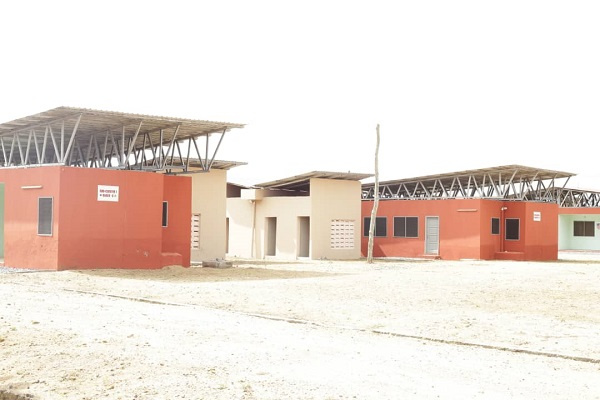
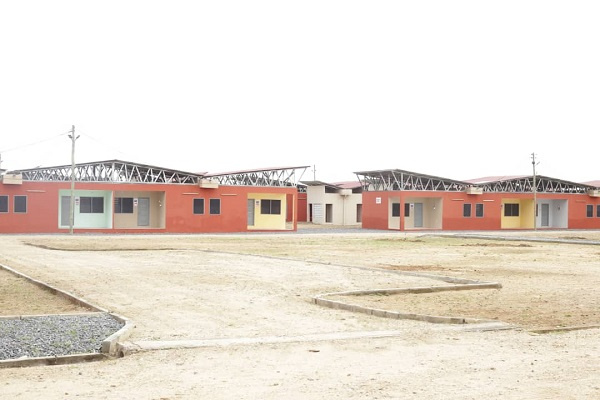
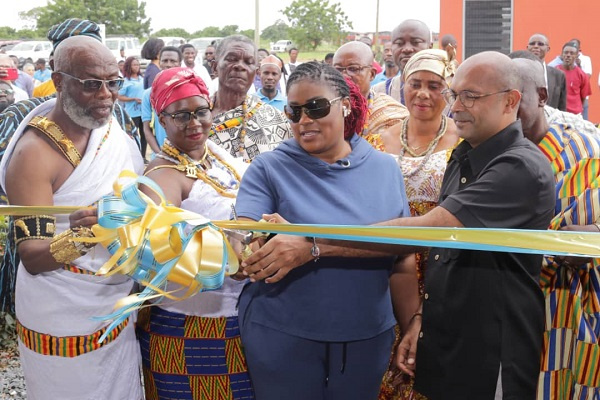
The Ministry of Trade and Industry has inaugurated 224 on-farm housing units situated on the Golden Exotic Limited (GEL) plantation in Kasunya/Asutsuare, within the Shai Osoduku District of the Greater Accra Region.
In a speech delivered on behalf of the Minister of Trade and Industry, Nana Ama Dokua Asiamah-Adjei, who is the Deputy Minister responsible for International Trade, highlighted that these newly constructed housing units come fully equipped with modern amenities.
They are specifically intended to offer a comfortable living environment for farmers and their families as part of the Banana Accompanying Measures (BAM) initiative.
Furthermore, the houses have been meticulously designed with an emphasis on functionality and sustainability. Notable features include energy-efficient electrical systems, a water treatment facility, and a community center.
Nana Ama Dokua Asiamah-Adjei went on to say that the completion of the 224 dwelling units is a long-awaited but critical milestone in Ghana’s road to becoming a prosperous farming community.
“The European Union and the Government of Ghana look forward to continuing their fruitful partnership to further empower farmers, contribute to sustainable rural development, and improve the overall quality of life in the agricultural sector” she said.
She stressed the importance of access to adequate and affordable housing in providing a suitable climate for farmers to prosper and efficiently contribute to the agricultural sector.
“By providing farmers with these housing units, the BAM project is aimed to address the pressing issue of rural poverty and homelessness within the farming community,” the Deputy Minister noted.
She continued, “The project is part of the broader Banana Accompanying Measures Program, which prioritized the development of the agricultural sector while enhancing social welfare within the farming community.”
She expressed government’s appreciation for the European Union’s support for the project.
“We are proud to have collaborated with the European Union in realizing this important project. The housing units will unlock potential and enhance the agricultural productivity of the farmers. This is an embodiment of the shared vision for rural development and poverty reduction, which lies at the core of our collaboration” she indicated.
It was disclosed that in 2009, the European Union reached an agreement with Latin America and the USA to resolve a 15-year-long dispute related to banana trade. As part of this accord, the EU reduced tariffs on bananas imported from Latin American nations, intensifying competition for African and Caribbean banana exporters. To assist these African and Caribbean countries in maintaining their competitiveness in the EU market, the Banana Accompanying Measures (BAM) program was introduced.
In 2013, the EU and the Government of Ghana, represented by the Ministry of Finance, entered into a Financing Agreement (FA) for the BAM initiative, with a total funding of €7.2 million Euros allocated to support Ghana’s Banana Industry.
The European Union Ambassador to Ghana, H.E. Irchad Razaaly, emphasized the importance of this partnership in empowering local communities.
“These housing units are a testament to our commitment to uplifting farmers and strengthening the agricultural sector. They will not only provide a safe and comfortable space for the farmers but also enable them to lead better lives.” He added that,” he said.
He noted that the BAM supports the competitiveness of the Ghanaian Banana export sector, while ensuring its environmental and socio-economic sustainability in the long run
Vice President of Compagnie Fruitiere in Ghana (parent company of Golden Exotics Limited) Olivier Chassang, in his address said, “This is a major milestone in the social development of the company and a great example of international cooperation”
Raila Odinga, Kenya’s opposition leader, has spoken out against the country’s plan to lead a peacekeeping mission in Haiti to tackle gang violence, calling it a “wrong move.”
In an interview with a local TV station on Thursday, Mr. Odinga stated that deploying Kenyan police to Haiti was not a top priority for Kenya, emphasizing that the East African region already faced significant challenges.
He questioned the rationale behind selecting Kenya to lead a multinational force in Haiti, which is geographically closer to the United States, the world’s most powerful nation.
Mr. Odinga expressed concern about the dangerous situation in Haiti, warning that the planned deployment could put the lives of Kenyan police officers at risk. He argued that the crisis in Haiti was primarily political and required diplomatic negotiations rather than a military response.
On Monday, the United Nations Security Council approved the deployment of Kenyan police for a year, subject to a review after nine months. President William Ruto of Kenya pledged not to let down the people of Haiti. However, there have been critics who doubt the capacity of Kenyan police to address the challenges posed by Haiti’s gangs.
Mauritius has overturned a colonial-era law that criminalized same-sex relationships. The country’s Supreme Court declared Section 250 of the Mauritian Criminal Code, which dated back to 1898, as unconstitutional on Wednesday.
This law had previously made individuals engaged in same-sex relations liable to be imprisoned for up to five years.
In its ruling, the Supreme Court emphasized that the abolished law did not “reflect any indigenous Mauritian values but was inherited as part of our colonial history from Britain.”
The decision to repeal the anti-homosexuality law originated from October 2019 when four young Mauritians, representing the rights group Young Queer Alliance, filed a legal challenge against the law, citing violations of their fundamental rights and freedoms.
The United Nations and numerous human rights organizations have praised this ruling. UNAids stated in a release, “The UN welcomes the decision of Mauritius to join the growing list of African countries protecting the human rights of everyone, including LGBTQI+ people.”
With this ruling, Mauritius joins the increasing number of African nations that have either decriminalized or legalized same-sex relationships, including Angola, Botswana, Seychelles, and Mozambique.
A tribal king in Uganda has received a warm and celebratory welcome upon returning home, marking his return seven years after a police raid on his palace resulted in the deaths of numerous individuals.
The streets of Kasese were filled with joyful crowds as Charles Wesley Mumbere, the King of Rwenzururu, arrived.
In 2016, he faced accusations of leading a militia from his palace with the intention of establishing an independent state.
The Ugandan government reported that just over 100 individuals were killed during the police operation, but human rights organizations claim that the actual number of casualties was much higher.
King Mumbere and many others were charged with various offenses, including treason, murder, and terrorism. However, the case was dropped by prosecutors after they applied for amnesty.
The Rwenzururu kingdom, comprised of ethnic Bakonzo people, has a history of separatist aspirations and long-standing tensions with the Ugandan government.
Finance Professor at the University of Ghana, Professor Godfred A. Bokpin, has suggested that government should consider employing a strategy similar to what is done during wartime to tackle the economic difficulties currently affecting the nation.
He emphasized that issues such as corruption, low tax revenues, public spending, and other economic obstacles need to be tackled deliberately.
Professor Bokpin made these remarks during a roundtable dialogue organized by Caritas Ghana in Accra, which focused on examining the impact of Economic Recovery Programs on social protection in Ghana.
The purpose of the dialogue was to highlight best practices, identify deficiencies and challenges, and propose recommendations and collaborative actions to ensure that Economic Recovery Programs in Ghana align with social protection objectives.
The event brought together participants from academia, civil society groups, faith-based organizations, and policymakers.
Professor Bokpin also highlighted the success of developed countries like Malaysia and South Korea, attributing their achievements to their aggressive efforts in combating corruption, intentionality, and consistency in addressing economic issues.
‘‘If we were efficient and prudent, less corrupt in utilising the tax revenues, the development outcome should be higher and better than what we have right now, and the reason we are in this sitaution cannot and should not simply be because we have nort taxed ourselves enough,’’ he stated.
Professor Bokpin pointed out that Ghana’s Value Added Tax (VAT) is one of the highest in Africa, standing at approximately 21.9 percent, which he considered excessive. He mentioned that having such a system makes it challenging for the population to save and make proper investments to capitalize on the limited economic opportunities available.
Reverend Sister Professor Eugenia Amporfu, an economist and professor at Kwame Nkrumah University of Science and Technology, urged the government to adopt a strategic approach to revenue collection.
She attributed the high unemployment rate to the country’s inability to expand its industrial sector to accommodate the growing youth population.
Professor Amporfu also called on Faith-Based Organizations and civil society groups to take the lead in promoting quality leadership and governance while demanding accountability from the government.
Father Clement Kwasi Adjei, Secretary General of the National Catholic Secretariat, emphasized the importance of ensuring that the benefits of economic recovery are distributed equitably, reaching the most vulnerable segments of society.
He stressed the critical role of social protection in ensuring that the needy, especially the poor and marginalized, have access to essential services, resources, and opportunities.
Fr. Adjei further emphasized the need for stakeholders to engage in substantial discussions and knowledge sharing to generate actionable recommendations.
These recommendations can guide policymakers and practitioners in designing and implementing comprehensive approaches to social protection that complement recovery programs.
The primary opposition party in Uganda has reported the arrest of its leader, Robert Kyagulanyi, also known as Bobi Wine, upon his arrival at Entebbe International Airport from abroad.
The National Unity Party had intended to organize rallies and condemned Bobi Wine’s arrest as “cowardly.”
A video circulating on social media depicted Bobi Wine being apprehended by a group of individuals as he disembarked from the plane.
Screenshots from another video suggested that the leader was later seen at his residence, accompanied by the Leader of the Opposition in Parliament, Mathias Mpuuga.
Before Mr. Kyagulanyi’s return, the police had declared a planned procession from the airport as illegal.
President Yoweri Museveni, who has been in power since 1986, has faced criticism for his growing intolerance of the opposition.
Bobi Wine has been arrested multiple times and has faced various charges, including treason.
Human rights organizations assert that the authorities have routinely used fabricated charges to suppress the opposition.
South African supermarkets are imposing egg rationing measures as the country faces a shortage of poultry products due to a severe avian flu outbreak.
According to local reports, some supermarkets are restricting customers to purchasing a maximum of six eggs.
Woolworths, a major retail chain, confirmed that they have “implemented a limit on whole egg purchases in our stores to six eggs per customer,” as reported by local media outlet News24.
Another chain, Pick n Pay, has reportedly urged customers to “shop responsibly” and will restrict purchases to one or two egg packs per customer.
Producers have been issuing warnings about the scarcity of eggs and poultry meat caused by the outbreak and the impact of power shortages on the industry.
The agriculture ministry reported last week that more than 2.5 million chickens had been culled, with five out of eight provinces affected by the outbreak.
The interim leader of Burkina Faso has made changes to the leadership of the country’s paramilitary police, just over a week after the ruling junta claimed to have foiled a coup attempt.
Ibrahim Traoré, on Wednesday, appointed Lt Col Kouagri Natama to replace Lt Col Evrard Somda, who had been in charge of the national gendarmerie since the previous year.
Additionally, Mr. Traoré has also made alterations to the personnel responsible for logistics and equipment management within both the Burkinabe army and the gendarmerie.
In the preceding week, the junta in Burkina Faso detained four police officers on suspicion of involvement in a “plot against state security.”
According to the French-language news outlet Jeune Afrique, two of the detained police officers served under the national gendarmerie and had close ties to Mr. Somda.
Natama, the new appointee, previously held the position of police chief in the northern Kaya region, where Mr. Traore’s unit was stationed.
Jamaludeen A. Abdullah, a member of the New Patriotic Party and a member of the Government communication team, has proposed that a sobriety test should be included as part of the apology process to verify that the Member of Parliament for Madina Constituency, Francis Xavier-Sosu, was not under the influence of any substances when he made his offensive remarks.
The OccupyBoG demonstration, organized by the National Democratic Party and its affiliate, the Minority in Parliament, occurred in Accra on Tuesday, with protesters gathering to voice their concerns regarding the GH₵60 billion loss incurred by the Bank of Ghana.
During the event, Francis Xavier Sosu attracted controversy for his comments directed at the country’s leadership.
In reaction to the viral video of his remarks, Xavier-Sosu released a public apology and acknowledged accountability for his actions, stating, “I take complete responsibility for those words, and I apologize for them.”
However, Mr. Jamaludeen A. Abdullah, representing the NPP on the GTV Breakfast show, raised doubts about the authenticity of the apology, remarking, ” “I believe he (Xavier-Sosu) should’ve submitted a sobriety test to show or prove to Ghanaians that he wasn’t under the influence of anything when he made those distasteful statements.”
Mr. Jamaludeen also voiced his disapproval of the National Democratic Party (NDC) for its language choices, specifically their description of the head of security at the Bank of Ghana as a “watchman,” which he deemed as disrespectful to the highly regarded security leader of such an important institution.
This request for a sobriety test by Mr. Jamaludeen introduces a fresh element into the ongoing controversy surrounding Hon. Francis-Xavier Sosu’s comments during the OccupyBoG demonstration.
The World Bank has cautioned the Central Banks of Nigeria, Ethiopia, and Uganda on Wednesday to avoid using unusual actions that could weaken their monetary policies.
According to the Washington Bank, these measures include “monetizing the fiscal deficit, direct lending interventions, untargeted subsidy programs, and foreign exchange controls.”
The lender emphasised the critical challenge of inflation faced by monetary authorities in the region, particularly in countries struggling with “underdeveloped financial systems, a substantial informal sector, and a lack of coordination between monetary and fiscal policies.”
The organization highlighted the potential consequences, stating, “If monetary and fiscal actions are not adequately coordinated to bring down inflation, the risk of de-anchoring inflation expectations would fuel further inflation, accelerate interest rate increases, and exacerbate the deceleration of economic activity.”
The World Bank, in its Africa’s Pulse report, emphasized the ongoing inflationary difficulties experienced by many countries in the region.
Africa’s Pulse is a semi-annual publication from the Office of the Chief Economist in the World Bank Africa Region. It assesses the continent’s near-term economic outlook, prevailing development obstacles, and explores a specific development-related subject.
The 2023 edition of the report attributed the inflationary challenges to several factors, including “a global demand slowdown, eased supply chain disruptions, lower commodity prices, and stricter monetary policies.”
Despite a projected decrease from 9.3 percent in 2022 to 7.3 percent in 2023, double-digit inflation remains a challenge for 18 countries.
The report highlighted the adverse impact on households, especially those with lower incomes who allocate a significant portion of their earnings to food, due to escalating food and fuel prices and the depreciation of domestic currencies.
In terms of fiscal matters, the report expressed concern about the slow progress in fiscal consolidation efforts in some countries. In 2023, fiscal deficits continue to exceed pre-pandemic levels in nearly two-thirds of the region’s nations.
The World Bank emphasized the urgency of addressing these issues, stressing the importance of “domestic resource mobilization and efficient spending” to mitigate fiscal and debt sustainability risks, control inflation, and create room for development spending.
The World Bank also acknowledged the efforts of certain countries, such as Kenya and Ghana, in implementing revenue reforms, as well as Angola and Nigeria in subsidy reforms, demonstrating the region’s commitment to fiscal consolidation.
Furthermore, the adoption of digital tools for tax administration and compliance has emerged as a recent trend in the region.