Author: Amanda Cartey

  • SBGs urged by British High Commissioner to take advantage of climate funds

    SBGs urged by British High Commissioner to take advantage of climate funds

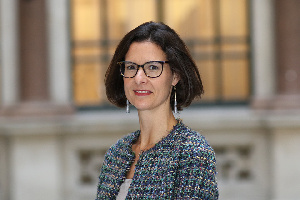
    British High Commissioner to Ghana, Harriet Thompson, has called upon small and growing businesses (SGBs), particularly green start-ups, to leverage climate finance opportunities.

    Addressing the 2023 Aspen Network of Development Entrepreneurs (ANDE) conference held in Accra, the High Commissioner emphasized the importance of sustainable business practices. She encouraged SGBs to tap into climate financing resources as a means to propel their growth.

    Thompson pointed out that climate change has evolved into a pressing global concern, prompting governments, international organizations, and private sector investors to acknowledge the necessity of channeling funds into sustainable and climate-resilient ventures. This recognition has given rise to various climate financing mechanisms designed to support enterprises that prioritize environmental sustainability.

    She also highlighted the manifold advantages of climate financing, which encompass financial backing for the execution of sustainable projects and initiatives. These projects may include the development of renewable energy systems, adoption of energy-efficient technologies, implementation of waste management solutions, and the creation of green infrastructure.

    She, therefore, underscored the importance of SGBs, especially environmentally-conscious enterprises, harnessing the available financial resources to align themselves with the pursuit of Sustainable Development Goals (SDGs) and combat global warming.

    She emphasized that while many organizations might perceive climate financing as primarily accessible to large corporations or extensive projects, it is imperative for small and growing businesses to understand that they, too, have access to these funding opportunities.

    Pearl Nkrumah, Director for Retail and Digital Services at Access Bank Ghana, echoed these sentiments. She highlighted the crucial role that SGBs, commonly referred to as Small and Medium Scale Enterprises (SMEs) in Ghana, must play. She noted that the bank had committed approximately GH₵500 million to support these businesses over the past few years and expressed the bank’s commitment to continue doing so in the future.

    “What we also do with regard to the SDGs is empower women because we believe they have a key role to play; so, we give them the necessary enabling platform to survive and take up leadership positions.

    “We believe one of the most important forms of assistance to SMEs is developing the value chain and connecting them to the right network, which we do through capacity building in partnership with other stakeholders,” she said.

    Furthermore, climate financing frequently includes technical assistance and capacity-building initiatives aimed at improving businesses’ comprehension and adoption of sustainable practices. This assistance can be instrumental in helping organizations navigate intricate prerequisites and ensure the effective implementation of sustainable projects.

    The conference, titled ‘Accelerating Action: Small Business Solutions and the SDGs,’ seeks to highlight the notable advancements achieved thus far and identify the strategies to bolster SGB ecosystems as they work towards enhancing their contributions to the Sustainable Development Goals (SDGs) in the coming seven years.

  • 3 NPP stalwarts criticize police for detaining protestors unlawfully

    3 NPP stalwarts criticize police for detaining protestors unlawfully

    Several prominent members of the ruling New Patriotic Party (NPP) have expressed their worries and criticized the Ghana Police Service’s handling of the peaceful rallies in the wake of the #OccupyJulorbiHouse protests and the ensuing illegal police actions.

    Sharp criticisms have been leveled inside the NPP ranks in response to the Day 1 arrests of 49 demonstrators and the following maltreatment of the detainees.

    Former President Kufuor

    In order to achieve effective government and sustain peace and security, John Agyekum Kufuor has underlined his steadfast position on the value of human rights, democracy, the rule of law, and free and fair elections.

    He stressed the need of adhering to these ideals in a tweet on September 21, 2023, particularly in light of the continuing protests.

    Kufour’s tweet read: “Respect for human rights, democracy, rule of law, coupled with free and fair elections are essential to good governance and development of peace and security everywhere.”

    Akosua Manu

    The National Youth Authority’s (NYA) deputy chief executive officer, Akosua Manu, criticized the police’s conduct during the demonstrations.

    She highlighted that regardless of whether an injunction was in effect, the police were not authorized to treat the protesters illegally unjustly.

    Manu stated, “Injunction or not, the police cannot treat young protestors in this manner. To protest is a right enshrined under the Constitution, and the legitimacy of a protest is not dependent on the cause. IGP Dampare, respectfully establish democratic order and safeguards the rights of the protestors.”

    Richard Ahiagbah

    The NPP’s Director of Communication, Richard Ahiagbah, agreed that the right to demonstrate is a crucial democratic right.

    He condemned the police for stopping the protesters and emphasized that such behavior was unacceptable.

    Ahiagbah expressed his views, saying, “The ability of the people to demonstrate is an inherent democratic right. Therefore, the decision to stand in the way of citizens’ exercise of this fundamental right is unacceptable.”

    In the other part of his tweet, he addressed the protesters: “I don’t agree with the derogatory caption of the Presidency by the organizers of the demonstration, but impeding their right to peaceful assembly is an affront to democracy–plain and simple.”

    Ahiagbah continued by pointing out that peaceful protests had previously taken place during the presidency of President Akufo-Addo and questioned the timing and necessity of the police interventions during the most recent protests.

    Background

    On the first day of the #OccupyJulorbiHouse protests organized by the Democracy Hub on September 21, a group of young activists were subject to unlawful actions by the police. These activists, numbering 49 in total, had taken to the streets to demand action against the prevailing economic crisis and corruption.

    The illegal arrests, particularly in the manner in which they were carried out by the police, sparked widespread criticism. This criticism centered on the belief that these actions were obstructing the protesters’ constitutional right to assemble and voicing concerns, and that the police had resorted to heavy-handed tactics.

    Subsequently, the police transported the detainees to the regional headquarters before dispersing them to approximately eight police stations scattered across the capital city. Throughout this process, fellow protesters and lawyers worked diligently to secure bail for those who had been unjustly detained.

    During this tumultuous period, other journalists and protesters who had gathered, particularly at the Accra Regional Command, found themselves subjected to various forms of police aggression. This included shoving, unwarranted detention, confiscation of their phones, and, in some unfortunate instances, physical assault.

    In their initial statement issued on the same day, the police defended the illegal arrests by citing the protesters’ alleged defiance of a court injunction. However, the protesters vehemently denied that they had been properly served with the legal notice.

    In a subsequent statement, the police addressed the reported arrest of a BBC journalist and his cameraman, dismissing these reports as unfounded.

    As the day came to a close, GhanaWeb’s investigations revealed that nearly all the unlawfully detained protesters had been released on bail. The question now lingers as to whether Day Two of the three-day protest, targeting the government’s seat, the Jubilee House, will proceed as planned on September 22, 2023.

    “In partnership with ANDE, we are discussing and promoting the role of small and growing businesses in delivery of the Sustainable Development Goals (SDGs); because, as it stands now, we are not on track to meet the 2023 goals we set as a global community.

    “Small and growing businesses have an important role to play in helping meet these goals. They are the engine of growth in Ghana and most developing countries of Africa. They have already contributed so much to Ghana’s economy by creating jobs; and if they can grow, then they can do so much more than we see now,” she said.

  • What do we stand to lose by allowing peaceful protests in this struggling economy – Franklin Cudjoe

    What do we stand to lose by allowing peaceful protests in this struggling economy – Franklin Cudjoe

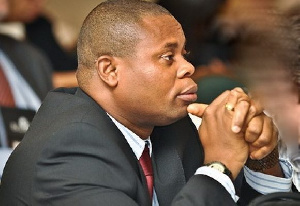
    The illegal detention of protesters carrying the hashtag #OccupyJulorbiHouse by the Ghana Police Service has been condemned by Franklin Cudjoe, President and Founder of IMANI Africa.

    He argued that the government stood to gain little by allowing citizens to air their complaints in public.

    Cudjoe expressed his concerns in a Twitter post on September 21, 2023, stating, “What do we lose if we allow peaceful demonstration in this broke economy? We should be grateful that these demonstrators are civil with all the chaos our lives have become due to legendary misgovernance.”

    Background

    During the inaugural day of the #OccupyJulorbiHouse protests organized by the Democracy Hub on September 21st, a cohort of young activists marched to demand action against the prevailing economic crisis and corruption. However, in a flagrant violation of their constitutional right to protest, the police conducted illegal arrests, apprehending 49 protesters.

    The manner in which these unlawful arrests were carried out drew vehement criticism, with accusations of police highhandedness and a blatant infringement on the right to assemble and express dissent.

    Subsequently, the police transported the detainees to the regional headquarters before dispersing them to approximately eight police stations scattered throughout the capital city. Concurrently, fellow protesters and legal professionals worked tirelessly to secure bail for those who had been unjustly detained.

    During this tumultuous process, other journalists and protesters who had gathered, especially at the Accra Regional Command, were subjected to varying degrees of police violence, including shoving, forced detention, confiscation of phones, and, in some instances, physical assault.

    In their initial statement on the matter, the police defended the illegal arrests by citing the protesters’ alleged defiance of a court injunction, a claim vehemently denied by the demonstrators, who contended that proper legal notice had not been served.

    In a subsequent statement, the police addressed the reported arrest of a BBC journalist and his cameraman, dismissing the allegations as false.

    As the day came to a close, GhanaWeb’s investigations revealed that nearly all of the unlawfully detained protesters had been released on bail. The question now looms over whether Day Two of the three-day protest, targeting the government’s seat, the Jubilee House, will proceed as planned on September 22, 2023.

  • Nigeria: Grid failure causes electricity supply to fall by 97% to 88MW

    Nigeria: Grid failure causes electricity supply to fall by 97% to 88MW

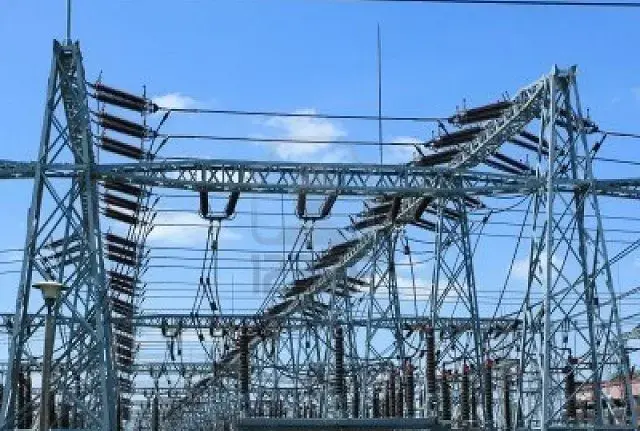
    Once again, homes and businesses experienced power outages as the national power grid plummeted by 97.1 percent, falling from 3,152.7MW at 11 am to 88MW at 12 noon.

    Data from the National System Operator (NSO) revealed that by 5 pm, the Transmission Company of Nigeria (TCN) was still working to restore the grid, with supply reaching 246MW.

    Key power plants contributing to this supply included Afam VI (1.6MW), Ibom Power (70MW), Olorunsogo Plant (58.6MW), Omotosho Plant (67.9MW), and Trans-Amadi (47.7MW).

    This marks the third grid collapse in less than a week, following 421 days of grid stability. While the cause of the latest collapse remains unclear, a source at the TCN emphasized the need for a thorough investigation into the recent incidents.

    “What is happening to the grid is unusual. It bordering on sabotage and deliberate attempt to discredit the effort by the government to improve power supply”, the source who declined to be named added.

    Just two days ago, Engr. Sule Abdulaziz, the Managing Director of TCN, revealed that the repair of damaged equipment at the Birnin Kebbi Transmission Station would require approximately $4 million. The station had suffered extensive damage in a fire incident that occurred in the early hours of Friday, resulting in disruptions to power supply in Kebbi and Sokoto states.

    The fire had destroyed two major transformers, one with a capacity of 90 MVA and the other 60MVA, along with the control room.

    Engr. Abdulaziz mentioned that TCN engineers were actively working to determine the cause of the fire outbreak. Mr. Adetayo Adegbemle, Executive Director of PowerUp Nigeria, emphasized the need for the country to either establish a comprehensive cyclical grid, allowing for the isolation of issues without affecting the entire nation, or consider regional grids—a proposal advocated by some stakeholders.

    “There is also the need for the spinning reserve which no one has been been able to resolve, I would have expected the new Minister of Power to have started engagements with key stakeholders in Generation, Transmission, Distribution and most importantly, Consumers that are paying for the inefficiencies in the power sector, so we can have policies that will work in the interest of the nation”, he added.

  • ‘Gay wedding’ suspects in Nigeria granted bail

    ‘Gay wedding’ suspects in Nigeria granted bail

    A court in Nigeria has granted bail to 69 individuals who were arrested last month following a police raid on what was described as a “gay wedding.”

    Homosexuality is widely considered immoral in Nigeria, and the country has stringent laws against same-sex marriage.

    The defense lawyer confirmed that all 69 clients would be released on bail but were required to pay more than $600 (£480) each to the court.

    The raid on a hotel in Warri city last month occurred based on a police tip-off regarding a gay wedding.

    Human Rights Watch criticized the Nigerian police for publicly parading the suspects before the media and interrogating them about the accusations.

    Despite international condemnation, Nigeria passed legislation nearly a decade ago criminalizing public displays of same-sex relationships, carrying a prison sentence of up to 10 years, and up to 14 years for those convicted of same-sex marriage.

    In 2019, police in Lagos State prosecuted 47 men under the law, but the case was dismissed because the police failed to appear and present witnesses.

  • African corporate accountability must be promoted by stepping up battle against corruption – Godfred Dame

    African corporate accountability must be promoted by stepping up battle against corruption – Godfred Dame

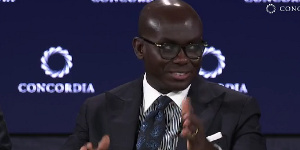
    Ghana’s Attorney General and Minister of Justice, Godfred Yeboah Dame, highlighted the critical need for robust measures to ensure corporate accountability in the fight against corruption in Africa.

    Speaking at the 2023 Concordia Annual Summit with the theme “Navigating Corporate Accountability and Human Rights in Africa,” the Attorney General emphasized the detrimental effects of corruption on public sector operations and overall public trust.

    He called for enhanced collaboration among African nations to combat corruption effectively and underscored Ghana’s efforts in addressing this issue through the enactment of legal frameworks aimed at promoting transparency in public sector operations.

    Ghana’s Attorney General and Minister of Justice, Godfred Yeboah Dame, highlighted the critical need for robust measures to ensure corporate accountability in the fight against corruption in Africa. Speaking at the 2023 Concordia Annual Summit with the theme “Navigating Corporate Accountability and Human Rights in Africa,” the Attorney General emphasized the detrimental effects of corruption on public sector operations and overall public trust.

    He called for enhanced collaboration among African nations to combat corruption effectively and underscored Ghana’s efforts in addressing this issue through the enactment of legal frameworks aimed at promoting transparency in public sector operations.

    Godfred Dame also advocated for the enhancement of justice systems across African nations to prioritize and safeguard human rights.

    “There must also be an effective justice system that will take care of violations of human rights. We should have a justice system that will clearly ensure that all elements of the rule of law will be protected and that whenever violations occur, they are punished,” the Attorney General added.

    The Sheraton New York Times Square Hotel is the site of the 2023 Concordia Annual Summit.

  • Paul Kagame to run fourth term in 2024

    Paul Kagame to run fourth term in 2024

    President of Rwanda, Paul Kagame, has declared that he will stand for reelection a fourth time in 2019.

    “Yes, I am indeed a candidate,” Mr Kagame told French-language magazine Jeune Afrique on Tuesday.

    Asked about what the West would think about his decision to run again, Mr Kagame said, “I’m sorry for the West, but what the West thinks is not my problem.

    “I am happy with the confidence that the Rwandans have in me. I will always serve them, as much when I can.”

    In April, President Kagame made a lighthearted remark about looking forward to retirement after 23 years in office, but the Rwandan Patriotic Front (RPF-Inkotanyi), the country’s ruling party, reelected him as its chairman. Mr. Kagame has been at the helm of the party since 1998 and has served as the President of Rwanda since 2000.

    In 2015, a controversial referendum removed the constitutional limit of two seven-year terms for presidents, replacing it with two five-year terms. However, this change allowed Mr. Kagame to run for another seven-year term, with the alterations set to take effect in 2024. He secured victory in the last election in 2017, winning with 98.8% of the vote.

    During President Kagame’s tenure, Rwanda has experienced relative political stability, but critics and human rights organizations have accused his government of restricting political freedoms and suppressing dissent.

  • Allow Africa to benefit from its energy riches for its people – Energy Minister

    Allow Africa to benefit from its energy riches for its people – Energy Minister

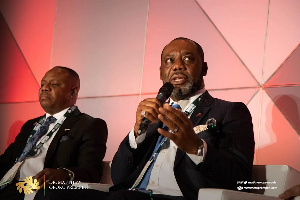
    Energy Minister, Dr. Mathew Opoku Prempeh, has emphasized the necessity for Africa to be permitted to utilise all energy resources at its disposal for the benefit of its population.

    Speaking at the 24th World Petroleum Congress (WPC) in Calgary, Canada, the Minister announced this.

    In the wake of the energy transition, he reaffirmed Ghana’s steadfast commitment to fully utilizing its hydrocarbon resources for the shared economic prosperity of its population.

    Dr. Mathew Opoku Prempeh stressed that oil and gas exploration and production will go on for the foreseeable future in order to maintain the supply of natural gas, which is our go-to fuel for transitional purposes.

    Read his full statement below:

    We continue to pitch a strong narrative of Ghana and for that matter Africa being allowed to use every energy resource at its disposal for the benefit of its people.

    For this reason, I did not mince words at a Ministerial session on Monday at the opening of the 24th World Petroleum Congress (WPC) in Calgary, Canada, reiterating Ghana’s firm stance on fully exploiting its hydrocarbon resource for the shared economic prosperity of its citizens in the wake of the energy transition.

    I made the point that oil and gas exploration and production will continue in the next few decades to ensure the availability of natural gas, which for us, is the transition fuel. Cognizant of the impacts of hydrocarbons on the environment, I indicated that we have already included Carbon Capture and Storage and other green interventions in our Energy Transition Framework to duly take care of emissions.

    I further used the opportunity to market Ghana’s sedimentary basins which have huge oil and gas prospects and can be leveraged to develop the clean energy resources and green infrastructure we require.

  • FGN Savings Bond prices decreases by 14.4% due to inflation

    FGN Savings Bond prices decreases by 14.4% due to inflation

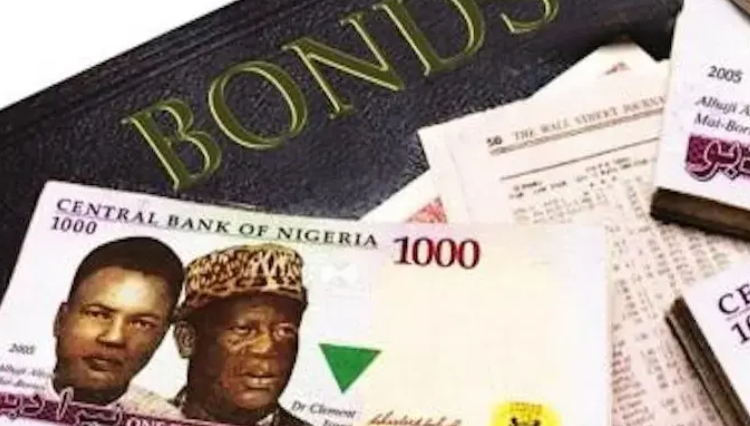
    There are signs of waning investor interest in the FGN Savings Bond, with the subscription value decreasing by 14.4% to N8.8 billion Year-on-Year (YoY) by the end of August 31, 2023. This decline is attributed to factors such as the rising inflation rate.

    In comparison, the subscription value was N10.287 billion for the same period ending August 31, 2022. Data from the Debt Management Office (DMO) also indicates a 26.9% decrease in bond allotments, with 4689 allotments in the eight-month period ending August 2023, compared to 6413 in the corresponding period of 2022.

    Market experts and stakeholders point to the declining performance of the bond, citing reduced purchasing power due to the sharp increase in inflation, which reached an all-time high of 25.8% in August 2023. Vanguard’s investigation reveals that the value of transactions has been volatile throughout this year.

    Commenting on the situation, Victor Chiazor,    analyst and Head of Research and Investment at Fidelity Securities Limited, said: “The reduced investors’ interest in FGN Savings Bond does not come as a surprise to many given the continuous rise in inflation rate that does not match with the Minimum Rediscount Rate, MRR, and increased volatility being experienced in the equities market.

    “The low disposable income of investors is a major factor that could also be responsible for the low appetite as there are other viable options like equities.

    “Recall the massive flow of investment into the FGN Savings Bond when the equities market was bearish and activities around the market were flat.

    “However, with this season we have seen a higher level of volatility in the equities market and if this momentum is sustained we will continue to see reduced investment in the FGN savings bond for the rest of the year, except the government significantly increases the interest rate to levels that becomes more attractive to the market.”

    Commenting, analyst and Vice Executive Chairman, Highcap Securities Limited, David Adonri, said: “Concerning the decline in subscription for FGN Savings Bond, the dwindling disposable income of retail investors who are target of the product may be responsible. Yield on Savings Bond is also not competitive when compared to orthodox FGN Bonds or SUKUK.”

    Commenting as well, analyst and Managing Director, APT Securities said: “The good performance of the equities market could have led to the low level of investment in the FGN Savings Bond as more investors divested to stocks. Also, the rise in inflation to 25.8 % makes investment into FGN Savings Bond with negative returns reduced. With upsurge of the stock market there is likely hope of further decline in FGN Savings Bond.”

  • We will serve Sobolo, other Ghanaian dishes at funerals – Tourism Minister

    We will serve Sobolo, other Ghanaian dishes at funerals – Tourism Minister

    The Minister of Tourism, Arts, and Culture, Ibrahim Mohammed Awal, has announced that the tourism ministry intends to utilize funerals as a means to enhance domestic tourism in Ghana.

    He explained that funerals are events that occur regularly in every region, providing an opportunity for people to gather.

    During these gatherings, local food and beverages can be offered to promote the tourism sector.

    “When there are funerals. People gather places. What we want to do with Ghana Tourism Authority (GTA) is that, when there are funerals we would also find tourist attractions in those areas where the funerals occur. So that when they finish we are going to serve a lot of Ghanaian dishes at the funerals. Ghanaian drinks. Sobolo and co,” Mr Awal told the media.

    Meanwhile the minister had previously encouraged participants in the tourism industry to establish succession plans for their enterprises before stepping down.

    He emphasized that these businesses should create clear succession strategies and convey the core values that have contributed to their success.

    By doing so, the businesses can ensure their continuity and growth even after the departure of the founders, ultimately contributing to the sector’s and the economy’s development.

    Research has indicated that many Ghanaian tourism businesses, such as hotels and restaurants, face the risk of collapsing when their owners exit, with only a 50 percent survival rate.

    This, according to the sector minister, is not the optimal approach to business growth.

    Source: The Independent Ghana | Amanda Cartey

  • Refuse to be intimidated or harassed by GRA – GUTA members

    Refuse to be intimidated or harassed by GRA – GUTA members

    The leadership of the Ghana Union of Traders Association (GUTA) has urged its members to rebuff any harassment from Ghana Revenue Authority employees.

    Dr. Joseph Obeng, the president of GUTA, made it clear that while his organization’s members would continue to pay taxes, they would reject any attempts to intimidate businesspeople.

    Making this known at a press conference held in Accra on Wednesday, September 20, 2023, he said, “I am not saying that they should resist paying taxes, I am saying that they should resist impunity, harassment, and intimidation.”

    Leave us in peace

    After filing and paying their taxes, traders should be able to conduct their business as usual, he further pleaded with the Ghana Revenue Authority.

    “Our goods are in detention with you, sometimes two weeks, 1 month…do whatever you want to do and let us pay whatever we have to pay. After clearance, leave us in peace,” the GUTA President said.

    He contends that Ghana’s more than 3 million trading communities, rather than the political influence of the politicians, are where the people’s power truly lies.

    Dr. Obeng observed that the irate trading communities were prepared to discuss problems that had recently affected their firms.

    He said, “The authority of the people, the power of the people is not vested in the politician, it’s not vested in the GRA, it is vested in the boundary of Ghana and in this case, I am talking about 3 million trading community who will just rise up and talk to issues that is destroying their businesses.”

    After GUTA members claimed that commodities with paid duties and port clearance were frequently detained by these customs taskforces, resulting in extortion, delays, and re-examinations, substantial penalties were levied against the owners of the items.

  • Taxes are not intended to cause firms to fail – GUTA

    Taxes are not intended to cause firms to fail – GUTA

    The multiple tariffs levied on goods and services that are impeding the expansion of their enterprises have been decried once more by the Ghana Union of Traders Association (GUTA).

    Dr. Joseph Obeng, the Association’s president, has argued that taxes are a complimentary measure to cushion government, not a means of bringing down enterprises.

    His remarks follow allegations that the Ghana Revenue Authority (GRA) has been intimidating and harassing its members.

    Dr. Obeng emphasized at a news conference on September 20, 2023 that the Value Added Tax (VAT) must be designed to include both dealers and customers in the tax net.

    “We are also open to even challenge us in court because they will lose it. They have to structure the VAT system so that compliance will be good so that it will be conducive for me…taxes are not meant to destroy businesses…taxes are complementary because government needs it to survive, government needs your business to grow so that the little taxes you get will also grow and help government,” he said.

    You may remember that GUTA has lamented taxes and how they are harming their businesses over the past few months.

    The Association urged the Ghana Revenue Authority to look for creative ways to include more people in the tax system.

    According to the report, despite being entitled to pay taxes, 13 million people avoid doing so because of flaws in the tax code.

  • Desist from collateralizing TEN oil field for $431m loan – Minority warns govt

    Desist from collateralizing TEN oil field for $431m loan – Minority warns govt

    The Minority in Parliament is urgently demanding a cessation to the government’s intentions of using proceeds from the TEN oil field as collateral for a $431 million loan facility from LITASCO.

    The Minority argues that this arrangement is unlawful and expresses apprehension that, under the loan agreement, the TEN oil field would be obligated to produce a minimum of 3.8 million barrels of crude oil annually for LITASCO.

    Addressing reporters on Wednesday, September 20, John Jinapor, the Ranking Member on the Mines and Energy Committee, emphasized that despite Parliament’s refusal of the Ghana National Petroleum Corporation’s (GNPC) request to secure the loan until the agreement’s terms and conditions were presented, the presidency has instructed GNPC to seek board approval for the loan without obtaining parliamentary consent.

    “To our utmost shock, the minority side has become aware that the presidency is using coercive force to compel the GNPC to proceed and execute this loan agreement without parliamentary approval,” Jinapor said, adding “This is unconstitutional, this is unlawful and this is a blatant disregard to the directive and resolution of Parliament.”

    The GNPC board members who opposed the loan agreement were likewise praised by the minority. Jinapor asserts that the GNPC board’s audacious action ought to be supported.

    He admonished the GNPC not to proceed with the loan agreement without parliamentary approval since doing so would be unconstitutional.

  • EU halts food aid to Somalia amid theft investigation

    EU halts food aid to Somalia amid theft investigation

    The European Union has officially halted its payments to the World Food Programme (WFP) for the delivery of humanitarian aid to Somalia.

    According to Balazs Ujvari, a spokesperson for the European Commission, this action is a precautionary measure to protect EU funds.

    A UN investigation has uncovered extensive theft of aid that was intended for vulnerable Somalis, with local officials, members of the security forces, and humanitarian workers implicated.

    In the previous year, the European Union allocated more than $7 million (£5.6 million) to WFP operations in Somalia.

    The US Agency for International Development has stated that it does not currently have plans to suspend food aid to Somalia.

  • Tinubu’s victory contested in Nigeria’s supreme court

    Tinubu’s victory contested in Nigeria’s supreme court

    Two losing presidential candidates, from Nigeria’s main opposition parties, have gone to the Supreme Court to challenge the dismissal of their cases against the victory of Bola Ahmed Tinubu as president in February’s election.

    An election petition tribunal ruled in a unanimous decision earlier this month that both the Labour Party’s Peter Obi and Atiku Abubakar of the Peoples Democratic Party failed to prove that the election was flawed.

    The tribunal declared that the politicians could not establish the allegations of over-voting and voter suppression. The judges also said there was not enough evidence the support the cases.

    Mr. Abubakar is petitioning the Supreme Court to invalidate the verdict, asserting that it resulted in a “serious error and a miscarriage of justice” by confirming Mr. Tinubu‘s win.

    He also criticized the court for using “derogatory language” that, in his view, displayed bias.

    Likewise, Mr. Obi contended that the election tribunal neglected the facts of his case and failed to give proper consideration to the evidence he presented, leading to an incorrect conclusion.

    As of now, a hearing date for these cases has not been scheduled.

  • Why Burna Boy has postponed his performance in Johannesburg

    Why Burna Boy has postponed his performance in Johannesburg

    Nigerian artist Burna Boy has rescheduled a live concert that was originally planned for this weekend in Johannesburg, South Africa.

    The concert, originally booked at the 90,000-capacity FNB Stadium, will now take place on 16 December, according to the event’s ticketing agency.

    Ticket Pro cited several reasons for the postponement, including a “lack of ticket sales.”

    But Burna Boy’s management company, Spaceship, is quoted by Nigerian media as blaming the concert’s promoters for not fulfilling their “contractual, financial, production and technical obligations”.

    It said that the ticketing businesses had to make sure that ticket holders received a complete refund.

    “Sadly, it is with great regret that we must inform you that, despite my team’s effort, the show in Johannesburg… will be cancelled,” the Punch newspaper quotes the management company as saying in a statement.

    “Production vendors have still not been paid and as such, it is evident at this point that the agreed production standard needed for this venue size cannot be achieved,” it adds.

    “Deepest apologies to all fans, looking forward to seeing you all soon,” it added.

  • EU cuts off financial support for electoral body in Zimbabwe

    EU cuts off financial support for electoral body in Zimbabwe

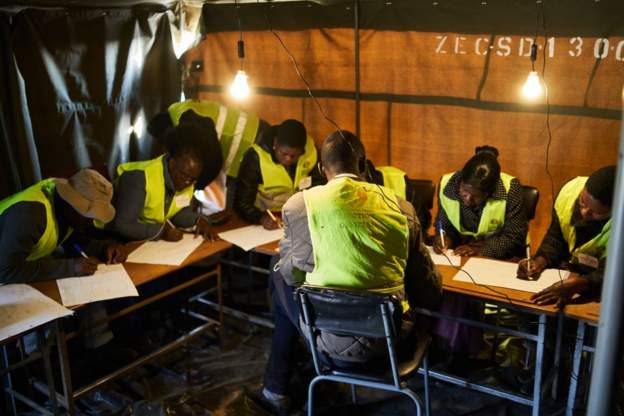
    The European Union (EU) has announced the suspension of financial aid to Zimbabwe’s electoral body due to concerns surrounding its conduct during the contested August elections.

    Since 2022, the EU has been among the donors supporting a project aimed at enhancing the capabilities of the Zimbabwe Electoral Commission (ZEC). This project, managed by the United Nations Development Programme, was originally set to conclude in December 2024.

    The EU had contributed $4.7 million (£3.7 million) to this project, with some funds already expended.

    However, on Tuesday, the EU disclosed its decision to withdraw support from the project, citing ongoing scrutiny of the project “due to concerns raised by several international election observers regarding the independence and transparency of ZEC during the 2023 elections.”

    The EU emphasized that this withdrawal of funding is intended to encourage responsible management of EU development funds.

    The process of suspending aid has begun, and the EU has communicated its plan to both ZEC and Zimbabwe’s finance ministry. Nevertheless, the EU also stated its intent to continue monitoring developments in Zimbabwe and may consider resuming support in the future.

  • Son of deposed president of Gabon is charged with treason

    Son of deposed president of Gabon is charged with treason

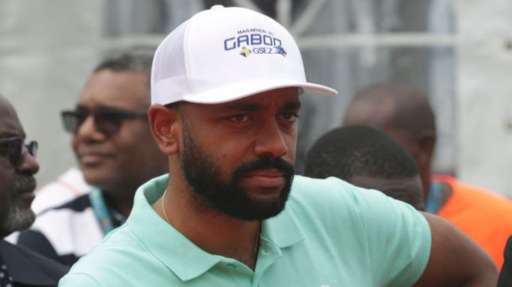
    The state prosecutor in Gabon has announced that Noureddin Bongo Valentin, the eldest son of the deposed president Ali Bongo, along with several of his political associates, has been formally charged with high treason and corruption.

    Noureddin Bongo Valentin, aged 31, was taken into custody shortly after last month’s coup.

    National television aired footage showing him and some of his father’s close associates alongside suitcases of cash reportedly seized from their residences.

    As of now, there has been no official response from them regarding these accusations.

    The military took control of the government shortly after Ali Bongo was declared the victor in Gabon’s presidential election. Ali Bongo had been in power since 2009, succeeding his father, who had governed the country for 41 years.

  • Investors seek clarity on reopened DDEP

    Investors seek clarity on reopened DDEP

    The Domestic Debt Exchange Program (DDEP), for Daakye Trust PLC and ESLA PLC, has been reopened, but there is still ambiguity surrounding it.

    As a result, the market expects cautious performance from the financial markets, particularly on the primary front.

    Investors are eagerly expecting more information regarding the domestic debt exchange’s reopening and the Bank of Ghana’s (BoG) Monetary Policy Committee’s (MPC) upcoming decision. The principal market operations are anticipated to be affected by this circumspect stance, and analysts will be closely watching developments.

    “We expect activity on the primary market to be moderated by the need for further clarification on reopening the domestic debt exchange, and also news surrounding the MPC meeting that started September 19, 2023,” Constant Capital mentioned in its weekly monitor.


    The government’s recent announcement on September 13, 2023, regarding the reopening of its invitation to a debt exchange has further complicated market dynamics. In a statement released this week, members of the Pensioner Bondholders’ Forum have rejected the government’s latest attempt to involve them in the Domestic Debt Exchange Programme (DDEP).

    Similarly, the Ghana Association of Banks (GAB) declared earlier this month that its member banks will abstain from participating in any subsequent rounds of the DDEP until they receive official communication from the government confirming the program’s conclusion. They expressed concerns that additional burdens on the banks could potentially lead to the collapse of their operations.

    This invitation is extended to holders of unexchanged government bonds, specifically Daakye Trust PLC and ESLA PLC, offering them new bonds. The targeted issuance size for this reopened offer is GH¢12.94 billion, with terms identical to the initial DDEP across various categories. This invitation is designed to support investors who may wish to liquidate these bonds before maturity, enabling them to exchange less-liquid notes and bonds for potentially more liquid ones.

    “While government will continue honouring its obligation to holders of these bonds, the evidence post-DDEP suggests the Treasury may prioritise servicing the exchanged debts amid domestic resource challenges,” GCB Capital also noted in its weekly review of the market.

    In the upcoming week, the Treasury is poised to refinance maturing debt with a total face value (FV) of GH¢2.41 billion in the 91- and 182-day bills. To achieve this, the government aims to raise GH¢2.59 billion in the next primary auction scheduled for Friday.

    However, last week witnessed a decrease in enthusiasm in the primary market, breaking a four-week streak of oversubscription. The Treasury managed to secure GH¢3.35 billion of its GH¢3.76 billion target, representing an undersubscription of 10.86 percent.

    This shortfall means that only 95 percent of the maturing face value of GH¢3.5 billion will be covered. As expected, yields continued to rise, with the 91-day, 182-day, and 365-day papers settling at 28.12 percent, 29.39 percent, and 32.17 percent, respectively, at the end of the auction.

    The previous T-bill auction saw a total demand of GH¢3.15 billion, a 7 percent increase week-on-week against a target size of GH¢3.76 billion, marking a significant 44.5 percent weekly increase. The Treasury accepted 99.9 percent of the tendered bids, yet this still fell 16 percent short of the auction target and 10 percent below the T-bill maturity obligation.

    The primary reason for this shortfall was the significantly larger target size and weekly refinancing obligation compared to the steady growth in demand. The benchmark 91-day bill reached 28.12 percent, indicating a 33 basis-points week-on-week increase. The 182-day and 364-day bills also saw upward movements, settling at 29.29 percent and 32.17 percent, respectively.

    On a separate note, the Consumer Price Index (CPI) data released last week indicated that headline inflation eased by 3 percent in August 2023. This decline comes just ahead of the MPC meeting scheduled from September 19th to 22nd.

    MPC action

    Experts believe that inflation will continue to fall throughout the fourth quarter of 2023 despite residual risks to the upside from petroleum prices, mainly because of positive base drift effects. As a result, it is anticipated that the Monetary Policy Committee would keep its rate-neutral position throughout the rest of 2023, with a possible change of course in the first quarter of 2024 after inflation has sufficiently subsided.

    Investors are closely observing the Bank of Ghana MPC meeting, which is crucial to the country’s economic future, for clues about how the central bank will handle these challenging market circumstances.

  • Cedi to depreciate by 23% against dollar in 2023 – EIU

    Cedi to depreciate by 23% against dollar in 2023 – EIU

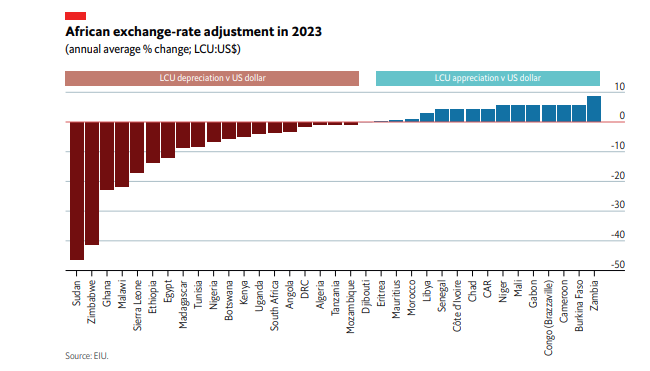
    The expected depreciation of the cedi against the dollar in 2023 has been reduced by the Economist Intelligence Unit from 30.0% to approximately 23.0%.

    This will rank the local currency as the third worst in all of Africa this year, according to its 2023 Updated African Outlook Report.

    That report came from a business desk.

    The UK-based company predicts that the cedi will lose less value than the 44.0% it lost against the US dollar in 2023.

    Currently, the local currency has experienced a depreciation of just over 22% against the world’s most prominent currency, as per data from the Bank of Ghana. This suggests that from now until the end of the year, the local currency’s depreciation against the dollar will be minimal.

    The EIU has emphasized that in 2022, most African currencies saw significant depreciation against the US dollar, and while it anticipates continued exchange-rate weakness in 2023, it expects the extent of depreciation to be less severe.

    Sudan and Zimbabwe, projected to have the 1st and 2nd weakest African currencies, will also rank among the world’s weakest in 2023.

    On the other hand, the Zambian kwacha is set to be the top-performing currency in Africa this year, appreciating against the dollar.

    Following closely are the Burkina Faso CFA, Cameroon’s CFA, and the Congolese Franc, occupying the 2nd, 3rd, and 4th positions, respectively.

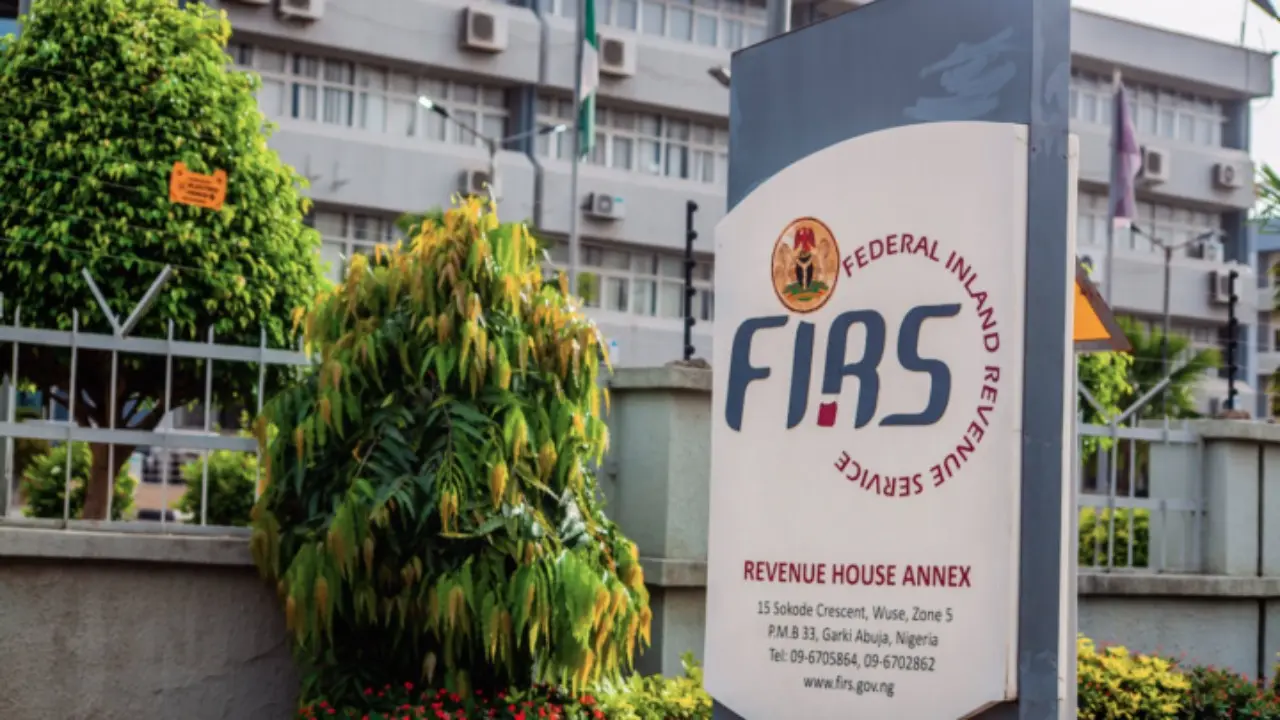
  • Nigeria: FIRS expects 18% surge in GDP to tax ratio in 3 years

    Nigeria: FIRS expects 18% surge in GDP to tax ratio in 3 years

    Through a number of reforms, the Federal Inland Revenue Service, or FIRS, claims to have raised Nigeria’s tax share of GDP from 6.0 percent to 10.86 percent in 2022.

    This information was presented yesterday at the FIRS’s Lagos Mainland West region’s awareness session by Mrs. Saidatu Yero, Director, Taxpayer Services, Abuja.

    She added: “The Management is committed to improve the country’s tax to GDP ratio to 16.5 percent which is the Africa’s average and subsequently 18 percent in the next three years.”

    She stated: “Some laudable reforms had been embarked on by the Service which has changed the narrative of the tax administration in Nigeria thereby improving our revenue collection into the coffers of government”.

    She stated further, “One of the four (4) cardinal goals of the Management of FIRS is to be “customer centric” and our major customers and critical stakeholders in the tax ecosystem as a Tax Authority are the Taxpayers.

    “Therefore, if the Taxpayers must understand their tax obligations and rights, it is imperative to keep them informed, sensitized, engaged and educated to enable them to fulfil their tax obligations without any hitches”.

    Speaking on the theme:”The Finance Act    as an innovation to the Nigerian tax system”, Director, Tax Policy and Advisory Department, FIRS, Mr. Temitayo Orebajo noted that the 2023 Finance Act amended seven tax laws, four non tax laws and 30 Sec.

  • US advices Nigeria to digitize government services due to corruption

    US advices Nigeria to digitize government services due to corruption

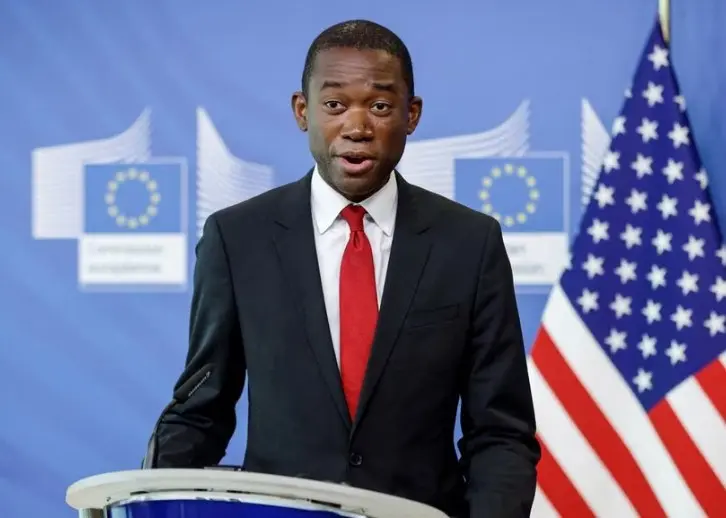
    Yesterday, the United States emphasized the importance of digitizing government services in Nigeria as a crucial measure to combat corruption in the country.

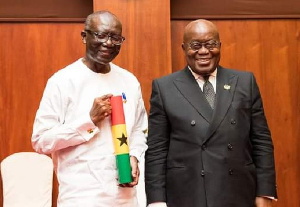
    U.S. Deputy Secretary of the Treasury, Wally Adeyemo, made this appeal during a press briefing in Lagos to conclude his three-day visit to Nigeria.

    Adeyemo also highlighted that maintaining a stable Naira is essential for Nigeria’s economic growth and for attracting foreign investment into the country.

    Further details to follow soon…

  • The proposed 50-year prison penalty in Kenya’s anti-gay law

    The proposed 50-year prison penalty in Kenya’s anti-gay law

    A proposed legislation in Kenya, known as the Family Protection Bill 2023, is advocating for severe penalties, including 50 years of imprisonment, for non-consensual sexual acts involving gays and lesbians. The draft law, introduced by Homa Bay Town legislator Peter Kaluma, aims to outlaw homosexuality, same-sex unions, and all LGBTQ-related activities and advocacy.

    Additionally, the bill seeks to prohibit gay parades, gatherings, and demonstrations in public spaces, as well as cross-dressing in public.

    “A person who engages in sexual act with a person of the same sex without the consent of the other person shall upon conviction be sentenced to imprisonment for a term of not less than 10 years and not exceeding 50 years,” says the bill.

    If the bill is enacted, individuals who own properties used for same-sex activities will be subject to a fine of $14,000 (£11,000) or could potentially face a seven-year prison sentence.

    Last week, religious leaders and certain civil society organizations organized anti-LGBTQ demonstrations in the coastal city of Mombasa.

    This protest followed a reaffirmation by Kenya’s Supreme Court of a decision made in mid-September to permit the registration of LGBTQ non-governmental organizations (NGOs).

    The Kenya NGO Coordinating Board had previously refused to register the National Gay and Lesbian Rights Commission, citing its promotion of same-sex behavior and dragging the case for a decade.

    However, earlier this year, the Supreme Court deemed this action discriminatory and unconstitutional, thereby granting LGBTQ organizations the right to register in a groundbreaking ruling.

  • Coups: African leaders should be reminded to better manage their economies – Asantehene

    Coups: African leaders should be reminded to better manage their economies – Asantehene

    The Asantehene, Otumfuo Osei Tutu II, has emphasized the growing prevalence of coups in Africa as a signal for African leaders to adeptly oversee their economies.

    He emphasized that improved economic management has the potential to disrupt the cycle of poverty and unemployment, offering optimism for the youth to remain in Africa and actively contribute to the continent’s progress rather than seeking opportunities abroad.

    “We have to do better in managing our economies to break the cycle of poverty and unemployment and give hope to our able youth to remain and work for the development of our continent instead of seeking the least opportunity to escape for greener pastures elsewhere…,” the Asantehene stated.

    “No African leader can sleep happy so far as there’s an African boy willing to make the perilous journey of modern day migration,” he added.

    Addressing the St. Andrews Africa Summit in Scotland, the Asante monarch underscored that as long as African youths continue to embark on perilous journeys abroad, no African leader can rest assured.

    His counsel comes in the wake of recent coups in various African nations, including Gabon, Mali, Guinea, Chad, and Niger.

    While unequivocally condemning coups and dismissing them as viable solutions to Africa’s challenges, he called upon African leaders to view these events as indicators of underlying issues in the democratic experiment.

    The Asantehene proposed that these occurrences should trigger a thorough examination of the democratic frameworks and constitutional structures within African states, emphasizing the imperative for meaningful reforms and effective governance.

    “I do not think it signals rejection of democracy as a system of governance but rather, it brings into question the structures we have built in our democratic system, and that, I will suggest reinforces the questions we’ve been raising about the constitutional arrangement of the African democratic state,” he stated.

  • AGI calls on govt to incentivize local production

    AGI calls on govt to incentivize local production

    The Association of Ghana Industries (AGI) has urged for a shift towards concrete actions rather than mere discussions in the effort to enhance domestic production and drive economic growth during the current economic challenges.

    Emphasizing the pivotal role of the industrial sector in a robust economy, the AGI has advocated for intentional incentives to strengthen the industry’s resilience in the face of ongoing economic difficulties.

    The AGI asserts that this approach will yield numerous positive macroeconomic outcomes, including stimulating commercial activities, fostering the establishment of new businesses and investments, and creating job opportunities.

    They contend that a robust domestic manufacturing sector has the potential to significantly expedite and revitalize endeavors aimed at restoring economic stability. This can be achieved by boosting exports, increasing revenue generation, and reducing the pressure of imports on the country’s currency, the cedi.

    “Discussions on the need to develop our local supply chain in a sustainable manner have taken centre-stage since the COVID-19 pandemic outbreak. However, these discussions cannot yield desirable results without government incentivising local industry to invest in the production of certain key raw materials industry needs,” said AGI’s Chief Executive Officer, Seth Twum-Akwaboah.

    Speaking at the 6th Ghana Industrial Summit and Exhibition organized by the AGI in Accra, Mr. Twum-Akwaboah expressed concern that without intentional policies and initiatives aimed at incentivizing the industrial sector and attracting investments, especially in areas where the country possesses a comparative advantage, all discussions and plans to transform the nation into an industrial hub will remain mere rhetoric.

    The AGI pointed out that ongoing challenges such as high financing costs, transportation and logistics issues, regulatory compliance hurdles, port and Customs clearance difficulties, taxation, and imbalances in the tariff regime for imported versus locally manufactured products continue to place local industries at a disadvantage.

    Dr. Humphrey Ayim-Darke, President of AGI, similarly emphasized that with the appropriate support from the government, domestic producers can expand their operations and contribute significantly to meaningful economic growth.

    “Indeed, only a private sector-led industrial development with meaningful support from government implementing the right policies will create a robust Ghanaian economy and sustainable jobs. Let’s be mindful that our local supply chains have a bearing on current rates of inflation,” he said.

    The 6th annual AGI summit, themed “Industrialisation through sustainable and efficient supply chains”, seeks to address challenges of industry which impede the development of sustainable supply chains and proffer solutions.

    Goverment calls for deeper engagement

    Kobina Tahir Hammond, the Minister of Trade and Industry (MoTI), responded by urging greater industry involvement in order to find durable solutions to the problems plaguing businesses.

    “I have had the privilege of engaging with leadership of the AGI, and issues raised include the cost of financing, transport and logistics, regulatory compliance, port and Customs clearance, and taxation as well as industry-specific imbalances in the tariff regime for imports versus locally manufactured products.

    “I have a simple request to make in this regard: when you complain, arm me with specific evidence – and do so in time to make my advocacy precise and effective,” he said.

    However, the minister emphasized that his ministry is unwavering in its commitment to collaborate closely with the industry to fortify vital supply chains within the industrial sector, particularly those associated with local raw material producers and suppliers.

    Ziobeieton Yeo, the Managing Director of Fanmilk PLC, echoed these sentiments, highlighting that industrialization fosters enhanced productivity, increased job prospects, and an elevated standard of living. Ultimately, it results in the creation of positive social benefits for citizens. He further noted that sustainable value chains facilitate technological progress, improved infrastructure, and enhanced access to resources.

  • Current migration pattern may be advantageous – Prof. Osei-Assibey

    Current migration pattern may be advantageous – Prof. Osei-Assibey

    The recent increase in migration, especially among skilled professionals, leaving the country will not hinder long-term economic prosperity, provided appropriate measures are implemented to promote knowledge transfer.

    This viewpoint was expressed by Eric Osei-Assibey, an Associate Professor of Economics at the University of Ghana.

    He elaborated that technological advancements ensure that the skills acquired by Ghanaians abroad can still be shared, even if individuals do not physically return to their home countries.

    Professor Osei-Assibey shared this perspective during the launch and inaugural lecture of the Pan-African International Students (PAIS) movement, a platform aimed at harnessing the benefits of the growing number of African students studying abroad.

    Citing a recent example, he explained: “I was somewhere recently, and when I spoke to students there about returning to Africa they were unhappy, saying there are no opportunities – and that is a reflection of how they perceive things to be at the moment. But there is innate patriotism in them, and that should never be overlooked”.

    Trends

    The economist made his statement at a time when the pace of emigration has increased, with attrition rates in industries including finance, healthcare services, and technology exceeding four times pre-2022 levels.

    Data from the Ghana Registered Nurses and Midwives Association (GRNMA) secretariat indicates a significant trend: over 10,000 nurses have applied for clearance to seek employment opportunities abroad since the beginning of the year. Approximately 4,000 of them have received clearance and have embarked on overseas employment journeys.

    The United Kingdom, Ireland, Australia, and Canada are the preferred destinations for these nurses, primarily due to improved working conditions and flexible schedules offered in those countries.

    This surge in the demand for healthcare professionals, especially nurses, can be attributed to the aftermath of the COVID-19 pandemic and the ongoing phenomenon known as the ‘Great Resignation.’ The Great Resignation refers to the mass resignation of employees, which started in early 2021 as a response to the economic impacts of the pandemic. Reasons for this trend include stagnant wages, rising living costs, limited career advancement opportunities, hostile work environments, lack of benefits, inflexible work policies, and prolonged job dissatisfaction. The sectors most affected by these resignations include hospitality, healthcare, and education.

    The healthcare sector in the United Kingdom has been particularly hard-hit, with reports indicating that around 4,000 European doctors left the UK’s healthcare services following Brexit. Over the past two years, nurses have been leaving the UK’s health service in record numbers, primarily due to the strain of managing a healthcare system with 133,000 vacant positions.

    The remaining healthcare workers are overworked and underpaid, exacerbating the situation. Data also reveals that 15,000 nurses resigned from the health service in the year leading up to March 2022, with 4,000 citing work-life balance issues as their primary reason for leaving.

    Some of these nurses have chosen to work in the Middle East, mirroring the motivations of their Ghanaian counterparts.

    Additionally, the UK government has announced a substantial increase in student visa application fees, from £127 to £490, representing a 385 percent increase, effective from October 4, following the enactment of new legislation. Furthermore, the British government has raised visit visa application fees from £100 to £115.

    These fee hikes are intended to sustain the immigration system independently, without relying on funding from British taxpayers.

    In contrast, countries like Canada are actively pursuing immigration policies, such as the Immigration Levels Plan, with the aim of welcoming over 460,000 new immigrants annually until 2025, demonstrating their commitment to attracting and accommodating a substantial number of newcomers.

    Knowledge Transfer

    But Prof. Osei-Assibey believes that the onus is mostly on the state, among all stakeholders, to work toward a framework that ensures skills gained by these individuals benefit the country in the long-run.

    “Throughout history, people have migrated and will continue to migrate for a variety of reasons, but the question we must ask is: How can this be beneficial in the long-run?” he remarked.

    “We have not witnessed much growth economically because the focus has been on the transfer of technology. However, even if the most advanced technology is transferred, without the requisite knowledge on how to operate it we would not see the benefits. The focus now must be how to collectively build an environment that sees the transfer of knowledge; that should be the emphasis, and our people in the diaspora serve as the best bet to partnering for this knowledge-transfer,” he added.

  • Debt-servicing burdens may be challenging for Ghana, 6 others – EIU

    Debt-servicing burdens may be challenging for Ghana, 6 others – EIU

    The Economist Intelligence Unit (EIU) has highlighted that Ghana, Tunisia, Egypt, Congo-Brazzaville, Zambia, Zimbabwe, and Mozambique are expected to grapple with significant debt-servicing burdens in 2023, which will consume a substantial portion of their revenue.

    According to the EIU’s Updated 2023 Africa Outlook Report, African governments have significantly increased their borrowing, both domestically and internationally.

    This surge in borrowing has caused public sector debt ratios relative to GDP to approach levels last seen in the early 2000s, just before the extensive debt restructuring of 2005 carried out under the framework of the Heavily Indebted Poor Countries (HIPC) initiative.

    “Ghana, Tunisia, Egypt, Congo-Brazzaville, Zambia, Zimbabwe and Mozambique have enormous amounts of debt (relative to GDP) and their governments will grapple with debt-servicing burdens that eat up a substantial share of their revenue in 2023”.

    It was indicated that certain African countries will considerably exceed this threshold, with the average public-sector debt-to-GDP ratio for Africa remaining above 60% in 2022 and 2023.

    “The need to service and roll over large amounts of debt at a time when domestic and international borrowing costs are on the rise will weigh heavily on some countries in 2023 and things could get even more painful in 2024 when more capital repayments fall due”, it added.

    The EIU stated in other places that although the major economies of Algeria, Angola, Ethiopia, Gabon, Kenya, Nigeria, and South Africa have public debt levels that appear to be manageable, these nations will still face high and rising debt servicing costs, particularly Nigeria where the debt-to-GDP ratio is low but debt servicing is incredibly expensive.

    “Consequently, pressure will mount to implement economic reforms—including changes to subsidy regimes and tax structures—and cut back on public-sector spending, although large-scale changes will most likely be put off until upcoming elections settle and the political path becomes clearer”, it concluded.

  • Future of financial services delivery hinges on the impact of AI

    Future of financial services delivery hinges on the impact of AI

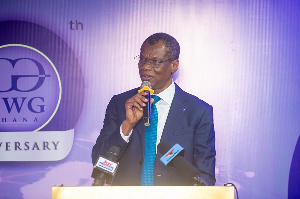
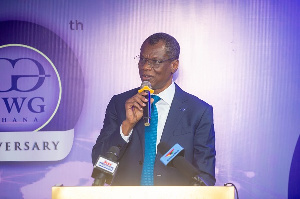
    Founder and current Chairman of CWG Plc, a prominent systems integration company in sub-Saharan Africa, Austin Kwesi Okere, has emphasized that artificial intelligence (AI) will emerge as the primary distinguishing factor between successful and struggling financial services providers in the evolving landscape of global finance.

    Mr Okere, highlighted AI’s crucial role in areas such as product development, corporate governance, and fraud prevention, which have gained heightened importance in light of recent economic developments. He also noted the potential for malicious actors to exploit AI for their own gain.

    “When it comes to trusting banks, it’s all about safety – keeping your money secure from risks, fraud and cyber threats.

    “People often lose sleep worrying about whether their funds are safe from unauthorised access or impersonation. But things keep changing, and now artificial intelligence poses a new threat by making it easier to fake identities. So, we’ve got to up our game and use that very same tool to improve security.

    “Security in banking is always evolving and our job is to bring in the latest and best practices to protect your money. As the world gets more complicated, these safety measures become even more crucial. CWG leads the way in creating these solutions,” he added.

    These remarks were made during the launch of CWG’s 20th-anniversary celebration of its operations in Ghana. They underscore the increasing importance of artificial intelligence (AI) across all sectors of the economy. Projections indicate that the global AI market is set to reach a value of $1.35 trillion by 2030, potentially contributing $15.7 trillion to the global economy in the same year.

    Highlighting the relevance of AI, the Bank of Ghana’s fraud report disclosed that banks and specialized deposit-taking institutions (SDIs) incurred losses of approximately GH¢56 million due to fraud in 2022. In contrast, the global financial sector experiences annual losses in the trillions of US dollars due to fraud.

    Harriet Attram Yartey, Managing Director at CWG Ghana and Vice-President for its regional operations, also emphasized how technology has created a unique opportunity for local institutions to achieve significant growth.

    She noted that in the past, the cost was a major barrier for firms looking to embrace cutting-edge technology. However, CWG’s solutions have made technology more accessible, leading to substantial cost savings through improved efficiency and reduced risks associated with potential digital security breaches.

    “We have successfully shifted the perception that technology is prohibitively expensive, and our customers are now expanding their operations while reaping the benefits of these savings,” she elaborated.

    The 20th anniversary, with the theme “Positioning Africa to Maximize the Future,” she continued, “serves as a testament to CWG’s lasting contributions to the information, communication, and technology sector over the past two decades.”

    “CWG has consistently set the standard for excellence in Africa and has diligently pursued its vision and mission, making a profound impact on Ghana and Africa’s digital ecosystems,” she added.

  • OSP discovers 2 skincare businesses “owned via proxies” by Cecilia Dapaah

    OSP discovers 2 skincare businesses “owned via proxies” by Cecilia Dapaah

    The Office of the Special Prosecutor (OSP) revealed in an Accra High Court how former sanitation minister Cecilia Dapaah claimed ownership of two skincare companies registered under different names.

    Additionally, the OSP’s court files, made public on September 19, 2023, indicated that one of the companies was registered using the minister’s address.

    Cecilia Dapaah clarified that the over 2.8 million Ghana cedis found at her residence by the OSP during a search comprised earnings from her business, government-appointed sitting allowances, and funeral donations.

    Details about the two companies:

    The business in question is Dermacare Cosmetics, which she allegedly owned. However, upon investigation by the OSP, it was discovered that the company had been registered in the name of another individual.

    Additionally, another entity called Dermacare Enterprise was registered in Dapaah’s name and shared the same address as the minister. Nevertheless, ownership of this second company also belonged to a different person.

    Cecilia Dapaah claimed that some of the money came from the sale of the Dermacare Cosmetics business in 2003. However, the OSP noted that these funds were in new currencies introduced in 2007, four years after the purported sale.

    Further investigation revealed that Dermacare Cosmetics was registered in 2018.

  • Ablakwa alleges BoG concealed GHS711m expenses for office remodeling, guest house

    Ablakwa alleges BoG concealed GHS711m expenses for office remodeling, guest house

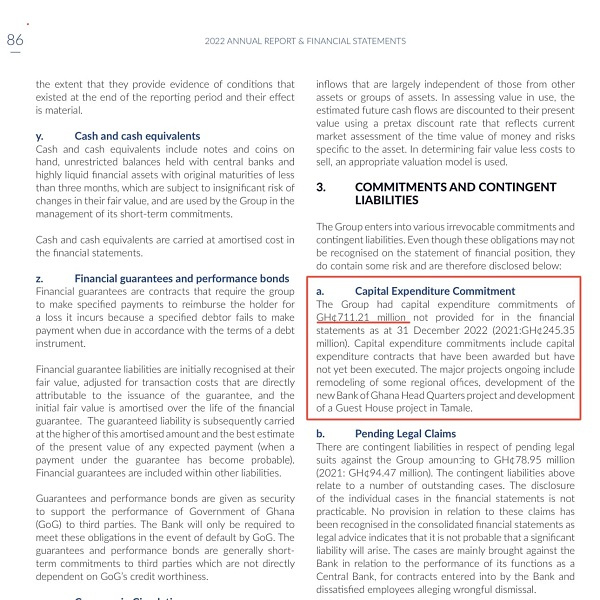
    Member of Parliament (MP) representing North Tongu, Samuel Okudzeto Ablakwa, has strongly criticized the Bank of Ghana (BoG) for allegedly allocating over GH¢711 million in 2022 for various projects, including the remodeling of regional offices, the construction of a guest house, and a new head office.

    He raised concerns about these expenditures, particularly in the midst of an ongoing economic crisis in the country.

    Ablakwa took to Facebook on Tuesday, September 19, 2023, to express his dismay, pointing out that the BoG had initially attempted to conceal these financial transactions.

    However, the alleged expenditures were brought to light by independent auditors from the auditing firm Deloitte. Ablakwa questioned the need for such secrecy if the central bank believed its actions were above board.

    “Thanks to independent auditors at Deloitte, we now know from page 86 of the Bank of Ghana’s 2022 Annual Report and Financial Statements that the Bank of Ghana made a staggering GH¢711.21 million expenditure commitment in its crisis year of 2022 on reckless projects such as its scandalous new head office, remodelling of regional offices and construction of a guest house in Tamale.

    “What is equally disgraceful and condemnable was BoG’s attempt to conceal these risky humongous transactions by its disingenuous refusal to disclose them in its original financial statement presented to auditors. Regrettably, the auditors had to make their own discovery.

    “If the Bank of Ghana had nothing to hide and was really proud of its sleazy new headquarters project and all the other dubious constructions, why did they deploy such elaborate opaque concealment schemes just to avoid accountability?” he quizzed.

    The MP disclosed a fictitious document purporting to be from Deloitte that claimed the BoG failed to disclose GH711.21 million in capital expenditure commitments in its financial statement as of December 31, 2022.

    According to the paper, the biggest expenditure projects included remodeling a few regional branches of the central bank, building a new headquarters for the Bank of Ghana, and building a guest house in Tamale.

    View the MP’s tweet plus the document below:

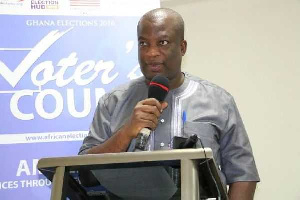
  • Eligible voters in remote places can wait and register next year – EC

    Eligible voters in remote places can wait and register next year – EC

    The Electoral Commission has provided clarification regarding voter registration for eligible individuals unable to register at its district offices across the country.

    Dr. Serebour Quaicoe, who serves as the Director of Electoral Services for the Commission, conveyed this information during an interview on Asempa FM’s Ekosiisen program on Monday, September 19. He stated that those unable to register will need to wait until next year to do so.

    Dr. Quaicoe explained, “For those in hard-to-reach areas, we are only appealing to them to find a way to get to the district offices for the registration. Otherwise, they would have to wait for next year. But even next year, we can’t be everywhere. It will depend on situations on the ground in terms of figures. Because we won’t say that, because we have to serve hard-to-reach areas, we will send our tools to just three people in a particular area.

    “So, we will work with the stakeholders to be sure that if a place is indeed hard-to-reach, and that we have people there before we move. That will be a form of mopping because we are still going to maintain the district office registration and there will be continuous registration,” he noted.

    Dr. Godfred Seidu Jasaw, the Member of Parliament representing Wa East, has called upon the Electoral Commission (EC) to establish a new registration center in the Wa East District due to accessibility issues in the current district capital, Funsi. He stressed that a significant number of eligible voters face difficulties reaching Funsi for registration and emphasized the urgency of addressing this situation.

    In spite of legal challenges from opposition parties concerning the EC’s decision not to conduct registration in electoral areas this year, the Commission is proceeding with the exercise. Mrs. Jean Mensa, the Chairperson of the EC, has attributed the challenges in decentralizing the registration process in part to Parliament’s failure to pass the proposed Constitutional Instrument C.I. required for approval.

    Mrs. Mensa explained, “As you are all aware, the Commission prepared a draft C.I for continuous registration in all district offices nationwide. This initiative started last year and the registration we were envisioning under the draft C.I was on a sustained long-term basis.”

    “Indeed, had the C. I been passed we would have had some six months this year to register voters at any time of their choice. Our 2023 budget and work plan were prepared along those lines. Our 2023 work plan and budget were based on a continuous registration of voters in our district offices nationwide, we did not factor electoral area registration in our 2023 work plan and budget,” she explained.

    The EC also declared that it has doubled the quantity of registration stations in Tamale and would do the same in other regions as needed. The Commission is actively addressing any issues that may arise during the registration process in order to ensure that eligible voters are not denied the right to vote as a result of this enlargement.

  • New York Times report places Ghana in a state of bankruptcy

    New York Times report places Ghana in a state of bankruptcy

    The government of Ghana finds itself in dire financial straits and has sought assistance from the International Monetary Fund (IMF) for the 17th time since gaining independence in 1957.

    Emmanuel Cherry, the CEO of an association representing Ghanaian construction companies, calculates that government entities owe contractors approximately 15 billion cedis, or roughly $1.3 billion, without including interest.

    This backlog of payments has led to layoffs and financial stress for contractors and their workers.

    Various sectors in Ghana, including teacher trainees and independent power producers, report being owed substantial sums by the government.

    This financial crisis has been exacerbated by factors such as the COVID-19 pandemic, Russia’s invasion of Ukraine, and rising food and fuel prices. This familiar cycle of crises and bailouts has affected numerous low and middle-income countries across Africa, Latin America, and Asia for decades.

    While the IMF has provided a detailed rescue plan for Ghana, including measures to address debt, control spending, raise revenue, and protect the most vulnerable, the question remains whether this time will be any different from previous attempts to stabilize the country’s finances. Despite past successes, Ghana has once again found itself in dire need of assistance.

    Several challenges persist, including the looming threat of climate change, which will require substantial financing in the coming decade to mitigate its impact on developing nations.

    Ghana’s debt burden, which includes both foreign and domestic creditors, presents a complex challenge, with thousands of creditors involved, each with its own objectives and regulations.

    The situation is further complicated by the proliferation of lenders in distressed countries worldwide, making debt resolution a challenging and multifaceted endeavor. The effects of inflation and currency depreciation have also taken a toll on households and businesses, making it difficult for them to cope.

    Fundamental issues, such as the government’s fiscal inefficiency and the lack of diversified revenue streams, contribute to the ongoing crisis. Ghana’s economy heavily relies on exports of raw materials like cocoa, oil, and gold, which are subject to price fluctuations. A lack of investment in manufacturing and other sectors capable of providing stable employment and export opportunities compounds the problem.

    The need for financing remains a pressing concern, and governments often turn to international capital markets for funding. However, this reliance on foreign borrowing can lead to financial crises when economic conditions deteriorate or foreign lenders become hesitant.

    Addressing these challenges requires a multifaceted approach, including low-cost lending from multilateral institutions, debt forgiveness, improved transparency in loan terms and usage, and strategies to stabilize volatile commodity markets.

    Despite the hurdles, there is hope for Ghana’s recovery, but finding sustainable and affordable sources of investment capital remains a critical question. Breaking the cycle of debt crises will be a complex and ongoing endeavor for Ghana and other developing nations.

  • Aid to Bawumia downplays Ken Agyapong’s eligibility to become president

    Aid to Bawumia downplays Ken Agyapong’s eligibility to become president

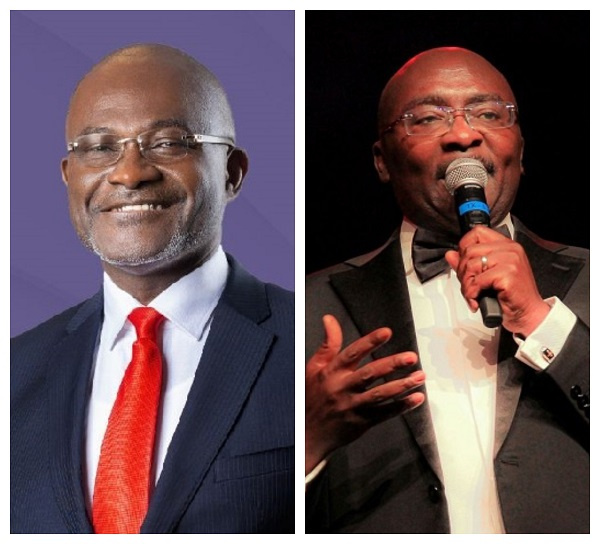
    The vice president’s spokesperson, Dr. Gideon Boako, has responded to an accusation made by Kennedy Ohene Agyapong, a candidate for the NPP’s flagbearer position, that the vice president is aware of the identity of the person who murdered journalist Ahmed Suale.

    Dr. Boako claims that the statement was pretty careless and unworthy of an NPP flagbearer candidate.

    “I have seen a headline published by the Ghana Post newspaper and some online portals on Ahmed Suale and the Vice President’s name mentioned. This is simply a reckless statement not befitting of anyone who wants to lead the NPP. Where did we sleep as a party to wake up to this just because of elections?” he questioned in a Twitter poste dated September 19, 2023.

    Dr. Boako’s statement came as a response to an interview on Kessben TV featuring Kennedy Agyapong. During this interview, Agyapong addressed the suggestion that the NPP might face consequences if he were to secure the party’s flagbearership due to allegations of his involvement in the murder of Ahmed Suale.

    In his September 18, 2023 interview, Agyapong vehemently denied any connection to Suale’s death, reiterating his innocence. He also raised questions, saying, “Those who compiled the 10 accusations against Ken Agyapong in support of Bawumia—Bawumia is the vice president and heads the Police Council. They are aware of the individuals responsible for Ahmed Suale’s murder. Why haven’t they come forward with that information? Yet, they are pointing fingers at me.” He expressed these thoughts in Twi during the interview.

    “If you are a government and your national security (architecture) does not know the person who killed Ahmed Suale, then it means you don’t know what you are doing. Is this one of the ten sins of Kennedy Agyapong?” he added.

    About Suale’s murder:

    Ahmed Suale was assassinated in Madina on Wednesday, January 16, 2019, by two unknown assailants.

    The assailants shot him twice in his chest and once in his neck after breaking into his car.

    The Ghana Police Service is still investigating his murder, but no one has been arrested yet.

    Ken Agyapong has been blamed for the murder of Suale because he once urged people to beat him up on live TV after disclosing his identity and address.

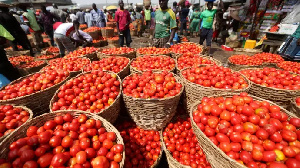
  • Tomato price decreased by 50% within months – Agric minister

    Tomato price decreased by 50% within months – Agric minister

    The Minister of Food and Agriculture, Bryan Acheampong, has stated that there has been a decline in the prices of food products in the market in recent months.

    During an interview with Francis Abban on State of Affairs, the Member of Parliament for Abetifi noted that the price of tomatoes, in particular, has decreased by 50% over the past six months.

    “Six months ago, a box of tomatoes was 100ghc and now it is 50ghc at the market today. It has dropped by 50%.

    “Today there is an abundance of foods on the market. The price of everything is going down,” he said.

    Dr. Bryan Acheampong, while expressing his concern about the high food inflation in the country, remained hopeful that the second phase of the Planting for Food program would address this challenge.

    “I find the items that we produce in Ghana at 70 [percent inflation] quite high. But it is not because of the farm gate. Maize has been stable at the farm gate for the past 2,3 years. Tomatoes have been stable at the farm gate.

    It is something that we have to deal with and that is what PFJ 2.0 is tailored to deal with. To ensure that the distribution gap from the farm gate to the market shrinks.”

    “When we talk about low prices I am not interested in it if it is going to be a disincentive to the farmer. The farmers are happy with the prices they are selling and I am happy. And under PFJ I want to find a mechanism to guarantee those farm gate prices. But I just want to ensure that the distribution margin is reduced,” he added.

    “I am hoping that when we look at inflation a year from today. It will be in single digits”, Dr. Bryan Acheampong concluded.

    The August 2023 inflation data from the Ghana Statistical Service indicates that while year-on-year tomato prices have risen by approximately 70%, there was an 8.2% decrease in tomato prices between July 2023 and August 2023.

  • Hundreds of people protest in eastern Libya over recent flooding

    Hundreds of people protest in eastern Libya over recent flooding

    In the eastern Libyan city of Derna, hundreds of residents have taken to the streets in protest against local authorities, following devastating floods that claimed thousands of lives in the city.

    The protesters directed their criticism towards Aguila Saleh, the leader of eastern Libya’s parliament, and local officials, holding them responsible for the floods, which have resulted in nearly 4,000 casualties according to revised UN estimates.

    During the demonstration outside the city’s primary mosque on Monday, the protesters issued a joint statement, demanding swift investigations into the disaster and legal actions against the responsible leaders.

    They also called for compensation, inquiries into the city’s financial situation, and the reconstruction of Derna.

    It’s worth noting that eastern Libya operates under a parallel government distinct from the UN-recognized government in Libya’s capital, Tripoli.

    Various experts and humanitarian organizations have suggested that the floods could have been prevented had local authorities evacuated residents or adequately communicated warnings about Storm Daniel.

    Neglecting the city’s dams was also cited as a key factor in their rupture and the subsequent flooding.

    The protesters escalated their discontent by setting fire to the residence of Derna’s mayor, Abdulmenam al-Ghaithi. As a response, Prime Minister Osama Hammad of eastern Libya suspended Mr. Ghaithi, along with other municipal officials from Derna.

  • Tributes pour out from Kenyans to singer Roger Whittaker

    Tributes pour out from Kenyans to singer Roger Whittaker

    Kenya is in mourning following the passing of the renowned British folk singer and accomplished whistler, Roger Whittaker, who was originally born in Kenya. He is particularly celebrated locally for his 1982 hit song, “My Land is Kenya.”

    Whittaker, who passed away at the age of 87, was born in Nairobi, Kenya, to English parents. He dedicated two years to national service, where he was involved in fighting against the rebel Kenya Land and Freedom Army, also known as Mau Mau. Later, he pursued a career in teaching.

    Upon relocating to the United Kingdom, Whittaker ventured into music by playing the guitar and singing in folk clubs. Over the course of his extensive music career spanning decades, he reportedly sold nearly 50 million records worldwide, as stated on his website.

    However, in Kenya, he is most famously associated with his song about his place of birth and upbringing. “My Land is Kenya” holds a special place and is often played on television during national holidays, alongside other patriotic tunes.

    In the song, Whittaker passionately praises “the land I love… the land I was born,” delivering heartfelt lines that resonate with Kenyan audiences.

    My land is Kenya, so warm and wild and free

    You’ll always stay with me here in my heart

    My land is Kenya, right from your highlands to the sea

    You’ll always stay with me here in my heart, here in my heart

    “[Roger Whittaker] has left behind a remarkable piece of art that is truly worth emulating. As Kenya celebrates 60 years of independence this year, Roger Whittaker will forever be a part of our musical history,” Edward Mwasi said on social media platform X (formerly Twitter).

    “May he Rest in Peace, he wrote beautiful music with heartfelt lyrics, including The Last Farewell and My Land is Kenya,” former foreign affairs permanent secretary Macharia Kamau said.

  • First fighting reported in Port Sudan since the war started

    First fighting reported in Port Sudan since the war started

    In a significant development, the ongoing conflict between the two rival factions within the Sudanese military has spilled over into the Red Sea city of Port Sudan. This marks the first time such clashes have occurred in the five months of conflict.

    Sudanese soldiers engaged in gunfire with members of a tribal militia group known as the “Forces of the Eastern Sudan Parties and Movements Alliance.”

    The confrontation arose as the troops attempted to dismantle checkpoints established by this group in the city’s center on Monday.

    Port Sudan is a crucial location as it hosts Sudan’s sole operational airport. Additionally, the city has become a hub where some government officials and UN agencies have relocated due to the ongoing violence in the capital, Khartoum, and other parts of the country.

    The protracted clashes between the Sudanese army and rival paramilitary Rapid Support Forces have resulted in a significant loss of life, with thousands of casualties since the violence erupted in Khartoum in April.

  • NAM1’s lawyer informs Court of BoG’s advice on Menzgold operations

    NAM1’s lawyer informs Court of BoG’s advice on Menzgold operations

    The Chief Executive Officer of the now-defunct Menzgold Ghana Limited, Nana Appiah Mensah, commonly referred to as NAM1, has refuted allegations of violating financial regulations to operate an illicit gold dealership business.

    NAM1 is currently facing trial for allegedly defrauding more than 16,000 clients of the defunct company, amounting to GH¢1.6 billion.

    During his appearance before the High Court on Tuesday, September 19, 2023, NAM1’s legal representative, Kwame Akuffo, asserted that his client had not contravened the provisions of the Banking and Specialised Deposit-Taking Institutions Act, 2016 (Act).

    Rather, the lawyer claimed that officials from the country’s central bank, the Bank of Ghana, had advised his client to streamline operations by changing the name of the gold deposit-taking institution from Menzbank (formerly Menzgold) to Menzbac.

    “Indeed, in meetings with the BoG, it was the BoG that recommended that third accused company (Brew Marketing Consult) be set up in order to ensure that the gold marketing business was kept distinct from the business of Menzgold,” counsel said, he is quoted by Graphic Online.

    Kwame Akuffo, the attorney for NAM1, did not, however, give the identities of the BoG representatives he claimed gave his client the alleged advice.

    He said that at the opportune time during the trial, he would exercise his right to subpoena BoG officials to testify before the Court in order to assist his client’s defense. He said that this might alter.

    “I will skip the names because the court may take evidence from them in camera,” counsel for NAM1 told the High Court.

    The High Court, presided over by Dr. Ernest Owusu-Dapaa, a Justice of the Court of Appeal sitting as an additional High Court judge, later granted bail to Nana Appiah Mensah on Tuesday in the amount of GH500 million with four sureties.

    According to state prosecutors, NAM1 is accused of violating Act 930 of the BoG, fraud by false pretense, money laundering, and fraudulent breach of trust on about 39 counts.

  • Kenya: 87-year-old British folk singer Roger Whittaker dead

    Kenya: 87-year-old British folk singer Roger Whittaker dead

    British folk singer of Kenyan descent, Roger Whittaker, known for his 1982 hit song My Land is Kenya and skilled whistling, has passed away at the age of 87.

    “It is with great sadness we share the news of Roger’s passing at age 87. His life, artistry and legacy has meant so much to so many all over the world,” his friend, Jesse Waggoner, posted on Whittaker’s Facebook pageon Monday.

    “We are thankful that the gift of his music remains with us.”

    The multilingual singer passed away on September 13, 2023 at a hospital in southern France, where he settled after an outstanding career spanning more than 50 years, according to a statement from his family and his official website, rogerwhittaker.com.

    “Roger was an iconic artiste, a wonderful husband and father. He touched so many hearts with his music throughout his life and will always live on in our memories,” the family statement said.

    His passing occurred just a month after his Facebook page had announced his illness, and he had been under medical care in a hospital. It is reported that Whittaker, recognized for his distinctive Henri Quatre beard, suffered a stroke from which he did not recover. On his final day, medical efforts to save his life were unfortunately unsuccessful, as reported by German media.

    In his later years, the pop icon faced various health challenges, including heart and stomach issues, necessitating multiple surgeries. Whittaker’s legacy endures among Kenya’s enthusiasts of folk and country music, primarily due to his iconic work “My Land is Kenya.”

    In this touching tribute to Kenya, Whittaker expressed his profound affection and connection to his homeland. He celebrated its natural beauty, its people, their diverse cultures, and historical heritage, including their valiant struggle for independence against British colonial rule.

    “This melodious masterpiece captures the heart and soul of Kenya, evoking a sense of pride and unity among its listeners,” Jennifer Bell writes in The Meaning Behind The Song.

    “The lyrics paint a vivid picture of Kenya’s breathtaking landscapes… It encapsulates the rich diversity of wildlife, highlighting Kenya’s position as a jewel of natural beauty. Whittaker’s smooth vocals bring to life the imagery of roaring lions, graceful giraffes, and shimmering.”

    One line in the chorus, “you’ll always stay with me here in my heart,” repeated after each stanza, serves as a reminder to the Kenyan diaspora that wherever they go, Kenya is undoubtedly their home.

    “The song’s uplifting melody and heartfelt lyrics inspire a sense of unity and pride among Kenyans, reinforcing the idea that Kenya is not just a land but a deeply cherished home,” says Bell.

    The artist, who also performed in German and French, had several other chart-topping hits, including “Indian Lady,” “Durham Town,” “The Last Farewell,” “New World In The Morning,” and his rendition of “Wind Beneath My Wings.”

    According to his website, he sold nearly 50 million records worldwide and received 250 platinum, gold, and silver awards during his illustrious career before retiring to France in 2012.

    Born in Nairobi, Kenya, in 1936 to English parents Viola and Edward Whittaker from Staffordshire, England, Roger Whittaker initially pursued higher education in South Africa after completing two years of national service in Kenya. Later, he began a medical course in the UK but decided to drop out after a year, opting to concentrate on his musical career, which took him to various European countries, including France and Germany.

    Roger Whittaker was laid to rest in a private ceremony on Saturday, as reported by the German news outlet Bild.de. He is survived by his wife Natalie O’Brien and their five children: Emily, Lauren, Jessica, Guy, and Alexander Whittaker.

  • “We know govt is unpopular” – Nana Akomea

    “We know govt is unpopular” – Nana Akomea

    Managing Director of the State Transport Corporation (STC), Nana Akomea, has noted that he is aware of the current wobbling stands between the government and the general public.

    But he assures that government is still working tirelessly to restore the country’s misplaced fortunes as they head to the 2024 presidential elections.

    “We are aware that the present government is facing significant unpopularity, largely stemming from the multitude of hardships experienced by citizens and the expression of widespread discontent. However, in the realm of politics, it has been said that even a single week can bring about substantial changes. The government remains dedicated to making concerted efforts to improve the situation, particularly in terms of governance and the economy. The goal is to provide a greater level of comfort to the citizens, ” he told the media during an interview.

    Mr. Akomea has also called on the presidential aspirant of the New Patriotic Party (NPP), Kennedy Agyapong, to exercise restraint in his statements concerning Vice President Dr. Mahamudu Bawumia.

    This appeal follows a bold statement made by the Assin Central MP regarding the murder of investigative journalist Ahmed Suale.

    Mr. Agyapong stated that Vice President Dr. Mahamudu Bawumia should be aware of the individual responsible for the journalist’s killing, dismissing any suggestions of the Vice President’s involvement in the crime.

    Mr. Agyapong made these remarks during an interview on Kessben TV on Monday, September 18, 2023.

    “Those who wrote the 10 sins (of Ken Agyapong) in support of Bawumia, he (Bawumia) is the vice president, he is the head of the police council, they know the killers of Ahmed Suale, why have they not spoken out? And they are coming to blame me for it,” he is quoted to have said.

    Source: The Independent Ghana | Amanda Cartey

  • We’ll give Kennedy Agyepong a showdown – Nana Akomea

    We’ll give Kennedy Agyepong a showdown – Nana Akomea

    Managing Director of the State Transport Corporation (STC), Nana Akomea, has expressed his unrelenting support for Mahamadu Bawumia in the National Patriotic Party’s upcoming primaries.

    He has challenged Kennedy Agyapong’s confidence of emerging victorious through his ‘showdown’ comment against Vice President, Dr Mahamadu Bawumia.

    In a recent media engagement with Kwame Sefa Kayi, the STC director indicated that “We will rather give him a showdown. Yes. We will rather give him a showdown. We will rather give him a showdown.”

    Recall that Kennedy Agyapong was caught publicly launching verbal attacks directed at the Jubilee House, with President Akufo-Addo and Dr. Bawumia as the main subjects of his criticism.

    In a video, an incensed Kennedy Agyapong was seen expressing his outrage over the alleged mistreatment of his representative at the University of Cape Coast voting center.

    He holds the belief that individuals associated with the Vice President, who is also a candidate in the election, were responsible for these actions, which has led to his discontent.

    Nonetheless, Bawumia’s tema are still confident to win the primaries against Kennedy Agyapong.

    Source: The Independent Ghana | Amanda Cartey

  • Buffaloes, crocodiles to displace Mozambique families

    More than 1,000 families are set to be displaced in central Mozambique following attacks by wild animals.

    The head of the local administration in Marromeu district in Sofala province said the local government would transfer 1,500 families threatened by the attacks.

    Henriqueta de Rosário said authorities had recorded the deaths of three people from attacks by wildlife in the first quarter of this year.

    Buffaloes from the Marromeu Special Reserve in the Zambezi river delta have invaded residential areas, forcing the population to move to the river islands.

    However, as they seek refuge on the islands, they face the threat of crocodile attacks.

    “The conflict between man and wildlife is a growing reality” said Ms Rosário, adding that many people were threatened.

    She said that at least 400 people had already signed up for a voluntary resettlement initiative to leave the area.

  • Pensioner Bondholders Forum suspend picketing at Ministry of Finance

    Members of the Pensioner Bondholders Forum have on Monday, May 15, 2023, suspended their picketing at the Ministry of Finance.

    This comes after the Forum reached an agreement with Mohammed Amin Adam, Minister of State responsible for Finance on the payment of outstanding coupons and principals of pensioners.

    In a press release sighted by GhanaWeb Business, the Forum said, “The Ministry and Pensioner Bondholders to, in the next few days, meet and reach an agreement on the payment of all outstanding principals to pensioners. As a result of the agreement reached with the Ministry on the payment of outstanding coupons and principals to pensioners, we are hereby suspending our picketing from Monday, May 15, 2023.”

    Since Monday, May 8, 2023, some members of the Pensioner Bondholders Forum picketed the Ministry of Finance over government’s failure to honour its agreement to pay bondholders after they were exempted from the Domestic Debt Exchange Programme (DDEP).

    According to them, every country holds pensioners in high esteem but the case is different in Ghana.

    Conveyed at the premises of the Ministry of Finance, the pensioners are wielding placards with different inscriptions on them.

    The Forum also noted that they need their monies for medications and other financial obligations.

    Below is the full statement:

    SUSPENSION OF PICKETING THE MINISTRY OF FINANCE

    1. Following delays in the payment of coupons and matured principals to pensioners exempted by the government from the Domestic Debt Exchange Programme, we submitted a letter to the Finance Minister on 30th March 2023, and advised that pensioners be paid all their outstanding coupons and principals by 21st April 2023, and make payments of subsequent coupons and principals as and when due, and without delays.

    2. At the time of writing our letter of 30th March 2023, there were thirteen (13) coupons and two (2) principals in arrears with the earliest due amount being in arrears for thirty-eight (38) days.

    3. We advised in our letter of 30th March 2023, which was copied to the Speaker of Parliament that if the anomalous situation we were complaining about was not resolved by 21st April 2023, we shall be left with no other option than to resume picketing the Ministry to further press home our demand for the payment of all coupons and principals in arrears, and an end to payment delays.

    4. In a meeting with the Ministry on 14th April 2023, we extended the deadline given to 28th April 2023 to allow the Ministry an additional one week to resolve the delayed payments.

    5. The Minister failed to make any payment to us by 28th April 2023, so we notified the police and resumed our picketing on 8th May 2023.

    6. On Friday, 12th May 2023, which was the fifth (5th) day of the picketing, we had a meeting with Hon. Mohammed Amin Adam, the Minister of State of the Ministry in the afternoon, and agreed on the following:

    i. The Ministry to give instructions for the payment of all outstanding coupons (including those due on 15th May 2023) to pensioners by 15th May 2023.

    ii. The Ministry to pay subsequent coupons to pensioners on due days.

    iii. The Ministry and Pensioner Bondholders to, in the next few days, meet and reach an agreement on the payment of all outstanding principals to pensioners.

    7. As a result of the agreement reached with the Ministry on the payment of outstanding coupons and principals to pensioners, we are hereby suspending our picketing from Monday, 15th May 2023.

    8. Should the Ministry renege on any of the agreed points, we shall resume picketing the Ministry.

  • Trade minister pledges to enhance environment for private sector companies

    Trade minister pledges to enhance environment for private sector companies

    The minister of trade and industry, Kobina Tahir Hammond, has stated that the government will strengthen the business climate for the private sector to support its expansion and competitiveness.

    He emphasized that without private sector investments, the development of supply chains will not advance.

    On Monday, September 18, 2023, KT Hammond spoke under the title “Industrialization Through Sustainable and Efficient Supply Chains” at the Ghana Industrial Summit and Exhibition (GISE) 2023.

    “We are also grateful to the private sector for keeping faith with government’s vision of industrialisation since 2017. Without your investment, no progress in building up supply chains into farming communities and small-scale producers and aggregators would have been possible.”

    “Rest assured of my unwavering support for AGI and members. I will continue to work with my colleague Ministers, under the direction by His Excellency the President, to improve the business environment to enhance the growth and competitiveness of your investments. Let us work together to make this a reality and a resounding success. None of us can afford to fail,” he added.

    The minister of trade and industry declared that his department was prepared to enhance vital industrial supply chains, particularly those connected to regional suppliers and producers of raw materials.

    According to K.T. Hammond, the change will increase export diversification and decrease importing.

    According to him, the government will establish the necessary framework to maintain the manufacturing sector’s supply chains’ effectiveness and sustainability.

  • TECNO launches CAMON 20 Series

    As one of the most admired technology brands for young-at-heart consumers, TECNO has been committed to innovating products that standout as it continues to push the boundaries for its smartphone with the launch of its new CAMON 20 Series.

    The CAMON 20 series comes in four variants; Tecno Camon 20, Camon 20 Pro, Camon 20 Pro 5G, and Camon 20 Premier 5G. The standout feature of the CAMON 20 series is the distinctive pentagonal lens module at the rear, adding to its visual appeal.

    TECNO CAMON 20 series 5000 Times/s Sensor-Shift OIS Anti-shaking Technology and 50MP main camera RGBW Ultra-Sensitive sensor provides an SLR camera level anti-shake video and crystal-clear night portrait quality, even when taken while moving at top speed.

    Its 108MP Ultra Definition camera delivers breath-taking wide-angle shots for both photography and video shooting that support 4K and HDR video, while the rear and front cameras support dual portrait video. The 32MP Ultra Clear AI Shining Selfie camera also elevates selfie experiences.

    CAMON 20 series is the best anti-shake solution for portrait video shooting so far that captures all the emotions in motion!

    With its advanced camera features, the TECNO CAMON 20 series takes creativity to new heights and its the perfect smartphone for fashion and lifestyle enthusiasts who love to capture every moment in style. The CAMON 20 series boasts of a sleek and modern look with a premium feel.

    The device features a 6.67-inch AMOLED true color display, supporting full-path cinema-grade P3 wide color gamut and up to 120 Hz refresh rate, making it perfect for streaming, gaming, browsing, and other media activities. Additionally, the display comes with a center hole-punch design and an embedded fingerprint sensor for fast and secure access to the device.

    The TECNO CAMON 20 series is powered by MediaTek’s Helio G99 processors, giving users a blazing-fast performance and at optimum power efficiency. It also comes with up to 16GB of RAM and 256/512GB of internal storage, ensuring that users have ample space for their apps, games, and media.

    The device also has a large 5000mAh battery with a 45W supercharger for quick and easy recharging that can last all day.

    The striking aesthetic design and powerful performance of TECNO’s CAMON 20 series brings about an all-round exceptional user experience. The Immersive All-slim Bezel brings users an immersive border-less full-screen view experience. The fusion of the magic skin with ceramic materials creates incredible natural tactile texture that is waterproof, heat, cold, stain and abrasion resistant as well as fingerprints proof.

    Availability

    You can get exciting benefits such as 2GB MTN DATA Bundle Monthly for 6 months, 180 Days screen protection warranty and amazing gifts when you enter any TECNO-accredited stores to get the new CAMON 20 series device. For more information, follow TECNO on social media @TECNOMobileGhana.

    Recommended Retail Pricing

    CAMON 20 PRO – GHS 2,545

    CAMON 20 – GHS 2,145

    #FeaturedBy:TecnoGhana

  • Economic recovery: Private equity and venture capital funds to be financed by Romania’s Recovery Equity Fund

    As part of its Recovery and Resilience Program (PNRR), which is funded by the European Union, the Romanian government has made a significant contribution to the nation’s economic recovery by financing private equity and venture capital firms through the Recovery Equity Fund (REF).

    The funding will be worth a total of EUR 80 million, and four funds have been selected to receive it.

    Private equity and venture capital funds play a critical role in supporting innovative startups and driving economic growth. Through the REF, Early Game Ventures, GapMinder, Morphosis Capital, and ROCA X will receive the necessary capital to invest in promising startups, which will create IMF reduces Ghana’s economic growth rate to 1.6% in 2023jobs and boost economic growth in Romania.

    Private equity and venture capital funds drive economic growth

    The selection of these four private equity and venture capital funds for financing through the REF is a testament to their potential to drive economic growth in Romania. Private equity and venture capital firms invest in innovative companies in various sectors, providing them with the necessary funding and expertise to succeed. With the financing they will receive through the REF, these firms will be able to invest in even more promising startups, which will create jobs, increase competitiveness, and drive economic growth in Romania.

    Private equity and venture capital funds also have a proven track record of supporting SMEs, which are the backbone of the Romanian economy. These funds will provide critical support to startups and SMEs, which will drive economic recovery in Romania. Moreover, the REF’s financing is expected to act as a catalyst for private sector investment, attracting additional capital from other investors and contributing to the long-term economic growth of the country.

    Romania’s Recovery Equity Fund boosts economic recovery

    The Recovery Equity Fund is a crucial component of Romania’s efforts to recover from the economic impact of the COVID-19 pandemic. The REF aims to support the growth of SMEs and startups by investing in private equity and venture capital funds that can provide them with the necessary funding and expertise to succeed. This financing is intended to create jobs and boost economic growth in Romania.

    The REF’s investment in private equity and venture capital funds is a testament to the Romanian government’s commitment to supporting innovative companies and driving economic growth in the country. By investing in private equity and venture capital funds, the REF is helping to create a vibrant startup ecosystem in Romania that can drive economic growth for years to come.

    Romania’s Recovery Equity Fund is an essential initiative that will help to drive economic recovery in the country. Private equity and venture capital funds are critical to supporting innovative startups and driving economic growth. By investing in these funds, the REF will provide critical support to startups and SMEs, which are the backbone of the Romanian economy. The financing from the REF is expected to act as a catalyst for private sector investment, contributing to the long-term economic growth of Romania.

  • I have saved more money in the UK in 3 months than I did after working for 4 years in Ghana – Ghanaian nurse in UK

    I have saved more money in the UK in 3 months than I did after working for 4 years in Ghana – Ghanaian nurse in UK

    Ghanaian Nurse based in the United Kingdom (UK), Gordon Kaati, has affirmed the assertion that employment abroad offers significant advantages compared to working in Ghana.

    According him, he has worked in the Ghanaian health sector for 4years but has not been able to save as much as he has after working for just 3 months overseas.

    He concedes that taxes payed in the western world are somewhat higher, however, there is still a greater chance to save significant amounts of money within the shortest interval.

    “Per the system here. You are paid every hour. So obviously it paids more than it pays in Ghana. In most of the countries in Europe, America and other parts of the world, you are paid every hour and you are paid for overtime. In Ghana it doesn’t even matter if you decide to work for extra shifts, You are paid the same salary. But in UK if you decide to work for extra hours you are paid more. Obviously we pay more tax than we pay in Ghana. But I still make more money than in Ghana. I worked in Ghana as a registered nurse for almost 4 years and I can say that I have saved more money in UK within 3 months than I saved for 4 years in Ghana,” Gordon Kaati explained to the media during an interview on September 13, 2023.

    He made a further statement that he considers his entire working period in Ghana wasted and nothing to write home about.

    “I can say I have made impacts in my life when i moved to UK. Sometimes I feel like I have wasted all my years in Ghana,” the Ghanaian nursed based in the UK stated.

    More Ghanaian nurses are in the process of securing visas to practice abroad, a situation most of them say is born out of poor working conditions in the country.

    Over the past year, there have been increased cases of Ghanaian-trained nurses and other health professionals travelling outside the country.

    A general nurse, who wishes to be known as Alawani, last month secured a job and visa to the United Kingdom. Prior to the new appointment, she had been practicing at a hospital in the Eastern Region for over seven years.
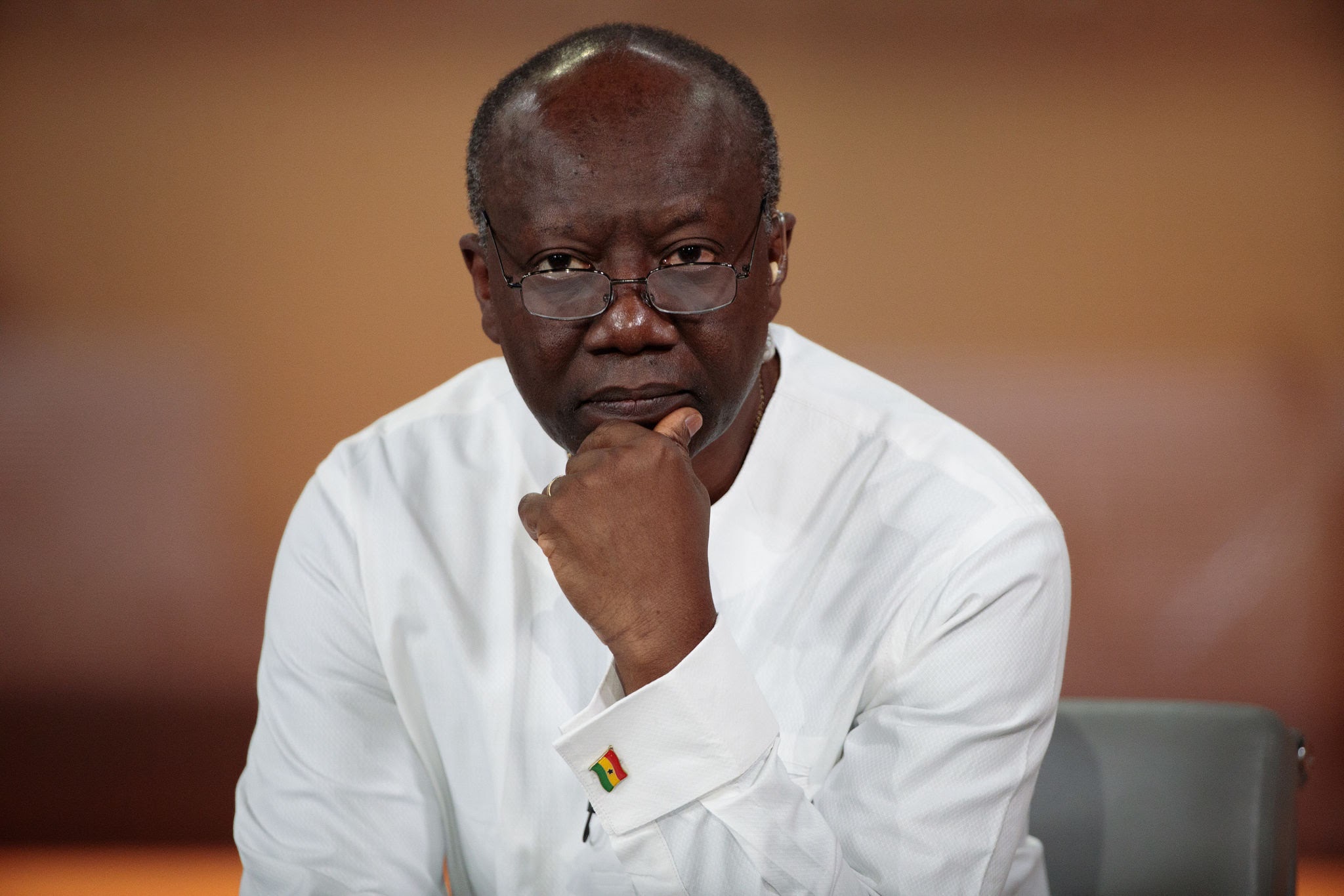
    Asked why she chose to leave, she indicated that she has nothing to show for the years she has been working in Ghana as a nurse. She lamented the meagre salary, poor conditions of service, and risks nurses have to endure in Ghana’s health facilities.
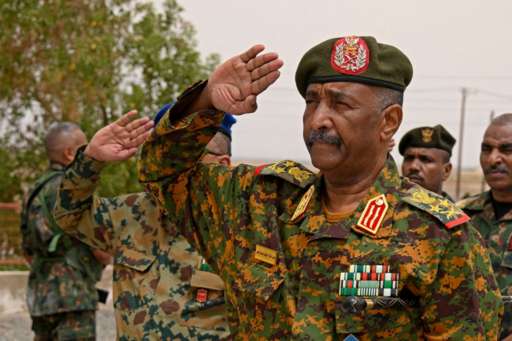
    Source: The Independent Ghana | Amanda Cartey

  • President of Togo reports 140 dead in jihadist “war”

    President Faure Gnassingbe revealed in a historic interview that a jihadist “war” in northern Togo had claimed the lives of over 40 military and 100 civilians.
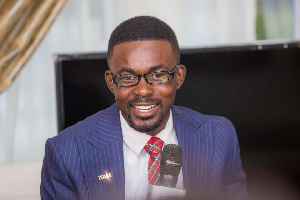
    The small West African nation, along with neighbouring Benin, Ghana and Ivory Coast, is increasingly facing threats of a jihadist spillover from Burkina Faso and Mali.

    “We have paid a heavy price, especially our defence and security forces, who have lost around 40 men unfortunately, and then we add civilian victims, a hundred or so civilian victims in the country,” Gnassingbe said in an interview with local private station New World TV broadcast on Thursday. The president’s family has ruled Togo since 1967.

    The interview — his first since taking over from his father in 2005 — marked mark the 63rd anniversary of the country’s independence from France.

    “What is happening to us is a form of aggression by two groups… one is called the Islamic State in the Greater Sahara and the other, the Group for the Support of Islam and Muslims,” he said, referring to a group linked to al-Qaeda. This campaign by “two terrorist organisations… is a form of war,” said Gnassingbe.

    The president said a three-tiered strategy had been put in place to confront the threat, including launching a military operation known as Koundjoare in September 2018.

    “It was a preventive operation at first, which then became defensive, and now occasionally we are also on the offensive,” he said.

    The 56-year-old, reelected three times in polls contested by the opposition, addressed concerns over the government and military’s choice to stay mum over the more frequent attacks when questioned by the media including AFP.

    “There is something indecent about proclaiming someone’s death,” he said.

    “It is not because we don’t issue statements that we don’t have successes. We do have successes.”

    Members of the political opposition and civil society have often criticised the authorities’ silence over the situation in the north.

    An official asking to remain anonymous recently told AFP that this was “a choice, because we have to protect our defence and security forces.”

    – Thousands displaced –

    Gnassingbe warned the Togolese people “should expect a long fight with dramatic moments, which is is inevitable in times of war.”

    “But I want to assure my countrymen that in the end, we will win,” he said.

    In addition to military operations, he said the government had set up “an interministerial committee for the prevention and fight against violent extremism.”

    The aim, he said, was “to try and deradicalise or prevent radicalisation, because it is men, young people, who are being used to conduct these attacks.”

    The president said that nearly 12,000 people had been from their homes by the government in order to “better protect the border.”

    The region is also hosting people displaced from Burkina Faso, and the president said that about half of the 100 civilians killed in the jihadist “war” in the north were not Togolese citizens.

    Earlier this month, the country’s parliament voted to extend a state of emergency in the north, a measure that allows security forces and local authorities more flexibility to take urgent measures to combat threats from militant groups.

  • Army helicopter from Kenya crashes while on a night patrol

    Army helicopter from Kenya crashes while on a night patrol

    An overnight military helicopter crash occurred in Kenya during a patrol mission in the coastal county of Lamu, resulting in the tragic loss of all crew members on board.

    The crash took place within the Boni forest, an area that spans the border with Somalia and has been a location from which the Somali militant group al-Shabab has carried out deadly attacks.

    The Kenya Defence Forces (KDF) has not disclosed the exact number of individuals aboard the helicopter at the time of the accident.

    Nevertheless, some media reports suggest that at least eight people lost their lives in the incident.

    According to the KDF statement, “The crew and other military personnel onboard were part of an air surveillance squadron intensifying day and night patrols and surveillance for the ongoing Operation Amani Boni.”

    A board of inquiry has been dispatched to the Boni forest to investigate the cause of the crash.

  • Journalists prohibited from entering Libya’s flood-ravaged city

    Journalists prohibited from entering Libya’s flood-ravaged city

    A minister from the eastern Libyan government has issued an order for all journalists to vacate the devastated city of Derna. The minister, Hisham Chkiouat, has accused the media of obstructing the efforts of rescue teams following the recent floods.

    In response to the disaster, which occurred when two dams collapsed during heavy rainfall, demonstrators on Monday set fire to the residence of the former mayor. Many residents believe that this catastrophe could have been prevented, as officials have admitted that a contract to repair the dams was left unfinished.

    Estimates of the death toll vary significantly, but the World Health Organization has confirmed that more than 3,900 people have lost their lives, with thousands more reported as missing.