Author: Amanda Cartey

  • Businesses in East African region frustrated by dollar scarcity

    Businesses in East African region frustrated by dollar scarcity

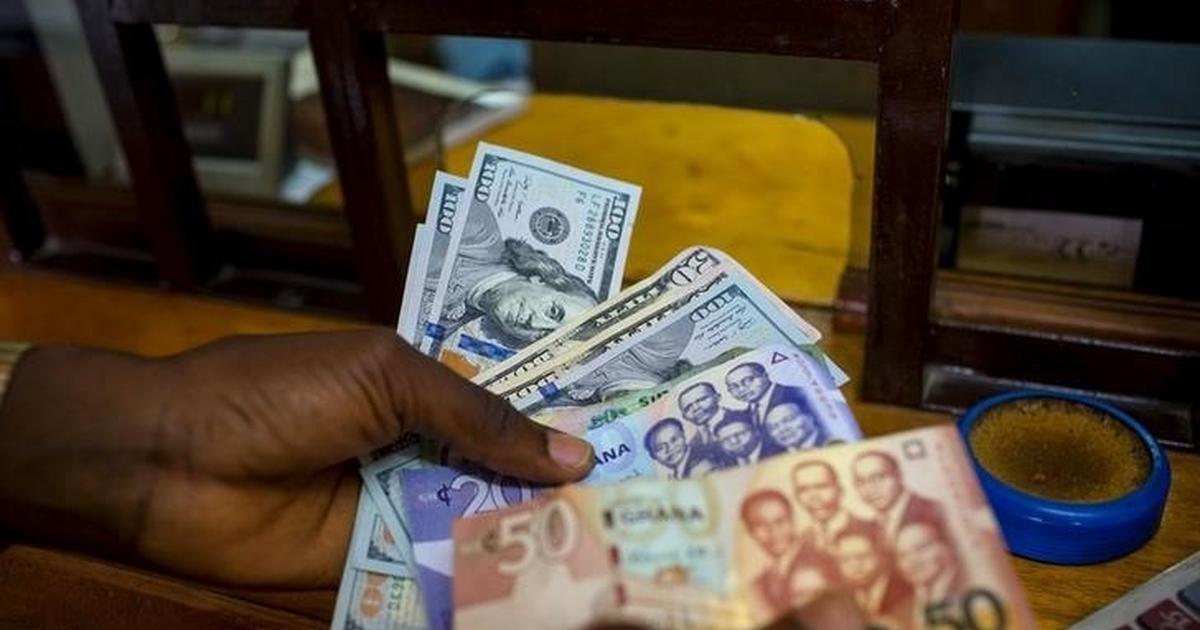
    Investors are fleeing thebusiness in East African region due to the dollar’s scarcity, volatility, high interest rates, and easy access to credit.

    According to the East African Business Council’s (EABC) Report on the Ease of Doing Business in the East African Community (EAC) 2023, the region’s firms are at risk from unregulated foreign exchange markets at the border, legal tax appeals and judgements, and protracted customs valuation procedures.

    The 252 businesses who responded to the study identified several difficulties with trade finance, including the lack of dollars, excessive interest rates, and restricted access to loans.

    “The dollar is putting pressure on local currencies and so our currencies are losing value making it difficult to do business,” said John Kalisa, chief executive of the East African Business Council.

    “Our dollar reserves are dwindling, meaning that we import more than what we export so we are in a trade deficit. The only way to get out is to improve our productivity.”

    Last week, commercial banks quoted the Ugandan shilling at 3,735/3,745 against the US dollar. Despite the overhaul of the interbank forex market in March, the Kenyan shilling extended its losses against the US dollar in September, exceeding its overall depreciation from the previous year. The local currency has recorded a 21.6 percent decrease against the dollar, dropping from Ksh120.34 on September 12 last year to Ksh146.36 as of this Monday.

    As per the Bank of Tanzania’s data, the indicative exchange rates as of Thursday reveal that the country’s shilling has reached a new historic low, averaging 2,428.7 against the US dollar.

    “The pressure coming from the dollar sends a message to the regional bloc that there is a need to improve production especially in agriculture and productivity,” said Kalisa.

    Even after the harmonization of the Common External Tariff, there is a lack of consistent implementation of the CET across the East African Community (EAC) partner states. The EABC report additionally highlights significant challenges in the region, including high trading costs stemming from difficulties in conducting cross-border payments, the presence of multiple taxes and fees, local government levies/cess at border crossings, and harassment by government regulatory authorities primarily focused on tax collection without recognizing the importance of facilitating free trade across borders.

    The report offers several recommendations, including the need for partner states to enhance the ease of doing business through simplified and coordinated legislation pertaining to business registrations, access to finance, contract enforcement, and tax payment processes.

    Furthermore, companies have cited a lack of adequate information regarding government policies and regulations as a hindrance to conducting business within the EAC.
  • Police in Mozambique deny allegation of plotting to kill politician

    Police in Mozambique deny allegation of plotting to kill politician

    Mozambique’s police chief, Bernardino Rafael, has refuted allegations of officers being involved in attempts to assassinate politicians in the run-up to the local elections scheduled for October.

    The mayors of Nampula province, Paulo Vahanle, and Quelimane, Manuel de AraĂşjo, both members of Mozambique’s primary opposition party, the former rebel group Renamo, have claimed to have survived assassination attempts. They have accused police agents of carrying out these attacks.

    However, speaking over the weekend, the police chief dismissed these accusations as unfounded and false. He suggested that political parties fabricated these claims to divert attention from their own inadequacies in terms of policy proposals.

    Furthermore, he pointed out that such allegations could have negative consequences for the politicians and parties making them, as the same police officers they accuse are also voters.

    Bernardino Rafael affirmed that Mozambique’s police force is fully prepared to ensure order and security during the upcoming electoral process.

  • Ghana banned for 32-months from global bond market – Economist alleges

    Ghana banned for 32-months from global bond market – Economist alleges

    Chartered economist, Bernard Oduro Takyi, has alleged that Ghana is facing a 32-month suspension from the international bond markets due to allegations of economic mismanagement and the implementation of the Domestic Debt Exchange Programme (DDEP).

    This suspension has effectively prevented Ghana from accessing funds through international bond markets. Mr. Takyi made this revelation in response to the Finance Minister’s claim that the Ghanaian economy is rebounding, which has led to continued loans from donor partners.

    He challenged the Finance Minister to try borrowing from the bond market if the economic situation is as positive as claimed.

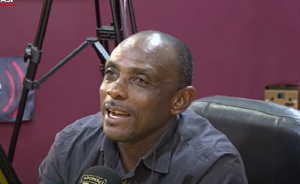
    During an interview on Accra 100.5 FM’s mid-day news on September 18, 2023, Mr. Takyi emphasized that there is a 32-month injunction on Ghana’s ability to access the international bond market.

    He expressed concern that it could take Ghana approximately 50 years to recover from the current economic challenges, which he attributed to the actions of the Finance Minister, the Bank of Ghana, and other state institutions.

    Mr. Takyi also criticized the Finance Minister for engaging in public relations efforts on behalf of the Bank of Ghana, especially in light of allegations that the bank had printed around 38 billion Ghana Cedis for the government.

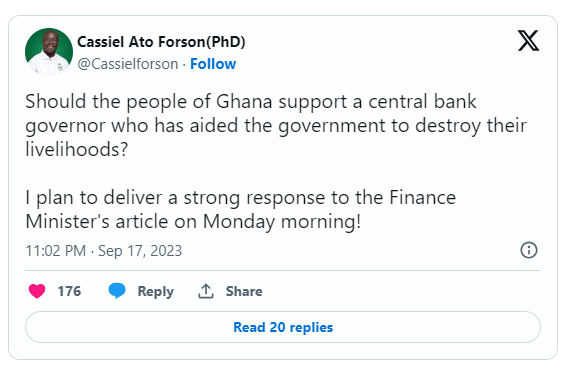
    “The Finance Minister in an article titled: ‘Citizens – Standing Strongly With The Bank of Ghana’, hinted at certain corporate governance amendments at the central bank.

    “As the Minister of Finance, I do have opinions about the reforms needed to strengthen the governance of many financial institutions including the Bank of Ghana”, he said, indicating: “But this requires a positive and sober national debate on the governance structure”.

    The analyst said that the country’s economic development, which was tallied under the National Democratic Congress administration led by former President John Dramani Mahama, was cosmetic rather than true growth.

  • Ghana Gas denies allegations of discrepancies within the organization

    Ghana Gas denies allegations of discrepancies within the organization

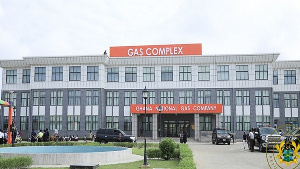
    The Ghana National Gas Company Limited has refuted reports of purported misconduct within the state-owned organization.

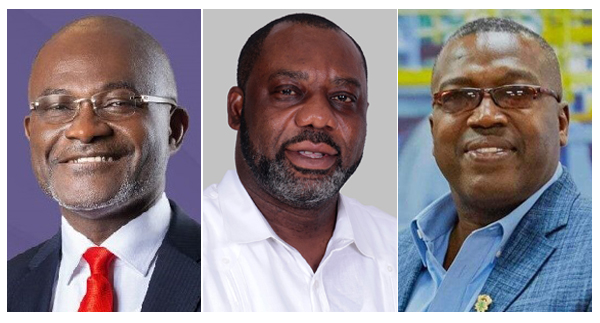
    This response follows a publication in the Herald Newspaper, which alleged that President Nana Addo Dankwa Akufo-Addo was informed about the misconduct but hesitated to act due to concerns regarding the Board Chair of Ghana Gas, Kennedy Agyapong.

    In a statement, Ghana Gas categorically rejected these allegations, denouncing them as entirely untrue, malicious, and lacking in basis.

    “Indeed, there is not scintilla of evidence to back the story,” the statement signed by the Head of Corporate Affairs, Ernest Kofi Owusu-Bempah Bonsu.

    “There has never been any rot associated with our operations before at Ghana Gas we find it very unusual for a journalist outlet to throw away the cardinal journalist standard of fairness and the responsibility to tell the truth as it engages in news reporting,” the statement added.

    The Ghana Gas also reaffirmed its dedication to conducting all of its business in a manner that adheres to the highest ethical standards.

  • Economic outlook promising, inflation improving – BoG Governor

    Economic outlook promising, inflation improving – BoG Governor

    Governor of the Bank of Ghana (BoG), Dr. Ernest Addison, has declared that the economy’s outlook is favorable, with macroeconomic indicators showing signs of improvement.

    “We are quite confident about the outlook of the economy, as just last week we had a new reading of inflation, and this is the first time we have stayed on the disinflation path with inflation declining by three percentage points,” he said.

    The Governor made these remarks during the 47th meeting of the Committee of Governors of Central Banks of the West African Monetary Zone and the 62nd Ordinary meeting of the Committee of Governors of Central Banks of the Economic Community of West African States (ECOWAS).

    This program was a part of the 2023 Mid-Year Statutory Meetings hosted by the Government of Ghana under the auspices of the Ministry of Finance and the Bank of Ghana, which included the West African Institute for Financial and Economic Management (WAIFEM), West African Monetary Institute (WAMI), and West African Monetary Agency (WAMA).

    Notably, inflation decreased from 43.1 percent in July to 40.1 percent in August, following its peak at 54.1 percent in December of the previous year.

    Dr. Addison, who delivered the keynote address, highlighted that in 2022, Ghana faced an economic crisis, prompting the government to seek an Extended Credit Facility of $3 billion from the International Monetary Fund (IMF) to restore macroeconomic and debt sustainability.

    He further emphasized that the government is currently prioritizing the implementation of measures aimed at reestablishing macroeconomic stability and fostering inclusive economic growth.

    “There are important lessons to be learnt from the ECF IMF pro­gramme which we will share with our colleagues in these meetings,” Dr Addison stated.

    He mentioned that the meeting served as a platform to evaluate the progress of the member states within the Economic Community of West African States (ECOWAS) in their pursuit of a unified currency.

    Dr. Addison emphasized that the program, of greater significance, offered a chance to reassess the roles of monetary institutions like WAIFEM, WAMI, and WAMA in the roadmap leading to the launch of the ECO currency next year. It also provided an opportunity to delve into other economic and monetary developments within the West African Monetary Zone (WAMZ).

    “The question facing us at this meeting is what we shall do differ­ently after 36 years since the incep­tion of the ECOWAS Monetary Co-operation and 23 years since the second WAMZ was institut­ed,” he stressed, saying, “And this leaves next year a critical year in the lead up to the launch of the ECO under the roadmap in line with the new macroeconomic convergence,” he said.

    Dr. Olorunsola Olowofeso, the Director-General of WAMI, noted that macroeconomic vulnerabilities had escalated within the West African Monetary Zone (WAMZ).

    These vulnerabilities were prompted by factors such as high inflation rates, an expanded fiscal deficit, increased debt burdens, currency depreciation, and restrictive financial conditions.

    “Recent political instability had added to the woes of pre-existing insecurity challenges in ECOW­AS, exposing the fragile recovery of the WAMZ economies to the risk of reversal of macroeconom­ic gains and creating an environ­ment of uncertainty,” he stated.

  • You disregarded every indication in 2022 that the economy will collapse – Dr. Yamson calls out govt

    You disregarded every indication in 2022 that the economy will collapse – Dr. Yamson calls out govt

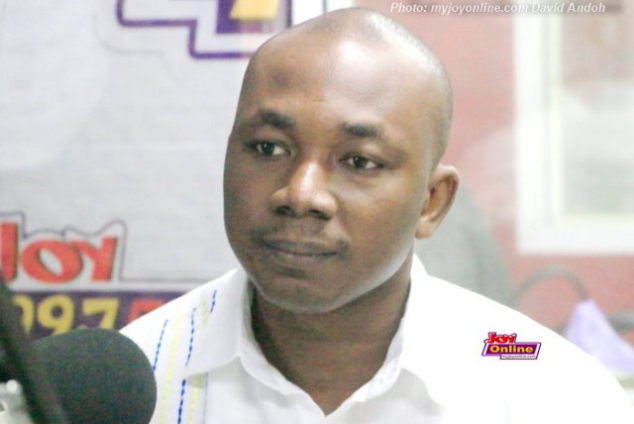
    Renowned economist Dr. Ishmeal Yamson has criticized the government for ignoring all warning indicators before the Ghanaian economy collapsed in 2022.

    According to his opinion, the administration was fully aware of the effects of its excessive borrowing policies and how they would affect the economy.

    Speaking at a public lecture to celebrate Academic City University College’s fifth anniversary, the administration must accept responsibility for its errors in order to get the economy back on track.

    “I don’t think anybody can ever say that they were not aware of the issues facing the country and the likely consequences. So, what they [central government] should have done, is simply understand the implications of these issues clearly and with honesty determine what they can do to change the course of what they were doing,” he is quoted by myjoyonline.com

    “I think the biggest risks was that they [central government] refused to accept that things were not going in the right direction, even when the signs were all over the place. So, I think that is something we have to do differently going forward”, the economist pointed out.

    In the meantime, the government has recently reopened the invitation for the Domestic Debt Exchange Programme (DDEP), which was initially introduced in February 2023.

    This reopening took place on September 13, 2023, allowing individuals who hold domestic bonds and notes but were unable to participate in the earlier exercise to now take part.

    The Finance Ministry specified that this time around, the government is extending the invitation to holders of domestic notes and bonds issued by the Republic of Ghana E.S.L.A. Plc and Daakye Trust Plc.

    These bondholders are encouraged to submit their eligible bonds in exchange for a new package of tranches.

    Furthermore, it’s important to note that this invitation is exclusively open to registered holders of eligible bonds who are not Pension Funds.

    The government initially introduced the Domestic Debt Exchange Programme in December 2022 as part of the conditions stipulated by the IMF to secure a $3 billion bailout package and restore macroeconomic stability.

  • Fiscal responsibility act should be restored to prevent debt escalation – ISSER to Parliament

    Fiscal responsibility act should be restored to prevent debt escalation – ISSER to Parliament

    Director of the Institute of Statistical Social and Economic Research (ISSER), Professor Peter Quartey, has emphasized the need for Parliament to promptly reinstate the Fiscal Responsibility Act as a measure to restrain discretionary expenditure.

    He cautioned that failing to take this action could exacerbate Ghana’s debt situation, particularly as the country approaches the election year in 2024, despite the ongoing implementation of the International Monetary Fund (IMF) US$3 billion loan-support program.

    Prof. Quartey made these remarks during a media interview following a forum held on Monday, September 18, in Accra, which focused on “Ghana’s public debt management: facts, impact, and the way forward.”

    The Fiscal Responsibility Act, 2018 (Act 982), mandates the Government to maintain a fiscal balance on a cash basis within a specific year, ensuring it does not exceed a deficit of five percent of the Gross Domestic Product (GDP) for that year.

    However, in 2020, it was temporarily suspended due to the onset of the COVID-19 pandemic. The government believed it would not be able to meet the five percent deficit threshold before 2024.

    While the primary aim of the Act is to ensure macroeconomic stability and debt sustainability by capping the fiscal deficit at five percent, the country faced a fiscal deficit of 11.4 percent of GDP when the Act was suspended.

    Professor Quartey pointed out that this situation significantly contributed to Ghana’s mounting debt problem, leading to the 17th loan-support program with the IMF. He urged Parliament to reinstate the suspended Act, emphasizing that Parliament has the authority to oversee both the Central Bank and the Finance Ministry, and it should fulfill its oversight responsibilities effectively.

    “So, when they were faced with the challenge, the easier way was for the Central Bank to support the government. “Prof Quartey, also an Economist said, adding that there should be rules on discretionary spending.

    “Discretionary behaviour if not checked, can lead to crisis… We have the right to bring the Finance Minister and the Governor Bank of Ghana to Parliament to seek approval so why do we avoid this situation going forward,” he said.

    He recommended that in times of financial difficulties, Parliament should ensure that its suspension of the Fiscal Responsibility was made temporal, and “give timeline, so that for example, in one year they can come back for another approval.”
    To ensure accountability, he also suggested imposing penalties on individuals who violate the Act.

    During a presentation at the forum, Dr. Sam Mensah, a Financial Economist and Investment Banking Consultant, reiterated the importance of practicing fiscal prudence to ensure debt sustainability.

    He emphasized the need to revise the Constitution to restrict the government’s discretionary spending and borrowing. Additionally, he called for the implementation of policies aimed at fortifying the financial sector.

    Dr. Mensah underscored the significance of these measures, particularly in times of economic crises when the financial sector’s vulnerabilities are exacerbated by its lending to the government.

  • DDEP: It is wrong to include pensioner bondholders in new program – Dr. Adu Anane

    DDEP: It is wrong to include pensioner bondholders in new program – Dr. Adu Anane

    Convener for the Pensioner Bondholders Forum, Dr. Adu Anane Antwi, has emphasized that they should not be considered for inclusion in the new Domestic Debt Exchange Programme (DDEP) since government had previously granted them an exemption from the exercise.

    He pointed out that their inclusion in the new DDEP is a mistake, and he further stated that the government can only make such a decision after revoking the exemption that had been provided to pensioner bondholders.

    Speaking on JoyNews’ PM Express, Dr Adu Anane said that “we sent a letter to the minister this [Monday] morning pointing out that we see some irregularities in the invitation and that they could not extend that invitation to cover us. So, we think there’s an error and they should correct it. If you have been exempted, nobody can invite you to come and participate in any reopening unless the exemptions have been cancelled.”

    “So, if they want to invite as they must first cancel the exemption, then you know you are now not under an exemption. If the ministry wants to do that, then this is the way they should proceed. But I believe it is an error. They never thought, they didn’t apply their minds to the fact that you could not extend an invitation to an exempted group.”

    Dr. Adu Anane clarified that pensioner bondholders, categorized as group B, and who held eligible bonds exempted from the program, were never included in the group that received invitations and were unable to participate in the DDEP for specific reasons.

    He asserted that if the inclusion of pensioners was not a mistake, it might be construed as a deliberate effort to entice individuals to join the program.

    “But I don’t think the government will do that deliberate attempt. I believe it’s an error and they will own up to that and say, well, unfortunately, we shouldn’t have to input your name there,” he added.

    This development follows the government’s announcement of the re-launch of the DDEP, with a specific focus on investors who did not enroll in February.

    In a statement, the Finance Ministry highlighted that this opportunity would extend to holders of both E.S.L.A. Plc and Daakye Trust bonds. Additionally, the Ministry acknowledged the existence of a significant number of bondholders who missed the earlier offer deadline and were consequently excluded.

    “We believe that there is value for bondholders to participate in this Invitation. Indeed, the New Bonds (which will include the New Tranches) are expected to be more liquid than the Eligible Bonds, considering the larger investment base and the benchmark size of the New Bonds”, the statement said.

    The government started a DDEP program last year as part of steps to assure debt sustainability and restore macroeconomic stability under the $3 billion three-year Extended Credit Facility Programme with the International Monetary Fund (IMF).

  • Adwoa Safo shares ‘yoghurt’ to her constituents ahead of NPP Primaries

    Adwoa Safo shares ‘yoghurt’ to her constituents ahead of NPP Primaries

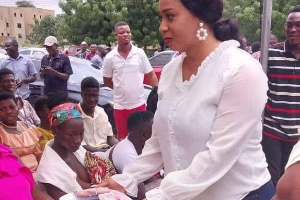
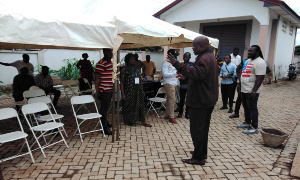
    A video has surfaced online featuring Sarah Adwoa Safo, the Member of Parliament for Dome-Kwabenya, serving individuals at a public gathering believed to be within her constituency.

    The video was shared on Twitter (now known as X), capturing the MP personally distributing snacks to people gathered beneath a canopy. Carrying a tray and assisted by some women in her vicinity, Sarah Adwoa Safo handed out frozen ice-creams to those seated nearby.

    While the specific occasion is not clearly identified, it’s important to note that the Electoral Commission of Ghana has commenced a Limited Voter Registration exercise aimed at enrolling individuals who reached the age of 18 after the previous registration event.

    On her Facebook page, the Dome-Kwabenya MP promoted this initiative with a flyer, encouraging all eligible residents in her constituency to participate.

    The registration drive, which commenced on September 12, is scheduled to conclude on October 2, 2023.

  • Adwoa Safo should not be permitted to run for office – Lecturer to NPP

    Adwoa Safo should not be permitted to run for office – Lecturer to NPP

    Aaron Kumah, a lecturer at the Akenten Appiah-Menka University of Skills Training and Entrepreneurial Development (AAMUSTED), has weighed in on the recent political decisions made by the Member of Parliament for Dome Kwabenya, Sarah Adwoa Safo.

    Kumah is strongly urging the New Patriotic Party (NPP) not to allow her to participate in the upcoming primaries as a candidate.

    Kumah’s position is rooted in Adwoa Safo’s recent public apology, which he views as a strategic maneuver aimed at securing her continued presence in parliamentary politics.

    The lecturer contends that Adwoa Safo’s recent actions have demonstrated a lack of respect for the party, and he believes this disregard should be a critical factor when evaluating her candidacy.

    While recognizing the significance of issuing apologies when one acknowledges their errors, he remains skeptical about the sincerity of Adwoa Safo’s apology.

    He remarked, “For her to come and beg, I see no regret in her. What I see is that because she has realized that we are going for primaries and initially she didn’t want to contest again, but now she has realized that she can go again, so she wants to come and apologize.

    “If they forgive her and NPP delegates vote for her to become an MP again, she will lose miserably because what she did is disheartening.”

    The main source of Kumah’s worries is what she perceives to be Adwoa Safo’s lack of regard for the party.

    Her limited exposure to a regular classroom setting as a result of home tuition, he said, may have contributed to this mindset.

    Last week, the former gender minister ended her silence regarding her extended absence from parliament.

    During this statement, she tendered a wholehearted apology to her party and its members, providing insight into the personal difficulties she and her family encountered during that period.

    Adwoa Safo admitted that her absence had not been deliberate and conveyed sincere regret for any inconvenience it might have caused.

    She specifically addressed key figures within her party, stating, “I want to use this platform to apologize to my party, and leaders of the party. The first is President Akufo-Addo, the Vice President, the Chief of Staff, the Majority Leader, and the entire Majority Caucus.”

    She continued, “I want to apologize because it was not intentional, there was a lot going on in my life and that of my family. I am using this medium to plead with you all in the name of God. To my regional executives and my constituency executive, the headquarters of the NPP, I plead with you all, including sympathizers and supporters who love the party and myself, to forgive me for everything that has happened.”

  • Govt still operating under the assumption that there is no crisis – Prof. Bokpin on reopened DDEP

    Govt still operating under the assumption that there is no crisis – Prof. Bokpin on reopened DDEP

    Economist Professor Godfred Bokpin criticized the government for failing to uphold its commitment to adjust fiscal expenditure during the nation’s debt sustainability crisis, which has led creditors to accept a reduction in their claims to address the situation.

    Speaking on JoyNews’ PM Express on Monday, Professor Bokpin expressed his concerns regarding the government’s hasty declaration of the initial program’s success, especially in light of the substantial gap that needed to be addressed according to debt sustainability analysis.

    “You remember on this same programme, we said that the government was celebrating success that wasn’t really success. It was pretty clear to us that government didn’t get exactly what it wanted.”

    “You know, the government is still spending as though there’s no crisis. Government is living a lifestyle that suggests that it is harvest time. If you look at our approach towards our elections and all of that, it tells you that this approach of royals versus subjects, subjects being creditors, and can be treated anyhow and all of that, I think it’s not good for nation building. It’s not good for building your own financial markets” he noted.

    In response to complaints by bondholders who said they were not consulted regarding the DDEP reopening, Prof. Bokpin said, “If you look at the approach government is adopting, there is less value actually placed on consultation and recognizing creditors as important stakeholders in all of this, and therefore it didn’t matter much if government didn’t even consult those people before coming up with this reopening when they had been exempted and all of that.”

    The economist claimed that in order to relieve creditors, he anticipated a stronger commitment from the government to put an end to this procedure.

    “One would have thought that after such a painful process, we would be moving quite quickly to bring a closure to this whole domestic debt exchange so that the country can build forward better and inclusively, because, you need to generate trust in your financial system and so it’s a bit concerning the way we are going.”

    Prof. Bokpin is especially concerned that the DDEP appears to be receiving more attention since the crisis.

    He claimed that the government would have behaved better under the scheme if all of the creditors had spoken with a single voice.

    “If you look at the fiscal framework, you will see that there is considerable room to make expenditure-based fiscal adjustments that will lessen the burden on creditors. The narrative has been that debt restructuring seems to be the only way out of this. And that is why I am saying that, from the beginning, if domestic creditors had come together in a more organized way and negotiated from a position of strength, there would have been clarity in terms scope of adjustment from fiscal, debt restructuring and all of that so that it is clear to all of us.”

    In order to allow holders of domestic bonds and notes who were unable to participate in the exercise to do so, the government reopened its invitation for the DDEP in respect to the February 2023 Exchange on Wednesday.

    According to a statement from the Finance Ministry, the government is encouraging E.S.L.A. Plc and Daakye Trust Plc, holders of domestic notes and bonds of the Republic of Ghana, to tender their holdings of the eligible bonds in return for a bundle of fresh tranches.

    Only registered owners of eligible bonds that are not Pension Funds are eligible for the invitation, according to the Finance Ministry.

    The government highlighted that the upcoming bonds, including the new tranches, are expected to exhibit greater liquidity compared to the eligible bonds, thanks to their larger investment base and benchmark size.

    Furthermore, the government indicated that under specific circumstances, it may prioritize payments on the new bonds over payments on the eligible bonds. It emphasized that participating in this administrative reopening would enhance the government’s cash flow position and provide additional support for debt sustainability.

    It is worth noting that last year, as part of the $3-billion three-year Extended Credit Facility Programme in collaboration with the International Monetary Fund (IMF), the government initiated the Domestic Debt Exchange Programme (DDEP) as one of the measures aimed at ensuring debt sustainability and restoring macroeconomic stability.

    “I see that she doesn’t respect the party, and one thing I see is that her upbringing is also part because she didn’t go to school to see classmates and have classmates, she had home tuition

    “…so I will plead with the party to accept the apology but they shouldn’t allow her to venture into Parliament or as a Minister again, she should go and sit elsewhere and find another alternative,” he said in a panel discussion on Pure FM on September 18, 2023.

  • A dollar goes for GHS11.65 at forex, BoG interbank rates at GHS11.07

    A dollar goes for GHS11.65 at forex, BoG interbank rates at GHS11.07

    Today, on September 19, 2023, the Bank of Ghana has reported interbank forex rates indicating that the Ghana Cedi is trading against the dollar with a buying price of 11.0668 and a selling price of 11.0778.

    Meanwhile, at a forex bureau in Accra, the dollar is being bought at a rate of 11.45 and sold at a rate of 11.65.

    In addition, against the Pound Sterling, the Cedi is trading at a buying price of 13.7184 and a selling price of 13.7332, while at a forex bureau in Accra, the pound sterling is being bought at a rate of 14.30 and sold at a rate of 14.80.

    Furthermore, the Euro is trading at a buying price of 11.8343 and a selling price of 11.8451, while at a forex bureau in Accra, the Euro is being bought at a rate of 12.00 and sold at a rate of 12.50.

    Additionally, the South African Rand is trading at a buying price of 0.5818 and a selling price of 0.5824. At a forex bureau in Accra, the South African Rand is being bought at a rate of 0.35 and sold at a rate of 0.95.

    Moreover, the Nigerian Naira is trading at a buying price of 68.6398 and a selling price of 69.3623. At a forex bureau in Accra, the Nigerian Naira is being bought at a rate of 11.00 Naira for every 1 Cedi and sold at a rate of 16.00.

    Lastly, for the CFA, it is trading at a buying price of 55.3779 and a selling price of 55.4285. At a forex bureau in Accra, the CFA is being bought at a rate of 16.50 CFA for every 1 Cedi and sold at a rate of 20.50 CFA for every 1 Cedi.

    Note that these rates may be different at a forex bureau near you. Our forex bureau rates are provided by Afriswap Bureau De Change in Osu, Accra.

    Our forex bureau rates are provided by Afriswap Bureau De Change in Osu, Accra.

  • Military takeovers do not solve the problem – Asantehene

    Military takeovers do not solve the problem – Asantehene

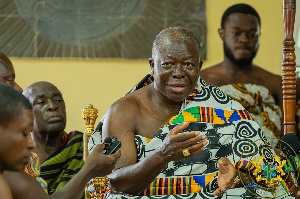
    Asantehene, Otumfuo Osei Tutu II, has spoken out against the recent wave of military coups across Africa.

    The renowned monarch claims that coups are neither a solution to the current challenges the continent is experiencing nor a part of them.

    Speaking at the St. Andrews Africa Summit in Scotland over the weekend, Otumfuo emphasized that using a gun was never a good idea, no matter what the situation.

    “Let me make it categorically clear that regardless of the circumstances, I do not think that a military takeover offers the solution to the problems of our continent.

    “There was a time when circumstances produced the notion that the gun was the solution, those times are over.

  • Ex-president of Zambia drops legal action against govt

    Ex-president of Zambia drops legal action against govt

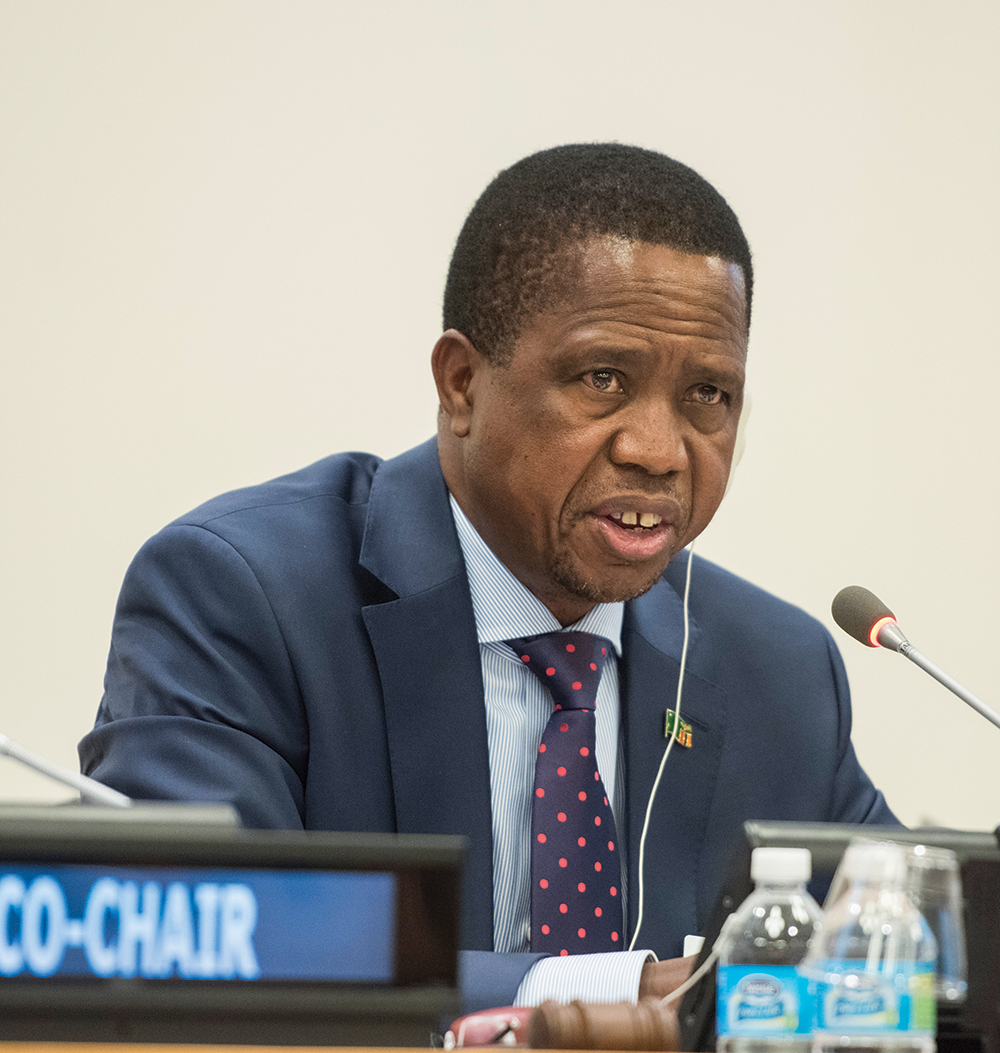
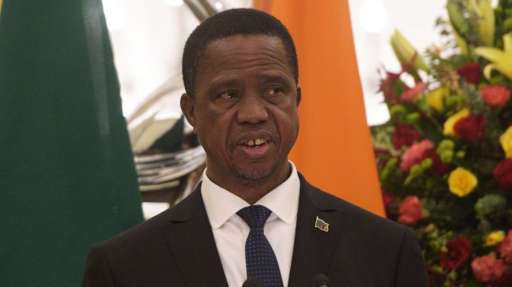
    Zambia’s former President, Edgar Lungu, has decided to withdraw his case in which he sought a judicial review of the government’s alleged decision to prevent him from traveling abroad on Saturday.

    Mr. Lungu had planned to attend a conference in South Korea on Saturday but was reportedly denied permission to travel due to a lack of government clearance.

    He initially took the matter to court for a judicial review.

    However, he has now withdrawn the case, citing scheduling conflicts. The court had scheduled the hearing for 25 September, while the conference he intended to attend would conclude on 20 September.

    https://youtu.be/TZsmG3incqc
  • 10% of recorded flood-related fatalities in Libya identified as migrants

    10% of recorded flood-related fatalities in Libya identified as migrants

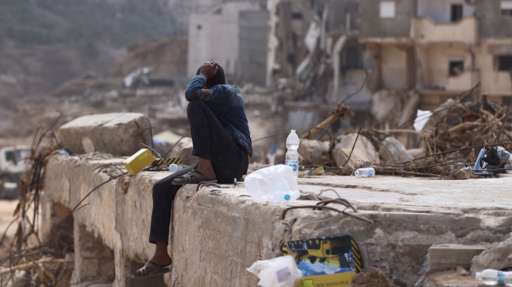
    Approximately 10% of the known fatalities resulting from the recent floods in Libya were migrants, according to the International Organization for Migration (IOM), a United Nations agency, as reported by BBC News.

    Libya is a significant destination for migrants, with data from the IOM revealing that over 706,000 migrants resided in the North African nation as of February 2023.

    Some migrants establish long-term lives and employment in Libya, while others use it as a transit point on their journey to Europe.

    The IOM is aware of around 400 registered migrant fatalities in the floods, although this figure is expected to change as additional bodies are recovered.

    The overall confirmed death toll, as reported by the IOM and the World Health Organization, stands at 3,900.

    However, different sources have provided varying statistics, with the mayor of the Libyan city of Derna estimating that more than 20,000 people perished.

    Derna suffered the most extensive damage from the floods, primarily caused by two dams bursting due to heavy rainfall, resulting in significant parts of the city being submerged.

    Approximately 10,000 migrants were living in the port city before the disaster, and the IOM anticipates a high death toll among migrants, especially those settled in low-lying areas, according to Federico Soda, the IOM’s Director of Emergencies.

  • Nigeria: Contributors to pensions, retirees, become agitated as unresolved complaints mount

    Nigeria: Contributors to pensions, retirees, become agitated as unresolved complaints mount

    As pension assets continue their ascent, reaching a total of N17.1 trillion in July, an increasing number of pension contributors and retirees find themselves growing frustrated by the mounting pile of unresolved complaints within the sector.

    According to some contributors and retirees who shared their experiences with Financial Vanguard, their grievances often languish in a state of prolonged delay or, in some cases, go entirely unanswered. This situation has given rise to concerns that the National Pension Commission (PenCom) may be struggling to cope with the deluge of complaints that regularly inundate the commission.

    Stakeholders argue that this mounting dissatisfaction could be one of the factors motivating certain groups and institutions to seek an exit from the Contributory Pension Scheme (CPS) and revert to the older pension scheme.

    Financial Vanguard’s investigation, based on PenCom’s data, reveals that during the first quarter of 2023 (Q1’23), a total of 59 complaints regarding non-remittance of pension contributions were submitted to PenCom. Shockingly, only nine of these complaints were resolved, leaving a staggering 84.7 percent of the grievances unresolved during this period.

    Similarly, in the fourth quarter of 2022 (Q4’22), there were 82 recorded complaints, with a mere seven of them reaching a resolution, resulting in a staggering 91.5 percent of the complaints remaining unresolved within that period.

    During the third quarter of 2022 (Q3’22), PenCom received eight complaints, of which only one was successfully resolved within that timeframe. In the second quarter of 2022 (Q2’22), a total of 89 complaints were submitted to PenCom, with just eight achieving resolution, indicating that a substantial 91 percent of the complaints remained unresolved during that period.

    It’s worth noting that while PenCom provides data specifically for complaints related to non-remittance of pension contributions, the commission acknowledges that it regularly receives various other types of complaints. These encompass issues such as non-payment or delays in receiving accrued pension rights for retirees of Treasury Funded Ministries, Departments, and Agencies (MDAs); requests for resolution of multiple PIN registrations; delays in the approval of transfers to Retiree Life Annuity (RLA); delays in the approval of programmed withdrawal, temporary access to 25 percent of funds, residential mortgage, voluntary contributions, and NSITF; delays in data-recapture; as well as RSA transfer-related complaints.

    Commenting on this situation, Comrade Bisan Olufemi John, Secretary of the Nigerian Union of Pensioners Contributory Pension Scheme (NUPCPS), expressed that the government’s pension arrangement still falls far short of being favorable to both contributors and retirees. According to John, the government’s top priority should be improving customer service and the welfare of pensioners and workers.

    John said: “There is no way the government can successfully tackle the myriads of economic challenges without adequately satisfying the yearnings of both pensioners and those workers currently in service. The Federal Government has been struggling with getting the economy to work, but one thing that is clear is that the people are the ones that will contribute mainly to make such a reality come to be.

    “The government must first think of the workers, improve on their welfare so they can then contribute their quota adequately to the economy. It should be the people before the economy.”

    Also speaking, another pension contributor, Mr. Malachy Eze, stated that the slow response of the pension industry in resolving complaints is having a negative impact on the pension scheme.

    Eze said: “Government has failed in many instances to pay group life insurance claims to next-of-kin of deceased civil servants.    Scenarios like this should never arise, rather government must provide better opportunities for workers and pensioners to be happy.

    “Retirees’ welfare should not just end at the level of being paid their stipends.”

    Also speaking, a NUPCPS member, Comrade Olagbayo Johnson, said it is unfortunate that the CPS appears to be failing.

  • Nigeria: Police form special team to look into Mohbad’s death

    Nigeria: Police form special team to look into Mohbad’s death

    A 13-person special investigation team has been established by the Lagos State Police Command to look into the untimely passing of Nigerian artist Ilerioluwa Aloba, well known as Mohbad.

    At a press conference on Monday, Lagos Police Commissioner Idowu Owohunwa announced this and promised to utilize all of his authority to track down the murderers.

    “Do not forget, we have unique access with INTERPOL. Everybody linked to it (the death of Mohbad) will be identified and they will be brought to establish their level of involvement,” Owohunwa said.

    Mohbad, formerly signed to Marlian Records under the ownership of Azeez Faashola, widely known as Naira Marley, tragically passed away last Tuesday at the age of 27.

    His burial took place on Wednesday in the Ikorodu region of Lagos, and questions and concerns surrounding his untimely death have arisen.

  • Ghana still most indebted nation in Africa to the IMF – Report

    Ghana still most indebted nation in Africa to the IMF – Report

    Ghana maintains its leading position among African nations as the most indebted country to the International Monetary Fund (IMF).

    This ranking is the result of a significant increase in Ghana’s loans from the IMF, which surged by 35.3 percent in the second quarter of 2023.

    The IMF’s Quarterly Finances report for July 2023 revealed that Ghana’s outstanding loans to the institution were valued at Special Drawing Rights (SDR) 1.689 billion as of July 31, 2023, equivalent to approximately $2.227 billion.

    This latest figure represents an increase of $451 million in SDR compared to the previous figure of 1.246 billion SDR recorded as of April 30, 2023.

    Ghana’s engagement with the IMF began in July 2022, and after meeting the stipulated conditions for a bailout package, the IMF disbursed the first tranche of $600 million in June 2023. This disbursement aimed to address Ghana’s balance of payments position and restore macroeconomic stability.

    The IMF report also noted that Ghana’s outstanding loans represent 9.55 percent of Africa’s total, which amounts to SDR 17.68 billion. However, Ghana has repaid approximately SDR 8 million, equivalent to $10.55 million, to the IMF.

    Despite its loan exposure, the IMF categorizes Ghana’s position as concessional lending with low-interest financing terms.

    In the ranking of African countries most indebted to the IMF, the Democratic Republic of Congo follows Ghana, owing SDR 1.142 billion, while Kenya holds the third position with outstanding loans of SDR 1.008 billion as of July 31, 2023.

    Both countries have received loan disbursements from the IMF to support their balance of payments positions, with the DR Congo receiving SDR 153 million and Kenya receiving SDR 77 million.

  • A-G report discloses BoG paid over $35m for new office

    A-G report discloses BoG paid over $35m for new office

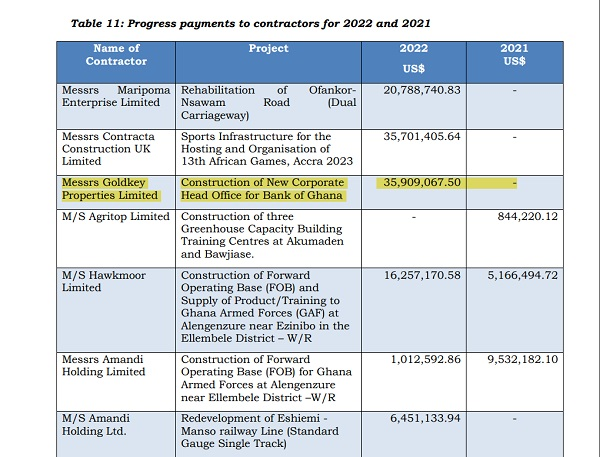
    According to the 2022 Auditor-General report, the Bank of Ghana paid Messrs Goldkey Properties Limited $35,909,067.50 for the development of a new corporate office in Tamale.

    For the time period under consideration, the central bank paid additional payments to the contractors, according to a JoyNews story seen by GhanaWeb Business.

    The report said the “total progress payments to contractors for the period under review were US$117,150,255.37 compared with US$32,246,487.75 for the corresponding period of 2021, representing an increase of US$84,903,767.62 or 263.3%.”

    The Auditor-General’s report has highlighted that the increase in expenditure can be attributed to two significant projects: the construction of the Bank of Ghana corporate office in Tamale and the development of sports infrastructure for the hosting and organization of the 13th African Games in Accra.

    According to the report, these projects accounted for 30.7% and 30.5%, respectively, of the total expenditure amounting to US$117,150,255.37.

    In response, the Bank of Ghana (BoG) has clarified the necessity for a new corporate office building, stating that their current facility in Accra is no longer suitable for its intended purpose. A structural integrity assessment conducted by the central bank revealed that the existing head office, constructed in the early 1960s, lacks the structural capacity to withstand major earth tremors.

    Despite these reasons, some individuals and groups, including the Minority caucus in parliament, have criticized the BoG’s decision to embark on this project. They argue that it is irresponsible for the central bank to pursue the construction of a new head office, especially considering the challenging economic landscape. The BoG’s financial reports indicate a total asset base of GH¢60.8 billion and a negative equity of GH¢55.1 billion, leading to concerns about the potential strain on the nation’s resources.

    Critics emphasize that many Ghanaians are already facing economic hardships, and they call for immediate measures to alleviate this burden. However, the BoG remains steadfast in its decision, noting that the new headquarters is already 41% completed and is projected to be fully operational by September 2024.

  • 2 new tugboats to be delivered to GPHA in October 2023

    2 new tugboats to be delivered to GPHA in October 2023

    To increase marine operational activities, the Ghana Ports and Harbours Authority (GPHA) will soon get two new tugboats with an 80-ton bollard pull at the port of Tema.

    Capt. Francis Kwesi Micah, the Harbour Master of the Port of Tema, exclusively told Eye on Port that the work is well under way and that the marine craft should arrive before the end of October.

    “Sea trials have been conducted safely and so we are waiting for the finalization of some petty works that need to be worked on and thereafter the tugs will set sail. We are expecting if all goes well by the middle of October we might have the vessels with us,” he stated.

    He mentioned that these investments align with the overarching goal of improving efficiency at the Port of Tema, which handles a large number of merchant vessels.

    In 2020, the Ghana Ports and Harbours Authority commissioned three state-of-the-art tugboats as part of its strategy to attract larger vessels and improve vessel turnaround times at the Port of Tema. These ASD tugboats, with an 80-tonne bollard pull capacity, are the first of their kind in Central and West Africa and are equipped to perform firefighting and rescue operations.

    The tugboats were named after individuals who demonstrated exemplary character and made significant contributions to the organization and the country. Commander K.T Dovlo and Ben Owusu-Mensah both served as Director Generals of GPHA from 1994 to 1998 and from 2001 to 2008, respectively. Josephine Asante, who sadly passed away, held the position of Marketing and Public Affairs Manager for Tema Port at the time.

    During the ceremony, Michael Luguje, the Director General of the Ghana Ports and Harbours Authority, highlighted that these boats were commissioned to enhance GPHA’s capacity to accommodate modern container vessels and bulk carriers.

  • Clearing agents’ productivity rated by Customs at approximately 80%

    Clearing agents’ productivity rated by Customs at approximately 80%

    A principal revenue officer in the Policy and Programmes Unit of the Customs Division of the Ghana Revenue Authority, Smile Agbemenu, has evaluated the productivity of clearing agents at the Ports of Ghana, giving them a rating of nearly 80%.

    During a discussion on the importance of freight forwarders in the age of technology on “Eye on Port,” he highlighted that freight forwarders have performed reasonably well in terms of customs assessment of their operations.

    While there have been challenges, such as incorrect classification by some clearing agents, which can hinder trade facilitation, their overall contribution to trade facilitation remains significant.

    “They have done fairly well and of course, there is room for improvement, and we will continue to do a lot of training sessions for them.

    According to him, one of the strategic aims of the GRA’s Customs division is to use cutting-edge techniques to bring stakeholders and their services considerably closer together, making it easier for freight forwarders to do their tasks.

    He praised freight forwarders for providing enough data to customs that helps with business facilitation on behalf of importers.

    “They are able to take advantage of the pre-arrival processes so as to get all the requirements awaiting the arrival of cargo for inspection and delivery. They have been able to provide us with accurate information and they have not been performing that badly,” he said.

    He said a customs house agent who knowingly files or obtains any false claim, and gives any false or misleading information in any matter pending before the Commissioner General, could have his or her license suspended. He then went on to explain the circumstances under which the license of a clearing agent can be revoked.

    Again, “if you knowingly make any misrepresentations to procure employment in any customs business or represent to a client or prospective clients that the customs house agent can obtain any favor from the Commissioner General or any other public officer in connection with any business.”

    He claimed that a customs house agent’s licenses might be suspended or withdrawn if they give the impression to one of their clients that they can obtain any favor from the Commissioner General.

    He also said that a customs agent could lose their ability to conduct business if they refuse to give their client, who is entitled to it, information concerning customs business.

    “You have to be open and transparent to your client and you need to make him know every information,” he said.

    He said as part of efforts to empower freight forwarders and the trading community, Customs has enriched the clearance platform by making available a lot of information to aid customs business.

    “There is so much rich information that has been made available without you logging onto the platform. We are able to engage not only physically but electronically through this platform,” he said.   

  • US Missionary in police grips for attempting to kill pregnant lover

    US Missionary in police grips for attempting to kill pregnant lover

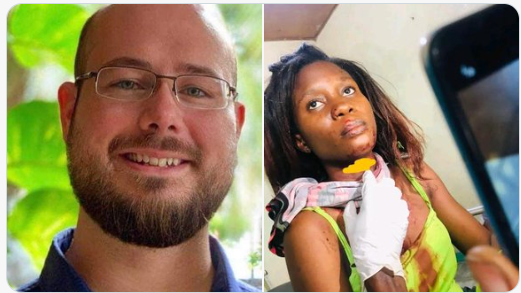
    US missionary, Lucas Richards has been apprehended on charges of attempting to murder his pregnant Liberian girlfriend, Jessica Lloyd.

    Richards, who arrived for missionary work, impregnated Lloyd despite having a wife in the USA.

    He allegedly tried to harm her by slashing her throat and injecting her with substances in an attempt to induce a miscarriage.

    Richards’ church, Creekside Church, offered this message on its Facebook page, saying, “Please pray for Creekside-supported missionaries Lucas and Lois Richard.

    Lucas was attacked and robbed in Liberia today. His phone and money were stolen and their vehicle damaged. Will add more details as we learn them.”

    Richards, however, denied the allegations, saying, “Jessica was hit by a moving vehicle after she disembarked from my vehicle. While trying to rescue her I was attacked by angry motorcyclists who accused me of attempting to kill her.”

    Jessica’s mother, Cynthia Lloyd, claims that the incident took place a few weeks after Jessica became pregnant for Richards, who is said to have ended the pregnancy by injecting Jessica.

    https://youtu.be/3QH83ZLWxDM
  • TAGG warns GRA to quit collapsing businesses

    TAGG warns GRA to quit collapsing businesses

    The Traders Advocacy Group Ghana (TAGG) has called on the Customs Division of the Ghana Revenue Authority to cease what they describe as “intimidation” of their members.

    The group alleges that their traders are being subjected to excessive fees following the clearance of their containers at the Tema and Takoradi ports.

    In a press release issued on September 18, 2023, and signed by TAGG’s President, the organization pointed out that GRA officials were employing multiple taskforces as a means to extract money from their members.

    “Realising the benefits of the paperless policy for Ghana’s economy and for traders and importers specifically, we accepted the GRA’s offer to take part in a stakeholder discussion over the implementation of the paperless clearing system at the ports of Tema and Takoradi, which we explained to our traders that in order to protect Ghana’s economic development traders should embrace the processes that will remove human interface when transacting business at our various port,” the statement read.

    “However, our traders have been harassed and made to pay money to Customs and DTRD task force that uses the ignorance of traders and importers to extort money from them after clearing their containers from the port,” it added.

    TAGG further added “We would like to warn this government to stop trying to kill businesses in an effort to jumpstart the economy because it appears that Ghana is falling behind its neighbors and is having trouble filling our ports with cargo, while our neighbors have been obviously experiencing an overflow of cargo as a result of flexible import duties of global trade at their ports.”

    The demand from TAGG comes shortly after the Ghana Union of Traders Association asked the GRA taskforce in the Ashanti area to cease harassing its members in a related warning.

  • Mayor in South Sudan expelled after assaulting woman

    Mayor in South Sudan expelled after assaulting woman

    The interim mayor of Juba, South Sudan, has been dismissed from his position following a widely circulated video that appeared to show him slapping a female street vendor.

    Emmanuel Khamis Richard had resisted calls to resign, even as political pressure mounted in the wake of the video’s viral spread.

    The announcement of his removal was made by the governor of Central Equatoria state on Friday evening and was subsequently reported more widely during the weekend.

    MPs had previously sent a unanimous letter to the governor, urging the mayor’s removal.

    Mr. Khamis Richard neither admitted nor denied the alleged incident. Prior to his dismissal, he had been summoned to face questions from Juba city councillors, but he failed to appear and instead requested a two-week delay.

    No replacement has been named as of yet, but Martin Simon Wani, the head of Juba city council, has been tasked with overseeing the municipality’s operations temporarily.

  • War crimes persist despite Ethiopia’s peace agreement with Tigray – UN

    War crimes persist despite Ethiopia’s peace agreement with Tigray – UN

    Ten months after the government of Ethiopia and the regional forces from Tigray signed a peace agreement, UN human rights experts claim that war crimes and crimes against humanity are still being committed in several regions of Ethiopia.

    According to their report, the situation in Ethiopia is really critical. It details crimes perpetrated during the Tigray War by all parties, including Eritrean forces.

    Government authorities are allegedly arresting, holding, and torturing residents in Oromia, according to the International Commission of Human Rights Experts on Ethiopia.

    It further states that since the declaration of an emergency there last month, it has received multiple credible reports of breaches against Amhara people.

    “If he is invited and the trip is paid for or he can meet the cost of his own trip and that of his entourage, he doesn’t need to inform governments,” argued Emmanuel Mwamba, the PF’s spokesperson.

  • Ex-leader of Zambia appears in court on a purported travel ban

    Ex-leader of Zambia appears in court on a purported travel ban

    Zambia’s former President Edgar Lungu has taken the government to court after being allegedly barred from traveling to South Korea for a conference.

    It is reported that Mr. Lungu had received an invitation to attend a world peace conference, but as he was about to depart, he was denied access to his plane due to a lack of government clearance for the trip.

    Mr. Lungu has initiated legal proceedings in the Lusaka High Court, where he is challenging the government’s decision to prevent his travel to South Korea, as outlined in court documents he has submitted.

    His political party, the Patriotic Front (PF), has denounced the government’s purported actions, labeling them as illegal.

    “If he is invited and the trip is paid for or he can meet the cost of his own trip and that of his entourage, he doesn’t need to inform governments,” argued Emmanuel Mwamba, the PF’s spokesperson.

    According to Mr. Mwamba, the former president had previously been denied permission from the cabinet office to leave for a medical trip.

    “These draconian and dictatorial actions are a violation of fundamental rights of the former president and have no place in true democracy,” he said.

    Hakainde Hichilema, the current president, ousted Mr. Lungu in 2021.

    Even though he subsequently proclaimed his retirement from active politics, many people believe he is considering a comeback and may run in the 2026 elections.

  • Ghanaians journey to Nkroful to commemorate Dr Kwame Nkrumah’s birthday

    Ghanaians journey to Nkroful to commemorate Dr Kwame Nkrumah’s birthday

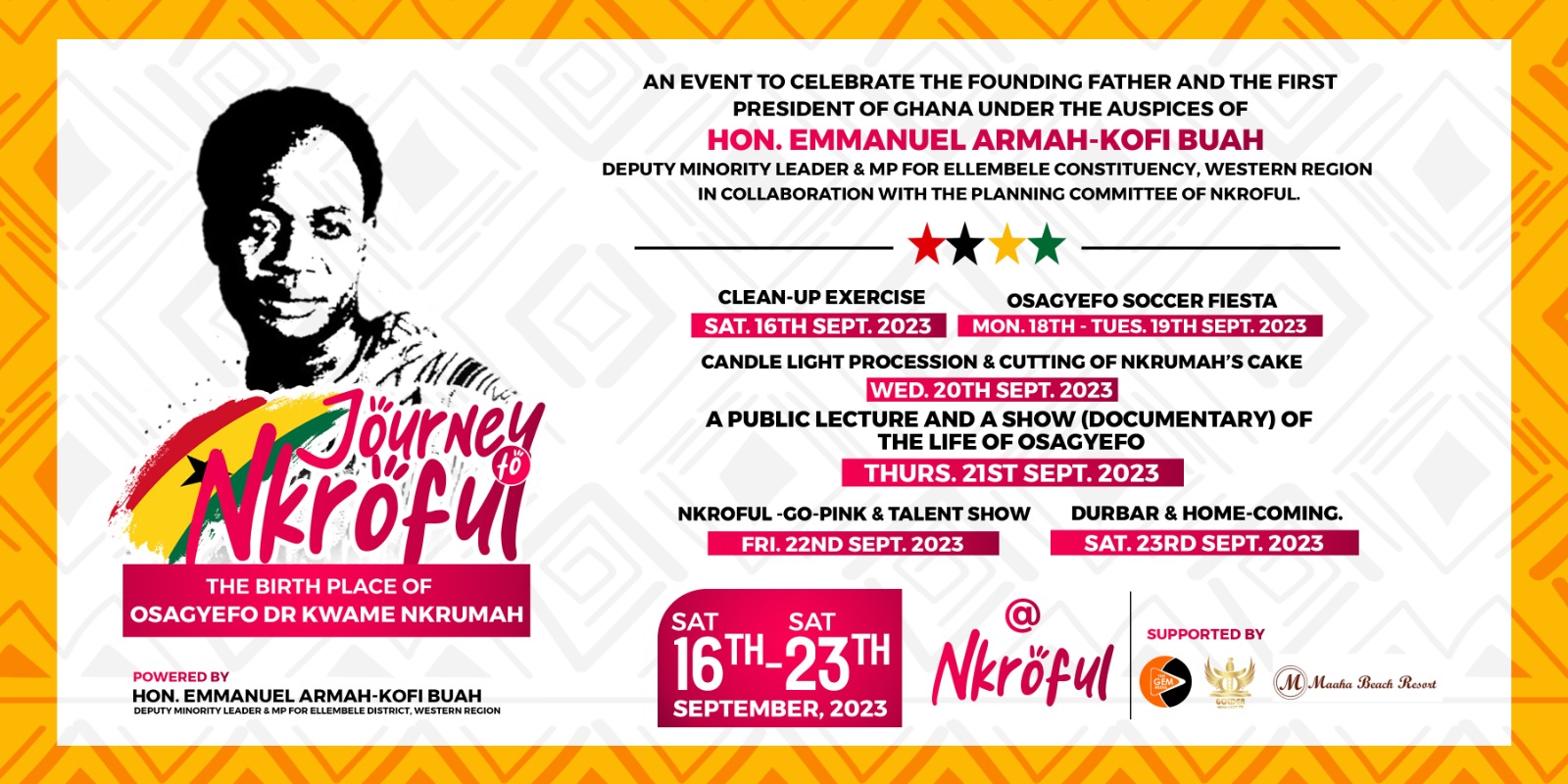
    Thursday, September 21, 2023 will be Osagyefo Dr Kwame Nkrumah Memorial Day. It is a statutory public holiday observed in the country to mark the birthday of Ghana’s first President, Dr Kwame Nkrumah, who was born on September 21, 1909 at Nkroful, near Axim in the Nzema East Municipality in the Western Region of the then Gold Coast, now Ghana.

    It would have marked the 114th birthday of Dr Nkrumah if he were alive on Thursday.

    The date in the past was marked as Founder’s Day in memory of the man who led the country to independence, the first in the sub-region.

    In recent times, however, since the President Akufo-Addo government took office, the day is observed as the first President’s birthday.

    Holiday

    This is as a result of the New Public Holidays Act, 2018 passed by Parliament to amend the Public Holidays Act, 2001.

    It replaced three public holidays, including September 21 and introduced two new holidays, January 7 and August 4, which are observed as Constitution Day and Founders’ Day respectively.

    Authorities have however embarked on various activities to mark this year’s celebration.

    Under the auspices of Hon Emmanuel Armah Kofi Buah, Deputy Minority Leader and Member of Parliament for Ellembelle Constituency in the Western Region,to make the event a success,organizers embarked on a clean up exercise through the principal streets of Nkroful,the hometown of Osagyefo Dr Kwame Nkrumah on last Saturday,16th September,2023.

    On Monday September 18th,2023, there’s a soccer competition among nine community teams at NASS park to ensure unity and preparation towards the main event.

    On Wednesday 20th September,2023 ,there will be Candle Light Procession and Cutting of Nkrumah’s Birthday Cake;the event will parade all natives of Nkroful and it environs at the facade of the palace and take a walk through the principal streets of Nkroful between the hours of 9pm to 11:45pm.

    The walk will end with a special cutting of cake session at Osagyefo‘s mother’s residence at exactly 12 midnight.

    Thursday 21st September,2023;There will be SHS Symposium at NASS Yinsin Hall.This will focus on the story of Osagyefo Dr Kwame Nkrumah’s birth through to the struggle for Independence
    and his Achievement as the First President of Ghana.

    Friday,22nd September,2023 is the Nkroful goes pink and talent show event.

    The day will be set for a visit to most tourist sites in Nkroful with pink coloured dress code where there would be talent hunt show at Mausoleum park at exactly 7pm.

    Saturday,23rd September,2023 is the grand durbar and homecoming.The day will host all Chiefs,diplomats , visitors to Nkroful at the NASS Park .

    The day will witness a colourful procession of masquerade,dance and culture between the hours of 8am to 2pm and then a musical stage to honour five music legends in Ghana,set for 7pm.

    There will be a special Nzema food Bazaar to end the occasion.

    The event is supported by Golden Empire Legacy limited ,Maaha Beach Resort and The GEM Media.

    Background

    Born in an era where dates of births, marriages and deaths were not registered, Dr Nkrumah in his autobiography cast doubt on his date of birth.

    Titled “Ghana: The Autobiography of Kwame Nkrumah”, the book revealed some intriguing circumstances surrounding the birth of Dr Nkrumah and how he got the September 21 date as his date of birth. He was born to Kofi Ngonloma and Elizabeth Nyaniba.

    As his birth is set to be commemorated across the length and breadth of the republic, it is fit that a moment of retrospection and reflection is duly highlighted.

    Education

    Dr Nkrumah got his secondary education at Achimota College, formerly Prince of Wales College, a prestigious school established by the then British Governor, Sir Gordon Guggisberg.

    Being a devout Catholic, it is said that Kwame Nkrumah once aspired to become a priest during this period.

    However, he later forewent this dream and instead became a teacher in the same school years after his graduation. He had his university education at the Lincoln University in the United States of America where he obtained a Bachelor of Arts degree in Economics and Sociology in 1939 and was appointed a teaching assistant and enrolled at the Lincoln Seminary to become a priest.

    A politician, political theorist, and revolutionary, Nkrumah became the first Prime Minister and President of Ghana, having led the then Gold Coast to independence from Britain in 1957.

    He was an influential advocate of Pan- Africanism and a founding member of the Organisation of African Unity (OAU) now the African Union (AU).

    Dr Nkrumah formed the Convention People’s Party (CPP) that won the first pre-independence and post-independence elections of the country.

    Under Dr Nkrumah’s leadership, Ghana adopted some social democratic policies and practices. Dr Nkrumah created a welfare system, started various community programmes and established schools.

    After his overthrow in 1966, Dr Nkrumah went into exile in Conakry Guinea; he fell ill and was flown to Romania for treatment but died in Bucharest, Romania on April 27, 1972, at the age of 62.

    Dr Nkrumah’s popular mantra, “the black man is capable of managing his own affairs”, became the necessary ideal that facilitated efforts for self-governance.

    Today, through the sweat and toil of Dr Nkrumah Ghana sits at the forefront of the historical narrative of the political liberation of Africa.

  • Kwesi Pratt details how KIA officials seized a Ghanaian’s gold items over Gold-for-Oil policy

    Kwesi Pratt details how KIA officials seized a Ghanaian’s gold items over Gold-for-Oil policy

    Sseasoned journalist and the managing editor of the Insight Newspaper, Kwesi Pratt Jnr., recounted a distressing incident in which a Ghanaian traveler departing from the Kotoka International Airport (KIA) had his precious possessions confiscated by airport officials.

    According to Pratt, the officials justified their actions by claiming that Ghana was facing financial difficulties and that the man’s valuable items, including a gold wedding ring and bracelets, would be utilized for the ‘Gold-for-Oil’ policy of the Nana Addo Dankwa Akufo-Addo government.

    He shared this disheartening story during an interview on Atinka TV, which was posted on Facebook on September 15, 2023. Pratt revealed that he learned about the ordeal of the Ghanaian traveler from his sister, who serves as an officer in the Ghana Police Service.

    “A Ghanaian man was travelling out of the country, and when he got to the Kotoka International Airport, they seized the gold ring and bangle he was wearing. They (the KIA officials) told him that the country was broke and that it needed gold to go and buy oil.

    “I am telling you. They seized his wedding ring. This guy’s sister was the one who called me to inform me… I told her that she was telling lies, and she said she was bringing me the seizure notice. Lo and behold, the documents were brought, and truly, they had seized the man’s belongings,” he narrated in Twi.

    Additionally, he noted that, following his counsel, the policewoman approached the Bureau of National Investigations (BNI). The BNI acknowledged the confiscation of the gold ring and bangle, but regrettably, these items have yet to be returned as of now.

  • Here is a comprehensive list of new UK visa fees set to be implemented in October

    Here is a comprehensive list of new UK visa fees set to be implemented in October

    The United Kingdom government has disclosed an upcoming increase in immigration and nationality fees for essential services, which will come into effect on October 4, 2023.

    The UK government has outlined that the updated fees will include a rise in the cost of visit visas for durations less than six months, which will now go from ÂŁ15 to ÂŁ115. Additionally, the fee for applying for a student visa from outside the UK will experience an increase of ÂŁ127, resulting in a new fee of ÂŁ490.

    The government has clarified that these fee adjustments align with the charges applied for in-country applications. Furthermore, a bill has already been presented before the UK’s Parliament on September 15, 2023, pending approval.

    “In July, the government announced a 15% increase in the cost of most work and visit visas, and an increase of at least 20% in the cost of priority visas, study visas, and certificates of sponsorship,” the UK government said on its official website; gov.uk.

    “Income from fees charged plays a vital role in the Home Office’s ability to run a sustainable immigration and nationality system,” it added.

    Here is the full list of the current fee and the expected increase from October 4

    *Visit visa – short up to 6 months: ÂŁ100 to ÂŁ115

    *Visiting academic – more than 6 months but no more than 12 months: ÂŁ200 to ÂŁ200

    *Private medical treatment visa – more than 6 months but not more than 11 months: ÂŁ200 to ÂŁ200

    *Visit visa – long up to 2 years: ÂŁ376 to ÂŁ400

    *Visit visa – long up to 5 years: ÂŁ670 to ÂŁ771

    *Visit visa – long up to 10 years: ÂŁ837 to ÂŁ963

    *Visitor Extension – main applicant and dependants: ÂŁ1000 to ÂŁ1000

  • Treasury yields rising as govt’s overdependence continues

    Treasury yields rising as govt’s overdependence continues

    The Treasury continues to face elevated short-term yields primarily due to the government’s heavy reliance on T-bills, compounded by persistently high inflation and the subsequent monetary policy measures implemented to counter inflationary pressures.

    Recent data from auctions conducted on September 8, 2023, revealed a concerning interest rate of 32 percent for the 364-day T-bill, while the 91-day T-bill hovered just below 30 percent. These figures underscore the government’s limited alternatives, the high cost of borrowing, and the lingering threat to debt sustainability.

    Investors are demanding higher yields at T-bill auctions due to increased inflation risks, low real returns on fixed-income investments, and market uncertainties. This demand has partly offset the interest savings achieved by lowering T-bill yields following the Domestic Debt Exchange Programme (DDEP).

    The government’s strategy to reduce yields after the DDEP resulted in a 17 percent decline in the 91-day T-bill rate, from 35.75 percent pre-DDEP to 18.53 percent by March 20, 2023. However, yields have risen since April due to continued domestic borrowing and limited external funding. Investors are seeking compensation for economic uncertainties, leading to T-bill clearing yields ranging from 27.8 percent to 32 percent.

    In recent Treasury auctions, yields have further increased, with the 91-day, 182-day, and 364-day bills settling at 27.79 percent, 29.12 percent, and 31.97 percent, respectively. These rates have surged since the beginning of the first quarter of 2023, with the 91-day bill rising by 840 basis points (bps), while the 182-day and 364-day bills have increased by 768 bps and 631 bps, respectively.

    These T-bill yields now surpass the coupon rates on restructured bonds. The tight monetary stance is likely to continue pushing yields higher until the government secures concessional funding alternatives.

    In August 2023, the government faced escalating borrowing costs, with the 91-day bill increasing by 178 bps to 27.02 percent, the 182-day bill by 147 bps to 28.62 percent, and the 364-day bill by 93 bps to 31.24 percent. The Treasury successfully sold GH¢12.35 billion worth of bills to cover GH¢10.18 billion in maturing bills, resulting in a maturing cover of 1.21x.

    The government aims to raise GH¢3.76 billion in the upcoming auction on September 15, 2023, highlighting its ongoing need for funds. With policy rates at 30 percent amid elevated inflationary pressures, higher Treasury rates are expected to persist in the near term.

    The mounting borrowing costs pose a challenge to the government’s already strained fiscal position, making it difficult to manage existing debt and fulfill future financial obligations.

    Monetary response to inflation

    In response to emerging inflation risks, the Monetary Policy Committee (MPC) of the Bank of Ghana has implemented a more restrictive monetary policy stance. This shift will have a significant impact on Treasury securities, particularly the 91-day to 364-day T-bills, which are expected to face an extended period of higher yields.

    During its July 2023 policy meeting, the MPC raised the policy rate by 50 basis points (bps) to 30 percent, aiming to address inflation risks and the need for substantial tightening in both fiscal and monetary policy frameworks.

    Despite a decline to 40.1 percent in August 2023, inflation in Ghana remains elevated, with only Sierra Leone (44.98 percent), Sudan (63.3 percent), and Zimbabwe (77.2 percent) experiencing higher rates. Nearby neighbors Côte d’Ivoire and Togo report significantly lower inflation rates at 4.6 and 3.8 percent, respectively.

    Despite efforts to restructure the nation’s debt portfolio, the updated public debt stock, excluding debt from state-owned enterprises and special purpose vehicles (SOE/SPVs), has shown significant growth. This is primarily attributed to an expanding domestic debt burden and earlier exchange rate fluctuations.

    According to the Bank of Ghana’s summary of macroeconomic and financial data published in July 2023, the total debt stock increased by 21.3 percent from December 2022 to GH¢569.3 billion (equivalent to 71.1 percent of GDP) by April 2023. The domestic debt component rose by 6.29 percent, reaching GH¢247.9 billion (equivalent to 30.95 percent of GDP), while external debt in cedi terms surged by 33.41 percent, reaching GH¢321.4 billion (equivalent to 40.13 percent of GDP).

    The government’s ongoing struggle to manage rising borrowing costs, combined with inflationary pressures and a tighter monetary policy rate, underscores the challenges confronting fiscal and economic stability. With the likelihood of even higher yields on the horizon, the government faces a challenging task in navigating these turbulent financial conditions.

    Looking ahead, the market anticipates that yields on Treasury bills will continue to rise, albeit at a slower pace, as the Treasury adjusts its bids in response to persistent demand pressures.

  • Lifeless body discovered in Turkish aircraft’s landing gear

    Lifeless body discovered in Turkish aircraft’s landing gear

    A body was discovered in the landing gear of a Turkish Airlines aircraft after it arrived in Istanbul from Amsterdam late on Thursday, as confirmed by a spokesperson for the airline.

    The identity and nationality of the individual have not yet been determined.

    Both the police and the airline are conducting separate investigations into the incident, according to the spokesperson.

    The private news agency DemirĂśren reported that an Airbus A330, which had flown from Amsterdam, landed at Istanbul Airport late on Thursday. Subsequently, during routine maintenance checks, technical teams discovered a deceased person on board.

  • South Africans urged to shower for 2 minutes to curb water shortage

    South Africans urged to shower for 2 minutes to curb water shortage

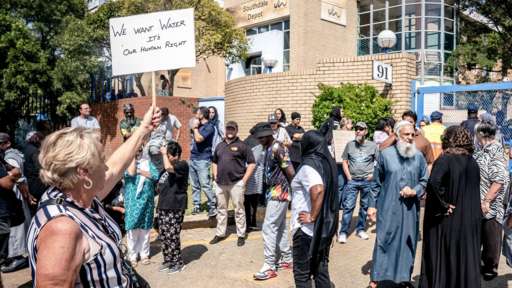
    Water suppliers in Johannesburg, South Africa, have issued an urgent appeal to city residents and its suburbs to reduce water usage as a severe water shortage threatens to “cripple the system.”

    Rand Water and Johannesburg Water issued a joint statement on Sunday sep 17 2023, expressing concern about the excessive water consumption by residents, which has led to a significant decline in water reservoir levels.

    To address this crisis, the companies have requested that residents take several measures, including limiting showers to two minutes, flushing toilets only when necessary, washing cars using buckets on weekends, refraining from filling swimming pools until the water shortage is resolved, avoiding the use of clean water for gardening or lawn irrigation, and promptly reporting any water leaks.

    Johannesburg, currently operates under annual water restrictions, typically enforced during South Africa’s dry season, which spans from September to March.

    In recent weeks, water shortages have led to disruptions affecting some city residents and essential facilities like hospitals, leading to growing public dissatisfaction.

  • Claims of attempted coup in Congo debunked

    Claims of attempted coup in Congo debunked

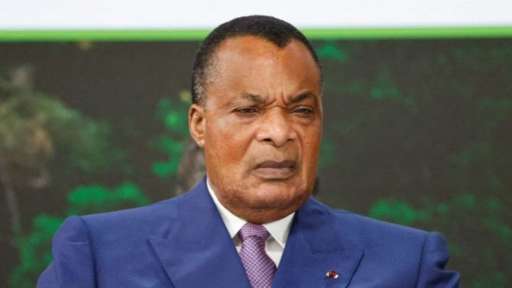
    The government of Congo-Brazzaville has refuted rumors of an attempted coup against President Denis Sassou Nguesso, who has been in office for 39 years.

    These rumors had circulated on social media amid claims that the military sought to remove the 79-year-old leader, who is presently in the United States attending a UN summit alongside other global leaders.

    “The government denies this fake news,” Information Minister Thierry Moungalla posted on X (formerly Twitter) on Sunday, saying he wanted to reassure members of the public they could “go about their activities calmly”.

    The government’s official website also issued a statement refuting the claims of a coup attempt.

    Recent months have witnessed a surge in coup d’ĂŠtats across Africa, with the most recent occurring in neighboring Gabon, where the military assumed control in August.

    Mr. Sassou Nguesso came to power through a military coup in 1979 in the oil-rich central African nation. Although he lost Congo’s initial multi-party elections in 1992, he reclaimed power in 1997 following a civil war.

    Currently, the Congolese leader ranks as the third-longest serving president in Africa, following Teodoro Obiang Nguema of Equatorial Guinea and Paul Biya of Cameroon.

  • Trade between Ghana, Turkey projected to reach US$1b by 2027

    Trade between Ghana, Turkey projected to reach US$1b by 2027

    The Ghana-Turkey Chamber of Commerce anticipates that the annual trade value between Ghana and Turkey will reach US$900 million by the end of 2025, and it is poised to surpass the US$1 billion mark by the close of 2027.

    In 2020, the total trade value between Ghana and Turkey amounted to US$771 million, marking a significant increase from the US$479 million recorded in 2016. Notably, in 2019, Ghana became Turkey’s third-largest trading partner in sub-Saharan Africa. However, trade experienced a decline in 2021 and 2022 due to prevailing global conditions.

    Dr. Daniel Amateye Anim-Prempeh, the CEO of the Chamber, emphasized that while the current trajectory of trade between the two nations is promising, strengthening relations and expanding trade areas are essential factors that will accelerate its growth.

    “The pandemic further solidified this relationship, as during its peak, Turkey became Ghana’s second most important trading partner… It is expected that Ghana’s trade volume will increase 200 percent by 2025,” he said in reference to a partnership agreement signed in 2020.

    In the past, Ghana’s major exports to Turkey have predominantly consisted of cocoa beans, cocoa paste, and soybeans, exhibiting a steady annualized growth rate of 11.3 percent. Conversely, Turkey has primarily exported cement, pasta, and building materials to Ghana.

    However, it’s worth noting that the exchange of services between the two countries has remained relatively limited. As a result, Dr. Anim-Prempeh emphasized the significant opportunities available for Ghanaian businesses within Turkey’s dynamic manufacturing sector.

    “Turkey produces high-quality goods at competitive prices, and its strategic location makes it a very competitive country to do business with,” the Chamber’s CEO explained.

    Nevertheless, he recognized certain obstacles, including delays in the processing of entry clearances and the imposition of high visa fees, which can hinder smooth business transactions.

    “In every endeavour there are bottlenecks; simply put challenges, feedback and complaints from Ghanaian businesses are that it takes time for the embassy in Accra to process their entry clearance. Equally, we have received complaints from our Turkish counterparts about high visa fees charged by our embassy in Ankara. To my mind, such developments may impede the smooth facilitation of business transactions,” he elaborated.

    Chamber’s role

    The Ghana-Turkey Chamber of Commerce is actively engaged in promoting and streamlining trade between the two countries, he further noted.

    Dr. Anim-Prempeh underscored his organization’s endeavors to establish strategic partnerships with governmental bodies, including the Ministry of Trade and the Ghana Investment Promotion Centre.

    “We are fostering relationships with the Ghana Union of Traders Association (GUTA), Association of Ghana Industries and the Importers and Exporters Association, as well as other key associations and individual businesses within the economy. With our Turkish counterparts, the Chamber has worked with the Foreign Economic Relations Board (DEiK) and other Turkish National Chambers, and is still taking steps to enhance relationships that will facilitate trade between the two countries. Our focus is also on attracting Turkish firms to establish their presence in the economy, thereby creating direct employment for Ghanaians,” he explained.

    Moreover, the Chamber is actively promoting education ties. Turkey offers quality higher education, and the Ghana-Turkey Chamber of Commerce is organising education fairs for Turkish universities in Ghana that encourage students to consider Turkey as an attractive educational destination.

    This comes as Foreign Direct Investment (FDI) from Turkey in Ghana has already made an impact, with revenue from Turkish companies operating in various sectors and investments estimated at US$112million.

    The Chamber hopes to attract more Turkish firms, particularly in the manufacturing sector, to capitalise on Ghana’s stable political environment, favourable investment laws and growing business environment, he added.

    Tourism

    Tourism is seen as another avenue to strengthen bilateral relations. Both countries boast rich cultural, historical and tourist sites.

    Dr. Anim-Prempeh noted that Turkey hosted about 51.7 million tourists in 2019, and emphasised the potential for medical, sports and business tourism. Collaboration in this sector, including efforts by Turkish Airlines aimed at encouraging Ghanaians to visit Turkey, is expected to enhance bilateral relations.

    “My visit to Turkey put me in a position to boldly state that they have developed their tourist sector with first-class roads to the tourist sites, and available and affordable hotels for all levels of income – hence the need to learn and leverage on it. Medical, sports and business tourism is an area worth considering. Indeed, it is estimated that Turkey is one of the prominent health tourism destinations in the world – which operates about 1,500 world-class hospitals and about 160,00 doctors, making it capable of providing high-standard health care delivery,” he further stated.

  • ECG owes the Bui Power Authority $658m – CEO reveals

    ECG owes the Bui Power Authority $658m – CEO reveals

    The outstanding debt owed by the Electricity Company of Ghana (ECG) to the Bui Power Authority (BPA) has experienced a significant surge, escalating from $612 million to $658 million, as revealed by the Chief Executive Officer of the power generation company, Samuel Kofi Ahiave Dzamesi.

    He emphasized that this mounting debt is a consequence of BPA continuously supplying electricity to ECG without receiving timely payments.

    Mr. Dzamesi, during an appearance on GhanaWeb TV’s BizTech program hosted by Ernestina Serwaa Asante, acknowledged that the primary challenges faced by BPA include the lack of consistent cash flow and delays in receiving payments for the power supplied to clients.

    “The greatest problem of this company is that we generate and yet, we’re not paid for what we generate. Yeah, it’s an issue and I need to talk about it. It’s like you generate 100 units and you are paid 20 units. So what happens to the 80 units? So, if the efficiency of receivables is there, I think that we can do so much. So many times our job, though is suppose to generate more power, our job is also supposed to go and chase money, and if the money doesn’t come, that’s a very serious issue.

    …So we pray that the more money we get, the more projects we undertake, and Ghana will be better for all of this,” the Bui Power Authority CEO told host of BizTech, Ernestina Serwaa Asante.

    When asked about the $612 million debt owed BPA by ECG, Mr Dzamesi said, “It has gone up. Now, it is $658 million because we always generating and the more we generate, they’re supposed to pay us but if, as I said, if you generate 100 units, you are paid 20 units. So the man who’s supposed to pay you 100 units is paying only 20 units, of course every month, you’ll still be having more debts to pay. So as I speak is now around $658 million.”

    However, he pointed out that a committee called the Cash Waterfall Committee had been established to investigate the amount due to BPA and to create “a financial plan” for ECG to pay off its debt.

    Mr. Dzamesi pointed out that in order to help BPA pay off its growing debt, the committee has mandated that the ECG make a sizeable payment to BPA at least once every week.

    The decision, according to the CEO of Bui, was commendable since it would enable the company to invest and pay employee salaries.

    “Recently there was a meeting. There is this Cash Waterfall Committee. Recently there was a meeting and at that meeting, it was resolved that ECG must be able to pay as some amount of money at least every week or every two weeks, and then the Ministry of Finance is supposed to top up so that at least every month we will be able to pay salaries and have enough to pay for our investments and this new arrangement started just to the first of August, so we’re praying that it will continue like that,” Mr Dzamesi said on BizTech.

    He added that, “I’m beginning to see some positive signs and I know our minister is working very hard to ensure get more funds.”

    In April of this year, there were reports indicating that ECG had accrued a debt of over $612 million to the managers of the Bui Generating Station.

    Expressing his frustration with ECG’s inability to settle the outstanding amount, Mr. Dzamesi highlighted that nearly 99 percent of the power generated by the 404 Megawatts (MW) dam, located in the Banda District of the Bono Region, is sold to ECG.

    This ongoing issue poses a significant challenge to the operations of the power station.

  • Akufo-Addo reportedly shielding Ken Agyapong in rot at Ghana Gas

    Akufo-Addo reportedly shielding Ken Agyapong in rot at Ghana Gas

    President Nana Addo Danquah Akufo-Addo has been accused of failing to report on alleged dealings within the Ghana Gas Company presumably due to concerns that addressing them could lead to accusations of attempting to tarnish the image of Kennedy Ohene Agyapong.

    A report by The Herald, suggests that the organization is grappling with various issues, including contentious procurement deals.

    There is mounting speculation that a future government may find it imperative to initiate a comprehensive investigation into this state-owned enterprise, which falls under the jurisdiction of the Ministry of Energy, helmed by Dr. Matthew Opoku Prempeh. Such an investigation would be necessary to gain a thorough understanding of the extent of the challenges plaguing the company.

    The concerns laid out in the article revolve around the reluctance of both the government and the Bawumia camp to address issues related to the Ghana Gas Company, primarily due to apprehensions regarding potential legal repercussions and political consequences.

    Within this context, Kennedy Ohene Agyapong, known for his assertive and confrontational style, holds a prominent position. His use of bullying tactics, intimidation, political leverage, and aggressive attacks on opponents, including his private dealings with the state, have created a situation where many individuals tend to distance themselves from him.

    Notably, there is a Contempt of Court case against Mr. Agyapong, initiated after he verbally abused and threatened a High Court Judge, Justice Amos Wuntah Wuni.

    Despite this legal matter, both the government and the Bawumia camp have refrained from addressing it openly, potentially due to concerns that it could be construed as a political attack on Mr. Agyapong, who is actively vying for the NPP flagbearer position.

    Additionally, Mr. Agyapong is facing disciplinary proceedings within the NPP following his summons based on accusations and threats he made against various individuals, including President Nana Addo Dankwa Akufo-Addo and Vice President Dr. Mahamudu Bawumia. These allegations were made in a viral video, and Mr. Agyapong has been subject to questioning by the party’s disciplinary committee. The party has committed to addressing these allegations transparently and fairly.

    Furthermore, it has been suggested that the party leadership asked Mr. Agyapong to issue an apology to President Akufo-Addo for his earlier threat, but he reportedly declined.

    The article highlights the challenges and uncertainties surrounding the timing of resolving the disciplinary issues involving Mr. Agyapong, especially with the upcoming presidential primaries scheduled for November 4, 2023.

    In summary, the article underscores the delicate political dynamics and legal matters surrounding Mr. Agyapong’s actions and the Ghana Gas Company, which have implications for both the government and the NPP.

  • 5 ways Kennedy Agyapong campaigned for Mahama and NDC at Show Down Walk

    5 ways Kennedy Agyapong campaigned for Mahama and NDC at Show Down Walk

    Flagbearer hopeful of the governing New Patriotic Party (NPP) Kennedy Agyapong seem to be making the campaign message of the National Democratic Congress much easier.

    The unconventional NPP known for “rough talking” is essentially arming the NDC leader by their flagbearer John Dramani Mahama.

    Addressing participants of his fitness tour of Accra dubbed “Show Down Walk” MP said the following;

    NPP lost election 2024 in 2022

    In his speech, Agyapong asserted that the NPP lost the election for 2024 in 2022 due to the depreciation of the cedi and the effects of the Domestic Debt Exchange scheme, which destroyed middle-class and elderly savings.

    “We lost the 2024 elections in 2022. At the time the Ghana cedi destroyed the hard work of many businessmen, all the way to the tomato seller. Ghanaians will never forget that.

    “The time the middle class went to court because their monies were lost, and the time the pensioners had their monies gone, Ghanaians will remember that,” he stated.

    Slots in police being sold to party people

    “You are a delegate, they’ve asked us to be mute but I will speak, because if your child is going to look for a job and you can be asked to bring 10,000 cedis before your child would be recruited into the police…

    “These same people are coming to you seeking your votes, so that your children remain jobless,” Agyapong jabbed without addressing the specific persons he was referring to as “they.”

    He continued by praising his own track record of creating jobs, emphasizing how well he distinguished out from the other NPP flagbearer candidates.

    Ghana needs pragmatic leaders not theorists and talkers

    “If Ghana will prosper, it needs pragmatic leaders not theorists who bombard you with big English repeatedly even when you are poor.

    “We need a local language speaking leader who will speak in clear terms and also work to ensure you have money in your pocket,” Agyapong said stressing that as a businessman and politician he had the perfect leadership traits and balance to turn Ghana around.

    Misuse of resources led us to IMF

    “God has blessed us with so much that if we took proper care of them, there would be no need to go to the foreigners for help,” he stated.

    This is a covert barb at the government’s ongoing program with the International Monetary Fund (IMF), which has already delivered the first installment of a US$3 billion bailout, or US$600 million.

    Youth unemployment is rising

    “Ghanaians are ready to give Kennedy Agyapong a chance, the onus is now on New Patriotic Party (NPP) members to elect Ken Agyapong to rescue Ghana for young people to get jobs.

    “A country with a youth who have a bleak future is no country,” he stated in a speech that was punctuated with his jobs record and how he would tackle unemployment.

  • Abu Jinapor calls on TESCON members to work hard and beat NDC in 2024 elections

    Abu Jinapor calls on TESCON members to work hard and beat NDC in 2024 elections

    The Minister for Lands and Natural Resources, Samuel Abu Jinapor, has urged members of the Tertiary Students’ Confederacy (TESCON) of the New Patriotic Party (NPP) to collaborate with the party’s grassroots to ensure victory for the NPP in the December 2024 elections.

    He emphasized that achieving the goal of ‘Breaking The Eight’ is attainable but necessitates unwavering commitment and hard work from all members, underpinned by loyalty, service, and sacrifice.

    The minister, who also serves as the Member of Parliament for Damongo, delivered these remarks during the second Greater Accra Regional TESCON Boot Camp, held at the Accra College of Education on Saturday, September 16, 2023.

    The primary objective of the boot camp, dedicated to the late Kwabena Boadu, a former aide to Vice President Dr. Mahamudu Bawumia, was to equip TESCON executives in the Greater Accra Region to effectively fulfill their responsibilities.

    Speaking on the theme ‘Loyalty, Sacrifice, and Service: Expectations of TESCON in Delivering Victory 2024,” Samuel Abu Jinapor said that adhering to these cardinal principles is crucial to securing victory in the next election.

    He emphasized the importance of duty, sacrifice, and commitment to the NPP as well as to the growth and development of the nation.

    The minister emphasized to the audience that the NPP was founded on these tried-and-true values, and that party founders like Dr. J. B. Danquah, Chief S. D. Dombo, Dr. K. A. Busia, and Okyeame Bafour Akoto lived by these values even at the cost of their own imprisonment, exile, and deaths.

    Kwabena Boadu was praised for the sacrifices he made to help the party win in 2016 and TESCON members were urged to follow in his footsteps.

    “Today, KB is no more. It is our turn to continue from where KB left off and ensure that the victory he helped us secure is maintained and the NPP is retained in power to continue with its developmental agenda for the benefit of the people of Ghana,” he said.

    Samuel Abu Jinapor emphasized that the NPP’s developmental agenda is unparalleled by any other political party in the country.

    He cited several key initiatives such as the introduction of Free SHS, the National Health Insurance Scheme, the School Feeding Programme, the Livelihood Empowerment Against Poverty (LEAP), the National Identification Programme, and the National Digitalisation Agenda as evidence of the NPP’s commitment to development.

    Despite recent economic challenges, he noted that the NPP government has established a strong foundation that can propel the nation’s development forward.

    He expressed the belief that if the next government, which he expects will be led by the NPP, builds upon this foundation, it will enjoy long-lasting success due to the positive impact on the citizens.

    Jinapor asserted that a victory for the NPP in 2024 is the most effective means to enhance the country’s human capital, improve healthcare accessibility for Ghanaians, and unleash prosperity for the masses.

    He called on all party members to work together in unity to secure victory for the NPP and “advance the nation’s development in freedom.”

    Furthermore, he stressed that the NPP serves as the binding force that unites its members, and he urged everyone not to allow any individual to sow division within the party.

    Jinapor also encouraged TESCON members and all party supporters to exert their collective efforts to achieve the goal of “Breaking the Eight,” expressing the need for unity to confront the NDC in the 2024 elections.

  • Donald Trump’s 2011 tweet concerning Libya resurfaces

    Donald Trump’s 2011 tweet concerning Libya resurfaces

    A tweet from former U.S. President Donald John Trump, posted in 2011, has resurfaced on Twitter (now X) due to recent developments in Libya.

    The tweet, dated August 23, 2011, pertained to the political events that led to the overthrow of then-leader Muammar Gaddafi. Trump had foreseen that the situation in Libya would deteriorate, even though he believed Gaddafi needed to be removed. His tweet read: “As bad as Qaddafi was—what comes next in Libya will be worse—just watch.”

    Many people commenting on this 12-year-old tweet largely agree with Trump’s prediction while also defending Gaddafi. Muammar Muhammad Abu Minyar al-Gaddafi was the Libyan leader who ruled the country from 1969 until his assassination in 2011 by rebel forces.

    The rebels received support from a multinational NATO-led coalition, which initiated a military intervention in Libya to implement United Nations Security Council Resolution 1973 in response to events during the 2011 Libyan civil war. The intervention began on March 19, 2011, and Gaddafi was killed on October 20. However, Libya has since remained divided among rival governments.

    Former U.S. President Barack Obama has acknowledged that the intervention at the time was a mistake. He recently faced criticism after sharing a fundraiser for Libya in the aftermath of the devastating Derna floods.

    See Trump’s tweet below:

  • Ato Forson fires back at finance minister over comment on praising BoG governor

    Ato Forson fires back at finance minister over comment on praising BoG governor

    In response to a recent article by finance minister Ken Ofori-Atta appealing for the Bank of Ghana (BoG) governor to be supported rather than condemned, minority leader Cassiel Ato Forson fired back.

    Ato Forson queries whether Ernest Addison’s conduct in relation to breaking BoG legislation assisted the government in throwing the nation into an economic catastrophe.

    “Should the people of Ghana support a central bank governor who has aided the government to destroy their livelihoods?” his post on Twitter dated September 17 read in part.

    It continued: “I plan to deliver a strong response to the Finance Minister’s article on Monday morning!”

    The central bank has faced severe criticism, particularly from opposition figures who have called for the resignation of the governor and his two deputies following the significant losses reported in the 2022 annual report of the Bank of Ghana.

    The Minority in Parliament, along with various advocacy groups, have organized a protest campaign called #OccupyBoG to emphasize their demand.

    Amidst these financial setbacks, concerns have also arisen regarding the ongoing construction of a new headquarters for the bank, which is alleged to be costing taxpayers US$250 million. This has added to the mounting pressure on the bank.

    In response to these challenges, Ofori-Atta recently authored an article in defense of the bank, addressing all the allegations. One of the noteworthy quotes from the article pertains to the construction of the new head office building.

    “With respect to the BoG’s new headquarters, the evidence is clear that the decision to build had already been made long before those ‘losses’ occurred,” Ofori-Atta stated.

  • Ghana plans to build a lithium refinery in the West

    Ghana plans to build a lithium refinery in the West

    Preparations are underway to establish a lithium refinery in the Western Region of the country. Lithium Resources Ghana Limited, a joint venture between UK-based CAA Mining Ltd and local company Empire Rare Earth and Metals Group Ltd, is currently assessing potential and strategic locations for the refinery.

    Justice Amekudi, the Geographic Information System (GIS) and Data Manager of Lithium Resources Ghana Limited, made this announcement during a presentation at Ekumfi Assaman in the Ekumfi District of the Central Region. The presentation took place as the company’s team offered assorted items and cash to the chiefs and residents of Enyan Abaasa during the Akwanbo festival celebration.

    The company also made a similar donation during the Akwanbo festival celebrations in three communities: Attakwaa, Ekumfi Ekrawful, and Otabanadze in the Ekumfi District of the Central Region.

    Amekudi explained that the company’s strategy involves an integrated approach of exploring, mining, and refining lithium chemicals within Ghana. This approach aligns with the Ghanaian government’s new policy and strategy for strategic minerals, including lithium.

    He noted that the company is currently conducting reconnaissance and exploration activities for lithium in the country as part of feasibility studies to assess the commercial viability of lithium deposits in the area.

    Amekudi further emphasized that discovering a lithium deposit is just the initial phase of a multifaceted supply chain with various opportunities that can contribute to the nation’s development. The company’s agenda is to produce a lithium mineral concentrate within the country, thereby addressing the critical missing downstream steps in the African battery supply chain.

    He stated that the company aims to change the prevailing narrative of processing or refinery facilities being located outside Africa by establishing a lithium refinery within the country.

  • Christians advised to buy Bibles in their native languages

    Christians advised to buy Bibles in their native languages

    The Reverend Dr. Kennedy Owiredu, who serves as the Translation Manager at the Bible Society of Ghana, has recommended that Christians acquire a Bible in their native dialects to attain a more precise comprehension of the Scriptures. He stressed that this practice would additionally contribute to the preservation and transmission of their local languages to the succeeding generation.

    Reverend Dr. Owiredu shared these insights during the 2023 Translation and Trauma Healing Seminar held at Sefwi-Dwenase Pentecost Central in the Waiwso Municipality of the Western North Region.

    The seminar attended by pastors, church leaders and Local Council of churches within the Western North Region was on the theme: “Bible Translation and Mother -tongue Interpretation for Pulpit Ministry.”

    Reverend Dr. Owiredu emphasized that one of the primary responsibilities of the Bible Society of Ghana is to translate the Bible into local languages. He encouraged pastors, church leaders, and religious groups to adopt the use of the local Bible in their respective congregations. He expressed concern that without practical measures, many local languages would gradually fade away, as the present generation fails to pass them down to the youth, who represent the future.

    Reverend Owiredu also expressed apprehension about the growing trend in some churches that completely disregard the use of the local Bible during their services. He advised such churches to begin incorporating the local Bible into their worship, stating, “The Lord we serve communicates in all our local dialects.”

    He called upon the media to support the campaign for Bible translation into various languages by reaching out to the Bible Society for relevant information.

    Miss Afua Addae Adjeii-Authur, the Western North Regional Manager of the Bible Society of Ghana, added that they had identified groups supporting people in learning and writing the Sehwi language. Since 2020, they had graduated three groups in Wiawso, Bekwai, and Nkwadum areas, with plans to extend to Akontombra and surrounding areas. This initiative aimed to encourage residents to utilize the Bible, which had been translated into the Sehwi language. She further expressed hopes that the Sehwi language would become a subject in the Basic Education Certificate Examination (BECE) and mentioned engagement with traditional authorities and stakeholders to make this a reality.

    Participants interviewed by the Ghana News Agency commended the Bible Society of Ghana for the seminar and expressed support for the idea of translating the Bible into local languages. They also urged church leaders to make an effort to incorporate the local Bible into their worship services.

  • Govt financially reckless, reopening DDEP is absurd – Harry Yamson

    Govt financially reckless, reopening DDEP is absurd – Harry Yamson

    Harry Yamson, the Managing Partner at Ishmael Yamson and Associates, has characterized the government’s announcement to relaunch the Domestic Debt Exchange Programme (DDEP) as perplexing.

    This announcement comes in the wake of the government’s decision to reopen the Domestic Debt Exchange Programme. The Ministry of Finance issued a statement clarifying that the reopening is intended to provide an opportunity for individuals who were unable to participate in the February 2023 exercise.

    However, in an interview with Starr News, Mr. Harry Yamson argued that the government should acknowledge its financial constraints and address the underlying reasons for its financial difficulties. He emphasized that the government has been consistently facing fiscal challenges and should take measures to reduce its expenditure. Mr. Yamson expressed concerns that reopening the DDEP would only exacerbate the country’s debt burden.

    “It is just a mark of the government’s own desperation, the government has found itself in a situation where it is offering ever higher interest rates on Treasury Bill. We are now paying more for the treasury bill than we were paying for the old bond. It just tells you that the government does not understand that the work it has to actually need to do is to reduce expenditure not to be going back over and over again. To the bond market and treasury bill market to borrow even larger sums of money,” Mr. Yamson stated.

    He continued: “It has a bloated wage bill, it is over spending on prestige projects and simply failing to do the common sense thing that anybody who runs a budget ought to do. Asking people to participate in this DDEP with the excuse that they failed to do it is ridiculous. The DDEP has been extended twice or the third time.”

    Mr. Yamson continued by saying that the government’s handling of its finances is completely reckless.

  • Registrants at Achimota EC Office robbed by masked thugs

    Registrants at Achimota EC Office robbed by masked thugs

    Masked assailants reportedly carried out an attack on Ghanaian citizens who were waiting to register for their Voter ID Cards at the Okaikwei North District office of the Electoral Commission in Achimota during the early hours of Sunday morning.

    These attackers disrupted the queue, resulting in injuries to several individuals, before fleeing the scene. Sources close to GhanaWeb revealed that the assailants arrived at the registration center at approximately 5 am. Among the victims was a lactating mother who was struck with a stick.

    Furthermore, the attackers stole money, mobile phones, and other personal belongings from those who were waiting to register.

    In response to this troubling incident, Member of Parliament for Okaikwei North, Theresa Awuni, took to Facebook to voice her concerns.

    She stated, “We come in peace, but I am sending a warning to all the elephant members [referring to NPP] in Okaikwei North that they should not start what they cannot finish. This dawn, my boys were attacked by known NPP thugs, masked up, seized their money, phones, and other items as they queued up at the registration centre. Unfortunately for them, two were arrested. I patiently await the outcome of this arrest because that will determine our next line of action. Mind you, we are very prepared for ANYTHING.”

  • Sunyani MCE exhorts citizens to participate in voter registration

    Sunyani MCE exhorts citizens to participate in voter registration

    Evans Kusi Boadum, the Municipal Chief Executive for Sunyani West, has urged all eligible voters within the municipality to take advantage of the ongoing limited voter registration exercise.

    This includes those who have recently turned eighteen and adults who have not yet registered.

    The Chief Executive made this appeal during his visit to the municipal office of the Electoral Commission to oversee the registration process.

    He called on political parties and the general public to collaborate with the Electoral Commission to ensure the successful execution of the exercise.

    He also encouraged residents to participate in the registration process and adhere to the Commission’s procedures to ensure their inclusion in the voter register.

    Eric Kani Owusu, the Municipal Electoral Officer, reported that the registration process has been proceeding smoothly, with strong cooperation from political parties and the public.

    He expressed optimism that all potential registrants would be successfully registered during the twenty-day period, which includes weekends, thanks to the measures implemented in coordination with political parties.

  • Limited Voter Registration Exercise: Insist on your rights – Mahama to Ghanaians

    Limited Voter Registration Exercise: Insist on your rights – Mahama to Ghanaians

    Former President John Mahama has urged minority tribal groups whose nationality are allegedly being challenged to insist on their rights when they participate in the limited voter registration exercise.

    According to him, Ghana comprises of individuals from various backgrounds and ethnicities.

    Hence, no ethnic group should be more appreciated as Ghanaian than the other.

    “We must insist on our rights. We are all Ghanaians. We are united in our diversity. And its our diversity and our culture that makes our nation strong,” Mahama expressed.

    John Dramani Mahama is touring some electoral centers in the Greater Accra Region to monitor the limited voter registration currently ongoing across the country.

    The exercise began on Tuesday, September 12 and scheduled to end on Monday, October 2.

    The NDC, as well as other political parties and civil society organizations, opposed the EC’s decision to have it done solely in districts rather than electoral areas, which led to resistance when it first began.

    Nevertheless, it was suggested that everyone participate actively in the election, especially first-timers.

    Mr. Mahama urged the EC to take the calls for moving voter registration closer to the polls seriously.

    “I wish to add my voice to those who have called on the EC to reconsider its decision to restrict the registration exercise to its district offices only,” he said in a Facebook Live session on Wednesday, September 6.

    “It is also our very strong recommendation that in line with regulation 22(b) of CI 91 as amended by CI 126, the Commission listens to the call for the extension of the exercise to take place in the electoral areas and not limited to the district offices of the Commission.

    “This will curb many inconveniences including transportation, lack of money to move from distant locations and access.”

    Source: The Independent Ghana | Amanda Cartey

  • Ghanaian university students share tale of ‘deadly hook-up’ duties in Nigeria

    Ghanaian university students share tale of ‘deadly hook-up’ duties in Nigeria

    Vanessa came from a humble background and shared a room with three other generous young women at university. However, their lives took a drastic turn due to the lifestyle they adopted.

    Vanessa recounted her initiation into a hook-up gang during her university days, where she and her newfound friends traveled to Nigeria for a party. Given her impoverished background, her roommates assisted her with fees and other expenses.

    One fateful night, they invited her to a party, marking her first experience with alcohol.

    “I was there one Friday when the girls returned from lectures and informed me about an outing that evening but will return on Saturday and asked if I was interested. I followed them to an elitist place. But before that they took me to East Legon to shop for new clothes.

    “Truly, I saw big men when I went to the venue. We sat at a table and had conversations with some big men. I was even introduced to alcohol that evening. But they left me alone with one of the men who took me to a room and slept with me. He gave me $200 and some cedis for transport the next morning,” she narrated to a pastor in a video sighted on the TikTok page of a user named hisheartbeat7.

    She chose to join them because she was content with the money she had made in a single night. However, they had to travel to Nigeria for a party where all the prominent Ghanaian and Nigerian celebrities were expected to be there.

    “The room they took me to was very big with three big beds. I was there with four other ladies. Before we moved from the venue of the party, I could see others engaging in sexual acts in the hallway and they didn’t care. The party seemed like an orgy. Later, five men came into the room and had sex with all of us. They were just exchanging us. I had no choice than to do it because I needed the money they were offering. Big and popular women also slept with us. That is what happened for the rest of the week I spent in Nigeria with my friends.”

    Their problems began after this gathering.

    “On the day of our return, my friend, Pearl (fake name), had an attack in the flight. She complained about a bad headache she was battling and we asked her to take enough water and she did. But she suddenly started bleeding from the nose and vomiting till we arrived at the airport in Ghana. She was immediately rushed to the hospital but died after three days.”

    They mourned their friend and returned to their lifestyle afterwards.

    “We visited our godmother who kept linking us to these men but it wasn’t as frequent as we used to go,” Vanessa narrated.

    Not too long after another one of her friends started behaving strangely.

    “Subsequently, Vincentia; one of the ladies started behaving strangely. She started acting like a mad person. So, we rushed her to the hospital but were advised to take her to a psychiatric hospital. She was released to go home one day but run away and we haven’t heard from her again till now.”

    The third also started falling sick and though doctors said there was nothing wrong with her, she died.

    “So, now we were left with two. Myself and Ethel. She also started complaining about an eye pain. She also suddenly became very lean and smallish even though she was originally thick and tall. She visited the hospital and was told that there was nothing wrong with her yet her health never improved. It was one day in class that she started complaining about not being able to see. I thought she was joking but Ethel went blind. She also became crippled at a point and was using a wheelchair but she eventually died.”

    Vanessa is the only one still alive and well, and because she is unsure of what will happen to her, she decides to flee to a preacher for support.

  • South Africa conducts state funeral to honor the Zulu leader Mangosuthu Buthelezi

    South Africa conducts state funeral to honor the Zulu leader Mangosuthu Buthelezi

    Thousands of people, some in traditional warrior attire, gathered at a small stadium in Ulundi, the ancient Zulu kingdom capital, to honor Mangosuthu Buthelezi, the founder of the Inkatha Freedom Party (IFP) who passed away at the age of 95.

    President Cyril Ramaphosa paid tribute to him, acknowledging his impact on South Africa’s modern history.

    Family members led a procession with the coffin draped in an animal skin and an IFP flag, while mourners, some in traditional attire, sat around.

    The IFP Women’s Brigade chanted in Zulu, and various dignitaries, including former presidents Jacob Zuma and Thabo Mbeki, attended the ceremony.

    Buthelezi’s legacy remains contested, with some viewing him as a protector of Zulu culture and others as an apartheid collaborator and mass murderer due to the violence associated with the IFP.

  • Distressed Sudanese endure unending wait for passports to flee war

    Distressed Sudanese endure unending wait for passports to flee war

    Marwa Omar, along with hundreds of others, queued at dawn in Port Sudan to secure passports, but after 15 hours of waiting, she remained empty-handed.

    Since April, an estimated one million people have fled Sudan due to the war between the Sudanese army and the paramilitary Rapid Support Forces. However, many needed passports, and when violence erupted in April, passport offices closed.

    In late August, a new passport office opened in Port Sudan, leading to long queues of desperate people trying to obtain the necessary documents to leave the war-torn country.

    Asked about her destination, Marwa Omar replied, “Anywhere but here. This isn’t a country anymore.”

    The five-month war has resulted in the deaths of 7,500 people, the displacement of over five million, and the deterioration of Sudan’s fragile infrastructure, leaving millions in dire need.

    “There’s nothing left. We can’t live or put food on the table or educate our children,” said Marwa Omar.

    Coastal city Port Sudan, which has largely been spared in the fighting, has become a haven for many, including government officials, the United Nations, and Sudan’s only functional airport.

    But even for those who manage to enter the passport office, the process is grueling, with cramped conditions, heat, and a lack of seating.

    Fares Mohammed, attempting to obtain a passport for his child, said, “At this rate, we’ll be here for months.”

    Over 2.8 million people have fled the Sudanese capital Khartoum, and more than half of Sudan is in dire need of humanitarian aid, with six million on the brink of famine, according to the UN.

    The cost of obtaining a passport, $200, is a considerable burden for those already grappling with soaring living and food costs.

    Nour Hassan, a mother of two, said, “It’s a terrible choice to leave, but living here has become impossible.” She hopes to reach Cairo, Egypt, where she has family, and, like many others, considers it a temporary solution, waiting until it’s safe to return home.

  • Artists from Niger refuse to allow their culture be “taken away” in French Visa debate

    Artists from Niger refuse to allow their culture be “taken away” in French Visa debate

    A Nigerien flutist and singer has a message for France, his country’s former colonial power, which has banned cultural venues from collaborating with artists from Niger.

    Yacouba Moumouni expresses his discontent, saying, “The French should respect us. If we say, ‘I’m not going to give a visa,’ that’s like saying to a child, ‘If you don’t do that, I can’t buy you a sweet.’ We are not at that level; we have gone beyond that.”

    This sentiment is shared by many artists in Niger who are reacting to France’s decision to suspend visa issuance to Nigerien nationals.

    Rachid Ramane, President of the Federation of Artistic and Cultural Associations of Niger, emphasizes that they won’t beg and asserts that Nigerien artists are part of the global artistic community. He adds, “We can’t remove our cultures from the world’s culture.”

    Ramane also points out that Niger, Burkina Faso, and Mali are facing significant challenges and are simply seeking independence and autonomy. He urges understanding from others.

    The French General Directorates for Cultural Affairs issued a letter instructing national drama and choreography centers to halt all projects involving nationals from Niger, Mali, and Burkina Faso.

    Garba Mahamane Lawali, director of the Niger musical training and promotion center, believes that cultures that remain closed and isolated are destined to decline. He highlights Africa’s openness to the world and suggests that France needs to adapt to this new era intelligently.

    Currently, Niger, Mali, and Burkina Faso are experiencing diplomatic tensions with France due to political turmoil led by military juntas that ousted democratically elected leaders. France has suspended development aid and budget support operations with these countries, escalating the situation.