Leicester boss Dean Smith sees similarities between James Maddison and Jack Grealish as the Foxes midfielder looks to emulate the former Aston Villa man’s relegation-fighting heroics.
Smith’s side are just a point from the Premier League safety line ahead of Monday’s crucial visit of Everton, who head into the encounter one point and one place worse off.
They know just a draw will lift them out of the bottom three on goal difference after Nottingham Forest’s late 2-1 defeat at Brentford on Saturday.
Manchester City’s Grealish played a key role in Villa’s escape from relegation under Smith in 2019-20 — they survived after being four points from safety with three games left – and Smith sees the similarities with Maddison.
“I think they are different types of players but similar characters, in all honesty. Both know that they’ve got ability and both want to push themselves to become the best,” he said.
“I think, when you’ve got players that have that personality and character, they push you as coaches and you want to go and help them become better players. James seems to have that as well.
“He’s always looking to see what he can do better. He’s really engaging in the meetings we have and tactical meetings and very vocal as well. I can see that similarity [with Grealish] of wanting to push himself.
“He wants to talk tactics with you, and football. He’s a football nut, a bit like Jack was as well.”
Maddison, linked with Newcastle, has a year left on his contract while eight players — including Youri Tielemans and Jonny Evans — have deals which expire this summer.
Despite the uncertainty surrounding their futures, though, Smith believes the squad remain committed to the survival fight.
“I’m getting that feeling from all the players,” he said. “They’re all in and they’ve committed to the football club, whether their contract is up at the end of the season or not.
“I’ve already said before, that I don’t know how many are up or who isn’t. I can just see a buy-in from what they’re doing in training and what they’re saying in the meetings.
“Contracts are not my department. My remit is to come in and keep the team in the Premier League, so that’s what I’m focused on.”
At least 528 people have died and 4,600 have been injured in Sudan’s conflict.
Here is the situation on Sunday, April 30, 2023:
Fighting
• Army soldiers clashed with the paramilitary Rapid Support Forces in downtown Khartoum as deadly hostilities entered a third week despite the latest ceasefire, It is set to expire at the end of Sunday.
• The most recent three-day truce was agreed on Thursday after mediation led by the United States, Saudi Arabia, the African Union and the United Nations.
• Former Prime Minister Abdalla Hamdok warned that the conflict in the turbulent African nation could deteriorate into one of the world’s worst civil wars if not stopped early.
• UN Secretary-General Antonio Guterres called for negotiations to end the bloodshed: “There is no right to go on fighting for power when the country is falling apart,” he told Saudi-owned Al Arabiya television.
Humanitarian crisis
• The World Food Programme warned that the ongoing violence could plunge all of East Africa into a humanitarian crisis with food prices in Sudan skyrocketing.
• The violence has killed at least 528 people and wounded about 4,600, the health ministry said, but those figures are almost certainly incomplete.
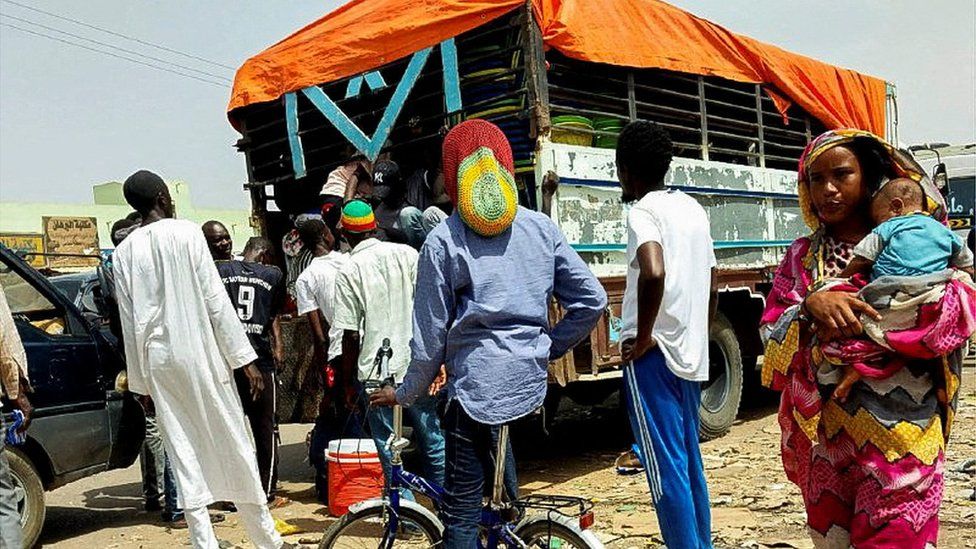
• Civilians fleeing the violence kept streaming into neighboring countries. Satellite images showed long bus convoys at the Egyptian border. The UN said at least 20,000 people have fled into Chad, 4,000 into South Sudan, 3,500 to Ethiopia and 3,000 to the Central African Republic.
Evacuations
•The United Kingdom promised to maintain support for Britons trapped in Sudan but said conditions had grown too dangerous to continue evacuation flights.
• A further 363 Indonesian citizens evacuated from Sudan arrived home on a second flight by Indonesia’s flag carrier, Garuda Indonesia, the Ministry of Foreign Affairs said.
•Two Chinese naval vessels transported 940 Chinese citizens and 231 foreigners to a port in Jeddah, Saudi Arabia, from Wednesday through Saturday, ministry spokesperson Tan Kefei said in a statement.
Kenya’s opposition leader Raila Odinga has proceeded to demand countrywide protests on Tuesday over the high cost of living, claiming the government’s inability and lack of good faith in having the negotiations to address its primary issues. Transfer Talk: United, Spurs, and Toon ready for Mad Tuesday.Ransfer conflict
Odinga together with member top leadership in the Azimio coalition have pledged to resume weekly protests despite the recent move by the government to hold bipartisan talks in parliament to address its main issues that include a reform towards the electoral body and opening of the election servers to ascertain vote validity.
The former premier Raila Odinga on Monday also cautioned the president against gagging the opposition during protests further accusing the police of being partisan when they exercise their rights through demos.
The government on the other hand warned the opposition against the Tuesday demos with President Ruto asking Azimio Coalition to avoid violence and destruction of property, urging the Raila-led team to embrace bipartisan talks in parliament.
President Ruto also reminded the opposition that it was his duty as the head of government to protect the rights and property of all Kenyans warning that he will not allow protests in the city centre.
Odinga has accused Ruto of stealing last year’s election and of failing to control surging cost of living that is hitting Kenyans hard.
They have been struggling to make ends meet in the face of high prices for basic goods and a plunging local currency. A record drought has left millions hungry.
The Brown family was powerless to stop deadly bushfires that tore through the Victorian countryside in 2008. It served as a wake-up call for them.
It was the third time in several years flames had come close to torching vineyards that five generations of their family had poured over a century of love and work into.
Warming days, declining rainfall and subsequent drought had snuck up on them, but this was a glaring warning sign they couldn’t ignore.
Climate change had become the family businesses’ “biggest threat”, Caroline Brown says.
It’s not a problem unique to the Browns – the family behind one of the oldest wine brands in Australia. The country is the world’s fifth-largest wine exporter and is home to a diverse array of wine regions most other countries could only dream of.
And while climate change is threatening winemakers worldwide, Australia’s industry is on the front lines.
A warming and drying trend
Ashley Ratcliff’s vineyards are already in one of the hottest and driest wine regions on the planet.
There was one year, he recalls, when their vineyards in South Australia’s Riverland region got only 90mm of rain – 10 times less than the annual average for the famous French wine region of Bordeaux.
“It was hot, everything was dirty and dusty,” he says. “And then on the other extreme, you get the really wet years where you never think it’s going to dry out.”
And it will only get worse.
Image caption,Ashley Ratcliff (left) and his family are already feeling the effects of climate change
In the next 20 years, the Riverland will be about 1.3 degrees hotter and rainfall will drop, according to modelling by Australian researchers.
With that will also come more extreme weather events, which are already a near constant in Australia.
The country is still recovering from years of record-breaking floods, but with an El Nino summer likely to bring dry and hot conditions to much of Australia, panic is growing ahead of the coming fire season.
What does that mean for wine?
While grapevines are described as “one of the most valuable weeds in the world”, capable of growing almost anywhere, the fruit itself is vulnerable to its environment.
And climate change is already messing with flavour and quality. Heat affects the speed at which the grapes ripen and with it, their sugar and acidity levels.
Already the growing season has shifted forward – by weeks in some places – which also impacts logistics and infrastructure.
Then there’s the impact of weather events driven by climate change, which at their worst can wipe out an entire season’s crop.
All of this means growing certain types of wine grapes in Australia – those suited to cooler climates like Sauvignon Blanc, Chardonnay and Pinot Noir – will only get harder.
Adaptation is key
The Ratcliffs strategically decided to plant “alternative” varieties more suited to warmer climes when they purchased their vineyards in 2003.
They deemed the risk posed by climate change as greater than that of selling lesser-known grapes. Two decades on, anyone not contemplating doing the same is kidding themselves, Mr Ratcliff says.
“There are all those fervent doomsday people. [But] I think there is an opportunity to rebrand and make the industry really exciting – to use climate change as a positive rather than a negative.”
Image caption,Fiano is primarily grown in southern Italy and Sicily
The average consumer won’t notice a big difference between the wines they love and the up-and-coming alternative varieties that Ricca Terra sells – like Montepulciano, Fiano and Nero D’Avola. The grapes are hardier and often more planet-friendly too, requiring less water.
The Brown family too is growing alternative varieties, including some they created with Australia’s science agency. But they have also looked south to keep current favourites alive.
With climate change in mind, they began snapping up vineyards in cooler locations like Tasmania – a growing trend across the industry.
“We realised that having all of our vineyards in one location in Victoria meant we had all our eggs in one basket,” Ms Brown says.
But Tahbilk Winery’s Hayley Purbrick is one grower who is staying put, despite “confronting” climate modelling.
“We have a philosophy that our responsibility is to create a climate where grapes can grow,” she says. “There’s so much you can do at a local level and sometimes when we think [about climate change on a global scale] we get a bit too wrapped up in the impossibility of what we can’t do.”
Image caption,Tahbilk’s vineyards have been in Ms Purbrick’s family since 1925
Her family’s vineyards in the Goulburn Valley incorporate as much shade and as many “natural coolants” as possible. They’re planted on the edge of wetlands and are surrounded by 160 hectares of trees.
They’ve also slashed their carbon emissions to net zero, through things like solar power, using heat reflective paint to limit the need for air conditioning, and reducing waste.
It’s working so far: “We’re lucky in the sense that we’re three degrees cooler than places even three kilometres away.”
But researcher Tom Remenyi says adaptation and mitigation can only take growers so far.
On the current trajectory, the whole of Australia is going to get warmer and dryer – and while a couple of degrees might not sound like a lot, it could be catastrophic, he says.
“A three-degree shift of the average increases the frequency of extremely hot days by about tenfold, if not more. If the whole globe warms more than three degrees, it’s highly likely that we will not be worried about growing wine.”
Optimism prevails
And that’s exactly what is weighing on growers like Caroline Brown. For her, the family business is inextricably entwined with the family history.
She spent her childhood getting into mischief with her cousins among the vineyards at Milawa. Now they all work in the business.
Image caption,Caroline Brown (left) with her dad Ross and sister Katherine
She desperately wants the same for the next generations.
“We’re very passionate about family,” she says. “Our great-grandfather started the business… we’d love one day for our great-grandchildren to be in the lucky positions we’re in.”
But she is well aware that climate change threatens that.
“If we don’t look after where we’re growing grapes then we’re not going to have any way to plant them in the future. So it is scary,” she says.
But there will be very few – if any – of the country’s favourite varieties it won’t be able to grow somewhere, she argues.
“You’ll always be able to grow Cabernet in Australia, but it just might not taste as good in the years to come.”
Regardless of how well or poorly Leicester’s fight for Premier League survival turns out, they will sell James Maddison this summer.
The Telegraph suggest the Foxes will accept bids north of £45million for their prized asset to help balance the club’s books following a tough financial year.
England midfielder Maddison, 26, has just one year left to run on his current deal at the King Power Stadium and is wanted by a host of clubs including Manchester United, Tottenhamand Newcastle.
Since joining Leicester in 2018, the Coventry native has established himself as one of the Premier League’s leading creative forces — racking up an impressive 20 direct goal contributions last term.
And despite injury issues and his side’s struggles for results, Maddison has still managed nine goals and seven assists in 25 top-flight outings this season.
With the player desperate to play Champions League football, Spurs could find themselves at a disadvantage in the race after yesterday’s late 4-3 loss at Anfield dented their top-four hopes.
However, their owner Daniel Levy has previously been reported as a big admirer of Maddison and is expected to go all out to lure him to North London.
Before any exit is agreed, Maddison has five games to try and keep his current club in the top flight, starting with a crunch home encounter against lowly Everton this evening.
In other news
Erling Haaland netted his 50th goal of the season at Fulham yesterday
Football Insider say Manchester City are ready to open talks with their Norwegian scoring sensation Erling Haaland, 22,over a new contract.
Crystal Palace talisman Wilfried Zaha, 30, is wanted by Arsenal, Chelsea, Juventus and Barcelona according to The Telegraph.
Italian media claim Manchester Unitedand Paris Saint-Germainboth had scouts present at Roma’s 1-1 draw with AC Milan on Saturday watching 25-year-old ex-Chelsea striker Tammy Abraham.
As France prepared for another day of large-scale protests, a number of states raised concerns about about police violence, particularly against protestors.
Attacks on migrants, racial profiling and religious intolerance were also raised during the Universal Periodic Review (UPR) – which all 193 UN countries must undergo every four years.
France must “take measures to, in a transparent manner, address allegations regarding excessive use of force by police and gendarmerie against protesters during demonstrations”, Sweden’s representative told the Human Rights Council in Geneva
Other countries raised similar concerns, including Denmark, Liechtenstein and Norway, but also Russia, Venezuela and Iran – three countries that themselves regularly face accusations of police violence and other serious and widespread human rights violations.
“We are concerned about the harsh and sometimes violent measures aimed at dispersing peaceful citizens,” Russia’s representative Kristina Sukacheva, told the council.
The criticism came as France braced for up to 1.5 million protesters to fill its streets to mark the May 1 labour day, even as President Emmanuel Macron tries to steer the country on from a divisive pension law that has sparked anger, pan-bashing and social unrest.
It echoed growing outcry in France of the police for disproportionate use of force in dealing with the crowds, amid the months of protests over the move to raise France’s pension age from 62 to 64.
A placard reading “64 years, it’s no” with a structure representing the face of the French President Emmanuel Macron with a pan on his head during a demonstration. Photo: AFP
During Monday’s review, several countries including the United States and China called on France to do more to battle racial and religious discrimination.
Hong Kong Politics Newsletter
US representative Kelly Billingsley said her country urged Paris to “expand efforts to counter crimes and threats of violence motivated by religious hatred such as antisemitism and anti-Muslim hate, including cases of harassment, vandalism, and assault”.
A demonstrator fires fireworks towards the police during the traditional May Day labour march. Photo: Reuters
The Chinese representative decried “a rise of racism and xenophobia” in France, urging it to “stop … measures that violate rights of migrants”.
Brazil and Japan decried “racial profiling by security forces”.
Sabrine Balim, a judicial adviser with the French interior ministry, told the council the use of force was “strictly supervised, controlled, and in the case of erroneous use, sanctioned”.
She also stressed that “France condemns any form of racial profiling”.
The second early-morning attack by Russia in three days has seen a barrage of missiles fired towards Ukrainian cities.
Pavlohrad, a logistics hub near the central city of Dnipro, was hit ahead of a much-anticipated counter-offensive by Ukraine.
The strike sparked a major fire, destroyed dozens of houses, and wounded 34 people.
Hours later, the air raid alert sounded across the country, with the capital Kyiv among the targets.
Across the country, the Ukrainian army said it shot down 15 of the 18 cruise missiles that had been fired.
The most significant damage was in Pavlohrad, a city in Ukrainian-held territory around 70 miles (110km) from the frontline. Pictures posted on social media showed a massive blaze.
One resident, Olha Lytvynenko, said she was getting dressed to leave their house when “both doors were smashed out by the explosion wave”.
“I ran outside and saw that the garage was destroyed. Everything was on fire, glass shards everywhere. Had we been outside, we would have been killed,” she said.
Ukraine’s Dnipropetrovsk military administration described it as a “tragic night and morning”, saying an industrial site had been hit.
Nineteen high-rise apartment blocks, 25 private houses, six schools and kindergartens and five shops were also damaged, it added.
Vladimir Rogov, a Russian-installed official, said the strike targeted railway infrastructure and fuel depots, in a message on Telegram with a thumbs-up gesture.
Hours later, at around 04:00 local time (02:00 GMT) the air raid alert sounded in Kyiv and lasted for about three hours.
The military administration said all missiles and drones directed at the capital were destroyed.
In the Kherson region – which is still partly controlled by Russia – Ukrainian regional authorities said Russia had carried out 39 shellings.
They came from ground-based weapons, as well as drones and planes, the authorities said, adding that one person was killed.
Recent days have seen an increase in attacks in Ukraine, with places away from the front lines being targeted. On Friday, 23 people were killed in the central city of Uman.
Ukraine says it is finishing plans for a long-awaited offensive against Russian forces, supported by Western-supplied weapons and military equipment.
Russia, meanwhile, is also preparing for a Ukrainian push, and has fortified its positions in occupied territory.
In the latest change at the country’s military leadership, Cl Gen Mikhail Mizintsev – the Russian deputy defence minister who oversaw armed forces logistics – has been sacked, after being appointed to the role only last September.
There have been longstanding complaints that front line troops are not getting sufficient military equipment, and suffer shortages of food and uniforms.
Meanwhile, a Ukrainian official on Monday said the army had ousted Russian forces from some positions in Bakhmut, an eastern city that has been under siege for months.
General Oleksandr Syrskyi, the commander of ground forces, said on Telegram the situation remained “quite difficult” – but “the enemy is unable to take control of the city”.
The World Health Organization’s regional director for the Eastern Mediterranean has warned about the effects of fighting on the healthcare infrastructure in the nation as the conflict in Sudan entered its third week.
“In numbers, approximately 61 percent of the medical institutes in Khartoum stopped working because of the direct military attacks, military occupation for those institutes and firing their staff. 23 percent of the hospitals in Khartoum work partially, and 16 percent work at full capacity, this is the health situation in Sudan, especially in the conflict areas”, announced Dr. Ahmed Al-Mandhari, regional director of the World Health Organization’s office for the Eastern Mediterranean.
The conflict has sparked an exodus of trained healthcare professionals from the country further aggravating the situation.
Estimates suggest that 24,000 women will give birth without maternal care in the coming weeks.
“Many working and trained minds in the healthcare sector are fleeing Sudan… There is a withdrawal of many NGOs and non-NGOs due to direct attacks. By all means, it’s a disaster”, concluded the regional director.
According to the UN even before the conflict,15.8 million people, about a third of the population were already in need of aid.
The World Food Programme of the United Nations said that it would immediately resume its operations in Sudan, which had been put on hold following the tragic loss of one of its team members.
“WFP is rapidly resuming our programs to provide the life-saving assistance that many so desperately need right now,” WFP executive director Cindy McCain wrote on Twitter on Monday.
The WFP said on April 16 it had temporarily halted all operations in Sudan after three of its employees were killed in clashes between the Sudanese army and the paramilitary Rapid Support Forces (RSF) a day earlier.
In a letter, the former president of the United States claimed that Donald Trump had asked for a mistrial in a civil case where the author E. Jean Carroll was accusing him of rape and defamation.
In a letter filed early Monday in Manhattan federal court, Trump’s lawyer Joe Tacopina cited several alleged errors by the judge, including that it mischaracterized parts of the case and interfered with his ability to defend Trump.
Everton’s status in the Premier League is in jeopardy due to their offensive difficulties.
The Merseysiders have failed to create or capitalise on chances consistently this season and now find themselves embroiled in a scrap for survival as a result.
The return of talismanic centre-forward Dominic Calvert-Lewin from a lengthy injury looks like a major boost ahead of a pivotal run-in, however.
Ahead of tonight’s six-pointer with fellow strugglers Leicester, we look at how Sean Dyche must make the most of the striker’s presence to help solve his side’s attacking issues.
Demanding more
After their recent goalless draw with Crystal Palace, Toffees centre-half James Tarkowski urged his attacking team-mates to step their game up.
The ex-Burnley ace said: “We were quite disappointed, we’re in a real battle and we need more.
“We had the opportunity to pick up three points. To grind it out with 10 men is nice but there’s way more to come from us.
“We defended well — we had conceded a few goals recently, so that’s a plus. But we need to do more and expect more from our forward players.
“We have some really talented boys but we need more from them.”
James Tarkowski wants to see more from his attacking team-mates
Cal for help
In a timley boost, Calvert-Lewin returned to the side against Crystal Palace for the first time since February.
As well as his injury woes, the 11-cap England international has endured a tough season on the pitch — scoring just one goal in 907 minutes this season and missing four of his five big chances.
However, he has added quality to Everton’s attack in other ways, creating five chances and completing 12 of his 19 attempted take-ons.
Calvert-Lewin’s runs into the box also drag defenders out of position, while his aerial prowess helps Everton get up the pitch.
So far, he has won an impressive 44 aerial duels this term and that suggests 26-year-old can be a focal point against the Foxes this evening.
Dominic Calvert-Lewin adds a new dimension to Everton’s attack
Dom’s not enough
While Calvert-Lewin’s return is a plus, Everton boss Dyche believes it will take far more than just his re-introduction to fix the Toffees’ attacking troubles.
And the no-nonsense tactician has also suggested that rushing the No9 back from knocks previously has done little to aid the cause.
Dyche, 51, said: “I haven’t got magic dust, so we have to work on a process that can create more so the players eventually take ownership of that.
“But it’s not just about one player. Dom is a very good player but it’s about others doing it as well. When we came in, his physical stats were nowhere near where they should have been in the past.
“It seems the previous process here was ‘get him fit, put him back in the team’. But we can’t keep doing that because it hasn’t worked.”
Dominic Calvert-Lewin’s impact has been limited by injuries this season
Supporting cast
Everton’s goalscoring issues may actually stem from problems with their supply line.
Alex Iwobi has registered six assists this season, while wingers Demarai Gray and Dwight McNeil have so far combined to create 13 big chances.
The latter duo have also completed a total of 71 crosses — an area in which Calvert-Lewin thrives — but all three will have to step up their efforts if the Toffees are to survive.
Fighting Foxes
Next, Everton clash with Dean Smith’s Leicester.
The Foxes find themselves with the opposite problem. They are able to find the back of the net regularly, scoring 44 goals, but struggle defensively.
They have managed only six clean sheets in the top tier this season, the last of which came against West Ham back in November.
Tonight’s trip therefore represents a golden opportunity for Everton to rediscover their goalscoring touch — if they do not, they may be headed for a first-ever Premier League relegation.
Roberto De Zerbi has conceded that it will be difficult for Brighton to attain the best footballing team in the world while Pep Guardiola remains in management.
Wolves manager Julen Lopetegui last week attributed that status to the swashbuckling Seagulls before his side suffered a humiliating 6-0 Premier League thrashing at the Amex Stadium.
De Zerbi graciously accepted Lopetegui’s compliment following Saturday’s thumping win but rates Manchester City boss Guardiola and former Leeds manager Marcelo Bielsa as the planet’s leading coaches in terms of style of play.
The Italian is steadfastly committed to his free-flowing vision of the game – insisting it would be easier for Brighton to replace him than for him to change tack – and acknowledges it is impossible without talented players.
“I have to say thanks, I respect a lot him, he’s a great manager,” De Zerbi said of the comments from former Spain, Real Madrid and Sevilla coach Lopetegui.
“I think we are playing well. (Yet) while Guardiola works in football, it’s difficult to play better than his team.
“But I think the credit is not for me, the credit is for my players. When we receive congratulations or these words, the credit is only of our players. I’m lucky to be the head coach, I’m lucky to work with them.
“For me, it’s an honour. I have a good confidence in myself. I think I am a good coach but to play this level of game without great players, I can’t.
“With Guardiola and Marcelo Bielsa, there never can be competition.
“In a game, yes. I would like to win against Guardiola, against Bielsa, but for me it will be never a competition with them because they are the biggest coaches in the world.”
Doubles from Deniz Undav, Pascal Gross and Danny Welbeck earned Brighton a club-record top-flight win against Lopetegui’s stunned visitors.
The victory moved eighth-placed Albion on to 52 points with seven games remaining in their quest to qualify for Europe.
Manchester United visit the south coast on Thursday evening – 11 days after beating the Seagulls on penalties in the FA Cup semi-final at Wembley.
Asked what he would like to see for the reminder of the campaign, De Zerbi said: “Playing like this (against Wolves), working to improve our mentality and play every game like it is the last game in our life.
“Because for us, for the club, for our fans it can be a historical result.”
De Zerbi also urged former Union Saint-Gilloise forward Undav to have greater self-belief following his first goals in English football.
“Undav is one of my biggest problems in Brighton and I want to explain why,” he said.
“He has big potential and he has big quality but it seems like he doesn’t believe in himself.
“And I would like to help him believe more in himself, because he has quality. He has all to be a player in the first XI, but he has to understand faster because the time in football flies.
“Undav is unique in our squad because he scores like a number nine and he has the quality to play like a number 10.”
First Republic‘s collapse on Monday was verified by the Federal Deposit Insurance Corporation (FDIC) in a statement.
Investment banking giant JP Morgan will now take on “all of the deposits and substantially all of the assets of First Republic Bank”.
First Republic becomes the third major US bank to collapse in recent months.
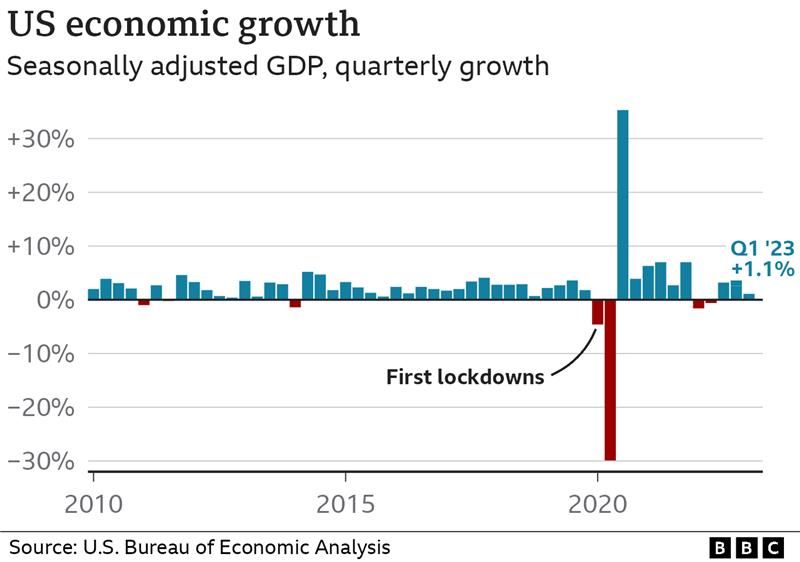
The San Francisco-based lender’s shares fell by more than 75% last week after it admitted that customers had withdrawn $100bn (£79.6bn) of deposits in March.
It follows on from the collapse of Silicon Valley Bank (SVB) in March, which prompted fears of a wider banking crisis.
That was swiftly followed by the demise of another US lender, Signature Bank.
A deposit flight from lenders has forced the Federal Reserve, the US central bank, to step in with emergency measures to stabilise financial markets.
In March, a group of America’s biggest banks stepped forward to pump $30bn into First Republic in a bid to stabilise the business, but the efforts proved futile.
Founded in 1985, First Republic is a mid-sized US lender, similar to SVB.
For years, it has catered to wealthy clients – whose money was at risk before the takeover was announced after a weekend of negotiations.
In the US, FDIC insures customer deposits up to $250,000.
When Silicon Valley Bank and Signature collapsed, the FDIC said it would guarantee all deposits to prevent a rush of people trying to get their money out, which is known as a run on a bank.
As part of the First Republic agreement, it will share losses on loans with the JP Morgan. The FDIC has estimated that its insurance fund would take a hit of about $13bn in the deal.
First Republic’s 84 offices across eight states will also reopen as branches of JPMorgan Chase.
In Europe, banking giant Credit Suisse was bought by rival UBS in March, in a deal orchestrated by Swiss authorities.
As central banks around the world raised interest rates aggressively to dampen the rate of price rises, otherwise known as inflation, some lenders have come under pressure.
Increased interest rates have hurt the values of the large portfolios of bonds bought by banks when rates were lower.
An elderly woman in Northern Sudan opened her door to and shared bread to displaced people at the Sudan border.
“The door of our house is open, we will welcome any guest who comes to us”: local resident Naamat Jabal Sayyid Hasan, 75, bakes bread in a mud hut as she does daily to offer to people fleeing war-torn Sudan passing through the northern town of Wadi Halfa, near the border with Egypt.
Her gesture comes amid warplanes bombing raids over Khartoum as fighting between Sudan’s army and paramilitaries entered a third week with the UN chief warning the country was falling apart.
“We are in Wadi Halfa, the people of Wadi Halfa, we welcome our guests (people fleeing the war-torn Sudan), we welcome our people, all people. The door is open, the schools, the mosques, the country will welcome any guest who comes to us. We only hope that God will stop the wars and that both (parties) will agree to solve the situation, to solve the country, to save our youth and to fix our situation and the situation of Muslims. The door of our house is open, we will welcome any guest who comes to us. Generosity exists and goodness exists.” Naamat Jabal Sayyid Hasan said.
Water and food have been in shortage in Khartoum according to humanitarian organisations say who on Sunday said operations are at a standstill as they look to resume work in some areas.
More than 500 people have been killed since battles erupted on April 15 between the forces of army chief Abdel Fattah al-Burhan and his former number two Mohamed Hamdan Daglo, who commands the paramilitary Rapid Support Forces (RSF).
As HMS Al Diriyah approached Sudan’s coast in the dead of night, Saudi officers turned on sweeping searchlights to ensure the warship’s safe entry into a harbor that was quickly developing into a major evacuation and humanitarian hub in the country’s escalating crisis.
Even at 2am two other hulking vessels were also anchored offshore at Port Sudan, its largest port, waiting their turn in this international rescue effort.
“I feel so relieved but also so sad to be part of this history,” Hassan Faraz from Pakistan told us, visibly shaken.
We reached the quayside in a Saudi tugboat at the end of a 10-hour journey through the night in HMS Al Diriyah from the Saudi port city of Jeddah. A small group of foreign journalists were given rare access to enter embattled Sudan, if only briefly.
“People will be speaking about these events for many years to come,” Faraz reflected, as a long queue formed on the wharf for passports to be checked against the Saudi manifest. This time, it was many young workers from South Asia who said they had waited here for three long days – after two hard weeks in this hellscape of war.
Another man from Pakistan, who said he had worked at a Sudanese foundry, spoke of having “seen so much, so many bomb blasts and firing”. Then he fell silent, staring into the sea, too traumatised to say more.
The fighting which raged in recent weeks, amidst very imperfect and partial ceasefires, is a pitched battle for power between the Sudanese army led by Gen Abdel Fattah al-Burhan and the Rapid Support Forces (RSF) paramilitary group headed by Gen Mohamed Hamdan Dagalo, widely known as Hemedti.
“Port Sudan has fared relatively better in this war,” my British-Sudanese colleague Mohanad Hashim explained. “Fighting only erupted here on 15 April, the first day, but now this port city is overwhelmed by people fleeing Khartoum and other places.
We had just sailed past the graceful Naval Club turned tented village for the displaced. Many people are now sleeping rough on the streets as they wait for a way out. Local hotels are swamped by people with passports from the world over, along with emergency consular services hastily established by embassies who have evacuated most of their staff from the capital.
Many fear there is no way out. Port Sudan is packed with people who have less lucky passports, including Yemenis, Syrians and Sudanese.
Some 3,000 Yemenis, mainly students, have been stuck for weeks in Port Sudan. “The Saudis are rescuing some Yemenis but they’re nervous about accepting large numbers,” admitted a security adviser trying to help them find a way back to their own war-torn country.
Image caption,Rasha, surrounded by her young children, has only one message: “Please tell the world to protect Sudan”
Many passengers arriving in the Saudi kingdom are provided with a short hotel stay. But it’s made clear that their own countries are expected to soon pick up the bill and arrange onward travel.
Mohanad Hashim scanned the wharf at Port Sudan, hoping to catch sight of any of his own Sudanese relatives who may be trying to make it out. The day before, at the King Faisal naval base in Jeddah where we began our journey, he suddenly found himself embracing a cousin who had made it to the Saudi city, along with two of his teenage children, after an 18-hour passage across the Red Sea.
For the Sudanese with foreign passports who make it to safe shores, the moment is bittersweet.
“Please, please help our family left in Sudan,” a pink-scarfed Rasha pleaded, one child sleeping on her shoulder, three more waving flowers handed out by Saudi soldiers. “Please tell the world to protect Sudan,” she implored us. Their family had been living near Sport City in Khartoum where gunfire erupted the morning of 15 April.
Image caption,Thousands have been fleeing from Port Sudan in recent days
Her eight-year-old daughter Leen, speaking fluent English with an American accent, recounted in excited detail how armed men burst into their home. “We had to all hide, all ten of us, in the back room,” she declared with youthful bravado. “I stayed calm. I didn’t cry because we couldn’t make any noise.”
“They were bad, bad guys,” her younger brother chimed in. Her father explained that it had been RSF forces. Their gunmen are blamed for much of the looting and violence.
This worsening and deeply worrying war between Sudan’s two most powerful men is fuelled not just by deep personal and political animosities, but also by the competing interests and influence of major powers.
Regional heavyweights, including Saudi Arabia and the United Arab Emirates have long bankrolled Hemedti, who grew ever richer by sending forces to fight for their side in the early years of their destructive war against Yemen’s Houthis.
But in recent years Riyadh has also drawn close to Gen Burhan and also has longstanding ties to Sudan’s army. The tangled political geography in a country with vast mineral wealth and agricultural potential also includes Egypt, Israel and Russia, including the mercenary Wagner group.
Image caption,Many evacuees from Sudan now face an uncertain future
But in this current crisis, where the United States and Britain and other would-be peacemakers are also weighing in, outside powers are now said to be speaking with one voice in trying to end this dangerous spiral and the enormous suffering of civilians.
Diplomats express gratitude for Saudi Arabia’s evacuation effort. So far, more than 5,000 people, of 100 nationalities, have made the Red Sea crossing on Saudi warships or private vessels chartered by the Saudi military. The biggest single operation on Saturday, which carried some 2,000 passengers, even included Iranians. Arch-rivals Riyadh and Tehran recently moved towards a cautious rapprochement, including reopening their embassies and consulates.
“It is our luck. We hope there will be peace between our countries,” 32-year-old civil engineer Nazli remarked as she disembarked in Jeddah with her engineer husband, who has also worked for years as an engineer in Sudan.
In Port Sudan on Sunday, as another packed tugboat sailed in choppy waters to a waiting Saudi warship, its passengers turned en masse to wave a final farewell to a country they regretted, with sadness, they may never return to.
Russia has attacked Ukraine with a barrage of missile and artillery fire, the second early-morning assault in three days.
One person died in Kherson region and 25 people – including three children – were injured in Dnipropetrovsk.
Ukraine’s armed forces said 15 of 18 missiles fired were intercepted by the country’s air defence.
One of the main targets was the city of Pavlohrad near Dnipro – a Russian-installed official said resources for a Ukrainian offensive were hit.
Writing on Telegram with a thumbs-up gesture, Vladimir Rogov said missiles targeted railway infrastructure and fuel depots.
Nineteen high-rise apartment blocks, 25 private houses, six schools and kindergartens and five shops were also damaged.
Pavlohrad is in Ukrainian-held territory, around 70 miles (110km) from the frontline.
Ukraine’s Dnipropetrovsk military administration described it as a “tragic night and morning”.
In Kyiv, the air raid alert sounded at around 04:00 local time (02:00 GMT) and lasted for about three hours. The military administration said all missiles and drones directed at the capital were destroyed.
In the Kherson region – which is still partly controlled by Russia – Ukrainian regional authorities said Russia had carried out 39 shellings.
They came from ground-based weapons, as well as drones and planes, the authorities said.
Recent days have seen an increase in attacks in Ukraine, with places away from the front lines being targeted. On Friday, 23 people were killed in the central city of Usman.
Ukraine says it is finishing plans for a long-awaited offensive against Russian forces, supported by Western-supplied weapons and military equipment.
Russia, meanwhile, is also preparing for a Ukrainian push, and has fortified its positions in occupied territory.
In the latest change at the country’s military leadership, Cl Gen Mikhail Mizintsev – the Russian deputy defence minister who oversaw armed forces logistics – has been sacked, after being appointed to the role only last September.
There have been longstanding complaints that front line troops are not getting sufficient military equipment, and suffer shortages of food and uniforms.
Meanwhile, a Ukrainian official on Monday said the army had ousted Russian forces from some positions in Bakhmut, an eastern city that has been under siege for months.
General Oleksandr Syrskyi, the commander of ground forces, said on Telegram the situation remained “quite difficult” – but “the enemy is unable to take control of the city”.
The sending of troops to Niger has received approval from the German parliament.
A tiny EU mission that was established in December with the goal of assisting the nation in improving its logistics and infrastructure would include 60 German soldiers.
The decision by parliament in Berlin reinforces the continued commitment to a German presence in the Sahel region despite the recent withdrawal from Mali.
Niger is one of the world’s poorest countries and faces the growing threat of violence spilling over from neighbouring Mali where Islamist militants have been gaining ground following the withdrawal of French and other European forces.
In the wake of Manchester City’s spirited 2-1 victory at Fulham, which saw them reclaim first place in the Premier League for the first time since February, Julian Alvarez said, “Every game is a final.”
City were pushed all the way by Marco Silva’s men who were resilient throughout, recovering well after conceding an early penalty which Erling Haaland converted.
Carlos Vinicius levelled the game briefly in the 15th minute, but Alvarez’ stunning strike from distance restored City’s advantage and they held on.
“This is where we wanted to be at the start of the season,” Alvarez told City’s website.
“Everyone’s put in really good work and now we’ve reached the top we need to defend it.
“Every game is a final for us and everyone’s going to pull together to make that final effort.”
The Argentinian, who has had to wait for opportunities in Pep Guardiola’s starting line-up, added: “It was really nice to score here, a really important goal at an important point of the match. Really nice to contribute.
“We knew it would never be easy coming here because of the pitch, because of how good Fulham are as a team. We were very happy to withstand the pressure and hold out.”
Fulham manager Silva was left to ponder his side’s small defensive lapses following a largely impressive performance against a team still in the hunt for the treble.
“We had a clear plan for the game. We wanted to go through the centre of the pitch, with our wingers a little more inside,” Silva said.
“If you try to block certain areas, they will look to expose others. The players, they stuck to their plan and did it well.
“The moment after we equalised the game was probably our best moment in the match.
“We cannot concede the goal in the way we did. A great strike from Alvarez, I know, but the way we build in certain areas we cannot lose the ball in that way and we gave them a chance in their counter-attack.
“In the second half we were really competitive again. We didn’t create many chances, this is true, but we didn’t give many things to them either.”
More people attempt to flee the country as the fighting between the Sudanese army and the paramilitary Rapid Support Forces enters its third week. Even after the parties decided to extend the cease-fire for a another three days, explosions and heavy weapons have been heard in the capital Khartoum.
Since the beginning of this violent part on the conflict more than 400 civilians have been killed. This is the information from the Sudanese Doctors Union.
In Khartoum, the five million inhabitants are deprived of running water and electricity, as well as, in many cases, internet and telephone services. Gasoline and cash are also becoming scarce.
Those who have the possibilities leave. According to the latest UN data over 50000 refugeese came to the neighbouring countries. Sudan’s partners organize the evacuation of foreigners, more of them are arriving to more secure places. But some might still blocked in the coutry.
Several tens of thousands of people have already crossed the borders, notably from Chad in the west and Egypt in the north. In total, 270,000 people could flee to Chad and South Sudan, according to the UN.
Several Western countries, including the United States, France, Canada and the United Kingdom, have continued to evacuate hundreds of people. China has announced that it has evacuated most of its nationals.
Dampening hopes for a democratic transition, the two generals together ousted civilians from power in a coup in 2021. Since then, they have not been able to agree on the integration of paramilitaries into the army before finally going to war on April 15.
Roberto De Zerbi acknowledges that he “made some mistakes” by not giving Billy Gilmour and Deniz Undav more first-team opportunity before to their pivotal roles in Brighton’s astounding 6-0 victory over Wolves.
The peripheral pair were handed just their third Premier League starts for the Seagulls during Saturday’s club-record top-flight victory and seized their chances with standout performances.
Former Chelsea midfielder Gilmour was hailed as the best player on the pitch by his manager, while German forward Undav bagged a brace to claim his first league goals in English football.
De Zerbi’s decision to begin with key trio Moises Caicedo, Alexis Mac Allister and Kaoru Mitoma on the bench raised some eyebrows but was quickly forgotten as his reshuffled starting XI delivered in devastating style.
“We are enduring a very tough period, we are playing so many games in a row and we are not used to playing so many games,” the Brighton boss said of his decision to rotate.
“I thought it was good and right to give Mac Allister, Mitoma and Caicedo one game to recover and for Billy Gilmour and Undav and the players who are playing less the possibility to show their quality.
“But the level of Mac Allister, Mitoma and Caicedo is high and to make competition is difficult for Gilmour.
“Gilmour, I think, was the best player on the pitch and I must admit possibly in the past I made some mistakes with him and with Undav because I didn’t give them many possibilities to play.
“But for me it’s difficult. To play without Mac Allister, Mitoma, Solly March, Moises Caicedo, it’s difficult.”
Brighton’s thumping success was the perfect response to a difficult week as Undav, Pascal Gross and Danny Welbeck claimed two goals apiece.
Albion suffered penalty shoot-out heartache at the hands of Manchester United in the FA Cup semi-final last Sunday and then had their European push dented by a 3-1 midweek loss at relegation-threatened Nottingham Forest.
De Zerbi now has a positive selection headache going into Thursday’s rematch with Erik ten Hag’s United in the league but could be without Joel Veltman after he was substituted in visible distress.
The Italian coach conceded he should have withdrawn Dutch defender Veltman earlier, particularly as fellow right-back Tariq Lamptey is sidelined.
“I hope it will be a small problem,” De Zerbi said of Veltman, who has recently been troubled by a hamstring issue.
“It’s important for us, especially in this moment, because we are playing without Lamptey.
“With or without Joel changes a lot of things because only Pascal Gross can play as a right-back.”
Wolves boss Julen Lopetegui urged his players to quickly move on from the Amex Stadium humiliation.
The former Real Madrid manager also feels it is important to put the current situation into perspective given his club were bottom of the table when he took over following the World Cup.
Wplves host local rivals Aston Villa next weekend, with work still to do to eradicate relegation concerns.
“All together we have to be ready for the next fight because we are in the middle of the battle,” said the Spaniard.
“We lost one battle but not the war, so we have to continue to achieve our aim in the end of the season.
“We are aware that we have not done anything yet and we need to get more points.
“We have to recover our energy and our confidence because we have to remember four months ago we were in the bottom.
“It’s a good thing to remember where we were. Now at least we have the possibility to be out of the relegation and that is a very big aim for us.”
Foreign nationals looking to flee the turmoil by sea now frequently go through Port Sudan on passenger ships bound for Jeddah, Saudi Arabia.
But despite the huge numbers trying to get out, there are some who are making their way back to the war torn country so they can be with their families.
One passenger said: “Death will find us anywhere, it is important we are with our families.”
Warring factions trying to seize control of the east African nation of Sudan have plunged the country into chaos with at least 400 dead and thousands displaced.
Water and food are in short supply.
One woman told how she had left her one-and-a-half year old child at home while she went on a pilgrimage to Mecca.
“I’m suffering a lot ’til I found a ticket,” she said.
At Port Sudan hundreds of displaced people from all over the world were waiting to try and leave on a ferry.
A woman, who was also displaced by the Syrian war, said “We are suffering. Even in Syria we didn’t see war like this.”
The violence is a result of a struggle for power between two powerful generals and their armies: Gen. Abdel Fattah Burhan, who leads the Sudanese armed forces, and Gen. Mohammed Hamdan Dagalo, the head of a paramilitary group known as the Rapid Support Forces.
In the village of Karma in northern Burkina Faso, on April 20, men in army fatigues killed 136 civilians, including 50 women and 21 children, according to a Burkinabe human rights organization.
“Our teams have documented and recorded 136 lifeless bodies in Karma, including 50 women and 21 children, among them babies under 30 days old killed on their mothers’ backs,” the Collective Against Impunity and Stigmatization of Communities (CISC) said in a statement sent to AFP on Friday.
The official death toll, announced on Sunday by the public prosecutor in Ouahigouya, capital of the northern region, was around sixty, while survivors and residents of Karma put it at “more than a hundred”.
Other nearby villages were also targeted on April 20 by these men in military garb, killing six in Dinguiri, two in Ménè, and three on the road between Ouahigouya and Barga, according to CISC.
In Karma, “they grouped civilians by the dozens and by neighborhoods, taking care to assign armed men to each grouping, with the slogan: ‘Kill everyone,’” said CISC President Daouda Diallo, winner of the 2022 Martin Ennals Prize, the “Nobel Prize” for human rights.
The CISC recalls that these massacres came after a jihadist attack on April 15, during which six soldiers and at least 34 army auxiliaries were killed near a village in the same region.
“Survivors’ testimonies indicate that the attackers accused the inhabitants of the village of Karma of harboring members of terrorist groups,” Diallo said.
The CISC “strongly and vehemently condemns this latest massacre,” recalling a series of deaths attributed to soldiers and auxiliaries in the fight against armed jihadist groups.
It demands a “full and impartial judicial inquiry into these horrific crimes against civilians, in order to bring all those responsible and the instigators to justice”, considering that “impunity opens the way to all possible abuses, ranging from settling of scores to large-scale massacres”.
On Thursday, the government “strongly” condemned “these despicable and barbaric acts” and said it was “following very closely the progress of the investigation”, opened by the Ouahigouya prosecutor in order to “clarify” the facts and “question all those involved”.
Burkina Faso, the scene of two military coups in 2022, has been caught since 2015 in a spiral of jihadist violence that began in Mali and Niger a few years earlier and has spread beyond their borders.
The violence has left more than 10,000 civilians and soldiers dead over the past seven years, according to NGOs, and some two million people internally displaced.
A top city official, in Ludhiana in the northern Indian state of Punjab has disclosed that a gas leak has resulted in at least 11 deaths and 11 hospital admissions.
A team from the National Disaster Response Force (NDRF) was at the site on Sunday, according to a video feed shared by the ANI news agency. Police were seen patrolling while wearing masks and asking locals to keep out of an area that had been cordoned off, the video showed.
Bhagwant Mann, Punjab’s chief minister, expressed sadness over the deadly leak.
“The incident of gas leak in the factory in Giaspura area of Ludhiana is very sad,” Mann said in a tweet. “Police, government and NDRF teams are present at the spot. All possible help is being provided.”
Ludhiana Deputy Commissioner Surabhi Malik told reporters the deaths were a likely result of “gas contamination”.
“It is quite likely that maybe some chemical reacted with methane in manholes,” she was quoted as saying by ANI. “… All of this is being verified. NDRF is retrieving samples.”
India was the site of one of the worst industrial disasters in history when gas leaked from a pesticide plant in the central city of Bhopal in 1984. About 3,500 people, mainly locals living in shanties around the Union Carbide plant, died in the days that followed and thousands more in the following years. People still suffer its after-effects now.
In 2020, a gas leak near a chemical plant in the southeastern state of Andhra Pradesh killed at 11 people. At least 800 were taken to hospital with breathing difficulties and irritated skin.
At least 200 pupils were admitted to hospital after a gas leak in 2017 near their school in southern New Delhi.
A dispute about the man practicing shooting with a semi-automatic weapon nearby led to the death of five of the man’s neighbors according to the police in Texas.
The victims were all from Honduras, and included an eight-year-old child.
The shooting happened on Friday night in the small town of Cleveland, San Jacinto County, north of Houston.
Among those killed were two women who were found lying on top of two surviving children, according to local Sheriff Greg Capers.
“In my opinion, they were actually trying to take care of the babies and keep them alive,” Sheriff Capers told a local station KTRK. He added that all the victims had been shot “from the neck up, almost execution style, basically in the head”.
The suspect, believed to be Mexican, has been named as Francisco Oropez, 38. He is still on the run and thought to be armed. He has been charged with five counts of murder.
Police are using dogs and a drone in the hunt for the suspect, who is believed to be hiding in a nearby forest.
The sheriff’s office said it received a call about “harassment” at about 23:30 local time on Friday (04:30 GMT Saturday).
Investigators believe that the victims had asked Mr Oropez, who it is thought had been drinking, to stop shooting as they were trying to put a baby to sleep.
According to Sheriff Capers, the man replied: “I’ll shoot out in my front yard, do what I want to in my own residence.”
After both parties returned to their houses, the gunman “topped off his magazine, and walked down his driveway… into the people’s house and started shooting,” Sheriff Capers said.
A total of 10 people were at the property at the time. The adults were declared dead at the scene, and the eight-year-old died at a hospital.
The gunman is believed to have used an AR-15 semi-automatic rifle.
Neighbour Veronica Pineda said she heard the shooting, but that the sound of gunfire was a regular occurrence: “It’s normal, in this neighbourhood they’re always shooting. They’re always calling the cops and there’s nothing done for that.
“So yesterday I heard the shooting but I thought it was, like, a normal day. I never thought this was happening.”
The incident came days after nine people were injured at a shooting during a teenagers’ party in western Texas.
Two weeks ago four young people were shot dead during a 16th birthday party in Alabama.
Firearm incidents are the top cause of death for US children and teenagers, according to the US Centers for Disease Control and Prevention.
Lamine Yamal, a 15-year-old winger, has became the youngest player in Barcelona history as they defeated Real Betis with 10 men to extend their lead atop the La Liga standings to 11 points.
The academy product, who turns 16 in July, was brought on in the 84th minute to replace Gavi.
At 15 years and 290 days, Yamal is the fifth-youngest player to appear in the competition.
Goals from Andreas Christensen, Robert Lewandowski, Raphinha and a Guido Rodríguez own goal secured the win.
‘Dreams of Messi & Barcelona clash with reality’ – Balague
Mallorca youngster Luka Romero is the youngest player to feature in La Liga when he came on against Real Madrid in 2020, aged 15 years and 219 days.
Yamal, who Barca boss Xavi Hernandez called “fearless”, was included in the squad for the first time against Atletico Madrid last Sunday.
Betis winger Joaquin, 41, who also featured at the Nou Camp on Saturday, had already made 215 La Liga appearances when Yamal was born.
Barca took the lead when Christensen got on the end of Raphinha’s inswinging cross to head home his first goal for the club from six yards out.
Betis substitute Edgar Gonzalez, who had been brought on for the injured Luiz Felipe, was sent off in the 33rd minute after collecting two yellow cards in quick succession.
Lewandowski scored from a Jules Kounde cross three minutes later to increase the hosts’ lead.
Raphinha added a third before half-time, following a lengthy video assistant referee check after the goal was initially ruled out for offside.
Then in the 82nd minute, Ansu Fati’s cross was turned into his own net by Betis defender Rodríguez to seal the result.
The latest truce was due to end late on Sunday April 30, 2023 but the army declared that it is attacking the city from all sides with airstrikes and powerful artillery in order to wipe out its paramilitary competitors
Millions remain trapped in the capital, where food is running short.
Foreign countries have been evacuating their nationals amid the chaos.
More than 500 people have been reported killed since fighting erupted on April 15 between the regular army and the Rapid Support Forces (RSF). But the number of dead and injured may be much higher.
Army commander Gen Abdel Fattah al-Burhan and RSF chief Gen Mohamed Hamdan Dagalo, better known as Hemedti, are vying for power – and disagree in particular about plans to include the RSF into the army.
Thursday night’s agreement to extend an uneasy ceasefire followed intensive diplomatic efforts by neighbouring countries, the US, UK and UN. But the 72-hour extension has not held.
By Saturday evening, heavy fighting had resumed in Khartoum. The army said it had conducted operations against RSF troops north of the city centre.
Eyewitnesses told Reuters news agency that army drones had targeted RSF position near a major oil refinery.
“We woke up once again to the sound of fighter jets and anti-aircraft weapons blasting all over our neighbourhood,” one resident told AFP news agency on Sunday.
Image caption,Tens of thousands of people are attempting to flee Sudan
BBC diplomatic correspondent Paul Adams, who is monitoring events from Nairobi in Kenya, says the army will find it difficult to expel the RSF from Khartoum.
For all the army’s superior firepower, the RSF are highly mobile and more suited to urban warfare, our correspondent adds.
On Saturday the UK government has ended its evacuation operation. The Foreign Office said the last flight left Khartoum at 22:00 local time (20:00 GMT), and in total nearly 1,900 people were flown out.
A US-organised convoy has reached Port Sudan to evacuate more US citizens by ship to Jeddah in Saudi Arabia. It said hundreds of Americans had already left, in addition to the diplomats evacuated by air a week ago.
Also on Saturday Sudanese former Prime Minister Abdalla Hamdok warned that the conflict could become worse than those in Syria and Libya. Those wars have led to hundreds of thousands of deaths and caused instability in the wider regions.
Speaking in Nairobi, he said: “I think it will be a nightmare for the world. This is not a war between an army and small rebellion. It is almost like two armies.”
Meanwhile, there are chaotic scenes in Port Sudan where people are desperate to board ships, some of which are heading to Saudi Arabia and Yemen.
Image caption,Some 1,888 British nationals have been rescued from Sudan, the government said
Local authorities have made claims that a drone attack in Crimea under Russian authority started a large fire at an oil store.
Social-media footage showed flames billowing from the site in Sevastopol, Crimea’s main city, early on Saturday.
The fire was later put out and no-one was hurt, the Moscow-appointed regional governor said.
On Friday Russia launched a wave of air strikes in cities across Ukraine, killing at least 25 people. It was the first such attack in months.
The Crimean peninsula, which was annexed by Russia in 2014, is home to the main naval base for Moscow’s Black Sea Fleet.
“According to preliminary information, [the fire] was caused by a drone strike,” Governor Mikhail Razvozhayev said on the messaging app Telegram.
It comes five days after Russian officials said they had fended off a drone attack by the Ukrainian military in the same area. Crimea has come under repeated attacks since the start of the war in Ukraine.
Friday’s Russian barrage included a strike on a block of flats that killed 23 people – including four children – in the central Ukrainian city of Uman.
And a woman and her three-year-old daughter were killed in the city of Dnipro.
Image caption,Rescuers in Uman pulled casualties from the rubble
Kyiv was also targeted for the first time in 51 days. There were no reports of casualties in the capital.
Twenty-one out of 23 missiles and two drones were shot down by Ukraine’s air defence system, officials said.
The Russian defence ministry said its military had targeted Ukrainian army reserve units. Moscow has previously said it does not deliberately target civilians, but thousands have been injured and killed across Ukraine since Russia’s invasion.
Ukrainian President Volodymyr Zelensky said the attacks showed further international action needed to be taken against Russia.
“Evil can be stopped by weapons… And it can be stopped by sanctions – global sanctions must be enhanced,” he said in a tweet on Friday.
The attacks come as Ukrainian forces say they are ready to launch a military offensive with new equipment supplied by Western allies.
Russia has struggled to make headway in a winter offensive, including a 10-month battle for control of the strategically important city of Bakhmut.
An individual who fathered at least 550 children in the Netherlands and other nations and deceived prospective parents about the number of children he contributed to conception has been prohibited by a Dutch court from contributing any more of his sperm.
A judge at The Hague District Court ordered the halt in an injunction on Friday brought by the mother of a child conceived with the donor’s sperm and a foundation representing other parents.
The mother, identified by the foundation only as Eva, welcomed the court’s decision.
“I hope that this ruling leads to a ban on mass donation and spreads like an oil slick to other countries. We must stand hand in hand around our children and protect them against this injustice,” Eva said in a statement.
The court noted under Dutch guidelines, sperm donors are allowed to produce a maximum of 25 children with 12 mothers, and the donor lied to prospective parents about his donation history.
The donor, identified as Jonathan M under Dutch privacy guidelines, provided sperm to several Dutch fertility clinics and to a clinic in Denmark, as well as to many other people he connected with through advertisements and online forums, the court said.
The donor’s lawyer said in a court hearing he wanted to help parents who would otherwise be unable to conceive.
Video Duration 47 minutes 45 secondsSperm Smugglers – Al Jazeera World
‘Negative psychosocial consequences’
The judge who heard the civil case said the donor “deliberately lied about this in order to persuade the parents to take him as a donor”.
Sign up for Al Jazeera
Week in the Middle East
Catch up on our coverage of the region, all in one place.
“All these parents are now confronted with the fact that the children in their family are part of a huge kinship network, with hundreds of half-siblings, which they did not choose,” the court said, adding this “could possibly have negative psychosocial consequences for the children”.
The case was about “conflicting fundamental rights. On the one hand, the right to respect the privacy of the parents and the donor children … and on the other hand the same right of the donor”, it said.
The court ruled “the interests of the donor children and their parents outweigh the interest of the donor in continuing to donate sperm to new prospective parents”.
Jonathan M was ordered to immediately halt all sperm donations and pay 100,000 euros ($110,000) per case if he breaches the ban.
Lawyer Mark de Hek called the ruling “a clear signal and, as far as I am concerned, a final warning to other mass donors”.
The case is the latest in a series of fertility scandals to hit the Netherlands.
In 2020, a deceased gynaecologist was accused of fathering at least 17 children with women thinking they were receiving sperm from anonymous donors.
The year before, it emerged a Rotterdam doctor fathered at least 49 children while inseminating women seeking treatment.
An ex-president, a well-known Hollywood director, and a rock legend walked into a restaurant.
It sounds like the setup for a joke, but the staff at Barcelona’s Amar restaurant saw exactly that on Thursday night
Employees were left in shock when 44th US president Barack Obama, director Steven Spielberg and musician Bruce Springsteen walked in unannounced.
Chef Rafa Zafra said Amar had been suggested by Spanish-American celebrity restaurateur José Andrés.
“They came recommended by José Andrés, who has a very close relationship with Obama,” Mr Zafra told Spanish radio.
Mr Zafra said José Andrés told him that the booking was important. It was then that he realised that Mr Obama and his wife Michelle were in the city to attend a Springsteen concert, as was Spielberg.
Staff member Pol Perello uploaded a photo of them posing with wait staff and chefs to Instagram with the comment: “The pleasure this job brings you!”
“We gave them oysters, shellfish and fish from Roses, my classic – the caviar bikini – a little bit of everything… and super grateful!” Mr Zafra said.
Accompanied by security detail, the Obamas and Spielberg used Friday to visit some of Barcelona’s most famous sights, such as the Sagrada Familia basilica and the Picasso museum.
Springsteen’s E Street band began their European leg of their tour on Friday at the city’s Olympic Stadium.
The former president first met the rock legend on the presidential campaign trail in 2008. In 2021, they hosted the podcast Renegades: Born in the USA.
More than 1,000 people have been flown on to the UK out of the more than 1,650 people who have now been evacuated from Khartoum.
The operation here in Cyprus will continue until tomorrow afternoon.
Sources at Larnaca Airport have told me that several RAF flights are due in here from Khartoum this afternoon and into the early hours of tomorrow morning.
The evacuees will then be put on flights back to the UK.
Despite a ceasefire, the paramilitary Rapid Support Forces (RSF) has made claims that their enemy, the regular Sudanese military, has repeatedly airstriked their bases throughout Khartoum.
The RSF said these targeted residential areas of the capital.
In a statement issued last night, seen by BBC Monitoring, the group claimed it controlled the majority of Khartoum. We’ve not been able to verify this.
Some of the latest clashes between the army and RSF have been happening around the army headquarters and the Republican Palace in Khartoum – and some parts of the Khartoum’s twin city of Omdurman.
However, other parts of Khartoum and Khartoum Bahri, to the north, remain largely calm.
The rival factions officially agreed to extend a ceasefire for another 72 hours on Thursday night.
The capital city of Sudan draws university students from all around Africa, Asia, and beyond. Nigeria has one of the largest student populations.
But many Nigerians say they’re still waiting to be rescued from Khartoum, despite seeing their friends from other nations being safely removed.
“There is no presence of the embassy of Nigeria at the International University of Africa. There is no communication. There are only Nigerian students [left there] right now,” Abubakar Sadiq Ibrahim told the Reuters news agency.
Other Nigerian students have made similar complaints to the BBC. Nigeria has asked for a safe corridor to evacuate 5,500 citizens, most of them students, Reuters reports.
The fighting broke out when Ibrahim was just two weeks away from completing his degree.
“It’s a very sad and unpleasant experience,” he said. He cited inflation, food shortages, and walks of 3km [1.8 miles] to buy supplies. “All the shops are closed. There is no movement, there is nothing.”
Pope Francis has expressed gratitude to Hungarians for accepting Ukrainian refugees during the war and encouraged them to aid anyone in need.
On his second day of a visit to Hungary, the pontiff met refugees at a church in Budapest and praised Hungary’s Catholic Church for providing aid to people fleeing war.
He also urged Europe to find again its founding values of peaceful unity as he denounced the “adolescent belligerence” of Russia’s war in neighbouring Ukraine.
Hungary’s nationalist government has implemented firm anti immigration policies and refused to accept many asylum seekers trying to enter the country through its southern border, leading to prolonged legal disputes with the European Union.
However, some 2.5 million Ukrainians fleeing war in their country have found open doors in the country.
Around 35,000 of the refugees remain in Hungary and have registered for temporary protection there, according to the UN.
Finland has returned two fragments of sacred historical stones that were carried away by Finnish missionaries during the colonial period.
The stones were taken from Ondonga, a traditional kingdom of the Ovambo people, in what is today northern Namibia.
The fragments were handed over on Thursday by Finnish Deputy Minister for Foreign Affairs Jukka Salovaara to Namibia’s Education, Arts, and Culture Minister Anna Nghipondoka.
They will be kept at the National Museum of Namibia and will eventually be returned to the Ondonga traditional community, local media reported.
Visiting Finnish President Sauli Niinistö said the so-called “Ondonga Power Stone” is not only valuable to the Ondonga community but is also part of the community’s identity and heritage.
President Hage Geingob said that the return of the stone should serve as an example to all those who “stole things from Africa”.
Nine extremely elderly riflemen who served France in Algeria and Indochina arrived in Senegal on Friday to gently end their lives after a protracted legal battle with the French government to get their “sacrifices” recognized.
When the first of them walked through the doors of the plane at Blaise Diagne airport, installed in his wheelchair, white beard, dressed in a traditional brown boubou, families and veterans have launched the first applause.
It was time for a reunion. Some smiled, others cried, all marked by the emotion of returning to their country of origin in the twilight of their lives.
This moment was made possible thanks to a derogatory measure decided by the French government, which allows them to live permanently in Senegal without losing their minimum old-age allowance of 950 euros per month.
“I am very happy to be back with my family, my brothers, my children,” said 91-year-old Oumar Diémé on his arrival.
A few minutes before, his brother Sidi introduced him to AFP as “the patriarch”, “the baobab of the family”, who was sorely missed. His relatives prepared a mafé, his favourite dish, for his return.
“The measure may have come a little late, but today the prevailing feeling is one of joy,” he said, saying his only regret is that his eldest child “will not be able to benefit from the same medical care as in France.
The nine soldiers were then received at the presidential palace by President Macky Sall, who decorated them.
– Injustice repaired” –
“Today we celebrate an injustice repaired. You can finally live at home, with your families and receive your full pensions,” said President Sall.
“This ceremony is an exercise in memory in recognition of the sacrifices. It is also a reminder of the long series of injustices against the infantrymen who have been in all the battles,” he added.
“All the Senegalese infantrymen have given their full satisfaction to France. It is a debt that France has paid us,” reacted Yoro Diao, their spokesman.
All elegant in impeccable suits or traditional tunics, wearing their military medals with poise, these Senegalese riflemen had left at dawn their 15-square-metre studios in a hostel in Bondy, near Paris, where they had lived for years.
“Long live our fathers!” and “Long live France and Senegal!” were the words heard during the moving moments of group photos and exchanges with the French Secretary of State for Veterans and Remembrance, Patricia Mirallès, before their departure. “We will miss you! but the family is waiting for you there…”, the Secretary of State told them, moved.
“I am very happy to return to Senegal and to continue to benefit from the rights I had in France; for the past 25 or 20 years, it was hard for our relatives to commute, and for our age too.
N’Dongo Dieng, 87, wearing his military medals on a mustard tunic, told AFP.
This comes “late”, because “many comrades died before benefiting from this measure…”, lamented the veteran.
Exceptional aid also finances their removal, their return flight and their resettlement.
– Relief” –
“I am extremely moved,” Aïssata Seck, president of the Association for the Memory and History of Senegalese Tirailleurs, told AFP before taking the plane.
The granddaughter of a rifleman, she was the linchpin who for 10 years worked for their recognition, until the decision of French President Emmanuel Macron in early 2023 to announce this derogatory measure for their allowance.
“The fact that they can finally return home is a real relief and the culmination of a very long struggle” for them to have “a dignified end to their lives”, according to Ms Seck, who believes that the French state “did what was necessary”.
For Claire Miot, a lecturer in history at the Institute of Political Studies in Aix-en-Provence (France), “it is a recognition of their sacrifices in the service of France that is extremely late because these are men who are 90 years old.
The French “Senegalese Riflemen” corps, created under the Second Empire (1852-1870) and disbanded in the 1960s, brought together soldiers from the former African colonies. The term came to designate all African soldiers who fought under the French flag.
After Friday’s departures, there are still 28 Tirailleurs in France – all of Senegalese origin -, many of whom are likely to return permanently soon.
Yoro Diao, 95, who volunteered for the French army as part of his family’s tradition, is wearing the Legion of Honour and wants to “rest” in Kaolack, in central Senegal.
“It’s a very important day for us, and memorable,” he told AFP before boarding the plane. “Our children and grandchildren will always remember… that grandpa came back from France that day very happy.
A seasoned member of Kenya’s opposition, Raila Odinga, drove a cavalcade of vehicles through Nairobi’s streets on Friday, shortly after his arrival from Dubai.
In a festive atmosphere, the large crowd of supporters followed his convoy through the streets of the city as it made its way to a rally in the district of Kibera.
It was the second gathering of his coalition Azimio la Umoja-One Kenya party since Odinga and President William Ruto agreed to bipartisan talks to iron out their differences.
Odinga has accused Ruto of stealing last year’s election and of failing to control surging cost of living that is hitting Kenyans hard.
They have been struggling to make ends meet in the face of high prices for basic goods and a plunging local currency. A record drought has left millions hungry.
Friday’s rally comes before mass action was set to resume in Nairobi on Tuesday, three weeks after the party called off weekly demonstrations against Ruto while the two men held discussions.
Aston Villa and Manchester United will compete for a top-four berth on Sunday, according to Unai Emery, both in “different moments” than when they first faced off.
Emery celebrated his first game as Villa manager in November with a memorable 3-1 Premier League home win over Erik ten Hag’s side.
United exacted revenge four days later with a Carabao Cup victory at Old Trafford, the Red Devils going on to win the competition and lift their first trophy for six years.
The two sides meet again nearly six months on with Emery having transformed Villa from relegation candidates to Champions League outsiders, six points behind fourth-placed United who have two games in hand on their Midlands rivals.
Emery said: “For us, it’s a very good challenge, it will be a very different match on Sunday to when we played at home when I arrived here.
“Very different match to when we played in the Carabao Cup there and lost 4-2.
Vladimir Putin has signed a decree formally increasing the maximum sentence Russians found guilty of treason will must face, being a life sentences.
The move, which is part of a drive to suppress dissent since the start of the war in Ukraine, was posted on the Kremlin website and increases the penalties for treason, terrorism, and aiding the work of international organisations.
Lawmakers had already voted to boost the longest sentences for treason to life, up from 20 years.
Legislators also approved raising the maximum sentence for carrying out “a terrorist act” – defined as a deed which endangered lives and was aimed at destabilising Russia – to 20 years, from 15 years at present.
Those found guilty of sabotage could also go to jail for 20 years, up from 15, while people convicted of “international terrorism” could be sentenced to life, up from 12 years.
The decree did not explain what “international terrorism” is.
Mr Putin signed the new decree at a time when rights groups say authorities are stepping up efforts to quieten the few voices of opposition that remain.
But Russia says such laws are required to protect the country from infiltration by Ukraine and Western intelligence agencies.
Michael Beale has urged his Rangers players to seize the opportunity against Celtic at Hampden Park on Sunday, in order to win the Scottish Cup semi-final match
With the Hoops 13 points clear of their Old Firm rivals at the top of the cinch Premiership, and with the ViaPlay Cup already in the trophy room after beating the Gers in the final, the Light Blues have only one chance left to win silverware this season.
To do so, they will have to beat Celtic for the first time in six games, indeed, since they ousted Ange Postecoglou’s side out of the Scottish Cup at the same stage last season before going on to beat Hearts in the final.
Gers boss Beale said of his players: “I don’t think they have to prove anything to me, maybe to themselves. It’s a big opportunity as a player.
💬 Michael Beale insists his side will need to bring the best version of themselves in Sunday’s @ScottishCup semi-final at Hampden.
“We’re at a club where there’s an opportunity to win.
“And in your career as a player, whatever age you are, there’s only a certain amount of years that you have an opportunity to win, and depending on whether you’re the youngest player, the oldest player in the squad, you’ve got more, you’ve got less.
“I think this weekend’s a big opportunity for our team to win a semi-final and take us to the final.
“After that, you’d have to go and perform again there as well.
“They don’t have to prove anything to me, maybe themselves and maybe to the fans. That will to win, that’s what they signed up for, coming here.
“This season we’re going to finish second in the league, we’re runners-up in one competition, we want to go and win the cup, that’s clear.
“It will be bitterly disappointing if we don’t but we have to keep moving forward.”
As the season approaches its end, the former QPR boss, who took over from Giovanni van Bronckhorst last November, is “super-positive” about the future.
He said: “We’ve won a lot of football games. I think in 23 games we’ve won 19 and until a couple of weeks ago their record looked strong.
“We’ve had a couple of defeats that have been hard to take the last couple of weeks.
“I think progress has been made in terms of we’re much clearer now in the decisions that we need to make this summer.
“Those decisions have obviously clearly been on-going in the background. We know where we need to recruit and the areas we need to improve.
“Obviously, this will be the fourth game (with him in charge) against the team that’s in front of you and you have a good idea of what you need, maybe to overcome them.
“I think progress has been made, there’s a lot of harmony behind the scenes.
“There’s obviously been change within the club structurally as well and that’s ongoing but I’m super-positive about the future.”
Kevin De Bruyne, in the opinion of Pep Guardiola, is now benefiting from his time on the Manchester City bench.
The Belgium playmaker was outstanding as treble-chasing City overpowered Premier League leaders Arsenal 4-1 to seize complete control of the title race on Wednesday.
De Bruyne scored two goals and set up another, underlining his return to form just as their season enters its most crucial phase.
Only last month City manager Guardiola openly criticised the performances of the player, who found himself among the substitutes four times in the space of nine Premier League games.
Speaking ahead of Sunday’s trip to Fulham, Guardiola said: “He is the same player as a month ago – same personality, same exceptional player, whether I decide he doesn’t play or if he plays.
“But we cannot demand every player – during a career of seven, eight, nine, 10 years – play every three days for 11 months, then rest three weeks, then come back for pre-season and go to Asia.
“Sometimes sitting and not playing is good. It is not to punish. Sometimes you have to see it and realise, to refresh your mind a little bit, let him notice that his standards are so, so high.
“In three days you have another game, another opportunity and you can show how happy you are playing football.”
The statistics suggest the rest did De Bruyne good. The issue is relative of course, as even at the time of Guardiola’s criticisms, the inspirational De Bruyne had registered 17 assists in his first 34 appearances of the season.
Yet such are the high standards the 31-year-old has set in the past that he clearly had another level.
In his eight appearances since he has notched another seven assists and weighed in with four goals.
His figures, though, are eclipsed by those of the remarkable Erling Haaland, with whom he has struck up a formidable partnership.
The Norwegian took his overall goal tally for the campaign to a remarkable 49 by scoring City’s fourth in Wednesday’s win.
He has also now struck 33 in the Premier League, just one short of the record 34 held jointly by Andy Cole and Alan Shearer. He also has eight assists in all competitions.
Guardiola said: “Kevin is a master of the assist with or without Erling. Erling scores goals all the time with or without Kevin but, together, they are so dangerous.”
A midfielder for West Ham and England, Declan Rice, has been the target for Arsenal.
Even though the Gunners are still in the thick of the Premier League title race, they are already preparing for the following season by strengthening their midfield.
The 24-year-old has been excellent for the Hammers recently, only cementing himself further as one of Europe’s finest operators in his position.
West Ham prepare to face Crystal Palace this afternoon with the future of their captain firmly in the balance.
Lacking depth
Mikel Arteta’s squad have proven their quality this season — but it is clearly a group lacking depth in central midfield.
Granit Xhaka was absent for the 3-3 draw with Southampton and Thomas Partey appeared to struggle without the Switzerland international next to him.
Young Belgian Albert Sambi Lokonga was signed to be their understudy but he was loaned out to Crystal Palace in January after struggling to make an impression, only playing 196 minutes in the Premier League for the Gunners this term.
Adding Rice into their midfield pool would also add some end product alongside captain Martin Odegaard’s contributions.
The Hammers skipper has so far contributed three goals and two assists this campaign.
Declan Rice has scored three Premier League goals this season
Dreaming big
Rice admitted when on England duty in Qatar last December that he dreams of playing in the Champions League one day.
The 41-cap international confessedL “Yeah, 100 per cent I want to play in the Champions League.
“I’ve been playing consistently well for my club and I feel like I really want to keep pushing.
“I see my friends here who are playing Champions League and for big trophies.
“You only get one career and at the end, you want to look back at what you’ve won and the biggest games you’ve played in.”
Sheringham praise
West Ham captain Declan Rice harbours aspirations his club may be unable to match
Former West Ham striker Teddy Sheringham believes Rice is spoilt for choice when it comes to choosing his next club.
Sheringham said: “He can go anywhere. Wherever he goes, he’s going to make that team a better team.
“Maybe Casemiro is in that role at Manchester United now, so perhaps they don’t need him, but he would definitely make Arsenal a better team.
“I don’t like to say it but they’re already good enough this season, and I don’t want to see Declan go there because he will make them a better team. But he could walk into any team.”
Midfield general
Declan Rice is involved in the majority of West Ham’s build-up play
West Ham have endured a tough season but Declan Rice has still shone in a struggling side.
The academy graduate has been his club’s most accomplished operator in possession, completing 1,546 passes — a team-high total.
For context, Aaron Cresswell ranks second in the squad for Premier League passes completed with 768. That is less than half as many as Rice.
The England international is equally effective off the ball, too.
He has made an impressive 52 interceptions and 72 tackles, both of which are leading figures in the Hammers’ ranks.
Newcastle interest
It is not a one-horse race for Rice, though. Newcastle have also been linked with a summer bid.
The Magpies’ midfield is already packed full of energy and tenacity but Rice could certainly help take Eddie Howe’s men to the next level.
He has won possession back in the middle third 151 times this term, making him a good stylistic fit for the 45-year-old tactician’s compact and efficient outfit.
With Premier League safety still to be achieved and a Europa Conference League triumph still within reach, Rice must block out the noise for a little while longer yet.
In order to “maintain safe patient care,” the Royal College of Nursing union and NHS England have agreed that nurses may provide “safety critical mitigations” in certain crises.
Hospitals are bracing themselves for “exceptionally low” staff numbers in some regions as nurses prepare to go on strike over the bank holiday weekend, NHS England has warned.
The latest walkout comes as the health service warns that, due to nearly six months of strike action, the number of rescheduled appointments is set to hit half a million next week.
The bank holiday strike by members of the Royal College of Nursing union will take place from 8pm on Sunday to 11.59pm on Monday.
It will be the latest action by nurses in a long-running dispute over pay and conditions.
Nurses make up a quarter of NHS staff and are the biggest proportion of the health service workforce. They are seeking a pay rise that is 5% above inflation.
The RCN says nurses’ salaries have consistently fallen below inflation – with the consequences now worsened by the cost of living crisis.
During the strike action, the union said it will not agree to derogations (areas of care where unions agree to provide staffing during industrial action), meaning nurses in intensive care, A&E and cancer care will be on the picket line.
However, in a new development, the RCN has agreed with NHS England that nurses may offer “safety critical mitigations” in some emergencies to “maintain safe patient care”.
NHS England said the health service and RCN “are seeking to agree mitigations on an organisation by organisation basis if there is a critical risk to patient safety”.
Advertisement
But it warned that staffing levels for some areas of the country will be “exceptionally low, lower than on previous strike days”.
Meanwhile, Great Ormond Street Hospital’s chief executive Mat Shaw has said he is “incredibly grateful” to staff and the RCN for “granting safety exemptions” during the strike.
The world-renowned children’s hospital had earlier declared a business continuity incident due to “serious concerns over safely staffing the hospital” throughout the walkout.
It said on its website some children may need to be sent home in order to care for those who remain to be safe.
Original strike plan deemed unlawful
Nurses are set to strike this weekend after a High Court judge ruled on Thursday it would be unlawful for the strike to continue into Tuesday as originally planned.
Health Secretary Steve Barclay secured the court’s interim declaration after bringing legal action against part of the trade union’s proposed walkout.
Meanwhile, NHS England is urging the public to use the health service wisely as hospitals prepare to cope with the bank holiday weekend.
It said emergency and urgent care would remain the priority, with people asked to use other services such as pharmacies and 111 where possible.
Unions encouraged to accept pay offer
The latest action comes as health unions are split over whether to accept a 5% pay offer from the government.
The NHS Staff Council – made up of health unions, employers and government representatives – is meeting on Tuesday to discuss the offer.
Matthew Taylor, chief executive of the NHS Confederation which represents organisations that commission and provide services for the health service, told Sky News: “There is a danger, there is a concern that unions who haven’t accepted the deal might split off.
“We would very much encourage them not to do so. I think it’s extremely important for NHS staff to stick together.”
He continued: “We hope that if the staff council accepts this (pay offer), then all the unions will accept it.
“But I think it’s really important to say that that doesn’t mean that we as leaders of the health service don’t recognise the real concerns amongst staff that their pay has fallen.
“I talk to NHS all the time and many of them say to me they’ve never known at a time when they’re more concerned about staff morale, we see it’s very hard to retain staff in the health service.
“We recruit staff reasonably well, but too many of them leave because they find the pressures of the job very difficult. So the issues that lie behind the strike, issues of recruitment, of retention, of motivation, they will continue to be there and we need to address those questions.”
One of Sudan’s rival generals, who commands the paramilitary group battling the nation’s army, has told the BBC that negotiations would not begin until the fighting has ceased.
But Gen Mohamed Hamdan Dagalo, better known as Hemedti, said his fighters were being “relentlessly” bombed since a three-day truce had been extended.
“We don’t want to destroy Sudan,” he said, blaming army chief Gen Abdel Fattah al-Burhan for the violence.
Gen Burhan has tentatively agreed to face-to-face talks in South Sudan.
Thursday night’s extension of an uneasy ceasefire followed intensive diplomatic efforts by neighbouring countries, as well as the US, UK and UN.
As of Saturday air, tank and artillery strikes are continuing in parts of Khartoum, making the prospect of any wider dialogue between the two rival military factions seem remote.
Speaking to the BBC by phone, Hemedti said he was open to talks but the condition was that the ceasefire should hold: “Cease hostilities. After that we can have negotiations.”
He said he had no personal problem with Gen Burhan, but regarded him as a traitor for bringing into government those loyal to former President Omar al-Bashir, who was ousted by the army and RSF together in 2019 after mass street protests.
Bashir’s regime – in power for three decades – was known for its Islamist ideology and imposition of a strict version of Sharia (Islamic law).
“Unfortunately Burhan is being led by the radical Islamic front leaders,” Hemedti said.
In 2021, he and Gen Burhan overturned an agreement to share power with civilians, taking full control in a coup.
They fell out this year over the proposed return to civilian rule, in particular about the timeframe of incorporating Hemedti’s 100,000-strong Rapid Support Force’s (RSF) into the army.
“I am looking forward to having the civilian government today – before tomorrow, a fully civilian government. This is my principle,” Hemedti told the BBC.
This is not the first time the RSF leader has spoken of his commitment to democracy, although analysts point out that his forces have brutally put down civilian protests in the past.
Hemedti told the BBC that his RSF fighters were not the enemies of the military soldiers, explaining they were battling to protect the country from “the relics of the government of the past 30 years”.
“We won’t fight you. Please go back to your army divisions and we won’t fight you.”
Fears grow as violence spreads
Hemedti’s comments to the BBC come as millions remain trapped in the capital Khartoum, where there are shortages of food, water and fuel.
In some parts of the city, trenches have been dug as rival troops battle each other street by street, AFP reports.
Image caption,People continued to leave Khartoum on Friday
The UN says RSF troops are forcing people from their homes and looting and extortion is taking place.
However, Hemedti told the BBC his rivals were dressing up in RSF uniforms in order to discredit his fighters.
He categorically denied involvement in looting and taking over hospitals, saying his troops were trying to help residents of a city reeling from fierce clashes that began 14 days ago.
“My team is working on the water and electricity supplies for the areas we control. Unfortunately all the technicians and engineers have disappeared. And this is our main problem,” he said.
At least 512 people have been killed and 4,193 wounded in the fighting, according to health ministry figures, although the real death toll is likely much higher.
The UN says hundreds of thousands of Sudanese have now fled their homes, often paying huge sums to leave and facing abuses en route.
As well as the thousands of foreigners who have been evacuated, tens of thousands of Sudanese have crossed into neighbouring countries, including Chad, Egypt and South Sudan.
Reuters reports a UN official as saying some have walked from Khartoum to South Sudan’s border, a distance of more than 400km (250 miles).
Earlier a Turkish evacuation plane was shot at as it was landing at an airport outside Khartoum. No-one was injured and the RSF denied accusations by the army that it was involved.
Those remaining in Khartoum describe living in a “constant state of fear”.
“We hear the sounds of planes and explosions. We don’t know when this hell will end,” 65-year-old Mahasin al-Awad, a resident of Bahri, a northern area of Khartoum, told Reuters.
Violence is reported to have been particularly bad in El Geneina, a city in Darfur in western Sudan, where the RSF and militias linked to the group are reported to have looted and torched markets, aid warehouses and banks.
A mother and her 9-year-old daughter have been discovered dead with axe wounds in their Roselle home on Wednesday, and police in New Jersey have opened an investigation.
According to NBC New York, the bodies of 9-year-old Kelsey Morrison and Keisha Morrison, 45, were found in their home after the minor failed to show up for school and efforts to get in touch with her mother had proven futile.
The deceased woman’s husband, Gary Morrison, is said to have come across bloody sheets in their bedroom after he rushed home to check on the victims. Officers who later responded to the scene found the bodies of the two victims under a bed. Atasha Scott, who is Gary’s sister, told the news outlet that the attacker “wrapped them up in bed sheets, and stuffed them under my niece’s bed.”
Gary also found a bloody axe – which was purported to be the murder weapon – in their residence. “On the floor, it seemed like somebody was trying to clean up blood, like it was swirled around,” Scott said.
Gary’s brother, Evory Morrison, was at the home when police arrived. Though he drove away in Keisha’s car, police managed to locate and arrest him – he is currently accused of car theft.
Evory had been staying in the house for more than two years, but he was told to move out not too long ago, per NBC New York. He had, however, not moved out at the time of the killings, and was at home when his brother returned to check on the victims.
“I can’t go into details exactly what occurred, but I can tell you she was uncomfortable and neither were his nieces with him being in the home, in the basement,” Scott said. She also alleged Evory was jealous of Gary and the things he had.
“[Keisha’s] birthday just passed on the 6th. We went partying — she, my brother, and I — for her birthday, her birthday month. This guy was jealous of my brother and what he had. He wanted what he had,” Scott added. “My daughter and her are best friends, I don’t know what I’m going to tell her.”
Prosecutors are yet to provide further information on the case.
The Ghana and Ajax midfielder, Mohammed Kudus, might sign with an English team during the summer transfer season.
The 22-year-old attacking midfielder has been linked with a move to Manchester United, with Arsenal also monitoring his progress.
Although no concrete move has been made, Kudus, who came close to joining Everton last summer, is expected to leave Ajax at the end of the season.
He will however come at a huge price for any club interested in his services with 12 months remaining on his contract.
Kudus has scored 18 goals and provided five assist across all competitions this season.
“It looks like an open situation for Mohammed Kudus, things could happen with him this summer,” transfer expert, Fabrizio Romano wrote in his column for CaughtOffisde.
“I’m not aware of anything concrete at this stage with Man United or Arsenal; but he always had the dream to play in Premier League so the situation will be one to watch in the summer.”
Kudus joined Ajax in the summer of 2020 from Danish club FC Nordsjaelland.
Kenya’s 882 miles of coastline along the Indian Ocean are frequently disregarded in favor of the country’s vast natural reserves, which are famous for being home to all “Big Five” mammals. It’s a place where people go to “chill out,” but not to observe and connect with the wild and unique ecosystem, says Kenyan filmmaker, photographer and conservationist Jahawi Bertolli.
Bertolli is determined to change this outlook and believes that visual storytelling is one way to do it. “No one was telling stories about the ocean here (in Kenya),” he says.
So far, his work has focused mainly on the Lamu Archipelago along Kenya’s northern coast, where his wife Elke Bertolli, also a photographer and filmmaker, grew up. Lamu is a hidden gem, he says, and filming has led to new discoveries. “There’s not much scientific work that’s happened up here so a lot of what we’re finding is new,” he adds. “We’re finding these incredible reefs. We’re finding incredible biodiversity.”
But this rich biodiversity is increasingly under threat. Bertolli says that harmful fishing practices, such as drag netting, coupled with habitat degradation due, in part, to coastal development, pollution and an increasing human population have caused a reduction in fish populations.
Not only is this bad for the ecosystem, but for local fishers too. Lamu is home to one of the oldest Swahili settlements in East Africa, a community who have depended on the ocean since the 12th century. Traditionally these fishers respected the balance with nature, says Bertolli. They stopped fishing when they had enough for what was needed, they only fished in certain seasons, and they left the coral reef alone, understanding it to be a home for fish, where they needed space and time to reproduce and grow. “There’s a lot of cultural knowledge, which is actually conservation knowledge. It’s just packaged differently,” Bertolli explains.
In 2020, Bertolli made a short film about Lamu’s sea life and the conservation traditions of the local fishers. He called it “Bahari Yetu” – “Our Ocean” in Swahili – and began showing it the local community. The screenings were a gamechanger, he says: “When you bring back that imagery, all of a sudden people are like, ‘Oh my God. Wow, this is ours … this is our heritage, these are our reefs, this is what’s happening underwater in our ocean.’”
A viewing of “Bahari Yetu” was also put on for local beach management units and members from the county government and fisheries department. Bertolli also screened another film he had made a few years earlier on locally managed marine areas in Africa. The next time the group met, all members voted unanimously to begin setting up a marine protected area around Lamu’s Kinyika island, a craggy rock that acts as a nursing ground for seafaring birds and hosts a bustling coral reef system.
For Bertolli and the people of the Lamu Archipelago, this has been a significant first step to ensuring the preservation of an essential ecosystem. While it’s only the beginning and a management plan still needs to be established, Bertolli believes it has also been a testament to the power of visual storytelling. “Because it was their film, told in their language, filmed here – it became an incredibly powerful tool to inspire the community to come together to try and start actually conserving these areas,” he says.
A new data released on Friday April 28 by the Commerce Department, says the Federal Reserve’s preferred inflation measure continued to decline in March, indicating that the mammoth rate-hike campaign is beginning to bear fruit.
The Personal Consumption Expenditures price index rose 4.2% for the 12 months ended in March, down from an upwardly revised 5.1% in February.
The closely watched core PCE index, where the more volatile components of food and energy are excluded, trended down as well — albeit far more moderately. The core PCE price index was up 4.6% for the year, a slight easing from the 4.7% growth rate notched in February.
On a monthly basis, the headline and core indexes grew 0.1% and 0.3%, respectively. In the month prior, both headline and core PCE indexes ticked up 0.3%.
Economists were expecting the core PCE index to rise 0.3% from the month before and 4.5% for the 12 months ended in March, according to consensus estimates on Refinitiv.
Consumer spending was flat in March, tailing off considerably from a January splurge.
The world’s largest online retailer on Thursday April 27 2023 announced a profit of $3.2 billion for the first quarter, a significant improvement from the period’s $3.8 billion loss and much over analysts’ expectations.
The swing to a profit comes as Amazon (AMZN) has ramped up its cost-cutting measures in recent months. The company has announced two rounds of layoffs, canceled products and nixed physical store expansions.
It also comes as key areas of Amazon’s business continue to grow despite lingering recession fears possibly weighing on corporate and consumer spending.
The company’s revenue increased 9% during the quarter from the prior year. Amazon expects second-quarter net sales to grow between 5% and 10% from the same period the year before, or be between $127 billion and $133 billion.
“The results indicate that ongoing cost-cutting measures are having a positive impact on Amazon’s business prospects,” said Jesse Cohen, senior analyst at Investing.com. “Amazon’s strong guidance for Q2 revenue is another indicator that the company may be starting to come out of the woods.”
Despite the fact that Amazon’s core e-commerce company is having difficulties, its revenue-generating segments are performing well.
Online sales were flat in the first three months of the year compared with the same period in 2022, the company said on Thursday.
But it offset that with better-than-expected sales in its cloud services and advertising units.
Profits also jumped in a sign that the firm’s cost-cutting drive may be starting to pay off.
“There’s a lot to like about how our teams are delivering for customers, particularly amidst an uncertain economy,” chief executive Andy Jassy said.
Amazon sales have been sluggish as shoppers return to in-store spending after the pandemic and have tightened budgets in response to rising living costs.
Concerns about the path for the economy have also weighed on its business, as firms grow more cautious about spending.
Since taking the reins last year, Mr Jassy has been pushing the firm to improve its performance, winding down some programmes, such as its Halo fitness division just this week, halting real estate expansion plans, overhauling its delivery network in the US and announcing thousands of job cuts.
The size of the firm’s workforce has shrunk by 10% since March last year – shedding more than 75,000 employees just since the end of last year.
Insider Intelligence principal analyst Andrew Lipsman said this may be starting to pay off.
“For the first time in several quarters, Amazon may finally have a bit of wind at its back,” Mr Lipsman said.
In Amazon’s advertising unit, revenue jumped 23% compared with last year, while sales at Amazon Web Services – long the company’s big profit driver – grew 16%.
Overall sales were up 9% to $127.4bn in the January-March period – comparable to growth at the end of last year – and a big comedown from the pandemic, when sales surged more than 40% in some quarters.
Still the firm’s performance was better than many analysts had expected and profits jumped to $3.2bn, compared with a $3.8bn loss in the quarter last year.
Shares in the company gained more than 7% in after-hours trade.
“Amazon did what it needed to do in Q1 by reversing – or at least stalling – its most troublesome declining growth trends,” Mr Lipsman said.
In the first three months of the year, the US economy slowed down as businesses scaled back their investments in response to rising borrowing costs.
The economy grew 1.1% on an annualised basis, the Commerce Department said.
That was down from a rate of 2.6% in the prior quarter, despite strong consumer spending.
Analysts are watching nervously to see how the world’s largest economy handles a mix of higher interest rates and rising prices.
The latest report on gross domestic product – the widest measure of economic activity – showed the economy has now grown for three quarters in a row.
The US economy had contracted in the first half of last year as trade flows adjusted from the pandemic and higher borrowing costs led to a sharp slowdown in home sales.
But a strong job market has kept consumer spending – the main driver of economic activity – resilient, despite rising living costs, helping to defy predictions of a recession.
Spending was up 3.7% on an annual basis in the January-to-March period.
US President Joe Biden has cast the slowdown as a necessary adjustment after the boom following the reopening from the pandemic.
“Today, we learned that the American economy remains strong, as it transitions to steady and stable growth,” he said in a statement following the report.
However, many forecasters still expect the US to fall into economic recession sometime this year.
“Overall, the data confirm the message from other indicators that while economic growth is slowing, it isn’t yet collapsing,” said Andrew Hunter, deputy chief US economist for Capital Economics.
“Nevertheless, with most leading indicators of recession still flashing red and the drag from tighter credit conditions still to feed through, we expect a more marked weakening soon.”
The US central bank has pushed interest rates to more than 4.75%, from near zero last March, moving aggressively to try to slow the economy and ease the pressures pushing up prices.
Since the campaign started, inflation – the rate at which prices rise – has dropped back, falling to 5% in March, but it remains higher than the bank’s 2% target.
Meanwhile firms – especially in sectors such as housing, finance and tech where low borrowing costs had fuelled growth – have been growing more cautious.
Recent weeks have been marked by announcements of job cuts from many big businesses, including consultancy Deloitte, manufacturer 3M, retailer Gap and tech giant Meta.
Thursday’s report showed the biggest drop in business investment in equipment since the pandemic in 2020, falling 7.3% on an annual basis.
Analysts say they expect further pain ahead as the job market weakens and banks grow more wary of lending after a string of US bank failures last month.
Retail sales have already slowed since the start of the year and consumer confidence has taken a hit.
“GDP growth is being held up largely by the consumer at present, but growth in consumer spending appears to have lost momentum over the past month or two,” Wells Fargo economist Jay Bryson said.
“We forecast that the US economy to slip into recession, which we expect to be of moderate severity, in the second half of the year.”








&w=707&quality=100)

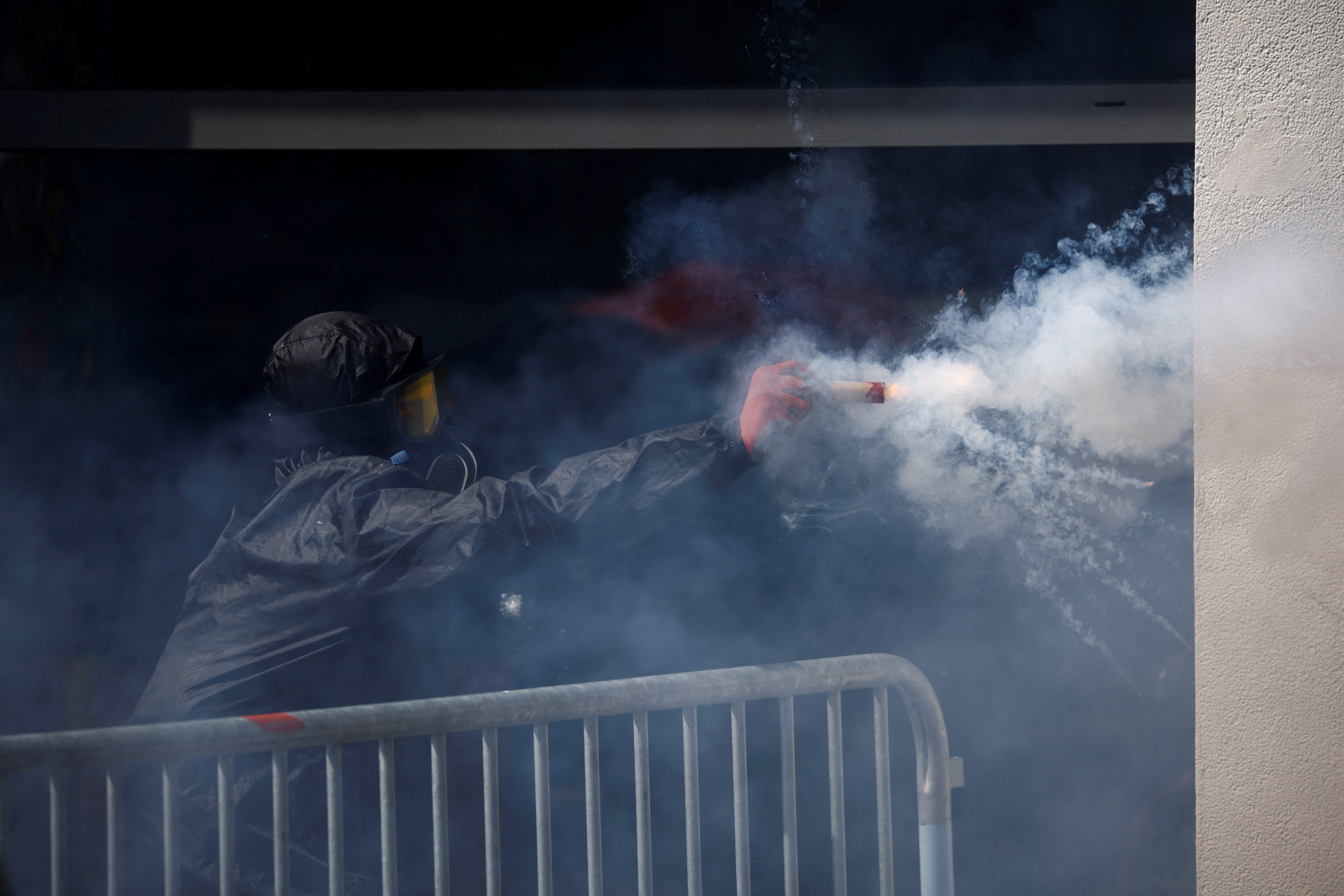


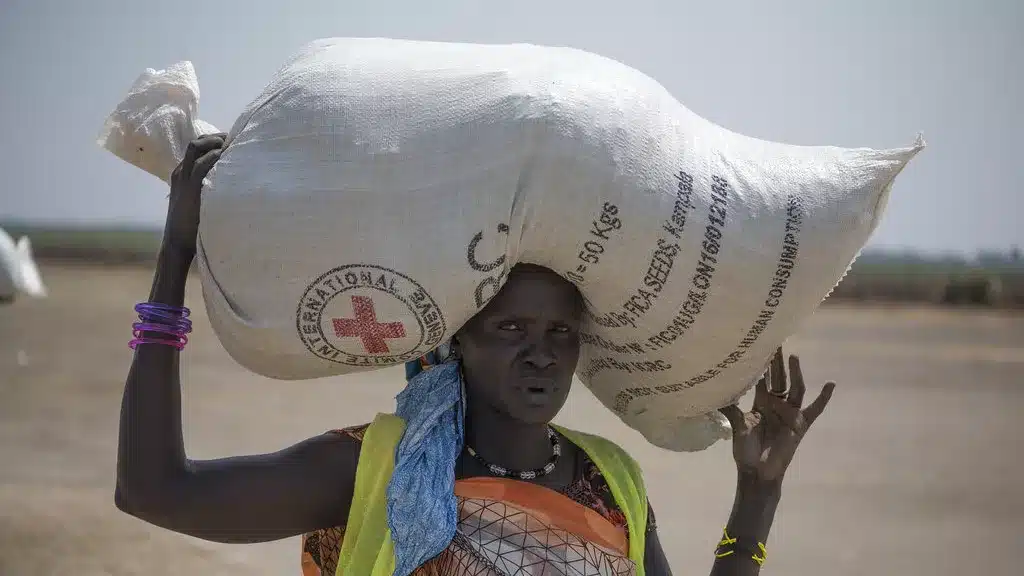

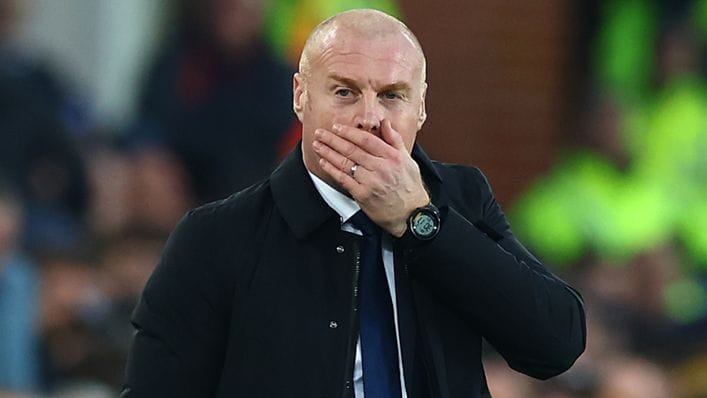
&w=707&quality=100)
&w=707&quality=100)
&w=707&quality=100)
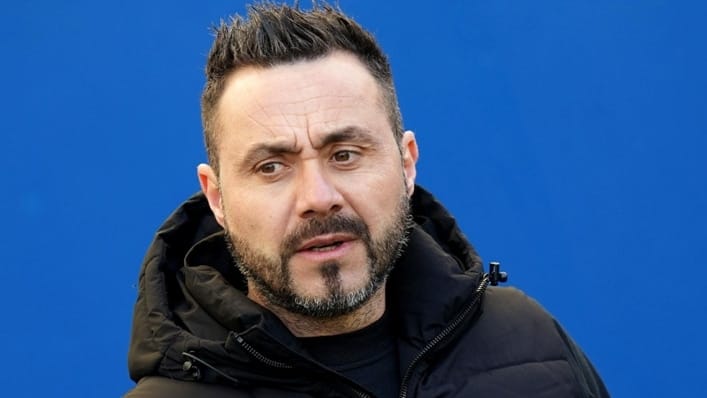


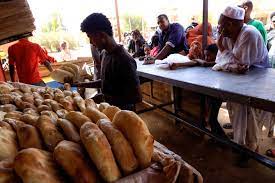
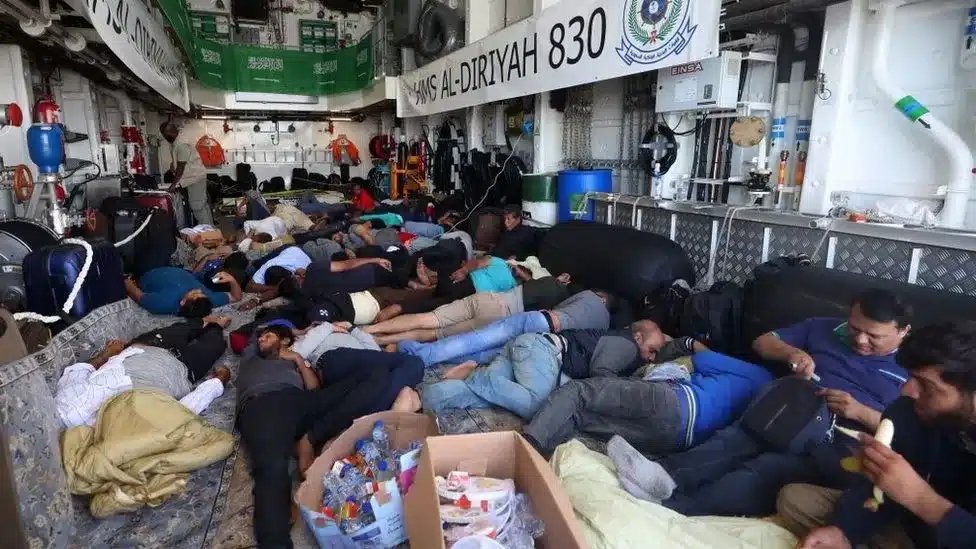
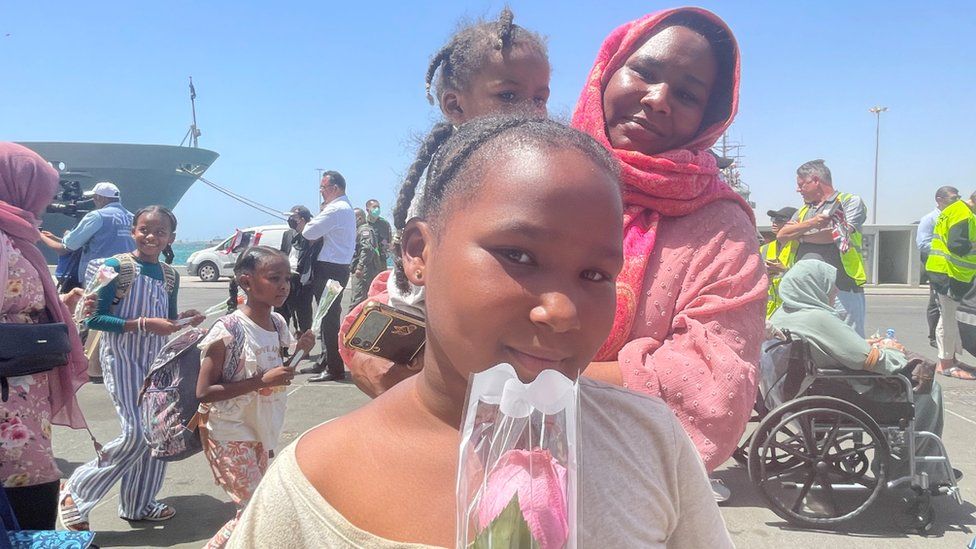
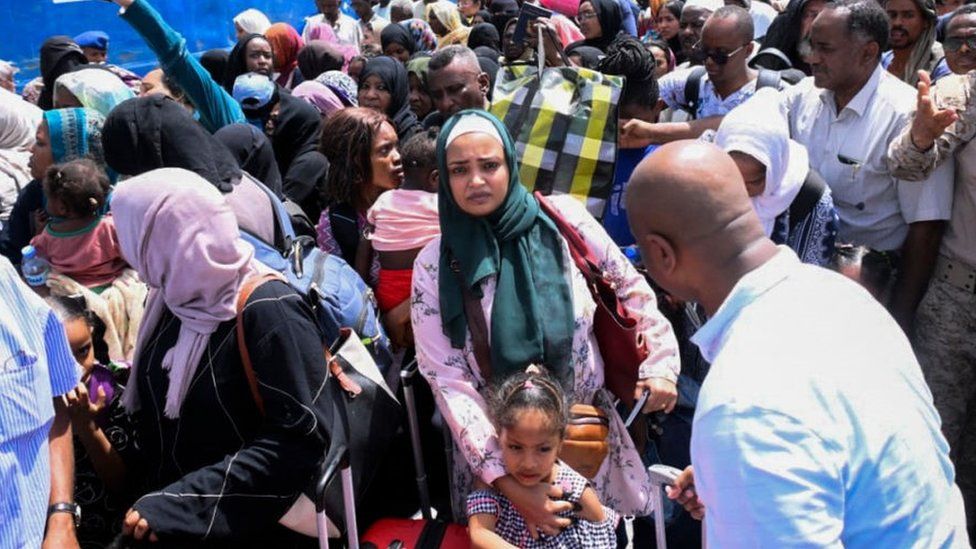

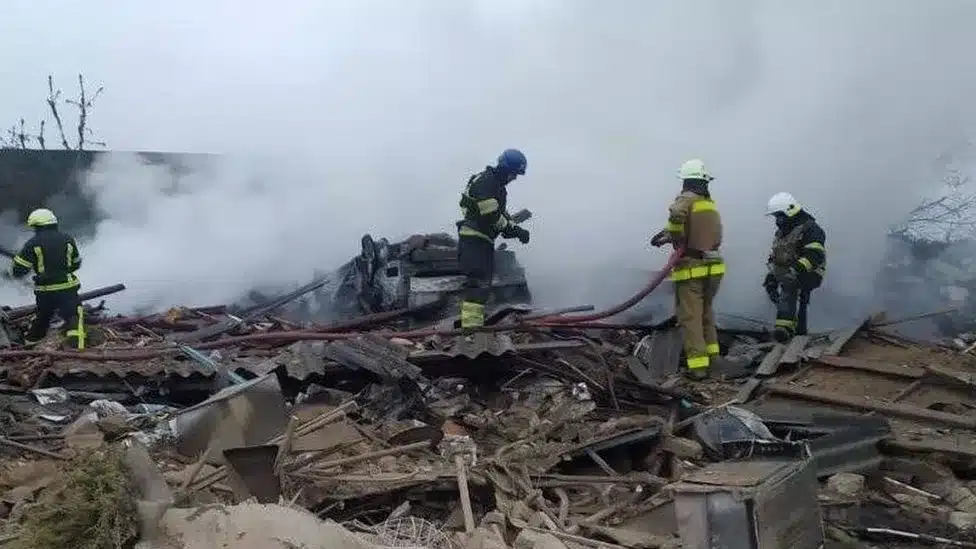










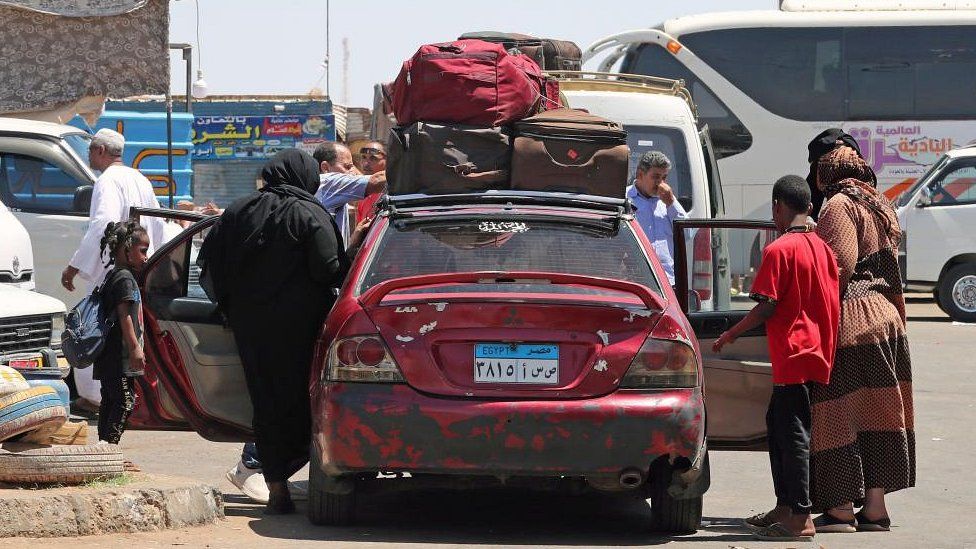
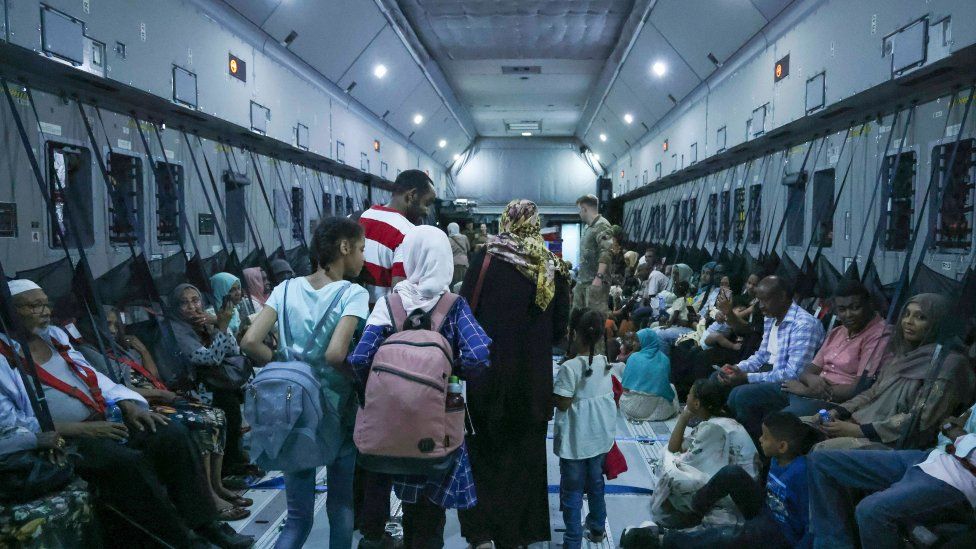
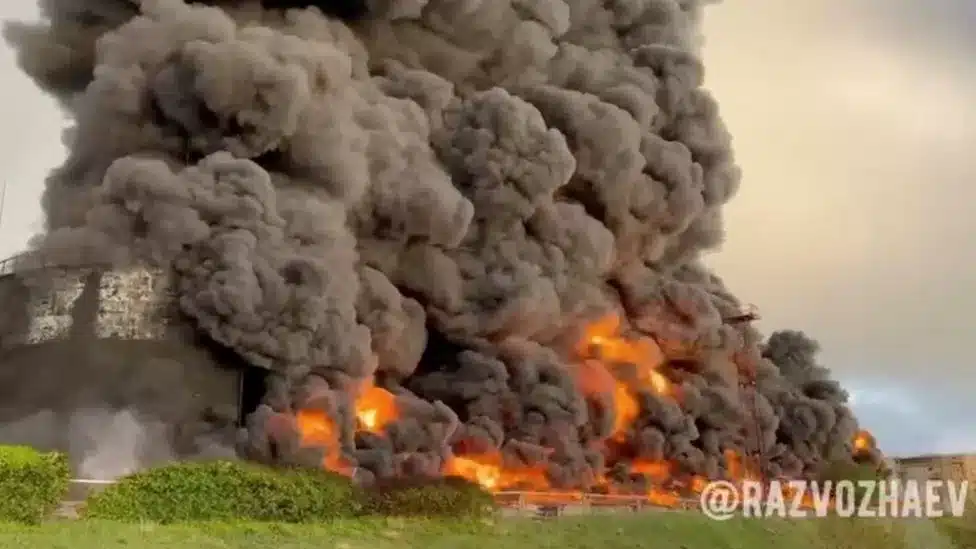
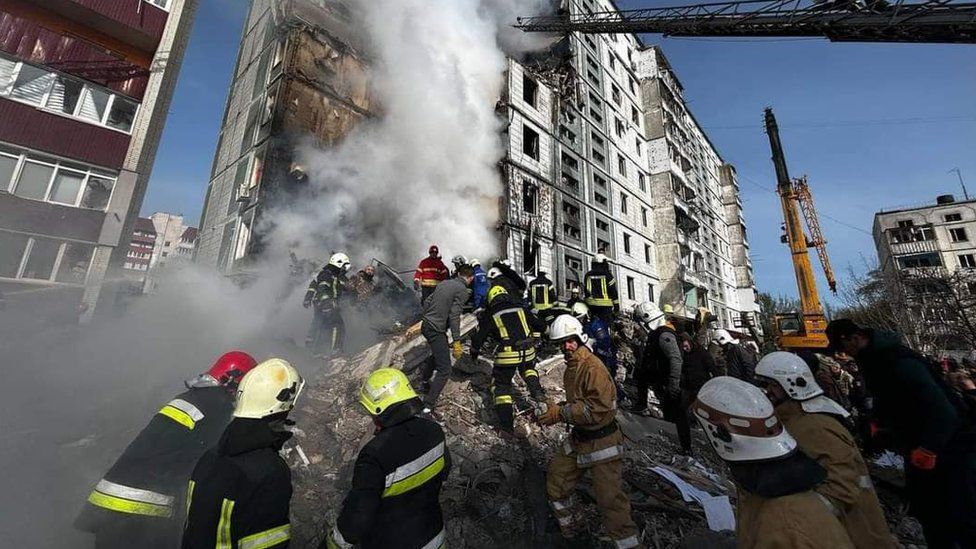


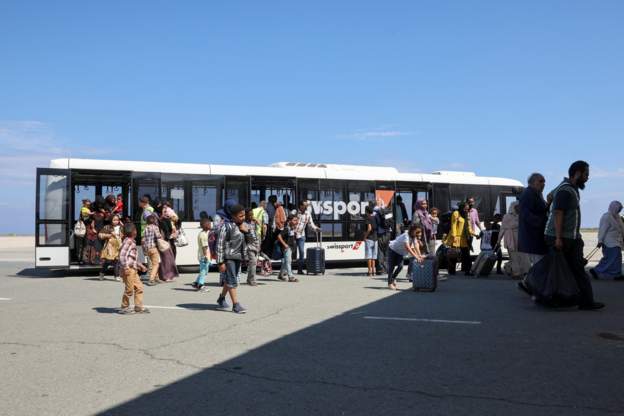

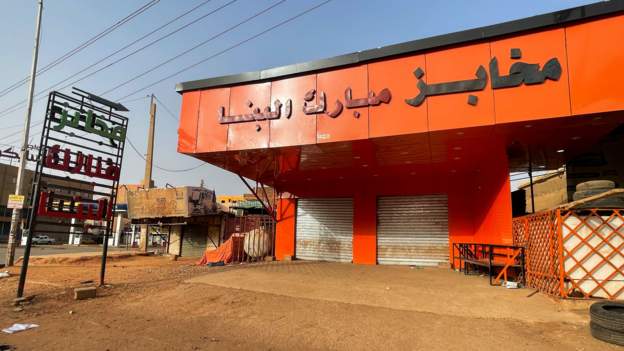









&w=707&quality=100)
&w=707&quality=100)
&w=707&quality=100)