The president of the US central bank looks to be the most recent public figure to fall victim to two Russian practical jokers.
A video call with Federal Reserve chairman Jerome Powell was shared on Russian television from the duo, whose prior targets include Prince Harry and former German Chancellor Angela Merkel.
The Fed said Mr Powell had spoken to someone in January he thought was Ukrainian President Volodymyr Zelensky.
It said it had referred the matter to law enforcement.
“It was a friendly conversation and took place in a context of our standing in support of the Ukrainian people in this challenging time,” a spokesperson said. “No sensitive or confidential information was discussed.”
Comedians Vladimir Krasnov and Alexei Stolyarov – known as Vovan and Lexus – claimed credit for the stunt.
They previously claimed to have pranked the likes of Elton John, Polish President Andrzej Duda, the head of the European Central Bank, Christine Lagarde, and Canadian Prime Minister Justin Trudeau.
As foreign secretary in 2018, Boris Johnson had a conversation credited to the pair, who are supporters of Vladimir Putin.
The UK government said then it believed the Kremlin was behind the call.
The Fed said the video with Mr Powell appeared to have been edited and it could not confirm its accuracy.
In one of the clips shared on Russian television, Mr Powell praised Russia’s central bank chief Elvira Nabiullina for managing the Russian economy amid Western sanctions, according to the BBC Monitoring service.
Other video now circulating on the internet shows Mr Powell describing a sharp slowdown in growth in the US, following the bank’s efforts to rein in price rises.
“We would tell you that a recession is almost as likely as very slow growth,” he said of expectations for 2023. “I think that is partly because of us having raised rates quite a bit but this is what it takes to get inflation down.”
News of the call set social media abuzz in the business world, where commentary from Mr Powell often moves financial markets.
“The Federal Reserve can’t get a break these days,” economist Mohamed A El-Erian wrote, while sharing the story which was first reported by Bloomberg.
“Embarrassing moment for the Fed,” chimed in Jesse Cohen, global markets analyst at Investing.com.
The greatest economic catastrophe to hit Sri Lanka in more than 70 years has been detailed by the central bank of the island nation
In its annual report, the bank outlined how last year wages failed to keep up with the soaring cost of everything from food to fuel.
“Several inherent weaknesses” and “policy lapses” helped to trigger the severe economic problems that engulfed the South Asian nation, the bank says.
The bank now expects the economy to return to growth next year.
The Central Bank of Sri Lanka forecast the economy will shrink by 2% this year, but expand by 3.3% in 2024.
The prediction is more optimistic than the International Monetary Fund (IMF), which forecast a contraction in 2023 of around 3% and growth of 1.5% next year.
The central bank’s report also outlined how headline inflation reached almost 70% in September as prices of fresh fruit, wheat and eggs more than doubled.
At the same time the cost of transportation and essential utilities such as electricity and water rose even faster.
Last year, the economy shrank by 7.8% and the country defaulted on its foreign debt for the first time since independence from the UK in 1948.
Defaults happen when governments are unable to meet some or all of their debt payments to creditors.
This damaged its reputation with lenders, making it even harder to borrow money on the international markets.
“The Sri Lankan economy faced its most onerous year in its post-independence history,” the report said.
An “unsustainable” economic model “steered the country towards a multifaceted disaster,” it added.
Sri Lanka owes about $7bn (£5.7bn) to China and around $1bn to India. In February, both countries agreed to restructure their loans, giving Sri Lanka more time to repay them.
Last month, the IMF agreed to lend Sri Lanka $3bn. That was on top of a $600m loan from the World Bank last year.
Sri Lanka’s government is currently negotiating its debt repayments with bondholders and creditors before the IMF reviews the situation in September.
CEO of the business that created Tomb Raider, Sir Ian Livingstone, has indicated that the UK video game industry supported Microsoft’s acquisition of Activision.
He also co-founder of Games Workshop, said it would be “odd” if the UK was the only place to object.
The blocking of the deal by the UK regulator provoked a furious response from Microsoft, with its president saying the move was “bad for Britain”.
The UK’s move means the multi-billion dollar deal cannot go ahead globally.
The planned $68.7bn (£55bn) deal would have been the gaming industry’s biggest ever takeover, and Microsoft would have taken ownership of popular games titles such as Call of Duty, Candy Crush and World of Warcraft.
US and EU regulators have yet to decide on whether to approve the deal, but on Wednesday the UK’s Competition and Markets Authority (CMA) blocked it, saying it was concerned the deal would offer reduced innovation and less choice for gamers in the fast-growing cloud gaming business.
Both Microsoft and Activision have said they will appeal against the CMA’s decision.
On Thursday, Microsoft president Brad Smith launched a fierce attack on the judgement, telling the BBC that it marked Microsoft’s “darkest day” in its four decades of working in the UK.
“People are shocked, people are disappointed, and people’s confidence in technology in the UK has been severely shaken,” he said, adding that the European Union was a better place to start a business.
A spokesman for Prime Minister Rishi Sunak said Mr Smith’s claims were “not borne out by the facts”, adding that the UK games sector had doubled in size over the past 10 years.
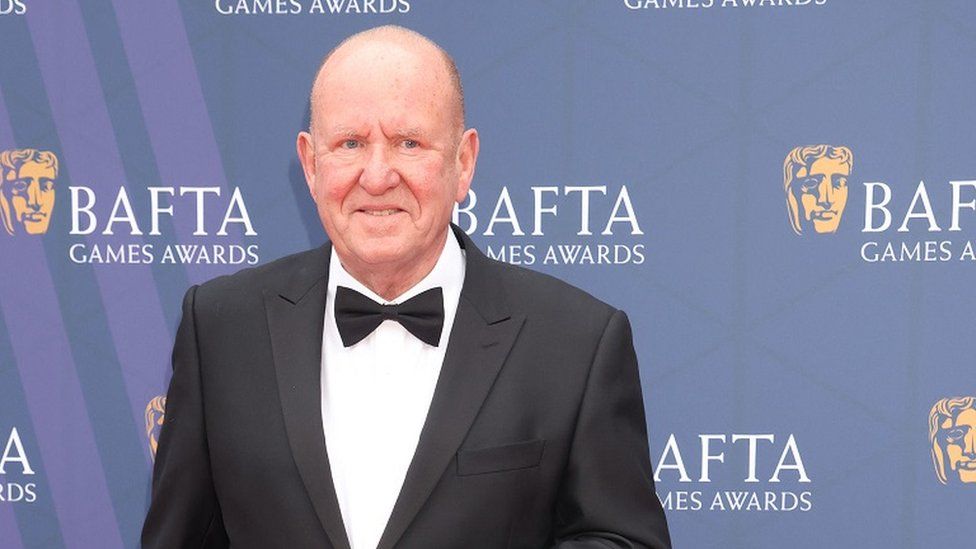
Sir Ian, who is now co-founding partner of gaming investment group Hiro Capita, told the BBC’s Today programme: “I think the sentiment of the games industry itself in the UK is for it to go ahead.
Image caption,Sir Ian said the UK’s games industry was “a great British success story”
“It would be odd if the UK was the only region to object to this acquisition going forward,” he added.
“I would hope that they can sit down and perhaps negotiate a settlement which might be in everybody’s interest over time.”
Sir Ian said the UK’s games industry was “a great British success story”, having developed some of the biggest franchises in the world including Tomb Raider and Grand Theft Auto.
“It’s always been overdelivering in content but always underserved by capital and recognition,” he added.
“This is a highly competitive market and any negative sentiment is not good for the industry or indeed the UK economy.”
The CMA is the first regulator to announce its decision, but last year the US Federal Trade Commission began a legal challenge to block the takeover.
In March, EU regulators delayed their decision after Microsoft proposed concessions to get the deal over the line.
Sir Ian said “it’s somewhat come as a surprise that they [the CMA] said no at this time”.
However, Gareth Sutcliffe, senior games analyst at Enders Analysis, said the deal “has been in trouble for a while”.
He added that Microsoft “simply didn’t do the necessary regulator outreach to get this deal over the line”.
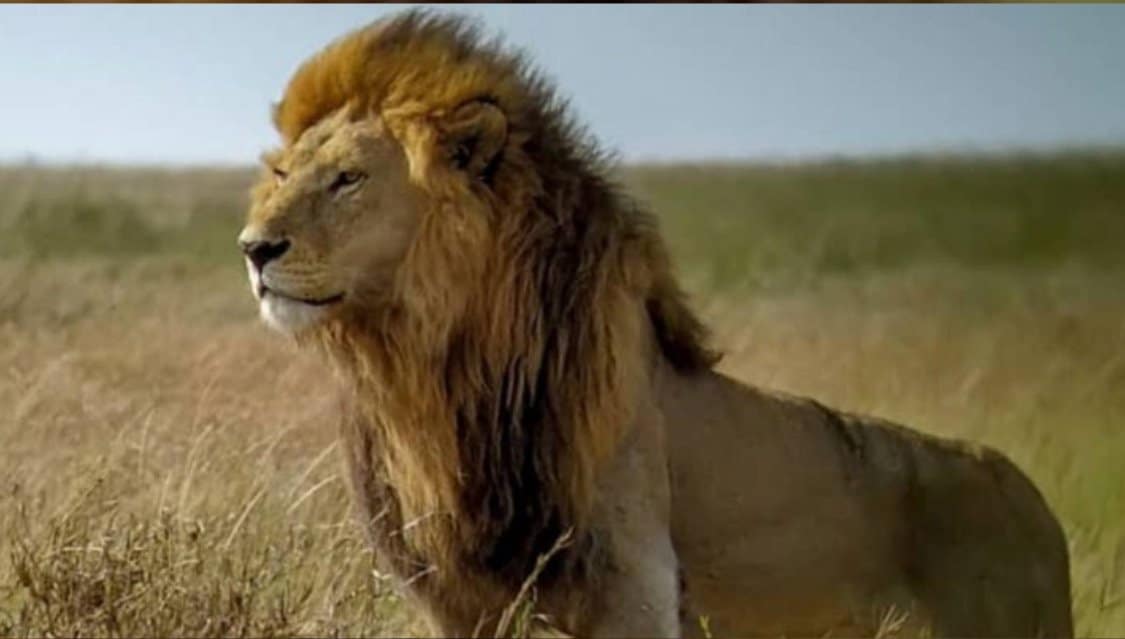
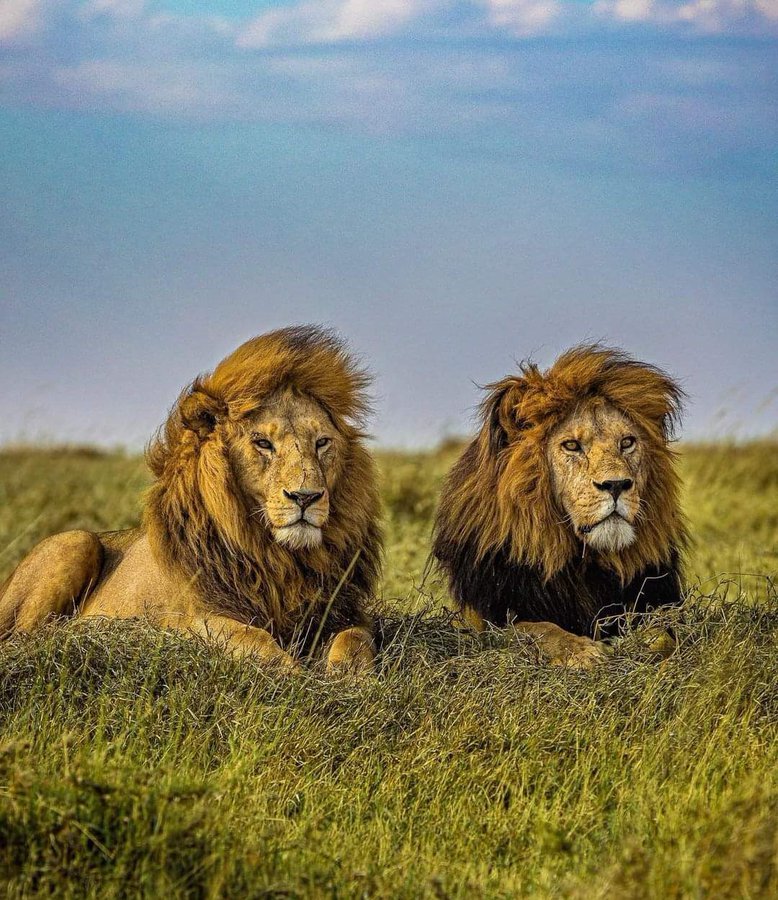
A lion in Tanzania known as the Serengeti’s King has been murdered by competitors after almost 10 years of dominance.
Tour operators and visitors to the national park have paid tribute to the “legendary” Bob Junior – also known as Snyggve – online.
The “photogenic” and “coolest cat” in the Serengeti, Bob Jr had a fearsome reputation among his rivals and had ruled for seven years with the help of his brother, Tryggve.
Younger rivals are believed to have killed the pair.
“They wanted to overthrow Bob Junior,” Serengeti conservation officer Fredy Shirima told the media.
“These incidents normally happen when the head of a pride becomes old or sometimes when the other male lions are not happy with his control over a large territory,” he added.
“It is assumed his brother also met the same fate, but we are trying to confirm this,” Mr Shirima said, adding that the two were killed in separate but seemingly coordinated attacks.
Some conservationists said Bob Junior – who was thought to be around 10 years old and named after his father Bob Marley – relished his celebrity status because he was always easy to spot.
Bob Junior reportedly did not put up a fight when he was attacked and killed on Saturday.
Wildlife officials are preparing a special burial on a day yet to be announced. The Serengeti in northern Tanzania is home to about 3,000 lions, and is popular with local and foreign tourists.
Tributes to the fallen king have been posted online, including by tour operators.
Iron smelting and forging techniques may have been used in West Africa as early as the sixth century BC among the Nok people of Nigeria, according to well-established evidence on Yoruba metal art. Between 1400 and 1600, important centralized civilizations grew in the West African region, and iron technology appears to have been a major factor in the underlying social assets that supported their development.
The development of iron tools and weapons resulted in extensive mechanized agriculture, efficient hunting, and successful warfare, all of which contributed to the growth of large urban centers.
Iron was also important in the rise of Yoruba kingdoms, particularly the Ife and Oyo Empires. They had a lot of contact with one another, so they have similar beliefs about the properties of iron and the methods for smelting it. Ife metal castings appear to be some of the finest Sub-Saharan art; they are mostly hollow-cast heads used in ancestral rites and have a naturalistic appearance.
There are indications that the first caster originated in Ife around the 14th century, according to tradition. And the most common forms were heads of dead Benin kings, usually supported by a carved-out ivory tusk.
These were placed on altars alongside other figurative castings and bells and dedicated to early kings. Figured plaques were also used as architectural designs and decorations.
For example, among the Yorubas, Ogun, the god of iron, is a revered deity. It is widely regarded as the first warrior and hunter, as well as the inventor of iron. Furthermore, Ogun is known for opening roads, clearing fields, and establishing great dynasties.
The distinctive iron sword of Ogun, a Yoruba Metal Art that is often regarded as a symbolic cultural motif, is associated with both civilizing and aggressive actions.
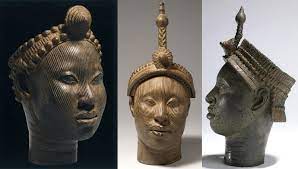
The Bronze Head of Ife is one of the most well-known Yoruba metal works. The copper alloy sculpture, discovered in Ife in 1938, is thought to represent a king and was most likely made between the 13th and 14th centuries, long before European contact with the local population.
The sophisticated sculptures’ realism and authenticity challenged the western conceptualization of African art at the time. The Ife head was transported to the British Museum a year after its exhumation.
Because of their historical significance and as a testament to the Yorubas’ rich civilization, Ife heads are now widely used in logos and branding of Nigerian corporations and educational institutions, such as the one used for Obafemi Awolowo University in Ile-Ife.
Because of its symbolic importance, the British Museum’s Ife head was included in the major exhibition Kingdom of Ife: Sculptures from West Africa, which was organized in collaboration with Nigeria’s National Commission for Museums and Monuments, the Museum for African Art in New York, and the British Museum. The entire exhibition was part of a series of events commemorating Nigeria’s 50th anniversary of independence.
All of this demonstrates that, long before European contact with West Africa, the Yorubas developed a highly sophisticated iron industry that reflected their civilization and ingenuity.
The National Museum of Cameroon is displaying an exhibition of African women in Yaoundé.
A total of 17 artists showcased their work during the exhibition depicting Africa’s rich and diversified culture.
The exhibition is entitled “Memoria, stories of another history”.
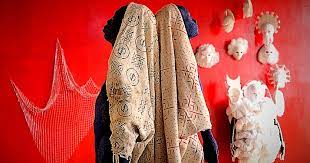
In one corner of this Museum, we meet Ruth Belinga who has installed this memorable art titled ‘My impregnated mosquito net’. Belinga has long been developing an artistic approach in which she establishes a relationship between the violence directed toward women and violence toward nature
“My impregnated mosquito net” Why? Because the mosquito net is an element that the Ministry of Health has been distributing to families. These elements, which I think are foreign to our families, arrive at our homes and enter the most intimate places of our houses, that is to say, our bedrooms and the nets end up witnessing certain atrocities that take place in our private homes,” she explained.
At the museum, we also meet Carine Mansan who came from Ivory Coast. Her art has been labeled Ethiopian. She has an installation of 77 bronze heads all black, arranged in tiers. The artist tells her personal story to identify, whether on religion, social, or even cultural.
“Ethiopian comes from the word Aitiopius. It means burnt face. So, in this installation, I decided to give it this name because I consider that as embodied souls. We all have this face burned inside.
Beninese Nadine Hounkpatin is a curator of this exhibition.
“Memoria, stories of another history is an exhibition that began as part of the focus on Women of the Season Africa 20-20 and 2021 at the Fargmaker in the city of Bordeaux, then the exhibition was presented at MUCAC, the Museum of Contemporary Cultures in Damatoungara in Abidjan, and today in 2023, we have the pleasure and honor to be hosted within the National Museum of Cameroon, here in Yaounde,” said Nadine.
The exhibition which opened on February 10 under the stewardship of the Cameroonian Minister of Culture continues until July 31.
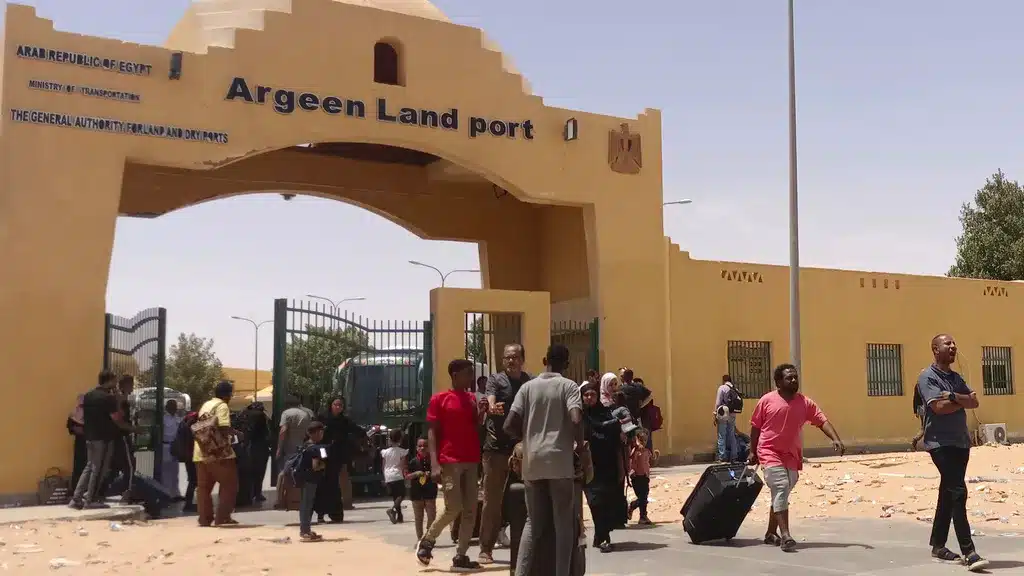
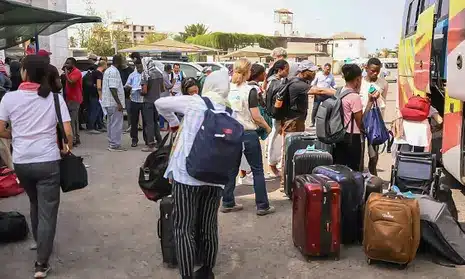
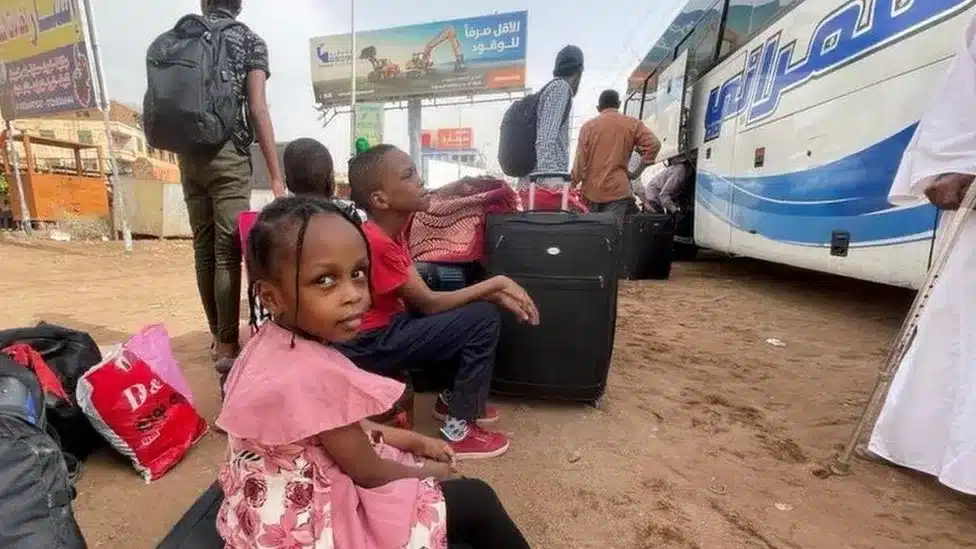
Thousands of Sudanese have begun entering Egypt through the northern Arqin border as a result of the conflict that broke out in their nation in mid-April between the army and the paramilitary Rapid Support Forces.
Buses are lining up at the border area and families have been sleeping outside in the desert, waiting to be let in to the neighbouring country.
“I left my home, my place because of the fighting between people of the same country against each other,” said Sudanese citizen Nawal al-Sharif.
The Egyptian foreign ministry said Thursday that more than 14,000 refugees from Sudan had crossed the border into Egypt since deadly
It added that a further 2,000 nationals from 50 other countries or members of international organisations had crossed into or were airlifted to Egypt.
The Sudanese Health Ministry says at least 512 people, including civilians and combatants, have been killed and another 4,200 wounded since the fighting began.
The Doctors’ Syndicate, which tracks civilian casualties, said at least 295 civilians have been killed and 1,790 wounded.
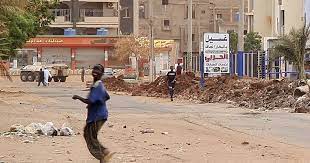
Tens of thousands of residents of the capital, Khartoum, have also fled to neighbouring provinces or into already existing camps within Sudan that house victims of past conflicts.
Egypt has close ties with the Sudanese military but has called on both sides to end the fighting.
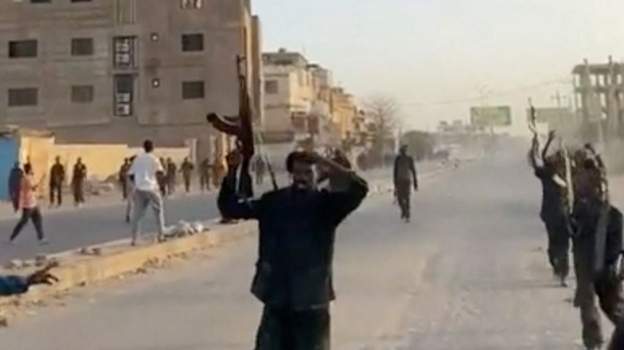
Residents in a city in Sudan’s Darfur region reported seeing armed gunmen storm through the area on Thursday April 27, 2023 fighting and pillaging homes and businesses. Despite the prolongation of a tenuous cease-fire between Sudan’s two senior generals, whose power battle has claimed hundreds of lives, the carnage continued.
The mayhem in the Darfur city of Genena pointed to how the rival generals’ fight for control in the capital, Khartoum, was spiraling into violence in other parts of Sudan.
The two sides accepted a 72-hour extension of the truce late Thursday. The cease-fire has not stopped the fighting but created enough of a lull for tens of thousands of Sudanese to flee to safer areas and for foreign nations to evacuate thousands of their citizens by land, air and sea.
The cease-fire has brought a significant easing of fighting in Khartoum and its neighboring city Omdurman for the first time since the military and a rival paramilitary force began clashing on April 15, turning residential neighborhoods into battlegrounds.
Both the military, led by Gen. Abdel Fattah Burhan, and the paramilitary Rapid Support Forces, led by Gen. Mohamed Hamdan Dagalo, said that they accepted the extension of the truce. But explosions and heavy gunfire could be heard in at least one Khartoum neighborhood late Thursday.
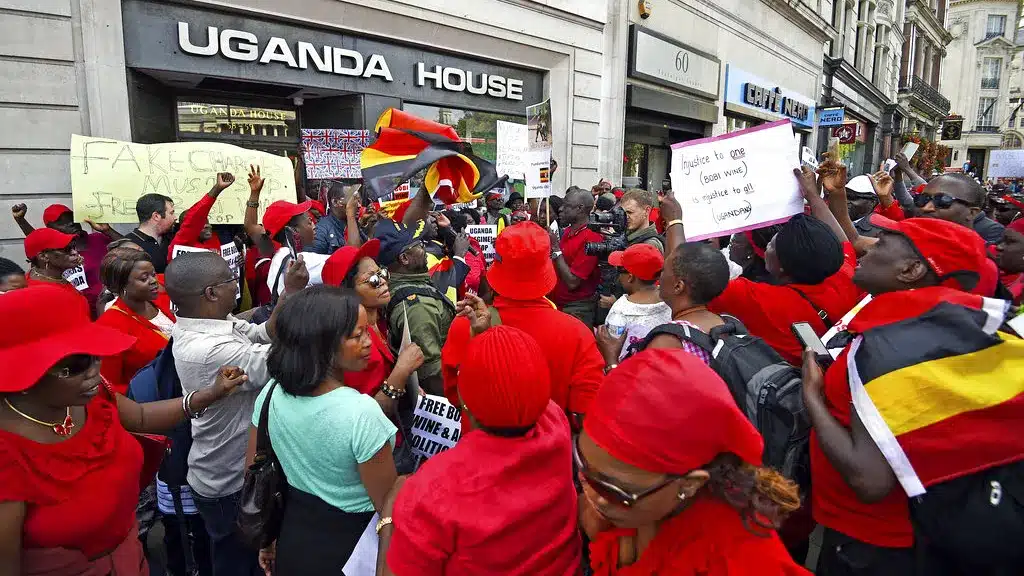
In Uganda, 11 female opposition parliamentarians have been detained while embarking on a demonstration over alleged police violence.
The legislators took to the streets Thursday to voice their dissatisfaction over what they are calling a violation of the rights of women and a threat to their lives, which they say also violates the Constitution.
Scuffles erupted between the women and police as the legislators tried to make their way to the Ministry of Internal Affairs.
“Susan Mugabi was beaten, was tear-gassed,” she said. “There were bullets fired. Her sister was beaten, and fondled by police officers. Almost undressed her. Her mother was also arrested ahead of the celebrations. Her father was locked in the house. So, all these violations.” One of the lawmakers, Joyce Bagala, detailed some of the women’s grievances.
According to local media reports, Police officials were not readily available for comment. They were meeting with the speaker of parliament at the central police station where the legislators were being held.
The female opposition legislators are asking for parliament and the internal affairs ministry to acknowledge that the actions of security officers in blocking Women’s Day celebrations were illegal, irrational, and an affront to the right to associate and assemble.
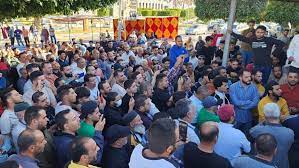
Libyans in the western city of Zawiya demonstrated against paramilitary organizations on April,27 2023 according to locals. The protests was a response to allegations that the militia groups were enlisting migrants and engaging in acts of alleged torture.
Zawiya, some 45 kilometres (28 miles) west of the capital Tripoli, is a key departure point for migrants seeking to cross the Mediterranean for Europe, and many seek work there while awaiting the sea crossing.
More than a decade of violence in Libya since the fall and killing of dictator Moamer Kadhafi in 2011 helped turn the country into a fertile ground for human traffickers who have been accused of abuses ranging from extortion to slavery.
Rights groups have repeatedly accused authorities and armed groups operating under state auspices of torture and other abuses.
One recent video circulating on social media purported to show Libyans being beaten by people presented as “African mercenaries”, migrants reportedly recruited by rival militias in the city.
Mohamad al-Khabouli, representative of the “Youth of Zawiya” group, said protests began late Wednesday, forcing the city council’s closure and blocking access to the oil refinery and roads to the city.
“Hundreds of young people protested, and called for a big demonstration to put pressure on these militias who employ migrants to be expelled from the city”, he said.
Angry residents gathered in the city centre, blocking roads and burning tyres, demanding justice and the expulsion of migrants.
The local authorities and the Tripoli government have not officially commented.
Authorities in Ethiopia have indicated that the head of the Prosperity Party, which is in power in the country’s Amhara region, and members of his security detail have been shot and killed.
According to a statement released by the communications office of the region, Girma Yeshitla was ambushed approximately 250km (155 miles) north of Addis Ababa while he was on his way back from an official trip, the BBC reported.
Prime Minister Abiy Ahmed called the killing “shameful and horrible” and blamed it on unnamed “violent extremists” who he said chose to settle differences through guns rather than dialogue.
Several weeks following the announcement by the federal government regarding the dissolution of a paramilitary force, which had incited widespread protests and violence in Amhara, the killing occurred.
Mr Girma faced strong criticism from opponents of the force’s dissolution, who saw him as one of the faces behind the move.
The killing of senior politicians is not new in Amhara. In 2019, the regional leader and other top officials were killed in what was described as a failed regional coup attempt.
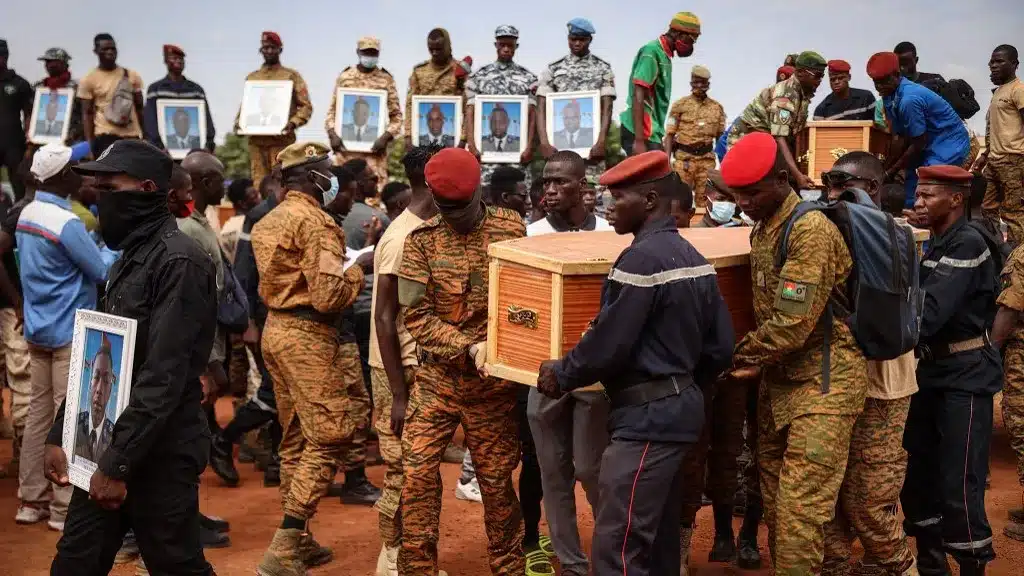
Thirty-three troops have been slained in a fresh violent attack by alleged jihadists on Thursday in eastern Burkina Faso, a Sahelian nation that has been spiraling further and farther into the unrest that first surfaced in 2015.
“The military detachment of Ougarou,” in the eastern region, “faced a large-scale complex attack on Thursday morning,” said an army statement. “Thirty-three of our soldiers, unfortunately, fell with their weapons in their hands, while twelve others were wounded,” it added.
“During the fighting, which was particularly intense, the soldiers of the detachment showed remarkable determination in the face of an enemy that came in very large numbers,” according to the army, which said they “managed to neutralize at least forty terrorists before the arrival of reinforcements.
The deployment of these reinforcements “has enabled the evacuation of the wounded who are currently being treated by the health services,” according to the army.
Security sources said the attackers were “heavily armed” and that “some soldiers are missing”.
The statement said that “the Chief of General Staff of the Armed Forces salutes the memory of the soldiers who made the supreme sacrifice in the performance of their duty. “He encourages all units engaged in operations to maintain efforts to strengthen the momentum of the ongoing recovery,” the text adds.
The attack comes a week after the April 20 massacre of at least 60 civilians in the northern village of Karma by men wearing army fatigues.
Officially revealed on Sunday, it left “sixty” dead according to a local prosecutor, “more than a hundred” according to representatives of the survivors and residents of Karma.
– “Vile and barbaric acts” –
The government “strongly condemned these despicable and barbaric acts” on Thursday and said it was closely following the progress of the investigation” opened by the prosecutor of the Ouahigouya (northern) high court to “elucidate” the facts and “arrest all those involved”.
The victims of Karma were buried on Thursday evening.
“The administrative authorities mobilized for the burial of the remains of our mothers, our fathers, our sisters and our sons”, that is to say “a hundred people”, Daouda Belem, one of the survivors, told AFP.
He thanked the government for “allowing Karma to bury its dead” and called for collaboration with the gendarmerie in its investigation.
On April 18, at least 24 people, including 20 civilian army replacements, were killed in two attacks by suspected jihadists in east-central Burkina.
On April 15, six soldiers and 34 civilian auxiliaries were killed in the north during an assault on their detachment.
Burkina Faso, the scene of two military coups in 2022, has been caught since 2015 in a spiral of jihadist violence that began in Mali and Niger a few years earlier and has spread beyond their borders.
The violence has left more than 10,000 civilians and soldiers dead over the past seven years, according to NGOs, and some two million people displaced.
Burkina Faso’s transitional president, Captain Ibrahim Traoré, who came to power in a coup in September 2022, signed a one-year “general mobilization” decree last week, allowing for the requisition of “young people aged 18 and over” to go and fight against the jihadists who are bloodying the country.
Nigeria’s government has chosen to put off eliminating fuel subsidies, citing the need for additional planning and consultations with important parties, including the new administration.
Nigeria’s Minister of Finance, Budget, and National Planning, Mrs. Zainab Ahmed, disclosed this to local media on Thursday after the valedictory Council meeting presided over by Vice President Yemi Osinbajo at the Council Chambers of the Presidential Villa, Abuja.
Ahmed said the Council agreed on the need for continued discussions on the issue adding that the FG, together with states and representatives of the incoming administration, require more preparatory work.
She said, “Council agreed that the timing of the removal of fuel subsidy should not be now. But that we should continue with all of the preparatory works that need to be done and this preparatory has to be done in consultation with the states and other key stakeholders including representatives of the incoming administration.
This comes a few days after Nigeria’s outgoing government recommended that the new administration of president-elect Bola Tinubu give public sector workers pay rises after removing a fuel subsidy in June, Labour Minister Chris Ngige said on Tuesday.
President Muhammadu Buhari, who steps down in May, had planned to remove the popular but costly subsidy in 2022 as part of fiscal and petroleum sector reforms but abandoned the plan because of fears of protests in the run-up to last month’s election.
Previous Nigerian governments have promised to remove the fuel subsidy, which most economists say is an unsustainable drag on public finances, but have failed to do so because of fierce opposition from citizens.
Ahmed added that the FG will be working together with representatives of the states between now and June 2023.
The African Union (AU) reiterated its plea for a truce on Thursday, April 27 and urged Sudan’s neighbors and the world community to assist those fleeing the country’s deadly violence.
AU Commission Chairperson Moussa Faki Mahamat “continues to follow with growing concern the plight of civilians caught in the deadly conflict in Sudan,” his office said in a statement.
“The chairperson renews the call on Sudan’s neighboring countries, relevant regional and global agencies to facilitate the transit and safety of civilians crossing their borders unhindered,” the same source said.
Mr. Faki reiterated his call on the Sudanese army and the Rapid Support Forces (RSF) paramilitaries to “immediately agree on a permanent ceasefire to facilitate the delivery of humanitarian assistance to Sudanese in need.
Multiple attempts at a truce since the fighting began on April 15 have all failed.
A few hours before the expiry of a three-day ceasefire at midnight (22:00 GMT), which has hardly been respected, the army announced on Thursday evening that it would “extend the ceasefire for another 72 hours”, “following an initiative by Saudi Arabia and the United States”.
The paramilitaries have not yet commented on this announcement.
The fighting has caused a massive exodus in this country of 45 million people, one of the poorest in the world.
Tens of thousands of people have already arrived in neighbouring countries: Chad in the west, Ethiopia in the east, South Sudan and the Central African Republic in the south and Egypt in the north.
A new website that closely tracks the status of democracy and human rights around the world has been launched on April 27, by the Stockholm-based International Institute for Democracy and Electoral Assistance, or IDEA.
It will provide monthly analysis and data on 173 countries based on over 100 indicators, from holding clean elections to fair access to justice and civil liberties.
Seema Shah, head of the Democracy Assessment team at IDEA, says she thinks it is a valuable tool as it documents what is happening in a country through the lens of democracy, and why and how it is being impacted.
“It’s one thing to say, ‘oh, well, the democratic health of country X is weak right now because they just had a flawed election‘. But it’s another thing to really dig into that election and see what happened that made it flawed. Why should that matter to the overall health of democracy?”
For each country tracked, the website will include basic information such as the population, system of government, and head of state.
But it also includes analysis that aims to give policymakers and others globally the tools to assess and understand the quality of their democracies.
While it doesn’t rank countries, rather compares trends within a nation over time, IDEA’s data shows that democracy in 25 of them is on the decline, while just 11 have shown progress.
“What we’ve seen is that democracy all over the world has been declining for at least the last decade, if not more. And all the interventions that have been created and all the policy recommendations that are circulating out there so far haven’t been able to stem the tide,” said Shah.
She said IDEA thinks having more timely data would be able to help decision-makers to be able to make more strategic decisions using the most up to date information out there.
The data is based on Global State of Democracy indices that are the evidence base for IDEA’s annual Global Report on the State of the Democracy.
The Ghana Chamber of Mines has endorsed proposals for the government to eliminate all tariffs on machinery brought in for use in renewable energy projects.
Suleiman Koney, the company’s chief executive officer, claims that many people are unable to switch to using green energy because of the hefty taxes on the equipment that have become a deterrent to the private sector.
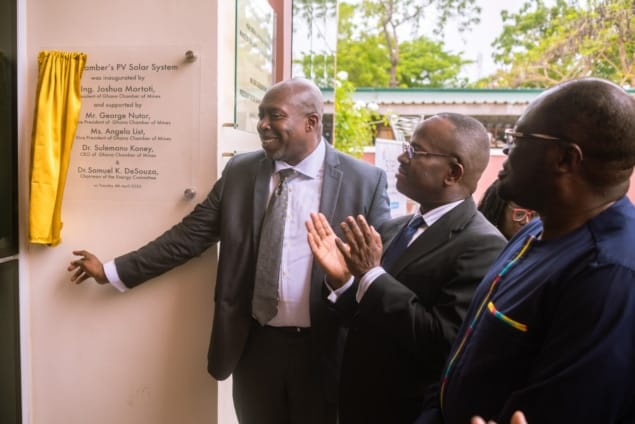
He had just inaugurated an 84 kilowatt solar PV installation for the chamber office when he spoke to Joy Business.
“You may be aware that the government of Ghana is fully aligned on the global initiative to transition to clean and sustainable energy. However, the ecosystem that is required to encourage households and firms to invest in clean energy is still in an inchoate stage”.
“While the government has exempted imported solar panels from VAT [Value Added Tax] and other levies, the payments for a completed project are still subject to these statutory taxes and levies. Further, the absence of a net metering system implies that a consumer would be subsidizing the operational cost of ECG anytime the solar plant feeds its excess generation beyond its demand into the national grid,” he added.
The 84kWp installed capacity PV system, which was created to satisfy the secretariat’s electricity needs, was built for a total of $122,316.35.
According to the CEO, statutory taxes and levies account for about 11% of the contract cost, which works against the government’s aim for the energy transition.
The system can produce 111,000 kWh at its maximum capacity, and the chamber now uses less electricity from the national grid than it did before it started using the system.
On the basis of a number of assumptions regarding the currency rate and electricity cost, the payback period for the project is predicted to be less than eight years. renewable energy projects The infrastructure has a 25-year performance lifetime and a 10-year warranty period.
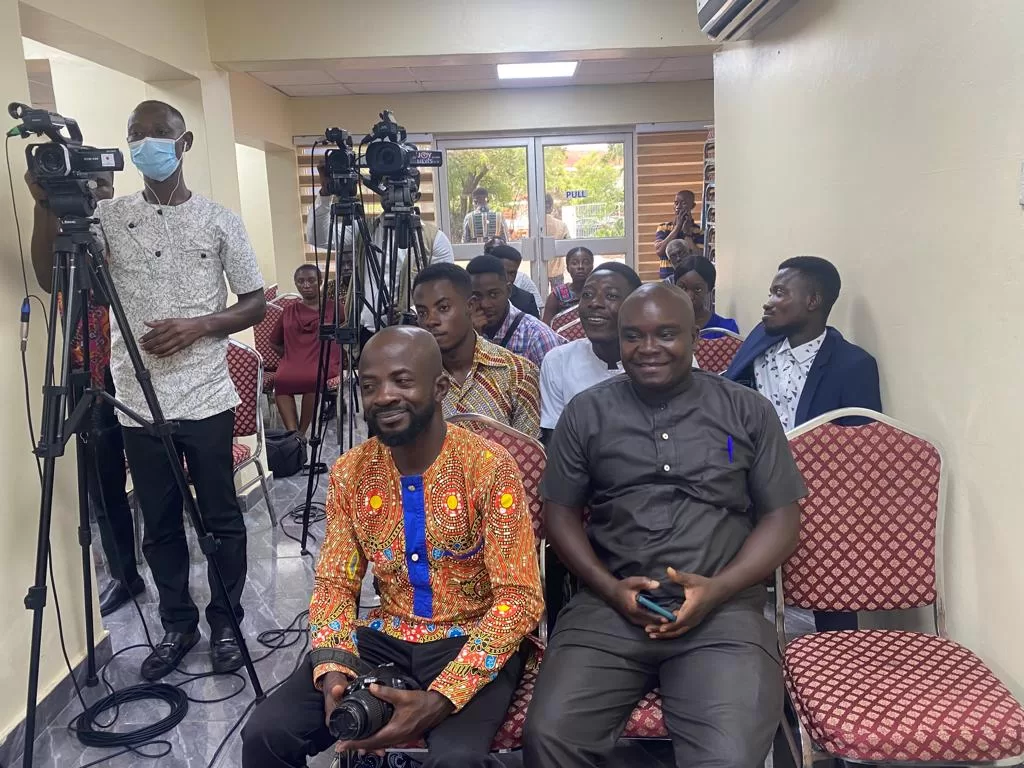
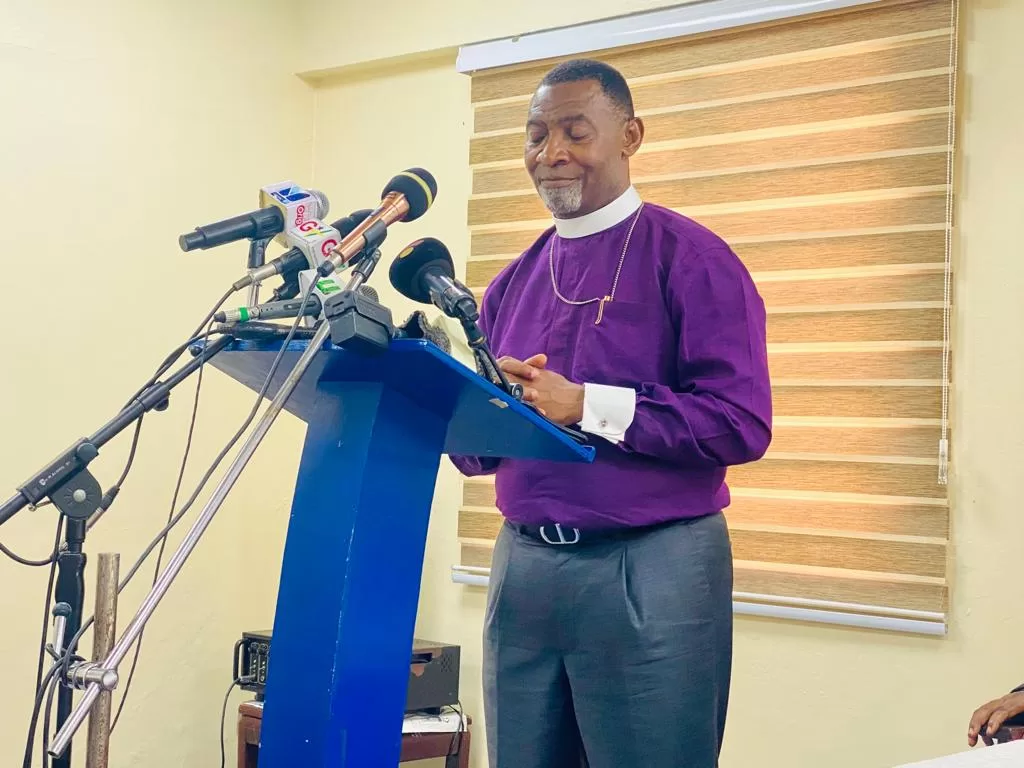
A 31-day non-denominational national prayer rally has been started by the Worldwide Miracle Outreach and the Lawrence Tetteh Ministries.
The prayer rally aims at seeking the face of God to curb the rising indiscipline and ills afflicting the nation.
The event will take place from, May 1, 2023 to, May 31, 2023 at Miracle Center, Christian Village in Accra at 6am to 8am daily.
The month-long programme aims to bring together religious leaders and worshippers to pray to address every evil agenda designed to undermine the economic and socio-political development of the nation and the well-being of Ghanaians as a whole.
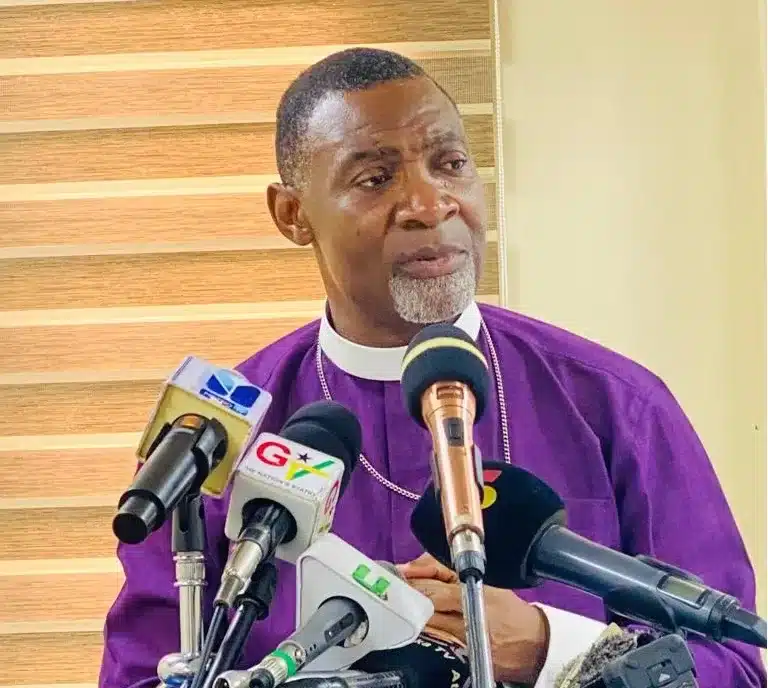
Addressing the media in Accra, the President of Worldwide Miracle Outreach (WMO) and the Lawrence Tetteh Ministries (LTM), Reverend Dr Lawrence Tetteh reiterated that Ghana had been overwhelmed with challenges that undermine socio-economic progress and development.
He said for Ghana to succeed, wrong must be seen as wrong and not politicized. He said corruption must not be condoned at any level within the society.
He called for the protection of water bodies from the harmful effects of galamsey and urged Ghanaians to strive to create a better environment for the next generation.
Reverend Dr Lawrence Tetteh mentioned that the approach must be resolute and purposeful as the nation cry unto the Lord to lead the country out of its current economic woes.
Dr Lawrence Tetteh in his speech said “as a nation we need we need the hand of God like never before”.
He called on political leaders to seek the face of God by joining hands with the church to pray for divine intervention. He said, a country without a spiritual voice is doomed.
He called for a change in the mindset of people.
He said the NDC and NPP have not helped to promote the national agenda while attitudes of Ghanaians towards building the nation has been based on selfish desires and wrong motives. For that matter “this nonsense must stop” he added.
He urged politicians to be very circumspect in verbal attacks on the church and the religious leadership as a whole stemming from the misdeeds of some errant members of the Religious community.
Reverend Dr Lawrence Tetteh appealed to media houses to dedicate a lot more airtime in discussing issues pertaining to moral and ethical development of people with emphasis on the youth who are the future leaders of the country.
He called on the need to educate, encourage and empower the youth positively with Godly values and civic responsibilities for a better Ghana.
He called on Ghanaian to continue to pray for the nation and our leaders to be humbled and prayerful as the word of God admonishes.
The non-denominational prayer festival is on the theme: “This nonsense must stop”. The event will take place from, May 1, to May 31, 2023 at Miracle Center, Christian Village in Accra at 6am to 8am daily.
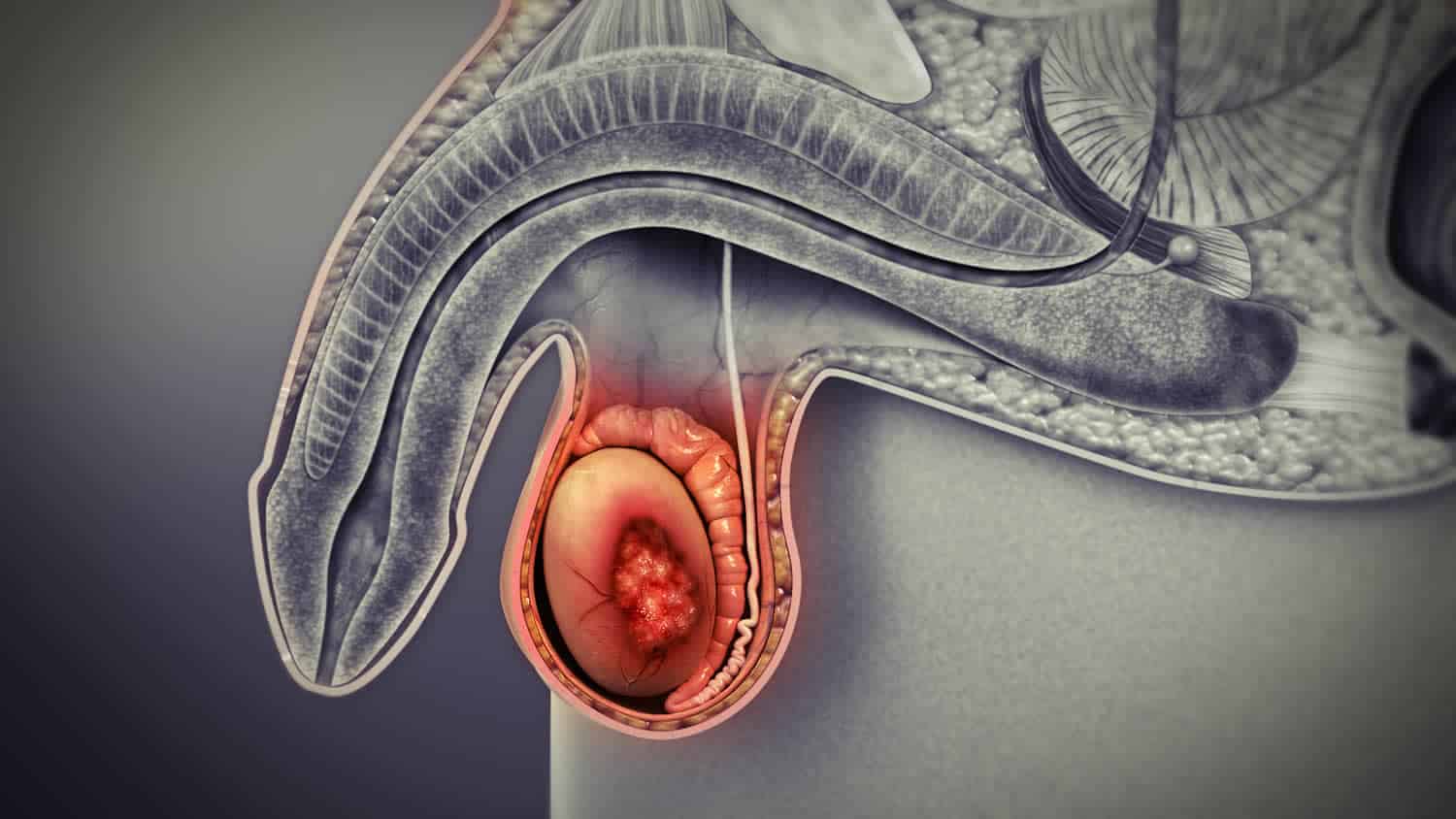
Height is a risk factor for developing testicular cancer, according to Dr. Joelle Amissah, a junior resident in general surgery at the Korle Bu teaching hospital.
She explained testicular cancer as cancer of the testis and some of its surrounding structures, which is mostly caused by a genetic mutation that happens while in the uterus but will not manifest until puberty.
According to Ms. Amissah, it has been noted globally that most people who contract testicular cancer are tall, while short men rarely get testicular cancer.
“It hasn’t been explained, but being tall is a predisposing factor to getting testicular cancer,” Ms. Amissah said during a media engagement.
However, she maintained, “being tall” is relative to geographical location. She also added that the Human Immunodeficiency Virus (HIV) is also a risk factor for getting testicular cancer.
“HIV is just a terrible virus. It activates so many cancers and it activates quite a few mutations as well,” she said.
Ms. Amissah stated that being diagnosed with testicular cancer means having subfertility; however, patients can undergo surgery and radiation therapy.
She advised men to examine their testicles once a month to know their status.
Some young people in South Korea are so isolated from the outside world that the government is willing to pay them to “re-enter society.”
The Ministry of Gender Equality and Family announced this week that it will provide up to 650,000 Korean won (about $500) per month to isolated social recluses, in a bid to support their “psychological and emotional stability and healthy growth.”
About 3.1% of Koreans aged 19 to 39 are “reclusive lonely young people,” defined as living in a “limited space, in a state of being disconnected from the outside for more than a certain period of time, and have noticeable difficulty in living a normal life,” according to the ministry’s report, citing the Korea Institute for Health and Social Affairs.
That makes up about 338,000 people across the country, with 40% beginning their isolation in adolescence, according to the ministry. Various factors are thought to be at play, including financial hardship, mental illness, family problems or health challenges.
The new measures specifically target young people as part of the larger Youth Welfare Support Act, which aims to support people extremely withdrawn from society, as well as youths without a guardian or school protection who are at risk of delinquency.
The monthly allowance will be available to reclusive lonely young people aged 9 to 24 who live in a household earning below the median national income – defined in South Korea as about 5.4 million won (about $4,165) per month for a household of four people.The youths can apply for the program at a local administrative welfare center; their guardians, counselors or teachers can also apply on their behalf.
“Reclusive youths can have slower physical growth due to irregular living and unbalanced nutrition, and are likely to face mental difficulties such as depression due to loss of social roles and delayed adaptation,” the ministry said, stressing the importance of “active support.”
The report on Tuesday detailed several case studies, including one young student who had suffered from mental health issues and difficulties socializing since adolescence; she struggled to adjust to college, ultimately choosing not to attend, and withdrew further into herself.
Another student faced domestic violence and hunger at home – making it difficult for her to leave the house or form relationships with people outside. Neither individual was identified.
The report also detailed future plans for further action, such as distributing guidelines to local governments, boosting youth social safety nets and early detection systems, and working more closely with youth welfare facilities like shelters or rehabilitation centers.
Japan was already grappling with isolation and loneliness. The pandemic made it worse
Some cities and local governments already have similar systems in place; Seoul, the country’s capital, has a “Reclusive Youth Support Project” that provides mental health counseling, hobby development and work training, and life coaching for isolated young people.
This phenomenon isn’t unique to South Korea.
Japan has a similar problem, with nearly 1.5 million reclusive lonely young people, who are known as hikikomori, according to a recent government survey. Some go out only to buy groceries or for occasional activities, while others don’t even leave their bedrooms.
The phrase was coined in Japan as early as the 1980s. Authorities in that country have expressed increasing concern over the issue for the past decade, but Covid-19 has made things worse, the survey found.
Of those surveyed, more than a fifth cited the pandemic as a significant factor in their reclusive lifestyle. Other common reasons cited were pregnancy, job loss, retirement and having poor interpersonal relationships.
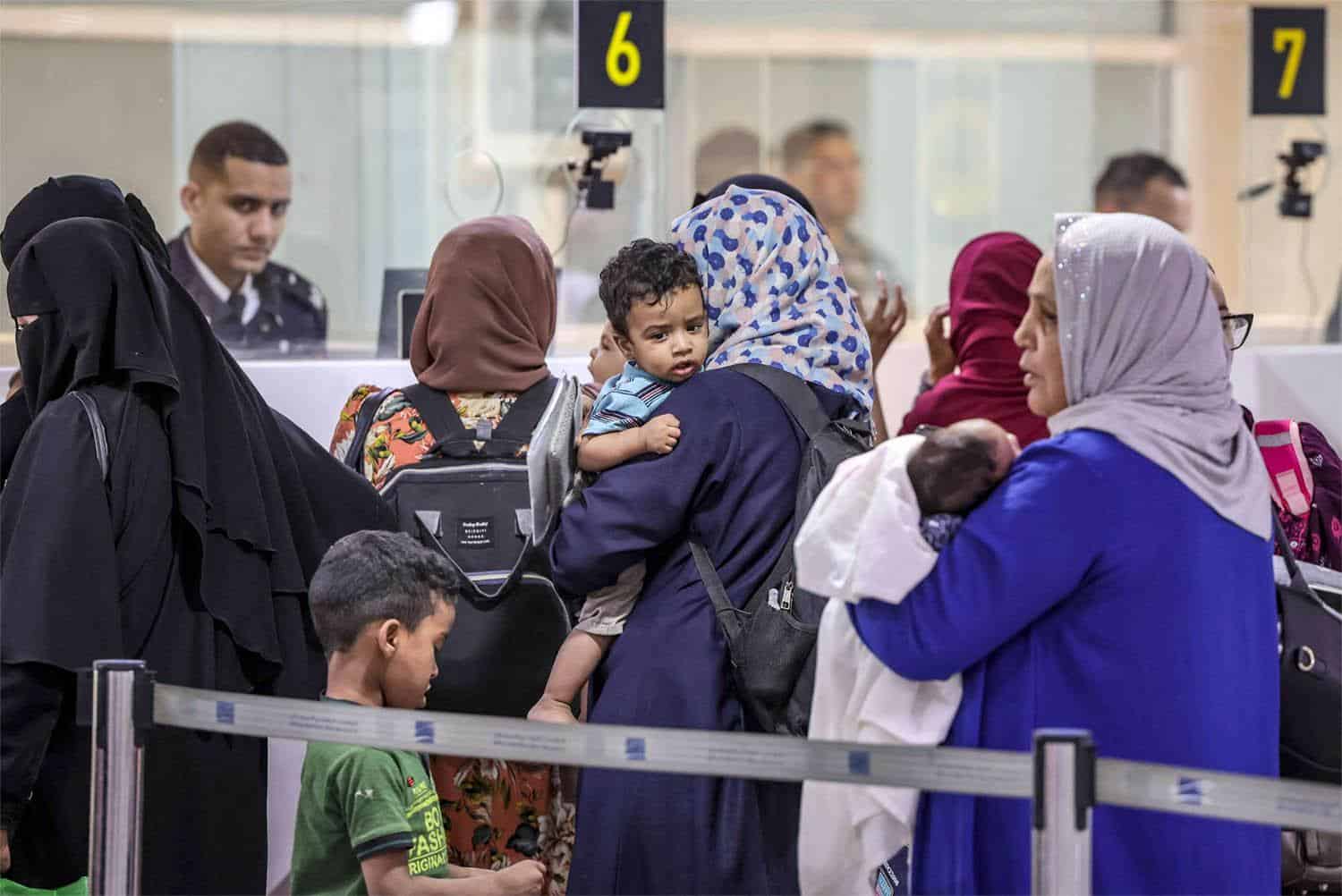
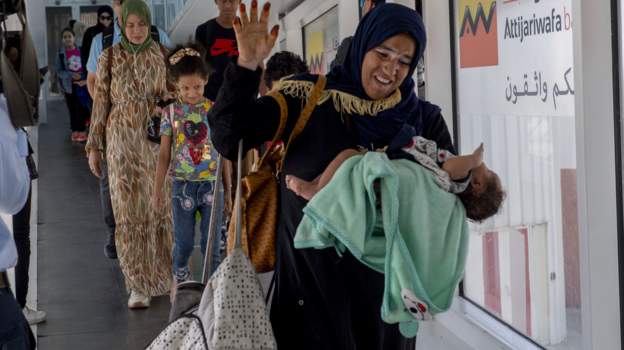
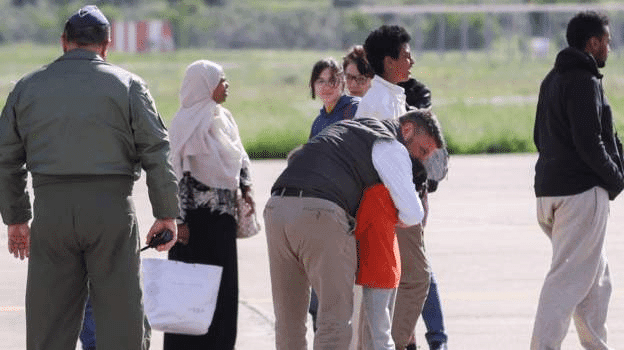
A second plane carrying 157 Moroccan nationals repatriated from Sudan arrives at Casablanca’s Mohammed V International Airport.
A second plane of Morocco’s flag carrier Royal Air Maroc coming from Sudan landed early Wednesday afternoon at Mohammed V airport, carrying 157 Moroccan nationals evacuated from Sudan, after the deterioration of the security situation in this country.
A first plane of RAM had arrived on Wednesday morning at Mohammed V airport, carrying 136 Moroccans from Sudan. Thus, the total number of Moroccan nationals repatriated from this sister country amounts to 293 people.
The evacuation of Moroccans from Sudan is taking place following King Mohammed VI’s instructions to ensure the repatriation of Moroccan nationals from this country in the best conditions.
On Monday, a statement by the Ministry of Foreign Affairs, African Cooperation and Moroccan Expatriates said that “following the recent events in the Republic of Sudan and the deterioration of the security situation in this brotherly country, King Mohammed VI has given His High Instructions to ensure the repatriation of Moroccan nationals from this country.”
“In accordance with the High Royal Instructions, the services of the Embassy of the Kingdom of Morocco in Sudan have, in a first phase, organized a land caravan from the capital Khartoum to the city of Port Sudan, which benefited more than 200 Moroccan nationals established in Sudan or whose presence in this country coincided with this difficult domestic situation,” added the ministry, specifying that this land caravan arrived Monday evening safely in the city of Port-Sudan.
At least 512 people have been killed and close to 4,200 wounded in nearly two weeks of conflict between the army and a rival paramilitary force – the Rapid Support Forces (RSF) – which are locked in a power struggle that threatens to destabilise the wider region.
The stories have changed significantly in recent years as women all around the world continue to break down barriers in professions that have historically been controlled by males.
From top positions in banks, the military, and the apex judicial courts of the world, among others, the new trend is the emergence of many women at the helm of affairs.
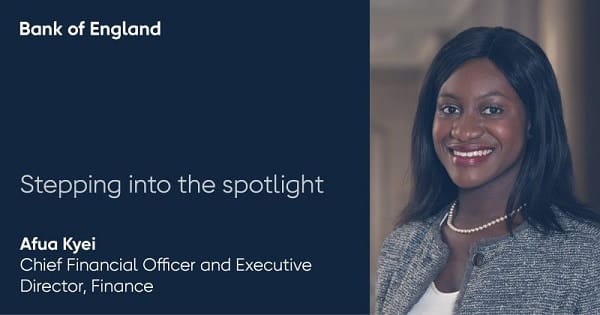
Joining the pack of these formidable women is a Ghanaian named Afua Kyei, who is the current Chief Financial Officer and Executive Director at the Bank of England-UK.
The 40-year-old rose through the ranks at the UK Central Bank after joining in 2019 and currently sits on a balance sheet of about 1 trillion pounds.
Afua Kyei also oversees the Bank of England’s Asset Purchase Facility Fund and its Alternative Liquidity Facility. She also serves as a Co-Executive Sponsor, leading the Bank’s approach to climate change and is focused on Diversity and Inclusion.
Her rise to the top position began in 2019 when she joined the Bank of England from Barclays Bank, where she served as a Finance Director from 2012-2019.
During her tenure at Barclays, Afua Kyei worked across three divisions; Group Operations and Technology, the Investment Bank, and later worked in the Retail Bank as Chief Financial Officer (mortgages).
Kyei was instrumental in the Strategic Cost Transformation Programme and was an Ambassador for Diversity and Inclusion for the Bank’s Group Finance Director functions.
Prior to joining Barclays, she held a Strategic Advisory position at UBS during its mergers and acquisitions. From 2007 to 2009, Kyei served as Investment Banker for UBS at its financial institutions’ group. She also covered the UK, Benelux, Central and Eastern Europe arms of the bank from 2009-2011.
Her diverse experience and roles occupied helped her to become part of the team that helped to provide advisory services to RBS during the financial crisis about its divestments mandated as part of European Union State Aid remediation, participation in HM Treasury’s £282 billion asset protection scheme and its capital issuance of £33.5 billion to HM Treasury.
Afua Kyei studied at Somerville College, Oxford University reading Chemistry and holds a Master’s degree. She was also awarded a Junior Research Fellowship honour by US-based Princeton University in Organic Chemistry.
Share some details of her personal journey in an article published on the BoE website, Afua noted that “Growing up, I wanted to be doctor and then decided to read Chemistry here in the UK at Oxford and specialised as an Organic Chemist. My thesis focussed on using organic synthesis to create anti-tumorous molecules that occur in nature.
I wanted to do research in the US and was awarded a Junior research fellowship in the US at Princeton. Then I decided I wanted to do something more fast-paced, so I changed paths and decided to move into the financial sector. I then went on to apply my problem-solving skills through building a career in banking and financial services in the private sector.”
She continued, “Fast forward, I joined the Bank of England as their CFO, four years ago. The reason I was attracted to the Bank, is because it was a wonderful opportunity for me to combine my innate desire to help people, whilst using my skills to do something purposeful in the public sector, helping society as a whole. My diverse set of experiences has helped me to shape my role as CFO and co-executive sponsor of DEI.”
“At the time I joined the Bank, I was the only executive of colour. I was 36, and was the youngest member of the executive team. I was the first black executive to be appointed in the 329 year history of the Bank. When I was appointed, Sir Bradley Fried was the Chairman, Mark Carney was the Governor. I was inspired by them and about what I had learned about the Bank – this drew me into the organisation. At the time, the CFO reported into the COO. Then, two years ago, Governor Andrew Bailey changed this and I now report into him directly,” Kyei recounted.
She further shared that striking a balance between her work and personal life is of grave importance to her adding that when she is not occupied with work, she enjoys spending time with her three children, family and friends.
Afua Kyei is a qualified Chartered Accountant (ICAS) with Ernst & Young in the UK.
She was recently named in the 2023 list of 100 Most Reputable Africans complied by Reputation Poll International (RPI), a leading global reputation firm.
A second plane conveying 157 Moroccan nationals repatriated from Sudan arrives at Casablanca’s Mohammed V International Airport after the deterioration of the security situation in the country
The evacuation of Moroccans from Sudan is taking place following King Mohammed VI’s instructions to ensure the repatriation of Moroccan nationals from this country in the best conditions.
On Monday, a statement by the Ministry of Foreign Affairs, African Cooperation and Moroccan Expatriates said that “following the recent events in the Republic of Sudan and the deterioration of the security situation in this brotherly country, King Mohammed VI has given His High Instructions to ensure the repatriation of Moroccan nationals from this country.”
“In accordance with the High Royal Instructions, the services of the Embassy of the Kingdom of Morocco in Sudan have, in a first phase, organized a land caravan from the capital Khartoum to the city of Port Sudan, which benefited more than 200 Moroccan nationals established in Sudan or whose presence in this country coincided with this difficult domestic situation,” added the ministry, specifying that this land caravan arrived Monday evening safely in the city of Port-Sudan.
Many famous people, like Judi Dench and Kylie Jenner, have tattoos. These 19 celebrities have elevated their level of dedication to body modification. Before getting tattoos, celebrities might be seen in photos.
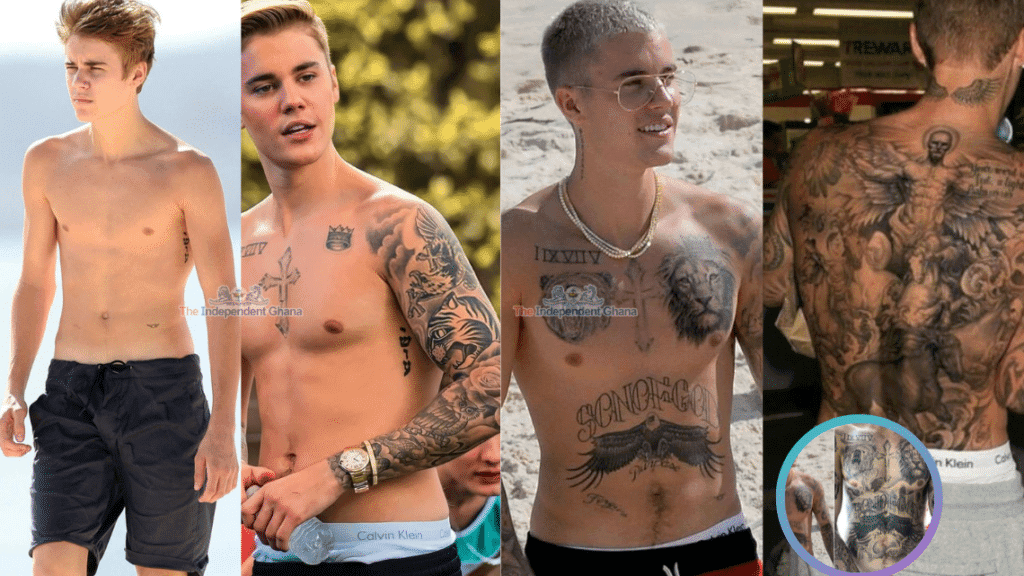
Justin Bieber says his tattoos took “over a hundred hours of hard work on my body and I wouldn’t take back a single one.”
Justin Bieber
He continued, “I ABSOLUTELY LOVE ART AND IVE MAde my body a canvas and it’s SO MUCH FUN,” alongside a shirtless image he shared to Instagram in 2018.
In addition to two complete sleeves and a covered chest, Bieber also has multiple tattoos on his legs and back. According to PopStarTats, he has at least 59 pieces of ink over his body.
Lady Gaga has multiple tattoos dedicated to her fans who call themselves Little Monsters.
Lady Gaga has at least 21 pieces of body art.
The singer has at least 21 tattoos. Among them she has a monster’s paw (an homage to her fans, whom she calls Little Monsters), a Mother Monster tattoo (also for her fans), and the words “Little Monsters.”
Besides honoring her fans, she has a portrait of David Bowie (one of her musical idols), and a trumpet to commemorate her time with iconic singer Tony Bennett — the two collaborated on 2014 album “Cheek to Cheek.”
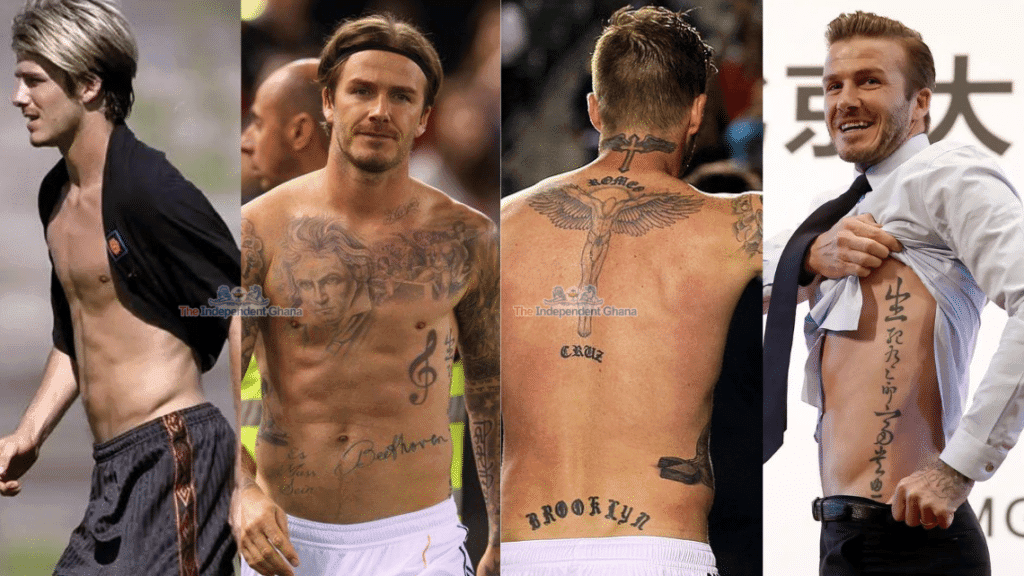
David Beckham’s body is truly his canvas — he has over 40 tattoos to prove it.
David Beckham.
The Daily Mail created a graphic to explain what each of Beckham’s 40 tattoos mean. Among them are his Sanskrit tattoo that translates to “Victoria,” two cherubs representing two of his sons Brooklyn and Romeo, “Pretty Lady” for his daughter Harper, and the Jay-Z lyric “Dream big, be unrealistic.”
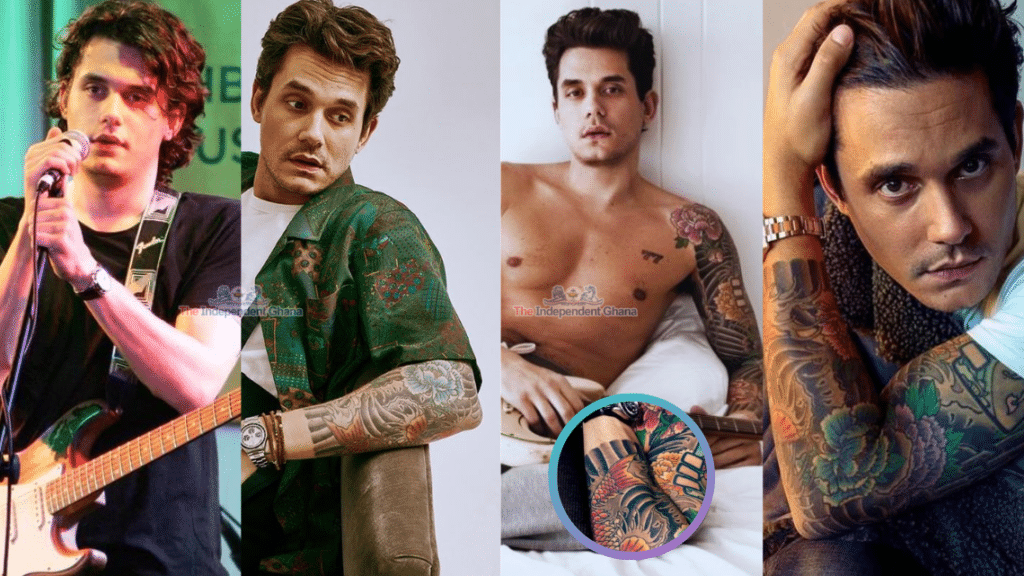
John Mayer started out with ink-free skin in the early 2000s, but he has since completed a full sleeve … and then some.
John Mayer, His sleeve was done in Japan.
Mayer’s largest and most famous tattoo is the sleeve that adorns his left arm. It was done by well-known Japanese tattoo artist Horimitsu, according to the artist’s Tumblr.
Mayer also has a 77 on his chest — he was born in 1977 — and the words “Life” and “Home” on the backs of his arms.
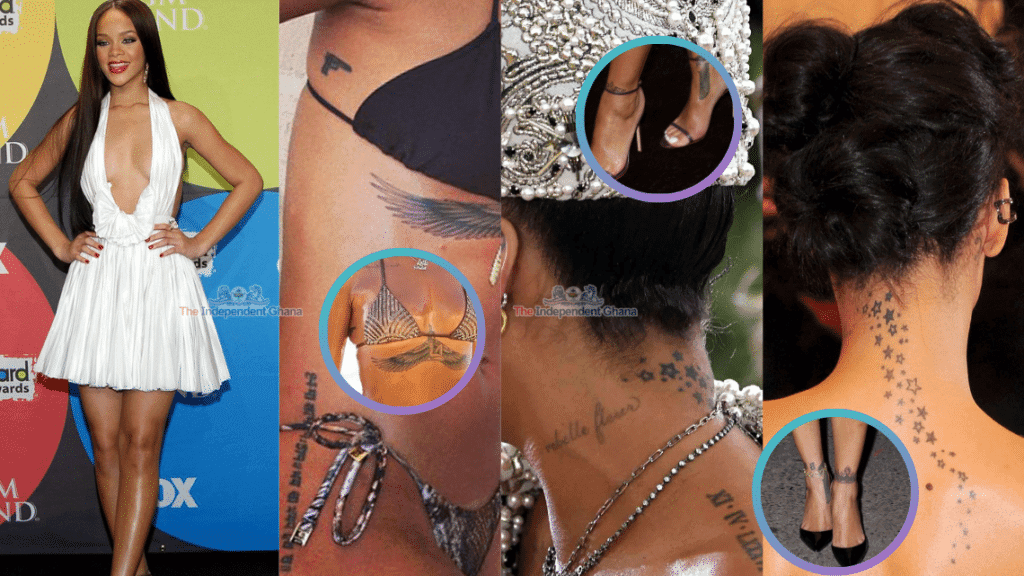
Rihanna has several envy-worthy tats over her body, but she wasn’t always like that.
Rihanna, then and now.
According to People, Rihanna has at least 25 known tattoos. Some of her most well-known are the goddess Isis on her chest, a little gun just above her rib cage, and a trail of stars on her neck and back. She also reportedly has a matching camouflage shark with rapper (and rumored then-boyfriend) Drake.
Rihanna is credited with putting tattoo artist to the stars, Bang Bang, on the map.
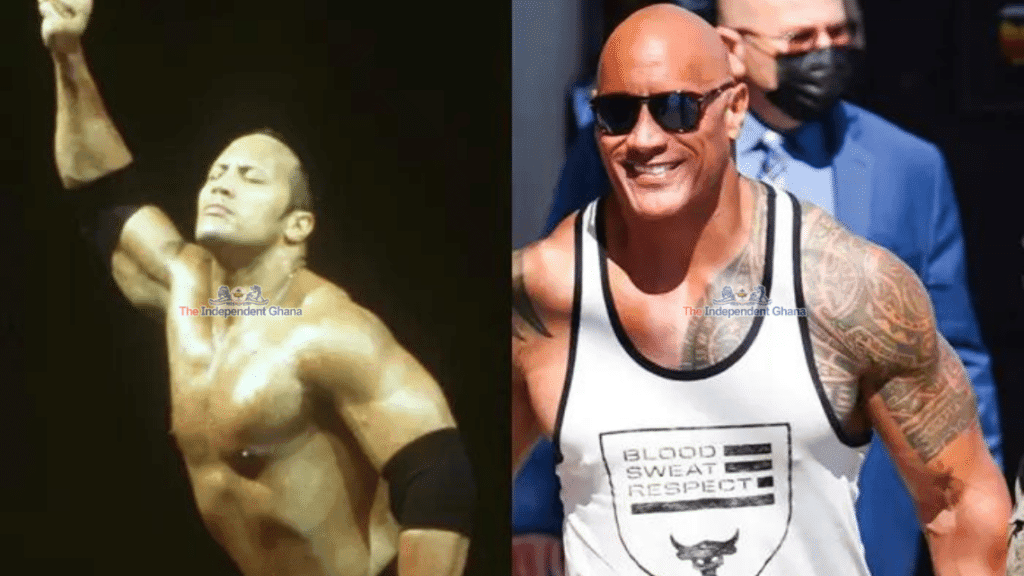
Dwayne “The Rock” Johnson’s huge shoulder piece honors his Polynesian heritage.
The Rock got his tattoo in Hawaii.
According to Johnson, his gigantic Polynesian tattoo took 60 hours to complete. He got it done while on a family trip to Hawaii, and took part in a Samoan tradition to have his family’s history drawn on his arm. His cousin joined him as well.
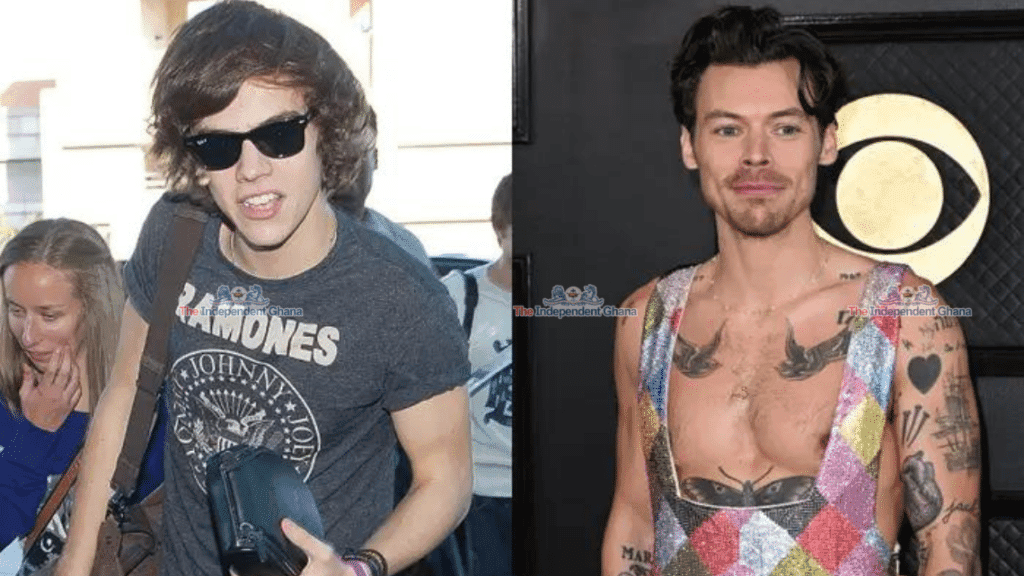
Harry Styles started off with a simple star tattoo, but he has grown his collection extensively over the past 10 years.
He’s shed his boy band image.
While he might not look that tatted up, the former One Direction singer has 67 tattoos, according to PopStarTats. However, most of them are very small, and he hasn’t tried to pull them together to form a cohesive sleeve.
Among the best known are the sparrows right below his collarbone, the butterfly on his chest, and a topless mermaid on his left arm. Styles also regularly covers up his tattoos in favor of new ones — he admitted to We Love Pop that “there are some that my friends have done and some that are just awful.”
He also famously got a “Late Late Show with James Corden” tattoo live on the air after losing the game Tattoo Roulette.
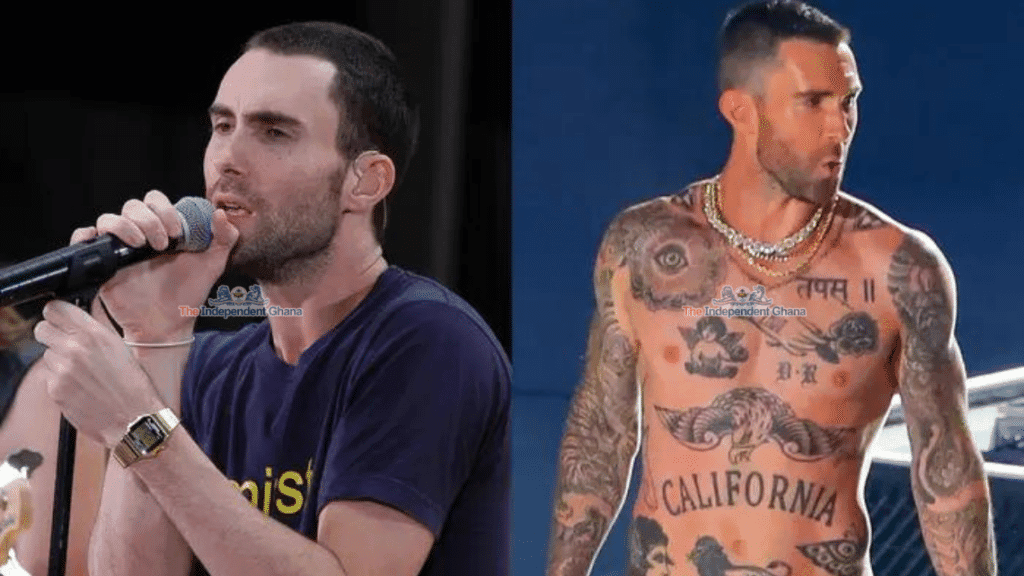
Adam Levine is truly covered in tattoos: He has two full sleeves, an entire back piece, and multiple chest and stomach tattoos.
Adam Levine’s body is his canvas.
Levine’s love of tattoos is no joke — a 2016 Instagram post revealed a huge back tattoo that he said was “six months in the making.”
But not all are that serious, like the string of pearls he has around his neck. Levine told Inked Magazine, “I was in Japan and I got this necklace. I’m not sure why I got it — I think I was bored.”
One of Demi Lovato’s first tattoos is her most famous: the words “Stay Strong” written across her wrists in large cursive.
Many of her tattoos are in honor of her journey through addiction, self-harm, and mental illness.
Lovato told iHeartRadio that her “Stay Strong” tattoos were her most meaningful, because she had them done right after getting out of rehab.
“A lot of fans were telling me that and it helped me get through a rough period,” she said. Lovato even named her documentary “Stay Strong” after the mantra.
She has around 20 pieces of ink, including 12 birds on her wrist representing the 12 steps of Alcoholics and Narcotics Anonymous.
Miley Cyrus has come a long way from her “Hannah Montana” days — now she’s covered in tiny tattoos.
Most of her tattoos are small — but there are many of them.
PopStarTats reports that Cyrus has a whopping 55 tattoos, ranging from a little version of Saturn to a large dream catcher.
She also has a jar of Vegemite inked on her, reportedly in honor of ex-husband Liam Hemsworth: The Australian snack is a favorite of the Aussie actor. Only time will tell if she chooses to cover it up.
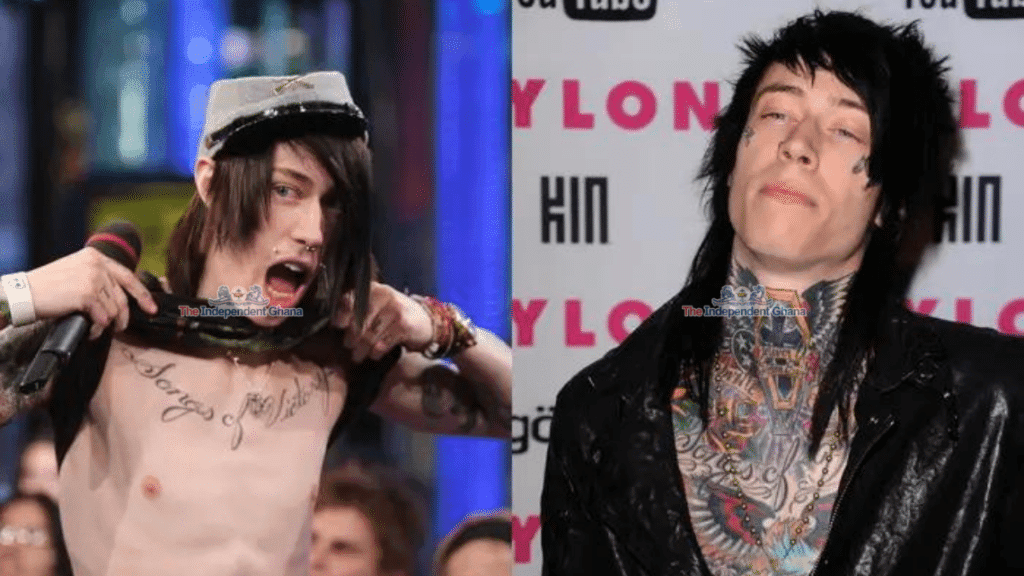
Miley’s not the only Cyrus sporting some serious ink. Her older brother Trace is completely covered from the neck down.
Even though he has some tattoos on the left, it’s nothing compared to today.
The “Metro Station” front man is basically a living canvas at this point … but it might not be exactly what he wanted. He tweeted in September 2014 that he was “so sad I ruined my body with all these stupid tattoos.”
Being the supportive little sister that she is, Miley immediately responded and called her brother “the coolest lookin [sic] dude I know.”
Former One Direction member Zayn Malik is another erstwhile boy bander with tattoos in the double digits.
Malik was the first member of 1D to get tattooed.
Originally seen as the “bad boy” of the group because he had a tattoo, it’s interesting to see how times have changed. PopStarTats reports that Malik has 62 tattoos, which puts him five behind former bandmate Harry Styles.
Ed Sheeran sports some seriously colorful body art.
Sheeran has many interesting tattoos.
The “Shape of You” singer has at least 60 tattoos, ranging from gigantic (like the lion’s head he debuted in 2015), to minuscule (a tiny Lego head) to downright confusing. Among the most head-scratch-inducing ink? A bottle of Heinz ketchup, the words “Galway Grill” (his music video co-star Saoirse Ronan purposefully spelled “girl” incorrectly), and a goat.
Paris Jackson has an eclectic mix of tattoos.
She’s the daughter of Michael Jackson.
In 2017, when she was 18, Jackson told Rolling Stone she had over 50 tattoos.
Jackson shared on Instagram in 2017 that she “see(s) ink as a way of changing for the better, always improving. they represent strength for me.”
Liam Payne may have fewer tats than most of his former One Direction bandmates, but he still sports a significant amount of ink.
Liam Payne.
While, at 22 tattoos, he doesn’t have as many as, say Miley Cyrus or Harry Styles, his pieces are much larger.
Payne almost has a complete sleeve reaching to his fingers, including an eye that reportedly belongs to his ex-girlfriend Cheryl, and the year of his birth (1993) running down the back of his arm.
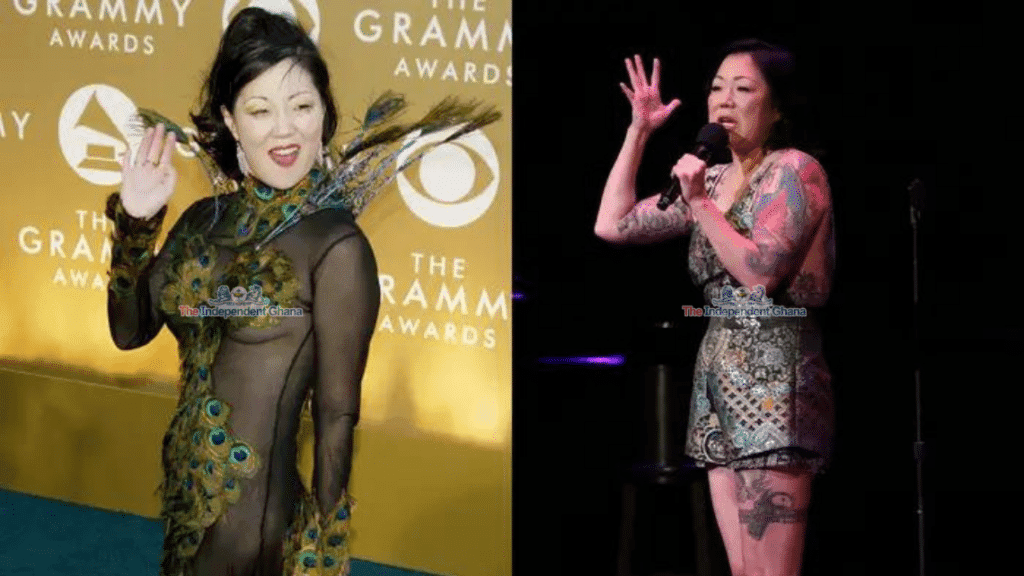
Comedian Margaret Cho’s first tattoo was by designer Ed Hardy.
Cho is a prolific comedian.
Cho shared with Tattoo.com that her first piece of body art — what she called a “huge back and ribs piece” — was done in 2004 by famed tattoo artist and clothing designer Ed Hardy.
Cho has a number of other unique tattoos, including presidents Washington and Lincoln on her kneecaps and a Medusa head with 13 snakes on her stomach.
One Direction’s Louis Tomlinson has over 30 tattoos scattered across his body, from his ankles to collarbones.
He also has a secret tattoo on his behind.
PopStarTats counts 36 tattoos on Tomlinson’s body. Though he was the last member of One Direction to start getting inked, he wasted no time in catching up. His pieces of body art are a bit similar to Harry Styles’: There’s really no overarching theme — they’re just a bunch of little doodles.
Among his tattoos, Tomlinson has a skateboarding stick figure, a steaming cup of tea, and the word “Oops!” along his left arm. But his biggest tat, the phrase “It Is What It Is” on his chest, isn’t visible unless he’s shirtless.
One of Tyler Posey’s first tattoos was worked into his role on “Teen Wolf.”
The two bands on his left arm were a plot on “Teen Wolf.”
Posey is covered in tattoos. Despite telling Teen Vogue he “tried not to do too many on my arms because of acting” he has two full sleeves.
While he normally shaves his arms so he can cover up his ink on camera, one of his first tattoos became a plotline on his former show “Teen Wolf.” His character, Scott McCall, decided he wanted to get a tattoo after he kept his word and didn’t talk to his ex-girlfriend all summer.
Posey had gotten the large tattoo without telling showrunner Jeff Davis, and they decided to work it into the show rather than have to cover it up all the time.
Angelina Jolie added multiple large tats to her back.
Angelina Jolie.
Jolie has gotten tatted, removed some ink, and then added even more to her back. Two of the large components on her bank were done by the Thai monk Ajarn Noo Kanpai, and were dedicated to her then-husband Brad Pitt.
It’s now becoming clearer how a Kenyan woman left her lucrative job in Qatar and returned to her home country of Kenya to join Pastor Mackenzie’s cult.
Judith Ajenta Charles is thought to have only recently joined the cult, a few weeks after her nine-year-old son passed away there.
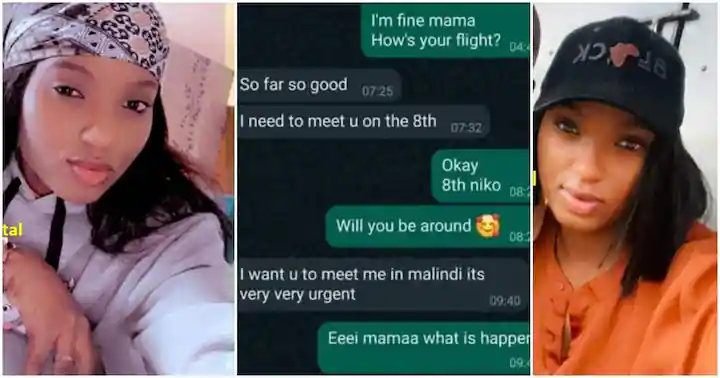
She contacted her friend days before joining the sect, and after they met, she left her with a necklace bearing her dead son’s name
Shakahole, Kilifi – It is now emerging that an air hostess who had a high-flying job in Doha, Qatar, is one of the people who sold everything and quit her career to join Pastor Mackenzie’s Kilifi cult.
Beatrice Ajenta Charles joined the church a few weeks ago, and her close friend Anna detailed how the woman quit her job and followed her parents to join the church for fasting, leading to tens of people’s deaths.
A report by Ghetto Radio indicated that the woman met her friend days before she went to Shakahole village for starvation premised on the promise to see Jesus as Mackenzie told his followers.
On April 4, 2023, an uneasy-looking Betty briefly met her close best friend Anna and left her with a necklace bearing her son Jason’s photo.
“See First” under the “Following” tab to see YEN.com.gh News on your News Feed!
“She never took that necklace off, no matter what. It was always on her neck. I called her back to let her know she had left it behind, but she asked me to keep it,” Anna said.
That would be the last time that Anna would see her friend Betty as her efforts to find out her whereabouts would be fruitless in the days that followed.
Betty’s sister Constance
Betty’s parents are believed to be senior members of Mackenzie’s church, and it is alleged they had Betty’s nine-year-old son Jason also starve to death. He died in March 2023.
Betty’s sister Constance Chao also quit her military job to join the cult, and her husband does not know if she is alive or dead.
“My wife too left her military job after her sister quit hers, and they left,” Abbas, Chao’s husband, who has been at the exhumation site hoping to find her and Betty alive, told the Standard.
Ghanaian pastor telling church members to pay $1000 for blessings gets completely ignored
Meanwhile, YEN.com.gh published earlier that a pastor had recently sparked massive conversations online after calling on a church congregation to offer their money up for blessings.
A video had him asking for $100, $500, GH₵2,000, and GH₵1,000, to which no one got up to give Many social media users took to the comments section to applaud the member for not giving out their money.
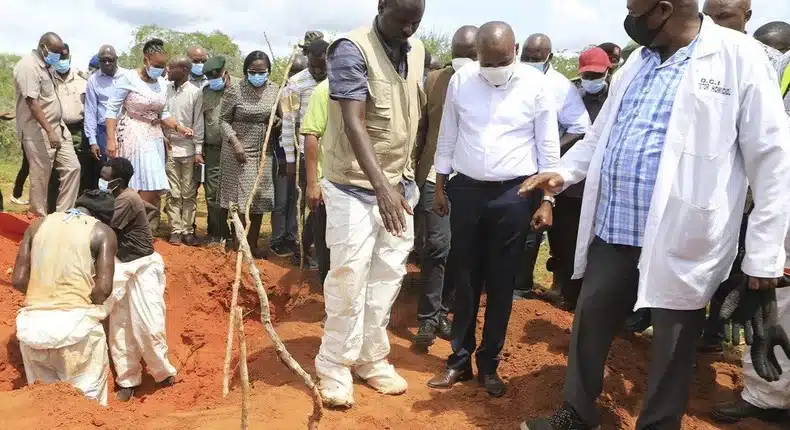
As the exhumation of bodies began its sixth day today, the local media reports that the General Service Unit (GSU) officer who served in Nairobi and his family are among those still missing.
A multi-agency rescue squad is currently camped on preacher Paul Mackenzie’s property in Kilifi looking for his followers who have been starving to death.
Isaac Ngala, 36 reportedly quit his military job to join Mackenzie’s church between 2019 and 2020 together with his wife, Emily Wanja, 25.
Emily’s sister, Winnie Wanje recounted how the soldier decided to stop working and convinced his wife that God hates working.
“He served as a GSU police officer in Nairobi and then suddenly left his employment without resigning and joined the church. He then convinced his wife to join the church by telling her that working was ungodly,” she is quoted to have said.
“The two are among many people who are missing. We were shocked when we established that the bodies of my sister’s two children had been exhumed.”
Ngala, after quitting the military job, relocated with his family to live on a piece of land that pastor Mackenzie donated to them.
During the fasting, as people were dying out of hunger, Emily’s father-in-law reportedly managed to escape from the forest on March 15 to disclose the happenings, compelling their family members to storm the forest to rescue them.
However, they only managed to rescue the couple’s eight-year-old son, who was on the brink of death after going for days without food, tuko.co.ke reports.
The unhappy family members returned home and reported the matter to the police, which triggered the ongoing intervention by the authorities and the exhumation of over 90 bodies from mass and single graves scattered across a large land belonging to the pastor.
A 40-day fast that was ostensibly intended to meet Jesus has led to the killing of nearly 90 church members of Kenyan pastor Paul Makenzi’s Good News International Church.
The search team in Kenya have been able to save 34 people and more searches are still being conducted.
Interior Minister Kithure Kindiki who visited the area said that the security team will expand the scope of the rescue mission to save as many lives as possible.
“The entire 800-acre (320-hectare) parcel of land that is part of the Shakahola ranch is hereby declared a disturbed area and an operation zone,” the minister is quoted to have said.
He added that the latest development has called for the need to crack the whip on religious bodies who are engaged in radicalism in the name of doing the work of God.
“We have cast the net wider to another religious organization here in Kilifi. We have opened a formal inquiry on this religious group and we are getting crucial leads that perhaps what was being done by Makenzi is the tip of the iceberg.”
The Kenya Red Cross Society’s latest finding reveals that no fewer than 213 members of the Good News International Church are missing.
The leader of the church, Paul Makenzi is accused of luring his followers to a ranch near the town of Malindi and telling them to fast to death in order to meet Jesus. He buries congregants who die during the process in shallow graves spread across his land.
However, his activities recently came to light and he was arrested after police raided the property earlier this month, He remains in police custody as investigations continue.
It is reported that the rescue teams digging at the ranch in question have been finding decomposed bodies buried in mass and single graves marked with a cross.
Interestingly, those members of the church who are believed to be living in mudwalled houses inside the ranch have been fleeing to avoid being rescued while mostly those who can’t walk or talk have been rescued so far, africanews.com reports.
Nollywood actor and director Frederick Leonard has take to social media to bemoan the persistent foul smell that comes from some actors while on set.
He queried why some individuals fail to use deodorants on a job that requires their constant movement and contact with others.
Frederick shared instances where he had to face people with body odour.
In his rant, he urged crew members to use deodorants, mint or gum to combat their poor hygiene.
Leonard wrote: “Any Human being That Has A FUNCTIONING BRAIN Wether Cast or Crew, should Use Deodorants. And touch up Again by 5. pm so you don’t begin to smell like rotten Goat.
“For a Profession that requires that we are Constantly on our Feet for a minimum of 14 hours, COMMON SENSE SHOULD APPLY.. And Let’s not Forget Mint or Gum to Fight Mouth Odor. Thank You.”
Thousands of moderators work behind the scenes on Facebook to weed out postings that violate its policies and shield viewers from graphic content. One moderator who is based in Kenya and suing Meta, the parent company of the BBC, has been reached by the BBC.
On his first day of work screening posts, South African Trevin Brownie watched a man take his own life.
“The problem was not [the taking of his own life]. The problem was the three-year-old boy that was in the video with this guy. So the boy was playing on the floor with these toys, like not even understanding what’s happening”.
It took two or three minutes for the child to realise something was wrong and to call out for his dad. He then started crying. Eventually an adult entered the room, and the recording was stopped.
“I felt sick. I, you know, I was vomiting because I didn’t understand why people would even do things like that,” Mr Brownie said.
In the course of his work, Mr Brownie would see the worst of humanity – from child abuse to torture and suicide bombings.
His experience, he believes, deadened his feelings. The tremor in his voice and his sympathy suggests he still cares deeply about others, but Mr Brownie believes part of his humanity is gone.
Image caption,Trevin Brownie
“Because I’m basically so much used to death and seeing death. It became a norm for me,” he says. Deaths no longer affect him as he feels they should.
Mr Brownie sees those who work in moderation as a front line of defence protecting users, especially during the pandemic, when many relied on the internet. The way Facebook connects people around the world also appeals to him.
Last month Sama laid off 260 moderators, including Mr Brownie, as it concentrated on work annotating videos to help train artificial intelligence computer vision systems.
“I sacrificed my human side for this job. I don’t think you can give any more than your soul, and then to be kicked out like this,” Mr Brownie said.
He is concerned about the future, as he and his fiancée hoped to get married, and his family in South Africa rely upon money he sends them.
Mr Brownie says he would have not taken the job if he had known what it involved, but feels it is important work he is good at, and where he earned promotion to a more senior role. He wants his employment to continue, but with more support for his mental health.
He is one of a group of 184 moderators, supported by the campaign group Foxglove, who are taking legal action against Meta, Facebook’s parent company, Sama, and Meta’s new contractor, Luxembourg-based firm Majorel.
Meta has sought to extricate itself from the action, but a ruling on Thursday now means it can be sued for unfair termination.
Cori Crider, a director at Foxglove, called the decision “a milestone” and said that “no tech giant, however wealthy, should be above the law”.
An interim ruling against Meta and Sama already means the moderators contracts cannot be terminated and they must still be paid until the case is decided.
The moderators say they were laid-off in retaliation for complaints about working conditions and attempts to form a union.
They also allege they were unfairly discriminated against and refused work at Majorel “on the basis that they previously worked at the [Sama] facility”, the petition to the court states.
Text messages shared with the moderators’ legal team, and seen by the BBC, show moderators interested in applying for a job at Majorel were told by a third-party recruiter that: “The company will not accept candidates from Sama. It’s a strict no.”
Meta has declined to comment, citing continuing legal action. But the company requires its contractors to provide round-the-clock on-site support with trained practitioners, and access to private healthcare from the first day of employment.
Majorel declined to comment while legal action was continuing.
A Sama spokesperson told the BBC that it paid moderators fair, local living wages that were among the top 12 paying jobs in Kenya.
It said it provided “extensive mental health services, including on-site licenced and trained mental health professionals, a 24-hour hotline and virtual consultations. In addition, employees are free to see a mental health professional of their choosing using the healthcare benefits”.
Its wellbeing service will continue for 12 months after the last day of employment.
Sama said accusations against the firm have proved to be untrue, which was why “former moderators are suing to keep their jobs – other companies offer a fraction of the pay and benefits compared to Sama”.
The BBC has also seen emails sent to Sama from a small number of moderators, expressing their frustration that the injunction means the company cannot pay termination benefits such as free flights to home countries. Two emails praise working conditions at Sama, and one person voices their unhappiness at the court action.
In February, a Kenyan court ruled that Meta could be sued by ex-moderator Daniel Motaung over claims of poor working conditions.
Meta also faces legal action in Nairobi concerning allegations its algorithm helped fuel the viral spread on social media of hate and violence during Ethiopia’s civil war.
Jury members who had stopped showing up to court because they had not received their allowances for 13 months have returned to work after the strike was called off.
After making a partial settlement with their underpaid allowances last week, they returned to court this week.
On April 18, persons who were seconded by their respective institutions to serve as jurors to assist the Judicial Service of Ghana resolve high-profile cases at the High Court abandoned their duties over 13 months of unpaid allowances.
They complained that, since March 2022, their allowances have been outstanding, making it impossible for them to commute to and from the court.
On Tuesday, April 25, the jurors are back in court serving their duties in the various murder cases.
EIB Network’s Legal Affairs Correspondent, Murtala Inusah, who is in court, reports that the jurors have so far been paid about four months of their allowances.
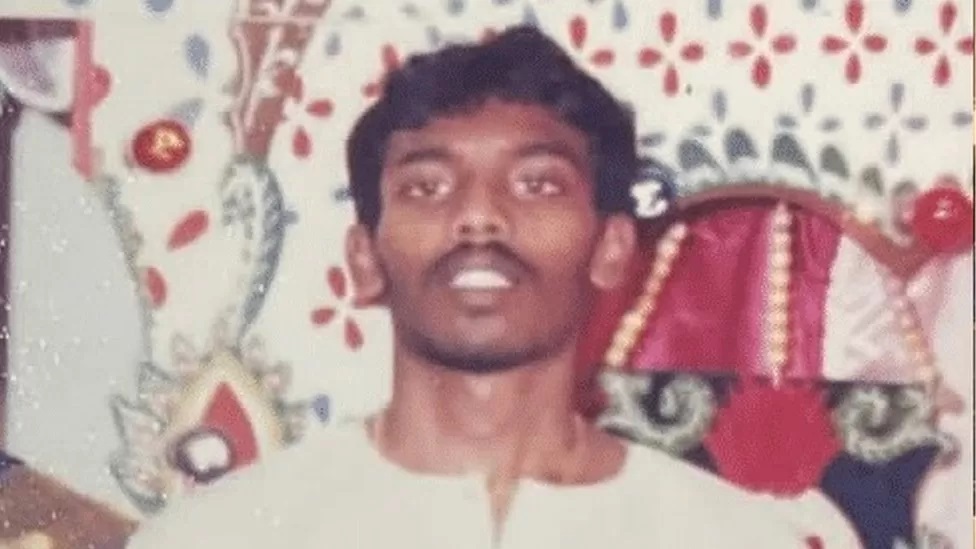
In the most contentious execution to date, Singapore is about to hang a man for trafficking marijuana.
Activists say Tangaraju Suppiah was convicted on weak evidence. Authorities say he received due process, and have scheduled his execution for Wednesday.
It follows a high-profile execution last year of an intellectually impaired man over a drugs charge.
Singapore has some of the world’s toughest anti-drug laws, which it says are necessary to protect society.
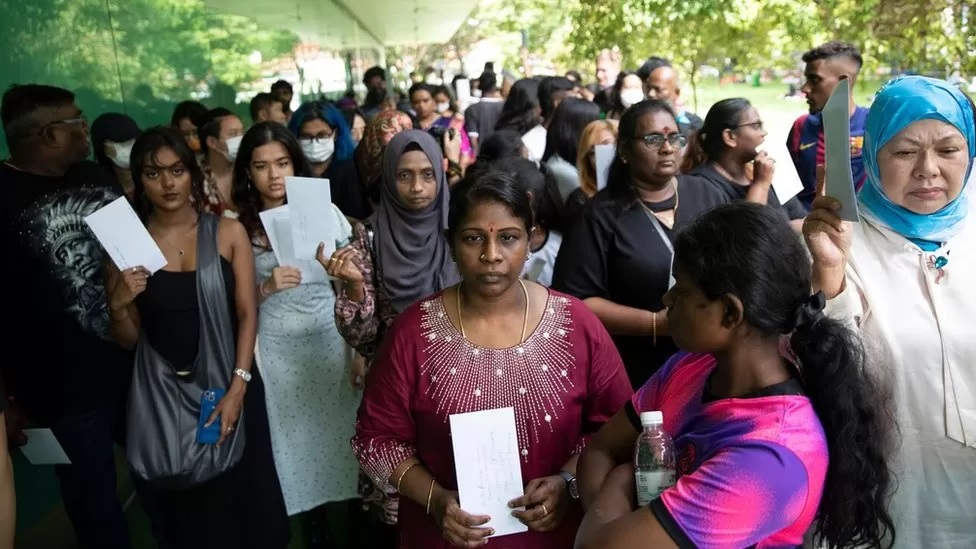
In recent days his family members and activists delivered letters to Singapore’s president Halimah Yacob in a last-minute plea for clemency, while British billionaire Sir Richard Branson has called for a halt of the execution and a review of the case.
Tangaraju Suppiah has appealed for a stay in his execution.
“I know that my brother has not done anything wrong. I urge the court to look at his case from the beginning,” Tangaraju’s sister, Leela Suppiah, told reporters at a news conference.
Tangaraju, 46, was convicted of “abetting by engaging in a conspiracy to traffic” over a delivery of 1kg (35oz) of cannabis from Malaysia to Singapore in 2013.
Though he was not caught during the delivery, prosecutors said he was responsible for coordinating it, and traced two phone numbers used by a deliveryman back to Tangaraju.
Tangaraju claimed he was not the person communicating with others connected to the case. He said he had lost one of the phones and denied owning the second one.
Singapore law mandates the death penalty for drug trafficking and has lesser penalties for couriers. In Tangaraju’s last appeal, the judge agreed with the prosecution that Tangaraju was responsible for coordinating the delivery, which made him ineligible for a more lenient sentence.
Activists have also raised concerns that Tangaraju was not given adequate access to an interpreter and had to argue his last appeal on his own since his family was unable to secure a lawyer.
Singapore authorities say Tangaraju requested for an interpreter only during the trial, and not earlier. They added that he had access to legal counsel throughout the process.
Tangaraju’s sister Leela Suppiah (centre) marched with activists on Sunday
Sir Richard, who previously criticised the 2022 execution of mentally disabled Nagaenthran Dharmalingam, said Tangaraju’s case was “shocking on multiple levels”.
In a blog post, he said Singapore “may be about to kill an innocent man” on the back of “more than dubious circumstances”.
“The death penalty is already a dark stain on the country’s reputation. An execution following such an unsafe conviction would only make things worse,” he said.
Rebutting his allegations, Singapore’s Home Affairs Ministry said his claims were untrue and accused him of “disrespect for Singapore’s judges and our criminal justice system”.
It said the death penalty was “an essential component” in a multi-pronged approach that has been “effective in keeping Singapore safe and secure”.
Kirsten Han, a spokesperson for Singaporean anti-death penalty advocacy group the Transformative Justice Collective (TJC), said the government did not want to appear to buckle under pressure.
But, she added, “of all the things that Singapore punches above its weight for on the international stage and at the UN, defending its right to murder people in the name of its citizens is not something we should be proud of for being outstanding on the international stage”.
Singapore’s strict rules stand in contrast to some of its neighbours’ recent moves. Thailand has legalised the trade of cannabis while Malaysia has ended the mandatory death penalty for serious crimes.
Speaking to reporters on Sunday, Tangaraju’s family members said they were able to meet him from behind a glass partition at Changi Prison after his notice of execution was released last week.
“He puts up a brave front for my mother because he does not want her to break down,” his niece Subhashini Ilango said. “He has mentally prepared for this day to come. He does feel there’s a great injustice and he’ll be executed for something he did not do.”
His family said they would continue to press for reforms in Singapore’s legal system even if Tangaraju ends up executed.
“If such an injustice happens to my brother, I wouldn’t want it to happen to anybody else so I will continue to fight,” said his sister Leela.
South Africa may postpone the deadline for closing many of its highly polluting coal-fired power plants, according to President Cyril Ramaphosa, as the country struggles with debilitating daily electricity shortages.
South Africa may delay shutting down many of its highly polluting coal-fired power stations, President Cyril Ramaphosa said Monday, a move that could stem a crisis of daily electricity blackouts but would slow a shift to greener energy sources.
South Africa is Africa’s most developed economy but is experiencing rolling nationwide blackouts, sometimes for more than 10 hours a day, because of an electricity shortfall. The blackouts, which have become worse over the past year, have been deeply damaging to the economy and to the popularity of Ramaphosa’s government ahead of national elections next year.
Under the new plan, which Ramaphosa outlined only broadly in his weekly letter to the nation, South Africa will consider a delay in the decommissioning of some of its 14 coal plants to help ease the electricity cuts, known as “load-shedding.”
About 80% of South Africa’s electricity is provided by coal. The nation is the world’s 16th-largest emitter of greenhouse gases overall, at about 1.13% of global emissions, and 45th per capita based on 2019 data, according to ClimateWatch.
“In some cases, it may be necessary to re-examine the timeframe and the process of decommissioning or mothballing of coal-fired power stations temporarily to address our electricity supply shortfall,” Ramaphosa wrote. “Few would argue that we should close down power stations even as we experience load-shedding.”
The blackouts are cutting electricity to South African homes and businesses and its 60 million people several times a day, usually in two-hour blocks.
Ramaphosa wrote that South Africa was still committed to the world’s climate targets but had to balance that with its energy security requirements and the immediate priority of ending, or at least reducing, the power cuts. He pointed out that South Africa wasn’t the only country leaning on coal to address short-term energy supply problems.
“A number of countries in Europe that had decommissioned or mothballed their fossil fuelled power stations are recommissioning them to address the current energy shortage as a result of the conflict between Ukraine and Russia,” Ramaphosa wrote.
Extending the life of the coal stations would throw scrutiny on South Africa’s Just Energy Transition policy, for which it has already received pledges of $8.5 billion from the United States, Britain, France, Germany and the European Union to help phase out fossil fuels.
Under the policy, South Africa has committed to reducing its reliance on coal for its electricity by at least 50% by 2035. It says it will need at least $84 billion to complete the transition to “net zero” carbon emissions from its electricity generation by 2050.
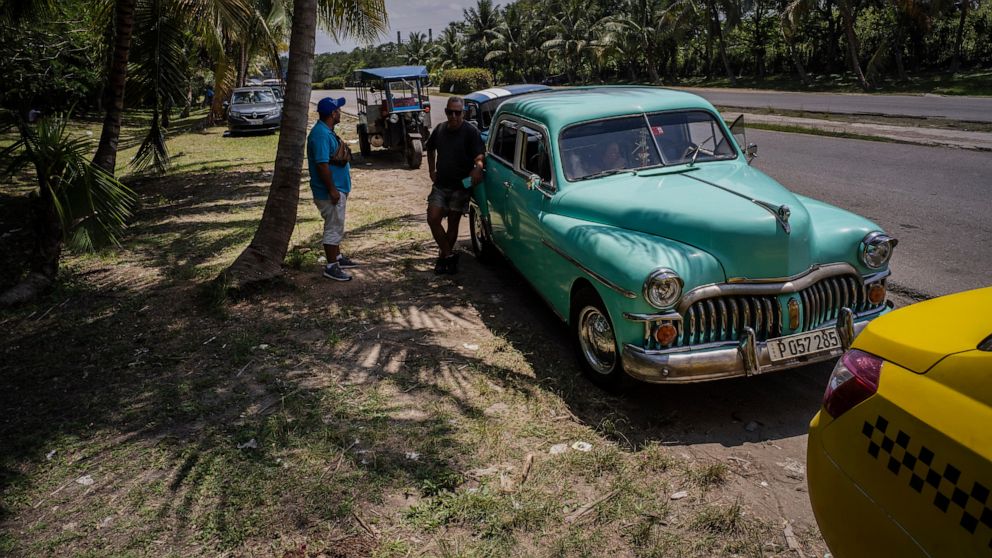
Cuba’s fuel supply problem has worsened considerably, with authorities now halting some activities and restricting supplies after days of citizens lining up in enormous lines to buy gasoline.
The government of Cuba has severely restricted the sale of gasoline, suspended events including a performance by the national symphony, and moved some university sessions online due to severe fuel shortages.
Cubans have experiences shortages of all kinds of goods amid the recent economic crisis but the cancellation of activities because of fuel shortages had not been reported previously. The cancellations come following days of long lines to get gasoline at filling stations.
Experts say the lack of gasoline and diesel is not due to a lack of crude oil — Cuba produces about half of what it needs and buys the rest from other countries – but to the difficulties refining it.
“There is no lack of crude oil in Cuba,” said Jorge Piñón, senior research fellow at the University of Texas at Austin’s Energy Institute.
He said Venezuela is selling Cuba a similar amount of crude or even slightly more than it did last year. Cuba has also received oil from Russia, though details of these agreements are unknown.
Piñón said Cuba in April also received two tankers from Mexican state oil company Pemex carrying 300,000 barrels of crude oil each.
He blamed he shortages on technical production problems in the refineries, which were built in 1957.
Cuban authorities have not given a specific reason for the shortages, but in previous days have mentioned difficulties with “inputs,” which Piñón said could refer to an additive Cuba gets from Iran needed to refine Venezuela’s heavy crude.
The fuel shortages started being critical this weekend.
On Monday afternoon, the commercial director of the state-owned Cubapetroleo, Lidia Rodríguez, warned there are low levels of “refineable crude.”
Meanwhile, authorities in Villa Clara said in statement published on the government’s Facebook page that fuel will only be sold to drivers of cars licensed to operate as public carriers and provide basic services, i.e. ambulances, and vehicles used in emergencies or burials.
Universities in the provinces of Villa Clara, Holguín, Sancti Spíritus and Universidad Agraria de La Habana said that starting Monday classes will be temporarily online.
On Sunday, a concert by the Cuban National Symphony in the capital’s main theater was canceled due to lack of fuel.
Despite reports of fresh gunfire and shelling, the Sudanese ceasefire appears to be holding.
The fighting started on April 15 and this is the fourth attempt to put an end to it.
US Secretary of State Antony Blinken said the 72-hour truce had been agreed between the army and the paramilitary Rapid Support Forces (RSF) after 48 hours of negotiations.
The latest ceasefire attempt started at midnight (22:00 GMT on Monday).
There have also been reports of warplanes flying over Khartoum, but civilians are back on the streets of the capital.
At least 459 people have died in the conflict so far, though the actual number is thought to be much higher.
Both sides have confirmed they will cease hostilities.
But Tagreed Abdin, who lives 7km from the centre of Khartoum, said she could hear shelling from her home on Tuesday morning despite the agreement.
“The situation right now is that this morning there was shelling and gunfire,” she told the BBC.
“Obviously the ceasefire hasn’t taken,” she added.
In other developments, the World Health Organization (WHO) has warned there is a “high risk of biological hazard” after fighters seized a laboratory believed to be holding samples of diseases including polio and measles.
Since the violence began, residents of Khartoum have been told to stay inside, and food and water supplies have been running low.
The bombing has hit key infrastructure, like water pipes, meaning that some people have been forced to drink from the River Nile.
Countries have scrambled to evacuate their diplomats and civilians as fighting raged in central, densely populated parts of the capital.
There will be hopes the ceasefire will allow civilians to leave the city. Foreign governments will also hope it will allow for continued evacuations out of the country.
Egypt’s foreign ministry said on Monday that an attaché had been killed while driving to the embassy in Khartoum to help with the evacuation of Egyptian citizens.
EU foreign policy chief Josep Borrell also confirmed on Monday that more than 1,000 EU citizens had been evacuated.
South Africa, Kenya and Uganda are among the African nations to have announced the evacuation of their citizens.
The UK government has announced it will begin evacuating British passport holders and immediate family members from Tuesday.
On Monday, Mr Blinken said that some convoys trying to move people out had encountered “robbery and looting”.
The US, he added, was looking at potentially resuming its diplomatic presence in Sudan but he described the conditions there as “very challenging”.
Sudan suffered an “internet blackout” on Sunday amid the fighting but connectivity has since been partially restored, according to monitoring group NetBlocks.
The UN is bracing for up to 270,000 people to flee Sudan into neighbouring South Sudan and Chad.
Hassan Ibrahim, 91, is among those to have already fled the country. The retired physician lives near the main airport in Khartoum, where some of the worst fighting has taken place, but has since made the perilous journey into neighbouring Egypt with his family.
He told the BBC World Service’s Newshour programme they had escaped being caught up in a firefight between RSF fighters and the army but that a van travelling behind them had got hit. The family then boarded a bus to the border, which took 12 hours, only for them to be met by “crowded and chaotic” scenes as people waited to be given entry.
“There were so many families with elderly passengers, children and babies,” said Mr Ibrahim. “The Sudanese are fleeing the country – it is a sad reality.”
Eiman ab Garga, a British-Sudanese gynaecologist who works in the UK, was visiting the capital with her children when the fighting began and has just been evacuated to Djibouti on a flight organised by France. Her hurried departure meant that she was not able to say goodbye to her ailing father, her mother or her sister.
“The country is dirty, there’s rubbish all over it,” she told BBC Radio 4’s World Tonight programme. “There’s sewage overflowing, it smells, so now we’re next going to have an outbreak of illness and disease, and there won’t be a hospital to go to there.”
“We’re just looking at death and destruction and destitution.”
Violence broke out primarily in Khartoum, between rival military factions battling for control of Africa’s third largest country.
This came after days of tension as members of the RSF were redeployed around the country in a move that the army saw as a threat.
Sudan: The basics
Sudan is in north-east Africa and has a history of instability: The military toppled long-time leader Omar al-Bashir in 2019 after mass protests
It then overthrew a power-sharing government in 2021, putting two men at the helm: The head of the army and his deputy, who is also the head of a paramilitary group called the RSF
They disagree on how to restore civilian rule to Sudan: The RSF leader claims to represent marginalised groups against the country’s elites but his forces were accused of ethnic cleansing
What is going on in Sudan? A simple guide
Since a 2021 coup, Sudan has been run by a council of generals, led by the two military men at the centre of this dispute – Gen Abdel Fattah al-Burhan, the head of the armed forces and in effect the country’s president, and his deputy and leader of the RSF, Gen Mohamed Hamdan Dagalo, better known as Hemedti.
They have disagreed on the direction the country is going in and the proposed move towards civilian rule.
The main sticking points are plans to include the 100,000-strong RSF into the army, and who would then lead the new force.
Gen Dagalo has accused Gen Burhan’s government of being “radical Islamists” and that he and the RSF were “fighting for the people of Sudan to ensure the democratic progress for which they have so long yearned”.
Many find this message hard to believe, given the brutal track record of the RSF.
Gen Burhan has said he supports the idea of returning to civilian rule, but that he will only hand over power to an elected government.
Diplomatic sources in the region and in Sudan has revealed that the Russian mercenary company Wagner has been delivering missiles to the Rapid Support Forces of Sudan to help them in their conflict with the national army.
The sources said the surface-to-air missiles have significantly buttressed RSF paramilitary fighters and their leader Mohamed Hamdan Dagalo as he battles for power with Gen. Abdel Fattah al-Burhan, Sudan’s military ruler and the head of its armed forces.
In bordering Libya, where a Wagner-backed rogue general, Khalifa Haftar, controls swathes of land, satellite imagery supports these claims, showing an unusual uptick in activity on Wagner bases.
EU sanctions Wagner subsidiary in Sudan after CNN investigation into gold exploitation
The powerful Russian mercenary group has played a public and pivotal role in Moscow’s foreign military campaigns, namely in Ukraine, and has repeatedly been accused of committing atrocities. In Africa, it has helped to prop up Moscow’s growing influence and seizing of resources.
Dagalo and Burhan had been jockeying for power in negotiations over restoring civilian leadership in Sudan before talks broke down, erupting into some of the worst violence the country has seen in decades.
The fighting has claimed hundreds of lives and deprived millions of people from electricity, water and food.
One of the NPP big wigs Joseph Albert Quarm, mentioned in the IMCIM ‘galamsey’ report, has has denied the assertions made in the report that he obtained extensive mining concessions and sold them to private parties.
The said report titled: “Report on the IMCIM and the way forward”, is reported to have been authored in 2021 by former Minister for Environment and Science, Prof. Kwabena Frimpong-Boateng and presented to President Nana Addo Dankwa Akufo-Addo through the Chief of Staff.
Reacting to the report on Citi FM’s eyewitness news and monitored by the medi, the former member of parliament for Manso Nkwanta, stated that the content of the report implicating him are false.
“…Totally lies, in the first place, do I own a concession? let alone twelve or twenty-four or multiples of concessions, I do not own a concession, he said.
“Secondly, once I don’t have a concession, how can I sell a concession to someone indeed, he who alleges must prove,” he insisted.
According to Joseph Quarms, the former minister must come out publicly to accept ownership of the report and to provide the evidence that proves same.
“To me, once he has not accepted on your station that the report is from him, I can’t say much but if indeed he has accepted that the report is from his outfit, the for a mining concession, you must have documents covering it, bearing my name Joseph Albert Quarm,” he further stated.
He also dared Prof Frimpong-Boateng to produce documents that bear his name as claimed by the report.
“I will rather advise that your station should request from him to produce all the documents bearing my name for mining purposes,” he challenged.
What the report said about Quarm’s involvement:
It is on records that the activities of some senior members of the NPP accounted for the anger at the community level.
Hon. Joseph Albert Quarm, the former MP for Manso Nkwanta exemplifies such individuals. This member of Parliament for the Manso Nkwanta Constituency in the Ashanti Region and at the same time member of the board of the Minerals Commission.
He used his position as a member of the Minerals Commission to acquire several dozens of large-scale concessions in his district, ostensibly for community mining purposes. He ended up selling these concessions to private individuals, including party member for two thousand Cedis per concession.
This infuriated the party in the constituency so during the 2020 primaries to select a candidate the electorate voted against Hon, Quarm, the sitting MP, who was more resourced that the other candidate.
Although there were allegations that he “camped” delegations and attempted to bribe them, he lost to a lesser-known individual who did not have any financial muscle.
The New Patriotic Party (NPP) candidate for the Kumawu seat has stated his unwillingness to participate in the upcoming election.
Yaw Baah indicated this following his approval by the vetting committee for himself and some 5 others to contest the seat out of 8 persons who had picked up nomination forms.
In a statement, Lawyer Baah indicated his plans to expand his ‘political breath’ to the national front rather than limit himself to Kumawu.
According to him, he projects a bigger role in NPP’s vision to ‘Break the 8’ and wants to work towards that.
“Having considered my political status and pedigree within the larger family, I have come to the conclusion that the last atom of my ‘political breath’ should be at the disposal of the national front, rather than at the periphery of Kumawu,” he wrote on Thursday, April 20 to the chairman of his party’s by-election committee.
“I see myself as a great player in the scheme of things as far as ‘Breaking the 8’ mantra is concerned. I believe the interest of my beloved Kumawu will be better served, if I stay outside and help unify our party in the Constituency,” he said. Mr. Baah’s close contender in the 2020 elections, Private Legal Practitioner, Edward Osei has also withdrawn from the race.
Addressing the media on April 19, 2023, Mr. Osei who had dual citizenship from both Ghana and the United States of America (USA) said his decision to withdraw follows concerns by his party – NPP, about his renunciation.
Mr. Osei who had begun processes to renounce his U.S citizenship however said the process would have been completed before the set date by the Electoral Commission for him to prove his eligibility.
“To prove my eligibility to contest in this by-election, I will have to prove that by May 5, 2023, which is about 2 weeks from now, and therefore under the law and the constitution of Ghana, no one could have disqualified me during the vetting. On April 4, 2023, I started the process with the US Embassy to begin the renunciation process.
“I was supposed to have my final interview for renunciation today (19th of April 2023). I also received an email from the USA, the overseas Citizens bureau that once I finish my renunciation process and all goes well, I will have my certificate of renunciation within 3 working days meaning that, by April 24 or 25, I would have received my certificate and have enough time to complete my documentation before the EC deadline of May 5,” he said.
Mr. Osei however noted that he had been massively supported for the position while apologizing to his supporters who may be disappointed by his decision.
“Data indicated that I had the majority of the support of delegates. In addition, at a meeting held just last week, the constituency executives, patrons, and council of Elders, endorsed me as their preferred candidate for this primaries. This they did due to my hard work in the constituency and the love and support I have built with the delegates.
“I also want to apologise to the people of Kumawu and all the thousands of my supporters all over the world who wanted to see me as MP,” Mr. Osei said.
Meanwhile, Yaw Baah has endorsed Obaatanpa Serwaah who is also in the race as a preferred candidate. Mr. Osei on the other hand has thrown his support for all other candidates vying for the position of Kumawu Member of Parliament.
The NPP plans to elect its candidate for the May 23 by-election following the death of Philip Basoah.
The Private Health Facilities Association of Ghana (PHFAoG) has called out health minister, Mr. Kwaku Agyeman-Manu, as the cause of the National Health Insurance plan (NHIS) issue that has forced them to charge their patients money even though they are covered by the plan.
The association says its members were expecting the minister to praise them for surviving to date despite the government’s inability to pay their accrued claims after providing healthcare to the Ghanaian patients.
Hon Kwaku Agyeman-Manu at a stakeholder conference in Kumasi while addressing the Ghana Health Insurance Service Senior Managers and other stakeholders, accused health facilities of extorting money from patients though they are subscribers of the scheme
He revealed that he has also been a victim at the Ridge Hospital and the University of Ghana Medical Centre where he was asked to pay money for receiving medical care.
“From the end-user point of view, it looks like the health insurance is not working. I am a patient and I know what it is,” Mr. Kwaku Agyeman Manu said.
However, responding to Mr. Kwaku Agyeman-Manu on Angel FM in Kumasi the Private Health Facilities Association of Ghana rejected claims by the minister saying he is the cause of the problem and asked the minister to praise them instead.
“The issue is very funny and interesting. He should have rather praised all of us for surviving till this date when people are able to access health care so that we will all come together and think of how we are going to put a stop to the top-ups and other things. Most of the problems come from his side not us. What measure has he as the Health Minister put in place to make sure we stop these activities,” Mr. Samuel Donkor, Vice President of the Private Health Facilities Association of Ghana (PHFAoG) has said.
The association argued that, since the government is not paying them the required services and prices of drugs, they have no option but to charge an extra amount from their patients because they cannot run their facilities at a loss.
The president of the United Arab Emirates (UAE) and ruler of Abu Dhabi, Sheikh Mohamed bin Zayed Al Nahyan, arrived in South Africa on Wednesday, April 19, along with his family and other staff members.
Their arrival in the Eastern Cape province was widely reported by major media outlets that said he had landed on a US$1.1 million runway he built with his own money.
South Africa’s News24 portal reported: The wealthy ruler is in the country along with an entourage of 500, including other members of the UAE royal family, staff and top artists who are expected to perform for the family to mark the end of Ramadan.
The royal family and their guests are said to have brought their own furniture, cars and gym equipment for their two-week stay in the Eastern Cape, the report added.
The ruler of Dubai was the last to arrive and was met by Prince Sheikh Khalid bin Mohamed bin Zayed Al Nahyan, members of the UAE royal family, staff and artists, who landed at Bulembu Airport near Bhisho on Sunday, Monday and Tuesday respectively.
More details from News24 report: UAE president lands in Eastern Cape on R20m runway he built for himself and his entourage.
Al Nahyan touched down in the royal private jet on Wednesday at around 14:00 and was immediately airlifted in one of five choppers that he brought into the country on a cargo plane.
One of the choppers is an air ambulance, the protection unit will use another, one transports the president, while the other two have supplies.
A government official said: “We accepted 500 people in the Eastern Cape since Sunday. This is because the president brought his family and staff, including protectors, doctors and entertainers. On Wednesday alone, we had 15 air traffic movements at the airport. I can confirm that there has been no single incident since Sunday, and we did not compromise any air traffic regulations.”
Highly placed sources claimed Al Nahyan would spend two weeks at a private game resort he built from scratch earlier this year after buying a big piece of land in the province two years ago.
While many have been left stunned by the landing of international flights at an airport that was decommissioned for passenger travel decades ago, News24 can reveal that the UAE ruler’s private jet, cargo jet and UAE airlines used the airport because the size of the aircrafts are too big for the runway and turning circle at Chief Dawid Stuurman International Airport in Gqeberha. The Gqeberha airport is the Eastern Cape’s only international port of entry by air.
The UAE ruler requested to land at an airport near his Eastern Cape resort.
Bulembu Airport, which was the only airport of the Ciskei homeland, was decommissioned in the 1990s. It was the only airport with the potential for improvements that would meet the standards of the UAE planes in the province.
The International media has reported that South Korea has made an announced that it will send a military aircraft to rescue its citizens who are currently living in Sudan.
According to the agency, which cited security sources, the plane carrying dozens of military and medical personnel is scheduled to leave later today.
Twenty-five South Korean citizens are stuck in Sudan but are known to be safe, media say.
More than 330 people have so far been killed in Sudan’s power struggle that began last weekend.
Despite the paramilitary Rapid Support Forces (RSF) declaring they were ready to follow a three-day ceasefire with the army to coincide with the Muslim holiday of Eid, sporadic fighting is still occurring in the capital of Sudan, Khartoum.
The UN and several countries have been trying to persuade the two sides to agree to a truce.
The RSF said it had been forced to act in “self-defence” to repel what it described as a coup attempt – but it would abide by the truce.
The army chief, Gen Abdel Fattah al-Burhan, made no mention of a ceasefire in a pre-recorded speech that has been posted on the army’s Facebook page.
He said he remained committed to restoring Sudan to civilian rule, and called for everyone to abide by the slogan “One army, One people”.
The anti-gay bill that was approved by parliament a month ago will now be sent back to the house for further review, according to Uganda’s ruling party.
At a meeting with President Yoweri Museveni, who is the party chairman, the MPs resolved on “proposals for improvement” to the bill, according to a statement from the caucus chairperson of the National Resistance Movement (NRM).
The bill prescribes life imprisonment for people identifying LGBT and the death penalty for what is referred to as aggravated homosexuality, among other clauses.
It is not yet clear what amendments the president would like to be made to the proposed law.
When legislation is passed by parliament, the president has about a month to sign it, veto it or return it to the MPs for amendment and re-tabling.
On several occasions, President Museveni has said the topic of homosexuality needs more discussion and understanding.
The bill was passed with majority support from across the ruling party and the opposition.
The ruling party dominates parliament – and their position on any legislation always prevails.
Critics have argued that the law promotes homophobia, is against the country’s constitution and that anyone suspected to be LGBT will be affected.
Jews lived on the Arabian Peninsula, which is located northeast of Africa on the Arabian Plate and contains nations like Kuwait, Qatar, Saudi Arabia, and the United Arab Emirates (UAE), before Christianity and Islam took hold there. Trade allowed Judaism to spread to Africa.
African Jews, also called the Beta Israel community, believe they are descended from King Solomon and the Queen of Sheba. There are many interesting and little-known facts about them. Here are five interesting facts about this interesting group:
African Jews have a long and complex history.
Some historians think that the Beta Israel community is made up of the descendants of ancient Israelite tribes who moved to Ethiopia, while others believe they may have become Jewish in the Middle Ages. What is certain is that the Beta Israel have lived in Ethiopia for many centuries and have kept their own culture and religion even though they have been persecuted and treated badly for many years.
African Jews have their own unique traditions and practices.
Even though they believe and act in many of the same ways as other Jewish groups around the world, the Beta Israel have made their own traditions over the centuries. For example, they use a version of the Jewish calendar that is different from what Jews use, and they have their own language for worship called Ge’ez. They also have a long history of folk music, dance, and stories. These things are important parts of their culture.
African Jews faced significant persecution and discrimination.
Even though the Beta Israel have lived in Ethiopia for a long time, the Christian and Muslim groups that make up most of the country have often ignored and mistreated them. In the 1970s and 1980s, they were treated very badly by Mengistu Haile Mariam’s communist government. Many of them were moved to cities against their will and were not allowed to go to school or get a job.
African Jews have experienced a mass migration to Israel.
In the 1980s and 1990s, tens of thousands of Beta Israel moved to Israel. Under the Law of Return, they were given citizenship. But moving to Israel and becoming part of Israeli society was not always easy, and many African Jews had a hard time getting used to life in a new place.
African Jews are making important contributions to Israeli society.
With many of its members holding significant positions in politics, business, and the arts, the Beta Israel community in Israel is now well-established and flourishing. The history and customs of African Jews have recently attracted increased interest, and groups like the Association for the Research of Ethiopian Jewry and the Center for Jewish Ethiopian Heritage are seeking to protect and advance this unique cultural heritage.
A Nigerian singer, Iyanya, has opened up on why he hasn’t yet married a woman yet.
The 36-year-old claims that he is still single because of his fear of marriage stemming from his early experiences.
He made this known in a recent chat with popular media personality, Chude Jideonwo.
Iyanya said: “To be real here, I pray to God for a beautiful home. It’s not easy because my experiences as a child have made it difficult for me to just settle for anything.
“It’s not that I don’t want to get married or be in a serious relationship, but marriage is scary for me. At the end of the day, you just have to do it, but I don’t stop praying for a beautiful marriage and a beautiful home.”
He added that he jokes with his friends that one day someone will come out and say he has a baby somewhere.
In a gunfight with police on Thursday during a foiled cash theft, nine alleged robbers, according to South African authorities, were slain.
As the suspects were en route to attacking a vehicle carrying money in the morning, a police tactical response squad tracked the group to an address in Sebokeng, a township south of Johannesburg, according to police.
“A shootout ensued,” police spokeswoman Athlenda Mathe said. “A total of eight suspects were certified dead at the scene while the ninth suspect died in hospital”.
Three others were wounded and had been taken for treatment at a nearby medical facility.
The group was believed to be behind a spate of cash heists on armoured security trucks in Johannesburg’s Gauteng province and surrounding areas.
Six rifles, explosives “ready to be detonated” and four vehicles were seized at the scene, Mathe said.
Robbers often target vehicles transporting cash in crime-ridden South Africa.
Earlier this week, two bystanders were killed and one wounded after they were caught up in a robbery in Benoni, east of Johannesburg, and randomly shot at.
Celebrity South African doctor Nandipha Magudumana has been in the news for her role in the Thabo Bester case.
Dr. Magudumana is facing charges of murder and aiding the convicted rapist and murderer Bester’s escape from the Mangaung Correctional Centre in Bloemfontein last May.
But who is Dr. Magudumana?
Before the scandal, Magudumana was adored by many and acknowledged as a celebrity doctor in South Africa.
Born in Bizana, a small town in the Eastern Cape, in 1989, she dreamed of being a doctor from age six. In her teen years, Dr. Magudumana moved to KwaZulu-Natal in Port Edward, where her mother raised her.
She attended Port Edward Primary School and then went to Port Shepstone High School.
Shortly after finishing high school, Dr. Magudumana began her tertiary journey in Johannesburg, enrolling at Wits University.
After several years of studying, she obtained a BSc in Health Sciences from the university. She went on to study medicine at Wits, where she got a Bachelor of Medicine and Bachelor of Surgery in 2013.
Married
She got married to Dr. Mkhuseli Magudumana the same year. But the current status of their relationship is unknown.
It did not take long for Dr. Magudumana to find employment at Edenvale Hospital where she worked between 2014 and 2015 before moving to the Far East Rand Hospital in 2016.
The following year, she opened Optimum Medical Solutions in Morningside, Sandton. The skincare and aesthetic clinic specialises in non-surgical treatments.
The doctor also founded another business named VitaPush and co-owns Arum Holdings, which deals with healthcare consultancy and IT services.
Lavish lifestyle
Known for her lavish lifestyle, luxury mansions and cars, the famous doctor was on the Mail & Guardian 200 Young SA, SADC Top 100 Young Leaders 2018, and Top 20 Most Influential Young South Africans 2018.
She was known for keeping her social media followers updated on events in her life. Not too long ago, she posted video clips of her lavish birthday celebrations and that of her two daughters, attended by her celebrity friends.
With a successful life, many are wondering when and how the doctor met Bester.
Modelling agency
It is said that Dr. Magudumana first came across the “Facebook rapist” Bester back in 2006 as a student at Wits. According to reports, Bester oversaw a modelling and promotions agency, where Dr. Magudumana became one of the promo girls.
That was where their relationship started. But the pair lost contact in 2011 as the doctor married Dr. Mkhuseli.
A few years later, in 2020, news broke that Dr. Magudumana revealed she got engaged to Bester in an affidavit. In 2021, it was reported that the couple established a property renovation firm, Arum Properties.
But in May that year, the Health Professions Council of South Africa (HPCSA) suspended the doctor from medical practice.
The HPCSA had previously said Magudumana had been suspended for “failure to pay annual fees when they were due on 1 April 2021”.
Abusing women
With the couple’s lives seemingly going well, it was discovered that Bester, through his modelling agency, was abusing women. He committed more crimes, such as rape and murder.
He was sentenced to life in prison at the Mangaung Correctional Centre.
Visits to prison
It did not take long for Dr. Magudumana to reach out to Bester in jail, and she started visiting him in prison.
On May 3, 2022, Bester, who was said to be living his best life in jail, was declared dead while at the Mangaung correctional facility.
Three days later, a body alleged to be that of Bester was collected from the state mortuary by Dr. Magudumana, who argued that she was his customary wife.
But a post-mortem confirmed that the body was not Bester’s. The latter had faked his death in a prison fire and fled to Tanzania with the help of Dr. Magudumana.
It is alleged that the celebrity doctor played a significant role in planning Bester’s escape. She is said to have stolen three unidentified bodies from Free State mortuaries, two of which are believed to have been reserved for Bester’s last failed prison break attempts. The third body was allegedly used as a decoy and remains unidentified.
After the prison escape from Mangaung Correctional Centre in Bloemfontein in May 2022, the couple lived in hiding for almost a year until they were spotted in Sandton City at Woolworths, with Ground Up reporting that they were shopping together with the doctor’s daughter.
Escaped to Tanzania
In March 2023, Dr. Magudumana and Bester escaped to Tanzania, leaving behind the doctor’s two daughters who were in school at the time — and their Hyde Park mansion. The school is said to have informed the doctor’s estranged husband to pick up the girls.
The fugitives were arrested two weeks ago in Tanzania and returned to South Africa last Thursday on a private charter flight.
They have already appeared in court, with Dr. Magudumana appearing on Monday at the Bloemfontein magistrate’s court.
While her father, Zolile Sekeleni, who is accused of aiding Bester to escape from prison was granted bail, the doctor, along with two other accused, remain in custody.
They will return to court in May for their formal bail applications.
Groundbreaking activist and photographer whose work contributed to the “Black is Beautiful” movement, Kwame Brathwaite of the 1960s has passed on.
He was a trailblazer in both activism and photography, born on January 1st, 1938, to Barbadian immigrants living in Brooklyn, New York,
The family later moved to Harlem and eventually settled in South Bronx, where he attended the School of industrial art (Now the High School of Art and Design).
Kwame Braithwaite, whose works have remained the subject of increasing interest from curators, historians, and collectors, died on April 1, 2023, at age 85. His son Kwame Brathwaite, Jr. announced his demise via an Instagram post, “I am deeply saddened to share that my Baba, the patriarch of our family, our rock and my hero has transitioned. Thank you for your love and support during this difficult time.”
According to The Art Newspaper, Kwame noted two moments that drew him to photography – in August 1955, when 17-year-old Kwame encountered David Jackson’s photo of brutalized Emmett Till in an open casket, and in 1956 when he (Kwame Brathwaite) saw one of his school friends capturing images in a dimly light club without a flash.
“Everyone knows the phrase “Black is beautiful,” but very few have heard of the man who helped to popularize it. Brooklyn-born black photographer, Kwame Brathwaite, lived most of his life behind the camera, devoted to capturing the lives of others on film. Spending much of the 1960s in his tiny darkroom in Harlem, he perfected a processing technique that made black skin pop in photographs, with a life and energy as complex as that decade.
Known by friends and comrades as the “Keeper of the Images,” Brathwaite logged thousands of hours in the darkroom, often dipping his fingers into harsh developing chemicals. His labor reflected his deep commitment to black freedom and radical cultural production. With every dip, measurement of solution, and timing of exposure, Brathwaite styled blackness to perfection.
He co-founded the African Jazz Art Society and Studios (AJASS) with his brother, Elombe. By the early 1960s, using photography and AJASS as a platform, he began to push back against the Eurocentric beauty standards, using the Grandassa Models – young Black women whom he photographed, celebrated, and accentuated in photographs; thus helping define the “Black is Beautiful movement.
AJASS organized “Naturally ‘62” – a 1962 fashion show in a Harlem club known as the Purple Manor, featuring the Grandassa models, which ran for three decades until 1992. He also got married in 1966 to Sikolo – one of the Grandassa Models.
By the 1970s Kwame shifted focus to other forms of popular Black acts, photographing many notable Black musicians. In 1974, he traveled to Africa alongside the Jackson Five to cover the music group’s tour and photograph the historic “Rumble in the Jungle” boxing match between Muhammad Ali and George Foreman in the area known today as the Democratic Republic of Congo. He also captured many beautiful images of Nina Simone, Stevie Wonder, Sly and the Family Stone, Bob Marley, and other music icons.
In subsequent decades, he continued developing his craft, exploring more opportunities, and promoting the Black essence through his camera. Kwame joined the Philip Martin Gallery roster in Los Angeles and continued his career until his retirement in 2018. His health began deteriorating in 2021 until he died in April 2023. His latest exhibition, “Kwame Brathwaite: Things Well Worth Waiting For,” is currently on display at the Art Institute of Chicago until July 24.
Egyptians are furious with the movie streaming service Netflix because Queen Cleopatra VII is portrayed as a black African.
The portrayal appears in the docudrama series African Queens on Netflix.
Only the trailer of the series has been released attracting the anger but producers are standing their grounds on their decision on choice of actress for the role.
People from across the Egyptian society are using formal and informal channels to channel their grievance including a lawyer who filed a complaint that accuses Netflix of violating media laws and aiming to “erase the Egyptian identity”.
A top archaeologist insisted Cleopatra was “light-skinned, not black”.
The producer defended the depiction stating: “her heritage is highly debated” and the actress playing her, Adele James, told critics: “If you don’t like the casting, don’t watch the show.”
Jada Pinkett Smith, the American actress who was executive producer and narrator, was meanwhile quoted as saying: “We don’t often get to see or hear stories about black queens, and that was really important for me, as well as for my daughter, and just for my community to be able to know those stories because there are tons of them!”
About Cleopatra – BBC content
Cleopatra was born in the Egyptian city of Alexandria in 69 BC and became the last queen of a Greek-speaking dynasty founded by Alexander the Great’s Macedonian general Ptolemy.
She succeeded her father Ptolemy XII in 51 BC and ruled until her death in 30 BC. Afterwards, Egypt fell under Roman domination.
The identity of Cleopatra’s mother is not known, and historians say it is possible that she, or any other female ancestor, was an indigenous Egyptian or from elsewhere in Africa.
An Accra High Court has accepted the confession, caution, and charge statement in the case involving the main suspects in the deaths of JB Danquah-Adu and Vincent Bosso, both of whom were former members of parliament from Abuakwa North.
The suspect, Daniel Aseidu, aka Sexy Don Don, admitted to stabbing the late MP during a confrontation, when he visited his residence.
The DailyGuide Newspaper on April 19, 2023, stated that statements of evidence, were accepted by the court by Justice Lydia Osei Marfo.
She noted that evidence was provided voluntarily by the accused, despite arguments from his lawyers that they were tortured into doing so.
According to the paper, video evidence was captured while interrogating the accused and reconstructing the scene at the residence of the late MP.
Background:
The substantive trial of Asiedu and Vincent Bossu has been on hold since July 2022.
The substantive trial of the case in which Daniel Asiedu alias Sexy Don Don is facing the charge of murder has been restored after nine months following the conclusion of the mini trial.
The Criminal Division of the Accra High Court on July 19, last year, put the substantive trial on hold for a mini trial after lawyers of Asiedu and Vincent Bossu accused the police of coercing them into giving statements without their will.
Justice Lydia Osei Marfo, the presiding judge after hearing testimonies from the investigator, independent witnesses and upon hearing the accused persons’ testimonies ruled that, the statements given to the police by the accused persons were voluntarily taken.
“I have looked at the various statements tendered by the prosecution as well as evidence of prosecution witnesses,” the court said.
“I have also considered the defence of both accused persons and I hereby ruled that the statements the accused persons offered to the police which were tendered during the mini trial by the prosecution was made voluntarily by the accused persons,” Justice Lydia Osei Marfo ruled.
“They were not coerced by the police to make any statements, neither were they promises any favours before they voluntarily gave their cautioned or charged statements.
“The objection by the defence in respect of the cautioned statements not being voluntarily taken is overruled,” Justice Marfo stated after nine months of mini trial.
It was the case of Sexy Don Don that the investigators subjected him to various degree of threat, coercion, intimation and violent abuse for him to accept whatever was thrown at him.
He also accused the investigators of forcefully holding his hands to sign those statements and also pushing him into thumb-printing them.
He, therefore, urged the court not to admit those statements which were going to be tendered into evidence by Chief Inspector Augustine Nkrumah, the eighth Prosecution Witness.
But, his allegations were strongly disputed by the Prosecution led by Mrs Sefakor Batse, a Principal State Attorney, who called the investigator, and independent witnesses who were present when those statements were taken to court to testify.
It was the case of the prosecution during the mini-trial that the accused person voluntarily gave his statements to the police in the presence of an independent witness who in turned explained to him in the language he understood.
The prosecution pointed out the inconsistencies in the testimonies of the accused person during the cross examination.
Vincent Bossu, the second accused, who has been charged together with Asiedu for abetment also gave a similar account and was subjected to cross-examination. Sexy Don Don is also separately facing the charge of robbery.