Author: Amanda Cartey

  • Natural gas flaring costs Ghana $169 million – 2022 PIAC report

    Natural gas flaring costs Ghana $169 million – 2022 PIAC report

    The upstream petroleum industry lost a total of 25.3 billion cubic feet (bcf) of natural gas worth around $169 million through flaring.

    The 2022 Annual Public Interest Accountability Committee (PIAC) Report on Management and Use of Petroleum Revenue has revealed.

    The volume of gas flared in 2022 increased by 19.3 per cent compared to a volume of 21.2 bcf recorded in 2021.

    This constituted about 10 per cent of the total 253.56 bcf of both Associated Gas (AG) and Non-Associated Gas (NAG) produced from the three oil fields of Jubilee, Sankofa Gye-Nyame (SGN) and Tweneboa-Enyenra-Ntomme (TEN).

    According to the energy think tank, African Centre for Energy Policy (ACEP) in a report titled ‘The state of the energy and extractive sectors of Ghana: Critical reforms required for sustainable economic recovery,’ about 47 billion cubic feet (bcf) valued at $300 million was lost to flaring between 2019 and 2021.

    The Civil Society Organisation observed that the gas was flared at a time when domestic consumption of processed gas, known as liquefied petroleum gas (LPG), was growing exponentially, leading to increased imports.

    Aside the economic loss of flaring, the activity is known to have a negative environmental impact and is a contributor to global warming.

    Gas flaring is the burning of natural gas associated with oil extraction. It is regarded as a waste of a valuable natural resource that could either be used for productive purposes, such as generating power or conserved.

    Meanwhile, the PIAC report, launched on April 20, 2023, noted that compared to the 2021 volume of 256.26 bcf of raw gas produced, the total production for 2022 represented a production decrease of 7.7 per cent.

    Based on invoiced amounts on Gas from the Jubilee and TEN Fields, where the export volume of 31.6 bcf translated to US $211.5 million, it is estimated that flaring of 25.3 bcf of gas had resulted in a loss of about $169 million.

    Speaking at the launch, Nasir Alfa Mohammed, the Vice Chair of PIAC, said the flaring of gas keeps occurring due to inadequate investment and lack of facilities to store and utilise the commodity.

    The report further indicated that the SGN Field, relatively gas-concentrated, produced the highest volume of combined AG and NAG of 129.39 BCF while the Jubilee and TEN Fields produced 68.48 bcf and 55.68 bcf respectively.

    A breakdown of the report revealed that gas production from the SGN field recorded an increase of 6.4 per cent from 121.6 bcf in 2021 to 129.39 bcf in 2022.

    Meanwhile, the total gas flared for the period was 3.56 bcf, while a volume of 52.87 bcf was utilised as injected gas with a total of 67.9 bcf of gas exported to Ghana National Gas Company (GNGC) and 4.07 bcf used as fuel.

    In the Jubilee fields, gas production decreased by 2.9 per cent from 70.53 bcf in 2021 to 68.48 bcf in 2022.

    Also, a volume of 17.43 bcf representing 25 per cent of the total gas produced was injected for pressure support while a total volume of 3.76 bcf, representing 5 per cent of the total gas produced was used to power gas turbine generators.

    A volume of 11.41 bcf, representing 17 per cent of the total gas produced was flared on the Kwame Nkrumah (KNK) Floating Production Storage Offloading Vessel (FPSO) while 35.88 bcf representing 52 per cent of gas produced was exported to GNGC.

    It was also highlighted that gas production on the TEN Field declined by 13.2 per cent from 64.13 bcf in 2021 to 55.68 bcf in 2022.

    About 68 per cent of gas produced in the field totalling 38.03 bcf was used as gas injection for pressure support while a volume of 10.33 bcf, representing 19 per cent of the total gas produced was flared.

    A volume of 3.78 bcf of gas, representing 7 per cent of the produced gas was also exported to GNGC and a volume of 3.53 bcf, making up 6 per cent of produced gas was used for fuel.

  • Ato Essien pays GHS4m to state as A-G prepares conviction motion for prosecution  – Report

    Ato Essien pays GHS4m to state as A-G prepares conviction motion for prosecution – Report

    Former CEO of Capital Bank, William Ato Essien, has taken action to avoid going to jail for failing to pay the state the agreed-upon sum of GH$20 million after entering into a plea agreement.

    Essien has made a payment of GH¢4 million to the state which makes 20% of the agreed sum.

    The Attorney-General, a week ago, filed a motion praying an Accra High Court to impose a custodial sentence on Essien for failing to pay GH¢20 million to the state.

    The court fixed May 11, 2023, for the Attorney General to move the motion, but the payment means Essien would likely escape jail for the time being.

    The former banker was in December 2023 ordered by an Accra High Court presided over Justice Eric Kyei Baffour to pay GH¢20 million to the state by April 28, 2023.

    Essien narrowly escaped a custodial sentence after his lawyers had agreed with the Office of the Attorney General to pay GH¢60 million in three installments.

    He had earlier on paid GH¢30 million out of GH¢90million while the trial was ongoing.

    The AG’s move was ocassioned by the fact that Essien’s deadline to remit GH¢20 million to the state by April 28 had elapsed with no evidence of him having done so.

    The AG had written to the Controller and Accountant General to find out if Essien had made any payment following the court order.

    Response from the Controller and Accountant General showed that Essien had not made any payment.

  • Ghana Cedi trading at GHS12.10 to $1, GH¢10.96 on BoG interbank as of May 11

    Ghana Cedi trading at GHS12.10 to $1, GH¢10.96 on BoG interbank as of May 11

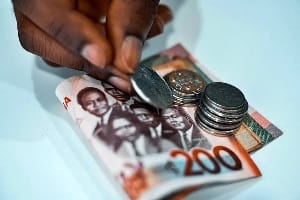
    The Ghana Cedi is currently trading against the dollar at a purchasing price of 10.9543 and a selling price of 10.9653, according to the Bank of Ghana’s interbank exchange rates for Wednesday, May 11, 2023.

    At a forex bureau in Accra, the dollar is being bought at a rate of 11.60 and sold at a rate of 12.10.

    Against the Pound Sterling, the Cedi is trading at a buying price of 13.8298 and a selling price of 13.8448.

    At a forex bureau in Accra, the pound sterling is being bought at a rate of 14.30 and sold at a rate of 15.20.

    The Euro is trading at a buying price of 12.0207 and a selling price of 12.0316.

    At a forex bureau in Accra, Euro is being bought at a rate of 12.60 and sold at a rate of 13.30.

    The South African Rand is trading at a buying price of 0.5803 and a selling price of 0.5809.

    At a forex bureau in Accra, South African Rand is being bought at a rate of 0.30 and sold at a rate of 0.90.

    The Nigerian Naira is trading at a buying price of 54.5195 and a selling price of 54.5690.

    At a forex bureau in Accra, Nigerian Naira is being bought at a rate of 14.00 Naira for every 1 Cedi and sold at a rate of 19.00.

    For the CFA, it is trading at a buying price of 54.6217 and a selling price of 54.6713.

    At a forex bureau in Accra, CFA is being bought at a rate of 17.00 CFA for every 1 Cedi and sold at a rate of 21.00 CFA for every 1 Cedi.

    Note that these rates may be different at a forex bureau near you. Our forex bureau rates are provided by Afriswap Bureau De Change in Osu, Accra.

  • 6 children of NDC veterans running for parliamentary positions

    6 children of NDC veterans running for parliamentary positions

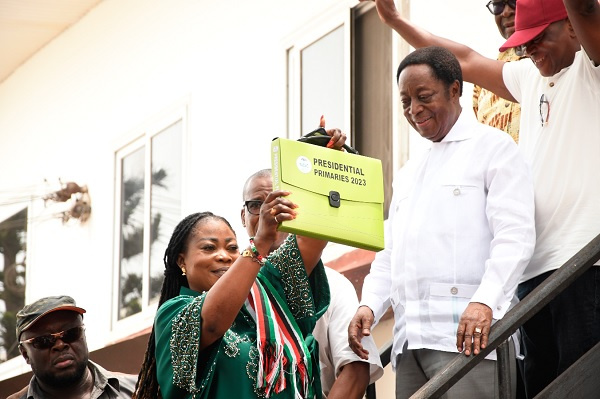
    Contenders in the NDC primaries include some individuals who are following the footsteps of their parents as parliamentary representatives on the ticket of the party whiles others are known children of stalwarts of the party.

    On May 13, 2023, the opposition National Democratic Congress plans to elect a flagbearer and parliamentary candidates in preparation for the general elections of 2024.

    Across the country, several members of the party including incumbent members of the current 8th Parliament will be seeking re-election.

    We profile six children of NDC stalwarts who are contesting in the party’s 2023 parliamentary primaries below:

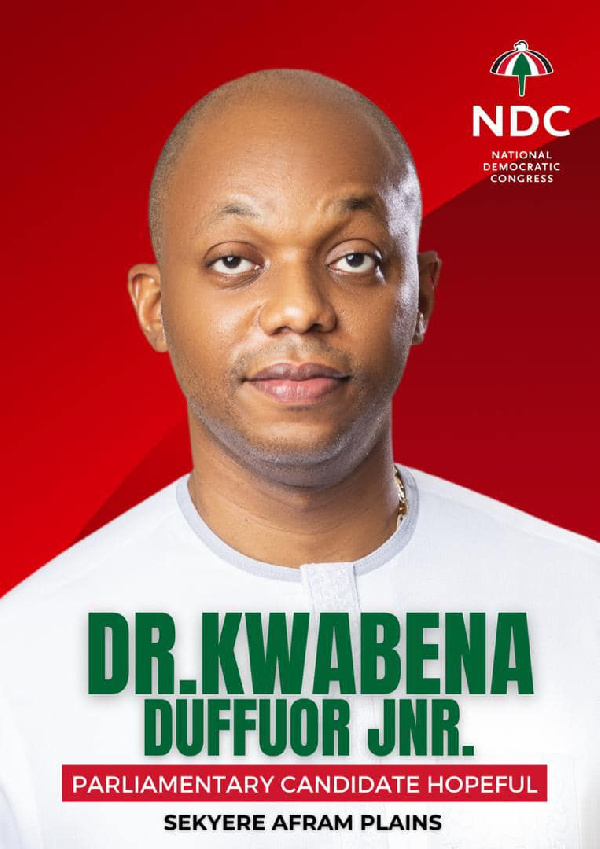
    Dr Kwabena Duffuor Jnr

    The Duffuors; Kwabena Duffuor and Kwabena Duffuor Jnr will both contesting in the NDC’s primaries at different levels.

    Whereas his father who is a former finance minster is contesting for the party’s flagbearership position, Duffuor Jnr is after the NDC parliamentary slot for the Sekyere Afram Plains Constituency in the Ashanti Region.

    Having taken after his father’s banking and finance career, Duffuor Jnr is now following his father’s political path as well.

    “I have blessed my son to win the elections and become MP. He had his Ph.D. at the age of 28 years and is 40 now. He is more than ripe to lead the Constituency.

    “I am supporting him fully, no question about that. My son consulted me and I okayed him going for it. He has my support,” Dr Duffuor said of his son’s ambition in a recent interview with TV3.

    Duffuor Jnr is up against his uncle, Alex Adomako-Mensah who is the current member of parliament for Sekyere Afram Plains.

    Dr. Sebastian Spio-Garbrah

    Dr. Sebastian Spio-Garbrah, as son of NDC stalwart, Dr Ekwow Spio-Garbrah and is in the race for the Essikado-Ketan Constituency ticket.

    Sebastian Spio-Garbrah is currently the Chair of The Canada-Africa Chamber of Business and Global Managing Director & Chief Frontier Markets Analyst at DaMina Advisors.

    He is aiming for the seat currently occupied by the New Patriotic Party’s flagbearer hopeful, Joe Ghartey.

    His father, a leading member of the NDC who contested the party’s flagbearership in 2006, has served in various ministerial positions under previous NDC governments.

    Dr Ekwow Spio-Garbrah has been a minister of communication, education minister, trade and industry minister as well as Ghana’s ambassador to the United States of America.

    He was once elected the party’s vice chairman.

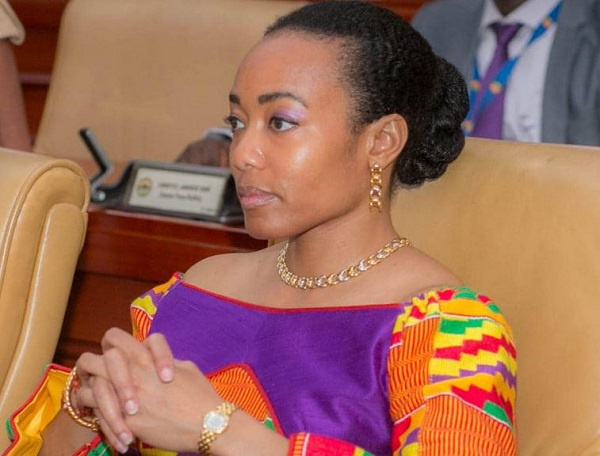
    Dr Zanetor Agyeman-Rawlings

    Dr Zanetor Agyeman-Rawlings is a second term member of parliament for the people of Korle Klottey Constituency.

    Her late father, Flight Lieutenant Jerry John Rawlings is a former president of Ghana and the founder of the NDC.

    Dr Zanetor is facing stiff competition from contender, Meredith Naakai Lamptey-Addy.

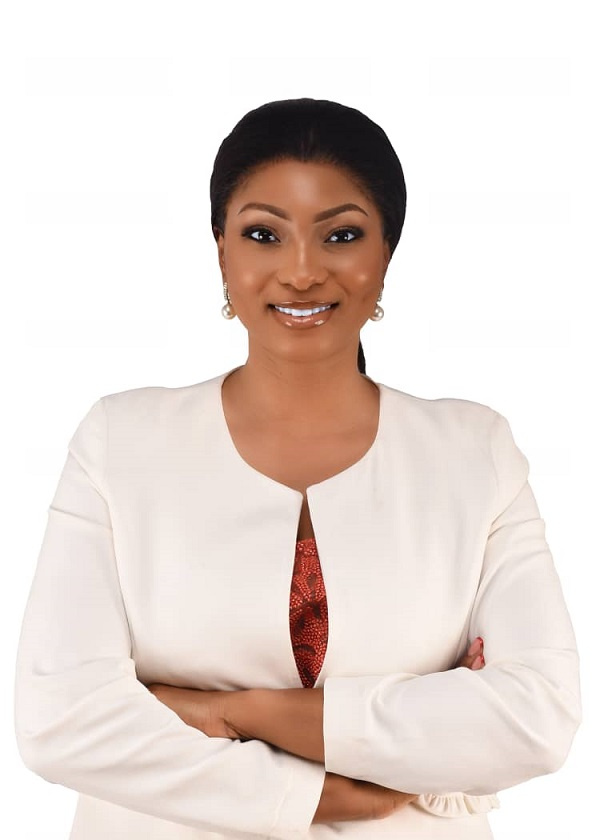
    Meredith Naakai Lamptey-Addy

    Meredith Naakai Lamptey-Addy is seeking to step in the direct footstep of her father, David Lamptey.

    Mr Lamptey between 1996 and 2000 was the member of parliament for Korle Klottey on the ticket of the NDC.

    Meredith who directly understudied her father as his personal assistant during his days as Chief Executive Office of Sidalco group of companies, Dominion Oil, Radio and TV XYX, is set to battle Dr Zanetor for the Korle Klottey NDC ticket.

    She is currently serving as the Ranking Member of the NDC, National Business development committee, member of the NDC National Welfare Committee, Sports Committee and Ga Dangme caucus.

    Meredith Naakai Lamptey Addy is also the Managing Director of Patmeco Ghana Limited, Game Idol printing and advertising and Worldwide Alliance Investment Limited which is also a real estate company owned by herself and her husband.

    Betty Krosbi Mensah

    Betty Krosbi Mensah, the current MP for Afram Plains North is the daughter of Krosbi Mensah, the first MP of the constituency.

    Betty who was first elected MP in 2016 and won re-election in 2020 is aiming at a third term.

    Before she became a Member of Parliament, Mensah was the managing director of Best Pat Ghana Limited from the year 2013 to the year 2016. She also served as the Second Deputy Coordinator for the National Youth Employment from 2009 to 2013. Mensah was also the Gender and Development Coordinator of Ghana Cooperative Credit Union from 2003 to 2005.

    In the current 8th Parliament, she serves a member on the Gender and Children Committee and Health Committee.

    Charles Asiedu

    Charles Asiedu a son of the current National Chairman of the NDC, Johnson Asiedu Nketiah is in the race for the party’s Tano South parliamentary slot.

    His father, the longest serving general secretary of the NDC, is a colossus in Ghana’s politics.

    Asiedu Nketiah was member of parliament for the Wenchi West Constituency between 1992 and 2004.

    Charles, who has served the NDC’s organiser for the Ahafo Region believes has paid enough dues to the party to represent the NDC in parliament.

    He holds a firm conviction of emerging victorious among the five contenders in the Tano South contest.

    If successful, Charles will replace Dr Hanna Bisiw who has been the NDC parliamentary candidate for the area since 2012.

  • I’ve provided OSP with information about bribery accusations made against businessman – Appiah Kubi

    MP for Asante-Akim-North, Andy Appiah Kubi, has made claims that he has provided Special Prosecutor Kissi Agyebeng all the information about claims of bribery efforts by a bussinessman against New Patriotic Party (NPP) lawmakers who demanded the resignation of Finance Minister Ken Ofori-Atta.

    The Special Prosecutor invited Andy Appiah Kubi for interrogation over the allegations that a wealthy businessman tried inducing them to back down on their demands. 

    Speaking to journalists after appearing before the Special Prosecutor on May 10, he indicated his readiness to avail himself for further questioning. 

    “He needed information from me and I have given the information, I have given a statement and that is the cooperation [I’m talking about]. I already appeared before the committee [and] I have testified, if they find it necessary to invite me again I will avail myself,” the Member of Parliament for Asante-Akim North noted.

    Details of his information are not readily known.

    Background

    Andy Appiah Kubi and over 50 New Patriotic Party (NPP) MPs in 2022 called for the removal of the Finance Minister.

    The MPs later softened their stance after meeting President Nana Addo Dankwa Akufo-Addo on the matter.

    They kowtowed to the President’s pleas to have the Minister stay in office to seal Ghana’s bailout deal with the International Monetary Fund (IMF).

    Later, Osei Kyei-Mensah-Bonsu (MP, Suame, Majority Leader and Minister of Parliamentary Affairs) and Andy Appiah-Kubi (MP, Asante Akim North) earlier alleged that a supposed businessman tried to influence the group with money brought to Parliament in a bid to get the MPs to abort their decision.

    The Majority Leader, Osei Kyei-Mensah-Bonsu, said Parliament will investigate the allegation of bribery levelled against the unnamed popular businessman.

    “The alleged bribery has come to my notice, and we will investigate to see if it is true and the motive behind it,” he said to the Parliamentary Press Corps, in Accra.

    Pressure group, Occupy Ghana, on November 3, 2022, petitioned the Special Prosecutor to probe the allegations.

  • Stanbic Bank calls for transparency between banks and fintechs

    Stanbic Bank calls for transparency between banks and fintechs

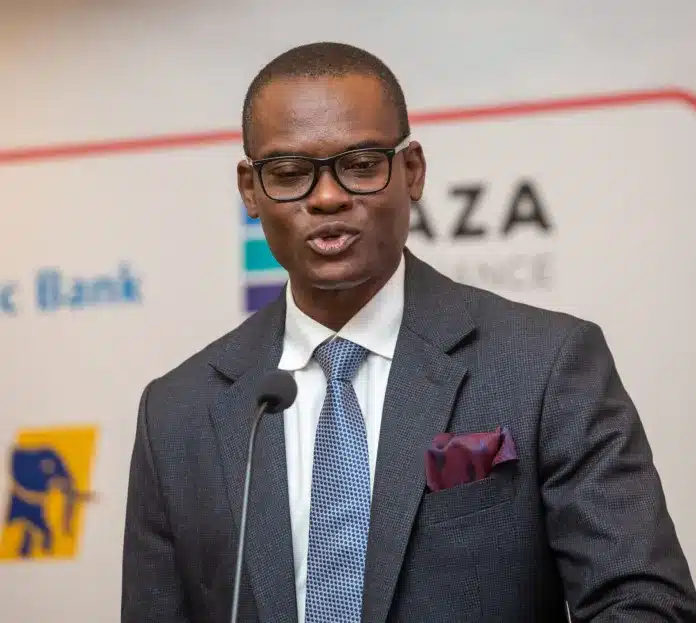
    Banks and fintech companies have been entreated to create collaborations based on trust and transparency according to Head of Business Enablement at Stanbic Bank Ghana, Marian Amartey,

    In their quest to build synergies, and achieve growth and sustainability, she said the two must work collectively in an open and transparent manner. This way, she said, banks and fintech will significantly contribute to building a robust financial sector, increase financial inclusion, and ultimately support economic recovery and growth.

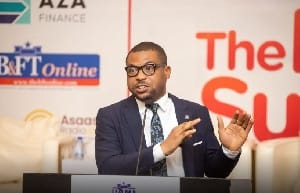
    Speaking at the 2023 Money Summit organized by the B&FT in Accra, she mentioned that fintech and banks must build trust and uphold transparency in their collaboration so as to engender innovations that meet the ever-changing needs of customers.

    She also pointed out that successful collaboration requires both parties to pay attention to unforeseen risks around strategy, operation, and cyber security. Ms. Amartey stressed that effective partnership requires “first, being open-minded in terms of our approach; but again prioritising the customer in whatever approach is decided”.

    “The second thing is ensuring that we continue to build trust. Why this partnership or this collaboration has not worked in the past due to a lack of trust? You find fintech talking to customers without the banks. The banks come in and the customer is confused. So now we need to go back to managing the relationship. It is very important. The last point is monitoring our risk when it comes to collaborating,” she said.

    Ms. Amartey, who was speaking on the topic ‘From competition to collaboration: how fintech is shaping the future finance’, further explained how the possible risks can be identified and managed: “We have to monitor to ensure that it [risk] does not even occur at all, to make sure that whatever we put in place speaks to the client’s need and also safeguards the customer, in that their information does not end up in the wrong hands”.

    Meanwhile, she urged both banks and fintech to consider investing in data analysis, adding that it will drive how both parties execute their operations adequately to meet market demands in the face of changing customer experience.

    “It is quite important how we invest in analysing data within our space, and how we make use of all data we get,” she said, adding that: “To ensure that we make this a reality, the banks and fintech will have to continuously collaborate and desist from the ‘us against them’ mindset.”

    The global fintech market was valued at US$ 112.5 billion in the year 2021 and is projected to reach a value of US$ 332.5 billion by 2028. It is expected to grow at a compound annual growth rate of 19.8 percent. This, indeed, is a clear manifestation of the fact that the fintech industry is shaping the future of finance and demands the collaboration of banks for a robust sector.

    The fintech industry’s evolution has transferred the provision of financial services and aided in guiding the global economy into a cash economy, thereby equipping individuals and businesses to transact larger volumes of products and services without having to transport large sums of physical cash across borders, and even domestically.

    The B&FT’s 2023 Money Summit seeks to enhance investor confidence and bring together actors in the financial sector to provide solutions that will or can anchor investor confidence in the economy, as well as ease the hardship and challenges of businesses. It was themed Africa’s robust financial sector: The Catalyst for sustainable economic growth.

  • DDEP: Difficult times for banks has come to an end – Economist

    DDEP: Difficult times for banks has come to an end – Economist

    The losses incurred by banks in the 2022 fiscal year, according to economist Prof. Godfred Bokpin, may be the worst that could occur as a result of the Domestic Debt Exchange Programme (DDEP).

    He explained that most foreign banks have presented strong balance sheets and have given the assurance that they would re-strategize to prevent more losses.

    “To a large extent, people will be concerned but I want to believe that the worst moment is over.

    “If you look at the first quarter results for some of them, even though some of us have a little bit of an issue with the treatment of Treasury Bills in terms of the payment as compared to the medium term because it is the same borrower, but with the foreign banks, they have a very strong balance sheet from the group bank. In the case of Stanbic and the others, you will see the assurance of the group that they are going to recapitalize their banks, so there is no cause for fear, there should be no reason why we should have a run on those banks,” he was quoted by 3news.com.

    On the side of domestic banks, he also noted that they will be adequately capitalized since the Bank of Ghana has given banks some grace period and the removal of the 3 percent capital conservation.

    “But when it comes to the domestic banks, if you look at those that have been impacted heavily, GCB and the rest of them, actually that is also on the strength of the government balance sheet, you will see that some of them have capital adequacy ratio that is very low even though Bank of Ghana decided to remove the 3 percent capital conservation buffer in order to accommodate the effect of the DDEP.

    “I believe that in consultation with the central bank, there will be a grace period they can adequately recapitalize. I am sure that almost all the banks will be going through the capital planning process to ensure that all their banks are adequately capitalized,” he said.

    Prof Bokpin stated that the challenge will however be that, most banks are not robust enough to withstand certain shocks in the short term.

    He further added that “But I think if you are looking at the effect in the immediate that is where the issue is whether banks are robust enough to be able to support growth and employment generation, that is where the issue is because some have expressly indicated that they will cut back on their lending.”

  • Strong explosions in Khartoum as fighting enters 26th day

    Strong explosions in Khartoum as fighting enters 26th day

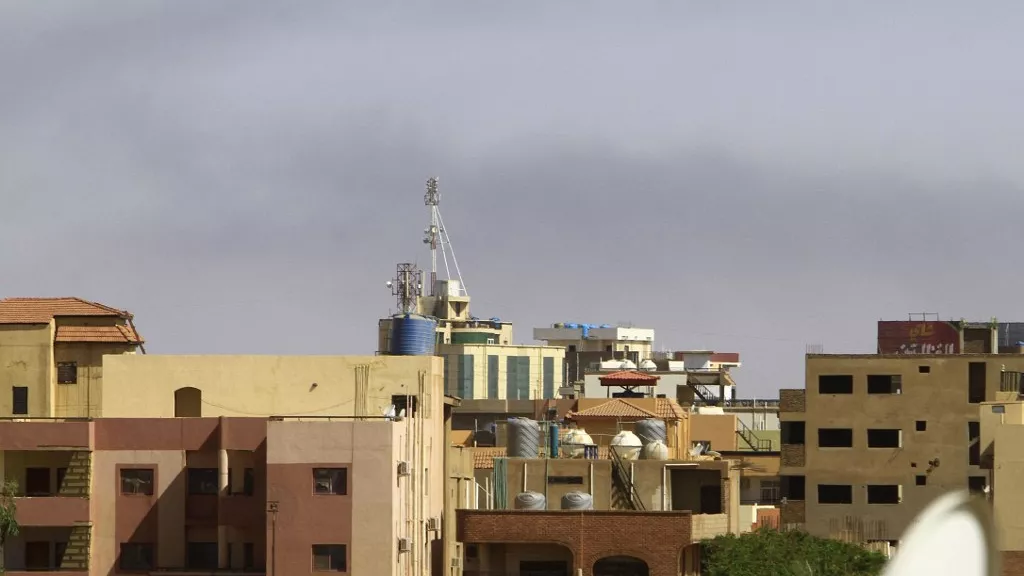
    On the 26th day of the conflict between military and paramilitaries in Sudan, powerful explosions rumble across Khartoum early on Wednesday. The two camps’ negotiators have not yet agreed upon a humanitarian corridor.

    “We were awakened by explosions and heavy artillery fire,” a resident of Omdurman, a city on the outskirts of Khartoum, told AFP.

    Overnight, other witnesses in different neighbourhoods of Khartoum reported two huge explosions heard across the capital, which has a population of five million. Residents of El-Obeid, 350 km west of the capital, also reported fighting and explosions in their town.

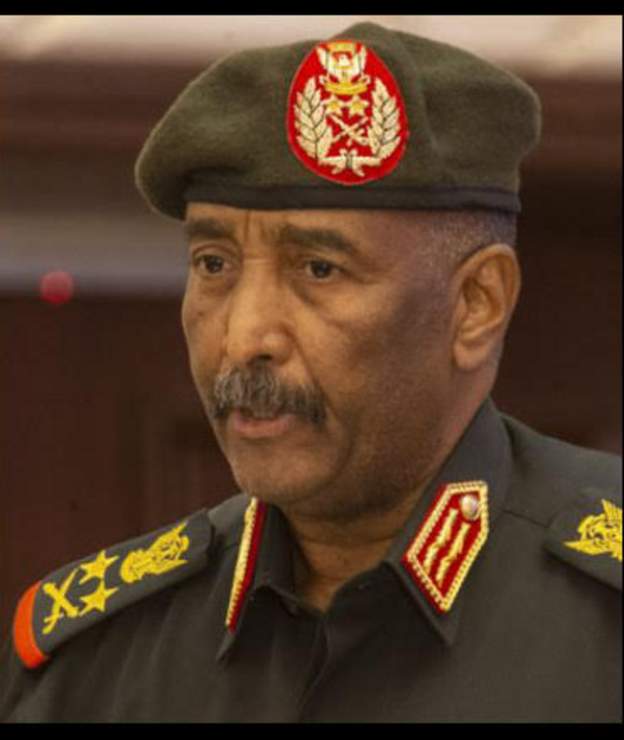
    General Abdel Fattah al-Burhane ‘s army and General Mohamed Hamdane Daglo ‘s dreaded paramilitary Rapid Support Forces (RSF) sent negotiators to Saudi Arabia on Saturday for only ” technical” ” pre-discussions ” on corridors secured for humanitarian aid.

    But so far no announcement has been made in Jeddah, on the Red Sea, where the talks are taking place.

    The head of the UN for humanitarian affairs, Martin Griffiths, who arrived in Jeddah on Sunday, has already left. He proposed to the two parties to commit to “guarantee the passage of humanitarian aid” via a declaration of principle, according to the UN.

    Since its beginning on April 15, the conflict has left more than 750 dead and 5,000 injured.

    Nearly 150,000 refugees have fled to neighbouring countries, according to the UN, while the number of internally displaced people in Sudan now exceeds 700,000, more than double the 340,000 counted a week ago.

    Those who remain in Khartoum live barricaded in their homes. Without water or power, with almost dry food stocks and less and less cash, they survive in the scorching heat thanks to networks of solidarity between neighbours and relatives.

    Before going to war, Generals Burhane and Daglo had together ousted civilians from power with their 2021 putsch. Two years earlier, the army had agreed under street pressure to dismiss dictator Omar al-Bashir, who had been in power for 30 years.

  • Over 13,000 women and children have fled “exactions” in Niger

    Over 13,000 women and children have fled “exactions” in Niger

    In response to “exactions” by armed men in the areas of the Tillabéri region (west), where skirmishes between communities have left several dead, more than 13,000 women and children have evacuated the islands of the Niger River, according to a report released on Tuesday by the Nigerien public radio station Voix du Sahel.
    “In Ayorou, it’s desolation (…) More than 13,000 women and children from 46 islands (in the Niger River) have fled the abuses of armed bandits” to take refuge in this town located 200 km from Niamey, according to the radio.

    The communes of Dessa and Kandadji, where the site of the country’s first hydroelectric dam is located, “have been facing abuses” committed by “armed bandits” (an expression used in Niger to designate suspected jihadists ) for several days, added the radio.

    During the night from Saturday to Sunday, four civilians were killed and another injured in an attack in Dessa, she said.

    A dozen parliamentarians from the Tillabéri region went to the three localities on Monday “to provide support and comfort” to the “upset population” and “calm people’s minds”, according to the Voice of the Sahel. One of the deputies, Hassoumi Tahirou Mayaki , described “very bruised populations” by this violence.
    According to local sources, “violent clashes” had opposed in late April and early May sedentary Djerma and nomadic Fulani herders in villages and hamlets bordering the Niger River, causing ” several deaths, injuries” and “many displaced” towards Ayorou.

    A local journalist explained that these clashes followed “several assassinations” of villagers by suspected jihadists who also steal cattle and “demand taxes”.

    Elected officials from Ayorou and Dessa confirmed the clashes, without establishing a precise toll of the victims. “Before the clashes, armed men on motorbikes issued an ultimatum to sedentary people to leave their homes,” said the elected official of Ayorou.

    The Nigerien government has not confirmed this community violence in these areas, where cohabitation is generally peaceful. The Tillabéri region, with an area of ​​100,000 km2, is located in the so-called “three borders” zone between Niger, Burkina Faso and Mali.

    Several ethnic groups – Djerma, Fulani, Tuareg and Hausa – live in this region. Niger has launched several large-scale operations there against the jihadists, with the recent support, within the framework of a “combat partnership” , of French soldiers.

  • Sudan: Crossfire in Khartoum burn zoo animals

    Sudan: Crossfire in Khartoum burn zoo animals

    Many creatures in Sudan’s capital zoo, including an elderly crocodile, parrots, and enormous reptiles, are thought to have perished as a result of the area becoming inaccessible due to street fighting between opposing groups in the nation.

    At least 100 animals, all kept in enclosures, will have gone more than three weeks without water or food, said Sara Abdalla, chief zoologist at the Sudan Museum of Natural History.

    Millions of people in Sudan have suffered from shortages of food, water and medicine after the conflict disrupted the most basic services. But as the sound of explosions echoes through the capital Khartoum, Sara Abdalla is consumed with worry about the animals she cares for, especially those that are increasingly rare in their natural habitat in Sudan.

    “I feel a lot of misery and sadness, as well as helplessness,” she said in a telephone interview from Khartoum. “I guess we lost the birds and the mammals .”

    The zoo is home to species such as an African gray parrot, vervet monkey, giant lizards called Nile monitor lizards, desert tortoise, horned viper, and Nubian spitting cobra. Before the fighting, all these animals were fed twice a day. But the last time they received their meals and, for some, their medicine, was on April 14, the day before the fighting broke out, according to Mr Abdalla.

    The conflict, which has ended months of tensions between rival Sudanese generals, pits the Sudanese army, led by General Abdel-Fattah Burhane, head of the ruling Sovereign Council, against powerful rapid support paramilitary forces. The Rapid Support Forces (FSR) are commanded by Burhane’s deputy in the council, General Mohamed Hamdan Daglo . Sara Abdalla argues that neither had heeded calls to allow access to the zoo.

    The conflict turned much of Khartoum and the adjacent city of Omdurman into a battlefield, with both sides using heavy weaponry, including artillery and airstrikes, inside urban areas. Urban fighting has severely damaged infrastructure and property and puts civilians at great risk as they attempt to move through city streets.

    Residents fleeing the capital said they saw bodies littering sidewalks and central plazas, especially in areas not far from the museum. According to the Sudanese doctors’ Union, around 500 civilians have been killed in the fighting so far, but the actual death toll is believed to be higher.

    The zoo, which is located within the grounds of the University of Khartoum, is one of the oldest in Sudan. It was established about a century ago as part of Gordon Memorial College, an educational institution built in the early 1900s when Sudan was part of the British Empire. It was annexed to the University of Khartoum two years after Sudan’s independence in 1956.

    Its current location is close to the army headquarters, where fighting was intense, preventing access to the museum.

    Sara Abdalla, who teaches zoology at the University of Khartoum, started working at the museum in 2006 and was appointed director of the establishment in 2020. She had dreamed of this position since she had visited the museum as a child. Now locked in her home in south Khartoum with her husband and their two children – Yara, 9, and Mohamed, 4 – she worries about the animals who have already survived years of turmoil, economic collapse and shutdown due to pandemic.

  • Basic commodity prices skyrocket by 60% in Sudan

    Basic commodity prices skyrocket by 60% in Sudan

    As war intensifies in Sudan, the price of goods and services has skyrocketed.

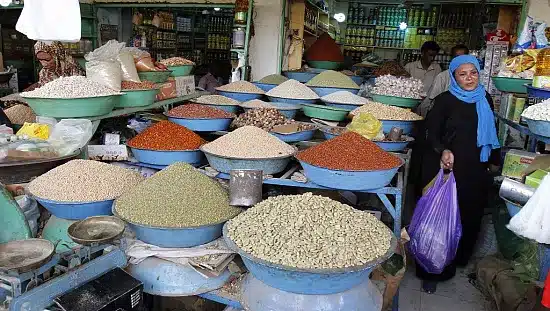
    According to the United Nations humanitarian agency, the price of basic commodities such as fuel, food staples, and water has gone up by 60 percent or more due to supply challenges resulting from the clashes in Khartoum and other parts of Sudan.

    This is a new setback to Sudan’s stagnant economy. Shortages of main goods such as flour and vegetables have been reported in the capital along with unprecedented price hikes.

    Khartoum is the business hub for most industries and services. Factories are located in parts of the city where intense fighting is happening. Some of them have been looted.

    Sudan is an important exporter of gum Arabic, gold, sesame, peanuts, and livestock. But the economy has been held back by decades of sanctions and international isolation, as well as mismanagement and corruption.

    People have been struggling with years of spiking inflation and sharp currency devaluations. The situation worsened after the 2021 military coup when international financial institutions halted Sudan’s aid programs.

    The ongoing conflict has closed out trade flows to and from Sudan and the main ports have halted operations until further notice.

    The country’s overwhelmed economy is expected to deteriorate further if the fighting continues.

    Despite several ceasefires declared by Sudan’s conflicting parties, tensions and some deadly fighting continue to rage in the capital Khartoum and other areas.

    Sudan’s health ministry stopped updating the number of casualties on May 2, when the death toll stood at 550 with 4,926 people injured.

    In the meantime, hundreds of thousands of Sudanese are fleeing to neighboring countries. According to the United Nations High Commissioner for Refugees (UNHCR), a total of 123,110 refugees have fled to South Sudan, Egypt, Chad, Ethiopia, and the Central African Republic since the conflict erupted in mid-April.

    The UN agency projected the number could rise to 860,000 in the next six months.

  • Four shot dead during Tunisia’s synagogue pilgrimage

    Four shot dead during Tunisia’s synagogue pilgrimage

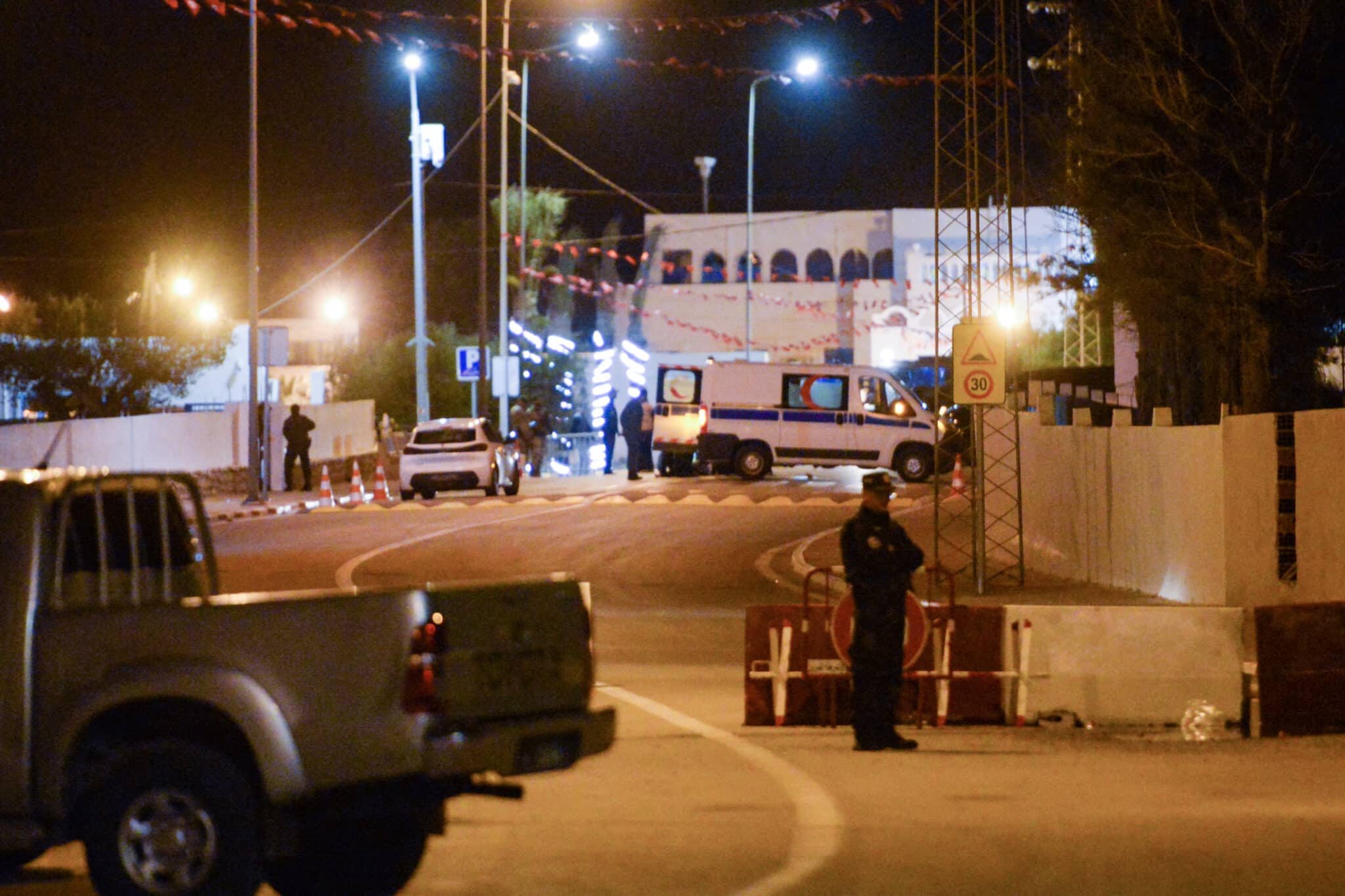
    Four people have been shot dead by a Tunisian police officer at Africa’s oldest synagogue on Tuesday, in an act that provoked fear during an annual Jewish pilgrimage on the island of Djerba.

    He gunned down two visitors, including a French citizen, and two fellow officers before he was shot dead himself, the interior ministry said.

    Another four visitors and five police officers were wounded in the attack, the first on foreign visitors to Tunisia since 2015 and the first on the pilgrimage to the Ghriba synagogue since a suicide truck bombing killed 21 people in 2002.

    The Tunisian foreign ministry identified the two visitors killed as a 30-year-old Tunisian and a French national, aged 42. It did not release their names.

    Tunisian police deploy around the Ghriba synagogue during a shootout with a colleague who opened fire on them.

    The assailant had first shot dead a colleague and taken his ammunition before opening fire at the synagogue, sparking panic among the hundreds of visitors there.

    “Investigations are continuing in order to shed light on the motives for this cowardly aggression,” the interior ministry said, refraining from referring to the shooting as a terrorist attack.

    The French government “condemns this heinous act in the strongest terms,” foreign ministry spokeswoman Anne-Claire Legendre said.

    Tunisian police cordon off the area around the Ghriba synagogue on the island of Djerba after a deadly gun attack mars the annual pilgrimage to Africa’s oldest synagogue

    US State Department spokesman Matthew Miller had also condemned the shooting rampage.

    “The United States deplores the attack in Tunisia coinciding with the annual Jewish pilgrimage that draws faithful to the El Ghriba Synagogue from around the world,” he said on Twitter.

    “We express condolences to the Tunisian people and commend the rapid action of Tunisian security forces.”

    – Dwindling Jewish community –

    According to organisers, more than 5,000 Jewish faithful, mostly from overseas, participated in this year’s event.

    The annual pilgrimage only resumed in 2022 after two years of pandemic-related suspension.

    Coming between Passover and Shavuot, the pilgrimage to Ghriba is at the heart of Jewish tradition in Tunisia, where only about 1,500 members of the faith still live — mainly on Djerba — compared with around 100,000 before independence in 1956.

    Jewish worshippers pack the Ghriba synagogue for the annual pilgrimage

    Pilgrims travel from Europe, the United States and Israel to take part, although their numbers have dropped since the deadly bombing in 2002.

    Tuesday’s shooting came as the tourism industry in Tunisia has finally rebounded from pandemic-era lows, as well as from the aftereffects of a pair of attacks in Tunis and Sousse in 2015 that killed dozens of foreign holidaymakers.

    Tunisia suffered a sharp rise in Islamist militancy after the Arab Spring ousted longtime despot Zine El Abidine Ben Ali in 2011, but authorities say they have made significant progress in the fight against terrorism in recent years.

    The Ghriba attack also comes as Tunisia endures a severe financial crisis that has worsened since President Kais Saied seized power in July 2021 and rammed through a constitution that gave his office sweeping powers and neutered parliament.

  • Boat accident in Nigeria leaves 15 children dead, 25 others missing

    Boat accident in Nigeria leaves 15 children dead, 25 others missing

    Tragically, 15 children have drowned and 25 others went missing after an overcrowded boat capsized on the Shagari river in Nigeria’s Sokoto state.

    The boat was carrying children who were on their way to collect firewood in the bush on Tuesday morning. According to Aliyu Abubakar, the political administrator of Shagari district, the incident happened on the other side of the river.

    Eyewitness accounts reveal that the boat was overloaded with over 40 girls onboard, leading to the capsizing of the boat. Although 15 corpses have been recovered, local divers are still searching for the other victims.

    Local authorities confirm the incident, prepare for burials

    The chairman of Shagari Local Government Area, Aliyu Abubakar, confirmed the incident and expressed deep condolences to the families of the victims. He stated that the bodies of the victims have been recovered and are being prepared for burial.

    At the time of filing this report, local divers and authorities have not confirmed any survivors. The boat, which was carrying over 40 girls, resulted in the recovery of only 15 dead bodies with 25 still missing. The divers are currently conducting search and rescue operations to locate the missing girls.

  • Pensioner describes delayed payment of bonds by govt as robbery

    Pensioner describes delayed payment of bonds by govt as robbery

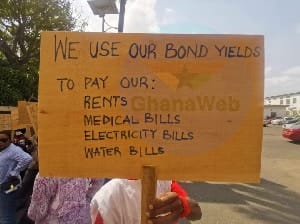
    A protesting pensioner bondholder has likened government to a robber over the delayed payment in outstanding bonds that has left many aged worried.

    According to him, the situation where pensioners are having to picket for their monies is akin to the government taking arms and attacking them.

    “In fact, it is more or less a robbery. There is no difference between people with arms and attacking individuals to take their money away. There is no difference between (that and) what the government is doing,” he told Accra-based TV3 on Monday, May 8, 2023.

    He was part of pensioners who restarted their picket at the premises of the Ministry of Finance in Accra demanding that the state honours their matured bonds and interests as agreed.

    Pensioners stiffly refused to be added to government’s Domestic Debt Exchange Programme (DDEP) earlier this year and were exempted after dogged protests.

    Government has, however, failed to pay their matured bonds as agreed forcing them to return to picketing.

    Most of them are concerned about the non-payment because they emphasize the importance of such funds to their lives in retirement. The issue of taking care of their health is a major reason they are calling on government to honour her financial obligations to them.

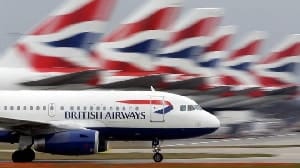
  • Ghanaian passengers petition British Airways to decrease fares

    Ghanaian passengers petition British Airways to decrease fares

    An online petition has been signed by passengers of the British Airways (BA) asking the airline to reduce its fares.

    The petition was started by one Esther Lulu who said Ghanaians are being charged excessive fees during peak times to fly to Ghana from the United Kingdom.

    “This is an unfair economic tax on the Ghanaians. Please sign the petition to highlight awareness and support us to get British Airways to lower the fares to Ghana,” Lulu said.

    The passengers complain that per their estimation, a 6.5 hour economy flight, Ghanaians are being charged the same average price as flying 24-26 hours to Sydney, Australia.

    “This must stop. Ghanaians should not be penalised with excessive taxes, fares and fuel costs to visit families back home,” a frequent British Airways flyer said.

    According to the passengers, an average return flight to Ghana starting in June and ending in September for a family of four persons – two adults and two children – can cost approximately £6000-£8000 without accommodation.

    This is the same average flight fare to Australia, which takes over 24 hours to fly.

    Checks on prices of flights of various airlines revealed that British Airways fares from Ghana to London are lower than prices of other fares from the UK to Accra.

  • It’s essential to create an atmosphere that encourages import substitution industries – Dr. Godwin Acquaye

    It’s essential to create an atmosphere that encourages import substitution industries – Dr. Godwin Acquaye

    The Chief Executive Officer of the Business & Financial Times, Dr. Godwin Acquaye, has urged government take practical steps to foster an atmosphere that will favor import substitution in light of the current economic climate.

    This, he said, is crucial in the quest to reduce high levels of importation and its implications on the economy. He is confident investment in the import substitution industry will also reduce the country’s increasing unemployment figures.

    He made this remark at the B&FT’s 2023 Money Summit which seeks to enhance investor confidence and bring together actors in the financial sector to provide solutions that will or can anchor investor confidence in the economy as well as ease the hardship and challenges of businesses and the average Ghanaian.

    “Our exchange rate volatility is contributing largely to the uncertainty and lack of confidence in the economy. This we all know is mainly systemic, as our imports far outweigh our exports. With the high depreciation of the cedi, some Ghanaians have changed their taste for foreign goods. 

    This is an opportunity for the government to create that enabling environment for the creation of import substitution industries to reduce our high levels of importation,” he said. 

    The 2022-2023 financial year has been challenging with inflation hovering around 45 per cent and commercial bank lending rate above 35 per cent, leading to a debt exchange programme which is greatly affecting banks and businesses. 

    Mr Acquaye reechoed that: “The financial sector is key to the growth of the economy. It is capable of efficiently allocating resources, assessing and managing financial risks. Globally, the financial sector is going through challenges and we are all feeling its pinch in our pockets and budgets.” 

  • Market Entry Expedition: Trade Ministry to lead Ghanaian businesses to Kenya in May

    Market Entry Expedition: Trade Ministry to lead Ghanaian businesses to Kenya in May

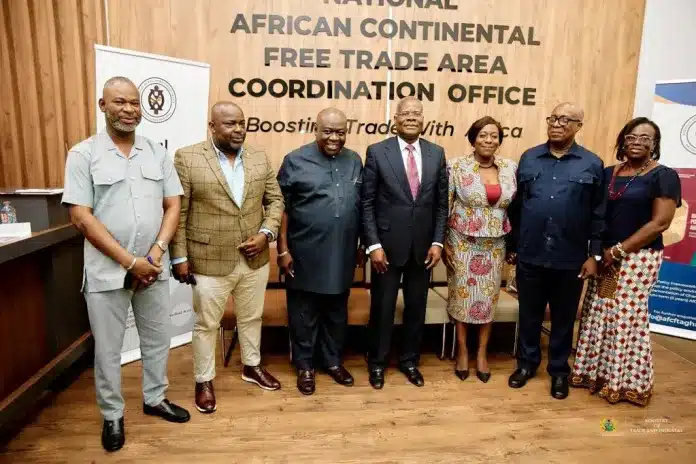
    The National AfCFTA Coordination Office (NCO) will lead a market entry expedition for Ghanaian businesses to Kenya from May 23–27, 2023 as part of the government’s initiative to help local businesses capitalize on the benefits of the African Continental Free Trade Agreement (AfCFTA).

    Minister of Trade and Industry, K.T. Hammond, will lead the delegation to Kenya, accompanied by Deputy Minister of Trade, Nana Ama Dokua Asiamah-Adjei and other high-level officials of the NCO, Ministry of Trade and Industry (MoTI), GEPA and affiliate agencies. This underlines the importance attached to intra-African trade by the minister.

    At the events, the NCO and GEPA will exhibit Ghanaian products and open the Ghana Export Trade House as part of the expo to climax the African Union Day observation.

    Opening the Ghana Export Trade House, which will serve as hub for Made in Ghana goods in Kenya, coincides with the annual commemoration of AU Day to highlight the cultural and economic potential that exists on the continent, and also to deepen our Pan-African ideals.

    Kenya has been selected for the pilot due to its position as the biggest market in East Africa which serves as gateway to the East African market, and to also deepen the existing bilateral bond between Ghana and Kenya.

    Coordinator of the NCO, Dr. Fareed Kwesi Arthur, explained that the trade mission and expo will involve a combination of activities including matchmaking sessions, exhibitions, seminars and business networking events.

    “The theme for 2023 AU Day is accelerating the implementation of AfCFTA, and holding the expedition side-by-side will create significant synergy and boost awareness of Ghanaian products in Kenya and a similar event in Egypt during the month of August,” the NCO Coordinator said.

    Objectives of the trade expedition

    The Market Entry Expedition, according to Dr. Arthur, is designed to facilitate the entry of Ghanaian businesses from different sectors into East Africa with focus on selling a mix of local SMEs drawn from the agro-processing, manufacturing, cosmetics and textiles sectors in the East African market.

    As part of its aims, the event is also expected to increase Ghana’s trade with Africa under the AfCFTA while introducing local businesses and products from different sectors to selected target markets; identify value chain opportunities for local businesses; increase the presence of Made in Ghana brands across the sub-region; and establish market linkages between Ghanaian traders and East African companies and business associations.

    As the main objective of AfCFTA is to boost intra-African trade, the pact seeks to open-up a market space for the 46 countries out of 55 which have ratified the agreement.

    But with Ghana’s trade with Africa constituting just 14 percent (%) compared to its trade with the global market, it is anticipated that the Market Entry Expedition will boost the country’s trade fortunes with the rest of Africa.

    Strides made under AfCFTA so far

    Trading under the pact was officially launched on January 1, 2021, with commercially meaningful trade commencing on October 7, 2022 under AfCFTA’s Guided Trade Initiative. Ghana played a significant role in putting this initiative together, as it was led by the Continental AfCFTA secretariat, the NCO, among other critical institutions.

     Expected outcomes of the Expedition

    The NCO is optimistic that products from 100 Ghanaian companies in different sectors of the economy will be introduced to selected target markets in Kenya and the Egypt expedition during August this year.

    The Coordination Office is also anticipating an improvement in trade volumes between Ghana and other African markets, as well as an increased presence and participation of Ghanaian products and businesses in regional value and supply chain networks.

    Key partners

    The Expedition is being funded by the World Bank’s Ghana Economic Transformation Project (GETP), the Deutsche Gesellschaft für Internationale Zusammenarbei (GIZ), United Nations Development Project (UNDP) and with additional sponsorship from Eximbank.

  • Guinness Ghana debunks operational shutdown claim over GHS6k debt

    Guinness Ghana debunks operational shutdown claim over GHS6k debt

    Reports that Guinness Ghana Limited had shut down operations due to a GH6,000,000 debt owed to the Ghana Water Company Limited (GWCL) have been refuted.

    According to the brewery company, it has been compliant on all bills to the Ghana Water Company Limited based on the industrial rate, pending a resolution of its petition to the Public Utilities Commission (PURC) on the arbitrary re-categorization by GWCL.

    In a statement sighted by GhanaWeb Business, Guinness Ghana said it was waiting for the final investigations and outcomes of its petition before the PURC on the matter.

    “Guinness Ghana Limited can confirm that it has not shut down its operations for both its brewery sites in Accra and Kaase. Ghana’s leading total beverage business has been fully compliant on all bills to the Ghana Water Company Limited (GWCL) based on the industrial rate, pending a resolution of its petition to the Public Utilities Commission (PURC) on the arbitrary re-categorization by GWCL,” part of the statement said.

    On Tuesday, May 9, 2023, disconnected water supply to the head office of Guinness Ghana Breweries Limited.

    The shutdown of the breweries company forms part of GWCL’s revenue mobilization exercise.

    Below is the full statement from Guinness Ghana:

    Guinness Ghana Limited can confirm that it has not shut down its operations for both its brewery sites in Accra and Kaase.

    Ghana’s leading total beverage business has been fully compliant on all bills to the Ghana Water Company Limited (GWCL) based on the industrial rate, pending a resolution of its petition to the Public Utilities Commission (PURC) on the arbitrary re-categorization by GWCL.

    Guinness Ghana has engaged Ghana Water Company Limited, the Public Utilities Regulatory Commission and the Ministry of Sanitation and Water Resources following the arbitrary reclassification of the business in the September 2022 tariff adjustments.

    As recent as this morning a meeting took place between Guinness Ghana, GWCL and the Minister at the Ministry of Sanitation and Water Resources. In view of these engagements, Guinness Ghana is currently awaiting the final investigations and outcomes of its petition before the PURC on the matter.

    Guinness Ghana remains committed to the highest quality standards in brewing great-tasting brands for our cherished consumers and doing business the right way.

  • Cybercrime management a factor to boost financial sector – Expert

    Cybercrime management a factor to boost financial sector – Expert

    The e-Crime Bureau’s lead for financial crimes and anti-money laundering, believes that attempts to develop a strong financial sector must consider good cybercrime management.

    He added that without urgent attention, innovations in the financial sector stand the risk of not meeting their target. To this end, he advised sector players to collaborate with Law enforcement agencies to share information and coordinate efforts to investigate and prosecute financial crimes.

    “Enforcing regulations and directives issued to the industry and also providing training and guidance to financial institutions as well, he said will help them identify and prevent financial crimes.

    “Continually monitoring developments in the space to enhance regulations; investing in cybersecurity and financial crimes management; and adhering to industry regulations and guidelines,” are also key measures he advised the landscape to adopt.

    He added that organizations must develop effective fraud risk management programme and establish a strong security posture (firewalls, anti-virus software, encryption, and multi-factor authentication) for safety.

    Given that more than USD 4.7 trillion is lost annually to occupational fraud worldwide, he urged organizations to perform thorough background checks on staff and contractors while using an intelligence approach to stay proactive.

    Banks must continue to adopt best practices to curtail financial breaches – e-Crime Bureau

  • Another reversal seen in cocoa farmgate pricing

    Another reversal seen in cocoa farmgate pricing

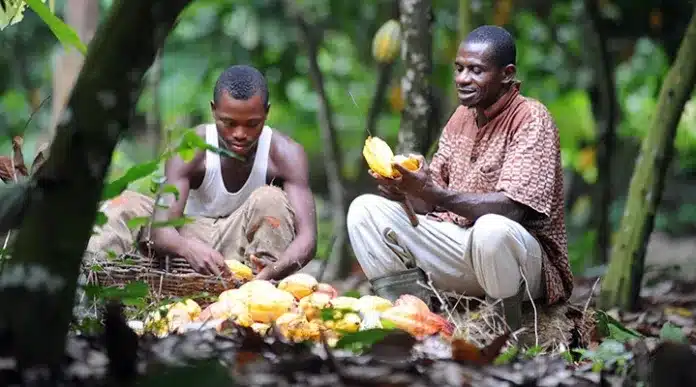
    The March 2023 Cocoa Market Report by the International Cocoa Organisation states that due to global changes, the cocoa industry has seen its second reversal in farmgate prices over the previous five mid-seasons.

    The report shows that the farm-gate prices in US$ nominal terms have been higher in Ghana than in neighbouring Côte d’Ivoire over the past five mid-seasons. However, the situation was reversed during the mid-crops for 2021/22 and 2022/23 seasons – mainly due to substantial depreciation of the cedi (GH¢) vis-à-vis the US dollar.

    For the 2022/23 mid-crop, the Ivorian and Ghanaian regulators have left unchanged the fixed farmgate price at 900 XOF per kg (US$1,507 per tonne) and GH¢12,800 per tonne (US$1,206 US per tonne) respectively.

    The report further indicates that the reversal of farm-gate prices in Ghana’s cocoa industry is largely attributed to the global economic challenges which have affected Ghana’s currency. The depreciation of GH¢ vis-à-vis US$ is a result of several factors – including the COVID-19 pandemic, low commodity prices and the country’s debt burden.

    Cedi’s worst run

    The cedi wobbled after a wave of sovereign downgrades and speculations. The GH¢ endured a torrid 2022, ending the year as the fourth worst-performing currency globally and trading at a mid-rate of GH¢11.60 /US$ (YTD loss of 44.05%). The local unit suffered from a raft of sovereign downgrades that dimmed investor confidence. Fitch and Moody’s ratings downgraded Ghana into negative outlook territory at the start of 2022, leading to a loss of access to the international capital market (ICM). The loss of access to the ICM posed some risks to international reserves and the country’s ability to meet external financing obligations.

    The cedi endured its worst run of form yet, as it depreciated 33.22 percent from Sep-22 to Nov-22 to emerge as the worst-performing currency globally. During this period, the GH¢ was quoted at 15/US$1 on the forex market as speculative attacks severely weakened the local unit. However, the local unit gained 27.16 percent to end Dec-22; primarily due to positive sentiments from an IMF staff-level agreement, reduced speculative attacks and softened stance of the US Fed.

    Despite the challenges faced by Ghana’s cocoa industry, the country has made significant strides in boosting its cocoa production over recent years. Several initiatives have been implemented to support the industry, including the Cocoa Farmers Pension Scheme, the Cocoa Rehabilitation Programme, and the Cocoa Disease and Pest Control Programme.

    Ghana surpasses Ivory Coast in cocoa production

    Ghana has surpassed Ivory Coast in cocoa production over the half-year 2022/23 crop season, according to the ICCO report.  As of 31 March 2023, cumulative arrivals of cocoa beans in Ivory Coast were lagging behind previous season levels, while the volumes of graded and sealed cocoa beans purchased in Ghana since start of the 2022/23 season was reported at 566,846 tonnes; representing an 18 percent increase from the previous year.

    Despite an increase in the country’s cocoa production, total supply of cocoa beans from the top-two world cocoa producers for the first half of 2022/23 is estimated at 2,345,846 tonnes, slightly down by 0.2 percent compared to the previous season.

    The ICCO report states that the year-on-year reduction of 89,000 tonnes in Ivory Coast’s cumulative ports’ arrival of cocoa beans over the first half of the 2022/23 cocoa year, combined with the increase of 85,360 tonnes over the same period in Ghanaian purchases of graded and sealed cocoa beans, results in a slightly negative net effect.

    The report also stated that the current state of play is subject to change as the mid-crop progresses. However, the current situation shows that Ghana has overtaken Ivory Coast in cocoa production; a significant development in the global cocoa market.

    The domestic cocoa industry is facing significant challenges due to global developments, including depreciation of the GH¢ vis-à-vis the US$. However, the Regulator remains committed to supporting its cocoa farmers and improving the industry’s performance through various initiatives.

    The reversal of farmgate prices in the past five mid-seasons is a concern, but Ghana’s cocoa industry is expected to bounce back with the right support.

  • Government to do better after securing IMF deal  – Economist

    Government to do better after securing IMF deal – Economist

    An economist, Dr. Priscilla Twumasi Baffour, has said that when Ghana receives the financial assistance it is requesting from the International Monetary Fund (IMF), there will be a change in attitude following the current crisis the country is experiencing.

    According to her, she is optimistic that Ghana has learned valuable lessons from the current economic crisis.

    She added that the government must show fiscal discipline and also embark on rigorous revenue mobilisation to drive down the debt levels.

    “We have gone through an unexpected term. For instance, through the current challenges, external shocks, and also because of the way we have managed affairs internally. I believe that it is important as a country to work on our revenue mobilisation drive to increase revenue generation domestically,” she was quoted by myjoyonline.com.

    Dr. Twumasi added that she is hopeful that the IMF deal may help Ghana to tread cautiously.

    “As we are all anxiously waiting for the IMF programme, once we get this deal, hopefully, we will do the right thing. We should not find ourselves back in this precarious situation at any point in the future,” she added.

  • Guinness Ghana closedown due to 6m debt owed to GWCL

    Guinness Ghana closedown due to 6m debt owed to GWCL

    On May 9, 2023, the Ghana Water Company Limited (GWCL) cut off water supply to Guinness Ghana Breweries Limited headquarters.

    Guinness Ghana Breweries, according to a Joy News report and monitored by GhanaWeb Business owes the Ghana Water Company Limited an amount of GH¢6.7 million.

    The shutdown of the breweries company forms part of GWCL’s revenue mobilization exercise.

    “The Ghana Water Company Limited has disconnected water supply to the company. They owe GHC6.7million as at March,” JoyNews said.

    The Guinness Ghana Breweries is yet to comment on the shutdown.

    Similar exercises are ongoing nationwide as part of the revenue mobilisation drive to redeem debts owed to GWCL.

    According to GWCL, nationally, over 800 million are owed in arrears with 90 percent being domestic consumers and 10 percent government institutions.

    Until such time as they pay up their debts in full or in part, as assessed by the company, and a reconnection charge, defaulters have their pipelines disconnected.

  • $1 sells at GHS12.00 to , GHS10.96 on BoG interbank as of May 10

    $1 sells at GHS12.00 to , GHS10.96 on BoG interbank as of May 10

    Today, May 10, 2023, the Ghana Cedi is trading against the dollar at a purchasing price of 10.9493 and a selling price of 10.9603, according to the Bank of Ghana’s Interbank Forex Rates.

    At a forex bureau in Accra, the dollar is being bought at a rate of 11.50 and sold at a rate of 12.00.

    Against the Pound Sterling, the Cedi is trading at a buying price of 13.8148 and a selling price of 13.8297.

    At a forex bureau in Accra, the pound sterling is being bought at a rate of 14.30 and sold at a rate of 15.20.

    The Euro is trading at a buying price of 11.9982 and a selling price of 12.0091.

    At a forex bureau in Accra, Euro is being bought at a rate of 12.50 and sold at a rate of 13.20.

    The South African Rand is trading at a buying price of 0.5879 and a selling price of 0.5884.

    At a forex bureau in Accra, South African Rand is being bought at a rate of 0.30 and sold at a rate of 0.90.

    The Nigerian Naira is trading at a buying price of 42.1824 and a selling price of 42.2719.

    At a forex bureau in Accra, Nigerian Naira is being bought at a rate of 14.00 Naira for every 1 Cedi and sold at a rate of 19.00.

    For the CFA, it is trading at a buying price of 54.6217 and a selling price of 54.6713.

    At a forex bureau in Accra, CFA is being bought at a rate of 17.00 CFA for every 1 Cedi and sold at a rate of 21.00 CFA for every 1 Cedi.

  • Schools in Malawi instructed by court to allow dreadlocks

    Schools in Malawi instructed by court to allow dreadlocks

    The Ministry of Education in Malawi has been ordered by a high court to permit dreadlocked youngsters to enroll in the nation’s public schools.

    The court on Monday further ordered the Ministry to issue a circular by June 30, announcing the removal of restrictions barring Rastafarian learners from attending public schools.

    The court ruled on a petition filed on behalf of two Rastafarians who were denied admission to public schools in 2010 and 2016 for growing dreadlocks.

    The learners, through human rights organisations, obtained an injunction and, thereafter, filed a suit seeking to have Rastafari children allowed access to schools without prejudice, local media reported.

    Justice Nzione Ntaba in her ruling on Monday said: “The Ministry of Education should issue a statement to allow all children of the Rastafarian community with dreadlocks to be allowed in class. The circular should be done by June 30.”

    Rastafarianism is an Abrahamic religion from Jamaica that stresses living what they regard as natural, including their hair.

    However, Malawi’s Rastafarians have long been sidelined by education policies requiring students to cut their hair to promote what they describe as uniformity among students.

    In June 2020, a similar case was ruled upon by a Kenyan court, which also barred schools from turning away Rastafari learners.

  • No use for talks without a genuine ceasefire – Burhan

    No use for talks without a genuine ceasefire – Burhan

    The Saudi-US-mediated discussions between the Sudan Armed Forces (SAF) and the Rapid Support Forces (RSF) that started on May 6 in Jeddah have not yet yielded much public information.

    But SAF leader Gen Abdel Fattah al-Burhan on Monday told Egypt’s Al-Qahera News TV that “there is no use in sitting at the negotiating table in Saudi Arabia” without a genuine ceasefire.

    Gen Burhan said he welcomed all initiatives that aim to stop bloodshed but stressed that the RSF must give up its weapons.

    A Saudi diplomat had earlier told AFP news agency that the discussions have yielded “no major progress”.

    Numerous ceasefires have been violated since the conflict erupted on 15 April.

  • Ghana records 15.1% fall in interest rates since January 2023

    Ghana records 15.1% fall in interest rates since January 2023

    Ghana’s interest rates have significantly decreased by 15.1%, the largest decrease in Africa since January 2023.

    Yields on the money market were as high as 35% at the beginning of the year, but the government was compelled to cut interest rates to reduce the cost of borrowing drastically.

    This is the sharpest decline in Sub-Sahara Africa in 2023.  

    For the 91-day Treasury bill, the yield has dropped by 15.11% to 20.26%. That of the 182-day T-bill has also seen a sharp decline by 13.15% to 22.83%.

    But the yields in Ghana are still among the highest on the continent. Egypt is one of the few countries in Africa with yields higher than Ghana.

    Meanwhile, Analysts are optimistic the $710 million in loans approved by parliament will likely slow down the rise in yields on the money market.

    The Parliament of Ghana last week approved seven loans, totaling $710 million, to support critical sectors of the economy. The loans are expected to finance various government initiatives as well as facilitate the government’s bid to secure an IMF board agreement.

    At the last auction on Friday, May 5, 2023, the T-bills sale was oversubscribed, as the treasury raised ¢2.57 billion, exceeding the gross target by 40.01%.

    According to the auction by the Bank of Ghana, the government accepted a significant ¢2.56 billion from the bids submitted by the investors, largely the banks.

    Yet again, the majority of the bids came from the 91-day T-bills as ¢1.62 billion were tendered. All the bids were consequently accepted.

    Also, almost all the ¢380.75 million of bids submitted for the 182-day T-bills were accepted.

  • T-bills auction: Govt to borrow GHS3.33bn by end of the week

    T-bills auction: Govt to borrow GHS3.33bn by end of the week

    On Friday, May 12, 2023, government will borrow $3.33 billion from the Treasury Market to partially refinance maturities totaling $2.31 billion.

    The media understands that part of the ¢3.33 billion will be used to settle coupon payments of the pension bondholders.

    The amount which will be the biggest so far this year will be issued via the 91-day, 182-day and 364-day Treasury bills.

    Analysts perceive investors bidding higher yields on liquidity squeeze, as inflation data for April 2023 is expected to be release on May 10, 2023.

    But the $750 million loans approved by the Parliament of Ghana last week may help slow down the rise in money market yields.

    However, the cost of borrowing remains a concern to many analysts and market watchers.

    The T-bill auction on Friday, May 5, 2023, was oversubscribed, as the treasury raised ¢2.57 billion, exceeding the gross target by 40.01%.

    According to the auction by the Bank of Ghana, the government accepted a significant ¢2.56 billion from the bids submitted by the investors, largely the banks.

    Yet again, majority of the bids came from the 91-day T-bills as ¢1.62 billion were tendered. All the bids were consequently accepted.

    Also, almost all the ¢380.75 million of bids submitted for the 182-days T-bills were accepted.

  • UMB confident about growth as they leverage digital channels

    UMB confident about growth as they leverage digital channels

    In order to round off the Bank’s Jubilee celebrations, Universal Merchant Bank (UMB) recently organized a thanksgiving service at the ICGC Holy Ghost Temple. Since March 15, 2022, the bank, which was established in 1972 as a policy bank, has been commemorating its 50th birthday.

    On the sidelines of the service, the CEO and executive directors of the Bank engaged the media in a question-and-answer soiree. Outlined is the report from this correspondent from this interaction.

    Q. How does it feel to be 50 years old and what is your message to your customers and the nation?

    A. It is a humbling experience. We are proud to be one of the surviving indigenous banks in the market, coupled with the fact that 50 years of sustaining any business in Ghana is an achievement. This is why we have embarked on this round of Thanksgiving to Providence for seeing us through.

    We reserve our greatest appreciation on this anniversary for our customers, a significant percentage of whom have been with the bank for over 30 years. We are grateful to every customer.

    Q. What are some of the key highlights of your time banking in Ghana? Have you delivered impact?

    A. As you will recall, UMB was established as the Merchant Bank for Ghana, to push forward the agenda of helping Ghanaians seize the controlling heights of this economy. We have largely delivered on that mandate. UMB has been key to the thrive-in-Ghana story for many corporates in the country.

    This is perhaps why we have banked 35% of all Cocoa LBCs to date. UMB was significant in the establishment of the Ghana Stock Exchange, and in the 1970s and 1980s, we effectively handled all investment banking in Ghana. We played significant roles in key floatations in this market, for example, the famous Ashanti Goldfield floatation in the 1990s.

    Many of the famous names in Ghanaian banking are alumni of the bank, and we spawned institutions like the Home Finance Company, which is now Republic Bank. Clearly, we have delivered impact, and we will continue in this tradition. Since we evolved into a universal bank, we have continued this tradition of innovation in Ghana.

    At this point, we are developing an exciting hub of platforms that delivers world-class digital banking to Ghana. This is based on our current digital innovations, the UMB SpeedApp and UMB SpeedPay. It has been an exciting 50 years made possible by our people—staff, partners, and more importantly customers.

    Q. It is interesting that you are undertaking this Thanksgiving in the financial release period for the banking industry. The numbers are not encouraging – are they?

    A. The Ghana Association of Banks has provided a detailed and accurate commentary on the numbers, which we fully support. As indicated by the CEO of GAB, the 2022 numbers are not a cause for alarm, as the trajectory of the numbers was anticipated and had been prepared for.

    The key takeaway from the numbers is the fact that the banking industry in Ghana, under the leadership of the Association and the Bank of Ghana, has stepped up to ensure that the economy continues to recover.

    This recovery is becoming more eminent as we can see that the quarter-one numbers for the industry are positive. In the case of UMB, our numbers had significant strong lines that are a testament that our medium-term strategic journey is on course.

    For instance, our liabilities (deposits) grew to GHS 4.1 billion versus GHS 3.2 billion in 2022, and we have seen this confidence from customers firm up in 2023. The uptick in deposits could potentially drive positive interest income, as increased deposits can fund increased loan activity for businesses and individuals.

    We have also seen income from our digital transactional platforms increases by double-digit percentage points. UMB’s significant increase in non-interest income from 131 million in 2021 to 261 million in 2022 demonstrates the bank’s success in diversifying its revenue sources. This diversification is a critical strategy for banks to mitigate the impact of declining net interest margins in a highly competitive market amid high inflation and rising costs of doing business.

    The impressive growth in fees and commissions, trading, and other income suggests that UMB has been successful in expanding its operations, developing new products and services, and creating additional revenue streams. Such achievements bode well for the bank’s future profitability, as a broader revenue base will help offset the challenges from declining net interest margins on interest-earning assets and position the bank well in the market to build a sustainable future. Overall, we also saw growth of GHS 333 million in our total asset value.

    Our analysis based on a total appreciation of the foregoing leads us to conclude that we are confident of recovery and growth in Ghana in 2023.

    Q. Is the growth strategy for Ghanaian banking now digital?

    A. We led the process of delivering an online platform for Ghana card linkages through our EZUPDATE product. Our Banking-As-A-Service platform allows 3rd parties including fintech and non-bank financial institutions to embed banking products such as account opening, loans, payments, and collections into their existing products and services.

    We have seen this result in a 20%+ improvement in revenue collection for clients who sign onto these platforms.

    Q. So where does your SME focus play here, considering your elaborate digital strategy?

    A. UMB has a focus on empowering SMEs with digitization to promote growth. UMB SpeedPay is an example of our digital platform that allows SMEs to generate invoices, receive payments, and manage accounts from their phone. Aunty Mercy, a leading wax print dealer in Okaishie uses UMB SpeedPay to make payments, manage accounts, and pay taxes without leaving her shop.

    The platform also allows her to receive instant credit on her accounts and have bulk cash collections done from her business premises. UMB SpeedPay serves as a business intelligence tool for SMEs, providing information on top customers, payment channels, and trade finances.

    UMB’s approach to digitization is ‘DIGITALL’ which is comprehensive and aims to encompass all sectors we operate in. Our unique selling proposition is to empower SMEs to achieve digitization for growth and we offer UMB SpeedPay as a platform to facilitate this process.

    Q. Any final words for Ghana from UMB?

    A. Thank you for 50 years. We promise to continue to strive and give you the best uniquely Ghanaian perspective on banking since 1972.

  • It’s valid to pay pensioner bondholders with T-bills’ – Financial analyst

    It’s valid to pay pensioner bondholders with T-bills’ – Financial analyst

    The elderly bondholders’ requests that the government use treasury bills to pay their matured coupons are valid, according to Professor Williams Peprah, an Associate Professor of Finance at Andrews University in the United States.

    According to him, the coupon payments of these pensioners must be treated with a sense of urgency due to their age.

    He added that government must find a way to pay the pensioners as soon as possible.

    “The suggestion by the pensioners is valid. Government can decide to swap some of these coupons and principal payments, factor them into the Treasury bill demands, and find a way to make payments to them.

    “If the government cannot pay the principal, the coupon payment can be factored into the cash flow demands from the treasury bills side and be paying them; at least that will slow down the pressure,” he was quoted by myjoyonline.com.

    Prof. Peprah added that it is important that the government must give up certain things to satisfy the demands of pensioners adding “Life is at stake now and it’s getting very critical.

    “If you listen to the pensioners, all that they’re requesting the government to do is to give them some cash so that they will be able to take care of their medical needs.

    “We are all human beings, we have to be very much aware that once you get to this age and you cannot work, you only depend on a stable income, and the bond market is noted to give some kind of fixed income. So, the coupon payment is what they rely on,” he continued.

  • Unpacking the increase in GHS and US$ terms for new US visa fees

    Unpacking the increase in GHS and US$ terms for new US visa fees

    Recently, the United States announced increased immigration fees that will apply to three of the most common nonimmigrant visa (NIV) applications.

    The affected visas include the Non-Petition-based NIV, work visas and the E Category applicants and are slated to take effect on May 30.

    In this data story, the media makes a mathematical analysis of the fee hike in dollar, cedi and percentage terms.

    We also use relevant visualization to break down the figures relative to the old and revised rates.

    The piece has the following subheadings:

    a. Most affected visa categories

    b. What the data says

    c. US Dollar to Ghana cedi computation:

    d. Relationship between fee difference and attendant % increase

    e. How the US determines visa fees

    f. Major highlights from the data story

    g. Understanding Nonimmigrant visa categories

  • Galamsey industry worth $6 billion; Ghana must leverage it – Kludjeson

    Galamsey industry worth $6 billion; Ghana must leverage it – Kludjeson

    The founding president of the Association of Ghana Industries, Prince Kofi Kludjeson say Ghana can leverage on an estimated US$6 billion revenue in the galamsey sector which was revealed in Professor Frimpong-Boateng report.

    Professor Frimpong-Boateng’s investigation on galamsey revealing the roughly billion in assets that Ghana can use.

    Mr Kludjeson, who is one of the pioneers of Ghana’s telecom industry and one of the main brains behind the creation of the Ghana Stock Exchange, told Korku Lumor on the Class Morning Show on Monday, 8 May 2023, that: “If you take Ghana today, the biggest headache we are having today is looking for US$3 billion dollars and you’ll never get it until you have a button on an equity”.

    The founder of the Ghana Chamber of Telecommunication noted: “If you look at Frimpong-Boateng’s report, if I were the government and all those who are fighting him, [they] should look closer at the report, [and] will see the answers there”.

    “The answer is that so-called galamsey or illegal mining has about US$6 billion floating out there, ‘go and pick it’. That was in the report. ‘And I’m telling them, as a doctor, or as a surgeon, I’ve seen these lapses, so, let’s focus and go and solve the problem so that the gold that is not owned by AshantiGold and all that, we are Ghanaian-owned, not bounded by equity, let’s go and find a way to optimise it and transform it into money’”.

    “These are my understandings as a businessman. That is the positive thing that the Frimpong-Boateng report has put out there”, Mr Kludjeson said.

    The 37-page leaked report on galamsey authored by Prof Frimpong-Boateng, who once chaired the Inter-Ministerial Committee on Illegal Mining while he was the minister of environment, science, technology and innovation, named some top government officials, including people at the presidency, for supporting and engaging in galamsey.

    In the report, the world-renowned heart surgeon said: “Throughout our struggle with illegalities in the small-scale mining sector, what baffled me was the total disregard of the president’s commitment to protect the environment”.

    “I can state without any equivocation that many party officials from the national to the unit committee level had their friends, PAs, agents, relatives, financiers or relatives engaged in illegal mining”, parts of Prof Frimpong-Boateng’s report read.

    Reacting to the allegations in a statement, the office of the president indicated that the report was not an official document delivered submitted to the presidency.

    It described it as a catalogue of personal grievances by Prof. Frimpong-Boateng, intended to respond to some issues he faced as Chairperson of the IMCIM.

    The statement explained that the document was handed to the chief of staff at the office of the president on 19 March 2021, at an informal meeting, where Prof Frimpong-Boateng complained about public attacks and criticisms made about his tenure as chairperson of the IMCIM.

    “This was after Prof. Frimpong-Boateng’s tenure as Minister had not been renewed by the president of the Republic in his second term. The document did not have a transmittal or cover letter nor, indeed, an addressee, such as to suggest that it was submitted to the chief of staff for action. It is noteworthy that the IMCIM was a creature of cabinet, and any formal report on its activities would, normally, be submitted to cabinet through the cabinet secretary, or directly to the president of the Republic as chairperson of cabinet. Till date, Prof. Frimpong-Boateng has done neither,” the statement said.

    It added that while Prof. Frimpong-Boateng makes serious allegations against some government appointees, as having been involved in, supporting or interfering with the fight against illegal mining, not a single piece of evidence was adduced or presented to enable the claims to be properly investigated.

    The office of the president described the allegations contained in the document as hearsay.

    According to the statement, since Prof. Frimpong-Boateng’s meeting with the chief of staff in March 2021, he has taken no step nor acted in furtherance of the matters contained in his report.

    The statement assured the public that the president’s commitment to fighting illegal mining is unassailable, and the office of the president welcomes any information on illegal mining activities which provides a credible basis for investigations to be conducted by the Criminal Investigations Department of the Ghana Police Service.

  • $1 selling at GHS12.00 by Bureaus, GHS10.96 on BoG interbank as of May 9

    $1 selling at GHS12.00 by Bureaus, GHS10.96 on BoG interbank as of May 9

    Take note that these rates could vary at a currency bureau close to you. Afriswap Bureau De Change in Osu, Accra, provides our exchange rates.

    The Interbank forex rates from the Bank of Ghana today, May 9, 2023, have shown that the Ghana Cedi is trading against the dollar at a buying price of 10.9493 and a selling price of 10.9603.

    At a forex bureau in Accra, the dollar is being bought at a rate of 11.50 and sold at a rate of 12.00.

    Against the Pound Sterling, the Cedi is trading at a buying price of 13.8378 and a selling price of 13.8527.

    At a forex bureau in Accra, the pound sterling is being bought at a rate of 14.30 and sold at a rate of 15.20.

    The Euro is trading at a buying price of 12.0738 and a selling price of 12.0847.

    At a forex bureau in Accra, Euro is being bought at a rate of 12.50 and sold at a rate of 13.20.

    The South African Rand is trading at a buying price of 0.5977 and a selling price of 0.5983.

    At a forex bureau in Accra, South African Rand is being bought at a rate of 0.30 and sold at a rate of 0.90.

    The Nigerian Naira is trading at a buying price of 42.2408 and a selling price of 42.3285.

    At a forex bureau in Accra, Nigerian Naira is being bought at a rate of 14.00 Naira for every 1 Cedi and sold at a rate of 19.00.

    For the CFA, it is trading at a buying price of 54.2800 and a selling price of 54.3290.

    At a forex bureau in Accra, CFA is being bought at a rate of 17.00 CFA for every 1 Cedi and sold at a rate of 21.00 CFA for every 1 Cedi.

  • Haruna Iddrisu endorses Mahama to lead NDC

    Haruna Iddrisu endorses Mahama to lead NDC

    South Tamale Former minority leader and MP Haruna Iddrisu has endorsed former president John Dramani Mahama’s bid to lead the National Democratic Congress (NDC) as its flagbearer.

    Haruna was joined by a number of MPs from across the Northern Region at a campaign stop for John Mahama on May 8, 2023.

    Haruna stressed that it was time for Mahama to return to the presidency with the focus on saving the country and the economy as well as save jobs and inspire young Ghanaians.

    “It is John Mahama’s time, his time to lead the NDC, his time to lead and save this country and save the economy of Ghana and save jobs and inspire hopes in the youth of our country.

    “It is the time for John Mahama to rescue Ghana and rescue the Ghanaian economy,” Haruna Iddrisu emphasized to rapturous aplause.

    The NDC enters homestretch for campaigns towards its May 13 presidential and parliamentary primaries expected to take place nationwide.

    The presidential primary will pitch Mahama against former finance minister Kwabena Duffuor and former Kumasi mayor Kojo Bonsu. The former president is, however, expected to win the race by a large margin.

    Delivering remarks at the Tamale South rally, Mahama reiterated that party faithful will be catered for when the NDC returns to power.

    He has made that point and the issue of decentralizing their campaigns and policing of the 2024 polls a keen plank of his campaigns across the 14 regions as he prepares to cover the remaining two regions in the coming days.

    “We are also going to reward you and so any branch that gets the target votes that we are going to give, all the nine-member executives, we are going to give you a very handsome reward so that we can work hard.

    “If we are hiring school feeding caterers, our women organizers too know how to cook, we will come and take our women organisers and you also go and cook for the primary school children and make some money for yourselves and so you are going to get your fair share of everything the country has to offer,” John Dramani Mahama said.

  • Here are the 5 NDC gurus in Duffour’s inner circle

    Here are the 5 NDC gurus in Duffour’s inner circle

    On May 13, 2023, the National Democratic Congress (NDC) will hold its presidential and legislative primaries to choose the party’s nominees for the 2024 general elections.

    Ahead of the primaries, former finance minister Dr. Kwabena Duffour is seeking to unseat the party’s three-time presidential candidate and former president, John Dramani Mahama.

    Anticipations are high as political stalwarts await the choice of the party by the delegates after Saturday’s election.

    The media has compiled five top NDC gurus who have declared their support for Dr. Kwabena Duffour ahead of the elections.

    1. Former Communications officer of the party, Solomon Nkansah.

    He believes that John Mahama has nothing better to offer again after leading the party into opposition for two consecutive times.

    According to Nkansah, the current economic crises require a financial specialist to clean up the mess created, and Dr. Kwabena Duffour is the best candidate for the job.

    2. Former Ablekuma South MP, Fritz Bafour.

    According to him, Dr. Duffour wields all the qualities the flagbearer of the party must possess, and he is the best candidate for the position. Bafour made this known to Joy News after Dr. Duffour went through the vetting process on March 23, 2023.

    3. Rojo Mettle-Nunoo, a former Deputy Health Minister, and member of Dr. Kwabena Duffuor’s campaign team. Mettle-Nunoo believes that Dr. Duffuor is the best man to lead the NDC into the 2024 general elections.

    According to him, the only person with the ability to rescue Ghana from the economic mess it finds itself in is Dr. Duffuor.

    4. Former national organizer of the NDC, Yaw Boateng Gyan has been a regular fixture in Duffuor’s travels and engagements with party members across the country.

    He was part of the individuals who escorted and supported Dr. Kwabena Duffour to file for his nominations at the party headquarters on March 23, 2023.

    5. Gloria Huze, Ashanti Regional Women’s Organiser (NDC)

    Gloria Huze, together with some staff of NDC presidential hopeful, Dr. Kwabena Duffuor, picked his nomination for the party’s presidential primaries, which is scheduled for May 13, 2023, at the party’s headquarters in Accra.

    In addition, Former Deputy General Secretary of the NDC, Samuel Koku Anyidoho. Despite being expelled from the party in 2021 for misconduct and anti-party behavior, Koku Anyidoho has promised to work as an agent for Dr. Kwabena Duffour.

    In the lead-up to Ghana’s highly anticipated 2024 general elections, the two major political parties, NDC and the New Patriotic Party (NPP), are gearing up to wrestle or retain power. As the NDC readies itself for the upcoming primaries, the former finance minister is fancying his chances of clinching the NDC’s flagbearer position.

    However, it remains to be seen if he can translate these endorsements into votes come May 13, 2023.

  • Radio host in Takoradi escapes attack by machete-wielding “mad” man

    Radio host in Takoradi escapes attack by machete-wielding “mad” man

    A local radio host has mysteriously escaped death after an attack by a aggressive machete-wielding mentally challenged man.

    According to the Western Regional Correspondent of Despite Media, Appiah Dankwa, there has been an increasing trend of mentally challenged persons attacking and terrorizing residents of Takoradi metropolis.

    Recounting one such incident on the Monday, May 8, 2023, edition of Peace FM’s Kokrokoo programme, Appiah Dankwa said a Nigerian reported to be mentally challenged recently attacked a local journalist who was returning to his home from the Takoradi market.

    “Papa Taste (name of presenter) who is a drive time host had gone to the market to shop and was returning home. There is one mentally challenged man who is suspected to be a Nigerian and is also said to be into substance abuse, he terrorises the market women whenever he gets high. As soon as he sighted Taste, he shouted at him saying ‘you this person, you this person.’ With a machete he was wielding the man sought to attack Taste whose survival instincts kicked in at that moment. They wrestled each other until he was overpowered and bystanders came in,” the reporter said.

    He added that the mentally challenged man escaped from the scene but was arrested after he resurfaced a few days later.

    Appiah Dankwa who described the recent attacks on residents as worrying thus called for an appropriate intervention.

    Despite the fact that laws of Ghana make certain provisions for the safety of mentally challenged persons and members of the public, people with mental health issues tend to roam the streets with no intervention of care.

    Meanwhile, watch the latest episode of People and Places on GhanaWeb TV below:

    He went from sleeping in uncompleted buildings to becoming a landlord.

  • Thousands of demonstrators gather to support Captain Traoré

    Thousands of demonstrators gather to support Captain Traoré

    Thousands of protesters gathered in Burkina Faso on Saturday in a number of the country’s major towns to show their support for Captain Ibrahim Traoré and protest the “destabilization desires” of the nation.

    In Ouagadougou, where the large market remained closed, demonstrators burned a French flag and that of the European Union in support of Captain Ibrahim Traoré, who came to power in a coup on September 30, 2022.

    Thursday, during a televised interview, Captain Traoré denounced the actions of a coalition against Burkina Faso, claiming to have turned to “strategic allies” such as Russia and Turkey. The country has witnessed two military coups, and jihadist violence has spiraled and claimed more than 10,000 lives.

  • Journalist shot and killed in northwest Cameroon

    Journalist shot and killed in northwest Cameroon

    Late on Sunday May 7 2023, a journalist was shot and killed in Cameroon’s volatile northwest

    According to a statement released by the local journalists union, the victim was the west and northwest region bureau chief for weekly newspaper “The Advocate”.

    Anye Nde Nsoh was in a pub in Bamenda’s Ntarikon neighbourhood when unidentified assailants opened fire on him.

    Earlier this year, a radio presenter and a journalist were killed in two separate attacks in or near the capital Yaoundé, prompting the United Nations to express concern about the media environment in Cameroon.

    The journalists’ death comes amid a conflict between Cameroonian authorities and some separatist factions in English-speaking regions that turned violent in 2017.

    Thousands of people have been killed in the fighting between armed separatists and government troops, with atrocities committed on both sides.

  • Zimbabwe introduces gold-backed digital currency

    Zimbabwe introduces gold-backed digital currency

    On Monday May 8 2023, the Central Bank of Zimbabwe issued a digital token that is backed by gold as legal tender.

    The aim is to help stabilize the Zimbabwean dollar and protect citizens from currency fluctuations.

    The gold-backed digital tokens will be a form of electronic money backed by Zimbabwe’s gold reserves, held by the Central Bank. 

    The Bank’s intention is to allow Zimbabwean dollar holders to exchange their currency for the gold-backed tokens, offering protection against the volatility of the local currency.

    Over the past year, the value of the Zimbabwean dollar has declined significantly, with one US dollar now worth approximately 1,000 Zimbabwean dollars, compared to 150 Zimbabwean dollars a year ago. 

    Zimbabwe currently operates with the Zimbabwean dollar and the US dollar.

    Zimbabwe has been drowning in double and sometimes triple digit inflation for over a decade. 

    President Emmerson Mnangagwa promised to turn his country into a middle-income economy by 2030. But since taking office, he has been unable to restore confidence in the local currency.

  • Maternity facility in Sudan struggles to preserve lives

    Maternity facility in Sudan struggles to preserve lives

    Esraa Hesbalrasoul took her preterm twins from an incubator and fled in a panic when a maternity facility in the capital of Sudan came under fire.

    In the chaos, only one of the infants survived.

    Hesbalrasoul now tends to her baby in a small hospital in the capital’s twin city of Omdurman that for weeks has struggled to weather the near-ceaseless fighting.

    Numerous medical facilities have been shelled in the fighting that broke out on April 15 between rival generals and the forces they command.

    The battles have left only 16 percent of hospitals in Khartoum fully functional, according to the United Nations, putting countless lives at risk.

    But the small Al-Nada hospital in Khartoum’s twin city of Omdurman remains a lifesaver, keeping its doors open to offer vital health care despite the mounting odds.

    When strikes shook the ground on April 20 around the facility initially caring for the twins, “we were told we had to evacuate everyone right away”, Hesbalrasoul told AFP.

    “There were no ambulances available so we had to transport our babies as best we could,” she said.

    “But one of them died because of the lack of oxygen.”

    Her tragedy is hardly an isolated one.

    The UN estimates that there are “219,000 pregnant women in Khartoum, including 24,000 women expected to give birth in the coming weeks”.

    Al-Nada is one of the rare facilities they can turn to.

    Its director, Mohammed Fattah al-Rahman, in particular credits a generous donation from the Sudanese American Physicians Association (SAPA-USA), which has allowed it to keep running.

    With this money, “we have been able to deliver 500 births, naturally and through caesarian sections, and to admit 80 children”, he told AFP, surrounded by premature babies in incubators.

    But the war is never far from the dimly-lit facility. Sounds of gunfire and blasts can often be heard echoing in the distance.

    There is no air conditioning, only overhead fans that attempt to relieve the heat which often reaches up to 40 degrees Celsius (104 Fahrenheit) even before the blazing peak of summer.

    As the war rages, killing hundreds and injuring thousands so far, much of Sudan’s meagre medical resources have been diverted to tending the war-wounded with urgent care.

    “There have been no obstetrics or paediatric services since the beginning of the conflict,” Rahman says.

    That meant that Sudanese couple Fatima and her husband Jaber could find no facilities to treat their young son for meningitis, until they arrived at Al-Nada, which offers paediatric care as well as maternity facilities.

    – Fear of ‘collapse’ –

    Even before the war broke out, mothers and children faced grave dangers in Sudan, one of the world’s poorest countries.

    Almost three out of every thousand women die in childbirth in Sudan, eight times higher than the figure in neighbouring Egypt, according to the UN children’s fund, UNICEF.

    It says 56 out of every 1,000 Sudanese children die before reaching the age of five.

    Last year, the UN estimated that one in three Sudanese needed to walk more than an hour to get medical care.

    Today, the small team that keeps the Al-Nada hospital going fears conditions will soon force them to stop their essential work.

    “Our stocks of medicines are starting to dwindle,” said Alaa Ahmed, a pharmacist at the hospital. “If it goes on like this, everything will collapse.”

    The prospect of getting more supplies from the government warehouse on the other side of the Nile River is not only unlikely — it is closed and unaccessible — but possibly deadly while combat rages.

    As a result, Ahmed laments, “a lot of people ask me for medicine but unfortunately I can’t give it to them”.

  • Nigerian court hears challenge to presidential election

    Nigerian court hears challenge to presidential election

    On Monday, a Nigerian court started considering several lawsuits that the opposition had filed to contest the incumbent party’s victory in the nation’s presidential election.

    The presidential tribunal at the Court of Appeal in the capital, Abuja, heard the opening statements of lawyers representing opposition parties, which are challenging the outcome of the February vote won by Bola Tinubu of the ruling All Progressives Congress.

    As the court hearing began, armed security personnel blocked major access roads and prevented a handful of journalists and lawyers from entering the facility. Some protesters waved Nigerian flags and displayed placards, alleging that the electoral process was flawed.

    “Why I am demonstrating is because of the anger and the pain I have as a Nigerian not allowed to express and enjoy the resources of the land,” said protester James Mike, who accused the Nigerian political class of pilfering the country’s wealth from huge mineral and crude oil resources.

    Nigeria’s election commission declared Tinubu the winner of the election in a televised broadcast after he garnered 37% of the votes.

    But the two main opposition candidates rejected the result, questioning Tinubu’s qualification and alleging that results from the country’s 177,000 polling stations were tampered with.

    Analysts and observers said that the voting on Feb. 25 was largely an improvement from Nigeria’s previous elections, but said that delays in uploading results might have given room for the figures to be tampered with.

    In separate petitions, both second-place finisher Atiku Abubakar of the Peoples Democratic Party and No. 3 finisher Peter Obi of the Labour Party argued that Nigeria’s electoral commission violated the provisions of the law in announcing the results of the election.

    Obi has said he has evidence to show he tallied the majority votes in the election while Abubakar has asked the court to disqualify Tinubu, alleging that he has a Guinean passport and therefore wasn’t eligible to enter the presidential contest under the Nigerian Constitution.

    “We are telling the court that he (Tinubu) is not qualified and contrary to the law, he did not put (the election commission) on notice that he has citizenship of another country,” said Paul Ibe, a spokesman for Abubakar.

    In Nigeria, an election can be invalidated only if it’s proven that the national electoral body largely didn’t follow the law and acted in ways that could have changed the result. None of Nigeria’s presidential election results has ever been overturned by the country’s Supreme Court, though analysts said this year’s vote is peculiar with the heavy deployment of technology in the electoral process.

    The main opposition party has said without evidence that the ruling party is plotting to interfere with the court process, adding to tensions as the country awaits the judgment of the court while preparing for the inauguration of Tinubu as president.

    The court challenge though is usually a lengthy process and is expected to last for months, beyond May 29 when Tinubu is due to take over from incumbent President Muhammadu Buhari.

  • Student engineer in Sudan electrocuted fixing power in Darfur clinic

    Student engineer in Sudan electrocuted fixing power in Darfur clinic

    A hospital that has been impacted by war in Sudan’s Darfur area lost power, and a 27-year-old electrical engineering student died while attempting to fix it.

    Muhammedin Fadul Idris Wadi, known to his friends as Ala Danedn, was electrocuted at Sayed al-Shahada Health Centre in Fasher city on Thursday.

    He was part of a group volunteers trying to keep the clinic going amid fierce clashes and looting.

    “He was known for his smile, even in the time of the war,” his friend said.

    “He gave his life as a servant of the people of Fasher,” Ahmed Ishaq, who studied with him at the University of Fasher, told the BBC.

    Ala Danedn was admired for his tireless work and selfless community initiatives, he said.

    A tag line accompanying his profile photo on Facebook reads: “Don’t wait for the opportunity, create it.”

    Since the conflict broke out in Sudan between rival military factions on 15 April, his group of volunteers, called the Youth of the al-Thawra Initiative, have been focused on assisting medics in Fasher, the capital of North Darfur state.

    All medical facilities in Fasher, except South Hospital – a repurposed maternity clinic – had to close because of their proximity to the fighting, or the inability of staff to reach them.

    “I saw him working with all effort to clean and receive the wounded in South Hospital throughout the first week,” said Mr Ishaq.

    “He kept us buoyant psychologically in difficult times with his kind words – and he worked like a bee.”

    The volunteers then turned their attention to the Sayed al-Shahada Health Centre, which had been damaged and looted and subsequently abandoned by staff.

    They felt it was important to try and reopen it given its proximity to vulnerable neighbourhoods in the south of the city including Abu Shanbat and Zam Zam camps, which are home to communities who fled their villages in the ethnic violence that ravaged Darfur 20 years ago.

    His group raised money to organise for the facility to be refurbished and buy food, medicine and other medical supplies.

    “He was good at networking with pharmacies and medical supplies companies,” Mr Ishaq said of his friend’s dedication to see the health centre reopen.

    Patients at the Sayed Al-Shahada Health Centre in Darfur
    Image caption,The health centre managed to open again last week thanks to the volunteers

    The clinic started operating again last Monday with the help of 25 volunteer medics and 80 community volunteers, but was still facing difficulties.

    With many places cut off from electricity – or having an erratic supply – Ala Danedn had been attending to an electric problem at the health centre on Thursday evening.

    His friend said he collapsed after receiving a strong shock and was transferred to South Hospital.

    But after 48 hours volunteers there were unable to save him and the undergraduate died on Saturday night.

    “We had promised one another that after the war ended that we would meet once again in the city centre, replacing the sounds of bullets with melody, music and joy – sessions he loved,” Mr Ishaq said.

    “But Ala Danedn is gone and we owe it to him to keep our covenant as volunteers to make life better for our people.”

    The fighting that erupted three weeks ago is devastating the country – hundreds of civilians have died and hundreds of thousands have fled their homes.

    The army and the paramilitary group, the Rapid Support Forces (RSF), are continuing to fight for control of key areas of the capital, Khartoum, despite attempts to get the two sides to talk.

    Around seven million people are trapped in their homes in Khartoum, unable to get basic supplies including food.

    Envoys from the army and RSF have started talks about a short-term ceasefire in the Saudi Arabian city of Jeddah, according to Saudi officials. However, several previous ceasefires agreements have failed to halt the fighting.

  • NPP has hurt me more than any other member of the party – Duffuor

    NPP has hurt me more than any other member of the party – Duffuor

    A potential flagbearer candidate for the National Democratic Congress (NDC), Dr. Kwabena Duffuor, is still depressed about the demise of his enterprises at the hands of the NPP, which is currently in power.

    According to him, this is one act that has hurt him more than anything in his entire life.

    He made these remarks while addressing party delegates at Adansi Asokwa in the Ashanti Region on claims of being sponsored by the NPP for the upcoming primaries.

    “I founded the NDC so I’m NDC and nothing can change my love for NDC. The NPP destroyed my banks and tried to collapse every business under my control. I want to tell you that the NPP has hurt me more than any other member of the party.

    “The NPP can never use me to destroy the NDC. My main aid is to return NDC to power to make Ghana better,” Dr Duffuor stated.

    uniBank of which Dr Duffuor was a major stakeholder collapsed in 2018 after the Bank of Ghana (BoG) revoked its license as part of the financial sector cleanup.

    At the time of its collapse, the government claimed the bank was insolvent and that the Directors and shareholders engaged in illegal transactions by giving out unlawful loans and advances as well as the illegal acquisition of assets in the name of related interests.

    Dr Duffuor in November 2021 petitioned parliament to seek the restoration of the license due to which the Speaker, Alban Bagbin directed the formation of a seven-member committee to probe the collapse.

  • Sudan talks: Saudi Arabia expecting effective ceasefire

    Sudan talks: Saudi Arabia expecting effective ceasefire

    Saudi Arabia has asserted that it anticipates a meaningful truce to result from talks between the warring military factions in Sudan that started on Saturday in Jeddah.

    In the first confirmation that the meetings had started, the Saudi foreign ministry said both sides recognised the need to ease the suffering of the Sudanese people.

    It said, as well as stopping the fighting, the aim was to ensure the delivery of relief supplies and the restoration of essential services.

    There’s been no comment from the Sudanese army or its rivals from the paramilitary Rapid Support Forces on the talks.

    The meetings in Jeddah are the first since the fighting broke out more than three weeks ago.

  • Ministers warned that due to privacy issues, WhatsApp might stop operating in UK

    Ministers warned that due to privacy issues, WhatsApp might stop operating in UK

    Ministers have been told that the UK government runs the risk of sleepwalking into a conflict with WhatsApp that could result in the messaging app being banned in Britain as the window of opportunity for a cooperative resolution is rapidly closing.

    At the centre of the row is the online safety bill, a vast piece of legislation that will touch on almost every aspect of online life in Britain. More than four years in the making, with eight secretaries of state and five prime ministers involved in its drafting, the bill, which is progressing through the House of Lords, is more than 250 pages long. The table of contents alone spans 10 pages.

    The bill gives Ofcom the power to impose requirements for social networks to use technology to tackle terrorism or child sexual abuse content, with fines of up to 10% of global turnover for those services that do not comply. Companies must use “best endeavours” to develop or source technology to obey the notice.

    But for messaging apps that secure their user data with “end-to-end encryption” (E2EE), it is technologically impossible to read user messages without fundamentally breaking their promises to users. That, they say, is a step they will not take.

    “The bill provides no explicit protection for encryption,” said a coalition of providers, including the market leaders WhatsApp and Signal, in an open letter last month, “and if implemented as written, could empower Ofcom to try to force the proactive scanning of private messages on end-to-end encrypted communication services, nullifying the purpose of end-to-end encryption as a result and compromising the privacy of all users.”

    If push came to shove, they say, they would choose to protect the security of their non-UK users. “Ninety-eight per cent of our users are outside the UK,” WhatsApp’s chief, Will Cathcart, told the Guardian in March. “They do not want us to lower the security of the product, and just as a straightforward matter, it would be an odd choice for us to choose to lower the security of the product in a way that would affect those 98% of users.”

    Legislators have called on the government to take the concerns seriously. “These services, such as WhatsApp, will potentially leave the UK,” Claire Fox told the House of Lords last week. “This is not like threatening to storm off. It is not done in any kind of pique in that way. In putting enormous pressure on these platforms to scan communications, we must remember that they are global platforms.

    “They have a system that works for billions of people all around the world. A relatively small market such as the UK is not something for which they would compromise their billions of users around the world.”

    A Home Office spokesperson said: “We support strong encryption, but this cannot come at the cost of public safety. Tech companies have a moral duty to ensure they are not blinding themselves and law enforcement to the unprecedented levels of child sexual abuse on their platforms.

    “The online safety bill in no way represents a ban on end-to-end encryption, nor will it require services to weaken encryption.

    “Where it is the only effective, proportionate and necessary action available, Ofcom will be able to direct platforms to use accredited technology, or make best endeavours to develop new technology, to accurately identify child sexual abuse content, so it can be taken down and the despicable predators brought to justice.”

    Richard Allan, the Liberal Democrat peer who worked as Meta’s head of policy for a decade until 2019, described the government approach as one of “intentional ambiguity”.

    “They are careful to say that they have no intention of banning end-to-end encryption … but at the same time refuse to confirm that they could not do so under the new powers in the bill. This creates a high-stakes game of chicken, where the government think companies will give them more if they hold the threat of drastic technical orders over them.

    “The government’s hope is that companies will blink first in the game of chicken and give them what they want.”

    Allan said another scenario could be that the government comes clean and declares its intent is to limit end-to-end encryption. “It would at least allow for an orderly transition, if services choose to withdraw products from the UK market rather than operate here on these terms. It might be that there are no significant withdrawals, and the UK government could congratulate themselves on calling the companies’ bluff and getting what they want at little cost, but I doubt that this would be the case.”skip past newsletter promotion

    Backers of the bill are unimpressed with efforts to rewrite it to suit big tech, though. Damian Collins, the Conservative MP who chaired a Westminster committee scrutinising the bill, said he did not support one amendment introduced to try to protect end-to-end encryption.

    “I don’t think you want to give companies subjective grounds for deciding whether or not they need to comply with the duties set out in the bill.”

    Collins added that the bill did not attack encryption because it would only require messaging companies sharing information that they have access to – which does not include message content. However, he said authorities should be able to access the background data behind users, including data about usage of the app, contacts, location and names of user groups.

    If users access WhatsApp through a web browser, the service can also collect information about websites visited before and after sending messages, Collins added.

    This week Politico reported that the Department for Science, Innovation and Technology wanted to find a way through the row and is having talks “with anyone that wants to discuss this with us”.

    Last year, the chief executive of the trade association Digital Content Next, Jason Kint, flagged a US antitrust complaint that contained 2019 communications between Mark Zuckerberg and his policy chief, Nick Clegg, in which they discussed flagging the importance of privacy and end-to-end encryption as a “smokescreen” in any debate over integrating the back end of Meta’s apps.

    Clegg wrote: “Are you suggesting we should lead with E2EE and not interoperability? You may be right that – as a matter of political practicality – the latter is easier to block/hinder than the former.”

    He added that it was “very easy to explain” why E2EE is helpful to users whereas integrating the interoperability of apps looks like “a play for our benefit, not necessarily users”.

  • Arab League meets for 3rd time to discuss solutions for Sudan’s conflict

    Arab League meets for 3rd time to discuss solutions for Sudan’s conflict

    The Arab League (AL) held its third consecutive emergency conference over the weekend in Cairo to discuss the escalating military confrontations in Sudan.

    Sudan has been suffering deadly armed clashes between the Sudanese Armed Forces (SAF) and the paramilitary Rapid Support Forces (RSF) in the capital city of Khartoum and other areas since April 15, with the two sides accusing each other of initiating the conflict.

    Shortly after the outbreak of the conflicts, the AL held two emergency meetings on April 16 and 30, respectively, to discuss the situation in Sudan.

    This weekend, top diplomats in the Arab world gathered in the Egyptian capital once again, trying to see how they can cooperate to help the Sudanese talks succeed, so as to ensure Sudan is not dragged into a long armed conflict.

    “The top priority for the Arab League now is to find a real solution and to stop the bloodshed, to protect the livelihoods of people in Sudan, especially since this country is relying on humanitarian aid. The consequences have been exacerbated. This is not about calling the RSF a militia or not. The top priority now for the Arab League is to find a way out of the current situation,” said Amira Sayed, a researcher on African affairs at the Egyptian Gazette.

    The Arab League meeting came after Egyptian Foreign Minister Sameh Shoukry wrapped up a busy week to discuss the crisis in Egypt’s southern neighbor.

    Shoukry spoke to the commanders of the rival Sudanese sides, General Abdel Fattah Al-Burhan of the SAF and General Mohamed Hamdan Dagalo of the RSF. Shoukry also discussed the recent developments with seven Arab and African foreign ministers including those of Kenya and Djibouti.

    So far, the deadly clashes have left 550 people dead and 4,926 others wounded, according to the Sudanese Health Ministry.

  • Manchester City seek vengeance against Real Madrid

    Manchester City seek vengeance against Real Madrid

    The first leg of the Champions League semifinal between Manchester City and Real Madrid will take place at the Bernabeu Stadium on Tuesday May 9, 2023.

    Here, the PA news agency looks at some talking points ahead of the game.

    The tie is a rematch of last year’s semi-finals when City left the Bernabeu heartbroken after letting a place in the final slip through their grasp.
    City had been leading 1-0 on the night and 5-3 on aggregate heading into stoppage time when they suddenly capitulated and conceded twice. Real went on to win in extra time.
    Pep Guardiola’s men will certainly hope revenge is in the air and they will want to use the fact the home leg comes second this time to their advantage.

    City certainly approach the match in form having hit their stride over the last three months.
    They are unbeaten in 20 matches – 17 of which they have won – and have a strong chance of winning the Premier League, Champions League and FA Cup.
    Arguably, the Spanish giants are the toughest obstacle left to clear as they look to win the treble.

    Real’s form is more difficult to assess. With the LaLiga title seemingly out of reach, Carlo Ancelotti’s side have lost two of their last three league matches, suggesting the wily Italian has been prioritising other fixtures.
    Those would be Saturday’s Copa del Rey final against Osasuna, which they won 2-1, and the two City encounters over the coming week.
    Their triumph at the weekend, secured after two goals from Rodrygo, should certainly have raised confidence levels.

    Erling Haaland has been a sensation for City this season, scoring 51 goals in all competitions and with the high likelihood of more to come.
    After years of near misses in the Champions League, City are hoping the prolific Norwegian is the last piece of the jigsaw as they look to finally land the big prize.
    He has revelled in Europe, not least when he fired five past RB Leipzig in the last 16 and then struck in both quarter-final legs against Bayern Munich. All eyes will be on him to see if he can deliver at the Bernabeu.

    Cynics would suggest there is little coincidence over the timing of recent reports from Spain that the much-coveted Jude Bellingham is set to join Real in the summer.
    The England midfielder is widely expected to leave Borussia Dortmund this summer and Manchester City were reportedly among the interested parties.
    Whether the development would actually unsettle an outfit as composed as Guardiola’s City is debatable, but it certainly adds to the pre-match hype.
  • Five players who could be leaving Brighton this summer

    Five players who could be leaving Brighton this summer

    Brighton, who are vying for European qualifying, are on track for their best-ever Premier League season despite losing a number of key players earlier in the season.

    The seventh-placed Seagulls sold Marc Cucurella, Yves Bissouma and Leandro Trossard in the last two transfer windows but typically shrewd recruitment has seen them go from strength to strength this term.

    However, they are expected to face another battle this summer with many of their current crop impressing once again.

    As Roberto De Zerbi prepares his side for the visit of Everton, we pick out which members of his squad could fly the nest during the off-season.

    Alexis Mac Allister

    Rumours of Argentine World Cup winner Alexis Mac Allister’s departure have accelerated in recent weeks after a superb season for club and country.

    The 24-year-old has scored 11 goals as well as providing two assists in all competitions and both Liverpool and Manchester United are said to be keen on adding him to their midfield.

    His latest strike was a 99th-minute stoppage-time winner against the Red Devils last Thursday and the latest reports indicate he will deal them another blow by sealing a £70million move to Anfield this summer.

    Kaoru Mitoma

    Kaoru Mitoma has been one of the Premier League's standout attackers this campaign
    Kaoru Mitoma has been one of the Premier League’s standout attackers this campaign

    Kaoru Mitoma’s emergence in 2022-23 meant the Seagulls hierarchy were happy to sanction wantaway Trossard’s switch to Arsenal in January.

    Japan star Mitoma has become one of the Premier League’s most exciting attackers, notching seven goals and four assists for the Europa League chasers.

    The Gunners could look to pinch another left-sided talent at the end of the season, while title rivals Manchester City have also been linked.

    Moises Caicedo

    Brighton managed to keep hold of 21-year-old defensive midfielder Moises Caicedo in January despite his public pleas to depart.

    The Ecuadorian has expertly filled the void left by Bissouma, making himself a key part of De Zerbi’s free-flowing side.

    Despite signing a new contract at the Amex until 2027 in March, Arsenal are expected to return with another attempt to add him to their engine room.

    Evan Ferguson

    Evan Ferguson has scored eight goals in all competitions this season
    Evan Ferguson has scored eight goals in all competitions this season

    Despite being just 18, Evan Ferguson is already being hailed as the future of Irish football.

    The physical striker has wowed audiences with his clinical finishing despite his tender age and has been earmarked as the next Harry Kane, prompting links to Tottenham.

    Like Caicedo, Ferguson recently signed a long-term deal with the Seagulls and that combined with the prospect of European football next season could convince the teen to stay put for another year.

    Julio Enciso

    Paraguayan international Julio Enciso is Brighton’s latest new talent after two goals and two assists in his last six Premier League games.

    Another exciting, versatile addition to their frontline, Enciso has started Brighton’s last four in the league as well as their FA Cup semi-final loss to Manchester United and netted a stunning winner at Chelsea last month.

    With the Premier League’s elite likely to be fixated on the more established Seagulls stars, De Zerbi will hope to get at least another year to work with the youngster before the big guns come calling.

  • Robert Mugabe family’s vast wealth exposed!

    Robert Mugabe family’s vast wealth exposed!

    The high-profile divorce case of the daughter of Zimbabwe’s late President, Bona Ouma Mugabe, has lead to the exposure of at least 21 commercial farms and vast tracts of land in the capital-Harare own by family.

    Mr Mugabe’s daughter filed for divorce against her husband of nine years – Mr Simbarashe Mutsahuni Chikore, in March.

    Mr Chikore claimed that the property he listed was just a drop in the ocean compared to what Ms Mugabe owned.

    “Defendant (Mr Chikore) is not claiming even a third thereof,” read Mr Chikore’s plea filed in response to his wife’s application for divorce at the High Court.

    “Defendant contributed to acquiring the properties through his savings from his former jobs as a pilot and the farming venture.”

    He said he contributed to the wealth through earning and donations from his father-in-law for work, jobs and special assignments done on behalf of the late Mr Mugabe.

    “There is much input through direct and indirect contribution wherein defendant contributed to the assets, both movable and immovable, acquired during the subsistence of the marriage,” Mr Chikore added.

    The couple tied the knot on March 1, 2014 in a lavish ceremony that was attended by several African heads of State and government.

    Their wedding was broadcast live by the country’s State broadcaster.

    According to court papers, the couple who have three children have been living apart for more than nine months.

    Ms Mugabe is demanding the custody of the children and is seeking maintenance of $2,700 monthly per child until they reach the age of 18.

    She wanted the court to delay dealing with the property issues arguing that it would delay the granting of the divorce decree.

    In his counter claim, Mr Chikore wants all properties acquired during the subsidence of their marriage or donated to them as a couple to be shared equally.

    Mr Mugabe died in September 2019, two years after he was toppled in a military coup.

    He ruled the southern African country with an iron fist for 37 years where he spearheaded a violent land reform programme with a “one household one farm” policy.

    Three years ago, a list filed in court by his daughter while seeking to register her father’s estate claimed Mr Mugabe only left $10 million held in a local bank, four houses in Harare, 10 cars, a farm, his rural home and orchard.

    A former minister in Mr Mugabe’s government Jonathan Moyo described the revelations about the wealth as “staggering.”

  • Kufuor, Akufo-Addo attend Otumfuo’s 73rd birthday celebration in London

    Kufuor, Akufo-Addo attend Otumfuo’s 73rd birthday celebration in London

    Otumfuo Osei Tutu II’s 73rd birthday celebration held in London was attended by both President Nana Addo Dankwa Akufo-Addo and former President John Agyekum Kufuor.

    The party was held at a plush location in London, United Kingdom; where the Asantehene has been for the past few days attending the coronation of King Charles II.

    Videos sighted by GhanaWeb showed president Akufo-Addo eulogizing the Asantehene for his role especially in promoting peace and stability in Ghana before proposing a toast in his name.

    The Asantehene and his wife Lady Julia are also captured in another video dancing to Amakye Dede’s Iron Boy surrounded by invited guests on the dance floor.

    Otumfuo and his wife arrived in the UK last week and met King Charles at a private meeting before joining the coronation events on May 6 clad in Kente.

    Akufo-Addo attended the coronation in his capacity as president of Ghana along with First Lady Rebecca Akufo-Addo.

    Nana Asantehene is the 16th Asantehene, enstooled on 26 April 1999. He was born on May 6, 1950 making him 73 years this year.

    His stool name, Otumfuo Osei Tutu II is in direct succession to the 17th-century founder of the Ashanti Empire, Otumfuo Osei Tutu I.

    He is currently the Chancellor of the Kwame Nkrumah University of Science and Technology and one of the most revered traditional authorities in the country.

    Photos and a video from the event

    Asantehene(King of the Ashanti Kingdom) Otumfuo Otumfuo Osei Tutu II dancing with his wife Lady Julia Osei Tutu during his 73rd Birthday at UK#Asantehene#LadyJulia#Ashanti#KingCharlesIII #KingCharles #KingCharlesCoronation #OtumfuooseitutuII#Otumfuo pic.twitter.com/EsnO7JKXMg— The Kingdom Of Asante (@KingdomOfAsante) May 7, 2023

  • Record-breaking nonuplets in Mali celebrate their second birthday

    Record-breaking nonuplets in Mali celebrate their second birthday

    The nonuplets Fatouma, Kadidia, Hawa, Adama, Oumou, Bah, Mohammed, Oumar, and Elhadji, who two years ago broke the Guinness World Record for the most live births at once, celebrated their birthdays at home in Mali on Saturday as they clock 2.

    Relatives, friends and even the paediatrician of the nonuplets attended the celebration.

    The children chose “Miraculous” as the theme of their second birthday, “it’s their favourite” said their mother, Hailma Cisse.

    A poster featuring a picture from the cartoon “Miraculous” and the name of the children welcomed guests to the party inside the family’s house, as well as decorative little boxes with pictures of the different characters.

    “I thank God for allowing me to celebrate my children’s two-year birthdays at home, in Mali,” said 27-year-old Cisse.

    Cisse was expecting seven babies, and due to the complexity and special care needed for that exceptional multiple pregnancy, the doctors in Mali – under government orders – decided to transfer her to a clinic in Casablanca, Morocco, where on May 5th 2021 the young mother gave birth to nine instead of seven kids: five girls and four boys.

    On Saturday, it seemed impossible to keep the nine sisters and brothers together for a family picture, someone was always missing, even during the cutting of the cake.

    Cisse and her husband Abdel Kader Arby, already had a 4-year-old daughter, and never thought the family was going to change so much and so quickly.

    “Usually, the organisation of the birthday is for only one child, but in this case, we end up with nine children,” said Arby with a smile.

    The parents of the nonuplets receive aid from their families, from the Malian government and from an NGO to provide food, education and general care of the kids.