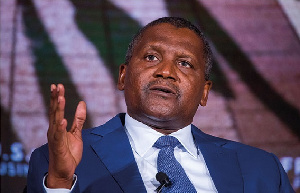
A8 Nigerian entrepreneur, Aliko Dangote, holds the distinction of being the wealthiest individual in Africa and the richest black person in the world. According to Forbes, his net worth is estimated to be approximately $12.7 billion, while Bloomberg places it at around $19.0 billion.
His entrepreneurial journey started when he approached his uncle for a $3000 loan to start importing and selling agricultural products in Nigeria after his first degree. He traded in Sugar, rice, pasta, salt, cotton, millet, cocoa, textiles, and vegetable oil from Thailand and Brazil.
His business became an instant hit and within three months, he repaid the loan he took from his uncle. In 1973, he ventured into the cement industry, buying truckloads and reselling them to others for profit.
He then ventured into selling sugar, rice, and other commodities, and eventually got back into the cement industry with a factory, moving from a zero market share in Nigeria to controlling about 45 percent of the market within the first year.
The success of his cement factory inspired him to start manufacturing some of the products he was importing or buying from others. In 1997, he built a plant and started manufacturing pasta, sugar, salt, and flour.
Today, all his companies operate under the empire Dangote Group, where he plays the role of chairman. The group employs over 30,000 workers in Nigeria and across Africa. Dangote Group includes the following firms: Dangote Cement Plc, Dangote Sugar Refinery Plc, and Dangote Flour Mills Plc.
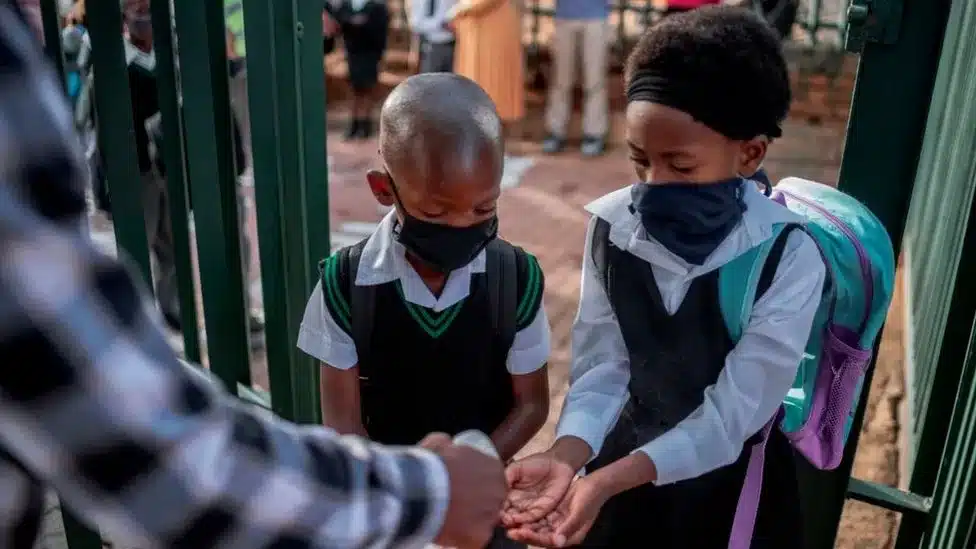
An international research has revealed that eight out of ten South African schoolchildren struggle to read by the age of ten.
South Africa ranked last out of 57 countries assessed in the Progress in International Reading Literacy Study, which tested the reading ability of 400,000 students globally in 2021.
Illiteracy among South African children rose from from 78% in 2016 to 81%.The country’s education minister blamed the results on school closures during the Covid-19 pandemic.
Describing the results as “disappointingly low”, Angie Motshekga also said the country’s education system was faced with significant historical challenges, including poverty, inequality and inadequate infrastructure.
In many primary schools “reading instruction often focuses solely on oral performance, neglecting reading comprehension and making sense of written words”, she added.
The study showed that 81% of South African children could not read for comprehension in any of the country’s 11 official languages.Alongside Morocco and Egypt, South Africa was one of only three African countries which participated in the assessments to monitor trends in literacy and reading comprehension of nine- and 10-year-olds.
Based on tests taken every five years at the end of the school year, the new study places countries in a global education league table.
Singapore secured top spot in the rankings with an average score of 587, while South Africa ranked last on 288 points – below second-last Egypt’s average of 378.
The scores are benchmarked against an international average of 500.The study also showed that overall, girls were ahead of boys in their reading achievement in nearly all of the assessed countries, but the gender gap has narrowed in the most recent testing round.
South Africa’s struggles with its education system are longstanding, with significant inequality between black and white students a consequence of the segregation of children under apartheid.
Education is one the single biggest budget expenses for the government, which can lead to disappointment over poor performance in studies like this.A lack of suitable reading materials and inadequate infrastructure in schools, often things like toilets, have contributed to the crisis.
Newmont Corporation has stated that it has entered into a binding Scheme Implementation Deed (SID) following the completion of due diligence, under which Newmont will acquire 100 percent of the outstanding share capital in Newcrest under an Australian court-approved Scheme of Arrangement.
The deal is worth about A$28.8 billion ($19.2 billion).
It will create the world’s biggest gold producer.
“The combination of Newmont and Newcrest represents an exceptional value proposition for shareholders and other stakeholders. It creates an industry-leading portfolio with a multi-decade gold and copper production profile in the world’s most favorable mining jurisdictions”, said Tom Palmer, President and CEO of Newmont.
Palmer noted in a statement: “Following a robust due diligence process, we have identified a number of opportunities to unlock substantial value and will apply our experience and expertise to Newcrest’s complementary and exceptional portfolio of long-life, low-cost gold and copper assets”.
He said: “Leveraging our experience from the acquisition of Goldcorp four years ago, we are positioned to deliver an estimated $500 million in annual synergies and an estimated $2 billion in incremental cash flow from portfolio optimisation opportunities, both part of our strategy to maximise value for shareholders and other stakeholders”.
Palmer continued: “This transaction also increases Newmont’s annual copper production – a metal vital for the new energy economy – and adds nearly 50 billion pounds of copper reserves and resources from Newcrest to our robust and balanced portfolio. We intend to quickly realise these opportunities to create superior value for our shareholders, workforce, host communities, and governments”.
Newcrest’s Chairman, Peter Tomsett, added: “This transaction combines two of the world’s leading gold producers, bringing forward significant value to Newcrest shareholders through the recognition of our outstanding growth pipeline”.
Tomsett said: “In addition to the ongoing benefits of merging these premier portfolios, the combined group will set a new benchmark in gold production while benefitting from a material and growing exposure to copper and a market-leading position in safety and sustainability”.
The Newcrest Board, he indicated, “is unanimously recommending the proposal”.
“We are very proud of the entire Newcrest team for building a world-class metals business, which will form a key part of the combined group”.
“We believe our shareholders and other stakeholders can look forward to an exciting and prosperous future”.
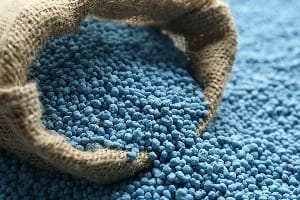
Increases in fertiliser prices under the Planting for Food and Jobs (PFJ) program in the 2022 agricultural season has prompted farmers to buy inputs from neighboring Togo, according to the Peasant Farmers Association of Ghana (PFAG).
The finding is part of an assessment of last year’s PFJ policy and its impact on smallholder farmers across the country by the PFAG, and showed that PFJ fertiliser prices escalated from GH¢96 for 50 kilogramme (kg) NPK and GH¢106 for 50kg Urea in 2021 to about GH¢320 for both products in 2022 – constituting some 233 percent increase.
Speaking at a PFJ Stakeholder Validation and Budget Credibility Workshop in Accra, Executive Director-PFAG, Dr. Charles Nyaaba, said one of the critical points that led to farmers’ disinterest in the programme was the high prices slapped on subsidised fertiliser from 2021, which reached an all-time peak last year – in contrast to prices in neighboring countries.
The assessment by PFAG indicates that about 92 percent of respondents perceived the 2022 prices as being too high.
While PFAG was hoping for government intervention to normalise the situation – particularly in 2022, that did not happen.
A 28-years old farmer in Chereponi, according to the findings, shared his frustration and how they rather bought fertiliser from Togo in 2022…which was unusual.
He said: “In Togo, they have two types of fertiliser. One is expensive and the other one is not too expensive. The cedi equivalent of the less expensive one in 2022 was GH¢210/50kg and the expensive one was GH¢270/50kg. In 2022, most of us bought our fertiliser there and even bought some and sold to other farmers in Chereponi. Is the COVID-19 and Ukraine-Russian War not affecting them?”
It must be noted that Chereponi is a border town. In previous years, farmers from neighbouring Togo purchased fertiliser from Ghana – with some reported cases of smuggling the subsidised fertiliser.
The 2022 turn of events, according to the association, was therefore surprising – as to how prices could escalate beyond controllable limits in Ghana.
This is what a 43 year-old female farmer from the Telania community in the Kassena Nankana West District shared: “Why would I buy just one bag of government fertiliser for GH¢320? I need about three bags of NPK and one bag of urea for one acre. When I put the cost together, it is more than GH¢1,000; what about tractor service, agro-chemicals, labour and harvesting cost? How much do I get paid for a bag of maize? Where is government support for farmers when the price of open market fertiliser is same as the subsidised?
Dr. Nyaaba suggested that the current PFJ should be modified and a value chain approach adopted, as hinted by the sector minister.
Government plans to finish building 560 rural telephony sites by the end of this year as part of the Rural Telephony and Digital Inclusion Project, which will provide basic voice and data connectivity to underserved and unserved regions across Ghana.
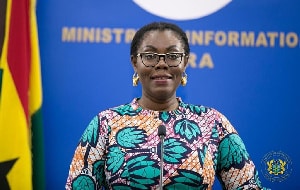
Ursula Owusu-Ekuful, the Minister of Communications and Digitalisation, who made this known, said 1,008 rural sites, under the project, had already been constructed nationwide between 2020 and 2022.
The government, she added, hoped to complete the remaining projects as soon as practicable.
“We are optimistic that out of the one thousand and eight (1,008) remaining sites to be completed, five hundred and sixty (560) rural sites will be completed by the end of this year,” she said.
The Minister said this in a speech read on her behalf by Madam Ama Pomaa Boateng, the Deputy Minister of Communications and Digitalisation, at the celebration of the 2023 World Telecommunication and Information Society Day (WTISD) on Wednesday, organised by the Ministry and the National Communication Authority (NCA).
The WTISD is to help raise awareness of the benefits citizens and economies could derive from the use of the Internet and other information and communication technologies (ICTs) to bridge the digital divide.
The global theme for this year is: “Empowering the Least Developed Countries through Information and Communication Technologies,” with the local theme being: “Public-Private Partnership for Connectivity.”
Mrs Owusu-Ekuful said investment in ICT was crucial in bridging the technology usage gap, hence the Government had undertaken numerous projects, including the National Roaming Policy, to address challenges of network coverage.
“It is a step towards ensuring that all citizens, regardless of their location, have access to reliable telecommunication services,” she said.
The Government had committed $2.6 million to support innovation centres to train 3,000 people by 2024.
“The Ministry also has an agreement with the Smart Africa Alliance, through the Smart Africa Digital Academy, to train up to 22,000 people by 2023,” she added.
Professor Ezer Osei Yeboah-Boateng, the Deputy Director General of Technical Operations at NCA, said over the years, the Government, through the Ministry of Communications and Digitalisation, had been pushing the digital agenda to bridge the digital divide and improving literacy and access to connectivity.
“Projects such as the Rural Telephony, UMTS900, Girls-in-ICT, Community Information Centres, National Roaming amongst others, have all been implemented by the Ministry and its agencies and are steadily running and being monitored to improve connectivity,” he added.
At the beginning of this year, there were over 22.8 million internet subscriptions in Ghana with a penetration rate of 71.94 per cent, he said, which signified a major increase in connectivity as compared to previous years.
Despite that, Prof Yeboah-Boateng said the country needed to implement firm initiatives and collaborations to ensure sustainability, emphasising public-private partnership as key to the attainment of that goal.
“We have made progress, however, there is still room for improvement as we seek and have pledged to empower Least Developed Countries to connect to the rest of the world.”
“Government cannot do this single-handedly and this is the rationale behind the Government’s creation of an enabling environment for investment and for the private sector to thrive.”
Mr Abdourahamane Diallo, the Country Representative of UNESCO, assured of the UN’s continuous support to the Government to help bridge the ICT in Ghana.
The country is on the verge of entering a period of market stability and less uncertainty Following the $3 billion loan granted by the International Monetary Fund’s (IMF).
The expected disbursement of around US$600million through the IMF programme, along with other anticipated concessional inflows, is anticipated to significantly bolster the nation’s balance of payments (BoP) position and gross foreign exchange reserves. This favourable development is projected to strengthen the cedi’s stability and prompt a corrective run.
The cedi has already demonstrated resilience against major trading currencies, appreciating against the US$, € and £ on the retail market last week. Following news of a breakthrough in engagements with offshore creditors, the local unit opened the week on a solid note – and the corrective run is expected to continue in the weeks ahead.
This positive trend is further supported by financing assurances from Ghana’s official creditors, granting approval of government’s request for debt treatment beyond the Debt Service Suspension Initiative (DSSI).
The financing assurances obtained represent a significant milestone, as it paved the way for the IMF to approve Ghana’s US$3billion three-year extended credit facility.
The approval of Ghana’s request, which was confirmeed yesterday, marks a formal commencement of the programme and associated economic and structural reforms.
The cedi initially traded sideways at the end of last week, but gained stability following announcement of the debt relief by external creditors.
With assistance from the central bank’s foreign exchange support, the local unit displayed stability and registered a 0.21 percent appreciation against the US$ on the retail market compared to the previous week. The domestic currency also recorded gains against the euro while remaining unchanged against the GBP.
The US$ experienced volatility following the Federal Reserve’s interest rate hike in April 2023. Although some investors sought refuge in the US$ as a safe-haven currency, concerns arose due to the postponement of discussions regarding the US debt ceiling increase. However, the recent debt relief extended to Ghana by the Paris Club and China paved the way for approval of the IMF board-level agreement and subsequent processing of Ghana’s programme. A total disbursement of approximately US$750million is expected in the upcoming weeks, further bolstering the IMF deal’s positive market impact.
Debt market
The IMF approval and the positive assurances have a ripple-effect on both the bond and foreign exchange markets. Investors are likely to be more confident in Ghana’s economic prospects, leading to increased interest in the country’s bond market. This heightened investor confidence can result in lower borrowing costs for government, allowing for more sustainable debt management.
The stability and support provided by the IMF deal and financing assurances from official creditors create a conducive environment for foreign direct investments (FDI). International investors are more likely to view Ghana as a stable and attractive investment destination, which can spur economic growth and job creation.
The IMF programme also sets the stage for comprehensive economic and structural reforms in Ghana. Government’s commitment to these reforms demonstrates its determination to address fiscal imbalances and achieve debt sustainability. By implementing these reforms, Ghana aims to reduce its debt-to-GDP ratio to 55 percent by 2028. Such efforts can enhance the country’s macroeconomic stability and create a favourable business environment.
Concessional funding sources from multilateral development banks and other development partners will play a crucial role in supporting the nation’s economic development. These funding options provide long-term financing at favourable interest rates, reducing the country’s reliance on short-term borrowing. As a result, Ghana’s money market yields are expected to decline in the second half of 2023, further encouraging investment and economic growth.
The positive market sentiment resulting from the approval of the IMF deal also has broader implications for the country’s overall economic outlook. It signals to international markets and credit rating agencies that government is committed to implementing necessary reforms and improving its fiscal standing. This, in turn, can lead to improved credit ratings, lower borrowing costs, and increased access to international capital markets.
While the IMF deal and financing assurances bring optimism to the domestic market, it is essential for government to remain committed to the agreed-upon economic and structural reforms. Maintaining a stable macroeconomic environment, fostering transparency, and ensuring efficient implementation of reforms will be critical to sustaining investor confidence and realising the programme’s full potential.
Moving forward, Ghana will focus on negotiating terms and parameters of external debt treatment under the G20 Common Framework. Given the magnitude of fiscal imbalance and necessary adjustments to restore debt sustainability, government will aim for favourable terms; particularly for Eurobond and other commercial creditors holding a larger proportion of the total external debt.
The Agricultural Development Bank’s agricultural sector loan portfolio has hit over GH¢1billion, says its Managing Director, Alhaji Alhassan Yakubu-Tali.
The amount excludes non-funded facilities such as letters of credit and guarantees granted for the purchase of agricultural inputs, machinery, equipment and raw materials.
The huge amount of investment over the past few years is part of a strategy to refocus the bank to its original mandate and provide financial intermediation for the agricultural sector.
The Managing Director disclosed this on Thursday, 11th May 2023 when he paid a courtesy call on Minister for Food and Agriculture, Bryan Acheampong (Dr.), to congratulate him on his appointment.
Due to many challenges and increasing levels of risk in the agricultural sector, many financial institutions, including banks, usually shy-away from investing in the sector. Alhaji Yakubu-Tali however stated that for ADB these challenges present enormous opportunities which the bank will continue to leverage.
He indicated that ADB has positioned itself as the ‘bank of choice’ when it comes to Agricultural financing, which is key in facilitating growth of the economy.
The Managing Director indicated that ADB has been a leader in providing financial support for the nation’s agric sector initiatives: including Planting for Food and Jobs (PFJ); Rearing for Food and Jobs (RFJ); Planting for Export and Rural Development (PERD); and the One District-One Factory Initiative (1D1F).
“Under Planting for Food and Jobs and 1DF1, the bank invested over GH¢251.83million to support many viable projects and purchase fertiliser and certified seeds among others. To guarantee food security, the bank between 2018 to date has disbursed in excess of GH¢460million to NAFCO (Buffer Stock) for purchasing stocks harvested under the PFJ programme to ensure constant food supplies under the Free SHS programme,” he said.
In the fishing sector, the bank – in partnership with the Ministry for Fisheries and Aquaculture Development and Coastal Development Authority – supported the importation of 1,300 Yamaha outboard motors as well as fishing gear for fishers at cost, either under lease-financing or through direct sales. The bank further absorbed all incidental and related costs amounting to about GH¢7million.
ADB also supported Planting for Export and Rural Development, which is a key initiative aimed at promoting perennial/tree-crops. The tree-crop sub-sector was supported with a total investment of over GH¢485million for rubber, oil palm and mango plantations.
Alhaji Alhassan Yakubu-Tali further disclosed that, as a strategy, ADB has partnered risk-sharing incentive entities like GIRSAL to reduce the bank’s risk burden as it seeks to further grow its investment in the agricultural sector.
He stated that the bank has since 1987 been lead sponsor of the National Best Farmer Awards, and the sponsorship forms part of its commitment to the Agricultural sector. “The bank’s association and continuous sponsorship of these events over the years is an undeniable evidence of its promise to support farmers & fishers and remain focused on its founding mandate to provide financial intermediation for the agricultural sector,” he said.
He assured that the bank will continue partnering government in the quest to ensure food security in Ghana, and to achieve all objectives of the Ministry of Food and Agriculture when it comes to agriculture financing and development.
The Bank of Ghana’s interbank forex rates for today, May 18, 2023, shows that the Ghana Cedi is trading versus the dollar at a purchasing price of 10.9365 and a selling price of 10.9475.
At a forex bureau in Accra, the dollar is being bought at a rate of 10.50 and sold at a rate of 11.40.
Against the Pound Sterling, the Cedi is trading at a buying price of 13.6597 and a selling price of 13.6745.
At a forex bureau in Accra, the pound sterling is being bought at a rate of 13.20 and sold at a rate of 14.20.
The Euro is trading at a buying price of 11.8523 and a selling price of 11.8640.
At a forex bureau in Accra, Euro is being bought at a rate of 11.00 and sold at a rate of 12.20.
The South African Rand is trading at a buying price of 0.5682 and a selling price of 0.5688.
At a forex bureau in Accra, South African Rand is being bought at a rate of 0.30 and sold at a rate of 0.90.
The Nigerian Naira is trading at a buying price of 42.1769 and a selling price of 42.2765.
At a forex bureau in Accra, Nigerian Naira is being bought at a rate of 13.00 Naira for every 1 Cedi and sold at a rate of 18.00.
For the CFA, it is trading at a buying price of 55.2897 and a selling price of 55.3443.
At a forex bureau in Accra, CFA is being bought at a rate of 16.00 CFA for every 1 Cedi and sold at a rate of 19.50 CFA for every 1 Cedi.
Note that these rates may be different at a forex bureau near you. Our forex bureau rates are provided by Afriswap Bureau De Change in Osu, Accra.
Our forex bureau rates are provided by Afriswap Bureau De Change in Osu, Accra.
The Executive Board of the International Monetary Fund (IMF) approved a 36-month arrangement under the Extended Credit Facility (ECF) in an amount equivalent to SDR 2.242 billion (around US$3 billion, or 304 percent of quota).
The program is based on the government’s Post COVID-19 Program for Economic Growth (PC-PEG), which aims to restore macroeconomic stability and debt sustainability and includes wide-ranging reforms to build resilience and lay the foundation for stronger and more inclusive growth.
The Executive Board’s decision will enable an immediate disbursement to Ghana equivalent to SDR 451.4 million (about US$600 million).
Large external shocks in recent years have exacerbated Ghana’s pre-existing fiscal and debt vulnerabilities, resulting in a loss of international market access, increasingly constrained domestic financing, and reliance on monetary financing of the government. Decreasing international reserves, Cedi depreciation, rising inflation and plummeting domestic investor confidence, eventually triggered an acute crisis.
The authorities have taken bold steps to tackle these deep challenges, including by accelerating fiscal adjustment. The government has also launched a comprehensive debt restructuring to address severe financing constraints and the unsustainable public debt. Securing timely debt restructuring agreements with external creditors will be essential for the successful implementation of the new ECF arrangement.
Key policies under the authorities’ program include large and frontloaded fiscal consolidation to bring public finances back on a sustainable path, complemented by efforts to protect the vulnerable. The adjustment effort will be supported by ambitious structural reforms in the areas of tax policy, revenue administration, and public financial management, as well as steps to address weaknesses in the energy and cocoa sectors.
Appropriately tight monetary and flexible exchange rate policies will help bring inflation back to single digits and rebuild international reserves. The program also has a strong focus on preserving financial stability and encouraging private investment and growth.
The program will help Ghana overcome immediate policy and financing challenges, including through its catalytic effect in mobilizing external financing from development partners and providing a framework for the successful completion of the ongoing debt restructuring.
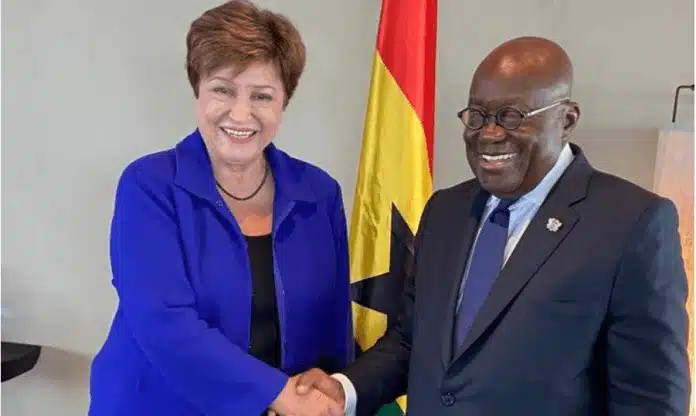
Following the Executive Board discussion on Ghana, Ms. Kristalina Georgieva, Managing Director, issued the following statement:
“The combination of large external shocks and preexisting fiscal and debt vulnerabilities precipitated a deep economic and financial crisis in Ghana. In response, the authorities have launched a comprehensive reform program, to be supported by the ECF-arrangement. It is focused on restoring macroeconomic stability and debt sustainability as well as implementing wide-ranging reforms to build resilience and lay the foundation for stronger and more inclusive growth. Capacity development and continued support by development partners would be critical for the successful implementation of the authorities’ program.
“Fiscal consolidation is a core element of the program. A substantial and front-loaded fiscal adjustment has started with the 2023 budget. Enhanced revenue and streamlined expenditure will be combined with policies to protect vulnerable households and create room for higher social and development spending in the medium term. With a view to fostering lasting fiscal discipline, the authorities are also advancing reforms to enhance domestic revenue mobilization, strengthen public financial management, and tackle the deep challenges in the energy and cocoa sectors. The government has also launched a comprehensive debt restructuring, including both domestic and external debt, to place debt on a sustainable path. Effective collaboration by all parties involved would be critical.
“Preserving financial sector stability is critical for the success of the program. Given the adverse impact of the domestic debt restructuring on balance sheets of financial institutions, the authorities will devise and implement a comprehensive strategy to rapidly rebuild financial institutions’ buffers and exit from temporary regulatory forbearance measures.
“Monetary and exchange rate policies under the program will focus on reining in inflation and rebuilding foreign reserve buffers. The Bank of Ghana will continue tightening monetary policy until inflation is on a firmly declining path and will eliminate monetary financing of the budget. The central bank will also enhance exchange rate flexibility and limit foreign exchange interventions to rebuild external buffers.
“An ambitious structural reform agenda is being put in place to reinvigorate private sector-led growth by improving the business environment, governance, and productivity.”
*The authorities’ economic program, supported by the ECF-arrangement, builds on the government’s Post COVID-19 Program for Economic Growth (PC-PEG), which aims to restore macroeconomic stability and debt sustainability and includes wide-ranging reforms to build resilience and lay the foundation for stronger and more inclusive growth.
*Securing timely debt restructuring agreements with external creditors will be essential for the successful implementation of the new ECF arrangement.
The receiver of the bankrupt Unibank Limited, Nii Amanor Dodoo, has revealed that an amount of GH13,100,000 was credited to the account of one Maripoma Limited as part of efforts to siphon cash.
According to him, crediting of the account in the banking software of Unibank was done by one Mr R. Mensah, a teller at the World Trade Centre branch of Unibank.
Nii Dodoo made this known when he was answering questions in a cross-examination by lawyers for Mr Jeffery Amon, a former Relationship Manager of Corporate Banking of Unibank Limited.
The accused persons in the Unibank Limited matter have been charged with fraudulent breach of trust, money laundering, dishonest appropriation, willfully causing financial loss to the Republic and conspiracy to commit crime.
At the time that the license of Unibank Limited was revoked, it was discovered that an amount of GH¢5.7 billion had been dishonestly appropriated by the shareholders with the connivance and assistance of some of the accused persons.
He said a total amount of GH¢56,295,000 was debited from the bank’s interbranch ledger account.
This ledger account, according to the Receiver, was a general ledger account.
Nii Dodoo said various entries were passed into the account particularly those based on petty cash vouchers and pay-in slips that were used to siphon funds out of Unibank.
“Some of the petty cash vouchers used to siphon out the GH¢56,295,000 were signed by Mr Paul Appiah Gyasi, Mr William Coleman and Mr Benjamin Ofori, all officers of the bank,” the Receiver added.
He said the entries were passed by Mr Elijah Benson and other officers of the bank based on vouchers presented to them adding that these funds were siphoned out for the benefit of the shareholders.
The Receiver described the pay-in slips based on which funds were siphoned from Unibank as fictitious because there was no evidence of physical cash receipts of those amounts in the books of Unibank.
He said in most cases, when entries were passed in the banking software application of Unibank, a Senior Officer of the bank had to authorise the transaction passed but in this case, this was not the case.
Meanwhile the trial was adjourned to May 17, 2023 for continuation of cross-examination.
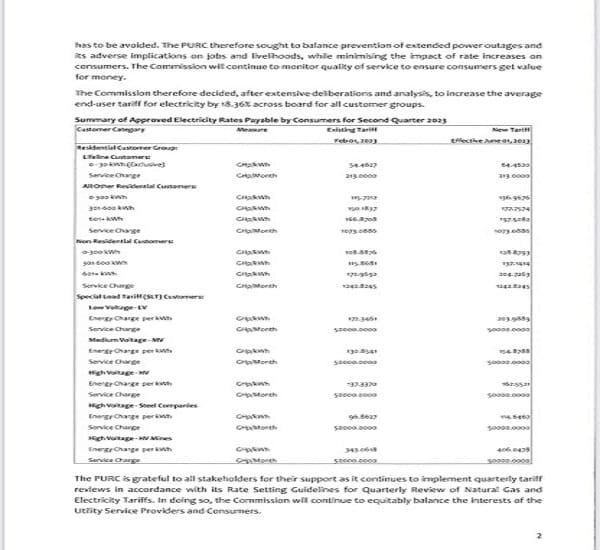
The Public Utilities Regulatory Commission (PURC) has announced an 18.36% increase in electricity and natural gas pricing
According to the Commission, the move is to avert power outages, otherwise known as dumsor which could harm individuals and businesses.
In a press release sighted by the media, it stated that the review was to maintain the real value of the cost of supply of utility services.
PURC also blamed the depreciation of the local currency – Cedi against the US Dollar, high inflation, electricity generation mix, and the weighted average cost of natural gas (WACOG) as the factors that influenced the latest increment.
It noted that the Quarterly Tariff Review Mechanism aims at tracking and incorporating changes in key factors used in determining natural gas and electricity tariffs.
“This review has become necessary to maintain the real value of the cost of supply of the utility services and to ensure that the utility companies do not under or over-recover costs,” part of the release stated.
“While under-recovery has negative implications for the ability of the companies to supply service to consumers, and has the potential of causing outages of electricity, over-recovery unnecessarily overburdens consumers of electricity,” it added.
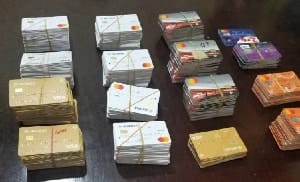
Recent events have exposed card fraud schemes that have left some consumers suffering from unauthorized money transfers and subsequent avoidance of mandatory charges.
The issue has raised concerns among financial institutions and regulatory bodies, prompting investigations including the Bank of Ghana (BoG) and card providers.
The fraudulent schemes revolve around cliques that manipulate unsuspecting individuals into granting access to their cards. Once a group gains control, they exploit the cards to conduct unauthorised money transfers – cunningly sidestepping the charges that are typically associated with such transactions. Multiple banks have reported incidents of customers falling victim to this deceptive practice in recent times.
An insider who spoke to the B&FT on the condition of anonymity, owing to the sensitive nature of the case said: “As you may recall, we chatted about some developments in the use of cards by some customers leading to them being debited then they started raising hell… some people may be victims of a clique hiding behind simple requests to have access to friends’ cards. Then they use these cards for money transfers to avoid paying the necessary charges. Some banks have suffered this in recent times”.
One website that has come under scrutiny is an unauthorised money transfer organisation (MTO) that operates outside the purview of BoG’s regulations. It has been discovered that customers utilised their cards on this platform, unaware of the illicit nature of their transactions. These transactions were initially misclassified as the purchase of large digital goods, masking their true nature as cross-border money transfers – which violate card-issuer rules.
Under normal circumstances, cross-border transactions like these would incur Optional Issuer Fees (OIF), also known as currency conversion fees. However, it has been revealed that these fees were not applied in real time – resulting in inappropriate charges being omitted from the transactions. This irregularity was rectified once the true nature of the transactions came to light.
One of the financial institutions affected by the fraudulent scheme took immediate action by reporting the incident to both the BoG and a card-issuer. Consequently, the authorities have launched investigations into the matter to ascertain the full extent of the fraud and hold those responsible accountable.
Furthermore, due to involvement of the country’s hard-earned foreign currency in these unauthorised transfers – which could be considered economic crimes, the Economic and Organised Crime Office has been alerted in compliance with the Economic and Organised Crime Act, 2012, Act 804.
Responses from the BoG, EOCO and other relevant stakeholders were not ready at the time of filing this report.
In light of these disconcerting events, consumer protection and responsible online practices have taken centre-stage. Experts urge individuals to exercise caution and take necessary precautions to safeguard their cards and personal finances.
To protect themselves from falling prey to fraudulent schemes, consumers have been advised not to share their card details with anyone, and to verify the authenticity of requests for card access. Additionally, it is crucial that they adopt responsible online behaviour; such as using secure payment platforms and conducting thorough background checks on websites and organisations before engaging in financial transactions.
This comes at a time when digital fraud cases are on the ascendancy following the sharp rise in electronic payments. In a similar development, in 2021 the financial sector witnessed a substantial surge in fraud cases – resulting in a loss of GH¢61million compared to GH¢25million in 2020.
This represents a staggering 144 percent increase year-on-year. The primary contributors to this concerning figure were various types of fraud: namely automated teller machine (ATM) card/point of sale (POS) fraud; impersonation; lending and credit fraud; forgery and manipulation of documents; cash suppression and E-money fraud.
Specifically, ATM card/POS-related fraud accounted for the highest loss, totalling GH¢22.99million. Universal banks accounted for nearly all the loss for ATM/POS fraud. The banks recorded a rate of 99.98 percent, with 0.02 percent for the Savings and Loans sector.
Negligence on the part of some customers and weaknesses in the systems of certain financial institutions were identified as contributing factors to this alarming trend.
The need for improved customer vigilance and stronger security measures within financial institutions has become more evident than ever, in order to combat these fraudulent activities and mitigate the financial losses associated with them.
Also – according to recent reports collated by moneytransfers.com – credit card issuers, merchants and consumers collectively incurred a staggering credit card fraud loss of US$28.58billion in 2020. Specifically, global general-purpose brand cards experienced a credit card fraud loss amounting to US$25.27billion during the same year.
Alarmingly, projections indicate that the global loss attributed to credit card fraud is expected to surge to an estimated US$49.32billion by 2030. These figures highlight the increasing prevalence and financial impact of credit card fraud, emphasising the urgent need for enhanced security measures and fraud prevention strategies in the industry.
The Lands and Natural Resources Minister, Samuel Abu Jinapor, has promised that his department will closely follow the reports and recommendations made during the recently concluded two-day Natural Resources Stakeholders Dialogue.
The Minister gave this assurance when he was received a communique on the Natural Resources Stakeholders Dialogue put together by the Graphic Communications Group Ltd. on Tuesday, 16th May, 2023 in Accra.
Abu Jinapor in his remarks applauded the team from GCGL for bringing up such a timely programme which has been unanimously applauded by the masses as roundedly a major success.
“We at the Ministry of Lands and Natural Resources are extremely grateful for the leadership you have shown and your outfit in general for putting together such an all important stakeholders dialogue to build a consensus around national issues”
Recounting, the Minister pointed out that although discussions at the Dialogue were productive and comprehensive, it should not end there but rather zero in on specific issues, exemplifying the issue of having surface mining as opposed to underground mining and the question of restricting small scale mining to prevent environmental degradation, as a topic that can be critically examined.
He noted that due to the very consequential nature of the issues to be discussed, a lot more of such dialogues can be organized to think through some of these specific issues without having to make it a nationwide campaign.
Samuel Abu Jinapor hoped that the strong ties and collaboration established between the Ministry and Graphic will continue as they work together for the good of the people of Ghana and the country at large.
Managing Director for Graphic Communication Group Limited, Ato Afful, on behalf of his outfit submitting the communique said the forum which sought to have a broad consensus in getting critical stakeholders agree on a pathway to manage Ghana’s natural resources, was a success.
He continued that the documents will help build a timetable to follow through the implementation of some key take-out from the dialogue.
Mr. Afful assured the Minister that he make available copies of the reports to all the Ministry’s agencies to make meaningful and sustainable results as guided by the Minister for Information, Kojo Oppong-Nkrumah
On May 17, 2023, the International Monetary Fund (IMF) is anticipated to make a decision about Ghana’s request for a $3 billion Extended Credit Facility.
According to a media advisory captured on the Fund’s website, the Executive Board of the Fund brief will hold a virtual press conference on Thursday, May 18 at 10.30 am Washington D.C time to brief journalists on the outcomes.
Key persons to partake in the press briefing is the IMF Mission Chief for Ghana, Stephane Roudet, Ghana’s Finance Minister, Ken Ofori-Atta, Bank of Ghana Governor, Dr Ernest Addison and Tatiana Mossot, Senior Communications Officer with the IMF.
The press briefing will be held via Zoom but will be televised on most channels in Ghana at 14:30 GMT, according to a circular issued by Ghana’s Ministry of Finance on May 16, 2023.
Ahead of this development, Minister of State in charge of Finance, Dr. Mohammed Amin Adam disclosed that the first tranche of the loan facility consisting of $600 million is expected to be disbursed into the Central Bank’s account by Wednesday, May 17, 2023.
He added that the second tranche of the funds will also hit the Central Bank’s account by November or December this year after the Fund has conducted a successful review of the first loan tranche under the programme.
Dr Amin Adam added that the rest of the funds will be disbursed in equal tranches of $360 million after the IMF has further completed its semi-annual reviews of the extended credit facility.
“The funds will boost Ghana’s coffers and help it work towards the target of foreign reserves amounting to the equivalent of three months of imports by 2026,” the minister of State earlier told Reuters.
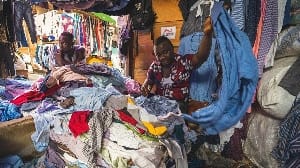
A 153 percent increase in import duty has been bemoaned by secondhand clothing dealers, who claim that if action is not taken, thousands of Ghanaians risk losing their main source of income.
In the first quarter of 2022, the Ghana Used Clothing Association (GAUCA) said it cost GH¢15,000 as import duty on a 40-foot container. However, since first quarter of this year it has gone up by over 300 percent to GH¢38,000.
The situation, GAUCA lamented, is further worsened by factors such as cedi-depreciation, high inflation and a harsh economic environment – including deteriorating purchasing power of consumers and further taxes.
As a result, industry players say the once-booming industry is now going through a rough patch, with as many as 70 percent of secondhand clothing dealers losing their livelihood because of the knock-on effect of import duty cost on cost of secondhand clothing bales, which are sold at wholesale points for exorbitant prices.
Samuel Darko Apenteng, Secretary of the Used Clothing Dealers Association in Kantamanto – the biggest secondhand clothing market in the country, revealed that a bale of secondhand clothing which sold at a price of GH¢23,000 during the second quarter of 2022 is now hovering at around GH¢6,500 to GH¢7,000. This, he said, has made it nearly impossible for most used-clothing retailing businesses to stay afloat.
More worryingly, the hike in duty – which will ultimately be transferred to the consumer, could make secondhand clothing too expensive for buyers who are already struggling with heightened economic difficulties, particularly rising cost of food and utilities.
Typically, Ghanaians – with the exception of a few well-to-do ones – patronise secondhand clothing. More so, most middle-class workers rely on what is commonly referred to as ‘first selection’ (prime secondhand clothes) for both their corporate and casual clothing needs.
With the hike in import duty and resultant increase in price of used clothing in the face of current economic difficulties, most dealers are experiencing a drastic drop in sales and patronage – with the always busy Kantamanto market now looking like a desert even on Saturdays.
“The situation is posing an existential threat to our livelihoods. This business used to be very lucrative, serving as a source of income for many Ghanaian young men and women who otherwise would have been home doing nothing; but as I speak, we now operate on narrow profit margins due to the increasing bale-price and low customer patronage. Personally speaking, there are days when I come here and go back home after selling nothing,” he told the B&FT on a hot Tuesday morning in Accra, while pointing to his wares which he says have been in his shop for months.
Mr. Apenteng added that a good number of retailers have either abandoned or sold their sheds to new entrants, because they are unable to pay back loans they contracted before the economic crisis.
“Due to an unexpected hike in bale-price at wholesale points, I defaulted on a loan to the tune of GH¢30,000 with a 10 percent interest rate I took from an individual lender last year. I am unable to settle it because the price of secondhand clothing bales has quadrupled, resulting in me paying more than twice the price it was sold to me at the time of taking the loan. I have become depressed and suicidal, looking over my shoulder while trading because I don’t know when the lender will visit again,” said one of such victims, who pleaded anonymity.
The story of loan default was one that cut across all the dealers B&FT spoke to. For instance, a 29-year old trader by name Benjamin Antwi said he defaulted on a loan of GH¢25,000. With no means of repaying, he admitted that he could be staring at the possibility of going to jail; and said that he has already started psyching himself up for it.
Distressingly, Antwi said about 30 percent of the young men he came to meet in the business are either now down with stroke or hypertension, while others have taken to alcohol.
Meanwhile, the Used Clothing Association in Kantamanto is blaming importers for the industry’s predicaments.
“Aside from failing to voice-out for us, they sometimes of their own free will inflate import duty charges on the goods for no apparent reason; and I believe this practice of theirs partially accounts for the sustained increase in bale prices. They are always using the dollar rate as an excuse,” Mr. Apenteng added.
GUTA
But in a sharp rebuttal, the deputy-Treasurer of Ghana Union of Traders Association (GUTA) – Edward Atobrah, who doubles as Finance Secretary of Ghana Used Clothing Association (GAUCA) – refuted the retailers’ claims, saying they are unfounded.
He explained that contrary to their perceptions about importers, the situation has rather been precipitated by factors such as the continual introduction of new tariffs on imported goods by government, importation costs such as shipping charges, an unstable cedi and rising dollar rate.
“It is the accumulation of government’s taxes on imported goods over a period of time that has brought us to this point. Government is introducing more taxes, and the more the taxes, the more the increment of duty cost.
“In addition, the retailers do not have full appreciation of the current global as well as local economic situation and its effects on the exchange rate of foreign currencies; nor do they appreciate the fact that inflation rate is also a price-determining factor. All they want is to get their goods at a cheaper cost as it used to be, regardless of the situation,” Atobrah elaborated.
He underscored the need for government to as a matter of urgency scrap temporary emergency taxes that have outlived their purpose.
“These taxes need to be taken off for prices to go down. Government introduced some temporary emergency taxes for specific periods, and although those periods have elapsed the taxes still remain in effect. These taxes need to be taken off for prices to go down,” Atobrah appealed.
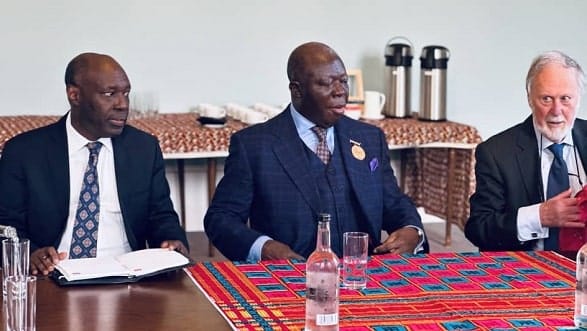
Asantehene Otumfuo Osei Tutu II has held talks with the British Museum (BM) regarding the repatriation of regalia seized from the Ashanti kingdom following the Battle of Amoaful in 1874.
During his working tour to London last week, Asantehene Otumfuo Osei Tutu II also sought avenues for modern cultural cooperation, including administration and technical support for the Manhyia Palace Museum.
The Asantehene was welcomed by Dr. Hartwig Fischer, the Museum Director, Dr. Jonathan Williams, the Deputy Director, Sam Nixon, the Head of the Africa Department and Curator, and Julie Hudson.
Subsequently, the Asantehene emphasized that the Manhyia Museum is a thriving institution that generates revenue. He noted that, like other prominent museums, it occasionally requires additional collections to attract visitors and facilitate expansion.
However, the repatriation of Ashanti regalia has been a subject of protracted negotiations, despite being in violation of ancient British law.
Dr. Fischer, who led the negotiations on behalf of the British Museum, described the visit as significant and assured the Asantehene that structured legislation would be employed to address his requests.
A memorandum of understanding (MOU) will be reviewed in a timely manner for the loaning of artefacts for the Asantehene’s silver jubilee in Kumasi in 2024.
Furthermore, the Museum agreed to collaborate with two of the Asantehene’s advisors, Malcolm McLeod, a former history professor and vice principal at the University of Glasgow, and the former keeper of ethnography at the British Museum, to research and establish a technical framework. Ivor Agyeman-Duah, a historian, museum economist, and development specialist, is also involved in this collaborative effort.
As the British Museum Act prohibits the permanent removal of artefacts from its collection, the ongoing technical discussions in London will address the legal implications. This includes a visit to the Manhyia Palace Museum and object authentication at the Museum for loan agreements.
The British Museum, under Dr. Fischer’s guidance, will support the anniversary and reopening of the Manhyia Palace Museum.
During the visit, the Asantehene was given a private tour of the current exhibition titled “Luxury and Power: Persia to Greece,” which focuses on the Greco-Persian Wars. In parallel negotiations, Dr. Tristram Hunt, Director of the Victoria and Albert Museum (V&A), met with Mr. Agyeman-Duah in London. The Palace has confirmed that a bilateral agreement with the V&A will be signed before February 2024.
In commemoration of the 150th anniversary of the 1874 War, the V&A is developing a program proposal that will feature a collection of Asante regalia and involve collaboration between British and Ghanaian artists to create a memorial in London.
Additionally, next year will mark the 100th anniversary of the return of Asantehene Nana Agyeman Prempeh I from exile in the Seychelles after twenty-seven years. This event will also be commemorated.
It is worth noting that in 1874, Asantehene Otumfuo Opoku Ware II requested the return of regalia from the Director of the British Museum, Sir John Pope-Hennessy. This request eventually led to the major exhibition, “Asante Kingdom of Gold,” which was inaugurated by Opoku Ware II and the Duke of Gloucester and later travelled to the Natural History Museum in New York.
As a result of the British Museum’s training of museum directors in Kumasi and Ghana, in partnership with Manhyia at the time, a significant BM international program in Africa is now in place.
The discussions between the Asantehene and the British Museum signify a crucial step towards addressing the historical injustices of cultural appropriation and the repatriation of Ashanti regalia. The Ashanti kingdom treasures its regalia as important symbols of its cultural heritage and identity.
The Manhyia Palace Museum, under the leadership of the Asantehene, has been actively involved in promoting cultural exchange and preservation. The collaboration with the British Museum opens doors for further cooperation in areas of administration, technical support, and knowledge sharing.
Today, May 17, 2023, the Ghana Cedi is trading against the dollar at a purchasing price of 10.9538 and a selling price of 10.9648, according to the Bank of Ghana’s Interbank Foreign Exchange Rates.
At a forex bureau in Accra, the dollar is being bought at a rate of 10.40 and sold at a rate of 11.40.
Against the Pound Sterling, the Cedi is trading at a buying price of 13.6758 and a selling price of 13.6906.
At a forex bureau in Accra, the pound sterling is being bought at a rate of 14.00 and sold at a rate of 15.00.
The Euro is trading at a buying price of 11.8972 and a selling price of 11.9080.
At a forex bureau in Accra, Euro is being bought at a rate of 12.00 and sold at a rate of 13.00.
The South African Rand is trading at a buying price of 0.5734 and a selling price of 0.5740.
At a forex bureau in Accra, South African Rand is being bought at a rate of 0.30 and sold at a rate of 0.90.
The Nigerian Naira is trading at a buying price of 42.2545 and a selling price of 42.3458.
At a forex bureau in Accra, Nigerian Naira is being bought at a rate of 13.00 Naira for every 1 Cedi and sold at a rate of 18.00.
For the CFA, it is trading at a buying price of 55.0854 and a selling price of 55.1354.
At a forex bureau in Accra, CFA is being bought at a rate of 17.00 CFA for every 1 Cedi and sold at a rate of 20.50 CFA for every 1 Cedi.
Two restaurant managers and employees of an Accra-based electrical cable company were detained by the Ghana Revenue Authority (GRA) team for failing to issue VAT tax bills.
The companies are Waves Lounge and Pub, Chez Amis Pub and Grill, and Grand Pacific Limited, dealers in general electrical cables.
The managers were taken to the Customs Office at the headquarters for their statements before being handed over to the Criminal Investigation Department of the Police.
Edward Appenteng Gyamerah, Commissioner, Domestic Tax Revenue Division, GRA, said the managers had refused to issue certified VAT invoices by the Commissioner-General at the point of purchase of goods at their outlets.
The initiative, he stated, was part of the Authority’s exercise to ensure tax compliance and retrieve taxes due the state.
He said the Division had several options at its disposal to aid in revenue mobilization, including already existing initiatives such as auditing and test purchasing, among others.
Gyamerah said the test purchases conducted on 115 taxpayers that were sampled for a week revealed that a total of 93 taxpayers were not issuing the VAT invoice.
The figure, he stressed translated into a non-compliance rate of 80.9 per cent and said it was an offense for a registered taxpayer to fail to issue a VAT invoice for purchases made.
He said the division would continue with the enforcement exercises with an eye on the implementation of the electronic invoicing system and other tax types.
The government has tasked the GRA with raising a revenue target of GHc 106 billion for the 2023 fiscal year.
Out of this figure, the Domestic Tax Revenue Division is expected to collect 70 per cent of the total revenue.
This year, President Nana Akufo-Addo assented to the three amendments passed by Parliament.
They are the Excise Duty (Amendment), Act 2023 (Act 1093), the Income Tax (Amendment), Act 2023 (Act 1094), and the Growth and Sustainability Levy Act 2023 (Act 1095).
These amendments were to complement efforts to ensure the Authority met its revenue target.
Joseph Annan, Area Enforcement Manager of GRA, in charge of Accra Central, said the Authority would continue to embark on surprise exercises across the country to apprehend culprits evading tax.
He urged the public, especially customers who make taxable purchases, to always request and insist on their VAT invoices.
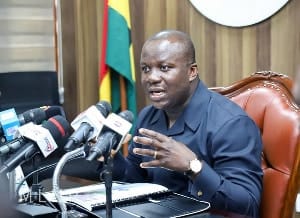
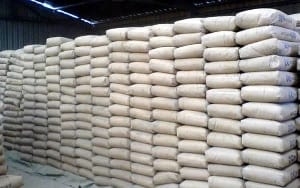
A presidential staffer, Dennis Miracles Aboagye, has urged cement producers and retailers to lower their prices in response to the announcement of a drop in transportation costs.
According to him, cement prices increased when the dollar was selling at about GH¢16, therefore, it should also reduce now that the dollar has reduced to about GH¢11.
In a tweet on May 16, 2023, Aboagye wrote “Dear @Ghacem_ltd, GPRTU has started doing the needful. Please follow suit and reduce your prices. The last time you increased cement prices astronomically, Dollar was 16cedis now it’s 11cedis.
“Fuel price was 24 cedis now it’s 11cedis. Fuel prices have come down consistently for 6 months. Dollar has come down and stabilised for 6 months. Transport prices have been reduced by 10%. Baby steps but positive sign. Clearly, there’s every reason to reduce the prices of cement,” he added.
Some retailers of GHACEM, Diamond, and Dangote cement vary the price of a bag of the product from GH¢77.00 to GH¢85.00 but the price of Dzata cement is a little cheaper.
On the other hand, transport operators have announced that transport fares will see a 10% reduction due to the decrease in fuel prices.
In a statement on Monday, May 15, they said “In line with the administrative arrangement on public transport fares, the road transport operators have reduced public transport fares by 10 percent to accommodate for the reduction in the price of petroleum products observed over the period.”
“We further request all operators, commuters, and the general public to kindly cooperate for the successful implementation of the new fares,” the statement concluded.
Government has requested that the PURC postpone at least 35% of the upcoming energy pricing adjustment due to the current economic hardships that Ghanaians are experiencing.
Ahead of the PURC’s expected quarterly adjustment of electricity tariffs, Government Officials are reported to be impressing on the regulator to be measured in its efforts to clear the outstanding debts owed to Power Producers.
Forex-related debts owed to power producers are reported to have increased by some 1.2 billion cedis as a result of the non-application of the proposed 44% increase in tariffs in the last adjustment window.
It will be recalled that though the utility providers requested a 44% increase in order to clear outstanding debts, the PURC allowed only a 29% increase.
The outstanding 15% is said to have accumulated an extra debt of some 1.2 billion cedis since then. Major Independent Power producers are reported to be threatening to switch off their plants if Government does not pay up the arrears.
Our sources within the Government say while the Government is keen to avoid blackouts emanating from shutdowns, it is also wary of allowing the PURC to fully impose the needed 27.9% increase in the upcoming window to clear the extra debts.
Reports say the Government late Tuesday Night urged the PURC to defer part of the expected increase until such a time when economic conditions improve.
Though the cost of living is gradually reducing after recent hikes, Government sources say conditions should be allowed to improve some more before the full debts are cleared.
The deferment is expected to enable the Utility providers clear parts of their debts while cushioning Ghanaians for the period.
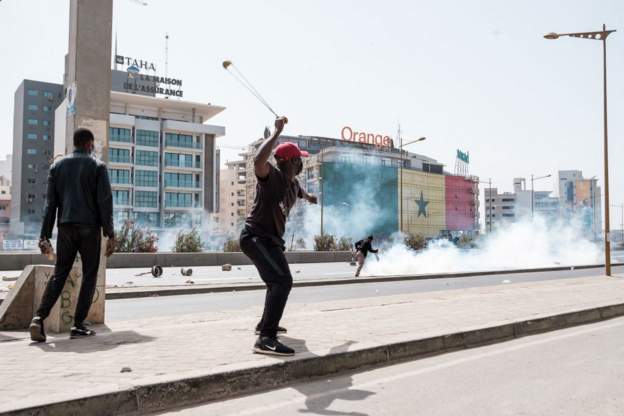
Authorities said that a police officer died during riots in the southern town of Ziguinchor between Senegalese security personnel and followers of opposition leader Ousmane Sonko.
The clashes occurred on Monday near Mr Sonko’s home, where he has been staying while vowing to defy any summons to appear in court for a rape trial.
Supporters have surrounded his home since last week, fearing police would move to arrest him and bring him to court.
A statement from the Senegalese interior ministry said the police officer was “accidentally hit by a vehicle”, during the Monday violence.
Reports say security has been tightened in the capital Dakar ahead of the resumption of Mr Sonko’s rape trial on Tuesday. He was charged based on a woman’s accusations that he assaulted her when she worked at a massage salon two years ago.
Mr Sonko and his allies deny the charges and say they are a ploy to bar him from contesting the 2024 presidential election.
He was handed a six-month suspended sentence on 8 May for defaming Tourism Minister Mame Mbaye Niang in a review of the initial two-month term.
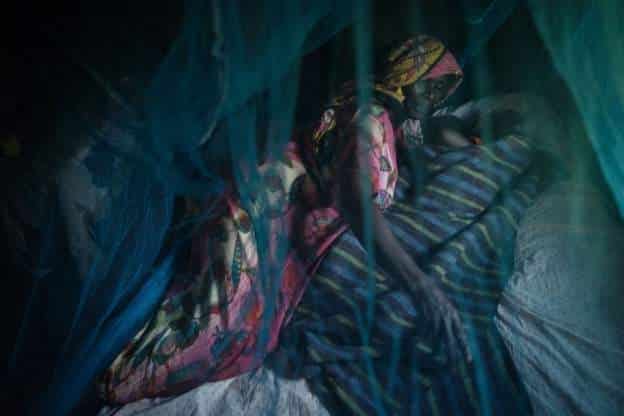
A corruption scandal has led Kenyan President William Ruto to fire a principal secretary in charge of public health and dissolve the whole board of a medical supply company.
The scam involves a bungled tender involving the supply of donor-funded treated bed nets meant to protect against malaria-causing mosquitoes worth $27m (£21.5m).
The Global Fund had tasked the Kenya Medical Supplies Authority (Kemsa) to procure more than 10 million nets to be distributed to low-income households in about half of the counties in the country that are malaria-endemic.
But Global Fund cancelled the tender – accusing Kemsa of irregularities by allegedly favouring one company whose documents were not in order, and unfairly locking out others.
In 2020, Kemsa was again in the spotlight over claims of misappropriation of millions of dollars intended to buy personal protective equipment and other essential health facilities at the height of the Covid pandemic.
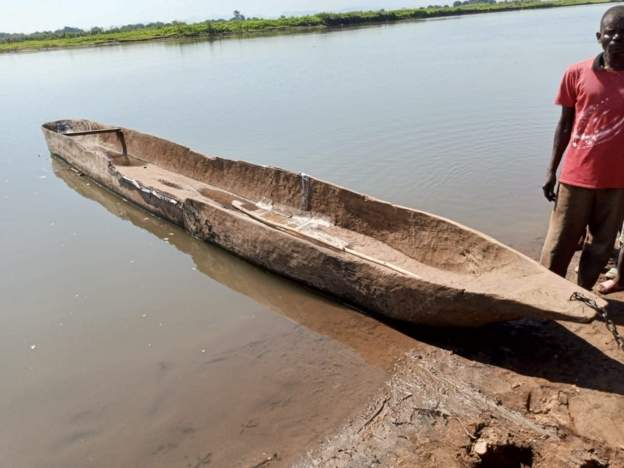
In Malawi, at least 20 individuals are still unaccounted for after their canoe capsized on the Shire River in the southern Nsanje district after being struck by a hippo.
Robert Nayeja, a senior official in Nsanje District, said the canoe was carrying about 37 people going to their fields on the Mozambican side, state-owned MBC TV reported.
A body of an infant, who was among the passengers, has been retrieved.
Agnes Zalakoma, a senior police officer, has told the VOA that the death toll is expected to rise as detectives and rescue teams search for the missing people. So far, 13 people have been rescued.
A lawmaker for the area said the river was infested with crocodiles and hippos and the boats operating there were not motorboats.
The boat mishap is the third deadly accident on the river in three years.
Malawi is recovering from a devastating tropical storm in March that killed 511 people and left 533 others missing.
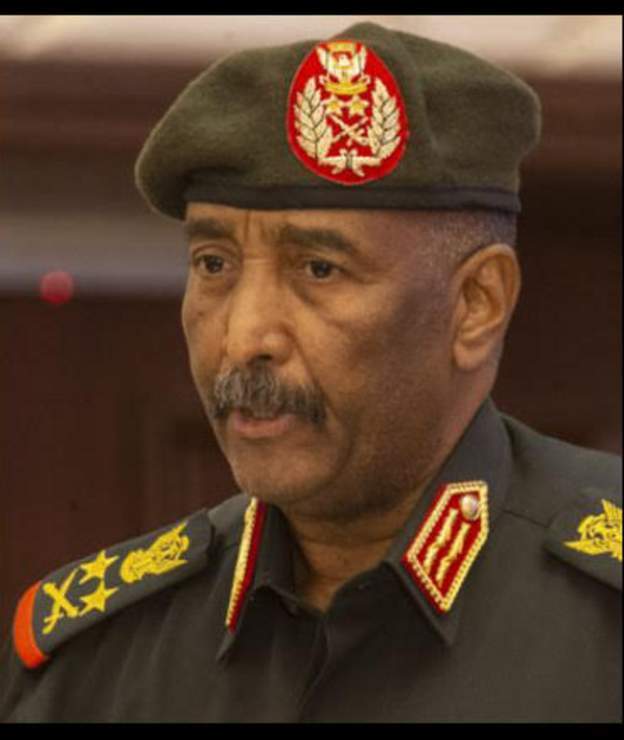
The acting interior minister and police chief, Anan Hamed Mohammed Omar, has been fired by Sudan’s military leader, Lt Gen Abdel Fattah al-Burhan.
In a statement, Gen Burhan named Khalid Hassan Muhyi al-Din as the new general director of police.
No reason was given for the sacking but Gen Burhan had earlier dismissed, in similar decrees, the governor of the central bank and two foreign ministry diplomats.
The police have been inactive in conflict-hit areas, including the capital, Khartoum, since the fighting erupted on 15 April. As a result, acts of lawlessness, including looting and robbery, have been widely reported in these areas.
A month of fighting between Sudan’s rival military factions appears to have no end in sight despite much-touted truce talks brokered by the US and Saudi Arabia.
In meetings held in Moscow, senior military officials from South Africa and Russia agreed to expand their cooperation and improve the combat readiness of their armies, according to a report from Russia’s defense ministry in the state-run Tass news agency.
The high-level talks come days after the US ambassador to Pretoria, Reuben Brigety, accused South Africa of supplying arms and ammunition to Russia, despite its professed neutrality in the Ukraine war.
The commander of South Africa’s land forces, Lieutenant General Lawrence Mbatha, led the talks with his Russian counterpart, Oleg Salyukov, in Moscow, Tass reports.
“The sides discussed issues of military cooperation, and the implementation of projects geared to enhance the combat readiness of the two countries’ armies.
“The meeting between the military commanders yielded agreements on the further expansion of cooperation between the land forces in various areas,” the ministry is quoted as saying.
Last week, South Africa found itself at the centre of a diplomatic storm with the US after Mr Brigety said he was confident that arms and ammunition were loaded on a Russian ship at a naval base in Cape Town in December.
South Africa said it had no record of an arms sale, but President Cyril Ramaphosa has ordered an inquiry to investigate the allegations.
In his weekly newsletter published on Monday, Mr Ramaphosa said South Africa was under “extraordinary pressure” to take sides in the Ukraine war, but it would not do so in what was “in effect a contest between Russia and the West”.
The South African National Defence Force (SANDF) confirmed that senior military officers were currently in Moscow.
“It must be noted that South Africa has military-to-military bilateral relations with various countries in the continent and beyond,” the SANDF said in a statement, adding that the trip to Russia was planned well in advance.
The main opposition Democratic Alliance (DA) said the visit was the latest example of the South African government “unashamedly” showing its support for Russia.
Despite years of trying to conceive, on Mother’s Day last year, I still wasn’t a mother. My spouse Jesse and I stopped trying when we realized the kinks in our relationship had become knots. I was done trying to untangle it all and tie it back together, so I presented him with a letter I’d been writing and rewriting for two weeks. I was ready to unwind the knot, the one we’d tied eight years ago.
I was done trying to untangle it all and tie it back together, so I presented him with a letter I’d been writing and rewriting for two weeks. I was ready to unwind the knot, the one we’d tied eight years ago.
“I’m blindsided,” were the first words Jesse said ― words I’d heard again and again in recent conversations, after sharing the feelings I’d expected him to absorb without me explicitly spilling them.
How did he not see this coming? How did he not feel me pulling away for months ― no, years? That’s part of the reason I needed to escape. Despite so much time trying to repair our relationship, he didn’t even notice I was already gone.
Neither did anyone else. To an outsider, we had the high-school-sweethearts love story and enviable lifestyle: successful careers, time to travel, bustling social lives, loving families who lived nearby, and the “freedom” to do it without kids.
We had it all, and I wanted none of it. What was wrong with me?
But peel it back one more layer, and you’d realize that our marriage was swallowed in the context of our lives. And I no longer recognized myself in the context of our marriage. We lived under one roof, but over time, it seemed both of us had redecorated the walls in our heads without consulting each other.
Jesse talked about finances. I daydreamed about moving somewhere off the grid. He wanted to go play golf. I wanted to eat slowly on a sunny patio and walk around the park. He defaulted to TV. I defaulted to books. While our lives were completely intertwined, I had trouble remembering the threads that bound us together in the first place.
We both cheated ― a symptom, not a cause, of our disconnection. We lied to each other. And we tried to repair what was broken.
We stopped relying on alcohol or drugs to create a false sense of connection between us, and started walking and talking together. We stopped expecting the other person to read our mind, and started articulating what we were feeling and why. We stopped making plans with groups, and started making time for date nights.
But still, the work didn’t work. No sparks flew. The pressure and resentment built. The ticking of my biological clock became an alarm.
The author and Jesse goofing off at her parents’ home in Mesa, Arizona, in 2007.
Nobody gets married expecting to get divorced, but nearly half of us do. And more than half of those who get married a second time will get divorced a second time. What do we fail to change? What is it we don’t learn?
It wasn’t until the pandemic that I tried another approach. My pandemic life included an unexpected roommate, who was one of Jesse’s best childhood friends; it also brought less traveling, and a lot more working from my kitchen counter. I lost my demanding corporate job and, later, accepted an even more demanding one. It was a life plugged in but completely disconnected.
But I finally did the thing I’d never learned how to do ― ask for help. I started seeking guidance from a patchwork quilt of people. An individual therapist first. An intuitive life coach next. Eventually a couples therapist for Jesse and me. And sprinkled in between were psychics, book clubs and women’s groups.
These new acquaintances asked me questions I’d never asked myself. Why was I scared to leave? Was I modeling the vulnerability I expected from him? Why didn’t I speak kindly about myself? What were my non-negotiables in a partner, and which of those qualities were missing? These questions, and my lack of answers, made me realize I may have been more disconnected from myself than from my marriage.
Thousands of dollars and dozens of hours of conversations later, everything led me back to me.
So I spent less time seeking guidance from others, and more time looking inside myself. My marriage was both the source of my stress and my stability.
I feared being alone, but I knew I had to go.
Jesse didn’t trap me. I had trapped myself. My entire life was rooted in “supposed to’s” and expectations others had of me. Make good choices, get good grades, get a good job, marry a good guy and raise children.
Conventional wisdom told me that if you want to work on your marriage, you should stay in your marriage. For once, I didn’t follow what I’d been told.
I finally mustered the courage to do another thing I’d never learned how to do ― ask for what I wanted, which was space and time to rediscover myself and what I wanted to do with our marriage. Jesse obliged without a fight. He let his love for me conquer his fear of our demise.
Less than 90 days later, I closed my front door, ready for a monthlong solo journey in Tucson, Arizona. As I backed my car out of our driveway, the urge to cry hit me, but no tears came. My gas tank was full and I was running on empty. I was sick of pretending and spending all of my time on my “commitments.”
In my rented one-bedroom bungalow, I worked too much and didn’t sleep enough, and yet I felt more alive than ever before. I hiked alone. I ate macaroni and cheese standing over the stove alone. I explored the town alone. I watched live music at dive bars alone. I fell back in love with life alone. I started to like myself again alone.
The author listening to a podcast and walking around her remote neighborhood on her solo trip in Flagstaff, Arizona, in 2022.
I missed the things about Jesse that I’d stopped appreciating. Little things, like delivering water to my bedside each night, having his hand on my back as I fell asleep, taking out the trash. But I didn’t miss blankly staring at each other across the dinner table after exchanging three minutes of how-was-your-day conversation. I didn’t miss waiting for him to get out of bed Saturday morning while I paced around the house, ready to run errands. I didn’t miss agreeing to have sex when I would rather be doing anything else. And here I thought I was “supposed to” miss my husband more while I was gone.
Upon returning home, I felt better, but the marriage didn’t. If anything, the joy I experienced alone appeared to confirm that I “should” be single. When I greeted Jesse in the driveway with my arms spread for a welcome-home hug, I could feel him nesting as I was mentally fleeing. As he thought “Our work here is done,” I dreaded the thought of making him think anything different. The last thing I wanted to do was hurt him more than I had.
The high of reconnecting with myself morphed into guilt for leaving the marriage I was supposed to be working on. But staying ― especially staying without feeling bonded ― was far more cruel than leaving. I knew somebody else would appreciate the person I took for granted. To honor our history together and commitment to each other, we kept trying: more walks, more talks, but no more chemistry than before I’d left for the first trip.
Guilt-ridden, yet certain of my need for space, I left again a year later for a mountain getaway in northern Arizona. This time, we called it a separation.
During that month, Jesse got to know himself again, too. He experimented with cooking, read relationship advice books, took the dog for longer walks, paid more visits to the gym and painted by numbers with vinyl records playing in the background.
In the same month, I quit my corporate job, cleared my social calendar, attended my best friend’s wedding without a plus-one and left most friendships unattended. I applied to Teach for America in an attempt to put purpose over paycheck, applied for other jobs to establish backup plans, and spent more time reading and meditating than ever before. I was untangling the webs I had woven, with the broader intent to untie the knot when I went back.
To my surprise, that Mother’s Day divorce talk last year became an exchange of vows we would uphold if we decided to end the marriage. We said the things that we would say about each other to friends and family. We also said what we would never say about each other. In our darkest, heaviest moments, we were finding only the brightest light in each other.
We also recounted just how much growth we’d experienced together. We’d grown up together. We’d seen the world together. We’d supported each other every step of the way. We’d tried and failed to have children. We were still best friends.
Source Chelci Hudson
DISCLAIMER: Independentghana.com will not be liable for any inaccuracies contained in this article. The views expressed in the article are solely those of the author’s, and do not reflect those of The Independent Ghana
On May 16, 2017, the country’s finance minister, Ken Ofori-Atta, has lamented on the rate at which the economy was spending more than it was bringing in.
He claimed that this was depriving the nation of essential advancement in the majority of economic sectors.
“We are spending more than we are generating and borrowing to finance those expenditures. Over the years, revenue generation has become stagnant due to many factors. In the meantime, we earmarked significant portion of the revenues. Added to that is an increasing expenditure especially in wages and salaries and interest payments,” Ken Ofori-Atta said.
The Finance Minister said this at the opening of the National Policy Summit in Accra.
Read the full story originally published on May 16, 2017 by peacefmonline.
Government has lamented the level at which the country’s economy is recording more expenditure than revenue saying such a trend has over the years succeeded in robbing the country of critical development in most sectors of the economy.
Speaking at the opening of the ongoing National Policy Summit yesterday in Accra, Ken Ofori-Atta, Minister of Finance, did not mince words: “We are spending more than we are generating and borrowing to finance those expenditures. Over the years, revenue generation has become stagnant due to many factors. In the meantime, we earmarked significant portion of the revenues. Added to that is an increasing expenditure especially in wages and salaries and interest payments.”
The Finance Minister continued that “this situation led to very limited investment in the critical sectors of the economy, the provision of needed infrastructure and investment in the real sector to generate and facilitate economic activity and create opportunities for people. What we saw was a persistent and consistent decline in economic activity and increased unemployment.”
Effects
Mr Ofori-Atta said the impact of such a situation was high inflation; high and unstable exchange rates, high interest rate as well as short, scarce and expensive credit for private sector to invest. He added that the situation was further compounded by poor service delivery and complex and unfriendly regulatory requirement with regards to business licensing and granting of permits adding that led to a loss of confidence by investors and private sector.
Gov’t determination
He said government was determined to change this narrative by working around some 5 key pillars. These include increasing revenue, controlling expenditure, ensuring sustainable debt, efficient wage management and capping earmarking funds.
Evidence already showing
With the ‘Asempa’ Budget, he said Government had changed the composition of expenditures, reduced wage as a percentage of public spending, and also interest payment as a percentage of public spending as well as increased capital spending to provide critical infrastructure like energy and transportation, among others.
“The results of such above noted measures are already showing and these include a stable exchange rate, reducing inflation, reducing interest rates, savings from debt profiling, increased credit to private sector and a renewed confidence by private sector and investors.”
New industrial parks
Alan Kwadwo Kyerematen, Minister for Trade & Industry, also in a speech, said Government has planned to anchor industrialization in the country with the establishment of some ten new industrial parks.
He said each of the ten regions would have one park with the requisite facilities and flexible land schemes to facilitate the establishment of industries.
Noting that such initiative drew heavily on similar models from Asia, he said it was expected to create thousands of jobs for Ghanaians.
“It takes us to the next component of our transformation agenda which is to establish at least one major industrial park in each of the ten regions. If we are talking about enhancement of industrial production then obviously access to lands and energy must be a critical factor. That is why these industrial parks are actually important. The magic of Asia, China Korea are all about the establishment of industrial parks and special economic zones.
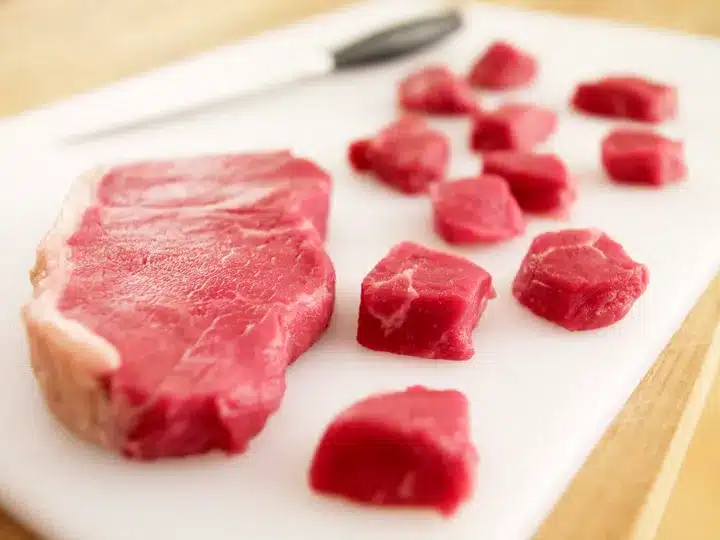
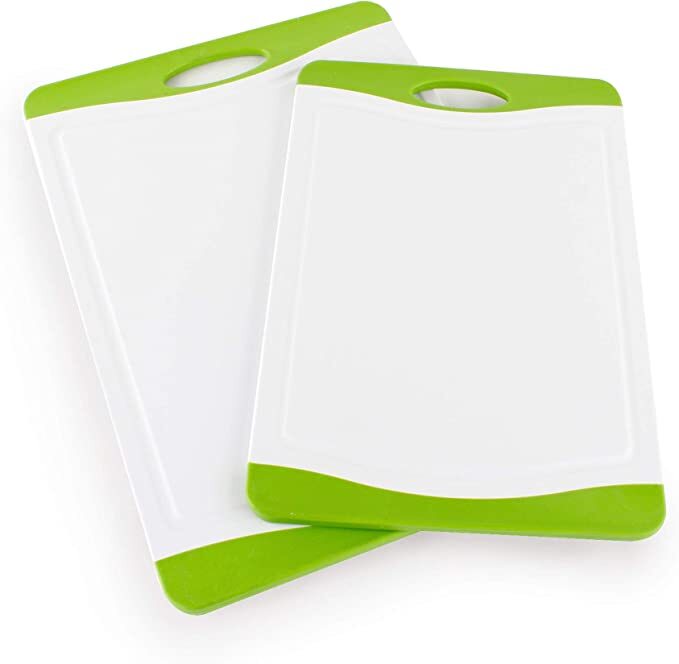
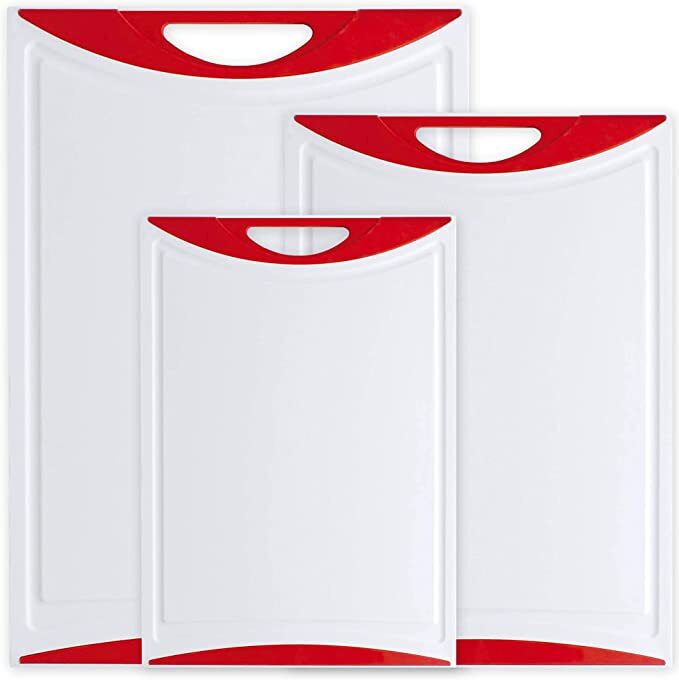
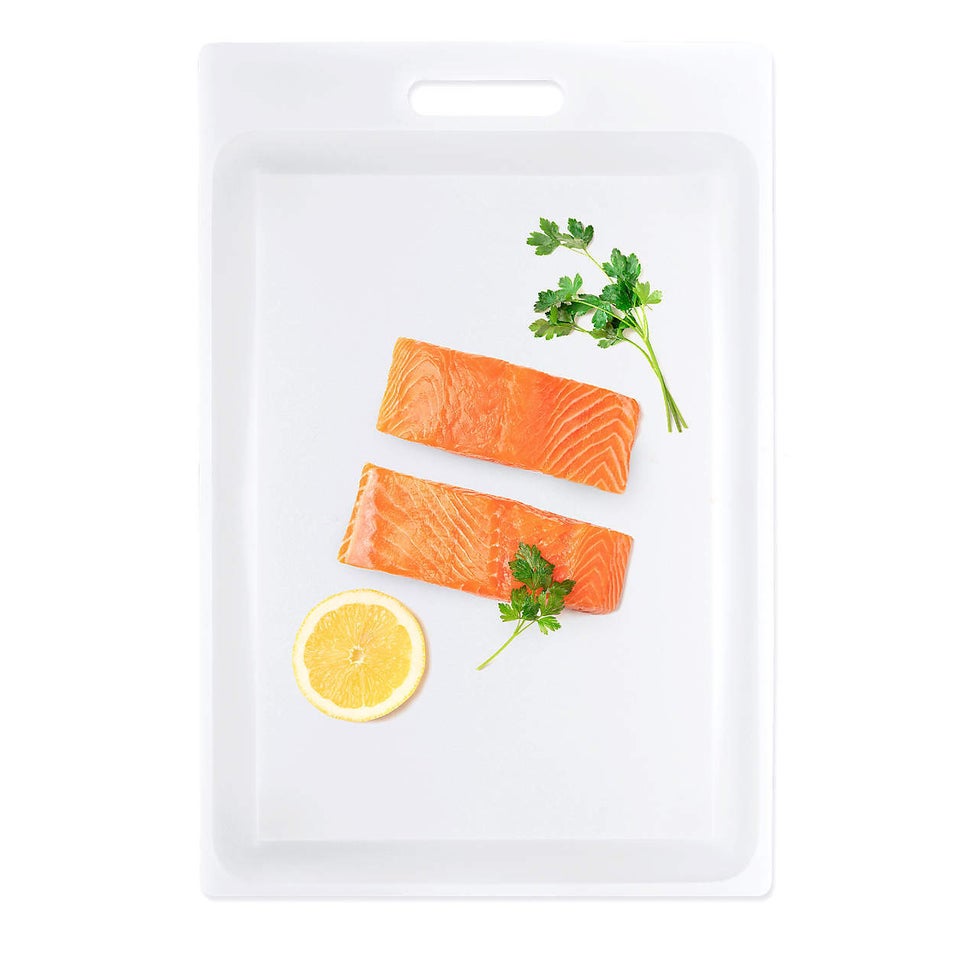
Any culinary program, restaurant kitchen, or Instagram food influencer will have a range of cutting boards, each with a personal preference for a particular type of material.
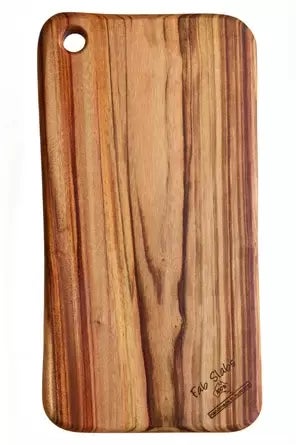
Some prefer hard plastic, whereas others love wood or bamboo.
But if you’re concerned about food safety, which type of cutting board is the most sanitary?
A new label has recently entered the conversation: antibacterial cutting boards. But before spending money on yet another cutting board, we wondered: Do you really need an antibacterial cutting board? What does that mean, exactly? We spoke with some food safety experts, and here’s what they had to say.
What is an antibacterial cutting board, anyway?
While antibacterial cutting boards come in many materials, some are naturally antibacterial and some are synthetic. One goal they have in common is eliminating pathways for bacteria to live on the surface, or in cracks and crevices.
“In general, cutting boards come in different materials, including thin or thick plastic, wood, glass, metal, bamboo, pressed wood or stone,” explained Trevor Craig, a food safety expert at Microbac Laboratories. Many antibacterial boards have “coating or material that creates environments that do not support the growth or survival of bacteria.”
While some antibacterial cutting boards are plastic, there are steel and wooden ones, too. Antibacterial boards can’t be damaged as easily as cheaper boards, and without cracks for bacteria to hide in, germs can’t survive a good cleaning as easily.
Before purchasing an antibacterial cutting board, Craig said you should know that “some materials, like wood, already have natural antimicrobial effects.”
Wood with antimicrobials can kill off mold, mildew and other microbes in addition to bacteria. A 1994 study in the Journal of Food Protection found no trace of dangerous bacteria intentionally applied to wooden cutting boards and allowed to soak into the wood.
How many cutting boards do I need?
Although owning an antibacterial cutting board is good step to ensuring food safety, you shouldn’t stop there. To stay safe from cross-contamination, it’s advised that you have more than one board ― at the very least, one for meat and another for vegetables and fruit, said food scientist Bryan Quoc Le.
“Fruits and vegetables are usually consumed raw. If meat were to be used on the same board, there could be contamination,” Le said.
How do I sanitize my cutting board?
Even with two boards, it’s essential to clean them thoroughly. Many are now dishwasher-safe.
“Wooden cutting boards should be hand washed, but most plastic or metal boards can go into the dishwasher,” Craig said. Follow the manufacturer’s instructions.
All cutting boards, including antibacterial ones, should be washed regularly with soap and water. But if you want to take it further, the U.S. Department of Agriculture suggests washing your boards with diluted bleach ― 1 tablespoon of unscented liquid chlorine bleach per gallon of water.
When should I replace my cutting board?
“Plastic cutting boards should be replaced once every one to five years,” Le said. “For wooden cutting boards, they can be replaced once they are warped or have excessive large grooves from water damage, which can trap mold and bacteria.”
The USDA and the Food and Drug Administration both suggest replacing your cutting boards, no matter the material, when you notice they have become excessively worn, or have hard-to-clean cracks. This includes cutting boards that claim to be antibacterial.
Below, we rounded up some antibacterial cutting board options to consider. They can make great gifts for your next shower or housewarming. Or, if you need a new one for yourself, look no further than right here.
Amazon
A set of 2 antibacterial cutting boards with juice grooves
This budget-friendly set comes with two nonslip cutting boards. Both of these plastic boards are antibacterial and BPA-free. The juice groove collects drippings from your meats, fruits or veggies.
Amazon
A set of 3 nonslip antibacterial cutting boards
This antibacterial cutting board set comes with boards in different sizes. These are an option for those looking for a durable, BPA-free set. To top things off, these nonslip boards are designed to stay still while you are using them.
Crate and Barrel
A sleek-looking antibacterial cutting board
This durable polypropylene cutting board from Crate and Barrel will get the job done without breaking the bank, and it’s got a deep juice groove. This antibacterial board is BPA-free and is easy on your knives. It’s also dishwasher friendly!
Wayfair
An antibacterial wooden cutting board
Naturally antibacterial, this board is made from a solid piece of tropical hardwood and is pretty enough to use as a cheese platter or a charcuterie board for parties.
There is no mother more deserving of praise on Mother’s Day than a mother who had to give one back.
Erma Bombeck said that. I like Erma ― I like that there is a writing retreat in her honor where a writer gets a free two weeks at a Marriott in Dayton, Ohio. I like that she didn’t give an inch when it came to writing, or motherhood. I also like that she paid attention to us bereaved moms, and wasn’t sappy about it.
Six years ago, my second son was stillborn. There is no sentence that can sum up such a thing, so just trust me, it was unimaginable. His death rearranged most things in my life, and I say with more than a little pride that it is truly something to be a functioning person again, to be a parent to my living children, to have survived the great lightning crack of grief that came for us and that still zips through me at a low current. But every year, Mother’s Day shows up, ready to wrestle with me.
My first few Mother’s Days as a new mom were bright and giddy ― pancakes and flowers and finger-painted cards. It felt like a lovely (though very short) day of honor for the insane effort that parenting demanded. I slept late, I got a necklace with my kid’s name on it, I was a mom doing mom things.
And then, our second son died, and Mother’s Day became this great huge bruise. The first year of grief, I was afraid of the day. I wanted to hide, to avoid the sight of smiling women fêted with flowers or running away to a hotel room for the night to escape their kids. I was bitter, angry, offended by a world that was so joyfully uninterested in my loss. And I desperately wanted to be known not just as a mother, but as his mother. I wanted to hear his name. I wanted people to reach out and recognize that this day, of the many hard days in the year, might be a doozy, too. Nobody did.
In my half-decade of doing this holiday with the hard and unwanted title of “bereaved parent,” I’ve grown less bitter. I know people don’t keep catalogs of all of our personal tragedies, and I know that others do remember but choose not to say anything, in case it would make us sadder. Here’s the thing, though: Most of us bereaved parents don’t want that kind of protection. We think about our children all the time. We like to know that you think of them, too.
Not hearing all your children’s names on Mother’s Day can feel like a great erasure. I have living children, and when folks don’t mention my child who died, I assume they don’t see him as part of my mothering experience. If I’m feeling really low, I can quickly jump to the conclusion that nobody remembers him except me, or even that my community doesn’t care about one of the most defining experiences of my life.
What I wish for every year are small nods. A text that says, “Hey, I know this day may be hard for you.” A note that wishes me a gentle day and includes my son’s name. Any acknowledgment that I am a mother who mothered in the hardest of ways, that I am and was a good mom to all my kids. It would be a wonder to know my friends still see the love I carry for my son, and love me for it. I don’t need accolades. What I really want is to know that my community sees me and the full package of what mothering has been in my life.
I’ll double down on this request for the bereaved parents who don’t have living children. For a mom like that, Mother’s Day might become a giant question she can’t ask out loud ― wanting to know if the world can reflect her own identity back to her as a mother. The worst thing to do for a person like that, unless she has specifically requested it, is to say and do nothing.
So here’s my Erma Bombeck-inspired plea, in the name of anybody you know who might be grieving their child this Mother’s Day, even if that child died decades ago. Be nice to us. Acknowledge us. Say something. Whether it’s your sister, friend, cousin: Reach out. Send that text and say her child’s name when you talk about her family. Be brave! I volunteer at a support group for bereaved parents, and I’ve never met a parent who didn’t want to hear their child’s name, or have somebody join them in appreciation for the love they hold for their child.
The best Mother’s Day gift you can give is the nod that you see us as moms, and not just a version of a mom that makes you feel comfortable. The slightest gestures can be profound and joyful, an act of true connection.
Years ago, a woman I’d met once and friended on Facebook was enjoying her first Mother’s Day as a mother. She was a poet, and throughout the day, she posted 300 times, exuberantly shouting out all the variations of mothers in our culture. To single mothers! To those without mothers! To her mother! To those who mother the neighbor’s kids! It was an endless, glowing list of respect for the many versions of mothers there are. The recognition was breathtaking, life-giving.
I think of her joy now, as I head into this next Mother’s Day. I want to coast off of her insistent exuberance. This year, I will send out my wish for other bereaved moms, a really simple one: May you hear your child’s name today.
The nominee for the National Democratic Congress (NDC), John Dramani Mahama has assured citizens that his administration will work to restore investor faith in the country’s economy.
He added that he will ensure that more foreign investors are attracted to Ghana’s manufacturing sector.
John Mahama also promised to be transparent in matters relating to Ghana’s public debt and budget deficits.
Delivering his formal acceptance speech at the University of Development Studies (UDS) on Monday, May 15 after his victory in the presidential primaries of the National Democratic Congress (NDC), he said “Together with my team we will enhance investor confidence in our country to attract domestic and foreign investors, especially in the manufacturing industry. This we will do by being transparent and not concealing economic data such as the budget deficit public debt, and our net international reserves.”
The former president noted his government will create a tier banking system that will boost Ghana’s financial sector.
“We will restore indigenous Ghanaian investments in the finance and banking sector and we will create a tier banking system that will serve various segments of the market.
“We will give the opportunity to experience banking hands who were laid off needlessly to secure their careers once more and move away from the menial jobs that they were compelled to take.
“As far as practicable the banking licenses that were unjustly canceled by this government will be restored,” he said.
In an effort to put women- and youth-led micro, small, and medium-sized enterprise (MSMEs) at the forefront of the nation’s economic recovery efforts, the Ghana Enterprises Agency (GEA) has launched two new interventions.
The interventions – dubbed ‘Women MSME’ and ‘Youth MSME’ – are the result of close collaborations between GEA, the Ministries of Trade and Industry and Finance and the World Bank. The programmes will be implemented under the Ghana Economic Transformation Project (GETP).
Over GH¢30million and about GH¢60million have been earmarked for the women and youth MSME programmes respectively.
Even though MSMEs account for 92 percent of all registered businesses in the country, and contribute roughly 70 percent of Ghana’s gross domestic product, data from the Office of Registrar of Companies show just 44 percent of these MSMEs are owned by women entrepreneurs’ vis-à-vis the sex ratio of 49 percent to 51 percent female to male population as of 2021.
Also, young people between the ages of 19-35 make up the largest population segment in the country – about 11.7million; making up 38.2 percent of the total population of almost 31 million people, hence the introduction of these women and youth-focused exclusive technical assistance and grant funding programmes as part of government’s initiatives to promote and accelerate investments in high-growth MSMEs with promising prospects of scaling-up to become job creators.
Transformative initiatives
The Minister of Trade and Industry, K.T. Hammond – who launched the programmes in Accra, described the initiatives as “worthy, timely and ultimately strategic and transformative”.
With such support, he said, the GEA with support from government and the ministry will successfully lead the creation of a significant pool of modern, globally competitive and sustainable high-growth MSMEs that drive and sustain economic growth and development.
“We are committed to continue leveraging funding and development assistance to address the challenges of access to finance,” he stated, noting that the launch is in line with the ministry’s efforts at achieving ‘development of SMEs’ – which is part of the ten-point pillars of government’s industrial transformation agenda.
The agenda seeks to give small- and medium-scale businesses the needed boost to survive and impact government’s objective of job creation.
Citing the 2021 Population and Housing Census – which suggests that the age structure of country’s population may be transitioning from one dominated by children (0-14 years) into a population dominated by young people aged between 15 and 35 years, Mr. Hammond said: “This reinforces the urgency needed to join forces with the private sector and development partners so as to fully implement Ghana’s MSME and Entrepreneurship Development Policy and enhance the creation of jobs for this population”.
He commended the GEA for taking up a commanding lead in implementing strategic projects and funding schemes for MSMEs nationwide, especially in respect of women and the youth.
“We expect GEA to continue its excellent performance in the use of digital platforms and provide comprehensive support through its extensive network of business development service providers. We also expect this to be done with the special duty of care necessary to safeguard long-term interests of the businesses,” he stated.
The future is women and youth
The Chief Executive Officer (CEO) of GEA, Kosi Yankey Ayeh, on her part said the newly launched programmes will redefine government’s focus toward women- and youth-led MSMEs, because “the future is women and the youth”.
“So it’s very important that we do a whole lot more to support female and youth-led MSMEs in Ghana…but not because we don’t see a high number of them apply for our interventions; the challenge we see is that they are applying for less amounts of money and the capacity to reach and exceed and move to the next level is being challenged. So, in order to be able to do more and do better – in partnership with the World Bank, the Ministries of Trade and Industry and Finance, we thought it best to develop new interventions that will transform these businesses,” she stated.
Starting on May 17, 2023, the Ghana Road Transport Operators will lower transportation costs by 10%.
According to the association, the reduction is in line with the recent reductions in the prices of petroleum products.
“In line with the Administrative Arrangement on Public Transport Fares, the Road Transport Operators have reduced public transport fares by 10 percent to accommodate for the reductions in the price of petroleum products observed over the period,” the Road Transport Operators said a statement dated Monday, May 15, 2023.
According to the statement, the reduction covers shared taxis, intra-city (tro-tro), intercity (long distance) and haulage transports.
The recent economic crisis in Ghana resulted in multiple increments in fuel products causing a hike in transport fares.
However, this will be the second announcement of reduction in transport fares by the Road Transport Operators following recent reductions in fuel prices.
The increment in fuel prices and transport fares led to a corresponding increment in the prices of goods and services compounding the hardship on Ghanaians.
The market expects the Bank of Ghana’s Monetary Policy Committee (MPC) to follow a policy-hold strategy this week at its 112nd meeting by keeping the rate at 29.5 percent as inflation continues to move downward.
Consumer prices slowed for the fourth month running in April 2023 to 41.2 percent year-on-year, -3.8 percent from March 2023 – thus 12.9 percent since start of the year; sustaining the disinflationary run that commenced in January 2023 following a peak of 54.1 percent in December 2022.
To reinforce the pace of disinflation and re-anchor inflation expectations, the central bank’s MPC tightened financing conditions further – hiking the policy rate by a cumulative 250 basis points (bps) to a record high of 29.5 percent in Q1-2023 while increasing the cash reserve ratio (CRR) by 200bps to 14 percent.
Apakan Securities, in its review of the April 2023 inflation data and outlook, said: “We perceive a hold-to-cut policy rate scenario by the Bank of Ghana MPC on the horizon. As inflation continues to trend downward, we expect the MPC of the Bank of Ghana to adopt a policy-hold strategy at its next meeting in May-2023”.
Moderating price pressures from volatile inflation triggers – the instability of local currency, continuous decline of petroleum prices at the pumps – and the favourable base effects underpin the easing inflation expectations despite renewed upside risks from increased GH¢ liquidity and new revenue interventions.
The cedi has been relatively more resilient against its major trading currencies thus far in 2023, limiting indirect pressure from the pass-through effects of depreciation to general prices. Additionally, petroleum prices continue to decline at the pumps, which underpins deflation from the transport division for the second consecutive month.
Apakan Securities further projects a policy rate cut in the range of 100 to 200 basis points (bps) in subsequent meetings of the MPC if inflation declines much quicker.
“We expect the favourable base effect to impact positively on headline inflation in Q2-2023, driving our disinflationary view in Q2-2023. We also expect the full impact of higher-base effects to reinforce a further decline in headline inflation for Q2-2023. The scenario of a stable local currency performance and stable prices for petroleum products at the pumps support the view of declining inflation in Q2-2023.
“Additionally, the central bank’s adherence to zero financing of government’s budget could also support monetary policy effectiveness to help tame and re-anchor inflation expectations,” the market observer noted.
Barring any shocks, the market expects a further decline of headline inflation in May-2023.
GCB Capital, in its analysis of inflation and implications for interest rates and monetary policy, maintained hope for continuous disinflation through 2023; supported by favourable base drift and easing price pressures from the primary drivers of inflation.
Nonetheless, it expects the price effects of new and revised taxes, particularly the Excise Tax Amendment Act, to trigger the re-pricing of goods from the May 2023 inflation data window. Thus, the anticipated price effect of these tax measures – the lagged impact of the utility tariff adjustments and the simmering food price pressures – represent upside risks to inflation in the near-term, potentially moderating the pace of disinflation through Q2 2023.
In view of this, the market observer said: “We expect the central bank to maintain a cautious policy stance to anchor the disinflation process”.
“The interbank market is still awash with liquidity despite the hike in policy rate and the cash reserve ratio in March-2023. While the Bank of Ghana is regularly mopping up GH¢ liquidity through the weekly 56-day OMO bill, the pent-up liquidity on the interbank market remains an upside risk to inflation; and we expect the Monetary Policy Committee to maintain the tight policy stance to anchor the disinflation process in the immediate term, albeit at a slower pace,” GCB Capital said.
Today, on May 16, 2023, the Ghana Cedi is trading against the dollar at a purchasing price of 10.9580 and a selling price of 10.9690, according to the Bank of Ghana’s Interbank Foreign Exchange Rates.
At a forex bureau in Accra, the dollar is being bought at a rate of 11.40 and sold at a rate of 11.90.
Against the Pound Sterling, the Cedi is trading at a buying price of 13.7194 and a selling price of 13.7343.
At a forex bureau in Accra, the pound sterling is being bought at a rate of 14.00 and sold at a rate of 15.20.
The Euro is trading at a buying price of 11.9165 and a selling price of 11.9273.
At a forex bureau in Accra, Euro is being bought at a rate of 12.30 and sold at a rate of 13.30.
The South African Rand is trading at a buying price of 0.5750 and a selling price of 0.5755.
At a forex bureau in Accra, South African Rand is being bought at a rate of 0.30 and sold at a rate of 0.90.
The Nigerian Naira is trading at a buying price of 42.1800 and a selling price of 42.2630.
At a forex bureau in Accra, Nigerian Naira is being bought at a rate of 14.00 Naira for every 1 Cedi and sold at a rate of 19.00.
For the CFA, it is trading at a buying price of 54.9963 and a selling price of 55.0461.
At a forex bureau in Accra, CFA is being bought at a rate of 17.50 CFA for every 1 Cedi and sold at a rate of 21.00 CFA for every 1 Cedi.
Note that these rates may be different at a forex bureau near you. Our forex bureau rates are provided by Afriswap Bureau De Change in Osu, Accra.
The executive director of the Ghana Microfinance Institution Network (GHAMFIN),Yaw Gyamfi, has voiced concern over the growing dominace of Ponzi schemes in the nation and has highlighted the need for people to be cautious when dealing with financial institutions that make unrealistically high-interest rates within a short period of time.
During a two-day media capacity training on financial literacy organised by the Ministry of Finance in Tamale, he stressed the importance of citizens refraining from engaging with institutions that make such promises, as their savings are often stolen through these fraudulent means.
“Ponzi schemes are on the rise in the country as many citizens’s savings continue to find their way into the wrong hands,” he said at the event, which was sponsored by the World Bank under the Ghana Financial Sector Development Project and facilitated by Asamoah and Williams Consult.
It was aimed at enhancing the knowledge of media practitioners on financial reporting, and aiding in the identification of fraudulent financial institutions that tarnish the profession’s image and harm citizens’ investments, explained Emmanuel Sackey, a representative from the Finance Ministry.
Mr. Gyamfi further highlighted that many individuals have fallen victim to these Ponzi schemes due to a lack of information that would enable them to make informed decisions.
Despite warnings issued by the Bank of Ghana (BoG) and other regulators, certain individuals and institutions continue to operate while falsely presenting themselves as certified organisations endorsed by the BoG or other regulatory bodies.
Modus operandi
He further explained the modus operandi of these Ponzi schemes, stating: “Over the years, there have been Ponzi schemes around, but what makes these schemes rise is that most of them identify gaps and craft something appealing to one’s emotions”.
He revealed that some schemes offer assurances of a 30 percent interest rate within two months, which entices customers. Additionally, they pay individuals to testify to the legitimacy and security of the transactions, further luring the public to patronise their services.
To combat these fraudulent activities, Mr. Gyamfi advised the public to request their licencing or permits from regulators and local assemblies before conducting business with any institution.
He emphasised the importance of double-checking the legitimacy of financial organisations to ensure their operations are authorised. Mr. Gyamfi appealed to both regulators and the public to collaborate in removing these fraudsters from the system, urging regulators to act swiftly upon receiving information regarding such schemes.
“We continue calling for alertness and for everyone to exercise caution and carefully consider which institutions they choose to transact business with, as failure to do so may see them fall victim to fraudulent activities,” he added.
GHAMFIN’s boss also called on the media and the general public to assist in identifying and exposing fake institutions engaged in these schemes.
He specifically requested media houses to verify the authenticity of organisations before advertising their products, as such endorsements can inadvertently contribute to defrauding citizens.
Also, the Executive Secretary-Ghana Association of Savings and Loans Companies (GHASALC), Tweneboah Koduah Boakye, highlighted ongoing efforts to enhance the professionalism and capacity of savings and loans companies in order to safeguard citizens’ investments.
Menopause is a condition that affects half of the population at middle age and evident the end of the reproductive years.
“Menopause is a natural process that occurs in women when their ovaries stop producing eggs, causing a permanent cessation of menstrual periods,” said Dr. Thomas Enyart, an OB-GYN with Orlando Health Physician Associates in Florida.
For most people, this happens at an average age of 52, according to Dr. Stephanie Faubion, the director of the Mayo Clinic Center for Women’s Health and medical director for the North American Menopause Society. Overall, a normal age range for menopause is 45 and older.
But in certain cases, menopause starts at a younger age — and that can sometimes be a problem. According to Faubion, 5% to 7% undergo early menopause, while 1% to 2% experience so-called premature menopause at an even earlier stage in life.
Speaking to HuffPost, experts explained what you should know about going through menopause early.
What is early menopause?
As its name suggests, early menopause is when menopause occurs before the natural age. Specifically, Faubion said it’s when menopause starts for those under 45. There is otherwise no difference between menopause and early menopause, she noted.
It is not the same as perimenopause, which refers to the few month or years before menopause begins. During perimenopause, people may start noticing changes and inconsistencies in their menstrual cycle (along with a few other issues) up until menopause happens.
What are the signs of early menopause?
“The signs and symptoms of early menopause are similar to those of natural menopause, including hot flashes, night sweats, vaginal dryness, mood changes and difficulty sleeping,” Enyart said, noting that emotional distress, anxiety and depression can also develop.
The difference is just the age at which these symptoms start, which is under 45 for early menopause and after 45 for “regular” menopause, according to Dr. Leah Millheiser, a clinical professor of obstetrics and gynecology at Stanford Medicine in California and the chief medical officer at telemedicine company Evernow.
Additionally, if your period stops for at least three months when you’re under 45 (and not pregnant), this is a sign of early menopause and needs to be checked out by a doctor, Faubion said.
It’s important to take note of a missing period since some people who go through early menopause do not have the typical symptoms of night sweats and hot flashes, she added. And without symptoms like these, “there’s not always a huge drive for them to get into a doctor’s office to see what’s going on, but they’re at risk in terms of bone, brain and heart [health] if they don’t use hormone therapy,” she said.
“They may also have a higher risk of developing certain cancers, including breast and ovarian cancer,” added Enyart.
Nigerian singer-songwriter Tiwa Savage joins Bob Marley & The Wailers for a cover of their timeless hit “Waiting In Vain.”
The original version of “Waiting In Vain” was released in 1977 and has since become one of reggae music’s most memorable songs. Bob Marley wrote the song, which appeared on his album “Exodus.”
Tiwa Savage’s appearance on the song provides a fresh and modern twist to the traditional reggae melody. Her silky vocals merge wonderfully with the song’s smooth grooves, creating a laid-back and mellow mood that will appeal to fans of Tiwa and Bob Marley & The Wailers alike.
This is not the first time an African artiste has appeared on a version of a famous Bob Marley song this year. Sarkodie, a Ghanaian rapper, appeared on the version of Bob Marley & The Wailers’ “Stir It Up” earlier this year.
Tiwa Savage and Sarkodie’s appearances on remakes of Bob Marley songs demonstrate music’s ability to transcend time and genre. These remakes offer a new generation of listeners to iconic songs from the past, while also providing a platform for modern musicians to pay homage to the luminaries that came before them.
Government will on May 19, 2023, hold an auction to buy treasury bills for GH2.732 billion.
The target is anticipated to be produced by the treasury bills with maturities of 91, 182, and 364 days.
In its most recent auction on May 15, 2023, the government this week sold Treasury Bills for GHC 2.78 billion.
The target for the auction was GH¢3.33 billion.
Even though this was a bit higher than what the government got last week, it was GH¢550 million short of the target.
Interest rates have also slightly increased to an average of between 20.43 percent to 27.59 percent.
According to the auction results from the Central Bank, the government secured GH¢2.31 billion from the 91-day bill, GH¢355.26 million from the 182-day bill, and GH¢115.60 million from the 364-day bill.
Interest rates, however, increased from 20.25 percent to 20.43 for 91-day bills from 22.82 percent to 22.96 percent for the 182-day bill, and from 27.36 percent to 27.59 percent for the 364-day bill.
However, the Minister of State responsible for Finance, Mohammed Amin Adam has disclosed that the International Monetary Fund will likely approve the first tranche of a $600 million loan for Ghana by Wednesday, May 17, 2023.
According to him, the government expects the IMF Executive Board to approve the credit facility after meeting all pre-conditions and requirements particularly after financing assurances have been granted by official creditors, China and the Paris Club.
“We expect a deal on Wednesday. With the disbursement, there is going to be $600 million as a first tranche just immediately after the approval,” he told Reuters via phone.
Dr Amin Adam was however optimistic that the funds will be disbursed into the Bank of Ghana account within a week of the IMF Board’s approval.
President Nana Addo Dankwa Akufo-Addo has stated that the Paris Club’s creation of the Creditor Committee, which is co-chaired by China and France, and the subsequent granting of financing assurances are significant steps in securing Ghana’s eagerly awaited IMF facility.
Describing it as the last hurdle, President Akufo-Addo said this means that “the sacrifices that the country has had to make this last year and the difficulties that we are going through, may be that at long last, we are going to see the beginning of the recovery, as with the approval of the IMF, we will be in a strong position to make other arrangements that will help our economy get back into a strong place.”
Speaking about it barely a few hours after the announcement was made in Paris, the President told the delegation of the Catholic Bishops Conference who were on a courtesy visit to the Jubilee House, on Friday, 12th May, 2023, that the feat suggests “that hopefully, next Wednesday, the board itself will meet and may find an approval to the Ghanaian demand.”
“So it is fortuitous, that of all the people who should be the first to hear this announcement directly from me, it is the delegation from the Catholic Bishops Conference.”
Following tons of commendation of President for shepherding the nation dutifully despite challenging times globally, President Akufo-Addo appealed to the Bishops Conference to continue “this relationship of confidence and of trust between the Church and government.”
Such hallowed endeavour, he added, “inures to the benefit of the Ghanaian people; that we continue to work together from our different angles and our different constituencies, having in mind the welfare of the people of this country.”
He said “I’m very grateful for this visit and for the words of encouragement that you’ve given, the reason, apart from the fact that I’m a practicing Christian, I think that anybody who sits in this seat, has to recognise the immense that the Catholic Church and the Christian community is doing for the country, in so many areas. Talking about education, or health or the spiritual narrative of our population.
Concluding on the substance of ensuring cordial ties with the church President Akufo_Addo stated that “the selfless work you are doing is so enormous for the welfare of our country and it is very important that the President should be very solicitous of whatever goes on in the Catholic Church even if he wasn’t a Christian, because the work that you are doing is immense for the country. So that’s been more than anything else the reason why I continue to forge relations of confidence and of intimacy with the church.”
Cyril Ramaphosa, the president of South Africa, has declared that the government has opened a criminal investigation into a documentary about major financial irregularities involving the nation’s banking system.
The four-part documentary titled ‘Gold Mafia’ entailed a number of rogue businessmen who spoke about an extensive money laundering and gold racketeering business across a number of African countries.
Ramaphosa, responding to a question in Parliament said, the government took the allegations very seriously and that even though no arrests have been made, a formal probe had commenced.
“The government takes the allegations made in the Al Jazeera documentary titled Gold Mafia very seriously. We are committed to preserving the integrity of our financial system in the interest of the broader economy and ordinary citizens.
“With respect to actions currently being taken to investigate individuals who are alleged in the documentary to be criminally implicated an inquiry has been registered to investigate these syndicate and individuals,” he stated.
He said no arrests had been made at the time he was speaking but that, “details of steps cannot be divulged,” as the financial action taskforce investigates with the view to prosecute and prevent financial activities as were captured in the film.
Ghana was also mentioned in one sequel of the film, with Alistair Mathias a self-confessed money launderer stating among others that he was friends with president Nana Addo Dankwa Akufo-Addo who was a lawyer of his at a point.
The president told Al Jazeera that he had no recollection of dealing with Mathias before his lawyer also denied that he acted at a point for Mathias or his company. Alistair himself denied knowing Akufo-Addo.
After the documentary was aired, government wrote to Al Jazeera demanding a retraction and apology for some parts of their reportage but the Doha-based channel said it owed the president no apology because it had done due diligence in telling both sides of the story.
Authorities have been searching for survivors and digging up shallow graves spread around the forest throughout this week while hundreds of people are still listed as missing.
Paul Mackenzie, leader of the Good News International Church, was accused of ordering his followers to starve their children and themselves to death so they could go to heaven before the end of the world, which he predicted to be on April 15.
The taxi driver-turned-preacher was denied bail on Wednesday by a Kenyan court.
Onyancha said one more suspect had also been arrested, bringing the total number of those detained over the deaths to 26.
On Friday, 29 bodies were unearthed, including those of 12 children which were found in one grave.
Kenyan President William Ruto appointed a commission of inquiry into the deaths of more than 100 people believed to have starved themselves to death, while a court ordered that the cult leader remain in prison.
The commission of inquiry will examine whether administrative or intelligence lapses contributed to the deaths.
Presidential spokesman Hussein Mohamed said Ruto had also appointed a task force to review regulations governing religious organisations.
Mackenzie has not commented publicly on the accusations against him nor has he been required to enter a plea to any criminal charge. His lawyer George Kariuki told the press on Tuesday that his client could face “possible terrorism charges”.
Mackenzie appeared in court in the port city of Mombasa on Friday, where prosecutors asked a judge to hold him for an additional 90 days as their investigation continued.
The judge said he would deliver a ruling next Wednesday on the prosecution’s request and ordered that Mackenzie remain in custody until then.
Mackenzie, who was wearing a black and pink jacket and holding his two-year-old daughter during the hearing, told journalists at the court that he and some of his supporters were being refused food in prison.
Prosecutors denied this and his lawyer had told the press on Tuesday that his client was eating.
In the second pricing window of this month, May 2023, the Chamber of Petroleum Consumers Ghana (COPEC) forecast a decrease in fuel prices.
In a press release signed by the Executive Secretary of COPEC, Duncan Amoah, and sighted by GhanaWeb Business, petrol is expected to drop by 4.94 percent to sell at GH¢11.67 per litre.
Conversely, diesel will sell at 11.51 per litre after witnessing a 6.53 percent decrease.
Duncan Amoah attributed the reduction in fuel prices to the drop in prices of crude on the international market.
“Crude price has seen a decline from the main price of $85.29/barrel to $76.64/barrel (-10.14%),” he said.
LPG is expected to be sold between GH¢10.10/kg and GH¢11.16/kg
He however called on government to either reduce the taxes on LPG or subsidize the prices to promote its usage by many.
Below is COPEC’s full statement:
CHAMBER OF PETROLEUM CONSUMERS 14 May 2023
REVIEW OF FUEL PRICES FOR THE SECOND WINDOW OF MAY 2023.
The second pricing window of the month of May 2023 is set to commence in a few hours from now, indications are that pump prices are likely to decline for fuel products across the country.
The following basic information forms the basis of projections for the coming window, that; Crude price has seen a decline from the main price of $85.29/barrel to $76.64/barrel (-10.14%) whiles the forex or Dollar exchange rate has slightly decreased from a previous average of GHS12.0060 to GHS11.9963 (0.08%) per $1, the following shall be the predicted retail figures for Petroleum products.
Petrol .. GHS11.67/L Diesel .. GHS11.51/L Current Price for Petrol and Diesel*..GHS11.59/L
LPG.. GHS10.63/kg
Thus for a 14.5 kg LPG cylinder, is expected to be selling at GHS154.10 for the window.
All Predictions are within (±5%) error margin.
Below are the details of the projections for the window.
Petrol With the international price declining from $868.14/MT to $795.31/MT (-8.39%), the retail price works up to GHS11.67/L
Thus, Petrol is expected to decline by 4.94%* of the current Mean Market price of GHS12.28/L, to close selling between GHS11.09/L and GHS12.26/L within ±5% of this prediction.
Diesel With the International benchmark prices declining from $747.93/MT to $673.25/MT (-9.98%), the expected mean retail price for the next window shall be GHS11.51/L
Thus, Diesel is expected to also decline by some 6.53%* of the current Mean Market price of GHS12.31/L to be selling between GHS10.93/L and GHS12.08/L within ±5% of projection.
The Mean price of Petrol and Diesel for the coming window per the numbers shall be 11.59/L ± 5%
LPG With the international benchmark prices declining from $522.77/MT to $452.75/MT (-13.39%) the projected retail price of LPG is expected to see a reduction by about 1.02% from the current average of 11.64/kg to GHS10.63/kg.
Thus, within ±5% error, LPG is expected to be sold between GHS10.10/kg and GHS11.16/kg
Government is however encouraged to do all it can to reduce taxes on LPG or to subsidise the price of LPG to promote or encourage its nationwide accessibility and usage which will eventually help save the environment.
Ghana’s Finance Minister, Ken Ofori-Atta, stated exactly two years ago that the country was putting up a lot of effort to bring Amazon to Ghana.
He claimed that the action was taken to strengthen the entrepreneurial technological ecosystem for Ghanaian businesspeople.
Read the full story originally published on May 15, 2021 by Ghanaiantimes.
The Ghana Investment Promotion Centre (GIPC) is working assiduously to attract Amazon to Ghana, Finance Minister, Ken Ofori-Atta, has said.
According to the Finance Minister, the move was to deepen the technological entrepreneurial ecosystem for Ghanaian entrepreneurs.
Addressing the country on the measures being introduced by the government to prop up the economy and create jobs for the youth in line with social media campaign protest dubbed “FixTheCountry”, Mr Ofori-Atta said aside Google setting up its regional Artificial Intelligence Centre in Accra, Twitter recently announced to establish its Africa Headquarters in Accra.
He said the decision of such global tech giants to come to Ghana demonstrated the confidence investors had in the Ghanaian economy.
Mr Ofori-Atta said the presence of Amazon in Ghana would help create jobs for the youth and prop up the Ghanaian economy.
He said since assuming office, the government had worked hard to put the economy on a better footing and positioned it to be hub of trade in Africa.
Mr Ofori-Atta indicated that the country won the bid to host the Secretariat of the African Continental Free Trade Area (AfCFTA), positioning Ghana and Ghanaian businesses as the gateway partner and spearhead Ghana as a hub for the Africa region.
“Until we were hit by the COVID-19 pandemic in March 2020, we were on course to achieving the objective to stabilise and grow the economy, create jobs especially for the Youth, modernise, digitise and formalise the economy, provide social protection for the vulnerable and create a safe and secure environment for citizens and businesses to thrive,” the Finance Minister said.
Mr Ofori-Atta opined that the government implemented flagship initiatives such as 1 District 1 Factory, 1 Village 1 Dam, Planting for Food & Jobs, and IPEP in the Real Sector to accelerate economic activities and help create jobs.
The Finance Minister said the government as part of measures to transform the economy, implemented several initiatives to digitalize the economy.
“We implemented several digitalisation programmes to transform the economy, formalise the informal sector, and increase efficiency in public service delivery,” Mr Ofori-Atta stressed.
Finance Minister mentioned some of the initiatives as the issuance of over 15 million National ID Cards, the digital addressing system for over seven million homes, mobile money payment interoperability system, and the introduction of the paperless port system.
The others, Mr Ofori-Atta stated were the automation of driver’s license and vehicle registration, renewal of National Health Insurance Scheme registration, land records digitisation with block-chain technology, and automation of passport application,” Mr Ofori-Atta said.
“After four years of implementing these prudent measures, the Ghanaian economy witnessed a turnaround. Between 2017 and 2019, the economy grew by seven per cent on average in response to Government’s prudent management of the economy and implementation of government flagship programmes, being one of the highest and sustained growth periods,” the Finance Minister stressed.
That Mr Ofori-Atta observed culminated in a single-digit inflation of 7.9 percent, reduced fiscal deficits with three consecutive years of primary surpluses, relatively stable exchange rate, significant improvement in the current account with three successive years of trade surpluses, strong foreign exchange reserve buffers covering 4 months of import cover.
The Finance Minister pledged that government would continue to work to put the economy on a better footing and bring relief to the citizens.
The market anticipates a potential reduction in yields of up to 500 basis points (bps) if government can win approval from the Executive Board of the International Monetary Fund (IMF) by the end of the second quarter of this year, despite money market yields continuing to rise and rekindling investor interest in government bills.
Optimism over the deal has received a significant boost following the formation of an Official Creditor Committee – led by China and France – by the Paris Club.
Yields on the Treasury market instruments are expected to drop to between 15 percent and 18 percent by the end of quarter-three-2023 if the US$3billion facility is approved and disbursements begin at the midway point of 2023.
“We see Treasury yields hovering around 20 percent to 25 percent in the near-term. If government can secure an IMF executive board approval by the end of Q2-2023, we expect yields on Treasury bills to drop significantly – between the range of 15 percent and 18 percent – by the end of Q3-2023,” Apakan Securities mentioned in its first quarter 2023 review of the market.
“Yields on Treasury bills will continue to fluctuate in the near-term, with more upside potential. However, the real return on Treasury bills will remain negative until inflation returns to a single digit or drops below 20 percent,” it added.
However, inflation has dropped for the fourth consecutive month to 41.2 percent in April this year; down from 45 percent the previous month. The rate peaked at 54.1 percent in December 2022 and has since been gradually slowing down, the pace of which has prompted expectations that it could reduce to under 30 percent by close of the year.
Earlier, in first-quarter of the year, Treasury yields tumbled following government’s cost-reduction strategy amid strong demand. As Treasury yields escalated to unsustainable levels on the back of tighter financing options for government, the Treasury capitalised on the strong demand for bills to trim-off bids toward the end of quarter-one – readjusting its cost of borrowing downward.
As a result, yields on the 91-day bill decreased from 35.36 percent in the fourth quarter of 2022 to 19.39 percent in the first quarter of 2023; while yield on the 182-day bill decreased from 35.98 percent in the fourth quarter of 2022 to 21.44 percent in the first quarter of 2023. Likewise, the yield on 364-day bills dropped from 35.89 percent in the fourth quarter of 2022 to 25.66 percent in the first quarter of 2023.
Recent auction results highlight a consistent oversubscription of Treasury bills for the sixth consecutive week as at end of the last two weeks. Notably, the 91-day bill experienced a 31-basis-point increase – reaching 20.26 percent, while the 182-day bill rose by 12 basis points to 22.83 percent. Similarly, the 364-day bill inched up by 10 basis points to 27.36 percent.
Sharing his thoughts on the subject with the B&FT, Economist and Research Lead at GCB Capital, Courage Kwesi Boti said: “We could end the year with a 91-day rate of 17 percent or slightly lower. Inflation is still very high and I am looking at an end-of-year rate of around 25 percent, which means we would not restore positive real returns by then; but I feel that for government to realise gains from the Domestic Debt Exchange Programme (DDEP) properly, it will have to price T-Bills significantly below the levels where they are now”.
This comes as the average coupon on the bonds that were exchanged for new ones during the exchange was 19 percent, and after the swap it has fallen to an average of 9.1 percent.
“For T-bills to be anything above that 9.1 percent, then we would not be making any savings: but I also accept that there is a limitation to how low it can come, given where inflation is and the risk that is associated with the sovereign. The start of the IMF programme should bring about reduced reliance on short-term borrowing, as there will be funds; and it will also unlock other concessional financings,” he further stated.
In the first quarter of 2023, there was a significant increase in demand for Treasury bills as investors found their yields attractive and alternative investment opportunities were limited. Moreover, the bills were exempt from the DDEP.
The amount of investment tendered by investors rose by 60 percent quarter-over-quarter (q/q) to GH¢39billion, reflecting the heightened demand for Treasury bills. To cover a gross maturing face value of GH¢24billion due across all the tenors, the Treasury sold a total of GH¢36billion. Furthermore, the Treasury’s auction target increased by 43 percent q/q to GH¢28billion in the first quarter of 2023 from GH¢19.66billion in the preceding quarter.
A staff-level agreement achieved on December 12, 2022, has led to the creation of an Official Creditor Committee (OCC) by the Paris Club and has bolstered the country’s efforts to restructure its debt and finally get a US$3 billion facility from the International Monetary Fund (IMF).
The OCC, which is composed of representatives from countries to which Ghana owes a debt, expressed support for the country’s proposed IMF upper credit tranche (UCT) programme and its swift adoption by the IMF Executive Board. In a communique last Friday, the Committee – co-chaired by China and France – also encouraged multilateral development banks (MDBs) to provide maximum support for Ghana to meet its long-term financial needs.
Reacting to the development, Managing Director of the Fund, Kristalina Georgieva, welcomed the OCC, expressing the importance of an IMF-supported economic programme and their commitment to negotiate debt restructuring terms accordingly.
“This statement provides the necessary financing assurances for the IMF Executive Board to consider the proposed Fund-supported programme and unlock much-needed financing from Ghana’s development partners,” she said
She also endorsed a call by the Official Creditor Committee for private creditors and other official bilateral creditors to commit to comparable debt treatments.
“The Creditor Committee’s action recognises the Ghanaian authorities’ strong reform programme, which aims to restore macroeconomic stability and debt sustainability while laying the foundation for an inclusive recovery. It also signals that further progress is being made under the G20 Common Framework, demonstrating that international partners are ready to work together on helping countries resolve their debt issues. This is vital to enable countries such as Ghana to achieve sustainable growth and poverty reduction,” she added.
However, the Head of Insights at IC Group – a securities firm, Courage Martey, in a tweet cautioned that securing financing assurance from official creditors is not the final step in debt-restructuring. The next phase will involve critical negotiations with creditor committees, wherein Ghana will present its proposed terms to bring its debt and debt service metrics to IMF targets in present value terms. The creditors may agree or disagree, but a deal must be reached before the IMF can approve the next disbursements.
According to Martey, once financing assurance is secured and the IMF programme is approved to begin, the success of debt restructuring will determine progress on the programme and additional disbursements under the US$3billion facility. Martey added that debt restructuring is one of the torturous parts of the IMF deal and a crucial factor in Ghana’s ability to achieve debt sustainability.
“Securing financing assurance from official creditors is not a done deal for debt restructuring. It is not the only requirement for Ghana to secure IMF board approval for the programme to start. The next phase will be critical. Actual negotiations with creditor committees will begin with government presenting its proposed terms, which will ensure it brings debt and debt service metrics to the IMF targets in present value terms,” he explained.
“The creditors may agree or disagree but a deal needs to be agreed upon before IMF reviews can be approved for the next disbursements. Once financing assurance is secured and the IMF programme is approved to begin, the progress on the programme and additional disbursements under the US$3billion will depend on the success of debt restructuring, which is one of the torturous parts of the IMF programme based on debt restructuring,” the economist added.
The creditor committee noted that Ghana has taken steps to address its challenging macroeconomic and financial situation, including implementing a strong reform programme. The committee expressed confidence in Ghana’s ability to successfully implement its reform program and achieve debt sustainability.
It also urged private creditors and other official bilateral creditors to commit to negotiating such debt treatments with Ghana, which are crucial to ensure full effectiveness of the debt treatment for Ghana under the Common Framework for Debt Treatments beyond the DSSI.
President of the policy think tank IMANI Africa, Franklin Cudjoe, has said that the World Bank takes an active role in Ghana’s energy sector recovery effort; as a result, the Bank’s claim that a significant portion of the nation’s debt originates from that sector is dubious.
He noted that some expensive power agreements signed by the previous administration that was to be reviewed were extended without caution from the World Bank despite being an active financial supporter.
In a post on June 5, 2023, he wrote “It is true that some take or pay power contracts signed by the NDC were very expensive. The current government set up committees to review them. However, the terms of these contracts were extended.
“In effect, as ACEP’s Ben Boakye puts it,” the same power plants the World Bank director complains about have been extended to long-term agreements without caution from the Bank”. The World Bank in Ghana has been a very active financial supporter of Ghana’s Energy Sector Recovery Programme for the past four years. So, there you are,” he added.
The World Bank (WB) Country Director to Ghana, Pierre Frank Laporte, has stated that Ghana’s energy sector debt is a major contributor to the country’s debt woes.
According to Laporte, the deficiencies in the sector characterized by the tariff systems and management issues coupled with expensive power purchases by the state in addition to the transmission losses were the major problems in the energy sector driving Ghana’s debts.
He said the mismatch between the production cost of the Independent Power Producers (IPPs) vis-à-vis how much consumers paid led to an upsurge of debts since the Government could not make financial commitments to them (IPPs).
Laporte also said the Power Purchasing Agreements (PPAs) the Government had signed were expensive. In addition to the exorbitant power purchases the country was paying for energy it does not use due to the “take or pay contracts.”
“In the case of Ghana, those contracts that have been signed as PPAs are just expensive and the kind of PPAs signed are take or pay. You pay although you do not use it. The fact is that in the past few years, Ghana entered into an agreement at the wrong rate and the wrong price, and it has impacted the debt situation,” he said.
Hilda Baci, a chef from Nigeria, is on track to shatter the record for the “longest cooking time” by an individual.
The chef, who was born in the state of Akwa Ibom, began preparing meals on May 11 and is close to breaking the record for the longest cooking session in the Guinness Book of Records.
Miss Baci, 27-year-old has prepared food for over 80 hours and counting so far. She gave the culinary effort the hashtag “Cook-a-thon,” which is a play on the term “marathon.”
The current holder of the title Hilda seeks to break is an Indian chef Lata Tandon, who set a Guinness World Record for cooking for 87 hours and 45 minutes non-stop in 2019.
Hilda is set to cook for 96 hours with just 6 hours of rest time and has about 18 hours left to break the Guinness World Record.
Many Nigerians have shown support for the chef including celebrities like actress Iyabo Ojo, Tonto Dikeh, Comedian Macaroni, actor Ike Ogbonna, and Tobi Bakre amongst others.
Despite previously advising a lower offer, the head of the UK nursing union wants to resume negotiations in pursuit of a double-digit salary increase.
Pat Cullen, the general secretary of the Royal College of Nursing (RCN), had advised members to accept an offer of 5%, but they voted to reject it.
Speaking to the international media, Sophy Ridge On Sunday programme, cabinet minister Grant Shapps said: “I find this a very curious story indeed because Pat Cullen just recently was encouraging her members to settle for the pay rise that was put on the table.
Image: Nurses on strike outside St Thomas’ Hospital in London in April
“I thought this was a great settlement.
“It’s frankly rather confusing having encouraged her members to accept that deal, she seems to now be coming back and saying the opposite.
“You have got to balance that with the rest of the public purse.”
RCN members will be balloted again for strike action on 23 May after the existing six-month mandate ran out at the start of the month.
Ms Cullen described striking as one of the “hardest decisions”, and told The Sunday Times that fresh negotiations were needed to prevent six more months of action.
“They [ministers] owe that to nursing staff not to push them to have to do another six months of industrial action right up to Christmas,” she said ahead of Sunday’s RCN congress in Brighton, telling Health Secretary Steve Barclay talks needed to “start off in double figures”.
“It’s just not right for the profession,” she said.
“It’s not right for patients. But whose responsibility is it to resolve it? It is this government.”
The nurses’ strikes: A timeline
25 November 2022 -The Royal College of Nursing announces it will hold strike action for the first time since its creation more than a century ago in a dispute over pay and working conditions.
15 December – Nurses hold their biggest nationwide strike in history with a 12-hour walkout, leading to thousands of appointments, procedures and surgeries being cancelled.
18 and 19 January – Thousands of nurses hold a further strike over two days
21 January – The head of NHS England warns repeated walkouts by health staff are making workloads ‘more challenging’.
2 February – A petition signed by 100,000 people is delivered to Downing Street demanding fair pay for nursing.
6 February – Tens of thousands of nurses and ambulance staff walkout together in the biggest strike in NHS history.
21 February – Nurses agree to pause a major 48-hour strike planned on 1 March for pay talks.
16 March – Unions, including the RCN, suspend further strikes and recommend a new pay offer involving a 5% pay rise for staff this year and a cash sum for last year.
20 March – NHS strikes in Scotland are called off after unions representing midwives and nurses voted to accept the Scottish government’s pay offer.
28 March – Up to 280,000 RCN members vote on whether to accept the government’s pay offer.
14 April – RCN members reject the deal and announce a 48-hour walkout on 30 April.
16 April – RCN leader Pat Cullen warns nurses could strike until Christmas and calls for the government to improve its pay offer.
21 April – The government takes legal action over the planned bank holiday walkout as the strike mandate runs out during the action on 1 May.
27 April – Strike action planned by the RCN on 2 May is called off after a judge ruled it would be unlawful.
29 April – The RCN agrees to supply some staff during the curtailed strike following patient safety concerns.
30 April – Nurses stage 28-hour strike.
2 May – Most health unions back the new pay deal, although both the RCN and Unite vote against it. The RCN says it will ballot members on further strikes between June and December.
9 May – It is announced nurses will vote between 23 May and 23 June on whether to stage more walkouts.
10 May – Nurses in Wales vote to strike again this summer after rejecting the Welsh government’s latest pay offer.
14 May – Ms Cullen calls for Health Secretary Steve Barclay to restart pay talks with a proposed rise in double digits – a move described as “curious and confusing” by cabinet minister Grant Shapps given she had recommended the previous offer to her members.
An RCN spokesperson said: “The negotiations covered two financial years which resulted in a consolidated NHS pay increase of 9%. When our members rejected that, it is clear they expect an offer into double figures.”
Fourteen other unions have accepted the government’s 5% offer, including Unison, the NHS’s biggest union. Others like Unite continue to seek a better offer.
Please use Chrome browser for a more accessible video playerEarlier this month: Nurse strikes could go ‘right up to Christmas’
A health department source added: “It is strange how quickly the RCN leader has changed her tune from recommending this pay deal, which she now refers to as an insult to nurses.”
The comments come after Ms Cullen told The Sunday Times: “It’s not so long ago since the prime minister went on the media and very publicly said nurses are an exception,” she said when asked why nurses warrant a larger increase than other healthcare workers.
“I would totally agree with him… they should be made an exception because they are exceptional people.”
The mental health nurse, 58, from Co Tyrone, said patient safety was “at the centre of everything that we do”.
“We will do nothing that will add further risk to the patients that we look after,” she said, saying increased pay would see nurses return to the profession and ease a staffing crisis.
“The truth is that patient safety cannot be guaranteed on any day of the week. How could you guarantee patient safety when you have 47,000 nurses from your workforce every single day and night?”
She also warned Prime Minister Rishi Sunak not to take her members lightly.
“Looking back on this pay offer, I may personally have underestimated the members and their sheer determination,” she said.
“I think what I would be saying to the prime minister, Rishi Sunak, is ‘Don’t – don’t make that same mistake, don’t underestimate them’.
“Nurses believe it’s their duty and their responsibility because this government is not listening to them on how to bring it [the NHS] back from the brink and the message to the prime minister is that they are absolutely not going to blink first in these negotiations.”
President Volodymyr Zelensky has said in Germany, where Kyiv obtained a significant new defense aid package, that Ukraine has no plans to attack targets in Russia.
“We are not attacking Russian territory,” he said after talks in Berlin with Chancellor Olaf Scholz.
“We are preparing a counterattack to de-occupy the illegitimately conquered territories,” Mr Zelensky added.
Mr Scholz vowed to back Ukraine “for as long as it is necessary”, promising €2.7bn (£2.4bn) worth of weapons.
This includes advanced German Leopard tanks and more anti-aircraft systems to defend Ukraine from almost daily deadly Russian missile and drone attacks.
President Zelensky described the new tranche as “the largest since the beginning of the full-scale aggression” by Russia in February 2022.
The war has transformed Germany’s attitude towards Ukraine, moving from being a reluctant supplier of military hardware to virtually doubling its contribution overnight, the BBC’s Jenny Hill in Berlin says.
Russia accuses Ukraine of repeatedly hitting targets inside Russia, including a reported attack on Moscow’s Kremlin earlier this month.
Ukraine denies the accusations, while also stressing that it has a legitimate right to use force and other means to fully de-occupy its territories currently under Russian control. These include four regions in the south and east, as well as the Crimea peninsula, annexed by Moscow in 2014.
Later on Sunday, President Zelensky will travel to the western city of Aachen to be bestowed with the prestigious Charlemagne Prize – an honour given for efforts to foster European unity.
Previous winners include Winston Churchill, Pope Francis and Bill Clinton.
President Zelensky flew to Germany from Italy overnight, his plane escorted by two German Air Force fighter jets.
In Rome, the Ukrainian leader met Italian President Sergio President Mattarella and Prime Minister Giorgia Meloni. He also had a private audience with Pope Francis at the Vatican.
The Argentine pontiff said he was constantly praying for peace in Ukraine.
The Pope also stressed the urgent need to help “the most fragile people, innocent victims” of the Russian invasion.
Meanwhile, Ms Meloni assured Mr Zelensky of Rome’s support for united Ukraine.
For one reason, Mubarak Wakaso traveled to London to cheer on his friend Andre Ayew and Nottingham Forest in their vital Premier League encounter against Chelsea.
As he arrived at Stamford Bridge, the home of Chelsea FC, Wakaso could feel the tension in the air. The stadium was packed with fans from both sides, all eagerly anticipating the match.
Wakaso took his seat in the stands and waited for the game to begin. Although Ayew was on the bench, Wakaso knew that his presence would be felt by the team.
As the game progressed, Wakaso watched closely, cheering on Nottingham Forest with all his might. When Forest scored their first goal, Wakaso leaped to his feet, shouting with joy. And when Taiwo Awoniyi scored the second, sealing Forest’s draw and edging them closer to safety in the Premier League, Wakaso could hardly contain his excitement.
After the game, Wakaso and Ayew met up to chat. Ayew was grateful to his friend for making the journey to support him and the team. Wakaso was just happy to have been able to help his friend and to see him doing what he loved.