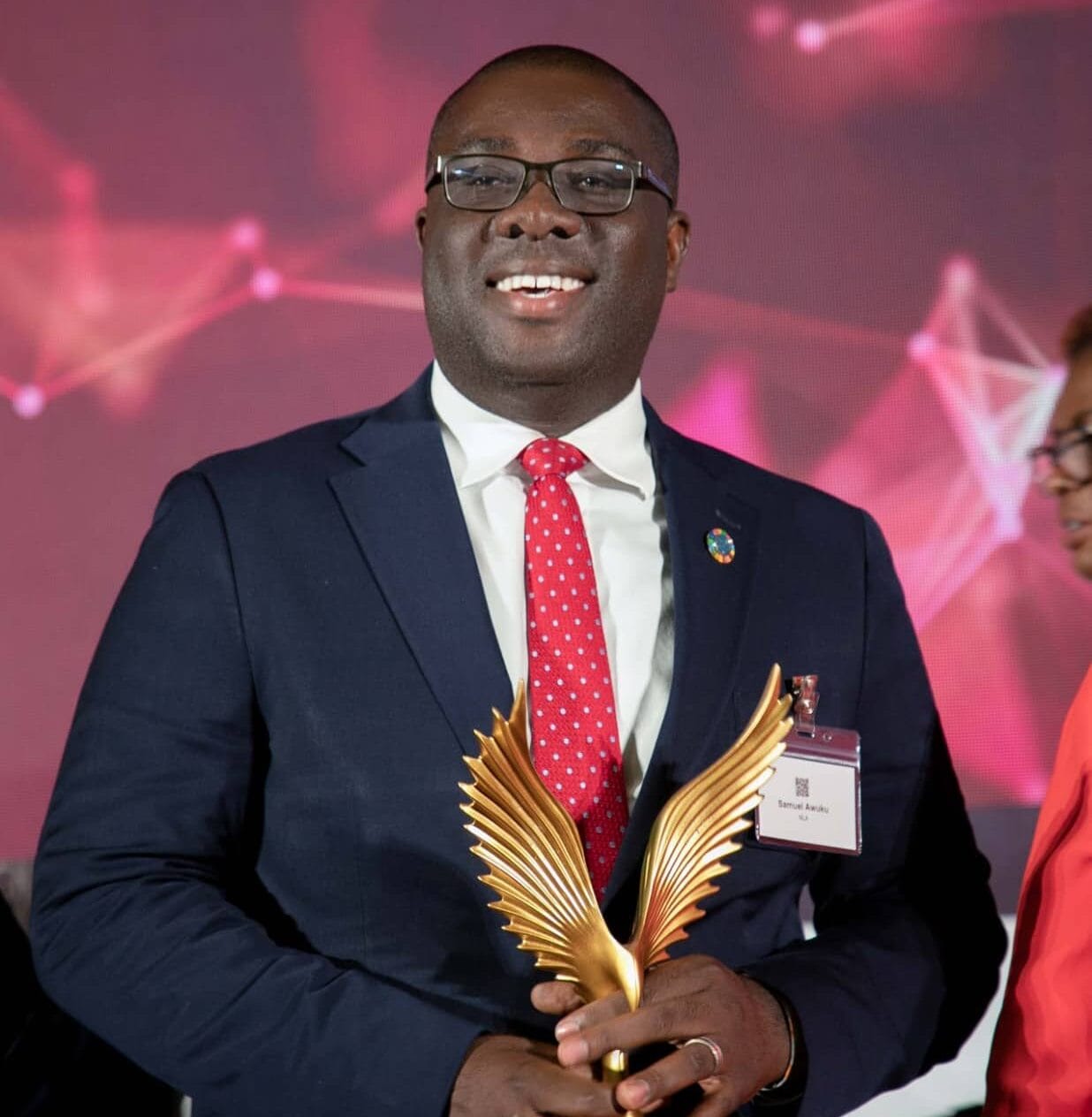
At the 7th Ghana CEO Summit and Excellence Awards, Mr. Samuel Awuku, Director General of the National Lottery Authority, received the award for Overall Best Public Sector CEO of the Year 2022.
Mr. Samuel Awuku beat over 20 CEos to take the coveted Overall CEO of the Year for the Public Sector.
He was awarded for being a model of business excellence, illustrating leadership, and vision, demonstrating high Standards of ethical practices and professionalism, investment and job creation in Ghana, and positive impact to the business community in the Public Sector.
Me Awuku’s leadership in guiding the NLA to spearhead innovation and digitalisation across it’s various business operations for the growth and progress of the lottery industry in an ever-changing and dynamic global economy is immense.
Under the leadership of Mr. Awuku, the NLA now has global recognition, having positioned the Lottery Authority and lottery companies in the country as strategic partners for other lottery bodies in the sub-region, and with the NLA now exporting lottery products to other African countries.
The event which attracted the nation’s crème de la crème, presented the most astute captains of industry, spearheading and achieving not only in Ghana’s fledgling economy but also, in the wider context of ECOWAS and Global business circles.
Other CEO’s and business executives cutting cross industry were won awards for various categories.
The top awards for the day went to Mr. Selorm Adadevor overall best CEO private sector and Mr. Samuel Awuku, Overall best CEO, Public Sector.
The Award was presented to him by the former President of the Republic of Ghana, His Excellency John Dramani Mahama.
Health officials have reported that a cholera outbreak in Gauteng, South Africa’s most populous province, has claimed at least 10 lives.
At least 95 people have since last Monday visited hospitals showing cholera symptoms in Hammanskraal, an area north of the capital, Pretoria.
Lab tests on Sunday confirmed at least 19 were cases of cholera, the Gauteng health department said in a statement.
It added that 37 people were admitted in critical condition.
The victims included a three-year-old child and nine adults.
Nomantu Nkomo-Ralehoko, the provincial head for health, has urged the public to take extra precautionary measures and maintain proper hand hygiene.
The city of Tshwane is warning residents of Hammanskraal and surrounding areas not to drink water from their taps, adding that water tankers were being supplied.
The biggest opposition party in South Africa says it has requested an investigation into what it claims are overpriced contracts for maintaining ministers’ opulent houses.
This comes after the ANC government revealed that between 2019 and 2022 it had spent nearly $5m (£4m) maintaining dozens of properties occupied by public servants.
The controversy adds pressure on President Cyril Ramaphosa, who was elected on promises to root out corruption after his predecessor Jacob Zuma’s term was marred by political and financial scandals.
Adding South African spice to an old joke, the opposition Democratic Alliance says “at least we finally can answer the question of how much money it takes for ANC cadres to replace a lightbulb”.
Alleging brazen corruption, it says the bill for bulbs was almost a $1,000 at one ministerial mansion in Pretoria.
Then there was the $70,000 kitchen renovation and $2.5m spent on generators in ministers’ homes – while most have been struggling with South Africa‘s worst power cuts.
It is already the most unequal country in the world. Corruption may be making the chasm between the “haves” and the “have nots” even wider.
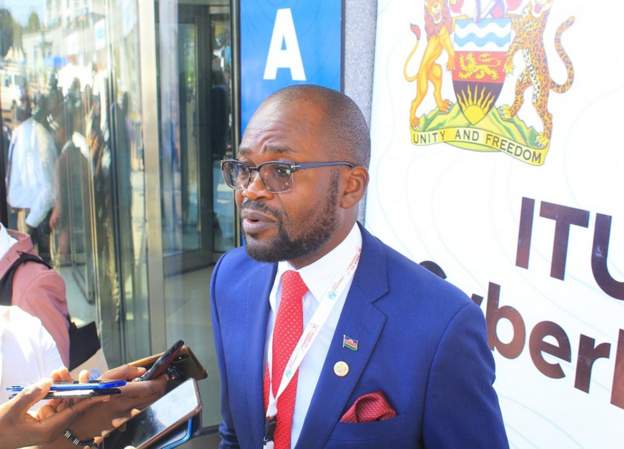
The Malawi government says it is investigating a mysterious fire in the capital Lilongwe that destroyed offices of key government departments holding sensitive information.
The fire gutted the last top two floors of a seven-storey government building destroying the government contracting unit, a department in the president and cabinet’s office.
It also destroyed two departments in the lands ministry – the lands registry and deeds registry. An official described the offices as “holding very sensitive information”.
The community services department in the country’s judiciary was also gutted in the fire reported to have started at 23:00 local time on Saturday.
Information and Digitalisation Minister Moses Kunkuyu said a probe led by the police, supported by other security agencies, was under way to establish the cause of the fire.
Soon after news of the fire broke, social media was awash with insinuations the fire may have been the work of saboteurs and that critical information may have been lost.
But the information minister said the information had been backed up digitally, assuring people not to “worry about any alleged loss of information for nefarious reasons”.
He said the investigations would be conducted quickly and the outcome made available to the public.
An entertainer and a member of the comic and musical duo Hinge and Bracket, George Logan, passed away at the age of 78.
He played Dr Evadne Hinge in the duo, who were well known in the 1970s and 80s with TV shows on the BBC and a radio programme on BBC Radio 2.
South Lanarkshire-born Logan launched his drag routine with Patrick Fyffe to acclaim at the 1974 Edinburgh Festival.
The pair also performed on two Royal Variety shows and appeared for royalty on more than 15 occasions.
The characters Hinge and Bracket were elderly women living in a fictional Sussex village, who spent their time reminiscing about their careers in classical music. The pair both sang, with Hinge playing along on the piano.
They appeared in the series Hinge and Bracket on BBC One from 1978 to 81, and on Dear Ladies, which ran on BBC Two in 1983 and 1984.
Image caption,Logan (right) and Fyffe pictured in 1974
Fyffe, who played Dame Hilda Bracket, died at the age of 60 in 2002.
In an interview with Bent magazine in 2008, Logan was asked if he and Fyffe felt like pioneers with their drag act.
“I don’t think we did,” he said. “We thought we’d come up with a fairly original idea at the time… and were just out to have a bit of fun. I think we were sort of basing our characters on the likes of Joyce Grenfell, Margaret Rutherford… a sort of typical, if strange, rural, old English village life.”
In 2015, he wrote about his experiences of growing up as an openly gay man in 1960s Glasgow in his book A Boy Called Audrey.
Broadcaster and writer Gyles Brandreth, who scripted the comedy duo’s Dear Ladies series, described Logan on Twitter as “a very funny, very brilliant man – a wonderful musician & a great entertainer”.
Fellow broadcaster and former newsreader Jan Leeming also tweeted her condolences, adding that Logan was “incredibly funny”.
Logan’s death was confirmed by his family on Sunday.
A well-known Kumawood actress, Bernice Asare, has been charged with having an affair with the spouse of her best friend.
A trending video on social media which has received mixed reactions and shocked a lot of the fans of the star actress captures Bernice Asare and Emmanuel Boateng getting intimate.
According to the whistleblower, Bernice Asare is a close friend of Emmanuel Boateng’s wife – But that didn’t deter her from dating the rich footballer.
In a part of the video, Bernice Asare can be seen passionately kissing Emmanuel Boateng as if she was the one married to him.
Meanwhile, both Bernice Asare and Emmanuel Boateng are yet to break since on the worrying fast trending video.
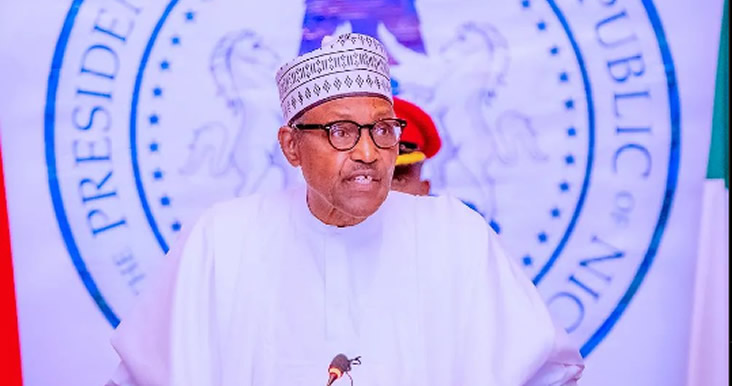
The largest single-train oil refinery of its kind in the world, built by Africa’s richest man, billionaire tycoon Aliko Dangote, is being commissioned by Nigeria’s President Muhammadu Buhari.
The government hopes the refinery will turn Nigeria, Africa’s biggest oil producer, from an importer of refined fuels to an exporter and put an end to recurring fuel shortages while creating tens of thousands of jobs.
The size of about 130 football fields, Dangote Industries has billed it as the world’s largest single-train petroleum refinery, meaning it will have only one crude distillation unit.
The project, launched in 2017, is located in the Lekki area of Lagos State, off the Atlantic Ocean, and is expected to process 650,000 barrels of crude oil a day.
The refinery, 20%-owned by the state, is not expected to operate at full capacity until 2024.
“At full capacity it can meet 100% of the Nigerian requirement of all refined products and also have surplus for export,” Dangote Industries said in a statement last week.
Mr Buhari is commissioning the plant in one of his last public acts before he steps down as president next Monday following two terms in office.
He will hand power to Bola Tinubu, who won disputed presidential elections in February.
Nigerian oil and gas consultant Henry Adigun told the BBC that today’s event was “more political than technical”.
“There is still a lot more work to do in terms of permits and licences. I don’t think the refinery is at the stage where we will start enjoying the benefit as Nigerians,” he said.
French-Senegalese director, Ramata-Toulaye Sy, who is competing for this year’s Palm d’Or at the age of 25, debuted her first film, “Banel & Adama,” on Saturday May 20, 2023.
Born in France to Senegalese parents, she brought out this romance as a tribute to her African culture and also to fill a gap in the film landscape.
“All I wanted, little by little, was to really deconstruct, deconstruct this vision of Africa that we have, even on the place of women in relation to Banel. And that’s why she’s an unsympathetic character. She’s not the smooth, oppressed, black African woman who seeks help, who we expect. Banel, I know she’s very unsympathetic and a lot of people can’t like her and so much the better. It’s completely assumed and that’s also why we wanted to deconstruct all the codes we knew about cinema and Africa,” said Ramata-Toulaye Sy, a French-Senegalese director.
Banel & Adama is the story of a young couple whose love is put to the test by the traditions of their village, located in northern Senegal, on the border with Mauritania.
Ramata is now hoping that her film at this years Cannes festival will position her for better recognition.
“The competition, we didn’t expect it. We are in Cannes. We’re in competition, it’s a first film, it’s an African film, it’s an unexpected film. I know that in the articles, people always say “Who is she? We don’t know her”. But I know myself, I have been here for a long time. I work and have worked to be here. I didn’t just end up here yesterday, in fact. I studied film, I was at university, I went to La Fémis, I co-wrote features. So you didn’t know me. But today, you know me,” said Ramata-Toulaye Sy, a French-Senegalese director.
The daughter of Senegalese immigrants, Ramata-Toulaye Sy was born in the Paris region where she spent her entire childhood. It was on the benches of the Fémis, the prestigious film school, that she had the idea for Banel and Adama, the script of which she presented at her graduation competition in 2015.
She wrote it as a tribute to her family culture. But also to fill a glaring lack of representation in the film landscape.
This week, rules prohibiting the entry of family members of overseas students are anticipated to be announced in the UK.
The move follows reports that net migration into the UK has hit 1 million with Tory MPs asking Prime Minister Rishi Sunak “to get a grip on the rocketing numbers”.
UK current immigration law permits dependants to accompany their spouses or parent(s) who have a valid student visa.
According to the report, UK ministers are expected to announce the immigration clampdown on Tuesday or Wednesday.
The ban will affect all master’s students and some other post-graduates, but it will not apply to PhD students who are highly skilled and whose courses last between 3 to 5 years.
If implemented, the crackdown will affect many Nigerian students hoping to pursue their postgraduate studies in the UK, as they accounted for the highest increase in the number of dependants accompanying persons with study visas in 2022.
The Times (UK) had also reported in February that the UK was nursing the ban and that Sunak and Suella Braverman, the home secretary, were becoming more concerned after a near-eightfold rise in the number of family members joining foreign students.
media reports had reported how the home secretary considered reforming the graduate visa route.
Under her proposal, foreign students would have to obtain a work visa by getting a skilled job or leave the UK within six months after the end of their studies.
China claims that US memory chip manufacturer Micron Technology’s goods pose a threat to national security.
The nation’s cyberspace authority declared on Sunday that the nation’s top memory chip manufacturer presents “serious network security risks.”
It implies that the company’s goods won’t be allowed in significant infrastructure projects in the second-largest economy in the world.
It is China’s first major move against a US chip maker, as tensions increase between Beijing and Washington.
The announcement is the latest development in a deepening row between the US and China over the technology crucial to economies around the world.
The long-running dispute has seen Washington impose a series of measures against Beijing’s chip making industry and invest billions of dollars to boost America’s semiconductor sector.
In a statement, the Cyberspace Administration of China (CAC) said: “The review found that Micron’s products have serious network security risks, which pose significant security risks to China’s critical information infrastructure supply chain, affecting China’s national security.”
The CAC did not give details of the risks it said it had found or in which Micron products it had found them.
A Micron spokesperson confirmed to the BBC that the company had “received the CAC’s notice following its review of Micron products sold in China”.
“We are evaluating the conclusion and assessing our next steps. We look forward to continuing to engage in discussions with Chinese authorities,” they added.
In response, the US government said it would work with allies to address what it called “distortions of the memory chip market caused by China’s actions”.
“We firmly oppose restrictions that have no basis in fact,” a US Commerce Department spokesperson said.
“This action, along with recent raids and targeting of other American firms, is inconsistent with [China’s] assertions that it is opening its markets and committed to a transparent regulatory framework.”
The CAC’s announcement came a day after a G7 leaders meeting in Japan issued a joint statement which criticised China, including its use of “economic coercion”.
On Sunday, US President Joe Biden said G7 nations were looking to “de-risk and diversify our relationship with China”.
“That means taking steps to diversify our supply chains,” he added.
Micron chief executive Sanjay Mehrotra attended the summit in Hiroshima as part of a group of business leaders.
Last week, the company said it would invest around 500bn yen ($3.6bn; £2.9bn) to develop technology in Japan.
Food costs have increased by 19% since last year. The price of a supermarket run has increased from £50 to more like £60.
The prime minister responded by hosting a summit on food at Downing Street, although it is still unclear what the solution is.
Food and energy costs rose last year due to the conflict in Ukraine, but they have just dropped precipitously; why have bills not?
Here are five things that help explain what’s happening.
1. Costs have been eye-watering – but some are easing
Russia’s invasion of Ukraine prompted soaring grain, sunflower oil and fertiliser prices. Concerns over supply disruption triggered similar price rises for other foodstuffs.
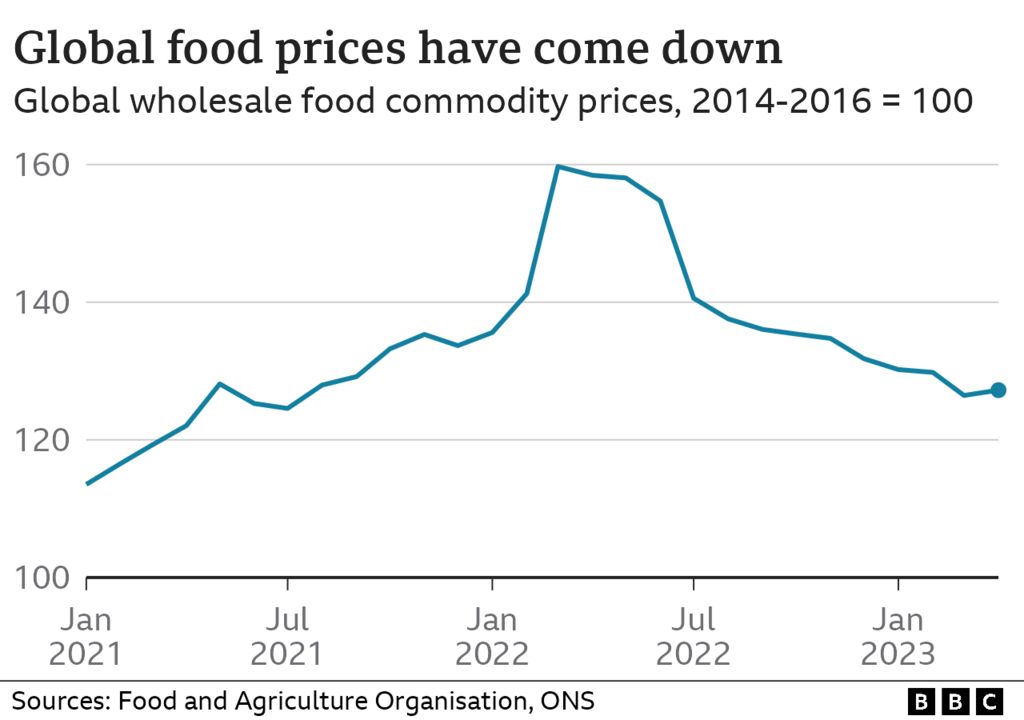
The UN’s food agency found that global wholesale prices for meat, dairy, grain, oils and sugar spiked by about 20% on average after the invasion – but those have since fallen back.
Food production and retailing are particularly energy-intensive industries. Some businesses, without access to the same level of government support as households, saw bills more than triple.
Staffing costs are the other big component for food producers and sellers.
The increase in the minimum wage, labour shortages across the supply chain exacerbated by Brexit, and the rising cost of living meant employers awarded staff pay rises of up to 9% over the last year.
2. Profit margins in the food chain can be slim
All parts of the food chain faced huge shocks when it came to their bills – but did they shoulder their fair share of the burden?
Much of our food chain operates with slim margins, so there’s limited wiggle room.
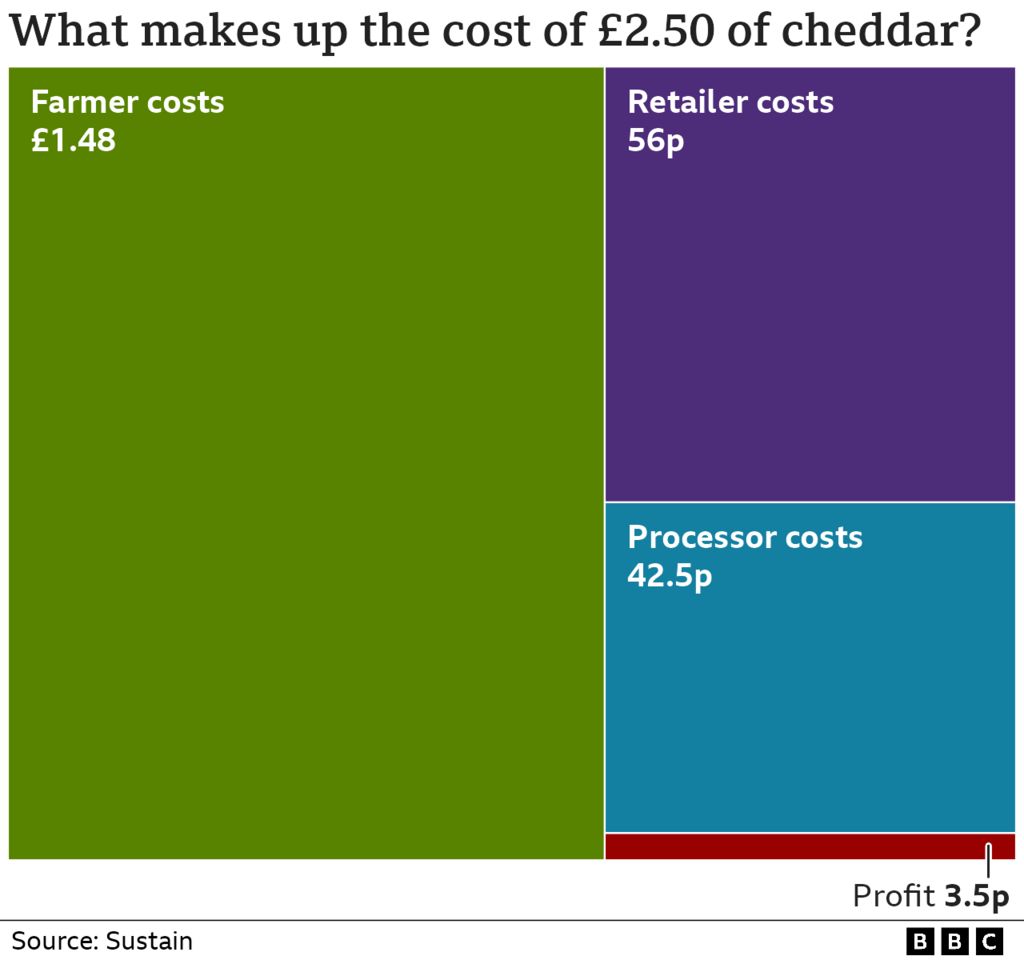
Take a piece of cheddar costing £2.50.
In a study for food alliance, Sustain, academics from the Universities of Portsmouth and London claim farmers’ costs account for nearly £1.50 while the retailers’ and processors’ overheads make up most of the rest.
They reckon that leaves 3.5p of profit to be shared, with the supermarket typically getting 2.5p (1% of the price) while the farmer gets less than a penny.
Arla, the dairy farmers’ cooperative, says costs shot up by as much as 80% last year and absorbing those kinds of increases is challenging.
Profit margins on some items – particularly processed food and drinks – are bigger. Unilever, which makes Magnum ice creams, or Premier Foods, the maker of Mr Kipling cakes, may make 15p for each £1 of sales to retailers. As analysts say, the bigger the sin, the bigger the win.
The Unite union has accused the big supermarkets of profiteering, saying the three biggest chains saw total profits double compared with the period prior to the pandemic – but that was in 2021. Since then all parts of the food chain have been hit by unexpected cost hikes.
In total, supermarkets typically make around 5p of profits from each £1 of goods they sell – their profit margin. Last year, Tesco only made around 4p per £1, Sainsbury’s closer to 3p.
3. Price changes take a while to travel from farm to fork
Supermarkets are keen to publicise the price cuts they’re making for certain items such as pasta, dairy and oil. Those reflect lower costs, but why aren’t we seeing bills falling overall?
It’s often claimed that retailers are swift to put up prices, but drag their feet on passing on savings when they could be coming down.
However, contracts for goods and services are often agreed many months in advance, which means some producers and retailers will have fixed prices at the very high rates seen last year and they could be tied in to those for months yet.
The good news is that the rate of wholesale inflation that food retailers face, though still high, is now slowing. That should feed through to smaller price rises on shelves – but it typically takes about six months.
We won’t know, as many retailers and food suppliers only publish a breakdown of their figures annually, whether some have taken this opportunity to try and rebuild their profit margins. They’re under pressure from shareholders to do so. But those figures will, when revealed, face close scrutiny.
4. Prices may be lower than in the rest of Europe
With Brexit adding to the red tape of importing food, are we paying more for our food than shoppers in the EU?
A study by economist Michael Saunders for research body Oxford Economics says not.
Looking at a range of food and drink, he says UK prices are typically 7% below the EU average – with bread, meat and fish in particular relatively cheap. He says the UK’s competitive supermarket sector plays a role in keeping prices down.
By contrast, he says that prior to 2015, on average groceries were more expensive in the UK than in the EU – partly reflecting the relatively small influence of the lower cost retailers such as Aldi and Lidl at that point.
5. Smaller bills may not be on the horizon
By the summer, the Resolution Foundation think tank reckons households will have seen an increase in food bills of £1,000 since 2020.
While some items we buy may get cheaper, a return to the kind of smaller bills we saw prior to the pandemic seems unlikely.
Despite recent falls for some commodities the price for many things, from raw ingredients to energy, remain far higher than they were prior to 2020. And there could be other factors looming – the full range of checks and other formalities around food imported from the European continent have yet to be introduced, for example.
Moreover, with costs as they are, farmers are already leaving the business, while the number of food manufacturers collapsing has risen.
Meta, the company that owns Facebook, has been penalized with €1.2 billion (£1 billion) for improper treatment of user data during transfer between Europe and the United States.
It is the largest sanction imposed under the EU’s General Data Protection Regulation and was issued by Ireland’s Data Protection Commission (DPC).
GDPR regulations mandate that businesses obtain individuals’ consent before utilizing their personal data.
The “unjustified and unnecessary” decision will be challenged in court, according to Meta.
At the crux of this decision is the use of standard contractual clauses (SCCs) to move European Union data to the US.
These legal contracts, prepared by the European Commission, contain safeguards to ensure personal data continues to be protected when transferred outside Europe.
But there are concerns these data flows still expose Europeans to the US’s weaker privacy laws – and US intelligence could access the data.
‘Dangerous precedent’
Most large companies have complex webs of data transfers – which can include email addresses, phone numbers and financial information -to overseas recipients, many of which depend on SCCs.
And Meta says their broad use makes the fine unfair.
Facebook president Nick Clegg said: “We are therefore disappointed to have been singled out when using the same legal mechanism as thousands of other companies looking to provide services in Europe.
“This decision is flawed, unjustified and sets a dangerous precedent for the countless other companies transferring data between the EU and US.”
Decade-long battle
In 2013, former US National Security Agency contractor Edward Snowden disclosed American authorities had repeatedly accessed people’s information via technology companies such as Facebook and Google.
And Austrian privacy campaigner Max Schrems filed a legal challenge against Facebook for failing to protect his privacy rights, setting off a decade-long battle over the legality of moving EU data to the US.
Europe’s highest court, the European Court of Justice (ECJ), has repeatedly said Washington has insufficient checks in place to protect Europeans’ information.
And in 2020, the ECJ, ruled an EU-to-US data transfer agreement invalid.
But the ECJ left the door open for companies to use SCCs, saying the transfer of data to any other third country was valid as long as it ensured an “adequate level of data protection”.
It is that test Meta has been found to have failed.
‘Fundamentally restructure’
Asked about the €1.2bn fine, Mr Schrems said he was “happy to see this decision after 10 years of litigation” but it could have been much higher.
“Unless US surveillance laws get fixed, Meta will have to fundamentally restructure its systems,” he added.
The US recently updated its internal legal protections to give the EU greater assurances American intelligence agencies would follow new rules governing such data access.
In 2021, Amazon was fined for similarly flouting the EU’s privacy standard.
Ireland’s DPC has also fined WhatsApp, another Meta-owned business, for breaching stringent regulations relating to the transparency of data shared with its other subsidiaries.
Evidence suggests that UK and US authorities were informed of a state-led effort to “rig” interest rates during the 2008 financial crisis but chose to conceal it.
Documents indicate that lenders significantly lowered their anticipated interest rates in response to central banks’ pressure.
Bankers were imprisoned for smaller-scale interest-rate “rigging” but juries were not presented with any evidence at that time.
Regulators said they had followed disclosure rules, declined to comment or in one case rebutted the claims.
Some evidence has previously emerged of Bank of England and UK government involvement in manipulation of interest rates. But the evidence indicating it was part of a broader, international drive not just by the UK but by central banks across the western world to push key interest rates down in October 2008 has never been published before.
The evidence indicates that in October 2008, central banks including the Bank of England, the Banque de France, the European Central Bank, Banca d’Italia, Banco de Espana and the Federal Reserve Bank of New York intervened on a large scale in the setting of Libor and Euribor.
At the height of the 2008 financial crisis, when bank lending had almost ground to a halt, central banks around the world urged calm. But my investigation reveals evidence that, behind the scenes, they were pulling levers to restore calm artificially – measures which would later be ruled to be against the law in the UK.
Those measures related to benchmark interest rates called Libor and Euribor, which track how much it costs banks to borrow money from each other. As such they are a big influence on the cost of mortgages and other loans. The more confidence investors had in the borrowing bank, the lower the rate. The higher the rate, the more doubts the market had about the viability of that bank.
In October 2008 there was an international drive, involving the central banks of the UK, US and eurozone, to get Libor down and restore a sense of calm to the market, at a time when banks lending had almost ground to a halt.
In November 2010, investigating agencies from the US Federal Bureau of Investigation (FBI) to the UK financial regulator were directly informed of this – but they have since kept it secret from Parliament, Congress and the public.
Andrew Tyrie, who chaired the UK Treasury Committee of MPs when it enquired into Libor in 2012, told the BBC that he believed Parliament “appears to have been misled”.
“The evidence that Mr Verity has unearthed strongly suggests that the committee’s inquiry into the Libor scandal was not told the whole truth.
“The public rely on Parliament to get to the truth. This case illustrates why Parliament should bolster its information-gathering powers with more effective sanctions against those who provide less than the full picture. Parliament appears to have been misled and, if that’s the case, should not let it rest.”
I uncovered extracts from the transcript of an interview given by Barclays cash trader Peter Johnson whilst researching a book I have written about the secret history of the interest rate rigging scandal.
The interview was given on 19 November 2010 to the US Department of Justice, the FBI, other US regulators, and the UK’s financial regulator, then called the Financial Services Authority (FSA).
While 37 traders and brokers have been prosecuted by the US Department of Justice and the UK’s Serious Fraud Office, jurors in nine criminal trials for much smaller-scale interest rate “rigging” held in London and New York between 2015 and 2019 were never shown this evidence.
Backed up and supplemented by published data, the suppressed evidence indicates that in October 2008, central banks intervened on a large scale in the setting of Libor and Euribor.
Further suppressed evidence indicates that the UK government, including 10 Downing Street, was also involved in pressuring banks to “manipulate” Libor as defined by the criminal courts – meaning seeking to obtain movements in the benchmark rate while “disregarding the proper basis for setting Libor”.
Nineteen traders have been convicted and nine jailed because of court rulings that outlawed any influence on Libor apart from the interest rates on offer on the money markets at which a bank could borrow and lend cash.
If they allowed its setting to be influenced by other factors, such as the desire to avoid bad publicity or to help a bank’s market trades, they could be jailed for interest rate “manipulation”.
Call for fresh investigation
Speaking in Parliament, senior Conservative MP David Davis said: “I’m greatly concerned the Treasury Select Committee may have been misled by state agencies about the knowledge and involvement of the state in setting false rates. It’s a big and complex issue with hundreds of pages of evidence.”
Mr Davis said that in the light of the evidence he’d seen there was “a case to believe that state agencies coerced individuals into perjury that led to false convictions”.
Mr Davis added he would ask the Met Police to investigate potential perjury, but also called for the Treasury Select Committee to investigate his concern that Parliament may have been misled.
Image caption,Peter Johnson was interviewed by the FBI
Among the evidence suggesting a cover-up, is a recording from 2010 of FBI investigator Mike Kelly interviewing Peter Johnson, who submitted Libor rates on behalf of Barclays bank.
Mr Johnson said in October 2008 he was instructed by his bosses to submit artificially low Libor rates, far below the real interest rates on offer in the market – under pressure from the Bank of England and the UK government.
In the recording, Mr Kelly asked Mr Johnson: “Did you have any understanding as to why this pressure was being put upon Barclays?”
“I’m not sure that it was being put just on Barclays,” replied Mr Johnson.
“OK? Who else did you think, was being pressured?”
“We understood that the French banks had been told to get their rates down[…]”
“What entity was pressuring them?”
“We believe it was the Banque du France.”
Record rate falls
That information – never mentioned by regulators to Parliament nor Congress – is corroborated and supported by the published data on Euribor submissions from the time.
They show that following a co-ordinated cut in official rates by six central banks on 8 October 2008, there were also record falls in banks’ estimates of the cost of borrowing euros by French banks – moves only explicable as having been co-ordinated at a national level.
Because the vast majority of the other 40 banks whose Euribor submissions were monitored held rates steady, market factors could not explain the record moves.
Between 8 and 9 October, BNP Paribas cut its Euribor rates by 0.4% in a day – larger than the 0.35% move following the terror attacks of 11 September 2001. In the money markets, Euribor submissions rarely move by more than 0.1% per day.
Over the next three working days unprecedented moves happened at other banks:
French bank Credit Agricole dropped its Euribor estimates of the cost of borrowing euros over three months by 0.38%
Societe Generale dropped the same Euribor rate by 0.42%
Credit Industriel et Commercial dropped by 0.43%
HSBC’s French division dropped by 0.48%
Italian bank Intesa Sanpaolo dropped its rate for borrowing euros over three months in unusually round figures, of 0.1% per day over three days.
On the weekend of 11-12 October 2008, then UK Prime Minister Gordon Brown flew to Paris for an emergency summit with European leaders, including then European Central Bank president Jean-Claude Trichet, all of whom issued statements calling for the need for “co-ordinated” action to tackle the crisis.
Following the weekend summit, Banca Monte dei Paschi di Siena caught up, dropping its rates by an unprecedented 0.4% in a day. Spain too showed similar record drops.
Mr Johnson also pointed investigators to a below-market offer in the dollar Libor market in New York made by JPMorgan Chase in late October 2008.
Interviewing him in November 2010, the US regulator confirmed it had seen data that Chase New York had offered to lend at 4.68% – while putting in a Libor estimate of the cost of borrowing dollars that was much lower – at 3.25%.
Mr Johnson said he believed the offer to lend at a rate still far below the market, mid-crisis, when other lenders were refusing to lend any cash, was done at the urging of the Federal Reserve Bank of New York.
“Were there rumours surrounding Chase at that time?” asked Anne Termine, an investigator for US regulator the Commodity Future Trading Commission.
“Yes,” Mr Johnson replied.
“That the Fed had asked it to lend money into the market.”
However, the US authorities appear not to have investigated the US central bank’s rumoured intervention in their final notices for Barclays. Mr Johnson was asked no further questions and the Department of Justice’s final notices fining banks for Libor manipulation made no mention of any US central bank intervention.
None of this evidence was made public in press notices and statements of fact published by regulators as they prosecuted 37 traders and fined banks $8.8bn for rigging Libor and Euribor. None of the jurors were made aware of it.
The Treasury said it did not seek to influence individual bank Libor submissions.
The Financial Conduct Authority told the BBC it had met its disclosure obligations.
The Bank of England has previously referred to the allegations as “unsubstantiated”.
The FBI and the CFTC declined to comment.
The European Central Bank (ECB) said they “strongly rebut” the assertions which they say, without giving details, “misrepresent the role of a central bank in implementing monetary policy”. They also said that ECB has always acted in line with its mandate and in full compliance with applicable law”
Italian bank Intesa Sanpaolo said it had always acted independently and in full compliance with the rate-setting rules.
The Chief Executive Officer (CEO) of Venture Capital Trust Fund (VCTF), Yaw Owusu-Brempong, has as reaffirmed that his organization is prepared to assist new businesses and small and medium-sized enterprises (SMEs) in achieving growth.
This comes on the back of government’s decision through the Ghana Economic Transformation Project (GETP) to recapitalise VCTF with US$40 million, in what is seen as a change in fortunes for the once cash-strapped fund. Its recapitalisation could offer SMEs much-needed capital to revitalise the recovery process.
“Fortunately for us, for the past two years, venture capital has been given attention and we have been recapitalised with an amount of US$40 million to actually invest in more funds so that we can invest in SMEs. We have started investing in funds; last year we invested about GH¢95 million in four funds and in 2023, we intend to commit more. These fund managers are going to leverage them to raise additional money so, they have enough to invest in SMEs,” Mr. Owusu-Brempong said.
The VCTF operates through Venture Capital Finance Companies (VCFC). Each VCFC is managed by a fund manager, licensed by the Securities and Exchange Commission (SEC). VCFCs (fund vehicle) act as intermediaries between SMEs requiring funds for viable business projects and the Trust Fund.
Speaking at an SME roundtable in Kumasi, the Ashanti Regional capital, Mr. Owusu-Brempong, hinted that the fund is working at a full force as they have adequately been recapitalised and expects to raise GH¢100 million this year.
Mr. Owusu-Brempong explained that the fund initially, was supposed to get 25 percent of the national reconstruction levy but unfortunately, the levy was scrapped the very year the trust started operations.
Left with no option, he said the VCTF have had to rely on budgetary allocations which are not only irregular but inadequate, thereby limiting the fund’s ability to deliver on its mandate of providing financial resources for SMEs.
He indicated that since 2010, the Trust Fund has investments in 11 VCFCs which have also gone ahead to invest in 70 companies.
SME Round Table discussion
As part of efforts to assist businesses thrive after its recapitalization, the VCTF is collaborating with the Association of Ghana Industries (AGI) to create awareness on alternative sources of funding for SMEs.
“VCTF as part of our mandate has decided to create awareness and update knowledge about the kind of alternative funding venture capital/private equity offer to businesses especially SMEs and Kumasi is our first stop. We decided to do this in collaboration with AGI because of the role they [AGI] play in the Ghanaian economy”, he said.
Chairman of the Association of Ghana Industries for the Bono, Ahafo Bono East and Ashanti Regions, Kwasi Nyamekye encouraged members of the association and other SMEs and startups to patronise VCTF, saying it gives borrowers ample time repay their loans, in addition to capacity building and other support systems.
A solid plan to resuscitate the nation’s financial industry is being developed by the Ministry of Finance, the Bank of Ghana (BoG), and the International Monetary Fund (IMF) and it will be unveiled by the end of June this year.
This represents a major component of proposed structural reforms under the US$3billion Extended Credit Facility (ECF) provided by the Fund; and the initiative seeks to strengthen Ghana’s financial sector, instil market confidence, and promote increased lending to the private sector.
The IMF is urging fiscal and monetary authorities to complete the necessary steps, including providing capital support to qualifying institutions and implementing measures to strengthen the financial sector exchange promptly.
In a Staff Report published following the formal announcement of an Executive Board-level approval of the ECF, the IMF stressed the importance of timely action, stating: “Any capital support to qualifying institutions and other steps necessary to strengthen the financial sector exchange will be completed in a timely manner. To bolster the sector’s resilience, enhance market confidence and encourage lending to the private sector, we will develop a strategy by end-June 2023 for strengthening the financial sector and rebuilding financial sector buffers, to be accomplished by end of the programme”.
As part of the proposed reforms, each of the nation’s 23 commercial banks will be obligated to submit reliable and time-sensitive plans to replenish capital buffers, aligning with the specified timelines outlined in the financial sector strategy. These plans will undergo evaluation by the central bank and be finalised by banks for approval by the Bank of Ghana (BoG) before end of September 2023, signifying a crucial milestone in the structural reform process.
Speaking about the expectations for financial institutions, the statement mentioned: “Taking a forward-looking perspective and in line with our supervisory framework, individual banks will be expected to submit their credible time-bound plans to rebuild capital buffers on a phased basis in line with timelines set out in our financial sector strategy. These plans will be reviewed by the BoG and finalised by banks for BoG approval by end-September 2023”.
Apart from banks, the regulator will also require special deposit-taking institutions (SDIs), non-bank financial institutions (NBFIs), and other regulated financial entities like securities firms and insurance firms to submit time-bound plans for recapitalization, and ensure strict adherence to those plans.
The progress of these institutions in meeting their recapitalisation targets and timelines will be closely monitored by the relevant regulatory bodies, ensuring accountability and compliance, the Bretton Woods institution noted.
To further ensure stability of the banking system, the BoG will conduct additional stress-tests to closely monitor vulnerabilities and guide discussions regarding adjustments to the financial sector strategy.
The Fund’s proposed reforms have received mixed reactions among analysts. Supporters argue that strengthening the financial sector will enhance investor confidence and stimulate economic growth. However, critics express concern about the potential burden on financial institutions and the overall economy
Nevertheless, all eyes will be on additional details regarding the GH¢15billion Financial Stability Fund. Already, the Finance Ministry has announced its readiness to disburse a total of US$750million, equivalent to approximately GH¢9billion and representing 60 percent of the targetted total.
This is particularly aimed at offering solvency and liquidity assistance to eligible financial sector institutions that were impacted by and actively took part in the domestic debt exchange programme (DDEP).
The lender’s ECF programme, coupled with these proposed structural reforms, is expected to provide a solid foundation for the nation’s financial sector; thus ensuring its resilience and ability to support sustainable development and economic progress.
As the deadline approaches for development of the financial sector strategy, stakeholders across the country eagerly await further updates on the progress and implementation of these reforms – recognising their potential to shape the country’s future financial landscape.
Finance Minister Ken Ofori-Atta and Bank of Ghana Governor Dr. Ernest Addison had earlier written to Kristalina Georgieva, the IMF Managing Director, back on May 1, 2023, requesting that the country’s request for a bailout package be expedited following the approval of Ghana’s loan request for a $3 billion bailout from the International Monetary Fund.
On May 19, 2023, the Bretton Woods institution credited the first tranche loan facility consisting of $600 million into the Central Bank’s account. The funds are expected to support Balance ofPaymenttransactions and stabilise macroeconomic indicators.
See the letter below:
Dated: May 1st, 2023
Dear Madame Georgieva:
Following three years of strong and sustained macroeconomic performance, Ghana has been hit by major external shocks over the period 2020-22. These have heightened pre-existing vulnerabilities and pushed the economy into crisis. In particular, the twin impacts of the COVID-19 pandemic and the war in Ukraine have weakened public finances significantly and contributed to a rapid and steep increase in inflation. These shocks have also been compounded by a tightening of financing conditions both globally and locally, which in turn, have compromised efforts at attaining fiscal and debt sustainability. These developments have eventually resulted in a loss of international market access and increasing difficulties in rolling over maturing domestic public debt instruments, thus accelerating the negative feedback loop of decreasing international reserves, Cedi depreciation, rising inflation, and plummeting investor confidence, and making our public debt unsustainable.
Faced with this difficult situation, we have laid out a strong program to restore macroeconomic stability and lay the foundation for strong and more inclusive growth. Key areas of focus of our Post-Covid-19 Program for Economic Growth (PC-PEG) include ensuring public finance sustainability while protecting the vulnerable, bolstering the credibility of monetary and exchange rate policies to reduce inflation and rebuild external buffers, preserving financial sector stability, and taking extraordinary steps to promote entrepreneurship and private investments (domestic and FDI) to establish a dynamic export-driven economy and accelerate growth as a strong platform for the AfCFTA, while also ensuring further improvements in governance and transparency of the public sector.
We have already taken several important steps as part of the PC-PEG. Parliament has approved the 2023 budget which has jump-started our ambitious and frontloaded fiscal consolidation program, including through ambitious revenue measures. We have also launched and now implementing a comprehensive debt operation, which, together with our fiscal program, will put public finances and debt back on a sustainable path. We have taken steps to strengthen expenditure commitments controls. We have raised electricity tariffs as an essential step toward a full cost-recovery pricing regime, with a view to reducing the energy sector financial shortfall and ensuring the financial sustainability of the energy sector. The government and the Bank of Ghana have signed a Memorandum of Understanding (MOU) to end monetary financing to help reduce inflation. The Bank of Ghana has also tightened its monetary policy stance significantly in recent months and is committed to maintaining the appropriate policy stance to help steer inflation back to the medium-term target band of 8 ± 2 percent. As part of our efforts to enhance fiscal transparency and public sector accountability, the Auditor General has prepared and published an audit report on COVID-19 spending.
To support our objectives, we wish to request a 36-month arrangement under the Extended Credit Facility (ECF), with access at 304 percent of our SDR quota (SDR 2.242 billion) to be disbursed as budget support. Along with support from development partners and financing provided through the comprehensive debt restructuring that has been launched, the proposed financing arrangement will cover our fiscal and external financing gaps as we embark on a multi-year adjustment effort.
We believe that the policies and actions set out in the attached Memorandum of Economic and Financial Policies (MEFP) underpinned by the PC-PEG will enable us to achieve our program objectives. The proposed arrangement will be monitored through a series of quantitative performance criteria and indicative targets. It also includes a series of prior actions and structural benchmarks covering reform areas that are critical to bolster macro-economic performance and continuous performance criteria related to exchange restrictions and multiple currency practices in the context of the Article VIII. The government is committed to providing the IMF with information on the implementation of the agreed measures and the execution of the program, as provided for in the attached Technical Memorandum of Understanding (TMU).
Should further measures be necessary, we will consult in advance with the IMF on their adoption, in accordance with applicable IMF policies. We are committed to working closely with IMF staff to ensure that the program is successful, and we will provide the IMF with the relevant information necessary for monitoring our progress.
We fully recognize the importance of completing an updated safeguards assessment of the Bank of Ghana before completion of the first review under the ECF. An IMF mission to conduct the safeguards assessment took place over March-April 2023. The Bank of Ghana provided Fund staff with all necessary information in preparation for that mission.
Consistent with our commitment to transparency in Government operations, we agree to the publication of all the documents submitted to the IMF Executive Board in relation to this request.
Sincerely yours,
/s/ Kenneth Ofori-Atta Minister for Finance /s/ Ernest Kwamina Yedu Addison Governor, Bank of Ghana Cc: Secretary to the President, Jubilee House, Accra
The decision by the United States to create a data center in Ghana will increase investor trust in the nation, according to Finance Minister Ken Ofori-Atta.
The move, he said will make Ghana an attractive investment destination for foreign investors.
Reacting to the news on his social media pages, Ken Ofori-Atta said government welcomes the announcement of a $300m private capital investment through @DFCgov, to build a first-of-its-kind data center in Ghana.
“Following the #IMFDeal, the @UnitedStates has led the way to signal renewed confidence in Ghana as an attractive investment destination. We welcome the announcement of a $300m private capital investment through @DFCgov, to build a first-of-its-kind data centre in Ghana,” he said.
On Sunday, May 21, 2023, the Development Finance Corporation (DFC) disclosed that a whopping $300 million was set aside to establish a data centre in Africa with Ghana being the location for this project.
DFC said the project forms part of the US government’s support to improve digitalization in Africa.
In a tweet sighted by GhanaWeb Business, it noted that the establishment of the data centre in Ghana will be the beginning of a digital revolution on the continent, as well as, will increase access to cloud-based technologies.
It will also bring down the cost of internet for women to have access to it.
“Under PGIL, the USG will work to construct data centres throughout Africa. This week, DFC announced it is using its $300 million loan facility to Africa Data Centers (ADCs), Africa’s largest network of interconnected data facilities, to construct a first-of-its-kind data centre in Ghana,” part of the release read.
“Africa accounts for less than one percent of total available global data center capacity despite being home to 17 percent of the world’s total population. This investment builds on the Vice President’s recent trip to Ghana and is laying the groundwork for a digital revolution on the continent by increasing access to cloud-based technologies, bringing down the cost of internet which facilitate greater access to women, and making the continent a more competitive destination for industry,” it added.
Read the finance minister’s tweet below;
Following the #IMFDeal, the @UnitedStates has led the way to signal renewed confidence in Ghana as an attractive investment destination. We welcome the announcement of a $300m private capital investment through @DFCgov, to build a first-of-its-kind data center in #GhanaRisinghttps://t.co/oxWPKPh0ss— Office of the Finance Minister-Ghana (@oofmghana) May 20, 2023
The buying public has been advised by the Ghana Revenue Authority (GRA) to always seek VAT invoices from companies that are registered to pay taxes.
Head of Accra Central Enforcement Unit of GRA, Joseph Annan, gave the advice during a VAT enforcement and test-purchase exercise in Accra.
“Attention will soon be shifted to buyers who do not request VAT invoices after purchases. We want to ensure that businesses and customers collaborate to make tax collection easy,” he said.
The tax collector maintained that refusal of buyers to request for invoices from taxpaying businesses contravenes the VAT law.
Eight businesses were clamped for the offence of selective and non-issuance of VAT invoices during the enforcement exercise at East Legon and Adenta.
The GRA, according to Mr. Annan, will conduct a pre-emptive assessment with full audit and make moves for court processes to prosecute the eight businesses if their case is brought to finality and they are found culpable.
“Section 41 of the VAT Act stipulates that businesses issue the VAT invoice at all times. Failure to do this, contravenes the law,” Mr. Annan explained.
The Authority said it has listed some 93 businesses across the capital as targets of enforcement and compliance this year.
This year, 2023, the GRA has set a revenue target of GH¢206billion – of which the Customs Division is expected to collect some GH¢28.5billion.
Importantly, the tax collector is seeking to leverage the e-VAT regime to better collections as the Authority currently rakes in some GH¢23.4billion from VAT, data from the Finance Ministry have shown.
The country’s VAT penetration and performance is regarded as inadequate among countries in the sub-region – positioned at about 17 percent compared to Benin which has a penetration of up to 40 percent; Cote d’ Ivoire, 32 percent; Niger, 29 percent; Senegal, 33 percent; Sierra Leone, 25 percent; and Togo, 43 percent.
Today, May 22, 2023, the Ghana Cedi is trading versus the dollar at a purchasing price of 10.8074 and a selling price of 10.8182, according to the Interbank exchange rates provided by the Bank of Ghana.
At a forex bureau in Accra, the dollar is being bought at a rate of 10.30 and sold at a rate of 11.20.
Against the Pound Sterling, the Cedi is trading at a buying price of 13.4898 and a selling price of 13.5044.
At a forex bureau in Accra, the pound sterling is being bought at a rate of 13.10 and sold at a rate of 14.00.
The Euro is trading at a buying price of 11.6997 and a selling price of 11.7103.
At a forex bureau in Accra, Euro is being bought at a rate of 11.00 and sold at a rate of 11.70.
The South African Rand is trading at a buying price of 0.5569 and a selling price of 0.5575.
At a forex bureau in Accra, South African Rand is being bought at a rate of 0.30 and sold at a rate of 0.90.
The Nigerian Naira is trading at a buying price of 42.6753 and a selling price of 42.7799.
At a forex bureau in Accra, Nigerian Naira is being bought at a rate of 13.00 Naira for every 1 Cedi and sold at a rate of 18.00.
For the CFA, it is trading at a buying price of 56.0154 and a selling price of 56.0661.
At a forex bureau in Accra, CFA is being bought at a rate of 16.00 CFA for every 1 Cedi and sold at a rate of 19.50 CFA for every 1 Cedi.
Our forex bureau rates are provided by Afriswap Bureau De Change in Osu, Accra.
Note that these rates may be different at a forex bureau near you. Our forex bureau rates are provided by Afriswap Bureau De Change in Osu, Accra.
Dozens of victims have been buried in a mass grave following an attack on a town in Nigeria’s Plateau state, with many survivors fleeing the region.
Residents of Mwaghavul, a farming community in Mangu area of central Nigeria, told the BBC the assailants charged into their villages on Tuesday, shot indiscriminately before torching buildings.
A community leader told the BBC that “the gunmen invaded up to 17 villages” and that there were at least 85 people who died.
Deborah Samuel, a resident who escaped after hearing gunshots while at a market, said her father-in-law and four of her husband’s younger brothers were killed.
“We suddenly started hearing gunshots from different angles. We started running. I am still in pain of what has happened,” she said, cuddling her months-old baby.
Some of those who fled the attack have taken refuge at a private-run camp for internally displaced people.
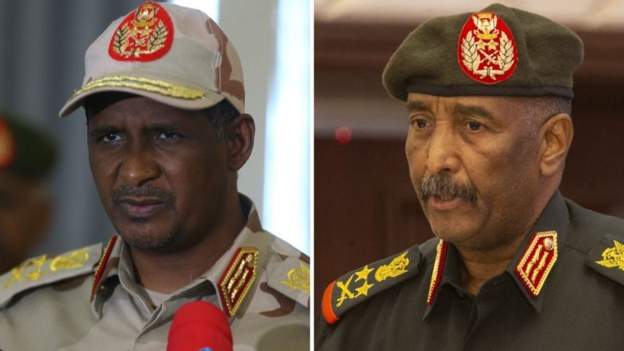
Lt Gen Abdel Fattah al-Burhan, Sudan’s army chief, has fired his deputy and paramilitary Rapid Support Forces (RSF) commander Mohamed Hamdan Dagalo, also known as Hemedti.
Both Gen Burhan and Hemedti have served as chairman and deputy of the ruling Sovereign Council respectively, since the October 2021 military coup.
In a decree released on Friday, Gen Burhan appointed former rebel leader Malik Agar as his deputy. Mr Agar is also a Sovereign Council member.
He directed the secretariat of the Sovereign Council and the relevant state authorities to immediately effect the decree.
The army chief had last month dissolved the RSF and designated its fighters as rebels after a power struggle erupted between the rival forces.
The country has since plunged into deadly fighting and turmoil.
South African Deputy President Paul Mashatile stated that the administration is optimistic that its emergency purchase programs would end the country’s energy problem.
State-owned power company Eskom’s board has approved three emergency procurement programmes that now only require the approval of the National Energy Regulator of South Africa, which will host hearings on Friday, local media reported.
“Apart from appointing the minister of electricity, we have announced we are now embarking on procuring emergency power. Government is determined to keep the lights on,” Mr Mashatile said on Thursday.
He said, in some instances, Eskom would use diesel to keep the lights on, adding that the government was still committed to renewable energy.
His remarks came shortly after Eskom issued a statement on Wednesday warning that the country’s power system was severely constrained, with a high likelihood of prolonged power outages during winter.
Amnesty International and a Nairobi-based gay rights organization, has indicated in a joint report that LGBTQ refugees and asylum seekers in Kenya face serious human rights violations, including rape.
The report released on Friday said hundreds of gay people, who are among more than 200,000 refugees and asylum seekers in north-western Kakuma camp, experience “extreme discrimination and violence”.
“Perpetrators of violence and intimidation targeting LGBTI individuals can commit their crimes with almost total impunity, enabled by the lack of adequate responses from the police,” Amnesty and the National Gay and Lesbian Human Rights Commission (NGLHRC) said in a statement.
Researchers interviewed 41 people between 2018 and February 2023 who described facing “hate crimes, violence, including rape, and other serious human rights abuses”.
Most of the refugees and asylum seekers interviewed reported having suffered assaults, threats and intimidation in Kakuma camp, most of them more than once, because of their sexual orientation.
Based on the findings, Amnesty International and NGLHRC said that the Kakuma refugee camp complex was not safe for LGBTQ asylum seekers and refugees.
The rights organisations urged the Kenyan government to uphold the rights to life, protection against inhuman treatment and freedom from non-discrimination of everyone, including LGBTQ people.
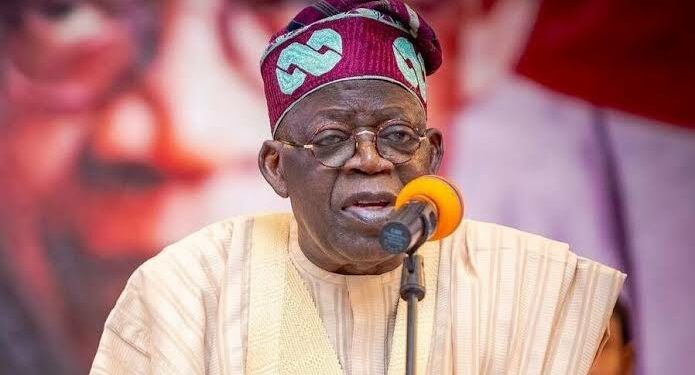
African leaders have been advised by Nigeria’s major opposition Peoples Democratic Party (PDP) to abstain from the country’s impending inauguration ceremony, which will see President-elect Bola Ahmed Tinubu take the oath of office.
Speaking exclusively to the Daily Statesman, the spokesperson for PDP Presidential candidate Atiku Abubakar, Otunba Segun Showunmi, believes it is time African leaders put aside the familiarity among themselves and not partake in what he described as an “embarrassing democratic heist.”
“We would advise a lot of African countries to reconsider attending the upcoming inaugural ceremony. They will be invariably lending themselves to a very embarrassing democratic heist. Our recommendation is that African leaders must show more than a passing interest in using their attitude, conduct, and utterances. One of the things they could do is boycott the inauguration not because they want to be involved in our issue but because they want the court to adjudicate,” he said.
Referring to a similar situation during South Africa’s Apartheid, he noted that “in South Africa, if some African leaders did not use their boycott, staying away, reprimand, to say this is not right; then probably everybody would have just clapped and said Kumbaya to those who are doing the wrong thing.”
“Of course, it is his (President Nana Akufo-Addo’s) decision and the decision of Ghana to attend the ceremony but our recommendation as the main opposition party, the Peoples Democratic Party of Nigeria, which has a very strong and good relationship with Ghana would be when in doubt, leave it out. And in this particular situation, we recommend that they don’t come,” he stressed.
Other infiltrations
Responding to whether the court battle has inured to the benefit of other political parties, Otunba Showunmi said that although the flawed electoral process paved the way for parties to claim victory, the PDP is convinced that it won the presidential election.
“Without getting involved in the merit and demerit of the case, we are very convinced that we won. Because the process was flawed, it has created room for every other person to claim that they won and that’s part of the reason we say African and world leaders should boycott,” he indicated.
“Elections are a procedural selection process that guarantees the integrity of the citizens picking who will be their representative. If comes to an end, that a greater percentage of the people in the country do not believe that a fair process has trolled up the president-select, then the least that African leaders can do is stay away for now,” he said.
“If the court rules that he is right, then they can congratulate him. Knowing fully well that it will serve as a strong signal that when another election comes, African leaders are not going to play the ostrich by pretending the issues do not concern them. It will form a basis for Ghana and other African countries to clean up democracy,” he pointed out.
Minister of State in the Finance Ministry, Dr. Mohammed Amin Adam, says Ghana is far along in negotiations with the World Bank for a $900 million budget support facility.
According to him, the budget support facility will be disbursed over the next three years alongside the International Monetary Fund’s $3 billion facility.
Speaking on JoyNews’ PM Express Business Edition, he said, “Once we applied for the IMF supported programme, we also started engaging with the World Bank for budget support and I’m happy to report that we’re far advanced.
“We’re almost concluding the negotiation with the World Bank for a $900 million budget support which will be disbursed in equal installment of $300 million a year. And so for the next three year while the IMF is disbursing the $3billion the World Bank will also be disbursing $900 million, $300 million each year.”
Ghana will be unable to access the international capital market for budget support for at least three years after its debt levels were deemed unsustainable and in high distress.
Currently, the country has succeeded in securing an Executive Board approval from the IMF for a $3billion loan facility to be disbursed over three years.https://www.youtube.com/embed/7C5NlG20gps
The first tranche of disbursement is expected to hit the country’s account in the coming days.
According to D. Amin Adam, the World Bank has also committed to support the country’s Financial Stability Fund which was set up to support the local banking sector following a debt restructuring programme.
This is to prevent a collapse of the banking sector.
“The World Bank has also committed to support the Financial Stability Fund with $250 million and then also we’re talking to the African Development Bank to also support the fund up to about $100 million. We’re hoping that other development partners will come forth to support our economy, and not just through budget support but also the Financial Stability Fund so that we can make the domestic banking sector stronger,” he said.
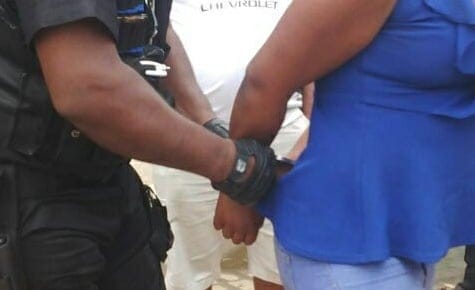
The domestic tax division taskforce of the Ghana Revenue Authority (GRA) has detained eight retail business and restaurant managers for willfully failing to issue VAT invoices to consumers.
The arrests add to a total of 93 individuals currently being investigated and prosecuted.
The taskforce conducted a targeted operation in East Legon and Adenta, specifically targeting non-compliant managers.
Shops the GRA cracked down on included Tasty Treats Catering Services at the University of Ghana, Legon, Luxi Wear, Obsession, Eco Furniture, Paladin Doors, AB Tissues & More and TF Eatry.
At Tasty Treats Catering Services for example, the GRA picked up some invoices and receipts for further assessment after suspicion of tax evasion.
According to the GRA, the eatery has been engaging in selective VAT issuance after sales.
The manager of the facility has been arrested for further interrogation.
The GRA team during the arrest said: “we have been here before, and we transacted business with you, and you were supposed to issue the Commissioner General’s invoice as a VAT registered taxpayer, and you did not and under our laws, Section 41, it is an offence, and so we are going to immediately hand you over to the CID to carry on with the next line of action.”
Ghanaians hoping for a 10% drop in transportation rates may be disappointed due to some drivers’ refusal to lower fares.
In a surprising turn of events, the Ghana Private Road Transport Union (GPRTU) has appealed to the general public to continue paying the existing fares until the leadership of the various transport unions convene to determine the way forward.
The reduction in fares, which was set to take effect on Wednesday, May 17, 2023, brought about a sigh of relief among users of public transport.
The announcement had come as a result of consistent marginal reductions in the price of fuel, providing an opportunity for operators to pass on some savings to commuters.
However, it appears that some drivers have chosen not to comply with the directive.
In reaction to the development, the Industrial Relations Officer of the Ghana Private Road Transport Union, Abass Imoro in an engagement with the media said “There was a problem which came out with the reduction of 10%, so we said there should be cease-fire. We are pleading with the general public to continue with the old fares till our leadership meets on Monday to look at the way forward.”
A leading provider of telecommunications and mobile money services in 14 African nations, Airtel Africa, has launched a new advertising campaign aimed at developing a stronger emotional connection with Africa’s youth.
The campaign includes a new strapline for Airtel Africa: ‘Reason to Imagine’. It is driven by the insight that in Africa, imagination is the only qualification that matters and showcases Airtel Africa’s role in harnessing this potential by delivering relevant solutions to consumers that enhance digital and financial inclusion.
The ‘Reason to Imagine’ campaign highlights Airtel Africa’s status as an enabler of young people’s dreams and ambitions, whatever these might be. To this end, the campaign seeks to celebrate the energy, creativity, and innovation of Africa’s young people.
Airtel Africa’s Group Chief Commercial Officer, Anthony Shiner said, “It’s a well understood fact youth are central to achieving Africa’s potential. More than 60% of Africa’s population is under the age of 25 – and empowering this new generation is transformative for the future of the continent.
“Through this campaign, we are reaffirming Airtel Africa’s commitment to advancing the progress of Africa’s young people by providing the connectivity to turn every situation into an opportunity.” The ‘Reason to Imagine’ brand campaign is Airtel Africa’s most ambitious yet. It comprises a series of television commercials and a combination of market-specific print, online, outdoor and mobile creative executions.
The current title sponsorship of The Voice Africa is an example of how Airtel Africa is giving the youth a reason to imagine by partnering with The Voice to bring the show to the continent. The Voice Africa showcases exceptional African musical talent in a show that also features a high-profile panel of coaches and TV hosts. One of the 100 selected talents will eventually be crowned ‘The Voice Africa’ in a live show that is currently airing on free to air TV stations across the continent and Airtel TV.
This is one of the initiatives that Airtel Africa has invested in to promote youthful talents and expertise in education, sports, and the innovation sectors.
Airtel Africa is a leading provider of telecommunications and mobile money services, with a presence in 14 countries in Africa, primarily in East Africa and Central and West Africa. Airtel Africa offers an integrated suite of telecommunications solutions to its subscribers, including mobile voice and data services as well as mobile money services both nationally and internationally.
The Group aims to continue providing a simple and intuitive customer experience through streamlined customer journeys.
The government has committed US$2.6 million to the establishment of innovation centers across the country in order to provide digital literacy to about 3,000 Ghanaians by next year.
With this, government hopes to further bridge the country’s yawning technology usage gap, says deputy Communications and Digitalisation Minister, Ama Pomaa Boateng.
Ms. Pomaa Boateng also stated that government through the ministry entered into an agreement with the Smart Africa Alliance through the Smart Africa Digital Academy to train up to 22,000 people by end of this year.
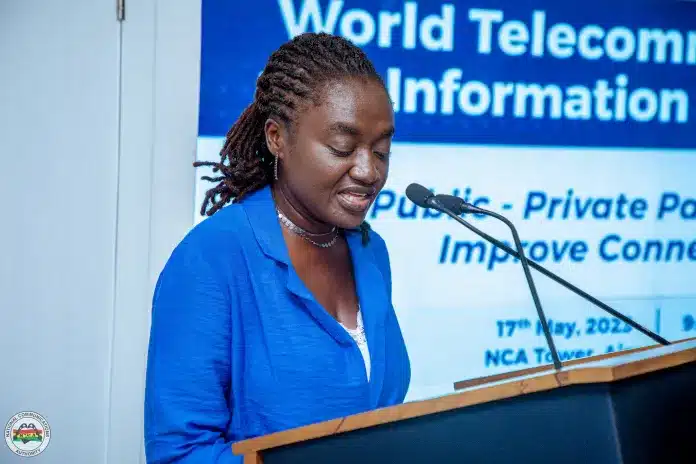
“Government is not relenting on its promise to ensure that no one is left behind,” she stated during this year’s World Telecommunication and Information Society Day (WTISD), organised by the National Communications Authority (NCA) under the auspices of the Communications and Digitalisation Ministry.
The global theme for this year’s celebration is ‘Empowering the least developed countries through Information and Communications Technologies (ICTs)’. However, Ghana’s adopted theme is ‘Public-private partnership to improve connectivity’.
Photo credit: NCA
Globally, it is estimated by the United Nations and International Telecommunication Union (ITU) that over 2.7 billion people in the world are unconnected.
Ghana’s digital ecosystem is however one of the best-performing sectors in the country, growing on average by 19 percent annually between 2014 and 2020, said the World Bank.
Currently, Ghana is among the digital leaders in sub-Saharan Africa, and the Digital Economy diagnostic conducted in 2020 identified key bottlenecks that need to be removed to further accelerate the country’s digital transformation, the World Bank stated.
Highlighting continuous investment in efforts to bridge the country’s digital divide, the deputy minister said government “made it a priority to invest in ICT infrastructure to ensure universal connectivity”.
As a result, the country has extensive coverage of land-fibre, through efforts by government and the private sector, to serve as a backbone for broadband deployment.
“We also benefitted from 5 international sub-marine cables at our shores. To further bring connectivity to the doorstep of every citizen, the ministry through the Ghana Investment Fund for Electronic Communication is implementing the Rural Telephony and Digital Inclusion Project (GRT&DIP) – dedicated at providing voice and data services to underserved and unserved communities in the country,” she said.
This notwithstanding, Ms. Pomaa Boateng said more investments are needed to ensure everyone has access to information communication technology tools. “Citizens must have access to devices in order to interact meaningfully and also transact public and private services online without any barriers,” she said.
Empowering LDCs
The Deputy Director-General for Technical Operations at the NCA, Prof. Ezer Osei Yeboah-Boateng, said looking at Ghana’s journey so far in ICTs, connectivity and digitalisation, it is in the right direction that the country supports efforts to assist Least Developed Countries (LDCs) connect to the world.
“It was therefore in good faith that Ghana pledged its support during the ITU’s launch of the Partner2Connect Campaign; a project that seeks to accelerate universal and meaningful connectivity in the hardest-to-connect communities,” he stated.
LDCs are described as low-income countries confronted with severe structural obstructions to sustainable development – with poor infrastructure and income inequality, irrespective of their per capital gross domestic product.
They are also farthest behind in achieving the Sustainable Development Goals (SDGs) set by the United Nations (UN) to end extreme poverty, reduce inequality and protect the planet.
Currently, there are 46 countries in the world – including Burundi, Liberia and Central Africa Republic – that have been declared by the United Nations as LDCs.
Collective responsibility
The Board Chairman at NCA, Isaac Emmil Osei-Bonsu Jnr – who spoke on behalf of the ITU General-Secretary, said empowering LDCs to connect with the rest of the world is a collective responsibility, requiring public-private collaboration and partnerships.
“Together we can make 2023 a year of unprecedented digital development in the least developed countries; and create a truly universally connected world where everyone, everywhere shares in the benefits of technology,” he stated.
After the International Monetary Fund (IMF) approval of Ghana’s economic assistance program, the Central Bank Act is expected to be amended as part of attempts to improve independence and alleviate fiscal dominance.
This was contained in a country report issued by the Fund on May 17, 2023.
The amendments to the Bank of Ghana Act will feature a stricter limit for monetary financing, mechanisms to monitor and enforce compliance, and offer clear definition of emergency situations under which the limit can be temporarily lifted.
Before Ghana secured approval from the IMF Executive Board for a $3 billion bailout, the Bank of Ghana and Ministry of Finance, as part of prior actions, signed memorandum of understanding (MoU) to end monetary financing during the programme.
Under the new programme, there is an ongoing updated Safeguards Assessment which is aimed at proving additional support for designing changes to the BoG Act and pending some legislative amendment.
The Act, when revised, will further review the Central Bank’s Domestic Gold Purchase and Gold-for-Oil programmes amid associated risks for the Bank of Ghana.
Under the IMF programme, the Bank of Ghana’s balance sheet is expected to be affected by the debt restructuring exercise.
The IMF country report on Ghana’s IMF bailout noted that government and the Central Bank would have to assess the potential impact and develop strategies towards its recapitalization with the Fund technical assistance support.
The Ghana National Chamber of Commerce and Industry (GNCCI) has voiced concern over the International Monetary Fund’s revenue mobilization recommendations to Ghana’s government under its $3 billion support package.
According to the Chamber, should the suggestions be implemented, it will adversely affect businesses that are already burdened with numerous taxes and other unfavourable conditions.
The Chief Executive Officer of the Chamber, Mark Badu-Aboagye indicated that at present, the country is undergoing some level of economic crisis.
Speaking to JoyNews, he said, “Businesses in Ghana are very ready. I told you, the last time that we conducted a research, we realised that the SMEs in Ghana are growth-oriented, which means that by giving them the opportunity they can grow to become multinationals.
However, he pointed out that, “When you introduce externalities like taxes, like high-interest rates, like levies, then you go to the bottom line and you realise that all of them are making losses, which means that, that component needs to be managed.”
On Wednesday, May 17, the IMF in a press statement announced that its Executive Board has approved a $3 billion Extended Credit Facility (ECF)—a three-year loan programme arrangement for Ghana.
They further stated that the decision of the board was to enable an immediate disbursement of about $600 million to Ghana. The Bank of Governor has since confirmed that the first $600 million will hit its account this Friday, May 19, 2023.
On the back of the approval, the IMF made some suggestions to the government of Ghana on how to boost revenue mobilisation under its $3 billion support programme.
Some of the measures they indicated as contained in the IMF’s May 2023 country report on Ghana’s request were the scrapping of tax exemptions, the adjustment of levies on fuel, and an increase in income tax.
But Mr Badu-Aboagye who disagreed with the suggestions made by IMF said “That is where my concern is, because these conditionalities will or may worsen that aspect of support that we need to give to businesses.”
Mr Badu-Aboagye further advised that, in the interest of both the country and businesses, Ghanaians should work together towards making the IMF deal a success.
A Sabo-Yaba Chief Magistrates’ Court in Lagos has processed an application to extend Seun Kuti’s remand for an additional four days.
The Chief Magistrate, Mrs Adeola Olatubosun, extended Kuti’s remand until May 22, 2023.
Simon Lough (SAN), who led a police legal team to the court, had moved the application.
According to him, the extension is to allow further investigation into the case.
Recall that Seun was arraigned in court on Tuesday after a video of him slapping a police officer went viral on social media.
The offence is contrary to Section 356 of the Nigerian Criminal Code Act. The chief magistrate ordered his remand for 48 hours.
She, however, held that the defendant should be admitted to bail in the sum of one million Naira with two sureties in like sum, at the end of the 48-hour remand.
She said that one of the sureties must be a landlord within the jurisdiction of the court.
She had adjourned the case until May 22 for mention and directed the prosecutor to duplicate the case file and forward a copy to the state director of public prosecutions for advice.
The Ghana Revenue Authority (GRA) has responded to a question on the continuation of the COVID-19 Health Recovery Levy, sometimes known as the “Covid Tax,” shedding clarity on the grounds for the levy’s ongoing collection.
In a tweet, the Ghana Revenue Authority addressed the concerns raised by a user on Twitter, who asked, “Why are we still paying covid tax @GhanaRevenue?”
In their reply, the GRA emphasized their role as mandated by parliament to collect revenue from taxes and levies.
They further explained that the basis for revenue collection is the law enacted by parliament.
The GRA specifically referred to the COVID-19 Health Recovery Levy Act, 2021, Act 1068, which was implemented as a measure to address the economic challenges posed by the COVID-19 pandemic.
Notably, the GRA highlighted that this legislation did not specify an end date for the levy’s collection.
Quoting the GRA’s response, they stated, “The COVID-19 Health Recovery Levy Act, 2021, Act 1068, did not have an end date, and so the GRA must continue to collect until the law is amended or repealed.”
This clarification by the Ghana Revenue Authority highlights the legal framework under which they operate.
According to them, as long as the law remains in effect, the GRA is obliged to continue collecting the COVID-19 Health Recovery Levy from taxpayers.
We receive this question a lot on here. GRA's mandate is to collect revenue from taxes and levies as enacted by parliament. The basis of revenue collection is the law. The Covid-19 Health Recovery Levy Act, 2021, Act 1068, did not have an end date and so the GRA must continue to… https://t.co/xeBbxPkFnn
Most African central banks are expected to keep interest rates unchanged in the coming two weeks as decades-high inflation eases following more than a year of tightening.
Those such as in Egypt, Kenya and Mozambique may also factor into their decisions a drop in global commodity prices and the unwinding of supply constraints. Expectations that the US Federal Reserve may pause its most aggressive hiking cycle since the 1980s, which could weaken the dollar and boost their currencies, will be another consideration.
Others like South Africa and Nigeria, both of which are facing domestic challenges that may keep inflation elevated, are poised to hike.
The Bank of Zambia’s monetary policy committee will likely raise its key interest rate for a second time this year to contain double-digit inflation and support its currency, which has come under renewed pressure from slow progress in debt-restructuring talks, said Trevor Hambayi, an independent Lusaka-based economist.
The southern African nation has been struggling to seal a deal to revamp $12.8 billion in external loans since becoming Africa’s first pandemic-era defaulter in November 2020. Still, the corn harvest currently underway could help temper prices, reducing some pressure on the central bank to raise rates.
A temporary slowdown in inflation may give Egypt’s MPC room to pause, especially after Governor Hassan Abdalla signaled higher interest rates are doing little to cool prices.
The central bank “is likely to remain data-led, and will see declining global commodity prices and a reduction in domestic inflation as supportive of their current monetary stance,” said Farouk Soussa, an economist at Goldman Sachs Group Inc. The monetary authority sees inflationary pressures stoked mainly by supply issues, “reducing the rationale for a further hike in the medium term,” he said.
Eight of 11 economists polled by Bloomberg expect the MPC to hold and the rest forecast a 100 basis-point hike.
Angola, May 19
BNA rate: 17% Inflation rate: 10.6% (April)
After two consecutive interest-rate cuts this year, policymakers at Banco Nacional de Angola are likely to break the trend and keep borrowing costs unchanged, said Wilson Chimoco, an economist at Universidade Catolica de Angola. That will allow them to assess what a recent bout of currency weakness may mean for annual inflation, after the monthly rate rose for a third time in a row, he said.
Rate setters in Ghana may hold borrowing costs after hiking by 16 percentage points since November 2021 as inflation is forecast to continue to slow, said Patrick Asuming, a senior lecturer at the University of Ghana Business School. Food prices are likely to ease over the harvest season and the cedi should benefit from expectations that the West African country will secure a $3 billion bailout from the IMF this week, he said.
With inflation easing for four straight months, after 265 basis points of rate increases last year, the Bank of Mauritius is set to pause at its first MPC meeting of 2023, said Tahir Wahab, an independent chartered banker and accountant. It will want to wait and see if the trend will continue, “given that budget 2023-2024 is near and any rate hike would disrupt the prevailing economic conditions,” he said.
The Central Bank of Nigeria’s MPC is predicted to extend its longest phase of monetary tightening in more than a decade to temper inflation that is near an 18-year high and likely to remain elevated, Rand Merchant Bank’s Usoro Essien and Oyinkansola Samuel said in a research note.
Pest infestations in vegetable farms in parts of northern Nigeria that are impacting an estimated 70% of output, the expected removal of a costly fuel subsidy and the full implementation of a 40% wage increase for federal government workers are likely to place upward pressure on prices, they said.
Policymakers in South Africa are widely expected to raise the key rate against a backdrop of significant rand weakness and sticky inflation in an economy flirting with recession.
The median of 14 economists’ estimates in a Bloomberg survey — conducted before the sharp depreciation in the rand caused by a row with the US over allegations that Pretoria supplied weapons to Russia, and angst over South Africa’s energy crisis — was for a quarter-point hike. Several economists such as Absa Bank Ltd.’s Miyelani Maluleke and BNP Paribas’s Jeffrey Schultz have since revised their forecasts higher to 50 basis points.
The South African Reserve Bank has stated clearly “that the priority for monetary policy currently is to bring inflation and inflation expectations down sooner rather than later,” Maluleke said in a research note. “Against this context, we believe that the SARB MPC will respond to the big FX weakening with more tightening.”
Eswatini and Lesotho, whose currencies are pegged to South Africa’s rand, will probably match the Reserve Bank’s move by month-end.
Kenya, May 29
Central bank rate: 9.5% Inflation rate: 7.9% (April) Inflation target: 5% +/- 2.5 ppts
Kenya’s rate-setting committee is poised to leave borrowing costs unchanged to consider the effects of a jumbo-size hike in March after inflation softened more than expected last month.
The stance will help balance the need to keep the costs of borrowing for individuals and government despite a push by investors for higher coupons from government securities, said Tony Mwiti, a director at Nairobi-based consulting firm Clark and Hampton.
The panel “may also consider the ongoing national tax increment and high cost of living backlash that the government is currently facing and thereby may opt not to rock the boat by increasing interest rates,” Mwiti said.
Mozambique, May 31
MIMO interbank rate: 17.25% Inflation rate: 9.6% (April)
Mozambique’s central bank will probably keep its benchmark rate steady for the next few months, Isaac Matshego and Nicky Weimar, economists at Nedbank Group Ltd. in neighboring South Africa, said in a note. Annual inflation has peaked, and will continue to ease over the rest of 2023, they said.
The easing should start to see the Banco de Mocambique cutting rates in the third quarter, the economists said.
Chief Director of the Ministry of Finance (MoF), Eva Mends, has stated that her organization believes in transparency and the necessity for Ghanaians to be informed about the US$3 billion loan approved by the International Monetary Fund (IMF).
According to her, the availability of data and information from the finance ministry would help squash false information and fake news within the public domain.
Addressing journalists during a technical briefing session on Ghana’s IMF programme in Accra Thursday, May 18, 2023, Eva Mends said, “Today, we are commencing the first in the series of updates to Ghanaians on our US$3 billion Extended Credit Facility with the International Monetary Fund (IMF). We expect to sustain this partnership with the Ghanaian people and you as you prove timely and accurate information on this new path toward economic stability and building a resilient economy.”
She further said, “We are fully aligned with the Ministry of Information’s #Verifyfirst campaign, recognizing the potential harm that false information can cause to the public and the overall development of our nation. By providing you with accurate and verified information, we aim to ensure that Ghanaians have access to reliable sources of news and updates.”
“We understand the power of transparency and believe that by working together, we can achieve our shared goals of economic growth, financial stability, and improved living standards for all Ghanaians,” the Chief Director of the Ministry of Finance stated.
On Wednesday, May 17, 2023, the IMF Executive Board approved Ghana’s US$3 billion bailout programme.
The US$3 billion programme which translates to SDR 2.242 billion is a 36-month ECF arrangement for Ghana.
According to IMF, the approval will enable an immediate disbursement equivalent to SDR 451.4 million – about US$600 million.
The IMF financial bailout programme is aimed at restoring Ghana’s macroeconomic stability and debt sustainability.
The Bank of Ghana’s interbank forex rates for today, May 19, 2023, show that the Ghana Cedi is trading versus the dollar at a purchasing price of 10.8289 and a selling price of 10.8397.
At a forex bureau in Accra, the dollar is being bought at a rate of 10.50 and sold at a rate of 11.40.
Against the Pound Sterling, the Cedi is trading at a buying price of 13.4278 and a selling price of 13.4423.
At a forex bureau in Accra, the pound sterling is being bought at a rate of 13.20 and sold at a rate of 14.20.
The Euro is trading at a buying price of 11.6581 and a selling price of 11.6697.
At a forex bureau in Accra, Euro is being bought at a rate of 11.00 and sold at a rate of 12.20.
The South African Rand is trading at a buying price of 0.5576 and a selling price of 0.5581.
At a forex bureau in Accra, South African Rand is being bought at a rate of 0.30 and sold at a rate of 0.90.
The Nigerian Naira is trading at a buying price of 42.8269 and a selling price of 42.9257.
At a forex bureau in Accra, Nigerian Naira is being bought at a rate of 13.00 Naira for every 1 Cedi and sold at a rate of 18.00.
For the CFA, it is trading at a buying price of 56.2103 and a selling price of 56.2662.
At a forex bureau in Accra, CFA is being bought at a rate of 16.00 CFA for every 1 Cedi and sold at a rate of 19.50 CFA for every 1 Cedi.
Our forex bureau rates are provided by Afriswap Bureau De Change in Osu, Accra.
Note that these rates may be different at a forex bureau near you. Our forex bureau rates are provided by Afriswap Bureau De Change in Osu, Accra.
The Minority in Parliament has criticized the government’s stance on government management counsel
According to them, the government has a “YentieObaa” disposition, to wit, “we will not listen to anyone”
In a statement released by the Minority on the approval of Ghana’s $3 billion IMF bailout on May 17, 2023, it stated that it is this posture of the government that has led the country to the current financial crisis.
“We are on record to have urged this government to seek an IMF bailout in 2021, almost two clear years ahead of this announcement date, by which time things were not this critically dire, but true to their “YentieObiaa” disposition, the Akufo-Addo/Bawumia government arrogantly ignored wise counsel.
“The tragic events that have preceded this announcement, including the debilitating Domestic Debt Exchange Programme (DDEP) with its attendant cruel haircuts and denial of coupon payments to aged pensioners, negative impact on banks and insurance companies (as evidenced by the billions of Ghana Cedis impairments they recorded in the 2022 financial year), did not, therefore, come to us as a surprise,” parts of the statement read.
It has therefore asked Ghanaians to brace themselves for the harsh consequences of the IMF deal approved for the country.
The $3 billion loan facility was approved on May 17, 2023, after Ghana made the move to engage the fund in July 2022.
It said “Let us brace ourselves for the full consequences of this IMF deal, which will without doubt bite hard on Ghanaians, especially the youth. This is not the counsel of despair, but a reality that will soon dawn on all of us.”
The Bank of Ghana and the Ministry of Finance are set to sign a Memorandum of Understanding outlining the terms for repaying the International Monetary Fund’s $3 billion lending facility.
The $3 billion loan which will be disbursed within 36 months has a 0% interest rate with a grace period of 5.5 years and a final maturity of 10 years.
The programme under the Extended Credit Facility (ECF) is aimed at restoring macroeconomic stability and bringing fiscal operations and public debt to sustainable levels, supporting structural reforms, and promoting strong and inclusive growth while protecting the poor and vulnerable.
It has a front-loaded fiscal adjustment of 5.1 percentage points of Gross Domestic Product (GDP) over 3 years (2023-2025) with the following Primary Balance (on a commitment basis) and fiscal adjustment (fiscal effort).
Ghana undertook among other conditions the domestic debt restructuring and secured financing assurances from its external creditors to arrive at the approval by the board on May 17, 2023.
The International Monetary Fund forecasts that economic growth will gradually return to its long-term potential of roughly 5% beginning in 2026.
In its country report after the board approval of an economic recovery programme of $3 billion, the fund stated that growth is expected to remain subdued in the coming years, while inflation gradually returns to target.
It noted that the implementation of the IMF program should help return inflation to single digits by 2025. The current account deficit would reach around 3 percent of GDP over the medium term.
“The current crisis, the envisaged fiscal consolidation path and domestic debt restructuring, as well as the difficult external environment is expected to lower growth to around 1.5 percent in 2023.
“This assumes expansion of 6.1 percent in extractive sectors (primarily oil, gas, and gold) supported by buoyant commodity prices, and 0.7 percent in non-extractive sectors—the lowest values since the 1980s,” parts of the report read.
On the other hand, the current growth in the country’s population which currently stands at more than 2% would imply a recession in per capita terms.
“The relatively strong performance in extractive activities (about 6 percent annual growth in 2023-26) reflects the opening of large new gold mines, the ongoing recovery in small-scale gold mines, as well as the planned expansion in oil and gas production,” the report said.
Almost 250,000 people in central Somalia have had to flee their homes after a river flooded the town of Beledweyne.
People had to shelter under trees after the Shabelle river burst its banks, meaning 99% of those living in the town and surrounding areas are now homeless, Hirshabelle State Interior Minister Abdirahmaan Dahir Gure told BBC Somali.
The UN is warning that the floodwaters could also hit Bulo Burde town, some 110 km (68 miles) away.
Climate change is believed to have played a large role. According to Somali government officials, heavy downpours in Somalia and upstream in the Ethiopian highlands triggered flash floods that washed away homes, crops, and livestock.
Somalia is just starting to recover from the worst drought in several decades after almost five successive rainy seasons failed, triggering a near-catastrophic humanitarian situation.
According to the UN, the rains are recharging water sources and helping vegetation to grow but it will take much more sustained rainfall to alleviate the impact of the recent drought.
Tributes are flooding in for Kelly Rusike, a Zimbabwean jazz artist and producer who died on Wednesday in Harare.
He was part of the famous Rusike Brothers, who rose to fame in the 80s and 90s with hit songs including Cecilia, Saturday Night as well as the popular advert, Ngwerewere Sadza.
In a family statement, the Rusike Brothers said Kelly died after a long battle with diabetes.
“Kelly lived for his music and touched many lives through it. His music will forever live in our hearts,” the statement added.
The veteran musician owned Shed Productions, a major recording production house in Zimbabwe that produced jingles and songs.
Social media users described Kelly as one of the best bass guitarists and jazz impresarios in Zimbabwe.
South Africa is braced for a harsh winter after the state-owned power utility Eskom predicted widespread power outages.
“With the winter season upon us, our power system will be even more constrained…weather forecasters are anticipating a much colder winter and these challenges will result in high electricity demand”, said Eskom chairperson Mpho Makwana on Thursday.
The country is currently experiencing “stage 6” load shedding, where consumers go without electricity for up to 12 hours a day. With “stage 8” load shedding expected this winter, consumers will have up to 16 hours of no electricity every single day.
Stage 8 power cuts would require up to 8,000MW to be shed from the national grid. This is likely to cause more businesses to shut down, further job losses and a high possibility of civil unrest.
Even though officials insist that the risk of a blackout is low, many South Africans are worried that the worst case scenario is very likely.
Air strikes pummeled areas of Sudan’s capital, Khartoum, as violence began near a military installation in the city’s south.
The army has used air power and heavy artillery to try to drive back the paramilitary Rapid Support Forces (RSF) from residential areas of Khartoum and its adjoining cities of Bahri and Omdurman.
The Sudanese Doctors’ Syndicate accused the RSF of attacking three ambulances and arresting their drivers and a doctor in Khartoum.
The union said it had documented attacks on 20 hospitals.
Police in western Kenya have detained a self-proclaimed preacher who recently stated his desire to see President William Ruto in order to deliver a prophetic message.
Joseph Chenge of Jerusalem Mowar Church was arrested on Wednesday evening alongside 11 members of his church in Ruri village, Homa Bay county.
Homa Bay criminal investigations officer Abed Kavoo said they were holding Mr Chenge in suspicion of promoting questionable religious teachings.
Mr Kavoo said preliminary investigations had revealed that the cleric was detaining sick people at his church in the guise of praying for them. Five patients were rescued from the preacher’s church, local media reported.
Police said Chenge’s church operations were illegal, as it was not registered. The preacher and the arrested members of his church are due to appear in court on Thursday.
On Sunday, Mr Chenge told journalists that something unfortunate may happen to the country if he failed to meet President Ruto within 21 days.
The arrest of the preacher comes amid crackdown on suspicious churches in Kenya, following the death of more than 200 in a doomsday cult in coastal Kilifi county.
Kenyan President William Ruto has again called on the two warring Sudanese generals to halt the fighting, which has now reached its second month.
Intense battles in the capital Khartoum and its sister cities of Bahri and Omdurman have raged despite Saudi and US-brokered talks between the army and the paramilitary Rapid Support Forces (RSF) in Jeddah, aimed at securing humanitarian access and a ceasefire.
“These generals are bombing everything, roads, hospitals, bridges, and destroying the airport using military hardware bought with African money. We need to tell those generals to stop the nonsense,” President Ruto said on Wednesday during the Pan-African Parliament Summit in South Africa.
The Kenyan leader, who has been tasked by a regional bloc, Igad, together with other heads, to help in reconciling Sudan’s rival sides, said military capacity was for battling criminals and terrorists and not for fighting children and women.
Mr Ruto, however, blamed African states for lacking the capacity to stop the war in Sudan “because our own peace and security is funded by others”.
Nearly 1,000 people have been killed and more than a million displaced in Sudan since battles between army chief Abdel Fattah al-Burhan and his former deputy Mohamed Hamdan Dagalo, who leads a paramilitary force, erupted in April.
The unrest has caused about 200,000 to flee into nearby countries and those still in Khartoum are struggling to survive.
The head of Kenya’s standards authority and 26 other government employees have been suspended in connection with the market release of 1,000 tonnes of expired sugar.
A statement by the head of public service, Felix Koskei, said 20,000 bags of sugar imported into the country in 2018 and condemned by the regulator had been “irregularly diverted and unprocedurally released”.
The Kenya Bureau of Standards had then declared the sugar as unfit for human consumption and was set for destruction through conversion to industrial ethanol.
The conversion was to be undertaken jointly by regulatory agencies.
They were required to source for a distiller through an open and competitive tendering process and pay all the necessary taxes and fees.
“It is manifest that some officers in the relevant agencies abdicated their responsibilities, at the risk of public harm,” Mr Koskei said.
The suspension comes at a time when Kenyans have been hit by one of the biggest rise in prices of sugar in years amid shortage.
Six more remains have been found by Malawian rescuers after their boat was hit by a hippo and crashed on the Shire River in the southern Nsanje district on Monday.
A police spokesperson in Nsanje area, Agnes Zalakoma, said the bodies were recovered on Wednesday from different sites along the river, state-owned MBC TV reported
“The search is still in progress,” Ms Zalakoma said.
Following the accident, 14 people were rescued and about 20 others were reported missing.
A body of an infant, who was among the passengers, was recovered earlier.
The boat was packed with 37 villagers who were crossing the river to work in their fields on the Mozambican side.
CCTV footage circulating on social media shows a disgruntled soldier shooting erratically in a crowded office.
The reason for the shooting is however unknown.
The armed officer can be seen enquiring about something from an occupant of the room who had his desk separated from the rest and came off as the head of the workers in the room.
But the latter held up his right hand amid utterances that cannot be heard.
The officer after this shot with his AK47 intermittently at people in the office who immediately rushed out leaving the man he was speaking to earlier.
He shot at the man several times till he fell to the ground.
The officer is also seen trailing behind the ‘runaways’ but returned to finish off the man who was still on the floor with more bullets.
After this, he picked up a document and exited the office.
US ambassadors in Somalia have frequently sparked controversy. Indeed, nearly three decades after Somalia succumbed to warlords, diplomats did not return to Mogadishu until after 2012, having managed’relations’ with Mogadishu from Nairobi.
But Mr Larry E André, the departing US Ambassador to Mogadishu, has often tried to do things differently. This week, he began bidding farewell to the locals, just over 16 months after he reported to duty back in January 2022.
Although both Washington and Mogadishu have often pledged strong ties, Americans hadn’t always been of the likeable type here. Mr Andre, arriving during the tense election season had to walk a tight rope, but still had to push through the usual ailments of Somalia: conflict, drought, repressed media and al-Shabaab.
“Amb André enjoyed, while in Somalia, the boundless appreciation and confidence of both journalists and the media freedom community at large,” said the National Union of Somali Journalists (NUSOJ) in a statement on Monday.
“Ambassador André has consistently been a staunch ally and defender of journalists’ rights and tireless in his efforts to protect these freedoms.”
On Monday, NUSOJ paid the envoy a rare visit to his offices inside the city’s highly guarded airport perimeter wall in Mogadishu where they honoured him with a plaque.
The envoy, in his year-long stay, was critical of press repressions and often granted interviews to media outlets.
“A free, responsible and effective media is essential to Somalia’s full revival,” the US Embassy in Mogadishu said on Monday.
According to him, transparent and trustworthy governance must be based on a free media which critiques every step or decision by government officials.
Somalia has many problems and lack of proper press freedom is among them. Since he set up the first Somali Affairs Unit, there have been 80 journalists killed in Somalia, mostly targeted by militants
This week, he received praise for trying to cut that trend.
“The US embassy, in its capacity acted as a voice for journalists and journalism profession both in an out of Somalia,” said NUSOJ Secretary-General Omar Faruk Osman.
Many other sectors in Somalia equally appreciated the envoy’s seeming honest and straightforward interventions.
During a major investment conference arranged by Somalia Investment Promotion Office (SOMINVEST) in Mogadishu in early December last year, Amb André’s talked of reforms as a first step for long-term prosperity was noted for his argument that Somalia must build institutions for international lenders to want in.
“As the World Bank’s largest shareholder, we (the United States) support the partnership between Somalia and the International Financial Institutions,” he argued then.
During the visit to the US Embassy, NUSOJ officials and Ambassador André discussed the importance of a free press to transparent & trustworthy governance.
Some, including NUSOJ officials have asked him to take up local residence. But not everyone was always happy with his speeches. Somaliland, the breakaway region north-west of the country often picked up a fight with him. In March, the administration of Muse Bihi in Hargesia lampooned him for ‘indignifying’ Somalilanders after he called theirs a ‘region’ of Somalia.
In truth, in spite of trying to go its way in 1993, no other country has ever recognised Somaliland as independent. Washington policy, Andre told a local outlet in Somalia last year, is to work with Somalia’s Federal Government and all its regional administrations.
At 62, Mr André may probably be retiring, having toured most parts of Africa and the Middle East throughout his diplomatic service. Yet it may be in Somalia where he could have left an impact and little controversy. His predecessors routinely ran into trouble with federal states in Somalia, and the federal government itself.
He replaced Donald Yamamoto, who served in Somalia from 2018 to 2021, leaving before Somalis could hold the much-delayed elections whose planning also saw him routinely battered by local politicians for interference. President Hassan Sheikh Mohamud was later elected in May last year, after months of haggling over format.
When Mr André was nominated Ambassador in 2021, he seemed to have found a familiar place. He was once in charge of Somali Affairs while he served as Political Counsellor at the US Embassy Nairobi from 2006 to 2008, becoming a familiar representative for the US at Somali conferences. He would, in 2007, set up the Somali Affairs Unit, which eventually became US Mission Somalia.
“Ambassador André arrives at a crucial time for Somalia’s federal elections,” said the US Embassy in Mogadishu in January last year.
“He is eager to work in partnership with the Somali people and their state and federal governments to advance our shared objective of Somalia’s revival as a secure, prosperous, and democratic nation.”
Mr André will be replaced by Richard Riley, another veteran diplomat in the State Department.
Phriday, whose real name is Ejenedia Friday Eghaita, is a rising talent in Nigerian music
With his impressive talent as a composer, performer, and singer, PHRIDAY is quickly gaining popularity and becoming one of the most sought-after musicians in the country.
Despite being a relatively new artist, PHRIDAY has already made a name for himself with popular songs like ‘Container’, ‘Street Governor’, and he’s still recording.
Phriday’s music is a blend of different genres, including Afrobeat, Native African music and Hip-hop.
The Nigerian artiste draws inspiration from his life experiences and the world around him, creating music that resonates with his listeners.
He uses his music as a platform to raise awareness and inspire change, making him a positive influence in the industry.
Phriday is an up-and-coming artist to watch out for.
With his impressive talent, passion for music, and dedication to his craft, he is set to make a significant impact in the industry.