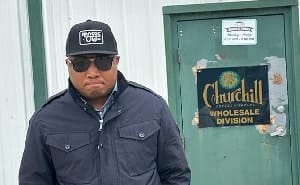
Kumasi-based musician, Ypee, has stated that he is unconcern that he broke his ex-girlfriend’s heart after all the financial support he received from her.
The musician in his interview with Delay mentioned that although his parents were taking care of him during his days as a student at the University of Ghana, he quit a month after enrolling because he needed a huge amount of money.
“I wanted ‘block money’ which is why I left the school. Also, being at Legon, I couldn’t endure the pressure. As a level 100 student, there was a hostel called Pent. When I pass by the hostel, the kind of cars I see over there, are my dream cars, and I want those cars too,” he said in the interview monitored by GhanaWeb.
“I saw a girl, I tried calling her, and the next thing I saw was her pressing the key to her car, so I then thought, ‘Oh, is this the case’,” he added, disclosing that these informed his decision to quit school.
While he tried to survive, he met another woman who assisted him financially. According to him, he invested in “family businesses with the funds she provided.
“She liked me so I told her to support my dream which is the music I do. She was my girlfriend; we dated for two years,” Ypee revealed.
A curious Delay asked: “So after you made it, you left her?”, to which Ypee answered “I didn’t leave her. She noticed we couldn’t be together. My focus was different and she noticed we couldn’t get along.”
Ypee disclosed that the said woman was four years older than him.
“So, when you stopped dating, were you brokenhearted?” Delay asked.
Without hesitation, the 27-year-old responded: “For me, I wasn’t brokenhearted. I can’t say same for her.”
Delay followed up with another question in an attempt to see how he feels about the breakup as she asked, “So you don’t care about whether she was brokenhearted or not?”
Ypee replied: “No, she’s the one whose heart is broken; she is the victim”.
The Sierra Leone government has reacted to the removal of a historic and landmark tree in the heart of Freetown.
President Julius Maada Bio confirmed via a tweet, reports in local media, that the cotton tree had been felled due to heavy downpour in Freetown on May 24.
“The iconic Cotton Tree has fallen due to the heavy downpour of rain in our capital this evening. A great loss to the nation. It was regarded as a symbol of liberty and freedom by early settlers.
“We will have something at the same spot that bears testament to the great Cotton Tree’s place in our history. All voices will be brought together for this,” the tweet added.
“Freetown’s most iconic landmark is gone. The city’s Chief Administrator, Festus Kallay, says the towering Cotton Tree – hundreds of years old – has just been brought down by a heavy storm. It’s a huge vacuum in the city’s skyline,” a BBC journalist, Umaru Fofana tweeted.
Sierra Leoneans on social media have been sharing photos of the fallen tree which according to history dates back to the 1700s, reminding of the country’s colonial past, its history and resilience.
The iconic Cotton Tree has fallen due to the heavy downpour of rain in our capital this evening. A great loss to the nation. It was regarded as a symbol of liberty and freedom by early settlers. We will have something at the same spot that bears testament to the great Cotton…— President Julius Maada Bio (@PresidentBio) May 24, 2023
About the Cotton Tree – Credit Atlas Acura
THE HISTORIC SYMBOL OF FREETOWN, the capital of Sierra Leone, is a large kapok tree known as the “Cotton Tree.” According to legend, the tree gained importance in 1792 when a group of formerly enslaved people settled the site of what is now Freetown.
After the American Revolution, the British granted freedom to the enslaved people who had fought with the Crown during the war. Some so-called “Black Loyalists” were given land and supplies to resettle in British-controlled Nova Scotia, while others went to London and parts of the Caribbean.
In 1787, some 4,000 formerly enslaved people were resettled in Sierra Leone—regardless of where they or their ancestors had originally come from. Five years later, another group emigrated from Nova Scotia to Sierra Leone.
According to the story, when the first boat arrived, they walked up to a large tree just above the bay and held a Thanksgiving service there, praying and singing hymns.
That tree still stands, (has fallen as of May 24), it stood between the courthouse and the National Museum. Though its exact age is unknown, it is known to have existed in 1787 and believed to be the oldest cotton tree in the nation. The Cotton Tree is an iconic monument in the capital and appears on the 10,000 Leones banknotes.
The passing of many an iconic Sierra Leonean has been likened to the falling of a big tree. How then do we describe the falling of #SierraLeone’s most recognisable landmark and greatest icon? RIP the Cotton Tree. pic.twitter.com/spekaaHzAr— Sheka Forna (@tonkolili) May 24, 2023
The world must achieve a sharp drop in global warming in the next 8yrs, if the natural calamities we have seen recently across the globe are not to get worse. The fall of the Cotton Tree in Freetown should therefore reenergize our efforts to address climate change issues in ???????? pic.twitter.com/Z5KSYqJADH— Babatunde Ahonsi (@AhonsiBA) May 25, 2023
You can also watch the latest episode of People & Places:
The unique names and customs you can only find among the Adas in Ghana | People & Places
The unique names and customs you can only find among the Adas in Ghana | People & Places
0 seconds of 18 minutes, 53 secondsVolume 90%
Due to the heavy downpour of rain this night, the famous, historic and iconic cotton tree that was once standing tall at the center of Freetown, the capital of Sierra Leone, has fallen after 200+ years of existence. ????#SaloneTwitter#SierraLeone#Freetowncottontreepic.twitter.com/14Tyvb0lhK— The African Dream (@theafricadream) May 24, 2023
Extraordinarily brilliant artist Mark Asari, who captivated millions of hearts on the renowned UK talent show The Voice UK in 2018, has now launched on an intriguing new chapter in his artistic voyage.
Celebrated for his indomitable spirit and unwavering determination, Mark Asari’s awe-inspiring tale of perseverance has left an indelible mark on the hearts of his fervent admirers.
Hailing from the vibrant streets of London and raised by Ghanaian parents, Mark Asari’s affinity for music manifested at a tender age. From immersing himself in the captivating melodies broadcasted on The Box and MTV for hours on end to harmonizing his vibrant voice throughout his household, his unwavering passion for music became his constant companion.
Channeling his creative energy into beat-making, Mark Asari embarked on a personal journey of self-discovery, teaching himself the intricacies of music production and ultimately crafting soul-stirring beats for local talents.
His relentless pursuit of musical excellence led to an auspicious alliance with Global Talent, securing Mark Asari’s first-ever publishing deal as a proficient songwriter.
With his lyricism and melodies leaving an indelible mark, he further signed a record deal with Island Records, joining the ranks of a sensational boyband known as Encore. Sharing the limelight with renowned artists such as Jessie J and N-Dubz on their illustrious UK tours, Mark Asari’s talent radiated with unmatched brilliance.
While embracing his creative autonomy, Mark Asari ventured into the realm of independent music production, mesmerizing the world with his original compositions.
His astonishing vocal prowess and prodigious songwriting ability garnered accolades from esteemed artists, leading to remarkable collaborations with musical luminaries such as Ariana Grande, Craig David and Tinie Tempah. Notably, his work on the critically acclaimed “Fifty Shades Darker” original soundtrack stands as a testament to his extraordinary musical aptitude.
Today, it is with immense pride and uncontainable excitement that we announce Mark Asari’s latest conquest – a role that will forever etch his name in the annals of musical history.
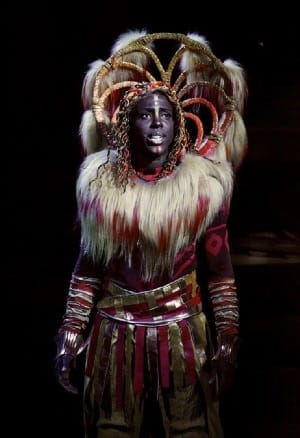
In Disney’s awe-inspiring production, ‘’The Lion King: Rhythm of the Pride Lands” at Disneyland Paris, Mark Asari shall breathe life into the beloved character of Simba. Overwhelmed with joy, Mark Asari exclaims, “I’m thrilled to embody such an iconic character from a film that has resonated deeply within me since my childhood. This venture into musical theatre serves as my maiden experience, allowing me to explore the depths of my creativity and evolve into a truly versatile performer”.
Mark Asari’s journey marked by resilience and unwavering dedication has captivated the world. His extraordinary ascent from a humble background to the grand stages of Disney’s ‘’The Lion King: Rhythm of the Pride Lands’’ exemplifies the triumph of passion and the pursuit of dreams against all odds.
As we stand witness to this remarkable chapter in his artistic expedition, let us unite in celebrating the rise of Mark Asari, an incomparable luminary who continues to inspire countless souls worldwide.
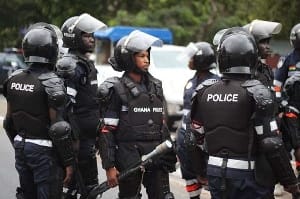
Residents of a community in the Ashanti region’s Afigya Kwabre South District, Bouho-Foase, are in a state of fear after being targeted by suspected armed robbers on regular basis.
The residents claimed that these suspected robbers regularly attacked them.
They claim that these armed men attack them, steal their valuables, and destroy their property.
The situation has made their lives unbearable, prompting many residents to flee their homes and seek refuge elsewhere.
Residents accused one Okomfour Kwame Prince of carrying out the attack; the Armed Men frequently travel in groups.
They have therefore appealed to the Police Service to deploy men to the area to patrol so it would help minimize these attacks.
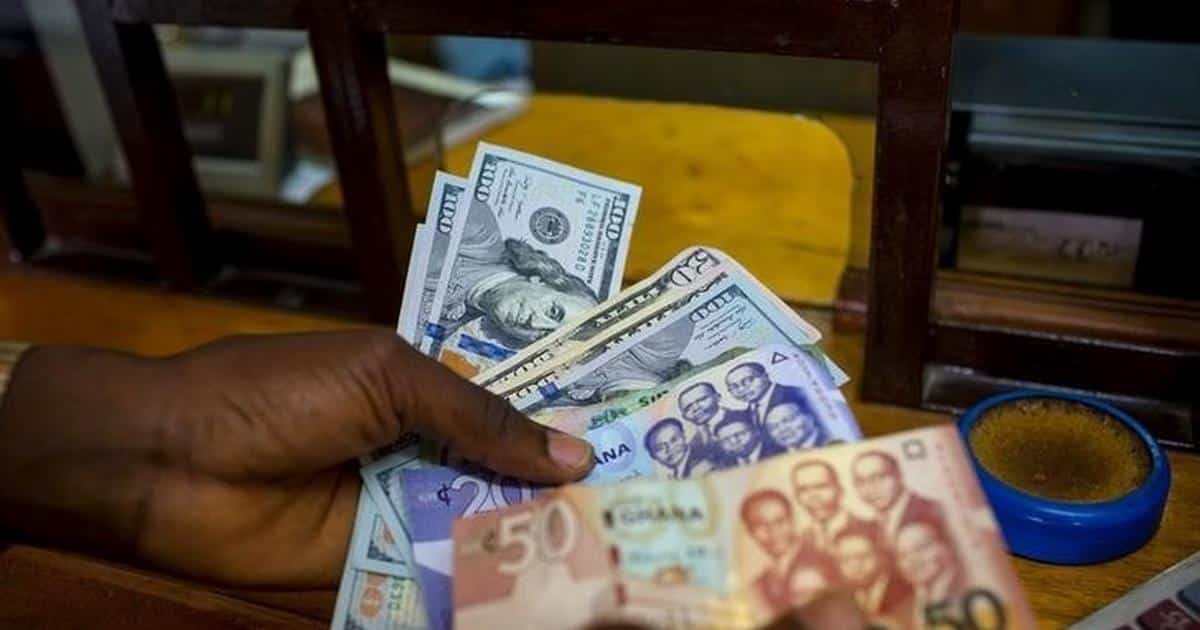
The Bank of Ghana’s interbank forex rates for today, May 25, 2023, show that the Ghana Cedi is trading versus the dollar at a purchasing price of 10.7720 and a selling price of 10.7828.
At a forex bureau in Accra, the dollar is being bought at a rate of 11.00 and sold at a rate of 11.70.
Against the Pound Sterling, the Cedi is trading at a buying price of 13.3314 and a selling price of 13.3459.
At a forex bureau in Accra, the pound sterling is being bought at a rate of 13.70 and sold at a rate of 14.70.
The Euro is trading at a buying price of 11.5905 and a selling price of 11.6021.
At a forex bureau in Accra, Euro is being bought at a rate of 11.75 and sold at a rate of 12.55.
The South African Rand is trading at a buying price of 0.5594 and a selling price of 0.5599.
At a forex bureau in Accra, South African Rand is being bought at a rate of 0.30 and sold at a rate of 0.90.
The Nigerian Naira is trading at a buying price of 42.8768 and a selling price of 42.9816.
At a forex bureau in Accra, Nigerian Naira is being bought at a rate of 13.00 Naira for every 1 Cedi and sold at a rate of 18.00.
For the CFA, it is trading at a buying price of 56.5378 and a selling price of 56.5944.
At a forex bureau in Accra, CFA is being bought at a rate of 17.00 CFA for every 1 Cedi and sold at a rate of 21.00 CFA for every 1 Cedi.
Our forex bureau rates are provided by Afriswap Bureau De Change in Osu, Accra.
Note that these rates may be different at a forex bureau near you. Our forex bureau rates are provided by Afriswap Bureau De Change in Osu, Accra.
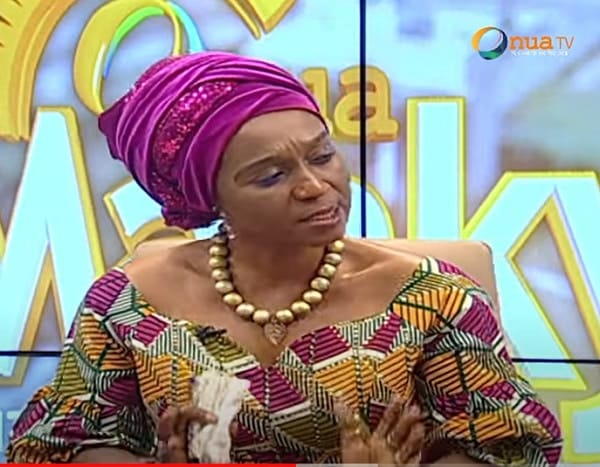
National Democratic Congress (NDC) parliamentary candidate for Okaikoi Central Constituency in the Greater Accra Region, Abdullai Abu Sadiq, popularly known as Baba Sadiq, has raised concerns about the upcoming 2024 general elections, alleging that the ruling New Patriotic Party (NPP) might conive with the Electoral Commission (EC) to steal the election.
According to him, the NDC needs to be vigilant and be on high alert not to fall victim to any potential tactics by the NPP.
The founder of 3 Music Awards pointed to an alleged pink sheet, which circulated on social media prior to the Kumawu by-election, as evidence of the NPP’s intention to steal the 2024 election.
He argued that it served as a warning sign for the NDC.
Speaking in a panel discussion on Onua TV on May 24, 2023, he claimed that the said pink sheet provides clear evidence of the NPP’s intentions to manipulate the electoral process.
“How do you tell us that this is a mistake? It is not a mistake, referring to the viral pictures of the signed pink sheet. This gives us, in particular people in the NDC, a reason to be very vigilant in going into the 2024 elections because this can be one of the tricks that they will be employing,” he said
He emphasized that the NDC could not trust the EC in the upcoming elections, maintaining that there is a need for the NDC to go the extra mile in monitoring the process.
According to him, the NPP’s confidence in claiming they will “break the eight” (referring to winning a third consecutive term) depends on their alleged arrangements with the EC.
“You see as they consistently claim that they will break the eight ‘8’, the confidence in which they use to say such words depends on the kinds of arrangements they have done with the EC.
“We can never ever trust the EC going into the 2024 elections. We cannot, so we need to be able as a party to go the extra mile and ensure that vigilance and monitoring should be there because these are indications that show that they would want to have their way going into the 2024 elections,” he alleged.
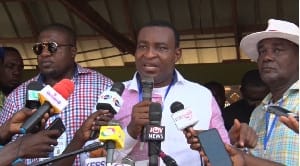
The Ashanti Regional Chairman of the ruling New Patriotic Party (NPP), Bernard Antwi Boasiako, aka Chairman Wontumi, has expressed his willingness to guarantee the party wins the currently vacant Assin North parliamentary seat
He believes that despite the constituency being outside his region (i.e. in the Central Region), he is the man to lead the NPP’s charge to wrestle it from the National Democratic Congress (NDC) which last won it in 2020.
“When it comes to by-elections, it is national in nature… now people are calling me Prof. Wontumi, they are saying now I have a PhD in politics, I understand politics. I have been two-time constituency chairman and three times Ashanti Regional chairman, which is a historic feat.
“I am just going there (Assin North) to win. I cannot wait to go to Assin North to win. Immediately I step there, I just win. Asiedu Nketiah knows that once I step there, I will win, so, we are going there to win,” he told Paul Adom-Otchere on the May 23 edition of Good Evening Ghana show.
The Assin North seat has been declared vacant after the Supreme Court on May 18 annulled the election in 2020 of James Gyakye Quayson as MP for the constituency ordering parliament to delete his name from its records.
The apex court ruled that the processes leading to his nomination and filing of papers as well as election was not proper hence ousting him from the House.
The seat is expected to be declared vacant and a by-election called to elect a new MP for the people of Assin North.
The NDC has disagreed with the court and stated that Gyakye Quayson will be their candidate when the by-election is scheduled.
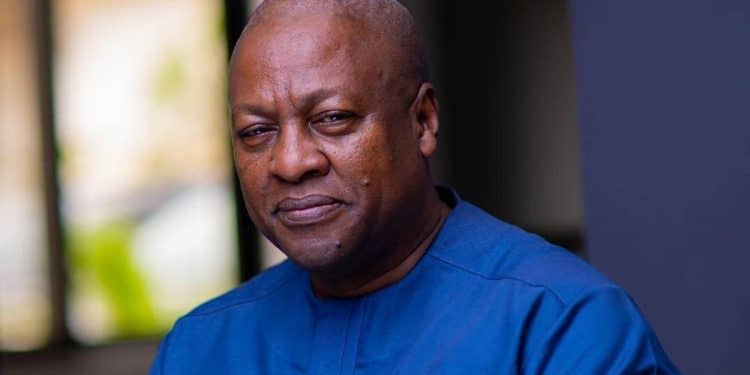
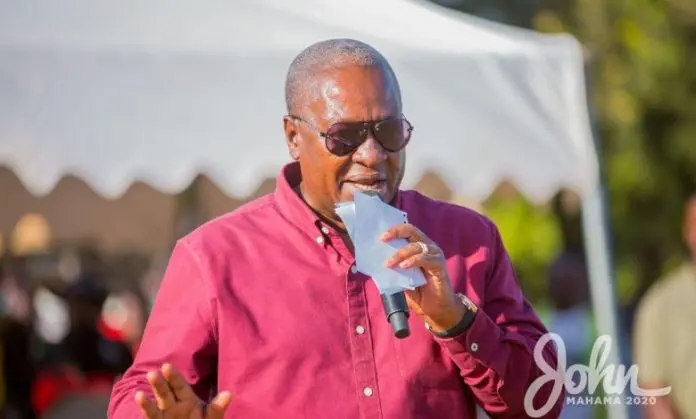
Former president and presidential candidate of the National Democratic Congress(NDC) John Mahama has stated that the NDC performed very well despite vote-buying by the New Patriotic Party (NPP) during the Kumawu Constituency by-election.
He noted that a significant increase in the number of votes obtained by the NDC in the by-election, taking into consideration votes obtained in the 2020 parliamentary election, points to how well the performance of the NDC has improved.
He also expressed gratitude to the people of Kumawu for the hospitality shown to him when he went there to campaign and commended them for being peaceful before, during and after the elections.
“Congratulations to the people of Kumawu for the peaceful conduct of Tuesday’s parliamentary by-election.
Of course, I cannot forget the warmth of the people and the enthusiasm demonstrated when I led a delegation from the National Democratic Congress (NDC) to campaign for our candidate, Kwasi Amankwah. I am very grateful.
That enthusiasm was aptly demonstrated in the increased number of votes our candidate garnered in the poll – 1,284 actual votes representing an increase of 52.6% over our 2020 performance.
That is significant, especially in the face of the deliberate vote buying undertaken by the NPP, even at the polling stations, and the deceit of the people with asphalt roads, and the fact that the constituency has historically been an NPP stronghold,” he said in a statement after the election.
The by-election held on May 23, 2023, was won by the NPP candidate Ernest Yaw Anim with over 70% of the valid votes cast.
Read the full statement of John Mahama below:
Congratulations to the people of Kumawu for the peaceful conduct of Tuesday’s parliamentary by-election.
Of course, I cannot forget the warmth of the people and the enthusiasm demonstrated when I led a delegation from the National Democratic Congress (NDC) to campaign for our candidate, Kwasi Amankwah. I am very grateful.
That enthusiasm was aptly demonstrated in the increased number of votes our candidate garnered in the poll – 1,284 actual votes representing an increase of 52.6% over our 2020 performance.
That is significant, especially in the face of the deliberate vote buying undertaken by the NPP, even at the polling stations and the deceit of the people with asphalt roads, and the fact that the constituency has historically been an NPP stronghold.
The election result is a great sign from the good people of Kumawu.
Judging from the results, the ruling NPP has clearly recorded a significant reduction in the overall votes in their stronghold, and for me, that is a great sign from the good people of Kumawu.
We may not have succeeded in flipping the seat, but I am proud that, as a collective, spearheaded by our National Chairman and General Secretary, we have had the opportunity to test our reviewed electoral operational procedures, including monitoring, party agent selection and training, collation, and transmission of results.
I would want to congratulate the Inspector General of Police (IGP) and his men and women for their assistance in ensuring the peaceful conduct of the polls. The conduct of the police personnel gives us confidence for the future that they will continue to bear true allegiance to the state and not to any political party.
To the Electoral Commission, you are once again reminded that a credible election depends as much on the persons you recruit and appoint as presiding and other officers as much as it depends on the collaboration with the agents and representatives of the political parties.
Many of the infractions observed should not have occurred. Our monitoring teams that ensured the early detection of these infractions would be looking forward to engaging further to ensure that these issues are definitely dealt with, and corrective measures are taken ahead of any other election.
Thank you to the team from the branches, constituency, region, national, and the many selfless members of our party who were in Kumawu to assist in various ways towards the improved outing in this by-election.
Congratulations, Kwasi Amankwah. You can count on the party for the utmost support to enhance the gains of the NDC in the main election in 2024.
All in all, Kumawu has had positive outcomes for us, and we must apply lessons learned speedily even as we head towards the pending Assin North by-election.
Finally, I extend my congratulations to the Member of Parliament-elect Ernest Ayim.
A member of the New Patriotic Party‘s (NPP) Communication Team, Lawuratu Musa-Saaka, has stated that the President’s tagline ‘Ghana Beyond Aid’ does not indicate that the country would not borrow, but rather that the country will receive these helps on its terms.
She said these while speaking on TV3’s New Day and was monitored by the media.
According to her, achieving the mantra does not mean the country will not reach out for support but this support will be negotiated based on sustained economic development of the country.
“Ghana Beyond Aid doesn’t necessarily mean that we will not be seeking support or other resources from other places. Even if you are going to build manufacturing plants and all that, people come in as investors and they are not Ghanaians. You will need support but once you go beyond aid, you take monies on your terms, not on the terms of the person bringing you the aid,” she said.
Madam Lawuratu further added that Ghana currently is in a better position to accept or reject aid and supports that does not enure to the benefit of the country.
“I am saying that even if you go beyond aid, you have people bringing you support because they have found an opportunity in your economy or they have a programme or project for themselves that needs you in it. They are coming with their terms but when you are in a successful country, any support that is coming in comes on your terms.
“So, you can accept whatever support that is coming in or not but it will on your terms. But sometimes when you are desperate enough, you go take support and investments that don’t necessarily to the benefits of the people” she added.
Background: On Wednesday May 17, 2023, Ghana received the first tranche of $600 million loan facility from the International Monetary Fund (IMF). The bailout, among other this is to help revamp the Ghana’s economy.
As several national executives have arrived in Assin North, the New Patriotic Party (NPP) is prepared to stage another by-election.
This comes after the Supreme Court, on May 17, ordered Parliament to remove James Gyakye Quayson’s name as a Member of Parliament.
In its ruling, the apex court barred Mr. Quayson from assuming the role of a Member of Parliament, stating that he was not qualified at the time he contested the 2020 election.
The ruling party has announced its preparations for the upcoming election, pending the decision of the Electoral Commission regarding the scheduling of a by-election in the region
Mr. Quayson is currently facing five criminal charges, including Deceit of a public officer (contrary to section 251 (b) of the Criminal Offences Act, 1960, Act 29), Forgery of Passport or Travel Certificate (contrary to section 15 (1)(b) of the Passports and Travel Certificates Act, 1967, NLCD 155), Knowingly making a False Statutory Declaration (in contravention of the Statutory Declarations Act, 1971, Act 389), Perjury (as per section 210 (1) of the Criminal Offences Act, 1960, Act 29), and False Declaration for Office (against section 248 of the Criminal Offences Act, 1960, Act 29).
Given the high stakes involved, it is expected that both major parties will go to great lengths to secure the seat.
The NPP, in particular, appears to be taking the fight seriously, as the General Secretary, Justin Kodua Frimpong, and the National Organizer, Henry Nana Boakye, arrived in Assin North yesterday ahead of the polls, as reported by Daily Guide.
A video circulating on social media has shown the Chief Executive Officer of a well-known construction firm, Kofi Job Construction Company Limited, getting into a heated altercation with a police officer.
Mr. Kofi Job, in the trending video is captured arguing with a police officer who was part of a patrol team that had impounded a heavy-duty machine enroute to his company’s construction site.
In the heated exchange, a member of the police team noted that they impounded the excavator, which was being driven on the road instead of being transported on a low-bed trailer truck, and they would only release it when a truck was brought to transport the machine for the remainder of the journey.
However, Kofi Job insisted that the machine be released to him.
“I am Kofi Job, I am not just any small boy… you can’t talk to me like that,” he stated.
In response to his statement, a police officer retorted, “If you can’t have patience and talk to us, sit in your car and drive away.”
While questioning the authority of the police to impound the heavy machine, Kofi Job further threatened to take back the impounded machine.
At that point, the police officer threatened him with arrest, saying, “Dare to go and sit in it and see if we won’t handcuff you. I dare you to sit in it and drive through here; we will put you in handcuffs. Clear off from your eyes, Kofi Job. You talk to the police just anyhow. How dare you?” The officer fumed at the end of the video.
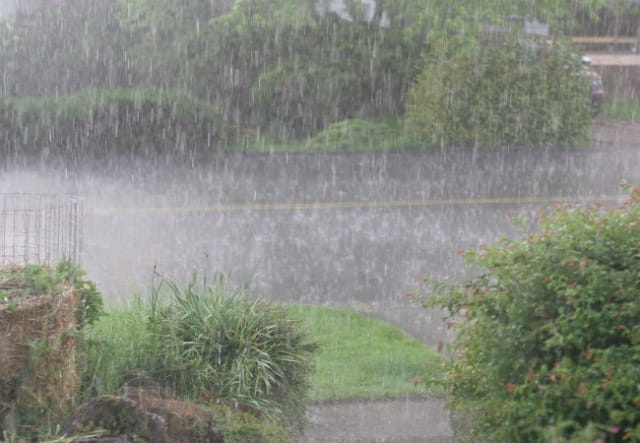
As stated in the weather warning issued this morning, the rain system will continue to affect sites along the coast and inland areas with cloudiness, thunderstorms, and windy conditions.
Brief sunny periods will be experienced across the country as the day progresses.
Thunderstorms or rains are expected over few places across the various sectors of the country late afternoon.
Misty morning will occur over the forest, hilly and coastal sectors.
The maximum expected temperature in Accra is tropical 32°C, while the minimum temperature will be 27°C.
Former New Patriotic Party (NPP) Member of Parliament for Cape Coast North Constituency in the Central region, Barbara Asher Ayisi, has has spoken out about the trauma of losing an election.
According to her, it taught her valuable life lessons, highlighting the challenges she faced following her electoral defeat during the 2020 general elections.
She explained that, after serving as a women’s organizer and deputy constituency secretary for Cape Coast, she embarked on her political journey with a clear objective to develop her constituency after having spent a significant portion of her life in Cape Coast and engaging in various endeavours.
She further stated that she had never experienced defeat at an election since she began her political journey.
“For me, I haven’t lost an election before; I mean, for over 20 years, I became a women’s organizer and deputy constituency secretary for Cape Coast, and by God’s grace, I got the opportunity to go to the assembly as well.
“I was also doing fashion and at the same time teaching at Wesley Girls… so I have spent most of my life in Cape Coast; the truth of the matter is that I haven’t lost in any election, so I believe this loss has helped me seriously, in fact, it has changed my whole perspective about life because I thought when you are in your hard times, that is when you get loved ones to console you,” she said.
Speaking in a panel discussion on Onua TV on May 24, 2023, she expressed her disappointment in those whom she trusted as they gradually distanced themselves from her after the election. She added that some individuals even resorted to spreading lies about her.
“My challenges started when I lost the election, especially in the constituency. Those that I thought were my loved ones…I went into politics with a genuine heart and not that typical politician because I knew I had the passion to make Cape Coast better; that is it, I came raw like that, and I thought that getting the mandate as a Member of Parliament would make me bring changes to Cape Coast. So, when I lost, then I was like, this thing is not easy… so those that especially I used to walk with, most of them left, and others began to tarnish your name.
“So, when I lost the election, the way I dressed, you might think that everything was all right, but I knew what was going on inside me, so the feeling is not pleasant, but I have learned lessons,” she added.
Barbara Ayisi, who served as Deputy Minister for Works and Housing, lost her Cape Coast North parliamentary seat to the National Democratic Congress (NDC).
The National Democratic Congress’s candidate, Dr. Kwamina Minta Nyarku, polled 22,972 votes against Barbara, who garnered 21,643 out of the total votes cast in the 2020 general elections.
The Member of Parliament for North Tongu seat, Samuel Okudzeto Ablakwa, has sharply criticized the alleged vote-buying occurrences that transpired during the recently ended by-election in Kumawu.
Ablakwa expressed deep concern over this action, emphasizing that it undermines the principles of democracy in the country.
According to him, individuals were reportedly offered money in exchange for their votes by the New Patriotic Party (NPP) during the by-election.
He described this practice as disgraceful and detrimental to the democratic fabric of the nation.
Highlighting the potential consequences of such behaviour, he stated that it could weaken the foundations of democracy and jeopardize the integrity of electoral processes.
“It is very unfortunate to witness people being given money in order to cast their votes. This is a shameful act and completely unacceptable. It poses a serious threat to our democracy.
“I would also like to urge our voters to refrain from engaging in such practices. Selling your vote to the highest bidder is not right and should not be encouraged,” he advised, as quoted by myjoyonline.com in an interview with Joy News.
Unsuccessful parliamentary contender with the National Democratic Congress (NDC) and a University of Ghana lecturer, Prof. Michael Kpessa-Whyte, has explained a recent tweet that referred to a Supreme Court being turned into a Stupid Court.
The critical comments were posted on May 19, 2023 on Twitter lamenting generally the state of the particular judiciary and accusing it of partisanship and lack of common sense.
“They have succeeded in turning a. Commonsense is now a scare commodity. A major element in the death of democracies is partisanship in the delivery of justice. and ethics. Time will tell !” the tweet read.
Three days later, the academic cum politician posted two tweets pointing out that people had been reaching out to him over the content of his tweet apparently linking it to the Ghanaian judiciary.
His first clarification tweet read: “Thanks to all who have asked questions about my May 19th 2023 tweet. For the avoidance of doubt I follow judicial decisions in many countries and so the said tweet cannot be pinned to Ghana. It has more to with developments elsewhere including the US. We live in a global village.”
“Folks, a number of you have called to express concerns about my safety following my recent tweets. I want to make it clear that NONE of my recent tweets about judicial decisions are in reference to Ghana’s judiciary. My focus currently is on developments elsewhere outside Ghana,” he stressed.
His tweet had been published barely 24-hours after Ghana’s Supreme Court ordered Parliament to expunge the name of an NDC MP, James Gyakye Quayson from its records citing prodecural breaches during his nomination and election in 2020.
See his three tweets below:
Folks, a number of you have called to express concerns about my safety following my recent tweets. I want to make it clear that NONE of my recent tweets about judicial decisions are in reference to Ghana’s judiciary. My focus currently is on developments elsewhere outside Ghana.— Prof. Michael Kpessa-Whyte (@kpessawhyte) May 23, 2023
Thanks to all who have asked questions about my May 19th 2023 tweet. For the avoidance of doubt I follow judicial decisions in many countries and so the said tweet cannot be pinned to Ghana. It has more to with developments elsewhere including the US. We live in a global village.— Prof. Michael Kpessa-Whyte (@kpessawhyte) May 23, 2023
They have succeeded in turning a Supreme Court into a Stupid Court. Commonsense is now a scare commodity. A major element in the death of democracies is partisanship in the delivery of justice. Our judges need lessons in political philosophy and ethics.
Time will tell !
— Prof. Michael Kpessa-Whyte (@kpessawhyte) May 19, 2023
Newmont Africa has revealed that its Ghana operations (Ahafo South and Akyem mines) paid a total of GHS843.72 million in taxes, royalties, and levies to the Ghanaian government through the Ghana Revenue Authority (GRA), Forestry Commission, and Ministry of Finance in the first quarter of 2023.
This amount consists of corporate tax (GHS514.57 million), minerals royalties (GHS197.06 million), Pay As You Earn (GHS78.23 million), GHS42.31 million as withholding tax and GHS11.55 million as forestry levy.
“Fulfilling our obligations in terms of statutory payments, and being transparent about what we pay, are in line with our commitment to regulatory compliance and good corporate governance,” said Mr David Thornton, Regional Senior Vice President, Newmont Africa Operations, in a statement issued by the miner.
Newmont Africa’s operations in Ghana have a strong tax compliance history and the company has received multiple taxpayer recognitions from the GRA.
“It is important, especially in these challenging times, for companies to honour their obligations to the state, as well to their various stakeholders, through direct payment of their taxes and investment in social programmes,” Mr Thornton added.
Apart from the taxes, royalties, and levies that go directly to government towards the growth and stabilisation of the economy, Newmont Africa said it also focuses on stimulating economic development in the local communities that host the mining operations, through a range of programmes and projects that deliver measurable outcomes.
Being cognisant of the key role that road infrastructure plays, particularly in farming communities, Newmont Africa’s operations in Akyem and Ahafo have both funded critical road infrastructure, working through the Ministry of Roads and Highways.
Newmont’s investment in skills acquisition and sustainable livelihood programmes also ensure that local community residents are equipped with employable skills that are needed in the extractive and construction industries.
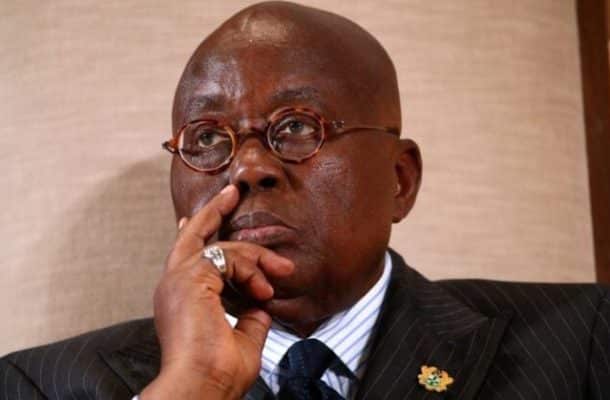
President Nana Akufo-Addo has stated that Ghana’s fiscal deficit is “way above” the 5% limit set by the fiscal responsibility law, indicating that it must be reduced as part of measures to meet the demands of the International Monetary Fund in light of the Bretton Woods institution’s recently approved US$3 billion bailout for the West African country.
In line with that, the president said his government is committed to cutting expenditure.
Speaking at the Qatar-Africa Economic Forum in Doha, President Akufo-Addo said the “rationalisation of our expenditure – rationalisation of government expenditure – is something that we have given the assurance [about],” adding, “domestic revenue mobilisation is absolutely critical for us, and, already, we are seeing signs.”
Also, he said: “We have a fiscal responsibility law in Ghana that has pegged our fiscal deficit at five per cent but, already, we are way above that,” noting: “And the sooner we can bring that to more acceptable levels, the better for us.”
The president also said following the approval of the US$3-billion extended credit facility for Ghana by the IMF, the country could now return to the international market to borrow more.
“We have positioned ourselves to be able to go back into the international market which had been a source of funding for us during the first three or four years of our government,” the president said, but pointed out that even though his government was in no rush to do so, it makes sense to him to take advantage of global savings.
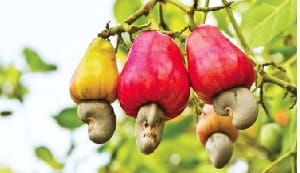
Ghana’s cashew export revenues in 2020 totaled US$340.7 million, with an estimated untapped potential of more than US$660 million.
Mr Raphael Ahenu, the National Convener of Cashew Watch Ghana, said the cashew sector had huge potential and prospects to transform the economy and called on the Government to prioritise the development of the industry.
He made the call at the launch of the “Amplifying the Voices of Cashew Farmers (AVFC)” project at Sampa in the Jaman North District of the Bono Region.
The AVFC is a 15-month project being implemented by Cashew Watch Ghana, with funding support from STAR Ghana Foundation.
It is to help empower cashew farmers to grow more by advocating better prices as well as removing bottlenecks in the growth and development of the sector.
There was the need for the Government to capitalise on the global prospects of the economic tree and put pragmatic measures in place to transform the cashew industry as a vehicle for socio-economic development, Mr Ahenu said.
“Ghana’s estimated annual production of between 110,000 and 130,000 tons of raw cashew nuts is not encouraging,” he said, and that more must be done for the industry to contribute significantly to economic growth, particularly in job creation and poverty reduction.
Mr Ahenu appealed to the government to increase technical and financial support for the Tree Crop Development Authority to effectively implement the 10-year National Cashew Development Plan.
Mr Victor Yao-Dablu, the Jaman North District Director of Agriculture, said cashew production in the area was encouraging and urged the Government to supply farmers with processors to add value to the nuts.
He commended STAR Ghana Foundation for funding the project and expressed the hope that its implementation would help fetch the farmers good price for their labour.
Cashew Watch Ghana is a civil society platform comprising cashew farmers, non-governmental organisations, media and local processors.
The Global cashew market size is projected to hit a value of US$10.5 billion by 2031, the CWG said.
Currently, the global market size is hovering around US$7 billion.
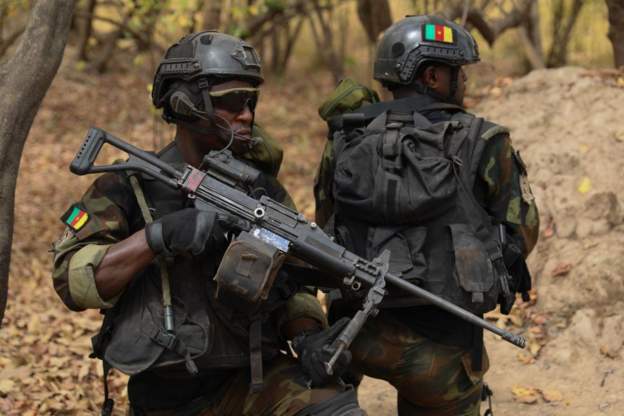
Separatists have kidnapped over 30 women and injured an indeterminate number of others in Cameroon’s restive northwestern area, according to officials.
The women were abducted in Big Babanki, a village near the border with Nigeria, for allegedly protesting against a curfew and taxes imposed on them by the separatists.
“Around 30 women were kidnapped by separatists [on Saturday morning] – we have not found them yet,” an army colonel told the AFP news agency.
Some local media report that the number of those missing was even higher – up to 50 women.
Officials said some women were “severely tortured” by the heavily armed rebels, who frequently kidnap civilians, mostly for ransom.
Separatist leader Capo Daniel told the Associated Press that the women were being punished for allowing themselves to be “manipulated” by Cameroon’s government.
The military says it has deployed troops to free the women.
Cameroon has been plagued by fighting since English-speaking separatists launched a rebellion in 2017.
The conflict has claimed more than 6,000 lives and forced more than a million people to flee their homes, according to the Crisis Group.
A leader and political opponent, Karim Tabbou, of the pro-democracy Hirak movement, was detained at his house on Tuesday evening and taken into police prison, according to his family and many local media outlets.
Tabbou was one of the most-recognisable faces during unprecedented mass rallies, led by the Hirak pro-democracy movement, that began in February 2019.
The supporters demanded a sweeping overhaul of the ruling system in place since the North African country gained independence from France in 1962.
Mr. Tabbou had been convicted in March 2020 and served a one-year prison sentence for “undermining national security“, due to a video on his party’s Facebook account where he criticised the army’s interference in political affairs.
Last year Karim Tabbou was released after spending one year in prison in the wake of posting critical comments in social media in 2020 about the implication of the army in national politics.
According to the CNLD (National Committee for the Liberation of Detainees), dozens of people linked to the Hirak or the defence of individual freedoms are still imprisoned in Algeria.
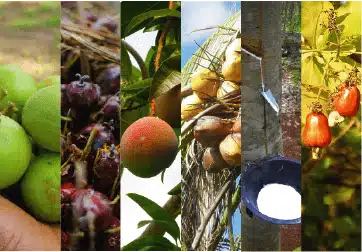
The deputy CEO of operations at the Tree Crop Development Authority (TCDA), Foster Boateng, has announced that the World Bank has provided a US$100 million facility to increase production and enhance the value chains of cashew, coconut, and rubber.
The facility is a partnership with government under a six-year funding initiative known as the Tree Crop Diversification Project.
Speaking to B&FT at the maiden Ghana Africa Sustainable Commodities Initiative National Platform Meeting in Accra, Mr. Boateng said a portion of the money will be used by the TCDA to improve institutions and build systems within the tree crop sector; and build capacity of value chain actors such as the Cashew Council, Federation of Association of Ghanaian Exporters (FAGE), Coconut Federation and the Rubber Associations.
Also, part of the money will be used to tackle environmental issues, child labour and address key requirements of global buyers, developmental partners and governments.
The TCDA will also use a percentage of the funds to build and manage a digitisation platform that enables the Authority to register and track value chain actors to boost regulation and resource mobilisation.
“A chunk of the money will be utilised to support the Cocoa Research Institute in conducting research into cashew production; and the Oil Palm Research Institute, Crop Research Institute among others, including capacity building for farmer-based organisations,” Mr. Boateng said.
The National Platform Facilitator for the Africa Sustainable Commodities Initiative (ASCI), Afua Serwah-Prempeh – who facilitated the meeting, said the original intention for the platform was to focus on sustainable production of oil palm.
“After CoP 27 in Egypt, we have sought to expand the platform’s scope to include other relevant commodities and tree crops. This meeting is basically held to discuss and decide which commodities to include in the new agenda, and how the platform will be funded,” she said.
Key resolutions of the meeting include the agreement to give relevance to commodities that significantly contribute to afforestation, and a revision of national principles to reflect new commodities which are essential to the TCDA.
In the aftermath of funds and permission from the International Monetary Fund (IMF) for a US$3 billion Extended Credit Facility (ECF) arrangement, the country’s gross reserves are anticipated to potentially increase.
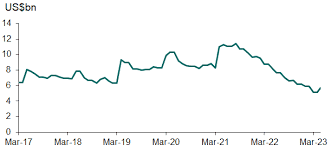
According to the Bank of Ghana’s summary of economic and financial data, there was a marginal increase in gross reserves for April, rising from US$5.1billion in March to US$5.2billion at the end of the year’s fourth month.
The central bank statement acknowledged this progress, noting that as of May 19 reserves had further risen to US$5.7billion – which is equivalent to 2.6 months of import cover. However, despite this improvement, the figure falls short of the IMF’s recommended threshold of three months’ cover.
Since beginning of the year reserves have declined by nearly 17 percent, mainly due to central bank interventions in the foreign exchange (FX) market. These measures were implemented to slow down depreciation of the cedi amid a challenging fiscal and macroeconomic backdrop, aggravated by a growing scarcity of the US dollar.
Nevertheless, trade balance data support a positive outlook. The latest figures indicate that the nation’s trade balance remains favourable, with a notable improvement of 2.2 percent of gross domestic product (GDP) compared to the same period last year when it stood at 1.6 percent of GDP. This improvement can be attributed to a decrease in imports, which have declined by 14 percent year-to-date compared to the previous year.
Furthermore, the current account recorded a surplus of US$661million in the first quarter of 2023, compared with a deficit of US$554million during the same period in 2022. This improvement is attributed to the larger trade surplus, lower services and income payments due to the external debt service suspension and higher remittance flows.
A note by RMB Africa Research indicates that the funding received from the IMF, coupled with fiscal discipline and prudent monetary policies, could open doors for additional multilateral funding if the country continues adhering to strict fiscal prudence.
“Growth of the trade surplus, coupled with a reduction in capital and financial account outflows, could lead to a significant improvement in reserves,” the RMB note stated.
Successful management of trade surpluses and reduced capital outflows are key elements for achieving significant improvements in the country’s reserves.
With government and the central bank working toward enhancing fiscal stability, the nation is well-positioned to benefit from potential economic growth and increased investor confidence, RMB Africa noted.
“If the trade surplus continues to grow, boosting the current account; and if the capital and financial account outflows taper this year, we can expect a meaningful improvement in reserves,” the note added.
Rebuilding the Balance of Payments (BoP) accounts comes as a key factor in the country’s economic recovery, with a target of achieving at least three months’ worth of import cover by 2026. The IMF has projected that the nation requires a total US$15.06billion in BoP support over the programme’s duration (2023-2026) to reach this goal.
The US$3billion financing from the IMF, which accounts for only 20 percent of the estimated BoP needs, is not sufficient on its own. The World Bank is expected to disburse approximately US$1.6billion to support the programme, but a majority of the funds, around US$10.5billion, is projected to come from external debt service relief. This debt relief will account for nearly 70 percent of the estimated BoP needs.
Local unit
Meanwhile, despite the facility’s approval rallying the cedi – as it closed last week 9.5 percent stronger, bringing it to an 8.6 percent appreciation against the US dollar – the domestic currency could face an uncertain outlook in the coming months, as the initial positive news effect wanes and negotiations on external debt restructuring take centre-stage, suggest analysts at GCL Research.
In a note signed by its Research Lead, Courage Boti, GCL noted that the external debt restructuring negotiations’ success remains crucial in determining the currency’s future and overall economic stability of the nation.
“We anticipate that investors will look beyond reforms proposed under the programme, and consider actual performance in warming up to the sovereign,” the research arm of GCB Capital said in a note, highlighting the need for tangible results.
While additional financial support from the African Development Bank and other development partners will alleviate the burden of relying solely on debt restructuring, a successful external debt operation is fundamental to rebuilding the country’s external buffers.
“The anticipated savings from external debt restructuring will play a pivotal role in achieving the desired BoP targets,” noted GCL Research. It further highlights that meeting the IMF’s definition of reserves is essential for restoring confidence in the economy and attracting further investment.
The first review’s outcome will be crucial in boosting market sentiments, potentially leading to a rating upgrade and increased foreign direct investment flows that can stimulate economic growth.
The International Oil Companies operating in Ghana are expected to owe $2.77 million in surface rentals by the end of 2022, according to the Public Interest and Accountability Committee.
According to PIAC, this was a 7.9% increase from the $2.58 million owed by the end of 2021.
It noted that out of the total amount owed by 10 IOCs, four of them owed about 65% amounting to $1.80 million.
The four are Sahara Energy Fields, Swiss African Oil Company Limited, Britannia-U, and UB Resources Limited.
However, their Petroleum Agreements (PA) were terminated by the Ministry of Energy in 2021.
International Oil Companies who currently have Petroleum Agreements but owe Surface Rentals as of December, last year, IOC were Goil Offshore, Eco Atlantic, Springfield Exploration and Production Limited; Medea Development, Base Energy Ghana Limited, and OPCO.
PIAC according to a Ghanaian Times report noted that “Efforts made by the Ghana Revenue Authority to retrieve the arrears are yet to yield the desired results.”
The committee also revealed that surface rental payments received from nine out of the current 14 operational IOCs in 2022 totaled US$687,759.16 compared with US$826,815.52 for 2021, indicating a 16.8 percent decrease.
In that light, PIAC calls on the Ghana Revenue Authority to double its revenue measures in order to retrieve these arrears.
Artificial intelligence has grown to be a significant enough worry that it was added to the G7 summit’s weekend agenda, which was already jam-packed with important topics.
Concerns about AI’s harmful impact coincide with the US’ attempts to restrict China’s access to crucial technology.
For now, the US seems to be ahead in the AI race. And there is already the possibility that current restrictions on semiconductor exports to China could hamper Beijing’s technological progress.
But China could catch up, according to analysts, as AI solutions take years to be perfected. Chinese internet companies “are arguably more advanced than US internet companies, depending on how you’re measuring advancement,” Kendra Schaefer, head of tech policy research at Trivium China tells the BBC.
However, she says China’s “ability to manufacture high-end equipment and components is an estimated 10 to 15 years behind global leaders.”
The Silicon Valley factor
The US’ biggest advantage is Silicon Valley, arguably the world’s supreme entrepreneurial hotspot. It is the birthplace of technology giants such as Google, Apple and Intel that have helped shape modern life.
Innovators in the country have been helped by its unique research culture, says Pascale Fung, director of the Center for Artificial Intelligence Research at the Hong Kong University of Science and Technology.
Researchers often spend years working to improve a technology without a product in mind, Ms Fung says.
OpenAI, for example, operated as a non-profit company for years as it researched the Transformers machine learning model, which eventually powered ChatGPT.
“This environment never existed in most Chinese companies. They would build deep learning systems or large language models only after they saw the popularity,” she adds. “This is a fundamental challenge to Chinese AI.”
US investors have also been supportive of the country’s research push. In 2019, Microsoft said it would put $1bn (£810,000) in to OpenAI.
“AI is one of the most transformative technologies of our time and has the potential to help solve many of our world’s most pressing challenges,” Microsoft chief executive Satya Nadella said.
China’s edge
China, meanwhile, benefits from a larger consumer base. It is the world’s second-most populous country, home to roughly 1.4 billion people.
It also has a thriving internet sector, says Edith Yeung, a partner at the Race Capital investment firm.
Nearly everyone in the country uses the super app WeChat, for example. It is used for almost everything from sending text messages, to booking doctor’s appointments and filing taxes.
As a result, there’s a wealth of information that can be used to improve products. “The AI model is going to be only as good as the data that is available for it to learn from,” Ms Yeung says.
“For good or bad, China has a lot less rules around privacy, and a lot more data [compared to the US]. There’s CCTV facial recognition everywhere, for example,” she adds. “Imagine how useful that would be for AI-generated images.”
While China’s tech community may appear to be lagging behind the US, its developers have an edge, according to Lee Kai-Fu, who makes the argument in his book AI Superpowers: China, Silicon Valley, and the New World Order.
“They live in a world where speed is essential, copying is an accepted practice, and competitors will stop at nothing to win a new market,” wrote Mr Lee, a prominent figure in Beijing’s internet sector and the former head of Google China.
“This rough-and-tumble environment makes a strong contrast to Silicon Valley, where copying is stigmatised and many companies are allowed to coast on the basis of one original idea or lucky break.”
China’s copycat era has its problems, including serious issues around intellectual property. Mr Lee writes that it has led to a generation of hardy and nimble entrepreneurs ready to compete.
Since the 1980s, China has been expanding its economy, which used to be based mainly on manufacturing, to one that is technology-based, Ms Fung says.
“In the last decade, we have seen more innovation from Chinese consumer-driven internet companies and high-end Chinese designs,” she adds.
Can China catch up?
While Chinese tech companies certainly have unique advantages, the full impact of Beijing’s authoritarianism is still unclear.
There are questions, for instance, about whether censorship would affect development of Chinese AI chatbots. Will they be able to answer sensitive questions about President Xi Jinping?
“I don’t think anyone in China will ask controversial questions on Baidu or Ernie in the first place. They know it’s censored,” Ms Yeung says. “Sensitive topics are a very small part of the usage [of chatbots]. They just get more media attention,” Ms Fung adds.
The bigger concern is that US attempts to restrict China’s access to specialised tech can stymie the latter’s AI industry.
High-performing computer chips, or semiconductors, are now the source of much tension between Washington and Beijing. They are used in everyday products including laptops and smartphones, and could have military applications. They are also crucial to the hardware required for AI learning.
US companies like Nvidia currently have the lead in developing AI chips and “few [Chinese] companies can compete against ChatGPT” given export restrictions, Ms Fung says.
While this will hit China’s high-tech industries like cutting edge AI, it won’t affect the the production of consumer technology, such as mobiles and laptops. This is because “the export controls are designed to prevent China from developing advanced AI for military purposes,” Ms Schaefer says.
To overcome this, China needs its own Silicon Valley – a research culture that attracts talent from diverse backgrounds, Ms Fung says.
“So far it has relied on both domestic talent and those from overseas with Chinese heritage. There is a limit to homogeneous cultural thinking,” she adds.
Beijing has been trying to close the gap through its “Big Fund”, which offers massive incentives to chip companies.
But it has also tightened its grip on the sector. In March, Zhao Weiguo became the latest technology tycoon to be accused of corruption by authorities.
Beijing’s focus on certain industries can bring financial incentives and loosen red tape, but it may also mean greater scrutiny, and more fear and uncertainty.
“Zhao’s arrest is a message for other state-owned firms: don’t mess around with state money, particularly in the chip space,” Ms Schaefer says. “Now it’s time to get on with the job.”
How that message will affect the future of China’s AI industry remains to be seen.
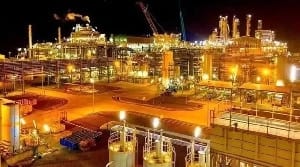
Businessman from Nigeria and the richest in Africa, has announced the opening of the ground-breaking Dangote Oil Refinery, which is expected to be the largest vertically integrated petrochemical complex in the world.
The refinery, which was commissioned today by outgoing Nigerian President Muhammadu Buhari, marks a significant milestone for the nation’s downstream industry and positions Nigeria as a major player in the global oil market.
With an initial processing capacity of 540,000 barrels per day, the Dangote Oil Refinery is primed to fulfill 100 percent of Nigeria’s refined petroleum needs while producing a surplus for export, which is estimated to generate a staggering $11 billion in revenue annually.
The $20.5-billion project aims to put Nigeria on track to become a net exporter of refined petroleum products and petrochemicals by 2026, thereby boosting the nation’s economy and reducing its dependence on imported fuel.
During the ongoing commissioning ceremony, Dangote, chairman of Dangote Group, expressed gratitude to Buhari for his unwavering support throughout the process of bringing the refinery to fruition.
He highlighted the pledge of support from the Nigerian National Petroleum Company (NNPC), ensuring seamless refinery operations.
Dangote Group has set an ambitious target of producing the first fuel products from the refinery by June 2023, contributing significantly to the country’s energy independence.
Originally scheduled for completion in 2016, Dangote Group persevered through numerous challenges to successfully deliver the petrochemical complex in 2023.
Once fully operational, Dangote Oil Refinery will process a staggering 650,000 barrels per day, surpassing any other refinery on the African continent.
With 40 percent of the output earmarked for exports, Nigeria is poised to generate billions of dollars in foreign currency. Notably, the Dangote Oil Refinery will serve as a vital source of employment, offering relief to Nigeria’s persistently high unemployment rate.
Thousands of jobs will be created, providing opportunities for individuals in need and driving socioeconomic growth. While the commissioning ceremony marks the initial phase of refinery operations, full-scale production typically takes several months to ramp up.
The strategic collaboration between Dangote and the Nigerian government, which owns 20 percent of the refinery through NNPC, underscores the shared vision of bolstering the country’s downstream industry and leveraging its immense petroleum potential.
By harnessing Nigeria’s oil resources, the Dangote Oil Refinery is poised to revolutionize the nation’s energy landscape, fulfilling domestic demand, creating an export market worth $11 billion annually, and propelling Nigeria toward a more prosperous future.
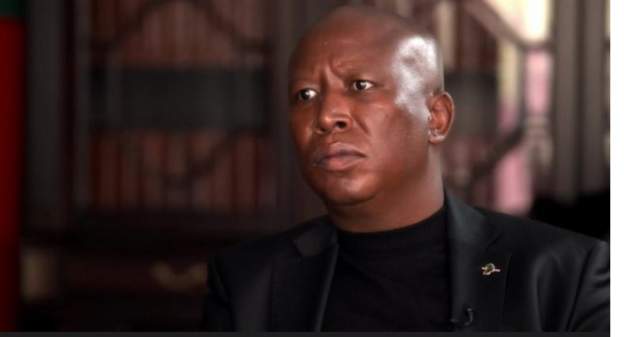
The leader of the Economic Freedom Fighters (EFF), the third-largest political party in South Africa, has declared he will “supply weapons to Russia” since Moscow is “in a war with imperialism”.
In an interview with the BBC in Johannesburg, Julius Malema insisted that “South Africa is an ally of Russia” and that the ANC government’s position of non-alignment only applied to the war in Ukraine.
“I will go beyond the friendship with Russia. In the war, I will align with Russia and I will even supply the weapons,” Mr Malema told HARDtalk’s Stephen Sackur.
The EFF also wants South Africa to withdraw from the International Criminal Court (ICC).
The ICC has issued an arrest warrant for Vladimir Putin for alleged war crimes but Mr Malema has pledged to prevent any attempt to arrest the Russian president if he attends next month’s Brics summit in Cape Town.
Mr Malema made the comments following a diplomatic row in which the US ambassador to South Africa alleged that weapons and ammunition were loaded onto a Russian vessel docked in the country last December.
The South African government has denied approving any arms shipments to Russia.
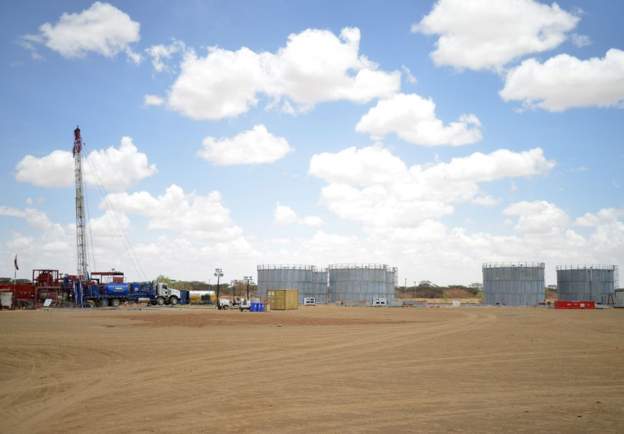
After Canada‘s Africa Oil Corp and France’s Total Energies withdrewal, British exploration firm Tullow Oil has taken complete ownership of a significant Kenyan oil project.
Africa Oil said it abandoned the project to concentrate on regions with high petroleum potential, while Total said it was considering other options.
Each had a 25% stake in the South Lokichar Basin.
TotalEnergies had at the end of last year indicated plans to dispose of its stake, as doubts lingered on Kenya’s ambition to join the league of oil exporting nations.
Tullow Oil had last year disclosed plans to exit the project amid funding problems, which are likely to worsen with the exit of its partners.
Kenyan authorities are yet to comment on the impact of the exits and whether the country’s oil project was still viable.
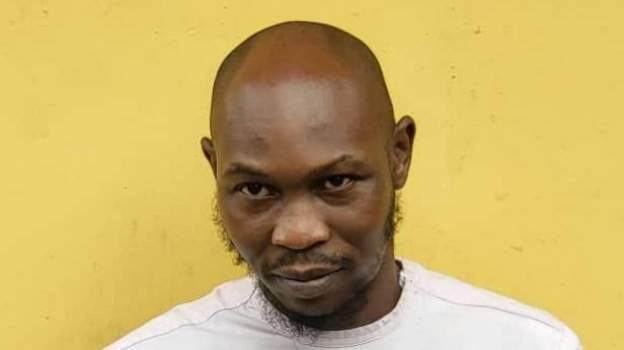
Seun Kuti, a Nigerian Afrobeat singer who was detained for allegedly punching a police officer, has been released on bail, according to local media.
His lawyer Adeyinka Olumide-Fusika told Punch website that Kuti – the son of Afrobeat pioneer Fela Kuti -was released on Tuesday night after meeting bail conditions.
A video shared on Twitter by activist Omoyele Sowore showed Kuti celebrating the release with his fans.
The singer was remanded by police in Lagos on 15 May after being “captured on video assaulting a police officer in uniform”, police said at the time
Before his arrest, Kuti said the policeman had tried to kill him and his family, but he did not explain how.
Apple claims to have reached a multi-billion dollar agreement with chipmaker Broadcom to utilize additional components made in the US.
Under the multi-year agreement, the two US companies will develop components for 5G devices that will be designed and manufactured in America.
Apple says the deal is part of a plan it announced in 2021 to invest $430bn (£346bn) in the US economy.
The move comes as a trade row centred on the technology industry intensifies between Washington and Beijing.
The long-running dispute has seen the US impose a series of measures against China’s chip making industry and invest billions of dollars to boost America’s semiconductor sector.
In recent months, US tech giantshave come under increased scrutiny from both Democrat and Republican lawmakers over their reliance on Chinese manufacturers and components.
Apple has been gradually diversifying its supply chains, with more of its devices now made in countries like India and Vietnam.
Last year, it said that it will buy semiconductors from a factory being built in the US state of Arizona by Taiwanese chipmaking giant TSMC.
In 2022, Apple also announced plans to make the iPhone 14 in India, a significant milestone in the company’s strategy to diversify manufacturing outside of China.
The move expanded the company’s Indian manufacturing operations – it has been making iPhones in the southern state of Tamil Nadu since 2017.
Last month, Apple launched its first Indian retail stores – in the financial hub Mumbai and the country’s capital Delhi.
Under the latest deal, which expands the iPhone maker’s existing relationship with Broadcom, components for Apple devices will be designed and built in Colorado and other parts of the US.
“We’re thrilled to make commitments that harness the ingenuity, creativity, and innovative spirit of American manufacturing,” Apple’s chief executive Tim Cook said in a statement.
Tensions between the US and China have escalated in recent months.
Earlier this week, China said products made by US memory chip giant Micron Technology were a national security risk, in Beijing’s first major move against a US chip maker.
The country’s cyberspace regulator announced on Sunday that America’s biggest maker of memory chips poses “serious network security risks”.
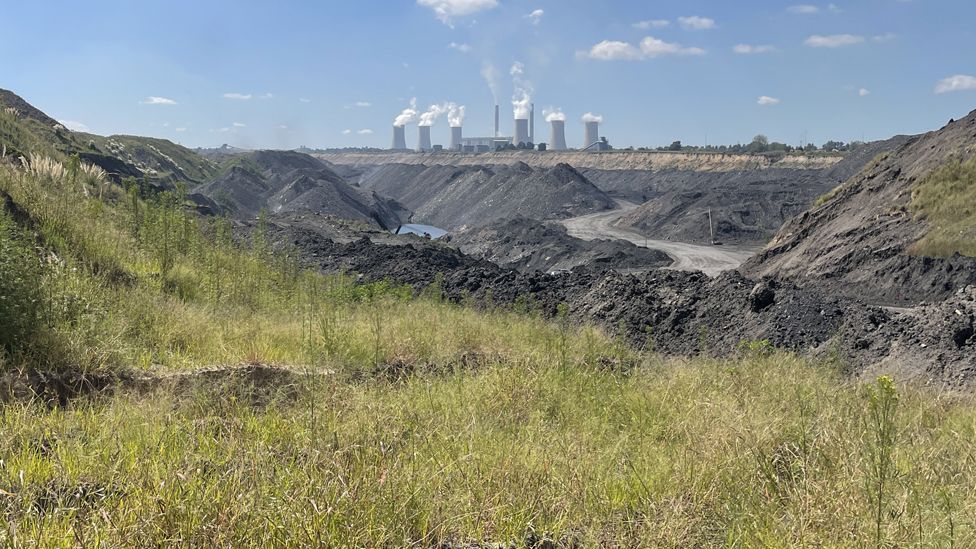
The root cause of South Africa’s worst-ever power outage lasting up to 16 hours each day has been identified as bad management, fraud, and sabotage.
Late one Thursday afternoon, last November, a maintenance contractor reached his hand under a huge rotating shaft at an ageing power station in South Africa.
It took the man just a few seconds to unscrew a steel plug, smaller than a coffee mug.
As he moved away from the scene, precious lubrication oil quickly began seeping from the innards of the shaft. The steel bearings inside overheated and before long the coal mill, and with it one of the station’s eight turbines, ground to a sudden, and expensive, halt.
If you are looking to understand South Africa’s current struggles – its soaring crime and unemployment rates, its stubborn inequality and stagnant economy, its relentless corruption and crippling power cuts, and its broader drift towards what some fear could become “gangster state” or even “failed state” territory – then this one act of industrial sabotage, at a coal-fired power station on the high plains east of Johannesburg, is a good place to start.
The alleged saboteur, Simon Shongwe, 43, was working as a sub-contractor at Camden – a plant that was built back in the 1960s, bombed by anti-apartheid activists in the 1980s, mothballed in the 1990s, and more recently brought out of retirement to help a country now battling to keep the lights on.
There are several theories about the alleged sabotage.
It could have been designed to break the coal mill in order to enable a corrupt repair company to come and fix it at an inflated cost.
It might have been done as a way of threatening Camden’s management in to accepting some other corrupt contract.
Or it may have been part of a broader political conspiracy to damage South Africa’s energy infrastructure and undermine an ANC government increasingly seen as floundering after nearly three decades in power.
What is certain is that the sabotage at Unit 4 was not an isolated event.
Instead, it was one relatively small act in a vast, ongoing, and highly successful criminal enterprise that involves murders, poisoning, fires, cable theft, ruthless cartels and powerful politicians.
It is an enterprise that risks derailing international attempts to nudge South Africa away from its dependence on coal and towards renewable energy sources.
Over the past decade it has brought South Africa’s once-world-class public power utility, Eskom, to the brink of collapse and left most homes around the country in darkness for many hours each day.
Image caption,South Africa relies on coal-fired power stations, some of which have been targeted by saboteurs
One month after the incident at Camden, on a secure floor of a large grey office block on the northern outskirts of Johannesburg, a much smaller machine was causing problems.
The coffee dispenser for the executive management team at Eskom was faulty. Or so it seemed.
When the CEO’s assistant came over to fill her boss’s personalised mug, there was a delay.
She left the mug unattended for a few minutes, and then, once the machine had been serviced, she returned to the CEO’s office with his coffee.
“I detected nothing. The foam consistency was a bit different to normal, but I thought nothing of it,” Andre de Ruyter reflected later, in an explosive interview he gave to the South African broadcaster, eNCA.
But 15 minutes later, the man in charge of South Africa’s power utility suddenly felt off-balance. Before long he was shaking violently, gasping for air, and “extremely nauseous”.
His security guards rushed him to a nearby clinic.
His doctors later confirmed that Mr De Ruyter had been poisoned with cyanide, possibly mixed with rat poison in order to mask the presence of the cyanide in any blood tests.
He was lucky to survive.
“So, this is where the executives serve themselves with coffee,” said Eskom’s head of security, Karen Pillay, showing us around the office one recent afternoon.
“I consider it a dangerous space. I’m still scared for my life, every day. Absolutely.”
A Certified Economist Dr. Samuel Ankrah, who is running for president of Ghana in 2024, claims that because of his training and expertise as an economist, he is the only one who is equipped to manage the nation’s unstable economy.
Dr. Ankrah, an Investment Banker, Global Business Strategist, and Development Economist explained that, the level of mismanagement of the economy by both successive NDC and NPP governments has resulted in the country running to the International Monetary Fund for a bad seventeenth time in search for a bailout.
He made this statement during a virtual leadership summit with the Ghana Universities Journal on Sunday, May 21, 2023. Dr. Ankrah, who seeks to become the first independent candidate to ascend the presidential seat of Ghana mentioned that, the best brains to manage the affairs of Ghana are currently sitting on the fringes and not in governance, therefore they need to be brought on board, which he will do when he becomes President of Ghana.
According to the 2024 Presidential Hopeful, Ghana needs a systematic and pragmatic approach in attaining the best for its citizens. Rule of law, efficient government structures, and a structured and firm fight against corruption are the best ways to have an enabling Ghanaian environment, according to Dr. Ankrah.
He further called on the youth not to lose hope in the country, even though the current government has not created any alternative change to bring hope to the youth. He also urged them to be creative in all their thoughts and throw their weight behind his ten-point plan which will break the duopoly of NPP and NDC in the political and governance history of Ghana.
Today, May 24, 2023, the Ghana Cedi is trading against the dollar at a purchasing price of 10.7720 and a selling price of 10.7828, according to the Bank of Ghana’s Interbank Foreign Exchange Rates.
At a forex bureau in Accra, the dollar is being bought at a rate of 10.80 and sold at a rate of 11.60.
Against the Pound Sterling, the Cedi is trading at a buying price of 13.3842 and a selling price of 13.3987.
At a forex bureau in Accra, the pound sterling is being bought at a rate of 13.60 and sold at a rate of 14.60.
The Euro is trading at a buying price of 11.6112 and a selling price of 11.6217.
At a forex bureau in Accra, Euro is being bought at a rate of 11.60 and sold at a rate of 12.50.
The South African Rand is trading at a buying price of 0.5607 and a selling price of 0.5613.
At a forex bureau in Accra, South African Rand is being bought at a rate of 0.30 and sold at a rate of 0.90.
The Nigerian Naira is trading at a buying price of 42.9909 and a selling price of 43.1069 .
At a forex bureau in Accra, Nigerian Naira is being bought at a rate of 13.00 Naira for every 1 Cedi and sold at a rate of 18.00.
For the CFA, it is trading at a buying price of 56.4424 and a selling price of 56.4935.
At a forex bureau in Accra, CFA is being bought at a rate of 16.00 CFA for every 1 Cedi and sold at a rate of 19.50 CFA for every 1 Cedi.
Note that these rates may be different at a forex bureau near you. Our forex bureau rates are provided by Afriswap Bureau De Change in Osu, Accra.
Our forex bureau rates are provided by Afriswap Bureau De Change in Osu, Accra.
The newly opened Dangote Refinery and Petrochemical Complex in Lagos, Nigeria has received a plea from President Nana Addo Dankwa Akufo-Addo, urging Africans to leverage the substantial hydrocarbon resources to production.
According to him, Dangote has paved the way with the success of the $20 billion establishment which is very likely to ensure that West Africa and Africa as a whole become stronger and prosperous in the oil and gas sector.
President Akufo-Addo said this when he joined Nigeria’s President, Muhammadu Buhari, and other African Presidents to commission the largest single-train oil refinery ever to be established in the world by Nigerian industrialist and businessman, Aliko Dangote.
He also noted that Africa’s lands are abundantly endowed with hydrocarbon resources which when fully exploited can create prosperity for all on the continent.
“Africa must find ways of bringing their substantial hydrocarbon resources to production quickly and We must add value to these resources and not export them in their raw state if Africa is to transition to the status of developed countries,” the President said.
President Akufo-Addo further advocated for African countries to effectively manage their natural resources as part of efforts to enhance self-dependency and continental development.
“…And I am confident that an establishment such as the Dangote Refinery and Petrochemical Complex would help us realise this dream as quickly as possible,” he added.
The newly commissioned Dangote Refinery and Petrochemical Complex is located in the Lekki area of Lagos State which has the capacity to process 650,000 barrels of crude oil per day.
The refinery is 20%-owned by the state and is expected to operate at full capacity by 2024.
The world-class facility is also projected to meet 100 percent of Nigeria’s requirement of all refined products as well as have a surplus for export purposes.
The Kumawu by-election saw an increase in tensions as Peter Boama Otokunor, a former deputy general secretary of the National Democratic Congress (NDC), nearly averted a violent conflict with three NPP women.
The media explained that Otokunor suggested at the polling center that NDC agents should position themselves closely behind the Election Commission officials to prevent any potential electoral fraud.
She further added that Otokunor’s statement provoked the ire of the NPP women present.
According to Yiadom, one of the women named Salomey, who formerly served as the NPP Deputy Women’s Organizer for Bantama, displayed immense courage and came close to physically engaging Otokunor and even threatening him.
This drew the attention of another woman, identified as Vivian Ofosua, a national representative for the NPP, who nearly engaged Otokunor in a confrontation as well as an additional party woman.
As tensions escalated, individuals at the scene intervened to prevent the situation from getting out of control and ensured peace was restored.
“Three women in the NPP have really done well today, they nearly beat Otokunor today, three women, they nearly beat him, the women, one is called Salomey who is the former NPP deputy women’s organizer for Bantama, she is very brave, herself and Otokunor it wasn’t easy, she nearly put her hands into his eyes.
“And another one Vivian Ofosua, a national rep for NPP, and another person, they nearly beat Otokunor, so people had to intervene to calm them down before there was peace….so, we asked him why was he causing confusion and he explained that per the election rules, the NDC agents are supposed to sit close behind the EC officials because they could steal the election, so, it is because of stealing that is why he did that by allowing his party agents to sit close behind the EC.
“…so, most of the electorates got angry and accused him of bringing chaos at the poling center…so he had to go back to his car and later on Madam Salomey followed up warning him that if he ever comes there again, she will deal with him…which made him laugh and he moved his car away,” she narrated.
In light of government’s inability to uphold its loan deal, the International Monetary Fund (IMF) has revealed that the Chinese government will probably be able to access Ghana’s mineral and electricity revenues.
According to a news report by myjoyonline.com, the fund indicated that this might happen because the government of Ghana is at risk of not being able to repay four loans it acquired from the Chinese government which it collateralised with Ghana’s mineral resources and electricity sales.
The report indicated that Ghana for the past decade acquired at least eight collateralized loans from China with different mineral resources as security against default.
It added that as at the end of 2022, collateralized loans amount to $619 million of the $1.9 billion loan agreements Ghana has with China.
The IMF indicated that $619 million in loans were acquired between 2007 and 2018 and they were collateralised with Ghana’s cocoa, bauxite and oil and electricity revenue.
“Collateralized debt is any contracted or guaranteed debt that gives the creditor the rights over an asset or revenue stream that would allow it, if the borrower defaults on its payment obligations, to rely on the asset or revenue stream to secure repayment of the debt,” the IMF was quoted by myjoyonline.com.
“Statutory funds will not be allowed to collateralize revenue streams and issue debt. No objection certificates will not be issued to any statutory fund by the governing authority in this regard,” it added.
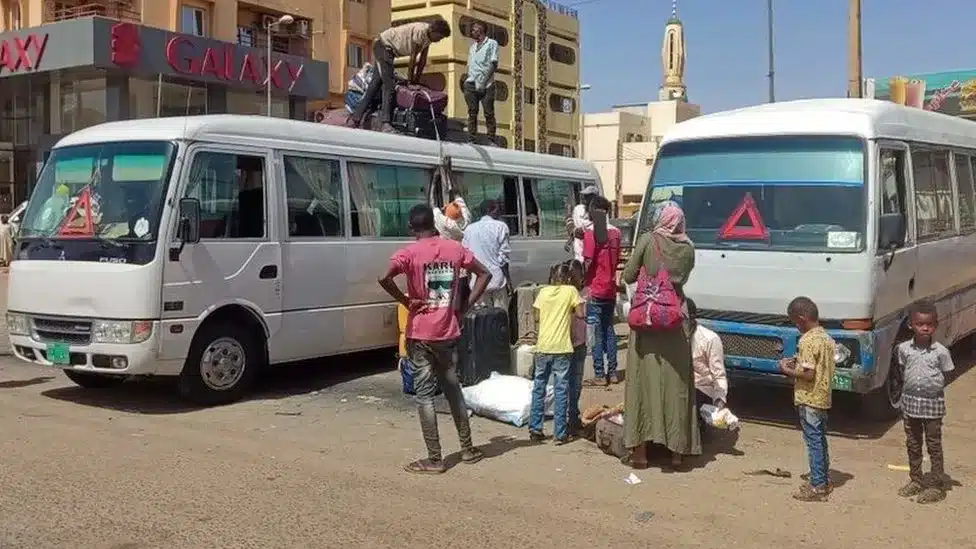
In the capital and two neighboring cities, the most recent ceasefire intended to put an end to Sudan’s destructive conflict appeared to be mainly holding.
For the first time in more than five weeks there appears to be relative peace, residents say.
But there have been some breaches of the truce in Khartoum, and across the River Nile in Bahri and Omdurman.
The military carried out air strikes minutes after the ceasefire came into force on Monday evening.
The air strikes, targeting the paramilitary Rapid Support Forces (RSF), have since stopped.
However, sporadic artillery fire could still be heard in Khartoum, residents told AFP news agency.
The RSF controls much of Khartoum and the two other cities that make up Sudan’s greater capital.
The situation is also relatively calm in El Geneina and Nyala, two cities in the Darfur region which have also been badly affected by the conflict, AFP quotes witnesses as saying.
The violence began on 15 April, triggered by a power struggle between the leaders of the regular army and the RSF.
The US and Saudi Arabia have been brokering talks aimed at ending the conflict, which has forced more than one million people from their homes and has led to a breakdown in health services.
Previous ceasefires collapsed, but the US said the latest one was different as it included a monitoring mechanism.
US secretary of state Antony Blinken said the monitoring would be “remote”, but did not give details.
“If the ceasefire is violated, we’ll know, and we will hold violators accountable through our sanctions and other tools at our disposal,” he added in a video message to the Sudanese people.
RSF commander Gen Mohamed Hamdan Dagalo – better known as Hemedti – issued a belligerent message just hours before the agreement was due to become effective.
He was recorded in an audio message saying his troops would not retreat “until we end this coup”.
Khartoum resident Moe Faddoul told the BBC that minutes into the ceasefire there were two heavy air strikes west of the city, where the military’s main airbase is.
“The house shook where I’m staying,” he said.
There were also skirmishes, but the fighting had since stopped, Mr Faddoul added.
He described the city as “almost a ghost town”.
Most residents had fled, no cars were on roads and only a few people were walking to look for basic necessities, Mr Faddoul said.
The army and RSF agreed to the ceasefire lasting for seven days, raising hopes that aid workers would be able to deliver much-needed food and medical supplies.
The US has announced $245m (£197m) in humanitarian aid to Sudan and neighbouring states, which are bearing the brunt of the refugee crisis triggered by the conflict.
Under new immigration restrictions, international postgraduate students enrolled in non-research degrees will no longer be permitted to bring family members to the UK.
Nigerian nationals are among top five nationalities granted sponsored study visas to the UK.
Statistics show that Nigerian nationals saw the second largest percentage rise in the number of visas granted, increasing from 6,798 in 2019 to 59,053 in 2022.
Last year, Nigerian sponsored study visa holders in the UK had the highest number of dependants – 60,923, increasing from 1,586 in 2019.
The announcement by the UK government has been made two days before official statistics are expected to show legal migration has hit a record 700,000 this year.
From January 2024, partners and children of postgraduate students other than those studying on courses designated as research programmes will no longer be allowed to apply to live in the UK during the course.
Currently, students coming to the UK with a visa need to provide documents proving their relationship to dependants, who have to pay £490 for a visa.
Dependants are also required to pay the immigration health surcharge – an annual contribution between £470 ($584) and £624 towards NHS services.
A doctor who claimed that two babies had died at a hospital in the North after a state-owned energy company cut off their power earlier this month expressed joy over the restoration of electricity.
Dr Gbeadese Ahmed from St Anne’s Hospital in Damango told the BBC he was about to go into theatre to resume surgical operations put on hold seven days ago.
Local MP and Lands Minister Samuel Abdulai Jinapor had paid off part of the hospital’s debt to the Northern Electricity Distribution Company (Nedco), he said.
The politician’s intervention followed Dr Ahmed’s interview on Monday with Citi News about the effects of the power outage on the state-run hospital in the town, which is more than 630km (390 miles) by road from the capital, Accra.
He explained that two babies had died and three others were in a critical condition because without electricity medics at St Anne’s have been unable to organise blood transfusions for the new-borns.
The problems began at the hospital on 4 May when the power was first cut over a debt of more than $370,000 (£342,000).
This is when the first baby died, according to Dr Ahmed.
The electricity was restored but Nedco warned if the bill was not settled in full it would again shut off power – and this happened on 16 May.
The second baby died over the last week.
Since the beginning of May Ghana’s state power firms have been cracking down on defaulters in an effort to claw back millions of dollars owed to them.
Several government institutions have found themselves cut off for failing to settle their bills.
The Indian government has made it compulsory for cough syrup makers to get samples tested before exporting their products.
Manufacturers of cough syrup in India are required to submit samples for testing before exportation according to the Indian government.
Starting 1 June, these companies will have to get a certificate of analysis from a government-approved laboratory.
The rule change comes after some Indian-made cough syrups were linked to deaths in The Gambia and Uzbekistan.
The controversies had cast a pall over India’s pharmaceutical industry, which makes a third of the world’s medicines.
The announcement was made by the Director General of Foreign Trade, which said in a notification that cough syrups would be permitted to be exported “subject to the export sample being tested”.
It also mentioned a list of central and state government laboratories across the country where samples could be tested.
Last week, Reuters had reported that India was considering a policy change after domestic cough syrups were linked to child deaths abroad.
Many Indian pharma companies have come under scrutiny for the quality of their drugs, with experts raising concerns over their manufacturing practices.
In March, India’s drug regulator cancelled the manufacturing licence of Marion Biotech, whose cough syrups were linked to 18 child deaths in Uzbekistan.
The World Health Organization also issued an alert in October linking four Indian-made cough syrups to child deaths in The Gambia.
India later said that the medicines complied with specifications when tested at home, but the WHO responded that it stood by “the action taken”.
At the final NPP rally before the Kumawu Constituency by-election in the Ashanti Region, President Nana Addo Dankwa Akufo-Addo expressed sympathy towards individuals who claim they are unable to witness the achievements of his government, stating that he cannot assist them.
The president made the comments during the New Partiotic Party’s (NPP) final rally ahead of the highly-anticipated by-election in the Kumawu Constituency of the Ashanti Region.
He told party faithful that he will hand over power to a successor from his party when his tenure expires in January 2025 citing the work that the administration has put in since 2017.
“We have done the work already and those who have eyes to see can see our positive works. But those who cannot see our good works, I am sorry, I cannot help them.
“We shall hand over to NPP presidential candidate in 2024,” the president stressed to cheers from the teeming crowd.
The pro-government Daily Guide’s reporter at the rally said in his May 22 report that the presiddent also compared the reasons his government went to the International Monetary Fund (IMF) for a bailout as against why the NDC went to the global lender in 2015.
He said whiles external shocks of COVID-19 and the Russia-Ukraine war forced his government to the IMF, the NDC government went to the IMF because of gross mismanagement in political office.
The Kumawu by-election
Voters will choose a replacement for their Member of Parliament, Philip Atta Basoah, who died on 27th March this year while still serving his 3rd consecutive term.
The New Patriotic Party (NPP) is represented by Ernest Yaw Anim, whiles Kwasi Amankwaa is the NDC candidate. There are two independent candidates with the name Kwaku Duah also in the race.
Kumawu has been a beehive of political activity in the last week with big wigs from the NDC and NPP holding rallies in the constituency to canvass for votes for the vacant seat.
The EC has issued a notice that it is ready for the vote on Tuesday.
Member of Alan Kyerematen’s campaign team, Collins Owusu Amankwaa, has emphasized that although the Kumawu seat has traditionally belonged to the New Patriotic Party (NPP), the party cannot afford to be complacent.
The former lawmaker says the party must put all measures in place to ensure that they retain the seat.
He said it was for this reason that several senior party officials, including Alan Kyerematen, joined the President and his Vice to campaign for the party’s candidate in the May 23, 2023, by-election.
”Kumawu is a traditional NPP stronghold. But we must not become complacent. I believe the party will keep the seat. However, as a party, we must not become complacent, as this could lead to serious problems.
“That is why Alan had campaigned alongside the President, his Vice, and other senior members of the party. Alan is well-known in Kumawu and has a large following there. He has really campaigned for the NPP’s candidate, and we are confident that we will win tomorrow.”
He bemoaned that “one of the independent candidates, Kwaku Duah, who was a member of the NPP is contesting, and his presence in the election caused some inconveniences, and he managed to use propaganda to convince people to vote against the NPP.”
That was why the party needed to step up its campaign to ensure we won the election. It isn’t over until it is. It is a traditional seat, but if we do not secure everything required for victory, we may be caught off guard.”
He was speaking to Kwabena Agyapong on Frontline on Rainbow Radio 87.5Fm.
The government of President Nana Addo Dankwa Akufo-Addo’s minister for information, Kojo Oppong Nkrumah, has indicated that he does not receive any additional compensation for his position.
According to him, ministers who are also Members of Parliament do not receive a separate salary or allowance from the government.
Addressing concerns regarding the size of the government, Kojo Oppong Nkrumah clarified that the public’s focus should not be solely on the compensation budget but should also consider the division of funds between political appointees and non-political government workers.
He highlighted that the compensation budget encompasses both categories, with a significant portion allocated to non-political appointees such as rotational nurses and police personnel.
“If you talk about the size of the government…I believe you are talking about the size of the compensation budget, more especially the money which is used to pay government workers. That is divided into two parts, one part has to do with those who are not political appointees, like those I have been mentioning this morning, the rotational nurses, police, and others, when you talk about the compensation budget, there is part of it…but I believe that the one people are talking about has to do with political appointees.
“It is true that Nana Addo Dankwa Akufo-Addo explained why he choose a certain number of ministers but there was a clause he added in which he explained that the majority of ministers he has appointed are Members of Parliament, and because they are members of parliament, they don’t take anything extra, it doesn’t cost the taxpayer anything extra on the compensation side.
“For me, that I am talking to you… they don’t pay me one cedi as Minister of State, because Nana Addo Dankwa Akufo-Addo’s policy is that, if you are a Member of Parliament and he gives you a minister or deputy minister, it is not even up to you to make a choice that you want this or not, you get paid on your MP salary. So, when people make this argument about the size of the government, the reality is that the majority of ministers who are Members of Parliament, don’t get paid extra,” he said.
Speaking in an interview with Peace FM’s Kokrokoo on May 19, 2023, he further emphasized that President Akufo-Addo’s policy stipulates that if an MP is chosen to serve as a minister or deputy minister, they continue to be paid based on their existing MP salary and as a result, no extra burden is placed on taxpayers.
Authorities in South Africa have reported that they have detained a guy who is accused of sharing and distributing pornographic materials containing images of the wives of Police Minister Bheki Cele, President Cyril Ramaphosa, and Cele.
According to an Associated Press report, The South African police launched an investigation when the images were first published on social media and distributed to police officers.
He was traced to the eastern city of Pietermaritzburg, where he was arrested on Sunday, May 21, 2023, with a device and SIM cards used.
The 34-year-old man will appear in court in Pretoria on Tuesday, May 23, 2023, on the charges of contravening the Cyber Crimes Act, which relates to unlawfully accessing or processing computer data.
Pornography is not illegal in South Africa but its distribution is restricted.
Managing partner of Deloitte Ghana, Daniel Kwadwo Owusu, has urged the Ghana Revenue Authority (GRA) to foster an atmosphere that makes it easy for both individuals and businesses to file their taxes.
He also entreated businesses and individuals to adopt the culture of filing their tax returns annually.
Speaking at the 7th CEO Summit held in Accra on Monday, May 22, 2023, Mr Owusu said for government to expand its tax net, it needs to increase the formalization of the local economy and be fully digitalized.
This, he said, will help boost the internal revenue of government.
It will also help prevent government from borrowing externally to fix the nation’s problems.
“We want the government to continue to expand the tax net by increasing formalization of the economy, digitization. This will help boost internal revenue generation and reduce large external borrowing,” the Country Managing Partner of Deloitte Ghana said.
He indicated that, “GRA should make it easy for everyone to file their tax returns, especially, individuals. Build that culture of annual filing of tax returns.”
A provincial official, has reported that four nurses in Tanzania’s western Tabora area may face legal charges for harvesting the organs of baby twins.
A committee set up to investigate the incident found that the bodies of the prematurely born twins were mutilated after they had died.
The mother found her babies’ eyes gouged out and part of their skin peeled off from the forehead.
Tabora regional commissioner Batilda Buriani said the nurses, who are under arrest, have been suspended from their duties.
She said the organ-harvesting was linked to witchcraft.
The nurses misled the investigating committee by falsely claiming that the bodies were kept in the maternity ward when, in fact, they were found in the nurses’ room, Ms Buriani added.
The nurses have not yet commented on the allegations.
The report also indicates that the twins died due to a lack of neonatal care services, which were unavailable at the facility where they were born.
The Pensioner Bondholders Forum has vowed to re-picket the Ministry of Finance to further hammer home its demand for the payment of all coupons and principal that are past due as well as an end to payment delays.
This follows what it describes as the government failure to pay outstanding coupons to it members, as promised.
In a statement, it said “we wish to state however, that if our requests are not met by 29th May 2023, we shall be left with no other option than to resume picketing the Ministry to further press home our demand for the payment of all coupons and principals in arrears”.
It furthered that “in our letter of May 15, 2023 to the Ministry to confirm the suspension [picketing], we requested that the Ministry starts immediate engagement with us and reach an agreement on the payment of all outstanding principals very quickly, and in any case not later than 19th May 2023. We made it clear that should the Ministry renege on any of the agreed points, we shall resume picketing the Ministry”.
Additionally, it said “we wish to put on record that the Ministry has not carried out fully what we had accepted, which is that: (i). the Ministry gave instruction for the payment of outstanding coupons up to 8th May 2023, and left out the coupons due on 15th May 2023; (ii). We have not received any indication of the payment of a coupon due today, 22nd May 2023; and (iii). The Ministry has failed/refused to meet and reach an agreement with us on the payment of all outstanding principals to pensioners”.
Consequently, the Forum pointed out that it has requested the Ministry to ensure the immediate payment of the outstanding coupons due on May 15 and 22, 2023, adding, it want an immediate engagement with the Finance Ministry to reach an agreement on the payment of all outstanding principals.
“We believe we have shown much goodwill to the Ministry and trust that the Ministry will reciprocate by working on our requests without any delay”, it concluded.
Business leaders in the nation are urging the government to examine some of the tax revenue initiatives that were implemented in the 2023 budget during the mid-year budget.
They argued that most of the new taxes introduced in the budget are inimical to private sector growth.
Speaking at the 7th Ghana CEO Summit and Exhibition, Country Managing Partner of Deloitte Ghana, Daniel Owusu, said, reviewing recurrent expenditure and re-allocating resources to industry and agriculture sectors are key to driving growth and job creation.
“With the International Monetary Fund (IMF) programme now on board, government should use the mid-year budget to review some of the revenue measures introduced in the 2023 budget including some of the new taxes that have the potential to adversely affect the productive sectors of the economy”.
Businesses overburdened with taxes – Mahama
Delivering the keynote address, former President John Mahama, said despite Ghana securing a deal from the IMF, business players are already burdened with exorbitant taxes, which he says is affecting their operations.
According to him, his outfit will work closely with the private sector towards economic recovery when he becomes the next President in December 2024.
“By working together, we can leverage our collective knowledge, resources and experiences to implement comprehensive policies and initiatives that drive sustainable development growth, create jobs and improve the standard of living for all Ghanaians. We can foster innovation and create an economy that is resilient inclusive and globally competitive”.
He promised to rollout a 5G revolution and Artificial Intelligence to fully unlock the potential of digitalisation.
According to him, his government will invest and leverage on digital infrastructure to expand and enhance productivity in the various sectors of the economy.
Meanwhile, Senior Country Manager for Benin, Ghana, Liberia, Sierra Leone, and Togo, at the International Finance Corporation, Kyle Kelhofer, says the $3 billion IMF loan would help strengthen Ghana’s economic recovery.
“Post-IMF, there are increased opportunities for Ghana and Ghanaian businesses with this increased stability, resilience, competitiveness and economic independence”.
Value proposition
The summit adopted a dynamic approach to deliver value to its stakeholders. There was CEO panel discussions, plenaries, business cases, masterclasses and experts insights with Cohort of Speakers Panelists and Experts.
The dialogue with the Special Guest of Honour, former President John Mahama, looked into important policy issues ranging from resetting of the economic development agenda, public sector leadership, Business Regulatory Reforms, Social inclusion to digital economy agenda of government.
The 7th Ghana CEO Summit and Expo was on the theme “Sovereignty, Sustainable Corporate Governance and Digital Industrial Transformation: New Paths for Growth and Prosperity. A Private-Public Sector CEO Dialogue & Learning”.
It brought together stakeholders including the CEO Network of Ghana, to restore Ghana’s economy and strive to achieve sustainable economic sovereignty.
The summit offered concrete, innovative and actionable solutions, championed private sector growth, led discussions around game-changing public policies, and advocated for best growth-oriented practices to help the country move forward, build resilient companies and develop outstanding CEOs.
Bank of Ghana (BoG) Governor, Dr. Ernest Addison has revealed that there are encouraging signs of recovery in the nation’s banking industry after a difficult 2022.
Speaking during a press briefing at the 112th Monetary Policy Committee’s (MPC) conclusion in Accra, he said despite the Domestic Debt Exchange Programme’s (DDEP) impact and the overall difficult operating environment that affected banks’ financial performance, the sector witnessed a turnaround in performance during the first four months of 2023, following closure of the DDEP.
“In the first four months of this year, prudential data show some turnaround in the banking sector’s performance following conclusion of the DDEP, and following the consensus reached among stakeholders on the treatment of losses arising from the same,” he said.
He added that banks have begun rebalancing their portfolios, shifting away from medium-to-long-term investments and increasing their focus on short-term investments and new loans.
This comes after the audited financial statements for 2022 brought to light substantial losses incurred by banks. These losses primarily stemmed from mark-to-market valuation losses on government bonds, which were a consequence of implementing the DDEP (Dynamic Discounted Expected Provisions). Additionally, the banks faced increased impairments on loans and rising operating costs – contributing further to their financial setbacks.
Positive numbers
In 2023, most banks returned to profitability; with higher operating income contributing to a 47 percent increase in profit-before-tax for April 2023 compared to the same period last year. Net income or profit-after-tax for the industry increased by 45.8 percent to GH¢2.8billion in April 2023.
At the previous year-end, the industry encountered significant profit-before-tax losses totalling GH¢8billion; which stood in stark contrast to the GH¢7.4billion profit recorded in the previous year of 2021.
Similarly, pre-tax losses amounted to GH¢6.6billion in 2022 compared to a post-tax of GH¢4.8billion in the preceding year. As a result of these losses, key profitability indicators such as return on assets and return-on-equity turned negative in 2022.
In the first four months of 2023, the sector witnessed positive growth with its return-on-assets increasing from 4.7 percent to 5.5 percent. Similarly, the return-on-equity experienced an upward trend, rising from 22.3 percent to 36.3 percent.
However, there was a significant decline in the capital adequacy ratio (CAR), which dropped from 21.3 percent in April 2022 to 14.8 percent in April 2023. Most banks continued to maintain CAR above the regulatory minimum of 10 percent by the end of December 2022
The year-on-year decline was attributed to the increase in risk-weighted assets caused by fluctuations in exchange rates and losses incurred on mark-to-market investments. But a bigger dip was mitigated due to temporary regulatory reliefs provided for banks to stem the impact of the DDEP, similar to the measures implemented with onset of the pandemic.
Furthermore, the non-performing loans (NPLS) ratio worsened to 18 percent in April 2023, indicating higher loan impairments and heightened credit risks. Nevertheless, the industry’s liquidity indicators have improved following implementation of the revised cash reserve requirement (CRR).
Governor Addison is resolute that the sector’s recovery in the first four months of 2023 demonstrates resilience and a positive outlook, but added continued efforts are needed to address remaining challenges and ensure sustained growth.
Already, it has emerged that a comprehensive strategy to revive the nation’s financial sector is being readied for the end of June as part of the US$3billion facility being provided by the International Monetary Fund.
Under the proposed reforms – which aim to strengthen the sector, restore market confidence and promote lending to the private sector – commercial banks, special deposit-taking institutions and other regulated entities must submit plans for recapitalisation.
The goal of independence, according to former President John Dramani Mahama, has become a joke by turning to the International Monetary Fund for financial assistance.
He noted that the Ghana Beyond Aid agenda has become a slogan that has seen no actions under the Nana Akufo-Addo administration.
John Mahama was the keynote speaker at the 7th Ghana CEOs Summit.
He said: “Indeed our return to the IMF – cup in hand – has made our Ghana Beyond Aid policy the butt of jokes amongst many commentators in the world. It will take a resolute and committed political will to determine our own economic destiny.”
According to him, the agenda will “require the ability to determine our own economic policies that prioritize the well-being of our citizens, and create an environment conducive for the advancement of sustainable growth and development for job creation.”
The current flagbearer of the National Democratic Congress also took a swipe at the government over the introduction of the Income Tax Amendment Bill, Excise Duty, and Excise Tax Stamp Amendment, and Growth and the Sustainability taxes.
Founder Ashesi University’s, Dr. Patrick Awuah, has urged for collaboration among African business schools in higher education to aid graduates in reflecting on other people’s experiences to address economic problems.
He admonished African business schools to have well-written case studies of local companies and national economic crises, failures, challenges, and successes to learn from the experiences and develop comprehensive measures to address crises in the financial sector.
Dr. Awuah made the call at a conference of the Association of African Business Schools in Accra on the topic: “Are Business Schools Relevant in Africa,” hosted by the Ghana Institute of Management and Public Administration (GIMPA).
He said one of the best ways to learn was from experience, stressing that it was much better to learn from the bad experiences of others to develop better options to address the situation.
Using Ghana as a case study, he said the country’s banking crises between August 2027 and the end of 2018 contributed significantly to the current economic crises faced by the country.
The crisis led to the collapse of 23 banks, 25 savings and loans, and 137 microfinance institutions, with two banks taken over by the GCB, and five banks merging as the Consolidated Bank of Ghana.
He said the major reasons cited for the collapse of the financial institutions were poor corporate governance on the part of the management of the banks and financial institutions, conflicts of interest in the awards of loans, failure to oversee proper auditing, among others.
“Other countries adopted different measures to address their banking crises. Kenya, for instance, addressed its challenges quietly, where depositor funds were secured and the cost involved was less than Ghana’s own,” he said.
“What if the current managers of our economy had had the benefit of reading and reflecting on cases that were locally relevant 30 years ago when they were in business school.
“And if we write the right cases now for this crisis, for example, and hopefully 30 years from now, the errors that we made in 2017 and 2018, will not be repeated in our country,” he said.
He said what the country, especially Business Schools had done was write and publish articles in international journals that only other academia could have access to and that were mostly written in “dry” language that the media, politicians, and business people could not comprehend.
“This is happening because publishing in those international journals is what will get the lecturers promoted,” he said.
He urged Universities to have broader discussions with the Ghana Tertiary Education Commission on issues of what cases or journals to publish for promotion, adding that, the primary focus of every business school was to ensure good governance and deal with corruption.
“We need to address the challenge of high integrity leadership at every University business school in Africa to shape the future and enhance the pace of development on the continent,” he said.
Prof Samuel Bonsu, Rector of GIMPA, called on young graduates to work hard to achieve their career aspirations, stressing that success was not achieved on a silver platter.
Professor Famiyie, Dean of GIMPA Business School, said the conference would study the complexities in the system and adjust its teaching contents to correspond to the needs of society.
Prof Jonathan Foster-Pedley, Chair, Association of African Business School urged African universities to take the lead and provide ideas and principles to create a better ethical structure.