Ghana’s currency is headed for one of the greatest rallies in the world, following the West African country’s $3 billion agreement with the International Monetary Fund, which offered investors faith that the country may recover from last year’s debt crisis.
The cedi was the best performer worldwide against the dollar in the runup to the IMF deal, which was sealed mid-month. That was the latest in a series of violent swings since Ghana unilaterally suspended payments on most of its external debt in December. The currency is poised to end the month with a 5.3% advance, the fourth-biggest of about 150 currencies tracked by Bloomberg.
The hope now is that the IMF program helps the nation to bolster its finances and work its way toward regaining access to global markets. The deal, which includes an immediate disbursement of $600 million, was approved after the country completed the first part of a domestic debt exchange program.
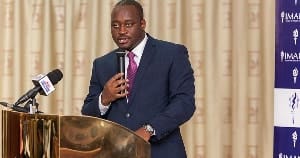
“I see the cedi regaining stability with a predictable trajectory,” Courage Boti, an economist at GCB Capital in Accra, said. At the same time, the gains may be set to fade after the initial jump this month, he said.
The nation’s dollar securities have also outperformed in May, handing investors a return of 7.2% compared with the average loss of 0.8% for emerging and frontier peers in a Bloomberg index.
“Multilateral support should help stabilize FX reserves and the authorities have committed to ending Bank of Ghana financing of the government deficit,” said Samir Gadio, head of Africa Strategy at Standard Chartered Bank. “This may help anchor the cedi in the coming months.”
On Tuesday, the elite club of US firms worth more than $1 trillion gained a new member – at least for a few hours.
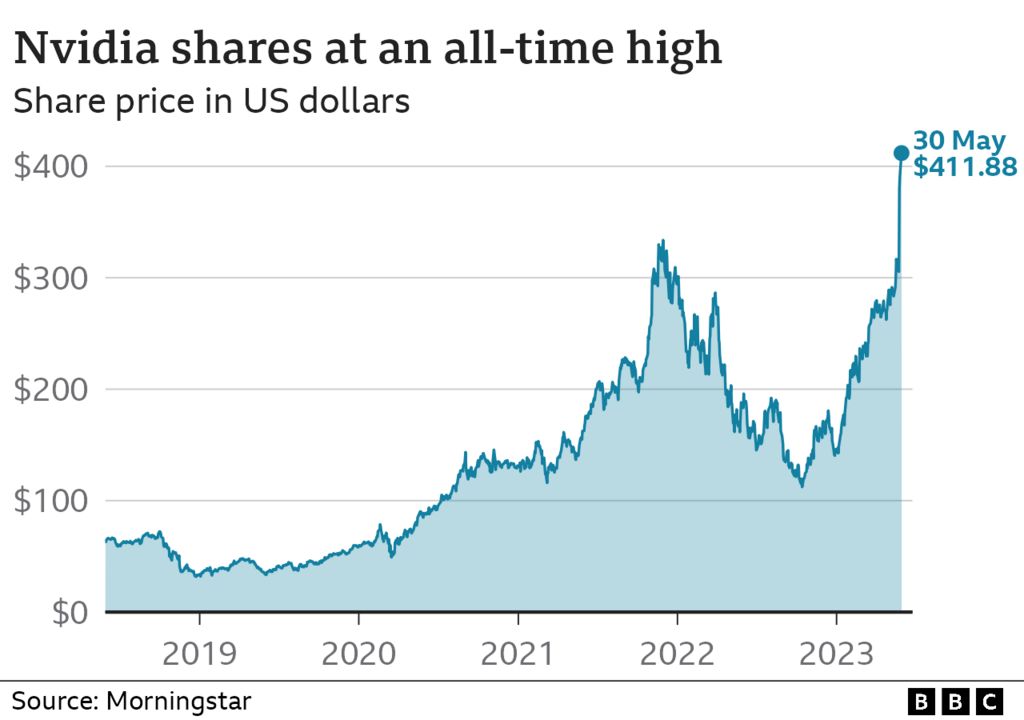
Nvidia temporarily joined the ranks, with its share price rising more than 5% before falling back.
Shares had already jumped more than 25% last week after the company forecast “surging demand” due to advances in artificial intelligence (AI).
Apple, Amazon, Alphabet and Microsoft are the other publicly traded US firms worth more than $1tn (£800bn).
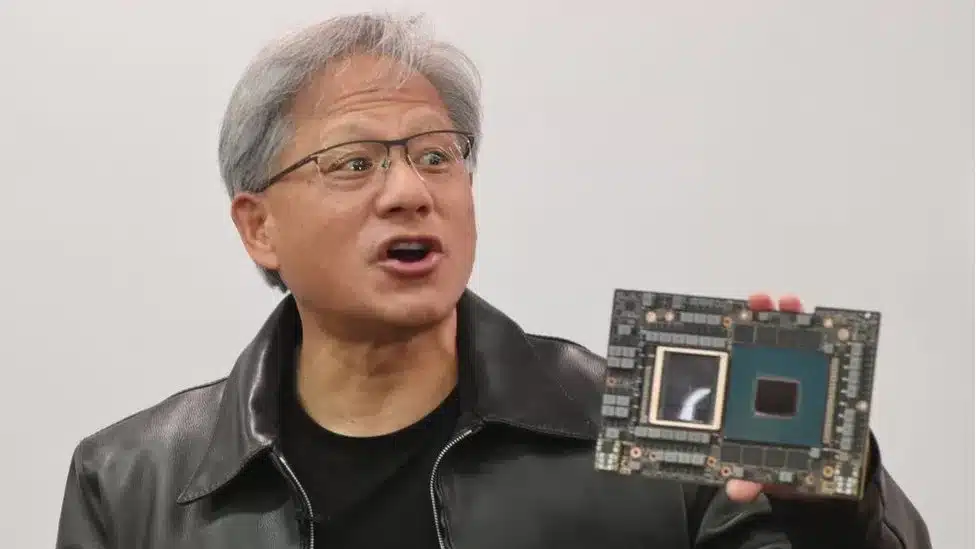
Founded in 1993, Nvidia was originally known for making the type of computer chips that process graphics, particularly for computer games.
The firm’s affable co-founder Jensen Huang took a punt by investing in added functionality for Nvidia chips long before the AI revolution – a long game that appears to have paid off.
Its hardware underpins most AI applications today, with one report suggesting it has cornered 95% of the market for machine learning.
ChatGPT, the chatbot that sparked AI fervour with its launch last year, was trained using 10,000 of Nvidia’s graphics processing units (GPUs) clustered together in a supercomputer belonging to Microsoft.
Nvidia: The chip maker that became an AI superpower
Over the past 12 months, Nvidia’s share price has more than doubled, as investors bet the company will profit as AI ushers in the next wave of tech advances.
The California-based firm ended trading in New York on Tuesday worth more than $990bn, after shares closed at about $401 apiece, or up nearly 3%.
“We view Nvidia at the core hearts and lungs of the AI revolution,” Wedbush Securities analyst Dan Ives wrote last week, after the firm told investors it expected to bring in $11bn in sales in the three months to August – almost 50% more than analysts had predicted.
Living up to the promise of its lofty valuation could prove difficult, however.
Though Nvidia boomed during the pandemic, its overall revenue growth was flat last year, while profits were cut in half.
There are questions about whether Nvidia can keep up with demand, especially as rivals AMD and Intel race to develop their own offerings, and start-ups emerge.
The firm also faces ethical issues, such as whether it should vet the AI products for which it produces chips, amid swirling concerns about the impact of AI on society.
At current prices, Nvidia boasts a market value more than eight times higher than that of Intel. That’s despite Intel reporting more than $63bn in revenue last year, compared with Nvidia’s $27bn.
Geir Lode, head of global equities at Federated Hermes, said the magnitude of the recent leap in Nvidia’s share price was “an astonishing surprise even to techno-optimists”.
“Artificial intelligence is the next super charged growth area, and we expect this is just the beginning,” Mr Lode said. “We know growth will be there, but valuations can be hard to justify.”
Investor Cathie Wood, chief executive of Ark Invest, who is known as a tech booster, sold her stake in Nvidia in January, missing the gains made since then.
She recently tweeted that the firm’s shares were “priced ahead of the curve”. She said markets were making a mistake to think the company was “the only AI play”.
In the past, investors have not hesitated to sour on former favourites.
Facebook-owner Meta, which joined the $1tn club in 2021, was booted out just a few months later, as its shares lost roughly three quarters of their value. It is valued at about $670bn today.
Communications giant Cisco was also seen as a likely trillion dollar club member during the dotcom tech bubble of the late 1990s. But that bubble burst and the firm is valued at about $200bn today.
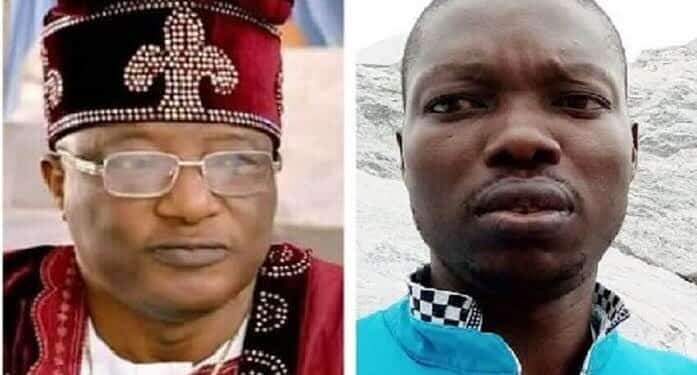
Dr Ramon Adedoyin, a popular hotel owner, has been found guilty and condemned to death by hanging for the murder of Timothy Adegoke, a former Obafemi Awolowo University, Ile-Ife student who died between November 5 and 7, 2021, at the Hilton Honours Hotel in Ile-Ife.
Sentenced for same offence alongside Adedoyin are two of his staff; Adeniyi Aderogba and Kazeem Oyetunde.
While delivering her judgement, the Chief Judge of Osun and presiding Judge of the State High Court, Adepele Ojo, held that the circumstantial evidence available to the court, pointed to the killing of Adegoke while being a guest at the hotel owned by Adedoyin.
Justice Adepele Ojo however discharged and acquitted three of the staff while the seven defendant is to hear her sentencing on Wednesday following pleas by both the prosecution and defendant counsels.
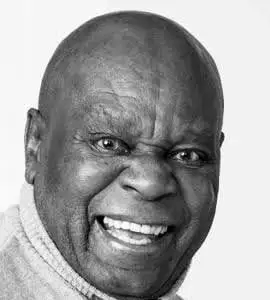
Renowned actor Patrick Ndlovu, a veteran of the stage, has passed away at the age of 85. Ndlovu gained recognition for his portrayal of the formidable principal in the popular series “Yizo Yizo,” which is currently available for streaming on Netflix.
His most recent role was that of Sizwe Moloi on SABC 1’s drama series Zone 14.
Details surrounding Ndlovu’s death are still unclear but his agency confirmed the sad news of his untimely death.
“We are deeply saddened by the passing of legendary actor, Patrick Ndlovu, whose acting career spanned more than four decades. We were proud to represent such a consummate professional and majestic talent. He was a kind and gentle man, always ready with a smile even when times were tough. Our thoughts and prayers go out to his wife, family, and friends,” reads the statement.
He was born in Mohlakeng, outside Randfontein on the West Rand. His first love was not acting as he was a teen jazz musician.
South Africans have rushed to social media to eulogise the late Eusebius McKaiser, a renowned novelist and broadcaster who died on Tuesday May 30 2023..
His manager, Jackie Strydom, told Daily Maverick that McKaiser had suffered a suspected epileptic seizure.
His analytical articles and columns were widely published in many publications, including the New York Times, Mail & Guardian, Sunday Times, Sunday Independent, City Press, Newsweek International and Financial Mail.
McKaiser also hosted talk shows on Radio 702, the Talk at Nine Show, and he presented on Interface on SABC3.
He was outspoken about issues of racism and a strong advocate of the LGBT community.
South Africans reacted to his death with shock on social media.
President Cyril Ramaphosa’s spokesperson, Vincent Magwenya, said the broadcaster was “a brilliant mind”.
Deputy Energy Minister, Andrew Egyapa Mercer, has revealed that Ghana has successfully concluded the second phase of the Nuclear Power Project.
This initiative is a significant step towards attaining a zero-carbon energy status and enhancing climate resilience within the country.
He explained that the second phase of the project entails the approval of a site for the establishment of Ghana’s first nuclear power facility.
Speaking during a symposium held on nuclear power infrastructure development, the deputy minister underscored the importance of the nuclear power project and its benefits to industrial and economic growth.
“We have currently received approval for the acquisition of our preferred and backup nuclear to host Ghana’s first nuclear power plant. And meeting our energy demand is necessary to sustain our industrial and economic growth, which is required for a middle-income economy.”
He continued, “The world is migrating to cleaner sources of energy and nuclear is envisaged to be a critical source of energy. Ghana can therefore not be left out in this global search for energy security”.
Ghana’s quest to integrate nuclear technology into energy and power generation was announced in 2022 by President Nana Addo Dankwa Akufo-Addo.
He subsequently incorporated the inclusion of nuclear technology into the country’s power generation mix in September 2022.
President Akufo-Addo explained that the move falls in line with the global collective commitment to sustainable availability of power, successful exploitation of nuclear energy sources as part of measures to boost rapid industrialization and boost economic development.
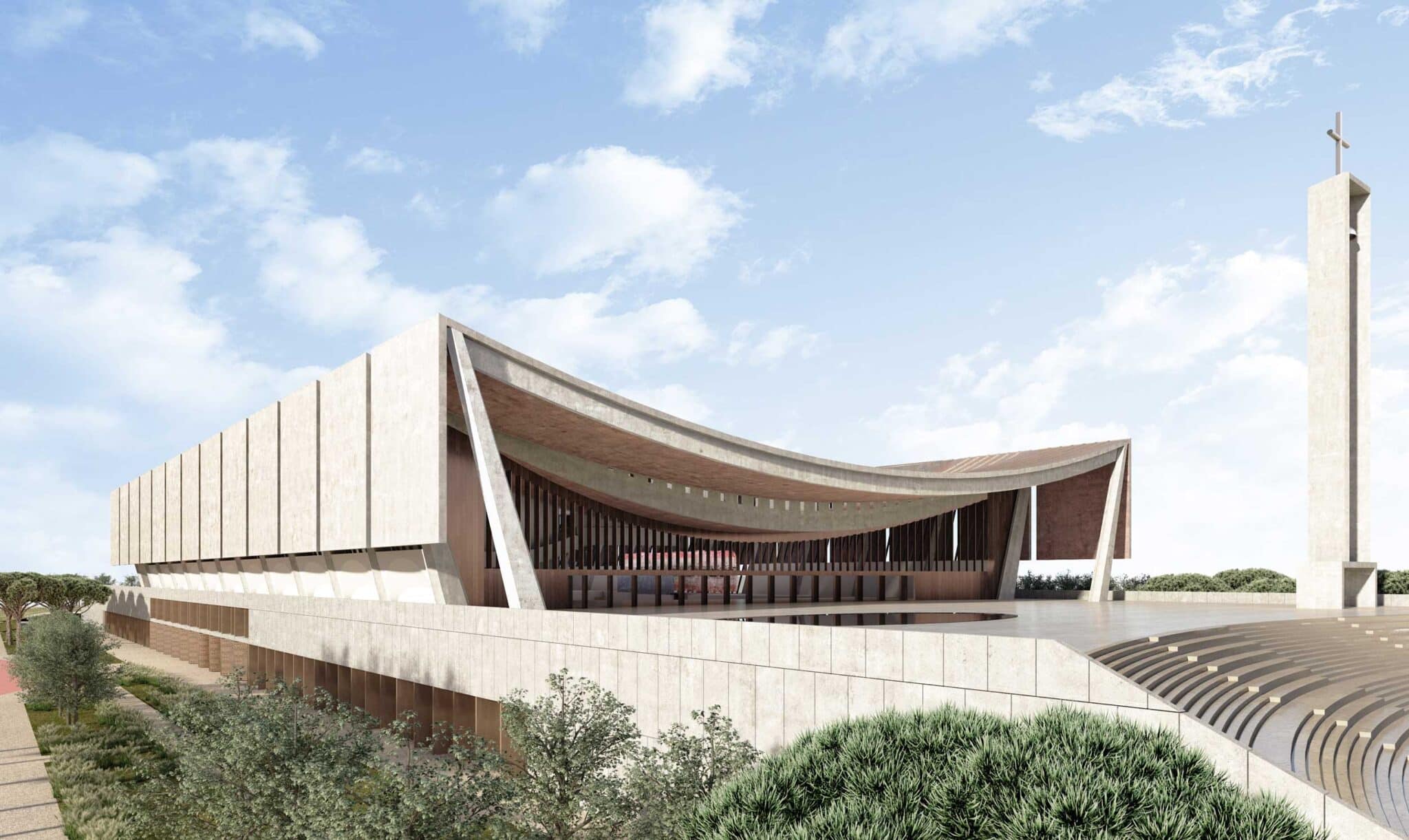
Executive Director of the National Cathedral of Ghana, Dr. Paul Opoku Mensah, has defended the expenditures that has been incurred in the cathedral’s construction.
This comes as many Ghanaians have described the cathedral project as the most expensive pit in the world because even though over $30 million has been spent on the project, no physical structure can be seen at the site.
But, in an interview with the media on Thursday May 21, Dr Opoku said that some Ghanaians are describing the project as the world’s most expensive pit because they don’t know the nature of work that has gone into it.
He explained that two floors have already been constructed underground and the only major work that has to be done is the placement of a steel structure.
He added that the construction of the cathedral has now stalled because the steel structure will cost $100 million which has not been raised yet.
“After finishing the foundation, we need money that we will use to import all the steel we need. The steel component of the cathedral will be built before it is brought into the country for us to fix.
“After fixing it, we will be left with the concrete and marble cladding and some few works. So, this is why there is a setback in the construction of the cathedral.
“We need about $100 to import the steel. The cathedral is not a small building. It will be a structure, we have never seen in Ghana before,” he said in Twi.
President Nana Addo Dankwa Akufo-Addo has stated that the country is better prepared than ever to establish an all-inclusive, booming tourism industry – not just in the sub-region, but across the entire continent.
The president was speaking at the opening ceremony of a two-day Presidential Summit on Tourism at the Peduase Lodge, and said tourism has always been a cornerstone of Ghana’s heritage.
“From our lush rainforests to our vibrant markets; to the historic castles and serene beaches including the various cultural festivals and wealth of natural beauty – cultural diversity and historical significance that draws the world’s attention – tourism has always been a cornerstone of our heritage,” he said.
The event was aimed at bringing tourism stakeholders together to explore new approaches to the sector, with priorities for national development, job creation and sustainable tourism.
Speaking on the theme ‘Rethinking Tourism for Economic Growth and Job Creation’, President Akufo-Addo proposed that the sector should adopt preservation, promotion, policy leadership and partnerships to ensure tourism is developed in a sustainable, responsible and all-inclusive manner.
Preservation
The president said it is important that tourism practitioners and stakeholders preserve what the country has, and be guardians of Ghana’s natural wonders.
“It is our responsibility to safeguard them for future generations, strengthen our commitment to environmental conservation, combat climate change and promote ecofriendly practices in the tourism industry. This will attract eco-conscious travellers who seek such destinations that align with their values,” he said.
Promotion
Ghana’s unique appeal, according to the president, must be well-amplified on the billboard stage through strategic marketing campaigns, enhanced digital presence and targetted investment in infrastructure to showcase the diverse attractions.
He said the ministry and GTA have been creating warm and massive experiences for visitors through quality promotions since 2019 till date.
“Through policy leadership, the public sector must show right policy leadership in creating the right climate and platform for tourism growth. It is for this reason that government is prioritising the E-visa regime, the homeland return act and visa on arrival processes,” he noted.
The president added: “The sector requires partnerships and a collaborative approach involving all stakeholders, asking players to unite efforts, share knowledge and pool resources to develop sustainable policy models”.
With ‘The Year of Return’ bringing the transformative power of tourism not only in growth of the economy but also fostering cross-cultural understanding and enhancing social cohesion, the president tasked the Tourism Ministry and Ghana Tourism Authority (GTA) to ramp-up promotion activities to achieve the target of two million international arrivals by 2025.
He commended the World Bank’s support for the sector, and asked for additional expansion of support to the sector.
Tourism Minister, Dr. Ibrahim Mohammed Awal, said investments in the sector are yielding positive results.
He said there was a surge in visitor numbers by 47 percent in the first quarter this year compared to last year. Indeed, 170,000 first-quarter visitors were recorded last year compared to 247,000 arrivals in the same period this year.
That is a huge progress made, Dr. Awal said, adding: “The ‘Destination Ghana’ project is on course, with many infrastructure projects currently ongoing,” he said.
GTA’s CEO, Akwasi Agyeman, said the summit’s theme – ‘Rethinking Tourism for Economic Growth and Job Creation’ – resonates deeply with the vision and aspirations of GTA in seeking to make Ghana a destination of choice for travellers seeking authentic experiences.
“We have in the last few years witnessed the potential of tourism in driving economic growth, creating jobs and fostering sustainable development. However, to fully capitalise on this potential we must constantly adapt, innovate and rethink our approach to tourism,” he said.
Tourist arrival expectations in 2023
This year, Ghana is anticipating about 1.2 million international tourist arrivals, with an estimated revenue of some US$3.4billion into the tourism economy.
Ghana has an overall tourism medium-term strategy to reach two million arrivals in 2025 – with not less than US$5.2billion revenue.
The Nigerian National Petroleum Corporation (NNPC) has revealed that the country’s government owes the company over $6 billion. This amount represents the funds that NNPC has utilized to maintain affordable gasoline prices, and the disclosure comes just a day after President Bola Tinubu‘s announcement of the discontinuation of the subsidy program.
The state-owned company shouldn’t keep absorbing the burden of preserving one of the lowest prices of the fuel in the world, Chief Executive Officer Mele Kyari told reporters in the capital, Abuja, on Tuesday, welcoming the new head of state’s decision to stop the payments that cost more than $10 billion last year.
The NNPC is waiting for the government to pay a 2.8 trillion naira ($6.1 billion) debt, Kyari said. “We can’t continue to build this,” he said.
Following Tinubu’s first address to Nigerians after taking the oath of office on Monday, queues formed outside petrol stations, which have already started raising their prices. Phasing out the subsidies will significantly increase transport costs and could trigger social unrest as it did during a previous effort to remove the payments in 2012.
Although Nigeria is Africa’s biggest oil producer, the NNPC purchases all the country’s gasoline from overseas via crude-for-fuel swaps with local and international traders before selling the imported products at a loss to wholesalers and retailers.
The Tinubu administration plans to license other gasoline importers, according to Farouk Ahmed, chief executive of the Nigerian Midstream and Downstream Petroleum Regulatory Authority. This will introduce competition into the industry, he said alongside Kyari at the presidency.
While the previous government under President Muhammadu Buhari was supposed to fund the subsidies for the last 18 months, most of the cost has been “supported by the cash flow from NNPC’s other businesses,” Kyari said. “Since you cannot pay, you cannot expect NNPC to continue to carry it.”
The Bank of Ghana‘s interbank forex rates for today, May 31, 2023, show that the Ghana Cedi is trading versus the dollar at a purchasing price of 10.9670 and a selling price of 10.9780.
At a forex bureau in Accra, the dollar is being bought at a rate of 11.40 and sold at a rate of 12.00.
Against the Pound Sterling, the Cedi is trading at a buying price of 13.5925 and a selling price of 13.6072.
At a forex bureau in Accra, the pound sterling is being bought at a rate of 14.00 and sold at a rate of 15.00.
The Euro is trading at a buying price of 11.7562 and a selling price of 11.7669.
At a forex bureau in Accra, Euro is being bought at a rate of 12.00 and sold at a rate of 12.70.
The South African Rand is trading at a buying price of 0.5561 and a selling price of 0.5566.
At a forex bureau in Accra, South African Rand is being bought at a rate of 0.30 and sold at a rate of 0.90.
The Nigerian Naira is trading at a buying price of 42.2438 and a selling price of 42.3450.
At a forex bureau in Accra, Nigerian Naira is being bought at a rate of 12.00 Naira for every 1 Cedi and sold at a rate of 18.00.
For the CFA, it is trading at a buying price of 55.7459 and a selling price of 55.7967.
At a forex bureau in Accra, CFA is being bought at a rate of 17.00 CFA for every 1 Cedi and sold at a rate of 21.00 CFA for every 1 Cedi.
Our forex bureau rates are provided by Afriswap Bureau De Change in Osu, Accra.
Note that these rates may be different at a forex bureau near you. Our forex bureau rates are provided by Afriswap Bureau De Change in Osu, Accra.
As part of the Ghana Trade Fair Redevelopment Project, Africa Data Centres (ADC) will soon commence building of its strategic international data center.
This serves as a major boost for Ghana in the Government’s push to make digitalisation a major economic growth pillar and employment pool for the youth.
ADC recently signed the deal with the Ghana Trade Fair Company after a year of negotiations. All is now set for construction to begin at the Trade Fair site, La, Accra.
The ADC facility will support computation, data storage, and network and business applications for enterprises and institutions in both Ghana and abroad, particularly, the regional market.
Before a location for a new data centre facility is selected, the key factors an investor will consider include the cost and reliability of power, the cost of construction, the country’s telecom infrastructure/reliability, and the risk of natural disasters.
The Ghana Trade Fair Company Limited embarked upon the redevelopment of its current site into a modern mixed-use commercial enclave in 2019. As part of the project, a portion of the land was carved out to develop a modern Technology Park, dubbed “The Tech Hub” similar to Silicon Valley in California, on the master plan for the Redevelopment project.
The New ADC data center will be located within this Tech Hub area of the redevelopment master plan. The company is in talks with other technology companies to develop incubators and commercial facilities within the Tech Hub enclave.
Welcoming the new investment, Nana Addo Dankwa Akufo-Addo, The President of the Republic of Ghana, said, “The establishment of Africa Data Centre’s new 10MW data centre, in the heart of Accra, is a significant step towards bridging the infrastructure gap, and developing further our digital economy. This investment and the Government’s drive at digitising all sectors of the economy will enable us to increase our capacity to access digital services and help even more to attract foreign direct investment into our economy.”
CEO of the Ghana Trade Fair Company Limited Dr Agnes Adu stated that: “Africa, for the most part, has been left out of the technology infrastructure until now. The new ADC data center is a huge step in the right direction. It comes just in time as Ghana is focused on digitisation and using technology to develop and boost our economy.”
The US International Development Finance Corporation (DFC) announced a $300 million loan facility to Africa Data Centers (ADC), to construct this first-of-its-kind data centre in Ghana at the Trade Fair site.
The Accra data center is part of ADC’s expansion plans in Africa, spanning 10 markets across the continent, including South Africa, Zambia, Kenya, Rwanda, Egypt, Morocco, Senegal, Ivory Coast, and Angola.
Construction of the Accra Data center at the Trade Fair site is set to begin in June of 2023.
Protesters clashed with security authorities in Dakar, Senegal, on Monday, torching cars and erecting barricades to protest the treatment of opposition leader Ousmane Sonko, who is on trial for rape.
Just one day prior, Sonko – founder of the left-leaning PASTEF party – had attempted to lead what he called a “caravane de la liberté” or a “freedom caravan” from the town of Ziguinchor, where he serves as mayor, to Dakar.
But the convoy of vehicles was deemed illegal and diverted to a home Sonko has in Dakar.
Interior Minister Antoine Felix Diome denied that Sonko has been arrested, but supporters and fellow politicians have claimed that security forces prevented them from visiting him.
Police also allegedly blocked roads around Sonko’s residence in Dakar’s Keur Gorgui district. Those restrictions have spurred concerns about Sonko’s rights and the fate of Senegal’s upcoming 2024 presidential election, in which the PASTEF leader is a candidate.
“The restrictions imposed on Ousmane Sonko’s freedom to come and go, without notification, are illegal and must end,” the Senegalese branch of the rights group Amnesty International posted on Twitter, calling on authorities to follow the rule of law.
El Malick Ndiaye, the national secretary of communications for PASTEF, issued a strongly worded declaration on his own Twitter account. Dubbing the PASTEF candidate “President Sonko”, Ndiaye accused the Senegalese authorities of confiscating Sonko’s phones, laptop and personal effects and barricading his house.
“They are refusing access to his staff, his lawyer and his parents coming to visit him,” Ndiaye wrote. “We can tell you that President @SonkoOfficiel is now in prison. We have to fight to free him.”
Interior Minister Diome has responded to the criticism by telling the Senegalese broadcaster RTS that it is the “prerogative of the state to maintain public order and preserve the security of people and property”.
In protest, supporters allegedly threw rocks at police outside Sonko’s home, while law enforcement responded with tear gas.
It was the latest surge of violence in the heated rivalry between Sonko and current President Macky Sall, a centrist representing the Alliance for the Republic party.
Earlier this month, at least one teenager was killed and 30 people wounded in Dakar after Sonko called for protests in response to his ongoing legal woes.
He had recently received a suspended sentence of six months in a defamation case after an appeals court decided to increase the penalty he faced. Initially, in March, he had been handed a two-month suspended sentence.
The ruling threatens to make him ineligible for the upcoming presidential race. Sonko is expected to return to court on June 1 for another case, this time to face allegations he raped and threatened a woman in a massage parlour in 2021.
Prosecutors intend to seek a sentence of 10 years at the hearing, which could likewise derail Sonko’s race for the presidency.
Meanwhile, Sonko and his allies have accused President Sall of trying to sabotage his candidacy. Sonko previously ran against Sall in the 2019 presidential election, placing third.
Normally, Senegalese presidents are limited to two terms. But critics fear Sall might use a constitutional change in 2016 as an excuse to vie for a third term.
When Sall was first elected in 2012, a single presidential term ran for seven years. But in 2016, Senegal held a referendum to cut presidential terms to five years.
Sall served his full seven-year term and then was reelected in 2019 to serve a five-year term. But he has implied in media statements that the constitutional reform reset the clock – and that he would be eligible to run for a second five-year term under its provisions.
This has been a highly controversial assertion in Senegalese politics, leading to questions about whether Sall will run again in 2024 – and about the strength of the West African nation’s democracy.
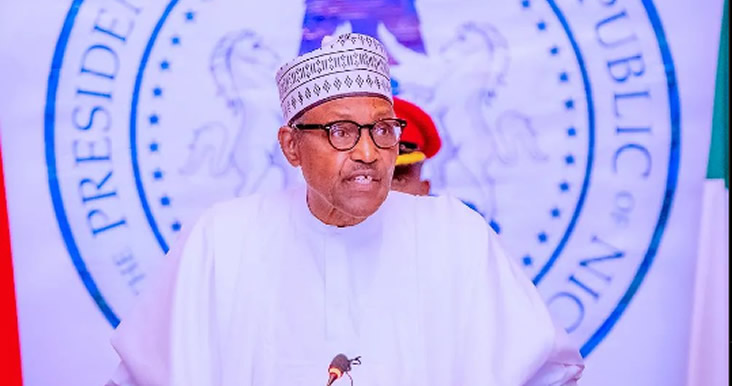
Muhammadu Buhari’s eight-year tenure as President of the Federal Republic of Nigeria and Commander-in-Chief of the Armed Forces, has revealed that twenty-one Nigerians were killed per day as a result of insecurity.
Despite being a former General and coming to power in 2015 with a key promise to curing Nigeria’s rising insecurity, Buhari leaves behind a mixed legacy in terms of insecurity-related deaths.
Buhari left office on May 29, with reported deaths rising from insecurity as tracked by the Nigeria Security Tracker, NST, showing that a total of 63,111 people lost their lives under Buhari’s 8 years in charge – he spent a total of 2,905 days as president.
It is the number of deaths divided by the days spent in office that comes up to the 21 deaths per day.
In this GhanaWeb data story, we unpack the most deadly years of Buhari’s first and second terms and the complexities that come with Nigeria’s security situation.
A 51-year-old Liberian man is on trial after being accused of supplying too much alcohol and cigarettes to a chimpanzee he unlawfully possessed.
According to Front Page Africa, officials in the West African nation said Bobby Domah Parker’s actions caused the chimpanzee to become more aggressive, adding that the animal also endangered the safety of residents in the community as a result.
An order for Parker’s arrest was issued by Monrovia City Court magistrate, L. Ben Barco, on May 1. Court documents stated that Parker deliberately gained possession of the chimpanzee without a permit or license and provided it with excessive alcohol and cigarettes, putting its life at risk or in possible danger.
The defendant’s actions caused the animal to roam through the community, sometimes charging at residents and attempting to bite them, per the court documents.
The chimpanzee, which Parker named “Serena”, was in his possession for more than a year, investigations revealed. The defendant also disclosed that an individual sold the rescued animal to him.
Investigators determined that the defendant allowed the chimpanzee to wander around the community freely as he did not secure it, Front Page Africa reported. Parker is accused of violating Liberian law, as he did not have a permit or license to possess an animal of such nature.
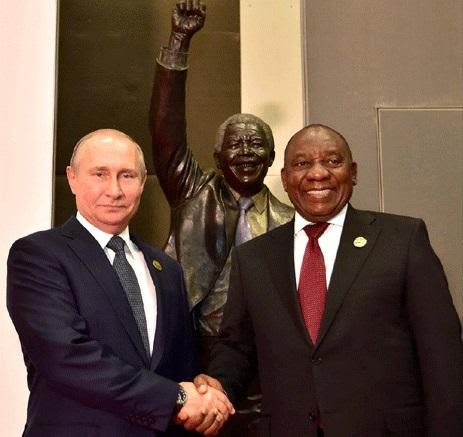
South Africa’s largest opposition party has made claims on Tuesday May 30 that it has taken legal measures to ensure that Vladimir Putin is arrested if he enters the nation for a summit in August.
The Democratic Alliance (DA) is asking the courts for “an order” stipulating that if Mr Putin arrives in South Africa to take part in the Brics summit (a group of countries comprising South Africa, Brazil, China, India, and Russia), the government must arrest him, as required by the International Criminal Court (ICC).
The ICC, based in The Hague, issued an arrest warrant against Vladimir Putin in March for the war crime of “deporting” Ukrainian children as part of Moscow’s offensive against Ukraine.
As South Africa is a member of the ICC, it is theoretically supposed to arrest the Russian president on his arrival in the country.
But Pretoria, which maintains close diplomatic relations with Moscow and insists on its “neutrality” in the conflict in Ukraine, has not yet indicated whether it will do so.
The DA explains that it has launched a “pre-emptive” judicial application to ensure that the government “respects its obligations” and hands Mr Putin over to the ICC if he comes to South Africa. No “judicial ambiguity” should persist, the statement said.
Kremlin spokesman Boris Peskov confined himself to saying on Tuesday that Russia would be “duly represented” at the Brics summit, without specifying whether Mr Putin planned to attend.
Moscow “assumes, of course” that its Brics partners “will not be guided” by “illegitimate decisions”, namely the ICC arrest warrant, he added.
The DA’s legal action comes as the government granted diplomatic immunity to officials attending a meeting of BRICS foreign ministers this week, followed by a summit of heads of state in August.
Some read the decision as a preparatory step to provide legal cover for Putin’s visit, but Pretoria insists it is standard procedure for the organisation of international conferences.
“These immunities do not cancel an arrest warrant issued by an international court against any participant in the conference”, the foreign affairs ministry defended itself on Tuesday morning.
South Africa has been criticised since the start of the war in Ukraine for its proximity to Moscow. In April, Mr Ramaphosa said that the ICC’s arrest warrant against Mr. Putin was putting a “spanner in the works” for South Africa.
The European Union (EU) has begun an interventionist project aimed at protecting residents of coastal towns in Nigeria’s Niger Delta region from the severe consequences of climate change.
The Security Component Coordinator of the project known as “Coping with Climate Change as a Cause of Conflict in Coastal Communities of West Africa (C7-West Africa),” Air Commodore Darlington Abdullahi, announced this during a two-day Inception/Ceremony and Cooperative Planning Event in Yenagoa, Bayelsa State.
Explaining further, Air Commodore Abdullahi promised that the EU will render support to the affected area in the best possible approach, just as it will get commitments from state and non-state actors regarding the project.
The Governor of Bayelsa state, Sen. Douye Diri, who was represented by Secretary to the State Government, Gideon Ekeuwei, called on the European Union, to intensify their support approach in helping coastal communities from negative effects as a result of climate change.
Ekeuwei also thanked the Italian Shipping Academy for appointing the Nigeria Maritime University as the local implementing partner, adding that the state government is ready to partner with the EU to ensure the success of the project.
Fielding questions from journalists, leaders of coastal communities expressed optimism of better days ahead for their people who suffer negative impacts, as well as, conflicts that are induced by climate change.
Also present at the event are Nigeria’s Chief of Defence Staff and Director-General of the National Environmental Standards, Regulations Enforcement Agency (NESREA) and the Chairman of the Bayelsa State Traditional Rulers Council who applauded a train the trainers’ workshops scheduled to hold in Rivers, Akwa Ibom, Delta, and Cross River States soon.
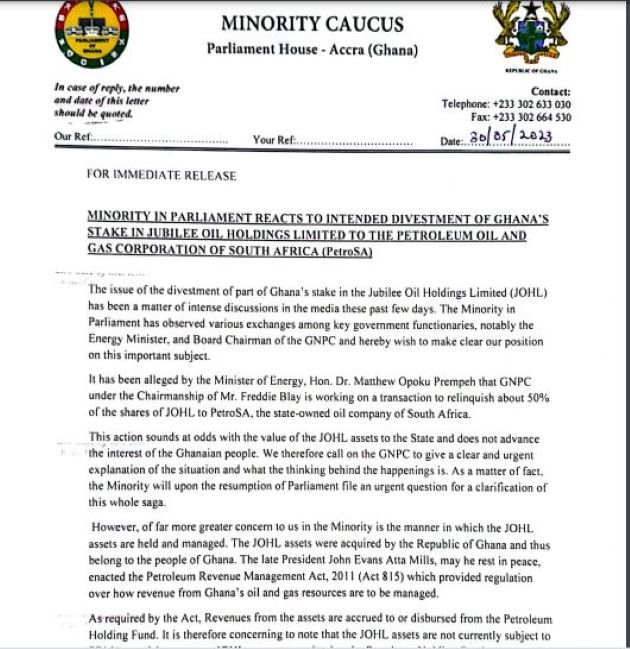
Upon the resumption of Parliament, the Minority declared its intention to submit an urgent question seeking clarification regarding the proposed divestment of Ghana’s stake in Jubilee Oil Holdings (JOHL) to the Petroleum Gas Corporation of South Africa (PetroSA).
It has been alleged that the Ghana National Petroleum Corporation (GNPC) under the Chairmanship of Mr Freddie Blay, is working on a transaction to relinquish about 50% of shares of JOHL to PetroSA.
Mr Blay has, however, denied any wrong doing.
Reacting to this claim, the Minority said apart from filing an urgent question for clarification of this saga, it is concerned with the manner in which the JOHL assets are being held and managed.
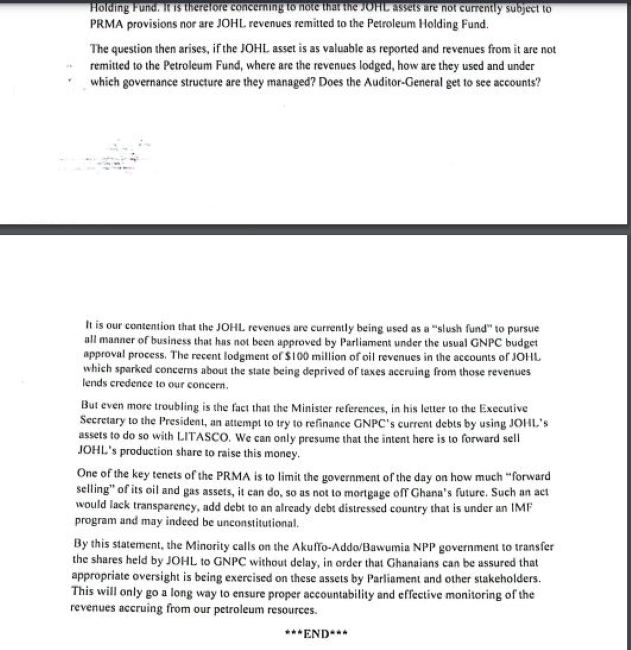
The Minority in a statement signed by its leader, Dr Cassiel Ato Forson claimed that the JOHL revenues are currently being used as “slush fund” to pursue all manner of business that has not been approved by Parliament under the usual GNPC budget approval process.
“The recent lodgment of $100 million of oil revenues in the accounts of JOHL which sparked concerns about the state being deprived of taxes accruing from these revenues leads credence to our concern,” the statement stated.
Even more troubling, according to the Minority, is the Energy Minister’s references in his letter to the Executive Secretary to the President, an attempt to try to refinance GNPC’s current debts by using JOHL’s asset to do so with LITASCO.
The Minority noted that it can presume that the intent is to forward sell JOHL’s production share to raise money.
To this end, they are calling on the Akufo-Addo-led government to transfer the shares held by JOHL to GNPC without delay, in order that Ghanaians can be assured that appropriate oversight is being exercised on these assets by parliament and other stakeholders.
This they say will ensure proper accountability and effective monitoring of the revenues accruing from the country’s petroleum resources.
Questioned on whether Russian leader Vladimir Putin will attend the Brics summit in South Africa in August, a Kremlin spokesman has said Russia will take part “at the proper level”, Reuters reports.
The Russian president was invited to the gathering earlier this year, but a warrant subsequently issued by the International Criminal Court (ICC) means South Africa would be expected to arrest him if he attends.
The Brics alliance represents some of the world’s leading emerging economies, including Brazil, Russia, China, India and South Africa.
“Russia attaches enormous importance to the development of this format of integration. And Russia will take part in this summit at the proper level,” Reuters quoted Kremlin spokesman Dmitry Peskov as saying at a briefing.
When pressed further about the arrest warrant, he said: “Of course we count as a bare minimum on partner countries in such an important format not being guided by such illegal decisions.”
South Africa has granted diplomatic immunity to officials attending the summit, but a foreign affairs spokesman added that such immunities were standard for international gatherings and did not override warrants issued by international tribunals.
Nigeria’s new president’s first full day in office is seeing panic buying of fuel following an announcement to end a decades-long subsidy on petroleum goods.
In Monday’s inaugural address, Bola Tinubu said the subsidy was “gone”.
But gave no timeframe or any more details of this major policy move.
On Tuesday, his team clarified that he meant end of June and that the panic buying is “needless” as the policy will not take immediate effect.
President Tinubu wants to ease pressure on government finances, but ending the subsidy will increase the petrol price and impact other prices too at a time when inflation is already high.
In response to Monday’s statement, many filling stations hiked the petrol price while others stopped selling altogether.
Nigeria’s state-owned oil company, the sole importer of petroleum products, assured the public that it has enough supplies.
But this did not prevent the panic buying, with most people fearing a drastic rise in price of petrol which should be sold at the regulated price of 185 naira per litre (£0.32, $0.40).
Some people have posted videos online of filling stations already increasing prices, in some cases by more than 200%.
Some private bus drivers, which many Nigerians rely on to get around, have also been unable to fill up their vehicles. This has left people stranded at major bus stops in the capital, Abuja, and the country’s biggest city, Lagos.
Despite its oil wealth, Nigeria is unable to refine enough crude to meet local demands so it imports petroleum products, which are then sold at a government-set price.
But the subsidy is a huge drain on public finances. Last year it gulped 4.3trn naira ($9.3bn; £7.5bn) and for the first half of this year, 3.36trn naira was budgeted for it.
On Monday, Mr Tinubu said It could no longer be justified and that the funds would instead be spent on public infrastructure and to improve the lives of people.
But the subsidy has long been seen by many Nigerians as one of the few perks they receive from the state.
The last attempt to remove it in 2012 led to nationwide protests and then President Goodluck Jonathan had to perform a policy U-turn.
So far, a powerful association of those who sell petroleum products has come out to say it does not support President Tinubu’s plan. It said the new government should begin a dialogue before taking the decision.
The spokesman of the Independent Petroleum Marketers Association of Nigeria, Ukadike Chinedu, is quoted by Nigeria’s Punch newspaper as saying that the move will cause “galloping inflation and inflict more hardship on the masses”.
Numbers released by the police in South Africa on Tuesday May 30 indicates that 3 murder cases are recorded every hour in the first quarter of the year
Every three months, at a press conference broadcast live on television, Police Minister Bheki Cele paints a bleak picture of insecurity in one of the most dangerous countries in the world.
Between January and March, the number of murders rose by 3.4% compared with the same period last year, with 6,289 cases recorded.
But “fewer children were killed than last year”, said Mr. Cele, with child murders down by 20%. “We are gradually making up ground on the criminals“, the minister said.
By way of comparison, South Africa records an average of ten homicides per 100,000 inhabitants, while Japan is close to zero and France one, according to the World Bank.
Sometimes described as the “epicentre of rape” because of the impressive number of complaints, South Africa opened more than 10,500 cases in the first three months of the year. This figure is down for once, with 2.8% fewer cases reported than over the same period last year.
Cash-in-transit attacks, on the other hand, rose by more than 20% and thefts from residences by almost 6%.
An appeal has been made by the newly-appointed Vice President-Confederation for the Development of Poultry in Africa (CADA), Mr. John Bewuah Edusei, calling for commitment to revive the local poultry industry and the agricultural industry as a whole.
This, he said, should be done while shunning the political gimmickry that has characterised successive governments’ policies on the sector, especially in the face of threatening global food insecurities.
He cautioned that the country’s failure to transform the agriculture sector could result in hunger and famine, especially due to a ‘population explosion’.
According to the 2022 United Nations Population Division forecast, the future population of the world’s countries – based on current demographic trends – will reach 9.7 billion people by 2050 and 10.9 billion by 2100.
Meanwhile, a greater proportion of this population growth is expected to come from the African continent.
It is against this background that Mr. Edusei cautioned that a great famine beckons the continent if leadership do not take pragmatic steps in domesticating agricultural products.
“The time to plan is now. We either plan towards 2050 today and stop the games and politics or be ready to face the consequences of our actions tomorrow,” he stated.
The Vice President of CADA, who was speaking at a media engagement in Kumasi on his return from the CADA conference in Morocco, stated that: “Nobody knows when the next disaster will strike this world; we need to plan and ensure food security before it is too late.
“If dry Morocco and Burkina can grow their food requirements, green Ghana must do better in maize and chicken production,” he added.
He said Ghana will have to do more to feed its citizenry as the forecast emphasises animal-based protein, especially from poultry products.
“Poultry will have to play a major role going forward. But where are the poultry farms today? It becomes obligatory for us to have a systematic and sustainable development poultry growth plan…All our major layer-farms are down, and our broiler production is below 2 percent of national requirements,” he lamented.
Furthermore, he mentioned that some farms have declined from a capacity of 800,000 birds to less than 20,000 – noting the situation as worrying, “but the worst part of it is the exceptionally high job losses”.
Ghana’s chicken imports, according to Mr. Edusei, have almost doubled from US$375million in 2018 – noting that government has failed in curbing the high importation figures, leading to rampant job losses locally.
However, he acknowledged that the ‘Planting for Food and Jobs’ (PFJ) programme increased maize production; but insisted that the successes will be useless unless it is linked with a robust plan for pricing, storage and marketing.
He advocated that it is time to buy the produce at a good price from farmers, store them in our silos and market it all year round.
“The earlier as a nation we start with strategic programmes to systematically increase maize and poultry production, the stronger we will be to face the consequences of population hikes in 2050 and beyond,” he stated.
The purpose of CADA is to promote the poultry industry in Africa, through training and defending the interests of African poultry players through strategic programmes.
It also aims to promote and develop Modern Poultry Farming. This materialises the common vision of establishing a systematic growth in African poultry all over the African continent.
The necessity for an African single trade currency was emphasized by participants and speakers at the recently concluded 7th Ghana International Trade and Finance Conference (GITFiC).
According to the stakeholders, a common currency will not only boost trade and industrialisation in Africa but also promote regional solidarity and cooperation between the nations.
The above, they said, can be achieved only when the right mechanisms such as a strong and growing political will, robust policies, industrialization, among others, are put in place to achieve market integration in Africa.
Dr Dossina Yeo, former acting Director of Economic Development Trade and Integration at the African Union (AU) in an interview with GhanaWeb bemoaned the challenges delaying the implementation.
He urged political leaders to fulfill their pledges of constructing workable plans to significantly advance the establishment of a common monetary system across African nations, during previous AU and AfCFTA summits.
“We talked about the different development rates in Africa with some countries facing high inflation rates and issues of debt. We know this thing will not stop. [But] we need to stop, mitigate the risk to transform the African economy and many steps have been taken like the industialisation plan and the discussion that was held last year in AU summit and AfCFTA summits in Niger. Leaders came out with key recommendation that will make Africa develop to conform itself so we wouldn’t continue to export our raw materials, to transform our raw materials to a stage where we can trade among ourselves and reduce some of the risks we are seeing now and start converging towards the creation of the African common currency.”
In a welcome address, the Eastern Regional Minister, Seth Acheampong, lauded the GITFiC initiative describing it as an important platform for cross-fertilization of ideas, insights, and innovations that could shape the future of international trade and investment and finance, especially in Africa. He urged participants from across 10 African nations to take advantage of the confab to collaborate and engage in joint partnerships and explore opportunities that transcend our borders and propel our economies forward.
“In an increasingly interconnected world, the significance of international trade and finance cannot be overemphasized. It fuels growth, drives investment and opens door to prosperity for nations, enterprises and individuals alike.”
“Africa’s strong growing political will and commitments of Heads of State to achieve market integration in Africa demonstrates its commitment towards the success of the African Continental Free Trade Area (AfCFTA). As policy makers and experts, we ought to continue to proffer solutions that will improve the business and investment climate with a view to creating an enabling environment for the private sector to contribute to the development of inclusive and sustainable growth in Africa through industrialization, trade and the creation of employment opportunities.” He added.
Deputy Foreign Affairs Minister, Thomas Mbomba, stated that Ghana, a strong supporter of the single currency idea, is committed to implementing a single currency to benefit the economy and African continent.
He also assured that the government would continue to invest in the facilities required to sustain trade on the continent.
Mbomba added that the government’s “one district, one factory” initiative may open the door to widespread industrialisation, which would result in the production of jobs and services for the continent.
“The road ahead may not be without challenges, but our collective determination and commitment will pave the way for a prosperous Africa,” he said.
The GITFIC is an annual conference that brings together business executives, policy makers and subject matter experts from all over the world to articulate ways of enhancing inter Africa trade, regional integration, trade liberalization, trade policies and practices of the African continent and notably to turn talks into actions. The 7th edition was held under the theme ‘Senchi Consensus on Africa’s single currency’.
Topics discussed included Prospects on Africa’s single currency, Actualising Africa’s industrialization agenda in the era of AfCFTA: The role of Africa’s Small and Medium scale enterprises – The ECOWAS perspective, sovereign economic vulnerabilities.
The Chief Executive Officer of GITFiC, Selasi Koffi Ackom, described the conference as a phenomenal one following the various conversations from the panelists.
He stressed that the call for a single currency is inevitable stating that it would happen at some point, despite the many setbacks.
In his words, “We believe from where we stand as an institution that the political will is almost zero. Until we get the political will, we will still depend on the greenback. The greenback [dollar] will still determine our economy. Political independence was a vision, a dream, it has come to pass. Economic independence is equally a vision and it will come to pass. And forums such as ours would help push the advocacy to get this done.”
The former CEO of Cevital Group, Rebrab, who announced his resignation from the management of Cevital Group in June 2022 and who handed over the torch to his son, Malik, will not be able to manage a business until further notice.
Rebrab was kept under judicial control by the public prosecutor on May 18 at the Sidi M’Hamed court.
However, the businessman’s troubles do not end there.
According to an official document from Algeria’s judiciary dated May 23, 2023, Rebrab is banned from any commercial or management activity within his company, Cevital.
This document, widely shared on social networks, is signed by the investigating judge of the economic and financial center at the Sidi M’hamed court.
It is addressed to the presidents of the regional chambers of notaries.
It stipulates that Rebrab “is prohibited from exercising any commercial activity or any other mission in his capacity as a director or member of the Board of Directors or from any management activity within the company.”
The decision comes a little over a week after the placement of the former CEO of Cevital under judicial control. Rebrab is under trial for engaging in “questionable financial transactions” with foreign-based entities. He was charged on May 18.
As a result, Rebrab, who had announced his retirement from Cevital Group, is again caught up in a court case.
Remember that the richest man in Algeria was sentenced by the Sidi M’Hamed court on Dec. 31, 2019, to 18 months in prison, including six months and a $9.5-million fine.
The Algerian Justice Department has accused the former CEO of overcharging for water purification equipment imported by its subsidiary, EvCon.
There is an urgent need for coordinated efforts to aggressively address difficulties impacting the country’s credit climate according to John Awuah, Chief Executive Officer of the Ghana Association of Banks (GAB).
Speaking during a webinar on sustaining confidence in the financial sector, Mr. Awauh expressed concern over the seemingly low loan-to-deposit and loan-to-credit ratios in the industry – as well as the protracted judicial system, which he said significantly hampers loan recovery and allows defaulting customers to exploit the courts; putting banks in a vulnerable position.
“Looking at the judicial system, it takes on average three to five years for loan recovery. When a customer is known to have defaulted, the customer becomes a champion in our courts. He is the hunter, and the bank becomes the hunted,” he remarked.
Mr. Awauh echoed sentiments shared by other industry analysts, emphasising the need for improvements in loan adjudication, recovery processes and better know your customer (KYC) protocols.
In recent times, there have been instances when individuals who oversaw the collapse of businesses that owe banks were able to set up new entities, and access credit from the banking system without any consequences.
The GAB top officer cautioned against merely focusing on superficial measures that boost the top line without addressing the underlying problems. As an example, he pointed to instances when banks discovered that the Lands Commission had endorsed and registered documents but customers had alternative documents and sold off the assets – leading to complications during execution.
The CEO also drew attention to the prevalence of individuals who having taken loans from banks vanish without repayment, driving non-performing loans (NPLs) to alarming levels.
“Almost everyone has an experience of a close associate who has taken money and disappeared. It is these same persons who come to the banking system, take personal loans and drive NPLs to 15 percent. That means for every GH¢100 that banks give out, on average they are likely to lose at least GH¢15,” he explained, underscoring the need for urgency to address the systemic issues contributing to the credit environment’s challenges.
Data from the Bank of Ghana show that the industry’s non-performing loans ratio deteriorated to 18 percent in April 2023 from 14.3 percent in April 2022, in part due to elevated credit risks.
To tackle these issues comprehensively, Mr. Awauh stressed the need for a thorough discussion that addresses the entire framework and credit culture. He argued against granting access to lending for individuals who default on their property rates, for instance; citing that this practice does not align with forward-looking approaches adopted elsewhere.
While acknowledging the Ghana card’s positive impact, he questioned the effectiveness of efforts to expedite progress and collaboration among stakeholders.
As of December 2022, lending to households had grown by only 14.4 percent on a year-on-year basis compared to 38.5 percent to firms.
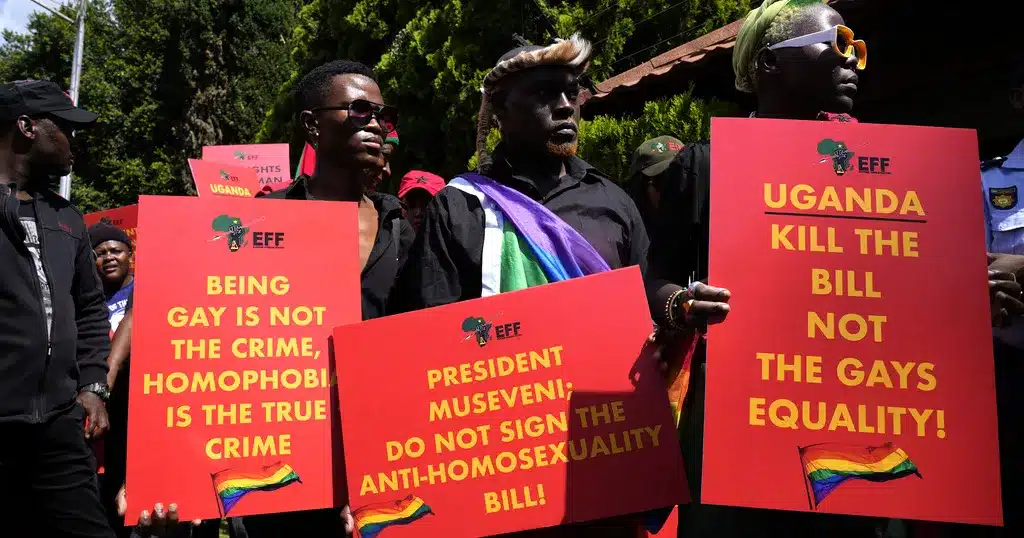
Uganda’s new anti-gay law has sparked a range of emotions in the East African country. President Yoweri accepted the revised measure on Monday, causing the United States and European countries to threaten sanctions and aid cuts.
A section of Ugandans say the anti-homosexuality legislation is the least of the country’s priorities.
“It is not what we need right now. The kind of rights, we cannot be talking about such rights when fundamental rights like human rights, rights to access to education, access to health services we have not fought for such rights and we go for that other right,” said Shem Luyombya, a Kampala resident.
But some Ugandans said the law is an unnecessary provocation against donor countries.
“If sanctions can affect a country like Russia then who are we to say that we are not going to be affected by it? The world is a global village so if they cut you off you are actually going to suffer some repercussions but then again it comes to the point of how far can someone else influence how you run your country?,” wondered Jonathan Owot, a Kampala resident.
LGBTQ rights campaigners say the new legislation is unnecessary in a country where homosexuality has long been illegal under a colonial-era law criminalising sexual activity “against the order of nature.”
The punishment for that offense is life imprisonment.
President of the United States Joe Biden has urged that Uganda’s Anti-Homosexuality Law be repealed, just one day after it was signed into law by his counterpart, Yoweri Kaguta Museveni.
The White House, on May 29, published a statement in which Biden referred to the new law as a “tragic violation of universal human rights.”
He also descried it as wrong and called for its repeal immediately.
The US government also listed a number of economic sanctions Uganda will be subjected to adding that visa sanctions will be imposed to officials over the law and instances of corruption.
President Museveni signs anti-LGBTQ law
President Yoweri Museveni signed the much talked-about anti-homosexuality bill into law on May 29.
The new legislation limits the offence of homosexuality to gay sexual acts, carrying a maximum penalty of life imprisonment.
Aggravated offences, such as sexual abuse against minors or disabled individuals, or infecting a victim with a lifelong illness, can result in the death penalty, the BBC Africa LIVE page reported.
The law also mandates reporting of any homosexual abuse against children or vulnerable individuals. International organizations expressed deep concern over the law’s impact on health education and outreach programs for AIDS and the safety and well-being of LGBTQ individuals.
Statement from President Joe Biden on the Enactment of Uganda’s Anti-Homosexuality Act
The enactment of Uganda’s Anti-Homosexuality Act is a tragic violation of universal human rights—one that is not worthy of the Ugandan people, and one that jeopardizes the prospects of critical economic growth for the entire country. I join with people around the world—including many in Uganda—in calling for its immediate repeal. No one should have to live in constant fear for their life or being subjected to violence and discrimination. It is wrong.
Since the Anti-Homosexuality Act was introduced, reports of violence and discrimination targeting Ugandans who are or are perceived to be LGBTQI+ are on the rise. Innocent Ugandans now fear going to hospitals, clinics, or other establishments to receive life-saving medical care lest they be targeted by hateful reprisals. Some have been evicted from their homes or fired from their jobs. And the prospect of graver threats—including lengthy prison sentences, violence, abuse—threatens any number of Ugandans who want nothing more than to live their lives in safety and freedom.
This shameful Act is the latest development in an alarming trend of human rights abuses and corruption in Uganda. The dangers posed by this democratic backsliding are a threat to everyone residing in Uganda, including U.S. government personnel, the staff of our implementing partners, tourists, members of the business community, and others. As such, I have directed my National Security Council to evaluate the implications of this law on all aspects of U.S. engagement with Uganda, including our ability to safely deliver services under the U.S. President’s Emergency Plan for AIDS Relief (PEPFAR) and other forms of assistance and investments. My Administration will also incorporate the impacts of the law into our review of Uganda’s eligibility for the African Growth and Opportunity Act (AGOA). And we are considering additional steps, including the application of sanctions and restriction of entry into the United States against anyone involved in serious human rights abuses or corruption.
The United States shares a deep and committed partnership with the people of Uganda. For more than 60 years, we have worked together to help millions of Ugandans live healthier, more productive lives.
Our programs have boosted economic growth and agricultural productivity, increased investments in Ugandan businesses, and strengthened our trade cooperation. In total, the U.S. Government invests nearly $1 billion annually in Uganda’s people, business, institutions, and military to advance our common agenda. The scale of our commitments speaks to the value we place on this partnership—and our faith in the people of Uganda to build for themselves a better future. It is my sincere hope that we can continue to build on this progress, together, and strengthen protections for the human rights of people everywhere.
The local currency has lost 1.48 percent of its recent advances. At the end of last week, it was worth GH10.98 to the US dollar.
Initially, positive market sentiments prevailed and were attributed to approval of the US$3billion International Monetary Fund (IMF) bailout programme. However, an increase in demand for hard currency exerted pressure on the local unit despite tight supply conditions.
During a recent Monetary Policy Committee meeting, the Bank of Ghana decided to maintain its policy rate at 29.5 percent. This decision took into account factors such as easing inflationary pressure observed in April, which stood at 41.2 percent compared to 45 percent in March and 52.8 percent in February.
The relative stability of foreign exchange rates in recent weeks was also considered. Despite these factors, projections indicate sustained pressure on the cedi due to the spike in foreign currency demand – particularly for the American greenback.
Executive Director of the Young Investors’ Network (YIN), Kofi Busia Kyei, in recent comments emphasised the impact of ongoing discussions in the United States regarding the debt ceiling.
He noted that the feedback and uncertainty surrounding the negotiations had reversed gains made by the cedi within a short period.
“The cedi continues to depreciate at a concerning rate,” he noted.
The recent developments in the US, where top officials have reached a tentative deal to suspend the federal government’s US$31.4trillion debt ceiling, have directly influenced performance of the cedi. It is expected that the cedi’s depreciation could worsen if the US Congress reaches and passes an agreement.
The market analyst highlighted the importance of government implementing effective measures to address the issue and prevent further depreciation.
“Unless the Ghanaian government implements effective measures to address this issue, the cedi is likely to continue depreciating. It is possible that the second tranche from the IMF inflows could provide some relief for the local currency, but this is dependent on other factors remaining stable,” he said.
“Overall, it is crucial that the Ghanaian government takes proactive steps to mitigate effects of the cedi’s depreciation on the economy,” he added.
At the end of the last trading week, the cedi experienced a bearish performance against major currencies. The US$/GH¢ currency pair ended the week at GH¢10.98 per US dollar, indicating a loss of -1.48 percent in value of the cedi against the dollar, according to the official rate. On the retail side, it had dipped to GH¢11.4 to a dollar.
Conversely, the GB£/GH¢ currency pair recorded a rate of GH¢13.54 per pound sterling, signalling a gain in the pound’s value while the cedi slumped by -0.29 percent relative to the pound.
“We project sustained pressure on the cedi in the coming days with the spike in hard currency demand,” stated AZA Finance in its review of the FX market.
While the second tranche of the IMF loan inflows – valued at US$600million and to be disbursed in November if certain benchmarks are met – holds the potential to provide some temporary relief for the local currency, the cedi’s exposure to shocks remains a cause for concern.
The tentative agreement on the US debt ceiling will suspend the limit through January 2025, along with spending caps for the 2024 and 2025 budgets. Additional provisions of the deal include reclaiming unused COVID-19 funds, expediting the permitting process for specific energy projects, and incorporating additional work requirements for food aid programmes targetting impoverished Americans.
The agreement’s success hinges on its passage through Congress, given the narrow divide between parties. The Treasury department warned that it will face a shortage of funds to cover obligations if the debt ceiling issue is not resolved by June 5.
The Bank of Ghana’s interbank forex rates for today, May 30, 2023, show that the Ghana Cedi is trading against the dollar at a purchasing price of 10.9932 and a selling price of 11.0042.
At a forex bureau in Accra, the dollar is being bought at a rate of 11.30 and sold at a rate of 12.00.
Against the Pound Sterling, the Cedi is trading at a buying price of 13.5788 and a selling price of 13.5935.
At a forex bureau in Accra, the pound sterling is being bought at a rate of 14.00 and sold at a rate of 15.00.
The Euro is trading at a buying price of 11.7728 and a selling price of 11.7846.
At a forex bureau in Accra, Euro is being bought at a rate of 12.00 and sold at a rate of 12.70.
The South African Rand is trading at a buying price of 0.5594 and a selling price of 0.5599.
At a forex bureau in Accra, South African Rand is being bought at a rate of 0.30 and sold at a rate of 0.90.
The Nigerian Naira is trading at a buying price of 42.1277 and a selling price of 42.2441.
At a forex bureau in Accra, Nigerian Naira is being bought at a rate of 12.00 Naira for every 1 Cedi and sold at a rate of 18.00.
For the CFA, it is trading at a buying price of 55.6622 and a selling price of 55.7180.
At a forex bureau in Accra, CFA is being bought at a rate of 17.00 CFA for every 1 Cedi and sold at a rate of 21.00 CFA for every 1 Cedi.
Note that these rates may be different at a forex bureau near you. Our forex bureau rates are provided by Afriswap Bureau De Change in Osu, Accra.
Our forex bureau rates are provided by Afriswap Bureau De Change in Osu, Accra.
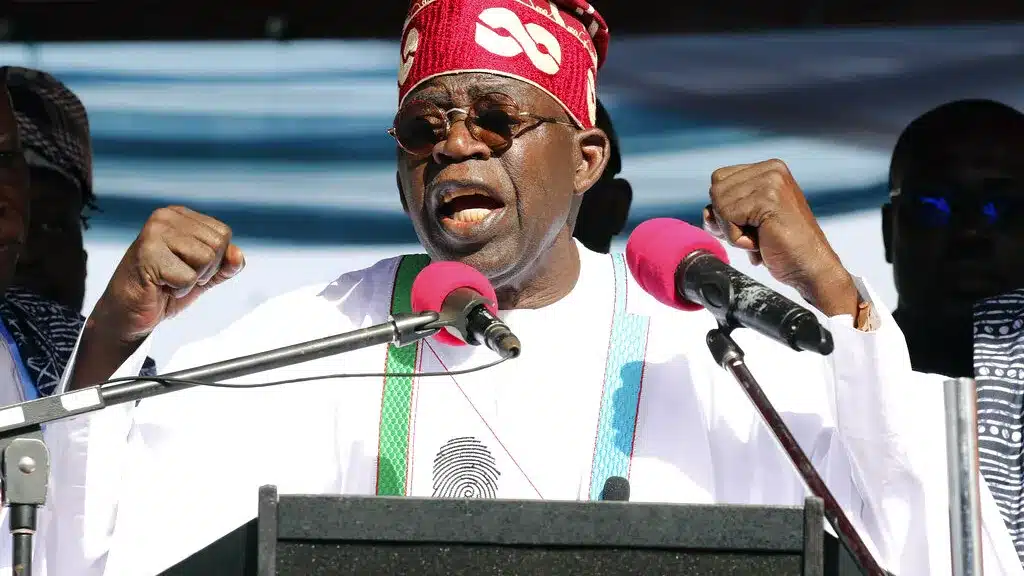
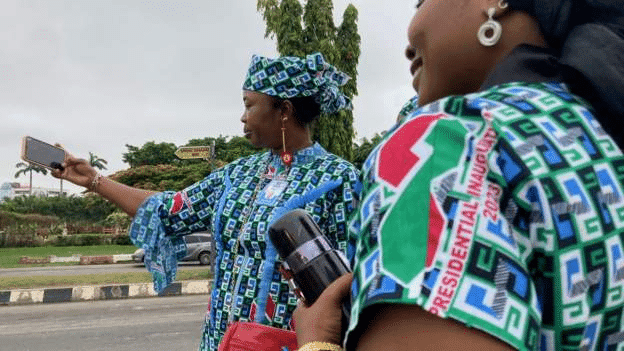
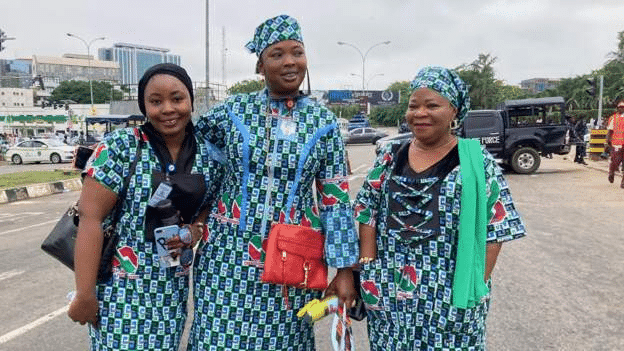
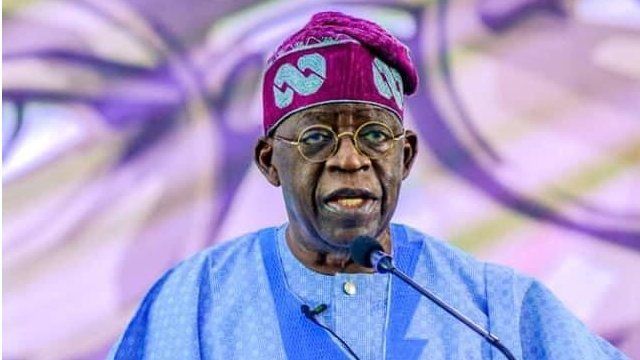
President Bola Tinubu was sworn in as Nigeria’s 16th president today Monday May 29 2023, amid colorful ceremonies and a joyous atmosphere at Eagle Square.
Tinubu, in his inaugural speech, touched on keynote policies and initiatives that will herald the start of his administration.
Here are seven major takeaways from the President’s speech.
Fuel subsidy is gone
TInubu, has reaffirmed that the era of fuel subsidy is gone.
He said, “We commend the decision of the outgoing administration in phasing out the petrol subsidy regime which has increasingly favoured the rich more than the poor. Subsidy can no longer justify its ever-increasing costs in the wake of drying resources.
“We shall instead re-channel the funds into better investment in public infrastructure, education, health care and jobs that will materially improve the lives of millions.
We’ll create jobs, prosperity for youth
The president emphasized that his administration must create meaningful opportunities for our youth, saying “We shall honour our campaign commitment of one million new jobs in the digital economy.
“Our government also shall work with the National Assembly to fashion an omnibus Jobs and Prosperity bill. This bill will give our administration the policy space to embark on labour-intensive infrastructural improvements, encourage light industry and provide improved social services for the poor, elderly and vulnerable,” he said.
We shall reform security doctrine
Tinubu noted that security shall be the top priority of his administration, because neither prosperity nor justice can prevail amidst insecurity and violence.
He said, “To effectively tackle this menace, we shall reform both our security DOCTRINE and its ARCHITECTURE.
“We shall invest more in our security personnel, and this means more than an increase in number. We shall provide, better training, equipment, pay and firepower.”
We’ll target higher GDP growth
On the economy, Tinubu said he will target a higher GDP growth and to significantly reduce unemployment.
“We intend to accomplish this by taking the following steps: First, budgetary reform stimulating the economy without engendering inflation will be instituted.
“Second, industrial policy will utilize the full range of fiscal measures to promote domestic manufacturing and lessen import dependency.
“Third, electricity will become more accessible and affordable to businesses and homes alike. Power generation should nearly double and transmission and distribution networks improved. We will encourage states to develop local sources as well.
“I have a message for our investors, local and foreign: our government shall review all their complaints about multiple taxation and various anti-investment inhibitions.
“We shall ensure that investors and foreign businesses repatriate their hard earned dividends and profits home,” he said.
We’ll create agricultural hubs across nation
Tinubu said rural incomes shall be secured by commodity exchange boards guaranteeing minimal prices for certain crops and animal products, adding that “A nationwide programme for storage and other facilities to reduce spoilage and waste will be undertaken.
“Agricultural hubs will be created throughout the nation to increase production and engage in value-added processing. The livestock sector will be introduced to best modern practices and steps taken to minimize the perennial conflict over land and water resources in this sector.
“Through these actions, food shall be made more abundant yet less costly. Farmers shall earn more while the average Nigerian pays less.”
Monetary policy needs thorough housecleaning
President Tinubu noted that the monetary policy needs thorough housecleaning, saying the Central Bank must work towards a unified exchange rate.
“This will direct funds away from arbitrage into meaningful investment in the plant, equipment and jobs that power the real economy.
“Interest rates need to be reduced to increase investment and consumer purchasing in ways that sustain the economy at a higher level.
“Whatever merits it had in concept, the currency swap was too harshly applied by the CBN given the number of unbanked Nigerians. The policy shall be reviewed. In the meantime, my administration will treat both currencies as legal tender,” he said.
Our foreign policy objective is peace, stability
Tinubu said, “Given the world in which we reside, please permit a few comments regarding foreign policy.
“The crisis in Sudan and the turn from democracy by several nations in our immediate neighbourhood are of pressing concern.
“As such, my primary foreign policy objective must be the peace and stability of the West African subregion and the African continent. We shall work with ECOWAS, the AU and willing partners in the international community to end extant conflicts and to resolve new ones.
“As we contain threats to peace, we shall also retool our foreign policy to more actively lead the regional and continental quest for collective prosperity.”
The Ministry of Energy has raised concerns over a US$1.7 billion bill for a Floating Oil Production Storage Offloading (FPSO) vessel purchased by the Norwegian company Aker Energy Ghana Limited for US$35 million as part of a Plan of Development (PoD) to the government.
“Even though Aker has sold their interest in Ghana, they are scheming to stay on the Pecan development through surrogates and Ghanaian collaborators across segments of our society to amass ridiculous benefits from the Pecan field development.
“Aker Energy purchased an FPSO for $35 million. In their Plan of Development submitted to the Government, Aker’s previous owners intend to bill Ghana $1.7 billion for the FPSO. We admit that the energy ministry has raised a preliminary objection to the cost of the FPSO. But there is no proposal on how much the Ministry considers fair value for the FPSO.
The revelation was made at last week’s press conference by some 29 Civil Society Organizations (CSOs) during which they revealed how Aker’s oilfield in Ghana, is shockingly been sold as scrap at a symbolic price of US$1 to AFC Equity Investment, a subsidiary of Africa Finance Corporation (AFC) although two years ago, 37percent of that field was price at US$1.6 billion.
According to the CSOs, their campaign is a reminder of the importance of holding governments accountable and ensuring that the interests of the people are protected. It is also a reminder that value for money should always be a key consideration when making decisions about public resources.
They had argued that “newly constructed FPSOs, which are normally converted oil tankers with a few years of operational history, typically cost between $700-1.2 billion to build over a 2–3-year timespan, so why are the developers opting to charge Ghana a hefty sum of $1.7bn for more or less ‘scrap metal’ when the book value of the FPSO is significantly less than that? For example, the FPSO project for Guyana’s Yellowtail project costs US$1.75 billion, according to SBM Offshore (the EPC company).
“The FPSO will be designed to produce approximately 250,000 barrels of oil per day, will have an associated gas treatment capacity of 450 million cubic feet per day and water injection capacity of 300,000 barrels per day. The FPSO will be spread-moored in a water depth of about 1,800 meters and will be able to store around 2 million barrels of crude oil. Ghana’s Aker FPSO is nowhere near these technical specifications.
“Originally, a tanker called S.T. Polar Alaska, manufactured 36 years ago, was converted into an FPSO 14 years ago. Typically, FPSOs have an average payback period of 5-7 years, varying based on size and configuration. The lease period for rented options is commonly ten years. Technocrats have expressed concerns about the FPSO’s age and have recommended caution, but there is political pressure to proceed with the deal. We are monitoring this keenly and demand transparency on the judgment of the Ministry before the approval is granted.
On the sale of the Aker Energy oilfield, which was offered that Ghana National Petroleum Corporation (GNPC) under Dr. Kofi Kodua Sarpong, for US$1.6 billion two years ago, the US$1 dollar became possible because Aker Norway, had defaulted on a loan of US$200 million they were given by AFC to invest in Pecan, hence had to hand over the asset in a face-saving “sale” at the ridiculous amount. Pertinent
The Herald’s investigations have established that the oilfield was later appraised by Bank of America to be US$300 million and not US$1.6 billion as submitted to Parliament by the Energy Minister, Dr. Matthew Opoku Prempeh, and Dr K.K Sarpong then CEO of GNPC in between July and August 2021. The appraisal was done on the directives of Finance Minister, Ken Ofori-Atta, and report submitted to President Akufo-Addo.
Details about the ridiculous transaction, came to light at last Tuesday’s press conference by some 29 CSOs during which the President, Nana Akufo-Addo, was asked to sack the GNPC Board Chairman, Freddie Blay, for attempting to sell a 50 percent stake in the offshore Jubilee Holdings Limited (JOHL) to PetroSA.
Interestingly, it has been discovered that, despite Aker’s sale of its interest to AFC, it is using the backdoor scheming to still hang around the Pecan oilfield through surrogates and Ghanaian collaborators across segments in society to amass ridiculous benefits from the Pecan field development.
Civil Society Organisations (CSOs) in Ghana, committed to accountability in the energy sector, formed a coalition to block the transaction.
The Government and the GNPC, adamantly insisted that this was a good deal for the country. Various analysts, consultants, and professors at home and abroad were lined up to circumvent the glaring evidence that, based on available data, the two oil blocks had been ridiculously overpriced.
Parliament was swayed to grant authorisation to GNPC to spend a maximum of $1.1 billion, money to be borrowed in the name of Ghana, on the blocks. CSOs were, to put it mildly, outraged.
Fast-forward two years later, SWDT has been returned to Ghana for free. The so-called massive find (“Nyankom”) that the GNPC swore it was getting for a bargain is no longer the tantalising prospect it was sold to Parliament.
The main block, DWT/CTP, the more viable field, Pecan, is now effectively controlled by AFC Equity Investment, a subsidiary of Africa Finance Corporation (AFC), Aker’s main creditor.
Aker Norway, has more or less defaulted on the loan of $200 million they were given to invest in Pecan and handed over the asset in a face-saving “sale” for $1.
Aker will only recoup some of its earlier investment, if AFC, succeeds in developing the field to the point where it can produce and sell oil to recoup its investment and make some money.
So, in short, the same blocks that barely two years ago, were worth more than half the IMF money this country has sweated blood for nearly a year to secure, have either been abandoned or pawned for scraps.
The question likely to be on the minds of the public is: what happened to the $1.1 billion that GNPC was authorised by Parliament to borrow to buy stakes in Nyankom and Pecan? The answer is simple: the energy minister, GNPC and the bevy of bureaucrats at the various state agencies feel that they don’t have to answer to anyone. And nobody can make them talk.
So after nearly throwing away $1.6 billion for stuff that Ghana could simply have waited and gotten back for free, the people responsible for such reckless decision-making are still taking strategic decisions for the country and refusing to account for any aspect of their stewardship. Sadly, the controversies around Aker are far from over.
But there is no proposal on how much the Ministry considers fair value for the FPSO. Newly constructed FPSOs, which are normally converted oil tankers with a few years of operational history, typically cost between $700-1.2 billion to build over a 2–3-year time span.
The CSOs questioned “why are the developers opting to charge Ghana a hefty sum of $1.7bn for more or less ‘scrap metal’ when the book value of the FPSO is significantly less than that?
They argued that “the FPSO project for Guyana’s Yellowtail project costs US$1.75 billion, according to SBM Offshore (the EPC Company). The FPSO will be designed to produce approximately 250,000 barrels of oil per day, will have associated gas treatment capacity of 450 million cubic feet per day and water injection capacity of 300,000 barrels per day”.
“The FPSO will be spread moored in water depth of about 1,800 meters and will be able to store around 2 million barrels of crude oil. Ghana’s Aker FPSO is nowhere near these technical specifications 2. Originally, a tanker called S.T. Polar Alaska, manufactured 36 years ago, was converted into an FPSO 14 years ago. Typically, FPSOs have an average payback period of 5-7 years, varying based on size and configuration.
“The lease period for rented options is commonly ten years. Technocrats have expressed concerns about the FPSO’s age and have recommended caution, but there is political pressure to proceed with the deal. We are monitoring this keenly and demand transparency on the judgment of the Ministry before the approval is granted”.
The CSOs explained that their “campaign is a reminder of the importance of holding governments accountable and ensuring that the interests of the people are protected. It is also a reminder that value for money should always be a key consideration when making decisions about public resources.”
“Even though Aker has sold their interest in Ghana, they are scheming to stay on the Pecan development through surrogates and Ghanaian collaborators across segments of our society to amass ridiculous benefits from the Pecan field development.
“Aker Energy purchased an FPSO for $35 million. In their Plan of Development submitted to the Government, Aker’s previous owners intend to bill Ghana $1.7 billion for the FPSO. We admit that the energy ministry has raised a preliminary objection to the cost of the FPSO. But there is no proposal on how much the Ministry considers fair value for the FPSO.
The revelation was made at last week’s press conference by some 29 Civil Society Organizations (CSOs) during which they revealed how Aker’s oilfield in Ghana, is shockingly been sold as scrap at a symbolic price of US$1 to AFC Equity Investment, a subsidiary of Africa Finance Corporation (AFC) although two years ago, 37percent of that field was price at US$1.6 billion.
According to the CSOs, their campaign is a reminder of the importance of holding governments accountable and ensuring that the interests of the people are protected. It is also a reminder that value for money should always be a key consideration when making decisions about public resources.
They had argued that “newly constructed FPSOs, which are normally converted oil tankers with a few years of operational history, typically cost between $700-1.2 billion to build over a 2–3-year timespan, so why are the developers opting to charge Ghana a hefty sum of $1.7bn for more or less ‘scrap metal’ when the book value of the FPSO is significantly less than that? For example, the FPSO project for Guyana’s Yellowtail project costs US$1.75 billion, according to SBM Offshore (the EPC company).
“The FPSO will be designed to produce approximately 250,000 barrels of oil per day, will have an associated gas treatment capacity of 450 million cubic feet per day and water injection capacity of 300,000 barrels per day. The FPSO will be spread-moored in a water depth of about 1,800 meters and will be able to store around 2 million barrels of crude oil. Ghana’s Aker FPSO is nowhere near these technical specifications.
“Originally, a tanker called S.T. Polar Alaska, manufactured 36 years ago, was converted into an FPSO 14 years ago. Typically, FPSOs have an average payback period of 5-7 years, varying based on size and configuration. The lease period for rented options is commonly ten years. Technocrats have expressed concerns about the FPSO’s age and have recommended caution, but there is political pressure to proceed with the deal. We are monitoring this keenly and demand transparency on the judgment of the Ministry before the approval is granted.
On the sale of the Aker Energy oilfield, which was offered that Ghana National Petroleum Corporation (GNPC) under Dr. Kofi Kodua Sarpong, for US$1.6 billion two years ago, the US$1 dollar became possible because Aker Norway, had defaulted on a loan of US$200 million they were given by AFC to invest in Pecan, hence had to hand over the asset in a face-saving “sale” at the ridiculous amount. Pertinent
The Herald’s investigations have established that the oilfield was later appraised by Bank of America to be US$300 million and not US$1.6 billion as submitted to Parliament by the Energy Minister, Dr. Matthew Opoku Prempeh, and Dr K.K Sarpong then CEO of GNPC in between July and August 2021. The appraisal was done on the directives of Finance Minister, Ken Ofori-Atta, and report submitted to President Akufo-Addo.
Details about the ridiculous transaction, came to light at last Tuesday’s press conference by some 29 CSOs during which the President, Nana Akufo-Addo, was asked to sack the GNPC Board Chairman, Freddie Blay, for attempting to sell a 50 percent stake in the offshore Jubilee Holdings Limited (JOHL) to PetroSA.
Interestingly, it has been discovered that, despite Aker’s sale of its interest to AFC, it is using the backdoor scheming to still hang around the Pecan oilfield through surrogates and Ghanaian collaborators across segments in society to amass ridiculous benefits from the Pecan field development.
Civil Society Organisations (CSOs) in Ghana, committed to accountability in the energy sector, formed a coalition to block the transaction.
The Government and the GNPC, adamantly insisted that this was a good deal for the country. Various analysts, consultants, and professors at home and abroad were lined up to circumvent the glaring evidence that, based on available data, the two oil blocks had been ridiculously overpriced.
Parliament was swayed to grant authorisation to GNPC to spend a maximum of $1.1 billion, money to be borrowed in the name of Ghana, on the blocks. CSOs were, to put it mildly, outraged.
Fast-forward two years later, SWDT has been returned to Ghana for free. The so-called massive find (“Nyankom”) that the GNPC swore it was getting for a bargain is no longer the tantalising prospect it was sold to Parliament.
The main block, DWT/CTP, the more viable field, Pecan, is now effectively controlled by AFC Equity Investment, a subsidiary of Africa Finance Corporation (AFC), Aker’s main creditor.
Aker Norway, has more or less defaulted on the loan of $200 million they were given to invest in Pecan and handed over the asset in a face-saving “sale” for $1.
Aker will only recoup some of its earlier investment, if AFC, succeeds in developing the field to the point where it can produce and sell oil to recoup its investment and make some money.
So, in short, the same blocks that barely two years ago, were worth more than half the IMF money this country has sweated blood for nearly a year to secure, have either been abandoned or pawned for scraps.
The question likely to be on the minds of the public is: what happened to the $1.1 billion that GNPC was authorised by Parliament to borrow to buy stakes in Nyankom and Pecan? The answer is simple: the energy minister, GNPC and the bevy of bureaucrats at the various state agencies feel that they don’t have to answer to anyone. And nobody can make them talk.
So after nearly throwing away $1.6 billion for stuff that Ghana could simply have waited and gotten back for free, the people responsible for such reckless decision-making are still taking strategic decisions for the country and refusing to account for any aspect of their stewardship. Sadly, the controversies around Aker are far from over.
But there is no proposal on how much the Ministry considers fair value for the FPSO. Newly constructed FPSOs, which are normally converted oil tankers with a few years of operational history, typically cost between $700-1.2 billion to build over a 2–3-year time span.
The CSOs questioned “why are the developers opting to charge Ghana a hefty sum of $1.7bn for more or less ‘scrap metal’ when the book value of the FPSO is significantly less than that?
They argued that “the FPSO project for Guyana’s Yellowtail project costs US$1.75 billion, according to SBM Offshore (the EPC Company). The FPSO will be designed to produce approximately 250,000 barrels of oil per day, will have associated gas treatment capacity of 450 million cubic feet per day and water injection capacity of 300,000 barrels per day”.
“The FPSO will be spread moored in water depth of about 1,800 meters and will be able to store around 2 million barrels of crude oil. Ghana’s Aker FPSO is nowhere near these technical specifications 2. Originally, a tanker called S.T. Polar Alaska, manufactured 36 years ago, was converted into an FPSO 14 years ago. Typically, FPSOs have an average payback period of 5-7 years, varying based on size and configuration.
“The lease period for rented options is commonly ten years. Technocrats have expressed concerns about the FPSO’s age and have recommended caution, but there is political pressure to proceed with the deal. We are monitoring this keenly and demand transparency on the judgment of the Ministry before the approval is granted”.
The CSOs explained that their “campaign is a reminder of the importance of holding governments accountable and ensuring that the interests of the people are protected. It is also a reminder that value for money should always be a key consideration when making decisions about public resources.”
Government has received GH2.78 billion from the sale of treasury bills in its most recent auction on May 15, 2023.
The target for the auction was GH¢3.33 billion.
Even though this was a bit higher than what the government got last week, it was GH¢550 million short of the target.
Interest rates have also slightly increased to an average of between 20.43 percent to 27.59 percent.
According to the auction results from the Central Bank, the government secured GH¢2.31 billion from the 91-day bill, GH¢355.26 million from the 182-day bill, and GH¢115.60 million from the 364-day bill.
Interest rates, however, increased from 20.25 percent to 20.43 for 91-day bills from 22.82 percent to 22.96 percent for the 182-day bill, and from 27.36 percent to 27.59 percent for the 364-day bill.
According to reports, this week’s bills were to be used to refinance maturities worth GH¢2.31 billion and also to settle coupon payments of the pension bondholders.
Meanwhile, there have been calls for the government to use treasury bills to pay pensioner bondholders. The pensioners have been calling on government to pay their coupons and principals following the completion of the debt exchange programme.
The Pensioner Bondholders Forum have now decided to suspend picketing at the Ministry of Finance after they reached an agreement with the government.
President Nana Addo Dankwa Akufo-Addo told representatives of the Catholic Bishops Conference that the Paris Club’s establishment of the Creditor Committee, co-chaired by China and France, is a significant step toward securing Ghana’s much-anticipated IMF facility.
Describing it as the last hurdle, President Akufo-Addo said this means that “the sacrifices that the country has had to make this last year and the difficulties that we are going through, may be that at long last, we are going to see the beginning of the recovery, as with the approval of the IMF, we will be in a strong position to make other arrangements that will help our economy get back into a strong place.”
Speaking about it barely a few hours after the announcement was made in Paris, the President told the delegation of the Catholic Bishops Conference who were on a courtesy visit to the Jubilee House, on Friday, 12th May, 2023, that the feat suggests “that hopefully, next Wednesday, the board itself will meet and may find an approval to the Ghanaian demand.”
“So it is fortuitous, that of all the people who should be the first to hear this announcement directly from me, it is the delegation from the Catholic Bishops Conference.”
Following tons of commendation of President for shepherding the nation dutifully despite challenging times globally, President Akufo-Addo appealed to the Bishops Conference to continue “this relationship of confidence and of trust between the Church and government.”
Such hallowed endeavour, he added, “inures to the benefit of the Ghanaian people; that we continue to work together from our different angles and our different constituencies, having in mind the welfare of the people of this country.”
He said “I’m very grateful for this visit and for the words of encouragement that you’ve given, the reason, apart from the fact that I’m a practicing Christian, I think that anybody who sits in this seat, has to recognise the immense that the Catholic Church and the Christian community is doing for the country, in so many areas. Talking about education, or health or the spiritual narrative of our population.
Concluding on the substance of ensuring cordial ties with the church President Akufo_Addo stated that “the selfless work you are doing is so enormous for the welfare of our country and it is very important that the President should be very solicitous of whatever goes on in the Catholic Church even if he wasn’t a Christian, because the work that you are doing is immense for the country. So that’s been more than anything else the reason why I continue to forge relations of confidence and of intimacy with the church.”
Government plans to borrow GH¢2.732 from treasury bills auction on May 19, 2023.
The target is expected to be generated from the 91, 182, and 364-day treasury bills.
This week, the government secured GH¢2.78 billion from the sale of treasury bills in its latest auction on May 15, 2023.
The target for the auction was GH¢3.33 billion.
Even though this was a bit higher than what the government got last week, it was GH¢550 million short of the target.
Interest rates have also slightly increased to an average of between 20.43 percent to 27.59 percent.
According to the auction results from the Central Bank, the government secured GH¢2.31 billion from the 91-day bill, GH¢355.26 million from the 182-day bill, and GH¢115.60 million from the 364-day bill.
Interest rates, however, increased from 20.25 percent to 20.43 for 91-day bills from 22.82 percent to 22.96 percent for the 182-day bill, and from 27.36 percent to 27.59 percent for the 364-day bill.
However, the Minister of State responsible for Finance, Mohammed Amin Adam has disclosed that the International Monetary Fund will likely approve the first tranche of a $600 million loan for Ghana by Wednesday, May 17, 2023.
According to him, the government expects the IMF Executive Board to approve the credit facility after meeting all pre-conditions and requirements particularly after financing assurances have been granted by official creditors, China and the Paris Club.
“We expect a deal on Wednesday. With the disbursement, there is going to be $600 million as a first tranche just immediately after the approval,” he told Reuters via phone.
Dr Amin Adam was however optimistic that the funds will be disbursed into the Bank of Ghana account within a week of the IMF Board’s approval.
President Bola Tinubu has lauded his predecessor and former President Muhammadu Buhari saying he did a good job during his tenure.
Tinubu stated this while delivering his inaugural speech as the 16th President of Nigeria at the Eagle Square today (Monday).
He said, “Permit me to say a few words to my predecessor, President Muhammadu Buhari. You have been a honest man and patriotic leader. Buhari has done his best for the nation.”
Tinubu was sworn in as the 16th President of the Federal Republic of Nigeria.
Similarly, Kashim Shettima was also sworn in as the Vice President of Nigeria.
Chief Justice of the Federation, Olukayode Ariwoola administered the oath of office to the President at 10:40 am, shortly after the Vice President took his oath of office.
The massive audience during the inauguration event of the New Nigeria People’s Party, NNPP flag bearer, Abba Kabir Yusuf as Governor of Kano State has caused the podium to partially collapse.
[Video] Stage collapses at swearing-in ceremony in Kano
The new governor Yusuf Abba, his deputy, and the acting chief judge were all on the podium. But all are safe.
A chieftain of the All Progressives Congress (APC), James Faleke, says Bola Tinubu will unveil members of his cabinet within 60 days after his inauguration as Nigeria’s President on Monday.
The righthand man of the former Lagos State governor stated this on Monday morning in an exclusive interview with Channels Television at the Eagle Square, venue of the inauguration.
Asked whether Nigerians should expect Tinubu to unveil his cabinet as soon as possible, Faleke said, “Of course, within 60 days, that’s what the law says. He can announce anytime but I just know he must do it within 60 days.”
Many analysts had attributed the slow take-off of the Muhammadu Buhari administration to his late announcement of ministers. Buhari, who hands over to Tinubu after eight years, unveiled his cabinet six months after his inauguration in 2015. But Tinubu is expected to do things differently.
Asked whether he would like to serve in Tinubu’s cabinet, Faleke said it is the prerogative of the APC powerbroker to choose members of his cabinet.
Faleke, who was the All Progressives Congress (APC) Presidential Campaign Council Secretary and lawmaker representing Ikeja Federal Constituency in the House of Representatives, said some members of opposition parties are at the Eagle Square for Tinubu’s inauguration.
The Labour Party’s (LP) presidential candidate, Peter Obi, says he is aware of certain terrible plans against himself and his followers in the coming months.
The former Anambra State governor disclosed this in a statement released on his verified Twitter handle on Monday, May 29, 2023.
The release of the statement coincided with the inauguration of Bola Tinubu of the All Progressives Congress (APC) as Nigeria’s President at the Eagle Square in Abuja.
I am aware of some evil designs being hatched against me and my supporters in the coming months. Efforts will be made to taint my image. Campaigns of calumny are being perfected to defame my character and diminish my hard-earned integrity.
For all Nigerians, this is a time for deep reflection. It is also a time to re-examine our assumptions, even as we reaffirm our hopes. Let us calmly review our aspirations, in order to recalibrate our expectations and pin down the causes of our missed opportunities and disappointments.
We stand at that critical moment in time when, as a people, we must collectively come to grips with the reality of our injured destiny as well as the reasons for that injury. It is for us to reassess our plight as a young democracy and identify clear pathways to a better and greater future for us all. As we await the verdict of the election tribunal, I urge all Nigerians to use this opportunity to renew their commitment to the Nigerian ideal. That ideal remains noble and worth every sacrifice we can make.
Nigeria remains our only patrimony and it is a patrimony we must protect, rather than violate. We have no other nation but this, so let us remain committed to rescuing and rebuilding it.
The judiciary is part of the democratic enterprise and a critical governance tool for determining the propriety of the decisions and actions of every citizen and every institution of state. To that extent, and for that reason, I urge everyone to treat it with the respect and dignity it deserves.
We expect that the Nigerian judiciary will use the election cases now before it to reaffirm its independence and integrity. It has to do so, for all our sakes and for itself.
Nigerians must, therefore, remain peaceful and law abiding. No matter the depth of anyone’s reservations about what is going on in the polity today, no matter the real and imagined provocations, and no matter the disagreement out there, we should remember that this will not last forever.
I remain committed, and untiring, in my determination to work with like-minded fellow Nigerians to end the curse of missed opportunities and squandered hope that has become our lot here.
I will never shrink from that original commitment, because I firmly believe that we must change from the present politics of criminality, and corruption, in order to make a new Nigeria possible.
I call on fellow Nigerians, especially the youths to remain steadfast, calm, patient, and peaceful. Our journey may be long and difficult but it is worth it in every way. Victory is assured.
We have to work together to move our beautiful country from corruption and criminality to a center of productivity rather than aimless consumption.
I am aware of some evil designs being hatched against me and my supporters in the coming months. Efforts will be made to taint my image. Campaigns of calumny are being perfected to defame my character and diminish my hard-earned integrity.
These schemes will aim at degrading our support base and confusing the public. But, no evil campaign will alter the substance of my character; nor diminish my patriotic commitment to a better Nigeria. It is about the future of our youths. it is about ending the Years of Locust.
In all of this, I thank Nigerians, our great party (LP) and the media. The latter, as the Fourth Estate of the realm, has remained a trusted ally.
This Estate must continue to guide our people on the immense promise of a future in a new Nigeria.
God bless Nigeria and protect the troops keeping us safe in this season of vaulting insecurity.
Following a staff-level agreement achieved on December 12, 2022, the Paris Club’s development of an Official Creditor Committee (OCC) has given impetus to the country’s efforts to restructure its debt and finally get a US$3 billion facility from the International Monetary Fund (IMF).
The OCC, which is composed of representatives from countries to which Ghana owes a debt, expressed support for the country’s proposed IMF upper credit tranche (UCT) programme and its swift adoption by the IMF Executive Board.
In a communique last Friday, the Committee – co-chaired by China and France – also encouraged multilateral development banks (MDBs) to provide maximum support for Ghana to meet its long-term financial needs.
Reacting to the development, Managing Director of the Fund, Kristalina Georgieva, welcomed the OCC, expressing the importance of an IMF-supported economic programme and their commitment to negotiate debt restructuring terms accordingly.
“This statement provides the necessary financing assurances for the IMF Executive Board to consider the proposed Fund-supported programme and unlock much-needed financing from Ghana’s development partners,” she said.
She also endorsed a call by the Official Creditor Committee for private creditors and other official bilateral creditors to commit to comparable debt treatments.
“The Creditor Committee’s action recognises the Ghanaian authorities’ strong reform programme, which aims to restore macroeconomic stability and debt sustainability while laying the foundation for an inclusive recovery. It also signals that further progress is being made under the G20 Common Framework, demonstrating that international partners are ready to work together on helping countries resolve their debt issues. This is vital to enable countries such as Ghana to achieve sustainable growth and poverty reduction,” she added.
However, the Head of Insights at IC Group – a securities firm, Courage Martey, in a tweet cautioned that securing financing assurance from official creditors is not the final step in debt-restructuring. The next phase will involve critical negotiations with creditor committees, wherein Ghana will present its proposed terms to bring its debt and debt service metrics to IMF targets in present value terms. The creditors may agree or disagree, but a deal must be reached before the IMF can approve the next disbursements.
According to Martey, once financing assurance is secured and the IMF programme is approved to begin, the success of debt restructuring will determine progress on the programme and additional disbursements under the US$3billion facility. Martey added that debt restructuring is one of the torturous parts of the IMF deal and a crucial factor in Ghana’s ability to achieve debt sustainability.
“Securing financing assurance from official creditors is not a done deal for debt restructuring. It is not the only requirement for Ghana to secure IMF board approval for the programme to start. The next phase will be critical. Actual negotiations with creditor committees will begin with government presenting its proposed terms, which will ensure it brings debt and debt service metrics to the IMF targets in present value terms,” he explained.
“The creditors may agree or disagree but a deal needs to be agreed upon before IMF reviews can be approved for the next disbursements. Once financing assurance is secured and the IMF programme is approved to begin, the progress on the programme and additional disbursements under the US$3billion will depend on the success of debt restructuring, which is one of the torturous parts of the IMF programme based on debt restructuring,” the economist added.
The creditor committee noted that Ghana has taken steps to address its challenging macroeconomic and financial situation, including implementing a strong reform programme. The committee expressed confidence in Ghana’s ability to successfully implement its reform program and achieve debt sustainability.
It also urged private creditors and other official bilateral creditors to commit to negotiating such debt treatments with Ghana, which are crucial to ensure full effectiveness of the debt treatment for Ghana under the Common Framework for Debt Treatments beyond the DSSI.
Former Lagos State Governor Asiwaju Bola Ahmed Tinubu was sworn in as Nigeria’s 16th President on Monday May 29, 2023.
The oath of office was administered by the Chief of Nigeria, CJN Olukayode Ariwoola at the ongoing inauguration ceremony at Eagles Square, Abuja.
Recall that Tinubu emerged Nigeria’s President-elect on the platform of the ruling APC following the outcome of February 25 presidential election after polling highest votes cast to defeat his closest rivals; former Vice President and candidate of the PDP, Atiku Abubakar and the Labour Party’s candidate, Peter Obi.
Following his oath of office, Tinubu has become the new President of the Federal Republic of Nigeria succeeding the two terms of eight years by former President Muhammadu Buhari.
Ex-President of Nigeria, Muhammadu Buhari has stated that his cows are much simpler to govern than Nigerian citizens.— Buhari
He spoke at a gala and dinner held on Sunday in Abuja.
While praising the outcome of the elections, Buhari congratulated fellow Nigerians for realising that they had power in their votes and that their ballots counted.
“I am looking forward to tomorrow (Monday) to fly to my base and go back to my cows and sheep, which are much easier to control than fellow Nigerians.
“Your Excellencies, Heads of State and Government, and their representatives, I thank you very much and I say goodbye to you and wish us the best of luck”, the News Agency of Nigeria (NAN) quoted him as saying.
US President Joe Biden has stated that a bipartisan agreement to raise the $31.4 trillion US debt ceiling and prevent a default is ready to be presented to Congress, and he has asked lawmakers to pass the agreement he reached with Kevin McCarthy.
“This is a deal that’s good news for … the American people,” Biden said at the White House on Sunday night after a call with McCarthy to put the final touches to a tentative deal struck the previous day. “It takes the threat of catastrophic default off the table, protects our hard-earned and historic economic recovery,” he said.
“I strongly urge both chambers to pass that agreement,” Biden said, adding he believed the House speaker negotiated in good faith and expected him to have the necessary votes for the 99-page bill to pass. Asian shares and US stock futures rose on Monday, buoyed by news of an agreement.
Lawmakers in Washington were set to see the details of the deal, with the aim of putting a bill to a vote as early as Wednesday and avoiding a catastrophic and unprecedented default in early June.
Both the House and Senate are expected to return on Tuesday, after Memorial Day. McCarthy said the House will vote on Wednesday, then send the bill to the Senate.
Once the bill reaches the Senate, where Democrats have the majority, the pace of action will largely depend on whether any senators try to hold up the bill, possibly with amendment votes. That could tie up the legislation for a few days.
Senate Majority Leader Chuck Schumer of New York warned on Sunday that “due to the time it may take to process the legislation in the Senate without cooperation, senators should prepare for potential Friday and weekend votes.”
Senate Republican Leader Mitch McConnell applauded the agreement and called on the Senate to act swiftly to pass it without unnecessary delay once it has gone through the House. “Today’s agreement makes urgent progress toward preserving our nation’s full faith and credit and a much-needed step toward getting its financial house in order,” he said.
Chip Roy, a prominent member of the Republican hardline Freedom Caucus, tweeted that he would try to prevent the agreement from passing the House but McCarthy dismissed threats of opposition within his own party, saying “over 95%” of House Republicans were “overwhelmingly excited” about the deal.
“This is a good strong bill that a majority of Republicans will vote for,” the California Republican said. “You’re going to have Republicans and Democrats be able to move this to the president.”
Earlier Biden told reporters when arriving back at the White House, after attending the high school graduation of one of his granddaughters in Delaware, that there were no sticking points left between him and McCarthy. When asked if he was confident the deal would be voted through Congress and reach his desk, he replied “yes”.
But late on Sunday afternoon, lawmakers in the House and Senate were reportedly on calls with congressional leaders, expressing frustrations at a compromise deal, as efforts began in earnest to sell the package and win passage of the legislation this week.
Biden and McCarthy had held a 90-minute phone call earlier on Saturday evening to discuss the deal before the outline agreement was first announced that night, with the Democratic US president joining the call from the Camp David retreat and the Republican speaker in the nation’s capital.
Biden had said after that: “The agreement represents a compromise, which means not everyone gets what they want. That’s the responsibility of governing,” while calling the pact “an important step forward”.
House speaker Kevin McCarthy speaks to the media as he leaves a meeting on the debt ceiling with President Joe Biden outside the West Wing on 22 May. Photograph: Saul Loeb/AFP/Getty Images
McCarthy commands a five-seat majority in the Republican-controlled House but his far-right wing members are expected to balk at spending cuts that they deem not deep enough, while progressives may be more likely to choke down cuts and benefits restrictions that they loathe in order to pass the deal.
Earlier on Sunday morning, McCarthy boasted on Fox News Sunday that “there’s not one thing in the bill for Democrats” even though Biden achieved his fundamental goal of persuading the Republican to agree to a debt ceiling increase. McCarthy predicted House GOP members will support the deal.
McCarthy added at the press conference later: “We are going to put the bill on the [House] floor in 72 hours and pass it.”
To reduce spending, as Republicans had insisted, the package includes a two-year budget deal that would hold spending flat for 2024 and impose limits for 2025. That’s in exchange for raising the debt limit for two years, until after the next election.
It also expands some work requirements for certain food-stamp recipients and tweaks an environmental law to try to streamline reviews to build new energy projects.
The Treasury secretary, Janet Yellen, said the US could default on its debt obligations by 5 June if lawmakers do not act in time to raise the federal debt ceiling. A default would shake financial markets and send the US into a deep recession.
The House minority leader and Democratic New York representative Hakeem Jeffries said in a letter: “I am thankful to President Biden for his leadership in averting a devastating default.”
The Washington state Democratic representative, Pramila Jayapal, chair of the congressional progressive caucus, told CNN’s State of the Union show on Sunday morning that she did not yet know if she would vote for the deal as she needed to see “the exact legislative text”.
She said the notion of tightening conditions for hungry families to claim food stamps was “absolutely terrible policy”.
But she warned: “The American people have to understand that we are on the brink of default” after House Republicans forced a negotiation, while further warning that Republicans want to cut “basic spending on things like healthcare, education, child care, all of the things you care about”.
The South Dakota Republican congressman, Dusty Johnson, who was involved in the behind-the-scenes negotiations prior to the leaders agreeing, cheered “a fantastic deal” on Sunday morning, also talking to CNN.
Johnson noted he is the leader of the mainstream Republican caucus in the House and said he believes there are Freedom Caucus members who will vote for it, though maybe not the most “colorful” ones.
Republicans control the House by 222-213, while Democrats control the Senate by 51-49. These margins mean that moderates from both sides will have to support the bill, as any compromise will almost definitely lose the support of the far-left and far-right wings of each party.
To win the Speaker’s gavel, McCarthy agreed to enable any single member to call for a vote to unseat him, which could lead to his ousting if he seeks to work with Democrats. On Sunday, he said he was “not at all” worried that could happen.
Some hardline Republicans balked at McCarthy cooperating with the White House.
“If Speaker’s negotiators bring back in substance a clean debt limit increase … one so large that it even protects Biden from the issue in the presidential [election] … it’s war,” representative Dan Bishop, a member of the Freedom Caucus, tweeted.
The deal does just that, sources briefed on it said.
The deal would boost spending on the military and veterans’ care, and cap it for many discretionary domestic programs, according to sources familiar with talks. But Republicans and Democrats will need to debate, as the deal doesn’t specify them.
On Sunday night, President-elect Asiwaju Bola Tinubu informed Nigerians that he applied to be President and that he would live up to expectations and deliver on his promises.
The President-elect said he would set Nigeria back on the path of growth, poverty, and policy inconsistency notwithstanding.
Asiwaju Tinubu spoke at the Inauguration Dinner/Gala Night, organized by the Presidential Transition Council (PTC), at the Old Banquet Hall, Presidential Villa, Abuja.
He that though there are many issues confronting the country, including corruption, poverty and policy inconsistency, none of them would be an excuse for nonperformance by his administration, saying there will be no excuses for failure.
According to him, “To the many Heads if State present here, our brothers and sisters, celebrating with us, I thank you, but I want to say clearly for us to take away, what lessons has Nigeria democracy taught the rest Africa, if not the whole world.
“Resilience, determination, courage, love in diversity, though our tongues and tribes differ. Byb tomorrow afternoon, my predecessor is heading to Daura, on the border with Niger, but I have told him not to worry, he will still get a knock on his door. No matter how short a man is, he will see the sky. I will still be able to find him when I need his help.
“Here is a country that has stumbled a number of times, but has never faltered. We can be squeaky like old mama’s car, but we will never break apart. We are just a unique country.
“We must fight corruption, poverty, inconsistencies in policies and many other problems confronting us, but don’t pity me, I asked for the job, I campaigned for it, no excuses, I will live up to the bill deliver. I promise you” he said.
In his speech, the outgoing President Muhammadu Buhari, thanked the dignitaries who have come to honour Nigeria, stressing that the success the country just achieved with the election, which produced the incoming set of leaders.
He said that the electoral process has given power back to the Nigerian electorate.
He said, “I congratulate fellow Nigerians who have realized their power that their votes count. I’m looking forward to tomorrow to fly to my base and go back to my cows and sheep, which are much easier to control than fellow Nigerians.
“Your Excellencies, Heads of States and Government, and their representatives that have come to share this day with us, distinguished ladies and gentlemen, I thank very much and I say good bye to you and wish us the best of luck”, he said.
Earlier, the First Lady, Aisha Buhari, in company of Tinubu, incoming First Lady, Senator Remi Tinubu, Vice President-elect, Kashim Shettima and his wife unveiled a book titled “Renewed hope, Greater together”.
Some of the world leaders seen at the colourful event included the Presidents of South Africa Sierra Leone, Ghana, Burundi, Liberia, Republic of Congo, Ethiopia, Central Africa Republic, Gabon, the Prime Minister of Morocco, Vice President of Venezuela and many more.
The 16th vice president of the Federal Republic of Nigeria and the former governor of Borno State, Kashim Shettima, has been sworn in.
The oath of office was administered by the Chief Justice of Nigeria (CJN), Olukayode Ariwoola at the ongoing inauguration of the new administration at Eagles Square, Abuja
Recall that Shettima emerged as the Vice President in the February 25 presidential election as running-mate to Bola Ahmed Tinubu of the ruling All Progressives Congress (APC).
Ahead of the inauguration of President-elect Bola Tinubu, the presidential candidate of the Labour Party (LP) in the last election, Peter Obi, has urged his supporters and citizens in general to remain calm and law abiding, as only a court of law will determine the actual winner of the poll in due course.
Obi who spoke on the sidelines of an event in Kaduna State, where he said the unity, peace and security of the country is paramount than any other interest, and as such, he called on all citizens to be law abiding and work for the progress and development of the country.
“We must continue to live on the path of peace, religious harmony, ethnic harmony, coexistence, that is the most important thing for now.
“Let’s have a peaceful, quiet Nigeria where government will concentrate on caring for the sufferings of the people,” the LP flagbearer stated.
While noting that there are questions and issues with the last election, Obi, however, said citizens must have to live peacefully and be able to work and concentrate on facing the issues of Nigeria which is insecurity, poverty, education and other very important aspects of the nation’s existence.
Accompanied by his running mate, Senator Datti Baba-Ahmed, the Labour Party Presidential candidate also tasked the incoming administrations at all levels to deals with issues of high youth unemployment , poverty and insecurity especially in the Northern region, adding that such critical areas must be addressed by elected leaders if the country must achieve progress and development.
Authorities in South Africa are looking into an incident in which newborn babies were placed in cardboard boxes rather than incubators or cribs in North West province.
The incident in Mahikeng Provincial Hospital’s neonatal section came to light on Saturday after a Facebook post showed babies wrapped in purple hospital blankets with nasogastric tubes, and placed in brown boxes, local media said.
North West health chief Madoda Sambatha said they were investigating the matter to establish how long the babies had stayed in the boxes.
Mr Sambatha apologised and called for calm while the matter is being investigated.
He said, as a matter of urgency, arrangements had been made for additional bed cribs to be sent to the hospital.
The nursing manager of the hospital has reportedly been suspended.
Health Minister Joe Phaahla on Monday described the incident as poor management by those in charge of the facility.
Economist and Senior Lecturer, Wisconsin University, Rev Dr Samuel Worlanyo Mensah, has entreated Ghanaians and businesses to brace themselves for tough times ahead as IMF conditions hit.
He said though the implementation of economic programmes under the Extended Credit Facility (ECF) would help Ghana attain macroeconomic stability, the citizenry would experience some hardships until June 2024 before enjoying some relief.
Ghana secured a $3 billion IMF bailout last Wednesday, May 17, and on Friday, May 19, the first disbursement of UD$ 600 million hit the country’s account.
The credit facility, which had been the 17th since the country’s independence in 1957, sought to put Ghana back on the path of sustainable economic growth.
The $3 billion loan-support programme aimed at making Ghana return to single-digit inflation and attaining a revenue-to-GDP ratio of 18.5 percent by the end of 2025 as well as cover vulnerable households from the impact of electricity tariff adjustment, among others.
Speaking in an interview with the Ghana News Agency on the conditionality under which the Extended Credit Facility was given, Rev Dr Worlanyo
Mensah, said tax exemptions had been cancelled and that would impact the balance sheets of companies and industries.
The measures, he said, included the removal of value added tax exemptions, reduction of customs exemptions, and reformation of corporate income tax by phasing out tax holidays and exemptions.
“Increasing progressively in personal income tax is another. That means income tax will be going up,” the Senior Lecturer said.
Another policy action would be that Government would limit the rate at which it could increase the salaries of public sector workers with a possibility of not more than 10 percent.
Also, the automatical adjustment of fuel levies by exchange rate movement and inflation could adversely impact the poor and vulnerable.
Quarterly tariff adjustment including electricity and water was another conditionality.
Rev Dr Worlanyo Mensah said the Government could employ only 0.5 percent of the current labour force, adding that such employment would be in three key sectors: health, education, and security with reduced quotas.
He said the government aimed at attaining a tax-to-GDP ratio of 18 percent before the end of the IMF programme. That he said could result in the introduction of new taxes or an upward review of current taxes
He also mentioned that there would likely be a second debt restructuring exercise.
Today, President-elect Bola Tinubu will be sworn in as Nigeria’s 16th president since the country’s independence in 1960.
Kashim Shettima will be sworn in as the country’s new vice president.
Both will take over from President Muhammadu Buhari and Vice President Yemi Osinbajo, whose second four-year term ends today.
The inauguration of Messrs Tinubu and Shettima will hold at Eagle Square, Abuja.
The Independent National Electoral Commission (INEC), on 1 March, declared Mr Tinubu, the candidate of the All Progressives Congress (APC) as the winner of the 25 February presidential election.
He defeated 17 other candidates who took part in the election after polling 8,794,726 votes. He also scored over 25 per cent of the votes in over 25 states.
His closest rival, Atiku Abubakar of the Peoples Democratic Party (PDP), a former vice president, polled a total of 6,984,520 votes while the Labour Party (LP) flag bearer, Peter Obi, a former governor of Anambra State, garnered 6,101,533 votes and Rabiu Kwankwaso of the New Nigeria Peoples Party (NNPP) 1,496,687 votes.
Mr Tinubu, 71, will be inaugurated as the fifth president of the current Fourth Republic which began in 1999. He served as governor of Lagos State, the country’s economic hub, between 1999 and 2007. An accountant by profession, Mr Tinubu had previously served as a senator in the short-lived Third Republic.
Mr Shettima, 57, was governor of Borno State in the nation’s north-east region between 2011 and 2015 when he was elected to represent the state’s central district. The vice president-elect who is a professional banker served at various times as the state commissioner for finance and economic development, local government and chieftaincy affairs, education, agriculture and health.
Today’s ceremony, the 7th consecutive transition of power, holds at 10 a.m., according to the Presidential Transition Committee (PTC) constituted by the outgoing Buhari administration to midwife the transition programme. Previous presidents’ inaugurations were held in the same facility. The facility has since undergone renovation in preparation for today’s Inauguration.
The Chief Justice of Nigeria, Olukayode Ariwoola, is expected to administer the oath of office on Messrs Tinubu and Shettima. The inauguration was preceded by a number of other activities packaged by the 24-member PTC and held in the last eight days. They included the dinner in honour of the duo and the outgoing administration and the conferment of GCFR and GCON on them.
Foreign heads of state and government and dignitaries, including delegations from the US and the UK, will attend the inauguration. Several foreign and local media have also been accredited to cover the historic event.
Remarkably, the event is holding despite various moves to abort it through the plethora of court cases as well as protests by some groups. Messrs Atiku and Obi as well as the Allied Peoples Movement (APM) are currently challenging the declaration of Mr Tinubu as the winner of the February poll. The Presidential Election Petition Court has since consolidated the three petitions.
The transition council, chaired by the Secretary to the Government of the Federation (SGF), Boss Mustapha, said adequate arrangements have been made for the safety and security of the people attending the ceremony. Already, security has been beefed up in the federal capital, especially around Eagle Square located in the Central Business District of the territory. The police and paramilitary outfits have cordoned off the venue and restricted movements around Eagle Square to ensure a hitch-free ceremony.
A political risk analyst, Dr. Theo Acheampong, has argued that Ghana is currently lacking the legitimacy to enter the international capital market.
According to him, Ghana can only enter the market after three years – the end of the IMF programme.
He said “We are not in a position now, as a country to even go to the market.
“None of the people we owe currently will be in a position to give us money even if we go…from where I sit, we cannot go to the market at least for the next three years,” he was quoted by 3news.com.
Talks about re-entering the international capital market became rife this week after the President, Nana Addo Dankwa Akufo-Addo said at the Qatar-Africa Economic Forum in Doha that “We have positioned ourselves to be able to go back to the international market which had been a source of funding for us during the first three or four years of our government. We will try as much as possible to maintain the discipline which is required and the most important requisite for a successful programme.”
Dr. Acheampong noted that the President’s comment was a non-starter.
He stated that it will be more appropriate if the government focused on “restructuring our external debt.”
He said “It is a non-starter for me. For the President to have intimated that,” he said.
“For me, it tells me that they are thinking about going back to borrow if the conditions improve. But at the moment, we only just signed the IMF programme and the biggest challenge ahead of us is to restructure our external debt,” he added.
Dr. Acheampong wants the government “rebuild the finances of this country, raise domestic revenue sources to finance some of the development projects and importantly, cut back on expenditure. If we do these three things, we don’t necessarily have to go to the market.”