Government earns GH2.79 billion this week through the sale of treasury notes in its most recent auction on June 12, 2023.
The auction saw an oversubscription of GH¢168.53 million even though interest rates have been rising.
The target for this week’s auction was GH¢2.63 billion. Also, interest rates have increased to an average of between 21.26% to 27.82%.
According to the auction results from the Central Bank, the government secured GH¢1.50 billion from the 91-day bill, GH¢982.71 million from the 182-day bill, and GH¢308.36 million from the 364-day bill.
Interest rates, however, increased from 20.25% to 21.26% for the 91-day bill, 22.82% to 23.95% for the 182-day bill, and 27.36 to 27.82 for the 364-day bill.
Three British tourists are missing after a fire on board a boat during a sea cruise in the Egyptian Red Sea.
Twenty-four other people, including 12 Britons, were rescued from the boat, called Hurricane, which was off the coast of Marsa Alam, authorities said.
They added that initial reports suggested the fire was the result of an electrical fault.
The boat had been on a dive cruise and had left Port Ghalib on 6 June and had been due to return on Sunday.
Local authorities said 15 British passengers had been on board along with 10 crew members and two guides.
The Red Sea Governorate said initial examinations had found an electrical short circuit in the engine room, while the public prosecution office had begun an investigation.
All of those who had been rescued were said to be well.
The Red Sea is a popular resort for diving trips.
“This is really bad news for the tourism industry,” said BBC News correspondent Sally Nabil Nabil. “They depend on tourism, particularly British tourism.”
The Foreign Office said it was supporting British nationals involved.
A spokesman said: “We are in contact with local authorities following an incident aboard a dive boat near Marsa Alam, and are supporting British nationals involved.”
Ghana is set to host it sixth Ghana Events Industry Conference in Takoradi, Western Region, in November.
The conference organized by the Event Vendors Association, Ghana (EVAG) would be on the theme: “A year of adaptability and implementation.”
Kate Hassan, President EVAG, said the theme for the conference was carefully chosen because event vendors played a very critical role in the event industry and the hospitality industry in general.
“Adaptability often includes skills such as problem-solving, communication, creativity, interpersonal skills, flexibility, self-awareness, open-mindedness, and organizational abilities as well as the ability to quickly learn new skills, the process of technologies, and the willingness to change or grow your business and its objectives.”
She said the key to the successful implementation of any idea was to create a plan that identified the specific needs of your business, including timelines, objectives, roles and responsibilities, and implementation strategy.
“Once the plan has been created, and approved, it is then important to execute it in a timely and effective manner, through the provision of adequate training, support, and resources to ensure the growth of your business.”
Hassan indicated that happenings in society were based on events, be they social or corporate, and there were lots of individuals who play critical roles in the value chain and contributed largely to the economic growth of the country.
She said the idea for the initiation of the conference was to build a formidable team to work together, build their capacity and encourage each other to learn new skills to become better in their field of work and impact the industry, for it to grow more stronger.
“Currently there are about 600 EVAG members across the country, so we decided to hold this year’s conference outside Accra for other members to also feel part of the fraternity, hence Takoradi was chosen.”
Hassan said the Conference would be preceded by the nominations for awards from July 3 to August 3, after which voting would start from September 4 to 30.
“Vetting for final winners will be from October 4 to 10, and the conference itself will start from November 6 to 8.”
Some activities lined up for the conference include a welcome party, the conference sessions, and the after-party.
“The awards night will be held in Accra on November 15.”
Caleb Kofie, National Secretary, Ghana Tourism Federation, said the event forms one of the biggest contributors to the hospitality sector and had a critical role to play in all aspects in all settings.
“Ghana is currently beginning to take and invest in events and has also now taken center stage in the Christmas festivities. Hence much more attention must be paid to the event vendors.”
Kofie said in order to really make an impact in the industry and be appreciated we must push the powers that be to put a spotlight on entities and brands such as EVAG, to maintain a particular standard for event organization in the country while promoting the industry.
“We have got a whole package as industry players but there are a lot of gaps in the system so we must work hard to complement efforts by other stakeholders in order to drive tourism excellence using the event brand.”
He assured EVAG of the continued support of GHATOF, saying “we are with you, you have our support. Whatever is required to ensure that we push EVAG to the highest level we are prepared to do it.”
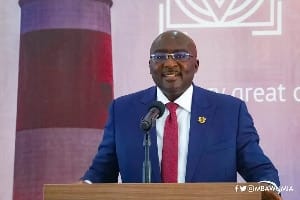
Vice President, Dr Mahamudu Bawumia, has revealed that a Ghanaian business plans to develop an electric car assembly factory in the nation.
Though he didn’t mention the name of the company, he noted that the company would commence operations in 2024.
Speaking at the NPP International Women’s Conference on Saturday, June 10, 2023, Dr Bawumia said the electric vehicle assembling plant will add to the vehicle manufacturing companies producing in Ghana.
Now, Volkswagen, Kantanka, Toyota, Peugeot, Nissan, KIA, Hyundai, and Sinotruk are manufacturing vehicles locally.
“We had no domestic automotive sector for vehicle assembly or manufacturing but what did we do about that, the new automotive sector development policy has resulted in VW, Sino Truck, Kantanka, Toyota, Peugeot, Nissan, KIA, Hyundai, they are all producing in Ghana today,” Bawumia said.
“Interesting piece of news is that a Ghanaian company is also in the pipeline to build an assembling plant for electric vehicles next year. That will be the first in West Africa,” he stated.
It would be recalled that President Nana Addo Dankwa Akufo-Addo said government would soon roll out an asset-based vehicle financing scheme to stimulate demand for domestically assembled vehicles.
The financing scheme will afford Ghanaians the opportunity to purchase vehicles under the Ghana Automotive Development programme.
He gave an assurance that government would provide all assistance for the achievement of the target of assembling 1.5 million vehicles per year by the end of 2023 as projected by the Association of African Automobile Manufacturers.
The government’s suspension of foreign debt service contributed to the current account balance turning positive.
According to data from the Bank of Ghana, the trade surplus widened in the first 4-months of 2023, hitting $1.6 billion (2.2% of Gross Domestic Product) compared to the ¢1.2 billion (1.6% of GDP) recorded in the same period last year.
The wider trade surplus was supported by a sharper compression in total imports to $4.0 billion (-13.9% year-on-year) compared to a 3.6% year-on-year decline in total export revenue ($5.6 billion).
The wider trade surplus combined with an improvement in the services accounts swung the current account balance from a deficit in quarter 1, 2022 into a surplus of $661.4 million (0.9% of GDP) in first quarter of 2023.
The Bank of Ghana attributed the improved services account balance to the suspension of external debt service and higher remittance inflows.
During quarter 1, 2023, inward remittances increased by 16.3% year-on-year to $1.2 billion, combining with the debt service suspension and the trade surplus to churn out a surplus on the current account.
IC Research said “given that ongoing negotiations with external creditors could stretch into late 2023, the suspension of external debt service should anchor the current account balance in 2023. However, a potential resumption of external debt service in 2024 will revive pressure on the current account balance if debt restructuring is not secured ahead of debt service resumption”, it said.
Ghana received the first tranche of the International Monetary Fund cash of $600 million under the ongoing Fund programme.
The forex inflow supported the gross international reserves, according to the Bank of Ghana, to $5.7 billion, equivalent to 2.6 months of import cover as of May 19, 2023.
This IC Research suggests a lingering weak external account buffer with a limited capacity to fund real sector demand, emphasising the vulnerability to exchange rate shocks and a bearish outlook for real GDP growth.
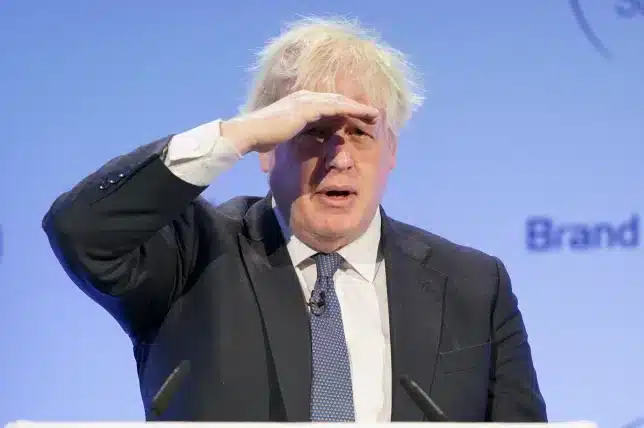
Boris Johnson became Britain’s prime minister in the summer of 2019, becoming the highest-profile person to do so since his idol, wartime commander Sir Winston Churchill, began his second term as PM in 1951.
Johnson was nothing short of a colossus. A popular columnist, a television star, a celebrated author. For decades, his carefully honed media persona – part pseudo-intellectual; part loveable-but-out-of-touch-poshboy – won Johnson fans beyond the traditional Conservative base. For years, he was the most electorally successful Conservative in the country, serving as Mayor of London – a liberal city where the Conservatives typically struggle.
As mayor, he gained a global reputation, appearing at the closing ceremony of the Beijing Olympics; going on US talk shows as a guest; taking center stage at the London Olympics in 2012; being the human embodiment of Brexit – an earthquake in global politics and economics.
However, he leaves frontline politics a diminished figure who, for now, seems to have lost all the big arguments and is no longer in control of his legacy.
His previous fame and electoral success could not protect him from crashing down to earth as the final months of his premiership became dogged in scandals so severe that his position eventually became untenable.
Those scandals have been covered extensively in the international media. From Partygate, in which Johnson became the first sitting prime minister to be issued with a police fine, to his deputy chief whip resigning after allegedly groping someone, Johnson’s spent his last few weeks in office clinging desperately to power.
What might be less well-known outside of the UK is what happened next. For all that Johnson’s supporters agitated for his return when his successor Liz Truss was forced to resign, when push came to shove, his own party thought he was damaged goods and blocked any return to the throne.
Since then, it’s only been his most loyal footsoldiers that have continued banging the Johnson drum.
When Johnson gave evidence to a parliamentary committee – with a Conservative majority –investigating whether or not he deliberately misled parliament over Partygate, you could count his supporters in the room on one hand. They muttered and tutted at others in the room as Johnson was grilled for hours, but they represented a minority view of the people that once supported Johnson whole-heartedly.
That same day, Johnson’s dwindling influence was further underscored as he led a futile rebellion against Sunak’s new Brexit deal, something Johnson has publicly criticized. Orthodox thinking in the Conservative party now is that Sunak has saved Brexit from being a total disaster and that Johnson looks slightly ridiculous protesting Sunak’s strategy.
It is in this context that Johnson’s resignation statement should be read.
He discredits the inquiry into Partygate, saying “they are determined to use the proceedings against me to drive me out of Parliament. They have still not produced a shred of evidence that I knowingly or recklessly misled the Commons.”
He attacks Sunak’s approach to Brexit: “Our party needs urgently to recapture its sense of momentum and its belief in what this country can do. We need to show how we are making the most of Brexit … We must not be afraid to be a properly Conservative government.”
And he reminds everyone reading of the monumental battles he won at the ballot box: “We need to deliver on the 2019 manifesto, which was endorsed by 14 million people. We should remember that more than 17 million voted for Brexit.”
Johnson is a man with a keen sense of history and desperately wants his name to go down as one of the most important in Britain’s.
A little over a year ago, there was no reason why it wouldn’t. He had not only delivered Brexit in 2016, but saved it in 2019 when he took over as PM, negotiated a new deal with the EU – at the time considered impossible – and called an election at which he won an 80-seat parliamentary majority.
He nearly died during the Covid-19 pandemic, but recovered and led one of the fastest vaccine rollouts in the world. His steadfast defense of Ukraine has won him such adoration in that country that streets in the capital Kyiv have been renamed in his honor.
But all of those things may have been overshadowed.
Brexit, his personal victory, is now tarnished. Not only do the majority of Brits now consider it to have been a mistake, it was his nemesis Sunak who received praise from none other than US President Joe Biden for fixing the problems Johnson’s deal created with Northern Ireland.
His legacy when it comes to Covid won’t be the vaccine rollout, but Partygate. And the longer the war in Ukraine rolls on, the more apparent it becomes that the first land war in Europe in decades simply isn’t primarily about Boris Johnson.
The final indignity for a man who prides himself on his popularity would have been defeat at an election. Johnson and his allies can now forever write an alternative reality, where he either remained in power or came back and won the next general election.
By resigning, he has spared himself that fate. And living in denial might be the kindest thing that Johnson could possibly have done for himself and his legacy.
The Chairman of the Council of State, Nana Otuo Siriboe II, has urged Ghanaians to unite in support of the government’s recovery programme, and see the light ahead in Ghana’s economic trajectory.
During a Council of State meeting attended by Finance Minister, Ken Ofori-Atta, Chairman Otuo Siriboe II said it is time Ghanaians to stick together and rally behind government as the country embarks on a path of renewed growth.
“There is light ahead for Ghana. We must remain optimistic and steadfast in our belief that our country will overcome the challenges it currently faces,” Nana Otuo Siriboe declared.
“The IMF Programme approval marks a turning point, which will energise our path to renewed growth and catalyse further opportunities for economic recovery.”
The Chairman expressed his optimism about the country’s prospects, highlighting the approval of the International Monetary Fund (IMF) Programme as a turning point that would invigorate Ghana’s growth trajectory and open doors to further opportunities for economic recovery.
He stressed the need for unity, resilience, and unwavering belief in Ghana’s potential to overcome the challenges it currently faces.
He said the IMF’s $3 billion bailout presented a unique opportunity for Ghana to reboot its economy, and encouraged Ghanaians to embrace this opportunity and work together to optimise its benefits.
He emphasised that by joining forces, Ghana can achieve remarkable progress and build a prosperous future for all its citizens.
The meeting, which was attended by key government officials including the Finance Minister and members of the Council of State, aimed to educate stakeholders about the details of Ghana’s Growth Agenda and the IMF Programme, while also soliciting input for effective implementation.
On his part, Finance Minister Ken Ofori-Atta, acknowledged the significant strides already made in Ghana’s recovery journey.
“We have come a long way, and we are determined to continue on this path of progress. The IMF Programme will provide the necessary support to restore our economy and set us on a trajectory of sustained growth,” the Minister affirmed.
He took time to outline Ghana’s Post Covid-19 Programme for Economic Growth (PC-PEG).
The economic blueprint encompasses four key objectives. The first objective, he said, focuses on restoring macroeconomic stability, including managing inflation, stabilizing the exchange rate, and creating a favorable business environment.
The second pillar of the PC-PEG addresses Ghana’s fiscal challenges. The Minister highlighted the government’s commitment to bringing fiscal operations and public debt to sustainable levels. Measures such as comprehensive tax administration reforms and prudent fiscal policies will be implemented to ensure a sound economic foundation.
Structural reforms comprise the third objective of the PC-PEG. The Minister emphasized the importance of improving the business environment, attracting private sector investments, and bolstering infrastructure development. The financial sector will also receive support through regulatory forbearances and the operationalization of the Ghana Financial Stability Fund (GFSF).
The final objective of the PC-PEG centers around promoting strong and inclusive growth while safeguarding the poor and vulnerable. The government plans to stimulate economic activity, create job opportunities, and attract investments. Concurrently, social safety nets and targeted support programmes will protect the most vulnerable members of society, ensuring that the benefits of recovery are widely shared.
Nana Otuo Siriboe II expressed his gratitude to the Finance Minister and his team for their dedication and tireless efforts in formulating the growth programme and securing IMF support.
He encouraged the government to continue spreading the message of hope and progress throughout the nation.
In Malaysia and Singapore, a comedian in New York who joked about the safety of Malaysian airlines in an apparent allusion to the missing of flight MH370 has triggered a fierce protest.
Controversy over the joke by lawyer-turned comedian Jocelyn Chia at Manhattan’s Comedy Cellar erupted soon after a short clip of her stand-up performance was posted online earlier this week.
Chia’s bit had centered on the uneasy past between Singapore and Malaysia, which were once part of the same country. She led off with a suggestion that since the two had separated in 1965, Singapore had risen to become a first-world country while Malaysia had allegedly remained a “developing” one.
She then went on to take aim at Malaysian airplanes by suggesting they “can’t fly,” before making what many have taken as a reference to Malaysia Airlines flight MH370, the Beijing-bound flight which went missing along with 239 passengers and crew after taking off from Kuala Lumpur on March 8, 2014.
What happened to the flight has never been conclusively established, though pieces of debris suspected of belonging to it have occasionally been discovered.
“What? Malaysia Airlines going missing not funny, huh?” she quipped to laughter, before delivering her punchline: “Some jokes don’t land.”
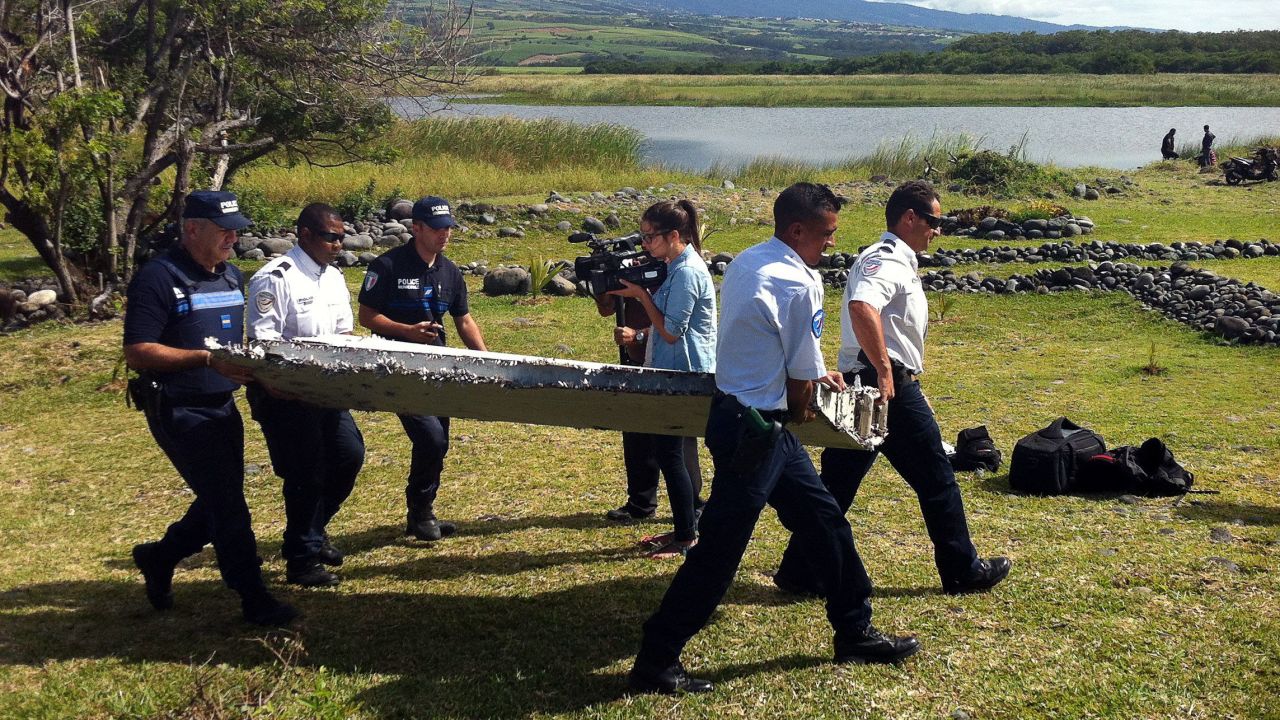
Police carry debris from an unidentified aircraft found in the coastal area of Saint-Andre de la Reunion, in the east of the French Indian Ocean island of La Reunion, on July 29, 2015. An air safety expert did not exclude it could be a part of the Malaysia Airlines flight MH370.Yannick Pitonyaninick Piton/AFP/Getty Images/FILE
The joke has caused a wave of controversy in both Malaysia and Singapore. In Malaysia, the youth wing of the United Malays National Organization (UMNO) – one of the biggest political parties in the country – marched to the US embassy in Kuala Lumpur on Friday to protest what they see as an insult.
About 100 protesters and representatives handed a memorandum to the US diplomatic outpost, according to the youth group’s chief Dr Muhamad Akmal Saleh.
“This is something that is unacceptable for the whole nation and we are here,” he said, adding, “freedom of speech must come with sensitivity.”
Singapore meanwhile has distanced itself from Chia, who according to her website is originally from the Asian city state, and apologized to Malaysia.
“The Singapore government does not condone words or actions that cause harm or hurt to others and Chia,” said Vanu Gopala Menon, Singapore’s High Commissioner to Malaysia in a statement online. “(Chia) does not in any way reflect our views,” he added.
Menon said Chia’s joke contained “gratuitously offensive comments,” adding, “I sincerely apologize to all Malaysians for her hurtful remarks.”
In a tweet, Singapore’s Foreign Minister Vivian Balakrishnan said Chia “certainly does not speak for Singaporeans” and he was “appalled by her horrendous statements.”
“We treasure our ties with family and friends in Malaysia, and are sorry for the offense and hurt caused to all Malaysians,” he added.
His Malaysian counterpart, Dr Zambry Abd Kadir, accused the comedian of lacking sensitivity and empathy toward Malaysians and the families of the victims.
“This video also clearly depicts behavior that is contrary to the values of an Asian country that is known for its manners and morals,” he said, according to state-run news agency Bernama.
CNN has reached out to Jocelyn Chia, her agent and the Comedy Cellar for comment.
As of Sunday, Chia’s Facebook and Instagram accounts were no longer available to view.
Ukraine’s President, Volodymyr Zelensky, appears to have acknowledged the launch of his country’s long-awaited counter-offensive against Russia.
“Counter-offensive and defensive actions are taking place,” he said.
But he added that he would not talk in detail about which stage or state the counter-offensive was in.
The comments come after an escalation of fighting in the south and east of Ukraine and speculation about progress of the widely anticipated push.
Ukrainian troops are reported to have advanced in the east near Bakhmut and in the south near Zaporizhzhia, and have carried out long-range strikes on Russian targets.
But assessing the reality on the front lines is difficult, with the two warring sides presenting contrasting narratives: Ukraine claiming progress and Russia that it is fighting off attacks.
Meanwhile in Russia’s Kaluga region – which borders the southern districts around Moscow – governor Vladislav Shapsha said on Telegram that a drone crashed near the village of Strelkovk early on Sunday. The BBC has not independently verified the report.
Russian President Vladimir Putin said in a video interview published Friday that Ukrainian forces had certainly begun their offensive but that attempted advances had failed with heavy casualties.
Speaking in Kyiv on Saturday after talks with Canadian PM Justin Trudeau, Mr Zelensky described the Russian leader’s words as “interesting”.
Shrugging his shoulders, raising his eyebrows and pretending not to know who Mr Putin was, Mr Zelensky said it was important that Russia felt “they do not have long left”.
He also said that Ukraine’s military commanders were in a positive mood, adding: “Tell that to Putin.”
Mr Trudeau announced 500 million Canadian dollars (£297m) in new military aid for Ukraine during the unannounced visit.
A joint statement issued after the talks said Canada supports Ukraine becoming a Nato member “as soon as conditions allow for it”, adding that the issue would be discussed at the Nato Summit in Vilnius, Lithuania, in July.
Meanwhile, fighting has escalated in recent days in the key southern Zaporizhzhia region, Russian officials say. Ukrainian forces are thought to be trying to push south to split Russian forces in two, breaking through the occupied territory which connects Russia to Crimea.
Ukraine’s hope of advances in the region could be hindered by huge flooding in the south of the country after the Nova Khakovka dam was destroyed last week.
The flooding has covered around 230 square miles (596 sq km) either side of the Dnipro River.
In his nightly address on Saturday, Mr Zelensky said 3,000 people have been evacuated from the flooded Kherson and Mykolaiv regions.
And Kherson’s regional head Oleksandr Prokudin said water levels had dropped by 27cm, but more than 30 settlements on the right bank of the river – which is Ukrainian-held territory – were still flooded and almost 4,000 residential buildings remained underwater.
Nato and Ukraine’s military have accused Russia of blowing up the dam, while Russia has blamed Ukraine.
However, it seems highly likely that Russian forces, which controlled the dam, decided to blow it up in order to make it more difficult for Ukrainian forces to cross the river as part of their ongoing counteroffensive, the BBC’s Paul Adams says.
On the day after being charged with mishandling secret materials, former US President Donald Trump seemed defiant at two Republican Party conventions on Saturday.
Mr Trump – who is running to be the Republican candidate for president in 2024 – claimed that he was being pursued in federal court because of his re-election hopes.
But at the North Carolina Republican Party convention, he didn’t look like a man under severe legal stress.
Hundreds of people stood up to welcome their former president as he walked onto the stage, happily soaking in the adulation. He was the main event, after a three-course meal.
There was salad to start, steak for the main and ice-cream with strawberries for dessert – washed down with jugs of coke.
It was just a day after an indictment was unsealed revealing federal charges against Mr Trump, accusing him of mishandling classified documents including nuclear secrets.
But Mr Trump – who denies wrongdoing – was characteristically combative. He suggested nothing will stop him on his quest for the presidency. Not even, reportedly, jail.
And in the vast conference room, they didn’t want him to stop.
They laughed at his jokes, offered regular applause and welcomed bold declarations, for example that he is the only candidate who can prevent World War Three.
This was, after all, a Republican Party convention dinner with guests who had paid to see him speak.
Earlier, former vice-President Mike Pence received a warm reception but it was nothing like the intense buzz that surrounded his ex-boss.
What’s more, the one-term vice-president got the lunch slot while Mr Trump got dinner. He was the big Saturday night ticket.
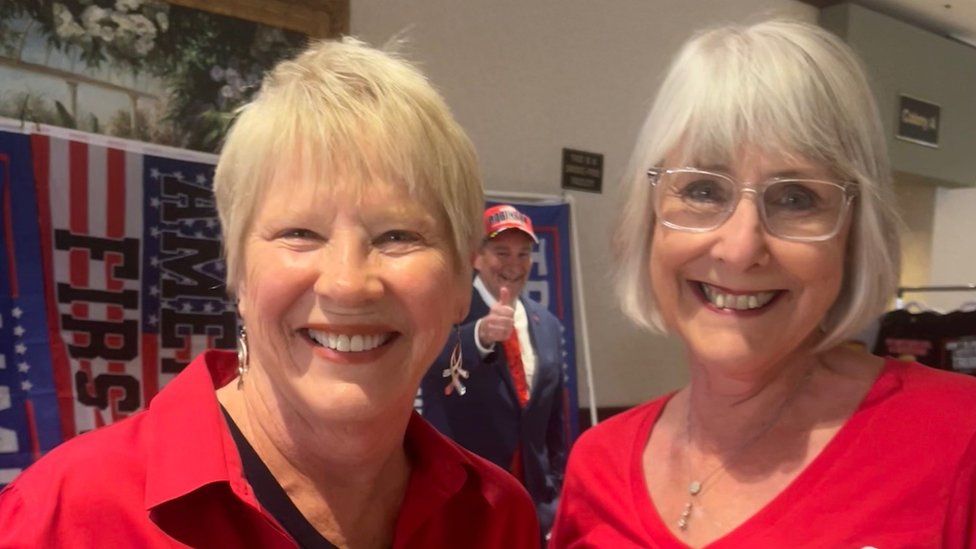
Earlier in the day, amongst the merchandise and campaign stands, I came across Cheryal Korfmann and Charli Thyne.
Charli proudly stripped off her jacket to reveal a Trump-branded T-shirt. “I’m Trump all the way,” she said.
Image caption,Cheryal Korfmann and Charli Thyne
I pointed out the photographs, printed as part of the justice department’s case, that showed boxes of files piled up in a ballroom, even a bathroom, in Mr Trump’s Mar-a-Lago resort in Florida.
“Wait a minute,” said Cheryal. “This is America. We’re not guilty until we’re proven guilty.”
The two believe the system is riddled with double standards and said they would support Mr Trump, even if he was convicted.
If elected he could, suggested Cheryal, even pardon himself from prison.
An unshakeable support for Mr Trump echoed through the halls, with his name and image visibly dominant on printed banners and baseball caps.
But there were those who were open to possibilities beyond Mr Trump’s narrative.
The truth matters, said husband and wife Jeff and Laura Morgan.
“If the truth is that there’s impropriety, that needs to be brought out,” said Jeff. “If it’s politically motivated, that needs to be brought out.”
Laura is a previous Miss Senior America while Jeff is running for mayor of Pinehurst, North Carolina.
She conceded there is a lot of drama surrounding the current frontrunner. “I think people ought to just run on their merits and not do bashing and blaming.”
They saw Mr Trump’s legal baggage as both a potential issue but also a rallying point for his base.
Mr Trump did not spend his whole speech ridiculing the charges against him, far from it.
A long, winding address touched on everything from the cost of living to transgender people’s participation in sport to trade with China and France.
At one point, Mr Trump mimicked French President Emmanuel Macron’s accent.
Then, in a few minutes, he was gone and the room quickly emptied out with half-eaten steaks and wilting salad leaves left behind.
It was notable that the first former president to ever face federal criminal charges did not spend the day holed up with his lawyers ahead of his first court appearance on Tuesday.
He spent it addressing the party faithful in Georgia and then here in Greensboro – loudly airing messages of defiance rather than privately preparing for court.
Mr Trump’s legal battles have, in fact, become completely intertwined with his wider public presidential campaign.
The US could face an unprecedented strain on its political and judicial system should the two truly collide next year.
Ted Kaczynski, also known as the Unabomber, has been discovered dead in his jail cell, federal sources confirmed to the international media.
Kaczynski, 81, killed three people and injured 23 more during a mass mail-bombing spree between 1978 and 1995. He later pleaded guilty to his crimes.
He was sentenced to life without parole in 1996 after evading capture for almost 20 years.
The Harvard-trained mathematician was eventually caught in a Montana cabin.
He was a man who fascinated America for decades, and he became the focus of numerous TV documentaries.
Kaczynski spent the past three decades held at prisons across the US – most recently at the Federal Medical Center in Butner, North Carolina.
Prison guards at the facility discovered Kaczynski’s body on Saturday morning at around 00:25 local time (04:25 GMT), a spokesperson for the US Bureau of Prisons told the BBC.
His cause of death was not immediately clear.
“Responding staff immediately initiated life-saving measures,” the spokesperson said. Kaczynski was then “transported by EMS to a local hospital and subsequently pronounced deceased by hospital personnel”.
Before suffering from declining health which prompted his transfer to the facility in December 2021, he had been held at the federal Supermax prison in Florence, Colorado, since May 1998.
Kaczynski’s violent campaign – which shook the US – left a number of his victims permanently maimed and changed the way Americans posted letters.
His crimes were uncovered after he forced the Washington Post and the New York Times to publish his unhinged and angry manifesto, called Industrial Society and Its Future, in September 1995.
They agreed to print the manifesto on the recommendation of the FBI and the US attorney general after Kaczynski said he would end his campaign if a national paper published his treatise.
The 35,000-word anonymised document railed against modern life and claimed that technology was leading to Americans suffering from a sense of alienation and powerlessness.
But after reading the papers, Kaczynski’s brother and sister-in-law recognised the tone and alerted the FBI, who had been searching for him for years in the nation’s longest manhunt.
In April 1996 authorities finally caught up with him in a 10-by-14-foot (3-by-4-metre) plywood and tarpaper cabin outside Lincoln, Montana.
The hut was filled with journals, a coded diary, explosives and two completed bombs.
While Kaczynski’s manifesto struck many as being overtly political in tone, he never sought to embody the revolutionary mantle some attributed to him.
In his own journals he wrote that he didn’t claim to be “altruist or to be acting for the ‘good’ (whatever that is) of the human race”, instead insisting that he acted “merely from a desire for revenge”.
His crimes seemed to begin shortly after he was fired from the family business by his brother for posting abusive limericks to a female colleague who had dumped him after two dates.
From there he retreated to the Montana wildness and to the cabin he had built by hand, without heating, plumbing or electricity.
His first attacks targeted Northwestern University in Illinois. The two bombings occurred almost a year apart on 25 May 1978 and 9 May 1979, injuring two people.
Then, in November 1979, an altitude-triggered bomb he had mailed went off aboard an American Airlines flight. Twelve people suffered from smoke inhalation.
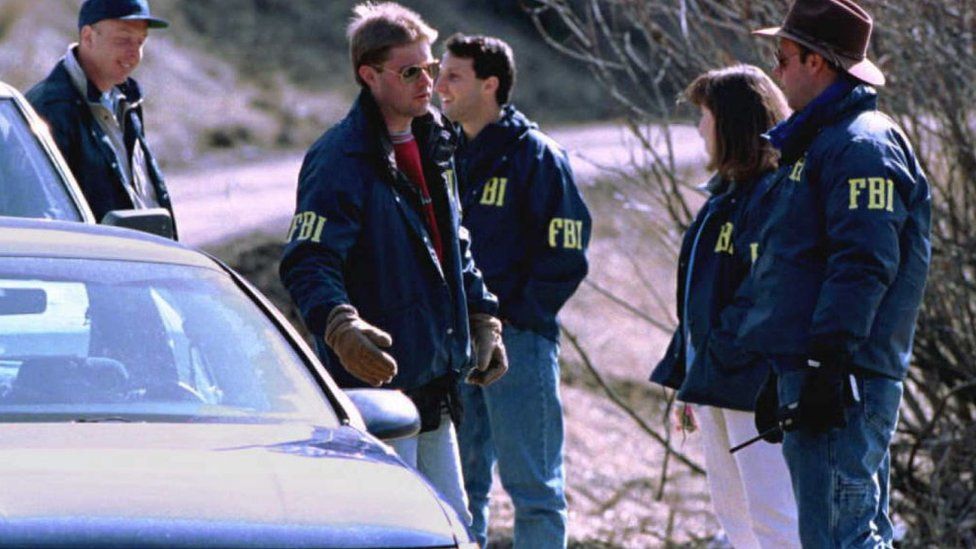
The early attacks earned him the moniker Unabomber from the FBI, as his targets seemed to be universities and airlines.
Image caption,On 5 April 1996, FBI agents finally tracked Kaczynski to a remote cabin in Montana
Over the following years he attacked a further 13 times, killing three people – computer rental store owner Hugh Scrutton, advertising executive Thomas Mosser and timber industry lobbyist Gilbert Murray.
At Kaczynski’s trial, Mr Mosser’s wife said her husband had been killed on the day he was supposed to be picking up a Christmas tree with his family and recalled the moments after the attack.
“He was moaning very softly,” she said of her husband. “The fingers on his right hand were dangling. I held his left hand. I told him help was coming. I told him I loved him.”
Since his capture there has been endless speculation about Kaczynski’s motivations.
A test as a boy revealed he possessed an IQ of 167, and he had skipped two grades to attend Harvard University aged just 16.
FBI agents described him as “a twisted genius who aspires to be the perfect, anonymous killer” and he was diagnosed as a paranoid schizophrenic by a psychiatrist who interviewed him in prison.
In a 47-page report Sally Johnson wrote that the “central themes” of his manifesto “involve his belief that he is being maligned and harassed by family members and modern society”.
But Kaczynski himself always insisted that he knew exactly what he was doing, and he tried to take his own life in prison after his legal team attempted to introduce an insanity plea.
In an interview with Time magazine in 1999 he said he didn’t suffer from “delusions and and so on and so forth”.
“I’m confident that I’m sane, personally,” he said.
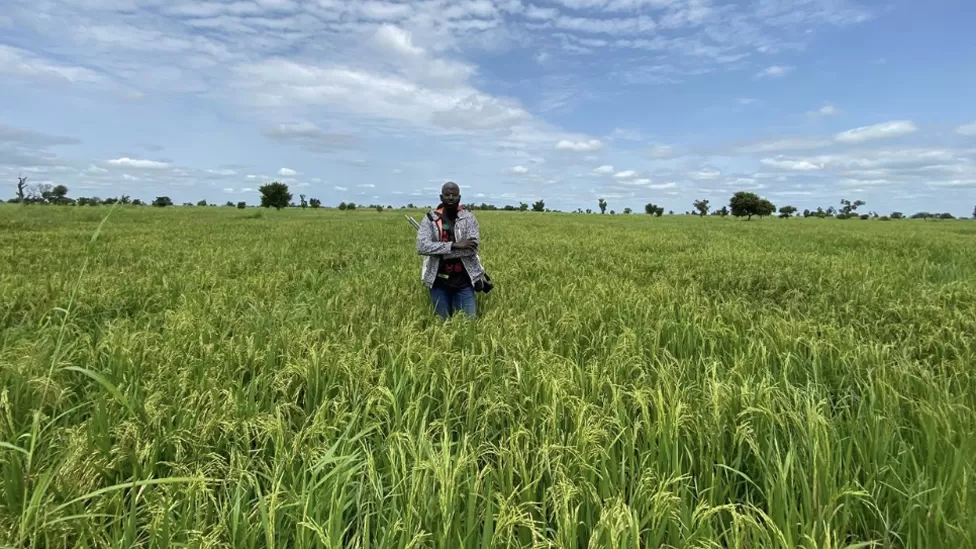
Rotimi Williams was seen as one of Nigeria’s most successful rice farmers seven years ago, but now the 42-year-old’s land stands idle.
The problem: insecurity, which has ground his farms to a halt.
In 2012, Mr Williams left his career as a banker and ventured into agriculture. He was profiled in international media and described as the second-largest producer of rice in Nigeria, with thriving farms across the north.
But the threat to his life and the lives of his workers grew too much.
“There was a time my car was shot at on my way back from the farm,” he said. “There were also kidnap attempts.”
In the past three years, a sharp rise in insecurity has led to gangs kidnap hundreds of people for ransom in Nigeria, and staff of prosperous agricultural enterprises have been particularly targeted, forcing many farms to abandon or reduce operations.
More than 350 farmers were kidnapped or killed in the 12 months up to June 2022 alone, according to a Nigerian security tracking website.
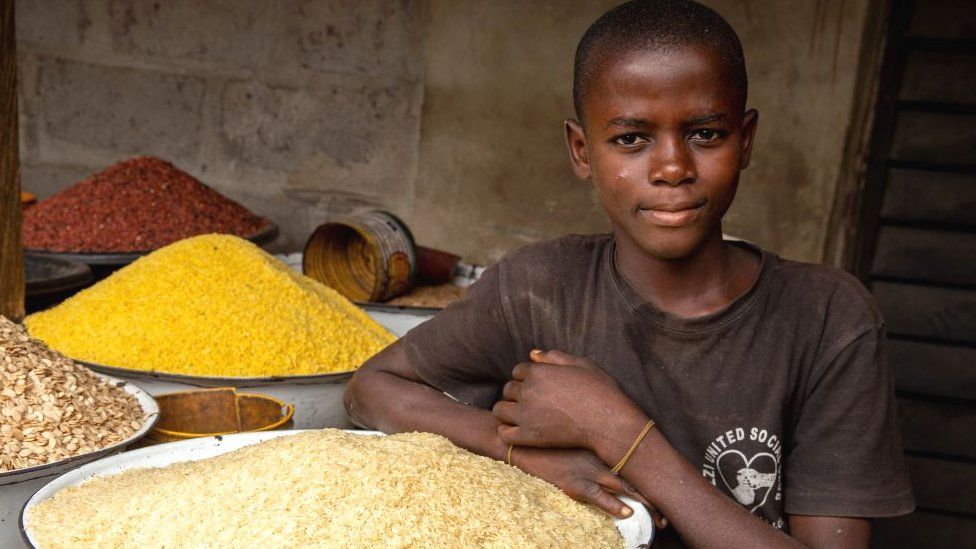
Image caption,Rice is a crucial part of many Nigerians’ diet
The majority of attacks took place in the northern region where there is swathes of uncultivated land and some of the country’s largest farms.
In January 2022, five people were killed in an exchange of gunfire between security agents and armed gunmen on motorbikes, gang members known locally as “bandits”, who attacked the premises of GB Foods, a tomato-processing plant in the north-western state of Kebbi.
When the multi-million-dollar factory, partly funded by the central bank, had launched to great fanfare in 2020, it was described in the media as Nigeria’s second-largest food processing plant and included the country’s largest tomato farm.
Bandits then tried to kidnap some of the staff. They failed, but the plant has been out of operation since.
“There’s nowhere else in the world where people require armed security to go to the farm,” said Mezuo Nwuneli, the managing partner of Sahel Capital.
His agriculture investment firm is in its ninth year of a 10-year contract to invest $66m (£54m) in the farming sector on behalf of the government and its partners, including the UK government and some Dutch investors.
On one of Sahel Capital’s farms, a security officer was killed during a kidnapping attempt.
“They used to be comfortable working till 10pm but because of the attack, they don’t feel safe to work late. In other parts of the world, you can run a farm 24/7.”
‘Green revolution’
Prior to the discovery of crude oil in 1956, Nigeria was known for a long list of cash crops, such as palm oil, cocoa, and groundnuts, but the government’s focus on the booming oil sector led to the underdevelopment of non-oil sectors, such as agriculture.
This began to change after Olusegun Obasanjo was elected as president in 1999, and made a push to revive agriculture. His government offered farmers improved irrigation as well as new machinery and crop varieties to help boost agricultural productivity.
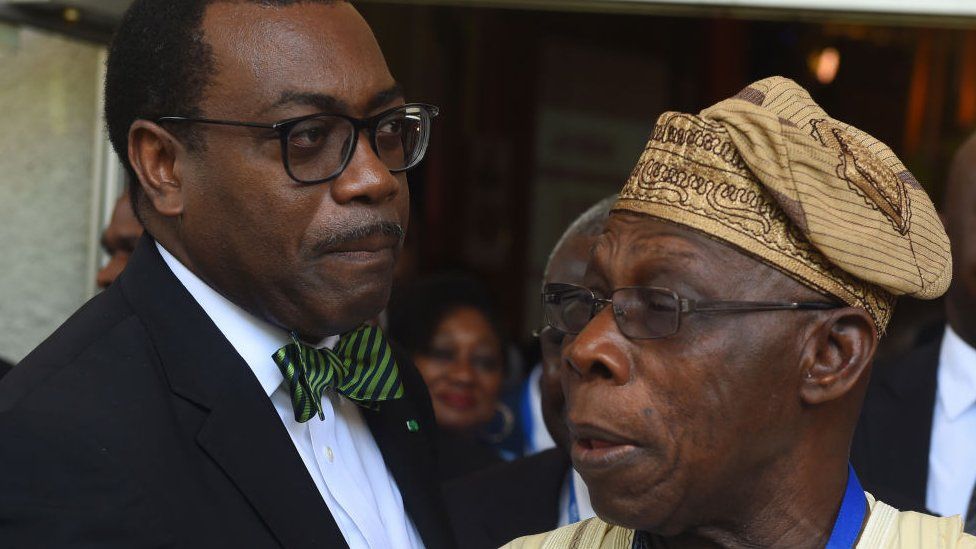
Image caption,Akinwumi Adesina (L) and Olusegun Obasanjo (R) were instrumental in boosting Nigeria’s agricultural sector
However, the magic really began to happen when the subsequent administration in 2010 appointed the sleek, bowtie-wearing, charismatic Akinwumi Adesina, as the minister for agriculture.
“When Adesina was minister, he was able to communicate the opportunities in the sector in a way that was exciting for people,” said Mr Nwuneli, a graduate of Harvard Business School, who launched Sahel Capital in 2010 when he was 35 years old.
“Around that time, there was a lot of excitement and interest in the youths and the many people coming into the sector at the same time.”
The next few years saw the emergence of many young Nigerian agriculture entrepreneurs, like Mr Williams and Mr Nwuneli, in a period that many reports described as Nigeria’s “green revolution”.
“We had 20 million youths entering the oversaturated workforce from 1990 to 2010. For us, we are committed to unlocking the power of agriculture and job creation with the goal to create 10 million jobs by 2030,” said Kola Masha, another Harvard graduate, who founded Babban Gona, which means “Great Farm” in Hausa, in 2010.
His firm uses innovative technology to help its more than 20,000 smallholder maize farmer members to improve crop yields, reduce the cost of production and increase the sale price.
In 2017, Mr Adesina, by then head of the African Development Bank, was awarded the World Food Prize “for driving change in African agriculture” and “his breakthrough achievements as minister of agriculture”.
‘We lost 300 farms’
All that progress now seems to be unravelling, with nearly 25 million Nigerians at risk of facing hunger between June and August 2023, according to the UN.
“We’ve lost about 300 farms,” said Stella Thomas, who in 2011, at the age of 32, founded Techni Seeds. Based in the north-western city of Kano, the company applies scientific research to produce quality seeds that it then distributes to thousands of farmers across Nigeria, whose work they supervise from planting to harvesting, to ensure maximum yield.
“We call them ‘out growers’. We found out that because most farmers use saved seeds – they recycle their seeds – [then] over time, they don’t get enough output. So, we give them the seeds that they use, and we are responsible for ensuring that they do the right thing.”
The insecurity has forced hundreds of her “out growers” to drop out of the network of supervised farms.
otimi Williams
If there’s no security, there’s no agriculture. It’s that’s simple”
Mr Williams used to enjoy spending months at a time on his farm, organising barbecues for the farmers at the end of a hard day’s work, complete with a stereo and loud music.
He is now in the process of moving his rice production to other West African countries, such as The Gambia and Senegal, which also consume rice in large quantities.
His current calculations show that transportation costs would make it unprofitable for him to supply rice to Nigeria from those countries, and he predicts that the rising food inflation in Nigeria will only get worse – if the government continues to slack in its handling of security.
“If there’s no security, there’s no agriculture,” he said. “It’s that’s simple.”
Bola Ahmed Tinubu was sworn in at the end of last month as the new president taking over from Muhammadu Buhari – and the insecurity is his problem to solve.
“We all have hopes that this issue will be dealt with,” said Mr Williams, reflecting on the future, “but we will see.”
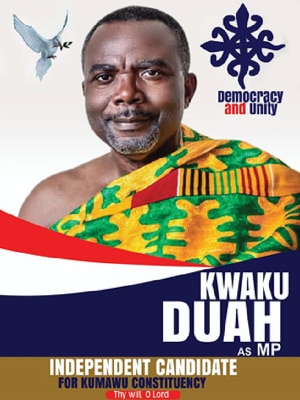
Independent candidate in the recent Kumawu by-election, Kwaku Duah, has revealed facts concerning the sharing of money among various persons, including chiefs, pastors, headmasters, and others, during the constituency’s recent electoral process.
According to him, the alleged vote-buying scheme was orchestrated by the New Patriotic Party (NPP) leadership.
Speaking on a panel discussion on United TV’s Critical Issues on June 10, 2023, Kwaku Duah expressed his disappointment, stating that the actions taken were detrimental to democracy and undermined the principles of free and fair elections.
He emphasized that those present during the election were aware that what occurred was far from ideal and did not promote democratic values.
Providing specific insights into the distribution of funds, Duah explained, “So, what happened wasn’t good and it never helped democracy, and everybody who was there and saw what happened knows that what happened wasn’t the best. All those that they called two to three days before the elections, including queen mothers, chiefs, teachers, headmasters, hairdressers, tailors, and pastors, received varying amounts of money.”
According to his account, teachers across the constituency were given GH¢200 (Ghanaian Cedis), while headmasters received GH¢500. Other professions, such as tailors, and pastors, were also reportedly beneficiaries of the funds.
“All teachers in the constituency had GH¢200 and if you are headmaster GH¢500,” he added.
Duah’s claims were made with confidence as he stated, “I am saying on records you can go there and go and ask, yes, they gave it to them, hairdressers, everybody had GH¢500, tailors and pastors also had some. The question is why? NPP people shared the money and I am saying on it record, yes, I am saying it on record and I will get people who will come and testify that they got some.”
He further highlighted that even his own personal assistant, who is a teacher, was approached with an offer but initially declined to participate, however, upon Duah’s advice, the assistant decided to witness the events and subsequently confirmed the distribution of money to teachers.
“My own PA is a teacher, they called him and he said he won’t go but I advised him to go and witness what was happening and bring back the report. And he came to tell me that it is very true that they shared money for them.
“The chiefs, the queen mothers, and all of them. What happened in Kumawu, if that is how our democracy has taken us then it is very appalling, it is not good because we don’t have free and fair elections anymore.”
It may be recalled that the National Organizer of the New Patriotic Party (NPP), Henry Nana Boakye, popularly known as Nana B, denied allegations that individuals seen in viral videos were distributing items such as rice, cloth, and other goods to influence voters in the Kumawu by-election, claiming it was political propaganda orchestrated by the opposition National Democratic Congress (NDC).
However, Ernest Yaw Anim, the newly elected Member of Parliament for the Sekyere Kumawu Constituency in the Ashanti region, contradicted Nana B’s claims and acknowledged that NPP members in Kumawu did indeed share rice, cloth, and other items to voters.
Speaking on Oyerepa TV, Yaw Anim addressed accusations that he won the Kumawu by-election through dubious means.
He revealed that the individuals seen in the viral videos were active NPP members based in Kumawu who decided to conduct the donation as a Mother’s Day gift on his behalf. According to him, they acted out of love for him and the party.
“I saw the viral video and investigated the people behind the video, and I noticed the people were NPP members who teach in Kumawu. They did that because of the love they have for me and the party. So, on Mother’s Day, they decided to do the donation on my behalf. So, it was a Mother’s Day gift. What is wrong with that? Today when people buy cars for their mothers, they film it and share it on social media. This one was not meant for social media. It is unfortunate that some evil-minded people leaked the video just to accuse me of vote buying,” he explained.
Ernest Yaw Anim, the NPP parliamentary candidate for the just-ended by-election in Kumawu, emerged as the winner. He received 15,264 votes, representing 70.91% of the valid votes. Kwasi Amankwaa, who ran on the ticket of the NDC, received 3,723 votes, representing 17.29%.
Kwaku Duah, an independent candidate, secured 2,478 votes, representing 11.51%, while the other independent candidate Kwaku Dua II secured 62 votes representing 0.29%.
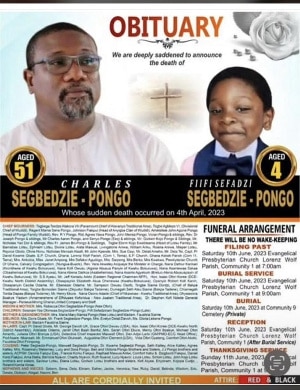
In a heartbreaking tragedy, a father and his infant kid were buried after being electrocuted by a suspected malfunctioning water heater.
Charles Segbedzie-Pongo, 51, and his 4-year-old child, Fiifi Sefadzi Segbedzie-Pongo, tragically lost their lives in Tema a suburb of the Greater Accra region.
The final funeral rites were held on June 10, 2023, at the Evangelical Presbyterian Church Lorenz Wolf Parish in Tema Community 1.
The devastating incident occurred when the father and son went to take a shower.
The exact details of the said malfunctioning water heater are not yet known, but the incident serves as a reminder of the potential dangers posed by faulty electrical appliances.
The news of this tragic event spread rapidly, eliciting deep sorrow and empathy from the public. Kwame A Plus, musician cum politician, took to Facebook to express his condolences and raise awareness about the importance of regularly inspecting and maintaining water heaters. In his heartfelt post, he emphasized the gravity of the situation and the immense pain associated with such a tragedy.
“Father 51, son 4, went to shower. Faulty water heater. Both electrocuted. Everybody will die, but this is heartbreaking and painful; like, there are no words in any language to describe such a tragedy. Please check your water heater. It has destroyed many lives. It can end your life tragically. My condolence to their family and loved ones. May their souls rest in peace,” wrote Kwame A Plus.
As well as Media Personality Nana Aba Anamoah also wrote “Father and son electrocuted by a faulty water heater. So so sad.”
Turkish security authorities have recovered $1 billion in counterfeit money and detained six people engaged in the operation.
Among the detainees were one Ghanaian national and three Swedish citizens, as confirmed by the governor’s office of Turkey on Friday, June 9, 2023.
The office declared that the counterfeit money haul stands as the largest ever recorded in the nation’s history.
The efforts of the Gendarmerie forces led them to track down the suspects, eventually discovering their whereabouts in a storage facility situated in Istanbul’s Kagithane district.
During the operation, a significant collection of counterfeit money amounting to $1,00,000,000.00 intended to be transported to African nations, was apprehended.
Following the raid, law enforcement officials proceeded to search the suspects’ residences, resulting in the confiscation of cash and jewelry believed to be connected to the illegal activities.
The report also mentioned that the Swedish and Ghanaian consulates were promptly notified of the arrests and the ongoing investigation.
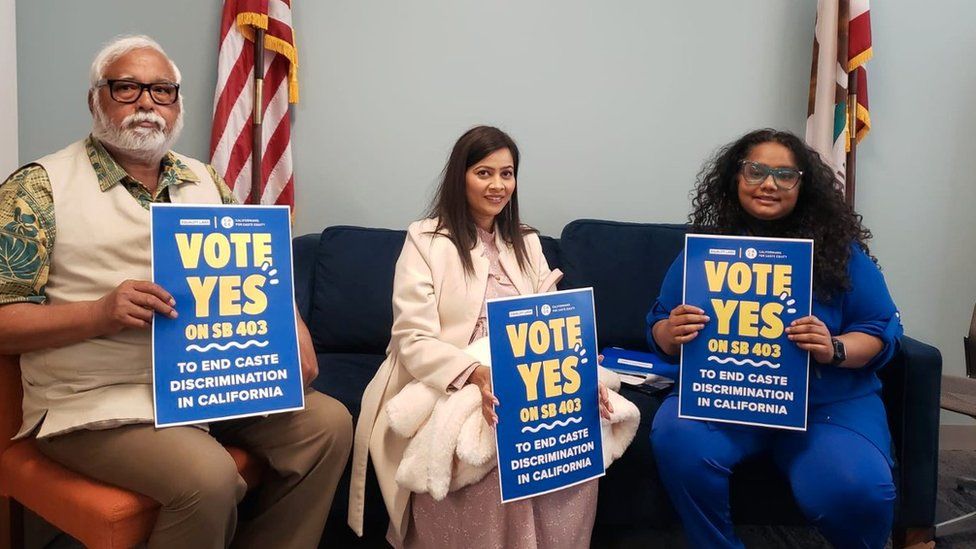
A bill to make caste discrimination illegal in California is due to be debated in the state assembly this week.Savita Patel, a California-based independent journalist, speaks to those supporting and opposing the bill becoming a law.
Sukhjinder Kaur*, a nurse at a hospital in California, works long and tiring hours serving patients. But whenever it’s break time, things become oppressive.
She is a Dalit (a community that is placed at the bottom of India’s deeply discriminatory caste hierarchy) and says she often faces casteist insults from her South Asian colleagues.
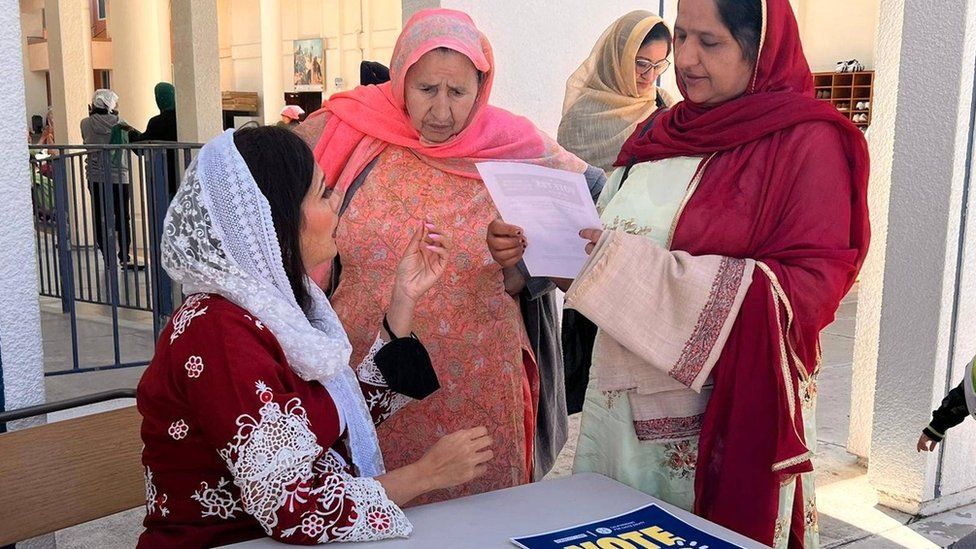
Dalit rights activists say scores of caste-oppressed Californians face housing, educational, professional, and social discrimination.
In March, Senator Aisha Wahab, a lawmaker from the Democratic Party, authored and introduced the SB-403 bill – legislation that seeks to add caste as a protected category in the state’s anti-discrimination laws alongside gender, race, religion and disability.
The bill was passed by the state’s senate in May with a 34-1 vote. If it goes through in the state assembly, California will become the first US state to ban caste discrimination.
“Nurses from upper castes pass slurs about chamars [a pejorative term for Dalits] being dirty and polluting,” says Ms Kaur, who is among those who are in favour of the law.
In February, Seattle became the first city in the US – and outside South Asia – to outlaw caste discrimination, generating momentum for the legislation in California. It is being propelled by the same broad multi-faith, inter-caste, multi-racial coalition of over 40 American and international Dalit and human rights activists and organisations, led by California-based Equality Labs.
California has a large South Asian diaspora and is home to some of the world’s biggest tech companies.
Image caption,Renu Singh (left) has been advocating for the bill at the grassroots level
The state is home to more than half of the 500,000-plus Sikh population in the US and gurudwaras (Sikh temples) in California have been mobilising momentum to outlaw caste discrimination.
Two of the community’s largest advocacy groups – The Sikh Coalition and Sikh American Legal Defense and Education Fund – support the bill. Among Sikhs, it is the Ravidasia community – the largest Dalit community in the state with approximately 15,000-20,000 members – which is advocating for the bill at grassroots level.
Renu Singh, who follows the Ravidasia tradition and is also a women’s rights activist, has been urging women to speak about their own experiences of caste discrimination and those they see around them so that lawmakers understand the gravity of the issue.
Data from an Equality Lab study shows that one in four caste-oppressed people from the South Asian American diaspora have faced physical and verbal violence; one in three has faced discrimination in education, and two out of three have experienced workplace discrimination.
It was the first extensive study of caste distribution and its effects in the US and had over 1,500 respondents. The findings, published in 2018, say that those from “lower castes” fear retaliation and worry about being “outed” and hence “hide their caste”.
However, a significant section of the Indian diaspora rejects caste discrimination claims.
Deepak Aldrin, a San Francisco-based Dalit activist is not in favour of the bill. “I’ve lived here for 35 years. No Hindu has ever asked me what caste I belong to,” he says.
The bill is meeting strong opposition from many Indian-American individuals, religious and professional groups, who argue that even though it does not specifically name their religion, it will “discriminate against Hindus, their places of worship and even make them less hiring worthy”.
They say the existing laws in California are sufficient to address any discrimination and are mobilising the community to urge their lawmakers to disallow the legislation to proceed.
Image caption,Dalit rights activists say scores of caste-oppressed Californians face discrimination
Many businesses and Hindu temples under HinduPACT – an American Hindu grassroots advocacy initiative – have appealed to California lawmakers to reject the bill. Its convenor Ajay Shah says that the legislation is “deeply flawed, ill-intentioned and targets children and youth from the Indian subcontinent and those who follow the Hindu dharma [Hinduism].”
Suhag Shukla, co-founder and executive director of the Hindu American Foundation, says this bill is already creating an “undesirable” awareness about caste. She says she has been “hearing inappropriate queries from workers, especially in tech, who are being asked about their caste by non-South Asians”. She says if this becomes a pattern, it can be grounds for ethnicity-based harassment.
The foundation has sued the state in a federal court for an “unconstitutional definition of caste” and has also challenged the addition of caste to its non-discrimination policy, saying that it “singles out one community for ethnic profiling and additional policing”.
Those opposing the bill say they are also perplexed as to how the state plans to identify an individual’s caste since it’s a very complex issue, .
The bill, Ms Wahab explains, does not include details for identifying caste, similar to other protected categories.
“There is no language on how caste will be determined. This is simply an anti-discrimination bill. When somebody takes a matter up to the courts, that is usually when subject matter experts are engaged, the type of discrimination potentially that has taken place [is investigated].”
Ms Wahab says she has received “death threats” after proposing the bill. She now faces a recall campaign and a possible re-election. She adds that the “visceral reaction” to the bill is “disheartening” and has urged Californians to read the bill.
“Whether you’re upper caste or lower caste, it does not matter, it will protect you as well,” she says.
*Some names have been changed to protect identity.
A gleaming new supernova has erupted in the night sky, and a telescope atop Mauna Kea in Hawaii was ideally placed to catch the cosmic burst’s aftermath.
The supernova was first spotted within the spiral arms of the Pinwheel Galaxy by Japanese astronomer Koichi Itagaki on May 19. Itagaki, an avid supernova hunter, has discovered more than 80 of the stellar explosions using his observatory in the mountains outside Yamagata, Japan.
The supernova, named SN 2023ixf, is the closest one seen in five years. A supernova occurs when a star violently explodes at the end of its lifetime.
The Pinwheel Galaxy is in the direction of the Ursa Major constellation, about 21 million light-years from Earth. The galaxy faces Earth head-on, which showcases its stunning spiral structure and nearly 1 trillion stars.
The galaxy’s spiral arms are full of nebulae, or regions where stars are born, showcased in pink light. The blue points of light in the image taken by the Hawaii telescope reflect the population of young, hot stars. Dark dust regions are used as one of the key ingredients for star formation.
The new supernova glimmers bright blue in one of the galaxy’s spiral arms in the bottom left of the image. Astronomers believe it is a Type II supernova, when a massive star between eight and 50 times the mass of our sun exhausts its nuclear fuel supply, collapses and explodes. It’s the second supernova observed in the Pinwheel Galaxy in 15 years.
Astronomers are using telescopes to observe the newly discovered supernova to better understand how stars explode and track how the brightness of the explosion evolves and fades over time.
The new image taken of the supernova’s aftermath by the Gemini North telescope in Hawaii marks the observatory’s first return to scientific observations after a seven-month hiatus.
The telescope’s primary mirror was damaged in October while it was being moved, sustaining a chipped edge.
The primary mirror has since been refurbished, given a new layer of protective coating and reinstalled, allowing the telescope to resume its search of the night sky for cosmic phenomena.
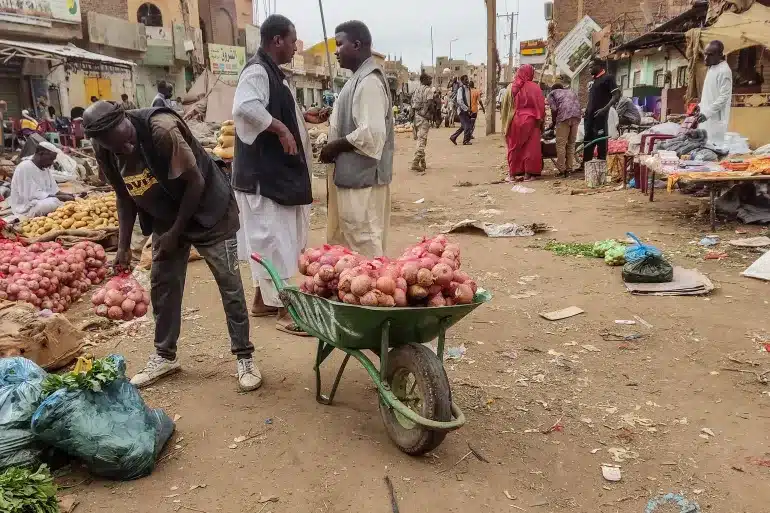
Sudan’s capital city of Khartoum has experienced a period of relative calm during the initial hours of a 24-hour ceasefire. This ceasefire marks the latest effort to bring an end to the intense conflict between the Sudanese army and the paramilitary group known as the Rapid Support Forces (RSF).
The United States and Saudi Arabia-brokered ceasefire took effect from 6am (04:00 GMT) on Saturday with hopes by the mediators that a pause in fighting will facilitate the safe passage of desperately needed humanitarian aid across the country.
“We have not been able to hear any sound of artillery shellings,” Morgan said on Saturday from Omdurman, located on the outskirts of the Sudanese capital.
The ceasefire is also hoped to halt the fighting that has been raging since April 15 when a rivalry between army chief Abdel Fattah al-Burhan and RSF commander Mohamed Hamdan “Hemedti” Dagalo exploded into open warfare.
A string of previous ceasefires have fallen through with both sides accusing the other of violations.
The warring parties have agreed to abide by the ceasefire, Morgan said, but the shorter ceasefire when compared with others in the past is partly to test whether it will actually be honoured this time.
The US and Saudi Arabia said they shared “frustration” over the past violations, threatening to dismantle ceasefire talks if fighting continues.
Residents are waiting to see how the ceasefire will play out before they attempt to make a move, whether to stock up on basic commodities, or to try and leave Khartoum because of the continuing fighting, Morgan said.
“A one-day truce is much less than we aspire for,” a resident of Khartoum North, Mahmud Bashir, told the AFP news agency. “We look forward to an end to this damned war.”
In the week before the ceasefire, fighting ramped up around crucial army bases, with the RSF claiming to have taken control of an arms manufacturing complex in the southern part of the capital.
Residents also reported anti-aircraft missiles firing in southern Khartoum and the Sharg el-Nil district across the Nile, which came under air attack just before the ceasefire took effect.
“Many residents say that the situation is getting desperate. We’re talking about some residential areas where there are people remaining, but there’s a lack of access to basic necessities,” said Morgan.
Aid agencies are hoping to intervene to alleviate some of the shortages, but will need a guarantee of safe passage from the warring sides to reach some parts of the capital, she added.
Khartoum residents told Morgan they hoped the 24-hour truce would allow some humanitarian aid to come in, especially medical assistance for those who are desperately in need, including those injured in the fighting.
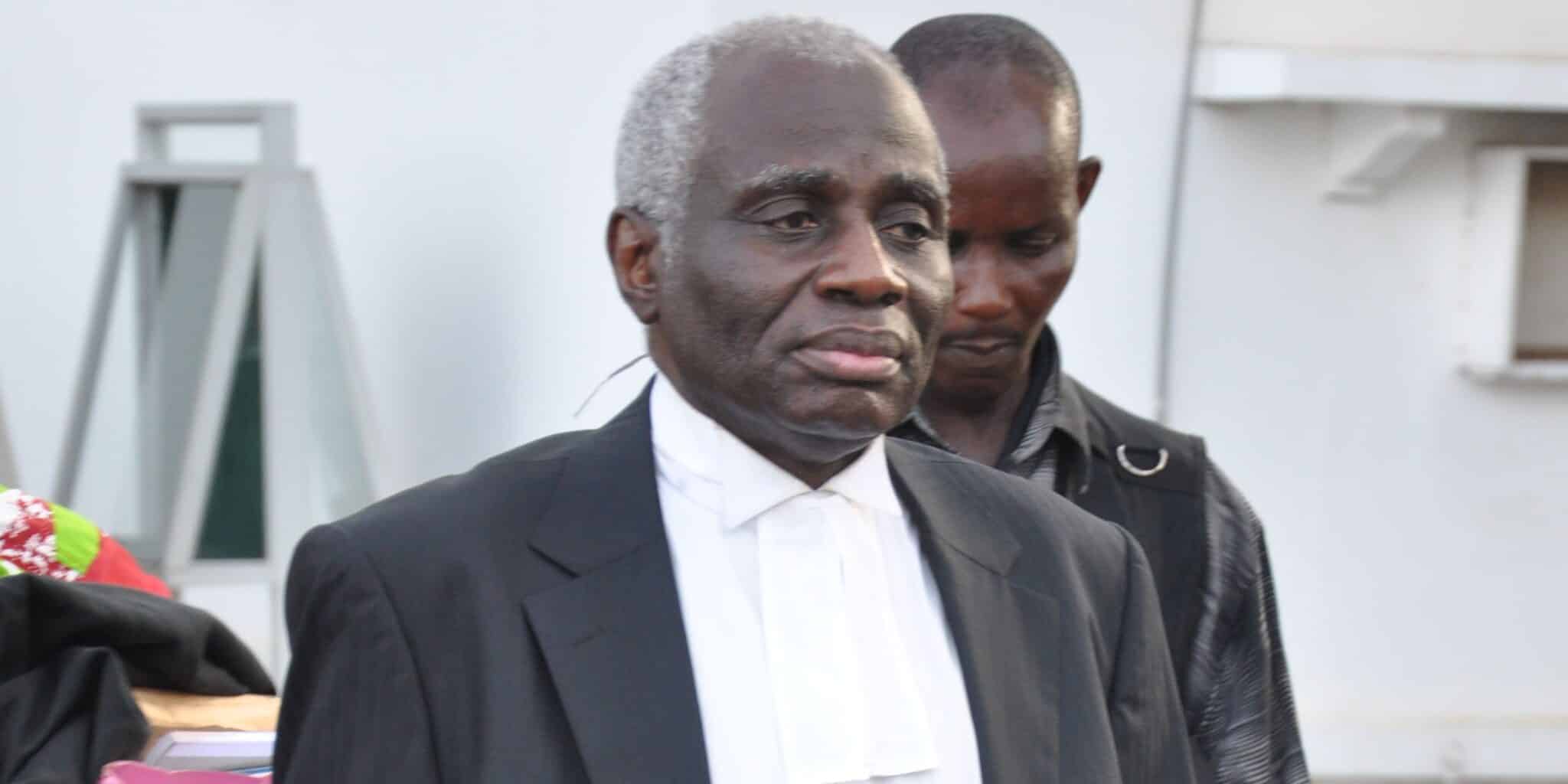
The former CEO of Ghana National Petroleum Corporation (GNPC), Tsatsu Tsikata, has responded to statements made by World Bank Country Director in Ghana, Pierre Frank Laporte, claiming that the World Bank misunderstands Ghana’s national energy position.
The renowned legal practitioner, made these comments while speaking to Accra-based TV3 concerning the recent interview by the World Bank Country Director, Pierre Laporte, who claimed that the Mahama-led administration signed expensive energy deals that are still having a repelling effect on the economy of Ghana today.
According to him, the World Bank always fails to understand the full energy sector situation.
“I’ve seen that the world bank is getting itself into the forefront of this discussion because, again, when I look back at this whole gas, fired, power sector, which is where some of these issues are rising, the world bank has made some serious mistakes in relation understanding the national energy situation.”
He went on to explain that the Bretton Woods institution made a similar mistake in the early 1900s when Ghana wanted to explore natural gas as an alternative to hydro energy.
“You know in the 80s and the early 90s when GNPC as a result of the gas mandate was insisting that based on all the evidence available gas was an important source to complement the supplement the power from hydro sources. At that time, the view of the world bank was against having additional capacity from gas recourses because of the argument of the world bank,” he continued.
To the former CEO of GNPC, the cost of fuel is the major cause of the energy sector crisis.
“And the reason I am raising this is that fuel cost is a major cost of the problem that we have about the power sector, fuel cost is a major part of the problem. And some of those fuel cost has to do with even going back to the use of light crude oil,” he added.
Former CEO of Ghana National Petroleum Corporation, GNPC, Tsatsu Tsikata says World Bank has contributed significantly to Ghana’s energy sector debt and not as a result of Power Purchase agreements of excess capacity signed in the past.
Kardashynka, Maryna and Valentyna’s southern Ukrainian hamlet, is a quiet area.
A charming group of cottages on the eastern bank of the Dnipro River, occupied by Russia.
Even with the liberation of Kherson city last November, the neighbours hadn’t been able to cross the river to go there because of bridges being destroyed.
In a chain of events few could predict, they finally made that journey this week, while being rescued from the recent catastrophic floods.
“A boat was passing, we started shouting and waving,” says Maryna.
Much of her surrounding area has been devoured by the Dnipro since the destruction of the Khakovka dam upstream.
Their homes sit close to this watery front line which separates Ukrainian-controlled and Russian-occupied territory.
“We’ve been waiting for help,” says Maryna. “Valentyna is 86, I’m 76 but with many illnesses.
“It’s been very difficult. There was no power, no reception, it was like we were on an uninhabited island.”
She becomes emotional and begins to weep.Image caption,
Viktor Kovalenko’s wife was killed by shelling a few days ago
They’re joined by their friend Viktor Kovalenko, whose wife was killed by shelling across the river a few days ago.
Before being rescued, he had to collect her death certificate from the Moscow-installed officials who now rule his neighbourhood.
“I buried her next to my mother. I told her to wait for me,” he says.
The pain he’s experiencing is visceral.
“I kept cursing the Russians in their faces. I don’t know how they didn’t kill me. If only you knew how great our life was together. Now I have no wife, no house, nothing.”
The eastern bank has seen the worst of the flooding, and it’s clear Maryna, Valentyna and Viktor are the lucky ones.
Hundreds of people there have been posting on the Telegram app asking to be rescued from there.
“Help me please!” writes Svitlana, who says there are 35 trapped people at an address. “They’re all on a nearby roof, children are screaming and crying,” she says.
“Three days without food and water, we are dying slowly. Please, please.”
On one local list, published on Friday, we’ve seen the names of 150 people who are reportedly missing.
Aliona posts: “Asking urgently! There is a 1939-born grandmother and 1958-born disabled woman. They need to be evacuated! Help!”
Our team called several numbers of people who said they were stuck on the Russian side, but there was no answer.Image caption,
Viktor has been helping to evacuate people
Dozens of people across Ukraine have responded with their addresses and an offer to provide accommodation after their rescue.
Ukraine’s military says it has been co-ordinating rescues from the eastern bank, but claimed “fearless volunteers” were carrying out some of the evacuations.
On board one rescue boat, as we weave through the vast expanse of Kherson’s flooded port, volunteer Viktor tells us he came under Russian fire while attempting such a trip.
“The problem is, Russian soldiers are waiting there and waiting for volunteers or soldiers to arrive so they can shoot them,” explains Viktor as he offers a lift to people trapped in their apartment blocks.
The BBC has not been able to independently verify these claims.
“Even now, working is difficult. At this very moment, Kherson is under attack. There was also shelling on the island, a rocket struck 30m away from us.”
In the last few days of reporting from Kherson, the city has come under increased shelling and the military administration has advised volunteers not to venture out on to the water.
But that hasn’t deterred people like Viktor, who continues to search for those trapped, still in need of help.
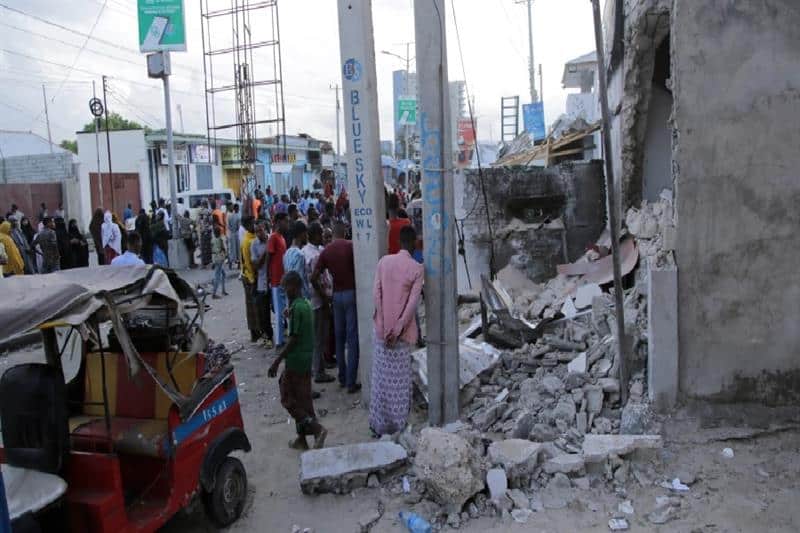
Somali state television said early Saturday (June 10) that security troops had ended the siege of a hotel in Mogadishu. According to authorities, six individuals were murdered and ten more were injured.
Fighters from the Islamist Al-Shabaab group claimed responsibility for the attack which took place on Friday (June 9), south of the capital.
Witnesses reported hearing gunfire and explosions.
“Tonight, we saw a big disaster here at Lido beach at (Mogadishu’s, ed) Abdiaziz District as I was having fun with my friend,” eyewitness Yahye Mohamed told an AFP journalist.
“As soon as the first blast rocked area, I saw a lady fall on ground, dead, after she’d been hit by shrapnel from the explosion. May Allah have mercy on the killed people.”
Al-Qaida’s East Africa affiliate, al-Shabab, is known for carrying out attacks on hotels and other high-profile locations in Mogadishu, usually starting with a suicide bombing.
The Pearl Beach hotel is down the street from the Turkish Embassy and is popular with government officials.
“Instantly fled for cover”
Hassan Abdirahman told The Associated Press that he was in the restaurant at the time.
“I heard the sound of gunshots which came from the beach direction and followed by the huge sound of an explosion.” He said that he escaped and saw damaged vehicles along the street.
Mulki Osman also says he and his friends “instantly fled for cover” in the restaurant when they heard explosions and gunfire shortly before 8 p.m.
“Some of my friends are still stuck inside the hotel, but the security officers managed to rescue me. I hope they stay safe,” he said.
Lido Beach is one of Mogadishu’s most popular areas and is busy on Friday nights as Somalis enjoy the weekend by visiting local coffee shops and ice cream parlors.
Last year, Somalia’s President Hassan Sheikh Mohamud launched an “all-out war” against Al-Shabaab, rallying Somalis to help flush out members of the jihadist group he described as “bedbugs”.
Al-Shabaab fighters killed 54 Ugandan peacekeepers in an attack on an African Union base in the southern town of Bulo Marer last month.
Four youngsters have been recovered alive after surviving an aircraft crash and weeks of survival in Colombia’s Amazon rainforest.
Colombia’s president said the rescue of the siblings, aged 13, nine, four and one, was “a joy for the whole country”.
The children’s mother and two pilots were killed when their light aircraft crashed in the jungle on 1 May.
The missing children became the focus of a huge rescue operation involving dozens of soldiers and local people.
President Gustavo Petro said finding the group was a “magical day”, adding: “They were alone, they themselves achieved an example of total survival which will remain in history.
“These children are today the children of peace and the children of Colombia.”
Mr Petro shared a photograph of several members of the military and Indigenous community caring for the siblings, who had been missing for 40 days. One of the rescuers held a bottle up to the mouth of the smallest child, while another fed one of the other children from a mug with a spoon.
A video shared by Colombia’s ministry of defence showed the children being air-lifted into a helicopter in the dark above the tall trees of the jungle.
Mr Petro said the siblings were receiving medical attention – and that he had spoken to their grandfather, who told him “the mother jungle returned them”.
The children have been flown to the nation’s capital Bogota, where ambulances have taken them to hospital for further medical treatment.
The Cessna 206 aircraft the children and their mother had been travelling on before the crash was flying from Araracuara, in Amazonas province, to San José del Guaviare, when it issued a mayday alert due to engine failure.
The bodies of the three adults were found at the crash site by the army, but it appeared that the children had escaped the wreckage and wandered into the rainforest to find help.
A massive search began and in May, rescuers recovered items left behind by the children, including a child’s drinking bottle, a pair of scissors, a hair tie and a makeshift shelter.
Small footprints were also discovered, which led search teams to believe the children were still alive in the rainforest, which is home to jaguars, snakes and other predators.
The children belong to the Huitoto indigenous group and members of their community hoped that their knowledge of fruits and jungle survival skills would give them a better chance of remaining alive.
Indigenous people joined the search and helicopters broadcast a message from the children’s grandmother, recorded in the Huitoto language, urging them to stop moving to make them easier to locate.
Colombia’s president came under criticism last month when a tweet published on his account mistakenly announced that the children had been found.
He erased the tweet the next day saying that the information – which his office had been given by Colombia’s child welfare agency – could not be confirmed.
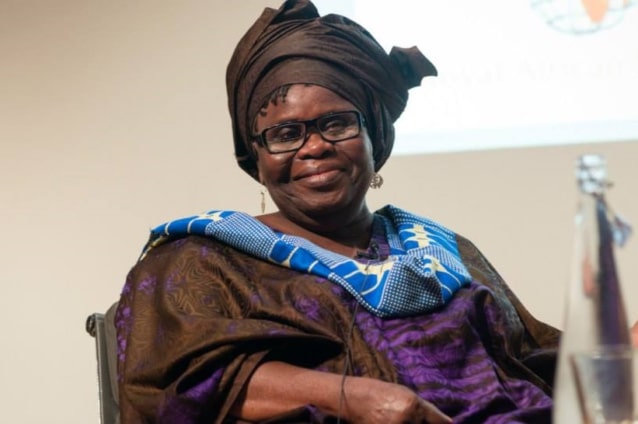
Hundreds of people continue to pour into the W.E.B. Du Bois Memorial Centre to express their condolences to the family of Professor Ama Ata Aidoo, who died on Wednesday, May 31, 2023, at the age of 81.
Following the opening of a book of condolence at the Memorial Centre in Accra, people, including public figures, government officials, Civil Society Organizations representatives, stakeholders in the literary, publishing and performing arts industries, some from the diaspora, have since Wednesday been paying glowing tributes to the memory of the late Professor.
The family of the astute playwright, author and poet had announced that they would sit to receive mourners and sympathisers from yesterday, June 7, till today, June 9, from 10:00am to 3:00 pm each day. The atmosphere at the Centre has been solemn with family members and sympathisers in mourning attires.
Prominent members in society, who signed the book of condolence on the first day included lawyer Tsatsu Tsikata, a member of the advisory board of Ghana Association of Writers (GAW), Nana Kwasi Gyan Apenteng, a Former Chairman of the National Media Commission, Mr Kwaw Ansah, Ghanaian Filmaker and Madam Brigette Dzogbenuku, 2020 Presidential Candidate of the PPP.
Present at today’s signing was Prof Abeku Blankson, President, African University College of Communications (AUCC).
Nana Sandy Achampong, Director of the Ama Ata Aidoo Centre for Creative Writing, AUCC in Accra, said the late Professor’s contributions to the Centre and the literary industry could not be overlooked.
In eulogizing the renowned writer, Nana Achampong said Prof Aidoo had established a strong foundation that supported literacy, writing and reading, which would live beyond her passing.
He said the Ama Ata Aidoo Centre had since its establishment six years ago, published four anthropologies and unearth 60 new writers.
Some of the writers he said had had personal encounters with Prof Aidoo during her visits to the Centre.
He expressed condolences to Kinna Likimani, daughter of the late Professor and her immediate family, noting that Prof Ama Ata Aidoo’s family went beyond Kinna and the immediate family.
“Even though she won’t be physically present with us, her works and legacy will continue to be with us,” he added.
Born Christina Ama Aidoo on March 23, 1942, in Abeadzi Kyiakor, a small town near Saltpond in the Central Region of Ghana, she was considered one of the leading literary voices in Africa, and known for her insightful and powerful works that explored themes of feminism, gender roles, cultural identity and social issues. Prof. Aidoo among many things has been known for her numerous plays, including “Anowa” (1970), a tragedy that explores the conflict between individual desires and societal expectations.
Her notable works include the novel “Our Sister Killjoy” (1977), which examines the experiences of an African woman living in Europe and reflects issues of colonialism and cultural identity.
Until her passing, Prof Ama Ata Aidoo, who had received recognition and awards for her contributions to literature and activism was the Life Chairperson of Ghana Association of Writers annual literary festival known as GAWBOFEST.
The Zongo Chief of Gomoa, Nyanayano Saliki Issaka Giwa, has has raised worry over the area’s inadequate road network and lack of access to safe drinking water.
The situation, the chief lamented, was affecting people’s livelihoods, and the government needed to address the issue immediately.
He claims that over 150,000 people use the road and that due to the poor condition of the road, investors are forced to relocate their businesses to other communities, prompting the government to intervene through the Ministry of Roads and Highways.
“The poor nature of the road is our major challenge. No investor is willing to invest in the area. When they come and assess the area and see the deplorable nature of the road, they move away. One of the key activities we engage in here is salt production. Our salt is of high quality because we do not add additives. But those expected to come and trade with us are not coming because of the bad road.”
He also raised the issue of potable drinking water, saying residents are struggling to have good drinking water and the government must take steps to address them.
The chief further revealed the residents in the area are part of the country and deserves a fair share of the national cake.
He said the government must take steps to the challenge so they would be able to get investors to come to the area to invest in the salt business.
Former President Donald Trump has been accused with manipulating hundreds of confidential papers, including nuclear secrets and military preparations for the United States.
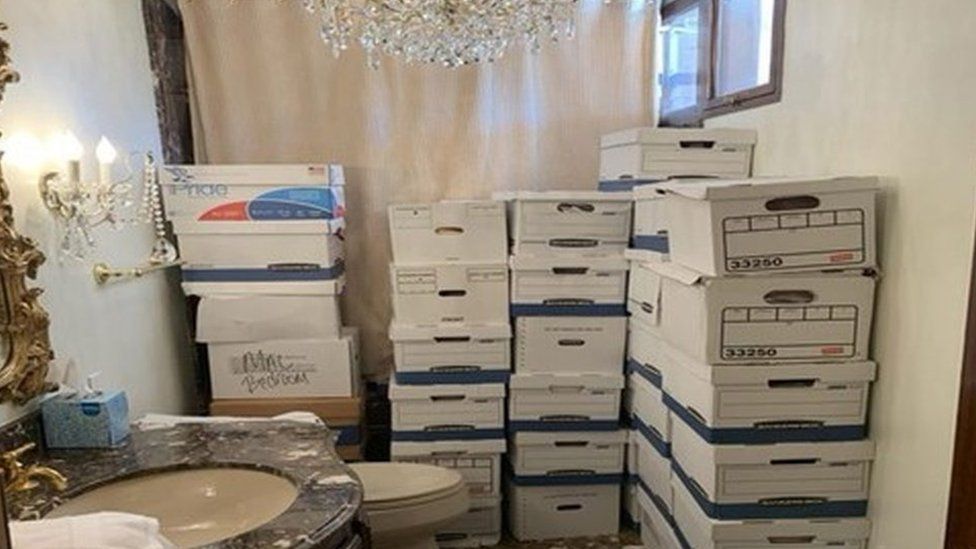
The 37-count indictment accuses him of keeping the files at his Florida estate, including in a ballroom and a shower, and lying to investigators.
It alleges he then tried to obstruct the investigation into the handling of the documents.
Mr Trump, who is running for president again in 2024, denies any wrongdoing.
But legal experts say that the criminal charges against Mr Trump could lead to substantial prison time if he is convicted.
Charges have also been filed against Walt Nauta, a personal aide to Mr Trump. The former White House military valet is accused of moving files to hide them from the FBI.
The 49-page indictment contains the first-ever federal charges against a former US president. It says the classified documents Mr Trump stored in his boxes contained information about:
United States nuclear programmes
Defence and weapons capabilities of both the United States and foreign countries
Potential vulnerabilities of the United States and its allies to military attack
Plans for possible retaliation in response to a foreign attack
Prosecutors say that when Mr Trump left office, he took about 300 classified files to Mar-a-Lago – his oceanfront home in Palm Beach, which is also an expansive private members’ club.
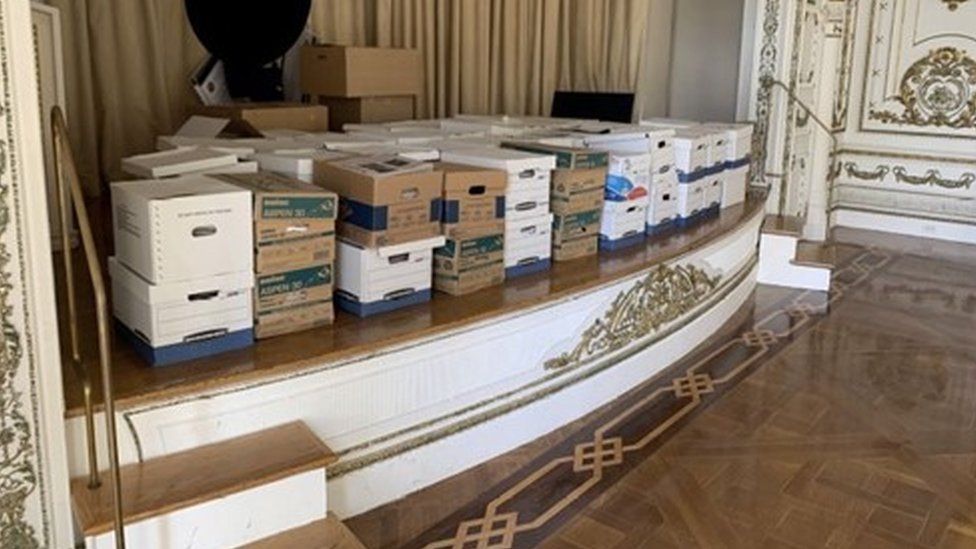
The charge sheet notes that Mar-a-Lago hosted events for tens of thousands of members and guests, including in a ballroom where documents were found.
Prosecutors say Mr Trump tried to obstruct the FBI inquiry into the missing documents by suggesting that his lawyer “hide or destroy” them, or tell investigators he did not have them.
“Wouldn’t it be better if we just told them we don’t have anything here?” Mr Trump said to one of his attorneys, according to the indictment.
Mr Trump’s first court appearance in the case will be in Miami, Florida, on Tuesday – the eve of his 77th birthday.
Image caption,Files were stored in a ballroom at Donald Trump’s Florida property, Mar-a-Lago
Mar-a-Lago “was not an authorised location” for classified documents to be kept or discussed, the indictment says.
Some files were allegedly stored on stage in the ballroom, where events and gatherings took place – and later in a bathroom and a shower, an office space, and Mr Trump’s bedroom.
On two occasions in 2021, the former president showed classified documents to people without security clearance, including a writer and two members of staff.
At his golf club in Bedminster, New Jersey, which was also an “unauthorised location”, he is said to have displayed and described a “plan of attack” that he told others had been prepared for him by the Department of Defense.
“As president I could have declassified it. Now I can’t, you know, but this is still a secret,” Mr Trump allegedly said, according to an audio recording.Media caption,
Watch: ‘I did nothing wrong. We’ll fight this out.’
Prosecutors say Mr Trump then showed off classified documents again in August or September 2021 at the Bedminster club.
The former US president “showed a representative of his political action committee who did not possess a security clearance a classified map”.
This map “related to a military operation” and Mr Trump told the person “he should not be showing it” to them and they “should not get too close”.
Special Counsel Jack Smith, who is overseeing the investigation, said on Friday that laws protecting national defence information were critical and must be enforced.
“We have one set of laws in this country, and they apply to everyone,” he said in a brief statement in Washington.
Image caption,The indictment included images of files stored in a shower
In a social media post, Mr Trump blasted Mr Smith as a “deranged lunatic”.
“He is a Trump hater – a deranged ‘psycho’ that shouldn’t be involved in any case having to do with ‘Justice,’” he wrote on his Truth Social platform.
Mr Trump pointed out that classified files were also found in President Joe Biden’s former office and Delaware home, including in his garage.
The White House has previously said it immediately co-operated with officials as soon as those files were discovered, contrasting with Mr Trump’s alleged efforts to obstruct investigators.
A federal investigation into Mr Biden’s handling of classified documents is being led by Special Counsel Robert Hur and is still under way.
Shortly before the Department of Justice made the criminal charges public, two of Mr Trump’s lawyers suddenly quit the case without much explanation, saying this was a “logical moment” to resign.
This is the second criminal case for Mr Trump, who is due to go on trial in New York next year in a state case involving a hush-money payment to a porn star.
The United Nations stated on Friday (June 9) that a unit of 60 Tanzanian troops would be returned from the Central African Republic following significant allegations of sexual exploitation and abuse.
The alleged crimes were not dated. Speaking from New York, the spokesperson for the UN Secretary-General said a preliminary investigation identified 4 victims.
“The identified victims are being provided with care and support by the Mission’s humanitarian partners. The Mission has also deployed a team to further engage with the community,” Stéphane Dujarric said.
“The Tanzanian authorities have been formally notified and have deployed national investigation officers to the Central African Republic […]”
Credible evidence wasfound against 11 members of the unit formerly based in the western part of the Central African Republic.
“The unit has been relocated to another base while the investigation continues, and members of the unit are confined to barracks, this is in order to protect victims as well of course as the integrity of the investigation”, Dujarric revealed.
“The unit will be repatriated once their presence is no longer required in theatre by the investigators….”
Dujarric explained that the “by the Secretariat to repatriate this unit” was in accordance with resolution 2272 of the Security Council “where the Council ‘endorses the decision of the Secretary-General to repatriate a particular military unit or formed police unit of a contingent when there is credible evidence of widespread or systemic sexual exploitation and abuse by that unit’.”
The United Nations recorded on its website that since 2015, 254 accusations of sexual exploitation and abuse targeting members of its Multidimensional Integrated Stabilization Mission in the Central African Republic or MINUSCA.
The UN chief António Guterres announced early in his tenure A policy of ‘zero tolerance’ towards sexual abuse by UN personnel, calling on Member States to sign a voluntary compact on preventing and addressing the scourge, in 2017.
Accusations of exploitation and sexual abuse by UN peacekeepers around the world are widespread.
During a protest against the police, sparked by tensions between residents of Sherigu community in the Bolgatanga Municipality and the Fulani community, approximately 15 individuals were injured by rubber bullets.
The victims were alleged to have been shot by the police when some youth went to the Bolgatanga District Police Station to protest the arrest of six of their colleagues for allegedly leading an attack on Fulani settlement near the community.
They were also alleged to have planned to attack the Fulanis a second time, and the Sherigu Chief as well.
According to Mr Francis Amoah, the Assemblyman for Sherigu-Punpungo Electoral Area, the victims were receiving treatment at healthcare facilities in the Municipality.
Some residents of Sherigu accused the Fulanis in the community, to have, on numerous occasions, attacked, killed, and raped women in the area particularly along the Sherigu-Naaga road.
Mr Amoah told the Ghana News Agency, that it all started about two weeks ago when some residents asked the Fulanis to vacate the community, accusing them of the rampant armed robbery incidents in the area which had led to the death of one person.
The youth also accused the Fulanis of always allowing their cattle to destroy their crops and wanted them out of the community.
The police initially arrested six people who were said to be the ring leaders and that angered the youth to protest, which led to 15 persons being injured by the rubber bullets.
The police later in a swoop arrested 61 persons in connection with the disturbances.
Mr Rex Asanga, the Municipal Chief Executive for Bolgatanga, said he visited the victims who were in stable condition and explained that the youth had besieged the police station and attacked the police officers by pelting stones, causing damage to some properties.
He said the police, in their effort to disperse the rampaging youth used rubber bullets which caused some injuries to the victims.
He said the youth asked the Fulanis in the community to leave the area, and the action displaced about 170 Fulanis who were currently hosted at the Bolgatanga Sports Stadium.
He said the Municipal Security Council was working seriously to find a lasting solution to the problem and urged all stakeholders to remain calm.
“We were working on resolving the issue until it escalated, so we are not sleeping on it. We are trying to get the community to agree to have the Fulanis back to the community because a lot of their cattle are still there without anybody attending to them,” he said.
The 61 persons were taken to court and eight juveniles (minors) were granted bail while the rest were remanded into prison custody.
They are scheduled to reappear in court on June 19, 2023.
To consolidate Ghana’s democracy, the National Commission for Civic Education (NCCE) has urged residents to take the district assembly idea, particularly the District Assembly and Unit Committee elections, seriously.
The district assembly concept is a key component of our democratic dispensation since it is designed to bring governance and tenets of democracy to the doorstep of the people
Madam Ophelia Ankrah, Eastern Regional Director of the National Commission on Civic Education, made the call during an engagement with the Ghana Police Service in Koforidua as part of the 2023 NCCE annual citizenship week celebration.
She emphasised the critical role of the Police and all other security agencies in Ghana’s democracy and advised the Police to always exhibit high levels of professionalism to gain public confidence.
In line with the mandate of the NCCE to educate citizens on their civic rights and responsibilities, she explained that the engagement with the Police was to deepen their knowledge on the constitution and once again remind them of their professional role as the district level and unit committee elections approached.
This year’s constitution week is on the theme, “Thirty years of Consolidating Constitutional Democracy: Building National Cohesion through Civic Education and Participation in Local Governance.”
The constitution Week celebration is one of the flagship programmes of the NCCE, instituted in 2001 to commemorate Ghana’s return to constitutional democratic rule.
Meanwhile, the New Juaben North office of the NCCE has also educated pupils of King Jesus School in Koforidua on their rights and responsibilities as children as part of the constitution week celebration.
Ebenezer Acheampong, New Juaben North NCCE Director told the pupils that respecting authorities including their parents and teachers was a national value that must be upheld at all times.
He said just as children have rights to be educated, to shelter, protection, and everything that guarantees their growth and safety, they also have a responsibility to obey authorities.
Acheampong admonished the pupils to stay away from social vices such as substance abuse, betting and gambling, cyber- crime, and others and focus on their education to become responsible adults.
Policy Analyst and Economist, Dr. Theo Acheampong, cautions that Ghana may face difficulties in obtaining debt relief of around $10.5 billion from foreign creditors, including bilateral lenders.
According to him, experiences from Zambia and others suggest that the road ahead for the nation to secure $2.6 billion annually in debt relief for the next four years will be difficult.
The country has already submitted a proposal on debt restructuring to its official creditors.
But speaking to Africa News, Dr. Acheampong said the country may not get a favorable deal from the external creditors.
“What Ghana wants to do is over the course of the next three, four years under the IMF programme, get as much as 10 and half billion dollars of relief coming from the creditors. So more than half of the $20 billion debt is what it’s looking to get from them [external creditors] and that translates to about $2.6 billion every year that Ghana hopes to get in the form of relief or retrieve from these creditors.”
“It’s going to be a bit difficult because we’ve seen similar instances with the likes of Zambia. But there’s been a major contestation around how we treat certain creditor groups”, he explained.
He furthered that Ghana is too much exposed to Eurobonds and other commercial loans, adding, “So I think, the road ahead is going to be quite challenging in the sense that all the $2.6 billion they [creditors] need to get every year, it probably will not amount to that and this is just on the basis of some of the evidence we’ve seen with other countries that have attempted to go down this road”.
Continuing, Dr. Acheampong said “It does make it quite difficult largely because most of the commercial creditors have different obligations to their shareholders, but also because Ghana in a way defaulted on making the interest payment on a number of these debt obligations since December of last year”.
Again to him, it does make the process rather much more complicated since Ghana has already indicated that it is looking at haircuts of about 30% to 50%.
“I think that is going to be a bitter pill to swallow for a number of these commercial creditors”, he added.
Government sends proposal on debt restructuring to official creditors
The government is said to have sent a proposal on the restructuring of its external debt to its official creditors.
According to Reuters, the ‘working proposal’ is however not legally binding.
Intercommunal fighting in a displaced persons camp in northern South Sudan has killed 13, according to the UN mission in charge of the camp.
The clashes between two ethnic communities living in the camp in Upper Nile State’s capital, Malakal, first erupted on Thursday when a man was stabbed to death.
“Initial reports to the mission indicated that at least three persons have been killed and more than 20 injured with some of them receiving treatment at the mission’s hospital,” a spokesperson for the UN Mission in South Sudan (UNMISS), Ben Malor, said in a statement on Friday.
“Later in the day, 10 more people were confirmed dead in other facilities.”
The camp is home to at least 50,000 people. Its number has been fluctuating since the first group of people came there at the start of a civil war in 2013.
The numbers have increased in recent weeks after about 3,000 people fleeing fighting in neighbouring Sudan also came to the camp, Luke Saadala, Upper Nile’s information minister, said.
Malor said UNMISS and South Sudan’s army had reinforced security in and around the camp and calm was returning on Friday.
A peace deal signed in 2018 to end the civil war has significantly reduced fighting in South Sudan, but violence remains rife in areas where rights to grazing areas, water, farmland and other resources are under dispute.
In recent months, Upper Nile State has been an epicentre of violence mainly orchestrated by armed militias.
In 2016, fighting at the Malakal camp killed at least 18 people, including two staff members of the aid group Médecins Sans Frontières.
The Ghana Chamber of Mines, has reported that large-scale gold output reached an all-time high of 3.1 million ounces in 2022.
The figure represents an increment of 13 per cent over the 2021 figure of 2.7 million ounces.
The chamber’s producing member companies contributed 3 million ounces of the large scale gold output with the remaining 35,421 ounces declared as being attributable to non-Chamber member large scale mines.
The country’s overall gold output including production from small scale miners increased from 2.8 million ounces in 2021 to 3.7 million ounces in 2022, representing an increase of 32 per cent.
GOIL PLC has started producing bitumen for asphaltic roads throughout the nation.
The indigenous oil and gas organization collaborated with a business from Cote d’Ivoire with experience in bitumen production to establish the facility, which is projected to significantly reduce the country’s reliance on imported bitumen.
The Chairman of the company’s Board of Directors, Reginald Daniel Laryea, addressing the 54th annual general meeting (AGM) of the company in Accra last Wednesday, said the new subsidiary would produce the Polymer Modified Bitumen (PMB), which was considered the best in the bitumen range of products due to its superior properties compared to other types.
“The PMB possesses a resilient and long-lasting feature capable of sustaining and preserving roads for a longer period than the regular asphalted roads,” he said.
“It is our expectation that the terminal will produce the required quantities of PMB sufficient to serve the needs of the roads construction sector and to serve as an export product to other countries, particularly in the West African sub-region,” the chairman added at the hybrid AGM, which also had shareholders joining via electronic meeting platforms.
The meeting received and approved the company’s annual report for the year 2022, approved dividend of GH¢0.056 per share, re-elected directors and authorised the directors to fix the remuneration of the auditors and that of the directors.
Local content
Mr Laryea appealed to the government to extend the local content and local participation requirements to the road construction sector to reduce the import of the bitumen.
GOIL PLC also believes when road construction picks up again shortly, sale of products from the plant, which started operations in September last year, would increase.
The bitumen plant is one of two big ticket projects GOIL PLC is undertaking to take advantage of opportunities in the downstream oil and gas sector.
The other is the construction of cylinder refilling plants under the Cylinder Recirculation Model (CRM) in Tema and Kumasi.
While the plant in Tema is complete, that of Kumasi is 95 per cent complete and both are expected to start operation by the close of the year.
Financials
In spite of the sales in the downstream oil industry slowing by 9.6 per cent in 2022, Mr Laryea said GOIL PLC group recorded 160 per cent growth in gross revenues and 135 per cent for the company.
The group posted 26 per cent growth in profit after tax to GH¢123.89 million for last year, as against the GH¢98.74 million it posted in 2021.
The chairman explained that new businesses and enhanced business operations enabled the company to keep its promise of continuously improving shareholder value.
The company’s earnings per share improved by 25 per cent from GH¢0.316 per share to GH¢0.252, allowing the listed company to declare dividend of GH¢0.056 per share, translating into a payout of GH¢21.94 million, up by 19 per cent compared to the previous year.
High contributors
GOIL’s performance was buoyed by increased visibility, the number of stations, which increased by four per cent in the period under review, enabling the company to extend its market share from 15.32 per cent in 2021 to 20.11 per cent.
“Consequently, our overall market share grew from 15.32 per cent in 2021 to 20.11 per cent in 2022,” Mr Laryea added.
The business of supplying fuel to ships, otherwise known as bunkering, is one of GOIL’s main stays, where the group extended its 60 per cent share of that market to 73 per cent within the period under review.
With significant investments in the supply of quality products and services, Mr Laryea said GOIL PLC expanded its fuel sales volume to the mines from 49.2 million litres in 2021 to 59.2 million litres last year.
The chairman said the company had also rejuvenated its non-fuel business which thrived on allowing other businesses to operate from its service stations such as GoCafes and Lubebays.
In the year under review, Mr Laryea reported that eight GoCafes were rebranded at different locations, while the company increased its partnership with banks and food chain operators over the last five years.
Vice President, Dr. Mahamudu Bawumia, has praised Taptap Send Africa, an international money transfer firm based in Ghana, for its dedication to encouraging digital growth in remittances into Ghana.
Dr Bawumia commended the company when he visited their booth at the just ended 2023 Ghana Investment and Opportunities Summit in London, under the auspices of the Ghana Investment Promotion Authority.
The third edition of the Ghana Investment and Opportunities Summit (GHIOS), which took place at the London Hilton on Park Lane, on 6th and 7th June 2023, saw captains of industry and business leaders showcase Ghana to the world as the choicest investment destination in Africa.
Responding to the remarks by the Vice President, Mr Darryl Abraham Mawutor, the Growth Director in charge of Africa for Taptap Send Africa said they have been motivated to do more in their operations to increase remittances to Ghana.
He pledged that Taptap Send would intensity their public outreach on financial literacy, while improving customer experience across the world by addressing challenges that people face in transferring money to Ghana.
Taptap Send has established a call centre with a staff strength of 29 persons that speak Ghanaian and other international languages, to help satisfy the needs of customers in a marker of growing cybersecurity concerns.
Mr Mawutor said the effort by the company was to increase the confidence of customers and help increase remittances into Ghana, which stood at $4.7 billion in 2022 and projected to reach $5bn by the end of 2023.
Global remittances account for more than $500 billion annually, most of which moves into developing countries, with a market dominated by traditional services, which he said caused delays and limited reach.
“We’re therefore helping people to send money instantly and securely at no fee by deepening our connections in Ghana and positioning our operations to attract more remittances to support economic growth by making money transfer seamless and safe,” he said.
“The basis of what we’re doing is to create employment by increasing access to financial technology services, get people to make money and grow the Ghanaian economy,” he added.
The Growth Director said he was confident that when the Government and all stakeholders in the finance and technology sectors work more collaboratively, Ghana would become a hub to attract more fintech companies and remittances.
“There are a lot of people with the requisite skills who only need the opportunity to work with global companies with the right policies and conducive environment and support systems, and once we have this, Ghana’s finctech sector will transform,” Mr Mawutor said.
Taptap Send, which operates in the United Kingdom, United States, Canada and Europe supports payments into African countries including, Ghana, Senegal, Mali, Guinea, Kenya, Ivory Coast, and Zambia as well as Asia.
The venture-backed company has investors Reid Hoffman – an American internet entrepreneur and former co-founder of LinkedIn, the Omidyar Network – a social change investment firm, and Helois – a private investment firm.
The National Petroleum Authority (NPA) has taken measures to ensure uninterrupted importation and supply of petroleum products in the country.
The measures put in place by the NPA saved the country from experiencing fuel shortages as experienced in other countries, including Nigeria, Kenya, and Zambia.
Speaking at a media engagement in Cape Coast on Wednesday, the Head of Planning at NPA, Mr Dominic Aboagye, said the interventions include management of storage depots, the laycan allocation programme and stock monitoring and reporting.
Besides, he said, the Gold for Oil programme, the Bank of Ghana forex support to Bulk Oil Distribution Companies and the granting of a Special International Oil Trading License were key to preventing any risk of fuel supply disruption.
Mr Aboagye noted that the Russia-Ukraine war caused disruption to the fuel supply in the world.
He noted that 80 per cent of the country’s fuel consumption was dependent on imports.
He said the local fuel production by Akwaaba Oil Refinery and the Platon Gas Oil Refinery supported the sector.
He said the local fuel refinery would be ramped up with the expected start of operation by the Tema Oil Refinery (TOR) and the completion of the Sentuo refinery.
The first phase of the Sentuo refinery would produce 40,000 barrels per day, which would be increased to 100,000 barrels per day.
Mr Aboagye noted that the country’s daily fuel demand was about 110,000 metric tonnes of fuel per day.
Therefore, he said that the completion of the Sentuo refinery would ensure local fuel sufficiency.
In his presentation, the Central Regional Manager of NPA, Mr Michael Opoku-Obiri, said an applicant for starting a filling station needed to have a site plan, no objection construction permit, an authorisation test run, and an authorisation to operate from the Authority.
He said that the NPA conducts the main inspection, compliance random inspection, and monthly quality control visits to filling stations to ensure compliance with quality and safety standards.
Mr Opoku-Obiri mentioned use of loading ramps to tilt vehicles to be filled to the brim, under-delivery at the pumps, and unavailability of water finding paste as some of the infractions, which the office was working to correct in the region.
The media engagement organised by the Communications Department was to highlight NPA’s activities in the petroleum downstream industry and respond to industry-related questions from the media.
In a welcome address on behalf of the NPA Chief Executive, Dr Mustapha Abdul-Hamid, the Director of Economic Regulation and Planning, Mrs Alpha Welbeck, said the focus of this year’s education was on the security of supply of petroleum products and the requirements for siting filling stations.
A member of the NPA Governing Board and Chairman of the Consumer Services sub-committee, Mr Kwame Sefa Kayi, commended the NPA for its media engagement and called for increased collaboration between the Authority and the media to get the public well-informed about NPA’s operations
In this week’s auction, government hopes to borrow GH2.63 billion through treasury bills.
The subscriptions are expected to come from the 91,182, and 364-day bills.
Last week, the auction results for the treasury bill auction held on June 2, 2023, showed that the government secured GH¢2.40 billion.
This indicated an oversubscription of GH¢324.01 million from the target of GH¢2.08 billion.
This will be the first time in four weeks that the government has exceeded its treasury bill target.
Interest rates are still high nonetheless, increasing from 19% to almost 23%.
The majority of the subscriptions came from the 91-day bills, which received GH¢1.59 billion at an increased interest rate of 21.15%.
The 182-day bill received bids worth GH¢816.62 million at an interest rate of 23.93%.
The assumption was that due to the finalization of Ghana’s IMF deal, investor confidence would rise, leading to the government achieving its target or even surpassing it.
But even after that, treasury bills were being undersubscribed.
It is, however, not far-fetched to assert that investor confidence is gradually being restored.
The United States Agency for International Development (USAID) has stated that it is suspending food aid to all of Ethiopia, a month after suspending help to the war-torn Tigray area due to unlawful diversions.
The agency on Thursday cited “a widespread and coordinated campaign” to divert aid from those in need as the reason for the suspension in Ethiopia, which has grappled with rampant hunger amid civil war and drought.
“We made the difficult but necessary decision that we cannot move forward with distribution of food assistance until reforms are in place,” said a statement by a spokesperson for the US government’s main international aid agency.
“Our intention is to immediately resume food assistance once we are confident in the integrity of delivery systems to get assistance to its intended recipients,” the statement added.
The statement did not say who was behind the diversions, but in a separate statement released hours late by the US Embassy in Ethiopia, both governments said they were conducting “investigations so that the perpetrators of such diversions are held to account.”
“The two governments commit to collaborate toward an efficient aid distribution system in Ethiopia, which would safeguard assistance from diversion,” it said.
The pause comes after USAID and the World Food Programme froze food aid to the Tigray region in northern Ethiopia, where war between regional forces and Ethiopia’s government broke out in November 2020. The two sides agreed to a truce in November last year. The agencies cited the diversion of aid shipments to local markets as the reason for the suspension.
On Thursday, The Washington Post newspaper cited a report by the Humanitarian Resilience Development Donor Group, which it described as an organization of donors briefed by USAID, that identified “a coordinated and criminal scheme” to divert the aid.
The report said the “scheme appears to be orchestrated by federal and regional Government of Ethiopia (GoE) entities, with military units across the country benefitting from humanitarian assistance” and that “significant diversions” had been documented in seven of Ethiopia’s nine regions, according to the Post.
On Thursday, top US diplomat Antony Blinken met with his Ethiopian counterpart, Foreign Minister Demeke Mekonnen, during a trip to Riyadh, Saudi Arabia.
State Department spokesman Matthew Miller said Blinken “welcomed the Ethiopian government’s commitment to work together to conduct a full investigation into the diversion of US food assistance and to hold accountable those found responsible”.
According to the World Food Programme, more than 20 million people across Ethiopia are in need of food assistance. In fiscal year 2022, USAID distributed $1.5bn to the country, most of it in food aid.
Despite a significant reduction in his take-home pay over the previous two fiscal years, Ralph Mupita, President and CEO of MTN Group, Africa’s largest telecom services provider, is one of Africa’s highest-earning CEOs.
Mupita’s annual remuneration dropped significantly to $1.13 million in 2022, compared to the $1.4 million he received in 2021, even as MTN Group reported robust profits and revenues at the end of its 2022 fiscal year.
Data tracked by Billionaires.Africa revealed that the 18.8 percent decrease in Mupita’s total earned remuneration can be attributed to a decline in his short-term incentive (STI) allocations for 2022, tied to the incremental progress made toward the company’s targets.
Mupita’s STI earnings experienced a 30.7 percent decline, falling from $893,000 in 2021 to $619,000 in 2022. This occurred despite the group’s profits rising from R16.99 billion ($901.3 million) in 2021 to R24.26 billion ($1.29 billion) at the close of the 2022 fiscal year.
What you should know about Ralph Mupita
Ralph Mupita assumed the role of Group President and CEO of MTN Group on September 1, 2020, following his previous tenure as Chief Financial Officer.
Prior to his time at MTN, Mupita served as the Chief Executive Officer for Old Mutual Emerging Markets, where he provided financial service solutions across 19 countries in Africa, Latin America, and Asia.
Since joining MTN, Mupita has played a pivotal role in strengthening the Group’s financial position, shaping its strategic direction, and overseeing its successful listing on the Nigerian and Ghanaian Stock Exchanges.
His diverse background, encompassing expertise in engineering, construction, financial services, and telecommunications, has made him a respected and influential figure in the corporate world.
MTN’s financial performance under Ralph Mupita
Under Mupita’s leadership, MTN Group has witnessed remarkable growth, with profits and revenues escalating from R19.65 billion ($1.04 billion) and R179.36 billion ($9.5 billion) in 2020 to R24.26 billion ($1.29 billion) and R207 billion ($11 billion) in 2022, respectively.
While Ralph Mupita’s total remuneration has decreased in recent years, his exceptional contributions to MTN Group’s success have solidified his position as one of Africa’s highest-earning executives.
As he continues to steer the company towards further growth and expansion, his impact on the telecom industry remains substantial.
The Bank of Ghana’s interbank forex rates for today, June 9, 2023, show that the Ghana Cedi is trading versus the dollar at a purchasing price of 10.9654 and a selling price of 10.9822.
At a forex bureau in Accra, the dollar is being bought at a rate of 11.50 and sold at a rate of 11.90.
Against the Pound Sterling, the Cedi is trading at a buying price of 13.7689 and a selling price of 13.7837.
At a forex bureau in Accra, the pound sterling is being bought at a rate of 14.20 and sold at a rate of 14.80.
The Euro is trading at a buying price of 11.7622 and a selling price of 11.7739.
At a forex bureau in Accra, Euro is being bought at a rate of 12.10 and sold at a rate of 12.70.
The South African Rand is trading at a buying price of 0.5622 and a selling price of 0.5628.
At a forex bureau in Accra, South African Rand is being bought at a rate of 0.30 and sold at a rate of 0.90.
The Nigerian Naira is trading at a buying price of 42.3119 and a selling price of 42.4250.
At a forex bureau in Accra, Nigerian Naira is being bought at a rate of 12.00 Naira for every 1 Cedi and sold at a rate of 18.00.
For the CFA, it is trading at a buying price of 55.7128 and a selling price of 55.7682.
At a forex bureau in Accra, CFA is being bought at a rate of 17.00 CFA for every 1 Cedi and sold at a rate of 21.00 CFA for every 1 Cedi.
Our forex bureau rates are provided by Afriswap Bureau De Change in Osu, Accra.
Note that these rates may be different at a forex bureau near you. Our forex bureau rates are provided by Afriswap Bureau De Change in Osu, Accra.
Real Madrid Legend, Karim Benzema, has signed on a free transfer to Saudi Arabia‘s top flight team Al-Ittihad..
The French international has officially penned a three-year deal worth close to €200 million a year after tax.
During his unveiling, he said: “Al Ittihad is a new challenge for me. It’s a good league and there are many good players
“Cristiano Ronaldo is already here, he is a friend who shows that Saudi Arabia is starting to get ahead and I am here to win as I did in Europe.”
Real Madrid, on Sunday, June 3, 2023, confirmed that Karim Benzema will leave the club at the end of the 2022/2023 season after 14 years of service.
The European giants in a statement, cited that the two parties agreed to go their separate ways.
“Real Madrid C. F. and our captain @KarimBenzema have agreed to end his brilliant and unforgettable stage as a player for our club. Real Madrid want to show their gratitude and all their love to one of our greatest legends.”
Benzema played his last game for Madrid on Sunday in a one-all draw against Athletic Club, in which he scored.
Benzema won 24 titles during his time at Real Madrid including five UEFA Champions League titles.
Current Chairperson of the Convention People’s Party (CPP), Nana Akosua Frimpomaa Sarpong Kumankumah, has stated that her party was and continues to be the best in Ghana.
The CPP Chairperson conclusively added that no other political party in Ghana has been able to match or outdo Osagyefo Kwame Nkrumah’s CPP in terms of development.
To buttress her position, Nana Akosua Sarpong referred to the quality road networks (the motorway linking Tema and Accra Mall) the CPP government provided when they were in power.
She was speaking on Election Desk with Etsey Atisu on GhanaWeb TV.
“CPP is still the greatest party in Ghana. Do you know why? Nobody has matched our efforts. You see the motorway, till today, is the only road that really really has stood the test of time and it was done under the CPP government.
“Even though it was concrete, cement, after almost 60 years now, if there are potholes, they just use bitumen, ordinary coal tar to fill it and that’s the kind of factory we have,” she said.
The CPP flagbearer hopeful also chastised successive governments for allowing the country to deteriorate to its current state of unavailability of running factories.
“Something as basic as sugar that we all consume. Something even as basic as pencil, go to the pencil factory in Kumasi; it’s there and abandoned,” she added.
Nigerian President Bola Tinubu defended the West African country’s decision to cease subsidizing fuel on Wednesday, a move that has already exacerbated economic problems by raising costs for transportation and foodstuffs.
The money saved by endng the decadeslong subsidy last week will help the government’s efforts to fight poverty and its initiatives, Tinubu told governors in a meeting in the capital city of Abuja.
He appealed for patience even though hardship is biting harder on millions of citizens.
“We can see the effects of poverty on the faces of our people. Poverty is not hereditary, it is from society. Our position is to eliminate poverty,” a statement from the Nigerian presidency quoted Tinubu as saying.
The governors supported the subsidy removal and promised to work together in implementing it, the presidency’s statement said.
Though Nigeria is an oil-producing nation, it depends on imported refined petroleum products and the government has been subsidizing the cost for decades.
But with oil revenues dwindling amid chronic theft and decreasing foreign investment, the government said the fuel subsidies are no longer economically sustainable. It budgeted 4.4 trillion naira ($9.5 billion) for the subsidies in 2022, far more than for education, health care and infrastructure combined.
Analysts, however, faulted the government’s decision to withdraw the subsidy without incentives in place, especially at a time when many Nigerians already struggle to cope with record high unemployment and poverty. Inflation is at an 18-year high. Unions have threatened strike in protest of the subsidy decision.
Nigeria’s states have begun to adopt various measures seeking to assist citizens, especially workers commuting to work daily. Edo and Kwara states this week cut the work week from five days to three. Other states said Wednesday they are considering such measures as increasing the minimum wage of 30,000 naira ($65).
In Abuja and other parts of Nigeria, The Associated Press found businesses struggling after the subsidy end as they are forced to spend more money on fuel for generators. As many as 46% of Nigeria’s people do not have access to electricity, the World Bank says.
In Kano state, the economic hub of northern Nigeria, Mahmud Mudi, a taxi driver, said he had to halt his transport business because he was losing money with higher expenditure on gasoline.
“The situation is unbearable,” Mudi said. “As a family man, the already unfriendly economy has been worsened by this removal of fuel subsidy. I have had to suspend my taxi operations and rely on divine intervention.”
Rafi’atu Audi, a government employee in the state, said it is difficult to commute to work daily because of the sharp increase in transportation costs.
“Transport fares have shot up, but our salaries remain the same,” said Audi. “It’s painful (and) I cannot bear the costs anymore.”
Members of the Pensioner Bondholders Forum say they will be dragging the Ministry of Finance to the Commission on Human Rights and Administrative Justice (CHRAJ).
This comes after the Ministry indicated its inability to pay the interest demanded by the Bondholders on all matured principals since February, 2023.
Speaking to the media after a meeting with the Finance Ministry, convener of the group, Dr. Adu Anane Antwi said an arbiter is needed for an amicable conclusion to the issue.
He stressed that CHRAJ must indicate whether an issuer can keep their money when it is due to be returned, and deprive them of their investment income.
“First the pensioners are asking for payment of interests on the delayed principals. The issue is that, that is the money we are using to invest to get interest and to buy medication and fend for ourselves. So if you have delayed it in some cases over 108 days, then we are saying you can’t keep the money for free, pay interest as you were paying when the principal was with you. So once you haven’t returned the principal, we are asking for payment of interest.
“I have suggested that we will submit the matter to CHRAJ for CHRAJ to go into it and tell us whether we have a right to demand the interest or not,” he explained.
Touching on the suspended picketing by the group, Dr. Adu Anane Antwi said they will resume the exercise following the refusal of the Ministry to pay them their matured coupons.
He said, although the Finance Ministry had assured the group of payment since last week, their accounts are yet to be credited.
“We were expecting the coupons that were due to be paid but we haven’t received any alert. The Deputy Minister says Bank of Ghana has told them that they have sent money to the banks for the banks to credit our accounts but we haven’t seen any crediting from the banks.
“So once no alert has been seen, we are going to continue with our picketing.
“If by the time we leave here we see an alert that the amount is being paid, we won’t come tomorrow but if we don’t see any alert system working today, we will come again Friday.
“Then Monday, Tuesday, Wednesday, we won’t come and if within those three days we see arrears being paid, we won’t come but if we don’t see that, we will come Thursday and Friday.”
Background
The picketing at the ministry by members of the Pensioner Bondholders Forum started in the wake of delays in the payment of coupons and matured principals to pensioners exempted by the government from the domestic debt exchange programme.
A statement said the forum wrote to the Ministry of Finance on March 30, 2023, advising “that pensioners be paid all their outstanding coupons and principals by April 21, 2023, and make payments of subsequent coupons and principals as and when due, and without delays”.
It said at the time of writing the letter of March 30, 2023, “there were 13 coupons and two principals in arrears, with the earliest due amount being in arrears for 38 days.
“We advised in our letter of March 30, 2023, which was copied the Speaker of Parliament, that if the anomalous situation we were complaining about was not resolved by April 21, 2023, we shall be left with no other option than to resume picketing the ministry to further press home our demand for the payment of all coupons and principals in arrears, and an end to payment delays,” it added.
But despite the numerous picketing by the members of the forum, their demands are yet to be met by government.
The Interbank forex rates from the Bank of Ghana today, June 8, 2023, have shown that the Ghana Cedi is trading against the dollar at a buying price of 10.9654 and a selling price of 10.9764.
At a forex bureau in Accra, the dollar is being bought at a rate of 11.40 and sold at a rate of 11.80.
Against the Pound Sterling, the Cedi is trading at a buying price of 13.6783 and a selling price of 13.6930.
At a forex bureau in Accra, the pound sterling is being bought at a rate of 14.20 and sold at a rate of 14.80.
The Euro is trading at a buying price of 11.7622 and a selling price of 11.7739.
At a forex bureau in Accra, Euro is being bought at a rate of 12.00 and sold at a rate of 12.70.
The South African Rand is trading at a buying price of 0.5622 and a selling price of 0.5628.
At a forex bureau in Accra, South African Rand is being bought at a rate of 0.30 and sold at a rate of 0.90.
The Nigerian Naira is trading at a buying price of 42.3119 and a selling price of 42.4250.
At a forex bureau in Accra, Nigerian Naira is being bought at a rate of 12.00 Naira for every 1 Cedi and sold at a rate of 18.00.
For the CFA, it is trading at a buying price of 55.7128 and a selling price of 55.7682.
At a forex bureau in Accra, CFA is being bought at a rate of 16.00 CFA for every 1 Cedi and sold at a rate of 21.00 CFA for every 1 Cedi.
Our forex bureau rates are provided by Afriswap Bureau De Change in Osu, Accra.
Note that these rates may be different at a forex bureau near you. Our forex bureau rates are provided by Afriswap Bureau De Change in Osu, Accra.
Societe Generale has recently announced its agreements with two African banking groups to sell four of its subsidiaries located in Congo, Equatorial Guinea, Mauritania, and Chad.
The sale will involve two subsidiaries being acquired by the Vista group in Congo and Equatorial Guinea, while the Coris group will take over the remaining subsidiaries in Mauritania and Chad.
According to a press release by the bank, these two African banking groups will assume all the operations, client portfolios, and employees of Societe Generale in the respective countries.
The move aligns with Societe Generale’s strategy to focus its resources on markets where it can establish itself as one of the leading banks, synergizing with its other business activities.
The bank also announced the initiation of a strategic review of its subsidiary in Tunisia.
The transactions are expected to be completed by the end of the year and involve the complete sale of Societe Generale’s shares in its African subsidiaries: Societe Generale Congo, Societe Generale de Banques en Guinée Equatoriale, Societe Generale Mauritania, and Societe Generale Chad. Currently, Societe Generale holds ownership stakes of 93.5%, 57.2%, 95.5%, and 67.8% in these subsidiaries, respectively.
Furthermore, Societe Generale holds a 52.34% capital share in Union Internationale de Banques (UIB), a subsidiary based in Tunisia.
The bank has announced a strategic evaluation of its participation in this entity as well.
The self-employed and employees in the informal sector have been urged to join the Social Security and National Insurance Trust (SSNIT) Pension Scheme, which would provide them with a retirement income when they are unable to work.
Mr. Charles Akwei Garshong, Public Affairs Manager of SSNIT, who gave the encouragement, cautioned the self-employed against preferring treasury bills to the SSNIT Pension Scheme, saying, “Investing your money in treasury bills will not yield you more returns than what SSNIT will be paying you during your retirement.”
He said apart from regular annual increases on pension allowances, SSNIT also paid any contributor who is declared unfit (invalidity pension) to continue working, monthly pension allowances no matter his or her age before being declared unfit to continue working.
He was speaking at a sensitisation workshop for media practitioners in Tamale on the SSNIT Pension Scheme to equip them with information to help create content to encourage the self-employed and workers in the informal sector to join the SSNIT Pension Scheme.
Participants were drawn from the Northern and Upper East Region.
The sensitisation workshop was in line with the Self-Employed Enrolment Drive (SEED) of SSNIT, which focuses on extending pension coverage to the self-employed and workers in the informal sector.
Statistics show that about 85 percent of the country’s economy is informal, comprising 6.7 million self-employed people from a total working population of 9.9 million.
However, only about 34,000 active SSNIT contributors are self-employed.
This necessitated the SEED, which was a repackaging of the tier one pension, to provide social protection to such workers (self-employed and workers in the informal sector) by providing them with a regular source of income during retirement.
He reiterated that the SSNIT Pension Scheme was not created for just public and formal sector workers but for all workers in the country, including the self-employed and informal sector workers.
He said SSNIT was focused on reducing old-age poverty, which arose when people did not have pensions to rely on, hence the need for the self-employed and workers in the informal sector to join the pension scheme.
The operator of Tema Port, Meridian Port Services Ltd. (MPS), has announced that phase two of the port’s expansion project will begin, marking yet another key milestone in the port’s growth.
The expansion project aims to enhance the capacity and infrastructure of Tema Port to meet the growing demands of trade and connectivity and is scheduled to commence on June 19, 2023. According to the company, construction will be completed by September 2025.
So far, MPS said it has finalised the necessary arrangements to commence phase-two, which involves significant civil works and construction activities. The project will be executed in collaboration with EIFFAGE Génie Civil Marine SA and De Simone Limited, both renowned companies with extensive experience in delivering top-quality infrastructure solutions.
The selection of EIFFAGE Génie Civil Marine SA and De Simone for this phase builds upon their successful completion of Phase-1 and the pavement works for the 4th Berth of the Tema Port expansion project.
Mohamed Samara, Chief Executive Officer of Meridian Port Services, highlighted his outfit’s unwavering dedication to realising its vision of providing Ghana and West Africa with a cutting-edge trade connectivity platform.
“To meet the future trade facilitation needs, establishing efficient and robust infrastructure is paramount. The Tema Port expansion project plays a pivotal role in creating a dedicated maritime gateway and hub in the West African region. We firmly believe that Ghana’s Tema Port is exceptionally positioned to fulfil this mission,” Mr. Samara said at the contract signing ceremony in Tema.
He added that MPS remains steadfast in its commitment to fostering regional trade growth and establishing a state-of-the-art trade connectivity platform for Ghana and West Africa.
Mr. Samara said the shareholders of MPS, Meridian Port Holding (MPH) and Ghana Ports and Harbours Authority (GPHA) are resolute in their pursuit of excellence, collaboration and responsible practices to ensure that infrastructure initiatives have a lasting positive impact on trade connectivity and regional development.
“The shareholders of Meridian Port Holding, Africa Global Logistics (AGL) and APM Terminals are firmly committed to infrastructure development in Ghana, driven by the vision of creating a robust, interconnected and sustainable marine infrastructure network. We firmly believe that by investing in port infrastructure we can unlock Ghana’s full potential as a trade and economic powerhouse in the sub-region and beyond,” he said.
The focus of Phase-2 is on paving a substantial area measuring 270,000 square metres, utilising 14 million pavement blocks of the highest industry standards. This meticulous paving effort ensures the necessary stability required to accommodate heavy cranes operating within the area.
Furthermore, the project includes installing 16 kilometres (km) of cable conduits and 5.5km of drainage pipes, supporting the operational yard and expanding the terminal’s holding capacity from 80 hectares to 120 hectares.
During the contract finalisation meeting, Laurent Guilbaud – deputy Chief Executive Officer for EIFFAGE Génie Civil Marine SA, expressed his gratitude to MPS; emphasising the joint venture’s commitment to meeting all expectations and delivering the project within its designated time-frame.
“With our combined local and international expertise, we are confident in our ability to successfully execute Phase-2 of the Tema Port expansion project. We are proud to contribute in the development of this crucial national infrastructure,” stated Mr. Guilbaud.
Going green
In alignment with its corporate social initiative (CSI) objectives, and inspired by the launch of 2023 Green Ghana Day, Mr. Samara indicated that MPS plans to collaborate with the construction companies to undertake a phased tree-planting exercise.
This initiative aims to plant 1,000 trees along the beach and within the terminal, contributing to environmental sustainability.
He said the execution of Phase-2 for Tema Port will generate significant employment opportunities for construction workers, empowering them with enhanced skills for future endeavours.
“We firmly believe that infrastructure development must be pursued with a long-term perspective, taking into account sustainability, inclusivity and resilience. Our shareholders are committed to adhering to internationally recognised best practices, ensuring that infrastructure projects are executed with the utmost care for environmental and social considerations. We will actively seek to collaborate with all stakeholders and development partners to ensure that the Tema Port infrastructure initiatives yield tangible benefits for all stakeholders involved,” he added.
In what might be the country’s first onshore production, the Ghana National Petroleum Corporation (GNPC) has begun prospecting for possible hydrocarbons in the Northern and Savannah Regions.
The Voltaian Basin, which is believed to hold substantial hydrocarbon resources, spans about 460 communities in 13 metropolitan, municipal and district assemblies (MMDAs), with 10 of these communities in the Northern Region and three others located in the Savannah Region.
As part of its exploration efforts, GNPC said it has acquired and processed over 3,800-Iine km of 2D seismic data from phase 1 to 3 of the project.
The project is expected to attract investors and will support job opportunities and infrastructure within the 13 MMDAs, if results of the exploration turn out positive.
This came to light when the Chief Executive Officer (CEO) of GNPC, Opoku-Ahweneeh Danquah, paid a two-day visit to the onshore sedimentary basin (VBP) sites in the Northern and Savannah Regions.
The CEO, accompanied by deputy Minister of Energy Herbert Krampah, paid a visit to the sites in Yendi, Kpalbe base site, Kakpnade and Karaga in the Northern and Savannah Regions to ascertain progress of the work.
He expressed gratitude to the chiefs and people for their cooperation on the onshore sedimentary basin project.
Mr. Danquah noted that the exploration and commencement of the project will help cushion the economy by increasing job opportunities.
“This project is really a game-changer for the local communities and the country, because Ghanaians will now have on-shore oil and gas drilling while the various communities will benefit from the projects,” he said.
“When the oil is finally found, we will no longer go to the international market but utilize that found in Ghana to build the nation,” he added.
According to the CEO, work will commence from 2023 for the drilling exercise to take place, which will help determine the amount and quality of oil in those sites.
When the drilling exercise takes place, affected farmers will also benefit though certain packages have been provided to them, he stressed.
He called on people of the areas to support GNPC and the Ministry of Energy to ensure the project succeeds.
Herbert Krampah, deputy Minister of Energy, expressed government’s gratitude to the chiefs for their unwavering support since the projects began in their respective communities, and assured of government’s commitment to work with them until the actual project commences.
“We are happy for the project to be executed in the North, because it is going to be a game-changer in the Northern Region – where development will take place massively when the project starts,” he said.
“We have seen what the offshore discoveries have done for the Ghanaian economy; the growth that we see every year is because of oil, and if we find oil onshore I think government would have chalked up a big milestone; and that is why President Akufo-Addo is very committed to this project,” he recounted
The Deputy Chief of Party at BGP-BAY in charge of the Voltaian Basin Project, Frank Gkou Arkoful, said the project has created about 200 direct and indirect jobs in the various communities, and that efforts are being made to address infrastructure concerns.
The state-run news agency Suna, says Sudan’s army leader, Abdel Fattah al-Burhan, has replaced two state governors.
It comes as fighting intensifies in the capital, Khartoum, and other areas between the army and the paramilitary Rapid Support Forces (RSF) – the two seized power in a coup in October 2021 but are now involved in a power struggle.
Gen Burhan dismissed North Kordofan state governor Fadlallah Mohamed Ali al-Tom, and Sennar state’s Al-Alim Ibrahim al-Nour. Caretaker governors have been appointed.
No reason was given for their dismissal.
Parts of North Kordofan have witnessed fierce battles between the warring parties though there has been no fighting in Sennar state.
At least 883 civilians have been killed and more than 3,800 others wounded since the conflict erupted on 15 April.
South Africa’s President Cyril Ramaphosa and his Russian counterpart Vladimir Putin have spoken over the phone about the upcoming peace mission by six Africa leaders to Russia and Ukraine.
“President Putin has welcomed the initiative by African heads of state and expressed his desire to receive the peace mission,” a statement from the South African presidency said.
On Tuesday, the African leaders involved had held discussions “exploring ways of bringing an end to the conflict”, it added.
The other leaders in the peace bid are from the Comoros, Egypt, Senegal, Uganda and Senegal – and according to a statement from the presidency on Wednesday all said they were available to travel in mid-June.
“The leaders agreed that they would engage with both President Putin and President [Volodymyr] Zelensky on the elements for a ceasefire and a lasting peace in the region.”
Their foreign ministers were now in the process of finalising the elements of a road-map to peace, it added.
Separately a Russia-Africa summit is scheduled to take place at the end of July in St Petersburg, the presidency said.
South African President Cyril Ramaphosa and his Russian counterpart Vladimir Putin spoke on the phone about the impending peace mission to Russia and Ukraine by six African leaders.
Mr Ramaphosa said the outbreak had caused devastation and government agencies had been working on measures to contain the spread of the disease.
His visit follows the death of at least 26 people, mostly in Hammanskraal, the epicentre of the outbreak.
More than 130 residents have been treated for the waterborne disease.