Lance Corporal Sanna Fadera, the suspected mastermind of The Gambia’s failed coup attempt last year, has denied any wrongdoing.
He is standing trial alongside two other soldiers and a police officer for plotting to overthrow the government of Adama Barrow in December.
Lance Corp Fadera and his co-accused are facing charges of treason, concealment of treason and mutiny.
He told the court that he had not planned to overthrow the government or instigated any of his colleagues to stage a mutiny.
The junior naval officer also denied the prosecutor’s claim that he was unhappy his application for promotion was rejected on two occasions after obtaining a university degree but admitted applying for promotion.
He also denied discussing with a state witness, Saikou Gassama, to take him to a marabout (spiritual guide) in Mauritania and subsequently make him the head of intelligence if the coup succeeded.
The Amazon’s small-scale gold mining might not be that modest after all.
The world’s largest rainforest contains the largest amount of illegal mining, which adds to deforestation and disturbs indigenous tribes.
Still, Brazil does allow some activity in the region, though artisanal operations have fewer restrictions than large-scale mining.
The latest study by environmental group Instituto Escolhas shows that many small operations are too big to be considered artisanal — and thus should be more closely regulated.
The average investment to hire workers and bring in equipment to dredge rivers and recover gold in the Brazilian rainforest is 3.3 million reais ($690,000), according to a report published Monday by Instituto Escolhas.
That’s enough to employ 75 Brazilian mining technicians for a year. Each of these operations — known as garimpos — can generate annual revenue of around 13.9 million reais, the institute said.
Small land-based mining can bring in 11 million reais.
“Garimpos benefit from legislation that makes few requirements,” Larissa Rodrigues of Escolhas said in a statement. “Therein lies the interest in continuing to maintain the artisanal aura of mining, which has not been a reality for a long time.”
The Importers and Exporters Association of Ghana has declined the Office of the Special Prosecutor’s (OSP) request for access to the Integrated Customs Management System (ICUMS) platforms operating at the ports.
According to the Importers and Exporters, the ICUM platform contains valuable and sensitive data of importers and exporters as well as business operators, hence any breaches caused to the platform in the name of data access could prove futile to the business community.
Speaking to Starr News, the Executive Secretary for Importer and Exporters Association, Samson Asaki Awingobit indicated that the OSP can make such a request if there is a report made to him that needs investigation or he has picked intelligence on the ICUM that he wants to investigate that will be understandable.
“Because we strongly believe that the OSP office was not established to do clarification and valuation and collect duty on behalf of the State. In Ghana we use laws and that is why the Office of the Special Prosecutor was established by an ACT of Parliament. It is the same law that established the GRA and that is a globally custom issue of the GRA to be able to collect freight and duty for and on behalf of the government of Ghana not the Special Prosecutor.
“The Special Prosecutor’s duty is to investigate allegations and corruption practices and I strongly believe that he requesting that they put him on the ICUM system, his mandate is not to do clarifications and collect duties for the government,” Mr. Asaki Awingobit stated.
He further stated that the Importers and Exporters Association of Ghana has been a propagator of best business practices and will support any move by the OSP to ensure the Port sector is free from corrupt practices.
“However, we also demand for clarity in the discharge of its duties to attract the needed support from industry players,” he stated.
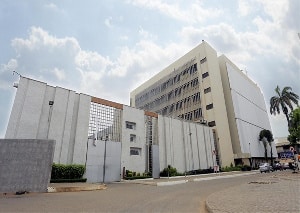
It has been requested that the Central Bank punish commercial banks, financial institutions, and their employees who are found accountable for scamming clients.
This is the view of a banking consultant, Richmond Atuahene who believes that the banking sector regulator must be proactive in addressing these infractions which keep occurring.
Speaking in an interview on Accra-based Asaase Radio, Dr Atuahene said, “I believe Bank of Ghana should be very proactive and sanction some of these banks and must make sure that all these incidents are reported because I have an experience.”
“In my case, they suppressed it, and these three guys who caused this mess were able to get onto a new institution,” he disclosed.
Dr Atuahene warned that these fraud-related incidents, if not addressed, will continue to cause vulnerabilities in the banking sector.
Meanwhile, Ghana’s banking sector and Specialised Deposit-Taking Institutions (SDI) lost approximately, GH¢56 million in 2022, representing a 7.88 percent reduction compared to the GH¢61 million recorded in 2021.
However, the number of attempted fraud cases for the banking and SDI sectors in 2022 increased to 2,998, as compared to 2,347 cases in 2021, which is a 27.74 percent rise.
This was contained in the 2022 trends and statistics of the Bank of Ghana (BoG) Banks, SDIs and Payment Service Providers (PSPs) fraud report, covering January 1 to December 31, 2022.
It was observed that forgery and manipulation of documents, fraudulent withdrawals, cheque fraud, cyber/email and cash theft (cash suppression), were the major drivers (top five) fraud typologies that impacted most of the financial institutions.
Forgery and manipulation of documents also emerged as the prominent fraud typology, recording the highest loss of GH¢33 million.
In addition, money fraudulently withdrawn from customers’ accounts resulted in GH¢7 million losses, most of which the Central Bank observed involved staff of banks and SDIs, while cheque fraud, arising from cloned cheques accounted for a loss value of GH¢5 million.
The report however indicated that the fraud cases involving staff decreased to 188 in 2022, as compared to 278 in 2021.
Ihsane el-Kadi, a well-known independent journalist in Algeria, has had his prison term dramatically increased by an appeals court in Algiers.
Earlier this year, el-Kadi was handed a three-year jail term, with two years suspended, on charges related to allegedly receiving foreign financing for his media group.
However, the appeal court has now revised the sentence to a staggering seven years, with five years to be served behind bars.
The journalist’s arrest took place on Christmas Eve last year, accompanied by an order to shut down his media company. Throughout the legal proceedings, el-Kadi’s legal team vehemently refuted the charges leveled against him, asserting that the sole foreign money transfer originated from his daughter, who is both a partner in the company and resides in the United Kingdom.
The increased sentence is met with deep concern and criticism from human rights advocates and press freedom organizations, who view it as a severe blow to independent journalism in Algeria. Many fear that such a harsh penalty will have a chilling effect on journalists and further restrict freedom of the press within the country.
The case of Ihsane el-Kadi underscores the challenges faced by journalists operating independently in Algeria and the broader implications for freedom of expression. International entities are closely monitoring the situation, emphasizing the need to protect journalists’ rights and ensure a conducive environment for independent media to thrive.
As news of the heightened sentence spreads, supporters and activists are rallying behind el-Kadi, calling for justice and advocating for the preservation of media freedom.
An appeal court in Algiers has significantly increased the prison sentence of Ihsane el-Kadi, a prominent independent journalist in Algeria.
Earlier this year, el-Kadi was handed a three-year jail term, with two years suspended, on charges related to allegedly receiving foreign financing for his media group.
However, the appeal court has now revised the sentence to a staggering seven years, with five years to be served behind bars.
The journalist’s arrest took place on Christmas Eve last year, accompanied by an order to shut down his media company. Throughout the legal proceedings, el-Kadi’s legal team vehemently refuted the charges leveled against him, asserting that the sole foreign money transfer originated from his daughter, who is both a partner in the company and resides in the United Kingdom.
The increased sentence is met with deep concern and criticism from human rights advocates and press freedom organizations, who view it as a severe blow to independent journalism in Algeria. Many fear that such a harsh penalty will have a chilling effect on journalists and further restrict freedom of the press within the country.
The case of Ihsane el-Kadi underscores the challenges faced by journalists operating independently in Algeria and the broader implications for freedom of expression. International entities are closely monitoring the situation, emphasizing the need to protect journalists’ rights and ensure a conducive environment for independent media to thrive.
As news of the heightened sentence spreads, supporters and activists are rallying behind el-Kadi, calling for justice and advocating for the preservation of media freedom.
An appeal court in Algiers has significantly increased the prison sentence of Ihsane el-Kadi, a prominent independent journalist in Algeria.
Earlier this year, el-Kadi was handed a three-year jail term, with two years suspended, on charges related to allegedly receiving foreign financing for his media group.
However, the appeal court has now revised the sentence to a staggering seven years, with five years to be served behind bars.
The journalist’s arrest took place on Christmas Eve last year, accompanied by an order to shut down his media company. Throughout the legal proceedings, el-Kadi’s legal team vehemently refuted the charges leveled against him, asserting that the sole foreign money transfer originated from his daughter, who is both a partner in the company and resides in the United Kingdom.
The increased sentence is met with deep concern and criticism from human rights advocates and press freedom organizations, who view it as a severe blow to independent journalism in Algeria. Many fear that such a harsh penalty will have a chilling effect on journalists and further restrict freedom of the press within the country.
The case of Ihsane el-Kadi underscores the challenges faced by journalists operating independently in Algeria and the broader implications for freedom of expression. International entities are closely monitoring the situation, emphasizing the need to protect journalists’ rights and ensure a conducive environment for independent media to thrive.
As news of the heightened sentence spreads, supporters and activists are rallying behind el-Kadi, calling for justice and advocating for the preservation of media freedom.
In addition to having white sand beaches and lush tropical forests, Sierra Leone, which will elect its president on Saturday, is also known for its history of slavery and a brutal civil war.
Here are five things you need to know about the former British colony whose name, meaning “lion mountain”, derives from an old Portuguese phrase
1. Freed slaves
Sierra Leone was historically inhabited by the Mende, Temne and other indigenous groups who encountered the Portuguese, Dutch, English and French traders during the 15th, 16th and 17th centuries.
At the end of the 18th and beginning of the 19th centuries, the British, out of philanthropy or interest, settled former slaves freed from the United Kingdom, North America or the Caribbean.
Freetown, today the capital of Sierra Leone, was founded in 1792.
The descendants of former slaves are now considered forming their own human group, the creoles (or Krio).
Krio, which combines English, Portuguese, French and local languages such as Akan, Yoruba and Igbo, is the country’s lingua franca.
2. Civil war, blood diamonds
Sierra Leone was ravaged between 1991 and 2002 by a civil war that claimed tens of thousands of lives and left its mark in barbaric terms.
The conflict, an extension of the civil war in neighboring Liberia, was largely financed by the sale of diamonds mined in the south-east of the country.
The UN security council-imposed sanctions on the sale of diamonds from Sierra Leone between 2000 and 2003. This aspect of the war inspired the 2006 film “blood diamond”, starring Leonardo DiCaprio and Djimon Hounsou.
3. Ebola
The Ebola virus disease killed around 11,000 people between 2014 and 2016 in Sierra Leone, Liberia and guinea.
It has had devastating socio-economic effects on Sierra Leone, which was trying to recover from the war.
4. Chimpanzees and ecotourism
Sierra Leone has made the chimpanzee a national emblem for 2019. The country is trying to promote the image of an ecotourism destination offering pristine beaches, green hills and ecologically rich islands.
It is home to a chimpanzee sanctuary in a rainforest reserve that has been visited by British primatologist Jane Goodall and Princess Anne.
5. Idris Elba, Rüdiger and others
Several international personalities have Sierra Leonese roots.
British actor Idris Elba, whose father is Sierra Leonese and whose mother is Ghanaian, received Sierra Leonese nationality in 2019.
Real Madrid central defender Antonio Rüdiger, a German international, was born of a Sierra Leonese mother, as was British foreign secretary James cleverly.
Sheku Kanneh-Mason, the British cellist who played at Prince Harry and Meghan Markle’s wedding in 2018, was also born to a Sierra Leonese mother.
The leaders of the Netherlands and Denmark, who are in South Africa on a combined working visit, were welcomed by President Cyril Ramaphosa on Tuesday.
The visit by Prime Minister Mark Rutte and his Danish counterpart Mette Frederiksen is aimed at solidifying the three countries’ relationship in the areas of green hydrogen, renewable energy and a just energy transition, South Africa’s public broadcaster SABC reported.
South Africa and the Netherlands will sign a Memorandum of Understanding on cooperation on green hydrogen.
The European leaders brought with them large business delegations.
A Business Forum under the theme “Green Energy Transition and Green Hydrogen Partnerships for Impact” will focus on key areas in green energy and green hydrogen.
Keen to break their dependence on Russian energy, European countries have been looking to their African counterparts to fill the gap.
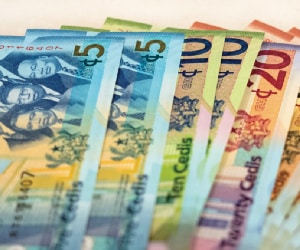
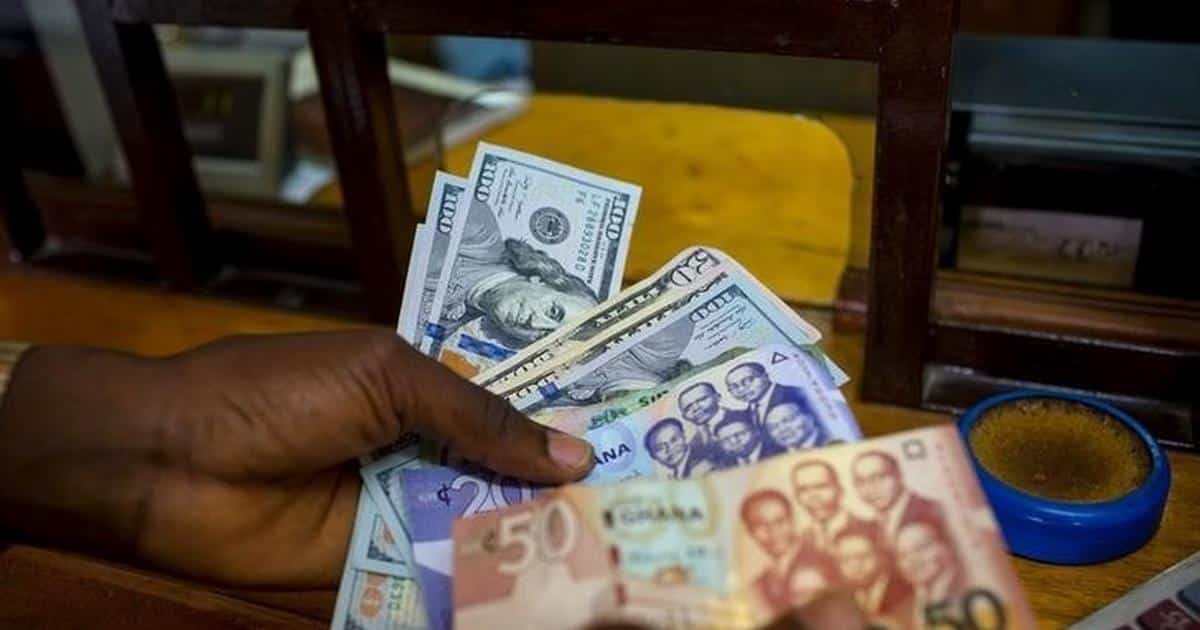
The Ghana Cedi is currently trading against the dollar at a purchasing price of 10.9843 and a selling price of 10.9953, according to the Bank of Ghana’s interbank exchange rates for Wednesday, June 20, 2023.
At a forex bureau in Accra, the dollar is being bought at a rate of 11.50 and sold at a rate of 12.00.
Against the Pound Sterling, the Cedi is trading at a buying price of 14.0555 and a selling price of 14.0707.
At a forex bureau in Accra, the pound sterling is being bought at a rate of 14.40 and sold at a rate of 15.10.
The Euro is trading at a buying price of 12.0020 and a selling price of 12.0129.
At a forex bureau in Accra, Euro is being bought at a rate of 12.40 and sold at a rate of 12.90.
The South African Rand is trading at a buying price of 0.6035 and a selling price of 0.6040.
At a forex bureau in Accra, South African Rand is being bought at a rate of 0.30 and sold at a rate of 0.90.
The Nigerian Naira is trading at a buying price of 61.1003 and a selling price of 61.1913.
At a forex bureau in Accra, Nigerian Naira is being bought at a rate of 12.00 Naira for every 1 Cedi and sold at a rate of 19.00.
For the CFA, it is trading at a buying price of 54.6044 and a selling price of 54.6540.
At a forex bureau in Accra, CFA is being bought at a rate of 17.00 CFA for every 1 Cedi and sold at a rate of 21.00 CFA for every 1 Cedi.
Our forex bureau rates are provided by Afriswap Bureau De Change in Osu, Accra.
Note that these rates may be different at a forex bureau near you. Our forex bureau rates are provided by Afriswap Bureau De Change in Osu, Accra.
Ghana’s Finance Minister, Ken Ofori-Atta, has stated that State Owned Enterprises (SOEs) like COCOBOD and those in the energy sector account for around 25% of the country’s estimated debt load.
According to him, the government’s ability to institute better governance standards for these institutions will address their liabilities and promote their growth.
Speaking at a recent press conference, Mr. Ofori-Atta said all must remain committed to the agreed wide-ranging and strong structural reforms designed to address structural weaknesses and build resilience in key areas including tax policy and tax administration, expenditure commitment control and arrears clearance, financial stability, financial sector plans, review of statutory funds, governance and corruption, debt management, fiscal credibility, and energy sector/cocoa sector SOEs reformation.
Other structural reforms to entrench fiscal discipline and bolster transparency that the Finance Minister said include reforms to enhance revenue administration and tax policy, operationalisation of the Human Resource Management Information System, enhancing spending controls and prevention of arrears build-up, and streamlining of earmarked funds.
In addition, Mr. Ofori-Atta said the government is transitioning from central government reporting to general government, and from cash to accrual reporting.
Furthermore, he said “our commitment to these reforms is matched by our relentless pursuit of innovation and strengthened partnerships”.
He added that backed by the renewed drive for reforms, the government is working towards securing significant support from the country’s multilateral partners.
A recent report has it that Tema Oil Refinery has entered into a lease agreement with a consortium known as Torentco Asset Management (TAM) for a duration of six years, with a reported lease value of $22 million.
The group is allowed to refine up to 8 million barrels of oil a year by paying $1 million every year as rent.
However, social media users have expressed their displeasure with the details of the deal.
According to them, the Tema Oil Refinery is worth about $700 million but is being leased at $22 million which is a bad deal.
Some have noted that the government is quietly going through the deal in order to sneak in revenue for the incoming political season.
The Vice President of IMANI Africa, Bright Simons wrote on Twitter on June 16, 2023: “Ghana’s PPA is trying to pass the buck of tackling the govt’s shady lease of state-owned Tema Oil Refinery to Torentco (TAM). Here is a crude summary of the deal. Many murky issues!” $22m is all one needs to take over TOR’s assets & exploit them? Has TOR been deliberately sabotaged?” he asked.
The Executive Director of ACEP, Ben Boakye also wrote: “3 weeks ago CSOs were pumped about an illicit sale of GNPC’s assets to PetroSA. It turns out that PetroSA was being bankrolled by a local company for the acquisition. Btw, nothing would happen since the alarm & calls 4 accountability. We’ve moved on to a new scandal, TOR. #IMF”
Find the full details of the deal as presented by Bright Simons below:
Check out the reactions below
Ghana’s PPA is trying to pass the buck of tackling the govt’s shady lease of state-owned Tema Oil Refinery to Torentco (TAM). Here is a crude summary of the deal. Many murky issues! $22m is all one needs to take over TOR’s assets & exploit? Has TOR been deliberately sabotaged? pic.twitter.com/vS931RaiqV— Bright Simons (@BBSimons) June 16, 2023
Imagine you have a start up that will make $700million in 6years and selling it for $22million. That it what the government is doing at TOR but we’re busy with Yvonne Nelson. The sector minister is tipped to be Bawumia’s running mate. They’re building a warchest to buy your votes— Receipts Guy (@receiptsguy) June 19, 2023
They are Leasing Tema Oil refinery to a private company for 6 years. The private company pays 20 million USD to Government while they make over 700 million dollars
Government is doing this as solution to it’s incompetence that has made TOR a corruption hub
them dey come turn Tema oil refinery to a private company? Ei how— Mempeasem President (@AsieduMends) June 20, 2023
Do you think Tema Oil Refinery is the usual NPP/NDC politics? Ghanaians like you & I have been ‘sucking’ the company dry. & when the company become insolvent; the usual blackmail begins — protests & pickets. So why don’t you [staff] stop stealing people’s crude brought to TOR? pic.twitter.com/1UWaY5LA5Y— yaw abban. (@YAbbanx) June 20, 2023
Tema Oil Refinery over the years had become a cash cow for politicians and some corrupt public servants. Only God knows how many times it has been revived & collapsed in its management. Energy Minister was shocked after learning that $2.5m worth of crude got missing from TOR. pic.twitter.com/eFzLauF5zw— yaw abban. (@YAbbanx) June 20, 2023
Tema Oil Refinery has a $500m debt sitting in its books. When crude is brought to TOR for refining, losses are recorded every damn time. People who bring their crude charges TOR to pay for the losses as a result of corrupt staff & looters.— yaw abban. (@YAbbanx) June 20, 2023
Idris Elba, a British actor who is of Sierra Leonean descent and citizenship, has asked for calm during the country’s next general election on Saturday.
“This election please let it be peaceful,” he said in a message in Pidgin English.
He reminded young people that they have the “power” in this vote, and that if the country is destroyed due to violence, it will be down to Sierra Leoneans to have to patch it back up again.
“Not only is the world watching,” he said, but the whole of Africa.
Saturday’s vote will be the country’s sixth presidential vote since a military takeover in 1992.
It will see the incumbent, President Julius Madaa Bio of the Sierra Leone People’s Party (SLPP) go up against Dr Samura Kamara of the All People’s Congress (APC).
There have been arrests of critical opposition voices in the the run up to the vote.
Elba’s comments come on the same day that the Commonwealth Observer Group in Sierra Leone, led by former Nigerian Vice President Professor Yemi Osinbajo, called for peaceful elections that will reflect the will of the people.
“The eyes of more than 2.5 billion people of the Commonwealth – more than 60% of whom are young people under the age of 30 – will be upon Sierra Leone. Watching, in solidarity and in hope,” Prof. Osinbajo said.
The government anticipates receiving around $6.2 billion from its multilateral partners between 2023 and 2026, according to minister of finance Ken Ofori-Atta.
While briefing the nation on the economy at the Ministry of Finance on Sunday, June 18, the Minister disclosed the government has come up with Ghana’s Post-COVID-19 Programme for Economic Growth (PC-PEG) which is backed by the International Monetary Fund and encompasses all the needed reforms to revive the economy.
Mr. Ofori-Atta indicated that the government is committed to following through with the reforms and expects a total of $2 billion from multilateral partners by the year ending 2023.
“Our commitment to these reforms is matched by our relentless pursuit of innovation and strengthened partnerships. Backed by the renewed drive for reforms, the government is working towards securing significant support from our multilateral partners.
“Altogether, and including the IMF funds, World Bank and AfDB support, we expect multilateral support of about US$2.0 billion for 2023 and US$6.2 billion between 2023 and 2026. We expect the World Bank to provide a total support of US$1.6 billion whilst the AfDB provides a total support of US$200 million over the programme period.”
The Minister further disclosed “we expect to mobilize catalytic funding of US$30 million in 2023 and US$330 million between 2023 and 2026 from bilateral creditors.”
Celebrated Nigerian Chef, Hilda Effiong Bassey, popularly known as Hilda Baci, has today June 19, 2023 received a plaque from Guiness World Record (GWR) for her achievement.
Hilda was acknowledged by the GWR on June 13 as the new record holder for the longest cooking marathon (individual) having cooked for is 93 hours 11 minutes.
Hence, the plaque authenticates her position as a recognized record breaker.
A video cited by The Independent Ghana on social media saw Hilda joyfully receiving the plaque packaged in a box yet to be unwrapped.
You could hear a voice in the video urging Hilda to unwrap the box as soon possible.
The Minister of Finance, Ken Ofori-Atta, has outlined some reforms the government is embarking on to ensure the economy returns to stable levels.
According to him major sectors of the economy like the energy and cocoa sectors will under some major reforms to reduce the losses.
He added that the reforms which are aimed at sustainably reducing losses in the energy sector, will be outlined in the updated Energy Sector Recovery Plan (ESRP), which will be approved by Cabinet by the end of June 2023.
Ofori-Atta whiles addressing a press conference on June 19, 2023, he stated it will be accompanied by, amongst others, the: i. Operationalization of a framework to guide the granting of energy sector subsidies by the end of June 2023;
ii. Implementation of an inter-utility debt settlement framework on a quarterly basis starting from June 2023; and
iii. Implementation of a mechanism to enforce the guidelines of the Cash Waterfall Mechanism (CWM) and Natural Gas Clearinghouse (NGC) by end-June 2023.
The Finance Minister who is quite optimistic about the country’s recovery added that similar reforms will be instituted in the cocoa sector as well.
He said: “Similar reforms are envisaged under the PC-PEG to revamp the Cocoa Sector and reduce/eliminate the annual losses of Cocobod and its indebtedness.
“The reforms in the Cocoa sector include the implementation of a turnaround strategy, to be approved by Cabinet by end-June 2023. This is expected to address cocoa pricing issues, Cocobod oversight challenges, introduce cost rationalisation measures, and a phase-out of quasi-fiscal spending.”
Other structural reforms to entrench fiscal discipline and bolster transparency include reforms to enhance revenue administration and tax policy, operationalization of the Human Resource Management Information System, enhancing spending controls and prevention of arrears build-up, and streamlining of earmarked funds.
In addition, Government is transitioning from Central Government reporting to General Government, and from cash to accrual reporting, the minister said.
Government to secure significant support from our multilateral partners – Finance Minister.
Pension funds increased their net position on the equity side of the Ghana Stock Exchange (GSE) as a result of a capital flight to safety partly prompted by the Domestic Debt Exchange Programme (DDEP), which they did by contributing 16 percent to trading activity between January and May 2023.
This compares favourably to the four percent recorded during the comparable period of 2022 and has contributed to the increase in domestic investor participation – which approached parity with offshore investor participation, rising to 47 percent during the period under consideration. Last year, it was 39 percent.
Commenting on the development, Head of Research-Databank Group, Alex Boahen, said it did not come as a surprise as pension funds – which held six percent of the domestic Treasury debt prior to the restructuring – “had their fingers burned” as a result of the DDEP, which he noted shattered the illusion of a risk-free nature for debt securities.
There have been campaigns to raise the level of pension funds’ participation in equities, including reforms to raise the regulatory threshold. This, however, had been greeted with apathy as corporate trustees continued to shy away from listed stocks – citing volatility and illiquidity on the market.
“In the past, pension funds and other institutional investors were excessively defensive; primarily focusing on the fixed-income market despite the law permitting a significant allocation to equities. However, they rarely utilised this option as bonds were providing returns of approximately 25 percent. The trustees ensured a conservative approach by fund managers, deeming additional risk unnecessary. Nevertheless, introduction of the DDEP changed this perspective as it revealed the possibility of government default,” he said.
“When the DDEP was announced, a scarcity of investment opportunities became apparent with the bond market becoming unattractive and Treasury bills being oversubscribed,” he added.
This comes as the total assets under management (AUM) of the nation’s three-tier pension scheme reached GH¢39.6billion by the end of December 2021, marking a significant increase from the GH¢33.5billion recorded in 2020.
This represents a growth of GH¢6.1billion and an 18 percent expansion compared to the previous year. Of this, pension funds can invest a maximum 75 percent of their assets in government debt instruments and 10 percent in the ordinary shares of listed companies.
Drivers
Stocks with defensive qualities – those that tend to provide stable earnings and consistent returns, even during an economic downturn. Chief among them has been oil marketing company (OMC) stocks, especially Total as well as MTN and Benson Oil.
Databank’s Head of Research explained that as these stocks offering dividend yield above 6 percent, coupled with the likelihood of capital gain – the difference between the price the stock was bought for and what it was sold for – ensure that they offer a compelling argument against the new bonds, which have an average yield of nine percent.
These stocks were better able to withstand rising costs compared to their peers, and OMCs in particular enjoy a fair degree of pricing freedom – with regular reviews reflecting the cost changes. At close of the second trading week in June, Total had a share price of GH¢6.45 – a 61.3 percent appreciation over the GH¢4 with which it began the year.
MTN – which Mr. Boahen said had transformed into a utility company, as its call, data and mobile money services were akin to water and electricity – had seen a 33 percent year-to-date rise in its share as it traded for GH¢1.19.
While Benso Oil did not fit the bill directly, as its primary product – crude palm oil – experienced elevated prices and a significant portion of its revenue came from exports in US dollars. The palm oil producer had seen its share price jump by 84.4 percent since turn of the year, to hit GH¢14.11 at end of the second week in June.
Mr. Boahen emphasised that investing in such companies acts as a hedge against inflation and currency instability, as they are less likely to erode in value.
He further mentioned that banking stocks did not perform as well due to uncertainties surrounding their capitalisation positions and outcomes of the International Monetary Fund (IMF) deal. Additionally, banks are unable to pay dividends during this interim period.
Regarding the underperformance of banking stocks, he stated: “That’s why the banking stocks have not done as well, and we expect thin trading there until there is clarity on their capitalisation positions and how well the IMF deal plays out. Banks also cannot payout dividends in the interim”.
The GSE Financial Stocks Index (GSE-FSI) had experienced some marginal gain by the middle of June, reaching 1,684.87 points. This translates to a one-week gain of 0.58 percent, a four-week loss of 0.19 percent and a year-to-date loss of 17.91 percent. The Accra bourse’s Composite Index (GSE-CI) had recorded an 8.14 year-to-date gain with its market capitalisation at GH¢ 67.29billion.
A disclosure made by Forbes Magazine, says South African Johann Rupert has surpassed Nigerian billionaire businessman Aliko Dangote to become the wealthiest person in Africa.
Rupert’s net worth is currently $12 billion according to Forbes Real-time Global Billionaires Ranking, while Dangote trails behind him with a net worth of $10.8 billion as of Friday.
Dangote’s net worth dropped due to the recent operational charges on the foreign exchange market carried out by the Central Bank of Nigeria, which led to the depreciation of the Naira against the US dollar.
Consequently, Forbes and Bloomberg had to recalculate the fortunes of all Nigerian billionaires leading to the significant drop in the wealth of Dangote, Abdul Samad Rabiu, the founder of BUA cement, and Mike Adenuga, the Chairman of telecommunications giant Globacom Limited.
Meanwhile, with the expected kickoff of the $20 billion Dangote refinery commissioned last Month, Aliko Dangote is expected to bounce back.
As part of the program funded by the International Monetary Fund (IMF), the nation has until the end of June 2023 to meet three critical requirements.
The country’s compliance with conditions which encompass fiscal operations, financial sector stability, and energy sector reforms – and similar terms by the end of September 2023 – is pivotal to unlocking the first review of the Extended Credit Facility arrangement in November 2023 and receiving subsequent tranches of financial support: the second tranche of another US$600million and five other tranches of US$360million each after the semi-annual reviews are successfully concluded.
The initial condition necessitates conducting a comprehensive stock-taking of payables across government agencies, devising a clearance plan, and implementing structural reforms to prevent future arrears.
The aim is to gain clarity on outstanding payments, ensure timely clearance and integrate commitment controls with the Government Integrated Financial Management Information System (GIFMIS). To promote fiscal discipline, sanctions under the Public Financial Management (PFM) Act will be enforced… accompanied by mechanisms to monitor expenditure beyond budgetary allocations. By June’s end, a strategy to prevent arrears’ build-up will be formulated, emphasising procurement prioritisation for approved projects and purchase orders.
The second condition focuses on fortifying the country’s financial sector and rebuilding institutions’ buffers, working in collaboration with the IMF. The Bank of Ghana (BoG) will implement strategies to address the impact of domestic debt exchange and macroeconomic challenges. Incentives for early recapitalisation, enhanced disclosure requirements and restrictions on undercapitalised banking activities will be introduced. Dividend payments by financial institutions lacking adequate capital buffers will be prohibited.
In addition, risk-based supervision will be promoted to curb excessive risk-taking, while government solvency support will encourage private capital injections and structural reforms. Recapitalisation of state-owned banks will receive priority, ensuring their future viability and a level playing field with private banks.
The third condition stipulates the publication of the updated Energy Sector Recovery Plan after Cabinet approval. The plan must encompass well-defined measures and timelines. Additionally, negotiations on power purchase agreements (PPAs) to mitigate the take-or-pay liability should be concluded. Strategies to enhance the performance of the Electricity Company of Ghana (ECG) and other state-owned enterprises (SOEs) will be formulated, along with reforms to reduce revenue shortfalls caused by subsidies. By the end of 2023, a new policy directive on the procurement of new Independent Power Producers (IPPs) will be published to alleviate the state’s commercial burden.
In a related development, an IMF team led by Stéphane Roudet recently concluded its visit to Ghana from June 8 to June 15. The discussions centred on the country’s economic progress and implementation of the IMF-supported programme approved in May 2023.
Mr. Roudet acknowledged positive signs of stability in the economy: such as decreased inflation, increased international reserves, and a more stable exchange rate. The authorities’ compliance with key commitments will be formally evaluated during the Extended Credit Facility arrangement’s first review in November.
Throughout the visit, IMF staff engaged with high-level officials including President Akufo-Addo, Vice President Mahamudu Bawumia, Finance Minister Ken Ofori-Atta, and Bank of Ghana Governor Ernest Addison. Meetings were also held with representatives from government agencies, parliament’s Finance Committee, the private sector, and civil society.
The IMF team expressed appreciation for the constructive engagement and support received from Ghanaian authorities and stakeholders during the mission.
Successful completion of the IMF-supported programme’s conditions will bolster economic foundations and enhance confidence among international investors and lenders. Acknowledgment by the IMF team of the economy’s stabilization indicates a positive trajectory for the country’s growth. However, strict adherence to the timeline and effective implementation of the required measures remain crucial for the government and its stakeholders.
These five African multimillionaires grew incredibly wealthy by promoting smoking, one of the world’s most dangerous and deadly vices. We can’t recommend tobacco dealing as a path to creating wealth, but these folks found extraordinary success in manufacturing and distributing tobacco products.
Tribert Rujugiro Ayabatwa
Nationality: Rwandan
Company: PanAfrican Tobacco Group Holding
Tribert Rujugiro Ayabatwa founded PanAfrican Tobacco Group Holding in 1978 in Burundi. It is now the largest tobacco manufacturing company owned by an African. It manufactures cigarettes in the Democratic Republic of Congo, South Africa, Angola, Uganda, Tanzania, the United Arab Emirates, Nigeria, and South Sudan. Today, the company records over $250 million in annual revenues and employs more than 7,000 people across Africa. Its brands include Supermatch, Forum, Legends, and Yes.
Simon Rudland
Nationality: Zimbabwean
Company: Gold Leaf Tobacco
Zimbabwean tobacco tycoon Simon Rudland owns Gold Leaf Tobacco, a multinational manufacturer and distributor of the Rudland & George RG cigarette brand. The company manufactures cigarettes in South Africa for both the South African and export markets. Gold Leaf Tobacco is also a full-service contract manufacturer which produces various blends and variants of cigarettes for its clients.
Apollinaire Compaore
Nationality: Burkinabe
Company: SODICOM
Apollinaire Compaore is one of the most successful businessmen in Burkina Faso. He heads the Planor Group, which has interests in insurance, retail, and telecommunications. Through one of Planor Group’s subsidiary companies, SODICOM, he is also the representative of the multinational tobacco company Philip Morris International in Burkina Faso and the sole distributor of their products in the West African country.
Wilfred Murungi
Nationality: Burkinabe
Company: Mastermind Tobacco Kenya
The late Murungi worked as an engineer at British American Tobacco before quitting and setting up Mastermind Tobacco Kenya in the late 1980s. Mastermind is currently the only indigenous tobacco company in Kenya, with its Headquarters in Nairobi. The company is in eight countries in East, Central, and Southern Africa and is involved in growing tobacco, manufacturing, and cigarette marketing. It manufactures 12 brands of cigarettes, with its most popular brand being “Supermatch.”
Ylias Akbaraly
Nationality: Madagascan
Company: Focus Madagascar
Madagascar’s richest man is the owner of Sipromad Group, the largest conglomerate in the country. Two of its subsidiary companies, Focus Madagascar and Madagascar Tobacco Network, manufacture the Apache and Paname brand of cigarettes, which are both popular in the island country.
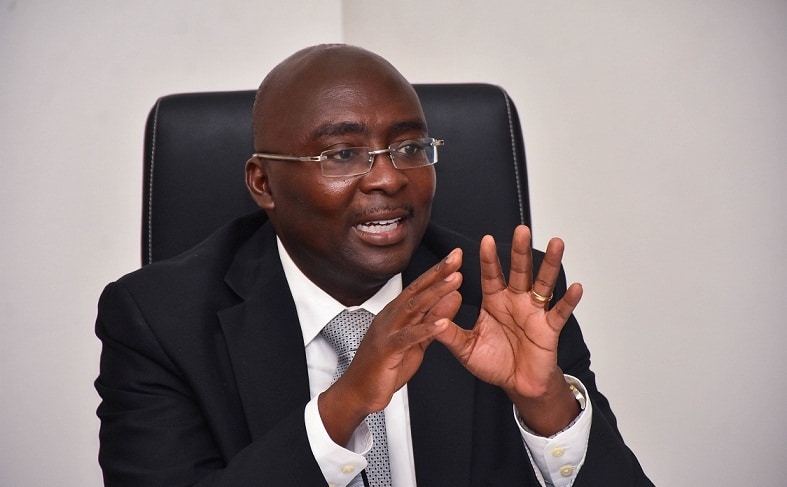
Vice President, Dr. Mahamudu Bawumia has indicated that making Ghana the digital for Africa is part of his vison for the country when he becomes president.
After formally submitting his documents to contest the flag-bearer position of the ruling New Patriotic Party (NPP) in Accra, he noted the need to elect someone with vision and a track record.
In his address to hundreds of supporters who turned up in a show of support for his candidature, he said his quest is to among other things help better the people’s lives.
This pursuit for change, which is hinged on the foundation put in place so far, he said, will propel the country to the next level of development.
He said he desires to see a country that leverages technology, data, and systems for inclusive economic growth.
“I want to make Ghana the digital hub of Africa, bridge the digital divide, and apply digital technology and artificial intelligence for the transformation of healthcare, education, and public service delivery among others,” he stated.
Calling for support to lead his party, Dr. Bawumia said he envisions a country where the educational system focuses on STEM, robotics, artificial intelligence, and digital and vocational skills to meet the demands of the 4th industrial revolution.
Furthermore, he expressed his vision to realise food security in the shortest possible time through the application of science, data, artificial intelligence, satellite technology, the Internet of Things (IoT), and irrigation to commercial farming.
“We also want to complete the ongoing digitalization of data on all farms across the sixteen regions,” he added.
He declared his quest to realise a country that can maximize the benefits of its natural resources – like gold, lithium, and other minerals – through policies like value addition, setting up an LBMA-certified gold refinery, enhancing the gold for oil policy, and dedication to specific gold concessions to the Bank of Ghana to enhance the accumulation of gold reserves.
“I want to see Ghana as an industrialised nation. I want to entrench and enhance the current strategy of industrialisation that we have embarked on, and introduce new technology like digital manufacturing for the manufacturing of spare parts, syringes, and other equipment.”
Also, the Vice President indicated building a country with robust fiscal discipline in the management of public finances to sustainably and significantly reduce interest rates.
He said this will empower the local business sector, especially startups, and SMEs, to drive investment and growth, in addition to providing incentives for the private sector to replace the government in the provision of a significant amount of infrastructure and many other services.
Dr. Bawumia stated that he has a compelling vision for Ghana’s future. “It is possible for Ghana to be like the advanced nations if we put our minds and energies into it.
“With the technologies available, the new ones that are emerging, and a renewed mindset, we can leapfrog impossibilities and make the unimaginable possible. It is possible to break the eight to continue with the transformational policies we have started. It is possible!”
It is against this background, among others, that he said he has joined the contest to become a flag-bearer and presidential candidate for the election in 2024.
The Ghana Cedi is currently trading against the dollar at a purchasing price of 10.9843 and a selling price of 10.9953, according to the Bank of Ghana’s interbank exchange rates for Wednesday, June 19, 2023.
At a forex bureau in Accra, the dollar is being bought at a rate of 11.50 and sold at a rate of 12.00.
Against the Pound Sterling, the Cedi is trading at a buying price of 14.0764 and a selling price of 14.0916.
At a forex bureau in Accra, the pound sterling is being bought at a rate of 14.40 and sold at a rate of 15.10.
The Euro is trading at a buying price of 12.0014 and a selling price of 12.0133.
At a forex bureau in Accra, Euro is being bought at a rate of 12.40 and sold at a rate of 12.90.
The South African Rand is trading at a buying price of 0.6031 and a selling price of 0.6036.
At a forex bureau in Accra, South African Rand is being bought at a rate of 0.30 and sold at a rate of 0.90.
The Nigerian Naira is trading at a buying price of 59.7827 and a selling price of 59.8737.
At a forex bureau in Accra, Nigerian Naira is being bought at a rate of 12.00 Naira for every 1 Cedi and sold at a rate of 19.00.
For the CFA, it is trading at a buying price of 54.6026 and a selling price of 54.6567.
At a forex bureau in Accra, CFA is being bought at a rate of 17.00 CFA for every 1 Cedi and sold at a rate of 21.00 CFA for every 1 Cedi.
Our forex bureau rates are provided by Afriswap Bureau De Change in Osu, Accra.
Note that these rates may be different at a forex bureau near you. Our forex bureau rates are provided by Afriswap Bureau De Change in Osu, Accra.
An international donors’ meeting on Sudan will be launched by UN Secretary General Antonio Guterres in Geneva today as the second day of a 72-hour ceasefire between the country’s warring factions.
The UN is organising the event in conjunction with Qatar, Saudi Arabia, Egypt and Germany.
The Qatari foreign ministry said on Sunday that the conference will “support the humanitarian response in Sudan and the region”.
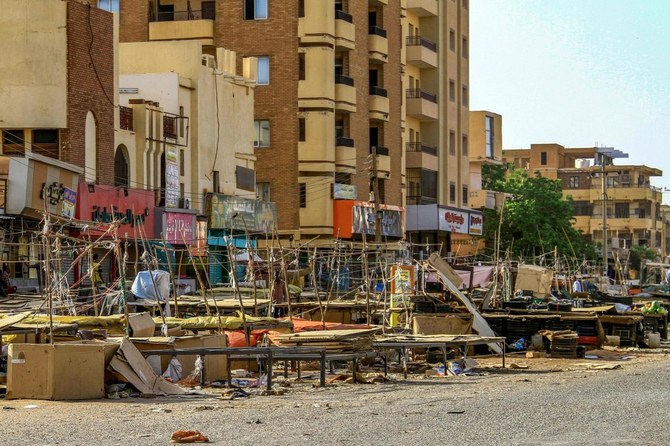
Sudan was meanwhile reportedly “completely calm” on Sunday, the first day of a new 72-hour ceasefire between the army and the paramilitary Rapid Support Forces (RSF).
The temporary suspension of fighting took effect at 06:00 local time (04:00 GMT) and was announced on Saturday by mediators Saudi Arabia and the US.
The UN said in a statement Sunday that some 1.7 million people were internally displaced in Sudan as a result of the conflict.
About 500,000 others have sought refuge in neighbouring countries.
The UN and others have expressed concern over “the rapidly deteriorating situation in Darfur where the conflict has taken on an ethnic dimension”.
Armed militants in the Sudanese capital, Khartoum, looted the residence of the Tunisian ambassador to Sudan, the Tunisian foreign ministry said in a statement on Sunday.
The foreign ministry called the development “a grave violation of the Vienna Convention on Diplomatic Relations, and a flagrant violation of the sanctity of the headquarters of diplomatic missions”.
The ministry called for the perpetrators “to be tracked down and held accountable” while calling for restraint and an immediate end to the fighting in Sudan which began in April.
A number of embassies in Khartoum have been ransacked since the start of fighting in April, including those of Qatar, Kuwait, Libya, Jordan and Oman.
In a significant achievement for Brussels, Kenya and the European Union have officially entered into a trade agreement. This deal marks a valuable milestone in the EU’s endeavor to strengthen economic relations with Africa, countering the growing competition posed by China.
Authorities have blamed Friday’s attack in Mpondwe town, near the border with the Democratic Republic of the Congo (DRC), on the Allied Democratic Forces (ADF), a rebel group that has pledged allegiance to ISIL (ISIS).
In his first remarks since the attack, Ugandan President Yoweri Museveni promised to hunt the assailants “into extinction”.
“Their action – the desperate, cowardly, terrorist action – will not save them,” Museveni said in a statement, vowing to deploy more troops on the Ugandan side of the border.
Pope Francis offered a prayer on Sunday for “the young student victims of the brutal attack” that has shocked Uganda and drawn international condemnation.
United Nations Secretary-General Antonio Guterres called it “an appalling act”, while the United States, a close ally of Uganda, and the African Union also condemned the bloodshed.
Here is what we know so far about the worst attack in Uganda since 2010, when 76 people were killed in twin bombings in the capital, Kampala, by the Somalia-based al-Shabab armed group.
What happened?
Most of the victims died when the dormitory of the Lhubiriha Secondary School, located less than 2km (1.2 miles) from the border, was set on fire late on Friday.
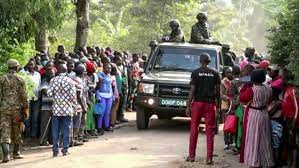
Students told Al Jazeera that they were sleeping when suspected ADF fighters forced their way into the school. Some of them were hacked to death, while others were burned alive using petrol bombs. Some students survived by hiding under the bodies of others.
“We were getting ready to sleep when we heard shouting, we saw men wearing dark green clothes with guns, axes and machetes,” said Bright Mumbere, a student.
“They wanted us to open the dormitory door and then started shooting,” he added.
Uganda’s Minister of Education Janet Museveni, who is also the country’s first lady, said 17 male students were burned in their dormitory while 20 female students were hacked to death with machetes.
An unknown number of attackers, believed to be from the ADF armed group based in the eastern DRC, fled towards the Virunga National Park, a vast area that straddles the border, with six students in captivity, authorities said.
Uganda Peoples’ Defence Forces (UPDF) spokesman Felix Kulayigye said armed forces were pursuing the perpetrators to rescue the abducted students.
Questions have been raised about how the attackers managed to evade detection in a border region with a heavy military presence.
Major General Dick Olum said intelligence suggested the presence of the ADF in the area at least two days before the attack, and an investigation would be needed to establish what went wrong.
Families in mourning
Many of the victims were burned beyond recognition, frustrating efforts to identify the dead and account for the missing.
At a mortuary in Bwera, a town near Mpondwe, families were inconsolable as the bodies of their loved ones were placed in coffins and taken away for burial.
Selevest Mapoze, mayor of the town of Mpondwe-Lhubiriha, said “most of the relatives have come to take their bodies” from the morgue.
But for many others, there was no news of missing relatives. The charred unidentified bodies have been sent to the city of Fort Portal for DNA testing.
“We know that 20 of the students, all girls, were hacked to death using machetes, and 17 boys were burned as petrol bombs were thrown in their dormitory,” Al Jazeera’s Catherine Soi, reporting from the Kenyan capital, Nairobi, said.
Who are the ADF?
The ADF, which the US has designated a “terrorist” group, is considered the deadliest of dozens of armed militias that roam mineral-rich eastern DRC. In March, Washington announced a reward of up to $5m for information leading to the capture of the ADF leader.
The ADF was formed in 1995 by a coalition of rebel forces – including the Uganda Muslim Liberation Army and the National Army for the Liberation of Uganda (NALU) – to fight against the rule of Museveni, who has held power in the East African country since 1986.
Over the years, the group was backed by subsequent DRC governments who were keen on subverting Rwandan and Ugandan influence in the country.
But in 2013, the ADF began attacking Congolese military targets, leading the army to fight back. Consequently, ADF leader Jamil Mukulu fled to Tanzania in 2015, where he was arrested and extradited to his home country to stand trial on charges of “terrorism”.
Past ADF attacks
This was not the first attack on a school in Uganda by the ADF. In June 1998, 80 students were burned to death in their dormitories in an ADF attack on Kichwamba Technical Institute near the DRC border. More than 100 students were abducted.
Ugandan authorities also blamed the group for deadly suicide bombings in the capital in 2021, following which it launched a joint military operation in DRC. But the measures have so far failed to stop the ADF attacks.
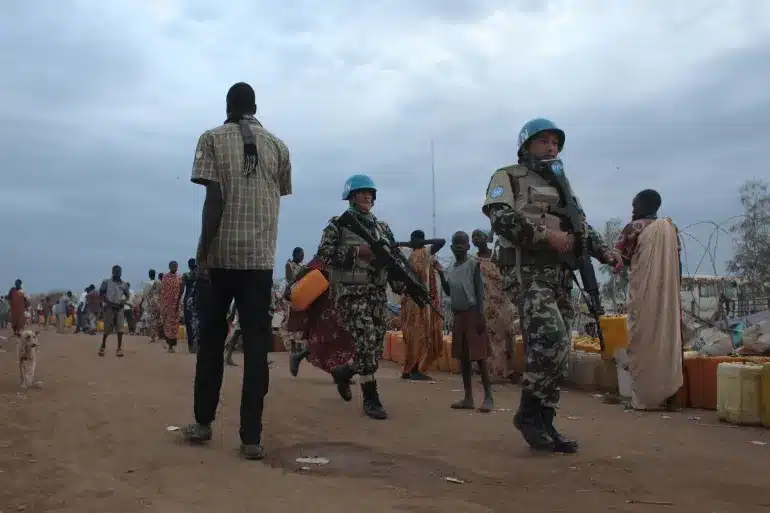
Mali’s government has called for the withdrawal of the UN peacekeeping mission which it says has been a failure.
Foreign Minister Abdoulaye Diop said he wanted the UN Security Council to approve the withdrawal without delay.
Over a decade ago jihadist fighters and Tuareg rebels seized swathes of northern Mali.
Since then thousands of UN troops have been based in the country.
Despite their presence the security situation has steadily deteriorated and hundreds of thousands of people have been forced from their homes.
There have been two coups since 2020 and after falling out with France, the military leaders have turned to Russia for help in the fight against Islamist militants.
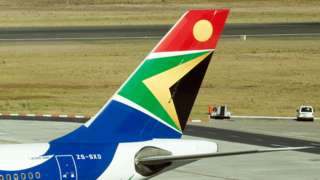
An airport spokesperson informed the BBC that a South African Airlines (SAA) jet carrying President Cyril Ramaphosa’s security detail and media personnel that has been stranded in Poland since Thursday will remain there until Sunday.
The SAA chartered flight was part of the delegation of the African peace mission to Ukraine and Russia. President Ramaphosa flew on a separate plane, and then travelled to Ukraine on Friday via train from south-eastern Poland.
The Polish foreign ministry said some of the passengers on board the security and media aircraft were not notified to the Polish authorities ahead of time as being on board.
The Polish Border Guard said some of the president’s security detail did not have permits to carry weapons in Poland and were told they could not disembark while carrying their firearms.
Warsaw Chopin Airport spokesman Piotr Rudzki told the BBC that some of the passengers, including journalists, had now got off the plane and gone to a hotel.
“We’ve received information that they have decided to stay in Warsaw until Sunday. The journalists have disembarked, we don’t know about the other passengers,” Mr Rudzki said.
He said the aircraft had refuelled and had started to move when the cockpit informed airport staff that take-off had been cancelled and the plane would stay in Warsaw.
Earlier a South African official had said the plane would fly to Russia, where President Ramaphosa is due to meet Vladimir Putin on Saturday.
Mr Rudzki said there were passengers on board without the necessary paperwork to carry their firearms in Poland, whilst others had photocopies of their permits.
“We cannot let passengers with illegal firearms into the EU,” he said.
He said he had received information the South African authorities were in the process of sending the necessary paperwork to Warsaw.
“Some of the delegation didn’t want to be separated from their firearms. They were given the chance by the Border Guard to disembark without their firearms,” he added.
“The firearms would have remained on the plane, they were not going to be confiscated as some reports in South Africa have said.”
The commander of Sudan’s Rapid Support Forces (RSF), Mohamed Hamdan Dagalo, better known as “Hemedti”, has again denied that his paramilitary group has links to Russia’s Wagner mercenaries.
Hemedti’s interview with Italy’s Agenzia Nova newspaper comes as fighting between the RSF and the army enters its third month.
The RSF leader also denied reports his force had been receiving “military supplies or training from external parties”, terming the accusations “baseless rumours”.
In April, the Wagner Group said it had not deployed mercenaries to Sudan in over two years.
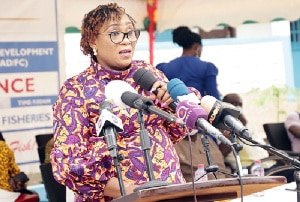
A $10 million National Aquaculture Centre and Commercial Farms facility has been opened to boost domestic output and cut fish imports.
The Centre is expected to provide training and start-up support to 300 aquaculture entrepreneurs, as well as produce 50,000 metric tonnes of fish within five years.
The farmwhich operates under the auspices of the Ministry of Fisheries and Aquaculture Development (MoFAD) at the Diary Farms in Amrahia, and comprises facilities such as aquaculture indoor structures, classrooms, student and staff accommodation, mechanic’s workshop, packaging warehouses and a cold storage facility for chemicals and inputs, a water reservoir and power station among others.
Sector minister Mavis Hawa Koomson said the Centre will utilise state-of-the-art technology to increase total annual fish production from the aquaculture subsector.
“Due to the peak in harvest from wild fisheries, aquaculture is widely recognised as an effective way to meet the seafood demands of a growing population,” she said.
The facility is expected to increase employment opportunities for farmers through modernised agriculture in the aquaculture industry, engage youth graduates and women in aquaculture, improve income security and reduce poverty in the project areas.
With over 600,000 metric tonnes of fish imported into Ghana every year, the country’s annual catch is estimated to be less than 400,000 metric tonnes. Aquaculture has therefore been identified as the means to bridge this gap and achieve the fisheries transformation agenda.
Aquaculture is one of the fastest-growing forms of fish production in Ghana, as approximately 90 percent of the practice is focused on freshwater farming of catfish and tilapia.
Conversely, marine aquaculture – which refers to the cultivation of oceanic species such as oysters, clams, mussels, shrimps, salmon and algae – is unpopular due to lack investment in skills, finance and technology.
As the country’s marine stocks continuously face threats of depletion, MoFAD has in recent years been implementing strategies to curb the phenomenon.
Ghana, currently imports over 60 percent of its fish. The MoFAD attributed these high imports to the country’s depleting stocks and the need to urgently address it.
Meanwhile, IUU fishing – the single largest bane accosting the fisheries sector according to the Environmental Justice Foundation (EJF) – deprives the country of more than US$80million annually.
The fishing industry in Ghana brings over US$500million into the economy every year and employs over 3 million people in the value chain, according to the EJF.
The Russian president, Vladimir Putin, has said that Ukraine will soon run out of its own military equipment and will be completely reliant on hardware supplied to them by Western countries.
He also claims that that Ukraine hasn’t made any progress in its counter offensive and says the country had “no chance” against Russia’s army.
President Putin made the comment at the International Economic Forum in St. Petersburg today.
Vladimir Putin confirmed that Russia has already moved some warheads to Belarus.
Earlier this month, Russia said it would deploy tactical nuclear weapons on Belarusian soil from July.
Kyiv remains “absolutely calm” over the prospect, Secretary of the National Security and Defence Council of Ukraine Oleksiy Danilov previously told the BBC.
According to Putin, nuclear weapons would only be used in the event of a threat to the existence of the Russian state.
But Russia has “no such need” to use them, he added.
But he refuses to be drawn further on the matter, asking the session host: “Do you want me to frighten the whole world? No, I don’t want to.”
Putin closed the discussion by saying Russia was using “all the power in our hands” against use of nuclear weapons.
Banks and other bondholders are worried about the Treasury’s ability to satisfy its August 2023 coupon commitments due to delays in servicing old notes that were not tendered under the domestic debt exchange programme (DDEP).
The Pensioner Bond Holder’s Forum (PBHF), in May, voiced its dissatisfaction with the outstanding principal and coupon payments on old bonds, prompting the Treasury to convene a meeting on June 2, 2023 to address the matter.
Following that meeting, the finance ministry issued a communique acknowledging the concerns and resolving to settle coupon arrears immediately. As promised, coupon payments from May 12 to May 29, 2023 have been honoured.
The Treasury committed to paying the outstanding principal from February 20 to May 29, 2023 by today June 16, 2023. However, on the eve of this deadline the full obligations have not been met, checks by the B&FT have shown.
“The settlement of coupon arrears and commitment to pay-off the outstanding principal is a positive step, but there is still a significant obligation and we are eagerly awaiting what government does – which will inform our next line of action,” said a representative of the PBHF.
GCL Research, in a note, estimates that based on outstanding balances of the old bonds – assuming debt service on all unexchanged eligible bonds – that the principal obligation is approximately GH¢6.06billion and coupon obligation is nearly GH¢290million for the specified period.
Additionally, another principal plus coupon obligation of around GH¢1.84billion is expected to mature over the next three months; preceding the August 2023 coupon payment date for new bonds.
“Our estimates based on the outstanding balances on the old bonds (assuming debt service on all unexchanged eligible bonds) show that the principal obligation for the stipulated period is about GH¢6.06billion and a coupon obligation of nearly GH¢290million. Another principal plus coupon obligation of about GH¢1.84billion will fall due over the next three months and ahead of the Aug-2023 coupon payment date for new bonds. At the 5 percent cash coupon rate for 2023, we estimate the coupon obligation on the new bonds in Aug-23 at about GH¢2billion,” read the note signed by its Research Lead, Courage Boti.
Already, the accounting treatment of the bonds resulted in commercial banks taking heavy impairments for 2023, which eroded capital. Thus, coupon payments in August without distress could lead to banks revaluing their holdings of domestic Treasury bonds.
One of the major concerns stemming from these delays is the impact on commercial banks. The bonds’ accounting treatment has led to significant impairments in 2023, resulting in capital erosion for banks. Consequently, if the coupon payments in August 2023 are made without causing distress, banks may need to revalue their holdings of government bonds, further exacerbating the strain on their financial positions.
As the situation unfolds, market participants, regulators and the Treasury will remain vigilant, working toward restoring confidence and ensuring the stability of Ghana’s bond market.
Market observers have cautioned that based on the estimates, the principal obligation for the stipulated period is substantial and the coupon payments add further financial strain. This could impact the banking sector and bond investors. The outcome of upcoming obligations and their potential impact will shape financing conditions on the market.
From June 8 to 15, an IMF staff team led by Stéphane Roudet visited Ghana as part of its regular interaction with Ghanaian authorities and other stakeholders.
The discussions focused on recent economic developments and implementation of the Fund-supported programme approved on May 17, 2023.
At the conclusion of the visit, Mr Roudet issued a statement saying: “During the visit, we discussed recent macroeconomic developments”.
“Against a complex global economic backdrop, the Ghanaian economy is showing signs of stabilisation, with softening inflation, an increase in international reserves, and a less volatile exchange rate”, he observed.
He reported: “We also took stock of the authorities’ progress in meeting key commitments under the Fund-supported programme“, noting: “These will be formally assessed in the context of the first review of the Extended Credit Facility arrangement, which is expected to be undertaken in the Autumn”.
Mr Roudet pointed out that in discussing the progress on the debt restructuring operations, “we reiterated that timely restructuring agreements with creditors are essential to secure the expected benefits of the Fund-supported programme”.
He said: “IMF staff held meetings with President Akufo-Addo, Vice President Bawumia, Finance Minister Ofori-Atta, and Bank of Ghana Governor Addison, and their teams, as well as representatives from various government agencies, the Parliament’s Finance Committee, the private sector, and civil society”.
He said the staff “would like to express their gratitude to the Ghanaian authorities and other stakeholders for their constructive engagement and support during this mission”.
South African President Cyril Ramaphosa’s safety has not been jeopardized, according to his spokeswoman, who had to fly to Ukraine without members of his security detail since they were stranded on an aircraft in Poland.
According to the Polish Border Guard, the South Africans did not have the correct paperwork for their weapons.
Spokesperson Vincent Magwenya said the row was “regrettable” and efforts were being made to ensure those on the aircraft could proceed “to cover at least the Russian leg” of the trip.
But in a tweet, he said the president had arrived safely by train, along with other heads of state from Africa that are part of the peace talks.
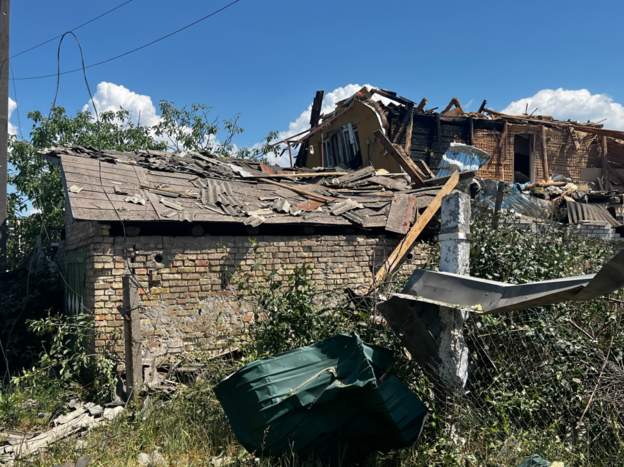
A tiny village on the outskirts of Kyiv, Stari Petrivtsi which is about 50 minutes from the city center, has become the most recent location to bear the scars of Russia’s assault on Ukraine.
Houses on both sides of a dirty street have been totally destroyed, rooves blown in, and fences blasted off their posts.
But miraculously, no-one was killed, although four people were injured, according to local authorities.
It’s not yet clear whether the damage was caused by a direct missile attack or whether it was collateral damage from Ukraine’s air defence systems.
People were going about their daily business: a 12-year-old boy was at home alone while his mother was at work. He had the sense to go to the cellar, but he thought in the moment of the blast that he could die, and that everything they have here could be destroyed.
He’s long used to living in fear, but today was the worst he’s experienced.
The Ghana Labour Market Information System (GLMIS) is scheduled to be commence operation in September 2023, according to the Ministry of Employment and Labour Relations (MELR).
The US$30 million World Bank-funded advanced technology platform is to serve as a one-stop shop for all labour market information and connect job seekers from both the formal and informal sectors of the economy to employers.
It would provide synchronised data from all State entities as well as private sector organisations on Ghana’s employment situation, including emerging trends, in-demand skills and training opportunities.
The GLMIS would also have accessibility features like text-to-speech, adjustable font sizes and keyboard navigations to enable persons with disabilities to access and utilise the platform.
Ghana’s move is in conformity with the standards of the International Labour Organisation (ILO), which encourages good practice in the development and use of labour market information for human resources development and programme planning and suggests strategies for overcoming the barriers to its use.
Nana Amoako Bonti Kakra Asante, a Management and Information System (MIS) Specialist for the Ghana Jobs and Skills Project at the Ministry, said the system would “allow jobs seekers and employers to trade and market themselves.”
“The whole idea is to make the system a one-stop platform so it will be easier for people who are seeking jobs while informing the government and other entities on policy-making decisions on employment and labour issues,” he said.
Nana Asante said this on Thursday when the Ministry engaged personnel from some media houses in Accra as part of its stakeholder interactions ahead of the official launch of the digital labour market information platform by September.
The engagement was to enlighten and inform the media of the new system to help them in championing the information dissemination process of GLMIS.
On cybersecurity issues, Nana Asante said the Ministry in collaboration with major stakeholders, including the National Information Technology Agency (NITA) and the Data Protection Agency, would secure all biodata and other information of users of the platform.
“We’re making sure that the data subject of those individuals who key in their information will be protected by the principles of the Data Protection Agency,” he assured.
He added that the platform would be scrutinised by officers of the Ministry to ensure that fraudulent persons did not have access to the platform to guarantee the safety of information for job seekers and employers.
Mr Bright Wireku-Brobbey, Deputy Minister, MELR, urged the media to support the Ministry with the dissemination of information about the GLMIS to reach a wider populace.
He said the Ministry would ensure timely implementation of GLMIS in fulfillment of their mandate to provide Ghanaians with information on labour and employment.
“This ground-breaking system represents a significant step towards fostering a more efficient and inclusive job market in Ghana and heralds a new era of connectivity and opportunity, empowering job seekers and employers alike,” the Minister said.
He said he was confident that with the implementation of the Ghana Labour Market Information System, disparities in labour and employment data in the country would be solved and called on all stakeholders to support it.
In 2022, Ghana’s banking industry and Specialised Deposit-Taking Institutions (SDI) lost roughly GH56 million, a 7.88 percent decrease from the GH61 million reported in 2021.
However, the number of attempted fraud cases for the banking and SDI sectors in 2022 increased to 2,998, as compared to 2,347 cases in 2021, which is a 27.74 percent increase.
This was the disclosure made in the 2022 trends and statistics of the Bank of Ghana (BoG) BANKs, SDIs and Payment Service Providers (PSPs) fraud report, covering January 1 to December 31, 2022.
It was observed that forgery and manipulation of documents, fraudulent withdrawals, cheque fraud, cyber/email and cash theft (cash suppression), were the major drivers (top five) fraud typologies that impacted most of the financial institutions.
Forgery and manipulation of documents emerged as the prominent fraud typology, recording the highest loss of GH¢33 million.
Money fraudulently withdrawn from customers’ accounts resulted in GH¢7 million losses, most of which the Central Bank observed involved staff of banks and SDIs, while cheque fraud, arising from cloned cheques accounted for a loss value of GH¢5 million.
The report indicated that the fraud cases involving staff decreased to 188 in 2022, as compared to 278 in 2021.
“Most of the incidents recorded involving staff had to do with cash theft (cash suppression) from customers’ accounts and happened to be a very common fraud typology in the Rural and Community banking sector,” the report said.
“While staff involvement in fraud persists, the numbers have started trending downwards as a result of strict sanctions imposed by the Bank of Ghana and strong advocacy for improved controls by the sector institutions,” the report stated.
To address the rise in fraudulent cases and losses recorded among Banks and SDI, BoG directed that Banks should immediately communicate fraud cases in their institutions to the Bank of Ghana and the Ghana Association of Banks to alert all others on the approaches deployed to avoid recurrence.
Banks and SDIs were also directed to increase the level of fraud sensitisation to their customers and constantly review the adequacy and operating effectiveness of their risk management (credit risk) and internal control frameworks to detect fraud and other financial crimes within their institutions.
Also, the Central Bank asked Banks and SDIs to report financial crime including all cash theft (cash suppression) cases to the Ghana Police Service and update the Bank of Ghana until the case is closed.
The fraud report, published by the Bank of Ghana seeks to inform the general banking public of fraud trends.
The report reflects trends in fraud typologies observed in relation to services provided by Banks, Specialized Deposit-Taking Institutions (SDIs) and Payment Service Providers (PSPs), and measures the Bank of Ghana is taking to address them and promote the integrity of the banking system.
For several hours, the South African president’s security crew has been detained aboard an aircraft in Poland.
It’s reported that authorities are refusing to allow them and accompanying journalists to disembark and continue their journey to Ukraine where Cyril Ramaphosa is leading the peace mission by African heads of states.
The SAA chartered flight with more than 120 people on board reportedly landed in Warsaw’s Chopin Airport early on Thursday afternoon.
Ramaphosa’s head of security, Maj Gen Wally Rhoode, said the Polish government was sabotaging the president’s security by not allowing them to disembark.
“They are delaying us, they are putting the life of our president in jeopardy,” he told journalists.
“Because we could have been in Kyiv by now and this is all they are doing. I want you guys to see how racist they are.”
The Polish authorities have not commented on the situation.
Explosions rang out as five African leaders, including South African President Cyril Ramaphosa and African Union chairwoman and Union of Comoros President Azali Assoumani, arrived in Ukraine as part of an African peace mission.
Air raid sirens also blared in Kyiv as the visit began, the latest in a series of twists as the mission gets underway.
The leaders who are expected to meet Ukrainian President Volodymyr Zelenskyy on Friday and then travel to Russia for talks with President Vladimir Putin in St Petersburg on Saturday, took cover in a bomb shelter.
The South African presidency posted footage of Ramaphosa arriving by train in the Bucha area near Kyiv after travelling from Poland.
Ramaphosa is heading a delegation, which also includes Assoumani and leaders from Zambia, Senegal, and Egypt’s prime minister.
Presidents Yoweri Museveni of Uganda, Denis Nguesso of the Republic of the Congo and Abdel Fattah el-Sisi of Egypt were also meant to go along, but they pulled out of the trip and sent representatives.
The peace mission could propose a series of “confidence-building measures” during initial efforts at mediation, according to a draft framework document seen by the Reuters news agency.
The document stated that the objective of the mission is “to promote the importance of peace and to encourage the parties to agree to a diplomacy-led process of negotiations”.
Its measures could include a Russian pullback, removal of tactical nuclear weapons from Belarus and suspension of the implementation of an International Criminal Court arrest warrant targeting Putin.
A ceasefire could follow and would need to be accompanied by negotiations between Russia and the West, the document stated.
Dancehall artist, Stonebwoy, has been been cited in a viral video on social media demonstrating his Agbadza talents.
A video which was posted by United Showbiz on their Twitter page captures the Dancehall artiste together with some people dancing beautifully to an Agbadza tune.
Stonebwoy on Wednesday, June 14, 2023, through the Livingstone Foundation (TLF), commissioned four boreholes for some chosen communities in the Western Region.
He was accompanied by his wife, Dr. Louisa Satekle and some members from his team.
As part of the commissioning, there was a dance and singing section and Stonebwoy did not let that pass him by.
With a cloth around his waist, the singer moved his body nicely to the tune of the drums, enjoying praises from others who also joined him.
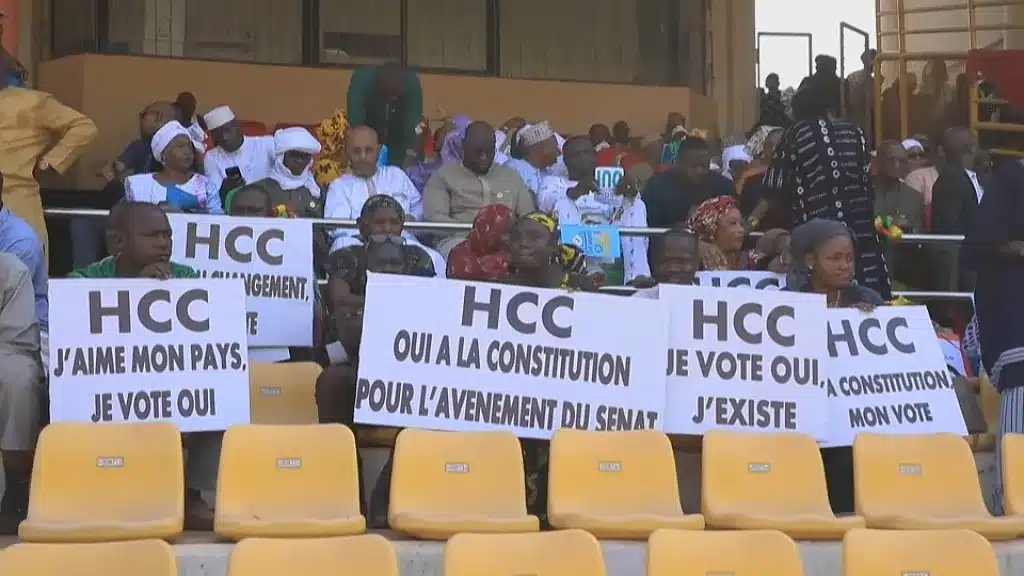
On Sunday June 18, 2023, Malians will participate in the polls to express their verdict on the constitution proposed by the governing junta, raising speculation about the potential candidacy of the country’s authoritarian leader.
The vote is the first organized by the military since it seized power in August 2020 of a country gripped for years by a political, security and economic crisis.
Those problems remain largely unresolved, meaning the vote could be disrupted.
It is a checkpoint on the road to a return of civilian rule in March 2024, under commitments made by the military itself.
Boris Johnson fury as committee finds he ‘deliberately misled’ MPs
But less than nine months before the deadline, Mali has no clarity on the future role of the military, including junta leader Colonel Assimi Goita.
Malians will vote on the draft constitution from 0800 GMT on Sunday, with green ballots for the “yes” vote and red for “no”.
The results are expected within 72 hours.
The authorities have invested heavily in the reform.
Jihadist groups continue to carry out bloody attacks on civilians and the military
It purports to fix the country’s current constitution, enacted in 1992 and often blamed for Mali’s problems.
The large Sahel nation faces jihadist violence, poverty, derelict infrastructure and decaying schools.
If approved, the new constitution would strengthen the position of the military, emphasizing “sovereignty”, the junta’s mantra since coming to power and its subsequent break with the former colonial power France.
Presidential power boost
Above all, it strengthens the powers of the president, while also providing for an amnesty for those who carried out coups before it was enacted.
It has fuelled persistent speculation that Goita will run for president, despite promises by the military rulers that he will not stand.
The reform has drawn wide-ranging opposition, from former rebels and imams to political opponents.
Influential religious organizations oppose the continuation of secularism enshrined in the current constitution.
In the north, former rebels who, unlike the jihadists, signed a major peace deal with the state also reject it.
Some political elites are unhappy with the strengthening of the executive around the president.
Sidi Toure, spokesman for the Party for National Rebirth (Parena), described a “personalisation of power, a personality cult”.
“If a new constitution is put in place, it must redress these excesses, balance the powers instead of concentrating them in the hands of the president alone.”
“The draft constitution was made by the Malians,” the junta leader said at a campaign rally Tuesday, adding that the text was “the result of work by consensus”.
Security concerns
Beyond the legitimacy of the text, the issue of the vote itself is at stake.
Mali’s future is uncertain, with no clarity on the future role of the military, including junta leader Colonel Assimi Goita.
Voters could face jihadist violence in the north and center, where groups continue to carry out bloody attacks on civilians and the military.
“Mali has more urgent challenges, we must rally Malians for the war against terrorism, for the war against poverty,” Toure said.
One researcher, who like many others spoke on condition of anonymity, argued the old constitution was satisfactory.
“The problem with the 1992 constitution is that it was never really applied… it cannot be the cause of the crisis,” the researcher said.
Turnout is widely expected to be low.
“Generally, Malians do not vote. Since 1992, turnout has rarely exceeded 30 percent,” said political scientist Abdoul Sogodogo.
Observers say a vote for “yes” is almost certain.
“Malians say that presidents from democratic regimes did not necessarily shine. Corruption has reached a certain level. People want to see something else,” said Brema Ely Dicko, a sociologist at Bamako University.
Supporters of the reform are betting on the strong popularity of Goita and the so-called transitional authorities.
“Some actors present this referendum as support for the transition,” said Sogodogo, the political scientist.
“That means that the debate on the content is obscured.”
The local media has reported that Namibia has put 40 crocodiles up for sale to lessen confrontations between people and animals in the northeastern Kavango and Zambezi areas.
Those interested in buying the reptiles are expected to submit their tender offers at the ministry of environment by 17 July.
Ministry spokesperson Romeo Muyunda said majority of the country’s wildlife “exists outside national parks”, which had made the regions “continue to experience concerning crocodile attacks on people and their livestock”.
Buyers must prove that they have a suitable habitat for the animals and will incur the cost of capturing them.
Those seeking to import them must have a permit from the respective country.
Authorities in Tanzania have detained two church leaders on suspicion of holding a number of sick individuals and promising to treat them through prayer and local plants.
The more than 100 people were being kept in so-called traditional wards (mud-walled huts with brick beds) built around the church in Nyamhinza village, Misungwi district, in the north-western region of Mwanza – with no medical treatment or food being provided.
Some had been there for up to a month and they were required to find food for themselves until they fully recovered.
They were found after locals alerted the police that some people were dying after leaving hospitals, including a woman who had joined the church soon after giving birth to twins.
At the end of last week, the police took the sick people back to hospitals for treatment. They are now investigating possible deaths and whether there are bodies buried nearby.
Mwanza regional police commander, Wilbroad Mutafungwa, told journalists on Wednesday that initial investigations didn’t show there were people buried there but they were still keeping a close watch.
He confirmed the arrests of the suspects, church leaders William Masum and his wife Kabula Lushika, saying they didn’t have permits to conduct worship and prayer activities, or to provide traditional healing services. They have not commented on the accusations.
“We are now doing a detailed investigation, including interrogating the suspects. Meanwhile I ask locals with classified information that will help the investigation to come forward and talk to the police,” he said.
The church is said to have been in operation for more than five years.
A witness of the boat tragedy in the River Niger has said that killed 106 people and many ladies lost their life trying to save their children.
The boat capsized after part of the vessel collapsed, causing water to flood the boat, police said.
Figures provided by local rescuers indicate that 144 people survived the boat accident.
One village in the Patigi local government area of Kwara state, where the incident occurred, had the highest number of casualties. Locals there say 61 died, mostly women and children.
Mohammed Alhassan, a survivor, said the women would not leave their children and so they drowned together.
“My sister was with us on the boat,” he told the BBC. “She survived but her seven-year-old son died”.
Aisha Mohammed, another woman who lost her three grown daughters in the accident said the girls were soon to be married.
Other survivors also described how many fathers hung on to some of their children while those they could not bring to shore died.
Some young men were however able to swim to safety after the boat broke in half.
Safety is one of the major concerns raised as many people did not have life jackets. Overloaded boats are common and travellers often don’t take safety precautions.
Authorities in Sudan claim that the paramilitary Rapid Support Forces (RSF) assassinated the governor of the West Darfur province.eople
Only hours earlier, Khamis Abbakar had accused both the RSF and allied militias of committing genocide against people from the Masalit ethnic group.
Mr Abbakar, who was killed in El Geneina, had warned that the attacks had spread across the city and called for international intervention.
The RSF has not commented on the allegation.
There has been similar violence in the cities of Nyala and Zalingei.
UN Secretary General Antonio Guterres has said he’s appalled by the escalating ethnic and sexual dimension of the violence against civilians in Darfur.
The region has seen periods of conflict since the early 2000s when millions were displaced and hundreds of thousands killed after Arab militias were deployed to fight non-Arab rebels.
Nigeria’s President Bola Tinubu has been placed head of the economic and financial crimes unit, Abdulrasheed Bawa, on indefinite administrative leave for abuse of office.
The suspension was due to “weighty allegations of abuse of office”, against Bawa, a statement from the presidency said late on Wednesday June 14 2023.
The move came a week after the president suspended the country’s central bank Governor Godwin Emefiele.
Local media have reported that Bawa is currently being interrogated by Nigeria’s secret police, like Emefiele.
A spokesman for the unit, officially known as the Economic and Financial Crimes Commission (EFCC) did not immediately respond to calls for comment.
Created 20 years ago, the EFCC investigates and prosecutes financial crimes, including money laundering and corruption.
The Brazilian leader will in August commence visiting eight African countries onwards with the aim of strengthening political and economic ties on the continent.
Luiz Inácio Lula da Silva plans to make these two visits to strengthen economic and political relations with the continent, according to official sources.
Angola, Mozambique, Senegal, Ghana, Ethiopia, Nigeria and Sao Tomé & Principe are among the countries that the Brazilian leader is expected to visit.
His first tour is expected to coincide with the BRICS Summit of Heads of State and Government scheduled for August in South Africa, while the second could take place on the sidelines of the next African Union Summit, to be held in February 2024.
Brazil also plans to reopen its embassy in Sierra Leone and set up diplomatic representation in Rwanda.
Developing trade
It is clear that Brazil wants to expand its economic cooperation with the continent in line with President Lula da Silva’s South-South integration strategy.
During Luiz Inácio Lula da Silva’s previous terms in office, Brazil stepped up its relations with the continent. As a result, trade between the two sides increased sevenfold in a decade, from $4.2 billion in 2002 to $28.4 billion in 2012.
But the rapprochement between Africa and Brazil has taken a turn for the worse. The economic and political crisis that shook the Latin American country from 2014 onwards is no stranger to this.
Trade between the two parties has plummeted. In 2022, it was limited to 21.3 billion dollars, practically the same level as in 2010.
The National Assembly of South Africa recently approved a divisive plan to establish national universal health care.
South Africa’s health minister, Joe Phaahla, hailed the approval of the bill as “a historic step” for the legislation that had been in the pipeline for twelve years.
— ANC – African National Congress (@MYANC) June 14, 2023
The opposition fears that the already overburdened public health system will collapse if the new legislation comes into force.
Leading opposition party, the Democratic Alliance (DA), denounced the move saying that nine million of the 60 million South Africans who have medical insurance “would have to be covered by an already overburdened public health system”. In Africa’s leading industrial power, public hospitals are often overcrowded and under-resourced or understaffed. The most privileged often turn to the private sector.
The Coordinating Dean of the Kwame Nkrumah University of Science and Technology (KNUST), Obuasi campus, Prof. Richard Buamah, has revealed that plastic garbage makes about 85% of all marine debris.
He warned that the dire situation does not seem to be ending and could triple in the coming years if proper measures are not put in place to curb it.
“Currently, plastics account for 85 percent of all marine litter. By 2040, it will nearly triple, adding 23 to 37 million metric tonnes of waste to the ocean per year. This seems to be about 50 kilogrammes of plastic waste per metre of coastline. Due to these, all-marine lives face grave risks of behavioural disorder, starvation, and suffocation.”
Prof. Buamah said this when he addressed a durbar of chiefs, pupils, and stakeholders at Obuasi to mark this year’s World Environment Day, organised by AngloGold Ashanti.
He bemoaned that the use of single-use plastic is on the rise, stating that the chemicals used in its production have harmful effects on the environment and have been linked to certain diseases.
“It is an established fact that more than 10,000 chemicals are used in these plastics, of which 25 percent are potentially dangerous and linked to diseases like cancer and diabetes,” he added.
Meanwhile, during the celebration, Senior Manager of Sustainability, Environment for AngloGold Ashanti, George Owusu-Ansah, indicated that the mine has partnered with the Environmental Protection Agency (EPA) and other stakeholders to enhance environmental sustainability on plastic waste management.
The partnership forms parts of AngloGold’s 10-year Socio-Economic Development Plan (SEDP) on environmental sustainability, which seeks to treat plastic waste as a valuable resource rather than waste.
This year’s World Environment Day focused on tackling plastic pollution through a campaign dubbed ‘Beat plastic pollution’, in an effort to raise awareness, mobilise action and promote environmental sustainability.
Mr. Owusu-Ansah said plastic waste is one of the leading environmental challenges globally today, and that AngloGold is making a positive contribution toward an enduring world by being responsible stewards of the environment in which they operate.
Highlighting some impactful projects to protect the environment, Mr. Owusu-Ansah said the company has also impacted the community through good waste management practices, pollution prevention, and the release of treated water for public consumption.
The company has since its commencement of operations in 2019 streamlined operations in environmental management and has successfully been certified by the ISO 14001 Environmental Management System.
Obuasi Municipal Head of EPA, Prempeh Adarkwaa Yiadom, for his part, encouraged the use of reusable items.
Some items made from waste plastic are on display Awards
Awards worth GH₵600,000 were given to schools, individuals, and organisations that excelled in the campaign against the disposal of plastic waste. The awards included laptops, tabletop computers, dustbins, shovels, wheelbarrows, school bags, books, flat-screen televisions, and T-shirts, among other items.
An exhibition on plastic waste recycling by schoolchildren who turned waste plastic into usable materials was also held.
The Consumer Protection Agency (CPA), has called out British Airways for “illegally” charging Ghanaian travellers $50 more for tickets
In a statement, the CPA said its attention was drawn to the “illegal” practice by British Airways, “with regard to paying for your airline tickets with cash at Standard Charted Bank”.
The agency explained: “BA and Standard Charted Bank have decided to charge $50 for paying off your ticket at their branches, this is an illegal practice, and we are urging BA to stop immediately.”
“If BA and Standard Charted Bank have gone into any agreement, the passengers of BA should not be asked to pay any extra money besides the fare of the reservation”, the statement noted.
It said: “Per our investigation, this is BA that has instructed Standard Charted Bank to charge this ridiculous extra charge of $50 on top of your ticket price“.
“Anybody that has paid this extra $50 to Standard Charted Bank should not hesitate in contacting CPA for us to enable them get a refund.”
Today, June 15, 2023, the Ghana Cedi is trading against the dollar at a purchasing price of 10.9780 and a selling price of 10.9890, according to the Bank of Ghana’s interbank exchange rates.
At a forex bureau in Accra, the dollar is being bought at a rate of 11.50 and sold at a rate of 11.90.
Against the Pound Sterling, the Cedi is trading at a buying price of 13.9355 and a selling price of 13.9505.
At a forex bureau in Accra, the pound sterling is being bought at a rate of 14.40 and sold at a rate of 15.10.
The Euro is trading at a buying price of 11.9107 and a selling price of 11.9215.
At a forex bureau in Accra, Euro is being bought at a rate of 12.30 and sold at a rate of 12.80.
The South African Rand is trading at a buying price of 0.5996 and a selling price of 0.6001.
At a forex bureau in Accra, South African Rand is being bought at a rate of 0.30 and sold at a rate of 0.90.
The Nigerian Naira is trading at a buying price of 42.3119 and a selling price of 42.4250.
At a forex bureau in Accra, Nigerian Naira is being bought at a rate of 12.00 Naira for every 1 Cedi and sold at a rate of 19.00.
For the CFA, it is trading at a buying price of 55.7128 and a selling price of 55.7682.
At a forex bureau in Accra, CFA is being bought at a rate of 17.00 CFA for every 1 Cedi and sold at a rate of 21.00 CFA for every 1 Cedi.
Our forex bureau rates are provided by Afriswap Bureau De Change in Osu, Accra.
Note that these rates may be different at a forex bureau near you. Our forex bureau rates are provided by Afriswap Bureau De Change in Osu, Accra.
John Ofori Attah Dawone, one of the individuals mentioned in the report compiled by former Environment Minister, Prof Kwabena Frimpong-Boateng, has filed a defamation lawsuit against him.
The renowned surgeon, who was also the Chairman of the Inter-Ministerial Committee on Illegal Mining (IMCIM), alleged Mr Dawone engaged in money laundering and the illegal sale of excavators.
Mr Dawone is, therefore, demanding damages to the tune of GHC 5 million and an order restraining him from further publication of the report.
Former Minister of Environment, Science, Technology and Innovation, Professor Kwabena Frimpong-Boateng
This comes on the back of multiple suits against the embattled former Minister following the release of the report which revealed alleged involvement of prominent members of the New Patriotic Party (NPP) including some officials at the Presidency in activities.
NPP stalwart, Gabby Asare Otchere-Darko, who was mentioned in the report, was the first to sue Prof Frimpong-Boateng with a suit from former Manso Nkwanta MP, Joseph Albert Quarm, being the most recent.