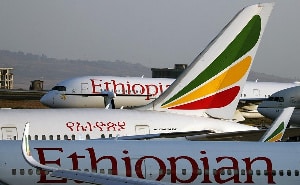
The Ethiopian Airlines Group, the continent’s top airline brand and the airline with the fastest global growth, has been named “The Best Airline in Africa.”
The airline was awarded the title at the prestigious SKYTRAX 2023 World Airline Awards during the Paris Air Show held in Paris, France.
A statement issued in Accra said the award was the sixth time in a row that Ethiopian Airlines had been recognised as the Best Airline in Africa at the SKYTRAX World Airline Awards.
Mr Mesfin Tasew, Ethiopian Airlines Group CEO, said: “We are truly pleased by the top award that we received today at the admired World Airline Awards. Crowned with Skytrax’s prestigious awards for several years in a row is a testimony of our consistency and commitment in delivering high-quality services.”
He said they were very proud of the strong vote of confidence of the valued customers, and “l will like to thank them and reaffirm that we will continue exceeding their expectations.”
“I would like to take this opportunity to sincerely appreciate the hardworking Ethiopian Airlines’ families who strive round the clock to keep the engines of our success run,” he added.
Mr Edward Plaisted, CEO of Skytrax, said: “Ethiopian Airlines wins this top award as Africa’s favourite carrier for a sixth successive year and this level of consistency is a fabulous achievement for all the Ethiopian Airlines management and frontline staff.”
The World Airline Awards referred to by media around the world as “the Oscars of the aviation industry” is wholly independent and impartial, introduced in 1999 to provide a customer satisfaction study that is truly global.
Travellers across the world vote in the largest airline passenger satisfaction survey to determine the award winners.
Over 100 customer nationalities participated in the 2022/2023 survey with more than 20 million eligible entries counted in the results.
More than 325 airlines are featured in the final Award results.
It is to be recalled that Ethiopian amasses a plethora of awards, including but not limited to: ‘The Best Airlines in Africa’ from SKYTRAX World Airline Awards for the last several years in a row; ‘Sustainable Cargo Airline of the Year -Africa’ at the 2023 Freight Week Sustainability Awards; ‘Outstanding Food Services by a Carrier’ at the 2023 PAX International Readership Awards; and ‘Best Overall in Africa Award’ at the 2023 APEX Passenger Choice Awards.
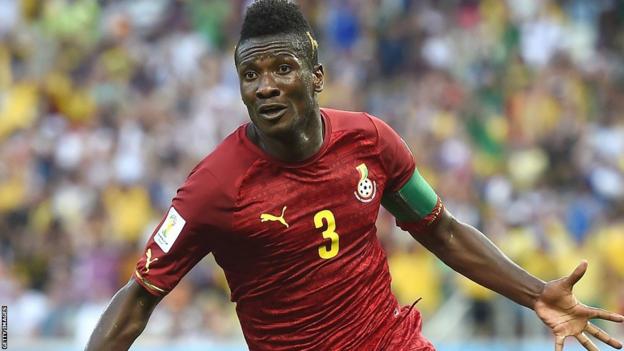
Asamoah Gyan is without a doubt one of African football’s most colorful characters. He has had crazy hairstyles, shed a few World Cup tears, won music awards, and scored a lot of goals.
The Ghana legend blew the full-time whistle on his playing career on Tuesday following a journey that took him around the world and spanned two decades.
The 37-year-old striker played at three World Cups and seven Africa Cup of Nations (Afcons), captaining the Black Stars on many occasions, but somehow always ended up as the nearly man.
BBC Sport Africa looks at some of the numbers and events that defined his career on and off the pitch.
1. Ghana’s number one for goals
Gyan is Ghana’s all-time leading goalscorer, netting 51 times in 109 games. Only Andre Ayew has played more times for the Black Stars.
His international debut in a World Cup qualifier against Somalia in November 2003 was a sign of things to come as he scored five minutes after coming on as a 77th-minute substitute. Three days shy of his 18th birthday, that strike made him Ghana’s youngest ever scorer.
Former international team-mate John Paintsil can still recall his first encounter with a young Gyan when both were playing for Ghanaian side Liberty Professionals.
“One day, the youth side was beating the seniors. There was this striker who was so fast on the ball, very skilful, dribbled left and right, very good in the air and battling with our defenders.
“I went for the tackle, Gyan does some skills, he twists me and I find the ball back of the net again. I said ‘Wow, I believe this boy will become one of the best strikers Ghana’s ever produced’. It came to pass.”
Gyan also scored eight Afcon goals for his country, losing two finals in 2010 and 2015. His record of 31 appearances spread across seven tournaments leaves him joint-second on the all-time list, again behind compatriot Ayew (34), while Egypt’s Ahmed Hassan is the only person to have played at eight Afcons.
Painstil told BBC Sport Africa, “Gyan is one of the best strikers that Africa and Ghana has produced.”
https://emp.bbc.com/emp/SMPj/2.49.3/iframe.htmlWorld Cup moments: Suarez handball
2. World Cup success…and that penalty
Gyan is also Africa’s all-time leading scorer at World Cups, with six goals spread across three tournaments (2006, 2010 and 2014).
Having helped his nation qualify for a maiden World Cup, he scored just 68 seconds into Ghana second group game against the Czech Republic at the 2006 tournament in Germany. The Black Stars went on to make the second round before losing to Brazil.
But the 2010 BBC African Footballer of the Year is perhaps best known for a sliding doors moment at the following World Cup in South Africa, the first held on African soil.
WATCH: Match classic – Ghana v Uruguay at 2010 World Cup
‘The supporters are talking about revenge’ – Painstil on Ghana v Uruguay’
WATCH: Was Suarez handball cheating or selfless?
Having scored two penalties to help Ghana narrowly qualify from a group containing Germany, Australia and Serbia, he then struck a 93rd-minute winner in the last 16 against the USA, setting up a quarter-final against Uruguay.
What happened next has become part of World Cup folklore.
With the game tied at 1-1 heading into the final minute of extra-time, Uruguay striker Luis Suarez was sent off for handling the ball on the goalline, clearly denying Ghana a winning goal.
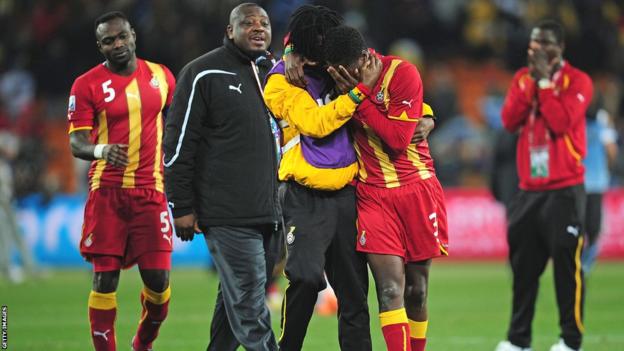
But with the world watching on, this time Gyan couldn’t convert, seeing his penalty clip the bar and go over.
Gyan spent the night crying in his hotel room after missing the penalty against Uruguay, according to team-mate John Paintsil
He showed courage to step up and score from the spot just minutes later, but Ghana lost the shootout 4-2.
“We all had to go to Gyan’s [hotel] room,” Paintsil revealed.
“We did all we could but he was crying throughout the night. I will tell you, Gyan still feels that pain.”
The forward recovered to captain his country at the 2014 World Cup in Brazil, scoring two more goals against Portugal and Germany, but there was no fairytale redemption story as the Black Stars finished bottom of their group.
Gyan wore the number three shirt after a suggestion from his brother, fellow Ghana international Baffour Gyan
3. Three is the magic number
Gyan baffled World Cup commentators by wearing the number three shirt.
That choice, which he carried throughout his career, was inspired by his brother and his Christian faith.
Baffour Gyan played 25 times for the national team and, like his younger sibling, was a striker. When Asamoah became part of the Ghana set-up, Baffour suggested the number because it represented the Holy Trinity – the Father, the Son and the Holy Spirit.
“It is like DNA. Both brothers were very energetic and fighters,” said Paintsil, who describes the number three as Gyan’s “symbol”.
“The number three leaves with him everywhere he goes.”
4. Hair-raising controversy
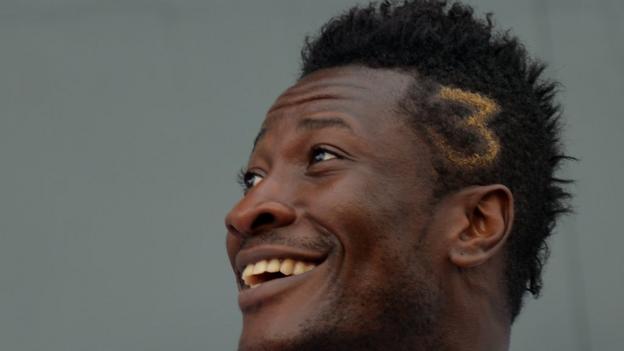
Indeed, Gyan certainly carried the number with him once he had it shaved and dyed into the side of his head, a style he adopted after his 2010 World Cup heartbreak.
Having sported various different looks over the years, his mohawk landed him in hot water in 2016 after a loan move to Al Ahli in the United Arab Emirates (UAE), one of more than 40 players sent a warning letter about “unethical hair”.
Gyan agreed to trim his locks to avoid causing offence, but brought the mohawk back for the 2017 Afcon. The number three on the side of his head also made a reappearance in Gabon but Ghana still lost the third-place play-off 1-0 to Burkina Faso.
Asamoah Gyan had to re-think his hair style choices while playing in the UAE
5. Baby Jet scores a hit
What some football fans across the world might not know is that Gyan also had a successful music career.
Using the stage name Baby Jet, he recorded three albums with hiplife musician Castro (hiplife being a famous musical style synonymous with Ghana).
The single African Girls was released in August 2010 and won the best hiplife single of the year at the Ghana Music Awards, although Paintsil has his own favourite, Do the Dance.
“It was one of the songs that travelled all over the world, not only Africa, not only Ghana.
“A lot of Ghanaians danced to it, sometimes the dressing room would dance to it.”
Gyan and Castro, a fellow Ghanaian, met in Italy in 2005 when Gyan was spotted in the crowd at a show and invited on stage. They became friends before Castro disappeared while jet skiing on holiday. Gyan was even forced to deny being involved in his friend’s ritual sacrifice.
Paintsil believes Baby Jet’s music “impacted a lot of people’s lives” and even more success could have followed.
“It’s great to see one person having so much talent. I believe that even if you give him movie scripts, Baby Jet can perform very well. He’s blessed.
“These things come to people who have a good, clean heart and he’s one of them.”
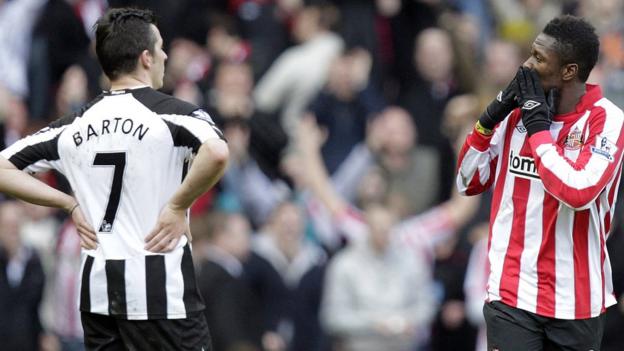
Asamoah Gyan celebrates after scoring a late equaliser for Sunderland against Newcastle
6. Sunderland cult hero
Gyan played for 11 clubs in eight countries during his career, with spells in Italy, France, Turkey, China and India.
Perhaps his most high-profile move came in August 2010 when he joined Premier League Sunderland after his exploits at the World Cup in South Africa.
Then aged 24, he arrived on Wearside for what was then a club record $20 million, scoring on his Premier League debut as a sub before then also finding the net on his full debut.
His outgoing personality, part-time career as a rap superstar and celebration dance moves won over fans but his cult status was secured when he scored a 94th-minute equaliser against rivals Newcastle United.
He scored 11 goals in 37 appearances for the Black Cats with many supporters disappointed that he only spent one season at the Stadium of Light before heading to the UAE on a loan move that “baffled” then manager Steve Bruce.
Paintsil understands why his former national team skipper inspires adoration, both abroad and at home in Ghana.
“Gyan is a great character. He has a sense of humour. We had so much fun.
“He is very unique and nobody can predict him. He’s always happy.
“He is doing so much for the nation and people. He has given hope and also freedom to the youngsters. I’m so proud of him.”
Baby Jet might now be too old to play football but he has certainly led a hip life up to this point.
The Ugandan government has stated that it intends to raise the drinking age from 18 to 21.
The World Health Statistics 2023 Report ranks Uganda among the leading countries for high rates of alcohol consumption.
According to the WHO report, it is estimated that Ugandans currently consume 12.2 litres of alcohol per person annually, which is significantly higher than the global average.
“Research has shown that if someone has not taken an addictive substance by 21, they are much less likely to use addictive substances later in life,” Dr Hafsa Lukwata, the Ministry of Health commissioner for mental health, alcohol and substance sbuse, told the BBC.
“There has been a public outcry over substance abuse in young people,” Dr Lukwata added.
She said that parliament will discuss the age limit, among other measures, in the soon-to-be presented Alcohol Control Bill.
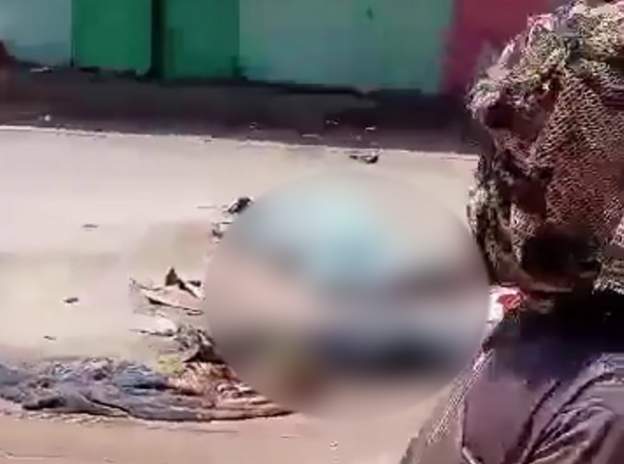
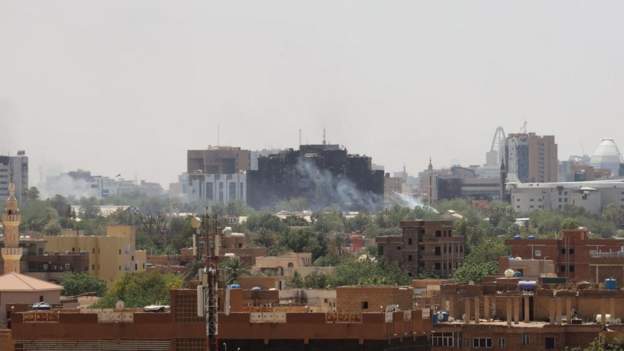
After heavy fighting broke out between the Sudanese army and the Rapid substantiate Forces (RSF) in the Darfur region of the country, the BBC has seen evidence to substantiate the claims that dead bodies were left lying in the open. The RSF has received backing from a few Arab armed organizations in Darfur.
We have verified two videos from one location in the city of El Geneina posted on Twitter earlier this month showing bodies lying on a road.
We were able to match buildings and objects in the videos to satellite images of El Geneina.
In one video, there is a mention of the local branch of the Bank of Khartoum, which we were also able to locate.
It’s not possible to say either when the videos were filmed or who did the filming.
But one appeared on Twitter around the same time the West Darfur governor Khamis Abakar was killed on 14 June. In this video, the person filming makes derogatory comments about non-Arabs living there.
The Darfur Bar Association (DBA) said this week that corpses remain on the streets, inside homes and in various public places.
South African authorities have announced the demise of at least 31 suspected illegal miners, believed to be from Lesotho, at an abandoned mine in Free State.
The Department of Mineral Resources in South Africa issued a statement stating that the Lesotho government notified them about the deaths, which occurred on May 18, within a mine ventilation shaft.
The Welkom mine in Free State was last operational in the 1990s, according to the department.
South Africa’s Department of Mineral Resources says three bodies have been recovered from the mine by other illegal miners. It is however is collaborating with relevant stakeholders, including the previous owners of the mine, to recover the remaining bodies.
But inspectors, after conducting an assessment, have deemed the conditions too hazardous to send a team to the site.
Mali’s military-led government on Thursday seized the diplomatic passport of influential and outspoken Muslim cleric Mahmoud Dicko, who is a vocal critic of the ruling junta.
Community-based station Radio Nostalgie reported that the authorities seized Mr Dicko’s passport at an airport in the capital, Bamako, upon his return from neighbouring Mauritania.
Mr Dicko was issued with the passport by the government of the late President Ibrahim Boubacar Keïta.
“Less than a week after vehemently criticising the transitional government, Dicko is more than ever in the crosshairs of the authorities,” privately-owned channel Renouveau TV reported.
In May, Mr Dicko and several Islamic groups launched an “anti-secularism” movement to oppose plans to designate the country as a secular state as envisioned in a draft constitution.
Mr Dicko also played a leading role in the protest movement that led to Mr Keïta’s downfall in 2020.
The African Centre for Energy Policy (ACEP) has criticised the decision to lease the Tema Oil Refinery (TOR) to a private company known as Torentco Assets Management (TAM).
ACEP’s Executive Director of ACEP, Benjamin Boakye, in an interview on Adom FM’s Burning Issues, revealed that the TAM is owned by an individual and not a consortium.
“We all want TOR to work, but, will not sit and watch Management do something that will not benefit the country. Because this Torentco Assets Management is one person’s company who does not have any expertise in oil.
“For now, we know who is behind the Torentco company and when you check his background, he has not sold kerosene before; let alone, refining oil that he can use to help turn things around at TOR,’’ he said on Wednesday.
Mixed reaction greeted the news of the government leasing TOR. While some considered it a prudent step to revive the Refinery, others believe the contract is a shady one, designed to rip off the country.
Touching on the deal, Mr Boakye said the yet-to-be-finalised contract between TOR’s management and Torentco Assets Management did not go through the right process – be it competitive bidding or sole sourcing.
On the same show, an aspiring presidential candidate for the New Patriotic Party (NPP), Kwadwo Nsafoa Poku, endorsed the privatisation of TOR.
According to him, considering the current state of TOR the only way to turn things around is for a private company to take over.
He, however, advised the refinery’s Managing Director to come out to explain to Ghanaians the truth behind the transaction and defuse the speculations his silence is generating.
Meanwhile, a Member of Parliament’s Select Committee of Energy, Rashid Pelpuo, said the Committee has not been briefed on the development.
On the back of that, the Committee will invite the CEO and directors of the company to brief them.
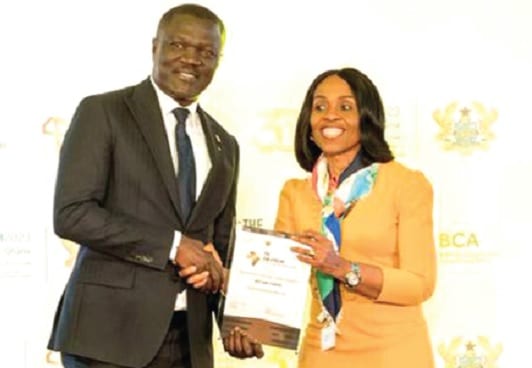
At the African Export-Import Bank (Afreximbank) Pan African Business and Development Awards, First Bank of Nigeria Limited, the parent company of FBNBank Ghana, won the Financial Institution of the Year Award.
The awards ceremony marked the 30th anniversary of Afreximbank.
The Pan-African lender hosted its 30th Annul Afreximbank Meetings in Accra where the Pan-African Business and Development Awards was inaugurated, in association with the Business Council for Africa (BCA).
The award bestowed on First Bank is in recognition of the bank’s immense role in promoting trade and investment across the continent that has strengthened the economic and multilateral business relationship across nations.
With its subsidiaries across the First Bank Group, First Bank has continued to play a leading role in boosting cross-border businesses, including trade and investment opportunities, essential to enhancing trade relations among countries.
Cross-border transfer
As part of its role in facilitating transactions across borders, in 2021, First Bank launched its First Global Transfer (FGT) initiative, specifically designed to ensure safe, timely and improved efficiency in the transfer of funds across the network of First Bank subsidiaries in Africa.
The FGT is not restricted to First Bank Group’s customers but also open to every individual resident in the country the funds transfer is originating from.
Commenting on the awards, the Chief Executive Officer of the First Bank Group CEO, Dr Adesola Adeduntan, said:
“We thank the organisers of the event (Afreximbank, BCA) for the recognition as it reinforces our commitment to promoting trade, finance and investment opportunities across borders.”
He said the service had been instrumental to the continued growth and development of the continent and the world.
Mr Adeduntan dedicated the award to employees at the First Bank Group for their diligence and hard work as well as to the customers for their loyalty and patronage in the over 129 years of its existence.
The FBNBank Ghana Managing Director/CEO, Victor Yaw Asante, who received the award on behalf of the group, said:
“It is no coincidence that the award was handed over in Ghana where we are focused on making our subsidiary a giant of a financial institution just like our parent in Nigeria.”
Also commenting on the awards, the President and Chairman of Afreximbank, Prof. Benedict Oramah, said:
“Tonight we are recognising outstanding leaders and institutions.
Having joined the bank in 1994, I have been fortunate to have worked with many of them.”
“At Afreximbank, contributing to Africa’s development is a lifetime vocation, as I know it is for all those that we have recognised tonight,” Prof. Oramah said.
The chairperson of the BCA, Arnold Ekpe, who is also a former Group CEO of Ecobank, said recognising such leaders and institutions was because often, business leaders did not get the praise they deserved.
“Succeeding in business on the continent is not always easy, but it is rewarding, and more importantly, it is possible to build strong, profitable businesses that are globally competitive.
Our winners tonight have demonstrated this,” Mr Ekpe added.
Track record
FirstBank has consistently been recognised by reputable global organisations for its steady outstanding performance.
The streak of recent wins are the award for Best Financial Inclusion Service Provider Nigeria 2023 by Digital Banker Africa as well as Best Private Bank for Sustainable Investing in Africa by Global Finance.
The Pan-African Business and Development Awards is aimed at celebrating and recognising the excellence of outstanding organisations and those within the African business and finance sectors.
Two other banks, National Bank of Egypt and Coris Bank, were recognised as Financial Institutions of the Year.
Eight recognition awards were also handed to some staff members of Afreximbank to acknowledge their long service at the bank.
They included Prof. Oramah, who has been at the Afreximbank for over 29 years.
Commencing July 1, 2023, commercial banks operating in the nation are anticipated to begin deploying armored bullion vans or trucks for Cash in Transit (CIT) activities.
This is according to the Association of Bullion Operators Ghana whose President, Alhaji Iddi Sumaila has disclosed that some banks, however are yet to finalize their respective agreements with the Association.
“By 1st of July we will see banks using armoured vehicles/bullion vans. However, other banks have not finalized the agreement with us,” he told Accra-based 3FM in an interview.
“We have about 150 bullion vans in the country. Most banks have signed contracts with us to deploy to them. It goes through a process for the banks to get it and that takes time,” Iddi Sumaila added.
Following a spate of robbery incidents on CIT vehicles in 2021, the Bank of Ghana issued a directive for financial institutions to procure armoured bullion vans.
Meanwhile, the recent disclosure by ABOG comes after a robbery attack on a CIT vehicle took place at a filling station in Ablekuma on June 22, resulting in the shooting and death of a police officer on duty.
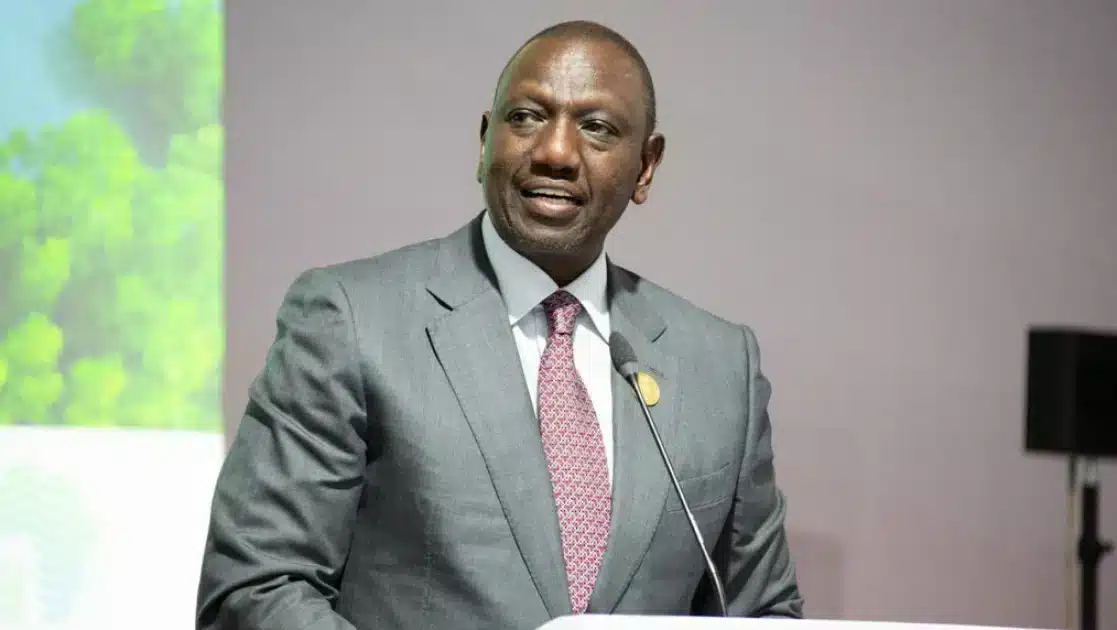
The President of Kenya stated on Thursday that he had come to the Paris climate summit “not to ask for help” from the wealthy nations, but rather to see that developing nations could “take part in the solution” if the global financial system was changed.
“The current financial architecture is unfair, punitive and inequitable”, said William Ruto.
“The countries of the South pay up to eight times more interest than developed countries because they are considered risky”, said the Kenyan president, who wants to attract private investment rather than development aid.
“We are tired of this narrative” that portrays Africans as “victims of climate change”, “looking for favors” and “lamenting”, explains Mr. Ruto: “We are not asking for help, we want to be part of the solution”.
The US government is supporting $25 million in new funding for micro, small, and medium-sized enterprises (MSMEs) in Ghana’s agriculture sector in collaboration with two financial institutions in that country: Absa Bank Ghana and Opportunity International Savings and Loans.
The partnership was led by the U.S. International Development Finance Corporation (DFC) in coordination with the U.S. Agency for International Development (USAID).
It will support up to $20 million in lending from Absa Bank Ghana and up to $5 million in lending from Opportunity International Savings and Loans by lowering risk and helping expand credit to regions and borrowers that do not typically have access to bank loans, particularly in northern Ghana.
“Agriculture is a vital contributor to Ghana’s economy, providing employment, food security, and nutrition,” said USAID/Ghana Mission Director Kimberly Rosen.
“The U.S. government is committed to helping Ghana fully maximize its agricultural potential by supporting the expansion of small businesses in the agriculture sector.
“These partnerships demonstrate our ongoing commitment to the success of Ghana’s private sector, and economic growth in the country.”
In order to provide equal access to resources, Kenya’s President William Ruto has requested that the World Bank and the International Monetary Fund (IMF) relax their strict loan requirements for African nations.
“Africa does not want anything for free. But we need a new financial model where power is not in the hands of the few,” said Mr Ruto.
Mr Ruto, who spoke when he met with Franch President Emmanuel Macron, IMF chief Kristalina Georgieva, and World Bank Group president Ajay Banga in Paris on Thursday, urged world leaders attending the New Global Financial Pact Summit to support his call.
Mr Ruto’s administration received $600m (£470m) from the IMF in the autumn and winter of 2022.
It also got $993m from the World Bank in May to help the government fund the budget.
Most African countries struggle with foreign debts due to ballooning inflation and increased borrowing.
France’s ambassador for LGBTQ rights, Jean-Marc Berthon, revealed the abandonment of a scheduled visit to Cameroon due to the host country’s objections.
The Cameroon government formally objected to the visit stressing in a Foreign Ministry statement that homosexuality was criminalized under existing laws.
Jean-Marc Berthon was due to visit the Central African country from 27 June until 1 July to discuss gender rights, multiple media channels reported earlier this week.
But Cameroon’s foreign minister Lejeune Mbella Mbella in a French language circular sighted by GhanaWeb noted that the government disapproves of the planned visit.
Homosexuality the statement said “qualified as a crime of common law” in Cameroon.
Recently Cameroon’s National Communication Council warned the media against promoting homosexual content, the BBC Africa LIVE report added.
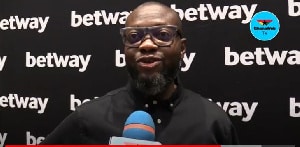
On Thursday, June 22, 2023, Betway, one of the well-known online gambling organizations, started a scratch-and-win campaign for consumers, particularly those who use its casino suite.
The casino suit has several games that customers can play to enjoy themselves to de-stress.
Speaking in an exclusive interview with GhanaWeb, the Country Manager of Betway, Kwabena Oppong Nkrumah, said customers who play up to 10 games in the casino suite stand a chance to get a voucher to scratch and win any prize written on it.
He noted that Betway is giving away up to GH¢10million in prizes to scratch and win promo winners.
“A lot of players know Betway to offer sport betting to our customers and not a lot of players have had the opportunity to experience our casino suit. So today, we brought players into our casino. They are here to experience a few things,” he said.
“Betway is giving you scratch and win. Play any of the games in our casino’s suite, play it up to 10 times and you get a scratch voucher, scratch it and you get a price.”
Media personality, Giovanni Caleb, Influencers on TikTok including Dancegodlloyd, among other public figures graced the occasion.
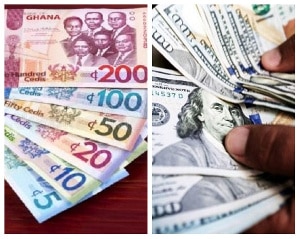
The Ghana Cedi is currently trading against the dollar at a purchasing price of 10.9827 and a selling price of 10.9937, according to the Bank of Ghana’s interbank exchange rates for Wednesday, June 23, 2023.
At a Forex bureau in Accra, the dollar is being bought at a rate of 11.50 and sold at a rate of 11.90.
Against the Pound Sterling, the Cedi is trading at a buying price of 13.9909 and a selling price of 14.0060.
At a forex bureau in Accra, the pound sterling is being bought at a rate of 14.60 and sold at a rate of 15.40.
The Euro is trading at a buying price of 12.0352 and a selling price of 12.0461.
At a forex bureau in Accra, the euro is being bought at a rate of 12.40 and sold at a rate of 12.90.
The South African Rand is trading at a buying price of 0.5939 and a selling price of 0.5943.
At a forex bureau in Accra, the South African Rand is being bought at a rate of 0.30 and sold at a rate of 0.90.
The Nigerian Naira is trading at a buying price of 68.4798 and a selling price of 68.6163.
At a forex bureau in Accra, Nigerian Naira is being bought at a rate of 12.00 Naira for every 1 Cedi and sold at a rate of 19.00.
For the CFA, it is trading at a buying price of 54.4539 and a selling price of 54.5032.
At a forex bureau in Accra, CFA is being bought at a rate of 17.00 CFA for every 1 Cedi and sold at a rate of 21.00 CFA for every 1 Cedi.
Our forex bureau rates are provided by Afriswap Bureau De Change in Osu, Accra.
Note that these rates may be different at a forex bureau near you. Our forex bureau rates are provided by Afriswap Bureau De Change in Osu, Accra.
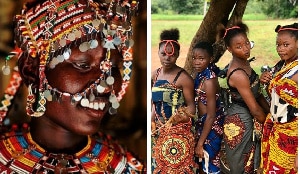
Some Africans have rejected western influences and have adhered to their cultural traditions.
There are unavoidable commonalities among Africans when it comes to food, attire, and occasionally even languages.
However, some African cultures are innate and unique to borders and nationalities, with traditions and practices that truly make Africa special and stand out.
Though a percentage of Africans have modernized and allowed contemporary Western influences to white-wash their cultures, there are groups of people who have continued to stay true to who they are.
In recognition of cultures that have stood the test of time, here are some surprising African traditions and cultures you need to know.
Khweta ceremony
This tradition is unique to the Transkei, an ancient tribe of Southern Africa. It is a special ceremony that celebrates the transition from boyhood to manhood.
It is mandatory for all young boys to participate in the ceremony to demonstrate their maturity as men. During the ceremony, boys of all ages are made to stay in a location called the circumcision lodge. There, they undergo tests with the supervision of a master and are circumcised during this time.
The young boys wear white sheepskin to ward off evil spirits after the days of seclusion. Their bodies are also painted with sandstone and they engage in special dances, moving like bulls, with their head in the air. As part of the ritual, they are not allowed to go near girls.
On completion of the ceremony, all the tools used for the ceremony are burnt. The boys head to the river for a cleansing bath, which they do while being flogged. They are not to look back while this happens.
Finally, the white paint is washed off and replaced with a red one, which they wear for three months. After that, they are declared men and are allowed to get married.
Spitting blessing
From their vigorous jumping dance to their clothing style, the Maasai nomadic tribe of Kenya have traditions that continue to surprise and impress many around the world. Spitting is a sign of respect in the Maasai culture.
The tribesmen spit in their hands before shaking hands; this is a sign of blessing and is viewed as a good omen. Not just anyone receives spit on the hand – it is reserved for revered persons, and shows the utmost respect.
Apart from greetings, newborns are spat on for blessings by the family and well-wishers. Babies that do not receive any spits are said to grow up unhappy. Words are also spoken over the babies to invoke good things and give them a happy life.
Brides also receive congratulatory spits. In fact, their fathers spit on their foreheads and breast to wish them good fertility.
Wife Stealing Festival
The Wodaabe tribe is a Fulani tribe in Niger. The males of the tribe are quite confident that they are the most handsome men and carry a mirror always.
Their marriages are usually arranged when they are born, although one is free to have as many sexual partners before they get married – marriage is not the end for this tribe.
The tribe celebrates a festival called Gerewol, which aims at giving the opportunity for men to impress the wives of their compatriots. Thus, the tribesmen dress themselves up in the most elaborate makeup, to do just that.
Three of the tribe’s most beautiful women are chosen to judge as the men show off through a dance, moving in circles. The rest of the women eye and select which man they would wish to marry next. For the polygamous tribe, this is not frowned upon.
A man is allowed to keep a woman even if she’s already married, as long as her husband does not catch him stealing her by the end of the ceremony. Some men make their wives sit it out, to be on the safer side, because they do not want them to be stolen.
Bull jumping
Bull Jumping is an old rite of passage for the young men in the Hamer tribe– a community that lives in the lower Omo Valley of Ethiopia.
The day of the occasion sees a lot of celebration, with about 100 and 300 people in attendance. The women of the tribe dance in their traditional dresses, play horns and wear bells on their legs.
This ritual is performed to show a boy’s manliness and maturity. It involves the tedious task of running on the back of seven or 10 bulls four times without falling down. In families, the rite happens in succession; the eldest has to go before the youngest – it is the duty of the father, or in the absence of the father, the uncle of the boy to decide when he is ready for the rite.
When a boy is deemed ready by his father or uncle, he is given a short stick (boko) and has to travel to the houses of all his relatives to tell them the news and invite them to the ceremony. He gives the family members a coil of rope to show the number of days leading up to the feast because there are no calendars.
On the day of the ceremony, elders of the tribe who have been through the ritual but are still unmarried, gather castrated male cattle and smear them with dung to make them slippery. The boys also have to be completely naked, their hair partly shaven before jumping over the cattle.
Their bodies are rubbed with sand to wash away their sins and get rid of bad luck – they are also smeared with dung for strength. The boy finally jumps on the back of the bull and steps on each bull’s back before jumping back down. His sprightliness, fearlessness, and strength prove that he is a man. In the case where a boy falls down in his attempts, he has to try again the next year.
From there on, he can get married to a woman selected by his father.
Sometimes, the auntie has to have sex with the groom to really make the first confirmation. In other places, the aunty will watch the couple have sex for the test.
A woman’s virginity is a big deal in these communities and is well preserved from the time the girl is getting to her teenage years. The girls are married off before sexual maturity, right after their first menstruation, in order to prevent teenage pregnancies before marriage.
The South African presidency has warned people against scammers using President Cyril Ramaphosa’s name to defraud the public.
It said messages purporting to be sent by the president have been circulating.
“The president does not request any funds or endorse any payments or contracts between third parties, whether through websites, adverts, social media, emails, letters, texts or phone conversations,” the alert said.
Anyone who has received communications of this nature from the president or the presidency should terminate all future contact with the scammers, it added.
The presidency has not revealed any further details about the nature of the scams or how long they have been running, but said anyone who had already sent money to the scammers should report to law enforcement authorities.
Cybercrime and cases of impersonation have been on the rise in the country, according to local media reports.
Cameroon has officially declined the visit of France’s ambassador for LGBTQ rights, emphasizing that homosexuality remains illegal under the country’s current laws.
Ambassador Jean-Marc Berthon was due to visit the Central African country from 27 June until 1 July to discuss gender rights, the BBC reports.
But foreign minister Lejeune Mbella Mbella in a French language circular sighted by GhanaWeb noted that the government disapproves of the planned visit.
Homosexuality the statement said “qualified as a crime of common law” in Cameroon.
Recently Cameroon’s National Communication Council warned the media against promoting homosexual content, the BBC Africa LIVE report added.
President William Ruto won a triumph when Kenya’s parliament voted late on Wednesday to pass a contentious government finance measure that will treble the gasoline tax and institute a new housing levy.
Ruto, who took office nine months ago, is pushing through a raft of tax hikes as part of his maiden budget, sparking sharp resistance from the opposition, ordinary people and businesses.
The opposition has threatened to call fresh protests if Ruto signs the tax increases into law. Street demonstrations earlier this year against the high cost of living repeatedly turned violent in the capital Nairobi and elsewhere.
Residents in Freetown have informed the international media that people are swarming the markets in the nation’s capital to stock up on food before the elections on Saturday.
It follows a stand-off on Wednesday between the security forces and supporters of the main opposition party that reportedly left at least one person dead.
Businesses shut down briefly amid the chaos and there is now a palpable fear that there could be further violence after Saturday’s poll.
Sidi Yahya Tunis, spokesperson for the opposition All People’s Congress (APC), told the Reuters news agency that one of the party’s supporters had been killed by the police.
An unverified video of the chaos showed an unconscious man who appeared to have been shot in the neck.
Police Director of Operations Mohamed Braima Jah said no shots had been fired by officers, accusing the protesters of firing the shots: “Two from a pistol and three from an AK-47.”
Local media say about 66 people have been arrested.
The trouble started after the APC called for a demonstration over allegations that the election commission’s electoral roll was incorrect. Around 3.4 million people are registered to vote.
The election is the fifth since Sierra Leone’s decade-long civil war officially ended in 2002. It was a particularly brutal conflict, with 50,000 deaths and thousands of people estimated to have had their arms and limbs amputated.
President Julius Maada Bio is seeking re-election for a second and final term in office.
His main challenger is the APC’s Samura Kamara, who came a close second in the last election in 2018.
One of the biggest campaign issues has been about soaring prices – inflation reached about 43% in April.
Ken Ofori-Atta, the finance minister, was reminded by the Independent Power Producers (IPPs) of their intention to stop supplying electricity to the national grid as of July 1, 2023.
This was after an emergency meeting held on Tuesday, June 20, 2023.
According to the Chamber of Independent Power Producers, calls on the government to pay the IPPs an interim payment of 30% of the outstanding arrears of each IPP by June 20, 2023, has fallen on deaf ears.
“We refer to our letters dated March 27, 2023 and May 25, 2023 with reference number IPGG/1/2023 and IPGG/2/2023 addressed to the Minister [Finance] by which the IPP Chamber stressed the urgent necessity for the government to prioritise payment of the outstanding arrears owed to members of the IPP Chamber to enable the IPPs to cover critical operational costs required to continue operations and pay overdue debt service”, it disclosed in a statement to the Finance Minister.
“We had indicated in our letters that IPPs needed to receive an interim payment of 30% of the outstanding arrears of each IPP by 20th June 2023. Unfortunately, we have not seen any good faith indication or commitment of such impending payment from ECG/Government as of today, June 21, 2023, despite the Electricity Company of Ghana’s recent collection efforts, as reported in the media, which yielded circa ¢3.1 billion, it added.
The statement added that members of the IPP Chamber are now at a point where they are unable to persuade their creditors, contractors, contractors, and other key stakeholders to further defer payments owed to them and to continue operations.
It urged the government and the Electricity Company of Ghana and other stakeholders to treat this reminder with the urgency it deserves and take the steps necessary to obviate such a situation.
The Ghana Cedi is currently trading against the dollar at a purchasing price of 10.9822 and a selling price of 10.9932, according to the Bank of Ghana’s interbank exchange rates for Wednesday, June 22, 2023.
At a Forex bureau in Accra, the dollar is being bought at a rate of 11.50 and sold at a rate of 11.90.
Against the Pound Sterling, the Cedi is trading at a buying price of 14.0045 and a selling price of 14.0196.
At a forex bureau in Accra, the pound sterling is being bought at a rate of 14.50 and sold at a rate of 15.25.
The Euro is trading at a buying price of 12.0427 and a selling price of 12.0537.
At a forex bureau in Accra, the euro is being bought at a rate of 12.30 and sold at a rate of 12.80.
The South African Rand is trading at a buying price of 0.5622 and a selling price of 0.5628.
At a forex bureau in Accra, the South African Rand is being bought at a rate of 0.30 and sold at a rate of 0.90.
The Nigerian Naira is trading at a buying price of 64.6942 and a selling price of 64.8170.
At a forex bureau in Accra, Nigerian Naira is being bought at a rate of 12.00 Naira for every 1 Cedi and sold at a rate of 19.00.
For the CFA, it is trading at a buying price of 54.4196 and a selling price of 54.4693.
At a forex bureau in Accra, CFA is being bought at a rate of 17.00 CFA for every 1 Cedi and sold at a rate of 21.00 CFA for every 1 Cedi.
Our forex bureau rates are provided by Afriswap Bureau De Change in Osu, Accra.
Note that these rates may be different at a forex bureau near you. Our forex bureau rates are provided by Afriswap Bureau De Change in Osu, Accra.
The purported lease of the Tema Oil Refinery to a company going by the name of Torentco Asset Management has been dubbed “misguided” by a policy think-tank, IMANI-Africa.
The “supposed Consortium” has all of its members except Vitol with no credible history.
Despite being listed as part of the Consortium Vitol has admitted that it has no commitment to Torentco. According to IMANI “there is no agreement between Vitol and no subsisting business relationship.”
Three members of the consortium – Torentco, ENTPP &Litwin are reported to have no credibility.
However, one member of the consortium – Pontus – “may be embroiled in Russian sanctions-busting, underhand dealings, and other shady links.
In an assessment of the deal by IMANI-Africa, it noted that “No expert agrees that the $22 million being offered by Torentco for capital investments(capex) to fix TOR’s issues will make any substantive improvements.”
It also added that Torentco’s promoters have not been able to show any evidence of banking relationships to deliver working capital to import crude or operate the refinery.
IMANI-Africa among other civil society groups and experts has raised various concerns with the deal.
They believe that the deal has been shrouded in opaqueness and secrecy which points to some level of undue political interference.
Government may see significant load shedding if it does not act quickly to settle the Independent Power Producers, according to a ranking member of the Mines and Energy Committee of Parliament.
According to him, this is due to the government’s indebtedness to the power producers.
His comments come after the Independent Power Producers gave the government a June 30 deadline to settle their debts else, they would shut down their plants.
Government owes the IPPs up to $1.4 billion of which it was seeking to restructure some after the country’s debts became unsustainable.
He said on JoyNews on June 21 2023: “My fear is that eventually, we might get to a situation where all the IPPs will shut down and when they shut down, we are going to have a massive load shedding.”
John Jinapor also noted that the government’s failure to settle the power producers sends a wrong signal to the international market and could lead to further downgrades.
“Ghana will no longer be considered as creditworthy and nobody would want to do business with Ghana because the sovereign itself has defaulted and the World Bank guarantee itself is being called upon,” he said.
John Jinapor said the government is to be blamed for any crisis that looms.
This is because: “First of all, they themselves set up what they call the energy sector recovery programme in 2019. They were specific, if you read the document, this year, that programme was supposed to come to an end. The year is ending and yet they have achieved virtually nothing.
“In addition to that, the Minister of Finance came to Parliament in that year 2019 and requested 1 billion dollars in order to achieve this objective.
“We approved that money for the Minister of Finance, he got the money from the EuroBond and misapplied the money. He did not apply that money to the intended purpose, and for the purpose for which he came to Parliament,” he stated.
A survey on government waste, shows that ghost names on the government payroll cost Ghana up to GH100 million annually.
This is contained in the Government Waste Report 2022 issued by the Institute of Liberty and Policy Innovation.
According to the report, after staff auditing in 2015, it was noted that about 2,913 ghost names were found on the Ghana Education Service Payroll alone.
“Approximately GH¢100 million is lost annually to payroll fraud. Consistently since 2011, whenever the International Monetary Fund (IMF) is contracted for a bailout and as part of restructurings, the government would conduct a nationwide employee audit on its payroll,” it said.
Regarding procurement fraud, the report explained what it entails.
“Any deceptive or corrupt practices involved in the acquisition of goods, services, or works by public or private entities are termed “Procurement fraud. Procurement fraud in Ghana is a challenge, and this has been a persistent issue in both the public and private sectors.
“The country has taken several measures to address this problem, including the establishment of anti-corruption agencies and the enactment of legislation to prevent fraud and promote transparency in procurement processes. However, the issue of procurement fraud still exists,” parts of the reports quoted by 3News read.
The report highlighted some of the practices that procurement fraud entails and how this is affecting government expenditures.
Some common forms of procurement fraud in Ghana, as highlighted by the report, include collusion (conspiracy between bidders to manipulate the bidding process by agreeing on prices, dividing contracts, or engaging in other anti-competitive practices).
Others are bid rigging (In bid rigging, individuals or companies agree in advance on who will win a particular contract, often by submitting non-competitive bids or excluding legitimate competitors from the bidding process), Kickbacks, and bribery. This form of fraud occurs when individuals or companies offer or accept bribes or kickbacks to influence the procurement process in their favour.
“Misrepresentation of qualifications or capacity (Fraudulent bidders may provide false information about their qualifications, experience, or resources to secure contracts for which they are not genuinely qualified) Invoice manipulation (This involves inflating the cost of goods, services, or works in the invoice or misrepresenting the quantity or quality of the delivered goods to obtain higher payments),” the report explained.
Attacks and looting of foreign diplomatic missions in Sudan continue, with Algeria being the latest country to protest.
On Wednesday, the Algerian foreign ministry said its ambassador’s residence in the capital, Khartoum, was “stormed and ransacked” the day before.
It said the attack constituted a violation of international law, and called on Sudanese authorities to prosecute those responsible.
Zimbabwe on the same day condemned attacks on its embassy and on its ambassador’s residence in Khartoum, with the foreign ministry spokesperson accusing paramilitary Rapid Support Forces (RSF) fighters of being responsible .
“We have reports that most of the countries’ properties were also targeted. It’s sheer criminality, to take advantage of the war to loot properties of our diplomats and our embassy there,” Livit Mugejo said.
On Tuesday, Mauritania said its embassy in Khartoum was similarly stormed and looted by armed men.
Mauritanian media reported that at least three vehicles used by the ambassador and staff were stolen.
The Sudanese army has repeatedly blamed the attacks on diplomatic missions on the RSF, which denies involvement.
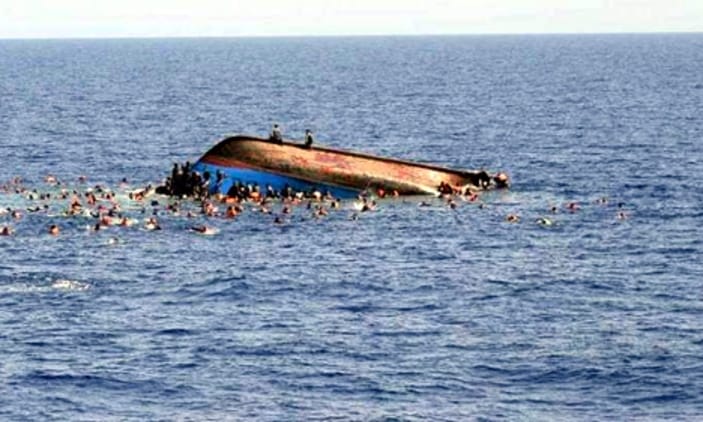
Over 30 individuals may have drowned, according to migration organizations, after their boat capsized while trying to reach Spain’s Canary Islands in the north-east Atlantic.
The two charities said there had originally been 59 people on board but on Wednesday morning one warned the boat was taking on water.
Morocco, which administers Western Sahara, the nearest part of the African mainland, has reportedly rescued 24 people.
But the Spanish coastguard said two bodies, including a child, had been found.
Refugees and migrants often attempt the sea route to the Canaries but local sea currents are hazardous.
In the South African city of Johannesburg, two children, aged five and seven, perished in a fire that started in a residential building where they had been left unattended and locked inside an apartment.
The blaze, in the inner city area of Hillbrow, began on Wednesday afternoon.
A reporter from South Africa’s Times Live has recently tweeted a video from the scene filmed after firefighters arrived:
Squatters often move into old and abandoned buildings in the area – which colloquially are said to have been “hijacked”.
Mayor Kabelo Gwamanda visited the scene later in the evening, commending firefighters for their efforts and saying Hillbrow’s old buildings did not meet health and safety standards.
“This particular property has been at the centre of the City [of Johannesburg’s] efforts to reclaim hijacked buildings from illegal occupants and crime syndicates,” New24 quoted him as saying.
The city’s emergency services say the children appear to have died from smoke inhalation and their bodies were later found “burnt beyond recognition”.
The cause of the fire is not yet known and the police are conducting investigations.
The threat against a media outlet over its coverage of a scam involving cooking oil has been supported by Kenyan President William Ruto’s trade minister.
Moses Kuria had warned government departments not to advertise with the Nation Media Group (NMG) after the report which alleged that certain private firms were allowed by his ministry to import cooking oil tax-free.
The report noted that the specific exemption under Kenyan law could only be made for emergency relief goods – with the entire deal potentially leading to the loss of more than $100m (£78m).
On Twitter, Mr Kuria also called journalists working at NMG “whores”.
His comments caused outrage in the media sector, even earning him a rebuke from the industry regulator.
Mr Kuria vowed never to apologise for his remarks, accusing the media of being biased.
By Wednesday, a high court had issued an order barring Mr Kuria from uttering any demeaning or insulting words against journalists, pending a case filed by a human rights activist that the minister’s outburst made him unsuitable to serve as a public officer.
But President Ruto said that people should be allowed to call out the media: “We must also defend the rights of those who hold the media to account when the media goes rogue.
“We must defend the rights of people like Moses Kuria to speak their mind the same way we are defending the media to say all the things they want including the wrong ones.”
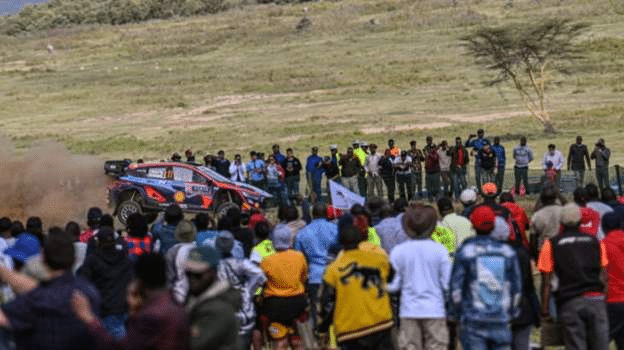
A automobile that belonged to the Kenyan president’s security detail overturned on a road in the Naivasha district of the Rift Valley, injuring at least two people.
The vehicle was part of a motorcade that was on its way back to the capital, Nairobi, on Wednesday after President William Ruto had attended an event to flag off the WRC Safari Rally competition.
Mr Ruto is said not to have been in the motorcade as he had flown by helicopter.
It was not clear what caused the accident. Witnesses told local media that the driver had been trying to negotiate a sharp bend.
The injured were taken to a nearby hospital for treatment.
Rally teams were testing their cars in Naivasha on Wednesday ahead of the race that starts on Thursday and ends on Sunday
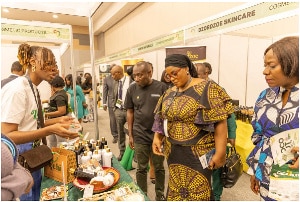
Some sixty-five (65) Ghanaian Small and Medium Enterprises (SMEs) who took part in the just ended AfCFTA Market entry trade expedition organized by Ghana’s National AfCFTA Coordination Office (NCO), in collaboration with key AfCFTA implementing institutions in Ghana, under the auspices of Ghana’s Ministry of Trade and Industry (MoTI) are reported to have secured 158 individual B2B engagements, with a potential activation value between USD $5 million to $6 million, primarily in the areas of cosmetics, textiles, agro-processing, cocoa, and ceramics.
The market entry expedition which was held from the 23rd to 27th of May, 2023 also saw the enterprises sell 4,209 individual products items, with an estimated value of GH 552,300, with some companies in ceramic, edible oil, and cosmetic sectors, selling all their products during the first two days of the expedition.
The five (5)-day market entry expedition by Ghana to Kenya attracted about 3,200 visitors with 600 visitors daily , mainly made up of shoppers and businesses seeking various deals, and officials from firms and associations looking for dealerships and partnerships.
During a session to evaluate the maiden market entry expedition by the organizers and participants, some of the businesses shared their experiences. Faustina Nsoh (CEO, Sirigu Indigenous Traditional Real Art):
“Before the Expo even officially opened, I had Kenyan clients placing orders for my products. The Expo in Kenya was a great experience for me and my business and I look forward to doing business with the Kenyan partners I met at the Expo.”
Francesca Apeagyei (Co-Founder, Nguvu Global Limited): “The Ghana Kenya expo was a perfect success for us because it gave us the platform to serve the Kenyan market with great quality shea butter and Natural oils cosmetics from Ghana. We know that the product already is a sought after and for us, we were trying to figure out a way to penetrate the market therefore this initiative was perfect timing. The trade expo process was seamless. It was not at all frustrating for us. Everything was times properly from Shipping on logistics from Ghana to Kenya, and receiving the items and the selling process as well and customers from Nairobi, having access to a booth without any hustle so for me this has been 100% successful.”
Emmanuel Atakora-manu (CEO, Ifok Handmade Limited): “Overall, I will say the expo turned out successful for my company and me. 70% of the entire stock I sent to the expo was bought by individual buyers, 20% was bought by a wholesaler and 10% was of that deposited at the Ghana trade house. I had the opportunity to interact with some suppliers of my core raw material (leather) who promised to give me the best offer. Furthermore, a couple of people whom I still interact with are interested in my distributorship package”.
Many of the Ghanaian Companies that attested to securing new business partnerships, export opportunities, and investment commitments as it served as a platform for the companies to showcase their capabilities and connect with potential customers, resulting in tangible business growth and market expansion.
Companies like Marco Polo Tile Group, producers of ceramic sanitary ware and bathroom accessories, Sirigu Indigenous Traditional Real Art, producers of u-shoppers, pottery, and batik tie and dye, and Onrock firm, producers of edible coconut oil had their products sold out by the first two (2) days of the expedition.
The participants expressed overall satisfaction for the initiative and encouraged more of such to be organized regularly.
The organizers are making preparations for Ghana’s next market entry expedition under the AfCFTA and asserts that some new companies will also be engaged to prepare them for future market entry expeditions.
My attention has been drawn to a WhatsApp message circulating under the headline above. I want to state unequivocally that I have made no such declaration for Mr. Alan Kyerematen in the upcoming presidential primaries.
As a matter of concern, this is the second time such malicious fabrication against my person. As a National Council member, I have been circumspect in my pronouncements about the contest ahead.
At the Conference of Presiding Members, I was in the company of the Hon. Joseph Osei Wusu and Ing. Dr. Nana Ato Arthur where there were no such conversations during and after the conference.
During my days as a DCE, I never worked directly with Mr. Alan Kyerematen because he was not the local government minister. He also had no hand in my appointment to that position.
I have all my life since 1992 been an Akufo-Addo loyalist and for which I can describe our relationship as that of a father and a son. In the 2016 Campaign, I was gracious to have served him as Head of Advance and subsequently in 2017 as Director-General of NADMO in his government. All appointments were done by him without the influence of anybody for which I am eternally grateful.
I would like to by this means send a word of caution to my detractors who believe in scoring political points with their propaganda for their parochial interest in the upcoming parliamentary primaries in the Ahafo Ano North Constituency and beyond.
I know His Excellency Dr. Bawumia personally and consider him a great friend and personality, I would not do anything to ruffle his quest to lead this great party, for It is possible.
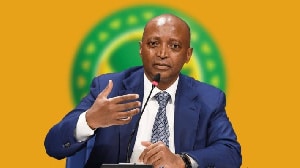
Patrice Motsepe, a billionaire from South Africa, has seen a nice improvement in his financial situation, recovering some of the losses he sustained earlier this year.
Thanks to an increase in the market value of his private investments, including his stakes in the digital-only bank TymeBank, Motsepe’s net worth has surged by $200 million in the past 19 days from $2.3 billion to $2.5 billion, according to data tracked by Forbes.
Motsepe, who made history in 2008 as the first black African billionaire on the Forbes list, saw his net worth decline by $100 million between May 12 and June 2, resulting in year-to-date losses of $900 million.
However, the recent $200-million uptick in his fortune has narrowed his losses to $700 million, making him one of the few African billionaires to witness a decline of over half a billion dollars this year.
Despite the setback, Patrice Motsepe remains one of Africa’s wealthiest businessmen and retains the title of the richest Southern African black billionaire.
His 39.7-percent stake in ARM, a South African mining and minerals company with strategic positions in various metals, including iron, coal, copper, gold, and platinum, contributes significantly to his wealth.
Although ARM’s share price has fallen by more than 28 percent since the start of the year, Motsepe’s stake is still valued at a substantial R19.33 billion ($1.05 billion).
Motsepe’s success extends beyond mining, as he also controls TymeBank, South Africa’s leading digital bank, through his investment firm African Rainbow Capital (ARC).
TymeBank recently celebrated a major milestone, surpassing more than 7 million customers. Bolstering its expansion plans, the bank four weeks secured a significant investment of $77.8 million during its pre-Series-C funding round.
Motsepe’s multimillion-dollar recovery demonstrates his resilience in navigating volatile markets and highlights the potential of digital banking in Africa.
With his diverse portfolio, the billionaire is poised to capitalize on future opportunities, reaffirming his status as a prominent figure in South Africa’s business landscape.
It has come to light that the government has not started a payment negotiation, weeks after the Independent Power Producers (IPPs) threatened to shut down production in order to demand payment of their debt.
This is contrary to earlier indications by the government two weeks ago, that it has begun talks with the IPPs for a possible restructuring of the energy sector debt.
A couple of weeks ago, the Managing Director of the Electricity Company of Ghana, Samuel Dubik Mahama, told JoyNews that his outfit is leading talks with the Independent Power Producers for a monthly payment plan to avoid a possible shutdown of the power plants.
But reacting to this, Chief Executive Officer of the Independent Power Producers, Elikplim Apetorgbor said, apart from hearing about the intended negotiation in the media, the government is yet to reach out to them.
“We’ve not had any negotiation in that regard. None of the IPPs has been engaged in any conversation or discussion regarding that proposal.
“Besides, if they talk about monthly payments, our bills have to be settled within a credit period. So, we expect a periodic payment as at when the minister collects revenues to be disbursed but that has not been the case over the period,” he said.
The IPPs maintained that they will shut down their plants if the government fails to initiate payment in the next few days.
“What it means is that we cannot wait any longer for some of this rhetoric. We are in a very critical situation so, I think the earlier the better. If there is no remedial action, I cannot guarantee lights after 30th June,” Mr Apetorgbor said.
Energy sector has been prioritised for comprehensive reforms; debt to fall by $2.95bn – Ofori-Atta
On June 18, during a minister’s press briefing on Ghana’s IMF programme and growth agenda, Finance Minister, Ken Ofori Atta, said that the energy sector will undergo some vigorous reforms to save the sector from collapsing,
This comes after the sector’s legacy debt reached about 2 billion US dollars as of the end of May 2023, and an estimated shortfall of 5.9 billion dollars between 2023 and 2025, due to the current conditions of State Owned Enterprises and Independent Power Producers in the value chain.
According to the Minister, these reforms will sustainably reduce losses in the energy sector and pay off the debt which threatens the sector.
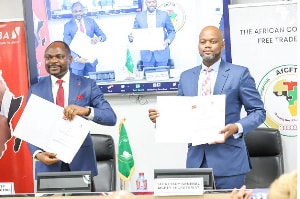
In order to increase intra-African trade, the African Continental Free Trade Area (AfCFTA) Secretariat and United Bank for Africa (UBA) inked a contract on Tuesday to support SMEs inside the AfCFTA financially.
The agreement was signed on the sidelines of the Afreximbank Annual Meeting 2023 taking place in Accra, Ghana.
The agreement is also intended to catalyse industrialisation to improve the socio-economic well-being of the continent.
According to the McKinsey consulting firm, Africa’s 85-95 million SMEs account for 80 percent of the continent’s private sector employment, which makes their growth extremely important.
The agreement acknowledges the need to bolster formal and informal economic operators, including women and youth.
It also aims to break down the barriers to intra-Africa trade and productivity, including SME access to finance and markets.
Under the agreement, the UBA will provide financial services to SMEs in four main areas: agro-processing, automotive, pharmaceuticals, transport and logistics.
During the signing, Wamkele Mene, secretary-general of the AfCFTA Secretariat, noted that “the support offered by UBA, will enable SMEs achieve industrial driven growth and export development in Africa.”
For his part, Muyiwa Akinyemi, deputy managing director at UBA, observed that the bank has a robust network spread across 20 countries on the continent. “In UBA, we say your small business is big business,” he said.
The agreement will “make the continental free trade area a reality,” Akinyemi concluded.
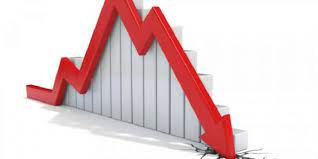
In May 2023, the Producer Price Inflation (PPI) decreased by 4.0% to 30.3%, according to statistics from the Ghana Statistical Service.
The month-on-month change in the PPI between April 2023 and May 2023 was however -2.7%.
The PPI in the industry-less construction sector decreased to 32.5% in May 2023, from 37.1% in April 2023.
The rate in the construction sector also decreased to 20.0% in May 2023, from 20.8% in April 2023. In the Services sector, the rate decreased from 19.4% in April 2023 to 18.1% in May 2023.
The Electricity and gas (51.8%), Accommodation and food serviceactivities (51.0%), Transportation and storage (50.7%), Mining and quarrying (36.5%), and Water supply, sewerage, and waste management (31.7%) recorded rates above the national average.
However, the Information and communication activity recorded the lowest rate of 11.2% in May 2023.
Industrial PPI stood at 32.5%
Meanwhile, the PPI rate for Industry stood at 32.5% in May 2023.
This rate represents a 4.6 percentage point decrease in Industrial producer inflation relative to the rate recorded in April 2023 (37.1%).
The Industrial producer price inflation in the Mining and Quarrying sub-sector decreased by 8.6 percentage points over the April 2023 rate of 45.1% to 36.5% in May 2023.
The Manufacturing sub-sector decreased by 0.8 percentage points to 25.5% in May 2023.
In May 2023, 14 of the 23 major groups in the manufacturing sub-sector recorded inflation rates higher than the sector average of 25.5%.
The Manufacture of textiles recorded the highest inflation rate of 111.9%, followed by the Manufacture of pharmaceuticals, medicinal chemical and botanical products at 97.5%. The repair of installation of machinery and equipment recorded the least inflation of 0.0%.
Residents of a region of the Northern Cape province in South Africa have been admonished to exercise caution and keep an eye out for cheetahs and leopards prowling the streets.
State broadcaster SABC quoted a representative of an organisation cautioning that wildcats are dangerous and had been seen crossing roads close to a nearby town.
“It’s a bit of a concern they are hungry. They can walk 35km [22 miles] in one night. We have warned the community. The police have warned the community. I have been out telling the people,” Michelle Oppernan of Olifantshoek Animals is quoted as saying.
It is not clear if the cats have escaped from a game serve.
This was the case earlier in the year with incidents of wild cats, including tigers, on the loose which triggered safety warnings in areas of Gauteng province and the capital, Pretoria.
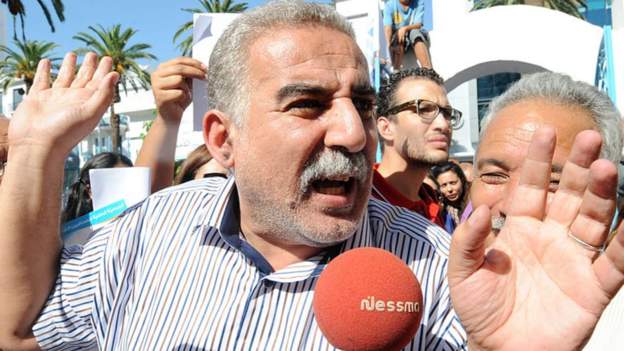
A well-known Tunisian journalist has been detained for allegedly insulting President Kais Said.
A judge ordered the detention of Zied el-Heni ahead of a trial in which he could be sentenced to five years in prison.
Tunisian activists have expressed concern over his health as he reportedly suffered a stroke some time ago.
In recent months, Tunisian judges have detained or opened investigations into more than 20 political, judicial, media and business figures associated with opposition to President Said.
The main opposition parties have condemned the arrests as politically motivated.
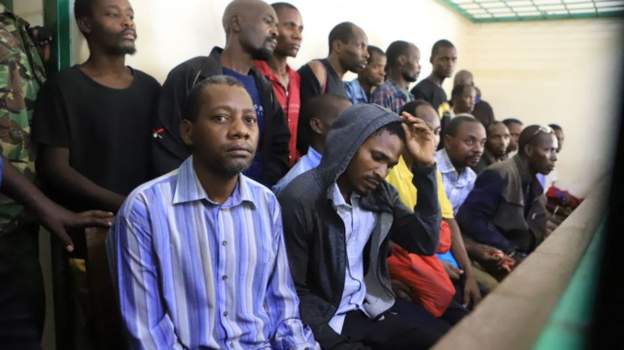
Death has occurred among the 30 suspects being arrested by the police for his claimed involvement in the doomsday hunger cult in Kenya.
Joseph Juma Buyuka – along with some of the other suspects – had gone on hunger strike at the beginning of the month in protest at his detention.
He was then moved to a hospital in the south-eastern town of Malindi, where he died.
“We suspect that the deceased died from complications associated with a hunger strike. We can only await for a post-mortem to ascertain the cause of death,” a senior prosecutor informed a court in Mombasa, Kenya’s main coastal town.
None of the suspects, including cult leader Paul Nthenge Mackenzie, have yet been charged as police continue their investigations.
The self-proclaimed pastor and the other suspects are believed to have encouraged members of the Good News International Church to starve themselves to death.
Since April, 336 bodies have been exhumed from shallow graves in a remote forest. More than 600 other people are missing.
Two other detained suspects who have been on hunger strike have been admitted to hospital in critical condition.
The court is to decide next Tuesday whether Mr Mackenzie will remain in police custody for another 60 days.
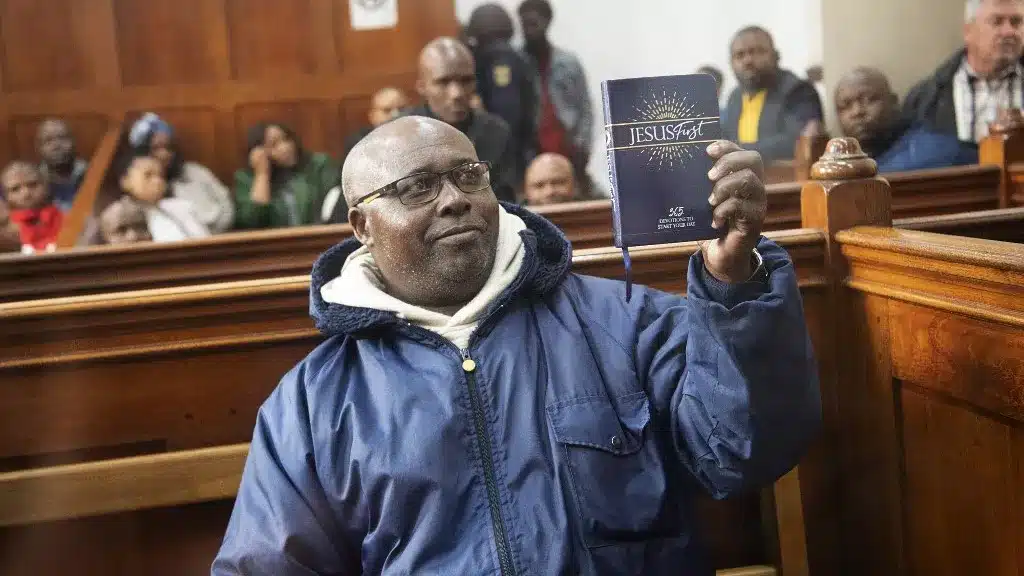
A former member of the Rwandan police, Fulgence Kayishema, is requesting asylum in South Africa after being charged with having a significant involvement in the 1994 genocide.
Arrested last month in Cape Town, the Rwandan has abandoned his application for bail, his lawyer announced on Tuesday before a Cape Town court, who added that his client “fears for his life, if and when, he is extradited”.
The asylum request is likely to delay the legal process in South Africa, where he is currently facing numerous charges linked to his irregular stay in the country.
The state prosecutor indicated that South Africa will oppose any future bail application.
Until his arrest on 24 May, the 62-year-old was one of the last fugitives sought for their role in the genocide in which 800 000 Rwandans died, a majority of whom were Tutsis killed by Hutus.
Church massacre
Kayishema was discovered to be living under a false identity and claimed to be from Burundi. He sought asylum first in 2000, then refugee status in 2004.
At his first court hearing in Cape Town, two days after his arrest, he denied having participated in the genocide. “I didn’t have any role,” he said, in what he described as a “civil war”.
Kayishema was sought under an arrest warrant by the International Residual Mechanism for Criminal Tribunals (MICT) which, since 2015, was charged with completing the work of the International Criminal Tribunal for Rwanda (ICTR), formed by the United Nations following the genocide.
According to UN prosecutors, Kayishema “directly participated in the planning and execution” of the massacre of more than 2000 Tutsi who had sought refuge in a church. He is alleged to have procured and distributed fuel to set the church alight with the refugees inside. When that failed, Kayishema and others allegedly used a bulldozer to demolish the building, killing and burying those inside.
The next hearing will take place in Cape Town on August 18.
The Senior Staff Union of Tema Oil Refinery (TOR) has stated that the lease of the refinery to a Group named Torentco Asset Management is the only viable option for the refinery at this point.
According to them, successive governments have failed to put up measures to bring the refinery back to its full working capacity.
In a statement on June 20, 2023, the group noted that “We consider the yet-to-be-finalised arrangements with the selected partner, TORENTCO Asset Management, the only viable option available to bring back the refinery into operation since successive governments are hesitant to inject capital into the operations of the refinery.”
They also emphasized that the deal’s terms allow the country to terminate at any point if any breaches are recorded.
“It is also important to clarify that per the terms of the arrangements, TOR is allowed to terminate the deal at any time and refund the cost of investment to Torentco, if it finds a better alternative during the tenure of the agreement,” it added.
The said lease of the Tema Oil Refinery has attracted great national concern after some analysts raised issues concerning the terms of the agreement.
The refinery will be leased to Torentco Asset Management Group for $22 million for 6 years and is expected to refine up to 8 million barrels annually.
Also in the deal, the group will pay $1 million as annual rent and an additional rent amount of $1.067 million per month.
Some of the concerns raised include the assertion that TOR has the capacity to refine up to $700 million worth of crude, therefore leasing it for $22 million is a “bad deal”.
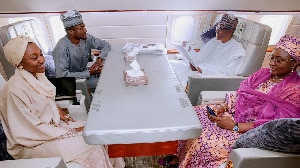
The last First Family of Nigeria spent 301 days seeking medical care abroad at a time when the domestic health system is struggling with a variety of issues, including a lack of funds, deteriorating infrastructure, brain drain, and, most importantly, corruption.
Former president Muhammadu Buhari, his wife Aisha Buhari and their son, Yusif Buhari formed the trinity within the former First Family that flew in and out of Abuja to Europe and the Gulf for treatment.
Leading the pack was Buhari who spent a cumulative 225 days seeking medical attention, starting February 2016 with an ear infection and ending May 2023 with a dental issue.
In between the two, were a series of routine medical check-ups and a protracted 154 days in 2017 in London for an undisclosed ailment.
Incidentally, with days to the end of his term, Buhari in the company of the First Lady inaugurated a newly furnished state-of-the-art presidential wing of the State House Medical Center, SHMC, at Aso Villa, the presidential complex.
Aisha Buhari during the event restated the fact that with the new facility, there is no need for any president to go for medical care abroad.
A quick look at the budgetary allocation for the SHMC gives a fair idea of how much Nigeria has sunk into securing the healthcare of workers at the presidency.
N’Golo Kanté, a French football player, has signed a contract to play with Al-Ittihad in Saudi Arabia.
Al-Ittihad announced on Wednesday their recruitment of the Chelsea midfielder and 2018 World Cup winner, who will join his fellow countryman Karim Benzema.
The 32-year-old signed a pre-contract in June for three years with the club. However, his recruitment was on condition of medical exams, after the player sustained several injuries this season. The contract was finalised on Tuesday.
The Jeddah-based club made the announcement on Twitter accompanied by a photo of the footballer wearing his yellow and black striped jersey.
The club also posted a video of Benzema who congratulated Kanté, saying, “I am very happy to be playing with you once again. And of course, in the best team in Saudi.”
In the same video, Kante replied saying he is “very excited to play with the Tigers in front of the fans at Al-Jawhara [stadium].”
Kanté joins Benzema, 35, who was welcomed in Jeddah in early June by by thousands of Al-Ittihad supporters. Benzema made the move after fourteen seasons with Real Madrid. “Kanté’s arrival is considered as one of the most prestigious recruitments and one of the most important in the club’s history,” said Al-Ittihad. The two French players’ recruitment comes amidst an offensive launched by Saudia Arabia on European football clubs. Cristiano Ronaldo joined Saudi club Al Nassr in late December 2022.
History in the making. This is a signing that will not only inspire our club to achieve even greater success but inspire our league, our nation and future generations, boys and girls to be the best version of themselves. Welcome @Cristiano to your new home @AlNassrFCpic.twitter.com/oan7nu8NWC
The kingdom, criticised for human rights abuses, is determined to use football to improve its image on the world stage and has plenty of petrodollars to satisfy its ambitions. The recent transfers shows the extent of the monarchy’s sporting ambitions, with a goal of putting themselves forwards for the role of organising the 2030 World Cup and the Olympic Games.
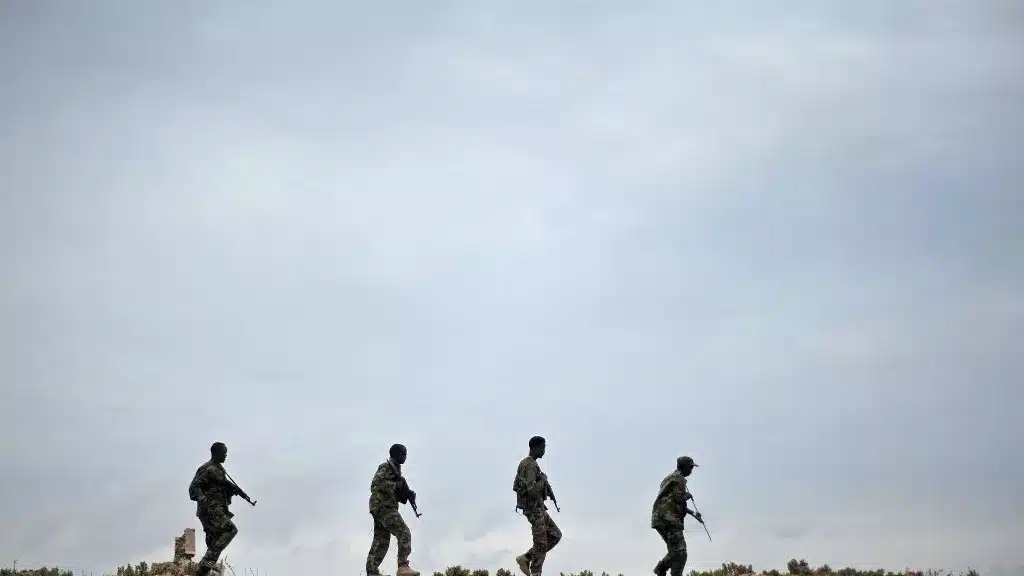
In fighting on Tuesday outside parliament in Puntland, a semi-autonomous state in northern Somalia, between local security personnel and armed militiamen supporting the opposition, at least eight people were killed, according to police and witnesses.
The violent clashes in the state capital, Garowe, occurred during a parliamentary session to debate amendments to the local constitution, which the opposition sees as an attempt by the President of Puntland to extend his term of office.
“Eight people were killed in the clashes and around ten others were injured, including civilians”, said Abdiweli Hassan, a police officer in Garowe.
The clashes broke out when armed men loyal to opposition members clashed with security forces protecting parliament and tried to disrupt the session, he said, assuring that calm had now returned.
Somali Prime Minister Hamza Abdi Barre called on both parties to settle their differences through dialogue “rather than arms”.
One witness, Mohamed Nur Ali, said he had seen six bodies. “The clashes were very intense, and both sides used heavy machine guns,” he added.
Another witness, Nimo Adan, said she was caught in the firefight and saw several people killed.
In May, Puntland held local elections, the first direct elections in Somalia for more than half a century, outside the breakaway region of Somaliland.
The opposition accused the President of Puntland State, Said Abdullahi Deni, of manipulating the electoral process and seeking to amend the Constitution to allow him to extend his term of office, which ends in January 2024.
An arid, oil-rich region in north-east Somalia, Puntland declared its autonomy in 1998 and relations with the central government in Mogadishu have often been strained.
Somalia has not held a national election by direct universal suffrage since 1969, when the dictator Siad Barré took power in this country in the Horn of Africa.
At the end of May, Somalia announced the signing of an agreement between the government and the federated states providing for the introduction of direct universal suffrage from 2024 and the transition to a presidential system.
The agreement is intended to put into practice the often repeated but never implemented promise of “one person, one vote” from the local elections scheduled for 30 June 2024.
Up until now, elections have been held according to a complex indirect process based on the clans that structure Somali society.
But opposition figures have denounced the overhaul of the political system, rejecting the new electoral timetable which provides for elections to the parliaments and presidencies of the federated states on 30 November 2024, which would mean a de facto extension of the terms of office of some presidents, including Said Abdullahi Deni, due to expire before that date.
On Tuesday, France demanded a halt to Rwanda’s “ongoing military support” for the M23 rebels in the Democratic Republic of the Congo (DRC)’s east and denounced the crimes committed by the many terror organizations terrorizing the area.
“France is concerned by reports confirming the continued presence of the M23 in territories in the east of the DRC, Rwanda’s ongoing military support for this armed group and the presence of Rwandan soldiers on Congolese territory. This support, which we condemn, must cease”, according to a statement from the Ministry of Foreign Affairs.
A mainly Tutsi rebellion, the M23, accused by the UN of numerous crimes in the east of the DRC, took up arms again at the end of 2021 after ten years of dormancy and has seized vast swathes of territory in the Congolese province of North Kivu, bordering Rwanda and Uganda.
“The commitments made by the various regional players must now be put into practice in order to speed up the withdrawal of the M23 from the occupied territories, to confine this group and to encourage all armed groups to commit to the national demobilization and disarmament process”, continues the Quai d’Orsay, which raises the possibility of “sanctions against those who obstruct peace”.
During his trip to the DRC in March, French President Emmanuel Macron issued a warning to Kigali, without however clearly condemning Rwanda.
In its statement, the Quai d’Orsay also condemned “the many abuses committed by the armed groups cited in the latest report by the UN group of experts”. In addition to the M23, other groups such as the Allied Democratic Forces (ADF), the Mai Mai and the Forces Démocratiques de Libération du Rwanda (FDLR) are terrorizing the region.
These violations “cannot go unpunished”, emphasizes the Quai d’Orsay, calling for an end to “the support given by the Congolese armed forces to certain armed groups such as the FDLR”.
In a report published on Monday, UN experts sounded the alarm over the “galloping violence” and “growing humanitarian needs” in the east of the DRC. They also established that the ADF rebels were receiving financial support from the Islamic State (ISIS) group.
On Tuesday (20 June), the Libyan government sent over a hundred Nigerians back home. The female migrants who voluntarily decided to go back to Nigeria departed the Tripoli deportation office.
A spokesman for the Libya Anti-Illegal Immigration department details the conditions under which the women who did not have a legal right to reside in the north African nation were arrested.
“Today, Tuesday, June 20, 2023, illegal immigrants of Nigerian nationality are being deported. Some of them were arrested on public roads while practicing begging.”
The deportation was supervised by the International Organization for Migration (IOM), as part of an ongoing joint program with the Libyan government to deport illegal migrants.
Libya is a major starting point for migrants who wish to cross the Mediterranean to Europe in search of a better life.
“About 165 illegal immigrants were deported today, in coordination with their embassy. There will be another flight next week to deport other Nigerian immigrants. Work will continue on the deportation operations.”
IOM Libya’s Displacement Tracking Matrix programme identified a total of 706,062 migrants from over 44 nationalities in the 100 Libyan municipalities during its (January – February 2023) round of data collection.
Nigerian nationals were among the top five nationalities which included Nigeriens, Egyptians, Sudanese and Chadians.
1. Once again, a very warm “Akwaaba” to the vibrant city of Accra, and let me extend my heartfelt congratulations to AFREXIMBANK on their remarkable 30-year commitment to Africa. No doubt, AFREXIMBANK’s dedication and efforts have impacted positively on the continent’s economic progress and l am thankful that Ghana is hosting this landmark 30th Annual Meeting, a testament to our country’s position as a hub of trade and commerce.
2. Ladies and Gentlemen, united by a shared vision for the prosperity of Africa, this event seeks to explore the immense potentials of digital technology to boost economic prospects of our continent. In my welcome address on Sunday, June 18, 2023, I catalogued a number of critical technological infrastructures that have been implemented in furtherance of AFREXIMBANK’s developmental objectives. Based on these investments, I am filled with profound optimism, enthusiasm, and great expectations that our collective journey to harness the transformative power of digitization for the betterment of our beloved Africa will materialise.
With the rich heritage and diverse talent, Africa is poised to embrace the digital revolution and leverage its vast potentials to propel our economies to unprecedented heights.
3. Not too long ago, the Ghana Trade Roadshow was held in Accra, an event organized by AFREXIMBANK in collaboration with Oakwood Green Africa. It was such an inspiring moment, which brought together key stakeholders who took bold and passionate steps towards advancing intra-Africa trade, which in due time will yield the envisioned results and bring immense benefits to our country.
4. Distinguished guests, we are indeed in the technological age, an era characterised by digitization and digital transformation, and therefore it is crucial to leverage digital platforms and ecosystems to drive efficient trade and economic growth.
The theme of this event, “Unlocking Africa’s Trade, Investment, and Commerce Opportunities Leveraging Digital Platforms and Ecosystems,” resonates deeply with current developments in the digital age. Therefore, collectively, we must critically examine pathways and innovate diverse approaches to unlock and deploy the full potentials of Africa’s trade, investment, and commerce opportunities for the betterment of our people.
Unlocking Africa’s Trade and Investments Opportunities
5. To do this, Ladies and Gentlemen, we must harness and leverage on the immense potential of digital platforms and ecosystems. The transformative power of technology has revolutionized industries worldwide, and Africa must seize this opportunity to boost economic growth and foster regional integration. This can be done through three main channels:
* First, enhancing digital infrastructure is paramount. Access to reliable and affordable internet connectivity is the foundation upon which digital platforms thrive. Governments and private sector stakeholders must collaborate to invest in broadband infrastructure, expand network coverage, and bridge the digital divide within and across countries.
By providing seamless connectivity, we can enable businesses, entrepreneurs, and consumers to participate fully in the digital economy and seize new trade and investment opportunities.
* Second, fostering digital entrepreneurship and innovation is crucial. Africa is a hotbed of entrepreneurial talent with technological savvy youthful population, and we must nurture and support such digital innovators.
By establishing incubation centres, providing mentorship programmes, and offering access to funding, we can empower start-ups and SMEs to develop innovative solutions that address the unique challenges and needs of our continent. Encouraging entrepreneurship and innovation will drive job creation, boost economic diversification, and attract investment in key sectors.
* Lastly, promoting digital skills development is imperative. Digital literacy and proficiency are prerequisites for individuals and businesses to harness the full potential of digital platforms. Educational institutions, in partnership with private sector entities, should design and implement programmes that equip our youth and workforce with the necessary digital skills and knowledge. By investing in training and upskilling digital programmes, we can create a highly empowered workforce to drive innovation, productivity, and competitiveness.
6. Ladies and Gentlemen, in all of these, let us not forget that the foundation has already been laid through regional integration initiatives such as the AfCFTA and AFREXIMBANK and we must leverage on them to unlock the trade, investment and commerce opportunities on the continent. The AfCFTA, for instance, presents a historic opportunity for increased intra-African trade. Digital platforms and efficient payment ecosystems can facilitate seamless cross-border transactions, reduce trade barriers, and promote the exchange of goods and services within the continent.
Pushing the Agenda – Role of Central Banks
7. Indeed, African central banks have been at the forefront of supporting digitalization and providing the necessary regulatory environment for FinTech’s and financial institutions to thrive in unlocking Africa’s trade, investment, and commerce opportunities. Our commitment to embracing digital platforms and ecosystems is evident through our concrete contributions and initiatives.
8. In Ghana for instance, one significant initiative we have undertaken is our active participation in the MANSA Platform. The central bank is currently serving as a verifier for financial institutions, including microfinance institutions, in Ghana, and proactively engaging these entities for them to be onboarded onto the platform. By serving as a verifier, we ensure that the KYC/CDD information of these institutions are accurate and reliable. This enhances transparency, reduces risks, and promotes trust among stakeholders.
The MANSA Platform not only streamlines due diligence processes but also facilitates smoother and more efficient interactions between African entities. It opens up new opportunities for businesses, enabling them to access a broader network of trusted counterparties across the continent.
9. Additionally, we have integrated the Pan-African Payment and Settlement System (PAPSS) platform and appointed the Ghana Interbank Payment and Settlement Systems Limited (GHIPSS) as the integration entity for locally regulated institutions. This allows for seamless cross-border payment and settlement transactions within Africa. By leveraging the PAPSS platform, we are eliminating the barriers and inefficiencies associated with traditional payment systems.
This promotes regional trade, investment, and commerce by facilitating faster, more secure, and cost-effective transactions. The integration of our local financial institutions into the PAPSS platform ensures that they can fully benefit from the opportunities presented by this innovative solution.
10. Ghana is also currently working with the Monetary Authority of Singapore on a Business san Borders project aimed at boosting the international trade prospects of SMEs of the respective countries through the implementation of digital trade platforms for market discovery.
The component trust corridor brings on board financial service providers to build mutual access to enhance information to facilitate non-collateralised lending based on borrower intent to pay. This solution has been admitted to the Bank of Ghana’s regulatory sandbox for testing. I am of the firm conviction that the success of this bold solution could be replicated in other countries under the AfCFTA project.
11. The success of these digital platforms and ecosystems, however, depends on the active participation and collaboration of all financial institutions and private businesses. We strongly encourage all stakeholders to embrace these initiatives and make them work for their respective businesses.
By joining these platforms and leveraging digital technologies, financial institutions can expand their reach, enhance efficiency, and unlock new market opportunities. Private businesses, on the other hand, can tap into the vast potential of intra-African trade, access a wider customer base, and foster mutually beneficial partnerships. Together, we can create a thriving digital ecosystem that drives economic growth, boosts investment, and propels Africa forward.
12. Ladies and Gentlemen, the Bank of Ghana is committed to supporting digitalization and providing an enabling regulatory environment for Fintechs and financial institutions to unlock Africa’s trade, investment, and commerce opportunities leveraging digital platforms and ecosystems.
Our involvement in the MANSA Platform and integration with the PAPSS platform are concrete contributions that aim to streamline processes, enhance transparency, and facilitate seamless transactions. We invite all financial institutions and private businesses to actively participate in these initiatives and harness the transformative power of digitalization. Together, we can shape a prosperous future for Africa.
13. Unlocking Africa’s trade, investment, and commerce opportunities through digital platforms and ecosystems requires a multi-faceted approach. By enhancing digital infrastructure, fostering entrepreneurship, creating an enabling regulatory environment, promoting digital skills development, and leveraging regional integration initiatives, we can position Africa at the forefront of the digital revolution.
Let us seize this moment to collaborate, innovate, and embrace the transformative power of technology for the benefit of our continent and its people.
14. In conclusion, Distinguished Guests, Ladies and Gentlemen, let us commit to the intra-Africa trade vision as we harness the boundless potential of Africa for future generations.
Collectively, we can unlock Africa’s trade, investment, and commerce opportunities. Thank you
President Akufo-Addo’s persistent jabs at credit rating agencies, according to Professor Lord Mensah, an associate professor at the University of Ghana Business School’s Department of Finance, expose the government.
According to him, President Akufo-Addo’s comments are because of the government’s inability to borrow from the capital market to cover up the non-performance of the economy.
President Akufo-Addo speaking to African leaders at a tribute to the AfriExim bank accused global rating agencies of recklessly downgrading Ghana’s credit rating, effectively compounding the country’s economic woes.
But speaking on Morning Starr with Francis Abban on Tuesday June 20, Professor Lord Mensa says the President and his Finance Minister, Ken Ofori-Atta are only upset because the country has been cut off from the international capital market.
“If you look at the posture of the President and the Finance Minister, clearly it is the accessibility of the capital market that is the problem.
“The capital market deals with confidence that investors will have in your economy. But by word of mouth, say that the rating agencies are being reckless and by doing so it may affect our economic performance is different,” Prof. Lord Mensah disagreed with the President’s statement.
He continued: “We were using the capital market to shadow our non-performance of the economy, that kind of economic management where you go and borrow and come and cover up as if you have dollars meanwhile they are borrowed which you have to pay in the long run and immediately you were blocked from the international market, look are what happened to us.”
The Ghana Cedi is currently trading against the dollar at a purchasing price of 10.9822 and a selling price of 10.9932, according to the Bank of Ghana’s interbank exchange rates for Wednesday, June 21, 2023.
At a forex bureau in Accra, the dollar is being bought at a rate of 11.50 and sold at a rate of 11.90.
Against the Pound Sterling, the Cedi is trading at a buying price of 13.9880 and a selling price of 14.0031
At a forex bureau in Accra, the pound sterling is being bought at a rate of 14.50 and sold at a rate of 15.20.
The Euro is trading at a buying price of 11.9750 and a selling price of 11.9869.
At a forex bureau in Accra, Euro is being bought at a rate of 12.30 and sold at a rate of 12.80.
The South African Rand is trading at a buying price of 0.5622 and a selling price of 0.5628.
At a forex bureau in Accra, South African Rand is being bought at a rate of 0.30 and sold at a rate of 0.90.
The Nigerian Naira is trading at a buying price of 64.3483 and a selling price of 64.4393.
At a forex bureau in Accra, Nigerian Naira is being bought at a rate of 12.00 Naira for every 1 Cedi and sold at a rate of 19.00.
For the CFA, it is trading at a buying price of 54.7228 and a selling price of 54.7772.
At a forex bureau in Accra, CFA is being bought at a rate of 16.00 CFA for every 1 Cedi and sold at a rate of 21.00 CFA for every 1 Cedi.
Our forex bureau rates are provided by Afriswap Bureau De Change in Osu, Accra.
Note that these rates may be different at a forex bureau near you. Our forex bureau rates are provided by Afriswap Bureau De Change in Osu, Accra.
Fulgence Kayishema, who is accused of having a significant role in the genocide in Rwanda and was apprehended last month after 22 years on the run in Cape Town, will apply for asylum in South Africa, according to a statement made by his attorney on Tuesday.
“My instructions are to apply for asylum in the republic of South Africa”, Juan Smuts shared at the end of a court hearing in Cape Town.
His client “fears for his life if he is extradited,” he explained.
The request for asylum is likely to delay Kayishema’s trial in South Africa, where he faces numerous charges relating to his illegal stay in South Africa, and will “suspend his extradition”, the lawyer added.
Until his arrest on 24 may, the 62-year-old Rwandan was one of the last four fugitives wanted for their role in the 1994 genocide of 800,000 Rwandans, many of them Tutsi, by Hutu extremists.
A stocky, balding man with round eyes behind thin glasses, the sixty-year-old had admitted to being the man wanted by international justice. A master at assuming false identities, according to investigators, he was most recently using the name Donatien Nibashumba.
It is still unclear how he came to be on the run, but according to the South African prosecutor’s office, he started a family and, using an assumed name and claiming to be Burundian, applied first for asylum in 2000 and then for refugee status in 2004.