Author: Amanda Cartey

  • Quick Credit officers fight customers over refusal to pay loans

    Quick Credit officers fight customers over refusal to pay loans

    Quick Credit officers have engaged in verbal exchanges of abuses with customers who refused to repay their loans.

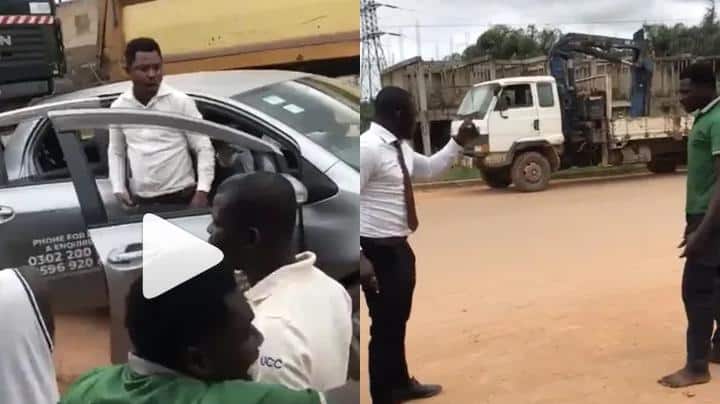
    A viral video available to occupygh.com sees a group of Quick Credit officers in a heated argument with a customer who refuses to pay a loan handed over to him.

    The video making rounds captures the exact moment the officers approached a man who after taking a loan from the entity refused to pay back allegedly after three months.

    The officers were spotted in a branded Quick Credit vehicle as they battle it face-on-face with some residents who come to the aid of the borrower.

  • Sierra Leone: Julius Madaa Bio declared winner of presidential poll

    Sierra Leone: Julius Madaa Bio declared winner of presidential poll

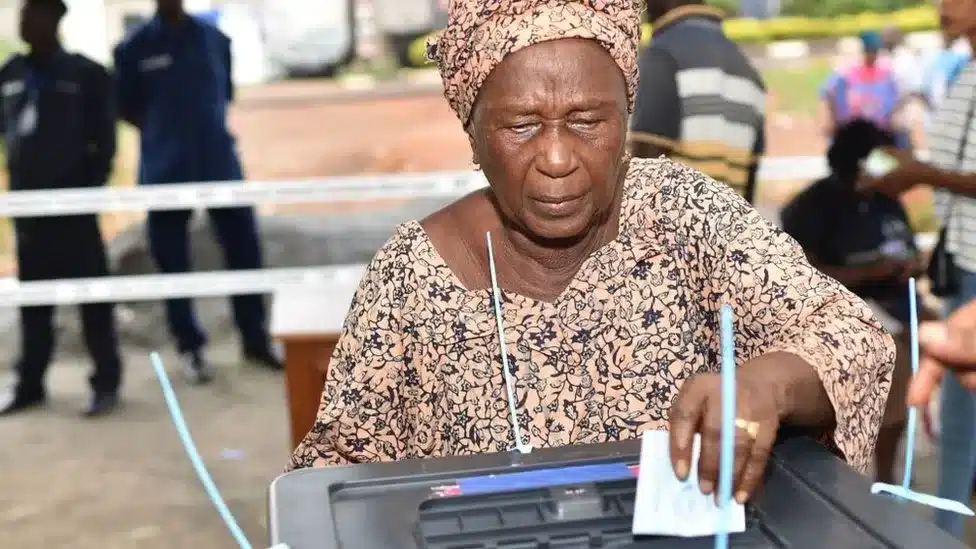
    President Julius Maada Bio of Sierra Leone has officially been declared the winner of the presidential election, ensuring his re-election for a second term as the leader of the country.

    The Electoral Commission of Sierra Leone (ECSL) announced that Bio won with 56.17% of the total votes cast.

    The presidential election took place on June 24, 2023, and the official results were announced today.

    In order to be declared the winner, a candidate in the election needed to secure at least 55% of the valid votes cast. Otherwise, a runoff would have been held between the top two candidates two weeks after the announcement of the results.

    A total of 13 candidates contested for the presidential seat, including the incumbent president, Julius Maada Bio, who sought a second term in office.

  • Ghana’s programme with IMF will not be terminated despite higher spending in 2024 election  – Fitch

    Ghana’s programme with IMF will not be terminated despite higher spending in 2024 election – Fitch

    UK-based research company, Fitch Solutions, has predicted that because 2024 will be an election year, Ghana may not be able to reach the goals set by the IMF.

    According to Fitch, Ghana is likely to spend above its budget, however, this will not lead to a suspension of the $3 billion IMF programme.

    In the latest assessment of Ghana on June 2, 2023, titled “Positive Shift in Ghana’s Political Risk Profile Following IMF Programme Approval”, Fitch said for the last 10 years, Ghana’s total expenditure as a share of GDP increased by an average of 3.0 percentage points during election years.

    Fitch however added that it is very likely that the same may happen in 2024.

    “Nonetheless, higher-than-budgeted expenditure is unlikely to lead to a suspension of the IMF programme. Indeed, when public expenditure surpassed budgetary allocations in 2016 (an election year), the IMF board approved waivers for non-observance of performance criteria and decided to extend the arrangement by one year,” parts of the assessment read.

    Other economic indicators including inflation and depreciation have also been projected to see some losses as the fiscal slippage will lead to dwindling investor confidence.

    The resultant effect of this will be an increase in social and economic unrest.

    Fitch is of the belief that IMF assistance will improve economic conditions in Ghana and therefore limit risks to social stability over the coming quarters.

    It noted that the approval and receipt of the first tranche of the $3 billion IMF loan have improved the country’s reserves which have allowed the country to meet its external financing needs.

    “These developments have improved sentiment towards Ghanaian assets, with the cedi having strengthened by 8.0% in May [2023], which will reduce imported inflation over the coming months. Indeed, we believe that consumer price growth will remain on a downward trajectory through 2023 and 2024, easing pressure on household finances,” Fitch added.

  • IPPs demand 30% of $1.4bn debt for lights to stay on

    IPPs demand 30% of $1.4bn debt for lights to stay on

    The group of six have asserted that any talk of debt restructuring “is off the table” even before the government formally proposes to Independent Power Producers (IPPs) how it plans to restructure a US$1.4 billion debt in a second round of domestic debt rationalization.

    Consequently, the IPPs have made a demand for the government to immediately pay 30 per cent of the debt, noting that failure to do so would mean they can’t guarantee power supplies beyond June 30, 2023.

    This stand by the IPPs have sparked fears of an impending load shedding exercise, and also threaten government’s objectives of reforming the energy sector under the extended credit facility (ECF) programme with the nternational Monetary Fund (IMF).

    Following the approval of Ghana’s IMF programme by the Executive Board in May, the Bretton Woods institution released the first tranche of US$600 million out of the US$3 billion to the country.

    A key condition to trigger the additional US$600 million budgetary support which is due in September is for the government to institute measures to reform the Energy Sector, which is reeling under legacy debts totalling US$2 billion as of May 2023 and an estimated debt projection of US$5.9 billion between 2023 and 2025.

    It is expected that the structural reforms in the energy sector should reduce the shortfall by at least US$2.95 billion over the period.

    As part of the reforms, the government is seeking to also restructure its debt of about US$1.4 billion owed to six Independent Power Producers (IPPS) between January 2022 and March 2023.

    The government is, however, faced with some challenges in this regard as the IPPs, who produce about 65 per cent of the country’s thermal power, have from the onset rejected any debt restructuring proposal. 

    The six IPPs are Karpowership, Sunon Asogli Power Ghana Ltd, CenPower Generation, AKSA, Twin City Energy and Cenit Energy.

    No free cash flow 

    In an interview with the Graphic Business, the Chief Executive Officer of the IPP’s Chamber, Elikplim Apetorgbor, said the IPPs rejected the debt restructuring proposal on the grounds that they did not have any free cash flows which they could sacrifice to help government in these difficult times.

    He said what was owed them were obligations that they have already accrued to their stakeholders, including lenders, creditors and suppliers and there was therefore no way they could go back to them to discuss any form of restructuring with them.

    “It is practically impossible for private companies like us. The government has that luxury and privilege of going back to its creditors for debt forgiveness and restructuring but we don’t have that,” he stated.

    No proposal from government 

    Mr Apetorgbor said although the government was yet to make any firm proposal regarding the issues, it had already indicated to government that debt restructuring was off the table.

    “We have had some meetings and engagements and nothing has been proposed yet but there is no option for debt restructuring,” he stated.

    “We have made a demand on government to pay at least pay 30 per cent of the outstanding debts of about US$1.4 billion as at the end of April to enable us to redeem our repayment pledges to our lenders and suppliers,” he added, stressing that the IPPs have defaulted on their first quarter payments and fear that they would again default on their second quarter payments if government does not make payments on due debts.

    “We are open to a payment plan of how our arrears could be settled but debt restructuring is not an option,” he reiterated.

    He cautioned that should the government fail in honouring their demands; they cannot stretch themselves beyond 30th June 2023.

    PPAs

    Power Purchasing Agreements (PPAs) signed between 2013 to 2016 has been cited as a major contributing factor to the country’s current economic woes, as these agreements were signed under a ‘take or pay’ basis. 

    That meant that the country still had to pay for excess power it did not need, some of which were very expensive as well in terms of pricing; a situation which has prompted calls by the IMF and World Bank on the need for the country to renegotiate some of these PPAs.

    Early this month on June 4, the World Bank Country representative in Ghana, Mr Pierre Frank Laporte, criticised the Power Purchasing Agreements (PPAs) signed by the government, stating that they were expensive and burdened the country with paying for unused energy due to “take or pay contracts”. 

    He pointed out that the mismatch between the production cost of Independent Power Producers (IPPs) and the amount consumers paid for electricity led to a surge in debts, as the government was unable to meet its financial obligations to the IPPs.

    Laporte also noted that the country had entered into agreements at unfavourable rates and prices in recent years, which had further impacted the debt situation.

    More efficient power plants

    Giving his perspective on the ongoing challenges in the energy sector, the Executive Director of the Africa Centre for Energy Policy (ACEP), a civil society organisation in the energy sector, Mr Benjamin Boakye, revealed that although the contracts for some of the power plants which have been described as expensive were coming to an end, the government had no plan to bring in more efficient power plants before the emergency ones run their course.

    He said the government has therefore been forced to renew the contracts of some of the emergency plants.

    “Instead of bringing in efficient ones that will pass on benefits to the consumer, we are signing on to more expensive power,” he stated, a situation he described as worrying.

    He mentioned the torny issues of the reliability associated with aging power plants, adding that as power plants age, their reliability also reduces.

    Benjamin questioned why in spite of the aging of these power plants, government has gone ahead to sign 15 years contract with some of these IPPS, saying “you have these old power plants, some of them 20 years and we are still giving them 15 years’ contracts”.

    The government recently announced that the Electricity Company of Ghana (ECG) has signed a new PPA with AKSA Energy.

    Debt restructuring

    In an attempt to reduce its debt to GDP ratio from the current 93.5 per cent to 55 per cent under the IMF programme, the government last year embarked on an exercise to restructure both its domestic and external debts.

    The Domestic Debt Exchange Programme which was announced in December last year saw the government swap a total of GH¢82 billion of old bonds for 12 new ones at a reduced coupon rate and longer tenors.


    Negotiations for the restructuring of cocoa bills and dollar denominated bonds are also at an advanced stage.

    On the external front, the government is targeting an external debt relief of US$10.5 billion between 2023-2026 as it engages its external creditors for debt restructuring. The external creditors include both bilateral and commercial creditors.

    The government announced a suspension of debt service on external commercial obligations on December 19, 2022 and has since then been engaging with them on a debt restructuring.It is also seeking to restructure debts totalling $14 billion, out of which $13 billion are in bonds with its external commercial creditors.

    Following the formation of the Creditor Committee, the government is also expected to begin debt restructuring negotiations with its bilateral creditors in the coming days in a bid to restructure debts totalling $5.4 billion.

    The IMF at the end of its recent visit reiterated that the timely restructuring agreements with creditors were essential to secure the expected benefits of the Fund-supported programme.

  • Gabby Otchere Darko appears at Assin North’s electoral grounds

    Gabby Otchere Darko appears at Assin North’s electoral grounds

    Due to claims of vote-buying and tales of people impersonating security officials being arrested, the ongoing Assin North by-election is growing tense.

    Bigwigs of the two leading political parties in Ghana, the major opposition party, the National Democratic Congress (NDC) and the ruling New Patriotic Party (NPP) are now in the constituency ensuring that the by-election runs smoothly.

    Most of the leading party members who have been sighted in Assin North are either MPs, government officials, past government officials or executives of the two parties.

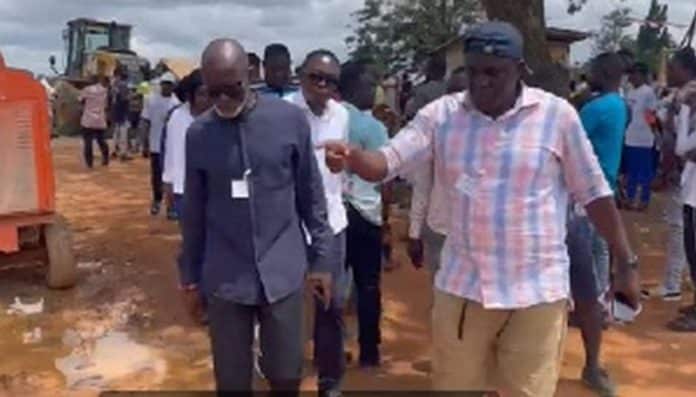
    GhanaWeb’s team on the ground has now sighted the cousin and stalwart of the NPP, Gabby Asare Otchere-Darko at one of the polling stations.

    A serious Gabby was being directed to the place where the voting was taking place at the Methodist park in Assin North which has about four polling stations.

    Watch a video of Gabby at the polling stations below:

  • A dollar sells at GHS11.80 at forex, GHS10.99 at BoG interbank

    A dollar sells at GHS11.80 at forex, GHS10.99 at BoG interbank

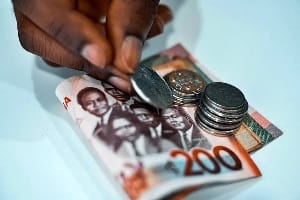
    The Ghana Cedi is currently trading against the dollar at a purchasing price of 10.9842 and a selling price of 10.9952, according to the Bank of Ghana’s interbank exchange rates for Thursday, June 27, 2023.

    At a forex bureau in Accra, the dollar is being bought at a rate of 11.30 and sold at a rate of 11.80.

    Against the Pound Sterling, the Cedi is trading at a buying price of 13.9697 and a selling price of 13.9848.

    At a forex bureau in Accra, the pound sterling is being bought at a rate of 14.50 and sold at a rate of 15.30.

    The Euro is trading at a buying price of 11.9860 and a selling price of 11.9969.

    At a forex bureau in Accra, Euro is being bought at a rate of 12.10 and sold at a rate of 12.80.

    The South African Rand is trading at a buying price of 0.5894 and a selling price of 0.5897.

    At a forex bureau in Accra, South African Rand is being bought at a rate of 0.30 and sold at a rate of 0.90.

    The Nigerian Naira is trading at a buying price of 67.9272 and a selling price of 68.1092.

    At a forex bureau in Accra, Nigerian Naira is being bought at a rate of 12.00 Naira for every 1 Cedi and sold at a rate of 18.00.

    For the CFA, it is trading at a buying price of 54.6772 and a selling price of 54.7269.

    At a forex bureau in Accra, CFA is being bought at a rate of 16.00 CFA for every 1 Cedi and sold at a rate of 21.00 CFA for every 1 Cedi.

    Our forex bureau rates are provided by Afriswap Bureau De Change in Osu, Accra.

    Note that these rates may be different at a forex bureau near you. Our forex bureau rates are provided by Afriswap Bureau De Change in Osu, Accra.

  • Value of collateralized secured loans dropped to GHS5.6bn in first quarter – BoG

    Value of collateralized secured loans dropped to GHS5.6bn in first quarter – BoG

    The value of secured loans for which collateral was recorded by banks and SDIs was GH5.26 billion in the first quarter of 2023, according to the Bank of Ghana’s Collateral Registry Quarterly Report.

    This is relative to the GH¢6.5 billion recorded in the first quarter of 2022 indicating a year-on-year decline of 19.23 percent.

    Secured loans are loans that are taken against secured assets such as a home or a landed property.

    Therefore, according to the first quarter report by the Bank of Ghana, banks accounted for GH¢4.3 billion of total secured loans.

    This represented a 25.1 percent decrease from the GH¢5.8 billion recorded in Q1 of 2022 and a share of 82.4 percent out of the total secured loans.

    On the other hand, the SDIs recorded a total amount of GH¢924.7 million secured loans representing a share of 17.6 percent and an increase of 29.8 percent from the GH¢ 712.6 million recorded for the same period in 2022.

    Also, a total of 79,364 assets were registered as collateral by Banks and Specialised Deposit-Taking Institutions in the first quarter of 2023, an increase from the 76,142 assets registered in the first quarter of 2022.

  • Ghana’s economy will stabilize after Akufo Addo’s administration – Haruna Iddrisu

    Ghana’s economy will stabilize after Akufo Addo’s administration – Haruna Iddrisu

    Former Minority Leader Haruna Iddrisu has asserted that the Akufo Addo-led government’s mismanagement of the economy has reached such a critical point that only significant sacrifices combined with strict measures will enable it recover.

    The International Monetary Fund in May 2023 approved a $3 billion three-year loan package for Ghana after nearly a year of negotiations.

    About $600 million was released to Ghana immediately.

    The loan comes as the country faces interlocking fiscal, currency, reserves and inflation crises, with the cedi falling rapidly almost against the dollar over the past year. The IMF package imposes tough conditions on the Central Bank, requiring it to cut inflation, end monetary financing and rebuild foreign.

    Haruna Iddrisu who is also the Member of Parliament for Tamale South said a future NDC government will have to renegotiate the deal.

    “The economy will only recover post Akufo-Addo government because there is no way this economy will stabilise under the watch of President Akufo Addo and Finance Minister, Ken Ofori-Atta, because they have lost it. And as I understand, the Paris Club and China are yet to finalise their position on what to do with Ghana’s unsustainable debt and the countrys request for a common framework agreement and this should tell you an economic redemption is practically impossible under Nana Akufo Addo”, he stressed.

    Haruna Iddrisu’s comments come at a time Fitch Solutions has stated that Ghana’s International Monetary Fund Programme will not be suspended despite a higher-than-budgeted expenditure.

    According to its latest assessment of Ghana Titled “Positive Shift in Ghana’s Political Risk Profile Following IMF Programme Approval”, the UK-based firm said there is a risk the government will fail to meet its IMF targets in 2024.

    Since the start of this decade, total expenditure as a share of GDP increased by an average of 3.0 percentage points during election years, signaling that some level of fiscal slippage is likely in 2024.

    Nonetheless, Fitch Solutions, said a higher-than-budgeted expenditure is unlikely to lead to a suspension of the IMF programme.

    Fitch solutions also said the opposition NDC is likely to win Ghana’s 2024 general election.

    In its latest publication, the UK-based organisation explained that the deteriorating state of the economy witnessed mainly in 2022 and the perception of slow fight against corruption are likely to be the deciding factors for the electorate.

    This prediction is consistent with a similar one made by the Economist Intelligence Unit which had equally cited the same factors as swaying the electorate toward the NDC.

  • Kenyan couple accused of illegally transporting ants to China

    Kenyan couple accused of illegally transporting ants to China

    Three Kenyans have been accused with trying to transport ants into China and France for export.

    The three, a man and his wife and a postal company employee are accused of trying to export the ant species Messor Cephalotes without clearance from Kenya Wildlife Service.

    They denied the charges and were freed on bail.

    It was not clear for what reason the ants, which were said to be worth 300,000 shillings ($2,135; £1,677) were being sold.

    A prosecutor urged the court to expedite the case as the lives of the ants that were produced in court were at stake.

  • MTN reverses decision to increase MoMo withdrawal fee

    MTN reverses decision to increase MoMo withdrawal fee

    Telecommunication network giant, MTN, has reversed the planned to increase cash-out fee for mobile money.

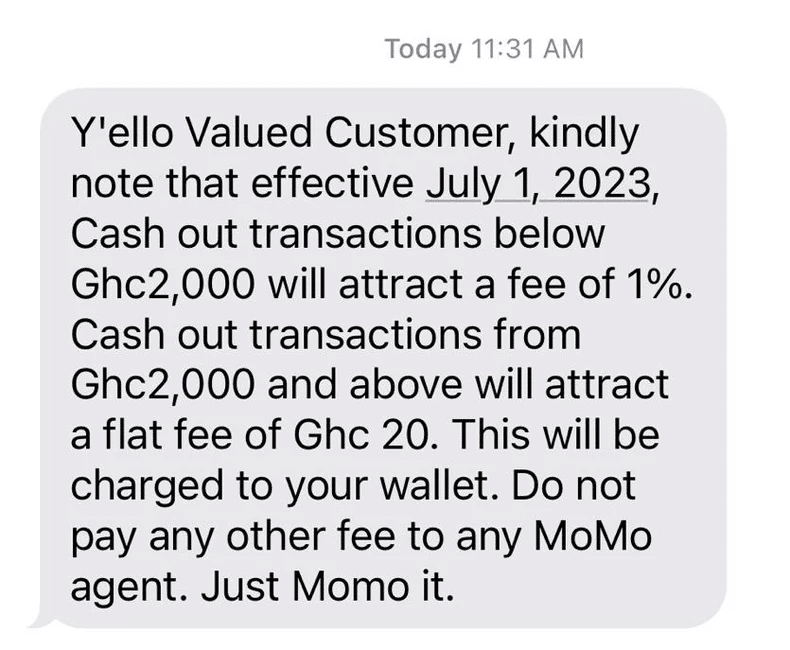
    It had earlier announced that starting Saturday, July 1, 2023, customers will experience an adjustment in fees for cash-out transactions that exceed a specific threshold [GH¢2,000 and above].

    The GH¢20 flat rate charge on withdrawals of GH¢2,000 and above will be deducted directly from the customer’s wallet.

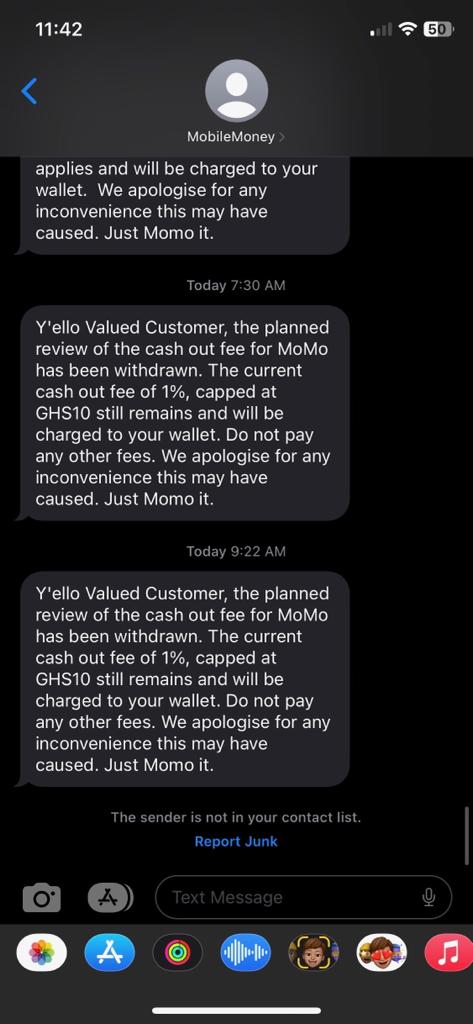
    But in a new message dispatched to customers on July 27, 2023, the mobile network operator said the review has been withdrawn.

    It noted that the current fee of 1%, which is capped at GH¢10 remains the charge on all withdrawals.

    “Y’ello valued customer, the planned review of the cash-out fee for MoMo has been withdrawn. The current cash out fee of 1%, capped at GH¢10 still remains and will be charged to your wallet. Do not pay any other fees, We apologize for any inconvenience this may have caused,” the SMS read.

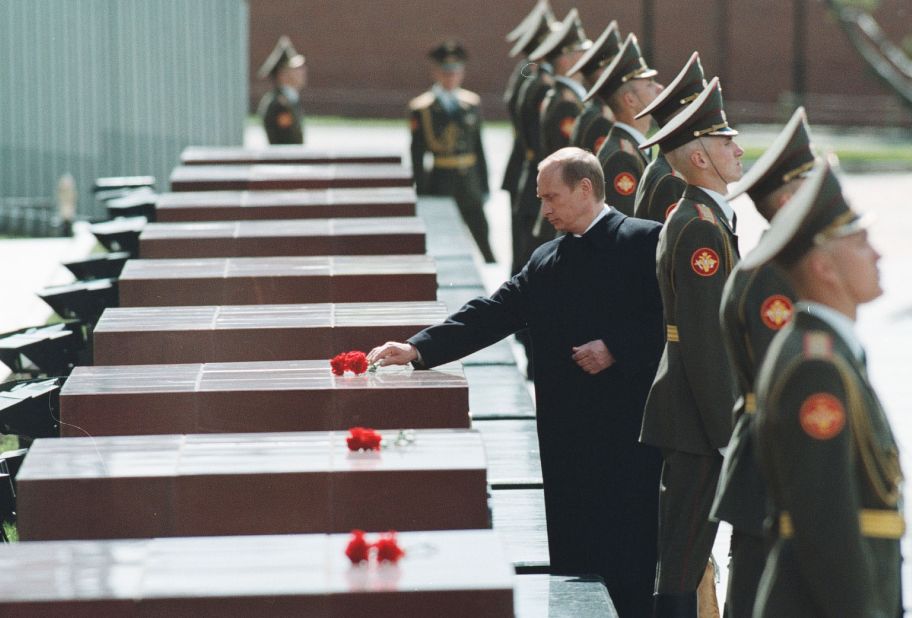
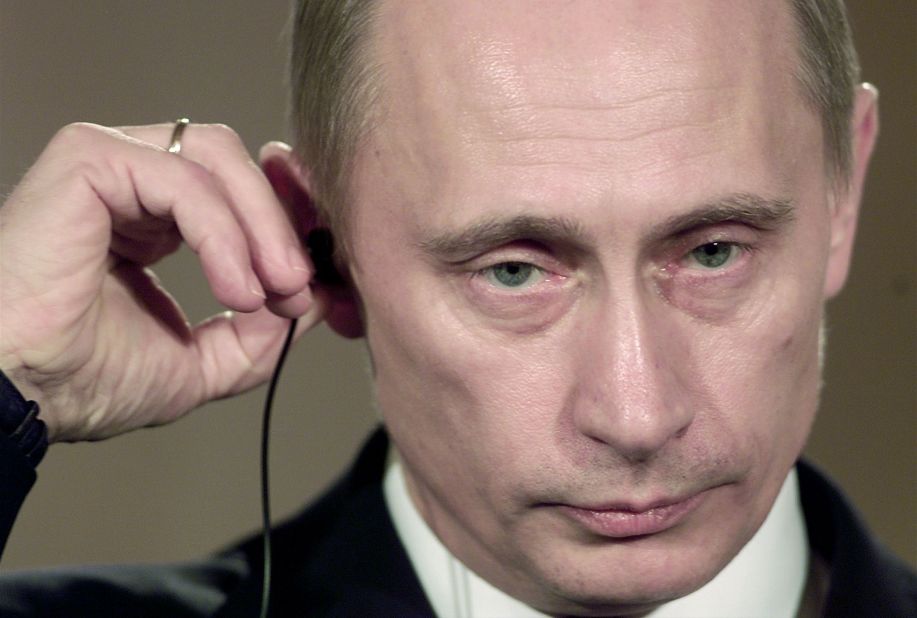
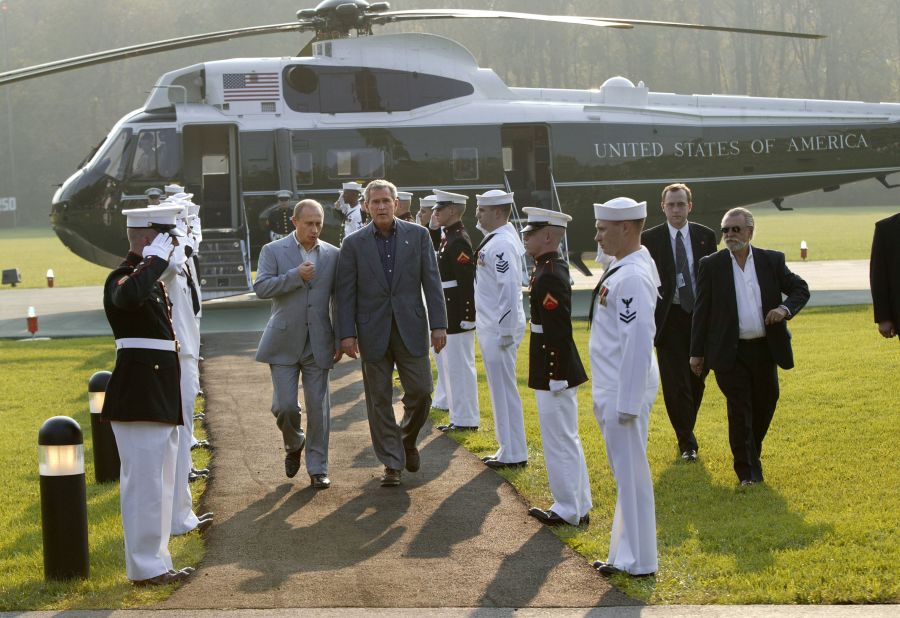
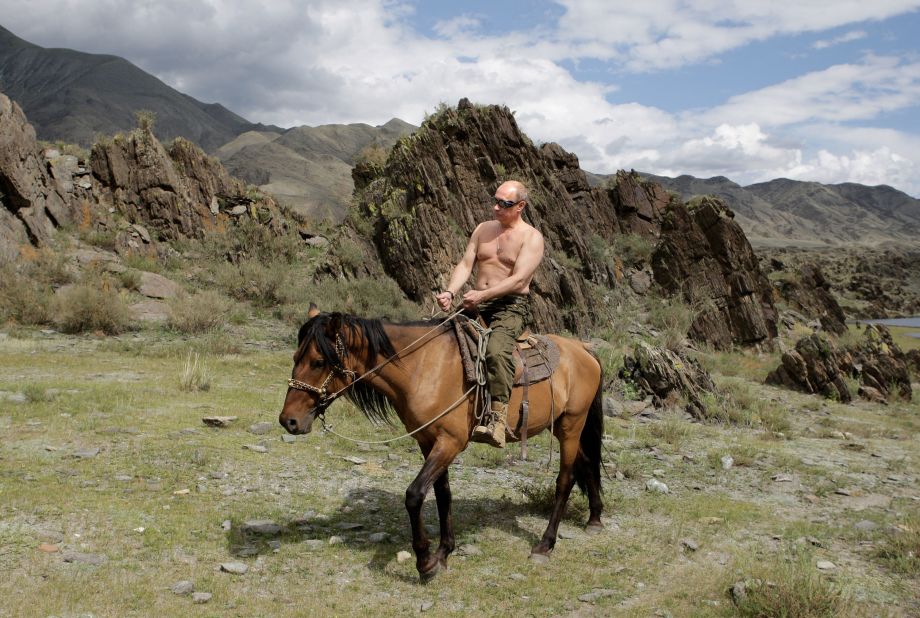
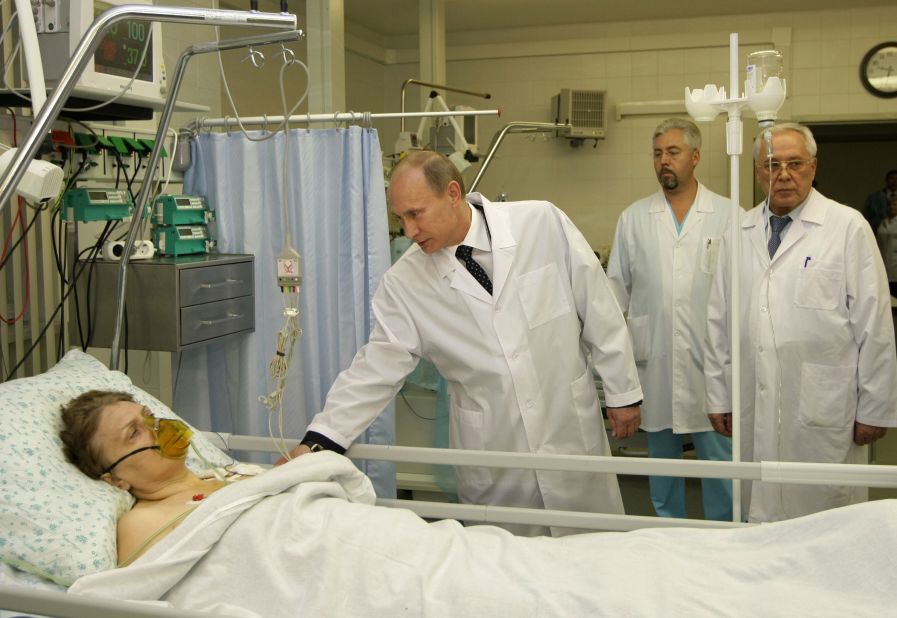
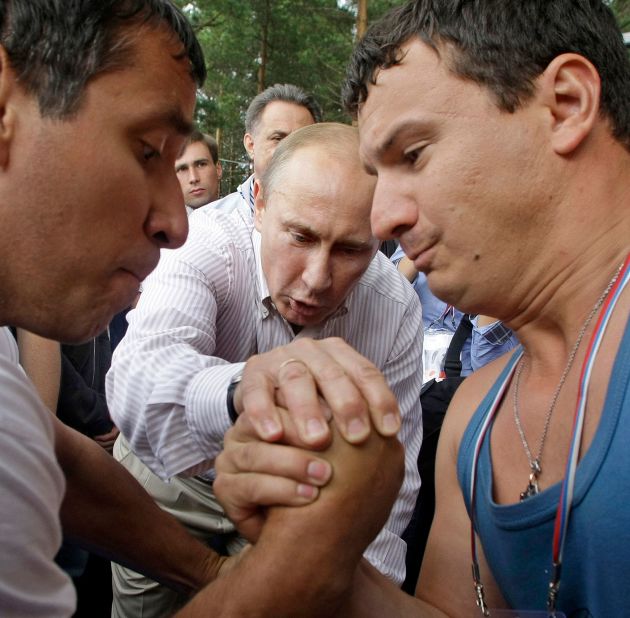
  • “We would have destroyed armed coup in any case” – Putin’s speaks after Wagner coup attempt

    “We would have destroyed armed coup in any case” – Putin’s speaks after Wagner coup attempt

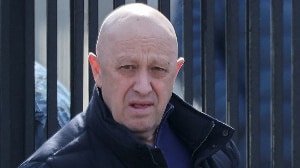
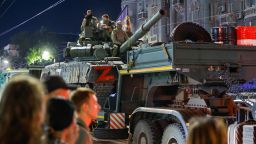
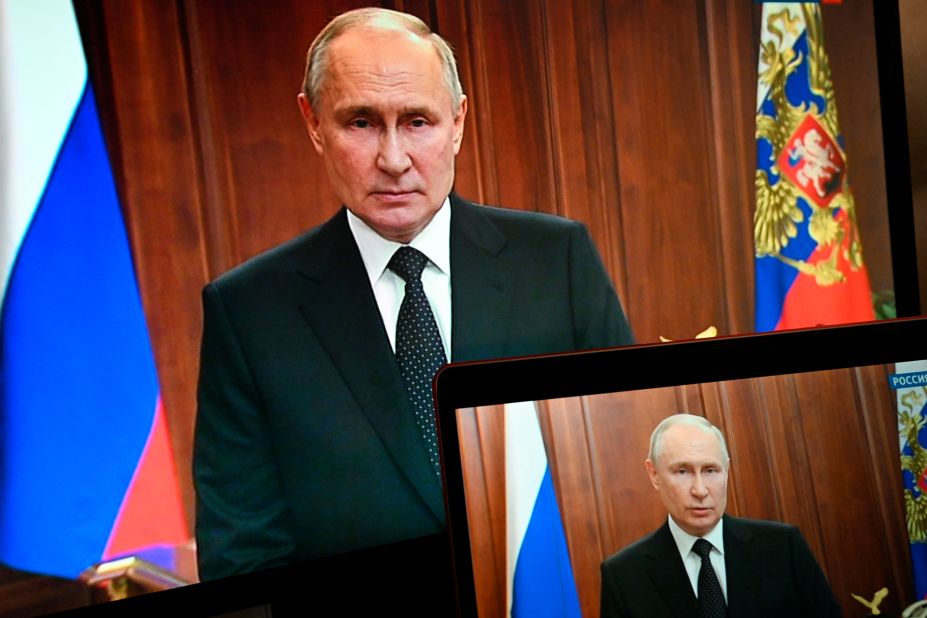
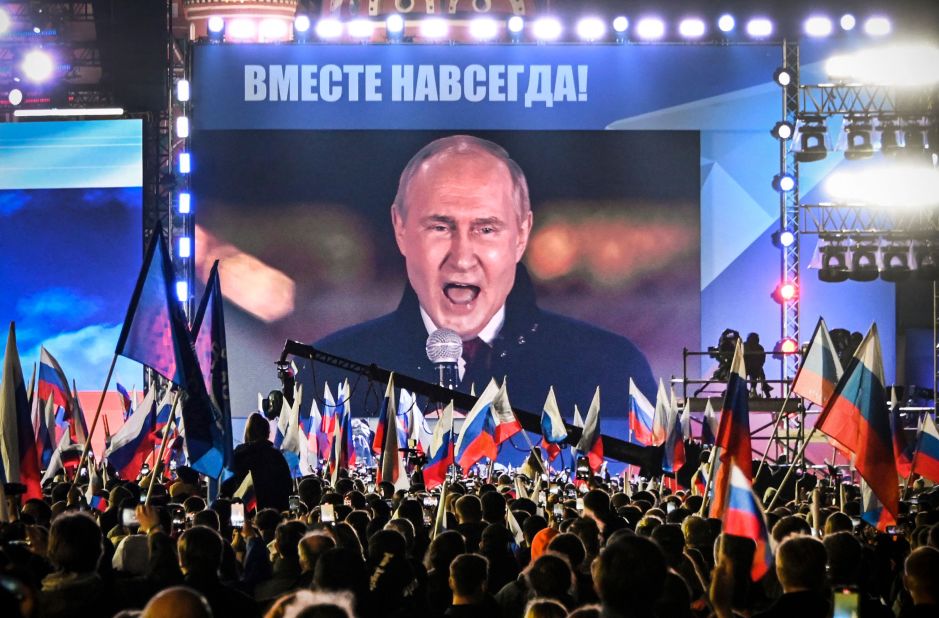
    On June 26, two days after the Wagner coup attempt had been put down, Russian President Vladimir Putin delivered a speech to the country.

    The decision by Wagner leader Yevgeny Prigozhin to stop his men from marching on to the capital Moscow after seizing the military headquarters in southern region of Rostov-on-don; came as a surprise because they faced zero resistance on the way to Moscow.

    Prigozhin said the coup move was principally to torpedo a plan to dissolve the group and that had been achieved.

    He subsequently flew to Belarus where he will live after accepting mediation from Belarusian president Alexander Lukachenko.

    Putin, in his last address from Moscow before leaving for St. Petersburg, stressed that the coupists were traitors and would be defeated and that he remained in charge.

    Here are some quotes and key points in his latest address:

    – “We took all measures to neutralize danger”

    – “We would have destroyed the armed coup in any case”

    – “The organizers of the coup betrayed the homeland and the people”

    – “Wagner fighters were also patriots and liberated land that belonged to the homeland and one of them tried to use them in a dark operation.”

    – “Wagner operatives can sign contracts with the Ministry of Defense or go to Belarus”

    – “There were extortions and attempts to arrange internal unrest, but they were doomed to failure”

    – Putin thanked those Wagner soldiers who stopped at the last line and did not resort to bloodshed.

    – Putin assured that the promise he made to Wagner mercenaries would be fulfilled.

    – Vladimir Putin thanked Lukashenka for his contribution to settling the rebellion.

  • 10 African countries you should invest in and why

    10 African countries you should invest in and why

    With a population of more than 1 billion people who are considered intellectual and brand-loyal, Africa is one of the continents with the fastest-growing consumer markets in the world. Due to the continent’s rapid urbanization, experts predict that household consumption in Africa will reach $2.5 trillion by 2030.

    The US, France, UK, and China are among the continent’s largest investors, with China’s efforts alone, generating an average of more than 18,000 jobs. This goes to show that Africa undoubtedly offers great potential for investors willing to take a chance.

    Highlighting the continent’s potential for investment, here are 10 African countries you should consider investing in and why.

    Nigeria is one of the richest nations in Africa, with a nominal GDP of $504.2 billion; owing to its abundant natural resources, human potential, and second-largest GDP in terms of purchasing power parity ($1.3 billion).

    The country has the sixth-largest population in the world, the largest economy in Africa, and is a good place to invest. It is estimated that Nigeria had a population of 215 million as of January 2022, with young people aged 0 to 14 accounting for 42 to 54% of that population and those aged 15 to 35 accounting for 36%. The population is anticipated to reach 480 million by the end of 2050.

    The West African nation continues to be the most populous and major oil producer on the continent despite having a per capita GDP that is significantly lower than it had prior to independence.

    Egypt

    According to economists, Egypt’s GDP will grow by 3.8 percent by year’s end. It is also anticipated that the country’s economy will grow by 5.20 percent in 2023.

    Furthermore, the World Bank and the International Monetary Fund, both of which are making significant investments in Egypt’s public infrastructure, are also major supporters of the Egyptian government.

    Egypt is a great place to invest because of its geostrategic location, land availability, capacity for solar and wind energy, skilled labor pool, and sizable domestic market. It is perfectly capable of acting as the MENA and Africa’s manufacturing hub. The tangible assets are those.

    With $469.1 billion, Egypt has the second-highest GDP in Africa. The country’s GDP continually rose in 2021 despite the pandemic’s negative effects. The North African nation is also a great place to invest because of its diverse economy, which is fueled by fossil fuels, agriculture, and tourism.

    South Africa

    South Africa is one of the greatest business hubs in Africa. As the third-richest country on the continent, South Africa is the most industrialized and technologically advanced country on the continent. It has a dual economic structure, with one sector competing favorably with industrialized nations and another in dire need of basic infrastructure.

    According to the US Department of State, South Africa has one of the world’s fastest-growing consumer markets and is a “comparatively” low-risk location for conducting business in Africa. Foreign investors are welcome in the Southern African nation, especially in industries like manufacturing and other labor-intensive industries.

    Since the end of apartheid, South Africa’s economy has diversified, especially in the services sector, even though the country’s natural resource extraction industry—particularly that of chromium, manganese, gold, and platinum—remains one of the largest, contributing 13.5 billion dollars annually to the country’s gross domestic product.

    Algeria

    Foreign direct investment is lucrative in Algeria’s renewable energy, tourism, and liquidity reserve. Oil and gas, which make up 60% of the government budget, are the foundation of the economy of the nation.

    Furthermore, depending on the location and size of the project, Algeria offers investors a variety of tax and special taxation advantages under its investment incentive policy, including up to 10 years of exemption from VAT, customs duties, corporate income tax (IBS), business activity tax (TAP), property tax, and other benefits.

    By wiping out $902 million in debts it held on behalf of 14 African Union members in 2013, the Algerian government displayed its strength in the financial department.

    Morocco

    Morocco’s relatively stable political structure directly contributes to its robust economy; better than any other nation in sub-Saharan Africa.

    The most recent World Bank annual rankings place Morocco at number 53 out of 190 economies in terms of business ease. Morocco rose from 60 to 53 in the ranking for the year 2019.

    Additionally, the country’s strategic location between Europe and sub-Saharan Africa, good infrastructure, and the stability of its political system and currency all contribute to its relatively low labor costs.

    Angola

    Angola is the richest country in Central Africa and the sixth richest in Africa. Both agricultural land and significant oil and gas reserves are present in the country.

    It is the continent’s second-largest oil producer. According to a report on the country’s investment risks and prospects, Trade, transportation, storage, building, and fishing, all contribute to Angola’s GDP. These markets offer potential for growth for investors.

    Additionally, Angola’s oil and gas industry is supported by a well-established infrastructure, which enables prospective investors and project developers to cut costs and shorten the time needed to develop new projects.

    Kenya

    This nation in East Africa serves as the continent’s logistical, economic, and commercial hub. Young technology entrepreneurs, particularly those in the fintech sector, are the driving force behind this. Additionally, foreign investors are drawn to new businesses that aim to have a positive social impact.

    With a healthy economy, high demand for goods and services, and a welcoming business environment, Kenya is a fantastic place to invest in. Tax reforms and financial policies that make it easier to conduct business in the nation have improved the business climate there.

    Kenya’s promising growth prospects are also aided by the nation’s expanding middle class and rising demand for high-quality goods and services. Many companies have been able to reduce operating costs and boost profit margins thanks to Kenya’s friendly business environment and strong economy.

    Moreover, according to the World Bank’s Doing Business Report, Kenya is the 56th most business-friendly nation.

    Ethiopia

    Due to its status as one of the world’s top coffee producers and the second-largest exporter of flowers from Africa, Ethiopia is a lucrative location for investments.

    Ethiopia is one of the wealthiest nations in Africa; it has one of the world’s fastest-growing economies, and is the second-most populous country in the world.

    Ethiopia’s agricultural economy has been hampered by droughts, food shortages, and political unrest, but the nation is quickly transitioning to an industrial and export-based economy.

    Being the second-largest recipient of foreign direct investment (FDI) in Africa, Ethiopia has maintained a high level of investor interest as one of the top investor destinations on the continent. It is anticipated that investments will also increase as a result of the recent launch of the African Continental Free Trade Area (AfCFTA).

    Ghana

    Ghana is one of the most democratic and politically stable countries on the continent.

    The country’s economy grew at the fastest rate in Africa in 2019 and is still outpacing predictions from economists.

    The tenth-richest nation in Africa is a major producer of natural gas and petroleum, with the sixth-largest reserves of crude oil in Africa and the twenty-fifth-largest reserves worldwide.

    Ghana has beef, fish, and poultry, but agriculture—particularly the production of cocoa and gold—contributes to about half of the nation’s GDP.

    Farmers’ main source of income is typically from cocoa and its derivatives, which make up two-thirds of its exports. Along with shea, which is used to extract edible fat and coffee, Ghana also produces lumber, palm oil, coconuts, and other products made from the palm tree.

    For investors looking for a favorable business environment, committed and progressive government-private sector participation, political stability, transparent regulations, and a vibrant private sector ready for partnerships, the nation has established itself as a top business destination.

    Cote D’ivoire

    Côte d’Ivoire has experienced a steady and robust economic expansion over the past ten years, making it one of Africa’s underappreciated emerging markets.

    Venture capitalists and private equity firms continue to show interest in infrastructure projects funded by public and private investment funding. Construction, manufacturing, agriculture, transportation, and energy are other industries in Côte d’Ivoire that investors need to look out for, because they stimulate foreign direct investment.

    A stable political climate supports its fair business environment. Additionally, the nation has good infrastructure, including the second-largest seaport in West Africa, airports, and roads.
  • Police arrange with parties to plan security strategy for Assin North by-election

    Police arrange with parties to plan security strategy for Assin North by-election

    In the aftermath of a meeting with all pertinent stakeholders, the Ghana Police Service claims it has put in place necessary security measures for Tuesday’s by-election in the Assin North Constituency in the Central Region.

    In a statement issued on Monday, June 26th, it said, “the Police Service wishes to assure the people of Assin North in particular and Ghanaians in general that adequate security measures have been put in place within the Constituency in order to ensure security, law and order before, during and after the election

    “In addition, at the instance of the Inspector-General of Police, the Police Management Board (POMAB) held a meeting this morning with key stakeholders in the election including the New Patriotic Party (NPP), the National Democratic Congress (NDC), the Liberal Party of Ghana (LPG) and the Electoral Commission to enhance the working relationship among all stakeholders towards a peaceful election” part of the statement said.

    According to the police, at the meeting, “the security concerns of all the stakeholders were noted and have been factored into the final security strategy for the election.”

    It however noted that, “one concern all the stakeholders want the public to help them address is the circulation of false information on social media. In this regard, we would like to urge the public to be circumspect in their reportage on the election and avoid circulating false information that has the likelihood to occasion a breach of peace since the police will take the necessary action against anyone found culpable.”

    The NPP team was led by the National Chairman and National Organiser, while the NDC team was led by the National Chairman and General Secretary. The LPG was also led by its National Secretary and Regional executives and the Electoral Commission was led by its Director of Operations.

    “We wish to urge the people of Assin North constituency to go about their normal activities freely including going out to exercise their civic duty of casting their vote.

    “We wish to express our gratitude to all our stakeholders for their cooperation so far, and look forward to the same level of cooperation for the last lap of the election to ensure a safe, secure and peaceful exercise.

    The two parties have concluded final campaigning with the leadership of the two main parties, the NPP and NDC, including former President John Mahama and President Akufo-Addo joining in.

    The contest is largely between the NPP’s Charles Opoku and the NDC’s James Gyakye Quayson, who is the immediate past legislator for the area until his election was nullified by the court over dual citizenship allegations.

  • Cassava more important than Gold – Ken Agyapong

    Cassava more important than Gold – Ken Agyapong

    Presidential hopeful for the New Patriotic Party (NPP), Kennedy Agyapong has objected the notion that the country’s economy will thrive due to the availability of Gold.

    In a post cited on social media by the Assin Central Member of Parliament (MP), he mentioned that about 32 products can be derived from Cassava and a number of items he considers more relevant for the country’s turn around rather than Gold,

    According to him, Cassava, sugarcane, Palm oil are among other major resources the country can invest in to rack income to improve upon current economic woes

    This, he said, “Unfortunately, we believe that Gold is the ultimate I think otherwise, I personally believe that Cassava is more important than Gold, Cassava is a necessity and Gold is a luxury, Sugarcane is a necessity and Gold is a luxury, Palm is a necessity and Gold is a luxury. There are over 32 products that can be made from Cassava alone.”

    His viewpoint was earlier in the day mentioned during his filing of nomination for the NPP flagbearer position on Wednesday, June 21, 2023, at the party’s headquarters in Accra, before proceeding to make a social media post to reiterate, signifying how important this message is to his campaign. 

    He makes the 7th aspirant to file his nomination for the flagbearer slot of the party.

    He was accompanied by scores of supporters despite the heavy downpour, scores of supporters followed the Assin Central MP to the party’s headquarters in Accra.

    He was accompanied by a number of close allies and teeming supporters who thronged the NPP headquarters in Accra for the event.

    One of the notable faces captured at the venue was former Ghana Football Association boss Kwesi Nyantakyi.

    Source: The Independent Ghana | Amanda Cartey

  • Nigeria: Skit maker, Trinity Guy remanded for allegedly sexualizing minor

    Nigeria: Skit maker, Trinity Guy remanded for allegedly sexualizing minor

    A family court in Iyaganku, Ibadan, ordered the detention of skit creator Maruf Abdullahi, also known as Trinity Guy, on Monday due to allegations that he sexually exploited a 10-year-old girl.

    The court also arraigned Isiaka Ahmed, 40, and his wife, Rofiat, 29, who are parents of the victim on two-count charge of conspiracy and sexual abuse and exploitation.

    This comes after the Nigeria Police Public Relations Officer, Olumuyiwa Adejobi had last week called for the skit maker’s arrest following a trending video of his dangerous pranks.

    The Magistrate, Mrs P.O. Adetuyibi, who did not take the defendants’ plea for want of jurisdiction, said that the case file had been filed and duplicated at the Oyo State Ministry of Justice.

    She remanded the three defendants to Agodi Correctional Facility, Ibadan. The case is expected to be called on July 11.

    Earlier, the Prosecution Counsel, Insp Oluwakemi Arowosaye, had told the court that the three defendants conspired together to sexually abuse the girl.

    The prosecution said that the skit maker Trinity, on December 17, 2022, sexually abused and exploited the girl at Kuolaa area of Ibadan.

    “Abdullahi was asking the victim the colour of his penis, recording the scene and posting it on social media,” the prosecutor said.

    According to the prosecution, the offences are contrary to Section 35 (1) and punishable under Section 35 (2) of Oyo State Child Rights Law, 2006.

    The prosecutor said that the offences also contravened Section 516 of the Criminal Code Laws of Oyo State, 2000.

    However, if the skit maker is found guilty of the offence, he is liable to 15 years imprisonment under the Child Rights Law, 2006.

  • Southeast Kenya: Five civilians killed, some ‘beheaded’

    Southeast Kenya: Five civilians killed, some ‘beheaded’

    Armed attackers raided two villages in southeast Kenya, killing five residents in the process, according to the police.

    The police source said the attack on Sunday took place in the Lamu County villages of Juhudi and Salama, which border Somalia.

    The attackers also burned houses and destroyed property.

    A 60-year-old man was bound with a rope and “his throat slit, his house was burnt with all belongings”, police said. Three others were killed in a similar manner while a fifth victim was shot.

    Resident Hassan Abdul said that “women were locked in the houses and the men ordered out, where they were tied with ropes and butchered”.

    A secondary school student was among the five people killed, Abdul said, adding that “all those killed were slashed and some of them had been beheaded”.

    Another local resident, Ismail Hussein, said that the fighters stole food supplies before leaving, firing their arms into the air.

    Police described the incident as a “terrorist attack”, a phrase they typically use to refer to incursions by Somalia’s al-Shabab group.

    Lamu is near Kenya’s border with Somalia and fighters from al-Shabab frequently carry out attacks in the area in a bid to push Kenya to withdraw troops from Somalia, where they are part of an international peacekeeping force defending the central government.

    Kenya first sent troops into Somalia in 2011 to combat the al-Qaeda-affiliated group and is now a major contributor of troops to an African Union (AU) military operation against the group.

    But it has suffered a string of retaliatory assaults, including a bloody siege at the Westgate mall in Nairobi in 2013 that claimed 67 lives and an attack on Garissa University in 2015 that killed 148 people.

    In Somalia itself, al-Shabab has continued to wage deadly attacks despite a major offensive launched last August by pro-government forces, backed by the AU Transition Mission in Somalia (ATMIS).

    ATMIS, which has 22,000 troops, has been assisting Somalia’s federal government in its war against al-Shabab since 2022 when it replaced the AU Mission in Somalia (AMISOM).

    Last week, four people were killed in northeast Kenya, with police saying al-Shabab was responsible. The incident took place when a vehicle was escorting a convoy of buses between the towns of Banisa and Mandera. Another security team from Banisa was attacked when it responded, police said.

    On June 14, eight Kenyan police officers were killed when their vehicle was destroyed by an improvised explosive device in a suspected attack by al-Shabab, police said.

    In the last two weeks, attacks linked to al-Shabab have killed another 10 people, according to police reports.

  • Minister from Botswana shares workplace sexual harassment experience

    Minister from Botswana shares workplace sexual harassment experience

    Bogolo Kenewendo, an economist, made international news five years ago when he was appointed trade minister of Botswana at the age of 31, making him one of, if not the youngest, government ministers in history.

    But in an interview with the BBC Focus on Africa podcast she has spoken about the sexual harassment and discrimination that she faced.

    Looking back at her 19 months in the job she spoke about how she “survived the environment”.

    “When you’re a young woman in such a space there are a lot of innuendos – how you got the job – but even those who you work with, fighting off sexual advances or even harassment in some cases.

    “There was a severe case that happened and I reported it to my principals and there was action,” she told the BBC’s Audrey Brown without going into more details.

    She added that as a result she felt empowered to bring bills to parliament that dealt with the protection of women and children.

  • South Sudan housing 10,000 Sudanese refugees seeking safety and security

    South Sudan housing 10,000 Sudanese refugees seeking safety and security

    The UN Office for the Coordination of Humanitarian Affairs (OCHA), has indicated that over 10,000 individuals have officially registered as refugees in South Sudan, having escaped the ongoing conflict in Sudan.

    While, overall, 130,000 people have fled into South Sudan since the fighting started in April, most of them were South Sudanese returning home.

    Ocha said the latest influx continues to compound a dire situation as the arrival numbers are projected to continue to increase as fighting continues.

    Among those arriving include unaccompanied or separated children, the elderly, persons with disabilities, those with urgent medical needs, single- or female-headed households and pregnant women, Ocha added.

    Many arrivals have witnessed, or were subjected to, violence and exploitation such as extortion and looting, including during their journey to South Sudan.

    Looking at the rest of Sudan’s neighbours, Egypt – with 255,000 – and Chad – with 120,000 – have taken in the bulk of the refugees fleeing the violence.

  • The ousting of Nigeria’s ‘all powerful’ central bank governor

    The ousting of Nigeria’s ‘all powerful’ central bank governor

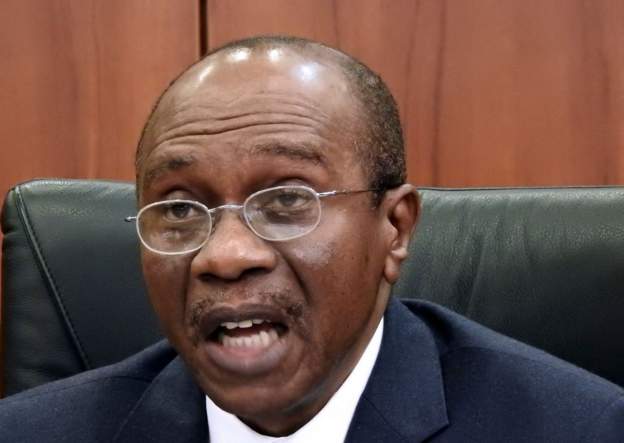
    The recent suspension of Nigeria’s Central Bank Governor, Godwin Emefiele, by President Bola Tinubu has been followed by his subsequent arrest and placement in custody for interrogation, as confirmed by Nigeria’s secret police.

    The charges have not been made public, but a government press release cited “an ongoing investigation of his office and planned reforms in the financial sector of the economy” as reasons for the suspension.

    This caps the fall of arguably one of the most powerful men in the Nigerian government.

    Appointed in 2014 by then-President Goodluck Johnathan to head the central bank of Africa’s biggest economy, Emefiele became the second-longest-serving governor of the bank after his tenure was renewed by former President Muhammadu Buhari.

    Buhari’s administration between 2015 and 2023 led Nigeria into two recessions. Inflation hit an 18-year record high of 22.22 percent, and the country’s debt profile soared to more than $150bn, also a record and more than three times the debt left by the previous government, according to the Debt Management Office.

    Emefiele served under Buhari for eight years, overseeing Nigeria’s biggest economic downturn.

    “He had no vision for the monetary policy of the country. He had risen to the top of his career as a yes-man to those who put him in position,” Cheta Nwanze, lead partner at SBM Intelligence, a geo-political consultancy, told Al Jazeera.

    ‘Emperor Meffy’

    By convention, central bank governors operate in the shadows, maintaining a distance from politics. But analysts say Emefiele played an outsized role in both politics and the economy as the governor of the apex bank.

    “The phrase I will use to characterise the CBN [Central Bank of Nigeria] in this period is all-powerful,” said Michael Famoroti, the head of intelligence at business and economic insights firm Stears and former chief economist at Vetiva Capital. “For the first time in Nigeria’s economic history, we have a central bank that was essentially the most powerful form of economic authority in the country … That [power] is normally between the Ministry of Finance, the budget office or the presidential economic council.”

    But Nigeria’s economic fortunes would put the country on a precipice, and Emefiele’s status would become stratospheric.

    In 2015, as foreign reserves took a hit, the CBN placed 41 items including staple commodities like rice, cement and clothes on foreign exchange restriction. The idea was not only to encourage local production of these products, but also to prevent the importers of these commodities from accessing the increasingly scarce United States dollars in the official market.

    But the move backfired as it precipitated a black market for US dollars and multiple exchange rates, which analysts say has wrecked the naira and pushed ordinary Nigerians to buy the greenback at higher rates while the sellers enjoy the arbitrage.

    “This was a critical point. There was so much pressure on the system and [the black market] started operating as a separate market with a life of its own,” said Wilson Erumebor, senior economist at Nigeria Economic Summit Group.

    To arrest the slump of the naira, Emefiele took several unorthodox steps. He ordered the cutting of trees where black market vendors worked in the capital; placed a ban on cryptocurrency trading, a burgeoning alternative initiative popular among young people hedging their money against rising inflation; and banned a website that reported the value of the dollar in the black market, among several other measures.

    CBN’s weekly circulars over the years became prominent among Nigerians as more items were banned or tighter restrictions were imposed on financial transactions, earning the governor the moniker “Emperor Meffy”, a corruption of his name.

    “People were not sure of what the policy direction would be on the exchange rate. What is the next policy that would come out tomorrow? What will be banned tomorrow? All of those inconsistencies created panic in the market and people started moving to the unofficial market,” Erumebor said.

    Inflation kept rising year after year and with the naira losing value, statistics show Nigerians became poorer. Some 133 million of the country’s 220 million people now live in multidimensional poverty – where they are not just monetarily poor, but also have less access to education and basic infrastructure services, according to a 2022 report from the National Bureau of Statistics.

    External factors like the COVID-19 pandemic and the war in Ukraine have no doubt impacted the economy and contributed to inflation, but experts argue that the direction of the monetary policies from the central bank also led inflation to rise from single-digit increases (between 6 percent and 9 percent in 2014) to permanent double-digit increases of 22 percent and higher so far this year.

    ‘Destruction of the independence of the central bank’

    Emefiele’s CBN lent the government 22.7 trillion naira ($49bn) under the Ways and Means Advances clause that can be activated only if the government has a temporary revenue deficiency. The move led local media to dub the apex bank as a “printing press” for the government.

    Moreover, the CBN Act only allowed for a loan of five percent of the government’s previous year’s revenue, but the bank illegally exceeded the benchmark every year, sometimes up to 30 percent. This contributed to inflation, experts say.

    At the end of President Buhari’s tenure, the country’s parliament changed the law to allow the loan to the government to be up to 15 percent and converted the loan into a 40-year bond.

    “When we cut things down to the basic level, the central bank has been funding the government for the last couple of years to the point that without that central bank financing the government would not have been able to meet its liabilities,” said Stears’s Famoroti.

    But Emefiele’s reputation would go beyond his monetary policies. As Nigeria’s economy hit new lows in the past six years, it became difficult to separate Emefiele from politics as he became more prominent.

    When thousands of youth took to the streets to protest police brutality in October 2020, the central bank ordered the freezing of the bank accounts of select protest leaders without a court order.

    But the arc of Emefiele’s ambition would lead to a squashed, unprecedented attempt for the presidency in May 2022 in contravention of the country’s constitution, which states that a central bank governor, to protect the independence of the central bank, cannot participate in partisan politics.

    “I think that the real disaster of Emefiele was not necessarily in monetary policy, but in the destruction of the independence of the central bank,” said SBM Intelligence’s Nwanze. “In the foreseeable future, the office will be a political tool and that really is Emefiele’s legacy.”

    His biggest undoing turned out to be a widely criticised currency redesign.

    Earlier this year, the governor changed the design of the higher denominations in the build-up to the general elections, invalidating the old currency within a period of six weeks. The official reasons were to bring excess cash back into the banking system and institute a cashless system in line with the introduction of the ill-fated eNaira, its digital currency, in 2021.

    “The argument was not really clear. The complaint was that too much was outside the banking system. But why should we be so worried that we have cash outside the banking system when cash in circulation against the GDP [gross domestic product] appears to be the lowest when compared with other countries that have made so much progress with cashless policies?” Erumebor asked.

    With elections around the corner, the currency redesign was deemed political. Government officials said the move would void stockpiles of money believed to be in the custody of politicians to be used to sway voters.

    The plan backfired and led to a naira black market. The policy was later suspended, but not before it had spurred crises within the banking system. According to an SBM report, the cashless policy had a widespread impact as people and businesses could not access cash coupled with several internet downtimes.

    Prices of goods and services shot up in urban centres between December 2022, when the policy kicked in, and the time of national elections in March 2023. The consequences were especially severe in rural areas, where people without access to banks could not buy basic items.

    With Emefiele suspended and an acting governor appointed in his stead, there are hopes that the apex bank charts a new course.

    “I would expect that going forward in this new administration, we see things go a little bit back to normal,” Famoroti said. “I don’t expect a full reversion, but I would be surprised [if] whoever comes after [Emefiele] will wield the same sort of power and influence over the economy as he has done over the last four to six years because that was an aberration.”

  • Wagner revolt in Russia dims outlook for its operations in Africa

    Wagner revolt in Russia dims outlook for its operations in Africa

    The uprising within the Wagner force in Russia presents a diplomatic dilemma for Mali and the Central African Republic (CAR). These countries have been confronted with a complex situation as the forces of the mercenary group have become increasingly influential in their protracted internal conflicts.

    As the Wagner fighters barrelled towards Moscow on Saturday after seizing a southern city overnight, spokespeople for the governments of Mali and CAR declined to comment on the turmoil and how it might affect their security strategies against armed groups.

    Both countries have sought closer ties with Russia and military support to battle the armed fighters, saying in the past that their military cooperation agreements are with Russia rather than with Wagner.

    “[Wagner’s] presence in Mali is sponsored by the Kremlin and if Wagner is at odds with the Kremlin … naturally Mali will suffer the consequences on the security front,” said Malian political analyst Bassirou Doumbia.

    Mali, where military authorities seized power in coups in 2020 and 2021, is battling a years-long operation against armed groups affiliated with ISIL (ISIS) and al-Qaeda. It has said Russian forces there are not Wagner mercenaries but trainers helping local troops with equipment bought from Russia.

    But the alliance has soured relations with the United Nations and alienated Western powers, who have said the fighters are Wagner forces and have alleged that they have committed possible war crimes alongside Malian soldiers.

    The governments in Mali and Russia have denied the allegations.

    Wagner’s continued presence in Mali amid the continuing insurrection in Russia could prove problematic for Bamako’s relations with Moscow, which last year committed to send Mali shipments of fuel, fertiliser and food worth about $100m.

    “[The] exact consequences for Mali really depend on factors largely unknown such as the organisational autonomy of Wagner and their chain of command, and, of course, whether things escalate or not between [Russian President Vladimir] Putin and Wagner,” said Yvan Guichaoua, senior lecturer at the Brussels School of International Studies.

    He said there were no reports of unexpected troop movements in Mali as of Saturday morning.

    Rebel insurgencies

    The power struggle in Russia could also have significant ramifications for CAR, where hundreds of Russian operatives, including many from Wagner, have been helping the government fight several rebel insurgencies since 2018.

    Both CAR and Mali have been drawn increasingly into Russia’s orbit in recent years as the Kremlin sought greater influence in Francophone Africa to the dismay of former colonial power France, which has faced anti-French protests in the region and worsening relations with several West African governments.

    In February, French President Emmanuel Macron described the deployment of Wagner troops in Africa as the “life insurance of failing regimes in Africa” that will only sow misery.

    A suspension of Wagner operations in Africa could impact the group’s finances. The United States last October accused the mercenaries of exploiting natural resources in CAR, Mali and elsewhere to fund fighting in Ukraine – a charge Russia rejected at the time.

    Wagner began operating in Africa and the Middle East when it was founded in 2014 and was thought to have about 5,000 fighters, but has grown significantly since then.

    The paramilitary group made a name for itself internationally through its involvement in Russia’s annexation of Ukraine’s Crimean Peninsula in 2014, a move widely viewed as illegal by the international community.

    The group has also been involved in the continuing Russia-Ukraine war that began in February 2022 after Wagner forces were deployed in Ukraine on March 28, 2022. The group has 50,000 active fighters in Ukraine, according to British intelligence.

    According to the US National Security Council, while about 80 percent of its troops in Ukraine were withdrawn from prisons, it was stated that Wagner was effective in Russia’s alleged capture of Bakhmut in eastern Ukraine’s Donetsk region.

    Wagner has also sent fighters outside Ukraine to various conflicts in the Middle East and Africa, including the war in Syria. The group has cemented strong ties with several African governments over the past decade with operations in at least eight African nations, according to leaked US documents.

  • T-bills: Government meets target with slight oversubscription as interest rates soar to 29.25%

    The recent treasury bill auction conducted by the government achieved a marginal oversubscription of GH¢97.32 million, surpassing its initial target of GH¢2.20 billion.

    It recorded a total of GH¢2.29 billion from the 91-day, 182-day, and 364-day bills.

    Interest rates have been increasing for the past few months after it dropped to 18%.

    Currently, the interest rates range between 22.97% to 29.25%.

    The rates for the 91-day bill increased from 21.69% to 22.97%, and for the 182-day bill, it increased from 24.97% to 25.44%.

    For the 364-day bills, it increased from 28.91% to 29.25%.
    According to the auction results from the Central Bank, the government secured GH¢1.86 billion from the 91-day bill, GH¢304.16 million from the 182-day bill, and GH¢112.60 million from the 364-day bill.

  • AGI advises against elimination of taxes on imported sanitary pads

    AGI advises against elimination of taxes on imported sanitary pads

    The Association of Ghana Industries (AGI) is raising concerns and cautioning against any policy measure that proposes the elimination of taxes on imported sanitary pads, especially if it comes at the expense of locally produced ones.

    It warned that such a move will be very detrimental to the economy. “Much as the waiver of duties/taxes on imported sanitary pads for our young women to make the pads more affordable may sound good, this will only end up completely wiping out the few local sanitary pad factories left in our country. Therefore, the Association is of the view that the call for removal of duties on imported sanitary pads is misplaced.”

    Already, AGI said, local manufacturers of sanitary pads and diapers have been under pressure from cheap and sub-standard imports which sell at closeout. As a result, it said, a few sanitary pad manufacturers with capacity to expand are only producing at about 30 percent capacity on account of the influx of such imports.

    Some of the factories, AGI said in a statement, are already out of business and have sent workers home. To further eliminate taxes on such imports, it lamented, will certainly collapse the few factories left or compel them to fold-up and become mere importers.

    “Our young women deserve affordable sanitary pads, but granting tax waivers on imported sanitary pads is not the way to go. With the right incentives and support, these local companies can meet domestic demand – saving the country jobs and forex.

    “Instead of removing import duties, local manufacturers of hygienic sanitary pads have since petitioned government for exemption from VAT and Import duty on their imported raw materials to make such products more affordable. Currently, medical supplies, services, essential drugs as listed under Chapter 30 of the ‘HS Code’ produced or supplied by retail in Ghana, specified active ingredients for essential drugs, and selected imported special drugs determined by the Minister for Health and approved by parliament enjoy an exempt regime.

    “It is only fair to extend the same dispensation to raw material for sanitary pads for our young women. Our local manufacturers believe their sanitary pads will be more affordable to an estimated 70 percent of our young women in impoverished communities if granted such tax reliefs on raw materials,” part of the statement read.

    It said public discourse and social commentary suggesting government should eliminate import duty on imported sanitary pads need circumspection, and ought to be reconsidered vis-à-vis local manufacturing, job creation and revenue generation for government.

    The few local manufacturers of sanitary pads face imminent collapse, and the AGI calls on government to intervene as soon as possible. We caution government not to play to the gallery, but rather stay focused on its industrial transformation agenda by incentivising local manufacturers rather than imports.

    While a number of countries adopt countervailing taxes to ‘protect’ their local markets, it would be unfortunate for Ghana to do the reverse by eliminating taxes on such imports to make them cheaper – especially when there are factories in Ghana producing same items. We are anxious to see more policy prescriptions that attract investments, create jobs and can transform the structure of our economy from an import to export-oriented one. This may sound long-term, but it is a necessity and it is achievable,” the statement signed by its Chief Executive Officer, Seth Twum-Akwaboah, concluded.

  • Climate change threatens survival of $5bn local honey industry

    Climate change threatens survival of $5bn local honey industry

    The Chamber of Agribusiness Ghana (CAG) has revealed that climate change, environmental concerns, and extensive use of agrochemicals pose significant threats to the survival of Ghana’s domestic honey production sector, which is valued at nearly US$5 billion.

    CAG’s Chief Executive Officer, Anthony Selorm Morrison, speaking to the B&FT on the dwindling fortunes of the industry, said honey production booms on organic agroecology systems where bees thrive in a more natural environment than chemically polluted conditions.

    The ever-increasing reliance on the use of chemicals, most of which are harmful to the survival of bees, according to Mr. Morrison, has become a bane to the sector.

    Data from CAG indicates the country currently produces a little over US$168million worth of honey annually, but that could skyrocket to more than US$5billion if the right strategies are adopted and quality of the commodity given priority.

    China, the second largest global exporter of honey, made some US$260million from the commodity in 2021. Interestingly, that country also leads 90 percent of global fake honey production as its honey products do not constitute even 30 percent of natural honey.

    But CAG maintained that Ghana has a more conducive and agroecological advantage to derive more from honey than China if the right strategies are adopted to increase production.

    “CAG has mango farms, cocoa farms, cashew farms, orange farms piloted for honey production; but the increasing challenge of disease control through chemicals have made it difficult to keep up with the global demand,” he added.

    In Europe, pollination is mostly done by companies which provide such services with bees and charge fees. In Ghana and Africa, however, pollination is done naturally by bees in the wild without a cost. This, according to CAG, offers huge opportunities for Ghana to increase production.

    “We can only appeal to the Environmental Protection Agency to control and further scrutinise the type of chemicals that are being imported for agriculture purposes. Some of the chemicals are not friendly toward honey production,” the Chamber’s CEO lamented.

    Proposed strategies by CAG to increase production

    The Chamber argued that secondary schools can be resourced to develop at least 10 acre cashew, orange or coconut farms, as these crops are ideal because they are not heavily disease-induced compared to cocoa and mango, among others.

    About 200 secondary schools, CAG noted, can undertake this initiative on the 10-acre plantation and by the time the farm is around three years, beehives can be placed on such farms. In five years, he said, more money could be made from the honey produced than from the cash crops.

    “Assuming each of 200 secondary schools have 10-acre beehives, and each acre accommodates 10 beehives. That is 20,000 beehives and this initiative alone should generate not less than US$1.5billion worth of honey annually,” Mr. Morrison indicated.

    There are more than 700 secondary schools in Ghana as of 2021 per the GES schools register for 2020.

    Standard and quality of Ghana’s honey

    The Chamber, in partnership with the livestock division of the Ministry of Food and Agriculture (MoFA), has a laboratory for testing locally produced honey.

    CAG is also holding a series of training for honey producers in the Northern, Volta and Oti Regions.

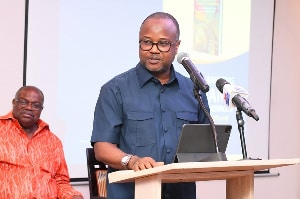
  • Full text: Dr Opoku-Afari shares views on launch of memoir on Central Banking in Ghana

    Full text: Dr Opoku-Afari shares views on launch of memoir on Central Banking in Ghana

    Good evening. It is a great pleasure to be here and thank you very much for the kind invitation to join in the launch of this book titled “Central Banking in Ghana and the Governors (Institutional Growth and Economic Development)”.

    The Bank accepted to be part of this book launch because primarily it focuses on the central banking in Ghana, the key roles played by successive Governors towards the achievement of the Bank’s objects and long-term sustainability, and ultimately the economic development of Ghana.

    Mr. Chairman, Ladies and Gentlemen, let me commend the author, Mr. Ivor Agyeman-Duah, who has written extensively and contributed to several publications, and this time the focus is on the world of central banking in Ghana. The Bank is indeed supportive of the book’s publication due to its contribution to the literature on central banking in Ghana, with emphasis on monetary policy, and regulatory and supervisory operations of the Bank.

    We do acknowledge that books and articles written on the Bank of Ghana hardly touch on the individual governors who have led the institution and the philosophies that underpinned their economic and the monetary policy decisions.

    This book, however, does that and would therefore go a long way to fill the gap in the body of knowledge on the economic thinking of the various governors that have transitioned through the Bank.

    So, on behalf of Governor Ernest Addison, let me therefore take this opportunity to express the Bank’s appreciation to the author for the vision and efforts put in to publish this book.

    Undoubtedly, I believe this book will enhance public understanding on the workings of the central bank, particularly, the much-debated concept of the institutional operational independence and accountability of central banks.

    Mr. Chairman, distinguished Ladies and Gentlemen, although my task here precludes the review of this book, a task which will be performed by another speaker shortly, permit me to share a few thoughts on the evolution of monetary policy formulation and strategies mentioned in the book.

    I found the author’s exposition on the tools of monetary policy insightful, especially the direct control and inflation targeting, expansionary and contractionary monetary policy stance and contemporary monetary strategies. In all of these narratives, inflation targeting is deemed the most robust monetary policy formulation strategy that has impacted positively on the objectives of central banks, including the Bank of Ghana.

    Even though this book could be deemed as a mirror that reflects the work of all governors of the Bank since its establishment, but like the mirror, the reflection on the work of any of the governors may invariably differ depending on the reader’s economic philosophy or ideology.

    I am certain that the discussion on monetary policy and many other contents of the book will provide a good basis for constructive and intellectual public discourse on the author’s views and assertions. Similarly, I trust that the author, being a seasoned scholar and academic, will readily respond to any constructive critique and commentary that may arise from economists, academics and other reviewers of this book.

    This notwithstanding, this book will serve as a useful resource for central bankers, academics and students of economics in and outside Ghana. So, I highly recommend Central Banking in Ghana and the Governors (Institutional Growth and Economic Development) to everyone.

    On this note, Mr. Chairman, Distinguished Invited Guests, Ladies and Gentlemen, join me to congratulate the author, Mr. Ivor Agyeman-Duah for the successful publication and launch of the book.

    Thank you very much for your attention.

  • Inflation targeting framework considered most resilient and effective strategy for monetary policy – Dr Opoku-Afari

    Inflation targeting framework considered most resilient and effective strategy for monetary policy – Dr Opoku-Afari

    First Deputy Governor of the Central Bank, Dr Maxwell Opoku-Afari, has stated the inflation targeting framework has been universally recognized as the most durable strategy for formulating monetary policy.

    According to him, the framework has impacted positively on the objectives of central banks, including the Bank of Ghana.

    He made the remarks at the launch of a book titled “Central Banking in Ghana and the Governors (Institutional Growth and Economic Development)” which was authored by Ivor Agyeman-Duah.

    Dr Opoku-Afari further shared that all narratives contained in the book about direct control and inflation targeting, expansionary and contractionary monetary policy stance and contemporary monetary strategies have also been insightful.

    “Even though this book could be deemed as a mirror that reflects the work of all governors of the Bank since its establishment, but like the mirror, the reflection on the work of any of the governors may invariably differ depending on the reader’s economic philosophy or ideology,” he noted.

    “I am certain that the discussion on monetary policy and many other contents of the book will provide a good basis for constructive and intellectual public discourse on the author’s views and assertions.

    Similarly, I trust that the author, being a seasoned scholar and academic, will readily respond to any constructive critique and commentary that may arise from economists, academics and other reviewers of this book,” Dr Opoku-Afari added.

    He, however, commended the author for extensively writing the book as part of efforts to fill the gap in the body of knowledge on the economic thinking of the various governors that have transitioned through the Bank.

    “The Bank is indeed supportive of the book’s publication due to its contribution to the literature on central banking in Ghana, with emphasis on monetary policy, and regulatory and supervisory operations of the Bank.

    We do acknowledge that books and articles written on the Bank of Ghana hardly touch on the individual governors who have led the institution and the philosophies that underpinned their economic and the monetary policy decisions,” he concluded.

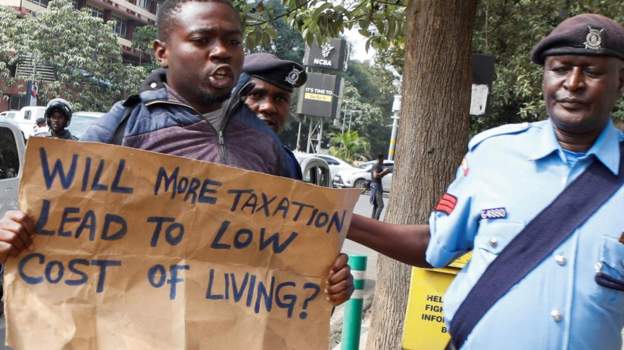
  • Kenya’s contentious tax increases  signed into law by Ruto

    Kenya’s contentious tax increases signed into law by Ruto

    First financial bill passed by Kenya’s administration, signed into law by President William Ruto, aims to increase revenue by hiking taxes on a variety of commodities.

    One of the most controversial changes approved by parliament last week was the doubling of value-added tax to be charged on fuel – it’s rising from 8% to 16%.

    Employees will also hand over 1.5% of their gross pay for a housing levy that will go into a fund that will then pay to build homes for low-income people.

    President Ruto, who was elected last year, has said that the government needs more money in order to be able to pay off the debts racked up under the presidency of his predecessor, Uhuru Kenyatta.

    But the opposition have said they would call for protests if the tax rises came into effect.

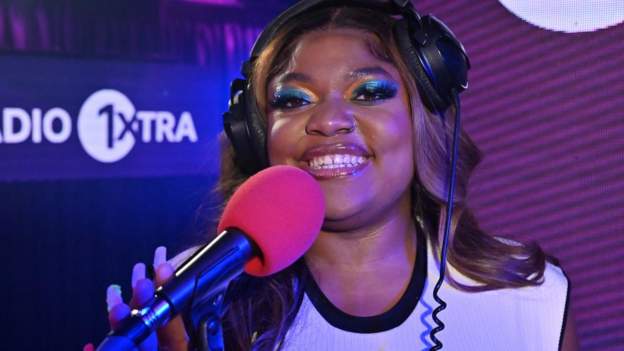
  • Libianca and Burna Boy received accolades at BET Awards

    Libianca and Burna Boy received accolades at BET Awards

    At Sunday night’s BET Awards in Los Angeles, Nigerian singer Burna Boy was hailed as the best international talent for the fourth time.

    This time, he was competing against artists including South African Ko, British Stormzy, and British Central Cee.

    The BET audience’s choice for the best new international performer went to Libianca of Cameroon.

    Her song People (Check On Me) has been streamed more than 320 million times since December. It sat on the top of the UK’s Afrobeats chart for eight weeks and got into the UK’s official Top 10 – a first for an artist from Cameroon.

  • Torentco acquisition is the greatest way to restore TOR

    Torentco acquisition is the greatest way to restore TOR

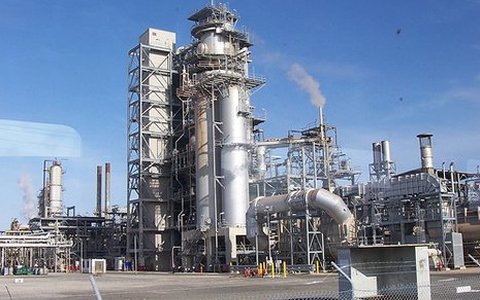
    The Torentco transaction, according to the Tema Oil Refinery (TOR) management, is the greatest alternative for reviving the refinery and ensuring its long-term viability.

    TOR, a crucial entity in Ghana’s energy sector, has faced significant challenges in recent years, including operational inefficiencies, financial constraints, and the need for infrastructure upgrades.

    Recognizing the urgency to address these issues, TOR’s management in a statement disclosed that it embarked on an extensive evaluation of potential solutions.

    According to the management, after careful consideration and rigorous analysis, the management team concluded that the Torentco deal offers the most promising path forward.

    Several Civil Society Organisations (CSOs) including the Africa Center for Energy Policy (ACEP) have raised concerns about the lease agreement negotiations between Torentco and the Tema Oil Refinery (TOR).

    ACEP revealed that Torentco, a newly established local Ghanaian company formed in January 2023, lacks the track record in the petroleum business and does not have the capacity to effectively take over TOR.

    “This is a new local Ghanaian company formed here in Ghana in January 2023, with no track record. If they fail to deliver, how do you hold them accountable? They don’t have any track record of dealing in petroleum businesses,” Mr Boakye said in an interview on Citi News.

    But TOR in an official response said the proposed deal entails a strategic partnership between TOR and Torentco, with the aim of modernizing the refinery’s operations, optimizing efficiency, and enhancing its competitive position. The collaboration will involve substantial investments in infrastructure, technology upgrades, and capacity expansion.

    According to TOR’s management, the Torentco deal will ensure a reliable supply of crude oil, a critical input for the refinery’s operations.

    TOR added that the Torentco deal is expected to bring much-needed financial stability to the refinery by leveraging Torentco’s financial resources and access to capital markets, the refinery will have the necessary funding for infrastructure upgrades, maintenance, and working capital, ensuring uninterrupted operations and improved financial performance.

    Furthermore, the collaboration will prevent some of the brightest engineers in the company from leaving.

    The management of TOR is confident that the Torentco deal represents a transformative opportunity for the refinery and Ghana’s energy sector as a whole. They believe that this strategic partnership will reposition TOR as a vital contributor to the country’s economic growth, job creation, and energy self-sufficiency.

    “The proposed transaction serves to achieve the following: Allow TOR to move from being an annual loss-making entity to sustained positive net cash flow during the term of the lease. Demonstrate that crude oil can be processed at the refinery, achieving industry-accepted yields if managed efficiently.

    A major problem engulfing the last two counterparties to have processed crude oil at TOR was the issue of product recoveries below the contractual yields, resulting in cash penalties against TOR that are currently outstanding and stem the tide of the continuous exodus of our valued engineering staff who leave every month for more secure opportunities in the Middle East and other parts of the world.”

  • TOR management reacts to CSOs regarding TOR-Torentco partnership

    TOR management reacts to CSOs regarding TOR-Torentco partnership

    Concerns about the cooperation between TOR and Rentco expressed by civil society organizations have been addressed by the board and management of the Tema Oil Refinery.

    The CSOs had raised objection to the partnership which they said had been carried out in obscurity and did not present the best opportunity or value to TOR.

    They added that the partnership would render the refinery invalid at the end of its six year tenure.

    However, the board and management responding to these concerns said while the concerns of the CSOs are welcomed, they have nothing to worry about.

    In a three paged report signed by the board and management, they noted while they had wished to deal directly with a major multinational company, TOR’s accrued debts have made the refinery unattractive to any of them, thus their settling on Torentco.

    They added that the partnership will allow TOR to move from being an annual loss making entity to a sustained positive net cash flow during the lease, and demonstrate that crude oil can be processed at the refinery, achieving industry accepted yields if managed efficiently.

    And finally, the partnership will stem the exodus of skilled staff to the middle east other parts of the world to secure opportunities.

    TOR’s board and management stated that the transaction is already in its final stages of documentation and the company has an extensive list of ‘conditions precedent’ which Torentco must satisfy to demonstrate their ability to deliver all that is required in the transaction.

    “if at any point they are unable to do so, the transaction will not become effective and TOR will left to continue with its ongoing efforts to find a solution,” TOR stated.

  • Airlines should disregard $7 Fumigation fees – Minority

    Airlines should disregard $7 Fumigation fees – Minority

    The Minority in Parliament is raising concerns about the government’s implementation of a $7 charge on airline tickets, signaling the need for attention and action.

    The Minority describes the charge as illegal as it is only Parliament that can impose fees and charges.

    Sources indicate that the Ghana Health Service (GHS) is impressing on airlines to add $7 per passenger on each international airline ticket sold and remit the same to government agency as a luggage fumigation charge.

    AviationGhana sources revealed that the decision of the GHS was conveyed by the Ghana Airports Company Limited to airlines servicing Accra’s Kotoka International Airport at a meeting held on Thursday, June 22, in Accra.

    Speaking to JoyNews, Minority Chief Whip and Ranking Member on the Roads and Transport Committee Governs Kwame Agbodza urged airlines to disregard the directive from government to charge that amount.

    “The stakeholders have been unhappy about it, the airlines feel this will make their work even more difficult knowing that after COVID, many airlines and related businesses are still struggling to recover.

    “You’d realize that airline tickets are still considerably high. To charge this amount for fumigation of bags is an absurdity. We are not going to accept this.

    “No agency of government has the right to impose additional charges without the knowledge of Parliament and I encourage airlines to disregard this for now until we all come to the conclusion that this is relevant,” he said.

    Governs Kwame Agbodza also explained that Parliament had been completely sidelined in the imposition of the charge insisting the relevant committee in Parliament, the Roads and Transport Committee was not privy to the charge.

    The Minority Chief Whip also claimed this an avenue by some government officials to steal from the ordinary Ghanaian even in these challenging economic times.

    “I’ve never seen anything like fumigation of bag charge before, in any case, what is the meaning of fumigation of bags that you’re going to charge passengers US$7?

    “What kind of chemicals are you going to use? What kind of contamination are we talking about? This is a very unnecessary attempt to basically take close to $15 million from passengers.

    “This is not the time, the airlines are struggling, people are squeezed, we should not be making life difficult for the airlines and the passengers”, he stressed.

    The Minority say they will in the coming days push for the full details to be brought to Parliament and do everything necessary to prevent the imposition of what they are calling an illegal charge.

  • Why animal farm continues to wow Zimbabweans

    Why animal farm continues to wow Zimbabweans

    The famous line from George Orwell’s satirical novel Animal Farm, “All animals are equal, but some animals are more equal than others,” has struck such a chord in Zimbabwe that novelist Petina Gappah translated it into the native Shona tongue.

    “There is something about the story that spoke so much to the reality of Zimbabwe,” the award-winning Zimbabwean writer and lawyer told the BBC about the book first published in 1945.

    It has long been a favourite in Zimbabwe in English – studied in some schools – and became a huge hit when it was serialised in a local newspaper around two decades ago, with readers blown away by its astute metaphor of a liberation struggle gone wrong.

    It is something Gappah and fellow translator, poet Tinashe Muchuri, decided to focus on with their slight twist of the title in Shona, opting for Chimurenga Chemhuka, meaning “Animal Revolution”.

    The word chimurenga is a reference to the liberation war fought during white-minority rule that led to Zimbabwe’s independence in 1980, bringing to power Robert Mugabe, who went on to lead the country for 37 years until he was overthrown in a coup.

    Petina Gappah pictured in 2015
    Image caption,Petina Gappah says the Shona translation’s use of different dialects adds layers and humour to the story for Zimbabweans

    Through the Shona translation, Gappah said they had been able to bring added depth, meaning and humour for readers as their characters use the different Shona dialects spoken around Zimbabwe.

    “In the 1960s the language was standardised throughout the entire country,” Gappah told the BBC World Service.

    “So I’d be learning standard Shona at school but at home I’d be speaking Karanga because my family is Karanga.

    “What we thought we’d do with the book is have the narration in standard Shona but the animals all speak different dialects – almost as though they’re coming from all the four corners of Zimbabwe.”

    It allows the story to reflect the power struggles that have played out with the ruling Zanu-PF party, as Zimbabweans know that current President Emmerson Mnangagwa is Karanga, while Mugabe, his long-time ally turned rival, was from the Zezuru clan.

    The story is about farm animals rising up against their human owner to create a new and equal society, said to be an allegory of what happened under Communism in the Soviet Union.

    When journalist and editor Geoffrey Nyarota took the decision to serialise Animal Farm in 2000 in the Daily News, once Zimbabwe’s best-selling paper, he said many took Napoleon, the pig who gains power through intimidation and manipulation, to be Mugabe.

    “Animal Farm is a microcosm of political developments in post-independence Zimbabwe,” Nyarota told the BBC World Service in 2003, a few months before the Daily News was banned by the authorities and he was forced to go into exile for several years.

    Someone reading a special edition of The Daily News at the Commonwealth Summit in Abuja, Nigeria - December 2003
    Image caption,The Daily News was banned in 2003 under tough media laws – a special edition was brought out for a Commonwealth Summit later that year

    In the Zimbabwean context, Mr Jones, the former owner of the farm, represented colonialism while the vicious dogs who Napoleon secretly trains to later gain power, were Zanu-PF’s youth militia, he said.

    “The youth brigade… are removed from their families and put through courses of political indoctrination in some camps far out in the rural areas and then they are unleashed on an unsuspecting innocent public and they have caused much damage.”

    Voter intimidation and violence have marred several Zimbabwean elections – with the country gearing up for another poll in August and a renewed crackdown on opposition figures and government critics.

    The sheep – continually bleating the pigs’ propaganda slogans – Nyarota likened to Zanu-PF’s women’s league “whose existence seems to be for the sole purpose of singing praise songs of… the ruling party”.

    The pigs in Animal Farm start to act more and more like humans – living it up in the old farmer’s house, while the rest of the animals toil away, often cold, hungry and over-worked.

    Even with changing political events and the death of Mugabe in 2019, the parallels are ones that Zimbabweans still recognise as inflation soars once more and electricity is scarce, making life a daily struggle.

    A newspaper poster on the 2023 election is displayed on a busy street in Harare, Zimbabwe - 29 May 2023
    Image caption,Presidential elections have been set for 23 August

    The book has continued to inspire Nyarota, who penned his first novel last year, which he dubbed “truthful fiction” looking at “endemic corruption”.

    “Orwell was able to look into the future, as it were, and was able to forecast the future of our independent nations. Orwell’s future is the present that I now graphically seek to capture in The Honourable Minister,” he told the NewsDay website.

    But for Gappah, the Shona translation is less about political comment or resistance and more about making mischief and her love of languages.

    Her project began by chance in 2015 when she started to translate snippets of English literature into Shona to entertain her Facebook friends.

    “Then I thought to myself: ‘Why don’t I try a larger project?’ So I did the first page of Animal Farm and I invited friends on Facebook, writers and other people interested in language, to join me and it just ballooned from there.”

    It grew to such an extent that at one time around 20 people were involved “and it became really messy”, she said.

    It was whittled down to a core group and then eventually retranslated, overhauled and edited by Gappah and Muchiri.

    “But I’ll be grateful for that initial first group,” Gappah said.

    Their translating partnership with House of Books, a small Zimbabwean publisher, is set to continue with Things Fall Apart by Nigerian author Chinua Achebe – a seminal work that deals with the impact of colonialism in Africa – next on their list.

    “And at some point we’re going to tackle Shakespeare, because Julius Caesar, for example is a very Zimbabwean story,” said Gappah.

    The play, first performed in 1599, is about a group of conspirators who decide to assassinate a general, saying it is for the good of the state to prevent him from becoming a tyrant.

  • Wagner’s departure might be advantageous for Ukraine’s counterattack

    Wagner’s departure might be advantageous for Ukraine’s counterattack

    The military of Ukraine, which is waging its own counteroffensive, as well as our own people here in the Donbas, are attentively following the remarkable developments in Russia.

    The very long front line is only shifting by a few meters, a few villages here and there.

    Everybody is waiting to see where and when the Ukrainians may commit the bulk of their newly trained forces, with their Western-supplies weapons.
    There are potential new opportunities for the Ukrainians to exploit. There are questions about where the Wagner forces have withdrawn from.
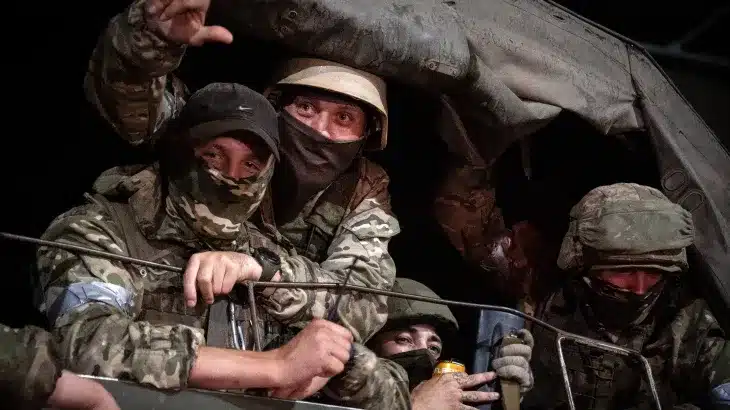
    Russian forces will no doubt have heard what’s been going on and will be demoralised. There might be in-fighting between rival units in the days to come, depending on what sort of aftershocks there are back in Russia following yesterday’s remarkable events.

    Right now, as well as risks of an escalation from Russia, Ukraine will be searching for opportunities from the instability across the border.

  • What will be Putin’s next action?

    What will be Putin’s next action?

    He has always reacted by using force, so you can be sure of that.

    Internal liberties may be further restricted and the media, particularly significant Telegram channels, may be more strictly regulated.

    Or Putin may conduct another set of military strikes on the territory of Ukraine.

    Or maybe both.

    One thing is clear – if Ukraine breaks Russian fortifications on the frontline next week, Moscow will definitely blame that on Wagner and its so-called betrayal.

  • Mutiny damages Putin’s reputation

    Mutiny damages Putin’s reputation

    The unity and stability that Putin and his state media have been attempting to portray for years are called into question by Prigozhin’s uprising

    Some members of the political elites panicked. Flight radar services pinged dozens of private jets leaving Moscow.

    But it wasn’t a systemic crisis.

    Regional governors were quick and unanimous in pledging public allegiance to Moscow.

    These scenes were very different from 1991 – another attempted military coup. Back then, some of the regional leaders quickly aligned with the rebels. We saw nothing even close to that yesterday.

    At the same time, Putin’s image was clearly ruptured.

  • Putin doesn’t seem strong after  Wagner deal – Rosenberg

    Putin doesn’t seem strong after Wagner deal – Rosenberg

    Vladimir Putin spoke out strongly on national television yesterday, but the BBC’s Russia editor claims that Putin “doesn’t come out of this looking very strong.”

    Speaking from Moscow, Steve Rosenberg says Putin began yesterday by saying Russia had been “stabbed in the back” by the Wagner Group’s attempted mutiny.

    By the end of the day its leader Yevgeny Prigozhin, whom Putin had labelled a traitor, had all the charges against him dropped.

    “We don’t know all the details of the agreement that was reached between the Kremlin and Wagner,” he tells the BBC’s Laura Kuenssberg.

    Perhaps more details will emerge in the coming days – but Putin doesn’t look particularly strong after this, Rosenberg reiterates.

  • Chechen fighters departing Rostov for Ukraine – Russian media

    Chechen fighters departing Rostov for Ukraine – Russian media

    A report from Russia’s state-run Tass news agency, indicates that Chechen forces are withdrawing from Russia’s southern Rostov region and heading back to the conflict zone in eastern Ukraine.

    The Chechen forces were urgently deployed to the Rostov region on Saturday, tasked with squashing a mutiny by Wagner mercenaries who had seized the local capital Rostov-on-Don.

    But a deal was reportedly reached late that day to resolve the crisis, and Wagner fighters left the city shortly afterwards.

    Tass quotes Apty Alaudinov, deputy commander of the Akhmat special unit, as saying his fighters are going back to the area around the Ukrainian city of Mariinka – the scene of fierce fighting in recent months.

  • Putin’s brutality and authoritarianism will increase – Polish MEP says

    Putin’s brutality and authoritarianism will increase – Polish MEP says

    Putin is “weakened and strengthened” as a result of Prigozhin’s uprising, according to Polish MEP Radek Sikorski.

    Speaking to BBC 5Live Breakfast, Sikorski said Putin’s vulnerabilities were exposed when “a group of armed men were able to cross [thousands of] kilometres of Russia hardly challenged”.

    But, Sikorski said the Russian leader will now “probably purge those who he saw as wavering”, meaning his regime will become “more authoritarian and more brutal at the same time”.

    We’re waiting to see how the Kremlin reacts to what’s happened this weekend. We’ll bring you more news – and analysis – as it happens.

  • Russian official travels to Beijing as Putin faces heat at home

    Russian official travels to Beijing as Putin faces heat at home

    Deputy foreign minister of Russia, Andrei Rudenko, has been to Beijing to meet with Chinese officials to discuss “international” concerns.

    Rudenko on Sunday exchanged views with China’s Foreign Minister Qin Gang in a meeting in the Chinese capital on Sunday on Sino-Russian relations as well as “international and regional issues of common concern”, China’s foreign ministry said in a one-line statement on its website.

    It was unclear when Rudenko arrived in Beijing, or whether his visit to China, a key ally of Russia, was in response to the apparent rebellion by heavily armed mercenaries on Friday.

  • Russia steps back from edge of crisis after reaching agreement end Wagner revolt

    Russia steps back from edge of crisis after reaching agreement end Wagner revolt


    The rebellion was ultimately brief. However, for a brief and chaotic 36 hours, hundreds of Wagner warriors commanded by warlord Yevgeny Prigozhin looked to be closing in on the nation’s capital, seriously threatening Russian President Vladimir Putin’s hold on power.

    With the private mercenary group claiming to have seized key military sites in two Russian cities, the Kremlin was forced to deploy heavily armed troops to the streets of Moscow and warn residents to stay indoors.

    But the face-off never came.

    On Saturday, the Kremlin said a deal had been reached to end the insurrection, with Prigozhin heading to neighboring Belarus and Wagner fighters turning back from their march.

    “Now is the moment when blood can be shed,” Prigozhin warned on Saturday. “Therefore, realizing all the responsibility for the fact that Russian blood will be shed from one of the sides, we turn our columns around and leave in the opposite direction to the field camps according to the plan.”

    Wagner fighters will face no legal action, and the Kremlin has “always respected (Wagner’s) heroic deeds,” said Kremlin spokesperson Dmitry Peskov.

    “You will ask me what will happen to Prigozhin personally? The criminal case will be dropped against him. He himself will go to Belarus,” Peskov said, adding that the situation had been resolved “without further losses.”

    The abrupt about-face follows a rare, remarkable challenge to the Kremlin that threatened to plunge the country into crisis and destabilize its already stumbling war efforts in Ukraine.

    Chechen leader Ramzan Kadyrov, a staunch Kremlin ally, condemned Prighozhin’s actions and said, “bloodshed could have happened.”

    “The arrogance of one person could lead to such dangerous consequences and draw a large number of people into the conflict,” he added.

    The threat of civil war leaves the country – and the Putin regime – in a very different place Sunday than it had been just two days prior. And with Russia possessing the world’s largest nuclear arsenal, that instability has other nations on edge, prompting emergency meetings and high-level talks.

    Threat to Putin

    Putin has built a reputation as an autocrat with an iron grip on power since he became president in 2000 – with his reign second in length only to Joseph Stalin, the Communist leader whose image Putin has tried to rehabilitate.

    The mysterious deaths of Putin critics over the years, and more recent critics of the Ukraine war, has only bolstered the Kremlin’s veneer of total control and the consequences for those who step out of line.

    That has now been shaken badly by the Wagner insurrection – with experts warning Putin may be more exposed than he has been in the last 23 years.

    “Putin is clearly weakened. There is blood in the water,” said Evelyn Farkas, executive director of the US-based think tank McCain Institute. She added that this near-crisis could be seen as an opportunity for Putin critics or rivals within the Kremlin.

    Fighters of Wagner private mercenary group pull out of the headquarters of the Southern Military District to return to base, in the city of Rostov-on-Don, Russia, June 24, 2023. REUTERS/Alexander Ermochenko

    Moscow has stepped back from civil war with Wagner. But the danger’s not over, experts warn

    Some international observers have expressed surprise at what they view as a lackluster Russian response to the insurrection, with the lack of a rapid, cohesive strategy highlighting the military’s weakened capabilities.

    Putin will also have to contend with shaky public sentiment within Russia. Civilian support for the war in Ukraine remains high, but cracks had begun to show by early this year, with some Russians tuning out the propaganda on air and others finding ways to circumvent Internet restrictions.

    In the months since, the war has arrived on Russian soil as Ukraine launched its counteroffensive. Russia’s Belgorod region saw a cross-border attack by anti-Putin Russian nationals in May, while the Kremlin itself came under alleged drone attacks.

    The emerging split between Moscow and some of its civilians was on clear display Saturday, as Prigozhin and his forces prepared to depart the Russian city of Rostov-on-Don, where they had briefly occupied a key military facility. A video verified and geolocated by CNN show Prigozhin’s vehicle stopping as a resident approached to shake the Wagner boss’ hand; around them, residents cheer.

    Putin sees off Chinese President Xi Jinping after a reception following their talks at the Kremlin in Moscow in March 2023.
    Putin is seen on monitors as he addresses the nation after Yevgeny Prigozhin, the chief of private mercenary group Wagner, called for an armed rebellion in June 2023. Putin vowed to punish those behind the "armed uprising." Later the Belarusian government claimed President Alexander Lukashenko had <a href=

    Russian President Vladimir Putin attends the Navy Day Parade in St. Petersburg in July 2022.

    Russian President Vladimir Putin attends the Navy Day Parade in St. Petersburg in July 2022.Getty Images

    A 6-year-old Putin poses for a picture with his mother, Maria Putina, in 1958. He was born on October 7, 1952, in St. Petersburg, then known as Leningrad.
    At age 13, Putin and other students pose for a class photo. He is seen in the first row, third from right.
    Putin grew up in a communal apartment shared by three families.
    Putin dances with a classmate during a party in St. Petersburg in 1970.
    Putin, bottom, wrestles at school in St. Petersburg in 1971.
    Putin joined the KGB in 1975 and was first assigned to shadow foreign visitors.
    Putin poses for a photograph with his parents, Maria and Vladimir, in 1985. It was just before his departure to Germany, where he was assigned to counterintelligence duties.
    Putin turned toward politics in 1991 and became an adviser to one of his law school mentors, Anatoly Sobchak, who was running for mayor of St. Petersburg. The two are seen here during a ceremony in 1992.
    Putin poses for a picture with his wife, Lyudmila, and daughters, Yekaterina and Maria. The couple married in 1983 and divorced in 2014.
    Russian President Boris Yeltsin appointed Putin prime minister in 1999. Here, Putin hand Yeltsin flowers during a farewell ceremony at the Kremlin in Moscow in December 1999. Amid a scandal Yeltsin had announced he was resigning immediately and that Putin would run the country as acting president until elections in March 2000.
    Putin sets a flower on a tomb during his inauguration ceremony in May 2000 at the Kremlin in Moscow. He was sworn in as Russia's second democratically elected president.
    Putin dances with a young girl in Kazan, Russia, while taking part in midsummer festivities in June 2000.
    Cuban leader Fidel Castro chats with Putin at the top of the steps of Havana's Palace of the Revolution during Putin's official welcoming ceremony in December 2000. Putin was on a four-day official visit to Cuba, the first by a Russian leader since the collapse of the Soviet Union.
    Putin listens to a question during a joint press conference with US President George W. Bush at the White House in November 2001.
    President Bush welcomes Putin upon his arrival at Camp David in 2003.
    Putin rides a horse during a vacation in Southern Siberia in August 2009.
    Putin meets with a victim of a terrorist attack at a Moscow hospital in March 2010.  Two suicide bombers blew themselves up on packed metro trains in Moscow, killing dozen of people.
    Putin judges an arm wrestling match while visiting the Seliger youth educational forum in Russia's Tver region in August 2011.
    During a rally in Moscow, tears run down Putin's face after he was elected president for a third term in March 2012.
    Putin and Russian Prime Minister Dmitry Medvedev clink glasses in the Grand Kremlin Palace in Moscow in June 2012 during a reception marking the patriotic Russia Day holiday to celebrate the country's 1990 declaration of independence from Soviet rule.
    Putin plays with his dogs Yume, left, and Buffy at his home in Novo-Ogaryovo, Russia, in March 2013.
    A topless demonstrator with a message on her back walks toward Putin and German Chancellor Angela Merkel in Hanover, Germany, in April 2013.
    From left, International Olympic Committee President Thomas Bach, Putin and Medvedev look at their watches before the closing ceremony of the Winter Olympics in February 2014. Russia hosted the Olympics that year.
    Putin shakes hands with Speaker of Crimean legislature Vladimir Konstantinov, second from left, and Sevastopol mayor Alexei Chalyi as Crimean Premier Sergei Aksyonov looks on in March 2014. Putin had just signed a treaty to incorporate Crimea into Russia.
    Putin is seen through a video camera's viewfinder as he speaks during his annual news conference in Moscow in December 2014.
    From left, Belarusian President Alexander Lukashenko, Putin, Merkel, French President Francois Hollande and Ukrainian President Petro Poroshenko gather in Minsk, Belarus, in February 2015. Leaders of Russia, Ukraine, France and Germany were gathering for crucial talks in the hope of negotiating an end to the fighting between Russia-backed separatists and government forces in eastern Ukraine.
    US President Barack Obama and Putin toast during a luncheon hosted by United Nations Secretary-General Ban Ki-moon during the 70th annual UN General Assembly in 2015.
    Putin pays his respects to slain Russian Ambassador to Turkey Andrei Karlov during the funeral ceremony at the Russian Foreign Ministry in Moscow in December 2016. Karlov was assassinated in Turkey by an off-duty policeman.
    Putin hands US President Donald Trump a World Cup football during a joint press conference after their 2018 summit in Helsinki, Finland. The two leaders met one-on-one and discussed a range of issues, including the 2016 US election.
    Putin and Saudi Arabia's Crown Prince Mohammed bin Salman attend the G20 summit in Buenos Aires in November 2018.
    French President Emmanuel Macron, Ukrainian President Volodymyr Zelensky and Putin meet in Paris in December 2019.
    A security officer asks the media to step back at the start of a summit between US President Joe Biden and Putin in June 2021. Seated from left are US Secretary of State Antony Blinken, Biden, Putin and Russian Foreign Minister Sergey Lavrov. The summit, held in Geneva, Switzerland, was the first meeting of Biden and Putin since Biden was elected president.
    Putin meets with Macron in Moscow in February 2022. Macron was hoping to de-escalate the tense standoff between Russia and Ukraine. At the time, Putin had assembled 70% of the military personnel and weapons it would need for a full-scale invasion of Ukraine, based on US intelligence estimates.
    A family that left eastern Ukraine watches Putin's televised address from a hotel room in Taganrog, Russia, in February 2022. In lengthy remarks, Putin blasted Kyiv's growing security ties with the West and appeared to cast doubt on Ukraine's right to self-determination. He would soon order troops into separatist-held parts of eastern Ukraine.
    In this image taken from video, Putin pays his respects near the coffin of former Soviet President Mikhail Gorbachev at the Central Clinical Hospital in Moscow in September 2022.
    Putin meets with the Moscow-appointed heads of four Ukrainian regions, partially occupied by Russia, at the Grand Kremlin Palace in September 2022. In defiance of international law, Putin announced Russia would annex four Ukrainian regions as Russian territory: Luhansk and Donetsk — home to two Russian-backed breakaway republics where fighting has been ongoing since 2014 — as well as Kherson and Zaporizhzhia, two areas in southern Ukraine that have been occupied by Russian forces since shortly after the invasion began.
    Putin is seen on a screen as he addresses a rally and concert in Moscow marking the annexation of the four regions of Ukraine in September 2022.
    Putin speaks with his Belarus counterpart Alexander Lukashenko during a meeting at the State Russian Museum in St. Petersburg in December 2022.
    Putin sees off Chinese President Xi Jinping after a reception following their talks at the Kremlin in Moscow in March 2023.
    Putin is seen on monitors as he addresses the nation after Yevgeny Prigozhin, the chief of private mercenary group Wagner, called for an armed rebellion in June 2023. Putin vowed to punish those behind the "armed uprising." Later the Belarusian government claimed President Alexander Lukashenko had <a href=

    Russian President Vladimir Putin attends the Navy Day Parade in St. Petersburg in July 2022.
    A 6-year-old Putin poses for a picture with his mother, Maria Putina, in 1958. He was born on October 7, 1952, in St. Petersburg, then known as Leningrad.
    In pictures: Russian President Vladimir Putin

    1 of 41PrevNext

    The location adds to the moment’s significance: Rostov-on-Don is an important regional capital with logistical and strategic value, housing the headquarters of Russia’s Southern Military District.

    “All of this is spilling out into the Russian heartland,” said retired US Army Brig. Gen. Peter Zwack on Saturday.

    Beth Sanner, former deputy director of National Intelligence for Mission Integration, said the incident could see Putin “double down on repression in Russia” in a bid to wrest back control – as well as step up its fighting in Ukraine, in the face of international scrutiny.

    “He has been humiliated,” Sanner said. “He’s going to try to reassert (his strength) … Putin will not just stand there and allow all of this to flourish and blossom.”

    World on edge

    The insurrection has also turned a spotlight to Russia’s nuclear capabilities and what might push Putin to use them – questions that have loomed over the war in Ukraine ever since it began.

    Putin has repeatedly engaged in nuclear saber-rattling, announcing earlier this year that it would store tactical nuclear weapons in Belarus, one of Moscow’s closest allies, which helped launch the initial invasion of Ukraine. The first of those weapons arrived this month.

    On Saturday, two US officials told CNN that they had not seen any change to Russia’s nuclear posture since the insurrection started.

    A State Department spokesperson added that the US has “no reason to adjust our conventional or nuclear force posture,” and that it has “long-standing, established communication channels with Russia on nuclear issues.”

    But those channels are now significantly narrower than before. Earlier this year, Russia suspended participation in its only nuclear arms control treaty with the US – meaning the two nations are no longer required to share information like the location of certain missiles and launchers.

    Russian President Vladimir Putin is facing rebellion led by Wagner group chief Yevgeny Prigozhin.

    Putin has only himself to blame as infighting engulfs Kremlin insiders

    US intelligence officials had anticipated last year that there was an internal power struggle between the Wagner group and the Russian government, as the invasion of Ukraine stalled, according to top US officials.

    They even saw signs that Prigozhin was making preparations for a major challenge, including by amassing weapons and ammunition, said one Western intelligence official and another person familiar with the intelligence.

    But they didn’t anticipate Prigozhin would storm the Rostov region – and the insurrection unfolded so quickly that it caught US and European officials off guard, sources say.

    US officials convened emergency meetings on Friday night to assess the events, while US Secretary of State Antony Blinken spoke with counterparts from Canada, France, Germany, Italy, Japan, United Kingdom, and the European Union on Saturday.

    The leader of the US, United Kingdom, France and Germany also spoke on Saturday, before Wagner pulled back from its advance, according to Downing Street.

    Countries near Russia are also on guard, with the president of former Soviet state Kazakhstan scheduling an emergency meeting of his Security Council on Sunday. The council will form a plan to contain any “possible negative consequences” of the insurrection that could impact Kazakh citizens or the economy, said the presidential office.

  • Sierra Leone election awaits results in tense poll

    Sierra Leone election awaits results in tense poll

    In the aftermath of a contentious campaign marked by violence, Sierra Leoneans are awaiting the results of the general election.

    There was a high turnout, with voters telling the BBC the process was smooth despite ballots opening hours late in many areas.

    There had been concern about potential clashes in the run up to the vote.

    On Wednesday, the main opposition party alleged that one of its supporters was shot dead by police, which the police have denied.

    Supporters of both main parties have been accused of attacking opponents.

    Accusations of election irregularities were also being thrown on Saturday, after the leader of the opposition alleged ballot stuffing and voter suppression in some parts of the country.

    However, the electoral body had insisted, in a press conference earlier this week, that they had mechanisms in place to ensure a fair vote. Local media reports that arrests were made.

    The election is taking place against the background of a troubled economy, the rising cost of living, and concerns about national unity.

    The voters are choosing a president, MPs and councillors in the West African country’s fifth election since the civil war ended in 2002.

    The 11-year conflict cost an estimated 50,000 lives, but since then the country has a tradition of largely peaceful, free and credible elections, according to Marcella Samba Sesay, chairperson of the NGO National Elections Watch.

    With strong party loyalty among the 3.3 million registered voters, the campaigns have focused on shoring up their parties’ bases rather than articulating and debating policy issues.

    However, voters have told the BBC, they want to see concrete change in the country.

    “I want a responsible government that will provide jobs, education, improve healthcare and also ensure food security. I expect the new President to work for the nation,” Solomon Beckley from Freetown said.

    Who are the candidates?

    President Julius Maada Bio, 59, of the Sierra Leone People’s Party (SLPP) is running for a second five-year term. His main rival among the 12 challengers is Dr Samura Kamara, 72, of the All People’s Congress (APC).

    This is a repeat of the race in 2018, which saw Mr Bio narrowly win following a second round run-off.

    How much violence has there been?

    There has been an uptick in violence compared to five years ago, according to the West Africa Network for Peace-building Sierra Leone. It has counted 109 violent incidents since April.

    This week, the APC said one person was killed by security forces as its supporters gathered for a protest at its headquarters in Freetown on Wednesday.

    The police alleged the shots were fired from the direction of the APC building.

    Dr Kamara has also said that his motorcade came under attack and there were reports that the APC office was set ablaze in the city of Bo last weekend.

    The SLPP has said that it too has faced attacks in opposition strongholds.

    https://emp.bbc.com/emp/SMPj/2.49.3/iframe.htmlMedia caption,

    What you need to know about the elections

    President Bio has called for “peaceful elections” and “no violence”. The African Union has also expressed concerns over reported incidents of violence and intimidation in parts of the country.

    Sierra Leoneans have been alarmed by campaigners’ rhetoric, the Reuters news agency reports.

    “All I want is peace. I am scared by the high level of hatred I see being exhibited on social media by political extremists on both sides,” a student from Freetown who wanted to remain anonymous told Reuters.

    What about women?

    This election comes months after a landmark law which says women must make up 30% of all positions in both the public and private sector – including in parliament.

    But analysis from Sierra Leone’s Institute for Government Reform (IGR) suggest the next parliament will fall short of this.

    Parties have put forward lists of candidates running in each of the country’s districts to be elected on a proportional representation basis. But according to the IGR, not enough women are placed high enough on those lists to make sure the 30% threshold is crossed.

    Out of the 13 candidates running for president only one is a woman – the little-known Iye Kakay.

    How does the election work?

    The APC has also expressed concerns about the transparency of the counting process and has cast doubt on the electoral commission’s ability to hold fair elections.

    The commission has defended itself, saying measures have been put in place to ensure the credibility of the voting and counting process.

    Results should be known within the next few days.

    To be declared the winner of the presidential race, the leading candidate must secure 55% of the votes cast, otherwise a run-off will be held between the two candidates with the highest number of votes.

    Additional reporting from Azeezat Olaoluwa in Lagos

  • MTN to implement increase in cash out fees effective July 1st

    The mobile money withdrawal transaction charge will increase to GHS20 for all withdrawals of GHS2,000 or more starting on July 1st, according to telecommunications behemoth MTN in a broadcast.

    Telecommunications giant MTN has in a broadcast said its outfit will increase mobile money withdrawal transaction fees to GHS20 for all amounts GHS2,000 and above effective July 1st.

    In an SMS circular to customers, MTN MobileMoney Limited said, “Y’ello Valued Customer, kindly note that effective July 1, 2023, Cash out transactions below Ghc2,000 will attract a fee of 1%. Cash-out transactions from Ghc2,000 and above will attract a flat fee of Ghc 20. This will be charged to your wallet. Do not pay any other fee to any MoMo agent. Just Momo it”.

    Currently, the maximum fee charged for cash-out is 1% for any amount up to GHS1,000 and GHS10 for all cash-out transactions above GHS1,000. But per the new circular, the 1% is now applicable to amounts up to GHS2,000, and the maximum fee is now doubled to GHS20.

    It also means from July 1, 2023, any cash-out transaction between GHS1,000 and GHS2,000 will also attract more than GHS10.

    This comes in the wake of economic hard times when citizens are complaining of skyrocketing inflation, increasing prices of goods and services, job losses, and low income.

    Ghanaians have also had to live with an obnoxious 1% electronic transfer levy (e-levy) for the majority of digital financial transfers they make.

    MTN is, however, yet to explain the rationale for the increase in cash-out transaction fees at this time.

  • Aliko Dangote’s net worth drops below $10b – Forbes

    Aliko Dangote’s net worth drops below $10b – Forbes

    Forbes reports that Nigerian tycoon Aliko Dangote’s net worth has fallen below the $10 billion threshold for the first time since the COVID-19 epidemic in 2020.

    As of the close of business on Friday, Dangote’s net worth, according to Forbes, stands at $9.9 billion. The last time Forbes pegged the Nigerian Cement’s tycoon wealth below $10 billion was in April 2020, at the height of the global COVID-19 stock market crash.

    The Bloomberg Billionaires Index still values Dangote at $15.7 billion and insists the Nigerian billionaire is still Africa’s richest man.

    Forbes and Bloomberg, the world’s leading authorities on the wealth of the world’s wealthiest people, have different approaches to valuing billionaires.

    In the case of Dangote, both outlets have varying opinions on the actual value of one of Dangote’s key assets – the 650,000-barrel-per-day Dangote Oil Refinery in Lagos, which former President Muhammadu Buhari commissioned in May.

    While the exact amount it has cost to build the complex to its current level is unknown, various figures ranging from $18 billion to $19 billion have been peddled around Nigerian and international media.

    Dangote took on debt to fund the project and is still heavily indebted to the tune of several billion dollars.

    As a result, Forbes does not ascribe any value to this asset in valuing him. On the other hand, in valuing Dangote, Bloomberg accounts for debt on the Dangote refinery by discounting 50 percent of the refinery’s value and ascribing the other 50 percent to his net worth.

    Dangote held sway as Africa’s richest man for 12 years.

    However, the Central Bank of Nigeria’s decision to allow market forces to dictate the value of the naira has resulted in significant losses for the nation’s billionaires.

    Last week, the naira reached an all-time low of 750 to the dollar, plummeting from 477 naira to the dollar.

    The value of the Naira-denominated stock prices of Dangote’s various companies listed on the Nigerian Exchange – from Sugar to salt and Cement, took a severe beating.

    South African billionaire Johann Rupert, who heads Swiss luxury goods company Richemont, is now Africa’s richest man, at least according to Forbes.

  • I received an invitation but could not join tragic Titan submersible – Ned Nwoko

    Nigerian politician Ned Nwoko has explained how his country’s obligations stopped him from participating in the tragic Titan submarine expedition.

    Nwoko, a Senator representing Delta North in the country’s South South zone, is known to be friends with one of the deceased persons aboard the submersible, Captain Hermish Harding.

    He posted on his social media handles on June 23 that he had lost a friend and business partner, detailing a number of past adventures that they had undertaken.

    On the issue of the widely-reported upon submersible and the invitation extended to him by Harding, he wrote: “he also invited me on his space shuttle last year and this very Titan ill-fated adventure but I was tied down with national duties.”

    Meanwhile, Nigerians on social media have been mocking the account of Nwoko with some asking what national assignment in particular had obstructed him.

    Read Nwkoko’s full post on Instagram below

    I have lost a very dear friend and business partner. Captain hermish Harding. We both went on a very dangerous expedition to the Southpole Antarctica few years back.

    He was a gulf stream pilot who flew across the world in a record breaking expedition by Guinness world record for circumnavigation of the earth some years ago.

    He descended into the Mariana. he also invited me on his space shuttle last year and this very Titan ill-fated adventure but I was tied down with national duties.

    Above all he was a partner on the various researches into eradication of malaria in Africa project. He was very enthusiastic about it and always gave his support at every given opportunity.

    His last message to me was this last Sunday when he told me they were ready to dive to the titanic if the weather permits. He loved adventure and challenges. My heart bleeds for his dear wife and kids who have become family friends over the years. We will surely miss his wealth of experience.

    Reuters report about the accident

    A deep-sea submersible carrying five people on a voyage to the century-old wreck of the Titanic was found in pieces from a “catastrophic implosion” that killed everyone aboard, the U.S. Coast Guard said on Thursday, ending a multinational five-day search for the vessel.

    A robotic diving vehicle deployed from a Canadian ship discovered a debris field from the submersible Titan on Thursday morning on the seabed some 1,600 feet (488 meters) from the bow of the Titanic, 2 1/2 miles (4 km) beneath the surface, in a remote corner of the North Atlantic, U.S. Coast Guard Rear Admiral John Mauger told reporters.

    The Titan, operated by the U.S.-based company OceanGate Expeditions, had been missing since it lost contact with its surface support ship on Sunday morning about an hour, 45 minutes into what should have been a two-hour dive to the world’s most famous shipwreck.

    “The debris field here is consistent with a catastrophic implosion of the vehicle,” Mauger said.

    Even before the Coast Guard’s press conference, OceanGate issued a statement saying there were no survivors among the five men aboard the Titan, including the company’s founder and chief executive officer, Stockton Rush, who was piloting the Titan.

    The four others were British billionaire and explorer Hamish Harding, 58; Pakistani-born businessman Shahzada Dawood, 48, and his 19-year-old son, Suleman, both British citizens; and French oceanographer and renowned Titanic expert Paul-Henri Nargeolet, 77, who had visited the wreck dozens of times.

  • Institute of Directors affirms Ghana’s CEO Network Boss receives honorary award

    Institute of Directors affirms Ghana’s CEO Network Boss receives honorary award

    The Institute of Directors Ghana has officially confirmed Ernest De-Graft Eqyir as the Chief Executive Officer of Ghana CEO Network with an Honorary Award.

    This is in recognition of his immense contributions to the cause of the institute and the promotion of good Corporate Governance in Ghana.

    In accepting the special recognition award, Mr. Egyiri extended his sincerest regards from the Chief Executives Network Ghana.

    Ernest De-Graft Egyir is an accomplished chief executive who has garnered a laudable reputation as a management consultant & an executive advisor to topmost CEOs in Ghana.

    He is the Founder & CEO of the Chief Executives Network Ghana, an Accra-based CEO consultancy chamber with the overarching goal of empowering business leaders through peer-to-peer advisory, learning and networking conferences, CEO mentorship, and training to develop champions for growth and increased performance.

    He is also the founder of the prestigious annual Ghana CEO Summit, the foremost business conference in Ghana. Among the key activities at the summit is the annual dialogue between the President of Ghana and selected topmost CEOs from the private and public sectors of Ghana.

    Prior to founding the Chief Executives Network, Ernest had over 15 years of experience in corporate leadership roles with major global multinational franchises in Ghana, namely UCB Pharma Belgium, 1A Pharma, Germany, Denk Pharma, Germany, and Servier, France.

    He holds an MBA in Project Management from University of Ghana Business School and BSc in Operations Management (First Class Honours).

    He is a passionate philanthropist. Through the Ernest Egyir Foundation, he sponsors many university students from matriculation to graduation on various campuses in Ghana.

     The foundation also sponsors many young people in Saltpond with various apprenticeship and skills development programmes. He rose to the occasion in the heat of the Covid-19 crises by leading the CEO Network to donate a substantial amount of money in support of the fight against the Covid-19.

  • Africa Trade Gateway launched at 30th Afreximbank AGM

    Africa Trade Gateway launched at 30th Afreximbank AGM

    In partnership with the African Continental Free Trade Area (AfCFTA), the African Export-Import Bank (Afreximbank) has opened the Africa Trade Gateway (ATG) in Accra.

    The ATG is a suite of five digital platforms that have been designed as a single window to enable the bank to better deliver on its mandate by providing critical services to support and promote African trade and the implemen­tation of the African Continental Free Trade Agreement (AfCFTA).

    Launched by Ms Kanayo Awani, Executive Vice President, Intra-Af­rican Trade Bank of Afreximbank, on the sidelines of the 30th Afreximbank Annual Meeting (AAM2023) in the presence of Dr Ernest Addison, Governor-Bank of Ghana and Mrs Emily Mbu­ru-Ndoria, Director-Directorate of Trade in Services, Investment, IPR and Digital Trade, AfCFTA, who represented Wamkele Mene, Secretary-General, AfCFTA, the gateway digital ecosystem compris­es the MANSA (due diligence plat­form), the Pan-African Payment and Settlement System (PAPSS), the TRADAR Club, the Africa Trade Exchange (ATEX) and ATG Connect.

    Ms Awani said that Afrexim­bank’s digital evolution was part of its deliberate strategic response to address Africa’s key challenges to accelerate the pace of development and foster economic prosperity for Africans using and applying digital technologies and business models.

    “Each one of our digital inter­ventions is designed to address clearly identified challenges and barriers for those seeking to engage in African trade and investment. I am pleased that each intervention has been successfully transformed from concept to re­ality, and commend the hard work of our colleagues and partners in achieving these milestones.

    But to consolidate results, maximise net effects, achieve greater efficiencies, drive higher synergistic values, quicken regional integration, ex­tend and create new access markets and accelerate digital economy in Africa, the bank is introducing customer-centric Africa Trade Gateway,” she said.

    She described ATG as the gate­way to a definitive digital ecosystem made for Africa’s trade, supported by Afreximbank and the AfCFTA in collaboration with their partners to answer the needs of businesses, governments and stakeholders by enabling trade, commerce and investment.

    “With the ATG, customers could complete all their transactions within one window,” she explained.

    MANSA, Africa’s due diligence platform, provides a single source of primary data required for the conduct of customer due diligence on African entities, financial insti­tutions, corporations and SMEs.

    It also provides complementary collection of information on in­vestment in Africa, country profiles and traded products/services of African countries.

  • Putin calls for unity

    Putin calls for unity

    A correspondent from Al Jazeera, Yulia Shapovalova, reporting from Moscow, has said that President Putin has urged unity and referred to the actions of the Wagner chief as a “betrayal.”

    “[Putin] says Russia is fighting for its future and all we need is unity now. He called what is going on a betrayal,” Shapovalova said.

    “The Ministry of Defence addressed the Wagner group fighters saying that they got involved in Prigozhin’s criminal adventure and participated in an armed rebellion,” she said.

    “The ministry guaranteed everyone’s safety if the fighters surrendered. And now we see reports by state media outlets, saying that some fighters returned to their initial positions as they had been asked by the army,” she added.

  • UK issues warning about potential  unrest throughout Russia

    UK issues warning about potential unrest throughout Russia

    In the aftermath of moves by Russia’s Wagner Group of mercenary forces, the British Foreign Office has updated its travel advice to include a warning about the possibility of disruption across all of Russia.

    “There are reports of military tensions in the Rostov region and a risk of further unrest across the country,” the ministry said.

    “Additionally, there is a lack of available flight options to return to the UK,” the ministry added.

    Britain’s government continued to advise against all travel to Russia.

  • Military facilities seized by Wagner  in second city – BBC sources

    Military facilities seized by Wagner in second city – BBC sources

    Russian reports has it that Wagner fighters are in charge of all military installations in Voronezh, a city midway between Rostov-on-Don (where Wagner also claims to be in charge) and the Russian capital Moscow.

    Voronezh city officials are yet to publicly comment on the claim.

    Meanwhile, Voronezh region governor Aleksandr Gusev has warned that there are many fake reports circulating about a movement of an armoured column in the region.

    He also says the Russian armed forces are now carrying out “operational and combat measures” in the Voronezh region as part of the early declared counter-terrorist operation.

    The map below shows you where Voronezh is. It’s still a long way from Moscow, which the Wagner group has threatened to march on.

  • Ghana would charge each traveller $7 to fumigate their bags at KIA

    Ghana would charge each traveller $7 to fumigate their bags at KIA

    The Ghana Health Service is putting pressure on airlines to charge an additional US$7 per passenger for each foreign flight purchased and send that money to the government organization as a fee for luggage fumigation.

    AviationGhana sources revealed that the decision of the GHS was conveyed by the Ghana Airports Company Limited to airlines servicing Accra’s Kotoka International Airport at a meeting held on Thursday, June 22, 2023, in Accra.

    Airlines, who are still recovering from the impact of the covid-19 pandemic, opposed the decision of the GHS and further pointed to the lack of local law for the planned charge.

    If implemented, the imposition of the US$7 fumigation charge will lead to further increases in airfares, which already remain elevated due to high aviation fuel costs, a weak local currency, and a general economic squeeze since last year.

    The impact of the COVID-19 pandemic cost the industry some US$180 billion over a three-year period. However, the International Air Transport Association (IATA) predicts that the rebound will lead to a US$2.25 revenue per passenger this year. This is a significant improvement from the -1.1 dollars per passenger loss recorded last year.

    In Ghana, most international airlines began re-opening routes they suspended last year and are yet to reach the performance heights recorded in 2019.

  • Tense poll amid fears of violence in Sierra Leone election

    Tense poll amid fears of violence in Sierra Leone election

    After a difficult, violent campaign, Sierra Leoneans are casting their votes in the general election.

    On Wednesday, the main opposition party alleged that one of its supporters was shot dead by police, which the police have denied.

    Supporters of both main parties have been accused of attacking opponents.

    This election is taking place against the background of a troubled economy, the rising cost of living, as well as concerns about national unity.

    The voters are choosing a president, MPs and councillors in the West African country’s fifth election since the civil war ended in 2002.

    The 11-year conflict cost an estimated 50,000 lives, but since then the country has a tradition of largely peaceful, free and credible elections, according to Marcella Samba Sesay, chairperson of the NGO National Elections Watch.

    With strong party loyalty among the 3.3 million registered voters, the campaigns have focused on shoring up their parties’ bases rather than articulating and debating policy issues.

    Who are the candidates?

    President Julius Maada Bio, 59, of the Sierra Leone People’s Party (SLPP) is running for a second five-year term. His main rival among the 12 challengers is Dr Samura Kamara, 72, of the All People’s Congress (APC).

    This is a repeat of the race in 2018, which saw Mr Bio narrowly win following a second round run-off.

    How much violence has there been?

    There has been an uptick in violence compared to five years ago, according to the West Africa Network for Peace-building Sierra Leone. It has counted 109 violent incidents since April.

    This week, the APC said one person was killed by security forces as its supporters gathered for a protest at its headquarters in Freetown on Wednesday.

    The police alleged the shots were fired from the direction of the APC building.

    Dr Kamara has also said that his motorcade came under attack and there were reports that the APC office was set ablaze in the city of Bo last weekend.

    The SLPP has said that it too has faced attacks in opposition strongholds.

    https://emp.bbc.com/emp/SMPj/2.49.3/iframe.htmlMedia caption,

    What you need to know about the elections

    President Bio has called for “peaceful elections” and “no violence”. The African Union has also expressed concerns over reported incidents of violence and intimidation in parts of the country.

    Sierra Leoneans have been alarmed by campaigners’ rhetoric, the Reuters news agency reports.

    “All I want is peace. I am scared by the high level of hatred I see being exhibited on social media by political extremists on both sides,” a student from Freetown who wanted to remain anonymous told Reuters.

    What about women?

    This election comes months after a landmark law which says women must make up 30% of all positions in both the public and private sector – including in parliament.

    But analysis from Sierra Leone’s Institute for Government Reform (IGR) suggest the next parliament will fall short of this.

    Parties have put forward lists of candidates running in each of the country’s districts to be elected on a proportional representation basis. But according to the IGR, not enough women are placed high enough on those lists to make sure the 30% threshold is crossed.

    Out of the 13 candidates running for president only one is a woman – the little-known Iye Kakay.

    How does the election work?

    The APC has also expressed concerns about the transparency of the counting process and has cast doubt on the electoral commission’s ability to hold fair elections.

    The commission has defended itself, saying measures have been put in place to ensure the credibility of the voting and counting process.

    Results should be known within 48 hours of polls closing.

    To be declared the winner of the presidential race, the leading candidate must secure 55% of the votes cast, otherwise a run-off will be held between the two candidates with the highest number of votes.