Speaker of Parliament, Alban Sumana Kingsford Bagbin has predicted that both of Ghana’s major parties will run candidates from the northern part of the nation for the first time in the history of the Fourth Republic.
Bagbin made this projection during a courtesy call on the Overlord of Gonja, Yagbonwura Bii-Kunutu Jewu Soale, at his residence in Damongo.
Addressing the Overlord and his subjects, the Speaker emphasized that it is now the time for development in the northern region and urged the people to prepare themselves accordingly.
“This is the time that the two main parties in Ghana are both deciding that the flagbearers will be our sons from the North. What I plead with all of you is for us to accept our differences and see how we can come together to prepare to receive the development that is coming our way.”
“So the legacy projects we will do so be prepared to receive them when we bring them, multiply them and make sure that generations unborn will benefit from that,” he stated.
Bagbin also reiterated his opposition to the practice of LGBTQI+ in Ghana, reaffirming the unanimous stance of Ghana’s Parliament against it.
As the presiding officer of the Ghanaian Parliament, Bagbin firmly declared that LGBTQI+ activities will never be sanctioned in the country.
“Once I preside over the parliament of Ghana, this LGBTQI will never be sanctioned in Ghana,” he added.
Nigerians in the nation’s capital, Abuja, tell the international media that while they support President Bola Tinubu’s new student loan bill, they have concerns about how it would really be implemented.
The new policy, which the president signed into law on Monday, offers financial support for poorer students in higher education by enabling them to easily get interest-free loans from the Nigerian Education Loan Fund to cover tuition fees.
However, students could face two years imprisonment or a 500,000 naira ($1,000; £790) fine if they default on repayments once eligible to do so.
“I think it’s a very good idea and it’s going to help students,” one young woman tells the BBC, adding that people should not just “collect loan and relax”, referencing the strict rules regarding repayment or jail time.
One student says the policy is good as fees have increased exponentially.
However his “biggest worry is how the policy will be driven to a logical conclusion”, because Nigeria struggles to execute good policies, he says.
Beneficiaries of the loan are expected to start repayment as soon as they gain employment, following the completion of their studies and mandatory national service.
Most have requested anonymity or, like Zeinab, used a pseudonym for fear of reprisals against them and others.
Both Sudan’s army chief, General Abdel-Fattah Burhan, and the RSF, led by General Mohamed Hamdan Dagalo, have accused their enemies of such attacks.
And human rights lawyer Jehanne Henry said that indeed both sides have committed “notorious acts of sexual violence” in the past.
The governmental Combating Violence Against Women and Children Unit documented 49 assaults in the first two weeks of the war.
In all but six cases, survivors identified perpetrators “in RSF uniform,” said unit chief Sulaima Ishaq al-Khalifa, adding that there are “new reports night and day.”
No woman is safe
“There is not a single woman in Khartoum now who feels safe, not even in her own home,” al-Khalifa said.
The worst fighting has raged in Khartoum and the Darfur region, where former autocratic leader Omar al-Bashir once unleashed the notorious Janjaweed militia from which the RSF emerged.
In their scorched-earth campaign since 2003, they committed genocide, war crimes and crimes against humanity, including rape, according to the International Criminal Court.
Now mass rapes are again being reported in Darfur, said Adjaratou Ndiaye, the U.N. Women representative in Sudan.
Documented cases, like wider casualty counts, are likely “the tip of the iceberg,” said a Sudanese Women Rights Action group researcher.
Medics say many victims receive no care as hospitals have been ransacked or destroyed.
Many cases have been reported by civil society groups known as resistance committees, which long campaigned for democracy.
A lawyer who has long documented sexual assaults by security forces, said the scourge now impacts “every segment of Sudanese society.”
“We have seen the rape of young girls and old women, mothers with their children,” she said, adding that to the perpetrators “it doesn’t matter.”
Amid dire shortages, health workers have struggled to provide HIV medication or emergency contraceptives.
“The situation is catastrophic,” said a member of the Central Committee of Sudanese Pharmacists.
Activists and medics are trying to document every attack. The aim, said the lawyer, is “to ensure there is no impunity.”
Zeinab hopes the rapists will one day face justice but voices resignation.
“I shared my testimony to try and stop this happening to others, to tell them the road isn’t safe,” she said. “But even when I filed the police report, I knew nothing would come of it. They’re never going to get the men who did this.”
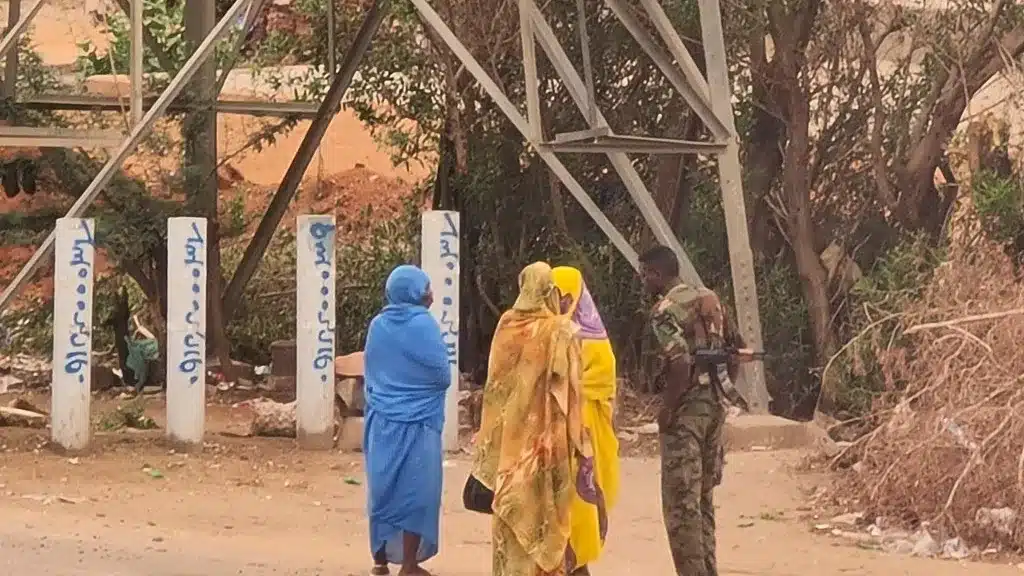
Zeinab’s attempt to escape the war-ravaged city of Khartoum in search of safety was thwarted by paramilitary fighters, who subjected her and other women on the journey to harm, denying them the chance to find refuge.
In mid-May, one month after fighting broke between Sudan’s army chief and his deputy (head of the paramilitary group RSF) Zeinab says, herself, her sister and other women who were fleeing Khartoum in a minibus were raped.
The vehicle transporting them was stopped at an RSF checkpoint. There, fighters separated the female from male passengers.
Terrified, they were marched into a warehouse where a man “in civilian clothes who seemed to be their commander” ordered Zeinab to the ground.
The woman tried to hide her younger sister, in vain. As she attempted to resist she was soon obliged to give up, she recounted her ordeal from another country where she found refuge.
“I was pinned down” one man pointing a rifle to her chest “while the other raped me,” Zeinab told AFP. “When he was done, they switched. They wanted to keep my sister with them. I begged them on my hands and knees to let her go.”
“I was sure we were about to die,” she told AFP, revealing, her younger sister and two other women, one with an infant daughter, were all raped.
Rape, a weapon of war
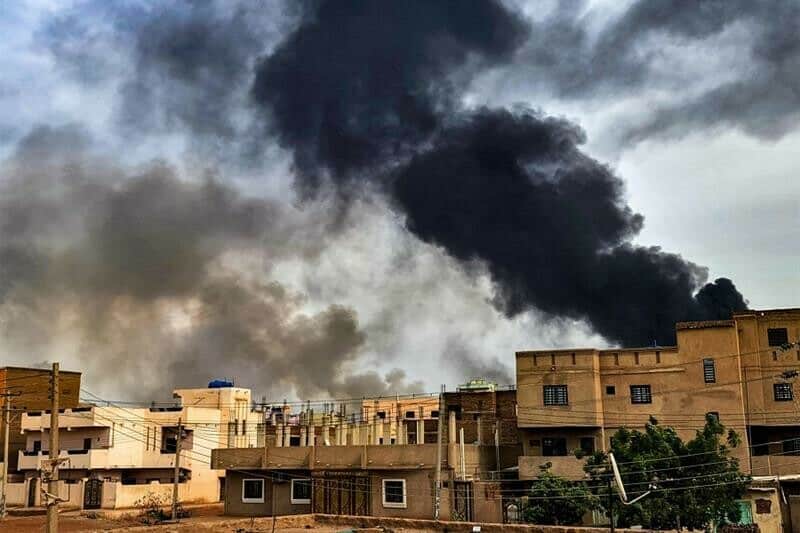
Dozens of women have reported similar attacks — in their homes, by the roadside and in commandeered hotels — since the war erupted in mid-April between the army and the paramilitary Rapid Support Forces.
Zeinab and the other women raped on that fateful day were eventually allowed to leave and escaped to Madani, 200 kilometers away, where they reported the attack to police and went to a hospital.
“We’re not the first people this has happened to, or the last,” she said.
Sudan’s war has claimed at least 1,800 lives and displaced more than 1.5 million people.
The horrors of the conflict have been compounded by a wave of sexual violence, say survivors, medics and activists who spoke to AFP.
In the retail sector last week, theGhana cedi appreciated by a favorable 0.43% versus the US dollar.
It traded at a mid-rate of ¢11.73 to one US dollar.
The local currency, however, depreciated against the pound and the euro respectively.
The year-to-date loss of the cedi to the American greenback hovered around 12%.
On the interbank market, the local currency has, however, depreciated by about 20% to the US dollar. It is currently selling at ¢10.98 to one dollar.
Rating agency, Fitch, upgraded Ghana’s Local Currency (LC) on June 6, 2023, from Ca to Caa3.
Additionally, the rating agency maintained a stable outlook on the local currency, expecting that a successful foreign currency restructuring and a continued disbursement from the International Monetary Fund would lead to further LC upgrades.
Analysts believe the local currency upgrade will improve investor sentiment and strengthen the cedi against the dollar this week as the market reacts favourably to the LC upgrade.
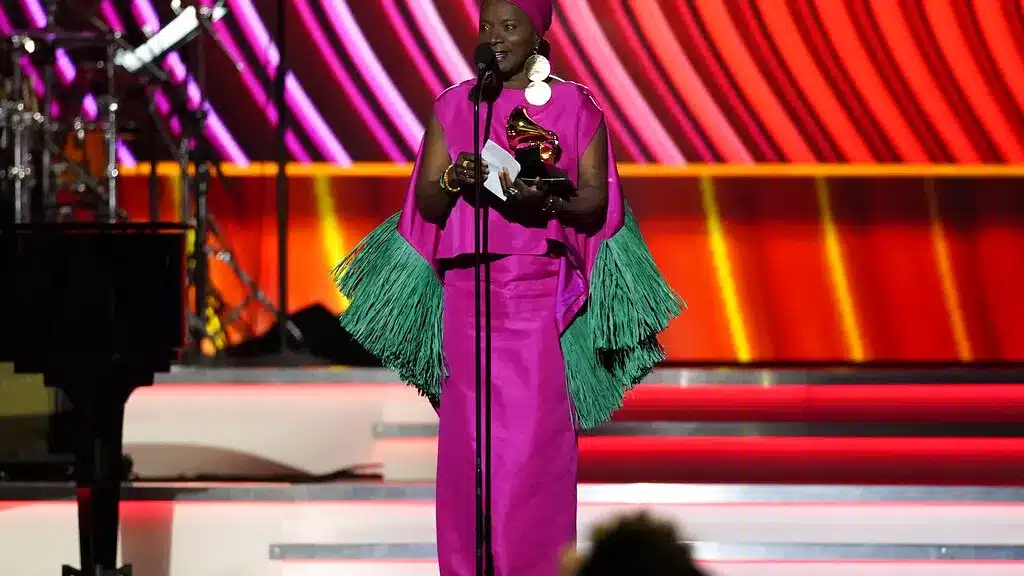
As part of their ongoing commitment to diversity and as a tribute to the genre, the Grammy Awards of the American music business announced on Tuesday that they will present a gramophone to the greatest African music performance at their next ceremony.
The new award covers a wide range of styles, from Afrobeat and Afro-fusion to Kwassa Kwassa and Ndombolo from the Democratic Republic of Congo, Ghana drill, Afro-House and South African hip-hop, said the Recording Academy, which brings together music industry professionals, in a press release.
The category will reward “recordings that use the unique local expressions of the African continent”, the Grammys organisers added.
Long accused of not sufficiently reflecting the diversity and evolution of the music industry, the Grammy Awards have been seeking for years to broaden the range of styles and registers of awards. The category of best soundtrack for a video game was added in 2022.
Musicians from African countries, such as French-Beninese singer Angélique Kidjo (5 wins, 14 nominations) and Nigerian singer Burna Boy (one win, 6 nominations), regularly dominate the Grammy world music categories.
At the 65th edition on 5 February in Los Angeles, a trio led by South African DJ-producer Zakes Bantwini, a pillar of local house music, won thanks to a track in Zulu in the best world music performance category.
The 2024 edition will also honour two other new categories: best alternative jazz album and best dance pop recording. In 2023, 91 awards were presented in as many categories, including pop, rock, classical, hip-hop, gospel and country.
Seasoned highlife artist from Ghana, Amakye Dede, has said that he was forced by external authorities to crown Kuami Eugene as the “king of future highlife.”
It can be recalled that following that particular incident, Amakye Dede had faced numerous criticisms from various individuals in the music industry, including record producer Zapp Mallet.
However, clarifying the circumstances surrounding his decision in an interview with Asaase radio, Amakye Dede said,
“Although I went ahead with it, it was not my personal choice. They pressured me into crowning Kuami Eugene.”
To buttress his point, the veteran highlife singer also disclosed that he initially handed over the crown to someone else to present, but was later persuaded to proceed with the act.
The “Su fre wo Nyame,” said he reluctantly carried out the gesture.
The most recent division within the Anglican Church arises following remarks made by the Archbishop of Canterbury regarding Uganda’s recently passed legislation.
On Wednesday, the chairperson of a conservative Anglican organization leveled allegations against the global leader of the Anglican Church, asserting that his critique of Uganda’s recently enacted anti-LGBTQ legislation perpetuated colonialism.
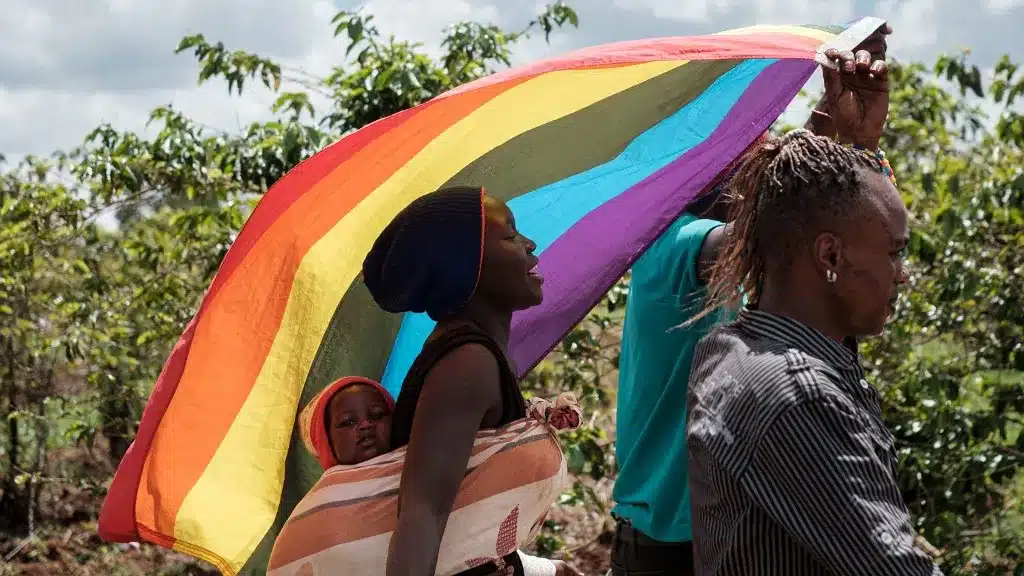
The new legislation imposes the death penalty for certain same-sex acts and a 20-year prison sentence for “promoting” homosexuality.
“It seems the history of colonisation and patronising behaviour of some provinces in the northern hemisphere towards the South, and Africa in particular, is not yet at an end,” said Bishop Laurent Mbanda, chair of the Global Anglican Future Conference (GAFCON) and head of Rwanda’s Anglican Church.
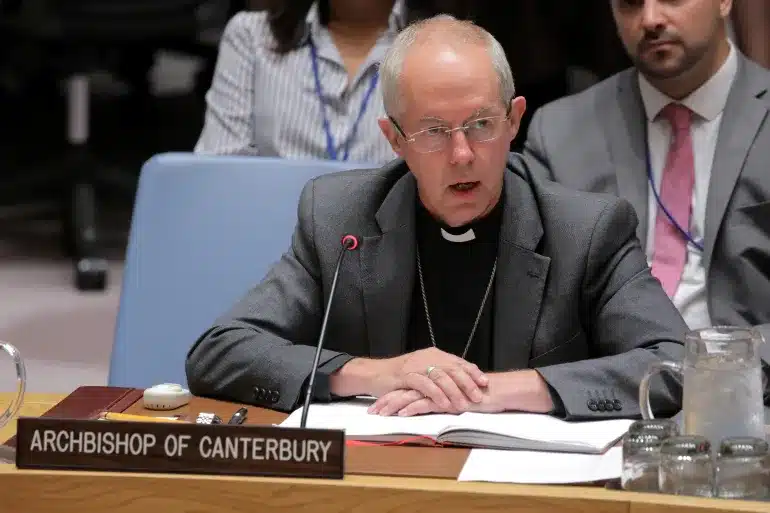
He was referring to Justin Welby, head of the Church of England and leader of the worldwide Anglican Communion’s 85 million members, who said last week that he had written to Ugandan Archbishop Stephen Kaziimba.
The letter expressed “grief and dismay” at Kaziimba’s support for the law.
Welby had said last week that he was aware of the history of British rule in Uganda and his statement was not about imposing Western values, but a reminder of the commitment “to treat every person with the care and respect they deserve as children of God”.
In response, Archbishop Kaziimba said last week that Welby “has every right to form his opinions about matters around the world that he knows little about first-hand”.
Mbanda’s statement mentioned but did not explicitly offer support for the Ugandan law.
The law has triggered widespread Western criticism including threats by United States President Joe Biden and others to cut aid to Uganda and impose other sanctions.
Issues of lesbian, gay, bisexual, transgender and queer (LGBTQ) rights have sharply divided Anglicans, with the church’s GAFCON coalition of conservative adherents among the most critical.
Anglicans created GAFCON in 2008 in response to what the group says was Western churches’ abandonment of Bible-based doctrines. GAFCON claims to represent the majority of all Anglicans worldwide.
In February, another splinter group, the Global South Fellowship of Anglican Churches, said it no longer recognised Welby’s leadership of the Anglican Communion after the Church of England announced it would allow priests to bless same-sex couples.
The Church of Uganda says 36 percent of Uganda’s population of around 45 million are Anglicans.
Campaigns in Egypt demand that young females no longer get circumcised. The 28 million women who have previously undergone genital mutilation have just one private clinic to turn to for assistance, even if the state wishes to safeguard future generations.
Nourhane, in her thirties, took the plunge at the end of 2021. This resident of Alexandria, in the coastal north, who speaks under a pseudonym, turned to surgeon Reham Awwad to “become once again the one who decides for (her) body”.
Eight months after a reconstruction operation, her chronic pain has been replaced by “completely new sensations” and “a clear physical and psychological improvement,” she explained.
It has only been possible to carry out this type of operation in Egypt since 2020.
By founding Restore FGM, Dr Awwad and her colleague Amr Seifeldin have offered victims a rare space in a country where disclosing excision is still taboo.
Surrounded by psychologists, they offer therapies, plasma injections to regenerate damaged tissue and clitoral reconstruction.
“Surgery is the last resort”, insists Dr Awwad, adding that plasma injections combined with psychological support “can reduce the need for surgery by 50%” and avoid another traumatic procedure.
This is the option being considered by Intisar, who is also speaking under a pseudonym. “Something in me has been broken, and I want to repair it”, told the forty-year-old.
When she was 10, “my grandmother took me to a doctor who excised me”, and she kept saying “it’s for your own good, you’re better off like that”. Despite being a doctor and the headmistress of her school, her parents had agreed to the operation during the summer the peak of girl circumcisions, according to campaigner Lobna Darwish.
An old tradition now medicalized
To combat this practice, “we need to run prevention campaigns in schools before the summer holidays”, argues Ms. Darwish, who oversees gender issues at the Egyptian Initiative for Personal Rights (EIPR).
The figures are staggering according to the authorities, 86% of married Egyptian women aged between 15 and 49 had been circumcised by 2021. UNICEF estimates that 200 million women in the world have been circumcised. More than one in ten is Egyptian.
In the most populous of Arab countries, excision involves the removal of the clitoris and labia minora. According to the World Health Organization (WHO), it causes pain, hemorrhage, infections, painful sexual relations and complications during childbirth.
Although illegal since 2008 and regularly denounced by the Muslim and Christian authorities, this age-old practice remains widespread in the patriarchal and conservative country, where many clinics offer it.
After years of campaigning against traditional excisers, three quarters of Egyptian women have been circumcised by a doctor, according to official figures.
“Excision cuts across all social classes,” says Intissar, now a journalist.
Promoted as a “cosmetic” operation, she continues, it is in fact aimed at “disconnecting women from their bodies and their pleasure”.
“We were told that it was religious, that it was better, cleaner”, agrees Nourhane, who was mutilated at the age of 11 with her eight-year-old sister under the gaze of the women in her family.
Egypt isn’t the only country that practices this ritual in Africa.
The Ghana Statistical Service (GSS) has published its first report on the variations in food prices across the 16 regions for the month of May 2023, which shows an inflation rate of 42.2%, up 1% from the previous month’s rate of 41.2%.
Food price inflation also climbed from 48.7% to 51.8%.
However, non-food inflation dropped from 35.4% in April to 34.6% in the month of May 2023, inflation on locally produced items reduced from 38.2% in April to 36.2% in May 2023 while inflation on imported items also increased from 43.1% to 43.8%. This means year on year inflation for May 2023 is 42.2%.
However, month on month inflation for May 2023 stood at 4.8% as against 2.4% rate recorded in April 2023.
Food inflation recorded for the month was 4.3% while the month of May recorded 6.2%.
Non-food inflation also rises from 0.7% to 3.5%
Presenting the highlights from the report, Government statistician, Prof. Samuel Kobina Annim, indicated that price variations across regions are commodity specifics as the pattern observed differ from the selected food items.
He said, the findings from the report paint the need for strategies to address regional food price disparities “effects at driving down inflation may be hastened with the engagement of sub-national governmental agencies”.
The key finding from the report was that food price variation within regions is generally larger than price variation across regions: eight out of the ten items had higher within regional variation than between regions.
Also there is less variation across regions for commodities with standard packaging such as milk and tomato paste that have multiple regions recording the same median price.
Items without standard packaging such as cassava and plantain show substantial variations across regions.
Based on the selected food items, Greater Accra Region recorded the highest median price in April 2023 followed by the Western North than Ahafo regions.
Western region North and Ahafo who had the highest median price for three items each were the only regions to have the highest median price for more than one item.
The report was launched by the government statistician and the representative of the Vice-Chancellor of the Kumasi Technical University (KsTU), Ing. Prof. Osei-Wusu Achaw.
The programme was held at KsTU following the release of the monthly consumer price index (CPI) and inflation for May 2023 on 14th June 2023.
As the Ghana Statistical Service (GSS) prepares to issue the Consumer Price Index (CPI) numbers for May 2023 today, the market expects a further decline in headline inflation into the upper 30s.
This expected decline comes on the back of recent positive indicators – such as a favourable base effect, a decrease in global crude oil prices and the cedi’s relative stability against major currencies, including the US dollar. The potential lower CPI rate for May 2023 is expected to provide valuable insights for bond pricing.
Prior to this anticipated data release, consumer inflation dropped in April 2023 – easing to 41.2 percent compared to 45 percent in March and supporting the notion of a promising downward trend in prices of goods and services. The data released by GSS demonstrates a gradual slowdown in the rate of price increases. In March 2023, inflation dropped significantly from 52.8 percent in February to 45 percent. Additionally, between March and April 2023 the rate of price increase slowed from 7.8 percentage points to 3.8 percentage points.
May 2023 saw the country’s private sector experience a fourth consecutive month of expansion, with the S&P Global Ghana PMI standing at a near 1-1/2-year high of 51.3 – unchanged from the previous month. New orders grew at the fastest pace since September 2021, driven by improved demand amid the sustained slowdown in inflation. As a result companies expanded their purchasing activity and employment, effectively preventing backlogs of work. The availability of raw materials also improved, leading to a series-record improvement in suppliers’ delivery times. Input costs and selling prices both slowed significantly.
The outlook for business activity over the next 12 months improved to its highest level since January, with hopes of stable prices, exchange rates and support from the IMF.
The Monetary Policy Committee (MPC) of the Bank of Ghana (BoG) decided to maintain the Monetary Policy Rate (MPR) at 29.5 percent. The MPC cited a rapid easing of underlying inflationary pressures and decreasing inflation expectations as the basis for this decision. The International Monetary Fund (IMF) has urged the central bank to keep a tight monetary policy until inflation is on a clear downward trajectory, and to eliminate monetary financing of the fiscal budget. In line with this recommendation, the MPC tightened financing conditions in its March 2023 meeting by raising the policy rate to a record high of 29.5 percent and increasing the Cash Reserve Ratio (CRR) to 14 percent.
In a positive development for Ghana’s credit rating, Moody’s Investors Service upgraded the country’s local currency long-term issuer rating from Ca to Caa3, maintaining a stable outlook. This upgrade is a result of government’s successful primary local currency debt restructuring, reducing the expected losses on local currency debt in the future. The debt exchange has provided Ghana with fiscal relief and diminished the need for further debt restructuring in the near- to medium-term. However, the Caa3 rating still reflects the existing risk of potential default until Ghana addresses its remaining local currency debt and restructures its foreign currency debt.
The market believes that the combination of declining inflation, positive economic indicators and government’s debt restructuring efforts has created a balanced outlook for Ghana’s economy. However, risks still exist; such as the potential for further negotiations regarding the restructuring of foreign currency debt and limitations on accessing local currency funding.
Nevertheless, the expectation of a smooth foreign currency debt restructuring process – along with fiscal and external adjustment supported by the IMF – contributes to the overall positive sentiment surrounding Ghana’s economic prospects.
In order to improve Accra’s electricity transmission, President Nana Akufo-Addo has opens a 161 kilovolt (Kv) bulk supply point (BSP) power plant in Accra Central.
The project is worth US$40million and funded by the Japanese government – aimed at facilitating the transmission of power and ensuring stable power to residents and industries in the Central Business District (CBD) of Accra.
The president in his keynote address mentioned that benefits of the project include reduction of transmission and distribution losses, enhancement of high electricity distribution levels, improving operating voltage to consumers – and an end of overloaded substations.
He reiterated that government is committed in driving the country to achieve universal access to power by the end of his tenure in office.
“I want to assure all of you that my government will continue working to ensure a consistent power supply, not only in Accra but all over the country. Electricity is no longer a luxury but a great enabler of development, and we must commit ourselves to universal coverage in this country,” he said.
Mr. Akufo-Addo further commended the Japanese government for its support, especially in addressing power sector challenges of the country.
Japanese Ambassador to Ghana, Mochizuki Hisanobu, on his part stressed that as a bilateral partner his country is committed to ensuring development in both countries in a win-win situation. He added that the grant is part of a long-lasting bilateral cooperation to improve the power transmission and distribution system in Accra.
The project was executed by the Japanese International Cooperation Agency (JICA) with Ghana Grid Company Limited (GRIDCo) as the implementing agency, while the Electricity Company of Ghana (ECG) was a collaborating partner and beneficiary.
Minister of Energy Matthew Opoku Prempeh emphasised that without energy there can be no socio-economic development; therefore as government strives to make Ghana an industrial economy, the essence of power cannot be overemphasised.
“This inauguration comes after the Pokuasi and Kasoa BSPs in recent times, all with the aim of ensuring stable power supply to residents and industries in the capital city. My ministry will ensure that there will be no shortage of fuel for powering our plants, hence curtailing power outages (dumsor),” he said.
The project will, among other things, ensure reinforcement of the power supply in Accra, evacuate additional capacity for projected load growth within the CBD, and reduce the cost of extending and expanding the medium voltage (MV) network.
The Accra Central BSP also known as ‘The project for reinforcement of power supply to Accra central’, is to cater for the annual 10 percent growth rate in power demand due to modernisation of the city.
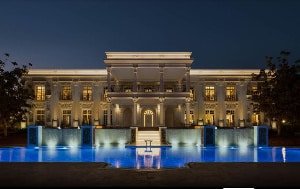
In Dubai, where luxury real estate is in high demand, a palace reminiscent of Versailles is on the market for Dh750 million ($204 million), making it the most expensive home there.
The home in the Emirates Hills neighbourhood has 60,000 square feet of indoor space though only five bedrooms: At 4,000 square feet, the primary bedroom is bigger than most homes.
The ground floor has rooms for dining and entertaining. Other amenities include a 15-car garage, indoor and outdoor pools, two domes, a 70,000-liter (15,400-gallon) coral reef aquarium, a power substation and panic rooms. It sits on a 70,000-square-foot lot in a gated community overlooking a golf course.
The property – nicknamed the “Marble Palace” by the selling agents – was built using an estimated Dh80 million to Dh100 million in Italian stone. Construction took nearly 12 years and was completed in 2018, according to Luxhabitat Sotheby’s International Realty, which is selling the property. Tasks included the application of 700,000 sheets of gold leaf by 70 skilled workers toiling more than nine months, the brokerage says.
The home is currently decorated with about 400 pieces from the owner’s personal art collection, primarily 19th-century and 20th-century statues and paintings; the owner is prepared to negotiate about including them and furnishings in the purchase.
The owner, a local property developer, declined to be named.
“It’s not everybody’s taste or style,” Luxhabitat Sotheby’s broker Kunal Singh says, well aware that buyers will either love it or hate it.
The Dubai property market has been on a tear since late 2020, an uplift that has lasted much longer than other global property booms during the pandemic. Dubai’s handling of the pandemic enabled the city to reopen quickly, attracting bankers who transferred from places like Singapore or Hong Kong.
Several recent mega deals include the Dh125 million sale of a plot of empty beachfront land and the purchase, for Dh420 million, of a penthouse. Still, the price per square foot of the Marble Palace – Dh12,500 – is more than double what other properties in Emirates Hills have fetched. The most expensive home sale previously in the neighbourhood was for Dh210 million, at Dh5,614 per square foot, in August 2022, according to Dubai property records.
Only one listing in the city rivals this mansion: A planned penthouse apartment in a project called Bugatti by Binghatti is also being offered at Dh750 million but has yet to be built. (Generally, properties that are move-in ready have commanded higher prices than those under construction.) That apartment – or “sky mansion,” as the developer calls it – will come with a car elevator and is due to hit the market in about three years.
Singh estimates that there are only about five to 10 potential buyers in the world are wealthy enough – and interested in its look – to buy the Marble Palace.
Singh says the property’s price is partly justified by the value of the time and materials that went into building it. The location is minutes from the Palm Jumeirah and about 25 minutes by car from the Dubai International Financial Center business district.
Emirates Hills, a gated community, was created two decades ago and has often been described as Dubai’s Beverly Hills, without the movie-industry connections. A golf course runs through the middle. The total lot size of the Marble Palace is one of the largest in the community. An adjacent plot of about 6,000 square feet could be purchased or leased from the developer, potentially for tennis or padel ball court.
The primary suite includes his-and-her bathrooms. The second-largest bedroom suite is 2,500 square feet, and guest rooms are each about 1,000 square feet. There are 12 staff rooms with space for up to 25, and two bank vaults.
Bank of Ghana’s interbank exchange rates has it that the Ghana Cedi is now trading against the dollar at a purchasing price of 10.9654 and a selling price of 10.9764 as of today, June 14, 2023.
At a forex bureau in Accra, the dollar is being bought at a rate of 11.50 and sold at a rate of 11.80.
Against the Pound Sterling, the Cedi is trading at a buying price of 13.8456 and a selling price of 13.8617.
At a forex bureau in Accra, the pound sterling is being bought at a rate of 14.35 and sold at a rate of 14.95.
The Euro is trading at a buying price of 11.8491 and a selling price of 11.8550.
At a forex bureau in Accra, Euro is being bought at a rate of 12.20 and sold at a rate of 12.80.
The South African Rand is trading at a buying price of 0.5911 and a selling price of 0.5917.
At a forex bureau in Accra, South African Rand is being bought at a rate of 0.30 and sold at a rate of 0.90.
The Nigerian Naira is trading at a buying price of 42.9206 and a selling price of 42.0299.
At a forex bureau in Accra, Nigerian Naira is being bought at a rate of 12.00 Naira for every 1 Cedi and sold at a rate of 19.00.
For the CFA, it is trading at a buying price of 55.7128 and a selling price of 55.7682.
At a forex bureau in Accra, CFA is being bought at a rate of 17.00 CFA for every 1 Cedi and sold at a rate of 21.00 CFA for every 1 Cedi.
Our forex bureau rates are provided by Afriswap Bureau De Change in Osu, Accra.
Note that these rates may be different at a forex bureau near you. Our forex bureau rates are provided by Afriswap Bureau De Change in Osu, Accra.
Minister of trade and industry, Kobina Tahir Hammond, has stated that the government is prepared to help the private sector increase domestic production of baby food in the nation through its One District One Factory initiative
This, he said, will reduce the number of import bills on infant food.
Speaking on the floor of parliament on Tuesday, June 13, 2023, KT Hammond noted that the import bill for the preparation of infant foods which stood at about US$25 million in 2021 witnessed a sharp decline to US$20 million in 2022.
He lauded some private companies producing nutritious, fortified blended infant foods locally.
“Mr Speaker, the import bill for preparations for infant foods which was approximately US$25 million in 2021 reduced to US$20 million in 2022. Mr Speaker, in this regard, government will continue to assist the growth of the food sector through targeted interventions, especially companies specializing in the manufacturing of food preparations for infant use,” he said.
“This will further reduce the import bill on infant food preparations. Speaker, more specifically, government is supporting the private sector to enhance the local production of food preparation for children. This is proudly through the 1D1F programme…” the Trade and Industry Minister stated.
Government’s One District One Factory initiative seeks to establish a factory in all districts across the country.
This, according to the government will boost local production which will subsequently, improve its industrialization agenda.
President Nana Addo Dankwa Akufo-Addo on August 25, 2017, launched the 1D1F programme at Ekumfi in the Central region.
He then cut sod for the commencement of the first factory, Ekumfi Fruits and Juices.
In 2022, President Nana Addo Dankwa Akufo-Addo announced that 106 out of 278 factories under his government’s 1D1F initiative were operational.
He added that 148 factories were under construction while 24 were at the mobilization stage.
The president made this known during the 2022 State of the Nations Address in Parliament.
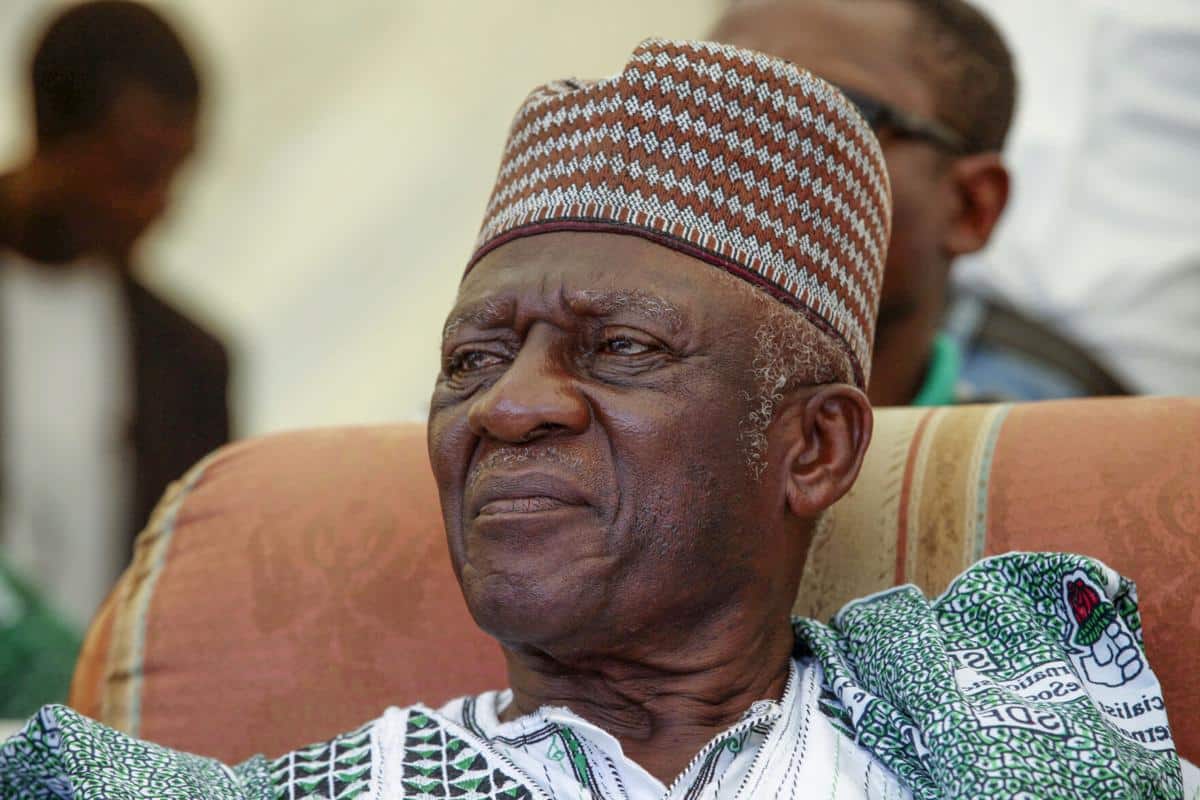
Cameroonians are reacting to the passing of John Fru Ndi, a legendary rival of President Paul Biya, with sadness and grief. After a protracted illness, the founder and head of the Social Democratic Front (SDF), the major opposition party in parliament, passed away on Monday at the age of 81. In the presidential contests of 1992, 2004 and 2011, Fru Ndi ran against Biya and finished second each time.
“Ni John Fru Ndi for the SDF (Social Democratic Front, editor’s note) was the guide, that is to say, the man who traced the furrow along which we walk, the man who against all odds imposed the return to a multi-party system in Cameroon on 26 May 1990 and with it a set of individual and collective freedoms granted to the entire Cameroonian people” Marcel Tadjeu , Chairman of the Douala 5 SDF electoral constituency told our correspondent.
Fru Ndi began his political career in the 1980s as a member of Biya’s RDPC. He founded the SDF in 1990 when Cameroon officially ended one-party rule. Today his SDF has only five seats in the current parliament. It held 18 in the previous legislature but lost influence to the all-powerful Cameroonian People’s Democratic Movement (RDPC) led by 90-year-old Biya, who has ruled Cameroon since 1982.
Fru Ndi was born in 1941 in Baba Il, near Bamenda in the northwest, then under British mandate. The primarily English-speaking Northwest and Southwest regions became part of Cameroon in 1961, a year after the French-speaking regions gained independence from Paris. They have been plagued by conflict between the army and separatists since the latter declared independence in 2017, after decades of grievances over perceived discrimination by the country’s French-speaking majority.
Biya has resisted calls for wider autonomy and responded with a brutal crackdown while Fru Ndi advocated a federal solution, rather than out-and-out independence for the Anglophone regions. This earned Fru Ndi the wrath of most radical separatists and perhaps brought to more scrutiny the positions he has held as an opposition leader over the decades.
“A lot of Cameroonians died when I was still very young. But today, we understand that he was corrupt. He was persuaded perhaps by the powers that be, because in reality, you really have to be strong” says Mathieu Epoune, a computer scientist in Yaounde. “Yet he really should be a great role model. But what I remember about him, it’s true, we don’t talk much about the dead, but what I remember about him is that he did aspire to change, but in the end he was still corrupted.” Epoune added.
Nicknamed “the Chairman”, Fru Ndi’s SDF is periodically plagued by internal crises and in recent years had his position contested by a faction of senior party officials.
His house was torched and he was kidnapped briefly in 2019 by an armed group, which demanded he pull his MPs out of parliament. Both the army and armed groups are regularly accused by the United Nations and international NGOs of crimes against civilians in the Anglophone regions.
“We lost our father, our grandfather” says one member of the SDF, before adding that he was the person who taught Cameroonians “what is democracy”.
The overcrowded boat that overturned early on Monday on the Niger River in the Pategi region of Kwara state, is still being searched for by locals and police, according to police spokesperson Okasanmi Ajayi.
He said 100 people had been rescued so far.
Most of those who drowned were relatives from several villages who attended the wedding together and partied late into the night, according to Abdul Gana Lukpada, a local chief. They arrived at the ceremony on motorcycles but had to leave on the locally made boat after a downpour flooded the road, he said.
“The boat was overloaded and close to 300 persons were in it. While they were coming, the boat hit a big log inside the water and split into two,” said Lukpada.
The wedding was held in the village of Egboti in the neighboring Niger state, said Usman Ibrahim, a resident. Because the accident happened at 3 a.m., it was hours before many people knew what had happened, he said.
As the passengers drowned, villagers nearby rushed to the scene and managed to rescue about 50 at first, Lukpada said, describing early efforts to rescue the passengers as slow and “very difficult.”
As of Tuesday afternoon, officials and locals were still searching for more bodies in the river, which is one of Nigeria’s largest. Police spokesman Ajayi said the rescue operation would continue through the night until Wednesday.
Locals said it was the deadliest boat accident they have seen in many years.
By Tuesday evening, all the bodies recovered so far had been buried, most near the river, in accordance with local customs, Lukpada said.
Kwara Gov. Abdulrahman Abdulrazaq’s office issued a statement expressing sadness for the families of those killed and saying that he “continues to monitor the rescue efforts already mounted since Monday night in search of possible survivors.”
Boat accidents are common in many remote communities across Nigeria, where locally made vessels are commonly used for transport. Most accidents are attributed to overloading and the use of poorly maintained boats.
Social media rumors that President Yoweri Museveni was in an Intensive Care Unit (ICU) because of Covid-19 have been debunked by the president.
The President said on Tuesday evening that he is responding well to treatment and would have come out of isolation had he not tested positive for the disease on Sunday.
“I also noticed some few individuals from, I think Kenya, saying that I was in ICU etc. If I were in ICU, the government would inform the country. What is there to hide? However, I have not been to bed as a sick man in the house here except for sleeping, let alone being in a hospital bed, whether ICU or otherwise. Continue praying, we shall overcome,” he tweeted.
He thanked Ugandans for their support.
“My social media team brought me messages that are overwhelmingly supportive. Thanks so much fellow Ugandans. I appreciate those who took the trouble to sign the boards at the Gate of Nakasero,” he added.
Ugandans have taken to Twitter and other social media platforms to wish the veteran ruler a quick recovery after he declared that he had caught the coronavirus disease at his last public appearance on Thursday.
Museveni, 78, while delivering his State of the Nation address, said he started experiencing mild flu-like symptoms three days earlier but ignored it and continued with his schedule.
“I noticed some mild flu-like symptoms in one of the nostrils (the right one). That is when I called my doctors to take samples and rule out corona. They took three samples- one rapid and two PCRs. The rapid one was negative, and so was one of the PCRs. However, one of the PCRs was positive,” he said.
The President reportedly took another test after his address which confirmed he had contracted the virus, forcing him to take a “forced leave” for the first time in 53 years.
Giant board
A group of his supporters led by Rubaga Deputy City Resident Commission Anderson Burora and Kampala Central mayor Salim Uhuru among others, have since launched a get well soon campaign for the public to express their sympathy to the President.
Well-wishers have been allowed to place flowers at the entrance of State House in Nakasero, in Kampala city centre, and to write get-well messages on a giant board with his photo erected there.
For many Ugandans, it is the first time they’ve heard that the President, in power for 37 years, has fallen sick.
Some well-wishers are leaving their telephone contacts, hoping the President will call them when he recovers.
“We are here in solidarity to wish the president a quick recovery and also appreciate him for signing the anti-gay law that will preserve the African values and culture,” Ashraf Barigye, the chairman of Team Muhoozi Boba Boda initiative Uganda said on Tuesday.
The President, who is now in isolation at State House, said he was experiencing mild headaches but was taking vitamin C and other vitamins to manage the symptoms of Covid-19.
Museveni tested positive for Covid-19 after a ten-day retreat with Members of Parliament from the ruling National Resistance Movement (NRM) at the National Leadership Institute Kyankwanzi in central Uganda.
He delegated his work to Prime Minister Robinah Nabbanja.
The United States has updated its travel advice for Uganda, following the promulgation in May of the “Anti-Homosexuality Law 2023”, considered to be one of the most repressive in the world, according to a note published Monday evening by the State Department.
The law provides for heavy penalties for people who have homosexual relations and “promote” homosexuality. The crime of “aggravated homosexuality” is punishable by death, a sentence that has not been applied for years in Uganda.
The US State Department, which had already warned its nationals to “reconsider travel” to Uganda because of the terrorist attacks and crime rate, said that the enactment of the anti-homosexuality law “increases the risk that LGBTQI+ individuals, and those perceived to be LGBTQI+, will be prosecuted and sentenced to life imprisonment or death”.
The US authorities also warned of the risk of “harassment or attacks by vigilante groups” against LGBT+ people.
“The US should understand that Uganda is a sovereign state that legislates for its people and not for the Western world. They can issue travel advisories because it is their right, but it should be remembered that blackmail has no place in the modern world,” Ugandan Information Minister Chris Baryomunsi told AFP, adding that the US decision was “expected”.
President Yoweri Museveni, who has ruled this African country in the Great Lakes region with an iron fist since 1986, promulgated the law on 29 May, sparking outrage from human rights organizations and many Western countries. Despite threats of sanctions, the Ugandan head of state assured the world that “no one will make us move”.
Denouncing a “tragic attack” on human rights, US President Joe Biden said he had asked his administration to study the consequences of this “shameful” law on “all aspects of cooperation between the United States and Uganda”.
The American authorities are considering “additional measures”, such as sanctions or restrictions on entry to their territory for “anyone associated with human rights violations or corruption,” he added.
The head of European diplomacy, Josep Borrell, also condemned the law as “contrary to human rights”.
In 2014, international donors had already reduced their aid following the passing of a law punishing homosexuality.
In particular, Washington suspended funding for government programs and imposed visa bans. European countries such as Denmark, Sweden, Norway and the Netherlands had also frozen part of their bilateral aid.
The law was eventually annulled by the Constitutional Court on the grounds of a technical defect in the vote.
Some 80 followers of a cult in eastern Uganda who travelled to Ethiopia in February at the call of a pastor to find salvation by fasting to death have been repatriated, the Ugandan authorities said on Tuesday.
The Church of Christ Disciples had travelled to Ethiopia after their pastor, Simon Opolot, said they would find Jesus after 40 days of fasting.
“Working with the Ethiopian government, we were able to organize their repatriation, and they are all safe and sound in Uganda,” Simon Mundeyi, spokesman for the Ugandan Ministry of Internal Affairs, told AFP.
He added that the pastor had not yet been arrested. “He has been put on the wanted list and will be apprehended,” he said.
Mr Mundeyi also said that the followers, from the Soroti region, about 300 kilometers north-east of the capital Kampala, had sold all their possessions on the grounds that the end of the world was near.
“But the Ethiopian authorities learned of their arrival in the country, recovered them and confined them until their repatriation documents were ready”, added Simon Mundeyi.
In 2000, more than 700 followers of the “Restoration of the Ten Commandments of God” sect of Protestant origin died in Uganda, an African country in the Great Lakes region, either in mass suicide ceremonies or killed by the sect’s leaders.
Some 300 followers burned to death in their church, which was barricaded from the outside, in Kanungu, in the south-west of the country, while the police exhumed the bodies of 400 people, mainly women and children, piled up in mass graves.
In neighboring Kenya, more than 250 people have been found dead so far since April in the Shakahola forest, near the coast, where followers of an evangelical sect advocating extreme fasting to “meet Jesus” were meeting.
The leader of the cult, Paul Nthenge Mackenzie, a former taxi driver who proclaimed himself a pastor, was arrested and is being prosecuted for “terrorism”.
Tanzanians are furious after learning that a middle-aged lady sexually assaulted an eight-year-old kid and exposed him to STDs.
Desderia Mbwelwa, 57, has been sentenced to 29 years in prison at a court on Friday but details of the verdict have not been widely reported until now.
On the day of the attack, the woman found the victim herding cattle at a village in southern district of Iringa and asked where his friends were.
She is then said to have sexually assaulted him under a tree after he said that his friends were not around.
The case had five witnesses including a doctor who examined the boy and confirmed he had injuries and had contracted sexual infections due to contamination in the genital area.
Mbwelwa is said to have defended herself by saying she is an adult with children and grandchildren who depend on her.
Her lawyer, Frank Mwela, said that he plans to appeal against the verdict because his client was not tested to confirm if she indeed had sexually transmitted diseases.
“My client was not tested positive for those diseases, which both my client and her witness have confirmed they do not have because one of the witnesses is her husband,” he said.
Rating Agency, Fitch, has stated that Ghana still needs to do more in restructuring its its debt of $400 billion.
According to the UK-based firm, there could be a second round of the Domestic Debt Exchange Programme (DDEP).
Ghana is seeking to get debt relief of about $10.5 billion from its external creditors for the next four years.
Speaking on key credit stories of African Sovereigns and Banks, Senior Director in charge of Emerging Market Economies at Fitch, Toby Iles, said, talks on the external debt restructuring have kept long.
“We haven’t had the official creditor committee meeting, so we still quite have a long way to go. Maybe the historic track record on the common framework is moving slowly…that is not great, maybe Ghana can be a bit different”.
“And there’s still quite a lot of work to do. And especially as mentioned, there may still be a lot happening on the domestic debt front”, he added.
Mr. Iles outlined further that the domestic debt exchange did not involve all domestic bonds.
“The domestic debt exchange in some way has been completed but there could still be more to come. In terms of the impact of that before moving to the external side [debt], this has clearly helped Ghana in terms of liquidity. So the interest due is much lower and the principal repayment will also be much lower in the near term. I think we are estimating that in 2023, this means 5% of GDP less in debt service interest in principal. So that’s quite meaningful”.
Again, the Senior Director in charge of Emerging Market Economies at Fitch, said despite liquidity improving, Ghana’s solvency issues have not been addressed.
“Though liquidity has improved, it doesn’t really address Ghana’s solvency issues. And so come three or four years from now, when coupon rates pick up again, repayment pick up again, the problem start again. That’s why there are these negotiations remaining with Eurobond holders which must be completed.”
When Nigerian chef Hilda Baci learned that she was currently the record holder for the longest cooking marathon by one individual, she was unable to contain her tears.
The 26-year-old garnered a lot of support from many people in Nigeria and beyond when she went on a journey to break the previous record held by an Indian chef, on Thursday, May 11.
The Nigerian Chef, following the official confirmation, was captured in a car with a friend when the news first broke.
“Oh my God, oh my God,” she repeated numerous times while jubilating excitedly in the car while staring at her phone.
Seconds later, Hilda started tearing up as the reality of the news hit her. “Thank you God,” she said.
Hilda also took to her Twitter account to acknowledge the news and support she has received from everyone, writing “This is the best news ever omg omg omg thank you so much.”
The Guinness World Records on Tuesday, June 13, officially updated their records to include Nigerian chef Hilda Baci for breaking the longest cooking marathon by an individual.
The GWR explained that almost seven hours were deducted from her final total because she mistakenly took extra minutes for one of her rest breaks early on in the attempt.
A disclosure by the the Ghana Statistical Services (GSS) indicates that over 75,000 children in Ghana partake in economic activities.
According to the GSS, nearly 38000 of the children between 5 to 9 years who engage in economic activities, have never been to school.
The service, in Monthly Press Release for June 2023, added that the 2021 Population and Housing Census showed that in all 419,254 children aged 5 to 17 years in Ghana are engaged in economic activities.
“Children aged 5 to 17 years worked on average 29.2 hours in the seven days preceding Census Night. Children 15 to 17 years worked an average of 35.2 hours, children 10 to 14 years worked an average of 26.5 hours (about 5 hours per weekday), and children 5 to 9 years worked an average of 19.8 hours (about 4 hours per weekday).
“Children engaged as paid apprentices worked the highest number of hours on average (48.4), almost twice that of those engaged as contributing family workers who worked the lowest hours on average (25.0). Children in the service sector worked 36.8 hours on average, while those in the agricultural sector worked an average of 25.6 hours.
“Nationally, 153,773 children aged 5 to 17 years engaged in economic activity had never attended school. Out of this number, 37,963 children were 5 to 9 years. In all, 94,748 children aged 5 to 17 years engaged in economic activity were also attending school during the census,” parts of the release.
The GSS also stated that more than 80 per cent of children between the ages of 5 and 9 years in six out of the 16 regions in Ghana, including the Northern, North East, Upper West, Savanah and Upper East Region, engage in economic activities.
All accounts of Ministries, Departments, Agencies, and Statutory Funds are to be transferred to a single Treasury Account as part of Ghana’s Economic Recovery Programme presented to the International Monetary Fund.
This is to be done by the end of 2023.
According to reports, the move is part of efforts to fully implement the Treasury Single Account programme.
This is to merge all accounts of all government institutions into a single account at the Central Bank for proper management and monitoring.
The move is also to reduce or address the issue of domestic borrowing which leads to a crowding out of the private sector.
This plan was contained in Ghana’s Economic Programme (PC-PEC) sent to the IMF as part of expected treasury reforms that government will undertake under the 3-year programme.
Ghana’s Public Financial Management Act 2016 stipulates for the establishment of a Single Treasury Account as a unified structure of government accounts that enables the consolidation of all amounts of money received by covered entities.
Ghana is currently running an economic recovery programme with the IMF aimed at restoring macroeconomic stability among other problems.
The programme is also to ensure the restructuring of Ghana’s high debts and push the country back to sustainable levels. After the reception of the first tranche of the $ 3 billion IMF loan, Ghana’s local currency has been upgraded from Ca to Caa3.
The local currency has also seen some stability in the past few weeks.
The sale of treasury bills this week is expected to earn an ambitious goal of GH3.79 billion for the government of Ghana.
The auction which will be held on June 16, 2023, is expected to get subscriptions from the 91-day, 182-day and 364-day bills.
The target is quite high compared to the subscriptions that the government has secured in the past few weeks.
Even though this week’s auction saw a 6.5% oversubscription, the amount is way lower than the set target for this week.
Last week, the government secured GH¢2.79 billion from the sale of treasury bills in its latest auction on June 12, 2023.
The auction saw an oversubscription of GH¢168.53 million even though interest rates have been rising.
According to the auction results from the Central Bank, the government secured GH¢1.50 billion from the 91-day bill, GH¢982.71 million from the 182-day bill, and GH¢308.36 million from the 364-day bill.
Interest rates, however, increased from 20.25% to 21.26% for the 91-day bill, 22.82% to 23.95% for the 182-day bill, and 27.36 to 27.82 for the 364-day bill.
Under the Self-Employed Enrolment Drive (SEED), the Social Security and National Insurance Trust (SSNIT) is stepping up its efforts to register more than 500,000 self-employed individuals by the end of the year.
The focus on pension plan for the self-employed is to provide income replacement and a guaranteed source of income during old age or permanent disability for the self-employed mostly in the informal sector.
Out of an estimated workforce of 11.5 million, according to the 2021 Population and Housing Census, there are over 9.9 million working population with 6.7 million being self-employed in the informal sector, which forms about 85 per cent of the Ghanaian economy.
As of April 2023, however, only 1.9 million workers are active SSNIT contributors with the private sector providing 62 per cent, and the public sector having 36 per cent of contributors.
The self-employed, mostly from the informal sector, makes up 1.8 per cent.
Speaking at a media training programme on SEED, Mr Charles Akwei Garshong, the SSNIT Public Affairs Manager, said increasing the enrolment of self-employed was needed to help SSNIT fulfil its mandate of providing pensions for all workers in the country.
“It’s our responsibility to ensure that every worker in Ghana has social protection. The SEED would help reduce old-age poverty and over-dependence on benefactors such as family relations, friends, and the State,” he said.
He highlighted the modalities for contribution as a self-employed to include declaration of a monthly salary, paying 13.5 per cent of the declared salary monthly and subscribing to a flexible periodic payment option of either a monthly contribution, quarterly, semi-annually, or annually.
Those payments, he said, could be made through mobile money wallet, debit cards, partner banks, at SSNIT offices and via USSD code.
He, however, pointed out that declared salaries could only be adjusted annually.
Mr Garshong said the SEED initiative would include a “Ye wo Abonten” campaign, which would be held on the last Friday of every month where staff would visit targeted business enclaves and other public centres to educate and enrol self-employed and informal sector workers.
He called on the media to encourage the self-employed and workers in the informal sector to join the Scheme as it was one of the surest ways to reduce and prevent poverty among the aged.
After nearly a decade of discussion over the restricted investment possibilities for employee retirement contributions, pension money will soon be invested in the real estate market.
This is because the National Pensions Regulatory Authority (NPRA), regulator of the pension space, has disclosed that the Pensions Act, Act 766, is being reviewed to diversify investment options of pension funds from the current fixed income market to other sectors – such as real estate, private and debt equities – in what could be described as a win for the economy.
The move became necessary following the Domestic Debt Exchange Programme (DDEP), NPRA’s Chief Executive Officer, Hayford Attah Kruffi, told the B&FT in Accra on the sidelines of a winding-down ceremony of the Swiss Secretariat for Economic Affairs (SECO)-supported project with the Authority.
“The NPRA is reviewing the investment guidelines. In fact, the sector minister has given me a deadline to complete the review and get back to him; so that we can undertake some kind of forbearance and also encourage trustees to move into some kind of alternative investments, rather than just the traditional investment areas.”
The NPRA investment guidelines guide trustees as far as investment of pension funds are concerned, primarily government bonds.
The review comes as no surprise, as implementation of the DDEP has shown that overexposure of pension funds to government papers will not only affect the retirement income of workers but literally bring the business of corporate trustees to the brink of collapse – with dire consequences for the business of other pension-related service providers with its related unemployment issues.
Some of the investment areas under consideration include real estate for example, Mr. Krufi said, adding that the funds will be allowed to be invested in private equity and private debt equity, among others, going forward.
The review’s overarching goal, he explained, is to ensure that “we can move away from the fixed income market or diversify pension investments in the country”.
Asked when the review will be completed, he responded “very soon” without giving a specific timeline. He added that: “We have to consult our stakeholders. As regulators, we don’t hold a repository of knowledge. Before you can have a very effective review, you have to ensure that all your stakeholders are on board”.
Reacting to whether the review process is long overdue, he said the existing law has served a good purpose and helped grow pension assets to about GH¢50billion – explaining that in an economy time changes, and “you will also have to review your investment decisions. For example, when you want to invest now, you have to consider things like the environment, governance and the rest. These things were not part of investment decision-making some years ago, but because of changes in society…”
The need to rethink investment options for pension funds was supported by Dr. Simone Haeberli, deputy Head of Mission and Head of Cooperation for the Swiss Embassy in Accra.
She said: “We saw through the current economic challenges and the debt exchange programme that, maybe, there is a need for a review of the Pensions Act; because pensions should have other opportunities than just investing in government bonds. This is something that needs to be looked into and government is already taking care of it; and I think that is a very good step for the pensions industry’s future”.
SECO project
In 2008, Ghana’s pension system was reformed with passage of the National Pensions Act 2008 (Act 766). The Act introduced the contributory 3-Tier Pension Scheme and established the National Pensions Regulatory Authority (NPRA), among other key provisions that seek to improve the country’s pension benefits and administration.
As a young regulator, the Authority faced a number of challenges in meeting its mandate. Therefore, the NPRA through government requested support from the Swiss government through the Swiss Secretariat for Economic Affairs (SECO) to provide needed capacity for the Authority to help it become a credible regulator.
The two-phase project started in 2014 and the second phase began in 2019. The total amount financed by Switzerland was 4.2 million Swiss Francs (approximately GH¢50million).
The project was aimed at strengthening institutional capacity with regard to supervision and regulation: including strengthening the NPRA’s governance and management structure; developing the NPRA’s legal and regulatory framework as well as supervisory compliance policy and programme – namely developing a Risk-Based supervision (RBS) strategic framework among other elements.
The project achieved among others the establishment of a Risk-Based Supervision System to provide efficient and effective supervision and regulatory oversight of the entire pension industry.
The project has been successfully completed, with some of the key results being the following: training the board of directors and management of the Authority to help create synergies in governance and management of the Authority; the establishment and implementation of a Transitional Risk-Based Framework and supervision systems for the Authority; and strengthening the Authority’s supervisory compliance, especially in its SSNIT oversight.
“The NPRA expresses its profound gratitude to the Swiss government for the support that has strengthened the Authority’s governance structure and enhanced its supervision and regulatory functions.
“The Authority is also grateful to the government of Ghana and its agencies which also provided assistance and support to facilitate the project’s implementation,” a statement from NPRA read.
Corporation beyond SECO
“We have quite a large investment or cooperation portfolio with government and the people of Ghana. Ghana is one of our longstanding partners in Africa, and we work along various fields ranging from micro-economic support to decentralisation support. So one of the large, incoming projects is to support the District Assemblies’ Common Fund to perform very well. We are also very active in the financial sector,” Dr. Haeberli noted.
She added that her country is also looking to cooperate with the Ghana Stock Exchange, Ghana Commodities Exchange, in addition to some value chain activities: “Aside from cocoa, we are supporting producers of cashew nuts and oil palm to improve productivity. We are also in collaboration with the Ministry of Energy to promote renewable energy – cleaner energy sources and efficiency with the aim of promoting a cleaner Ghana”.
Few hours after Guinness World Records confirmed Hilda Baci as the new world record-holder for the longest cooking marathon (individual), Social media s been buzzing with messages of congratulations.
Africans and Nigerians in particular pride over Hilda’s achievement as she put Africa on the map.
The joy on social media is priceless and Hilda cannot hold her tears of joy.
Finally!!!! Congratulations Hilda Baci!!!!! So proud of you!!! Genuinely happy!! You deserve it girl!!!! pic.twitter.com/cBDYw3d2cT
The Ghana Cedi is now trading against the dollar at a purchasing price of 10.9712 and a selling price of 10.9822, according to the Bank of Ghana’s interbank exchange rates for Wednesday, June 13, 2023.
At a forex bureau in Accra, the dollar is being bought at a rate of 11.50 and sold at a rate of 11.80.
Against the pound sterling, the cedi is trading at a buying price of 13.7041 and a selling price of 13.7189.
At a forex bureau in Accra, the pound sterling is being bought at a rate of 14.20 and sold at a rate of 14.80.
The euro is trading at a buying price of 11.7926 and a selling price of 11.8043.
At a forex bureau in Accra, the euro is being bought at a rate of 12.00 and sold at a rate of 12.70.
The South African Rand is trading at a buying price of 0.5622 and a selling price of 0.5628.
At a forex bureau in Accra, the South African Rand is being bought at a rate of 0.30 and sold at a rate of 0.90.
The Nigerian naira is trading at a buying price of 42.3119 and a selling price of 42.4250.
At a forex bureau in Accra, Nigerian Naira is being bought at a rate of 12.00 Naira for every 1 Cedi and sold at a rate of 19.00.
For the CFA, it is trading at a buying price of 55.5693 and a selling price of 55.6245.
At a forex bureau in Accra, CFA is being bought at a rate of 17.00 CFA for every 1 Cedi and sold at a rate of 21.00 CFA for every 1 Cedi.
Our forex bureau rates are provided by Afriswap Bureau De Change in Osu, Accra.
Note that these rates may be different at a forex bureau near you. Our forex bureau rates are provided by Afriswap Bureau De Change in Osu, Accra.
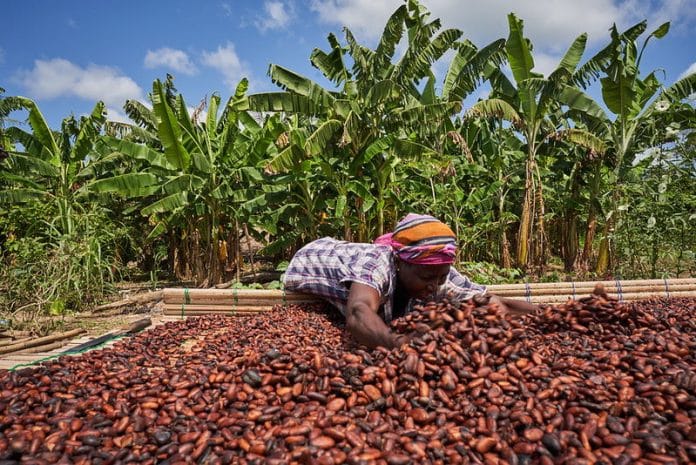
Due to mounting worries about how an El Nino weather phenomenon would affect the world’s chocolate output, cocoa prices increased last week.
Last Friday, cocoa prices reached their highest level in a month for nearest-futures contracts, building on the gains observed on Thursday due to worries about the El Nino weather event. It is worth noting that cocoa prices soared to a 12-year high in 2016 when a previous El Nino event caused a drought that severely affected global cocoa production.
This is particularly significant as the Ivory Coast, the world’s leading cocoa producer, is already facing a decline in supply.
The U.S. Climate Prediction Centre announced last Thursday that sea surface temperatures in the equatorial Pacific Ocean were 0.5 degrees celsius higher than usual, and wind patterns indicated the presence of El Nino conditions. In the previous month, the Climate Centre raised the likelihood of an El Nino weather pattern occurring between August and October to 94 percent, up from 74 percent in April.
Reduced supply from the Ivory Coast is another factor supporting cocoa prices, as reported by Barchart – a platform that monitors the Cocoa Futures Market. In the first two weeks of May, the Ivory Coast government disclosed that farmers had delivered a total of 2.09 million metric tonnes (MMT) of cocoa to the country’s ports during the 2022/23 marketing year, representing a 3.0 percent year-on-year decline.
According to a statement from the Ivory Coast agriculture minister on March 31, the mid-crop – which is the smaller of the country’s two annual harvests and began on April 1 – is expected to decrease by 25 percent compared to the previous year, reaching 450,000 metric tonnes (MT).
Quality concerns about the Ivory Coast mid-crop led to a rally in cocoa prices last month, with prices reaching their highest level in 6-3/4 years. Barchart commented that farmers had reported poor cocoa quality, with an average bean count of 120 per 100 grammes. Exporters generally prefer a count ranging from 80 to 100 per 100 grammes, with lower bean counts indicating better cocoa quality.
The decrease in cocoa supplies from Nigeria has also contributed to the price hikes. The Cocoa Association of Nigeria reported on May 24 that the country’s cocoa exports in April declined by 46 percent compared to the previous month – and 20.6 percent compared to the previous year, amounting to 9,924 metric tonnes (MT). Nigeria ranks as the world’s fifth-largest cocoa bean producer.
Cocoa prices have received additional support from projections made by the International Cocoa Organisation (ICCO) last month. The ICCO predicted that global cocoa stockpiles for the 2022/23 period would decrease by 3.5 percent year-on-year to 1.653 MMT. The organisation also highlighted the impact of weather variations, particularly in West Africa, which have compounded the expectation of a supply deficit. On the other hand, the ICCO forecasted that global cocoa production for 2022/23 would increase by 4.1 percent year-on-year to 5.017 MMT, while global cocoa grindings would decline by 0.6 percent year-on-year to 5.027 MMT.
The quarterly report released by the ICCO on December 1 provided a bullish outlook for cocoa prices. The report indicated that global cocoa production for the 2021/22 period had declined by 8.0 percent year-on-year to 4.823 MMT due to unfavourable weather conditions and diseases affecting cocoa yields.
Furthermore, the ICCO revised its previous estimate for global cocoa production downward by 419,000mt since September. The organisation also raised the projected global cocoa deficit for the 2021/22 period to 306,000mt, up from the September forecast of 230,000mt. In the previous season, global cocoa production reached a record high of 5.242 MMT, resulting in a surplus of 209,000mt in the global cocoa market.
Nevertheless, an increase in cocoa inventories is negatively impacting prices. Monitored cocoa inventories held in U.S. port warehouses reached an 8-year-3/4 month high of 5,730,012 bags on May 22. Similarly, cocoa inventories held in European port warehouses reached an 8-3/4 month high of 147,440mt on May 15, according to ICE monitoring data.
Stronger global cocoa demand
Growing global cocoa demand is driving bullish price trends in the market. According to recent reports, there are positive indicators supporting this upward trajectory. The National Confectioners Association disclosed on April 21 that cocoa grindings in North America during Q1 rose by 2.4 percent compared to the previous month, although there was a year-on-year decline of 4.4 percent totalling 109,666 metric tonnes (MT). Similarly, the Cocoa Association of Asia reported on April 20 that Q1 cocoa grindings in Asia increased by 4.09 percent year-on-year, reaching 222,028mt.
The European Cocoa Association shared its findings on April 13, revealing that cocoa grindings in Europe during Q1 experienced a 0.5 percent year-on-year growth, amounting to 375,375mt. This figure represents the highest Q1 grindings since 1999. Additionally, a cocoa exporter group, consisting of six major cocoa grinders, reported on April 19 that its Q1 cocoa processing surged by 22 percent year-on-year, totaling 189,405mt.
Weather condition
The Pacific Ocean usually experiences normal conditions when trade winds blow westward along the equator, carrying warm water from South America to Asia. As a result, cold water rises from the depths through a process known as upwelling, replenishing the water cycle. However, this natural pattern can be disrupted by two opposing climate phenomena called El Niño and La Niña, collectively known as the El Niño-Southern Oscillation (ENSO) cycle.
These events have significant global implications, affecting weather patterns, wildfires, ecosystems and economies. Typically, El Niño and La Niña episodes persist for around nine to 12 months; but there are instances when they can persist for several years. Although El Niño and La Niña events occur on average every two to seven years, there is no set schedule for their frequency. Generally, El Niño events tend to occur more frequently than La Niña events.
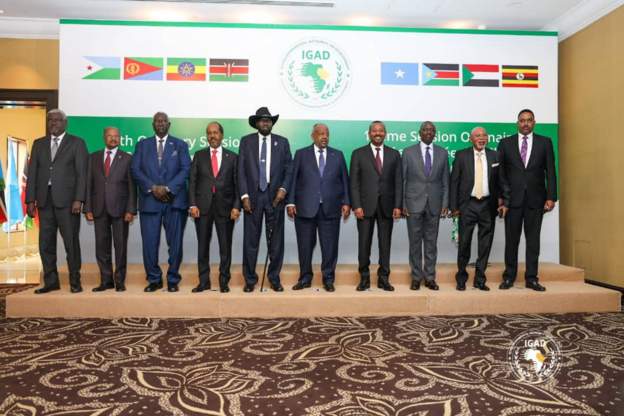
Eritrea has re-joined the Intergovernmental Authority on Development (Igad), the regional organization for East Africa after 16 years of absence.
Information Minister Yemane Meskel tweeted on Monday that Eritrea “resumed its activity” and took its seat at the ongoing Igad summit in neighbouring Djibouti.
The regional grouping’s executive secretary, Workneh Gebeyehu, said he was “delighted to welcome Eritrea’s Foreign Minister Osman Saleh” as he joined the meeting.
Eritrea suspended its membership of the body in 2007 in protest against Ethiopia’s military intervention in Somalia and alleged manipulation of the organisation by external forces.
Igad is made up of Djibouti, Eritrea, Ethiopia, Kenya, Somalia, South Sudan, Sudan and Uganda.
In response to a lack of supply and frequent blackouts, Mozambique has offered to send 100 MW of power to South Africa, which is nearby.
The offer, announced in the South African capital Pretoria on Monday, follows a request by the South African government last month.
Mozambique’s Mineral Resources and Energy Minister Carlos Zacarias said the commercial agreement defining the price and how and when the energy would be channelled to South Africa “should be closed very soon”.
South Africa’s electricity minister, Kgosientsho Ramokgoba, said he was “happy” with the swift response by the Mozambican government, adding that technicians were working to make operations viable.
Mr Zacarias announced that Mozambique would make available, within six months, another 600MW of additional energy.
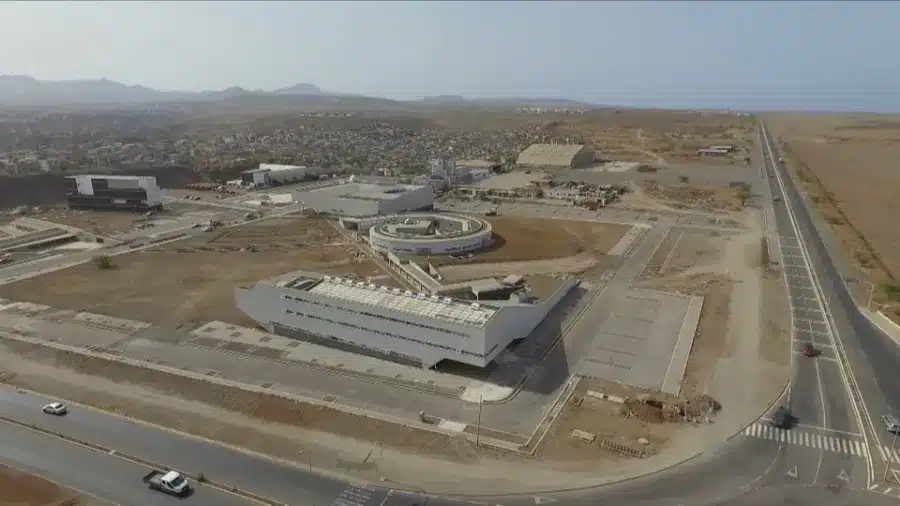
The African Union Commission (AUC) and the Rwandan government reached an agreement on Saturday to construct the first African Medicines Agency’s headquarters in Kigali.
On 10 June, Rwanda signed an agreement with the African Union to host the headquarters of the African Medicines Agency in Kigali.
The signing comes just a few days after the Rwandan authorities officially agreed to host the AMA’s headquarters on their territory.
In 2019, the African countries adopted the treaty establishing the Agency, which came into force in 2021.
Its creation is part of the African Union’s strategy to reduce the continent’s dependence on pharmaceutical products supplied by foreign countries.
Africa imports 97% of the pharmaceutical products it needs.
The agency should regulate and harmonize this market on the continent, encourage production in Africa and counter the traffic in counterfeit medicines.
For Minata Samaté Cessouma, AU Commissioner for Health, Africa must prepare for other pandemics after Covid-19, and the agency’s objective will be to propose “African solutions”.
More than four years after the adoption in 2019 of the treaty establishing the African Medicines Agency, this is a first step towards making this new African Union body operational, according to the Rwandan Minister of Health, Sabin Nsanzimana.
Staff recruitment will be discussed in ten days’ time, again in Kigali, during the second extraordinary session of the 23 States that have ratified the treaty establishing the agency.
Days after parliament passed a divisive anti-gay bill, the normally bustling HIV/AIDS treatment center in Kampala, Uganda, is nearly deserted.The staff reports that the daily average of 50 patients has decreased, and that unused antiretroviral medications are piling up.
A resident medical officer at a US-funded clinic, warned that new waves of HIV infections were forming as vulnerable people stayed away from treatment centers, afraid of being identified and arrested under the new laws.
“The LGBT community in Uganda is on lockdown now,” he said. “They don’t have preventive services. They cannot access condoms … they cannot access ARTS (antiretroviral).”
Under the bill, which President Yoweri Museveni signed into law last week, gay sex is punishable by life in prison while “aggravated homosexuality”, including the transmission of HIV, is punishable by death.
Until this year, the Kampala clinic had been a beacon of success for the fight against HIV in Uganda, where 1.4 million people live with the virus and 17,000 die a year as a result of its ravages, according to the Uganda AIDS Commission.
Now, when patients do come in, it’s often out of absolute necessity. The HIV cases presenting has thus become more severe as people skip treatments.
A US official suggested that the law would reverse the country’s advancements in fighting HIV/AIDS.
That statement was rebuked by Ugandan prime minister, Dr. Jane Ruth Aceng Ocero, who responded that the government would ensure that prevention programs would remain accessible to those that needed them.
Nonetheless, the trend of HIV patients staying away from treatment centers is being mirrored on a national level, according to Mary Borgman, country director for the US President’s Emergency Plan for AIDS Relief (PEPFAR), which funds the Kampala clinic and about 80 other drop-in centers across Uganda.
She said fear had increasingly been deterring people from coming in for treatment ever since the anti-gay bill was introduced in parliament in March.
The people living with the virus are not the only ones afraid of repercussions. Many medical officials are reluctant to provide services to gay patients, as they fear being accused of defending and promoting homosexuality.
Reporting gay activity
Lillian Mworeko, the East African regional coordinator for the International Community of Women living with HIV/AIDS, said some providers feared that offering medical services to LGBTQ patients could be classed as “promoting” homosexuality, an offense punishable by 20 years in prison under the new law.
The Ugandan bill toughened up an existing British colonial-era law, under which gay sex was already illegal. Proponents say the new legislation is needed to counter what they allege are efforts by LGBTQ Ugandans to recruit children into homosexuality.
The amended version signed by Museveni didn’t criminalize merely identifying as LGBTQ, as a previous version did, and revised a measure that required people to report gay activity to only oblige reporting when a child was involved.
Though acclaimed nationally by public opinion and seen as a clear statement against the propagation of “corrupt western mores” in African societies, local activists have denounced the backwardness of the law, pointing out that homosexuality existed in precolonial Africa, was accepted in most cultures than others and was not considered unnatural or a sin.
“The majority of these people, like transgender or queer people, have gone through a lot already,” shared a medical officer.
At the Kampala clinic, run by local charity Icebreakers Uganda, one of the medical officers said he understood the fears of LGBTQ people in Uganda who often endured painful lives, featuring rejection by their families and arrests.
As part of an inquiry into his position, Nigeria’s security forces have detained the central bank’s suspended head, according to a statement from the national internal security agency on Saturday.
The arrest of Central Bank of Nigeria governor Godwin Emefiele came shortly after new President Bola Ahmed Tinubu’s government suspended him following nearly a decade in the post.
Tinubu, who came to power at the end of last month following a highly contested February presidential election, had promised reforms to help Africa’s largest economy emerge from financial troubles.
“The Department of State Services (DSS) hereby confirms that Mr Godwin Emefiele, the suspended Governor of the Central Bank of Nigeria (CBN) is now in its custody for some investigative reasons,” the DSS internal security agency said in a statement.
The DSS did not give any further details, but one of Tinubu’s government spokesmen earlier said that Emefiele had been suspended immediately as part of an “ongoing investigation of his office and the planned reforms in the financial sector”.
The bank’s deputy governor will step into the director’s role pending the conclusion of investigations, the statement said.
The central bank did not immediately return calls seeking comment.
Emefiele was under fire recently, including over a policy by former president Muhammadu Buhari to replace old naira currency notes with new ones to prevent corruption during this year’s election and curtail cash ransom payments after kidnappings.
The policy led to a huge naira cash shortage across Nigeria, Africa’s most populous country, where many people rely on cash payments in the informal economy to survive.
Emefiele had also attempted to run against Tinubu in the ruling All Progressives Congress or APC party primaries to be the party candidate for the presidency. He eventually stepped aside.
A former Lagos governor, Tinubu already stoked controversy on his May 29 inauguration day by immediately calling for an end to long-standing government subsidies to keep petrol prices artificially low.
Fuel prices almost tripled across Nigeria, after Tinubu announced that subsidies were “gone” on the day he took office.
Most analysts say the subsidies needed to end to help the government save billions of dollars in expenses at a time when it has already been struggling to keep up vital oil production.
But the subsidy removal triggered a rapid spike in transportation costs, sending food prices soaring, while electricity has become more costly for those using generators for power at home and business.
The subsidy issue is one of a host of issues facing Nigeria’s new leader, including a security crisis with the armed forces battling jihadists, heavily armed criminal gangs and separatist militants in different parts of the country.
The month of June has seen the opening of a new technical park close to Praia, the city of Cape Verde, which was under construction for the past six years.
Situated in the vicinity of the Nelson Mandela airport, the new technological park lies at the heart of the government’s digital strategy.
“This building is part of a great vision of the Government of Cape Verde, in the path of diversification of our economy, which is sustained in tourism. It will be an investment that will have a great return for Cape Verde, because we aim from here, from Cape Verde, to be preparing our youth to work in this promising sector, both today and in the future”, said Chairman of the board of directors, Carlos Monteiro.
The area where the technological park is located has been declared a “Free Zone”. Companies located here can benefit from tax breaks and other incentives.
So far, the government has invested 50 million euros in this project and more is planned for the years to come.
A hole-filled desert environment can be seen at the fringe of an oasis that is nearly buried by dunes and through which the occasional caravan still travels.
The salt pans of Kalala near Bilma in northeastern Niger were once an essential stop for traders with their swaying lines of camels.
Salt digging, carried on from generation to generation, was a thriving business, involving a commodity so precious that it was bought and sold across the Sahara and beyond. Over centuries, hundreds of pits have been dug by hand and then filled with water to leach salt from the local rock.
Today, in this isolated desert region plagued by armed gangs and smugglers, the diggers struggle to survive.
Standing in the black and ochre pits, Ibrahim Tagaji and a colleague were wrestling with a crowbar to harvest the bounty – a method of extraction that essentially remains unchanged over time.
A blisteringly hot day when temperatures reached 45C (113F) in the shade was coming to a close.
Barefoot in brine swimming with crystals, the two men dug out salty chunks and pounded them into grains, which were then scooped out with a gourd.
They poured the salt into moulds made from date palms, forming slabs that were then ready for sale.
It is hard work, rewarded by an income that fluctuates according to whichever buyers happen to pass through town.
“When someone with money comes, you earn a lot,” Tagaji said between shovelfuls. “Otherwise, it’s a lot of work, and the money’s poor.”
The local economy offers few alternatives, and roughly half of Bilma’s population still works in the pits, according to local officials.
“As soon as you drop out of school, you have to work here,” said Omar Kosso, a veteran of the industry.
“Every family has its own salt pan. You are with your wife, your children, you come and work.”
Salt worker Omar Kosso says customers bargain hard with merchants, traders and traffickers. “We don’t have good customers,” he says, but the offers – mostly low – are difficult to refuse for the people in this poor region. [Souleymane Ag Anara/AFP]Caravans lead animals on a 45-day journey to Libya in Niger’s Djado area in the Sahara desert. The camel caravans still stop over in Bilma, where the vast majority of residents live in traditional houses with walls of salt and clay drawn from nearby quarries. [Souleymane Ag Anara/AFP]The mineral produced in the salt fields of Bilma is destined for animal consumption. [Souleymane Ag Anara/AFP]An individual called the “mai” is the traditional authority in Bilma. He determines who gets which area to dig for salt and sets the sale price. [Souleymane Ag Anara/AFP]A 200-year-old flag carries the family insignia of Kiari Abari, the descendant of a long line of sultans in Bilma. [Souleymane Ag Anara/AFP]As mai, Abari Chegou promotes the virtues of the locally produced salt. “Sea salt has to be iodized to avoid deficiencies,” he said. “Our salt is 90 percent iodized, so we can eat it directly without risking getting sick.” [Souleymane Ag Anara/AFP]Unfortunately for Bilma, the salt trade is drying up. “In the past, the caravans came – the Daza, the Hausa, the Tuareg,” Kiari Abari Chegou said, reeling off some ethnic groups in the region. “Now it’s not like before.” [Souleymane Ag Anara/AFP]Tuareg traders gradually gave up their nomadic way of life to settle down and farm the fertile foothills of the nearby Air Mountains in northern Niger. [Souleymane Ag Anara/AFP]The desert journey is as dangerous as it is tough. Traffickers and other criminals take advantage of the region’s porous borders. That means people travel armed and, when possible, in convoys under military escort to guard against attacks.
As foreign investors rejoiced at the Central Bank governor Godwin Emefiele’s suspension late last week after overseeing various exchange rates that failed to maintain the naira strong, Nigeria’s sovereign dollar-denominated bonds gained substantially.
The price of the West African oil producer’s eurobonds rose on Monday as much as 2.6 cents in the dollar before moderating slightly with many issues reaching their highest prices since late January, according to the Reuters news agency.
Longer-dated maturities saw the biggest gains with the 2049 maturity up 2.353 cents to 80.231 at 07:46 GMT, according to Tradeweb data.
Nigeria is facing severe dollar shortages, forcing many people to seek out foreign currency on the black market, where the naira trades much lower than its official exchange rate.
“We believe the changes signal a new era of focused, predictable monetary policy and a shift towards non-interventionism in the foreign-exchange regime,” Barclays economist Michael Kafe said in a note to clients on Monday about the suspension of the Central Bank chief.
President Bola Tinubu had criticised Emefiele’s handling of the naira and monetary policy at his inauguration two weeks ago.
Tinubu, who has promised to reset Nigeria’s ailing economy, has also removed a fuel subsidy and promised to consolidate the multiple exchange rates.
“The haste with which the newly appointed president has begun to tackle the country’s economic challenges (e.g. the immediate removal of the fuel subsidy…) suggests that he is keen to pursue all the difficult reforms at the early stages of his term,” Kafe wrote.
Folashodun Shonubi, a deputy governor, was named acting head of the Central Bank.
The suspended governor is now in custody and under investigation, police said on Saturday.
Professor of Applied Economics at Johns Hopkins University in the United States, Steve Hanke, has stated that the recently agreed IMF agreement won’t resolve Ghana’s issues.
The Economics Professor who has been monitoring the country’s economic performance for some time now said Ghana’s current inflation stands at 50% almost 5% higher than the rate announced by the Ghana Statistical Service in May 2023.
Prof. Hanke has bemoaned the fact that the computation by the Ghana Statistical Service does not reflect the true state of the country’s inflation.
He also added that another IMF deal will not solve Ghana’s problems since the country had been to the Fund severally without seeing any growth and improvement in the country.
On June 11, 2023, he wrote on Twitter: “Today, I measured inflation for #Ghana at 50%/yr. Another IMF program won’t save Ghana. After all, all of Ghana’s past IMF programs have failed. Why would a new one work?”
Ghana has secured a $3 billion loan facility from the International Monetary Fund to aid in its economic recovery.
The 3-year programme is expected to restore macroeconomic stability and boost the country’s balance of payments among other things.
A Sudanese doctor has told the international media that the RSF paramilitaries are enforcing a reign of terror across the metropolis they rule.
Mohammed Gibbril said they were raiding and looting houses, taking hostages and patrolling the streets of Khartoum.
Some of those recruited to their fight against the Sudanese army were children.
Mr Gibbril said he had been severely beaten during one such raid last Monday.
Many similar claims have been made by other residents of Khartoum.
The RSF have said on Facebook that they’re ready for a new ceasefire with the army.
The latest truce, which ended on Sunday, was better respected than previous ceasefires, though fighting has again erupted with witnesses reporting warplanes in the skies over Khartoum, and gun and shellfire.
Gambian President Adama Barrow, who was re-elected in 2021, has hinted that he may run for a third term at the next election in 2026.
The Gambia does not have presidential term limits and the two previous presidents both served more than two decades in office.
During a meeting in the north of country President Barrow said those waiting for him to relinquish power have to wait a little longer.
The Gambian leader alleged that there were people going around telling Gambians that he wanted to step down and that they would soon take over the government. He said that he was not going anywhere.
Mr Barrow came to power in 2017, on an agreement that he would serve only three years and then step down – but he reneged on that campaign promise.
A new constitution drafted in 2019 included a two-term limit but was not passed by parliament.
A week after being found guilty of misbehavior by the party’s disciplinary committee, Ace Magashule was expelled from the ruling African National Congress (ANC) of South Africa.
He was accused of having tried to suspend President Cyril Ramaphosa as party leader.
Mr Magashule was given seven days to respond but in a statement the ANC said he did not send any “representations to that effect”.
At one point, Mr Magushule was widely seen as a political kingmaker in the ANC and was a staunch ally of former President Jacob Zuma, who Mr Ramaphosa replaced in 2018 following numerous corruption allegations – all of which Mr Zuma denies.
Two years ago, Mr Magashule was suspended by the party after he had been charged with corruption – charges that he denies. But Mr Magashule said that move was against the ANC’s constitution and then said that President Ramaphosa was suspended – this is what led to the misconduct charge.
Mr Magashule has hinted that he may start his own political party.
Secretary-General of the International Chamber of Commerce (ICC), John Denton, has said that the organization has placed a high priority on helping small and medium-sized businesses (SMEs) across the continent make the most of the African Continental Free Trade Area (AfCFTA).
Mr Denton, speaking to the B&FT in Accra during an official working visit to Ghana and sub-Saharan Africa, said the Chamber is working with its ICC Regional Centres of Enterpreneurship (CoEs) on the continent to prioritise and prepare SMEs to harness greater participation in the AfCFTA with emphasis on promoting cross-border trade.
With four centres of entrepreneurship across Africa, in countries including Ghana, Nigeria, Kenya and Morocco, the Chamber according to Denton, will lay major emphasis on open innovations for SMEs and take keen interest in women-led businesses.
Already, the ICC has built capacity for several women-led businesses in Africa with recent programmes, partnering UPS, Tralac and West Blue Consulting. The Chamber also hosted an open innovation for several startups in Nigeria, Kenya and the World Food Programme innovation accelerator in East Africa.
The ICC, Mr Denton said, is very focused on growing the private sector by supporting entrepreneurship particularly in sub-Saharan Africa as its CoE seeks to strengthen and further expand the Chamber’s extensive global network that currently comprises 6.5 million enterprises in over 130 countries.
“Apart from these inroads, the Chamber is also driving ecosystem partnerships with public and private actors including United Nations Economic Commission for Africa, United Nations Development Programme and development agencies such as USAID and GIZ” Mr Denton noted.
Addressing Mr Denton during a courtesy call, Minister of Trade and Industry in Charge of Small and Medium Enterprises (SMEs), Dr. Stephen Amoah, said Ghana has budding entrepreneurs with the potential to grow the nation’s economy but will need to be exposed to the required capital and ideas in order to be able to scale up and be competitive.
The ICC Secretary-General visited the Minister with his team from the renowned Global Association of Businesses, including Ghana’s former Attorney General, Marieta Brew Appiah who is a member of the ICC’ Arbitration Court and Doni Kwame, the Secretary-General of ICC Ghana.
Mr. Denton noted that the ICC has enjoyed a close working relationship with the Ministry of Trade and Industry through its Ghana National Chapter since the Chamber was launched in the country.
He said the ICC Ghana has led the organized private sector to advocate for the ratification of the World Trade Organisation Trade (WTO) Facilitation Agreement in Ghana and followed up with its implementation with the support of the Global Alliance for Trade Facilitation, an activity which, he asserted, is still ongoing for the National Trade Facilitation Committee.
He revealed that the ICC is currently advocating the extension of the WTO Moratorium on custom duties on Electronic Transmission and is therefore ready to engage government on that and also provide support or capacity building on international best practice on the calculation of VAT which has been a source of concern for ICC members globally.
Marietta Brew Appiah who is Ghana’s representative at the ICC’s International Court of Arbitration, briefed the deputy Minister on the works of the Court.
Scores of residents in the Ketu South Municipality of the Volta region have thronged the premises of the various telecom operators to demand monies locked up in their mobile money wallets.
This follows the deactivation of their SIM cards after the Ministry of Communications and the National Communications Authority (NCA) directed the telcos to deactivate all SIM cards not connected to the National Identification Card (Ghana Card).
Some of the residents, who poured out their frustrations to the Ghana News Agency (GNA) at the forecourt of the MTN office in Aflao say, the development was taking a toll on their daily lives as most of them kept their entire life savings and business capitals in their mobile money wallets.
“I don’t have a bank account and all my money is in my wallet – my entire life savings and even the capital I use for trading are all locked up in my wallet. I just don’t know what to do now,” Ms Cynthia Henyo, a distraught resident lamented to the GNA.
Mr Anthony Akpaloo, another aggrieved resident said: “I wasn’t able to collect my Ghana Card even after going through the registration process several months ago. This situation has really affected my business operations. Even money to take care of my family’s needs is all locked up in the wallet.”
GNA checks revealed that those, who visited the various telcos offices were unable to get their service reactivated because the web application used for the biometric verification component of the re-registration process was always not stable as the crowd waited for hours only to be turned away in the evening.
“Many people had to return home because the App has been down since morning. I have been trying to load the details of one person for about two hours now, but that has not gone through. The process takes less than five minutes, but the hold-up for reconnection has been due to the slow connection of our application,” an agent of one of the telcos explained.
At the SIM re-registration exercise’s inception on October 1, 2021, there were about 42 million active SIM cards in the country.
They were made up of SIM cards registered with identity cards (IDs) such as the National Health Insurance Cards, Passport, and Driving License.
The NCA at whose behest the re-registration started said a lot of the IDs were not verified at the time they were used to register the SIMs, hence the re-registration.
According to the NCA, after the first phase of the exercise, there were about 36 million active SIM cards in circulation as of May 2023, out of which 25 million, representing 69.6 per cent, had been duly re-registered.
This means that over 25.4 million SIM cards had completed both stages one and two of the SIM re-registration, which was done with verified Ghana Cards.
The remaining 11 million, representing 30.4 per cent, include active SIM cards exempted based on various demographics and active SIM cards that had not been re-registered with the Ghana Card using the current process.
Already the NCA has deactivated about 6.1 million SIM cards, which belonged to subscribers that had completed only stage one of the current registration process.
The residents called on the Ministry of Communications, the NCA and Telcos to speed up the re-registration process to enable them to withdraw their locked up funds and to go about their normal lives.
The general public has been forewarned by the Cybersecurity Authority to avoid behaviors that might expose them to romance frauds.
In a public alert shared by the Authority on June 12, 2023, it defined romance scam as a type of online fraud or scam where fraudsters create fake identities, usually on dating sites, social media, or unsolicited emails, to establish intimate relationships with their targets.
The scammers then exploit the victims’ trust to extort something valuable, such as money, property, or investments.
The scammers operate by creating attractive and convincing profiles on dating sites or social media platforms using impersonated information.
They conduct extensive research on their potential victims based on the targets’ online habits, such as social media posts, before engaging them.
The Cybersecurity Authority said the malicious actors then exploit the vulnerabilities of their targets, such as loneliness, insecurity, or previous traumatic experiences, to build an emotional connection with them.
“They use flattery, alluring compliments, and affectionate messages to gain their targets’ love, affection, and trust. Once trust has been established, the scammers ask for money using various excuses such as medical expenses, business transactions, and travel costs to exploit the victim’s desire to help,” it said.
They often avoid physical meetups, but some perpetrators may meet their eventual victims depending on how they intend to exploit them. For example, to facilitate a significant payment or take a valuable item like a vehicle. These actors may fake an emergency to justify their inability to fulfill requests for physical meetings or video calls.
When victims attempt to back out of the relationship, the malicious actors may escalate the scheme into blackmail or sextortion (especially in cases where they have the victim’s nudes).
The general public is therefore cautioned not to send money or provide financial assistance to someone they have only met online.
And also, people must be wary of individuals who quickly express strong emotional interest/attachment or make ambitious promises.
“Avoid sharing personal details with someone you have only met online, such as your full name, address, or financial information.
“Avoid sharing your nude pictures or compromising images.
“Use reverse Internet image search services like (httos://images.google.com/ and https://tineve.com ) to ascertain if the person’s profile picture(s) appear elsewhere online,” it recommended.
Due to the widespread misuse of personal data, the Data Protection Commission (DPC) has issued a warning to the public against unauthorized online lending applications (apps).
In a statement, the Commission’s Executive Director, Patricia Adusei-Poku, said her outfit has received countless complaints of breaches of personal data and privacy rights from patrons of unlicensed online money lending applications.
“Digital loan services have become an increasingly easy-to-go-to avenue for people to access credit, as many are unable or ineligible to secure loans through traditional providers such as the banks. But in recent times, the Data Protection Commission has received tons of complaints regarding the harassment and debt shaming approaches these online digital loan services are using to deal with defaulters.
“Our background checks have established that these online loan applications are unlicensed and therefore have no authorization to operate,” the statement said.
The DPC explained that digital lending apps require certain permissions upon installation, including access to users’ private information such as their contacts, text messages, location and calendar and that one would have thought that the data collected is used to screen users’ behavioral data and assess their eligibility for loans. It, however, lamented complaints from borrowers indicate that the data collected is to debt shame when these borrowers’ default in payment.
Other complaints also indicate that even in the event of full repayment the administrators of the loan apps take advantage of the data in their possession to infringe on borrowers’ privacy right.
“Unfortunately, these apps remain largely unchecked and have continued in their operations causing distress, defaming borrowers and violating the privacy of individuals.
“Some notions coming out earlier had indicated that google had pulled down these loan apps from the google play store but our checks have proved that to be an untrue statement. The apps are fully operational and available to be installed by the public,” it noted.
The statement added the Data Protection Commission has continued to receive several complaints that clearly describes the commotion these apps have caused the country. “We have also assessed a few privacy notices of these apps which complicate their mode of operation as they do not show any accountability to their clients in terms of how their data is going to be used in actual fact”.
The Data Protection Act 2012 Act (843) protects users from unnecessary disclosures of their private information. Under the regulations, any data gathered should have a legitimate purpose, with a specific mandate on the data controller to let borrowers know, in simple and clear language, what data will be collected and how it would be used.
“We have looked at the privacy policies of these apps and have determined the below mentioned apps have and continue to process individuals’ personal data in a manner that is not consistent with the provisions of the Act and they are: Ficashx; popcash; kudicredit; Cocoaloan; Popcash; smartmoney; sikapurse; Easy Loan; SoftKash; Boseafie Loans; Fourcredy; Sika dua; Creditbay; Creditlab; Akwaaba Cash; and MomCash.
Others are: Ultra Loans; Onloans; Loan Pro; Cedi Story; Machloan; Loan Galaxy; and Pro Kash.
“These loan apps have breached and continue to breach the Data Protection Act in several ways primarily as they are not registered with the Data Protection Commission as stipulated in section (46) 3 of Act 843. Processing personal data without registering with the commission is criminal listing these online apps as high-profile illegal entities.
“We continue to encourage data subjects who have fallen victim to submit their complaints. The Commission is ever ready to assist the police with their investigations as we have already handed over valid documents and filed complaints from Data Subjects that evidence the unlawful ways of operations of these apps. We call on the Cyber security unit of the Bank of Ghana, the National Cyber Security Authority and all other relevant agencies to rally efforts in fishing out the location of operation of these loan apps and apprehend these illegal data controllers to cease their operations,” the DPC statement further read.
It concluded that: “We also call on the public to stay alert and refrain from downloading apps that request access to their personal and private space. We also encourage individuals to take time to read the contracts they enter to make sure their privacy is not infringed”.
The demand for Treasury notes (T-bills) in the primary market has decreased for the first time this year, falling short of the government’s projected issue date of May 2023.
Investors showed reduced momentum in their demand for 91- to 364-day bills, raising concerns about the Treasury’s ability to meet its debt obligations amid tighter liquidity conditions in the market.
During May 2023, investors tendered GH¢14.04billion across the 91- to 364-day bills, reflecting a 4.2 percent under-subscription compared to the Treasury’s target of GH¢14.66billion. However, the Treasury was able to issue the amount tendered. The waning demand can be attributed to lingering effects of the Domestic Debt Exchange Programme, which has stifled demand for T-bills.
Despite the under-subscription, the amount sold by the Treasury was sufficient to cover a face value (FV) of GH¢12.23billion maturing value during the month across all the bills, representing a maturity cover of 1.12x. The refinancing needs in May 2023 were the highest for the period with GH¢12.23billion – followed by GH¢9.35billion in March 2023, GH¢8.06billion in February 2023, and GH¢6.72billion and GH¢6.42billion in January and April respectively.
May 2023 stood out as the month with the highest targetted issuance by the Treasury, aiming to reach GH¢14.66billion compared to GH¢8.19 billion, GH¢8.78 billion, GH¢11.19 billion and GH¢6.75 billion for January to April respectively.
Yields sustained their uptrend
Yields on Treasury bills continued their upward trend throughout the month, presenting a significant risk to government’s debt sustainability in the aftermath of the unprecedented domestic debt exchange programme (DDEP).
In the month’s Treasury-bill auctions, yields experienced marginal increases as anticipated. The 91-day bill rose from 19.95 percent to 20.80 percent, while the 182-day bill increased by 91 basis points to 23.62 percent from 22.71 percent. Similarly, the 364-day bill jumped by 76 basis points to 28.02 percent from 27.26 percent.
The rising borrowing costs for government due to higher yields on Treasury bills add further strain to an already burdened fiscal position. As the cost of government borrowing increases, it becomes increasingly difficult to manage the existing debt burden and fulfil future financial commitments.
To address the escalating Treasury yields, government implemented measures in Q1-2023 reducing bids and capitalising on strong demand for bills to lower the cost of borrowing. Consequently, the yield on 91-day bills dropped from 35.36 percent in Q4-2022 to 19.39 percent in Q1-2023. That of the 182-day bill declined from 35.98 percent to 21.44 percent, and the 364-day bill fell from 35.89 percent to 25.66 percent during the same period.
Market expectations indicate that yields on Treasury bills will continue to fluctuate in the near-term, with the potential for further increases. However, the real return on Treasury bills will remain negative until inflation returns to a single-digit figure or drops below 20 percent. The projected range for Treasury yields in the near-term is around 20 percent to 25 percent.
Despite initial anticipation of a significant drop in Treasury yields to a range of 15 percent to 18 percent by end of Q3-2023, the current trend suggests a persistent rise in yields even amid the secured IMF bailout. This poses additional challenges for government’s financial management and debt sustainability.
So far, the government’s Success of the Gold for Oil program has validated the viewpoints of Vice President Dr. Mahamudu Bawumia and Energy Minister Dr. Matthew Opoku Prempeh.
Dr Bawumia who has been driving the policy from the presidential level, and Dr Opoku Prempeh who is the implementation anchor at the ministerial level, have persistently drummed home the inherent benefits of the programme and promised that the government will do everything possible to ensure that Ghana reaps maximum benefits from it.
According to Dr Bawumia, since its operationalisation, the Gold for Oil policy has stabilised the exchange rate and is expected to save the country approximately $4.8 billion annually.
Also speaking at the 2023 energy sector retreat, Dr Opoku Prempeh stated that his ministry will religiously monitor every step in the Gold for Oil value chain to ensure that the purposes for which the programme was birthed, are not defeated.
Positive effects
The Gold for Oil policy has been credited as one of the measures that have led to stable fuel prices.
The Head of Financial Markets at the Bank of Ghana, Steven Opata, said the government’s policy had resulted in increased competition among traders of refined petroleum products, leading to reductions in prices at the pumps.
As a result of the implementation of the policy, petroleum prices, which hovered averagely at GH¢15 in January 2023, now sells at about GH¢12 on the average and are expected to further go down in the coming months.
As of May 29, 2023, the price of gasoline in Ghana was GH¢13.2 per litre, roughly $1.19, indicating a decrease from the prices in December 2022 .
This has brought relief to motorists as they are able to work within their budgets.
Also, the increases in transport fares that characterised the year 2022 have died down, bringing relief to passengers.
Furthermore, the drop in fuel prices has impacted on the drop in inflation, since fuel prices are a major driver in economic activities.
From a high of 54.1 per cent in December, 2022, inflation has consistently dropped, reaching 41.2 per cent in April. This signifies a positive outlook for the economy.
At a time West Africa’s biggest economy, Nigeria is struggling to deal with surging oil prices , which has led to two states in Africa’s most populous nation of 221 million people cutting down working days to three in a week, many see Ghana’s Gold for Oil policy as a significant step in bringing relief to Ghanaians and driving economic growth.
Achieving policy objective
The implementation of the Gold for Oil programme commenced with the arrival of the first consignment of about 40,000 metric tonnes of diesel on January 15, 2023, valued at about $40 million.
The National Petroleum Authority (NPA) in a statement said the prime objective of the programme is to use additional foreign exchange resources from the Bank of Ghana’s Domestic Gold Purchase programme to provide foreign currency for the importation of petroleum products for the country which currently stands at about $350 million per month.
Payment for oil supply is to be done in two channels: by way of barter trade where gold is exchanged for oil or via broker channel where the gold is converted into cash and paid to the supplier.
The first consignment of 40,000 metric tonnes of diesel constitutes about 10 percent of the country’s combined monthly demand for petrol and diesel.
According to the NPA, the plan is to gradually increase imports under the programme to constitute about 50 per cent of the country’s total demand for petrol and diesel.
The implementation of the programme will ease pressure on the dollar (the currency used for the importation of petroleum products) and avoid the occasional increases in petroleum prices resulting from the depreciation of the cedi against the dollar.
In addition, the programme will ensure that the cost of importing the products from international oil traders will be comparatively cheaper.
The consequent reduction in foreign exchange pressures and premiums charged by international oil traders as well as efficiency gains from the value chain will lead to lower ex-pump prices in the country.
Outstanding move
The Group Chief Executive Officer and Managing Director of GOIL Plc, Kwame Osei-Prempeh, described the policy as outstanding.
He said his outfit is benefiting from the deal because the policy is good.
He, therefore, dismissed allegations in certain quarters that the programme has negatively affected some Oil Marketing and Bulk Distributing Companies.
In an interview with Joy Business at the 54th Annual General Meeting of the company, Mr Osei-Prempeh explained that measures have been put in place by the shareholders of the company to take advantage of the deal to protect the interest of consumers and partners.
“We are not kicking against it. It has really taken some of our stress because at a point we needed to push for dollars and all but now it is fine,” he said.
A former Group Chief Executive Officer of GOIL, Patrick Akorli has also described the programme as innovative.
Speaking with Citi News, Mr Akorli said the success of the policy depends on the honesty of the government.
He stated:” It is a very innovative one. What the government is saying is that we need about $400 million almost every year [to get oil], so if we have gold and the gold can be exchanged at a given price to get dollars dedicated to the oil downstream market, then at least we are assured that prices will be stable.”
Top Gold Producer boost
Meanwhile, the Gold for Oil policy is set for a major boost after Ghana recaptured the position of Africa’s biggest gold producer from South Africa.
Industry watchers believe that increased gold production gives the indication that the nation is well-positioned to pursue the policy, which is seen as a game-changer for Ghana’s economy.
The Russia war in Ukraine has upended the fragile economic recovery from the COVID-19 pandemic, setting in motion a crisis that is devastating global energy markets, the United Nations has stated.
Consequently, the government of Ghana has been looking for avenues to overcome the challenges.
Experts who spoke to The Thunder over the weekend said Ghana will see a rebuilding of its gold reserves, which will enhance the trading of oil products.
Reuters reported on June 9, 2022 that Ghana recorded a 32 per cent increase in gold production in 2022, enabling the country to win back the top spot from South Africa as the largest gold producer in Africa.
Ghana lost the position to South Africa in 2021 after a drastic fall in output.
Quoting Joshua Mortoti, the President of the Ghana Chamber of Mines, the report said gold output rose to 3.7 million ounces in 2022 from 2.8 million ounces the previous year, driven by growth in the output of both large and small-scale sectors.
“The large-scale gold sub-sector recorded its highest output in the country’s history in 2022,” Mortoti said.
The Church of Nigeria (Anglican Communion) has said that it will continue to oppose same-sex marriage.
On Saturday, June 10, 2023, Rt. Rev. Godwin Robinson, Bishop Lafia Diocese, Church of Nigeria (Anglican Communion), declared this while giving the Bishop’s Charge at the Diocese’s 8th Synod’s 3rd Session.
The Synod is being hosted by the Mt. Zion Anglican Church Mararaba in Nasarawa State.
Robinson, who educated the congregation on global issues, informed the congregation about the outcome of the Global Anglican Future Conference (GAFCON), which was held in Kigali, Rwanda, from April 17 to 21.
According to him, the Nigerian church, which was present at the convention, took a stand in opposition to the Church of England and the Episcopal Church in the United States, both of which favour same-sex marriage.
While Nigeria’s bloc, the Global South Fellowship of Anglican Churches, is made up primarily of Churches from Africa and Asia, others led by England and the United States of America support same-sex marriage.
“We do not regard the word of God as a relative truth. We stand on Resolution 1:10 of Lambeth 1998 which affirmed marriage as a lifelong union between a man and a woman stating clearly that same-sex marriage is wrong. Homosexual practices are incompatible with scripture,” the cleric said.
He stated that he and other Nigerian delegates attended the Kigali Convention, which brought over 1,302 delegates from 52 countries around the world who spoke out against such terrible acts in the world.
“GAFCON promised to prioritise youth and children ministry and use discipleship to equip them for a lifetime of ministry, committed to demonstrating the compassion of Christ through the many GAFCON Mercy Ministries, among others,” he added.
Speaking with the News Agency of Nigeria (NAN) Rev. Canon Okwuchukwu, said that the gathering was important not just for the church but also to debate societal issues.
Okwuchukwu, who is also the Vicar of Mt. Zion Anglican Church Mararaba, stated that the church of God has always been close to society.
He believes that if society is doing well, the church will do well as well.
“As a matter of fact, we all have seen what is happening in the country, and way back even in the Bible times, the church has been playing a vital role in the molding of nations,” he said.
“For us as a nation, we have actually gone too far away from where we should be to the point that even the little children can boldly tell you that the country has a problem.
“There is, therefore, the need to seek God’s intervention in the pains Nigeria is going through,” he added.