Senegal has temporarily closed its consulates abroad following attacks on diplomatic missions in Bordeaux, Milan, Paris and New York among others.
The foreign affairs ministry said in a statement on Tuesday that the precautionary measure followed “a series of aggressions that caused serious damage”.
It said the consulate in Milan had been particularly hard hit, with passport-making machines and identity cards damaged.
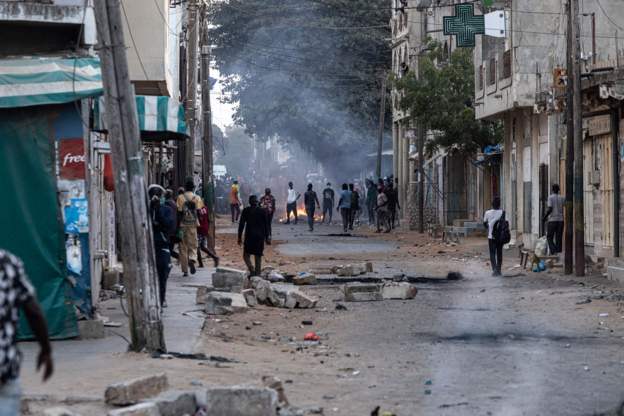
The closures come amid political tensions in Senegal following the sentencing of opposition leader Ousmane Sonko last week to two years in prison which led to deadly protests.
Italian media reported on Monday that about 40 Sonko supporters had gathered outside the consulate with flags and anti-government signs – breaking in and ransacking the offices before the police intervened.
Senegal’s foreign ministry says consulate services will resume “as soon as material and security conditions allow”.
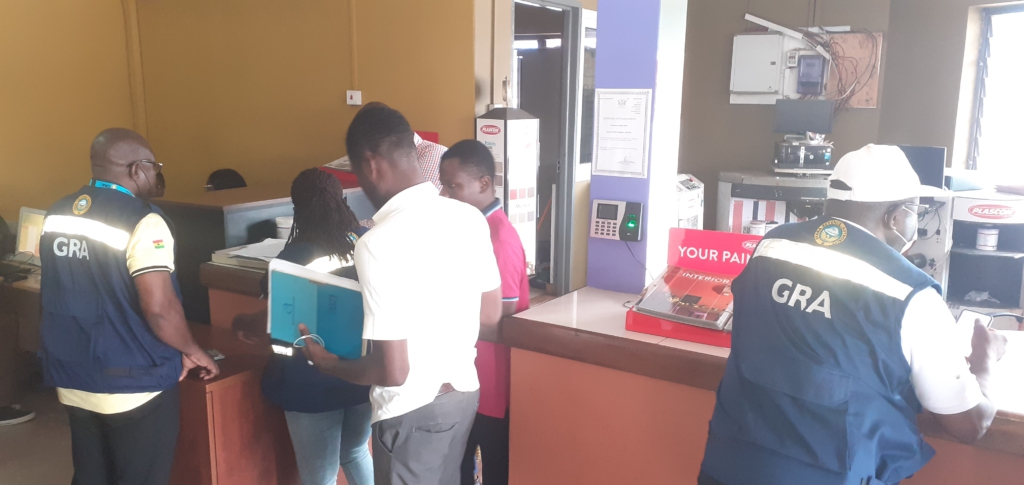
The Ghana Revenue Authority (GRA) unit has detained four Accra-based business owners for failing to issue tax bills.
The companies are Buildmart Company Ghana in Adabraka, Bedarts Cold Supplies in Lashibi, Yat Ventures in Mamobi and Excellence Boutique at Spintex Road.
The managers were taken to the headquarters of the Customs Office for their statements before being handed over to the Criminal Investigation Department of the Police.
The Area Enforcement Manager of GRA in charge of Accra Central, Mr Joseph Annan said the companies had not complied with Section 41 of the VAT Act which mandated them to issue the tax invoice at all times.
He said the exercise was part of the Authority’s plans to ensure tax compliance and retrieve taxes due the state.
He said the Division had several options at its disposal to aid in revenue mobilisation, including already existing initiatives such as auditing and test purchasing, among others.
Mr Annan said the test purchases conducted on 115 taxpayers that were sampled for a week revealed that a total of 93 taxpayers were not issuing the VAT invoice.
The figure, he stressed translated into a non-compliance rate of 80.9 per cent and said it was an offence for a registered taxpayer to fail to issue a VAT invoice for purchases made.
He said the division would continue with the enforcement exercises with an eye on the implementation of the electronic invoicing system and other tax types.
The government has tasked the GRA with raising a revenue target of GH₵106 billion for the 2023 fiscal year.
Out of this figure, the Domestic Tax Revenue Division is expected to collect 70 per cent of the total revenue.
Mr Annan said the Authority would continue to embark on surprise exercises across the country to apprehend culprits evading tax.
He urged the public, especially customers who make taxable purchases, to always request and insist on their VAT invoices.
In order to diversify the economy and lessen dependency on oil and gas resources, the government has partnered with OCP Group, a Moroccan business, to complete the front-end engineering design (FEED) for a US$1.3 billion fertiliser complex at Takoradi.
The project, expected to be operational within the next three years, aims to leverage Ghana’s natural gas reserves and boost the agricultural sector while reducing input costs for farmers.
Dr. Mohammed Amin Adam, Minister of State at the Ministry of Finance (MoF), made the announcement during the launch of the 2020 GHEITI Reports for the mining and oil/gas sectors. He said the fertiliser complex will play a crucial role in increasing fertiliser availability and lends credence to industrialisation of the agricultural sector.
Dr. Amin Adam emphasised the need to consider alternative sectors for sustainable development, citing recent declines in oil and gas production and potential negative impacts on the energy transition.
“In line with government’s strategy for long-term economic growth, we are focused on establishing linkages and diversifying the economy,” said Dr. Amin Adam. “This fertiliser complex is a significant step toward achieving those objectives, and it will contribute to the overall development of Ghana.”
The 2020 GHEITI Reports revealed that the country has made significant strides in its resource governance framework in recent years on the back of regulatory reforms, in part due to institution of the Fiscal Responsibility Act and Minerals Income Investment Fund Act.
As a result, the country’s gold mining sector surged from a total score of 56 out of 100 points in 2017 to 69 out of 100 points in 2020, according to the Resource Governance Index report released by the Natural Resource Governance Institute. The report also saw the revenue management sub-component increase from 37 percent in 2017 to 54 percent in 2020, indicating that government has made notable progress in managing mineral and economic rents.
The key findings of the oil and gas report showed that the sector contributed 3.7 percent to Ghana’s Gross Domestic Product (GDP) in 2020 and recorded a growth rate of -4.6 percent (at constant 2013 prices). In 2020, 66.91 MMbbls of crude oil were produced compared to 71.4 MMbbls in 2019, and the total petroleum receipts for 2020 were US$666.39million compared to US$937.58million in 2019. The total number of persons employed by large-scale mines in 2020 was 34,363 – of which 98.7 percent were Ghanaians.
The mining and quarrying sector’s share of Ghana’s GDP marginally reduced from 7.8 percent in 2019 to 7.6 percent in 2020, while the total volume of gold produced decreased from 4.577 million ounces in 2019 to 4.023 million ounces in 2020 – representing a downturn of 12 percent. Meanwhile, the volume of manganese produced tumbled from 5.383 million tonnes in 2019 to 2.358 million tonnes in 2020, representing a decrease of 56 percent.
The volume of bauxite produced increased from 1.116 million tonnes in 2019 to 1.162 million tonnes in 2020, recording a 4 percent year-on-year growth in its output. Finally, receipts from the export of minerals represented 48.4 percent of the country’s total merchandise export revenue in 2020, with crude oil and cocoa contributing 20.1 percent and 16.1 percent, respectively. Proceeds from mineral exports increased from US$6.678billion in 2019 to US$6.998 billion in 2020, translating into a 4.8 percent year-on-year expansion in mineral revenue.
The Multi-Stakeholder Group of the Ghana Extractive Industries Transparency Initiative (GHEITI), a tripartite body made up of government, industry and civil society, said the reports go beyond the mere reconciliation of payments and receipts to include contextual information: such as the summary description of the legal framework and fiscal regime; the sector’s contribution to the economy; production and export data; state participation in the extractive industries; revenue allocations; sustainability of revenues; and licence registers and licence allocation among several other requirements.
Ghana Oil Company Limited (GOIL) increased its earnings in 2022 to 123.89 million dollars.
This is 26% higher than what was recorded in 2021.
In view of this, the company has declared a final dividend of ¢0.056 per share for the 2022 financial year which represents a growth of 19% over the 2021 financial year.
The company’s overall market share grew from 15.32% in 2021 to 20.11% in 2022
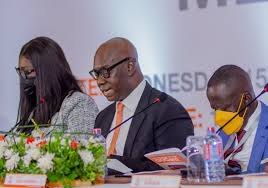
Speaking at the 54th Annual General Meeting, Board Chairman, Reginald Daniel Laryea, indicated that the indigenous company will enhance its operations and systems to provide quality products and services.
He reiterated the commitment to continue to provide valuable products and services to its stakeholders, and also implement programmes to maintain its position as the leading oil marketing company in the country.
“The internal and external conditions that prevailed over the course of the year 2022 were unfavorable to Ghana but we were able to record a profit after tax of ¢123.89 million in the year 2022, up by 26% compared to the previous year”.
“Earnings per share rose to ¢0.316 in 2022, compared to the year 2021 which was ¢0.252. We are happy to declare a dividend of ¢0.056 to our cherished shareholders, up by 19% compared to the year 2021”, he said.
Group Chief Executive Officer, Kwame Osei Prempeh, said “The company had leveraged technology to improve on its cash collection methods through the use of a cashless system by its customers to purchase items at its service stations and other outlets”.
The company also said it continued to dominate the bunkering market in Ghana increasing its market share from 60% in 2021 to 73% in 2022.
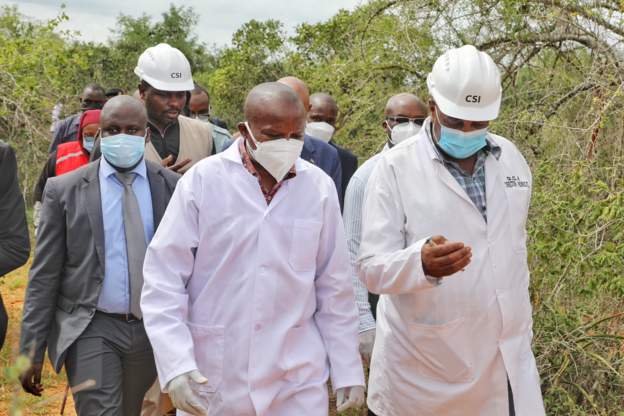
Kenya’s interior minister has announced that the Shakahola forest, where more than 250 members of a Christian cult perished, will be turned into a national memorial.
Kithure Kindiki said once the recovery of the bodies buried in the 800-acre forest was complete, the place will be turned into “a place of remembrance” so that people don’t forget what happened there.
He said the government had enough evidence to prosecute the leader of the cult and the main suspect, Pastor Paul Mackenzie, for genocide after he allegedly convinced his followers to fast to death in order to go to heaven.
Most of the victims, including children, died of starvation but some were strangled, beaten, or suffocated, according to autopsy reports.
The minister spoke on Tuesday at the start of the third phase of exhumation, when nine more bodies were recovered.
Since the operation started in April, 251 bodies have been recovered. Ninety-five people have been rescued from the forest and 35 suspects arrested.
Mr Kindiki said investigations had shown that the cult’s activities extended beyond the Shakahola forest and that investigations had extended to the larger 37,000-acre Chakama ranch in the area.
He said security roads were being constructed to provide access to the expansive area as search and rescue operations and investigations continued.
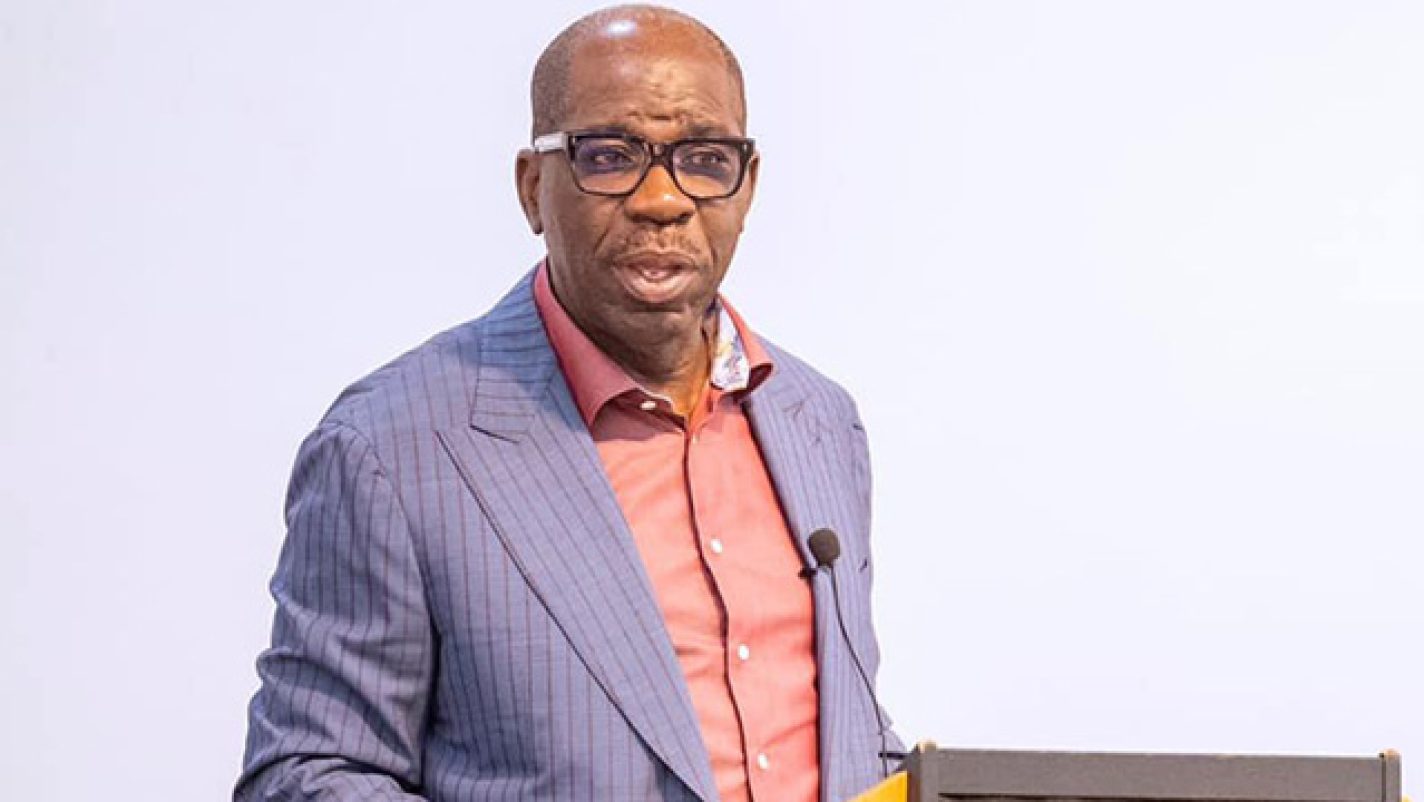
Governor of Edo State, Mr. Godwin Obaseki, has expressed sympathy with the people of Edo following the increase in the prices of products and services, as well as the general cost of living, caused by the elimination of gasoline subsidies, by outlining initiatives to alleviate residents’ miseries.
In a statement, Obaseki said the state has reduced the number of work days that civil and public servants will have to commute to their workplaces from five days a week to three days a week, among other measures.
The statement reads: “In the wake of fuel subsidy removal by the Federal Government, fuel prices have increased astronomically leading to rise in prices of goods and services and overall cost of living.
“The Edo State Government shares the pains of our people and wants to assure everyone that we are standing with them in these very challenging times.
“We want to reassure our people that we will do all within our powers as a sub-national government to reduce the pains and ameliorate the sufferings our people are currently facing due to the current realities.”
The governor further noted, “as a proactive government, we have since taken the step to increase the minimum wage paid to workers in Edo State from the approved N30,000 to N40,000, the highest in the country today.
“We want to assure you that we will continue to pay this amount, while we hope to increase it even further, if more allocation accrues to our State from the Federal Government in view of the expected savings occasioned by the removal of the fuel subsidy.
“We know the hardship that has been caused by this policy which has radically increased the cost of transportation, eating deep into the wages of workers in the State. Therefore, the Edo State Government is hereby reducing the number of work days that civil and public servants will have to commute to their workplaces from five days a week to three days a week till further notice. Workers will now work from home two days every week.
“Similarly, for teachers and parents, their commuting to school will be reduced as government is working on deepening the EdoBEST@Home initiative to create more virtual classrooms, thereby reducing the cost of commuting on parents, teachers and pupils. The Edo SUBEB will provide details on this initiative in the coming days.”
He added: “To lower the rising cost of energy on our people, we will continue to work with the electricity companies in the State to improve power supply to homes and businesses. “Similarly, fibre optic connections are being made available to help our people work remotely, thereby reducing their cost of transportation.
“While government intensifies these efforts to alleviate the burden of the fuel price increase on the people during this very challenging period, we want to call on everyone to remain calm and go about their daily businesses lawfully.”
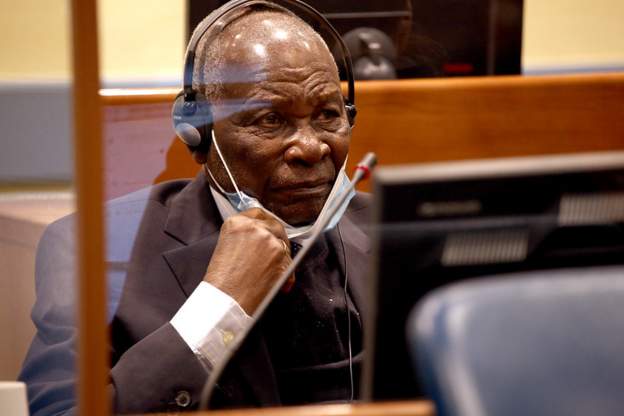
A United Nations court has ruled that 88-year-old Rwandan genocide suspect, Félicien Kabuga is unfit to stand trial.
The Hague-based International Residual Mechanism for Criminal Tribunals said it finds him unfit to participate meaningfully in his trial and is very unlikely to regain fitness in the future”.
It has called for an “alternative” legal procedure that “resembles a trial as closely as possible, but without the possibility of a conviction”.
Félicien Kabuga is accused of being the primary financier of the militia and political groups that perpetrated the 1994 Rwandan genocide.
He denied the charges of setting up hate media that urged ethnic Hutus to kill rival Tutsis and supplying death squads with machetes.
The trial of Mr Kabuga, was put on hold in March over health concerns after his arrest in Paris in the year 2020 after evading capture for 26 years.
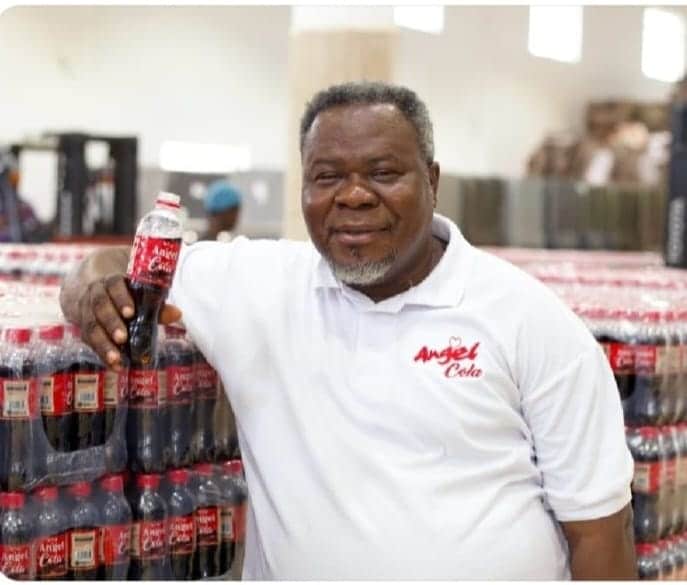
One of the leading producer of alcoholic beverages in Ghana, Adonko Company limited, is set to unveil a new brand of non-Alcoholic beverage to its existing brands of drinks on Ghanaian and international markets.
Managing director of Angel group of companies Dr. Kwaku Oteng made the disclosure on his twitter post on Sunday 4th June 2023.
The brand name for the new product yet to be introduced onto the market is Angel Cola which is said to have been produced from great ingredients by the respected Ghanaian herbalist.
The plastic bottled branded soft drink which is produced from great ingredients according Dr. Kwaku Oteng will give consumers vitality and complete refreshment.
“I’m super excited to introduce you to our new soft drink, Angel Cola. It is prepared from the best ingredient that will give you vitality and complete refreshment. Our day is here, enjoy Angel Cola!’’
Dr. Kwaku Oteng Adonko Company limited is one of currently leading manufacturers of Alcoholic beverages in Ghana with significant market share.
The Adonko Company limited headquarters at Kronom in the Ashanti region, Kumasi has the following Alcoholic beverage products to its credit; Adonko Herbal Drink, Adonko 123, Adonko Atadwe Ginger, and Adonko hand sanitizer.
Other herbal products the mother group, Angel group of companies has on the market also include; Angel herbal, Angel cream and all under his herbal products and the famous Angel educational complex established on 7th September 2014, by Dr. Kwaku Oteng an entrepreneur, industrialist and Philanthropist.
Figures released on Tuesday by the national statistics office, shows that South Africa has seen moderate growth in the first quarter of 2023, removing the threat of recession.
Africa’s most industrialized country saw its GDP grow by 0.4% in the first three months of the year, following a decline of 1.1% in the last quarter of 2022 (revised figures), StatsSA said in a statement.
“The manufacturing and financial industries were the main drivers of growth on the supply side”, it detailed.
Demand was driven in particular by exports.
Growth exceeded analysts’ expectations, despite the major power cuts that continue to hinder activities.
The electricity crisis in South Africa has worsened since last year, with scheduled load shedding lasting up to 12 hours a day.
Power outages are expected to reach a record 207 days in 2022, compared with 75 days in 2021.
According to estimates by the Minister of Energy, they generate more than $50 million a day in lost production.
Nevertheless, eight out of ten industrial sectors saw their activity increase in the first quarter, with only agriculture, electricity, gas and water sectors declining, according to StatsSA.
The mining sector, for its part, is back on the right foot after a disappointing end to 2022, it added.
The Chamber of Independent Power Producers (IPPs) has stated that unless the government accepts their requests to clear all outstanding debt, its members would shut down their facilities in three weeks.
The shutdown potentially could create a huge power shortfall as the IPPs control over 65% of the available thermal generation capacity in the country.
They are owed at least 1.4 billion dollars and government has so far been working around the clock to get them to agree to have these debts restructured.
The Chief Executive Officer of the Chamber, Elikplim Apetorgbor says members are struggling to keep their businesses afloat.
As a result, he reiterated that their June 30th ultimatum given to Child hanging from government truck angers the Dominican Republicans to settle its debt still holds.
According to him, the IPPs cannot stretch themselves beyond the June 30 deadline.
“Our conditions or severity of our situation is something that cannot be negotiated. We have done everything possible to manage the situation but it has gone beyond our control. So really, nothing has changed our ultimatum to government, that is the June 30th is still standing,” he said.
Touching on the International Monetary Fund (IMF) asking government to undertake an audit of the power plants to ensure it is actually paying the right amount, Mr. Apetorgbor suspects the move is a strategy to delay payment although they have the right to audit.
According to him, the issue with the delay is that “the consequences of any further delay cannot be averted if that is a strategy to delay payment to us.”
“We are open to any kind of audit. I can tell you that this thing has happened time and again – auditing of our invoices. Let me tell you it is just a strategy to buy time,” he said.
Meanwhile, the Electricity Company of Ghana is leading the talks with the IPPs. Managing Director Samuel Dubik Mahama insists an agreement will be reached.
Some investors in Ghana’s automotive industry are requesting that the government investigate various options for addressing the country’s high taxes, which are affecting their business.
This, they say is affecting their cost of operations in the importation of components for assembling vehicles in the country.
According to Chief Operations Officer of Rana Motors, Kassem Odaymat, the prospects for the automotive industry is positive, but more work needs to be done to attract investors.
Speaking to James Eshun on the AM Business Show, he bemoaned some gaps in policy within the automotive industry.
“The automotive business as a whole, any tax introduces affects us in a way because our business model is not just assembling of cars but we do other things like tyres, car batteries and other components”.
“I won’t say there are too many gaps but we have some that need to be relooked at. The economy now is not favourable, but we hope things will be fine”, he said.
Mr Odaymat however maintained that the automotive industry in Ghana has a positive outlook and as a result, it should be attractive enough to bring in more investors.
Government in 2019 said it will offer tax breaks of up to 10 years to automakers that set up local manufacturing plants, as it seeks to attract international companies such as Volkswagen AG and Nissan Motor and co.
Ghana’s move at the time was to lure carmakers from some African countries which had attracted seven manufacturers including Renault, Nissan and Toyota with tax incentives.
The Ghanaian cedi exhibited a deceleration in its depreciation against the dollar, with the local currency experiencing a loss of only 1.28% on the retail market last week.
The cedi also lost 2.60% in value to the pound, while it weakened 2.01% to the euro.
This is coming after the Bank of Ghana provided approximately $14.5 million in spot market support, while allocating $20 million to Bulk Oil Distributing Companies, but this support was insufficient to alleviate demand pressures for the greenback.
Analysts are, however, anticipating a mixed performance of the cedi against the major foreign currencies this week.
With the International Monetary Fund programme taking shape, it is expected that demand for the local currency will ease.
The cedi came under severe pressure two weeks ago losing nearly 9.0% in value in the retail market.
However, this has slowed down, keeping the year-to-date loss at a little above 12% to the American greenback. But on the interbank market, the cedi has depreciated by about 20%.
The World Bank Country Director to Ghana, Pierre Laporte, last week indicated that the Bretton Wood institution would likely disburse $300 million to Ghana in September 2023 as the first tranche of the about $1.1 billion budget deficit assistance under the International Monetary Programme.
This many market watchers and experts believe will help reduce the expected pressure on the cedi.
Ghana in December 2022 suspended payments of external loans to help restructure its debt, a move that significantly reduce foreign outflows.
The Ghana Revenue Authority (GRA) is warned all importers who meet the requirement to register for Value Added Tax (VAT) but have refused to do so will pay 12.5% more on the customs value of taxable goods imported from June 6, 2023.
This follows the implementation of the Upfront Payment Policy.
According to the GRA, the upfront payment is charged at importation on taxable goods imported in commercial quantities with a value of ¢200,000 and above.
It explained that the Upfront Payment Policy is not a new tax, but a compliance tool to encourage persons required to register for VAT to register and file returns.
This is to help bring parity in the administration of VAT.
If continued that importers who make the upfront payment may be allowed to recover the amount when the register and file their VAT returns as stated in Act 1082.
It therefore entreated all importers who qualify to register for VAT to make arrangements to register at the nearest Taxpayer Service Center to avoid the upfront payment.
The biggest trade union movement in Nigeria has cancelled its call for a statewide strike on Wednesday, following the government’s decision to cease subsidizing fuel. The walkout was intended to protest a dramatic increase in the price of petrol.
After an hours-long meeting with the government, Nigeria Labour Congress (NLC) President Joe Ajaero said the decision had been taken to give more time for negotiations.
A court has ordered unions to desist from industrial action until an application filed by the government is heard on 19 June.
An increase in the minimum wage and tax holidays for workers are some of the demands organised labour is making to cushion the effects of the removal of the fuel subsidy.
Last Wednesday, fuel marketers increased the price of petrol to at least $1 (£0.80) per litre – up by about 200%.
This has had a knock-on effect on the price of transport, food and other commodities, while the minimum wage is about 65$.
Nigeria’s new President Bola Tinubu announced the scrapping of the fuel subsidy in his inaugural address on 29 May, but did not give a date.
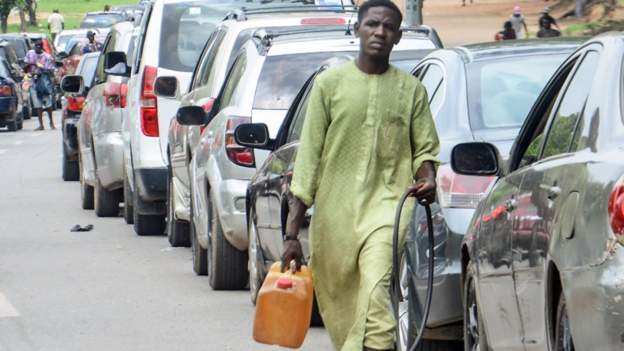
Within hours of Mr Tinubu’s first address, hundreds of people had poured on to the streets, either in their cars or on foot with yellow jerrycans, to grab what they believed to be the last drops of fuel to be sold at a government-fixed price.
Despite its oil riches, Nigeria is unable to refine crude locally to meet demands.
The four state-owned refineries are moribund, forcing the country to import refined petroleum products which are then sold at a price fixed by the government.
Mr Tinubu says the government can no longer afford to subsidise fuel because of dwindling revenue: the government has already set aside $7bn to subsidise fuel for the first six months of this year.
Ten of citizens of Congo died on Sunday June 2023 after an airstrike “bombarded” their university campus in Khartoum, the capital of Sudan, according to the Democratic Republic of the Congo’s administration.
The foreign affairs ministry said in a statement that it had “learned with deep dismay” the killing of its citizens at the International University of Africa.
Minister Christophe Lutundula said there were indications that the air strikes were “carried out by the regular army on an area occupied by civilian and unarmed populations, including foreign nationals, seriously wounded other compatriots”.
The minister said thegovernmentwas waiting for the Sudanese authorities to shed more light about the incident.
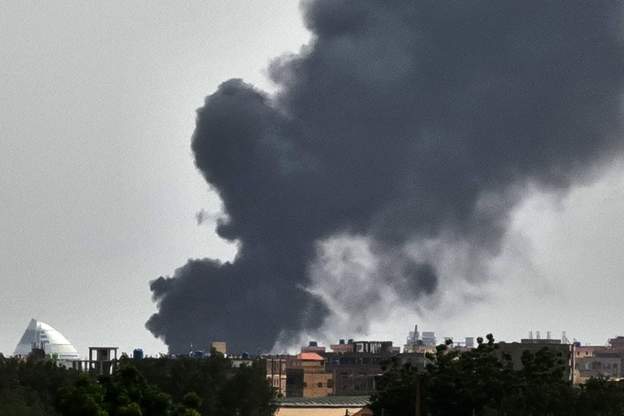
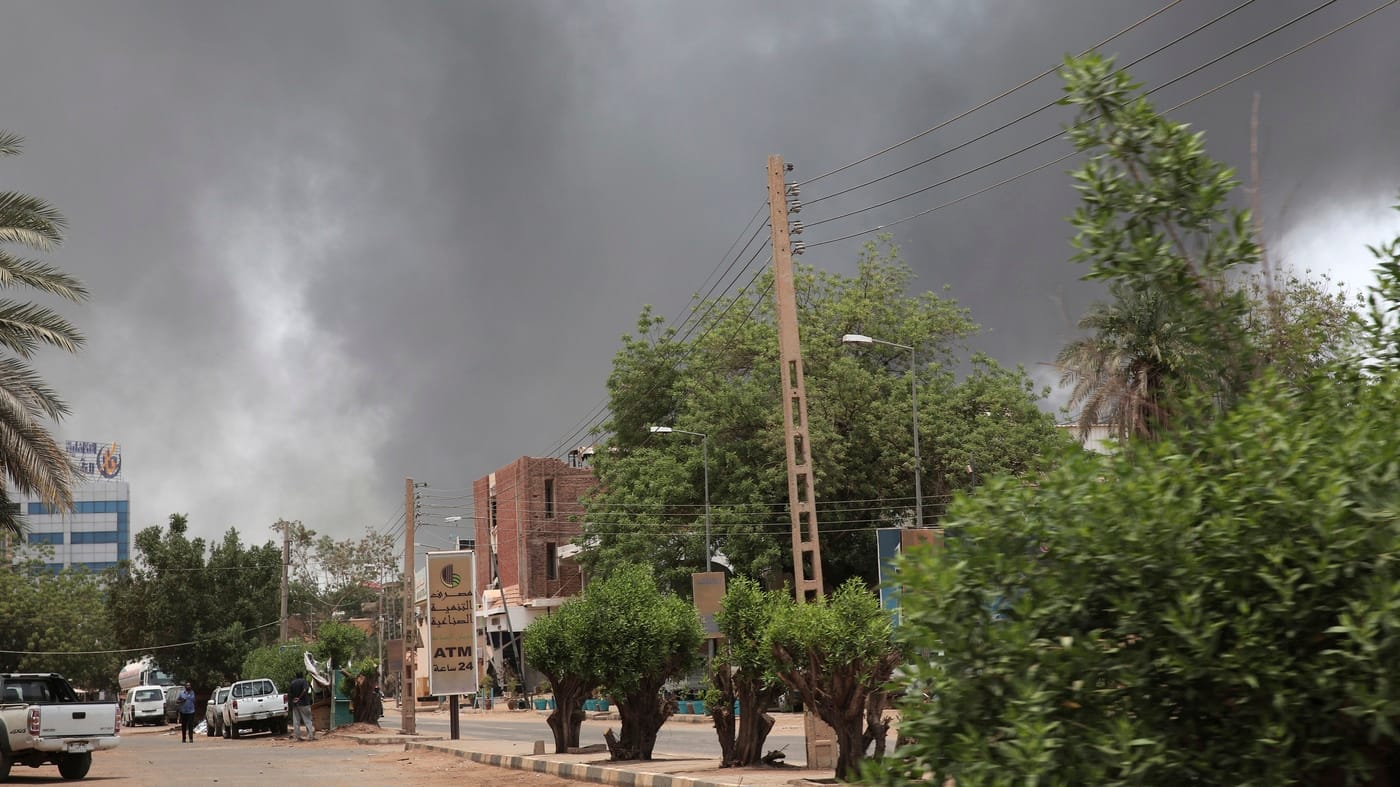
Khartoum has been at the centre of fighting between the army and paramilitary Rapid Support Forces (RSF) since 15 April, with civilians caught in the crossfire.
DR Congo’s government has called for a humanitarian corridor to enable it to evacuate its wounded citizens and others still stranded in Khartoum.
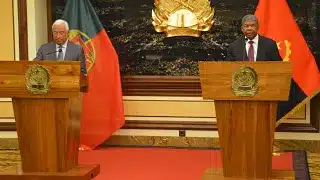
President of Angola, Joo Lourenço, received António Costa, the president of Portugal, on Monday in Luanda, the country’s capital.
Ministers from both countries signed a total of 13 agreements ranging from financial to legal.
“I have to say that we sensed a great willingness to collaborate on the part of the Portuguese justice system, with whom we were able to exchange not only information but also the alignment of Angola’s anti-corruption strategy and to say that in principle everything that was asked of the Portuguese authorities so that we could find the right correspondent”, said Angolan president, João Lourenço.
The Portuguese prime minister announced a significant increase in the credit line granted to Angola.
“To support the Angolan government’s ambition and strategic approach to diversifying the country’s economy, we have significantly increased the credit line from one thousand five hundred to two billion euros”, announced António Costa, prime minister of Portugal.
The cooperation program signed between Portugal and Angola will last until 2027.
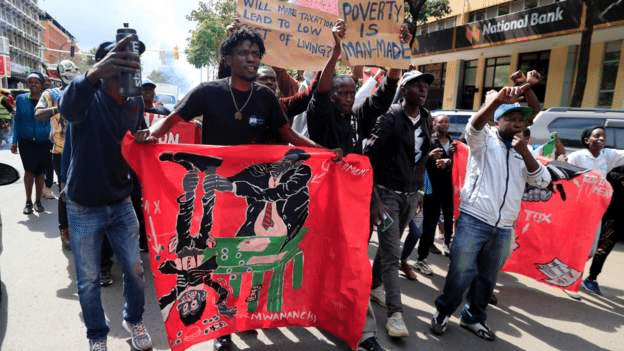
Kenyan protestors demonstrating in the nation’s capital against a number of the government’s proposed fuel tax increases have been dispersed by an open fire with tear gas.
One of the key contested measures in the unpopular finance bill is a new 3% housing fund levy for all salaried workers and to increase value added tax on fuel to 16%.
The bill also calls for taxes on beauty products, crypto-currencies and earnings by social media influencers. They are among the measures that have been opposed by many Kenyans.
The dozens of protesters had sought to gather at a park in the centre of Nairobi before marching to parliament to urge MPs to reject the tax proposals.
Local media reported that some of the protesters were arrested.
Legislators are set to debate the bill on Thursday, amid warnings issued by President William Ruto and his deputy Rigathi Gachagua against those opposed to the proposals.
Many Kenyans have been calling on MPs to reject the new tax proposals
The death of one of the principal investigators into Thabo Bester’s audacious prison break has been confirmed by South African police.
Police said they were investigating the circumstances around the apparent death by suicide of 59-year-old Brigadier Jackson Mkhaulesi. He was found dead in his car on Monday.
Earlier in the day, he attended a court hearing where Bester’s girlfriend, celebrity doctor Nandipha Magudumana, lost her application to declare her arrest in Tanzania unlawful.
News of Brigadier Mkhaulesi’s death has sent shockwaves around South Africa.
The police detective with 31 years of service has been described as a hardworking and loyal officer.
Bester is known as the “Facebook rapist” for using social networking sites to lure his victims.
He faked his death to break out of prison last year. He and his girlfriend, who is accused of helping him escape, were arrested in Tanzania in April and brought back to South Africa to face justice.
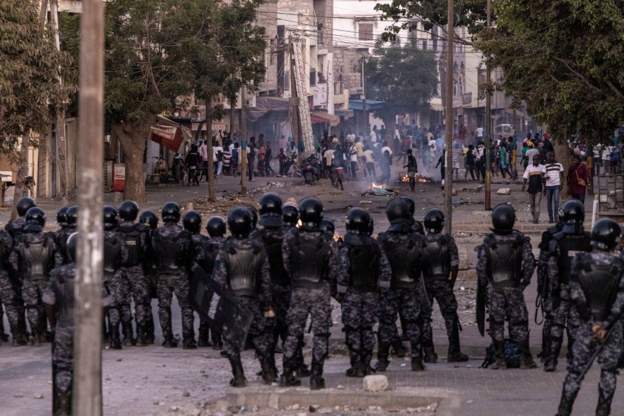
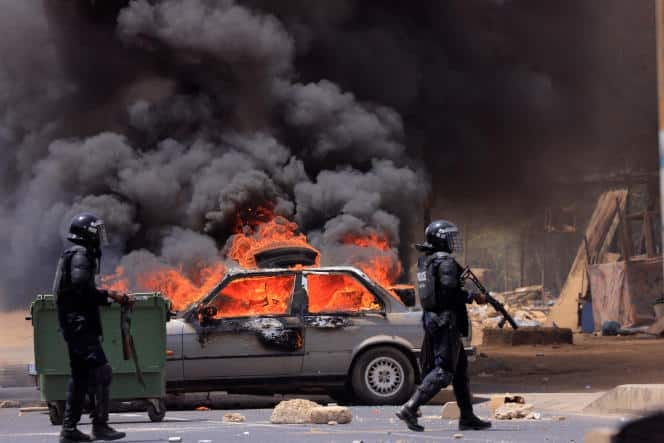
In the aftermath of the judgment of a two year prison term for opposition leader Ousmane Sonko on Thursday, violence broke out, according to the Red Cross in Senegal, injuring about 360 persons.
At least 16 people are known to have died in the clashes between demonstrators and security forces in the capital, Dakar, and Mr Sonko’s home city of Zinguinchor.
Supporters of Mr Sonko say his conviction on charges of “corrupting” a young woman are politically motivated.
They have condemned what they called the “murderous repression” of the security forces.
On Sunday the situation appeared calm.
The government has restricted access to the mobile internet, to stop what it called “subversive messages” from being shared.
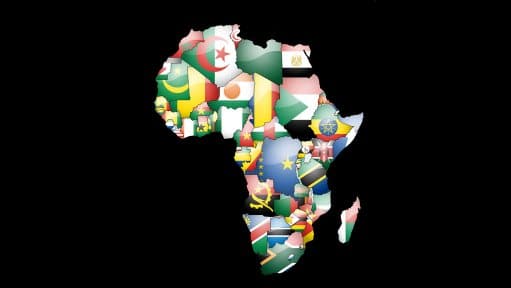
A recent research by the economic consulting firm McKinsey, indicates that the continent’s largest economies, including South Africa, Egypt, Nigeria, and Algeria, are expanding at the slowest rates.
“The growth in the past was driven by resources. We need to pivot now to productivity growth,” said Acha Leke, a senior partner with McKinsey.
The report showed that the performance of these economies had slowed the overall growth on the continent.
“If you look at growth over 10 years, it has grown at 3.3% which isn’t good when you look at population growth. But there is huge variation within Africa.”
The report added that the continent’s consistently growing economies have been driven by East Africa, Rwanda in particular. More recently, some countries in West Africa, such as Ivory Coast, have experienced a surge in growth.
As a result, Mr Leke said that 50% of Africans lived in countries that had grown above the average.
He said that future growth will hinge on strengthening intra-regional trade, helping Africa’s businesses increase in scale and skilling up the future workforce.
The deputy head of Sudan’s ruling council, Malik Agar, has welcomed negotiations for a further ceasefire but said no truce can hold until all forces are withdrawn from the capital.
There’s been an alarming escalation of violence in Khartoum and in the western Darfur region since the negotiations in Saudi Arabia broke down last week.
Both the army and the rival paramilitary force, the Rapid Support Forces (RSF), accused each other of violating the truce, but negotiators have remained in Jeddah.
Mr Agar said the talks there represented the best hope of ending the fighting.
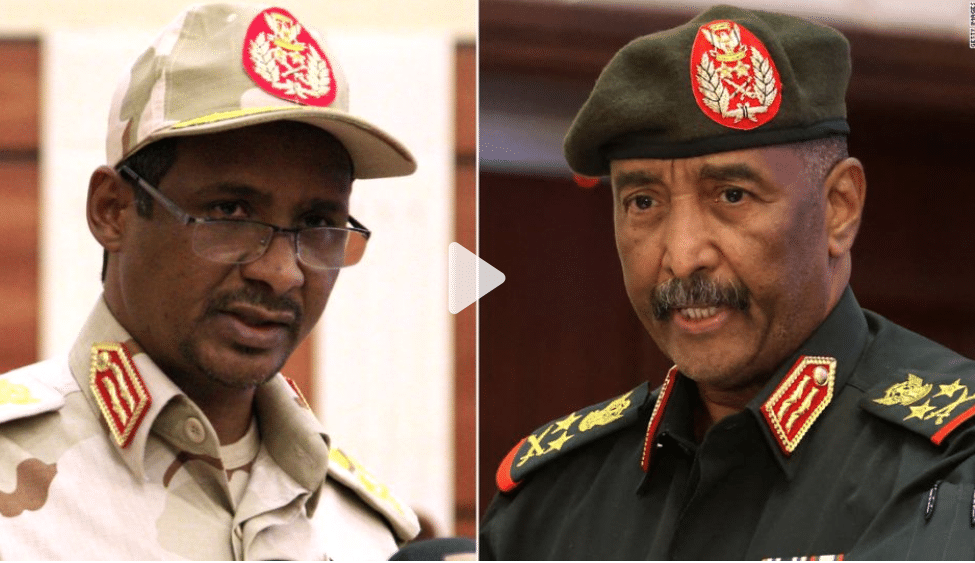
Sudanese military leader Gen Abdel Fattah al-Burhan recently appointed Mr Agar, a former rebel leader, to replace his former deputy Gen Mohamed Hamdan Dagalo, also known as Hemedti, who heads the RSF.
Most of the troops in Khartoum are RSF fighters, and the army appears to have resumed its attempts to blast them out of the positions they’re holding.
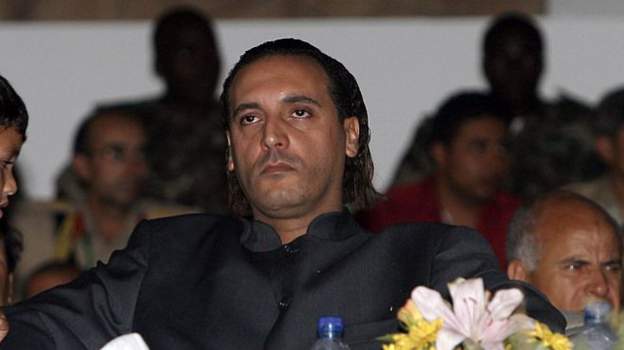
The Lawyer of one of Muammar Gaddafi’s surviving sons, Paul Romanos, says the latter has gone on a hunger strike to protest his protracted confinement in Lebanon.
Hannibal Gaddafi has been held in Lebanon for more than eight years after being abducted by Lebanese militants from Syria, where he had taken refuge after the downfall and death of his father, he adds.
Hannibal Gaddafi was subsequently taken by the Lebanese authorities and has been detained ever since in a jail in Beirut without trial, Mr Romanos says.
The aviation sector is anticipated to earn a profit this year after suffering through three tough years of losses.
The impact of the COVID-19 pandemic cost the industry some US$180 billion over a three-year period.
However, the International Air Transport Association (IATA) predicts that the rebound will lead to a US$2.25 revenue per passenger this year. This is a significant improvement from the -1.1 dollars per passenger loss recorded last year.
“As we noted in this report, the industry is expected to return to overall profitability in the year 2023, which is an incredible accomplishment given that $180 billion has been lost over the last three years. It is also interesting to note that despite predictions to the contrary, the recovery of Passenger volumes in the premium cabins has tracked close with recovery in the other cabins.”
“Yes, we are looking forward to a busy and profitable summer travel season while at the same time, recognizing the possibility of cost increases and a more challenging environment for the industry in 2024,” Mehmet T. Nane, Chairperson of the Board of Directors of Pegasus Airlines and the immediate past Chair of the IATA Board of Directors said.
Despite several industry headwinds, the airline industry is on track to recover global air passenger traffic, measured by revenue passenger kilometers (RPK) by 2024.
Currently, global RPKs are within 9.5% percent of their 2019 levels for the first time since the onset of the pandemic.
Domestic markets, which opened up earlier, are now exceeding 2019 traffic levels by 2.9%, while International traffic has been slower to recover because of impacts from travel restrictions and by the war in Ukraine, but it is catching up with domestic as international markets, particularly as Asia, reopen.
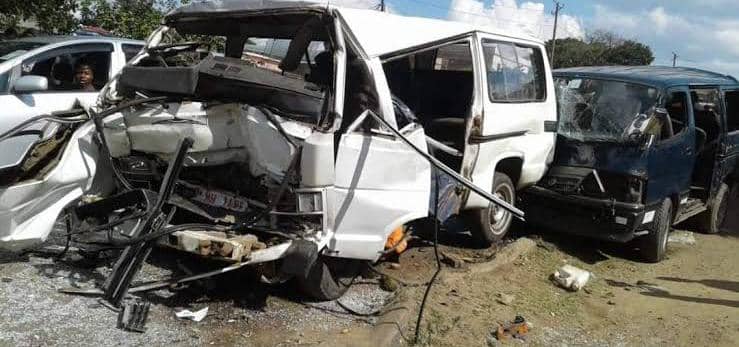
In Malawi’s northern Karonga area, a van carrying at least 22 amateur football players and team supporters overturned as it was being driven home from a game.
A police statement said the vehicle carrying around 80 people flipped over on Saturday night after the driver failed to negotiate a bend and hit an embankment on the left side of the road.
Several other passengers were taken to hospital – at least 12 of them had injuries described as “serious”.
Malawi’s President Lazarus Chakwera sent a condolence message to families of the deceased and ordered the disaster management SP welcomes US Assistant Secretary for Int’l Affairs department to offer quick support to all the affected families.
The Bank of Ghana has released today’s Interbank forex rates, providing insights into the currency exchange dynamics on June 5, 2023. According to the data, the Ghana Cedi is currently trading against the US dollar at a buying price of 10.9654 and a selling price of 10.9764.
At a forex bureau in Accra, the dollar is being bought at a rate of 11.40 and sold at a rate of 11.90.
Against the Pound Sterling, the Cedi is trading at a buying price of 13.6783 and a selling price of 13.6930.
At a forex bureau in Accra, the pound sterling is being bought at a rate of 14.00 and sold at a rate of 14.80.
The Euro is trading at a buying price of 11.7622 and a selling price of 11.7739.
At a forex bureau in Accra, Euro is being bought at a rate of 12.00 and sold at a rate of 12.70.
The South African Rand is trading at a buying price of 0.5622 and a selling price of 0.5628.
At a forex bureau in Accra, South African Rand is being bought at a rate of 0.30 and sold at a rate of 0.90.
The Nigerian Naira is trading at a buying price of 42.3119 and a selling price of 42.4250.
At a forex bureau in Accra, Nigerian Naira is being bought at a rate of 12.00 Naira for every 1 Cedi and sold at a rate of 18.00.
For the CFA, it is trading at a buying price of 55.7128 and a selling price of 55.7682.
At a forex bureau in Accra, CFA is being bought at a rate of 16.00 CFA for every 1 Cedi and sold at a rate of 21.00 CFA for every 1 Cedi.
Our forex bureau rates are provided by Afriswap Bureau De Change in Osu, Accra.
Note that these rates may be different at a forex bureau near you. Our forex bureau rates are provided by Afriswap Bureau De Change in Osu, Accra.
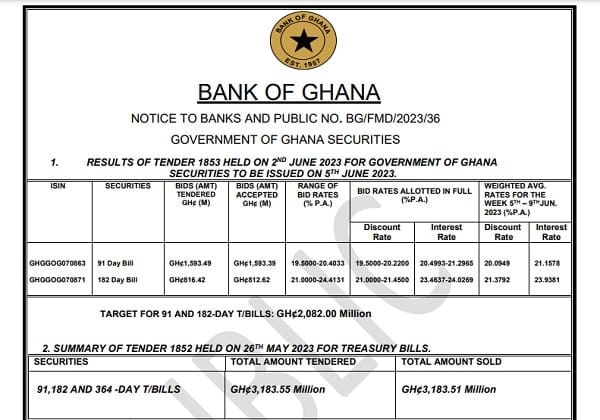
The recent treasury bill auction held on June 2, 2023, yielded positive results as the government successfully raised an impressive sum of GH¢2.40 billion.
This indicated an oversubscription of GH¢324.01 million from the target of GH¢2.08 billion.
This will be the first time in four weeks that the government has surpassed its treasury bills target.
Interest rates are still high nonetheless, increasing from 19% to almost 23%.
The majority of the subscriptions came from the 91-day bills which received GH¢1.59 billion at an increased interest rate of 21.15%.
The 182-day bill received bids worth GH¢816.62 million at an interest rate of 23.93%.
The assumption was that due to the finalization of Ghana’s IMF deal, investor confidence will rise and lead to the government achieving its target or even surpassing it.
But even after that, treasury bills were being undersubscribed.
It is however not far-fetched to make the assertion that investor confidence is gradually being restored.
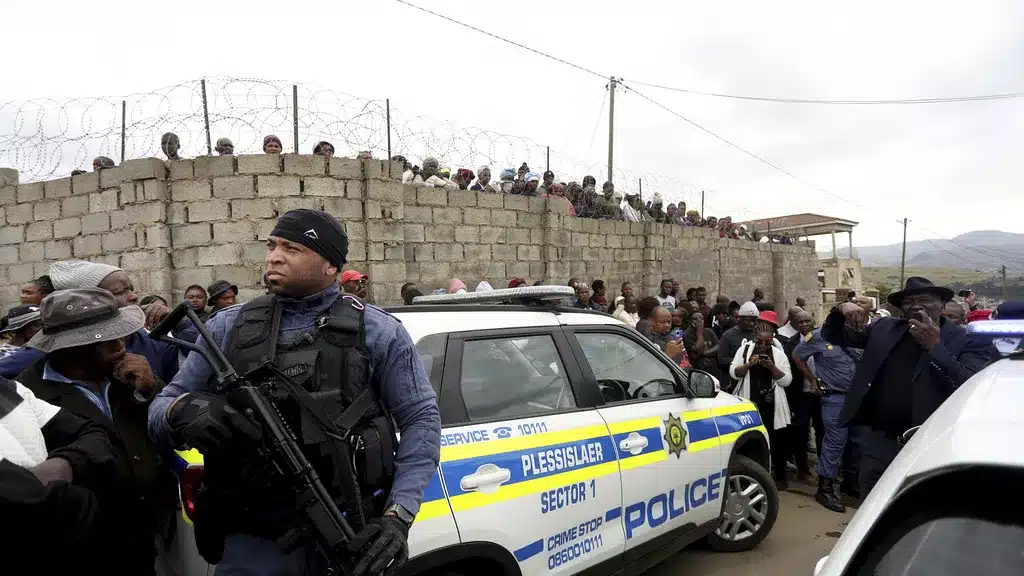
In a horrifying incident near the eastern city of Durban in South Africa, a group of armed assailants forcefully entered a room at a men’s hostel, resulting in a devastating loss of life.
Tragically, eight individuals were killed, while two others sustained injuries during the violent encounter. This incident marks yet another distressing mass shooting to occur within the country
Seven men were declared dead immediately after the shooting in the pre-dawn hours of Saturday in the Umlazi township. An eighth man died on Sunday, police said.
Two others are hospitalized with injuries, and they include a man who jumped out of the window of the hostel room to escape the gunfire. Police said that 12 men were in the room drinking alcohol when numerous gunmen broke in, shot at them and then fled.
Two of the men in the room were unhurt.
South Africa is among the 10 countries with the highest homicide rates in the world and there has been a spate of mass shootings in recent years. At least two mass shootings were reported earlier this year.
A child was among 10 family members who were killed at a house in April. Eight were shot dead at a birthday party in January.
Last year, 22 people were killed over one weekend in three separate shootings at bars in different parts of the country.
South Africa has reasonably strict gun laws but has serious problems with illegal firearms, police and community activists say.
An average of 30 people a day were killed by firearms in South Africa in the first three months of this year, according to official crime statistics. During the same three months, police recorded more than 4,000 cases of illegal possession of guns or ammunition.
A heartbreaking incident unfolded near the town of Kouroussa in Upper Guinea, where a group of young schoolgirls faced a fateful journey to take their college entrance exams.
In a devastating turn of events, their hopes and dreams were tragically cut short as their canoe capsized on the Niger River.
Officials, including a minister and a relative of one of the victims, have confirmed that at least seven precious lives have been lost in this harrowing accident.
This devastating loss has sent shockwaves through the community, leaving a deep sense of grief as the nation mourns the untimely demise of these aspiring students.
“We are struck by this bad news of the shipwreck of seven students who have lost their lives,” the Minister of Pre-university Education and Literacy, Guillaume Hawing , who is in the region for launch the first tests of the examination.
Mamadi Kéita, a security guard, told AFP that he lost his half-sister in this drowning. “She was leaving with her comrades for the other side of the Niger River to face the first tests of their 7th-year entrance exam which begins on Monday”.
“They embarked in an overloaded canoe which capsized under the weight of passengers and goods”, he added in tears on the telephone. “All the girls came from Kourala district and were going to Balato sub-prefecture, 40 km from Kouroussa prefecture,” he said.
Another local source assured AFP anonymously that the toll was only provisional and could be heavier. The operations to find bodies continue Sunday evening.
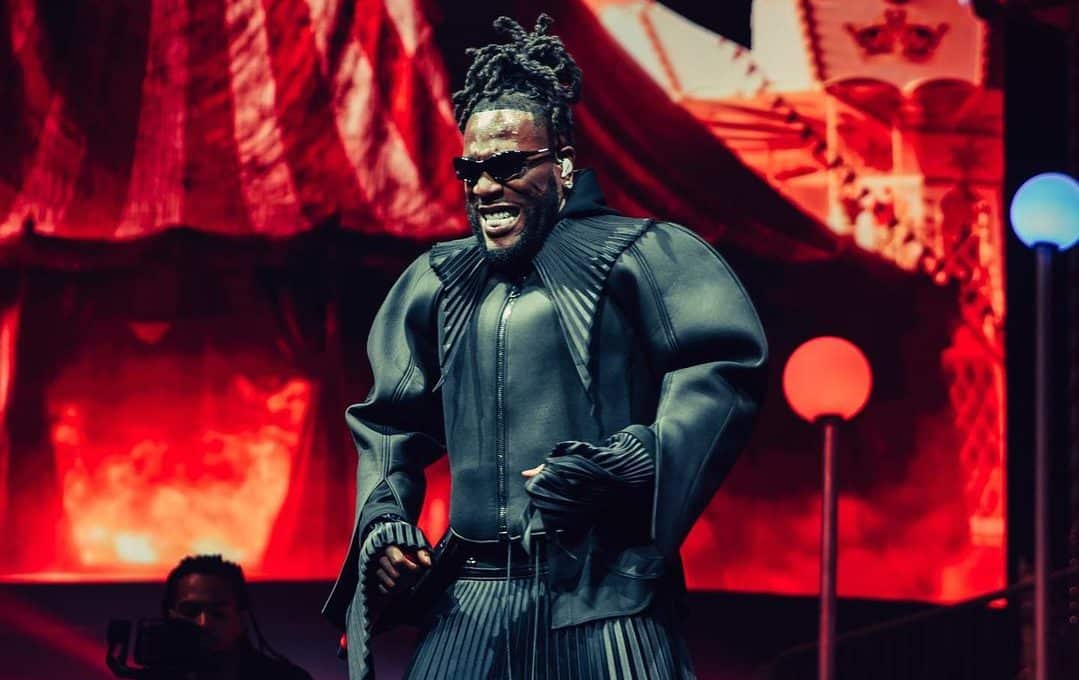
Burna Boy’s recent historic concert in London has garnered widespread praise, solidifying his status as a trailblazer in the music industry.
The Nigerian sensation made history on Sunday by becoming the first African artist ever to headline a stadium show in the UK, a remarkable achievement that has captivated audiences and critics alike.
Some 80,000 fans watched the Nigerian star’s sellout show with a setlist spanning his decade-long career, from early hit Like to Party to the anthemic Last Last.
“Words can’t explain my emotions right now… there’s nothing else I’d dreamed more of,” said the Grammy-winning star, who grew up partly in the British capital.
Burna Boy was flanked onstage by dozens of dancers and was joined by a succession of stars – including Stormzy, J Hus, Dave and Popcaan – during the two-hour set at the grounds of West Ham United football club.
“This isn’t the first time African music is at the forefront,” says Eddie Kadi who presents the Official UK Afrobeats Chart Show on BBC radio.
But, he says, we can credit afrobeats’ huge popularity to the way it absorbs and transforms a variety of genres, and because young people from Africa’s global diaspora have cemented African music in the cultures where they live.
The diplomatic mission of Kenya in the Sudanese capital Khartoum, has been closed as clashes intensify between the rival military forces.
The foreign ministry said the mission had remained open to support the evacuation of Kenyan citizens, but was now closed as it had come under threat from the fighting.
Nairobi has been supporting African initiatives to end the conflict between the Sudanese army and the paramilitary Rapid Support Forces.
Police in the Senegalese capital Dakar have surrounded the home of the main opposition leader, Ousmane Sonko, after deadly unrest erupted over a jail sentence pronounced against him.
Mr Sonko wasn’t in court on Thursday when he was sentenced to two years in prison for immoral behaviour.
But the justice minister said he could be jailed at any time.
At least nine people were killed in Dakar and the southern city of Ziguinchor when Mr Sonko’s supporters clashed with police.
Senegal’s government blocked some social media and insisted it would maintain order.
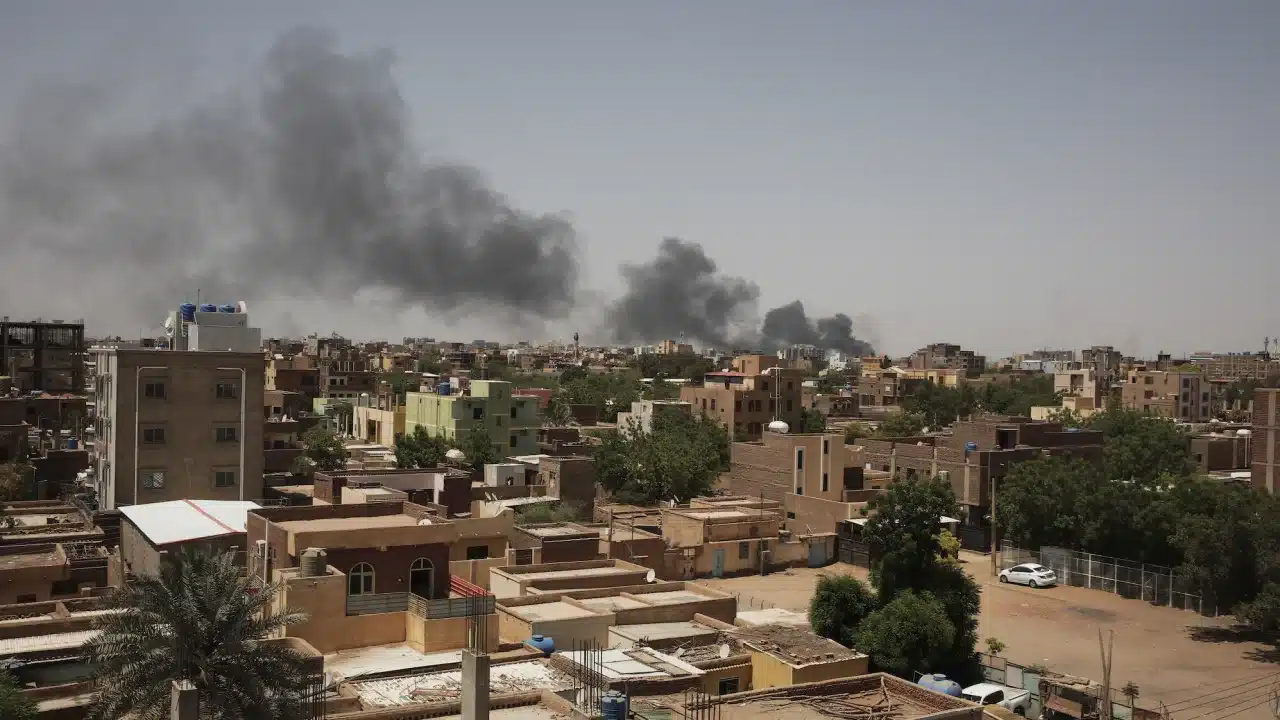
More shelling has been reported in the Sudanese capital Khartoum, as fighting between the country’s warring generals intensifies.
Witnesses reported artillery fire around the state television building in the adjoining city of Omdurman.
The army announced it had brought reinforcements to the capital from other parts of Sudan.
Fighting has continued for nearly seven weeks, between the army and the paramilitary Rapid Support Forces (RSF), in Khartoum and the western region of Darfur, despite efforts to broker a humanitarian ceasefire.
On Thursday the US issued sanctions against four Sudanese companies and several individuals, after the collapse of a US-Saudi brokered truce.
The Chamber of Petroleum Consumers Ghana (COPEC) has urged the initiation of a comprehensive audit to determine the current level of debt in Ghana’s power and energy sector.
This comes at a time when the Public Utility Regulatory Commission (PURC) has increased electricity tariff by 18.3 per cent and has since indicated of a further increment any time soon to help defray outstanding debts of the Electricity Company of Ghana.
In an interview with Citi Business News, the Executive Secretary of the Chamber of Petroleum Consumers Ghana (COPEC), Duncan Amoah, questioned the back lock of debts recorded in the power sector.
“One wonders where the monies we all pay through the ECG to be used to pay the services the IPPs have rendered go. Is it really being given to them or they collect the monies then people decide to do whatever they want to do with the money, accumulate back log of debt and then go to call about a certain debt restructuring?,” he quizzed.
“Whatever we are doing as country with the power and energy sector, we would need to probably have a thorough audit because it clearly baffles as there is a conversation of even increasing ECG charges again within a very short period of time”.
Meanwhile, the Independent Power Producers (IPPs) have stated that government’s failure to pay them their arrears will not boost investor confidence.
This comes as the IPPS have declined government’s proposal to restructure about $1.58 billion in arrears owed them by the state.
According to the IMF Staff Report on Ghana, there will be a renegotiation of contracts with the IPPs that are expected to further reduce costs.
The IMF has blamed shortfalls in Ghana’s energy sector on factors including low tariffs and excess capacity amid take-or-pay contracts, which it said had cost the central government some 2% of GDP per year since 2019.
Petrol prices in Benin have nearly doubled since it was announced that fuel subsidies would be phased out in neighboring Nigeria.
Nigeria is one of Africa’s oil giants and subsidised petroleum products are routinely smuggled into Benin, where they’re mostly sold by the roadside and serve a large part of the population
Popularly called kpayo – which means “unoriginal” in Goun, a native language – it is cheaper than fuelling up at stations, local media reported.
Nigeria’s new President Bola Tinubu had in his inauguration speech said fuel subsidy was “gone”, an announcement that triggered panic-buying and a surge in fuel prices.
It was later clarified that it would be phased out in the coming weeks.
More shelling has been reported in the Sudanese capital Khartoum, as fighting between the country’s warring generals intensifies.
Witnesses reported artillery fire around the state television building in the adjoining city of Omdurman.
The army announced it had brought reinforcements to the capital from other parts of Sudan.
Fighting has continued for nearly seven weeks, between the army and the paramilitary Rapid Support Forces (RSF), in Khartoum and the western region of Darfur, despite efforts to broker a humanitarian ceasefire.
On Thursday the US issued sanctions against four Sudanese companies and several individuals, after the collapse of a US-Saudi brokered truce.
Tanzania has declared the Marburg virus outbreak to be over. In March, the presence of the haemorrhagic fever was initially established in the northwestern Kagera region.
There were nine cases and six people died.
The World Health Organisation said its joint action with Tanzania on an emergency response had enabled the authorities to limit the impacts of a highly infectious disease.
The Marburg virus can have a fatality rate of up to 88%.
Gambia has enlisted the services of a United States law firm to explore potential legal recourse following the findings of a government-funded investigation, which concluded that contaminated medicine sourced from India was highly probable to be responsible for the deaths of a minimum of 70 children, Reuters have said
Justice Minister Dawda Jallow did not tell the news agency which entity they would make the claim against, not did Mr Jallow reveal the name of the law firm hired.
Reuters says the makers of the cough syrup, Maiden Pharmaceuticals, have denied any wrongdoing.
The Indian government says it found no toxins when it tested the medicines.
Yet tests by the WHO showed that the cough syrups contained two lethal toxins usually found in car break fluid.
The World Bank is urging the government to reconsider some of the Power Purchase Agreements (PPAs) signed as part of the International Monetary Fund (IMF) bailout to help the economy recover.
According to the bank, many of the PPAs that the government signed with Independent Power Producers (IPPs) are expensive.
The Country Director of the World Bank with responsibilities over Ghana, Sierra Leone and Liberia explained that many of the country’s PPAs signed for power generation are very expensive and wrong.
Mr Pierre Frank Laporte made the call for the review of PPAs on Accra-based Joy FM’s 6:00 am news on Friday, June 2, 2023.
He said the kind of PPAs Ghana signed means the country is paying more for power generation when it is not supposed to be so.
“The fact is Ghana entered into some PPAs that were wrong. These types, in our view, were at the wrong rate and at the wrong prices,” he said. “And today the country is being billed for many of these wrong PPAs.”
He said there is a need for the government to restructure some of these contracts.
“I know that the government has started some talks with the IPPs to renegotiate some of these PPAs,” he said.
The Ghana Harm Reduction Alliance has contributed its voice to the mounting calls for the government to implement strategies, policies, and legislation targeted at dramatically reducing tobacco use and related substance use in Ghana.
According to the Alliance, government can pick key lessons from European country, Sweden which has implemented efforts to becoming a tobacco-free society.
In a statement issued to mark ‘World No Tobacco Day’ held on May 31, 2023, Harm Reduction Alliance stressed on the harmful impacts of tobacco use on human lives and the environment.
It cited the Global State of Tobacco Harm Reduction Report which indicates that about 5,012 deaths annually were attributed to tobacco smoking with approximately 644,429 current smokers in Ghana.
It further reiterated remarks made by the Minister of Health, Kwaku Agyeman-Manu during the launching of the World Health Organization (WHO) Framework Convention for Tobacco Control (FCTC) 2030 project held in Accra recently.
The Minister earlier noted the prevalence of tobacco smoking especially among youth people and cautioned that Ghana was faced with a dual burden of disease with the upsurge of non-communicable diseases such as hypertension, diabetes and a wide array of cancers.
Agyeman-Manu said although Ghana had made significant progress in tobacco control with the inclusion of tobacco-specific provisions in the Public Health Act, of 2012, passage of the tobacco control regulations in 2016 (L.I.2247) and the introduction of graphic health warnings, the country still has a long way to go in the pursuit of attaining a tobacco-free country.
In view of this the Harm Reduction Alliance, Ghana is advocating that Ghana takes key lessons from Sweden to achieve the feat of reducing tobacco use.
“Sweden has achieved the feat of reducing the smoking rate by a whopping 80 per cent despite a 30 per cent spurt in population growth. The Swedes began the journey to a smoke-free society with the introduction of snus, a smokeless oral tobacco product usually held in the mouth between the lips and gums which brought the smoking rate down by 55 percent,” the statement explained.
It further pointed out that policymakers in Sweden had embraced a new generation of alternative risk nicotine products such as vaping and nicotine pouches which had contributed to a decline in smoking rates.
“The effects of these tobacco harm reduction efforts had led Sweden to save more than 3,400 lives yearly. It is projected that; the EU could save about 2.84 million lives should they follow Sweden’s example. Furthermore, compared to the rest of the EU, Sweden has 44% fewer tobacco-related deaths, 41 per cent lung cancer rates and 38 per cent fewer cancer-related deaths,” it continued.
Meanwhile in 2021, the European Union (EU) earmarked the year 2040 for Member States to be ‘Tobacco-free’. This is defined to be a smoking rate below six (6) percent and with two years on, Sweden is on course to achieve a ‘tobacco-free’ society 17 years ahead of the 2040 deadline.
“Sweden’s health authorities had implemented a tobacco control policy for the past 50 years where the traditional tobacco control measures recommended by the EU run alongside an openness to alternative reduced-risk products,” the Alliance said.
“Ghana can adopt and localise the Sweden example by embracing tobacco harm reduction (THR) interventions such as friendlier approaches in regulating reduced-risk products i.e., heated tobacco, nicotine pouches and vapes. This could be implemented alongside the traditional tobacco control measures and education making the country safer for all and attractive to investors,” it advocated.
“On World vape day, Harm Reduction Alliance, Ghana would want to be associated with the comments made by the Finance Minister of Sweden in April 2022 – Mikael Damberg – “Tobacco and nicotine taxes are […] structured today so that products are generally taxed based on risk. […] Products that are judged to be more harmful to health have a higher tax.”
“Harm Reduction Alliance, Ghana would like to urge policymakers in Ghana to follow the science and not to be persuaded to make policies based on morality and ideologies. By following the example of Sweden, Ghana could save lives, improve public health outcomes, and alleviate the burden on healthcare resources” the Alliance reiterated.
In conclusion, the Alliance called for increased education and regulation of traditional tobacco use as well as the provision of safer alternatives.
Harm Reduction Alliance, Ghana is a member of the West African Drug Policy Network and the Ghana Network on Drug Policy Reforms. It advocates for the adoption of harm reduction interventions and provides outreach services for the key population of people who use drugs.
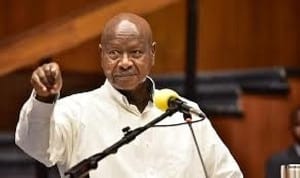
Ugandan President Yoweri Kaguta Museveni has admitted that international partners and funders may reduce help to the East African country as a result of a recently approved anti-LGBTQ law.
The 78-year-old is, however, unperturbed by that prospect stressing that the country will rationalize its affairs to deal with the situation if it come up.
“If they cut aid, we shall sit down and discipline our expenditure. We arrange our budget, if they interfere with our trade, we shall trade with others,” he told lawmakers at an event on June 1, days after assenting to the legislation.
“That is what I was telling you, the other time when I met you at Kololo (a place for national gatherings), I said you people should be ready for war and you cannot fight a war when you are a pleasure seeker, if you like a soft life, war is not for soft life,” he stressed.
In previous comments made about the law, criticized by the United States, United Nations and others; Museveni cautioned that the law had been passed and that there will be no going back on it in apparent response to strong reservation from some international partners.
President Museveni signs anti-LGBTQ law
Museveni signed the much talked-about anti-homosexuality bill into law on May 29.
The new legislation limits the offence of homosexuality to gay sexual acts, carrying a maximum penalty of life imprisonment.
Aggravated offences, such as sexual abuse against minors or disabled individuals, or infecting a victim with a lifelong illness, can result in the death penalty, the BBC Africa LIVE page reported.
The law also mandates reporting of any homosexual abuse against children or vulnerable individuals.
International partners and organizations expressed deep concern over the law’s impact on health education and outreach programs for AIDS and the safety and well-being of LGBTQ individuals.
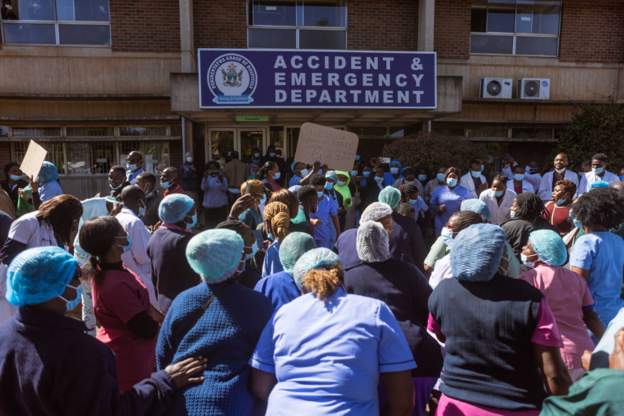
The International media has been told by the a Zimbabwean nurse that they are the “poorest of the poorest” globally and in the southern African.
Douglas Chikobvu said he and his colleagues were paid a “pittance” given Zimbabwe’s high inflation and that he had attempted to leave the country in search of greener pastures.
His comments come as Zimbabwe’s Vice-President Constantino Chiwenga wants to make it a criminal offence for recruitment agencies to poach health workers from Zimbabwe.
He says his country should not be subjected to training doctors and nurses for the benefit of other nations.
However, his proposed legislation has been met with anger and frustration.
Mr Chikobvu said the workload at Zimbabwean hospitals was immense and warned that basic “tools” to do a job like medicine and personal protective equipment were lacking.
He said his ideal country to relocate to would be the US, where he believes nurses are valued, or the UK, where he says medical professionals can work “nicely”.
Zimbabwe’s government says it doesn’t have enough funds for salary hikes or better equipment.
Human Rights Watch (HRW) has urged Kenyan authorities to conduct an urgent investigation into police brutality after criticizing them for failing to take action in the recent killings of demonstrators.
In March and April riot police were deployed to suppress protests called by the opposition’s Raila Odinga in Nairobi, Kisumu, Migori and Homa Bay.
He has not accepted William Ruto’s election victory last year.
HRW and Amnesty International say excessive force was used, leading to the deaths of at least 12 people.
The police said some protesters were violent or were looting.
The rights groups said most victims were bystanders. They accused the police of firing live bullets in residential areas and inside classrooms.
Reports have it that the son of a notorious former Libyan intelligence chief was discovered dead in the southern city of Sabha.
There are conflicting reports on the cause of Amhammed al-Senussi’s death.
His father Abdullah al-Senussi – now in a Libyan jail – was one of the late Colonel Muammar Gaddafi’s most-trusted officials and also his brother-in-law.
He was charged with crimes against humanity by the International Criminal Court (ICC), following the brutal suppression of anti-Gaddafi demonstrations in 2011.
The former head of intelligence is also wanted for questioning by Scottish and US investigators over the 1988 Lockerbie bombing.
270 people died aboard a Pan Am passenger plane when a bomb in the aircraft exploded as it flew over Scotland.
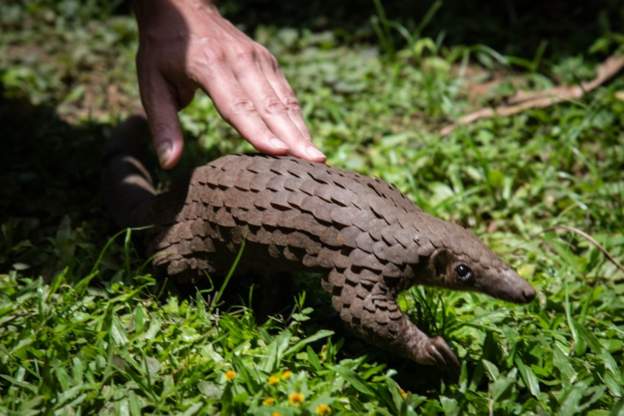
Two Mozambican residents were apprehended in neighboring Malawi after being found in possession of a protected pangolin.
The suspects, aged 40 and 46, were arrested by the Malawian police in the central Mchinji district, where they were allegedly looking for a potential buyer for the pangolin.
Mchinji police public relations officer said that on questioning, the suspects revealed the animal had been captured in Chifunde in Mozambique’s western Tete province where they come from.
They are due to appear in court to face charges of trafficking a protected species.
Pangolins are the most-trafficked mammals in the world with high demand for their scales and claws used in traditional medicine – with fears they could become extinct.
Local media has reported that Nigerian police rescued six pregnant women after raiding a suspected “baby factory” in Rivers state.
Police said they had arrested a 39-year-old woman, the alleged owner of the child trafficking home.
They said she had confessed to the crime and that she had been in the trafficking business for a long time.
“The prime suspect and her accomplice are currently in custody and further investigation is in top gear for the possible arrest of other suspects in connection with the crime,” the state commissioner of police, Polycarp Emeka, was quoted as saying on Wednesday.
Stories of the so-called “baby factories” are not uncommon in Nigeria – where women are abducted for the purpose of getting them pregnant and selling the babies.
In 2019, Nigerian police freed 19 pregnant women from properties in Lagos, described as “baby factories”.
A year earlier more than 160 children rescued from two unregistered orphanages in the city.
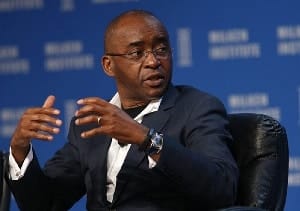
Zimbabwe’s richest man Strive Masiyiwa, who recently regained his status as one of Africa’s billionaires with a net worth exceeding $2 billion, has experienced a significant setback in his fortune over the past two weeks.
Masiyiwa, renowned as the founder of Econet Wireless Zimbabwe, the country’s largest telecom conglomerate, has seen his net worth decline by $100 million in the past two weeks, marking a noteworthy downturn.
Just two weeks ago, Masiyiwa’s net worth reached an impressive $2.2 billion, which propelled his year-to-date wealth gains to $1 billion.
The ascent placed him in a position to potentially surpass current holder Patrice Motsepe as the richest Black billionaire in Southern Africa.
However, recent developments have led to a decline in Masiyiwa’s net worth, which now stands at $2.1 billion. The decline in his net worth can be attributed to a significant pullback in the share price of one of his publicly listed companies, EcoCash Holdings.
EcoCash Holdings, an intelligent technology firm focusing on digital and financial solutions to promote financial inclusion and shared economies, has witnessed an 8.93-percent slump in its shares on the Zimbabwe Stock Exchange since May 17.
This decline has resulted in the company’s market capitalization falling below $1.2 billion and Masiyiwa’s 30-percent stake dropping to a value below $340 million.
Despite the recent setback, Masiyiwa’s net worth is still up by a remarkable $900 million since the start of the year. This places him among the many African billionaires who have experienced significant wealth growth in 2023.
In other news, last week, U.S. President Joe Biden announced a remarkable $300 million credit facility provided by the U.S. International Development Finance Corporation for Africa Data Centres, a leading network of interconnected data facilities owned by Masiyiwa.
The funding, made possible by the U.S. government’s Partnership for Global Infrastructure and Investment initiative, aims to establish a cutting-edge data center in Ghana, reinforcing Africa’s position in the ongoing digital revolution.
In a spectacular turn of events, Jim Ovia, Nigeria’s wealthiest banker and the founder of Zenith Bank Plc, has seen his net worth skyrocket in just 24 hours.
The surge can be attributed to the remarkable increase in his stake in the Lagos-based financial services group, as the Nigerian Equities rallied to an impressive 5.2-percent gain on Tuesday.
According to data tracked by Billionaires.Africa, Ovia, who holds a prominent position among Nigeria’s richest businessmen, witnessed the market value of his stake in Zenith Bank soar by a staggering N13.69 billion ($29.64 million) in just one day.
This significant surge in his stake can be directly attributed to the recent bullish pressures in the Nigerian Equities market, which saw stocks gain N1.5 trillion ($3.2 billion) in a single day — a record on the local bourse.
Investors responded positively to Nigerian President Bola Ahmed Tinubu’s inaugural speech, which unveiled a range of policies aimed at addressing critical issues such as high-interest rates, multiple exchange rates, slow GDP growth, and the repatriation of foreign investors’ dividends.
Bolstered by the anticipation of these policy shifts, Nigerian equities rallied right from the opening sessions, culminating in one of the most impressive one-day returns in recent memory.
During today’s trading session, Zenith Bank’s shares on the Nigerian Exchange surged by 10 percent, rising from N27 ($0.0584) at the morning’s opening to N29.7 ($0.0643) at the close.
Consequently, Ovia’s 16.2-percent stake in the leading financial services group soared by an astounding N13.69 billion ($29.64 million) within the same trading session, increasing his total stake from N136.95 billion ($296.42 million) to N150.64 billion ($326.06 million).
This recent spike has further solidified Ovia’s position as one of the most affluent investors on the Nigerian Exchange, with his stake in Zenith Bank surging by an impressive N28.91 billion ($62.58 million) since the beginning of the year.
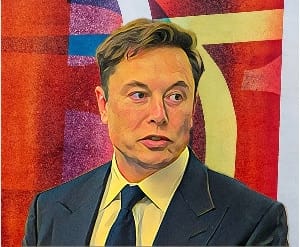
On Wednesday, Tesla Inc. CEO Elon Musk surpassed luxury mogul Bernard Arnault after shares of Arnault’s LVMH slumped 2.6% in Paris trading.
Musk and the 74-year-old Frenchman have been neck-and-neck for the top spot this year in the Bloomberg Billionaires Index, a listing of the world’s 500 richest people.
Arnault first surpassed Musk in December as the tech industry struggled and luxury showed resilience in the face of inflation. LVMH, which Arnault founded, owns brands including Louis Vuitton, Fendi and Hennessy.
Faith in the luxury sector’s buoyancy is starting to fade amid mounting signs of slowing economic growth, particularly in the critical market of China. LVMH shares have tumbled about 10% since April, at one point wiping $11 billion from Arnault’s net worth in a single day.
Musk, meanwhile, has gained more than $55.3 billion this year, largely due to Tesla. The Austin-based automaker — which comprises 71% of his fortune — has rallied 66% year-to-date. Musk’s fortune is now valued at about $192.3 billion, according to the index, while Arnault’s is about $186.6 billion.
Yoweri Kaguta Museveni, president of Uganda has declared that every discussion on anti-LGBTQ bill has been settled since May 29 when he approved of the Bill transmitted to him from the Parliament.
He stressed in a quote shared by the presidency that ‘nobody will move us,’ likening the fightback that the Bill has generated to a war situation, which he said the country was ready to face.
Museveni, who has perenially spoken in harsh terms against same-sex relations said the ruling National Resistance Movement (NRM) will resist any opposition day and night.
“The NRM has never had two languages, what we tell you in the day is what we shall say to you at night. The signing of the Anti-Homosexuality Bill is finished, NOBODY will move us, We should be ready for a war. Remember war is not for the soft,” Museveni is quoted to have said.
President Museveni signs anti-LGBTQ law
The 78-year-old signed the much talked-about anti-homosexuality bill into law on May 29.
The new legislation limits the offence of homosexuality to gay sexual acts, carrying a maximum penalty of life imprisonment.
Aggravated offences, such as sexual abuse against minors or disabled individuals, or infecting a victim with a lifelong illness, can result in the death penalty, the BBC Africa LIVE page reported.
The law also mandates reporting of any homosexual abuse against children or vulnerable individuals.
International partners and organizations expressed deep concern over the law’s impact on health education and outreach programs for AIDS and the safety and well-being of LGBTQ individuals.
President @KagutaMuseveni????️: The NRM has never had two languages, what we tell you in the day is what we shall say to you at night. The signing of the Anti-Homosexuality Bill is finished, NOBODY will move us, We should be ready for a war. Remember war is not for the soft. pic.twitter.com/8nuMRXYlb1— State House Uganda (@StateHouseUg) May 31, 2023
Treasury yields are continually rising, posing a significant risk to the government’s capacity to service its debt following the extraordinary domestic debt exchange program (DDEP).
During the most recent Treasury bill auction, yields experienced marginal increases in line with market expectations. The 91-day bill saw a 24 basis points (bps) increase, reaching 20.80 percent; while the 182-day bill rose by 26 bps to 23.62 percent. The 364-day bill recorded the highest jump, increasing by 43 bps to 28.02 percent.
As yields on Treasury bills increase, the cost of government borrowing rises – making it increasingly challenging to manage outstanding debt and meet future financial obligations.
In an effort to address escalating Treasury yields, government took measures to trim off bids toward the end of Q1-2023 – capitalising on strong demand for bills and readjusting its cost of borrowing downwards. Consequently, the yield on the 91-day bill dropped from 35.36 percent in Q4-2022 to 19.39 percent in Q1-2023 while the yield on 182-day bills declined from 35.98 percent to 21.44 percent, and the yield on the 364-day bill fell from 35.89 percent to 25.66 percent during the same period.
According to Apakan Securities’ first-quarter market review, yields on Treasury bills are expected to continue fluctuating in the near-term – with potential for further increases. However, the real return on Treasury bills will remain negative until inflation returns to a single-digit figure or drops below 20 percent. The projected range for Treasury yields in the near-term is around 20 percent to 25 percent.
Although the market initially anticipated a significant drop in Treasury yields to a range of 15 percent to 18 percent by end of Q3-2023, the current trend suggests a persistent rise in yields even amid expectations of securing an IMF bailout.
Issuance size
The most recent Treasury bill auction reflected this ongoing phenomenon, with investors tendering GH¢3.18 billion – falling 7 percent short of the target size of GH¢3.43billion. This marked the third consecutive week of under-subscription for Treasury bills, indicating a waning demand influenced by tighter liquidity conditions in the market. As a result, concerns are growing about the Treasury’s ability to meet its debt obligations.
The banking and investor community is still recovering from negative impacts of the domestic debt exchange programme, which has stifled demand for Treasury bills.
This upward trend in yields is expected to persist as the Treasury plans to secure GH¢2.08billion through the 91- and 182-day bills to refinance maturing debt of GH¢1.98billion. The next Treasury auction, scheduled for June 2, 2023, is anticipated to witness further increases in yields due to elevated demand for government bills.
Secondary Market
The impact of rising yields is not limited to the primary market alone. In the secondary bond market, activity remained fairly active – albeit with a 25.45 percent decline in traded volume. The new bonds continued to attract investors’ interest, accounting for 80.53 percent of the total traded volume. Among these the Feb-2027 bond with a coupon rate of 8.35 percent garnered the most attention, constituting 85.89 percent of the new bond volumes. As for the old bonds, investors shifted their focus toward shorter-dated papers, with the May-2025 and Dec-2026 bonds being most actively traded.
Looking ahead, the secondary bond market is expected to maintain its level of activity. However, the challenges lie in the primary market where governmen’s ongoing struggle to meet fundraising targets raises concerns. For the third consecutive week, government fell short of its target at the Treasury bill auction, making it the fourth occurrence this year. While GH¢3.18billion was raised, it fell 7.21 percent short of the GH¢3.43billion target.
Moreover, liquidity action in the old government bond market weakened compared to the previous week, and the upcoming auction aims to raise a more modest GH¢2.08billion. The overall volume traded in the market increased by 12.95 percent due to heightened trading activities in Treasury bills. However, the yield action was generally negative, with instruments trading at lower yields compared to the previous week.