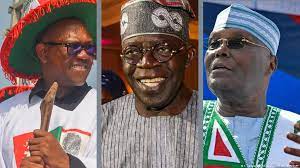
Welcome to our live coverage of the Nigerian elections! Today is a pivotal day in the country’s history, and we are here to bring you all the latest updates from every polling station. As the day unfolds, we will be keeping a close eye on the situation. Check out this livestream below from News Central and stay tuned to our website and social media platforms for real-time updates.
Author: Amanda Cartey
-
INEC officers protest non-payment of N4,000 training allowance in Kano
Reports from Kano State indicate that the conduct of the ongoing general elections has been marred by the protests of some election officers who are aggrieved over the non-payment of their training allowances.
The protesters, comprising INEC ad-hoc staff, reportedly blocked voters from accessing polling units in Gwale Local Government Area of the state, thereby causing a delay in the commencement of voting at the Dorayi Karama voting centres.
According to eyewitnesses, the protesting officials, who were said to be in large numbers, lamented the non-payment of their training allowances, which amounted to N4000.
In a show of solidarity, they vowed not to allow election materials to be taken away until their demands were met.
The incident, which has caused a disruption in the election process, has raised concerns about the potential impact of such protests on the credibility and smooth conduct of the electoral exercise.
As the situation unfolds, stakeholders and election observers alike are watching with keen interest to see how it will be resolved.
Rivers State Governor, Nyesom Wike has explained that the G-5 governors of the Peoples Democratic Party (PDP) have withdrawn from talking regularly in public to embark on strategic actions in silence in order to achieve set goals…
Source: tribuneonline
-
Nigeria election 2023: INEC officials yet to arrive at Mararaba, Nasarawa State
Some voting places in Mararaba, Karu local government area of Nasarawa state have reported having no INEC personnel present when the 2023 Presidential and National Assembly elections got underway.
About fifteen of the voting places our correspondent visited were empty as of 9:45 a.m.
The 2023 Presidential and National Assembly elections commenced with the reported absence of INEC officials at various polling units in Mararaba, Karu local government area of Nasarawa state.
As of 9.45 am, no INEC officials were present at about fifteen polling units visited by our correspondent.
A large crowd of voters who trooped out to cast their vote expressed dissatisfaction
about INEC, who could not keep to the 8.30 am scheduled for the commencement of the voting exercise.
Nigerian Tribute also observed that there was no security presence at various polling units visited
However, at the polling unit located at Jaiz bank (polling unit 148), INEC officials arrived at about 9.30 am to commence the conduct of the voting exercise.
Efforts were made to discover the cause of the delayed proof abortive as INEC officials declined to comment.
Also, several voters could not locate their polling units as they were seen moving from one polling unit to another.
-
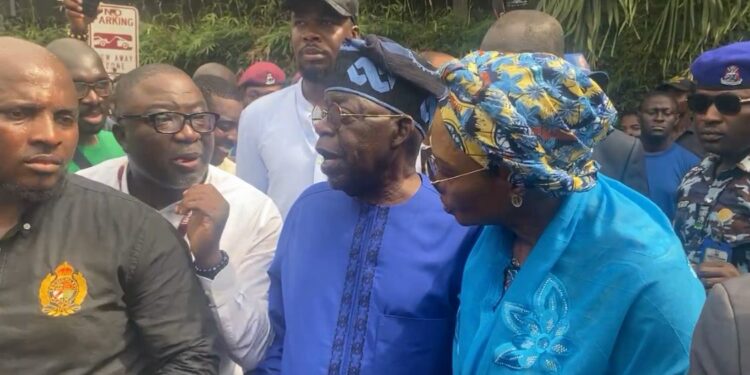
Nigeria election 2023: Tinubu arrives with wife to cast his vote at polling unit in Ikeja
As the general elections in Nigeria continue to gain traction, Asiwaju Bola Tinubu, the party’s presidential candidate, made a dramatic appearance at his voting location in Alausa, Ikeja, Lagos State.
The well-known politician arrived with his wife Remi by his side, and his followers, who had been anticipating his arrival, greeted him with wild delight.
The APC flag bearer could be seen calming an extremely excited supporters at the pulling unit.
Tinubu, who emanated a sense of confidence and calm, was observed speaking to his ardent fans in an effort to subdue their agitation.
It was clear that the APC candidate had arrived at the polling place well-prepared to cast his ballot because it was already bustling with activity.
All eyes are on the results of this hotly contested race as the elections come to a conclusion.
-
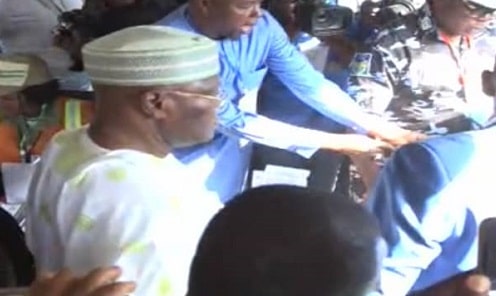
Nigeria election 2023: Atiku Abubakar casts his vote in Adamawa
Presidential candidate of the Peoples Democratic Party (PDP), Atiku Abubakar, has cast his ballot in Jimeta, Adamawa State, at polling place Ajiya 02, Gwadabawa ward.
It was quiet impossible for him to cast a secret ballot due to the crowd who were more of the media persons eager to interogate him.
The noise in the area was also unbearable to hear him speak.
Thus, he was unable to talk to anyone and that’s how Mr. Atiku left the polling station in Adamawa state.
More to come…
-
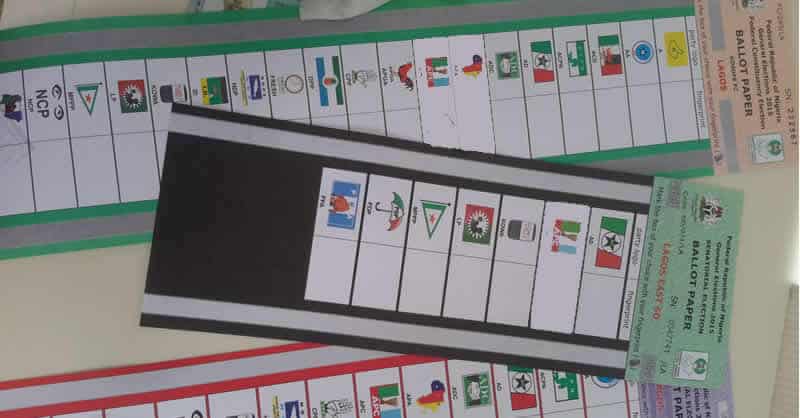
Voting has begun at Peter Obi’s polling centre
Voting has begun at Peter Obi’s polling centre, unit 019, Ward 2 in Amatutu, Agulu town in Nigeria’s south-eastern Anambra state.
While the Presidential candidate is expected to be voting at the centre today, 81-year-old Peter Nedum, is the first to vote in this place.
The sleepy town of Agulu woke up slowly on Saturday morning as residents started trickling to the polling centre to cast their ballots.
Despite security concerns in the south-east region, voters appear eager to exercise their civic obligation.
In the run-up to the general election there have been attacks blamed on armed gangs in parts of the region.
The separatist group, Indigenous People of Biafra (Ipob) is active in this region.
A factional leader of the group, Simon Ekpa, had called on residents in the region to stay away from voting today.
But security agencies have assured that they are on top of the situation and asked people to go about their lawful activities.
-

CNN predicts Peter Obi as president at the end of 2023 election
A recent poll conducted by the CNN, has ajudged Peter Obi President at the end of the 2023 presidential election.
The report Peter Obi, the Labour Party’s (LP) presidential candidate, would prevail in the Saturday election.
This online newspaper is aware that Nigerians will cast their votes in a closely watched presidential election on Saturday. The greatest democratic election on the continent will take place in the most populous nation in Africa.
-
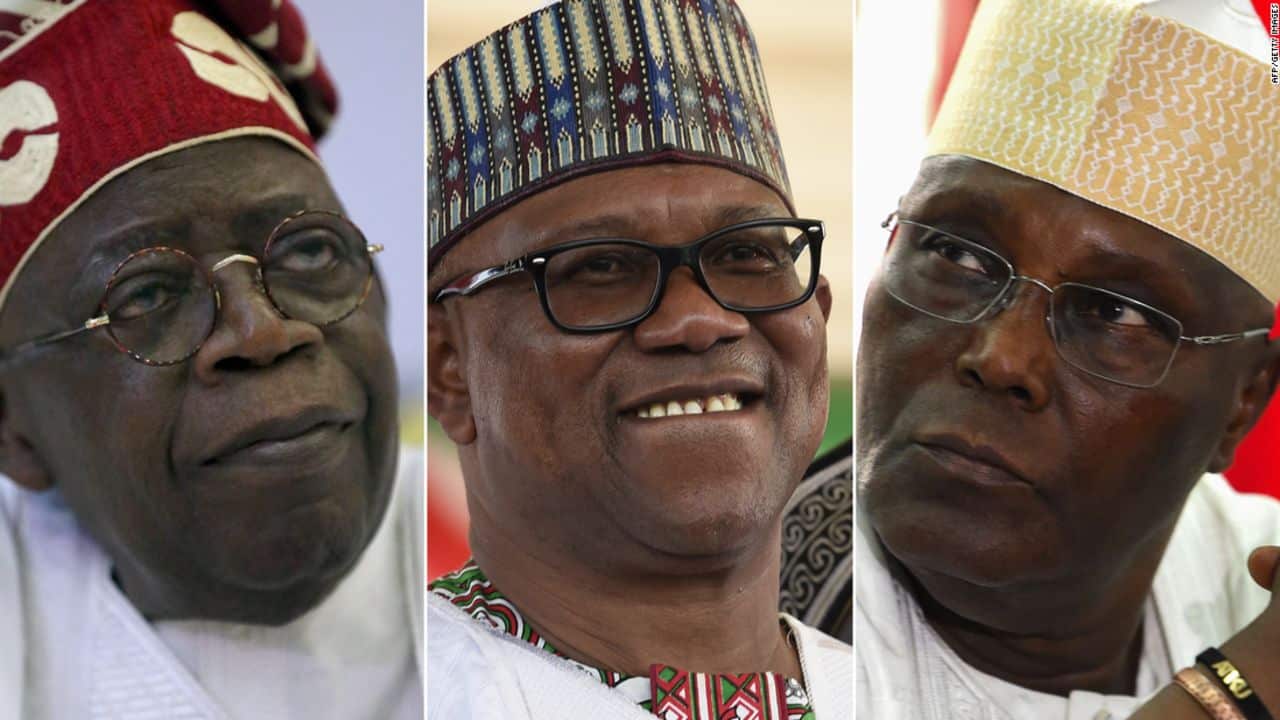
Nigeria elections 2023: What you need to know
Nigeria, the most populous nation in Africa, will hold presidential elections on Febuary 25, 2023 amid growing dissatisfaction in the nation due to deteriorating security and economic hardship. Would any of the front-runners, the majority of whom have spent decades in politics, be able to change the course of the nation?
Muhammadu Buhari, the outgoing president of Nigeria, is leaving office after nearly eight years in charge amid instability and intense agitation, as many people are unable to access the money they require to purchase food due to a bungled roll-out of new banknotes.
But the cash crisis is not the only problem Nigerians face, with the last year being marked by struggle and tragedy, including high inflation and deadly attacks by gunmen against innocent civilians.
Mr Buhari’s supporters say he has done his best and highlight achievements, such as his work on infrastructure projects and attempts to combat violent extremism. But even his own wife, Aisha Buhari, has apologised to the Nigerian people for falling short of their expectations.
So whoever wins the election will not have an easy job.
Who is running for president?
A total of 18 candidates are campaigning for the top job, but only three have a realistic chance of winning, according to opinion polls. Only one of the 18 is a woman.
Bola Ahmed Tinubu, 70, is standing for the governing All Progressives Congress (APC) party. Known as a political godfather in the south-west region, he wields huge influence but has been dogged by allegations of corruption over the years and poor health, both of which he denies. Some say his campaign slogan Emi Lokan, which means “it’s my turn [to be president]” in the Yoruba language, shows a sense of entitlement.
- Who is Bola Tinubu?
Atiku Abubakar, 76, is running on behalf of the main opposition People’s Democratic Party (PDP). He has run for the presidency five times before – all of which he has lost. Most of his career has been in the corridors of power, having worked as a top civil servant, vice-president under Olusegun Obasanjo and a prominent businessman. Just like Mr Tinubu, he has been accused of corruption and cronyism, which he denies.
- Who is Atiku Abubakar?
Peter Obi, 61, is hoping to break up the two-party system which has dominated Nigeria since the end of military rule in 1999 and is running for the little known Labour Party. Although he was in the PDP until last year, he is seen as a relatively fresh face and enjoys fervent support on social media and among Nigeria’s youth. The wealthy businessman served as governor of the south-eastern Anambra State from 2006 to 2014. His backers, known as the “OBIdients” say he is the only candidate with integrity, but his critics argue that a vote for Obi is wasted as he is unlikely to win.
Who is likely to win?
Convention suggests a candidate from one of the two main parties will win – Mr Atiku or Mr Tinubu. But Mr Obi’s supporters are hoping he can spring a surprise if they can mobilise the large youth vote to back him.
When is the election?
It is due to take place on Saturday 25 February 2023. If there is no clear winner, a second round will be held within three weeks. There will also be elections for the country’s powerful state governors on Saturday 11 March.
The head of the election commission has dismissed suggestions that the vote could be delayed because of insecurity.
When will the election results be announced?
In the last two presidential elections the winner has been known on the third day after voting.
But votes will be counted as soon as voting ends on Saturday 25 February. Those who stay behind at their polling station will have the result announced to them, but it is a long process before all the results work their way up to Abuja from the tens of thousands of polling units across the country.
BVAS might speed up the process this year, but Inec-appointed officials will still have to travel to Abuja from the 36 states with hard copies to be read aloud.
Only then will the Inec chairman announce a winner – or that a second round is needed.
How does the election work?
In order to win, a candidate has to obtain the highest number of votes nationwide, and more than a quarter of ballots cast in at least two-thirds of Nigeria’s states.
If none of the candidates manage this, there will be a second round run-off between the top two candidates within 21 days.
What are the main issues?
Reducing insecurity is one of the key concerns of voters, in a country which is currently experiencing a kidnapping-for-ransom crisis, battling militant Islamists groups in parts of the north and a separatist insurgency in the south-east.
Two of the most shocking cases last year were a mass shooting at a Catholic Church in Owo and the storming by gunmen of a passenger train in which dozens of people were killed or kidnapped.
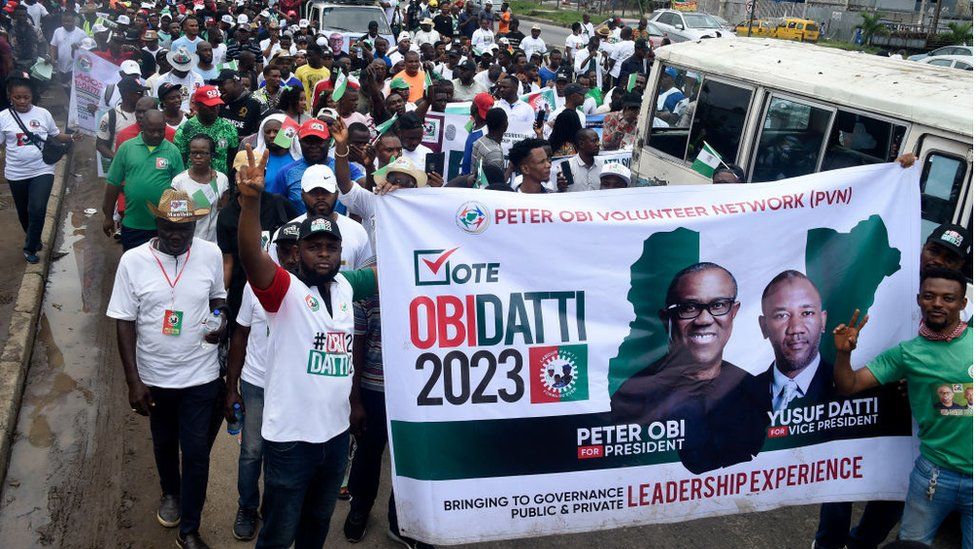
Image caption,Peter Obi’s supporters, who appear to be younger Nigerians, are vocal on social media President Buhari says he has fulfilled his promise to “frontally and courageously tackle terrorism”, but many Nigerians feel the country is still not safe.
- Has Buhari tackled jihadist threat in Nigeria?
The economy is another area of concern. Inflation now stands at 21.8%, according to the latest figures released this month. This rising cost of living has left many families struggling to make ends meet, with local media describing the situation as “dire”.
Unemployment is also a major problem, leaving many graduates fearful that they may not find work even after years of university study, which has prompted many to try and leave the country. Latest figures from the country’s National Bureau of Statistics show that 33% of the population is unemployed – jumping to 42.5% for younger adults.
Despite being a major oil producer, four out of 10 Nigerians live below the poverty line and “lack education and access to basic infrastructure, such as electricity, safe drinking water, and improved sanitation,” according to the World Bank.
Many of the candidates have put these issues at the centre of their campaigns.
But these problems have been mounting for several years, leaving some Nigerians sceptical about whether whoever wins the election will actually be able to fix them. Despite the large number of registered voters – 93.5 million – concerns persist about apathy and how many people will actually show up on the day to cast their ballot.
With almost 40% of registered voters under 34, the vote has been called the “election of young people” by elections chief Mahmood Yakubu.
-

Logo of Labour Party goes missing on Ondo ballots
Stalwarts of the Labour Party in Ondo State has raised concern about the omission of its logo on the ballot papers sent to the area.
This was noticed 24 hours before the scheduled Saturday presidential and National Assembly elections.
The party’s state secretary, Mr. Agbaje Abiodun, stated at a news conference in Akure, the state’s capital, on Friday that the Independent National Electoral Commission had not included the party’s emblem on the ballots for the National Assembly (Senate and House of Representatives) elections.
“There is an omission of our party logo on the ballots brought by the Independent National Electoral Commission for the National Assembly (Senate and House of Representatives) elections.”
In the event that INEC carries out the poll as planned without amendments, Abiodun promises to sue to overturn the organization’s decision.
-
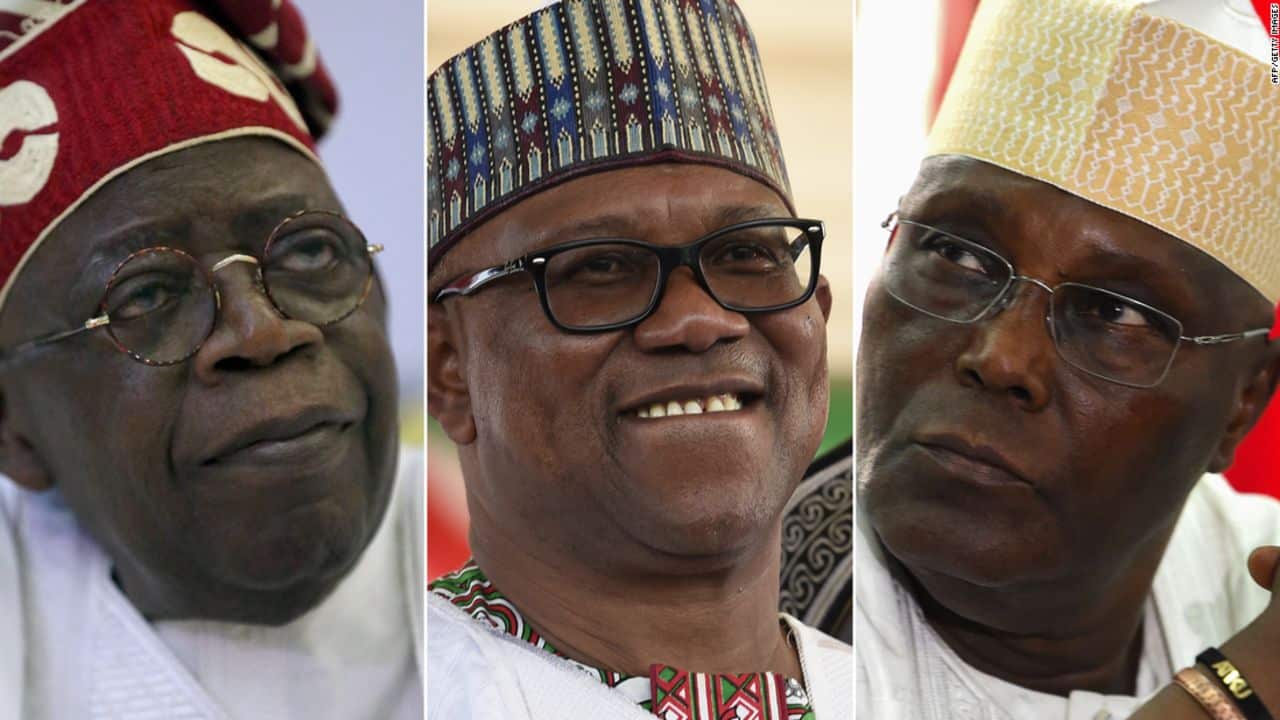
Meet the top 3 contenders for Nigeria’s presidency
Africa’s most populous nation, Nigeria is about to hold its largest democratic exercise on Saturday February 25, 2023 in order to elect a president.
The country is currently dealing with a wide range of economic and security issues, from cash and fuel shortages to an increase in terrorism attacks, high inflation, and a falling local currency.
It is evident in the behavior of Nigerians that they can’t wait to have a new president after current President Mahamadu Buhari since he allegedly proven to be incompetent and does not have the interest of his people at heart.
Here are the three main candidates vying for the highest office with the promise of a “New Nigeria.”
Bola Ahmed Tinubu
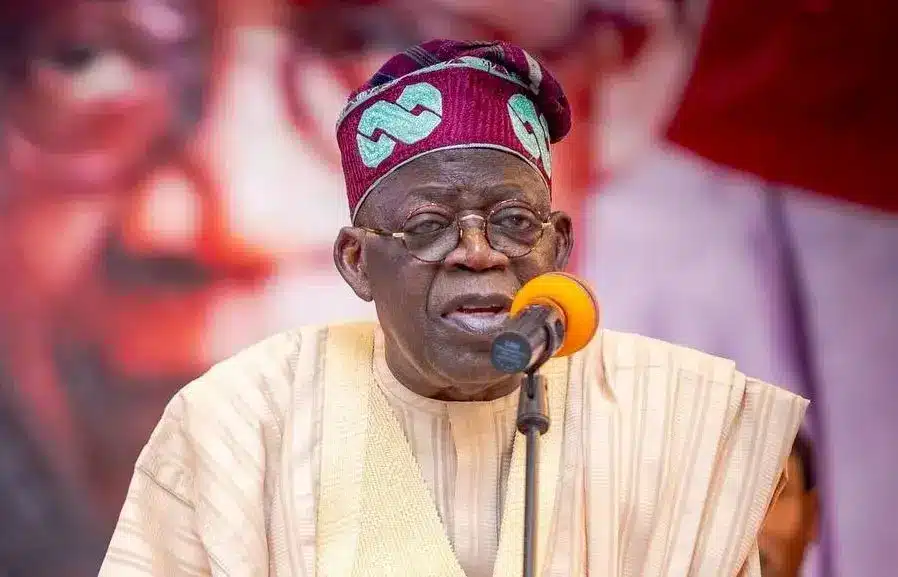
He is Nigerian politician who once served as the 12th Governor of Lagos State (1999 – 2007). He was once a member of the house of Senate representing the Lagos West Senatorial district (1993). Tinubu is an advocate of Democracy, True Federalism, and Nationalism. After decades as a political puppet master, Tinubu declares it is now his turn to emerge from the shadows into the presidency; his campaign slogan is “Emi Lokan,” which translates to “it is my turn,” in his native Yoruba language. He promises to grant full autonomy to universities.
Atiku Abubakar
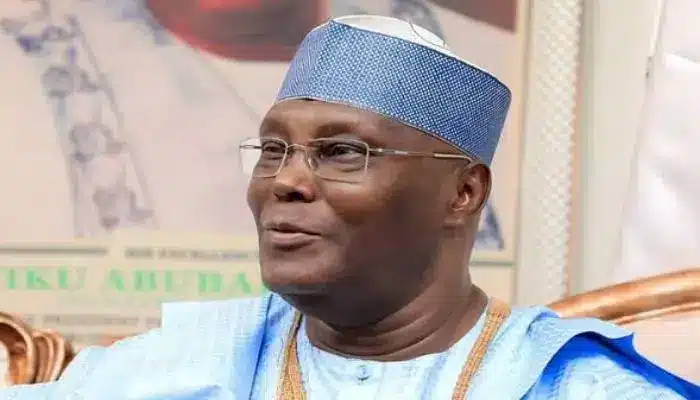
He is a candidate of the opposition Peoples Democratic Party (PDP) Atiku Abubakar. The 76-year-old, has served as vice president from 1999 to 2007. He is a staunch capitalist who made his fortune investing in various sectors in the country. The tycoon has been investigated for corruption in the past. However, he denies any wrongdoing.
He hopes for success this time after contesting to be president on six occasions since 1992. He promises to restore peace and open all borders among others.Peter Gregory Obi
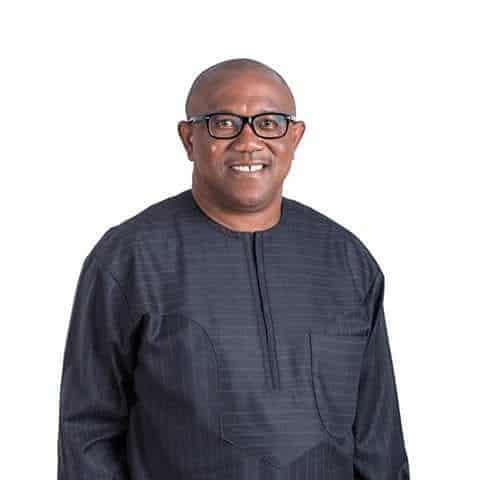
Peter Gregory Obi is a Nigerian businessman and politician who served as governor of Anambra from March to November 2006, February to May 2007, and June 2007 to March 2014. He also the only Christian among the leading candidates. he was recognized as the Business Hallmark Newspaper Man of the Year in 2012. He promises to address unemployment and a new nigeria.
Co-founder and head of intelligence at data company Stears, Michael Famoroti, tells the international media that major challenges relating to security and Nigeria’s economy will be on voters’ minds and may affect their voting decisions.
“Nigerians fall under two buckets: One is insecurity. However, overall, the main issue that Nigerians agree needs to be dealt with is the economy,” he said, with concerns ranging from poverty to unemployment and policy.
Adding that “the cash crunch, petrol scarcity … are issues that are likely going to be top of mind for those who make it to the polls and arguably could sway the votes,” Famoroti says.
Meanwhile, in the event of a high voter turnout, Peter Obi may prevail over the two primary rivals. The is according to The Stears survey (a pan-African data company) who has also predicted that Tinubu will do better with a lower turnout.
Source: The Independent Africa
-
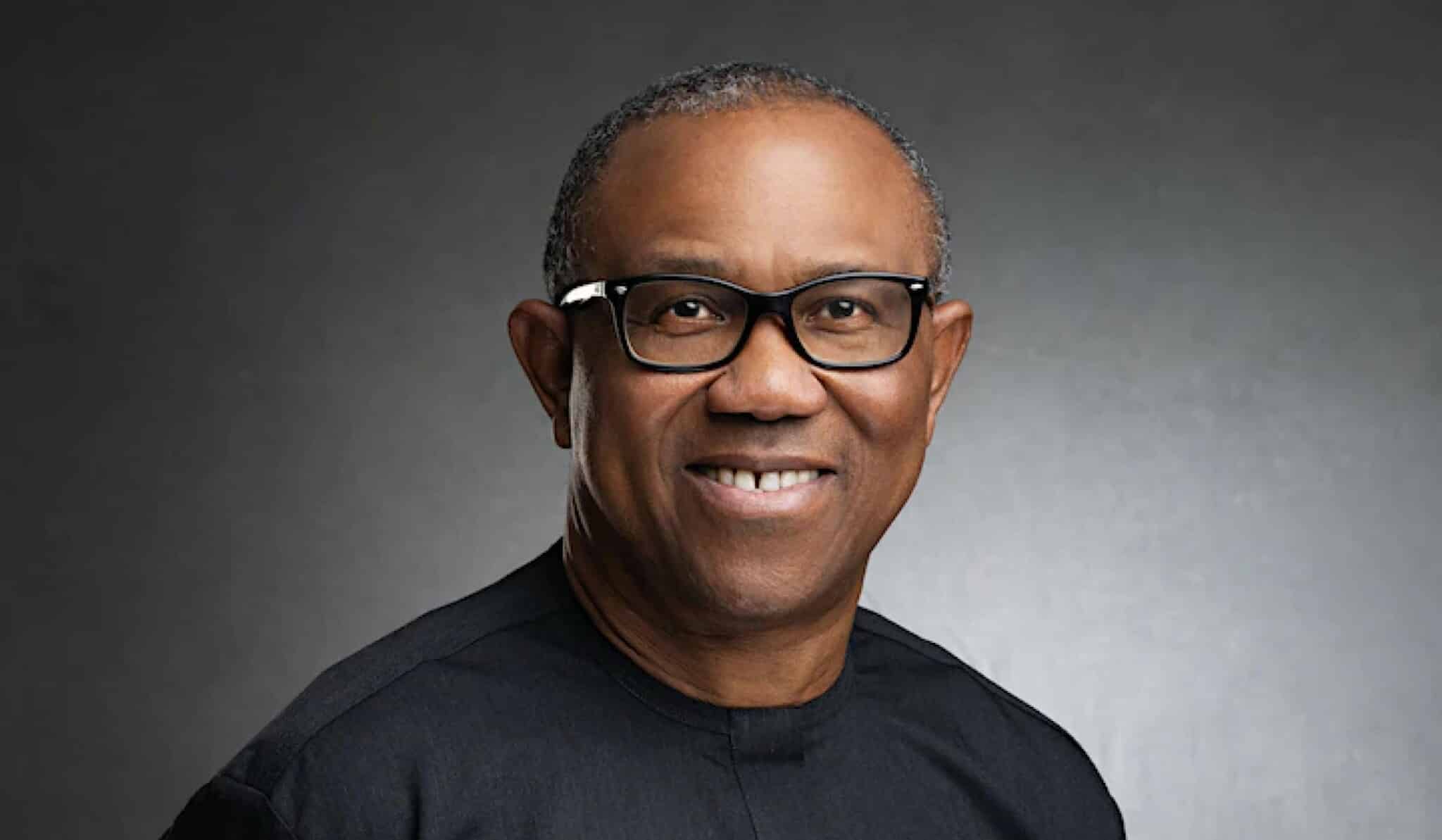
What it means for Nigeria if Peter Obi becomes President
As the 2023 Presidential election draws near, all eyes are on the candidate, Peter Obi, who has emerged as a beacon of hope for many Nigerians, particularly the youths.
The former Anambra State Governor Obi has garnered both admiration and apprehension from the public.
There are those who view him as an outsider to the political class, even though he has a good understanding of the political landscape in Nigeria, in spite of his two successful tenures as governor.
Despite facing negative predictions from some members of the opposition, Obi has remained steadfast in his quest to become the next President of Nigeria. With just one day left until the election, several polls have projected Peter Obi as the likely winner. If these projections come to fruition, it will undoubtedly be a significant moment in Nigerian political history. The country has been plagued by political turmoil and corruption for years, and many are looking to Obi as a potential agent of change.
Obi’s willingness to take bold action, even if it means risking his own social status, is what attracts many people to him. However, this same quality makes some members of the political class uncomfortable with the idea of him becoming president. They fear that his government will put an end to the corrupt practices that have been draining Nigeria’s resources for far too long.
It is essential to note that the road ahead will not be an easy one for whoever emerges victorious in the election. The challenges facing Nigeria are vast and complex, and it will require a leader with both vision and skill to address them effectively.
The 61-year-old candidate has highlighted key issues facing Nigeria and outlined his plans to address them.
One of the most pressing issues facing Nigeria is the rampant police brutality that has been widely reported, even after the EndSARS campaign two years ago.
Police Brutality:
Police brutality has been a persistent problem in Nigeria, and EndSARS campaigns over the years has brought it to the forefront of national consciousness. However, reports of police brutality have continued to emerge, highlighting the need for long-lasting reforms.
Peter Obi has promised to address police brutality by apologising to victims and ensuring that it never happens again. He has also promised to train the police force on proper policing and prevent harassment of citizens. This approach is consistent with the recommendations of the Presidential Panel on Police Reform in Nigeria, which called for increased training and accountability for police officers.
Obi’s promise to create a peaceful country where security agents will no longer be used for harassment is a welcome prospect for Nigerians who have long suffered from police brutality. However, it remains to be seen whether he can implement his reforms if elected.
Unemployment:
According to the National Bureau of Statistics, Nigeria’s unemployment rate reached its highest value in 2021, with around 33.3% of the population unemployed or underemployed. The high rate of unemployment has been a persistent problem in Nigeria, leading to widespread poverty and social unrest.
Peter Obi has promised to address the issue of unemployment by creating an enabling environment for business and moving Nigeria from consumption to production. He has also promised to develop the gas sector to generate more revenue than oil and support the youth for enterprise.
Obi’s proposed solutions are consistent with the economic diversification plans of the current government, which aims to reduce Nigeria’s dependence on oil revenue. However, critics have raised concerns about the government’s ability to implement these plans effectively, given the persistent challenges facing Nigeria’s economy.
Terrorism:
Terrorism has been a major security crisis in Nigeria, with Boko Haram and other extremist groups launching attacks on civilians and security forces. The Nigerian government has struggled to contain the crisis, leading to widespread insecurity in the country.
Peter Obi has promised to address the root causes of terrorism, including poverty, unemployment, and injustice. He has also promised to engage agitators and insurgents in dialogue to address their grievances through a carrot and stick approach.
Obi’s approach is consistent with the recommendations of experts who have called for a holistic approach to addressing the crisis, including addressing the underlying causes of extremism. However, critics have raised concerns about the government’s ability to negotiate with extremist groups and the potential risks of rewarding them for their actions.
Corruption:
Corruption has been a persistent problem in Nigeria, with reports of corrupt practices in the public and private sectors. The military procurement process has been particularly susceptible to corruption, leading to concerns about the country’s ability to secure itself.
Peter Obi has promised to ensure transparency in all procurements and prevent under-the-table deals. He has also advocated for community state police and involving community leaders in securing their environments in collaboration with regular security agencies.
Obi’s approach is consistent with the recommendations of experts who have called for increased transparency and accountability in the government’s procurement process. However, critics have raised concerns about the feasibility of community state police and the potential risks of involving community leaders in security matters.
Peter Obi’s proposed solutions to Nigeria’s problems may be consistent with the recommendations of experts in various fields. However, the effectiveness of his reforms depends on his ability to implement them effectively if elected. As Nigerians prepare to cast their votes, the question remains: Will Obi’s appeal as a reformer and his commitment to fighting corruption be enough to overcome the concerns of the political elite? Regardless of the outcome, one thing is certain: the 2023 Presidential election will have far-reaching implications for the future of Nigeria, and the eyes of the world will be watching closely as the country goes to the polls tomorrow.
Source: The Independent Africa
-

2023 Elections: US, other govts urge calm in Nigeria
US, European and other governments on Thursday urged Nigerian leaders to ensure a fair and calm election this weekend when the country votes to choose a successor to President Muhammadu Buhari.
More than 93 million Nigerians are registered to vote on Saturday in what has developed into a tense, competitive race among three presidential frontrunners for the first time since military rule ended in 1999.
After two terms under Buhari, Africa’s most populous nation is grappling with widespread insecurity from different armed groups, high inflation and growing poverty.
“It is vital for Nigeria’s stability and democratic consolidation that the process is conducted and concluded safely, fairly and credibly,” said a joint statement from the diplomatic missions of the United States, Britain, Australia, Japan, Canada and Norway.
“We encourage all actors to intervene proactively to calm any tensions and avoid any violence.”
Nigeria’s elections have often been marked by violence, ethnic tensions and clashes between supporters of rival parties.
The main four candidates in the presidential race signed a peace accord on Wednesday, in a bid to ensure a free and peaceful election.
“I once again ask the candidates to abide by the spirit and letter of the Accord they have signed,” Buhari said.
“Let me remind all Nigerians not for the first time that this is the only country we have, and we must do everything to keep it safe, united and peaceful.”
On Wednesday, a senatorial candidate for the Labour Party was killed by gunmen in southeast Enugu State, according to Labour Party officials.
Jihadists, bandits
Security forces are still fighting a 14-year jihadist insurgency in the country’s northeast and heavily armed bandits carry out raids on villages and mass abductions in the northwest.
Offices of the Independent National Electoral Commission have also been attacked by gunmen, in violence often blamed on separatists in the country’s southeast.
Three frontrunners are battling to succeed Buhari, who was first elected in 2015 and re-elected in 2019 mainly on promises he would fight insecurity and corruption.
Bola Tinubu, candidate for the ruling All Progressives Congress (APC) and a former Lagos governor, faces old rival Atiku Abubakar of the main opposition Peoples Democratic Party (PDP).
But for the first time a surprise third candidate, Peter Obi of the Labour Party, has emerged to challenge the dominance of the PDP and APC with a message he will bring change.
Days before the election, a national shortage of cash has also angered Nigerians, as they struggle to buy food at markets and pay for transport to work.
The central bank began to exchange old naira currency bills for new redesigned ones, in what officials said was a move to curb corruption and inflation.
But a scarcity of new notes has caused huge lines at banks, violent protests in several cities and triggered tensions in the APC over how the measure may hurt its candidate.
Surveys by pan-African group Afrobarometer this month showed nine out of 10 Nigerians believe their country is heading in the wrong direction, with security and the economy their main concerns.
Source: Channel.tv
-
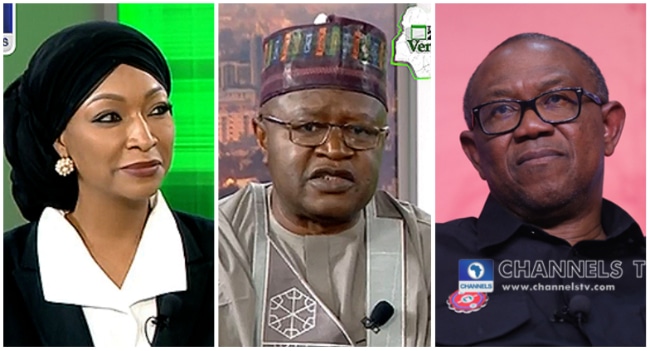
2023 Elections: Peter Obi considered victorious by APC, PDP ahead of elections
The All Progressives Congress (APC) and Peoples Democratic Party (PDP) are certain the presidential candidate of Labour Party, Peter Obi, stands no chance in Saturday’s keenly contested vote.
The Deputy Spokesperson and Deputy Director, Public Affairs, APC Presidential Campaign Council (PCC), Hanatu Musawa; and a PDP member, Ladan Salihu, made their arguments on Channels Television’s The 2023 Verdict on Wednesday.
The APC’s Bola Tinubu and PDP’s Atiku Abubakar are considered front-runners alongside Obi. The presidential candidate of the New Nigeria Peoples Party (NNPP), Rabiu Kwankwaso, is also believed to be a wild card.
While Salihu held that Obi’s chances are hampered by a lack of political structure across the country, compared to the PDP, Musawa described the Labour Party’s victory as a “constitutional impossibility.”
‘No Numbers To Compete In The North’
The PDP argued that a study at the political parties and their grassroots structures show that the NNPP and the Labour Party “don’t have representation on the ground in the North – no governors, no senators.”
Asked if the lack of subnational representation matters, Salihu said, “It matters to some people, but to the PDP, we’re not so much concerned (sic). I wouldn’t say I sympathise [with the party] but my heart goes out to the Labour for not having the kind of numbers to compete.
“How do you have a party going into a presidential election [and] out of 176,000 polling stations, your presence is only felt in 42,000? So, there’s just no way Labour can pose a threat to the PDP in the North. Ditto NNPP.”
According to the PDP chieftain, the 2023 race is a contest with the APC – but barely.
“We’re not losing sleep over beating Bola Ahmed Tinubu because that has been done and dusted, as far as I’m concerned,” he said.
Obi’s Opportunity
The APC shared Salihu’s sentiment that the contest is a two-man race, describing it as a “straight contest between APC and PDP – that’s the reality”.
Musawa admitted that “other brilliant candidates” are in the running, though her view is that none of them has the kind of political structure or capital needed to achieve victory.
“My concern is this narrative that has been put out there that the Labour Party candidate, Peter Obi, has an opportunity.
“Yes, he’s got an opportunity to contest but there is a constitutional impossibility for Peter Obi to win this election because of the way our laws are constituted. It’s just not possible.
“He’s disrupting the PDP, not the APC because what Peter Obi has done is he’s cannibalising the votes of the PDP. I’m completely ruling,” she said.
Source: Channel.tv
-
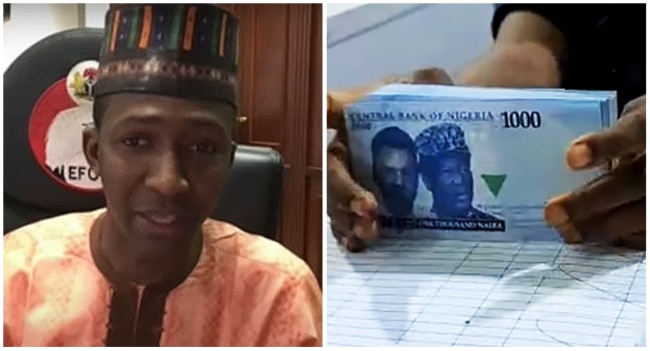
Why the EFCC has not made any arrests on naira scarcity- Bawa
The Economic and Financial Crimes Commission (EFCC) says it is not eager to make arrests of suspected cash hoarders, despite scarcity of the new N200, N500 and N1,000 across the country.
“I think public servants out there or some businessmen with questionable character still have these funds out there,” the Chairman of the Economic and Financial Crimes Commission (EFCC), Abdulrasheed Bawa, said during a live appearance on Channels Television’s The 2023 Verdict on Wednesday.
He however stressed that the law allows for anyone with the old notes in their possession to deposit them with the Central Bank of Nigeria (CBN) at any time in the future.
“Throughout this exercise, from October 2022 to date, we have not arrested anybody. We have not raised any question regarding who deposited what, where and how because we’re determined not to cause too much panic within the system.
“One of the cardinal objectives of the policy is to ensure that monies are returned to the banking system, and that is why we are holding on; we’re not eager to start that. Facts cannot change for things that are already within the financial institutions,” he said.
‘Sabotage Of Cash Distribution’
According to Bawa, the new currency is easier to track using the serial numbers on the banknotes as well as the locations to which they have been distributed across the country.
He further stated that the anti-graft agency has an added responsibility in its eventual recovery of all funds which are allegedly being used for vote-buying.
“We can actually trace and see whether this currency is genuine currency gotten from ATMs across the country, or whether somebody somewhere used them in bulk and gave the politicians the money,” the EFCC boss said.
“One of the problems that we’re having is that the bankers are actually sabotaging the equitable distribution of these new naira notes.
“We are working on all of that and we’re sure that at the end of the day, we’re going to be successful, more than any other time, but this time around, because of this issue of new naira notes that we have across the country in circulation.”
Source: Channel.tv
-
Cyclone Freddy kills four in Madagascar
.
The storm affected some 16,600 people according to the country’s National Risk Management Office.
The powerful gusts of wind reached around 130 kilometres per hour; contrary to last year’s cyclone Batsirai, cyclone Freddy did not bring as much rain as expected.
Freddy is the first cyclone and the second tropical weather system to hit Madagascar during the current season according to the UN’s Office for the Coordination of Humanitarian Affairs (OCHA).
After Madagascar, the cyclone is now heading to Mozambique and Zimbabwe on the African mainland.
Last year’s Cyclone Batsirai killed more than 130 people across Madagascar.
Source: African News
-
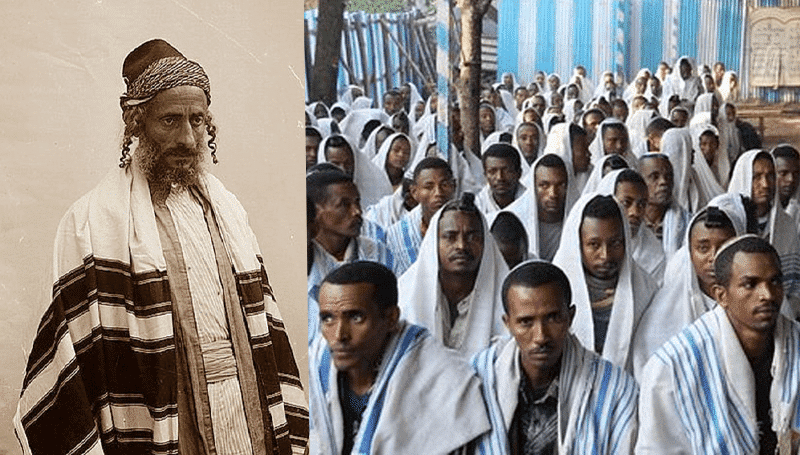
Five fascinating facts you need to know about African Jews
Before Christianity and Islam spread, a lot of the Arabian peninsula, which is northeast of Africa and is on the Arabian Plate and has countries like Kuwait, Qatar, Saudi Arabia, and the United Arab Emirates (UAE), was home to Jews. Judaism spread to Africa through trade. African Jews, also called the Beta Israel community, believe they are descended from King Solomon and the Queen of Sheba. There are many interesting and little-known facts about them. Here are five interesting facts about this interesting group:
- African Jews have a long and complex history.
Some historians think that the Beta Israel community is made up of the descendants of ancient Israelite tribes who moved to Ethiopia, while others believe they may have become Jewish in the Middle Ages. What is certain is that the Beta Israel have lived in Ethiopia for many centuries and have kept their own culture and religion even though they have been persecuted and treated badly for many years.
- African Jews have their own unique traditions and practices.
Even though they believe and act in many of the same ways as other Jewish groups around the world, the Beta Israel have made their own traditions over the centuries. For example, they use a version of the Jewish calendar that is different from what Jews use, and they have their own language for worship called Ge’ez. They also have a long history of folk music, dance, and stories. These things are important parts of their culture.
- African Jews faced significant persecution and discrimination.
Even though the Beta Israel have lived in Ethiopia for a long time, the Christian and Muslim groups that make up most of the country have often ignored and mistreated them. In the 1970s and 1980s, they were treated very badly by Mengistu Haile Mariam’s communist government. Many of them were moved to cities against their will and were not allowed to go to school or get a job.
- African Jews have experienced a mass migration to Israel.
In the 1980s and 1990s, tens of thousands of Beta Israel moved to Israel. Under the Law of Return, they were given citizenship. But moving to Israel and becoming part of Israeli society was not always easy, and many African Jews had a hard time getting used to life in a new place.
- African Jews are making important contributions to Israeli society.
With many of its members holding significant positions in politics, business, and the arts, the Beta Israel community in Israel is now well-established and flourishing. The history and customs of African Jews have recently attracted increased interest, and groups like the Association for the Research of Ethiopian Jewry and the Center for Jewish Ethiopian Heritage are seeking to protect and advance this unique cultural heritage.
Source: The African History
-
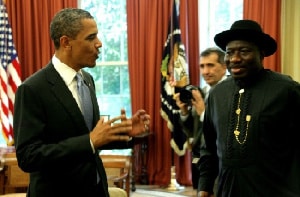
Obama’s speech to Nigeria ahead of the 2015 election goes viral, 4 days to presidential election
President Barack Obama’s speech to Nigerians ahead of the 2015 presidential elections has resurfaced and has gone viral on social media.
Obama, who was the President of the United States urged Nigerians at the time to “stand together in rejecting violence and extremism.” In 2015, ex-President Goodluck Jonathan who was seeking a second term was challenged by then candidate of the All Progressives Congress (APC), Muhammadu Buhari.
In the speech, Obama noted that “Nigeria is a great nation with a rich history, and this election is an opportunity to demonstrate the strength of its democracy” he added that “the eyes of the world are on Nigeria, and Nigerians have a historic opportunity to strengthen their democracy and build on the gains from the 2011 election”
While this was true in 2015, it is interestingly relevant as Nigerians on Saturday, February 25 go to the polls to elect a new president.
Three presidential candidates namely Peter Obi – Labour Party, Bola Ahmed Tinubu – All Progressives Congress (APC), and Atiku Abubakar – Peoples Democratic Party (PDP) have stood out of the 18 candidates that will be contesting the elections.
The polls have tipped Obi to cause an upset in what looks like an uphill task for the former Anambra governor who lacks the requisite structure to compete against the political structure of the PDP and the APC.
Read Obama’s 2015 speech
Earlier today, President Obama released a message to the Nigerian people to highlight the opportunity that the upcoming elections present for all Nigerians to stand together in rejecting violence and extremism, and instead show their support for a more peaceful, secure, and prosperous future. The United States is proud to support Nigeria in this important milestone, and the President’s message is that every Nigerian can play a role in advancing opportunity and progress by casting a vote. These elections come at an especially important time, as Nigeria and its regional partners battle the senseless and brutal violence perpetrated by Boko Haram. A peaceful and credible election held without further delay will send a clear signal that the will of the Nigerian people and the strength of Nigeria’s union will not be undermined by terrorism.
Nigeria is a great nation with a rich history, and this election is an opportunity to demonstrate the strength of its democracy. As Nigerians prepare to go to the polls in the coming days, President Obama’s message makes clear to the presidential candidates and their supporters that there is no room for violence in the democratic process. The President emphasizes that Nigerian leaders and candidates bear responsibility to ensure a credible election. The Nigerian people too have an obligation to safeguard the integrity of the democratic process and voice their opinions peacefully, no matter which candidates win.
The eyes of the world are on Nigeria, and Nigerians have a historic opportunity to strengthen their democracy and build on the gains from the 2011 election. “In this task of advancing the security, prosperity, and human rights of all Nigerians, you will continue to have a friend and partner in the United States of America,” said President Obama in his message to the Nigerian people.
-
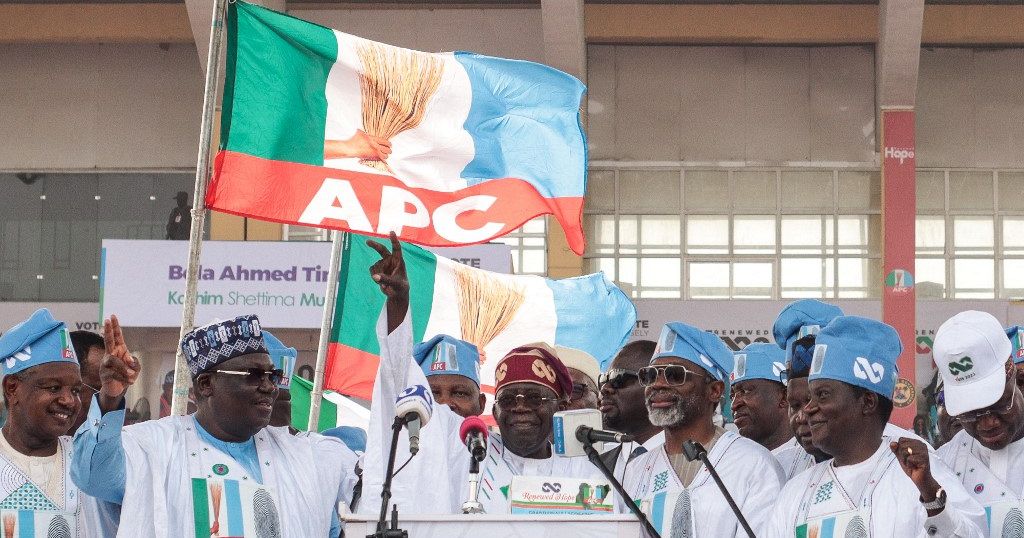
2023 Nigeria election: Tinubu rallies in Lagos powerbase ahead of the exercise
Four days before election day, thousands of people gathered inside the Lagos Teslim Balogun sports facility, giving Tinubu’s nationwide road tour a boisterous climax.
Supporters of Nigeria’s ruling All Progressive Party (APC) believe their candidate, Bola Ahmed Tinubu, is fit to fix their country’s problems. Double digit inflation, weak economic growth and mounting insecurity are major issues for voters on February 25 when they choose a successor to incumbent President Muhammadu Buhari, due to step down after two terms allowed by law.
Tinubu, 70, a former Lagos governor and candidate of the ruling All Progressives Congress or APC, is one of three frontrunners in an unprecedented competitive race on Saturday to succeed President Muhammadu Buhari who steps down after his allowed two terms.
Arriving in a bus with a slogan “The nation builder”, Tinubu appeared on stage with Buhari and appealed to voters to make him their next leader with a vow of “renewed hope”.
“All the agenda set in our programme, the renewed hope manifesto, will be pursued diligently, vigorously,” he told supporters.
More than 93 million Nigerians are registered to vote in the February 25 election, with their country struggling with growing insecurity and a stumbling economy.
Dubbed the “Godfather of Lagos” for the political influence he wields, Tinubu says his two terms from 1999 to 2007 as Lagos governor give him the experience Nigeria needs.
“I will vote for my father. He is really a father for all of us,” said Motunrato Amuda, 29, a caterer wearing a garment in APC’s green, blue and red.
A crowd of party supporters ferried in buses arrived at the venue in the morning, singing, dancing and waving the party flags as Afrobeats musicians performed.
– Lagos legacy –
Tinubu’s Lagos tenure was credited by many for rapid growth in infrastructure projects, urbanisation and high internally-generated revenues.
But his influence looms large in Lagos state, where he had a hand in choosing his successors and other key appointees since he left office.
“He’s the man for the job,” said Shittu Surajudeen, a 60-year-old businessman at Tuesday’s rally.
“He really improved medical, education, infrastructure, security,” he said.
Saturday’s election has emerged into an unprecedented three-way race.
Tinubu’s rivals are 76-year-old ex-vice president Atiku Abubakar of the main opposition Peoples Democratic Party (PDP), and the Labour Party’s Peter Obi, a 61-year-old former governor of southeast Anambra state.
Between them, the PDP and APC have governed the country and dominated the political scene since the end of military rule in 1999.
But Obi, also a wealthy businessman, has emerged as a serious challenger, enjoying huge youth appeal with a message of change from his oldguard rivals.
During campaigning, Tinubu also faced questions over his health as well as over corruption scandals from the past, which he denies.
PDP critics attacked him over a 1993 US court document showing a “drug-related seizure of property” from a US account under his name.
As a political kingmaker, Tinubu was instrumental in getting Buhari elected in 2015, and he now says “It’s my turn” to be president.
But critics in the PDP say Tinubu is equally responsible for the failures of the Buhari government.
A recent cash shortage has heightened tensions after the central bank replaced old naira currency notes with new redesigned ones, causing a shortfall in bills.
After several protests broke out at banks in several cities, APC governors appealed to Buhari over the policy. Tinubu even suggested his enemies in the presidency were trying to scuttle his election bid.
Buhari came to power in 2015, vowing to roll back jihadists who had unleashed an insurgency in the country’s northeast.
But Nigerians say insecurity remains a top concern.
The armed forces are still battling the jihadists, as well as criminal gangs in the northwest and separatists in the southeast.
Inflation is over 20 percent as the country also recovers from the coronavirus pandemic and the economic fallout of the Russia war in Ukraine.
Source: African News
-
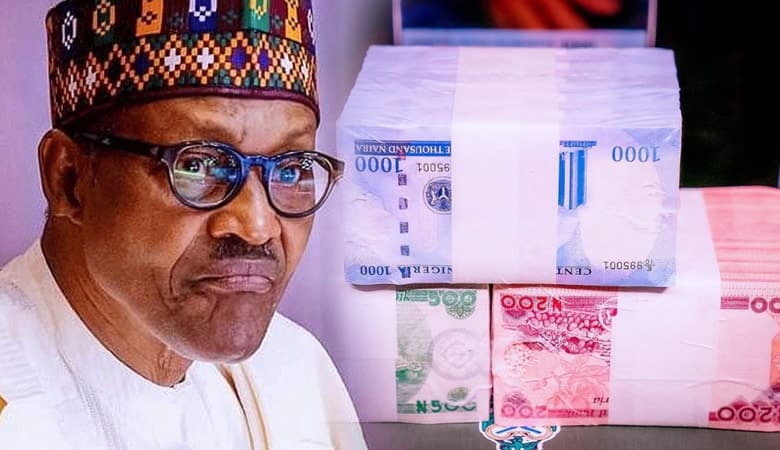
A Fresh naira lawsuit will soon be heard – Supreme Court says
The Supreme Court reaffirmed on Wednesday that the new naira action will soon be heard,
During a court proceeding, the attorney for Lagos State, Moyosore Onigbanjo, asked the court to order the Attorney General of the Federation, Abubakar Malami, to cease representing the respondents while acting in violation of the court’s initial orders because he was “coming off-handedly to ask for reliefs.”
He said that the “issue of contempt, overrides issue of jurisdiction.”
Responding to this, Justice John Okoro, said, “you are not a stranger to this country.
We don’t want a situation where the judiciary will be a scapegoat. We refuse to be the scapegoat”.
“We are hearing this matter today. We don’t intend to keep this matter longer… whether they obey it or not,” Mr Onigbanjo expressed.
The injunction followed a lawsuit brought on February 3 by the state governments of Zamfara, Kogi, and Kaduna against the Attorney-General of the Federation.
As co-plaintiffs, additional states, including Lagos, Ondo, Ekiti, Kano, Sokoto, Ogun, and Cross River, have also joined the lawsuit.
-
Nigerian elections: How Peter Obi disrupted a two-horse race
It was in January that the comedy routine of Mr Makati began to change. His weekly Saturday night standup at the Memento Lounge in Lagos, Nigeria’s pulsing commercial capital, switched from gags about the daily hassles of living in Africa’s most populous nation to the practicalities of voting.
“He was telling jokes about how to obtain your PVC [Permanent Voter Card], getting people to register to vote,” says the novelist A Igoni Barrett, a regular at the club. Although no names were mentioned, Barrett says, everyone knew what the voter registration drive was all about.
“Ninety per cent of the audience support Peter Obi,” Barrett estimates, referring to the relative political newcomer whose emergence as a credible candidate has electrified young voters and shifted the odds in this month’s presidential election. “Nigerians are trying to take back power through the ballot box,” he adds.
Nigeria is the biggest economy in Africa and home to at least 216mn people, though some sources put the figure closer to 220mn. Its population will nearly double in the next 25 years to 400mn, surpassing the US as the world’s third most populated country.
The success or failure of this oil-rich mammoth matters greatly to Africa and to the rest of the world, says Chidi Odinkalu, a professor at the Fletcher School of Law and Diplomacy at Tufts University. The election is being fought against the backdrop of rampant insecurity and economic stagnation. Crisis-ridden Nigeria is no longer the stabilising force it once was in a region where coups, terrorism and Russian influence are proliferating.
“No one wants to see Nigeria go up in flames,” says Odinkalu. “We have been teetering on the brink for such a long time that Nigerians have come to believe we are defying the laws of gravity. But some day, gravity will have its say.”
In the first round of voting on February 25, Obi, 61, will take on two more seasoned politicians with much deeper pockets and the backing of well-greased party machines. Bola Tinubu, 70, a former governor of Lagos and political kingpin running for the ruling All Progressives Congress party, is considered the man to beat. Atiku Abubakar, 76, a former vice-president, is making his sixth run for president as a candidate for the People’s Democratic party.
A few months ago, most Nigerians assumed the contest was between these two wealthy septuagenarians, a depressing prospect for many in a country where the median age is 18. There is a growing disaffection with big-money politics dominated by the same old faces.
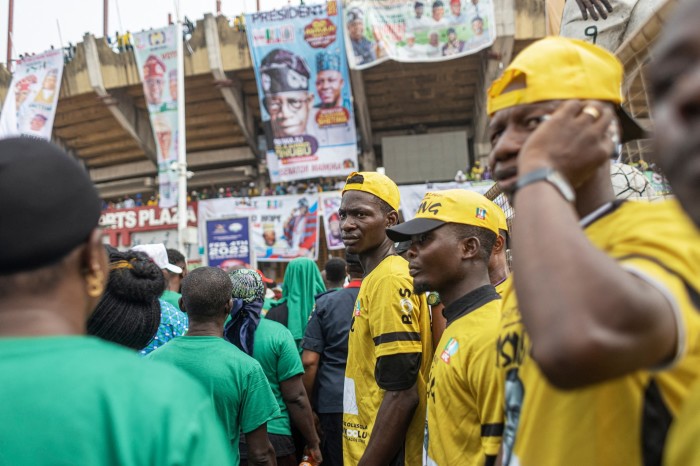
Supporters of Bola Tinubu at the Teslim Balogun Stadium in Lagos on Tuesday. The 70-year-old former governor of Lagos is considered the man to beat in the election © Michele Spatari/AFP/Getty Images By contrast, Obi, a businessman and former governor with a carefully crafted reputation for shunning the accoutrements of power, is something new. Yet all but Obi’s most loyal supporters, who call themselves “Obidients”, are realistic about him being an urban phenomenon whose chances of converting social media buzz into victory are slim.
Sceptics say Obi’s tiny Labour party, which has no governors and only one senator, lacks the organisational capacity to get the vote out or to properly monitor the country’s nearly 177,000 polling stations to mitigate potential vote-rigging and other election-day tricks. Others deride Obi’s purported popularity as “four people tweeting in a room”.
A string of opinion polls put Obi well ahead of the two would-be frontrunners, whose campaign managers are privately rattled. Yet experts warn that polls, which tend to pick up the views of smartphone-owning urbanites, are unreliable. They may not accurately reflect the broader electorate in a multi-ethnic country where more than 500 languages are spoken. Polls are particularly sketchy outside the big cities, where people are sometimes paid in bags of rice or bundles of notes to vote for a particular candidate.
Many voters are keeping their intentions to themselves. In a recent poll by the data company Stears, 27 per cent said they would vote for Obi, putting him 12 points ahead of Tinubu. But 37 per cent of respondents declined to disclose their voting intention.
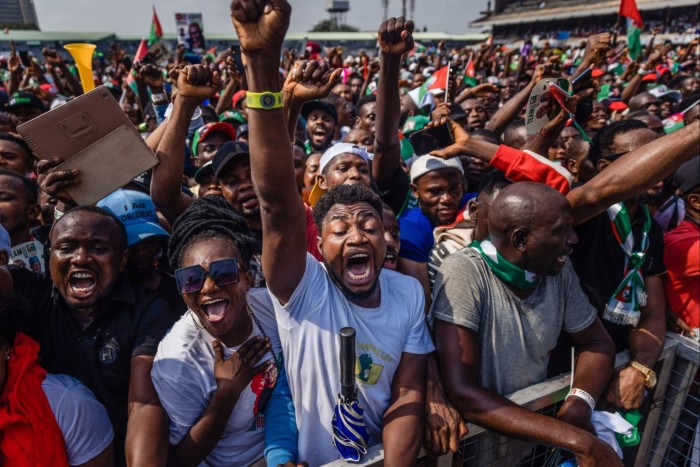
A campaign rally for the Labour party candidate Obi this month. Other than his most loyal supporters, who call themselves “Obidients”, his chances of victory are considered to be slim © Benson Ibeabuchi/Bloomberg All of these factors help explain why political analysts consider this election the hardest to predict since Nigeria returned to democracy in 1999. The serious challenge by Obi, the first third-party candidate to make a dent during the campaign, means there is a possibility of a run-off for the first time in the country’s history.
Obi has won the endorsement of prominent Nigerians, including Olusegun Obasanjo, an elder statesman, and Chimamanda Ngozi Adichie, a celebrated author. In an open letter, Obasanjo, who ran Nigeria in the 1970s as a military general and again as elected president from 1999-2007, told young Nigerians they had the power to change history.
Some 40 per cent of 93mn registered voters are below 35. The more they show up to vote, in a country with a history of low turnout, the higher the chance of an electoral upset. In an interview with the Financial Times, Obasanjo said the youth vote and God would deliver Obi victory.
Odinkalu, of the Fletcher School, puts much of the electoral excitement down to raw hope. “Nigerians are in search of magic,” he says. “They are looking for a miracle.”
Everything at stake
Nigeria is not simply a failing state. Africa’s “sleeping giant” has a swagger and entrepreneurial drive reminiscent of the US.
A Nigerian, Ngozi Okonjo-Iweala, heads the World Trade Organization. Tech start-ups in Lagos, including several unicorns, attract more capital than anywhere else on the continent. Nigeria is a cultural powerhouse whose artists, from author and TED-talk darling Adichie to Burna Boy, an Afrobeats singer, command a global following. Kano-born Aliko Dangote, who made his fortune in salt, flour and cement and is building the world’s largest single-train oil refinery, is Africa’s richest person.
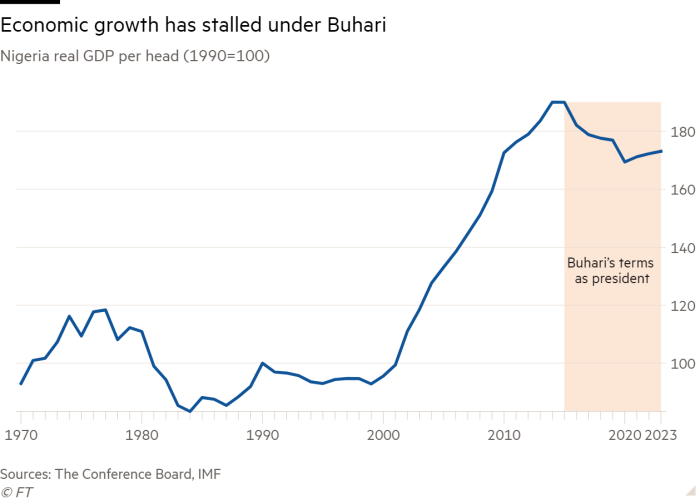
In better times, this has counted. Nigeria has been an engine of regional, if not continental, growth and a democratic, stabilising force. Economically and diplomatically diminished, the country has drifted during the past eight years of President Muhammadu Buhari, a former military leader. A man who campaigned on a ticket of personal integrity has overseen an increase in corruption.
The economy, though still Africa’s biggest, has stalled. Under Buhari, income per capita has fallen and 90mn Nigerians live on less than $1.90 a day. At least a third of the population are out of work and tens of millions hold precarious jobs in the informal sector.
A recent survey by Afrobarometer, a pan-African polling organisation, found that 89 per cent of Nigerians thought their country was heading in the wrong direction. “What’s at stake in this election?” asks Ayoade Alakija, a health expert and critic of the political elite. “Nigeria is at stake,” she says. “Our very statehood is at stake.”
Security is in an appalling state. During Buhari’s presidency, some 60,000 people have been killed by terrorists, criminal gangs or the army, according to data compiled by the Council on Foreign Relations.
Though the threat from Boko Haram has receded, the Islamic State of West Africa Province, an Isis offshoot, kills and plunders with virtual impunity in some northern states. Violent herder-farmer clashes have spread to almost all parts of the country. Secessionist agitations in the south-east, which fought an almost three-year civil war in the late-1960s to create a breakaway Biafra state, has strengthened, causing violence and unleashing state repression.
Kidnappings and extortion have surged. “Almost everybody knows someone who has been abducted,” says Toni Kan, a public relations consultant who has moved to London because of safety concerns, part of a gathering brain drain.
Economic prospects look bleak. Foreign investment has shrunk. The manufacturing base has withered. Nigeria relies on petroleum exports for 80 per cent of government revenue, a structural challenge. But so much oil is stolen by criminals and corrupt state actors that official production is below 1.3mn barrels a day, 500,000 barrels shy of Nigeria’s Opec quota.
Further ahead, the world is turning away from fossil fuels. “I keep telling people that, if you squint now, you can see the end of oil,” says Feyi Fawehinmi, an author and political commentator.
The central bank has compensated for falling revenue by running the printing presses, stoking inflation, now at 22 per cent. The tax base is a dismal 6 per cent of gross domestic product. Almost all government revenue is swallowed up by debt service and payment of government salaries.

Street vendors wait for customers at the Oshodi market in Lagos. Nigeria’s economic picture appears bleak, with inflation running at 22 per cent © Benson Ibeabuchi/Bloomberg Despite decades of oil revenue, much of it stolen, the state has never provided the public goods necessary for economic take-off. More than 10mn children are out of school, two-thirds of them girls. Once prestigious universities, including Ibadan, Ahmadu Bello and Nsukka, are a shadow of their former selves, unable to pay lecturers properly or maintain buildings. Health provision is poor, with Nigeria’s elite relying on foreign hospitals. At 53, Nigeria’s life expectancy is shockingly low, a decade below Ghana’s, a country with a similar income per capita.
“There’s been incredible damage. “We’ve gone back on almost every development index,” says Fakhrriyyah Hashim, a peace and security researcher, referring to the past eight years. “In our entire democracy, things have never been this bad.”
Route to a reset
For decades, most Nigerians have felt powerless to stop the rot, convinced that their lives are at the mercy of venal politicians. This election, unexpectedly, has offered a glimmer of something different.
“Sometimes you go so far in a certain direction that you hit a brick wall,” says Dimieari Von Kemedi, an entrepreneur and former presidential adviser. “Whether in nature or in human life, eventually you must reset.”

Police detain a man in Lekki following a demonstration in 2021. The so-called EndSARS movement against police brutality morphed into a broader alliance against the failings of Nigeria’s political elite © Sunday Alamba/AP That reset, at least politically, may have begun early on in the pandemic when young people took to the streets against state brutality in protests known as EndSARS, referring to a particularly brutal police unit. The EndSARS movement morphed into a broader alliance against the failings of Nigeria’s political elite but was brutally suppressed in October 2020 when members of the Nigerian army opened fire on protesters in Lagos, killing at least 12.
At the time, Tinubu, nicknamed the “godfather of Lagos”, was seen as unsympathetic. Obi by contrast tweeted his support of the protests, a move that enabled him to tap into youth sentiment. “The EndSARS base has effectively become an Obi base,” says Hashim, the researcher. “Young people had to explore other ways of non-violently challenging the government — and elections are the perfect route.”
Obi made a fortune in the import-export business and in banking. He won his political spurs from 2006-2014 as a two-term governor of Anambra state, leaving state coffers in a healthier position than he found them. He ran as vice-president for the People’s Democratic party in Abubakar’s unsuccessful 2019 campaign, somewhat undermining his image as a political neophyte.
Despite his reputation for frugality and probity, Obi’s name appeared in the Pandora Papers, a leaked dossier of offshore wealth, which showed he had registered business entities in tax havens, failing to declare them as required. Obi says the money was legitimate and that he did not know he had to declare assets registered in family members’ names.
His opponents have arguably worse allegations against them. Abubakar was named in a 2010 US Senate committee report in connection with the transfer of $40mn in “suspect funds”. Tinubu had his assets frozen in the 1990s by the US government, which said it had probable cause to believe the money was linked to drugs. Tinubu settled the case with a payment of $460,000. Both men deny wrongdoing.
While Obi has question marks against his name in common with his two main rivals, he is an outsider in other ways. He is an Igbo from Nigeria’s south-east. Although Igbos are the third-largest ethnic group behind the Yoruba and the Hausa, an Igbo has never won the presidency since the return to democracy.
Neither has any presidential candidate outside the two main parties won more than 7.5 per cent of the vote since 1999. Candidates must win at least 25 per cent of the vote in at least two-thirds of Nigeria’s 36 states plus Abuja, the capital, to win.
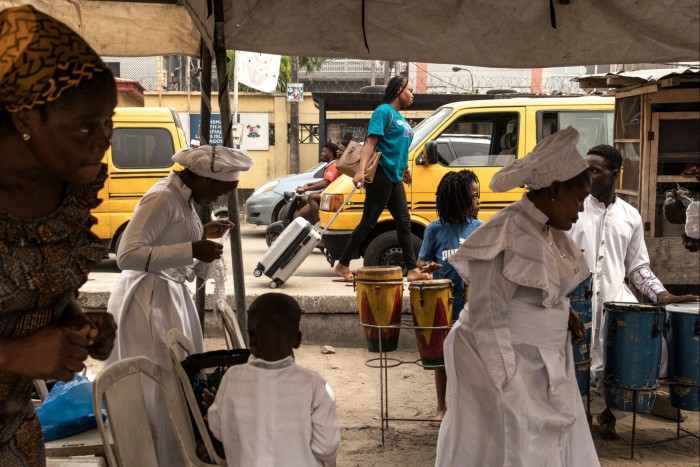
Pedestrians pass a service at the Emmanuel Salem Church on Lagos Island. Religion could play a role in the election amid doubts over whether Obi can win enough support in the largely Muslim north © John Wessels/AFP/Getty Images There are doubts about whether Obi, a Catholic, can muster enough support in the predominantly Muslim north, where his faith and relatively low profile could count against him. He has chosen northern Muslim Yusuf Datti Baba-Ahmed as his running mate, a formula that has proven successful in the past. This time, Tinubu, a southern Muslim, has also chosen a northern Muslim as running mate, a so-called “Muslim-Muslim ticket” that may not play well in his southern heartland.
Experts say Obi’s strong showing, even if limited to the south, has complicated the electoral map, making it harder to predict the winner.
Nigerian elections have rarely been about policy. Politicians frequently swap party allegiance. This time, though, Obi’s participation plus the fact that current policies are clearly not working, mean the level of debate has risen, if only a notch.
Both Obi and Abubakar are promising pro-business policies and a bigger role for the private sector. All three have committed to taking on the two taboos of Nigerian politics: scrapping a ruinously expensive fuel subsidy and freeing up the exchange rate.
Abubakar Suleiman, chief executive of Nigeria’s Sterling Bank, argues that both distortions have warped economic incentives, facilitating corruption and promoting “rent-seeking” over productive activity. “These things have prevented the private sector from growing at a [sufficient] pace and creating employment. If we’d removed those subsidies, we’d have been in a very strong position today,” he says.

Obi, centre, and Yusuf Datti Baba-Ahmed, his running mate, left, arrive at a rally in Lagos. Even those who do not believe Obi will win admit that he has shaken up the race © Benson Ibeabuchi/Bloomberg Lifting them will not be easy. Big vested interests profit from the opaque currency regime. Although the fuel subsidy benefits the car-owning middle class, poor people regard cheap petrol as one of the few things they get from the state. “Without legitimacy, whoever wins can’t take the decisions the country needs,” says Odinkalu of the Fletcher School. “If the person does not have legitimacy the country is going to burn.”
Dele Olojede, a Nigerian journalist who won the Pulitzer Prize, says it is important not to have unrealistic expectations of Obi, either about his capacity to win the election or to turn the country around if he pulls off a miraculous political upset. Like others, though, he acknowledges that Obi has shaken things up. “It’s a sign of improvement,” he says. “It forces the other two candidates not to take things for granted.”
This election is also likely to be less easy to rig, say political experts, thanks to improvements in the electronic voting system and the recent withdrawal as legal tender of old banknotes that could have been used to bribe voters. Kemedi goes so far as to conclude that “the old party machinery is broken”.
Olojede is more cautious. “I don’t think Obi will win, but there is a possibility of a surprise,” he says. “And any one of these guys will be better than Buhari.”
Source: Financial times
-
2023 Nigeria elections: Cleric urges citizens to pray for peace
The Parish Priest of the Holy Family Parish, Ologo, Enugu State, Rev. Fr. Christian Oji, has asked Nigerians to utilize Ash Wednesday in 2023 to pray for peaceful elections across the nation.
He made his statement in an interview with the local media on Wednesday in Enugu.
He asserts that now is a time when Nigeria should be worried about what is taking place in the country, make amends with one another, seek peace and honesty, and assist the less fortunate.
“This is a period Nigerians should help the nation to achieve its greatness and purposes,” Oji stated.
According to the pastor, Ash Wednesday, is a time when Christians everywhere identify with Jesus Christ’s sufferings.
Emphasizing that this is a serious time when all Christians fast and engage in other practices that strengthen their trust in Jesus, such as abstinence and almsgiving.
“It is a period of reconciliation with one another and God as well as engage in fast.
“Ash defines that we are nothing but came from dust and to dust we shall return, it makes us to understand the nothingness of man and that he cannot exist without the presence of Christ in him,” he said.
He said that it was a moment for Christians to consider how their lives have benefited from what Christ has done for humanity and how it has aided them on their spiritual journey.
“It is a period we seek peace and identify with the cross and a special season for Christians,” he said.
Oji explained that Ash Wednesday is a day in the life of orthordocs 40 days of Lent were intended to be a time of retreat as part of the preparation for Easter.
-

Rapid poultry death and corpse decay over South Africa’s power cut
Power outages in South Africa has resulted in accidents involving vehicles, opportunistic criminals, rancid food, decaying corpses, failed enterprises, and water shortages.
Last week the grim extent of the outages was laid bare when South Africans were advised to bury dead loved ones within four days.
In a public statement, the South African Funeral Practitioners Association warned that bodies in mortuaries were rapidly decomposing because of the unrelenting electricity outages, putting huge pressure on funeral parlors struggling to process corpses.
The situation is so bad that the country’s President Cyril Ramaphosa is considering declaring a national disaster, similar to one in 2020 at the height of the Covid pandemic, which had a devastating effect on the country’s economy.
Last week scores of supporters from the Democratic Alliance opposition party marched under heavy security through the streets of Johannesburg and Cape Town to voice their frustrations over the persistent blackouts.
Known locally as loadshedding, widespread electricity blackouts are carried out multiple times a day by state-owned energy utility Eskom to avoid the total collapse of the grid.
Shortages on the electricity system unbalance the network, and Eskom has stated that controlled outages are necessary to ensure reserve margins are maintained, and the system remains stable.
While the country has been experiencing on-off power outages for years, since September 2022 scheduled blackouts have become routine, affecting every part of South African society.
For some people, not having access to reliable power can be the difference between life and death.
Before she died in October 2022, Lis Van Os needed oxygen for 17 hours a day. Her stationary oxygen machine required mains power, making periods of loadshedding extremely stressful, particularly when power did not return as scheduled, her family said.
Her daughter Karin McDonald was forced to explore backup options such as inverters and a back up oxygen mobile tank, which only lasted short periods.
“Towards the end (of her life) power outages created a lot of anxiety for everyone,” she said.
South Africans experienced more than twice as many power cuts in 2022 than in any other year. And things are set to get worse in 2023.
Even simple daily tasks need to be arranged around loadshedding schedules, including meal planning, travel times, work that requires internet connectivity.
From preparing baby formula to keeping fans running during the summer heat, not having access to mains power is makes daily life challenging for South Africans.
Maneo Motsamai, a domestic worker in Johannesburg, says the outages prevents her from simple tasks such as cooking.
“I boil water to cook mealie meal (maize porridge) and the power goes. I can’t eat, it’s a waste. I can’t cope like that,” Motsamai told CNN.
Pump stations can’t provide water and many small businesses without access to backup power are having to close shop and lay off employees, according to people CNN spoke to.
Thando Makhubu runs Soweto Creamery, an ice cream shop in Jabulani, Soweto, on the outskirts of Johannesburg. His family pooled small welfare grants they received during the Covid-19 pandemic to set up the business, but are now feeling the pressure from power outages.
In early January, the shop was without power for 72 hours, when electricity did not return as scheduled. Thando was forced to shell out money for diesel to power their generator and prevent all his stock melting. He says the outages are costly and destroying their hopes of expanding.
Bongi Monjanaga, who runs a startup cleaning services company operating across Johannesburg, says the outages affect every part of her fledgling business, such as operating electric cleaning equipment, entering and leaving premises when security gates aren’t functioning, and having internet to invoice clients and complete online tax compliance documents.
“I find myself in this pool of misery when I’m just trying to start up. I’m just trying to grow,” she says.
The escalation of power outages is also deeply worrying for South Africa’s food security, driving up prices, and placing an even greater strain on stretched household budgets.
With modern farming practices ever more reliant on electricity for crop irrigation, processing, and storage, loadshedding is having a huge impact on agricultural output.
Gys Olivier, a farmer from Hertzogville in Free State province, in east-central South Africa, says he and other farmers in the area have been forced to throw away hundreds of thousands of dollars worth of seed potatoes due to disruptions to the ‘cold chain’ – (the process of keeping produce refrigerated throughout the supply chain.)
There is also less demand from growers due to water shortages, with pump stations reliant on electricity to operate.
“We have done everything we can to make sure there is food on the table for a very good price, but it’s become so capital-intensive to farm,” Olivier says.
Meanwhile livestock and poultry are dying before they even get to the slaughterhouse.
A gruesome video circulating on social media shows workers removing 50,000 dead broiler chickens from a farm in North West province, the birds suffocated when power outages caused ventilation systems to stop. The financial damage to the farmer was around ZAR1.6m ($93,300) according to local media reports.
South Africa is notorious for high crime rates, and loadshedding is making it worse as home security systems fail when the power goes out, giving criminals a field day inside unsecured properties.
Policing also becomes harder, with officers unable to reach crime scenes fast enough due to congestion when traffic lights are off.Tumelo Mogodiseng, General Secretary of the South African Policing Union (SAPU), describes the load-shedding as “a pandemic.”
He says his members’ lives are now more at risk, with officers unable to see potentially dangerous situations in the darkness, and police stations, many of which don’t have backup power systems, at risk of attack from criminals during blackouts.
“Police are dying every day in this country. If this is happening in the daylight, what happens when there is no light for them to see at night?”
Mogodiseng also worries that crimes are going unreported, with citizens fearful of leaving their houses during outages and traveling in the darkness. “Communities won’t travel to police stations to open cases because they are afraid,” he told CNN.
Gareth Newham, who runs the Justice and Violence Prevention Programme at the Institute for Security Studies (ISS) in Pretoria, says that it’s hard to get solid data on the impact outages are having on crime. While anecdotal evidence suggests criminals are exploiting outages, the recent escalation of loadshedding has coincided with the Christmas holidays, when crime rates typically spike.
His biggest concern is that continued loadshedding or a temporary grid collapse could lead to a repeat of the coordinated civil unrest, rioting, and looting in parts of South Africa’s KwaZulu-Natal and Gauteng provinces 18 months ago.
“A complete breakdown in the grid could be the trigger for local level gangs getting more power, and we could see a similar kind of violence to that we saw in July 2021.”
Under the ruling African National Congress (ANC), in charge since 1994, Eskom has become synonymous with corruption, crime, and mismanagement.
Last year a judge-led inquiry into graft under the former president, Jacob Zuma, found that there were grounds to prosecute several former Eskom executives.
The government has failed to build new power stations to keep up with increased demand, and warnings from energy experts on looming supply shortages across the past two decades have gone ignored.
A 2019 report by the South African Institution of Civil Engineering shows skilled engineers have been leaving the country in droves.
Despite spending billions of USD on two huge coal power stations, neither works properly.
Older plants are dilapidated due to a lack of maintenance, and organized crime steals vital coal supplies and cable from the rail lines going from mines to power stations.
Renewable energy companies say they are desperate to supply to the grid, but the government has been slow to cut red tape and streamline regulatory processes that would reduce the time frame for environmental authorisations, registration of new projects and grid connection approvals.
Legal challenges against the government and Eskom are stacking up. Several political parties and trade unions say they will take the government and state utility to court for not upholding their duty to provide electricity.
With no end in sight to the outages, South Africans are desperate for alternative energy sources, but even they are out of the reach of many citizens.
Thando Makhubu says he was shocked by the cost to power his ice cream business off-grid. “We were quoted R100,000 ($5,945) and that excluded the solar panels.”
Karin McDonald, who runs a swimming school, similarly found the upfront costs of solar prohibitive. “We received quotes for solar for the business and house and were not looking at anything less than half a million rand ($29,500) which is a major life decision to make,” she said.
There is also a long wait for solar. “I know a solar provider that had 40 requests just last week, all for big solar projects, ” said Angus Williamson, a cattle farmer from KwaZulu-Natal province.
As they come to terms with their new reality, many South Africans are finding it hard to stay optimistic.
“The light at the end of the tunnel is a train heading in our direction,” said Williamson.
Source: CNN
-
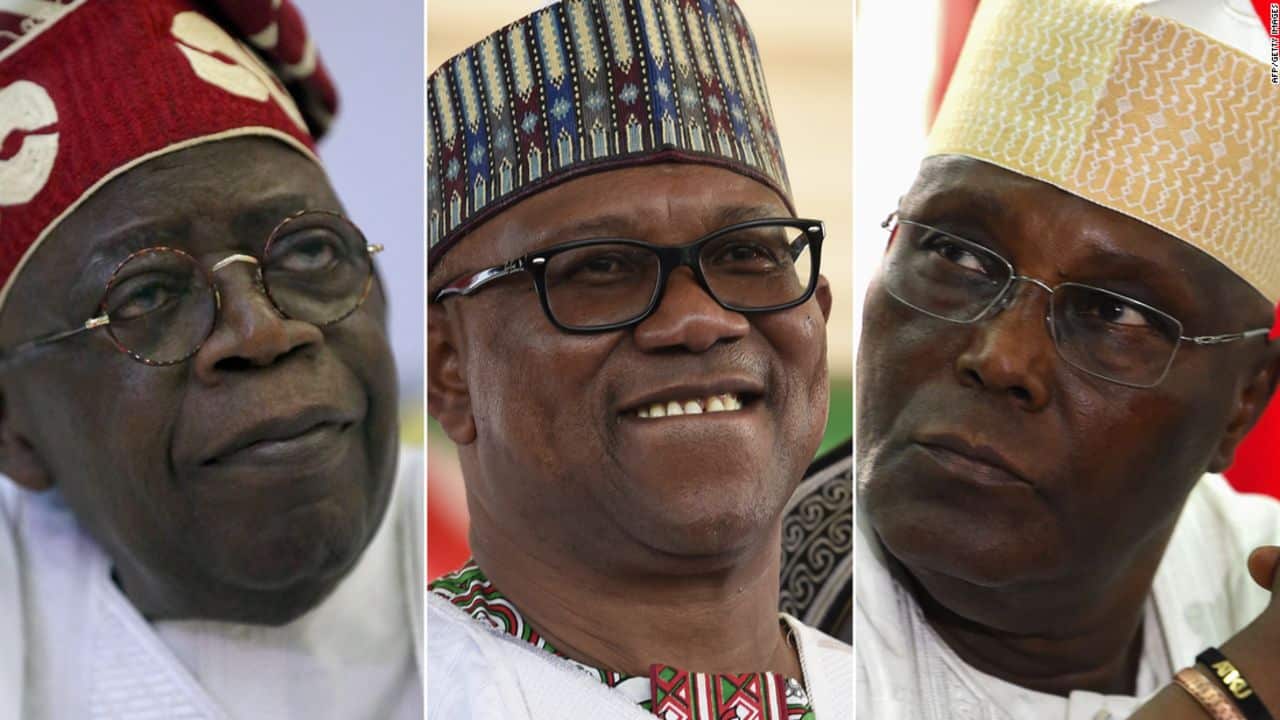
2023 Nigeria elections: Here’s what to know about its presidential candidates
As the most populous country in Africa elects a new leader, it will be the largest democratic process on the continent.
The country is currently dealing with a wide range of economic and security issues, from cash and fuel shortages to an increase in terrorism attacks, high inflation, and a falling local currency.
For the first time since the country’s return to democratic rule in 1999, none of the candidates is an incumbent or a former military leader.
Outgoing President Muhammadu Buhari is term-limited and will step down amid a patchy legacy that has brought “a lot of frustration and anger” to Nigerian voters, analysts say.
Eighteen candidates are in the running for Nigeria’s highest office, each confident they can turn the country’s fortunes around if voted into power, but opinion polls suggest three are leading the race for the popular vote.
One of the key contenders is Bola Ahmed Tinubu, the candidate of Buhari’s party, the All Progressives Congress (APC). Another is the main opposition leader and former vice president Atiku Abubakar, of the People’s Democratic Party (PDP).
Nigeria’s presidential elections have typically been two-horse races between the ruling and opposition parties, but this year’s vote has a third strong contender, Peter Obi, who is running under the lesser known Labour Party.
Tinubu, 70, a former governor of Nigeria’s wealthy Lagos State, wields significant influence in the southwestern region where he is acclaimed as a political godfather and kingmaker.
The affluent political veteran, boasts of aiding the election of Buhari to the presidency on his fourth attempt in 2015, after three previous unsuccessful bids.
After decades as a political puppet master, Tinubu declares it is now his turn to emerge from the shadows into the presidency; his campaign slogan is “Emi Lokan,” which translates to “it is my turn,” in his native Yoruba language.
The ruling party candidate has, however, been dogged by allegations of graft which he strongly denies. Critics say he has also not convincingly addressed concerns about his health, and has, at times, appeared confused and incoherent on the campaign trail. He has also made gaffes that have made him the butt of jokes and viral memes on social media.
Tinubu has also come under criticism for abstaining from presidential debates and delegating questions about his manifesto to members of his team during a recent outing at the UK think tank Chatham House.
One of Tinubu’s main challengers is the opposition party’s Abubakar, who is running for the sixth time following five previous losses.
Abubakar, 76, who served as vice president from 1999 to 2007, is a staunch capitalist who made his fortune investing in various sectors in the country. The tycoon has been investigated for corruption in the past. However, he denies any wrongdoing.
Many believe Abubakar’s presidential ambition might usurp an unofficial arrangement to rotate the presidency between Nigeria’s northern and southern regions, since he is from the same northern region as the outgoing leader, Buhari.
Peter Obi is a two-time former governor of Anambra State who is being touted as a credible alternative to the two major candidates.
Obi eschews the excesses of the typical ‘African Big Man’ leader He shuns a large entourage, flies economy class and carries his own luggage. His “no frills” approach has attracted hordes of supporters, mostly young Nigerians who call themselves ‘Obidients.’
Obi is also the only Christian among the leading candidates. His southeastern region has yet to produce a president or vice president since Nigeria returned to civil rule in 1999.
The ruling party’s Tinubu, although from the religiously mixed southwestern part of the country, is a Muslim and also chose a Muslim running mate, fueling public anger over his choice.
Described by Tinubu as “Mr. Stingy,” Obi, 61, is famed for his frugal approach and is seen as a ‘Mr Clean’ of Nigerian politics.
However, his offshore accounts were among those found in the Pandora Papers, which exposed the hidden riches of the global elite in 2021. Obi denies any wrongdoing.
The past two elections have been postponed at short notice and there are fears this one will suffer the same fate. However the electoral commission insists there will be no disruptions.
Prof. Kingsley Moghalu, a political economist and former presidential candidate in the 2019 election told CNN he expected a high turnout, “except if suppressed by a security breakdown of any sort,” he told CNN.
More than 93 million Nigerians are registered to vote but uncertainty hangs over voter turnout on polling day, with insecurity among the biggest concerns.
Public policy analyst Abideen Olasupo told CNN the uncertainties surrounding this year’s elections have put off many voters.
“Nigerian voters are currently the most disturbed and confused voters in the world right now because they are not sure if the election will hold; and if it will hold, they are not sure if the process will not be manipulated,” Olasupo said.
Citizens have also been disrupted by an attempt to curb vote buying by making the old currency notes useless to prevent rogue politicians from stockpiling cash. But there are fears shortage of the new naira notes could disrupt the elections itself.
Electoral body INEC reportedly warned that the inability of banks to distribute enough of the new cash could make it difficult to pay temporary staff and security guards needed to operate thousands of polling stations for presidential and parliamentary elections on Feb. 25.
As it is, voting will not take place in more than 200 polling units across Nigeria, in places such as Imo and Taraba (two of Nigeria’s conflict-prone states) says INEC, because of concerns over security.
Separatist gangs and marauding gunmen known locally as bandits have terrorized parts of the country through kidnappings for ransom.
Elsewhere, other impediments threaten voter turnout as some Nigerians are yet to collect their permanent voter’s card (PVC) with less than a week to the poll.
The co-founder and head of intelligence at data company Stears, Michael Famoroti, tells CNN that critical issues around security and the economy will be top of mind for voters and could influence their electoral choices.
“Nigerians fall under two buckets: One is insecurity. However, overall, the main issue that Nigerians agree needs to be dealt with is the economy,” he said, with concerns ranging from poverty to unemployment and policy.
“The cash crunch, petrol scarcity … are issues that are likely going to be top of mind for those who make it to the polls and arguably could sway the votes,” Famoroti says.
Fuel shortages and scarcity of the newly redesigned local currency have stirred violent protests in parts of Nigeria as millions of people struggle to get their hands on new versions of bank notes.
Nigerians expect the eventual winner of the presidential poll to hit the ground running in finding solutions to those problems, including tackling the country’s burgeoning debt profile, oil theft, and a controversial petrol subsidy that deprives the country of major oil revenue.
The top three candidates have made promises to tackle some of these issues. The ruling party’s Tinubu vows to create jobs, grow the economy, and “obliterate terror, kidnapping, banditry, and violent crime from the face of our nation.”
Touting a “recover Nigeria” mantra, the PDP’s Abubakar says he wants to “block government wastages” by first running a small government, weaning the country off the petrol subsidy, and making it “the hub of crude oil refining in Africa.”
The Labour Party’s Obi says his government will be keen to shift Nigeria’s focus “from consumption to production” while also being determined “to fight and significantly reduce corruption” and create systems to reduce unemployment, insecurity, and inflation.
A predictive poll by Stears puts Obi ahead of the two main challengers in a large voter turnout scenario. A lesser turnout will favor Tinubu, according to the Stears’ poll.
“There was a scenario where we only considered voters who had picked up their PVC … based on that scenario, the Labour Party candidate is the most likely winner,” Famoroti told CNN.
“However, we then also estimated a low turnout scenario. The idea is that these are the harder than hardcore voters and those that most likely will turn up to vote on the day. Under that scenario, the APC candidate … emerges victorious,” he added.
Another poll by Lagos-based SBM Intelligence does not foresee a frontrunner but suggests that Obi and Abubakar could garner a sufficient number of ballots to meet the 25% vote spread in 24 of Nigeria’s 36 states required by law to win.
The forecast is different for the Political Africa Initiative (POLAF) whose survey polled three million people and predicts a close race between the opposition PDP (38%) and the ruling APC (29%).
Obi’s Labour Party is projected to occupy third place with 27% of the votes.
“This election is extremely difficult to predict,” Moghalu, the political economist, told CNN.
“That’s because of the ‘Third Force’ factor of Labor Party candidate Peter Obi, which has scrambled the projections of the two traditionally dominant parties, APC and PDP.
“While many still believe one of the two will come out on top ultimately, the fact that several scientific opinion polls have put Obi in the lead means that the possibility of an upset clearly exists,” says Moghalu.
Moghalu believes Nigerians may vote largely along ethnic and religious lines, as well as traditional party lines.
“The only major factor that is an ‘issue’, and will influence many votes, is the hunger for a change in direction which millions of young and middle-aged voters have, and for that reason support Obi. Will that be enough to propel him to victory? That’s the X-factor.”
Source: CNN
-
Nigeria’s First Lady issues disclaimer against hacker of her social media account
The first lady of Nigeria, Aisha Buhari, has said that she ordered for bogus news postings that emerged on her social media profiles to be deleted.
Earlier on Tuesday the Central Bank of Nigeria issued a warning about a fake press release that was shared by her accounts with incorrect information about the phasing out of old naira notes.
Mrs Buhari said in an Instagram post that this was not the first time her accounts had been tampered with:
Source: BBC
-
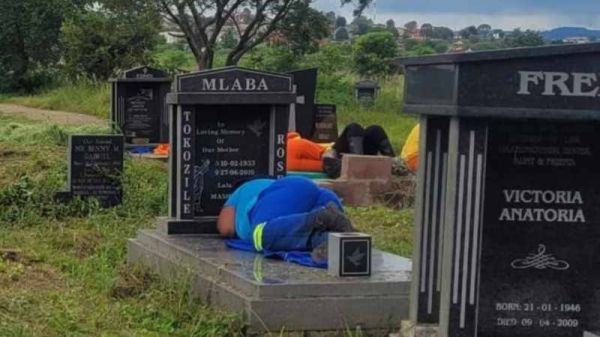
South Africans face charges for sleeping on graves
A municipality in South Africa says it will charge some of it staff for misconduct after pictures surfaced on social media showing them sitting and sleeping on top of graves.
The workers are from the municipal’s parks department – which is responsible for the cleaning of parks and public facilities, according to local media reports.
It is unclear when the pictures were taken.
In a statement, Msunduzi municipality, in Kwa-Zulu Natal province, said it was aware of what it termed “disturbing photographs”.
“The municipality will not condone such behaviour and can confirm that processes are in place for the implicated employees to be charged for misconduct and for putting the municipality in disrepute,” it said.
Source: BBC
-

Ex-rebels take on jihadists in Mali – Report
On Monday, former Tuareg rebel factions in northern Mali initiated combined military operations against Islamic State (IS) extremists, which resulted in the deaths of hundreds of locals and the eviction of thousands more, according to French public broadcaster RFI.
The coalition, known as the Permanent Strategic Framework (CSP), pledged its allegiance to Mali’s transitional authorities. It downplayed reports of tensions between its members and the national army.
The CSP said it was also declaring war against the al-Qaeda-linked Support Group for Islam and Muslims (JNIM) and a section of Coordination of Movements of the Azawad (CMA), which recently formed an alliance against IS.
“We will go wherever the Islamic State commits massacres to secure civilians and their property and to secure the movements of displaced persons,” a CSP representative is quoted as saying.
The coalition said it had taken this decision after the army and Russian mercenaries from the Wagner Group had failed to tackle IS militants despite their presence in Ménaka in north-eastern Mali.
About 380 vehicles and nearly 2,500 men have been mobilised with the aim of defending the region against jihadists who have been accused of carrying out deadly attacks against civilian targets, according to the report.
Source: BBC
-
Nigerian football club referee fined for urinating on field
A first division club in Ibadan, Nigeria, has been fined for an amount of $1,000 (£900) a referee was caught urinating on the field.
The photo, taken before the Shooting Stars’ home game on Sunday against Akwa United, went viral.
The official, Auwal Mohammed, has also been suspended for a year from any activities relating to the Nigeria Professional Football League (NPFL).
In a letter to the Shooting Stars from the Interim Management Committee, the body which manages the NPFL, it described the incident as “a despicable act” that had brought the game into disrepute.
“You failed to control the conduct of your officials which resulted in Mr Auwal Mohammed urinating on the playing pitch in the full glare of the general public,” it said.
Source: BBC
-
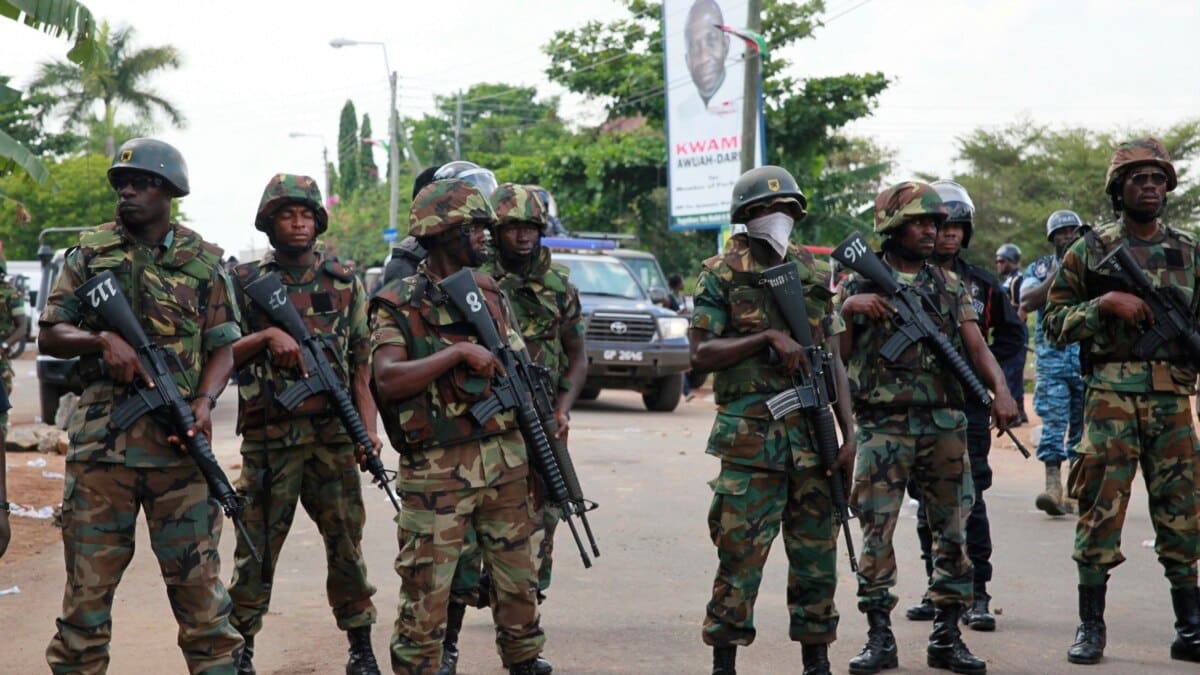
UN peacekeeper convoy hit by blast in central Mali
There has been an increase in attacks on police in Nigeria ahead of the presidential election on Saturday.
Since the weekend, seven officers have been killed in the south-east of the country, where a separatist movement is seeking autonomy.
The Chief of Defence Staff, Gen Lucky Irabor, has said the security forces have completed preparations for the election, and warned those who tried to disrupt the vote they would get a bloody nose.
Concerns have also been raised about the spread of disinformation ahead of the ballot, with the Centre for Democracy and Development warning of attempts to blacken the reputations of candidates by falsely accusing them of hoarding cash amid the continuing shortage of naira notes.
Source: BBC
-
Cyclone Freddy: 600,000 Mozambicans brace themselves
Mozambicans are bracing for more heavy rains as another tropical cyclone gathers pace in the Indian Ocean and tracks towards the southeastern African coastline.
Mozambican President Filipe Nyusi has made an early return home from the African Union summit in order to monitor his country’s response to heavy rains and the looming Tropical Cyclone Freddy.
The National Institute of Meteorology has warned that Tropical Cyclone Freddy could make landfall in Mozambique by February 24 .
The UN said it could affect as many as two million people.
President Nyusi expressed optimism at his country’s experience in dealing with the effects of heavy rains and cyclones.
It has been predicted that the cyclone would make its first landfall in Madagascar on Tuesday and is then expected to re-enter the Mozambican Channel where it is expected to rejuvenate its energy and progress towards the Mozambican coastline.
It is expected to make landfall near the Mozambican city of Beira in the early hours of Friday.
This would be the second cyclone to hit Mozambique this year following Cyclone that pummelled parts of the country in late January.
Source: African News
-
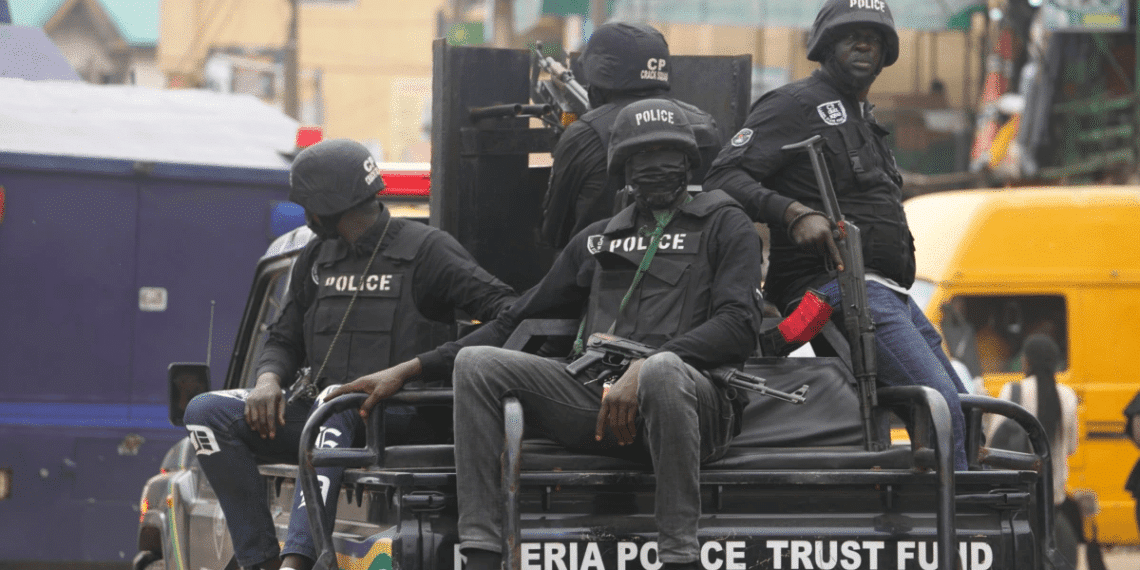
Nigeria Election 2023: Four police officers killed in Obosi
Four police officers were, on Monday, killed when suspected members of the outlawed Indigenous People of Biafra (IPOB) attacked Awada Police Divisional Headquarters in Obosi, Idemili North Local Government Area of Anambra State, south-east Nigeria.
The incident happened at about 2:20 a.m.
The police spokesperson in the state, Tochukwu Ikenga, who disclosed this in a statement on Monday, said three of the suspected IPOB members were killed by the police during the attack.
This is the seventh in a string of attacks on police facilities in the state within one month.
Mr Ikenga, a deputy superintendent of police, said the IPOB members, alongside its militant wing, Eastern Security Network (ESN), in their numbers, attacked the police facility with improvised explosive devices and automatic firearms.
“In response to the attack, police operatives attached to Anambra State police command engaged the assailants jointly with troops from 302 Artillery Regiment of the Nigerian Army in a gun duel and three members of the outlawed IPOB/ESN were fatally wounded,” he said.
The police spokesperson said, during a mop-up operation by police and military personnel, two male suspects, believed to have participated in the attack were arrested by police operatives.
“Regrettably, four police operatives paid the supreme price while a section of the station, one police patrol vehicle and three exhibit vehicles parked in the premises, were set ablaze by petrol bombs thrown into the station by the assailants,” he stated.
Three Kalashnikov rifles, an automatic pump action gun, a brown Lexus 330 SUV, one motorcycle suspected to be stolen property, and charms were among the items recovered from the criminals during the operation, according to the police.
The Commissioner of Police in Anambra State, Echeng Echeng, has ordered immediate deployment of all the command’s operational and investigative assets to track down the fleeing suspects, Mr Ikenga said.
Mr Echeng appealed to residents of the area and the state to remain calm, assuring that the police in the state would not relent in ensuring that the criminals who carry out attacks were brought to book.
Increased attacks
Like other states in Nigeria’s south-east, security has deteriorated in Anambra State with frequent attacks by armed persons.
Source: premiumtimesng.com
-

7 ways to cope when adult friendships end and move on
Breaking up with friends is hard. Sometimes, it can be because you are both different people and are growing in different directions, or it can be something darker like they are a toxic influence on you. Whatever the reason, sometimes adult friendships need to end and it can be hard to know what to do, how to move forward, and move on.
Don’t underestimate the struggle of a friendship breakup. It can be just as painful as a romantic breakup, and you shouldn’t fall into the trap of pretending it isn’t as painful as it is. We can often trust our friends more than anyone, which means it can feel even more devastating when the relationship ends.
However, like all breakups, it isn’t the end of the world. You will heal, you will feel better, you will move on in time, and you will find more friends. But while you are processing this, there are things that you can do to help you cope when an adult friendship ends.
Here are seven ways to cope when adult friendships end and move on:
1. Remind Yourself That People Come and Go for a Reason
Life is not linear. You may meet someone and it may go well, but that doesn’t mean you are supposed to be with them forever.
Not all people are supposed to be in your life. Sometimes, they come into your life for a reason and leave when the lesson is learned.
There is great peace in thinking that people come in phases and when their time is up, they move on. There is no rhyme or reason, no right or wrong. It just is.
As you grow and change, so will your adult friendships, and letting go of the idea that you have to be best friends with everyone you have ever met in your life is incredibly freeing. You have lost a friend, and it is hard. But the reality is that now, there is more space in your life for someone else to come in.
2. Learn and Understand the Grieving Process
You have experienced a loss—a breakup. Understanding and learning the grieving process can be exceedingly helpful if you feel the loss consuming you. You are grieving the loss of your friendship, and understanding why you go from denial to anger in a split second can help bring back control over what is happening to you.
Remember that grieving is not a linear process either. You can process emotionally in one area, like the loss of day-to-day chatting and contact, and then five months later, you may realize that another aspect of your friendship is over and the grieving process starts again.
It is a continuous cycle as the loss hits you in layers. There is nothing wrong with this. It is important to feel your feelings and process them.
Don’t pressure yourself to be immediately healed and happy and put on a good face for others. Take your time, process your emotions, and let them go.
3. Keep a Journal to Process Your Feelings
Breakups are messy, romantic or not. You will have to process a lot of feelings, and the best way to cope with the loss and pain is to get it out of your head and onto paper.
Get an app, journal, or even a standing weekly appointment with someone to talk to and process your feelings. Get them out of your head and into a safe space.
If they remain in your head, it is easy to obsess over them. It is like walking around with a book in front of your face. You keep re-reading the same page and get frustrated that you can’t see where you are going, and the story isn’t advancing. There is no closure.
Put the book down, and process your feelings. This is an incredibly important tool when dealing with feelings of anger, shame, loss, and pain. If you don’t process them, they will build up and you will explode at someone close to you and regret it.
Take five minutes when you feel overwhelmed, and just write out how you are feeling. Don’t be shy either—let it all out.
Your journal should be a safe space to express yourself unconditionally. There is no need to pull your punches. Get it all out.
4. Reach Out to Good Friends and Lean on Them
You have other adult friendships in your life. No matter who you have lost, there are others who will still be there for you.
There is a great Dr. Seuss quote that says, “those who mind don’t matter and those who matter don’t mind.”
You are going through a loss, and one of those losses might be regular contact with a friend or someone to do things with daily. Most of the time, it will be habitual. You don’t have to let that habit go, just reach out to other people to attend events, hang out, or chat with you.
If you need to talk to someone, reach out and ask for help. It can be easy to reflexively push everyone away, but now is the most important time to lean on the people you trust.
5. Solidify Your Self-Care Routine
The first thing we neglect when dealing with an emotional upheaval is self-care. Make sure your self-care routine is unbreakable. The last thing you want is to spiral into depression or develop social anxiety.
Self-care is the easiest thing to forget, so make sure that your self-care routine is solid.
Things like eating nutritiously, drinking water, exercising three times a week, showering and keeping your environment clean, getting out into nature, speaking to yourself with kindness, and taking a mental health break are all a part of self-care.
Make sure you aren’t isolating yourself from your other friends. Reach out, ask for help, and take care of yourself. It is also a great way to keep your mind off the pain while you are processing.
6. Try New Things
Now is the best time to try something you always wanted to try and meet new people. There is so much in the world to discover and explore.
Pick a hobby you have always wanted to try, take a class, sign up for a course, or say yes the next time someone asks you to join them in one of their hobbies. You will never know what will be your next favorite thing.
When we were children, we were always growing and trying. We had a new toy or hobby every year as we got older, and that shouldn’t stop because you are an adult. Try new things and embrace the childlike quality of being new at something and meeting different people.
Mixing things up can also help break the stuck mindset you may fall into when experiencing a loss. Process your feelings, but don’t let them stop you from living your life.
7. Show Yourself Kindness, Spend Time Learning About Yourself
At the end of the day, you have experienced loss. You are not a failure or unworthy, and you need to treat yourself with kindness.
Start with self-forgiveness. Take all the time you need, but forgive your friend for the end of the friendship and forgive yourself so you can move on. Now is a great time to spend some time learning about yourself and reflect on what you want in a friendship.
It is so easy to close yourself off, but you deserve to have a thriving and happy social life. This includes friendships. Take some time to work out what kind of people you want to surround yourself with and build stronger friendships with them.
Final Thoughts
Moving on from a friendship breakup is a process, but you will recover. You will move on. It is just a matter of time, self-care, and spending quality time with yourself and others who are also in your life.
Let go of the blame and release the pressure you have on yourself, while surrendering the need to control the outcome. You have no control over their choices. You only have control over yourself and the ability to find joy and happiness in your life.
Take care of yourself, learn more about you, and find the people who truly matter in your life. While one adult friendship may come to an end, there are many other opportunities to foster connections and build new relationships in your life.
Source: Lifehacl.com
DISCLAIMER: Independentghana.com will not be liable for any inaccuracies contained in this article. The views expressed in the article are solely those of the author’s, and do not reflect those of The Independent Ghana
-

Breaking: Another devastating earthquake hits Turkey, Syria
About two weeks after the horrific earthquake that occurred on Monday, February 6, 2023, another earthquake is said to have struck Turkey and Syria.
According to the global news community, AJ+, the earthquake hit the border of Turkey and Syria and had a magnitude of 6.3.
In a tweet shared on Monday, February 20, 2023, AJ+ added that no causalities have been reported but there were damages to structures.
“BREAKING: A 6.3 earthquake hit the Turkey-Syria border, two weeks after the devastating earthquake.
“No new casualties were immediately reported but witnesses report damage. Turkey has reported over 6,000 aftershocks since the February 6 earthquake killed over 46,000 people,” parts of the tweet read.
Meanwhile, the mortal remains of former Black Stars winger, Christian Atsu, who was trapped in the February 6, 2023 earthquake that hit parts of Turkey and Syria, have been returned to Ghana.
After a 12-day search, his remains were found under the rubble on February 18, before it was transported to Ghana, arriving on Sunday from Istanbul.
The earthquake, the second-largest in the last century anywhere in the world, has already claimed more than 40,000 lives both in Turkey and neighbouring Syria, CNN reports.
Source: Aljazeera
-

Minority leadership do not respect the constitution – Afenyo-Markin
Deputy minority leader, Alexander Afenyo-Markin criticized the NDC’s request for the minority in parliament to reject nomination of new ministers and deputies as disrespectful.
According to him, the General Secretary, Fifi Kwetey, cannot sit in his party office and issue a press statement and direct MPs to reject the nominees of the president.
He added that for the minority to take directive directly from the party’s leadership meant they have no thinking cap and respect for the constitution.
Speaking in an interview in response to the NDC’s directive, he said;
“…one would have thought that the NDC minority will give respect to the orders of the Speaker which is part of the constitutional imperative that when nominees are announced the appointment committee will vet them in accordance with the constitution. Let me state that the rejection or otherwise of a nominee is constitutional.
“The General Secretary cannot sit in his party office and issue a press statement and direct MPs to reject the nominees of the president. It is a sign of disrespect to parliament, the Speaker. And clearly what the NDC is telling Ghanaians is that they don’t respect the constitution and that the new leadership they just announced is not the type of leadership with ability to respect the constitution and that they have thinking caps.
They themselves will be acting on the dictates of the party Headquarters. History is observing what they are doing. Prosperity will make reference to their conduct and we think they want to abstract government,” he added.
The National Democratic Congress (NDC) has directed the minority caucus in parliament not to approve any of the new ministerial nominees appointed by the president.
According to party, the caucus should rather push for a reduction in the size of government with a view to reduce the needless drain on scarce public resources.
In line with this directive, the minority held a press conference for the immediate reduction in the number of Ministers from 86 to 65 rather than making new appointments.
According to Dr Cassiel Ato Forson, some ministries should be merged rather than creating a position for it.
He added that it’s member will not subscribe to the consensus vote at the level of the Appointments Committee.
Dr Cassiel Ato Forsont further added that this will ensure that the matter is brought before the full House for a vote to be taken in secret.
Source: Ghanaweb
-
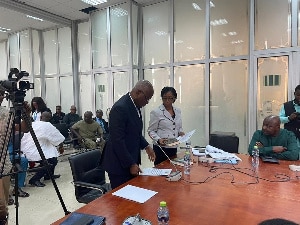
KT Hammond names achievements as Deputy Energy Minister
The minister designate for Trade and Industry has touted one of his biggest achievements as a deputy energy minister between the year 2001 to 2007.
According to him, his personal work was what led to the discovery of oil in the country by Tullow Oil and Kosmos Energy in the western region of Ghana.
His response comes after the minority chief whip asked what his achievements were after he served as deputy minister from 2001 to 2007, when he appeared before the committee for vetting.
“…it was through the administration of J. A. Kufuor under the ministry of energy and myself. My minister at the time was Kan Dapaah. He gave me the portfolio of petroleum. GNPC was literally not in existence, it had collapsed. He gave me that responsibility to make sure GNPC was on its two feet to make sure that they entered into proper exploration and so to develop and make sure we find oil in this country.
“I was mandated to travel all over the world to look for entrepreneurs, companies and to see if they could make sense of our potential. Mr Speaker it was I, KT Hammond, in May 2004 who signed [an] MOU which eventually led to KOSMOS discovering that oil in Ghana. That was the big achievement,” KT Hammond said.
Parliament’s Appointments Committee on Monday, February 20, 2023, started vetting ministers and deputy minister-nominees recently announced by President Nana Addo Dankwa Akufo-Addo.
The nominees to appear before the committee include Member of Parliament (MP) for Adansi Asokwa, K.T. Hammond, the Minister-designate for Trade and Industry and the MP for Nhyiaeso, Stephen Amoah (Sticka) who would be serving as his deputy.
MP for Abetifi, Bryan Acheampong was also nominated as the Minister for Food and Agriculture while Stephen Asamoah Boateng is going to the Chieftaincy and Religious Affairs Ministry as minister.
Karaga MP, Mohammed Amin Adam, was named by the president as Minister of State at the Finance Ministry while Herbert Krapah was nominated deputy Minister for Energy.
Source: Ghanaweb
-
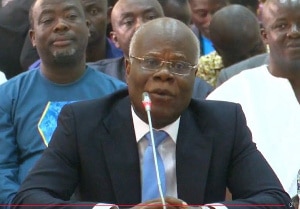
KT Hammond tells Appointments Committee to be of best behaviour
The presidential nominee for minister trade and industry, has urged the Appointments Committee of Parliament to be mindful of putting up good conducts throughout the vetting process.
Taking his seat before the committee, KT Hammond, who has been referred to as the class prefect of parliament, enforced his position, informing the chairman, Joseph Osei Owusu, of same.
“Mr. Chairman, … you introduced me as class prefect, I expect members to put up their best behavior, I will put up my very best behavior and then we will move. I’m the class prefect in the chair and I will remain class prefect, you should be well behaved,” he said.
In response, the Chairman of the Appointments Committee, who is also the First Deputy Speaker of Parliament, Joseph Osei-Owusu, reiterated the nominee’s rather controversial nature, while stating that his comment may not come as a surprise to the public and committee members.
“I think the members of the public know you and so it shouldn’t be surprising that you expect us to put up our best behavior,” he replied.
KT Hammond has been nominated for the trade and industry ministry, while Stephen Amoah has been nominated as his deputy.
Other nominees expected to appear before the committee are Bryan Acheampong as minister-designate for food and agriculture; while Stephen Asamoah Boateng has been nominated for the Ministry of Chieftaincy and Religious Affairs.
Source: Ghanaweb
-
Ghanaians who don’t like people’s progress should be happy I’m broke – Kofi Amoabeng
Founder of the now-defunct UT Bank, Captain (rtd) Prince Kofi Amoabeng, has claimed that he is now poor, despite not being in need.
Speaking in a GTV interview on Friday, February 17, 2023, which was monitored by GhanaWeb, Kofi Amoabeng said that a lot of people think that he is still rich despite the fact that his bank collapsed some years ago.
He added that he lost all of his capital when the government shut down his bank, but he is able to get what to live on now.
“I don’t have wealth, I’m broke and Ghanaians should be happy, those who don’t like people who progress. It doesn’t make a difference because when I was whatever I was… I wore one shoe; I had one watch –this same watch. Now I still wear the same one shoe and one watch, so for me, it makes no difference.
“But Ghanaians tend to think I’ve got some wealth stashed somewhere because they are putting themselves in my shoes; they think if they were like me, if they had owned a bank then they would have a lot of money outside.
“But my wealth was in the bank and in the company; so, while the company and the bank were doing very well, I was worth a lot of money, but the bank went through losses, and so on, and so forth; therefore, my capital went with the bank. I think it’s not difficult to understand,” he said.
Source; Ghanaweb
-
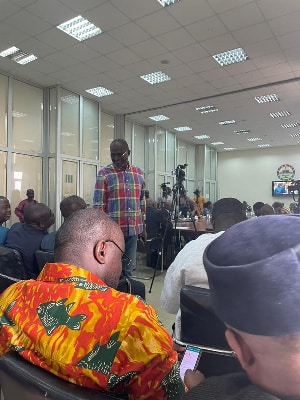
Ken Agyapong supports KT Hammond at vetting
Member of Parliament for Assin Central, Kennedy Agyapong, was sighted with the group that arrived in parliament to support the investigation of Kobina Tahir Hammond.
The Appointments Committee of Parliament is hearing from KT Hammond regarding his nomination by President Nana Addo Dankwa Akufo-Addo to the position of designate Minister of Trade and Industry.
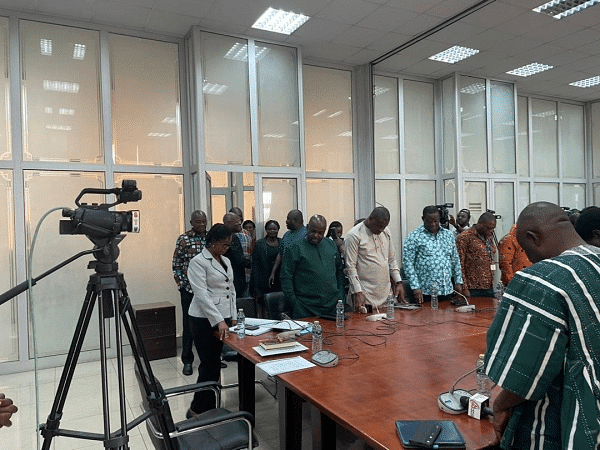
The Assin Central MP can be seen entering the room with the group that had arrived to support the minister-designate in pictures that GhanaWeb took during the vetting.
He was appointed after Alan Kyerematen, who held the position from January 2017 until January 2023, resigned to concentrate on his presidential aspirations.
-
Nigeria Elections 2023: The US embassy warns Nigerian citizens about potential protests
The United States Embassy in Nigeria has alerted its citizens in Nigeria on possible protests and restricted movements on February 25 and March 11.
In a notice on its website, the Embassy advised its nationals to avoid rallies as “they can turn violent with little or no notice”.
The Embassy also advised American citizens in Nigeria to have three days of food and water at home in case movement restrictions are extended beyond election days.
The notice was titled, ‘Security Alert – Possible Protests Leading to Elections and Restricted Movements on Election Days’.
“The Government of Nigeria will restrict the movement of all personal vehicles on election days across the country,” it read in part. “Information from the Government of Nigeria indicates that only law enforcement personnel and Independent National Electoral Commission (INEC)-accredited election observers will be allowed to move freely along the roads.”
“Based on past election practice, we anticipate personal vehicles will be blocked from any and all attempted road movement from 00:00 until 18:00 February 25 and 00:00 until 18:00 March 11.
“Please be advised that movement restrictions may be extended at any time. Be alert to Government of Nigeria information about the restrictions.”
Protests broke out across states in Nigeria amid scarcity of new naira notes and petrol last week. Banks and Automated Teller Machines (ATMs) were vandalised by frustrated Nigerians whose moneys are trapped in the banking system.
Nigerian President Muhammadu Buhari last Thursday banned old N500 and N1,000 notes and extended the validity of old N200 notes till April 10, 2023 but at least 10 governors have approached the Supreme Court to step aside the directive of the President in the case set to hear on February 22.
Source: channelstv.com
-
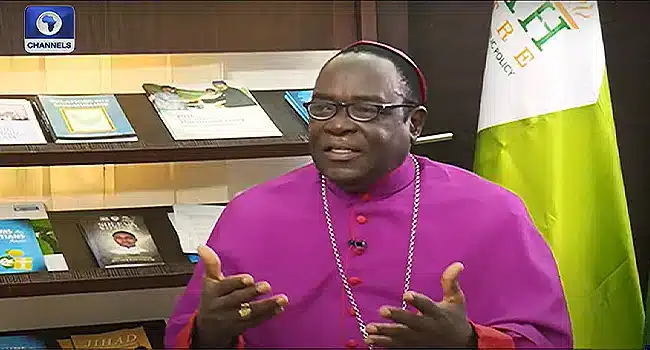
No president in Nigeria’s history came prepared for the job – Kukah
Bishop of the Catholic Diocese of Sokoto, Matthew Hassan-Kukah, has said that in the 62-year history of Nigeria, spanning democratic and military governments, no president or head of state was ready to hit the ground running.
The bishop pondered Nigeria’s need for leadership resulting from individuals taking the time to understand the problems of Nigeria and planning accordingly.
“You can go all the way down in Nigeria, you’re not going to find one single person who has been president or head of state in Nigeria that came prepared for the job,” Kukah said during an appearance on Channels Television’s Roadmap 2023.
Since attaining independence on October 1, 1960, Nigeria has had 16 leaders – eight civilian presidents/prime ministers and eight military heads of state.
The civilian leaders include late Prime Minister Abubakar Tafawa Balewa (1960-1966), and presidents Nnamdi Azikiwe (1963-1966), Shehu Shagari (1979-1983), Ernest Shonekan (Aug.-Nov. 1993), Olusegun Obasanjo (1999-2007), Umaru Yar’Adua (2007-2010), Goodluck Jonathan (2010-2015), and Muhammadu Buhari (2015-date).
Meanwhile, previous military heads of state include Major-General Aguiyi Ironsi (Jan.-Jul. 1966), General Yakubu Gowon (1966-1975), General Murtala Muhammed (1975-1976), and General Olusegun Obasanjo (1976-1979).
Others are Major-General Muhammadu Buhari (1983-1985), General Ibrahim Babangida (1985-1993), General Sani Abacha (1993-1998), and General Abdulsalami Abubakar (1998-1999).
Kukah used the analogy of a bad marriage to explain the relationship between Nigeria and its political leaders.
“I always say to people as a priest that the solution to a bad marriage is not a new marriage. It’s often an attempt to look at what has gone wrong. And if you jump to a new marriage very quickly, after some time, you become nostalgic about the first marriage.
“Metaphorically, you can say the same thing about Nigeria. A lot of these changes that we have seen in Nigeria are largely unprogrammed.”
According to the clergyman, going back as far as the 1960s running through the entire leadership history from prime minister or president to beneficiairies of military coups, there has been no “linearity”.
“There’s been nothing linear,” he explained. “In the sense that military coups by themselves that stretch over a 20-year period were just glorified banditry and armed robbery because you pull the gun and became a head of state.”
Giving a snapshot of Nigeria’s recent political history, Kukah argued that the country has yet to produce an executive head who is prepared for office.
According to the clergyman, going back as far as the 1960s running through the entire leadership history from prime minister or president to beneficiairies of military coups, there has been no “linearity”.
“There’s been nothing linear,” he explained. “In the sense that military coups by themselves that stretch over a 20-year period were just glorified banditry and armed robbery because you pull the gun and became a head of state.”
Giving a snapshot of Nigeria’s recent political history, Kukah argued that the country has yet to produce an executive head who is prepared for office.
Source: channelstv.com
-

These native Africans were the original inhabitants of the Philippines
The Aeta, Agta, or Ayta people are what’s known to be the original Black race who inhabited the remote and mountainous regions of Luzon, the Philippines before the Austronesian migrations of the Malays and Asian group.
While history buffs debate on their timeline on when and how they migrated there, anthropologists and historians estimate that they crossed from the island of Borneo between 20,000 and 30,000 years ago.
The Aeta were called Negritos during Spanish colonial rule. They are comprised of approximately 25 different ethnolinguistic groups, widely scattered throughout the archipelago, totaling an estimated 15,000 people. Negritos are described as people who are dark to very dark brown-skinned with curly to kinky afro-textured hair. Some Aetas reportedly had lighter hair color what we would consider in modern-day as a blonde. Another key feature, according to historians, is their small statures and small frames.
Aeta groups living in northern Luzon were reportedly considered “Pugut” or “Pugot.” The name was given by a llocano-speaker in the region when talking about people with darker complexions. In Ilocano, the word also means “goblin” or “forest spirit.” The Aeta people survived as forest dwellers, hunters, and gatherers for thousands of years.
The Aeta speak Mag-indi, Mag-antsi, Abellen, Ambala, and Mariveleño. They are also known to adopt the language of their neighbors.
Where are the Aeta today?
Over the last few decades, the Aetas have been declining in numbers as their existence has been threatened by outsiders and nature. The Aetas were pushed from the lowlands and are now occupying the “western foothills of Mt. Pinatubo”
The Aeta have suffered racial discrimination and receive little-to-no recognition and support from the government. They have lost much of their ancestral domain to land grabbers, loggers, and mining operations backed by corrupt politicians and officials.
Activists worry that the future is bleak for The Aeta and could be on the verge of disappearing.
Source: travelnoire.com
-
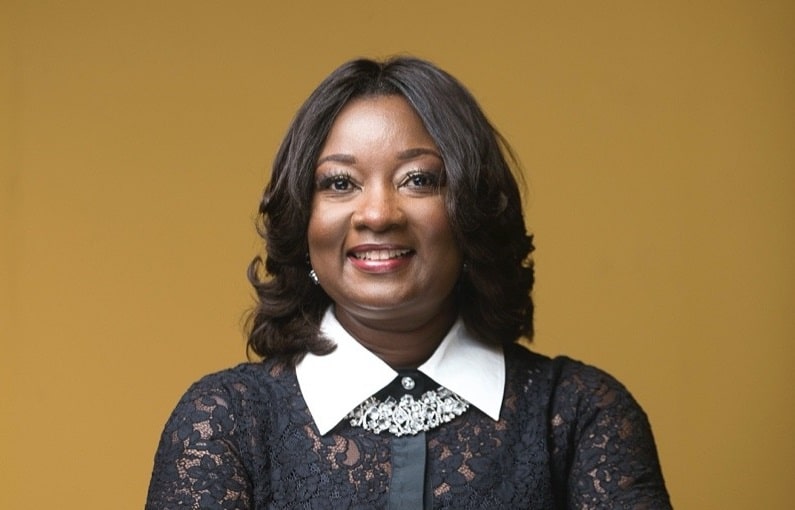
Kenya’s Ecobank appoints Josephine Anan-Ankomah as new MD
Ghanaian banker Josephine Anan-Ankomah has been named managing director of Ecobank Kenya by Ecobank Transnational Incorporated (ETI).
The announcement of her appointment follows the approval from the Central Bank of Kenya.
She replaces Cheikh Travaly who retired at the end of 2022 after attaining the mandatory retirement age of 60 years in accordance with Ecobank Group policy.
By the appointment, Mrs Anan-Ankomah would also serve as the Regional Executive, Central, Eastern and Southern African (CESA).
She will be responsible for leading and growing the Bank’s business in Kenya and the wider CESA region constituting 18 out of 33 Ecobank affiliates and one representative office.
Profile
Josephine Anan-Ankomah is a Fellow of the Association of Chartered Certified Accountants and holds an MBA in Finance and a Bachelor of Arts in Economics and Sociology, both from the University of Ghana.
She has served the Bank for the past 30 years in various capacities until this appointment.
Her career in Ecobank began at Ecobank Ghana in 1992 following her appointment as a Treasury Officer.
She has also held other senior positions within the bank, such as Managing Director for Ecobank Gambia, Regional Treasurer – (Ghana, Liberia, Sierra Leone, Guinea and The Gambia), Chief Operating Officer – (Ecobank West African Monetary Zone/East & Southern Africa), Head of Corporate Strategy and Business Development (Ecobank Ghana) and Head – Investment Banking Group (Ecobank Ghana).
Josephine wields a wealth of experience in treasury management, commercial banking, investment banking and possesses a sharp business acumen that will immensely benefit the Bank.
Source: Graphic.com
-
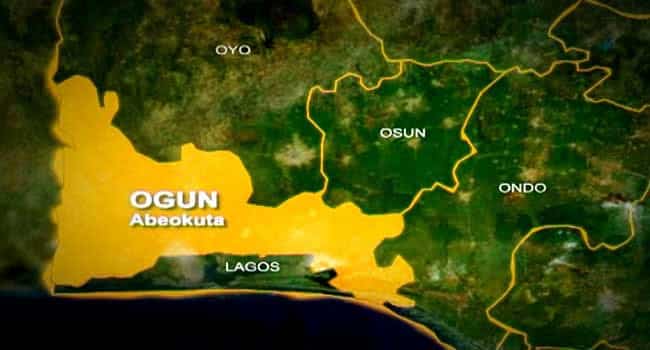
Banks at Ogun set on fire over naira shortage
At least three banks were torched on Monday as protest over scarcity of new naira notes rocked the Sagamu area of Ogun State.
According to the police spokesman in the state, Union Bank, First Bank and Keystone Bank branches were attacked by protesters on Monday.
The police spokesperson in the state, Abimbola Oyeyemi, confirmed the development in a telephone chat with Channels Television.
According to him, Union Bank, First Bank and Keystone Bank branches were attacked by protesters on Monday.
He, however, said policemen have been deployed to the area to quell the situation.
“We are in Sagamu now. The place is seriously burning,” Oyeyemi said. “They attacked Union Bank and First Bank as well as Keystone Bank. We are there right now.”
Similar protests broke out across states in Nigeria amid scarcity of new naira notes and petrol. Banks and Automated Teller Machines (ATMs) were vandalised by aggrieved citizens whose moneys are trapped in the banking system.
President Muhammadu Buhari last Thursday banned old N500 and N1,000 notes and extended the validity of old N200 notes till April 10, 2023 but at least 10 governors have approached the Supreme Court to step aside the directive of the President in the case set to hear on February 22.
The cash crunch and consequent riots come just a few days to the February 25 Presidential and National Assembly elections, spreading fears about the safety of voters on Saturday but the police and other security agencies have assured citizens of maximum safety amid the polls.
Source: channelstv.com
-
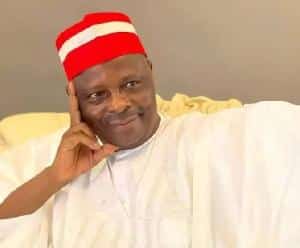
2023 Nigeria Elections: Your loot now completely useless – Kwankwaso mocks APC govs
The presidential candidate of the New Nigerian People Party (NNPP), Senator Rabi’u Musa Kwankwaso has called out the governors and leading members of the All Progressives Congress (APC) for their criticism of President Muhammadu Buhari over naira redesign policy.
Kwankwaso says he was shocked that the APC governors could act in that manner while teasing that their loot has become useless.
“In each state, you have branches of banks and in some states, you have even the national headquarters of those banks. On one hand, we thought they (governors) would take all the billions from government houses and so on.
“But we realised these same governors were abusing their leaders, insulting them; I was shocked. I never thought some of them could abuse Buhari to that level.
“On another hand, I was surprised that facts were coming out and we began to wonder what was wrong with them. Maybe EFCC was right that some governors are keeping billions of naira in their compounds across the country.
“Now the policy has made that looted money completely useless; I think that is why they are angry. So we are so happy with the federal government on that; the money they have collected is completely zero; it has expired.
“And I think all agencies should keep their eyes on that, and I want to assure you that our party is going to assist the federal government, especially on election day. Please tell all members of NNPP to join EFCC, to join the police and other security agencies that wherever they see attempts to buy votes, please stop them,” Kwankwaso said.
Source: Mynigeria.com
-

How to watch all the big films nominated for Oscars and BAFTAs
While the Top Gun, Avatar and Black Panther sequels drew millions to cinemas, there are plenty of this year’s Oscar-nominated films you might not have seen yet – or even have heard of before all the awards season buzz.
Want to know your Everything Everywhere All At Once (Oscars frontrunner, with 11 nominations), from your All Quiet On The Western Front (BAFTAs frontrunner, with 14 nods)? And more importantly, how to watch them?
Here’s our guide to this year’s Oscar and BAFTA nominees – and where you can see them ahead of the ceremonies. Note, some films may be included with streaming packages, others you might have to pay extra to rent, depending on your subscription.
A word-of-mouth and critically acclaimed hit, Everything Everywhere All At Once leads the Oscars race and is the bookies’ favourite to win best picture; stars Michelle Yeoh, Ke Huy Quan, Jamie Lee Curtis and Stephanie Hsu are also up for acting gongs, too.
Directed by Daniel Kwan and Daniel Scheinert, collectively known as Daniels, the film is billed as “a hilarious and big-hearted sci-fi action adventure about an exhausted Chinese-American woman (Yeoh) who can’t seem to finish her taxes”. Oh, and she also discovers parallel universes and has to prevent a powerful being from destroying the multiverse.
Following its release in cinemas Everything Everywhere All At Once is now available to stream on Paramount+, Apple TV, Google Play and Amazon Prime Video.
ALL QUIET ON THE WESTERN FRONT
Image:Pic: Netflix/ Reiner Bajo A German-language film based on the renowned 1929 novel by Erich Maria Remarque, All Quiet On The Western Front leads the BAFTA nominations – equalling Crouching Tiger Hidden Dragon’s record as the most nominated foreign film in the history of the awards – and gained nine nods at the Oscars, too.
It’s a hard watch, telling the story of a young German soldier on the Western Front of the First World War; how the initial euphoria of war turns into desperation and fear as he and his comrades fight for their lives, and each other, in the trenches.
You can watch All Quiet On The Western Front on Netflix.
THE BANSHEES OF INISHERIN

Image:Pic: 20th Century Studios Set on a remote imaginary island off the Irish Coast in the 1920s, The Banshees Of Inisherin reunites In Bruges stars Colin Farrell and Brendan Gleeson and tells a darkly comic story of a friendship gone wrong; Gleeson’s character decides he’s sick to the teeth of his needy friend and doesn’t want to waste any more time chatting to him – and raises the stakes by threatening to chop off a finger every time his dull pal tries to strike up a conversation.
The film has led to huge Irish success so far this awards season, with Farrell, Gleeson and their co-stars Kerry Condon and Barry Keoghan all nominated for Oscars in the acting categories, and Martin McDonagh (also the man behind In Bruges) up for best director.
Following its cinema release in October 2022, The Banshees of Inisherin is now available to stream on Disney+, Amazon Prime Video, and Hulu.
Read more: Farrell and Gleeson on their reunion
TOP GUN: MAVERICK

Image:Pic: Paramount Pictures/ Scott Garfield A box office smash that fans had been waiting for for more than 35 years, the Top Gun sequel was one of a host of blockbusters (more below) that saw the big-hitters returning to the Academy Awards. Nominated for best picture, while it’s unlikely to take the top prize, it’s nice to see a bit more fun injected into awards season.
Of course, the sequel sees Tom Cruise return as Captain Pete “Maverick” Mitchell, back to train newbies to be as brilliant in the skies as he is. Treading a delicate balance between old and new, there are plenty of throwbacks to please fans of the original.
No doubt the big Top Gun fans will have seen it already at the cinema, but for those who haven’t, you can catch it on Sky from 5 February, as well as on Apple TV and Amazon Prime Video.
Read our review: Aviators, love interests and oiled-up bodies – get ready for a walk down memory lane
ELVIS

Image:Pic: Warner Bros Following Bohemian Rhapsody and Rocketman, it was only a matter of time before we got a new Elvis biopic. The 2022 film stars Austin Butler in the titular role, and tells the music icon’s story from childhood to music and movie star in the 1950s, and his complex relationship with his manager, Colonel Tom Parker (played by Tom Hanks).
Written and directed by Baz Luhrmann, it’s in the running for eight Oscars, including best actor and best picture, while Mandy Walker is the only woman nominated for cinematography.
Elvis is available on Sky, Amazon Prime Video, Apple TV, Google Play and Hulu.
TAR

Image:Pic: Florian Hoffmeister/Focus Features Cate Blanchett stars as the fictional renowned conductor Lydia Tar, who is days away from recording the symphony that will elevate her career.
She’s favourite to win best actress – and if Oscars are given out based on hard work, after learning to play piano on screen, speak fluent German and how to lead a live orchestra, she probably deserves it. If she wins, she can add it to the two Oscars she has already – for Blue Jasmine and The Aviator.
Tar is available to rent on Amazon Prime Video and Apple TV.
Read more: Blanchett on her ‘once in a career moment’
THE FABELMANS
Image:Pic: Universal Pictures As arguably the most famous director in the world, Steven Spielberg’s cultural impact is unmatched – from Jaws and ET to war epics Schindler’s List and Saving Private Ryan, his films have imprinted on generation after generation for decades.
However, his latest film, The Fabelmans, is something a little different; a semi-autobiographical story loosely based on his childhood. As well as being a family drama, it portrays the anti-semitic abuse the young Spielberg faced.
The Fabelmans is available to rent or buy on Prime Video and Apple TV.
AVATAR: THE WAY OF WATER

Image:Pic: 20th Century Studios James Cameron’s mega-budget Avatar sequel opened in cinemas in December, 13 years after the original had us all reaching for our 3D glasses.
The film sees Sam Worthington returning to the role of Na’vi leader Jake Sully and is rooted around the family he now has with warrior Neytiri, played by Zoe Saldana, and the battles they face to keep each other safe. Sigourney Weaver and Kate Winslet also star.
No date has been given yet, but Avatar: The Way of Water will be available to stream on Disney+ following its cinema release.
TRIANGLE OF SADNESS

Image:Pic: Lionsgate A Cannes Palme d’Or-winning satire from Swedish director Ruben Ostlund, Triangle Of Sadness scored three big Oscar nominations, for best picture, best director and best original screenplay.
Targeting the filthy rich, it follows a set of luxury cruise passengers with not a redeeming feature between them. However, they soon find their status undermined by unexpected events.
You can watch Triangle Of Sadness on Amazon Prime Video and Google Play.
WOMEN TALKING
Image:Pic: Orion Pictures/ Michael Gibson Based on the novel by Miriam Toews, Women Talking tells the story of a group of women in an isolated religious community as they grapple with reconciling their reality with their faith.
Starring Rooney Mara, Claire Foy, Jessie Buckley and Judith Ivey, with Ben Whishaw and Frances McDormand, it has a strong cast but was an outsider for the Oscars this year.
Nominated for best picture, it is the only film in the category directed by a woman, Sarah Polley – and even she didn’t expect to hear its title called out, tweeting from an unusual location as she found out the good news: “Expectations were low for today. Here I am at a routine doctor’s appointment. I really didn’t plan this day right.”
Women Talking is released in cinemas on 17 February, with previews from 10 February.
AFTERSUN
Image:Pic: MUBI A coming-of-age drama, Aftersun is set in the 1990s and centres on a father-daughter duo, played by Paul Mescal and newcomer Frankie Corio, as they spend a summer holiday away at an all-inclusive resort in Turkey. Although Mescal’s character Calum is seen laughing with his daughter when swimming in the sea or singing karaoke, in private moments we see his struggles with his mental health.
The film is a directorial debut from Charlotte Wells and is based on her own childhood experiences. While it isn’t up for best picture, Mescal’s heavily praised performance has earned him a nomination for best actor; not bad considering his Normal People breakthrough role came less than three years ago.
Following a cinema release in November, you can now watch Aftersun on the streaming service MUBI, Amazon Prime Video, and Apple TV.
THE WHALE

Image:Pic: A24 Enjoying a so-called “Brenaissance”, Brendan Fraser – known for leading action films including The Mummy trilogy – is firmly back in the spotlight after a pause in his career, with his performance in The Whale earning him standing ovations at film festivals.
Fraser plays an extremely obese man trying to reconnect with his daughter and struggling with his mental health, and he is now the favourite to win best actor at the Oscars in March.
You can watch The Whale in cinemas from 3 February.
BLACK PANTHER: WAKANDA FOREVER
Image:Pic: Marvel Studios Despite missing out on joining fellow sequels Avatar and Top Gun with an Oscars nod for best film, Marvel’s Black Panther: Wakanda Forever did score a nomination for Angela Bassett, who is up for best supporting actress.
The film is a moving tribute to the late Chadwick Boseman, who played T’Challa, the Black Panther in the original film; a story of loss, grief and dealing with bereavement, with lots of action and some surprises along the way.
Not only does Bassett’s nomination mark the cinematic universe’s first acting nod, but she is also favourite to win.
You can watch Black Panther: Wakanda Forever on Disney+ from 1 February.
LIVING
Image:Pic: Sony Pictures Starring British veteran Bill Nighy and Sex Education star Aimee Lou Wood, Living is written by Kazuo Ishiguro and based on a remake of the 1952 Japanese film Ikiru. It tells the story of Mr Williams, an elderly bureaucrat who is diagnosed with an incurable illness, so decides he must start living his life to the fullest.
Nighy, perhaps destined to always be known for his fabulous turn as a washed-up rocker making a comeback in Love Actually, has been praised for his understated performance, which earns him his first Oscar nomination.
Living is available on Sky, Amazon Prime Video, Apple TV and Google Play.
CAUSEWAY

Image:Pic: Apple TV+ Jennifer Lawrence stars as a soldier struggling to adjust back home in New Orleans after suffering a traumatic injury while fighting in Afghanistan. The film follows her character Lynsey as she adapts once again to civilian life, and forges an unexpected bond with local mechanic James, played by Brian Tyree Henry.
It’s one that could have slipped under the radar but has been brought into the limelight thanks to a nod for Henry in the Oscars’ best supporting actor category.
You can watch Causeway on Apple TV+.
BLONDE

Image:Pic: Netflix Ana de Armas has received nominations for several prizes for her portrayal of Marilyn Monroe in Blonde, including best actress at the Oscars and BAFTAs.
The film itself, however, hasn’t been so well received; it leads the nominations at this year’s Razzies, or Golden Raspberry Awards, which celebrate cinematic under-achievements and are billed as the “ugly cousin” of the Academy Awards. And despite praise for her performance, the film has polarised critics.
Watch Blonde on Netflix and Amazon Prime Video.
TO LESLIE

Image:Pic: Momentum Pictures British actress Andrea Riseborough caused a bit of a stir with her first Academy Award nomination; she is in the running for best actress thanks to her performance in To Leslie, an independent drama inspired by true events. The film sees the Made In Dagenham actress playing a single mother who turns to alcoholism after winning the lottery, before turning her life around when a motel owner offers her a job.
In the run-up to the Oscar nominations, the film had received no nods at the Golden Globes, the Critics’ Choice awards or the BAFTAs – but broke through with the Academy seemingly in no small part thanks to a campaign by some of the most prominent names in Hollywood.
Indeed, fellow nominee Blanchett used the opening minute of her Critics’ Choice speech to single out Riseborough, describing her performance as overlooked, while fellow Hollywood stars including (deep breath) Kate Winslet, Amy Adams, Gwyneth Paltrow, Edward Norton, Charlize Theron, Jennifer Aniston, Zooey Deschanel and Helen Hunt have also raved about it.
To Leslie is available on Amazon Prime Video and Google Play.
EMPIRE OF LIGHT

Image:Pic: Parisa Taghizadeh/Searchlight Pictures/20th Century Studios Set around a cinema in the 1980s, Sam Mendes’s Empire Of Light is a celebration of the big screen and also one of the most personal films the director has ever made. The film sees former Oscar winner Olivia Colman playing a woman struggling with mental health issues, a character based on the celebrated filmmaker’s own mother.
The drama is a love letter to cinema itself, and a timely reminder of the beauty of the big screen experience following the COVID pandemic.
The film is nominated for best cinematography at the Oscars, while at the BAFTAs it is up for outstanding British film and best supporting actor for Micheal Ward, as well as cinematography.
Following its run in cinemas, Empire Of Light is expected to be available on Disney+ some time in February.
BABYLON

Image:Pic: Scott Garfield/Paramount Pictures Oscar-winning La La Land filmmaker Damien Chazelle takes both recollection and rumour as his inspiration for Babylon, and the outrageous excess and rampant debauchery that supposedly went on behind the scenes in Hollywood in the 1920s.
The film stars Margot Robbie, Brad Pitt and newcomer Diego Calva in a three-hour story about filmmaking. It earned three Oscar nominations – for costume, original score and production design – but hopes were perhaps a bit higher given it’s a lavish, big-budget affair (although it hasn’t done particularly well at the box office, either).
If you want to see it on the big screen, Babylon is in cinemas now.
Read more: Margot Robbie says ‘liberating’ Hollywood of the 1920s ‘had no rules’
GLASS ONION: A KNIVES OUT MYSTERY
Image:Pic: Netflix Such was the success of the 2019 whodunnit hit Knives Out that Netflix picked up the franchise, reportedly paying £375m for Glass Onion and one more sequel. This time round, the ensemble cast is even more starry – featuring Kate Hudson, Edward Norton and Janelle Monae joining Daniel Craig for his return as Detective Benoit Blanc.
This time, it’s celebrities and influencers who are under suspicion, with the film taking a satirical look at the decadence of the very modern rich and famous.
Glass Onion: A Knives Out Mystery is nominated for best adapted screenplay at the Oscars, and you can watch it – and the first film – on Netflix.
THE BATMAN
Image:Pic: Jonathan Olley/DC Comics/Warner Bros Following a long wait for The Batman to launch in cinemas, its release date pushed back twice because of COVID production delays, it finally arrived in 2022; Robert Pattinson following in the footsteps of stars including Christian Bale, Ben Affleck, Michael Keaton and George Clooney to play the Caped Crusader on the big screen.
Another box office hit drawing people back to cinemas, it is now Oscar-nominated for best sound, best make-up and hairstyling, and best visual effects.
You can watch The Batman on Sky, Apple TV and Amazon Prime Video.
GOOD LUCK TO YOU, LEO GRANDE

Image:Pic: Lionsgate/ Nick Wall Not an Oscars contender but a hit with the BAFTA panel, Good Luck To You, Leo Grande is up for the awards for outstanding British film and outstanding debut by a British writer, director or producer at the BAFTAs, as well as acting gongs for stars Emma Thompson and Daryl McCormack.
McCormack, who plays a male sex worker hired by Thompson’s retired teacher, is also in the running for the rising star trophy.
Good Luck To You, Leo Grande is available on Sky and Amazon Prime Video in the UK.
THE WOMAN KING
Image:Pic: Sony Pictures Snubbed by the Oscars, The Woman King has at least been recognised at the BAFTAs, with star Viola Davis earning a best actress nomination, and Gina Prince-Bythewood in the running for best director.
The film tells the true story of a fierce group of female warriors who protected a West African Kingdom in the 1800s, with Davis starring. She has referred to The Woman King as her magnum opus, aiming to prove to the industry that films about black women can attract cinema audiences.
You can pre-order The Woman King on Sky and watch on Amazon Prime Video from 30 January.
TILL
Image:Pic: Lynsey Weatherspoon/Orion Pictures Till is biographical film based on the true story of Mamie Till-Bradley, who pursued justice after the racist murder of her 14-year-old son Emmett Till in 1955 – for which star Danielle Deadwyler has been universally praised for her performance.
Despite this, it didn’t receive any Oscar nominations, but Deadwyler is recognised in the leading actress category at the BAFTAs.
You can watch Till in cinemas now.
Watch the Oscars exclusively on Sky Showcase on Sunday 12 March from midnight. Sky News will be live on the red carpet at the ceremony in Hollywood on Sunday 12 and live with the winners at the Vanity Fair party on Breakfast with Kay Burley, on Monday 13 March
Source: Skynews
-

Majority of American girls have Ghanaian sugar daddys – Alani Nicole alleges
Renowned media figure in the United States named Alani Nicole, has alleged that several American slay queens have Ghanaian sugar daddies.
She made this revelation during an appearance on the Breakfast Club.
She made this revelation whilst reacting to the news that Girls Trip 2 would be shot in Ghana.
“Girls always say the guys over there (Ghana) spend a lot…let me tell you something, you’re not girls so you don’t know what’s going on out there. Usually, a lot of girls I talk to, not all but a lot have an African sponsor…it might not be the person that is out and all about but somewhere in their roster, there’s an African sponsor,” Lala alleged.
The actress made this revelation on ‘The Breakfast Club’ hosted by DJ Envy and Charlamagne tha God while sharing her thoughts on the popular movie ‘Girls Trip’ sequel taking place in West Africa, Ghana.
Girls Trip 2 will feature the original casts-Regina Hall, Queen Latifah, Jada Pinkett Smith, and Tiffany Haddish.Source: Myinfo.com
-
Sonnie Badu warns bloggers against sharing Christian Atsu’s corpse
Gospel musician and man of God on a crusade against pork, Sonnie Badu, has issued a stern warning to Ghanaian bloggers sharing a popular image of Christian Atsu’s corpse.
Badu bluntly said anyone who circulates the photo would one day face a similarly stunning demise!
He said people should be sensitive to the fact that Atsu has a family, a wife, kids and other relatives who might not want to see that circulating online.
After 12 days under the rubble of the earthquake that devastated Turkey, former Ghana star Christian Atsu was found earlier today.
Atsu had sadly passed away.
Hours later, a photo surfaced online appearing to show Atsu resting by a building which appears to have crushed him.
The video went viral online, leading Badu to come out with a stern warning.
Source: Myinfo.com
-
It’s very difficult getting artistes to perform at events for free – Baba Sadiq
A successful music and media entrepreneur, Abdullai Abu Sadiq, often known as Baba Sadiq, has lamented the ignorance of some musicians on the necessity of giving free performances at specific events.
Speaking in Joy Entertainment’s Twitter spaces conversation on Friday, February 17, 2023, Baba Sadiq said some events are non-commercial and require that artistes billed to perform cooperate with the event organisers on monetary terms.
The co-founder of the 3Music Awards added that it was usually difficult engaging artistes to perform for free.
“It is very difficult [getting and an artiste to perform for free] unless you have the relationship, first and for most, and like I said, [it] depends on the situation,” he said.
He advised that artistes should look beyond physical payments and also think about the value the platforms will give them.
According to Sadiq, after 3Music Awards curated the ‘rain performance’ for Black Sherif’s ‘Kwaku the Traveller’ in 2022, a lot of artistes approached him to lobby for such opportunities in future because they saw how that concept impacted Black Sherif’s burgeoning career.
He, however, noted that the agenda of Ghana’s music industry has always been about enabling artistes and not event organisers, a situation he believes does not augur well for the entertainment ecosystem.
Baba bemoaned how most corporate institutions have stopped sponsoring events.
“…the market has broken. The sponsorship market has crashed. Nobody is getting the sponsorship from the sponsorship market anymore. The investment to produce these shows is not even happening anymore. These talents of when they produce their own shows are running at losses,” he stated.
His comment comes on the back of the discussion on encouraging ‘no fee for performance’ policy for some events in Ghana.
The discussion was premised on a similar policy that obtains in other foreign events such as the Grammy Awards, Super Bowl Halftime Show, Global Citizen Festival, among others.
Source: Myjoyonline.com
-

DR Congo: Women in street protest call on M23 rebels to leave their city
Hundreds of displaced women in Goma called for the departure of the rebel group M23 on Friday and an end to the violence in Eastern Congo. The women said they’re suffering from hunger and their children have been unable to attend school.
With babies on their back, they chanted slogans and carried signs demanding justice and peace. “M23 makes us suffer. We are hungry, even our husbands have been killed,” said Kasikiti Asuta, 42, displaced mother of four children.
The conflict in eastern Congo has gone on for decades, with more than 100 armed groups fighting for control of valuable mineral resources while others protect their communities, and has triggered an exodus of refugees.
The demonstration took place while the East African Heads of State were meeting in Addis Ababa at a special summit to discuss the security issue in eastern DRC. The day before the protest, the Congolese army clashed with M23 rebels a few kilometres from the Goma.
Thursday evening, the Congolese army denounced the attack against its positions by the M23, in violation of the ceasefire as recommended by the East African Heads of State, at a recent Burundi Summit.
Earlier in December, the United Nations accused the rebels of being responsible for massacring more than 130 civilians in two villages.
Source: African News
-

Woman in New Jersey flees man who allegedly held her against her will for nearly a year, authorities say
James Parrillo Jr has been charged with kidnapping, strangulation and aggravated assault, and criminal restraint, officials told NBC News.
A man in the US is accused of holding a woman against her will for nearly a year before she escaped and asked for help at a petrol station.
The woman ran to the store in New Jersey on 7 February where she alleged she had been kidnapped, the state attorney general’s office said.
Security footage showed the woman running into the petrol station and locking the door, with a man following her.
James Parrillo Jr has since been charged with kidnapping, strangulation and aggravated assault, and criminal restraint, officials told NBC News.
The 57-year-old is being held in custody awaiting trial, the broadcaster said.
Image:James Parrillo Jr is awaiting trial, NBC News reported Attorney General Matthew Platkin said: “This is a deeply disturbing case in which the defendant allegedly held a woman against her will for nearly a year, while travelling with her throughout the country, before ending up here in New Jersey where she was able to escape.”
The woman – whose identity has not been revealed – told police that she and Parrillo Jr met at a petrol station in New Mexico in February last year, when he asked her for a ride to Arizona.
They initially were in a relationship but Parrillo allegedly assaulted her a month later in California, and she felt unable to leave, the attorney general’s office said.
Parrillo took the woman’s phone and credit and debit cards, kept her from her family, and held her against her will, it is claimed.
Advertisement
She fled the home where they lived in Burlington County on 7 February after she was allegedly choked and assaulted.
The woman had marks on her neck, according to a New Jersey State Police statement filed in court.
According to the statement, the woman said she had been held against her will for a year and that Parrillo had been refusing to allow her to contact her family.
Jamie Garthaus, who works at the petrol station that the woman entered, told NBC: “The lady came running, like barefoot, and she was like, ‘he kidnapped me’.
“So we ran inside and locked the door.”
A lawyer representing Parrillo could not immediately be reached for comment, NBC News said.
Source: SkyNews
-

9 Nigerian men share why they regret getting married
African American couple having relationship difficulties at home.
Marriage is a big deal, no doubt. A few months ago, we spoke to a few Nigerian women who regret making the decision to commit their lives to one partner.
We spoke with a few Nigerian men about the same issue. Here’s what they had to say.
1. Zayn
I didn’t envisage that getting married would have me spending this much money. I’ve been married for over four years now, and from my ₦720k salary, I spend over ₦100k every single week taking care of both my nuclear family and my wife’s nuclear family. I can’t even begin to tell you how unhappy all of that makes me.
2. David
I’ve been married for less than two years, but I’m constantly looking for ways out of this marriage. My wife is never happy with me. We never even have any meaningful conversations unless I’m about to do something for her.
I’ve tried coping with the lack of affection for almost two years now, but it doesn’t seem to be ending any time soon. It also doesn’t help that she exhibits extremely poor physical hygiene; that makes it two things I’m struggling to cope with. If I had my way out of the marriage this minute, I’d take that chance.
3. Korede
I hate my wife. She makes me want to throw up. I hate how her vagina feels and I hate that she even looks at me. The only thing I like about our union is the kids. They look like me. Before we got married, she used to treat me like shit, but I assumed that after we got married, everything would change.
She was beautiful, so I just thought it’s that thing beautiful women do. The biggest mistake of my life was marrying her because she perceived the fact that I stuck with her, even when she treated me like shit, as desperation. Now, I want to step out one day and just disappear forever and start a new life, but I can’t do it because I don’t want to lose my kids. So, I guess I’m staying.
4. Chinedu
I got married at 27, but I feel like I was not thinking about myself and my future when I did it. I got married because it seemed like the right thing to do after being with my high school sweetheart for almost 10 years.
Now that we live together, everything appears normal but deep down there are so many character traits she has that I wish I could change. Maybe those character traits are not enough ground for a divorce, but they’re enough to reassess the whole essence of our marriage.
Another thing that makes me regret getting married is money. I’d totally be a baller if I had all my income to myself. But I have to share. At the end of the day though, my kids make it all worth it.
5. Mo
My wife and I have been separated for almost two years now. We dated for about five years before we got married, and at the beginning of our marriage, things went pretty well. When we started having our normal couple fights, I thought things were going to blow over, but they only got worse. The major source of my wife’s issues is her mum. My wife doesn’t have friends; the only person she’s close with is her mum. Her mum started giving her all sorts of terrible advice that only made things worse. The quarrels continued and then she started sleeping around.
Recently, she made me pay for couple’s counselling just so we can get things working for our child. Shortly before we were meant to have our first counselling session, I found out she was hopping around hotels in Lagos with a man married with three kids. I even foolishly called the guy and told him to back off my family. On the morning of our counselling session, I was at her house as early as 6:50 a.m. to pick her up. The other guy was there too. I lost my cool, and we somehow ended up at a police station where I had to sign an undertaking not to move near her or our child again — a restraining order. I can’t wrap my head around the fact that I can’t see my child. In all of this, her mum champions her on and fully and openly supports everything she does, even the sleeping around.
Before all of this, I tried to get her a car. We went to a car dealership together and I told her to pick a car but she said she wanted the cash equivalent of whatever car she picked. But it’s not as if she had any plans to stay. She was just trying to extort me.
The only thing that keeps me going is the fact that I have a child with her.
6. T
I’m 33 now. I got married at 27 and I regret getting married so young. If I could go back, I would hold off getting married till I turn 40. When I see my friends linking up with babes, but I’m here stuck with the Mrs, it can be quite depressing. If your wife genuinely loves you, it’s nice having someone waiting for you at home. But the major thing that makes marriage tolerable is feeling the unconditional love your children have for you. Nothing beats that.
Other than that, maintaining a home and doing stuff like paying kids’ school fees are very expensive. I can’t put myself first or buy stuff for myself.
7. James
I got married to the spawn of Satan in my late 20’s. I’m in my late 40’s now. At the beginning of our marriage, she was good. The first time she ever abused me, it was with a wooden eba turner on my balls while I was asleep. I could not hit her back because I didn’t want to lose the job her father got for me. He was an influential man. I remember when I pushed her back one day and she cut her face with a knife and lied to everyone that I did it. No one believed my side of the story The physical abuse got worse over time. I used to go to work with scars under my shirt, and I remember that one day, my shirt showed that I was bleeding under.
Long story short, I left her and ran away to Cyprus. Nobody knew I was leaving except my brother — I’m an orphan — so it was easy to leave without anyone worrying. I’m still single and although I’m seeing someone, things are not that serious, and I don’t think I’ll ever get married again. I’m just lucky she didn’t kill me.
8. Sammy
My wife has a hard time with intimacy. It’s easier to masturbate in the shower than to cuddle with her. I have found myself thinking about having an affair, so that I will be less of a burden of intimacy to her. I think it’s her self-image; she’s overweight. I have dated women with all sorts of bodies and a woman’s body type doesn’t really matter to me. It matters to her. She tried to work on her weight but stopped since she developed some life-threatening health problems. I feel like she’s more of an observer than a participant in our lives. She doesn’t like to talk, but her body language is loud to me. I don’t think she realizes that. I thought she was passive aggressive, but now I realize that she is just afraid of making mistakes.
I really like sex, and it was nice with her in the past but when her weight-related problems- like joint issues- started, it became boring. I had to start thinking of experiences with past lovers or porn scenes when we had sex just so I could finish. In my past relationships, I’ve enjoyed role-playing, Japanese bondage, laughter, and interesting conversations, so this one is very anticlimatic for me.
With my wife, she always has something else to do, or she thinks I’m wasting her time. I’ve gone from making love for three hours straight to being with someone that doesn’t even want to try different things. And it’s not about me, she’s the one that’s not opening up. She’s the one being passive and uninterested. Sometimes, I even wonder if she’s considering having an affair too because she’s not enjoying our sex life. If we get a divorce, it will destroy me.
9. Dayo
I got married in my mid-20s primarily because I had a number of very problematic ideas in my head — ideas that were basically implanted by my dad, who was my biggest model for what being a successful man looked like. Idea 1 – A “good,” “responsible” man has no need to be single once he is financially stable, and the next logical step after achieving career stability is to get married and start a family. This idea worked well in the 1970s when he was a young professional living through Nigeria’s oil boom. In the 21st century? Not so much, as I found out.
Idea 2: When you find a “good” girl, don’t let her go. This idea was further complicated by the Umar Johnson/Hotep ideology I used to subscribe to, which basically held that the best and most important thing a black man can do in an anti-Black world is take care of a Black woman and be part of a cohesive Black family unit. In reality, as I found out, that ideology works for societies where being “Black” means something. In Nigeria/Africa where everyone is Black, there’s a good chance the person you’re marrying has no clue that they are “Black” or why you place a premium on these fancy IJGB ideologies of yours. And of course, there is no such thing as a “good” girl as I found out when I stumbled across a text from some guy telling her she forgot her panties and bra at his place.
Idea 3 – Cinderella stories are a real thing. This was not an idea I held consciously but based on observing my dad, whose marriage was the ultimate Cinderella fairytale, elevating an 18-year-old woman from Surulere into a mistress of the manor almost overnight, I subconsciously believed in the sheer romance of it all. In reality, as I discovered, dating outside of your socioeconomic neighbourhood is A LOT OF WORK. No matter how much money and effort went into convincing her that I was crazy about her before and during the marriage, she was never able to let go of the nagging suspicion that I secretly looked down on her and on her family, whose lives were quite literally transformed through my involvement. It also didn’t help that my mom was openly nasty to her in a very Patience Ozokwor type of way. In the end, she was never able to get over that basic insecurity and she ended up using things like sex as her leverage to fight the imaginary power tussle happening inside her head. When it came to an end and I got to hear what her mom really thought about me, I learned that the biggest omission in the Cinderella tale is that people will literally resent you for changing their lives because humans hate feeling indebted, and your presence in their life is a reminder of bad times. Cinderella is a lie.
It wasn’t until 3 years in that I finally summoned the courage to admit to myself that I was miserable and I didn’t want to be there anymore. From that point until when I informed her and both families about my decision was only a short hop and skip. The biggest roadblock was always in my head because of Idea 4: The idea that marriage is a lifelong unbreakable contract. Again a legacy of my dad’s ghost living rent-free in my head. My parents were excellent providers and by Nigerian standards, a low drama couple. Their relationship, however, to those in the know, was utterly dreadful. They didn’t even sleep in the same room, and yet the question of splitting up never arose. I admired the sheer commitment and iron will I saw in my dad for refusing to choose himself day after day, for over 3 decades. Thus I had also unwittingly convinced myself that no matter what, I had to stick it out. It also didn’t help that the decision to marry her was not at all received well by my parents who considered her to be a social-climbing interloper. So I was getting grief from them and from her at the same time, but I figured it was a “man” thing to suck it up and keep it moving. This changed when I watched my dad die and saw his casket being lowered into the ground. I suddenly realised that at the end of everything, his corpse didn’t get a medal for wasting most of his life in a joyless and destructive relationship. His death was my vaccine.
Overall, what I would tell young men looking to get married is that there is no medal for being married — whatever joy or misery awaits you in there is nobody’s business but yours alone. Even your family doesn’t really care. So never get married for any other reason other than because you genuinely want to. And just as important, make sure you marry someone who LIKES you. Not someone who likes how you make them feel or the things you do for them and their family. Marry your FRIEND — someone who enjoys the simple fact of your existence on this planet, and not someone who merely loves the ‘idea’ of being with you. Also, delay having kids as I did! Don’t rush into making a baby with someone you’ve been married to for 3 months. Give it at least 18 months to decide if this is what you actually want. The past 3 years since the split have been by far the happiest and most productive of my life so far.
Source: Zikoko
DISCLAIMER: Independentghana.com will not be liable for any inaccuracies contained in this article. The views expressed in the article are solely those of the author’s, and do not reflect those of The Independent Ghana