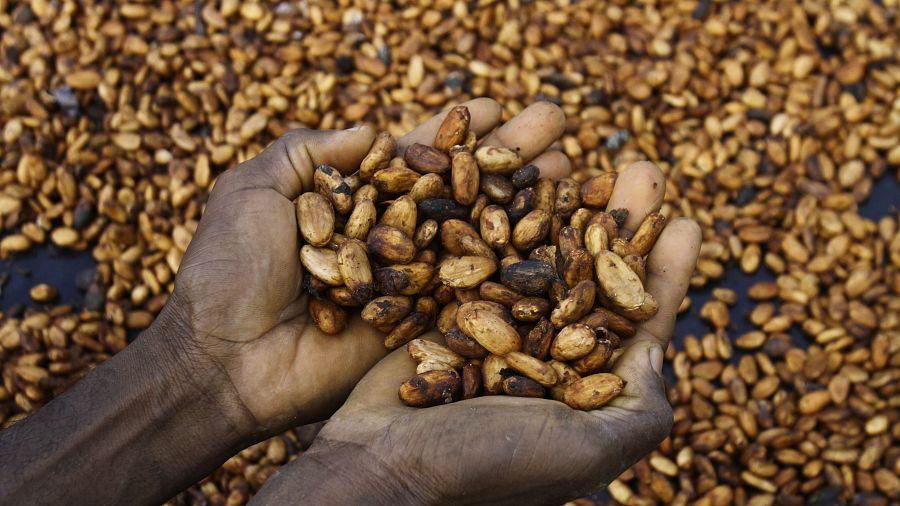
The world’s top cocoa producer may be facing a bean shortage.
News agency Reuters reported Monday (Feb. 13) that Ivory Coast cocoa exporters were close to defaulting on their contracts and urgently needed up to 150,000 tonnes to honour their commitments.
Citing sources including from the domestic traders’ lobby GNI and the group which represents exporting cooperatives, Reuters mentioned a meeting that was hosted Friday by the Cocoa regulator.
Among different options, the Cocoa and Coffee Council allegedly proposed pushing back the loading period for the contracts of struggling exporters to June. So as to enable them to buy beans during the mid-crop harvest.
Last November, the Anouanze cooperative which helps farmers bring their crops to markets sounded the alarm. Saying their small-scale cocoa producers were hurting because of changing rain patterns blamed on the climate crisis.
Cocoa farming employs nearly 600,000 farmers in Ivory Coast, ultimately supporting nearly a quarter of the country’s population, according to the Coffee-Cocoa Council.
Cocoa production accounts for 15% of the nation’s GDP.
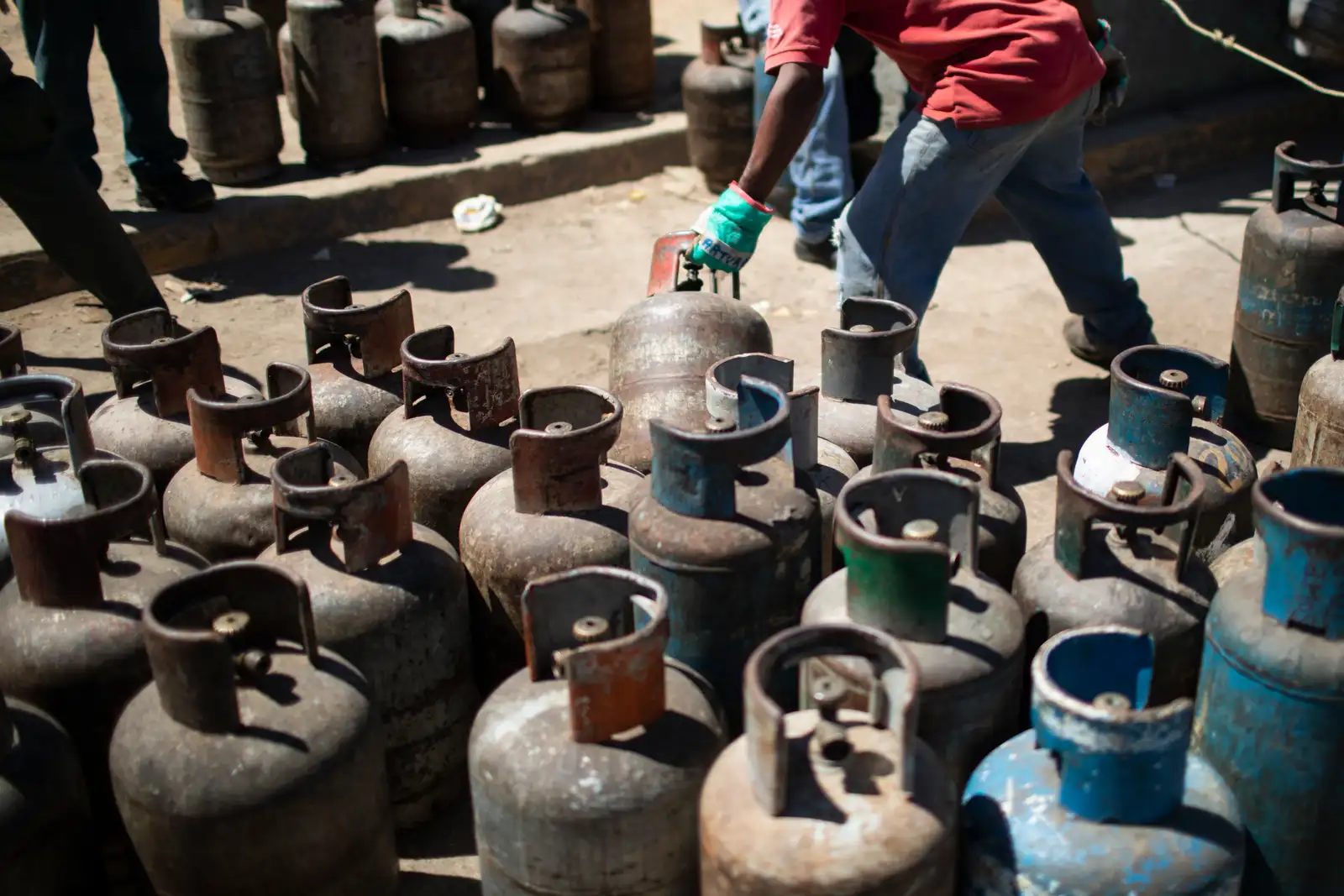
Africa is set to account for the highest rise in the global supply of of gas by 2050, news site Quartz reports, quoting a study by the Gas Exporting Countries Forum (GECF).
The country’s minister of ICT and Innovation, Paula Ingabire, announced that hundreds of schools in Rwanda will be connected next month in a pilot, said .
“We are going to start with at least 500 schools so that at least such internet will be tested, and distributed there,” she said.
It will be a 6% jump from 2021, making the continent second only to the Middle East, the study says.
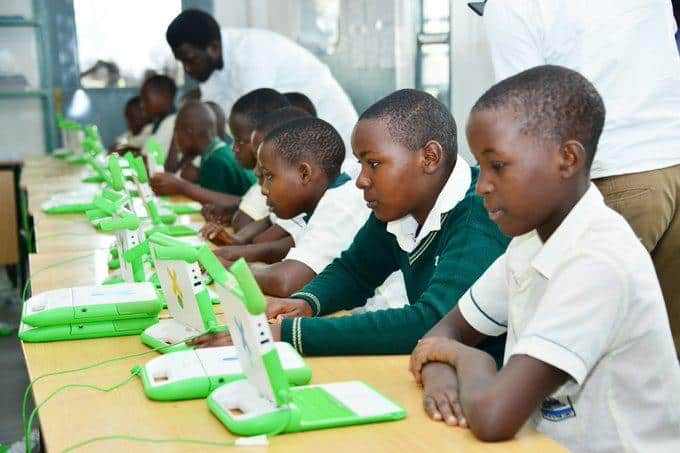
Rwanda will prioritise education institutions in its plan to roll out low-cost internet delivered by Starlink, an internet initiative owned by SpaceX, a company founded by US billionaire Elon Musk, local New Times site reports.
Hundreds of schools in Rwanda will be connected next month in a pilot, said Paula Ingabire, the country’s minister of ICT and innovation.
“We are going to start with at least 500 schools so that at least such internet will be tested, and distributed there,” she said.
Minister of ICT and Innovation, Paula Ingabire: Schools are among #Rwanda-n institutions given priority to benefit from Elon Musk’s high-speed satellite internet, Starlink.
Starlink operates more than 3,000 small satellites in low earth orbit, they can can deliver internet speeds of up to 200 megabits a second (mbps).
Ms Ingabire said Starlink would increase competition amongst internet service providers and estimated that users could pay $44 (£36) a month for speeds of up to 150 mbps.
Rwanda’s internet speed averages to about 52 mpbs, among the fastest on the continent.
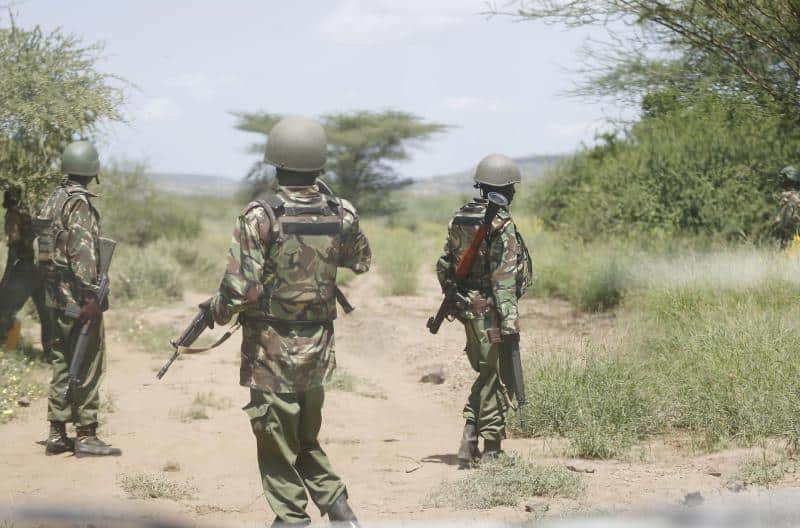
Kenya’s President William Ruto has taken his biggest security decision on the domestic front since taking office about five months ago by ordering the military to join police in tackling bandits and cattle rustlers in a restive northern region.
Attempts by previous administrations to disarm the heavily-armed bandits operating with impunity in Turkana county have failed.
The recent killing of 16 police officers by the bandits proves how challenging the operation will be.
At the centre of the attacks is the lucrative meat trade. Locals rely on it for their livelihood.
Thousands of cattle are stolen every month and driven hundreds of kilometres away for slaughter for sale in the local or international market.
“The meat you eat on your plates in Nakuru and Nairobi, 70% of it is from these criminal activities. The bandits are paid a paltry Sh7,000 ($55; £45) per head, with the same being sold for up to Sh100,000 ($800),” Trans-Nzoia Governor George Natembeya, who previously served in the region as a top government officer, said.
Ethnic rivalry instigated by politicians and competition for natural resources are also factors behind the banditry.
Analysts say that to resolve the security challenge, the government should prioritise dialogue, and improve the economic well-being of communities.
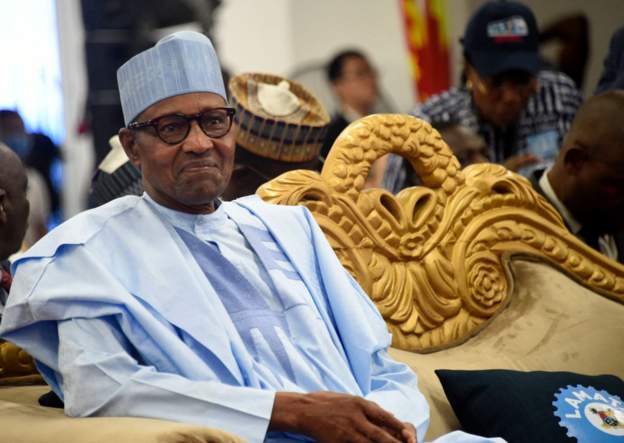
PresidentMuhammadu Buhari has asked his United Arab Emirates (UAE) counterpart, Sheikh Mohamed bin Zayed Al Nahyan, to lift a visa ban his nation imposed on Nigerians.
“Nigeria and the UAE have enjoyed excellent and beneficial relations for many years, including at the highest political levels. We can and must continue to iron out whatever issues arise between us”, Mr Buhari tweeted.
Nigeria and the UAE have been embroiled in several diplomatic disputes with the UAE imposing a visa ban on Nigerians, and suspending its national carrier, Emirates Airlines, from operating in Nigeria since October 2022.
President Buhari assured the UAE that judicial sanctions will be imposed on Nigerians found to have committed criminal acts in the UAE.
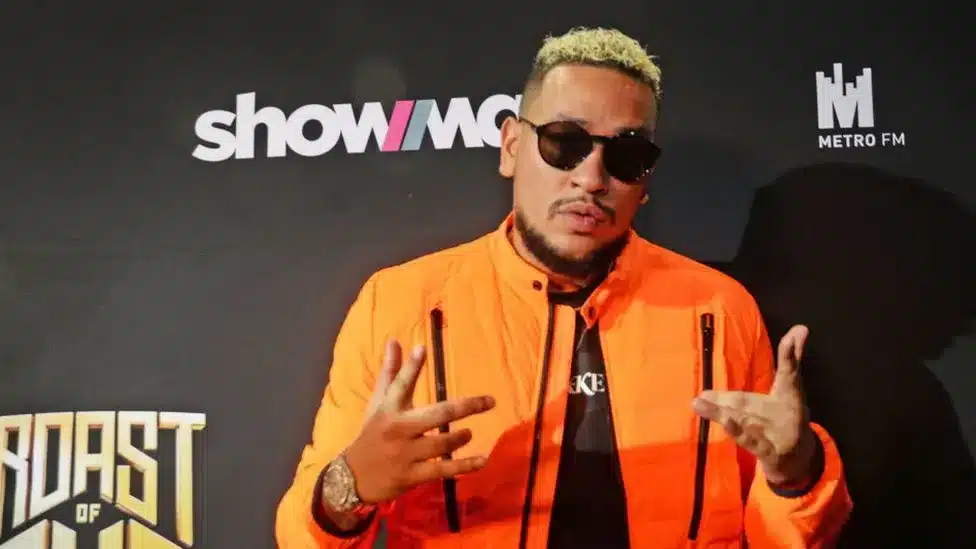
South African police say evidence gathered so far leads them to believe the killing of popular rapper AKA was an assassination.
KwaZulu-Natal police chief Nhlanhla Mkhwanazi said the gunman had approached AKA from behind and shot him at close range in the side of the head.
A second gunman then started firing to deter onlookers from responding to the “hit”, he added.
One of these rounds killed AKA’s friend, celebrity chef Tibz Motsoane.
The shooting occurred outside a restaurant in the coastal city of Durban on Friday night.
While police work to establish a full picture of what happened to AKA, whose real name was Kiernan Forbes, his father has asked people to stop speculating on social media.
Tony Forbes says the family are focusing on giving their son “a dignified send-off”, and he has thanked the many well-wishers whose support is “making it easier to cope”.
He has also paid tribute to Motsoane, saying he was “like a brother” to AKA.
No arrests have yet been made.
But police say they know the identities of the “two shooters”, and are still checking the identities of all of those at the scene in Durban that night.
Investigators are now using the suspects’ data to piece together their communication and movements in the run-up to the killings, Gen Mkhwanazi has told the Newzroom Africa TV channel.
While police remain tight-lipped about the investigation into AKA’s murder, musos, media personalities and politicians have all paid tribute to the popular rapper. Their message has been consistent: AKA was a musical giant in South Africa's hip hop scene.https://t.co/Ij5mFpiIM1
“We know that the aim was to first kill AKA, and the second suspect could have killed any other [person] because they fired a couple of shots – so anybody who was on the way could have been hit,” he says.
AKA is to be buried on Saturday and a public memorial service will be held on Friday afternoon at the Sandton convention centre in the main city, Johannesburg, his father says.
He began his musical career as part of the rap group Entity before he launched his solo career, winning several awards in South Africa for his music.
He was also celebrated internationally, with several nominations for a Black Entertainment Television (BET) Award in the US and an MTV Europe Music Award.
Hours before his death, the 35-year-old posted on social media about his upcoming album, Mass Country, which is set for release later this month.
Twenty people were killed and 61 others injured following a crash between a cash-in-transit armoured van and a bus in South Africa’s Limpopo province.
The bus rolled off a bridge into a river below landing on its side at around 20:00 on Monday, local media reported.
Most of the victims reportedly died after being trapped inside the bus.
TRAFFIC UPDATE🚨 Tuesday, 14 February 2023
20 people were tragically killed and 61 injured in an accident, where a cash-in-transit van lost control and collided head-on with an oncoming bus, yesterday on road N1- 29 Mashovhela, towards Musina in Vhembe District.🕯🙏 pic.twitter.com/I1j1Z4MjtQ
— Limpopo Department of Transport & Community Safety (@TransportLimCom) February 14, 2023
The cause of the crash is under investigation.
There have been heavy rains in the area. Emergency services were still on the scene on Tuesday morning, with heavy downpours delaying their work.
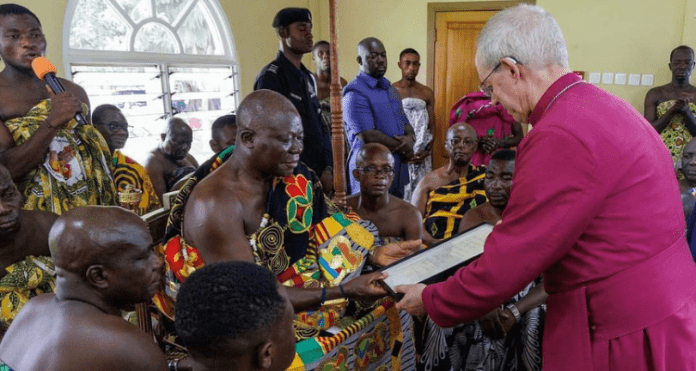
The Most Reverend Justin Welby, Archbishop of Canterbury, has honoured Otumfuo Osei Tutu II, Asantehene, with the highest honour of the Anglican Communion for his support to the Church and nation-building.
The award is in honour of the Asantehene’s significant contribution to the growth of the Anglican Communion.
The Cross of St Augustine is an award of merit from the Archbishop of Canterbury to members of the Anglican Communion who have made significant contributions to the life of the worldwide Communion.
The last royal person to receive the special Canterbury Cross was the late Majesty Queen Elizabeth II in July 2022 – two months before her passing – for her service to the Church of England.
The Archbishop of Canterbury, who paid a courtesy call on the King of Asante at the Manhyia Palace at the weekend, extolled his outstanding contribution to the growth of the Anglican Communion in Ghana.
The visit, on the eve of the opening of the 18th Plenary of the Anglican Consultative Council (ACC18) Conference in Accra, Ghana, saw the Archbishop of Canterbury travelling to the Manhyia Palace in Kumasi in the company of his wife, Mrs Caroline Welby.
The Most Rev’d Dr Cyril Kobina Ben-Smith, Archbishop of the Church of the Province of West Africa (CPWA) and Bishops of the CPWA and the Internal Province of Ghana (IpG), including the Bishop of Kumasi, The Rt. Rev’d Oscar Christian Amoah, led the delegation to the Palace after a service at the St. Cyprians Anglican Cathedral.
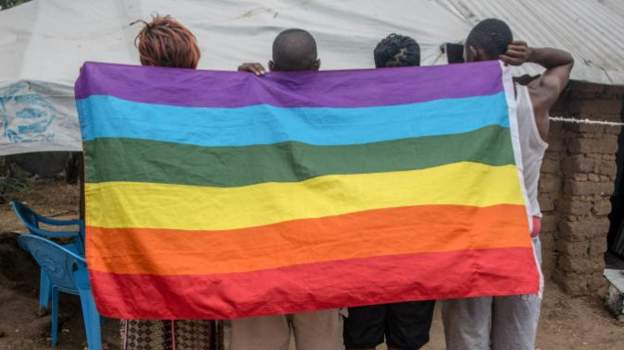
The authorities in Uganda are calling for the criminalisation of LGBTQ organisations and their activities in the country.
A January report from the NGO Bureau, an official body which oversees the work of NGOs, calls for the amendment of the country’s laws to criminalise LGBTQ activities.
In the alternative it urges the enactment of a new law “that prohibits the promotion of LGBTQ activities in the country”.
It further says the government needs to provide more resources to the NGO Bureau so that it can “identify and weed out those that are involved in activities that are prejudicial to the interests of the people of Uganda”.
Gay relationships are illegal in Uganda, where they can be punished by up to life in prison for committing “unnatural offences”.
The report is a result of a year-long investigation into activities of NGOs involved in sexual minorities’ rights work in Uganda.
The bureau says it received concerns regarding various organisations, but did not state the source of the concerns.
In total 26 NGOs were investigated but the probe is yet to conclude its work on many of them.
It says that Sexual Minorities Uganda, one of the most prominent LGBTQ organisations in the country, was neither officially registered as an NGO nor as a business.
The NGO Bureau ordered the closure of the organisation in August 2022, but the organisation has since filed a case at the East African Court of Justice contesting its closure.
Registration applications of at least three other organisations to the bureau were rejected due to their involvement in LGBTQ human rights work.
In recent weeks, several government officials and leaders in the country have been speaking out against the “promotion of gay activities” in the country.
Last week, Archbishop Stephen Kaziimba, the head of the Anglican Church of Uganda, spoke against the recent Church of England’s decision to bless same-sex marriages.
Archbishop Kaziimba said that homosexuality was a sin and that the Anglican church in Uganda would not endorse it.
There have also been renewed calls in parliament for a new anti-gay bill to be drafted and tabled for debate.
Uganda received global attention when it passed an anti-homosexuality law in 2013. It later annulled it in 2014 when a court ruled that it had been passed without the required quorum in parliament.
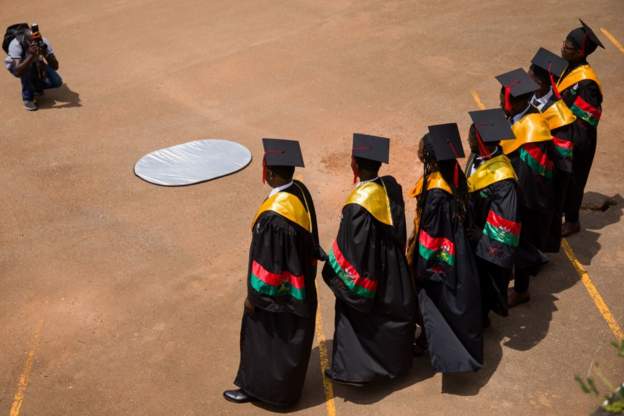
One of Africa’s most prestigious universities has banned those attending its graduation ceremony from carrying phones, cameras and video cameras.
Uganda’s Makerere University will from Monday hold a five-day graduation ceremony at its Freedom Square. Faculties have been assigned different graduation dates across the week.
No reason was given for the banning of cameras at the graduation square, but other items prohibited from the ceremony include alcohol, cigarettes, canned foods and bottled drinks.
“A detailed list of prohibited items has been inserted in the graduation invitation package that is presented to the graduands and invited guests,” the head of ceremonies committee, Prof Patrick Mangeni, said.
A total of 13,221 students are scheduled to graduate, with each allowed to invite only two guests.
First Lady Janet Museveni, who is also the minister of basic education, is expected to attend the ceremony on Monday.
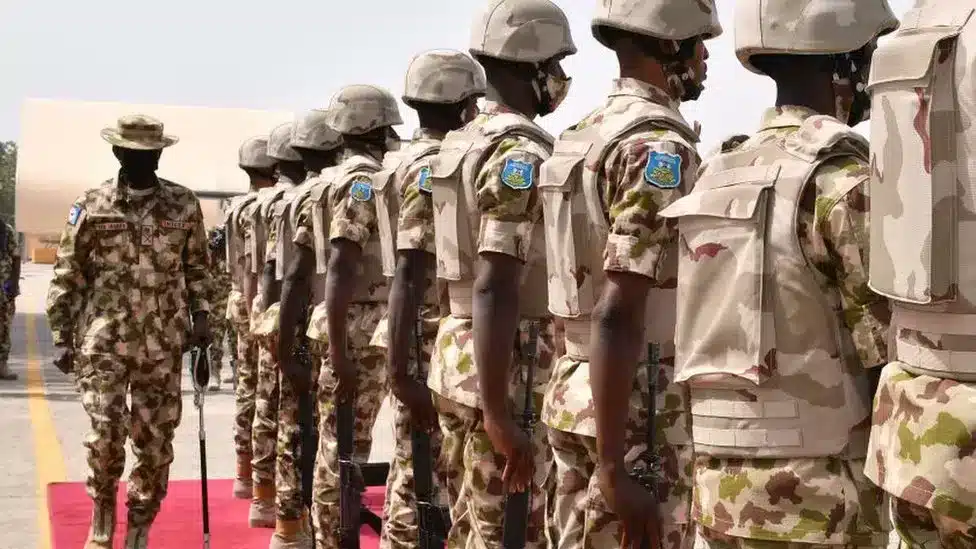
The Nigerian military has denied a claim by the governing party that it is planning to disrupt the upcoming presidential election.
An official from the APC party had said that generals had last week held a secret meeting with the rival PDP presidential candidate Atiku Abubakar.
The allegations are “wicked” and “malicious”, the army statement said.
The race to become the next president of Africa’s most populous country is too close to call.
The three top contenders in the 25 February elections are: Bola Tinubu from the governing All Progressives Congress, Atiku Abubakar from the Peoples Democratic Party and Peter Obi from the Labour Party.
The army said that it was professional and “loyal to the constitution” and would never be part of a plot to overthrow the civilian authorities.
“The Armed Forces of Nigeria will never be part of any ignoble plot to truncate our hard-earned democracy,” said the spokesperson for Nigeria’s Defence Headquarters Brigadier General Tukur Gusau.
The government and the main political parties have not responded to the army’s statement.
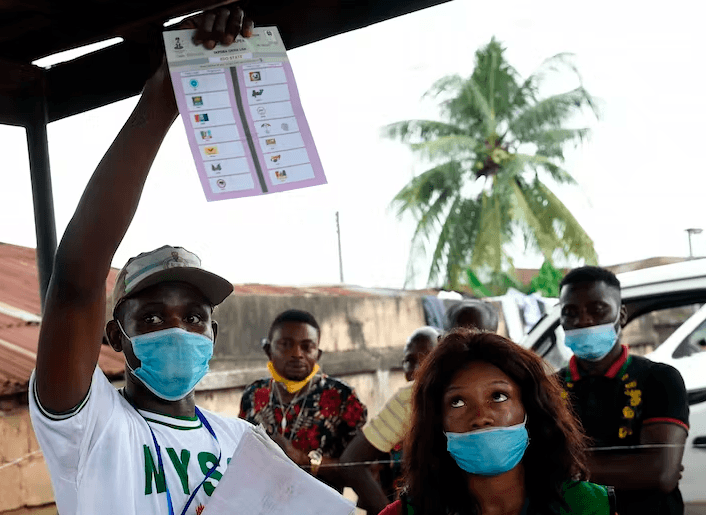
The military takeover claim has largely been ignored by the public – many people are focused on more pressing worries such as insecurity, fuel scarcity and a shortage of new banknotes, which has added to the country’s economic crisis.
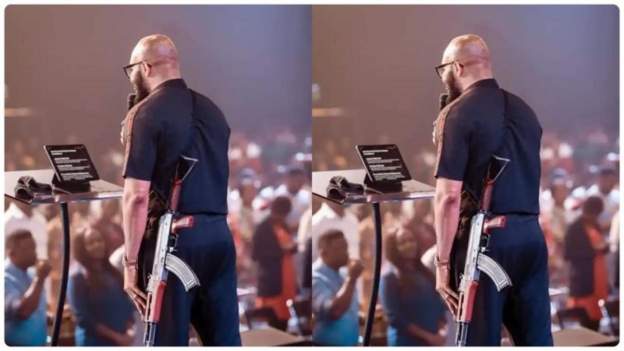
“Some people are looking for my trouble. And I came here prepared,” joked Pastor Uche Aigbe on Sunday as he took to the pulpit brandishing an assault rifle.
Under Nigerian law, it’s only legal to carry a gun if the Inspector General of Police grants you a licence.
It’s not known whether the gun the pastor carried in the House on the Rock Church in Abuja belonged to him, or if the gun was loaded. The church has not responded to requests to comment.
“Today, there are some pastors with gift of divination who go about ripping people. This is why we should carry our ‘guns’ and defend ourselves. I will particularly be coming very soon for some of you sleeping in the church,” he told the laughing congregation on Sunday.
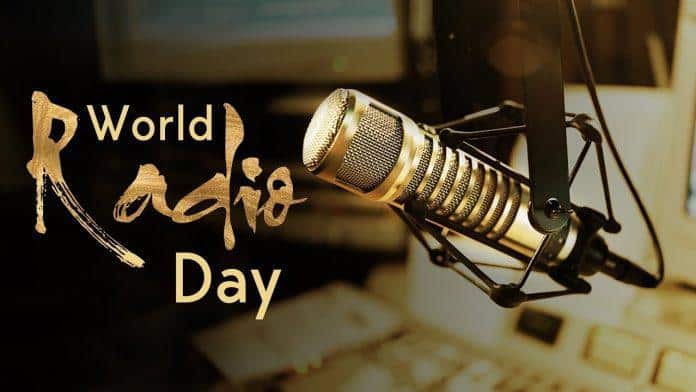
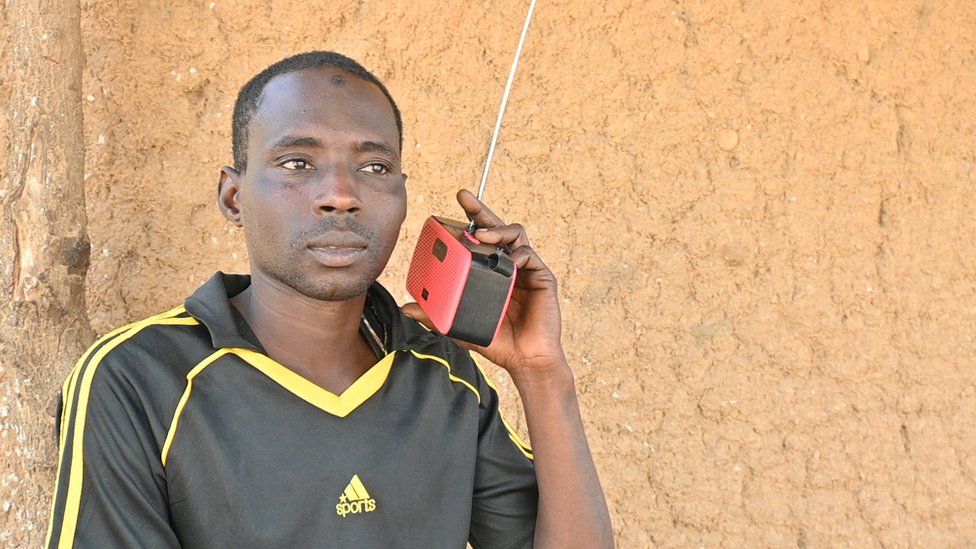
Ghana today joins the rest of the global community to observe World Radio Day today. It was proclaimed in 2011 by the Member States of UNESCO and adopted by the United Nations General Assembly in 2012. Celebrated on the theme “Radio and Peace”, this year’s event highlights independent radio as a pillar for conflict prevention and peacebuilding.
Programme Officer Communication and Information UNESCO Ghana, Hamid Yakub explained what informed this year’s theme and the significance of the day.
“Primarily it has brought together radio community all across the world to appreciate this medium that is so versatile to our changing needs and demands in the sense that radio is widest medium that you can reach people in remote areas.”
“Radio is a key pillar of conflict prevention and peacebuilding, provided it is independent from political and commercial influence and is able to tackle both the root causes and triggers of conflict. Radio should be included in any peace leadership strategy and must receive media assistance and be adequately funded by the government, especially public service Broadcasting radio.”
Radio discovery
Radio waves were originally discovered by one Heinrich Hertz, on the heels of his discovery of electromagnetic radiation. Radio waves operated at a frequency of 30 hertz and 300 gigahertz. The waves were generated by a device called a transmitter. The transmitter is connected to the antennas which allow the radio waves to radiate. The waves are received by a radio receiver that is attached to another system of antennas. Radio is a low-cost medium specifically suited to reaching remote communities and vulnerable people. It offers a platform to intervene in the public debate, irrespective of people’s educational level. It also plays a crucial role in emergency communication and disaster relief. Radio is uniquely positioned to bring communities together and foster positive dialogue for change. In reporting and informing the general public, radio stations shape public opinion and frame a narrative that can influence domestic and international situations and decision-making processes.
Introduction of Radio in Ghana
Broadcasting began in Ghana with Radio ZOY on July 31, 1935, now GBC Radio. Although he was not born at the time radio broadcast commenced, the Chairman of the National Media Commission, NMC, Yaw Boadu Ayeboafo, grew to witness some defining features of radio which endeared many people to it.
“People depended more on the time that was announced on Radio than what their own watches and clocks were giving them. Once the clock chimes one O’clock you see people adjusting their watches to suit the time”
“I understand at the time because of the elite Ghanaians when they listened to radio their discussion was focused on what was coming from radio. Subsequently, they developed fan clubs just to listen to radio.”
So is World Radio Day worth celebrating was the question posed to the NMC Chairman Yaw Boadu Ayeboafo. With an emphatic yes, Mr. Ayeboafo, said radio has transformed the world for which reason the day has to be celebrated.
“It is one technology that transformed the world. It has so impacted on everybody that it is worth pausing to analyze and look at its influence, what has gone wrong, what can we do better to make this technology more beneficial.”
Mr. Ayeboafo, is convinced this year’s theme “Radio and Peace” is appropriate as it encourages owners of radio stations to invest in training and retraining of staff.
“Those of you who are working in radio must understand that you can use radio to transform and to destroy. But if your focus is on human beings because that is the purpose of all communication processes then you must know it is better to bring people together than to scatter them.”
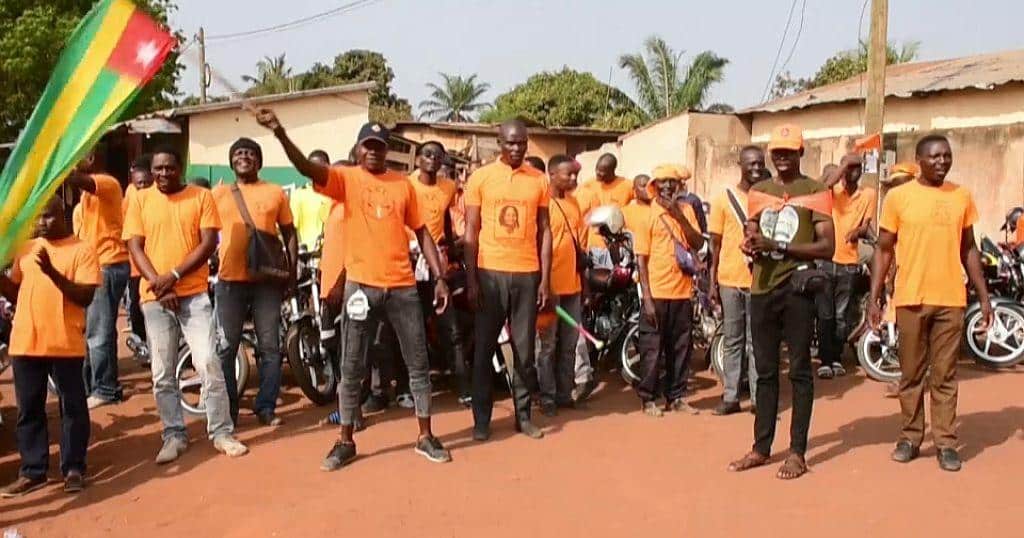
The National Alliance for Change (ANC) party in Togo drew hundreds of supporters who demonstrated in Agoè-Nyivé ahead of elections.
Sunday’s (Feb. 12) meeting which took place in neighbourhood located in the northern suburbs of Lomé was attended by the ANC president who also serves as mayor of one of Lomé’s 13 localities.
He focused on the upcoming legislative elections.
“This was a remobilisation rally,” Jean-Pierer Fabre said.
“You may have noticed that we have called for people to go and register to vote when the census is launched. This is important because we called before not to register and many of our voters are not registered. So they have to go and register.”
Indeed, main opposition parties boycotted the previous legislative polls in 2018, citing “irregularities” in their preparation. Consequently some of their supporters did not vote.
Togolese president Faure Gnassimbé annouced late last year, that elections would be held this year but no date has been set. This has not deterred the hundreds of ANC supporters dreaming of change.
“We want change in this country and the ANC is a political party that fights. The Togolese people are suffering and we must fight to get the country out of this situation,” this man said.
“I am very happy, because the powers that be have repeatedly prevented us from coming together. We must wake up, because this country is badly governed.”
ANC leader Jean-Pierre Fabre denouced the rule of the Gnassingbé family over Togo since 1963 as well as irregularities in the management of funds intended to fight the Covid pandemic in the nation.
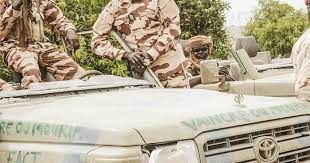
The trial of 150 rebels accused of being responsible for President Idriss Déby’s demise will begin in Chad on Monday.
According to a local news website that cited judicial sources, the trial will be held at a high security jail in Kléssoum.
The suspects belong to the Front for Concord and Change in Chad (FACT), the rebel movement which launched an offensive to overthrow Chad’s goverment from its rear bases in Libya in 2021.
They are being charged with terrorism, enlisting child soldiers, mercenarism, undermining state security, and assassination of a sitting president.
Idriss Deby was killed on the frontline in April of 2021 while overseeing the army’s operations to drive back the rebels. He had just won a new mandate in a vote criticized as fraudulent.
With the help of France, Chad’s new military rulers were able to stop the rebel advance.
Nearly two years since Deby’s death, negotiations between rebel movement and the Chadian government have stalled.
The group has boycotted peacebuilding talks, demanding the release from jail of its members.
President of Botswana, Mokgweetsi Masisi, issued a warning on Sunday, threatening to cut off relations with De Beers if talks to renegotiate a sales agreement do not go well for his nation.
The 2011 sales agreement governing the terms of marketing diamonds produced by Debswana – a 50-50 joint venture between the government and De Beers – expired in 2021.
It has been extended by the parties, who cited the coronavirus outbreak as the reason for the delay in concluding negotiations, and will end on June 30, 2023.
Speaking at a rally of his ruling Botswana Democratic Party (BDP) in his home village of Moshupa, about 65 kilometers from the capital Gaborone, Masisi warned, “If we don’t reach a win-win situation, each side will have to pack up and go home.”
Under the 2011 agreement, the mining company De Beers received 90% of the rough diamonds produced while Botswana, Africa’s largest diamond producer, received 10%. In 2020, Botswana’s share was increased to 25%.
In 2020, Botswana’s share was increased to 25%.
Today, “we got a glimpse of how the diamond market works, and we found out that we received less than we should have,” said Mr. Masisi, who spoke in both English and the local language, Tswana.
“We also found out that our diamonds are bringing in a lot of profit and that the (2011) agreement had not been favorable to us,” he added, before warning: “We want a bigger share of our diamonds. Business cannot continue as before.
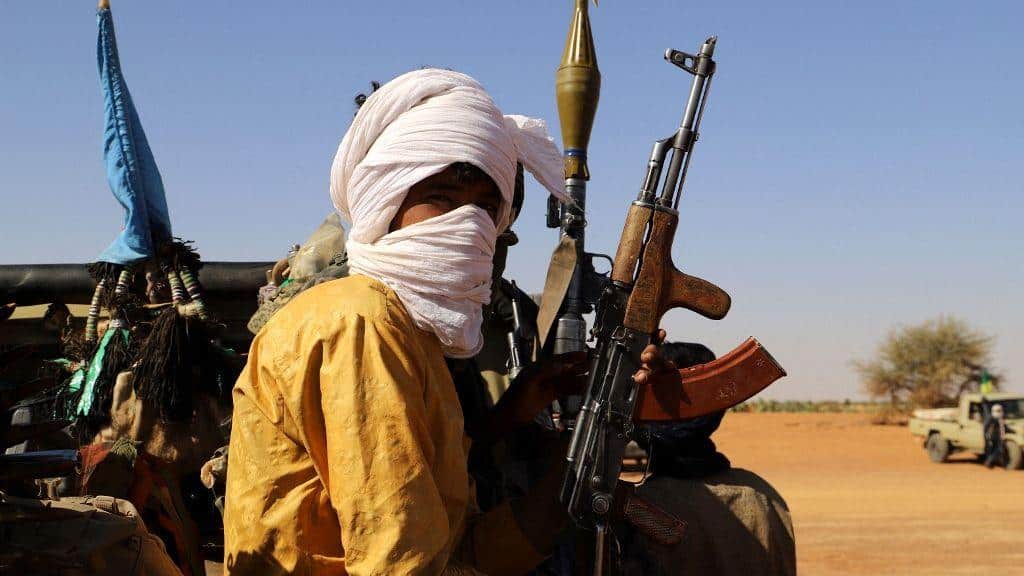
The threat posed by Islamic State extremists remains high and has increased in and around conflict zones. The group’s expansion is “particularly worrying” in Africa’s center, south, and Sahel regions, the U.N. counter-terrorism chief said Thursday.
Undersecretary-General Vladimir Voronkov told the U.N. Security Council that the group, also known by its Arabic acronym Daesh, continues to use the Internet, social media, video games, and gaming platforms “to extend the reach of its propaganda to radicalize and recruit new supporters.”
“Daesh’s use of new and emerging technologies also remains a key concern,” he said, pointing to its continuing use of drones for surveillance and reconnaissance as well as “virtual assets” to raise money.
Voronkov said the high level of threat posed by the Islamic State and its affiliates, including their sustained expansion in parts of Africa, underscores the need for multifaceted approaches to respond – not just focused on security but on preventive measures including preventing conflicts.
Sub-Saharan Africa is new epicenter of extremism, with 48% of global terrorism deaths – Report https://t.co/rUcUW6fVRb
The Islamic State declared a self-styled caliphate in a large swath of territory in Syria and Iraq that it seized in 2014. The extremist group was formally said defeated in Iraq in 2017 following a three-year bloody battle that left tens of thousands dead and cities in ruins, but its sleeper cells remain in both countries.
Some 65,600 suspected Islamic State members and their families — both Syrians and foreign citizens — are still held in camps and prisons in northeastern Syria run by U.S.-allied Kurdish groups, according to a Human Rights Watch report released in December.
Voronkov said the pace of repatriations remains too slow “and children continue to bear the brunt of this catastrophe.” At the same time, he said, “foreign terrorist fighters” who joined the extremist group are not restricted to Iraq and Syria and “move between different theaters of conflict.”
Lack of jobs responsible more for violent extremism in sub-Saharan Africa – UNDP https://t.co/DpZZ1Dht5s
Voronkov, who heads the U.N. Office of Counter-Terrorism, said “foreign terrorist fighters with battlefield experience relocating to their homes or to third countries further compounds the threat” from Daesh.
Weixiong Chen, acting head of the Security Council Counter-Terrorism Committee’s executive directorate, told members that the failure to repatriate foreign nationals from the camps provides Daesh “with ongoing opportunities to recruit from camps and prisons and facilitate radicalization to violence and the spread of terrorism.”
He said the threat from Daesh “presents a complex, evolving and enduring threat in both conflict and non-conflict zones.”
Chen pointed to Daesh’s continued exploitation of “local fragilities and inter-communal tensions”, particularly in Iraq, Syria, and parts of Africa, and its affiliates’ expansion notably in central, southern, and western Africa.
He also cited Daesh’s revenue generation and fundraising through a wide range of ways “including extortion, looting, smuggling, taxation, soliciting donations and kidnapping for ransom” as well as its use of social media and gaming platforms.
The Islamic State’s dominant means of moving money continues to be unregistered informal cash transfer networks and mobile money services, he said.
Daesh’s access to conventional and improvised weapons, “including components of unmanned aircraft systems and information and communications technologies continue to contribute to the terrorist menace,” Chen said, pointing to its use of improvised, stolen, or illegally trafficked weapons to launch lethal attacks against a range of targets.
A small number of fans waited at the Oliver Tambo airport in Johannesburg to greet Grammy award winners Zakes Bantwini, Wouter Kellerman and songstress Nomcebo Zikode who returned home on Friday.
The trio’s collaboration song ‘Bayethe’ won the best global music performance at the Grammy Awards held Sunday in Los Angeles.
“It is an incredible honour and privilege to be received like this by our own people,” said Nomcebo Zikode.
‘Bayethe’, which means ‘hail’ in the local Zulu language, combines traditional African beats, Zulu lyrics and the flute.
The victory provided a brief distraction for South Africans who are otherwise facing record power cuts, high unemployment and rampant crime.
South Africa’s arts and culture ministry applauded the group in a statement, saying the country was “proud of the great work” they produced “without compromising national identity”.
A continental powerhouse in the music arena, South Africa already boasted numerous Grammy winners, including famous male acapella groups Ladysmith Black Mambazo, Soweto Gospel Choir, and singer Miriam Makeba.
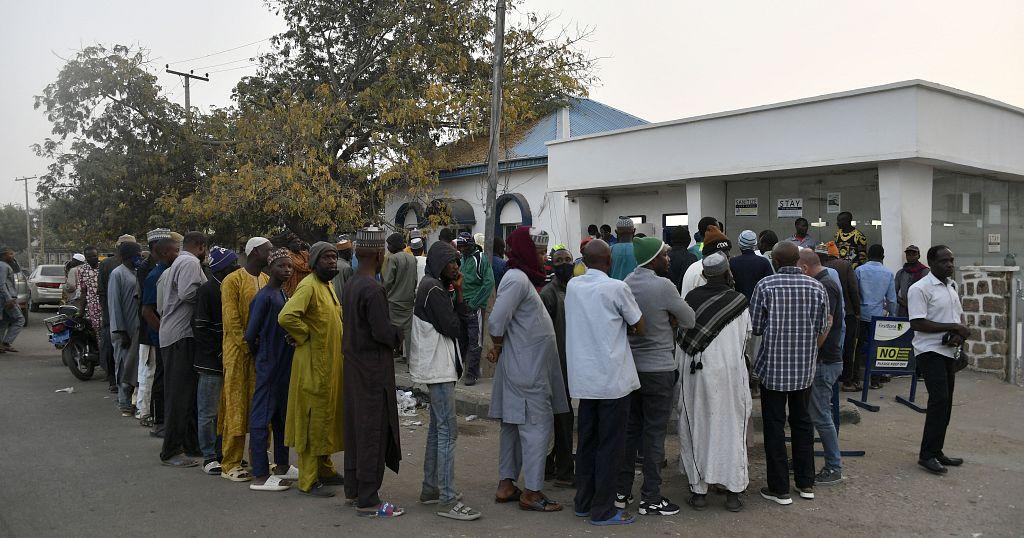
It was just after dawn and tempers were fraying outside the First Bank in the northern Nigerian town of Kano, where scores of customers jostled to get on a waiting list to withdraw money.
Long before the branch had opened its doors, crowds had formed of people desperate to take out cash, which was being limited to 10,000 naira — just $20 — per person.
The reason: a government plan to swap old banknotes for a new design has run into chaos, limiting the number of bills in circulation and creating a cash shortage.
Near the bank, hundreds of cars, motorbikes and rickshaw taxis had sat since early morning outside filling stations waiting to fill their tanks because of another shortage: petrol.
Little more than two weeks before an election to pick President Muhammadu Buhari’s successor, the twin shortages in Africa’s largest economy are overshadowing campaigning, angering voters and causing jitters over vote preparations.
Riots erupted in frustration over the cash crunch last week when Buhari visited Kano state, one of his power bases and a key election battleground with the second largest number of registered voters.
Independent National Electoral Commission (INEC) Chairman Mahmood Yakubu on Wednesday reassured Nigerians the February 25 ballot would happen, with three major presidential candidates in a tight race.
But watching the lines outside Kano’s banks, market trader Mohammed Ali Danazumi said elections were far from his mind. He was on a second hours-long wait to get cash after failing to get naira the day before.
“Today, I am number 290, what can I do?” he asked after joining the waiting list to get access to the cash machine.
“We need change, we need some serious change.”
– Conspiracy theories –
The fuel and cash crunches have already soured the mood ahead of the February 25 presidential vote.
Buhari’s ruling All Progressives Congress (APC) party and main opposition Peoples Democratic Party (PDP) are trading accusations of plots and sabotage — or of hoarding new banknotes in order to buy votes.
Some APC stalwarts even blame “fifth columnist” enemies in the presidency for creating the shortages to undermine their man, former Lagos governor Bola Tinubu.
Buhari, who steps down after two terms, last week asked Nigerians to give him seven days to resolve the shortages, which he blamed on inefficiencies and hoarding in distribution of new notes.
Buhari holds an emergency meeting on the cash shortage with top officials on Friday. But APC governors already warned him they are worried about the impact on the election.
Government officials defend the cash swap to replace old 1,000, 500 and 200 naira notes as a way to clear counterfeit bills and a large amount of cash held outside banks.
But for many Nigerians, already coping with widespread insecurity and the inflationary fallout from the Ukraine war, the dual cash and fuel shortage is fast becoming too much.
Traders have been quick to profit. Street vendors sell cash via a bank card transaction on mobile POS machines, but with a hefty charge of 1,000 naira for 5,000 naira, Lagos and Kano residents say.
“You pay cash for your own cash,” said a Lagos business administrator after a transaction.
For Kano auto mechanic Sayo Ade, who left his car overnight in a line outside a petrol station, patience was beyond thin.
“There is no cash in Nigeria now. You can’t get any at the ATM (cash machine). But in here, the POS machines (for electronic transactions) don’t work, so they are asking for cash,” he said waving his bank card at the gasoline station.
“Who has cash in Nigeria now?”
Nigeria is one of Africa’s largest crude oil producers, but has almost no refining capacity and must import fuel from Europe and elsewhere.
– Northern stronghold –
Since the end of military rule in 1999, Nigeria’s elections were often marred by violence, vote buying or logistical problems. The 2019 vote was delayed by a week.
Kano state has long played an important part in Nigeria elections. Buhari was elected in 2015 and re-elected in 2019 thanks in large part to a block of ballots from the northwestern state.
But in Kano city, the country’s second largest and commercial heart of the mostly Muslim north, frustrations are growing, even among those who voted twice for Buhari.
Protests have also broken out in the southwestern cities of Ibadan and Abeokuta, where police said rioters attacked local banks.
Outside a Kano bank, civil servant Dauda Yusuf was focussed on finances not politics.
“We don’t know why the government is treating us like this,” he said. “We are heading into an election and they want us to vote? Look at what is going on here.”
Despite its status as a major oil producer, fuel lines recently reappeared in Lagos and other cities.
Perched on his yellow rickshaw taxi, Adamu Isyaku said he spent hours to fill up at a station where fuel is sold at the regular subsidised price. Black market fuel would save him time but cost him double.
Now even some customers have little cash.
“Sometimes we are like a charity. Sometimes people just say, ‘this all I have,’ and you have no choice but to accept,” he said.
“I was going to vote. I have my voter card with me. But with all this suffering, I’ve changed my mind.”
Others took a pragmatic view in a country where coping with “wahala” — a widely used Hausa phrase for Nigeria’s daily struggles — is seen as a necessary skill.
“We are Nigerians, we will survive,” said Kayode Gabriel, 46, a salesman, waiting for his turn to fill up his car tank in Kano. “No, it’s not normal, but God gave us a resilient spirit. Someday, somehow we will get it right.”
In preparation for the 2023 general elections, the Nigerian government has ordered all universities and inter-university centers close from February 22 to March 14.
The decision follows concerns about the safety and security of staff and students during the poll.
The directive, which was issued by the National Universities Commission (NUC) was directed by the Minister of Education, Adamu Adamu, local media reported on Thursday.
The Independent National Electoral Commission (INEC) has scheduled the presidential and national assembly elections for 25 February, and governorship and states’ houses of assembly elections for 11th March.
Polls will go ahead despite naira crisis: Nigeria's electoral commission says https://t.co/AiIrgWMtsV
The electoral body has insisted the elections would go ahead as scheduled. This is in spite of the cash and fuel scarcity.
“In view of the foregoing and concerns expressed on the security of staff, students and properties of the respective institutions, the Minister of Education, Mal. Adamu Adamu has, following extensive consultations with the relevant security agencies, directed that all universities and Inter University Centres be shut down and academic activities be suspended between 22 February and 14 March, 2023,” Mr Maiyaki wrote.
Nigerians, Civil Society Organisations (CSOs), and the House of Representatives had raised concerns over the possible disenfranchisement of some Nigerian students whose institutions had scheduled examinations through the period of the elections.
The House of Representatives also asked the government agencies in charge of tertiary institutions to shut them down during elections.
Students make up 40 per cent of the newly registered voters during the Continuous Voters Registrations between June 2021 and June 2022, INEC Chairman Mahmood Yakubu said in October 2022, according to a report by Premium time Nigeria.
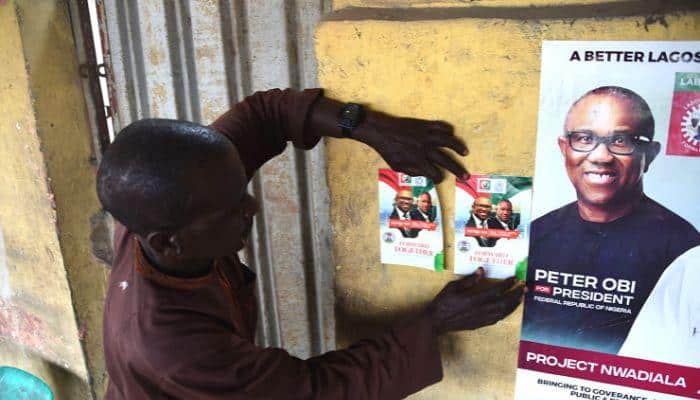
A recent survey conducted by Bloomberg, the New York-based international television and media conglomerate, has concluded that Nigerian businessman and former governor of the state of Anambra Peter Obi is still the front-runner to lead the country as its next president.
Two-thirds of respondents said in the polls published Friday they intend to vote for Obi, a third-party candidate, in elections scheduled for February 25, 2023.
The results of the survey conducted for Bloomberg News by Premise Data Corp. a San Francisco based data company, were published on Friday – 15 days before the vote to choose President Muhammadu Buhari’s successor. Premise Data Corp has so far conducted six polls for Bloomberg, and in all Obi has maintained an unassailable lead.
Of the 93% of participants who said they’ve decided how to vote, 66% named Obi as their preferred choice. Obi scored a slightly higher 72% among decided respondents in an earlier Premise poll that was released by Bloomberg in September as the official election campaign kicked off.
While Obi’s campaign has generated a momentum that the two established forces in Nigerian politics were not expecting, the ruling All Progressives Congress and main opposition Peoples Democratic Party insist that he cannot triumph on Feb. 25. They say his appeal is too thinly spread across the country’s states and have derided polling that has almost universally put the candidate of the much smaller Labour Party in first place.
Still, Obi has emerged as the most popular candidate in six polls including the two surveys conducted by Premise for Bloomberg. Another poll released this week by Lagos-based media and data company Stears predicted that Obi will win in the event of high turnout, but lose to Bola Tinubu of the APC if participation is weak.
Dismissed by his opponents as a “social media candidate,” Obi’s rise has been fueled by disenchantment with the status quo. His campaign has attracted an enthusiastic following known as “Obidients” — initially online but increasingly at rallies and marches — even if the man they wish to help to Nigeria’s biggest ever electoral upset hardly has an anti-establishment background.
Pollsters say they account for Nigeria’s electoral makeup when designing their surveys.
San Francisco-based Premise polled 2,384 Nigerians from Jan. 26 to Feb. 4 via a smartphone app. Submissions were selected from quotas developed by age, gender and location across the country’s six geopolitical zones, the company said. Results were then weighted against the original quotas to ensure national representation.
About 44% of Nigerians own smartphones, according to the Alliance for Affordable Internet. Premise estimates that the access rate rises to 74% among the voting age population.
The candidates of the two parties that have ruled Nigeria since the restoration of democracy in 1999 finished in a distant second and third. Tinubu obtained 18% of decided voters and the PDP’s Atiku Abubakar tallied 10%.
A former governor of the southeastern Anambra state and ex-chairman of Lagos-listed Fidelity Bank Plc, Obi is running on the ticket of the Labour Party, whose presidential candidate garnered only 0.02% of votes in the last election four years ago. The APC and PDP dominate both chambers of parliament, and 35 of the country’s 36 governors come from their ranks.
While widespread frustration with worsening economic hardship and growing insecurity has propelled Obi’s campaign further than many initially felt possible, his party lacks the nationwide organizational capabilities of the APC and PDP — which are experienced at mobilizing voters across the West African country of approximately 200 million people. Vote buying is also common in Nigerian elections which provides an advantage to better resourced parties.
State Threshold
The constitution also dictates that a candidate acquiring the most votes in the election can only win the presidency in the first round if they secure over 25% in more than two-thirds of the states. If no one crosses that threshold, Nigeria will have its first runoff between whoever polled best overall and the remaining contender who scored majorities in the higher number of states.
The APC insists the rules make a Labour Party victory impossible as its Christian candidate will not be able to accumulate a quarter of the votes in states across the predominantly Muslim north or Tinubu’s southwestern stronghold that includes the commercial hub of Lagos.
“Peter Obi cannot win the election,” Nasir el-Rufai, the APC governor of the northern Kaduna state, said in a television interview this month. “He doesn’t have the number of states.” Out of Nigeria’s six so-called geopolitical zones, 43% of the country’s 93.5 million registered voters are located in the northwest and southwest.
Another factor that will have a significant impact on the result is the level of participation — turnout in 2019 was the lowest ever at only 35%.
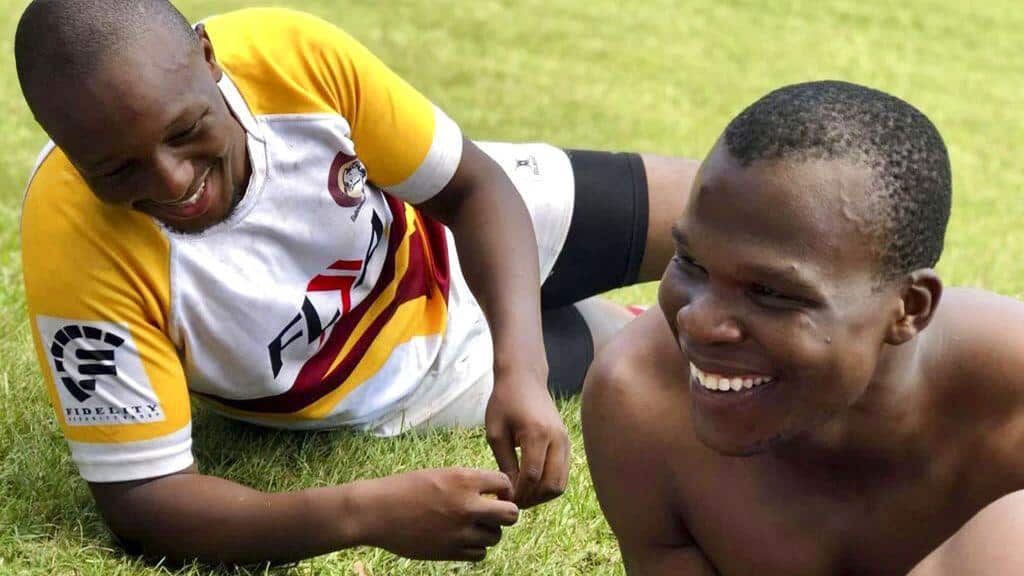
An autopsy report has reveals that a former professional rugby player from South Africa who was killed by police months after arriving in Hawaii had a degenerative brain illness common in American football players and other athletes who frequently sustain head trauma.
The finding could help explain Lindani Myeni’s bizarre behavior before the deadly 2021 confrontation with Honolulu officers. It also offers another layer of detail about a shooting that gained international attention during heightened calls for police reform following the 2020 murder of George Floyd by a Minneapolis police officer.
An addendum to Myeni’s autopsy report obtained by The Associated Press shows his brain tissue was sent to the Boston University CTE Center, which found the 29-year-old father of two suffered from stage three chronic traumatic encephalopathy. Commonly known as CTE, the disease can only be diagnosed posthumously.
Stage four is the most severe level and experts say it’s alarming for someone as young as Myeni to have such a critical case of CTE.
Lindsay Myeni, who filed a wrongful death lawsuit alleging police shot her husband because he was Black, said she was shocked to learn of the CTE diagnosis.
“I had no clue. He had no clue,” she said from Richard’s Bay, South Africa, where she now lives. “So it was kind of devastating because it felt like … someone was telling me like, hey, he died from racism at 29, but he was going to be killed from his favorite sport at 50 or 51 anyway.”
Police were called to a Honolulu home about a stranger who had entered uninvited. He said, “I have videos of you,” claimed a cat at the home was his, and made other strange comments, according to Honolulu’s prosecuting attorney, who decided not to pursue charges against any of the officers.
Police officials have said officers weren’t reacting to his race, but rather his behavior, which put officers’ lives in jeopardy. Prosecutors found that deadly force was justified because Myeni physically attacked officers, leaving one with a concussion.
He had been emotional earlier that day about family issues and the couple had visited numerous spiritual sites around the island of Oahu, Lindsay Myeni said, but he showed no signs of CTE symptoms. Those include memory loss, confusion, impaired judgment, impulse control problems, aggression and depression.
Dr. Masahiko Kobayashi, the Honolulu medical examiner who autopsied Myeni and concluded he died from gunshot wounds, said he suspected CTE after hearing about Myeni’s behavior and his contact sports past.
“The case of Mr. Myeni was really simple when I just determined the cause and manner of death. But the circumstances were very complex, and the public was greatly impacted by this case,” he said.
Kobayashi said he hoped the CTE finding might provide a clearer picture of what led to Myeni’s death.
However, CTE doesn’t help Lindsay Myeni understand what happened that April 14, 2021, night.
“To me, it still doesn’t answer any questions as to why you would shoot him,” she said.
Myeni’s behavior sounded like “classic symptoms” related to CTE, “confusion, disorientation, acting out in a very different way,” said Paul Anderson, a lawyer in Kansas City, Missouri, who represents families of athletes with brain injuries, but is not involved in the Myeni case.
The youngest case of stage three CTE diagnosed in medical literature was Aaron Hernandez, 27, making Myeni “an example of pretty severe CTE for someone that age,” said Dr. Daniel Daneshvar, an expert on the condition and Harvard Medical School assistant professor.
Hernandez, a former New England Patriots football star, killed himself in 2017 in the prison cell where he was serving a life-without-parole sentence for murder.
While people with CTE tend to have problems with memory, thinking, impulsivity, and paranoia, there could be other explanations, Daneshvar said.
“We can’t say for sure whether or not CTE in anyone’s brain can cause them to do any particular action,” he said.
The investigation by Alm’s office found that two days before the shooting, Myeni told his kickboxing instructor that he was going through “crazy African spiritual stuff.”
About 30 minutes before the shooting, Myeni interjected himself in a situation where police were investigating a vehicle break-in and had to be told to go away by both the victim and officers, according to Alm’s investigation.
The frightened woman called 911.
Officer body camera videos showed Myeni punching responding officers, leaving one with facial fractures and a concussion. Myeni continued punching an officer even after he was shot once in the chest, Alm said.
Bridget Morgan-Bickerton, a Honolulu attorney representing Myeni’s wife, said he wasn’t aggressive, “until he was subjected to unjustified aggression, being yelled at, at gunpoint, in the dark to ‘get on the ground’ with no announcement of who was asking.”
Three months before the shooting, the Myenis moved to Hawaii, where Lindsay Myeni grew up, believing it would be safer for their two Black children than in another part of the U.S.
As a single mother of a 2- and 3-year-old, she doesn’t know if she can ever return to Hawaii, so they’re in South Africa, where the couple met while she was on a Christian mission trip. But it’s difficult there, too.
“It’s like I even moved out of our little township that he’s from and moved to the suburbs because … it’s hard to even be at the house,” she said. “I just went for a birthday party back to his home and I’m like, oh, this is so painful.”
A woman who claims that a World Health Organization (WHO) doctor sexually assaulted her during the most recent Ebola outbreak in the Democratic Republic of the Congo has expressed shock that no senior officials has been held accountable for the allegations of sexual abuse and exploitation involving numerous women in the country beset by conflict.
On Monday, the AP reported on a confidential U.N. report that excused senior staffers for their mishandling of another case due to a “loophole” in how WHO defines victims of such behavior.
Anifa, a young Congolese woman who worked at an Ebola treatment center in Beni during the outbreak, said she could not understand WHO’s seeming excusal of misconduct.
“It is a shame for WHO to give work to the kinds of men who do not respect women,” she said, declining to share her full name, for fear it could hurt her future job prospects. Anifa said she had been offered a job by a WHO doctor in exchange for sex during the Ebola epidemic, but refused. The AP does not identify victims of sexual abuse.
“Perhaps WHO does not consider us because we are Africans?” she asked. “As long as I am alive, I will hate the entire World Health Organization until (the perpetrators) are charged and punished.”
Paula Donovan, co-leader of the Code Blue campaign, which seeks to hold the U.N. accountable for sexual offenses, said WHO member countries looked the other way on the agency’s sexual misconduct charges because they could not afford to weaken the institution during the coronavirus pandemic.
“Countries could not go after WHO because it was doing what the U.S. and other rich countries would not do during COVID, which is trying to figure out how to get vaccines to the poor.”
She said donor countries had likely made a disturbing calculation about the costs of responding to global health crises.
“It is very depressing, but officials have essentially concluded this is the price that has to be paid, that some women are going to be sexually exploited.”
The U.N. report was focused on a case first reported by the AP in May 2021, involving Dr. Jean-Paul Ngandu, who worked on the Ebola response in northeastern Congo in 2019. Shortly after his arrival, Ngandu met a young woman at a local restaurant. The two had sex later that evening, but the relationship soured, and the woman and her aunt complained to WHO that Ngandu had impregnated her.
AP obtained a copy of a notarized agreement between Ngandu and the woman, signed by two WHO staffers, in which he agreed to cover her health care costs and buy her land.
After concerns about the Ngandu case were raised to WHO’s Geneva headquarters, “a decision was made not to investigate the complaint on the basis that it did not violate WHO’s (sexual exploitation and abuse) policy,” the U.N. report said. The report said this was because the woman was not a “beneficiary” of WHO, meaning she didn’t receive any humanitarian aid, and thus, did not qualify as a victim under WHO policy.
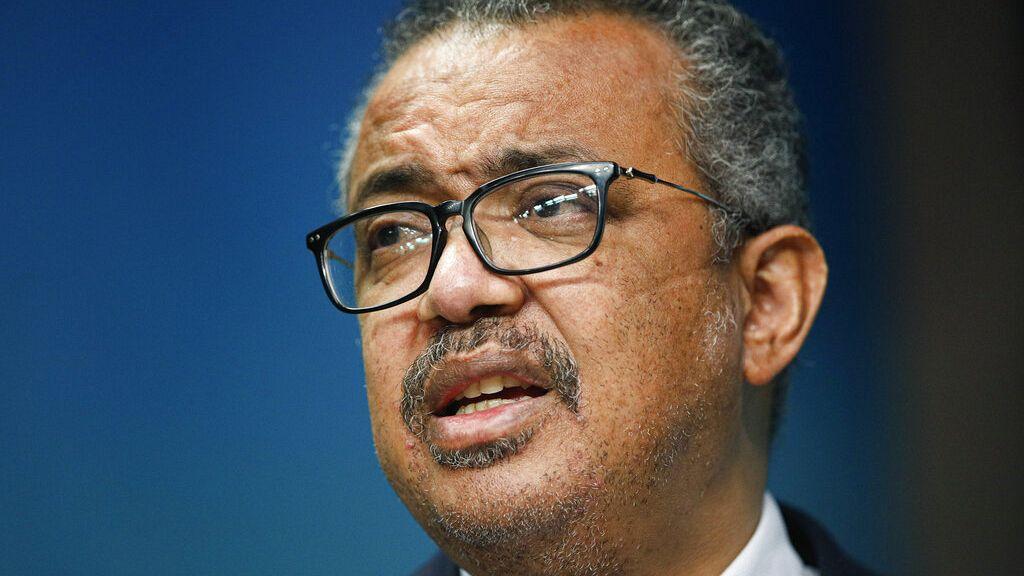
WHO chief Tedros Adhanom Ghebreyesus has said repeatedly he is “outraged” by reports of sexual misconduct. But to date, no senior staffers linked to the sexual abuse allegations in Congo’s 2018-2020 Ebola outbreak — where more than 80 workers under the direction of WHO and other agencies were found to have abused or exploited women — have been fired.
A panel appointed by Tedros to investigate the Congo sex abuse claims found numerous allegations of sexual assault by WHO staffers, including women forced to have abortions by their attackers and a 13-year-old girl who said a WHO driver took her to a hotel where she was raped.
Tudi Diane Tumba, a coordinator at a Congolese organization that advocates for women’s rights, said they were still assessing complaints from young women and girls who alleged they were sexually abused or exploited by WHO officials during the Ebola epidemic.
“It is very shameful if the WHO will not sanction Dr. Ngandu,” Tumba said. “I encourage women to denounce and shout louder so that these sexual abuses end.” Ngandu was not fired; his contract was not renewed, but he was not reprimanded by WHO.
Some global health experts were unconvinced by Tedros’ professed indignation.
“It undermines the complete integrity of WHO that no one has lost their job over this,” said Sophie Harman, a professor of international politics at Queen Mary University in London. “If WHO is serious about gender equality, then it is time for Tedros to go.”
WHO’s director of communications insisted the agency was committed to addressing sexual misconduct.
There are at least 10 major problems that are likely to influence and affect the outcome of the February 2023 presidential election in Nigeria, which would be the seventh since the current wave of liberal democracy began formally in 1999. Jideofor Adibe, a political scientist, tackles each one.
1. Ethnicity and regionalism
Four of the 18 presidential candidates in the election, regarded as the front runners, come from the three dominant ethnic groups in the country: Hausa/Fulani, Yoruba and Igbo.
From the north are Atiku Abubakar, a former vice-president of the country (1999-2007) and the presidential candidate of the People’s Democratic Party; and Rabi’u Musa Kwankwaso, a former governor of Kano State and the presidential candidate of the New Nigeria People’s Party.
Bola Ahmed Tinubu, a Yoruba from the south-west, is the presidential candidate of the ruling All Progressives Congress. Peter Obi, an Igbo from the south-east and former governor of Anambra State, is the presidential candidate of the Labour Party.
Since the 1999 election, there has been an unwritten convention that presidential power will rotate every eight years between the northern and southern parts of the country. That’s why many individuals and groups from both the north and the south insist that President Muhammadu Buhari must be succeeded by someone from the south.
Some individuals and groups from the south-east further argue that because the zone has not yet produced a president, it should get its turn in 2023.
Some from the north-east, where Atiku comes from, equally argue that it should be their turn since the zone has not produced a national head since Tafawa Balewa, the country’s first and only prime minister, in the 1960s.
2. Religion
Just like ethnicity and regionalism, religion has always been an important tool of mobilisation and discord in Nigeria.
Since 1999 there has also been a careful balancing act to ensure that the president and the vice-president do not share the same religion. While the north is predominantly Muslim, the south is predominantly Christian.
This balance was upset when Bola Tinubu, a Yoruba Muslim, chose Kashim Shettima, a Kanuri Muslim and former governor of Borno State, as his running mate. Many Nigerians and groups, including the Christian Association of Nigeria strongly condemned the ticket.
3. Emergence of ‘viable’ third force parties
Until 2015, Nigeria’s political landscape was dominated by one party – the People’s Democratic Party. It was the only party strong enough to win presidential elections.
This changed in 2015 when the All Progressives Congress, a coalition of opposition parties, defeated the sitting president, Goodluck Jonathan. This heralded an era of a two-party dominant state.
The emergence of the Labour Party and the New Nigeria People’s Party seems to have changed the electoral dynamics.
Obi frames his campaign on anti-establishment rhetoric and is therefore able to attract a horde of frustrated young voters. As the only Christian among the four leading candidates, Obi may also benefit electorally from Christians opposed to Muslim-Muslim ticket of the ruling APC. At least three opinion polls showed him leading the race, though some have questioned the credibility of those polls.
Kwankwaso, founder of the Kwankwasiya movement, is regarded as a grassroots organiser. He is believed to be popular with ordinary people in the north but is thought to lack a strong following in the south.
Burden of history
Obi’s candidacy has been endorsed by Ohanaeze Ndigbo, the pan-Igbo socio-political organisation, and some influential non-Igbo groups and individuals, including former president Olusegun Obasanjo.
In the south-east region, there is a deeply ingrained belief that there is a conspiracy to exclude the Igbo from certain key political positions in the country because of their role in the Civil War (1967-1970). This belief has helped fuel secessionist agitations. Though the political elite of the region have remained aloof or lukewarm to Obi’s candidacy, he is literally deified by ordinary people in the region who are excited by the “audacity” of his candidacy.
Presidential debates
In recent years, various groups have been organizing debates for key political contestants in the country. Tinubu, touted as a master tactician by his supporters, has managed to evade these debates. After a speech to an audience in the UK in December 2022, he left it to his aides to respond to most of the questions he was asked.
I have argued elsewhere that presidential debates do not really affect the outcome of presidential elections. In fact leading candidates often refuse to take part in some or all of such debates. But Tinubu’s non-appearance accentuates suspicions about his health and several controversies around him.
Independence of the electoral umpire and the new Electoral Act
The independence of the Independent National Electoral Commission has long been contested. Incidents like the burning or stealing of some of the commission’s materials, fake names on the electoral register and under-age registrations in some parts of the country raise questions about its possible connivance.
The 2022 Electoral Act introduced innovations like the electronic transmission of results from the polling units and the Bimodal Voter Accreditation System. These were intended to curb rigging. But some political forces are believed to be opposed to their use.
Insecurity
The general insecurity in Nigeria may make it difficult, if not impossible, to conduct credible elections in some parts of the country. That could affect the electoral fortunes of candidates who regard such areas as their strongholds.
Money
Money is crucial in any election, especially in Nigeria, where the high level of poverty means that people need financial support before they can even attend campaign rallies. Vote-trading has also become a prominent feature of elections. Despite measures to improve the transparency of the electoral system, it is likely that money will remain a big factor in the 2023 election.
Crises and schisms within the parties
Nigerian political parties tend to be special purpose vehicles for winning elections or positioning individuals for political appointments. That’s why there tends to be sharp divisions and crises within parties, even the smaller ones. The degree of cohesiveness of the frontline political parties will affect their chances in the election.
The unknown
In any engagement, there is always an unforeseen variable which may change the game. Military tacticians call it fog of war while the religiously inclined call it the Act of God. Until the votes are counted, a victor is announced and the inevitable court challenges are resolved, there is still the possibility of an event that could alter the election’s outcome.
Many Nigerians live in constant fear of being kidnapped and held for ransom by armed gangs, especially in the north-west of the country, where thousands of people have had to flee their homes. The insecurity means many in the region, which has the country’s largest number of registered voters, may not take part in the 25 February elections.
An unpaved mile-long road that ends at a tree stump is the only way for vehicles to get into Bakiyawwa village in Nigeria’s northern Katsina state.
This community of mostly subsistence farmers is not where you would expect criminals behind Nigeria’s lucrative kidnap-for-ransom business to go looking for victims.
It came as a surprise therefore when motorcycle-riding armed men invaded last September and abducted 57 villagers.
“They held my wife for 38 days,” said Abduljabara Mohammed, a civil servant and one of those considered well-off. He paid 1m naira ($2,100; £1,700) for her release.
Image caption,Zaradeen Musa will not say how much he gave the kidnappers, but said it was a lot of money
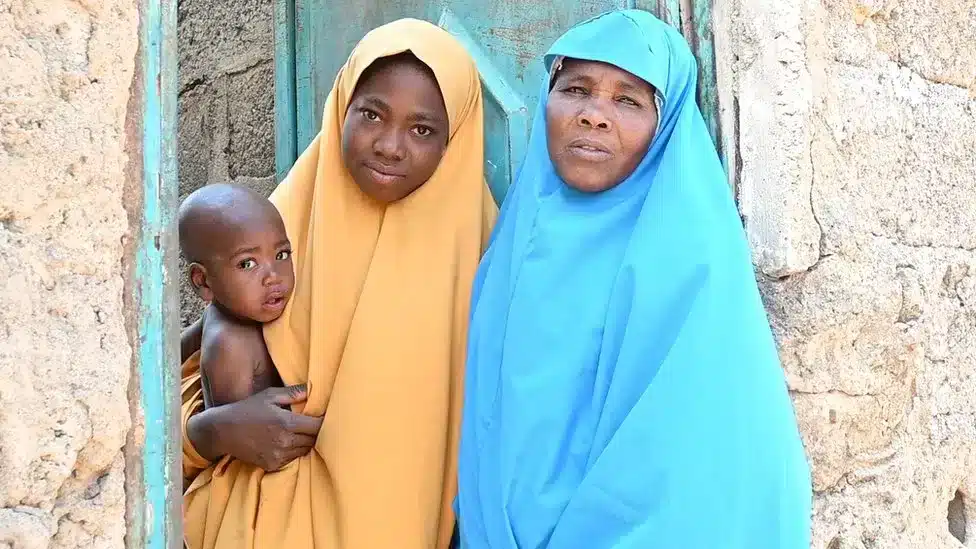
“I gave them all my money and a motorcycle, then pleaded with them not to take me,” said Zaradeen Musa, 30, whose door was kicked in around 01:00 as the armed men, commonly referred to as bandits, operated unchallenged for four hours after repelling a police unit called in by the villagers.
Maria Sani, 45, was seized but managed to slip away as the bandits led the victims to their forest hideout.
She was left wondering what would have become of her if she had not escaped as, like many abducted that day, she could never have afforded the ransom.
All those kidnapped were eventually freed but only after months of negotiations that resulted in them paying with cash or valuables such as motorcycles. The abductions show how far the kidnapping problem has spread – not even the poorest are spared.
Nevertheless, those in Bakiyawwa would consider themselves lucky as the attacks sometimes turn deadly, such as the reported killing of more than 100 villagers by armed men last Friday in another part of Katsina.
Such armed groups in the north-west and violent secessionists in the south-east pose real threats to the 25 February elections, analysts say.
Attacks on offices of the Independent National Electoral Commission (Inec) led to polls being moved by a week in 2019, and the recent burning of an Inec office in the south-east has led to fears of another postponement, although officials have said there will be no delays.
In December, Inec announced that it was too dangerous to hold the polls in some parts of Katsina state but it is not clear what will happen on election day.
Law professor Chidi Odinkalu argues that this election risks being dragged into unchartered legal territory if insecurity hampers voting and a candidate believes they have been robbed of vital support.
In the past, people have stayed away from voting over fears of violence in southern states like Imo, Anambra, Lagos and Rivers, but now, the kidnap crisis in the north has left many disinterested in the elections.
“You let kidnappers take me, now you want my vote,” said Mrs Sani through an interpreter.
Like many here she previously voted for President Muhammadu Buhari but she is sitting this one out.
Image caption,Maria Sani has no interest in the coming elections after the attack on her village
President Buhari is standing down after serving two terms and Bola Tinubu is standing for the governing All Progressives Congress (APC).
“How can you see all the suffering and still vote for the APC?” said Lawal Suleiman, a former party member but now a lone voice in the village campaigning for the Labour Party’s Peter Obi.
Many others in Bakiyawwa say they would probably back the main opposition Peoples Democratic Party (PDP), if they vote at all.
“If Buhari couldn’t solve the problems of this country, no-one else can,” Nana Samaila, who fled her village in Batsari three years ago after attacks by armed groups, told the BBC.
Her daughter, Aisha Mama, also recently fled with her husband from the village of Dangyya after persistent night-time attacks forced her family to sleep in their farm for weeks.
Mrs Samaila had high hopes that President Buhari, a former military ruler who comes from Katsina, would solve Nigeria’s myriad issues when she first voted for him in 2003, but like many others, she is now disillusioned by the failures of his government.
Hundreds of school children have been abducted and released, and the state governor once asked residents to arm themselves against the bandits in a show of helplessness.
The leading candidates in the election recognise that insecurity, which is intertwined with rising food prices that have caused record levels of inflation, is Nigeria’s biggest challenge at the moment.
Atiku Abubakar of the PDP, Mr Tinubu of the APC and Mr Obi of the Labour Party are proposing police reforms, revamping the military and improved welfare, among other ideas.
Their plans are not radically different from what President Buhari, who was elected on a promise of tackling Islamist groups in the north-east, has done with only limited little success.
While he has largely succeeded in containing the Islamist insurgency, violence in the north-west and south-east has massively increased on his watch.
“He scattered [destroyed] the economy, there is so much insecurity,” said Mohammed Yusuf, a farmer originally from Katsina now forced into selling tea and cooked noodles on the streets of the region’s biggest city, Kano.
Image caption,Mohammed Yusuf (L) says he will be voting PDP this time
Kano, Katsina and Kaduna, dubbed the three Ks, are considered key states for whoever wants to emerge as Nigeria’s president because of their large voting population. There are more registered voters here than in the five south-eastern states.
Mr Buhari’s bloc of votes in the trio of states helped him win two elections in a row, and while some will still back the APC, there is a feeling that the party has lost ground in a region battered by insecurity.
Just two weeks ago, this was illustrated when stones were thrown at the president’s helicopter during a visit to Kano.
There is also a dark horse in the form of Rabiu Kwankwaso of the New Nigeria Peoples Party (NNPP). Only his die-hard supporters expect him to win the presidency, but he has emerged as a major disruptor who might decide who becomes the next president.
A former governor of Kano state and one-time defence minister, Mr Kwankwaso is immensely popular in Kano and neighbouring Jigawa state.
If he takes the majority of votes in Kano, whose six million registered voters rank second only to Lagos, it will greatly affect other candidates, especially those of the APC and PDP.
This might work in favour of the Labour Party which does not have a strong support base in the region.
Mr Kwankwaso, like many other Nigerian politicians, has switched parties several times. Last time, he backed the PDP and there are rumours he will step down for its candidate and fellow northerner, Mr Abubakar, at some point.
“He and Obi won’t win, though they are better alternatives to Mr Abubakar who is a crony capitalist,” said Umar Yahaya, a university student driving a taxi in nearby Kaduna.
“But anyone that votes the APC is rewarding them for failure,” he said, as we headed to the recently reopened Rigasa station to board the Kaduna-Abuja train. The line had been shut for months after a deadly attack by militants which saw the killing and abduction of dozens of passengers.
When Mr Buhari inaugurated the line in 2016 it was considered a sign of progress in the north, but now it has become a symbol of the violence consuming the region.
Ethiopia has limited access to social media and messaging platforms amid mounting tensions between the authorities and the Orthodox church.
Netblocks, an organisation that monitors freedom of access to the internet, said the restrictions impacted Facebook, Messenger, Telegram and TikTok.
This comes after the church’s highest body, or the synod, defied a ban by authorities and announced it would go ahead with planned protest rallies.
Schools were closed on Friday following a directive by the authorities.
The Orthodox Church, the country’s largest religious denomination, accuses the government of backing a breakaway faction in Oromia region.
The breakaway clergy accuse the church of maintaining a system of linguistic and cultural hegemony in which congregations in Oromia are not served in their native languages. The church denies the accusation.
Ethiopia has previously been accused by rights groups of blocking access to internet.
Zambians have begun to assess the scale of the devastation caused by flooding, following heavy rain across the country.
The southern African country is currently going through its rainy season and heavy downpours have left roads submerged and buildings flooded.
One southern province and the capital, Lusaka, are reported to be the worst-affected.
PHOTO FOCUS
About 55 herds of livestock in Mazabuka District, Southern Province, have drowned in Kafue River where they were trapped following the rise in water levels after continuous heavy rains. pic.twitter.com/Lu6a8VpHal
The meteorological department warns the rains are likely to become heavier across the country in the coming days.
No figures of human casualties have been issued yet by the authorities but local media outlets have tweeted pictures of drowned cattle after rivers broke their banks.
In Lusaka, residents have been tweeting pictures and videos of flooded toilets and inaccessible buildings after the sewage system got overwhelmed by the floods.
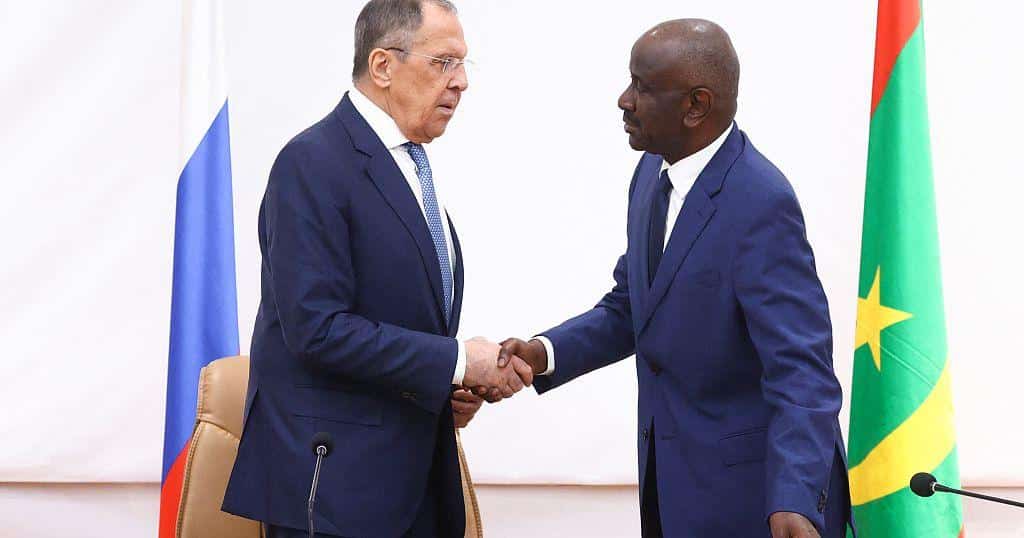
Mali, Guinea, and Burkina Faso’s foreign ministries have requested that their nations be allowed to rejoin the two regional blocs that had suspended them following recent military coups.
In a joint statement, the ministers said they had agreed to work together to push for the lifting of their suspensions from the African Union (AU) and the Economic Community of West African States (Ecowas).
Abdoulaye Diop of Mali, Morissanda Kouyate of Guinea and Burkina’s Olivia Rouamba held talks in Ouagadougou where they “agreed to pool their efforts and undertake joint initiatives for the lifting of the suspension measures and other restrictions” taken by the AU and Ecowas.
The coups in Mali and Burkina Faso were triggered by frustrations following a jihadist insurgency that has claimed thousands of lives in the Sahel countries.
Guinea’s coup, on the other hand, was as a result of public anger against then President Alpha Conde who sought a third term in office, contrary to the provisions of the constitution.
Malawi’s deadliest cholera outbreak has killed at least 1,210 people, the World Health Organization announced Thursday (Feb. 09), urging for strong interventions to prevent the situation from worsening.
The Southern African nation saw a 143-percent increase in the number of cases last month compared to December.
Nearly 37,000 cases were reported since March 2022.
Malawi has carried out two large vaccination campaigns, since the outbreak began. However, due to limited supplies, the authorities offered just one of the usually recommended two oral cholera vaccine doses.
A health ministry spokesman said last month that all the doses had been used.
The global stockpile of cholera vaccines co-managed by the WHO was “empty or extremely low” late last year, against a backdrop of surging cholera outbreaks worldwide.
Confirmed cases have been reported in neighbouring Mozambique, while poor water, sanitation and hygiene pose risk to other bordering nations- the WHO assessed.
The WHO said efforts were under way to improve sanitation and access to clean water, with house-to-house chlorination ongoing in affected communities and districts, among other interventions.
WHO chief Tedros Adhanom Ghebreyesus told reporters Wednesday that there were currently 23 countries in the world experiencing cholera outbreaks.
The institution’s chief, Tedros Adhanom Ghebreyesus, said Wednesday (Feb. 08) that 23 countries across the world were experiencing cholera outbreaks, with a further 20 countries that share land borders with them at risk.
“In total, more than one billion people around the world are directly at risk of cholera,” he warned.
Cholera, which causes diarrhoea and vomiting, is contracted from a bacterium that is generally transmitted through contaminated food or water.
Members of the New Patriotic Party (NPP), who view the replacement of ministers in Nana Addo’s administration as a reshuffle, have been admonished by a National Democratic Congress (NDC) Chairman, Ernest Afayam that they do not comprehend and understand the notion.
Reacting to some changes in the Nana Addo administration, including the nomination of some party members to replace resigned ministers and the movement of some to ministries, Nhyiaeso NDC chairman notes that this is not a ministerial reshuffle.
He told Ultimate FM morning show host Julius Caesar Anadem that Ghanaians were expecting the removal, not just replacement, of a key non-performing minister, the Finance Minister.
“This can’t be a reshuffle; what the president has done has no economic benefit, no technical benefit; how can this be a ministerial reshuffle?” he quizzed.
“You have a car that has a bad engine, and, in this case, I am referring to the finance minister; why is he still there? The reshuffle Ghanaians wanted was the removal of Ken, the finance minister, so the car of government could move well. There is no confidence in what the president has done. No wonder we are where we are with our economy, which has now crushed,” he lamented.
President Nana Addo Dankwa Akufo-Addo has nominated three persons, two of whom are Members of Parliament, to replace ministers who have resigned from their positions.
These are the ministers of Trade and Industry, Agriculture, Chieftaincy and Religious Affairs.
Mr. Kobina Tahir Hammond, the Member of Parliament (MP) for Adansi Asokwa, has been nominated as Minister of Trade and Industry to replace Mr. John Alan Kwadwo Kyerematen.
Member of Parliament for Abetifi, Brian Acheampong, has been appointed Minister-designate for Food and Agriculture.
Member of Parliament for Karaga, Mohammed Amin Adam, who was stationed at the Energy Ministry as deputy minister, has been given a new post. He has been appointed Minister of State at the Finance Ministry. He is set to replace Charles Adu Boahen.
Stephen Asamoah Boateng has been appointed Minister-designate for Chieftaincy and Religious Affairs.
Herbert Krapah, who was Deputy Minister at the Trade Ministry has been moved to the Energy Ministry as Deputy Minister-designate. He replaces Mohammed Amin Adam.
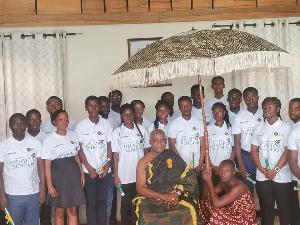
Non-profit organization, Otumfuo Osei Tutu II Foundation, has given needy but brilliant Ghanaian tertiary students scholarships totalling GH1.3 million. The 25 recipients, were chosen from universities across the nation.
The students were given full scholarships to their various courses with most of the beneficiaries perusing Medicine, Law, Vocational and Technical Education related courses and Science, Technology, Engineering and Mathematics (STEM) related programs for the 2022/2023 academic year.
Addressing the students at the scholarship award ceremony in Kumasi on Wednesday, February 8, 2023, the Board Chairperson of the Foundation who doubles as Otumfour Hiahene, Nana Professor Oheneba Boakye Agyei Owoahene II admonished the students to make the best out of the opportunity offered them by taking their studies serious to excel in their disciplines of study.
The internationally acclaimed Spinal Surgeon advised the students to seek knowledge, be unique, have faith, obey their calling and be unstoppable in their respective careers to make the investment in them count.
“With rising costs of college tuition and the potential burden of student debt, pursuing a college degree is out of reach for so many students in Ghana, with the help of our King, we are investing in the leaders of tomorrow by providing a pathway for young adults, regardless of their background or financial status, to reach their educational dreams, and so you have no excuse to excel,” he said.
He commended the Asantehene Otumfuo Osei Tutu II for setting up the foundation which has over the years impacted positively the lives of Ghanaian youth.
Nana Professor Oheneba Boakye-Agyei Woahene II emphasized it is time Corporate Ghana and philanthropists make conscious efforts to complement the activities of the government to make Science, Technology and Mathematics (STEM) a key strategy towards producing middle-level manpower that will propel the country’s socioeconomic development in the near future.
The Executive Director for the Foundation, Nana Afia Kobi Prempeh, for her part said, the scholarship is one of the many projects that the King’s Foundation has over the years undertaking in its Education thematic area in addition to its I.C.T Mobile Learning for Rural Basic Schools, Mass Distribution of Textbooks, Otumfuo Community Reading Challenge, Teachers Awards among other projects initiated to help improve education in Asanteman and Ghana in general.
She explained that the Foundation works under five (5) key thematic areas of Education, Health, Water and Sanitation, Entrepreneurship as well as Culture and Heritage with the primary objective of enhancing the lives of the poor and disadvantaged by providing various interventions through projects and programmes for the people in Asanteman and Ghana in general.
Some of the students after receiving the scholarship could not hold their joy.
They thanked the Asantehene Otumfuo Osei Tutu II and the leadership of the foundation for the opportunity given to them.
One of the beneficiaries Oduro Korankye Ferdinand, Bsc. Materials Engineering at the Kwame Nkrumah University of Science and Technology KNUST has this to say:
“Throughout my whole life, financial stability has been a harsh obstacle and once I received this scholarship, everything changed for the better.”
“I will always cherish this opportunity and make Otumfuo Foundation proud.”
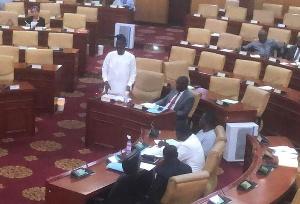
Former head of the minority caucus, Haruna Iddrisu, turned down a position given to him by the minority in parliament after being relieved of that position..
According to him, Collins Dauda is his senior in age and also in terms of his stay in parliament, therefore as a well-trained man, he will not accept the seat.
He however added that he is willing to accept any other seat acceptable to him aside from that of Collins Dauda.
Haruna Iddrisu who was in the chamber decided to contribute to a motion on the floor of the House from the seat of the First Deputy Speaker which is located at the majority side of the House
“Mr Speaker, forgive me that I have to assume your chair, there was [sic] whether I should take over from Collins Dauda or yours and I have told them that honourable Collins Dauda is senior by age and a senior even to this house. So, I will not fit into his chair as somebody who is well-trained from home. So, any other chair Mr speaker acceptable to me, I am still the elected member of parliament for Tamale south,” he said in the chamber on February 9 after he made a contribution.
In line with the NDC’s reshuffle in parliament’s minority leadership, some members of parliament including the former leaders have seen some changes in their sitting positions.
Per the seating arrangement in parliament, the leaders are usually seated on the first row in the chamber and ranking members sit in the row after that.
The two seats in the front row are usually reserved for the seniormost parliamentarian.
Before the reshuffle, Cletus Avoka and Collins Dauda who are the two longest-serving members of parliament occupied these seats.
However, due to the reshuffle, Collins Dauda, MP for Asutifi South has been removed for Haruna Iddrisu to occupy the seat.
Haruna Iddrisu has however refused to seat on Collins Dauda’s seat.
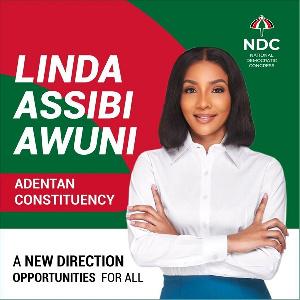
National Democratic Congress (NDC) member, Linda Awuni, has declared her will to serve as the party’s representative in the Adentan Constituency.
The engineer has communicated her plan to contest the position in the party’s upcoming parliamentary primaries scheduled for May 13, 2023.
In a statement announcing her intent, the KNUST alumni said her quest was “borne out of my resolve to ensure a better leadership for the Adentan Constituency and Ghana under H.E. John Dramani Mahama in 2025 and beyond.”
Mrs Awuni believes her contribution will be geared towards helping the opposition party secure election victory in 2024.
Furthermore, with the support and prayers of the constituency executives, Council of Elders and the rank and file of the party and with hard work, I will lead the party to retain the seat of NDC in Adentan Constituency in the 2024 general elections,” she said in a communiqué.
Profile
Linda Assibi Awuni holds a BSc. in Geological Engineering from the Kwame Nkrumah University of Science and Technology.
She also hold a post-graduate diploma in Project Management from the Galilee Institute of Management in Israel.
Currently, she is the Managing Director of BOHA Engineering Limited, an indigenous company specialised in providing engineering solutions and services to industries across Ghana and beyond.
Her father was the first assemblyman for Gbentanaa-Manmomo electoral area in the Adentan before it was carved out of Ashaiman.
Social media has been flooded with posters of actor Fred Nuamah declaring his intension to run in the NDC’s parliamentary election.
This contest comes after his colleagues John Dumelo lost the parliamentary elections in 2020 to Lydia Alhassan of the New Patriotic Party.
Fred Nuamah is a film director and the CEO of the Ghana Movie Awards.
He is also a producer best known for his roles in the movies ‘The Game’, ‘The Prince Bride’, ‘Amakye and Dede’, ‘Heart of Men’, ‘4Play’, among others.
Even thoughJohn Dumelo is yet to make his intention known as to whether or not he would be contesting this year’s parliamentary elections, he has been tipped to be eyeing the Santrokofi, Akpafu, Lolobi and Likpe (SALL) seat.
Meanwhile the NDC is expected to hold its parliamentary and presidential elections on May 13, 2023.
Governor of the Bank of Ghana (BoG), Dr. Ernest Addison, has come under fire from broadcaster Dr. Randy Abbey for allegedly printing more than GHC41 billion in new currency for the government in 2022.
Speaking during his Good Morning Ghana programme on Wednesday, February 8, 2023, Randy Addy said that the BoG, which is supposed to be regulating the country’s financial sector, appears to be breaking all the rules in the sector.
“The issues of the central bank and what we keep hearing about what the central bank is doing is extremely troubling, and it must worry anybody living in this country.
“As we speak, per the IMF programme, we are told that now the government has printed GHC41.9 billion, which is about $3.3 billion. This is money the central bank has printed for the government against all the rules.
“The level of seeming recklessness and lawlessness, and irresponsibility when it comes to the operation of the central bank and the lack of transparency is getting worrying,” he said.
He said that the BoG in 2022 denied the claims of some members of the minority caucus, including the current Minority Leader, Dr Cassiel Ato Forson, that it was illegally printing money for the government, but it turns out the claims are true.
He added that the central bank using back doors to print more money is one of the reasons why Ghana continues to see high rates of inflation.
The broadcaster called on Parliament to summon the governor of the BoG to explain why it keeps flouting the Constitution of Ghana.
Randy Abbey made these remarks while reacting to a Bloomberg report that indicated that the BoG printed GHC41.9 billion for the government in 2022. The central bank is yet to respond to the report by Bloomberg.
The Member of Parliament for Afigya Kwabre North and a member of the Parliamentary Select Committee of Finance, Collins Adomako-Mensah, said that the House did not approve the printing of the GHC41.9 billion by the central bank.
The lighthouse, the library, Alexander the Great, Cleopatra…: in Marseille, the Mucem intends to “remove the varnish” of the myth of Alexandria in an exhibition that plunges into the heart of the Egyptian city thanks to the back and forth between ancient pieces and contemporary creations.
Like Marseille and many other Mediterranean cities, “Alexandria is a port city, a city of emigration, a city of immigration, a cosmopolitan city,” says Arnaud Quertinmont, one of the curators of “Alexandria: Previous Futures” (until May 8 at the Museum of Civilizations of Europe and the Mediterranean, the Mucem).
Founded by Alexander the Great in 331 B.C., the city was the second largest city in the Roman world in antiquity, after Rome. Built to manage the trade of the Mediterranean basin, it is also a center of cultural, religious and scientific influence.
Through five sections exploring the city’s urban planning, the link between power and knowledge, the daily life of the Alexandrians, their religion and the city’s heritage, the exhibition, by juxtaposing some 200 archaeological works and historical testimonies with fifteen contemporary creations, intends to “scratch away at the myth that covers Alexandria and return to archaeology,” summarizes Arnaud Quertinmont.
However, he adds, “we must not evacuate this myth, it is excessively important and shapes our imagination”.
Alexandria is a place of astonishing “cultural bilingualism” – as shown, for example, by this small bronze of the pharaoh represented in the guise of Horus, a man with the head of a hawk adorned with an imperial armour, a symbol of Roman power. Alexandria also stands out for its multiple legacies, from scientific discoveries such as the bases of pneumatics and hydraulics, to its poetry and literature, which are developed in the city’s library and museum.
However, today there are few traces of ancient Alexandria: “Alexandria is a multiple city. Unlike other cities such as Rome, we do not have one occupation that is superimposed on another, the city center has moved,” points out Arnaud Quertinmont.
“Alexandria was partially razed by a tsunami in the 4th century A.D., it was bombed in the 19th century and today it is facing a galloping urbanism. It is therefore difficult to grasp the archaeological reality of Alexandria,” he adds.
Nevertheless, it remains today a city apart, in Egypt, as in the Mediterranean basin, summarizes Sarah Rifky, another of the curators of the exhibition.
“Alexandria is an incredibly important city to understand not only Egypt, but the whole Mediterranean, on the one hand because of its historical heritage (…) but also because the city has been an important node for capitalism and modernization of Egypt and for the essential symbolic political role it plays since the 1950s,” she said.
The United Nations have revealed that the lack of employment opportunities in sub-Saharan Africa is what is allowing jihadist organizations and other violent extremists to draw an increasing number of new members.
The findings from the survey of nearly 2,200 men and women challenge traditional assumptions about what drives people to violent extremism, according to the United Nations Development Programme (UNDP).
– Jobs, family and friends –
The UNDP relies on interviews conducted in 2021 and early 2022 in eight countries: Burkina Faso, Cameroon, Chad, Mali, Niger, Nigeria, Somalia and Sudan.
Nearly 1,200 respondents were former members of violent extremist groups, including volunteer recruits. The majority belonged to some of the most prominent groups in the region, including Boko Haram, the Shebab, and the al-Qaeda affiliated Group for the Support of Islam and Muslims (GSIM, JNIM in Arabic).
A quarter of volunteer recruits cited a lack of job opportunities as their primary reason for joining, an increase of 92% from the findings of a similar 2017 study.
“In many countries, where income and job opportunities are lacking, desperation drives people to take opportunities from anyone,” UNDP boss Achim Steiner noted at a press conference.
Just under a quarter (22%) said they wanted to join family or friends.
Religion was the third reason for joining, cited by 17% of people, down from 57% in 2017. Some 40% of those surveyed cited religion as a key factor then.
In addition, nearly half of those surveyed cited a specific triggering event pushing them to join these groups with nearly three-quarters (71%) citing human rights violations, often committed by state security forces, as their “tipping point.”
– New epicenter –
Terrorism deaths have declined over the past five years globally, but attacks in sub-Saharan Africa have more than doubled since 2016, the UNDP says, counting 4,155 attacks from 2017 to 2021, killing more than 18,400 people.
By 2021, nearly half of all terrorism-related deaths were in that region, with more than a third of them in just four countries – Somalia, Burkina Faso, Niger and Mali – making sub-Saharan Africa “the new global epicenter of violent extremism,” Steiner says.
The UNDP notes, however, that the shift in violent extremist group activity from the Middle East and North Africa to sub-Saharan Africa has received relatively little attention from the international community, which has been preoccupied with the climate crisis, the Covid-19 pandemic, growing authoritarianism and the war in Ukraine.
“We believe there is an urgent need to try to get the attention of the international community … to better understand how violent extremist groups manage to penetrate nations, states and communities,” Steiner said.
– Counter and prevent –
“Security-focused counterterrorism responses are often costly and not very effective. Unfortunately, investments in preventive approaches to violent extremism are woefully inadequate,” commented Steiner.
The report recommends greater investment in basic social services, child protection, education and quality livelihoods. It also calls for scaling up possible exit routes for recruits and investing in community-based rehabilitation and reintegration services.
“It is very important to invest in incentives, which promote disengagement,” according to Nirina Kiplagat, UNDP’s regional advisor for the prevention of violent extremism in Africa.
She calls on local communities to play a central role in supporting sustainable pathways out of violent extremism, alongside government amnesty programs.
Foreign minister of Russia, Sergey Lavrov, had a discussion with President Mohamed Ould Ghazouani and colleague Salem Ould Merzoug during his visit to Mauritania on Wednesday.
The two sides discussed bilateral cooperation across a wide range of areas, as well as regional and international issues.
Mauritania is interested in supplies of hydrocarbon fuel, food and fertilizers from Russia, Russian Foreign Minister Sergey Lavrov said on Wednesday at a press conference after talks with Mauritania’s Foreign Minister Mohamed Salem Ould Merzoug.
“Our friends are interested in supplies of hydrocarbon fuel, foodstuffs and fertilizers from Russia. We spoke about this in detail today, and we are ready to satisfy requests for these goods from Mauritania and other African countries. To this end, we will actively continue to encourage the UN Secretary General to seek the removal of artificial illegal obstacles that the United States and its allies maintain in the way of the logistics and financial chains for the delivery of Russian fertilizers and food to world markets, that’s a part of his package initiative,” Lavrov said.
It’s the first visit of the Russian Foreign Minister to Mauritania during the 60 years of diplomatic relations.
Lavrov later arrived in Sudan on Wednesday evening.
The Coordination of Azawad Movements (CMA), which consists of the three principal armed groups, united on Wednesday in Kidal, a town in northeastern Mali that they have militarily ruled since 2013.
The group includes National Movement for the Liberation of Azawad, the Arab Movement of Azawad and the High Council for the Unity of Azawad.
In concrete terms, the new leadership of the ex-rebels in the North are expecting to put more pressure to the Malian government.
A few months ago, the members of the new alliance suspended their participation in the decision-making bodies of the Algiers peace agreement, accusing the Malian state of backing out of the agreement.
The Coordination of Azawad Movements (CMA), a predominantly Tuareg alliance that fought the state for years before signing the peace deal in Algiers in 2015, blamed the ruling military junta for foot-dragging.
The new movement is already planning, with other armed groups involved in the peace process, to launch a vast operation to secure the populations of northern Mali.
Gauteng, the center of South Africa’s economy, is suffering from water shortages brought on by declining reservoir levels as a result of increasing water use.
As taps are running dry, Dr Ferrial Adam, Water and Environment Manager for the Community Action Network (WaterCAN) believes the cause for the crisis are factors like ageing infrastructure and inequality.
“We cannot deny that there is an additional element that is affecting people’s access to water and that is, on a local government level and municipal level. You have infrastructure deterioration and that is also leading to people not having sufficient water. There’s also the element of the unequal distribution of water in South Africa. Less than 40% to 45% have taps in their homes.” said Adam
Innovative solutions
To solve the issue of water shortage, Boitumelo Nkatlo, BN-Aqua Solutions Founding Director, developed a plant that purifies acidicwaterdisposed by mines. And this purified water can be used for drinking and irrigation.
“We all know that water is life and is a scarce resource. Our take is that we do have water underground. Millions and millions that we are in a position to take and treat and treat it at an affordable price because we are using waste material to treat this to a drinking stage.” explains Nkatlo
Sizwe Mavuso, Colsto Founder, came up with a water tank reuse model that could see water being preserved by communities especially in instances where taps run dry easily.
“The innovation was conceptualised around a construction site I used to work at where people do not have water whatsoever and it boiled down to affordability. The great thing about this solution is that we want to harvest water that we already have and that is grey water.” said Mavuso
According to Greenpeace, water is a very unevenly distributed resource meaning that millions of South Africans already drink water that was captured in reservoirs in excess of 400km away. This water insecurity risk is worsened by increasing climate change.
Rwanda’s economy has been forecast to grow at a slightly slower pace this year before picking up speed again in 2024 and 2025. Finance Minister Uzziel Ndagijimana told parliament Wednesday the economy was forecast to grow 6.2% in 2023 and around 7.5% in 2024 and 2025.
Rwanda is a small but growing market, with a population of nearly 13 million people and a GDP of $10.354 billion, according to the World Bank.
Before the COVID-19 pandemic, the east African nation enjoyed strong economic growth, averaging over seven percent GDP growth annually over the last two decades. The economy grew 6.8% in 2022 according to the finance ministry.
Leading sectors in Rwanda include energy, agriculture, trade and hospitality, and financial services.
A newborn baby has been reportedly rescued from the rubble of her home in northern Syria following a massive earthquake on Monday.
Her umbilical cord was still attached to her mother when she was found, a relative told AFP. Her mother is believed to have died after giving birth.
The baby who is receiving treatment at a clinic in Afrin, is the sole survivor of her immediate family, the rest of whom were all killed when a 7.8-magnitude quake that struck Syria and neighbouring Turkey flattened the family home in the rebel-held town of Jindayris, cousin Khalil al-Suwadi said.
Several small children have been rescued in Kahramanmaras, one of the cities most affected by the earthquake in Turkey.
Nigeria’s Supreme Court on Wednesday temporarily suspended Friday’s deadline to stop using old banknotes, which had caused a cash crisis in the country.
The Supreme Court’s decision comes after a legal challenge initiated by the northern states of Kaduna, Kogi and Zamfara earlier this month.
Many banks have not had enough of the new naira notes, leading to desperate and chaotic scenes as people tried to get their hands on them.
There were fights at ATMs, protests and mob attacks on commercial banks, local media have been reporting for days now.
The chaos led to concern that it could affect this month’s elections, as many Nigerians do not have bank accounts.
The head of the election commission said some election service providers will need to be paid in cash, and that could prove to be difficult.
The Central Bank said the currency redesign would help it tackle inflation, which is currently running at about 21%, curb counterfeiting and promote a cashless society.
It added that 80% of the notes currently in circulation were being held outside financial institutions.
It hoped the redesign would bring some of that money being hoarded by individuals and companies back into the financial system, and so stop prices from rising so quickly.
Their lawyers argued that the government’s policy had led to an “excruciating situation that is almost leading to anarchy in the land”.
After careful consideration of the motion exparte in the application, Justice Okoro granted the prayer.
Ruling on the motion, Justice Okoro held that “An order of Interim Injunction restraining the federal government through the Central Bank of Nigeria (CBN) or the commercial banks from suspending or determining or ending on February 10, 2023, the time frame with which the now older version of the 200, 500 and 1,000 denomination of the naira may no longer be legal tender pending the hearing and determination of their motion on notice for an interlocutory injunction”.
The case has been adjourned to 15 February for a hearing of the main suit.
Kristal Higgins just wants to be healthy, become a nurse and travel to Greece. But she has kidney failure and has been on a transplant waiting list for six years.
The disease and its comorbidities have touched many of her loved ones. Her mother has Stage 2 kidney disease. Her father has diabetes, a risk factor for kidney failure, as did her late grandmother. Several of her relatives have kidney failure.
Black people are almost four times as likely to be diagnosed with renal failure as white people – but many are often diagnosed late, and it takes longer to get on transplant lists.
That’s because of an antiquated kidney function test that can overestimate kidney function in Black patients, which masks the severity of their kidney disease and results in late diagnosis and delayed transplant referrals.
The test has drawn scrutiny from experts in recent years.Last summer, the Organ Procurement and Transplantation Network board, which links transplant centersand develops policies, prohibited use of the calculation.
And in what experts are calling an unprecedented move to correct racial inequity in access to kidney transplants, the board recently approved a waiting time adjustment for Black transplant candidates.
It’s a “restorative justice project in medicine,” said Dr. Martha Pavlakis, nephrologist and kidney transplantation committee chair at the transplantation network.
The new backdating policy, which took effect this month, aims to make up for that lost time for Black kidney transplant candidates who should have qualified for a transplant sooner but didn’t because the test showed their kidney function wasn’t severe enough.
The policy requires kidney transplant programs to identify and notify Black candidates who should have qualified sooner. Programs have a year to identify patients and apply to the network for waiting time adjustments.
Hanging out in a local park, lake, or garden really could be an antidote to ill health for people who live in cities, according to a recent study from Finland.
Researchers found lower use of drugs for depression, anxiety, insomnia, high blood pressure, and asthma among urban residents who often visit green spaces—regardless of their income or level of education.
The Finnish team said that the frequency of visits to urban green spaces, rather than simply viewing them from your house, was key.
Previous studies have suggested that exposure to natural environments is good for health and well-being, but the evidence is inconsistent.
The Finnish team looked at the number of green and blue spaces (bodies of water) within a community, then compared those to both the frequency of visits and the views of such spaces from home, to see if they were separately associated with the use of certain prescription medications.
They chose prescription meds as a proxy for ill health and those for anxiety and insomnia, depression, high blood pressure, and asthma, in particular, because they are used to treat common and potentially serious health issues.
They drew on the responses of 16,000 randomly selected residents of Helsinki, Espoo, and Vantaa—the three cities making up the largest urban area in Finland.
The survey gathered information on how city dwellers over the age of 25 experience residential green and blue spaces within a one-kilometer radius of home.
Participants were also asked to report their use of prescribed meds—drugs collectively known as mental health drugs used for insomnia and depression, as well as high blood pressure and asthma drugs—for periods ranging from within the past week, within the past year, or never.
They were also asked how often they spent time, or exercised outdoors, in green spaces, during May and September, with options ranging from never to five or more times a week.
Participants reported whether they could see green or blue spaces from any of their windows at home, and if so, how often they took in those views, with options ranging from seldom to often.
Potentially influential factors—including outdoor air pollution and noise, and household income and educational attainment—were also considered.
The findings, published last month in the journal Occupational and Environmental Medicine, showed that neither the number of green/blue spaces nearby, nor views of them through your window, were associated with the use of the studied meds.
But the frequency of visiting the green spaces was.
Compared with less than one weekly visit, visiting three or four times weekly was associated with 33 percent lower odds of using mental health meds, 36 percent lower odds of using blood pressure meds, and 26 percent lower odds of using asthma meds.
Central Park in New York by Ajay Suresh, CC license
The equivalent figures for visiting at least five times a week were 22 percent, 41 percent and 24 percent lower, respectively.
One study conducted recently in Spain also showed that living near a leafy green area did cut the risk of a stroke by 16 percent.
“The effects of visiting green spaces were stronger among those reporting the lowest annual household income,” said senior researcher Dr. Anu Turunen. “But overall, the associations found did not depend on household income and educational attainment.”
“These observed associations were weakened when weight was factored in, particularly for asthma meds, as obesity is a known risk factor for asthma,” added Turunen, of the Finnish Institute for Health and Welfare.
Finnish cities are relatively green, making it easy for those willing to use green spaces to access them with minimal effort.
“Mounting scientific evidence supporting the health benefits of nature exposure is likely to increase the supply of quality green spaces in urban environments and promote their active use.
Source: goodnewsnetwork.org
DISCLAIMER: Independentghana.com will not be liable for any inaccuracies contained in this article. The views expressed in the article are solely those of the author’s, and do not reflect those of The Independent Ghana
Eritrean President Isaias Afwerki has travelled to Kenya for two-day official visit.
The 77-year-old rarely leaves Eritrea, a one-party state with a highly militarised society that has been diplomatically isolated in recent years.
On the invitation of President William Ruto, President Isaias Afwerki has departed to Nairobi in mid-morning hours today for a two-day official visit to Kenya. Presidential delegation includes Foreign Minister Osman Saleh and Presidential Adviser Yemane Ghebreab pic.twitter.com/59A1fbqO54
Eritrean Information Minister Yemane Gebre Meskel tweeted that the president was expected to hold talks with his Kenyan counterpart, William Ruto, in Kenya’s capital, Nairobi.
Last month Eritrean and Kenyan leaders agreed to safeguard regional peace and security.
I have this morning received the visiting President of the State of Eritrea, H.E. Isaias Afwerki. The President is in the country for a two-day official visit where he is expected to meet his host President @WilliamsRuto for bilateral talks between our two countries. pic.twitter.com/JUlSYv75FV
Police in South Africa have launched an investigation and appealed for witnesses following the theft of a corpse from a grave in the northern province of Limpopo.
A relative made the discovery on Sunday when she went to the cemetery to clean the area in preparation of the upcoming unveiling of the tombstone.
To her shock she found a gapping hole by the grave and the body of Modike Philemon Masedi missing.
The suspects accessed the graveyard by cutting the fence then dug a hole next to the grave to gain access to the coffin and stole the corpse, the police said.
Mr Masedi reportedly died on 15 January and was buried seven days later.
“The motive for this incident is unknown at this stage,” Brigadier Motlafela Mojapelo, a police spokesperson, said.
Provincial police boss Thembi Hadebe has urged people in the area to “desist from pointing fingers” to avoid any form of vigilantism.
In an attack on a UN convoy in eastern Democratic Republic of Congo on Tuesday, three demonstrators were killed, as revealed in a statement by the UN.
The UN mission in the country (Monusco) said it “deplored the deaths” during the attack in Munigi, North Kivu province.
It said the protesters had forced the convoy to stop and proceeded to set four trucks on fire.
The victims died while peacekeepers, accompanied by Congolese soldiers, “tried to protect the convoy”, according to the statement.
Rebels have recently captured large swathes of territory in the volatile province, sparking public anger against the UN and the East African regional force.
Recent fighting has killed hundreds of people and displaced thousands more.
The UN has called for an investigation into violence in the self-declared republic of Somaliland where at least 50 people have been killed during two days of fighting between regional government troops and local militias.
Medics in the city of Las Anod say they are struggling to cope with the number of casualties.
The city is in an area (Sool) which is also claimed by the Somali region of Puntland.
The authorities there have denied that troops from Puntland are fighting alongside local militias.
The president of Somalia, Hassan Sheikh Mohamud, has called for all sides to hold talks to end the conflict.
Somaliland broke away from Somalia in 1991 but has not been internationally recognized.
Foreign minister for Tunisia,Othman Jerandi has been dismissed by President Kais Saied.
The president appointed Nabil Ammar, Tunisia’s ambassador to the European Union, to replace Mr Jerandi. He did not give a reason for Mr Jerandi’s dismissal.
A career diplomat, Mr Jerandi became foreign minister under Mr Saied in September 2020.
He becomes the fourth minister to lose his position this year, with the trade, agriculture and education ministers having already been replaced.
President Saied carried out a series of measures in 2021 to enhance the power of the presidency at the expense of parliament and the judiciary.
Opposition parties boycotted the 2022 parliamentary elections, accusing the president of staging a coup after shutting parliament in 2021 and giving himself almost unlimited executive powers.
Just about 11% of Tunisians turned out for a second round of parliamentary voting last month.
There has been a deepening political and economic crisis, amid protests by Tunisians increasingly frustrated with the state of the economy and against Mr Saied’s seizure of near total power.