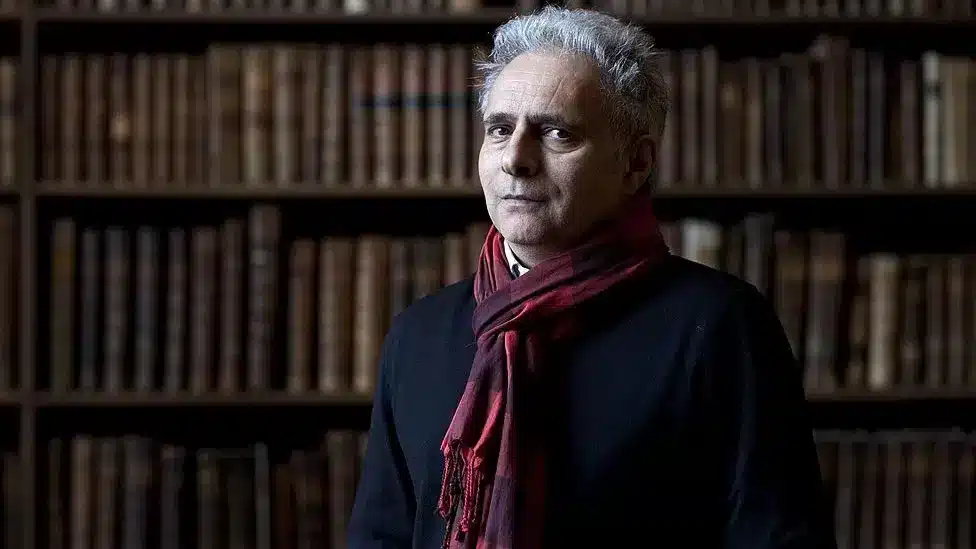
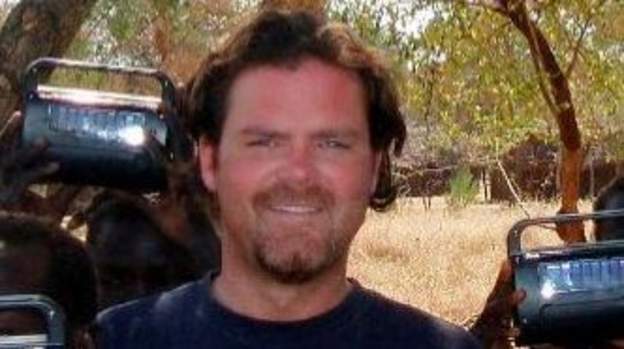
The Oscar-nominated screenwriter Hanif Kureishi has told the BBC he “saw death” after being paralysed following a fall in December.
The award-winning author of My Beautiful Laundrette and The Buddha of Suburbia fell while on holiday in Rome on Boxing Day.
The episode left him unable to move his arms and legs.
In his first international broadcast interview, he told the World Service’s Newshour how his life has changed.
“I saw Death; Death was chattering to me” he told me, convinced he was going to die, and said he wanted to video-call his children to say goodbye, but was persuaded against it by his girlfriend, Isabella D’Amico.
He eluded death but is now learning to live with his transformed circumstances. He has some feeling in his arms and legs but can’t do anything.
A physiotherapist says he may be able to hold and use a fork in a few weeks. And then there is the surprise of a new and growing audience for his work: millions of people are reading the words he is dictating on his blog, about what has happened to him, but also what he is learning about himself and the human condition.
He has never written like this before, preferring writing in a book with a fountain pen, and a computer for re-writes.
Now, he dictates his thoughts and has been amazed by the response; an accident that came out of an accident.
He says he has often felt alone and sleeps little, listening to the World Service, BBC Radio 3 and 4, and has had some comfort from knowing people like his writing and are rooting for him, in the midst of what he describes as despair, all the time.
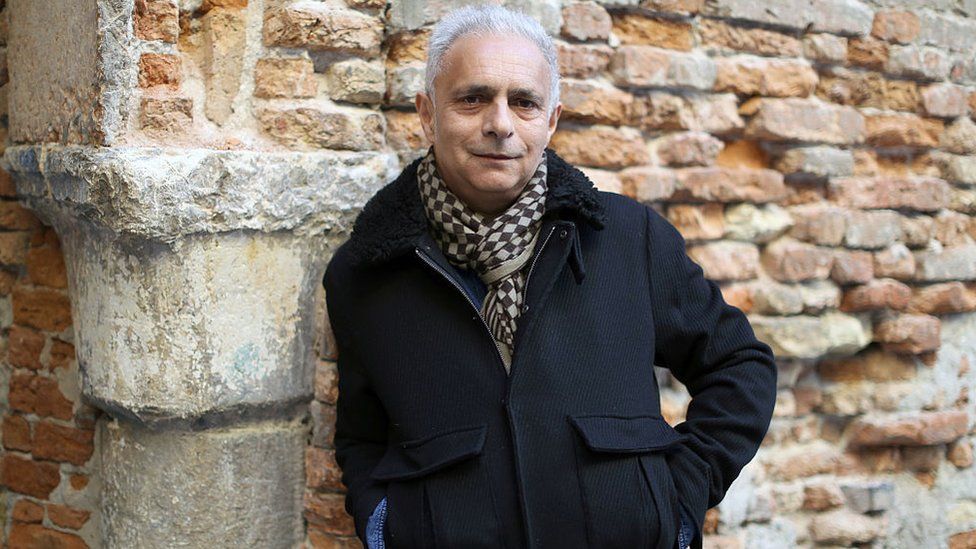
Image caption,His 2006 screenplay Venus earned best actor nominations at the Oscar, Bafta and Golden Globe awards for veteran actor Peter O’Toole
The words he has been dictating have been life-affirming, dark, funny and alive to his reality.
And shifted what he thinks about disabled people: “Suddenly, I walked through the door of sickness, and I have been transformed.
“I had never really thought about the condition of disabled people and now I know. There isn’t a family in the world that will not have some experience of a disabled person.
“We are living in a world of agony and pain that I never knew existed, and I want to see the world from these people’s point of view.
“I also want to set up a charity for writers who are disabled, called Metamorphosis, after the Kafka novel.”
His friend the writer Salman Rushdie, who was attacked at a literary event in the summer last year, is in touch with him, regularly, sending amusing texts.
According to Kureishi, Rushdie does not talk about what happened to him, saying that he’s very private.
“Whereas, I do talk about what happened to me. I need to remember my identity as a writer, in the only way I can.”
When I asked him if he was a patient, he said he wasn’t. But he had to be.
What he wants is for his hands to come back, so he can write and type. They will, he thinks, but it could take six months.
He says of that question that sick people often ask themselves – why me? – the simple answer came from a school friend: why not me?
What makes any of us think that we will be the exception, that illness will not strike us down?
Kureishi, who is nearly 70, says he is grateful that it has happened to him towards the end of his life.
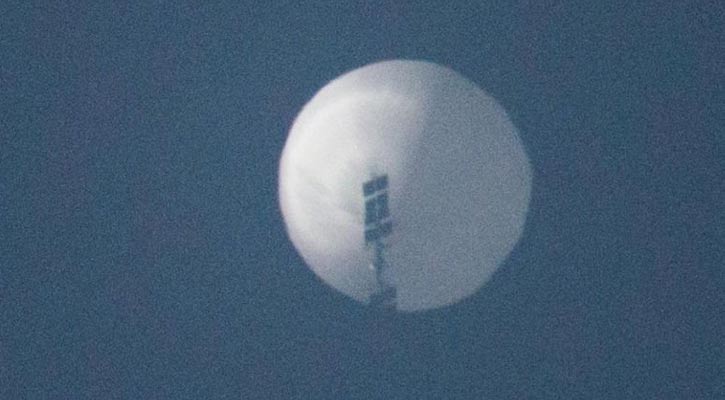
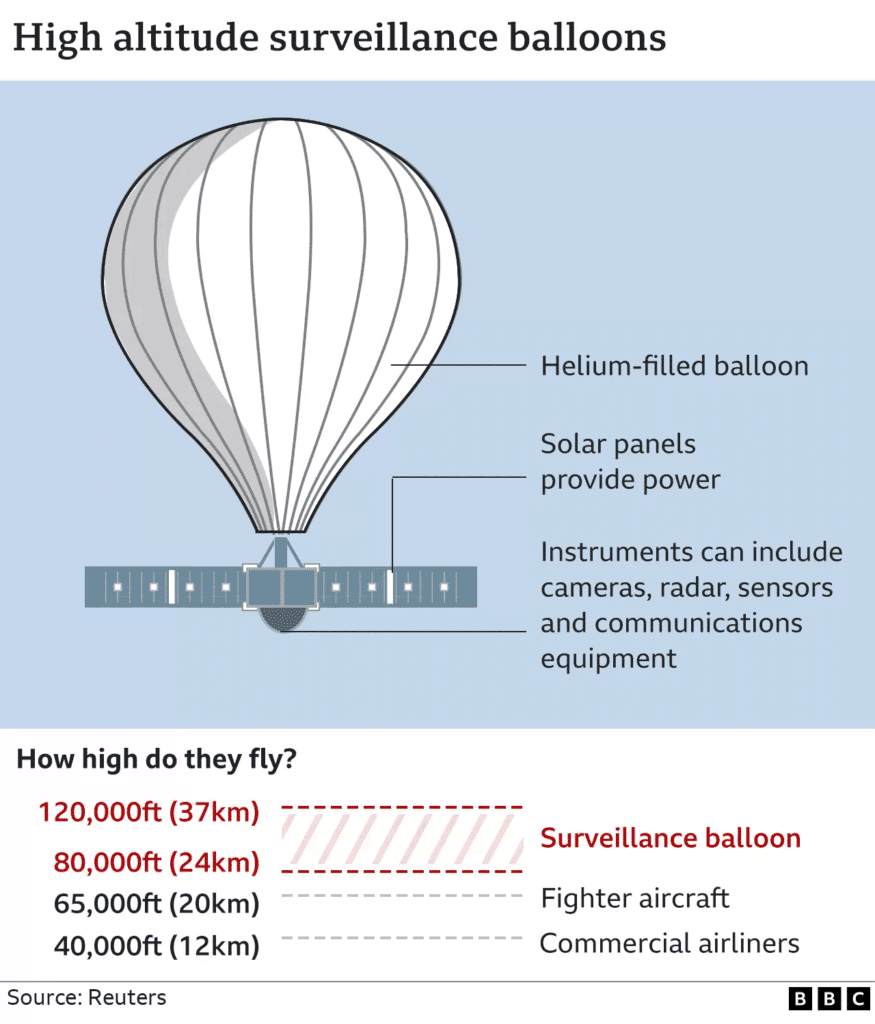
The US has shot down a giant Chinese balloon that it says has been spying on key military sites across America.
The Department of Defence confirmed its fighter jets brought down the balloon over US territorial waters.
China’s foreign ministry later expressed “strong dissatisfaction and protest against the US’s use of force to attack civilian unmanned aircraft”.
Footage on US TV networks showed the balloon falling to the sea after a small explosion.
An F-22 jet fighter engaged the high-altitude balloon with one missile – an AIM-9X Sidewinder – and it went down about six nautical miles off the US coast at 14:39 EST (19:39 GMT), a defence official told reporters.
Defence officials told US media the debris landed in 47ft (14m) of water – shallower than they had expected – near Myrtle Beach, South Carolina.
The military is now trying to recover debris which is spread over seven miles (11km). Two naval ships, including one with a heavy crane for recovery, are in the area.
In a Pentagon statement a senior US defence official said that “while we took all necessary steps to protect against the PRC [China] surveillance balloon’s collection of sensitive information, the surveillance balloon’s overflight of US territory was of intelligence value to us.
“We were able to study and scrutinise the balloon and its equipment, which has been valuable,” the official added.
US President Joe Biden had been under pressure to shoot it down since defence officials first announced they were tracking it on Thursday.
Afterwards, Mr Biden said: “They successfully took it down, and I want to compliment our aviators who did it.”
In a statement a few hours later, the Chinese foreign ministry said: “The Chinese side has repeatedly informed the US side after verification that the airship is for civilian use and entered the US due to force majeure – it was completely an accident.”
The discovery of the balloon set off a diplomatic crisis, with US Secretary of State Antony Blinken immediately calling off this weekend’s trip to China over the “irresponsible act”.
The Chinese authorities have denied it is a spying aircraft, and instead said it was a weather ship blown astray.
Reacting to the incident, Taiwan’s foreign ministry said in a statement: “The Chinese Communist Party government’s actions that violate international law and violate the airspace and sovereignty of other countries should not be tolerated in a civilised international community.”
China considers self-ruled Taiwan a breakaway province that will eventually be under Beijing’s control. President Xi Jinping has not ruled out the possible use of force to achieve this.
But Taiwan sees itself as independent, with its own constitution and democratically-elected leaders.
President Biden first approved the plan to down the balloon on Wednesday, but the Pentagon said it had decided to wait until the object was over water so as not to put people on the ground at undue risk.
Groundwork for the operation was laid when the US Federal Aviation Administration (FAA) briefly paused all civilian flights at three airports around the South Carolina coast on Saturday afternoon because of a “national security effort”.
The coast guard also advised mariners to leave the area due to military operations “that present a significant hazard”.
An eyewitness on the coast, Hayley Walsh, told BBC News she saw three fighter jets circling before the missile was fired, then “we heard a huge boom, the house shook”.
One senior military official told CNN the recovery of debris should be “fairly easy” and could take “relatively short time”. The official added that “capable Navy divers” could be deployed to assist in the operation.
Defence officials also revealed on Saturday the balloon had first entered US airspace on 28 January near the Aleutian Islands, before moving to Canadian airspace three days later, and re-entering the US on 31 January. The object was spotted in the US state of Montana, which is home to a number of sensitive nuclear missile sites.
Relations between China and the US have been exacerbated by the incident, with the Pentagon calling it an “unacceptable violation” of US sovereignty.
Mr Blinken – America’s top diplomat – told Beijing it was “an irresponsible act” ahead of his now-cancelled trip on 5-6 February – it would have been the first such high level US-China meeting there in years.
But China sought to play down the cancellation of his visit, saying in a statement on Saturday that neither side had formally announced a plan for a trip.
China’s foreign ministry said Beijing “would not accept any groundless conjecture or hype” and accused “some politicians and media in the United States” of using the incident “as a pretext to attack and smear China.”
On Friday, the Pentagon said a second Chinese spy balloon had been spotted – this time over Latin America with reported sightings over Costa Rica and Venezuela.
Colombia’s Air Force says an identified object – believed to be a balloon – was detected on 3 February in the country’s airspace at above 55,000ft.
It says it followed the object until it left the airspace, adding that it did not represent a threat to national security.
China has not yet commented publicly on the reported second balloon.
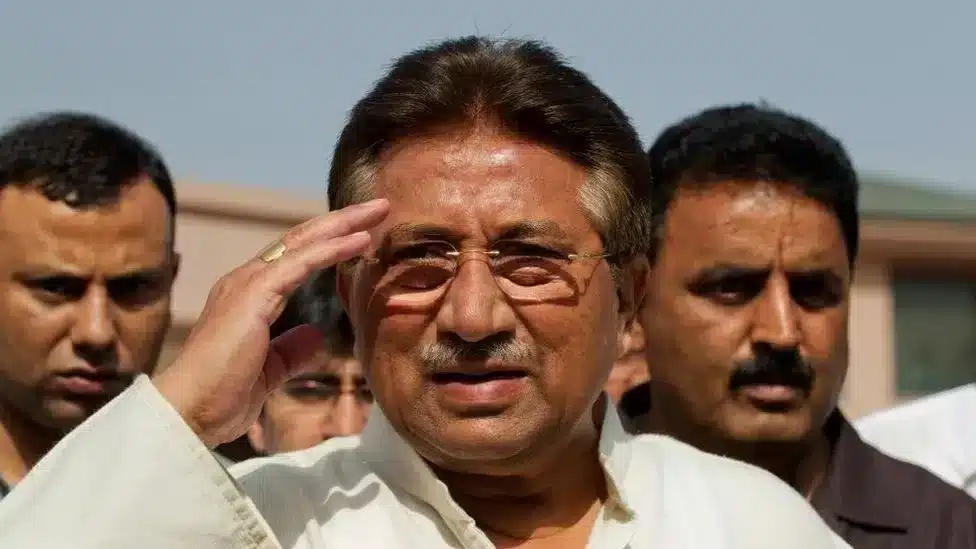
The former leader of Pakistan, General Pervez Musharraf, who overthrew the government in a coup in 1999, passed away at the age of 79.
The former leader – who was president between 2001 and 2008 – died after a long illness, a statement from the country’s army said.
He had survived numerous assassination attempts, and found himself on the front line of the struggle between militant Islamists and the West.
He supported the US “war on terror” after 9/11 despite domestic opposition.
In 2008 he suffered defeat in the polls and left the country six months later.
When he returned in 2013 to try to contest the election, he was arrested and barred from standing. He was charged with high treason and was sentenced to death in absentia only for the decision to be overturned less than a month later.
He left Pakistan for Dubai in 2016 to seek medical treatment and had been living in exile in the country ever since.
In the statement confirming the death, the military said it expressed its “heartfelt condolences” and added: “May Allah bless the departed soul and give strength to bereaved family.”
Pakistan’s President Arif Alvi prayed “for eternal rest of the departed soul and courage to the bereaved family to bear this loss”, his office said in a statement cited by AFP news agency.
Pakistan’s Prime Minister Shehbaz Sharif also expressed his condolences, as did the country’s military leaders.
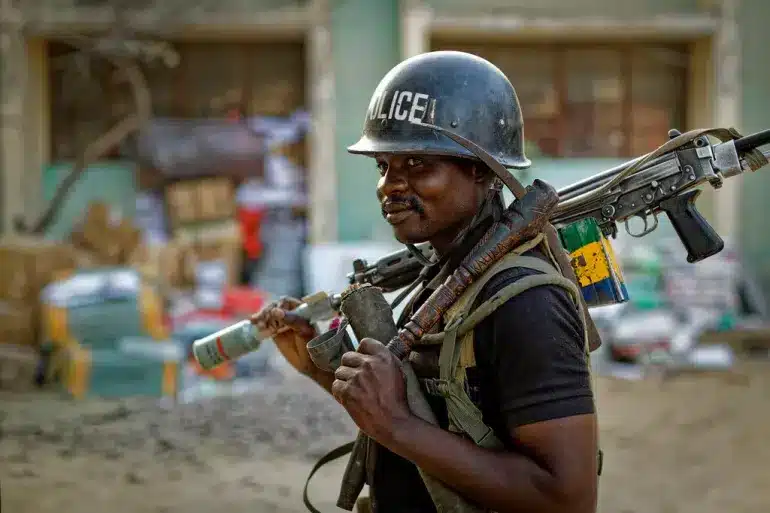
The most recent violence before the parliamentary and presidential elections in Nigeria saw over 40 people dead in skirmishes between vigilantes and gunmen in the country’s northern Katsina state.
Katsina state police spokesperson Gambo Isah said on Friday that an armed gang, known locally as bandits, attacked a village in Katsina’s Bakori local government area and had rustled cattle and sheep before fleeing into the bush.
A local vigilante group mobilised and pursued the gunmen, which led to the deadly clash and large loss of life on Thursday, the spokesperson said.
“A joint security operations is currently ongoing with a view to bringing the perpetrators to book,” Isah said.
Katsina is one of the northern states hardest hit by armed gangs who attack and kidnap people from villages and highways in remote parts of the region where security forces are stretched.
Lack of security has become widespread and is a key concern for voters ahead of the February 25 election to choose new members of parliament and a successor to President Muhammadu Buhari, a former military ruler who came to power eight years ago promising to end insecurity.
Two security sources put the death toll in Katsina at 50. The bodies of those killed were recovered on Friday from the bush. Those injured in the clashes were taken to Kankara hospital in the state, the sources said.
Katsina special adviser on security Ibrahim Ahmed said communities were discouraged from taking the law into their own hands through vigilantism as it would lead to deadly consequences.
Tunisia’s powerful UGTT trade union has accused President Kais Saied of targeting it as a distraction from record low election turnout and what’s been called a “total failure” of his economic policies.
On Friday 3 February UGTT chief Noureddine Taboubi held a meeting in Gammarth to discuss the arrest of the union’s senior official Anis Kaabi earlier in the week.
The country faces high inflation and a shortage of basic goods.
Mr Taboubi said: “The president is trying to divert attention from the record low election turnout in the first and second round of legislative elections and the utter failure of his economic and social decisions.”
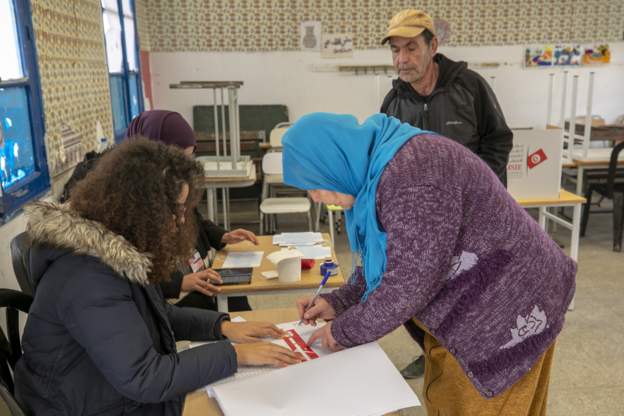
Tunisia held elections last weekend for a parliament stripped of its powers by Saied. It was boycotted by almost 90 percent of voters after critics accused him of trying to silence his political opponents.
Mr Taboubi added: “”Why is the UGTT a target? Because [the authorities] want to pass the painful reforms they are always discussing.
“In order to pass these painful reforms, they need to distract the public with trivia by saying that the reason for this situation is the UGTT.”
The head of the million-member union federation, which jointly won the 2015 Nobel Peace Prize for its role in Tunisia’s democratic transition, said Kaabi had been arrested to send “a clear message, that the UGTT is a target”.
Kaabi was detained on Monday after workers at toll barriers on Tunisian highways went on strike for better pay, meaning tolls usually paid to the state-owned highways company went uncollected for two days.
Critics of the government saw the 11.4 percent turnout as a rejection of Saied’s post-revolution political system which gave him new powers and made him virtually unimpeachable.
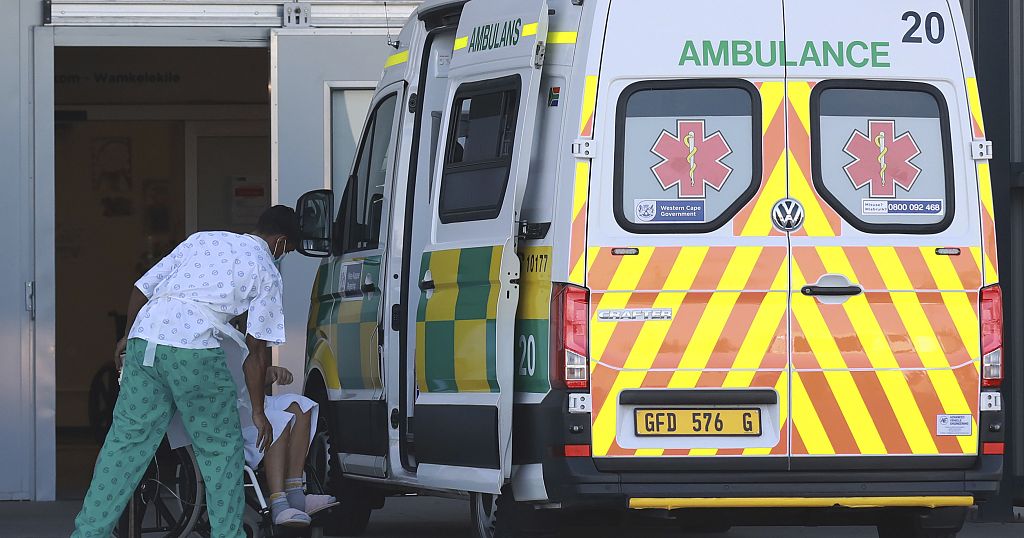
Many South Africans, who already struggle without electricity for hours on end, now also have to go without water as power failures batter the delivery system.
A power failure at a pump station feeding reservoirs and water towers caused taps to run dry in parts of Johannesburg and Pretoria, provincial utility Rand Water said this week.
This further aggravated residents who for months have had to plan mundane activities such as cooking and do laundry based on a daily blackout schedule.
Thomas Mabasa, a rail worker, said he had taken to showering at work — a luxury not afforded to his children.
“(They) have to go to school without bathing,” the 43-year-old told AFP.
He was among frustrated locals who took to the streets in Soshanguve, a township north of the capital, this week to protest the situation.
Demonstrators disrupted traffic, blocking roads with stones and waste.
“Sometimes we wait to see if the water will come back in the middle of the night to wake the kids up so they can shower before it runs out again,” Mabasa said, as tyres burned on the street behind him.
Theft and vandalism
Africa’s most industrialised economy has been crippled by record power cuts in the past year, as troubles at debt-laden state energy firm Eskom worsened.
The utility provides about 90 percent of the country’s electricity.
But for years it has failed to keep pace with demand as it struggles to maintain its ageing coal-powered infrastructure.
Water and sanitation ministry spokeswoman, Wisane Mavasa said the government was working with water utilities “to improve the situation”.
“(The) energy crisis is impacting the water infrastructure,” she said.
One problem is that machinery is constantly being restarted because of power cuts, and this accelerates breakdowns, the government said.
Pump stations and water-treatment, which need a steady flow of power to work properly, have been badly impacted, it said.
Criminality has also contributed to the crisis, with Johannesburg’s municipality saying hundreds of water tanks were stolen or vandalised in 2022.
Water-scarce country
Hospitals and schools have not been spared.
Kalafong hospital in Pretoria, endured two days of no water at the weekend.
Journalism student Ethel Malatji, 21, said her and colleagues at the Tshwane University of Technology in Pretoria were unable to cook, clean or bathe.
“We don’t even have water to drink,” she said. Her studies have also been disrupted by protesters burning tyres on a road she crosses to access part of the campus, she said.
The problems have especially hit Johannesburg’s Gauteng province, but not exclusively.
Cape Town has had to close some of its beaches due to a sewage spill following electrical faults at some of its sewer stations.
Increasing demand has also put a strain on supply in the country’s southeast forcing authorities to implement water rationing.
That might become more common if energy and infrastructure problems are not addressed, said Dewald van Niekerk, who heads the African Centre for Disaster Studies at North-West University.
“Electricity needs to drive those pumps,” said van Niekerk.
South Africa — an already water-scarce country — is set to experience extreme drought conditions in the next few years with the expected return of the El Nino warm weather pattern, he warned.
The CHAN final between Senegal and Algeria is scheduled to take place on Saturday in Algiers, where at least 40,000 spectators are anticipated.
Algeria go into the final not having conceded in five matches with goalkeeper Farid Chaal, standing in for the suspended Alexis Guendouz, troubled only during a brief spell of second-half Nigerien pressure.
“We faced the Senegalese national team in Annaba (a friendly match in December 2022).Fantastic team. They play good football. They have a (youth) academy. But we also have a good team, individually and collectively. We aim to implement our manager’s instructions on the pitch, and I hope that we can be a better team. The more focused team will win,” said Soufiane Bayazid, an Algeria player.
Algeria reached the final after thrashing Niger 5-0 for the biggest win in the tournament in 15 years.
For the first time in its history, Senegal will participate in the CHAN final on Saturday against Algeria.
Senegal defeated Madagascar 1-0 to book their place in the final.
To this stage, Algeria have kept three clean sheets while the Lions of Teranga have experienced conceded in all four clashes by eight goals.
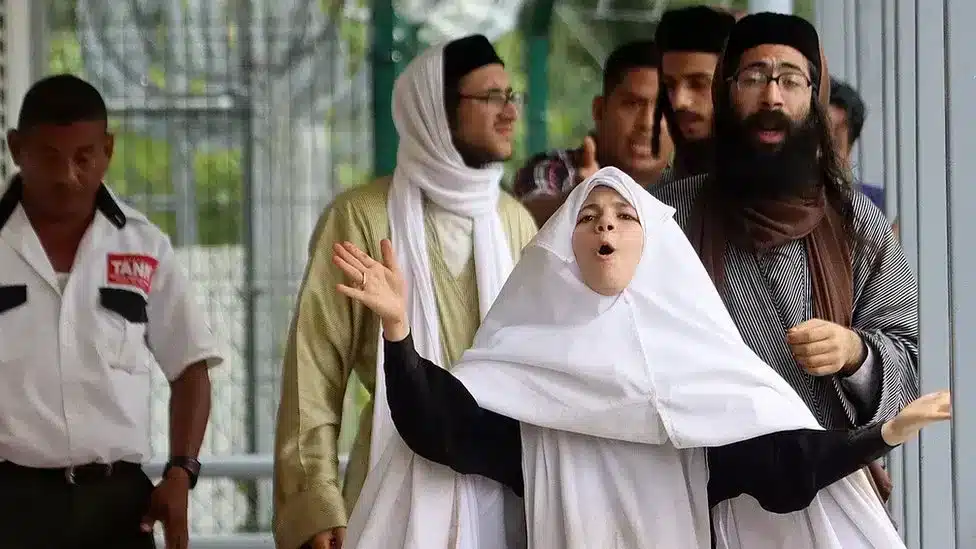
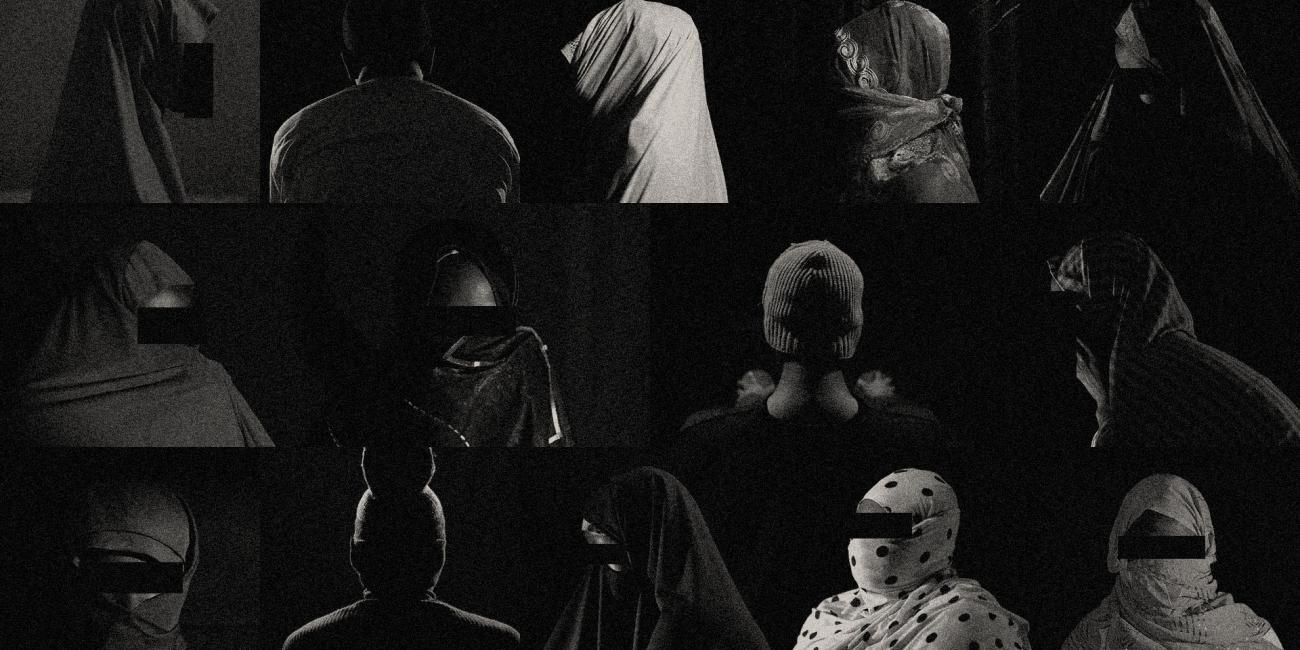
When Mexican police raided a self-styled Jewish sect, former members hoped it would spell the end of the group, which has been accused of crimes against children. Instead, the case collapsed and the sect recovered – but not before details about the cloistered community were exposed, including its plans for mass slaughter if outside authorities intervened. One former member, who recently fled, spoke to the BBC about his ordeal.
When Yisrael Amir got married, he and his bride stood under the chupah, the traditional Jewish wedding canopy, surrounded by members of their community. But what should be a couple’s happiest day was for them a nightmare.
Yisrael and his wife, Malke (not her real name), were both 16 and had met there and then for the first time. The marriage had been organised by leaders of the group which they had been brought into as children. The group is Lev Tahor, Hebrew for Pure Heart, which claims to follow a fundamentalist version of Judaism. Former members though, along with an Israeli court among others, say it is nothing but a cult.
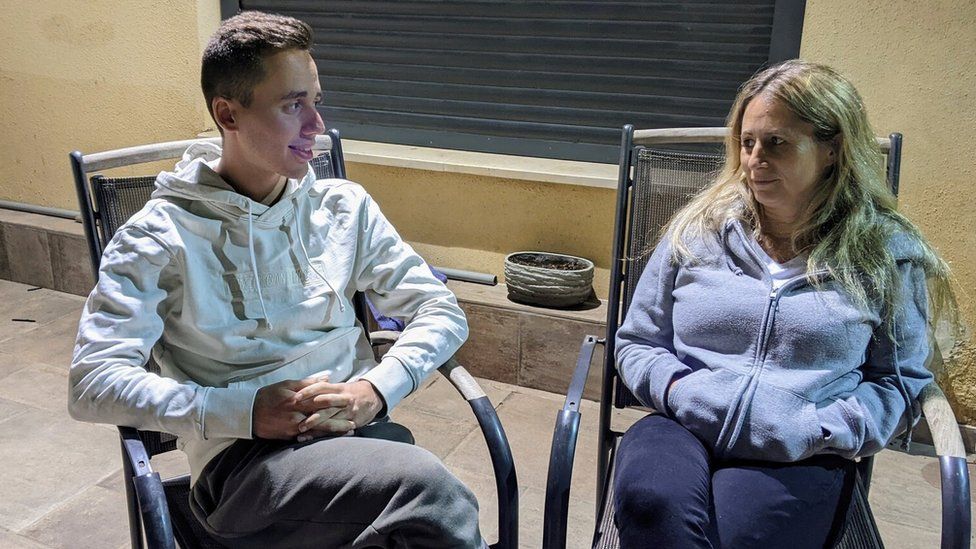
“We had no choice,” Yisrael, now 22, tells me as we sit and talk in the back yard of his aunt’s house, just south of Tel Aviv. “The rabbi called me into his office and said, ‘Next week you’re getting married. If you refuse you get punished’.
“My sister was 13 and they forced her to marry a 19-year-old. She was crying. She cried so much they punished her by banning her from speaking for a year. She could not say a word – not ask for food, not ask for the toilet, nothing.”
Image caption,Yisrael’s aunt, Orit, has been deeply involved in the fight against Lev Tahor
This was part of life at the group’s compound in Guatemala, where the legal age for marriage is 18 for both men and women. Most of Lev Tahor had settled in the Central American country in 2013 after fleeing Canada, where it faced allegations of child abuse. It has denied these claims.
Yisrael says his sister could not speak properly after the year-long punishment ended. Such treatments are part of a catalogue of alleged abuses meted out by leaders and those in positions of authority in the group, according to Yisrael and other former members. These reportedly include beatings for minor infractions, with children forced to thank their tormentors for hitting them.
But, according to Yisrael, there was much worse.
“I saw every day Shlomo Helbrans [the founder of Lev Tahor] and another leader take boys in their room, boys as young as eight, then afterwards he sent them to the mikveh [ritual bath used for purification]. I didn’t understand what he did with them. Now I know.”
Yisrael says boys and girls told him they were sexually abused – and raped.
The BBC tried to speak to alleged child victims of rape who have left the group, but none were willing to talk. A US-based support group, Lev Tahor Survivors (LTS), told the BBC there are child rape victims among its members, while a source involved in an official investigation says Central American authorities have sworn statements from ex-members that rapes were committed.
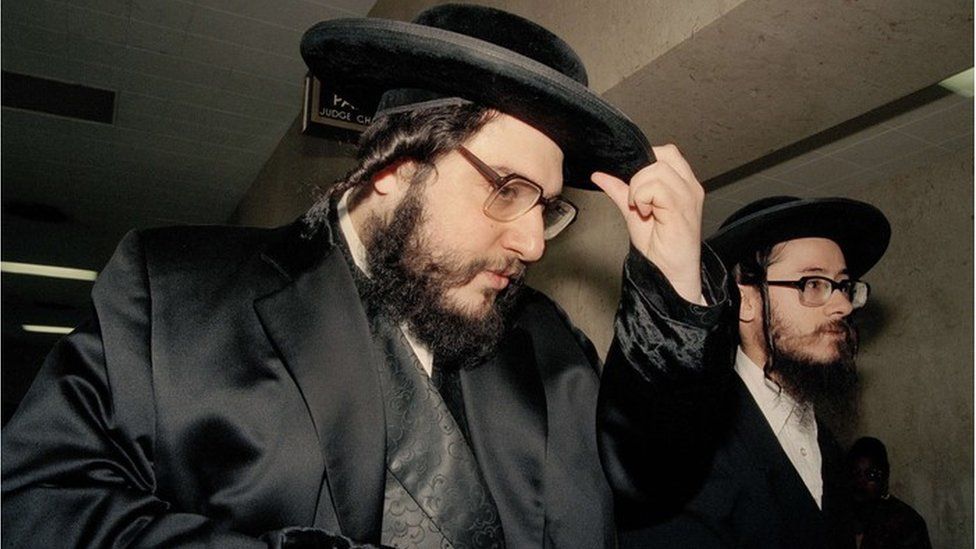
Image caption,Shlomo Helbrans (left) founded and led the group until his death
“Helbrans cast himself as a Messiah-like figure who could do what he liked because he was a holy man,” says Yisrael. “He told us he had come from Heaven to ‘mend’ people and had supernatural powers and his followers believed him.”
One of the ways the group exerts control over its members, Yisrael says, is to remove children from their parents and place them with new “families”. Biological parents are forbidden to have any further contact with them.
This is what happened to Yisrael. At the age of 12, he was taken from their home in Israel, along with his six siblings, to join the group in Guatemala City by their father, Shaul. Yisrael says Lev Tahor had falsely promised his family that life in Guatemala would be paradise, with animals for the children to play with.
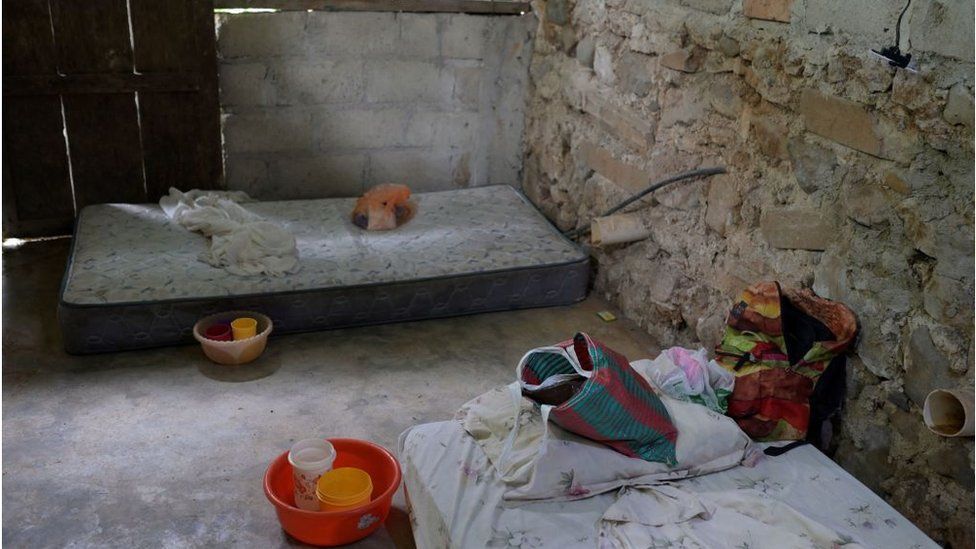
Instead “it was a complete shock,” he says. “Everyone was separated from each other. Children had to sleep on stone floors. We were woken up about 3am every day, then prayers all day long, no food, no water, no talking to other children. If the rabbi [Helbrans] lectured us, it would go on for hours. Sometimes I would fall asleep standing up.
“Every single thing was controlled. You could only go to the toilet when they said you could.”
“We had no education. We did not even study Torah [holiest books of the Jewish Bible] or Talmud [a principal Jewish book of laws] because that would have opened our minds – just Helbrans’ writings, which we had to learn by heart. We did not go to sleep until 11pm.”
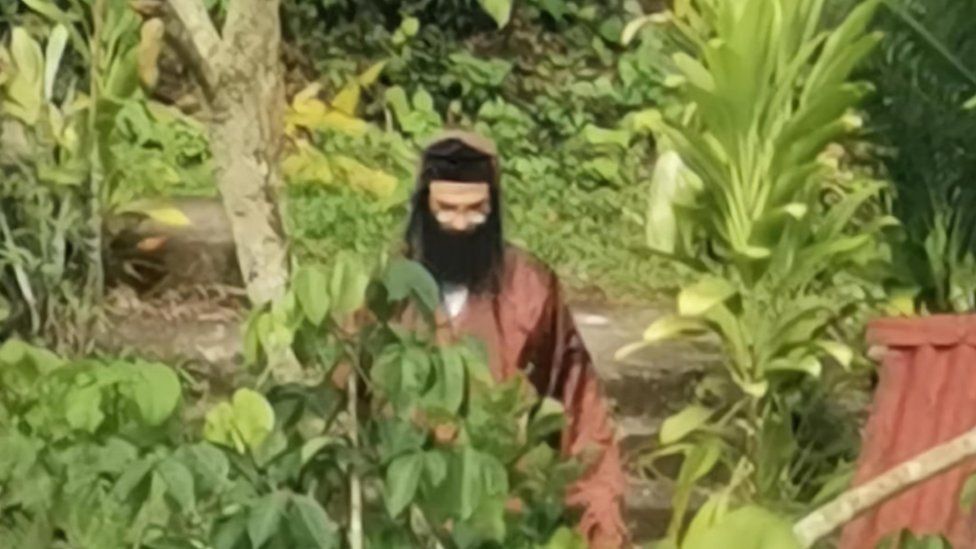
Image caption,The community based itself in the jungle, isolated from the outside world (surveillance photo)Image caption,The group was covertly watched by an undercover Israeli team and police
Yisrael says members were only allowed to eat certain vegetables and fruit. The leaders banned meat, fish and eggs, claiming that they may be affected by genetic engineering. This they said rendered them unkosher (prohibited under Jewish dietary laws). Yisrael believes the real reason was just to keep members weak by depriving them of protein.
“Helbrans, though, ate everything he wanted – eggs, fish, meat. He said it was for his health, and you weren’t allowed to question it.”
Helbrans died in Mexico in 2017, drowning in a river. His son, Nachman, described in US court documents as “more extreme” than his father, took over.
“When I was taken there as a child, I just knew it all felt wrong but couldn’t do anything,” says Yisrael. “But later I just knew I had to get out.”
That point came when his wife Malke had a baby boy, Nevo, two years after they were married.
“They knew where you were at all times, but one day the leaders sent me to get something printed in the town [Oratorio, to where the group had moved]. It was an internet store, and I remembered what a computer looked like from when I was a child back home. I didn’t know how to use one, so I asked the store owner for help.”
After learning about Google, Yisrael asked the owner to look up Lev Tahor – and was shocked by what he found. “There were articles about this cult, and it confirmed what I thought.” Among the results were reports about how his aunt, Orit, back in Israel, was fighting the group.
“I thought that Orit had forgotten us,” says Yisrael. “I didn’t know she was doing everything to rescue our family.”
Yisrael found her email address and sent her a message. Orit says she was shocked to get it. They started communicating, with Yisrael returning to the store whenever he was sent on errands. Then using money he had secretly earned, Yisrael bought a mobile phone and rang his aunt.
“When she heard my voice she was so happy,” he says with a smile. “She told me she would come to take me out, and a few days after that I escaped.”
“One night I slipped out the gate and ran for 15 minutes through the jungle until I came to a highway. I stopped a bus and it took me to Guatemala City, about two hours away. I was frightened members would come looking for me.
“Orit was waiting for me but I didn’t recognise her, and at first I didn’t know whether to hug her because she was not dressed like women in Lev Tahor, where touching the opposite sex [outside of marriage] was strictly forbidden.”
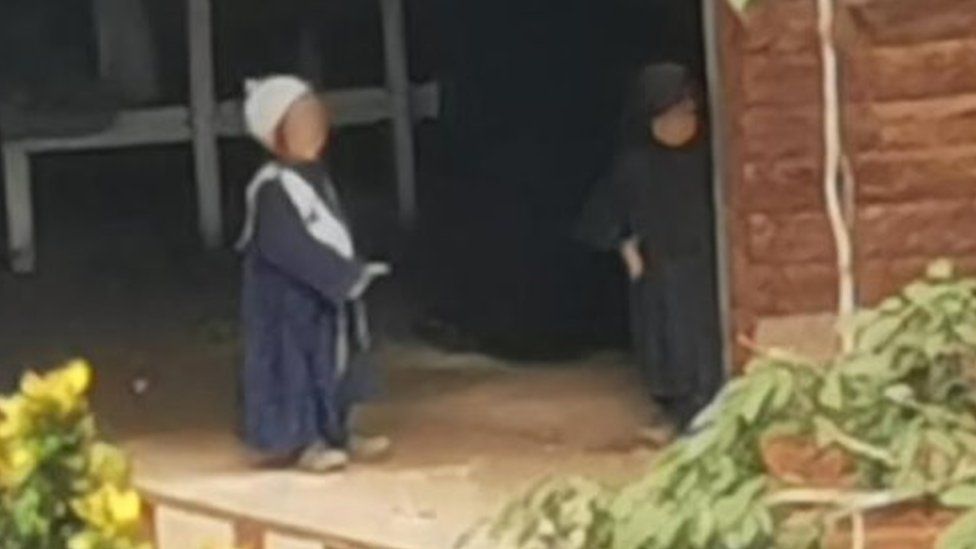
One of the hallmarks of the group is its requirement for females from the age of three to wear a full-body cloak, which it argues is for modesty. In public, females are seen to also cover their faces apart from their eyes. The practice has earned Lev Tahor the nickname the Jewish Taliban in media reports.
At first Yisrael did not want to leave without his son, but Orit promised they would return for the boy, and they left Guatemala for Israel. By then 19, Yisrael had in effect been living an isolated existence for five years and struggled to adjust.
“I had to start life from zero,” he says, “to meet people, to make friends, to even learn the language again – it was very, very difficult.”
He and Orit returned to Guatemala several times to try to reclaim Yisrael’s son, but to no avail.
Then, last September, following an undercover operation by a four-man team (including former Mossad agents, an ex-police officer and a lawyer) from Israel, an elite police unit raided Lev Tahor’s hideout in Mexico’s Chiapas state, to where some of the group had relocated.
Image caption,Members were forced to live in squalid conditions at the base in Mexico
The raid had been authorised by a state judge who had examined evidence of criminal activity, including drug trafficking and rape, gathered by Mexico’s Special Prosecutor for Organised Crime. This included an order which the BBC has seen from a leader of the group, instructing mothers to kill their children – apparently with poison – if welfare services came to take them away.
“If some people come to take our children from us… we have to sacrifice lives so the cursed ones will not desecrate the spirit of our pure children… [in] the way it was instructed by our holiness [Shlomo Helbrans] before he died,” a translation of the document reads.
“It must be done in a way they [the children] don’t suffer… nor disfigure their body… so they [women] will use what we will distribute [which] has to be given to the children immediately… without explaining to them what it is so as not to frighten them.”
It then instructs the women to kill themselves after they have killed the children.
Children were immediately separated from adults as a precaution and the compound emptied.
Nevo was among those brought out and was reunited with Yisrael. “I cried,” Yisrael says, “but Nevo was calm. I’m sure he felt that I was his father.”
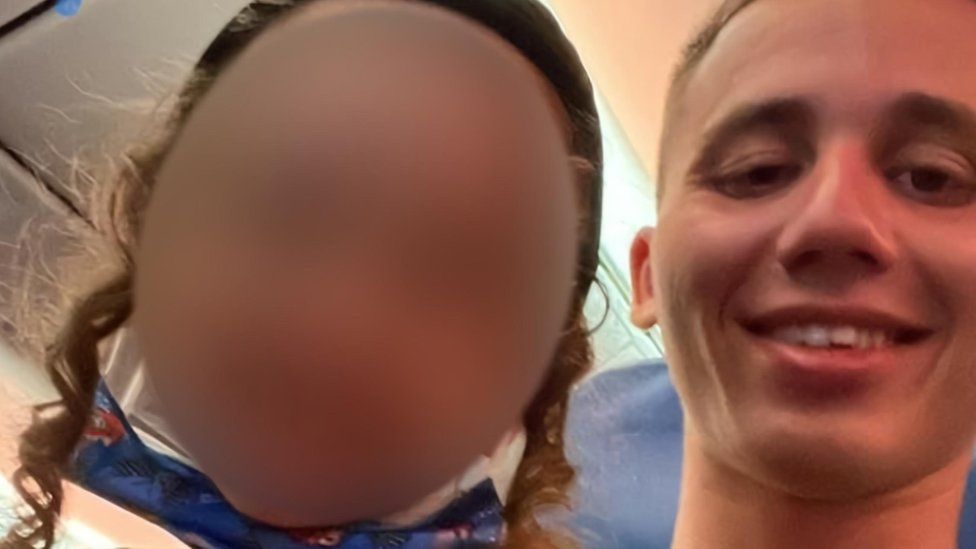
Image caption,Yisrael flew back to Israel with Nevo after the boy was released in the raid
Malke was also evacuated but refused to leave the group. She and two dozen others were held at a government shelter, but five days later they escaped. Two leaders arrested on the orders of the state judge on suspicion of human trafficking and serious sexual offences were freed by a local judge.
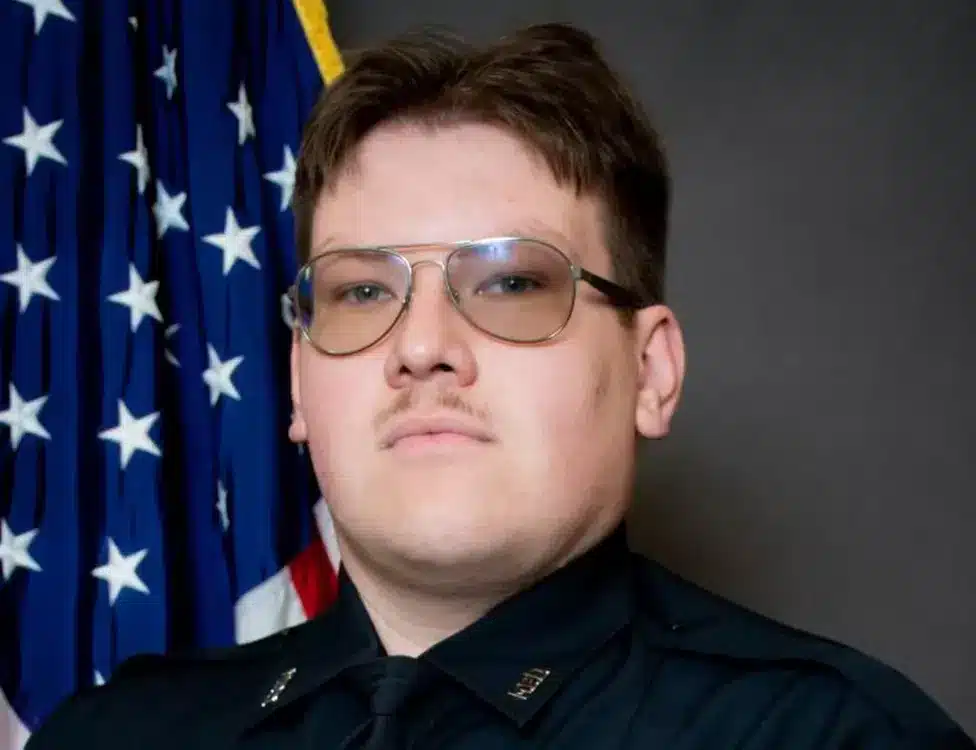
A sixth police officer involved in the events leading to the arrest of Tyre Nichols has been fired, the Memphis police department has said.
An internal police investigation found officer Preston Hemphill had “violated multiple department policies,” including stun gun deployment rules.
Mr Nichols, a 29-year-old father, died in hospital three days after being pulled over and beaten by police.
Five other police officers have already been fired and charged with his murder.
Mr Hemphill, who had served in Memphis’ police force since 2018, was suspended from the force while he was investigated for his role in the arrest of Mr Nichols. But that information was not made public until Monday.
A police statement released on Friday said that as well as breaking rules relating to the deployment of a stun gun, Mr Hemphill had broken rules of “personal conduct” and “truthfulness”.
A lawyer representing Mr Hemphill, Lee Gerald, told Reuters “while we disagree with this termination, Preston Hemphill will continue to cooperate with all authorities in the investigation into the death of Mr. Nichols.”
Videos released by Memphis police last week showed an officer firing a Taser at Mr Nichols after he was pulled from his car during a traffic stop.
Mr Nichols managed to escape the scene, before then being caught up and brutally beaten by officers.
Five officers, who are all black, have been charged with Mr Nichols’ murder, who was also black.
Three Memphis emergency workers have also been fired for failing to provide adequate medical treatment for Mr Nichols at the scene.
A seventh officer has been suspended but has not been identified.
Other police officers, emergency workers and others who prepared documentation of the incident may also face criminal charges, Shelby County District Attorney Steve Mulroy said in comments cited by Reuters.
Tyre Nichols’ death has led to protests and reignited discussion about police brutality in the US.
At his funeral earlier this week, which was attended by US Vice-President Kamala Harris, his grieving family called for justice and reform.
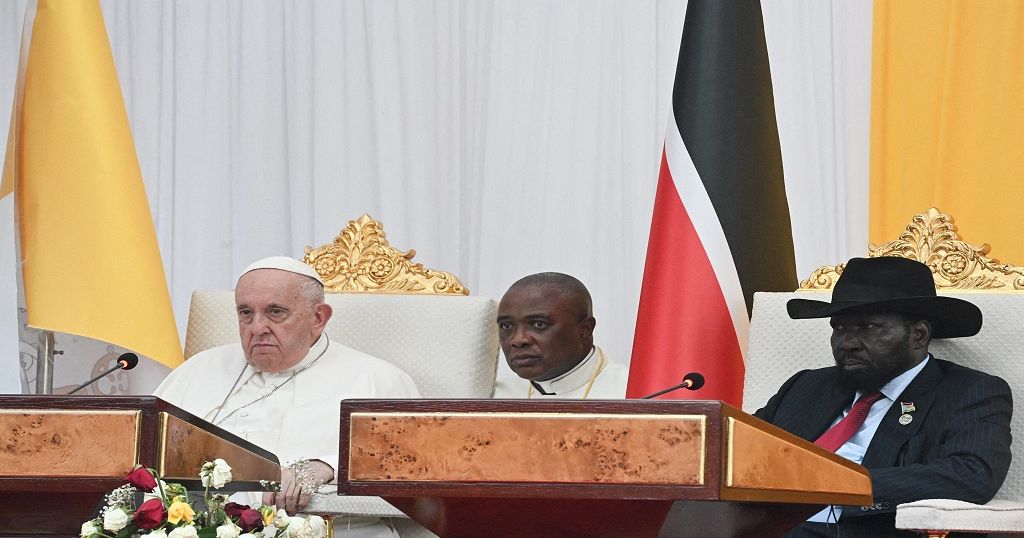
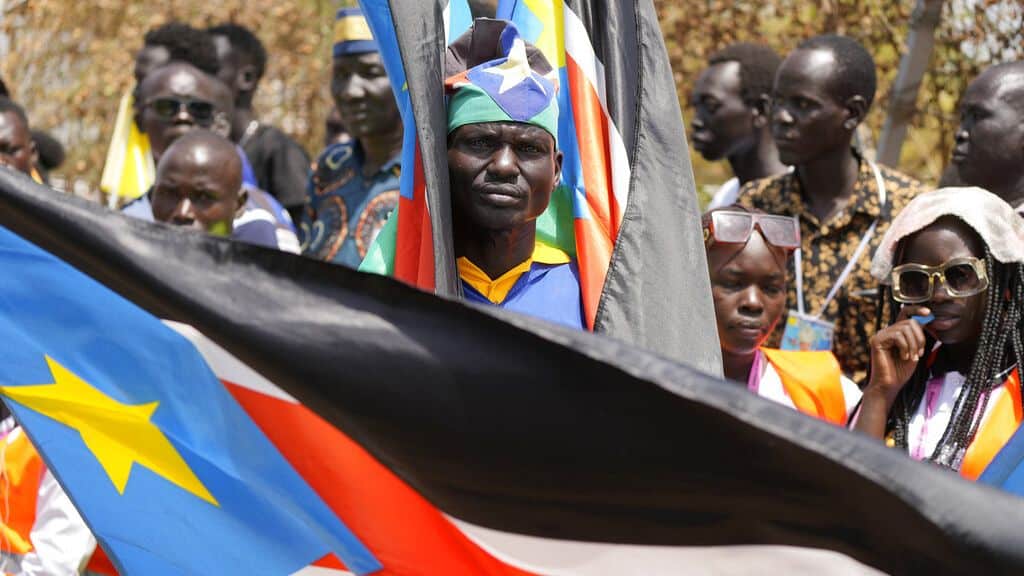
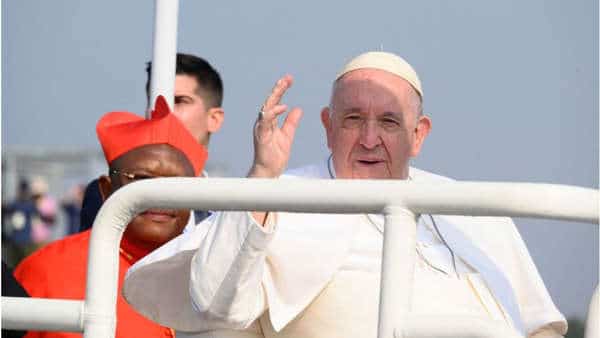
Pope Francis made a plea for peace in South Sudan while speaking at event sitting side-by-side with the country’s president on Friday.
Francis, on a novel ecumenical peace mission to the world’s youngest country, warned South Sudan’s political leaders on Friday that history will judge them harshly if they continue to drag their feet implementing a 2018 peace accord.
Accompanying him to the overwhelmingly Christian country were the Archbishop of Canterbury, Justin Welby, and the moderator of the Church of Scotland, the Rt. Rev. Iain Greenshields.
They hope to cast a spotlight on what Francis has called a “forgotten crisis.”
South Sudan gained independence from the majority Muslim Sudan in 2011, but has been beset by civil war and conflict.
The Catholic, Anglican and Presbyterian leaders have called for the country’s political leaders to put aside their differences and work for the good of their people.
In his first address on South Sudanese soil, Francis addressed former rivals Kiir and deputy Riek Machar, who were gathered in the garden of the presidential palace.
“Dear President and Vice-Presidents, in the name of God, of the God to whom we prayed together in Rome, of the God who is gentle and humble in heart, the God in whom so many people of this beloved country believe, now is the time to say, ‘no more of this,’ without ifs or buts. No more bloodshed,” Francis said.
Kiir, Machar and other opposition groups signed the peace agreement in 2018 ending five years of civil war that killed hundreds of thousands of people.
But the deal’s provisions, including the formation of a national unified army, remain largely unimplemented. The delays have forced the postponement of the country’s first presidential election for another two years.
Meanwhile, clashes have continued, including attacks this week in the south that killed 27 people.
Combined with flooding last year, the number of internally displaced people has topped 2 million and the U.N. has warned that humanitarian needs are soaring.
Francis and Welby first announced plans to visit South Sudan in 2017, but security concerns repeatedly thwarted the trip.
In an effort to move the process forward, Francis presided in 2019 over a joint prayer in the Vatican, and famously got down on hands and knees and kissed the feet of South Sudan’s rival leaders, begging them to make peace.
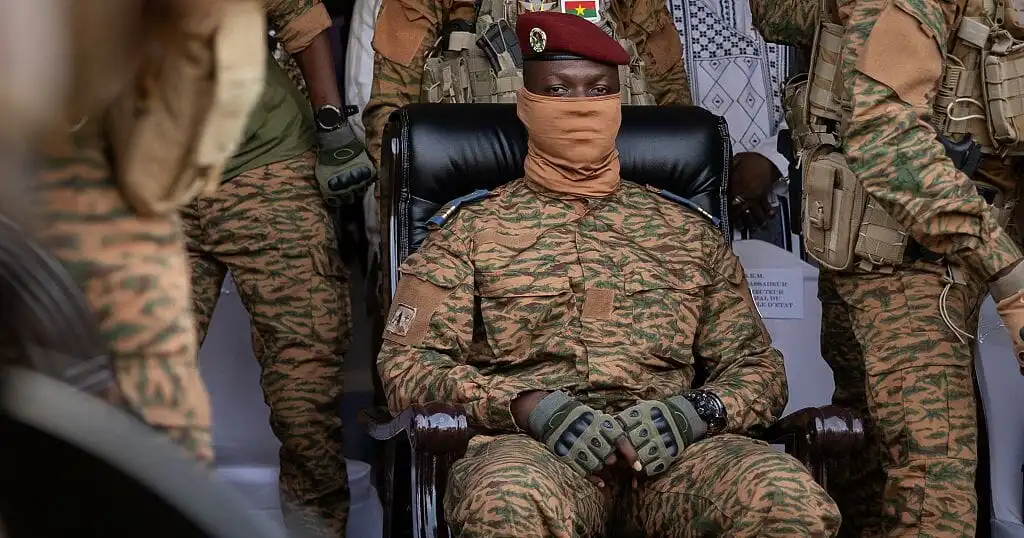
It comes after he asked the former coloniser to withdraw its forces. He also denied Russian Wagner mercenaries, a private army of Russian President Vladimir Putin, were active in the country.
He said: “We’ve heard everywhere in the press that Wagner is in Ouagadougou. That’s also how we heard about it. I’ve asked some people who say, ‘Oh really? Where are they?’
“We’ve since heard that they’re even in a hotel somewhere, we’re surprised to hear about that.”
“There’s a general state of mind whereby if you deal with Wagner, everyone runs away from you, so it’s something which has been created in order that everyone shuns us – well congratulations, good job.”
Former colonial power France had special forces based in Ouagadougou, but its presence had come under intense scrutiny as anti-French sentiment in the region grows, with Paris withdrawing its ambassador to Burkina Faso over the junta’s demands.
Last month Paris confirmed the special forces troops, deployed to help fight a years-long jihadist insurgency, would leave within a month.
However, Ibrahim Traoré insisted diplomatic relations were unharmed.
“The French embassy is here,” He said. “French nationals are here, just as ours is there, so diplomatically nothing has changed.
“This is about an agreement over military presence, and as they have said, our sovereignty is up to us, so that’s what we are expressing through our denunciation of this agreement. So there is no breaking off of diplomatic relations, or hatred of any particular country.”
Protests demanding the departure of French troops have continued in the country despite assurances they would leave anyway.
Thousands of civilians, troops and police have been killed in Burkina Faso, more than two million people have fled their homes and around 40 percent of the country lies outside the government’s control.
Anger within the military at the mounting toll sparked two coups in 2022, the most recent of which was on September 30, when 34-year-old Traoré, seized power.
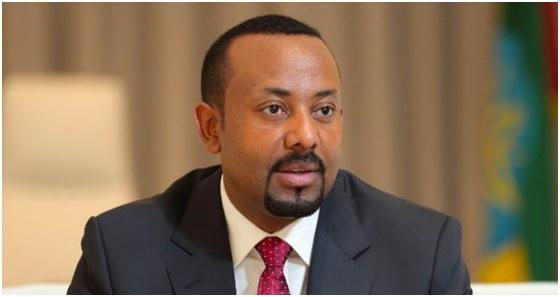
Ethiopia’s Prime Minister Abiy Ahmed has met Tigrayan leaders for the first time since the two sides signed a peace treaty three months ago.
Pictures released by Ethiopian state media show Mr Ahmed and other government officials sitting down with top Tigrayan figures, including the commander of Tigrayan forces, General Tadesse Worede.
They’re reported to have discussed the progress made in implementing the peace deal, as well as issues needing further attention.
The agreement ended a two-year civil war that had ravaged the country’s northernmost region.
The meeting is reported to have taken place at a resort in southern Ethiopia.
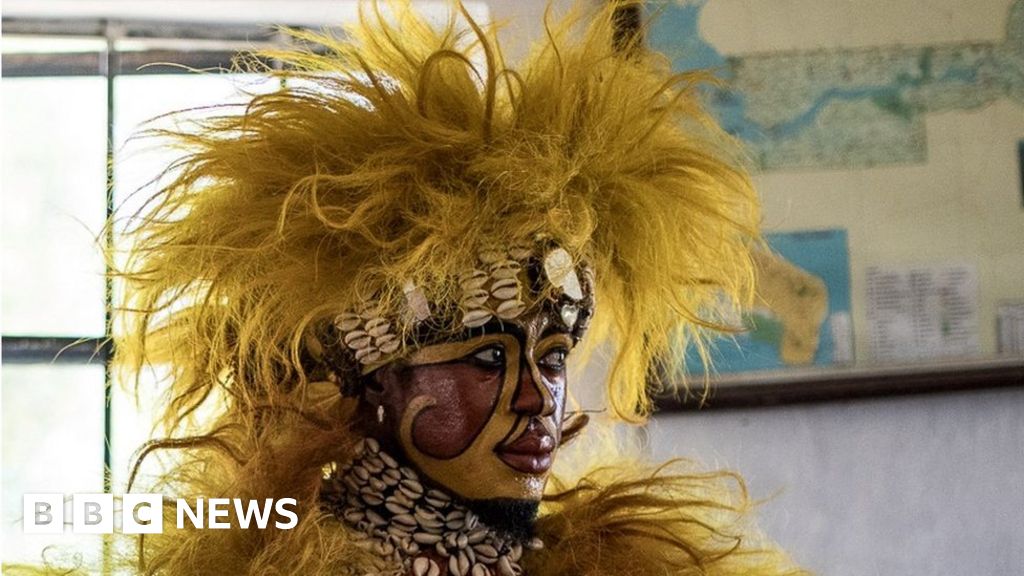
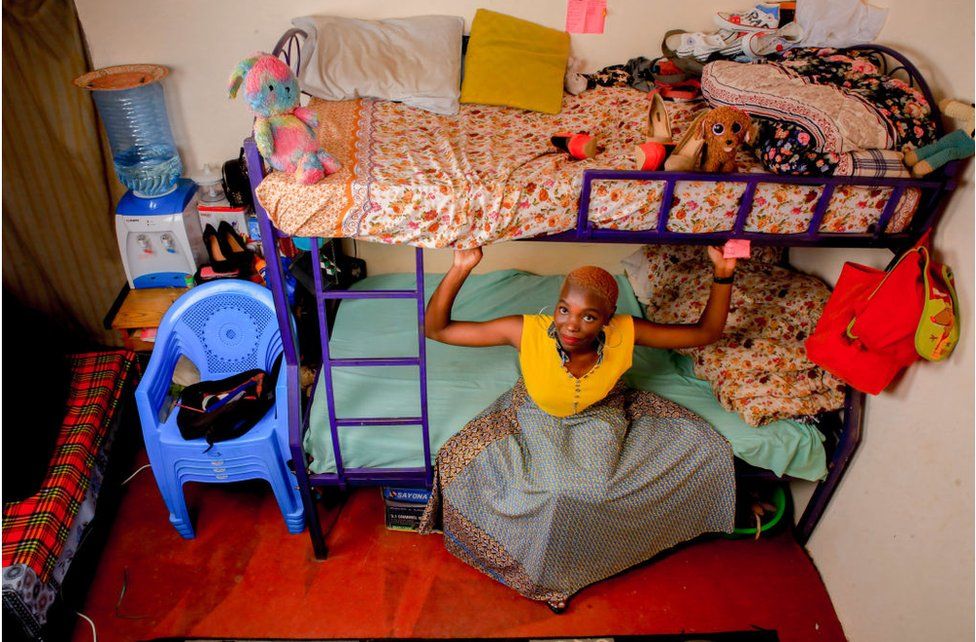
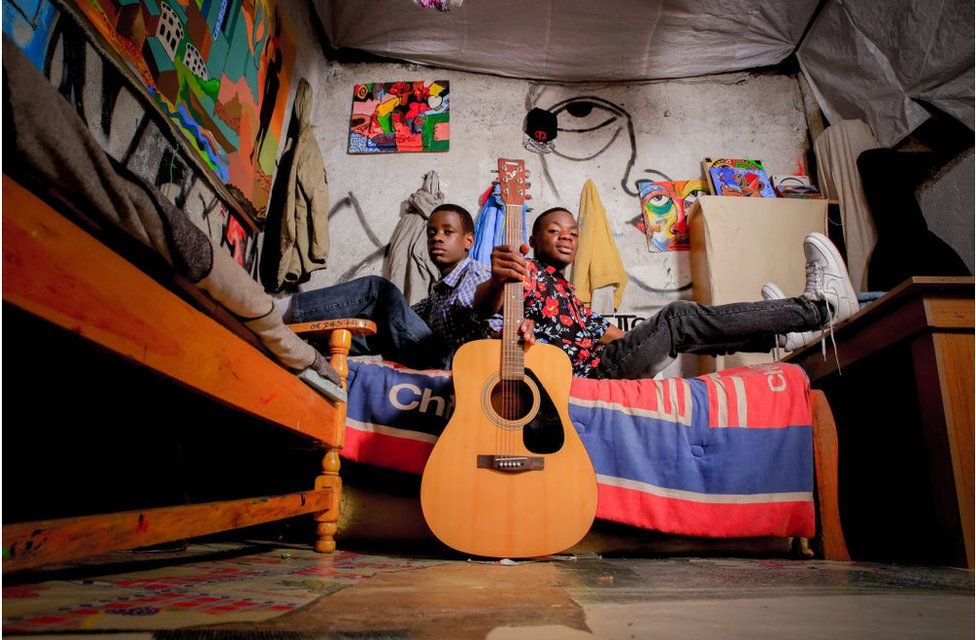
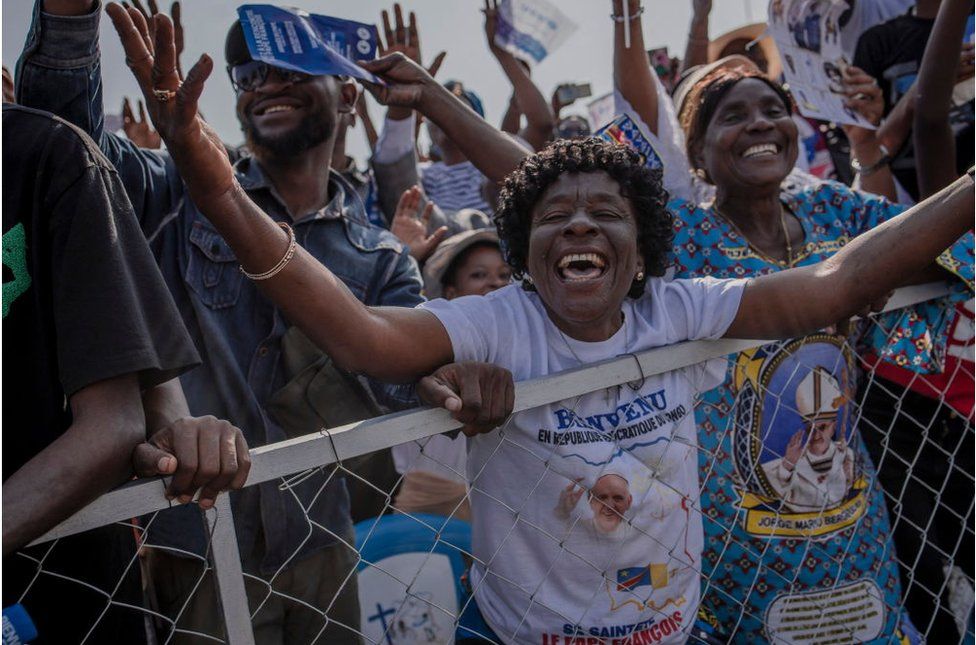
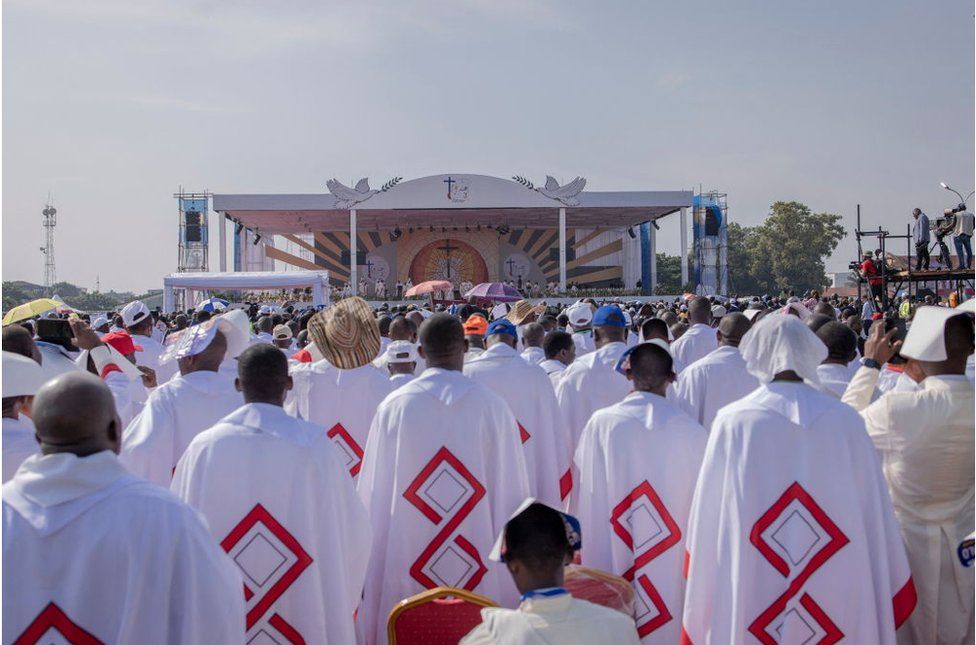
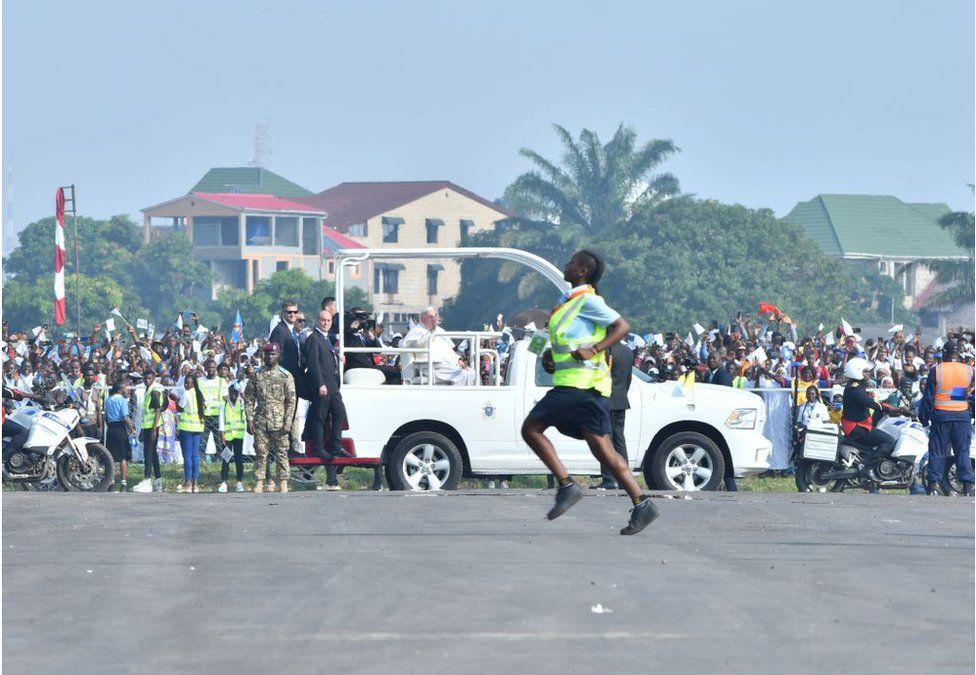
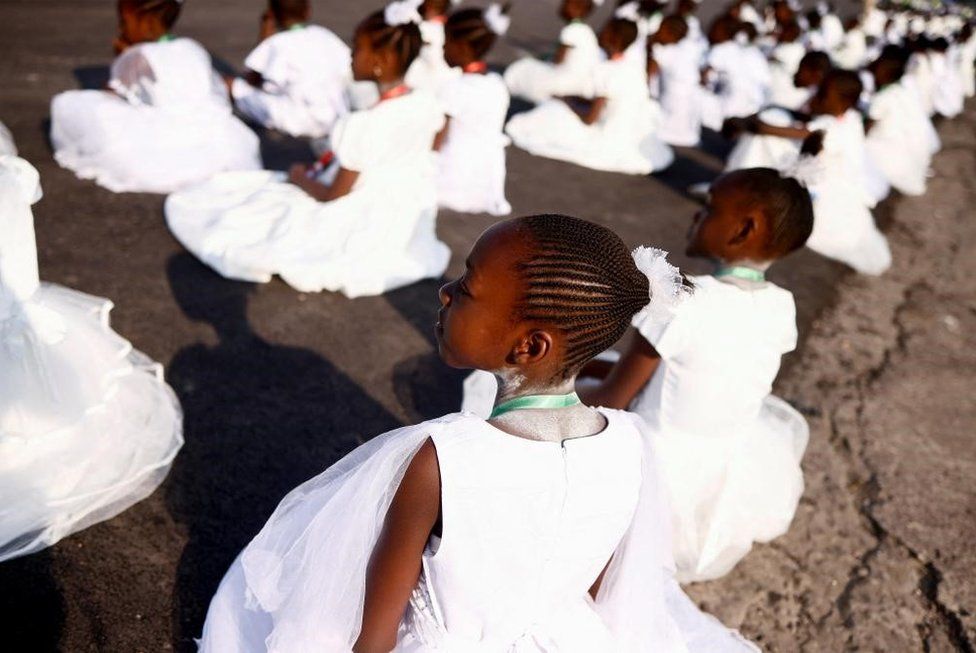
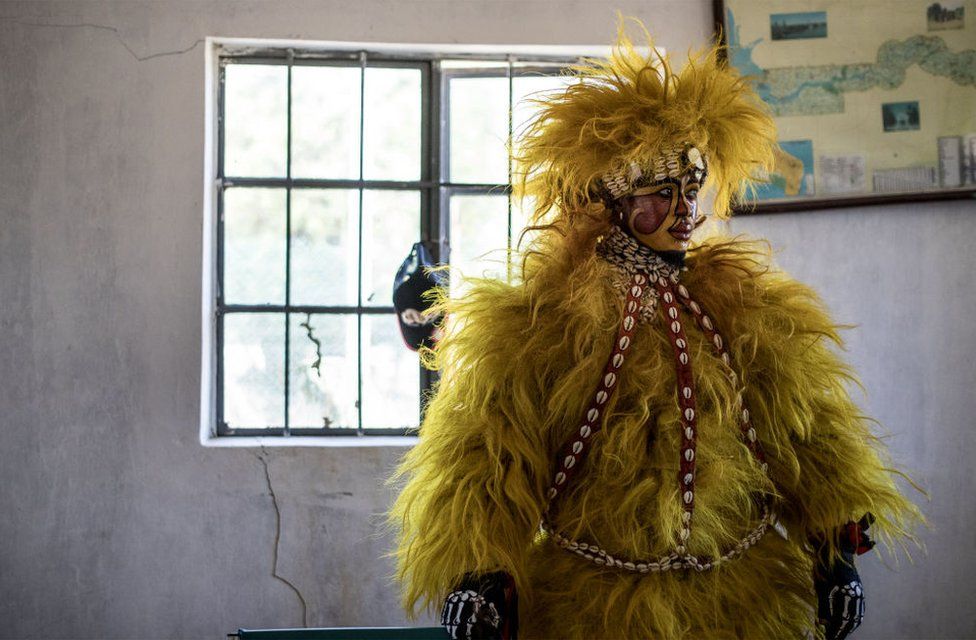
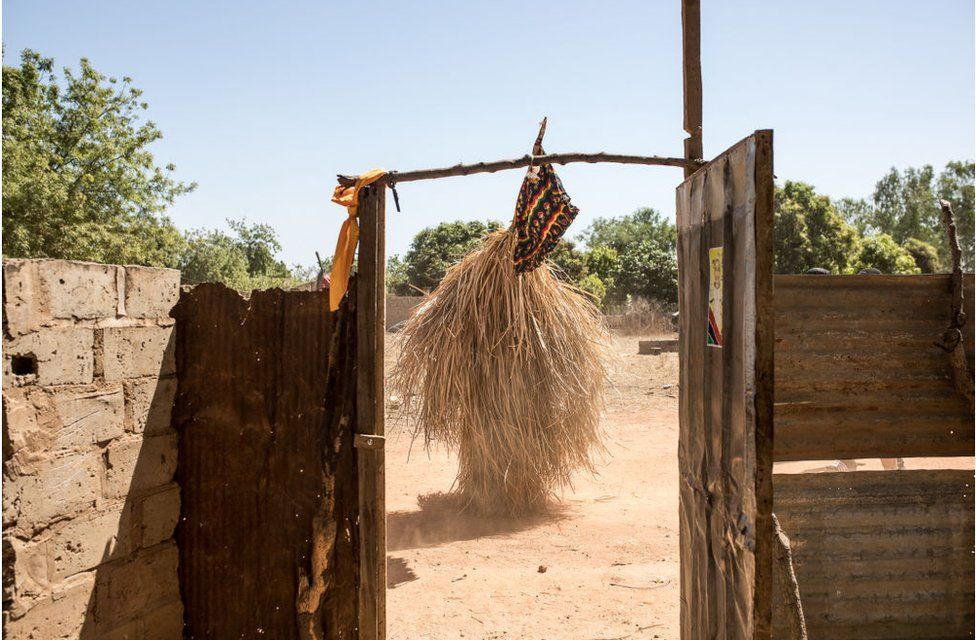
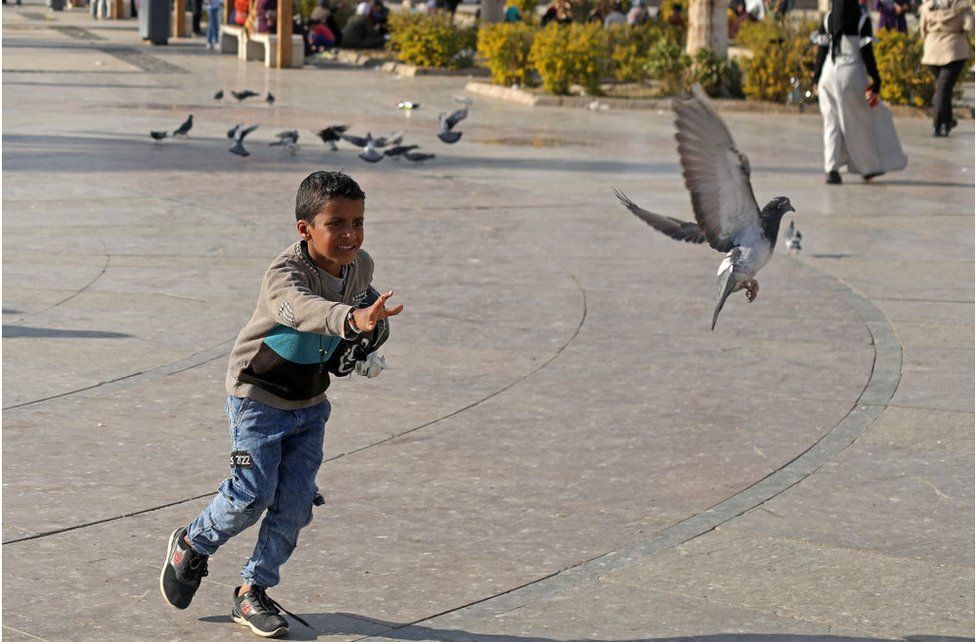
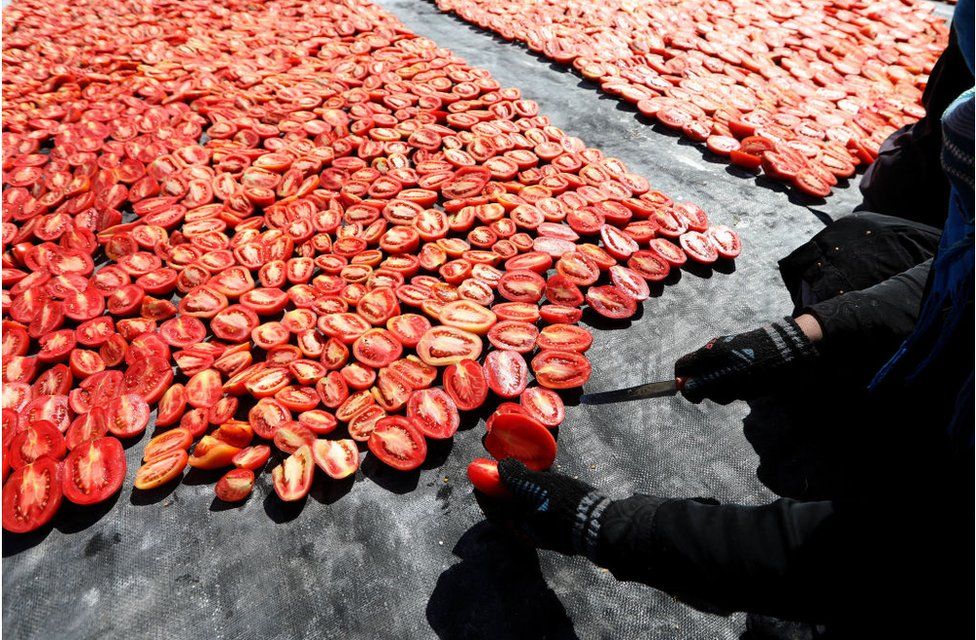
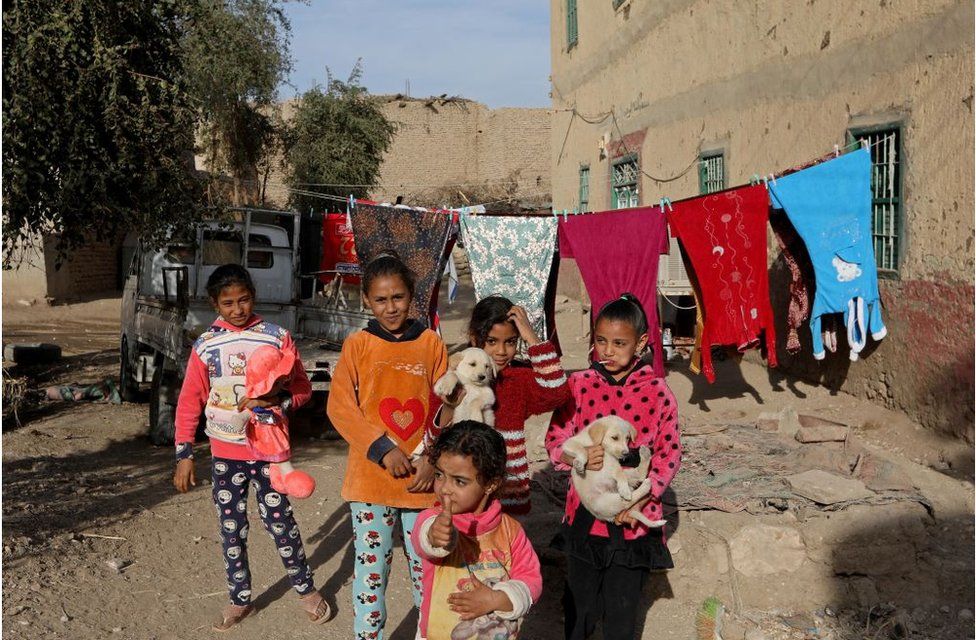
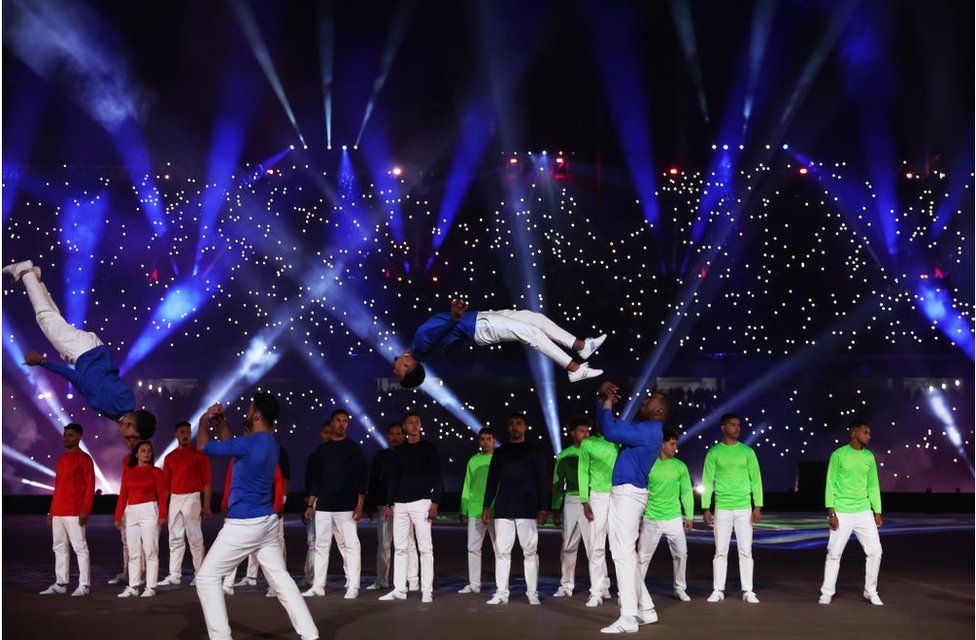
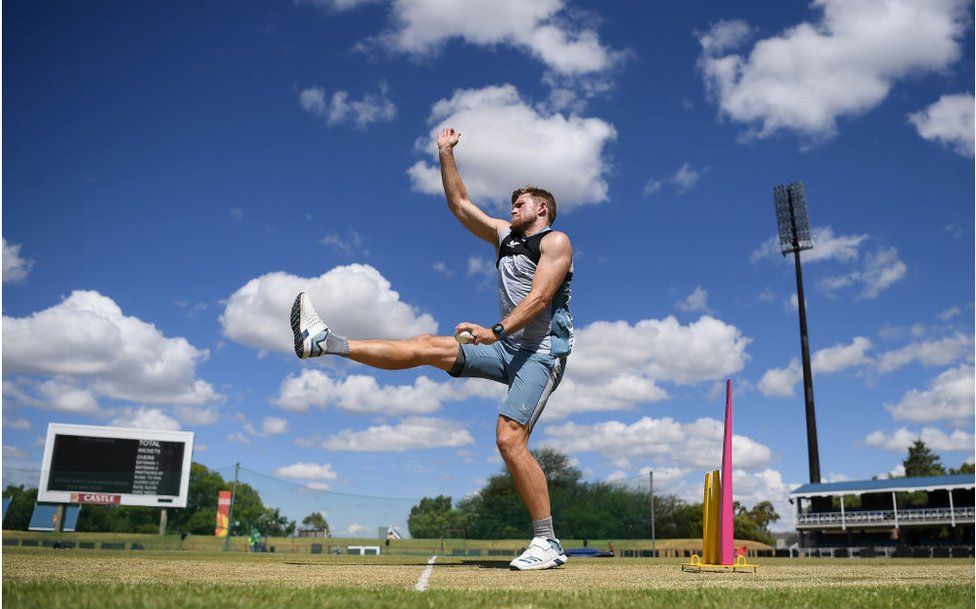
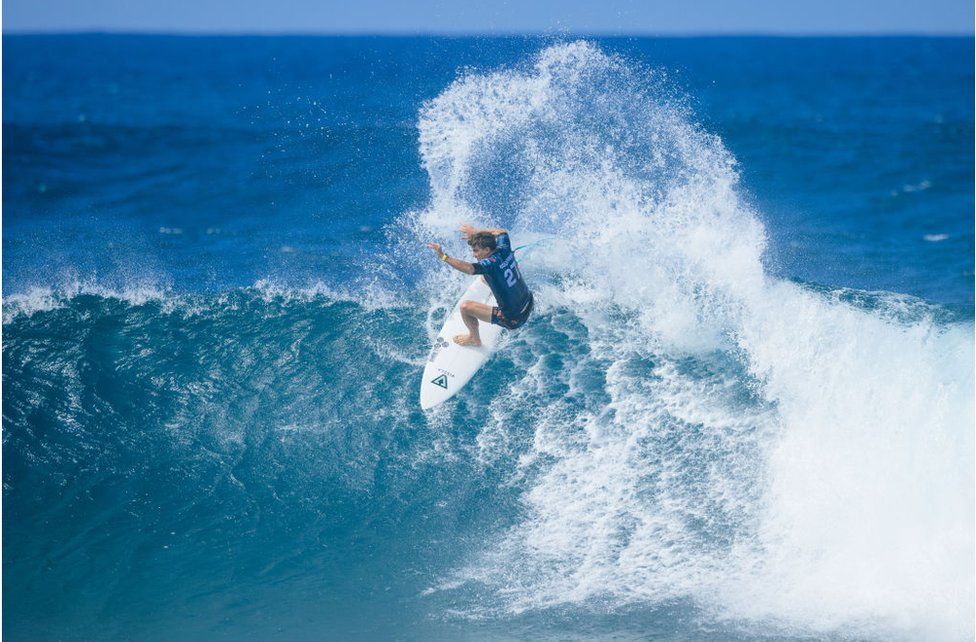
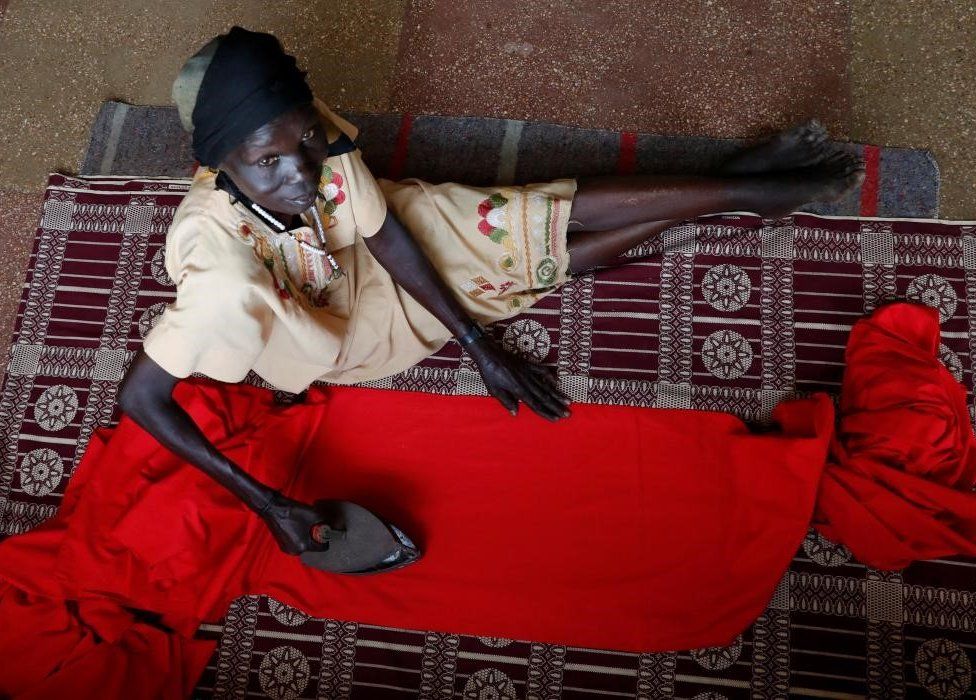
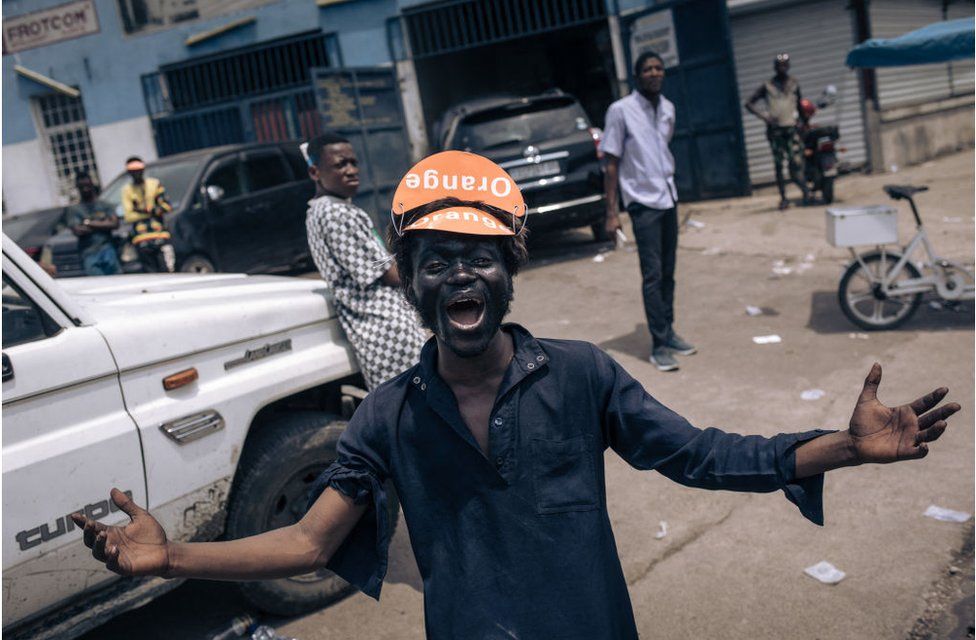
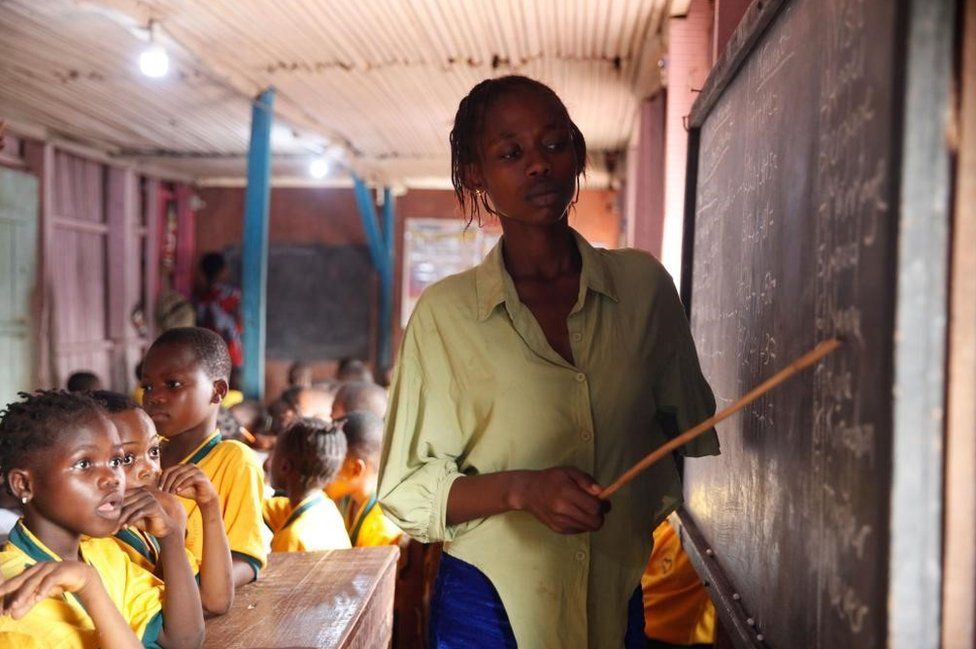
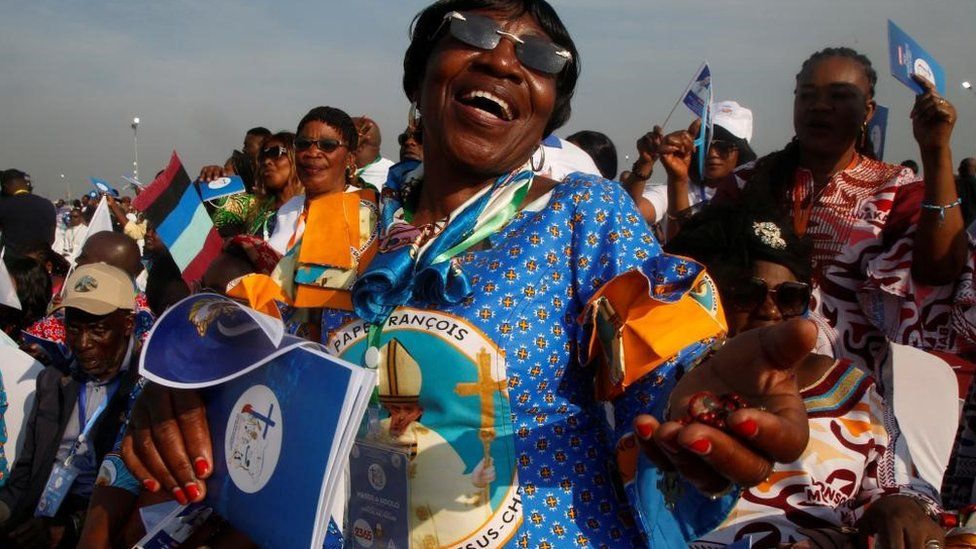
Image caption,This woman poses for a photo in her bedroom in the Kenyan slum of Kibera on Sunday. It is thought that household decoration and interior design is a means to distract young people in the slums from turning to drugs and other potentially harmful activities…Image caption,Meanwhile on Friday these teenagers pose with a guitar in their bedroom in the same slum – which is the largest in Nairobi.Image caption,There are jubilant scenes as a crowd gathers to see Pope Francis celebrate Mass in Kinshasa, Democratic Republic of Congo. On Wednesday the Pontiff held Mass in front of an audience of around one million people, according to estimates, as part of his historic trip to the country…Image caption,Several members of the clergy are in attendance as the Pope preaches a message about forgiving your enemies. His message is delivered as DR Congo faces internal conflict in the east of the country between the army and numerous militia groups…Image caption,The Pope is staying in DR Congo for three days and will then make his way to South Sudan…Image caption,Throngs of people are present to greet the Pope, including this group of girls dressed in white.Image caption,A man is seen wearing a traditional Senegalese Simba mask at the Kankurang Festival in Janjanbureh, The Gambia. The event celebrates the unique Kankurang culture, which is an initiation rite practiced in Senegal and The Gambia…Image caption,At the same festival, this man is wearing the traditional Kumpo mask, which is worn by the Jola people.Image caption,A boy tries to catch a pigeon as it flies away near the Abu al-Hajjaj Mosque in Luxor, Egypt on Saturday. The remains of an ancient Roman city were discovered in the Luxor area, just a few weeks ago…Image caption,This woman is cutting up tomatoes in the same city on Monday. She is working at a tomato drying facility…Image caption,It’s a thumbs up from this girl in Luxor as she poses for a photo in the Unesco heritage city on Sunday.Image caption,This group is performing before the Fifa Club World Cup first round match, in which Al Ahly FC beat Auckland City FC 3-0 at Stade Ibn-Batouta in Tanger Med, Morocco.Image caption,Cricket is in full session in Kimberley, South Africa, as English player David Willey bowls at the Diamond Oval on Tuesday…Image caption,There is more South African sport on Wednesday as Matthew McGillivray of South Africa surfs at the Billabong Pro Pipeline in Hawaii.Image caption,Back to the Pope’s Africa visit, this woman is ironing ahead of his visit to Juba, South Sudan. It is considered by some that the African continent is where the future of Catholicism lies…Image caption,This man can hardly contain his joy about the Papal visit in Kinshasa.Image caption,In Lagos, Nigeria this woman is teaching students in the Makoko neighbourhood on Friday. Makoko is built on stilts, with homes built in and around water, and was founded as a fishing village in the 19th Century.
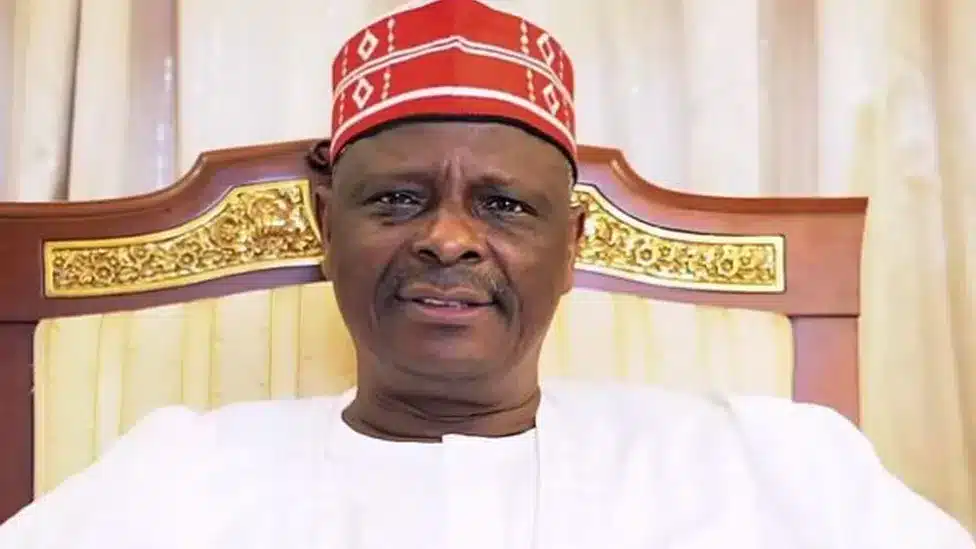
Rabiu Musa Kwankwaso, the 66-year-old politician vying to be Nigeria’s next president, is rarely seen without his red cap. It is a symbol of his ambition and his achievements – he is a former defence minister, former senator and served two-terms as governor of Kano, one of Nigeria’s most populous states.
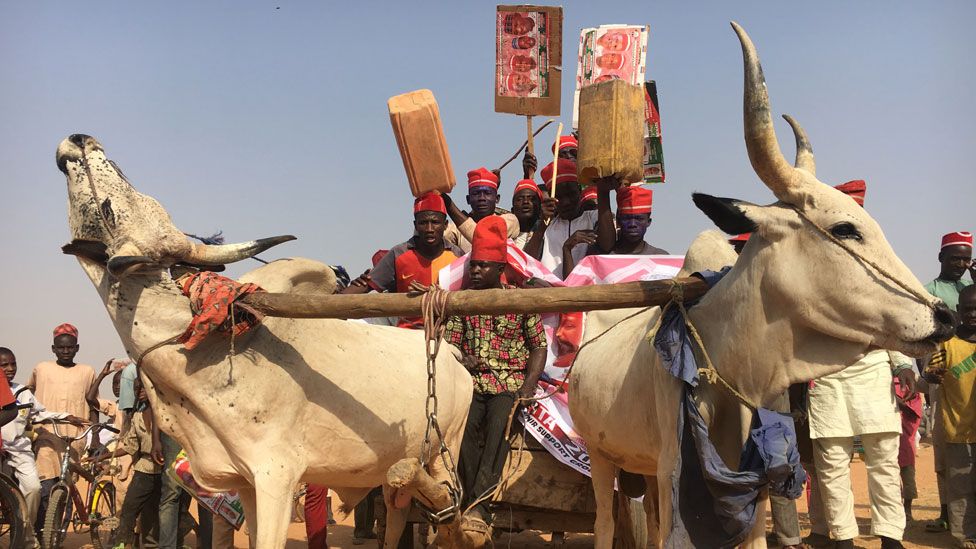
The hats are also worn by his supporters in Kano who are part of his Kwankwasiyya movement, which translates from Hausa as the “Red Cap Revolution”.
This loyal political fan club has even followed him as he has switched parties – in particular his move in 2013 from the then-governing Peoples Democratic Party to the All Progressives Congress, the current ruling party.
Over his career he was been with five parties, and is now presidential candidate for the New Nigeria People’s Party (NNPP), little known nationally until he joined last year.
Analysts say he has little chance of winning the election outright, given his power base is largely in the north, but could cause a serious political upset by taking northern votes from Bola Tinubu of the APC and Atiku Abubakar, the PDP’s contender.
To win a presidential election a candidate must show they have national support by gaining 25% of votes in two-thirds of Nigeria’s 36 states, as well as having the most votes.
Political analyst Chisom Ugbariwould told the BBC that Mr Kwankwaso would need to make inroads in the south to achieve this.
At one stage a merger had been suggested with the another leading candidate, Peter Obi of the Labour Party, who hails from the south-east. Some said such an alliance stood a chance of wrestling power from the APC.
But in a BBC interview Mr Kwankwaso categorically ruled this out, saying the Labour Party candidate lacked his political pedigree: “You can’t compare him to me who have been in politics for many years.”
Strides in education
However, Ibrahim Sharada, a Kwankasiyya and member of NNPP, thinks his candidate’s fame and influence “stretches beyond northern Nigeria”.
And there is no doubt that he is one of the four leading candidates and should it go to a second round, he could become a king-maker given his loyal following in Kano, where he first became governor in 1999.
This was the year that marked the end of military rule – and he was not donning the famous red cap then.
That came more than a decade later. In fact he lost his gubernatorial re-election bid in 2003, which is when then-President Olusegun Obasanjo made him defence minister.
Image caption,Supporters of Rabiu Kwankwaso wear red hats
He served in this role until 2007 at a time of relative peace in Nigeria. One of his main manifesto pledges to combat the current state of insecurity the country faces – a Islamist militancy in the north, kidnappings, cattle-farmer conflicts and a separatist rebellion in the south-east – is to boost the army’s head count to one million by recruiting 750,000 extra personnel.
After his time in government, he returned to state politics, which is when he formed the Kwankwasiyya movement, taking inspiration from the late renowned anti-colonial freedom agitator Malam Aminu Kano, who became an eminent politician and social reformer in northern Nigeria after independence.
Dressed in red cap and a flowing while kaftan, he was famous for pointing out the inequalities of what was a fairly feudal society in the region – fighting for more equality, including the rights of women.
Kwankwasiyya, Mr Kwankwaso said, embodied those ideals – and the movement attracted a young following which liked to dress like their mentor.
Propelled to a second term as governor, Mr Kwankwaso said he delivered on these ideals in particular though his educational reforms, making education free at all levels to this day.
However, it is only available those that come from Kano and students need an “indigene certificate” to qualify.
Image caption,Mr Kwankwaso introduced free primary, secondary and tertiary education in Kano
“He declared free education on assumption of office and was one of the first governors across Nigeria to introduce the school feeding programme for indigent pupils,” Kano journalist Yinusa Ahmad told the BBC.
“Hundreds of students also got foreign scholarships and now most of them form the most loyal base of his Kwankwasiyya movement.”
During his time as governor, he says Kano built many schools and invested in teachers, though the UN says the state still has one of the highest numbers of out-of-school children in Nigeria.
Education has clearly been important to Mr Kwankwaso, who is soft spoken but exudes a lot of confidence and charisma.
He thrived at school and went on to university, qualifying as a water engineer – gaining degrees in the UK and India.
He return to worked in that sector, mainly for Kano’s water and engineering agency, before entering the political fray.
Pension allegations
Like many Nigerian politicians, Mr Kwankwaso has faced corruption allegations.
In 2021, two years after completing a term as senator, he was questioned by the Economic and Financial Crimes Commission (EFCC) over the alleged diversion of pension funds while he was governor.
He denies the allegations, saying they are politically motivated, and the case has gone no further.
Image caption,Buildings built during Mr Kwankwaso’s second term as governor are emblazoned with the name of his Kwankwasiyya movement
Mr Kwankwaso, who is married with six children, exudes political confidence.
This was most recently demonstrated when he dismissed the need for an alliance to win the presidency. He is a man who likes to make his own mark – and it is something that can still be seen all over Kano city.
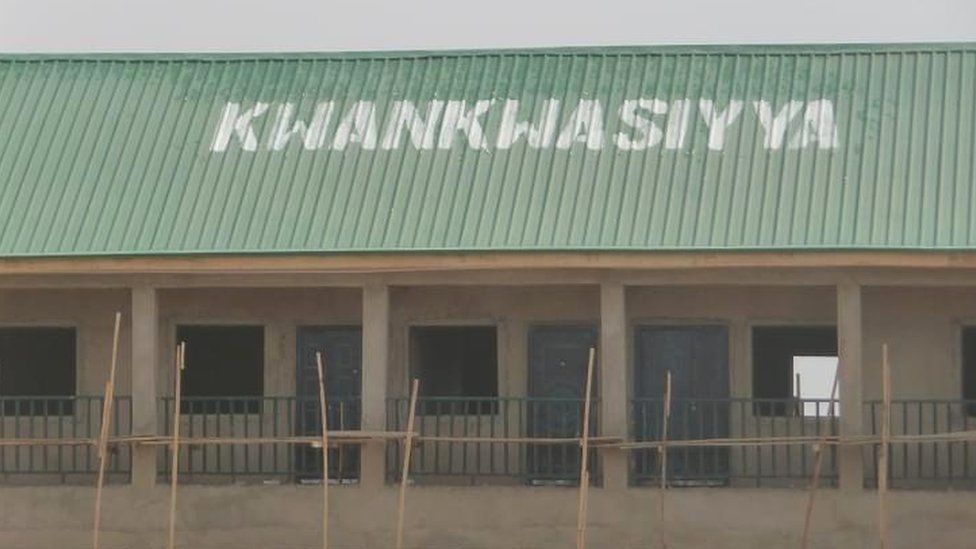
All the buildings constructed during his time as governor have “Kwankwasiyya” marked in huge capped letters across the roof. He wants no-one to forget him.
A group of about 60 Catholic pilgrims are recovering after spending nine days trekking through war-torn South Sudan to see Pope Francis in the capital, Juba.
“My feet are sore, but I am not so tired. When the spirit is with you, you do not get tired,” NightRose Falea said as she licked her cracked, dry lips.
“I would not have missed coming to Juba for anything. We are here to get the Pope’s blessings. I am confident that with his blessings things will change for this country,” she told the BBC.
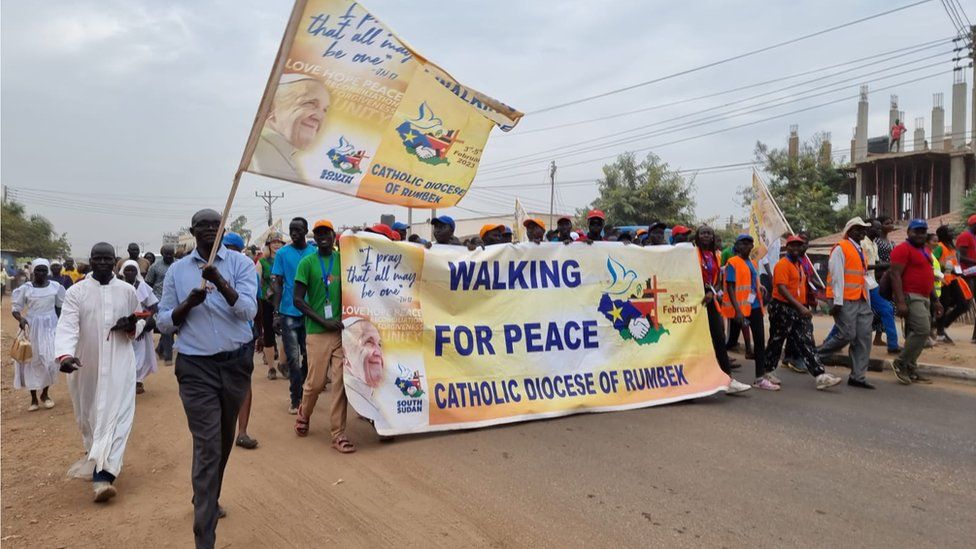
Driven by faith and a sense of patriotism, the women had set off from Rumbek – some 300km (190 miles) north-west of Juba.
Their mission: to join the Pope in prayer for the world’s youngest nation, which has been beset by conflict since its independence in 2011 – a situation that has brought untold misery to millions of its people.
“We walked for a couple of hours each day and then we would spend the night in the parishes at the centres where we were. It was tiring but worth it,” said Faith Biel.
As they walked for the last few miles, dust and joyful songs filled the air as a caravan of people sang and stamped their feet.
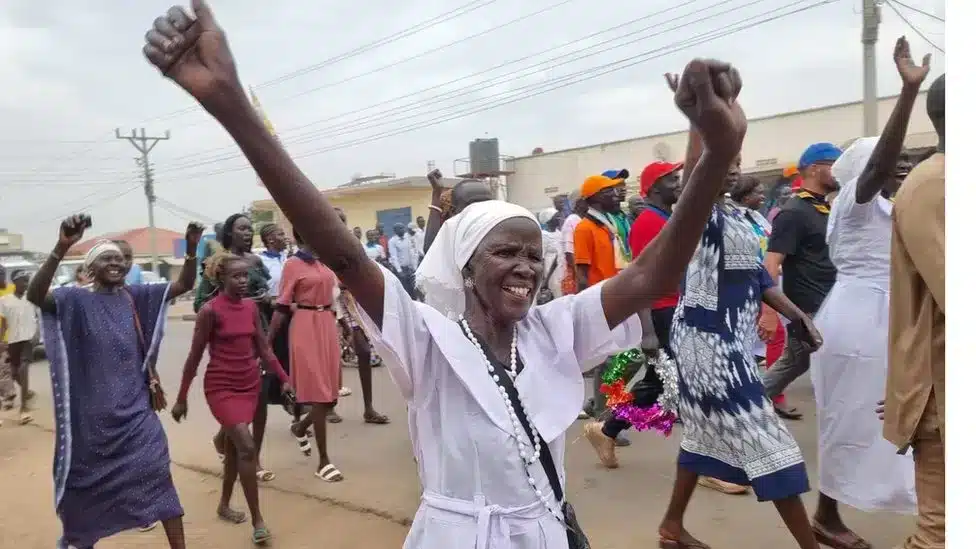
The spectacle attracted crowds of onlookers. Some joined in as the dancing became more vigorous. Others, unsure, stood at a safe distance to make way for the group of women dressed in white and wearing headscarves with a print of Pope Francis’s face.
Their besmirched clothes, blistered feet and cracked lips attested to the ordeal of the nine-day trek, but they still danced and jumped to celebrate their accomplishment.
Refreshments awaited them at Juba’s St Theresa’s Catholic Church, where a welcoming party had also started singing and dancing.
One pilgrim, who was shedding tears as she arrived, hinted at the trauma the years of fighting have brought to this country.
“When you have smelled and seen death and hopelessness, then you will search for peace with all the might that you have,” said the woman, who did not want to give her name.
“I have lost enough, but along the way I saw love and we all spoke one language – that of peace. I really pray that even after the Pope leaves, we will still be like that,” she continued.
“He is a prophet and whatever he prays in the next few days, while on our soil, will come to pass. Things will be different. We are going to be one people.”
Image caption,A banner marking the 300km walk was unveiled to welcome the pilgrims
The church is seen as a symbol of hope for many in South Sudan. It is where many displaced by the country’s conflicts seek refuge.
It has also continued to take a leading role in the social welfare of the people and given most of them a sense of belonging.
Pope Francis is spending three days in the country and will hold a Mass on Sunday.
In a historic first, he travelled with two other Christian leaders – Archbishop of Canterbury Justin Welby and Moderator of the Presbyterian Church of Scotland Rev Iain Greenshields.
In 2019 Pope Francis kissed the feet of South Sudan’s bitter political rivals, President Salva Kiir and his deputy Riek Machar, when they met at the Vatican.
This was an act that shocked many, even if it did not immediately end the fighting.
Although that conflict has now subsided, many local disputes still turn deadly on a regular basis – on the eve of the Pope’s arrival, more than 20 people were killed in a cattle raid.
Millions of South Sudanese will be hoping – and praying – that the visit of the three religious leaders will mark a new beginning for this troubled country.
China has urged “cool-headed” handling of a dispute over a giant Chinese balloon heading for the eastern US.
US Secretary of State Antony Blinken earlier called off a visit to Beijing, saying the “surveillance” balloon’s presence was “an irresponsible act”.
Later the US reported a second Chinese balloon floating over Latin America.
China expressed regret over the balloon over the US, saying it was a weather airship that had been blown astray. It was last spotted over Missouri.
It is expected to reach America’s east coast near the Carolinas this weekend.
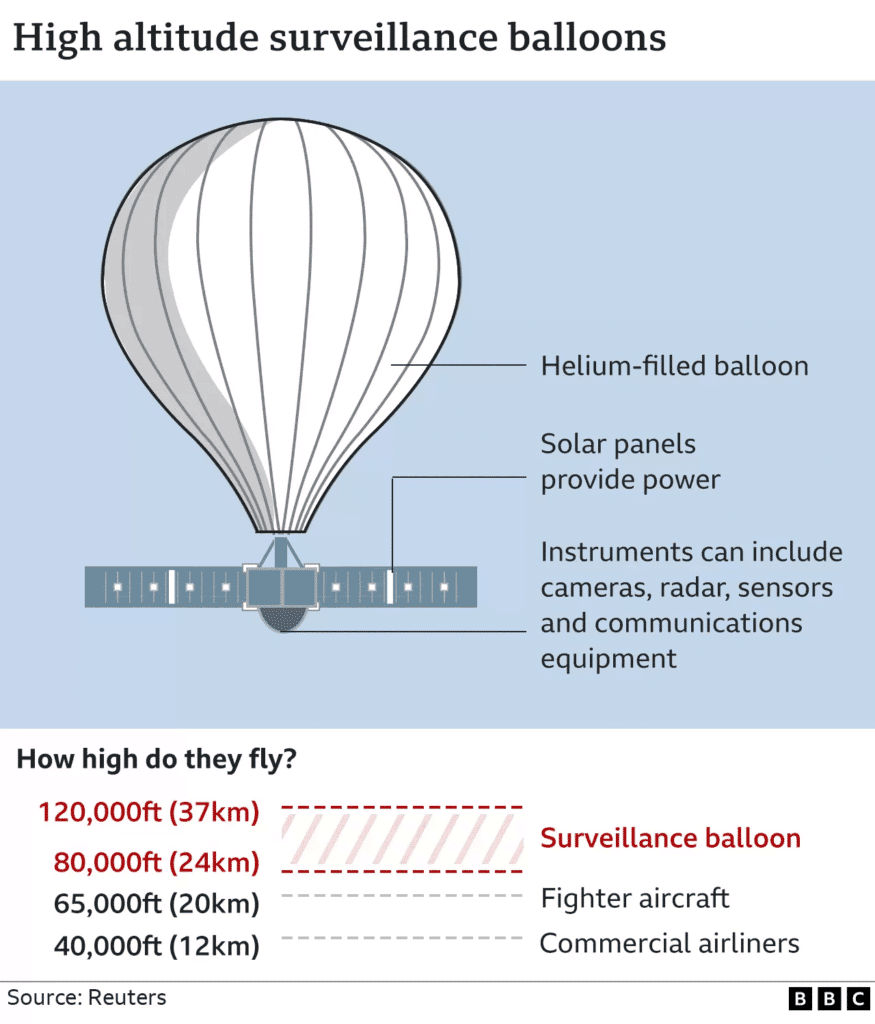
The US has decided not to shoot down the high-altitude airship due to the danger of falling debris.
The incident comes amid fraying tensions between the US and China.
In a statement on Saturday, the Chinese foreign ministry said Beijing “never violated the territory and airspace of any sovereign country”.
It said its senior foreign policy official Wang Yi had discussed the incident with Mr Blinken over the phone, stressing that maintaining communication channels at all levels was important, “especially in dealing with some unexpected situations in a calm and reliable manner”.
It added that Beijing “would not accept any groundless conjecture or hype” and accused “some politicians and media in the United States” of using the incident “as a pretext to attack and smear China.”
According to US officials, the airship floated over Alaska and Canada before appearing over the US state of Montana, which is home to a number of sensitive nuclear missile sites.
The incident angered top US officials, with Mr Blinken saying he had told Beijing the balloon’s presence was “a clear violation of US sovereignty and international law” and “an irresponsible act”. He called it “unacceptable” and “even more irresponsible coming on the eve of a long-planned visit”.
America’s top diplomat had been set to visit Beijing from 5 to 6 February to hold talks on a wide range of issues, including security, Taiwan and Covid-19. It would have been the first high-level US-China meeting there in years.
But on Thursday, US defence officials announced they were tracking a giant surveillance balloon over the US.
While the balloon was, the Pentagon said, “travelling at an altitude well above commercial air traffic” and did “not present a military or physical threat to people on the ground”, its presence sparked outrage.
On Friday, China finally acknowledged the balloon was its property, saying that it was a civilian airship used for meteorological research, which deviated from its route because of bad weather.
And late on Friday, the Pentagon said a second Chinese spy balloon had been spotted – this time over Latin America.
“We are seeing reports of a balloon transiting Latin America. We now assess it is another Chinese surveillance balloon,” said Pentagon press secretary Brig Gen Patrick Ryder. He provided no further details about its location.
China has so far made no public comments on the reported second balloon.
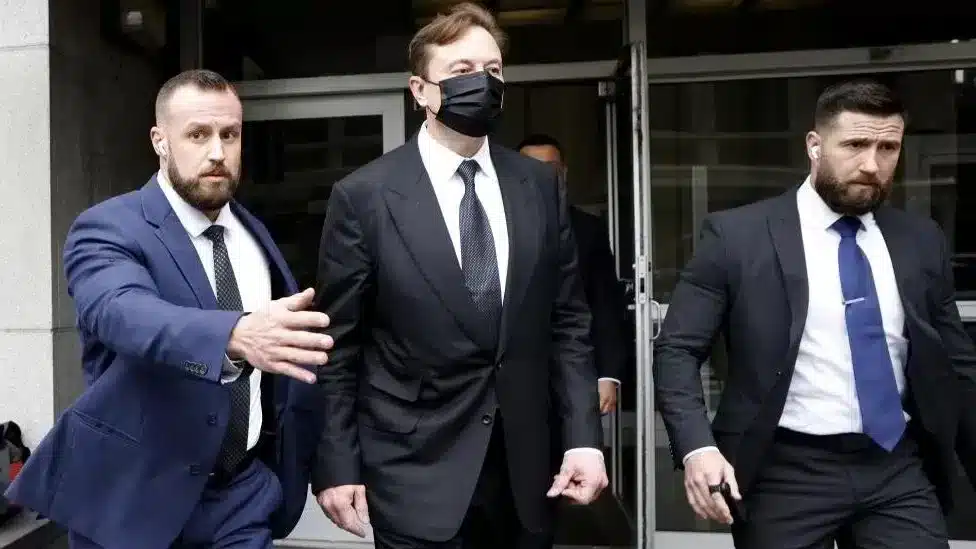
Tesla founder Elon Musk has been cleared of wrongdoing for a tweet in which he said he had “funding secured” to take the electric carmaker private.
Mr Musk faced a class-action lawsuit filed on behalf of Tesla shareholders who argued he misled them with his posts in August 2018.
The proposed $72bn (£60bn) buyout never materialised.
If the San Francisco jury had found Mr Musk liable he could have been ordered to pay billions of dollars in damages.
It took the nine jurors less than two hours to reach their verdict on Friday afternoon.
Mr Musk – who had wanted the trial moved to Texas, where Tesla is based, arguing he could not get a fair trial in San Francisco – welcomed the outcome.
Taking to Twitter, the social media platform he bought for $44bn last October, he posted: “Thank goodness, the wisdom of the people has prevailed!
“I am deeply appreciative of the jury’s unanimous finding of innocence in the Tesla 420 take-private case.”
Central to the lawsuit was Mr Musk’s tweet on 7 August 2018: “Am considering taking Tesla private at $420. Funding secured.”
The plaintiffs also argued Mr Musk had lied when he tweeted later in the day that “investor support is confirmed”.
The stock price surged after the tweets, but fell back again within days as it became clear the deal would not go through.
Investor losses were calculated as high as $12bn, according to an economist hired by the shareholders.
The US Securities and Exchange Commission (SEC) sued Mr Musk over his tweets, accusing him of lying to investors. Mr Musk agreed to step aside as Tesla board chairman and settled for $20m.
During the three-week trial, Mr Musk – who also leads SpaceX and Twitter – had argued he thought he had a verbal commitment from Saudi Arabia’s sovereign wealth fund for the deal.
During his nearly nine hours on the witness stand, the world’s second-richest man said: “Just because I tweet something does not mean people believe it or will act accordingly.”
Shareholders had argued that “funding secured” suggested more than a verbal agreement.
Just a ‘bad tweet’?
Although Tesla’s share price shot up after the tweet was posted, Mr Musk also questioned whether his tweets had any effect on Tesla’s share price.
“At one point I tweeted that I thought that, in my opinion, the stock price was too high… and it went higher, which is counterintuitive,” he said – arguing the effect his tweets have on the stock price can be unpredictable.
Mr Musk said he eventually scrapped the plan to take Tesla private after his discussions with smaller investors led him to believe they would prefer that the firm remain publicly traded.
He was not in court when the verdict was read, but he was present during closing arguments earlier on Friday as duelling portraits were drawn of him by the rival legal teams.
Nicholas Porritt, a lawyer for the Tesla shareholders, said: “Our society is based on rules. We need rules to save us from anarchy. Rules should apply to Elon Musk like everyone else.”
Mr Musk’s attorney, Alex Spiro, said: “Just because it’s a bad tweet doesn’t make it a fraud.”
After the verdict, Mr Porritt said: “We are disappointed with the verdict and are considering next steps.”
Mr Musk was generally calm during his testimony – though at times he appeared annoyed at the line of questioning.
There were also times of levity. After a lawyer representing shareholders accidentally called Elon Musk “Mr Tweet”, Elon Musk promptly changed his name on Twitter to the same moniker.
Several Tesla directors also testified, including James Murdoch, son of Rupert Murdoch. They testified that Mr Musk did not need the Tesla board to review buyout tweets.
Securities fraud lawyer Reed Kathrein called the tweet about taking Tesla private “as concrete a statement of taking a company private as there can be”, and said the not guilty verdict was “a travesty to investors and the securities laws”.
Security forces in South Sudan were preparing Thursday for the arrival of Pope Francis who visits the nation as part of his African journey.
Francis kicked off his six day tour in Democratic Republic of the Congo on Tuesday where he has already presided over a Mass for 1 million people and heard firsthand of atrocities some have endured following the conflict in the country’s east.
He landed in South Sudan on Friday where he will visit the country’s capital, Juba.
On Thursday security forces, which included armed soliders and police officers, motivated themselves by running around he courtyard at Juba police station, brandishing their weapons in celebration of the pope’s arrival.
The spokesman for South Sudan People’s Defence Forces‘, Major General Lul Ruai, said more than 5,000 security personnel would be deployed around Juba during Francis’ visit.
Security was also being heightened around the city’s residential areas said Major General Daniel Justin Boulo Achor, spokesman for the South Sudan National Police Service.
“Some criminals, when people are out, they will be replacing them in their houses so we will have patrols in residential areas to make sure that the houses are safe during the celebrations,” he said.
Pope Francis’ strong words against the suffering they are enduring have warmed the hearts of people in the eastern Democratic Republic of Congo (DRC), but his visit to Kinshasa has not marked a truce in the fighting and violence.
Throughout the papal visit, from Tuesday to Friday, fighting continued in North Kivu province, where M23 rebels captured new villages, sources in the province said.
Diplomacy had been activated in recent months to try to silence the guns and bring the DRC closer to Rwanda , accused of supporting this rebellion on the offensive since the end of 2021. In vain so far.
It was because of this insecurity that the pope canceled the visit he was initially to make to Goma , capital of North Kivu, replacing this trip with a meeting in Kinshasa with victims of atrocities committed for nearly 30 years in this province and those neighbouring Ituri and South Kivu.
With their testimonies in front of the cameras, the presence of women with severed arms, the pope’s indignation at the “bloody and illegal exploitation” of the country’s wealth, “the whole world” is now “aware” of what is passes here, believes Théoneste Bahati Gakuru, 34, Goma resident and human rights defender.
Théoneste now hopes that the international community will “take measures to put an end to this disastrous situation”.
Johnson Ishara, 30, a shopkeeper in Goma, and Calvin Maliro, a youth representative from a commune in Beni, another town in North Kivu affected by the violence, believe that the pope “will continue his plea” for an end to the misfortunes from eastern Congo.
“We are innocent, we don’t know anything about politics,” says Kathungu Matumaini, a nurse in Beni, asking that her “tears and prayers” be heard.
“Your tears are my tears, your suffering is my suffering,” the pope said on Wednesday before the dramas that were described to him. The next day, he called on young people, gathered by the thousands in a stadium, to reject tribalism , corruption, and to act for the future of their country.
“We must take ownership of his message… It is time for young people to stop living in the bush to orchestrate massacres,” analyzes Jean-Marie Ndjaza, spokesperson for the Lendu community in Ituri. “We must avoid making more victims” in the province, pleaded the official.
But in Ituri either, the violence did not let up during the visit of the sovereign pontiff.
On Wednesday, a new incursion by armed men killed at least seven people there, in the “chiefdom” (grouping of villages) of Walese Vonkutu. The attack is attributed to the ADF rebels, which the jihadist group Islamic State (IS) presents as its branch in central Africa, but apparently associated with a local militia.
A particular community was targeted. “We do not understand this new modus operandi”, notes, helpless, Dieudonné Malangai, a member of local civil society.
The ADF is accused of repeated massacres of civilian populations in Ituri and North Kivu as well as attacks, including one in January against a Pentecostal church in North Kivu, claimed by IS.
In South Kivu, the words of the pope echo for some residents of Bukavu the fight led by Denis Mukwege, Nobel Peace Prize 2018 for his action in favour of women victims of rape.
For Furaha Citera, head of a women’s organization, François reinforces the Congolese doctor in his fight for “the establishment of a special tribunal for the Congo, to fight against atrocities”.
The pope’s words “arouse hope in the hearts of the victims, because the sovereign pontiff will be their ambassador”, also wants to believe in Bukavu Paulin Mulume , 30, an activist in a citizens’ movement.
In the meantime, South Kivu continues to grapple with a noria of militias, an infernal cycle of reprisals between communities and persistent obscurantist practices. This week, a 5-year-old albino boy was killed and his body found without a head or legs.
When Morocco’s “ultras” crowd into a football stadium, the fan groups’ full-throated chants, spectacular pyrotechnics and sometimes rowdy and anti-authoritarian antics often steal the show.
Casablanca’s stadium rings to the chants of passionate supporters of the city’s Wydad club as they raise coloured placards aloft to form a vast, moving mosaic that spells out their motto: “Free souls”.
The club’s die-hard fan group, known as the “Winners”, has a long-earned reputation for flamboyance — singing, setting off smoke bombs and making their cellphone torches dance collectively like fireflies.
Some 10,000 of them regularly pack the north curve of Mohammed V stadium in Morocco’s economic capital, where they have a reputation for drawing more attention than the action on the pitch.
Thousands of supporters are expected to put on their carefully choreographed show again as the team, fresh from winning the African Champions League, competes in the Club World Cup which started on Wednesday.
“I can’t describe my love for the Wydad fans, they’re very special,” said one fan, Houssam Ait Wahman, 18, before a recent Moroccan league match against Fez that he watched with his mother and sisters.
“Fans from all over the world can’t match us,” he boasted about the Winners, who came first in a global ranking by “Ultras World”, a popular Facebook page dedicated to the phenomenon.
– ‘Crowd effect’ –
Some ultras in Morocco and beyond have earned a reputation for violence, mostly brawling with rival fans — but the members are quick to defend what they praise as a fraternity united in their love for the game.
“Supporting Wydad is a passion, a commitment that goes beyond football,” said Mohamed, a former Winner in his 30s who asked not to give his full name.
The Winners are part of the international ultras culture, which has a strong following across the football-obsessed North African country.
The image of Morocco’s ultras has often been associated with violence between rival groups. After two fans were killed in early 2016, authorities banned ultra fans from football grounds nationwide for two years.
Former Winner Mohamed blamed the “crowd effect” and explained that sometimes “it takes just one person to do something stupid and it all kicks off”.
Moroccan sociologist Abderrahim Bourkia, author of a recent essay on the subculture, said some fans “release their frustrations” through chanting, while others resort to violence.
“The solution is to invest in the education of the youth,” he said.
– City rivals –
Not to be outdone by the Winners, fans of Wydad’s main Casablanca rival, Raja, also have a reputation for crowd-pleasing and exuberant performances.
“Putting on a show is the hallmark of the ultras,” said Bourkia. “It’s a way for them to express themselves and showcase themselves.”
Raja’s two ultras groups, the “Green Boys” and “Ultras Eagles”, are known for their overtly left-wing political slogans, both in the stadium and on social media.
Their song “F bladi delmouni” (They Oppressed Me In My Own Country) calls out inequality and social injustice in the kingdom.
The song has spread beyond Morocco’s borders and has been sung by pro-democracy protesters in neighbouring Algeria and even by Palestinians.
“The Raja fans have an activist culture that gives voice to the voiceless, to stand up against oppression and condemn corruption,” a former Raja ultra told AFP.
The phenomenon turns stadiums into “spaces of free expression”, Bourkia said.
“Being part of the ultras is a unique experience,” said another Raja supporter. “Feeling that you’re being heard helps forge a personality.”
A judge caused a stir in Colombia by announcing that he used the artificial intelligence chatbot ChatGPT to rule on a case concerning an autistic child, we learned Thursday from concordant sources.
“This opens up immense prospects, today it could be ChatGPT, but in three months it could be any other alternative to facilitate the drafting of legal texts on which the judge can rely”, declared Judge Juan Manuel Padilla, on local radio. “However, the goal is not to replace the judges,” he stressed.
In a Jan. 30 ruling, he ruled on a mother’s request for her autistic son to be exempted from paying for medical appointments, treatment and transportation to hospitals, as the family lacked the resources. funds needed to pay them.
Mr Padilla ruled in favour of the child and indicated in his judgment that he questioned the chatbot ChatGPT to render his decision.
“Is the autistic minor exempted from paying moderation fees for his therapies?”, asked the judge, according to the transcript of his decision. And the app replied, “Yes, that’s correct. Under Colombian law, minors diagnosed with autism are exempt from paying moderation fees for their therapies. “
“Judges are not fools, it is not because we ask questions to the application that we cease to be judges, thinking beings”, commented Mr Padilla.
According to him, ChatGPT today does what was previously provided by “a secretary”, “in an organized, simple and structured way”, which “could improve response times in the judicial sector”.
These statements sparked a lively debate.
Professor Juan David Gutiérrez, of Rosario University, explained in particular that he received different answers after asking the same questions. “As with other AIs in other fields, under the pretext of supposed efficiency, fundamental rights are put at risk,” he warned.
ChatGPT artificial intelligence has been causing a sensation in the world since November. Created by the Californian company OpenAI, the chatbot ChatGPT works on the basis of algorithms and huge databases.
It produces texts on simple requests, which can be used in particular by lawyers, engineers or journalists, with the risk of manipulation or misinformation.
“I suspect a lot of my colleagues will jump in and start ethically crafting their judgments with the help of artificial intelligence,” Padilla said.
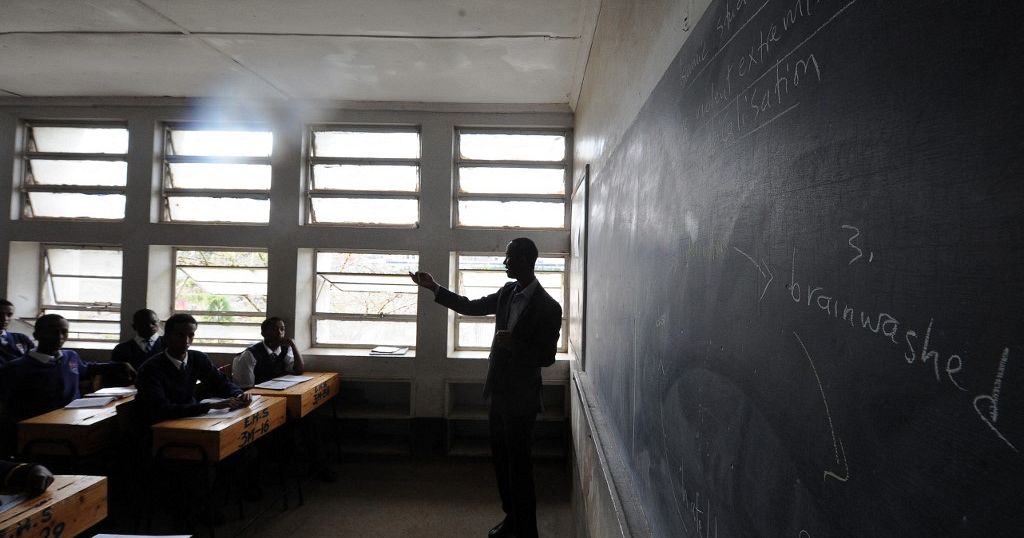
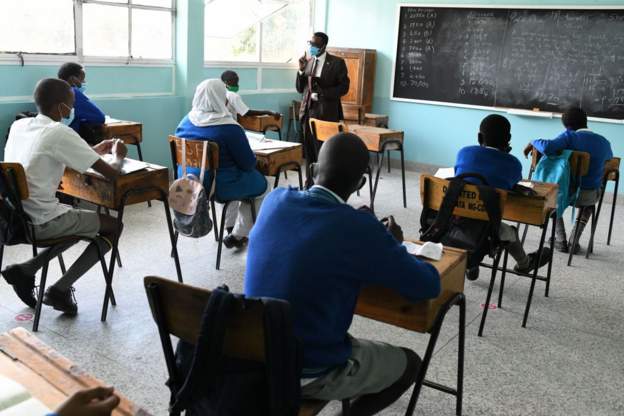
A group of six teachers were arrested and suspended in Kenya on Thursday after a video of primary school pupils being forced to simulate sex as punishment caused an outcry.
In a 29-second video that has gone viral, four boys in school uniforms simulate sex acts under a tree in the schoolyard as teachers watch. In the background, the six teachers can be heard chatting and laughing as a shirtless child wipes tears from his face.
Police said the video “exposing pupils to indecent acts” was recorded in Nyamache, a rural town some 300km west of the capital Nairobi.
Six teachers, five women and one man have been arrested and are “assisting in the investigation”, police said in a report seen by AFP. They will be prosecuted on appropriate charges, it added.
The Teachers’ Service Commission (TSC) suspended the six, saying the video had caused the six students “shame, trauma, mental and psychological torture”.
“You ordered and/or coerced students (…) to engage in indecent/inappropriate acts representing homosexuality within the school,” said TSC official Evaleen Mitei in a letter to the teachers.
The teachers have three weeks to submit their written defence against their suspension, Ms Mitei said.
At the same time, they are expected to remain in detention for another seven days while the investigation is completed.
The incident caused an uproar on social networks in the largely conservative country.
Education Minister Ezekiel Machogu said disciplinary proceedings would be initiated against the teachers and that they would be dismissed if found guilty.
Under Kenya’s Sexual Offences Act, a person convicted of forcing another to engage in an indecent act is liable to imprisonment for at least five years.
Beyond this incident, the living conditions of schoolchildren in Kenya are regularly the subject of heated debate, whether on the appropriateness of corporal punishment, officially banned by law in 2001, or more recently on the length of the school day.
A Kenyan former policeman was sentenced to death on Friday for the murder of a human rights lawyer, his client and a taxi driver.
Frederick Leliman and three others were convicted of carrying out the murders in 2016, in one of a series of cases of alleged police brutality and extrajudicial killings in Kenya.
Lawyer Willie Kimani was representing a motorcycle taxi operator who was suing Leliman for shooting him at a traffic roadblock. Leliman later started threatening and intimidating the man.
The bodies of Kimani, his client Josephat Mwendwa and taxi driver Joseph Muiruri were discovered in the Ol-Donyo Sabuk River, in the east of the country, days after they were reported missing.
Evidence produced in court showed that the three were abducted after a court session on June 22, 2016, were briefly locked up and then were taken out and murdered in an open field. Their bodies were discovered on July 1.
Leliman was given a death sentence, while former officers Stephen Cheburet and Sylvia Wanjiku received sentences of 30 and 24 years, respectively, and police informer Peter Ngugi was jailed for 20 years. A fourth former police officer, Leonard Mwangi, was acquitted.
Those sentenced to death in Kenyan courts serve a life sentence. Kenya’s last execution was in 1987.
The four have 14 days to file an appeal.
The murders triggered a series of protests by lawyers and human rights defenders because Kenyan police have in the past been accused of brutality and extrajudicial killings but very few officers have been convicted.
Pope Francis arrived Friday in South Sudan, one of the poorest countries in the world, the first papal visit to this independent country for ten years and undermined by violence and climatic hazards.
The country, landlocked between lush African rainforests and arid deserts, borders Sudan, Ethiopia, Kenya, Uganda, the Democratic Republic of Congo and the Central African Republic.
It has more than 60 ethnic groups. The largest community is the Dinka, ahead of the Nuer. Both have been settled for centuries on the banks of the White Nile, which crosses the country from south to north.
The country is predominantly Christian, a legacy of European missionaries who arrived at the end of the 19th century to gain a foothold in the region in the face of the expansion of Islam towards the south of the African continent.
About 60% of the roughly 12 million South Sudanese are Christians, almost a third are animists or follow another traditional religion, and a small minority are Muslims.
The youngest state in the world
On January 9, 2005, the North (with a Muslim majority) and the South of Sudan sign a peace agreement, after decades of civil war between southern rebels and Khartoum (1959-1972 and 1983-2005), which made millions of dead.
On July 9, 2011, South Sudan proclaimed its independence from Sudan, six months after having voted by referendum for its secession (nearly 99% yes).
With an area of 589,745 km2 (barely larger than metropolitan France), the country represents almost a quarter of former Sudan. North and South are still fighting over the oil-rich province of Abyei.
A terrible civil war
Two years after its independence, South Sudan is falling into a civil war that will leave nearly 400,000 dead and millions displaced.
Fighting broke out in the capital Juba on December 15, 2013, between rival army units, plagued by political-ethnic antagonism fueled by dissension between President Salva Kiir and his former vice-president Riek Machar, respectively Dinka and Nuer. The conflict is rapidly spreading in the country.
This five-year war will be marked by innumerable atrocities: ethnic massacres of men, women and children, castrated men, women and girls abducted, reduced to slavery and systematically raped, and children slaughtered or thrown alive in burning huts…
More than 13,000 children have also been enrolled in the ranks of the various forces. The war will officially end with a peace agreement between Kiir and Machar in September 2018, but tensions between the two enemy brothers continue.
Poverty and humanitarian crisis
The majority of the South Sudanese population lives in poverty. Since 2013, 4.5 million people have fled their homes (2.2 million inside the country, 2.3 million to neighbouring countries), according to the UN, thrown on the roads by politico-ethnic violence that persists in the country, but also droughts and floods.
In 2017, a famine was declared in two northern counties. Since the end of July 2022, around one million people have been affected by floods, caused by torrential rains that ravage crops and destroy homes, according to the UN.
By July, more than 7.7 million people are at risk of being in a situation of acute food insecurity, three UN agencies (FAO, Unicef, WFP) warned in November 2022, a level never reached, even during the war. civil.
The country is ranked 191st and last on the Human Development Index (HDI) of the United Nations Development Program (UNDP). South Sudan has one of the lowest literacy rates in the world (35% in 2018, according to the World Bank ).
Oil-dependent economy and unexplored biodiversity
South Sudan’s economy, based on oil and agriculture, is particularly vulnerable to climate, oil and conflict shocks.
Growth, recently undermined by floods, locust invasions and the Covid-19 pandemic, “should rebound to (…) 6.5% in 2023 thanks to the increase in oil export revenues”, underlines the African Development Bank (ADB).
The South inherited at independence three-quarters of Sudan’s oil reserves but remains dependent on the infrastructure of the North for its exports. The oil sector contributes 90% of its income and represents almost all of its exports, according to the World Bank.
But the oil windfall is largely diverted for political ends and enrichment in this country classified as the most affected by corruption by the NGO Transparency International (180th out of 180).
The economy is also suffering from runaway inflation. It had slowed somewhat after reaching 33% in 2020, but should be 16% in 2023 “due to drought and rising food prices (…) following the Russia-Ukraine conflict”, estimates the AfDB.
South Sudan, 15% of whose territory is made up of national parks and reserves, is home to a variety of fauna (antelopes, elephants, buffaloes and the very rare Nubian giraffes, etc.) battered by civil war and poaching, but which could enable tourism to flourish.
It is also home to the largest savannah ecosystem in East Africa, which supports one of the largest seasonal animal migrations in the world, involving some 1.2 million antelopes and gazelles.
The southern marsh, the largest marshy area in the world (57,000 km2), is home to countless birds and huge expanses of papyrus and aquatic plants.
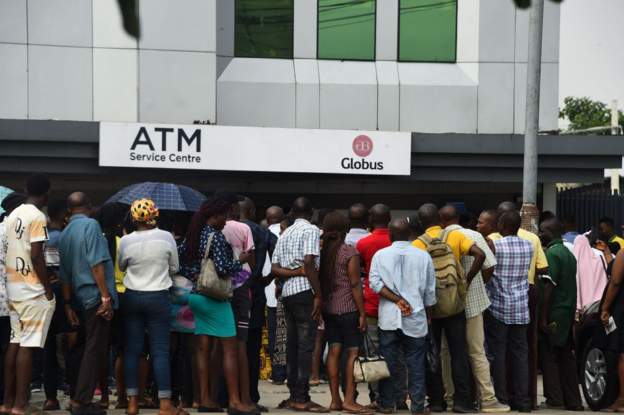
The outgoing president of Nigeria, Muhammadu Buhari, has pledged to address the nation’s currency shortage, which is resulting in disorderly situations as citizens scramble to obtain new naira notes.
After 10 February the old notes will become worthless but can be exchanged for a further seven days at the country’s central bank.
“I am aware of the cash shortages and hardship being faced by people and businesses, on account of the Naira redesign,” President Buhari tweeted.
“I want to assure that we are doing everything to resolve these issues. Nigerians should expect significant improvements between now and the February 10 deadline,” he continued.
I am aware of the cash shortages and hardship being faced by people and businesses, on account of the Naira redesign. I want to assure that we are doing everything to resolve these issues. Nigerians should expect significant improvements between now and the February 10 deadline.
One video showed people fighting at an ATM to get money. Another showed a man stripping down to his underwear as he was waiting at the bank, as we reported on Thursday.
The deadline to exchange the money was supposed to have been 31 January, but it was extended by 10 days to give more people in rural areas time to get the new notes, the central bank’s governor had said.
When the bank announced in October that the 1,000 ($2.18; £1.75), 500 and 200 naira notes were to be replaced, it said 80% of the notes in circulation were outside banks.
The central bank believes that with the redesigned currency it will have a better understanding of the money circulating in the economy so it can better manage inflation.
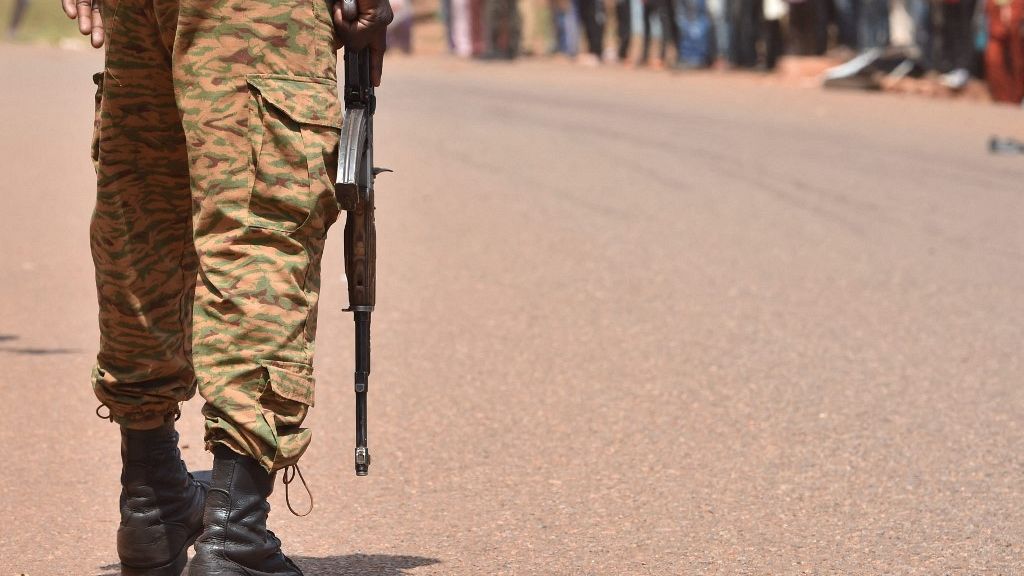
A human rights NGO in Burkina Faso has leveled charges against the army over the killing of at least 25 civilians, including a woman and a baby, in the east of the country this week, according to a statement carried by AFP on Friday.
Neither the army nor the Burkinabe government reacted initially to these accusations. The east of Burkina Faso is one of the regions most affected by the violence of jihadist groups, fought by the army and its auxiliaries.
On Wednesday evening (1 February), “the Collective against Impunity and Stigmatisation of Communities (CISC) was seized by several relatives of victims” reporting “allegations of summary executions of civilians attributed to the Burkinabe Defence and Security Forces (FDS) in the localities of Piega, Sakoani and Kankangou”, said a CISC statement received by AFP on Friday.
The executions took place as a convoy of “more than a hundred vehicles” left Wednesday for the Boungou gold mine, “escorted by dozens of 4×4 pick-up vehicles carrying several FDS in military uniforms”, in these three localities along the National Road 4 (RN4), according to the CISC.
Twelve deaths (including three women and a baby) were reported in the village of Sakoani, about 125 km from Fada N’Gourma, the capital of the eastern region, seven (including four women) in the village of Piega, 60 km from Fada N’Gourma, and six in the hamlet of Kankangou in the territory of the village of Sampiéri, according to CISC.
Inhabitants of Sakoani contacted by AFP testified to the discovery of “eleven bodies” without life after the passage of the convoy.
“The death toll continues to rise as the information reaches us from the field,” the ICSC said.
According to the NGO, the victims are described by witnesses as “unarmed civilians”.
Demanding an end to these “crimes against humanity”, the CISC says it is continuing to “collect information in order to bring all those responsible and their sponsors to justice” and has called for “an independent and impartial judicial enquiry into these crimes”.
Other cases of extrajudicial executions are regularly reported by the population in several regions of Burkina, the CISC said.
On New Year’s Eve, civilian army auxiliaries were accused of killing 28 people in northwestern Burkina.
Burkina Faso has faced increasing attacks by jihadist groups linked to al-Qaeda and the Islamic State since 2015.
Civil society organisation Stand Up SA gathered droves of supporters to march to power utility Eskom’s Sunninghill headquarters in Sandton, Johanesburg, Thursday to demand an end to load shedding and a pending electricity tariff hike. Their demands echoed those of many South Africans facing an energy crisis.
South Africa’s energy crisis is now a major disaster that needs urgent fixing, according to experts who believe the government’s failure to invest in new power plants is at the root of the problem.
The frequency and duration of the rolling power cuts to households and businesses are now at unprecedented levels.
South Africa generates approximately 85% of its energy from coal. The national power utility, Eskom, has the capacity to generate up to 45,000 megawatts but it has been unable to supply even 27,000 MW, giving rise to power cuts or load-shedding that can last several hours a day.
The Transparency International Corruption Perceptions Index (CPI), has classified Seychelles as Africa’s least corrupt country, keeping sub-Saharan Africa.
The island nation retained the position for the 5th consecutive year and 23rd ranking globally attained in 2022 with 70 points once again.
Denmark outperformed Finland and took first place with 90 points. Finland and New Zealand are second and third with 87 points each.
The CPI report rates the perception of corruption in the public sector using a scale of 0 to 100, where 0 is highly corrupt and 100 is clean. Seychelles stayed in 23rd place globally like in 2021 with a score of 70 points.
The island state again outperformed major Western democracies like the United States, which did better than last year and climbed to 24th position with a score of 69 points.
The commissioner of the Anti-Corruption Commission of Seychelles, (ACCS), May De Silva, said in a press statement that this is good news for the islands.
“We are therefore delighted that this positive action and our tireless efforts to root out corruption by our committed staff and the supportive public has been recognised and that we are able to maintain our global position as the 23rd least corrupt country in the world and remain the least corrupt country in Africa,” said de Silva in a report by seychellesnewsagency.
South Africa‘s power shortage has intensified and the country’s health system is finding it difficult for the paramedics to perform their jobs.
“We got called to a hospital where the generators stopped working and then it was 18 paramedics and nine ICU ventilator patients. And so it was two paramedics per patient and then nine of us, we had to ventilate them manually for four hours, until their generators were fixed,” Nicole Morrison, a paramedic said.
Jeanette Mahlangu is one of the vulnerable persons hurt by government-enforced loadshedding. The Soweto resident has been forced to go without the oxygen concentrator helping her breathe.
Meanwhile her backup tank is empty, the 8 to 10 hours with no power have made it too expensive to refill. Her daughter feels distressed.
“When I look at my mum, she’s quiet and expecting this, I can’t say anything. But myself, I’m scared. Me, I’m scared like, I don’t like this.”
If Janette was in need of an ambulance during the blackout, there would be no way to call one, due to limited battery and no phone service.
Armed military personnel came to the aid of NEDCo employees on Thursday after they had been imprisoned at the UDS City Campus, close to Tamale Technical University, for cutting off the institution’s energy.
According to the Northern Electricity Distribution Company (NEDCo) staff, the University owed them huge electricity bills.
Due to the arrears owed, NEDCo decided to change the university’s postpaid meter to a prepaid meter so that the university gets power when they purchase credit.
This decision was arrived at to put an end to NEDCo’s losses but the university authorities protested the new arrangement.
The Northern Electricity Distribution Company then decided to discuss the decision to replace the post-paid meters and deployed workers to go ahead with the disconnection.
In an interview with Adom News, NEDCo Loss Control Supervisor, Samuel Kumi said, UDS City Campus owes NEDCo as much as GH₵447,000, for which reason they were sent to disconnect their power.
According to the Loss Control Supervisor, “upon the disconnection, the security and staff of the school locked the main gate of the campus and ordered them to reconnect the lights or they wouldn’t allow them out.”
Mr. Kumi stated that he therefore reported the problem to Management and the military officers were called in to help them.
Meanwhile, the situation remains tense until the university pays a portion of the arrears accumulated, Adom News gathers.
Regé Jean-Page – who soared to fame after starring in Netflix’s Bridgerton – has reportedly been deemed the most attractive man in the world.
The 34-year-old actor who played Simon Basset, the Duke of Hastings in the smash hit period drama, was analysed against ancient scientific research and the results proved his face was a real money-maker.
According to the Greek Golden Ratio of Beauty Phi – which measures physical perfection – Regé was found to be 93.65 per cent accurate.
Following hot on his heels was Thor’s Chris Hemsworth with 93.53 per cent, Michael B Jordan of Black Panther with 93.46 per cent and coming in fourth place, singer and heartthrob Harry Styles with 92.30 per cent.
Dr Julian De Silva, a Harley Street facial cosmetic surgeon, compiled the list using the latest computerised mapping techniques and regularly turns to the technology in his everyday work.
Explaining how the process works, the professional said: ‘These brand new computer mapping techniques allow us to solve some of the mysteries of what it is that makes someone physically beautiful and the technology is useful when planning patients’ surgery.’
Dr Julian used a scientific method to come to his conclusion (Picture: AP)The star captivated audiences as the Duke in Bridgerton (Credits: BACKGRID)
He went on to clarify why the actor nabbed the top spot: ‘Regé won because of his classically beautiful face and gorgeous brown eyes.
‘He had easily the highest score for his eye spacing and the positioning of his eyes also scored highly.
‘His perfectly shaped lips also scored highly and the only mark he got that was slightly lower was for his nose width and length.’
Chris Hemsworth was listed in second place (Picture: Getty Images)Coming in third was Black Panther’s Michael B Jordan (Picture: WireImage)
Do you think Regé deserves the top spot?COMMENT NOW
It came as no surprise the Bridgerton frontman was among the world’s most beautiful faces as he caused viewers to uncontrollably swoon during raunchy scenes with co-star Phoebe Dynevor – who played Daphne Bridgerton.
After a jaw-dropping performance in the romance series, the star has been tipped to swap petticoats and afternoon tea for 007 madness as bookies line him up to be the next James Bond.
A Kenyan national living in the US has been imprisoned for her role in helping to organise romance scams and pandemicunemployment fraud.
Florence Mwende Musau, 38, was sentenced by a US court to 44 months in prison. Musau was also ordered to pay almost $1m (£810,000) in restitution to the victims and to forfeit approximately $350,000 and a Lexus SUV.
Musau was charged in 2021, along with with five others, in connection with their roles in the online scams in which the victims collectively lost more than $4m.
The US authorities said the group used fake passports and numerous aliases to open bank accounts in and around Boston to collect and launder the proceeds of the romance scams.
“Musau also received the proceeds of fraudulent state pandemic unemployment assistance benefits in the names of victims,” the US Attorney’s Office said.
“As part of the scheme, Musau used at least three different aliases to open nearly 10 fraudulent bank accounts and receive approximately $1m in fraud proceeds,” a statement added.
Spanish Prime Minister Pedro Sanchez is on an official visit to Morocco, to amend ties following a deep diplomatic crisis that ensued between the two countries.
“The better the relations are between Morocco and Spain, the better it is for Spain, for Morocco, for Europe, for business, and for the citizens of both countries,” Mr Sanchez said at an economic forum in Rabat.
He and a dozen Spanish ministers are set to meet top members of the Moroccan government on Thursday.
They are expected to sign some 24 deals including Spanish investments in the kingdom and on partnerships in areas from culture and education to desalination and rail transport, Spanish government sources said.
This visit comes amid disputes over migration and territory and after Madrid reversed decades of neutrality on the Western Sahara conflict to back Morocco’s position.
Also Spain’s North African enclaves of Melilla and Ceuta – which both border Morocco – have long been magnets for people fleeing violence and poverty across Africa, seeking refuge via the continent’s only land frontiers with the European Union.
Tensions were strained last year after the deaths of at least 23 sub-Saharan migrants who were attempting to cross from Morocco to the Spanish enclave of Melilla.
The United States has urged Tunisia to demonstrate greater democratic inclusion in light of the recent parliamentary elections’ low turnout.
Just 11% of voters took part in a second round of elections that ended on Sunday.
“The low voter turnout reflects the dire need for the government to engage in a more inclusive path going forward to further expand political participation,” State Department spokesman Vedant Patel said.
Opposition parties boycotted the poll, accusing the president of staging a coup after he shut down parliament in 2021 and gave himself almost unlimited executive powers.
Mr Saied has defended the low turnout as a sign of discontent with parliament.
The largest religious group in Ethiopia, the Orthodox Church, has vowed to call for statewide demonstrations to be headed by its patriarch, Abuna Mathias.
The church has criticised Prime Minister Abiy Ahmed’s recent statements regarding rogue clergy involved in the appointment of bishops without its knowledge.
Mr Abiy’s lengthy remarks, broadcast on national television on Tuesday, came after the church’s synod excommunicated the breakaway clergy, who are from the country’s Oromia region.
He warned his cabinet members against getting involved in the church’s affairs. However, he said both sides “have truths.”
The synod said the PM’s remarks disregarded its decisions, challenged its authority and gave recognition to an “illegitimate power-hungry” group.
Some of Mr Abiy’s statements were “misleading”, it added.
The breakaway clergy accuse the church of maintaining a system of linguistic and cultural hegemony in which congregations in Oromia are not served in their native languages. The church denies the accusation.
The breakaway clergy said they had “overwhelming” public support after touring some areas in the conflict-prone western Oromia.
The synod’s statement comes amid accusations among the faithful that authorities are supporting the breakaway clergy.
It accuses the government of harassing and detaining its senior figures. It vows to continue to speak out even if they [senior religious leaders] have to “sacrifice their lives.”
Relationships between Mr Abiy’s administration and the church – which boasts nearly half of Ethiopia’s 110 million population as its adherents – were positive in the early days of his tenure.
However, in recent years members of the faith group have reported being targeted.
Relations became particularly strained during the heights of the Tigray war after Abuna Mathias spoke against what he called genocide in the region.
Her memory of her home country Somalia is all about her family desperately running to save their lives from the war in 2007. They landed in the city of Hargeisa in Somaliland, which was not internationally recognized.
Nujuum Hashi Ahmed enrolled in a nursing school and began her professional practice at the Hargeisa General Hospital. However, her heart was in painting, according to Anadolu Agency.
Her father was an anesthetist but she still held fond memories of his paintings. Now a famous painter, Ahmed believes her love for painting stems from her dad painting and drawing in their compound.
Ahmed said as much as her father loved to paint, he never showed the world his works. It was all kept in the closet. When she perfected her art, she wore a hat that enabled her to attend to the sick during her working hours and when she got home, she wore another that enabled her to place her cherished memories of Somalia in art.
Today, her painting is about the everyday dreams and shared aspirations of the people of Somalia. Her artistic themes are about peace and a rallying cry for the war in Somalia to end. She believes when the conflict is over, the people will have enough to eat and the youth will be able to chase their dreams.
She started her paintings as murals on the road and anywhere that yearned to learn about the plight of Somalia and the devastating impact of the war on women and children. Inspired by her work, the European Union diplomatic office in Somalia engaged her to make murals for them.
Aside from preaching peace, the Somali artist campaigns for women’s rights and political representation in her art. She also maintains that it is expedient for generations to know about their culture and past, and she is undaunted in this pursuit.
Ahmed said that given a choice to pick between nursing and painting, she will opt for the latter because it has been her passion since childhood. She said instead of people opposing the ideals she stands for, they should look beyond her paintings and appreciate the positive image she is weaving around her country.
She also has other dreams which include teaching others to empower them with skills to become functional members of society. A COVID-19 survivor, she recently used art to spread awareness about the disease in Somalia.
Many of the Somali artist’s paintings can be found at the Hargeisa Cultural Center.
The WHI study measured the most severe, life-threatening outcomes: breast cancer, heart disease, stroke, and blood clots, among others. But for a woman who is constantly losing hair, who has joint pains, who suddenly finds that her smell has changed (and not for the better), or who is depressed or exhausted — for many of these women, the net benefits of taking hormones are day-to-day Experiencing an improved quality of life day after day may be worth accepting the additional risks of hormone therapy even after the age of 60. Hormones can also be useful for women like me, whose symptoms are not as severe but whose risks are low. “I’m not saying every woman needs hormones,” says Rubin, “but I do believe in your body, your choice.”
Talking about menopause, among so many other things, lacks the language that helps us make those decisions. Some women sail happily into motherhood, but there’s a term for the extreme anxiety and depression that other women experience after childbirth: postpartum depression. Some women menstruate every month without major upheavals; others experience mood swings that disrupt their daily functioning and suffer from what is known as premenstrual syndrome (PMS) or, in more severe cases, premenstrual dysphoria. A significant proportion of women experience no symptoms at all during menopause. Others suffer near-systemic collapses with brain fog, recurring hot flashes, and exhaustion. Others feel different enough to know they don’t like what they’re feeling, but they’re hardly incapacitated. Menopause—that vague term—is too big, too overdetermined, and creates a confusion that makes it particularly difficult to talk about.
No symptoms is more closely associated with menopause than hot flashes, a phenomenon often reduced to a comedic expression — the middle-aged woman angrily waving a fan in front of her face and tossing ice cubes into her shirt. Seventy to 80 percent of women experience hot flashes, yet they’re almost as mysterious to researchers as they are to the women who experience them — a reflection of how much we still have to learn about the biology of menopause. Scientists are now trying to figure out if hot flashes are just a symptom or if they trigger other changes in the body.
Curiously, a woman’s searing heat is not reflected in a significant increase in her core body temperature. Hot flashes originate in the hypothalamus, an area of the brain rich in estrogen receptors that is both vital to the reproductive cycle and acts as a thermostat. Without estrogen, his thermostat is now jiggling, and the hypothalamus is more likely to misinterpret small increases in core body temperature as too hot, triggering sweating and widespread dilation of blood vessels to cool the body. This also drives up the temperature on the skin. Some women experience these misfires once a day, others 10 or more, each lasting from seconds to five minutes. On average, women experience them for seven to ten years.
What hot flashes can do for a woman’s health is one of the main questions Rebecca Thurston, director of the Women’s Biobehavioral Health Laboratory at the University of Pittsburgh, is trying to answer. Thurston helped lead a study that followed a diverse cohort of 3,000 women over the age of 22 and found that about 25 percent of them were what are known as superflashers: Their hot flashes began well before their periods became irregular, and the women continued to experience them until then to 14 years of age, which turns the notion on its head that hot flashes are an irritating but short-lived inconvenience for most women. Of the five racial and ethnic groups Thurston studied, it was found that black women experienced the most hot flashes, found them the most annoying, and endured them the longest. In addition to race, low socioeconomic status has been linked to the duration of hot flashes in women, suggesting that living conditions may affect how the body copes with menopause years later. Women who were abused in childhood were 70 percent more likely to report night sweats and hot flashes.
Could these symptoms also indicate harm beyond the impact on a woman’s quality of life? In 2016, Thurston published a study in the journal Stroke that showed women who had more hot flashes — at least four a day — tended to show more signs of cardiovascular disease. The association was even stronger than the association between cardiovascular risk and obesity or cardiovascular risk and hypertension. “We don’t know if it’s causal,” Thurston warns, “or in which direction. We need more research.” There might even be some women for whom hot flashes accelerate physical damage and others who don’t, Thurston told me. At the very least, she says, reports of severe and frequent hot flashes should prompt doctors to take a closer look at a woman’s heart health.
While Thurston was attempting to determine the effects of hot flashes on vascular health, Pauline Maki, a professor of psychiatry at the University of Illinois at Chicago, made connections between hot flashes and mild cognitive changes during menopause. Maki had already found a clear correlation between the number of hot flashes a woman had and her memory performance. Maki and Thurston wondered if they would be able to discover a physical representation of this association in the brain. They started with a study published last October that found a strong correlation between the number of hot flashes a woman has while sleeping and signs of damage to the brain’s tiny vessels. At a Pittsburgh lab that has one of the most powerful MRI machines in the world, Thurston showed me an image of a brain with tiny lesions shown as white dots, ghostly absences on the scan. Both their number and placement, she said, are different in women with high numbers of hot flashes. But whether the hot flashes caused the damage or the changes in the cerebral vessels caused the hot flashes, she couldn’t say.
Source: New York Times
DISCLAIMER: Independentghana.com will not be liable for any inaccuracies contained in this article. The views expressed in the article are solely those of the author’s, and do not reflect those of The Independent Ghana
The United States says it is deeply concerned over the release this week of a Sudanese man facing the death penalty in connection with the killing of a US diplomat 15 years ago.
The Sudanese authorities on Monday freed Abdel-Raouf Abu Zaid, who was convicted over the killing of John Granville and his Sudanese driver Abdel Rahman Abbas.
They were shot dead by Islamist gunmen on New Year’s Day 2008.
The State Department denied that the release was part of an agreement by both countries.
It said it was troubled by the lack of transparency in the legal process.
Tanzania’s Director of Public Prosecutions (DPP) office has come under fire after President Samia Suluhu Hassan stated on Tuesday, January 31, 2023, that a large portion of the money the DPP had amassed through plea bargaining agreements had vanished without a trace.
She did not however state the exact figures of how much was missing and who was the owner of the said offshore account where the money has been stashed.
Under her predecessor, the late Magufuli, billions of shillings were squeezed from businessmen who were facing serious economic crimes in plea bargain deals for the victims to be set free.
On April 28, 2021, the then Minister of Justice and Constitutional Affairs, Prof Palamagamba Kabudi told Parliament that between July 2020 and March 2021, the DPP’s office had collected Sh35.07 billion out of 192 cases after the accused pleaded guilty.
However, according to the report by the Controller and Auditor General (CAG), there was a total of Sh51 billion in state coffers collected through the plea bargaining arrangement as of April 2021.
The CAG, Mr Charles Kichere is on record as having said that his office was investigating the money collected through the plea bargaining arrangement, saying the report would be ready next month (March 2023).
In June 2021, the Director of Public Prosecutions (DPP) said his office was finalising compensation payments from the special accounts that hold monies paid by criminals who plead guilty so that these can be returned to their owners.
The assurance by DPP, Mr Sylvester Mwakitalu came at a time when stakeholders, including lawyers, were questioning the amount paid into the account, calling it an individual account and questioning its use.
The special account at the Bank of Tanzania (BoT) was reportedly opened by former DPP Biswalo Mganga to receive and keep monies paid by defendants who plead guilty to the plea-bargaining agreement between the two parties.
Why plea bargain?
Tanzania – under then President John Magufuli – amended its criminal laws in 2019 to introduce, among other issues, the plea bargaining arrangement. With the rise in the number of unbailable economic sabotage cases during the Magufuli regime, it was deemed fit to put in place an arrangement that would bring the prosecutor and the accused to a negation table.
However, the interesting part of that whole episode was that the plea bargaining arrangement started two years before the amendments were passed in Parliament.
Besides, even after endorsing the amendments, implementation continued without putting in place the regulations that would operationalise the law. Regulations were only introduced in February 2021.
Cases
Several known cases have involved plea bargaining deals including that of the owner of Independent Power Tanzania Limited (IPTL) Harbinder Seth Singh who agreed to pay Sh26 billion and walked to freedom four years since he was arrested over economic crimes in 2017.
Former president of the Pangea mine, North Mara Mr Deogratius Mwanyika, and six other fellow accused agreed to pay Sh1.5 billion each.
Another known case is that of the director of Mr Kuku Farmer Ltd, Tariq Machibya, famously known as Mr Kuku who agreed to pay Sh5.4 billion as a result of fraud charges.
Journalist Eric Kabendera in February 2020 paid Sh172 million as compensation which he was supposed to clear in six months.
Kabendera was arrested on charges of money laundering, tax evasion and leading a gang of organized crime.
The list also includes former Vodacom Tanzania’s managing director Hisham Hendi and other executives at the telecom firm who walked to freedom after paying about Sh6 billion under a plea bargaining arrangement.
Kenyan police have arrested six teachers from a primary school in the western part of the country over a widely shared video showing pupils simulating sex acts as the teachers watch.
Local media report that the teachers in Nyamache, in Kisii county, were arrested after education ministry officials watched the clip and raised a complaint.
In the video, adults can be heard talking and laughing out loud as someone records the four boys who are in school uniforms.
A police report noted that the clip “exposing the pupils in an indecent act” appeared to have originated from the school.
It said the six arrested were assisting in investigations and appropriate charges would follow.
The video has sparked an uproar on social media, with many calling for action.
“What they did can only be termed as barbarous, bestial, and insane. It has no justification whatsoever! Let them face the full force of the law,” a one person on Twitter said.
“I support the arrest of the six teachers… There is no justification [for] what they did,” another said.
Regional leaders meeting in Somalia have agreed on a joint offensive operation against Islamist militant group al-Shabab.
The “search and destroy” operation will boost the momentum built up by government forces who have made huge gains over the past few months, including recovering territory controlled by the al Qaeda-affiliated group.
“The time sensitive campaign will prevent any future infiltrating elements in the region,” said the communique signed by the leaders of Somalia, Djibouti, Ethiopia and Kenya
It did not provide any details about the operation.
The leaders have endorsed H.E @HassanSMohamud’s multi-faceted fight against terrorism militarily, financially & ideologically while expressing a unified stance against the Khawaaij. They expressed support for Somalia’s quest to assume full responsibility of Somali security forces pic.twitter.com/sK3UB705I4
Al-Shabab, which launched mortar shells in Mogadishu ahead of the leaders’ meeting, has not responded to a request for comment, news agency Reuters reports.
The militant group has been fighting since 2006 to topple Somalia’s central government and establish its own rule based on its strict interpretation of Islamic Sharia law.
It occasionally attacks hotels, military bases and government establishments in Somalia and in the region.
A very wise man once said, “Show me your friends, and I’ll show you who you are.” The longer I live, the more I realize that this old saying is preaching the truth.
Statistically, we are the average of the five people we spend the most time with. You are who you hang out with — and there’s nothing wrong with judging someone by their entourage.
Believe it or not, you can learn a lot about the guy you’re dating by meeting your boyfriend’s friends.
A man’s entourage can tip you off to his real personality.
Here are 12 things you can learn just by meeting your boyfriend’s friends.
1. His likelihood of cheating.
Do you know if his buddies have side pieces? If they do, don’t date him!
Studies show that one of the biggest predictors of cheating is whether his friends are currently having affairs on their wives and girlfriends.
2. His attitude toward women in general.
Birds of a feather tend to flock together, especially when it comes to attitudes on women. Misogynistic men tend to hang out with other misogynistic men.
If you hear his friends talking about how women “don’t function on logic” or anything else like that, you can assume he’s not much better and that it’s time to bail.
3. His chances of being a creep.
Most guys worth dating will have at least one female friend around them, and there’s a reason for this. Women are open to just being friends with men, but not when men are creeping them out.
If guys can’t even keep a female friend around them, it’s a sign that they are doing something seriously wrong.
4. How compatible his lifestyle really is with yours.
You might like him, but let’s just be real, liking isn’t enough. On a similar note, if all his friends come from a very different background than yours and have a lifestyle that’s basically your polar opposite, chances are high that he lives the same type of life.
If you can’t match with that, you probably aren’t compatible in terms of lifestyle.
5. How likely it is that his parents will accept you.
A good rule of thumb is to take a look at his entourage. In most cases, parents like the friends their kids have or want their friends to be a bit more conservative.
If you are the “odd one out,” then you may have disapproving parents to deal with if you get serious.
6. If he’s actually serious about you.
Don’t know his friends? Never got introduced to them, except by accident? Haven’t met them unless you badgered the ever-loving hell outta him?
Well, this is a sign that he’s not serious about you, especially if you’ve been dating for more than six months.
7. If something is wrong with the relationship that you might not notice.
I’ve learned this from personal experience. If you notice that his friends are shooting you sympathetic, confused, or pitying looks, then you should be worried.
It’s a sign he’s cheating on you or otherwise doing something sketchy.
8. If he’s talking smack about you behind your back.
Another thing I’ve learned is to be wary if you notice his friends acting unusually cruel, mean, or icy towards you. In many cases, this is a sign that he’s saying pretty awful things about you behind your back or that you might be the unwitting other woman.
Either way, see this as grounds for breaking up.
9. If you would want to be with him long-term.
His friends are going to be part of his life, with or without you in it. If you legitimately can’t stand being around any of his friends, you should not consider being around him long-term.
These things can and do cause rifts between couples, and that’s not good for the health of the relationship.
10. His chances of being successful in life.
If the five friends he has around him all the time don’t have jobs, he probably will not have much going on in his life either… unless he changes his life.
11. His core values.
His friends will likely have the same values as he does. If his friends are highly religious, chances are that he’ll begin to skew towards religiosity as he gets older, too, even if he doesn’t seem religious right now.
Similarly, if his friends don’t value education, he probably won’t either. Look at his friends and ask if you have similar values to them. If you don’t, you might want to rethink your relationship with him.
12. If he’s ready to settle down.
People who have a bunch of friends who are married are far more likely to get married and look for long-term commitment than people whose friends are still single.
If you see a lot of wedding rings on his friends, that’s a good sign that he wants to get married to someone sooner rather than later.
Here are some tips to help you when meeting your boyfriend’s friends for the first time.
1. Be yourself.
It is important to show up as your authentic self. No one likes a brown-noser. Be who you are everyday, and his friends will appreciate that just like he does.
You don’t have to memorize sports stats or the latest car models to impress his friends. Make casual conversation. Besides, people can see right through the fake-nice girl act really quickly.
Of course his friends are coming with an arsenal of questions. Wouldn’t your friends? They want to know about you just as much as you are wondering about them.
Set boundaries, and be prepared to do some talking.
3. Be presentable.
Now, you don’t have to go out and spend thousands, but make sure you look good. You represent your man, and you want him proud to introduce you as his lady.
When you look good, you feel good and feeling good will make you more relaxed.
Men like to show off what they value, and girl you are the prize!
Source: your tango
DISCLAIMER: Independentghana.com will not be liable for any inaccuracies contained in this article. The views expressed in the article are solely those of the author’s, and do not reflect those of The Independent Ghana
Over a million worshippers turned out for a papal mass in DR Congo’s capital Wednesday, organisers said, on the second day of Pope Francis’s visit to the conflict-torn country.
Many of the faithful in Kinshasa, a deeply observant megacity of some 15 million people, began to arrive at Ndolo airport on Tuesday night to assure themselves of a spot.
Francis entered the airport grounds aboard his popemobile and was greeted by singing and dancing crowds before the mass began at around 9:30 am (0830 GMT).
Organisers said that over one million people were on the airport tarmac. Adrien Louka, 55, told AFP he had arrived before dawn.
“As our country has many problems, it is reconciliation that we are looking for and the Pope will give a message so that the countries around us leave us in peace,” he added.
Francis wished the crowd peace in Lingala, one of the DRC’s four national languages and the everyday language of Kinshasa.
The pope delivered the rest of his homily in Italian — which was translated into the DRC’s official language French — in which he urged the faithful “not to give in to divisions.”
The 86-year-old pontiff had arrived in the DRC on Tuesday, on the first leg of a six-day trip to Africa that will also include troubled South Sudan.
Huge crowds had also thronged the streets for a glimpse of the popemobile as Francis drove past.
– ‘Massively plundered’ –
A former Belgian colony the size of continental western Europe, the DRC is Africa’s most Catholic country.
About 40 percent of the population of some 100 million people follows the church of Rome, according to estimates.
Another 35 percent of the population is Protestant of various denominations, nine percent is Muslim and 10 percent Kimbanguist — a Christian movement born in the Belgian Congo.
Official Vatican statistics put the proportion of Catholics in the DRC at 49 percent of the population.
During a speech to politicians and dignitaries in Kinshasa’s presidential palace on Tuesday, Francis denounced the “economic colonialism” he suggested had wreaked lasting damage in the DRC.
“This country, massively plundered, has not benefited adequately from its immense resources,” he said, to applause.
Despite abundant mineral reserves, the DRC is one of the poorest countries in the world. About two-thirds of Congolese people live on less than $2.15 a day, according to the World Bank.
– Meeting conflict victims –
Francis is also due to meet victims of the conflict in eastern Congo in Kinshasa on Wednesday following the mega-mass.
After that, he will talk to representatives from charitable organisations.
The DRC’s east has long been plagued by dozens of armed groups. Since late 2021, M23 rebels have also captured swathes of territory in North Kivu province, coming close to its capital Goma.
The trip to DRC and South Sudan had originally been planned for July 2022, but it was postponed due to the pontiff’s knee pain that has forced him in recent months to use a wheelchair.
Security concerns were also said to play a role in delaying the trip, and a stop in Goma — a city of over a million people on the border with Rwanda — is no longer on the itinerary. “I would have liked to go to Goma too, but with the war, you can’t go there,” Francis told reporters on the plane from Rome.
The Argentine pontiff, in his speech in Kinshasa on Tuesday, urged the need to address the conflict and said he supported regional peace efforts.
Francis also underlined the need for investment in education, and free-and-fair elections, among other issues. On Friday, the pope travels to South Sudan’s capital Juba.
The National Human Rights Commission (NHRC) has said that it has begun an investigation into the allegation that the Nigerian Army has been running a secret abortion programme for female officers since 2013.
Recall that a report by the Reuters had alleged that the Nigerian Army had been running a secret abortion programme for rescued women and girls for which about 10,000 pregnancies have been aborted since 2013. But the military had denied the report
The Executive Secretary of NHRC, Tony Ojukwu (SAN) on Tuesday in a statement issued by the Deputy Director of Public Affairs and External Linkages, Fatimah Agwai Mohammed, said that the commission would Tuesday, February 7, 2023, inaugurate a Special Independent Investigative Panel on Human Rights Violations in the Implementation of Counter Insurgency Operations in the North-East.
According to Ojukwu, the panel will among other things “Focus on investigating the Reuters report which alleged that the Nigerian military was involved in abortion of many pregnancies in the North-East in the last 10 years.”
The statement noted that members of the panel are retired Justice of the Supreme Court, Justice Abdu Aboki, (Chairman); Ms Kemi Okonyedo (representing women rights organisations); Azubuike Nwankenta (representing the Nigerian Bar Association); a military law and intelligence expert, Major-General Letam Wiwa (retd.).
Other members of the panel are consultant in Obstetrics and Gynecology at Modibbo Adama University Teaching Hospital, Yola, Dr Maisaratu Bakari; humanitarian expert (representing civil society), Dr. Fatima Akilu and psychologist (representing youths), Ms Halima Nuradeen.
Recall that the Chief of Defence Staff, General Lucky Irabor, had on Friday, December 17, 2022, during a visit to the commission, demanded an investigation into the Reuters report.
Similarly, a coalition of over 228 women’s rights organisations under the aegis of Womanifesto, requested an investigation of the reported forced abortion.
The convener of Womanifesto and Executive Director of Women Advocates Research and Documentation Centre, Dr Abiola Akiyode-Afolabi, reportedly made the demand in a statement issued in Abuja, with a call on the Nigerian Government to institute a panel of inquiry.
Despite escalating security issues the military is now facing in several areas of the nation, SaharaReporters has learned that a total of 34 troops are leaving the Nigerian Army.
The soldiers, drawn from various formations of the army across the country, all belong to junior cadres who are mostly at the forefront in the field.
They include warrant officers, staff sergeants, sergeants, lance corporals, corporals and privates.
The Chief of Army Staff has since approved their formal disengagement.
The list of the exiting soldiers did not distinguish between those embarking on voluntary retirement and those leaving the army on medical grounds.
However, none of them has attained retirement age or the mandatory years of service.
The soldiers in a letter to the army chief under Reference NA/COAS/001, quoted the Harmonised Terms and Conditions of Service soldiers/rating/airmen (Revised) 2017.
The approval of their voluntary disengagement dated January 25, 2023, was signed by Colonel AC Unadgu and exclusively obtained by SaharaReporters during the weekend.
According to Unadgu, the 34 soldiers are to submit all military properties in their possession.
There have been allegations of corruption in the Nigerian Army which some of the soldiers have blamed on the issue – soldiers overstaying in the Northeast.
According to some soldiers, the army is the epitome of deep-seated corruption. They noted that corruption is affecting the prosecution of the anti-terrorism war in Northeast Nigeria.
Recently, army personnel deployed for counterinsurgency operations in Borno State lamented that those who were to relieve them three months after they were asked to leave the battlefield had yet to resume.
The soldiers complained that they were being forced to confront Boko Haram militants, adding that their low morale and lack of willingness to continue to fight made it possible for terrorists to dislodge some military camps recently.
They complained of abandonment and accused the military authorities of keeping them on the front beyond their approved period of stay
In 2022, over 500 soldiers in the Northeast and other theatres of operation wrote to the Chief of Army Staff, Lt Gen General Faruk Yahaya, seeking voluntary retirement.
Recently, some personnel attached to the 198 Special Forces of the Nigerian Army in Borno accused their Commanding Officer, Lieutenant Colonel Abdulahi Hassan Ali of corruption and financial mismanagement.
Some of the soldiers who spoke to SaharaReporters claimed Ali had been diverting their allowances.
According to the soldiers, the unit will soon witness a complete breakdown of order and discipline over the unpaid allowances and alleged bad treatment by their commander.
“We calling on them to quickly treat and investigate the reason why our commander has refused to pay soldiers all their operations funds which were directed to us in 198 Special Force Battalion, under 402 SF brigade.
“The Nigerian Army gave 198 Special Force Commanding officer, Lieutenant Colonel Abdulahi Hassan Ali millions of Naira to give his soldiers for Operation Thunder Strike that was conducted in Kaduna State in 2021 but he refused to pay them accordingly,” one of the soldiers said.
“The Borno state governor, His Excellency Governor Zulum gave 198 and 199 Special Forces Battalion funds; worth millions of Naira to give soldiers after they returned back to Maiduguri, Borno state from Kaduna state. To motivate/moralize soldiers for Operation desert sanity which was conducted in 2022 in Borno state. But both battalions’ commanders refused to give these soldiers their entitlements.
“The resent Sallah money worth millions of Naira which was given to the 134, 198 and 199 special forces battalions under 402 SF Brigade by the same Borno state governor Zulum as welfare was also diverted. The commanders of 134 and 199 battalions shared the money to their soldiers while Ali who is leading 198 SF refused to pay us.
“In the ongoing operation forest sanity in Kaduna state, cows and motorcycles captured around Damba and Kudenden general area are being hidden in his newly built house in Kano and farm.
“This is a man who I sed (sic) to convert soldiers’ entitlements, he has been pocketing the battalion’s feeding money every months. You know we dare not challenge or ask our commanding officer about all the money and other allowances but we have family and relatives that we are taking care of at our various homes. So Nigerians should please help us out.”
In 2022, some army personnel also accused President Buhari of failing to check corruption and financial mismanagement among some top military officers while soldiers continue to cry on a daily basis.
The soldiers in an open letter to the President accused top army officers of corruption and extortion.
They said despite their numerous complaints, nobody was saying anything about their unpaid allowances by the military finance corps.
The letter had read, “We want to start by saying that it is a shame on General Muhammadu Buhari for failing to address the financial mismanagement of Nigerian soldiers while they continue to cry on the (sic) daily basis.
“Soldiers of the Nigerian Army have complained severally (sic) how their money is being short pay (sic) by the Army Finance and nobody is saying anything about it.
“Nigerian soldiers have complained severally (sic) how they have been given 20% of the 100% allowance which was signed into law by the President Buhari since (sic) 2017 which is known as MAFA. No one is saying anything and the President is not interested to follow up or investigating (sic) the matter.
“The salary of our soldiers is being paid through POS, phone transfer in connection with banks by the army finance department. Our soldiers have been crying but no one is saying anything.
“Our Soldiers continue to buy their uniforms themselves and every other kit needed to protect the people and the nation. No uniform allowance, no boot allowance, and nobody are (sic) saying anything.
“The soldiers we don’t see as anything are the ones that are keeping this country moving. They are using their lives as a wages (sic) between Nigerians and our adversaries.
“When these boys will strike, they won’t be able to enjoy all the money they are stealing and hiding for (sic) their children. When they will strike, running to another country will be too late for us. When they will strike, they (sic) won’t be room for amendment.
“Pay our soldiers their money in full and do it now. Army finance should not have anything to do with our soldiers’ salaries and allowances.”
Pope Francis has celebrated one of his biggest masses, in Democratic Republic of Congo’s capital, Kinshasa.
It is more than 37 years since a pope visited the mineral-rich but conflict-ridden country.
Estimates say around a million gathered for the open-air mass at N’dole airport, on the second of the pontiff’s six-day visit to Africa.
Around half of DR Congo’s population is Catholic – the largest Catholic community in Africa.
Speaking at the mass, the Catholic leader called for peace in DR Congo, saying warring sides should forgive one another and grant their opponents a “great amnesty of the heart”.
He went on to espouse the benefits of cleansing one’s heart of “anger and remorse, of every trace of resentment and hostility”.
Wednesday’s mass was tipped to be one of the pope’s largest-ever masses, second only to one held in the Philippines in 2014, according to Christopher Lamb, the Rome correspondent of the Catholic magazine The Tablet.
Image caption,There were jubilant scenes in Kinshasa as the Pope delivered a message on forgiveness
In an interview with the BBC’s Newsday radio programme, he said Catholicism was growing in Africa: “This is the future of the church and the growth of the Catholic Church in Africa really is so important to the future of Catholicism.”
On Tuesday, the Pope met President Félix Tshisekedi and delivered a speech condemning historical exploitation of Africa’s resources, which he described as “economic colonialism”.
He also addressed DR Congo’s plight, as minerals have played a key role in more than three decades of armed conflict there: “Hands off the Democratic Republic of the Congo! Hands off Africa! Stop choking Africa, it is not a mine to be stripped or a terrain to be plundered.”
However, a planned visit to the eastern city of Goma has been cancelled for security reasons. The eastern part of DR Congo is facing escalating violence as security services fight against armed militia groups.
According to the United Nations, some six million people have been forced to flee their homes in DR Congo.
That is one of the largest populations of displaced people in the world, alongside places like Afghanistan, Yemen, Syria and Ukraine.
Most of the displaced are in the eastern provinces of South Kivu, North Kivu and Ituri.
The opposition lawmaker Raila Odinga, has said that the election team, including the chairman, paid a visit to his home during last year’s fiercely contested election, prompting the previous head of Kenya’s electoral commission to threaten legal action against the individual.
Mr. Odinga has been holding a series of rallies claiming Wafula Chebukati engineered a fraud that led to him losing his fifth bid for the presidency.
Despite the Supreme Court dismissing his election rigging claims, Mr Odinga recently said he does not recognise President William Ruto as a legitimate leader and called on him to resign.
On Sunday, he threatened to release a video showing Mr Chebukati and his top team visited his home.
But Mr Chebukati has denied that the visit took place saying the claim was false and that it “lowered his dignity and injured his reputation.”
“Our client is aggrieved that you took no caution or responsibility while making the adverse remarks with the consequence that our client has suffered and continues to suffer serious reputational injury, taking into account his status and position as former chairman of IEBC,” lawyer Steve Ogolla said in the demand letter.
Mr Chebukati’s lawyers have also given Mr Odinga seven days to prove his claim or they will take legal action.
On Monday, President William Ruto wondered why Mr Odinga would have the electoral team visit his house.
“It then begs the question … if it’s true, what were these officials doing in your house at your invitation? Being a candidate, how did you end up inviting officials of an independent body?” Mr Ruto said.
There’s an injured ego, there’s disappointment, there’s heartache… and then there’s achy-breaky heartache to the ninth degree.
Those are the signs a guy’s heart is broken, for good — or at least for a while.
You can tell by his demeanor. His look. His social habits and eating patterns. He’s suffering from a broken heart — and suffering badly! You may have been heartless, or you may have tried your best to let him down easily.
No matter the reason, he’s taken this as a serious injury and is struggling to recoup.
Whether you meant to or not, there are plenty of signs you broke his heart, even though you may not have intended to.
11 signs you broke his heart
1. He refuses to see you.
Does he avoid you or wherever you might be? Has he stopped going to places just in case you might be there? Has he told you, or have your mutual friends told you, that he can’t see you and is avoiding you? He’s broken.
2. He begs to have you back.
If he’s still asking for you to come back to him and he sounds desperate or pleads, he is so completely crushed.
3. He acts cold around you.
Let’s say you two are ending things or fighting. Or, let’s say he runs into you, whether you have broken up or are fighting, and he’s like ice. He’s acting that way to protect himself. He’s either majorly pissed or completely broken — or both.
4. He tells you how badly you’ve hurt him.
A man usually says what he means and means what he says despite how a woman tries to interpret or dissect it. So, if he goes out of his way to tell you how badly you’ve hurt him instead of letting his pride suck in his feelings like men often do, you’ve broken his heart completely.
5. He hasn’t dated anyone since you last spoke.
Do your friends say he’s “sworn off women”? Is he looking at all women like they’re she-devils? You did it. You crushed his soul.
6. Or, he’s dating everyone in town.
The man who runs to fifty million women to fulfill his needs is either a total gigolo or a needy man looking to mask his pain. If he’s dating anyone and everyone, even women that you know in a million years he would never date, he’s trying to use sex and women as a coping method to get over you. It’s not a good look or a healthy choice.
7. He makes depressing posts on social media.
Your friends saw his most recent cynical or depressed social media post. Each one is more sad-sack or negative than the other. He’s become “King of the Women Haters” since you hurt him.
8. He’s obsessive about fitness.
All he does is bench press and CrossFit his way to feeling better about the way you smashed his ego and heart. He’s become a gym fanatic even if, when you knew him, his only physical mode was squatting on and off the couch to grab snacks.
9. He’s started eating or drinking too much.
Your friends escorted him out of the bar. You spotted him and he looked like he had been going a bit too hard on the burgers. If he’s engaging in any behavior “too much,” he’s using it to cope.
10. He can’t talk to you without becoming angry.
Every time you two happen to engage, whether it’s a brief passing by or a conversation, he’s so mad you can feel his wrath. You know it’s because he’s hurting more than he can handle.
11. He’s not eating or has withdrawn completely.
You hear he’s not socializing anymore. He’s lost weight. He’s not talking to mutual friends. His depression is a clear indicator of serious heartbreak.
Source: Your Tango
DISCLAIMER: Independentghana.com will not be liable for any inaccuracies contained in this article. The views expressed in the article are solely those of the author’s, and do not reflect those of The Independent Ghana
Concern has been raised by the UN peacekeeping mission in South Sudan (Unmiss) in response to recent claims of an increase in the Agwelek, an ethnically-affiliated militia, in the northern state of Upper Nile.
It has appealed to national and community leaders to “exercise restraint and commit to peace and dialogue”.
“The mission urges these forces, loyal to General Johnson Olony, to refrain from any actions or movements that might pose threats to civilians and affect humanitarian operations,” Unmiss said on Wednesday.
The latest reports of military escalation surfaced just days before the historic visit of Pope Francis this week.
On Tuesday, the embassies of Norway, the UK, and the US, issued a joint press statement saying they had “noted with grave concern” an indication of preparation for renewed fighting in Upper Nile.
They urged traditional leaders and political actors to prevent it and find a peaceful and sustainable solution.
They also called on the government of South Sudan to hold accountable those responsible for violence, including the most recent clashes in Upper Nile, Jonglei and the Greater Pibor Administrative Area – as well as those who have engaged in human rights violations, abductions and human trafficking.
Kenya’s Education Minister Ezekiel Machogu has banned early morning and late evening studies in schools, saying “we don’t want to subject the kids to strain – kids should sleep for nine hours”.
Mr Machogu directed that classes in both private and public primary schools be held between 08:00 and 15:45 to ensure learning takes place within the designated times.
“The syllabus should be covered appropriately between the stipulated time. Let us not subject pupils to unnecessary mental torture,” he added.
The minister said he had noticed a trend where school buses pick children up as early as 05:00 and drop them off as late as 20:00.
The issue of school reporting times has been contentious in Kenya.
The BBC carried out an investigation in 2021 when there was a spike in arson cases in secondary boarding schools, and revealed that students were in class as early as 04.30 up to 22:00.
Students who were interviewed then complained of a tight academic schedule and lack of extra-curricular activities.