The head of the Ethiopian Orthodox Church, Patriarch Abune Mathias, has called on all bishops around the world to urgently convene in the capital, Addis Ababa, as the church faces a major split.
This comes after a group of three bishops announced the formation of a separate church decision-making body.
They appointed more than 20 new bishops to replace those working in Ethiopia’s Oromia region and some parts of southern Ethiopia.
The Ethiopian Orthodox Church forms Ethiopia’s largest religious group with tens of millions of followers.
A previous division in the Ethiopian Orthodox Church, which lasted for nearly three decades, was only resolved in 2018.
That time the split was with church members in the US – this time it comes from within Ethiopia.
One of the breakaway bishops, Abune Sawiros, said they made the move to save those followers of the church who were led by clergy that was not diverse or inclusive and who did not understand their language.
The patriarch called the bishops’ action illegal and other bishops have denounced it as a conspiracy to divide believers on the basis of ethnicity.
A gunman killed seven people before being arrested in California on Monday, just two days after a shooting claimed 11 lives at a popular dance hall.
The latest attacks occurred at two separate locations in the coastal city of Half Moon Bay, about 30 miles (50 km) south of San Francisco.
The attacker was identified as 67-year-old Zhao Chunli, a local resident.
It comes as the state mourns the deaths in majority-Asian Monterey Park during celebrations for the Lunar New Year.
The suspect on Monday was filmed by news cameras turning himself in to the San Mateo County Sheriff’s Office about two hours after the attack.
The first four victims were discovered at a mushroom farm around 14:22 local time (00:22GMT), while the other three were later found at a nearby trucking business.
Investigators have not yet provided a motive for this attack.
San Mateo County Sheriff Christina Corpus said at a news conference that the suspect was arrested after driving himself to a local police station around 16:40.
He was found with a semi-automatic pistol that may have been used in the attack, and is currently “co-operating” with police, she added.
Mrs Corpus added that an eighth victim is being treated in hospital and is in critical condition.
“This kind of shooting is horrific,” she said. “It’s a tragedy we hear about far too often, but today it’s hit home here in San Mateo County.”
In a news conference, the sheriff also confirmed that witnesses include children who had recently been let out of school and lived on the rural property.
“For children to witness this is unspeakable,” she said.
Alvin J. Boutte Sr. became the owner of one of the biggest Black-owned banks in the United States. Prior to his death, he was the co-founder and CEO of Independence Bank.
He developed a knack for entrepreneurship during his college days when he established a business to serve the needs of his coursemates and other students. He named the business laundry pick and pay, where his mates brought their clothes to be washed for a fee.
In 1964, he started the Independence Bank of Chicago with George Johnson, Marshall Bynum, Sr., Henry Forte, Edward Boschell, Henry Hervey, John Skunstadter, Morris Polk and William Scanlon, with an initial investment of $800,000. Boutte put up the bank to attend to the needs of the Chatham Avalon community and saw to it that their customers’ aspirations were met. His bank was once America’s largest black-owned bank.
He placed his entrepreneurship zeal on hold to serve in the U.S. army where he graduated from the Officer’s Candidate School. He served in Germany as a Captain. Boutte was honorably discharged after his service and moved to Chicago with his family.
He rekindled his entrepreneurship drive when he arrived in Chicago. He purchased the Lakeside Drug Store with a loan he secured from the Sealtest Dairy Corporation. He soon expanded the one store into a chain of stores at 47th & Lake Park Avenue, Madison & Western, 79th & Cottage Grove and 79th & Michigan Avenue. He brought in other young business-minded individuals like George Johnson, John Johnson, Anderson Schweich, Marshall Bynum Sr., Neil Harris and others.
Boutte was also passionate about the civil rights movement at the time. He funded Martin Luther King Jr.’s Southern Christian Leadership Conference. He brought together Chicago’s African-American business leaders and raised $55,000.
He was instrumental in bringing Nelson Mandela to Chicago in the summer of 1993 to raise money for his ANC political organization after he was freed. He gave money to bail King and others when they were arrested. He footed the medical bills of widows and children of slain leaders.
He had four children and was survived by his wife, Barbara. He died in 2012.
In 2004, Jennifer Ford from Houston made history as the first Black woman to own a sneaker retail store in America when she opened Premium Goods. The launch of Premium Goods came as an extension of her friend’s original store in Brooklyn.
Ford’s retail store became known for some of the hottest kicks and was well-received in Houston. “It’s about being with other people who enjoy the same thing as me and [building] a community,” Ford told Vogue.
Fast forward to 2023, the Houston native is partnering with sneaker giant and longtime supporter Nike to introduce a new Air Force 1. According to Vogue, the design was entirely done by Ford, who wanted to try the craft since her early 20s.
“There’s this artistic part of me that I never get the time to use or develop,” said Ford. “I knew I was fully capable, but now seeing this creation I made, I know I can do it. It’s every sneaker owner’s dream.”
The sneaker design features quilted sides inspired by her favorite purses and a beaded iteration of the signature Nike swoosh. What is more, the collection features two sets of black and beige AF1s named after Ford’s daughter Sophia and niece Bella.
A metal rose also holds the laces, which Ford uses to represent a generational family name. The shoes’ accents are a love letter to Black women who continue to inspire her success, Vogue said.
Houston told hypebeast.com that her affinity for sneakers started when she was a little girl. She grew up wearing Air Jordans in junior high and high school. “When I went off to college, I switched to Air Maxes. I grew to love them as well, and would wear them into the ground,” she recalled.
Ford didn’t have a relationship with Air Force 1 until she opened Premium Goods. This was because it didn’t feel like the most inviting style for female sneakerheads, she said. “The colors that were available in my size back then didn’t really do it for me either,” she noted.
Prior to opening Premium Goods, Ford was working in high-end retail and jewelry in the early 2000s. Starting a sneaker retail store did not come easy for her. She described the first few years as very “tough”. All the same, she knew there were other people like her who wanted access to more than just the standard sneakers one could find in any city.
Ford hit success after she got on NikeTalk and began promoting the store, and it just spread like wildfire. “Guys would come in with their girlfriends to get Air Force 1s or Jordans, and we made sure that we’d always have an extended size run so there’d be something for both of them,” she told Hypebeast. “Even something as simple as extended sizing wasn’t common at the time, but my team and I would do that and also ensure that we were ordering women’s shoes instead of just kids’ shoes that fit women.”
“Women don’t want a kids Air Max 95 with no forefoot Air. They want the real thing, just like the guys do. We always made sure we had a proper selection, and that attention to detail built a lot of trust with our community.”
The Peoples Redemption Party in Kogi State has declared support for the senatorial candidate of the Peoples Democratic Party(PDP) in Kogi Central senatorial district, Barr. Natasha H Akpoti, to work for her victory in the February 25, 2023, general elections.
The party made this known on Sunday when the State Party Chairman, Mr. Sunday Denis Ozomata, and a member of the National Board of Trustees of the party, Prof. Aliyu Otaru led the party’s executives, candidates, and other prominent members of the PRP to the hometown of Akpoti-Uduaghan to make the declaration.
Otaru said that the people of Ebira should be proud that they have a daughter leading a democratic revolution to change the condition of the people of Ebiraland.
“I and my people have come here to identify with you and support the revolution to change our story through the ballot”, he said.
The state party Chairman of PRP, Mr. Sunday Denis Ozomata said they decided to pitch tent with the PDP senatorial candidate because they were convinced by her antecedent that she is the best amongst all the candidates jostling to represent Kogi Central senatorial district in the Senate.
“If a woman can stand and fight for our people even when men are afraid to talk, such a woman deserves every support and we will work for you with utmost sincerity for you to emerge as the next senator of Kogi Central”, he said.
Akpoti-Uduaghan appreciated the support given to her and promised not to disappoint them when she gets to the Senate.
“My courage is rooted in the love I have for my people and the quest to liberate our people from the bondage of bad governance.
“As our father said, we are in dire need of a democratic revolution to change the bad situation and we are going to do that on February 25, 2023, with our thumbs to be free once and for all.
“We need to get to the stage where there will be less tension to carry out our daily activities. Thanks for this support, and the collaboration to rewrite our story”, she said.
Some members of the ruling All Progressives Congress had also recently dumped the party for the PDP to support Akpoti-Uduaghan. They include former Kogi State Commissioner for Agriculture, Hon. Suleiman Enesi; APC Vice Chairman in Ogori-Magongo LG, Zacchaeus Adesina; APC Secretary in Ogori-Magongo LG, David Aweh; and Ogori Magongo LG APC Organizing Secretary, Isaac Musa.
Some gunmen terrorising Southeast Nigeria have released a video showing the kidnapped chairman of Ideato North Local Government Area of Imo State, Chris Ohizu on his knees in a bushy area.
Ohizu was last Friday abducted at his home in Imoko community in Arondizuogu town.
The gunmen were said to have shot the chairman first in the leg and bundled him into a waiting car before setting his house ablaze.
In the video obtained by SaharaReporters, Ohizu was seen kneeling down in a bushy area.
One of the unknown gunmen was heard in the clip threatening to kill the governor of Imo State, Hope Uzodinma.
He also warned the Nigerian government not to hold the 2023 general elections in the region.
“Hope, hear the voice once again, you see this man kneeling down here, carry that your face up. Hope, I know you must know this man. I want you to watch the video, watch it very well, the way I’m killing this man is the way I’ll kill you very soon,” he was heard saying.
“You think moving around with soldiers, hiring soldiers will solve the problem. Hope, I thought you are a sensible man. I don’t know that you are a foolish idiot.
“Enough is enough that we must fight that Biafra is restored. Hope, either you people like it or not, as far is Eastern region is concerned, there is no election. We can’t accept that, if not, you people will be dying one after the other.”
The clip however did not show whether the council chairman was later killed.
IPOB ESN KNOWN gunmen release video of the k!dnapped Ideato North LGA Chairman saying his last prayers before …………. him. pic.twitter.com/QH9L8HurtD
The South-East region has witnessed increasing attacks on security agents, government facilities and prominent individuals following the arrest of the leader of the Indigenous People of Biafra (IPOB), Nnamdi Kanu.
Although IPOB has denied culpability for the spate of attacks and killings in the geopolitical zone, security agencies have blamed the atrocities on the separatist group.
Chieftain of the Peoples Democratic Party and former aviation minister, Osita Chidoka has described the presidential candidate of the Labour Party, Peter Obi as a disruptor and insignificant player in the 2023 election.
The ex-minister, who stated on Sunday night in an interview session on Channel TV monitored by SaharaReporters, claimed that the 2023 presidential election is between the ruling All Progressives Congress (APC) and his party, Peoples Democratic Party (PDP).
He said it is incorrect to assume that there is a national youth movement supporting Obi’s presidential ambition because the majority of the youths are from the Northwest, where Obi is unpopular.
He said, “Peter Obi is a disruptor and an insignificant player in the election, but you see the problem is that let me take something like the youth votes, there are 37 million between the ages of 18 and 35. Of this 37 million people, 9 million of them are in the northwest, 36 per cent. There is no national youth movement. 4.1 million of them are in the southeast, 11 per cent which mirrors the total voting structure of the country.”
He also said considering the present realities in the country, Obi will not win all the votes from the youth “because the issues before the youth in the south and the youth in the north are different”.
“When we were talking about #EndSARS, nobody in the north moved because that was not a problem for them.
“The Igbo position for me is that our significant investment in the PDP for 24 years cannot be thrown away overnight. I remain in the PDP and many Igbos remain in the PDP,” he added.
General elections will be held in Nigeria on February 25, 2023, to elect the President and members of the Senate and House of Representatives.
Non-governmental organisation, Network Against Corruption and Trafficking (NACAT), has sued the Department of State Services (DSS) and its director general over the ‘infringement of fundamental human rights of the NGO and its staff members’.
An originating motion marked FHC/ABJ/CS/85/2023 at the Federal High Court in the Abuja Judicial Division has the DSS (also known as State Security Service) and its director general as respondents while the Incorporated Trustees of Network Against Corruption and Trafficking Foundation, Oghenedoro Tega Samson and Ojefia Ovie Justice are applicants in the infringement of the fundamental human rights case.
The court documents filed by Oghenovo Otemu Esq of the Oghenovo Otemu Chambers, Abuja, counsel for the applicants sought among other reliefs “a declaration that the repeated and constant harassment, intimidation and threat to arrest and indefinitely detain the applicants by officers and men of the respondents is illegal, unconstitutional, null and avoid as it is likely to violate the applicants’ fundamental human rights as enshrined under the section 34, 35, 36 and 41 of the 1999 constitution of the federal republic of Nigeria.
“An order of perpetual injunction restraining the respondents, their agents, officers, servants, privies, or howsoever called from arresting, detaining, intimidating and harassing the applicants on any fact connected with or related to the facts in this application. Such further order or other orders as this honourable court may deem fit to make in the circumstances of the case.”
Meanwhile, a press statement issued by the management of NACAT titled “SSS Is Conniving With Corrupt Civil Servants That Diverted Over N5 Trillion Against Our NGO Investigating Them”, obtained by SaharaReporters, alleged that the secret police were being used by corrupt civil servants to intimidate, harass, threaten and infringe of the rights of the organisation and its workers.
The NGO stated that the DSS was being used to wage war against its investigation team and noted that as an NGO, it has been at the forefront of investigating corrupt civil servants using companies owned by them to award inflated contracts to themselves. It said it was however shocked to discover that the Federal Capital Territory (FCT) command of the DSS instead of supporting its efforts as an NGO, has become a willing tool in the hands of corrupt officials.
Narrating their ordeal in the hands of the officials of DSS, the NGO said, “On 13th January 2023, NACAT Director of Legal and Operations, Barrister Justice Ojefia was invited via call by the FCT command of the SSS. As a law-abiding, he honoured the invitation in less than one hour. While at the command, one of the officials, Mr. Etuk told him that our NGO is among those being profiled, to be sure that we do not use it to fund terrorism. After filling all the necessary forms and taking fingerprints, including photocopies, all our NGO documents and his call to bar certificate, he left them, only to be told to come with his international passport which he went with on 23rd January 2023.
“After making photocopies of it, the officer opened up to him that the National Security Adviser (NSA) wrote to them to investigate NACAT for writing letters to public office holders under the Freedom of Information Act, requesting for copies of their Code of Conduct Bureau Assets Declaration forms.
“Our legal director told them clearly that it is within our rights and mandate as an NGO to write such letters to anyone paid by the taxpayers, and that includes the SSS, which they affirmed. They requested that we furnish them all the letters we have written to public servants, EFCC, ICPC and CCB, an action our NGO director of legal vehemently kicked against.”
How you dress at work is important, even with “corporate casual” established as the office standard. The quintessential method used to size up someone is the head-to-toe glance. When you catch someone stare like that you know you’re being judged. Even if you don’t, your colleagues and managers notice and appraise.
Stringent dress codes, for the most part, have left the building. I’ve turned down a well-paying job because the boss said suits were mandatory, which made the job sound more unpleasant than pulling a boulder up a cliff in a pantsuit and heels. Even though I was a newly single parent and could have used the money it was such a deal breaker, I couldn’t budge.
My reaction was a sign of the times. That company went out of business this year. Failure to adapt meant they couldn’t attract enough young blood to save them from attrition. Similarly companies need to attract new talent. Gen Y talent for whom fulfillment and time take precedent over money. Dangle before you a relaxed work atmosphere and you can’t resist. Just don’t get too relaxed.
Corporate casual encompasses a large grey area of what is acceptable (as long as you’re well put together i.e. outfits match and don’t reek anything goes p.s. people can tell the difference between fresh laundry and Febreeze) but there’s definitely delineation at the far end of the spectrum.
For the sake of your career, consider banishing these office fashion faux pas from your wardrobe.
1. Sneakers. Of all the items not to wear to work, athletic footwear ranks highest in its ability to put a sweat sock in your career.
2. Flip-flops. Another shoe-in for demotion is the flip-flop. Perhaps it’s the incessant clippity clop of sole smacking heel. Or maybe it’s the shameless baring of feet. Either way, you wouldn’t wear a bikini wrap at work and try to pass it off as a skirt. Much the same way flip-flops aren’t actual sandals.
3. Wrinkled shirts are a top-three offender. An iron can turn a pauper into a prince. Gift yourself a good quality steam iron, it’s faster and easier to use than a traditional iron.
4. Heels that clank. Now here’s a dilemma because I wear heels that clank, or rather my gait causes my heels to clank. If you wear flats like me, try sticking some felt furniture pads underneath your shoes. Actually do not try this, you’ll just slip, fall, get a concussion and sue me. Invest in a pair of rubber-soled shoes. If you wear high-fidelity high heels, walk on the carpet as much as possible.
5. Low-waist pants. Other than your gastroenterologist, no one at work wants to see your crack or your ratty old thong unceremonious riding up it. Wear a long enough shirt.
6. Jingly jewelry. Your office mates can hear you coming from miles away; on a neurological level you’re interrupting their minds’ ability to focus on whatever they were previous absorbed with before turning their attention to hating you.
7. Dirty bra straps. All bra straps should be concealed, especially dirty ones.
8. Hood ornaments. Necklace pendants that droop into your cleavage, beckoning the eye to wander and the brain to turn to mush.
9. Scrunchies. Unless your office is throwing a 1980s dress-up day, do not bring your scrunchie to the office. In fact burn your scrunchies. They are like so over.
10. Too much make up. Don’t become a caricature of Mimi from the Drew Carey Show. Never use electric blue eye shadow or mascara at work.
11. The same thing you wore the day before. You’re telling your colleagues you didn’t sleep at home last night. Maybe you got lucky, maybe you didn’t. Either way, it’s evident that you didn’t wash your clothes. No one will want to get close enough to confirm that assumption olfactorily. Change it up a bit. Save Tuesday’s sweater for Friday and help keep the mystery alive.
12. Tracksuits. Mall mommies will revolt and demand their uniform back.
13. Fishnets. Not just the stockings, in case some of you needed clarification.
14. Animal print. Let’s play word association! Mrs. Robinson. Office cougar. Cougar-in-training (if you look young enough to get carded at the liquor store.)
15. Clothing you slept in. I can see this might be a temptation for new grads adjusting to life that starts at 8AM. You’re not fooling anybody. And we know you didn’t shower. Find another way to save time in the morning.
16. Negligees. Tops that belong to midnight visits in trench coats can’t do double duty at the office, even if you tuck them under a blazer.
17. T-shirts with decals that make political statements, religious references or crude jokes. You’re sure to offend somebody.
18. Aerodynamically tight top and pants assemble, unless you work for the circus and walk a tightrope, perhaps then it’s justified. Balance it out with a long and loose top layer.
19. Heavy perfume, cologne or aftershave. Best to avoid the cheap stuff, Pepé. What it lacks in price, it makes up for in punch.
20. Dresses without underwear. Underwear says “I’m professional”. Not wearing any says a million other things. I think you get the idea.
How you dress at work is important, even with “corporate casual” established as the office standard. The quintessential method used to size up someone is the head-to-toe glance. When you catch someone stare like that you know you’re being judged. Even if you don’t, your colleagues and managers notice and appraise.
Stringent dress codes, for the most part, have left the building. I’ve turned down a well-paying job because the boss said suits were mandatory, which made the job sound more unpleasant than pulling a boulder up a cliff in a pantsuit and heels. Even though I was a newly single parent and could have used the money it was such a deal breaker, I couldn’t budge.
My reaction was a sign of the times. That company went out of business this year. Failure to adapt meant they couldn’t attract enough young blood to save them from attrition. Similarly companies need to attract new talent. Gen Y talent for whom fulfillment and time take precedent over money. Dangle before you a relaxed work atmosphere and you can’t resist. Just don’t get too relaxed.
Corporate casual encompasses a large grey area of what is acceptable (as long as you’re well put together i.e. outfits match and don’t reek anything goes p.s. people can tell the difference between fresh laundry and Febreeze) but there’s definitely delineation at the far end of the spectrum.
For the sake of your career, consider banishing these office fashion faux pas from your wardrobe.
1. Sneakers. Of all the items not to wear to work, athletic footwear ranks highest in its ability to put a sweat sock in your career.
2. Flip-flops. Another shoe-in for demotion is the flip-flop. Perhaps it’s the incessant clippity clop of sole smacking heel. Or maybe it’s the shameless baring of feet. Either way, you wouldn’t wear a bikini wrap at work and try to pass it off as a skirt. Much the same way flip-flops aren’t actual sandals.
3. Wrinkled shirts are a top-three offender. An iron can turn a pauper into a prince. Gift yourself a good quality steam iron, it’s faster and easier to use than a traditional iron.
4. Heels that clank. Now here’s a dilemma because I wear heels that clank, or rather my gait causes my heels to clank. If you wear flats like me, try sticking some felt furniture pads underneath your shoes. Actually do not try this, you’ll just slip, fall, get a concussion and sue me. Invest in a pair of rubber-soled shoes. If you wear high-fidelity high heels, walk on the carpet as much as possible.
5. Low-waist pants. Other than your gastroenterologist, no one at work wants to see your crack or your ratty old thong unceremonious riding up it. Wear a long enough shirt.
6. Jingly jewelry. Your office mates can hear you coming from miles away; on a neurological level you’re interrupting their minds’ ability to focus on whatever they were previous absorbed with before turning their attention to hating you.
7. Dirty bra straps. All bra straps should be concealed, especially dirty ones.
8. Hood ornaments. Necklace pendants that droop into your cleavage, beckoning the eye to wander and the brain to turn to mush.
9. Scrunchies. Unless your office is throwing a 1980s dress-up day, do not bring your scrunchie to the office. In fact burn your scrunchies. They are like so over.
10. Too much make up. Don’t become a caricature of Mimi from the Drew Carey Show. Never use electric blue eye shadow or mascara at work.
11. The same thing you wore the day before. You’re telling your colleagues you didn’t sleep at home last night. Maybe you got lucky, maybe you didn’t. Either way, it’s evident that you didn’t wash your clothes. No one will want to get close enough to confirm that assumption olfactorily. Change it up a bit. Save Tuesday’s sweater for Friday and help keep the mystery alive.
12. Tracksuits. Mall mommies will revolt and demand their uniform back.
13. Fishnets. Not just the stockings, in case some of you needed clarification.
14. Animal print. Let’s play word association! Mrs. Robinson. Office cougar. Cougar-in-training (if you look young enough to get carded at the liquor store.)
15. Clothing you slept in. I can see this might be a temptation for new grads adjusting to life that starts at 8AM. You’re not fooling anybody. And we know you didn’t shower. Find another way to save time in the morning.
16. Negligees. Tops that belong to midnight visits in trench coats can’t do double duty at the office, even if you tuck them under a blazer.
17. T-shirts with decals that make political statements, religious references or crude jokes. You’re sure to offend somebody.
18. Aerodynamically tight top and pants assemble, unless you work for the circus and walk a tightrope, perhaps then it’s justified. Balance it out with a long and loose top layer.
19. Heavy perfume, cologne or aftershave. Best to avoid the cheap stuff, Pepé. What it lacks in price, it makes up for in punch.
20. Dresses without underwear. Underwear says “I’m professional”. Not wearing any says a million other things. I think you get the idea.
Source: monster.ca
DISCLAIMER: Independentghana.com will not be liable for any inaccuracies contained in this article. The views expressed in the article are solely those of the author’s, and do not reflect those of The Independent Ghana
The leader of a new militant group in the Niger Delta region of Nigeria has threatened to unleash hell on the country and make the forthcoming general elections bloody.
The militant group which identified itself as ‘Force of Ekpesu’ in the region threatened that the 2023 general elections will be bloody unless President Muhammadu Buhari and governors of the Niger Delta states meet them for negotiation, which the armed militant group described as doing the needful for the well-being of the oil-rich region of the country.
The armed group issued the threat in video footage posted by @GoldmyneTV, showing over 20 militants with various offensive guns and masked faces at a riverside with operational boats.
Speaking on behalf of the group, the leader who did not disclose his identity said, “This video that I’m doing Mr. President, listen to me and listen very good. Also, you governors that are in Niger Delta. I’m the Force of Ekpesu.
“I’m doing this video for Bayelsa State and also the President. This coming up election, if the governor and the President don’t know what to do, I am the Force of Ekpesu, look at my war boats and these are my fighters. I’m getting myself ready all the 24 hours.
“I’m coming for you people for the elections. If you don’t know what to do. And President, if you know what to do, come to me. Also, governor, come to me or else there will be no election for the Basan clan.
“President, governors and senators, listen to me, this coming election, there will be bloody elections in the Basan clan, Southern Ijaw Local Government. You know what to do.”
A thrilled Egyptian girl enthusiastically throws a quantity of fish to the ravenous sea lions after her father discretely pays a few euros to a keeper at the Giza Zoo.
Nearby, visitors can also feed sweet potatoes to a camel or hay to zebra, or get keepers to prod a caged lion for a selfie.
The historic zoo was the first in the region and was once a symbol of Egypt’s modernity. But its practices – which experts say are rooted in the 1950s – and its premises are badly in need of an update.
Still, a recent government announcement that its doors will be closed for a year to make improvements has been met with scepticism by the public and animal welfare groups alike.
“My kids love the zoo. We come here on weekends and holidays,” says Ahmed Ibrahim, a father of four, sitting on a small rug with his family by the pelican pond.
Image caption,Enclosures require updating and enlarging
The factory worker, who is paid just under $100 (£82) a month, has little money to spare for leisure activities and fears the zoo will now become unaffordable. Like millions of Egyptians, he has been hit by skyrocketing prices and the latest currency devaluation.
“Right now, the entrance ticket is five [Egyptian] pounds ($0.20; £0.16) and the kids go free. How much will it be after the new development?” Ahmed wonders.
Poor conditions
For the renovation, Egypt’s ministry of agriculture is handing over responsibility for the 80 acres of zoo and gardens to a military-run company and a United Arab Emirates-based consultancy.
In return, they will get the right to profits made over the next 25-years.
The Egyptian President, Abdul Fattah al-Sisi, says the project will “develop the zoo to be similar to its world-class peers”.
He has previously complained about the site, saying it represents “the extent of negligence and shortcomings” in the country.
Image caption,The zoo is antiquated compared to more modern types
Poor conditions – including elephants tethered on short chains, a giraffe so depressed it killed itself, and monkeys being provoked by children – have drawn negative attention in recent years. The zoo has long lost its membership of the World Association of Zoos and Aquariums (Waza).
Today, keepers still lack training and are low paid. Many hold back food for animals until visitors pay for it and will harass caged creatures to make them roar or perform tricks in exchange for tips.
‘Lack of transparency’
One of the many reforms promised is to replace the Victorian-style, cell-like cages for lions and bears with open-range spaces.
However, animal rights advocates are worried. They complain that the plans for the zoo lack transparency and do not prioritise the welfare of the animals kept there, which include some endangered species.
“The zoo is too small to build open-range spaces,” says veteran activist Dina Zulfikar. “Officials talk about the zoo as an entertainment centre rather than a zoological garden. The real goals of modern zoos are completely overlooked.”
Ms Zulfikar has previously successfully campaigned for improvements at the zoo, such as fans and a cooling system for the bear exhibit.
Image caption,It is not known if or how the animals will be moved during building work
Now it is not clear how many animals will be kept or even how they will be transferred to new enclosures.
“Starting construction on site while the animals are still in cages is some sort of terrorism for around 3,000 animals kept at the zoo,” says Ms Zulfikar. She believes they should be moved to a new location with more spacious enclosures.
Prime real estate
Giza Zoo was first opened in 1891 by then ruler of Egypt, Ismail Pasha, who once said he strove to make his country part of Europe, as well as Africa.
It had exotic plants and rare animals as well as prized architectural features, such as a mini suspension bridge by Gustave Eiffel, designed a decade before the construction of his famous Eiffel Tower.
Now it is one of the few green areas of greater Cairo, but it is also valuable real estate in an expensive neighbourhood, opposite a luxury hotel and shopping mall and close to the west bank of the Nile.
There have long been rumours that Egypt’s cash-strapped government wanted to sell the zoo to foreign investors, particularly from the UAE.
In the past year, Gulf buyers, including sovereign wealth funds, have taken over many Egyptian state-owned assets in deals worth billions of US dollars. But the government denied these rumours as “baseless”.
Image caption,Building on green spaces in Cairo has led them to become scarce
A number of recent redevelopments have also led to the levelling of green spaces and trees being uprooted in favour of building cafes and restaurants. That has led some to question whether the environment will be protected with the modernisation of the zoo.
Egypt’s government has responded angrily to such criticism in the media, with officials insisting that in this case “not a single tree will be cut down”.
Shadow of its past
During Egyptian holidays, Giza Zoo has often been seen teeming with so many people that they can easily outnumber the animals by 10 times.
But on a recent day, the well-trodden paths through the zoo were already eerily quiet, with some areas already closed off to visitors.
A despondent zookeeper – who did not give his name but said he had worked at the site for 18 years – told the BBC it was not clear whether he and his colleagues would keep their jobs.
“The animals are my friends,” he said. “I will be so sad to not work with them again if they decide to lay the staff off.”
For generations of Egyptians, Giza Zoo has been seen as a place of wonders. But increasingly it has conjured up horrors too, becoming a prominent symbol of faded glory.
While many have longed for an expensive modernisation, the fear is that the new plans will overlook poorer Egyptians and the huge variety of animals – from big cats to desert rats – in desperate need of better care.
Huu Can Tran, 72, who was subsequently discovered dead in a white van, has been named by California authorities as the shooter who is suspected of killing 10 people in a ballroom dance studio close to Los Angeles.
He had a self-inflicted gunshot wound and was declared dead at the scene, LA County Sheriff Robert Luna said.
Celebrations for Lunar New Year had been under way in Monterey Park, known for its large Asian population.
Police do not yet know the motive.
Another 10 people were wounded in the shooting, and seven are still in hospital – some in a critical condition – the sheriff said at a news conference on Sunday afternoon in Monterey Park.
He added that the 10 people who died were still being identified, but they seemed to be in their 50s and 60s and some perhaps older.
Earlier, officials said five women and five men had been killed, all “probably” of Asian descent.
The mass shooting, one of the deadliest in California’s history, began at around 22:22 local time on Saturday (06:22 GMT on Sunday) at the popular Star Ballroom Dance Studio in Monterey Park, about seven miles (11km) east of central Los Angeles.
Police Chief Scott Wiese said that what his officers found was a “scene of carnage”, and that the first officers to get there were some of the youngest on his squad, having only just finished their training a few months ago.
“They came across a scene none of them have prepared for,” he said. “There were injured people inside and dead people inside. My young officers did their job.”
About 30 minutes later, the gunman arrived at another dance studio in the nearby town of Alhambra.
He entered the studio, but two people managed to wrestle the weapon off him – a semi-automatic assault pistol with an extended magazine – and he escaped.
Sheriff Luna said he believed the weapon was illegal in California, although added he needed to investigate that further.
He praised the “two community members, who I consider to be heroes. They saved lives, this could’ve been much worse,” the sheriff said, adding that he believes Tran intended to kill more people.
For hours on Sunday, authorities scoured the Los Angeles area in search of the gunman.
Image caption,Photos of the suspect were issued by police during the manhunt
Just before 13:00 local time (21:00 GMT) – about 12 hours after the shooting – a SWAT team swarmed a white van in a carpark in Torrance, about 30 miles (48km) from the Monterey Park shooting scene.
Sheriff Luna said they heard a single shot from inside the van as they approached, and then found the suspect slumped over the steering wheel. Evidence including a handgun was recovered, and the man was identified as the gunman.
The sheriff said the gunman is believed to have acted alone, and there were no other suspects.
He said police “assume” the number plates on the van were stolen.
Monterey Park’s population is about 65% Asian American – it has been called America’s first “Chinese suburb”. It became the first mainland US city to have a majority of residents with Asian ancestry.
The dance studio where the deadly shooting happened was known locally as a popular venue, especially on Saturday nights.
One man who taught ballroom dancing there, Alex Satrain, told the Washington Post that the studio’s regulars were “like a family”.
With a community in mourning, the Monterey Park celebrations of Lunar New Year were cancelled. Businesses began removing the red lanterns and festive banners that had adorned the streets.
South Africa’s government has shared some pictures and video of the visit of Russia’s Foreign Minister Sergei Lavrov, where he has met his South African counterpart Naeldi Pandor in Pretoria.
SA governmentCopyright: SA government
Despite many Western countries cutting back on ties with Russia over the invasion of Ukraine, in South Africa things are not that clear cut, reports the BBC Pumza Fihlani.
Arrival | Official visit to the Republic of South Africa by H.E Mr Sergey Lavrov, Minister Foreign Affairs of the Russian Federation, 23 January 2023.
President of Zambia, Hakainde Hichilema, has encouraged his citizens to refrain from monitoring their wives’ phones. His remarks were a part of his appeal to try and lower the nation’s divorce rate.
Records indicate the country recorded over 22,000 divorce cases last year alone, statistics that the president described as unfortunate.
Lack of conjugal rights, adultery, gender-based violence, insults and cruelty were among the major reasons people cited in courts for seeking divorce.
“We marry for love, we don’t marry to go and check each other out, or to go and point a finger,” Mr Hichilema is quoted by local outlets as saying when he hosted a local monarch.
He reportedly added: “Freedom means responsibility to limit our freedom, not to tamper with the freedom of others. Be tolerant, be understanding.”
Statistics from the last 12 months showed the shortest marriage in the country lasted for 30 days while the longest was 65 years.
On Monday, January 23, 2023, Nigerian aviation employees are protesting against the bad state of their working conditions and the management’s refusal to increase their salary at the Nigerian Aviation Handling Company Plc.
This situation caused disruptions with international flights heavily affected.
SaharaReporters learnt that both passenger and cargo handling activities were disrupted at the Murtala Muhammed Airport, Lagos when the NAHCO protested.
There were crowds at the passenger check-in counters as flight operations were suspended for the airlines that are serviced by the company.
“Passengers are stranded at the Lagos airport as aviation union protests over salary increment.
“NAHCO staff members are the ones protesting and international flights are heavily affected; they are all stuck at the airport,” a source told SaharaReporters on Monday.
Recently, air passengers have been affected by various contending issues at airports in the country.
For instance, in September 2022, SaharaReporters reported that President Muhammadu Buhari’s Government was plotting to bar aviation workers in the country from embarking on strike.
A provision in a copy of the newly amended Federal Airports Authority of Nigeria Act which was obtained by SaharaReporters clearly states that aviation workers cannot declare a strike action regardless of the situation.
As a result of this, the National Union of Air Transport Employees (NUATE), Air Transport Services Senior Staff Association of Nigeria (ATSSSAN), and Nigerian Association of Aviation Professionals (ANAP) jointly showed their displeasure at the draconian provisions in the National Assembly’s Act.
The Act designates aviation workers as essential personnel who are not permitted to go on strike.
Following the crisis, flight operations were disrupted as Air Traffic Controllers suspended operations which affected the landing and taking-off of flights.
The development left passengers stranded, as they also struggled to get the necessary information, and flight directives amongst others in some airports.
The affected airports included Nnamdi Azikiwe International Airport in Abuja, Murtala Muhammed International Airport in Lagos and Mallam Aminu Kano International Airport in Kano.
Meanwhile, at Abuja, the workers took to the streets to protest against the obnoxious Essential Services clauses from the Bills/Acts of the aviation agencies.
The workers held banners and placards, some of which read, “Buhari, don’t assent to anti-union aviation bills/acts,” and “Our voice must be heard”.
Six LEA Primary School students from Alwaza village in the Doma Local Government Area (LGA) in Nasarawa State who were kidnapped by militants have been identified.
SaharaReporters learnt from security sources that the abductees are identified as Melody Ombugu, Vision Ombugu, Ishaya Oliver, Jerusalem Sidi, Favour Emmanuel and Peace Amos.
The gunmen had stormed the community around 7am on Friday and abducted the pupils who were on their way to the school.
“We need help, gunmen stormed my community and abducted 6 pupils to unknown destination. The name of the school is LGEA primary school, Doma LGA of Nasarawa state,” a source had told SaharaReporters.
The Police Public Relations Officer, Ramhan Nansel, while confirming the incident said security operatives were trailing the terrorists.
The incident comes barely a week after the police in Nasarawa engaged suspected kidnappers at Saraduana forest in Toto LGA of the state and rescued 30 victims.
Terrorists have been targeting public schools, abducting students in the Northern part of the country.
SaharaReporters had only last week reported that the parents of the abducted girls at the Federal Government College, Gauri, Kebbi State, who were kidnapped by terrorists since 2021 were presently selling everything they have to raise ransoms for the rescue of their children.
According to social activist and former Kaduna State lawmaker, Senator Shehu Sani, who made this known on his Twitter account on Saturday, the undisclosed amount for ransom was imposed on the parents by the terrorists’ leader, Dogo Gide.
Recall that in June 2021, terrorists attacked the college and abducted about 70 students and four teachers.
While some of the kidnapped school girls have regained freedom, some who are still held by their abductors have reportedly given birth in the terrorists’ den.
The President Muhammadu Buhari-led Nigerian government has promised several times to intensify efforts to secure their release but after over a year and half, at least 14 of the abducted college girls are still in the terrorists’ custody.
Senator Sani who represented Kaduna Central Senatorial District in the 8th Assembly said that “The parents of the abducted Girls of the Federal Government College Yauri, Kebbi State are selling everything they have to raise funds to pay ransom imposed on them by the terrorists leader Dogo Gide.”
Senator Sani lamented that “This is the depth of helplessness and hopelessness” in the country.
A number of human rights activists, including opposition organizations, have vented their indignation online after the savage murder of a well-known pro-democracy activist in the southern African nation of Eswatini.
Thulani Maseko founded a coalition of parties and had been calling for reforms.
He was sitting in his living room at home with his family on Sunday in the town of Luyengo when gunmen shot him through a window.
The secretary general of Amnesty International, Agnès Callamard, said she was deeply saddened and angry, while Clement Voule, the UN Special Rapporteur on Freedom of Association, called on the government to ensure a thorough investigation into the murder.
Eswatini government spokesperson Alpheous Nxumalo has rejected insinuations of the government’s involvement in the killing.
“That is a far-fetched reality and statement. The government takes every life very seriously including the life of Thulani Maseko… This insinuation is rejected as it is being projected by those who are actually jumping all investigative mechanism that we have put in place,” he told South African public broadcaster SABC.
Over the last two years there have been waves of pro-democracy protests in Eswatini – the continent’s last absolute monarchy.
Security forces in the country have frequently used excessive force to break up protests.
Just last week the opposition accused King Mswati III of hiring South African mercenaries to attack activists – which officials denied.
A large crowd turned out on Sunday for the funeral of John Ntwali Williams, a critic of the Rwandan government who passed away last week in the city of Kigali after allegedly being involved in a car accident, according to the police.
Rights groups have called for an independent investigation into the circumstance of his death.
The funeral was attended by friends and family alongside local journalists and opposition figures like Frank Habineza, Victoire Ingabire and Bernard Ntaganda.
“We will never forget your valuable contribution in promoting freedom of media and speech in a challenging environment,” Ms Ingabire said in her eulogy.
Police said Mr Ntwali died on the spot in a road accident on Tuesday night when a motorcycle taxi he had boarded was hit by a car.
But Human Rights Watch said that “there are many reasons to question” the police narrative and called for an “international expertise to determine whether or not he was murdered”.
Who was the late journalist?
Mr Ntwali, 43, had worked at local radio stations, newspapers and online news sites.
At time of his death he was editor at The Chronicles, but also owned a YouTube channel – Pax TV-Ireme News.
He was critical of the government and the ruling party in his reports that focused on justice and human rights, which drew harassment and death threats against him, he said.
He openly questioned state policies like taxes on land, arrests of opposition politicians and YouTubers, and questioned the death of singer Kizito Mihigo – a government critic.
His critics called him “an extremist journalist”.
Mr Ntwali had previously claimed that he survived “staged road accidents” and “death threats from state agents”.
Foreign minister of Russia, Sergei Lavrov, is making his first trip to South Africa since the invasion of Ukraine 11 months ago, which Pretoria has refused to denounce.
While Russia is being shunned by the West, it has historic ties with Pretoria as well as close business links through the Brics bloc of emerging economies.
Mr Lavrov is due to hold talks with his South African counterpart, Naledi Pandor, in Pretoria.
A protest by anti-Russia demonstrators is planned outside the venue of the talks.
South Africa plans to hold joint naval exercises Operation Mosi with Russia and China next month.
An outspoken radio journalist from Cameroon has been found dead, after going missing on Tuesday in what is believed to be an abduction
Martinez Zogo was director of the privately-owned Amplitude FM and hosted a popular radio show called “Embouteillage” or traffic jam.
He had recently talked on air about an alleged embezzlement case involving a wealthy businessmen and top officials.
A spokesperson from Amplitude FM said that, along with Mr Zogo’s wife, they had identified the body of the radio presenter, which was found dumped on bare ground outside the capital, Yaoundé.
A media rights group said that police heard a loud noise outside their station on Tuesday night and discovered Mr Zogo’s badly-damaged car.
A black vehicle was seen driving away from the scene.
The Auditor-General of Ghana, has in its recent report revealed that the government spent a colossal amount of $81 million on COVID-19 vaccines but failed to have them delivered.
The African Vaccine Acquisition Trust (AVAT) and the United Nations Children’s Fund (UNICEF) received over $120 million in government funding, but only $38 million of that was really delivered, according to the A-G.
The Chief Director of the Health Ministry has been advised by the Auditor-General to renegotiate and pay the remaining balance.
According to the A-G, this needs to be rectified with immediate effect in order to guarantee that the state gets its money back.
“We noted that the Ministry of Health on behalf of the government of Ghana paid an amount of $120,192,379.80 to UNICEF/AVAT for the supply of vaccines.
“However, 5,109,600.00 doses of vaccines valued at $38,322,000.00 were supplied to the National Cold Room leaving a difference of US$81,870,379.00 with UNICEF/ AVAT.
“We recommend that the Chief Director of the Ministry of Health should renegotiate with UNICEF/AVAT recover the outstanding amount,” the report read.
Again, the Auditor-General’s report discovered that only 25% (or $5.5) of the US$2.5 billion in funds raised for the fight against Covid-19 were allocated for health.
The remaining funds, per the report, were used for government initiatives like LEAP and Free SHS, among others.
Tunisian police have arrested a prominent critic of the president after a military appeals court sentenced him to 14 months in jail.
Seifeddine Makhlouf – head of the Islamist nationalist party al-Karama – was found guilty of insulting police during a protest at Tunis Airport in 2021.
A court had initially sentenced him to five months in prison.
Mr Makhlouf has been a strident critic of President Kais Saied, who has been widely accused of mounting a coup.
Eighteen months ago he froze parliament before taking control of the judiciary and pushing through a new constitution that gave his office almost unlimited powers.
The government of Cameroon and different groups involved in the separatist conflict in the country have agreed to take part in a process aimed at resolving the situation, the Canadian government says. There has been no comment from the parties involved.
But Canadian newspaper La Presse quotes an anonymous source in Prime Minister Justin Trudeau’s office as saing that there had already been three “secret meetings”, the AFP news agency says.
The five-year conflict in Cameroon’s two English-speaking regions of North-West and South-West has claimed thousands of lives, while forcing more than one million to flee to French-speaking areas and a further 80,000 to take refuge in next-door Nigeria.
In a statement from Ottawa, the Canadian government announced that it had accepted the role of facilitator.
“Canada welcomes the agreement by the parties to enter a process to reach a comprehensive, peaceful and political resolution of the conflict,” the foreign ministry says.
It lists the parties to the agreement as:
The Republic of Cameroon
The Ambazonia Governing Council
The Ambazonia Defence Force
The African People’s Liberation Movement
The Southern Cameroons Defence Force
The Interim Government
The Ambazonia Coalition Team
The war has its roots in grievances that date back to the end of colonialism, when British-controlled territory was unified with French areas to create what is now Cameroon.
Many English-speaking Cameroonians have felt marginalised ever since and have opposed what they see as attempts by the government – dominated by the French-speaking majority – to force them to give up their way of life, including their language, history and education and legal systems.
“The agreement to enter a formal process is a critical first step toward peace and a safer, more inclusive and prosperous future for civilians affected by the conflict,” Canada says.
A previous effort at mediation by Switzerland failed to end the war.
Thousands of supporters from Tanzania’s main opposition party Chadema are flocking to the venue, in the city of Mwanza, of its first rally since a six-and-a-half year ban on such gatherings was lifted a fortnight ago.
Some of the party faithful – bubbling with excitement – were clad in their party uniforms as they were moving through the city riding their motorcycles and chanting on top of their voices.
Security was equally tight around the city and its surroundings as some police officers had parked their vans besides the roads while others were escorting the procession.
John Mrema, a Chadema official, says the rally is expected to pull huge crowds.
Analysts predict that today’s rally is likely to provoke some emotions from both the party’s leadership and their supporters.
At the beginning of January, President Samia Suluhu Hassan lifted the ban that was initially placed by her predecessor, the late President John Pombe Magufuli.
Researchers working with Niger’s health ministry say they have managed to more than halve the number of women who bleed to death after giving birth in health facilities.
Blood loss is the leading cause of maternal deaths in low-income nations.
Those behind the initiative say it could dramatically lower mortality rates elsewhere too.
It relies on following a simple three-step process including the use of a low-cost drug.
The research has taken place over the last six years and the findings – published in the medical journal the Lancet – are extremely encouraging.
Over the research period in Niger, an estimated 1,417 fewer women died from bleeding after childbirth – known as postpartum haemorrhage (PPH) – than otherwise would have.
It also prevented tens of thousands of other women from experiencing abnormally high blood loss.
PPH now accounts for one in 10 of maternal deaths in Niger, whereas before the project began it accounted for more than three times that.
Working with doctors and nurses across the country, the NGO Health and Development Initiative (HDI) introduced a combination of treatments.
The first step is to give a dose of cheap and easy-to-store misoprostol tablets, which should reduce the bleeding.
If after 20 minutes the bleeding has not stopped, then a condom attached to a catheter is inserted into the uterus and then inflated.
If this does not work, then what is called a non-inflatable anti-shock garment is used to give the mother time to get to surgery for blood transfusions.
Expectant mothers are also handed a dose of misoprostol when they visit a clinic towards the end of the pregnancy, which they are asked to bring back for the birth – but it can be taken at home.
The researchers say that the approach should be tried in other countries.
“Niger has done it and other countries can too,” said Dr Zeidou Alassoum, HDI’s Resident Technical Advisor in Niger.
“This method achieves rapid reductions in maternal bleeding-deaths and can prevent millions more women around the world from bleeding to death after they give birth.”
“Reducing deaths caused by bleeding after women give birth, by more than half across an entire country within one or two years has to my knowledge never been done before,” PPH expert Prof André Lalonde said.
In developing countries, PPH accounts for somewhere between 25% and 43% of maternal deaths.
Overall, approximately 800 women die every day from preventable causes related to pregnancy and childbirth – most of these occur in sub-Saharan Africa and southern Asia.
Two people have been hospitalised after being “blown up” by an unknown explosive device in northeast Ukraine, the head of the Kharkiv region has said.
In a daily update, Oleg Sinegubov said emergency services managed to defuse 14 explosive devices in the town of Kamianka, in Izyum, which is a region in the Kharkiv district, on Saturday.
But he added that a 49-year-old and a 50-year-old were injured by a mine and have been “hospitalised in a moderate condition”.
“On the line of contact, our defenders firmly hold their positions and destroy the occupiers,” he continued.
“We believe in the Armed Forces and work for victory.”
The UK still supports an international deal that would provide Ukraine with German-made tanks, the foreign minister has said this morning.
Western allies pledged billions of dollars in weapons for Ukraine last week, although they failed to persuade Germany to lift a veto on providing Leopard battle tanks, which are held by an array of NATO nations but whose supply to Ukraine would require Berlin’s approval.
“Of course, I would like to see the Ukrainians equipped with things like the Leopard 2 as well as the artillery systems that have been provided by us and by others,” Cleverly said in an interview with Sky News this morning.
“I will keep having those conversations with our NATO allies and friends, to facilitate the donation of the best military equipment to Ukraine to help them defend themselves against this brutal invasion.”
Asked whether Germany was doing enough to help Ukraine, Cleverly said he wanted to see “everybody going as far as they can, but each country will support Ukraine in a way that is most
appropriate to them.”
U.S. Defense Secretary Lloyd Austin urged allies at a meeting on Friday to do more to support Ukraine. But no decision on supplying Leopards was reached, officials said, although pledges were given for large amounts of other weapons.
German Chancellor Olaf Scholz’s Social Democrat party is traditionally sceptical of military involvements and wary of further escalation in the conflict in Ukraine.
Buckingham Palace has squashed any suggestions of a slimmed down coronation by announcing a three-day weekend of “ceremonial, celebratory and community events”.
Taking place between Saturday 6 May and Monday 8 May, King Charles has insisted the historic moment should be “rooted in longstanding traditions and pageantry” but also “look towards the future”.
The King’s first balcony moment as monarch at Buckingham Palace, a grand coronation procession, a concert featuring global stars and a day of volunteering will all form part of the three-day spectacle.
It isn’t clear yet exactly how the coronation ceremony on the Saturday will be modernised or changed, except guidance from royal sources that the service will be shorter than the Queen’s in 1953, which ran for three hours.
There had been suggestions that due to the cost of living crisis the events should be scaled back to acknowledge the current economic difficulties many are facing.
But royal sources have been adamant that the feedback they have received is that people want to see the full spectacle of a grand national event, showcasing the best of Britain today and celebrating the United Kingdom’s rich and unique history.
There are also similarities with the Queen’s Platinum Jubilee last year.
While that weekend was designed to be a celebration of her 70 years of service, Queen Elizabeth II also wanted it to be an opportunity to recognise community heroes and bring people together.
Advertisement
Her son and heir wants to follow the same ethos by encouraging street parties on Sunday 7 May and a day of volunteering events on Monday 8 May.
The involvement of refugee and LGBTQ+ choirs on the Sunday concert also appears to be a part of efforts to make the weekend feel as inclusive and diverse as possible.
The coronation itinerary: Saturday 6 May and Sunday 7 May
The coronation of the King and Queen Consort will take place at Westminster Abbey on the Saturday morning, conducted by the Archbishop of Canterbury.
The palace says it will be “a solemn religious service, as well as an occasion for celebration and pageantry”, and involve two processions on the day.
Charles and Camilla will arrive at the Abbey in procession from Buckingham Palace, known as “the King’s procession”. After the service a larger ceremonial procession, known as “the coronation procession”, will see them return to Buckingham Palace and join the family on the balcony.
The palace has not said exactly which family members will appear in the coronation procession or on the balcony.
On Sunday, “global music icons and contemporary stars” will descend on Windsor Castle for the coronation concert.
It will also feature “the Coronation Choir”, a diverse group of community choirs and amateur singers from across the UK, such as refugee choirs, NHS choirs, LGBTQ+ singing groups and deaf signing choirs.
A ticket ballot will be available for members of the public, with representatives from the King and Queen Consort’s charity organisations also in the audience.
To spread the celebrations to other parts of the country there will be a “lighting up the nation” moment where landmarks across the UK are lit up using projections, lasers, drone displays and illuminations.
Meanwhile, people are invited to gather for a “coronation big lunch” on Sunday, overseen and organised by the Big Lunch team at the Eden Project.
The coronation itinerary: Monday 8 May
On Monday, a bank holiday, has been set aside for volunteering and is being billed as “the big help out”.
The palace said in tribute to the King’s public service, the big help out “will encourage people to try volunteering for themselves and join the work being undertaken to support their local areas”.
2:18
https://imasdk.googleapis.com/js/core/bridge3.552.0_en.html#goog_174410164Play Video – Date set for coronation bank holidayMonday 8 May made a bank holiday for coronation
Culture Secretary Michelle Donelan said the coronation is “a huge milestone in the history of the UK and Commonwealth”, adding that the weekend of events will bring people together to celebrate “the mixture of tradition and modernity, culture and community that makes our country great”.
Arrangements for the coronation, like those for the Queen’s funeral in September, will be diplomatically sensitive, with world leaders expected to fly in from across the globe.
It could also pose difficulties for the Royal Family with a question mark over whether Harry and Meghan will be among those attending.
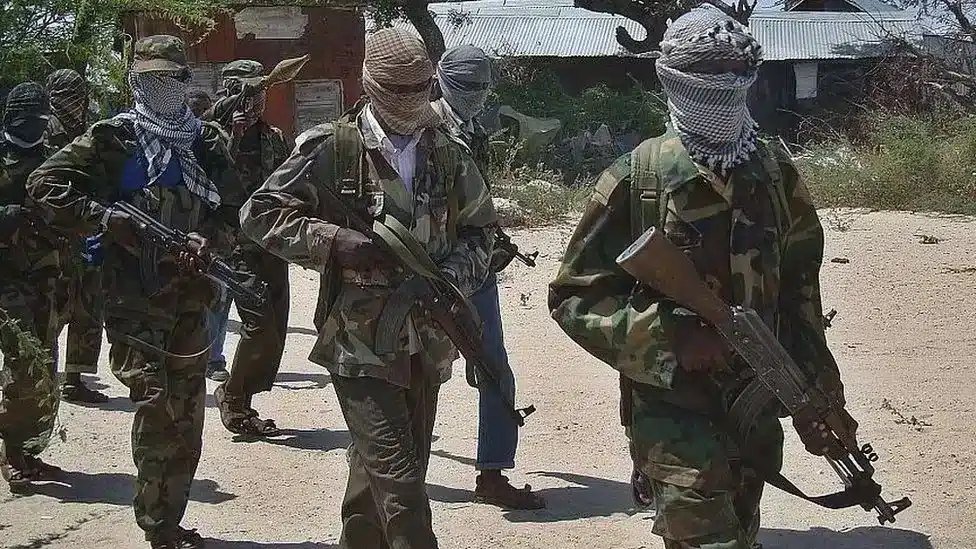
A US air strike assisting government troops in Somalia has killed about 30 Islamist al-Shabab militants, the US military says.
The operation happened near the town of Galcad, about 260km (162 miles) northeast of the capital Mogadishu.
Over the past few days, the Somali army and al-Shabab militants have fought for control of the town.
Friday’s air strike came as the army was being attacked by more than 100 militants, the US Africa Command says.
Earlier the Islamists killed seven soldiers after storming a military base in Galcad. Somalia’s Information Ministry said dozens of the militants were killed.
Al-Shabab has been fighting Somalia’s central government since 2006, aiming to impose an extremist Islamist regime. While it has been pushed out of Mogadishu and other areas it continues to attack military and civilian targets.
Last Monday the government said its army and local militias had captured the port town of Harardhere, which had been a key al-Shabab supply centre since 2010.
In its report on the Galcad fighting the US Africa Command said three al-Shabab vehicles were destroyed and “the command assesses that no civilians were injured or killed”. The details have not been independently verified.
“US Africa Command’s forces will continue training, advising and equipping partner forces to help give them the tools they need to defeat al-Shabab, the largest and most deadly al-Qaeda network in the world,” the statement said.
Police in California are responding to a shooting that has left several people injured, according to US media reports.
The incident happened in Monterey Park, located about eight miles (13km) east of Los Angeles, after 22:00 local time on Saturday (06:00 GMT on Sunday).
Thousands of people had earlier gathered in the city for the Monterey Park Lunar New Year festival.
It is not clear yet how many people were shot or whether anyone has died.
Videos on social media showed a large police presence in the area.
The annual Lunar New Year festival is a weekend-long event that has previously drawn crowds of more than 100,000 visitors.
Saturday night’s festivities were scheduled to end at 21:00 local time.
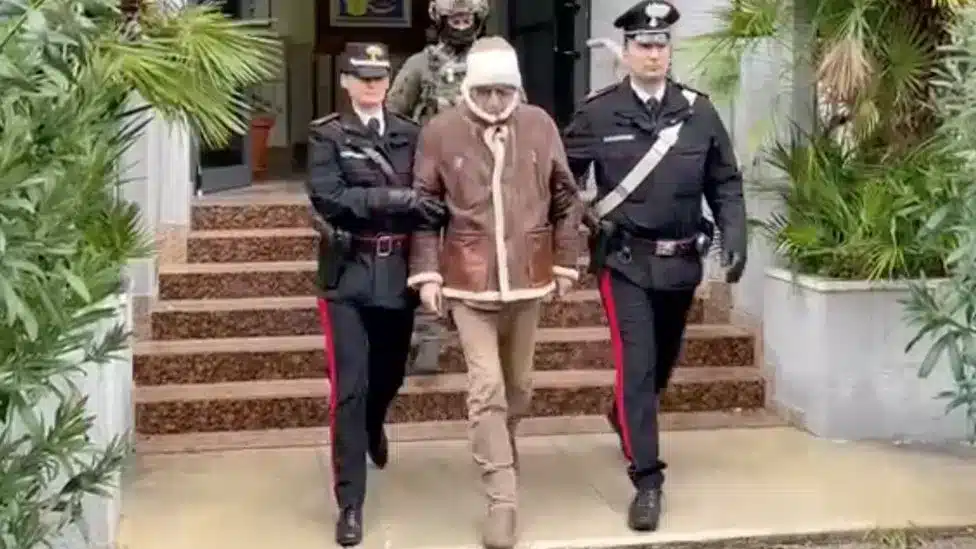
Palermo residents couldn’t have known for sure who the man being led to the police car was.
After all, it had been 30 years since he was last seen in public.
But over a hundred members of the armed forces had gathered in the narrow streets of Palermo that morning – and people knew of only one criminal who could elicit that kind of response.
Matteo Messina Denaro – the “boss of the bosses”, the last fugitive – had been found.
Applause and cheers broke out. Somebody high-fived a policeman; others went in for a hug; some had tears in their eyes. Everyone was beaming.
Later, Maria Falcone told Italian media she wished her brother could have witnessed the scene.
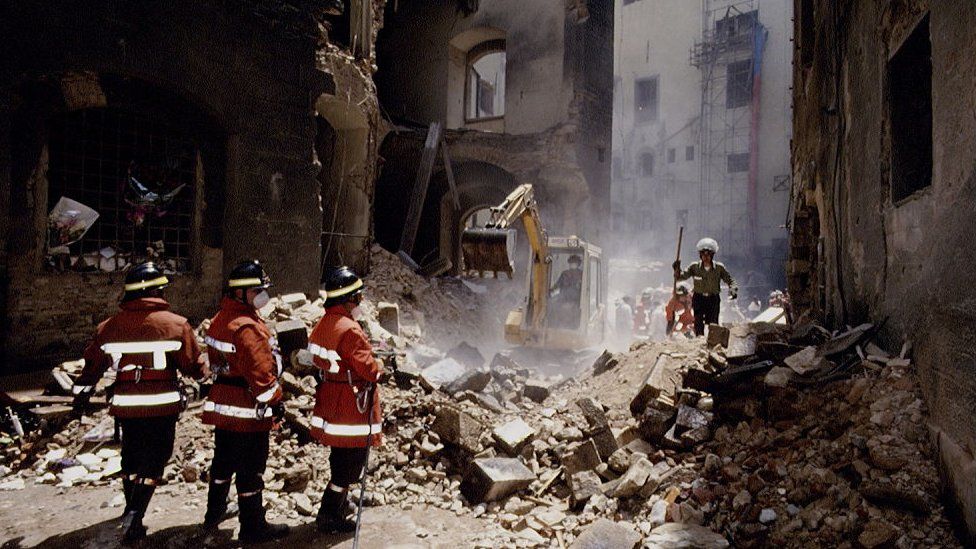
Anti-mafia magistrate Giovanni Falcone was murdered by Sicily’s Cosa Nostra, spearheaded by Messina Denaro, in 1992. It was the height of the “massacre season” that had plagued Italy in the early 1990s.
At the time, Messina Denaro’s organised crime syndicate was attempting, through a sustained murder campaign that killed more than 20 people, to force the state into negotiations about the hard prison regime for jailed Mafia associates.
Image caption,A 1993 bomb attack in Florence left five people dead, including a newborn baby, a nine-year old girl and their parents
Messina Denaro once reportedly boasted he could “fill a cemetery” with his victims.
He was instrumental in the 1993 kidnapping and killing of Giuseppe Di Matteo, the 11-year-old son of a mafioso-turned-state witness. The boy was held in captivity for two years before being killed; his body was dissolved in acid to prevent the family from burying him.
Messina Denaro also ordered the killing of a rival Mafia boss and his pregnant girlfriend.
A warrant was put out for his arrest. Then, in the summer of 1993, he vanished without a trace. Reported sightings placed him everywhere from Venezuela to the Netherlands.
But it was in Palermo – the heart of his homeland of Sicily – that he was caught.
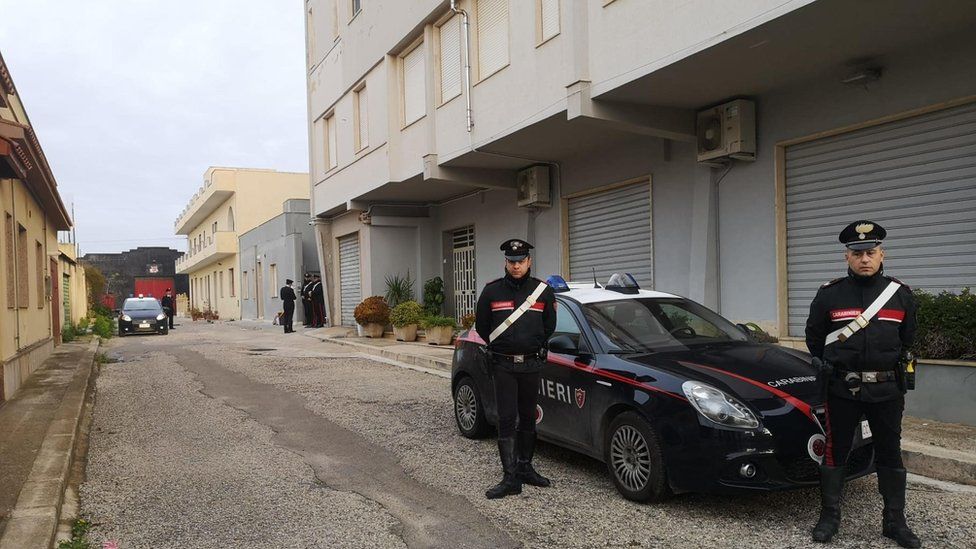
This week, after his arrest, police uncovered three hideouts in Campobello di Mazara, a sun-soaked village 115km (70 miles) from Palermo – and 10km from his birthplace of Castelvetrano.
Quiet, small Campobello is not the kind of place one could imagine hiding in very easily.
Not that Messina Denaro appears to have led the life of a secretive outlaw.
It seems he was a regular customer of the local Bar San Vito; a neighbour said they frequently greeted one another.
It is an image deeply at odds with the 30-year search for the mobster.
Italy invests large amounts of resources in its anti-mafia operations – but the case of Messina Denaro shows that a compliant culture of silence can still put a dent in the state’s battle against organised crime.
Maurizio Bellacosa, criminal lawyer and law professor at LUISS University in Rome, said that Messina Denaro “made full use of Mafia culture” to remain undetected.
Mafia culture worked as a combination of intertwined elements, Prof Bellacosa told the BBC: “From the Mafia’s widespread presence in the territory, to a scarce or non-existent co-operation with investigators by society, to an entrenched code of silence, especially in small towns and suburbs, where the state is often perceived as absent.”
The mayor of Campobello, Giuseppe Castiglione, told Italian media he had been “so dejected by the thought that Messina Denaro lived among us for at least a year – because now I know that my fellow residents chose to go down the road of complacency and bury their head in the sand instead”.
Image caption,Police stand guard near one of Messina Denaro’s three hideouts in Campobello
However, silence does not necessarily mean assent.
The Mafia’s tentacles stretch deep into Sicilian society. Fear and the old code of silence are still entrenched.
“Mafia-style association works in a very simple way: violence and intimidation provoke a condition of subjugation and ‘omertà’ in those involved,” said Mr Bellacosa.
“In essence, the Mafia uses fear to achieve its goals.”
In the press conference given by police following the arrest, Palermo prosecutor Maurizio de Lucia said that Messina Denaro had likely been aided by the “Mafioso bourgeoisie” – referring to local professionals, entrepreneurs and politicians.
This is shown by the arrests made over the years of people deemed close to Messina Denaro. Palermo-based journalist Tullio Filipponi said these were individuals who “accepted to live and collaborate with the Mafia, turning a blind eye when Mafia associates need medical examinations, appraisals or asset management.”
This local network was found to be aiding the mobster by laundering his money, said Mr Filipponi, and was “what culturally makes the difference and what needs to be eradicated.”
“Every Sicilian knows that the Mafia exists… [and] it has the power to influence society and exert control over the territory in a capillary way.”
Whether Messina Denaro was leading a life of retirement, or whether he was still active and engaged in criminal activities is unclear – and it may yet turn out that his spectacular arrest was the easy part.
Watch: Moment Matteo Messina Denaro is detained in Palermo, Sicily
Although the years of car bombs and heinous violence may be over, most experts agree that over the years, the Mafia has transformed into a less flashy yet arguably more insidious organisation.
Racketeering, intimidation and extortion have not gone away: “It is still here, as is shown by the fact that a godfather could remain hidden for so long.”
In this context, the spontaneous applause on the morning of the arrest was picked up by many as an extraordinary sign of change.
Ms Falcone, the sister of the slain judge, said she was struck by “how everyone was cheering – in the street, among the buses, people hugging the police in their bulletproof vests. It’s a victory for Italian society as a whole”.
There are other signs that change may be afoot.
Earlier this week, high school students took to the streets of the town chanting “Castelvetrano is ours, not yours”.
An 18-year-old told Italian newspaper La Repubblica: “I shivered with emotion when I saw people applauding the police. This crowded square is proof that this town doesn’t want to be labelled by the Mafia”.
Another student said: “I felt proud when I heard he had been caught.”
Older generations may hold different views. Mr Filipponi said that in Sicily there were 60-year-olds who had lived through the murders of the 1990s, and yet they defended Messina Denaro – and almost denied there was a problem.
Mr Filipponi was referring to a series of interviews with elderly Castelvetrano residents aired by Italian TV earlier in the week. In one, a man says he doesn’t judge the actions of Messina Denaro; in another, a resident says arresting the mobster was a mistake.
“But younger people… took to the streets to demonstrate their happiness at such an important moment. This highlights the contrast between different generations, and that things are gradually changing,” Mr Filipponi told the BBC.
At least symbolically, the arrest of Messina Denaro is hugely significant – even “a form of liberation,” said Mr Filipponi.
“All those people applauding really show what it represents for the history of Sicily and the country: the end of an era, a catharsis.”
When Vladimir Putin announced a partial mobilisation of Russian men in September last year, it took Adam Kalinin – not his real name – a week to decide that the best thing he could do was move to the forest.
The IT specialist was against the war from the start, receiving a fine and spending two weeks in detention for sticking a poster saying “No to war” on the wall of his apartment building.
So when Russia said it was calling up 300,000 men to help turn things around in a war it was losing, Kalinin did not want to risk being sent to the front line to kill Ukrainians.
But, unlike hundreds of thousands of others, he did not want to leave the country.
Three things kept him in Russia: friends, financial constraints and an unease about abandoning what he knows.
“Leaving would have been a difficult step out of my comfort zone,” Kalinin, who is in his thirties, told the BBC. “It isn’t exactly comfortable here either but nevertheless, psychologically, it would be really hard to leave.”
And so he took the unusual step of saying goodbye to his wife and heading for the forest, where he has lived in a tent for nearly four months.
He uses an antenna tied to a tree for internet access and solar panels for energy.
He has endured temperatures as low as -11C (12F) and exists on food supplies brought to him regularly by his wife.
Living off-grid, he says, is the best way he can think of to avoid being called up. If the authorities can’t hand him a summons in person, he can’t be forced to go to war.
“If they are physically unable to take me by the hands and lead me to the enlistment office, that is a 99% defence against mobilisation or other harassment.”
In some ways, Kalinin continues his life as before. He still works eight hours a day in the same job, although throughout winter – with its limited daylight – he doesn’t have enough solar power to work full days and so makes up his hours on the weekend.
Some of his colleagues are now in Kazakhstan, having also left Russia after mobilisation began, but his internet connection via a long-range antenna strapped to a pine tree is reliable enough that communication is not a problem.
He is also a lover of the outdoors, spending many of his past holidays camping in southern Russia with his wife. When he made the decision to move permanently to the wilderness, he already had much of the equipment he needed.
Image caption,Kalinin says he doesn’t know how much longer he will stay in the forest
His wife, who visited Kalinin’s camp for a couple of days over the new year, plays a big role in his survival. She brings supplies every three weeks to a drop-off point where they are briefly able to see each other in person. He then takes the supplies away to a safe place which he visits every few days to stock up. He cooks using a makeshift wood-burning stove.
“I have oats, buckwheat, tea, coffee, sugar. Not enough fresh fruit and vegetables of course, but it’s not too bad,” he says.
Kalinin’s new home is a large tent of the type used for ice-fishing. When he first arrived in the forest, he set up two camps five minutes apart; one with internet access where he worked, the other in a more sheltered spot where he slept.
As winter approached and the weather got colder, he brought the two areas together to live and work under one canvas.
Recently, the temperature dropped to -11C, colder than he had expected. But now the days are getting longer again and the snow is beginning to melt, he plans to stay where he is.
Although Kalinin hasn’t received a call-up himself, he says the situation is constantly changing and he fears he could receive a summons in the future. Officially, IT workers like Kalinin are exempt from the draft, but there are numerous reports in Russia of similar exemptions being ignored.
Russian President Vladimir Putin announced the mobilisation on 21 September, shortly after Ukraine’s lightning counteroffensive in the Kharkiv region during which it reclaimed thousands of square kilometres of territory from Russian troops.
He said the mobilisation was necessary to defend Russia against the West. But many in the country protested, and there were chaotic scenes on Russia’s borders as hundreds of thousands of people fled.
The call-up had a profound effect on Russia. Until then, many Russians were able to continue their lives much as they had before the war. True, some Western brands disappeared and sanctions made financial transactions more difficult, but the direct impact on society was mostly limited.
Mobilisation brought the war crashing on to the doorsteps of many Russian families. Suddenly, sons, fathers and brothers were deployed to the front line at short notice, often with poor equipment and minimal training. If the conflict seemed distant before, now it was all but impossible to ignore.
Yet, public acts of protests are rare inside Russia – something that has been criticised in Ukraine and in the West. But Kalinin says people are rightly scared of what might happen to them.
“We have a totalitarian state that has become so powerful. In the last six months, laws have been brought in at an incredible pace. If a person speaks out now against the war, the state will pursue them.”
US Department of Justice (DoJ) investigators have found six more classified documents during a 13-hour search of President Joe Biden’s home in Delaware, a lawyer for Mr Biden says.
Some documents seized at the Wilmington property on Friday were from his time as a senator and others from his tenure as vice-president under Barack Obama.
Lawyer Bob Bauer said “personally handwritten notes” and “surrounding materials” were also taken away.
Mr Biden and his wife were not present.
The president offered access “to his home to allow DoJ to conduct a search of the entire premises for potential vice-presidential records and potential classified material”, Mr Bauer said in a statement on Saturday.
Former President Donald Trump is facing a criminal investigation for allegedly mishandling classified files.
Earlier this month Mr Biden’s lawyers said a first batch of classified documents had been found on 2 November at the Penn Biden Center, a think-tank the president founded in Washington DC.
A second batch of records was found on 20 December in the garage at his Wilmington home, while another document was found in a storage space at the house on 12 January, his lawyers said.
After finding the documents, the president said his team immediately turned them over to the National Archives and the Justice Department. It is not clear why Mr Biden had kept them.
Under the Presidential Records Act, White House records are supposed to go to the National Archives once an administration ends, where they can be stored securely.
A special counsel, Robert Hur, has been appointed to lead the investigation into how the sensitive documents were handled.
The lengthy search and subsequent discovery of more documents is a political headache for the president, as he prepares to declare whether he will run for a second term in 2024.
Mr Biden and his wife, Jill, are spending the weekend in the coastal town of Rehoboth Beach in Delaware, where they own another house. It was searched earlier this month and no documents were found, his lawyers said, according to the New York Times.
The two-month gap between the first Biden discovery – days before the midterm elections – and the news being made public in January raises awkward questions for the president about transparency, BBC North America correspondent Anthony Zurcher says.
Mr Biden’s team insists the president has co-operated fully with the DoJ inquiry. Mr Biden has played down the affair as an oversight, saying he has “no regrets” about not publicly disclosing the discovery of some classified files before the November midterm elections.
The discovery comes as former US President Donald Trump also faces a probe over his alleged mishandling of hundreds of classified documents at his Florida Mar-a-Lago residence and his alleged failure to comply with a subpoena.
Mr Trump and his lawyers resisted handing over the documents until the FBI raided his Florida holiday home last August. He alleges that President Biden is being treated more favourably by the FBI.
President Biden said at the time that Mr Trump’s handling of the documents was “totally irresponsible”.
Mr Trump has not given any reason to explain their presence there but has said he had the power as president to declassify them, a claim challenged by legal experts.
The 2021 Accra Road Safety Report also noted the Opeibia, Lapaz, North Dzorwulu, Kawukudi and Hansonic intersections as the top five fatal crash intersections in Accra.
The global road safety initiative in a report, also named distances between the Apenkwa overhead and Dimples Roundabout, Akweteyman to Lapaz, the Airport Junction to North Dzorwulu intersection, the Abeka Junction to Total Station (J.A. Kufuor Avenue), and the Hansonic to Kaneshie First Light as the top five fatal crash corridors in the city.
Overall, speeding increased from 50 per cent in 2021 to 51 per cent in 2022, indicating that speeding remains the prime risk factor for severe road crashes.
The report was put together through the collaborative efforts of the National Road Safety Authority, the Ghana Police Service, the Accra Metropolitan Authority and other local city authorities with support from Bloomberg Philanthropies, which is working to improve road safety globally; Vital Strategies and the Johns Hopkins International Injury Research Unit.
The Chief Executive Officer of the Accra Metropolitan Assembly, Elizabeth Sackey, launched the report in Accra yesterday.
Deaths
Vulnerable road users who are persons not in any vehicle, including pedestrians, motorcyclists, and cyclists, accounted for about 80 per cent of all deaths resulting from road crashes in Accra, the report pointed out.
It said 99 persons out of the 123 people who died from road accidents in Accra in 2021 were vulnerable road users, constituting 80 per cent of the road traffic deaths in 2021, although the figure declined by nine per cent, from 136 in 2020 to 123 in 2021
The number of reported fatalities, according to the study, dropped by 10 per cent from 2020 to 2021 even though overall crashes increased by two per cent in the same period.
Pedestrians constituted 58 per cent of the reported deaths, while persons aged between 20 and 29 were among the highest number of deaths and serious injuries recorded that year.
Additionally, reported road traffic crashes in Accra rose by two per cent from 1,774 in 2020 to 1,808 in 2021.
The study also revealed that more than half of the reported fatalities in 2021 occurred on weekends (Friday to Saturday) representing 53 per cent of the total figure.
The pattern, according to the report, had been consistent in the capital since 2016.
The Accra Metropolitan Chief Executive CEO, who underscored the relevance of data in the fight against road crashes, commended the stakeholders for providing the first AMA city-specific road safety report, adding: “Without data, we are like blind and deaf people in the middle of a freeway”.
Mrs Sackey said although the city had recorded a slight decrease in deaths, more concerted effort was needed to ensure the city’s roads were safe for all users.
“This decrease must stir us up to double our efforts in our various interventions, leaning against the confidence that we can achieve so much by putting in more effort.
“It is critical that all of us at the forefront of road safety stakeholder institutions redouble our efforts to ensure political commitment and responsibility for acting on road safety,” Mrs Sackey said.
She urged all the key road safety holder institutions to use the report effectively to guide interventions being undertaken towards ensuring safety on the country’s roads.
Commitment
Mrs Sackey explained that her outfit was committed to helping to reduce road crashes in the country.
In line with that, she noted that the AMA in December last year launched a speeding mass media campaign aimed at sensitising motorists to excess speeding.
Priority
A member of Bloomberg Philanthropies’ Public Health team, Becky Bavinger, said understanding data was crucial for policy formulation.
The report, she said, highlighted the need to prioritise the safety of pedestrians and other vulnerable road users who made up 80 per cent of people who died from road crashes.
She also emphasised the need to address the high speed on roads in the country and added that the roads were designed for the country’s real estate and not necessarily for cars.
Nana Opoku Kwarteng aka Starboy, father of late sensational dancehall artist Priscilla Opoku Kwarteng aka Ebony, has caused a huge stir with a new claim.
Starboy claims his daughter was murdered in cold blood before her accident and that police investigations have convinced him that is what happened.
Kwarteng appeared on Kingdom Plus Fm with Fiifi Pratt when he made his claims.
According to him, the police initially said during their investigations that there was nothing untoward about the accident that killed Ebony however a 2nd investigation discovered the driver did not have a license.
Kwarteng said such an obvious oversight makes him suspect that there is more than he’s being told.
He also said his late daughter’s corpse had very few injuries and blood on her when their car was supposed to have somersaulted multiple times.
Fiifi Pratt pointed out that Ghanaians don’t buy his claims and Starboy said he believes that his daughter didn’t die a natural death and that’s all that matters to him.
United States Secretary of the Treasury Janet Yellen has reaffirmed her country’s commitment to deepening relations and trade with Africa during a visit to Senegal, amid competition across the continent from China and Russia.
“The United States is all in on Africa, and all in with Africa,” Yellen said on Friday morning at a business incubator in the Senegalese capital of Dakar, where she touted the fruits of a new “mutually beneficial” US economic strategy towards Africa.
“Our engagement is not transactional, it’s not for show, and it’s not for the short-term,” she said.
Yellen’s three-country tour of the region comes just weeks after US President Joe Biden hosted the leaders of dozens of African nations, as well as the African Union, for the second US-Africa Leaders Summit in Washington, DC.
The talks were a follow-up to the first such gathering hosted by former US President Barack Obama in 2014. They highlighted Biden’s efforts to strengthen ties with like-minded countries across the region.
The Biden administration unveiled a string of new economic investments and trade deals in Africa during the summit, and Biden personally expressed support for the African Union’s push for a permanent place at the Group of 20 (G20) forum of global economies.
The head of the Nigeria Centre for Disease Control and Prevention (NCDC) has told the BBC that the public does not need to worry about the recent outbreak of diphtheria in the country.
Dr Ifedayo Adetifa’s comments come after news that at least 25 people have died in the northern state of Kano from the bacterial infection, with 33 more cases reported in other parts of the country, including the commercial hub of Lagos.
Diphtheria symptoms include fever, a sore throat, a cough and breathing difficulties. Infected patients may also develop a swollen neck, red eyes (conjunctivitis) and have a thick grey or white patch on the tonsils or at the back of the throat.
The NCDC said it is monitoring other suspected cases and advised people to be aware of their vaccination status and to make sure children especially are properly immunised.
The infection is spread by coughs and sneezes, or by sharing items such as cups, cutlery, clothes or bedding with an infected person.
Dr Adetifa said that Nigerians need not worry as various antibiotics and treatments are readily available to curb infections.
Security forces have rescued 66 women and children who were kidnapped by armed fighters in northern Burkina Faso last week.
Armed men seized the women and their children on January 12 and 13 outside two villages in the district of Arbinda, in the Sahel region’s Soum province.
Security forces conducted a rescue operation and freed 27 women and 39 babies, children and young girls in the adjacent Centre-Nord region, national broadcaster Radiodiffusion Television du Burkina (RTP) said on Friday.
“They have found freedom after eight long days in the hands of their kidnappers,” an RTP presenter said.
In its main evening news bulletin, RTB, referring to the army “operation”, showed images of the women freed and brought to the capital, Ouagadougou.
Several government and security officials confirmed the news, Reuters and AFP news agencies reported.
The abduction prompted alarm from the United Nations, while the country’s military government warned of a rise in attacks on civilians.
Burkina Faso is one of several countries in West Africa battling a rampant armed uprising with links to al-Qaeda and ISIL (ISIS).
Armed rebels have occupied territory in the country’s arid and mainly rural north, executing hundreds of villagers and displacing thousands more in the process.
They have also blockaded certain areas in recent months and made it increasingly dangerous to deliver supplies to trapped citizens.
Faced with acute food shortages, many villagers have resorted to picking wild fruit, leaves and seeds to feed their families. They say venturing into the bush makes them vulnerable to attacks.
On Thursday, two suspected attacks in the country’s north and northwest killed at least 18 people, including 16 vigilantes supporting the army.
Captain Ibrahim Traore, leader of the military government that seized power last September, said in December that his aim was to take back territory occupied by “hordes of terrorists”.
Last week, he said the armed rebels were switching tactics to “focus on civilians”.
Lagos State-based widow, Temitope Oshodi, has narrated how her son, Ridwan Oshodi was shot during the #ENDSARS protest in 2020.
In October 2020, young persons across Nigeria trooped to the streets to demand an end to police brutality and to also demand “good governance”.
The protesters were dispersed by hoodlums suspected to be sponsored by the Nigerian government and ruling All Progressives Congress after two weeks.
According to PUNCH, Oshodi said life has been unbearable for her since Ridwan was critically injured after being shot by policemen amid the 2020 #EndSARS crisis.
She said, “On October 20, 2020, he was at work when I called him to come back home because I heard that there was a crisis at Lekki. We stay in Ojuelegba Area C Barracks. When I called him, he said he was very busy working on customers’ cloths. He said he had a job that he needed to finish and deliver, as the customer needed it urgently. He told me that if he was able to finish the work early enough he would come home but if not, he would sleep over at the shop. Later at night, he called me to say that he couldn’t finish the work and he would therefore sleep over in his shop. He said he would come home the following morning.
“In the morning of the following day, after Governor Babajide Sanwo-Olu of Lagos declared a curfew, he told me that he was done with the job and he was on his way home. Just some seconds after we spoke on phone, I heard gunshots around Ojuelegba bridge. I started to try to call him, to tell him to watch his steps.
“Then we heard cries and shouts that Ridwan had been shot by policemen. We rushed out to rescue him. We took him to Havana Hospital nearby where he was given first aid treatment. He was shot on the stomach. The doctor said the bullet had come out of his back and that his backbone was affected. He said the case was more serious than he could handle at the hospital and referred us to LUTH (Lagos University Teaching Hospital).
“We still go to LUTH for physiotherapy. We pay 25,000 every month. We have started seeing some improvement. He can talk now, but he still cannot walk; he only crawls and uses diapers. Doctors are assuring us that he will walk again but they said they can’t tell how soon it will be.
“They had earlier said he wouldn’t be able to walk again because his spinal cord was affected. So, I went to price a wheelchair; they said it was N48, 000. A friend borrowed me N20,000 to deposit for the wheelchair, and then somebody helped me to borrow money from a cooperative society. We bought the wheelchair, we buy drugs like seven times per day; we did one X-ray for N70,000, and another one for N80, 000. I have all the receipts here. We did a scan for N55, 000. I can no longer cope; the debts are becoming unbearable.
“Last week Friday, one doctor at LUTH said we had been spending too much money, so he advised us to go to one hospital on Badagry Expressway to see another expert, so my son can walk again. When we got there, he (Ridwan) was asked to do some exercise, which he did. After the doctor examined him, he said we would have to get 350,000 for the surgery for him to walk again and also get funds to get the drugs for effective recovery. We’ve not been able to get the money; I have sold all my belongings; I have nothing left.
“I am a widow; my husband died some years back; there is no help from anywhere. Family and friends have tried to support us the little way they could, particularly when we were in LUTH, but right now, it’s been difficult getting support. Life has not been fair, in all honesty. Ridwan is a hard-working young man but since he has been bedridden, he has become helpless and jobless.”
Electricity has been restored at the Nigerian consulate in Johannesburg, South Africa, after city officials disconnected the power on Wednesday due to non-payment.
The consulate owes the power utility City Power over 400,000 rand ($23,000; £18,000).
Consulate staff refused City Power officials access to the property but the utility was able to disconnect the premises from the power grid remotely.
The last few days have seen revenue collection efforts by City Power to disconnect various businesses whose accounts are in arrears.
The utility is owed $232m in unpaid accounts overall.
Following the consulate’s disconnection, the Consul-general visited the City Power offices and arranged to pay a deposit of $7,000 promising that the balance of the outstanding account will be settled by the end of January.
The consulate’s power was then restored that same day.
City Power’s actions come in the midst of rolling scheduled national blackouts as Eskom, the beleaguered national power utility, struggles to keep the lights on.
Liberian President George Weah has added his backing for Morocco’s bid to host the 2025 Africa Cup of Nations (Afcon).
The former striker, who is the only African ever to win football’s prestigious Ballon d’Or, awarded to the world’s best player, said he expressed his “fullest and strong” support for the nation who reached the semi-final of the Qatar 2022 World Cup.
BBC Sport Africa understands Weah relayed his backing in private during the MEDays international peace forum last November which is hosted annually in the Moroccan city Tangier.
“Liberia fully endorses and supports Morocco’s bid to host Afcon 2025. I have made this commitment to King Mohamed VI. It is cast in stone,” Weah said in a statement released by Liberia’s state house following media reports he was ready to back Algeria’s bid.
Weah cited Morocco’s investment in football development and said he has already begun campaigning for the bid with stakeholders around the continent.
The 56-year-old, who played for clubs including Monaco, AC Milan and Chelsea during an 18-year career, also spoke of Morocco bringing immense pride to Africa during the World Cup.
Algeria, South Africa, Zambia and a joint bid from Benin-Nigeria are the other nations seeking to replace Guinea, who were stripped of hosting rights because of concerns over infrastructure and facilities.
Confederation of African Football (Caf) inspection teams are touring the bidding countries this month.
Findings will be submitted to the 24-member Caf executive committee which will announce the winner on 10 February.
Nigerians voting for a new president next month will have 18 contenders to choose from but the three men seen as the leading candidates have been separately accused of trading in narcotics, money laundering and global tax avoidance.
None of them has ever been indicted, which would rule them out from running for office, but the high-profile allegations have raised questions over their candidacy.
“It is choosing between bad candidates,” said Auwal Rafsanjani, head of the Nigerian branch of anti-corruption watchdog Transparency International, pointing out how widespread corruption has caused devastating levels of underdevelopment and poverty in the oil-rich nation.
The three top contenders are Bola Tinubu from the governing All Progressives Congress, Atiku Abubakar from the People’s Democratic Party’s and Peter Obi from the Labour Party.
All three say they made their fortunes legitimately and deny any wrongdoing.
The Bola Tinubu files
Mr Tinubu, who served two terms as governor of Nigeria’s richest state Lagos, is probably the most talked-about candidate on the ballot.
There are endless debates about his age, name, health status, work profile and the authenticity of his university certificate, but it is for the source of his wealth over which he has faced the most scrutiny.
Many believe that Mr Tinubu, 70, is one of Nigeria’s wealthiest politicians, though there are no official records.
The most visible extent of his wealth is a mansion that sits in a sprawling compound in the Ikoyi area of Lagos – an upmarket part of Nigeria’s commercial hub. It was here on election day in 2019 that onlookers witnessed the rare sight of two armoured vehicles, similar to bullion vans used by banks to transport cash, driving through his gates. His aides denied the subsequent accusations that he was involved in vote-buying.
But questions about his wealth have been raised. In December, he told the BBC that he inherited some real estate which he then invested, but in the past he also said he became an “instant millionaire” while working as an auditor at Deloitte and Touche.
He said he had saved $1.8m (£1.5m) from his wages and other allowances, nearly the same amount found in accounts linked to him in a 1993 dispute with the US authorities.
In documents that are publicly available, the US Department of Justice alleged that from early 1988, accounts opened in the name of Bola Tinubu held the proceeds of sales of white heroin, a banned substance.
Kevin Moss, the special agent that investigated the operation, alleged that Mr Tinubu worked for their prime suspect Adegoboyega Akande.
The agent said Mr Tinubu initially admitted to him on the phone that he knew Mr Akande, but later recanted and said he had had no financial transactions with him.
While the court confirmed it had cause to believe the money in the bank accounts were the proceeds of drug trafficking, Mr Tinubu and the others denied the allegations, and the court never made a final order about the money’s origins.
Instead, Mr Tinubu, who was not personally charged over the money, reached a compromise settlement with the authorities and forfeited $460,000.
Mr Tinubu has always denied any links to the drugs trade and his spokesman, Festus Keyamo, said the forfeited funds were part of a civil forfeiture and not a criminal one.
Last year, he also reached an out-of-court settlement with accountant Oladapo Apara, who had fallen out with Mr Tinubu.
Mr Apara was a founder of Alpha Beta Consulting, established when Mr Tinubu was governor and given the lucrative contract to track taxes in Lagos state, which it still holds.
The accountant alleged Mr Tinubu had a 70% controlling interest in the company through proxies – and the firm received about a 10% commission on revenues collected, which he estimated to be $3.48bn between 2002 and 2018.
Mr Tinubu denies this, saying he does not receive commissions on taxes received by the Lagos State government.
Mr Apara said he was kicked out of the firm in 2010 after he alleged that some funds had been misappropriated – and began a long legal battle to seek redress.
He argued he could not be sacked as a founder of the firm and demanded compensation from Mr Tinubu, which resulted in a court case in 2021.
In September 2018, he also tweeted that he had written to Nigeria’s financial-crimes regulator, accusing Alpha Beta of tax evasion – the actual letter that accompanied the tweet, which detailed the allegations, has since been deleted from his account.
Alpha Beta denied the allegations and said Mr Apara had been sacked for fraud, which he denied.
Mr Tinubu has consistently denied links to the firm, but was a party to an undisclosed settlement between Alpha-Beta and Mr Apara last June, leading to the termination of the parties’ claims against each other.
The BBC asked Mr Tinubu about the settlement, the US allegations and the questions over his wealth but he did not reply to a request for comment.
Atiku Abubakar and the US Senate
Mr Abubakar touts himself as the most experienced candidate on the ballot, having served as vice-president between 1999 and 2007 – and it is this period around which there is some controversy.
His former boss, ex-President Olusegun Obasanjo, accused him of embezzling $145m from the Petroleum Technology Development Fund (PTDF) in 2003.
Mr Obasanjo, who does not shy away from publicly sharing his opinions about other politicians, dedicated a chapter in his book My Watch, published in 2014, to the alleged transgressions of his former deputy.
Mr Abubakar denied the accusations, saying $145m was placed in commercial banks to accrue interest so it could be ploughed back into PTDF projects.
The 76-year-old said he first made money from farming and owning houses in his home state of Adamawa. A former customs officer, he said that he recognised early in life that he had “a good nose for money”.
It was in the 1980s that he established an oil-servicing firm that catapulted him into the world of the wealthy.
Opponents have accused him of flouting a law that prohibits civil servants from engaging in private business other than farming.
Mr Abubakar’s spokesperson described his venture as a small business that many public servants engage in, such as using their car as a taxi or setting up a shop in front of their house to support their families.
“He only invested his income to earn interest. He was not doing any other work in form of private work like you are inferring,” Paul Ibe told the BBC.
In 2010, a US Senate committee report alleged that between 2000 and 2008, Mr Abubakar, through one of his four wives, transferred more than $40m in “suspect funds” into the US from offshore shell companies.
The report claimed that at least $1.7m of this came from bribes paid by German technology company Siemens, which pleaded guilty to bribery charges in 2008 and agreed to pay a $1.6bn fine.
He was also a major figure in the corruption trial of former US Congressman William Jefferson, who in the Senate report described Mr Abubakar as “really corrupt” and said he needed money to bribe him to approve a US company’s business deals in Nigeria.
Mr Jefferson was convicted in 2009 and sentenced to 13 years in prison, which was subsequently reduced.
Mr Abubakar has repeatedly denied any wrongdoing and neither he nor his now-divorced wife face criminal charges in the US.
“Atiku Abubakar is not on trial for corruption or any other misconduct either in Nigeria or any foreign land,” Mr Ibe said.
“He can only be unfit for public office when he is indicted by a court of law. That is not the situation.”
Peter Obi and the Pandora Papers
Peter Obi, who has also served two terms as governor – in his case in the eastern Anambra state, does not hide his immense wealth, which he says has been made through banking and importing various goods into Nigeria.
Dubbed “Mr Clean” by his supporters for being a rare Nigerian politician without accusations of embezzling public funds, it came as a surprise to many when his name came up in 2021 in the Pandora Papers. This was a leak of almost 12 million documents that revealed the hidden wealth, tax avoidance and, in some cases, allegations of money laundering by some of the world’s rich and powerful.
Nigeria’s Premium Times, one of the newspapers that worked on the Pandora Papers investigation, alleged the documents showed that in 2010, when Mr Obi was Anambra governor, he set up a company, named after his daughter, in the British Virgin Islands to help him avoid tax.
Making use of a tax haven is not illegal, though setting up foreign bank accounts when serving as a public officer is not allowed.
The Premium Times said this showed Mr Obi had failed to declare his assets, and it also alleged that he had failed to resign from the UK-registered company Next International, of which he was director when he became governor – engaging in private business, which is not allowed for public officers. His resignation was registered 14 months into his term.
The 61-year-old has never been charged over any of the revelations.
Mr Obi told the BBC an impeachment trial had investigated the allegations surrounding his business affairs in 2006 and found he had acted within the law.
He added that he had established a blind trust to oversee his business arrangements, including the family’s offshore holdings. “A blind trust is allowed within the law,” he said.
Mr Obi has also been accused of a conflict of interest after investing $20m of state funds while governor in a brewery, in which his family hold shares through Next.
He denies the allegations, saying the investment greatly benefited Anambra over the years.
There has also been criticism that Anambra invested in Fidelity Bank, where he was once chairman.
“Anambra state invested in Fidelity Bank, where I have interests, because it is a public quoted company,” he told the BBC, dismissing any suggestion that any of the revelations about his finances cast doubt about his fitness for office.
President Buhari’s legacy
In the last week, a corruption row has blown up between Mr Abubakar’s and Mr Tinubu’s camps. Each accuses the other’s candidate of siphoning public funds through proxy companies known as special purpose vehicles (SPVs) while in office, saying this makes them ineligible to run, with a campaign spokesman from Mr Tinubu’s APC saying he is taking the case to court.
Both deny the allegations, but the issue is now dominating rallies.
But the general issue about addressing corruption has not been a major talking point during this electoral campaign.
This is in stark contrast to the frenzied anti-corruption promises that saw President Muhammadu Buhari elected in 2015.
The 80-year-old is stepping down this year, but analysts argue he has done little to tackle the problem while in office.
“Maybe Nigerians are too familiar with corruption and have noticed that nothing fundamental is changing,” said Mr Rafsanjani.
Prime Minister Rishi Sunak has been fined for not wearing a seatbelt in a moving car while filming a social media video.
Lancashire Police said it had issued a 42-year-old man from London with a conditional offer of a fixed penalty.
No 10 said Mr Sunak “fully accepts this was a mistake and has apologised”, adding that he would pay the fine.
Passengers caught failing to wear a seat belt when one is available can be fined £100.
This can increase to £500 if the case goes to court.
The prime minister was in Lancashire when the video was filmed, during a trip across the north of England.
The video – to promote the government’s latest round of “levelling up” spending – was posted on Mr Sunak’s Instagram account.
It is the second time Mr Sunak has received a fixed penalty notice while in government.
Last April, he was fined along with Boris Johnson and wife Carrie for breaking Covid lockdown rules – by attending a birthday gathering for the then-prime minister in Downing Street in June 2020.
‘Disregard for the rules’
Fixed penalty notices are a sanction for breaking the law, and mean a fine, which needs to be paid within 28 days, or contested.
If someone chooses to contest the fine, the police will then review the case and decide whether to withdraw the fine or take the matter to court.
Labour’s deputy leader Angela Rayner said in a tweet that Mr Sunak was a “total liability”.
A Labour Party spokesperson added: “Hapless Rishi Sunak’s levelling-up photo op has blown up in his face and turned him into a laughing stock.”
The Liberal Democrats said, in becoming the second ever serving prime minister to be fined by police, he had “shown the same disregard for the rules as Boris Johnson”.
Deputy Lib Dem leader Daisy Cooper said: “From partygate to seatbelt gate, these Conservative politicians are just taking the British people for fools.
“Whilst they continue to behave as though it’s one rule for them and another for everyone else, this fine is a reminder that the Conservatives eventually get their comeuppance.”
But Conservative MP for Blackpool South Scott Benton defended Mr Sunak, saying “everybody makes mistakes”.
Mr Benton said police should focus on “tackling serious crime in our communities”, adding: “Let’s keep this in proportion here. Every single year millions of Britons receive similar fixed penalty notices.”
Passengers aged 14 and over are responsible for ensuring they wear a seat belt in cars, vans and other goods vehicles if one is fitted. Drivers are responsible for passengers under 14.
Exemptions include having a doctor’s certificate for a medical reason, or being in a vehicle used for a police, fire or other rescue service.
New Zealand MP Chris Hipkins says succeeding Jacinda Ardern as prime minister after her shock decision to resign amounts to “the biggest responsibility and the biggest privilege of my life”.
“The weight of that responsibility is still sinking in,” he told reporters on parliament’s steps in Wellington on Saturday, in his first appearance since being nominated.
An experienced MP and career politician, Chris Hipkins is seen as the safest choice for Labour at the moment. He already has the education, Covid response and policing portfolios under his belt.
Speaking to the Guardian in 2021, he said one of his political strengths was “understanding how the machinery of government operates, which is something that I’ve developed over about 20 years”.
But even with that political pedigree, the incoming leader faces a steep uphill battle to convince New Zealanders that he and his centre-left Labour party are fit to lead the country for another term, when they go to the polls in October.
Chris Hipkins set to be New Zealand’s next PM
There are two things the party currently lacks: favourable public opinion and Jacinda Ardern’s star power – even though that has faded lately.
Around the world, Ms Ardern is still considered something of a global figurehead, a rock star of international politics.
Image caption,Jacinda Ardern won many admirers worldwide
Since taking power in 2017 aged 37 and steering the country through major crises – the Christchurch mosque shootings in which 51 people were killed, the White Island volcanic eruption and Covid-19 pandemic – Ms Ardern has become a symbol of a new generation of female leaders inspiring young women all over the world.
At her peak she was extremely popular here in New Zealand too. But that has significantly changed, with recent polls putting her personal popularity at an all-time low.
New Zealanders are bearing the brunt of a deteriorating economy post-Covid, with inflation that has compounded the cost of living crisis and concern about crime rates.
The contrast between the sentiment towards Jacinda Ardern globally and at home is quite stark. From world leaders to actors and music stars, the reaction to her shock departure was one of sadness.
At home many said how happy they were that she was going. Others described her exit as a political tactic, given how unpopular the Labour Party has become – leaving before being pushed out.
BBC
Unfortunately Covid knocked her. It also knocked the economyTina Watson
Tina Watson, visiting her children in New Zealand, blamed Ms Ardern for separating her from her family during the Covid border closures. Ms Watson is originally from the UK and now lives in South Africa. She told me she was “thrilled” that Ms Ardern had resigned, when I met her and her partner outside parliament in Wellington.
“I was here when they elected her [in 2017],” Ms Watson said. “I was really impressed. I thought ‘wow! this thirty-odd year-old lady – this is a moving country’,” she said.
But she said the Ardern government’s Covid response, including strict lockdowns and long border closures, had changed her opinion.
“Unfortunately Covid knocked her. It also knocked the economy,” she said.
While the country has now opened its borders there’s still a sour taste among New Zealanders about what they had to endure during the pandemic.
The long-standing restrictions initially helped control the number of infections and fatalities, but led to increased anger and criticism of Jacinda Ardern and her government.
In February 2022 anti-vaccine protesters occupied the parliament grounds in Wellington for more than two weeks, blocking streets in the capital’s central business district with their cars.
It was a clear sign of the darkening mood of the country.
Jacinda Ardern has been on the receiving end of regular misogyny and abuse. In one incident a group of anti-vaccine protesters chased her van down a driveway as she visited a Christchurch primary school, with some in the crowd shouting “shame on you” and “traitor”.
Image caption,A year ago anti-vaccine protesters marched through Christchurch
Chris Hipkins, who led New Zealand’s response to the pandemic in 2020, has previously conceded that strict lockdowns should have been scaled back sooner.
As one of the primary architects of the Covid response his association with the Ardern government could now come back to haunt him politically.
He paid tribute to her, saying she had been “an incredible prime minister” who had “provided calm, stable, reassuring leadership, which I hope to continue to do”.
But he also addressed the abuse and misogyny she has had to deal with.
“There has been an escalation in vitriol, and I want to acknowledge that some politicians have been the subject of that more than others,” he said. Ms Ardern “has absolutely been on the receiving end of some absolutely intolerable and unacceptable behaviour,” he added.
In an effort to highlight some of this, video compilations of sexist questions she has been asked have been shared on social media. They include talking about her hair colour and even comments on when her daughter may have been conceived.
In November Ms Ardern was praised for her quick response when a male reporter suggested that she was meeting Finland’s Sanna Marin because both were young female prime ministers.
At the press conference in Auckland, Ms Ardern said she wondered “whether or not anyone ever asked Barack Obama and [former New Zealand PM] John Key if they met because they were of similar age”.
Watch: New Zealand and Finland PMs shoot down ‘similar age’ question from reporter
After announcing her resignation Ms Ardern rejected suggestions by some commentators that experiences of misogyny had played a role in her decision.
She said she had a “message for women in leadership and girls who are considering leadership in the future” that “you can have a family and be in these roles”, adding “you can lead in your own style”.
On Thursday she said she hoped she would leave behind a belief “that you can be kind and strong… that you can be your own kind of leader, one that knows when to go”.
The challenge for Chris Hipkins and the Labour Party is not just whether they can convince New Zealanders that they will be able to turn the economy and public opinion around.
The bigger question is how closely he associates himself with the “Jacinda Ardern brand”. That star quality that delivered a landslide Labour win in 2020 has almost the opposite effect now.
The incoming PM will have to assert his own leadership brand and convince New Zealanders that it’s the one they need going forward.
Ukraine’s defence minister has said he had a “frank discussion” with his German counterpart about German Leopard 2 tanks, which Kyiv is urgently requesting to confront Russian armour.
Germany has not yet decided whether to send the tanks to Ukraine, or allow other countries to donate theirs, despite pressure on Berlin to act.
“We had a frank discussion on Leopards 2. To be continued,” Oleksii Reznikov said after meeting Western allies.
Kyiv is to get many other Nato weapons.
The meeting at Ramstein Air Base in Germany did bring an agreement to supply more armoured vehicles, air defence systems and ammunition.
But the Leopard 2 is seen as a potential game-changer for Ukraine, as it is easy to maintain and designed specifically to compete with the Russian T-90 tanks, which are being used in the invasion.
German Defence Minister Boris Pistorius said opinions remained divided over supplying Leopards, and he denied that Berlin was blocking such a move.
Under German export laws, other countries who want to supply Leopards – like Poland and Finland – are unable to do so until Berlin gives the all-clear.
‘A decision must be made’
Ukrainian President Volodymyr Zelensky praised the Nato partners for their military assistance, but said “we will still have to fight for the supply of modern tanks”.
“Every day we make it more obvious that there is no alternative, that a decision about tanks must be made.”
Ukraine’s current tanks are mostly old Soviet models, often outnumbered and outgunned by Russian firepower.
More than 2,000 Leopards are sitting in warehouses all over Europe. President Zelensky believes about 300 of them could help to defeat Russia.
Mr Pistorius said Berlin was prepared to move quickly if there was consensus among allies, though he could not say when a decision on the tanks might be made.
Image caption,Ukraine’s Defence Minister Oleksii Reznikov (R) with Kyiv’s US and German allies in Ramstein
Germany’s standoff
Germany has found itself in this standoff due to several factors including international diplomacy and the legacy of World War Two.
It used to have a policy of not sending arms to conflict zones, but that was reversed last February after Russia’s invasion.
Late last year, Nato chief Jens Stoltenberg said Germany was now “among the allies providing most military, financial and humanitarian aid to Ukraine”, by supplying artillery, air defence systems and Marder infantry fighting vehicles.
But Germany is reluctant to send Leopards unless they are part of a wider Nato package that preferably includes America’s powerful M1 Abrams tanks. The US has rejected this, saying the Abrams tanks are impractical for Ukraine’s forces because they are difficult and expensive to maintain.
Regardless, there has been pressure in some corners for the US to send its tanks, to get Germany to do the same.
US Defence Secretary Lloyd Austin denied Berlin was waiting on the US to make the first move. “This notion of unlocking – in my mind it’s not an issue,” he said after Friday’s meeting of 54 countries at Ramstein Air Base.
Germany also remains haunted by the Nazi-era devastation it caused in World War Two, and Chancellor Olaf Scholz is believed to be cautious about having anything to do with an escalation in Ukraine.
A leading opposition Christian Democrat (CDU) politician in Germany, Johann Wadephul, condemned the government’s “policy of refusal” on the Leopards, saying it would affect Germany’s international reputation. “What is Scholz waiting for?” he asked.
Poland’s Foreign Minister Zbigniew Rau also criticised Germany’s reluctance.
“Arming Ukraine in order to repel the Russian aggression is not some kind of decision-making exercise. Ukrainian blood is shed for real. This is the price of hesitation over Leopard deliveries. We need action, now,” he tweeted.
Western countries have committed billions in other weaponry – but without Germany’s commitment on tanks, it was not the result Ukraine was hoping for.
Other countries have committed to sending tanks, including the UK, which will send 14 Challenger 2s.
The US announced fresh support worth more than $2.5bn (£2bn) this week, including armoured vehicles.
The Pentagon promised an extra 59 Bradley armoured vehicles, 90 Stryker personnel carriers and Avenger air defence systems, among other supplies.
Nine European nations have also promised more support of their own after meeting on Thursday in Estonia. They included:
UK – 600 Brimstone missiles
Denmark – 19 French-made Caesar self-propelled howitzers (cannon)
Estonia – howitzers, ammunition, support vehicles and anti-tank grenade launchers
Latvia – Stinger air-defence systems, two helicopters, and drones
Lithuania – anti-aircraft guns and two helicopters
Poland – S-60 anti-aircraft guns with 70,000 pieces of ammunition
Czech Republic – produce further large calibre ammunition, howitzers and APCs.
New Zealand Labour MP Chris Hipkins is set to replace Jacinda Ardern as prime minister after becoming the only nominee for the party’s leadership.
He was first elected to parliament in 2008 and was appointed minister for Covid-19 in November 2020.
In Ms Ardern’s shock announcement on Thursday she said she did not have “enough in the tank” to lead.
How long Mr Hipkins will be in office is uncertain as New Zealand holds a general election in October.
Mr Hipkins, 44, is currently minister for police, education and public service.
He will still need to be formally endorsed by the Labour Party in the House of Representatives on Sunday before he can become leader.
Should he receive that backing, Ms Ardern will formally tender her resignation to the governor-general, who will then – on behalf of King Charles III – appoint Mr Hipkins as prime minister.
But the incoming Labour leader faces an uphill battle if he wants to remain in the top job after the 2023 election.
Inflation and increasing social inequality saw Ms Ardern’s popularity fall to all-time lows according to opinion polls.
They also suggested public approval of the country’s Labour Party was similarly low.
Mr Hipkins’ appointment removes the immediate possibility of Justice Minister Kiri Allan becoming the country’s first Maori prime minister.
However, she added that leading the country during “crisis” had been difficult – with the Covid pandemic, Christchurch mosque shootings and White Island volcanic eruption taking place during her premiership.
Reaction to Ms Ardern’s announcement was mixed, with some suggesting she was “running away before getting thrown out”.
But renowned New Zealand actor Sam Neill said she had faced “disgraceful” treatment from “bullies” and “misogynists”.
If Labour loses the general election Mr Hipkins will have only spent eight months as the nation’s leader – although the shortest prime ministerial stint was Harry Atkinson’s term in 1884, which lasted just eight days.
He was a student of the Russia Technological University who was jailed for drug-related offences.
His release from prison was conditioned on joining the Russian mercenary group, Wagner, and to accept deployment to Ukraine.
A family member confirmed the incident to the BBC Africa of how and why he joined the group.
“Nemes informed me and some other family members on joining Wagner, and we advised him not to, but he said he will join to have himself free,” the family member said.
“We last communicated with him on 17 October last year, [when he was] already a member of Wagner,” they added.
“We then got information from his friends over his death in late December and later we were officially informed by the Tanzania ambassador in Moscow,” they concluded.
He is the second African to have died in the war. The first being Zambian Lemekhani Nyirenda, also a student who died under similar circumstances.
The head of one of Somalia’s union of journalists has appeared in court for a third time in an ongoing trial on charges of incitement, after criticising a government ban on media reporting of the activities of the extremist group al-Shaabab.
Abdalle Mumin was arrested in October after saying that the directive could be used to target government critics.
Somalia launched a large-scale offensive last year against the militant group and appears to be having the upper hand.
Lawyers representing the journalist asked the court to summon high-ranking government officials linked to his arrest last October.
Mr Mumin, who is the secretary-general of the Somali Journalists Syndicate, is facing incitement charges for criticising a government ban on reports about al-Shabab.
The case was adjourned to an unspecified date next week.
Since issuing the directive, Somali authorities have shut down hundreds of outlets affiliated with al-Shabab and ordered the media to refer to the group as “khawarij”, meaning ultra-extremists.
Mr Mumin’s court case has underscored continued risks journalists in Somalia face while reporting on the al-Shabab insurgency or agitating for press freedoms.
Head of Ethiopia’s central bank, Yinager Dessie has been sacked as the nation struggles with high inflation rate.
He has been replaced by the Prime Minister’s previous economic advisor, Mamo Mihretu.
Mr. Dessie was appointed governor of the National Bank of Ethiopia (NBE), in 2018 shortly after Prime Minister Abiy Ahmed took office.
Since 2020, annual inflation has stayed above 20%, peaking at over 33% in 2018.
Ethiopia’s currency, bar, was devalued against the dollar during the time of the outgoing governor.
In Mr. Mihretu’s portfolio, he ran the Ethiopian Investment Holdings, a sovereign wealth fund with large state-owned corporations like Ethiopian Airlines and Ethio Telecom.
Daria Gusa, then 16 and still in school, claims that she got a private message on Instagram from prominent influencer Andrew Tate, who is over 20 years her senior.
“It just read ‘Romanian girl’ and he put some flirty emoji,” Daria told me. “I was confused because I [only] had 200 followers, and it was a private account.”
She is one of two teenagers who have described to the BBC how Andrew Tate and his brother Tristan approached them online, apparently using a standard formula.
“It was obvious we were high-school girls,” Daria said. “We had our high school in our bio and everything. I think he was just trying to find girls who were as innocent or naïve as possible, in my opinion.”
She showed us a screenshot of the message, which she never replied to. But she says some of her friends did.
Image caption,Daria showed the BBC the messages, which appear to be from Andrew Tate’s Instagram account
Daria, who’s now at university in the UK, is the daughter of a prominent Romanian politician and feels able to speak out publicly when others have refused to go on the record.
The Tate brothers are currently in 30-day custody in Romania while police investigate allegations of rape and trafficking, which both men deny.
In video posted online Andrew Tate appears to instruct others on how to approach women on social media.
“In my experience, what raises intrigue [and] inspires them to respond [is]… I ask where they are,” he says in the recording.
“Sometimes [for] intrigue, I’ll put a completely pointless emoji on the end: some cherries, or an orange, or a strawberry.”
Since sharing her experiences, Daria says many young men have accused her of lying.
“Even guys that I used to know from high school are calling me a liar for saying I once received a message from Andrew Tate,” she told me. “But [they] don’t find anything strange about all the other allegations.”
Image caption,Daria says men have accused her of lying about receiving the message
She says many men of her age idolise Andrew Tate, who is 36.
“This is a big problem,” she told me, “because we can’t wake up in 20 years with two million Andrew Tates.”
In publicity for his online courses, in manipulating and exploiting women, Andrew Tate said: “I’ve been running a web-cam studio for over a decade… Over 50% of my employees were actually my girlfriends at the time and, of all my girlfriends, NONE were in the adult entertainment industry before they met me.”
He describes his job as “to meet a girl, go on a few dates, sleep with her… get her to fall in love with me, to where she’d do anything I say,” the publicity continues, “and then get her on web-cam so we could become rich together.”
He has previously said he would never date a woman over 25.
Gabriela (not her real name) was 17 when she was contacted on social media by Andrew Tate’s brother Tristan – though she later pretended she was 19.
She’s asked that we call her Gabriela to disguise her identity.
She showed me his initial message, which read, “You’re beautiful”.
“I knew he was using the same approach with other girls,” she said. “He always starts the conversation with the same exact line: ‘You’re beautiful’.”
Image caption,The BBC is not identifying Gabriela
Gabriela said a friend of hers received exactly the same opening message from Tristan Tate.
In his video online, Andrew Tate says the phrase ‘”you are beautiful” isn’t bad as an opening, and goes on to outline what he describes as “a perfect example” of a conversation.
After establishing where the woman is, Mr Tate advises men to ask: “Why do I never see you? Where are you hiding?”
“99% of them say [they’re] not hiding,” he says in the recording.
This is exactly what appears to have happened in the exchange with Gabriela.
Screenshots of what is purported to be her conversation with Tristan Tate show his next message is exactly as Andrew describes: “Feel I’ve seen you around town before somewhere. Is that possible? Where have you been hiding?”
“It is likely,” Gabriela replies. “I didn’t hide.”
Gabriela says he invited her out in his car, and to a party, though she declined.
Screenshots of their exchange indicate that the conversation ended abruptly after she posted a video about him on social media.
“Important people will never want to write you if they see you
do stuff like this. Just a friendly warning,” one of his last messages says.
There is nothing illegal in the Tate brothers contacting girls of 16 or 17 online, or inviting them out.
But the testimony of these young women, along with Andrew Tate’s comments online, suggest a pre-planned method for initiating contact.
The BBC has seen the screenshots that appear to support the claims made by these women. The messages appear to be sent from handles whose username matches that used by Andrew and Tristan Tate before they were banned from the application.
However, the BBC has been unable to independently verify their authenticity, or establish whether the messages were sent by Andrew and Tristan Tate themselves or someone working on their behalf.
The BBC has put these allegations to the Tate brothers through their lawyer, and asked for their response.
Social media updates have continued to appear on Andrew Tate’s accounts, even while he’s in custody.
On Thursday, he wrote that five people had been authorised to visit him in detention, including a 22-year-old American influencer called Adin Ross, with millions of followers, who said he was flying to Romania on Thursday.
No charges have yet been brought against the Tate brothers. Their 30-day detention period is set to expire in just over a week.
For all the confessional videos and commentary on their personal life, the allegations against them remain unproven; any evidence against them, veiled – for now – from public view.
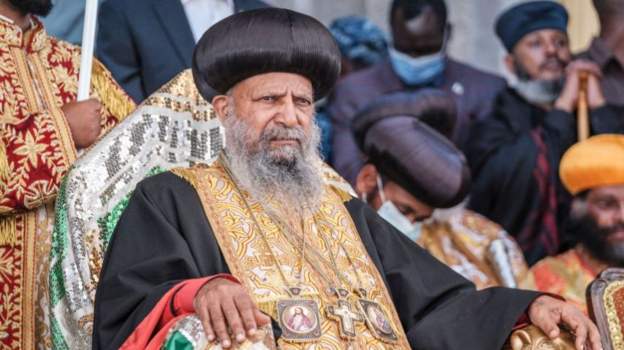
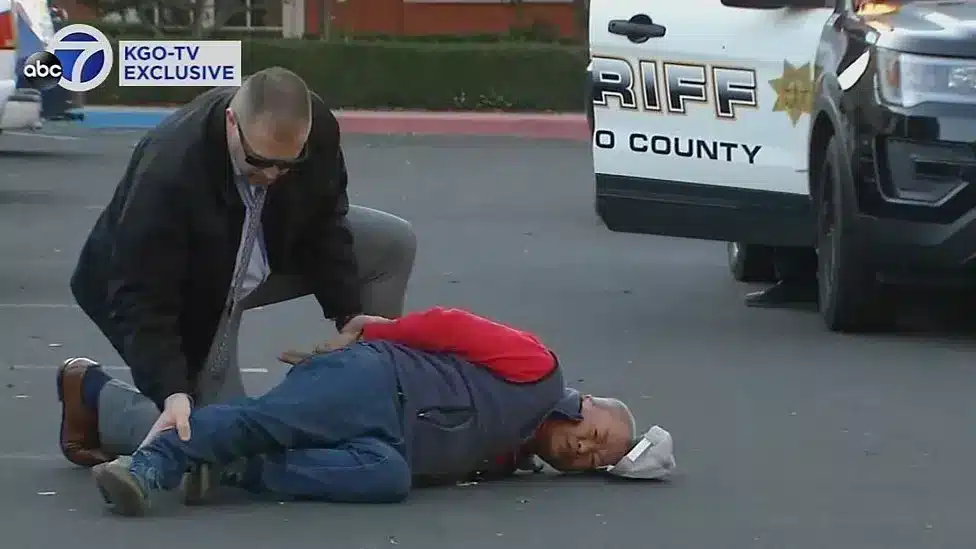
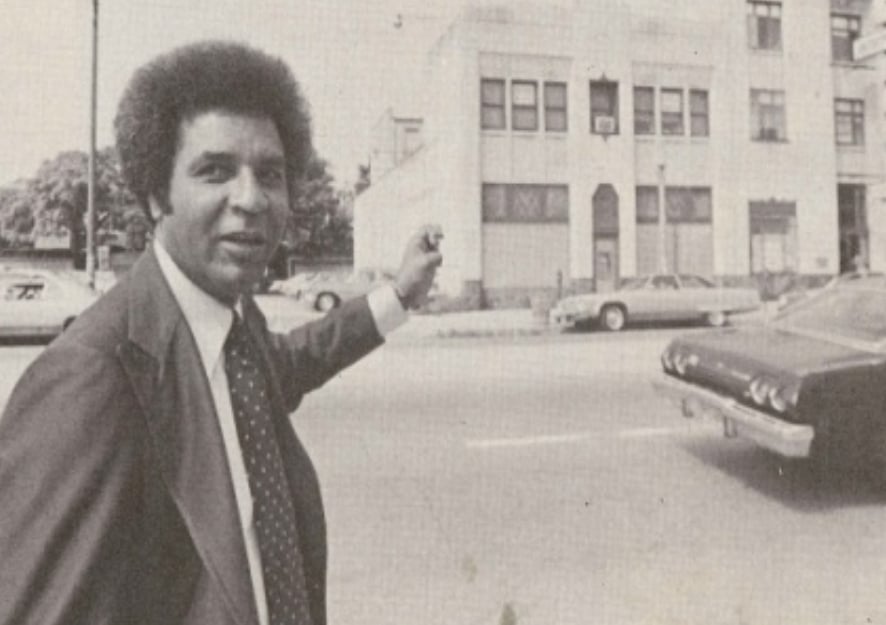

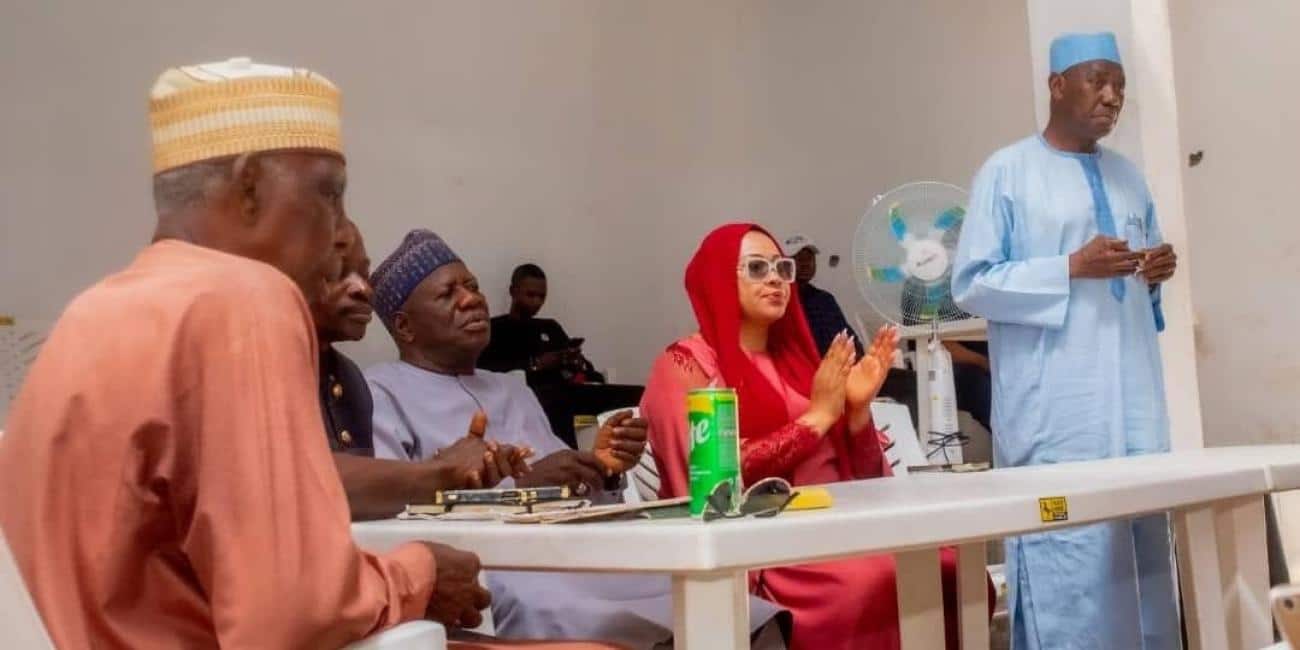
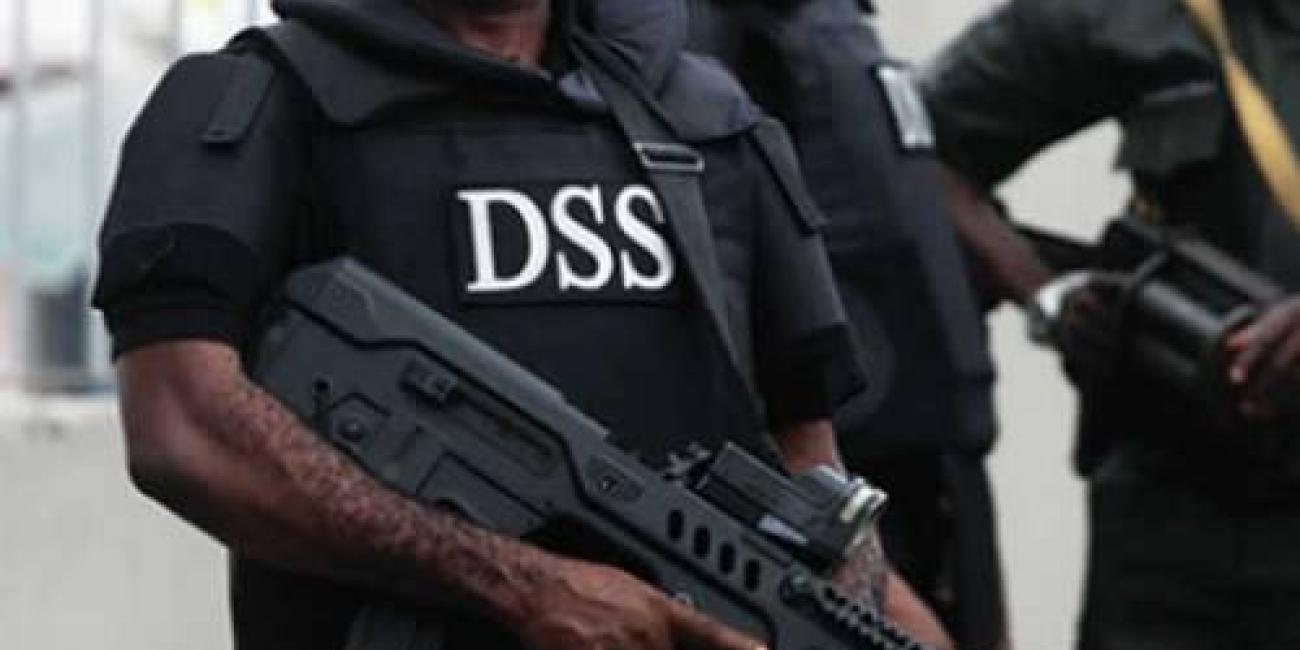
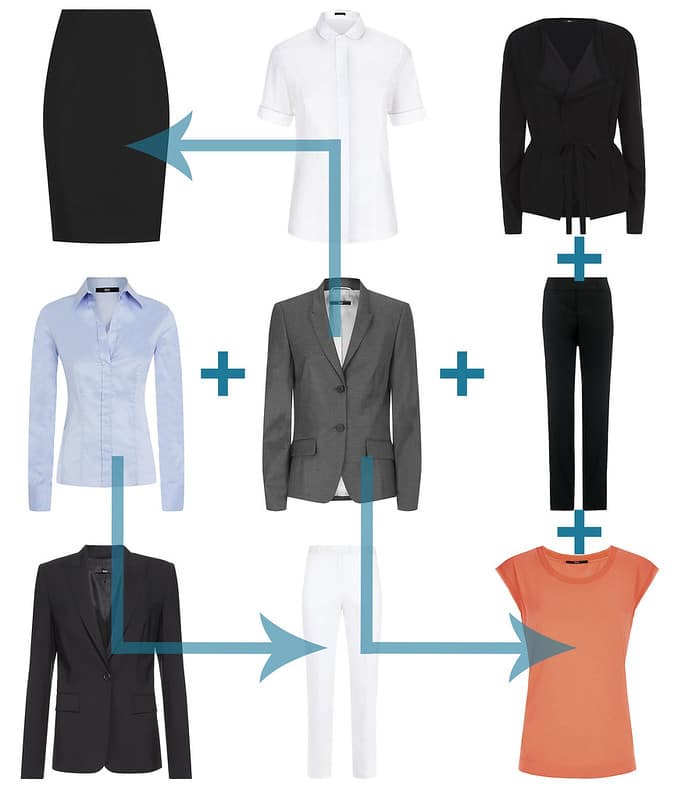
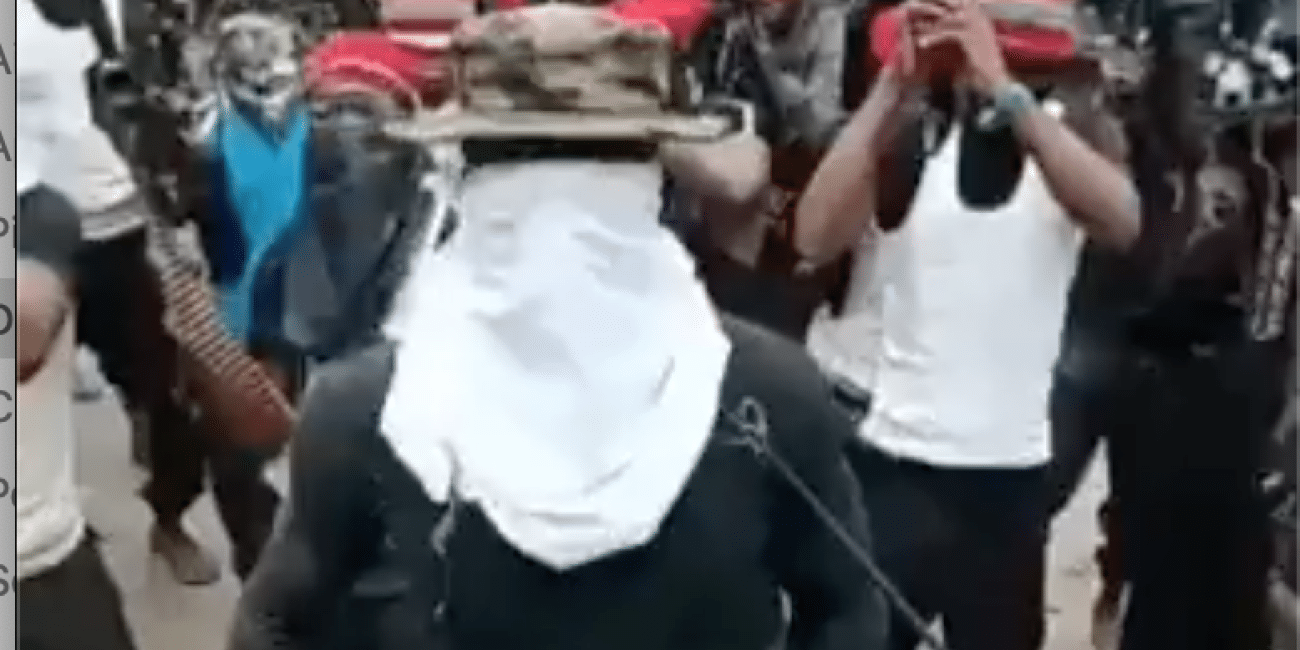

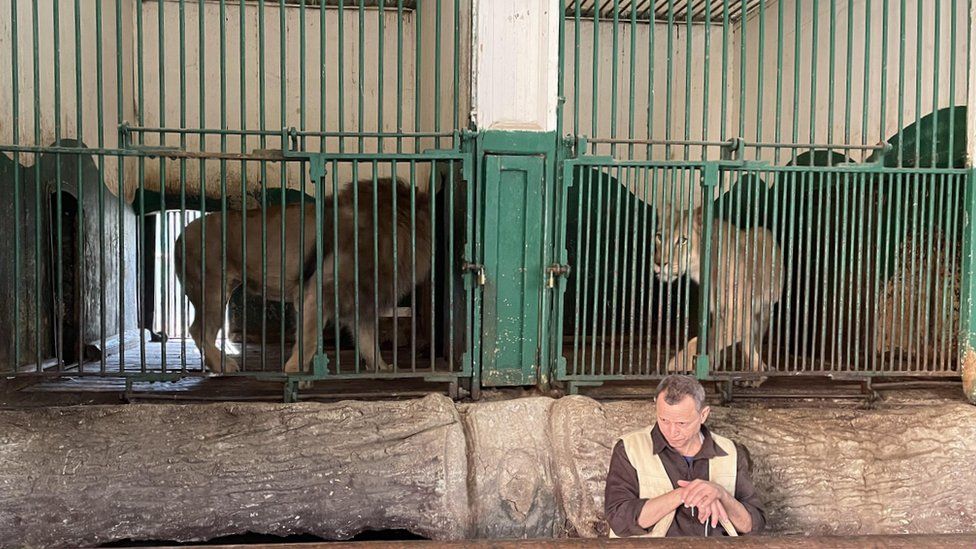
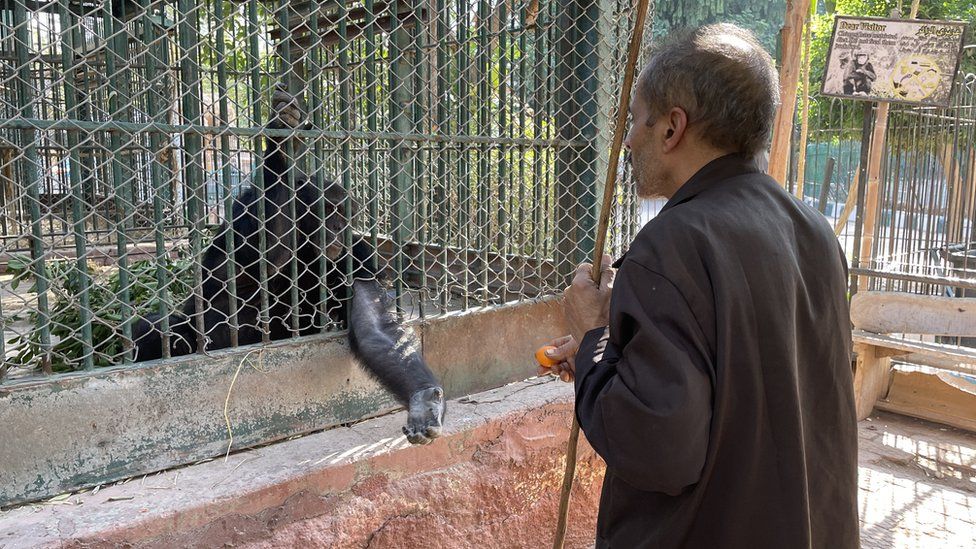
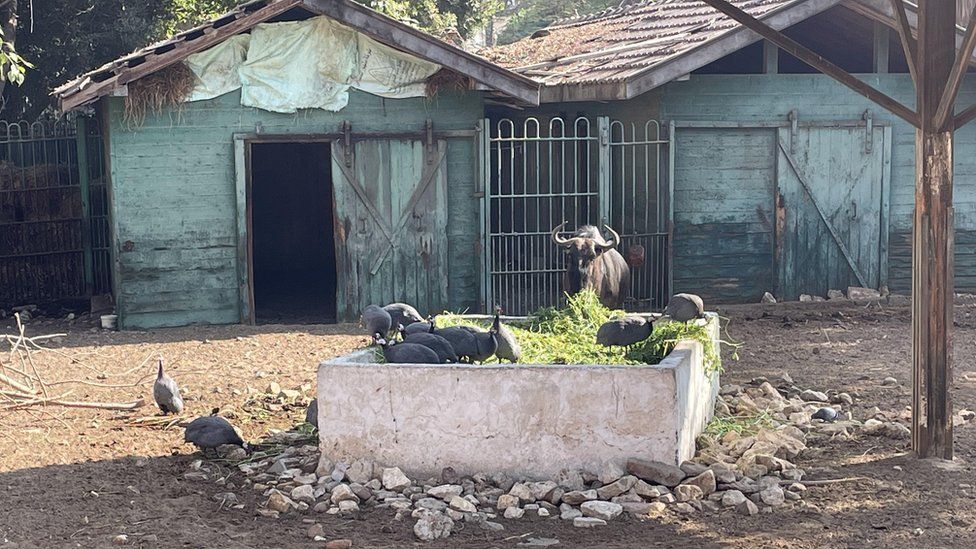
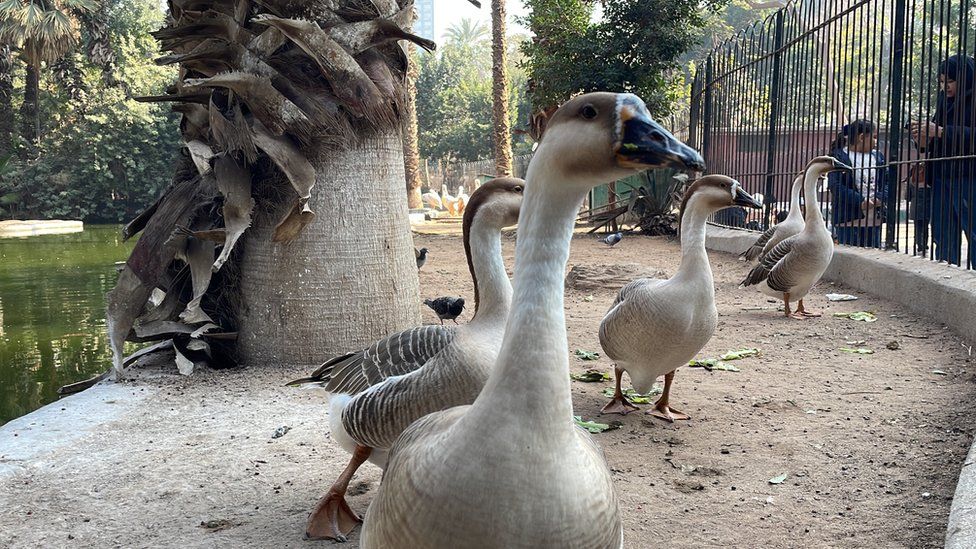
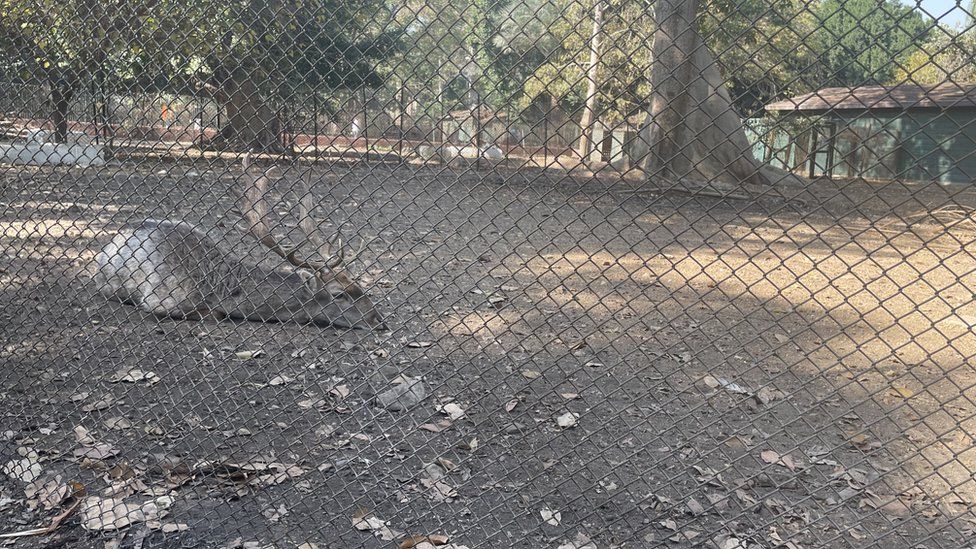
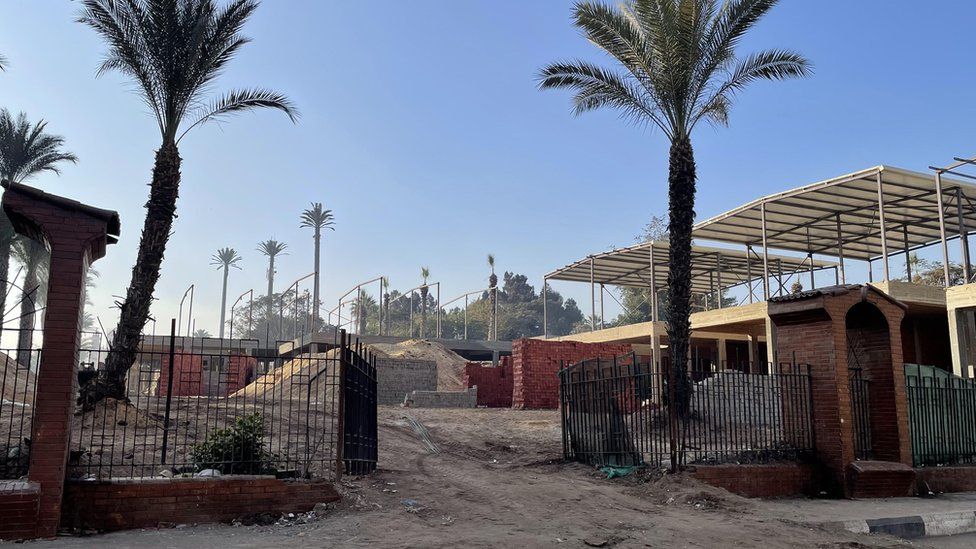
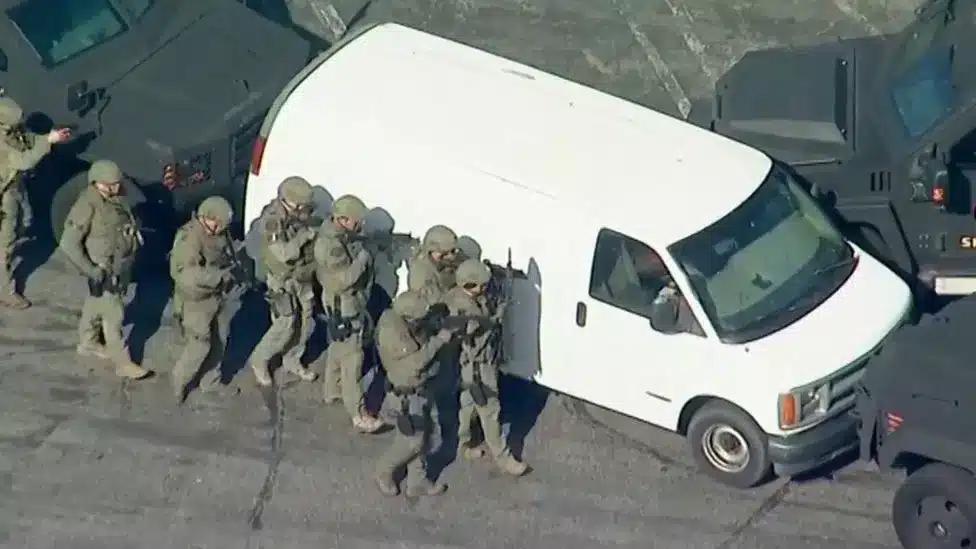

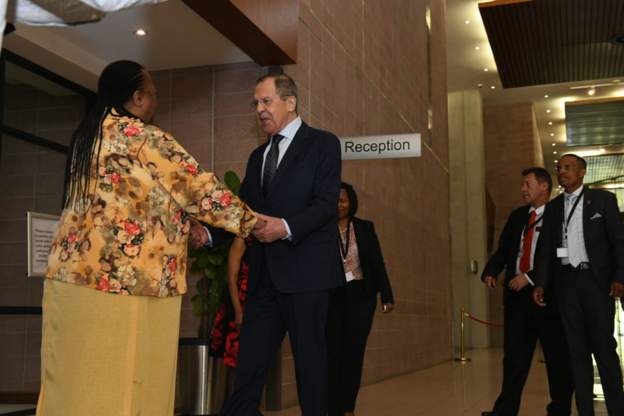
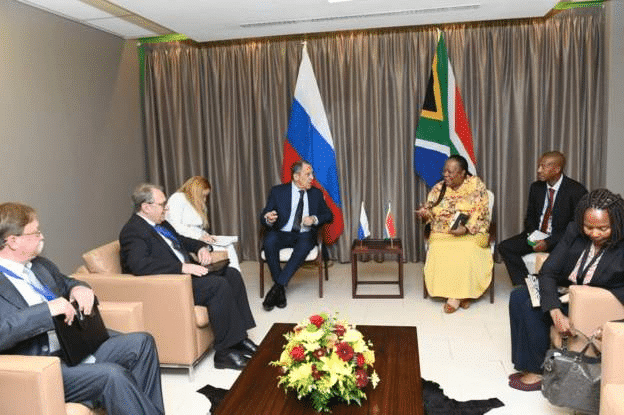
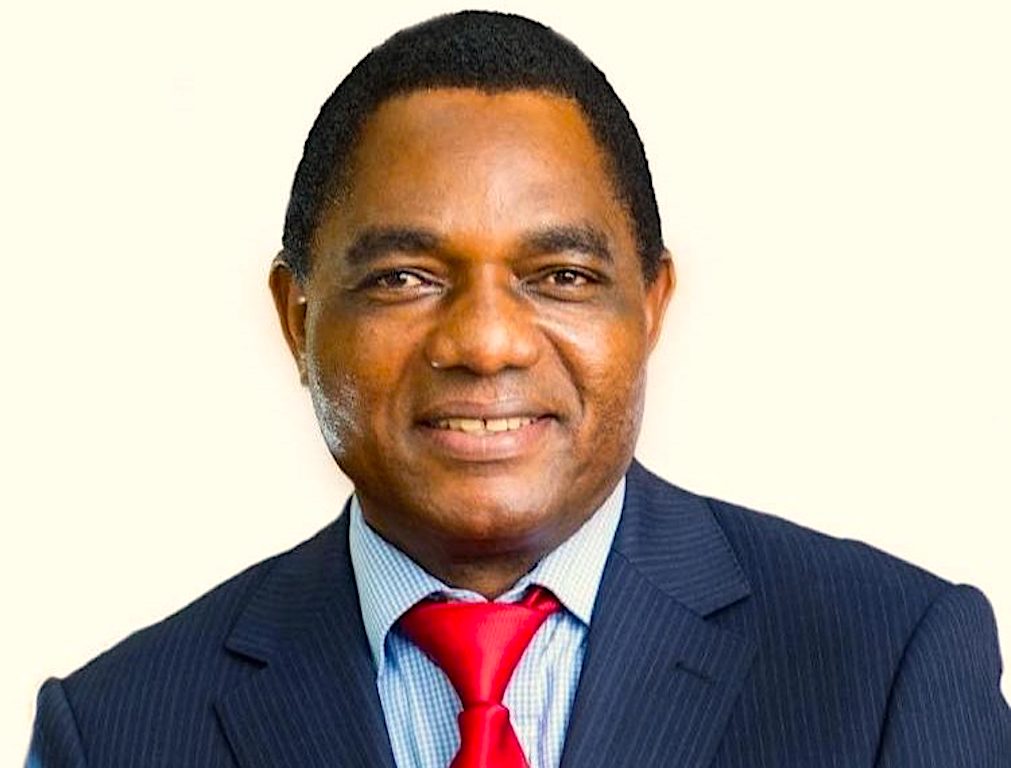
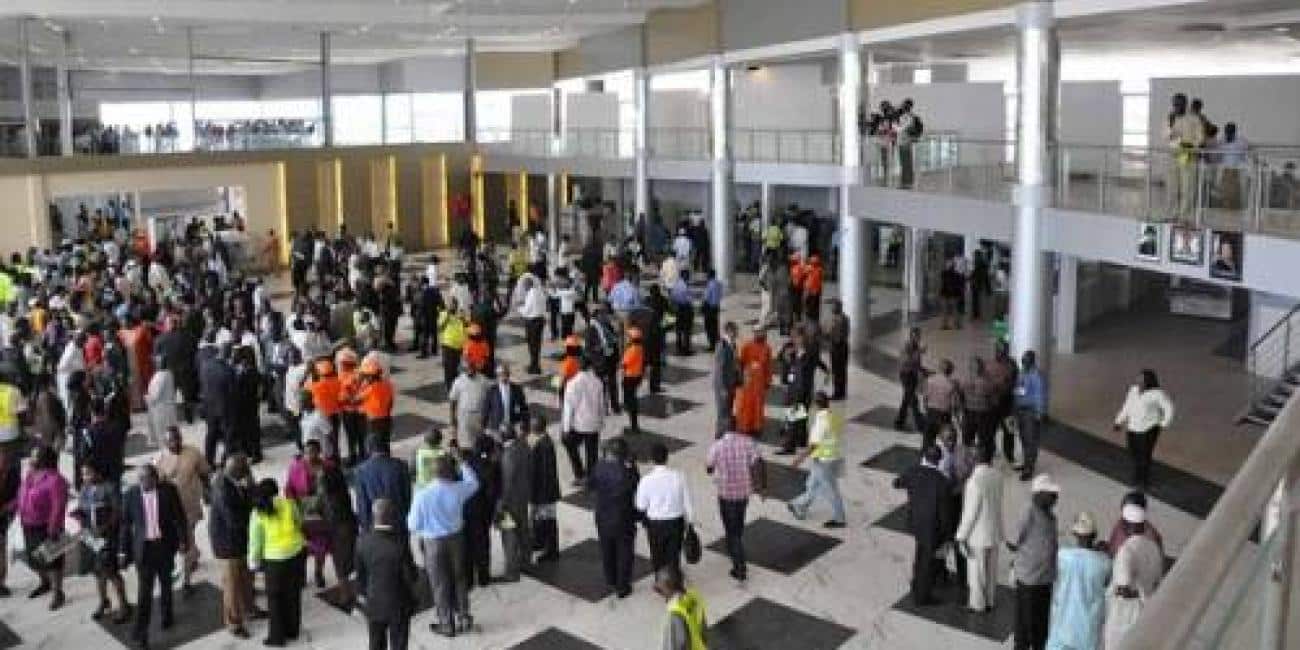
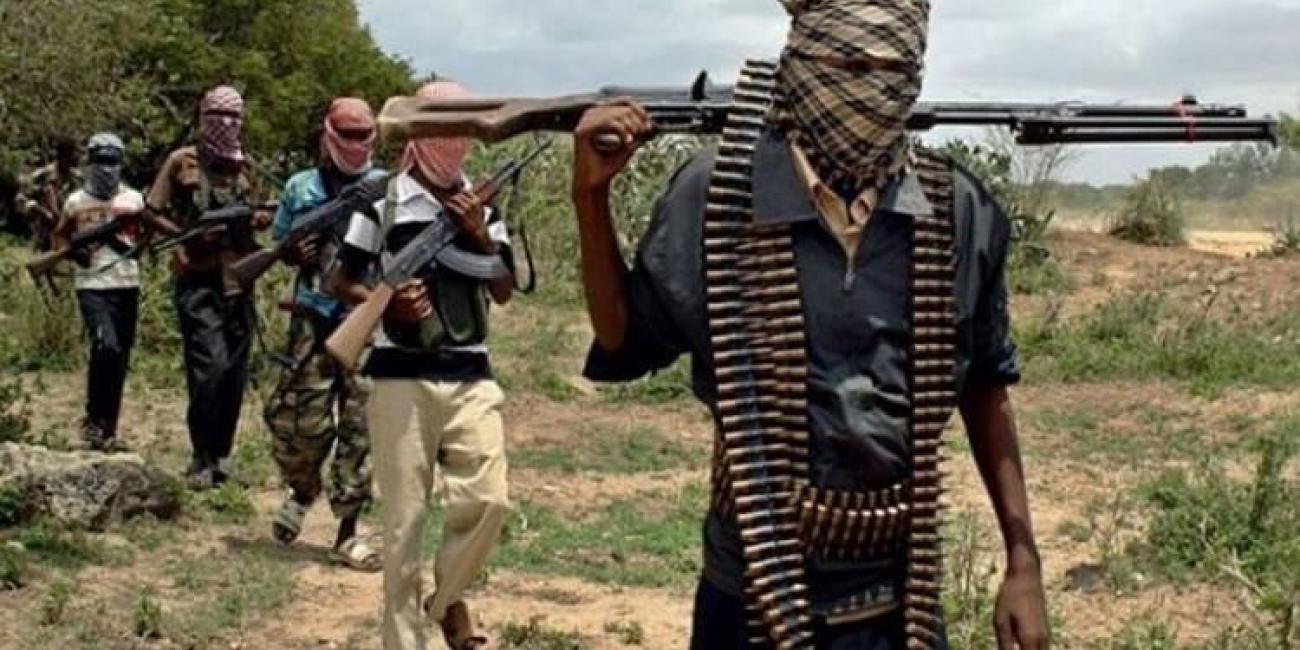

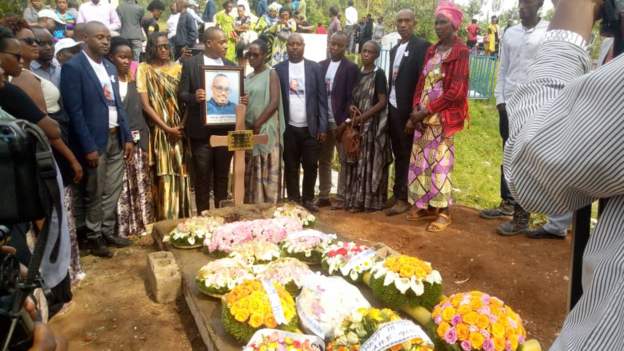
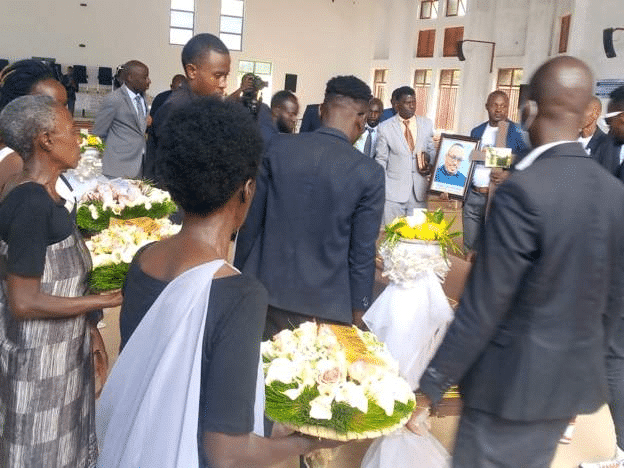
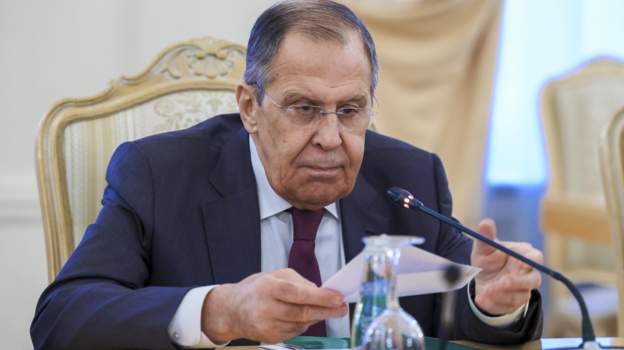
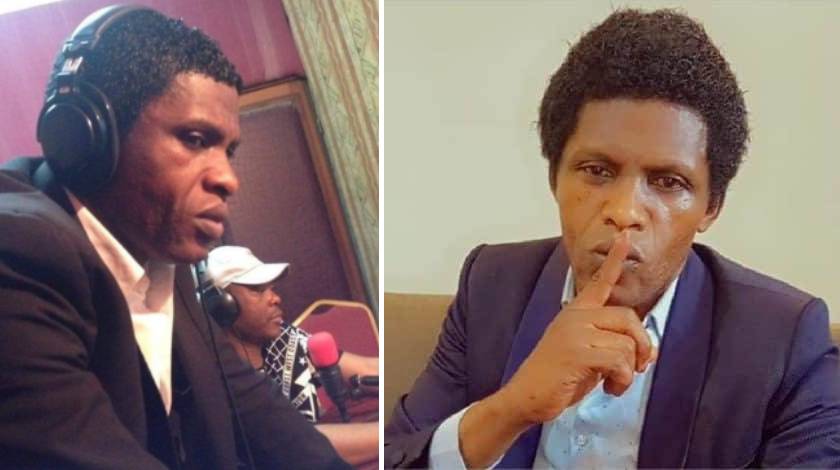



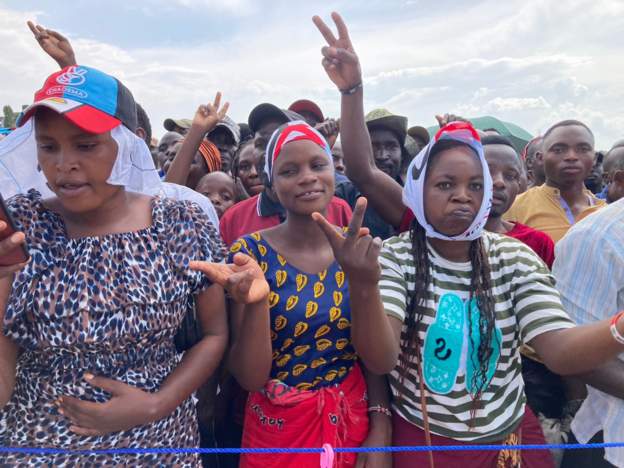

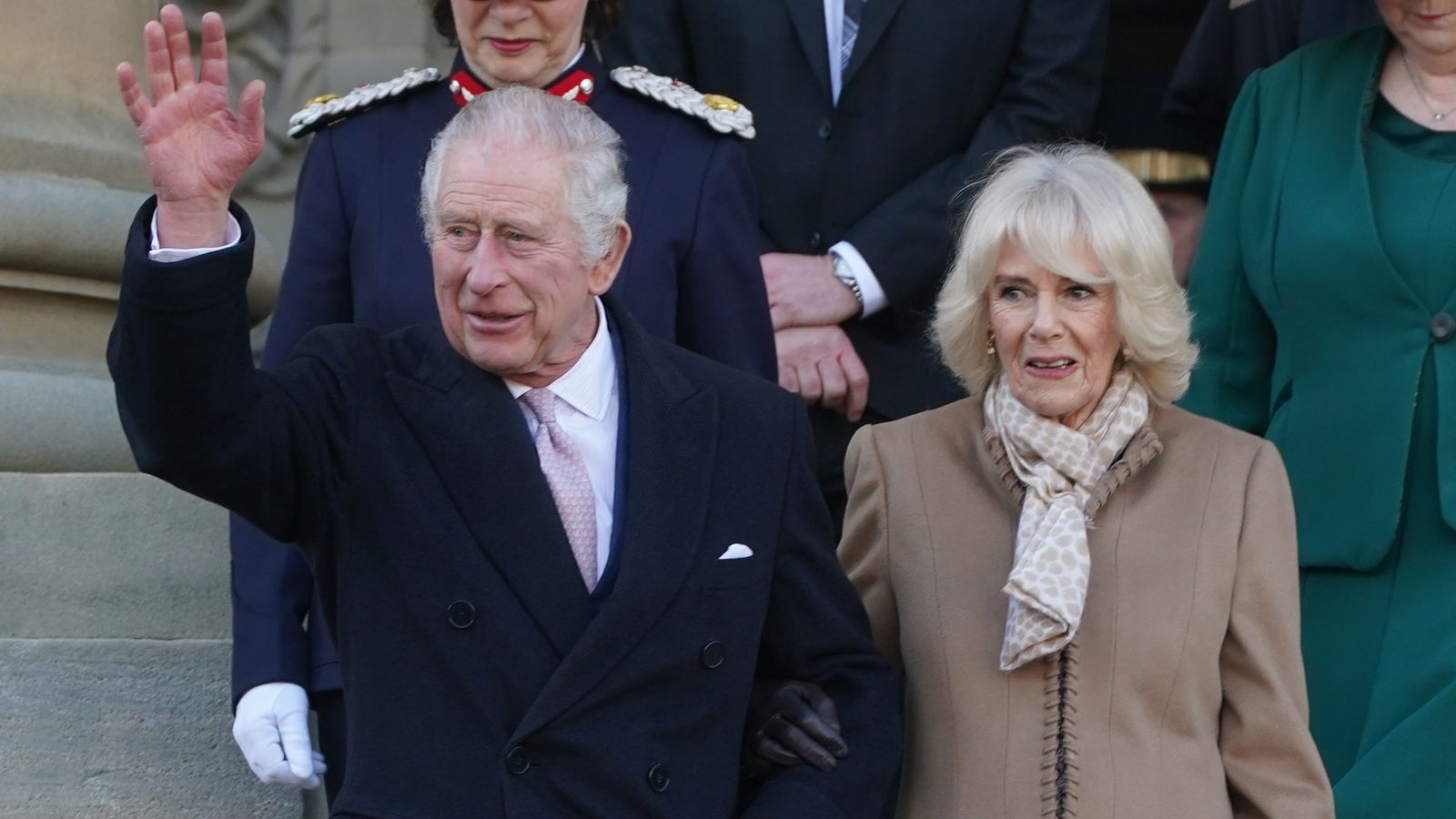
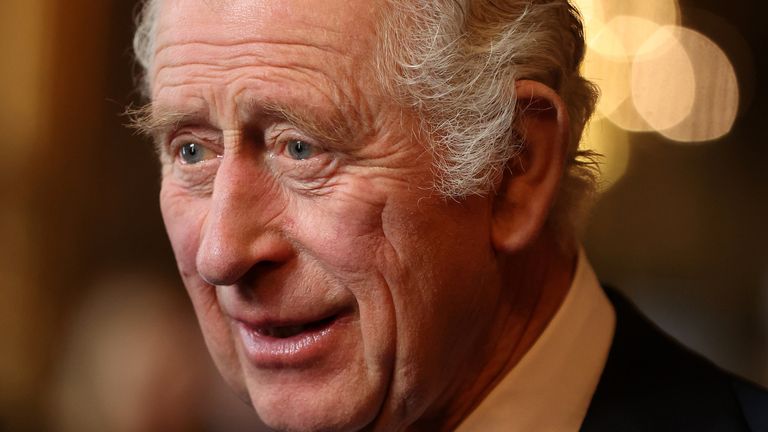 2:18
2:18