Author: Amanda Cartey

  • Four suspected kidnappers arrested at Ekumfi Abirem

    Some residents of Ekumfi Abirem in the Central Region managed to apprehend four suspected kidnappers on Wednesday afternoon.

    The four suspects attempted to kidnap three children aged 12, 14, and 15, but were apprehended after some vigilant residents raised an alarm.

    The suspects were later handed over to the Ekumfi Police in the central region’s Ekumfi District.

    Tweneboah Kodua, the youth leader of Ekumfi Abirem, told Atinka News that he was on his way to his farm when he heard one of the children screaming in the forest, “they’re killing us.” He said he was able to rally the townfolk to rescue the three male children.

    The four suspected kidnappers were taken to the chief’s palace and later turned over to the police.


    Source: Ghanaweb

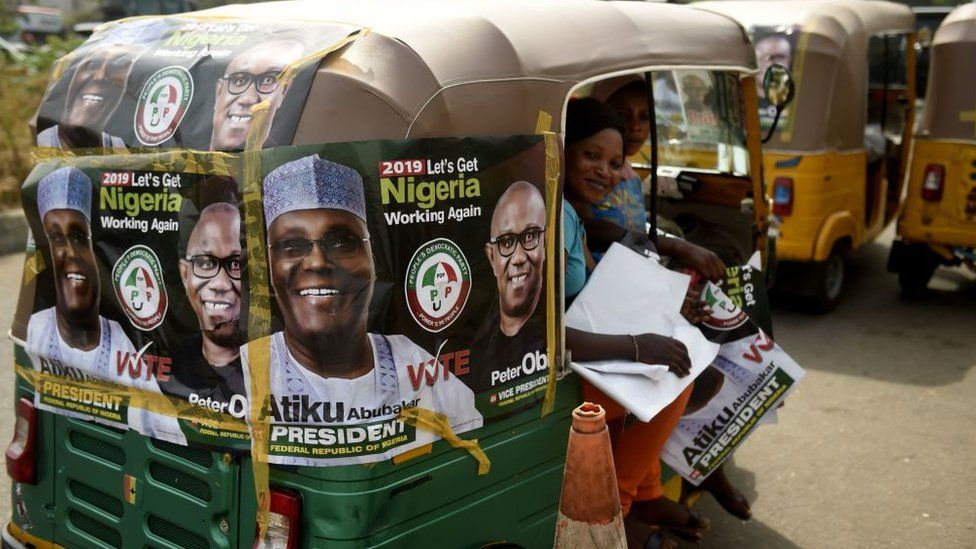
  • Buhari’ll determine our campaign flag-off — APC

    After weeks of  dilly-dallying about the formal kick-off of its presidential campaign, the ruling All Progressives Congress, APC, has now said President Muhammadu Buhari will determine the commencement of the exercise.

    Minister of Labour and Employment, Mr. Festus Keyamo (SAN) who doubles as the official spokesman of the campaign council, disclosed this yesterday in Abuja, shortly after a meeting  of the party’s presidential candidate, Asiwaju Bola Ahmed Tinubu, the Senator Abdullahi Adamu-led National Working Committee, NWC, governors of the party and the PCC itself

    The meeting, which was held at Transcorp Hotel, Abuja, started a few minutes after 11a.m and ended at 2:15 pm.

    It had in attendance Tinubu, campaign Director-General and governor of Plateau State, Simon Bako Lalong; Speaker of the House of Representatives, Femi Gbajabiamila, and APC running mate, Senator Kashim Shettima.

    Governors at the meeting were Rotimi Akeredolu (Ondo), Dapo Abiodun (Ogun), Babajide Sanwo-Olu (Lagos), Atiku Bagudu (Kebbi), Abdullahi Ganduje (Kano), Abubakar Badaru (Jigawa), Bello Matawalle (Zamfara), Yahaya Bello (Kogi), Abubakar Bello (Niger), AbdulRahman Abdulrazaq (Kwara), Abdullahi Sule (Nasarawa), Umara Zulum (Borno), David Umahi (Ebonyi) and Mai Mala Buni (Yobe).

    According to Keyamo, all parties at the meeting agreed on the composition of the PCC, the manifesto and other programmes.

    Keyamo said APC is not competing with the Peoples Democratic Party, PDP, on the timeline for campaigns, saying the party will allow the “little boys’’ to continue, while the ‘’big boys’’ will be coming behind.

    He said: “What you have seen here is the meeting of different layers of the party. It was the meeting of the major stakeholders of the party -the Progressive Governors, the NWC, and the PCC with the presidential candidate.

    “We are a very united party with all the organs of the party working in unison towards one purpose.

    “All we did today during the meeting was to review the draft of our manifesto. Our candidate is not the type that operates on his own. He carries everybody along.

    “He presented the draft of the manifesto to all the stakeholders that looked at it. And guess what, almost all the stakeholders gave that draft more than 90 per cent pass mark.

    “We can’t give you the content because we are not going to take it away from our candidate. He is going to present himself before Nigerians on a particular date and occasion.

    “We have set up a small committee charged with the responsibility of reducing the manifesto documents to major highlights in message form we will sell to even the market women, street trader in the most simple language.

    “We don’t want to present to Nigerians a very complicated document that they cannot understand in simple terms.”

    Campaign kick-off

    On the specific date for resumption of campaigns, Keyamo said the president’s itinerary will determine that.

    “You know that the structure of our campaign involves presidential diary. I have said that our campaign is not going to be like those that they can kick and start like small vehicles. It is maneuvering a 50-ton tanker in a highway and once we hit the highway, it will be motion and movement.

    “Since Mr. President is the chairman of the Campaign Council, we are going to take his diary into consideration in picking and choosing the date.

    “However, we have all virtually agreed to hit the streets very soon. We have also agreed on the region we are going to kick-start but I won’t say that now.

    “We have also agreed on all the basic issues. We just want to carry along the leader of the party, Mr President and hit the streets.

    ““We have accommodated all the interest groups in the campaign list. There was virtually no disagreement in the meeting today,” Keyamo added.

    No pressure on INEC to bend rules

    He also dismissed allegations by the Conference of United Political Parties, CUPP, that the APC was putting pressure on the Independent National Electoral Commission, INEC to bend the rules to its advantage.

    He said: “The accusation from the CUPP is absolutely nonsense. There has been absolutely no occasion where the APC, either through NWC or any level of leadership put any kind of pressure on INEC.

    “Those sensing defeat are already looking for reasons for that defeat. It is one of the reasons they are trying to generate things to accommodate that defeat but they should know that their defeat is imminent.”

    Why Adamu was absent

    APC National Publicity Secretary, Mr. Felix Morka defended the absence of the National Chairman, Senator Abdullahi Adamu, saying he was fully represented.

    He said: “The National Chairman was not missing, he was adequately represented by the Deputy National Chairman, North and the Deputy National Chairman, South and he was in touch with every stakeholder who was here.

    “He did inform them (the candidate) of his inability to be here, but he was effectively represented.”

    On campaign funding, Morka said all the stakeholders will deliberate on it “in due course.”

    Agreement reached on PCC membership

    Head of the New Media Directorate at the APC Presidential Campaign Council PCC, Chief Femi Fani-Kayode, also said the stakeholders have agreed on the list of membership of the council.

    “This meeting we just had has more or less clarified everything. That is why the Publicity Secretary of the party is here, that is why all the four media directorates in the PCC were represented.

    “Everybody was there, the governors, the PCC, we are all speaking as one, we all agreed on everything.

    “We are working towards an objective which is to launch as soon as possible and to come out strongly and there is really no hurry about this as far as we are concerned.”

    On allegations that APC was trying to force INEC to stop the use of the Bimodal Voter Accreditation System BVAS, Fani-Kaypde said: “The answer to that is absolute nonsense.

    “It is what you call poppycock and these are the words of a drowning party spoken by a drowning man with a drowning candidate. There is nothing like that.

    “We are above board, we are serious about what we are trying to do, we are going to achieve our objective, we are going to win this election fair and square and they are the ones that have lost five governors.

    ‘They are the ones that cannot get their party leaders to come to their rallies at their presidential inauguration. We don’t have that challenge.

    “We are working slowly but surely, as one, together. Everybody is coming together and I am very proud to be part of this.”

    Tinubu’s wife begs women

    Meanwhile, Senator Oluremi Tinubu, wife of the APC presidential candidate and lawmaker representing Lagos Central in the Senate, has called on women to mobilize for electoral victory of the party at next year’s presidential elections.

    This was as she expressed confidence that the duo of her husband and his running mate, Kashim Shettima, will protect the interests of women and safeguard their rights if elected. She made the remarks in a statement issued Wednesday in Abuja.

    The women’s campaign team had earlier been inaugurated by President Muhammadu Buhari on Monday.In her address, Tinubu commended the President and the leadership of the party for being “gender-sensitive and placing premium value on the women folk.”

    She also expressed confidence that the women’s wing of the APC presidential campaign, comprising of seasoned politicians, market women, media professionals and others, possess the ability to bring the party over the finish line in first position at next year’s polls.

    “When women are united, wonderful things happen; and I have immense confidence in the ability of the amazing team assembled here today to secure the women’s vote for APC,” she said.

    She also thanked the diverse women groups within the party for their support of Tinubu’s presidential campaign.

    Source:

  • 2024 polls: I haven’t decided whether or not to contest for NDC flagbearership – Mahama

    Former President John Dramani Mahama has not decided on whether or not he will contest for the flagbearership slot of the National Democratic Congress and ultimately lead the party into the 2024 elections.

    He says, however, that a decision on the subject matter will be made early next year to coincide with when the NDC will elect a flagbearer.

    In an interview with VOA’s Straight Talk Africa, Mahama said that he has not decided to contest the flagbearership adding that “it is good to keep your opponents guessing” on which candidate will be presented.

    “I haven’t,” Mahama responded amid laughter when asked if he has plans to run again in the 2024 elections.

    “It’s good to keep your opponents guessing so even if I’m not running, I’m not going to say I’m not running. So a decision will be taken early next year in the first quarter. That’s when we hold our party’s primaries for the presidential candidacy and then we will see,” he added in the interview which aired on Wednesday, October 12.

    Mahama’s name has come up as a strong contender in the NDC flagbearership race besides former Finance Minister Dr. Kwabena Duffuor who is also reportedly readying himself to mount a challenge for the slot.

    Many keen watchers of the political space believe Mahama will ease past Duffuor if it ends up as a two-horse race.

    It will be recalled that the former president in May this year expressed his interest in leading the NDC into the 2024 elections if the party will allow him.

    Speaking in an interview with Ugandan-based NBS television, the 2020 flagbearer of the NDC mentioned that he is unperturbed if the party picks a different aspirant since the main priority is to win the 2024 polls.

    “My country has given me so much, educated me, and made me who I am. So if the party lets me stand, I will,” NBS TV quoted John Mahama as saying.

    “The main priority is winning the election come 2024, and if the party decides that I or someone else should stand, it’s all fine with me,” he added.

    While the governing New Patriotic Party plans to extend its tenure in office beyond 8 years in what it has christened as ‘Break the 8’, the NDC is also lacing up its boot to wrestle power from the incumbent party.

    Source: Ghanaweb


  • Government destroys structures of Akonta Mining in Tano Nimiri Forest reserve – Report

    Government has ordered the burning of structures and equipment belonging to Akonta Mining, a company owned by New Patriotic Party, NPP, Ashanti Regional Chairman, Bernard Antwi Bosiako, alias Chairman Wontumi.

    Accra-based Joy News, in a report stated that their sources confirmed that the destruction of the properties took place on Wednesday, October 12, 2022.

    The report added that some heavy equipment belonging to the firm had been evacuated before the burning took place.

    Pictures shared by myjoyonline.com showed several structures made of wood and roofing sheets burning along with some amount of machinery believed to be used in the firm’s operations.

    Akonta Mining, which Wontumi insists was into regular mining and not illegal small-scale mining, that is galamsey, was operating from the Tano Nimiri Forest Reserve until recently when the Minister of Lands and Natural Resources ordered a halt to their operations.

    The operation was thus undertaken almost 24-hours after deputy Lands Minister, Benito Owusu-Bio had toured the affected forest reserve.

    In a statement issued by the Ministry after his trip, the minister said he could not tell whether Akonta Mining were operating a galamsey site from the place.

    The statement read in part: Addressing the issue of this new group of illegal miners found mining on the river he said “these are not small scale miners, these are obviously people who are just bent on destroying our forests, waterbodies and the entire environment but I cannot tell whether that is Akonta or any other company because this is not organised so I can say it’s purely illegal mining that is going on there!”

    In a statement issued on September 30 and signed by minister Samuel Abu Jinapor, the Ministry said the firm did not have license to operate from “the Tano Nimiri Forest Reserve in the Amenfi West Municipality in the Western Region”.

    Akonta Mining it noted had mining lease to undertake operations in some parts of Samreboi, outside the Forest Reserve, but that “the company has no mineral right to undertake any mining operations in the Tano Nimiri Forest Reserve”.

    Relevant authorities were tasked therefore to: “ensure that the company does not carry out any operation in the Forest and to take the necessary action against any person found culpable in this matter.

    TWI NEWS

    “Our records show that Akonta Mining Ltd, on August 25, 2022, applied for a Mining Lease to undertake mining operations in the said Forest Reserve. By a Ministerial Directive, all reconnaissance, prospecting and/or exploratory activities in Forest Reserves in the country are suspended, except in exceptional circumstances.

    “Although this directive does not affect mining in Forest Reserves, Akonta Mining Limited’s application has not been determined. Accordingly, any alleged activity being undertaken by the company in the Forest Reserve is illegal”, the statement further disclosed.

    Source: Ghanaweb

  • Watch how Agradaa arrived in court for 2nd hearing

    Evangelist Patricia Oduro Koranteng popularly known as ‘Mama Pat’ arrived in court for her second hearing in a rather grandiose manner.

    The founder of Heavenway Champion International Ministries who has been in police custody over allegations of scamming was captured by GhanaWeb’s lenses, in a long white apparel with makeup and a smile walking into an Accra Circuit Court 9.

    She arrived in a police pick-up vehicle, escorted by her lawyer and police personnel.

    As is characteristic of her, the former traditional priestess who previously went by the name; Nana Agradaa sang her way into the courtroom.

    The words of the Twi song translated in English as; ‘God of Daniel and Jacob who delivered me from the snare of the fouler’ sought to reiterate her faith that the God she serves will deliver her from her current predicament.

    Source: Ghanaweb

  • ‘Ayilo’: Ghana’s white gold that has quietly boosted the economy for decades

    In the first place, this is not gold that comes from the ore that is mined from many kilometers beneath the earth’s surface perse, but this product is as cherished as the jewelry you wear on your wrist or neck.

    Known differently to different tribes in Ghana by name: Agatawoe in Ewe; Ayilo for the Gamɛi; shirew by the Akans; and kaolin in English, this product is also known as food that is loved by mostly pregnant women.

    It is believed that it is because of its unique smell that pregnant women are so drawn to it.

    Formed from a type of clay, ayilo is used for many other things including it being a reliable material for electro-porcelain fabrication, as well as a major material used for making wall and floor tiles.

    In Ghana, Anfoega is one of the locations where this product is mostly produced from, through a process of moulding the freshly mined clay soil into lumps, oven-baked and distributed to markets.

    The industry in Anfoega in the Volta Region, for instance, is such a big one, almost everyone in the town has benefited from the economic gains that come with it.

    According to a Facebook post shared by Kofi Semamu Atsu Adzei, he said that this ‘white gold’ has created many rich people and prominent business people from the community.

    “This is white Gold, yes you heard me right. This can be found in Anfoega and it’s called Agatawoe, the Gamɛi call it ayilo, it is shirew by the Akans and kaolin in English.

    “Almost everyone in Anfoega has benefited from the economic gains of this white gold. Anyone into the white gold business is a rich person. Ask anyone from the holy village of Anfoega about it and you will marvel,” he wrote.

    Uses of Ayilo:

    Apart from the already stated uses of kaolin, the product is also used by many to manage nausea, while others claim it helps in the prevention of things like diarrhoea, discomfort and other pregnancy-related conditions, a report by graphic.com.gh said.

    Further details online show that some experts explain that kaolin has absorbent qualities that make it a good addition to helping with diarrhoea.

    Also, the use of kaolin is said to help improve conditions such as irritable bowel syndrome and leaky gut.

    Ayilo is also used for as a beauty enhancement and is said to be used for many traditional and medicinal purposes.

    “It is also a key ingredient in some cleansers, shampoos, toothpastes and beauty products, as it is claimed to gently cleanse and pull impurities from the pores
    without causing redness,” a report stated.

    Effects of Ayilo:

    But there have also been reported after effects of using this product, some of which researchers say is that when pregnant women, for instance, consume too much of it without taking more nutritious foods, it can expose them to anemia.

    Besides, because of its source and composition, it is believed that ayilo could carry some amounts of worm eggs, and as such, should it be consumed, the eggs could hatch in the body, leading to the worms feeding on the red blood cells and posing great health risks to an individual.

    With chemical elements such as Aluminium, Arsenic, Boron and Nickel, the product poses even more harmful threats to anyone who consumes it.

    Find some photos of kaolin, or ayilo, below:

    Source:  Ghanaweb

  • N258bn port reconstruction project missing in 2023 budget

    Findings have shown that the Federal Government failed to capture the Apapa and TinCan Island port reconstruction projects in the 2023 budget presented to the National Assembly last week.

    In the budget, the sum of N20m was allocated for agencies under the Federal Ministry of Transportation such as Nigerian Ports Authority, Nigerian Maritime Administration and Safety Agency, Maritime Academy of Nigeria, Oron; and Nigerian Shippers Council for other consultancy services.

    Meanwhile, agencies like MAN in Oron and the Council for the Regulation of Freight Forwarders in Nigeria got N1.5bn and N775m respectively.

    It will be recalled that the Managing Director of the Nigerian Ports Authority, Mohammed Bello-Koko, had said that a whooping sum of about  $600m (N258bn) was  needed for the rehabilitation of Nigerian ports. However, this figure was not captured in the budget as only N10m was allocated for implementation of strategies for the rehabilitation, utilisation and patronage of Eastern ports.

    The seaports being considered included: Apapa, and Tin Can Island Ports in Lagos; Calabar Port in Cross River as well as Warri, Koko and Burutu ports in Delta State.

    Bello-Koko had said that not all the terminal operators had the financial capacity to handle the reconstruction of the quay aprons.

    “Like I said before, not all of them have the financial capacity to reconstruct because it is no more rehabilitation but full reconstruction. While some of them might be able to have financing in the next few months, others might not be able to meet up and then you need to have uniformity in terms of the construction plans and so on. We also didn’t want the terminal operators to come up with their own engineering designs.

    “So, we are coming up with a holistic engineering design of the ports. When we do that, we also have an estimated cost of over $600 million. Now, we are looking at the funding options. The first option is for the terminal operators to reconstruct those berths. Either we give them time to recoup their investments or we extend their leases.

    “The other alternative is for the NPA to reconstruct those quays and to do that, we are going to fund it ourselves. We are working towards requesting the government’s approval to use a certain per cent of our revenue to fund the reconstruction of Tin Can.

    “We are just being proactive. When the government decides to go that way, we know that we have already done some of the work. The other option is to just get a multilateral lending agency to fully fund that reconstruction. The FMOT has been pushing and giving timelines in terms of the starting of the reconstruction of Tin Can.”

    Meanwhile, a source close to the NPA told THE PUNCH that though one of two terminal operators wanted to undertake the project, it was still the responsibility of the ports authority.

    “It is the responsibility of the NPA. The agency is looking for funding options. Some terminal operators like one or two want to undertake the project, but if one person does it and the other does not do it, there will be distortions of the whole system. This is why NPA wants to do it itself. So, if it is not in the budget, I don’t know who they want to do it with.”

    Reacting to this, Vice President of Business Action Against Corruption, Integrity Alliance, Lagos, Jonathan Nicol, questioned why shippers were charged a seven percent development fee if the ports would not be developed.

    He said that it was the duty of terminal operators to develop the terminals.

    “Shippers pay a 7 per cent surcharge for port development levy across the country. The 7 per cent surcharge is a levy for every cargo that comes into the ports. Shippers have been paying that levy for 30 years. It is enormous money for development of the ports, which has not been used, looking at the state of the ports. The question is, why do shippers have to pay for port development levies when the port has been concessioned. This is because concessionaires are supposed to develop their own spaces at the ports, which they rented from the Nigerian Ports Authority. It is their duty to develop them and not that of the shippers to do it for anybody.”

    Nicol said NPA had the right to request money to develop the ports from what they had been paying to the government.

    “The NPA has a right to request funds from what it has paid to the government. If the government is saying they are not going to fund the NPA, NPA has the right to hold the funds and remit part of what they collect to the government and use the rest for salaries and development of the ports.”

    According to him, “With the way it is, if care is not taken, the NPA might increase its tariffs. Government is introducing, increase the cost of doing business instead of decreasing it. The 7 per cent surcharge is a levy for every cargo that comes into the ports.”

    He said that the government was increasing the cost of doing business instead of reduction, noting that it was not healthy for port development.

    “The government is increasing the cost of doing business instead of decreasing it.”

    Meanwhile, the General Secretary of the Association of Bonded Terminal Operators of Nigeria, Haruna Omolajomo, lamented poor infrastructural maintenance by the government, stressing that it was not good for the growth of the industry.

    “As far as I am concerned, it is very painful that the Nigeria government, through its agencies and other parastatals, is very poor in maintenance culture. If infrastructure is not obsolete, decayed, collapsed   or totally dilapidated, no one will be bothered.”

    According to him, “Even where budget provisions are even made, the money would be diverted or cornered by some bad eggs in the country.”

    According to him, “One is therefore not surprised to see the dilapidated ports and quay aprons of our premier ports, especially those of Lagos ,TinCan  and Onne just to mention a few. They are not being attended to or accommodated in 2023 budget.”

    Omolajomo noted that the government was only concerned when the crisis involved the big men and the powerful in the society.

    “But let there be a disaster or killing  that involves one of the big men in the governmental or higher authority, you will see the speed with which those in authority would put things in order.”

    He said that a state of emergency should be declared on the dilapidated quays aprons at the ports.

    He added that if the matter was not taken seriously, it would attract international maritime operators.

    “In actual fact, without further delay, we have suggested, and we are still suggesting that all the dilapidated ports and a state of emergency should be declared on quay aprons in the above stated premier ports. If this is not done or taken seriously, it will soon attract international maritime operators or the world in general.”

    According to him, “Our premier ports can be declared a no-go area or unsafe for foreign investors and vessels. This will definitely have adverse effects on the people, the government and our economy that is already down.

    “It is not yet too late for the Minister of Transport as well as the National Assembly to do the needful now. Let them quickly accommodate these facilities involving restructuring in the 2023 budget.”

    He urged the government to use the time of concession renewal to ensure that the terminal operators participated in improving the port infrastructure.

    “Like we suggested, there is a need to review the renewal of the concessionary agreement with the current terminal operators. They should be made to show concrete commitments and make money available for the restructuring of these dilapidated ports.

    “They cannot just be milking the country and carting away the money they get freely to enjoy themselves somewhere else.”

    According to him, “The premier ports of Apapa and Lagos and the newly constructed Lekki port are advantages to these agencies to get adequate funds and funding. The Lekki port will definitely be a huge economic blessing not only to these agencies but also to the people of Nigeria. These agencies would definitely get a lot of money from the barge operators, truck owners, agents, importers , indigenous bonded operators around the axis . Business will definitely blossom in this Lekki port axis.”

    Also speaking, a member of the National Association of Government Approved Freight Forwarders, Start Ezenga, said, that the government might have removed that from th agreement.

    “When the Federal Government concessioned the port, they cleverly removed the repairs of the ports from the agreement. They may be expecting the concessionaires to do that. One of the terms in the agreement would be for the government to maintain the ports. Hence they may have removed that budget or from the government pulse.”

    The Acting National President of the Association of Nigerian Licensed Customs Agents, Kayode Farinto, said, “That is very funny. If the government does not look at the infrastructure, it will be very funny. If they didn’t capture it in the budget, it is not a good omen,” he said.

    Source; Punchng.com

  • African states divided on UN vote against Russia

    Twenty-six African countries voted in favour of a UN resolution rejecting Moscow’s contentious referendums in four Ukrainian regions that it declared part of Russia.

    Nineteen countries abstained, including Eritrea that had previously voted to reject a UN resolution condemning Russia’s invasion of Ukraine.

    Mali, the Central African Republic, Ethiopia, Congo-Brazzaville, South Africa, Sudan, Uganda and Zimbabwe also abstained.

    Burkina Faso, Cameroon, Equatorial Guinea and Sao Tome were absent from the UN General Assembly during the vote.

    Earlier this month, Ukraine’s Foreign Minister Dmytro Kuleba toured Africa to counter Russia’s apparent hold on the continent and persuade leaders to support Kyiv.

    He cut the visit short after Russia intensified the bombardment of Ukraine.

    Source: BBC

  • Corruption: World Bank sanctions seven Nigerian firms, individuals

    The World Bank has disclosed that it sanctioned seven Nigerian firms and individuals for corruption during its 2022 fiscal year.

    This disclosure was made in the bank’s latest Fiscal Year 2022, which covered July 1, 2021, to June 30, 2022, in the Sanctions System Annual Report.

    The sanction list contained three Nigerians and four Nigerian companies who were found guilty of corruption of necessary investigations by the Washington-based bank.

    Out of the four companies, two were sanctioned by the African Development Bank, but recognised by other multilateral organizations, including the World Bank under the cross-debarment policy.

    A particular Mr Salihu Tijani was blacklisted for three years and two months, while Mr Isah Kantigi was blacklisted for five years.

    The third Nigerian, Amin Moussalli, was blacklisted for two years and 10 months, with additional conditional non-debarment (which means the individual is eligible to participate in the bank’s operations) for one year and six months.

    The two companies blacklisted by the World Bank were AIM Consultants Limited for two years and two months, and SoftTech IT Solutions and Services Ltd for four years and two months.

    The other two firms blacklisted by AfDB but recognised by the World Bank under the cross-debarment policy were Sargittarius Nigeria Limited and Sargittarius Henan Water Conservancy Engineering Ltd for two years and six months each.

    The report further disclosed that two Nigerians and two Nigerian firms had been removed from the blacklist after complying with the bank’s conditions.

    The Nigerians were Mr. Elie Abou-Ghazaleh and Mr. Fadi Abou-Ghazaleh, while the firms were Abou Ghazaleh Contracting Nigeria Ltd. and Quick Projects Limited.

    In his remark in the report, the World Bank Group President, David Malpass, said that corruption could damage the bank’s efforts in financing projects.

    He said, “At a moment when every available resource must be deployed for maximum impact, these ill effects of corruption can be especially damaging. For this reason, it is important to recognize the role of the Bank Group’s sanction system, which plays a significant part in our institution’s efforts to maintain oversight and accountability for the financing we provide.

    “The offices that comprise the sanctions system—the Integrity Vice Presidency, the Office of Suspension and Debarment, and the Sanctions Board and its Secretariat—work together to send a clear message: corruption has no place in development.”

    In total, he said that the bank debarred or otherwise sanctioned 35 firms and individuals.

    At the same time, 22 entities had met their conditions for release from sanctions, making them eligible to again participate in projects financed by the bank.

    The PUNCH had earlier reported that the World Bank had blacklisted 18 Nigerian individuals and firms for engaging in corrupt practices, fraud, and collusive practices in its 2021 fiscal year.

    In another PUNCH report, it was disclosed that the AfDB blacklisted at least 40 Nigerian firms and individuals for engaging in corrupt practices, fraud, and collusive practices between 2017 and 2021.

    The AfDB said the firms and individuals were debarred “for coercive, collusive, corrupt, fraudulent, or obstructive practices under its sanctions system or adopted under the Agreement for Mutual Enforcement of Debarment Decisions from other global lenders.”


    Source: Punchng.com

  • India Olympic medalist to stand trial for murder

    Two-time Indian Olympic medallist Sushil Kumar will stand trial for allegedly murdering a fellow wrestler during a stadium brawl last year, a lawyer said Thursday.

    Kumar and 17 others were charged by a Delhi court on Wednesday, more than a year after they were arrested over the death of 23-year-old junior grappler Sagar Dhankar following a long rivalry between two groups of wrestlers.

    The court said investigators were able to produce enough evidence to proceed against Kumar, who has said he is innocent and accused police of framing him.

    Prosecutors accuse the 39-year-old champion of being a “kingpin” in the sensational murder case of May 2021 that shocked India’s sports fraternity.

    He has been charged with murder, kidnapping, rioting and using deadly weapons. Two of the accused are still on the run, according to prosecutors.

    Kumar was arrested after a week-long manhunt following the deadly brawl that was fuelled by personal and professional rivalry between the two players.

    Prosecutors allege Kumar and the other accused beat Dhankar and his friends with clubs and other weapons outside a Delhi stadium and left the victim to die.

    He was seen in a video — which prosecutors say is authentic — assaulting the former junior wrestler, who died in hospital.

    Pardeep Rana, a lawyer representing one of the accused, said his client was arrested on trumped-up charges.

    “We will disprove the allegations before the court,” Rana told AFP.

    Kumar was viewed as one of India’s finest sportsmen and is the only one to win two individual Olympic medals — a freestyle wrestling silver at the 2012 London Games and a bronze at the Beijing Olympics four years earlier.

    He has also represented India in other international competitions and won three Commonwealth Games golds and one gold at the World Wrestling Championships in Moscow in 2010.

    He was awarded India’s highest honour for athletes in 2009.

    The former champion is being held in a separate cell at Delhi’s Tihar prison for security reasons.


    Source: Punchng.com

  • Somali press union boss held on ‘security charges’

    Somalia’s information ministry says the leader of the country’s journalist union, Abdalle Ahmed Mumin, is “being held on security related charges”.

    Mr Muumin was arrested on Tuesday after openly criticising new government restrictions on the reporting of militant Islamist group al-Shabab.

    Journalists’ unions and media freedom activists condemned the directive as restrictive.

    In a statement, the ministry said the journalist’s arrest was not linked to his work, without providing details of the security related charges.

    It added that the ministry was waiting to receive further information on his possible prosecution.

    Somalia consistently ranks poorly on media freedom surveys due to threats against journalists by the government and militant groups.

    Source: BBC

  • Why traditional healers shouldn’t deal with Ebola Analysis

    “Traditional healers are forbidden from handling Ebola cases,” Uganda’s President Yoweri declared in an address to the nation on Wednesday evening, in the latest effort to curb the spread of the disease.

    Across much of Africa, the practice of traditional medicine, passed down generations through family lineage or apprenticeship, is widespread.

    During outbreaks of deadly infectious diseases such as Ebola, they’ve proven to be a critical point of vulnerability.

    In May 2014, the first confirmed case of Ebola in Sierra Leone was recorded.

    Investigations led to a traditional healer, described as “well-known and widely respected”, in Kenema in Eastern Province.

    Patients from across the border in Guinea had sought her services. Soon, she became ill and died. Hundreds attended her funeral and burial ceremony.

    The World Health Organization reported that local authorities later linked up to 365 Ebola deaths to that one burial.

    Later in 2018, during an outbreak of the disease in eastern Democratic Republic of Congo, clinics that provided a mixture of herbal and pharmaceutical medicine, called ‘tradi-moderne,’ were quickly identified as hotspots of infection.

    They were staffed by healers who barely had a formal education, and who had no protective equipment.

    But they fill a glaring gap in medical care, where hospitals are few and far between.

    Rather than ban them, response teams trained and equipped the healers to safely identify and refer Ebola patients to specialised treatment centres.

    Uganda’s health system is much more developed. There’s a sense of confidence among health officials that the current outbreak can be brought under control, as the country has during previous epidemics.

    But experts meeting at a regional ministerial conference this week have urged them to be extra vigilant as every outbreak faces different challenges.

    Uganda has reported 19 deaths from the current outbreak, including one in the capital Kampala.

    Source: BBC

  • Breaking: Former BBN housemate, Rico Swavey, is dead

    Former Big Brother Naija season 3 housemate, Patrick Fakoya, popularly Known as Rico Swavey, has been confirmed dead.

    Colleagues who were housemates with him confirmed his death on various social media platforms on Thursday.

    The PUNCH had earlier reported that the former BBN star was involved in an auto crash leading to his going into coma before his eventual death on Thursday morning.

    Reacting, Tobi Bakare on his Instagram handle posted a picture adding a caption, “This is how I will remember us brother. Forever ” RIP”

    While Alexandra Amuchechukwu Asogwa popularly known as Alex Unusual also took to her Twitter handle to express her grief. She wrote, “This was not what we agreed Rico, Rest in peace.”

    The PUNCH had on Wednesday reported that Nigerian entertainers launched a fundraiser for the deceased housemate of Big Brother Naija season 3 after he was involved in a car crash.

    Bakre made the announcement on his Twitter page on Wednesday, as he asked the public for donations. Bakre noted that the accident victim had been placed on life support.

    “Please help save Rico. He had a really bad car accident. We have to keep him on life support and continue to pay the rising medical bills while we pray for God’s miracle.

    Related News
    • Accident: Celebrities launch fundraiser for BBNaija’s Rico Swavey
    • BBNaija’s Rico Swavey involved in auto crash
    • Things to know about BBNS7 winner, Phyna

    “(We) can’t do it alone. Please click on the link to donate at ricoswavey.com,” Bakre tweeted.

    Reality TV star, Alex Asogwa aka Alex Unusual, who had shared the news about the accident on her Twitter page on Tuesday, also called for donations.

    She wrote on her Instagram page on Wednesday, “I wish I didn’t have to post this but my friend is in a critical condition and we are in need of your financial assistance and prayers.

    “I also wish I could give more information on his health but how can I when we are still waiting for the doctors and God to save this dear life or at least get a sign or response from Rico?

    “Whatever you can do to support will be highly appreciated as he is on life support and fighting for his life. Please, @ricoswavey_official needs our help #ricoswavey #prayforricoswavey”

    On Wednesday, Rico Swavey’s management announced that he was on life support in the hospital.

    His management posted a video of the crashed car and asked for prayers and support from his fans, via his Twitter handle.

    Source: punchng.com

  • Russia can’t erase sovereign state from map – Biden

    United States President Joe Biden said the United Nations resolution against Russia’s annexations in Ukraine, passed with a historic majority, was a message to Moscow that it could not erase a sovereign state from the map.

    “Today, the overwhelming majority of the world nations from every region, large and small, representing a wide array of ideologies and governments voted to defend the UN Charter.

    “It condemns Russia’s illegal attempt to annex Ukrainian territory by force,” Biden said in a statement on Wednesday.

    “The stakes of this conflict are clear to all and the world has sent a clear message in response: Russia cannot erase a sovereign state from the map.

    “Russia cannot change borders by force. Russia cannot seize another country’s territory as its own,” Biden said.

    “Nearly eight months into this war, the world has just demonstrated that it is more united, and more determined than ever to hold Russia accountable for its violations,” the US leader added.

    The UN General Assembly on Wednesday condemned Russia’s recent move to annex the eastern Ukrainian regions of Donetsk, Kherson, Luhansk and Zaporizhzhya, by a vote of 143-5, with 35 countries abstaining.

    All rights reserved. This material, and other digital content on this website, may not be reproduced, published, broadcast, rewritten or redistributed in whole or in part without prior express written permission from PUNCH.

    Source: Punchng.com

  • I’m coming to Ekiti with prosperity vision – Oyebanji

    Ekiti State Governor-elect, Biodun Oyebanji, has said that he will work with competent, courageous and transparent persons in his bid to drive his agenda of making Ekiti prosperous.

    Oyebanji said that securing the citizens, building enduring Infrastructure and solving the perennial epileptic power supply to the state would form the focal areas of concentration.

    “My vision is to have a society where everybody will prosper,” he said.

    The incoming governor, who would be inaugurated on Sunday, speaking in a chat with journalists in Ado Ekiti on Wednesday, assured that his administration would be transparent and work hard to build strong institutions, rather than strong men to help our people.

    He said, “I will have to strike a balance between growth and development. Our development plan will be such that it will improve the people’s living standards,” adding that his areas of focus would help to increase investment drives that would create wealth and ignite human capital development, through job provision and revenue earnings.

    Oyebanji said, “I will work with competent, committed, courageous, transparent and God-fearing people. My government will be all-inclusive. We are bringing those that will add value to our dear state and our party, APC.

    “We will monitor the activities of whoever we bring on board to ensure that they relate with the people at the grassroots. That is why I want to live in my hometown at Ikogosi to encourage other appointees to live in their localities,” he said.

    The incoming governor, who was former Secretary to State Government under the outgoing Dr Kayode Fayemi administration, said that although the challenges of leading the state appeared overwhelming, he was least bothered by paucity of funds based on the strong partnerships the state had built with local and international development partners.

    He said, “I have learned from Governor Fayemi, who has sustained the partnerships and relationships with development partners to make more monies for our state.

    The governor-elect added that he would deploy strategies to increase the internally generated revenue of the state through an effective and affordable tax regime that would not put pressure or burden on the populace.

    He said, “We can do N1.2billion monthly IGR without necessarily putting pressure on our people. If those not captured or not paying taxes are convinced to pay or brought to the tax dragnet, our IGR will increase and we will spend it judiciously on areas of priorities”.


    Source: Punchng.com

  • Nigerians protest against donkey killings by Chinese

    Hundreds of Nigerians held demonstrations in the capital Abuja to protest against the “illegal” slaughter of donkeys by Chinese nationals, local media report.

    They said the killing of donkeys had continued despite an order by the government to stop the menace.

    The civil society groups that organised the protests accused the agriculture minister of allowing foreign nationals to engage in the donkey trade.

    A bill to regulate the regulate donkey business is currently being considered in parliament.

    Last month, Nigeria’s customs service intercepted 7,000 donkey penises at an airport in the commercial hub, Lagos, that were headed to China.

    Donkey parts are in demand in China for use in traditional medicine.

    Source: BBC

  • Ebola confirmed in Kampala as virus continues to spread

    Ugandan officials say they’re now concerned about the spread of Ebola virus in the capital city of Kampala, following the death of a man who traveled there from affected regions.

    Minister of Health Dr. Jane Aceng told local media outlets that another 42 people who may have been exposed through contact with the man are being monitored for infection. Aceng said he first visited the Mubende and Luweero districts and, when he became ill, sought out care from a traditional healer.

    When the traditional healer was unable to help him, he traveled to Kampala for medical care. He died last Friday at Kiruddu Referral Hospital in the city, using a different name than the one originally given to health authorities who tracked him after he became infected.

    Ugandan broadcaster NTV said that despite health worker outreach and communications, some people in the affected regions attribute Ebola-related illness to witchcraft and seek help from traditional healers. In one case, government officials forcibly removed 15 people from Mubende after seven family members were lost to Ebola.

    Aceng said there is concern that Ebola will take hold in Kampala and its environs, which are home to 7 million people. Uganda’s Ebola outbreak, confirmed three weeks ago, has claimed at least 17 lives. There are 48 confirmed cases and more than 1,000 people are monitored for the virus.

    The Ebola-Sudan strain of the virus responsible for the outbreak hasn’t been seen in Uganda since 2012. A suspected case was identified in neighboring South Sudan, with World Health Organization officials expressing concern over the risk of international spread.

    Source: Africatimes.com

  • Nobody can bring my music career down” – Black Sherif

    Black Sherif believes his music career has a firm and solid foundation that is unshakable, unmovable, and indestructible.

    According to the 20-year-old, he has no doubt about the sustainability and longevity of his career.

    Speaking on the back of potential attacks and works of sabotage against his rise, Black Sherif intimated that “no weapon formed against his career shall prosper.”

    The Kwaku the Traveller hitmaker did admit that there would be people who would rise against him and seek to bring him down, but that it would not work.

    He stated that he had wronged anyone who wished to harm him.

    He opined that as long as he has a clean heart, he absolutely believes that no amount of naysaying, evil machinations or adversary attacks on his person and career will succeed.

    “Nobody can sabotage me. They can try, but I don’t believe it will happen to me because I haven’t wronged anyone.”

    Source: Myinfo.com

  • Stop being bitter, unhappy over progress of others – Bulldog to Shatta wale

    Artiste Manager Bulldog has called out his former Artiste Shatta Wale.

    He says Shatta Wale is a bitter human who is never happy about the progress of others.

    Bulldog believes that Shatta Wale has what it takes to be like Burna Boy and other parties who are doing great but his failure to honour those who honour him will be is set back.

    Bulldog was making reference to Burna Boy’s rise in recent times and his relationship with some of the industry’s great including DJ Khaled.

    He said “Shatta Wale all your money cannot buy this right here…I know your time will come but until then, honour those who honour you , it brings more blessings and supernatural growth.Stop being bitter… be happy for everyone.You’re blessed. Be content. And more will follow,”.

    Shatta Wale has fallen out with Bulldog in recent times after NAM 1 steeled their differences some years ago.

    The Dancehall King has used the least opportunity to throw shades at Bulldog.

    Source: Myinfo.com

  • West African nations conduct maritime security exercises

    Twenty African nations, along with European partners and the United States, are participating in the Grand African Navy Exercise for Maritime Operations (NEMO) in the Gulf of Guinea.

    The exercise, led by French forces, is designed to support cooperative security efforts in West African waters. Along with coastal and island nations, including Sao-Tome and Principe and Nigeria, NEMO 2022 also includes military personnel from Italy, Portugal, Brazil, Spain, and the United Kingdom.

    While piracy is a common threat along the coastline for Nigeria and its neighbors, the security scenarios for NEMO 2022 include enforcement on drug trafficking, pollution, and illegal, unreported, and unregulated (IUU) fishing. Sea rescue scenarios are another feature, and increasingly relevant as migrants journey by boat along the coastal route.

    “We look forward to another opportunity to train and operate with our partners and allies as we work through challenging scenarios that will improve how we operate and communicate together,” said Capt. Michael Concannon, commanding officer of the USS Hershel “Woody” Williams, a U.S. vessel participating in the exercise.

    “This Gulf of Guinea training opportunity further emphasizes our resolve, and the commitment and resolve of our partners and allies, to work together to improve the stability and security of coastal Africa.”

    Since 2013, France’s Navy has held three or four regional naval exercises each year as part of the African NEMO series. They lead up to the annual Grand African NEMO, which will continue through this week.

    Source: Africatimes.com

  • Breast pain after Covid-19: Causes, duration, mammograms, and more

    It may seem like the last few years of the COVID-19 pandemic have dragged on, but infection and vaccinations are still relatively new, and more is being learned about the virus and its full effects every day.

    When vaccines to fight the virus were released in late 2020, they came with the promise of reducing severe infection. But for some people, the vaccine raised even more questions.

    Some people were reporting breast pain after vaccination. In addition, changes in the shape and size of the lymph nodes in the armpit (axillary area) began appearing on mammogram screenings.

    This article will explore how the COVID-19 vaccine can cause breast pain and changes to a mammogram, why you shouldn’t delay your mammogram after a COVID-19 vaccine, and when you need to worry about breast pain.

    In the months after the COVID-19 vaccines became available, people who’d been vaccinated — particularly women — began reporting breast pain or swelling and pain near their armpits.

    This pain often only appeared after vaccination and usually in the breast that was on the same side of the body that the vaccine was given.

    Breast pain after COVID-19 vaccine

    When this side effect was first reported, it was suspected to be caused by a normal immune reaction to the vaccine.

    This side effect happens — although rarely — with other types of vaccines, too, but was reported more frequently after COVID-19 vaccination.

    Your lymph nodes are part of the immune system and help collect and destroy bacteria and other problematic invaders like cancer cells. Swelling of the lymph nodes near the breasts isn’t common outside of being a breast cancer symptom, so the appearance of this as a side effect caused initial alarm.

    Mammogram abnormalities after COVID-19 vaccine

    A COVID-19 vaccination may change the shape and size of lymph nodes in the armpit area.

    In the beginning, women were advised to delay mammograms and other breast cancer screenings by 4 to 6 weeks after vaccination in order to avoid unnecessary concern over this side effect. However, it quickly became clear that the swelling that developed after the vaccine could take months to resolve.

    In one case study from Japan, a woman was still experiencing swelling of the lymph node in the breast on her vaccinated side 6 months after it first appeared.

    Given the risk of waiting or delaying routine breast examinations and screenings (especially if you’re at higher risk), it’s now recommended that mammograms and other screenings not be delayed following a COVID-19 vaccination.

    However, don’t be surprised if you’re asked about whether you received a COVID-19 vaccine and when during a screening mammogram. This is because your radiology technician may notice a change in the size or shape of your lymph node from previous screenings.

    Additional images may also be collected to confirm any findings are vaccine-related and not due to any other problems.

    It’s not likely that you — or even your doctor — will be able to tell the difference between vaccine side effects, breast cancer, or other causes of breast pain with the naked eye.

    Imaging studies like mammograms and ultrasounds are usually used to examine what is under the surface of your breast tissue. In many cases, breast cancer develops with few or no symptoms, so a sore armpit or breast pain may come from a variety of other causes.

    When symptoms do appear with breast cancer, they usually include:

    • a new lump that you can feel in your breast or armpit
    • thickened skin or swelling in your breast
    • dimpling of the skin on your breast
    • irritation or redness on the skin of your breast
    • changes in the texture or shape of your nipple
    • flaky skin on the breast or nipple
    • discharge from your nipple that isn’t breast milk
    • changes in the shape or size of your breast
    • breast pain

    Beyond vaccinations or breast cancer, there are a number of factors that can cause breast pain, tenderness, or soreness. These include:

    • your menstrual cycle
    • pre-menopause or menopause
    • other hormonal changes
    • trauma or injury
    • cysts
    • infections like mastitis
    • tissue changes like fibrosis
    • smoking
    • certain medications
    • muscular injuries

    Is breast pain caused by COVID-19?

    Breast pain isn’t necessarily a symptom of COVID-19 or long-COVID, but you may have muscular or respiratory pain that you may feel in your breasts or chest.

    Breast pain is usually associated with COVID-19 vaccines and is a somewhat expected effect as the lymph nodes in your armpit launch an immune response to the vaccine.

    Is breast pain a long-term side effect of the COVID-19 vaccine?

    Breast pain and underarm pain should eventually go away after your vaccine, but it can last up to several months. If you have pain or soreness that isn’t improving or is getting worse after your vaccine, see a doctor to rule out other causes.

    What are all the side effects of the COVID-19 vaccine in women?

    Both men and women may experience lymph node soreness in the armpit after a COVID-19 vaccine. Beyond that, other side effects of the vaccine for both men and women may include:

    • redness or swelling at the injection site
    • fatigue
    • headaches
    • muscle pain
    • chills
    • fever
    • nausea

    Should you reschedule your mammogram after a COVID-19 vaccine?

    No. You shouldn’t delay a mammogram because of COVID-19 vaccination, but you should tell your technician when and in which arm you received your vaccine injection.

    The COVID-19 vaccine triggers a response in your immune system to protect you against COVID-19 infection. This response could cause other side effects like soreness in the lymph nodes located in your armpit.

    Women may be more aware of this soreness or lymph node changes, especially if a mammogram is done shortly after vaccination.

    Tell your mammogram technician when and in which arm you received a COVID-19 vaccine, but don’t delay breast cancer screenings because of your vaccine.

    If you have a history of breast cancer and want to avoid a false alarm, choose to receive your COVID-19 vaccine in the arm opposite of the prior breast cancer location.

    Source: Healthline

  • What East Africa’s tide of wealth looks like

    Despite the economic outlook in the region, the high-net-worth segment has been growing over the last decade, reaching a crescendo with the recent entrance of new foreign private banks and wealth management services into the regional market. FORBES AFRICA takes a look at these movements on how the wealthy and ultra-rich in East Africa are changing the way they manage their assets.

    OVER THE LAST decade, five East African nations have seen a net-positive growth in total wealth, according to figures from New World Wealth. Leading the pack are Rwanda (60%), Ethiopia (52%) and Uganda (50%). Delving deeper into this picture, Kenya, a growing economic hub for the region, has the highest per capita wealth in East Africa, and ranks eighth on the continent, at $1,700.

    This makes a strong case for the new financial services now available to high-networth individuals (HNWIs) in the region. In fact, East Africa is now a growing market for wealth management services and experts. This is echoed by the changing trends in how this segment has been holding their wealth.

    Traditionally, investment options for the wealthy and ultra-rich were concentrated predominantly in land, real estate (property and buildings) as well as cash. Over the last few years, there has been a marked shift with this capital being held in sovereign bonds or fixed income securities.

    Why the shift? Charles Mwaniki, a business journalist who has been covering the regional financial markets for over a decade, notes that what we’re seeing now is the result of movements from the past decade, whose effects are now being compounded.

    “The big shift I’ve seen is the move towards the professional management of wealth.

    Previously a lot of [wealthy] people were having to manage their own wealth in private family offices or as private individuals but over the last seven years, we were coming out of a period of plenty, between 2004 and 2015, when there was ample opportunity to make money,” he says.

    The overall economic climate during this time was one of a financial boom, allowing for the expansion of the HNWI segment in the region

    “It was a two-fold thing. One, it introduced a lot of new money into the economy and a lot of people got wealthy or got money that was investible within that period. Secondly, the people who already had money were making it more easily. It was easy to multiply wealth. So, you didn’t need much help to make money; there were opportunities everywhere…in trade, in the stock market, in bonds. But, from around 2014-15, it suddenly became a lot more difficult to make money here.”

    What followed was an extended period of decline in both the stock market and the banking sector. Beginning in 2016, banks restricted their lending to the private sector due to a legislative cap on commercial lending rates.

    “Trade also became more difficult. People started realizing [that they] needed help to unlock opportunities, to see where the money is and that is where they increasingly turned to professionals, especially those who had made new money in the decade before. Suddenly, there were no opportunities in the stock market, they didn’t know how to invest offshore, they didn’t know how to play the property sector so they turned to professionals,” posits Mwaniki.

    This has seen a rise in dedicated wealth management units in some of the more established banks and lenders in the region, with new entrants joining the market as recently as this year. Stanbic Bank Kenya, formerly known as CfC Stanbic, is one of the larger service providers in the region, providing a private bank offering to both individuals and corporate clients with at least $1 million in investible assets. New entrant, Old Mutual, from South Africa, opened its doors to highnet-worth clients with at least KES 10 million ($83,130) in investible assets in July this year while I&M Capital, a fund manager, launched in mid-2021 and famously raised $5.8 million in its first six months, indicating the growing demand for such services in the region.

    “ PUTTING IT SIMPLY, MOVING CAPITAL
    OUTSIDE OF AFRICA CAN OFTEN MEAN
    DIRECT ACCESS TO CHEAPER DEBT
    FINANCING AND A GREATER ARRAY OF
    PERSONAL AND FINANCIAL SERVICES
    TO INVEST BACK INTO THE REGION OR CONTINENT. ” – JON DE JAGER, MANAGING DIRECTOR OF C|T GROUP UK

    A majority of wealth in the region is family-led and organized by kin either in business structures or by ownership. This allows for wealth management efforts to be compounded over the generations, a model which has worked well in other markets. Tsitsi Mutendi, who consults for private family offices in the region draws a line between the services offered by the new private banks and the niche services required for those over a certain wealth threshold.

    “A family office is particularly created for ultra high-net-worth individuals and families. It makes sense to open a single family office, dedicated to one family and the management of its wealth and investments. It’s usually families that are worth a $100 million or more that can afford a single family office. Where you start off with your ‘Mom & Pops’ store growing to bigger business, you can still have an accountant managing finances or a private bank managing income. When it gets to $100 million and above, in terms of net worth, a dedicated office has a better overview of what the asset holding looks like, what the available wealth in terms of finances looks like and what investments are being made. Family offices tend to hire investment managers as investments at this level tend to be larger.”

    According to this year’s Africa Wealth Report, Nairobi is one of Africa’s wealthiest cities, anchoring the region with $48 billion in total private wealth with an estimated 5,400 HNWIs. Those over the $100 million net worth bracket, however, only number 12 with a healthy crop of multi-millionaires (net worth of over $10 million) at 260 individuals. Mombasa, Kenya’s coastal second city, plays host to 800 HNWIs with a combined wealth of $7 billion. Dar-es-Salaam, the Tanzanian capital and home to Africa’s preeminent billionaire, Mo Dewji, has the region’s second-largest HNWI community with 1,300 individuals holding a total of $24 billion in private wealth. The Ugandan capital, Kampala, which has seen marked growth in total wealth over the last decade is home to 900 HNWIs worth a cumulative $16 billion.

    Many of these developments are being led by family wealth either through burgeoning businesses or the expansion of pre-existing wealth. Mutendi contends that this may be due to new perspectives on wealth building.

    “We have a melting pot of different family businesses and different drivers to wealth [that is] being built. The movement of the world as well as the different generations and how [they] perceive wealth, manage wealth and [their] history within the wealth pocket [is a contributor]. The nouveau riche is usually centered on one demographic but it is one that is coming into wealth after many years of being disadvantaged with financial status. With funds moving out of the continent, you have different push and pull factors.”

    These factors are the back-end of much of the wealth growth that we’re observing in the region.

    According to the 2022 Africa Wealth Report, investment migration is fast becoming a popular option for the continent’s affluent families. In fact, it’s a proven wealth management and legacy planning tool with 19 of the G20 countries already implementing policies that encourage inward investment in exchange for citizenship or residence rights. Henley & Partners, a London-based investment migration consultancy who authored the report, noted that they saw an 18% rise in inquiries about these programs from African clients in 2021.

    Jon de Jager, Managing Director of C|T Group UK, an advisory firm working with African HNWIs, explains that the movement of capital goes beyond wealth migration and has been a prominent trend.

    “There has been a trend of East Africa capital being consolidated outside of the continent although, equally, there has been significantly more wealth generated within the region. Jurisdictions outside Africa have historically been a more attractive base from which

    HNWIs can invest internationally across developed economy capital markets. Putting it simply, moving capital outside of Africa can often mean direct access to cheaper debt financing and a greater array of personal and financial services to invest back into the region or continent,” he says.

    However, access to these foreign financial markets isn’t always guaranteed for African investors. Enhanced due diligence checks, Know-Your-Customer (KYC) standards among other regulations often bar HNWIs from the continent from transitioning to some of these offshore locations. Whilst this has happened in the past, now it is more difficult to achieve due to regulatory requirements.

    “There is often a fundamental lack of understanding of the East African region, and of Africa as a whole. HNWIs originating from the continent of Africa are often classified in the same bucket and lazy assumptions can be made as to their source of wealth or political connections, for example. We have worked very hard the last few years in establishing a credible and detailed fact pattern for individuals looking to move their capital into different markets. It is often assumed that documents are lacking
    for the region to meet enhanced KYC requirements, but that is not the case. What many African HNWIs need is an opportunity to explain, transparently, the facts behind their background and business history,” notes de Jager.

    Scrutiny aside, HNWI capital from the region is still finding its way to more stable settings, offshore.

    “Dubai in particular has recently become a popular destination on a global basis, not just from Africa. This has partly been for protection; while Kenya has no doubt become a major economic hub, and I believe will gain further momentum as such, there has been some political instability that can trigger capital flight.

    Another market that we see movement to is Singapore. It is perceived by many as a stable and fast-growing economy in Asia and we are seeing this trend not just from businesses in East Africa. Singapore does offer tax advantages to offshore non-resident companies and as a result is becoming the gateway to Asia’s banking and investment markets,” notes de Jager.

    However, capital flight is not the only trend we’re seeing within this segment. A movement towards reinvestment in the region, and continent, may be due to a rise in locally-based wealth management services and offerings. While growth of this market has been slow, it does signal hope for HWNIs looking to consolidate their wealth within African economies.

    “There is still domination from foreign entities or agents and representatives of larger institutions that have come to the continent that are encouraging family businesses or offices to invest offshore. At the same time, our wealth advisory industry is growing at a snail’s pace. Our institutions are opening up more to setting up family office offerings and private wealth offerings over and above private banking.

    It’s the right start, over the past five years there has been a move towards more customised offerings and collaborations with institutions that can offer their clientele prestige banking that goes over and above what is available on the continent,” explains Tsitsi Mutendi who has been working in various African wealth markets.

    Jon de Jager, agrees, noting that while offshore markets offer a buffer from prevailing instabilities in African economies, HNWIs from the region are seeking to return their capital to their home jurisdictions as long as conditions permit.

    “There is an appetite as well as a continual desire to reinvest in Kenya, East Africa and generally across the continent. Especially now, due to the global demand of natural resources, we have seen a significant drive to reinvest in Africa. At the same time, it is noteworthy that six African start-ups were listed among the World Economic Forum’s Technology Pioneers of 2022. Just as we have seen with M-Pesa, these start-ups are solution-driven and are leading the way in solving issues such cyber security, climate change and food security. In this context, I am positive that this will attract investment in Africa.”

    What is important for the region’s wealthy demographic is choice. Given the myriad push and pull factors at play on the continent from economic to political instability, HNWIs often seek options that safeguard their hardwon multigenerational wealth or new avenues that enable them to build newly acquired money.

    This is true for all investors, African or otherwise, so flight to economic safe havens is a natural
    strategy for this segment.

    “It is natural for a successful entrepreneur to expand their horizons on an international stage by adding other geographies to their investments, in or outside of Africa, just as it is for a HNWI from Europe, for example, to invest in Africa. Establishing a presence outside of the continent for this purpose is necessary and efficient. Restrictive policy interventions are unlikely to facilitate growth within the region while persistent allegations of corruption or kleptocratic behaviours will always put off investors. Social factors, like high rates of crime, also come into play; issues like this simply add to reasons to move elsewhere in search of returns. Innovation is certainly attractive in terms of investing in Africa, but these must be supported by good governance and strong rule of law in establishing a stable environment in which to operate,” insists de Jager.

    “ THE NOUVEAU RICHE IS USUALLY CENTERED
    ON ONE DEMOGRAPHIC BUT IT IS ONE THAT
    IS COMING INTO WEALTH AFTER MANY YEARS
    OF BEING DISADVANTAGED WITH FINANCIAL
    STATUS. WITH FUNDS MOVING OUT OF THE
    CONTINENT, YOU HAVE DIFFERENT PUSH AND
    PULL FACTORS. ” – TSITSI MUTENDI

    Already, estimates indicate that wealth on the African continent is set to increase by 38% in the coming decade and this may be due to factors already at work within the continent’s markets. A key point, to capture this growth for the long-term, is ensuring that younger generations are equipped to take over the management of wealth sooner rather than later. According to Mutendi, at the family office or business level, this means having strong family governance structures that are flexible enough to incorporate the incoming generation, and their ideas, as they build.

    “Africa’s got so much potential, there is still a vast amount of wealth that is coming from the continent and is going outside of the continent. So, there is so much possibility for families building wealth. They just have to continue cultivating innovation, especially the next generation…they are the ones that will build on the wealth that is currently being created,” she says. This is particularly important for East African families, says Mwaniki who has picked up on new patterns through his observation of the regional financial markets, noting that the younger generations are the ones leading the charge in new investment trends. “These are fairly young, wealthy people. Some of [their wealth] has been here but has been held by their parents. Once they inherit land they dispose of it because they don’t see themselves managing a farm, for example. So they invest in NFTs (Non-Fungible Tokens), cryptocurrencies or bonds. They are looking for options that will generate regular and high returns. Land you can hold but if you don’t have another source of income, it’s an idle asset. They are turning more and more to incomebearing instruments,” he says. When all is said and done, wealth creation remains a positive development across the continent. Kenya, the regional leader in continental rankings, is one of the ‘Big 5’ markets that account for more than half of total wealth in Africa.

    The steady growth of HNWIs here will undoubtedly signal expansion in neighboring jurisdictions, encouraging more robust regulations and stable economic environments for their capital;
    wealth migration, notwithstanding, remains a mitigating factor.


    Source: Forbes Africa

  • Connecting palms in Africa: Blockchain supply chain

    Current processes that track commodities such as palm oil through the supply chain require a lot of time and effort to perform, and often leave out valuable information around sustainability claims. Can blockchain solve the problem?

    IN ITS PUREST FORM, PALM oil has a deep red color and a rich fragrance. When it was first discovered by Ca’da Mosto, a 15th-century explorer, he documented that it has “the scent of violets, the taste of olive oil and a color which tinges food like saffron”. Palm oil has been consumed as both food and medicine for thousands of years in West and Central Africa. While it remains a beloved, traditional part of African cuisine, it is a product that has become industrialized globally – bleached, refined, deodorized and relabeled to the point that it is now a hidden, food-like substance. Today, palm oil can be found in everything from ultra-processed foods to cosmetics and household cleaning products. It’s an indispensable ingredient, one linked to controversy ranging from slave labor to deforestation and greenhouse gas emissions. Can the blockchain help?

    “Technology is a significant enabler of traceability and transparency, especially when it comes to knowing exactly where our raw material is coming from, even when it passes through many different hands on its way to us,” says Andrew Wilcox, the senior manager for sustainable sourcing and digital programmes at Unilever. “Getting full traceability and transparency in our supply chain is a crucial part of this journey.”

    According to Wilcox, current processes that track commodities – such as palm oil – through the supply chain require a lot of time and effort to perform, and often leave out valuable information around sustainability claims. “There are currently no viable methods for preserving origin data at the scale of the commodity supply chain. This means that by the time the commodities are manufactured into products for consumers, products are simply marked as being sustainable or non-sustainable. This results in consumers rightfully questioning some of these claims.”

    And that is where GreenToken comes in, a ‘chain-of- custody’ blockchain developed by SAP to help companies keep track of their bulk commodity supply chain sourcing, especially for raw materials like palm oil which is known for being especially difficult to trace.

    “The supply chain is long and complex and until recently, has not had the benefit of a joined up digital transformation in recording palm [oil] movements from end-to-end,” says James Veale, GreenToken’s co-founder. GreenToken is one of the first initiatives to address that and make it into a repeatable standard.

    “Ninety percent of the world’s raw materials are traded on a bulk basis. This means they are mixed with other identical raw materials at some point in the supply chain, causing most of the information to get hidden or lost,” adds Wilcox. “With GreenToken, tokens are created by commodity buyers (mills in the case of palm oil) and a range of information related to the crop (origins or sustainability credentials) are captured within the token. As the crop moves to each stage of the supply chain (e.g., a refinery), a request is made

    o transfer the digital tokens.” The blockchain tokens are therefore a digital twin for the crops, enabling a ‘virtual segregation’ even if the materials have been mixed with materials from a different source.

    “The GreenToken blockchain has the ability to record RSPO certified palm at the grower delivery to the mill level and track that palm throughout the extended supply chain,” explains Veale. “In this way, the sustainable volume is made transparent on the blockchain wherever it may be in the supply chain, giving the end buyer a lot of confidence in their purchase.”

    Certification from the Roundtable on Sustainable Palm Oil (RSPO) can take many years to achieve and the proven certified sustainable percentage is relatively small.

    “End users can only claim that their palm oil is certified sustainable if they can trace it back to grower deliveries to an originating crush mill. As the supply chain is long and complex with much commingling and processing, and as off takers do not want to make unsubstantiated claims,” says

    Veale. “Digital systems like blockchain can help carry this proven sustainable certification along the value chain to the off-taker, quicker, cheaper and with full auditability and so accelerate the evidence down the supply chain to the end consumer.”

    Palm oil is the most land-efficient vegetable oil and the main source of livelihoods for millions of farmers and communities from Cameroon to Sierra Leone. There are 10 countries that make up the Africa Palm Oil Initiative with the biggest plantation (to date) sitting in Liberia.

    As Russia’s War on Ukraine rages on and sunflower oil exports drop significantly, food producers are struggling to seek replacements and palm oil is making an unforeseen comeback that could potentially derail sustainability efforts if technology like the GreenToken blockchain doesn’t step in.

    According to one plant-based company in South Africa that originally abstained from using palm oil, the sunflower oil shortage has made them seriously

    Ultimately, the GreenToken blockchain will not only give consumers much-needed assurance that the palm oil they’re using is ethically-grown, it will help recognize the sustainability efforts of growers and smallholder farmers. “When we have a system that is potentially able to maintain and verify a tamper-proof record of commodities and their credentials, it gives more confidence that the premiums we pay for sustainable raw materials are impactful and can incentivise the production and purchase of sustainable commoditiesthroughoutthesupplychain,”saysWilcox.“We want our consumers to have the confidence when picking up a Unilever product that the product has been made with sustainable palm oil.”

    Source: Forbes AFrica


  • The future of internet: Is Africa ready for the digital world to emerge into meteaverse

    The internet may have evolved from a niche pastime to an essential part of our day-to-day life but for many, it’s problematic.

    The internet in its current form, Web 2.0, has become too centralized with only a handful of big technology companies – and governments – dominating the market. There’s even a collective name for these giants who have transformed the way we work, shop and socialize: FAANG – Facebook (now Meta), Amazon.com, Apple, Netflix and Google-owner Alphabet.

    Web 3.0 is the third generation of the internet, a decentralized online ecosystem based on the blockchain. The term was coined by a computer scientist named Gavin Wood in 2014. Wood co-founded Ethereum, the decentralized blockchain platform behind the cryptocurrency ether (ETH).

    In a podcast with CNBC, Wood explained that the biggest issue with Web 2.0 is trusting the people behind the services: “We’ve managed to architect ourselves into this somewhat dystopian version of what the world could be,” he said. This is why, for many, Web 3.0 is about looking at the internet in a more distributed and democratic way. It’s also a critical building block towards creating the metaverse, an immersive online world. Venture capitalists are investing billions of dollars into this future vision while others remain sceptical, calling Web 3.0 a marketing buzzword and a pyramid scheme. Both Elon Musk and Jack Dorsey, the former CEO of Twitter, are known to be ‘against’ the concept, Musk tweeting that “Web 3 isn’t real” and that he couldn’t see a compelling use-case for the VR-driven metaverse.

    Brian Solis, a world-renowned digital anthropologist and futurist, explains to FORBES AFRICA that even though the promise of the internet that we’re using today was wonderful, it has negative impacts and consequences that we’re only just beginning to understand: “I was one of the biggest champions of social media and I still believe in its promise,” he says. “I don’t necessarily believe in the capitalism behind it and how it has evolved… but those same principles can apply and should apply to Web 3.0.”

    Solis also differentiates between the aspirational sense of what Web 3.0 could be and where we are today. “There are many aspects of the hype cycle in Web 3.0 – the metaverse, blockchain, NFTs, crypto… they lay the foundation for what we can build in terms of utility and scale.”

    While global research and consultancy agency Gartner says Web 3.0 won’t necessarily overtake Web 2.0 before the end of the decade, it will enable new business and social models where users own their own data, identity, content and algorithms. And that is what makes Web 3.0 so valuable – it shifts digital power back into the hands of the user, rather than to a secondary platform, integrating both the physical and digital world.

    Will Africa enter the Metaverse?

    For Africa, it’s a little different. While the concept of a digital currency may be confusing at first, Africa embraced mobile money in 2007 with M-Pesa. Africa’s willingness to adopt new technologies that benefit its growing population should not be taken for granted – what was once a basic SIM card-based money transfer application is now a fully-fledged financial service.

    Liebe Jeannot, the founder and manager partner of Akazi Capital, a blockchain-based impact fund that invests in female entrepreneurs in sub-Saharan Africa, is optimistic about Web 3.0. “We’re still in early days. This is only the beginning of the cycle so I’m excited to see how things will evolve based on what’s happened in the past but also in terms of new entrants coming into the space,” she says.

    A study by Chainalysis, a blockchain data platform with an extensive global research hub, found that Africa not only had the third-fastest growing cryptocurrency economy globally in 2021, it led the world in the share of overall crypto transaction volume coming from peer-to-peer. Today, the second-largest bitcoin market can be found in Nigeria, which also happens to be only one of five nations with a government-introduced central bank digital currency.

    “Even though there are countries in Africa with really high crypto-adoption rates, so much of the continent hasn’t jumped on board. It speaks to the fact that when we talk about Web 3.0, it’s a concept that’s quite removed from a lot of people in terms of their lives and what they think it can do,” adds Jeannot. “As soon as you can bring those concepts close to home and show them concepts that they can relate to, that’s when you’ll have more people entering the space with things becoming more user-friendly in terms of the way in which we interact with technology.”

    Jeannot believes that Africa is ready to unlock Web 3.0. And that this new, future vision for the internet will become a reality in the same way that we use email.

    “We don’t have to understand the technology behind it, what goes on behind the scenes in terms of code, but we understand the way we interact with it and how we

    apply it to our daily life,” she says. “It’s going to be a similar thing with Web 3.0. NFTs, for example, play an interesting role because people relate to art – you collect it or you enjoy it but in order to buy NFTs, it doesn’t have to be complicated,” says Jeannot.

    “The space is so diverse with many different projects that speak to different parts of who we are as people. There’s still a lot of room for African projects by Africans and as we start bringing more people from the continent into the space as investors, there’ll be more of an appetite from people wanting to consume and be a part of Web.3.0.”

    Source: forbesafrica.com

  • Early signs and symptoms of breast cancer?

    Although breast cancer generally shows no symptoms in the early stage, timely detection can turn a story of breast cancer into a survivor’s tale.

    A breast lump is the most common presenting symptom. But for about 1 in 6Trusted Source women with breast cancer, the broad spectrum of symptoms doesn’t include a lump.

    In this article we’ll explore the early signs and symptoms of breast cancer, what happens next, and where to find support.

    Early signs of breast cancer

    Early on, a person may notice a change in their breast when they perform a monthly breast exam or when minor abnormal pain doesn’t seem to go away. Early signs of breast cancer to look for include:

    • changes in the shape of the nipple
    • breast pain that doesn’t go away after your next period
    • a new lump that doesn’t go away after your next period
    • nipple discharge from one breast that’s clear, red, brown, or yellow
    • unexplained redness, swelling, skin irritation, itchiness, or rash on the breast
    • swelling or a lump around the collarbone or under the arm

    A lump that’s hard with irregular edges is more likely to be cancerous.

    Later signs of breast cancer

    Later signs of breast cancer include:

    • retraction, or inward turning of the nipple
    • enlargement of one breast
    • dimpling of the breast surface
    • an existing lump that gets bigger
    • an “orange peel” texture to the skin
    • poor appetite
    • unintentional weight loss
    • enlarged lymph nodes in the armpit
    • visible veins on the breast

    Having one or more of these symptoms doesn’t necessarily mean you have breast cancer. Nipple discharge, for example, can also be caused by an infection. See a doctor for a complete evaluation if you experience any of these signs and symptoms.

    SIGN UP NOW

    HEALTHLINE NEWSLETTER

    You’ve got a friend in this battle.

    Get the latest breast cancer news, treatment options, advice for doctors visits, plus inspirational stories.

    Your privacy is important to us

    As you might suspect, there’s really no such thing as a “normal” breast. Everyone’s breasts are different. So, when we talk about normal, we mean normal for you. It’s about how your breasts usually look and feel and what it could mean when this changes.

    It’s worth noting that it’s common to experience breast changes during ovulation. This may have to do with extra fluid retention, which can cause:

    • swelling
    • tenderness, soreness
    • pain
    • lumpiness

    These symptoms should resolve after you start your period.

    Breast self-checks

    Regular self-checks can help you get to know how your breasts normally look and feel so you’ll recognize changes early on. Here’s what to look for:

    • difference in overall size, shape, or color of your breasts
    • dimpling or bulging of the skin
    • redness, soreness, rash, or swelling
    • nipple inversion, unusual discharge

    We often associate pain with something wrong, so when people feel tenderness or pain in their breast, they often think of breast cancer. But breast pain is rarely the first noticeable symptom of breast cancer. Several other factors can cause pain.

    Clinically known as mastalgia, breast pain can also be caused by the following:

    • the fluctuation of hormones caused by menstruation
    • some birth control pills
    • some fertility treatments
    • a bra that doesn’t fit well
    • breast cysts
    • large breasts, which may be accompanied by neck, shoulder, or back pain
    • stress

    There are two categories that reflect the nature of breast cancer:

    • Noninvasive (in situ) cancer is cancer that hasn’t spread from the original tissue. This is referred to as stage 0.
    • Invasive (infiltrating) cancer is cancer that’s spread to surrounding tissues. These are categorized as stages 1, 2, 3, or 4, depending on how far it has spread.

    The tissue affected determines the type of cancer. For example:

    • Ductal carcinoma. Ductal carcinoma is a cancer that forms in the lining of the milk ducts. This is the most common type of breast cancer.
    • Lobular carcinoma. Lobular carcinoma is cancer in the lobules of the breast. The lobules are where milk is produced.
    • Sarcoma. This is cancer that starts in the breast’s connective tissue.
    • Angiosarcoma. This type starts in cells that line blood vessels or lymph vessels.

    Breast cancer can also be categorized based on certain features, although early signs and symptoms are similar. Among them are.

    • Hormone-positive breast cancer. Hormone-positive breast cancers are fueled by estrogen and/or progesterone.
    • HER2-positive breast cancer. Human epidermal growth factor is a naturally occurring protein that helps breast cancer cells thrive. If your cancer has high levels of this protein, it’s called HER2-positive.
    • Triple-negative breast cancer. Triple-negative breast cancer tests negative for estrogen receptors, progesterone receptors, and HER2.
    • Papillary breast cancer. Under microscopic examination, papillary breast cancer has small, finger-like growths called papules. It can be made up of both invasive and noninvasive cells.
    • Metaplastic breast cancer. Metaplastic breast cancer may contain abnormal ductal cells along with other types of cells, like skin or bone cells that aren’t usually found there. It’s typically triple-negative.

    Some types of breast cancer are more likely to present with symptoms other than a breast lump. For example:

    • Inflammatory breast cancer. In inflammatory breast cancer, cancer cells block lymph vessels in the skin of the breast. It is so named because the breast appears swollen, red, and inflamed.
    • Paget’s disease of the breast. Paget’s disease develops around the skin of the nipple and areola. The area may look red and crusty or scaly. The nipple may flatten or become inverted and there may be blood or yellow discharge. Other symptoms include burning or itching.
    • Metastatic breast cancer. Metastatic breast cancer is breast cancer that has spread to distant parts of the body. It’s also called advanced or stage 4 breast cancer. Symptoms may include weight loss, unexplained pain, and fatigue.

    Male breast cancer

    Breast cancer isn’t typically associated with people who were assigned male at birth. But male breast cancer can occur in rare instances at any age, although it’s more common in older men.

    Many people don’t realize that everyone has breast cells, and those cells can undergo cancerous changes. Because male breast cells are much less developed than female breast cells, breast cancer isn’t as common in this part of the population.

    The most common symptom of breast cancer in people assigned male at birth is a lump in the breast tissue. In addition to a lump, symptoms of male breast cancer include:

    • thickening of the breast tissue
    • nipple discharge
    • redness or scaling of the nipple
    • a nipple that retracts or turns inward
    • unexplained redness, swelling, skin irritation, itchiness, or rash on the breast
    • swollen lymph nodes beneath the arm

    Since men may not regularly check their breast tissue for signs of lumps, male breast cancer is often diagnosed at a later stage.

    When you visit a doctor with concerns about breast pain, tenderness, or a lump, there are common tests they might perform.

    Physical examination

    Your doctor will examine your breasts and the skin on your breasts, as well as check for nipple problems and discharge. They may also feel your breasts and armpits to look for lumps.

    Medical history

    Your doctor will ask you questions about your health history, including any medications you might be taking, as well as the medical history of immediate family members.

    Because breast cancer can sometimes be related to your genes, it’s important to tell your doctor about any family history of breast cancer. Your doctor will also ask you about your symptoms, including when you first noticed them.

    Mammogram

    Your doctor may request a mammogram, which is an X-ray of the breast, to help distinguish between a benign and malignant mass.

    Ultrasound

    Ultrasonic sound waves can be used to produce an image of breast tissue.

    MRI

    Your doctor may suggest MRI in conjunction with other tests. This is another noninvasive imaging test used to examine breast tissue.

    Biopsy

    This involves removing a small amount of breast tissue to be used for testing. This is the only way to confirm a diagnosis of breast cancer.

    Learn more about breast cancer tests.

    HEALTHLINE RESOURCE

    Shared Breast Cancer Stories and More

    Tap into community conversations discussing breast cancer diagnoses, backed by our powerful BC community. Bezzy BC: empowered by each other.

    Depending on the type and stage of cancer, treatments can vary. But there are some common practices doctors and specialists use to combat breast cancer:

    • A lumpectomy is when your doctor removes the tumor while leaving your breast intact.
    • A mastectomy is when your doctor surgically removes all of your breast tissue including the tumor and connecting tissue.
    • Chemotherapy is the most common cancer treatment, and it involves the use of anticancer drugs. These drugs interfere with cells’ ability to reproduce.
    • Radiation uses radiation beams to treat cancer directly.
    • Hormone and targeted therapy can be used when hormones or HER2 play a part in the cancer’s growth.

    Despite initial treatment and success, breast cancer can sometimes come back. This is called recurrence. Recurrence happens when a small number of cells escape the initial treatment.

    Symptoms of a recurrence in the same place as the first breast cancer are very similar to symptoms of the first breast cancer. They include:

    • a new breast lump
    • changes to the nipple
    • redness or swelling of the breast
    • a new thickening near the mastectomy scar

    If breast cancer comes back regionally, it means that the cancer has returned to the lymph nodes or near to the original cancer but not exactly the same place. The symptoms may be slightly different.

    Symptoms of regional recurrence

    Symptoms of a regional recurrence may include:

    • lumps in your lymph nodes under the arm or near the collarbone
    • chest pain
    • pain or loss of sensation in your arm or shoulder
    • swelling in your arm on the same side as the original breast cancer

    If you’ve had a mastectomy or other surgery related to breast cancer, you might get lumps or bumps caused by scar tissue in the reconstructed breast. This isn’t cancer, but you should let your doctor know about them so they can be monitored.


    How I Cope: Liz’s Breast Cancer Story

    Watch as Liz shares her personal breast cancer journey.

    0 seconds of 4 minutes, 10 secondsVolume 0%

    As with any cancer, early detection and treatment are major factors in determining the outcome. Breast cancer is easily treated and usually curable when detected in the earliest stages.

    Breast cancer is the most common cancer in women, according to the World Health OrganizationTrusted Source. Whether you’re concerned about breast pain or tenderness, it’s important to stay informed on risk factors and warning signs of breast cancer.

    The best way to fight breast cancer is early detection. Talk with your doctor about when you should start breast cancer screening.

    If you’re worried that your breast pain or tenderness could be something serious, make an appointment with your doctor today. If you find a lump in your breast (even if your most recent mammogram was normal) see your doctor.

    Source: Health line

  • Breast cancer in men: Know the signs

    It’s rare, but men can and do get breast cancer. Men’s breasts don’t fully develop like women’s do, but all men have breast tissue.

    Male breast cancer is most likely to develop in the milk ducts. This is called ductal carcinoma. For a small number of men, it starts in milk-producing glands. This is called lobular carcinoma.

    Only about 1 percentTrusted Source of all cases of breast cancer are in men. In 2015, there were about 2,350Trusted Source new cases of male breast cancer. About 440Trusted Source men lost their lives to the disease.

    Because it’s uncommon, men may be more inclined to ignore warning signs and delay seeing a doctor. Awareness that men can and do develop breast cancer is essential to early diagnosis and treatment.

    Early diagnosis and treatment generally lead to a more positive outcome. Read on to learn more about risk factors and symptoms of breast cancer in men, and what you should do about it.

    The exact cause of male breast cancer isn’t known. Risk factors for breast cancer in men include the following:

    • Young men can get breast cancer, but the risk increases as you age. The mean age for men at diagnosis is between 60 and 70 years.
    • An inflammation of the testicles, which is called orchitis, increases your risk.
    • You’re at greater risk for breast cancer if close relatives have had breast cancer. Also, some inherited mutated genes, like BRCA2, can increase your risk of breast and prostate cancers.
    • Surgical removal of a testicle, which is called an orchiectomy, increases your risk.
    • Exposure to estrogen, a female hormone, can also raise your risk. Men who have a genetic condition called Klinefelter’s syndrome often produce higher levels of estrogen. Other things that can increase estrogen levels include hormone therapy, cirrhosis of the liver, and obesity.
    • Previous radiation treatment to the chest increases your risk.

    HEALTHLINE NEWSLETTER

    You’ve got a friend in this battle.

    Get the latest breast cancer news, treatment options, advice for doctors visits, plus inspirational stories.

    Your privacy is important to us

    The symptoms of breast cancer in men are similar to those in women. These include:

    • a breast lump that you can see or feel
    • an enlargement of one breast
    • nipple pain
    • discharge from the nipple
    • sores on the nipple or areola
    • an inverted nipple
    • enlarged underarm lymph nodes

    You should contact your doctor right away if you have any of these symptoms.

    When both breasts grow larger in a man, it’s called gynecomastia. This condition is unlikely to be cancerous, and it may be caused by:

    • weight gain
    • certain medications
    • marijuana use
    • excessive alcohol use

    When in doubt, it’s best to ask your doctor, especially if you have known risk factors.

    Your doctor will ask you about your medical history and conduct a physical examination.

    An ultrasound and an MRI are two noninvasive tests that may be used to get detailed pictures. Blood work can help check for signs of disease.

    You may need a biopsy if cancer can’t be ruled out. Using a needle, your doctor will remove a sample of the suspicious tissue. In some cases, the entire lump may have to be removed. The tissue will be sent to a pathologist who will examine it under a microscope to determine if it’s cancerous.

    Pathology tests can help identify the type of cancer you have and how quickly it can be expected to grow. This will help your doctor recommend the best treatment plan for you.

    There are a few surgical options:

    • In a lumpectomy, the tumor, plus some healthy tissue around it, is removed. If the tumor is larger or you have more than one tumor, it may be better to remove the entire breast. This is called a mastectomy. This sometimes involves removal of chest wall muscles and nearby lymph nodes.
    • Radiation therapy is used to kill cancer cells that may have been missed by surgery.
    • Chemotherapy is a systemic treatment. It’s used to kill cancer cells throughout your body.

    Targeted therapy focuses on specific substances that are helping your cancer grow. If your lab tests showed particular hormone receptors in the cancer cells, hormone therapy may be prescribed. These medications can block the production of certain hormones. Monoclonal antibody therapy also targets specific substances that are helping your cancer grow.

    A combination of treatments is usually necessary.

    Men survive breast cancer at about the same rate as women who are diagnosed at the same stage.

    The five-year relative survival rate for male breast cancer is 84 percent. The 10-year relative survival rate is 72 percent. These are only averages, though. Breast cancer also tends to be diagnosed later in men than in women.

    Besides the type of breast cancer you have and the stage at diagnosis, your individual outlook depends on a lot of unique factors, including:

    • your age
    • your general health
    • the treatment you choose
    • how well you respond to that treatment

    Your doctor is the best source of information regarding your outlook.

    Source: healthline.com

  • What are the prospects for financial systems in African countries post-Covid-19?

    An effective and functional financial sector is essential in speeding up economic growth. However, the ability of Africa’s financial sector to perform this crucial role and boost its economic integration plans has been weakened by the impact of the COVID-19 pandemic.

    Outlined below are possible strategies on what needs to be done to ensure the finance industry thrives despite the current challenges, and will be able to influence and support national and regional economic recovery from the COVID-19 pandemic. 

    Current Challenges and Gaps

    The pandemic has caused severe disruption of economic activities worldwide. African countries have not been spared, as the International Monetary Fund reported a significant decline in national outputs (-2.6 percent) for the year 2020. Restrictions in physical contact during and after extensive lockdown periods have hindered the volume of activities in the informal economic sector, which makes up a significant part of the continent’s economy.

    The extractive industry, the core of several African economies, has suffered a dip in demand and global trade, resulting in job losses and increasing the risk of more Africans becoming poor. All across Africa, these factors have triggered a delay in loan repayments, less income available for savings and investments, and frantic fund withdrawals by customers. Some African banks have been forced to restructure loan arrangements to allow for greater repayment flexibility, and have had to draw on previously untouched deposits held by central banks.

    Therefore, there are fears regarding the resilience and liquidity of Africa’s financial institutions. This is particularly relevant in light of planned economic and trade integration under the African Continental Free Trade Area (AfCFTA) Agreement because financial sector support is critical for local firms and industries to benefit from this pact. The African Development Bank reports that unmet demand for trade financing in Africa was about USD$81.8 billion in 2019. This huge gap is due to a number of issues, including limited available funds; underdevelopment of the financial sector; preference for funding low-risk transactions; and non-inclusive behaviors. The gap is expected to have widened by the end of 2020 because of the pandemic, and could further expand if committed efforts are not implemented to boost the capacity of the continent’s financial systems.

    Future Opportunities and Strategies

    • While the pandemic has hit the continent’s economy hard, it has also provided an opportunity for reducing bureaucracy in pushing for faster adoption of regulatory reforms given the many COVID-related policy responses being implemented. In addition, Africa’s renewed focus on digitization can further expand the adoption of financial technology services, which have proven to be useful in the development of the financial sector.
    • Africa’s financial service providers have an opportunity to reach a wider customer base, especially due to the inclusion of previously excluded individuals into the financial system as a result of social assistance programs provided to citizens through banking systems to ease pandemic hardships.
    • Collaboration, risk-sharing, and coordinated efforts and interventions among stakeholders are key. Development finance institutions and relevant stakeholders need to be strategic in choosing the sectors to support at the moment, in order to generate a positive ripple effect within Africa’s economy.
    • The pandemic is still evolving, and its future impact is unknown. This suggests the need for Africa’s financial sector actors to apply flexible strategies in order to be able to adapt to frequent change. Alternative business operating models need to be considered in order to serve customers effectively.
    • Finally, while Africa’s immediate focus should be on economic recovery and stabilizing activities, it is also important for the continent’s business and political leaders to be pro-active and initiate plans to strengthen the African financial sector’s capacity.
    • Sone Osakwe is a development economist who is committed to understanding how poverty and inequality can be reduced to achieve improved welfare and more inclusive societies. Her expertise includes public policy advisory, domestic revenue mobilization strategies, research, and advocacy, among others.


    Source: africaupclose.wilsoncenter.org

  • Hisbah police arrest 25 women for drinking alcohol, ‘Immoral Act’ in Jigawa

    Islamic police, Hisbah in Jigawa State on Wednesday reportedly arrested 31 persons including 25 women, for engaging in what the police termed “immoral act” in the Kazaure local government area of the state.

    Confirming the arrest, the Hisbah Commander, Ibrahim Dahiru, told neswmen in Dutse, the state capital that the suspects were arrested at about 6:00am for engaging in prostitution and drinking of alcoholic beverages.

    Dahiru said that the suspects were arrested when the operatives of the Islamic police were on a ‘reap what you sow’ operation.

    He explained that upon their arrest, 55 bottles of assorted alcoholic beverages and 50 litres of locally-brewed alcohol known as burukutu were seized from the suspects.

    The Hisbah Commander noted that the arrested suspects and the seized items have been handed over to the police in the area.

    Commending the residents of the state for their support and cooperation with the Islamic police, Dahiru reaffirmed that Hisbah would continue to fight against immoral acts in all parts of Jigawa State.

    Source: Sahara Report

  • What does a breast cancer lump feel like? Learn the symptoms

    The importance of self-exams

    The American Cancer Society’s (ACS) most recent guidelinesTrusted Source reflect that self-exams haven’t shown a clear benefit, especially for women who also get screening mammograms, even when doctors conduct those exams. Still, some men and women will find breast cancer and be diagnosed with it as a result of a lump detected during a self-exam.

    If you’re a woman, it’s important for you to be familiar with how your breasts look and check them regularly. This will help you become aware of any changes or abnormalities as they occur.

    All breast lumps deserve medical attention. Unusual lumps or bumps in breast tissue are something that should be examined by a doctor. The vast majority of lumps aren’t cancerous.

    Breast cancer lumps don’t all feel the same. Your doctor should examine any lump, whether or not it meets the most common symptoms listed below.

    Most commonly, a cancerous lump in the breast:

    • is a hard mass
    • is painless
    • has irregular edges
    • is immobile (doesn’t move when pushed)
    • appears in the upper outer portion of your breast
    • grows over time

    Not all cancerous lumps will meet these criteria, and a cancerous lump that has all of these traits isn’t typical. A cancerous lump may feel rounded, soft, and tender and can occur anywhere in the breast. In some cases, the lump can even be painful.

    Some women also have dense, fibrous breast tissue. Feeling lumps or changes in your breasts may be more difficult if this is the case.

    Having dense breasts also makes it more difficult to detect breast cancer on mammograms. Despite the tougher tissue, you might still be able to identify when a change begins in your breast.

    HEALTHLINE NEWSLETTER

    You’ve got a friend in this battle.

    Get the latest breast cancer news, treatment options, advice for doctors visits, plus inspirational stories.

    Your privacy is important to us

    In addition to a lump, you may experience one or more of the following most common breast cancer symptoms:

    • swelling on part or all of your breast
    • nipple discharge (other than breast milk, if breastfeeding)
    • skin irritation or scaling
    • redness of the skin on the breast and nipples
    • a thickening of the skin on the breast and nipples
    • a nipple turning inward
    • swelling in the arm
    • swelling under the armpit
    • swelling around the collar bone

    You should see your doctor if you experience any of these symptoms, with or without the presence of a lump. In many cases, these symptoms aren’t caused by cancer. Still, you and your doctor will want to do some tests to find out why it’s happening.

    Breast cancer is the most common cancerTrusted Source diagnosed in women in the United States. Most breast lumps aren’t cancerous, however. You should visit your doctor if you see or feel anything new or unusual in your breast during a self-exam.

    Despite the statistics and ACS guidelines, many women still choose to continue performing self-exams. Whether or not you choose to do self-exams, you should talk to your doctor about the appropriate age to begin screening mammograms.

    Following recommended breast cancer screening guidelines is the most important thing you can do to ensure early detection of breast cancer. The sooner breast cancer is detected, the sooner treatment can begin, and the better your outlook will be.

    Make an appointment with your primary care doctor or gynecologist. Tell your doctor about the new spot you’ve identified and the symptoms you feel. Your doctor will likely conduct a full breast exam and may also check nearby spots, including your collarbone, neck, and armpit areas.

    Based on what they feel, your doctor may order additional testing, such as a mammogram, ultrasound, or biopsy.

    Your doctor may also suggest a period of watchful waiting. During this time, you and your doctor will continue to monitor the lump for any changes or growth. If there’s any growth, your doctor should begin testing to rule out cancer.

    Be honest with your doctor about your concerns. If your personal or family history puts you at a higher risk of having breast cancer, you may want to move forward with the appropriate diagnostic testing so you can know for sure if your breast lump is cancer or something else.

    Certain risk factors can increase your chances of developing breast cancer. Some risk factors can’t be changed; others may be reduced or even eliminated based on your lifestyle choices.

    The most significant breast cancer risk factors include:

    • Gender. Women are more likely to develop breast cancer than men.
    • Age. Invasive breast cancer is more common in women over age 55.
    • Family history. If a first-degree relative, such as a mother, sister, or daughter, has had breast cancer, your risk is doubled.
    • Genetics. A small percentage of breast cancers may be caused by genes that are passed generation to generation.
    • Race. According to the National Cancer InstituteTrusted Source, Hispanic/Latina and Asian women are slightly less likely to develop breast cancer than White and African-American women. African-American women are more likely to be diagnosed with triple-negative breast cancer, which is highly aggressive and more likely to develop at a younger age. African-American women are also more likely to die from breast cancer as compared to White women.
    • Weight. Being overweight or obese increases your risk for breast cancer.
    • Benign breast conditions. Certain benign (noncancerous) breast conditions may impact your risk for later developing breast cancer.
    • Hormone use. If you used or are currently using hormone replacement therapy (HRT), your risk for breast cancer is likely higher.
    • Menstrual history. An early menstrual period (before age 12) may raise your risk for breast cancer.
    • Late menopause age. Delayed menopause (after age 55) may expose you to more hormones, which could increase your risks.
    • Dense breast tissue. Studies suggest women with dense breast tissue are more likely to develop cancer. The tissue may also make detecting the cancer more difficult.
    • Sedentary lifestyle. Women who do not exercise regularly are more likely to develop breast cancer than women who exercise often.
    • Tobacco use. Smoking increases the risk for breast cancer, especially in younger women who have not gone through menopause yet.
    • Alcohol consumption. For every drink you have, your risk for breast cancer might climb. Research suggests drinking some alcohol might be OK, but heavy alcohol use is associated with a higher risk of breast cancer.

    Most breast cancers are diagnosed in women. However, men do have breast tissue and can develop breast cancer. Still, less than one percent of all breast cancers occur in men.

    Symptoms of breast cancer in men are the same as the symptoms of breast cancer in women. These symptoms include:

    • a lump in one breast
    • a nipple that turns inward (inverts)
    • nipple pain
    • discharge from the nipple
    • redness, dimpling, or scaling on the breast’s skin
    • redness or sores on the nipple or ring around the nipple
    • swollen lymph nodes in armpits

    As with women, breast cancer in men can spread or metastasize to other parts of the body. Diagnosing the cancer in early stages important. This way, you and your doctor can quickly begin treating the cancer.

    While breast cancer is rare in men, some common risk factors are known. Read a list of these risk factors for male breast cancer, and find out how you can reduce your risk.

    HEALTHLINE RESOURCE

    Shared Breast Cancer Stories and More

    Tap into community conversations discussing breast cancer diagnoses, backed by our powerful BC community. Bezzy BC: empowered by each other.

    Screening techniques help you and your doctor identify suspicious spots in your breast. A mammogram is a common screening option. A breast self-exam is another.

    The self-exam was considered an important part of early breast cancer detection for many decades. Today, however, it may lead to too many unnecessary biopsies and surgical procedures.

    Still, your doctor may recommend a self-exam to you. At the very least, the exam can help you familiarize yourself with your breasts’ appearance, shape, texture, and size. Knowing what your breasts should feel like could help you spot a potential problem more easily.

    1) Pick a date. Hormones impact how your breasts feel, so it’s a good idea to wait a few days after your menstrual cycle ends. If you do not have a period, pick a date on the calendar you can easily remember, such as the first or fifteenth, and schedule your self-exam.

    2) Take a look. Remove your top and bra. Stand in front of a mirror. Observe how your breasts look, inspecting them for changes in symmetry, shape, size, or color. Raise both arms, and repeat the visual inspection, noting the changes to your breasts’ shape and size when your arms are extended.

    3) Inspect each breast. Once you’ve completed the visual exam, lie down on a bed or sofa. Use the soft pads of your fingers to feel for lumps, cysts, or other abnormalities. To keep the inspection uniform, start at your nipple and work your way out, to your breastbone and armpit, in a spiral pattern. Repeat on the other side.

    4) Squeeze your nipple. Gently squeeze on each nipple to see if you have any discharge.

    5) Repeat in the shower. Do one final inspection in the shower. Let warm water and soap make the manual examination easier by gliding your fingers over your breasts. Start at your nipple and work your way out in a spiral pattern. Repeat on the other breast.

    6) Keep a journal. Subtle changes may be hard to detect, but a journal might help you see developments as they occur. Jot down any unusual spots and check them again in a few weeks. If you find any lumps, see your doctor.

    Some health organizations no longer recommend women perform regular self-exams. Learn more about the reasons why, what risks are associated with breast self-exams, and why you might want to do them anyway.

    Breast cancer is not the only condition that can cause unusual lumps in your breasts. These other conditions might also be responsible:

    • swollen lymph nodes
    • cysts
    • bacterial of viral infection
    • a skin reaction to shaving or waxing
    • allergic reactions
    • a noncancerous tissue growth (fibroadenoma)
    • a fatty tissue growth (lipoma)
    • lymphoma
    • leukemia
    • lupus
    • swollen or clogged mammary glands

    A lump in your armpit or breasts is unlikely to be breast cancer, but you should talk with your doctor about any unusual spots to find. Your doctor will likely perform a physical exam and rule out possible causes for unusual lumps.

    Your body is your own, and it’s the only one you have. If you find a lump or you’re experiencing any unusual symptoms, you should seek out your doctor’s guidance.

    Your doctor may be able to determine from a physical exam whether your lump is likely to be cancerous. If you’re at all concerned about the new signs and symptoms, you shouldn’t be afraid to request additional testing to diagnose your lump.

  • Terrorists will think twice before attacking South-West if Amotekun bears arms – Afenifere

    Yoruba group, Afenifere, has intensified calls for the South-West security outfit, Amotekun, to bear arms, following the increasing cases of kidnapping and attacks on farms and farmers in the Southwest, Southeast and other parts of Nigeria.

    This is as the organisation on Tuesday condemned, in strong terms, last Saturday’s attack on a farm in Ipapo, Oke Ogun in Oyo State as well as other kidnappings that had been going on in Osun, Kwara, Enugu and Kaduna states.

    In a statement by its National Publicity Secretary, Mr. Jare Ajayi, Afenifere noted that the circumstances surrounding the Saturday attack and how the hoodlums were able to escape with their victims were further justifications for allowing security outfits set up by state governments to be equipped with necessary weapons.

    Afenifere said, “Were Amotekun operatives to have equal arms, the attackers would not have escaped as Amotekun officials were able to prevent the terrorists from causing greater damage even with the limited weapons we carried. Were we to be allowed to carry sophisticated weapons that our assignment demands, the hoodlums would have met their Waterloo.”
    According to the organisation, “Questions can also be raised on how those bandits got the army uniforms and the sophisticated weapons they wield.

    “It is on record that a lot of calls have gone to the federal government to allow states that are so desired to set up state and community police with all the necessary paraphernalia to enable them to maintain security in their respective domains.

    “Among advocates of such calls were Afenifere, Governor Rotimi Akeredolu of Ondo State and Governor Samuel Ortom of Benue State. Southern Governors’ Forum earlier in the year also backed the call for state police. President Muhammadu Buhari-led administration has however turned a deaf ear to the calls.

    “Last month, Governor Akeredolu and Afenifere openly protested the denial of South West Governors’ requests to arm their security outfit, Amotekun, with AK 47 rifles while conceding the same to the Katsina State Government.

    “Were Amotekun to be allowed to carry needed weapons, bandits would think it twice before they contemplate coming to Yorubaland.

    “Our governors and our leaders in Yorubaland are aware of the possible attacks, but we are helpless in a way because of the handicap placed on our path by the federal government through its refusal to allow our state governments to put up requisite security structures.”
    Afenifere further insisted that the Nigerian government’s continued refusal to arm states’ security outfits “Is not only against the federal spirit of the country’s constitution, but it is also detrimental to the overall peace of the country.

    “Some of the steps to be taken to immediately allow states to set up their police forces; decentralise security apparatus; equip and motivate security agencies; stop treating bandits and terrorists with kid gloves and finally allow true federalism so that states and local governments can devise appropriate measures to deal with the challenges facing them in all areas of human endeavour.

    “As we write this, residents of Onibueja in Egbedore local government of Osun are living in fear following handwritten letters pasted in parts of the community by suspected armed robbers notifying the people of their intention to come and raid them within the month, according to the Baale (Head) of the community, Najeemdeen Alabi.

    “The situation on the ground does not seem to support the assurance being given by Mr President. Thus, the government needs to do more.”

    Source: Sahara Report

  • Nigerian soldier arrested for stealing, selling ammunition to terrorists

    A Nigerian soldier, Iorliam Emmanuel has been arrested for stealing and selling ammunition to Boko Haram terrorists.

    In a viral video, Emmanuel, said to have been attached to the 156 Task Force Battalion, codenamed “Operation Hadin Kai”, in Mainok, Borno state was disarmed, searched and found to be carrying ammunition.

    The video shows as the ammunition was removed from a piece of clothing strapped around his waist.

    His colleagues could be heard saying, “God pass you, 99 days for the thief; so you’ll go and give Boko Haram to come and attack us (sic)?”


    Source: Sahara Report

  • State house clinic never used  by Buhari gets additional N394m budget for 2023

    He has frequently been on medical trips to London in the UK since his assumption of office in 2015.

    The Nigerian government has proposed to spend the sum of N393,661,239 on the ongoing construction of the presidential wing of the State House Medical Centre at the Aso Rock Villa, Abuja in 2023.

    This is contained in the budget proposal of N20.51 trillion budget President Buhari presented to the joint session of the National Assembly last Friday for the 2023 fiscal year.

    However, despite the huge amounts of the money budgeted and claimed to have been expended on the State House clinic, President Buhari does not make use of the medical centre.

    He has frequently been on medical trips to London in the UK since his assumption of office in 2015.

    Over the years, billions of naira have been allocated for the construction and equipping of the presidential clinic in the State House, yet, in 2017, the Nigeria’s First Lady, Aisha Muhammadu Buhari berated the management of the State House Clinic as she lamented that on her visit to the hospital, there was no single syringe.

    Similarly, President Buhari’s daughter, Zahra reportedly made the same observation on her Instagram handle, when she called out the Permanent Secretary of the State House Clinic, Jalal Arabi, for not being able to provide ‘ordinary paracetamol’ in the clinic even though N331.7 million was allocated to the State House Clinic in that year’s budget.

    In 2020 and 2021, the sum of N416.6 million and N1.06 billion were budgeted respectively for the construction of the Presidential (VIP) Wing of the State House Clinic, and as at March this year, the Permanent Secretary, State House, Tijanni Umar, confirmed the money had already been paid in full.

    The Permanent Secretary, Umar also disclosed that out of the N20.8 billion allocated for the same project in the 2022 budget, the federal government had paid N8.5 billion.

    It therefore means that between 2020 and 2022, at least the sum of N10 billion has been spent on the construction of the Presidential Wing of the State House Clinic which is still neither being used by the President nor his family members.

    Source: Sahara Reports

  • Food shortages and rising food prices hit Tunisia

    Tunisians have been hit with soaring food prices and shortages of basic staples in recent weeks, threatening to turn simmering discontent in the North African country – the cradle of the Arab Spring protests – into larger turmoil.

    Sugar, vegetable oil, rice and even bottled water periodically disappear from supermarkets and grocery stores.

    People stand in line for hours for these food essentials that have long been subsidized and are now increasingly available in rations only.

    And when they appear on the shelves, many people cannot afford to pay the staggering price for them.

    The government has blamed speculators, black market hoarders and the war in Ukraine, but economic experts say the government’s own budget crisis, and its inability to negotiate a long-sought loan from the International Monetary Fund, have added to Tunisia’s troubles.

    Fights sometimes break out at food market queues, and scattered protests and sporadic clashes with police over rising prices and shortages have occurred around the country.

    In a suburb of the capital, Tunis, a young itinerant fruit vendor recently killed himself after police seized the scales he used to weigh his wares.

    His act of desperation revived memories of the 2010 self-immolation of another Tunisian vendor, Mohamed Bouazizi, which prompted protests that led to the ouster of long-time dictator Zine El Abidine Ben Ali, and provoked similar uprisings around the Arab world.

    “I came to shop and found people fighting to buy and the prices were very high,” said shopper Amina Hamdi, despairing at trying to buy basic goods.

    “It is not possible to live without food,” said Aicha during a recent shopping trip to the fish and meat market in Tunis. “We can live without furniture, construction material, but we have to eat.” She only gave her first name for fear of persecution by police for speaking out.

    The Ministry of Commerce promised last month that shortages would ease, announcing the import of 20,000 tons of sugar from India to be available in time for Mouled, the birthday of the Prophet Muhammad.

    But the night before the holiday, citizens formed long lines in front of supermarkets in the hope of getting a package of sugar, an essential food to prepare traditional dishes for the religious holiday.

    Food isn’t the only thing in short supply. Lacking energy resources like those in neighboring Libya and Algeria, Tunisia relies heavily on imports and its long-running economic troubles mean it has limited leverage on international markets to secure the goods it needs.

    Inflation has reached a record rate of 9.1%, the highest in three decades, according to the National Institute of Statistics.

    The Central Bank of Tunisia (BCT) added a hit by increasing bank fees and interest rates, hindering access to consumer loans.

    In Douar Hicher, an impoverished suburb on the outskirts of Tunis considered a barometer of popular discontent, hundreds of people took to the streets at night last month to denounce the deterioration of their living conditions.

    With cries of ” work, freedom, dignity” – the flagship slogan of the 2010-2011 revolution – demonstrators blocked the town’s main artery by setting fire to tires, braving the police who sprayed tear gas to disperse them.

    “Enough of speeches and promises, people are gripped by hunger and poverty,” read a banner erected by the demonstrators, their anger at the government and political elites palpable.

    After sacking the prime minister and dissolving parliament, President Kaïs Saied has granted himself sweeping powers over the last year.

    He said the moves were necessary to save the country amid protracted political and economic crisis, and many Tunisians welcomed them, but critics and Western allies say the power grab jeopardizes Tunisia’s young democracy.

    Saied attributes the scarcity of food products and the rise in prices to “speculators” and those who hold a monopoly on goods they store in illegal depots.

    He suggested that his main political rival, the Islamist movement Ennahdha, had some role, which the party firmly denies.

    In a statement, the Salvation Front, a coalition of five opposition parties and several independent groups, called the demonstrations a sign of “a general explosion and the collapse of the social and political order.”

    The general secretary of the powerful trade union UGTT, Noureddine Taboubi, blames the state’s overburdened budget.

    The government is currently negotiating a $2 billion to $4 billion loan with the IMF to cope with a budget deficit aggravated by the COVID-19 pandemic and the fallout from Russia’s war in Ukraine. A high-ranking Tunisian delegation went to Washington on Saturday in the hope of finalizing a deal.

    In return, Tunisia will have to commit to painful reforms, including shrinking the public administration sector – one of the world’s largest – which eats up about a third of the state budget.

    The IMF is also demanding the gradual lifting of subsidies and the privatization of state-owned enterprises, which implies massive layoffs and a worsening of unemployment, already at 18% according to World Bank’s latest figures

    Faced with such bleak prospects, Tunisians increasingly no longer hesitate to put their lives in danger to try to reach Europe in search of a better life.

    The Tunisian Forum for Economic and Social Rights, an NGO that closely monitors migration, says 507 Tunisian migrants died or gone missing so far in 2022.

    According to National Guard spokesman Houssameddine Jebabli, the coast guard thwarted more than 1,500 attempts at illegal migration to Italy from January to September 2022, involving entire families including nearly 2,500 children.

    Source: Africa News

  • Worshippers pray by western wall during Sukkot

    Thousands of Jewish worshippers attended the Priestly Blessing at the Western Wall in Jerusalem.

    The traditional blessing, usually attended by tens of thousands of worshippers, is held three times a year on the holidays of Sukkot, Shavuot and Passover.

    The blessing is performed by male Jews who can trace their lineage back to the priestly caste.

    Meanwhile tensions have run high between Israelis and Palestinians amid a spate of violent incursions by Israeli security forces in the West Bank.

    Source: Africa News

  • Algeria hailed by EU energy chief for ‘partnership’

    Algeria has been hailed for its “long-term strategic partnership” with the european union EU, as the bloc turns to Africa’s biggest gas exporter to fill a gap left by Russian supplies.

    EU’s energy commissioner Kadri Simson is the latest in a string of top European officials to visit Algeria in search of more natural gas , since Russia cut gas supplies to Europe in suspected retaliation against Western sanctions after Moscow’s invasion of Ukraine.

    “As the relationship with Russia, so far EU’s biggest gas supplier, is irreversibly broken, we are turning to the EU’s reliable suppliers to fill in the gap,” said Simson. “In this respect we are offering Algeria a long-term strategic partnership.” she added.

    Algeria has helped Europe diversify its energy supplies by pumping more gas to Italy, which in July signed a deal to import billions more cubic metres via an undersea pipeline from the North African coast.

    Europe’s hunt for gas has become ever more urgent as winter approaches, but experts have cast doubt over Algeria’s ability to boost output in the short term.

    Algerian Prime Minister Aimene Benabderrahmane however said state hydrocarbons firm Sonatrach had put in place an “accelerated programme” to bump up output.

    Energy Minister Mohamed Arkab, speaking at an energy summit in the capital Algiers attended by Simson, said his country was “a trusted supplier” that always honours its contractual obligations.

    He added that Algeria was examining the possibility of laying high-voltage cables under the Mediterranean to export electricity to Europe, and that the country hopes to produce as much as 50 percent of its electricity from renewable sources by 2035.

    Simson said she wanted the EU to help Algeria reduce its methane emissions and boost its electricity output from renewables.

    “Algeria has one of the highest solar based energy potential in the world,” she said in a tweet. “The EU is ready to help Algeria unlock this potential.”

    Source: Africa News

  • Nigerian soldier arrested for stealing, selling ammunition to terrorists

    A Nigerian soldier has been arrested by his colleagues for allegedly stealing and selling ammunition to criminal gangs and terrorist groups.

    The suspect, identified as Iorliam Emmanuel, is said to be working under the 156-task force battalion in Mainok, Borno state.

    According to Zagazola Makama, a publication focused on the LakeChad region, the soldier was caught in possession of ammunition on his way out of Maiduguri, the state capital.

    In a video shared by the publication, soldiers were seen stripping the suspect of ammunition strapped to his body

    His colleagues could be heard saying “You see your life? You, you will go and give Boko Haram these things so that they will come and attack us in this camp. Don’t worry. God pass you…”

    According to Zagazola Makama, the suspect who hails from Benue, regularly steals ammunition and supplies to criminal gangs across the country suspected to be bandits.


    Source: Africa News

  • Tunisian navy rescues 194 illegal migrants

    The Tunisian navy announced the rescue of 194 illegal migrants intercepted at sea while crossing the Mediterranean heading to Europe.

    According to Tuesday’s announcement, the rescue involved nine different operations during two days.

    Most migrants are Tunisian and 76 originated from sub-Saharan African countries, including 42 women and eight children.

    On Monday, eight bodies of migrants, probably Tunisians who had been missing for a fortnight, were recovered from the sea off southeast Tunisia, according to the local Red Crescent.

    According to official figures, since the beginning of the year more than 22,500 migrants have been intercepted off the Tunisian coast. Of these, nearly 11,000 originated from sub-Saharan Africa.

    According to the European agency Frontex, the central Mediterranean route was used by more than 42,500 migrants from January to July, an increase of 44% compared to the first seven months of 2021.

    Source: African News

  • Political rookie’s new party wins Lesotho vote but no majority

    A new party led by a political rookie has won the most votes in Friday’s legislative elections in Lesotho but fell short of securing a parliamentary majority that could have ended a long-running political gridlock.

    According to final results published by its electoral commission on Monday, the Revolution for Prosperity, a party set up only six months ago by millionaire businessman Sam Matekane, won 56 out of 120 seats in parliament.

    For the past decade, the small Southern African state has been governed by a string of coalition governments that have proved fractious and frail, and no premier has served out a full five-year term.

    Matekane, 64, who styles himself as a champion of the country’s business community and was considered an outsider in the vote, came close to an outright win but will now have to secure the support of smaller parties to form a government.

    The Democratic Congress party led by Mathibeli Mokhothu came in second securing 29 lawmakers, according to the Independent Electoral Commission.

    The All Basotho Convention party, which led the outgoing government, suffered a sharp drop in support, securing only eight seats.

    Believed to be Lesotho’s richest man, Matekane started off raising donkeys before making a fortune in diamond mining and other business ventures.

    Lesotho, completely surrounded by South Africa, ranks among the world’s poorest countries, with about a third of its 2.1 million people living on less than $1.90 a day.

    A constitutional monarchy where the king has no formal power, Lesotho has long been beset by political turmoil that has hampered development.

    Source: Aljazeera
  • Chadian prime minister resigns to pave way for new government

    Chad’s prime minister, Albert Pahimi Padacke, has resigned to pave the way for a new government after the Central African country pushed back elections by two years.

    His resignation was announced by the presidency on Tuesday.

    Padacke, a civilian politician, was named prime minister of a transitional military government last year after President Mahamat Idriss Deby seized power following his father’s death.

    The military council, led by Deby, was originally meant to rule for 18 months, but this month, the country announced it would push back democratic elections until around October 2024.

    Deby was sworn in on Monday as president and is expected to appoint a new premier.

    Padacke also served as prime minister from 2016 to 2018 and was seen as an ally of former President Idriss Deby, who ruled Chad for 30 years until his death in 2021.

    The elder Deby’s death paved the way for talks between rebel groups, some headed by relatives of the former president, and the military council.

    Hundreds of rebel groups met in Doha for talks this year at the request of the Qatari government. The talks dragged on for months due to bickering between the groups who at some point accused the government of insincerity, but they paved the way for negotiations to be held in Chad next year.

    Source: Aljazeera

  • ‘Not fair’: Ghana slams West over low funding for climate change

    Ghana’s President Nana Akufo-Addo has criticised Western nations for their low financial commitment to addressing issues caused by climate change on the continent.

    “$55m for 54 countries – this is not fair,” Akufo-Addo was quoted as saying by French state broadcaster RFI on Monday.

    Ghana’s President Nana Akufo-Addo has criticised Western nations for their low financial commitment to addressing issues caused by climate change on the continent.

    “$55m for 54 countries – this is not fair,” Akufo-Addo was quoted as saying by French state broadcaster RFI on Monday.

    Akufo-Addo who is on a six-day visit to France where he is expected to meet President Emmanuel Macron, was referring to commitments made during a climate summit in Rotterdam last September – $23m from the United Kingdom, $15m from Norway, $10m from France and $7m from Denmark.

    “The adaptation summit had the mission of mobilising $25bn by 2025 … ridiculously, while the G20 countries are responsible for 80 percent of emissions, Africa left Rotterdam with pledges of up to $55m,” the Ghanaian leader said.

    The African Development Bank pledged an additional $12.5bn to support the cause.

    The Rotterdam summit was set up to discuss climate change financing for Africa and took place ahead of the 27th annual summit of the United Nations Climate Change Conference (COP27) to be held this November in Egypt.

    It also came on the heels of a warning from the UN climate science panel that extreme weather and rising seas are hitting faster than expected, prompting calls for more money and political will to help people adapt.

    The Rotterdam meeting – attended by former UN Secretary-General Ban Ki-moon, UN climate chief Patricia Espinosa and International Monetary Fund head Kristalina Georgieva – heard from representatives of African nations, small island developing states and other climate-vulnerable countries.

    ‘Impacts are massive’

    Western countries said they will spend about $25bn by 2025 to boost Africa’s efforts to adapt to climate change. Still, their pledges in Rotterdam fell short.

    “It is a lot, of course, but it is derisory,” said Akufo-Addo, reminding that G20 countries “are responsible for 80 percent of [gas] emissions”


    Catch up on our coverage of the region, all in one place.

    For years, African leaders have said the continent is being to made to pay a heavy price by cutting off usage of fossil fuels, despite its low emissions compared with the rest of the world.

    In June, just weeks after the G7 pledged to end public financing for foreign fossil-fuel projects by the end of 2022, Nigerien President Mohamed Bazoum said the continent was “being punished”.

    Africa emits just 2 to 3 percent of the world’s carbon emissions despite being home to nearly 17 percent of the world’s population.

    It is already experiencing temperature increases of approximately 0.7°C over much of the continent, and “with predictions that temperatures will rise further, Africa is facing a wide range of [climate change] impacts, including increased drought and floods,” read a UN report.

    “The impacts are massive. Africa loses today $7-15bn a year in terms of climate change, and if that doesn’t change it’s going to be about $50bn by 2040,” Akinwumi Adesina, president of the African Development Bank, told Al Jazeera during the Rotterdam summit.

    Africa will need between $1.3 and $1.6 trillion this decade to implement its commitments to the Paris climate agreement, an annual cost between $140 and $300bn, Adesina said.

    “It’s never too late [to bring about change]. What Africa needs is to mobilise resources … to allow rebuilding of infrastructure, to make it more climate resilient, and to make sure that we have better systems that can resist many of the challenges we have today.”


    Source: Algazeera


  • Floods are submerging whole houses in Nigeria. At least 80 have died trying to escape

    Seventy-six people have died as their boat capsized while they tried to flee dangerously high floodwaters that have inundated swathes of southern Nigeria.

    The boat, carrying more than 80 people, capsized in the southeastern state of Anambra on Friday, as people desperately tried to escape floods that had risen as high as rooftops.

    Recent flooding in the area had displaced up to 600,000 people, according to the country’s National Emergency Management Agency (NEMA).

    Nigeria’s flood crisis has been disastrous this year, killing at least 300 people and affecting more than half a million people, NEMA said last month. NEMA warned of more catastrophic flooding for states located along the courses of rivers Niger and Benue, explaining that three of Nigeria’s overfilled reservoirs were expected to overflow.

    The Anambra tragedy follows the devastating aftermath of a flood that swept through swaths of neighboring north-central Kogi state a week ago, leaving buildings submerged under water that rose to levels not seen in a decade, according to officials of the Kogi Red Cross Society.

    At least six people, including a toddler, were reported to have died in Kogi’s worst-hit Ibaji district, which the state Governor Yahaya Bello said was “100% underwater.”

    Bello described the flooding as a “humanitarian tragedy” in an October 1 address.

    Kogi is located around 200 kilometers from Nigeria’s capital, Abuja. Kogi’s capital, Lokoja, is the meeting point for West Africa’s largest rivers, the Niger and Benue.

    “As the two major rivers meet in Lokoja, they overwhelmed the banks of the Lower Niger river, hence the inundation,” environmentalist Simi Adeodun told CNN.

    “Not only Lokoja is inundated right now, but most of the riparian communities along the fringes of River Benue in Nasarawa State … and River Niger traversing the boundary between Kwara and Niger states are also submerged.” he said.

    The Kogi Red Cross Society said: “Many people have been rendered homeless in Lokoja … as houses were submerged by flood,” adding that some major roads in the capital city had been submerged.

    “The roads served as a link between North Central and Southern parts of the country,” it said. “And many passengers were stranded.”

    The Red Cross told CNN some of the deceased in Ibaji also lost their lives in a separate boat accident as they canoed through flood waters.

    Bello said that nine areas along the Niger and Benue were affected.

    “Ibaji [district] is almost 100% under water while the rest range from 30% up … We therefore have a serious and humanitarian tragedy on our hands, but I wish to assure every person, family and community which has been affected that they are not alone and that help is coming,” he said.

    Some travelers said they were trapped for more than a day in flooded areas.

    Okeke Grace Eche told CNN of her experience traveling from Lokoja to Abuja at the height of the flooding on October 3.

    “It was the most terrifying two nights of my life,” she says of a two-day ordeal for a trip that would normally take only a few hours.

    Eche arrived at Lokoja at 4 pm on Monday (October 3), and told CNN she “noticed a long queue of trailers, and vans conveying heavy equipment and animals.”

    “I had hoped that it was normal traffic caused by a fallen trailer but we were not ready for the nights that followed,” she said.

    “I spent my first night in the middle of bushes … I saw first-hand, houses, filling stations, vast land submerged, women, children, and their husbands building makeshift paper bag houses along the road,” she told CNN.

    In many parts of the north-central state, locals are taxiing across their flooded communities in canoes.

    Abdullahi Abubakar, an official of the Red Cross in Kogi is worried that the use of canoes may lead to more fatal accidents.

    “It is dangerous, especially for those who don’t know how to swim,” Abubakar told CNN.

    Abubakar said many displaced people were taking shelter in the homes of relatives and good Samaritans in neighboring towns unaffected by the flood, which he added was gradually receding.

    Kogi Governor Bello, who visited ravaged communities by canoe, said he was working to reduce the impact of the flood while urging those affected to relocate to designated camps for displaced persons in the state.

    According to NEMA, the release of excess water from a dam in neighboring Cameroon was bound to “complicate”” Nigeria’s already disastrous flood crisis.

    “The Lagdo dam operators in the Republic of Cameroun have commenced the release of excess water from the reservoir by 13th September, 2022. We are aware that the released water cascades down to Nigeria through River Benue and its tributaries thereby inundating communities that have already been impacted by heavy precipitation,” NEMA said in a statement on September 19.

    “The released water complicates the situation further downstream as Nigeria’s inland reservoirs … are also expected to overflow between now and October ending,” it stated, adding that: “This will have serious consequences on frontline states and communities along the courses of rivers Niger and Benue.”

    Kogi and Anambra were among 13 Nigerian states predicted to be overrun by “the combined waters of rivers Niger and Benue as they empty into the region,” NEMA said.

    Many communities in Kogi are now underwater.

    Flooding in Kogi this year had a more severe impact on communities than what was recorded during the last major flooding in 2012, Abubakar told CNN.

    According to Nigeria’s National Inland Waterways Authority, the 2012 flood rose to the level of 12.84 meters while the latest flooding was gauged at 13.22 meters.

    But Kogi is not the only state reeling from the devastating impact of the latest flood.

    In neighboring Nasarawa state, which is also grappling with flood water cascading down the River Benue, farmers are counting their losses from ravaged farmlands.

    In northeastern Adamawa, more people are dying from flood-related incidents, NEMA said. Around 37 people have died during the current rainy season and more than 170,000 displaced, the agency stated.

    Many parts of Nigeria are prone to yearly floods with coastal cities like Lagos even more vulnerable to seasonal flooding.

    Climate activists are intensifying the call for climate finance to address Nigeria’s climate crisis.

    Nigerian authorities are heeding this call as the country joins its African counterparts to seek an expansion of climate financing ahead of next month’s COP27 climate summit in Egypt.

    Source: CNN

  • Human capital flight, Ghana’s next headache

    Ghanaians are presently facing unprecedented economic hardship. Days ago, our Finance Minister , the authority around which our economy revolves, has suggested that “Ghana needs a miracle”. Doesn’t that indicate the direness of our economic downturns? Some may have decided to live in denial, but we have surely moved from being on a “treadmill” to getting on a slippery slope and going down hill.

    Indeed we need a miracle, perhaps the reason our decision makers have remained entrenched in their position about building a ” cathedral” for “God” who has uncountable homes here in Ghana, Africa, the world and most importantly has our hearts to live in. Yes we have been made to believe God desperately needs a home. More urgent that classrooms for schools under trees. God will always bless Ghana.

    But in fairness, do you agree that God may firstly consider doing a miracle in the well endowed and poverty-stricken Central African Republic a “more Christian” or religious country before Ghana gets her share of economic recovery miracles? Or may be it is true,just like most preachers have suggested,”Ghana is chosen”,and as God’s favorite,we will receive our miracle regardless of the long queue of more Christian and religious nations because of “grace” and “favor”.

    How much more entitled can we even feel? Expecting God to fix problems created by us? The right thing would have been for our soft spoken minister to have fallen on his own sword for others to inject fresh ideas but..

    Some have likened today’s hardship to that which was documented in 1983-1984.These economic decline goes with a domino effect.Of the many negative ripple effects, Ghana faces the threat of Human Capital Flight/ Brain Drain. Human Capital Flight is the emigration or immigration of professionals and educated from one country to the other.

    Imminent is a significant exodus of Ghanaian Youths and younger adults to destinations in America, Europe,Australia,parts of Africa and more.Although the said destinations may have their challenges (sting of COVID-19 and Russia and Ukraine War), they remain preferable as the fate of our country and our economic recovery lies in a balance.

    There is currently a passport booklet shortage but records indicate close to about 100,000 applications are pending.On a daily basis more people besiege passport offices all over the country.Ghana may soon join Ethiopia,Nigeria,Kenya,China.Mexico,Malaysia,Iran as part of the countries with huge brain drain.

    Countries that receive these hordes of professional Ghanaians eventually experience “Brain Gain”. Ghana loses a lot of its quality human Capital to other nations.Many Ghanaians who have travelled out have naturalized over time and some hold dual citizenship.As nationals of other countries also walk into the country and are able to acquire Ghanaian passports and Ghanacards through inappropriate means, Ghanaians could also afford themselves the experience of migration.

    In a world where technology and innovation is bolstering economic growth,Ghana may face more stagnation,higher cost of living and a further dip in economic growth through brain drain.

    Saint Augustine has said before that “the world is a book,and those who do no travel read only one page”.However, as Ghana goes through changes should she lose her beautiful children to the world ? Who takes care of poor, ageing unprepared Ghana when her children who are her social security are being chased away from her?

    Long Live Mother Ghana
    Author: Charles Dumenu


    Source: The Independent Ghana

    DISCLAIMER: Independentghana.com will not be liable for any inaccuracies contained in this article. The views expressed in the article are solely those of the author’s, and do not reflect those of The Independent Ghana

  • How to loose your mouth without knowng it

    In the light of the not so palatable position taken by our very opinionated uncle, father and grandfather KT Hammond,I have taken a step back to consider what the word youth really means. Hasn’t this word been continuously misused and misunderstood? Or has there been a semantic progression in the meaning of the word?

    English is widely known to be a living language and keeps evolving. What then is this “youth” word that has been rolling down the tongue of politicians and their kind for decades? To some, it is being young at heart and living so. May I probe? Does it mean at 90 years, one may be tagged as youthful because of avant-gardism or being in vogue or conversant with everything modern? That is an objection for me.

    What then is the age range that defines a youth? The definition by the UN for me,stands out by far. It states the ‘youth’ are those person’s between the ages of 15-24 years.That means a shade from adolescence to early adulthood.

    We may have equally heard countlessly “life begins at 40”. Whatever that means is still unclear to me. But from my stand, life at this part of the world, Africa, Ghana, begins with the first glimpse of light and the warm breathe of “man-made” poverty in the air.

    Most of us are yet to wake up to the reality that we have long spent our youth without even noticing it. Because per the definition anyone above 25 years is no longer a youth. Is that not interesting?

    It is laughable that we belong to a system that does not even know what our youthful age range is, to even consider preparing the young to be productive to themselves and country at such an important and sensitive stage in life. Mostly,the useful and productive years are spent in an educational system that mostly prepares most to be unemployable. Should unemployment unfortunately give you a tight embrace and squeeze,before you step away,you may have been robbed of your youth and may left unempowered.

    This may not be South Africa’s Bantu Education Act of 1953, but this is a good enough blueprint left behind by the colonialist and instituted by their aides in Ghana and yes bringing the same results or more.

    Few weeks ago,one of the largest passenger aircrafts in the world, British Airways A380 touched down in Ghana. As usual,there were many foreigners in town, willfully to do business.The present economic dislocation may be causing a lot of the Ghanaian youth to take to their heels. Some may rather leave the nation than get burnt out in a system that that isn’t working and a future so uncertain.

    For some of the opportunistic foreigners,they may have surely heard the word on the street that Ghana is an “easy” place to do business.Perhaps it is easy to evade taxes, manoeuvre and integrate among people with a nature of hating themselves and doting on foreigners. I am not a prophet of doom but by the next 4 decades,these foreigners may become “More Ghanaian Than A lot of Ghanaians”. It is very likely many may even lose their “spot” as Ghanaians.

    Lastly, if a politician comes talking about empowering the youth,please find out what age range he is referring to.May God bless our homeland Ghana.

    Author: Dumenu Charles Selorm


    Source: The Independent Ghana

    DISCLAIMER: Independentghana.com will not be liable for any inaccuracies contained in this article. The views expressed in the article are solely those of the author(s) and do not reflect those of The Independent Ghana

  • Lesotho millionaire to lead coalition government

    A millionaire businessman is to be the next prime minister of Lesotho, leading a coalition government following an agreement between his party and two smaller rivals.

    Sam Matekane’s Revolution for Prosperity (RFP) party, founded earlier this year, was five seats shy of an absolute majority in Friday’s general election – so it is forming a coalition with runners-up Alliance of Democrats (AD) and Movement for Economic Change (MEC).

    Mr Matekane announced the new coalition government on Tuesday accompanied by AD and MEC leaders – telling reporters they promise to deliver economic growth, more jobs, better infrastructure, a reduction in government ministries and new rules making public servants declare their assets.

    The tycoon is a political novice but is well regarded in business circles, and made his money in the diamond, construction and transport industries.

    Lesotho has had a succession of fragile coalition governments in the last decade, so this newest administration hopes its political reforms can usher in change.

    A recent scandal saw ex-Prime Minister Thomas Thabane and his wife Maesaiah Thabane accused of murdering his estranged wife, but the case was dropped in July.

    Source: BBC

  • Remembering the glory days of pan-African art

    Artists, performers and intellectuals from 55 countries descended on Lagos in 1977, for an event some regard as the peak of pan-Africanist expression.

    Known as the Second World Black and African Festival of Arts and Culture, or Festac ’77 for short, the mood of that time has been captured in a new book by photographer Marilyn Nance

    She has described Festac ’77 as a site of “mutual fascination” that was “not only a significant moment in history, but in art history”.

    Stevie Wonder, Miriam Makeba and Fela Kuti were some of the 15,000 people in attendance, as these photos show:

    people in attendance, as these photos show:

    Miriam Makeba performing in Tafawa Balewa Square
    Image caption: Miriam Makeba performing in Tafawa Balewa Square
    Stevie Wonder performing on drums
    Image caption: Stevie Wonder performing on drums
    The National Theatre in Lagos
    Image caption: The National Theatre in Lagos
    Fela Kuti at the Afrika Shrine in Lagos
    Image caption: Fela Kuti at the Afrika Shrine in Lagos
    A Nigerian family queues to enter the National Stadium for the Festac ’77 opening ceremony
    Image caption: A Nigerian family queues to enter the National Stadium for the Festac ’77 opening ceremony
    Reception at US Ambassador's residence: David Stephens, Oghenero Akpomuje, Frank Smith and Valerie Maynard
    Image caption: David Stephens, Oghenero Akpomuje, Frank Smith and Valerie Maynard at a reception at the US Ambassador’s residence

  • Enock Mwepu: Zambia star deprived of ‘bright future’ as he retires

    Tributes have flooded in for Enock Mwepu after the Zambia midfielder was forced to retire on Monday because of a heart condition, so depriving him of a “bright future”.

    Doctors picked up the condition after the 24-year-old Brighton player, nicknamed ‘The Computer’ because of his reading of the game, fell ill on a recent trip to Mali with his national team.

    “Enock has given so much in a short period to Zambia and we are indebted to him,” former Zambia striker Kalusha Bwalya, a former African Footballer of the Year, told BBC Sport Africa.

    “He had a bright future. It is not good news, as a friend and as a football-loving Zambian.

    “I wish him and his family all the strength in the world at this most difficult time. We will keep him in our prayers and we hope he stays strong.”

    Mwepu, who was instrumental in helping Zambia win a maiden African Under-20 title in 2017, was captain of the Chipolopolo (Copper Bullets), having registered six goals from his 23 caps.

    Zambia’s Football Association (Faz) spoke of its “profound shock and devastation” after Mwepu announced his retirement.

    “This being a medical diagnosis leaves us with little else to say but only wish our skipper all the best throughout this process,” Faz president Andrew Kamanga added.

    “We have kept tabs on his condition since he was admitted to hospital in Mali and airlifted to London, and had hoped for better news.

    “While it is too soon to talk about the next step, we will walk with him throughout this journey and wish him full recovery.

    “I have spoken to the player, who advises that he be left alone in the meantime to digest in privacy what has just happened. We, however, remain at his full disposal for him and his family in this dark moment.”

    In an open letter to Faz and Zambia supporters,

    Mwepu thanked those who had offered “assistance and guidance” over the course of his career.

    “I would like to express my deepest gratitude to all the fans who watched and supported me – you have been simply amazing,” he wrote.

    “But alas, the time has come for me to end my professional playing journey and join you as a fellow fan of the national team.

    “I tried my best to serve the national team with dignity, pride, and respect. My greatest hope is that my contribution to the team made a difference.”

    Mwepu was unable to train after arriving in West Africa last month and spent four days in hospital. He had tests on his return to England, with his club Brighton saying the results meant his “only option” was to retire.

    Tributes from Daka, Welbeck and Zambia’s President

    Patson Daka and Enock Mwepu at Red Ball Salzburg
    Zambia striker Patson Daka (left) and Mwepu enjoyed success together at RB Salzburg

    Mwepu won four Austrian league titles with RB Salzburg and the Austrian Cup three times before he joined Brighton & Hove Albion for a reported £18m ($20m) in July 2021.

    Zambia team-mate Patson Daka, who also played alongside Mwepu at Salzburg, said it “saddens him” that the two could not continue their careers together after the pair both moved to England last year – when Daka joined Leicester City.

    Mwepu’s first campaign with the Seagulls was affected by injury, but he won the club’s goal of the season award for his stunning long-range strike against Liverpool in October last year.

    In total, he scored three goals in 27 appearances for the Premier League club.

    Brighton striker Danny Welbeck tweeted he was “devastated” that Mwepu was being forced to hang up his boots.

    “A great player and a truly great guy,” Welbeck added.

    “Family and health is way more important than football. Enock will shine off the pitch too. No doubt!”

    “Before I arrived I looked at all the squad, and he was a player I was so excited and looking forward to working with,” new Brighton boss Roberto de Zerbi, who was only appointed last month, told the club’s website.

    “We will do everything we can to help him.”

    Former manager Graham Potter, now in charge at Chelsea, added: “He’s a fantastic person so whatever he does he will succeed in his life, but it’s a shame we won’t see him on the football pitch.”

    RB Salzburg urged Mwepu to “stay strong” while Zambia President Hakainde Hichilema also tweeted his support for Mwepu.

    “Thank you Enock for pushing the boundaries for Zambian football. We wish you good health and God’s blessings in your next chapter,” Hichilema posted.

    Enock Mwepu and Fashion Sakala celebrate a goal for Zambia at the Under-20 World Cup in 2017
    Mwepu (left) helped Zambia to reach the quarter-finals of the Under-20 World Cup in 2017

    Mwepu never played at the Africa Cup of Nations, for which Zambia have not qualified since 2015, but there were hopes that he, Daka and Rangers forward Fashion Sakala could lead a revival of the Copper Bullets – African champions in 2012 – on the continental stage.

    “There is immense shock,” former Faz official Ponga Liwewe told BBC Sport Africa.

    “His career was going places and he was one of the players we were hoping would reignite Zambian football and set it back on the right track. The loss of Mwepu is a big blow for the Zambian game.

    “There is disbelief that a player who had the potential to be one of the greatest talents in Zambian football has seen his career cut short.”


    Source: BBC


  • Nigeria’s Peter Obi defends manifesto delay

    Peter Obi, a candidate in February’s presidential election in Nigeria, says he is waiting for the positions of labour unions – the Nigeria Labour Congress (NLC) and the Trade Union Congress (TUC) – before releasing his manifesto.

    Mr Obi, a candidate of the Labour Party, has been criticised for not releasing his policy plans before campaigns opened two weeks ago, which critics said signalled unpreparedness for office.

    But Mr Obi told the BBC that Nigeria was not bereft of ideas or documented policies, rather it had an “institutional weakness and political will to implement good ideas and policies”.

    Of the three frontrunners that also includes Bola Tinubu of the ruling All Progressives Congress (APC), only Atiku Abubakar of the Peoples Democratic Party (PDP) has released a document of how he intends to lead Nigeria if elected.

    Mr Obi, a two-time governor of Anambra state in south-east Nigeria where there are agitations by groups that want a breakaway Biafra state, said he is a firm believer in Nigeria and that his solution for the different “agitations across the country,” is to have dialogue and reach a consensus.

    He said Nigeria’s number-one priority is the issue of insecurity because it has become an existential one “that must be dealt with head-on decisively”.

    “If you deal with it [security] today, you deal with inflation because farmers would go back to farms and that would reduce food inflation,” he said.

    Source: BBC

  • South Sudan to expel Eritrean and Ethiopian migrants

    South Sudan’s immigration body says it will deport more than 20 foreign nationals, mainly Eritreans and Ethiopians, who entered the country illegally.

    They were arrested on arrival at Juba International Airport a few days ago and were said to have entered the country without passports or travel documents, local media reported.

    The migrants had come from Sudan’s capital Khartoum to seek refuge in South Sudan, and had boarded local flights to Juba from Bentiu and Paloch towns in northern South Sudan, an immigration official said.

    Lt Gen Atem Marol Biar, the head of immigration at the interior ministry, said they would be deported to where they came from. He said they were arrested as they had neither travelling documents nor did they have connections with any organisation operating in South Sudan.

    “We cannot continue receiving people who don’t have documents from different countries. It will put our country at risk because we don’t know the reason why they don’t have travelling documents,” local newspaper The Dawn quoted Lt Gen Biar as saying.

    Local outlets said they were being detained at Kololo, a special immigration facility in Juba for foreign nationals, pending their deportation.

    South Sudan is a destination for many migrants who come to do business in the oil-producing East African nation. But it finds it difficult to control the influx of illegal migrants due to its porous borders.

    Source: BBC

  • Church graps thief on the loose – Kenyan police says

    Police in the Kenyan capital say they are looking for a church caretaker suspected of stealing 1.5m shillings ($12,400; £11,240) which members had raised to develop the church.

    Police accuse the man of breaking into the ACK All Saints Mountain View church in Kangemi, on the outskirts of Nairobi, and taking the money from a drawer at the altar.

    A church elder and the treasurer were “shocked” when they went in on Monday morning to collect the money, only to find the church ransacked and the money missing, police said.

    In a statement, the Directorate of Criminal Investigations said their initial investigations pointed to the church caretaker as the main suspect.

    “He is suspected to have tampered with the church’s electric power to disable the installed CCTV system before making away with the congregants’ contributions,” they said.

  • Peter Obi: The Labour Party candidate electrifying young Nigerians


    A wealthy businessman with a reputation for being frugal, Peter Obi has emerged as a powerful force ahead of Nigeria’s presidential election next February, energising voters with messages of prudence and accountability that are amplified by an army of social media users.

    In a country that seems to always be on the lookout for a messiah to solve its myriad problems, young social media-savvy supporters have elevated Mr Obi to sainthood and are backing his largely unknown Labour Party against two septuagenarian political heavyweights.

    The way he has attracted supporters seems to border on populism – a tag he and his supporters would denounce, but some of his rhetoric might be encouraging that.

    “It’s time to take your country back,” he often says.

    “[This election] is the old against the new,” he told the BBC.

    His name is often trending on social media on the back of numerous conversations sparked by his supporters, instantly recognisable from their display picture of his image or the white, red and green logo of his party.

    These are mostly urban under-30s who refer to themselves as the “Coconut-head generation”, because they are strong-willed, independent-minded and contemptuous of older politicians who, they say, have done little for them.

    Many of them, like Dayo Ekundayo from the eastern city of Owerri, were involved in the EndSars protests that forced the disbandment of a notorious police department two years ago and also morphed into calls for better government.

    Now, they are deploying the same strategies that mobilised hundreds of thousands of young Nigerians and raised millions of naira within weeks for the 60-year-old who they consider an alternative to the two parties that have dominated politics since the end of military rule in 1999.

    “Which Nigerian politician has ever held office and has his integrity intact? I do not see any other logical option for young people in Nigeria,” said Mr Ekundayo.

    Dayo Ekundayo standing with a police car in the backgroundImage source, Dayo Ekundayo
    Image caption, A mobiliser during the EndSars protests, Mr Ekundayo is now doing the same for Mr Obi

    He has already been involved in a march for Mr Obi, and is providing logistics and mobilising students for the campaign as he did during the EndSars protests.

    But opponents say Mr Obi is a political impostor, one of many who spring up at election time with delusions of being a third force that will wrestle power from the traditional parties.

    Many supporters of the main opposition People’s Democratic Party (PDP) and neutral observers agree he is head and shoulders above the other candidates, but say he lacks the nationwide popularity to win the election and have warned his supporters that they risk wasting their votes.

    They believe he is a distraction from the common goal of removing the ruling All Progressives Congress (APC) from office, and could split the opposition vote.

    A devout Catholic from eastern Nigeria, they point to his lack of popularity in the Muslim-dominated north, whose votes are considered critical in winning presidential elections.

    And his critics question whether he truly represents a break from the corruption he routinely lambasts, pointing out that his name popped up in the leaked Pandora Papers which exposed the hidden wealth of the rich and powerful in 2021.

    While he was not accused of stealing money, he failed to declare offshore accounts and assets held by family members, citing ignorance.

    He was also accused of investing state funds, as governor, into a company he had dealings with. He denied any wrongdoing and points out that the value of the investment has since grown.

    Mr Obi repeatedly says he is not desperate to be president, which is ironic for a man who has changed parties four times since 2002.

    He dumped the PDP just days before its presidential primary in May and the party went on to choose the 75-year-old former Vice-President Atiku Abubakar as its presidential flagbearer.

    A tricycle with a poster of Peter Obi and Atiku AbubakarImage source, AFP
    Image caption, Mr Obi was Atiku Abubakar’s running mate in the 2019 presidential election which the PDP lost to the ruling APC

    Critics say he pulled out of the contest because he knew his chances of winning were slim but he cited wrangling within the PDP, where he was a vice-presidential candidate in 2019, for deciding to cross over to the Labour Party.

    His supporters are also convinced that he was pushed out of the PDP because he refused to bribe delegates at the party primary and have coined the phrase: “We don’t give shishi (money)” as a buzzword for his famed frugality and his prudence in managing government funds in a country with a history of wasteful expenditure by public officers.

    They regard him as an unconventional politician prepared to take on the APC and PDP behemoths seen as different sides of the same coin, who they accuse of dipping their fingers into the public purse.

    There is also a religious and ethnic twist to his candidacy.

    In a country where roughly half the population is Christian, his supporters hope that this will bolster his chances of winning, as after eight years of President Muhammadu Buhari they would not want another Muslim – the APC’s Bola Tinubu, 70, or the PDP’s Mr Abubakar – to take office.

    Some also support Mr Obi because of his ethnic background. Igbos make up the country’s third largest ethnic group, but Nigeria has had only one Igbo president, largely ceremonial, since it freed itself from British colonial rule in 1960.

    Many Igbos accuse successive Nigerian governments of marginalising them and hope that Mr Obi will rise to power so that the south-east, where most of them live, would see greater development and so counter the pull of secession groups like the Indigenous People of Biafra (Ipob).

    Critics say he is a supporter of Ipob, a group designated as a terror organisation by Nigeria, but he told the BBC that he is a firm believer in Nigeria and that his position on the different “agitations across the country” is to dialogue and reach a consensus.

    He said Nigeria’s number one priority is the issue of insecurity because it has become an existential one “that must be dealt head-one decisively”.

    “If you deal with it [security] today, you deal with inflation because farmers would go back to farms and that would reduce food inflation,” he said.

    A philosophy graduate, he worked in his family’s retail businesses before going on to make his own money, importing everything from salad cream to beauty products, and baked beans to champagne, while also owning a brewery and holding major shares in three commercial banks.

    You can normally recognise a Nigerian billionaire from a mile off but Mr Obi is thrifty and wears it as a mark of pride.

    He is quick to point out that he owns just two pairs of black shoes from midmarket British chain Marks and Spencer, prefers a $200 suit from Stein Mart to a $4,000 Tom Ford suit, and always insists on carrying his own luggage, rather than paying someone else to do it for him.

    Even his children are not spared his frugality. His 30-year-old son was denied a car, he said, while his other child is a happy primary school teacher – a rarity in a country where a politician’s name often opens doors to more lucrative jobs.

    The OBIdients


    Despite the financial controversy, his tenure as governor of Anambra state has become a reference point for his presidential campaign.

    His supporters point out that he invested heavily in education and paid salaries on time – the simple things that most Nigerian state governors tend to neglect.

    He also left huge savings in state coffers at the end of his two four-year tenures, another rarity.

    EndSars protestersImage source, Getty Images
    Image caption, Most of those supporting Mr Obi were involved in anti-police brutality protests in 2020

    But Frances Ogbonnaya, a university student in Anambra state when Mr Obi was governor, is surprised by the praises being sung in his name, describing his tenure as unremarkable.

    “Who saves money in the face of hunger? Who saves money in the face of a lack of facilities?” she asked rhetorically.

    But it is his reputation for frugality and sound management that has attracted a horde of supporters, known as OBIdients.

    Some have been accused of cyberbullying and labelling anyone who does not vote for him in next year’s election an enemy of the state.

    He responded with a tweet calling on his supporters to “imbibe the spirit of sportsmanship”, but it has done little to calm them down.

    They are quick to show anyone who tells them that elections aren’t won on Twitter, the crowds at offices of Nigeria’s electoral body where they have been flooding to register as first-time voters.

    But this is not the same as actually turning out to vote on election day.

    With months to the election, there is no denying the momentum building behind Mr Obi but cynics also point to the lack of a nationwide party structure to support the view that, while possible, an Obi presidency remains highly improbable.

    “The structure that has kept us where we are, the structure that has produced the highest number of people in poverty in any country, the structure that has produced the highest number of out of school children, that is the structure we want to remove,” he said.

    He retorted that his structure is “the 100 million Nigerians that live in poverty [and] the 35 million Nigerians who don’t know where their next meal will come from”.

    If half of those turn out to vote him on election day, it might very well be all that he needs.