For many people it is a routine: shower, dry off and immediately throw the towel in the laundry basket.
But that is not necessary at all. You can perfectly reuse your towel. After how many washes you can better wash it? We explain how.
Ritual Everyone has their own approach to washing out towels. Some use a towel once and then throw it in the laundry basket.
Another might use the same towel for a week and wash it at a standard time during the week. But which is best?
Bacteria As with so many things, the best approach lies a bit in the middle. Throwing your towel in the laundry basket immediately after you dry off doesn’t have to be.
You just got out of the shower and are basically clean. There may be some skin bacteria left on the towel, but your towel will not get really dirty.
It is good to immediately after using your towel to ensure that it can dry. Hang it up, and do not throw your towel crumpled in a corner.
If your towel can not dry properly, you create the perfect conditions for those skin bacteria to spread on the towel. And that, of course, is something you want to avoid.
How often to wash? OK, so putting your towel in the wash after just one use is a bit quick. But how long can you use your towel?
In general, you can assume that after three to five uses you should throw your towel in the washing machine.
Using the same towel for a week is not very convenient. By making it damp every time you use it, the bacteria on the towel have plenty of room to expand.
And sharing towels? That’s fine too. When you live with your partner or children in the same house, you will already have the same skin bacteria.
Note: towels you have used after exercise, you can better after one wash in the laundry. Then wash the towels at 60 degrees. So you know for sure that you kill all the bacteria.
Do you dream of having a head full beautiful hair but is the reality a little grimmer?
If you have limp, dull hair, you might want to keep reading for this trick involving cola.
You’re not alone; a lot of women have hair that lacks volume and shine.
That’s not that strange if you think about what we collectively do to our hair: the frequent washing, dyeing, straightening and curling we do doesn’t do our hair any favours.
Luckily, there’s a simple product that might just make all the difference, and you’re likely to have a bottleof it in your fridge already.
Washing your hair with cola could make a big difference. We’re not sure if you’ll want to drink it after reading this, though…
Cola
Did you know cola is actually useful for a lot of different things? You can use it to descale your tea kettle or to clean the toilet, for example.
Apparently, the popular beverage is so chemical that it can clean things. Who knew?
You can also use it to remove chewing gum from your (or your children’s) hair. Fill a bowl with coke and put the piece of hair with the chewing gum in it. Let this sit for a while and you’ll see how easy it is to remove the gum.
Go to the next page to read about how you can wash your hair with cola to make it healthier and watch the video!
Disclaimer: There is no guarantee of specific results and each person’s results may vary.
The Minister of Labourand Productivity, Chris Ngige, has refused to publicly endorse the presidential candidate of his party, the All Progressives Congress (APC), Bola Tinubu, for the 2023 general elections.
Ngige, former Senator and governor of Anambra State, also refused to endorse his successor, the presidential candidate of the Labour Party, Mr Peter Obi, publicly insisting that Nigeria elections are secret ballot.
The Minister who stated this while featuring Channels TV programme, said he would make his choice at the ballot.
“I’m not active in politics for now because I am facing national assignment,” he said when asked his preferred candidate between the APC’s Tinubu and the Labour Party’s Peter Obi.
“Both of them are my friends. My choice will be in the ballot box. It is a secret ballot. I shouldn’t tell Nigerians what I would do secretly.”
He however noted that Tinubu performed incredibly well in Lagos and laid “a solid foundation” for the state, an often-used campaign argument made by APC supporters.
When pressed on who he felt would win the 2023 elections, Ngige said the big parties had problems.
“We have problems in APC; PDP has their own. Their own is two times our own. Our own is family disagreements. If we get our acts together, my party will sweep,” he said.
The National Drug Law Enforcement Agency (NDLEA) has said Nigeria cannot imitate other countries legalising cannabis cultivation and usage due to the evil it would bring to the country.
The chairman/chief executive of the NDLEA, Brig. Gen. Mohamed Buba Marwa (retd), said this yesterday when he hosted a delegation of Media Trust management, led by the Group Chief Executive Officer (GCEO) of Media Trust Group (MTG), Mounir Gwarzo, in his office.
“It is everywhere. And it’s actually the number one problem because it is also at the root of the criminalities. We have about 15million Nigerians that use drugs, and that is a very high prevalence, which is approaching three times the global prevalence. When you talk drugs, it is everywhere every community has this problem, and it is now in families and neighborhoods; it is critical for all of us as stakeholders to stand up and face this challenge,” he said.
He said it was in that line that the president launched the war against drug abuse last year.
“The purpose of the war against drug abuse is to sensitise and to make Nigerians themselves take the ownership of this war as their own personnel war because we are all affected,” Marwa said.
Speaking earlier, Mounir Gwarzo, commended the NDLEA and Marwa for the successes of the organisation.
“I am very happy to see that the NDLEA is doing extremely well. Daily Trust has been covering the excellent activities you have been doing, and we want to continue to partner with you to continue to do what is right for the country.”
Marwa also commended the Media Trust Group for creating a niche for itself, based on competence, ethics and professionalism.
Thousands of travelers remained stranded Friday in Nigeria’s Kogi state after major roads connecting the northcentral state to other parts of the nation were submerged amid the country’s worst flooding in a decade.
The floods have killed seven people, the Kogi commissioner for information said.
“Five days complete now, all the transport we carry, we don’t feel safe now”, Yahaya Yunusa says.
“Hunger is affecting us now. Nobody is happy, everybody is crying inside their hearts but we thank the Almighty we are alive”, the truck driver adds.
One or two days ago one older man died because of hunger. All this (is) because the conditions (we find ourselves in). Weneed help, we need assistance, I pray to Almighty God.”
Authorities have so far struggled to evacuate residents in affected areas. Lokoja, the state capital, is situated at the confluence of Nigeria’s two biggest rivers, Niger and Benue.
The floods are blamed mainly on the release of excess water from Lagdo dam in neighboring Cameroon and unusual rainfall.
Floods have caused more than 300 deaths in Nigeria this year.
Nigerian president Mohammadu Buhari has met with the freed remaining passengers from the train attack in March in the northwestern part of the country. The attack saw dozens kidnapped and six others killed.
General Leo Irabor, Nigerian Chief of Defence Staff confirmed the release of the remaining hostages qnd presented them to Buhari on Thursday.
“Thankfully, the balance of the 23 are here. I’d like to once again thank you Mr President for all the support that you’ve given that has led to this feat.” said General Leo Irabor, Nigerian Chief of Defence Staff
A team had secured the release and took custody of passengers “held hostage by Boko Haram Terrorists following the attack on the Abuja to Kaduna train,” a statement from a military committee said, without giving details on how they were freed.
Security is a major concern for Nigerians as the country prepares for February elections to replace President Muhammadu Buhari, a former army general who is stepping down after two terms leading Africa’s most populous country.
No group claimed the March 28 train attack though officials have blamed jihadists cooperating with heavily armed criminal gangs who terrorise parts of northwest and central Nigeria with looting raids and mass abductions.
Analysts said the sophisticated attack involving explosives showed Islamist militants could have participated.
Nigerian government officials often use the term Boko Haram loosely to refer generally to armed groups.
After halting the high-speed train, the gunmen opened fire on coaches before herding passengers from the train’s so-called VIP section into the bush.
A week later, they freed one hostage — a top bank executive — as a goodwill gesture for the Muslim Holy month of Ramadan.
Groups of other train hostages had been released after negotiations earlier in the year.
The Kaduna train attack was one of several major incidents this year underscoring the challenge facing Nigeria’s overstretched security forces.
In July, Islamic State group affiliates claimed a bold attack on a prison just 40 kilometres (25 miles) from Buhari’s presidential villa in the capital, in a military embarrassment.
That attack — the first major assault around the capital since 2014 — showed militants were capable of threatening areas beyond their northeastern bastion.
Officials have become increasingly concerned that militants are cooperating for pragmatic reasons with criminal bandit gangs in the northwest, who are motivated by profit rather than ideology.
Nigeria’s military is battling on multiple fronts — a 13-year jihadist insurgency in the northeast, criminal militias in the northwest and separatist tensions in the country’s southeast.
Nigeria’s president Muhammadu Buhari has confirmed plans to remove a costly petrol subsidy as he presented Friday his final budget as leader of the west African foreseeing deep revenue shortfalls. Despite being a major oil exporter, Nigeria imports the bulk of its petrol and a subsidy keeps the prices at the pump low for consumers.
While popular with Nigerians, the subsidy is costly, with the price tag estimated at $9 billion this year. “Petrol subsidy has been a recurring and controversial public policy issue in our country since the early eighties,” Buhari told a joint session of the National Assembly in Abuja on Friday. “However, its current fiscal impact has clearly shown that the policy is unsustainable,” he said.
If the government goes forward with ending the subsidy it would add to the burden of Nigeria’s consumers who are battling with the inflationary fallout from Russia’s war in Ukraine and the end of the Covid pandemic.
Buhari presented a record budget of 20.51 trillion naira ($47.4 billion) for 2023, with spending up 18.4 percent from this year in nominal terms. But with inflation currently running at over 20 percent, and forecast at 17.16 percent for next year in the budget, there is unlikely to be much, if any change in real terms.
Buharisaid Nigeria’s economy is projected to grow 3.7 percent in 2023, up marginally from the 3.55 percent rate expected this year.
Nigeria’s tax revenue has yet to recover from the Covid-19 pandemic, and has also been battered by the economic effects of the Ukraine war. The budget deficit is projected to be 10.78 trillion naira, said Buhari, which is just over half of planned spending.
Oil revenueis projected at 1.92 trillion naira, with non-oil taxes estimated to contribute 2.43 trillion naira, he said. Buhari said the budget expects oil-rich Nigeria will produce 1.69 million barrels per day (bpd) of crude, assumes an oil price of $70 per barrel and an exchange rate of 435.57 naira to the dollar.
Nigeria, a member of OPEC, has been unable to meet its quota of 1.8 million bpd because of a lack of production capacity and large-scale oil theft, hurting revenue and draining foreign reserves. The budget must be approved by lawmakers
Nigerians go to the polls in February to elect a successor for Buhari, 79, who will step down after leading Africa’s most populous nation for eight years.
With Nigeria’s economy flagging, its vital oil production at all-time lows, and insecurity a major problem, the next president faces a host of urgent issues.
In front of the Ouagadougou municipal stadium, in Burkina Faso, food donors come one after the other. They are gathering to prepare supplies for their compatriots trapped in localities controlled by jihadists. A sign calling for donations for residents from the northern city of Djibo who are now facing famine.
The capital of the Soum Province has been losing its population to insecurity and food shortage. It has swollen from 60-thousand to some 300-thousand over the last few years.
Last week an aid convoy supervised by the military and heading to Djibo was attacked by terrorists, leaving dozens dead and missing.
For all, supporting inhabitants in Djibo is a humanitarian gesture and a citizen’s duty.
“It is a patriotic gesture because it is also the way for all Burkinabe to contribute as little as it may be, for the fight against terrorism”, civil engineer Don Bosco Steeve Zongo says.
According to the ECOWAS envoy to Burkina, the authorities control only 60% of the territory.
Thousands fleeing terrorists therefore flock to Ouagadougou and its suburbs. Many like Bouréima Zabré, gather in makeshift camps. On good days, they chat and discuss. What can never leave their minds is also the story of their ordeal.
“It is the terrorists who asked us to leave our village, the old man says. Soldiers who come to defend the people cannot kill them all. They, the jihadists, have come to wage war and there will be no survivors. So we left.”
Leaving often means saving one’s life and starting a life of exile where harsh makeshift conditions, and often no assistance from the government await.
Can military men provide a solution?
Starting in 2015, a jihadist insurgency spread to Burkina from neighboring Mali, claiming thousands of lives and prompting more than two million people to flee their homes.
A new junta led by 34-year-old Captain Ibrahim Traore seized power in Burkina Faso on September 30, in the second such power grab since January blamed on failures to quell jihadist attacks.
If organisers of coups in the Sahel often promise improved security, analysts doubt the pledges.
To Djallil Lounnas at Morocco’s Al-Akhawayn University, a putsch typically “destabilises the army structure and divides members of the military into supporters and opponents of the coup”.
One of the largest cinemas in West Africa has opened. Pathé, the second oldest cinema company still operating in the world, set up shop in the Senegalese capital.
For movie lovers living in Dakar, a dozen movie theatres are now available.
A major achievement for the city in which cinemas had virtually all closed in the 2000s, due to the disengagement of the state and competition from DVD.
The Director of Operations of the French company Pathé Dakar cinema, hopes it will revitalize the sector.
“Why choose Senegal? Well Senegal first and foremost has a history”, Moustahpa Samb exclaims.
“We know the great names of Senegalese cinema such as Sèmbène Ousmane and Djibril Diop Mambety. It is a country where new talents begin to gain recognition all over the world. We have recently seen the success of Senegalese cinema through the diaspora but also with young creators who are based here in Dakar. It is a favourable ecosystem.”
The cinema complex welcomed its fist spectators Friday.
If the inauguration was initially set in 2020, the pandemic and supply problems delayed the ceremony. The venue has a capacity of 1,394 seats, and more than 7 cinemas.
Films from all over the world will be screened here.
Senegalese cinema is considered one of the oldest and most dynamic in Africa, but it declined after the golden age of the 1960s to 1980s. Production has picked up in recent years. Television series are booming.
The ninth Women’s Rugby World Cup kicked off in front of a world-record audience at Auckland’s Eden Park, New Zealand, on Saturday. In the opening match of the tournament, the South African Women Bok failed to secure a vitory.
French scrumhalf Laur Sansus scored the first try of the World Cup after only two minutes.
The score remained 19-0 at halftime as South Africa’s performance was lifted by a strong scrum. That revival continued when South African winger Nomawethu Mabenge scored the first try of the second half.
France who is ranked No04 in the world beat South Africa ranked No.11, 40-5.
The Springbok will have a chance to do better as they play Fidji next week.
The 12 teams at the World Cup are divided into three groups of four. The final will be played on Saturday, November 12 .
It’s always a temptation to see great wars as a clash between individuals – Napoleon against Wellington, Churchill against Hitler – but it’s usually a mistake. There’s vastly more going on in a war across continents than simply a duel between two people.
But Vladimir Putin’s invasion of Ukraine does have the genuine flavour of a personal battle.
It was very much his own idea, hatched with a group of three or four officials and generals at a time when Russia was cut off by Covid, even though by now, nearly eight months after it began, millions of lives in Russia and Ukraine have been damaged by it.
And one man has risen to prominence because he’s opposed it with extraordinary success.
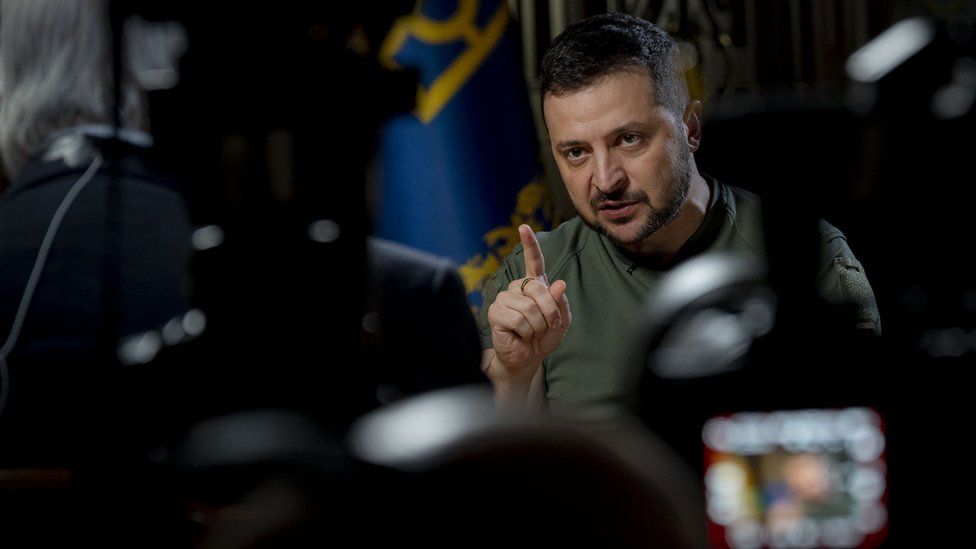
Volodymyr Zelensky is a quiet, charming, unassuming man. He’s famously an actor by profession, and played the part of the president of Ukraine on television long before he was elected to the actual job. Maybe, of course, the quiet charm and the apparent lack of assumption are part of the act: you’d need to know him a great deal better to be able to be sure about that. My guess is not, though.
Zelensky seems pretty much as he appears, and like a lot of actors he has a clear-sighted appreciation of himself and the limits of his abilities.
In the presidential palace, where the main staircase is defended by sandbagged emplacements and you can’t even take a watch with you if you’re a visitor, Zelensky’s trademark dark green T-shirt seemed to fit in perfectly.
Whichever of his top officials suggested that he should appear on television wearing that during the frightening days of February and March, when the Russians were very close and the streets of Kyiv were full of the rust-coloured steel tank-traps called “hedgehogs”, deserves a special award.
Image source, Presidential Office
Zelensky struck precisely the right note – tough, dressed-down, practical and ready for a fight. In those days, most of Ukraine’s friends abroad were certain that the Russians would carve their way through to central Kyiv in no time. It was a sign of Zelensky’s toughness of character that he announced he was staying, whatever happened.
His ability to continue striking the right note has lasted for eight months.
A few days ago, though, he got something wrong, and seemed to be calling for a pre-emptive strike to stop Russia using its battlefield nuclear weapons – relatively small-yield bombs that would have an appalling effect locally, but would be fairly limited in the damage they did over a wider area.
Zelensky’s words weren’t well-chosen, and they handed Moscow an easy win for a few hours. When I interviewed him, he was sufficiently anxious to dampen down the criticism by making his defence in English. He meant, he said, pre-emptive sanctions which the West should impose on Russia to dissuade President Putin and his generals from opening up Europe’s first nuclear war.
“We’re not terrorists,” he said when I questioned him about this, and that opened up another question. The New York Times has suggested the US now believed that Ukrainian agents were responsible for the car bomb in Moscow last August which killed the ultra-conservative television reporter Darya Dugina, and may have been intended for her equally extreme father, who used to be close to Putin.
Zelensky insisted that his government had absolutely nothing to do with it. Of course he would.
Media caption, Watch: Zelensky warns Russians are being prepared for nuclear warfare
Yet there are plenty of presidents and prime ministers who would turn vicious if you asked them questions like this. Not Volodymyr Zelensky: he stays calm and surprisingly warm. He’s a great deal better at talking about emotions and the effects of the war on ordinary people than he is about detailed questions of policy, but that’s part of the reason for his enormous success, not just in Ukraine but around the world.
He must be the most popular leader on Earth at the moment, and he is winning his personal public relations duel with President Putin hands down; Putin angry and scowling and reluctant to leave the Kremlin, Zelensky making trips to newly liberated towns. He is even showing sympathy for the young Russian conscripts who are sent to fight in Ukraine, saying to me, “without weapons and body armour – just cannon-fodder”.
I wondered if his very public refusal to consider negotiating with Vladimir Putin was a signal to other Russian political leaders that if they wanted to end the war they would have to push Putin aside. After speaking to him about it, I decided not.
He doesn’t seem to have the slightest interest in Putin as a person, and has no respect whatever for him as a war-leader who micro-manages the fighting in angry calls with his generals.
Did he care if Vladimir Putin fell from power, I asked?
Zelensky blew out his cheeks and shook his head. “Not in the slightest,” he said.
Haiti has asked for foreign military support to curb its gang violence crisis which has paralysed the country.
The Haitian government authorised Prime Minister Ariel Henry to request armed help due to “the risk of a major humanitarian crisis”.
The US meanwhile urged its citizens in Haiti to leave due to the insecurity.
A group of powerful gangs have blocked the country’s main fuel terminal since September, crippling its basic supplies like water and food.
It is not clear to whom the request for intervention has been sent to, and in what form the help would be given.
The UN said it had not received an official request from Haiti’s government.
“That being said, we remain extremely concerned about the security situation in Haiti, the impact its having on the Haitian people, on our ability to do our work, especially in the humanitarian sphere,” said UN spokesperson, Stephane Dujarric.
The US is also considering a request for a humanitarian corridor to restore fuel distribution within Haiti, according to state department spokesperson Vedant Patel.
Mr Patel did not say where the troops to support this would come from.
Varreux fuel terminal has been controlled and blockaded by a coalition of powerful gangs since last month, which has ground the whole country to a halt. Some hospitals have shut, while businesses and transport services stopped working in protest of destitution.
Civil unrest escalated since Mr Henry announced an end to government fuel subsidies on 11 September, which sent petrol and diesel prices skyrocketing.
Since then, protests and looting have intensified, with the capital, Port-au-Prince, at the heart of it. Food aid warehouses have been targeted, with an estimated $5m (£4.6m) worth of food aid lost in repeated attacks, according to Haiti’s UN envoy.
It is unclear whether the Haitian government request for foreign military intervention would mean the return of UN peacekeeping troops, after leaving five years ago.
The UN’s presence has left a mixed legacy in Haiti: its peacekeepers accepted partial responsibility for sparking a cholera epidemic more than a decade ago which killed about 10,000 people.
Haiti’s government said eight people had died on Sunday from cholera, for the first time in three years – raising concerns over the potential for a health crisis too.
Of the many supplies that have been blocked by the country’s gangs, clean water is a vital one – especially as cholera is spread via contaminated water.
Haiti is one of the poorest countries in the world and has suffered a number of recent crises, most notably the assassination of its president, Jovenel Moïse, in July 2021 and a massive earthquake that left more than 2,200 people dead just a month later.
Deaths are frequent, with more than 200 people killed in gang violence in Port-au-Prince in the space of just 10 days in July, according to figures from the UN.
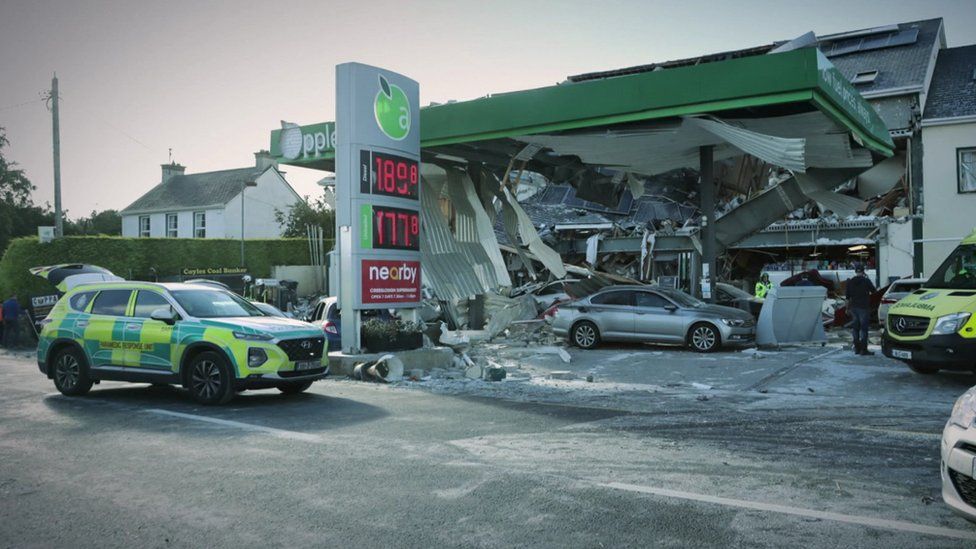
Three people have died as a result of an explosion in County Donegal, Gardaí (Irish police) have said.
It happened at an Applegreen petrol station in the village of Creeslough on Friday afternoon.
A number of people are being treated for injuries. Earlier Sinn Féin TD for Donegal, Pearse Doherty, said that there were still people trapped.
Gardaí said it was an ongoing operation and they were not able to provide more information on casualties at this time.
In a statement, Letterkenny University Hospital said it was dealing with “a serious incident involving multiple injured people requiring immediate attention”.
It said it had moved to “major emergency standby” as it dealt with the incident.
“We are appealing to the public not to come to the Emergency Department unless it is an emergency. Please contact your GP or NOW doc service in the first instance,” the statement added.
“NowDoc has increased staffing this evening to help deal with any additional demands.”
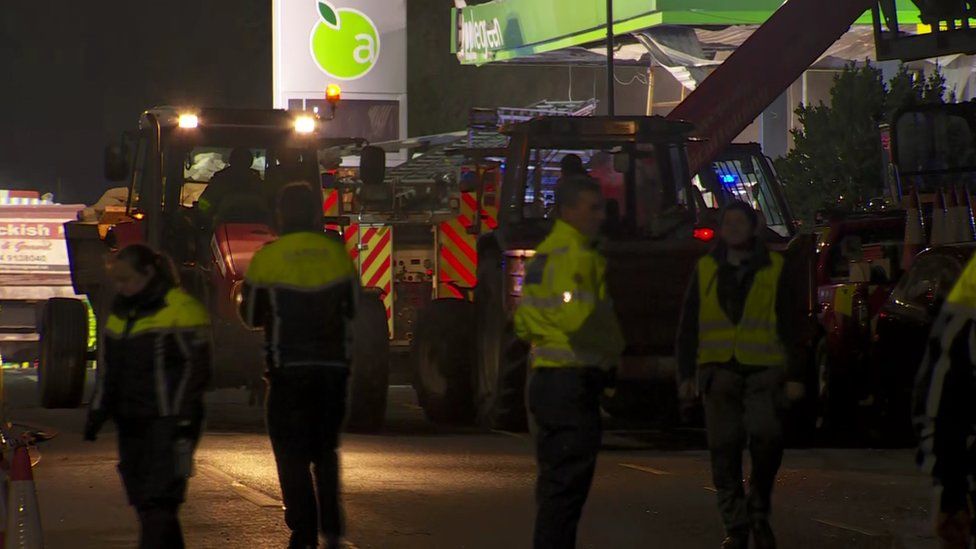
Emergency services from Northern Ireland have been assisting in rescue efforts.
Creeslough is a small village in the Republic of Ireland and is about 15 miles from Letterkenny and 30 miles from the border with Northern Ireland.
In a statement on Twitter the Applegreen company said the news was “devastating”.
“Our thoughts and prayers are with the families and friends of the deceased, those who have been injured, and the wider Creeslough community,” they tweeted.
&
We are deeply saddened & shocked to learn the devasting news that lives have been lost in today’s tragic incident at Creeslough in Co Donegal. Our thoughts and prayers are with the families & friends of the deceased, those who have been injured, and the wider Creeslough community
The BBC is not responsible for the content of external sites.View original tweet on Twitter
The company said that the supermarket and Applegreen outlet had been operated by local partners at “the heart of the community”.
“Like the rest of Ireland, tonight we stand in solidarity with that community.”
‘Darkest of days for Donegal’
The Taoiseach (Irish Prime Minister) Micheál Martin expressed his sympathies to the family and friends of those who had died and to the entire community of Creeslough, on this “darkest of days for Donegal and the entire country.”
“People across this island will be numbed by the same sense of shock and utter devastation as the people of Creeslough at this tragic loss of life,” he added.
He thanked members of the emergency services, from across the north-west and Northern Ireland.
He said they were “working throughout the night in extremely traumatic circumstances.”
Adrian MacAuley from Londonderry owns an apartment behind the petrol station.
“The place seems to be devastated,” he said.
“Our thoughts are with anybody that was injured in it because Creeslough is a fantastic community,” he added.
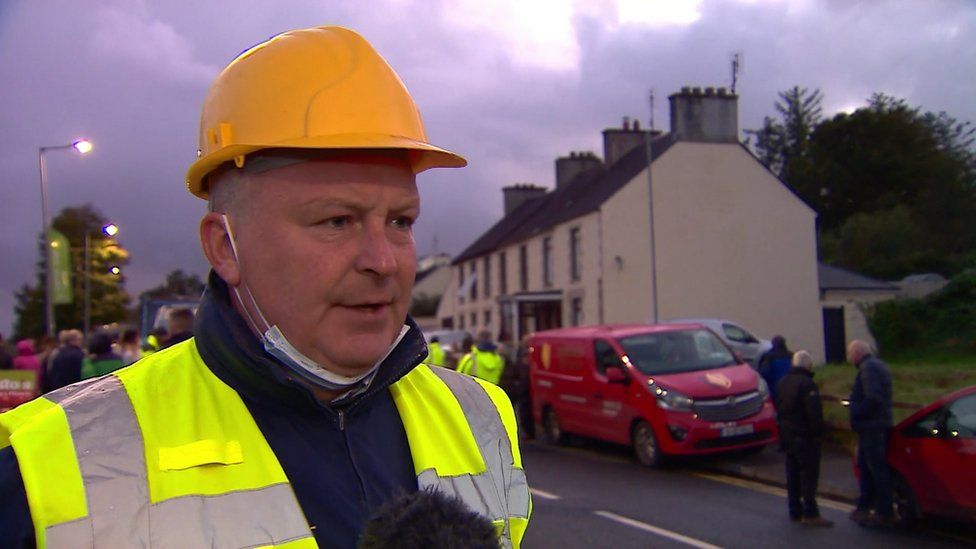
Local resident Kieran Gallagher’s house is about 150 yards from the scene.
“I was in my house at the time and heard the explosion. Instantly I knew it was something – it was like a bomb going off,” he said.
He has since been helping with the aftermath, directing traffic and helping the emergency services.
“Everybody from everywhere around Creeslough are here to help. All the businessmen and workmen are here – we have to be strong and help each other through this.
‘Dark cloud over Creeslough’
Earlier on Friday, Pearse Doherty described the incident as “the worst nightmare” for the families.
“This is a quiet, close-knit village and this is the only shop on the town. It’s the petrol station, it’s the deli counter and the Post Office is there too,” he said.
Local resident Kieran Gallagher’s house is about 150 yards from the scene.
“I was in my house at the time and heard the explosion. Instantly I knew it was something – it was like a bomb going off,” he said.
He has since been helping with the aftermath, directing traffic and helping the emergency services.
“Everybody from everywhere around Creeslough are here to help. All the businessmen and workmen are here – we have to be strong and help each other through this.
‘Dark cloud over Creeslough’
Earlier on Friday, Pearse Doherty described the incident as “the worst nightmare” for the families.
“This is a quiet, close-knit village and this is the only shop on the town. It’s the petrol station, it’s the deli counter and the Post Office is there too,” he said.
Local resident Kieran Gallagher’s house is about 150 yards from the scene.
“I was in my house at the time and heard the explosion. Instantly I knew it was something – it was like a bomb going off,” he said.
He has since been helping with the aftermath, directing traffic and helping the emergency services.
“Everybody from everywhere around Creeslough are here to help. All the businessmen and workmen are here – we have to be strong and help each other through this.
‘Dark cloud over Creeslough’
Earlier on Friday, Pearse Doherty described the incident as “the worst nightmare” for the families.
“This is a quiet, close-knit village and this is the only shop on the town. It’s the petrol station, it’s the deli counter and the Post Office is there too,” he said.
“At quarter past three a massive explosion, which could be heard for miles around ripped right through the building.
“There are people still trapped in the building and emergency services are doing everything they can,” he said.
“People are being airlifted away to our hospitals,” he added.
‘A waiting game’
Donegal Fine Gael TD (Member of the Irish parliament the Dáil) Joe McHugh said people in the area were “numb” with shock.
“They’re trying to find out about friends and relatives and playing a waiting game for news,” he told BBC News NI.
“It’s a very surreal situation here and we know there will be a difficult times ahead.
“The building is somewhere people meet. It is a tragedy”.
Multi agency response to ongoing incident in Cresslough Donegall, being supported by crews & equipment from @NIAS999, @NIFRSOFFICIAL & @AirAmbulanceNI – my thanks to all involved working together at this tragic scene.
— Robin Swann : North Antrim UUP MLA (@RobinSwannMoH) October 7, 2022
The BBC is not responsible for the content of external sites.View original tweet on Twitter
Bishop of Raphoe, Alan McGuckian, told BBC News NI everyone in the county was “shocked and shaken beyond words”.
Speaking from the scene, he said Creeslough was a “peaceful and quiet town” and it was a “terrible day”.
“There is a dark cloud over Creeslough as this scene unfolds before us – it is very sombre here and there are silent prayers being said.”
Image source, TG4
Donegal independent councillor John O’Donnell said his understanding was that the incident was caused by a gas explosion.
“A lot of people are very seriously injured – we haven’t heard numbers yet,” he told BBC Radio Ulster’s Evening Extra programme on Friday afternoon.
‘The place is in chaos’
“There are three helicopters at the scene – we have the mountain rescue helicopter, we have the RNLI and we also have the army helicopter.
“The feedback I am getting from family and friends who are unfortunately down at the scene and in the area is that the whole place is chaos at the minute. Everybody is very taken aback and devastated at what is happening.
“There is a large-scale rescue operation on the way and it is something that we haven’t seen in the area in my lifetime. It’s very traumatising for everybody.”
BBC News NI North West Reporter Keiron Tourish
This is a relatively small town outside Letterkenny.
A canopy on the forecourt has collapsed and there is an apartment block which sits behind the garage and that has suffered extensive damage too.
The scene has been cordoned off over a wide area.
Local people have been numbed by the sheer scale of the damage.
They are fearing for those caught up in this explosion at this local family-run filling station.
Sinn Féin Councillor John Ó Fearraig said the rescue operation was likely to continue “well into the night”.
“We don’t know how many people are trapped in there, some are worried that family members are trapped, but we just don’t know – it’s a very confused picture,” he said.
“This happened at a time when the area would have been busy with the school run, people going in and out of the delicatessen and the hair salon on this site as well as the petrol station.”
Mr Ó Fearraig said stabilising the building was proving to be “a huge operation”.
“The community are rallying around obviously, helping to clear the rubble bit by bit, but the site itself is dangerous,” he said.
Image caption,
The emergency services are at the scene
He added that the community hall in the village was providing shelter to people in nearby houses whose windows were blown in or others waiting on news on their loved ones.
The Shandon Hotel in Dunfanaghy said some of its team members had been “directly affected” by the incident.
The hotel said their staff have offered to help “in any way we can by way of accommodation and supplies for the emergency service workers drafted in to assist in this tragic incident”.
“We will not be taking any more bookings for tonight or tomorrow night as we are reserving rooms left for this incident,” they added.
The BBC is not responsible for the content of external sites.View original tweet on Twitter
The emergency response has been led by the Donegal County Council Fire Service with assistance by An Garda Síochána.
In addition support has been provided by the National Ambulance Service, Irish Coast Guard, the Coast Guard Rescue 118 Helicopter, Irish Air Corps Medivac 112, Northern Ireland Ambulance HEMS, Irish Community Air Ambulance (Ground Crew), Northern Ireland Urban Search and Rescue, Meavagh Fire Service, Donegal Mountain Rescue, Northern Ireland Ambulance Service HART team (Hazardous Area Response Team) and the Donegal County Council Civil Defence.
Image source, TG4
The BBC is not responsible for the content of external sites.View original tweet on Twitter
The National Ambulance Service (NAS) said a number of ambulances are attending the scene and, along with gardaí, asked people to avoid the area.
A large fire on the only crossing between the occupied Crimean peninsula and Russiawas caused by a lorry explosion, Russian officials say.
A blast on the road section led to oil tankers on the rail section catching fire, before the road collapsed.
Crimea was annexed in 2014 by Russia, which now uses the Kerch bridge to move military equipment into Ukraine.
The official Twitter account of the Ukraine government responded to the fire by tweeting: “Sick burn.”
An adviser to Ukraine’s President Zelensky, Mykhailo Podolyak, called the damage a “beginning” – but did not directly claim Ukrainian responsibility.
“Everything illegal must be destroyed, everything stolen must be returned to Ukraine, everything occupied by Russia must be expelled,” he tweeted.
A still picture of the bridge was shared by Ukrainian presidential adviser Mykhaylo Podolyak
Russia’s National Anti-Terrorism Committee (NAC) said: “At 06:07 Moscow time today [03:07 GMT], an explosion was set off at a cargo vehicle on the motorway part of the Crimean bridge on the side of the Taman peninsula, which set fire to seven fuel tanks of a train that was en route to the Crimean peninsula.
“Two motorway sections of the bridge partially collapsed.”
Crimean parliamentary speaker Vladimir Kontantinov blamed the explosion on “Ukrainian vandals, who have finally managed to reach their bloody hands to the Crimean bridge”.
He added the damage to the bridge would be “promptly restored, since it is not of a serious nature”.
Russian President Vladimir Putin has been briefed about the “emergency” on the bridge and has ordered a government inquiry, Kremlin spokesman Dmitry Peskov said, in comments quoted by Interfax news agency.
Media caption, The $3.7bn (£2.7bn) bridge links southern Russia with the territory it annexed in 2014 (2018 report)
The 19km (12-mile) bridge across the Kerch Strait was opened by President Vladimir Putin in 2018, four years after Moscow illegally annexed Crimea.
It is said to be a key target for Ukrainian forces who have been attacking Russian logistics.
The crossing is more than 100 miles from Ukrainian-held territory. One explosives expert told the BBC said the fire was probably not caused by a missile.
“The lack of obvious blast / fragmentation damage on the road surface suggests that an air-delivered weapon was not used,” he said
He said it was possible that “a well-planned attack from below may have been the cause”.
“I suspect explosives on the road bridge and train deck were initiated near simultaneously using coded radio command,” he said.
Ghanaian musician Kuami Eugene was honoured at the 2022 BMI London Awards alongside his Nigerian counterparts; CKay and JoeBoy.
The songwriters, including Kuami Eugene and publishers of the global hit song ‘Love Nwantiti’ were awarded at the ceremony held at London’s Savoy Hotel on October 3, 2022.
The ceremony was hosted by BMI president, chief executive Mike O’Neill, and BMI Europe vice president of creative Shirin Foroutan.
‘Love Nwantiti’ was among the songs that were awarded under the ‘Most-Performed Songs of the Year section.
Ghanaian musician Kuami Eugene was honoured at the 2022 BMI London Awards alongside his Nigerian counterparts; CKay and JoeBoy.
The songwriters, including Kuami Eugene and publishers of the global hit song ‘Love Nwantiti’ were awarded at the ceremony held at London’s Savoy Hotel on October 3, 2022.
The ceremony was hosted by BMI president, chief executive Mike O’Neill, and BMI Europe vice president of creative Shirin Foroutan.
‘Love Nwantiti’ was among the songs that were awarded under the ‘Most-Performed Songs of the Year section.
Ghanaian musician Kuami Eugene was honoured at the 2022 BMI London Awards alongside his Nigerian counterparts; CKay and JoeBoy.
The songwriters, including Kuami Eugene and publishers of the global hit song ‘Love Nwantiti’ were awarded at the ceremony held at London’s Savoy Hotel on October 3, 2022.
The ceremony was hosted by BMI president, chief executive Mike O’Neill, and BMI Europe vice president of creative Shirin Foroutan.
‘Love Nwantiti’ was among the songs that were awarded under the ‘Most-Performed Songs of the Year section.
Ghanaian musician Kuami Eugene was honoured at the 2022 BMI London Awards alongside his Nigerian counterparts; CKay and JoeBoy.
The songwriters, including Kuami Eugene and publishers of the global hit song ‘Love Nwantiti’ were awarded at the ceremony held at London’s Savoy Hotel on October 3, 2022.
The ceremony was hosted by BMI president, chief executive Mike O’Neill, and BMI Europe vice president of creative Shirin Foroutan.
‘Love Nwantiti’ was among the songs that were awarded under the ‘Most-Performed Songs of the Year section.
Ghanaian musician Kuami Eugene was honoured at the 2022 BMI London Awards alongside his Nigerian counterparts; CKay and JoeBoy.
The songwriters, including Kuami Eugene and publishers of the global hit song ‘Love Nwantiti’ were awarded at the ceremony held at London’s Savoy Hotel on October 3, 2022.
The ceremony was hosted by BMI president, chief executive Mike O’Neill, and BMI Europe vice president of creative Shirin Foroutan.
‘Love Nwantiti’ was among the songs that were awarded under the ‘Most-Performed Songs of the Year section.
This category of honours is dedicated to songs with the most performances on terrestrial radio, satellite radio, and digital streaming services over the past year.
Other big winners on the night included Ed Sheraan & Johnny McDaid for Bad Habits (Song of the Year), Tems (Impact Award), and Wizkid for ‘Essence’ (Most Performed Songs).
The BMI Impact Award is given to a songwriter, producer, or composer with a creative vision and unique artistry.
BMI (Broadcast Music, Inc.), the global leader in music rights management has for several decades honored immensely talented songwriters and publishers whose music captivated the world.
Prophet Sonnie Baduhas seen the legendary Bob Marley in Black Sherif.
According to the vociferous Ghanaian Gospel minister, his thoughts tell him that the late Reggae superstar has come back to life to live in Ghana as Black Sherif. Sonnie Badu noted this whilst applauding Blacko for creating a masterpiece album.
On Thursday, October 6, 2022, raving Ghanaian act, Black Sherif, released his highly awaited debut studio album, “The Villian I Never Was”.
‘The Villian I Never Was’ album in less than 24 hours of its release surpassed 70 million views on streaming and audio discovery platform, Audiomack. ‘Oil In My Head ‘, ‘The Homeless Song ‘, ‘45‘and ‘Konongo Zongo‘ also debuted on Apple Music Top 100 Charts Ghana within 24 hours of release.
Commenting on the success of the album so far, Sonnie Badu took to social media to say that “I think this young man @blacksherif_ is BoB Marley incarnate living in Ghana. His song writting abilities are just incredible“.
He continued that “This new album solidifies the fact that – he will be one of the Giants of African music. And he will surely win some #Grammys for Ghana .. May God protect you from jealousy, envy, and premature termination as you walk in your giftings….”
Currently the debut body of work as has all 14 tracks from the album occupying a spot-on Apple Music Top 100 Charts Ghana.
Enterprise Computing Ltd, (ECL), on Wednesday 5th October 2022, donated IT equipment in the form of a projector and laptop to the students and staff of Oninku School.
This follows the company’s participation in the school’s career day celebration which happened towards the end of July this year.
“We are very passionate about technology and making sure that the African youth is poised to be a part of the tech future. So, we like to grab every opportunity we can to contribute to that future, especially in the field of education,” a spokesperson of the IT organization mentioned.
The school’s IT teacher, Mr. Charles Amoako-Twum, received the donation on behalf of the school and expressed gratitude for the donation. He also stated that he was impressed by the company’s enthusiasm to support such initiatives.
ECL’s commitment to social responsibility predates this donation. The company has instituted an internship program that provides hands-on training with its world-class engineers. It has also been involved in constructing and furnishing a computer laboratory at the St. Paul’s Methodist School in Tema, among other projects with schools within West Africa.
ECL is an ISO-certified Pan-African IT professional services company. They deploy innovative technology solutions in hybrid cloud infrastructure, cybersecurity, backup, and recovery, as well as business process automation.
A video circulating online shows the moment a taskforce member of the Accra Metropolitan Assembly (AMA) arrested a half-naked man and manhandled him on the streets of the national capital.
According to the media, which shared the video on its Twitter page, the young man had entreated the taskforce members to channel their time and energies into helping address major problems facing the country rather than always tormenting traders and drivers.
“AMA task force arrest man for telling them to fix the major problems in the country instead of chasing away traders and towing cars,” the media outlet captioned the video.
However, his admonishment did not sit well with the task force.
One of its members is seen seizing the man by his shorts and pushing him forcibly away, ostensibly to their office, while the man resists arrest and tries to explain himself.
Other members of the task force are seen at the back urging him to drag him away as they all walked brusquely in the same direction while armed with their batons.
At one point, the man fell to the ground while resisting arrest, and the task force member who insisted on showing him where the power lies manhandled him on the ground before lifting him again to continue dragging him away.
It is unclear if the man was a driver or a conductor. He tried clinging onto a stationary car but that didn’t work as the task force member exerted maximum energy to overpower him.
The video has triggered angry reactions, with many Ghanaians endorsing the alleged offensive comment by the victim while wondering when the AMA task force had the authority to arrest anyone that they feel offended by.
A Bolt driver, Vincent Potaki has narrated how a customer he picked up at Osu in Accra held his manhood to seduce him to avoid paying for the service.
Narrating his ordeal on SVTV Africa, he disclosed that he met several women who offered sex as payment but rejected them.
Touching on the lady who touched his sexual organ, Vincent said the most unusual encounter he met in life as a driver was with a Nigerian lady he picked up at Osu who held his penis.
He said “The moment she (Nigerian) sat in the car, she held my penis, so I told her to stop. Then she asked whether I thought she wouldn’t pay because of what she was doing.
“But I told her no, I don’t want that. Most girls seduce men to avoid payment. I’m working. I’m a work-and-pay driver, and I have a target set for myself.”
He indicated that besides the sex offers, the drivers face attacks from passengers who order rides to unknown destinations.
“They often rob us at Teshie. I was on my way to pick up two riders, and I had heard about the area robberies that often happen in Teshie. So I called the Nungua police to escort me to the place. They fled when they heard the police siren,” he stated.
Francine Jisele, a Congolese woman who has married two men and lives in the same house with them, says she is uncomfortable meeting both of them in the bedroom at the same time.
According to her, she wishes the two men had their separate places of abode where she could visit them separately.
Aside from the discomfort of meeting them both in the bedroom at the same time, Jisele said they have lived in peace together with their children.
“We eat at the same table, sleep in the same bedroom and on the same bed. I love them both. We live at peace at home,” she said in an interview with Afrimax English.
Jisele and her first husband, Remi Murula, married about six years ago and had two children.
However, the man left her and the children to look for greener pastures, leading to a cut in communication. Jisele said hardship made her fall in love with another man, Albert Jarlace, thinking that Murula had completely abandoned her and the children to suffer.
“Just because life was not easy, the man went on a trip and never came back. I found myself alone out here, I spent three years and half in a single life without my husband,” she told Afrimax.
Not long after her marriage to the new man, Murula showed up, putting Jisele in a difficult situation as to whom to reject.
“After those years I lost him I fell in love with this other man. After one year with the second husband, the first one came back.”
Murula initially argued with Jarlace, trying to take over his wife after returning, having been missing for years. But Jisele asked him to stay his ground.
“I want to leave and give space to the woman’s ‘hubby as he is her known hubby. If I could get help of a ticket I would leave and let my fellow hubby stay at his house. The woman wouldn’t accept me to move away.
“The woman asked me not to leave her. So I felt that it was necessary to stay with her and for now we have one child together,” Jarlace recalled in the interview.
He explained that he met Jisele when I was working in the mining industry and she told him that she had another husband who had abandoned her.
It became clear that Jarlace had nowhere to go to if he left Jisele, so cool heads prevailed and they agreed to remain a trio.
They share the same bed, eat at the same table and live under the same roof with their children without fighting.
“We get along well, this woman is our wife. Since I left I didn’t talk to my wife once. When I came back I found my wife with another man,” Murula said, blaming himself for not contacting his wife while he was away.
“Murula had initially asked his partner to go but Jarlace insisted he had nowhere else to go.
“At first I threw a tantrum but I realised if had talked to my wife she wouldn’t have done anything like that. I had no place to go and I was at fault.
“My family knows my situation and adviced me to calm down because I abandoned my wife.”
Although polyandry is frowned upon in Africa, Jisele and her two husbands say they are enjoying it out of necessity.
Remi Murula and Albert Jarlace say one person has to leave for the other to get intimate with Jisele when the need arises.
Ghanaians are noted for celebrating Christmas to the maximum. It is during this occasion that families gather to cook their favourite foods, with drinks in abundance, which are shared with relatives and loved ones. The occasion is characterised by music and dance, feasting, and other activities to make it fun.
Natives of various towns, cities, and villages who are living elsewhere to seek greener pastures return to their places of origin to celebrate with their families and hold deliberations together.
But with just less than two months to December, it appears that many Ghanaians might not be able to celebrate this year’s Christmas with the usual excitement that normally characterizes it.
This observation stems from the myriad of economic challenges that have overwhelmed the Ghanaian economy amid downgrades by internationally recognized rating agencies even as the government is currently in talks with the International Monetary Fund (IMF) for help to restore the economy to its feet.
High inflation rate versus low salaries: Although inflation has reached an all-time high, with prices of commodities rising astronomically by the day, Ghanaian workers have not seen commensurate salary increments to cushion them against the effects of the economic challenge. This situation has left many people with no option but to live from hand to mouth, with some losing their savings due to the need to survive.
Again, there are many people, including the recently discharged Nation Builders Corpse (NABCO) trainees and other graduates, who have no jobs and struggle to fend for themselves and their dependents.
Inability to save: As stated above, with prices of commodities rising by each passing day, people are unable to save money or plan their lives, let alone think about making provision for Christmas.
High cost of living (High rent charges, cost of lorry fares, food, utilities, rent, among others): With the cost of living increasing, planning and saving towards Christmas might not even cross people’s minds, or even if it does, they might just brush it aside because it is mission impossible.
A cost-effective analysis would show that if people want to travel to their hometowns to celebrate Christmas, they might lose a huge chunk of the little money they have to transport costs and might not be able to afford much for the occasion when they arrive, due to skyrocketing prices, which might get worse in the coming days.
There is also the danger of not being able to get money to return to their places of work from their hometowns if people insist on celebrating Christmas at all costs the way they did in the previous years.
Companies may not give bonuses: Companies and employers are not exempt from the hardship that is prevailing in the country. Most of them may be compelled to lay off their employees soon, and they may not be in good financial position to give Christmas bonuses to workers this year. Already, they are struggling to survive due to the depreciation of the Ghana Cedi against other major currencies, among other challenges.
Further downgrade: While the government said it was hoping that the conversations with the IMF would yield a semblance of positive results before the year ends, latest information, observations, and views expressed by some analysts show that that might only be a mirage.
Despite the ongoing discussion between the government of Ghana and the IMF, with stakes being high and Ghanaians having their fingers crossed to see what change the outcome might make to the prevailing situation, Moody’s latest rating of Ghana’s economy has pushed it further into a junk status.
As if that and the previous ones by other rating agencies were not heartbreaking and frightening enough, the World Bank has said that its assessment of Ghana’s economy shows that the country is in high debt distress.
With all the above-stated issues and many others bedeviling the Ghanaian economy and the concomitant hardship they impose on Ghanaians, it will be safe to keep expectations low about Christmas to avoid disappointment. This is the time for parents to start working on the psyche of their children to lower their expectations.
The Special OffencesCourt at Ikeja of Nigeria’s Lagos State found Nwankwo Ifeanyi guilty of sexual assault on the minor back in June 2017 at her parents’ home where he also lived with them.
The victim’s father is reported to be an electronics dealer, and the convict was his apprentice before he took undue advantage of the innocent minor.
“That you, Nwankwo Ifeanyi, about June 20, 2017, at 11, Joy Street, Ojo, did commit sexual assault on a four-year-old girl by putting your fingers into her private parts,” the charge read, as quoted by Pulse.ng.
Justice R. A. Oshodi who presided over the court heard that the convict repeatedly perpetrated the crime on the victim, and she has since been living in pain.
“The victim’s father deals in electronics, while the defendant is his apprentice who lives in the same house with them.
“The defendant sexually assaulted the victim by dipping his finger into her private parts, as the victim constantly complained of pain and reported to her father that the defendant did it more than once.
“She was taken to three hospitals, after which the defendant was arrested and taken to the Ojo Police Station,” the judge read.
The assistant headmaster of Mpatasie D/A Junior High School in the Amansie South District of the Ashanti Region has died after falling into a mining pit while going to visit his mining concession.
The deceased, 47-year-old Akwasi Anane, met his untimely death on October 4, 2022.
Reports say while on his routine visit to the mining concession around 9 p.m. on the fateful day, the deceased misstepped and fell into the abandoned pit.
Although a rescue mission managed to remove him from the pit, he was pronounced dead on the scene.
A District Coordinator for the National Disaster Management Organization for Amansie South, Edward Oduro Nsiah, is reported to have confirmed the incident.
“He is a teacher and he also has a concession so he went to the site very late. He stood on top of the pit and in an attempt to make a step he slipped and fell into the pit. His body has been deposited at the St. Martin’s Hospital at Agroyesum,” he told dailymailgh.com.
Nsiah lamented that before Anane’s demise, six people had lost their lives in the same community due to illegal mining activities.
“The fight against galamsey is not paying off. For instance when you come to Amansie South nearly 80 percent of the indigenes are into illegal mining. In the last two months, we have lost at least six lives at separate locations and that is very worrying,” he cried.
This incident comes not long after the Minister for Lands and Natural Resources, Abu Jinapor, visited the same Amansie South and bemoaned the level of destruction illegal mining activities have caused to the area.
“It should baffle all of us as citizens and policymakers and stakeholders in this fight how an operation like this in the heart of the forest and the far away areas of our country can go on without notice by police, chiefs, the local political leadership, assembly people, the District Chief Executive and even the inspectorate division of the minerals commission here.”
Illegal mining, popularly known as galamsey, has dominated discussions on all media platforms across the country due to its booming despite promises by the Akufo-Addo-led NPP government to end it.
Grapes have been a staple of people’s diets since ancient times, and they’re particularly famous for their use in wine.
Grapes have a whole host of health benefits – they’re packed with vitamins, antioxidants, and nutrients. Plus, the skin from red grapes is a rich source of resveratrol, which is known to help support heart health.
Not only does it satisfy our taste buds, grapes also serve some amazing benefits for skin, hair and healthas well.
Read on to know how eating grapes can benefit your skin and hair:
Protects skin against sunburns
One amazing benefit of grapes for the skin is that grapes are an excellent remedy for sunburns. Whenever we go out in the sun, we apply sunscreen to get protection from harmful UV rays. But no matter what we apply or not, we tend to get sunburns. Grapes are rich in antioxidants that help in offering protection against harsh rays and can also treat sunburns.
Anti-ageing benefits
Grapes are a rich source of antioxidants that help in protecting the skin from the harmful effects of the free radicals which are responsible for the appearance of wrinkles and fine lines on the skin. Vitamin C present in grapes helps in collagen formation thereby maintaining skin’s elasticity and reversing the signs of ageing.
Make skin tone even
Sometimes our face looks dull and patchy because of the sun tanning. We try a lot of chemical-laden products to make our skin look more even-toned. Now, with grapes in your fruit basket, you need not use those chemical-laden products as grapes can help to even out your skin texture. This is due to the presence of polyphenols in grapes. Moreover, grapes add a natural glow to the skin.
Soften and supple skin
Grapes can offer you soft and supple skin. Grapeseed oil which is a by-product of the winemaking process is rich in vitamin E. Vitamin E helps to battle against free radicals which are responsible for the occurrence of fine lines, wrinkles, dry skin and discolouration. It also helps in retaining the moisture levels of the skin making it supple. Moreover, grape seed oil acts as an exfoliant that helps in revealing healthier and smoother skin.
Can treat hair loss
Hair loss can occur due to various reasons. However, during the monsoon season, people generally face hair loss. However, there is no need to worry when nature has provided us with so many wonderful products. So, one of the amazing benefits of grapes for hair is that they can treat hair loss. Grapes contain vitamin E and linoleic acid that can help in combating hair loss.
Acne scarsare signs of hyperpigmentation on the skin. Try these hacks for a more even skin tone.
Acne happens when you’ve got a hormonal imbalance in the body. Any changes in your hormones cause glands to produce more oil than usual, which then causes your skin pores to get clogged up, allowing bacteria to grow.
There’s no set time as to how long they last, though it’s often weeks to months. But there are plenty of home remedies you can try and prevention measures you can take to speed things up. Ultimately you need to be patient.
While there are scores of skin and beauty care products available in the market, nothing beats the goodness and wholesomeness of natural products. So, walk into your kitchen today and create some of these handy and easy-to-implement home remedies that promise to give you glowing skin.
Here’s a quick guide to some of the top home remediesfor treating acne scars:
Aloe vera
Aloe vera contains anti-microbial properties and has many benefits for the skin. If you suffer from old scars, aloe vera can work magically. It helps to reduce skin irritation and scars and increases the regeneration of new skin cells. It not only helps to minimize scars but can also improve skin texture.
Coconut oil
Make coconut oil a part of the daily regimen that can heal or help fade away the old scars as coconut oil is rich in omega fatty acids that penetrate and moisturize the skin to restore the glow of the skin.
Apply baking soda
Baking soda acts as a natural exfoliator and helps to gently scrape the scar. For this, two parts of water and one part of baking soda to make a light paste. Then, apply this paste to the scar and scrub this gently for a few minutes, after washing it off from the face. Make sure you avoid rubbing vigorously.
Lemon Juice
Place lemon or lime juice on the scar with a cloth. Keep it for a few minutes on the skin, then wash it off. The acidic qualities present in lemon juice help to remove dead skin cells along with facial scars and can reduce the redness of scars.
Honey
For years, honey has been used for many medicinal purposes such as burns, wounds, and herpes. Raw honey helps to fade scars on the face. It contains bioactive compounds that help to stimulate tissue regeneration and can help to treat wounds.
Stay hydrated
Drinking plenty of water promotes hydrated and healthy skin. Always drink plenty of water each day that will assist these home remedies in the healing and fading of these facial scars.
Research has shown that breastfeeding is beneficial to the development of infants, which can enhance their immunity and intelligence and reduce the incidence of sudden death and childhood obesity.
But how about the myth that men who suck their partner’s breast help prevent them from getting breast cancer?
Health practitioner, Dr Joelle Amissah, has debunked claims that sucking the breast can prevent breast cancer,
According to her, the only thing that can help prevent breast cancer is breastfeeding and not men sucking the breast.
When asked if sucking the breast could prevent cancer, Dr Amissah disclosed that breastfeeding rather has the potential of preventing breast cancer than men sucking the breast.
She noted that a hormone called prolactin has a protective effect on the breast which is only stimulated and released when a baby is breastfed.
“There is a hormone called prolactin that has a protective effect on the breast which is only stimulated when a baby sucks the breast. So when the baby is breastfed, the hormone is released and while that is in the system, it protects the breast. So it is breastfeeding and not just sucking the breast,” she said.
While debunking claims that when men suck the breast, it prevents cancer, the health expert noted that just sucking the breast cannot prevent breast cancer.
“They are not really helping to prevent breast cancer. They could suck the breast but it doesn’t add to preventing breast cancer. Unless it’s a baby that is breastfeeding, sucking the breast doesn’t help,” she added.
Breasts come in a wide range of shapes and sizes:
Round
The breasts are equally full at the top and bottom.
East-west
The right and left breasts go from the centre of the chest to the sides. The nipples often point in opposite directions.
Side set (widely set)
The shape is similar to the east-west, with a wider space between the breasts.
Teardrop
The breasts are round. The bottoms are slightly wider than the tops, characterized by very smooth lines.
Narrow
The breasts are thin, and the nipples point down. The bottoms are fuller than the tops. The breasts are longer than they are wide.
Asymmetrical
One breast is noticeably bigger than the other.
Bell shape
The breasts are large, full at the bottom, and slimmer the top.
Breast massage is not only limited to sexual stimulation but one’s overall well-being.
Breastmassage is any form of intentional self-touch to your breast.
This can take the form of kneading, rubbing, holding, or stroking — whatever feels good for you.
Breast massage not only feels amazing but can have many physical health benefits.
If you do it for long enough (15 to 20 minutes), it also releases a bunch of hormones such as oxytocin and prolactin, which can make you feel relaxed, connected and calm.
Read on to know what happens during a breast massage and how it can potentially improve your breast health.
Help prevent cancer
Malignant cells can often form a knot in your breast leading to lumps. When external pressure is applied during the early stages of this knot formation, it can force the cells to go back to their original form. This can help reduce the risk of cancer.
Better sexual stimulation
Once you start massaging your breasts, you also increase their sensitivity. This is simply because massaging makes you more aware of touch and how it can positively affect your brain. This can often lead to better orgasms.
Firmer, tighter breasts
If you are struggling with sagging breasts, massaging can do the trick for you. This can help tone up the tissues in your breast and lead to firmer breasts.
Anti-ageing effects
Once you are internally happy due to the secretion of hormones such as oxytocin, prolactin and estrogen, it can directly lead to anti-ageing effects. These three hormones are powerful in their anti-ageing properties and hence, make you look and feel younger.
Can enlarge them
Breast massage can help increase blood circulation in this fat-storing tissue. Due to massage, a breast enlarging hormone, prolactin, is also secreted. You can opt for either an essential oil like lavender for this massage or even warm coconut oil can lead to a change in size.
Breast shape and size are determined genetically, but they can change as a result of pregnancy and lactation, intensive workouts, and sudden weight fluctuations. There may also be noticeable changes at certain points during the menstrual cycle.
The breasts can become bigger temporarily during pregnancy or when breastfeeding. Sometimes, breast shape can be related to weight gain or sexual arousal.
Breasts are unique, and it’s perfectly OK that they have their own distinctive shape and size.
The only thing that isn’t normal is unexplained pain and sensitivity.
A few factors can determine why your breastsare the way they are.
Genetics have the biggest say, by far. Your genes influence your breast density, tissue, size, and more.
Other factors that shape your breasts include:
Weight. Fat is a large part of your breast tissue and density, so you may notice a difference in your breast shape as you gain or lose weight.
Exercise. Your breasts might look firmer or perkier if you build up the muscles behind your breast tissue by strengthening your pecs.
Age. Your breasts will naturally sag as you get older, so over time, your breasts may become longer and shift to face downward.
Pregnancy and breastfeeding. Your hormones during pregnancy and breastfeeding can make your breasts swell and change the way the fat and tissue are distributed throughout your breasts.
Everyone has their own unique breast shape and size. Some people have made up classifications of breast shapes, but all of them are based on visual appearance. There is no official or medical classification for breast shape.
Here are some examples of basic varieties of breast shapes:
Round
The breasts are equally full at the top and bottom.
East-west
The right and left breasts go from the centre of the chest to the sides. The nipples often point in opposite directions.
Side set (widely set)
The shape is similar to the east-west, with a wider space between the breasts.
Teardrop
The breasts are round. The bottoms are slightly wider than the tops, characterized by very smooth lines.
Narrow
The breasts are thin, and the nipples point down. The bottoms are fuller than the tops. The breasts are longer than they are wide.
Asymmetrical
One breast is noticeably bigger than the other.
Bell shape
The breasts are large, full at the bottom, and slimmer at the top.
A 37-year-old woman in Anambra, Chinelo Udeogu, has been arrested by officials of the National Agency for the Prohibition of Trafficking in Persons, NAPTIP, for allegedly beating her three-year-old granddaughter to death.
Mr Anthony Okafor, the NAPTIP spokesperson in Anambra, in a statement, yesterday, in Awka, said the suspect was arrested in Awka, following an alert by the authorities of the victim’s school.
He said: “The suspect, named Chinelo Udeogu was arrested by NAPTIP operatives in a primary school in Awka, where she had earlier enrolled the victim and had gone to collect back the school fees she paid for her.
“While being questioned on the whereabouts of the victim, she said the victim had died. The suspect claimed that the deceased victim who was her granddaughter was three-years-old.
“The suspect led the operatives of NAPTIP to the scene where she disposed of the corpse of the victim.
“On arrival at the scene, the victim’s decomposing body was found wrapped in a black nylon bag where the suspect dumped her in the bush around Hezekiah Dike Crescent, Awka.
“The victim was reported to have died on September 29 and the suspect had been handed over to the Police by NAPTIP for further investigation.”
Meanwhile, the state Police Public Relations Officer, DSP Toochukwu Ikenga, who confirmed the incident, said the culprit, who acted out of anger, has been handed over to the police for questioning.
“The lesson for us to learn is that we should be cautious when angry and desist from going physical when correcting our children.
“Meanwhile, the case has been transferred to the state CID for discrete investigations.”
Drinking water immediately after a meal can be detrimental to health.
And a lot of things have been said about the time and the amount of water you should be having before, during and after meals.
But according to experts and nutritionists, it’s not a great idea to sip water while eating or immediately before or after meals.
The problem is that when you drink water too soon before or after a meal, it dilutes your essential gastric juices, causing difficulty in digestion and an upsurge in insulin levels.
When food remains undigested in our stomach, it can be harmful to the body, leading to several health problems, such as an increase in uric acid levels, high cholesterol, high triglyceride levels – a major cause of heart diseases – obesity, diabetes, etc.
Experts recommend a 30-minute window both before and after meals.
The bottom line is that while it is important to keep yourself hydrated by drinking enough water every day, you should also know how long you will need to wait to drink before or after having a meal.
Six-time major winner Phil Mickelson on Thursday backed moves to award world ranking points for events on the breakaway LIV Golf circuit, saying it would help maintain the “credibility” of the global leaderboard.
The Saudi-backed LIV Series stages its first event in Asia this week and on Wednesday announced a deal to have tournaments co-sanctioned by the MENA (Middle East and North Africa) Tour and awarded Official World Golf Ranking (OWGR) points.
The OWGR has not announced whether points will now be awarded to LIV events, starting with this week’s tournament in Bangkok.
But Mickelson, whose departure from the US PGA Tour helped kickstart the big-money LIV series, said it was in the ranking body’s interests to do so.
“I think for the World Golf Rankings, this is a great way to keep its credibility, while not bringing politics into the decision-making process,” the 52-year-old left-hander said on the eve of the LIV’s Bangkok Invitational.
LIV has already staged five events but without any ranking points awarded for its players, including British Open champion Cameron Smith and former world number one Dustin Johnson.
Mickelson, Smith and Johnson are all competing at the new Stonehill course outside the Thai capital for a share of $20 million, with $4 million up for grabs for the winner, easily the largest purse for a golf tournament in Asia.
The deep pockets of Saudi Arabia’s Public Investment Fund have allowed LIV to offer eye-watering prize money, last place in Bangkok takes home $120,000, but have also drawn accusations of “sportswashing”, given the kingdom’s dubious human rights record.
A host of top players have joined the series, plunging golf into bitter civil war as the US PGA Tour and the Europe-based DP World Tour have scrambled to hold on to talent while the Asian Tour, and now the lesser-known MENA Tour, have aligned themselves with LIV.
Only the top 50 players in the world qualify automatically for the four majors, so top names have been concerned about slipping down the rankings.
But Mickelson said he had no worries that LIV events would be given points appropriately.
“The reason I’m not concerned is that the number of points are based on the quality of the field and not the organisation that’s running the tournament, and the quality of our field is remarkably strong,” he said.
“I’m sure for the world golf rankings to maintain their credibility, they’ll continue to award the proper number of points that the tournaments deserve for all tours.”
US players who have signed up to LIV Golf have been indefinitely suspended from the PGA Tour, while the DP World Tour has issued fines and short-term bans.
LIV has announced plans to expand from eight events this year to 14 in 2023, with players competing for $405 million in prize money.
Zambia’s female boxing sensation, Catherine Phiri, has been slapped with a two-year ban from the sport after failing a doping test.
The country’s national broadcaster, the Zambia National Broadcasting Corporation (ZNBC), reports that the suspension comes after her samples tested positive for prohibited drug Furosemide on February 26 in the aftermath of the World Boxing Council (WBC) title fight, which she lost to Zimbabwe’s Kudakwashe Chiwandire.
The suspension has been meted out by the regional anti-doping organization, according to the report.
It was announced by the Zambia Professional Boxing and Wrestling Control Board and the National Olympic Committee of Zambia in Lusaka today.
According to ZNBC, the tests revealed that Phiri used a prohibited drug called Furosemide, which is not a performance-enhancing drug but a loop used in the management of body swelling conditions.
Phiri has since apologized to her fans saying she took the drug without knowing it was on the list of banned substances.
Since the presidential candidate of the Labour Party, Peter Obi declared his intentions to contest the 2023 general elections, he has received several major supports from different personalities and institutions.
His name is constantly on the lips of everyone, including children. Rallies have been organized in various states and countries, and financial assistance from supporters and well-meaning citizens has been donated to his campaign.
This loud acceptance from Nigerians especially the youth can be seen as a cry for change in leadership. Many believe Peter Obi is the right leader for the country of Nigeria.
Although there have been oppositions, the former Governor of Anambra refuses to allow the naysayers to deter him from his victory.
Aside from the Nigerian youth backing Peter Obi in his bid to become the next president of the country, there are other supporters which are been listed below;
1. Social media users have been major supporters of Peter Obi as they formed a movement called the “Obidients Movement”.
They have taken their campaign from the internet to the streets with thousands of supporters shutting down the streets in various states. These rallies shocked the camps of the other political parties.
2. The international community: Peter Obi continues to have several invitations to speak on certain topics including the upcoming election in major international institutions. His political stance and plans for the country has earned him recognition from these community.
His most recent exploit in the international space includes; Talk on prospects of transformation governance in Nigeria at Harvard University USA. He was proclaimed an Honorary Citizen of Dallas by the Mayor of Dallas, Eric Johnson.
3. The diasporans: Many Nigerians in America and the United Kingdom continue to campaign for Peter in their various areas. Some organize rallies in their communities to support his presidentialbid.
4. Peter Obi has been seen on several media both local and international media speaking on his plans for the Nigerian people and the way forward for the country should he win the 2023 presidential election.
5. Religious leaders: So far, there have been some religious leaders who have declared their support for the Labour Party Presidential candidate.
6. Entertainers: Celebrities in the Nigerian entertainment industry has been known to have a huge fan base. And some of these entertainers have declared their support for Peter Obi.
Members of Kenya’s National Assembly engaged in a near-fight on Thursday evening, October 6, over which party has the majority in the legislature.
The decision by Speaker Moses Wetang’ula to declare the ruling Kenya Kwanza coalition as having the majority as against the Azimio La Umoja-One Kenya coalition, triggered the confusion.
His decision to add 14 MPs who contest the last polls under the Azimio umbrella but switched sides to Kenya Kwanza after the August 9 polls, was behind the disagreement that nearly turned physical.
After reading a ruling on the status of both coalitions, the Speaker concluded: “I am therefore persuaded that the 14 members and their parties are part of Kenya Kwanza which brings their membership to 179 members and Azimio 157. This indicates that Kenya Kwanza is the Majority party and Azimio minority.”
Videos showed one MP at a point trying to take the mace whiles at another point the Speaker was being heckled as he made his way out of the chamber after delivering his ruling.
The National Assembly is due to vet ministerial nominees of President William Ruto, and the ruling was widely expected given that it will determine how smooth or otherwise the process will go.
A judge in Ohio was scheduled to hear arguments Friday on whether to extend a blockon Ohio’s law banning virtually all abortions on a more permanent basis.
Hamilton County Judge Christian Jenkins previously decided to pause the law through Oct. 12, after it took effect in the wake of federal abortion protections being overturned by the U.S. Supreme Court in June.
That marked the second 14-day pause Jenkins had ordered in a lawsuit brought by the ACLU of Ohio on behalf of the state’s remaining abortion providers. He found their lawsuit was “substantially likely to prevail on the merits.”
He must now decide whether to issue a permanent injunction that would pause the law as the litigation proceeds.
The suit argues that the abortion ban violates protections in the state constitution guaranteeing individual liberty and equal protection. It also says the law is unconstitutionally vague.
Republican Gov. Mike DeWine signed the law in April 2019. It prohibited most abortions after the first detectable “fetal heartbeat.” Cardiac activity can be detected as early as six weeks into pregnancy, or before many people know they’re pregnant.
The law was initially blocked through a legal challenge, but it went into effect after the landmark 1973 Roe v. Wade decision was overturned.
Aerobic activities and weight training have health benefits on their own, but combining them could have even greater effect when it comes to disease prevention and early death risk.
People who lifted weights once or twice per week, as well as the recommended amount of aerobic activities, had a 41% lower risk of dying early, according to a study published Tuesday in the British Journal of Sports Medicine.
The research team based its findings on the self-reports and health information of nearly 100,000 men and women who participated in the Prostate, Lung, Colorectal and Ovarian Cancer Screening Trial, which began in 1998 and followed participants until 2016. Participants answered questionnaires in 2006 about their exercise habits over the past year, and the authors of this latest study checked whether these participants had developed cancer or died by 2016.
Older adults who did weight training without any aerobic activity reduced their risk of early death from any cause by up to 22%, a percentage that depended on the number of times they lifted weights within a week – using weights once or twice weekly was associated with a 14% lower risk, and the benefit increased the more times someone lifted weights.
Those who did aerobic exercise lowered their risk by up to 34%, compared with participants who didn’t do any weight training or aerobic exercise. But the lowest risk – 41% to 47% – was among those who met recommended weekly amounts of aerobic activity (see below for guidance) and lifted weights once or twice per week, compared with those who weren’t active. The authors didn’t find a lower risk for death from cancer.
Participants’ education, smoking status, body mass index, race and ethnicity didn’t impact the findings, but sex did – the associations were more significant among women, the researchers found.
“The findings in this study are predictable, but it is significant that the authors provide the expected results as data in older people,” said Haruki Momma, a lecturer in the department of medicine and science in sports and exercise at Tohoku University in Japan, via email. Momma wasn’t involved in the study.
“This is one of the most important points of this study,” Momma added. “Previous studies in older adults are limited.”
The findings support the joint benefits of muscle-strengthening activities via weight training along with aerobic activity, in amounts that roughly align with current physical activity guidelines, the authors said.
The World Health Organization recommends that older adults (ages 65 and up) do at least 150 to 300 minutes of moderate intensity exercise or 75 to 150 minutes of vigorous aerobic exercise per week. Aerobic activities include walking, dancing, running or jogging, cycling, and swimming.
Muscle-strengthening exercises should be done at least twice weekly if possible, according to the guidelines. Those can help prevent falls and related injuries, as well as declines in bone health and ability.
Weight-training exercises you can do for 30 to 60 minutes include dead lifts, overhead dumbbell presses and dumbbell lateral raises, which involves using your back and shoulder muscles to lift light dumbbells so that your arms and body form a T shape.
Important note: If you experience pain while exercising, stop immediately. Check with your doctor before beginning any new exercise program.
The authors didn’t have information about the specific weight training or aerobic exercises participants did.
“As the authors stated, there was no information about training intensity, training load, volume (sets and repetitions),” Momma said via email. “Therefore, the optimal prescription for regular muscle-strengthening exercises to prevent mortality remains unclear. However, this limitation is not limited to this study. Studies of muscle-strengthening exercise epidemiology are prone to this limitation.”
But the researchers did have some ideas about how either exercise might help with prevention of disease or early death.
Weight training can improve body composition or lean muscle mass, which has been previously associated with greater protection against dying early from any cause and cardiovascular disease.
Having more lean muscle and less body fat can help with balance, posture and regulating cholesterol levels, Dr. Nieca Goldberg told CNN in March. Goldberg, the medical director of Atria New York City and clinical associate professor of medicine at New York University’s Grossman School of Medicine, wasn’t involved in the study.
“We know that individuals with obesity are at increased risk for cardiovascular disease, glucose intolerance and some cancers, so improving that (health) profile is beneficial,” Goldberg said. “People who participate in regular activity … may also have a healthier outlook and have other healthy lifestyles.”
The increased benefit from combining both exercises could be because the two work together to improve health, Dr. William Roberts, a professor in the department of family medicine and community health at the University of Minnesota, told CNN in March. A balanced regimen more closely mimics the lifestyles of our ancestors, he added.
Additionally, muscle helps functions of the endocrine and paracrine systems, the authors said – the ones responsible for hormones and cell communication, respectively. Weight training might also be done in social settings, the researchers added, and having social connections has been linked with living longer.
The authors noted that there could be measurement errors associated with participants recalling their exercise habits, and that the study might not be applicable to people of color and younger individuals, as most of the participants were non-Hispanic White and age 71 on average.
Future studies that are more diverse, longer and attentive over time would be beneficial for understanding the relationships between these exercises and early death risk, the authors said.
But for now, older adults who do either exercise should incorporate the other into their daily lives, Momma said.
“Some physical activity is better than none at all,” Momma said. “Because the fitness levels and chronic conditions among the elderly vary with (the) individual, please be as physically active as your abilities and conditions allow.”
It’s no secret that exercise is important for your health, whatever your age. And it’s tempting to assume kids have no problem staying active. After all, there is gym class in school, recess for the younger ones and organized sports – lots of organized sports. But children, and especially teenagers, are far less active than you would think.
Adolescents should be getting at least 60 minutes of moderate or vigorous physical activity every day, according to the World Health Organization. Yet a 2019 study published in The Lancet Child & Adolescent Health journal showed less than 20% of school-going adolescents around the globe are getting this much activity, with girls less active than boys. In the United States, that figure is only slightly higher, with 24% of children ages 6 to 17 being physically active for 60 minutes per day, according to the US Centers for Disease Control and Prevention.
What’s behind these dismal numbers? Many things. The allure of organized sports is fading, mainly due to its increasing costs, time commitment and often-hypercompetitive nature. Just 38% of kids ages 6 to 12 were playing an organized sport in 2018, down from 45% in 2008, according to the Aspen Institute. The Covid-19pandemic may have further accelerated the downward trend, the Aspen Institute wrote in its State of Play 2021 report.
Then there’s technology. Nearly half of US teens say they are online “almost constantly,” according to a Pew Research Center study, up from just 24% in 2014-2015. And recess and outside playtime are no longer mandatory in most schools, said Carol Harrison, senior clinical exercise physiologist with the University of Texas MD Anderson Cancer Center in Houston. In addition, more kids are driven to school today than in the past, when they walked or biked.
“Many children also come home to a house where both parents may not have yet arrived home from work,” Harrison said. “The result, very often, is gaming on computers and watching TV, which are very often accompanied by eating unhealthy snacks.”
This lack of movement is concerning, experts say, and not just from a weight perspective. In addition to improving your heart, muscle, bone and metabolic health, regular exercise helps improve your coordination and agility, and the resulting increased blood flow is helpful to the brain, too.
“Studies have shown that kids involved in daily physical activity do better overall with attention and focus, which translates into better academic performance,” she said. “It also helps with impulse control and better management of emotions.”
How do you get your teen to bust a sweat? While it can often be a challenge, there are many ways to introduce more physical activity into children’s lives.
No one wants to be told to get out there and start running. Instead, look for activities you can all enjoy together. This can be as simple as a family bike ride, a round of beanbag toss or a trip to the park with friends. On days off, schedule a camping trip, where a daily swim, hike or paddling session is on the agenda.
“Focus on fun,” Harrison said. “With most kids, fun is a necessary ingredient.” So is the social aspect. “Studies have shown that the No. 1 reason most adults start and continue an exercise program is the social component,” she said. “Kids are the same.”
Organized sports are good at helping teens build social connections and learn perseverance and teamwork. But some programs are more focused on winning and less on nurturing skills. If your teen is eager to master a particular sport, a competitive program might be a great fit. But teens who are in organized sports for the fun and socialization may prefer a less-competitive environment.
And be aware coaches play a big role in a team’s activity level, said Jennifer Agans, an assistant professor in the department of recreation, park and tourism management at Penn State in University Park, Pennsylvania. Some run less-active practices, where players might spend a lot of time listening to instructions or waiting in line to take their turn in a basketball shooting drill.
Not all kids are going to enjoy organized sports, especially if they are not competitive. But maybe they would enjoy rock climbing, skateboarding or the performing arts. “My entry point was youth circus,” Agans said, “and trapeze is a growing youth activity today.”
There is also dance, yoga, martial arts, ultimate frisbee, badminton, pickleball and more. Currently trending: virtual reality exercise, something Agans said will likely be prominent in the future. Studies already are showing it has the potential to have a positive effect on physical activity.
Exercise doesn’t strictly equate with sports. Chores burn calories, for example, so assign your kids the age-appropriate ones that require the most movement. Think mowing the lawn or vacuuming versus dusting or drying the dishes. Creating a garden is another good option, Harrison said, as gardens involve planting, watering, pulling weeds and more.
Competitions can also promote activity. Challenge your teen to see who can run the fastest, do the most sit-ups or walk the most steps every day or week. Use small gifts as a reward. And don’t overlook volunteer work, which often involves a lot of motion. Perhaps they can participate in a trail-building event or assist someone in packing and moving boxes.
If teens suddenly show no interest in an activity they normally enjoy, sit down for a talk. Maybe their lack of interest in swimming is because they are suddenly embarrassed to be seen in a swimsuit, Agans said. Or perhaps they want to drop out of soccer because a new teammate is making fun of them, or they don’t have a friend on the team this year.
“Interpersonal constraints like these can stop people from doing activities they like to do,” she said, so don’t assume your teen has suddenly lost the motivation to move. Something else could be going on.
Watch, too, for signs of exercise addiction, which involves excessive exercising and is often linked with eating disorders. Signs of compulsive exercise include losing a lot of weight, exercising more after eating a lot or missing a workout, and refusing to skip a workout, even when tired, sick or injured.
As teens are finding activities they enjoy, make sure to note all of the positives resulting from their increased movement, whether that’s stronger muscles, better sleep or higher energy levels. That can help them on the days in which their motivation wanes – something that happens to children and adults alike.
“Kids can learn to be excited to move,” Agans said. “We need to set them on a path where they have a foundation of enjoyment with movement that will get them to seek out activity as young adults.”
The Department of Correctional Services says it has released former President Jacob Zuma from its system.
This comes after the Constitutional Court sentenced him to 15 months imprisonment in its judgment handed down in June 2021.
Zuma was admitted to the Estcourt Correctional Centre in July of the same year and placed on medical parole in September due to ill health.
In August, the Supreme Court of Appeal (SCA) in Bloemfontein reserved judgment in his medical parole case, after the High Court in Pretoria ordered Zuma to go back to prison after setting aside his medicalparole last year.
In a statement, the department says, “Medical parole placement meant that Mr. Zuma was to serve the remainder of his sentence under Kranskop Community Corrections.
Essentially, Mr Zuma complied with his conditions of medical parole as set out during his placement. All administrative processes have been concluded and the sentence expiry date marks the end of him serving his sentence under community corrections.”
Namibia’s health ministry says it has confirmed 54 cases of swine flu out of 190 suspected cases.
In a statement issued Wednesday, the foreign ministry said the central Otjozundjopa region and the area surrounding the capital Windhoek were the most affected, with 24 positive cases reported in each area.
“The cases were reported mainly from Otjozondjupa region (24 out of 37 suspected cases), Khomas (24 out of 138 suspected cases), and Kavango East (6 out of 15 suspected cases),” the statement reads.
The cases were reported from July 2022 to date. Some of the cases were also investigated for Covid-19, but tested negative.
H1N1 influenza, also known as swine flu, is an acute viral respiratory infection in humans, often characterised by fever, headache, myalgia and other flu-like symptoms.
The southern African country experienced a large-scale swine flu outbreak in 2009-10, when over 8,000 suspected cases were reported. During that outbreak, 102 people tested positive and one person died.
Children, elderly people and pregnant women are considered high-risk groups, the health ministry said.
The World Health Organization(WHO) announced on Thursday the launch of a suicide prevention campaign in Africa, a region it says has the highest rate of suicide deaths in the world.
“About 11 people per 100,000 die in the African region, which is higher than the global average of nine cases of suicide per 100,000 people,” the WHO regional office for Africa said in a statement.
Africa “is home to six of the ten countries with the highest suicide rates in the world,” it continued. The most common methods used are “hanging, pesticide poisoning and, to a lesser extent, drowning, use of a firearm, plunging into a void or overdosing on drugs”.
This situation is explained “in part by the limited means of action available to treat and prevent risk factors, including mental disorders,” the text adds.
The region “has one psychiatrist for every 500,000 inhabitants, which is 100 times less than the WHO recommendation,” it says.
The prevention campaign is launched on the occasion of the World Mental Health Day, October 10. Conducted on social networks, it “aims to reach 10 million people in the region,” according to WHO Africa.
The aim, according to the same source, is to “raise awareness among the general public and mobilize the support of governments and decision-makers to give more attention and funding to programs dedicated to mental health.
“Primary health care professionals are being trained in Zimbabwe as part of a WHO initiative,” the release said.
In Kenya, Uganda and Zimbabwe, “advocacy is underway to mobilize resources. WHO also added that it was providing support to Cape Verde and Côte d’Ivoire “to conduct a national analysis of the suicide situation”.
Studies show that in Africa for each completed suicide, there are an estimated 20 attempted ones.
Nigeria’s religious and ethnic divides are reflected in election voting patterns.
Of the four presidential candidates – Bola Tinubu, Atiku Abubakar and Rabiu Kwankwaso – are Muslims while Peter Obi is the only Christian. With Tinubu, Atiku and Kwankwaso liable to split the Muslim votes in the north, could this work in Obi’s favour?
In July, one of Abuja’s largest churches, Dunamis International Gospel Centre, held a special service that attracted thousands of worshippers to its 100,000 capacity building.
Dunamis, which boasts of the largest church auditorium in Africa, took out time to welcome notable politicians in attendance.
When Peter Obi was announced, the congregation went into a frenzy of excitement and refused to stop clapping for several minutes despite attempts by the pastor to calm them.
A Chief Superintendent of Police and Divisional Police Officer of Birnin Gwari His release comes a day after the 23 remaining train hostages were released on WednesdayHis release comes a day after the 23 remaining train hostages were released on Wednesday in Kaduna State, Sani Mohammed Gyadi-Gyadi has been released three months after he was kidnapped.
His release comes a day after the 23 remaining train hostages were released on Wednesday.
It followed a sophisticated intelligence-coordinated operation led by the joint security service, PRNigeria reports.
Gyadi-Gyadi has been taken to a health facility in Kaduna State for a medical checkup.
“He is stable, but doctors are monitoring his health condition,” a close relative of Gyadi-Gyadi, a Chief Superintendent of Police, CSP, told PRNigeria.
An intelligence source had told PRNigeria that all efforts towards securing the freedom of the officer had been finalized on Wednesday.
“While I won’t like to preempt the ongoing processes, any moment from now, the police officer will be freed from the captivity,” the source was quoted as saying.
The family of the police officer had appealed to the Nigerian government to help secure his release from captivity.
In June, Gyadi-Gyadi was kidnapped along the Birnin Gwari Road while he was on his way to report as the new DPO in the division in Kaduna State.
PRNigeria gathered that the terrorists who abducted him initially demanded a ransom of N250 million from his family before reducing it to N80 million.
Some money was raised by his family and friends and given to the terrorists but they refused to release the police chief despite collecting the money.
Nigerianfintech unicorn Flutterwave wants to add more e-currencies as payment options for merchants after adopting Nigeria’s eNaira in September, Chief Financial Officer Oneal Bhambani tells The Africa Report.
New payment options could be additional national e-currencies or other crypto currencies, subject to national regulations, Bhambani says. “The future is very bright for the eNaira. If it helps merchants to get more revenuethen we will endeavour to integrate them.”
“We follow our customers,” Bhambani says. “As more digital currencies come about, our mission is to make the process seamless for merchants.” The potential for further digital penetration in Africa far exceeds that in the rest of the world, he added.
Vogue editor Gabriella Karefa-Johnson is sharing how fatphobia played a role in the public’s response after she came under attack by Kanye West.
The fashion publication’s global editor-at-large made headlines after attending the debut of West’s YZY SZN 9 show in Paris on Monday. After the show, she took to social media to critique the rapper’s incorporation of “White Lives Matter” shirts in the collection. West was also wearing one himself.
Karefa-Johnson called the use of the slogan “deeply offensive, violent and dangerous” in an Instagram Story, adding, “As we all work through the traumaof this moment, especially those of us who suffered in that room, let’s have some grace for one another.”
West followed her remarks with posts on his own page mocking Karefa-Johnson’s appearance. Although they’ve since been deleted, the editor herself shared that the commentary on her looks hasn’t stopped.
“I’ve fielded some serious volatility over the last couple days but nothing has been quite as bad as what people have said about my body and the way I look. The fat phobia JUMPED out,” she wrote alongside a photo of herself during Paris Fashion Week. “Yes, I am fat. No, I am not humiliated to show up as my authentic self in the world.”
While West tried to undermine Karefa-Johnson’s authority as an industry expert by mocking her style and captioning one of his since-deleted posts “This is not a fashion person,” plenty of people came to her defense. Model Gigi Hadid also responded to a screenshot of a text conversation that West posted calling him “a bully and a joke.”
On Tuesday, Vogue posted support for Karefa-Johnson, acknowledging that she was “personally targeted and bullied” by West.
“Now more than ever, voices like hers are needed and in a private meeting with Ye today she once again spoke her truth in a way she felt best, on her terms,” the caption continued.
West also addressed his private meeting with Karefa-Johnson, calling the editor “my sister” in an Instagram caption.
“WE APOLOGIZED TO EACH OTHER FOR THE WAY WE MADE EACH OTHER FEEL WE ACTUALLY GOT ALONG AND HAVE BOTH EXPERIENCED THE FIGHT FOR ACCEPTANCE IN A WORLD THAT’S NOT OUR OWN,” he wrote. “SHE DISAGREED I DISAGREED WE DISAGREED.”
Karefa-Johnson assured followers and readers that “I will always speak my mind, and always try to honor my truth,” while sharing her gratitude on her Instagram Stories for an outpour of support.
Karefa-Johnson’s response to her supporters. (Photo: Instagram)
In her latest feed post, she also shared some insight on her relationship with her body in order to combat the negativity that’s come her way.
“I love this photo from the @balenciaga show because it captures something I’ve worked hard to achieve (and sometimes still fail at doing) loving and feeling myself, and supporting designers that don’t make bigger bodies bend to them,” she wrote. “Thank you @chopovalowena for making fashion that serves so many different body types— I looked and felt amazing in this dress. Thank you @mrstreetpeeper for capturing the vibes!”
She added, “To my fellow fat sisters and brothers, put that lil dress on, grab your miniskirts: We ride at dawn!”
An increase in interest rates in global markets has made emerging market assets less attractive, with investors coy to lend to the Kenyan government, exposing the new administration to a funding headache.
For the fourth consecutive week in September, Treasury Bills in Kenya performed poorly, with a record low performance rate of 38.8% in the last auction of 30 September 2022.
This saw Central Bankof Kenya (CBK) receive bids totalling just KSh9.3bn, compared to an advertised amount of KSh24bn.
Since the beginning of this financial year in July, the 91-day Treasury Bill interest rates have increased on average by 0.704% to reach 8.47% at the end September.
The 182-day and 364-day Treasury Bill rates bear a similar upward trend.
The United Kingdom Chapter of the All Progressives Congress (APC) has said that Asiwaju Bola Tinubu, the party’s presidential candidate, is hale and hearty, contrary to speculations on social media.
Joseph Adebola, Chairman, APC UK Presidential Campaign Council (PCC), said this in a statement on Thursday in Abuja.
He described the speculations that Tinubu was sick and went abroad to seek medical attention as untrue.
“Unfortunately for them, their evil thinking against Tinubu will not come to pass because they are not God, the giver of life.
“For the records, Tinubu had been having strategic meetings with APC critical stakeholders here in the UK and had remained his vibrant and confident self.
“In one of the recent engagements in London, the APC Presidential Candidate, Tinubu held a strategic meeting with some members of his campaign planning team.
“The team included Alhaji Ibrahim Masari, Sen. Tokunbo Afikuyomi, Deputy Director of the PCC planning committee, Chief Pius Akinyelure, and a host of progressives, political gurus, here in the UK,” Adebola said.
He said that the meeting was convened primarily to take decisions on some lingering issues, ahead of the APC presidential campaign.
He added that the meeting concluded with a photo session at the venue, which was currently trending on social media.
“One of the viral photos on social media showed Asiwaju and his team walking back into the house from the garden.
“The session is a further confirmation of Asiwaju Bola Tinubu’s active state and daily engagements.
“We, however, will not be distracted by negative propaganda against Asiwaju and the APC as we are determined to move on, believing God and the Nigerian electorate for the enthronement of Tinubu presidency in 2023,” Adebola said.
He advised the naysayers to get themselves busy with more profiting ventures in their interest.
Former Ghana international, Asamoah Gyan, says Africa needs to plan and inject an effort to win the World Cup.
The former Liberty Professionals striker remains the country’s all-time leading goal scorer with six goals having featured in 2006, 2010, and 2014 in Germany South Africa, and Brazil respectively.
In the history of the global showpiece, the farthest an African country has reached the Mundial is the quarter-final round; Cameroon in 1990, Senegal in 2002, and Ghana in 2010.
Gyan suggests the quarter-final has been Africa’s long-standing boundary simply because there’s no calculated attempt from the continent.
“We have to make sure we plan ahead, I think that is our problem. Some countries plan years – let’s say ‘in 10 years we have to win the World Cup’. So it’s a plan people take, and that’s why I’m saying it’s a process.
“I’m sure an African country will win it one day, but I don’t know when,” Gyan said in an interview.
“As an African, that is my prayer, I want an African country to also win it, that is what every African is hoping for [but] it depends how the teams approach the tournament. I remember in 2006, the Czech Republic was number 3 in the World, the United States, was number 5, and then there was Germany and Italy. So we [Ghana] were underdogs, everyone thought we were going home.
“But we were able to get through to the next stage of the competition. When you are going to a tournament, how you approach it matters, not the kind of players you have. Statistically, there are favorites, but you have to go and see what happens.”
Meanwhile, Gyan, 36, has shared his desire of making a return with the Black Stars ahead of this year’s edition in Qatar, a wish many Ghanaian faithful are against since he has been out of professional football for close to a year.
British Prime Minister Liz Truss is standing by finance minister Kwasi Kwarteng after they abandoned their plan to abolish the top rate of income tax for the highest earners in an astonishing U-turn.
Downing Street said on Monday Truss continues to have confidence in Chancellor Kwarteng, despite the humiliating move to avert a Conservative Party rebellion over their widely criticized strategy.
Kwarteng told his Conservative Party’s conference: “What a day. It has been tough but we need to focus on the job in hand.”
The chancellorearlier acknowledged that their desire to borrow billions to axe the 45% rate on earnings over £150,000 ($168,000) had become a “terrible distraction” amid widespread criticism.
He issued a statement saying: “We are not proceeding with the abolition of the 45p tax rate.
“We get it, and we have listened,” he added, in language echoed in a tweet from the prime minister less than 24 hours after she said she remained absolutely committed to the cut.
The U-turn will be seen as a massive blow to their authority, coming a little over a week after the tax cut was announced in a mini-budget and just a month into Truss’s premiership.
Kwarteng said he had “not at all” considered resigning despite scrapping a key part of the financial plans he set out on September 23.
Asked if Truss has confidence in her chancellor, the prime minister’s official spokesman told reporters: “Yes.”
Business Secretary Jacob Rees-Mogg, a day after defending the policy, also stood by Kwarteng, saying “of course he shouldn’t resign” and it was not a “handbrake turn.”
“It was a political reality. Sometimes things we want to do don’t receive the approbation of the nation that you would hope for,” he told a Telegraph newspaper event at the conference.
“There is no point in sticking with them stubbornly if there simply isn’t the desire and appetite to do them. We live in a democracy and politicians have to be responsive to the democratic will.”
Rees-Mogg said the climbdown was a “sound and fury that signifies nothing,” arguing it was the tax cut that would have lost the Treasury the least amount of money.
Paul Johnson, the director of the Institute for Fiscal Studies think tank, said the reversal of the policy that would have cost £2 billion a year was only a “rounding error in the context of public finances.”
With around £43 billion of unfunded tax cuts remaining, Johnson warned: “The chancellor still has a lot of work to do if he is to display a credible commitment to fiscal sustainability.
“Unless he also U-turns on some of his other, much larger tax announcements, he will have no option but to consider cuts to public spending: to social security, investment projects, or public services.”
The chances of a House of Commons Conservative (Tory) revolt diminished, with former Cabinet minister Michael Gove suggesting he could now support the package and fellow potential rebel Grant Shapps welcoming the U-turn.
Asked if he would now vote for the rest of the package, Gove told Times Radio: “Well yeah I think so on the basis of everything that I know.”
Shapps, a former transport secretary and a renowned strategist, told BBC Breakfast: “I’m very pleased to see him acknowledging that they understood it was the wrong move and fixing that problem.”
The chancellor declined to directly apologize to the nation for the financial turmoil and rising mortgage rates and to Tory MPs who had been warned they could be kicked out of the parliamentary party for voting against the tax plans.
Instead he told BBC Radio 4’s Today programme: “There’s humility and contrition and I’m happy to own it.”
Kwarteng suggested he had told Truss they needed to back down amid signs of a growing rebellion from Conservative MPs.
“The conversation about the 45p rate was this terrible distraction really from what was a very, very strong plan and I’m very pleased that we’ve decided not to proceed with that because it was drowning out the elements of an excellent plan,” he told BBC Breakfast.
Labour opposition finance spokeswoman Rachel Reeves called for them to reverse “their whole economic, discredited trickle-down strategy” as she said the U-turn had come “too late for the families who will pay higher mortgages and higher prices for years to come.”
The Kuba Kingdom, also known as the Bakuba Kingdom or Bushongo, is a traditional Central African kingdom. The Kuba Kingdom flourished between the 17th and 19th centuries in the heart of the modern-day Democratic Republic of the Congo, bordered by the Sankuru, Lulua, and Kasai rivers.
The Kuba Kingdom was a federation of several smaller Bushongo-speaking principalities, as well as the Pygmies of Kete, Coofa, Mbeengi, and Kasai Twa. The original Kuba came from the north during the 16th century. The kingdom, which still exists and is ruled by the King, includes nineteen different ethnic groups.
The kingdom began as a federation of several chiefdoms representing various ethnic groups, with no real central authority. Shyaam a-Mbul a Ngoong, a person from outside the area, usurped the position of one of the area rulers and united all the chiefdoms under his leadership around 1625. According to legend, Shyaam a-Mbul was the adopted son of a Kuba queen. He left the Kuba region to seek enlightenment in the kingdoms of Pende and Kongo to the west. After learning everything he could from these states, he returned to Kuba to lay the political, social, and economic foundations of the empire.
A new administration
The Kuba government was reorganized toward a merit-based title system, but the aristocracy retained absolute power. The Kuba government was ruled by the Bushoong clan’s king, known as the nyim. The king was accountable to a court council comprised of representatives from all Kuba subgroups, who were represented equally before the king by their elites. The kingdom had an unwritten constitution, elected political offices, a judicial system with courts and juries, a police force, a military, taxation, a significant public goods provision, and socially supportive movements.
Growth
As the kingdom grew older, it benefited from advanced techniques learned from neighboring peoples, as well as New World crops brought over from the Americas, such as maize, tobacco, cassava, and beans. Kuba’s wealth resulted in great artistic works commissioned by the Kuba nobility. The Kuba kings kept the most ornate works for court ceremonies and were buried with them.
Apex
The Kuba Kingdom reached its zenith in the mid-nineteenth century. The area was first visited by Europeans in 1884. Because of its relative isolation, the Kongo and Ndongo kingdoms on the coast were not as affected by the slave trade.
Kot-a-Mbweeky III, the current monarch, has been on the throne since 1968.
Kuba tradition
Kuba art
The Kuba are famous for their monumental helmet masks, which feature exquisite geometric patterns, stunning fabrics, seeds, beads, and shells, as well as raffia embroidered textiles, fiber and beaded hats, carved palm wine cups, and cosmetic boxes.
The boxes are referred to as Kuba. Boxes, known as ngedi mu ntey by the Kuba, are commonly used to store tukula powder and paste. The boxes are usually shaped like a square with a faceted lid, a semicircle (also known as a “half moon”), a rectangle, or a mask. They were sometimes used to hold razors for cutting raffia, hairpins, or ritual objects.
Tukula (twool in Kuba) is a red powder made from ground cam wood. Because the color red is so important to the Kuba concept of beauty, it was used to decorate the face, hair, and chest during dances and important ceremonies, as well as to anoint bodies for burial. Tukula was also combined with other pigments to color raffia fabric.
After 1700, King Misha mi-Shyaang a-Mbul introduced ndop figures, which were carved to look like the king and represent his individual reign. These figures always included the king’s ibol, or personal symbol, which functioned similarly to a personal standard.
The carved palm-wine drinking cups and ornately carved boxes are associated with competition among the Kuba’s titled court members. Competition for influence was sometimes fierce in the 1880s, with half of all Bushoong men holding titles, and it found expression in the elaboration of these essentially commonplace household objects into works of extraordinary beauty.
Kuba mythology and religion
Bumba the Sky Father, who spewed out the sun, moon, stars, and planets, was revered by the Kuba. He also gave birth to life with the Earth Mother. However, these were distant deities, and the Kuba were more concerned with Woot, a supernatural being who named the animals and other things.] Woot was the first human being and the originator of civilization. The Kuba are also referred to as the “Children of Woot.”
The Khoisan, a native group in Namibia, may have been the majority of people on Earth for a long time, maybe even for the last 150,000 years. The number of Khoisan people went down around 22,000 years ago and again when European colonialists came to Africa in the 17th century.
Geneticists did a new study that was published in Nature Communications and reviewed in the journal Science. It showed that the Khoisan, who now number about 100,000, have a lot of different genes because their ancestors were a big group in the past. The name “Khoisan” is usually used to refer to hunters and herders from a number of different ethnic groups who speak a unique click language, but it is not the name that the people themselves use. In the past, there were two groups of people who spoke the Khoisan language: the Khoi Khoi, who were farmers or herders, and the San, who were hunters and gatherers. They are now known as the Khoisan as a whole.
Before 22,000 years ago, the Northern Hemisphere froze over, which made the climate in Africa bad. However, the climate in Southern Africa stayed good, according to Phys.org, which also reviewed the new genetic study. When the weather is good, it’s easier to live and there’s plenty of food, so the Khoisan thrived as a group.
Khoisan, who speak a rare language called “click,” may have been the most common people, but they still have a different genetic makeup from Europeans, Asians, and other Africans. Phys.org says that some of these other groups left Africa and settled in Europe, Asia, and other parts of the world around the same time that Khoisan people were the most common.
Stephan Schuster, a former Penn State University professor who now works at Nanyang Technological University in Singapore and is the leader of the research team, said that Khoisan hunter-gatherers in Southern Africa have always thought they were the oldest people.
The study looked at 420,000 different types of genes in 1,462 genomes from 48 different ethnic groups. According to Phys.org, these studies show that Southern African Khoisans are genetically different not only from Europeans and Asians, but also from all other Africans.
Research from the past has also shown that Khoisan people may be directly related to the oldest common paternal ancestors of all humans. In the 1990s, DNA studies showed that the Y chromosomes of San men, who are one of the indigenous groups that make up the Khoisan, have patterns of genetic variation that are different from those of all other groups. The San are thought to be one of the first groups of people to have become different from the most recent common paternal ancestor of all living humans, who lived between 60,000 and 90,000 years ago.
Researchers found that Khoisan didn’t marry many people from other ethnic groups in the past, which helped keep their genes separate.
“This and other studies show that the Khoisan people and the rest of modern humanity had a common ancestor about 150,000 years ago,” said Webb Miller, a professor of Bioinformatics at Penn State and a member of the research team. “It was completely unexpected to find that this group didn’t intermarry with non-Khoisan neighbors for many thousand years,” he added. “The current Khoisan culture and tradition, in which people get married either within their own tribes or to men from other tribes, seems to have been around for a long time.”
Men from one Khoisan clan couldn’t marry women from other clans. More than 100 Khoisan people lived in cone-shaped huts in each village. Men from the same clan lived in the village with their wives and children. Villages joined together to make groups called tribes or hordes.
European colonialists killed off most of the people who spoke Khoisan, stole their land, and put down their cultures. In 2012, South African President Jacob Zuma said that European colonization was the worst for the Khoisan people more than for any other group. “It is important to remember that colonialists tried to wipe out the Khoisan people and destroyed their language and culture. We can’t ignore the past now that South Africa is free and democratic “South African History Online wrote about what he said.
War and smallpox killed all of the Khoisan people. Most of their land was taken by Europeans who moved there. As hunters and herders, the Khoisan needed a lot of space for their animals to graze, for them to hunt, and for them to gather food. Even more people died because they lost their way of life because land was stolen. Even though much of the land that the Khoisan used to live on is now farmed, some Khoisan still hunt, gather, and herd as they always have.