Author: Amanda Cartey

  • BoG exchanges $1 for GHS15.92, while forex bureaus offer rates at GHS16.75

    BoG exchanges $1 for GHS15.92, while forex bureaus offer rates at GHS16.75

    Ghana’s currency, the cedi, has recently strengthened against major foreign currencies, particularly the dollar.

    To help stabilize the cedi, the Bank of Ghana sold over 200 million dollars last week, which helped bring down the exchange rate from GH¢17.20 to GH¢16.55 by the end of Friday, November 15, 2024.

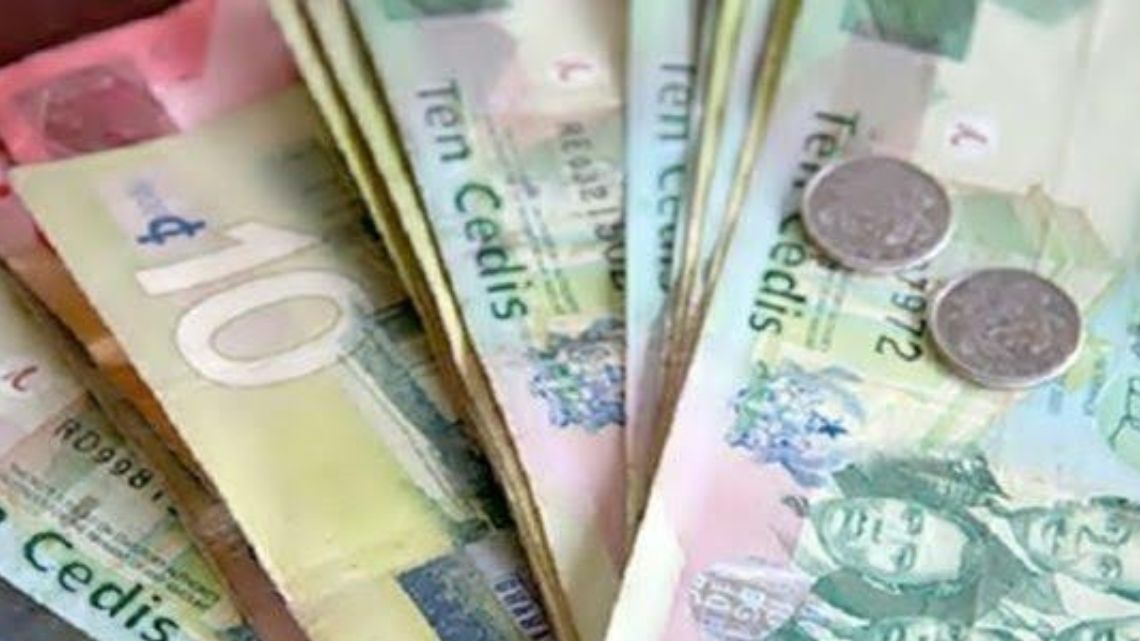
    According to the Bank of Ghana’s daily update, as of November 18, 2024, the cedi is being bought for GH¢15.91 and sold for GH¢15.92.

    The British Pound is being bought at GH¢20.16 and sold for GH¢20.18.

    The Euro is being bought for GH¢16.85 and sold at GH¢16.87.

    GhanaWeb Business reported on November 20, 2024, at 10:00 AM that the cedi is trading at GH¢16.75 to the dollar, while the pound is being sold for GH¢21.30 at some major forex bureaus across the country.

    The Euro is being sold at GH¢17.80 in the retail market.

    Even though the cedi has gained some value recently, its overall decline against major currencies still poses ongoing challenges for the Ghanaian economy.

  • Tribunal rejects GCNet’s GHS4bn claim, orders $2.1m legal fee payment to Ghana

    Tribunal rejects GCNet’s GHS4bn claim, orders $2.1m legal fee payment to Ghana

    An international arbitration tribunal in London has rejected the GH¢4 billion claim made by Ghana Community Network Services Limited (GCNet) against the Republic of Ghana.

    In a detailed 202-page ruling dated November 18, 2024, the tribunal ruled in Ghana’s favour, ordering GCNet to pay $2,185,983.21 in legal fees.

    The awarded amount includes $1,744,050.42 for legal representation and $441,932.79 for the costs of Ghana’s expert witness.

    The total will accrue interest at the USD SOFR + 1% rate from 30 days after the award until payment is made.

    GCNet, represented by Quinn Emanuel Urquhart & Sullivan, LLP, alongside Ghanaian firms Beyou and Co. and ENS Africa, contested the termination of a Service Agreement by the Government of Ghana.

    The agreement, which had been in effect since 2002, granted GCNet exclusive rights to develop and manage an electronic system for processing customs payments and trade documents at Ghana’s ports. Despite several extensions, the agreement was terminated by the NPP administration in April 2020 following a value-for-money assessment.

    GCNet sought compensation amounting to GH¢3.3 billion for wrongful termination and other alleged breaches, including GH¢2.1 billion for termination and GH¢1.19 billion for breaches related to government exemptions and discounts for importers. The company also sought pre-award interest and legal fees.

    Represented by the Attorney-General’s office led by Godfred Yeboah Dame, Ghana argued that the agreement had a specific framework for assessing GCNet’s entitlements, limiting compensation to $6 million.

    The tribunal upheld Ghana’s position, ruling that the termination was valid and that GCNet had waived its right to claim damages for exemptions and discounts.

    The tribunal awarded GCNet $5.4 million for early termination but found that GCNet was the unsuccessful party, making it liable for Ghana’s legal costs. This ruling is a significant win for Ghana, saving the nation billions of cedis.

  • GSA launches campaign against polystyrene in mattresses to combat environmental, health risks

    GSA launches campaign against polystyrene in mattresses to combat environmental, health risks

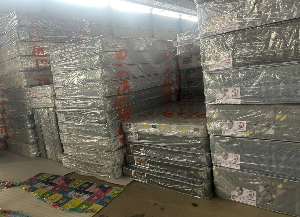
    The Ghana Standards Authority (GSA) has initiated a rigorous campaign targeting mattress producers that utilize polystyrene, a material that poses significant environmental risks due to its role in microplastic pollution.

    When polystyrene degrades, it breaks into microplastics that persist for centuries, contaminating ecosystems, endangering wildlife, and ultimately infiltrating the human food chain. The GSA has raised alarms about the long-term environmental and health impacts of this material.

    Polystyrene in mattresses is especially troubling from a health standpoint. It emits volatile organic compounds (VOCs), which can compromise indoor air quality. Prolonged exposure to VOCs has been linked to respiratory issues, headaches, skin irritation, and even neurological damage. Those with asthma or allergies face an increased risk. Additionally, polystyrene’s high flammability heightens the risk of fires, which release harmful fumes, including styrene gas, a potential carcinogen.

    In line with the Ghana Standards Authority Act, 2022, the GSA has begun enforcing stricter measures against manufacturers who violate standards by using polystyrene in their products.

    These measures could lead to significant penalties, product recalls, and legal action against non-compliant manufacturers. The GSA is committed to ensuring manufacturing practices that meet environmental and safety standards, contributing to global sustainability efforts and reducing harmful materials in the local market.

    In addition to enforcement, the GSA is partnering with environmental organizations and industry professionals to tackle microplastic pollution comprehensively. The authority is working on initiatives that encourage the use of eco-friendly materials and raise awareness about sustainable manufacturing practices.

    Through these concerted efforts, the GSA aims to drive a shift toward environmentally responsible production methods, safeguarding both public health and Ghana’s natural environment.

  • Ghana and The Gambia partner to advance ECOWAS Free Roaming Initiative

    Ghana and The Gambia partner to advance ECOWAS Free Roaming Initiative

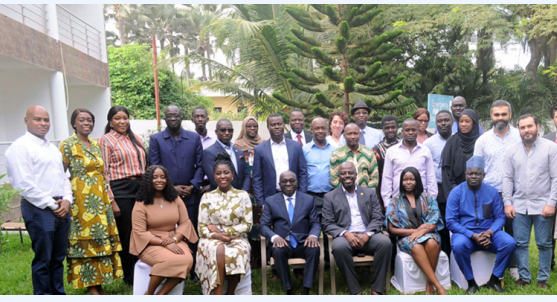
    The National Communications Authority (NCA), in partnership with the Ministry of Communications and Digitalisation and Mobile Network Operators (MNOs), is actively engaging stakeholders in The Gambia to progress the ECOWAS Free Roaming initiative.

    This initiative seeks to lower telecommunication costs for individuals traveling between Ghana and The Gambia, enabling smoother communication and enhancing economic and social connections.

    The discussions, which began on November 19, 2024, are set to conclude on November 21, 2024, with the signing of a Memorandum of Understanding (MoU). This agreement will initiate technical and regulatory discussions among MNOs, paving the way for the adoption and launch of the ECOWAS Roaming Regulations in the first half of 2025.

    These efforts highlight the NCA’s dedication to consumer protection and advancing regional integration within the telecommunications industry.

    Over the years, the NCA has implemented various consumer-focused initiatives, including the Billing Feedback Message, Significant Market Power (SMP) Regulations, SIM Registration, and Mobile Number Portability (MNP).

    Additional measures such as UMTS 900 frequency allocation, Billing Verification Systems, NCA CERT, and technology neutrality further demonstrate the Authority’s commitment to safeguarding consumer interests as outlined in the NCA Act.

    In his opening address, Prof. Ezer Osei Yeboah-Boateng, Deputy Director General (Technical Operations) of the NCA and head of Ghana’s delegation, described the meeting as a crucial step toward fostering regional integration. He highlighted Ghana’s leadership in regional connectivity, referencing existing bilateral roaming agreements with Côte d’Ivoire, Togo, and Benin.

    ‘This collaboration with The Gambia marks the next phase in extending affordable telecom services across the region’, he said.

    Prof. Yeboah-Boateng emphasized that the partnership goes beyond cost savings, representing a unified commitment to building a West Africa where communication is accessible, effortless, and a driver of economic development, tourism, and regional harmony.

    Speaking at the meeting, Mr. Solo Sima, Deputy Director General of The Gambia Public Utilities Regulatory Authority (PURA), expressed confidence in the ECOWAS Free Roaming Initiative’s potential to enhance Africa’s connectivity, create jobs, and boost business opportunities. He also urged regulators to account for the evolving impact of technologies like 5G, ensuring that agreements remain flexible and prioritize the needs of consumers.

    Ghana’s ECOWAS Free Roaming Agreements with other countries

    Travelers from Ghana to Côte d’Ivoire, Benin, and Togo benefit from reduced call charges, as they pay local rates for SMS and voice calls, avoiding excessive roaming fees.

    Additionally, incoming calls, both local and international, are received at no cost due to the abolition of roaming charges for call reception.

    Internet usage is also made affordable, with Ghanaians accessing data services at the same rates as residents in Côte d’Ivoire, Benin, and Togo.

  • Ghana faces potential legal battle over Bogoso Prestea Mines transfer

    Ghana faces potential legal battle over Bogoso Prestea Mines transfer

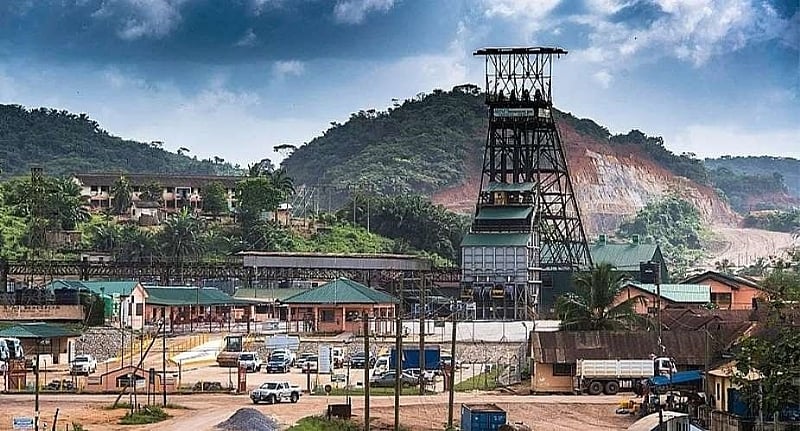
    The Herald has acquired a contentious letter approving the handover of Bogoso Prestea Mines from the British-owned FGR Bogoso Prestea Mines to Heath Goldfields Limited, a Ghanaian entity with Turkish collaborators.

    Dated November 12, 2024, and directed to the Minerals Commission CEO, Martin Ayisi, the letter has sparked legal disputes, political friction, and critical inquiries regarding the mining expertise and operational history of Heath Goldfields Ltd.

    The Minister of Lands, Forestry, and Natural Resources, Samuel Abu Jinapor, is transferring the mines to a firm that was established just this February.

    Mr. Jinapor’s directive states: “Given the technical and financial capacity of Heath Goldfields Ltd, and on your advice and recommendation, approval is hereby given for the grant of the Prestea Bogoso Mine to Heath Goldfields Ltd, subject to compliance with the Minerals and Mining Act, 2006 (Act 703) and its Regulations, as well as the payment of appropriate fees.”

    This move occurs despite FGR Bogoso Prestea Mines issuing a notice of dispute to the government, the Minerals Commission, and other stakeholders, hinting at potential legal battles both locally and internationally.

    The Herald’s investigations uncover a larger trend of questionable decisions in Ghana’s mining sector, affecting both Bogoso Prestea Mines and Newmont’s Akyem Mines. Sources claim irregularities, including alleged financial incentives, which critics warn could lead to judgment debts and tarnish Ghana’s global image.

    With an estimated value of $40 million, Bogoso Prestea Mines is being handed over to Heath Goldfields Ltd, a Ghanaian company with a declared capital of only GHC10,000. Skeptics have described the company as a “shell entity” lacking any mining credentials. The transfer is said to be part of a $20 million arrangement involving Turkish investors, with allegations of payments to influential officials.

    At the same time, Newmont’s Akyem Mine is reportedly being positioned for sale to a Chinese firm for over $1 billion. However, the deal is yet to receive final approval, potentially requiring a nod from President Akufo-Addo.

    The Concerned Workers’ Union of Bogoso Prestea Mines has criticized the government’s handling of the situation, accusing union leaders of pursuing personal benefits at the expense of the community’s well-being.

    “Our leaders prioritize personal gain over the collective well-being of workers and the community,” the group stated, urging FGR/Blue Gold to collaborate with employees to restore operations.

    FGR Bogoso Prestea Mines, in its defence, has rejected allegations of operational breaches cited by the Ministry, stating that it has been compliant and plans to contest the lease termination.

    With less than three weeks to the 2024 general elections, these mining controversies have heightened scrutiny on the government. Parliament is expected to review the deals, but time constraints and political dynamics raise uncertainties about their approval.

    A new administration in January 2025 could face the dilemma of endorsing or revoking these contentious agreements, potentially reopening negotiations to align with legal standards and best practices.

  • Ghana’s oil industry faces growing uncertainty amid Springfield’s disappointing results

    Ghana’s oil industry faces growing uncertainty amid Springfield’s disappointing results

    The oil industry in Ghana has sparked ongoing debate, particularly with the rise of Springfield Exploration and Production Limited (SGL) and its bold statements about its oil discovery.

    Over the last five years, the company has attracted significant attention with its announcement of potential massive oil reserves, initially estimated to hold around 1.5 billion barrels.

    This projection was widely disseminated and became central to the company’s narrative. However, several prominent industry analysts and experts, including those from top firms such as Wood Mackenzie and IHS Markit, have raised concerns about the reserves’ commercial viability.

    The contrast between Springfield’s optimistic projections and the more cautious views from the global oil intelligence community has led to growing doubts about the actual worth of the discovery.

    Despite reentering the well, Springfield has not seen the anticipated results. Moreover, the oil found in the Cenamomeum play, which was expected to be a key target, turned out to be less than what was expected.

    This outcome has only intensified skepticism surrounding Springfield’s claims about the reserves’ commercial potential. Further drilling beyond the initial layers has also yielded only small amounts of gas, which has lowered expectations for a significant discovery.

    Despite widespread skepticism, the Ghanaian government has continued to place significant trust in Springfield’s optimistic oil reserve estimates, using these figures as the cornerstone for a range of policies and legal actions that have adversely affected the nation’s oil industry.

    A key element of the ongoing issue has been the government’s strong position on unitisation, particularly regarding the Deepwater OCTP fields managed by Eni, a leading figure in Ghana’s oil sector.

    In its efforts to link Springfield’s discoveries to existing oil fields, the government has engaged in a series of legal confrontations and regulatory initiatives that many industry insiders view as poorly designed and potentially harmful to the country’s future investment climate.

    This controversy comes amid a significant downturn in Ghana’s oil industry. Once a promising sector that attracted global oil companies, it has now been referred to by some as an “investment graveyard,” with many major players scaling back their operations or leaving the country altogether due to regulatory uncertainties.

    Exploration activities have slowed, and numerous large projects have either been delayed or completely scrapped. The decline of the sector reached a critical point in July 2024, when an international arbitration ruling dealt a severe blow to the government. The tribunal found that Ghana’s attempts to enforce unitisation, particularly regarding alignment with the OCTP fields, were mishandled.

    The ruling left the Ghanaian government in a state of embarrassment. In its defense, the government claimed that it had the right to enforce unitisation, pointing to the tribunal’s recognition of it as a general principle.

    However, this response largely ignored the specifics of the case, which had favored the OCTP partners. Many saw the government’s response as an attempt to salvage its image, yet it failed to address the core issues that led to the arbitration in the first place.

    Despite the tribunal’s ruling, the Petroleum Commission, which oversees Ghana’s oil sector, directed Springfield to continue its appraisal program, which had previously been halted while the company sought legal clarification. This move marked a pivotal moment in the ongoing saga, as Springfield confirmed it would resume its efforts at the 2029 oil well.

    However, the manner in which the situation has been managed has raised concerns throughout the oil industry. Experts are questioning whether the appraisal is being carried out with the necessary diligence and if it serves the best interests of Ghana’s oil sector.

    One geophysicist, who spoke to The Herald under condition of anonymity, voiced significant doubts about the handling of the situation. “Recently, the cost of the reentry of the well at $50 million is exorbitant and does not optimise Ghana’s interest. That amount is enough to drill a whole new well.

    A competent Petroleum Commission would be alert to transfer pricing and the procurement of services for the operation,” the geophysicist said. These remarks reflect growing unease within the industry about the financial structures surrounding Springfield’s operations and the potential for inefficient or inflated costs being passed on to the Ghanaian public.

    Further investigations by The Herald into Springfield’s operations uncovered troubling signs of potential transfer pricing. All service contracts associated with the current appraisal program have been sole-sourced to Fairfax, a subsidiary of Springfield.

    Fairfax, in turn, is responsible for setting the prices of the services provided by international service companies involved in the project. This raises questions about the transparency and fairness of the pricing structures being used.

    Given that Fairfax is a related party, it is possible that Springfield is inflating costs, a practice that could ultimately undermine the financial interests of Ghana.

    The situation has created a sense of unease and frustration within the Ghanaian oil sector. As the appraisal programme continues, industry insiders are left questioning the legitimacy of the entire operation.

    Some have even gone so far as to suggest that Ghana’s oil wealth is being mortgaged before actual production can even begin. There is a growing concern that the country is being taken advantage of, with oil reserves potentially being misrepresented to facilitate political agendas and business interests.

    At the heart of this issue is the question of what is actually happening on the ground with the reentry operations. Despite the fanfare surrounding the appraisal, there has been a conspicuous lack of clear communication from both Springfield and the government.

    Industry insiders are reporting dead silence in the atmosphere, and some are even shocked by the outcomes of the operation so far.

    Further reports indicate that the Petroleum Commission denied the mandatory daily report on the operations.

    There are reports that some politicians, who have invested heavily in their loot in the past eight years in the project, are beginning to lose confidence after hearing the initial outcome of the appraisal, with one high-profile political figure even said to have lost focus in his bid to become Vice President of Ghana as a result of the disappointing developments.

    According to sources familiar with the operation, the pressure at the well was found to be the same as it was in 2019, which suggests that the well may not be connected to a producing field, as previously hoped. “The pressure at the well is the same as it was in 2019, an indication that the well is not in dynamic communication with a producing field,” one source confirmed. This is a significant finding, as it undermines the central premise of Springfield’s oil discovery—that the well could be linked to the larger, commercially viable reservoir on the OCTP field.

    “The worst of it is that the oil encountered in the Cenamomeum play is lower than expected,” the source added.

    With these disappointing results, Springfield appears to be falling back on its old playbook of political manoeuvring to achieve its objectives. There are reports of the company using political pressure to push for forced unitisation of the fields, a strategy that has drawn sharp criticism from industry observers.

    Senior executives from Springfield are reportedly tracking President Akufo-Addo’s visits to Azerbaijan and France, likely in an attempt to rally political backing for the company’s objectives.

    Furthermore, there are ongoing initiatives to involve key traditional leaders from the central region of Ghana to exert political influence in favor of pushing for the unitisation of the oil fields.

    These political maneuvers could ignite fresh tensions between the Ghanaian government and foreign investors. Should the government proceed with enforcing unitisation, it could lead to additional legal confrontations and further deter potential investments in Ghana’s oil industry. As sources from The Herald note, “Springfield has revived its previous strategy of leveraging political connections to secure forced unitisation of the fields,” which could escalate tensions in an already volatile climate.

    Currently, the future of Ghana’s oil sector is uncertain. The nation’s capacity to draw in new investments, promote transparency, and manage its resources effectively hinges on how the government and industry stakeholders navigate these multifaceted challenges.

    If Ghana fails to address the persistent issues plaguing its oil industry, such as potential transfer pricing, political meddling, and a lack of clear communication with investors, the country may find itself locked in a cycle of stagnation and missed opportunities.

    As The Herald prepares to unveil more details about Springfield’s financial arrangements, the demand for greater transparency and accountability in Ghana’s oil industry has never been more pressing.

    To fully realize the potential of its oil resources, Ghana must move away from a model driven by political maneuvering and instead embrace robust governance, technical expertise, and strategic, long-term investments. Only then can the country truly harness its oil wealth for the benefit of all its citizens.

  • Akufo-Addo inaugurates $1.2bn Bridge Power Plant to boost economic growth

    Akufo-Addo inaugurates $1.2bn Bridge Power Plant to boost economic growth

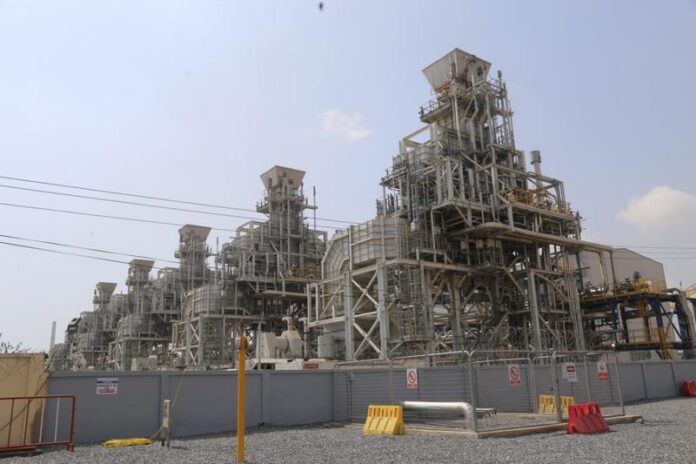
    President Nana Addo Dankwa Akufo-Addo has inaugurated the Bridge Power Plant in Tema, a $1.2 billion project, marking a pivotal moment for Ghana’s energy sector and its broader economic growth.

    This state-of-the-art 590-megawatt combined-cycle plant, developed in collaboration with Early Power Ltd. and Endeavour Energy, stands as one of the largest and most advanced power generation facilities in the country.

    The launch of this plant realizes a goal first set in April 2017 when construction began, demonstrating Ghana’s dedication to integrating modern technology and innovative energy solutions to meet the country’s increasing electricity needs.

    “Today, we celebrate a transformative step forward in our journey toward energy independence. Reliable power is the backbone of development, and this facility is proof that Ghana is ready to overcome the challenges of the past and embrace a brighter future,” President Akufo-Addo said during the ceremony.

    The President reflected on the difficult times of “dumsor” (persistent power outages) under the previous government, which caused significant disruptions to both daily life and businesses nationwide.

    He reassured Ghanaians that the Bridge Power Plant would deliver a reliable power supply, easing the pressure on the national grid and tackling the energy shortfalls that previously hindered the country’s economic development.

    “This plant is more than a source of power; it is a beacon of hope and a testament to what we can achieve through strategic partnerships and a clear vision,” he remarked.

    The Bridge Power Plant is designed to integrate seamlessly into Ghana’s energy mix, providing efficient and environmentally sustainable electricity. Its cutting-edge technology ensures lower carbon emissions, aligning with the government’s commitment to a greener future.

    President Akufo-Addo highlighted the plant’s potential to drive industrial growth by supplying reliable power to factories, hospitals, schools, and households. The facility will also support rural electrification efforts, bringing electricity to remote areas and improving the quality of life for underserved communities.

    “The power generated here will fuel an industrial revolution, create jobs, attract foreign investment, and lay the foundation for sustained economic growth,” he added.

    The President praised Endeavour Energy and its partners for their steadfast commitment to the project, while also recognizing the invaluable contributions of Ghanaian engineers and workers who played a vital role in the plant’s completion.

    Looking forward, President Akufo-Addo reiterated his government’s dedication to resolving financial challenges in the energy sector and reinforcing partnerships with Independent Power Producers (IPPs). He urged all stakeholders to collaborate in maintaining the facility and advancing Ghana’s energy goals.

    The launch of the Bridge Power Plant represents a key milestone in Ghana’s energy evolution. It ushers in a new era of resilience, sustainability, and growth, signaling the end of energy shortages and laying the foundation for a brighter future.

    “This plant stands as a symbol of what Ghana can achieve when united by a shared purpose. It is with immense pride that I declare the Bridge Power Plant officially commissioned,” President Akufo-Addo concluded.

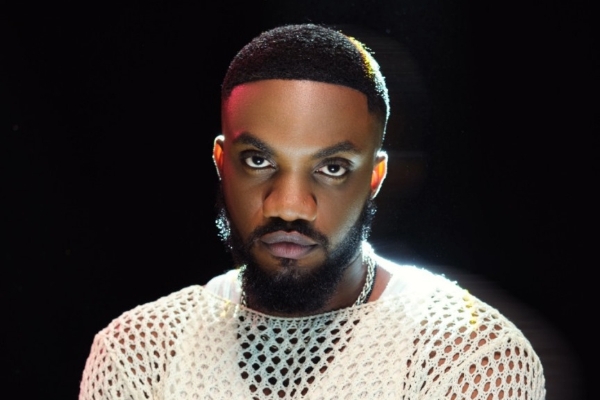
  • Mr Drew talks about maintaining boundaries with colleagues in entertainment industry

    Mr Drew talks about maintaining boundaries with colleagues in entertainment industry

    Ghanaian singer and dancer, Mr Drew, has shared his perspective on friendships within the entertainment industry, revealing that he sees his peers more as “work friends” rather than close, personal companions.

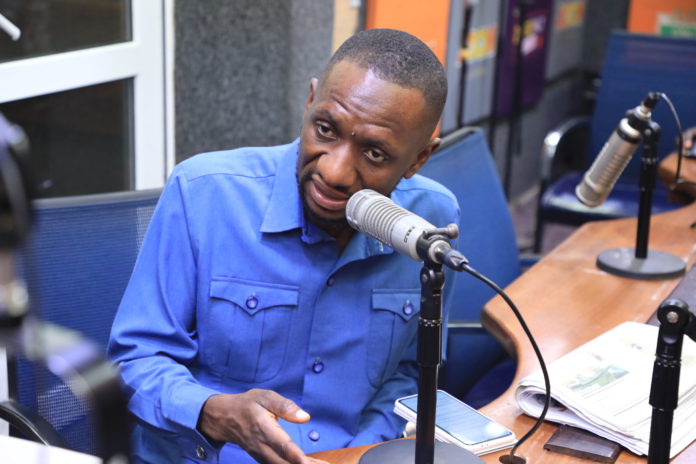
    In a recent interview on Class 91.3 FM’s Class Xtra with Zeal Nana Kweku Bliss, Mr Drew explained that maintaining a professional distance helps avoid unnecessary complications.

    He noted that while it’s “sometimes good” to keep things this way, it ensures that things don’t get “too personal.”

    “We’re work friends. When there’s an issue, or we want to find out information from each other, it’s quite easy, but apart from that… That doesn’t happen often… Even the work-friends are not plenty,” Mr Drew stated.

    His comments shed light on the complexities of navigating personal relationships in the highly public and often competitive entertainment industry.

    Competition

    Speaking on why this was so, he said, “some people feel” threatened by the presence and talent of others, fearing “you’re coming from their bread”.

    Seniority

    “Once somebody comes before you or gets a hit song before you, and now you all are there – at par, so to speak – they still want to show you, ‘Hey, I was here before you.’ So sometimes they’ll keep their space, giving you some gap. And that’s fine, so you also don’t become too familiar… It has its downsides, however,” he added.

    “So I can’t say we have friends [in the industry]. I’ll say we have colleagues or work-friends,” Mr Drew emphasised.

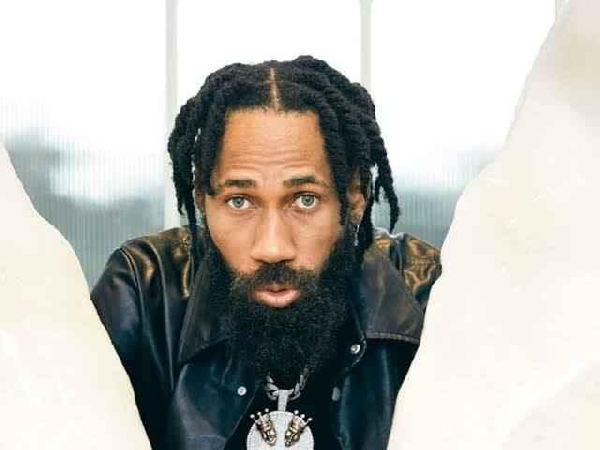
  • Phyno weighs in on how marriage impacts celebrities’ music career

    Phyno weighs in on how marriage impacts celebrities’ music career

    Nigerian rapper Phyno, born Chibuzor Nelson Azubuike, recently delved into the intersection of marriage and celebrity careers, shedding light on the potential challenges.

    During a candid discussion on the “In My Opinion” podcast, the ‘Alobam’ rapper shared his perspective on how the demanding nature of the music industry can affect personal relationships and professional pursuits.

    Phyno argued that the music business, with its intense competition and long hours, often takes precedence over other aspects of life, including marriage.

    “Look around, statistically, it’s clear—many celebrities see their careers hit a decline after getting married,” he remarked.

    He elaborated that music requires an unwavering focus, which is why many aspiring artists opt to abandon their education to pursue it full-time.

    The rapper also acknowledged those who manage to balance music with other commitments, recognizing the effort required to maintain such equilibrium.

    “Music is a jealous career,” Phyno explained. “That’s why some people leave school to dive headfirst into it. The ones who can juggle both—music and other responsibilities—deserve recognition because it’s no easy feat.”

    He also touched on the impact of life experiences on songwriting, noting that personal struggles often shape the content of an artist’s work.

    “Music is a reflection of your life—what you’ve been through. If you write your own songs, it’s hard to talk about happiness when you’re dealing with personal issues, like a relationship that’s stressing you out,” he added.

  • I returned a Range Rover birthday gift because I was not “feeling the guy” – Tiwa Savage

    I returned a Range Rover birthday gift because I was not “feeling the guy” – Tiwa Savage

    Nigerian singer Tiwa Savage has opened up about a surprising decision she made after receiving a luxury birthday gift from a man.

    The Afrobeat star revealed that she was gifted a Range Rover, but ultimately decided to return the vehicle. In a candid statement, Tiwa shared her reasoning behind the unexpected move.

    “I got a Range Rover on my birthday, but I had to return it because I wasn’t feeling the guy,” she admitted. According to Tiwa, she felt uncomfortable leading the man on and didn’t want to give him false expectations.

    She further explained in an interview on Beat FM that, “I didn’t want to lead him on, and I was scared that if I didn’t entertain him, he might want it back. That wouldn’t look good for my image.”

    Tiwa humorously mentioned that her perspective could be different now, given her growth in the industry and having weathered more serious scandals.

    “If I receive such a gift now, I’ll accept it and wouldn’t care about the consequences. If they want it back, I’ll call security on them,” she laughed.

    When questioned about her ideal man, the “Somebody’s Son” singer revealed that she prefers Nigerian men to French ones.

    She further shared that she’s attracted to dark, tall, slender men without a muscular build.

    Her honest and playful comments have sparked discussions online, with fans appreciating her candidness and humor.

  • Ghanaians among UN peacekeepers injured in Southern Lebanon attacks

    Ghanaians among UN peacekeepers injured in Southern Lebanon attacks

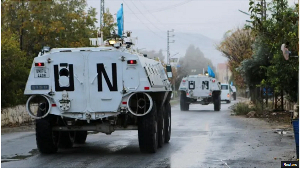
    The UN peacekeeping force in southern Lebanon has reported that four of its soldiers were injured when a rocket hit a base, marking one of three separate incidents in which its troops and bases came under fire on Tuesday.

    The UN Interim Force in Lebanon (Unifil) stated that four Ghanaian peacekeepers were hurt, with three needing hospital treatment, after a rocket struck a base east of the village of Ramyah, near the Israeli border. The extent of their injuries remains unclear.

    Unifil also confirmed that a base in Shama was damaged by rocket fire, with “non-state actors within Lebanon” likely responsible. Fortunately, there were no injuries.

    The Israeli Defense Forces (IDF), currently conducting a ground invasion of southern Lebanon against Hezbollah, attributed both rocket attacks to the Lebanese armed group, although Hezbollah has not issued a statement.

    Additionally, a Unifil patrol came under gunfire while passing through a road northeast of Khirbat Silim, but there were no injuries.

    Unifil condemned the attacks on its personnel and infrastructure in a statement shared on social media.

    “The pattern of regular attacks – direct or indirect – against peacekeepers must end immediately,” the statement said.

    “Any attack against the peacekeepers is a flagrant violation of international laws and resolution 1701, which forms the basis of Unifil’s current mandate.”

    According to UN Security Council Resolution 1701, which brought an end to the 2006 conflict between Israel and Hezbollah, the UN was tasked with establishing a demilitarized zone in southern Lebanon, excluding all armed forces except for the Lebanese army.

    However, Israel has criticized Unifil for allegedly overlooking the expansion of Hezbollah, which has since become more powerful than the official Lebanese army. Hezbollah is classified as a terrorist organization by Israel, the UK, the US, and several other nations.

    Tensions between Israel and the UN over its peacekeeping operations in southern Lebanon have escalated in recent months, with Israeli Prime Minister Benjamin Netanyahu calling for the forces to pull out of “combat areas”.

    A Unifil spokesman in Geneva said UN peacekeepers were seeing increased levels of violence, with “huge, shocking” destruction across the blue line – the UN-recognised boundary that separates Israel and Lebanon.

    Israel’s objective behind the ground invasion and the intensification of airstrikes on Hezbollah targets is to facilitate the return of approximately 60,000 displaced residents from northern communities who fled due to Hezbollah’s rocket attacks.

    Hezbollah initiated its offensive the day after the Hamas-led attacks in southern Israel last year, asserting it was acting in solidarity with Palestinians in Gaza.

    Over the past year, Israeli airstrikes in Lebanon have resulted in the deaths of over 3,840 people and injured nearly 15,000, according to the Lebanese health ministry, which does not differentiate between civilians and combatants.

    On Tuesday, the Lebanese army confirmed that three soldiers had died in an Israeli airstrike on a military base in Safarand, with 17 others, including civilians, wounded in the attack.

    The ongoing Israeli strikes have forced over one million people to flee, exacerbating the hardships of a country already grappling with a prolonged economic crisis.

    According to Israeli authorities, Hezbollah’s attacks have killed at least 31 soldiers and 45 civilians in Israel. Additionally, 45 Israeli soldiers have died in combat in southern Lebanon.

    While Israel has severely damaged Hezbollah’s infrastructure and killed numerous leaders, the group continues to launch daily assaults, though with reduced intensity.

    Efforts to broker a ceasefire between Israel and Hezbollah are gaining momentum, with Lebanon’s government set to respond to a ceasefire proposal drafted by the US

  • Investigation underway into allegations against Development Bank Ghana

    Investigation underway into allegations against Development Bank Ghana

    The World Bank has stated that it is aware of the allegations concerning the operations of the Development Bank Ghana, which is a recipient of support through the Ghana Development Finance Project funded by the International Development Association (IDA).

    “We take all fiduciary issues very seriously and we are engaging key partners to obtain full clarifications”, a short statement from the bank said.

    Vice President of Imani Africa, Bright Simons, recently claimed that the funds designated for the Development Bank Ghana had been mismanaged.

    Mr. Simons highlighted significant concerns regarding the bank’s capitalization, asserting that more than GH¢400 million had been wasted due to poor contracting practices.

    DBG denied claims of misusing funds allocated for operations

    The Development Bank Ghana refuted claims that it misused funds allocated for its operations by the country’s development partners.

    In a statement, the bank rejected media reports containing what it calls “significant inaccuracies and falsehoods” about its activities, stating that these undermine the institution’s commitment to transparency and Ghana’s economic transformation.

    DBG clarified that it was initially capitalised with GH¢1.135 billion (approximately $200 million at the time) by the Ghanaian government in 2021, with additional funding from the African Development Bank.

    The bank rejected claims that it misappropriated over GH¢400 million, emphasizing its stringent procurement policies. In a statement released on November 13, DBG noted, “Our procurement processes remain stringent, rigorous, and evolving in line with best global practices.”

    Furthermore, DBG disputed assertions that it incurred GH¢700 million in losses, instead highlighting consistent annual profits since its inception, including GH¢80.1 million in 2023.

    They also countered allegations about misuse of World Bank and European Investment Bank funds, noting these credit lines are strictly monitored and used exclusively for on-lending through financial institutions.

    What is the IDA?

    The IDA, a division of the World Bank, supports the world’s low-income nations.

    Through its grants and low-interest loans, the IDA helps these countries invest in their development, enhance living conditions, and build safer, more prosperous communities globally.

    World Bank approves $250m for Ghana

    On June 18, 2024  the World Bank  approved a $250 million credit from the IDA and an additional $10 million grant from the Energy Sector Management Assistance Programme, to support a 4-year Ghana Energy Sector Recovery Programme for Results (PforR) to improve the financial viability of electricity distribution and increase access to clean cooking solutions.

    The PforR will provide financing directly to energy sector utilities to implement capital expenditure programs and complement regulatory and policy reforms of the energy sector supported under the World Bank’s Development Policy Financing series and the ongoing IMF Extended Credit Facility Programme for Ghana.

    The Clean Cooking Component of the Programme will increase the access of Ghanaian households, schools, and businesses to Liquified Petroleum Gas for domestic and commercial use. The PforR will provide direct incentives to subsidize the cost of stoves and accessories.

    The ESRP is expected to provide a wide range of benefits to consumers which includes market development, affordability, energy access and equity, health and environmental protection against air pollution and associated health risks.

    Robert Taliercio, World Bank Country Director for Ghana, Liberia, and Sierra Leone said, “Through this important results-based financing, the World Bank is committed to supporting the recovery of Ghana’s energy sector and its financial sustainability. The operation aims to strengthen revenue collection and improve the quality of energy supply through investments in prepaid metering and in the commercial and meter management systems of distribution utilities,”.

    Minister for Finance, Dr Mohammed Amin Adam also said, “ the Government of Ghana is grateful to the World Bank for their support in the attainment of the Sustainable Development Goals (SDGs), particularly Goal 7 (Affordable and Clean Energy). Our quest to achieve financial viability in electricity distribution and increasing access to clean cooking solutions is essential for building sustainable energy systems that support economic development, improve public health, and protect the environment while promoting energy access and equity for all”.

    He continued that “our access to sustainable energy is not just about powering homes and businesses, it’s about empowering communities, protecting the environment, and fostering inclusive and sustainable development”.

    The Energy Sector Management Assistance Programme provides knowledge, technical assistance, and advisory services to help countries enhance their institutional capacity and implement sustainable energy solutions.

  • Gov’t clamps down on private pension fund managers seeking offshore investments

    Gov’t clamps down on private pension fund managers seeking offshore investments

    The government is taking action against private pension fund managers seeking to invest in offshore assets, citing concerns that such investments could put additional strain on the country’s cedi currency, according to three industry sources.

    Pension contributions in Ghana saw substantial growth after reforms in 2010, with a tiered system allowing private firms to manage a portion of the contributions.

    As of June, the pension fund industry had assets totaling GH¢78.2 billion ($4.93 billion), with more than 73% of these assets managed by 39 private fund management firms.

    The state-run pension fund oversees mandatory tier one contributions for employees’ monthly retirement benefits, while private firms handle tier two and tier three contributions, both mandatory and voluntary, for lump-sum payouts at or before retirement.

    Most of these contributions are currently invested in local assets, including Ghana government Eurobonds.

    Despite this, private fund managers have expressed interest in offshore investments, especially after restructuring 31 billion cedis of their holdings during a local debt rework.

    Ghanaian regulations allow private fund managers to allocate up to 5% of total assets abroad, which amounts to roughly 2.8 billion cedis of the current assets under management. However, there is disagreement between the firms and authorities over whether prior approval is required.

    Sources from private pension firms and the finance ministry confirmed that some fund managers attempted to invest offshore earlier this year but were blocked by the National Pensions Regulatory Authority (NPRA).

    “They (NPRA) threatened to sanction us but we didn’t find any basis in law,” one of the sources at a fund management company told Reuters.

    “We have not exited but we can’t invest more (offshore). It’s a very strange development,” said the source who asked not to be named, adding that they had $5 million in offshore assets.

    Head of the NPRA, John Kwaning Mbroh, informed Reuters that there is “no opposition” to offshore pension investments, but emphasized that the regulator requires government approval before granting approval.

    Mbroh added that talks are ongoing to simplify the regulations and provide clarity on how to assess the value of offshore investments for both contributors and fund managers, though he could not specify when these discussions would be finalized.

    ‘PROTECTING LIQUIDITY’

    Ghana is wrapping up a tough debt-restructuring process under the G20’s Common Framework, after defaulting on the majority of its $30 billion international debt in 2022.

    Although Ghana’s economy is showing signs of recovery, the cedi has depreciated by 25% against the U.S. dollar this year, following a 17% decline in 2023.

    An anonymous source from the finance ministry stated that the ministry was focused on managing the impact of investing pension funds overseas, ensuring it doesn’t negatively affect domestic liquidity or the value growth for fund managers.

    “The ministry won’t say ‘no’ but it’s about how do we protect the economy, the liquidity,” the source said.

    Private pension management firms in Ghana believe the authorities are being overly cautious, highlighting that local mutual funds and African pension funds already invest overseas without facing the same restrictions.

    They argue that the existing policy, amid high inflation and the depreciation of the cedi, hampers value growth and limits potential returns.

    Furthermore, they find it inconsistent that foreign pension funds are permitted to invest in Ghana’s market, while local funds are barred from making similar investments abroad.

    “The world over, pension funds chase value but they want us to chase inflation,” an executive of one of the top five fund managers said, adding that investing 5% of their assets abroad doesn’t even move the needle.

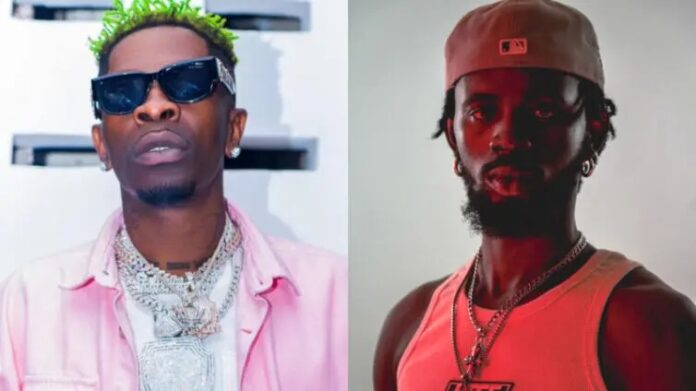
  • Blacko falls for Shatta Wale’s publicity stunts with fake ‘Calvlein’ underwear

    Blacko falls for Shatta Wale’s publicity stunts with fake ‘Calvlein’ underwear

    Dancehall King, Shatta Wale, caught everyone’s attention last night after posting photos of himself wearing what seemed to be counterfeit ‘Calvlein’ underwear.

    Black Sherif, another artist, didn’t hesitate to make fun of Shatta, reposting the image on Snapchat with a mocking tone and attaching a clip that seemed to ridicule the situation.

    This playful remark from Black Sherif was in response to Shatta Wale’s previous comments about his fashion choices.

    Shatta had earlier criticized Blacko’s wardrobe, stating that some of his outfits, in his effort to stand out, “made no sense” and suggested he hire a stylist to revamp his look.

    Things took a surprising turn when Shatta Wale explained that the fake ‘Calvlein’ underwear was a part of an elaborate plan.

    He revealed that the move was intentionally designed to spark conversation and build excitement ahead of the release of his new music video for Wash.

    Later, Shatta shared untouched images of himself sporting genuine Calvin Klein underwear, revealing that the original photo had been a clever edit.

    Upon realizing the trick, Black Sherif quickly removed his mocking post, while Shatta humorously declared that he had once again “scammed” his followers for entertainment.

    The entire episode has left fans amused, with many applauding Shatta Wale’s creative strategy to keep the public’s attention on him and fuel excitement in Ghana’s entertainment scene.

  • IGP, security heads to be held accountable for any lives lost during 2024 polls – NDC

    IGP, security heads to be held accountable for any lives lost during 2024 polls – NDC

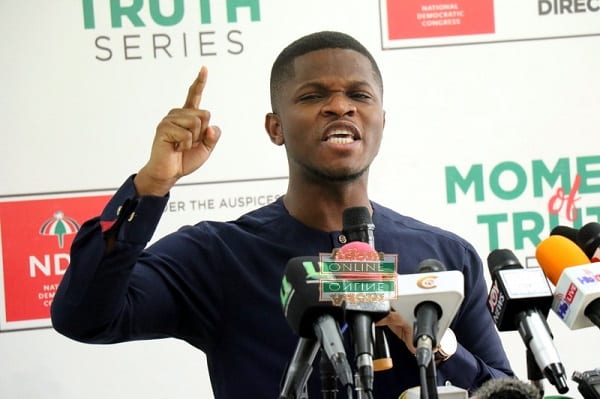
    The National Democratic Congress (NDC) has emphasized the need for heightened security preparations for the 2024 elections, urging the Inspector General of Police (IGP), Dr. George Akuffo Dampare, and other key security heads to ensure the safety of all citizens.

    During a press conference held on Tuesday, November 19, 2024, the party’s National Communications Officer, Sammy Gyamfi, underscored that the NDC would not hesitate to hold the IGP and the Chief of Defence Staff (CDS) personally responsible for any casualties that might occur during the elections.
    Gyamfi stressed that maintaining peace and protecting lives must be the priority for all security agencies, warning against any lapses that could compromise the integrity of the electoral process.
    “The NDC and by extension the people of Ghana will hold the IGP and the Chief of Defence Staff and our security heads responsible for the loss of a single life in the 2024 general elections.
    “As I have already said elections are about counting heads and not cutting heads. No person must lose his or her life at the altar of elections,” he stated.

    The party also accused some NPP members of planning to rig the upcoming elections at all costs.

    Sammy Gyamfi urged the Election Security Taskforce to look into these claims to ensure a peaceful election.

    He added that the NDC is sure of a big win if the elections are fair and peaceful.

    “We have no doubt that Ghanaians will choose an honest leader who upholds the virtue of truth over one who is completely allergic to truth,” Sammy Gyamfi noted.

  • The Commission prioritized quality elections over cost – EC’s Bossman Asare on ballot reprint

    The Commission prioritized quality elections over cost – EC’s Bossman Asare on ballot reprint

    The Electoral Commission’s Deputy Chairman for Corporate Services emphasized that safeguarding the credibility of Ghana’s elections is more important than the expense of reprinting ballot papers.

    Dr. Bossman Asare, during an interview on Joy News’ PM Express on November 19, clarified that the EC opted to reprint ballots for the Volta and Ahafo regions because of irregularities in the serial numbers.

    He characterized the move as essential to upholding public confidence in the electoral process.

    “The Commission didn’t think so much in terms of the cost as to the quality of the country’s elections,” he stated.

    He noted that the discrepancies could have compromised the integrity of the elections, which would have had far-reaching consequences.

    “If you don’t get the serial numbers right, and someone votes for a candidate, there’s a risk that the ballot could be deemed rejected,” he explained.

    Dr. Asare acknowledged that reprinting ballots for these regions could be costly, but reiterated that the Commission’s primary concern was ensuring that the elections were credible and transparent.

    “We believe that the taxpayer will be more concerned about us having a system that is very peaceful, very credible, and very transparent,” he added.

    To ensure accountability in the process, the EC will write to political parties, the Ghana Police Service, the National Intelligence Bureau, and the involved printing house to oversee the destruction of the erroneous ballot papers.

    “When we finish burning them, we have what we call the destruction certificate, which all the parties are going to sign to confirm their presence during the destruction,” Dr Asare explained.

    The EC decided to involve additional printing houses for the affected ballots, a move Dr Asare described as essential to maintaining the credibility of the elections.

    “We have a strong reputation to protect,” he stated. “For us, ensuring the integrity of the process so that all the political parties are happy is more important than the cost argument.”

    He also stressed that the EC values inclusivity in its operations.

    “It will interest you to know that when we met with the parties and informed them of the issues, they tried to salvage it. But we still noticed some gaps, so we made the decision to ensure ballot integrity,” he said.

    Dr. Asare reassured the public that the Commission would engage the printing house to discuss cost implications.

    However, he emphasized that preserving the credibility of the elections was non-negotiable.

    “Inaction on this issue would have been more devastating. Just imagine people saying there are problems with the ballot papers after voting—it would certainly not bode well for the Commission,” he noted.

    The EC’s decision, he concluded, reflects its commitment to delivering elections that all stakeholders can trust.

    “We believe that a credible system, where all players and stakeholders are satisfied, is what matters most,” he said.

  • Video: Asantehene bids farewell to his late son in grand Ashanti tradition

    Video: Asantehene bids farewell to his late son in grand Ashanti tradition

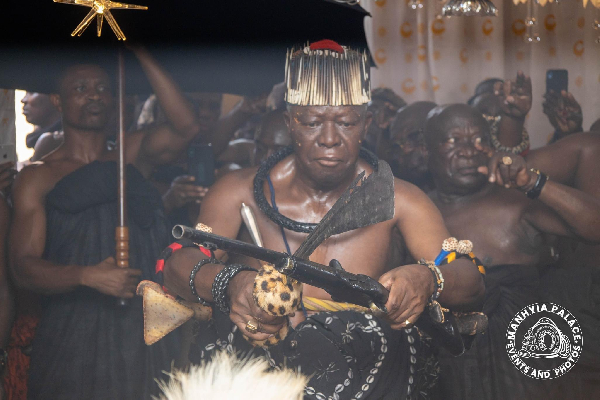
    The Ashanti Kingdom’s monarch, Otumfuo Osei Tutu II, honored the memory of Oheneba Adusei Poku, the Akyempimhene, with a final farewell on Monday, November 18, 2024.

    Adorned in his symbolic ‘Atinka Ntoma’ and traditional ‘nsɛbɛ kyɛ’ hat, the Asantehene performed solemn rituals beside the golden-bed casket of the late Oheneba Adusei Poku at the Adum Palace of Nana Adusei.

    The Asantehene, adorned with the “Mponponsuo” sword, “tu tia” gun, and “kum abrempong” necklace, swayed gracefully to the rhythmic beats of the fontomfrom drums while chanting his farewell.

    The ceremony drew notable attendees such as Ghana’s President Nana Addo Dankwa Akufo-Addo, former President John Agyekum Kufuor, and other high-ranking officials.

    Oheneba Adusei Poku’s burial is set for tonight, marking the end of traditional funeral rites that highlighted his esteemed position in Asanteman.

    The late Akyempimhene, eldest of five siblings and the only son of Otumfuo Opoku Ware II, was the progeny of the 15th Asantehene.

  • He enjoyed the best deals during his regime – Kofi Akpaloo on Tsikata’s support for Mahama

    He enjoyed the best deals during his regime – Kofi Akpaloo on Tsikata’s support for Mahama

    Presidential candidate for the Liberal Party of Ghana (LPG), Kofi Akpaloo, has responded to renowned lawyer Tsatsu Tsikata for praising John Mahama’s tenure as President ahead of the December 7 presidential election.

    The former CEO of the Ghana National Petroleum Corporation (GNPC) stated, “Mahama’s performance is better than what we’ve seen over the past four years.”

    In response to these remarks during an interview on GHOne TV, Kofi Akpaloo contended that Mr. Tsikata’s praise for Mahama was largely due to the advantages he enjoyed during Mahama’s presidency.

    “He said so because he was getting contracts under Mahama, so why wouldn’t he say that? He was getting the best deals. So, definitely, he will praise Mahama. Those who were getting the goodies will naturally remember him and say such things to praise him,” Akpaloo alleged.

    The distinguished lawyer has announced his support for John Mahama, highlighting the successes of Mahama’s previous term as proof of his ability, especially when contrasted with the performance of the New Patriotic Party (NPP) government in the past eight years.

    “I’m voting for John Mahama,” Tsikata stated during an interview with Accra-based GHOne TV.

    According to Mr. Tsikata, John Mahama’s accomplishments clearly demonstrate his capacity to drive national development. He also emphasised that “the failures of this [NPP] government are clear.”

    Watch video below:

  • Petrol prices drop by 1.8%, now selling at GHS15.45

    Petrol prices drop by 1.8%, now selling at GHS15.45

    Petrol prices have started going down at fuel stations, with some Oil Marketing Companies (OMCs) adjusting their rates from November 19, 2024.

    One of the biggest players in the industry, GOIL,reduced the price of petrol by 1.8%, now selling a litre at GH₵15.45.

    This reflects a 29-pesewa decrease compared to two weeks ago.

    However, the price of diesel remains the same, still selling at GH₵15.45 per litre.

    These changes come from routine price reviews based on global market conditions and exchange rates.
    Meanwhile, some other Oil Marketing Companies told the media that they are in the process of reviewing their prices, though the exact margin of reduction remains unclear.

    Ghana currently has over 150 Oil Marketing Companies in operation. The ongoing price adjustments align with the bi-weekly review system for petroleum products at the pumps.

    Since September 2024, local fuel prices have been on the rise, reflecting increases in global crude oil prices.
    However, crude oil prices have recently declined, dropping from around $80 per barrel to the current rate of approximately $72 per barrel.

    Industry experts, including the Executive Secretary of the Chamber of Petroleum Consumers (COPEC), Duncan Amoah, and Energy Analyst Dr. Yusif Suleman, have suggested that the extent of fuel price reductions in the coming days will largely depend on how the cedi performs.

    According to Mr. Amoah, if the cedi continues to strengthen, consumers could see up to a 5% decrease in fuel prices at the pumps.

    The cedi has been performing well against the US dollar recently, marking one of its longest periods of stability.

    This improvement has been attributed to increased dollar support from the Bank of Ghana and reduced demand for foreign currency as the Christmas season approaches.

    As of November 19, 2024, some commercial banks were selling the dollar at GH₵15.90.

  • We will remain neutral and professional during 2024 elections – IGP

    We will remain neutral and professional during 2024 elections – IGP

    Inspector-General of Police, Dr. George Akuffo Dampare, has reaffirmed the Ghana Police Service’s dedication to maintaining impartiality and professionalism throughout the election period.

    He stressed that the Police would remain neutral and ensure fair enforcement of the law without favouring any political group.

    Dr. Dampare shared these sentiments during the inauguration of a new, state-of-the-art police station in Akyem Muoso, Eastern Region, on November 17, 2024, as reported by citinewsroom.

    He cautioned individuals or groups intending to disrupt the peace, assuring them that the Police would not tolerate any actions that threaten the country’s stability before, during, or after the elections.

    “The Ghana Police Service is for the country and its people. We do not belong to any side in the elections; we are there to serve the people and protect you. So, we will remain neutral and professional during the elections and beyond,” he noted.

  • NDC apologizes to Kufour over derogatory wheel chair comment

    NDC apologizes to Kufour over derogatory wheel chair comment

    The National Democratic Congress (NDC) has strongly condemned remarks made by one of its communicators regarding former President John Agyekum Kufuor.

    The controversy arose from a viral video in which Dela Edem, a member of the NDC’s communications team, made inappropriate comments suggesting that the former President’s use of a wheelchair was a result of a curse.

    In a statement issued on Sunday, November 17, 2024, and signed by the party’s National Communications Officer, Sammy Gyamfi, the NDC called the remarks “unsavoury and distasteful.”

    Along with demanding a retraction of the comments from Mr. Edem, Sammy Gyamfi also offered a formal apology to Mr. Kufuor on behalf of the party.

    “The said comments are unsavoury and distasteful. It is therefore refreshing to note that our comrade in question has duly retracted his statements and rendered an unqualified apology to the elderly statesman.

    “The NDC adds its voice to the apology that has been rendered and hopes that this retraction and apology brings closure to the matter. The NDC as a party accords utmost respect to the elderly in our society and honour to our statesmen.

    “The party strongly advises all communicators to remain focused on propagating the transformational policies of the visionary nation-builder, H.E. John Dramani Mahama and the NDC for a resounding victory on December 7th, 2024.”

    The party called on all communicators to focus on highlighting the transformative policies of its Presidential Candidate, John Dramani Mahama, and the NDC in order to secure a decisive win on December 7, 2024.

    Find below the full statement by the NDC

    PRESS STATEMENT

    For Immediate Release
    17th November, 2024

    The attention of the National Communications Bureau of the National Democratic Congress (NDC), has been drawn to some unfortunate comments attributed to one of its members, Comrade Dela Edem and directed at the person of former President and elderly statesman, H.E. John Agyekum Kufour.

    The said comments are unsavoury and distasteful. It is therefore refreshing to note that our comrade in question has duly retracted his statements and rendered an unqualified apology to the elderly statesman (find attached).

    The NDC adds its voice to the apology that has been rendered and hopes that this retraction and apology brings closure to the matter.

    The NDC as a party accords utmost respect to the elderly in our society and honour to our statesmen. The party strongly advises all communicators to remain focused on propagating the transformational policies of the visionary nation-builder, H.E. John Dramani Mahama and the NDC for a resounding victory on December 7th, 2024.

    Having said this, the NDC wishes to caution the media to be on high alert for purveyors of fake news. It has become the modus operandi of some functionaries and hirelings of the New Patriotic Party to manufacture and disseminate fake news and malicious publications calculated to mislead the Ghanaian public.

    As the elections are fast approaching, these unscrupulous NPP operatives have heightened their mischievous activities. Such persons some of whom are known NPP communicators and Presidential Staffers must be called out by the media and made to face the full rigours of the law.

    SIGNED.
    SAMMY GYAMFI ESQ.
    (NATIONAL COMMUNICATION OFFICER)

  • Goldman Sachs predicts eased inflation by 2025

    Goldman Sachs predicts eased inflation by 2025

    Global economic growth in 2025 is expected to be marked by rebalanced labor markets and easing inflation, according to Goldman Sachs Research.

    Chief Economist at Goldman Sachs, Jan Hatzius, highlighted in the report Macro Outlook 2025: Tailwinds (Probably) Trump Tariffs that “global labor markets have rebalanced.”

    He further noted, “Inflation has continued to trend down and is now within striking distance of central bank targets. And most central banks are well into the process of cutting interest rates back to more normal levels.”

    The global economy is projected to grow by 2.7% in 2025, matching the estimated rate for 2024 and slightly exceeding the consensus forecast from Bloomberg. The United States is expected to lead developed markets with a GDP growth of 2.5%, significantly higher than the consensus of 1.9%.

    In contrast, the euro area’s economy is predicted to expand by only 0.8%, falling short of the 1.2% consensus projection, as it grapples with anticipated tariffs from the Trump administration.

    China and India, two of the world’s fastest-growing economies, are forecasted to record GDP growth rates of 4.0% and 6.7%, respectively, maintaining their strong performance in the global landscape.

    The report also highlights potential policy shifts under the re-election of US President Donald Trump, including “higher tariffs on China and on imported cars, much lower immigration, some fresh tax cuts, and regulatory easing.” Hatzius cautioned about the risks associated with such measures, stating, “The biggest risk is a large across-the-board tariff, which would likely hit growth hard.”

    Despite these challenges, Goldman Sachs anticipates a solid year of economic progress, supported by a steady recovery in global labor markets and central bank efforts to stabilize inflation.

  • Zoomlion partners Ga South to fumigate parts of Accra against cholera outbreak

    Zoomlion partners Ga South to fumigate parts of Accra against cholera outbreak

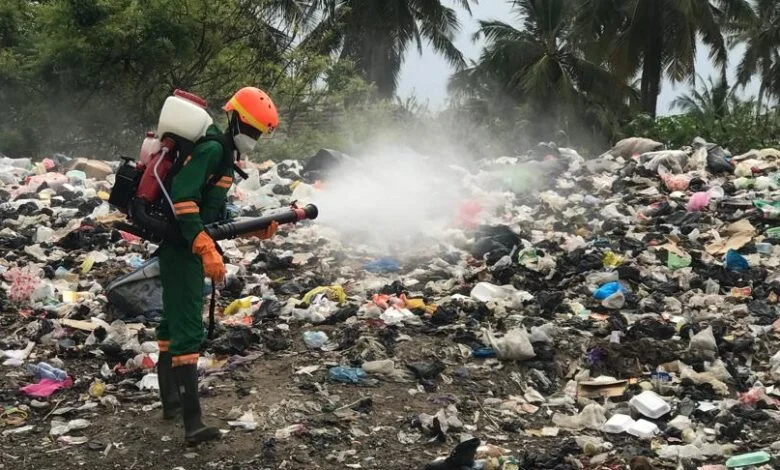
    Zoomlion Ghana Limited, in partnership with the Ga South Municipal Assembly, has carried out fumigation in communities recently affected by a cholera outbreak in the municipality within the Greater Accra Region.

    This initiative is part of the measures taken by the Municipal Health Directorate to prevent further spread of the disease across the region.

    Two weeks ago, four communities—Kokrobite, Bortianor, Oshiyie, and Manhyean—reported nine cholera cases, with three fatalities during that period.

    Evans Nyakotey Doryumu, the Accra District Vector Control Supervisor at Zoomlion, revealed in an exclusive interview with The Ghanaian Times that the Ga South Municipal Health Directorate contacted his team about the outbreak in these communities. In response, Zoomlion swiftly mobilized to disinfect the affected areas.

    Starting on October 26, the fumigation teams began their work in the four communities and planned to extend their efforts to Ashalaja and neighboring areas in the Dome-Abrea Oboum zones.

    Mr. Doryumu explained that the fumigation teams focused on areas such as waste disposal sites, public toilets, affected households, bushy areas, clinics where cases were recorded, and local mosques.

    Attributing the outbreak to poor hygiene practices, he pointed out that only Kokrobite had a designated waste disposal site, while the other communities lacked proper facilities, resulting in haphazard dumping of waste, which poses significant health risks.

    He urged residents to adopt better hygiene practices, such as frequent handwashing with soap and water after using the toilet, eating warm food, and drinking clean water. He also encouraged early medical attention if symptoms arise to prevent the situation from worsening.

    Mr. Doryumu called on the Municipal Health Directorate to increase public awareness about cholera, particularly in schools, where children are most vulnerable.

    Last month, the Ghana Health Service (GHS) confirmed cholera cases in the Ada West and Ada East districts of the Greater Accra Region, raising health concerns.

    The first confirmed case was reported on October 4, 2024, from a patient who showed symptoms of vomiting, diarrhea, and abdominal pain after attending a funeral in Ada East. By October 11, nine cases had been confirmed in both districts.

  • Cholera kills 7 in Central Region

    Cholera kills 7 in Central Region

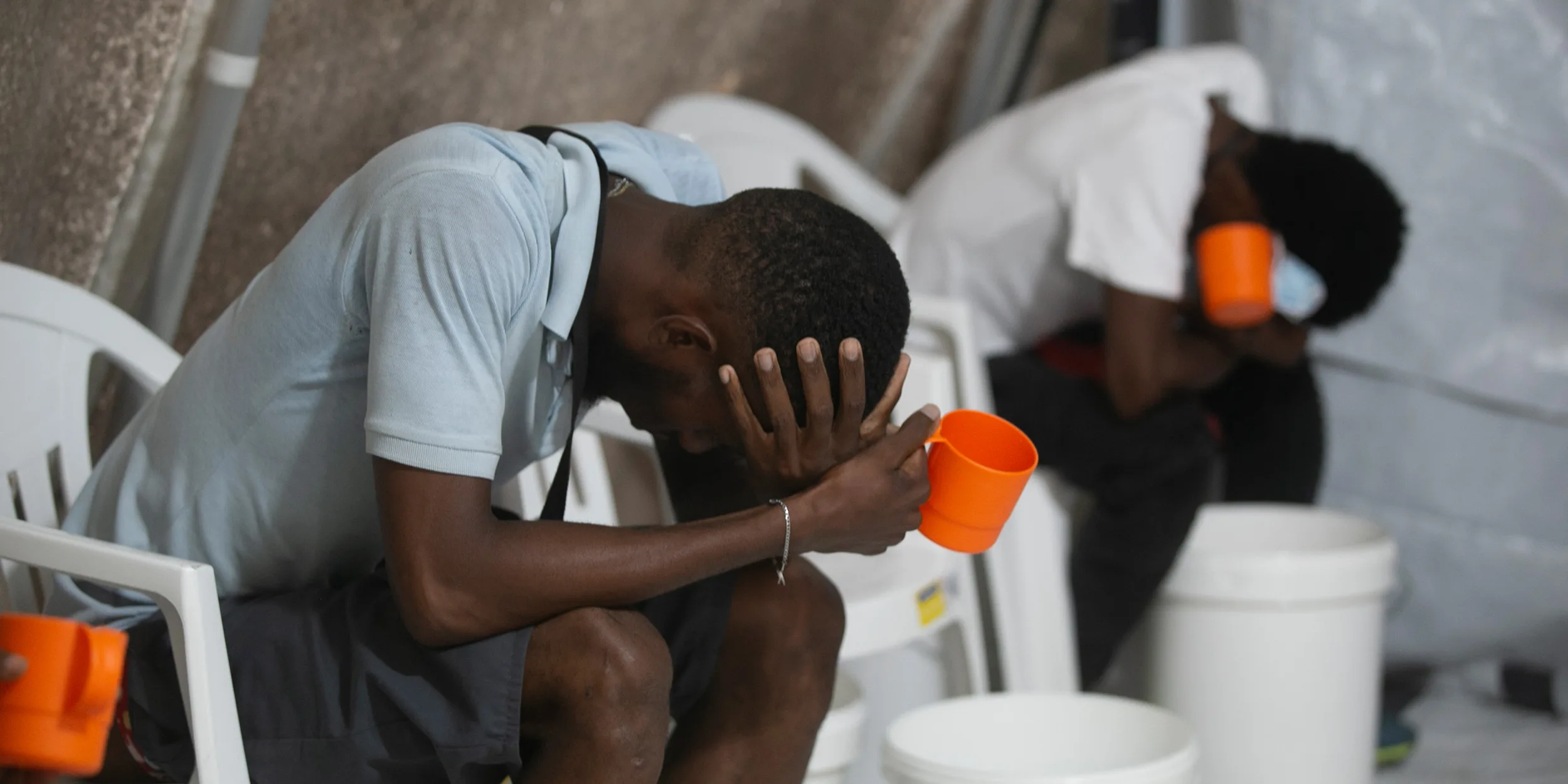
    Seven deaths have been reported from 47 confirmed cholera cases in the Central Region.

    As of yesterday, the Regional Health Directorate recorded 720 suspected cholera cases in the region.

    In a media briefing in Cape Coast, Dr. Agnes Achiamaa Anane, the acting Central Regional Health Director, revealed that cholera cases have been confirmed in eight districts: Cape Coast, Awutu Senya, Awutu Senya East, Gomoa East, Mfantseman, Hemang Lower Denkyira, Effutu, and Agona West.

    She added that four other districts—Komenda-Edina-Eguafo-Abrem (KEEA), Assin South, Assin North, and Gomoa Central—have suspected cholera cases that are yet to be confirmed.

    Dr. Anane explained that four of the deaths occurred in individuals who were already deceased when brought to health facilities.

    Describing the situation as “very alarming,” Dr. Anane expressed concern that some of the suspected cases might turn out to be positive.

    She emphasized the importance of maintaining good sanitation and hygiene practices to prevent the spread of the disease. Additionally, she urged Ghanaians to recommit to washing their hands with soap and running water, as was done during the COVID-19 pandemic.

    Dr. Anane also stressed that anyone experiencing diarrhea should seek immediate medical attention at the nearest health facility.

    “People should not die as a result of cholera since it can be treated,” she said.

    Dr Anane appealed to the media to support efforts by the health directorate in sensitising residents and Ghanaians in general towards adopting measures that would stop the spread of the disease.

    To that end, she urged radio stations to institute programmes and also support the playing of jingles aimed at supporting efforts at curbing the spread of cholera.

    The Central Regional Health Promotion Manager, Mathew Ah­wireng for his part, expressed con­cern about the practice of open defecation among some communi­ties within the Central Region.

    He, therefore, called for a halt in such practices since it contributed towards the outbreak of certain infections such as cholera.

    He stated that, the Regional Health Directorate and other stakeholders were working tire­lessly to eliminate cholera in the region.

    Other stakeholders and mem­bers of the Central Region Risk Communication committees under the health directorate at the programme, called for collabora­tive efforts towards addressing the problem.

    They called for the intensifica­tion of clean-up exercises as well as the enforcement of by-laws of the various assemblies on sanita­tion

  • Global GDP growth rate predicted to reach 2.7% in 2025 – Goldman Sachs

    Global GDP growth rate predicted to reach 2.7% in 2025 – Goldman Sachs

    Goldman Sachs Research anticipates steady global economic growth in 2025, projecting a 2.7% expansion in worldwide GDP, slightly above the Bloomberg consensus and consistent with 2024 estimates.

    The forecast highlights stronger-than-expected performance in the United States, where GDP is expected to grow by 2.5%, surpassing the consensus of 1.9%.

    Meanwhile, the euro area is predicted to see slower growth at 0.8%, falling short of the consensus expectation of 1.2%, amid potential trade challenges linked to new tariffs from the Trump administration.

    In Asia, China’s economy is set to grow by 4.0%, while India is poised for an impressive 6.7% GDP increase, further solidifying its status as one of the fastest-growing major economies.

    “Global labor markets have rebalanced,” Goldman Sachs Research Chief Economist Jan Hatzius wrote in the team’s report, which is titled “Macro Outlook 2025: Tailwinds (Probably) Trump Tariffs.”

    “Inflation has continued to trend down and is now within striking distance of central bank targets,” Hatzius said. “And most central banks are well into the process of cutting interest rates back to more normal levels.”

    US, the world’s largest economy is expected to grow faster than other developed-market countries for the third year in a row. The re-election of US President Donald Trump is predicted to result in higher tariffs on China and on imported cars, much lower immigration, some fresh tax cuts, and regulatory easing.

    “The biggest risk is a large across-the-board tariff, which would likely hit growth hard,” Hatzius added.

  • Bawumia is the intelligent man Ghana needs as president – Samaira Bawumia

    Bawumia is the intelligent man Ghana needs as president – Samaira Bawumia

    Second Lady Samira Bawumia has passionately endorsed her husband, Dr. Mahamudu Bawumia, as the leader Ghana needs to tackle its pressing challenges and chart a path toward accelerated development.

    Speaking at the launch of a book under her “Samira Bawumia Literacy Prize” initiative in Accra on Monday, November 18, she highlighted Dr. Bawumia’s intelligence, innovative thinking, and commitment to solving Ghana’s problems as the qualities that make him the ideal candidate for the presidency.

    “Dr. Bawumia is a very intelligent man. He is an honest man. He works very hard and applies himself, and this is a man bursting with ideas and doesn’t always do the same things and expects different results,” she said.

    Samira Bawumia further underscored her husband’s leadership vision, which she described as focused on creating opportunities for young people and driving sustainable solutions for national progress.

    “Bawumia is always thinking outside the box, and I think that is the kind of leadership we need as young people. We need somebody who will leapfrog Ghana’s development. We need somebody who can look beyond where we are at and say, ‘Look, we can do better and we can do it in a faster way to get to where we are going,’” she added.

    Calling on Ghanaians to support the New Patriotic Party (NPP) flagbearer in the upcoming elections, the Second Lady expressed confidence in Dr. Bawumia’s ability to deliver meaningful change and fulfill the aspirations of the nation.

  • Alan Kyerematen resentful of Bawumia’s rise – NEIP CEO

    Alan Kyerematen resentful of Bawumia’s rise – NEIP CEO

    Chief Executive Officer (CEO) of the National Entrepreneurship & Innovation Programme (NEIP), Kofi Ofosu Nkansah, has criticized Alan Kyerematen for his remarks about former President John Agyekum Kufuor’s endorsement of Dr. Mahamudu Bawumia.

    Reacting to Kyerematen’s comments, Ofosu Nkansah suggested that the Movement for Change flagbearer’s grievances stemmed from frustration over Bawumia’s growing political influence.

    “Someone (Alan Kyerematen) who thought he should have come before John Agyekum Kufuor would obviously have issues with Dr. Mahamudu Bawumia overtaking him,” Ofosu Nkansah posted on Facebook on Monday, November 18.

    His statement came after Kyerematen accused Kufuor of tarnishing his legacy by endorsing Bawumia ahead of the 2024 general elections, describing the act as leaving a “big blot” on the former president’s career.

    Ofosu Nkansah dismissed Kyerematen’s critique, asserting that it was driven more by personal dissatisfaction than objective political analysis.

    He urged Kyerematen to address broader issues rather than direct his frustrations at individuals within the New Patriotic Party (NPP).

  • African leaders push for natural assets to count in GDP

    African leaders push for natural assets to count in GDP

    African leaders urge inclusion of natural capital in GDP calculations.

    In a statement released on November 13 at COP29 in Baku, they highlighted Africa’s forests’ vital roles in carbon capture, pollution control, and soil and water retention.

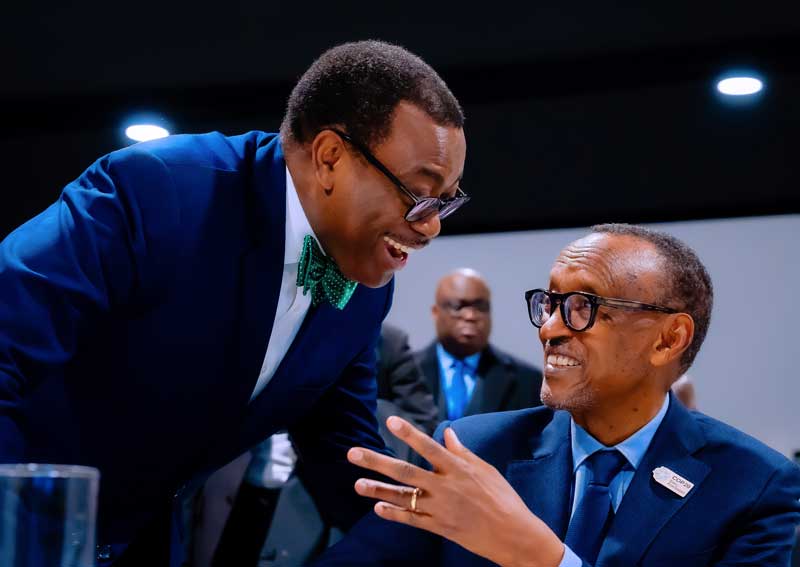
    The event, titled Measuring the Green Wealth of Africa, was co-hosted by President Denis Sassou Nguesso of Congo, Kenya’s Dr. William Ruto (represented by Musalia Mudavadi), and African Development Bank President Dr. Akinwumi Adesina.

    Attendees included Presidents Paul Kagame of Rwanda, Emmerson Mnangagwa of Zimbabwe, and Faure Gnassingbé of Togo.

    President Sassou Nguesso stressed the importance of valuing Africa’s underappreciated natural assets as integral to national wealth.

    “We are doing useful work for Africa and the rest of the world, in contributing to the acceleration of the recognition of the environmental dividend,” he said.

    Kenya’s President Ruto said at the heart of the leaders’ conversation is the need to “ensure that Africa’s ecosystem services such as carbon sequestration and pollution control are valued as global public goods.

    He said, “by appropriately valuing our green wealth, countries can unlock financial flows into investments to boost our economies and even improve our credit ratings.”

    President Paul Kagame of Rwanda said Africa is a key player in the fight against climate. “Unfortunately, Africa’s key obstacle remains access to climate finance.”

    The Rwandan leader said he fully supports the bold agenda to measure the continent’s natural capital and added, “we are not asking for handouts but for the world to pay for something that has tremendous value for all of us.”

    The leaders commended the African Development Bank Group for its leadership and dedication to finding innovative mechanisms to mobilize the required financial and technical support for natural capital accounting and measuring the Green GDP of African countries.

    The Bank has produced a report on “Measuring the Green Wealth of Nations: Natural Capital and Economic Productivity in Africa”.

    Adesina said the report sets out key actions to value and integrate natural capital in the measure of Africa’s GDP.

    “Africa contributes significantly to global public good for tackling climate change with its vast resources of natural capital, its vast natural capital has been undervalued,” he pointed out.

    This situation, he said, “makes Africa to be green rich but cash poor,” adding, “while the GDP of Africa was estimated at $2.5 trillion in 2018, this was 2.5 times lower than the estimated value of its natural capital, evaluated at $6.2 trillion, which partly includes some valuation of the ecosystem services.”

    He stated that, according to the Bank’s initial estimates and “under very conservative assumptions,” Africa’s nominal GDP in 2022 could have risen by $66.1 billion if carbon sequestration was factored in. This amount exceeds the combined GDP of 42 African nations!

    The Bank Group president voiced concern over what he called a ‘carbon grab,’ where numerous African nations are leasing out their extensive lands for carbon credits but receiving minimal benefits in return.

    “While the price of carbon in Europe is high and could be as high as $200 per ton because of the strict EU Emission Trading Standards, carbon price in Africa could be as low as $3 to $10 per ton,” Adesina pointed out.

    Consequently, Adesina said, Africa gets underpaid for carbon because its carbon sinks are undervalued.

    Furthermore, “the sequestered carbon on the lands can no longer be used as part of the nation’s nationally determined contributions,” he said, “that means countries lose sovereignty over their lands.”

    According to Adesina, “the ongoing carbon grab in Africa is a lose-lose proposition.”

    In their statement, African leaders committed to collaborating with other developing nations and regions, including Latin America, the Caribbean, and Asia, to form a powerful global coalition advocating for the inclusion of natural capital in national GDP calculations.

  • Govt falls short of T-Bills target by GHS1.04bn

    Govt falls short of T-Bills target by GHS1.04bn

    Ghana’s government raised GH¢5.180 billion in its latest T-Bill auction, falling short of its GH¢6.228 billion target by GH¢1.04 billion.

    The auction held on November 15, 2024, saw strong interest in the 91-day bills, which attracted GH¢3.942 billion in bids.

    Meanwhile, the 182-day and 364-day bills garnered GH¢653.43 million and GH¢584.16 million in bids, respectively.

    Interest rates were set at 26.96% for the 91-day bills, 27.78% for the 182-day bills, and 29.21% for the 364-day bills.

    This marks the first undersubscription for the government in five weeks.

    The government had aimed to raise GH¢6.896 billion in the auction.

    In a separate development, lawyer Jonathan Amable filed a case at the Supreme Court on November 11, 2024, seeking to block the government’s issuance of treasury bills.

    The lawsuit argues that the government is required by the 1992 Constitution to obtain parliamentary approval before issuing such securities.

    The application, filed at the Supreme Court Registry, warns that continued issuance without this approval could have serious economic consequences. The Attorney General is the defendant in the case.

  • Chamber of Agribusiness Ghana calls for review of grain silo project

    Chamber of Agribusiness Ghana calls for review of grain silo project

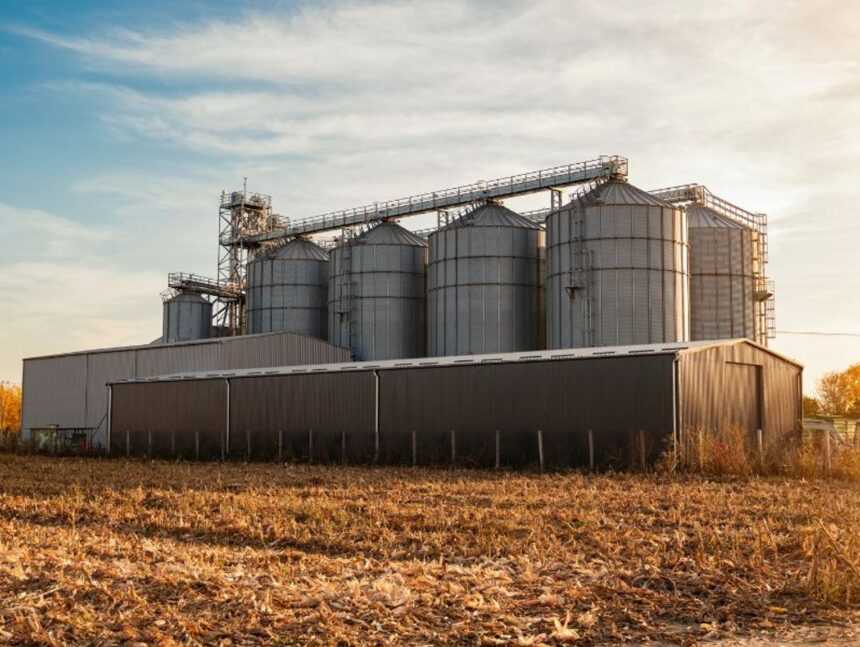
    The Chamber of Agribusiness Ghana has raised concerns about the government’s proposal to build a 60,000-tonne grain silo, questioning both its cost and location.

    The Chamber argues that the $64 million price is too high, given the current economic challenges and the need to prioritize other agricultural developments.

    ‘‘The funds could be better utilised in other areas of agricultural development, such as supporting farmers, improving irrigation systems and enhancing agricultural research’’, Chief Executive Officer at the Chamber of Agribusiness Ghana, Anthony Kofituo Morrison indicated.

    Ghana’s agricultural sector is a key contributor to the national economy, making up around 20 percent of the Gross Domestic Product (GDP) and providing jobs for about 52 percent of the workforce.

    Maize and rice are among the country’s primary crops.

    According to the Chamber’s research, the planned site in the Kwahu and Eastern Regions is not a significant grain-producing area in the country.

    The Chamber of Agribusiness Ghana warns that selecting an unsuitable location could result in inefficiencies and higher costs.

    They recommend investing in silos in major grain-producing areas like the Bono, Ahafo, Ashanti, Volta, and Upper West regions.

    ‘‘A decentralised approach to grain storage, involving smaller, community-based storage units, could be more effective in reducing post-harvest losses and improving food security. There is the need for government to conduct a feasibility study to determine the most suitable location for grain silos’’, Anthony Morrison suggested.

    The Chamber advises the government to ensure the silo project meets industry needs and encourages exploring public-private partnerships to lessen the financial load on the state while enhancing agricultural infrastructure.

    The Chamber of Agribusiness Ghana calls on the government to reassess the silo project and involve key stakeholders, such as farmers, traders, and agribusinesses, in a thorough evaluation of the project’s cost, location, and design.

  • GIPC urges global investors to choose Ghana for political stability

    GIPC urges global investors to choose Ghana for political stability

    The Ghana Investment Promotion Centre (GIPC) has urged global investors to consider Ghana as their preferred investment destination, highlighting the country’s vast potential.

    The centre emphasized that Ghana’s political stability creates a conducive environment for businesses to flourish.

    Additionally, it pointed out that the country is rich in natural resources, strategically located, and offers policies that are favorable to business growth.

    In a post on its X page, the GIPC said “Ghana offers a unique mix of political stability, abundant natural resources, a prime geographic location, and business-friendly policies, making it an increasingly attractive hub for both domestic and international investors looking to expand and thrive.”

    The post added “To all our local and global partners, Diasporas, and viewers, we invite you to be part of this exciting journey. Come Grow in Ghana, and Grow with Ghana.”

  • Embrace credit scoring system to revive Ghana’s economy – ‘Bawumia Identifiable Groups’ campaign team

    Embrace credit scoring system to revive Ghana’s economy – ‘Bawumia Identifiable Groups’ campaign team

    National Deputy Secretary of the ‘Bawumia Identifiable Groups’ campaign team, Dr. Michael Kyeremanteng, has called on Ghanaians to embrace a more effective strategy for addressing the country’s economic challenges.

    He advocated for the introduction of a ‘Credit Scoring System,’ which he described as a solid and practical solution, instead of adopting the ambiguous concept of a ‘24-hour economy.’

    Speaking to a gathering of artisans, entrepreneurs, market women, motor riders, and members of the National Service Personnel Association in Ho, Volta Region, Dr. Kyeremanteng shared his insights on the nation’s economic struggles.

    He linked Ghana’s current economic difficulties to the combined impacts of the COVID-19 pandemic and the ongoing Russia-Ukraine war, which he said have had widespread effects globally.

    Dr. Kyeremanteng noted that these crises disrupted business operations and economic activities, forcing many enterprises, including his own, to shut down.

    He shared a personal example, stating, “From 2015 to 2020, I operated around 15 hospitals in Ghana, alongside two additional facilities in Europe—one in Germany and another in Amsterdam. However, due to the economic impact of COVID-19 and the Russia-Ukraine war, I had to close more than eight of these hospitals, including one in Europe.”

    Dr. Kyeremanteng pointed out that many countries, including those in Europe and North America, faced similar challenges. However, they were able to stabilize their economies and sustain business operations due to the implementation of a solid ‘Credit Scoring System.’

    He stressed that introducing such a system in Ghana could transform the nation’s economy by allowing citizens to conveniently access goods and services using their national identity cards.

    According to Dr. Kyeremanteng, this system would help narrow the gap between the rich and the poor, giving everyone the opportunity to engage in economic activities.

    “In European countries, people—whether rich or poor—can access what they need through a well-structured Credit Scoring System. This system empowers individuals and businesses to make purchases and gradually pay them off, improving financial inclusion and stability,” he noted.

    He urged policymakers to consider this bold approach, citing it as a sustainable solution that could transform the economic landscape of Ghana, rather than relying on superficial strategies that do not address the root causes of the problem.

    Dr. Kyeremanteng criticized the proposal for a ’24-hour economy’ put forward by the main opposition leader, describing it as a shallow policy that fails to address the deeper issues at hand.

    He argued that many businesses and public institutions in Ghana already operated around the clock, yet there had been no significant improvement in the economic situation.

    “Banks and other financial institutions already provide 24-hour services, especially with the availability of mobile interoperability, allowing customers to make transactions even at midnight. However, this has not led to any significant change in our economic situation. How, then, can the ’24-hour economy’ policy be expected to solve these problems?” he questioned.

    Dr. Kyeremanteng further challenged Ghanaians, stating, “We have two leaders offering solutions to our economic problems. One is proposing a bold, effective solution—the ‘Credit Scoring System.’ The other is offering a shallow fix with the ’24-hour economy’ policy. It is now up to you, the people of Ghana, to choose between the bold and the superficial.”

    Dr. Kyeremanteng’s criticism of the ’24-hour economy’ policy highlighted the importance of seeking more comprehensive, systemic solutions. He argued that simply extending operational hours is not enough; what is needed is a focus on financial inclusion and long-term economic stability.

    Mr. Alfred Believe Ahiatsi, the Volta Regional Coordinator for the Identifiable Groups campaign team, also addressed the gathering.

    He emphasized that the purpose of the meeting was to give the youth a platform to express their concerns and challenges within their respective fields.

    The aim, he explained, was to collect valuable feedback and identify practical solutions that could be implemented to support their economic endeavors.

    In conclusion, Dr. Kyeremanteng’s proposal to implement a ‘Credit Scoring System’ stands as a bold and transformative strategy for tackling the underlying structural issues of Ghana’s economy.

  • Over 5,000 head porters trained, with 100 women specializing in driving

    Over 5,000 head porters trained, with 100 women specializing in driving

    Facility Manager of the Kayayei Empowerment Project, Emmanuel Asamoah, has disclosed that the initiative has successfully equipped over 5,000 head porters, popularly referred to as kayayei, with various skills to help them achieve sustainable livelihoods.

    During a meeting with artisans, market women, entrepreneurs, motor riders, and members of the National Service Personnel Association (NASPA) in Ho, Mr. Asamoah emphasized the programme’s dedication to providing vocational training for these women, many of whom migrated from northern Ghana to urban areas in search of better opportunities.

    He shared that as part of the project, around 100 women received training in professional driving. These women are now qualified to operate buses stationed at five facilities established by the Vice President across different regions of the country.

    Mr. Asamoah explained that the training aims to empower participants with practical skills, enabling them to actively participate in the transportation sector while gaining financial independence and improving their overall economic prospects.

    “The driving training for these women marks a significant step in breaking gender barriers in the transportation industry. We are proud to see them take on roles that were previously male-dominated,” he stated.

    Mr. Asamoah highlighted the significant impact of the Kayayei Empowerment Project, stating that it goes beyond skills training by creating opportunities for beneficiaries to improve their livelihoods and support their families.

    He noted that the initiative seeks to help head porters establish stable careers, reducing their reliance on informal and often insecure street-based work.

    “This programme is designed to transform the lives of the beneficiaries, helping them to achieve a better quality of life and secure a stable income,” Mr. Asamoah added.

    He assured the various groups in attendance that their concerns would be taken into account, emphasizing the project’s dedication to addressing the challenges faced by artisans, entrepreneurs, and other participants to help them excel in their fields.

    Mr. Andy Kuffour, a representative of the Identifiable Groups Campaign Team, also spoke at the event. He shared that the Vice President and the party’s flagbearer had directed the team to engage directly with these groups to gain insights into their difficulties and propose practical solutions.

    He highlighted that several issues raised during the meeting were already incorporated into the flagbearer’s development plans.

    Mr. Kuffour further noted that many participants require startup kits to launch their own ventures, adding that the Vice President has begun rolling out such initiatives as part of his broader economic empowerment strategy.

    “The Vice President is committed to ensuring that those who need startup resources to launch their businesses receive the necessary support. This initiative is part of a broader plan to promote entrepreneurship and economic self-reliance,” Mr. Kuffour explained.

    The meeting concluded with a renewed commitment to supporting the youth and various trade groups, aiming to foster a more inclusive and resilient economy in the Volta Region and beyond.

  • Nana Akomea denies supervising sale of STC Kumasi property

    Nana Akomea denies supervising sale of STC Kumasi property

    The Managing Director of Intercity STC Coaches Limited, Nana Akomea, has dismissed reports alleging his involvement in the sale of a company property to the Stadium Hotel in Kumasi.

    In a Facebook post on Sunday, November 17, 2024, Nana Akomea described the claims as baseless, clarifying that the Stadium Hotel is not owned by the state-run STC.

    He explained that the circulating letter, which fueled the allegations, pertains to a tenancy agreement and not the sale of any property, as falsely reported.

    Nana Akomea further addressed the matter in his post, outlining three key clarifications regarding the issue.

    1. No Managing Director of a state-owned company, including STC, has the authority to sell company property.

    2. The Stadium Hotel in Kumasi is not owned by STC, making it impossible for the corporation or its management to sell it.

    3. The letter in question refers to a tenancy agreement between STC and the Stadium Hotel, which was approved by STC’s management and board. This agreement has brought substantial financial benefits to STC.

    The STC Managing Director expressed disappointment in the allegations and urged individuals to read the full document, which clearly outlines the details of the tenancy agreement.

    “I assume the people who posted are patriots expressing concern about a state company. But at least, they should read the document that has raised their concern. It’s a half-page letter that can be read in 30 seconds,” he wrote.

    See Nana Akomea’s post below:

  • Electricity bills have increased due to imported oil, gas for production – Bawumia

    Electricity bills have increased due to imported oil, gas for production – Bawumia

    The recent installation of new electricity meters by the Electricity Company of Ghana (ECG) has left many Ghanaians frustrated over increased power bills.

    Individuals and businesses alike have expressed concerns about having to double their expenses to maintain electricity usage.

    Addressing these concerns during a campaign in the Asante Akim South constituency, the New Patriotic Party (NPP) flagbearer, Dr. Mahamudu Bawumia, attributed the rising electricity costs to the reliance on imported oil and gas for power generation.

    Dr. Bawumia proposed solar energy as a long-term solution to reduce electricity costs. He outlined plans to establish solar farms in all districts to cut electricity bills by up to 50%.

    “Ghana has abundant sunlight, and we can harness it to generate solar power for our energy needs,” he stated, emphasizing that this approach could provide a sustainable solution to the country’s high energy costs.

    His remarks have sparked discussions on renewable energy as a viable means of addressing Ghana’s electricity challenges.

    “Our electricity bill has increased, and I want to introduce a policy to take care of that. The bill has increased because we import oil and gas to produce electricity. I thus want us to use solar power to generate electricity,” Dr. Bawumia stated.

    “The technology exists already, and we have enough sunlight to produce solar power. I will create solar farms in all districts, which will reduce the cost of electricity by 50%,” he added.

    The Electricity Company of Ghana (ECG) has explained that the meter replacement exercise is a key component of its Loss Reduction Programme (LRP), designed to enhance energy management by introducing smart meters.

    These advanced meters are intended to address system inefficiencies, ensure precise readings, and resolve billing issues that were common with the previous models.

    Additionally, the meters feature anti-tampering technology to combat illegal connections and minimize losses resulting from electricity theft.

  • BoG’s $200m sale aids cedi appreciation

    BoG’s $200m sale aids cedi appreciation

    Ghana’s currency, the cedi, has shown some improvement in value against key international currencies, particularly the US dollar, in recent weeks.

    The Bank of Ghana, in an effort to stabilize the cedi, injected over $200 million into the market last week.

    This intervention lowered the exchange rate from GH¢17.20 to GH¢16.55 by the close of business on Friday, November 15, 2024.

    According to the Bank of Ghana’s daily update on November 18, 2024, the cedi is now trading at GH¢15.96 for buying and GH¢15.98 for selling.

    The British pound is trading at GH¢20.16 for buying and GH¢20.18 for selling, while the euro is at a buying price of GH¢16.85 and a selling price of GH¢16.86.

    A survey by GhanaWeb Business conducted at 10:00 AM on November 18, 2024, revealed that some forex bureaus are exchanging the cedi at GH¢16.65 to the dollar, GH¢20.79 to the pound, and GH¢17.45 to the euro.

    Despite these recent gains, the depreciation of the cedi against major currencies remains a significant challenge for Ghana’s economy.

  • Rural Banks call for tax relief to enhance community  support, boost operations

    Rural Banks call for tax relief to enhance community support, boost operations

    The Association of Rural Banks has urged the government to lower the corporate tax rate for Rural and Community Banks (RCBs) as a special measure to foster the growth of the rural economy and the nation as a whole.

    They are advocating for a reduction from the current 30 percent to a range of 15 to 18 percent. This request is based on the substantial corporate social responsibility (CSR) initiatives these banks provide to the communities where they operate.

    Eric Danin, the association’s national president, explained that granting this tax reduction would enhance support for underserved communities and promote the sustainable growth of RCBs.

    “We, therefore, humbly propose a revision of the corporate tax specifically to between 15 percent and 18 percent for RCBs as a special incentive to grow the rural economy and, by extension, strengthen Ghana’s economy for up to about 79 percent or more,” he said.

    Locked-up funds

    Speaking at the 23rd Biennial General Meeting (BGM) of the Association of Rural Banks in Kumasi, Mr. Danin urged authorities to expedite the release of locked-up funds belonging to member banks.

    He explained that several member banks have significant amounts of money tied up due to the government’s financial sector clean-up exercise and the Domestic Debt Exchange Programme (DDEP).

    This situation, he said, has adversely affected the profitability of some banks, leaving them unable to meet investor expectations.

    Mr. Danin noted that despite the government’s announcement of a GH₵1.5 billion fund release to resolve the issue, Rural and Community Banks (RCBs) were excluded from the bailout.

    He appealed to the government to urgently release the locked-up funds to impacted RCBs to stabilize their operations and improve liquidity.

    Mr. Danin assured members that the association’s secretariat is committed to pushing for the recovery of these funds to support the affected banks.

    Corporate governance directives

    The president expressed concerns over the retroactive application of the corporate governance directive introduced by the Bank of Ghana two years ago. While acknowledging that the directive aims to regulate and ensure sound, effective and efficient banking operations, he noted challenges in its implementation.

    He noted that the corporate governance directive, implemented on March 31, 2022, stipulates a maximum twelve-year tenure for Chief Executive Officers (CEOs), with the term starting from April 1, 2022. He argued that any attempt to apply the directive retroactively would violate Article 107 of Ghana’s 1992 Constitution, which prohibits retrospective laws.

    “Some of these CEOs were regularly appointed and had the legitimate expectation to work until the compulsory retirement age of 60. If the regulator deems it fit to cap the tenure of CEOs, we embrace it in the spirit of good corporate governance; but certainly, we cannot accept any other interpretation of Article 107 of the 1992 Constitution to make it apply from a date long before the implementation of the directive,” he stressed.

    Article 107 of Ghana’s Constitution proscribes Parliament from making laws to have retrospective effect; it simply means that no other regulation or policy directive by any constitutional body created under the Constitution shall be made to operate retrospectively.

    We, therefore, call on the regulator to respectfully implement the corporate governance directive from April 1, 2022, and not any other date before April 2022 to avoid the unconstitutionality of implementing what is otherwise a very good directive,” Mr. Danin added.

    For his part, the Managing Director of ARB Apex Bank, Alex Kwasi Awuah, also in a speech, touted the achievements RCBs have made since the establishment of the first rural bank at Agona Nyakrom in the Central Region in 1976.

    Currently, RCBs have over five million active customers with current and savings accounts; and as of the end of June 2024, they held assets that constituted 4.25 percent of the entire assets of the universal banking sector, amounting to GH₵13.75billion. Additionally, the RCBs hold an amount of GH₵11.98billion in total deposits, making them a significant force in the nation’s financial services industry.

    Mr. Awuah further stated that the ARB Apex Bank, which is the central bank for RCBs, has been redefining itself as a key business enabler and partner to develop and enhance operations throughout the RCBs over the years.

    Through a concession agreement, Mr. Awuah noted that ARB Apex Bank has purchased and provided 15 armoured bullion vans, valued at GH₵40million, to RCBs nationwide in order to improve the security of their assets and the safety of bank employees in specific operations.

    A number of the vehicles have been placed with regional offices of ARB Apex Bank to aid specific management for those banks that might not be able to buy their own vans, while other well-endowed RCBs have also received assistance in purchasing their own vans through our concessionary loan facility.

    The 23rd Biennial General Meeting and 5th Rural Banking Excellence Awards was held on the theme ‘Building a resilient economy: The role of the rural and community banks’.

  • Fitch projects Ghana’s exit from sovereign default by July 2025

    Fitch projects Ghana’s exit from sovereign default by July 2025

    Fitch Ratings is projected to remove Ghana from sovereign default status by July 2025, as it expects the country to finalize its external debt restructuring by the end of June 2025.

    The agency is also hopeful that Ghana will wrap up the non-bond debt restructuring by the close of this year.

    This outlook was shared by the UK-based firm during a recent webinar focused on debt restructuring in Ghana, Zambia, and Ethiopia.

    Thomas Garreau, Associate Director for Sovereign Ratings in Europe, the Middle East, and Africa at Fitch, commented,…

    “For Ghana, we also expect the completion of the common framework restructuring by the first half of next year. There are some elections, and that could delay the completion of the process, hence our forecast for next year.”

    In January 2024, Ghana reached an agreement with the Official Creditor Committee (OCC) regarding the framework for official debt treatment.

    The exchange of Eurobonds occurred in October 2024.

    So far, approximately US$14.2 billion of Eurobonds, including Principal Deferred Interest (PDIs), have been restructured.

    This restructuring resulted in a 6.2% reduction of the country’s Gross Domestic Product.

    Additionally, interest payments have been reduced by 8% of Fitch’s projected revenue for 2024, 5% for 2025, and 4% for 2026.

  • My daughter is my only priceless asset – Nana Ama McBrown

    My daughter is my only priceless asset – Nana Ama McBrown

    Ghanaian actress Nana Ama McBrown has firmly expressed that her daughter is her most treasured possession, underscoring her commitment to support her under all circumstances, even if she becomes pregnant as a teenager.

    The actress, known for her role as a mother and advocate for family values, shared her thoughts on Fakye Television, where she opened up about her protective and supportive stance toward her daughter.

    McBrown made it clear that her daughter is her most precious asset, emphasizing that no matter what challenges may arise, she would never abandon her. In a candid conversation, she stated that she would ensure her daughter feels loved, supported, and empowered, especially in times when others may pass judgment.

    “I will not let my daughter abort her pregnancy on any day. I am here to support her every step of the way. If she gets pregnant at 16, she will give birth at seventeen. What I will do is to see any young man she is involved with and his family.

    “I will inform the family not to scare their son in case whatever he’s involved in with my daughter leads to an unwanted pregnancy. I am ready to take that responsibility because she is my only priceless asset, and I don’t want someone to make me lose her,” she said.

    The actress emphasized that her daughter’s happiness, emotional well-being, and future are her primary concerns, and she would not allow societal pressures or the opinions of others to dictate how she would support her child.

    McBrown’s strong words reflect her deep maternal instincts and her belief in the power of family solidarity. She believes that a mother’s role is to protect her child from harm and ensure they feel empowered to make their own choices in life.

  • I won’t abandon my daughter if she gets pregnant at 16 – Nana Ama McBrown

    I won’t abandon my daughter if she gets pregnant at 16 – Nana Ama McBrown

    Ghanaian actress Nana Ama McBrown has firmly stated that she would not abandon her daughter if she were to become pregnant as a teenager.

    She emphasized that her daughter is invaluable to her, and she would not allow anyone’s insecurities or their family’s pressures to affect her.

    McBrown made it clear that no matter the situation, she would not allow the parents of the boy involved to pressure or influence her daughter’s decisions.

    Speaking on Fakye Television, she confidently asserted that her daughter’s well-being and happiness are her top priority, and she will ensure her daughter feels valued and supported, regardless of an unwanted pregnancy and or external opinions.

    “I will not let my daughter abort her pregnancy on any day. I am here to support her every step of the way. If she gets pregnant at 16, she will give birth at seventeen. What I will do is to see any young man she is involved with and his family.

    “I will inform the family not to scare their son in case whatever he’s involved in with my daughter leads to an unwanted pregnancy. I am ready to take that responsibility because she is my only priceless asset, and I don’t want someone to make me lose her,” she said.

    “I will not let my daughter abort her pregnancy on any day. I am here to support her every step of the way. If she gets pregnant at 16, she will give birth at seventeen. What I will do is to see any young man she is involved with and his family.

    “I will inform the family not to scare their son in case whatever he’s involved in with my daughter leads to an unwanted pregnancy. I am ready to take that responsibility because she is my only priceless asset, and I don’t want someone to make me lose her,” she said.

    She reminded viewers that she has only one child and will do everything within her power to ensure that her daughter has the best life.

  • Bawumia’s understanding of economics, his innovative policies make him stand out – Kufour

    Bawumia’s understanding of economics, his innovative policies make him stand out – Kufour

    Former President John Agyekum Kufuor has praised Vice President and New Patriotic Party (NPP) Flagbearer, Dr. Mahamudu Bawumia, for his innovative policies and deep understanding of complex financial matters, describing these traits as key qualities that make him a strong contender for the presidency.

    In a live media interaction, Mr. Kufuor highlighted Dr. Bawumia’s exceptional track record as an economist, noting his significant contributions to Ghana’s economic landscape even before taking office as Vice President.

    “Dr. Bawumia’s understanding of economics and his innovative policies have made him stand out. His leadership ideologies align with the aspirations of every Ghanaian. I firmly believe he has what it takes to elevate this country,” Mr. Kufuor stated.

    He further emphasized that at this critical juncture in Ghana’s development, the nation needs a leader with vision, experience, and the technical expertise to address its pressing challenges.

    Addressing claims that Dr. Bawumia had lobbied for his endorsement, the former President denied such allegations. “He hasn’t made me a spokesperson or lobbied me to speak for him. My advice is grounded in my own observations of the political landscape and my faith in his abilities,” he clarified.

    Mr. Kufuor’s remarks come as Dr. Bawumia prepares to contest the 2024 presidential election, with many looking to his leadership to navigate the nation’s economic challenges.

  • Relying solely on Ghanaian engineers, technicians for maintenance work saved Ghana US$250m – Ghana Gas

    Relying solely on Ghanaian engineers, technicians for maintenance work saved Ghana US$250m – Ghana Gas

    The Ghana National Gas Company Limited (GNGCL) has successfully reduced its operational costs by over US$250 million by relying solely on the expertise of Ghanaian engineers and technicians for the maintenance and operation of its gas processing plant.

    In April 2017, local engineers took over the plant’s operations from the Chinese contractors, Sinopec, resulting in monthly savings of approximately US$3 million. Dr. Ben K. D. Asante, the CEO of Ghana Gas, shared these impressive figures during a media briefing in Accra on Sunday.

    Dr. Asante shared that approximately 1,000 permanent and contracted Ghanaian staff now oversee the control room and other operating units of the facility. “The takeover of the operations by Ghanaian engineers and technicians is part of the indigenization process of the gas processing plant and instills confidence in the people that they can perform when given the opportunity,” he said.

    Since the handover, the Ghanaian engineers have managed three major successful shutdowns of the plant for maintenance. Dr. Asante also pointed out the team’s role in “pigging of onshore pipelines” and ensuring pipeline integrity management. Additionally, the company has achieved ISO 45001 certification for occupational health, safety, and environmental management systems, with Dr. Asante adding, “There is no loss-time to injury.”

    On GNGCL’s corporate social responsibility efforts, Dr. Asante mentioned that the company had completed over 400 projects in healthcare, education, water and sanitation, and sports facilities across all 16 regions of Ghana, with more than 80 ongoing projects. He stated, “As good partners of the community, the company gives back to society through its corporate social responsibility (CSR) projects, including education, health, water and sanitation, road infrastructure, support for sports development, skills training, and livelihoods empowerment programmes.”

    Dr. Asante also highlighted GNGCL’s critical role in the country’s energy sector, saying, “The GNGCL currently supplies natural gas for power generation, thus providing about 80 percent of gas for thermal power generation, and supplied six percent of the lean gas and condensate for liquefied petroleum gas (LPG), covering 50 percent of the domestic LPG requirements.”

    GNGCL, established in July 2011, is responsible for building, operating, and owning natural gas infrastructure in Ghana, including the gathering, processing, transporting, and marketing of gas and its derivatives.

  • Minister urges FWSC staff to uphold quality service amid new facility

    Minister urges FWSC staff to uphold quality service amid new facility

    The Minister of Employment, Labour Relations, and Pensions, Ignatius Baffour-Awuah, has emphasized that while the inauguration of the new office complex for the Fair Wages and Salaries Commission (FWSC) marks a significant achievement, it should not be seen as an excuse for complacency.

    During the official opening of the facility on Friday, November 15, the Minister urged FWSC staff to ensure that the quality of service they deliver matches the high standards of the newly upgraded workspace.

    “I am confident that the new edifice will give you the self-satisfaction you need to work in an efficient and effective manner,” he said to the gathering, which included mostly workers of the Commission.”

    “You can have the best of office buildings, but if the service is poor, it means nothing. I want to entreat the staff to justify why the state invested in the facility,” he said.

    He went on to reiterate the government’s commitment to fostering an environment where workers’ well-being is prioritized, which in turn enhances productivity across the public sector.

    The newly inaugurated office complex, envisioned by President Akufo-Addo, is designed to provide FWSC with a modern and well-equipped environment to improve service delivery.

    The Minister concluded by expressing confidence that the new edifice would provide the staff with the self-satisfaction needed to work efficiently and effectively, while also urging them to focus on fulfilling the Commission’s critical mandate of advising the government on wage policies and workers’ conditions.

  • Only 6% of older people in Kumasi properly exposed to sunlight – KNUST study reveals

    Only 6% of older people in Kumasi properly exposed to sunlight – KNUST study reveals

    A recent investigation conducted by the Kwame Nkrumah University of Science and Technology (KNUST) has uncovered that merely 6% of elderly individuals in Kumasi receive sufficient sunlight exposure, a vital element for the natural production of vitamin D.

    According to the findings, published in the October 2024 issue of the Journal of Science and Technology, approximately 70% of older adults in the study were found to be vitamin D deficient.

    This deficiency is often associated with limited exposure to sunlight and inadequate consumption of foods rich in vitamin D.

    Prolonged vitamin D insufficiency has been linked to issues such as weakened immune function and reduced muscle strength. Inadequate levels of the vitamin can negatively impact muscle performance and overall health, particularly in older populations.

    The research involved analyzing blood samples to determine vitamin D levels and administering structured questionnaires to assess sunlight exposure and dietary habits among 125 adults aged 55 and above who visited the KNUST Hospital. The study also included body composition measurements.

    Findings revealed that only 22.3% of participants regularly consumed vitamin D-rich foods. This poor dietary intake, coupled with low sunlight exposure, heightened the risk of vitamin D insufficiency in this age group.

    Additionally, the study highlighted that 60.8% of participants were classified as overweight or obese, while 48% had diminished muscle mass.

    The research team, headed by Prof. Mrs. Ibok Oduro from the Department of Food Science and Technology, suggested several remedies. They emphasized the importance of spending more time outdoors to increase sunlight exposure, eating vitamin D-rich foods such as oily fish, fortified cereals, and dairy products, and engaging in moderate physical activity to enhance muscle health and body composition.

  • New office complex for the Fair Wages and Salaries Commission (FWSC) opened

    New office complex for the Fair Wages and Salaries Commission (FWSC) opened

    The Minister for Employment, Labour Relations, and Pensions, Ignatius Baffour-Awuah, has formally opened a new office complex for the Fair Wages and Salaries Commission (FWSC).

    The ceremony, held on Friday, November 15, marks a significant milestone in the government’s continued efforts to improve the working conditions of public institutions and boost their operational effectiveness.

    During his speech, the Minister emphasized the government’s dedication to fostering decent work opportunities and ensuring fair compensation across the country.

    He reiterated the government’s commitment to establishing a supportive environment that prioritizes workers’ well-being and boosts productivity in the public sector.

    The new office complex, conceived by President Akufo-Addo, aims to provide the FWSC with a state-of-the-art, fully equipped space to improve service delivery.

    Mr. Baffour-Awuah emphasized that the upgraded facility would greatly strengthen the Commission’s ability to effectively perform its vital functions in the public sector.

    The opening of the office complex represents a major advancement for the FWSC, which is crucial in advising the government on wage policies, salaries, and the working conditions of public sector employees.

    In concluding his speech, the Minister expressed optimism that the new facility would enable the Commission to fulfill its responsibilities more efficiently, further advancing the government’s wider goal of enhancing public sector productivity and guaranteeing fair compensation for all workers.

    “I am confident that the new edifice will give you the self-satisfaction you need to work in an efficient and effective manner,” he said to the gathering, which included mostly workers of the Commission.”

    “You can have the best of office buildings, but if the service is poor, it means nothing. I want to entreat the staff to justify why the state invested in the facility,” he said.

  • Bawumia hasn’t made me his spokesperson, but deserves presidency – Kufuor

    Bawumia hasn’t made me his spokesperson, but deserves presidency – Kufuor

    Former President John Agyekum Kufuor has asserted that Vice President and Flagbearer of the New Patriotic Party (NPP), Dr Mahamudu Bawumia has not lobbied him to speak in his favour ahead of the upcoming 2024 elections.

    Mr Kufuor said this on the back of a question posed by Kwame Adinkra of Pure FM about why he believes Dr Bawumia is the right candidate to lead Ghana.

    The ex-president stressed on Dr Bawumia’s exceptional track record as an economist, noting his significant contributions to the country’s economic landscape even before assuming the role of Vice President.

    He emphasised that Dr Bawumia’s deep understanding of the economy and his ability to manage complex financial matters make him a strong contender for the presidency.

    The former President further underscored that Dr Bawumia is the person Ghana needs at this critical juncture in its development.

    According to him, the country requires a leader with the vision, experience, and technical expertise to drive the nation forward, especially in the face of ongoing economic challenges.

    “Dr Bawumia’s understanding of economics and his innovative policies have made him stand out. His leadership ideologies align with the aspirations of every Ghanaian. I firmly believe he has what it takes to elevate this country.”

    “He hasn’t made me a spokesperson or lobbied me to speak for him. My advice is grounded in my own observations of the political landscape and my faith in his abilities,” Kufuor stated.

  • TEWU-TUC’s planned strikeover unresolved service conditions to come off today

    TEWU-TUC’s planned strikeover unresolved service conditions to come off today

    The Teachers and Educational Workers Union of the Trades Union Congress (TEWU-TUC) will commenced a nationwide strike today, Monday, November 18, to demand action from the government on unresolved issues concerning their conditions of service.

    TEWU-TUC has voiced deep dissatisfaction with the delays in finalizing, signing, and enforcing updated service conditions for employees under the Ghana Education Service (GES), the Ghana Library Authority, the Museums and Monuments Board, and Public Technical and Traditional Universities.

    Negotiations for these improvements have been ongoing for years without resolution, causing mounting frustration among union members.

    The union has stated that the prolonged inaction is unacceptable and insists that taking industrial action is now the only viable way to compel the government to act.

    According to TEWU-TUC, the unresolved matters not only harm the welfare of its members but also undermine the effective operation of critical institutions.

    In response, the National Labour Commission (NLC) has scheduled a meeting with TEWU-TUC and other stakeholders for Wednesday, November 20, 2024, to mediate the dispute and work toward a resolution.

    The strike is expected to disrupt activities across the affected sectors, with TEWU-TUC affirming that the industrial action will continue until their demands are fully addressed.

    The union is urging the government to expedite the finalization and implementation of the revised conditions of service to address the concerns of its members.

  • Fameye says Sarkodie is Africa’s biggest artiste

    Fameye says Sarkodie is Africa’s biggest artiste

    Highlife and Hiplife musician Fameye has named Sarkodie as Africa’s most biggest artist today.

    Highlighting the rapper’s influence on the continent’s music scene, Fameye praised Sarkodie for his remarkable career milestones and significant contributions to the industry.

    According to Fameye, Sarkodie’s relentless efforts in building a solid brand have not only elevated his own career but also opened doors for upcoming artists.

    Fameye shared these sentiments during an interview with Kwadwo Sheldon Studios.

    “Putting everything aside, I think Sarkodie is the biggest artiste in Africa. He has worked so hard to earn that spot,” he said.

  • NLC summons TEWU over intended strike action

    NLC summons TEWU over intended strike action

    The National Labour Commission (NLC) has called on the Teachers and Educational Workers’ Union (TEWU) of TUC to appear before it regarding their planned strike action.

    The NLC, in a statement, appealed to TEWU to reconsider its decision and re-engage in negotiations to address their concerns.

    TEWU had announced on Thursday, November 14, its plan to begin an indefinite strike starting Monday, November 18, 2024. The union expressed frustration over delays in finalizing and implementing Conditions of Service agreements for staff in institutions such as the Ghana Education Service (GES), Ghana Museums and Monuments Board, Public Technical Universities, and Public Universities.

    While acknowledging receipt of TEWU’s strike notification, the NLC emphasized the legal requirements under Section 159 of the Labour Act, 2003 (Act 651), which outlines the processes unions must follow before embarking on industrial actions.

    The Commission has scheduled a meeting with TEWU and other stakeholders for Wednesday, November 20, 2024, to discuss the issues and seek an amicable resolution.

    Additionally, the NLC has instructed employers, including the Fair Wages and Salaries Commission (FWSC), to submit a comprehensive status report on the unresolved matters by Tuesday, November 19, 2024.

  • Armed robbers bolt with over GH₵1m following raid of cocoa depot in Fomena

    Armed robbers bolt with over GH₵1m following raid of cocoa depot in Fomena

    Suspected armed robbers have carried out a daring attack at the Agro Ecom Company Limited Cocoa Depot in Fomena, Ashanti Region, making off with over GH₵1 million in cash.

    The incident occurred on Thursday evening at about 6:20 PM in Adansi Ansah, where four masked men armed with AK-47 rifles stormed the facility. In addition to the money, the robbers seized mobile phones and other valuables.

    During the robbery, they fired at a GMC Terrain 2 vehicle with registration number GS 9576-22, which belongs to the District Officer. Despite the gunfire, the depot manager, who was driving the vehicle at the time, managed to escape unharmed.

    Police were quickly notified of the incident, but the suspects fled into a nearby forest before they could be apprehended.

    A joint task force from the New Edubiasi and Adansi Fomena police units has launched a manhunt, focusing on surrounding communities where the suspects are believed to be hiding.

    Authorities are appealing to the public for any information that could lead to the arrest of the culprits.