Author: Amanda Cartey

  • Kufuor committed grave atrocities against me, but I hold nothing against him – Tsatsu Tsikata

    Kufuor committed grave atrocities against me, but I hold nothing against him – Tsatsu Tsikata

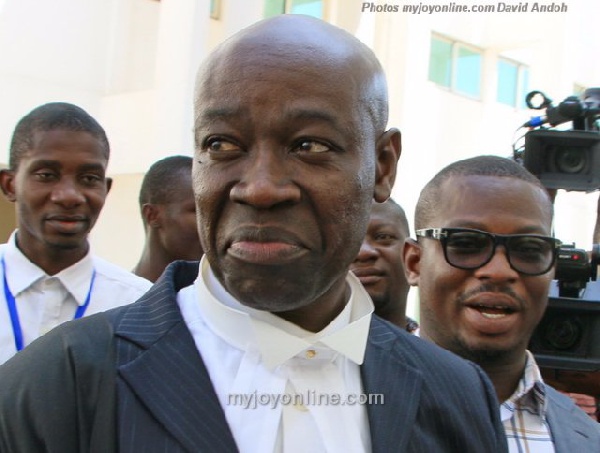
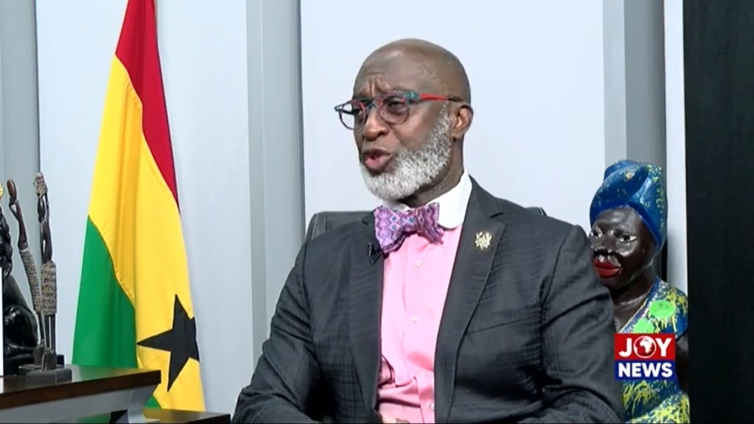
    Renowned legal expert Tsatsu Tsikata has opened up about the events leading to his imprisonment, pointing fingers at former President John Agyekum Kufuor for orchestrating what he describes as grave injustices against him.

    In a candid interview with GHOne TV, Tsikata alleged that Kufuor was resolute in his efforts to see him behind bars, employing every means to ensure his incarceration.

    Despite these events, which he perceives as a violation of his fundamental human rights, Tsikata emphasized that he harbors no bitterness toward the former president. He shared that he has maintained a cordial demeanor during their encounters, choosing forgiveness over resentment.

    “There is nothing to forgive. I say to people, I have never had any bitterness or grievance against President Kufuor. He did atrocious things against me for whatever reason. He was determined to have me go to prison, and I did go to prison.

    “It was orchestrated by him on June 18, 2008. I was in prison for five months, but by God’s grace, I didn’t die in prison. I was evacuated to the hospital, and by God’s grace, I’m still alive,” he added.

    Tsatsu Tsikata also opened up on why he rejected a presidential pardon from Kufuor, stating that the former president acted in bad faith.

    “On his last day in office, he offered me a pardon, but I rejected it because it was in bad faith. It was clearly in bad faith. He had orchestrated everything. The day I was being sentenced, the court had not even announced it was going to give a decision because the trial hadn’t ended. It had been set up for me to go to jail, and I went,” he stated.

    Sharing his lessons from the ordeal, Tsatsu Tsikata stated that the five months at the Nsawam Medium Security Prison exposed him to the horrible incidents and injustices of Ghana’s criminal system.

    According to him, while there, he crossed paths with people who had been on remand for more than a decade with their cases not heard.

    The legal luminary stated, “I actually thank God for that experience. I tell people that going to Nsawam Prison took me to another faculty of law. I engaged with many who were in prison, and I realised that there were people suffering injustices who did not have the kind of recourse that I had.

    “I had the opportunity of a lawyer who gave it all to protect my rights. A lot of those people didn’t have that. I saw people who were in prison for 12 years, and nobody has gone to court on their behalf,” he said.

    Tsatsu acquitted and discharged by Court of Appeal

    After eight years of legal battle, Tsatsu Tsikata was cleared of the charges, and the conviction was reversed unanimously by the Court of Appeal, which acquitted and discharged him.

    Justice Dennis Adjei said there was a miscarriage of justice when an Accra Fast Track High Court on June 18, 2008, found him guilty on three counts of willfully causing financial loss of GH¢230,000 to the state and another count of misapplying public property.

    In a 2021 interview with KSM, he said of the saga: “I think I said it nicely. I wrote him a letter on my hospital bed, and I said I will not accept his pardon, and I wouldn’t accept it.

    “By then, I already had an appeal pending against the decision that had been taken. I wanted to be vindicated, not pardoned. When you are pardoned, it means that your conviction still stands, but the penalty has been wiped away.”

    Expressing delight at the overturned verdict, Tsikata quoted Psalm 94:15: “Justice will again be found in the courts, and all righteous people will support it,” and emphasised that, indeed “justice has been found in the courts.”

  • Two critically injured after clash between Immigration officers and Shia residents

    Two critically injured after clash between Immigration officers and Shia residents

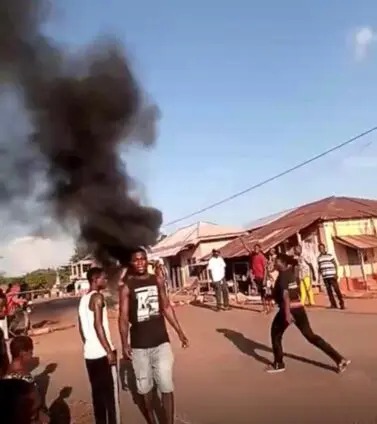
    Tensions flared in Shia, a border community in the Ho Municipality, as a confrontation between residents and officers of the Ghana Immigration Service (GIS) left two people critically injured.

    The unrest reportedly began on November 14 after a dispute between an immigration officer and some commercial motorcycle (okada) riders. The situation escalated on Friday, November 15, culminating in violent clashes.

    Eyewitness Kuzor Jonas recounted that heavily armed Immigration officers entered the community around 4:00 PM, triggering further outrage among residents. In retaliation, the aggrieved community members blocked access to the Immigration Service office and burned lorry tyres in protest.

    Two individuals sustained serious injuries during the confrontation and were rushed to a nearby health facility for treatment.

    Youth leader Ekro Yao described the incident as a culmination of rising tensions in the area, urging authorities to intervene and restore calm.

  • Vacant seats saga: All the legal terminologies explained

    Vacant seats saga: All the legal terminologies explained

    Recent tensions between Ghana’s Judiciary and Legislature have underscored several critical legal and parliamentary terms, such as plaintiff, defendant, writ, ex parte, reliefs sought, adjournment sine die, quorum, bona fide, and jurisdiction.

    These terms are integral to understanding the mechanisms by which Ghana’s constitutional framework addresses rights, processes, and governance. This article explores these terms in detail, especially in light of a recent legal challenge led by Alexander Afenyo-Markin, an NPP leader in Parliament, who contested Speaker Alban Bagbin’s decision to declare certain parliamentary seats vacant.

    Plaintiff and Defendant: Roles in the Legal Dispute

    In legal proceedings, a plaintiff is the party who initiates a lawsuit, while the defendant is the party against whom the lawsuit is filed.

    In this case, Alexander Afenyo-Markin acted as the plaintiff by bringing the issue to court on behalf of his colleagues, challenging the Speaker’s declaration of certain parliamentary seats as vacant. He contended that this decision infringed on constitutional rights to fair representation and due process, asserting that the declaration violated the constitutional provisions ensuring MPs’ rightful presence in Parliament.

    Speaker Alban Bagbin was the defendant, as his decision to declare the seats vacant was the subject of the legal challenge. Afenyo-Markin, representing the interests of the affected MPs, argued that the Speaker’s declaration lacked a constitutional basis and that the MPs’ rights to representation were being undermined.

    The plaintiff cited Articles 12 to 33 of the Ghanaian Constitution (which cover fundamental human rights) and Article 19, which ensures the right to a fair hearing.

    Example:

    Alexander Afenyo-Markin (plaintiff) argued that Speaker Bagbin’s (defendant) action in declaring seats vacant infringed upon MPs’ constitutional rights to represent their constituencies, calling for judicial intervention.

    Writs and Reliefs Sought: Enforcing Constitutional Remedies

    A writ is a formal court order that instructs a party to undertake or cease a particular action. In this instance, Afenyo-Markin, on behalf of the affected MPs, filed writs with the Supreme Court to challenge the constitutionality of the Speaker’s declaration of vacant seats.

    Accompanying these writs were reliefs sought—the specific remedies requested from the court, which included reversing the Speaker’s decision and reinstating the MPs’ seats.

    Article 33 of Ghana’s Constitution empowers individuals and groups to seek judicial remedies when they believe their rights have been compromised. Afenyo-Markin’s writs cited this provision, underscoring the MPs’ right to pursue redress through the courts as a constitutional safeguard to maintain fair representation and due legislative process.

    Example Reliefs Sought:

    Injunctions to halt the Speaker’s declarations of seat vacancies.

    A declaration that the vacancy declarations contravened constitutional protections, violating the MPs’ rights to maintain their legislative seats.

    Ex Parte Applications: Ensuring Immediate Judicial Intervention

    Ex parte, meaning “by or for one party” in Latin, pertains to applications made by one party without notifying the opposing side, typically in urgent situations. In this dispute, Afenyo-Markin filed ex parte motions to immediately suspend the Speaker’s decision, arguing that such actions could irreparably impact the MPs’ roles in Parliament if allowed to take effect before a full hearing.

    The ex parte application was intended to provide immediate relief, preventing the Speaker’s declaration from impacting parliamentary representation during the judicial review process.

    According to Article 19 of the Ghanaian Constitution, all parties are entitled to due process and a fair hearing, but ex parte motions are permissible in situations requiring urgent action to prevent harm. Afenyo-Markin argued that letting the Speaker’s declaration stand, even temporarily, would disrupt the MPs’ representation of their constituents and the overall functioning of Parliament.

    Example Use:

    Afenyo-Markin’s ex parte application sought an injunction against the Speaker’s action, emphasizing the need to suspend the vacancy declaration until a full court hearing could assess its constitutionality.

    This use of ex parte motions reflects the Ghanaian legal system’s allowance for immediate intervention in cases of potential harm while ensuring a full review at a later stage.

    Adjournment Sine Die and Quorum: Protecting Parliamentary Procedure

    Adjournment sine die means adjourning “without a day” set to reconvene, essentially suspending legislative sessions indefinitely. In response to the lack of quorum—the minimum number of MPs required for parliamentary business—Speaker Bagbin adjourned Parliament sine die.

    According to Article 102 of the Ghanaian Constitution, a quorum in Parliament requires the presence of at least one-third of all Members of Parliament. This provision ensures that Parliament’s decisions are backed by a minimum representative attendance.

    Speaker Bagbin cited the lack of quorum as the reason for his decision to adjourn proceedings sine die, arguing that legislative actions conducted without the constitutional minimum would be invalid. This reflects the Constitution’s procedural requirements, emphasizing the importance of quorum to maintain the legitimacy of legislative actions.

    Example Use:

    Speaker Bagbin declared, “Without quorum, we cannot proceed with any parliamentary business,” emphasizing the necessity of adhering to the constitutional quorum requirements.

    By adjourning sine die, the Speaker sought to uphold the integrity of parliamentary processes and prevent the assembly from making decisions without adequate representation.

    Bona Fide Intentions: Acting in Good Faith

    The term bona fide, meaning “in good faith,” is significant in this context, as it implies honest and sincere actions taken without deceit. Public officials, including MPs, are expected to act in bona fide alignment with their constitutional and public service obligations.

    In this case, Afenyo-Markin argued that the MPs’ actions were bona fide efforts to serve their constituents, even as they faced accusations of disloyalty to party lines.

    Article 55(10) requires MPs to maintain loyalty to their political party while in office, suggesting that bona fide actions must align with party commitments unless the MP formally resigns. The plaintiff’s argument was that the MPs’ decisions reflected a commitment to their roles rather than any intention to undermine party loyalty.

    Example Statement:

    Afenyo-Markin defended the MPs, stating, “These actions were done in good faith and in the best interest of the people we represent,” reinforcing the argument that their conduct was motivated by public service rather than party disloyalty.

    Jurisdiction: Defining the Supreme Court’s Authority

    Jurisdiction refers to a court’s authority to preside over cases and issue binding decisions. Under Article 130 of Ghana’s Constitution, the Supreme Court has jurisdiction over constitutional matters, especially when disputes arise concerning the interpretation of the Constitution.

    Afenyo-Markin invoked the Supreme Court’s jurisdiction in this case to clarify the legality of the Speaker’s powers and determine whether his actions fell within constitutional limits.

    The Supreme Court’s role as the final interpreter of the Constitution ensures checks and balances between branches of government, enabling the judiciary to provide clarity in conflicts involving constitutional boundaries. Afenyo-Markin and his colleagues asserted that the court’s intervention was necessary to affirm the Speaker’s powers and limits in declaring seats vacant.

    Example Statement:

    “Our recourse to the courts is to seek clarity on the Speaker’s powers in a situation like this,” Afenyo-Markin explained, underscoring the Supreme Court’s jurisdiction in resolving disputes between government branches.

    Additional Legal and Parliamentary Terms

    Standing Orders: These are parliamentary rules that outline procedures for legislative activities. Speaker Bagbin’s reliance on Standing Orders to justify his actions reflects how these rules complement constitutional requirements by guiding specific processes such as quorum, adjournments, and debates.

    Fundamental Human Rights: Chapter 5 of Ghana’s Constitution enshrines fundamental rights, particularly Articles 12 to 33. These rights were central to Afenyo-Markin’s argument, as he claimed that denying the MPs’ representation without due process infringed upon the constitutional rights of both MPs and their constituents.

    Conclusion

    The ongoing legal and constitutional disputes between Ghana’s Judiciary and Legislature underscore the importance of terms such as plaintiff, defendant, writ, ex parte, reliefs sought, adjournment sine die, quorum, bona fide, and jurisdiction.

    These terms go beyond mere legal formalities; they are foundational elements of Ghana’s constitutional framework, ensuring the protection of citizens’ rights, fair representation, and the peaceful resolution of disputes between branches of government.

    This case highlights the Constitution’s role in upholding democratic principles, safeguarding legislative integrity, and maintaining a balance of power within Ghana’s governance system.

    Source: 3News.com

    DISCLAIMER: Independentghana.com will not be liable for any inaccuracies contained in this article. The views expressed in the article are solely those of the author’s, and do not reflect those of The Independent Ghana
  • Has the Supreme Court rendered Article 97 of the 1992 Constitution useless?

    Has the Supreme Court rendered Article 97 of the 1992 Constitution useless?

    Analysing the ruling of the Supreme Court on the current brouhaha in Parliament, Critics are asking, has the Supreme Court not rendered Article 97 of the 1992 Constitution useless? I believe the Court just interpreted it in ways that have influenced its application and the political landscape in Ghana.

    OVERVIEW OF ARTICLE 97

    Article 97 of the 1992 Constitution of Ghana outlines the grounds for the removal of Members of Parliament (MPs) from office. Specifically, it states that an MP can be removed from office if they:

    Are convicted of a crime involving dishonesty

    Are declared bankrupt.

    Are unable to perform the functions of their office due to physical or mental incapacity.

    Engage in conduct that is inconsistent with the office of a Member of Parliament.

    SUPREME COURT INTERPRETATIONS: 

    The Supreme Court’s interpretations of Article 97 have been significant in shaping its application. Some key points include:

    Judicial Review: 

    The Supreme Court has asserted its role in reviewing actions taken by Parliament and other state institutions, including the processes for the removal of MPs. This has sometimes led to debates about the limits of parliamentary privilege and the judiciary’s role in political matters.

    Political Context: 

    The application of Article 97 has often been influenced by the political context in which it is invoked. For example, cases involving the removal of MPs have sometimes been contentious and politically charged, leading to legal battles that reflect broader political disputes.

    Case Law: 

    Specific cases brought before the Supreme Court have tested the boundaries of Article 97. For instance, the Court has ruled on issues related to the interpretation of “conduct inconsistent with the office” and the procedural requirements for removing an MP.

    WHAT ARE THE IMPLICATIONS?

    While the Supreme Court’s rulings have clarified certain aspects of Article 97, they have also led to discussions about the effectiveness and relevance of the provisions in the current political climate. Critics may argue that certain interpretations have made it more challenging to hold MPs accountable, while supporters may contend that the Court is upholding constitutional protections.

    Will the speaker comply with the ruling of the Supreme Court? We have people calling out the speaker to challenge the Supreme Court’s ruling. Private legal practitioner Martin Kpebu has called on the speaker to challenge this decision. Lawyer Martin Kpebu argued that if the speaker were to push back on the court’s decision, it could serve as a powerful statement for the independence of parliament and strengthen democratic governance.

    CONCLUSION:

    In summary, while the Supreme Court of Ghana has not made Article 97 useless, its interpretations and rulings have significantly impacted how the article is applied in practice. The on-going dialogue between the judiciary and the legislature regarding the accountability of MPs continues to evolve, reflecting the dynamic nature of Ghana’s constitutional democracy. For the most current developments or current case, let’s see how it unfolds.

    Will the speaker comply with the ruling of the seven member Panel or will challenge the ruling of the Supreme Court?

    Source: 3News.com

    DISCLAIMER: Independentghana.com will not be liable for any inaccuracies contained in this article. The views expressed in the article are solely those of the author’s, and do not reflect those of The Independent Ghana

  • Vacant seats controversy: Amanda Clinton Esq writes on Supreme Court’s ruling

    Vacant seats controversy: Amanda Clinton Esq writes on Supreme Court’s ruling

    A SUMMARY OF THE SUPREME COURTS  108 PAGE RULING ON THE SPEAKER DECLARING 4 PARLIAMENTARY SEATS VACANT

    1. The Supreme Court’s ruling
    2. The Speaker did not have legal representation in court.
    3. An inconsistent ruling?
    4. Five times the Supreme Court has ruled against Parliament in Ghana
    5. Concerns about parliamentary operations and constitutional adherence.
    6. Impact on Voter Perception and Choice
    7. Conclusion ahead of the 2024 Presidential elections
    • The Supreme Court’s Ruling

    In the recent Supreme Court ruling concerning the declaration of four parliamentary seats as vacant, the Court delivered a 5-2 majority decision, deeming the Speaker’s action unconstitutional.

    OVERALL

    The Supreme Court of Ghana, in a 5-2 majority decision, ruled that Speaker Alban Bagbin’s declaration of four parliamentary seats as vacant was unconstitutional. The Court’s reasoning centered on the interpretation of Articles 97(1)(g) and (h) of the 1992 Constitution, which pertain to the conditions under which a Member of Parliament (MP) must vacate their seat.

    Key Points from the Supreme Court’s Ruling:

    1. Timing of Political Affiliation Change
    2. Constitutional Boundaries

    In summary, the Supreme Court determined that Speaker Bagbin’s declaration was unconstitutional because it misapplied the relevant constitutional provisions, lacked procedural fairness, and overstepped the constitutional limits of the Speaker’s authority

    DETAIL

    The Supreme Court has given a thorough justification for its ruling.

    Majority Opinion:

    Chief Justice Gertrude Torkornoo:

    Justice Mariama Owusu:

    Justice Samuel Kwame Adibu Asiedu:

    Justice Ernest Yao Gaewu:

    Justice Yaw Darko Asare:

    • A Member of Parliament (MP) who switches parties and continues to serve in Parliament under a new party identification is considered to have resigned from their seat, according to the highest court.
    • This decision upholds the Majority Leader’s lawsuit and makes it clear that the pertinent constitutional clauses only apply during the present legislative session. The court clarified that future parliamentary terms—such as when an MP competes for office under a different political party in later elections—are not covered by Article 97(1)(g) and (h) of the Constitution.
    • The Supreme Court emphasized that if an MP changes parties while serving in the same parliamentary term, their seat must be vacated.
    • Stated differently, if a member of Parliament changes their political allegiance while still serving, they will lose their seat.
    • The ruling also addressed the issue of independent Members of Parliament, emphasizing that they must resign from their seat if they join a political party while still in office.
    • The verdict clarified that the current term of Parliament should be taken into consideration while interpreting the constitutional requirements.
    • They have no intention of controlling MPs’ future aspirations to run for office under other political parties or their future candidacies.
    • As a result, the court said, “the only tenable conclusion that must necessarily flow from a holistic and contextual reading of Article 97(1)(g) and (h) is that an MP’s seat shall be vacated upon departing from the cohort of his elected party in Parliament to join another party in Parliament while seeking to remain in that Parliament as a member of the new party.”
    • The decision also made it clear that future elections are not covered by the relevant constitutional sections.
    • They don’t account for potential future election situations; they only address the time frame in which an MP currently occupies their seat.
    • The Supreme Court’s ruling, which focuses solely on changes in political affiliation within the same parliamentary term, definitively establishes the conditions under which an MP must resign from office.

    Dissenting Opinion:

    Justice Avril Lovelace Johnson dissented, and Justice Amadu Tanko dissented, aligning with Justice Lovelace Johnson’s reasoning.  Lovelace and Tanko said the Supreme Court has no Jurisdiction on the matter.

    • The Speaker did not have legal representation in court.

    The Attorney-General, Godfred Yeboah Dame, has raised concerns regarding Speaker Alban Bagbin’s engagement of private legal counsel, Thaddeus Sory, without adhering to public procurement laws. Specifically, the Public Procurement Authority (PPA) denied a request to appoint Sory@Law as the sole retained solicitor for Parliament, indicating that the necessary permits were not obtained

    However the feasibility of Speaker Bagbin utilizing the Attorney-General as his legal representative, given their distinct constitutional roles is questionable. The potential conflict of interest is that the Attorney-General serves as the government’s principal legal advisor, while the Speaker represents the legislative arm and they both hold different views on this matter.

    The absence of the Speaker’s legal team in court proceedings and their failure to file a defense could have significant implications:

    1. Unchallenged Arguments: Without representation, the Speaker’s position remained undefended, allowing the court to proceed based solely on the plaintiff’s submissions.
    2. Procedural Consequences: Non-compliance with court procedures, such as filing necessary documents or appearing in court, lead to judgments being made in default, potentially unfavorable to the absent party.
    3. Perception of Legitimacy: The Speaker’s non-participation might be perceived as a disregard for judicial processes, potentially undermining the legitimacy of his stance.

    To mitigate these risks, it was crucial for the Speaker to ensure proper legal representation, either by resolving procurement issues or by seeking alternative counsel, to effectively present his case and uphold the integrity of the legal process.

    • AN INCONSISTENT RULING?

    The Supreme Court’s recent ruling, which declared the Speaker’s action of vacating four parliamentary seats unconstitutional, has raised questions about potential inconsistencies, especially considering the New Patriotic Party’s (NPP) prior actions. The NPP has previously enforced Article 3(9)(1) of its constitution, leading to the automatic forfeiture of membership for members who stood as independent candidates or supported non-NPP candidates.

    Key Considerations:

    1. Party Constitution vs. National Constitution:
      • The NPP’s internal rules, such as Article 3(9)(1), govern party membership and discipline.
      • The Supreme Court’s decision interprets the national Constitution, specifically Articles 97(1)(g) and (h), which outline conditions under which a Member of Parliament (MP) must vacate their seat.
    2. Scope of Authority:
      • The NPP can determine the status of its members within the party framework.
      • The Speaker’s authority to declare parliamentary seats vacant is bound by constitutional provisions and due process.
    3. Due Process and Fair Hearing:
      • The Supreme Court emphasized that the affected MPs were not granted a fair hearing before their seats were declared vacant, violating principles of natural justice.
      • In contrast, the NPP’s internal processes for membership forfeiture are governed by its constitution and may include provisions for due process.

    While the NPP has the right to enforce its internal rules regarding membership, the Supreme Court’s ruling underscores the necessity for constitutional adherence and due process in parliamentary matters. The Court’s decision highlights that actions affecting parliamentary representation must comply with national constitutional standards, regardless of party policies. Therefore, the ruling is not necessarily hypocritical but rather reflects the distinct legal frameworks governing party membership and parliamentary representation.

    Read also:

    • FIVE TIMES THE SUPREME COURT HAS RULED AGAINST PARLIAMENT IN GHANA

    The Supreme Court of Ghana has, on several occasions, ruled against actions or decisions made by Parliament, underscoring the judiciary’s role in upholding constitutional principles. Notable instances include:

    1. 2014: Overturning the Reinstatement of Richard Anane
      • Parliament reinstated Richard Anane as Minister of Roads and Transport after he was dismissed by the Commission on Human Rights and Administrative Justice (CHRAJ) over corruption allegations. The Supreme Court ruled that Parliament’s action was unconstitutional, affirming CHRAJ’s mandate.
    2. 2017: Nullification of the Gitmo 2 Agreement
      • Parliament approved the agreement to host two former Guantanamo Bay detainees without the requisite parliamentary ratification. The Supreme Court declared the agreement unconstitutional, emphasizing the need for parliamentary approval for such international agreements.
    3. 2019: Striking Down the Age Limit for Special Prosecutor
      • Parliament enacted a law setting an age limit of 65 for the Special Prosecutor position. The Supreme Court invalidated this provision, ruling that it was discriminatory and violated the Constitution.
    4. 2020: Annulment of the 2018 Public Universities Bill
      • Parliament passed the Public Universities Bill, which sought to give the government more control over public universities. The Supreme Court struck down the bill, stating that it infringed on academic freedom and autonomy guaranteed by the Constitution.
    5. 2024: Reversal of Speaker’s Declaration of Vacant Seats
      • Speaker Alban Bagbin declared four parliamentary seats vacant after the MPs announced their intention to run as independent candidates. The Supreme Court ruled this action unconstitutional, stating that the Speaker overstepped his authority.

    These cases highlight the Supreme Court’s pivotal role in maintaining the balance of power and ensuring that parliamentary actions align with constitutional mandates.

    • Concerns about parliamentary operations and constitutional adherence.

    The current indefinite suspension of Ghana’s Parliament, following multiple suspensions in recent weeks, raises significant concerns about parliamentary operations and constitutional adherence.

    Impact of NDC’s Absence on Parliamentary Business:

    Parliament may find it difficult to achieve the quorum requirements for conducting business if members of the National Democratic Congress (NDC) abstain from the upcoming session (assuming Parliament be recalled, and in light of the NPP’s abstention from parliament last week). According to Article 102 of the 1992 Constitution, a quorum for Parliament, excluding the person presiding, is one-third of all members. Without sufficient attendance, legislative activities could be stalled, potentially leading the Speaker to suspend sessions due to the inability to proceed.

    Potential for Increased Judicial Interventions:

    The current situation sets a precedent where parliamentary disputes are frequently referred to the Supreme Court for interpretation. While judicial oversight is essential for upholding constitutional principles, excessive reliance on the judiciary to resolve parliamentary matters may impede the legislative process. This could lead to delays in lawmaking and governance, as well as potential tensions between the legislative and judicial branches.

    Speaker’s Compliance with Supreme Court Decisions:

    Article 2 of the Constitution mandates adherence to Supreme Court rulings. Failure to comply constitutes a high crime, punishable by up to ten years’ imprisonment without the option of a fine, and disqualification from holding public office for ten years post-imprisonment. If the Speaker does not comply with the Court’s decision regarding the four seats, he could face such penalties. However, the Speaker might attempt to navigate this by suspending Parliament, citing procedural or quorum issues, though this could be viewed as an indirect non-compliance with the Court’s ruling.

    The ongoing suspensions and potential non-compliance with judicial decisions pose significant challenges to Ghana’s parliamentary effectiveness and constitutional governance. It is imperative for all branches of government to collaborate, ensuring adherence to constitutional mandates and the smooth functioning of democratic institutions.

    • Impact on Voter Perception and Choice:

    The Supreme Court’s recent decision to overturn the Speaker’s declaration of four parliamentary seats as vacant has significant implications for Ghana’s political landscape, especially with the presidential election less than a month away.

    Impact on Voter Perception and Choice:

    • Judicial Independence: The ruling underscores the judiciary’s role in maintaining constitutional checks and balances. This may enhance public confidence in democratic institutions, influencing voters to support candidates who advocate for strong institutional integrity. The public on the other hand may view this ruling as a decision reached by loyalists that pack the supreme court in favour of NPP.
    • Political Stability: The decision restores the New Patriotic Party’s (NPP) slim majority in Parliament, which may or may not affect perceptions of governmental stability and effectiveness particularly if Parliament fails to return effectively for the remainder of the years. Voters may consider this stability or instability when making their electoral choices.

    Implications of a Clear Parliamentary Majority:

    • Legislative Efficiency: A decisive majority in Parliament can facilitate smoother passage of legislation, reducing the likelihood of gridlock. This efficiency might appeal to voters seeking effective governance.
    • Checks and Balances: Conversely, a dominant majority could diminish robust debate and oversight, potentially leading to unchecked executive power. Voters may weigh the benefits of efficiency against the need for balanced governance.
    • Conclusion ahead of the 2024 Presidential elections

    The Supreme Court’s ruling and the current parliamentary dynamics are likely to influence voter considerations regarding leadership and governance. While a clear majority can streamline legislative processes, it also raises concerns about maintaining effective checks and balances. Voters will need to assess these factors in the context of Ghana’s democratic principles and their aspirations for the nation’s future.

    The Supreme Court’s decision on the Speaker’s declaration of four vacant parliamentary seats may or may not reflect the court’s commitment to constitutional interpretation and adherence to due process.

    With Parliament facing challenges in maintaining quorum and continuity due to recent suspensions, this decision may signal the need for clear constitutional boundaries and consistent procedural adherence within parliamentary operations.

    As Ghana approaches its presidential election, the ruling will likely shape voter perspectives on governance, stability, and judicial independence. While a decisive parliamentary majority could promote legislative efficiency, it also risks reducing oversight, which voters may consider in light of recent court interventions. Ultimately, this ruling underscores the importance of constitutional fidelity, procedural fairness, and institutional collaboration, as Ghanaians seek leaders who uphold these democratic values.

    By Amanda Akuokor Clinton Esq.

    Head of Chambers, The Law Office of Clinton Consultancy.

    Msc. In African Politics (SOAS).

    Source: 3News.com

    DISCLAIMER: Independentghana.com will not be liable for any inaccuracies contained in this article. The views expressed in the article are solely those of the author’s, and do not reflect those of The Independent Ghana

  • 40 OMCs ends relationship with Tanker Owners Union over dissatisfied leadership

    40 OMCs ends relationship with Tanker Owners Union over dissatisfied leadership

    Forty Oil Marketing Companies (OMCs) with their own tankers have cut ties with the Tanker Owners Union. They say the union’s leaders are not being open or accountable.

    The OMCs are also frustrated about problems affecting their businesses that haven’t been solved, even after repeated calls for change in how the union is run.

    This decision could cause issues like disruptions in fuel delivery and higher costs for both the OMCs and customers.

    To keep fuel transportation running smoothly, the 40 OMCs are now looking for new partners who are more transparent and reliable.

    Meanwhile, Benjamin Nsiah, the executive director of the Centre for Environmental Management and Sustainable Energy (CEMSE), has urged the OMCs to return to the union and work together to fix the problems instead of breaking apart further.

    ‘‘Such divisions in the industry do not augur well for the welfare of the tanker drivers, their union and the Tanker Owners Union. So we insist that, the tanker owners that have withdrawn from the general Tanker Owners Union should go back, put structures in place to ensure transparency and accountability in the usage of their funds. That can only be solved when proper structures are put in place at the Tanker Owners Union level,’’ he advised.

    This development highlights the need for improved governance and transparency in Ghana’s oil industry.

  • Fuel prices set to decrease from November 16, 2024 – COPEC

    Fuel prices set to decrease from November 16, 2024 – COPEC

    The Chamber of Petroleum Consumers (COPEC) forecasts a reduction of approximately 5.06% in petrol prices and 3.88% in diesel prices.

    Additionally, the price of Liquefied Petroleum Gas (LPG) is expected to fall by around 1.14%.

    COPEC attributes this price drop to a 0.72% decrease in global crude oil prices, which have dropped from $74.63 per barrel to $74.09 per barrel. However, they note that the cedi continues to depreciate against the dollar.

    Under the new pricing, petrol will cost GH¢13.582 per litre, while diesel will be priced at GH¢14.578 per litre.

    The cost of a 14.5-kilogram LPG cylinder is predicted to be GH¢263.35 in the upcoming pricing window.

    COPEC also urges the government to take proactive measures to reduce taxes on LPG or subsidize its price, in order to make it more accessible and promote its use across the country. They believe that this will contribute to environmental conservation by reducing reliance on firewood.

    Currently, taxes and levies make up about 22.12% of the retail price of petrol and diesel.

    In addition, COPEC is calling for a reduction in tax rates or the removal of certain taxes to alleviate the financial burden on consumers.

    Alternatively, they suggest implementing a formula to adjust the total levies in line with fluctuations in the dollar/cedi exchange rate.

  • “My separation from Bradez was a good idea” – Okyeame Kwame

    “My separation from Bradez was a good idea” – Okyeame Kwame

    Okyeame Kwame, the celebrated hiplife artist, has shared that the separation between him and the music duo Bradez was ultimately a positive move.

    Speaking on Daybreak Hitz with Andy Dosty, he revealed that although he was initially hesitant to let Bradez pursue their own path, he later realized the decision was the best thing for both parties.

    While reflecting on the separation, Okyeame Kwame explained, “I had plans, and I was attached to the plans. Kunta was like my son; when my father died, I raised him. I had vision, I had ideas that this guy was going to be the musician I never was.”

    He acknowledged that despite his concerns, the advice Andy Dosty gave Bradez to go independent turned out to be beneficial. “I think it was the best advice you gave to us because it worked,” he said.

    Andy Dosty, who admitted to being the one to encourage Bradez to step away from Okyeame Kwame’s shadow, shared that he felt it was time for them to establish their own identity.

    “I had to whisk him away because I felt like his clouds were hovering, and at a point, I needed the boys to break out,” Andy explained. “It was like Okyeame Kwame and the Bradez, so I called him and said, ‘leave there, move away’, let the boys be, they will survive.”

    Okyeame Kwame agreed that the independence allowed Bradez to focus more on their own music and allowed him to direct his energy into his solo projects. He noted that, “Without Okyeame Kwame, they can now be independent and help him focus on his music.”

    The separation, which initially appeared as a risky move, eventually allowed Bradez, made up of Flowking Stone and Kunta Kinte, to thrive on their own. Songs like ‘Simple’, ‘Dondo’, ‘One Gallon’, and ‘Flashe’ solidified their success, showing that independence was key to their growth.

  • I was behind Okyeame Kwame and Bradez’s seperation – Andy Dosty

    I was behind Okyeame Kwame and Bradez’s seperation – Andy Dosty

    Morning show host of Hitz FM, Andy Dosty, has revealed that he played a key role in advising hiplife duo Bradez to separate from their elder brother, Okyeame Kwame, and pursue independent careers.

    Speaking candidly on Daybreak Hitz, Andy confessed that he felt it was time for Bradez to carve their own path.

    “I had to whisk him away because I felt like his clouds were hovering, and at a point, I needed the boys to break out. It was like Okyeame Kwame and the Bradez, so I called him and said, ‘leave there, move away’, let the boys be, they will survive,” Andy explained.

    In response, Okyeame Kwame, who was also a guest on the show, admitted that while he was initially reluctant to let Bradez venture out on their own, he eventually realized the decision led to positive outcomes.

    “I had plans, and I was attached to the plans. Kunta was like my son; when my father died, I raised him. I had vision, I had ideas that this guy was going to be the musician I never was. I think it was the best advice you gave to us because it worked,” Okyeame Kwame said.

    Dosty further elaborated on his decision, explaining that it was important for Bradez to break free from Okyeame Kwame’s influence to establish their own identity in the music industry. “Without Okyeame Kwame, they can now be independent and help him focus on his music,” he noted.

    Bradez, composed of Flowking Stone and Kunta Kinte, had previously gained significant success working alongside Okyeame Kwame, featuring on many of his hit tracks.

    However, the duo, known for songs like ‘Simple’, ‘Dondo’, ‘One Gallon’, and ‘Flashe’, was able to solidify their own place in the industry, benefiting from the independence Andy Dosty advocated for.

  • Ghana pushes for Climate Finance innovation at COP29 amid global economic strain

    Ghana pushes for Climate Finance innovation at COP29 amid global economic strain

    Director of the Climate Financing Division in Ghana’s Ministry of Finance, Mrs. Phyllis Adwoa Fraikue, has underscored the country’s bold aspirations to secure climate finance despite ongoing global economic challenges.

    At a side event titled “Finance Day” during the ongoing COP29 in Baku, Azerbaijan, under the theme “Collaborative Pathways to Green Growth: Revolutionizing Climate Finance in a World of Fiscal Challenges,” Mrs. Fraikue highlighted the pressing need for climate-resilient development in a post-COVID-19 world.

    She emphasized Ghana’s commitment to tackling climate risks while maintaining fiscal discipline and reiterated the importance of the newly created Climate Financing Division.

    According to Mrs. Fraikue, this division plays a vital role in Ghana’s Climate Prosperity Plan, which aligns the nation’s development agenda with global climate objectives and aims to draw both public and private sector investments for sustainable green growth.

    “The division’s vision,” Mrs. Fraikue emphasized, “is to foster a sustainable financial ecosystem that will drive low-carbon development, enhance resilience, and position Ghana as a model for climate finance.”

    Amidst Ghana’s ongoing fiscal struggles, worsened by global economic disruptions since 2022, Mrs. Phyllis Adwoa Fraikue, Director of the Climate Financing Division in the Ministry of Finance, highlighted the need for innovative financial solutions like debt-for-climate and debt-for-nature swaps.

    During her address at the “Finance Day” side event at COP29 in Baku, Azerbaijan, she introduced the Finance Ministry’s newly developed Ghana Green Finance Taxonomy, a strategic framework designed to channel investments into environmentally sustainable projects, positioning Ghana as a leader in green finance across the region.

    Mrs. Fraikue emphasized that through these new tools and targeted sector-based incentives, Ghana aims to unlock private sector capital for low-carbon growth while simultaneously easing the strain on the national debt.

    In closing, she called for stronger partnerships, greater transparency, and enhanced accountability in the management of climate finance, to ensure the protection of both natural resources and the country’s infrastructure.

    “Let us seize this moment to foster collaboration, leverage innovation, and build a sustainable future for all,” she urged.

    She mentioned that the Ministry of Finance has been actively working with stakeholders to foster stronger financial and technical collaborations aligned with the Nationally Determined Contributions.

    The event highlighted Ghana’s dedication to securing climate finance resources and underscored its cooperative strategy to enhance resilience and promote sustainable development.

    The Finance Day at COP29 is anticipated to spark continued dialogue on innovative financial solutions and the future of climate finance, especially in the context of global fiscal challenges.

  • It’s all settings – Michy to Shatta Wale for saying she wasn’t appreciative

    It’s all settings – Michy to Shatta Wale for saying she wasn’t appreciative

    Michy has expressed that it is unjust and incorrect for Shatta Wale to claim that she did not appreciate his contributions during their time together.

    In response to Shatta Wale’s recent comments, she said, “It’s all settings. When we decide to talk, it won’t be easy. Everybody knows the kind of home I came from before meeting him so he shouldn’t even be talking about appreciation. There’s a lot I haven’t said yet. When I met him, I took a huge risk with the state he was in. Which lady would have risked it all for him like I did?”

    In an interview with Nana Romeo, Michy further explained her feelings, visibly frustrated, “I can’t pour all my strength and support behind someone to help them succeed, only for them to later say I didn’t appreciate them. How many people would leave a home like mine to support him the way I did? I don’t even want to be sad about it.”

    During a recent conversation on the Rants, Bants, and Confessions podcast, Shatta Wale stated that despite his best efforts to make their relationship work, he felt that Michy didn’t appreciate him.

    He said, “I did everything in my power to make this relationship work, but she didn’t appreciate it.”

    Despite this, Michy emphasized that after seven years, it’s time for both of them to move on and stop blaming each other for the past. She added, “After seven years, I think we should all move on and stop apportioning blame.”

    Shatta Wale also shared that their relationship ended on bad terms and hinted that revealing the true cause of their breakup could lead to massive controversy.

    “You see, Shatta Michy, she should know that I loved her so much that I didn’t want to leave her. But she wasn’t appreciative of all that I did for her. I don’t want to go deep into it because it’s a terrible memory,” he said during the interview.

    Michy, on the other hand, disclosed that she is currently documenting her experiences and journey, with plans to release it soon to give the public a better understanding of her story.

    Turning to her personal life, Michy also spoke about the peace she’s found in her current relationship, which she has kept private.

    She revealed, “I’m dating someone on the low. I don’t think I want a public relationship again. You need to be very discerning to manage public relationships; it’s a lot. Everyone wants to talk about it.”

  • Govt seeks to borrow GHS6.2bn despite amid lawsuit

    Govt seeks to borrow GHS6.2bn despite amid lawsuit

    The government is preparing to raise GH¢6.228 billion in its upcoming auction scheduled for November 15, 2024.

    Meanwhile, a private legal practitioner, Jonathan Amable, has approached the Supreme Court with a motion to block the government’s treasury bill issuance.

    In the writ, which was reviewed by the media, Amable argues that the government must first obtain approval from Parliament before it can issue treasury bills or borrow funds.

    The application was officially lodged with the Supreme Court Registry on November 11, 2024.

    Amable asserts that the government’s actions violate the 1992 Constitution, cautioning that issuing treasury bills without parliamentary consent could have grave economic repercussions.

    The Attorney General of the Republic of Ghana is named as the defendant in the case.

    The lawsuit implies that proceeding with the issuance of treasury bills would be deemed unconstitutional.

    In its previous auction, the government successfully raised GH¢5.824 billion, surpassing its target of GH¢5.623 billion by GH¢201 million.

    The November 8, 2024 auction saw high demand for the 91-day bills, with bids totaling GH¢5.10 billion.

    The 182-day and 364-day bills attracted bids of GH¢560.07 million and GH¢157.98 million, respectively.

    The interest rates for the 91-day bills stand at 26.8%, while the 182-day and 364-day bills carry interest rates of 27.6% and 29.1%, respectively.

    This marks the fifth consecutive week that the government has exceeded its auction targets.

  • Another pastor arrested for incurring wrath of Prophet Adom Kyei-Duah

    Another pastor arrested for incurring wrath of Prophet Adom Kyei-Duah

    Prophet Adom Kyei-Duah has once again sparked controversy, this time leading to the arrest of Pastor Frimpong, who had earlier criticized him on a popular TV platform.

    In a video circulating on social media, Pastor Frimpong was seen making strong accusations against the prophet while appearing on Multi-TV.

    This incident is part of a recurring pattern, as Prophet Adom Kyei-Duah, leader of Believers Worship Center, has previously arrested several individuals for similar remarks.

    The viral video shows Pastor Frimpong vehemently attacking the prophet, accusing him of exploiting his congregation through monetary schemes.

    Frimpong also slammed the prophet’s sale of items like oils, holy water, handkerchiefs, and “Yesu Mogya” (sacred blood), dismissing them as ineffective and a means of deceiving church members for financial gain.

    “You’re stealing in God’s name. None of the things Adom Kyei sells have any power. There are forces in this world, but those forces are not greater than God. Only fools follow such things,” he boldly declared.

    Frimpong then boldly challenged the prophet, saying, “If Adom Kyei’s items can resurrect the dead, let my head be cut off.”

    Soon after, Pastor Frimpong’s arrest became a trending topic on social media.

    A video surfaced showing him in handcuffs, seated in a police car, with two officers beside him.

    In the clip, Frimpong is visibly distressed, crying and begging for pardon.

    “I am pleading with you to forgive me. I won’t speak ill of you anymore. Please forgive me; I haven’t done well,” he sobbed as his face was tear-streaked and mucus dripped from his nose.

    As of now, Prophet Adom Kyei-Duah has not commented publicly on the arrest.

    Earlier arrests

    This arrest brings the total number of individuals Prophet Adom Kyei Duah has detained to five.

    Among those arrested are several socialites and pastors who made derogatory statements about him.

    The list includes individuals such as Osofo Abronoma, Agya Obofour, Kumawood actor Sean Paul, and a Takoradi-based pastor, who was famously arrested while standing under a tree.

  • Michy announces upcoming EP title “La Madrina

    Michy announces upcoming EP title “La Madrina

    Michy has shared the title of her forthcoming EP, revealing it will be called La Madrina.

    “In English, it’s The Godmother EP,” the singer and TV personality explained during a conversation with Nana Romeo on Accra 100.5 FM’s Ayekoo Ayekoo on Thursday, November 14, 2024.

    She explained her choice of title, saying, “I was looking for a Latin name because I am into astrology and all of that. I like to read a lot about certain things.”

    Michy further revealed her connection to the streets, noting, “The street boys and the girls who like me call me godmother and tell me about their problems.”

    Another inspiration behind the title came from her son with Reggae/Dancehall artist Shatta Wale. “Majesty suggested that we call it the rebirth,” Michy shared. “The new me.”

    She emphasized her intent to make a mark in the music industry, saying, “It is time to claim the seat” after being “reborn years ago” and “paying my dues on these streets.”

    Michy also gave a sneak peek into the EP’s content, revealing that track 1 will be titled Real Lioness, a Reggae and “conscious” track.

    “Track 2 is with Majesty [and] called Higher,” she added. “A motivational song talking about my journey – I’ve been there, don’t give up, tough days don’t last forever.”

    She also teased that track 3 will feature Afrobeats artist Camidoh.

    “The first three or four songs, I call them healthy music,” Michy explained. “It’ll inspire and encourage listeners to not give up despite tough times.”

    She concluded by saying, “The remainder of the EP will be music for dancing and gyrating.”

  • ‘Baba Gbenro’ known for Abattoir movie is dead

    ‘Baba Gbenro’ known for Abattoir movie is dead

    The Nigerian gospel film industry is mourning the loss of veteran actor Moses Korede Are, who was widely recognized for his portrayal of “Baba Gbenro” in the hit Mount Zion series, Abattoir.

    The actor’s passing was confirmed on Thursday by his colleague, Oluwaseun Adejumobi, who shared the sad news on his verified Instagram account.

    Adejumobi expressed his sorrow, saying, “Heaven’s Gain Again. A General Has Gone to Rest.”

    Since the announcement, tributes have poured in for Are, whose contributions to the gospel film industry left an indelible mark.

    Gospel actor Zoe Adeola, reflecting on Are’s influence, shared on X, “Rest in peace, Baba Gbenro. Your role in Abattoir will definitely leave a great memory of you in our minds. So painful.”

    Moses Korede Are, affectionately known as Baba Gbenro, was born on June 11, 1959.

    He spent his early years in Kano State, Nigeria, before continuing his education in Plateau State and later completing his studies in southwestern Nigeria.

  • I turned into a striper to keep Keche Andrew –  Joana Gyan

    I turned into a striper to keep Keche Andrew – Joana Gyan

    The wife of musician Keche Andrew, Joana Gyan Cudjoe, has revealed the lengths she went to in order to keep her marriage strong.

    During a conversation with MzGee, aired on November 13, 2024, Joana shared that she intentionally adopted various “female personas” to cater to her husband’s needs and sustain their relationship.

    She explained that after her previous relationship, she focused on growing her career as a businesswoman. However, upon meeting Keche Andrew, she made it a point to adjust herself to his tastes.

    Joana mentioned that she embodied more than 200 different female characters to keep her husband constantly intrigued and captivated.

    “I wanted him to see 200 female characters in me. I researched the kind of girls he likes, how they dress, and I even asked his friends about the women he has dated. I told myself I wanted him to see me as a slay queen, a businesswoman, and even a stripper if that’s what it would take to keep him interested.”

    Joana also addressed the rumours that circulated, claiming Keche Andrew was only after a fleeting affair with her.

    In spite of the negativity, she emphasized her commitment to ensuring their relationship remained strong and enduring.

    “When we started our relationship, people kept telling me a lot of negative things about him—saying he just wanted to have an affair with me and move on. But I told myself that I would make him stay forever. Even if he brought another woman into the house, I would not leave. I was willing to do whatever it took to make sure he stayed,” she explained.

    Confirming this, he recalled an instance when he returned from work only to be shocked by his wife stripping on a pole.

    “We went on vacation one day, and I was inside the room when she turned off the lights. There was this pillar in the room, and all of a sudden, I saw her dancing around it, like how strippers do. I didn’t understand. I kept asking myself if she was in an occult.

    “The next morning, I called Joshua and told him about it, and even asked him to start coming around because I didn’t understand,” he said.

    Background

    Joana Gyan and Keche Andrew got married on November 30, 2019, after Joana divorced her first husband, a British national.

    The couple has now been together for over five years.

  • We’re committed to swiftly resolve concerns raised by BoG – CBG

    We’re committed to swiftly resolve concerns raised by BoG – CBG

    Consolidated Bank Ghana (CBG) has reaffirmed its dedication to collaborating with the Bank of Ghana to reinstate its temporarily suspended foreign exchange trading license.

    “We believe the concerns raised in the notice can be swiftly resolved and are committed to working closely with the Bank of Ghana to ensure compliance,” the CBG said in a statement issued to the Ghana News Agency on Thursday.

    The CBG stated: “We want to reassure our valued customers that this suspension does not impact CBG’s normal banking operations. Except for foreign exchange products and services, all our branches and digital platforms will continue providing customers with our full range of services.

    “We fully expect to restore foreign exchange products after our engagement with the Bank of Ghana or on expiry of the suspension period.”

    “We apologise unreservedly for any inconvenience this situation may have caused and reaffirm our dedication to maintaining the highest standards of operational compliance across all aspects of our business.”

    The CBG added that it valued its stakeholders and remained committed to providing them with “a simple, secure and differentiated banking experience”.

    The Bank of Ghana is temporarily suspending the foreign exchange trading license of Consolidated Bank Ghana, effective from November 26, 2024, for a period of one month, due to violations of Section 11(2) of the Foreign Exchange Act, 2006 (Act 723).

  • E.L drops new single ‘See Boday’, a party anthem celebrating women

    E.L drops new single ‘See Boday’, a party anthem celebrating women

    Hot on the heels of his successful “BAR 7” concert, E.L is back with a captivating new single, ‘See Boday’, further enhancing his already remarkable discography.

    Renowned for his ability to blend Hip-Hop, Afrobeats, and Highlife, E.L’s latest track honors women while offering a rhythm that’s sure to get listeners moving.

    ‘See Boday’ reflects E.L’s ability to seamlessly blend relatable lyrics with infectious rhythm, a skill he’s honed over the years with hits like ‘Kaa Bu Ame’, ‘Obuu Mo’ and ‘Auntie Martha’.

    The latest track is an energetic party anthem that’s guaranteed to have you dancing along to its infectious beat. With its vibrant production, catchy lyrics, and E.L’s smooth delivery, the song effortlessly becomes a celebration of women.

    The release of ‘See Boday’ further solidifies E.L’s status as a key figure in Ghana’s music scene. He continues to push boundaries as a musical innovator, demonstrating his dedication to crafting songs that have the potential to become anthems.

    With this new single, E.L offers a must-hear for fans of Afrobeats and Hip-Hop, as well as anyone searching for an upbeat track to get their groove on.

  • “I’m about to be made a queen in Aburi because my farm” – Michy

    “I’m about to be made a queen in Aburi because my farm” – Michy

    Well-known entertainment personality Michy, whose real name is Diamond Michelle Gbagonah, is set to be crowned queen on December 8, 2024.

    She made the announcement during an interview with Nana Romeo on Accra 100.5 FM’s Ayekoo Ayekoo show.

    “I started a farm, and it led to this crown,” she explained. “I’m about to be made a queen in Aburi, where my farm is.

    “We might have the ceremony at Kitase or wherever preparations take the event.”

    Michy attributed the honor of her upcoming coronation to “living a good life.”

    She extended an invitation to the public to attend the event, also encouraging those interested in farming and real estate to reach out to her.

    In addition to her crowning, the TV personality shared that she would be undertaking a philanthropic initiative “this December through my NGO.”

    She urged donors to stop contributing clothing in poor condition, as she had faced this issue in the past.

    The singer also revealed her ambition to “claim the seat” in the music industry, announcing the upcoming release of her EP titled La Madrina (The Godmother), which will feature music aimed at inspiring and getting people to dance

  •  Sexy Don Don denies killing J.B. Danquah

     Sexy Don Don denies killing J.B. Danquah

    Man accused of killing J.B. Danquah Adu, Daniel Aseidu, has denied ever entering the lawmaker’s house to kill him.

    Asiedu aka also rejected claims by the Police that his foot and fingerprints were found in the Member of Parliament for Abuakwa North’s house.

    “If I have never been to the house of the MP, how can my footprints be found in his house,” he quizzed.

    “I don’t know anything about the MP’s death. I am innocent,” he told the Court amidst tears at some point.

    As he continued his testimony before an Accra High Court, Daniel Asiedu claimed that “people in authority” were responsible for the MP’s murder and had set him up to appear as the killer of J.B. Danquah Adu.

    Guided by his lawyer, Mr. Yaw Dankwah, Asiedu asserted he had never known the late MP and only saw his photo when shown to him by the Police. He recounted being beaten and then taken to the MP’s residence.

    He also dismissed police claims that, after killing the MP, he gave a bloodstained knife to a woman allegedly his wife, Jane, to clean it.

    “I don’t know the lady the Police said I gave a knife to clean. I only got to know her after she had returned from the prostitution business “

    Asiedu questioned why the Police did not summon his alleged wife to testify in court.

    He claimed that the lawmaker’s wife was aware of those who posed a threat to her husband’s life.

    Asiedu expressed surprise that the Police neglected to call the three officers allegedly seen at the lawmaker’s home or summon the deceased’s wife, mother, and children to confirm whether they had seen him in the house at the time of the incident.

    Declaring his innocence, Asiedu argued that from the photo shown to him by the Police, the lawmaker—who was significantly taller and stronger—could have easily overpowered him, making it unlikely he could have subdued him with the knife.

    When asked by his lawyer how he got the name Sexy Don Don, Asiedu revealed that it was Inspector General of Police Dr. George Akuffo Dampare who had given him that nickname.

    According to him, in school, he was known as Daniel Asiedu aka “Gucci Young Star.”

    Principal State Attorney Sefakor Batsa is set to cross-examine Asiedu on Thursday, November 14, 2024.

    The accused allegedly committed the brutal murder of the MP in his East Legon residence in February 2016.

    Asiedu was initially charged with conspiring with Vincent Bossu, but Bossu was acquitted after the defense counsel filed a no-case submission.

    Justice Lydia Osei Marfo, a Court of Appeal Judge acting as a High Court Judge, directed Asiedu to begin presenting his defense.

    He is currently on trial for murder.

    However, Asiedu has entered a plea of not guilty to the murder charge.

  • Ghana generates $800m from carbon trading – Akufo-Addo reveals

    Ghana generates $800m from carbon trading – Akufo-Addo reveals

    President Nana Addo Dankwa Akufo-Addo has revealed that Ghana has generated approximately $800 million from trading carbon credits with other nations.

    He noted that this revenue would significantly support Ghana’s climate-resilient initiatives aimed at cutting down global carbon emissions.

    Carbon credits are financial incentives provided to entities that reduce or eliminate greenhouse gas emissions, serving as compensation for emissions produced by companies or individuals.

    Speaking at the opening session of the 29th Conference of Parties (COP29) in Baku, Azerbaijan’s capital, President Akufo-Addo highlighted that Ghana’s carbon trading efforts primarily involve European countries, including Sweden and Switzerland, through their carbon markets.

    “Through article 6 of the Paris Agreement, Ghana has mobilised $800 million by trading carbon credits with nations like Switzerland and Sweden,” President Akufo-Addo stated.
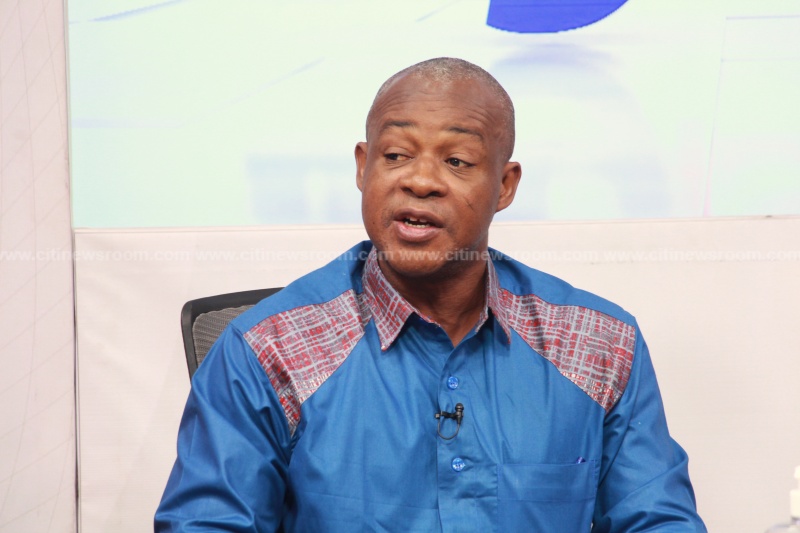
    President Akufo-Addo stated that Ghana aims to cut its carbon emissions by 64 million metric tonnes of carbon dioxide equivalent (MtCO2e) by the year 2030.

    He said Ghana had adopted 13 mitigating actions which had cut down its annual green­house gas emissions by 43 per cent since 2021, stressing that “Despite financial and technical hurdles, we determined to reach the Paris Agree­ment goals across agriculture, forestry, energy and other sectors.”
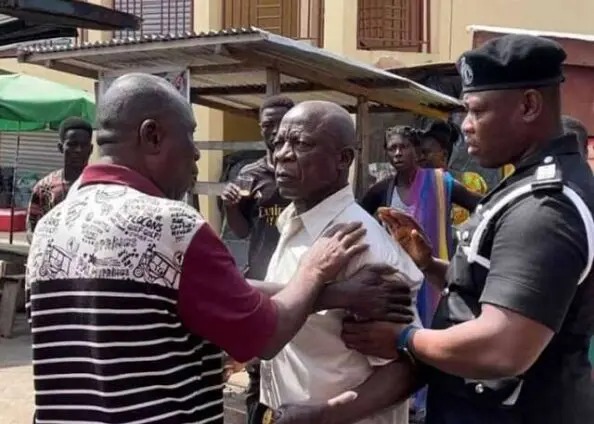
    The President, pledged that his government would continue to take decisive measures to safeguard the environment, adding that “Climate change is real and immediately affecting our farmers, coastlines and communities. I question what world we will leave behind. Our children’s future hinges on our decisions.”

    He urged world leaders to honor their commitments to fund sustainable development in Africa, a continent that contributes minimally to global emissions yet suffers significantly from the effects of climate change.

    “We call on our global partners to honour their commitments ensuring accessible conces­sional financing for sustainable development in Africa without unsustainable debts,” he stated.

    Simon Stiell, Executive Secretary of the United Nations Framework Convention on Climate Change, emphasized that the climate crisis profoundly affects all aspects of human life while causing severe damage to national economies. He cautioned that no country should hinder collective global efforts to address this pressing challenge.

    He also noted that, despite the universal impact of the climate crisis, it was disheartening that no single COP conference had yet achieved the comprehensive transformation required by nations worldwide.

    “But if we want to address the excesses of the climate crisis, then it is here that Parties need to agree on a way out of this mess.

    “What inspires me is human ingenuity and determination: our ability to get knocked down and to get up again over and over again, until we accomplish our goals,” he said.

    The COP29 Summit stands as one of the most significant assemblies of world leaders aimed at advancing the objectives of the Paris Agreement under the UNFCCC.

    The event has drawn approximately 50,000 participants, including more than 100 government representatives from Africa. They join other UN member states, along with the State of Palestine, the Holy See, the Cook Islands, and the European Union, all of whom are parties to the UNFCCC.

  • Investigation into Ablakwa’s alleged distribution of expired rice to SHSs begins

    Investigation into Ablakwa’s alleged distribution of expired rice to SHSs begins

    The Ministry of Education (MoE) has initiated an inquiry into allegations about the distribution of 22,000 bags of expired rice to Senior High Schools (SHSs) across the country.

    These accusations were brought forward by North Tongu MP and former Deputy Education Minister, Samuel Okudzeto Ablakwa, on Wednesday, November 13.

    He claimed the rice, which supposedly expired in December 2023, was repackaged into locally made sacks branded as “ECOWAS” and “Made in Ghana rice,” with no visible expiry date.

    Mr. Ablakwa stated that the National Food Buffer Stock Company partnered with Lamens Investments Africa Limited to repackage and distribute the rice, which had been imported from India.

    Despite the concerns, the legislator was commended for bringing the issue to public attention.

    In a statement signed by its spokesperson, Kwasi Kwarteng, the MoE emphasized the seriousness of the allegations and announced the commencement of a detailed investigation as a matter of urgency.

    The Ministry also disclosed that it had engaged both the National Food Buffer Stock Company (NAFCO) and the Ghana Commodity Exchange (GCX), which are responsible for managing food supplies to SHSs.

    The Ministry assured students, parents, guardians, and the public of its commitment to protecting the health and safety of every student under its care.

    “Rest assured, we will pursue this matter to the end and provide updates to the public as our investigation progresses,” it added.

    https://twitter.com/KwasiKwartengF/status/1857141752081060213

  • Court disagreed with Speaker’s interpretation on vacant seat but did not overturn his statement – Thaddeus Sory

    Court disagreed with Speaker’s interpretation on vacant seat but did not overturn his statement – Thaddeus Sory

    Llegal representative of Speaker of Parliament Alban Sumana Kingsford Bagbin, Thaddeus Sory, has argued that the Supreme Court did not overturn the Speaker’s statement regarding vacant parliamentary seats but merely disagreed with his interpretation of the law.

    On Tuesday, November 12, 2024, the Supreme Court, by a 5-2 decision, ruled that the Speaker’s declaration that four MPs who filed to contest the 2024 parliamentary election as independent candidates or under different party banners had vacated their seats was unconstitutional.

    In response to the ruling, Sory clarified on Facebook that the initial case, filed by Majority Leader and MP for Effutu Alexander Afenyo-Markin, did not seek to nullify the Speaker’s statement, as this declaration was made after the original case was submitted.

    Sory argued that if Afenyo-Markin intended the court to consider the Speaker’s decision, he should have formally amended his complaint to reflect the new issue.

    He emphasized that while the court considered the Speaker’s statement, the plaintiff’s original claim remained unchanged, as it had not been updated to include the Speaker’s decision.

    Justice Asare Darko, who authored the lead judgment, admitted that the court should not have addressed the Speaker’s statement without a formal cause for action.

    On the question of orders, Sory asserted that the final judgment did not nullify the Speaker’s declaration. Instead, the court only disagreed with his legal interpretation and issued no orders against the Speaker.

    He further noted that, with no final order in place, the court’s earlier temporary directive against the Speaker’s ruling was effectively void, leaving Parliament under no obligation to treat the affected MPs as having retained their seats4o

    Read the full piece by Thaddeus Sory below:

    THERE IS NO ORDER AGAINST THE SPEAKER.

    The Supreme Court decision released this afternoon is interesting. The majority decision raises a number of legal issues. Since this is a public and not legal platform I will discuss the most basic but fundamental issue for debate.

    In every case before the courts, the court’s final judgment is based on the case presented to the court contained in the original papers filed by the plaintiff before the court. If the facts on which the plaintiff initially presented their case to the court changes, and they want the court’s decision to reflect the changed circumstances, they must formally change their original case by way of an amendment. The Supreme Court rules allow the plaintiff to amend their statement of case.

    Now the majority judgment unequivocally admits that at the time the Plaintiff filed his case, the Speaker’s response to the statement made by the Leader of the NDC caucus in Parliament HAD NOT BEEN MADE. Darko Asare JSC admits that the Plaintiff instituted his action on 15/10/2024 and the Speaker made his statement on 17/10/2024. The Plaintiff’s reliefs therefore did not pray the Supreme Court to declare the Speaker’s response to the statement null and void. Darko Asare JSC therefore conceded in page 4 [see especially paragraph 4 of his judgment] that on the facts on which the Plaintiff instituted the action before the Court, there was no issue on which the Supreme Court’s exclusive original jurisdiction was legitimately be invoked.

    Darko Asare JSC also admitted that it is events after the Plaintiff instituted the action in the Supreme Court that was of concern to the majority. The Plaintiff however, did not formally, by way of an amendment to his case formally bring the new facts to the Court as part of the substantive case before the Court. The new facts came to the Supreme Court by way of an interlocutory ex parte application and the Court dealt with it. The substantive case however remained the same.

    Darko Asare JSC therefore admitted that it is subsequent events occurring “two days after the issuance of” the writ which is the Speaker’s statement that the affected MPs “cannot be allowed by law, to continue to pretend to be representing their constituents” and Parliament was accordingly so informed that constituted the “act” that caused the Supreme Court to stay execution of the Speaker’s said statement pending the determination of the matter by the Supreme Court. See page 5 of his judgment.

    The Court however justified its decision to assume jurisdiction in respect of the Speaker’s subsequent response to the Leader’s statement on the ground that the decision had an “intimate connection with their jurisdiction and its inextricable link to the pleaded facts and issues.” See pages 10 and 11.

    Darko Asare JSC who wrote the lead judgment of the Court therefore clearly admitted that there was no cause of action on which the Plaintiff sought and obtained the order for stay of execution. The effect of this admission also is that at all times material to the judgment of the Court, the Plaintiff’s case before the Court disclosed no cause of action because the case was not formally amended to reflect the changed circumstances. It is acknowledging that this admission meant the certain perdition of the Plaintiff’s case before the Court that the majority decision had to take cognizance of a case that was not formally brought before it, to enable it entertain the Plaintiff before the Court.

    In their judgments therefore, the majority decisions [both Darko Asare and Asiedu JJSC] only expressed their disagreements with the conclusion reached by the Speaker in his response to the Leader’s statement. Their final orders never pronounced that the Speaker’s response to the Leader’s statements are null and void and of no effect.

    Darko Asare JSC’s parting words were as follows:

    “An order declaring the interpretation placed on Article 97(1)(g) and (h) as inconsistent with the true meaning and import of Article 97(1) (g) and (h) of the 1992 Constitution.”

    In effect all he says is that the constitutional provisions in controversy bear the meaning he has put on them without positively saying that he has declared the Speaker’s decision null and void. There is no repetition of the ex parte orders the Plaintiff magically obtained contrary to all and every rule of procedure in the final orders of the Court.

    Asiedu JSC also concluded his judgment by disagreeing with the Speaker when he stated thus:

    “In my humble view, therefore, it is incorrect and unconstitutional for the 1st Defendant to rule that the Members of Parliament concerned have vacated their seats in Parliament just for the reason that they have filed nominations to contest, as Members of Parliament, in the upcoming general elections on tickets other than those on which they were voted as members of the current Parliament. It is for these reasons that I grant relief one endorsed on the Plaintiff’s writ.”

    His final words [order] however were that he only grants relief one of the Plaintiff’s reliefs. None of these reliefs to declare the Speaker’s response to the Leader’s statement null and void.

    Now lets remember that after the Supreme Court has made a declaration in the exercise of its original jurisdiction it is required under the provisions of article 2 clause (2) of the Constitution to “… make such orders and give such directions as it may consider appropriate for GIVING EFFECT, or enabling effect to be given, to the declaration so made.”

    It is only where such orders and directions are made and the person to whom the orders and directions are made fails “to obey or carry out the terms of … [the] order or direction made or given … [which] constitutes a high crime under … [the] Constitution…”

    There is no order saying that the MPs must be allowed in Parliament or order directing that Parliament recognise the said MPs as earlier ordered by the Court contained in the majority decision of the Court. The order staying execution of the Speaker’s ruling is NOW SPENT.

    SO MR. PLAINTIFF, TANTALUS on my mind.

  • Forex trading license suspension will not affect banking operations – CBG

    Forex trading license suspension will not affect banking operations – CBG

    Consolidated Bank Ghana (CBG) has reassured the public that the suspension of its Foreign Exchange License (FEL) will not affect its regular banking services.

    The bank confirmed that it is business as usual, and its full range of banking operations will continue while it complies with the suspension imposed by the Bank of Ghana.

    “We believe the concerns raised in the notice can be swiftly resolved and are committed to working closely with the Bank of Ghana to ensure compliance. We want to reassure our valued customers that this suspension does not affect CBG’s normal banking operations,” a statement issued by the bank said.

    The statement clarified that all of its branches and digital platforms will continue offering a complete range of services to customers, with the exception of foreign exchange products and services.

    “We fully expect to restore foreign exchange products after our engagement with the Bank of Ghana or upon the expiration of the suspension period,” the bank added.

    “We apologize unreservedly for any inconvenience this situation may have caused and reaffirm our dedication to maintaining the highest standards of operational compliance across all aspects of our business,” the statement further noted.

    Background

    The Bank of Ghana (BoG) has suspended Consolidated Bank Ghana’s (CBG) Foreign Exchange Trading Licence, effective November 26, 2024, for a period of one month.

    BoG stated that the suspension follows several violations of foreign exchange market regulations, including breaches of the Updated Guidelines for Inward Remittance Services for Payment Service Providers (November 2023) and the Anti-Money Laundering/Combating the Financing of Terrorism & The Proliferation of Weapons of Mass Destruction (AML/CFT&P) Guideline (December 2022).

    BoG has confirmed that CBG’s licence will be reinstated after the one-month period, provided the bank has implemented sufficient controls to comply with the foreign exchange market regulations.

    The Bank of Ghana has also issued a reminder to all foreign exchange market participants to adhere strictly to the relevant regulations and guidelines.

  • I am fully dedicated to ensuring peace in this nation – Speaker

    I am fully dedicated to ensuring peace in this nation – Speaker

    Speaker of Parliament, Alban Sumana Kingsford Bagbin has expressed his firm commitment to prioritizing the peace off the nation above political interests.

    He made this known to the the leadership of the Ghana National Council of Private Schools (GNACOPS)  who paid  a courtesy call on him to promote peace and unity during the 2024 election.

    “I’m more than committed to the peace of this nation,” the Speaker stated.

    The GNACOPS delegation, comprising teachers and pupils from selected private schools, was led by its National Executive Director, Obenfo Nana Kwasi Gyetuah.

    A statement from Parliament’s Media Relations Directorate conveyed that the delegation urged the Speaker to leverage his influence during this pivotal period in Ghana’s democratic journey to foster peace before, during, and after the 2024 elections.

    They commended the Speaker for his remarkable accomplishments and for demonstrating to the youth that peaceful coexistence is the true hallmark of a democratic society.

    Speaker Bagbin promised GNACOPS that the elections would be free, fair, and peaceful.

    He explained that, as part of Ghana’s 30 years of Parliamentary Democracy Celebrations, he held a seminar in Tamale, inviting experts to help everyone understand the importance of peace in the country.

    He also talked about the new “Democracy Cup” initiative, using football, the nation’s favorite sport, as a way to promote peace.

    “The foundation of life is peace,” Speaker Bagbin said.

    He praised GNACOPS for speaking up for peace and for teaching this value to young learners, who will be the future leaders of Ghana.

  • Private legal practitioner submits application to SC seeking to halt govt issuance of T-Bills

    Private legal practitioner submits application to SC seeking to halt govt issuance of T-Bills

    Private legal practitioner Jonathan Amable has submitted an application to the Supreme Court, requesting an immediate halt to the government’s issuance of Treasury Bills.

    In his application, Mr. Amable contends that the government must first obtain approval from Parliament before proceeding with any Treasury Bill issuance.

    The arguments supporting this position were detailed in the application filed at the Supreme Court Registry on November 11, 2024.

    The Motion for Interlocutory Injunction aims to prevent the government and its entities, such as the Finance Ministry and the Bank of Ghana, from borrowing through Treasury Bills until parliamentary approval is secured.

    Details of the application

    The application lists Attorney General Godfred Yeboah Dame as the defendant.

    Plaintiff’s lawyers informed JOYBUSINESS that the Attorney General’s office has been formally notified, making any government attempt to issue a new Treasury Bill on Friday, November 22, 2024, unlawful.

    Legal Arguments

    The Motion for Interlocutory Injunction is seeking to restrain government from undertaking any activity which constitutes borrowing or debt financing, until the final determination of the suit  “  upon grounds contained  in the accompanying  the affidavit  and for such  further orders that will be determined by the court”.

    The plaintiff further contended that Ghana’s Financial Administration Act and the Bank of Ghana Amendment Act establish a statutory framework authorizing state borrowing, which the government’s current approach does not align with.

    The application emphasized that parliamentary approval is essential, as these borrowings impose repayment obligations on the state.

     Implications

    Government is planning to raise about 78 billion cedis in new borrowings through Treasury Bills for 2024.

    This was captured in the Treasury Bills Calendar for the 2024.  It is not sure for now how the application could impact government’s finances.

    The Finance Ministry is for instance hoping to raise 10.8 billion cedis in the last quarter of this year.

    Funds raised through Treasury Bills have been a major source of revenue for government.

  • KIA to close runway for 6 hours daily for repair works starting March 2025

    KIA to close runway for 6 hours daily for repair works starting March 2025

    The Ghana Airports Company Limited (GACL) has announced a six-hour daily runway closure for airlines servicing Kotoka International Airport in Accra for essential repair works.

    This maintenance exercise is scheduled to last for two years, from March 30, 2025, to March 30, 2027.

    During the maintenance period, the runway will be completely closed from 11:00 PM to 5:00 AM local time each day.

    Airlines such as Royal Air Maroc, Turkish Airlines, Allied Air Cargo, and Ethiopian Airlines are the main carriers that will be affected by the runway closure.

    These airlines, however, are making arrangements to ensure their operations continue without disruption.

    In a letter dated October 23, 2024, and signed by the Managing Director, Mrs. Yvonne Nana Afriyie Opare, the GACL informed airlines of the runway closure schedule due to the upcoming runway overlay works at Kotoka International Airport.

    The letter also noted that a detailed schedule of the works and a contact list for key personnel involved will be provided to the airlines in due course.

  • Uganda: Musicians who perform almost naked should be arrested – Rachael Magoola

    Uganda: Musicians who perform almost naked should be arrested – Rachael Magoola

    Member of Parliament for Bugweri Woman, Rachael Magoola, has called on the government, through the Uganda Police, to take action against musicians who perform semi-naked at public events, in an effort to uphold cultural values and promote positive value systems, especially among the youth.

    During a breakfast meeting on tackling child sexual violence in Uganda at Fairway Hotel in Kampala on Wednesday, the musician-turned-politician, known for her hit song Obangainahit in the late 1990s, emphasized that the erosion of value systems is one of the most significant challenges facing Uganda’s younger generation.

    “Musicians have resorted to indecent dressing with almost their private parts revealed while performing anywhere and it has been normalised. You (police) need to arrest these people because the young people, especially girls and irresponsible adult women have copied these dressing styles. How will a parent stop a child from dressing decently yet they (children) see their mother dress the way they wish? Our policies and value systems are standing on the head and the legs are in the air yet the value systems are stuck in our cultural values,” Magoola said.

    She stated that the current generation perceives African culture as outdated and often links it to witchcraft.

    “When we talk of culture, in the current generation, people think it’s for the witch and they insult the person preaching decency. We have ignored who we are, to become who we are not, and become what we can’t handle through social media. We need to go back to the culture where the moral values and systems start from homes and churches. If you have the chairperson of Mother’s Union at church sitting down with women monthly and the women also sit down with their girls about the proper dress code and behaviour, we’ll have a decent society. Leaders at all levels have influence on their communities,” the legislator added.

    Organised under the theme united for protection, elevating advocates and erasing harmful practices, the meeting sought to, among other objectives, promote positive social -cultural norms and practices that protect rights of children from sexual abuse and violence and increase support and commitment from government line ministries and policy makers to prioritise implementation of policies and strategies that address sexual violence.

    Executive Director of Raising Teenagers Uganda, the Co-chair and the host organisation for The Brave Movement Uganda, Hope Nankunda, said the united for protection campaign reflects a holistic approach that addresses the immediate needs of vulnerable children while promoting sustainable, community-driven strategies.

    “This meeting is to catalyse collaboration among stakeholders and spark meaningful dialogue that will advance the collective mission of eliminating harmful practices affecting children and adolescents in Uganda. This will lead to more informed discussions and potentially early steps towards policy changes or interventions but also increased budget allocation towards child sexual abuse response in Uganda,” Nankunda said.

    According to the 2023 Uganda police annual crime report, a total of 14, 846 sex-related cases, representing 6.5 percent of the overall registered crimes in this category countrywide, were reported to police compared to 14,693 cases reported in 2022, giving an increase of 1.4 percent.

    The same report also says a total of 12,771 cases of defilement were reported to Police in 2023, compared to 12,580 cases reported in 2022, giving an increase by 1.5 percent in defilement cases registered countrywide. Of the defilement cases reported in 2022, 8,925 cases were defilement while 3,846 cases were aggravated defilement.

    The report adds that out of the defilement cases reported in 2023, 5,564 cases were taken to Court. Of these, 2,402 cases were not proceeded with while 4,805 cases are still under inquiry. Out of the cases taken to court, 940 cases secured convictions, 38 cases were acquitted, 414 cases were dismissed and 4,172 cases are still pending in court. A total of 5,671 suspects of defilement were arrested and charged in court, out of whom, 982 were convicted, 56 were acquitted, 400 discharged while 4,233 were still awaiting trial.

  • Joyce Blessing under fire over her choice of outfit at 2024 Ghana DJ Awards

    Joyce Blessing under fire over her choice of outfit at 2024 Ghana DJ Awards

    Joyce Blessing has recently sparked a heated online debate over her outfit choice at the 2024 Ghana DJ Awards.

    The gospel musician has faced criticism for wearing a two-piece black ensemble featuring a dramatic side split, which some critics have labeled inappropriate.

    The skirt was designed with a thigh-high slit, filled with nude mesh fabric meant to create the illusion of bare skin.

    At first glance, many believed her skin was exposed, but a closer inspection revealed the nude fabric, which has stirred controversy among online users.

    While some of Joyce Blessing’s supporters have defended her choice, explaining that the fabric was not actual skin, others argue that a gospel artist in the public eye should avoid clothing that could attract negative attention or spark such reactions.

    Meanwhile, there are fans who have lauded Joyce for her boldness, celebrating her for making a fashion statement and embracing daring styles.

    Meanwhile, Joyce Blessing has addressed the controversy with a lighthearted response, sharing a video on her social media with the caption: “A lot of people are getting confused about my skirt.”

    See the posts below:

  • Pastor Love submits appeal following 4-year prison sentence

    Pastor Love submits appeal following 4-year prison sentence

    Obaapa Christy’s ex-husband, Pastor Love, who was sentenced to four years in prison, has reportedly filed an appeal.

    According to updates from the Accra High Court, Pastor Love is also seeking bail to allow him to be present for the appeal proceedings. He has requested permission to attend the case outside of prison.

    The court is expected to decide on his bail request on Friday, November 15, 2024.

    Pastor Love received the sentence in October 2024, following a lengthy legal dispute over the sale of a friend’s car, for which he failed to account for the funds.

    The case, dating back to 2017, led to his conviction on charges of theft, appropriation, and dishonesty.

    Background

    The case originates from a 2016 arrangement between Pastor Love and Samuel Amankwah, the complainant.

    Amankwah had imported a Toyota Highlander to Ghana, entrusting Pastor Love to handle its customs clearance with the promise of reimbursement.

    Initially, Amankwah instructed Pastor Love to sell the vehicle for $50,000, allowing him to deduct the clearing costs from the proceeds.

    However, in April 2017, Amankwah reconsidered, deciding instead to personally repay Pastor Love for the clearing fees, as he was planning to return to Ghana shortly.

    Upon his arrival, Amankwah discovered that Pastor Love no longer had possession of the vehicle or the sale proceeds, despite repeated inquiries.

    Following his arrest, Pastor Love admitted to selling the car without Amankwah’s approval.

    He explained that he had taken a GH¢40,000 loan to clear the vehicle, and due to accumulating interest, he sold the car for GH¢80,000, paying GH¢70,000 to the loan company.

    However, he failed to provide evidence supporting his claims, and he couldn’t identify the loan company or the buyer.

    During the trial, Pastor Love asked for leniency, noting his status as a first-time offender and expressing willingness to pay a fine. Nonetheless, Justice Isaac Addo dismissed his appeal for clemency and proceeded with the sentencing.

  • How property taxes can help low-income countries to develop

    How property taxes can help low-income countries to develop

    The world’s governments must raise an additional US$3 trillion to achieve sustainable and inclusive economic growth goals this decade. The cost in emerging markets equals 4 percent of gross domestic product—and 16 percent for low-income countries.

    How can countries finance such staggering price tags? Large cities such as Delhi and Lagos show a way forward: Taxing property more efficiently can play a meaningful role in raising revenue at the local level, allowing countries to invest more in their people, new IMF analysis shows.

    Previous IMF research has shown that countries have ample potential to raise more domestic tax revenue if they need it—up to 5 percentage points of GDP over two decades.
    Of course, the political challenges of such reforms are far from trivial, as recent events in several countries suggest that raising taxes can create social unrest. More efficient real estate taxes have an advantage in this regard: by being locally collected and spent, they may be politically less challenging than increases in broad-base national taxes.

    Recurrent taxes on immovable property could help local governments capture the wealth generated through construction-intensive urbanization. Generating such revenue fairly is especially important given the difficulty in developing countries of taxing income and wealth, which can be highly mobile.

    The appeal of property taxes is clear when we look at revenue raised in advanced economies: more than 1 percent of GDP on average in OECD countries, and nearly 3 percent in some advanced economies. By contrast, they raise only around 0.1 percent of GDP in emerging Asia and Africa.

    Achieving such a large growth requires improving property-tax coverage and addressing the capacity challenges in valuing real estate as ways to reverse the current revenue underperformance. New property identification technologies and simplified valuation methods have become widely available. With policy reforms and better technology, recurrent property tax revenues in developing countries should be at least 10 times higher than current levels.

    Local revenue and spending

    When well-designed, property taxes become a reliable and progressive form of municipal financing. They enhance the accountability of local governments since proceeds can be used to fund better local public services, and taxes the increase in wealth of those who own real estate that has appreciated due to urbanization and associated public-infrastructure development. The tight link at the local level between revenue and spending shields property taxes from national politics and imposes higher accountability standards on local councils for the effective use of the resources

    .National legislation should regulate how much property taxes can differ across a country, limiting divergences in the level of local public services funded by this source. Municipalities should limit exemptions to a narrow range of public organizations, and forgone revenues should be regularly reported.

    The impact on “asset-rich but cash-poor” households such as pensioners can be softened by deferring taxes until the property is sold, at which point full payment is due.

    Satellites and drones

    It’s best to take a gradual approach to property tax reform, using modern technology to broaden the coverage of area-based taxes (expressed as a fixed rate per square meter). The goal should be to transition to full value-based property taxes in coming years as countries gain experience in implementation and market price information is meticulously recorded for periodic property valuation.

    Modern mapping technology, such as satellite imagery and aerial photography by drones, can be used to fast-track the expansion and coverage of property taxes to all parcels that ought to be included in the fiscal register.

    Indian officials in Delhi and the greater Bangalore metropolitan area have started using satellite imagery to map properties in a geographic information system. In Africa, several municipalities have made impressive strides. Lagos increased tax collection fivefold to more than $1 billion in 2011 by broadening the base of its property tax, coupled with better enforcement.

    The increased precision of satellite images enables the accurate measuring of surface areas and the development of fiscal-register maps that depict buildings and their alterations. This allows the fast roll-out of an area-based property tax until valuation capacity has advanced to migrate toward a market value-based property-tax system that can raise more revenue.

    Demand for capacity development from the IMF in this area indicates that many countries are seeing the benefits from this combination of the right policies and technology enablers. It makes property tax reform effective and politically appealing, especially when its objectives are communicated properly to the public.

    Business News of Thursday, 14 November 2024

    Source: thebftonline.com

    DisclaDISCLAIMER: Independentghana.com will not be liable for any inaccuracies contained in this article. The views expressed in the article are solely those of the author’s, and do not reflect those of The Independent Ghanaimer

  • School children rally for peace ahead of December 7 polls

    School children rally for peace ahead of December 7 polls

    A group of about 100 school children from schools under the Ghana National Council of Private Schools (GNACOPS) has urged all parties involved in the upcoming general elections to prioritize the nation’s welfare and collaborate to ensure peaceful voting.

    The children emphasized that they, as a vulnerable group, would be most impacted by any unrest, making it crucial to safeguard Ghana’s peace throughout the election period.

    Accompanied by GNACOPS executives and teachers, the students conveyed this message during a courtesy visit to Jean Mensa, Chairperson of the Electoral Commission, at the EC’s Corporate Office in Accra on Wednesday.

    At the meeting, the children reinforced their plea for peace with nationalistic songs, poems, and presentations, encouraging political leaders, the Electoral Commission, and voters alike to “choose peace and grow Ghana.”

    They also displayed placards, some of which read: “Our future is bright with peace,” “We have Ghana, let’s keep it peaceful,” “For our future, choose peace,” “Peace today, great Ghana tomorrow,” and “Choose peace, grow Ghana.”

    National Executive Director of GNACOPS, Nana Kwesi Gyetuah, noted that while the pupils are not eligible to vote, they would be among those most impacted if peace is disrupted.

    He emphasized that all stakeholders should prioritize the future of Ghanaian children and work to maintain peace throughout the electoral process.

    “The students of Ghana look to you as role models of integrity and impartiality, inspiring them to become responsible, engaged citizens in the future,” Nana Gyetuah said.

    At the meeting, Mrs. Mensa signed the Peace Ghana Initiative Pledge and reassured the students that the Commission is committed to conducting credible, free, fair, and peaceful elections.

    She said children “are the foundations of this nation” and added that “we should stand as one people and work for peace.”

    “It is a privilege to find innocent children around this table. The peace song they sang must reign throughout the elections, and their voices must echo everywhere,” Mrs. Mensa said.

    On December 7, 2024, eligible Ghanaian voters will head to the polls to elect a president and 276 Members of Parliament.

    According to summaries of the Certified Voters’ Register released by the Commission, a total of 18,640,811 voters are listed on the register.

  • NAIS to protest unpaid contracts at Education Ministry

    NAIS to protest unpaid contracts at Education Ministry

    The National Association of Institutional Suppliers (NAIS) has announced plans to hold a demonstration at the Ministry of Education from November 20 to 21, pressing for a concrete timeline on settling all unpaid contracts.

    On November 12, 2024, the Association formally notified the Regional Commander of the Ghana Police Service in Accra about their intended action.

    NAIS voiced frustration over delayed payments for contracts involving the supply of school uniforms and house dresses, highlighting that members are still awaiting arrears from 2022-2023 as well as full payments for the 2023-2024 academic year.

    Efforts to resolve these unpaid balances have reportedly received minimal response from the Ministry.

    NAIS further raised concerns about potential plans by the Ministry to exclude its members from future contracts for school uniforms and house dresses, warning that such exclusion would hinder local content promotion, impact local jobs, limit skill development, and slow the growth of Ghana’s textile and fashion sectors—areas the government has pledged to support.

  • Air France quits operation in Ghana over alleged decline passenger numbers

    Air France quits operation in Ghana over alleged decline passenger numbers

    Air France has halted its direct three-times-a-week passenger service between Paris and Accra, Ghana, effective October 26, 2024.

    While the airline has not provided immediate reasons for the suspension, analysts suggest that the decision is likely influenced by declining passenger numbers, which were impacted by Air France’s exit from Burkina Faso, Mali, and Niger—countries currently under military rule.

    Prior to Burkina Faso’s military takeover, the airline, part of the Air France-KLM group, had operated flights from Paris to Accra with a stopover in Burkina Faso.

    Experts from AviationGhana note that the removal of this stopover played a significant role in the decision to suspend the route entirely.

    AviationGhana has confirmed that Air France’s final flight to Accra’s Kotoka International Airport took place on October 25, 2024.

  • Residents of Bawku, some security personel fueling current conflict – Dr Bonaa

    Residents of Bawku, some security personel fueling current conflict – Dr Bonaa

    Security and safety analyst, Dr. Adam Bonaa, has suggested that certain individuals, including some residents of Bawku, are actively contributing to and profiting from the ongoing chieftaincy conflict in the region.

    He emphasized that Ghana’s security agencies are aware of this, stating, “We know them, we know some of them; they are the warlords. I mean, listen, the security architecture of this country also knows them. They know them, I am telling you that.

    “Anybody who works in our security space, if you have the kind of knowledge and experience that some of us have and the networks, you know this is not information I can put out there,” he stated during an interview with GhanaWeb TV’s George Ayisi on the recent surge in violence within Bawku.

    He stressed that although the identities of certain individuals fueling the conflict are known, there appears to be a lack of action in confronting their actions, likely due to the significant power and influence these individuals hold.

    “The truth is that there is some unapproved silence when it comes to trying to talk about them because these are powerful people. What are you going to do?” he questioned.

    At a recent campaign event, John Dramani Mahama, the flagbearer for the opposition National Democratic Congress, urged for peace in Bawku and suggested that there may be a hidden agenda fueling the conflict.

    Dr. Bonaa, aligning with Mahama’s stance, described the situation in Bawku as troubling and emphasized the need for a unified effort to address the ongoing conflict.

    “They know them, the flagbearer of the NDC is 100% correct. He is not far away from the truth. That is the truth. People are benefiting massively… Yes, people are benefiting massively from the carnage that is taking place in Bawku,” he said.

    The recent escalation of the Bawku conflict has led to another wave of violence in the region, causing the deaths of around 25 people and leaving many others injured.

    In his interview with GhanaWeb TV, Dr. Bonaa highlighted leadership failure as a major contributing factor to the ongoing conflict and called on the government to take action to address the situation.

  • Dampare accused of transferring police officers based on heavy arbitraries

    Dampare accused of transferring police officers based on heavy arbitraries

    Retired Assistant Commissioner of Police (ACP) Benjamin Agordzo has raised serious allegations against Inspector General of Police (IGP) Dr. George Akuffo Dampare, accusing him of exhibiting autocratic tendencies and engaging in “heavy arbitrariness” in his approach to leadership.

    In a recent interview on Neat FM, Agordzo claimed that Dampare’s leadership style has caused undue hardship for some officers within the police force. He further suggested that the IGP’s alleged actions are marked by excessive personal discretion and a lack of procedural fairness, leading to what he described as a “vindictive” environment for certain personnel.

    “There is a cult system in the police service where whoever he does not like is in trouble. On the other hand, those he likes can be promoted a hundred times in a year. He can lift you from a junior to a senior position immediately, and he can promote you twice or three times in one year or two years. That is the kind of system we have,” he stated.

    He accused the IGP of acting out of vindictiveness by transferring officers who attended a funeral with COP Maame Tiwaa Addo-Danquah, the Executive Director of the Economic and Organised Crime Office (EOCO), without involving the Ghana Police Service’s Transfer Board.

    “It is a system that if he doesn’t like someone and you associate with the person, he will transfer you right away. That is who the IGP is, and I can give you names. Names like Ayisi, Adjei, and other people who went to a funeral with Madam Tiwaa. Because they attended a funeral with Madam Tiwaa, they have been transferred from the base to the remotest part of Ghana,” he stated.

    ACP Agordzo was freed by a High Court after standing trial on charges of being an accomplice in a coup plot.

    Following his acquittal and discharge, ACP Agordzo has written a book titled “From Prosecution to Freedom: Reflections on My Journey Through the Justice System in Ghana,” detailing his custody and trial experience.

  • New Ho GPRTU executives’ swearing-in ceremony marred by violent clash

    New Ho GPRTU executives’ swearing-in ceremony marred by violent clash

    National Executives arrived in the region to formally induct the Ho Branch 2 executives, elected in April 2022.

    Tensions escalated at the ceremony, however, as outgoing leaders tried to block entry to the secretariat, located in a two-storey building.

    Reports from the Ghana News Agency (GNA) indicated that the former leadership had previously sought a court injunction to halt the elections and managed to hold onto power for over two years, even appealing the matter up to the Court of Appeal.

    On Wednesday, despite a police presence, the former executives resisted the transition and locked the offices to prevent access.

    Intervening in the standoff, the Regional Police Command held discussions with both parties and the national executives, leading to the eventual swearing-in of the five newly elected leaders.

    A dismissal letter was handed to the former executives by Rolex Miheso, Welfare Chairman of the Tudu Lorry Park and a representative of the National Executive Council of the GPRTU, before he officiated the induction of the new officers: Dickson Dzogbatse as Chairman, Attipoe Lawrence as Vice Chairman, Godwin Tay as Secretary, and Wisdom Kpor and Christian Doe as Trustee and Second Trustee, respectively.

    Reading out the 2022 election results, Miheso administered the oaths of office and confidentiality, underscoring the importance of unity and smooth leadership transition to drive Union and transport service development.

    In his address, the new Branch Chairman committed to promoting peace and collaboration, with plans to reinvigorate operations for enhanced service on the Ho to Accra route.

  • Hypocrisy! – Sister Debby’s comment to Asiedu Nketia over anti-LGBTQ bill

    Hypocrisy! – Sister Debby’s comment to Asiedu Nketia over anti-LGBTQ bill

    Ghanaian socialite, Debora Vanessa, better known as Sister Debby, has voiced her displeasure with the National Chairman of the National Democratic Congress (NDC), Johnson Asiedu Nketiah, following his recent remarks about the legalization of the anti-LGBTQ bill.

    In a post on X on November 13, 2024, Sister Debby accused Asiedu Nketiah of hypocrisy for criticizing President Akufo-Addo’s decision not to sign the bill into law.

    To back up her claim, Sister Debby referenced an incident from Asiedu Nketiah’s 2015 visit to Germany, where he wore a women’s fur coat during an official trip.

    She pointed out that Asiedu Nketiah wore women’s attire at the time, yet now believes he has the moral authority to denounce LGBTQ+ activities.

    “A Ghanaian man who in 2015 wore a women’s coat during an official visit to Germany wants an anti-LGBTQ bill that will jail people for cross-dressing to become law. Hypocrisy!” she posted on X.

    Background

    At a recent NDC campaign rally in Kumasi, Asiedu Nketiah criticized President Akufo-Addo for delaying the signing of the anti-LGBTQI bill.

    The National Chairman of the NDC emphasized that religious leaders in Ghana, including Muslims, have voiced strong opposition to homosexuality, adding that the NDC introduced the bill to address these concerns.

    “The NDC has shown its disapproval of homosexuality in the country, which is why we introduced a bill against it. Even Muslims and other religious leaders are fighting against LGBTQ. But Akufo-Addo has refused to sign the bill,” he said.

    Three years ago, a group of Members of Parliament, spearheaded by Sam George, the MP for Ningo-Prampram, presented the anti-LGBTQ+ bill. After much debate, the bill failed to receive the necessary approval from President Akufo-Addo.

    Currently, the bill remains a point of contention, as it has been referred to the Supreme Court for further review.

    Watch the video below:

    https://twitter.com/deborahvanessa7/status/1856648023033455000

  • Opambour threatens to curse Vim Lady if attacks on him persist

    Opambour threatens to curse Vim Lady if attacks on him persist

    Ghanaian prophet Ebenezer Opambour Yiadom, widely known as Prophet 1, has strongly cautioned broadcast journalist Afia Pokua, also known as Vim Lady, after she referred to him as “shallow-minded.”

    In a widely circulated video, Prophet Opambour warned that if she insulted him once more, he would retaliate with curses.

    “If I have not said anything negative about her (Afia Pokua) and she chooses to insult me, I will curse her and do whatever I please with her, including her unborn children,” he declared.

    He added, “I give her until Sunday; if she makes another comment about me, I will curse her.”

    Prophet Opambour seized the moment to raise questions about the New Patriotic Party’s (NPP) ‘One District, One Factory’ policy.

    “We don’t want the promise the NPP made in 2016 and 2020 about the One District, One Factory. Where are all the factories? Where are the dams? We don’t want another promise from Bawumia that the Ghana Card can be used to purchase a car when elected. That’s why I asked the question when we met Mahama. So I don’t understand why the girl insulted me,” he added.

    Background

    On November 11, 2024, John Dramani Mahama, the flagbearer for the National Democratic Congress (NDC), attended a fellowship service with clergymen in Kumasi.

    At the event, Prophet Opambour voiced his concerns over Dr. Mahamudu Bawumia’s policy that uses the Ghana Card as the foundation for a credit scoring system aimed at enabling citizens to buy cars.

    Mocking the initiative, Opambour questioned its practicality and expressed skepticism about the Ghana Card being used solely for vehicle purchases.

    Afia Pokua, however, disagreed with Opambour’s criticism, calling him “shallow-minded” and suggesting that he had misunderstood the scope of the project.

    “Anybody who condemns the Ghana Card is a shallow-minded person. This shouldn’t even be a topic for discussion because this same identification card is what has made Europe what it is today,” she stated.

    Watch the video below:

  • Avoid sleeping around if you don’t have your own accomodation – Hamamat to women

    Avoid sleeping around if you don’t have your own accomodation – Hamamat to women

    Ghanaian model Hamamat Montia has advised women to exercise caution regarding where they choose to engage in intimate activities.

    She warned that women could unknowingly be recorded if they have encounters outside the safety and privacy of their own homes.

    Her message follows the recent surge in leaked intimate videos, sparking widespread discussion.

    Hamamat shared her advice on Instagram, encouraging women to protect their privacy in today’s digital age.

    “Queens it’s a new world out there and I just want you to say this. Listen up! If you don’t have your own place, then you shouldn’t be having sex. No don’t do it. It’s a trap. Nowadays the cameras are as small as the tip of a pen.”

    “Listen, there are cameras as tinny as that. And as women, we must maintain our dignity because you and I know we are giving these men something irreplaceable. It’s not just about fun,” she said.

    She therefore urged women not to let anyone make them a part of their conquest.

    “This is your journey; embrace it with pride and caution,” she concluded.

  • Osofo Kojo Bentsir releases new track titled “Aware Pa”

    Osofo Kojo Bentsir releases new track titled “Aware Pa”

    Mekra founder, Osofo Kojo Bentsir recently teamed up with Enam, Boggy Wenzday, and Kojo Vypa for his newest track, “Aware Pa.”

    Bentsir, known for blending Spiritual Science into his music, delivers a resonant, harmonious piece that connects with a global audience.

    Opening with Kojo Vypa’s soulful voice, an award-winning rapper and songwriter, the track transitions smoothly into Enam’s unique Afro-Spiritual sound, recently showcased at “Ghana’s Most Beautiful Pageant.”

    Adding to the dynamic mix, Afro-pop and highlife artist Boggy Wenzday joins Bentsir, who weaves a spiritual theme throughout the song, representing a “good marriage” between love and spirituality.

    The song promotes a balance of science and spirituality, inviting listeners to reconnect with their Akan “Kra,” or inner self.

    This approach emphasizes that integrating these realms leads to a fuller experience of both the physical and divine, enriching one’s journey of self-awareness.

    According to Bentsir, Spiritual Science—an ancient African tradition—extends beyond modern science by prioritizing personal growth and divine connection.

    He points to Africa’s ancient wisdom, like the Dogon people’s early knowledge of Sirius B, illustrating a profound understanding of the cosmos long before telescopes.

    Drawing from the “Sankofa” concept, which means “go back and retrieve it,” the song encourages a return to heritage and ancestral insight.

    “Aware Pa” invites listeners to reconnect with their roots, advocating a revival of ancient values and a deeper sense of identity, often obscured by modern beliefs.

    Ultimately, the track serves as a call to reclaim the depth of African spiritual wisdom and break free from limiting ideologies.

    It’s a poignant reminder: “It’s not taboo to go back for what you’ve forgotten.”

  • Joana Gyan details how she used trotro test Keche’s love for her

    Joana Gyan details how she used trotro test Keche’s love for her

    Joana Gyan Cudjoe, Amenfi Central’s parliamentary candidate and spouse of Ghanaian artist Keche Andrew, recently revealed the unusual steps she took to capture her husband’s interest.

    During an interview with MzGee on November 13, 2024, Joana shared that she pretended to be a woman of limited means to see if Keche’s attraction was sincere or financially motivated.

    Joana expressed that she needed reassurance of Keche’s true feelings for her.

    “I didn’t know much about his personal life, and based on what I was hearing at the time, I wanted to be sure he was serious and loved me for who I am. That’s why I often used taxis or trotro to visit him. When I arrived, I would call him to come pick me up and even ask him to pay for the fare.

    “At one point, he got frustrated because sometimes I didn’t inform him about the public transport I was using, and all I would do is ask for money for the fare. He would complain about why I didn’t tell him beforehand, but through it all, he showed me that he really loved me,” she added.

    When Keche Andrew was asked how he eventually discovered his wife’s true identity, he stated, “Keche Joshua knew my real identity all along, but he didn’t tell me. One day, I was invited to her office, and when I got there, I told the receptionist I was looking for Joana Gyan. After sitting in the waiting area, I was taken aback when I finally saw her. I was in shock for an hour or two.”

    Looking back on their marriage, Andrew highlighted how communication and trust have been essential to their relationship, helping them navigate various challenges and external pressures.

    “There was a time when I was receiving calls from girls and other people threatening me, even spreading rumours about me to Joana. Sometimes, I would take her phone and chat with them directly. Even some of my fellow musicians and media personalities were involved,” he recalled.

    He added, “I remember one night I had an open conversation with her, telling her all my secrets, everything I’d done, and what I planned to do. After that, I told her to choose: stay with me or leave. But all she did was cry, and the next morning, she gave me a chance. And here we are.”

    Background

    Joana Gyan and Keche Andrew tied the knot on November 30, 2019, after Joana divorced her first husband, a British national.

    The couple has now been together for five years.

    Watch the video below:

  • Economic recovery faces challenges, but investment growth  remains steady – GIPC CEO

    Economic recovery faces challenges, but investment growth remains steady – GIPC CEO

    The Ghana Investment Promotion Center (GIPC) acknowledged that while the journey to economic recovery presents difficulties, the long-term outlook is promising. Investment levels may fluctuate quarterly, but they continue to grow on an annual basis.

    In his remarks for the 2024 Second Quarter Investment Report, Chief Executive Officer Yofi Grant noted that recent years have highlighted how global events can disrupt even the best-laid plans.

    Mr. Grant emphasized that GIPC is proactively seeking to attract sustainable, high-quality investments to Ghana as a way to navigate these challenges and capitalize on emerging opportunities.

    “The Centre is making significant strides in fostering international partnerships and advancing Ghana’s investment landscape through strategic initiatives. Recently, GIPC signed an International MoU on investment promotion and facilitation with the Kenya Investment Authority (KenInvest) and organised a CEO’s breakfast meeting which provided a valuable platform for stakeholders in the tourism sector to discuss government policies and regulatory reforms aimed at enhancing private sector participation in tourism infrastructure development”, he explained.

    He continued that GIPC views itself as a key partner in accelerating economic growth and is committed to enhancing Ghana’s global market presence through innovative investment promotion strategies.

    In the first half of 2024, Foreign Direct Investments (FDIs) attracted from 69 registered projects, amounted to US$179.07 million.

    These investments are expected to generate 8,524 jobs once fully operational, targeting sectors such as Agriculture, Building and Construction, Export and General Trade, Liaison, Manufacturing, Service, and Tourism.

    Additionally, 20 wholly Ghanaian projects were registered with an estimated value of US$476.69 million.

  • Ghana’s petroleum hub project set to revolutionize downstream sector

    Ghana’s petroleum hub project set to revolutionize downstream sector

    President Nana Addo Dankwa Akufo-Addo’s ambitious Petroleum Hub Project is making strides toward transforming Ghana’s petroleum downstream sector into a modern, diversified, and financially sustainable “energy economy.”

    Designed to provide all homes and industries with a reliable, affordable, and environmentally sustainable energy supply, the hub is projected to create 780,000 direct and indirect jobs for Ghanaians.

    Supporting the project’s success, the Petroleum Hub Development Corporation (PHDC) is focusing on workforce development, preparing Ghanaians for new opportunities arising from the hub.

    To advance these goals, Charles Owusu Esq., FCA, CEO of the PHDC, recently completed a landmark three-day working visit to Las Palmas, Canary Islands, Spain, where he met with strategic international partners to enhance workforce capacity and strengthen technical collaboration for the project.

    While in Las Palmas, Charles Owusu collaborated closely with key partners, including Canary Consulting & Trading (CCT), Aurum Global Partners (AGP), and the University of Las Palmas. These institutions played a pivotal role in facilitating the cooperation agreement and funding framework focused on Sustainable Energy and Innovation, Sustainable Housing, Sustainable Tourism, and Agriculture.

    The agreement was signed by both parties on November 4, 2024, at the Foreign Affairs Office of Casa África, Spain.

    Highlighting their expertise in sustainable industry, maritime logistics, and development, Casa Africa’s president, José Segura Clavell, noted that the port of Las Palmas serves as a strategic link between Africa, Europe, and Latin America.

    Strengthening ties with Casa Africa, Ghana seeks to foster long-term relationships that enhance the technical, managerial, and operational capacities necessary for the hub’s success in West Africa.

    Acknowledging the Canary Islands Government’s significant investment in maritime and port infrastructure, Mr. Owusu praised the Port de Las Palmas as a key center of trade and innovation.

    “We are determined to replicate the success of the Canary Islands by positioning Ghana’s Jomoro Port as the preeminent maritime hub for West Africa and the entire African continent,” He thanked Dr Steven Blessing Ackah and Isidoro Lopez for making the collaboration with the Port de Las Palmas possible, which will help enhance the capacity of the Jomoro Port, reduce transportation costs, and ensure that Ghana becomes the premier investment destination for the petroleum industry in Africa.

    On November 6, 2024, the second day of his visit, Charles Owusu toured the Port de Las Palmas alongside esteemed hosts. He explored the port’s advanced shipyard and maritime facilities and engaged with local authorities to discuss possible technical support opportunities aimed at elevating the Jomoro Port to international standards.

    Concluding his visit, Charles Owusu held key meetings with leading institutions in Las Palmas, including the University of Las Palmas de Gran Canaria (ULPGC), known for its expertise in sustainable development and maritime innovation. The discussions focused on potential partnerships in maritime technology and infrastructure to advance the development of Jomoro Port.

    He also met with the ICT Cluster of Companies, a network of top tech firms specializing in digital transformation and maritime logistics, to explore innovative ICT solutions that could optimize Jomoro Port’s operations, enhancing logistics and the handling of goods.

    The Petroleum Hub Development Corporation (PHDC) oversees the strategic planning, development, and operational management of Ghana’s Petroleum Hub. This landmark project aims to establish Ghana as West Africa’s premier downstream petroleum and logistics hub, promoting economic growth, job creation, and energy sustainability across the region.

  • Banking expert urges probe into CBG governance over forex licence suspension

    Banking expert urges probe into CBG governance over forex licence suspension

    Banking expert Dr. Richmond Atuahene expressed serious doubts about how Consolidated Bank Ghana (CBG) is being managed after the Bank of Ghana (BoG) recently put a hold on CBG’s license to trade foreign currency.

    The Bank of Ghana has temporarily suspended Consolidated Bank Ghana’s foreign exchange license for one month, starting on November 26, 2024. This action comes after the BoG identified multiple violations in how CBG handled its foreign exchange operations.

    In a November 12 statement signed by Secretary Sandra Thompson, the BoG noted that the suspension was enforced under section 11 (2) of the Foreign Exchange Act, 2006 (Act 723).

    Speaking on Morning Starr with Naa Dedei Tettey, Dr. Atuahene pointed to deeper, ongoing issues within CBG, calling for thorough investigations and independent oversight to restore public trust in the financial system.

    Dr. Atuahene raised questions about the management at both CBG and the BoG, indicating a trend of lax oversight and repeated rule-breaking. He emphasized that CBG has had long-standing compliance problems, failing to properly report foreign currency dealings to the central bank and contributing to an outflow of valuable foreign exchange resources.

    “The role that we’ve been saying about good corporate governance, we know the state institution governance is nothing to write home about,” Dr. Atuahene stated. He emphasized that the core problem is a governance lapse, not only at CBG but also within the BoG’s supervisory division.

    CBG, which was established through a merger of several distressed banks as part of the BoG’s banking sector clean-up in 2017-2018, serves as a state-owned financial institution and is expected to adhere to strict compliance guidelines to avoid repeating past crises.

    Dr. Atuahene further alleged that CBG has engaged in remittance practices that circumvent the BoG’s foreign exchange regulations. He claimed that, in many cases, CBG converted incoming foreign remittances into Ghana cedis without receiving the equivalent foreign currency, resulting in a net outflow of foreign currency and undermining the nation’s economic stability.

    “The remittance is what is happening with that. They’ve created cedi wallets, and the cedi comes in, and the dollar doesn’t come, the euro doesn’t come, the pound doesn’t come,” he said.

    Using data from the BoG’s 2023 audit and financial reports, Dr. Atuahene claimed that inadequate transparency has led to significant underreporting of foreign currency earnings. He stated that CBG’s practices have not only violated the Foreign Exchange Act but have also weakened the cedi by restricting foreign currency flow within the economy.

    Dr. Atuahene also criticized BoG’s one-month suspension of CBG’s forex license, arguing that it lacks substance as a real solution. He advocated for an independent forensic audit, potentially involving organizations like the International Monetary Fund (IMF) and the World Bank, to thoroughly examine the foreign exchange discrepancies.

    In Dr. Atuahene’s view, such actions would ensure that remittances are accurately recorded, reducing the leakage of foreign currency from Ghana’s economy. He suggested that if these issues are addressed properly, the country could recoup billions in remittance inflows, easing the burden on the cedi.

    By the close of Tuesday, November 12, the cedi showed a slight appreciation in the exchange rate, but Dr. Atuahene cautioned that this movement is misleading.

    He argued that the official exchange rate doesn’t reflect the reality, as the actual rate is much higher in forex bureaus and informal markets. He described the central bank’s attempts to sustain an artificial rate as a short-term solution that overlooks core economic challenges.

    Expressing doubt that CBG could address these issues within a month, Dr. Atuahene characterized the suspension as inadequate for resolving the bank’s deeper issues.

    Dr. Atuahene emphasized, “It’s time for us to appoint an external consultant to do a due diligence and to find how much money has been externalized and how they were using the cedi wallet to pay without accounting for the euro, the pound, [and] the dollar.”

    The BoG has not yet addressed Dr. Atuahene’s request for an independent audit. However, financial experts suggest that an external investigation could pave the way for lasting reforms. Many Ghanaians are hopeful that improved transparency and compliance with foreign exchange standards will help stabilize the cedi and protect Ghana’s financial sector from future challenges.

    With the month-long suspension now in place, the public is watching to see if the Bank of Ghana will take up Dr. Atuahene’s recommendations, possibly marking a new chapter of accountability and stability in Ghana’s banking sector.

  • BoG to impose GHS12,000 penalty on Banks, SDIs for breaching outsourcing regulations

    BoG to impose GHS12,000 penalty on Banks, SDIs for breaching outsourcing regulations

    In order to strengthen governance and risk management standards, the Bank of Ghana has introduced a comprehensive outsourcing directive that applies to banks, specialized deposit-taking institutions (SDIs), financial holding companies, and development finance institutions.

    In an effort to improve oversight in an industry increasingly reliant on outsourced functions, the directive mandates full compliance by July 1, 2025.

    Should institutions fail to comply, they will face an administrative penalty of 1,000 penalty units, or GH₵12,000.

    This directive emphasizes the Bank of Ghana’s dedication to preserving the financial system’s integrity by limiting the outsourcing of key functions.

    Restricted roles include high-level decision-making positions, such as those of board and senior management, along with credit decision-making, anti-money laundering, customer verification, as well as critical risk management and cybersecurity roles.

    Any function deemed essential to a regulated financial institution (RFI) must be maintained in-house to prevent conflicts of interest and mitigate risks linked to outsourcing sensitive activities.

    Recognizing the need for flexibility, the directive allows banks to outsource non-core functions without prior approval, provided they notify the Bank of Ghana 10 days before engaging the service provider.

    The directive also requires financial institutions to assess the materiality of functions they intend to outsource, distinguishing between core and non-core activities to maintain central oversight of critical operations.

    By June 2, 2025, institutions must submit these assessments to the Bank of Ghana and make necessary adjustments by the deadline or at contract renewal, whichever occurs first.

    The directive clarifies that specific partnerships—such as those with payment card networks (e.g., Visa, Mastercard) and clearing and settlement partners—are exempt from outsourcing classification.

    Nevertheless, for any outsourcing agreements involving core functions, written approval is compulsory in line with section 60 (12) of Ghana’s Act 930, which governs banks and SDIs.

    Additionally, the Bank of Ghana has underscored the importance of data protection, requiring that customer information not be shared with third-party providers without explicit customer consent.

    With a focus on strategic, reputational, and operational risks, the new regulations aim to ensure that outsourced arrangements do not jeopardize the stability of RFIs.

    4o

  • Supporting instrumentalists shouldn’t be a problem if churches can fund orphanages – Uncle Ato

    Supporting instrumentalists shouldn’t be a problem if churches can fund orphanages – Uncle Ato

    Ghanaian gospel musician Uncle Ato has expressed his dissatisfaction with the way some churches treat their instrumentalists and musicians.

    Speaking to TV3’s Showbiz 360, Uncle Ato based his concerns on Luke 10:7, which emphasizes that “every labourer deserves their wages.”

    He urged churches to focus on taking better care of their musicians, stressing that they are vital contributors to the church’s work.

    “The scripture makes it clear. In 1st Corinthians chapter 9, the bible says no soldier goes to war buying his own uniform and boots. He deserves to be taken care of,” Uncle Ato explained.

    He also referenced Matthew 10, which underscores that laborers deserve their pay, asserting that churches should be providing for their musicians, just as they would any other laborer.

    Even if churches are unable to pay musicians a regular salary, Uncle Ato suggested they should at least show concern for their welfare. “If you don’t put them on salary, prove to them that you care,” he advised.

    The musician highlighted that church leaders are often unaware of the struggles their musicians face, from where they sleep to how they get to church.

    He criticized the lack of empathy for the musicians’ well-being, stating, “We need to do it, even if we gather church monies and give out to orphanages and those on the street, what is the big deal if you have to support those who are contributing to the church? It’s not a problem at all.”

    Uncle Ato, known for popular gospel songs like ‘Mensuro,’ ‘Jesus,’ ‘Aseda,’ ‘Kronkron,’ and ‘Mewo Anyidado,’ continues to advocate for better treatment of musicians within the church community.

  • “Tell me, how have Ghanaians benefited from this Parliament?” – Kofi Koranteng quizzes

    “Tell me, how have Ghanaians benefited from this Parliament?” – Kofi Koranteng quizzes

    Independent presidential candidate Kofi Koranteng has strongly criticized the current Parliament, calling it the most irrelevant in Ghana’s history.

    He expressed dissatisfaction with the 8th Parliament’s performance, claiming that it has failed to meet its obligations to the Ghanaian people.

    In an interview on Joy News’ AM Show on Wednesday, November 13, 2024, Mr. Koranteng questioned the Parliament’s impact on the lives of citizens, stating, “This Parliament is the most useless Parliament because they haven’t done anything; they haven’t positioned themselves to serve Ghanaians.”

    He emphasized that Parliament’s primary duty is to serve and bring positive change to the populace, but according to him, they have consistently failed to do so. “Ultimately, that is what their mandate is. Tell me, how have Ghanaians benefited from this Parliament?” he asked.

    Mr. Koranteng’s remarks came after the Supreme Court’s recent ruling on the Speaker of Parliament’s decision to declare four parliamentary seats vacant.

    The Court’s ruling, issued on Tuesday, overturned the Speaker’s declaration, stating that it was not in accordance with the law.

    The verdict was reached after a 5-2 decision following a case filed by Majority Leader, Alexander Afenyo-Markin, challenging the Speaker’s declaration.

    The controversy arose in October when Speaker Alban Bagbin had declared four seats vacant after the affected MPs announced their intentions to run as independent candidates in the upcoming December elections.

  • Speaker could face 10-year prison term if he fails to comply with Supreme Court ruling – Atuguba

    Speaker could face 10-year prison term if he fails to comply with Supreme Court ruling – Atuguba

    Former Supreme Court Justice William Atuguba has disclosed that Speaker of Parliament, Alban Bagbin, is bound by the Supreme Court’s recent ruling on 4 vacant seats in parliament.

    On Tuesday, the Supreme Court nullified the Speaker’s declaration that four parliamentary seats were vacant.

    The Court ruled that the Speaker’s decision to declare the seats vacant was unconstitutional, thereby reinstating the ruling New Patriotic Party’s (NPP) majority in Parliament just before the December 7 election.

    Discussing the implications, Mr. Atuguba stated that the Speaker is obligated to follow the Supreme Court’s ruling, cautioning that failure to do so could lead to contempt charges.

    He highlighted that such contempt is a serious offense, carrying a potential prison sentence of up to 10 years without the option of a fine.

    “There are processes at the Supreme Court…contempt is there…it is a high crime and when its prosecuted you have to suffer imprisonment up to 10 years…[host: that is if the court’s decision is not complied with?]…yes up to ten years. It is not necessarily 10 years. There is no option of a fine but you might just suffer some term of imprisonment not exceeding 10 years. Not only that, a ten year disqualification from holding public office. If you’re a President you are liable to removal from office,” Atuguba expressed.

  • We need schorlarships to pursue our preferred courses abroad – 2024 NSMQ contestants

    We need schorlarships to pursue our preferred courses abroad – 2024 NSMQ contestants

    The contestants from Keta Senior High Technical School, who recently participated in the 2024 National Science and Maths Quiz, are requesting financial assistance from the public and generous individuals to support their academic journeys.

    Appearing on Joy Prime’s Prime Morning show, the students made an appeal for laptops, scholarships, and other educational resources to help them reach their goals.

    “With the courses we want to do, it will be very good for us to do them outside Ghana. So, we need support with school applications, the exams we will need to take, and also the scholarship opportunities because we won’t be able to afford that one too,” Frederick Adjavor-Sowalo pleaded.

    Clinton Edem Adorsoo echoed Frederick’s plea, saying, “We’re appealing for laptops. We don’t have some. If anyone could help us with laptops, we would be grateful.”

    They discussed how they managed to perform exceptionally well in the NSMQ despite lacking essential teaching and learning resources, emphasizing that with the right materials, they could achieve even greater success.

    Their appeal is not only for their own benefit but also for their fellow students at school.

    “We’re short of a few resources that we need to keep pushing us to the ultimate trophy. So, we’re hoping that the support from out there will extend to our team, like laptops; we need buses to travel for trials and stuff like that, and also another room for us because we have a very small training room,” Perpetual Sefakor Gakpetor also pleaded.

    All four contestants have completed their studies and are hopeful for outstanding results. They plan to pursue degrees in Computer Science, Mechanical Engineering, and Medicine at universities in Ghana and abroad.