Author: Amanda Cartey

  • “I’m straight…you can never have anyone straighter than me” – Desmond Eliot

    “I’m straight…you can never have anyone straighter than me” – Desmond Eliot

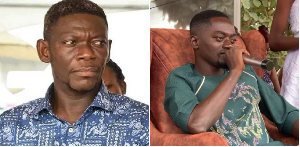
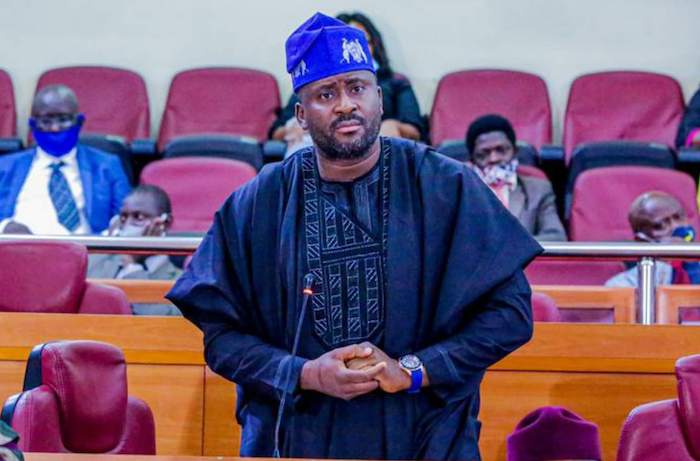
    Nollywood actor-turned-politician, Desmond Elliot, has refuted claims labeling him as gay.

    He insists he is straight and that such reports should be dismissed with the disregard they deserve.

    Desmond Elliot made this clarification during an interview with TVC.

    He stated that the article was unworthy of a response, which is why he chose to remain silent about it.

    “Why would I respond to allegations made against me when it did not reduce or increase my life? Secondly, it is an opinion that is being conceived. And I don’t think it is necessary for me to come out and say it’s true or not true; as long as I’m affecting people positively, I’m good.”

    Encouraging tolerance, Elliot stated that while everyone has the right to live as they see fit within legal boundaries, mutual respect should remain a priority.

    He explained, “If you feel you identify as something as long as it’s within the law people don’t have to accept it, do you? So let me say right here, I’m straight… you can never have anyone straighter than me. If some people want to enjoy themselves through publicity, that’s left to them but I don’t care really. Do you and enjoy yourself but do it within the law and with respect to your neighbours.”

  • There is no beef between myself and Lilwin -Agya Koo

    There is no beef between myself and Lilwin -Agya Koo

    Actor Kofi Adu, widely recognized as Agya Koo, has dismissed rumors suggesting that he has a personal rift with Kwadwo Nkansah, better known as Lilwin.

    He emphasized that they share a strong relationship, but acknowledged that it’s common for people to fabricate issues where none exist.

    Agya Koo made these remarks during an appearance on Kumasi’s Lawson Radio.

    “It is just like how people said Anthony Yeboah and Abedi Pele are at loggerheads, and Daddy Lumba and Nana Acheampong are also beefing.

    I was on set when they brought Kwadwo indicating that he is funny and could grow into a big star. I asked them to bring him because we had an agenda to overtake the Nigerians, so If there was someone good, it was best they brought him.

    So for me, I don’t have a problem with him, but as human beings, people will certainly create these rifts, which are nonexistent. When Lilwin meets me, he greets me and I respond to his greetings,” he said.

  • Full list of 2024 Grammy nominees released

    Full list of 2024 Grammy nominees released

    The 2025 Grammy Awards nominees were announced on Friday morning.

    Beyoncé extended her record-breaking number of Grammy nominations, receiving 11 this year, followed by Kendrick Lamar, Charli XCX, and Billie Eilish, each earning seven nominations.

    Beyoncé’s career tally has now reached 99 Grammy nods—the most of any artist—though she has yet to win Album of the Year, the Recording Academy’s highest honor.

    The winners will be announced at the Los Angeles ceremony on February 2.

    Below is a selection of nominees in major categories. The complete list of nominees across all 94 categories is available here.

    ALBUM OF THE YEAR

    Beyoncé – “Cowboy Carter”

    Billie Eilish – “Hit Me Hard and Soft”

    Chappell Roan – “The Rise and Fall of a Midwest Princess”

    Charli XCX -“Brat”

    Jacob Collier – “Djesse Vol. 4”

    Sabrina Carpenter – “Short n’ Sweet”

    Taylor Swift – “The Tortured Poets Department”

    RECORD OF THE YEAR

    The Beatles – “Now and Then”

    Beyoncé -“Texas Hold ’Em”

    Billie Eilish – “Birds of a Feather”

    Chappell Roan – “Good Luck, Babe!”

    Charli XCX – “360”

    Kendrick Lamar – “Not Like Us”

    Sabrina Carpenter – “Espresso”

    Taylor Swift Featuring Post Malone – “Fortnight”

    SONG OF THE YEAR

    Shaboozey – “A Bar Song (Tipsy)”

    Billie Eilish -“Birds of a Feather”

    Lady Gaga & Bruno Mars – “Die With a Smile”

    Taylor Swift – “Fortnight” [ft. Post Malone]

    Chappell Roan – “Good Luck, Babe!”

    Kendrick Lamar – “Not Like Us”

    Sabrina Carpenter -“Please Please Please”

    Beyoncé – “Texas Hold ‘Em”

    BEST NEW ARTIST

    Benson Boone

    Sabrina Carpenter

    Doechii

    Khruangbin

    RAYE

    Chappell Roan

    Shaboozey

    Teddy Swims

    BEST POP SOLO PERFORMANCE

    Beyoncé – “Bodyguard”

    Sabrina Carpenter -“Espresso”

    Charli XCX – “Apple”

    Billie Eilish -“Birds of a Feather”

    Chappell Roan -“Good Luck, Babe!”

    BEST POP DUO/GROUP PERFORMANCE

    Gracie Abrams ft. Taylor – “Us”

    Beyoncé Featuring Post Malone – “Levii’s Jeans”

    Charli XCX & Billie Eilish – “Guess”

    Ariana Grande, Brandy & Monica – “The Boy Is Mine”

    Lady Gaga & Bruno Mars -“Die With a Smile”

    BEST RAP ALBUM

    Common & Pete Rock -“The Auditorium Vol. 1”

    Doechii – “Alligator Bites Never Heal”

    Eminem – “The Death of Slim Shady (Coup de Grâce)”

    Future & Metro Boomin – “We Don’t Trust You”

    J. Cole – “Might Delete Later”

    BEST VIDEO

    “Tailor Swif” A$AP Rocky

    “360” Charli xcx

    “Houdini” Eminem

    “Not Like Us” Kendrick Lamar

    “Fortnight” Taylor Swift featuring Post Malone

    BEST RAP PERFORMANCE

    Cardi B – “Enough (Miami)”

    Common & Pete Rock Featuring Posdnuos – “When the Sun Shines Again”

    Doechii -“Nissan Altima”

    Eminem – “Houdini”

    Future, Metro Boomin & Kendrick Lamar – “Like That”

    Glorilla – “Yeah Glo!”

    Kendrick Lamar – “Not Like Us”

    Best rap album

    “Might Delete Later” J. Cole

    “The Auditorium, Vol. 1” Common & Pete Rock

    “Alligator Bites Never Heal” Doechii

    “The Death Of Slim Shady (Coup De Grâce)” Eminem

    “We Don’t Trust You” Future & Metro Boomin

    BEST RAP SONG

    “Asteroids” Rapsody featuring Hit-Boy. Written by Marlanna Evans

    “Carnival” Kanye West & Ty Dolla $Ign featuring Rich The Kid & Playboi Carti.  Written by Jordan Carter, Raul Cubina, Grant Dickinson, Samuel Lindley, Nasir Pemberton, Dimitri Roger, Ty Dolla $ign, Kanye West & Mark Carl Stolinski Williams

    “Like That” Future & Metro Boomin featuring Kendrick Lamar. Written by Kendrick Lamar Duckworth, Kobe “BbyKobe” Hood, Leland Wayne & Nayvadius Wilburn

    “Not Like Us” Kendrick Lamar. Written by Kendrick Lamar

    “Yeah Glo!” GloRilla. Written by Ronnie Jackson, Jaucquez Lowe, Timothy McKibbins, Kevin Andre Price, Julius Rivera III & Gloria Woods

    BEST R&B ALBUM

    “11:11 (Deluxe)” Chris Brown

    “Vantablack” Lalah Hathaway

    “Revenge” Muni Long

    “Algorithm” Lucky Daye

    “Coming Home” Usher

    BEST COUNTRY ALBUM

    Beyoncé – “Cowboy Carter”

    Post Malone -“F-1 Trillion”

    Kacey Musgraves -“Deeper Well”

    Chris Stapleton – “Higher”

    Lainey Wilson – “Whirlwind”

    BEST COUNTRY SOLO PERFORMANCE

    Beyoncé – “16 Carriages”

    Chris Stapleton – “It Takes a Woman”

    Jelly Roll -“I Am Not Okay”

    Kacey Musgraves – “The Architect”

    Shaboozey – “A Bar Song (Tipsy)”

    BEST ROCK ALBUM

    The Black Crowes – “Happiness Bastards”

    Fontaines D.C. -“Romance”

    Green Day -“Saviors”

    Idles -“TANGK”

    Pearl Jam – “Dark Matter”

    The Rolling Stones – “Hackney Diamonds”

    Jack White – “No Name”

    BEST ROCK PERFORMANCE

    The Beatles – “Now and Then”

    The Black Keys – “Beautiful People (Stay High)”

    Green Day – “The American Dream Is Killing Me”

    Idles – “Gift Horse”

    Pearl Jam – “Dark Matter”

    St. Vincent – “Broken Man”

    BEST R&B ALBUM

    Chris Brown – “11:11 (Deluxe)”

    Lalah Hathaway – “Vantablack”

    Muni Long -“Revenge”

    Lucky Daye – “Algorithm”

    Usher – “Coming Home”

    BEST R&B PERFORMANCE

    Chris Brown – “Residuals”

    Coco Jones – “Here We Go (Uh Oh)”

    Jhené Aiko – “Guidance”

    Muni Long – “Made for Me (Live on BET)”

    SZA – “Saturn”
  • Kumawood actress shares her story on having 2 children with 2 men

    Kumawood actress shares her story on having 2 children with 2 men

    In a heartfelt disclosure, Kumawood actress-turned-evangelist Gloria Kani has shared the challenges faced by single mothers like herself, attributing many of these difficulties to men’s actions.

    Through her story, Gloria highlights the deep-rooted stigma surrounding single mothers in Ghana, who are often labeled as “born one” or “born two” based on the number of children they have.

    She pointed out that these stereotypes intensify the hardships of single motherhood, making it harder for these women to pursue meaningful relationships or even consider marriage.

    Gloria’s journey as a single mother began under trying circumstances. In a video interview with One Ghana TV, she recalled how her life took an unexpected direction when she became pregnant with her first child while still a student.

    She explained, “I was a young woman in school with dreams, but I put everything on hold to care for my unborn child. The father continued his education, even as I stayed behind to raise our baby,” she shared, her voice heavy with emotion. Despite her sacrifices, she says, the father abandoned them both. “It’s painful to invest in someone, to support their family, only for them to turn their back when you need them most,” Gloria recounted.

    Her story underscores a stark reality many single mothers face: partners who evade responsibility, leaving the women to shoulder the demands of single parenting while they move on with their lives.

    She recounts that this particular man, now a well-known figure, left her with little more than memories and the responsibility of raising a child on her own.

    When Gloria entered a new relationship, she encountered additional challenges. Her second partner, she notes, had reservations about her past, hesitating due to her having a child from a previous relationship. “I thought he could see past my circumstances, but he couldn’t,” she confessed.

    This new relationship ended, leaving her with two children from two different men. “Some people judge me because I have two children with two men,” she stated. “But no one sees the battles I fought, the sacrifices I made. All they see are the labels.”

    Her words shed light on a widespread issue in Ghanaian society, where single mothers frequently bear the burden of stigma due to their circumstances.

    Gloria pointed out that, ironically, many of the same men who shy away from marrying single mothers are those who played a role in creating their single-parent status.

    “Why is it that men can walk away freely, but women are left with all the judgment?” she questioned, calling out the double standard.

    In a bid to shield other women from similar challenges, Gloria had a clear message: avoid financially unstable men. “I’m telling you, if a man isn’t financially stable, don’t think of building a life with him,” she advised.

    “These men, when they get money, they’ll leave you and start afresh with someone else. Why should we be left to pick up the pieces of broken dreams?”

    Her story powerfully reminds women to exercise caution in relationships, particularly those that could result in single parenthood.

    “Don’t be swayed by love alone; look at where the man is headed in life. I’ve walked that road. I know how it ends,” she warned.

  • Rocky Dawuni secures 4th Grammy nomination, setting record as Ghana’s most nominated artist

    Rocky Dawuni secures 4th Grammy nomination, setting record as Ghana’s most nominated artist

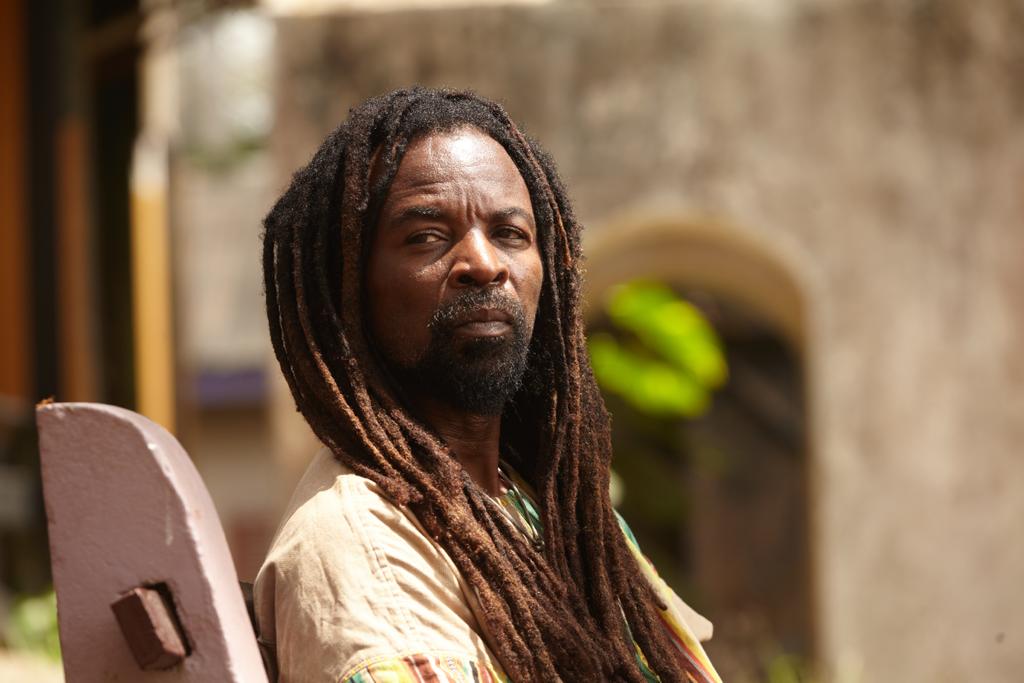
    Acclaimed Ghanaian reggae and Afro-Roots musician, Rocky Dawuni, has achieved a historic milestone with his fourth Grammy nomination, making him the most recognized Ghanaian artist in Grammy history.

    His track “Rise” has been nominated for Best Global Music Performance at the 2025 Grammy Awards.

    This latest recognition marks Dawuni’s fourth Grammy nomination.

    His Grammy journey began in 2015 when his album Branches of the Same Tree earned a nomination for Best Reggae Album.

    In 2021, he received a second nomination for Voice of Bunbon Vol. 1 in the Best Global Music Album category.

    In 2023, his song “Never Bow Down” also contended in the Best Global Music Performance category.

    This year, “Rise” will vie for the Best Global Music Performance award against competitors including Angélique Kidjo & Soweto Gospel Choir’s “Sunlight to My Soul,” Arooj Aftab’s “Raat Ki Rani,” Jacob Collier with Anoushka Shankar & Varijashree Venugopal’s “A Rock Somewhere,” Masa Takumi with Ron Korb, Noshir Mody & Dale Edward Chung’s “Kashira,” and Sheila E. with Gloria Estefan & Mimy Succar’s “Bemba Colorá.”

    Ghana, however, did not secure a spot in the highly sought-after Best African Music Performance category, which includes nominations for Asake & Wizkid’s “MMS,” Burna Boy’s “Higher,” Chris Brown featuring Davido & Lojay’s “Sensational,” Tems’ “Love Me JeJe,” and Yemi Alade’s “Tomorrow.”

    The category has no Ghanaian representation this year.

    The 2025 Grammy Awards ceremony is set for February 2, 2024, at Los Angeles’ Crypto.com Arena in the U.S.A..

  • Celebrating Ghana’s Farmers: A story of neglect and disregard by its govt

    Celebrating Ghana’s Farmers: A story of neglect and disregard by its govt

    Today, as Ghana pauses to celebrate Farmer’s Day, let us take a moment to honor the resilience, strength, and dedication of our farmers. These are the real MVPs who rise before dawn, work through scorching heat and pouring rain, and persist with tenacity—all to feed a nation.

    They cultivate Ghana’s rich lands, producing everything from cassava and yam to cocoa and maize. They are the unsung heroes of our economy, sustaining food security and helping shape Ghana’s identity as a major exporter of cocoa and cashew on the international stage.

    Ghana’s agricultural sector contributes about 20% to the national GDP, with approximately 54% of the country’s workforce engaged in agriculture. Food production in Ghana not only ensures local food security but also fuels international trade, as the country’s cocoa, cashew, and oil palm products reach global markets. Cocoa alone accounts for nearly 15% of Ghana’s total exports, employing hundreds of thousands and generating over $2 billion annually. Beyond these numbers, however, lies a deeper truth: without farmers, Ghana would be a vastly different place—economically, socially, and culturally.

    While the country celebrates today, many hardworking farmers live a different reality. Despite eight years of promises from the NPP government, they remain largely forgotten, neglected, and overlooked. The administration that promised to empower farmers has instead left many in a worse position. Across the nation, farmers have faced rising input costs, inadequate supplies, and a lack of agro-technical support. For these forgotten farmers, this Farmer’s Day feels bittersweet and perhaps a little hollow.

    Ironically, the 40th Farmers’ Day anniversary will not receive its usual fanfare. District and regional celebrations have been suspended, and instead, a small gathering of government officials and potential awardees will meet at Accra’s Alisa Hotel, symbolizing a subdued recognition. How Farmers’ Day ended up in a hotel remains a mystery to many.

    In the run-up to the 2016 elections, the NPP made bold pledges to revitalize agriculture, promising everything from financial assistance and subsidized inputs to mechanization and enhanced infrastructure. Programs like the “Planting for Food and Jobs” (PFJ) initiative promised to transform agriculture, create jobs, and reduce Ghana’s reliance on imported food. Yet what was pitched as a comprehensive solution turned out, in many ways, to be a half-hearted effort. The program suffered from poor planning, limited reach, and widespread corruption.

    Similarly, the “One Village, One Dam” policy, intended to provide reliable water for year-round farming in Northern Ghana, has been disappointing. As frustrated farmers can attest, these “dams” were often shallow pits that dried up by mid-dry season, offering little relief for communities desperate for irrigation. In some places, they’ve become soccer fields for local youth. In a region prone to drought, these failed dams represent not only a flawed policy but also a betrayal of communities in need.

    Worse still is the impact on rural farmers who lack access to even basic infrastructure. Roads to markets remain unpaved and impassable during the rainy season, leading to massive post-harvest losses. Extension services—vital for training farmers in best practices and new technology—are severely underfunded, leaving many farmers without the support needed for sustainable yield improvements.

    Yet, despite these failures, farmers continue to persevere. In the face of rising costs of seeds, agro-chemicals, fertilizers, limited access to agro-credits, and inadequate storage facilities, Ghanaian farmers remain resilient, unrelenting, and resourceful. They continue to grow food even when it seems the world has forgotten them. Their resilience reflects the Ghanaian spirit and a culture that honors the land and its bounty—a spirit not mirrored by the Bawumia/Akufo-Addo government, which has allowed the degradation of agricultural lands through illegal mining.

    But resilience alone is not enough. Ghana’s farmers need action—real, tangible support that goes beyond empty political promises. They need effective policies, leaders who listen, and accountability at all levels. If Ghana is to fulfill its agricultural potential and economic transformation goals, we must recognize the hardships farmers face and enact reforms that empower them.

    To make meaningful progress, we must begin by reforming failed programs. Any new agricultural policy must prioritize transparency and accountability to ensure funds and subsidies reach their intended beneficiaries. An independent oversight body, like the Governance Advisory Council proposed by President John Dramani Mahama, could monitor agricultural program funds and ensure accountability.

    Investment in genuine irrigation infrastructure—not shallow dams—is critical to ensuring farmers can cultivate year-round. Enhanced extension services are also essential, providing farmers with access to training, best practices, and sustainable techniques that increase yields without degrading the land.

    Additionally, access to financing must improve, especially for young farmers and women. Micro-credits, low-interest credit facilities, and cooperative banking models could provide smallholder farmers with much-needed capital. Finally, building and maintaining rural roads should be a national priority to facilitate market access, lower food transport costs, and reduce post-harvest losses.

    Today, let us celebrate our farmers with reverence and gratitude. May this Farmer’s Day be more than just a date on the calendar; may it remind us that our farmers are the backbone of this nation. Here’s to the tillers of the land, the planters of seeds, and the keepers of Ghana’s future. May their fields be green, their harvests plentiful, and their burdens lightened.

    As we honor our farmers, let us also acknowledge the failures that burden them, particularly under the outgoing NPP Bawumia/Akufo-Addo administration. As Ghana approaches a new election, it is time for the people to demand better leadership. Let this Farmer’s Day be a rallying cry for change, a call for leaders who serve the people, honor the land, and uplift the very hands that feed us. Our farmers deserve more than promises; they deserve progress, justice, and dignity.

    God bless our homeland Ghana.

    The author, serves as the spokesperson for the National Democratic Congress Agriculture Manifesto Committee, Dr. Peter Boamah Otokunor.

    DISCLAIMER: Independentghana.com will not be liable for any inaccuracies contained in this article. The views expressed in the article are solely those of the author’s, and do not reflect those of The Independent Ghana

  • Fans eager to see these 5 Ghanaian actors return to the screens

    Fans eager to see these 5 Ghanaian actors return to the screens

    Ghana’s movie industry has introduced us to unforgettable stars and iconic characters, yet some beloved actors have stepped away from the spotlight, sparking anticipation among fans for their comeback.

    Here’s a look at some actors fans are longing to see again, ready to deliver the drama, humor, and charm they’re famous for!

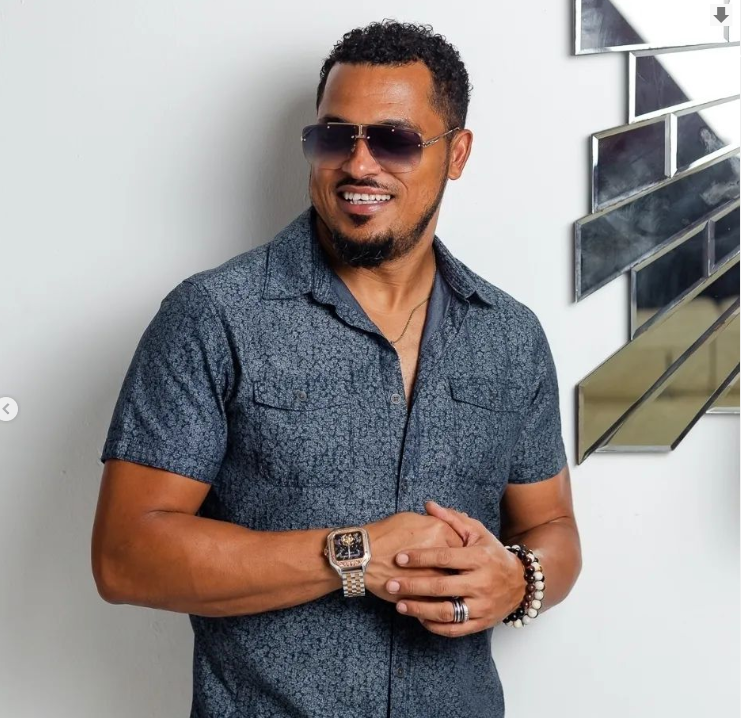
    1. Van Vicker

    The “ladies’ man” of Ghanaian cinema, Van Vicker brought his charm to countless romantic dramas, winning hearts across Ghana, Nigeria, and beyond.

    Known for his magnetic on-screen presence and roles as the brooding hero, Van was everywhere in the 2000s but has since slowed down on movie appearances, instead focusing on other business ventures and family life. His fans, however, are ‘so’ ready for a comeback. Imagine the excitement if he returns in a romantic thriller or an epic action-packed role!

    Van Vicker

    2. Martha Ankomah

    With her grace and powerful performances, Martha Ankomah won fans’ hearts by portraying strong-willed, relatable female characters. Known for both her beauty and versatility. Martha has kept a lower profile in recent years. Her fans are thrilled every time she appears on social media but are rooting for her next big return to the big screen.

    Martha-Ankomah

    3. Agya Koo

    No one can make us laugh quite like the legendary Agya Koo! Known for his brilliant comedic timing and unforgettable catchphrases, he was a mainstay in the Kumawood industry.

    After a break that left fans wanting more, Agya Koo has hinted at a few roles here and there but hasn’t made a full-fledged return to the frequency fans are craving.

    A new comedy featuring Agya Koo? The excitement would be palpable not to mention the instant nostalgia for longtime fans!

    Agya Koo

    4. Kyeiwaa

    Kyeiwaa is the queen of ‘witchcraft roles’ in Ghanaian cinema! Known for her spine-chilling performances in supernatural dramas, she’s also shown her comedic side, making her one of Ghana’s most versatile actors.

    After relocating to the U.S., Kyeiwaa stepped back from acting, leaving fans with a void only she can fill. Many would love nothing more than to see her back in an intense Kumawood thriller or supernatural drama, reprising her iconic witch roles.

    5. Nana Ama McBrown

    Nana Ama McBrown is a force in Ghanaian cinema and television. Fans love her for her bubbly personality, and she’s won acclaim for her versatility in roles ranging from hilarious comedies to heartfelt dramas.

    Although she’s still active in television, McBrown has put her acting career on pause, especially after focusing on her family and TV hosting. Fans are calling for her to make a full return to movies, where her ability to light up the screen is deeply missed. Imagine her headlining a star-studded cast in a rom-com or action flick!

    Nana Ama McBrown

    6. Eckow Smith-Asante

    Sophisticated and refined, Eckow Smith-Asante brought a certain gravitas to every role he played. Known for his roles in classic films, he often portrayed the suave, wise, and occasionally villainous characters.

    Though he’s taken a back seat from mainstream cinema, his fan base hasn’t forgotten him. Many are holding out hope that he’ll make a comeback in a thriller or psychological drama where he can showcase his deep, nuanced acting.

    These stars have each left a unique mark on Ghanaian cinema, and fans across the country and beyond are waiting for the moment they decide to light up the screen once more. So, here’s hoping that 2024 will be the year of epic comebacks, bringing our favourite actors back to the silver screen!

  • Adin Ross wins $1.6m on Trump election bet after public endorsement

    Adin Ross wins $1.6m on Trump election bet after public endorsement

    American streamer and social media influencer Adin Ross scored a substantial $1.6 million payout after betting on Donald Trump to win the 2024 U.S. presidential election.

    Ross revealed on his social media that he had placed a $1 million bet on Trump on October 20, 2024, shortly before Election Day.

    In the weeks leading up to the election, Ross hosted Trump in a highly-watched livestream, where he openly endorsed the former president. Ross continued to express his support for the Republican candidate in a series of his livestreams.

    Back in August, Ross visited Trump at his Mar-a-Lago resort in Florida, going live on Kick with the now 47th U.S. President. During the visit, Ross presented Trump with a Tesla Cybertruck wrapped in a famous photo taken after a failed assassination attempt on Trump in July, along with a Rolex watch as an additional gift.

    Reacting to the Cybertruck, Trump referenced Tesla CEO Elon Musk, saying: “Wow. That’s an Elon. That is beautiful. I think it’s incredible.”

    Ross tweeted on 6 November that he is looking forward to “hosting Trump in the White House soon.”

    Trump’s US election win

    Former U.S. President Donald Trump has claimed victory in the 2024 presidential race, defeating Kamala Harris to reclaim the White House.

    The election, held on November 5, 2024, shows Trump projected as the leading candidate, with major media outlets, including CNN, Fox News, and the BBC, announcing him as the frontrunner as the majority of results are counted.

    According to the BBC’s projections, Trump holds 266 electoral votes compared to Harris’s 194, with around 11 states yet to report their final tallies.

    CNN similarly projects 266 electoral votes for Trump, with Harris trailing at 188. In the popular vote, Trump currently has over 68 million votes, while Harris has slightly more than 63 million.

  • Here are 7 tips to conquer pornography addiction

    Here are 7 tips to conquer pornography addiction

    In an age where almost everything we desire is just a click away, the internet has made both ordinary and taboo cravings more accessible than ever. Pornography or ”Porn” often dismissed as a harmless indulgence, has quietly evolved into a powerful addiction for many, subtly eroding their mental health, relationships, and self-esteem.
    Breaking free from this often-hidden struggle may seem daunting, but it’s far from impossible. With the right mindset, tools, and support, recovery is within reach.

    Pornography addiction is not simply about seeking pleasure—it often arises from deeper issues such as stress, loneliness, or unresolved trauma. Pornography, which refers to explicit material intended to sexually arouse viewers, can become a powerful addiction when it is used as a means of coping with emotional or psychological pain. The brain becomes rewired, continually craving the dopamine rush, pulling individuals into a cycle that feels impossible to break. However, recognising the seriousness of the problem is the first step towards recovery.

    Here are seven (7) tips to help you overcome pornography addiction:

    1. Acknowledge the Problem and Commit to Change

    The first step on the road to healing is admitting the problem. Out of guilt or shame, many people try to conceal or deny their addiction, but recovery requires confronting it head-on. Promise yourself that you will break free, even though it may not happen immediately. It’s a journey, not a race, to recovery.

    Write down your reasons for quitting. Having a clear goal will help keep you motivated when cravings strike, whether that goal is to improve relationships, mental clarity, or general happiness. It’s vital to understand that addiction isn’t a moral failing; it’s a condition that can be treated. The journey to healing begins with self-compassion, recognising that struggling doesn’t make you weak; it makes you human. What truly matters is the courage to take that first step toward change

    2. Set Clear Boundaries and Limit Triggers

    The internet is a vast ocean, and at times, it can feel impossible to avoid the temptations lurking beneath the surface. But navigating this digital sea requires setting firm boundaries that protect you from its most dangerous currents. Start by identifying the triggers that pull you in—stress at work, the emptiness of a lonely weekend, or a fleeting moment of boredom. Understanding these patterns gives you the power to redirect your energy, creating a safe space where these triggers lose their grip.

    Consider using technology to your advantage: software like Covenant Eyes or Accountability Software can block explicit content and provide accountability. These tools offer an extra layer of protection during vulnerable moments, helping you stay committed to your goal of change.

    3. Seek Support: You Don’t Have to Do This Alone

    Recovery is not a path to walk alone—it’s best travelled with others. Open up to a trusted friend, partner, or therapist. Let them help carry the weight of your struggle, so it doesn’t overwhelm you. Joining an anonymous community offers more than shared experiences; it provides support, reinforcing that you’re not alone. Speaking your truth breaks the chains of shame and strengthens your resolve to heal.

    Therapy can also help uncover the anxiety, depression, or trauma that may fuel addiction. Techniques like Cognitive Behavioral Therapy (CBT) help you identify toxic thought patterns and replace them with healthier habits. It’s not just about quitting; it’s about transforming your mind and soul to build a new, stronger version of yourself.

    4. Replace the Habit with Positive Activities

    To break free from addiction, it’s not enough to simply stop—you must replace the void with something that nourishes the soul. Find passions that engage both your mind and body in ways that bring true fulfilment. Whether it’s the rhythm of a new instrument, the brushstrokes of a painting, the immersion of a good book, or the heartwarming act of volunteering, channel your energy into pursuits that fill the space pornography once occupied.

    As you embrace these positive outlets, your brain will begin to rewire itself, forming new pathways that lead to healthier habits. Over time, these fulfilling activities will replace old cravings, bringing a more vibrant and balanced life—one filled with joy, creativity, and connection.

    5. Practice Mindfulness and Self-Control

    Mindfulness is a quiet revolution in the battle against addiction. It’s not about fighting your urges, but rather observing them with curiosity and compassion, without allowing them to control your actions. When the urge to view pornography arises, don’t suppress it—acknowledge it, then let it pass, like a wave you no longer need to ride.

    Mindfulness practices such as deep breathing and meditation help create a peaceful sanctuary in the present moment, away from the noise, stress, and cravings. These exercises not only calm your mind but also teach you to sit with discomfort without needing to escape. Over time, your brain will recognise cravings without succumbing to them, helping you reclaim control and choose a healthier path.

    6.Turn to Scriptures for Strength and Guidance

    For religious individuals, both the Bible and the Qur’an offer profound spiritual wisdom to guide the soul through temptation. In Christianity, verses like 1 Corinthians 10:13 remind believers that no temptation is too strong to resist, for God always provides a way out. Similarly, Matthew 5:28 calls for guarding one’s heart and mind to maintain purity. In Islam, the words of Surah At-Tawbah (9:51) assure us that, with patience and trust in Allah, no trial—including addiction—is too great to bear. Surah Al-Baqarah (2:286) reminds us that Allah does not burden a soul beyond its capacity, offering divine support in moments of struggle. Surah Al-Furqan (25:63) encourages self-restraint, urging individuals to manage their desires.

    Both faiths highlight the power of prayer. Whether through Christian prayer or Islamic Dua, these sacred acts provide the strength and clarity needed to overcome weakness. Participating in supportive faith communities, such as church groups or mosque gatherings, also fosters accountability, encouragement, and shared purpose. By embracing the wisdom of both the Bible and the Qur’an, individuals can find spiritual fortitude and solace on the road to recovery.

    7.Have Patience and Acknowledge Your Progress

    Recovery is rarely a straight line. Obstacles may arise, but every step forward is a victory. Celebrate small wins, such as going a week without relapsing or recognising your progress. Each accomplishment builds confidence and strengthens your commitment to a healthier life.

    Be patient with yourself. Overcoming addiction takes time. Focus on your progress and stay positive, knowing that every step brings you closer to a life beyond addiction.

    A Life Beyond Addiction

    Overcoming pornography addiction is a transformative journey—not just about quitting, but reclaiming your life. It begins with understanding the root causes, setting boundaries, seeking support, and replacing old habits with healthier, fulfilling ones. This journey is about creating deeper connections with yourself and others and rediscovering joy.

    If you or someone you know is struggling, help is available. Take the first step toward a life of clarity, connection, and freedom from addiction. Your path to recovery starts now.

    DISCLAIMER: Independentghana.com will not be liable for any inaccuracies contained in this article. The views expressed in the article are solely those of the author’s, and do not reflect those of The Independent Ghana

  • Here are 3 countries whose citizens are not permitted to travel offshore

    Here are 3 countries whose citizens are not permitted to travel offshore

    Imagine your country stopping you from leaving. You can’t just buy a ticket, pay for your flight, and leave the country.

    In some authoritarian countries, it is almost impossible for citizens to leave the country, as they are essentially stuck there.

    Some also make travel requirements so difficult that it’s almost as if you are stuck there. Here are three of such countries.

    Eritrea

    This country in East Africa is very strict about citizens leaving the country. The Eritrean government punishes those who fail to complete their national service requirements and places restrictions on citizens’ legal capacity to leave the country.

    The government carries out yearly roundups to find and apprehend evaders, and border security personnel have the authority to shoot anyone trying to escape without authorisation. Financial penalties and incarceration are examples of penalties for noncompliance.

    Offenders who return after 40 years risk extended imprisonment and loss of rights. Penalties extend to their family, with fines, seized properties, forced replacements, or jail.

    Due to concerns about players requesting asylum overseas and never coming back, the Eritrean football team, which hardly ever plays in international tournaments, has decided to skip the 2026 World Cup qualifying round.

    North Korea

    It is illegal for North Koreans to travel outside of their nation without permission from the government.

    Those who do so risk harsh punishments like torture, forced labour, and life in a political prison camp.

    The people are permitted to travel overseas are under strict surveillance and are required to return to North Korea for special ideological debriefings.

    Turkmenistan

    According to Turkey’s Law on Migration, which stipulates that a citizen’s departure may be prohibited if it compromises national security, the government still forbids some citizens from leaving the country.

    According to the NGO Prove They Are Alive!, law enforcement agencies have the authority to prevent citizens from travelling, including young males, people who are being prosecuted or facing civil or criminal accusations, family members of those found guilty of the 2002 coup attempt, journalists, civil society activists, and their relatives.

    According to the group, 20,000 people were prohibited from travelling for political reasons.

    In the past, Iran and Cuba had strict policies against their citizens leaving the country, but they have been relaxed.

    DISCLAIMER: Independentghana.com will not be liable for any inaccuracies contained in this article. The views expressed in the article are solely those of the author’s, and do not reflect those of The Independent Ghana

  • Did you know you can get a passport for your pet?

    Did you know you can get a passport for your pet?

    Some pet passports also include details like your pet’s microchip information, recent blood tests, and the necessary permits for entering specific countries.

    While not all countries require a formal “passport,” they do need certain documents to allow your pet to enter. Think of a pet passport as a health record and ID card for your pet.

    Why do you need a pet passport?

    Travelling internationally with a pet can be complicated without a passport. Many countries have strict regulations to prevent diseases from spreading, and the pet passport shows that your pet is healthy.

    For example, if you’re travelling to the United Kingdom or other European countries, they require proof of vaccinations and health checks. Some countries may even place pets in quarantine upon arrival if they don’t meet specific requirements. The pet passport can save you from these headaches and ensure that your pet won’t have to face long waiting times or extra inspections.

    How to get a pet passport in Nigeria
    In Nigeria, getting a pet passport involves a few steps, and it’s important to start early to avoid delays. Here’s how:

    Visit a licensed veterinarian: Start by visiting a vet who is experienced with international travel requirements.

    The vet will guide you through the necessary vaccinations, like rabies, and update any other required health records.

    Microchip your pet: Many countries require pets to have a microchip that links to their passport. This tiny device helps identify your pet if they get lost, and it’s a requirement in some countries.

    Get the vaccinations: The vet will ensure your pet’s vaccinations are up to date. Some countries also require blood tests to confirm immunity to certain diseases.

    Complete the documents: Your vet will help fill out the forms and paperwork required for your destination. Keep these records safe, as they’re essential for travel.

    Making your pet’s journey smooth

      Getting a pet passport might sound like a lot, but it’s worth it to enjoy your travels without worry. Once you’ve got the passport, make sure to pack all documents safely and double-check with your airline about any specific rules they may have for pets. Remember, every step you take in preparing for your pet’s travel helps ensure a smooth and enjoyable journey for both you and your beloved pet.

      DISCLAIMER: Independentghana.com will not be liable for any inaccuracies contained in this article. The views expressed in the article are solely those of the author’s, and do not reflect those of The Independent Ghana

    1. Bawumia unveils myCreditScore to bolster financial inclusion in Ghana

      Bawumia unveils myCreditScore to bolster financial inclusion in Ghana

      Vice-President and NPP Presidential Candidate, Dr. Mahamudu Bawumia, has unveiled myCreditScore, an innovative credit reference and scoring system that allows Ghanaians to demonstrate their creditworthiness in a transparent manner, improving their access to credit.

      Supported by the Bank of Ghana, the system aims to provide financial institutions with a trustworthy assessment of individuals’ credit profiles, making borrowing easier and rewarding responsible financial practices.

      During the launch event in Accra on Thursday, November 7, 2024, Dr. Bawumia called the introduction of myCreditScore a “historic step” toward achieving a more inclusive financial system in the country.

      “It is a significant milestone in Ghana’s journey towards a financially inclusive and empowered society,” he stated, emphasising that this new system opens “yet another chapter in the nation’s ambitious journey towards financial inclusion.”

      The personalized credit scoring system will give higher scores to individuals who show good credit behavior, ultimately providing them with improved access to larger loans from financial institutions.

      This strategy is designed to encourage financial responsibility and reduce obstacles to credit for Ghanaians nationwide.

      Dr. Bawumia, the driving force behind the project, emphasized that myCreditScore is a crucial solution to longstanding issues in the lending sector.

      He pointed out that the lack of a dependable credit information system has historically increased lending risks, causing financial institutions to offer limited credit at high-interest rates to protect against potential defaults.

       Dr. explained: “The absence of a credit information system has increased lending risks, leading financial institutions to offer less credit. A credit reporting system in Ghana will provide timely, accurate, and up-to-date information on debt profiles and borrowers’ repayment history, yielding numerous benefits.”

      By enabling banks and lenders to accurately assess the creditworthiness of potential borrowers, the new system is expected to reduce lending rates over time, creating a more dynamic credit economy for all Ghanaians.

      Dr Bawumia described myCreditScore as “a step forward in building a dynamic credit economy for Ghana and all Ghanaians,” affirming its potential to create a financially empowered society.

    2. Govt intends to reduce stake in most SOEs  – John Boadu

      Govt intends to reduce stake in most SOEs – John Boadu

      Director-General of the State Interest and Governance Authority (SIGA), John Boadu, has revealed that the government is working on diversifying its stakes in several state-owned enterprises (SOEs).

      Mr. Boadu explained that this move would give Ghanaians the opportunity to invest in these institutions by purchasing shares.

      He made this announcement during the fourth annual general meeting of TDC Ghana Limited, stating that… “The government is preparing itself to diverse its interest in most SOEs, 100 percent ownership for what, and the people of this country are also ready to invest in these entities.”

      He pointed out that in many developed countries, governments hold minimal shares in their SOE sectors, which helps ensure that qualified individuals are appointed to the board.

      He further added: “You are not limited to costs that must be paid by the government, and you must pay those costs that ensure that you are not able to make the required profits.

      Discussing TDC’s operations, Mr. Boadu praised the company for its achievements in recent years, emphasizing that it is now time for state-owned limited liability entities to actively compete in their respective markets.

      The SIGA Director-General reminded TDC that it has the capacity to borrow with government backing, as long as its financial position is sound.

      On the issue of providing affordable housing to Ghanaians, he remarked that for TDC to offer such housing and remain viable, “the government must take the difference so they can survive; that’s how it works elsewhere.”

      Mr. Kofi Brako, the Board Chairman of TDC, has called on the government to involve TDC in more affordable housing projects to help address the challenges in the sector and drive its growth.

      He highlighted that Ghana’s real estate sector remains one of the fastest-growing industries, with consistent growth over the years, ranging between eight and 10 percent.

      This growth, he explained, has been driven by the country’s increasing population and urbanization trends. However, despite these positive developments, Ghana still faces a significant housing deficit, currently estimated at 1.8 million units.

    3. Financial analyst quizzes John Kwakye on proposed solutions for cedi stability

      Financial analyst quizzes John Kwakye on proposed solutions for cedi stability

      Financial analyst Dr. Michael Kwaku Dawson has urged Dr. John Kwakye, the Director of Research at the Institute of Economic Affairs (IEA), to reveal the long-term solutions he proposed for ensuring cedi stability during his tenure on the Monetary Policy Committee (MPC) for almost ten years.

      This follows Dr. Kwakye’s criticism of the Central Bank for failing to effectively stabilize the local currency.

      “I know that Dr. Kwakye served on the MPC for a significant period. What solutions did he suggest for cedi stability? I hear him commenting daily on the BoG Inflation Targeting framework and monetary policy issues. What alternative options or frameworks has he proposed? I believe he should contribute solutions rather than just criticism. Actions speak louder than words,” Dr. Dawson stated.

      He also cautioned economists and financial analysts to be careful with their statements, as they can negatively impact the economy.

      “We share one economy. Any negative impacts are felt by all, not just financial entities,” Dr. Dawson emphasised.

      The financial analyst commended the central bank for launching the Ghana Gold Coin initiative, recognizing it as a valuable investment opportunity for the public.

      He expressed optimism that the initiative would help ease pressure on the local currency, offering an alternative for individuals who typically bought dollars for investment, encouraging them to consider purchasing gold coins instead.

      “This is an innovative concept, and I believe the BoG is providing the public with an alternative investment option to purchasing and hoarding dollars,” Dr. Dawson remarked.

      In his final comments, Dr. Dawson recognized the Bank’s efforts to stabilize the cedi against other currencies but encouraged the public to back the Bank in achieving its goals.

    4. Put the people first, not party agendas – Kennedy Agyapong to MPs

      Put the people first, not party agendas – Kennedy Agyapong to MPs

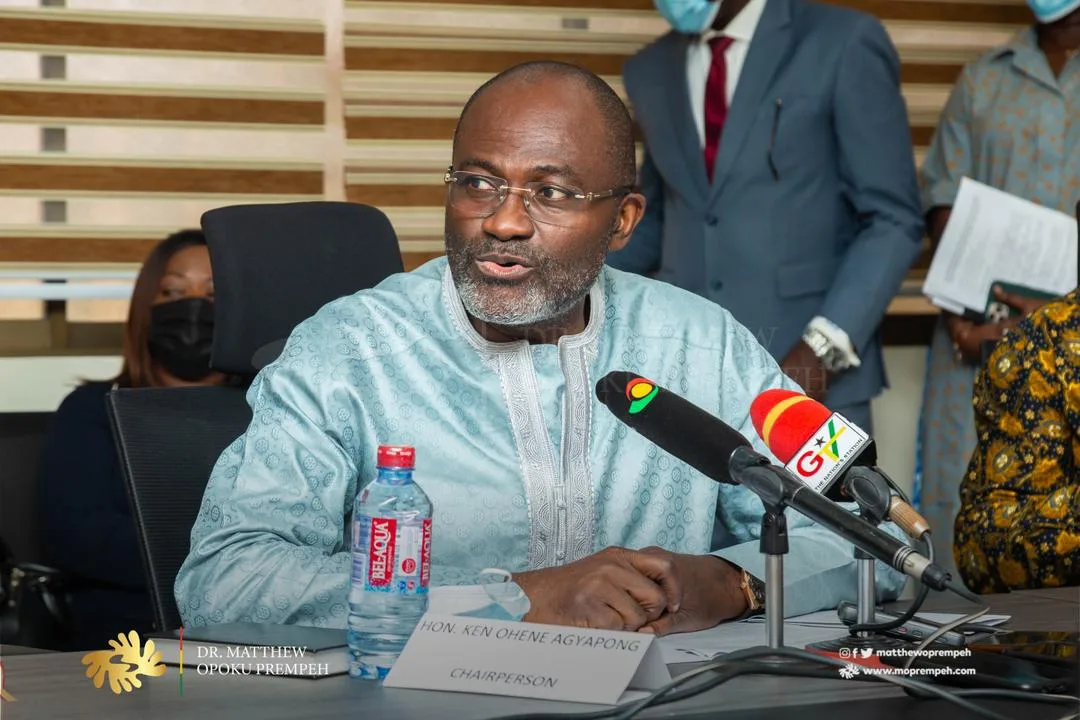
      Amid Ghana’s ongoing political impasse, outgoing Assin Central Member of Parliament (MP), Kennedy Agyapong, has called for greater cooperation between the majority and minority sides in Parliament, stressing that the institution’s purpose is to serve the people, not push party interests.

      During a media briefing, Agyapong emphasized that the Parliament’s role is to ensure the well-being of Ghanaians, a responsibility that transcends political agendas.

      “Parliament is meant to serve the people, not to push party agendas,” he asserted, underscoring the need for both sides of the aisle to work together for the greater good of the country.

      He specifically addressed the National Democratic Congress (NDC) MPs, urging them to reflect on their plans for governance, should they win the next elections. “NDC MPs need to consider how they plan to govern if they win the next elections,” Mr Agyapong said, pointing out that effective governance requires cooperation and constructive engagement between both sides of Parliament.

      The outgoing Assin Central MP’s comments come as tensions between the majority and minority parties continue to simmer, with each side holding firm to their positions on key issues. The deadlock has raised concerns about the ability of Parliament to effectively address critical national matters, including the passing of budgets and other laws.

      While acknowledging the political disagreements, Agyapong warned that Parliament cannot function properly without collaboration.

      “Parliament cannot function without both sides working together—this is a responsibility we can’t lose sight of,” he said.

      The former MP’s statement reflects his belief that unity is essential for the effective operation of Parliament and the smooth functioning of the country’s governance system.

      As Ghana navigates its political challenges, Agyapong’s call for unity is a reminder of the larger responsibilities lawmakers have in ensuring that their actions ultimately benefit the citizens they serve.

      The question remains whether both parties can set aside their differences and find common ground for the benefit of the nation.

    5. GRA acting like a bully, forcing people to pay money through harsh methods – Alhassan Andani

      GRA acting like a bully, forcing people to pay money through harsh methods – Alhassan Andani

      Former Chief Executive Officer of Stanbic Bank, Alhassan Andani, has criticized the Ghana Revenue Authority (GRA) for its aggressive approach to tax collection.

      He likened the GRA’s tactics to those of a terrorist, forcefully squeezing money from businesses.

      Speaking at the Ghana CEO Presidential Gala Dinner in Accra on Thursday, November 7, 2024, Andani expressed concern that the current tax system is stifling the private sector.

      He pointed out that the complex system, which involves the payment of 33 different taxes, is obstructing business growth and contributing to corruption.

      “GRA has become a terrorist organization. I know a number of organizations, when GRA gets into their space, it’s as if they deliberately do it to wriggle people’s arms to take money,” he said during the panel discussion.

      He added, “When GRA is coming, it is like a terrorist coming. It’s supposed to be you file what you projected to do for the year, and you pay tax quarterly…”

      “Any new tax measures we don’t simplify, and indeed merge and delete some taxes… we just have to rationalize it and give this very emerging capital or private sector people time to breathe,” Mr. Andani indicated.

      At present, businesses are struggling to generate more revenue and remain operational due to high inflation, the depreciation of the cedi, and the multitude of taxes they are required to pay to the government.

      The Ghana Revenue Authority (GRA) is tasked with ensuring full compliance with tax laws to secure a steady revenue stream for the government.

      In addition, it supports trade and guarantees a regulated and secure movement of goods across the country’s borders.

    6. Ghanaians lament unfair prepaid meter charges on social media

      Ghanaians lament unfair prepaid meter charges on social media

      The Electricity Company of Ghana (ECG) has recently replaced all post-paid, non-smart prepaid, and faulty meters with new MMS-compliant smart prepaid meters.

      This replacement initiative, part of the company’s Loss Reduction Programme (LRP), aims to install smart meters and enhance energy accounting practices.

      The updated meters are designed to reduce system losses, ensure more accurate readings, and eliminate the billing issues customers faced with older models.

      However, some customers have expressed frustration over the frequent visits to ECG offices and agents to purchase electricity, fearing power outages and struggling to keep their appliances running due to high consumption costs.

      Some individuals, sharing receipts of their electricity purchases, reported spending up to GH¢1,700 monthly, while others spent around GH¢500 on average.

      Others on social media argue that the installation of the new meters is a tactic for the government to extract more money from Ghanaians, claiming the meters are financially burdening the public as large sums are needed to maintain power.

      “They changed my meter just one month ago and this is what I have spent so far. No be say I get cold store for my house oh!! No be say I dey 3 bedroom apartment. Just me alone!!! If I do illegal connection may3 bone?” a tweep named Kobe Boujee said.

      Another stated, “Is ECG using the new meter to milk money from the citizens? Ei.”

      Some social media users are contemplating illegal connections as a way to escape the burden of paying high electricity bills.

      However, the new meters are reportedly equipped with anti-tampering features designed to combat illegal connections and minimize losses from electricity theft.

      Here are some of the tweets:

      https://twitter.com/kobe_boujee88/status/1852441557489828301

      https://twitter.com/withAlvin__/status/1854278665426653568

      https://twitter.com/kobe_boujee88/status/1852441557489828301

      https://twitter.com/cashmoneymaker1/status/1854422247202558434

    7. Ongoing standoff in parliament could delay salaries of public workers – Ken Agyapong

      Ongoing standoff in parliament could delay salaries of public workers – Ken Agyapong

      Amid Ghana’s persistent parliamentary standoff, outgoing MP for Assin Central, Kennedy Agyapong, issued a grave caution that the livelihoods of Ghanaian workers might be endangered.

      As the clash between the majority and minority parties intensifies, Agyapong pointed to the potential threat to public sector wages—a worry that touches on the core of the country’s stability.

      “If the impasse continues, we could see delayed salaries for workers,” Agyapong said during a recent media briefing. “Without MPs present, essential government functions, including salary approvals, are on hold. This isn’t just about politics anymore; it’s about people’s lives.”

      This confrontation, now escalating into a struggle over control of Parliament, highlights underlying problems within Ghana’s legislative framework.

      Members of Parliament from the New Patriotic Party (NPP) have boycotted sessions after the National Democratic Congress (NDC) claimed a majority, even in light of a Supreme Court decision aimed at resolving the issue. The NDC remains firm in its position, creating a deadlock that has moved beyond Parliament and risks impacting the daily lives of Ghanaians.

      Agyapong, recognized for his blunt demeanor, emphasized the critical need for cooperation without holding back.

      “Parliament is meant to serve the people, not to push party agendas,” he asserted. “NDC MPs need to consider how they plan to govern if they win the next elections. Parliament cannot function without both sides working together—this is a responsibility we can’t lose sight of.”

    8. LPG’s presidential candidate pledges to invest heavily in Kantanka automobile if he wins presidency

      LPG’s presidential candidate pledges to invest heavily in Kantanka automobile if he wins presidency

      Presidential candidate for the Liberal Party of Ghana (LPG), Kofi Akpaloo, has announced that, if elected, he intends to invest in Kantanka Automobile.

      In an interview with Fiifi Pratt on Kingdom FM, Akpaloo shared his vision to help Kantanka Automobile raise funds by listing the company on the stock market.

      He explained that, as president, he would make shares of Kantanka Automobile available for public purchase, enabling people to own a stake in the company.

      “For example, if Kantaka offers shares at GH¢1,000 each, and raises GH¢10 billion, this money can be used to purchase new and modernized car parts to advance the company,” Kofi Akpaloo explained.

      He further stressed that by producing car parts locally, Kantanka would eliminate the need to import components for car assembly.

      To make this a reality, Kofi Akpaloo suggested establishing manufacturing plants in Ghana to process minerals such as bauxite and iron ore into steel, supplying the essential raw materials for car production.

      The presidential hopeful recognized that these ambitious plans would require substantial funding, which could be raised through collective investments, hence the proposal to sell shares.

    9. Freight forwarders express concern as container deposit fee soars from GHS200 to GHS2,000

      Freight forwarders express concern as container deposit fee soars from GHS200 to GHS2,000

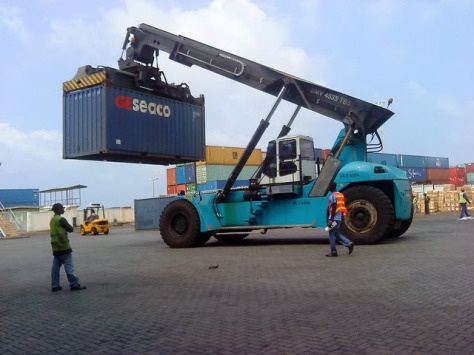
      Freight forwarders at Tema Port have raised concerns over the recent surge in container deposit fees by Cosco Shipping Lines, which have jumped from GH¢200 to GH¢2,000.

      This fee increase, meant to serve as a security deposit for returning containers in good condition, has created significant financial pressure on importers.

      Adding to their frustration, many freight forwarders report that shipping lines are withholding these container deposits even after containers are returned. According to Romeo Frimpong, a freight forwarder who spoke with the media, shipping lines should also adjust cleaning fees based on the type of cargo, as a one-size-fits-all approach can be unfair.

      Further compounding the issue, forwarders are facing demurrage charges that apply even on weekends and holidays—days when they cannot always return containers on time. Collectively, these financial burdens are causing growing discontent among the freight forwarding community.

      “Ghana has received 1.5 million containers. So multiplying Cosco’s container deposit fee of GH¢2,000 alone with 1.5 million containers is a lot of money going to the shipping line,” Romeo Frimpong bemoaned.

      “It is only in Ghana that shipping lines don’t work on weekends and holidays yet they charge. If you don’t show up, you don’t collect or you don’t charge because we are ready to work… In other jurisdictions, these shipping lines on their tariffs have manifested non-working days for weekends and holidays. So why is it that in Ghana, you don’t treat us fairly?” he stated.

      The forwarders also criticized Cosco Shipping Line for failing to leverage technology to enhance their services.

      They pointed out that importers and clearing agents are required to visit the office for invoices and releases, a process that could easily be digitized.

      “Cosco Shipping Line is not taking advantage of technology. With the L.I 2190, it talks about standards of service which expect a shipping line to be at a certain level where we can launch our delivery order request online. Cosco Shipping Line, you have to walk from Community One, walk from everywhere you are as a clearing agent to their office for invoices and releases. We expect that they should move on by now because the amount of money we pay to them doesn’t commensurate with the service we expect them to render,” he stated.

      Discussing the swift decline of the local currency against key trading currencies, the forwarders lamented that it has dealt a significant blow to the trading community.

    10. Akufo-Addo to commission $700m Cardinal Namdini mine on Nov 8

      Akufo-Addo to commission $700m Cardinal Namdini mine on Nov 8

      Ghana’s first large-scale greenfield gold mine in over a decade, Cardinal Namdini, located in the Talensi District of the Upper East Region will be commissioned tomorrow by President Akufo-Addo

      This landmark $700 million project, expected to commence production in January 2025, will drive national revenue and create thousands of jobs.

      With the anticipated completion of two other mines, Ghana could soon reach over 5 million ounces of annual gold production, potentially lifting its global ranking among the top gold producers.

      “This will be a great feat for Ghana. The last time Ghana had such an experience was 11 years ago (Newmont Akyem Mines),” he said.

      Cardinal Resources, a division of Shandong Gold, owns the Cardinal Namdini Mine, which obtained its operating license in 2020. Positioned to become a significant player in gold production, the mine is set to start operations by January 2025.

      Constructed within a span of 23 months, the mine is expected to have a production life of 15 years.

      The project is anticipated to create 900 direct employment opportunities, along with over 2,500 indirect jobs. Martin Ayisi noted that a community development agreement is in place to ensure that Talensi residents receive meaningful benefits from the project.

      “Most of the jobs from this project will be given to Ghanaians. A large portion of the workers already employed at the mine come from the community.” Ayisi said.

      “The benefit for Talensi and neighbouring communities will go beyond job creation. The company will invest in other sectors, including agriculture. This will in the long run curb the brain drain,” he added.

      “Most of the jobs from this project will be given to Ghanaians. A large portion of the workers already employed at the mine come from the community.” Ayisi said.

      “The benefit for Talensi and neighbouring communities will go beyond job creation. The company will invest in other sectors, including agriculture. This will in the long run curb the brain drain,” he added.

    11. Freight Forwarders protest high container fees, administrative charges at Cosco Shipping Line

      Freight Forwarders protest high container fees, administrative charges at Cosco Shipping Line

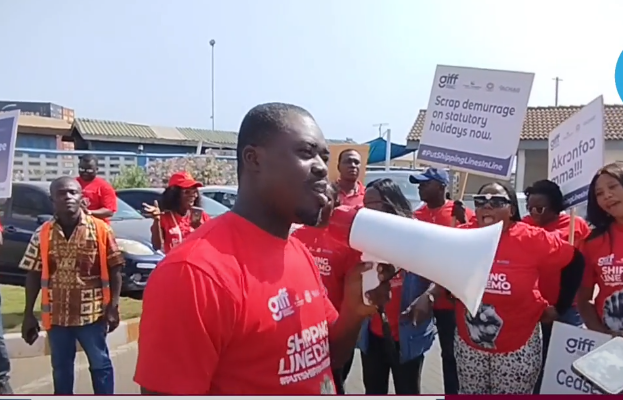
      Members of the Ghana Institute of Freight Forwarders (GIFF), Customs House Agents, and other stakeholders in the trade sector gathered at the Cosco Shipping Line offices to protest what they view as exploitative fees in the shipping industry.

      On Wednesday, GIFF President Stephen Adjokatcher pointed out that importers, exporters, and clearing agents are struggling with high charges, including fees for empty containers, container deposits, and administrative costs imposed by shipping lines for clearing goods at the port.

      Adjokatcher added that shipping lines threatening to leave Ghana in response to the protests were making a mistake, stressing that other shipping companies were prepared to replace them and continue operating in the country.

      In an interview with the media, the GIFF President shared his concerns further…”Why should we suffer because people in leadership who are supposed to regulate and control are doing things we don’t understand… if somebody feels the heat and fees and cannot bring his vessels into Ghana, people are waiting, standing by to bring their vessels so there is no fear of a shortage of containers or freight going high.”

      He also mentioned that the International Federation of Freight Forwarders Associations (FIATA) has issued a letter of support endorsing their stance against unfair practices in Ghana.

      “FIATA is saying what they are doing in Ghana is wrong, what they are doing in West Africa is wrong…Fortunately, the FIATA authority letter is in, the Minister of Transport has been served, the Minister of Trade and Industry has been served, Finance has also been served so now, all the lines are going to get copies,” he added.

      The freight forwarders charged certain shipping lines with exploiting the industry, claiming that their actions were an abuse of authority.

      They argued that these shipping lines, with their financial muscle, were using their power to monopolize the sector and push out local businesses.

      According to the freight forwarders, these practices violate Section 43 (1) of the Customs Act, 2015 (Act 891), which designates the business of customs house agents to entities that are fully owned by indigenous Ghanaians and licensed by the Commissioner-General of Customs.

      Below is a compilation of the demands made by the freight forwarders:

      1. Abolishment of all arbitrary and unjustifiable fees, including local administrative charges, container cleaning fees, empty container fees, among others.

      2. Abolishment of demurrage charges on weekends and holidays.

      3. Negotiation of shipping lines’ charges with the Ghana Shippers’ Authority as required by the Ghana Shippers’ Authority Regulations, 2012 (L.I. 2190).

      4. Refund of all unjustified fees previously collected from shippers and freight forwarders.

      5. Provision of 24-hour services seven days a week by shipping lines to eliminate unnecessary delays and ensure the timely processing of goods, especially during weekends and public holidays.

      6. Cessation of customs house brokerage services by shipping lines.

      7. Cessation of the practice of charging fees in dollars.

      The Coalition of Freight Forwarders in Ghana is looking forward to actions being taken by the shipping lines and all key stakeholders within the next fourteen (14) days.

    12. Inflation modestly increases to 22.1% in October

      Inflation modestly increases to 22.1% in October

      The inflation rate for October 2024 has risen slightly to 22.1%, up from 21.5% in September.

      Prof. Samuel Kobina Annim, the government’s statistician, explained to the media in Accra on Wednesday that this increase is largely attributed to higher food and non-food inflation.

      The 22.1% rate for October marks a 0.6 percentage point rise compared to the same period last year.

      “Disaggregating overall rate of inflation from your food and non-food perspective, we did record 22.8 percent for food inflation and 21.5 percent for non-food inflation for the month of October 2024″,

      “Non food inflation has also increased by 0.6 percentage point, increasing from 20.9 percent for the month of September 2024 to 21.5 percent for the month of October 2024″, Prof. Annim added.

      Locally produced items went up to 24. 6% compared to the 23.4% recorded in September.  Imported items saw a drop to 16.3% compared to the 17.0% recorded in October.

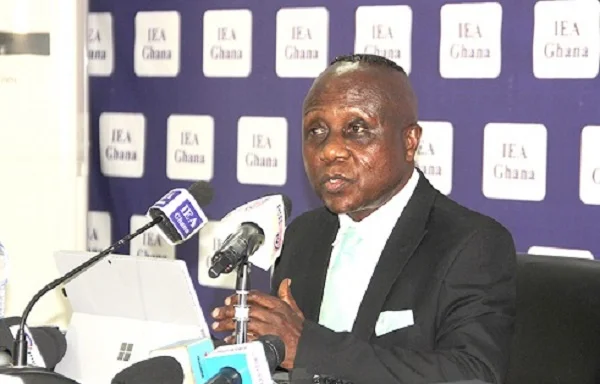
    13. Declare an immediate national emergency to rescue Cedi – IEA director to Akufo-Addo

      Declare an immediate national emergency to rescue Cedi – IEA director to Akufo-Addo

      Director of Research at the Institute of Economic Affairs (IEA), Dr. John Kwakye, has urged the government to declare an immediate national emergency to stabilize the cedi.

      According to Dr. Kwakye, a strong appreciation of the cedi is highly improbable, making it essential to gather collective expertise to address the issue.

      “The rate of depreciation of the cedi is alarming. We know that cedi significant cedi appreciation is nearly always unlikely. The government or the next government must declare an immediate national emergency to rescue the cedi, pooling together all minds,” he wrote on his X page.

      The Institute of Economic Affairs (IEA) has revealed that the cedi has depreciated by approximately 74% against the U.S. dollar over the last three years.

      The local currency declined by 30.0% in 2022, followed by a 27.8% drop in 2023, and has so far fallen nearly 29% against the dollar in 2024.

      The IEA described this decline as “significant by all standards.”

      They further cautioned that the cedi may face additional pressures through the year. Firstly, uncertainties surrounding the upcoming elections are likely to drive demand for the dollar as a safe asset.

      Secondly, the future of Ghana’s IMF program remains uncertain amid the elections, which could heighten demand for dollars due to potential policy shifts under a new administration.

      Lastly, unresolved debt negotiations with non-Eurobond commercial creditors could delay future IMF disbursements and reduce foreign exchange inflows, tightening foreign currency supply in the economy.

      “Indeed, the Minister of Finance [ Dr. Mohammed Amin Adam] has announced that the IMF Board will carry out the third review of Ghana’s programme on December 2, 2024. This seems quite belated since staff completed their own review in early October [2024]”, the IEA added.

      The fourth is a subdued cocoa crop coupled with possible availability of limited syndicated loan in the face of COCOBOD’s expressed intention to shift to domestic financing of the crop.

    14. Celestine Donkor’s manager calls out Boomplay over one year unpaid royalties

      Celestine Donkor’s manager calls out Boomplay over one year unpaid royalties

      Gospel singer Celestine Donkor’s manager, Kofi Donkor, has urged a music streaming platform Boomplay, to fulfill its royalty payments to his artist.

      In the comments under his Facebook post, Donkor mentioned that Celestine has not received any royalties for more than a year.

      He also suggested in his post that the streaming service may be planning to shut down its office in Ghana.

      “Boomplay, pay us our royalties before you shut down the Ghana office on Friday!” he stated in his post.

      “They haven’t made a payment in over a year. Additionally, I’ve heard that they intend to close their Ghanaian office. We must withdraw our funds immediately,” he stated in an interview with myjoyonline.

      3News’ check on Boomplay’s licensing agreement with artistes indicate that the streaming platform does not directly issue payment of royalties to artistes.

      Rather, Boomplay has agreement with preferred distribution platforms and distributors for the songs that are submitted on the platform.

      The distributors are responsible for music licensing, distribution, and paying the artist their royalties.

      “Boomplay artists receive streaming royalties from distributors that are preferred by Boomplay,” the platform’s website said.

      Per the streaming platform’s regulations, “artistes can choose a distributor that is preferred by Boomplay to distribute their music. Artistes can receive their royalties monthly and collect them from their bank, PayPal, or Payoneer.”

    15. Bawumia to outline vision for Ghana’s education in a meeting with Parents, students on Nov 10

      Bawumia to outline vision for Ghana’s education in a meeting with Parents, students on Nov 10

      The flagbearer of the New Patriotic Party (NPP), Dr. Mahamudu Bawumia, will address key education stakeholders, including parents and students, on his vision for a future full of opportunities and skills for Ghanaian youth.

      Scheduled for November 10, 2024, the broadcast will outline his commitment to strengthen and protect the Free Senior High School (SHS) and Free Technical and Vocational Education and Training (TVET) programs.

      In a press statement released by his spokesperson, Dennis Miracles Aboagye, Dr. Bawumia acknowledged the concerns raised by parents and students about the future of Free SHS. The program has helped thousands of young Ghanaians access secondary education without the burden of financial constraints.

      “We understand the importance of Free SHS to parents and young people across Ghana. My commitment is to not only protect this program but to expand it to cover the skill-based learning many of our youth need,” Dr. Bawumia had stated in a recent engagement.

      On November 6, 2024, Miracles Aboagye released an official statement highlighting the crucial role of skill development in Dr. Bawumia’s vision.

      “This engagement will focus on empowering our youth with job-ready skills, which is why the NPP has such a strong focus on STEM (Science, Technology, Engineering, and Mathematics) education,” Aboagye emphasized in his statement.

      The upcoming broadcast will mark Dr Bawumia’s second major address to the youth in just a few weeks.

    16. Parliament set to meet today as majority-minority tensions persist over vacant seats

      Parliament set to meet today as majority-minority tensions persist over vacant seats

      Parliament will reconvene today, Thursday, November 7, 2024, after Speaker Alban Bagbin scheduled a session at 10:00 AM at the Grand Arena of the Accra International Conference Centre.

      This meeting aims to tackle key issues that have been stalled due to ongoing tensions within the House.

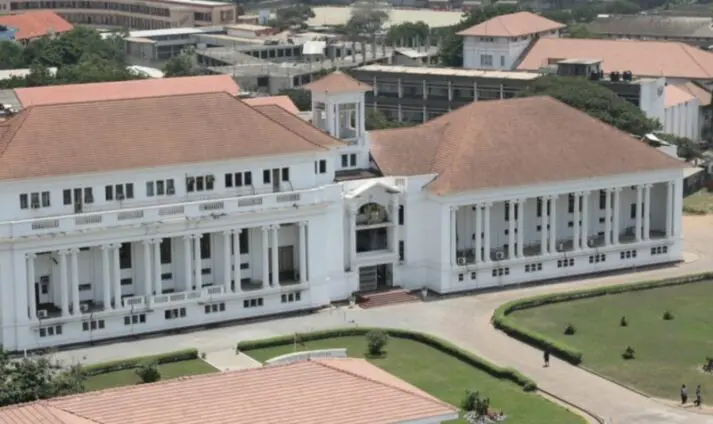
      The standoff began when Speaker Bagbin declared four seats—Fomena, Amenfi Central, Suhum, and Agona West—vacant, a decision that sparked strong opposition from the Majority caucus, who claimed it reduced their representation in Parliament.

      Following this, Majority Leader Alexander Afenyo-Markin filed a case with the Supreme Court, challenging the Speaker’s power to declare these seats vacant.

      In response, the Supreme Court issued a temporary halt on Bagbin’s decision, reinstating the disputed seats and heightening the friction between the Majority and Minority groups.

      The tension grew further when the Minority caucus, acting on the Speaker’s vacancy declaration, occupied the Majority side of the chamber, leading Speaker Bagbin to adjourn the House.

      This unusual situation raised concerns about Parliament’s stability and the shifting power dynamics within the institution.

      In light of this, the Majority caucus called for Parliament’s return, stressing the need to restart legislative work and move forward with important policies and programmes that have been delayed. They warned that further delays could affect essential national projects.

      Today’s sitting is expected to be a critical step toward resolving the gridlock, with both sides ready to discuss the future of Ghana’s legislative body during one of its most turbulent times.

    17. PIAC reports 10.7% surge in Ghana’s oil production for first half of 2024

      PIAC reports 10.7% surge in Ghana’s oil production for first half of 2024

      Ghana’s domestic oil production increases by 10.7% in the first half of 2024, reaching nearly 25 million barrels.

      This growth, if maintained, could end a four-year decline in production, according to the Public Interest and Accountability Committee (PIAC).

      This rise in production reverses last year’s 13.2% drop and is mainly due to the newly launched Jubilee South East (JSE) project. The project has also boosted oil revenue, bringing in $840.8 million in early 2024—a 55.6% increase from $540.5 million in the same period of 2023.

      PIAC’s chairman, Constantine Kudzedzi, said this success shows the value of new projects in reviving Ghana’s oil industry. He stressed that more government efforts to attract investment could further strengthen growth.

      Oil production in Ghana had steadily dropped from 71.4 million barrels in 2019 to just 48.3 million barrels in 2023, raising concerns. To address this, PIAC and industry stakeholders held a workshop, where they called for reforms to make the sector more appealing to investors.

      PIAC’s 2024 mid-year report highlighted several issues, including unpaid surface rental fees totaling $1.2 million. No payments were made towards these debts, which PIAC says hurts Ghana’s economic goals. PIAC also noted that the Ghana Stabilisation Fund cap remains at $100 million, far below the $530.1 million recommended by law. PIAC urged parliament to raise the cap.

      Additionally, the Ghana National Petroleum Corporation (GNPC) still lacks a required reserve fund, which PIAC says is essential for covering long-term costs, especially since government funding for GNPC may end by 2026.

      PIAC also raised concerns about the continued use of a discounted industrial energy tariff, which was supposed to be suspended. They recommended that the Ghana Revenue Authority take action to collect overdue surface rental fees and ensure on-time payments going forward.

      To support industrial growth, PIAC called for the Annual Budget Funding Amount (ABFA) to be consistently allocated to priority industrial projects. They also advised parliament to remove any cap on the Ghana Stabilisation Fund that doesn’t meet legal standards and urged the Finance Minister to follow petroleum revenue regulations.

    18. NDC optimistic about 2024 elections as Donald Trump win US elections

      NDC optimistic about 2024 elections as Donald Trump win US elections

      The National Democratic Congress (NDC) has voiced optimism over Donald Trump’s election as President of the United States, viewing it as a positive sign for the party’s future.

      According to the NDC, Trump’s return to office after four years aligns with their own aspirations as Ghanaians prepare for the December 7 presidential election.

      In a statement signed by NDC General Secretary Fifi Kwetey, the party extended its congratulations to Donald Trump, noting that his decisive win symbolizes a comeback after his four-year absence from the White House.

      The NDC is hopeful that this development will inspire Ghanaians to bring back its flagbearer, John Mahama, to the Jubilee House after a similar four-year interval.

      “The development is a good omen for us in the NDC and a sign of great things to come given the stark parallels it presents as Ghanaians head to the polls to elect a new president on December 7th.”

      Just as Americans have chosen to reset their future with experienced leadership, we believe that Ghanaians will reject the current government’s eight years of insensitivity, corruption, and economic mismanagement. The NDC stands ready to bring stability, integrity, and renewed hope to Ghana,” the statement said.

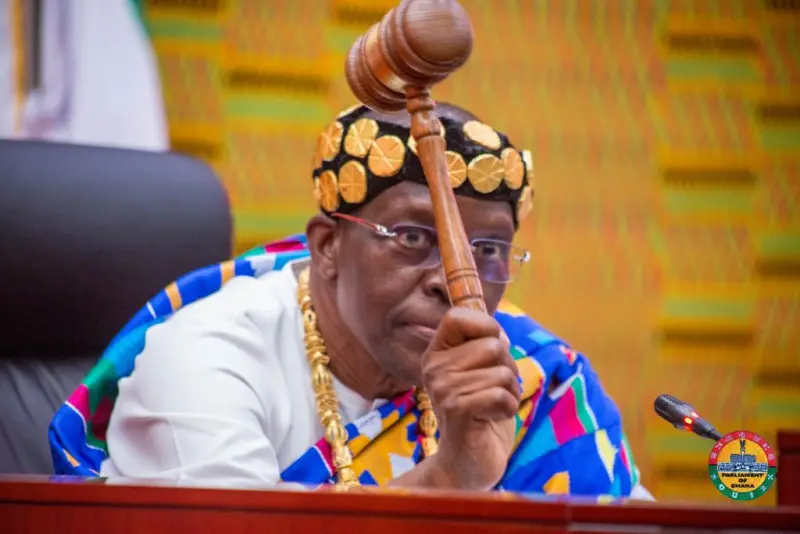
    19. Judiciary and Executive are seemingly colluding to weaken Parliament – Bagbin

      Judiciary and Executive are seemingly colluding to weaken Parliament – Bagbin

      Speaker of Parliament, Alban Sumana Kingsford Bagbin, has raised serious concerns about the interference of the judiciary and executive in parliamentary affairs.

      The Speaker’s remarks come on the back of a Supreme Court ruling interfering with his verdict on vacant parliamentary seats.

      Mr. Bagbin highlighted that these actions, involving both the judiciary and the executive, pose a direct threat to his authority in Parliament as the Speaker.

      “Ladies and gentlemen, recent acts of the judiciary and executive [and I see them as interference] in the working of Parliament pose a direct challenge to the essence, jurisdiction, authority, powers, and functioning of the esteemed institution of Parliament, which is the repository of the sovereign will of the people of Ghana. It is increasingly becoming clear that the judiciary and the executive are seemingly colluding to weaken Parliament,” Bagbin stated.

      Weeks ago, Alban Bagbin officially declared four parliamentary seats vacant with barely two months to the election in December.

      This ruling meant that Ghana’s hung parliament, which gave the governing New Patriotic Party a slight upper hand as the Majority side with the support of an Independent Member of Parliament, Andrew Amoako Asiamah, would now tilt towards the opposition National Democratic Congress (NDC).

      So, the NDC was now going to have 136 MPs in the house, while the NPP would have 135. Before this, the NPP had 138 whereas the NDC had 137.

      This decision sparked an immediate backlash from the parliamentary majority, the New Patriotic Party. It led to a boycott of parliamentary proceedings in protest against what they viewed as an unconstitutional ruling favoring the opposition National Democratic Congress (NDC).

      The Supreme Court’s stay followed an urgent application by majority leader Alexander Afenyo-Markin, who contended that Bagbin’s ruling undermined democratic representation and violated constitutional rights.

      The court has instructed both the Speaker and the Attorney General to submit their statements within seven days to facilitate a swift resolution of this issue.

    20. Inflation increases to 22.1%, up from 21.5% in September

      Inflation increases to 22.1%, up from 21.5% in September

      In October 2024, inflation rose slightly to 22.1%, up from 21.5% in September, spurred by increases in both food and non-food prices.

      This is the second monthly increase after a five-month downward trend. Food inflation climbed from 22.1% to 22.8%, while non-food inflation rose from 20.9% to 21.5%.

      Although the government aims for a year-end inflation rate of 15%, meeting this target may prove difficult given the persistent inflationary pressures and limited time remaining.

      More soon

    21. IMANI Africa explains why NPP’s gold purchase programme not viable

      IMANI Africa explains why NPP’s gold purchase programme not viable

      A policy think tank, IMANI Africa, has explained why the Gold Purchase Programme is not Ghana’s answer to the country’s cedi depreciation and economic challenges.

      According to a Senior Research Associate at IMANI Africa, Dennis Asare, there are various issues with the programme that will affect its feasibility.

      Speaking at IMANI’s “2024 IMANIfesto,” he questioned the policy’s efficacy, explaining that the initial implementation only reduced the exchange rate by 3%.

      This initiative was proposed by the New Patriotic Party (NPP) in their manifesto. It involves the Bank of Ghana purchasing gold from the local market, particularly from small-scale mining operations, to strengthen national reserves and support the cedi.

      He said: “They want to continue the Gold Purchase Programme to shore up our country’s reserves, which we see that other countries are doing the same thing. What the Bank of Ghana does is that they buy about 20% of gold from the market.

      “Now they also want to look at sustainable small-scale mining, buy a lot of that gold, and ensure that they are able to shore up our forex reserves. What we are saying is that, if you look at this promise alone, this year, there was an increase in terms of small-scale mining. But in periods where small-scale mining output does not grow, if this is going to be one of the anchor promises for addressing our exchange issues, how then does the BoG get more gold to address that?” he questioned.

      IMANI Africa has warned that the Gold Purchase Programme, on its own, will not achieve long-term stability for the local currency unless accompanied by deeper structural reforms.

      “Another challenge is that if we buy gold from large-scale miners in cedis, because some of their capital expenditure is in dollar denomination, they will still have to convert the cedi to the dollar; what we paid in cedis, they will have to convert some of it to the dollar so that they can finance their operations.

      “Those underlying dynamics must be worked out so well that we can control our exchange rate. What we think is that since they started doing this, the exchange rate in terms of depreciation has dropped by just 3%, and year by year, it has been depreciating more than 20%,” Dennis Asare added.

      The think tank also pointed out that the programme is unlikely to succeed, as it relies on gold prices remaining exceptionally high to meet its goals, which is not a feasible expectation.

      “So, this programme may not be effective because what will make this programme effective is that gold prices must be so high that you can buy a lot more to shore up your forex reserves, which we don’t think is possible within the shortest possible time, looking at the global market,” the Senior Research Associate stated.

    22. South Africa’s busiest border crossings with Mozambique closed due to post-electoral protests

      South Africa’s busiest border crossings with Mozambique closed due to post-electoral protests

      South Africa has shut down one of its major border crossings with Mozambique due to violent protests that erupted after the country’s recent elections.

      The protests, sparked by last month’s controversial presidential election, have resulted in deadly confrontations across several cities in Mozambique, where the ruling Frelimo party claimed victory.

      Authorities have received reports of vehicles being set on fire on the Mozambican side of the Lebombo port of entry.

      “Due to these security incidents and in the interest of public safety, the port has been temporarily closed until further notice,” the South African border agency said.

      Lebombo, one of the four most heavily trafficked land ports in southern Africa, is located roughly 110 km (68 miles) from Maputo, the capital of Mozambique, and about 440 km from Pretoria, the capital of South Africa.

      Travelers have been urged to seek alternative border crossings between the two nations.

      Violence had spread to Ressano Garcia, a small area in Maputo province, near Lebombo, said Michael Masiapato, South Africa’s Border Management Authority (BMA) commissioner.

      Mr Masiapato said the South African side was not affected, but safety measures needed to be taken.

      “Some buildings have been set alight. At the moment we are working on securing the Lebombo border as well as travellers’ safety,” he said in a statement.

      “The border will be closed to ensure the safety of travellers.”

      Reports say protesters on the Mozambican side of the border have burnt down an immigration office in that country.

      Seven Mozambican officials have requested refuge on the South African side for safety and protection, the authorities said.

      BMA officials, the South African police and the army have been engaged to stop the protests from spilling over into South Africa.

      Demonstrations started at the end of October in Maputo after Daniel Chapo, the Frelimo candidate, was officially declared the winner with more than 71% of the vote.

      Opposition leader Venâncio Mondlane, who came second with 20% of the vote, went into hiding before the results were announced.

      He cited fears for his safety after his aide and lawyer were killed as they were preparing to challenge the results.

      The protests have led to violent clashes with the police and at least 18 people have been killed, according to Human Rights Watch.

      The internet and social media have also been restricted.

      A general strike called by Mondlane has continued, despite the prime minister’s call for people to return to work.

      On Tuesday, Defence Minister Cristóvão Chume threatened to deploy the army ahead of nationwide protests called for Thursday.

      Chume said the post-election protests were intended “to change the democratically established power”.

    23. Nigeria’s Army Chief General Taoreed Lagbaja passes away at 56

      Nigeria’s Army Chief General Taoreed Lagbaja passes away at 56

      Nigeria’s Chief of Army Staff, General Taoreed Lagbaja, has passed away at the age of 56 following an extended illness, President Bola Tinubu confirmed.

      The general died on Tuesday evening in Lagos, although the specifics of his illness were not disclosed.

      In a statement posted on X by presidential spokesperson Bayo Onanuga, President Tinubu extended his “heartfelt condolences” to General Lagbaja’s family.

      “President Tinubu prays for eternal peace for Lt General Lagbaja and honors his remarkable service to the country,” the statement said.

      General Lagbaja’s death represents a profound loss to the Nigerian military, where he had been instrumental in various internal security operations.

      He is survived by his wife, Mariya, and their two children.

    24. MIIF commits $2m investment to support Castle Minerals’ Kambale Graphite and Gold Exploration Projects

      MIIF commits $2m investment to support Castle Minerals’ Kambale Graphite and Gold Exploration Projects

      Castle Minerals has revealed that Ghana’s Minerals Income Investment Fund (MIIF) has pledged a $2 million investment to back the company’s gold exploration and the development of the Kambale Graphite Project in northern Ghana.

      The investment, as stated in a non-binding term sheet, consists of a $500,000 equity investment in Castle Minerals and a $1.5 million stake in Kambale Graphite Limited, its Ghanaian subsidiary responsible for managing the graphite project.

      The funding aims to push the project to the pre-feasibility study stage, with the goal of producing specialized graphite concentrates for lithium-ion battery anodes.

      The 149 km² Kambale Graphite Project is fully owned by Kambale Graphite Limited (KGL), a Ghanaian subsidiary. It is located just 6 km west of Wa, the capital of the Upper West Region of Ghana, which is 640 km north of Accra, Ghana’s capital, via well-maintained roads that connect to the Port of Tema, offering direct access to global export markets.

      The area of Wa boasts excellent infrastructure, including a commercial airport just a few kilometers from the project, a network of paved and unpaved roads, abundant potable water, and a reliable electricity supply, much of it sourced from the 400MWh Bui hydroelectric dam. These factors are expected to significantly reduce the project’s setup capital costs.

      In October 2023, the mineral resource estimate (MRE) for the Kambale Graphite Project was revised to 22.4 million tons, with a grade of 8.6% total graphitic carbon (TGC), totaling 1.94 million tons of graphite. Notably, 43% of this estimate falls within the higher-confidence Indicated Mineral Resource category.

      Castle Executive Chairman Stephen Stone said: “The proposed transformational funding arrangement with Ghana’s sovereign wealth fund, the Mineral Income Investment Fund, will not only see the Project accelerated through to pre-feasibility but also establishes a de-risking platform for the offtake of a major proportion of graphite production and the provision of development capital.”

      He added: “With MIIF having already formed an alliance with Atlantic Lithium and its Ewoyaa lithium project, its Castle investment fully aligns with the country’s aspiration to build Sub-Sahara’s first lithium-ion battery manufacturing hub and to be a leader in the global energy transition.”

      He noted: “An undertaking to list on the fast-growing Ghana Stock Exchange will open up access to additional in-country investment and capital. Kambale’s fine flake graphite is the form required for lithium-ion battery anode manufacture and extensive test work has demonstrated that it can be processed to achieve the stringent specifications required for use in anode manufacture. The high-grade 22.4 million-tonne Mineral Resource will comfortably support a long-term production facility. We are looking forward to a very productive partnership with MIIF and the Ghana government.” 

      MIIF Chief Executive Officer, Edward Nana Yaw Koranteng, added: “The Minerals Income Investment Fund of Ghana is a minerals sovereign wealth fund whose underlying objective is to support the growth of mining in Ghana and provide a de-risking option for investors in the mining space.”

      He said: “We are excited about the proposed USD2.0 million investment in Castle Minerals Limited and its subsidiary, Kambale Graphite Limited, which meets this objective. It also fully aligns with the Government of Ghana’s critical minerals policy and its aspiration to establish sub-Sahara’s first lithium-ion battery manufacturing facility. Combined with our investment in Atlantic Lithium Limited, Ghana is moving closer to firmly positioning itself in the global EV supply chain and playing its part in reducing harmful global emissions. Ghana’s status as one of the best mining investment destinations in Africa is considerably reinforced.”

    25. BoG urged to improved management of dormant accounts, access to deceased’s funds

      BoG urged to improved management of dormant accounts, access to deceased’s funds

      The Bank of Ghana (BoG) is set to issue new directives to all commercial banks to enhance the process of identifying and accessing dormant accounts belonging to deceased individuals, including a major change to how Next of Kin (NOK) are involved in account opening procedures.

      This comes after the Institute for Liberty and Policy Innovation (ILAPI), uncovered the huge sums of money sitting in a large number of dormant accounts with the Bank of Ghana (BoG).

      Thus, the ILAPI has urge BoG to come up with a policy aimed at reducing delays and eliminate identity issues when tracing the rightful beneficiaries of unclaimed funds.

      “To avoid prolonged investigations and identity crises, we will now require that the Ghana Card of the Next of Kin be presented during account opening. This measure will help reduce the time taken to identify the rightful heirs of dormant accounts, ensuring smoother and more efficient processes when individuals pass away,” the ILAPI said.

      Under the current system, many families of the deceased face challenges in accessing funds from dormant accounts due to lengthy verification processes, which often lead to frustration and financial distress.

      The ILAPI emphasized the importance of transparency in managing dormant accounts, calling for more clearly defined policies and a public-facing report.

      “We also believe that there should be clearly defined policies around the management of dormant accounts, and we plan to release an annual report on the funds, making it part of BoG’s annual statements. This will ensure transparency, enhancing the public’s confidence and trust in how these funds are managed.”

      The new directives also recommend revising the current law that restricts BoG from tracing the families of deceased account holders. At present, BoG is not permitted to take proactive measures to contact families to release dormant account funds, but under the proposed policy change, this would be allowed.

      “We are pushing for a review of the law that will allow the Bank of Ghana to trace the families or next of kin of dormant account holders. This will ensure that the funds are properly allocated to the rightful heirs, particularly in cases where they might not be aware of the funds left behind,” the report added.

      Another important recommendation from the BoG’s proposed policy is the integration of the national identification system. The BoG intends to collaborate with local government bodies to create a more efficient way of identifying beneficiaries.

      “By tapping into the national identification system, we can work with local government bodies to quickly identify the families of the deceased, ensuring they receive the funds owed to them,” Dr. Osei explained.

      ILAPI (Institute for Liberty and Policy Innovation), which has been pushing for reforms in the handling of dormant accounts, has supported these recommendations. According to a report from ILAPI, a significant amount of money is tied up in dormant accounts, some of which could potentially improve the lives of those who were financially dependent on the deceased. The organization has long argued for a more proactive and transparent approach in managing unclaimed funds.

      “In some cases, these funds could have taken families out of poverty, providing education and economic stability for children and spouses. It is frustrating to know that these funds remain inaccessible due to bureaucratic hurdles,” said the ILAPI.

      “The policies being proposed by the BoG are a welcome step toward ensuring that these funds are not locked away indefinitely.”

      One of the final suggestions is that BoG impose a time limit on how long unclaimed dormant funds can be held before they are transferred or released.

      “There should be a set number of years after which the BoG can retain the funds, after which they must take action, whether that means transferring the funds to the state or making them available for family claims. A clear policy and system for handling these funds should be implemented to avoid prolonged uncertainty.”

      As the Bank of Ghana moves forward with these proposals, there is hope that they will create a more efficient, transparent, and supportive system for families who stand to benefit from the funds left behind by their loved ones. The next steps for the BoG include consulting with various stakeholders and initiating the policy framework to be rolled out in the coming month

    26. Dormant accounts worth over GH167. 8m, $14.6m, £ 2.4m with BoG – ILAPI report

      Dormant accounts worth over GH167. 8m, $14.6m, £ 2.4m with BoG – ILAPI report

      A large sum of money has been reported by the Institute for Liberty and Policy Innovation (ILAPI) to be sitting in dormant accounts at the Bank of Ghana (BoG) for the past 8years.

      The report indicates that the Bank of Ghana (BoG) holds over GH₵167.8 million in local currency and more than US$14.6 million in dormant accounts.

      Additionally, there are over £2.4 million and €2.3 million accumulated between 2016 and 2023. Furthermore, between 2021 and July 2024, the number of dormant accounts transferred to BoG has reached 1,448,660.

      This information was revealed in a document provided to the Institute for Liberty and Policy Innovation (ILAPI) by the BoG, following a petition requesting a detailed report on the sums collected from inactive accounts over the last eight years (2016–2024). ILAPI’s Next of Kin (NOK) project has been ongoing since 2023.

      The NOK initiative aims to establish a point of contact for beneficiaries to access funds left by deceased individuals at financial institutions, going beyond the legal framework.

      According to ILAPI’s report, they suspect that some of these funds could belong to individuals who died in road accidents, floods, or other incidents, with many families unaware of their existence.

      These funds, which could have helped children, spouses, and families escape poverty, remain with the regulated financial institutions and the BoG, due to the accounts being classified as dormant.

      The report also pointed out that the law does not allow BoG to trace family members to help them access the funds of the deceased.

      It’s crucial to note that some of these beneficiaries relied on their deceased relatives for education and financial support. The inability to access these funds forces them to drop out of school and struggle to survive, potentially pushing them into poverty and social issues.

      “It is also evidence that the Bank of Ghana has made strides in educating the public on the importance of appointing a next of kin and the relevance of next of kin on financial documents, which is commendable. Nevertheless, more proactive measures are needed to understand that countless families face financial constraints, and the failure to claim the funds of the dead only exacerbates the poverty levels among families in Ghana,” it said.

      The report further urged the central to go beyond its ongoing literacy campaigns and actively engage in identifying and contacting the beneficiaries and Next of Kin by amending its laws and policies.

      “BoG to issue directives to all banks that the Ghana Card of the Next of kin during account opening should be requested to eschew identity crises and reduce the long timelines during the investigations on the dead.  Clearly defined policies on the management of dormant accounts and transparency on how these funds are managed should be made available to the public to enhance confidence and trust. A review of the law to allow BoG trace families, next of kin of dormant account.”

      “An annual report on dormant accounts and funds received could be released or be a part of the BoG’s annual reports. BoG should also use the national identification systems, and collaborate with local government bodies to identify beneficiaries or the next-of-kin of dormant accountholders. Unclaimed funds of dormant accounts should have a specific number of years the BoG could keep. A policy should be considered to trace families to access funds through recognized administrative and legal processes with a harmonized system.”

    27. Sustainable Insurance: The dilemma of Small and Medium Enterprises in Africa

      Sustainable Insurance: The dilemma of Small and Medium Enterprises in Africa

      In today’s rapidly changing world, sustainability has become a critical component of business strategy across all industries. The financial industry, which plays a critical role in the financing and protection of businesses and their assets is now expected to drive greater sustainability by investing and protecting ventures which are sustainable.

      This trend therefore presents, the  insurance industry which is an integral core of the financial industry a unique opportunity to drive positive change and sustainability  by incorporating Environmental, Social and Governance (ESG) considerations into its operations. Before I delve into the subject, one may ask; what is sustainability and how can the insurance industry drive  sustainability and expected positive change?

      Sustainability in business practice refers to strategies and operational processes that meet the needs of the present without compromising the ability of future generations to meet their own needs. It involves integrating environmental, social, and economic considerations into decision-making processes to create long-term value for both the business and society.

      Sustainable insurance involves integrating environmental, social, and governance (ESG) factors into insurance products, policies, processes, solutions and practices. This includes promoting green technologies, supporting climate resilience, ensuring fair, ethical and governance practices. For businesses, especially SMEs, this means not only protecting assets and lives but also contributing to broader sustainability goals.

      Sustainable insurance is increasingly recognized as a vital component of responsible business practices worldwide. For Small and Medium Enterprises (SMEs) in Africa, the integration of sustainability into insurance presents both significant opportunities and formidable challenges. This article delves into how African SMEs perceive and engage with sustainable insurance, highlighting the unique factors influencing their adoption of eco-friendly and socially responsible insurance solutions.

      Barriers to Sustainable Insurance

      Small and Medium Scale Enterprises (SMEs) in Africa are faced with enormous challenges in the field of sustainable insurance.

      Limited awareness and understanding:
      One of the significant barriers for sustainable insurance among SMEs in Africa is the lack of awareness and understanding of sustainable insurance. Many small business owners are unfamiliar with the concept and how it can benefit their operations. The focus for many SMEs remains on traditional insurance products that address immediate risks rather than long-term sustainability. A medium sized real estate company may not prioritize sustainable practices due to a lack of awareness about how green insurance products could help mitigate environmental impacts and improve operational efficiency.

      High costs of sustainable insurance:
      Sustainable insurance products often come with higher premiums compared to traditional policies. SME operations are often very sensitive to cost due to their lower volumes and margins. Therefore, these increased costs can be a significant deterrent. The higher upfront cost may outweigh the perceived benefits, pushing SMEs to opt for less sustainable but more affordable options. An SME in the agriculture industry might find the cost of a climate-risk insurance policy prohibitive compared to standard coverage, impacting its ability to invest in sustainable practices. Not just the higher premiums, some of the practices that leads to sustainable business in themselves come at a high cost. For example, the cost of installing and maintaining green houses could be prohibitive to an SME in the agricultural industry just as the cost of installing green energies such as solar is very high to the average SME in the services industry.

      Limited availability of sustainable insurance products:
      In many African countries, the insurance market is still developing, and there is a limited range of sustainable insurance products available. This scarcity makes it difficult for SMEs to find products that align with their needs and sustainability goals. A tech startup in Ghana might struggle to find insurance policies that cover risks associated with innovative green technologies or sustainable business practices.

      Regulatory and policy gaps:
      The regulatory environment for sustainable insurance in Africa is often underdeveloped. Without supportive policies and regulations, insurers may be reluctant to offer sustainable products, and SMEs may lack incentives to adopt them. The absence of regulations supporting green insurance products means insurers have little motivation to develop such offerings, leaving SMEs limited or unsuitable options.

      In dealing with the barriers to sustainable insurance, raising awareness about the benefits of sustainable insurance is crucial. Insurance providers and related stakeholders can play a significant role in educating SMEs about how sustainable insurance can mitigate risks, enhance resilience, and contribute to long-term financial stability.

      Developing affordable and tailored sustainable insurance products for SMEs would help overcome cost barriers. Insurers could design products that cater specifically to the needs of small businesses, providing coverage that is both sustainable and economically viable. Parametric insurance for instance is a growing trend, particularly in regions vulnerable to climate change. It provides payouts based on predefined parameters like weather conditions or natural events, rather than actual losses. A farmer in Kenya could purchase insurance that automatically pays out if rainfall drops below a certain level, protecting against drought. According to the World Bank, parametric insurance can reduce the time it takes to receive a payout by up to 90% compared to traditional claims, making it highly beneficial for SMEs in agriculture, which are exposed to climate-related risks.

      Insurance for Renewable Energy Projects: SMEs involved in renewable energy projects, such as solar installations, can benefit from specialized insurance that covers both equipment and operational risks. The African Development Bank estimates that Africa could see over

      $7 billion in investments in renewable energy by 2025, and insurers are creating products specifically to cover these growing sectors.

      Climate-Related Losses and Insurance Uptake: According to Swiss Re, global losses from natural catastrophes reached $270 billion in 2021, of which only 40% were insured. This insurance gap is even larger in Africa, where climate risk insurance could mitigate significant economic damages. The adoption of climate risk insurance, such as flood or drought coverage, could reduce losses for SMEs by up to 30%, providing a safety net for vulnerable sectors like agriculture

      Microinsurance offers affordable and accessible insurance options for low-income individuals and businesses, making it a suitable model for SMEs in Africa. Companies like BIMA and Hollard in Ghana have introduced micro / SMEs insurance products that are tailored to the needs of small businesses. These initiatives provide essential coverage for business risk and could be expanded to include sustainable insurance products, offering lower-cost options that support green practices. Microinsurance programs have reached over 60 million individuals globally, with a significant portion in Africa.

      Public-private partnerships can facilitate the development and distribution of sustainable insurance products. Governments and its agencies such as Environmental Protection Agency (EPA), development partners like the IFC, GIZ, GIRSAL, World Bank to mention a few, and the Insurance industry can collaborate to create incentives and frameworks that support sustainable practices among SMEs. The African Development Bank’s Climate Risk Insurance Initiative aims to enhance access to climate risk insurance for SMEs through collaborative efforts between public and private sectors. Advocating for supportive policies and regulations is essential to foster a conducive environment for sustainable insurance. The African Risk Capacity (ARC), an African Union initiative, provides weather-based insurance products to African countries and SMEs to improve disaster preparedness. ARC estimates that every $1 spent on insurance results in $4 of benefits through reduced economic losses and quicker recovery times.

      Sustainable insurance products are experiencing rapid growth. A report by the Insurance Europe Federation found that the global market for green insurance products grew by 20% in 2022. In Africa, however, only about 10% of SMEs currently have access to these products. Expanding availability could increase resilience in sectors like energy and agriculture, which are crucial to economic development

      Below are some examples of Sustainable Business Practices SME’s can adopt.

      • Implementing energy-efficient technologies in operations.
      • Offering eco-friendly products or packaging.
      • Partnering with suppliers who follow ethical and sustainable practices.
      • Committing to reducing carbon footprints through renewable energy and carbon offset initiatives.
      • Waste reduction, implementing recycling programs, automate processes and reduce / eliminate paper usage.
      • Encourage carpooling, use electronic/ hybrid vehicles.
      • Diversity and inclusion, foster a diverse workforce, promote equal opportunities.
      • Usage of recycled and biodegradable materials

      Incorporating sustainability into business practices not only benefits the environment and society but would also drive innovation, resilience, and profitability.

      In conclusion, the journey towards sustainable insurance for SMEs in Africa presents both challenges and opportunities. While the financial vulnerability of SMEs is evident, the need for insurance solutions that align with the unique risks of these businesses is equally urgent. Stakeholders, including governments, insurers, and development organizations, must collaborate to create policies and products that are not only accessible but also adaptable and affordable to the dynamic needs of African SMEs. By integrating sustainability into insurance frameworks, we can support the growth and resilience of this vital economic sector, fostering an environment where businesses thrive amidst uncertainty. The future of sustainable insurance in Africa depends on a collective effort to innovate, invest, and ensure no business is left behind.

      Writer: Iddrisu Nashiru, MD Hollard Life Assurance, 1st Vice President of Ghana Insurers Association. A chartered Insurer (CII UK and Ghana) a fellow of the Chartered Institute of Ghana (FCIIG) and a certified ESG professional.

      DISCLAIMER: Independentghana.com will not be liable for any inaccuracies contained in this article. The views expressed in the article are solely those of the author’s, and do not reflect those of The Independent Ghana

    28. Ghana’s economy lagging public investment and stability – IEA

      Ghana’s economy lagging public investment and stability – IEA

      The Institute of Economic Affairs (IEA) has hinted that Ghana’s economy is not reaching its full potential because of several issues.

      These issues include low government investment, unstable economic conditions, and high business costs.

      In its latest report, the IEA suggested that for Ghana’s economy to grow faster, the country needs to make better use of its natural resources to increase investment in infrastructure and education, lower business costs, and keep the economy stable.

      Recent data from the Ghana Statistical Service (GSS) showed that the economy has generally improved between the second quarter of 2023 and the second quarter of 2024, with the GDP (a measure of economic growth) increasing from 2.5% to 6.9%.

      Similarly, growth in non-oil sectors rose from 3.1% to 7.0% during this period.

      Looking at different sectors, agriculture saw steady growth, ranging from 4.3% to 5.4%, while the services sector also grew, with rates between 3.2% and 6.0%.

      In contrast, the industrial sector had some ups and downs, shrinking in the second and third quarters of 2023 but recovering with growth rates between 1.6% and 9.3% in later quarters. The IEA linked these ups and downs to irregular oil production.

      The International Monetary Fund (IMF) recently increased its growth forecast for Ghana from 3.1% to 4.0%, suggesting that Ghana’s economy is bouncing back more strongly from the impacts of Covid-19 and other recent economic challenges.

    29. EC recruits over 280,000 professionals in maths, statistics to aid error-free elections

      EC recruits over 280,000 professionals in maths, statistics to aid error-free elections

      In a strategic move to enhance operational efficiency, the Electoral Commission (EC) has recruited over 200 professionals with backgrounds in mathematics, statistics, and other quantitative fields.

      These specialists are expected to bring their expertise to the election process, supporting data accuracy and enhancing the credibility of results.

      Dr Eric Bossman Asare, the Deputy Chairperson of the EC, discussed these efforts in a media interview on Tuesday, November 5.

      “The Commission has already recruited over 280,000 individuals who are going to work on this election. We have also recruited people who are going to help with the collation.”

      “These are people who have a background in mathematics, actuarial science, and statistics and will be assisting with quantitative methods. So they are going to assist the returning officers at the constituency level.”

      In a media interview on Tuesday, November 5, Dr. Eric Bossman Asare, Deputy Chairperson of the Electoral Commission (EC), outlined these initiatives.

      He stated that the Commission’s preparations prioritize both precision and openness, which he considers vital for sustaining public trust in the election outcomes.

      Dr. Asare highlighted that the newly recruited specialists will be instrumental in avoiding data inconsistencies.

      Their expertise will be applied to meticulous data collection, vote counting, and statistical analysis—essential steps that, if not carefully managed, could compromise the credibility of the election results.

      According to Dr. Asare, this effort underscores the EC’s proactive stance in reducing errors and upholding democratic values, assuring the public of the Commission’s dedication to a fair election.

    30. We expect VAT reforms as several parties incorporate our input in their manifestos  – AGI 

      We expect VAT reforms as several parties incorporate our input in their manifestos – AGI 

      The Association of Ghana Industries (AGI) is in anticipation of changes to the country’s Value Added Tax (VAT) system under the next government.

      This comes after the Chief Executive Officer, Seth Twum-Akwaboah indicated that the Association regularly engaged with political parties ahead of elections to outline policies aimed at boosting the industrial sector. 

      He said the engagements with political parties lead to agreements through Memorandums of Understanding (MoUs) which outlined specific plans or strategies designed to promote and help the industry grow.

      “We’re pleased to see that several parties have incorporated our input into their manifestos, and we look forward to collaborating with whoever forms the next government,” Mr Twum-Akwaboah indicated.

      Mr. Twum-Akwaboah noted that VAT reform is important for enhancing the competitiveness of local industries but there has been limitations because businesses struggle to recover all the VAT paid to government under the current system.

      “We can only recover 15 percent out of the 21.9 percent VAT paid to government,” he explained. The rest, he lamented, becomes a levy on businesses – undermining the VAT system’s effectiveness. For this reason, AGI maintains that the structure needs to change.

      In an interview following the Accra Regional AGI’s Annual General Meeting (AGM), Mr. Twum-Akwaboah noted that political parties had responded favorably to AGI’s proposals, with their manifestos showing commitments to tackle VAT issues.

      Alongside VAT, AGI also discussed plans to support small and medium-sized enterprises (SMEs), enhance funding access for entrepreneurs, and strengthen the export potential of local industries.

      “At the SME level, we’ve had extensive discussions on how to support their development and enhance the export sector,” Mr. Twum-Akwaboah said. “It’s essential for every government to prioritise export development, and AGI is committed to playing a central role in achieving this goal.”

      The AGM was themed ‘Empowering Growth: Building a Strong Workforce for Tomorrow.’

      Speaking on behalf of the Executive Director of the National Service Authority (NSA), Gabriel Osei Junior, Head of Business Development at NSA, emphasized the crucial role of workforce development in shaping Ghana’s economic future.

      “Investing in lifelong learning and workforce development is crucial for maintaining economic growth and competitiveness,” Mr. Osei Junior said. “Collaboration between government, industry and educational institutions is essential to equipping workers with the necessary skills for a rapidly evolving economy.”

      He emphasized that education and vocational training are essential for developing a skilled workforce capable of fueling economic growth.

      “A strong, competitive economy depends on well-trained workers who can adapt to new technologies and shifting work patterns,” Osei emphasised. “We must sustain an approach that covers the entire workforce, is incremental in its effectiveness and dynamic enough to meet evolving skill requirements.”

      Mr. Osei Junior emphasized that innovation, powered by research and development, is crucial for boosting productivity and enhancing living standards.

      “The private sector plays an essential role by investing in solutions to industry challenges and employing highly skilled workers to address these issues,” he said.

      He urged the public and private sectors to work together in funding research and expanding educational access, stressing that this partnership is essential to equip workers for the needs of the future economy.

      “Education improves workers’ ability to leverage new technologies, live healthier lives and adjust to changing economic realities,” he noted. “Ultimately, the alignment of business, education and government will foster innovation and sustainable growth.”

    31. Bawumia pledges to establish tomato processing factory in Akumadan to boost employment

      Bawumia pledges to establish tomato processing factory in Akumadan to boost employment

      New Patriotic Party (NPP) Flagbearer and Vice President Dr. Mahamudu Bawumia has pledged to establish a tomato processing factory in Akomadan, located in the Offinso North constituency of the Ashanti Region, should he assume the presidency.

      This initiative, he noted, aligns with his administration’s broader industrialization agenda aimed at creating employment opportunities for the youth.

      Dr. Bawumia made this commitment during a stakeholders’ gathering in Akomadan on Tuesday. Discussing plans for agricultural modernization, he revealed that his administration intends to establish District Agriculture Mechanization Centers in key agricultural areas.

      These centers will be equipped with machinery like tractors, harvesters, and ploughing tools to help farmers expand their operations.

      On sustainable mining, Dr. Bawumia emphasized that under his leadership, the Ghana Geological Survey Authority (GGSA) would receive resources to conduct in-depth geological studies nationwide.

      This would allow the GGSA to identify areas rich in gold deposits, helping to curb speculative mining practices that damage landscapes and pollute water sources.

      Additionally, Dr. Bawumia outlined his intention to improve the country’s transportation infrastructure by developing the Western and Eastern railway lines to streamline the transport of minerals and other goods.

      Specifically, he mentioned plans to extend the Tema rail line to Kumasi and the Northern Region, as well as expand railway lines from Awaso in the Western Region to Kumasi.

      Dr. Bawumia urged voters to support his bid for the presidency and elect NPP parliamentary candidates nationwide to enable the NPP to continue its development-focused agenda for Ghana.

    32. UN Envoy urges judiciary to strengthen public communication to prevent misunderstandings

      UN Envoy urges judiciary to strengthen public communication to prevent misunderstandings

      UN Special Representative for West Africa and the Sahel, Leonardo Santos Simão, emphasized the vital role of Ghana’s judiciary in upholding democracy, while recommending stronger public communication.

      In an interview on Joy News’ PM Express, he commended the judiciary’s professionalism but noted that limited outreach has occasionally led to public misunderstandings.

      He mentioned that the judiciary has recently pledged to share its adjudication models publicly, a move he believes will enhance transparency.

      “Improving the clarity and accessibility of information for different levels of society is crucial,” he told host Evans Mensah on Tuesday.

      Simão sees these communication improvements as essential to fostering public trust in Ghana’s legal institutions, especially during the electoral period.

      UN Special Representative for West Africa and the Sahel, Leonardo Santos Simão

      “Greater transparency can only strengthen the judiciary’s role in maintaining peace and credibility in the electoral process,” he concluded.

      Mr Simão noted that the judiciary is often perceived as the “last line of defence” for democracy, especially in Ghana, where it has decided electoral disputes in past elections.

      However, he stressed, “High professionalism alone isn’t enough; the quality of communication must also match the stakes involved.”

      He added that misinterpretations are often born from a lack of accessible explanations.

      “Different stakeholders need different levels of information—from technical details for professionals to more general explanations for the public.”

    33. Illegal miners mine in forest reserves due to political backings – Small Scale Miners Association

      Illegal miners mine in forest reserves due to political backings – Small Scale Miners Association

      Public Relations Officer for the Dunkwa Small Scale Miners Association, Peter Ayikwei, has denied claims that association members are involved in damaging forest reserves and river bodies.

      At a climate event focused on illegal mining, he contended that politically supported miners, not members of the association, are responsible for environmental harm due to unauthorized mining activities.

      “No small-scale license is given in a forest reserve. No, no small-scale miner’s license is given in the forest reserves. Those in the forest reserves today, as I am talking to you, you can cross-check, are political miners. They are not small-scale miners, and they are illegal miners,” he argued.

      He clarified that small-scale mining operates under strict regulations and adheres to mining laws, whereas those with political influence are often the ones exploiting the sector improperly.

      “The small-scale miner has no strength to enter into a forest reserve. We don’t have that strength to go into the forest reserve,” he said.

      Renewed efforts to combat illegal mining have intensified recently following the destruction of numerous water bodies and forest reserves.

    34. The court must be hesitant to interfere with parliament’s decisions – Alban Bagbin

      The court must be hesitant to interfere with parliament’s decisions – Alban Bagbin

      Speaker of Parliament, Alban Sumana Kingsford Bagbin, has cautioned the judiciary to refrain from interfering with parliamentary decisions.

      His remarks come in the wake of a Supreme Court ruling that interfered with his decision to declare four parliamentary seats vacant.

      Mr. Bagbin cites the case of Tuffour vs. Attorney General, highlighting a landmark decision by the Supreme Court of Ghana that established a key principle: the judiciary should not interfere in the internal proceedings of Parliament.

      “So the court must, and has always been hesitant to interfere in the proceedings and decisions of Parliament. In the celebrated case of Tuffour vs. the Attorney General, the Supreme Court affirmed that happenings in Parliament are a closed book. Despite these provisions, the courts are replete with debates and proceedings of Parliament,” the Speaker expressed.

      Meanwhile, Alban Baqgbin has voiced strong criticism against both President Nana Akufo-Addo and the Judiciary, accusing them of constitutional violations concerning the Anti-LGBTQ+ bill.

      Speaking at a media briefing ahead of Parliament’s upcoming session on November 7, Bagbin alleged that the President and the Judiciary have undermined Parliament’s authority by stalling the bill’s progress, despite it being duly passed by the legislative body.

      Bagbin claimed that both institutions had “sinned against the constitution” and emphasized that they “must seek the opportunity to confess and repent to be forgiven.”
      His remarks come amid delays that have stalled the bill’s enactment, with the President declining to receive the bill due to ongoing legal challenges.

      “The courts are replete with debates and proceedings of Parliament,” Bagbin said, adding that it is concerning that some of these cases have been initiated by Members of Parliament (MPs) themselves. “Most worrying is these proceedings are initiated by some Members of Parliament—even leaders of Parliament—who are to know better,” he noted, expressing frustration that MPs, who should be “loyal to Parliament,” frequently turn to the Supreme Court “to undermine Parliament.”

    35. Power sector not as robust as we need it to be – ACEP Director

      Power sector not as robust as we need it to be – ACEP Director

      The Executive Director of the Africa Centre for Energy Policy (ACEP), Benjamin Boakye, has expressed concerns over the state of the country’s energy sector.

      According to him, the country currently relies on approximately 150 megawatts, leading to ongoing load shedding across major cities, commonly referred to as Dumsor.

      “The power sector is not as robust as we need it to be, and therefore we face these kinds of challenges. We currently have a deficit, which is not as significant as it was a couple of months ago; we now have about 150 megawatts of load to share,” he said while discussing the frequent power outages in the country on Monday, November 4, 2024, with Kojo Yankson on Joy FM’s Super Morning Show.

      Mr. Boakye added that low voltages and total power outages sometimes occur due to the energy sector’s inability to manage the situation effectively.

      “The reality is that the system also has a deficit that needs to be managed, and from our [ACEP] tracking, the power providers are moving it around quickly, creating the impression that we have enough, but it is actually not sufficient.”

      He faulted electricity providers for not sharing precise details with the public on energy usage.

      He also called on the sector to keep people informed about load-sharing plans to help minimize business disruptions.

      “That is why it is important to communicate these matters properly, share the loads, and provide optimal power to those who have it so they can be productive,” he said.

      Regarding the ongoing issue of Dumsor in the country, Ben also attributed it to financial deficits.

      He stated, “It is not the job of the Ministry of Finance to pay the electricity bills; it is the responsibility of those managing the sector to ensure that revenues can be collected so the budget does not bear the burden of paying for people’s electricity bills.”

      The country’s major industries that depend on the energy sector continue to struggle for stable power. Over the years, many businesses, including domestic consumers, have lost valuable items and services due to power outages.

      ACEP is one of the independent institutions advocating for transparency and accuracy in the energy sector.

    36. Price hike anticipation spurs cocoa bean hoarding in Ghana

      Price hike anticipation spurs cocoa bean hoarding in Ghana

      Sources in the Cocoa industry have reported to Reuters that Cocoa farmers in Ghana are stashing beans in hopes of securing better prices in the near future.

      Their action stems from NPP Flagbearer Mahamudu Bawumia’s promise to supporters of the ruling New Patriotic Party four weeks ago that the government would raise prices for cocoa farmers.

      It is not fully known how widespread the practice of storing cocoa beans in rural areas is, however, about twelve farmers, buyers, and officials from COCOBOD have acknowledged that the practice is ongoing.

      In discussing the practice, one farmer who wished to remain anonymous, confirmed, “I have more than 300 bags, but I won’t sell,” said a cocoa farmer in south-central Ghana, who asked not to be named. “I will only sell after Christmas. We want to see if they will increase the price as they said.”

      Ghana lost more than a third of its 2023/24 cocoa output to smuggling, according to Cocobod officials, adding to woes that brought production to a more than two-decade low and helped send global cocoa prices to record highs.

      In a bid to boost farmer incomes and deter smuggling, Ghana raised the fixed farmgate price by nearly 45% to 48,000 cedis, or just under $3,000, per metric ton for the 2024/25 season, which opened in September.

      However, Ivory Coast – Ghana’s neighbour and the world’s biggest cocoa grower – raised its price to 1,800 CFA francs ($3.00) per kilogramme, just slightly above Ghana’s.

      Dr Bawumia, who is running for the presidency in Dec. 7 elections, was speaking in Sefwi Wiaso in southwestern Ghana, one of the country’s biggest cocoa growing towns.

      He has since said his comments had been misunderstood.

    37. Bawku Conflict: Youth demand arrest of rival chief, allegedly locks up assembly offices

      Bawku Conflict: Youth demand arrest of rival chief, allegedly locks up assembly offices

      The current conflict in Bawku has taken a different dimension as the Bawku Municipal Assembly and the Binduri District Assembly offices has been allegedly locked up by group of unidentified youth.

      Media reports has it that the group has resolved to open the assembly on condition that Alhaji Seidu Abagre is arrested.

      “We can’t say for certain what sparked this action, but intelligence suggests that the youth group is behind the closure, insisting on Alhaji Seidu Abagre’s arrest as a condition for reopening the offices.

      “So, when you go to the Bawku Municipal Assembly, the notice is written there that arrest Seidu Abagre or their next action is not going to be good. So that is what is happening now, and it is a similar thing that has happened at the Binduri District Assembly, which happens to be one of the district assemblies closest to the Bawku Municipal.

      “So, they have also closed that facility. The things that were in front of the District Assembly, the DRIP vehicle and other vehicles, have been parked away… For now, it is getting volatile. Just this morning, there were exchanges of gunshots here and there. It has not been that cool since the return of the rival chief to Bawku,” a local journalist, Ibrahim Agode, is reported to have said.

      The chieftaincy dispute in Bawku forced Seidu Abagre to leave town after an arrest warrant was issued over his controversial installation as the Chief of Bawku.

      However, he returned on October 17, 2024, after a High Court overturned the warrant.

      Since his return, clashes have resumed, with sporadic attacks and gunfire resulting in multiple deaths and significant property damage.

      In response, the Ministry of the Interior recently imposed a daily 12-hour curfew in Bawku, restricting movement from 6 p.m. to 6 a.m.

    38. Burkinabe man sentenced to life for murdering German wife, daughter in Accra

      Burkinabe man sentenced to life for murdering German wife, daughter in Accra

      The Accra High Court has sentenced a 47-year-old Burkinabe man to life imprisonment for the murders of his German wife and their daughter at Kokrobitey in Accra.

      Mr Aloys was convicted after a seven-member jury delivered a unanimous guilty verdict on two counts of murder following a full trial.

      Evidence presented in court revealed that he struck his wife, Claudia Weizmann, 53, on the head with a hammer and, fearing that their 14-year-old daughter would report him to the police, strangled her as well.

      Assistant State Attorney Yvonne Yaachie-Adomako led the prosecution, calling five witnesses to support their case.

      According to EIB Network’s Legal Affairs Correspondent, Murtala Inusah, Aloys had no statement when asked by presiding judge Justice Mary Maame Ekue Yanzuh if he wished to say anything before sentencing.

      Aloys, then 43, buried the bodies at the far end of their 10-plot property to avoid suspicion. However, neighbors, disturbed by the sudden absence of the German woman and her daughter and the strong smell coming from the property, alerted the police. Subsequent investigations confirmed that the odor was from human remains, leading to Aloys’s arrest.

      During questioning, Aloys admitted to the crime, explaining that he had killed his wife after an argument and then strangled his daughter to prevent her from reporting him. The family had moved to Ghana in January 2020 to settle in their three-bedroom house on the property.

    39. License IPPs under Free Zones Act to ease ECG’s financial strain from surplus capacity – Power Economist

      License IPPs under Free Zones Act to ease ECG’s financial strain from surplus capacity – Power Economist

      A power systems economist Dr. Elikplim Kwabla Apetorgbor, has suggested that Ghana should consider licencing its independent power producers (IPPs) under the Ghana Free Zones Act to solidify the country’s place in the West African electricity export market,

      Dr Apetorgbor explains that licencing IPPs under the Act is an aid for the country lessen financial burden the caused by unused generation capacity and transform excess capacity into a revenue-generating asset

      Ghana’s electricity generation capacity has reached 5,300 megawatts (MW), while the highest domestic demand peaks at 3,600 MW. This surplus creates considerable expenses, primarily due to take-or-pay agreements with Independent Power Producers (IPPs). These agreements obligate the state-owned Electricity Company of Ghana (ECG) to pay for capacity that is not utilized, resulting in an estimated $2 billion debt in the electricity sector.

      “These conditions highlight the need for innovative solutions that can integrate Ghana into regional electricity markets, where its excess capacity can meet demand in neighbouring countries; thus providing economic benefits and relieving ECG of the financial burdens associated with surplus capacity,” he stated.

      In light of this, he argued that licensing Independent Power Producers (IPPs) under the Free Zones Act would allow Ghana to utilize its generation capacity to fulfill regional electricity needs, alleviate ECG’s financial burdens, and create opportunities for profitable exports.

      He stated that the Free Zones Act offers a creative approach to transforming Ghana’s electricity sector into an export-driven model.

      Originally enacted in 1995, the Ghana Free Zones Act aimed to boost the country’s trade and manufacturing industries through tax benefits, duty exemptions, and improved regulatory processes.

      Dr. Apetorgbor contended that applying this framework to IPPs would provide these producers with substantial cost reductions, enabling them to offer electricity at competitive prices within the West African Power Pool (WAPP) – a regional electricity network.

      He highlighted various provisions of the Free Zones Act that could be modified for IPPs, such as tax incentives. The Act includes a corporate tax holiday of up to ten years, followed by a capped tax rate of 15 percent, which would significantly lower operational costs.

      Additionally, he pointed out that the Act offers exemptions on import duties for essential components and capital goods, further assisting IPPs in maintaining competitive pricing.

      Regarding ‘Export Quotas and Market Access,’ he noted that Free Zone enterprises are required to export at least 70 percent of their production. Licensing IPPs under this framework would promote electricity exports and help Ghana access high-demand markets in neighboring countries like Burkina Faso, Togo, and Mali.

      Moreover, he acknowledged the ‘Simplified Regulatory Processes’ provided by the Free Zones Act, which allows IPPs to navigate regulatory hurdles more effectively, thus enhancing their responsiveness to regional market demands.

      Dr. Apetorgbor suggested targeted actions for the effective licensing of IPPs under the Free Zones Act based on these insights. These actions involve creating a Capacity Market Framework that supports the export goals of IPPs, implementing pricing strategies that facilitate competitive electricity exports within WAPP, and allocating funds for infrastructure improvements to enhance transmission systems for exporting electricity.

      “Amend the Free Zones Act for IPP Inclusion. Explicitly recognise IPPs as eligible entities within the Act, granting them access to tax and regulatory benefits.”

      “Amend the Free Zones Act for IPP Inclusion. Explicitly recognise IPPs as eligible entities within the Act, granting them access to tax and regulatory benefits.”