Author: Amanda Cartey

  • Experts express doubt towards feasibility of cashless economy by 2030

    Experts express doubt towards feasibility of cashless economy by 2030

    Experts in finance and policymakers are increasingly expressing doubts about the feasibility of achieving a cashless economy in Ghana by the year 2030.

    Despite notable progress in digital payment technologies and a rise in the use of mobile wallets, several obstacles continue to impede the shift towards a cashless society.

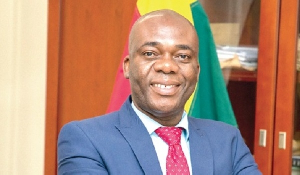
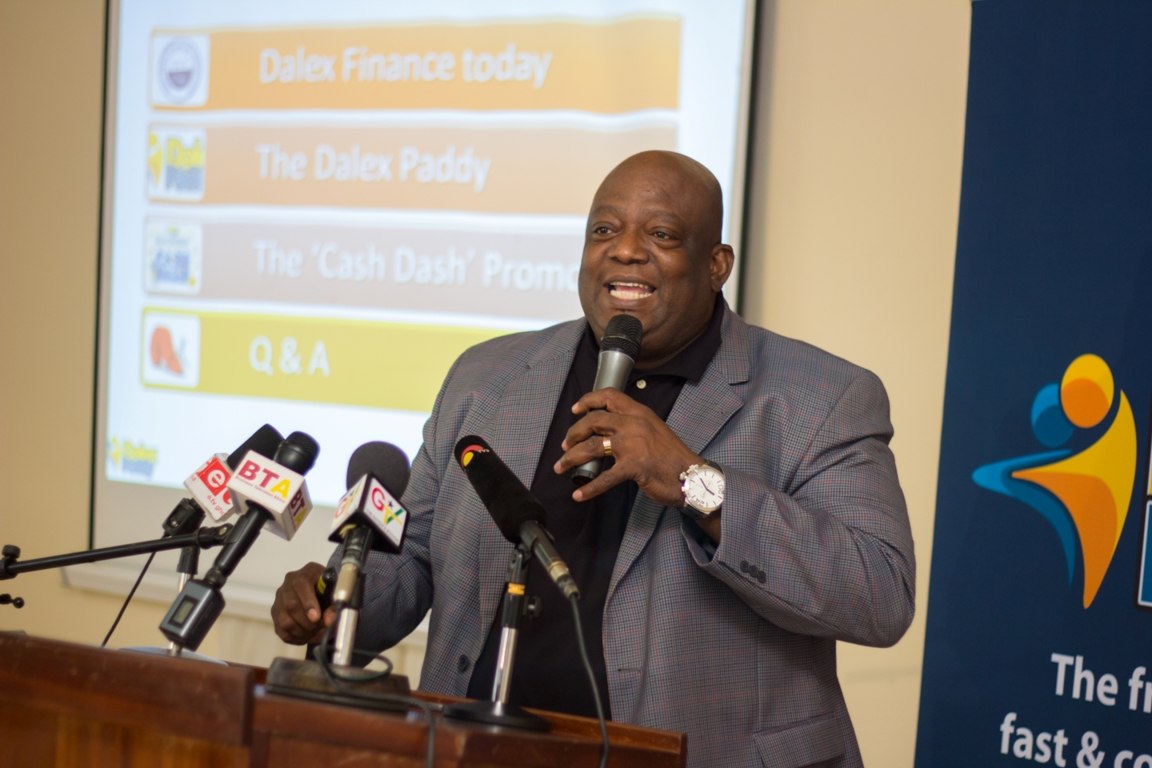
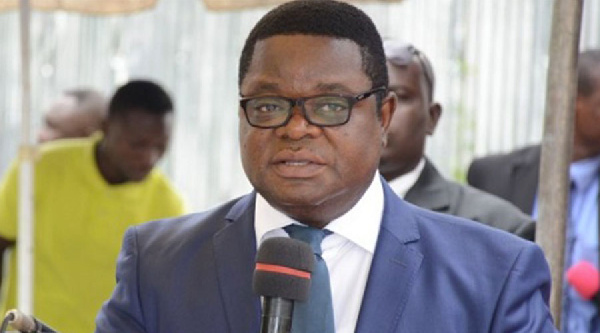
    President of the Ghana FinTech and Payments Association, Martin Kwame Awagah, highlighted that cash transactions still dominate trade in the country and are likely to do so for the foreseeable future.

    He pointed out that challenges such as trust, education, security, infrastructure, and various technological issues remain significant hurdles to the transition.

    “By 2030 we are likely to see close to an equal amount of cash usage against digital transactions, but going cashless will stretch longer into the future,” he said.

    Touching on efforts and investments made toward attaining a cashless system, he said: “Despite all the strides we have made in cashless advocacy, we still lack some basic things. Almost everyone who is a heavy user of digital payment has about two to three apps or web applications for transactions, simply because of technical challenges.”

    “As we advance, we are hopeful that other segments of the financial services ecosystem – like insurance, lending and investment among others – will tag along; but currently, we are only seeing payments dominating. So, even though more products and services are being developed, cash is still king and its usage outweighs digital financial products.”

    The fintech consultant and financial analyst underscored the importance of improving financial technology systems, combating fraud and scams, fostering trust, and bolstering cybersecurity and data protection. He noted that these regulatory priorities require greater focus to encourage a level of confidence in digital transactions comparable to that of cash transactions.

    “The 2030 cashless economy target, while well-intentioned, overlooks the complexities of human behaviour, infrastructure gaps and societal needs. A more nuanced approach, prioritising inclusive digitalisation and a gradual phase-out of cash, is what I foresee,” he opined.

    Required Collaborative Stakeholder Efforts

    Driving the cashless agenda necessitates addressing several critical concerns that demand stakeholders’ focus, particularly innovations aimed at enhancing financial inclusion. Vulnerable groups, including the elderly and low-income families, continue to rely on cash due to their limited access to digital payment systems, despite the proliferation of mobile money services.

    To achieve financial inclusion, collaboration between the private sector and government is essential in fostering supportive ecosystems and developing accessible products.

    Another vital aspect is the integration of financial literacy into educational curricula at all levels, from primary to tertiary education, which is crucial for shifting mindsets and promoting the cashless agenda.

    Infrastructure challenges pose significant barriers to establishing a cashless economy. Poor internet connectivity, insufficient digital infrastructure, and unreliable payment networks hinder widespread adoption. Increased investment in IT infrastructure, particularly in rural areas, is critical.

    Furthermore, addressing security and privacy issues is paramount, especially with the rise of cybersecurity threats and data breaches that undermine consumer confidence in digital payment systems.

    “A balanced approach will ensure a smoother transition, prioritising accessibility, security and consumer choice,” he concluded.

    Nominations Open for the 2024 Ghana Fintech Awards

    Nominations for the 2024 Ghana Fintech Awards (GFA) are now open, marking an exciting opportunity to honor the country’s fintech innovators. Nominations will remain open until November 25, 2024, with the awards ceremony set to take place on March 1, 2025, at the Labadi Beach Hotel.

    Both individuals and companies are invited to submit nominations for candidates they believe are deserving through the official GFA website. The awards aim to highlight the fintech sector by recognizing the most influential innovators driving economic growth and enhancing financial inclusion in Ghana.

    At the launch event, Cristina Swan-Awagah, Project Coordinator for the Ghana Fintech Awards, emphasized that the awards would foster Ghana’s progress toward economic development and financial inclusion by creating a platform for industry leaders to exchange ideas and expertise.

    She underscored the vital role of fintech companies in enhancing financial accessibility and promoting digital adoption across the nation.
  • Ghana cedi keeps losing value against US dollar

    Ghana cedi keeps losing value against US dollar

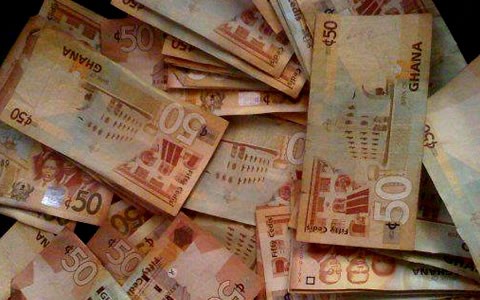
    Persistent depreciation of Ghana’s local currency against major trading currencies, including the US dollar, continues to pose challenges for the economy.

    After facing significant pressure throughout the year, the cedi showed some relative stability in July, even as inflationary pressures began to ease.

    However, recent data from GhanaWeb Business, as of November 4, 2024, at 10:00 AM, reveals that the cedi is now trading at GH¢17.15 against the dollar, while the pound is valued at GH¢21.66 at various major forex bureaus nationwide.

    The Euro is also trading at GH¢18.21 in the retail market.

    The ongoing decline of the cedi against these major currencies is expected to exacerbate economic difficulties for businesses, particularly in terms of pricing strategies.

    Bloomberg reports that the cedi has depreciated nearly 1% against the dollar over the past month and has lost approximately 24% of its value this year.

  • Liquidity risk well-contained in banking industry – Bank of Ghana

    Liquidity risk well-contained in banking industry – Bank of Ghana

    The Bank of Ghana has disclosed that liquidity risks in the banking sector are manageable, contingent on the liquidity of Government of Ghana (GoG) bonds.

    Central Bank stress tests indicate that, with a liquid GoG bonds market, most banks could withstand daily deposit withdrawals between 1.0% and 4.0% over a 30-day period.

    However, if the GoG bond market becomes illiquid, most banks would struggle to sustain withdrawals beyond 1.0% of deposits per day over the same period.

    The banking sector is strong enough to handle possible interest rate hikes.

    A stress test (a kind of financial simulation) indicates that if interest rates were to rise by 16 percentage points over the next year, banks would still remain stable, though their capital adequacy ratio (a key measure of financial health) would drop from 13.85% to 11.57%.

    Interestingly, the report also notes that if interest rates were to fall sharply, the banking sector might actually become more stable. This is because banks’ liabilities (what they owe) would adjust faster than their assets (what they own), which could improve their financial standing. Therefore, a gradual drop in interest rates is expected to make the banking sector even stronger financially.

    Exchange Rate Risk
    The Bank of Ghana observed that exchange rate changes have little effect on the banking sector’s solvency.

    According to test results, a sharp fluctuation in the Ghana cedi’s value against the US dollar would likely have minimal impact on banks’ financial stability. This outcome is attributed to existing restrictions on the Net Open Position (NOP) within the banking sector.

  • Outrage in Nigeria as 29 minors to face death sentences for partaking in protest

    Outrage in Nigeria as 29 minors to face death sentences for partaking in protest

    An alarming situation in Nigeria has sparked public outrage as 29 children are among those facing the possibility of a death sentence for allegedly participating in protests against rising living costs.

    The minors, aged 14 to 17, joined a group of 76 individuals charged in court last Friday. The accusations include treason, property damage, public disturbance, and incitement of a military coup.

    The court saw four of the children collapse from exhaustion before they could respond to the charges, with reports indicating they have been in police custody since August.

    The protests, which erupted across various Nigerian cities in August, were in response to economic changes, such as the removal of fuel subsidies and currency devaluation.

    These reforms have led to soaring inflation, putting significant strain on everyday Nigerians. However, President Bola Tinubu has remained firm in pursuing these measures, describing them as necessary for the nation’s stability.

    Amid the protests, security forces were criticized for excessive force, with Amnesty International reporting that at least 13 people were fatally shot in confrontations with police.

    Lawyers representing the children have secured bail for them, with the case set to proceed in January. Although the death penalty was introduced in Nigeria in the 1970s, executions have not taken place since 2016.

  • Nigeria placed 5th among 20 countries with highest social media usage

    Nigeria placed 5th among 20 countries with highest social media usage

    Nigerians are among the world’s highest social media users, with 2024 data ranking the country fifth globally for average daily time spent online.

    Data from Cable.co.uk and We Are Social, shared by World of Statistics on X on Sunday, shows that Nigerians spend an average of 3 hours and 23 minutes on social media each day.

    Kenya tops the list with users averaging 3 hours and 43 minutes daily, followed by South Africa at 3 hours and 37 minutes, Brazil at 3 hours and 34 minutes, and the Philippines at 3 hours and 33 minutes.

    Nigeria’s average positions it just behind these nations in terms of time spent on social media.

    Other countries with high daily social media usage include Colombia at 3 hours and 22 minutes, Chile and Indonesia both at 3 hours and 11 minutes. Completing the top ten are Saudi Arabia with 3 hours and 10 minutes and Argentina at 3 hours and 8 minutes.

    In contrast, several countries report less time spent on social media, such as Ghana with an average of 2 hours and 43 minutes, Egypt with 2 hours and 41 minutes, and Thailand with 2 hours and 30 minutes.

    European nations like Portugal (2:23), Romania (2:20), and Italy (2:17) reflect lower engagement, showing considerable regional differences in social media use.

    Full list:
    Kenya – 03:43
    South Africa – 03:37
    Brazil – 03:34
    Philippines – 03:33
    Nigeria – 03:23
    Colombia – 03:22
    Chile – 03:11
    Indonesia – 03:11
    Saudi Arabia – 03:10
    Argentina – 03:08
    Mexico – 03:04
    Malaysia – 02:48
    Ghana – 02:43
    Egypt – 02:41
    Thailand – 02:30
    Bulgaria – 02:26
    Vietnam – 02:23
    Portugal – 02:23
    Romania – 02:20
    Italy – 02:17

  • 13 Ugandan children killed by lightening at Palabek refugee camp

    13 Ugandan children killed by lightening at Palabek refugee camp

    Thirteen children and one adult lost their lives after a lightning strike hit a refugee camp in Uganda, police reported.

    According to authorities, the victims were gathered for a church service on Saturday evening when the strike occurred, leaving 34 others injured.

    The incident took place at the Palabek Refugee Settlement in the country’s northwest, a region that has been experiencing intense thunderstorms and heavy rains.

    Uganda Police spokesperson Kituuma Rusoke informed BBC News that the adult victim was 21 years old, though he did not disclose the specific ages of the children who perished.

    According to the UN’s refugee agency, Palabek Refugee Settlement houses over 80,000 refugees and asylum seekers, most of whom have fled from neighboring South Sudan.

    In another tragic incident four years ago, lightning claimed the lives of 10 children in Arua, a city also located in northwestern Uganda.

    These children were struck while taking a break from playing football.

  • Govt secures oversubscription of T-bills amid rising interest rates

    Govt secures oversubscription of T-bills amid rising interest rates

    The government recorded another marginal oversubscription of treasury bills but at the expense of rising interest rates.

    According to auction results from the Bank of Ghana, the government bagged GH¢4.078 billion as against a target of GH¢4.01 billion.

    All the bids tendered were oversubscribed.

    About GH¢3.32 billion representing 82.97% came from the 91-day bill.

    A little over GH¢549.96 million were offered for the 182-day bill.

    However, GH¢200.78 million were tendered for the 364-day bill.

    The securities will be issued today November 4, 2024.

    Meanwhile, interest rates continued to rise on the yield curve.

    The yield on the 91-day bill went up by 37 basis points to 26.56%.

    That of the 182-day bill was 27.58% as against 27.29% the previous week.

    The rate on the 364-day bill was however up by 6.0 basis points to 28.97%.

    SECURITIESBIDS TENDERED (GH¢)BIDS ACCEPTED (GH¢)
    91 Day Bill        3.327 billion    3.327 billion    
    182 Day Bill549.96 million549.96 million
    364 Day Bill200.78 million200.78 million
       
    Total4.078 billion4.078 billion
    Target 4.010  billion 
       
  • Tiwa Savage shares her perspective on matters of the heart

    Tiwa Savage shares her perspective on matters of the heart

    Nigerian music star Tiwa Savage recently shared her views on love, her relentless dedication to her craft, and the journey of her life as it continues to evolve.

    During an open interview on Beat FM in Nigeria, aimed at promoting her latest single “Forgiveness,” Tiwa offered a glimpse into her personal and professional experiences, revealing aspects of herself that fans seldom witness.

    When asked about her most daring act for love, Tiwa didn’t hold back. “If I’m into someone, I’m really into that person,” she confessed.

    Reflecting on the craziest thing she’s ever done for love, she said, “I’ve pulled up at a guy’s house unannounced. I may not be as savage as people think.”

    Turning to her career, Tiwa described the fierce drive that’s fueled her rise to fame.

    “I’m a beast when it comes to my work. I’ll call you twenty times if something needs to get done. If you give me a reason it’s not, I’ll find a way to make it happen.”

    Known for her powerful performances and commanding presence, Tiwa’s approach to her work is nothing short of intense. “That’s where the savagery kicks in,” she added, hinting at the unwavering dedication that has kept her at the top of the industry.

  • Stop making hits from people’s work without due credit – Bernard Amankwah to gospel artistes

    Stop making hits from people’s work without due credit – Bernard Amankwah to gospel artistes

    Gospel artist has urged his fellow musicians in the genre to acknowledge the original composers of the songs they “borrow.”

    At the Celebration of His Grace concert, he voiced his discontent with the increasing trend he refers to as song theft and the failure to honor the original creators.

    In a conversation with Graphic Showbiz on Monday, October 28, Bernard Amankwah, who has spent over ten years in the industry and has seen the repercussions of this issue firsthand, clarified that such practices not only violate the copyrights of original artists but also hinder the progress of the Ghanaian gospel music scene.

    He noted that the gospel genre, designed to uplift and inspire, becomes compromised when these unethical behaviors are permitted to continue.

    “One of the issues in our industry that is worrying is people picking other people’s songs and not crediting them and then making commercial capital out of them.”

    “It’s disheartening to see fellow artistes making hits from other people’s work and fleecing them yet giving them no credit.”

    “It’s not right for someone to just pick a song that one has written, rehash it and profit financially from it. It is so wrong and we need to tackle it with a sense of urgency.”

    “It must be noted that people invest time and resources into their work, expecting their efforts to be respected and valued. When that doesn’t happen, it discourages creativity and innovation and that is very wrong,” he stated.

    The ‘Presence’ singer emphasized the need for more robust actions to tackle these issues and urged stakeholders, particularly those within the gospel industry, to unite in fostering a culture of respect and integrity.

    Amankwah is convinced that, beyond just curbing song theft, the industry should cultivate a more supportive and collaborative atmosphere that empowers gospel artists to share their messages and contributions with a wider audience.

  • I wish I were married and had three children – Martha Ankomah

    I wish I were married and had three children – Martha Ankomah

    Ghanaian actress Martha Ankomah has shared her desire to have married and started a family with at least three children.

    In a conversation on Okukuseku with Emelia Brobbey, she conveyed her hope that a suitable partner would enter her life.

    She emphasized her faith in the power of prayer, expressing confidence that God will respond to her requests and fulfill her deepest wishes.

    “Who doesn’t want marriage? Let’s be real. I wish I had three kids that I could drop off at Sunday school and also take to school. It is a beautiful thing, but I am positive that God will listen to my prayers,” she said.

    Martha Ankomah also addressed the perception that acting is a tough profession, noting that many actresses in Ghana struggle to find stability in their personal lives.

    “I don’t believe in the idea that as an actress you won’t get a husband. You know what they see is different from what those of us in the entertainment industry see. It depends on how you, the individual, carry yourself. Because there are a lot of creatives who have gotten married and are living happily,” she added.

  • Consider comedy as a legitimate business venture – Fritz Baffour

    Consider comedy as a legitimate business venture – Fritz Baffour

    Ghanaian politician and comedian Fritz Baffour has urged Ghanaians to adopt a more progressive perspective on comedy.

    In a recent interview on The Lankai Show on Joy Prime, he pointed out that one issue facing Ghanaian comedy is the citizens’ tendency to be somewhat complacent in their appreciation of the art form.

    He noted that many Ghanaians often refrain from laughing at comedians’ performances on stage, reserving their praise for when they encounter these entertainers in public settings.

    While acknowledging the successes of Ghanaian comedians, he emphasized the importance of treating the industry as a legitimate business venture.

    “Ghanaian comedians are good. I like DKB, I like OB Amponsah. KSM was a gem so I think that really it is about society looking at comedy as an enterprise in terms of investment in entertainment, the media and things like that,” he said.

    In recent years, the Ghanaian comedy scene has experienced significant growth, with many emerging comedians organizing their own shows, generating content, and performing internationally.

    Although the increase in their performances and overall acceptance is promising for the industry, many comedians have reported that financial limitations remain their greatest obstacle.

    Most comedians operate their own businesses independently, often with minimal or no sponsorship support.

    Currently, Ghana boasts a roster of comedians including Lekzy DeComic, OB Amponsah, DKB, Jacinta, Ebenezer Dwomoh, Kojo Pjay, Jerry Ashinyo, Afia Barcelona, Papa Yaw Atamle, Oojoo, Kwame Obed, and MJ the Comedian.

    Additionally, the lineup features Clemento Suarez, Jeneral Ntatia, James Brown, Comedian Warris, Augustine Dennis, Foster Romanus, Khemikal, Putogo, and Parrot Mouth.

  • American music producer Quincy Jones passes on at 91

    American music producer Quincy Jones passes on at 91

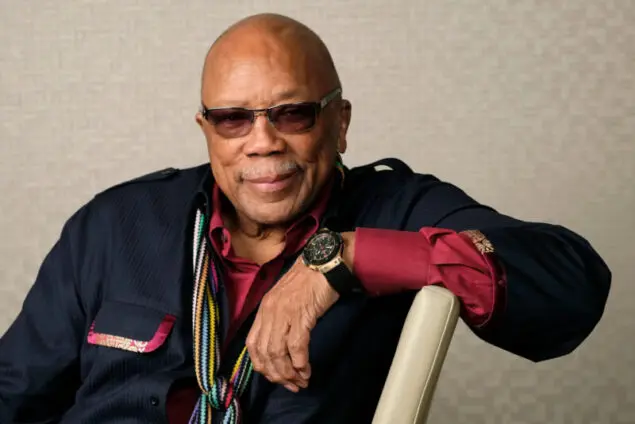
    A titan of American entertainment, Quincy Jones, who worked with stars from Frank Sinatra to Michael Jackson and Will Smith, has passed on at age 91.

    Jones’ publicist, Arnold Robinson, said he died on Sunday night at his home in the Bel Air section of Los Angeles, surrounded by his family.

    “Tonight, with full but broken hearts, we must share the news of our father and brother Quincy Jones’ passing,” the family said in a statement. “And although this is an incredible loss for our family, we celebrate the great life that he lived and know there will never be another like him.”

    Renowned as one of the most versatile figures in 20th-century pop culture, Jones is perhaps best recognized for producing Michael Jackson’s iconic albums—Off the Wall, Thriller, and Bad—during the 1980s, which catapulted Jackson to the status of the greatest pop star ever. In addition to his work with Jackson, he also produced music for legendary artists like Frank Sinatra, Aretha Franklin, and Donna Summer.

    A successful composer, he crafted numerous film scores and enjoyed several chart-topping hits under his own name. In big band jazz, Jones made his mark as a bandleader, while also arranging for jazz legends such as Count Basie. A multi-instrumentalist, he excelled at playing both the trumpet and piano. His television and film production company, established in 1990, found major success with the sitcom The Fresh Prince of Bel-Air among other shows. Even into his 80s, he continued to innovate, launching Qwest TV in 2017, an on-demand music television service. With 80 Grammy nominations, he ranks third behind Beyoncé and Jay-Z for the most nominations in history, and he is also the third most-awarded winner, boasting 28 Grammys.

    Born in Chicago in 1933, Jones’s background is notable. His father, who was half-white, was born to a Welsh slave owner and one of his enslaved women, while his mother’s family had similar ties to slave ownership. Music first entered his life through the sounds of a neighbor’s piano, which he began to learn at the age of seven, along with his mother’s singing.

    Following his parents’ divorce, he relocated with his father to Washington State, where he joined his high school band and learned to play drums and various brass instruments. At just 14, he began playing in a band alongside a 16-year-old Ray Charles in Seattle clubs, even backing Billie Holiday once in 1948. After studying music at Seattle University, he transferred to Boston before moving to New York, where he was rehired by jazz bandleader Lionel Hampton, with whom he had toured as a teenager.

    In the vibrant music scene of New York, one of his first gigs involved playing trumpet in Elvis Presley’s band during his initial TV performances. This opportunity allowed him to connect with stars of the burgeoning bebop movement, such as Charlie Parker and Miles Davis. Years later, in 1991, he had the honor of conducting Davis’s final performance, just two months before the legendary musician’s passing.

    Jones toured Europe with Hampton and spent significant time there in the 1950s, studying in Paris and mingling with notable figures like Pablo Picasso, James Baldwin, and Josephine Baker. At 23, he served as Dizzy Gillespie’s musical director and arranger while touring South America and the Middle East. He formed a talented big band to tour Europe, testing a jazz musical titled Free and Easy, but the experience ended in disaster, leaving him with $100,000 in debt and close to suicide.

    Securing a position at Mercury Records allowed him to gradually pay off his debts through extensive work as a producer and arranger for artists like Ella Fitzgerald, Dinah Washington, Peggy Lee, Sarah Vaughan, and Sammy Davis Jr. He also began to score films, with notable credits including The Italian Job, In the Heat of the Night, The Getaway, and The Color Purple. For The Color Purple, he served as producer and received three Oscar nominations out of its total of 11. In 1968, Jones made history as the first African American nominated for Best Original Song at the Oscars for “The Eyes of Love” from the film Banning, earning a total of seven nominations. He also scored various television shows, including The Bill Cosby Show, Ironside, and Roots.

    His collaboration with Sinatra began in 1958 when Grace Kelly, princess consort of Monaco, enlisted him to conduct and arrange for Sinatra’s band at a charity event. The two continued their partnership until Sinatra’s last album, LA Is My Lady, released in 1984. By the late 1950s, Jones’s solo musical career flourished, as he recorded albums under his own name as a bandleader, collaborating with jazz greats such as Charles Mingus, Art Pepper, and Freddie Hubbard.

    Jones once said of his time in Seattle: “When people write about the music, jazz is in this box, R&B is in this box, pop is in this box, but we did everything,” and his catholic tastes served him well as modern pop mutated out of the swing era. He produced four million-selling hits for the New York singer Lesley Gore in the mid-60s, including the US No 1 It’s My Party, and later embraced funk and disco, producing hit singles including George Benson’s Give Me the Night and Patti Austin and James Ingram’s Baby Come to Me, along with records by the band Rufus and Chaka Khan, and the Brothers Johnson. Jones also released his own funk material, scoring US Top 10 albums with Body Heat (1974) and The Dude (1981).

    His biggest success in this style was his work with Michael Jackson: Thriller remains the biggest selling album of all time, while Jones’s versatility between Off the Wall and Bad allowed Jackson to metamorphose from lithe disco to ultra-synthetic funk-rock. He and Jackson (along with Lionel Richie and producer Michael Omartian) also helmed We Are the World, a successful charity single that raised funds for famine relief in Ethiopia in 1985. “I’ve lost my little brother today, and part of my soul has gone with him,” Jones said when Jackson died in 2009. In 2017, Jones’s legal team successfully argued that he was owed $9.4m in unpaid Jackson royalties, though he lost on appeal in 2020 and had to return $6.8m.

    After the success of The Color Purple in 1985, he formed the film and TV production company Quincy Jones Entertainment in 1990. His biggest screen hit was the sitcom The Fresh Prince of Bel-Air, which ran for 148 episodes and launched the career of Will Smith; other shows included the LL Cool J sitcom In the House and the long-running sketch comedy show MadTV.

    He also created the media company Qwest Broadcasting and in 1993, the Black music magazine Vibe in partnership with Time Inc. Throughout his career he supported numerous charities and causes, including the , National Association for the Advancement of Colored People, the Jazz Foundation of America and others, and mentored young musicians including the British multiple Grammy winner Jacob Collier.

    Jones’ illustrious career was twice nearly cut short: he narrowly avoided being killed by Charles Manson’s cult in 1969, having planned to go to Sharon Tate’s house on the night of the murders there, but Jones forgot the appointment. He also survived a brain aneurysm in 1974 that prevented him from playing the trumpet again in case the exertion caused further harm.

    Jones was married three times, first to his high-school girlfriend Jeri Caldwell, for nine years until 1966, fathering his daughter Jolie. In 1967, he married Ulla Andersson and had a son and daughter, divorcing in 1974 to marry actor Peggy Lipton, best known for roles in The Mod Squad and Twin Peaks. They had two daughters, including the actor Rashida Jones, before divorcing in 1989. He had two further children: Rachel, with a dancer, Carol Reynolds, and Kenya, his daughter with actor Nastassja Kinski.

    He never remarried, but continued to date a string of younger women, raising eyebrows with his year-long partnership with 19-year-old Egyptian designer Heba Elawadi when he was 73. He has also claimed to have dated Ivanka Trump and Juliette Gréco. He is survived by his seven children.

  • “I have never made such a statement” – Nyaho-Tamakloe on accusing Bawumia of ‘weed candy’ use

    “I have never made such a statement” – Nyaho-Tamakloe on accusing Bawumia of ‘weed candy’ use

    A Founding member of the New Patriotic Party(NPP) Dr Nyaho Nyaho Tamakloe, has denied a statement falsely linked to him, which claimed he accused Vice President Dr. Mahamudu Bawumia of consuming “weed candy.”

    The false quote that emerged over the weekend suggested that the founding member of the New Patriotic Party (NPP) and former military officer expressed worries that Vice President Bawumia’s purported use of “weed candy” was alarming senior NPP officials.

    The purported quote read: “Vice President Dr Bawumia’s drug addiction and consumption of weed candy is a source of worry to many NPP bigwigs who have confided in me.”

    However, Dr. Nyaho-Tamakloe categorically denied making this statement, explaining in a message to The Herald that he had been at home all week and had not participated in any interviews regarding the issue.

    “I have never made such a statement,” he emphasized, dismissing the quote as baseless.

    This incident is part of a growing trend in which notable Ghanaians have been inaccurately linked to controversial remarks, raising alarm about the dissemination of misinformation.

  • Martin Amidu slams GBA for ‘blind support’ to Chief Justice

    Martin Amidu slams GBA for ‘blind support’ to Chief Justice

    Former Attorney General Martin Amidu has fiercely criticized the Ghana Bar Association’s (GBA) unwavering endorsement of the Chief Justice’s decision to close courts in Bolgatanga.

    In a recent article, he labeled the GBA’s backing as “a threat to our Constitution, democracy, and the rule of law.”

    He warned that unquestioning allegiance to the Chief Justice’s administrative actions could erode the independence of the judiciary.

    “The unbridled support of anything and everything the Chief Justice says or does…borders on sycophancy,” Mr. Amidu cautioned.

    He added that the public deserves judicial decisions that are both impartial and open.

    Mr. Amidu also scrutinized the judiciary’s alignment with national security, raising concerns over whether the Chief Justice’s decision was made independently or under “instructions… from the National Security Council.”

    He stressed the importance of transparency in decisions impacting public access to justice, particularly given heightened tensions around the election period.

    The former Attorney General condemned the Chief Justice’s administrative move to close courts in Bawku and nearby areas.

    He called the decision to shut down courts, including those in the regional capital Bolgatanga, “unprecedented” and harmful to citizens’ rights.

    According to a memorandum from the Judicial Secretary, the Chief Justice cited escalating security concerns as justification for the closures.

    However, Mr. Amidu criticized this reasoning as “naïve,” arguing that Bolgatanga has consistently remained unaffected by the intermittent violence in Bawku.

    He stated that “throughout the Bawku conflict… the regional capital has never been… in the conflict area.”

    The former AG emphasised the potential legal ramifications of suspending court functions just weeks before the national elections, arguing it infringes upon citizens’ access to justice and could disrupt the judicial review of election-related issues.

    “We the People demand Parliamentary oversight of the administrative decision…to close the High Court in Bolgatanga and its environs,” he stated.

    Mr Amidu also expressed concern that the closure decision lacked sufficient input from local legal stakeholders, questioning the Chief Justice’s consultations.

  • Finance ministry orders payment of a $30m debt to Sunon Asoglin

    Finance ministry orders payment of a $30m debt to Sunon Asoglin

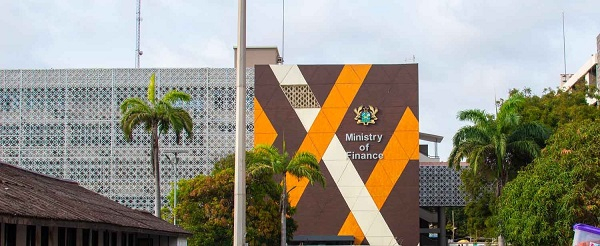
    The Ministry of Finance has ordered the Controller and Accountant General’s Department to pay $30 million owed to Sunon Asogli, an Independent Power Producer (IPP).

    This directive is part of a new agreement intended to address debts that led Sunon Asogli to shut down its 560-megawatt power plant.

    The shutdown raises concerns of “dumsor” (power outages), which would affect both the economy and power consumers.

    Despite the directive, Sunon Asogli’s spokesperson, Dr. Elikplim Apertogbor, expressed frustration over the Finance Ministry’s reluctance to engage in further talks about the debt.

    He stated that, since the plant’s closure, the Finance Minister has avoided formal negotiations, signaling a communication breakdown between the IPP and the government.

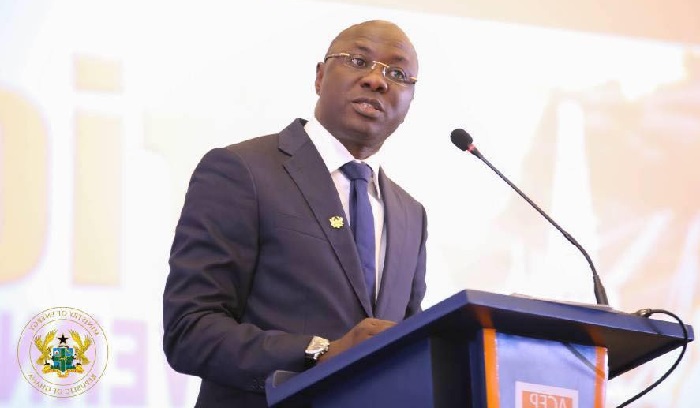
    Executive Director of the African Center for Energy Policy (ACEP), Ben Boakye, added that structural inefficiencies in Ghana’s energy sector, compounded by poor leadership, particularly at the Electricity Company of Ghana (ECG), are contributing to frequent shutdowns and operational issues.

    He suggested that these issues stem not from a lack of funds but from ineffective management and a lack of genuine commitment to solving the sector’s problems.

    “These shutdowns will continue to occur because the situation is not good, it’s terrible.

    “We often discuss the need for investment, but even with investments, the situation deteriorates. This indicates that the problem lies more in leadership and the commitment to address the issue rather than just money,” Boakye noted.

  • Stop predicting election winners when when voting has not yet began – Akufo-Addo to clergy

    Stop predicting election winners when when voting has not yet began – Akufo-Addo to clergy

    President Nana Addo Dankwa Akufo-Addo has urged religious leaders to caution members of their congregations against prematurely prophesying the outcome of Ghana’s upcoming general elections.

    The call comes as some clergy members publicly declare electoral predictions ahead of the December 7, 2024, polls.

    At the “Agent of Peace” Campaign organized by the Ghana Pentecostal and Charismatic Council (GPCC) on Sunday, November 3, 2024, the Minister of Chieftaincy and Religious Affairs, Stephen Asamoah Boateng, conveyed the president’s message, emphasizing the importance of peaceful elections.

    “Indeed, democracy requires more than elections, but the country cannot be democratic without holding genuine elections to elect its leaders. Elections are the basis for democratic legitimacy and a mechanism to peacefully resolve the transfer of political power,” Asamoah Boateng said on behalf of the president.

    The president further urged, “We in Ghana have grown and must learn the lessons of having peaceful elections. We must avoid the use of provocative and abusive language in our campaigning. Let us respect the electorate and not assume that one political party has already won the election when a single ballot is yet to be cast.”

    Calling for the clergy’s support in promoting decorum, the president stressed the need for restraint and impartiality during the electoral period, reminding religious leaders to be cautious in their public discourse.

    He added, “I call on revered members of the clergy also to put a check on those of their members who are going round and prophesying winners of an election which is yet to be held.”

    As Ghana approaches a critical election season, Akufo-Addo underscored that political parties and religious groups should refrain from divisive language, keeping the nation’s democratic principles and unity at the forefront.

  • NaCCA, GES to introduce new curriculum for SHS

    NaCCA, GES to introduce new curriculum for SHS

    The Ministry of Education, in collaboration with its agencies—the National Council for Curriculum and Assessment (NaCCA) and Ghana Education Service (GES) has indicated that it is ready to introduce a modified secondary school curriculum for Senior High School (SHS), Senior High Technical School (SHTS), and STEM programs nationwide when schools reopen this month.

    Over the last two years, NaCCA, the body responsible for curriculum development in Ghana, has been working closely with GES to carefully plan and prepare for the launch of the new curriculum.

    This process has included extensive consultations with various stakeholders to identify the curriculum’s key focus areas, as well as collaborative input from over 300 experts from across the nation, all contributing toward creating a comprehensive curriculum aimed at advancing education in Ghana.

    An essential part of the planning has been directed toward ensuring that teachers are thoroughly prepared.

    Weekly Professional Learning Community (PLC) sessions are being held to equip educators with the necessary skills and knowledge for effective curriculum implementation.

    Additionally, teacher guides aligned with the new curriculum across all subject areas have been developed through collaboration between the Ministry of Education and several subject associations, ensuring that educators are well-prepared to guide students effectively.

    The new curriculum focuses on three core objectives: preparing students with vital 21st-century skills, creating a solid academic foundation for continued education, and equipping students with the qualities needed for the workforce.

    Its ultimate goal is to equip students to lead responsible adult lives, pursue further education, and successfully enter the job market.

    One notable feature of the curriculum is its emphasis on shared Ghanaian values, aiming to foster a deep sense of national pride and responsibility by connecting students with their cultural heritage.

    The curriculum offers adaptable learning tracks, enabling students to select subjects that align with their personal interests and career aspirations.

    In addition, intervention programs for Mathematics and English have been introduced to assist students requiring extra support in these fundamental areas.

    A shift in assessment methods is another significant feature, focusing more on the overall development of students. This new approach moves beyond traditional exams, evaluating critical thinking, creativity, and problem-solving skills.

    With its extensive planning and broad objectives, Ghana’s new curriculum is poised to bring transformative changes that will better prepare students for modern demands while grounding them in values essential to national progress.

    Commenting on the new curriculum, Prof. Yayra Dzakadzie, the Director-General of NaCCA, shared,

  • Don’t be in a haste to scrap e-levy, COVID levy – ISSER to gov’t

    Don’t be in a haste to scrap e-levy, COVID levy – ISSER to gov’t

    Ghana’s Institute of Statistical, Social, and Economic Research (ISSER) has advised against an abrupt repeal of the E-levy and COVID-19 levy, warning that immediate removal could hinder the country’s IMF-supported economic recovery strategy.

    In its latest State of the Ghanaian Economy Report, ISSER recommended a gradual phase-out of these levies in the 2025 budget, emphasizing the importance of maintaining fiscal stability.

    Combined, the E-levy and COVID-19 levy are expected to bring in over GH¢5 billion, with GH¢2.1 billion from the E-levy and GH¢3.172 billion from the COVID-19 levy.

    “Scrap E-levy (GH¢2.1bn), COVID-19 Levy (GH¢3.172bn), Betting Tax – What is the alternative?” the report questions, urging policymakers to carefully evaluate the timing and impact of eliminating these revenue streams, which are essential for meeting Ghana’s IMF program obligations.

    ISSER’s position highlights a careful balance between offering public relief and maintaining fiscal responsibility. Given the current economic pressures, including rising inflation and a weakening currency, these levies are viewed as essential revenue streams.

    The report underscores that any adjustments should align with wider fiscal strategies to uphold economic stability.

    It also mentioned the Betting Tax as a potential alternative revenue stream, though details on this option are still pending.

    ISSER recommends that the government consider such alternatives to build a lasting revenue base that could gradually replace the E-levy and COVID-19 levy while still meeting IMF obligations.

  • Full Text: Speech by Minister for Communication and Digitalisation at the launch of 5G in Ghana

    Full Text: Speech by Minister for Communication and Digitalisation at the launch of 5G in Ghana

    SPEECH BY URSULA OWUSU-EKUFUL, MINISTER FOR COMMUNICATIONS AND DIGITALISATION AT THE LAUNCH OF 5G IN GHANA

    Distinguished guests, Ladies and Gentlemen,

    It is an honour and privilege to be part of Ghana’s remarkable journey from the first generation to the fifth generation of communications networks and services. Today, we celebrate not just a technological evolution but a testament to our resilience, innovation, and collective progress as a nation.
    The advent of the first-generation (1G) mobile networks marked a revolutionary step in communications when mobile phones could only do basic voice calls and were huge devices carried in a box. The introduction of 1G in the early 1990s however ushered in a new world of connectivity, albeit in its most rudimentary form. For the first time, Ghanaians experienced the liberation that wireless communication offered, shrinking distances and making real-time communication possible across various regions.

    As the years progressed, the launch of second-generation (2G) networks in the 2000s further transformed our communication landscape. With 2G, we witnessed the proliferation of SMS services, enabling the exchange of text messages that became an integral part of our daily lives. This era brought increased clarity in voice communications and paved the way for more reliable and secure mobile interactions. It also marked the beginning of data transmission, at slow speeds, laying the groundwork for future advancements.

    The dawn of the new millennium ushered in the third generation (3G) of mobile networks. With 3G launched in mid-2000, we entered a new epoch of connectivity. It was more than just voice and messaging; it was the introduction of the mobile internet. Ghanaians could now access emails, browse the web, and use data-driven applications on their mobile devices. This stimulated an appetite for information and spurred the growth of mobile-enabled businesses. 3G enabled mobile telephony to impact our economy, education, health, and overall societal interactions.

    Our journey continued with the rollout of fourth-generation (4G) networks. Fast and reliable, 4G transformed how we use technology, providing the speed necessary for high-quality streaming, real-time gaming, and seamless connectivity of smart devices. This development enhanced individual consumer experiences and empowered businesses with unprecedented opportunities for growth and innovation. E-commerce, fintech solutions, online education, and telemedicine thrived, bringing immense socio-economic benefits to our population.
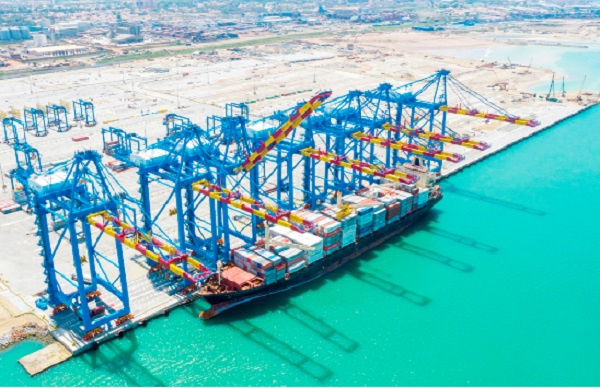
    And now, as we stand on the brink of an even more groundbreaking advancement, we embrace the fifth generation (5G) of communications networks. The potential of 5G extends beyond mere incremental improvements; it is a revolutionary leap forward that promises to redefine connectivity, productivity, and overall quality of life. With its unparalleled speed, low latency, and enormous capacity, 5G has the potential to drive innovations in every sector—agriculture, health, transport, manufacturing, and beyond. The Internet of Things (IoT), artificial intelligence (AI), and smart cities are no longer futuristic concepts but imminent realities ready to transform our ways of living and working.

    5G has now arrived in Ghana, marking a significant step forward in our digital journey. The initial rollout focus is on major cities, starting today, where we anticipate residents in Accra, Kumasi, and Takoradi will begin experiencing the benefits almost immediately; once the network operators activate it. Our goal is to achieve coverage across additional urban areas by the end of 2024. For full nationwide coverage, including rural regions, we are looking at a multi-phase approach, aiming for comprehensive access by 2026. This timeline ensures a methodical deployment that aligns with infrastructure readiness and quality assurance.

    As we embark on this 5G journey, we must acknowledge the collaborative efforts that have brought us this far. The government, industry stakeholders, regulatory bodies, and, indeed, the people of Ghana have worked in unison to create a conducive environment for technological advancement. Policies have been instituted to foster investment, innovation, and inclusivity, ensuring that every Ghanaian is included in this digital revolution.

    Moreover, our educational institutions are pivotal in preparing the next generation of tech-savvy Ghanaians. Initiatives to enhance digital literacy and skills development are in full swing, ensuring that our youth can harness the opportunities that 5G will present. We are constructing a Digital Youth Hub at the university of Ghana which should serve as a prime hub for the development of Ghana specific 5G use cases in all the critical sectors of the economy. This high-speed shared network can only help accelerate that exciting development, and we hope to replicate this on other campuses.

    However, we remain cognizant of the challenges ahead while celebrating these advancements. Cybersecurity, data privacy, and equitable access are issues we are  addressing head on. Our commitment to sustainable and inclusive growth has motivated us to build a robust framework that safeguards our digital future.
    Data privacy and security are critical components of our digital strategy. We are implementing stringent data protection protocols aligned with international standards to safeguard user information as 5G becomes widely available. This includes end-to-end encryption and advanced cybersecurity measures to protect against potential breaches. Additionally, we are working with industry experts to continuously monitor network security, ensuring that any emerging threats are quickly addressed. We aim to build a trusted digital environment where Ghanaians can fully benefit from 5G while feeling secure about their data.

    The journey from 1G to 5G epitomises Ghana’s unwavering quest for progress and prosperity. Each generation of technology has brought us closer, empowered us, and expanded our horizons. As we move forward, let us harness the transformative power of 5G to foster innovation, drive economic growth, and improve the lives of all Ghanaians.

    We are committed to ensuring that 5G benefits all Ghanaians, regardless of their location. As part of our rural inclusion strategy, we’ve developed an initiative to subsidise infrastructure costs in underserved areas. We are working with our partners to leverage satellite and wireless solutions, which are often more feasible for rural deployment. Our Universal Service Fund, managed by GIFEC, is now largely dedicated to rural connectivity projects, reinforcing our commitment to digital equity. This approach will deliver fast, reliable 4G and 5G services to communities that have traditionally faced connectivity challenges.
    Affordability is a priority in our 5G rollout plan. We are collaborating closely with telecom services providers to offer affordable data plans catering to various needs and budgets. Additionally, the government is exploring public-private partnerships to reduce consumer costs. Through these efforts, we aim to make 5G accessible to businesses, small enterprises, students, urban residents, and low-income households. Our goal is to create a digital ecosystem where high-speed connectivity is within the reach of everyone.

    I must however reiterate that the past has lessons for the present and the future. We have deliberately chosen as a matter of policy to build a shared neutral wholesale network to deliver 5G because of the negative fallout from previous spectrum auctions in Ghana. NGIC has been granted exclusivity for 10 years to enable them invest in rolling out the 4G/5G infrastructure nationwide in the shortest possible time, for all network operators to use to deliver services to their subscribers.

    This will create an even playing field and encourage them to compete fairly, not on network rollout, but on service offerings. If you live in the initial 5G catchment area and still can’t access 5G by December, call out your network operator because they have to make it available to you.

    I extend my gratitude to all who have been instrumental in this journey—the pioneers, the policy-makers, the innovators, and every Ghanaian who has embraced and supported these technological advancements. I must single out our President, Nana Akufo-Addo for special commendation.

    Thank you sir, for being a visionary, for seeing the benefits of digitalisation and driving your Vice President, Dr. Bawumia and myself as sector minister to extend connectivity nationwide and build various digital applications and services on that.

    Thank you for laying a firm foundation for the exponential growth of our digital economy, including pushing us to launch 5G in record time. Thank you for believing in Ghanaian ingenuity, talent and innovation. Posterity will judge you very favourably. You have set us off on the path to building a future where technology and connectivity are pillars of our nation’s development.

    May our collective efforts propel Ghana to greater heights in global communications.

    Thank you for your attention.

  • Bright Simons: World Bank Funding of Credit Scoring & Fintech falters in Ghana

    Bright Simons: World Bank Funding of Credit Scoring & Fintech falters in Ghana

    One effect of Ghana becoming a “lower middle income country” a few years ago is that many donors retreated. The World Bank thus became the country’s most important strategic “development partner”.

    The role of the World Bank in Ghana’s governance affairs thus require serious scrutiny from public policy analysts and activists.

    In recent years, the World Bank has had to step in with large pots of money to support the government’s efforts to patch up the country’s banking and financial system due to the lingering effects of a mass shutdown of dozens of financial institutions and the ongoing fiscal crisis.

    $250 million was allocated by the World Bank to support “financial stability” in Ghana. The separate “Financial Sector Development” effort was allocated $30 million for rollout of various initiatives to start in 2019.

    Our careful review of results for this spending leaves much to be desired. The challenge here is that the selection of projects themselves was questionable yet those are matters of political judgement. Elected officials have the power and mandate to make these decisions. As civil activists and analysts, we are reduced to shouting from the sidelines.

    1. The decision to fund the setup of a government-controlled (NIC, GSE & NPRA) Credit Rating Agency (CRAG), now stuck in limbo, when there are two private ones (Augusto & Co and Beacon), and others (like GCR and DataPro) had signalled entry, was completely misguided. CRAG commenced its license application in early 2023. Went on an executive and consultant hiring spree. And then, just like that, everything stalled. Point though is: the government’s vision was clearly to see more government bonds get ratings. Why should a government-controlled credit agency be rating government bonds? Why should any investor take their ratings seriously? Why not simply hire the private agencies setting up locally to do the rating as is done almost universally?

    2. The decision to splurge 89% of all the financial stability money on state-owned banks that have long been mismanaged due to political interference was also misguided. Not when there are 3 private banks that have fallen on hard times due primarily to worsening fiscal conditions. Some of these struggling banks even have negative equity at this point and can’t afford regulatory fines. They, not the state-owned banks, should have gotten the money.

    3. The plan to get ARB-APEX bank (a quasi-regulator & coordinator of Ghanaian community banks) to build a common app, as well as agency banking platform, for rural banks was relatively clever but implementation has been hard due to design gaps. 5 years on, uptake of the app, USSD code #992, and the industry-wide ERP is virtually nill. Our team went around places that are supposed to have these agents. None of the 5000 expected could be found. Testing of #992 shows far lower uptime than allowable. Insiders say that the target date for 80000 pilot phase users has now been missed repeatedly. Our interviews suggest that the top Rural Banks are focused on their own apps.

    Quite surprisingly, but consistent with the pattern we have identified, the project has still been rated as doing well by the World Bank.

    Whilst we intend to publish detailed case studies about all these World Bank projects in due course, we are also action-oriented. We intend to ramp up advocacy in coming months and years to change the culture of performance and accountability.

    By Bright Simons, Vice President Imani Africa

    DISCLAIMER: Independentghana.com will not be liable for any inaccuracies contained in this article. The views expressed in the article are solely those of the author’s, and do not reflect those of The Independent Ghana

  • Calm down, BoG has enough dollar reserves – Finance Minister to business

    Calm down, BoG has enough dollar reserves – Finance Minister to business

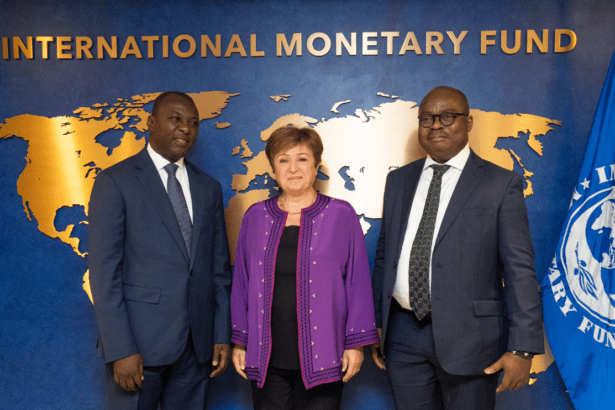
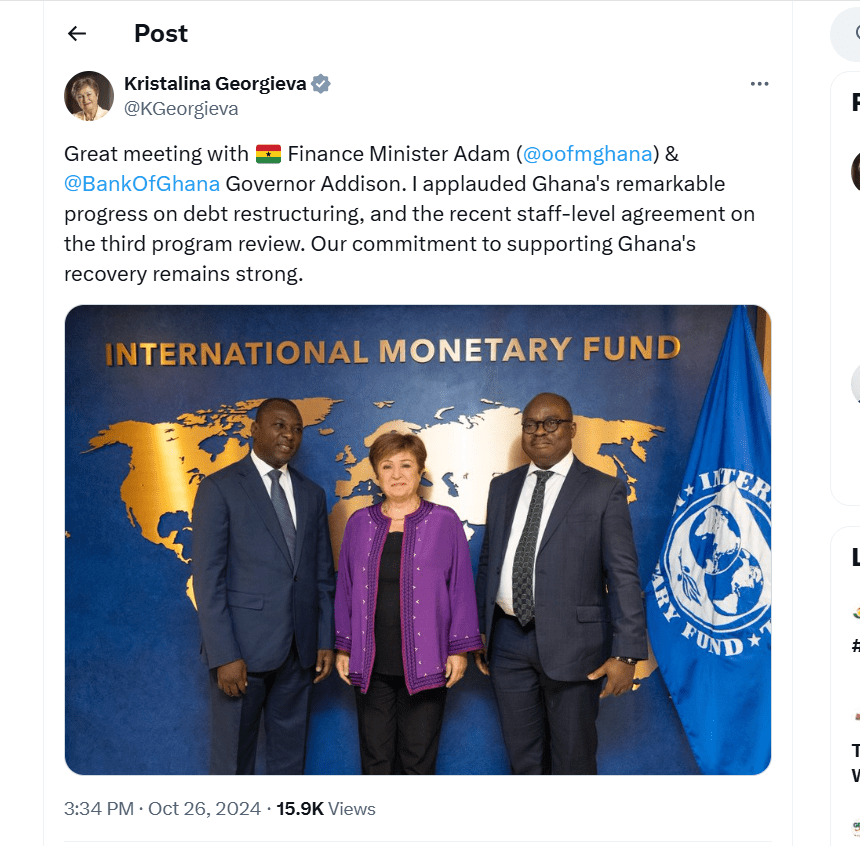
    Finance Minister Dr. Mohammed Amin Adam has provided assurance to businesses and market stakeholders, emphasizing that the Bank of Ghana (BoG) possesses ample dollar reserves to satisfy market needs.

    “We should look at the current reserve position of the Bank of Ghana, and that should give everyone some comfort about its ability to meet market demand,” Dr Amin Adam stated.

    He said this during a press briefing in Washington, D.C., held alongside the Annual IMF and World Bank meetings.

    “I can tell you that the Bank of Ghana has accumulated significant reserves to meet the demand,” he added.

    Bank of Ghana figures show that Ghana’s international reserves climbed to $7.5 billion as of the close of August 2024.

    Expected Inflows

    The finance minister revealed that Ghana anticipates a December inflow of $360 million from the IMF, pending approval of the third program review.

    “That should bring in some foreign exchange,” he noted.

    Additionally, the World Bank is expected to disburse $300 million to Ghana under its Development Policy Operations (DPO) Series, further bolstering the country’s foreign currency reserves.

    “In addition to what the Bank of Ghana already has, these expected inflows should help in stabilising the cedi going forward,” Dr Amin Adam remarked, addressing concerns about recent fluctuations in forex markets.

    The assurance comes at a time when some forex bureaus are reportedly selling the dollar above GHS17, despite data provided to the Bank of Ghana showing transactions under GHS16.

    Pressure on the Cedi: Contributing Factors

    The Ghanaian cedi has faced mounting pressure over the past month, following a period of relative stability.

    Market analysts attribute this volatility to a spike in dollar demand, as businesses prepare to finance imports ahead of the Christmas season.

    Some commercial banks report that businesses are also rushing to restock for next year, fearing a depreciation of the cedi in the coming months.

    Additional market pressures stem from speculation and concerns surrounding the upcoming December elections, which have increased demand for foreign currency, as well as the activities of speculators aiming to capitalise on uncertainties.

    Bank of Ghana’s Role and Measures

    The Bank of Ghana has actively intervened in the market to meet dollar demand, selling foreign currency through its dollar auction program.

    It has specifically targeted Bulk Oil Distribution Firms and conducted weekly auctions for commercial banks to ensure a steady supply.

    Furthermore, the Central Bank has implemented additional measures to stabilise the cedi, which it describes as part of a broader strategy to manage market uncertainty and minimise the negative impact on the currency’s value.

  • Botswana’s Ruling Party loses elections after 58 years in power

    Botswana’s Ruling Party loses elections after 58 years in power

    Botswana’s President Mokgweetsi Masisi held a press conference on November 1, 2024, to officially acknowledge his party’s defeat in the October 30 general elections.

    The ruling Botswana Democratic Party (BDP) lost to the opposition coalition, the Umbrella for Democratic Change (UDC), marking a significant shift in the country’s political landscape.

    On this occasion, Masisi admitted that the BDP had lost its parliamentary majority in a dramatic fashion, bringing an end to nearly sixty years of governance. Preliminary reports indicated that the UDC, led by lawyer Duma Boko, was poised to claim victory as more than half of the constituencies had been reported.

    Experts attributed the BDP’s loss to growing socio-economic discontent, especially among the youth, who have expressed dissatisfaction with the party’s handling of various issues. Since gaining independence from Britain in 1966, Botswana has relied heavily on diamond exports; however, a recent decline in the global diamond market has resulted in a sharp economic downturn, with unemployment soaring to 28%.

    State television announced that, with results from 41 of the 61 constituencies counted, the UDC secured 26 parliamentary seats, while the BDP only managed to win three. In Botswana, members of parliament are responsible for electing the president.

    Although Duma Boko has not yet made a public statement regarding the election results, his campaign focused on critical issues such as increasing the minimum wage and enhancing social grants.

    “Although I wanted to stay on as your president, I respect the will of the people and I congratulate the president-elect. I will step aside and I will support the new administration,” Masisi said at a press conference.

    On Friday morning, the atmosphere in the capital city of Gaborone was tranquil, with small clusters of opposition supporters gathered in the streets to celebrate.

    “I did not ever think I would witness this change in my life,” said 23-year-old student Mpho Mogorosi. “The BDP had stayed too long in power and I am proud to be part of the people that removed them for a better Botswana.”

    This year, the Botswana Democratic Party (BDP) became the second long-standing party in southern Africa to experience a loss at the polls, following South Africa’s African National Congress, which lost its parliamentary majority after three decades in power and had to establish a coalition government.

    In the coming weeks, neighboring Namibia will conduct elections, where the ruling SWAPO party, in power since 1990, is anticipated to encounter a significant challenge.

    “The outcome of Botswana’s elections should serve as a warning to long-time ruling parties across southern Africa and beyond that without economic progress and employment opportunities, political dominance will falter,” said Zaynab Hoosen, an Africa analyst at Pangea-Risk.

  • NMC warns media outlets against offensive broadcasting amid surge in complaints

    NMC warns media outlets against offensive broadcasting amid surge in complaints

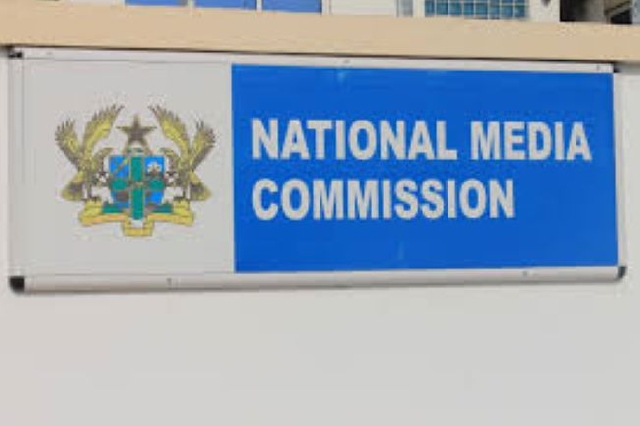
    The National Media Commission (NMC) has adopted a stringent approach toward inappropriate broadcasting, urging media outlets across Ghana to be more mindful of their content to avoid potential penalties.

    During a regulatory meeting on Thursday, October 31, NMC Chairman Yaw Boadu-Ayeboafo emphasized the importance of responsible programming and indicated the commission’s willingness to impose sanctions on those violating broadcasting guidelines.

    A recent report from the NMC indicated that nearly 9,000 complaints have been filed this year, covering a wide array of concerns, including sexually explicit material and accusations of money laundering and loan fraud involving over 40 media outlets.

    Oyerepa TV, which was explicitly mentioned for broadcasting unsuitable content, expressed dissatisfaction over being singled out in the report.

    Despite this, the NMC maintained its position, asserting that Oyerepa TV’s programming presented a “significant harm” and suggested that it may forward the case to the National Communications Authority (NCA) for possible license revocation.

    The Ghana Journalists Association (GJA) also expressed its views, criticizing the NCA for its management of the digital migration process and questioning its enforcement of broadcasting regulations.

    In reply, the NCA reassured the public of its commitment to ongoing monitoring and regulation.

  • NDC urges Ghanaians to disregard NPP’s unrealistic 500,000 vote projection in Volta Region

    NDC urges Ghanaians to disregard NPP’s unrealistic 500,000 vote projection in Volta Region

    The National Democratic Congress (NDC) in the Volta Region has urged Ghanaians, especially those in Volta, to disregard the assertions made by Mr. Richard Ahiagba, the National Communications Director of the New Patriotic Party (NPP), regarding his party’s intention to secure 500,000 votes in the upcoming December 7 elections.

    According to the NDC, such claims are out of touch with reality, asserting that Mr. Ahiagba’s ambitious target demonstrates a fundamental misunderstanding of the political landscape in the region.

    Sorkpa Kafui Agbleze, the NDC’s Volta Regional Communications Officer, commented that the NPP’s aspiration is part of a longstanding trend of making extravagant promises without delivering results.

    Mr. Agbleze highlighted the NPP’s historical performance in the region, pointing out that during the 2016 elections, the party aimed to capture 30% of the votes but ended up with only 10.81%.

    In the 2020 elections, despite their inflated expectations, the NPP managed to secure just 14.14% of the votes.

    Over the years, the party’s share of the vote has seen fluctuations, with percentages recorded as 15.38% in 2008, 12.9% in 2012, 10.18% in 2016, and 14.14% in 2020, reflecting a consistent inability to gain a foothold in this NDC-dominated area.

    With a total of 1,023,147 registered voters in the Volta Region, the NDC emphasized that achieving 500,000 votes would necessitate a level of support that the NPP has historically failed to attain.

    The party asserted that the residents of Volta are acutely aware of the economic challenges posed by the NPP administration, pointing to rising living costs, unemployment, and currency depreciation as factors undermining the NPP’s credibility.

    Mr. Agbleze called on the NPP to prioritize tackling these economic issues rather than setting unrealistic electoral goals.

    “Their tendency to make exaggerated predictions only highlights the gap between their statements and the actual situation,” he remarked, urging Voltarians to reject “empty promises” and to support the NDC, which he claims genuinely represents the interests of the Volta Region.

  • Cedi expected to strengthen soon – BoG Governor assures

    Cedi expected to strengthen soon – BoG Governor assures

    The Bank of Ghana (BoG) has announced that it is implementing proactive strategies to strengthen its reserves to combat the cedi’s depreciation against major foreign currencies.

    As the festive season approaches, the Central Bank expects an increase in foreign exchange demand, prompting this strategic initiative to stabilize the local currency.

    At present, the cedi is trading at nearly GH¢ 17 per dollar, reflecting a substantial year-to-date depreciation of 24.3%.

    In response to these challenges, the Bank of Ghana aims to instill confidence in both businesses and consumers by working towards greater stability for the cedi through enhanced reserves.

    Dr. Ernest Addison, Governor of the Bank of Ghana, emphasized the necessity of bolstering reserves to manage fluctuations in the cedi’s value.

    He noted that these measures are essential for ensuring economic stability and maintaining trust in the financial system.

    “Some are praying that the cedi will recover to GHS 10.00 to a dollar. These are the problems in our economy, the issues about the exchange rate and financial sector issues. But I think the good news is that we are making progress because the developments we are seeing are not different from other jurisdictions.”

    “So, we need to stay focused and implement the appropriate policies and build buffers to be able to support the progress we have made.”

  • 23-year-old Argentinian stabbed to death by girlfriend for greeting another woman on a street

    23-year-old Argentinian stabbed to death by girlfriend for greeting another woman on a street

    A tragic incident involving a 23-year-old Argentinian man unfolded when he was fatally attacked by his jealous girlfriend after he greeted another woman on the street.

    Jealousy, when taken to extremes, can have devastating consequences. The heartbreaking story of Mariano Grinspun from González Catán in Buenos Aires province illustrates this, as he was stabbed to death by his girlfriend, Natacha Palavecino, following a brief exchange with a former schoolmate.

    The shocking event took place in the early hours of October 21, near the intersection of Balboa and La Bastilla streets in González Catán.

    While walking hand in hand with Palavecino, Grinspun encountered a woman who greeted him and inquired about his well-being. This innocent interaction triggered an uncontrollable reaction from his girlfriend, who drew a concealed knife and attacked.

    The woman who greeted Mariano was an old classmate, but this detail meant little to Palavecino. Instead, she saw another woman daring to speak to her boyfriend and believed she had to pay a severe price for it.

    In a fit of rage, Palavecino slashed the woman, identified by Argentinian media only as LC, across the armpit.

    The victim collapsed but managed to thwart another stab attempt with her hand. Had it not been for an unidentified man who intervened and pulled Palavecino away, the situation could have ended much worse.

    Regrettably, Mariano Grinspun was not as fortunate. After failing to kill the woman who provoked her fury, Natacha Palavecino redirected her violence toward him, stabbing him in the chest.

    Surveillance cameras captured the couple arguing for several minutes, during which Grinspun fell to the ground multiple times.

    At one point, he could not rise, prompting his 32-year-old girlfriend to physically assault him with her bare hands. Eyewitnesses called emergency services, but sadly, they were unable to save his life.

    An ongoing investigation has uncovered a violent history associated with Natacha Palavecino.

    In 2021, she received a one-year prison sentence for stabbing a former boyfriend in the chest, and even Mariano had previously filed a police report against her for making threats and inflicting physical injuries.

    Last July, a restraining order was placed against Natacha, requiring her to have no contact with the victim. Nevertheless, when the order expired, he chose to rekindle their relationship.

    Now, Palavecino, aged 32, faces the possibility of spending many years behind bars for the murder of her boyfriend and the attempted murder of the woman who merely greeted him on the street.

  • 5G services to be launched in Ghana today by govt at La Palm Beach Hotel

    5G services to be launched in Ghana today by govt at La Palm Beach Hotel

    The government is set to officially unveil its high-speed 5G internet service today, November 1, 2024, at the La Palm Royal Beach Hotel in Accra.

    President Akufo-Addo is anticipated to announce this initiative, which aims to elevate internet connectivity and speed to unprecedented levels.

    Known as the Fifth Generation of Wireless Technology, 5G is designed to deliver significantly faster internet speeds, enhanced upload and download capabilities, and more reliable connections with improved capacity.

    5G networks operate on the same radio frequencies as previous technologies, including 3G, 4G, and 4G LTE, which have historically supported most mobile devices globally.

    Advancements in speed, latency, and bandwidth associated with 5G networks enable shorter download and upload times, stronger connectivity, and enhanced reliability, establishing them as the logical successor to 4G technology.

    In fact, 5G is reported to achieve speeds up to ten times faster than the 4G Plus service.

    Government on 5G roll out

    In a previous interaction with the media, Minister for Communications and Digitalisation, Mrs. Ursula Owusu-Ekuful, announced that the government has teamed up with seven industry players to create a shared infrastructure for 5G services.

    This initiative aims to provide affordable and high-speed mobile broadband services throughout Ghana.

    During a Meet-the-Press session earlier this year, she highlighted that the implementation of 5G is expected to offer numerous advantages for Ghanaians, such as faster data speeds, reduced latency, and improved connectivity.

    As a result, citizens will be able to access digital services—ranging from healthcare and education to financial services—more efficiently and effectively.

    5G service provision and consortium of companies

    The government has granted a 5G license to The Next Gen InfraCo NGIC, a newly established shared Infrastructure Company that is co-promoted by the government alongside seven other companies.

    According to the government, this shared infrastructure initiative is designed to provide affordable 5G mobile broadband services throughout Ghana.

    The collaborating partners include Ascend Digital, K-NET, Radisys, Nokia, Tech Mahindra, AT Ghana, and Telecel Ghana.

  • I will emplore “Operation Recover All the Loot”, to root out canker of corruption – Mahama

    I will emplore “Operation Recover All the Loot”, to root out canker of corruption – Mahama

    The flagbearer of the National Democratic Congress (NDC), John Dramani Mahama, has presented a comprehensive anti-corruption strategy designed to enhance transparency in government and prosecute corrupt officials if he wins the upcoming general elections.

    During his address at the Governance Forum in Accra on Thursday, October 31, 2024, Mr. Mahama pledged to utilize a combination of local and international investigative resources to investigate corruption cases, prioritizing the rapid recovery of stolen assets.

    “I’m affirming my commitment to root out the canker of corruption,” the NDC flagbearer declared.

    He continued that: “One of our tools to combat corruption, and make it a high-risk endeavour for any person, Operation Recover All the Loot, will investigate and prosecute the persons involved in corruption, using both local and foreign expertise to achieve this objective.”

    Central to Mahama’s strategy is Operation Recover All the Loot (ORAL), a new initiative designed to hold accountable individuals who exploit public office for personal benefit. This operation will be supported by a team of experienced local and international investigators to ensure that corrupt activities are rigorously examined and prosecuted.

    Mahama also announced intentions to prevent the misappropriation of state assets by proposing legislation that forbids political appointees and public officials from acquiring state property.

    “Closely linked to ORAL will be legislation to prohibit political appointees, politically exposed persons, and all serving public officials from purchasing state assets,” he said. “We shall address the detrimental phenomena of state capture by establishing a state asset registrar.”

    The suggested state asset registrar would function as a specialized entity responsible for managing and overseeing state assets, safeguarding them against mismanagement or unlawful acquisition by politically exposed persons.

  • There is no basis for fare increment announcement by Driver’s Union – Transport Minister

    There is no basis for fare increment announcement by Driver’s Union – Transport Minister

    Deputy Transport Minister Hassan Tampuli has called on the public to ignore the Concerned Drivers Association’s announcement of a 15 percent fare increase scheduled for November 2.

    He explained that fare adjustments rely on factors such as fuel price stability, inflation, and other economic indicators, all of which, he noted, remain steady at present.

    In an interview with JoyNews, Mr. Tampuli said, “We’ve heard some noises coming from the Drivers’ Union about the threat of an increase in lorry fares. I want to say here, unequivocally, that there’s no basis for any such increase in lorry fares between now and the next six months.

    “The leadership are here, and they know what we do, the triggers that would arise in increasing the lorry fares. Nothing of that sort has happened. And indeed, as of this morning, Ghana is one of nine countries that have prices of petrol below one dollar… the prices that we have in Ghana are some of the lowest anywhere in the world,” he said.

    Nevertheless, David Agboado, Public Relations Officer for the Concerned Drivers Association, rejected Mr. Tampuli’s comments, asserting that the Transport Ministry has no authority over when transport operators choose to adjust fares.

    Agboado contended that rising costs of vehicles, spare parts, and fuel justify the proposed fare increase to ensure the sustainability of their businesses.

    “My first question to you to ask Hassan Tampuli for me is, does he exist on this planet Earth called Ghana? The price of a vehicle has increased more than 100%. The price of a lubricant has increased more than 57%. You should go and check the market.

    “The price of fuel has increased, so what is he saying? … We are doing business as transporters. We are not doing business as charity-running organisations… We are also charging the 15% starting on the second,” Agboado insisted.

    Nevertheless, David Agboado, Public Relations Officer for the Concerned Drivers Association, rejected Mr. Tampuli’s comments, asserting that the Transport Ministry has no authority over when transport operators choose to adjust fares.

    Agboado contended that rising costs of vehicles, spare parts, and fuel justify the proposed fare increase to ensure the sustainability of their businesses.

    “Did they pass through the process, the procedure we use in coming up with upward adjustments in lorry fares? The answer will definitely be no… We go around, looking for prices of items we use—lubricants, spare parts, vehicle values, etc. And fuel, of course, is inclusive.

    “Then after doing all these things, we come to a conclusion of what percentage we have to adjust on the lorry fares. But we don’t just come out and say we are going to increase lorry fares without going through the processes that I’ve just mentioned. So we are urging the general public to disregard their claims,” Mr Abass explained.

  • You are Bawumia’s senior brother but you can’t compete with the gifts he possess – Kokofu to Mahama

    You are Bawumia’s senior brother but you can’t compete with the gifts he possess – Kokofu to Mahama

    Senior Campaign Aide to the New Patriotic Party’s (NPP) flagbearer, Henry Kwabena Kokofu, has dismissed the five economic questions posed by John Dramani Mahama, the opposition National Democratic Congress (NDC) flagbearer, as unsubstantiated.

    Speaking on Peace FM’s Kokrokoo morning show on Thursday, October 31, 2024, Dr. Kokofu criticized Mahama for using disparaging language against Dr. Mahamudu Bawumia, the NPP flagbearer, who replied to Mahama’s questions with fifty of his own.

    “I listened to former President Mahama speak, and he used words like ‘stupid’ and ‘useless’ as insults to Dr. Mahamudu Bawumia because he gave him five questions and he responded with fifty questions. But if he had taken his time to read his questions, by the time Mahama is done, he would have found the answers to his five questions. We called you for a debate, and you refused to come because you claim you are on a higher level.

    “Then you go and sit in the comfort of your room and prepare five questions for your opponent to answer. He says he will respond but take fifty and give answers you rather feel offended. But someone should tell the former president that, yes, he is a senior brother and older than Dr. Bawumia, but he does not possess half of the natural gift he (Dr. Bawumia) has,” he stated.

    Former President John Dramani Mahama responded sharply to Vice President Dr. Mahamudu Bawumia, accusing him of “dodging economic issues” once again in their latest exchange of questions.

    Referencing a famous line from Bill Clinton’s campaign, Mahama remarked, “It’s about the economy, stupid!”

    Mahama’s remarks came in response to Bawumia’s list of fifty questions, issued after Mahama initially raised five economic queries.

    In a fiery rebuttal, Mahama compared Bawumia’s questions to nursery rhymes, asserting that they missed the mark on the urgent economic challenges facing Ghanaians.

    “It looks like our vice president has just learned those things in the 50 questions. The way we used to learn ‘Baa Baa Black Sheep’ and ‘Humpty Dumpty sat on the wall,’ because I asked you five simple questions on the economy.

    “Those are simple questions that Ghanaians want you to answer. You go and respond with how many compost plants you built. That is not what the issue is in Ghana.

    “Let me take you down memory lane. In 1992, there was an election in America. It was between Bill Clinton and George Bush Sr. At that time, the American economy was in recession the way the Ghanaian economy is in crisis today. And people were talking about immigration, talking about all kinds of useless things. Do you know what the Clinton people said? ‘It is about the economy, stupid!’

    “Today I’m repeating those words. This election is about the economy, stupid! It’s not about all those other useless things about who built how many compost plants. Answer the five simple questions!” he said.

  • Seek alternatives to boost revenue without raising costs – FABAG replies AGI

    Seek alternatives to boost revenue without raising costs – FABAG replies AGI

    The Food and Beverages Association of Ghana (FABAG) has firmly rejected the recent proposal from the Association of Ghana Industries (AGI) for new digital tax stamp machines, calling the initiative “misguided” and likely to impose financial strain on businesses already grappling with economic difficulties.

    This opposition follows AGI’s suggestion to implement new digital tax stamp machines to enhance tax compliance across industries.

    FABAG contends that these machines would place an unnecessary financial burden on companies, many of which are still in recovery from the pandemic’s effects and are facing rising operational costs.

    In an interview with GhanaWeb Business, FABAG President John Awuni emphasized that businesses are unable to bear the additional costs associated with the new digital tax stamp machines.

    “We urge stakeholders to explore alternative solutions that can enhance revenue collection without increasing the operational costs for local businesses,” Awuni said.

    FABAG’s position underscores the wider worries among industry participants about the sustainability of existing tax policies and their effects on economic recovery and growth.

    Although the AGI’s suggestion for new digital tax stamp machines seeks to improve revenue collection and tackle tax compliance challenges, FABAG urges policymakers to consult more with industry stakeholders. They emphasize the need for any changes to be economically feasible and supportive of business resilience.

  • Akufo-Addo signs Ghana Shippers’ Authority Act, 2024 into law

    Akufo-Addo signs Ghana Shippers’ Authority Act, 2024 into law

    President Nana Addo Dankwa Akufo-Addo has signed into law the Ghana Shippers’ Authority Act, 2024, a pivotal step forward for the nation’s shipping and logistics sector.

    Passed by Parliament in July and signed by the President on October 18, 2024, the Act grants the Ghana Shippers’ Authority (GSA) enhanced regulatory powers over sea, air, and land transportation. The goal is to establish a more competitive and balanced framework for commercial shipping within Ghana.

    In a statement released on October 31, 2024, the GSA highlighted its strengthened capacity to promote transparent pricing, uphold service standards, and position Ghana as a key hub for global trade.

    This legislative milestone coincides with the GSA’s 50th anniversary, emphasizing its long-standing commitment to promoting fair trade practices.

    Originally established in 1974 as the Ghana Shippers’ Council, the organization rebranded in 1998 to the Ghana Shippers’ Authority, aligning with its expanded mission to support a thriving trade environment in Ghana.

    “The Ghana Shippers’ Authority expresses deep gratitude to all stakeholders for their invaluable contributions toward this legislative milestone,” the GSA noted, emphasizing the role of collaboration in shaping the new Act.

    To facilitate seamless implementation, the GSA has initiated a nationwide awareness campaign to inform stakeholders about their rights and obligations under the new Act.

    The Authority is also collecting input for a Legislative Instrument (L.I.) that will establish the law’s operational structure.

    Stakeholders are encouraged to engage actively in this effort to contribute to a sustainable and resilient shipping industry.

  • Bawumia’s digitalization embedded in Mahama’s 24-Hour Economy

    Bawumia’s digitalization embedded in Mahama’s 24-Hour Economy

    The President of the Alliance for Civic Action, Mr. Francis Badu Mello, has minimized the importance of Dr. Mahamudu Bawumia’s digitalization agenda, characterizing it as merely a component of former President John Mahama’s comprehensive vision for a 24-hour economy.

    Mr. Mello emphasized that digitalization is a developing global phenomenon that cannot be attributed to any one individual as a groundbreaking innovation.

    During an interview on the Ghana Yensom Morning Show with Otafrigya Kwesi Appea-Apreku on Accra 100.5 FM, he asserted that digitalization is inherently linked to the concept of a 24-hour economy, which he believes naturally encourages innovation and economic growth, especially when paired with job creation.

    He explained that a 24-hour economy is one in which businesses, services, and consumer access are available continuously, helping to enhance economic output, create job opportunities, and decrease unemployment.

    “Digitalisation is not a standalone phenomenon,” he stated, explaining that if employment were widespread and people were actively contributing to the economy, digital solutions would naturally follow.

    He further criticised the New Patriotic Party’s (NPP) focus on digitalisation, suggesting that a reduction in unemployment—targeting a rate as low as 8%—through a round-the-clock economy would drive digital innovation and productivity.

    “Digitalisation is a tool embedded within the 24-hour economy,” Mr. Mello explained. “When people are gainfully employed, they become more innovative and contribute positively to the economy in other areas.”

  • He is desperate for a third term to swerve accountability – Bawah Mogtari chides Akufo-Addo

    He is desperate for a third term to swerve accountability – Bawah Mogtari chides Akufo-Addo

    Campaign Spokesperson and Special Aide for the National Democratic Congress (NDC), Joyce Bawah Mogtari, has voiced her belief that President Akufo-Addo is making a strong push for an unofficial third term.

    In an October 30 Facebook post, Mogtari alleged that the President is attempting to avoid accountability for his administration’s actions, implying an unwillingness to face scrutiny over his government’s policies and decisions.

    “Clearly, Akufo-Addo is desperate for a third term, and it’s clear his main guy isn’t up to campaigning or facing the tough questions. So, of course, he’s taken the wheel back,” she posted.

    Mogtari’s remarks underscore what she views as a calculated attempt by Akufo-Addo to maintain influence within the New Patriotic Party (NPP) by backing its flagbearer, Dr. Mahamudu Bawumia. She contends that the President’s active campaigning is a strategy to deflect criticism of his leadership while paving the way for his party to retain power through Bawumia.

    According to Mr. Mahama’s spokesperson, the President’s actions suggest a deep-seated desire to evade responsibility for the consequences of his administration’s governance, which has encountered various challenges, including economic setbacks.

    By supporting Dr. Bawumia, Mogtari argues that Akufo-Addo aims to secure the continuation of his policies without bearing the repercussions that could arise under a new leadership.

  • NaCCA to roll out curriculum to teach sign language from KG to SHS

    NaCCA to roll out curriculum to teach sign language from KG to SHS

    The Director-General of the National Council for Curriculum Assessment (NaCCA), Professor Yayra Dzakadzie, has announced that plans are underway by his outfit to roll out a sign language curriculum across all schools in the country.

    In an exclusive conversation with The Independent Ghana (TIGPOST), Mr. Dzakadzie shared that the curriculum is set for completion by the end of November 2024, spanning educational stages from Kindergarten to Senior High School.

    “Yes, it is true, we are developing the curriculum and we are pretty sure that by the close of November we should have the curriculum for the deaf roll up from KG to Senior High School,” he told Journalist Amanda Cartey.

    Ghana’s first hearing-impaired lawyer, Juventus Duorinaah, has expressed his delight over the initiative, which he believes will greatly enhance inclusivity in classrooms across the country.

    Duorinaah commended Ghana’s progress in this area, noting that many other countries have yet to implement a similar curriculum.

    “That is good news and we have to celebrate that. And visiting other countries, they don’t have such opportunities. Ghana has moved ahead in terms of this,” he said.

    Section 21 of the Persons with Disability Act 2006, Act 715 stipulates that The Minister of Education shall by Legislative Instrument designate in each region a public technical, vocational and teacher training institutions which shall include in their curricula special education, such as sign language, and Braille writing and reading.

    NaCCA has core competencies for all subjects that describe a body of skills that teachers at all levels should seek to develop in their learners.

    The Collaboration and communication competence promotes learners the skills to make use of languages, symbols, and texts to exchange information about themselves and their life experiences.

  • CSOs urge swift clearance on delayed family planning supplies at Tema Port

    CSOs urge swift clearance on delayed family planning supplies at Tema Port

    A coalition of civil society organizations (CSOs) focused on reproductive health is urging the government to expedite the release of essential family planning (FP) commodities and medical supplies that have been held at Tema Port for over seven months.

    According to the CSOs, unpaid duties and mounting demurrage fees have delayed the clearance, resulting in severe shortages of contraceptives in central and regional medical stores and health facilities nationwide.

    The group emphasized that addressing these delays is crucial to prevent a supply shortage that could drive up unintended pregnancies and lead to unsafe abortions and higher maternal mortality rates across the country.

    The FP commodities, valued at $1,610,563 and donated by the West Africa Health Organization (WAHO) and United Nations Population Fund (UNFPA), have remained at the port since February 2024, they reported.

    In a press release copied to the B&FT Tamale Office, the coalition highlighted that these stockouts significantly affect national efforts to enhance health outcomes in Ghana, increasing the risk of unintended pregnancies and undermining improvements in maternal, newborn, and child health.

    Using MSI’s impact calculator, the CSOs estimate that, if utilized by women, these FP commodities could prevent 2,514 child deaths, 255 maternal deaths, 62,728 unsafe abortions, and 199,182 unintended pregnancies, ultimately saving the Ghanaian government over 200 million Ghana cedis in direct healthcare expenses.

    They noted that Ghana recently introduced the Ghana Family Planning Costed Implementation Plan (GFPCIP), reinforcing the government’s commitment to ensuring all people of reproductive age have equitable and timely access to FP services and information by 2030, in line with FP2030 goals. However, continued delays and stockouts of these crucial supplies cast doubts on this commitment, as well as Ghana’s adherence to the African Union Agenda 2063 and the Sustainable Development Goals.

    The CSOs expressed concern that inconsistent management of donated supplies not only jeopardizes Ghana’s commitment to national and global objectives but may also harm the country’s international reputation and future partnerships.

    To support quality healthcare delivery, the coalition urged the government to implement preventive measures to avoid future delays and mitigate the risk of losing valuable donations.

    They also called for a rigorous quality control assessment by regulatory bodies to ensure the safety and effectiveness of the cleared FP supplies, protecting users’ health.

    “We appeal to the government to prioritize health outcomes, especially in reproductive health. As CSOs, we are committed to collaborating with the government and stakeholders to fulfill Ghana’s FP commitments,” they stated.

    The coalition includes Alliance for Reproductive Health Rights (ARHR), Planned Parenthood Association of Ghana (PPAG), MSI Reproductive Choices Ghana, African Institute for Population and Development, Savana Signatures, Muslim Family Counselling Services (MFCS), Rights and Responsibilities Initiative (RRIG), and others, including Hope for Future Generations (HFFG), NORSAAC, DKT International, Bimobas Literacy and Farmers Cooperatives Association, and The Young Women’s Christian Association of Ghana (YWCA).

  • Our Imams will intensify peace sermons ahead of 2024 elections – Muslim Peace committee

    Our Imams will intensify peace sermons ahead of 2024 elections – Muslim Peace committee

    The Muslim Peace and Reconciliation Committee of the Ashanti Region has announced that guidelines for peace campaigns have been issued to clerics and traditional authorities in zongo communities, with imams expected to emphasize these messages in their teachings.

    To ensure an incident-free election in these areas, clerics are encouraged to regularly incorporate peace messages into their sermons at mosques.

    Secretary Uztaz Deen stated that the guidelines are grounded in the teachings of the Holy Quran and align with widely accepted societal norms.

    “With the guidelines, our imams will ensure these messages for part of their sermons delivered after prayers”, he said.

    The call for peace has often heightened in election seasons. It has often come with public sensitization of rules and regulations of election.

    According to the leaders of Islam, most political parties tend to recruit some individuals from the zongo communities for vigilante activities.

    This phenomenon is among the issues the guidelines aim at halting.

    Chairman for the Muslim Peace and Reconciliation Committee, Sheik Mohammed Ridwan explains the documents have been simplified into three languages.

    “We have circulated the document to all imams in the region. The documents are in English and Arabic to make it easier for the clerics. He hopes that after the teachings go down to the grounds, the politicians are not able to recruit young people from the zongos for disturbances”, he added.

    An event dubbed “Peace before, during and after the December 7th General Elections” organized by the Muslim grouping is among a series of peace fora being held ahead of the election.

    The event brought together stakeholders in zongo communities in the Ashanti Region, with other representatives from the Christian faith.

  • I was amazed by Police discipline despite provocation from Democracy Hub protestors – Bawumia

    I was amazed by Police discipline despite provocation from Democracy Hub protestors – Bawumia

    The Presidential Candidate of the New Patriotic Party, Dr. Mahamudu Bawumia, has praised the recent reforms within the Ghana Police Service under the current administration, highlighting their commendable professionalism during the recent Democracy Hub protest.

    Speaking at the 53rd Cadet Officers’ Graduation Parade at the National Police Training School in Tesano on Wednesday, October 30, 2024, Dr. Bawumia expressed amazement at how the police maintained discipline despite provocations from protesters.

    He noted that the high levels of professionalism exhibited by the police during the demonstration were impressive.

    However, Dr. Bawumia lamented that the police are often taken for granted in Ghana. He reflected on the past when police were criticized for unprofessional conduct, stating, “Let me commend the police administration for their high levels of police professionalism that we see lately and have taken for granted. It was not always like this. Gone are the days when the police were the butt of everyone’s jokes.”

    He drew a stark contrast between past and present policing methods, recalling how peaceful protesters were met with brutality, including batons and whips. “Today we have a new police service that we are all proud of,” he affirmed.

    As the Vice President of Ghana, Dr. Bawumia’s remarks came during a ceremony that celebrated the passing out of new police trainees, emphasizing the importance of maintaining high standards within the police force.

  • Akua Donkor spotted in an old video talking about health challenges

    Akua Donkor spotted in an old video talking about health challenges

    A vintage video featuring the late politician, Akua Donkor, discussing her health concerns prior to her passing has emerged on social media.

    During an interview with Zionfelix TV on October 12, 2024, Madam Akua Donkor revealed that she had been struggling with health issues for more than ten years, which sometimes made walking difficult for her.

    Despite these challenges, she firmly stated that she could continue her daily activities and govern effectively if elected as president.

    She said: “I have been having problems with my health for ten years now but I am still here.”

    Madam Akua Donkor noted that she had already made plans for her running mate, Roman Fada, to take her place as the flagbearer and candidate for the upcoming presidential and parliamentary elections on December 7.

    She said: “My running mate will take over from me if I die.”

    The late leader of the Ghana Freedom Party also rebuked her detractors, who claimed she had no chance of becoming the president and was wasting her finances.

    Watch video below:

  • We earn between GHS300.00 and GHS400.00 on a good day – Pragya driver

    We earn between GHS300.00 and GHS400.00 on a good day – Pragya driver

    In Ghana, the tricycle business popularly known as Pragya, has rapidly evolved into a key source of employment for numerous young people, providing a substantial income stream despite the challenging economic climate.

    Riders indicate that the industry offers significant earnings potential, although daily income fluctuates depending on the day’s activities.

    In an exclusive interview with the media one rider shared: “We prefer not to disclose the exact amount we make because sometimes it causes issues with the car owners. On good days, I can make around GH¢300, GH¢350, or GH¢400.”

    They also highlighted that the price of rides has more than doubled over the past four years. A tricycle that was sold for GH¢9,200 in 2020 is now being sold for GH¢26,000, according to a rider interviewed by GhanaWeb TV.

    He explained, “I purchased it for GH¢9,200 in 2020, and now it’s GH¢26,000. Some days, I make around GH¢250, GH¢300, or GH¢400 in sales, depending on the day.”

    Watch the full report below:

    Tricycle business at Dome market

  • Wisconsin University named educational institution of the year at 2024 Ghana Business Awards

    Wisconsin University named educational institution of the year at 2024 Ghana Business Awards

    Wisconsin International University College Ghana has been awarded the prestigious title of “Educational Institution of the Year” at the 2024 Ghana Business Awards, held at the Kempinski Hotel in Accra.

    The award highlights the university’s commitment to a hands-on, practical teaching approach and its success in producing graduates who are making impactful contributions across various industries.

    The 2024 Ghana Business Awards recognized outstanding achievements by leaders and institutions in Ghana’s business, education, and public sectors. Wisconsin’s President, Professor Obeng Mireku, expressed gratitude for the accolade, crediting the dedication of the university’s faculty, staff, and students.

    “This award reaffirms our mission to deliver quality education that aligns with the evolving needs of industry and society. We are committed to developing the next generation of leaders and professionals who will drive positive change in Ghana and beyond,” he said.

    In recent years, Wisconsin International University College Ghana has strengthened its reputation with significant infrastructure upgrades. Recent additions include a state-of-the-art Cybersecurity and Digital Forensics Laboratory, a new School of Nursing Skills Laboratory, and a Communication Broadcasting Studio. These facilities provide students with valuable hands-on experience, equipping them for the job market.

    The university has also expanded its academic programs, introducing new master’s degrees such as MSc Nursing, MSc Midwifery, and MPhil Midwifery to meet the demand for advanced skills in healthcare. These additions underscore Wisconsin’s role as a leader in higher education in Ghana.

    This award adds to a series of accolades that recognize Wisconsin International University College Ghana’s influence across multiple sectors, reinforcing its reputation as a standard-bearer for quality tertiary education in the country. As it continues to set new benchmarks, Wisconsin is emerging as a model for excellence and innovation in Ghana’s educational sector.

  • 30 short 4C hairstyles with low maintenance for black women

    30 short 4C hairstyles with low maintenance for black women

    Many black women love the idea of low-maintenance short 4C hairstyles that allow them to look stunning and feel confident.

    With so many options to choose from, it can be overwhelming to decide which style works best.

    Whether you’re looking for a quick, everyday look or something more polished, finding the right hairstyle that fits your lifestyle and complements your natural texture can be challenging.

    Short 4C hairstyles are famous for black women who want to embrace their natural texture while keeping their hair manageable and stylish. 4C hair, known for its tight curls and coils, often thrives with shorter styles that reduce tangling, minimise breakage, and require less maintenance time. These hairstyles range from chic and simple to bold and creative, making them versatile for any occasion. 

    Short 4C hairstyles

    Many black women love easy natural hairstyles for short 4c hair because they enhance natural beauty, offer a carefree look, and allow for easy upkeep without sacrificing style. Additionally, achieving stunning natural hairstyles for short 4c hair is all about embracing your natural texture while finding a style that complements your features and fits your lifestyle. 

    A good 4C hairstyle requires understanding how to care for and maintain your unique curls, ensuring they stay healthy and vibrant. Proper hydration, the right products, and regular trims are essential for keeping 4C hair looking its best. Below are some of the best short 4C hairstyles that offer style and simplicity.

    DISCLAIMER: Independentghana.com will not be liable for any inaccuracies contained in this article. The views expressed in the article are solely those of the author’s, and do not reflect those of The Independent Ghana
    .

  • Lagos, Kaduna, and others’ debt rises 38% to ₦10.01trn

    Lagos, Kaduna, and others’ debt rises 38% to ₦10.01trn

    Nigerian subnational debt levels surged by 38.1%, rising from ₦7.25 trillion in 2022 to a hefty ₦10.01 trillion in 2023, according to BudgIT’s 2024 State of States report.

    Published on Tuesday, October 29, the report raises concerns over escalating debt crises in Lagos, Kaduna, and Edo, where exchange rate pressures are intensifying the debt loads of these states.

    BudgIT attributes this debt escalation to both domestic and international obligations. Domestic debt grew substantially, increasing by ₦606.12 billion to hit ₦5.86 trillion, while foreign debt edged up by 4.1%, from $4.43 billion to $4.61 billion.

    “The liberalisation of the exchange rate has sharply raised states’ foreign debt repayments, amplifying the financial burden,” BudgIT highlighted, urging caution in borrowing strategies.

    Lagos State holds the highest foreign debt burden, accounting for 26.9% of the national total, with its debt amounting to $1.24 billion.

    BudgIT’s findings highlight Lagos’ reliance on foreign loans as a worrisome trend, especially amid the unstable exchange rate, which shifted from ₦899.39 to ₦1,492.9 per dollar between December 2023 and June 2024.

    This currency depreciation has resulted in a substantial repayment discrepancy of ₦2.74 trillion for states.

    BudgIT also points out that Kaduna and Edo have significant foreign debt exposures, with 86.06% and 60.54% of their total debts, respectively, denominated in foreign currency. This dependence increases their fiscal vulnerability in the face of exchange rate fluctuations.

    The report underscores the need for states to “limit their appetite for foreign borrowing” and strengthen domestic revenue sources.

    It further advocates for fiscal reforms and transparency-driven, impactful projects to tackle impending budgetary constraints.

    “Debt sustainability requires clear frameworks for accountability, transparency, and a focus on domestic revenue mobilisation,” BudgIT concluded.

  • Coconut now a catalyst for job creation, sustainable livelihoods in Ghana

    Coconut now a catalyst for job creation, sustainable livelihoods in Ghana

    The Chief Executive Officer of the Ghana Export Promotion Authority (GEPA), Dr. Afua Asabea Asare, has indicted that the coconut industry is paving way for economic advancement and considering it as an essential avenue for achieving sustainable livelihoods.

    While addressing attendees at the fourth International Coconut Festival Ghana (ICFG) in Accra, she underscored the diverse applications of coconut across various industries, earning it the nickname “tree of life.”

    “From food and beverages to cosmetics, pharmaceuticals, and even construction materials, coconut is central to many value-added industries,” she said.

    “The coconut sector is providing significant employment opportunities and contributing to rural development, poverty reduction, and foreign exchange earnings. Coconut is now more than just a crop in Ghana – it represents a pathway to sustainable livelihoods, innovation, and employment for thousands across the country,” she stated.

    In this context, the CEO reiterated GEPA’s commitment to strengthening the coconut industry in the country.

    The authority plans to achieve this by prioritizing capacity building, research, and technological advancements, ensuring that Ghanaian coconut products are both competitive and sustainable.

    Dr. Asabea Asare urged the public to view coconuts as a significant investment opportunity in agriculture and to embrace innovative strategies to foster deeper growth.

    “To maintain and expand our presence in the global market, we must embrace innovation across the value chain by adopting modern farming techniques and improved seed varieties to advanced processing technologies and creative product development,” she said.

    Ghana is currently the top coconut exporter in Africa and ranks 12th worldwide, producing more than 500,000 metric tonnes each year.

    In 2022, the country earned US$15 billion from coconut exports, with forecasts suggesting this figure could rise to US$25.3 billion by 2029.

    The coconut industry transformation journey

    Recognizing the increasing global demand for coconuts, GEPA launched the coconut revitalization initiative in 2017, aiming to rejuvenate the struggling coconut industry and enhance the supply capacity within the value chain.

    Since then, the Authority has made significant investments in the sector, focusing on the procurement and distribution of disease-resistant coconut seedlings to farmers in the key coconut-growing regions, including Volta, Eastern, Western, Central, and Asante.

    Over one million seedlings have been distributed, resulting in the creation of approximately 350,000 jobs within the coconut value chain.

    The coconut industry has evolved into one of the most vibrant sectors, making substantial contributions to the export economy and positively impacting many families and communities.

    The three-day conference, held at the Accra International Conference Center (AICC), brought together key stakeholders from both local and international coconut value chains. It highlighted the economic and health benefits of coconuts, encouraged investment, and opened new marketing opportunities.

    Held under the theme “Empowering Lives through Coconut: Innovation, Employment, and Sustainable Livelihoods,” the festival was supported by the GEPA, the Western Regional Coordinating Council (WRCC), the Tree Crop Development Authority (TCDA), and Solidaridad, the development partner.

  • Joe Jackson confirmed by BoG as new CEO of Dalex Finance

    Joe Jackson confirmed by BoG as new CEO of Dalex Finance

    Leading financial institution, Dalex Finance and Leasing Company Limited, has received the Bank of Ghana’s endorsement for Joe Jackson as its new Chief Executive Officer.

    With over 20 years of experience in financial technology, Jackson has a strong record in pioneering innovative leadership.

    The Central Bank’s approval underscores Dalex Finance’s commitment to top-tier governance and operational standards.

    Jackson’s appointment reinforces the company’s dedication to growth and high standards.

    As CEO, he will guide Dalex Finance’s strategic initiatives, focusing on growth and expansion, advancing innovation and digital transformation, improving customer experience, maintaining regulatory compliance, and achieving operational excellence.

  • Ghana’s Cedi now selling at GHS17.00 a dollar

    Ghana’s Cedi now selling at GHS17.00 a dollar

    Ghana’s local currency continues to face ongoing depreciation against major currencies, including the US dollar.

    The cedi has been under pressure throughout the year but showed signs of relative stability in July, even as inflationary pressures began to decline.

    However, as of October 30, 2024, at 10:00 AM, the media reports that the cedi is trading at GH¢17.00 to the dollar, while the pound is valued at GH¢21.66 in several major forex bureaus nationwide.

    Furthermore, the Euro is being exchanged at GH¢18.07 on the retail market.

    In a recent report, Bloomberg indicated that the cedi has weakened by 0.1%, trading at GH¢15.67 per dollar. This situation poses further challenges for the Ghanaian economy, particularly concerning business pricing strategies.

    Bloomberg noted that the cedi has depreciated nearly 1% against the dollar over the past month, following a nearly 24% decline in value this year.

    Additionally, the portal reported that Ghana’s dollar bonds maturing in 2032 increased by 0.2 cents, reaching 52.36 cents on the dollar as of 11:38 a.m. on September 11, 2024, in London.

  • Our commitment to supporting Ghana’s recovery remains strong – IMF

    Our commitment to supporting Ghana’s recovery remains strong – IMF

    The Managing Director of the International Monetary Fund (IMF), Kristalina Georgieva, has reaffirmed the Fund’s dedication to supporting Ghana’s robust economic recovery.

    She praised the Ghanaian government for its achievements in debt restructuring.

    This statement was made in a post on her X page following the 2024 Annual Meetings of the IMF and the World Bank Group, which took place last week.

    she said “Great meeting with Finance Minister Adam (@oofmghana) & @BankOfGhana  Governor Addison.

    “I applauded Ghana’s remarkable progress on debt restructuring and the recent staff-level agreement on the third programme review. Our commitment to supporting Ghana’s recovery remains strong.”

    Finance Minister Dr. Mohammed Amin Adam announced that the Domestic Debt Exchange Programme (DDEP) has saved Ghana an impressive $12 billion.

    During a panel discussion at the 2024 Annual Meetings on Wednesday, October 23, he highlighted that the DDEP has been a crucial policy tool in tackling Ghana’s financial challenges and reducing its debt burden, thereby fostering a more sustainable fiscal environment.

    Dr. Amin Adam emphasized that the DDEP, initiated in December 2022, was a significant success that established a foundation for more extensive debt restructuring initiatives.

    “The DDEP was a great success, and we followed that with the restructuring of our bilateral debt, which was also very successful. This led to significant savings of about $2.8 billion. Following this, the restructuring of our Eurobonds, which is about $13 billion, was concluded in the first week of this month, marking another great success.

    “The benefits we have derived from this so far include an outright debt cancellation of about $5 billion and another debt service relief of about $4.3 billion. So, between the bilateral creditors and the Eurobonds, we are talking about savings of about $12 billion. We think this is a great success, and we are still working on restructuring our commercial creditors involving about $2.7 billion, which we are working very hard to conclude,” he said.

  • AGS, China-Africa Centre partner to drive Africa’s economic growth

    AGS, China-Africa Centre partner to drive Africa’s economic growth

    Africa Growth Solutions (AGS) and the China-Africa Commercial Affairs Centre have signed two landmark Memoranda of Understanding (MoUs) in Changsha, China, marking a new era of economic collaboration between China and Africa.

    The agreements were formalized at a ceremony on October 23, 2024.

    These MoUs aim to drive Africa’s growth through strategic partnerships, with a focus on industrial and infrastructure development and market expansion for both regions.

    A joint venture is also set to be created to strengthen trade and investment between China and Ghana, deepening economic ties and bilateral relations.

    Targeted sectors include infrastructure (energy, roads, transport, water, and telecommunications), as well as agriculture, healthcare, and education.

    The collaboration will support capacity-building initiatives for African businesses, foster knowledge and technology exchange, and boost trade volumes and investment flows between China and African nations.

    The President of AGS, Akwasi Opong-Fosu expressed excitement about the partnership, stating, “We are committed to unlocking Africa’s growth potential and driving growth. Implementing this initiative in Ghana and expanding it to other countries is a thrilling prospect.”

    Jack Chan, Director of China-Africa Commercial Affairs Centre, echoed this sentiment, saying, “The MOUs mark a significant milestone in strengthening Sino-African relations and promoting mutually beneficial cooperation. We look forward to achieving sustainable economic growth and development together.”

    This groundbreaking initiative aligns with the Forum on China-Africa Cooperation Beijing Action Plan (2025-2027), which aims to promote cooperation in areas such as industrialization, agricultural modernization, and green development.

  • Buying and selling of stocks increase to reach a value of GHS663m

    Buying and selling of stocks increase to reach a value of GHS663m

    The secondary bond market has seen a surge in activity, with volumes rising from GH¢500 million last week to around GH¢663 million.

    Transactions largely centered on bonds maturing in August 2027 and February 2027, offering average yields to maturity (YTM) of 21.33% and 23.43%, respectively.

    A significant share of trading focused on the belly-to-tail section of the local currency yield (LCY) curve, making up approximately 31.75% of total traded volumes.

    In total, bonds maturing between 2027 and 2023 contributed 54.67% to market turnover, while those maturing from 2031 to 2038 accounted for 45.33%, with average YTMs at 23.14% and 24%, respectively.

    In the short term, analysts anticipate moderate turnover and more sell-buy backs as investors seek short-term liquidity ahead of the month’s close.