Author: Amanda Cartey

  • Abena Osei Asare reaffirms govt’s dedication to fiscal discipline

    Abena Osei Asare reaffirms govt’s dedication to fiscal discipline

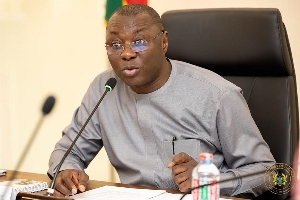
    The Minister of State at the Finance Ministry Abena Osei Asare has assured that government remains committed to fiscal prudence and discipline with its expenditure in the coming months to help sustain the slowdown in inflation.

    She disclosed this to Joy Business on the side-lines of the AFREXIM Bank Annual Meetings in Nassua Bahamas.

    She made the pledge after inflation for May 2024 declined to 23.1 percent from the 25.0 percent recorded in April 2024.

    “Government is committed to working with the Bank of Ghana to ensure that things do not get out of hand, in the area of slowing inflation to hit the end of year target”, she said.

    She mentioned that the government is working together with the Bank of Ghana to reinforce the monetary policies of the central bank through responsible fiscal policies to attain price stability.

    “Some measures that the Bank of Ghana has implemented are already getting the required support and we are also committed on the fiscal side to consolidate the gains made”, she reiterated.

    “We have all seen how high inflation rate impacted badly on the economy and we are committed to making sure that we don’t get there again” she added.

    Inflation rate developments

    The inflation rate decreased from 25 percent in April 2024 to 23.1 percent in May of this year, marking the lowest level in 26 months.

    According to the Ghana Statistical Service, the moderation in May’s inflation rate can be attributed to favorable developments in the food component of inflation.

    The Bank of Ghana forecasts that inflation will range between 13 percent and 17 percent by the end of the year.

    Madam Osei Asare highlighted that government’s initiatives in the agriculture sector are beginning to yield results in reducing food inflation.

    She assured that the government is fully committed to taking all necessary fiscal measures to further decrease inflation.

    Debt deal with bilateral creditors

    Madam Osei Asare disclosed that the government will shift its focus to individual countries following an agreement reached with bilateral creditors.

    “We should not forget that we now have a broad framework at the Official Creditor Committee level. That is good to guide our engagement with each bilateral country”, she said.

    Madam Osei Asare characterized the development as a positive stride, expressing government’s anticipation of additional support from donor partners for the country.

    “We expect more donor partners to react positively with some fresh funding to support the recovery of Ghana’s economy, and also some of the projects that have stalled because of these negotiations”.

  • We will never develop if we fail to produce enough for ourselves and Export – Dr. George Domfe

    We will never develop if we fail to produce enough for ourselves and Export – Dr. George Domfe

    We A development economist at the University of Ghana, Dr. George Domfe, has asserted that the cedi, the local currency, will continue to face challenges until Ghana can produce sufficient goods for its citizens and for export.

    Expressing his perspective at the Economic Symposium organized by ABC News on Thursday, June 13, 2024, at the GNAT Hall in Accra, Dr. Domfe emphasized that the fundamentals of the economy remain weak.

    Until these fundamentals improve, the cedi will keep struggling against the US dollar.

    “We have not been producing enough for ourselves and for export, and we have been depending so much on foreign products; there is no way we can get out of this situation. We must produce more to balance the situation,” he said.

    He also emphasized the necessity for Ghana to prioritize its industrial development, as this is crucial for the cedi to maintain strength against the dollar.

    He concurred with the assertion that weak economic fundamentals are revealed by the exchange rate. In his opinion, the country cannot withstand the dollar’s strength due to its weak economic foundations.

    The Economic Symposium is the first in a series of events that ABC News will be hosting in the upcoming months.

    The inaugural edition featured speakers such as Professor Isaac Boadi, Dr. George Domfe, Dr. Frank Bannor, David Amoateng, and Dr. Charles Atuahene, with Dr. Edwin Obodai Provençal serving as the chairman of the occasion.

  • Workers of BCM Ghana appeal for Justice over unlawful dismissals

    Workers of BCM Ghana appeal for Justice over unlawful dismissals

    Approximately eighty workers of BCM Ghana Limited, who were unlawfully dismissed, have appealed to the Ministry of Lands and Natural Resources and relevant state institutions to lead the charge in demanding justice for the affected workers.

    This action aims to address the victimization within the mining sector of the economy.

    Speaking at a press conference to draw attention to the workers’ plight, Mr. Simon Terbobri, a former Human Resource Manager at BCM Ghana Limited who was dismissed while on his sick bed, stated that illicit disengagements are prevalent in the company.

    Therefore, there is a need for the sector Ministry to intervene to uphold the rights of staff.

    He explained that the allegations of abuse and unlawful terminations against Mr. Paul List, the Chief Executive Officer of BCM Ghana — an Australian mining contractor — are blatantly worrying, hence the need for workers’ rights to be protected.

    “These allegations, spanning several years, have raised serious concerns about the treatment of employees and the integrity of the company’s management practices,” he said.

    In June 2021, Mr. List allegedly assaulted a 62-year-old Ghanaian administrative manager, Mr. Jonathan Adongo, who had been with the company for over 25 years.

    It is claimed that Mr. List confiscated Adongo’s personal laptop and locked him out of the company’s secretarial office, purportedly to falsify records and seize his wife’s shareholding in the company. This incident is currently under judicial review.

    In another troubling incident, Mr. List reportedly stripped a driver naked under the pretense of searching for a missing GH₵300, which was later found to have been used by the CEO to buy food. Feeling humiliated, the driver resigned from his position.

    Additionally, Mr. List is accused of harassing a security guard, Mr. Samuel Sor, to gather information about the movements of Mrs. Angela List, from whom Mr. List was reportedly estranged. When Mr. Sor refused to comply, he was terminated from his employment.

    Mr. List’s alleged actions also extended to the dismissal of the then Security Supervisor, Mr. Roger Azare, who had been with BCM Ghana since 2014. Mr. Azare was terminated under the pretense of downsizing, with his phone allegedly seized and searched for communications with Mrs. Angela List.

    “Another former employee, Ms. Doreen, was reportedly terminated for seeking scholarship assistance and allegedly leaking company secrets, claims which have been disputed based on her job role. She has also not been paid for two months of work despite attempts to resolve the issue,” he continued.

    Ms. Abigail Boye, a long-serving employee of over 20 years, faced similar treatment. Accused of being a spy for Mrs. Angela List, Ms. Boye was subjected to several disciplinary transfers before her eventual termination.

    “It is alleged that over 69 employees from the Tarkwa site and 19 from Accra have been dismissed without following proper downsizing procedures. These terminations are believed to be part of a strategy by Mr. List to remove employees perceived as loyal to Mrs. Angela List amidst ongoing court disputes over shareholding,” he added.

    The former HR Manager of BCM Ghana also shared his experience, detailing an abrupt and unlawful termination while on medical leave. “After 15 years of service, I was placed on immediate paid leave, only to receive a backdated termination letter while still on leave, an action that contravenes Ghanaian labour laws,” he revealed.

    These allegations underscore a pattern of purported human rights abuses and disregard for Ghanaian labor laws under Mr. List’s leadership. The dismissals, frequently rationalized as downsizing, allegedly fail to follow standard procedures and have involved hiring replacements at substantially higher salaries.

    He emphasized that the situation at BCM Ghana has elicited serious concerns among labor rights advocates and former employees, who are urging a comprehensive investigation into these practices. He pointed out that the ongoing court case concerning the assault on Mr. Adongo is a crucial focal point for addressing these broader issues of corporate governance and employee rights at BCM Ghana.

  • Ghana is expecting US$2bn and more from Korea – Deputy Finance Minister

    Ghana is expecting US$2bn and more from Korea – Deputy Finance Minister

    Deputy Finance Minister Stephen Amoah has disclosed that Ghana is set to receive a US$2 billion concessionary loan from South Korea, aimed at aiding the country’s economic transformation.

    This loan is expected to complement other financial contributions, including US$360 million from the International Monetary Fund (IMF) and an additional US$300 million from the World Bank.

    Together, these funds are intended to strengthen the economy and stabilize the depreciating cedi.

    In an interview with Asaase Radio on Thursday, June 13, Mr. Amoah expressed confidence in the transformative potential of these financial arrangements.

    He credited the substantive Finance Minister for securing these funds and highlighted the importance of international support in Ghana’s economic strategy.

    Mr. Amoah emphasized that the loans are intended not only to stimulate economic growth but also to address challenges related to currency depreciation.

    “… We are also expecting US$2 billion from Korea… My minister did a very great job when we went to meet them. We are even negotiating for more…”

    “Korea’s money is the best concessionary loan that I’m sure this country will ever have because the interest is almost zero and we will have a moratorium of about 30 years. It is almost free,” he said.

    “They are not just doing this because it’s Ghana, they are doing this because they have done a lot of work on Ghana; they were impressed with how we’ve been able to manage the post-COVID situation,” he added.

    This initiative arises as part of the government’s ongoing efforts to address economic vulnerabilities and enhance fiscal stability through strategic financial partnerships with global institutions.

  • Parliament launches Democracy Cup to commemorate 30th anniversary of Ghana’s Fourth Republic

    Parliament launches Democracy Cup to commemorate 30th anniversary of Ghana’s Fourth Republic

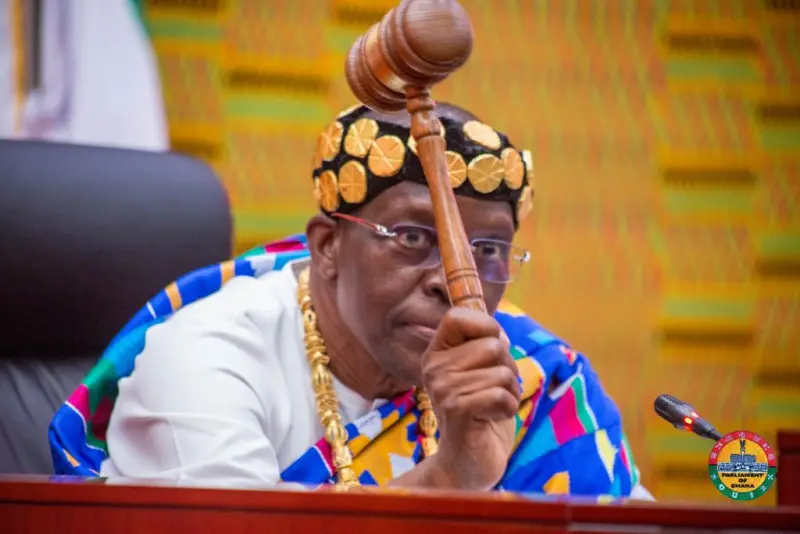
    Alban Bagbin, the Speaker of Parliament, inaugurated the Democracy Cup to mark its 30th anniversary milestone.

    Set for July 5, 2024, at the Accra Sports Stadium, the Democracy Cup will feature a thrilling match between Asante Kotoko and Accra Hearts of Oak.

    The victor of this inaugural tournament will secure the opportunity to compete against DC United, a club based in the United States, in Washington later this year.

    Bagbin urged citizens to uphold democracy through sports, emphasizing that the event has become an integral part of the annual calendar to bolster democratic values.

    The launch event, attended by Members of Parliament, media representatives, and officials from various football associations including the Ghana Football Association (GFA) and the Ghana League Clubs Association (GHALCA), was held on Thursday.

    Kurt Okraku Mantey, President of the GFA, emphasized the need for significant investment in the sports sector and assured the readiness of the participating teams.

    Agyenim Boateng, Chairman of the Youth and Sports Committee, advocated for the event’s continuity and expansion to include lesser-known teams.

    Frank Annoh Dompreh, Majority Chief Whip, and Ahmed Ibrahim, Deputy Minority Chief Whip, called for increased investment and promotion of lesser-known sports in the country.

  • NPP has diminished soldiers to roles of personal drivers and guards – Gbande alleges

    NPP has diminished soldiers to roles of personal drivers and guards – Gbande alleges

    Deputy National Secretary for the National Democratic Congress (NDC), Mustapha Gbande, has criticized government for allegedly misusing the Ghana Armed Forces.

    According to him, military personnel who were once revered as defenders of the nation are now reduced to serving as personal drivers and security for politicians and government officials.

    Speaking in an interview on Adom FM’s morning show, Dwaso Nsem on Thursday, Mr  Gbande accused members of the New Patriotic Party (NPP) of engaging in illegal mining (galamsey) and using soldiers to oversee these operations.

    “The Ghana Armed Forces is an institution that is much respected by Ghanaians. It was an enviable service and they command respect. But now they have become drivers for government officials. The Attorney General, Godfred Dame’s driver is a soldier. Soldiers are the guards at Afenyo-Markin’s office.

    “They cause confusion at mining sites, where NPP leaders do illegal mining (galamsey), and soldiers oversee the site for them. The NPP themselves are the ones involved in the galamsey, they have sacked all the young men and taken over. I dare Akufo-Addo to say he doesn’t know about it,” he stated.

    The NDC Deputy National Secretary also condemned the contentious statement made by the NPP Parliamentary candidate for the Amenfi East constituency, who encouraged illegal miners to oppose and confront security personnel.

    He asserted that the candidate’s comments were inappropriate and should not have been uttered, particularly in the presence of a Regional Minister.

    “It’s an insane comment, it was not only made by an ignorant and reckless candidate but it was made in the presence of an irresponsible regional minister. In the laws of Ghana when you are preparing to commit a crime, you are punishable as though you have committed a crime under the Criminal and Offences Law Act 29.

    “The Minister should have also been arrested. The meeting was a criminally-minded meeting to attack the ministry. Many innocent young men have been jailed over galamsey, if they don’t arrest the minister, this would be the worst injustice that has been brought on the people,“ Mustapha Gbande said.

  • Communicate your sexual needs, your spouse is not an assistant to the Holy Spirit – Sex therapist tells couples

    Communicate your sexual needs, your spouse is not an assistant to the Holy Spirit – Sex therapist tells couples

    Sex and family therapist Princessa Aggrey has urged couples to develop comfort and open communication with each other, regardless of how challenging or painful the topic may be.

    She emphasized that a spouse cannot be expected to read minds or understand unspoken thoughts, making communication an essential element in any relationship or marriage.

    “I will keep shouting from the rooftop, your spouse is not assistant Holy Spirit, your spouse is not a mind reader,” she indicated.

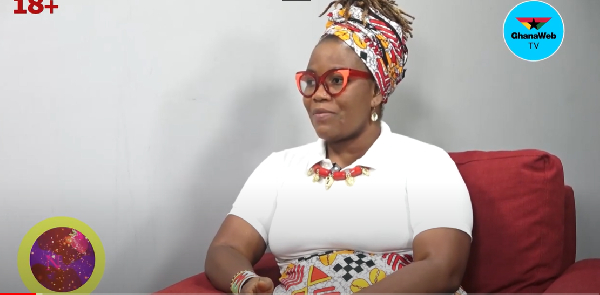
    During a discussion on ‘rekindling intimacy after childbirth’ with Patricia Rockson Hammond on GhanaWeb TV’s Moans and Cuddles, Princessa Aggrey stressed the importance of adopting the right approach to communicating with one’s spouse.

    She warned that an offensive approach could hinder effective communication and advised couples to always communicate with love.

    “I always tell ladies, when you want to talk to a man don’t say we need to talk, their brain goes into the defensive and everything you say is an attack, whether is good or not good, when it is something beneficial to them, when you start with we need to talk, the man’s brain goes to the defensive.

    “Communicate with love, how you communicate something matters a lot, the approach you use matters a lot,” she said.

    She recommended that couples address important issues while engaging in everyday activities like taking a walk, sharing a meal, or having casual conversations.

  • Children aged 6 to 14 years to be included in National Identity Database – NIA

    Children aged 6 to 14 years to be included in National Identity Database – NIA

    The National Identification Authority (NIA) office in the Akatsi South Municipality of the Volta Region has announced plans to conduct a registration exercise for Ghanaian children aged six to 14 years.

    According to the office, this exercise is mandated by law and is essential to ensure that all children within this age group are registered in the national identity database.

    In a statement issued by Amen Agbenorhevi, the Head of the Akatsi South Municipal NIA, and distributed to the Ghana News Agency, it was emphasized that this initiative would facilitate children’s access to various national programs and services.

    The statement further outlined that a registration team would visit different schools to carry out the registration, with the specific date yet to be determined.

    “This registration exercise is parent/ guardian-child centered. Every parent/ guardian needs to be present with their child during the registration process,” it said.

    According to the statement, guardians are pivotal in supplying the requisite information and documentation needed for a successful registration; therefore, their presence is imperative when the process commences.

    It emphasized that parents/guardians ought to present the original birth certificates of their children, valid Ghanaian passports, and a child’s Certificate of Acquired Citizenship, along with other necessary documents for registration.

    However, in cases where the child lacks any of the required documents, the Oath of Identity Form of the guardian will be utilized.

    “We plead for the support and cooperation of all stakeholders, including parents, guardians, school authorities, and community leaders, to assist in this important exercise,” it said.

    The statement underscored the importance of public cooperation in ensuring the registration of all eligible children.

    “We count on your usual cooperation to make this registration exercise a success,” it said.

  • Concerned Drivers Association applauds Mahama’s plan to set up drivers pension scheme

    Concerned Drivers Association applauds Mahama’s plan to set up drivers pension scheme

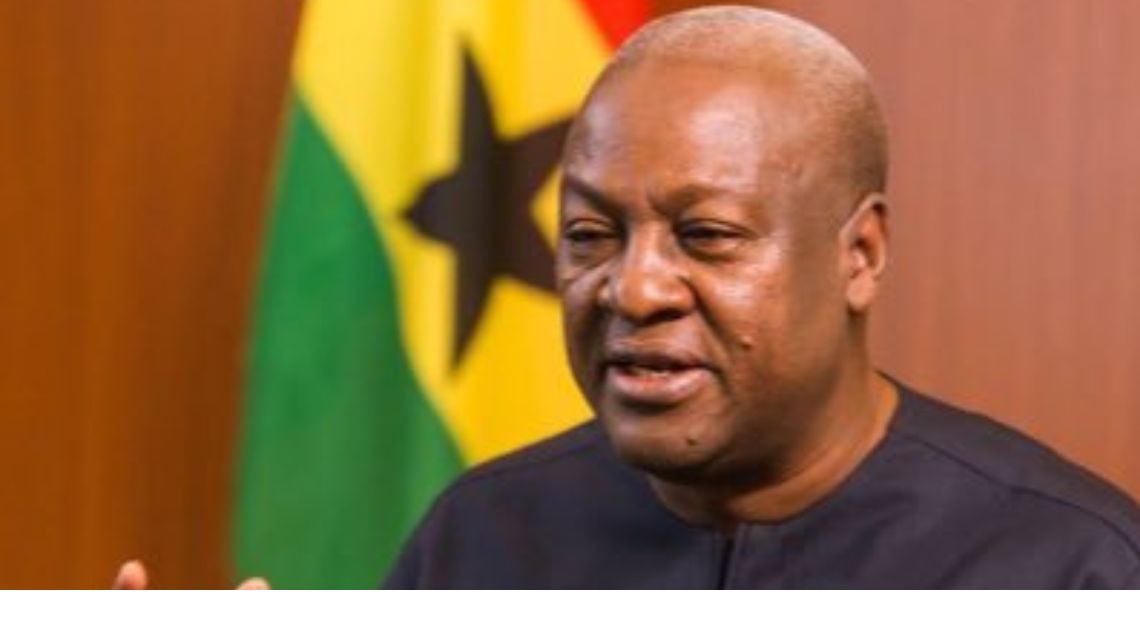
    The Concerned Drivers Association of Ghana (C-DAG) have expressed approval of former President John Dramani Mahama’s proposal to establish a comprehensive pension scheme for drivers.

    The association is enthusiastic and has pledged to rally support to ensure the victory of the National Democratic Congress (NDC) in the upcoming December 7 general elections, enabling Mr. Mahama to fulfill his promise.

    On Friday, June 7, the flag bearer of the National Democratic Congress (NDC), John Mahama, met with the leadership of the Ghana Private Road Transport Union (GPRTU) to listen to their concerns and suggestions.

    Mahama recognized the crucial role played by the GPRTU and reiterated the NDC’s dedication to implementing a comprehensive pension scheme to guarantee their social security during retirement.

    He pledged that under the next NDC government, transport terminals and lorry parks would undergo modernization through private partnerships to uplift the transport sector.

    In response, the Leadership of Concerned Drivers Association of Ghana (C-DAG) expressed their approval during a press conference on June 13, commending the former President.

    They emphasized that the proposed pension scheme would revolutionize the transportation sector and enhance their quality of life.

    Below is the full press statement by the concerned drivers.

    PRESS STATEMENT BY CONCERNED DRIVERS ASSOCIATON ON JOHN MAHAMA’S PROMISES TO DRIVERS

    Ladies and gentlemen of the press, we’d like to thank you for showing up to listen to our message.

    We hope that this message shall be effectively trumpeted based on the trust we’ve developed for you as a result of the much attention you have always given us.

    We the Concerned Drivers Association of Ghana, invited you to this conference to discuss with you our resolve to accept and support some policy initiatives announced by the NDC flagbearer Former President John Dramani Mahama which will be implemented by his future government to help transform the transportation sector and also improve our living conditions.

    Ladies and Gentlemen of the press, amidst our despair as a result of current conditions in the country, the NDC flagbearer John Mahama has mentioned some policies offering a gleaming hope to us which include the following.

    1. Hire purchase vehicles: we trust this intervention to make vehicle ownership much easier for players in the transportation sector.

    It means that drivers can possibly acquire their own vehicles and save us from the distress and pressure we go through to meet our sales demands. It is an undeniable fact that it has become almost impossible for us to even buy what we describe us ‘third hand’ Ghana used vehicles not to talk of acquiring home used or brand-new ones. We therefore find this intervention to be a one that will bring so much relief.

    2. Pension Scheme. Ladies and Gentlemen of the media, among the most impoverished group of workers in Ghana currently are drivers.

    The stories of our old and retired comrades are even worse and not palatable for the ears. We can unequivocally say that it can never be contested that drivers have no future.

    We live from hand to mouth and so we become subjects of penury the very day we step off the steering wheel.

    Almost 99 percent of drivers go on retirement with an unplanned future. Isn’t it therefore good news that for once a possible president of the country has had us in thought and declared his intention to set up a pension scheme for us? At least it will help save many of us from the psychological battles we deal with when we forecast our future without hope resulting in road crashes.

    All that every worker requires is a secure future.

    3. Ultra-Modern bus terminals: John Mahama’s promise to build ultramodern bus terminals across the country is positive news.

    Presently, most of our terminals are in awful conditions and are even worse during the rainy season. There are no proper waiting areas for passengers, not to mention some for drivers where we can relax and take a nap ahead of our trip.
    It is therefore on a good note that JM is promising ultramodern bus terminals that will come with ancillary facilities.

    4. Drivers’ Day: in recognition of hard work JM has also pledged to institute the Drivers’ Day which will be set aside to celebrate us for the gallant task we perform by moving the nation.

    If there’s ever going to be a day where drivers would feel important it’ll definitely be on the day this promise will be honored and we trust JM to surely do that.

    Ladies and Gentlemen, the much-awaited hope is here. It’s really the first time a key political figure announced clearly to drivers policy interventions that would not only be beneficial to our sector but to also ensure our welfare.

    While we commend the NDC’s flagbearer for exhibiting much concern about us we wish to caution him against turning his back on us after winning the elections.
    We urge all stakeholders to join us in supporting John Mahama’s vision for a better Ghana.

    Thank you.

    Sgd.

    Paa Willie- National Chairman
    0242971025

    Nana Wiredu- Deputy Secretary
    0540377307

    David Agboado- PRO
    0541063682

  • 31-year-old man abandons palm oil business to sell human skulls due to hardship

    31-year-old man abandons palm oil business to sell human skulls due to hardship

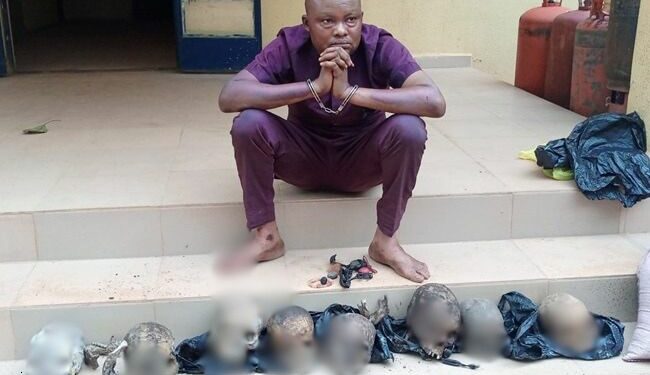
    A 31-year-old suspect, Yusuf Adenoyin, was apprehended in Isua Akoko, in the Akoko South-East local government area of Ondo State, with eight human skulls.

    Adenoyin explained that economic hardship led him to abandon his palm oil business for the more lucrative trade of selling human skulls.

    Adenoyin, who was detained by the Nigeria Police, Ondo State command on Monday, confessed that he turned to this illegal trade to raise N2 million for his mother’s hospital treatment.

    During his parade at the State Police headquarters, he detailed how he was introduced to the trade by an herbalist he met on social media.

    Traveling to Osogbo, Osun State, with the skulls, Adenoyin revealed that his supplier remains at large. He buys the skulls, sourced from graveyards, for N20,000 each and sells them in Osun State for N30,000 to N35,000.

    The skulls found in his possession were dry, some with fresh flesh, which he claimed was a dog’s heart.

    Ondo State Police Commissioner, Abayomi Oladipupo, reported that Adenoyin was arrested by officers at the Isua/Epinmi checkpoint.

    He attempted to flee when the commercial vehicle he was in was stopped, but he was quickly caught. A search of his baggage revealed the eight skulls wrapped in polythene and concealed in a sack of garri.

    Adenoyin admitted that this was the third set of skulls he had supplied. Commissioner Oladipupo assured that Adenoyin would be arraigned after the investigation is completed.

    “While the vehicle was being searched, one of the passengers took to his heels and the police pursued and arrested him. He was searched and eight dry human skulls, fresh human fl£sh, and charms were found in a wrapped polythene bag concealed in a garri sack he was travelling with,” the statement reads.

  • Police killed after shooting during a magistrate court session in Kenya

    Police killed after shooting during a magistrate court session in Kenya

    A senior police officer has shot and wounded a Kenyan magistrate during a court session in Nairobi.

    The chief inspector targeted Makadara Principal Magistrate Monica Kivuti immediately after she issued a ruling.

    Reports suggest that the case involved the policeman’s spouse.

    The officer allegedly became enraged when the court revoked his wife’s bail.

    In his fury, the officer opened fire on the magistrate, causing her injuries.

    Other officers at the scene quickly intervened, with one fatally shooting the attacking policeman.

    Three additional officers were injured in the incident, according to a police report.

    The magistrate and the injured officers are currently receiving medical treatment at the hospital.

    The judiciary said the magistrate had “cancelled the bond for an accused person who had jumped bond and had failed to offer satisfactory explanations for jumping bond”.

    “Immediately this decision was pronounced, a person shot at the magistrate and injured her on the hip,” it said in a statement.

    It noted initial reports that indicated “that the shooter is a police officer who is married to the suspect”.

    Investigations into the incident are ongoing.

    The judiciary has announced plans to strengthen security measures and has assured judicial staff and other court users of their safety and protection.

    “As the judiciary family, we wish our colleague a quick recovery. We also send our condolences to the family of the officer who lost his life in this unfortunate incident,” said Chief Registrar of the judiciary Winfridah Mokaya.

  • First 50 ambulances not intended for immediate usage due to warranty conditions – Jakpa

    First 50 ambulances not intended for immediate usage due to warranty conditions – Jakpa

    Third accused individual in the ongoing ambulance procurement case, Richard Jakpa, informed the court that the initial shipment of ambulances sent to Ghana were still under warranty and were not meant for immediate deployment.

    His statement was made during his cross-examination on Thursday, June 13, by the legal team representing Dr. Cassiel Ato Forson, the first accused in the case.

    Jakpa clarified that the ambulances were covered by a comprehensive warranty agreement, which outlined specific conditions, including the requirement for thorough inspections and necessary adjustments before they could be put into use.

    This measure was taken to ensure compliance with operational standards and safety requirements.

    He further explained that relevant authorities in Ghana overseeing the inspection process were aware of the terms of the warranty agreement and were responsible for overseeing the inspection and commissioning process.

    Jakpa indicated that clear instructions were given that the ambulances should not be used until these procedures were completed, which he described as a standard protocol for such deliveries to guarantee their full functionality and safety.

    During his testimony, Jakpa also addressed concerns regarding the readiness and condition of the ambulances upon their arrival, stating that premature utilization would have violated the terms of the warranty and could have compromised their effectiveness.

    He added that the shipping company responsible for the delivery, Big Sea, was ready to install the necessary accessories and conduct training for paramedics.

    Once the accessories, currently held at the port, were cleared, Big Sea would proceed with these installations and training sessions, ensuring that the ambulances are fully operational and ready for government use.

  • Ofori-Atta advises West African economies to discard intentions of launching regional currency, ECO

    Ofori-Atta advises West African economies to discard intentions of launching regional currency, ECO

    Former Finance Minister Ken Ofori-Atta has advised West African nations to reconsider their pursuit of introducing the single currency, known as the ECO, for the region.

    Initially slated for introduction in 2021, the outbreak of COVID-19 compelled ECOWAS to postpone the currency’s launch to 2027.

    The ECO was envisioned to stimulate economic growth in West Africa and facilitate cross-border trade. Furthermore, it was anticipated to eventually merge with the Euro-pegged CFA franc, predominantly used by French-speaking West African countries within the West African Economic and Monetary Union (UEMOA).

    However, Mr. Ofori-Atta believes that many countries in the region lack the commitment necessary for the single currency initiative.

    In an interview with Joy Business’ George Wiafe at the AFREXIM Annual Meetings in Nassua, Bahamas, Mr. Ofori-Atta expressed skepticism about most ECOWAS member countries’ ability to meet the convergence criteria required for the introduction of the currency.

    “ECO has been difficult and the capacity of us, the 16 countries in ECOWAS to come to a convergence point where we all will fulfill the criteria seems very lucid, he said.

    As per the requirements, ECOWAS member countries must fulfill four key criteria: maintaining a single-digit inflation rate by year-end, sustaining a fiscal deficit below 4% of the GDP, limiting central bank deficit-financing to less than 10% of the previous year’s tax revenues, and ensuring gross external reserves adequate for a minimum of three months’ import cover.

    Mr. Ofori-Atta believes that these criteria may pose challenges for the economies required to introduce the currency.

    He suggests that ECOWAS can glean valuable lessons from other regional blocs by enhancing payment systems and eliminating trade barriers.

    “If you look at East Asia, they didn’t really end up having one currency but they really increased trade and also got their payment systems in an effective way. That’s a model that has worked and maybe we could under the leadership of Afriexim bank facilitate all of these fintechs being sandboxed into the central banks. I think we will come out with apps that will be more efficient for us”, he suggested.

    Additionally, Mr. Ofori-Atta suggests that ECOWAS could utilize the African Continental Free Trade Area to eliminate obstacles and foster trade harmonization within the region.

    “I think the issue of payment systems and the issue of digitalization being efficient and therefore supporting AfCFTA maybe will lead to the type of results we require”.

  • Parent Company of DSTv, MultiChoice grapples with technical insolvency

    Parent Company of DSTv, MultiChoice grapples with technical insolvency

    MultiChoice, the owner of DStv, has disclosed a substantial R4.1 billion loss for the fiscal year ending March 31, 2024, leading to technical insolvency.

    On Wednesday, the South African pay television company revealed a pre-tax loss of 706 million rand ($38 million) for the year up to March, citing currency volatility and sluggish consumer spending as contributing factors.

    Debt troubles in numerous African nations and investor reluctance to purchase African exports have heightened pressure on foreign currency reserves, resulting in increased volatility.

    This development marks the company’s poorest financial performance to date, with losses soaring by 42% compared to the previous year.

    MultiChoice’s financial challenges stem from two main factors: a 9% decline in active subscribers and adverse foreign exchange rates.

    Consequently, the group’s revenue dropped by 5% to R56 billion, with a corresponding 21% decrease in trading profit to R7.9 billion.

    Subscriber losses were evident across all markets, impacting both DStv’s South African and Rest of Africa segments.

    In addition to this dire financial outlook, MultiChoice’s balance sheet reveals the company’s technical insolvency.

    Total assets have diminished from R47.6 billion to R43.9 billion, while liabilities have surged to approximately R45 billion.

    With negative equity amounting to R1.068 billion, MultiChoice lacks the means to settle all its debts should it be compelled to liquidate its assets.

    Despite the bleak financial picture, MultiChoice maintained a confident front and described its operational performance as “resilient” with signs of an imminent turnaround.

    MultiChoice said it was prioritising cash generation and has accelerated its cost-reduction program, aiming to save R2 billion by its 2025 financial year.

    “Clear strategic milestones were reached, with the group successfully launching Showmax 2.0, SuperSportBet and Moment,” MultiChoice said.

    “All of these are now revenue-generating and supporting the group’s future growth prospects.”

    MultiChoice Group CEO Calvo Mawela said that four years after establishing a clear strategy of building Africa’s entertainment platform of choice and investing in services to support a broader ecosystem, its three core segments are now fully operational.

    These are video entertainment, interactive entertainment, and fintech.

    “Our focus now shifts to building on these solid foundations to drive growth in these new areas, and on further enhancing business efficiency across our operations,” the company said.

    “The group will continue its efforts to drive growth in focused areas, notably Showmax, Moment, SuperSportBet, DStv Insurance, DStv Internet, and DStv Stream.”

    MultiChoice said it would do this while working hard to retain its DStv and GOtv customers and support their activity rates through the coming financial year.

  •  Stay away from unlabeled paints considered as “American Paints” – CPA warn consumers

     Stay away from unlabeled paints considered as “American Paints” – CPA warn consumers

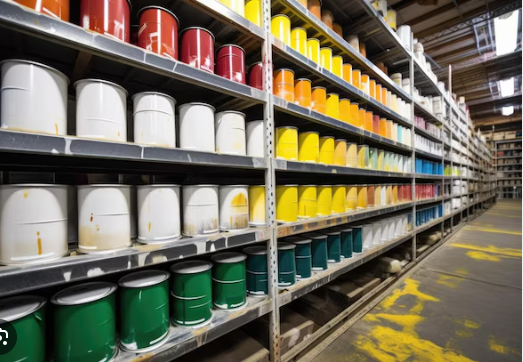
    The Consumer Protection Agency (CPA) has issued a warning regarding the widespread presence of substandard and unlabeled paints in the Ghanaian market, particularly those deceptively branded as “American Paints.”

    During a press conference on Wednesday, June 12, 2023, CPA CEO Kofi Owusu Hene announced that a surveillance task force had uncovered numerous paint products being imported into Ghana in unlabelled drums, violating Ghana Standards Authority (GSA) and Environmental Protection Agency (EPA) regulations.

    He explained that these paints are subsequently repackaged and falsely labelled as “American Paints” before being sold locally.

    ”These paints are imported into the country packaged in unlabeled drums, lacking any indication or origin or manufacturer, contrary to GSA and EPA regulations. These unlabeled paints are then re-packaged and labelled as ‘American Paints’, which are sold and distributed into the local market.

    “Our investigations confirm that products manufactured in the USA, whether for domestic use or export, should not lack essential labelling, including the manufacturer’s details, batch number, ingredients, expiring date and barcode for traceability. We are informing the public that these so called “American Paints” are fraudulent and are misleading consumers,” he said.

    Moreover, he drew attention to a troubling pattern of individuals producing paint in unregulated environments, such as backyards and homes.

    These makeshift operations, he pointed out, not only compromise the quality of paint but also present considerable health hazards to both the producers and neighboring residents due to the dangerous nature of paint production.

    Given these discoveries, the CPA has called on regulatory agencies, including the Environmental Protection Agency and the Ghana Standards Authority, to work together to clamp down on these illicit paint manufacturing activities.

  • World Bank forecasts Ghana’s 2024 growth rate at 2.9%

    The World Bank forecasts Ghana’s Gross Domestic Product (GDP) growth for 2024 to be 2.9%.

    In its June 2024 Global Economic Prospects report, the World Bank highlighted that economic activities in the country continued to be restrained, primarily due to the dampening effects of fiscal consolidation and high inflation on domestic demand.

    Nevertheless, the international financial institution anticipates a substantial increase in Ghana’s GDP growth from 2.9% to 4.4% in 2025.

    The World Bank attributes this projected growth to the gradual fruition of ongoing fiscal revenue and expenditure reforms.

    “Growth is expected to improve in Ghana in 2025, after weak growth in 2024, as ongoing fiscal revenue and expenditure reforms gradually bear fruit. However, current account deficits in industrial-commodity exporters are expected to widen further.”

    The World Bank projects Ghana’s Gross Domestic Product (GDP) growth for 2024 at 2.9%.

    In its June 2024 Global Economic Prospects report, the World Bank noted that economic activities in the country remained subdued, reflecting the dampening effects of fiscal consolidation and high inflation on domestic demand.

    However, the international financial institution predicts that Ghana’s GDP growth will significantly surge from 2.9% to 4.4% in 2025.

    The report read, “Growth in the region’s three largest economies [Nigeria, South Africa, Egypt] is expected to accelerate from 1.8% in 2023 to 2.4% in 2024 and an average of 2.6% in 2025-26. However, this is markedly below the region’s average growth, and historical trends.”

  • GSS survey reveals over 1.1m children aged 5 to 17 employed

    GSS survey reveals over 1.1m children aged 5 to 17 employed

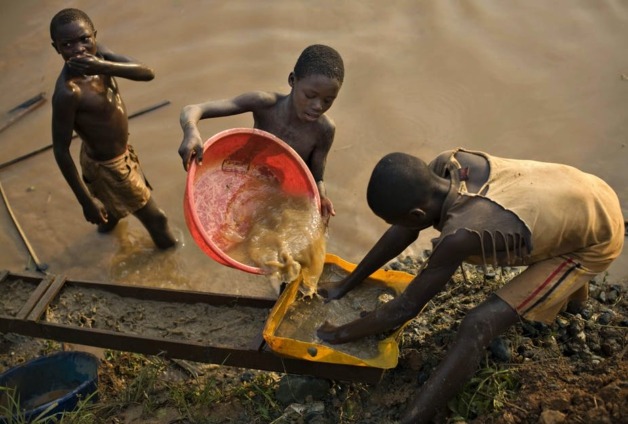
    The Ghana Statistical Service (GSS) 2023 Annual Household Income and Expenditure Survey unveils that more than 1.1 million children, aged 5 to 17 years, participated in various forms of work during the fourth quarter of 2023.

    Approximately 893,000 of these children were involved in employment work, primarily comprising paid labor, according to the GSS.

    In a statement issued to mark the World Day Against Child Labour, Government Statistician Prof. Samuel Kobina Annim elaborated that a majority of these working children are male, constituting 56%. Notably, 458,443 of these working children are not enrolled in school.

    Prof. Annim further highlighted that urban areas accounted for over 309,199 working children, representing 28%, while rural areas had a significant share with 795,175 children, making up 72%.

    Regarding regional distribution, Prof. Annim noted that the Ashanti Region had the highest percentage of working children at 13.6%, followed by the Bono East Region with 12.1%. Conversely, the Ahafo, Greater Accra, and Western North regions recorded the lowest percentages, at 0.8%, 1.6%, and 1.8%, respectively.

    Additionally, he revealed that the services sector employed the majority of working children, at 91.7%, while the agriculture and industry sectors engaged 4.8% and 3.6% of these children, respectively.

  • IMF will approve our second review – Finance Minister expresses optimism

    IMF will approve our second review – Finance Minister expresses optimism

    Finance minister, Dr. Amin Adam is optimistic about the approval of the third tranche funding support of $360 million from the International Monetary Fund (IMF) after its review.

    His confidence stems from the government’s attainment of a significant milestone in its debt restructuring process with bilateral creditors.

    According to Dr. Amin Adam, Ghana has fulfilled all the necessary criteria for the Fund to endorse the third tranche funding.

    He foresees no obstacles in the days ahead.

    “We are very confident they will approve our second review because we have met all the requirements. The last hurdle was the agreement. We needed to meet with the bilateral creditors which we have now met. We do not anticipate any challenges,” the finance minister said in a report on myjoyonline.com.

    By the end of June 2024, the country’s proposal for the second review program, seeking a third tranche funding of $360 million, is set to be presented to the Executive Board of the IMF.

    During this meeting, decisions will be made regarding the approval and distribution of additional funds within the framework of the country’s Extended Credit Facility (ECF) program with the IMF, aimed at promoting economic recovery and stability.

    The government has successfully negotiated a Memorandum of Understanding (MoU) with its Official Creditor Committee.

    This MoU agreement is instrumental in facilitating the IMF’s evaluation of Ghana’s progress within a 3-year economic support program.

  • “Deputy Finance Minister advocates taxation of digital platforms including TikTok, YouTube, and Facebook

    “Deputy Finance Minister advocates taxation of digital platforms including TikTok, YouTube, and Facebook

    A Deputy Finance Minister, Dr Alex Ampaabeng, is proposing for digital platforms like YouTube, Facebook and many others to be taxed to bolster the country’s economy.

    The deputy finance minister believes that these digital commercial platforms, together with online trading companies both local and international, must be taxed as they generate huge revenues from their Ghanaian clients.

    Dr Ampaabeng quizzed why other companies operating in Ghana are taxed yet digital platforms like YouTube and Facebook that run numerous advertisements are currently excluded from the Ghanaian tax system.

    He cited companies like Jiji, Jumia, and Tonaton, which he believes surpass all physical marketplaces in Ghana in terms of size and revenue they rake in from operations.

    “I can’t think of a country which has not gotten a digital service tax system of some sort, so Ghana is long overdue. Just to make an example so that people will appreciate where I’m coming from. Go to Youtube and play a video, within one or two minutes, you are going to watch about two or three adverts.

    “What it tells you is that Facebook or Youtube is making profits right here in Ghana. Go to your Facebook account, and you are going to see a number of adverts on your right, left. What it is telling you is that Facebook is making profits right here in Ghana and not being taxed. Meanwhile, there are companies operating in Ghana for jurisdiction reasons, of course, that are being taxed.

    “So then, it comes to the question of the application of our tax laws. Revenues generated in Ghana are subject to taxes. We have Facebook, TikTok and all those players. These are digital platform owners,” Dr Ampaabeng said in a report on citinewsroom.com.

    He stressed, “Then we have the digital or market players. Here, we are talking about individuals who are using digital platforms. We have Jiji, Jumia, and Tonaton, these combined are bigger than all physical marketplaces in Ghana. It tells you the volume of transactions that are going on there.”

  • We will not include new taxes in mid-year budget – Finance Ministry

    We will not include new taxes in mid-year budget – Finance Ministry

    The Ministry of Finance has reassured the public that there are no plans to implement additional taxes on Ghanaians in the upcoming mid-year budget.

    This affirmation comes in response to rumors circulating about the possibility of new taxes and concerns raised by various stakeholders regarding the substantial tax burden faced by both businesses and households. These concerned parties are urging the government to consider reducing or eliminating some taxes to ease financial strains on businesses.

    Representing the finance ministry, Deputy Finance Minister Dr. Alex Ampaabeng affirmed the government’s stance against introducing a supplementary budget, echoing statements made by Finance Minister Dr. Mohammed Amin Adam.

    “There are lot of conversations ongoing, but one thing I can say on behalf of my Minister [Dr Mohammed Amin Adam] is that there won’t be new taxes in this mid-year budget. But, going forward, we are looking for all avenues to make sure that we enhance revenue.

    “I believe there are a lot of opportunities within the tax system for us to rake in revenue. It’s about improving efficiency. It’s about dealing with leakages in the tax system, it’s about engaging the taxpayers to accept responsibilities. There are leakages, but I don’t want to pre-empt anything,” he said in a report on myjoyonline.com.

    Dr. Ampaabeng stated that while the government is not planning to introduce new taxes, the finance ministry is actively exploring alternative methods and avenues for generating revenue.

  • I will take 50% profit for Akufo-Addo – Dormaahene on conditions for mining in his jurisdiction

    I will take 50% profit for Akufo-Addo – Dormaahene on conditions for mining in his jurisdiction

    The Omanhene of the Dormaa Traditional Area, Osagyefo Oseadeeyo Dr. Agyemang Badu II, has announced his intent to invite mining companies into his region to enhance employment and development.

    In a video observed by GhanaWeb, Agyemang Badu II emphasized the importance of mining as a catalyst for development during a public speech, while also insisting that mineral extraction be carried out responsibly and equitably.

    He specified several conditions for companies interested in mining in Dormaa, including an agreement to share 50% of the profits with the state.

    “This is breaking news. It is time for me to allow those willing to meet my conditions to extract our resources so that our President Nana Addo Dankwa Akufo-Addo can reap larger profits. It won’t be like other situations where they take 93% and the state gets only 7%, no! In Dormaa, once you recover your capital, you will split the profit in half, giving 50% to Nana Addo Dankwa Akufo-Addo and keeping the remainder as your profit,” he stated.

    He noted that the profits allocated to the state would greatly aid Dormaa’s development through royalty payments.

    He disclosed that several companies have already agreed to the proposal and have made significant payments to the Dormaa state.

    “The money paid to Dormaa is non-refundable. As I speak, the money is in our Commercial Bank (account), and my chiefs know how much we have. In due time, it will be made public, and we will decide what to use the money for,” he stated.

    “People of Dormaa will prosper during my reign. If possible, I want to start before the year ends; every child born in Dormaa will receive payment, whether native or not, as long as the child is born on Dormaa land,” he stated.

    Agyemang Badu II has consistently voiced his concerns over the years regarding Ghana’s mineral royalties, criticizing what he views as inadequate gratuity payments made by mining companies to the state.

  • Kenyan governors consider Jospong as key partner in environmental sanitation

    Kenyan governors consider Jospong as key partner in environmental sanitation

    A prominent delegation from the Kenyan Council of Governors expresses confidence in the Jospong Group’s potential to collaborate with Kenya in tackling its sanitation issues.

    They see Jospong as a pivotal ally in environmental sanitation initiatives.

    “Partnering with Jospong will help us improve all aspects of sanitation management in Kenya and enhance the lives of our citizens,” says the Wajir County Governor and Vice Chairperson of the Council of Governors.

    “We are impressed by Jospong Group’s expertise and achievements in waste management,” he added.

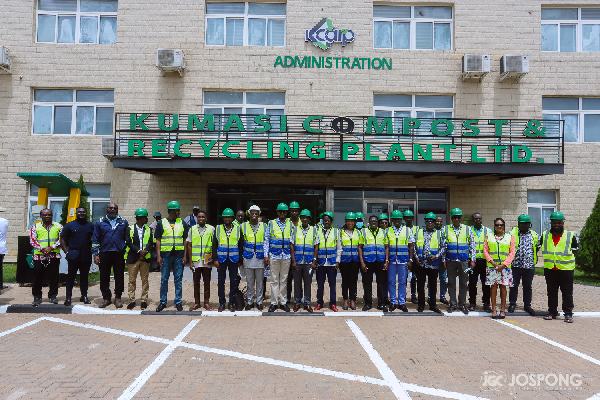
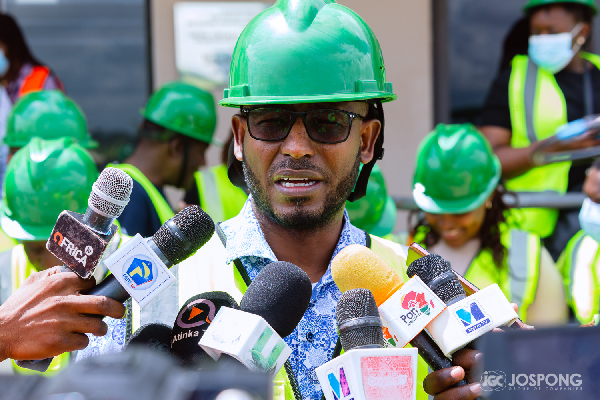
    Addressing the press following a tour of Jospong Group’s facilities in Kumasi on Wednesday, June 12, 2024, H.E. Ahmed Abdulai, Governor of Wajir County and Vice Chairperson of the Council of Governors, expressed gratitude for the opportunity.

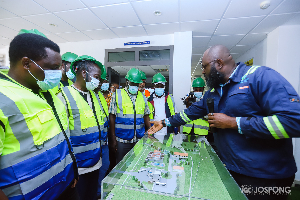
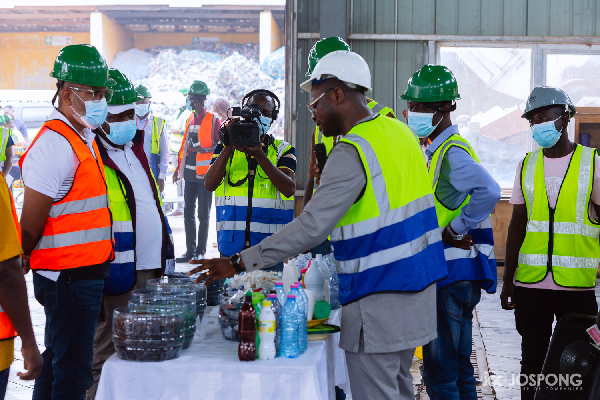
    Having witnessed the separation process, plastic pellet production, and youth entrepreneurship programs at JGC, the Kenyan delegation commended Jospong’s dedication to environmental sustainability and community welfare.

    Ing. Samuel Ntumy, General Manager of KCARP, expressed optimism that the visit would produce favorable outcomes.

    “We are looking forward to further discussions and timelines with them to finalise the arrangements,” Mr Ntumy said.

    Apart from KCARP, the Kumasi Waste Water Treatment Plant, and the Kumasi Medical Waste facilities, the delegation toured ACARP, SSGL, Zoomlion’s Pantang Solid Waste Transfer Station, and JA Plantpool, among other significant facilities.

    The anticipated collaboration between Jospong Group and the Kenyan Council of Governors is poised to enhance sanitation services in Kenya, positively impacting millions of citizens.

    The delegation embarks on a five-day expedition to explore Jospong Group’s waste management systems, spurred by the visit of Kenyan President H.E. William Kipchirchir Samoei Arap Ruto to Ghana in April 2024. This mission is geared towards promoting knowledge exchange and cooperation between the two nations, aligning with the theme “Driving Investment and Intra-Africa Trade: The Ghana-Kenya Experience.”

    “This business development mission demonstrates the Kenyan government’s admiration for Jospong Group’s contribution to Ghana’s economy and its desire to replicate similar successes in Kenya,” she said.

  • Debt relief agreement opens door for essential infrastructure investment

    Debt relief agreement opens door for essential infrastructure investment

    The government has obtained debt service relief, which will unlock resources for essential infrastructure projects.

    At a press briefing, Minister of Finance Dr. Mohammed Amin Adam announced that the agreement, formalized through a memorandum of understanding (MoU) with bilateral creditors, reschedules debt payments due between 2023 and 2026. This rescheduling allows the government to reallocate funds initially set aside for debt servicing to crucial public services.

    “The MoU will provide significant flow relief to the Republic of Ghana. And what this means is that debt service that was due between 2023 and 2026 are being rescheduled. It means that we will not have to pay, we will not have to service our debts due between 2023 and 2026,” Dr. Adam stated.

    The reallocated funds will be directed towards vital infrastructure projects such as healthcare, education, road construction, and social programs designed to assist vulnerable populations.

    Dr. Adam highlighted the transformative impact of this relief, explaining, “The money we would have used to service the debts, to pay to our official creditors as a result of the facilities they advanced to us, will now be available to the government, for the government to spend on critical infrastructure.”

    Additionally, the Ministry of Finance intends to submit a proposal to the Cabinet outlining the best investment strategies for these funds, including creating a buffer to aid in debt repayment after 2026. This approach is designed to lessen the future fiscal strain on the budget.

    “It has always been the government intention to put in efforts, extra efforts at reaching this agreement in order that we can get the relief as a result of the resumption of disbursement towards these projects so that these projects can be completed for the use of the Ghanaian public. And so these three benefits that our country will derive from the agreement that we have reached, you can all tell are very important benefits because they speak directly to our economy. They speak directly to our development efforts,” Dr. Adam noted.

    This comes as the Ministry, on Tuesday, June 11, 2024 announced via a communique that the government had attained formalisation of a memorandum of understanding (MoU) with its Official Creditor Committee (OCC) regarding the debt treatment agreement reached earlier this year.

    The formalised agreement with the OCC, which is co-chaired by China and France, it said, will not only accelerate debt restructuring efforts but also paves the way for further financial support and economic reforms, according to the ministry of finance.

    The MoU solidifies the preliminary agreement made in January 2024, laying a foundation for a restoration of long-term debt sustainability by restructuring approximately US$5.4billion in obligations.

    The financial terms remain consistent, providing substantial debt service relief during the period, supported by the International Monetary Fund (IMF) programme.

    Dr. Adam, in the communique announcing the agreement highlighted its importance, stating: “The Ministry of Finance on behalf of the Republic of Ghana extends our gratitude to all members of the OCC, particularly the Committee’s co-chairs – China and France – for their unwavering commitment to assisting our country in resolving its debt issues.

    “This landmark agreement marks an extraordinary milestone in Ghana’s debt-restructuring journey and will further strengthen our ambitious reform agenda with the strong support of our development partners,” he added.

    The OCC agreement’s formalisation is anticipated to facilitate approval of the IMF’s Post Covid-19 Programme for Economic Growth’s (PC-PEG) second review by its Executive Board.

    This approval will enable disbursement of the next tranche of IMF financing, amounting to US$360million; an injection that should provide temporary relief for the cedi, which has fared unfavourably since turn of the year.

    Additionally, it is expected to unlock further financial assistance from key development partners – notably the World Bank.

    Dr. Adam underscored the agreement’s broader implications, noting that it will enhance ongoing negotiations with private creditors.

    “We are committed to engaging with all commercial external creditors in good faith. Our aim is to finalise restructuring agreements that respect Ghana’s need for debt relief and adhere to the comparability of treatment principle,” he said.

    Following the agreement, each official creditor will undertake their internal procedures to sign the MoU. Upon signing, the terms will be implemented through bilateral agreements with each member of the OCC.

    IMF Managing Director Kristalina Georgieva, in a tweet on the X platform said: “Congratulations to Ghana for reaching agreement with its official bilateral creditors on a Memorandum of Understanding for a debt treatment. This will support IMF Executive Board consideration of the programme’s second review later this month”.

    The government has encouraged these creditors to accelerate their internal procedures to ensure the prompt execution of the agreed terms.

    Currently, the government has restated its dedication to resolving outstanding debts with external commercial creditors until mutually agreeable arrangements are reached.

    This stance is vital to guaranteeing that all restructuring endeavors comply with the principle of treating all creditors equally.

    Analysts regard the signing of this MoU as a critical milestone in endeavors to stabilize the economy and lay the groundwork for enduring growth.

    They remain vigilant for further indications of the government’s efforts to enact essential reforms and cooperate with international partners in addressing the ongoing financial difficulties.
  • West African Gas Pipeline Company faces temporary gas supply shortage

    West African Gas Pipeline Company faces temporary gas supply shortage

    The West African Gas Pipeline Company Limited (WAPCo) has reported a temporary reduction in available gas volumes for transportation.

    WAPCo attributes this decline to ongoing maintenance activities by a major gas producer in Nigeria.

    In a press release dated June 12, Isaac Adjei Doku, the Director of Corporate Affairs, stated that the Nigerian producer has halted operations for a three-week maintenance period.

    The statement read, “One of the producers of the natural gas WAPCo transports from Nigeria has shut down its facility for a three-week maintenance, resulting in a decrease of gas available for WAPCo to transport to customers in Togo, Benin and Ghana.”

    “The current situation is entirely out of WAPCo’s control. WAPCo continues to transport gas from the Westen Region of Ghana to Tema, also in Ghana, and we expect normalcy to return after the maintenance activities,” it assured.

    The West African Gas Pipeline Company Limited (WAPCo) is a limited liability company responsible for owning and operating the West African Gas Pipeline (WAGP).

    Headquartered in Accra, Ghana, WAPCo also maintains branch offices in Ikeja, Nigeria, and field offices in Badagry, Nigeria; Cotonou, Benin; Lomé, Togo; as well as Tema and Takoradi in Ghana.

  • Mineral revenue increases by 4.3% in 2023

    Mineral revenue increases by 4.3% in 2023

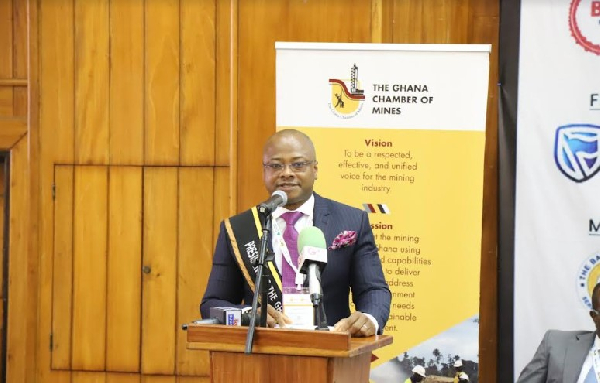
    The Ghana Chamber of Mines has announced a 4.3 percent increase in mineral revenue from its member companies, growing from $5.6 billion in 2022 to $5.8 billion in 2023.

    President of the Chamber, Michael Akafia, attributed this growth primarily to higher gold export receipts, which compensated for a decline in manganese export revenues.

    “Gold production revenue rose from US$5.4 billion in 2022 to US$5.7 billion in 2023, marking a growth of 4.8 percent. In contrast, manganese revenue declined from US$201.4 million to US$183.2 million, equivalent to a downturn of 9 percent,” he stated.

    The increase in gold revenue was primarily driven by a rise in gold prices, which offset a decline in production from 3 million ounces in 2022 to 2.9 million ounces in 2023.

    Speaking at the Chamber’s 95th Annual General Meeting in Accra, President Michael Akafia explained that the 6.1 percent decrease in production was due to significant drops in output from several member companies.

    These companies include Adamus Resources, AngloGold Ashanti Obuasi Mine, Asanko Gold Mines Ltd., FGR Bogoso Prestea Ltd., Golden Star Wassa Ltd., Newmont Golden Ridge Ltd., and Abosso Goldfields Ltd.

    In contrast, Newmont’s Ahafo Mine increased its share of the Chamber’s total gold output from 18.9 percent in 2022 to 20.3 percent in 2023. Meanwhile, Newmont’s Akyem Mine experienced a decline in its contribution, dropping from 13.8 percent in 2022 to 10.3 percent in 2023 due to reduced.

    “The production performance of Gold Fields’ mines in Ghana was mixed. The Tarkwa Mine reported an increase in production, leading to an improvement in the mine’s share of the Chamber’s gold output from 17.5 percent in 2022 to 19.3 percent in 2023.”

  • Establish a fiscal body to monitor excessive spending – IEA to government

    Establish a fiscal body to monitor excessive spending – IEA to government

    The IEA has strongly supported the establishment of an autonomous Fiscal Council (FC) in Ghana.

    It has recommended that the government implement comprehensive measures to break the recurring pattern of fiscal mismanagement and reliance on IMF rescue packages.

    In a recent statement, the IEA highlighted the pressing need for a strong fiscal framework to stabilize the economy and rebuild policy trustworthiness. Moreover, the IEA contended that such a council would prevent the government from exceeding its planned expenditure.

    Ghana’s fiscal administration has long struggled with persistent shortfalls, where spending surpasses income.

    The IEA noted that these shortfalls have historically been funded through substantial borrowing, both domestically and internationally, resulting in macroeconomic instability characterized by continuous inflation, currency devaluation, and a mounting debt burden.

    “The cycle of borrowing to cover deficits, followed by economic crises and subsequent IMF bailouts, has become an all-too-familiar narrative for Ghana. It’s a vicious cycle that undermines long-term economic stability,” the IEA stated in their press release.

    In light of these challenges, the IEA argued for the creation of an FC as a critical reform measure. An FC would serve as an independent oversight body, providing unbiased analysis and recommendations on fiscal policy, thus ensuring adherence to fiscal rules and promoting sustainable economic management.

    “The establishment of a Fiscal Council is essential for providing objective and expert oversight over fiscal policy. It will ensure that fiscal decisions are based on sound analysis and long-term considerations rather than short-term political expediency,” the IEA emphasized.

    Referring to effective frameworks in advanced nations, the IEA highlighted the advantages of establishing an autonomous fiscal oversight entity.

    Examples such as the UK’s Office for Budget Responsibility (OBR) and Sweden’s Fiscal Policy Council (FPC) have illustrated the pivotal role independent fiscal institutions can play in fostering economic stability. These bodies assess government fiscal strategies and offer transparent, reliable projections, serving as valuable models for emulation.

    “These international examples highlight how a well-functioning Fiscal Council can foster fiscal discipline and long-term sustainability, something that is critically needed in Ghana,” it noted.

    The IEA’s press release outlines specific recommendations for establishing a successful FC in Ghana. These include ensuring the council’s independence by having its members appointed through a rigorous, competitive process involving Parliament and the Public Services Commission.

    “The Fiscal Council must be independent and composed of professionals with proven expertise in economics, public finance, and related fields. Its funding should be secured through Parliament to avoid any undue influence from the executive,” it recommended.

    The IEA emphasized that implementing these reforms would not only enable Ghana to steer clear of the recurring reliance on IMF bailouts but also foster a culture of fiscal accountability and economic durability.

    “Implementing these reforms can pave the way for a more stable and self-sustaining economic future for Ghana. It is a critical step towards entrenching fiscal discipline and regaining international confidence in Ghana’s economic management,” the IEA concluded. The call for a Fiscal Council reflects a broader recognition of the need for structural reforms to address Ghana’s fiscal challenges. With the right framework in place, Ghana can achieve greater economic stability, reduce its dependency on external bailouts, and build a foundation for sustainable growth

  • BoG reaffirms its decision regarding GN Savings & Loans collapse

    BoG reaffirms its decision regarding GN Savings & Loans collapse

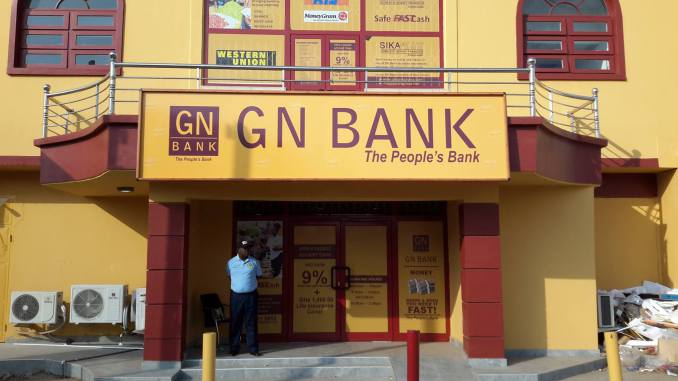
    The Bank of Ghana has reiterated its stance on the revocation of GN Savings and Loans Company’s license, stating that it stands by its decision.

    This comes in response to a recent video by Dr. Papa Kwasi Nduom, Chairman of Group Nduom, alleging that the collapse of his bank was instigated by former Finance Minister Ken Ofori-Atta due to perceived threats.

    Director of Communications at the Bank of Ghana, Bernard Otabil, clarified that the Central Bank’s action was warranted, citing violations of financial regulations, including the Foreign Exchange Act of 2006 (Act 723), as the reason for the license revocation.

    “At the end of the day, it is not in the interest of the central bank or we don’t go out there and say this institution must actually be closed down at all cost. It depends on how the institution is run, it depends on what the institution itself has stated that it wants to do and on respecting the prudential norms. In fact, let me make it clear that the GN Bank and GN Savings and Loans were actually disrespectful to the central bank.

    “For instance, if you go through the books you will see that there was a transfer of dollars, and pounds and Euros to International Business Solutions which is an institution affiliated to the group network based outside which was in direct breach of the Foreign Exchange Act of 2006 (Act 723). These provisions are there. Our statement of August 16 2019, we stand by that statement and in that statement, we have given all the reasons behind the revocation of the license of GN Savings and loans,” he said in a report on 3news.com.

  • Fisherfolks, leaders in Tsokome community call on govt  to dredge river

    Fisherfolks, leaders in Tsokome community call on govt to dredge river

    Community leaders and fisherfolk from Tsokome Community in Bortianor, a fishing enclave in Accra, are calling on the government to dredge the local river and construct a canal connecting the sea to the river to enhance their fishing activities.

    Authorities are becoming increasingly alarmed as weeds progressively clog the community’s river. Leaders point out that a formerly existing canal, now obstructed by accumulated sand, compounds the issue.

    They elaborate that this obstruction hampers the flow of sea and river water, adversely affecting fish yields and driving up fish prices in the vicinity.

    Speaking to ChannelOne News, Emmanuel Aryitey, the Assembly member for the Bortianor Electoral area, shed light on the challenges encountered.

    He said, “The canoes find it difficult to move on the water as they get locked because the river is shallow now. And when the river is shallow, they will not get fish. The deeper the river is, the more it breeds fishes for us. Now fish is very expensive in this community. You may think it is a fishing community and so you will get it at a cheaper price, but it is very expensive as we don’t get it like we used to get. We used to get the small fishes that we used to enjoy our kenkey but now we don’t get it again. We have to go far to the Densu river.”

    He stressed the immediate necessity of river dredging, highlighting that residents have resorted to dumping waste along the riverbanks.

    “You see, because the river is shallow, when the water is spilled from Weija dam, it overflows into people’s houses. Because it is shallow, the water doesn’t sit in the river. That is why the people are dumping rubbish all over here, which is worrying.”

    Fisherman and traditional leader in Tsokome, Sentse Aklama, narrated a recent river accident and urged prompt government intervention.

    “Recently, more than thirty school children crossing the river on a boat perished, and nothing has been done by the government on the issue. It is disheartening. The lives of our children are at risk.”

    Several fishermen also spoke to ChannelOne News, underscoring the need for the government to address these urgent issues.

    One of them, Francis Susuawa, expressed concern about the inability of women to cross the river due to its current state and the absence of the canal.

    He stated, “The situation prevents the women who usually buy fish from us to come all the way to us on the river, which is usually disturbing. This has seriously impacted our job negatively. So if the government could come to our aid and fix the canal for us, that would be awesome so that could serve as a channel for us to meet the women who buy from us.

    In the meantime, the Assembly member affirms that government intervention will yield revenue for the nation.

    “All that we are praying for is that the government will come and dredge the river to its original state. It was from Bojo to Kusum Beach. That was how it was. And the canal was in it. It was very, very beautiful. If the government invests money into this river, the government is going to get its money back.”

  • Decline in Ghana’s cocoa export earnings draws deep concern

    Decline in Ghana’s cocoa export earnings draws deep concern

    The latest trade bulleting from the Ghana Statistical Service (GSS) paints a concerning picture of the country’s cocoa export earnings.

    In the first quarter (Q1) of this year, cocoa product export values saw a significant decline, plummeting to just US$592.2 million compared to the same period in 2023. This represents a substantial reduction in export revenue compared to the three-year average.

    The decline is particularly alarming given that Q1 usually marks a peak in cocoa product exports.

    A significant drop in cocoa bean exports during the past two years’ Q3 periods has been identified as a major contributing factor to this trend.

    The Graphic Business expresses deep concern over this situation, as cocoa plays a crucial role as the country’s primary source of foreign exchange earnings.

    Various factors, including illegal mining (galamsey) and diseases like swollen shoot disease, have been cited as reasons for the decline in cocoa production.

    The government’s failure to address the galamsey issue in cocoa-growing regions is perplexing and raises alarming questions about the country’s future.

    Presently, the Ghana Cocoa Board (COCOBOD) faces significant debt due to inadequate cocoa production to offset syndicated funds for crop purchase.

    The situation is dire, and urgent action is needed to address the galamsey issue and protect Ghana’s cocoa industry.

  • Police releases mentally challenged man who attacked toddler at Agona Duakwa

    Police releases mentally challenged man who attacked toddler at Agona Duakwa

    The police have released the mentally challenged man who attacked a two-year-old girl in Agona Duakwa, Agona East district, Central region, after his arrest.

    According to a report by Otec News, his release is attributed to his connection with a community elder (Abusuapanin).

    The toddler, daughter of Abigal Bonko, was initially treated at Agona Duakwa Salvation Army Hospital, then transferred to Winneba Trauma and Specialist Hospital, and later to Korle-bu due to the severity of her injuries.

    Last Sunday evening, the mentally challenged man encountered the little girl in front of her home, seized her, and repeatedly struck her head against the ground without provocation, as reported.

    Residents claim the man has been causing fear among them, having previously assaulted an elderly woman on a farm. When the residents intervened, they were reportedly arrested by the police.

    “He is the junior brother of the Abusuapanin in the community, and any attempt to retaliate after terrorizing residents results in police persecution due to the influence of the brother,” a resident told Otec News.

    “Plea by residents to the mentally challenged man’s family to keep him away from the community to release them from their fears have been proven futile,” another resident added.

    The residents have thus decided to equally retaliate if he dares attack any resident, regardless of the consequences that befall them, saying “We have run out of patience.”

  • EU announces 12% increase on Schengen visa for Ghanaians

    EU announces 12% increase on Schengen visa for Ghanaians

    The European Commission, a division of the executive branch of the European Union (EU), has announced a 12% hike in visa application fees for short-stay Schengen visas (type C) to its member nations, effective Tuesday, June 11, 2024.

    Adult foreign nationals, including Ghanaians, are now required to pay €90, marking a €10 rise from the prior €80 fee for a Schengen visa.

    Children aged 6 to 12 will also see an increase, with visa fees now set at €45, up by €5 from the previous €40 charge. However, visas for children under 6 will remain free, according to a report by graphic.com.gh.

    The European Commission explained that the increase in the cost of Schengen visas is due to the “general Union-wide inflation rate and the weighted average of the salaries of Member States’ civil servants between July 1, 2020, and July 1, 2023.”

    Schengen visas enable non-European Union citizens to visit any member country within the Schengen zone for up to 90 days within a 180-day period.

    This visa facilitates travel across all Schengen countries during its validity but does not permit stays exceeding 90 days or engagement in employment/business activities within the zone.

    The Schengen area comprises twenty-six European countries, including Austria, Belgium, Czech Republic, Denmark, Estonia, Finland, France, Germany, Greece, Hungary, Iceland, Italy, Latvia, Liechtenstein, Lithuania, Luxembourg, Malta, Netherlands, Norway, Poland, Portugal, Slovakia, Slovenia, Spain, Sweden, and Switzerland. These countries have abolished internal border controls.

    Per media reports, visa agencies and travel firms can now opt to elevate their service charge for processing Schengen visa applications from €40 to €45.

    Furthermore, the fee for extending a Schengen visa remains steady at €30.

  • Ghana’s cocoa supply crisis deepens

    Ghana’s cocoa supply crisis deepens

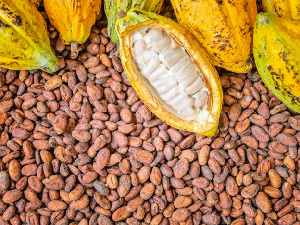
    The world’s second-largest cocoa producer, Ghana, is planning to postpone the delivery of up to 350,000 tons of beans to the next season due to poor crop yields, five sources informed Reuters. This decision is expected to further strain the global chocolate industry.

    Chocolate manufacturers worldwide are already increasing prices for consumers after cocoa prices more than doubled this year, driven by a third consecutive year of poor harvests in both Ghana and Ivory Coast, which together account for 60% of global cocoa production.

    Earlier market estimates suggested that Ghana would carry over around 250,000 metric tons of cocoa, approximately half of its current crop.

    The country’s cocoa crop has been devastated by adverse weather, bean diseases, and illegal gold mining, which often displaces cocoa farms.

    Ghanaian farmers are also smuggling more beans to neighboring countries to sell them at higher prices than the state purchasing price, further reducing the available crop for delivery in Ghana.

    Ghana typically sells about 80% of its crop one year in advance, usually amounting to 750,000-850,000 tons.

    However, last season’s crop fell to around 670,000 tons and is not expected to exceed 500,000 tons this season. Traders and the industry fear it might not recover significantly next season either.

    The International Cocoa Organization forecasts global cocoa production to drop by 10.9% to 4.45 million tons this season.

    As a result, processors and chocolate companies will need to rely on cocoa stocks to meet their needs.

    The price surge is disrupting a long-established mechanism for cocoa trade.

    Authorities in Ghana use the average of their forward sales to set the minimum price at which traders can purchase cocoa from farmers the following season.

    With approximately 350,000 tons of forward-sold beans missing from this season’s crop, Ghana is struggling with forward sales for next season, traders reported. Two sources indicated the country has sold forward just 100,000 tons.

    Sources stated that the 100,000 tons, like the 350,000 tons being carried over into next season, were sold at less than half of current world cocoa prices, meaning COCOBOD will find it difficult to increase farmer prices next season based on these sales.

    COCOBOD claimed forward sales were progressing as usual but declined to disclose volumes or prices.

    Failure to raise prices will likely tempt farmers to increase bean smuggling, grow other crops, or sell more of their farms to gold miners, the sources said.

  • Ghana faces an annual loss of $1.4bn due to illicit financial outflows – Tax Justice Network Africa

    Ghana faces an annual loss of $1.4bn due to illicit financial outflows – Tax Justice Network Africa

    The country is singled out as one of the leading nations experiencing substantial revenue losses due to tax evasion, tax exemptions, and systemic tax inefficiencies.

    Speaking to journalists at the African Parliamentary Network on Illicit Financial Flows and Taxation Summit in Ghana, Francis Kairu, Strategic Programmes Director at TJNA, stressed the critical need to tackle these challenges urgently.

    “Our governments must also acknowledge that the problem is a major issue, and I think the biggest challenge in our generation now is the issue of illicit financial flow,” he added: “Ghana is one of the countries that loses the most because you have natural resources, you have a huge population that is being taxed.”

    Mr. Kairu elaborated on the impact of multinational corporations operating in Ghana, noting, “You also have multinational companies in this country, and you are losing over $1.4 billion every year to the activities of these multinationals and illicit financial flows. Ghana is one of the countries that grant tax exemptions and tax holidays every other day.”

    The wider African landscape presents similar concerns, with the continent experiencing an annual loss of nearly $89 billion from illicit financial flows, according to a report by the United Nations Conference on Trade and Development (UNCTAD).

    The report characterizes Africa as a ‘net creditor to the world,’ signifying a significant outflow of capital from the continent.

    Nearly half of the total financial loss is attributed by experts to the under-declaration of export values for commodities like gold, diamond, and platinum.

    Companies involved in these activities face accusations of tax and royalty evasion, intensifying the financial drain on the continent.

  • Ghana to receive US$1.7bn Afreximbank financing boost for economy

    Ghana to receive US$1.7bn Afreximbank financing boost for economy

    The nation’s economic prospects could receive a significant boost as the African Export-Import Bank (Afreximbank) considers an additional US$1.706 billion in transactions, according to the Ministry of Finance.

    This potential financing pledge is in addition to Afreximbank’s current support for Ghana’s public and private sectors, which already totals an impressive US$1.761 billion, highlighting the multilateral trade finance institution’s steadfast commitment to enhancing the country’s economic growth.

    Afreximbank’s possible US$1.7 billion investment in Ghana’s economy is set to provide a vital boost to various sectors, from infrastructure to trade facilitation, as the country charts its course toward economic recovery and sustainable growth.

    The bank’s strong backing for Ghana’s development agenda was recently demonstrated by a landmark initiative dubbed ‘Project Shiprite’.

    Earlier this month, a coalition consisting of Afreximbank, the African Development Bank (AfDB), Eastern and Southern African Trade and Development Bank (TDB), and Petra Pension Schemes collectively signed an agreement to provide senior debt funding of US$94 million to PMD Assetco Limited (PMD).

    This financial support will aid in the establishment and operation of an advanced floating dock ship-repair facility at the port of Takoradi, positioning Ghana as a regional maritime center.

    With the complete commitment of US$13 million in capital secured, Project Shiprite will include a 13,500-tonne lift-capacity floating drydock, 30,000 square meters of reclaimed land, a 200-meter jetty, modern workshops, offices, and heavy marine equipment upon its completion.

    Afreximbank Annual Meetings

    The firm support of Afreximbank for Ghana’s economic ambitions was further highlighted by the recent trip of Abena Osei-Asare, Minister of State, who will head Ghana’s delegation to the 2024 Afreximbank Annual Meetings and the 3rd African-Caribbean Trade and Investment Forum (ACTIF2024) in Nassau, Bahamas.

    The high-profile event, themed ‘Owning Our Destiny: Economic Prosperity on the Platform of Global Africa’, brought together over a thousand delegates including African and Caribbean leaders, policymakers, business leaders and thought-leaders to chart a course for sustainable economic transformation on the continent.

    Ms. Osei-Asare will deliver keynote remarks at the opening ceremony and a plenary session focused on ‘Economic Transformation for Global Africa in a Polycrisis World’. She also participated in a high-level policy dialogue on ‘An Emergent Global Africa: A Platform for Sustainable Economic Transformation’.

    Ghana’s robust connection with Afreximbank traces its roots to the bank’s inception, with the country being a founding member and shareholder, possessing 3,645 Class ‘A’ shares – equivalent to 2.41 percent of the bank’s overall shareholding.

  • May 2024 records 25% to 23.1% drop in inflation

    May 2024 records 25% to 23.1% drop in inflation

    The inflation rate in Ghana slightly declined from 25% in April 2024 to 23.1% in May 2024.

    Professor Samuel Kobina Annim, Government Statistician of the Ghana Statistical Service, disclosed this information during a press conference in Accra on Wednesday, June 12, 2024.

    May 2024 witnessed a 3.2% reduction in month-on-month inflation.

    As per data released by the Ghana Statistical Service (GSS), food inflation was the primary factor contributing to the overall decrease in the inflation rate.

    Food inflation for May stood at 22.6%, compared to April’s 26.8%, indicating a slowdown from the 2.7% increase recorded in April 2024.

    Non-food inflation experienced a 3.6% month-on-month increase.

    The Consumer Price Index monitors changes in the price level of a fixed basket of goods and services purchased by households.

  • Dr. Bawumia promises credit facilities for farmers under his presidential leadership

    Dr. Bawumia promises credit facilities for farmers under his presidential leadership

    To effectively empower farmers in the nation, Dr. Mahamudu Bawumia has pledged to provide them with credit facilities once he becomes president.

    Dr. Bawumia emphasized the crucial role agriculture plays in national development, thus making it a primary focus of his leadership.

    The NPP flagbearer mentioned that the government is currently collecting data on farmers, which is nearly complete. His administration will use this data to identify genuine farmers and offer them credit facilities.

    As part of his engagement with farmers, Dr. Bawumia also stated that his government will revamp the cocoa spraying program, which is currently in decline.

    He reiterated his commitment to mechanized farming by establishing mechanization centers and providing farmers with access to hire farming equipment for their operations.

    The Vice President, expressing the NPP’s commitment to the well-being of farmers, stated that the NPP government will soon finalize the farmers’ database. This completion will also enable the government to implement a pension scheme for cocoa farmers.

    Some cocoa farmers, after requesting a further increase in cocoa prices, asked Dr. Bawumia to certify the chemicals they use for farming since many of them are harmful to their crops.

    During his two-day familiarization tour in the Ashanti region, Dr. Bawumia met with farmers and traditional practitioners, outlining his vision for the sector and allowing them the opportunity to ask questions and share their views.

  • Minority criticizes govt’s unnecessary suspension of road tolls

    The Minority in Parliament has harshly condemned the government’s plan to reintroduce road tolls, labeling the move as ill-advised and a sign of poor governance.

    The Ministry of Roads and Highways recently disclosed that it has started consultations with key stakeholders to finalize the reimplementation of road tolls.

    This initiative is intended to finance the repair of the country’s deteriorating roads.

    Speaking to journalists in Accra on Wednesday, June 12, 2024, Minority Chief Whip Governs Agbodza criticized the decision, asserting that it reflects a lack of seriousness and effective governance within the current administration.

    “That is quite an interesting position by the current road minister. In fact, isn’t it the case that he was part of the cabinet when the decision was taken to suspend the collection of tolls? And when Mr. Speaker and all of us drew attention to the fact that that singular action was illegal, they told Mr. Speaker to go to the toll booth to collect the toll himself if he likes.”

    “This is just a testament to a government that is wayward, has lost touch, and doesn’t know what it wants,” Mr. Agbodza asserted.

    He also accused the government of suspending road tolls as a propaganda tactic to promote the E-levy to Ghanaians.

    “Cabinet decided to suspend the collection of tolls as propaganda to foist the E-levy down the throats of Ghanaians. We are paying the E-levy today. They want to take more money from you, so they are coming back to condemn each other to say that they want to collect tolls.”

    “Then the entire government is condemned. They cannot pick and choose who is upright in the government,” he intimated.

    Mr. Agbodza reiterated the Minority’s ongoing opposition to the suspension of road tolls, describing it as unnecessary and poorly conceived.

    “So, we wait. We have been consistently saying that there was no need to suspend the collection of tolls. So, Ghanaians can see which part of the political divide can be trusted and is consistent with policies in this country.

    “Obviously, the NPP’s record of being straight and fair to Ghanaians has been called into question so many times,” he stated.

  • Youth unemployment rate from age 15 to 24 stood at 7.16% in 2023 – AfDB

    Youth unemployment rate from age 15 to 24 stood at 7.16% in 2023 – AfDB

    The African Development Bank (AfDB) indicates that Ghana’s youth unemployment rate was 7.16% in 2023, with the issue being particularly severe among individuals aged.

    The bank’s revised 2024 Africa Economic Outlook emphasizes that unemployment is notably higher among women in this age bracket compared to men.

    The report observes a slight rise in multidimensional poverty, increasing from 46% in 2017 to 46.7% in 2022, primarily due to the ongoing effects of the Covid-19 pandemic.

    The figures show that female youth unemployment reached 36.7%, while the rate for males was 29.3%.

    The increasing youth unemployment in Ghana is a growing concern, prompting demands for enhanced structural transformation.

    The report highlights that productivity in the services sector, the largest employer, has stagnated, while improvements in industry and agriculture remain minimal.

    Employment in agriculture dropped from 53.9% in 2007 to 29.8% in 2019.

    Conversely, the industry’s share rose from 14.1% to 21.0%, and the services sector’s share increased from 31.9% to 49.2%.

    The AfDB recommends several strategies to expedite Ghana’s structural transformation. These include improving competitiveness by resolving infrastructure challenges, accelerating agro-industrialization through skill development and value addition, and fostering private sector expansion.

    Furthermore, the report stresses the necessity of a strong policy framework to support technology adoption and innovation.

  • Plane crash in Malawi kills Major, 4 months ahead of his wedding

    Plane crash in Malawi kills Major, 4 months ahead of his wedding

    The death of a Major in Malawi, Wales Jordan Aidini’s was announced hours after Malawi President Lazarus Chakwera confirmed the loss of 10 officials in a plane crash.

    Aidini perished alongside Malawi Vice President Saulos Chilima when the military plane they were on crashed in Chikangwa Forest.

    The major was scheduled to marry his fiancée, Toana Patience, on October 5.

    Their wedding invitation card has since surfaced, bringing many to tears on social media.

    Read some of the messages below.

    Benson Jackson Ojesi said: “We have lost our son of the soil, my nephew,

    Angela Marindich said: “Condolences to you and the people of Malawi, it is well…”

    Mike Charles Banda wrote: “Major Aidini, rest in peace bro..” Mkamanga Sydney said: “Rest Well Major Wales Aidini…” Maria Maluza wrote: “Heartbreaking ️.”

  • 13-year-old boy commits suicide in Kaduna over theft accusations

    13-year-old boy commits suicide in Kaduna over theft accusations

    A 13-year-old boy named Wisdom Hashimu has tragically committed suicide after reports that he was severely beaten by a soldier and members of the civilian Joint Task Force (JTF).

    The teenager was discovered dead on Friday, June 6, 2024, hanging in his family’s compound, just days after the alleged assault.

    The deceased, who was preparing for his junior secondary school examinations, was accused of stealing N1,000 from a 16-year-old neighbor named Hope.

    Wisdom was beaten and tortured by Hope’s Soldier boyfriend, stationed at Bodi Camp in Port Harcourt, the Rivers State capital, together with JTF officials.

    The young boy, driven to despair, however took his own life.

    Meanwhile Hope’s brother later confirmed to be the one who stole the money.

    Thus the grieving family are calling for a thorough investigation and accountability for those responsible for the false accusation and torture of Wisdom hashimu.

    Wisdom’s mother in grieve narrated the situation to the media stating the his son was innocent as Hope’s brother later confessed to steal the amount of money.

    “His brother later confessed that he was the one that later took the money. And he gave them the money. He gave them nine thousand. He now said the remaining one thousand is with his sister and she is gone to his mother’s house. This money was not found from my son’s hand but still they took him to JTF. They went and beat him. They beat him and his back, buttocks and his laps to the extent that he cannot walk. He cannot seat down,” his mother explained.

    Wisdom’s father on the other hand, found consolation in the fact that death is inevitable and his son’s tragic death cannot be reversed.

    “My boy has already gone. There is nothing we can do about it. It is inevitable to die, all of us. But my fear now is something that will help the community and even help us to curtail physical occurrence or situations like this. That is why I think it will be good for the army that came and took this boy because his father and mother was not there. he knows what the constitution or the rules supposed to be his ethics. So he went against his ethics,” Wisdom’s father indicated.

  • My administration would institute a research fund to bolster practice of herbal medicine in Ghana – Bawumia

    My administration would institute a research fund to bolster practice of herbal medicine in Ghana – Bawumia

    Vice president, Dr. Bawumia has affirmed that if elected, his administration would institute a research fund to bolster the practice of herbal medicine in the nation.

    During his three-day campaign tour and while addressing herbal medicine practitioners and farmers from the Ashanti Region in Kumasi, Dr. Bawumia emphasized the necessity of establishing modern facilities for the hygienic and efficient production of herbal remedies, which are renowned for treating approximately 60% of illnesses in the country.

    He stressed the significance of herbal medicine in disease management and advocated for increased research to enhance efficacy, production standards, documentation, and certification of these remedies.

    Furthermore, Dr. Bawumia outlined his plans to integrate herbal medicine into the National Health Insurance Scheme (NHIS) under his presidency.

    Dr. Bawumia also highlighted his commitment to prioritizing agriculture and food production if entrusted with leadership in 2025.

    He proposed the adoption of solar energy and mechanization in agricultural practices to ensure year-round food production and boost farmers’ incomes, emphasizing the importance of enhancing agricultural productivity and reducing farmers’ workload.

    Under his administration, Dr. Bawumia pledged to establish a comprehensive farmer database to facilitate targeted assistance and support for all farmers.

    Moreover, he expressed his intention to empower the Geological Survey Division of the Lands Commission to conduct thorough mineral surveys nationwide, aiding in land demarcation for both mining and agricultural purposes.

    This initiative aims to regulate mining activities and prevent conflicts between mining and crop production, particularly in cocoa-growing regions threatened by illegal mining (galamsey) activities.

    Dr. Bawumia also promised to implement measures to enhance cocoa production, including the establishment of a pension scheme for cocoa farmers and ensuring the safety of chemicals used in cocoa farming to safeguard cocoa bean quality.

  • Ayariga asks government to halt rapid depreciating of cedi

    Ayariga asks government to halt rapid depreciating of cedi

    Founder and Leader of the All People’s Congress (APC), Dr. Hassan Ayariga, has entreated government to take action to halt the rapid depreciation of the Ghana cedi, aiming to prevent economic hardships for citizens.

    He highlighted that the devaluation of the cedi has led to increased prices of imported goods and services, exacerbating inflation and economic instability.

    Dr. Ayariga made these remarks during a press conference in Accra focused on the depreciation of the cedi against major currencies.

    He emphasized that the decline of the cedi has become a significant concern, causing economic hardship and distress, particularly for Ghanaian business owners, pensioners, traders, and enterprises reliant on the dollar or foreign inflows.

    Dr. Ayariga observed that the pressure on the cedi remains considerable, with its year-to-date depreciation against the US dollar reaching 5.5 percent by the end of April, surpassing the 4.2 percent recorded over the same period last year. He noted that such weakness is unusual in an election year.

    He urged the government to implement policies aimed at restoring the strength of the cedi and promoting economic stability, “reducing corruption and mismanagement of resources, and investing in key sectors such as production, manufacturing and industrialisation.”

    He additionally urged the government to prohibit forex trading, close businesses that price their goods in dollars, cease quoting and awarding contracts in dollars, forbid the opening of foreign currency accounts, and shut down existing foreign currency accounts.

    Furthermore, the government must prohibit all hotels, businesses, airlines, landlords, schools, automobile companies, and shipping lines from quoting and charging in foreign currencies.

    He further urged the government to prohibit forex trading, close down businesses that price their goods and services in dollars, cease quoting and awarding contracts in dollars, prohibit the opening of foreign currency accounts, and close existing foreign currency accounts.

    Furthermore, the government should disallow all hotels, businesses, airlines, landlords, schools, automobile companies, and shipping lines from quoting and charging in foreign currencies.

  • Finance Ministry fails to deposit over US$70m proceeds from Jubilee Oil Holding Limited into PHF – PIAC

    Finance Ministry fails to deposit over US$70m proceeds from Jubilee Oil Holding Limited into PHF – PIAC

    For the second consecutive time, the Treasury Department has neglected to transfer over US$70 million in earnings from the Jubilee Oil Holding Limited (JOHL) lifting into the Petroleum Holding Fund (PHF) as required by legislation, according to the Public Interest and Accountability Committee (PIAC).

    This raised the total amount of unremitted income in the PHF to over US$343 million by the end of 2023.

    The situation is believed to breach the Petroleum Revenue Management Act (PRMA).

    “This Act specifies that “any amount received by government, whether directly or indirectly, from petroleum resources not included in paragraphs (a) to (d) – including capital gains tax from the sale of exploration, development and production rights – should be considered part of the gross receipts of PHF,” disclosed PIAC’s Chair, Emerita Prof. Elizabeth Ardayfio-Schandorf .

    She stated that JOHL, originally an offshore registered entity in the Cayman Islands, was purchased by GNPC through a US$164 million ‘share purchase agreement’ between Ghana and Anadarko WCTP Company in 2021.

    The Chair of PIAC noted that crude oil production decreased for the fourth consecutive year.

    According to her, production fell from a peak of 71.44 million barrels in 2019 to 48.25 million barrels in 2023 – an annual average decline of 9.2 percent.

    Additionally, she mentioned that service rentals owed by international oil companies remained high at over US$2 million by the end of 2023, as stated in the Committee’s latest report.

    Furthermore, she disclosed that “the retention of the current cap of US$100 million on the Ghana Stabilisation Fund (GSF) for the year 2023 did not adhere to the formula outlined in LI 2381”.

    Emerita Prof. Elizabeth Ardayfio-Schandorf, speaking during a media engagement in Takoradi, observed that a correct application of the formula would have resulted in a cap of US$581 million.

    She further noted that the current cap did not contribute to building a fund to fulfill its intended purpose.

    She highlighted that development and production expenses, referring to the PIAC report, remain significantly high in the TEN field, while production was lower by more than 3 million barrels compared to Sankofa Gye Nyame, despite no drilling activity in either field.

    In light of these issues, she mentioned that PIAC recommended in the 2023 report that the government and relevant regulatory bodies should take necessary steps to reverse production declines in existing oil fields and ensure investments in untapped fields.

    Meanwhile, PIAC reiterated its stance that proceeds from liftings of JOHL and other GNPC subsidiaries constitute petroleum revenues as defined by PRMA provisions and should therefore be deposited into the PHF.

    Additionally, the PIAC Chair urged the Ghana Revenue Authority (GRA) to intensify efforts to recover surface rental arrears, applying the usual default penalties.

    While commending the Ministry of Finance for allocating 5 percent of the Annual Budget Funding Amount (ABFA) to the District Assembly Common Fund (DACF), the Committee encouraged the ministry to ensure that future disbursements to the DACF meet the minimum requirement of 5 percent of the ABFA.

  • Foreign scholarships by GETFund should be suspended – CSOs

    Foreign scholarships by GETFund should be suspended – CSOs

    Civil society organizations (CSOs) within the education sector are demanding an immediate halt to all foreign master’s program scholarships.

    Their stance is a direct response to an advertisement by the Ghana Education Trust Fund (GETFund) inviting applications for foreign master’s program scholarships, which the CSOs view as a misuse of scarce taxpayer resources.

    According to CSOs like Africa Education Watch (Eduwatch) and the Institute for Education Studies (IFEST-Ghana), GETFund’s actions are deemed illegal, deviating from its original mandate and contradicting its limited role in scholarship provision.

    Quoting Section 2(b) of the GETFund Act, 2000 (Act 581), CSOs emphasize that the fund is intended to supplement the National Scholarship Secretariat’s efforts in awarding scholarships to deserving yet financially needy students within Ghana, rather than directly managing foreign scholarships.

    IFEST strongly believes that financial accessibility is increasingly becoming the primary barrier to tertiary education due to the Student Loan Trust Fund’s (SLTF) unresponsiveness to student needs.

    The SLTF’s inadequate funding has resulted in around 30 percent of applicants being denied financial assistance for tertiary education.

    The average annual student loan amount of GH₵2,250 is insufficient to cover the expenses associated with tertiary education in Ghana, leaving students with limited options for managing their finances.

    Despite these challenges, GETFund is willing to cover the average cost of a one-year foreign Master’s scholarship, amounting to GH₵400,000.

    “For GETFund to even conceive the idea of awarding foreign Masters’ scholarships in Ghana today is unconscionable,” stated Peter Anti, Executive Director of IFEST.

    Given the 2023 Gross Tertiary Enrollment (GTE) rate standing at 19.2 percent alongside a 34 percent secondary-tertiary transition rate, particularly with Ghana’s remarkable 60 percent WASSCE pass rate in Core Subjects, the Ministry of Education (MoE) likely harbors concerns about the financial obstacles preventing senior high school graduates from pursuing further education.

    Additionally, the MoE may find cause for concern in the slow progress toward Ghana’s stated goal of achieving a 40 percent GTE by 2030, a target set in 2018. Despite five years passing, the rate has only increased by three percent from the previous 16.97 percent.

    “The decision to spend scarce education sector resources on foreign scholarships for Masters’ students who end up studying courses existing in Ghana is not only wasteful but does not represent prioritised spending in a sector with over 5,000 basic schools under trees, sheds and dilapidated structures in the 21st century,” Executive Director-Eduwatch Kofi Asare stated.

    Foreign scholarships and ‘Value for Money’

    An examination of non-bilateral public foreign scholarships in Ghana reveals that more than 95 percent of these programs are not only offered domestically at Ghanaian universities but also come with a 20-fold increase in costs for studying abroad. Such a scenario fails to guarantee value for money and should be discouraged, aligning with President Nana Akufo-Addo’s commitment to safeguard the public funds.

    Why parliament must oppose the move

    The CSOs have urged parliament to intervene and halt GETFund’s actions, citing the absence of provisions for such expenditures in its 2024 budget allocation.

    They clarified that parliament approved a GH₵3.9 billion allocation to GETFund in March 2024, following a specific distribution formula that did not encompass GETFund scholarships. Therefore, GETFund’s intentions to directly fund foreign scholarships in 2024/25 fall outside the approved expenditure items outlined in the 2024 GETFund formula ratified by parliament, rendering them unlawful.

    “We urge parliament to prevent GETFund from spending on foreign scholarships, not just because it is unapproved by parliament but also amounts to wasteful spending of taxpayers’ money,” they stated.

    The CSOs have additionally called on the Minister for Education, Yaw Osei Adutwum, to direct GETFund to halt the current foreign scholarship application process.

    Auditor-General on GETFund

    It’s worth noting that the Auditor-General, in the 2019 GETFund Performance Audit Report, advised GETFund to adhere to Section 2(b) of the GETFund Act, refrain from managing foreign scholarships, and instead allocate funds to the Scholarship Secretariat for scholarship management.

    This recommendation from the Auditor-General, endorsed by GETFund since 2020, should be maintained.

  • Govt secures historic debt accord with Official Creditors Committee

    Govt secures historic debt accord with Official Creditors Committee

    The government has reached a Memorandum of Understanding (MoU) with the Official Creditor Committee (OCC) concerning the debt resolution terms agreed upon in January 2024.

    According to the Ministry of Finance, the OCC, co-chaired by China and France, was key in achieving this milestone.

    The Ministry explained that the MoU formalizes the preliminary agreement from January, representing a crucial step towards reestablishing Ghana’s long-term fiscal stability.

    This agreement also signifies that completing the Official Creditor Committee’s terms will allow for the International Monetary Fund’s (IMF) endorsement, unlocking the next IMF funding installment of US$360 million.

    The IMF Board’s approval is expected to lead to additional financial support from development partners, notably the World Bank. Furthermore, this accord is anticipated to strengthen ongoing discussions with private creditors, as Ghana seeks to secure a similar settlement soon.

    The Ministry, in a statement said, “Each official creditor will now follow its internal procedures to sign the MoU. Once signed, the agreed terms will be implemented through bilateral agreements with each OCC member We call upon our official creditors to fast-track their internal processes towards the signing of the bilateral agreements.”

    “Ghana continues to engage in good faith with all commercial external creditors, striving to finalise restructuring agreements that respect Ghana’s need for debt relief and the comparability of treatment principle. Ghana also reiterates its firm commitment to remain in arrears with its external commercial creditors until agreements compatible with the comparability of treatment principle are reached,” it added.

    The Ministry called on the official creditors to speed up their internal processes for finalizing these bilateral agreements.

    Dr. Mohammed Amin Adam, the Finance Minister, conveyed the Ministry of Finance’s sincere gratitude to all OCC members, particularly the co-chairs, China and France, for their unwavering commitment to helping Ghana resolve its financial difficulties.

    “The Ministry of Finance on behalf of the Republic of Ghana extends our gratitude to all members of the OCC. particularly the committee’s co-chairs. China and France, for their unwavering commitment to assisting our country in resolving its debt issues,” it added.

    He noted that this landmark agreement marks a major milestone in Ghana’s debt restructuring efforts and is set to enhance the country’s reform initiatives, supported by the strong backing of its development partners.

  • Suspended road tolls will be brought back to raise funds for road maintenance – Asenso-Boakye

    Suspended road tolls will be brought back to raise funds for road maintenance – Asenso-Boakye

    The Ministry of Roads and Highways has declared its plan to involve key stakeholders in the process of reinstating road tolls, which were suspended in 2021.

    Roads Minister Francis Asenso-Boakye stated that bringing back tolls is essential for raising the funds required to repair and maintain the country’s deteriorating road infrastructure.

    The suspension of toll collection, which began on November 18, 2021, was initially aimed at reducing traffic congestion at toll booths and in anticipation of the e-levy.

    This decision, however, received mixed feedback from the public.

    Discussing the current initiative, the Roads Minister stressed the importance of reintroducing tolls to ensure funding for road upkeep.

    “[Road] maintenance also means money. In many countries, they use the tolls that they collect from road tolls to finance maintenance.

    “But in our case, we have suspended it, and I think it is a good time for us to start the discussion to bring these road tolls back and get money to maintain our roads,” he said.

    Highlighting the importance of stakeholder engagement in this process, the minister added, “That is very important, and we have started the process by engaging the various stakeholders to get their buy-in to make sure that we bring the road tolls back.”

  • New SHS Curriculum with 37 subjects unveiled by NaCCA

    New SHS Curriculum with 37 subjects unveiled by NaCCA

    The National Council for Curriculum and Assessment (NaCCA) has introduced a revolutionary new curriculum for Senior High Schools (SHS) focused on instilling national values and nurturing pride among young people.

    This innovative curriculum offers 37 subjects aimed at providing students with the knowledge, skills, values, attitudes, and character traits essential for lifelong learning, employability, and a satisfying adult life.

    During a media briefing with various teacher unions in Bolgatanga, Reginald George Quartey, Acting Director of Curriculum Development at NaCCA, highlighted the curriculum’s flexibility. He noted that it will enable students to customize their studies based on their interests and strengths, thereby removing the rigid structures of previous programs.

    “This new curriculum will help students to select the subjects they want to study; for instance, if a student wants to do science, he will do the four core subjects and then, select perhaps chemistry and biology and from there, the student can add government and business or other two subjects that are totally not related to science,” Mr. Quartey explained.

    He further explained that: “The idea is that if the student is having interest or not performing well in the science, he can have a chance to either change to do art or business without necessarily having to go through some challenges of doing so.”

    The Dean, Professor Jonathan Fletcher, who established the School of Education and Leadership at the University of Ghana, commended the curriculum for its comprehensive teaching approach.

    “The document itself incorporates a lot of inclusive pedagogy to make it easier for teachers to help students,” Prof. Fletcher stated, highlighting the curriculum’s commitment to catering to diverse learning needs.

    Nevertheless, the implementation of the new curriculum has sparked worries among educators regarding disparities in school facilities nationwide.

    Madam Ivy Betur Naaso, the Upper East Regional Chairperson of the Ghana National Association of Teachers (GNAT), expressed concerns about the possible unequal distribution, especially in less affluent Category B and C schools.

    “It’s only when there is equal infrastructure at various schools that we can achieve an equal new curriculum,” Madam Naaso asserted.

    She emphasized the necessity for enhancements in school infrastructure to guarantee that every student, irrespective of their school’s classification, can equally reap the benefits of the new educational structure.

  • Tenants asks Parliament to approve Rent Bill 2022 before dissolution

    Tenants asks Parliament to approve Rent Bill 2022 before dissolution

    Tenants nationwide are urging Parliament to pass the Rent Bill 2022 before the 8th Parliament concludes its session.

    The National Tenants Union of Ghana has voiced concerns about the exorbitant rent prices and the difficulties faced by local businesses and tenants due to demands for advance rent payments exceeding six months, which is forbidden under Section 25(5) of the Rent Act, 1963.

    The Union criticized landlords for ignoring rent regulations and acting with impunity, while the Rent Control Department remains inactive.

    They highlighted the growing challenges of conducting business in Ghana, pointing out unlawful additional charges known as ‘Goodwill’ for leasing properties for 10-15 years without providing receipts, which violates Section 25(5) of Act 220 (1963).

    In key areas like Osu, Labone, Ridge, Airport, Spintex, and others in Accra, commercial tenants are reportedly being forced to pay illegal non-refundable charges (Goodwill) ranging from $45,000 to $70,000, further contravening the law.

    The Rent Bill 2022, which aims to tackle these problems, was approved by the cabinet in November 2022 and subsequently sent to Parliament. In 2023, the bill was read for the first time and referred to the Housing Select Committee for further review. However, there has been no advancement for over 15 months.

    As Parliament reconvenes today, June 11, 2024, the Union is appealing to legislators to prioritize and expedite the passage of the Rent Bill.

    They are urging that it be passed and signed by the President before the 8th Parliament adjourns in December 2024, warning that failure to do so would require restarting the entire process.

  • Krom ay3 shi! – Minority leader ‘cries out’ over exorbitant food prices on the market

    Krom ay3 shi! – Minority leader ‘cries out’ over exorbitant food prices on the market

    The Minority Leader, Dr Cassiel Ato Forson, has raised concerns over the alarming trends in food prices, which have skyrocketed since the beginning of the year.

    According to him, the recent report from the World Food Programme (WFP) for March 2024 has revealed that more than one million Ghanaians are likely to face food insecurity between now and August due to rising food prices.

    This, he says, is increasingly dire.

    “Mr. Speaker, the projections and statistics on the food situation in Ghana are grim. For instance, the price of a bucket of tomatoes has seen a dramatic increase of 140%, going from GHS75 at the start of the year to GHS180 currently. Similarly, the cost of a crate of tomatoes has surged by over 360%, rising from GHS1,500 in January to GHS7,000 in June. The price of a sack of onions nearly doubled in just one week, jumping from GHS600 to GHS1,050.

    In addition, a sack of kokonte, which was sold for GHS900 in December 2023, now sells for GHS1,100, marking a 22.2% increase in just five months. The price of a tuber of yam has increased by 20%, from GHS25 in December 2023 to GHS30 currently. Even a 5kg bag of rice, which sold for GHS170 in December 2023, now costs GHS185, reflecting an approximate 9% rise.
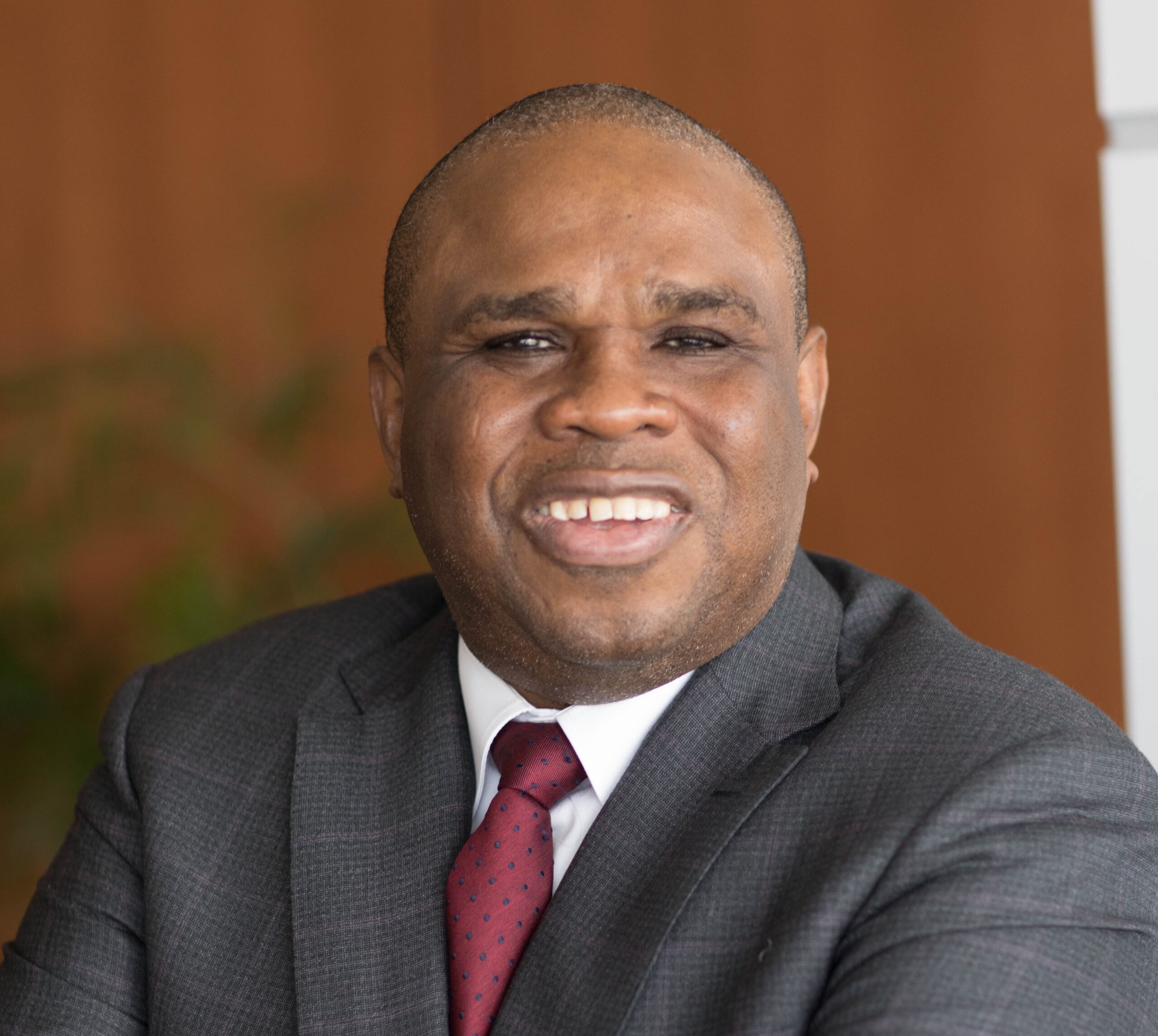
    He pointed out that this phenomenon is particularly noticeable with popular local foods.

    “I am sure those of you who have bought Ga Kenkey or Nkran dokon lately, will appreciate the food shrinkflation that I am talking about.”

    The Minority Leader summed up the situation by stating “Mr. Speaker, kurom ay3 hye. Times are very hard! Ghanaians are suffering!”

  • High-ranking police officers from Ashanti region contribute GHS80K to KATH renovation project

    High-ranking police officers from Ashanti region contribute GHS80K to KATH renovation project

    High-ranking police officers from the Ashanti region have contributed GHS80,000 to the Komfo Anokye Teaching Hospital (KATH) renovation initiative, led by Asantehene Otumfuo Osei Tutu II.

    The contribution was presented by Maame Tiwaa Addo-Danquah, Executive Director of the Economic and Organized Crime Office (EOCO), on behalf of her fellow officers.

    During the donation event at Manhyia, Maame Tiwaa stated that Ashanti police officers decided to unite in support of the project.

    She noted that the sum collected was their current donation and pledged further contributions in the future.

    Asantehene Otumfuo Osei Tutu II initiated the fundraising campaign with the aim of raising $10 million to refurbish the 70-year-old KATH facility.

    This project seeks to thoroughly upgrade the hospital as part of the Asantehene’s legacy projects, celebrating his 25th anniversary on the golden stool.