Author: Andy Ogbarmey-Tettey

  • Bright Simons fingers Chief of Staff’s alleged relative in “sweetened” ECG-Fidelity FX deal saga

    Bright Simons fingers Chief of Staff’s alleged relative in “sweetened” ECG-Fidelity FX deal saga

    Bright Simons, the Vice President of IMANI Africa, has made a startling revelation in his quest to expose the alleged exchange rate deals being offered to Fidelity Bank by the Electricity Company of Ghana (ECG).

    According to Mr Simons, Ghanaians are suffering from erratic power supply due to such decisions taken by the ECG, which tantamounts to “financial mismanagement.”

    In a recent article, Mr Simons, who has been dragged to court by the bank, highlighted a conflict of interest that could be the cause of the alleged deals being offered to Fidelity Bank.

    Maataa Opare, Fidelity’s Group Head of Legal and Company Secretary, could be the bridge that has fostered these reported deals. According to Mr Simons, Maataa Opare is also a member of the board of directors of ECG.

    He believes Maataa Opare is in a position where she can eat her cake and have it since she will be able to put forward proposals for the bank and have these proposals approved with her support while on the Board.

    “Ms. Opare has extensive oversight over Fidelity Bank’s compliance with regulations, policies, ethics, and laws.

    “It seems to us that this represents a major entanglement between her fiduciary responsibilities at ECG to ensure that the organisation is procuring competitively, demanding high performance from vendors and bankers, and ensuring strict standards and compliance in all business relationships, on the one hand, and her role at Fidelity to negotiate the most favourable contracts and commercial arrangements. It is not possible to see how this conflict is manageable on an ongoing basis. Ms. Opare will be drafting contracts at Fidelity to extract maximum commercial advantage from ECG on Monday, and then on Tuesday, she will go to ECG and approve them?”

    He further mentioned that Maataa Opare initiatives at the ECG are making headway due to her alleged association with the Chief of Staff, Frema Opare.

    This image has an empty alt attribute; its file name is ECG_Fidelity_Maataa_Frema_FemPower_Power_Ladies.png
    Ms. Maataa Opare, the CEO of ECG, & the Chief of Staff at the Presidency of Ghana

    “On top of all this, Ms. Opare is believed to be politically exposed. Our sources say that she is a “close associate or relative” of Ms. Frema Opare, the all-powerful Chief of Staff of the Ghanaian Presidency.

    “Since coming to ECG, Ms. Opare has used her close relations with the Chief of Staff to secure her patronage for her initiatives at ECG such as the ECG Power Ladies and fempower corporate activity.

    “What we have now then is a powerful, politically exposed, business executive at Fidelity strategically positioned on the board of ECG, an organisation that has become noted for flouting regulatory directives and thwarting government policy,” he wrote.

    Mr Simons is certain Fidelity Bank and ECG are engaged in a shady deal since the two institutions have “extensive commercial and financial dealings.”

    He revealed that when ECG was asked by the Cabinet of Ghana to consolidate its bank accounts, it chose Fidelity Bank as the primary custodian of this new single account. 

    “Fidelity thus became ECG’s principal banker, with Fidelity bank account number 1070006628289 becoming the primary treasury node,” he added.

    Presently, an audit conducted by PricewaterhouseCoopers (PwC) on the Electricity Company of Ghana (ECG) has revealed significant discrepancies in its adherence to the Cash Waterfall Mechanism (CWM) established by the Public Utilities Regulatory Commission (PURC).

    The audit, according to The Hearld, found that there were substantial disparities between the reported collections and the actual disbursements by ECG, amounting to approximately GHS3.5 billion over ECG’s CWM allocation from July 2022 to September 2023.

    These findings are contrary to the requirements of the Cash Waterfall Mechanism for month-on-month analysis, as reported by The Herald.

    Additionally, the audit highlighted a net difference of GHS1.9 billion between the total collections declared on the CWM-approved schedules and the inflows consolidated from the bank account statements reviewed.

  • African Games: LOC announces partnership with TikTok

    African Games: LOC announces partnership with TikTok

    The Local Organizing Committee (LOC) for the 13th African Games has partnered with the popular short-form video platform TikTok to create and customize content for the upcoming 13th African Games in Accra 2023.

    Since the partnership began on March 8th, the official TikTok page for the African Games has seen significant growth, garnering over 16,000 followers in just two weeks. The content related to the Games has also accumulated over 5 million views.

    Throughout the tournament, the LOC Media has been using TikTok to provide fans with exclusive content, including behind-the-scenes moments, team arrivals, interview sessions, and live game coverage. This collaboration aims to offer fans a unique opportunity to experience the African Games and more.

    Fans can access the African Games Hub on TikTok by searching for terms like “African Games 2023” and “African Games 2024.” The hub features the latest content from creators, national teams, sports federations, broadcasters, players, volunteers, and officials.

    With over 5 million views under the hashtag #AfricanGames2023 to date, this partnership highlights TikTok’s role in promoting African sports and engaging fans.

    It provides a platform for fans to share their passion for the African Dream and stay updated on the latest African Games content.

  • Ghana is on the path of becoming ICT hub of West Africa – Ursula

    Ghana is on the path of becoming ICT hub of West Africa – Ursula

    Minister of Communications and Digitization, Ursula Owusu-Ekuful, has announced the government’s commitment to establishing Ghana as the Information and Communications Technology (ICT) Hub for West Africa.

    “We have implemented some fundamental digital initiatives to serve as the building blocks on which to propel sustainable growth in the digital economy we are building.”

    “Initiatives such as the Mobile Money Interoperability platform, the Paperless Port system, National Identity Register, and Digital Property Addressing system have brought relief to our citizens and have propel the country’s digital agenda,” she said.

    During the opening of the 12th Information and Communications Technology for Development (ICT4D) event in Accra, Minister of Communications and Digitization Ursula Owusu-Ekuful emphasized Ghana’s commitment to becoming the ICT Hub for West Africa.

    The global event, organized by the Catholic Relief Services (CRS) and hosted in Ghana for the second time, brought together over 600 experts in the ICT sector to discuss leveraging digitization and technology for development.

    Mrs. Owusu-Ekuful highlighted Ghana’s participation in the 4th Industrial Revolution, aiming to capitalize on its opportunities to transform the economy and lay a solid foundation for growth.

    She emphasized the crucial role of digitization in 21st-century development, stating that development cannot occur without pursuing digitization in today’s world.

    “We commenced our digital journey in 2017 with the Digital Ghana Agenda, a vision to leverage technology to deliver public services, promote transparency, efficiency, and easy access to all citizens irrespective of location,” she said.

    Mr. Daniel Mumuni, Country Representative of the CRS, praised the Government for its digitization agenda aimed at enhancing accessibility and productivity.

    He stated that the conference would delve into the ways ICT and data innovations are significantly improving the lives of millions of people and enhancing the impact of humanitarian relief, development, and conservation programs.

    “We hope to also advance global knowledge exchange and build capacity on digital development to drive more impactful use of technology for good.”

    “We are excited to be hosting this conference in Accra where over 700 people have gathered from different countries to the country,” he added.

    Established in 2010, the ICT4D Conference has expanded annually to become a globally recognized and prestigious platform for NGOs, community-based organizations, private sector companies, governmental and multi-lateral agencies, investors, donors, academic and research institutions. It serves as a forum for exchanging experiences in utilizing digital technologies and learning from one another.

  • Bright Simons writes: The People vs Fidelity Bank of Ghana

    Bright Simons writes: The People vs Fidelity Bank of Ghana

    Everyone on my Twitter timeline knows by this time that in response to a tweet I posted asking ECG to confirm and explain a USD – GHS rate they indicated in submissions to the PURC, Fidelity Bank has decided to sue for libel.

    Here is the tweet:

    Fidelity alleges that my tweet libels them because it suggests that they have obtained benefits through a “sweetheart” arrangement with the Electricity Corporation of Ghana (ECG).

    Fidelity is represented by Dominic Akuritinga Ayine, the Member of Parliament for Bolgatanga East, who doubles as the Chairperson of the Committee in Parliament that examines and approves most species of regulatory and administrative law in Ghana. He is also a member of the powerful House Committee, which is responsible, in an advisory capacity, for the welfare of parliamentarians and the parliamentary staff, as well as of the Trade, Industry and Tourism committee. Some might recall that he was the Deputy Attorney General in the previous government who signed the Ameri deal and, for that reason, was locked in a long tussle with me on social media about the merits of that agreement.

    As I have already said on Twitter, I intend to vigorously defend against this suit in the law courts. For that reason, I will not say too much about the specifics of the case or about my defense. As the saying goes, I will have my day in court.

    However, because this is not a private matter (I was sued in the line of duty of seeking public accountability from ECG), and there is a broader context to all of this, it is important to be transparent about a number of issues.

    As a member of a network of extremely activist Civil Society Organisations (CSOs) in Ghana (eg. IMANI and ACEP), I can say that we do view this insertion of Fidelity into what is essentially a tussle for accountability between us and ECG as serendipitous.

    For a while now, it is becoming apparent that we cannot hold public institutions to account without, at least occasionally, demanding cooperation and answers from private businesses and institutions.

    Much too often, the actions of public institutions that lose this country large amounts of money involve private businesses to an extent. Of course, in many instances, private businesses are just pursuing their legitimate enterprise. But it is also true that their involvements have sometimes, more often than we would like, served to enable financial loss to the country. We must not shy away from confronting private businesses if we believe that their actions in anyway, intentionally or inadvertently, are causing problems for Ghana’s already beleaguered governance.

    In this ECG-Fidelity-CSOs triangular situation, dumsor is the context.

    For far too long, the country has underplayed the financial mismanagement that leads to debts piling, fuel shortages, poor maintenance, and generation and distribution shortfalls. If transformers are overloaded, it is because there aren’t enough resources to increase their density. If gas quantities have fallen, but the country can’t buy crude to substitute, it is because resources are insufficient. If too many plants are going out of action, it is because maintenance activities are being serially postponed due to financial constraints. In such a context, this country cannot afford to lose money due to any lack of diligence or, worse, sheer recklessness.

    As anyone who has followed the judgment debt saga in this country realized, private businesses were always in the mix. Everyone who has followed procurement shenanigans in this country could not have missed the role of private businesses. We cannot hold public sector actors accountable, if we are afraid to ask hard questions of private sector actors for fear of being sued.

    Their profits are not more important than our public losses.

    All the above said, and in the spirit of transparency, I would like to confirm that Fidelity’s lawsuit will not stop myself or the CSOs with which I am affiliated from continuing to demand accountability from the Bank in situations where they are entangled with public sector financial matters.

    I would therefore like to publicise that on March 4th, 2024, I asked my lawyers to inquire of Fidelity about their exact role and involvement in a number of Ghana’s energy finance value chain issues. So far, they have not deemed it necessary to respond to these inquiries.

    However, we will persist.

    Here are a few of the issues where we would like to see Fidelity actively assisting the public accountability and public financial governance interests of the Ghanaian people. These are matters in respect of which the people demand clear and unambiguous answers from Fidelity.

    1. The governance issues manifesting at ECG, and attracting serious regulatory censure, belong properly at the Board of ECG. ECG is accused by its primary regulator of stonewalling auditors, hiding data, misrepresenting financials, and generally being shifty and dodgy.
    2. When ECG was asked by Cabinet of Ghana to consolidate its bank accounts, it chose Fidelity Bank as the primary custodian of this new single account. Fidelity thus became ECG’s principal banker, with Fidelity bank account number 1070006628289 becoming the primary treasury node.
    3. ECG thus has extensive commercial and financial dealings with Fidelity Bank.
    4. Today, Fidelity’s Group Head of Legal and Company Secretary is Maataa Opare, a member of the board of directors of ECG.
    5. Ms. Opare has extensive oversight over Fidelity Bank’s compliance with regulations, policies, ethics, and laws.
    6. It seems to us that this represents a major entanglement between her fiduciary responsibilities at ECG to ensure that the organisation is procuring competitively, demanding high performance from vendors and bankers, and ensuring strict standards and compliance in all business relationships, on the one hand, and her role at Fidelity to negotiate the most favourable contracts and commercial arrangements. It is not possible to see how this conflict is manageable on an ongoing basis. Ms. Opare will be drafting contracts at Fidelity to extract maximum commercial advantage from ECG on Monday, and then on Tuesday, she will go to ECG and approve them?
    7. Recusal is not an effective remedy when the business relationship is now so strategic and all-encompassing.
    8. On top of all this, Ms. Opare is believed to be politically exposed. Our sources say that she is a “close associate or relative” of Ms. Frema Opare, the all-powerful Chief of Staff of the Ghanaian Presidency.
    9. Since coming to ECG, Ms. Opare has used her close relations with the Chief of Staff to secure her patronage for her initiatives at ECG such as the ECG Power Ladies and fempower corporate activity.
    10. What we have now then is a powerful, politically exposed, business executive at Fidelity strategically positioned on the board of ECG, an organisation that has become noted for flouting regulatory directives and thwarting government policy.
    11. Our honest and objective assessment is that this complicated arrangement heightens the level of scrutiny that must be applied to ECG-Fidelity dealings, generally. There must be a rebuttable presumption that dealings between ECG and Fidelity are fundamentally high-risk, on a governance level.
    Ms. Maataa Opare, the CEO of ECG, & the Chief of Staff at the Presidency of Ghana

    Our past RTI request to Fidelity Bank and the upcoming ones transcend this specific matter. We have raised, and shall continue to raise, questions about Fidelity’s reported flouting of regulations related to the national FX platform managed on behalf of the Bank of Ghana by Bloomberg and Thomson Reuters; Fidelity’s role in the Gold for Oil program; and a host of others.

    For now, however, we would prefer not to overload the reader. These investigations are at an early stage. The effort to enhance scrutiny of the role of private businesses in Ghana’s public sector financial issues and challenges is a marathon rather than a sprint.

    In time, the people will have their answers.

    Source: IMANI AFRICA Vice President, Bright Simons

    DISCLAIMER: TIGPost.co will not be liable for any inaccuracies contained in this article. The views expressed in the article are solely those of the author’s, and do not reflect those of The Independent Ghana.

  • Don’t vote for Mahama; he has nothing to lose – NPP

    Don’t vote for Mahama; he has nothing to lose – NPP

    The New Patriotic Party (NPP) has raised concerns about the potential implications of electing John Dramani Mahama, the flagbearer of the National Democratic Congress (NDC), in the upcoming December elections.

    The NPP argues that John Mahama’s bid for re-election lacks urgency, as he can only serve for a single term and has stated he will not seek another presidency.

    According to the General Secretary of the NPP, Justin Kodua Frimpong also known as JFK, Mr Mahama’s candidacy is driven more by ego than a genuine commitment to advancing the nation’s development.

    In contrast, Mr Frimpong advocates for supporting Dr. Mahamudu Bawumia, emphasizing his potential for an eight-year governance span and accountability to the electorate by seeking re-election after four years.

    “You have one person who has the chance to be president for eight years, who can come to you again for four years for you to evaluate what he has done, and one person who has nothing to lose. After four years, whether he performs or does not perform, he is going. So it is a choice that Ghanaians will have to make,” he said.

    Mr Frimpong also criticizes Mr Mahama for allegedly lacking innovative ideas and expresses the NPP’s eagerness for a debate between Mr Mahama and Dr. Bawumia to allow Ghanaians to make an informed decision.

    He advises voters against electing Mr. Mahama, warning that such a choice could hinder the nation’s progress.

    “That’s the message that we are driving home. When it comes to in terms of policies and ideas, we are waiting for the time that there will be that public discussion or debate between our flagbearer and the flagbearer of the opposition party and then we will be able to know the real and clear difference between the two of them,” he said.

  • Ghana’s women’s 4x100m relay team win bronze at African Games

    Ghana’s women’s 4x100m relay team win bronze at African Games

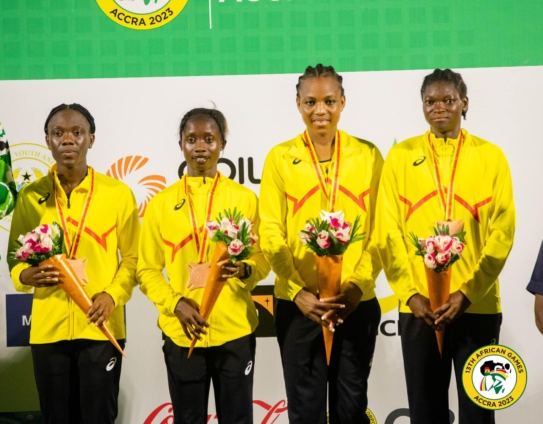
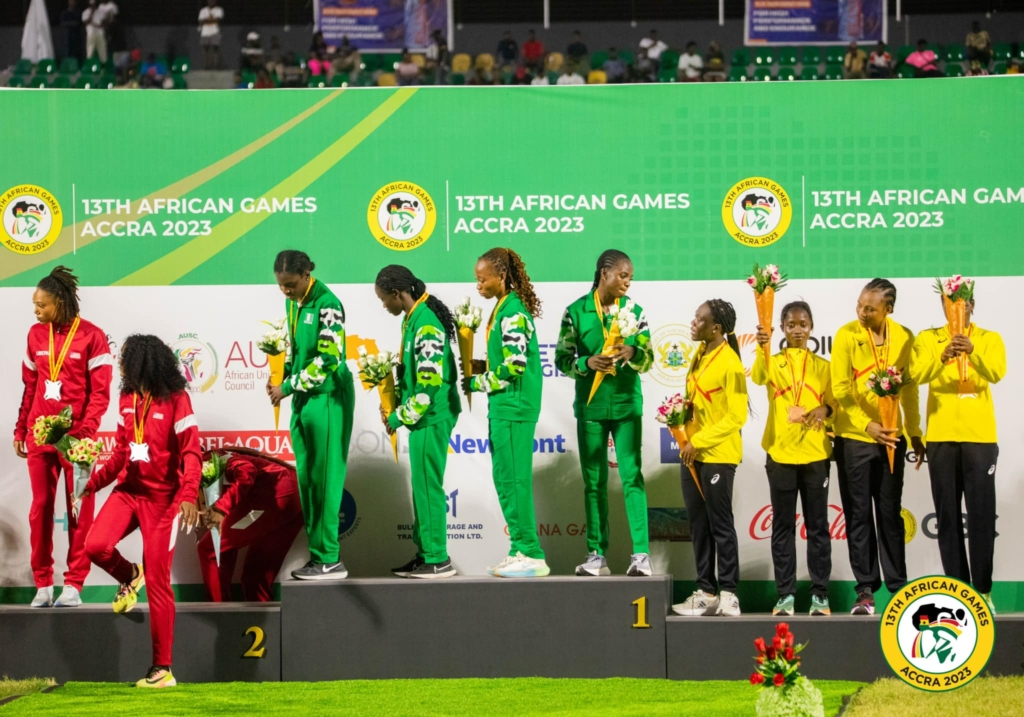
    The Ghana women’s 4x100m relay team secured a bronze medal on the third day of the track and field events at the ongoing African Games in Accra.

    The team, consisting of Mary Boakye, Janet Mensah, Doris Mensah, and Hor Halutie, finished third with a time of 44.21s, behind winners Nigeria and second-placed Liberia.

    Having won their heats leading up to the final, the race was expected to be a closely contested affair among the three West African nations, which proved to be the case.

    Nigeria, featuring Tobi Amusan on the anchor leg, who had just defended her 100m hurdles title an hour before the relay, powered to victory to retain the title they won five years ago in Rabat.

    Despite a strong start from Boakye and a solid effort from Janet Mensah on the back straight, Ghana was trailing behind Nigeria by the time the baton reached Hor Halutie. In a tight race for second place with Kyree Josephine of Liberia, Halutie narrowly missed out on silver, securing bronze for Ghana.

    The bronze medal marks a redemption for Ghana, who finished last in the event at the previous African Games in Rabat due to a baton change mix-up.

  • GES orders headmasters not to shutdown schools amid teacher unions’ strike

    GES orders headmasters not to shutdown schools amid teacher unions’ strike

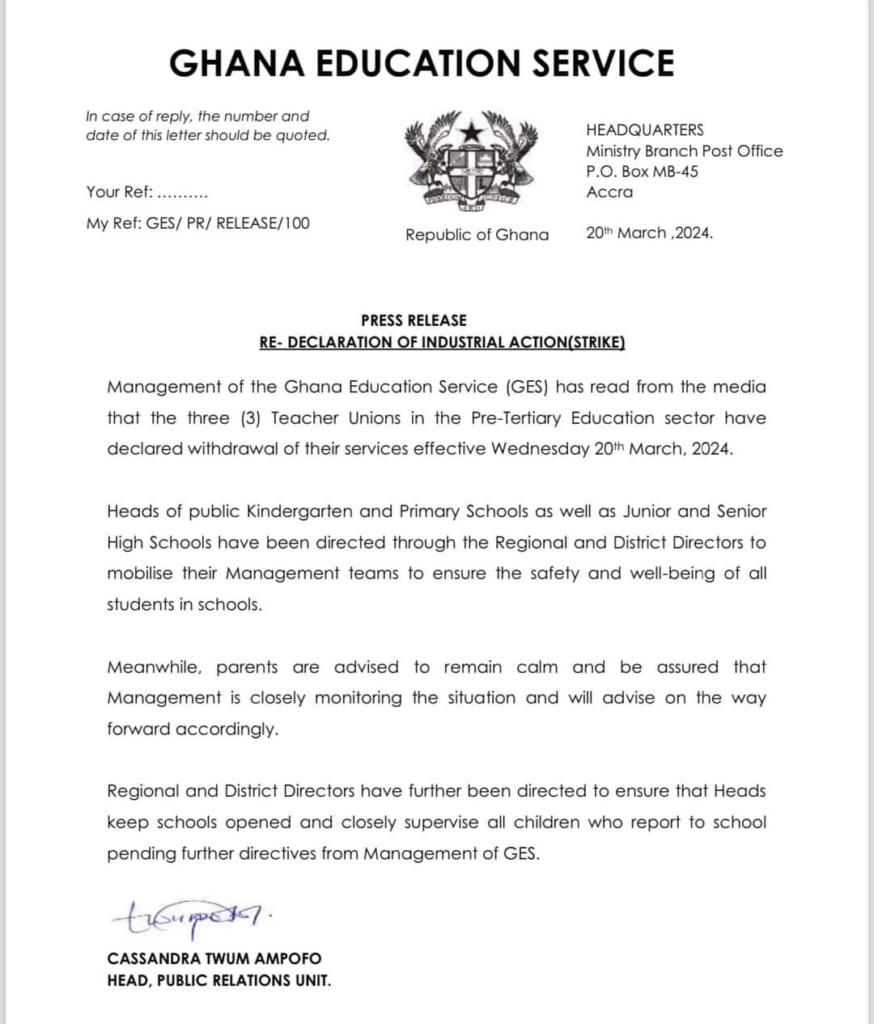
    The Ghana Education Service (GES) has instructed junior and senior high school headteachers to continue school operations despite the ongoing strike by three teacher unions.

    The strike, initiated on Wednesday, March 20, 2024, by the Ghana National Association of Teachers (GNAT), the National Association of Graduate Teachers (NAGRAT), and the Coalition of Concerned Teachers (CCT), is due to the government’s alleged failure to address their conditions of service.

    Headteachers have been directed to ensure the safety of students during their time at school.

    GES issued a press release on Wednesday, March 20, reassuring parents to remain calm, stating that management is actively monitoring the situation.

    “Regional and District Directors have further been directed to ensure that Heads keep schools open and closely supervise all children who report to school pending further directives from Management of GES.”

  • Akufo-Addo sacks Birim Central MCE

    Akufo-Addo sacks Birim Central MCE

    President Akufo-Addo has revoked the appointment of Victoria Adu as the Municipal Chief Executive (MCE) of the Birim Central Municipal Assembly.

    The decision was conveyed through a letter signed by O. B. Amoah, the Minister of State at the Local Government Ministry, and issued on Monday, March 19.

    In the letter, Madam Adu was instructed to hand over her duties to the Regional Minister, who will oversee the Municipal Assembly until a new MCE is appointed and confirmed as her replacement.

    “I wish to inform you that, in accordance with Article 243 (3) (b) of the Constitution and Section 20 (3) (b) of the Local Governance Act 2016 (Act 936), His Excellency the President of the Republic has revoked your appointment as Municipal Chief Executive.”

    “Consequently, you are to hand over your duties to the Hon. Regional Minister who will exercise oversight responsibility of the Municipal Assembly until the confirmation of a new Municipal Chief Executive.

    “By a copy of this letter, the Regional Minister is requested to take oversight responsibility of the Municipal Assembly pending confirmation of a new Municipal Chief Executive.”

  • African Games: Nigeria beats Ghana to grab gold in men’s 4x100m relay

    African Games: Nigeria beats Ghana to grab gold in men’s 4x100m relay

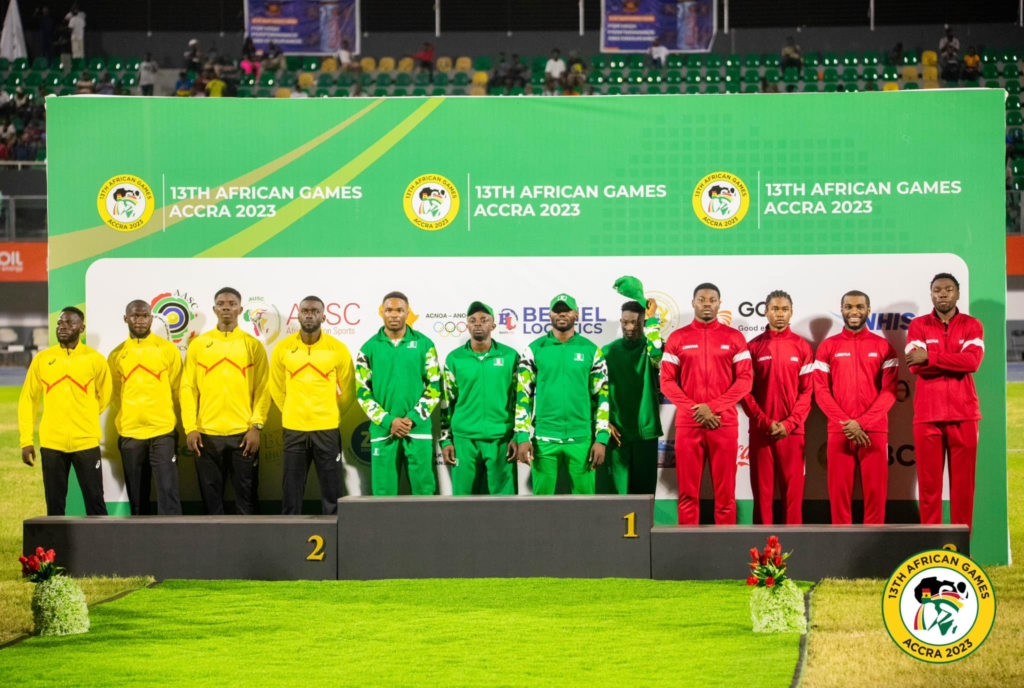
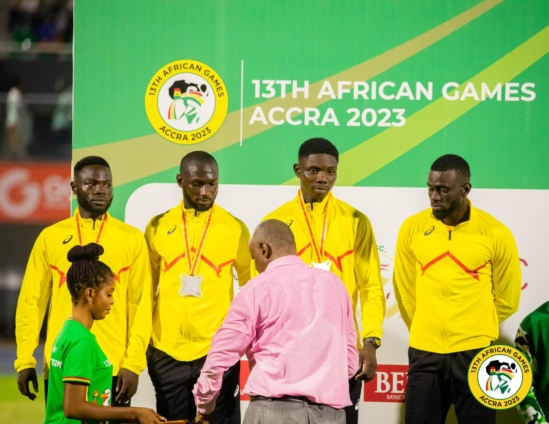
    Ghana’s 4x100m relay team settled for silver in the men’s 4x100m relay final after a baton change mix-up handed the advantage to Nigeria, who claimed gold.

    Despite being favorites to defend their title after posting the fastest qualifying time, the Ghanaian team faced disappointment. Edwin Gadayi and Benjamin Azamati executed the first and second legs brilliantly, putting Ghana in a strong position.

    Solomon Hammond maintained the lead with a decent bend, but the baton changeover with anchor leg runner Joseph Paul Amoah allowed Nigeria to overtake. Despite Amoah’s determined chase, Nigeria’s Itsikiri Utsheoritse held on for the win.

    Ghana missed out on gold by just 200th of a second, with Nigeria finishing in 38.41s and Ghana in 38.43s.

    The victory was sweet revenge for Nigeria, who lost to Ghana in 2019 and in 2003 when Nigeria hosted the event in Abuja.

    Liberia’s men also impressed, with Joseph Fahnbulleh anchoring them to a silver in a new National Record of 38.73s.

  • Speaker suspends approval of Akufo-Addo’s appointees over lawsuit amidst anti-gay bill saga

    Speaker suspends approval of Akufo-Addo’s appointees over lawsuit amidst anti-gay bill saga

    Parliament has halted the consideration of President Akufo-Addo’s nomination of Ministers and Deputy Ministers of State following an interlocutory injunction filed at the Supreme Court by MP for South Dayi, Rockson-Nelson Dafeamekpor.

    In his final address to the House before adjourning the sitting on Wednesday, March 20, 2024, Speaker of Parliament Alban Bagbin stated that the lawsuit has rendered it impossible for Parliament to vet and process the new ministers nominated by President Akufo-Addo.

    “Hon Members, I also bring to your attention, the receipt of a process from the Courts titled Rockson-Nelson Etse K. Dafeamekpor vrs. The Speaker of Parliament and the Attorney-General ( Suit no. J1/12/2024) which process was served on the 19th of March 2024 and an injunction motion on notice seeking to restrain the Speaker from proceeding with the vetting and approval of the names of the persons submitted by His Excellency the President until the provisions of the constitution are satisfied.

    “Hon. Members in the light of this process, the House is unable to continue to consider the nominations of His Excellency the President in the ‘spirit of upholding the rule of law’ until after the determination of the application for interlocutory injunction by the Supreme Court,” he explained.

    Following a letter addressed to Parliament and signed by the Secretary to the President, Nana Asante Bediatuo, on Monday, March 18, 2024, Speaker Alban Bagbin has directed the suspension of the vetting process for President Akufo-Addo’s nominated Ministers and Deputy Ministers of State.

    The letter revealed that the Presidency had requested Parliament not to send the anti-gay bill to President Nana Addo Dankwa Akufo-Addo for his assent. This decision was made in light of two pending applications for an order of interlocutory injunction before the Supreme Court.

    Nana Bediatuo Asante emphasized in the letter that it would be inappropriate for Parliament to proceed with transmitting the bill to President Akufo-Addo for any action until the legal matters are addressed.

    The Attorney-General has advised the President against taking any action regarding the bill until the issues raised in the legal suits are resolved by the Supreme Court.

    Speaker Alban Bagbin criticized this development, describing it as a threat to Ghana’s democracy. He argued that the President’s directive not only departs from established democratic practices but also undermines the spirit of cooperative governance.

    “The behaviour exhibited by the Presidency in refusing to accept the transmission of this bill not only deviates from established democratic practices but also undermines the spirit of cooperative governance and mutual respect for the arms of government. The President’s refusal to accept the transmission of the bill is, by all accounts, not supported by the constitutional and statutory provisions that guide our legislative process,” he stressed.

  • Bad weather responsible for GAF’s emergency landing at Bonsukrom – Ghana Gas

    Bad weather responsible for GAF’s emergency landing at Bonsukrom – Ghana Gas

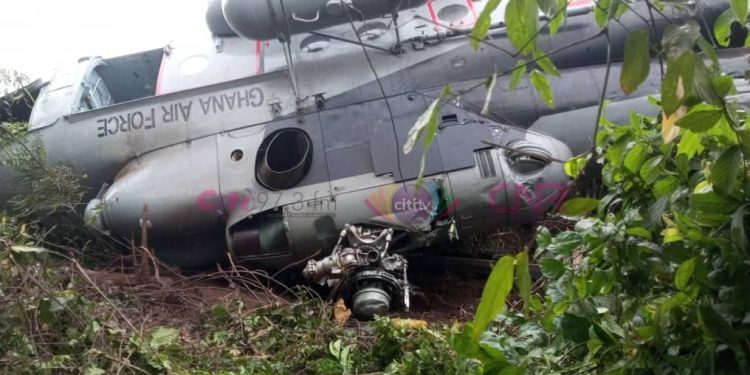
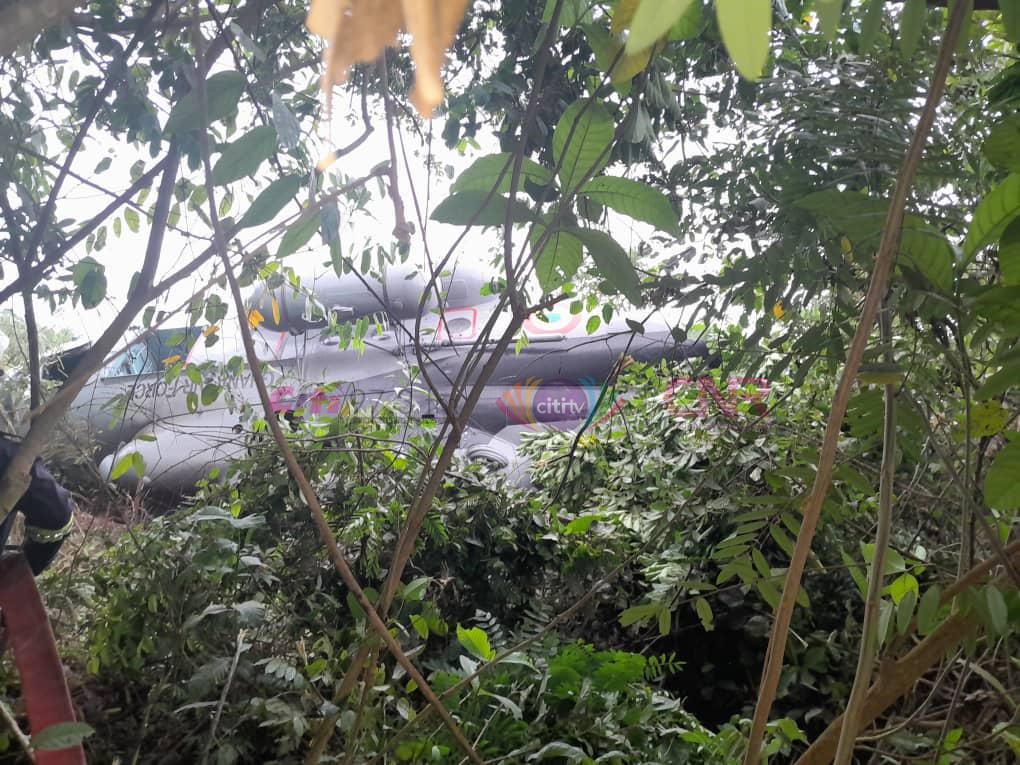
    The emergency landing of the Ghana Air Force helicopter on Tuesday, March 19, near Agona Nkwanta in the Western Region was attributed to perilous atmospheric conditions by the Ghana National Gas Company (GNGC).

    GNGC assured the public that the incident would not impact its operations at Atuabo.

    The helicopter, which crash-landed near Bonsukrom, was carrying 21 individuals, including staff from the Petroleum sector regulators.

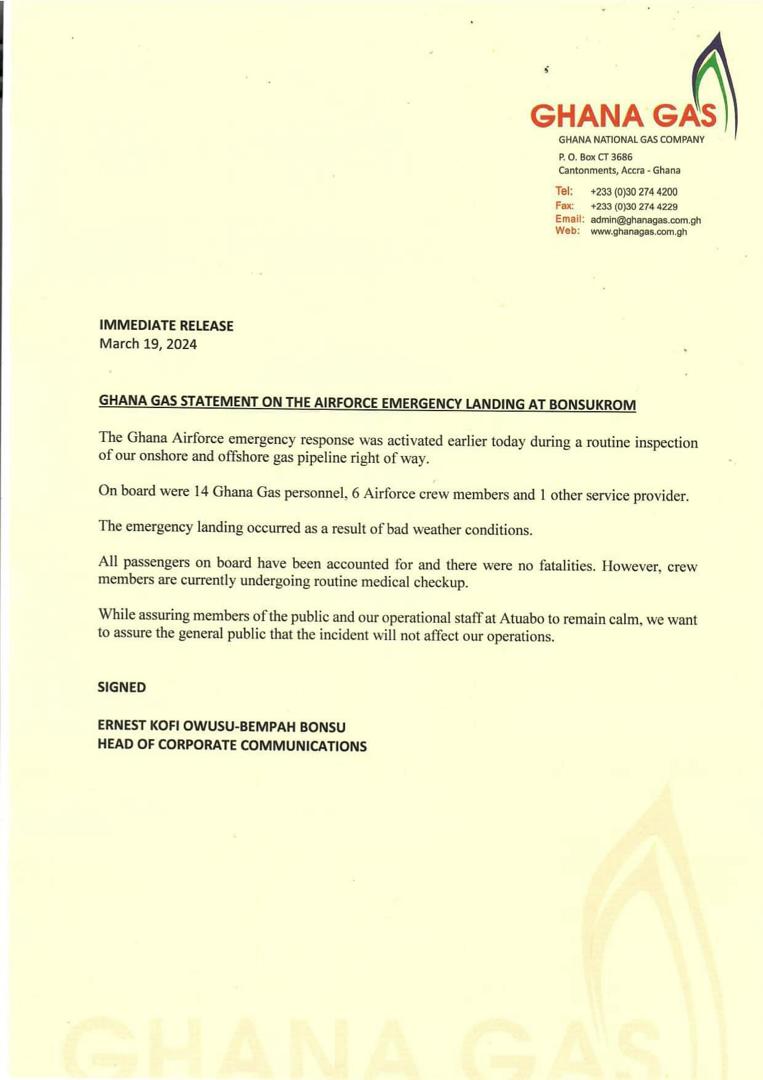
    Ghana Gas in a statement signed by its Head of Corporate Communications, Ernest Kofi Owusu-Bempah, said, “The emergency landing occurred as a result of bad weather conditions. All passengers on board have been accounted for and there were no fatalities.

    “However, crew members are currently undergoing routine medical checkup. While assuring members of the public and our operational staff at Atuabo to remain calm, we want to assure the general public that the incident will not affect our operations.”

    Ghana Armed Forces (GAF) has confirmed that there were no casualties following the emergency landing of one of its helicopters.

  • Kumasi: Man allegedly commits suicide due to economic hardships

    A 43-year-old commercial driver reportedly took his own life due to economic hardships in North Suntreso, Kumasi Metropolis, Ashanti Region.

    The deceased, Kwabena Owusu, allegedly hanged himself with a sponge in his bathroom, according to residents.

    His wife, Vida Pokuaa, told OTEC News Reporter that the tragic incident occurred around 8:30 pm on Tuesday, March 19, 2024.

    She mentioned that she had a normal conversation with her husband before the incident, and was shocked to discover him hanging in the bathroom a few minutes later.

    “I was going to the bathroom when I saw my husband hanging, I tried to get him out of the hanging sponge but he was too heavy for me so I rushed out for help, unfortunately he was already gone when I got help from some passerby,” she stated.

    Some residents in the area revealed that the deceased, a father of five, had been complaining of economic hardship after losing his job.

    They suspect that he might have taken his own life due to these economic challenges.

  • Bawumia to prioritise private sector development if made president

    Bawumia to prioritise private sector development if made president

    The New Patriotic Party’s (NPP) flagbearer, Dr Mahamudu Bawumia, has restated his dedication to redirecting the development agenda from social interventions, which have been a key feature of the Akufo-Addo administration, towards strengthening businesses and the private sector.

    In a meeting with the Ghana Chamber of Commerce and Industry in Accra, he sought their insights as the manifesto committee prepares ideas for the upcoming 2024 elections.

    Dr. Bawumia stressed the importance of a transformative strategy, calling for innovative approaches to drive the nation’s progress.

    “We need to be transformational. And so, we need to be taking decisions that will transform the country. And I don’t believe going forward, we are going to be doing the same things. I want us to do new things. I want us to do things we have not done before.”

    Highlighting a shift in focus, he stated, “In our first couple of terms in office, we have focused as a government a lot more on social interventions. But now I want us to move the focus to business and the private sector.”

    In reply, the Ghana Chamber of Commerce and Industry advised Dr. Bawumia to contemplate several actions, including the elimination of specific taxes like the COVID-19 levy, minimizing government competition with businesses for loans from local banks, and resolving intermittent power supply problems.

    Dr. Clement Osei Amoako, the Chamber’s President, stressed the significance of decreasing the budget deficit to avoid unnecessary competition with the private sector for financial assets.

    “There should be a significant reduction in budget deficit to prevent competition with the private sector for funds. Given the prevailing economic condition and tight monetary policies, further attempts to compete with the private sector for funds in the domestic money market will introduce significant distortion in our economy.

    “That the chamber supports your proposition to amend the fiscal responsibility act to add a fiscal rule that requires a budgeted expenditure in any year does not exceed 105% of the previous year tax revenue.”

  • GAF commissions accommodation unit at 66 Artillery Regiment

    GAF commissions accommodation unit at 66 Artillery Regiment

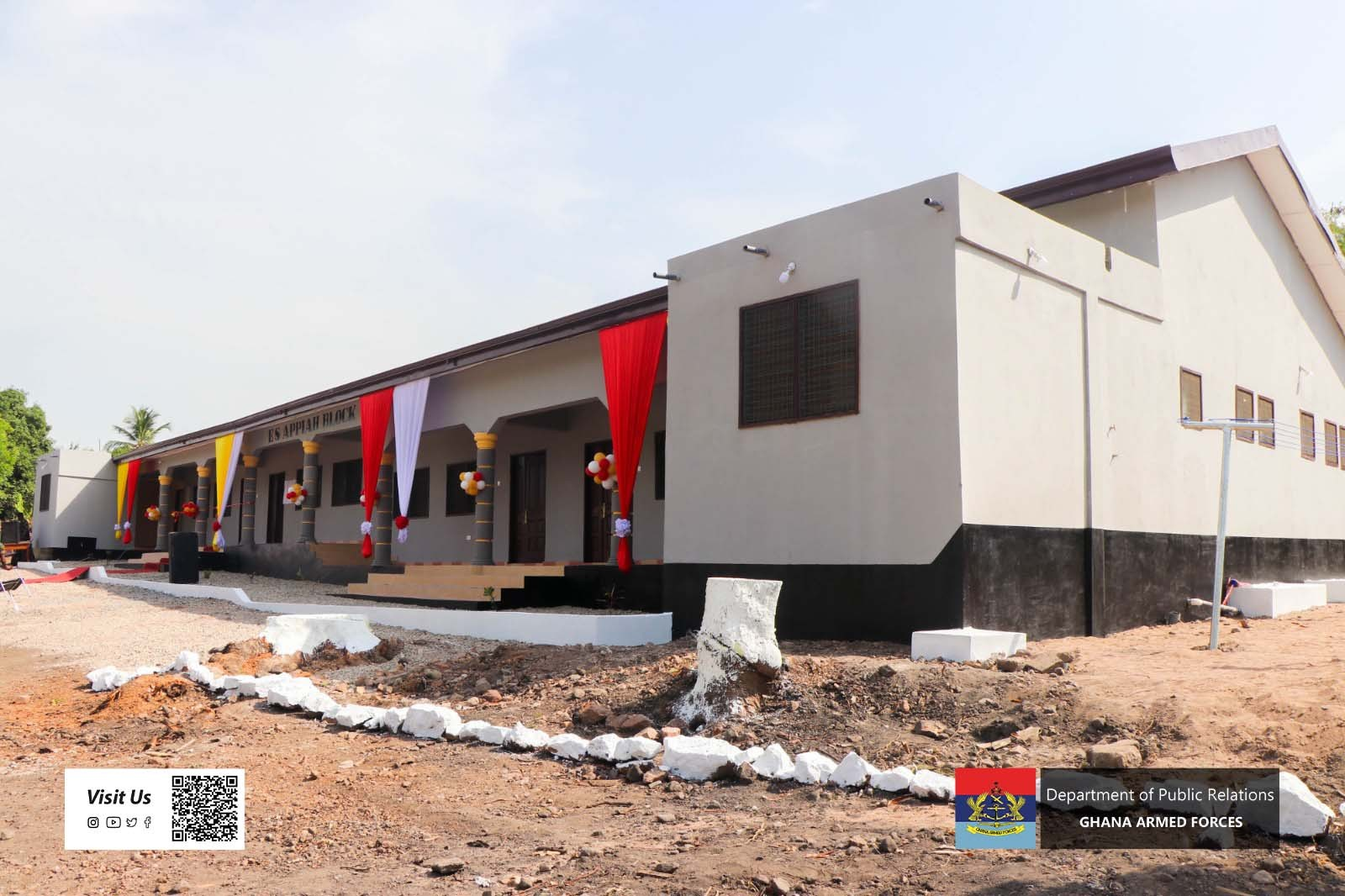
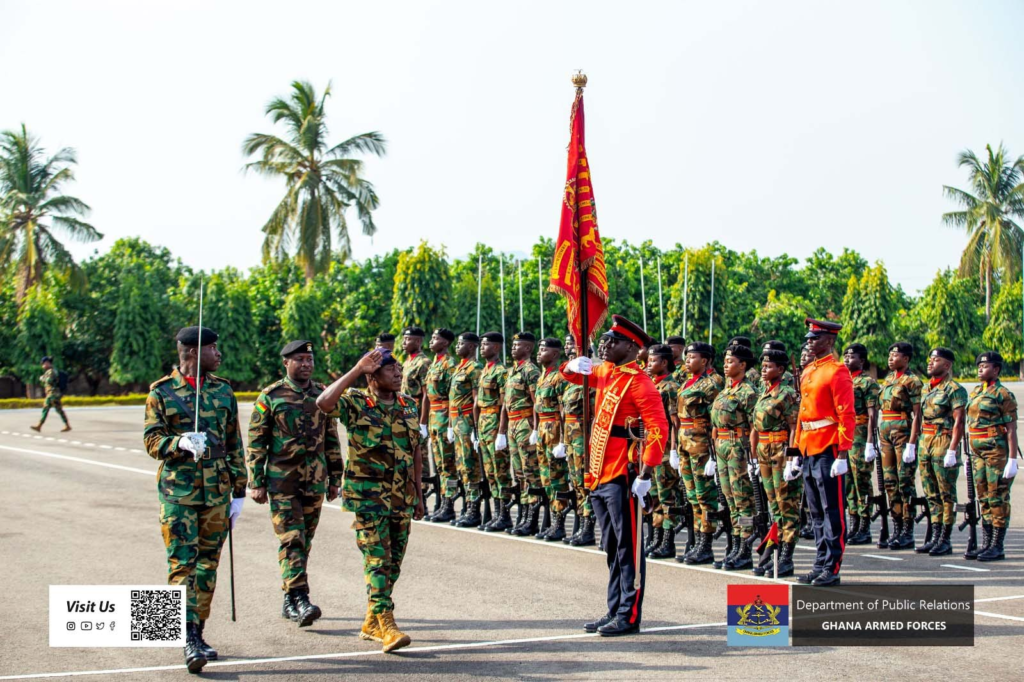
    Chief of the Army Staff (COAS), Major General (Maj Gen) Bismarck Kwasi Onwona commissioned the Young Soldiers’ accommodation unit at the 66 Artillery Regiment during his maiden visit on Thursday, March 14, 2024.

    In his opening remarks, the Commander Rear (Comd Rear), Lieutenant Colonel (Lt Col) Jalali Din Ibrahim, indicated that the project was initiated by the Commanding Officer (CO), Lt Col Edward Sarpong Appiah, through the benevolence of individuals and organizations.

    He saw the need to complete the project and extended his profound appreciation to all who made it possible.

    The Guest of Honour, Maj Gen BK Onwona, commended Lt Col Edward Sarpong Appiah for his vision to provide accommodation for soldiers. He also commended the Comd Rear Lt Col Jalali Din Ibrahim for following through and seeing to the completion of the project.

    He was optimistic that the building would contribute meaningfully to the efficient administration of personnel of the Regiment. He charged all to continuously maintain the edifice.

    Maj Gen Onwona appreciated Brigadier General Nicholas K Kporku (Rtd), Mr. Franklin Jose, Mr. Eli Tsikata, Mr. Christian Dohlin, Director of CK Constructions, Managing Director of Diamond Cement, Bank of Ghana, and Forestry Commission of Jasikan for their contribution towards the project.

    The COAS also expressed gratitude to the Managing Director, From Home Company Ltd, CEO Liberty Company Ltd, Director Edwin Wood Production, CEO VFP, CEO Greenhouse Stone Quarry, and the CEO Tier Stone Quarry.

  • Bagbin officially informed of John Kumah’s death by family

    Bagbin officially informed of John Kumah’s death by family

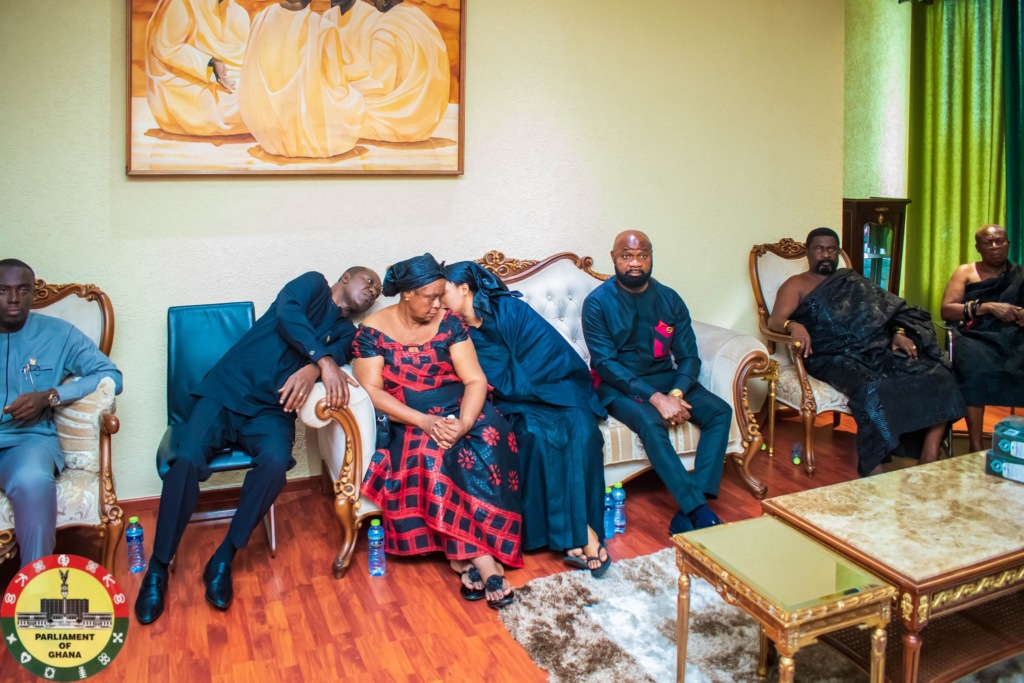
    The family of the late Ejisu MP and Deputy Finance Minister, John Kumah, officially notified the Speaker of Parliament, Alban Bagbin, of his passing during a courtesy call on Tuesday, March 19, 2024.

    The bereaved family was received by the First Deputy Speaker and Bekwai MP, Joseph Osei Owusu, on behalf of Mr. Bagbin and Parliament.

    John Kumah passed away on Thursday, March 7, 2024, at the Suhum Government Hospital after a brief illness.

    He is survived by his wife, Apostle Mrs. Lilian Kumah, and six children, and is remembered for his dedication to his family.

    Dr. Kumah served as the inaugural Chief Executive Officer for the National Entrepreneurship and Innovation Programme (NEIP), where he was instrumental in establishing NEIP as a major player in Ghana’s entrepreneurship ecosystem.

    During his tenure, NEIP trained 7,000 startups in 2018 through the Presidential Business Support Programme and provided financial assistance to 1,350 beneficiaries.

    Prior to his government role, Dr. Kumah was a founding member and Managing Partner of Aduaprokye Chambers, a law firm, and also established Majak Associates Ltd, a building and construction company.

  • Ghana fails to secure medals in 100m finals of 13th African Games

    Ghana fails to secure medals in 100m finals of 13th African Games

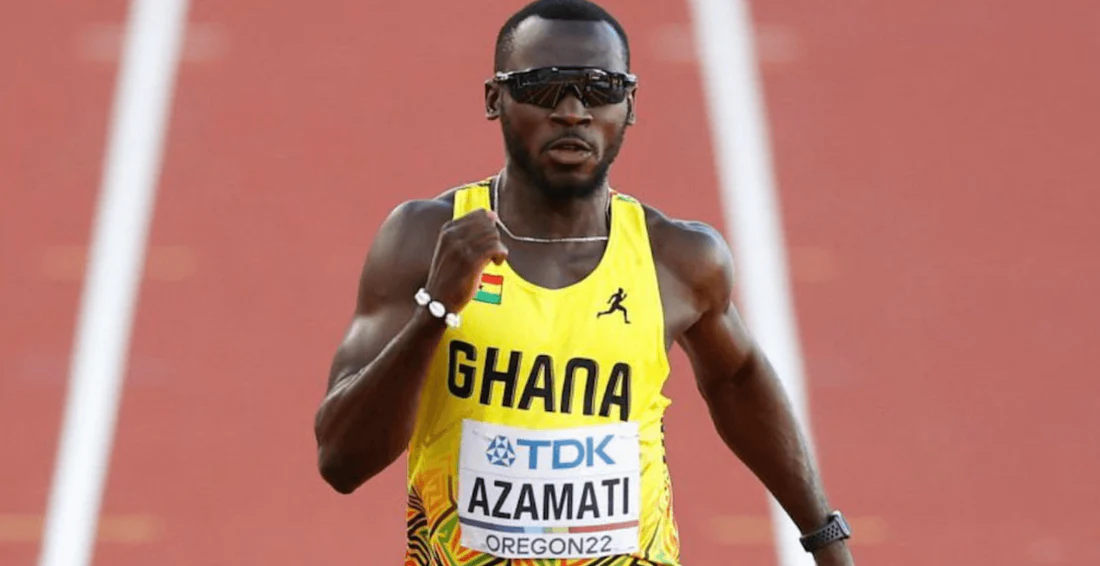
    Ghanaian sprinters Benjamin Azamati and Aggerh Barnabas fell short of securing medals in the men’s 100m finals at the African Games.

    Despite being Ghana’s national record holder, Azamati finished fifth with a time of 10.45s, while his teammate, Aggerh, claimed the sixth spot with a time of 10.50s.

    The results were disappointing for the enthusiastic Ghanaian fans at the University of Ghana Sports Stadium. Cameroon’s Emmanuel Alobwede clinched gold with an impressive 10.14s.

    Nigeria’s Itsekiri Usheoritse secured silver with a time of 10.23s, and Namibia’s Gilbert Hainuca took bronze with 10.29s.

    In the women’s 100m race, Ghana’s Mary Boakye finished seventh with a time of 11.71, missing out on a podium finish.

    Gambia’s Bass Bittaye Gina Mariam claimed gold in the women’s 100m race with a time of 11.36s, followed by Maia Alyse in second with 11.49s. Nigeria‘s Olajide Olayinka secured the bronze medal with a time of 11.55s.

  • UPSA, FIC hold anti-money laundering and terrorism financing conference on March 21

    The Faculty of Finance and the Financial Intelligence Center will host a conference on financial crime on March 21, 2024.

    The conference aims to provide participants with a comprehensive understanding of money laundering and terrorism financing, their implications, and strategies to combat them.

    It will cover various aspects, including definitions, typologies, key stages, and legal frameworks governing anti-money laundering (AML) and combating the financing of terrorism efforts. Case studies and real-world examples will be used to illustrate practical applications.

    The training is crucial due to the global impact of money laundering and terrorist financing, which affect economies, the financial sector, and society. Increased efforts are being made globally to combat these crimes.

    The conference will educate participants and the public about these issues, enabling institutions to raise red flags when they suspect such activities. It will also highlight anti-money laundering measures and the role of stakeholders in fighting these illicit acts.

    The two-day training will cover themes such as understanding money laundering and terrorism financing, types of money laundering, institutions exposed to money laundering, dangers in Ghana, global measures, and Ghana’s measures to curb these crimes.

  • NHIA needs GHC10M to support dialysis treatment – Haruna Iddrisu

    NHIA needs GHC10M to support dialysis treatment – Haruna Iddrisu

    Haruna Iddrisu, the Member of Parliament for Tamale South, has raised concerns about the National Health Insurance Authority’s (NHIA) allocation of GH¢2 million for dialysis support to needy patients this year.

    He believes that a more sufficient allocation would have been GH¢10 million.

    During a discussion in Parliament on Wednesday regarding the proposed formula for the disbursement of the National Health Insurance Fund, Iddrisu stated that the NHIA could allocate GH¢10 million, considering the national emergency of the lack of dialysis centres across the country.

    “There is a national emergency of the absence of dialysis centres across the country. We have an opportunity as parliament to allocate money for the purpose of saving lives and saving persons who may be suffering from dialysis.”

    “Mr Speaker I do not think that the amount of GH¢2million is enough particularly when you consider the Corporate Social Responsibility allocation of the same authority of GH¢30 million.

    “At least an amount of GH¢10 million should be set aside for purposes of supporting interventions related to dialysis whether in Accra, Kumasi, Tamale, or Bolga,” he noted.

    Director of Corporate Affairs at the National Health Insurance Agency (NHIA), Oswald Mensah, has noted while the NHIA has received numerous requests to add several diseases to their benefits package, resources available to the Agency will not be enough to cover the expenses.

    In October 2023, President Akufo-Addo issued a directive to the Ministry of Health and the National Health Insurance Authority (NHIA) to create a comprehensive strategy for funding kidney treatment in the country.

  • ‘Irresponsible’ ECG spent misappropriated cash on fuel – PURC

    ‘Irresponsible’ ECG spent misappropriated cash on fuel – PURC

    The Public Utilities Regulatory Commission (PURC) has criticized the Electricity Company of Ghana (ECG) for its decision to use funds from the cash waterfall mechanism to purchase fuel for power generation.

    This decision has reportedly left the Volta River Authority (VRA) and the Ghana Grid Company (GRIDCo) cash-strapped between November 2023 and January 2024, negatively impacting their operational capacity.

    PURC has given ECG a one-week ultimatum to respond to a set of demands and warned that it may impose sanctions if the demands are not met.

    Alhaji Jabaru Abubakar, the Director of Regional Operations and Consumer Services at the Commission, emphasized that the ECG must adhere to regulatory guidelines and cannot operate on its own terms. He dismissed speculation of a turf war between the PURC and ECG, stating that the PURC is simply fulfilling its role as a regulator.

    Energy analyst Kwame Jantuah suggested the need for a mediation body to resolve the differences between the two entities.

    Meanwhile, the Mines and Energy Committee in Parliament has summoned the Energy Minister and the managing director of ECG to address the recent public dispute. Committee Chairman Samuel Atta Akyea stated that they view the matter as important and aim to understand the root cause of the disagreement between the regulator and the distributor.

  • Parliament threatens Finance Ministry over outstanding GHC6bn District Assembly Common Fund

    Parliament threatens Finance Ministry over outstanding GHC6bn District Assembly Common Fund

    First Deputy Speaker of Parliament, Joseph Osei-Owusu, has issued a warning, indicating that Parliament may take action against the Finance Ministry if it fails to provide clarity on its outstanding debt to the District Assembly Common Fund worth GHC6 billion.

    The concern arose following revelations made by Benjamin Kpodo, the Member of Parliament for Ho Central, regarding the Finance Ministry’s debt of over GH¢6 billion to the District Assembly Common Fund due to irregular fund disbursements.

    Despite assurances from Deputy Finance Minister Abena Osei-Asare regarding the government’s commitment to settling these arrears, Osei-Owusu insists on concrete evidence and a reconciliation of financial figures.

    Highlighting the urgency of the matter, Osei-Owusu has requested a comprehensive report by the end of June.

    He emphasized the importance of promptly resolving these outstanding arrears to ensure the efficient meeting of the financial needs of the assemblies.

    “I have heard from the Minister of Finance designate, but I require evidence and assurance that the figures provided by Kpodo and the Ministry of Finance have been reconciled.

    “Otherwise, we may need to take action against the Finance Ministry. When it comes to the Common Fund, we must assert our authority as a House.

    “Therefore, we anticipate receiving a report, and by the end of June, we expect all arrears to be accounted for and sufficient funds to be disbursed to the assemblies.”

  • Our systems are secured for 2024 elections despite five stolen laptops – EC

    Our systems are secured for 2024 elections despite five stolen laptops – EC

    The Electoral Commission (EC) has reiterated the readiness of its systems for the upcoming 2024 general elections.

    During a press briefing in Accra on Wednesday, March 20, 2024, Dr. Bossman Asare, the Deputy EC Chair in charge of Corporate Services, assured journalists that the Commission’s systems are well-prepared to oversee the upcoming elections securely.

    Dr. Asare emphasized that the absence of the laptops would not compromise the integrity of the electoral process. He expressed confidence that the 2024 polls would go down as the most successful in Ghana’s history.

    To address concerns regarding the missing equipment, Dr. Asare confirmed ongoing collaboration with security agencies to recover the laptops and apprehend those responsible.

    “What we said was that five laptops are missing. We are working with the security agencies to arrest and prosecute the suspects. We are also hearing people asking how secure are your systems.

    “We want to assure each and everyone and the good people of our country that our systems are secured and very robust. We are going to organize another transparent, credible election which will go down as one of the best.

    “Anyone who thinks that there’s a problem, we are convinced and certain that all our systems are secured and we are ready for the activities of the year.”

  • NAGRAT, 2 other teacher unions strike over unfavorable service conditions

    NAGRAT, 2 other teacher unions strike over unfavorable service conditions

    Three teacher unions, including the Ghana National Association of Teachers (GNAT), the National Association of Graduate Teachers (NAGRAT), and the Coalition of Concerned Teachers (CCT-Gh), have announced a nationwide strike starting Wednesday, March 20.

    The decision to embark on the industrial action was made due to the delay by the Ministry of Education and the Ghana Education Service in addressing their conditions of service.

    According to a press statement issued on Wednesday, March 20, the unions stated that negotiations for a new collective agreement should have been completed by February 29, 2024, but this has not been done.

    “Thus, the new Collective Agreement stands un-negotiated and we raised this concern in our letter to the Director General GES, dated February 29th, 2024 and also informed the National Labour Commission. As we gather here now, the issue is still outstanding,” part of the statement said.

    The unions have also highlighted the Ghana Education Service’s lack of a functional scheme of service for teachers, which they argue is essential for addressing the requirements of the teaching profession.

    They emphasized that a “cogent and appropriate” scheme would encompass all the necessary aspects of the teaching profession.

    Additionally, the unions pointed out the government and the GES’s failure to complete the distribution of laptops to all teachers.

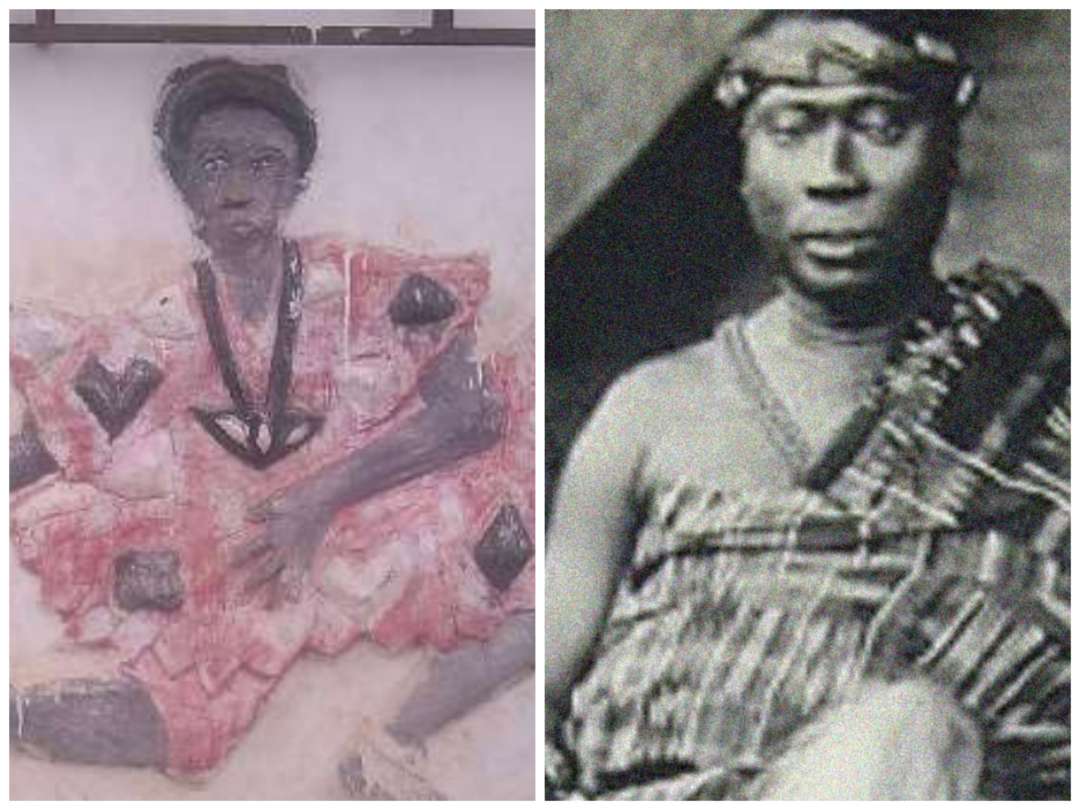
  • “Dode Akaabi, the first female king of the Gas who trained Ashanti Warrior, Yaa Asantewaa”

    “Dode Akaabi, the first female king of the Gas who trained Ashanti Warrior, Yaa Asantewaa”

    I am the great grand daughter of this great woman but I write this purposely to preserve history devoid of any emotional sentiments and personal association with the character.

    Dode Akaabi, the grand daughter of Wettey, the leader of the Obutus(Awutus) one of the Guan tribes and the Guans as a whole, and a princess of Obutus (Awutus) married one of the king of the Gas, Mampon Okai also known as Dua Kwei and bore him a son by name, Okaikwei.

    The Obutus (Awutus) established a good relationship with the Gas who before their encounter with the Obutus(Awutus) had their “Wulomos”( Spiritual leaders) leading them. The Obutus had kings and the association of the Gas with them led to their commencement of Kings ruling instead of the Wulomos.

    Till now, though the Awutus are Guans, they are also considered as Gas because of Dode Akaabi’s rule in the Ga land and the miscegenation between the Gas and the Obutus (Awutus). The Awutus and Senya Bereku was assimilated into the family of Naiwe in the Ga land and till date, the ruling families of Awutu and Senya Bereku bear the title of ” Nai” in recognition of their blood relationship with the Gas.

    The Obutus (Awutus) also inter married with the Akwamus and other tribes and so there are some historians that refer to the Akwamus as Guans. In 1693, the Asamani of Akwamu who is believed to be from the Asamani clan in the Obutu( Awutu)/ Guan tribe led a raid and seized Osu Castle from the Danish colonists. There is also the ” Tutu” shrine in Bereku where it is believed that Manu Kotosii, the mother of Osei Tutu1 went to seek help from the Tutu shrine for a son whom was named Osei Tutu 1.

    Dode Akaabi, wife of the Ga mantse, Mampon Okai also known as Dua Kwei and mother of Okaikwei ruled as the first female king of the Gas after the demise of Mampon Okai due to the fact that, the heir to the throne, Okaikwei was too young at the time of the demise of the King. Her rule was repugnant to the Ga customary law of succession which only allowed male rulers. She was the caretaker of the late king ‘s regalia and paraphernalia and doubled as his wife.

    Dode Akaabi emerges as a formidable figure whose rise as the first female political leader of the Gold Coast opened a new vistas of power to her gender. She is generally believed to have introduced much display of jewellery and colourful attire into the chieftains institution.

    Some even attribute the custom of sitting on stools to Dode Akaabi. Prior to her rule, stools were mainly taken into war and held aloft to lift the spirit of the troops; popularly regarded as having no authority from the deity. She demanded to sit on the war stool to visually symbolize her authority over her people.

    She forbade men from using the expression, “bulu” (fool) in reference to their wives. And when they did, she ordered that a live lion or tiger be captured for her just to deter the men from disrespecting their wives.

    She led the Guans which comprises the Obutus, Lartehs, Kyereponis, Krachis, Guans, etc to secure so many lands which included Ayawaso, Nsakina, Ablekuma, Amasaman, etc and even helped the Akwamus in so many wars. She had her personal war stools which present day are in Bereku and Larteh which she took to wars and trained most of the Akwamu warriors including Nana Yaa Asantewaa, a renowned Ashanti warrior.

    It’s a pity that this HEROINE who is revered amongst her people have been left untouched. I only seek to tell the forgotten story.

    The Forgotten People And Heroine Part 2

    Oral tradition has it that, the founding fathers of Awutu in the Central Region of Ghana migrated from inland Volta, along the Volta river till they reached the sea shore trekking westward.

    They halted at a place called Awutu Ampi(Awutu Rocks) which is sometimes described as Bleku Abo(sky-god Bleku’s rock) at Lanma, about eleven miles west of Accra which today forms the boundary line between Accra and Awutu, popularly called Mile eleven. It is believed that the Awutu arrived somewhat later than the Ga Mashi who settled near Nkorang(Anglicized Accra). The dialect of the Awutu is Guan variants of which are spoken in Gonna and Lartehs.

    The word “AWUTU AMASA” which means the three Awutu states refers to Awutu-Effutu-Senya district. These three states have so many things in common. The immigrant Awutu people arrived under the leadership of King Whettey who had a lot of gold and brought his wealth with him( see M.J. Field “Social organization of the Ga people” 1940, p. 143).

    At Awutu Ampi, they camped on the Dampa hill and were organised in local patrilineal groups. The leading ones were known as “Dode, “Shiapa” and “Pete” and they worshipped the gods, “Odzobi” , “Afi Tutu” and “Odai Tutu” respectively.

    The immigrant leader belonged to the Dode lineage and possessing a stool(Pru) which is round with three handles, coated white annually and being kept in a room of its own apart from the two wars stools, one of which is in Larteh presently. Tradition indicates that the relationship between the various immigrant groups was cordial for each had something valuable to offer the other.

    The Adangmes were famous potters, the La were skilled makers of fire, the Ga Mashi supplied maize, the Awutus were renowned rain makers and the Akwamus specialised in warfare and hired themselves out as mercenaries.( see M.J. Field, “Awutu Bereku Story”. Published by Speed will press, 1962, of 4.)

    The Ga Mashie under Ayi Kushi coveted the gold trinkets of King Wettey with which he was richly decorated and transferred their allegiance from Ayi Kushi to the Awutu king. This brought about constant quarrels between the two sides till they both died and were succeeded.

    Later, Dode Akaabi got married to a rich Ga slave dealer by name, Okai Mampong( already in the part 1).

    |The HEROINE, Dode Akaabi.|
    “DODE” means ancient and it has no relation with the Adangbe name, Dede.

    Her ascension to power as the first major female figure in Ga and indeed Gold Coast, history should certainly rank as a remarkable event attesting to the skills of this powerful personality. Dode Akaabi certainly displayed the ruthless decisiveness that has marked the careers of admired statesmen the world over. Her alleged atrocities aside, Dode Akaabi appears to have kept the kingdom intact.

    However, the manner of her death indicates a deeper degree of dissent among her subjects. Her regency and greatness is perhaps best analyzed in the context of her role in the evolution of chiefship in the Gold Coast. Until her ascension to power, chieftancy appeared to have been a male dominated affair.

    The chief in the theocratic state of Accra was by definition also a high priest or “wulomo”. As the high priest could only be male, Dode Akaabi’s rise to power necessarily entailed a schism between the powers of the “wulomo” and that of the King; this marked a secularization of Ga-Adangme politics and the concentration of religious authority in the hands of the “wulomei”( plural of wulomo). Since her authority, unlike her predecessors was no longer derived from privileged access to the deity, She had to formulate new methods of governance.

    This she did principally through the previous untried method of direct legislation which appears to have drawn the ire of her subjects. She brought a new magnificence to royalty by combining western culture with new standards of culture. She wore gold ornaments just as king Wettey. She emerges as a formidable figure whose rise as the first female political leader of the Gold Coast opened new vistas of power to her gender. She is generally believed to have introduced much display of jewellery and colourful attire into the institution of Chieftancy and some even attribute the custom of sitting on stools to Dode Akaabi. Prior to her rule, stools were mainly taken to war and held aloft to lift the spirit of the troops.

    She demanded to sit on the war stool to visually symbolize her authority over her subjects. She led her people to win so many wars and one of her war stools till date remains in the palace of Lartehs. It is accounted that, she led her people to war and were met by rain on their way back. She asked that the stool be taken to the Lartehs palace to prevent it from being beaten by rain and then moved on with her people.

    The people of Awutu under Dode Akaabi and other great rulers settled and ruled lands which they discovered like Ayawaso, Apetumi near the Apara hill, Obutu Ofankor, Obutu Dzrano, Awutu Kpehe, present day Kasoa, Kwabenya, Awutuakwa near Odorkor, Gbawe, Nsakina, Ablekuma, Anyaa amongst others. These are all places that were discovered and ruled by the Awutus. (Op. Cit. 1962,pg.3).

    |The Tragic Death Of Dode Akaabi.|
    Later, her lust for power increased considerably as she grew older and became a tyrant who could punish crime without mercy, often against the Ga people, who she accused of murdering her husband. One day, she ordered the deepening of a well at the foothills of a rock with their bare hands. As the hole deepened, they encountered hard rocks and decided to rebel; so they sent word to her that there was someone obstructing their work. Legend has it that Dode, enraged beyond endurance dashed to the workplace and quickly descended into the well to deal ruthlessly with the intruder. The rebels then closed in and stoned her to death and filled the well with stones.( somewhere around Nsakina stands that well).

    The myth is that, her ghost lived in the pit and to pacify her, annual sacrifices were performed till 1939,when a famous medicine man from Northern Ghana was commissioned by the Awutu elders to exorcise the her spirit out of the well and brought among its kinsfolk. The invisible ghost was seated upon a white horse and led in procession to Awutu where it was bidden to rest in peace.( Op. Cit. 1962, pg. 6)

    |The Fall of The Awutus.|
    Her son, Okaikoi succeeded the Ga throne of his father, Mampong Okai. Since he was not a member of the Dode-patrilineage, he was not eligible to succeed in Awutu. The Akwamuhene who was watching this dangerous event unfold, lost no time as he rushed his troops to take positions around the Okai koi hills during which many of the Awutus and the Gas deserted him. This unfortunate situation compelled Okai Koi to commit suicide on the battlefield by blowing himself up with a gun. Fear led to the scattering of the people and today, most of the Awutus can be found in the Awutu/Effutu/Senya Bereku traditional area in the Central Region of which main Awutu towns like Bawjiase, Obrachire, Bereku, amongst others.

    Reference.
    Http://gadangmenikasemoasafo.wordpress
    http://www.ghanaculture.gov.gh/index1
    Credit.
    Kwame Ampene( founder of the Guan historical society( writer of the history of the Awutus)

    Source: modernghana.com via Mercy Asamani

    mercedesrowe.blogspot.com
    Columnist@modernghana
    mercyasamani@yahoo.com
    0263640914

    DISCLAIMER: TIGPost.co will not be liable for any inaccuracies contained in this article. The views expressed in the article are solely those of the author’s, and do not reflect those of The Independent Ghana.

  • ECG overpaid non-CWM beneficiaries – Audit report

    ECG overpaid non-CWM beneficiaries – Audit report

    An audit conducted by PricewaterhouseCoopers (PwC) on the Electricity Company of Ghana (ECG) has revealed significant discrepancies in its adherence to the Cash Waterfall Mechanism (CWM) established by the Public Utilities Regulatory Commission (PURC).

    The Cash Waterfall Mechanism Validation Report for November 2023 Payment echoed concerns about the handling of cash collection and distribution by ECG management.

    The audit, according to The Hearld, found that there were substantial disparities between the reported collections and the actual disbursements by ECG, amounting to approximately GHS3.5 billion over ECG’s CWM allocation from July 2022 to September 2023.

    These findings are contrary to the requirements of the Cash Waterfall Mechanism for month-on-month analysis, as reported by The Herald.

    The audit findings revealed that ECG disbursed funds to non-CWM beneficiaries in amounts that exceeded its allocated amounts as per the CWM guidelines. This deviation from the intended distribution mechanism outlined by PURC is significant.

    “Disbursement to CWM beneficiaries from other ECG operational accounts post-MoF directive of June 21, 2023, effective July 1, 2023. The Ministry of Finance (MoF) issued a directive on June 21, 2023, effective July 1, 2023, that ECG should operate a single account from which all collections and payments will be made. In this regard, ECG designated Fidelity Bank Account Number 1070006628289 as the single collections account.

    “From our validation procedures performed, we noted that some payments totaling GHS 684 million to CWM beneficiaries for the period from July 2023 to September 2023 were made from other ECG operational accounts, escrow accounts, and margin accounts. Payments through these other accounts were not in line with the MoF directive issued.

    “We have raised this with ECG and requested the bank statements for these operational accounts, escrow accounts, and margin accounts to validate these payments to the CWM beneficiaries. We have yet to receive them.”

    Additionally, the audit highlighted a net difference of GHS1.9 billion between the total collections declared on the CWM-approved schedules and the inflows consolidated from the bank account statements reviewed.

    The audit team noted consistent differences between the collections and corresponding allocations made by ECG, compared to what was actually paid out. According to the CWM reports, this discrepancy was primarily due to overpayments/underpayments to beneficiaries, particularly those classified under Tier 2 (Level B).

    “The total collections per the CWM were lower than the total collections per the two bank statements. We have raised this with ECG and requested explanations and supporting evidence for these disparities. As of the date of this report, ECG management has yet to revert with these explanations and supporting evidence.”

    “The list of documents reviewed as part of the validation exercise includes the following: CWM payments (from 2022 to 2023); ECG GCB Bank Statement for account number 1011130011277 for the period from July 2022 to September 2023; Fidelity Bank Statement for account number 1070006628289 for the period from January 2023 to September 2023;

    “Cheque registers for payments to CWM beneficiaries for the period from July 2022 to September 2023; bank transfer advice to various banks for payments to various CWM beneficiaries for the period from July 2022 to September 2023.

    “Based on the data made available to us, we adopted the following approach to the exercise: Cash collections: We obtained the bank statements of the GCB collections account (1011130011277) and the Fidelity single collections account (1070006628289) and analysed all collections received in the account (credit transactions in the bank statement) on a monthly basis for the period from July 2022 to September 2023.

    “We then compared the total monthly collections analysed from the bank statements to the amounts reported in the CWM, highlighting the differences noted for each month.

    “We obtained the bank statements of the GCB collections account (1011130011277) and Fidelity single collections account (1070006628289) and analysed all disbursements in the account (debit transactions in the bank statement) on a monthly basis for the period from July 2022 to September 2023. We then identified all disbursements on a month-by-month basis made to CWM beneficiaries by obtaining and analysing the cheque register and bank transfer advice from ECG. For those payments made through the Fidelity and GCB accounts, we agreed these amounts to the bank statements.

    “We then excluded the total CWM payments from the total disbursements to ascertain the non-CWM disbursements made by ECG and compared these amounts to ECG’s CWM allocation. Differences between Total Collections declared on CWM and the total collections consolidated from the bank statements of the GCB main account and the Fidelity Single Collections account. On a monthly basis, ECG is required to report their total collections for the month for input into the CWM, which would then be distributed amongst the CWM beneficiaries.

    “To assess the amounts reported by ECG, we obtained and analysed all collections received in the GCB collections account (account number 1011130011277) for the period from July 2022 to September 2023 and the Fidelity Bank Single Collections Account (account number 1070006628289) for the period from January 2023 to September 2023).

    “From our analysis performed on the bank statements received, we noted a net difference of GHS1.9 billion between the total collections declared on the CWM approved schedules and the inflows consolidated from the bank account statements shared.

    This comes as PURC continues to accuse ECG and its management of refusing to comply “with the guidelines of the new CWM as directed by the President, Nana Akufo-Addo, in August 2023.

    “This defeats the principle of fair and equitable allocation of revenue to sector players under Level B as approved by the CWM Standing Committee in line with the revised CWM guidelines. The Commission wishes to state that ECG should co-operate and allow the CWM to function as directed by the President. Additionally, MoF should also take the necessary steps to honour its obligation by paying for the shortfalls.”

    In the audit report, PricewaterhouseCoopers expressed frustrations, citing a lack of cooperation from ECG management during the audit process. The report noted that the state company often refused to provide requested information, particularly documents, and did not respond to queries regarding identified infractions.

    Conducted at the request of the Ministry of Finance, the audit recommends the strengthening of the current CWM and enhancing ECG’s compliance with its directives. Proposed measures include process improvements in billing and invoicing, as well as the implementation of technology-enabled platforms to enhance transparency and accountability.

    The audit report stated, “We have identified and described in detail our recommendations for strengthening the current CWM and the inputs from ECG going forward.” It added, “It is imperative that ECG and other stakeholders work collaboratively to implement these recommendations and uphold the integrity of the CWM.”

    This includes: Establishing billing and invoicing process improvements at ECG; Key considerations for the CWM disbursement process; Key considerations for the management of non-tariff revenue by ECG; Medium-term redevelopment of the CWM onto a technology-enabled platform to strengthen the fundamental objectives of the mechanism; Key considerations for cybersecurity and data protection measures at ECG (including implementation of a disaster recovery plan or framework, integration of cyber defence mechanisms and processes at ECG, and considerations for managing third-party solutions and collaborations).

    It suggested engaging with the Ministry of Energy, PURC, and other relevant stakeholders to establish the critical process of retrieving the required data/information to complete our tasks. This will also establish the foundation for the relevant processes and information requirements going forward for the quarterly reviews.

    “We also look forward to discussing our recommendations as PURC, ESRP, and the other stakeholders plan to work with ECG to implement them to help restore confidence and promote a transparent and strengthened CWM.”

    As part of achieving financial sustainability in Ghana’s energy utilities and value chain, the Government of Ghana (GoG) initiated the Energy Sector Recovery Program (ESRP) in May 2019. The ESRP is a comprehensive recovery program that sets out a roadmap of policies and actions required for financial recovery in the energy sector.

    In April 2020, the Electricity Sector Revenue Protection (ESRP) implemented the Cash Waterfall Mechanism (CWM) to ensure transparent, fair, and timely payment of all revenues billed and collected by the Electricity Company of Ghana (ECG) on behalf of the entire electricity generation value chain.

    The CWM, along with the Natural Gas Clearinghouse (NGC) mechanisms, was established to promote fairness and transparency in the disbursement of energy revenues and the equitable allocation of tariff revenue collected by ECG to all parties in the energy value chain.

    This validation exercise aims to verify electricity sales in terms of kilowatt-hours (kWh) and the amount billed and collected by ECG over a specified period. It seeks to confirm whether these sales, billings, and collections align with the requirements and outcomes of the Cash Waterfall Mechanism and its related payments. The assessment will also validate the cycle of power delivered, corresponding billing, and collection, as well as the full transfer of these collected funds from regional collection accounts into the Single Collections account.

    Issues related to ECG’s revenues/collections and the broader energy sector debt have contributed to Ghana’s economic challenges. Therefore, this engagement is crucial in identifying and addressing these challenges to strengthen the power sector value chain.

    Amongst other things, it demanded some detailed revenue assurance and validation, an understanding of the key sources of revenue for ECG, i.e., tariff and non-tariff, and their detailed composition /breakdown; a review of revenue/cash collections from the district level and how this flows to the Head Office from the customers’ billings.

    It also recommended stakeholder engagement and buy-in to align with key stakeholders (IPPs, ECG, PURC, MoEn, GoG) on the reconciliation/validation exercise’s outcome and key actions required.

    The CWM report does not state clearly why this happened, and the PURC notes that the CWM Standing Committee indicated how this defeats the purpose of the CWM.

    “We generally agree with this position, as the guidelines for the CWM are quite clear.

    It will be important to understand, from ECG’s perspective, why there is a continuous lack of cooperation in following the guidelines, which is raising many questions about its use of its collections.”

    It was also identified that ECG used an unprotected Microsoft Excel spreadsheet (Data Integrity and Model Security).

    “We observed that most of the submitted CWM models did not have protected cells to limit users’ ability to interfere with allocation formulas either intentionally or by error.”

    It was advised that PURC will need to reconsider using Microsoft Excel-based spreadsheets for the CWM going forward. The integrity of the data entered into the spreadsheet must be safeguarded to promote transparency and efficient management of the mechanism.

    Key cells must be locked with control access features and enhanced access log features programmed into the spreadsheet to track any attempted changes to the inputs in the model.

    “As suggested in our recommendation, PURC, together with ESRP, should consider a shared platform approach to enhance oversight and accountability from ECG, beneficiaries, and the key stakeholders of Ghana’s value chain to promote confidence in the CWM and its ability to meet its objectives.”

    “Currently, ECG is required to submit the CWM to PURC for review and validation. As mentioned earlier, the allocations and subsequent disbursements often do not completely follow the requirements of the guidelines. It will be useful for PURC to take advantage of technology-enabled solutions to facilitate a system that provides real-time data, independent validation, and a stronger reconciliation system to support a more efficient monitoring and evaluation process in the CWM declaration process.

    On validation of payments to CWM beneficiaries, the report said that “from our review of payments made to CWM beneficiaries, we noted that some payments were made through ECG’s operational accounts, margin accounts, and escrow accounts (ADB, Consolidated Bank, Fidelity Bank, GCB, Access Bank, Zenith Bank, Bank of Africa, First Atlantic Bank, GT Bank, Omni BSIC, Republic Bank, Ecobank, ABSA, Stanbic Bank, Societe Generale, CAL Bank, and Universal Merchant Bank). As of the date of this report, the bank statements for these accounts have not been made available to us to validate these payments. As such, the validation of these payments could not be performed.

  • ECG accused of understating generated funds

    ECG accused of understating generated funds

    An audit conducted by PricewaterhouseCoopers (PwC) on the Electricity Company of Ghana (ECG) has revealed significant discrepancies in its adherence to the Cash Waterfall Mechanism (CWM) established by the Public Utilities Regulatory Commission (PURC).

    The audit, according to The Hearld, found that there were substantial disparities between the reported collections and the actual disbursements by ECG, amounting to approximately GHS3.5 billion over ECG’s CWM allocation from July 2022 to September 2023.

    These findings are contrary to the requirements of the Cash Waterfall Mechanism for month-on-month analysis, as reported by The Herald.

    Additionally, the audit highlighted a net difference of GHS1.9 billion between the total collections declared on the CWM-approved schedules and the inflows consolidated from the bank account statements reviewed.

    This comes as PURC continues to accuse ECG and its management of refusing to comply “with the guidelines of the new CWM as directed by the President, Nana Akufo-Addo, in August 2023.

    “This defeats the principle of fair and equitable allocation of revenue to sector players under Level B as approved by the CWM Standing Committee in line with the revised CWM guidelines. The Commission wishes to state that ECG should co-operate and allow the CWM to function as directed by the President. Additionally, MoF should also take the necessary steps to honour its obligation by paying for the shortfalls.”

    The Cash Waterfall Mechanism Validation Report for November 2023 Payment echoed similar concerns about the handling of cash collection and distribution by ECG management.

    In the audit report, PricewaterhouseCoopers expressed frustrations, citing a lack of cooperation from ECG management during the audit process. The report noted that the state company often refused to provide requested information, particularly documents, and did not respond to queries regarding identified infractions.

    However, the PricewaterhouseCoopers audit said, “From our analysis of the disbursements made from the GCB collections account and the Fidelity Single Collections account, we noted that for all the months, with the exception of February 2023, the disbursements made by ECG to non-CWM beneficiaries were in excess of its allocated amounts per the CWM.”

    The audit findings revealed that ECG disbursed funds to non-CWM beneficiaries in amounts that exceeded its allocated amounts as per the CWM guidelines. This deviation from the intended distribution mechanism outlined by PURC is significant.

    The audit team noted consistent differences between the collections and corresponding allocations made by ECG, compared to what was actually paid out. According to the CWM reports, this discrepancy was primarily due to overpayments/underpayments to beneficiaries, particularly those classified under Tier 2 (Level B).

    Conducted at the request of the Ministry of Finance, the audit recommends the strengthening of the current CWM and enhancing ECG’s compliance with its directives. Proposed measures include process improvements in billing and invoicing, as well as the implementation of technology-enabled platforms to enhance transparency and accountability.

    The audit report stated, “We have identified and described in detail our recommendations for strengthening the current CWM and the inputs from ECG going forward.” It added, “It is imperative that ECG and other stakeholders work collaboratively to implement these recommendations and uphold the integrity of the CWM.”

    This includes: Establishing billing and invoicing process improvements at ECG; Key considerations for the CWM disbursement process; Key considerations for the management of non-tariff revenue by ECG; Medium-term redevelopment of the CWM onto a technology-enabled platform to strengthen the fundamental objectives of the mechanism; Key considerations for cybersecurity and data protection measures at ECG (including implementation of a disaster recovery plan or framework, integration of cyber defence mechanisms and processes at ECG, and considerations for managing third-party solutions and collaborations).

    It suggested engaging with the Ministry of Energy, PURC, and other relevant stakeholders to establish the critical process of retrieving the required data/information to complete our tasks. This will also establish the foundation for the relevant processes and information requirements going forward for the quarterly reviews.

    “We also look forward to discussing our recommendations as PURC, ESRP, and the other stakeholders plan to work with ECG to implement them to help restore confidence and promote a transparent and strengthened CWM.”

    “The total collections per the CWM were lower than the total collections per the two bank statements. We have raised this with ECG and requested explanations and supporting evidence for these disparities. As of the date of this report, ECG management has yet to revert with these explanations and supporting evidence.”

    “Disbursement to CWM beneficiaries from other ECG operational accounts post-MoF directive of June 21, 2023, effective July 1, 2023. The Ministry of Finance (MoF) issued a directive on June 21, 2023, effective July 1, 2023, that ECG should operate a single account from which all collections and payments will be made. In this regard, ECG designated Fidelity Bank Account Number 1070006628289 as the single collections account.

    “From our validation procedures performed, we noted that some payments totaling GHS 684 million to CWM beneficiaries for the period from July 2023 to September 2023 were made from other ECG operational accounts, escrow accounts, and margin accounts. Payments through these other accounts were not in line with the MoF directive issued.

    “We have raised this with ECG and requested the bank statements for these operational accounts, escrow accounts, and margin accounts to validate these payments to the CWM beneficiaries. We have yet to receive them.

    As part of achieving financial sustainability in Ghana’s energy utilities and value chain, the Government of Ghana (GoG) initiated the Energy Sector Recovery Program (ESRP) in May 2019. The ESRP is a comprehensive recovery program that sets out a roadmap of policies and actions required for financial recovery in the energy sector.

    In April 2020, the Electricity Sector Revenue Protection (ESRP) implemented the Cash Waterfall Mechanism (CWM) to ensure transparent, fair, and timely payment of all revenues billed and collected by the Electricity Company of Ghana (ECG) on behalf of the entire electricity generation value chain.

    The CWM, along with the Natural Gas Clearinghouse (NGC) mechanisms, was established to promote fairness and transparency in the disbursement of energy revenues and the equitable allocation of tariff revenue collected by ECG to all parties in the energy value chain.

    This validation exercise aims to verify electricity sales in terms of kilowatt-hours (kWh) and the amount billed and collected by ECG over a specified period. It seeks to confirm whether these sales, billings, and collections align with the requirements and outcomes of the Cash Waterfall Mechanism and its related payments. The assessment will also validate the cycle of power delivered, corresponding billing, and collection, as well as the full transfer of these collected funds from regional collection accounts into the Single Collections account.

    Issues related to ECG’s revenues/collections and the broader energy sector debt have contributed to Ghana’s economic challenges. Therefore, this engagement is crucial in identifying and addressing these challenges to strengthen the power sector value chain.

    Amongst other things, it demanded some detailed revenue assurance and validation, an understanding of the key sources of revenue for ECG, i.e., tariff and non-tariff, and their detailed composition /breakdown; a review of revenue/cash collections from the district level and how this flows to the Head Office from the customers’ billings.

    It also recommended stakeholder engagement and buy-in to align with key stakeholders (IPPs, ECG, PURC, MoEn, GoG) on the reconciliation/validation exercise’s outcome and key actions required.

    The CWM report does not state clearly why this happened, and the PURC notes that the CWM Standing Committee indicated how this defeats the purpose of the CWM.

    “We generally agree with this position, as the guidelines for the CWM are quite clear.

    It will be important to understand, from ECG’s perspective, why there is a continuous lack of cooperation in following the guidelines, which is raising many questions about its use of its collections.”

    It was also identified that ECG used an unprotected Microsoft Excel spreadsheet (Data Integrity and Model Security).

    “We observed that most of the submitted CWM models did not have protected cells to limit users’ ability to interfere with allocation formulas either intentionally or by error.”

    It was advised that PURC will need to reconsider using Microsoft Excel-based spreadsheets for the CWM going forward. The integrity of the data entered into the spreadsheet must be safeguarded to promote transparency and efficient management of the mechanism.

    Key cells must be locked with control access features and enhanced access log features programmed into the spreadsheet to track any attempted changes to the inputs in the model.

    “As suggested in our recommendation, PURC, together with ESRP, should consider a shared platform approach to enhance oversight and accountability from ECG, beneficiaries, and the key stakeholders of Ghana’s value chain to promote confidence in the CWM and its ability to meet its objectives.”

    “Currently, ECG is required to submit the CWM to PURC for review and validation. As mentioned earlier, the allocations and subsequent disbursements often do not completely follow the requirements of the guidelines. It will be useful for PURC to take advantage of technology-enabled solutions to facilitate a system that provides real-time data, independent validation, and a stronger reconciliation system to support a more efficient monitoring and evaluation process in the CWM declaration process.

    On validation of payments to CWM beneficiaries, the report said that “from our review of payments made to CWM beneficiaries, we noted that some payments were made through ECG’s operational accounts, margin accounts, and escrow accounts (ADB, Consolidated Bank, Fidelity Bank, GCB, Access Bank, Zenith Bank, Bank of Africa, First Atlantic Bank, GT Bank, Omni BSIC, Republic Bank, Ecobank, ABSA, Stanbic Bank, Societe Generale, CAL Bank, and Universal Merchant Bank). As of the date of this report, the bank statements for these accounts have not been made available to us to validate these payments. As such, the validation of these payments could not be performed.

    “The list of documents reviewed as part of the validation exercise includes the following: CWM payments (from 2022 to 2023); ECG GCB Bank Statement for account number 1011130011277 for the period from July 2022 to September 2023; Fidelity Bank Statement for account number 1070006628289 for the period from January 2023 to September 2023;

    “Cheque registers for payments to CWM beneficiaries for the period from July 2022 to September 2023; bank transfer advice to various banks for payments to various CWM beneficiaries for the period from July 2022 to September 2023.

    “Based on the data made available to us, we adopted the following approach to the exercise: Cash collections: We obtained the bank statements of the GCB collections account (1011130011277) and the Fidelity single collections account (1070006628289) and analysed all collections received in the account (credit transactions in the bank statement) on a monthly basis for the period from July 2022 to September 2023.

    “We then compared the total monthly collections analysed from the bank statements to the amounts reported in the CWM, highlighting the differences noted for each month.

    “We obtained the bank statements of the GCB collections account (1011130011277) and Fidelity single collections account (1070006628289) and analysed all disbursements in the account (debit transactions in the bank statement) on a monthly basis for the period from July 2022 to September 2023. We then identified all disbursements on a month-by-month basis made to CWM beneficiaries by obtaining and analysing the cheque register and bank transfer advice from ECG. For those payments made through the Fidelity and GCB accounts, we agreed these amounts to the bank statements.

    “We then excluded the total CWM payments from the total disbursements to ascertain the non-CWM disbursements made by ECG and compared these amounts to ECG’s CWM allocation. Differences between Total Collections declared on CWM and the total collections consolidated from the bank statements of the GCB main account and the Fidelity Single Collections account. On a monthly basis, ECG is required to report their total collections for the month for input into the CWM, which would then be distributed amongst the CWM beneficiaries.

    “To assess the amounts reported by ECG, we obtained and analysed all collections received in the GCB collections account (account number 1011130011277) for the period from July 2022 to September 2023 and the Fidelity Bank Single Collections Account (account number 1070006628289) for the period from January 2023 to September 2023).

    “From our analysis performed on the bank statements received, we noted a net difference of GHS1.9 billion between the total collections declared on the CWM approved schedules and the inflows consolidated from the bank account statements shared.
  • ECG defied Finance Ministry’s directive on CWM payment worth GHC684M – Audit report

    ECG defied Finance Ministry’s directive on CWM payment worth GHC684M – Audit report

    An audit conducted by PricewaterhouseCoopers (PwC) on the Electricity Company of Ghana (ECG) has revealed significant discrepancies in its adherence to the Cash Waterfall Mechanism (CWM) established by the Public Utilities Regulatory Commission (PURC).

    The Cash Waterfall Mechanism Validation Report for November 2023 Payment echoed concerns about the handling of cash collection and distribution by ECG management.

    The audit, according to The Hearld, found that there were substantial disparities between the reported collections and the actual disbursements by ECG, amounting to approximately GHS3.5 billion over ECG’s CWM allocation from July 2022 to September 2023.

    These findings are contrary to the requirements of the Cash Waterfall Mechanism for month-on-month analysis, as reported by The Herald.

    The audit findings revealed that ECG disbursed funds to non-CWM beneficiaries in amounts that exceeded its allocated amounts as per the CWM guidelines. This deviation from the intended distribution mechanism outlined by PURC is significant.

    “Disbursement to CWM beneficiaries from other ECG operational accounts post-MoF directive of June 21, 2023, effective July 1, 2023. The Ministry of Finance (MoF) issued a directive on June 21, 2023, effective July 1, 2023, that ECG should operate a single account from which all collections and payments will be made. In this regard, ECG designated Fidelity Bank Account Number 1070006628289 as the single collections account.

    “From our validation procedures performed, we noted that some payments totaling GHS 684 million to CWM beneficiaries for the period from July 2023 to September 2023 were made from other ECG operational accounts, escrow accounts, and margin accounts. Payments through these other accounts were not in line with the MoF directive issued.

    “We have raised this with ECG and requested the bank statements for these operational accounts, escrow accounts, and margin accounts to validate these payments to the CWM beneficiaries. We have yet to receive them.”

    Additionally, the audit highlighted a net difference of GHS1.9 billion between the total collections declared on the CWM-approved schedules and the inflows consolidated from the bank account statements reviewed.

    The audit team noted consistent differences between the collections and corresponding allocations made by ECG, compared to what was actually paid out. According to the CWM reports, this discrepancy was primarily due to overpayments/underpayments to beneficiaries, particularly those classified under Tier 2 (Level B).

    “The total collections per the CWM were lower than the total collections per the two bank statements. We have raised this with ECG and requested explanations and supporting evidence for these disparities. As of the date of this report, ECG management has yet to revert with these explanations and supporting evidence.”

    “The list of documents reviewed as part of the validation exercise includes the following: CWM payments (from 2022 to 2023); ECG GCB Bank Statement for account number 1011130011277 for the period from July 2022 to September 2023; Fidelity Bank Statement for account number 1070006628289 for the period from January 2023 to September 2023;

    “Cheque registers for payments to CWM beneficiaries for the period from July 2022 to September 2023; bank transfer advice to various banks for payments to various CWM beneficiaries for the period from July 2022 to September 2023.

    “Based on the data made available to us, we adopted the following approach to the exercise: Cash collections: We obtained the bank statements of the GCB collections account (1011130011277) and the Fidelity single collections account (1070006628289) and analysed all collections received in the account (credit transactions in the bank statement) on a monthly basis for the period from July 2022 to September 2023.

    “We then compared the total monthly collections analysed from the bank statements to the amounts reported in the CWM, highlighting the differences noted for each month.

    “We obtained the bank statements of the GCB collections account (1011130011277) and Fidelity single collections account (1070006628289) and analysed all disbursements in the account (debit transactions in the bank statement) on a monthly basis for the period from July 2022 to September 2023. We then identified all disbursements on a month-by-month basis made to CWM beneficiaries by obtaining and analysing the cheque register and bank transfer advice from ECG. For those payments made through the Fidelity and GCB accounts, we agreed these amounts to the bank statements.

    “We then excluded the total CWM payments from the total disbursements to ascertain the non-CWM disbursements made by ECG and compared these amounts to ECG’s CWM allocation. Differences between Total Collections declared on CWM and the total collections consolidated from the bank statements of the GCB main account and the Fidelity Single Collections account. On a monthly basis, ECG is required to report their total collections for the month for input into the CWM, which would then be distributed amongst the CWM beneficiaries.

    “To assess the amounts reported by ECG, we obtained and analysed all collections received in the GCB collections account (account number 1011130011277) for the period from July 2022 to September 2023 and the Fidelity Bank Single Collections Account (account number 1070006628289) for the period from January 2023 to September 2023).

    “From our analysis performed on the bank statements received, we noted a net difference of GHS1.9 billion between the total collections declared on the CWM approved schedules and the inflows consolidated from the bank account statements shared.

    This comes as PURC continues to accuse ECG and its management of refusing to comply “with the guidelines of the new CWM as directed by the President, Nana Akufo-Addo, in August 2023.

    “This defeats the principle of fair and equitable allocation of revenue to sector players under Level B as approved by the CWM Standing Committee in line with the revised CWM guidelines. The Commission wishes to state that ECG should co-operate and allow the CWM to function as directed by the President. Additionally, MoF should also take the necessary steps to honour its obligation by paying for the shortfalls.”

    In the audit report, PricewaterhouseCoopers expressed frustrations, citing a lack of cooperation from ECG management during the audit process. The report noted that the state company often refused to provide requested information, particularly documents, and did not respond to queries regarding identified infractions.

    Conducted at the request of the Ministry of Finance, the audit recommends the strengthening of the current CWM and enhancing ECG’s compliance with its directives. Proposed measures include process improvements in billing and invoicing, as well as the implementation of technology-enabled platforms to enhance transparency and accountability.

    The audit report stated, “We have identified and described in detail our recommendations for strengthening the current CWM and the inputs from ECG going forward.” It added, “It is imperative that ECG and other stakeholders work collaboratively to implement these recommendations and uphold the integrity of the CWM.”

    This includes: Establishing billing and invoicing process improvements at ECG; Key considerations for the CWM disbursement process; Key considerations for the management of non-tariff revenue by ECG; Medium-term redevelopment of the CWM onto a technology-enabled platform to strengthen the fundamental objectives of the mechanism; Key considerations for cybersecurity and data protection measures at ECG (including implementation of a disaster recovery plan or framework, integration of cyber defence mechanisms and processes at ECG, and considerations for managing third-party solutions and collaborations).

    It suggested engaging with the Ministry of Energy, PURC, and other relevant stakeholders to establish the critical process of retrieving the required data/information to complete our tasks. This will also establish the foundation for the relevant processes and information requirements going forward for the quarterly reviews.

    “We also look forward to discussing our recommendations as PURC, ESRP, and the other stakeholders plan to work with ECG to implement them to help restore confidence and promote a transparent and strengthened CWM.”

    As part of achieving financial sustainability in Ghana’s energy utilities and value chain, the Government of Ghana (GoG) initiated the Energy Sector Recovery Program (ESRP) in May 2019. The ESRP is a comprehensive recovery program that sets out a roadmap of policies and actions required for financial recovery in the energy sector.

    In April 2020, the Electricity Sector Revenue Protection (ESRP) implemented the Cash Waterfall Mechanism (CWM) to ensure transparent, fair, and timely payment of all revenues billed and collected by the Electricity Company of Ghana (ECG) on behalf of the entire electricity generation value chain.

    The CWM, along with the Natural Gas Clearinghouse (NGC) mechanisms, was established to promote fairness and transparency in the disbursement of energy revenues and the equitable allocation of tariff revenue collected by ECG to all parties in the energy value chain.

    This validation exercise aims to verify electricity sales in terms of kilowatt-hours (kWh) and the amount billed and collected by ECG over a specified period. It seeks to confirm whether these sales, billings, and collections align with the requirements and outcomes of the Cash Waterfall Mechanism and its related payments. The assessment will also validate the cycle of power delivered, corresponding billing, and collection, as well as the full transfer of these collected funds from regional collection accounts into the Single Collections account.

    Issues related to ECG’s revenues/collections and the broader energy sector debt have contributed to Ghana’s economic challenges. Therefore, this engagement is crucial in identifying and addressing these challenges to strengthen the power sector value chain.

    Amongst other things, it demanded some detailed revenue assurance and validation, an understanding of the key sources of revenue for ECG, i.e., tariff and non-tariff, and their detailed composition /breakdown; a review of revenue/cash collections from the district level and how this flows to the Head Office from the customers’ billings.

    It also recommended stakeholder engagement and buy-in to align with key stakeholders (IPPs, ECG, PURC, MoEn, GoG) on the reconciliation/validation exercise’s outcome and key actions required.
    The CWM report does not state clearly why this happened, and the PURC notes that the CWM Standing Committee indicated how this defeats the purpose of the CWM.

    “We generally agree with this position, as the guidelines for the CWM are quite clear.

    It will be important to understand, from ECG’s perspective, why there is a continuous lack of cooperation in following the guidelines, which is raising many questions about its use of its collections.”

    It was also identified that ECG used an unprotected Microsoft Excel spreadsheet (Data Integrity and Model Security).

    “We observed that most of the submitted CWM models did not have protected cells to limit users’ ability to interfere with allocation formulas either intentionally or by error.”

    It was advised that PURC will need to reconsider using Microsoft Excel-based spreadsheets for the CWM going forward. The integrity of the data entered into the spreadsheet must be safeguarded to promote transparency and efficient management of the mechanism.

    Key cells must be locked with control access features and enhanced access log features programmed into the spreadsheet to track any attempted changes to the inputs in the model.

    “As suggested in our recommendation, PURC, together with ESRP, should consider a shared platform approach to enhance oversight and accountability from ECG, beneficiaries, and the key stakeholders of Ghana’s value chain to promote confidence in the CWM and its ability to meet its objectives.”

    “Currently, ECG is required to submit the CWM to PURC for review and validation. As mentioned earlier, the allocations and subsequent disbursements often do not completely follow the requirements of the guidelines. It will be useful for PURC to take advantage of technology-enabled solutions to facilitate a system that provides real-time data, independent validation, and a stronger reconciliation system to support a more efficient monitoring and evaluation process in the CWM declaration process.

    On validation of payments to CWM beneficiaries, the report said that “from our review of payments made to CWM beneficiaries, we noted that some payments were made through ECG’s operational accounts, margin accounts, and escrow accounts (ADB, Consolidated Bank, Fidelity Bank, GCB, Access Bank, Zenith Bank, Bank of Africa, First Atlantic Bank, GT Bank, Omni BSIC, Republic Bank, Ecobank, ABSA, Stanbic Bank, Societe Generale, CAL Bank, and Universal Merchant Bank). As of the date of this report, the bank statements for these accounts have not been made available to us to validate these payments. As such, the validation of these payments could not be performed.

  • Prove 2 Chinese out of 10 arrested for galamsey are dead – Judge tells Prosecutor

    Prove 2 Chinese out of 10 arrested for galamsey are dead – Judge tells Prosecutor

    The Magistrate of the Sefwi Wiawso District Court, His Worship Eric Baah Boateng, has directed Chief Inspector George Asante Noye, a prosecutor in a case involving the arrest of 10 illegal miners, to provide documentary evidence of the death and cremation of two Chinese nationals at the next court sitting scheduled for April 15, 2024.

    The arrest of the 10 individuals, including four Chinese nationals and six Ghanaians, occurred on December 12, 2023, by staff of the Forestry Commission for engaging in illegal mining in the Krokosua Hills Forest Reserve.

    The Chinese nationals were identified as Men Shi Yu, 30; Weng Yong Cheng, 30; Wen FU Lin, 58; and Lee Pin, 60.

    The Ghanaian suspects were Edward Owusu, 25; Kwesi Frank, 42; Abudu Dramani, 41; and Joe Nabur, 27. Two police officers, Detective Sergeant Yahaya Andrews and Lance Corporal Azantillow, were also involved.
    During the court’s third sitting on March 15, 2024, only the six Ghanaians, including the two policemen, were present, while the four Chinese nationals were absent. The Prosecutor informed the court that two of the Chinese nationals had died and been cremated.

    Magistrate Eric Baah Boateng instructed the Prosecutor to bring the sureties for the deceased Chinese nationals to court at the next sitting to provide documentary evidence of their death and cremation. The case was adjourned to April 15, 2024, and has been referred to the Attorney General’s Department in Takoradi for advice.

  • You can’t be perpetrator of flowed democracy when journalists are attacked, killed – Historian tells Akufo-Addo

    You can’t be perpetrator of flowed democracy when journalists are attacked, killed – Historian tells Akufo-Addo

    Renowned financial analyst, economist, and historian Scott Bolshevik has criticized President Akufo-Addo for failing to protect Ghana’s democratic system.

    He pointed to the attacks and murder of journalists such as Manasseh Azure Awuni and the late Ahmed Suale as evidence.

    In a post on social media platform X, Bolshevik stated, “I have witnessed victimization, intimidation and even killing of journalists in this government administration in Ghana It’s untruthful for the president to position himself as a sympathizer and not a solicitor and a perpetrator of flowed democracy. The victim list is endless.”

    Bolshevik’s criticism comes in the wake of President Akufo-Addo’s strong condemnation of the use of state power to suppress dissenting voices in Africa, which he labeled as unacceptable.

    Speaking at a conference hosted by the African Union on unconstitutional changes of government in Africa, President Akufo-Addo emphasized the importance of democracy in Africa and the need for its firm establishment across the continent.

    “When elections are not truly free and fair and legal tactics are employed to undermine the spirit of democracy, when legal loopholes are exploited to subvert constitutional provisions that guarantee inclusion and participation, and when state apparatus is used to muzzle freedom of expression, citizens begin to feel the democratic processes have taken them hostage and often celebrate anything that looks like an end to their present predicament.”

    https://twitter.com/scottbolshevik/status/1770356565012349346?s=46
  • Telecel Ghana to compensate subscribers affected by internet disruption

    Telecel Ghana to compensate subscribers affected by internet disruption

    Telecel Ghana, a mobile network operator, has announced its intention to refund customers for data bundles that expired unused during the recent internet outage crisis.

    In a statement released on Tuesday, March 19, Telecel informed subscribers that it has successfully restored 100% of its internet capacity, and services are now fully operational.

    The notice, shared on Telecel’s social media platforms, expressed gratitude for the patience and understanding of customers during the period of internet service disruptions.

    The commitment to refund unused data bundles comes as a relief to Telecel users who were affected by the recent intermittent outages caused by a cable fault in the region.

    On Thursday, March 14, the SEACOM submarine cable, which connects Africa, Europe, and Asia, experienced a break, leading to internet performance issues in several African countries that depend on the cable for international connectivity.

  • PURC directs ECG to furnish it with all data and bank statements for auditing

    PURC directs ECG to furnish it with all data and bank statements for auditing

    The Public Utilities Regulatory Commission (PURC) has demanded that the Electricity Company of Ghana (ECG) provide it all the requested data, allow access to its bank statements for auditing.

    Vice president of IMANI-Africa, Bright Simons, made this known when he shared portions of the PURC’s statement on the matter on his platform on X.

    In early March this year, Bright Simons, provided documents that indicate that the Electricity Company of Ghana withheld information from Pricewaterhouse Coopers (PWC) tasked with validating ECG’s revenue accounts.

    “PWC, the auditors tasked by govt of Ghana to check if the under-pressure state electricity utility, ECG, is handling its finances properly is struggling to get data from ECG. Its ledger of monies paid out by ECG in Sept 2023 doesn’t even list the big private power producers,” he wrote in a post on X.

    Per the document shared, PWC admitted that it reached out to the ECG for its customer billing and collections, and the bank statements for the Single Collection Account but failed to receive them.

    The December 8, 2023, press statement released by PWC indicated that they were informed on November 30, 2023, by the General Manager for Financial Planning and Revenue Assurance that the Managing Director of ECG had instructed that they attend a meeting on December 7, 2023, at 10 am at ECG so that the data that they had requested, including the customer billing and collections, and the bank statements for the Single Collection Account for the period of their review, would be provided to them.

    On December 7, 2023, PWC met the Managing Director of ECG as requested, however, “he stated during the meeting that ECG is unable to provide customer billing and collection data to a third party as this will contravene the Data Protection Act, 2012 (Act 843).”

    “As such, we were not provided with any data or information at the meeting and to date we do not have any customer billing and collection data, nor do we have any of ECG’s bank statements for the Single Collection Account for any of the periods to be covered by our review,” the statement added.

    The lack of this data and information, PWC said presented a significant limitation to the conduct of our work and without it they will be unable to perform any meaningful analysis towards the overall objectives of the assignment.

    Accordingly, they requested an urgent meeting with the Chief Director at the Ministry of Energy, Mrs Asamoah, at her earliest convenience to discuss the next steps for the engagement.

  • E-levy: MoMo agents to strike over double taxation

    E-levy: MoMo agents to strike over double taxation

    The Mobile Money Advocacy Group Ghana (MOMAG) and mobile money agents have voiced their disappointment with the Ghana Revenue Authority (GRA) over the imposition of the E-levy on agent SIM cards, citing it as leading to double taxation for their businesses.

    In a statement issued on Wednesday, March 20, 2024, MOMAG stated that despite engaging with the GRA to address their concerns, no satisfactory outcome has been reached.

    The introduction of the new levy, combined with the existing 10% income tax on all transactions, is posing a threat to the financial viability of their businesses, according to MOMAG.

    “The current situation is untenable, and if not addressed promptly, we risk losing all our capital due to the heavy burden of double taxation,” the statement read.

    The Association is urging the government, especially the Ministry of Finance, and other pertinent stakeholders to step in and rectify the situation with the GRA.

    The statement, endorsed by the National Secretary, Kingsley J. Amoako-Atta, further highlighted that the imposition of the E-levy on Agent SIM cards and the 1% levy on all Push and Pull transactions from banks are placing an untenable financial strain on mobile money agents.

    MOMAG has issued a warning of potential shop closures and planned demonstrations if their grievances are not promptly resolved.

  • Compensate subscribers for internet disruption – NCA urges MTN, others

    Compensate subscribers for internet disruption – NCA urges MTN, others

    Director General of the National Communications Authority (NCA), Dr. Joe Anokye, has expressed his expectation that Mobile Network Operators (MNOs) will consider offering compensation to subscribers for any losses incurred during the recent internet disruptions.

    However, he clarified that the decision to provide compensation rests with the MNOs, as they are independent entities, and the NCA will need to wait for their decision before taking any further action.

    “That discussion is currently ongoing. In fact, the message that I received from Telecel this morning said they are looking into that. So, I expect that the MNOs will have to, but each MNO is independent.”

    “They will have to make that decision. And then NCA will look at their decision and then, hopefully. It will depend on the decision that can come from them,” he told Citinews.

    Since Thursday, March 14, 2024, there have been disruptions in Mobile Network Operations due to cuts in undersea fiber optic cables, which are crucial for internet connectivity in Ghana.

    These disruptions have resulted in many Ghanaians being left without internet access.

    Meanwhile, Mobile network operator Telecel Ghana has announced plans to refund customers for data bundles that expired without use during the recent internet outage crisis.

    In a statement issued on Tuesday, March 19, Telecel informed subscribers that it has now secured 100% of its internet capacity and services have been fully restored.

    The notice, which was shared on Telecel’s social media channels, acknowledged the patience and understanding of customers during the period of disruptions to internet services.

    “Telecel Ghana is pleased to inform you that we secured 100% of our internet capacity and services are being restored. We appreciate your patience and understanding during this period. Please be assured that our team has started work on refunds of expired bundles and related issues,” it reads.

  • Check out house Edward Akwasi Boateng is building with donation funds

    Check out house Edward Akwasi Boateng is building with donation funds

    Gospel musician Edward Akwasi Boateng has taken to social media to provide an update on the use of funds he received from individuals and organizations during his financial hardship.

    In a video he personally filmed and shared on various platforms, Edward showcased a house that is still under construction, revealing that he has used the donated funds to purchase cement and roofing sheets to complete the building.

    Edward explained that he decided to share the video as evidence of how he is utilizing the donated money, especially in response to criticisms he received after receiving public support.

    “I don’t normally do this but due to certain issues and what’s happening, I thought it wise to do it. Those who find this problematic should forgive me because you can’t please everyone. Last year Apostle Solomon Oduro gave me 15,000 cedis and that’s what I used to start this house.

    “With my recent issues where some benevolent Ghanaians donated money to me including that of Angel TV, I used the money to buy cement and roofing sheets to complete this building I started earlier. I want to make the public aware that this is the project I am embarking on with the money I received,” he said.

    Prophet Benard El Benard Nelson-Eshun, the General Overseer of Spiritlife Revival Ministries, has shown generosity to gospel artist Edward Akwasi Boateng, presenting him with a car and offering an educational scholarship for his children up to university level.

    This gesture came after a video of Edward selling pen drives and CDs for survival went viral, revealing his financial struggles following a failed marriage which led to the loss of 17 cars and all his properties.

    Moved by Edward’s plight, Prophet Benard extended his support, with other individuals also contributing to help the musician financially. Additionally, followers of the morning show on Angel TV and Angel FM raised GHC60,000 to support him.

    In the early 2000s, Edward Akwasi Boateng was a prominent figure in Ghanaian gospel music, experiencing significant success and earning over $300,000. Despite selling 55,500 copies of his popular song ‘Adea Mep3’ and enjoying a lavish lifestyle with 17 expensive cars and multiple properties, financial challenges arose from his other business ventures, leading to his current struggles.

  • “Aww” – How Kikibees’ ‘innocent’ girlfriend reacted to Court’s ruling

    “Aww” – How Kikibees’ ‘innocent’ girlfriend reacted to Court’s ruling

    Mam Yandey Joof, who stood trial for the death of Benett Agyekum Adomah, also known as Kikibees, has been acquitted by the Madina District Court.

    Joof, a hotelier and the girlfriend of the deceased, as well as the owner of Kikibees Restaurant had been facing a charge of murder in connection with the death of her boyfriend, Kikibee, the owner of Kikibee restaurant.

    Kikibee reportedly exhibited strange behavior at Joof’s apartment. She and a friend rushed him to the hospital, but Kikibee allegedly died shortly thereafter.

    She was cleared of all charges following the recommendation of the Office of the Attorney General.

    The prosecution told the court that “the advice from the Attorney General is ready, and we have been asked to discharge the accused person.”

    Joof, in a state of disbelief, expressed her emotions with a soft “aww” as she wiped her tears.

    Presiding over the court, Susana Nyarkotey announced that based on the advice from the Attorney General dated February 8, 2024, the accused is hereby discharged.

    “They found no fault with you,” the Magistrate said.

    Mam Yandey Joof, currently on GHC200,000 bail, wept uncontrollably as her relatives hurriedly ushered her into a waiting vehicle.

  • Investigate missing EC biometric devices – Minority charges CID, Police

    Investigate missing EC biometric devices – Minority charges CID, Police

    Minority Leader Dr. Cassiel Ato Forson has charged the Criminal Investigation Department (CID) and the Police Service to swiftly investigate some seven biometric devices belonging to the Electoral Commission that have been stolen.

    Addressing the press in Parliament on Tuesday, March 19, Minority Leader Dr. Cassiel Ato Forson, reported that seven biometric devices belonging to the Electoral Commission (EC) are currently missing.

    These devices, he said, were intended for voter registration and verification by the EC ahead of its limited registration exercise.

    “The Electoral Commission confirms that seven of the biometric devices are indeed missing. I urge the CID and the Ghana Police Service to immediately issue a statement giving us the details of their investigation so far.”

    Dr. Ato Forson expressed concern about the individuals currently in possession of the devices and their motives. He warned that this situation could compromise the integrity of the upcoming elections.

    “I am concerned and worried because those devices in the hands of an unknown person can compromise the future elections that Ghana will have.”

    “Who knows whether this is in the hands of a political party? And who knows what that political party is doing with it? I am disturbed.”

    Meanwhile, the Electoral Commission is yet to react to the issue.

  • Popular veteran musician dead

    Popular veteran musician dead

    Another veteran in the entertainment industry has passed on. George Darko, the renowned “King of Burger Highlife,” passed away on Wednesday, March 20, 2024.

    The cause of his death is currently unknown.

    George Darko rose to fame in the 1970s, 1980s, and 1990s, with his songs becoming timeless classics in Ghana’s music scene. He was celebrated for his talents as a guitarist, vocalist, composer, and songwriter.

    In addition to his musical career, George Darko held the title of Tufuhene of Akropong, with the stool name Nana Apem Darko I.

    His death comes shortly after the loss of another legendary Highlife musician, Kwabena Kwakye Kabobo, also known as K.K. Kabobo, who passed away a few days earlier after battling liver disease at the University of Ghana Medical Centre (UGMC).

  • 7 EC biometric devices missing ahead of 2024 elections

    7 EC biometric devices missing ahead of 2024 elections

    The Minority in Parliament has reported that seven biometric devices belonging to the Electoral Commission (EC) are currently missing.

    These devices were intended for voter registration and verification by the EC ahead of its limited registration exercise.

    Addressing the press in Parliament on Tuesday, March 19, Minority Leader Dr. Cassiel Ato Forson emphasized the urgency of locating the missing devices, urging the Criminal Investigation Department (CID) and the Police Service to act swiftly.

    Dr. Ato Forson expressed concern about the individuals currently in possession of the devices and their motives. He warned that this situation could compromise the integrity of the upcoming elections.

    “The Electoral Commission confirms that seven of the biometric devices are indeed missing. I urge the CID and the Ghana Police Service to immediately issue a statement giving us the details of their investigation so far.”

    “I am concerned and worried because those devices in the hands of an unknown person can compromise the future elections that Ghana will have.”

    “Who knows whether this is in the hands of a political party? And who knows what that political party is doing with it? I am disturbed.”

  • Ashanti Region: Hoodlums steal bolts and nuts from ECG tension towers

    Ashanti Region: Hoodlums steal bolts and nuts from ECG tension towers

    Unknown individuals have tampered with high-tension towers, causing at least eight of them to collapse and disrupt power supply in the affected areas.

    Several communities in the Ashanti Region are facing power outages following an act of vandalism targeting the Electricity Company of Ghana (ECG).

    The affected high-tension line, which runs from Anwomaso BSP to Akyawkrom Substation in Ejisu, has impacted communities such as Bekwai, Awiankwanta, Kumawu, Antoakrom, Manso Nkwanta, Jacobu Samfo-Aduam, Ejisu, Onwe, Besease, Asotwe, Abankro, Baworo, and surrounding regions.

    In a statement on Tuesday, March 19, 2024, ECG assured affected customers that their engineers are working diligently to resolve the issue and restore power supply.

    The company extended sincere apologies for any inconvenience caused to its valued customers and reiterated its commitment to promptly addressing the situation.

  • Bekwai, Ejisu, others in darkness after hoodlums destroy ECG tension towers

    Bekwai, Ejisu, others in darkness after hoodlums destroy ECG tension towers

    Several communities in the Ashanti Region are experiencing power outages due to an act of vandalism targeting the Electricity Company of Ghana (ECG).

    Unknown individuals tampered with high-tension towers, causing at least eight of them to collapse and disrupt power supply in the affected areas.

    The affected high-tension line, which runs from Anwomaso BSP to Akyawkrom Substation in Ejisu, has affected communities such as Bekwai, Awiankwanta, Kumawu, Antoakrom, Manso Nkwanta, Jacobu Samfo-Aduam, Ejisu, Onwe, Besease, Asotwe, Abankro, Baworo, and surrounding areas.

    In a statement on Tuesday, March 19, 2024, ECG assured affected customers that their engineers are working diligently to resolve the issue and restore power supply.

    The company extended sincere apologies for the inconvenience caused to its valued customers and emphasized its commitment to promptly resolving the situation.

  • Brace yourself, economic reforms will be painful – IMF urges Ghanaians

    Brace yourself, economic reforms will be painful – IMF urges Ghanaians

    The International Monetary Fund (IMF) has indicated that Ghana’s journey to economic stability will be challenging but remains hopeful about the country’s ability to overcome current difficulties.

    The IMF has advised Ghanaians to manage their expectations of the government and continue to make sacrifices as the country implements its US$3 billion loan-support program.

    Following the COVID-19 pandemic, Ghana’s economy has faced challenges, leading the government to introduce several taxes and levies, including a COVID-19 Health Recovery levy, Electronic Transactions Levy (E-levy), and Sanitation and Pollution levy.

    Recently, the government announced a 15 percent Value Added Tax (VAT) on residential electricity consumption and an emissions levy as part of its revenue generation efforts.

    However, the announcement sparked public outrage, prompting the government to suspend the taxes for discussions with the IMF on the way forward.

    During a media engagement as part of her first visit to Ghana, Ms. Kristalina Georgieva, Managing Director of the IMF, urged Ghanaians to support the government’s “painful reforms.”

    She expressed optimism that Ghana’s ongoing reforms would ultimately benefit its citizens.

    Recounting the experience of her country some three decades ago, Ms Georgieva said, “My own country [Bulgaria] in the 90s went through a much more severe collapse.

    “Here [in Ghana], we’re talking about inflation of about 54 per cent. Inflation in Bulgaria was over 1000 per cent, and the measures to bring back macroeconomic measures were extremely painful,” she said.

    She mentioned that she was in discussions with the government to ensure that the implemented policies are beneficial and aid in reducing the country’s debt levels while solidifying macroeconomic gains.

    “We understand that the people in Ghana have been impacted and for the low-income household, any additional cost is a problem that is very difficult to bear. We have to look at the fiscal position of government, there are different measures that we can adopt to achieve this,” Ms Georgieva stated.

    She observed that Ghana’s current economic challenges, while not dramatic, necessitated the government’s steadfast focus on implementing the loan-support program.

    The IMF Managing Director emphasized that with strong economic fundamentals, sound macroeconomic policies, good governance, and minimal corruption, Ghana could achieve a resilient economy and a high standard of living.

    She urged the government to prioritize reducing expenditure, increasing revenue generation, and investing more in education and infrastructure development nationwide.

    “What we know is that the government cannot spend more than it generates, and it’s much better to spend money on education and infrastructure than for debt service,” Ms Georgieva said.

    Ghana is currently executing a three-year US$3 billion Extended Credit Facility (ECF) program with the IMF as part of the country’s Post-COVID-19 Programme for Economic Growth (PC-PEG).

    The program’s objectives include restoring macroeconomic stability and debt sustainability, enhancing resilience, and establishing a basis for more robust and inclusive growth.

    To date, Ghana has received US$1.2 billion in two installments from the IMF and is slated to conduct a second review of the program’s implementation in April 2024.

  • We found no fault with you – Court tells girlfriend of the late Kikibees

    We found no fault with you – Court tells girlfriend of the late Kikibees

    Mam Yandey Joof, who stood trial for the death of Benett Agyekum Adomah, also known as Kikibees, has been discharged by the Madina District Court.

    Joof, a hotelier and the girlfriend of the deceased, as well as the owner of Kikibees Restaurant, was discharged based on the advice of the Office of the Attorney General.

    Prosecution told the court that “the advice from the Attorney General is ready, and we have been asked to discharge the accused person.”

    Joof, in a state of disbelief, expressed her emotions with a soft “aww” as she wiped her tears.

    Presiding over the court, Susana Nyarkotey announced that based on the advice from the Attorney General dated February 8, 2024, the accused is hereby discharged.

    “They found no fault with you,” the Magistrate said.

    Mam Yandey Joof, currently on GHC200,000 bail, wept uncontrollably as her relatives hurriedly ushered her into a waiting vehicle.

    She had been facing a charge of murder in connection with the death of her boyfriend, Kikibee, the owner of Kikibee restaurant.

    Kikibee reportedly exhibited strange behavior at Joof’s apartment. She and a friend rushed him to the hospital, but Kikibee allegedly died shortly thereafter.

  • Girlfriend of deceased Kikibees Restaurant owner accused of murder discharged by court

    Girlfriend of deceased Kikibees Restaurant owner accused of murder discharged by court

    Mam Yandey Joof, who was on trial for the death of Benett Agyekum Adomah, also known as Kikibees, has been discharged by the Madina District Court.

    Joof, a hotelier and the girlfriend of the deceased, as well as the owner of Kikibees Restaurant, was discharged based on the advice of the Office of the Attorney General.

    Prosecution told the court that “the advice from the Attorney General is ready and we have been asked to discharge the accused person.”

    Joof, in a state of disbelief, expressed her emotions with a soft “aww” as she wiped her tears.

    Presiding over the court, Susana Nyarkotey announced that based on the advice from the Attorney General dated February 8, 2024, the accused is hereby discharged.

    “They found no fault with you,” the Magistrate said.

    Mam Yandey Joof, currently on GHC200,000 bail, wept uncontrollably as her relatives hurriedly ushered her into a waiting vehicle.

    She had been facing a charge of murder in connection with the death of her boyfriend, Kikibee, the owner of Kikibee restaurant.

    Kikibee reportedly exhibited strange behavior at Joof’s apartment. She and a friend rushed him to the hospital, but Kikibee allegedly died shortly thereafter.

  • Injunction application should not deter Akufo-Addo from assenting anti-LGBTQ bill – Dafeamekpor

    Injunction application should not deter Akufo-Addo from assenting anti-LGBTQ bill – Dafeamekpor

    Co-sponsor of the Human Sexual Rights and Family Values bill, Rockson-Nelson Dafeamekpor, has expressed disagreement with President Akufo-Addo’s decision to suspend assenting to the Anti-LGBTQ+ Bill until court challenges are resolved.

    The Office of the President officially requested Parliament to hold off transmitting the Anti-LGBTQ+ Bill to President Akufo-Addo for his assent. This request, made in a letter addressed to Parliament on Monday, March 18, and signed by the Secretary to the President, Nana Asante Bediatuo, cited two pending applications for an order of interlocutory injunction currently before the Supreme Court.

    The letter emphasized that it would be improper for Parliament to proceed with transmitting the Bill to President Akufo-Addo for any action until the matters before the court are addressed.

    However, the South Dayi MP stated that no pending court case can prevent the president from performing his constitutional duty.

    Speaking on JoyFM’s Top Story on March 19, he argued that in many instances where there was a court case to challenge the authenticity of election results, the President was not hindered from performing his duty.

    Mr. Dafeamekpor clarified that in this same instance, an interim injunction cannot prevent the President from carrying out his duty, including assenting to a bill.

     “If you read the Supreme Court decision in the dismissal of the Electoral Commissioner Charlotte Osei, no court can injunct a president from performing his functions under the constitution.

    “That is why there is a presumption of regularity of performance of functions of the president until a court otherwise removes him.

    “So for instance, when a president is elected into office, sworn in, and takes the oath of office, and another who contested is aggrieved and goes to the Supreme Court, what the President does until the court pronounces on the validity or otherwise of the election of that President is not declared venality. So you cannot say that because the election of the President is challenged, you can bring an action to injunct the President not to perform the functions imposed upon the office of the President,” he said.

     “It can only be, going forward, the decision of the court can only be going forward but it cannot affect any decision that he takes whilst occupying that office. That is why if anybody and in any case let’s this make clear you can only challenge an act of Parliament, a bill is not an act of Parliament properly so called.

    “So it only when a bill is declared unconstitutional that its effect can be challenged,” he added.

    During the same program, Associate Professor at the University of Ghana Law School, Professor Kwadwo Appiagyei-Atua, expressed the view that the current situation should not escalate into a constitutional crisis.

    He explained that the President’s decision to await the court’s verdict on the issue might stem from a desire to act in accordance with the law. He referenced a previous incident involving the E-levy, where the minority criticized the President for assenting to the bill despite an injunction application. This time, President Akufo-Addo may be seeking to act in the best interest of the people.

     “If the President decides not to sign the bill or assent to the bill but to wait for the court to pronounce on it, I think the President is doing the right thing. So, all we have to do is to wait for the President for him to make the determination of the injunction. I think that is what the President is trying to say,” he said.

    Regarding the letter conveying the President’s position on the matter, he noted that having the Executive Secretary’s signature on the letter instead of the President’s might not lend the necessary credibility to the content of the letter.

    “As for the letter signed by the Executive Secretary, I don’t think it carries any weight because it is not the President himself,” he added.  

  • KGL Foundation donates items to flood victims in Keta

    KGL Foundation donates items to flood victims in Keta

    Following the recent floods in Keta, the KGL Foundation has stepped up to help the affected communities.

    They organized health screenings, blood donation drives, and distributed relief items to support those struggling in the aftermath of the disaster, showcasing their commitment to social responsibility.

    Nii Annorbah-Sarpei, the Programs Manager of KGL Foundation, spoke on behalf of the CEO, Dr. Elliot Daddey, emphasizing the foundation’s dedication to assisting communities in times of need.

    “As part of our social responsibility, the KGL Foundation stands with the people of Keta during this challenging period. We are here to provide assistance and support in any way we can,” stated Annorbah-Sarpei.

    The initiative started with comprehensive health screenings to identify health issues among flood victims. Medical professionals and volunteers worked tirelessly to ensure individuals received necessary medical attention and care.

    Recognizing the critical need for blood donations, especially in emergencies, the KGL Foundation organized a blood donation drive. The community responded overwhelmingly, with many individuals stepping forward to donate blood to replenish local supplies.

    “Blood is a precious resource, and the outpouring of support from the community has been truly heartening,” Annorbah-Sarpei remarked, expressing gratitude to all those who contributed to the cause.

    In addition to health support, the foundation distributed essential relief items to affected households. These items, including food supplies, clean water, blankets, and hygiene kits, aim to alleviate the immediate hardships faced by families in the aftermath of the floods.

    Upon receiving the items, the Municipal Chief Executive (MCE) for Keta, Emmanuel Gemegah, expressed his appreciation for the KGL Foundation’s timely assistance.

    “The support provided by the KGL Foundation is invaluable to our community. These relief items will go a long way in helping families rebuild their lives,” said Gemegah.

    Gemegah also emphasized the importance of collaborative efforts in times of crisis, stating, “It is heartwarming to see organizations like KGL stepping up to support our community. Together, we can overcome the challenges posed by the floods and emerge stronger.”

    The KGL Foundation’s commitment to social responsibility and community welfare continues to make a tangible difference in the lives of those affected by the floods. Their swift and comprehensive response reflects a dedication to standing by the people of Keta during their time of need.

    As recovery efforts continue, the KGL Foundation remains steadfast in its pledge to support the community and assist in rebuilding efforts. Through ongoing initiatives and compassionate outreach, they strive to create a more resilient and united community for the future.

  • Squid Game actor O Yeong-su to spend 8 months in prison for sexual misconduct

    Squid Game actor O Yeong-su to spend 8 months in prison for sexual misconduct

    O Yeong-Su, known for his role in Squid Game, has been handed an eight-month suspended prison sentence for sexual misconduct by a South Korean court.

    The 79-year-old actor was charged in 2022 with sexually assaulting a woman on two occasions. The assaults reportedly occurred in 2017 when O was staying in a rural area for a theatre performance.

    According to reports from AFP, the Seongnam Branch of the Suwon District Court announced the verdict. O has expressed his intention to appeal the decision within seven days.

    Allegations against O included forcibly hugging a woman and kissing her on the cheek against her will, as reported by Yonhap news agency.

    In addition to the sentence, O has been mandated to attend classes on sexual violence.

    According to AFP, judge Jeong Yeon-ju said the victim’s records of the assault and her claims were “consistent … and appear to be statements that cannot be made without actually experiencing them”.

    O Yeong-Su had denied the claims, which, according to the Suwon District Court, occurred on a walking path and in front of the victim’s residence.

    The actor gained international fame after starring in Squid Game, a dystopian drama where contestants participate in deadly versions of traditional children’s games.

    The series was a massive and unexpected hit on Netflix, attracting over 100 million viewers worldwide within weeks of its 2021 release. O became the first South Korean actor to win a Golden Globe the following year for his role as Oh Il-nam, the oldest participant in the competition.

    The controversy surrounding the accusations led to O being dropped from an upcoming film in South Korea, as reported by Reuters.

    Womenlink, a prominent feminist organisation, spoke to reporters shortly after the sentencing and said:

    “Now we can say that the sexual violence in the theatre is not an old custom but sexual violence. The accused must stop trying to make his assault go away, apologise to the victim and accept his mistake.”

  • 14 rescued after Ghana Air Force helicopter crash-landed in Bonsokrom

    14 rescued after Ghana Air Force helicopter crash-landed in Bonsokrom

    A Ghana Air Force helicopter crash-landed in Bonsokrom, within the Ahanta West Municipality in the Western Region.

    Eyewitnesses reported that the helicopter, which was reportedly carrying 14 individuals, including staff from the Petroleum sector regulators, landed in a bush near the Bonsokrom community.

    Despite the alarming nature of the incident, all personnel and crew onboard the aircraft are safe and have been rescued by Air Force personnel.

    The crash site has been cordoned off from public access by Air Force personnel.

    Details regarding the flight’s origin and destination remain unclear. It is uncertain whether the helicopter was en route from offshore locations to Takoradi or was travelling from Takoradi to Accra at the time of the crash.

  • Check excessive spending by establishing fiscal council – IMF tells gov’t

    Check excessive spending by establishing fiscal council – IMF tells gov’t

    Managing Director of the International Monetary Fund (IMF), Kristalina Georgieva, has called for the creation of a fiscal council in Ghana to protect macroeconomic stability and ensure responsible management of government fiscal policy.

    During an interview on Citi TV’s Point of View with Bernard Avle, Georgieva stressed the significance of having an independent and credible fiscal council to advise the government on avoiding excessive spending.

    “We do need to have anchors and then stick to that. Yes, the two notes of caution. One, we do need to have anchors and then stick to them. For Ghana, what we are proposing is 55% net present value debt to GDP and 18% max the share of debt service into government revenues. Anchor your situation in a clear, stable manner.

    “And two, we recommend that Ghana takes a very serious look at how the fiscal situation in the future can be stable. So we don’t go up and down again. And we are recommending fiscal council, reputable people, independent, able to say objectively this line of spending, yes and this one, no.”

    Ghana is now close to signing a Memorandum of Understanding (MoU) with bilateral creditors as part of the restructuring of debts owed to these lenders.

    Ghana after defaulting on most of its overseas debt in December 2022 after servicing costs soared, has restructured most of its local debt and is pushing for a deal with holders of about $13 billion in international bonds.

    Ghana’s economy has started to recover since the government last year secured a $3 billion loan programme with the IMF, and in January reached a deal to restructure $5.4 billion of loans with its official creditors.

  • Fidelity Bank reportedly sues Bright Simons over ‘sweetened ECG FX deal’ claims

    Fidelity Bank reportedly sues Bright Simons over ‘sweetened ECG FX deal’ claims

    Fidelity Bank is reported to have dragged Bright Simons, the Vice President of IMANI Africa, to court over his allegation that the Electricity Company of Ghana (ECG), the government-controlled electricity utility, is “dishing out” approximately GHC80 million to the financial institution in sweetheart exchange rate deals.

    Executive Director for Africa Centre for Energy Policy (ACEP), Ben Boakye, in post on X revealed this while citing the lawyers of Bright Simons as the source of the information.

    Also in a tweet, Mr Simons corroborated the story. He, however, noted that he is yet to be officially served.

    “Yes, we await service,” he wrote.

    Mr Simons expressed his readiness to face the bank in court to provide evidence for his claims. According to Mr Simons, Ghanaians are suffering from erratic power supply due to such decisions taken by the ECG, which tantamounts to “financial mismanagement.”

    “The dumsor that the people experience recurrently stems from financial mismanagement. We will probe anything that allows that to happen. Including ECG FX deals. The courts support sound public policy & public interest. For the people till we die,” he wrote.

    Ben Boakye highlighted on March 2, 2024, that ECG was buying the US dollar at a rate of GHC13.95, despite the market rate being lower, resulting in exchange losses of over GHC80 million in one month for buying $43 million.

    According to Mr Simons, ECG needs to urgently explain why it is engaging in such exchange rate deals, as it raises questions about the utility’s understanding of the true value of the Ghanaian Cedi compared to the rest of the market.

    The exchange rate in October 2023 was less than GHC11.5 to the dollar for commercial banks, but ECG was allegedly buying the dollar at a significantly higher rate, leading to substantial exchange losses.

  • One suspect arrested for murder of Christopher Adu Boahen

    One suspect arrested for murder of Christopher Adu Boahen

    The Ghana Police Service has announced the arrest of a suspect in connection with the murder of Dr. Christopher Adu Boahen, the son of the late New Patriotic Party stalwart Professor Albert Adu Boahen.

    Dr. Adu Boahen was reported dead on Tuesday, March 19, after armed robbers invaded his home, leading to his tragic death.

    In a press statement dated March 19, the police revealed that they were called to the deceased’s home following a complaint reporting his suspicious death.

    “A team of Police investigators and crime scene experts immediately visited the scene to commence investigation leading to the arrest of the suspect,” parts of the statement read.

    Dr Christopher Adu Boahen’s death went viral on Tuesday after the 1995 Kwame Nkrumah University of Science and Technology (KNUST) alumni group announced it on a Facebook post.

    As the investigation progresses, the suspect, Mark Forson, will be held in police custody and subsequently presented before the court, they added.

    The news of Dr. Christopher Adu Boahen’s death spread rapidly on Tuesday after it was announced by the 1995 Kwame Nkrumah University of Science and Technology (KNUST) alumni group in a Facebook post.

    “Sad to announce the untimely passing of our classmate, Christopher. Wicked persons entered his home, ransacked the place, and robbed him of his life. His home, at East Legon, has been barricaded by the police and declared a crime scene.

    “May the soul of our brother find rest in the Lord. Bad news for a Monday morning but let’s keep our spirits up and look forward to a great week,” the post read.

    Dr. Adu Boahen was the son of Prof. Albert Adu Boahen and the brother of Charles Adu Boahen, who resigned from his position in November 2022 after serving as a Minister of State at the Finance Ministry.

    Prof. Albert also ran for president in the first elections held in Ghana after the country’s return to democracy under the Fourth Republic, contesting under the ticket of the New Patriotic Party.

  • “We await service” – Bright Simons readies to fight Fidelity Bank in court over ‘shady’ ECG FX deal

    “We await service” – Bright Simons readies to fight Fidelity Bank in court over ‘shady’ ECG FX deal

    Bright Simons, the Vice President of IMANI Africa, has expressed his readiness provide evidence in court over his allegation that the Electricity Company of Ghana (ECG), is “dishing out” approximately GHC80 million to Fidelity Bank in sweetheart exchange rate deals.

    It is reported by Executive Director for Africa Centre for Energy Policy (ACEP), Ben Boakye, that the bank has dragged Mr Simons to court.

    According to Mr Simons, Ghanaians are suffering from erratic power supply due to such decisions taken by the ECG, which tantamounts to “financial mismanagement.”

    “Yes, we await service. The dumsor that the people experience recurrently stems from financial mismanagement. We will probe anything that allows that to happen. Including ECG FX deals. The courts support sound public policy & public interest. For the people till we die,” he wrote.

    Mr Simons made the allegation after Executive Director for Africa Centre for Energy Policy (ACEP), Ben Boakye highlighted that ECG was buying the US dollar at a rate of GHC13.95, despite the market rate being lower, resulting in exchange losses of over GHC80 million in one month for buying $43 million.

    According to Mr Simons, ECG needs to urgently explain why it is engaging in such exchange rate deals, as it raises questions about the utility’s understanding of the true value of the Ghanaian Cedi compared to the rest of the market.

    The exchange rate in October 2023 was less than GHC11.5 to the dollar for commercial banks, but ECG was allegedly buying the dollar at a significantly higher rate, leading to substantial exchange losses.