Author: Phoebe Martekie Doku

  • PLAYBACK: State funeral for Nana Konadu Agyeman

    PLAYBACK: State funeral for Nana Konadu Agyeman

    Thousands of Ghanaians gathered at Independence Square, Accra, on Friday, November 28, to pay their last respects to the former First Lady, NanaKonadu Agyemang-Rawlings.

    Dignitaries spotted at the burial service include H.E. President John Dramani Mahama, First Lady, Lordina Mahama, vice president, H.E. Professor Jane Naana Opoku Agyeman, former president Nana Addo Dankwa Akufo-Addo, former first lady, H.E. Rebecca Akufo-Addo, former vice president, Dr Mahamudu Bawumia, former second lady, Samira Bawumia, Speaker of Parliament, Alban Bagbin, and many others.

    Former First Lady Nana Konadu Agyemang Rawlings was confirmed dead by the Presidency in a press statement on Thursday, October 23. She passed away at the age of 76.


    The cause of her death is yet to be made known. However, reports suggested that she died at the Ridge Hospital in Accra in the early hours of Thursday.

    Watch the livestream below:


    Born on November 17, 1948, in Cape Coast to the late J.O.T. Agyeman and his wife, Nana Konadu Agyemang Rawlings served as the First Lady of Ghana from June 4, 1979, to September 24, 1979, during the presidency of Jerry John Rawlings.


    She held the same position again from December 31, 1981, to January 7, 2001. She earned a Bachelor’s degree in Graphic Design at the University of Science and Technology (now KNUST), after specialising in Textiles. She furthered her education at the London College of Arts, where she obtained a Diploma in Interior Design.


    Nana Konadu Agyemang Rawlings did not stop there; she went on to pursue a Diploma in Advanced Personnel Management from Ghana’s Management Development and Productivity Institute in 1979. At GIMPA, she received a Certificate in Development.


    She later attended Johns Hopkins University in Maryland, USA, where she pursued a Senior Fellow Diploma in Policy Studies. Before her involvement in politics and social activism, she worked with the Ghana Tourist Board and the Union Trading Company (UTC) in Accra, as well as with several other organisations.


    As a formidable advocate for women’s rights and social justice, she founded the 31st December Women’s Movement in 1982. The influential non-governmental movement aimed at promoting women’s education, economic empowerment, and legal reforms.

    Through Nana Konadu Agyemang Rawlings’ efforts, the Intestate Succession Law (PNDCL 111) was enacted to protect the inheritance rights of widows and children.


    In Ghanaian politics, she is recognised as the founder of the National Democratic Party (NDP), through which she ran for president in 2016. She was succeeded by Mohammed Frimpong, who led the party after she stepped down in 2024.


    She parted ways with the National Democratic Congress (NDC) in 2012, following her defeat to the late President John Atta Mills in the party’s 2011 flagbearer race. She was elected as the NDC’s First Vice Chairperson in 2009.


    In 2018, she launched her book titled It Takes a Woman, which captures her journey in politics and advocacy. Scores of Ghanaians have poured in with their tributes following her passing.


    Recently, she was seen at the Forecourt of the Jubilee House to honour the eight public servants who passed away following the helicopter crash that occurred on August 6 at Adansi in the Ashanti Region. She was also spotted during the Dote Yie funeral rites for the late Asantehemaa, Nana Konadu Yiadom III.


    Nana Konadu Agyemang Rawlings got married to the late Jerry John Rawlings in 1977 after they both met at Achimota School. The couple had four children — three daughters and one son. Their children include Zanetor Agyeman-Rawlings, a medical doctor and Member of Parliament for the Klottey Korle Constituency; Kimathi Rawlings; Yaa Asantewaa Rawlings; and Amina Rawlings. Unfortunately, Jerry John Rawlings passed away in November 2020 at the age of 73.


    He was confirmed dead after a short illness at the Korle Bu Teaching Hospital. Mrs. Nana Konadu Rawlings’ death comes at a time when the country is still recovering from the loss of eight victims in the tragic military helicopter crash.


    The deceased included Dr. Edward Kofi Omane Boamah, Minister for Defence; Minister for Environment, Science, Technology and Innovation, Dr. Ibrahim Murtala Mohammed; Acting Deputy National Security Coordinator in charge of Human Security, Alhaji Muniru Limuna Mohammed; Vice Chairman of the National Democratic Congress, Samuel Sarpong; and Deputy Director-General of NADMO, Samuel Aboagye.


    Others included Squadron Leader Peter Analaa of the Ghana Air Force, Flying Officer Tsum Ampadu of the Ghana Air Force, and Sergeant Ernest Addo of the Ghana Air Force.


    Meanwhile, investigations into the Z-9 helicopter crash have officially begun following the establishment of an investigative board, as announced by the Ministry of Defence.


    The board is chaired by the National Security Coordinator, with members drawn from the Ghana Air Force and the Aircraft Accident and Incident Investigation and Prevention Bureau of the Ghana Civil Aviation Authority (GCAA).


    President John Mahama earlier disclosed that the flight data and cockpit voice recorders of the Z-9 Air Force helicopter had been retrieved. He made this announcement during his national address on Thursday, August 7, a day after the incident.


    In the United States, the authority responsible for investigating aircraft accidents is the National Transportation Safety Board (NTSB). The NTSB is an independent federal agency mandated by Congress to investigate every civil aviation accident in the U.S. as well as significant incidents in other modes of transportation, including railroad, transit, highway, marine, pipeline, and commercial space.


    Since its establishment in 1967, the NTSB has investigated more than 153,000 aviation accidents and thousands of surface transportation events. Its mission is to determine probable causes, examine safety issues, and develop recommendations to prevent similar accidents in the future.


    To date, the Board has issued more than 15,500 safety recommendations to over 2,470 recipients, with an implementation rate of 82 percent for the more than 12,700 recommendations that have been closed.


    In Ghana, the Aircraft Accident and Incident Investigation and Prevention Bureau (AIB) is responsible for investigating plane crashes. On July 6, 2020, former President Nana Akufo-Addo granted executive approval for the laying before Parliament of the Aircraft Accident Investigation and Prevention Bureau Bill, 2020.


    The bill sought to establish an autonomous Bureau to conduct investigations into aircraft accidents and incidents in line with International Civil Aviation Organisation (ICAO) Standards and Recommended Practices (SARPs).

  • Nana Konadu Agyeman-Rawlings goes home today

    Nana Konadu Agyeman-Rawlings goes home today

    Ghana will hold a burial service for the former First Lady, Konadu Agyemang-Rawlings, today, Friday, November 28, at Independence Square, Accra.

    Ghanaians who wish to join the family to bid farewell to the late stateswoman have been urged to wear a touch of black attire.

    At a briefing held on Tuesday, November 18, Abusua Panyin of the family of the late former First Lady, Oheneba Akwasi Abayie, noted, “I am here on behalf of the family to inform you of the arrangements that have been prepared for the burial and funeral of Nana Agyeman Rawlings, slated for Friday, November 28, 2025.

    Funeral activities will commence at 6 a.m. with the arrival of the cortege (refers to the arrival of the funeral procession) at Independence Square.”


    According to him, “Security and protocol officials will direct all mourners to their seats. The funeral ceremony, on Friday, 28th November, will be the final funeral rites, and there will be no other funeral ceremony elsewhere once the burial service closes at Independence Square.”


    Former First Lady Nana Konadu Agyemang Rawlings was confirmed dead by the Presidency in a press statement on Thursday, October 23. She passed away at the age of 76.


    The cause of her death is yet to be made known. However, reports suggested that she died at the Ridge Hospital in Accra in the early hours of Thursday.


    Meanwhile, the Rawlings family and government representatives have yet to issue an official statement regarding her passing at the time of this report.


    Born on November 17, 1948, in Cape Coast to the late J.O.T. Agyeman and his wife, Nana Konadu Agyemang Rawlings served as the First Lady of Ghana from June 4, 1979, to September 24, 1979, during the presidency of Jerry John Rawlings.


    She held the same position again from December 31, 1981, to January 7, 2001. She earned a Bachelor’s degree in Graphic Design at the University of Science and Technology (now KNUST), after specialising in Textiles. She furthered her education at the London College of Arts, where she obtained a Diploma in Interior Design.


    Nana Konadu Agyemang Rawlings did not stop there; she went on to pursue a Diploma in Advanced Personnel Management from Ghana’s Management Development and Productivity Institute in 1979. At GIMPA, she received a Certificate in Development.


    She later attended Johns Hopkins University in Maryland, USA, where she pursued a Senior Fellow Diploma in Policy Studies. Before her involvement in politics and social activism, she worked with the Ghana Tourist Board and the Union Trading Company (UTC) in Accra, as well as with several other organisations.


    As a formidable advocate for women’s rights and social justice, she founded the 31st December Women’s Movement in 1982. The influential non-governmental movement aimed at promoting women’s education, economic empowerment, and legal reforms.

    Through Nana Konadu Agyemang Rawlings’ efforts, the Intestate Succession Law (PNDCL 111) was enacted to protect the inheritance rights of widows and children.


    In Ghanaian politics, she is recognised as the founder of the National Democratic Party (NDP), through which she ran for president in 2016. She was succeeded by Mohammed Frimpong, who led the party after she stepped down in 2024.


    She parted ways with the National Democratic Congress (NDC) in 2012, following her defeat to the late President John Atta Mills in the party’s 2011 flagbearer race. She was elected as the NDC’s First Vice Chairperson in 2009.


    In 2018, she launched her book titled It Takes a Woman, which captures her journey in politics and advocacy. Scores of Ghanaians have poured in with their tributes following her passing.


    Recently, she was seen at the Forecourt of the Jubilee House to honour the eight public servants who passed away following the helicopter crash that occurred on August 6 at Adansi in the Ashanti Region. She was also spotted during the Dote Yie funeral rites for the late Asantehemaa, Nana Konadu Yiadom III.


    Nana Konadu Agyemang Rawlings got married to the late Jerry John Rawlings in 1977 after they both met at Achimota School. The couple had four children — three daughters and one son.

    Their children include Zanetor Agyeman-Rawlings, a medical doctor and Member of Parliament for the Klottey Korle Constituency; Kimathi Rawlings; Yaa Asantewaa Rawlings; and Amina Rawlings. Unfortunately, Jerry John Rawlings passed away in November 2020 at the age of 73.


    He was confirmed dead after a short illness at the Korle Bu Teaching Hospital. Mrs. Nana Konadu Rawlings’ death comes at a time when the country is still recovering from the loss of eight victims in the tragic military helicopter crash.


    The deceased included Dr. Edward Kofi Omane Boamah, Minister for Defence; Minister for Environment, Science, Technology and Innovation, Dr. Ibrahim Murtala Mohammed; Acting Deputy National Security Coordinator in charge of Human Security, Alhaji Muniru Limuna Mohammed; Vice Chairman of the National Democratic Congress, Samuel Sarpong; and Deputy Director-General of NADMO, Samuel Aboagye.


    Others included Squadron Leader Peter Analaa of the Ghana Air Force, Flying Officer Tsum Ampadu of the Ghana Air Force, and Sergeant Ernest Addo of the Ghana Air Force.


    Meanwhile, investigations into the Z-9 helicopter crash have officially begun following the establishment of an investigative board, as announced by the Ministry of Defence.


    The board is chaired by the National Security Coordinator, with members drawn from the Ghana Air Force and the Aircraft Accident and Incident Investigation and Prevention Bureau of the Ghana Civil Aviation Authority (GCAA).


    President John Mahama earlier disclosed that the flight data and cockpit voice recorders of the Z-9 Air Force helicopter had been retrieved. He made this announcement during his national address on Thursday, August 7, a day after the incident.


    In the United States, the authority responsible for investigating aircraft accidents is the National Transportation Safety Board (NTSB).


    The NTSB is an independent federal agency mandated by Congress to investigate every civil aviation accident in the U.S. as well as significant incidents in other modes of transportation, including railroad, transit, highway, marine, pipeline, and commercial space.


    Since its establishment in 1967, the NTSB has investigated more than 153,000 aviation accidents and thousands of surface transportation events. Its mission is to determine probable causes, examine safety issues, and develop recommendations to prevent similar accidents in the future.


    To date, the Board has issued more than 15,500 safety recommendations to over 2,470 recipients, with an implementation rate of 82 percent for the more than 12,700 recommendations that have been closed.


    In Ghana, the Aircraft Accident and Incident Investigation and Prevention Bureau (AIB) is responsible for investigating plane crashes. On July 6, 2020, former President Nana Akufo-Addo granted executive approval for the laying before Parliament of the Aircraft Accident Investigation and Prevention Bureau Bill, 2020.


    The bill sought to establish an autonomous Bureau to conduct investigations into aircraft accidents and incidents in line with International Civil Aviation Organisation (ICAO) Standards and Recommended Practices (SARPs).

  • Matthew Nyindam remains Kpandai MP until December 1 – Speaker Bagbin

    Matthew Nyindam remains Kpandai MP until December 1 – Speaker Bagbin

    The Speaker of Parliament, Alban Bagbin, has reacted to the High Court’s declaration that the 2024 Parliamentary election in the Kpandai constituency is invalid.

    Addressing the House on Thursday, November 27, Bagbin indicated that it is inappropriate for the seat in the area to be declared vacant as per the Court of Appeal Rules.


    According to him, the Court of Appeal Rules 1997 (CI 19), as amended by CI 132, rule 27(3), states: “there shall be a stay of execution of the judgment or decision appealed against for a period of seven days immediately following the giving of notice of the judgment or decision.”


    As such, the Member of Parliament (MP) for the area, Matthew Nyindam, can only step aside after a mandatory seven-day stay of execution in all appealable High Court rulings.

    The Speaker of Parliament, therefore, ruled that, until December 1, Matthew Nyindam will still hold his position as the MP for the Kpandai constituency.


    “In this instance, the ruling of the High Court was delivered on the 24th of November 2025. The statutory 7-day stay therefore remains in force until 1st December 2025. During this period, the High Court ruling cannot form the basis for the Speaker to instruct the Clerk to notify the Electoral Commission that the Kpandai seat is vacant,” he added.


    On Monday, November 24, the Tamale High Court declared the Kpandai parliamentary election conducted in 2024 invalid. As a result, His Lordship Emmanuel Brew Plange has directed the Electoral Commission (EC) to conduct a new poll in the constituency within 30 days.


    Earlier this year, the former Member of Parliament (MP) and National Democratic Congress (NDC) Parliamentary Candidate for Kpandai, Daniel Nsala Wakpal, submitted a petition to the Tamale High Court challenging the results of the 2024 parliamentary election in the constituency.


    According to the petitioner, the Kpandai parliamentary election was marred by irregularities in the voting and collation processes. He argued that Pink Sheets from many polling stations were not accurate or consistent.


    He stated, “The parliamentary election held in the Kpandai constituency on 7th December 2024 was not conducted in compliance with Regulations 39 of the Public Elections Regulations, 2020 (CI 127) and the principles laid down by Regulations 39, and that the said non-compliance affected the results of the elections.


    “The declaration and publication of the parliamentary election results held in the Kpandai constituency on 7th December 2024 were not made in compliance with Regulations 43 of the Public Elections Regulations, 2020 (CI 127) and the principles laid down by Regulations 43, and that the said non-compliance affected the entire results of the parliamentary elections in the Kpandai constituency.”


    This will be the second time the country will witness a rerun of elections after the 2024 general polls. Ablekuma North had remained the only constituency in Ghana without a sitting MP due to unresolved disagreements over the outcome of the parliamentary vote.


    In view of this, the Electoral Commission on Friday, July 11, held a rerun election in 19 polling stations in Ablekuma North to provide constituents with a representative. Ewurabena Aubynn polled 34,090 votes to beat the New Patriotic Party’s (NPP) Akua Afriyie, who secured 33,881 votes.


    On December 10, 2024, three days after the national polls, the EC declared Ewurabena Aubynn of the NDC the winner of the Ablekuma North parliamentary seat, defeating the New Patriotic Party’s (NPP) Nana Akua Owusu Afriyieh.


    However, the EC later revoked the announcement, revealing that results from 62 of the 281 polling stations had not been included in the initial collation.


    Efforts to restart the collation in January 2025 were disrupted by multiple challenges. These included interruptions due to the submission of unverified Pink Sheets and a violent intrusion at the collation centre that heightened security concerns.


    After extensive deliberations, the Electoral Commission in July announced that it would hold a rerun election because the 19 scanned polling station results used for the collation, though approved by agents of both political parties, were not verified by the presiding officers responsible for those polling stations.


    The EC arrived at this decision after meeting with representatives of the National Democratic Congress (NDC) and the New Patriotic Party (NPP) on Tuesday, July 1.


    Violence mars Ablekuma North rerun election


    At the Odorkor Methodist 1 polling station in the Ablekuma North constituency, some individuals engaged in a fisticuff with police personnel. Also, a JoyNews journalist was slapped by an unknown individual.


    Former Minister of Fisheries and Aquaculture Development and Member of Parliament for Ewutu Senya East Constituency, Hawa Koomson, was also assaulted by a group of men. A journalist with GH One Television, Banahene Agyekum, was also slapped by a police officer.


    The Ghana Police Service has interdicted one of its officers who was caught on camera slapping a journalist with GH One Television, Banahene Agyekum, during the rerun election at Ablekuma North.


    In line with internal disciplinary procedures, he has been referred to the Police Professional Standards Bureau (PPSB) for investigation.


    The officer concerned has been withdrawn from the ongoing election duty at Ablekuma North. The police have assured the public that a thorough investigation will be conducted into the matter, and further updates will be communicated.


    It is unknown what exactly transpired between the reporter and a group of police officers that led to him being slapped. The police officer’s action has been condemned by all, including the mayor of Accra, Michael Kpakpo Allotey, who witnessed the unfortunate incident.


    Deputy Minister for Government Communications, Shamima Muslim, in reaction to the said incident, commended the police for its swift action to reprimand its officer for such unlawful acts and condemned the recent attacks against civilians and journalists during the Ablekuma North election rerun.


    “What we are happy about is the swift action that the Ghana Police itself has taken in interdicting the officer in question. It is completely unwarranted. Government itself takes a very serious stance, especially on security agencies meting out unwarranted attacks to civilians under any circumstances,” she added.


    President of the Ghana Journalist Association (GJA), Albert Kwabena Dwumfuor, also condemned the attack on journalists. Due to the chaos that erupted, Inspector General of Police Christian Tetteh Yohuno visited some polling stations in the constituency.


    The Minority in Parliament has also condemned the violence that took place during the just-ended Ablekuma North rerun election, accusing members of the ruling National Democratic Congress (NDC) of instigating violent activities.


    In a statement signed by Minority Leader Alexander Afenyo-Markin, the caucus said, “The most disturbing aspect of today’s violence is not just the brutality itself, but the deliberate endorsement and celebration of these attacks by senior government officials.”


    The Minority registered its displeasure with the operation of the Ghana Police Service at the polling stations.


    “The Ghana Police Service’s response raises serious questions about their preparedness and commitment to protecting our electoral process. Security personnel were overwhelmed by the perpetrators, failing to prevent these attacks on political figures, party agents, and journalists. More concerning are allegations surrounding Chief Superintendent Lumor Frederick Senanu and his potential role in facilitating these disruptions.”


    The caucus stressed the need for increased protection for voters, electoral officers, journalists, and candidates. It also called on the international community, civil society, and media to monitor developments closely.

  • Mathew Nyindam remains MP for Kpandai – Afenyo-Markin tells constituents

    Mathew Nyindam remains MP for Kpandai – Afenyo-Markin tells constituents

    Minority Leader Alexander Afenyo-Markin has told residents in the Kpandai constituency to continue revering Mathew Nyindam as their Member of Parliament(MP), despite the recent brouhaha surrounding the seat.


    Addressing the media on Friday, November 26, Afenyo-Markin noted that until the court completes its work and all the official legal steps are properly carried out Mathew Nyindam remains an MP for the area.


    “Let me speak directly to the people of Kpandai: your Member of Parliament remains the sitting MP for the Kpandai Constituency. He remains a full Member of Parliament and a proud member of the Minority Caucus and the NPP,” Afenyo-Markin stated.

    His statement comes after the Tamale High Court declared the Kpandai parliamentary election conducted in 2024 invalid. As a result, His Lordship Emmanuel Brew Plange has directed the Electoral Commission (EC) to conduct a new poll in the constituency within 30 days.


    Earlier this year, the former Member of Parliament (MP) and National Democratic Congress (NDC) Parliamentary Candidate for Kpandai, Daniel Nsala Wakpal, submitted a petition to the Tamale High Court challenging the results of the 2024 parliamentary election in the constituency.


    According to the petitioner, the Kpandai parliamentary election was marred by irregularities in the voting and collation processes. He argued that Pink Sheets from many polling stations were not accurate or consistent.


    He stated: “The parliamentary election held in the Kpandai constituency on 7th December 2024 was not conducted in compliance with Regulations 39 of the Public Elections Regulations, 2020 (CI 127) and the principles laid down by Regulations 39, and that the said non-compliance affected the results of the elections.


    “The declaration and publication of the parliamentary election results held in the Kpandai constituency on 7th December 2024 were not made in compliance with Regulations 43 of the Public Elections Regulations, 2020 (C.I 127) and the principles laid down by Regulations 43, and that the said non-compliance affected the entire results of the parliamentary elections in the Kpandai constituency.”


    This will be the second time the country will witness a rerun of elections after the 2024 general polls. Ablekuma North had remained the only constituency in Ghana without a sitting MP due to unresolved disagreements over the outcome of the parliamentary vote.


    In view of this, the Electoral Commission on Friday, July 11, held a rerun election in 19 polling stations in Ablekuma North to provide constituents with a representative. Ewurabena Aubynn polled 34,090 votes to beat the New Patriotic Party’s (NPP) Akua Afriyie, who secured 33,881 votes.


    On December 10, 2024, three days after the national polls, the EC declared Ewurabena Aubynn of the NDC the winner of the Ablekuma North parliamentary seat, defeating the New Patriotic Party’s (NPP) Nana Akua Owusu Afriyieh.


    However, the EC later revoked the announcement, revealing that results from 62 of the 281 polling stations had not been included in the initial collation.


    Efforts to restart the collation in January 2025 were disrupted by multiple challenges. These included interruptions due to the submission of unverified Pink Sheets and a violent intrusion at the collation centre that heightened security concerns.


    After extensive deliberations, the Electoral Commission in July announced that it would hold a rerun election because the 19 scanned polling station results used for the collation, though approved by agents of both political parties, were not verified by the presiding officers responsible for those polling stations.


    The EC arrived at this decision after meeting with representatives of the National Democratic Congress (NDC) and the New Patriotic Party (NPP) on Tuesday, July 1.


    Violence mars Ablekuma North rerun election


    At the Odorkor Methodist 1 polling station in the Ablekuma North constituency, some individuals engaged in a fisticuff with the police personnel. Also, a JoyNews journalist was slapped by an unknown individual.


    Former Minister of Fisheries and Aquaculture Development and Member of Parliament for Ewutu Senya East Constituency, Hawa Koomson, was also assaulted by a group of men. A journalist with GH One Television, Banahene Agyekum, was also slapped by a police officer.


    The Ghana Police Service has interdicted one of its officers who was caught on camera slapping a journalist with GH One Television, Banahene Agyekum, during the rerun election at Ablekuma North.


    In line with internal disciplinary procedures, he has been referred to the Police Professional Standards Bureau (PPSB) for investigation.


    The officer concerned has been withdrawn from the ongoing election duty at Ablekuma North. The police have assured the public that a thorough investigation will be conducted into the matter, and further updates will be communicated.


    It is unknown what exactly transpired between the reporter and a group of police officers that led to him being slapped. The police officer’s action has been condemned by all, including the mayor of Accra, Michael Kpakpo Allotey, who witnessed the unfortunate incident.


    Deputy Minister for Government Communications, Shamima Muslim, in reaction to the said incident, commended the police for its swift action to reprimand its officer for such unlawful acts and condemned the recent attacks against civilians and journalists during the Ablekuma North election rerun.


    “What we are happy about is the swift action that the Ghana Police itself has taken in interdicting the officer in question. It is completely unwarranted. Government itself takes a very serious stance, especially on security agencies meting out unwarranted attacks to civilians under any circumstances,” she added.


    President of the Ghana Journalist Association (GJA), Albert  Kwabena  Dwumfuor, also condemned the attack on journalists. Due to the chaos that erupted, Inspector General of Police Christian Tetteh Yohuno visited some polling stations in the constituency.


    The Minority in Parliament has also condemned the violence that took place during the just-ended Ablekuma North rerun election, accusing members of the ruling National Democratic Congress (NDC) of instigating violent activities.


    In a statement signed by Minority Leader Alexander Afenyo-Markin, the caucus said, “The most disturbing aspect of today’s violence is not just the brutality itself, but the deliberate endorsement and celebration of these attacks by senior government officials”.


    The Minority registered its displeasure with the operation of the Ghana Police Service at the polling stations.


    “The Ghana Police Service’s response raises serious questions about their preparedness and commitment to protecting our electoral process. Security personnel were overwhelmed by the perpetrators, failing to prevent these attacks on political figures, party agents, and journalists. More concerning are allegations surrounding Chief Superintendent Lumor Frederick Senanu and his potential role in facilitating these disruptions.”


    The caucus stressed the need for increased protection for voters, electoral officers, journalists, and candidates. It also called on the international community, civil society, and media to monitor developments closely.

  • Adam Ro Music’s global ambitions rise with Rukayatu Issaka’s strategic leadership 

    Adam Ro Music’s global ambitions rise with Rukayatu Issaka’s strategic leadership 

    Adam Ro Music Ltd has strengthened its global expansion drive with the leadership of its Marketing Director, Rukayatu Issaka, a seasoned communications and marketing professional shaping the company’s strategy across multiple continents.

    Rukayatu leads the full spectrum of the company’s marketing and communications portfolio, overseeing brand development, digital strategy, public relations, and international stakeholder engagement.

    Her work is central to the company’s mission to broaden its presence across Africa, Europe, the Middle East, and North America as it deepens its footprint in music production, artist management, events, and multimedia projects.

    Under her direction, Adam Ro Music Ltd has intensified its cross-border collaborations and high-profile communication initiatives. Rukayatu is widely respected for her meticulous coordination, strong organizational leadership, and ability to build trusted relationships with clients and partners around the world.

    Her background in corporate administration, business development, and strategic planning has positioned her as a key figure in the company’s efforts to elevate African creative talent on the global stage. She plays a vital role in driving partnerships, investment opportunities, and cultural exchange programs that showcase African artistry to international audiences.

    In addition to her executive responsibilities, Rukayatu represents the company in global negotiations, business forums, and official engagements. Her role often requires international travel to oversee major projects and strengthen strategic alliances — responsibilities that place her at the forefront of Adam Ro Music Ltd’s international vision.

  • A/R: Four-bedroom apartment at Aboabo Number 2 destroyed by fire

    A/R: Four-bedroom apartment at Aboabo Number 2 destroyed by fire

    A four-bedroom apartment at Aboabo Number 2 in the Asokore Mampong Municipality, Ashanti Region, was razed by a fire on Wednesday, November 27. A young man in the community, who tried to help extinguish the fire, was electrocuted in the process.


    Speaking to the media, the Assembly Member for the area, Haruna Abdul Rashid, disclosed that the victim is currently in the hospital receiving treatment. He revealed that, to prevent further spread, officers from the Electricity Company of Ghana (ECG) arrived at the scene to turn off the transformer.


    Ghana has recorded several fire incidents in the first eleven months. In the early hours of Wednesday, November 26, an 8-year-old girl lost her life after a devastating fire that swept through Dansoman Market.

    The little girl lost her life after she was trapped in the intense fire, unable to escape as the blaze engulfed the area. Her charred body has been handed over to the Police for preservation and further investigation.


    Several wooden structures and shops, along with their contents, were destroyed in the aftermath of the incident. However, adjacent structures were saved due to the timely intervention of firefighters.


    According to an update by the Ghana National Fire Service (GNFS), a crew from the Dansoman Fire Station arrived at the scene two minutes after receiving a distress call at 00:02 hours. However, the fire was already at an advanced stage before their arrival.


    Due to the nature of the fire, eight fire engines were brought in to support the two private water tankers from the Accra Metropolitan Assembly. Meanwhile, the cause of the fire has yet to be determined by the authorities.

    On Saturday, November 22, a fire incident engulfed the Charkieh Plastics Factory site at Weija Junction, Greater Accra. To contain the fire, the Ghana National Fire Service dispatched a coordinated effort involving seven fire stations in an effort to bring down the severity of the outbreak.
    Last month, the Kwapong Nursing Training College in the Asunafo South District of the Ahafo Region was destroyed by a fire incident.

    The incident, which occurred on Friday, October 31, saw students rushing to safety. Meanwhile, authorities are working to ascertain the cause of the fire. The newly opened China City Mall at Santasi in Kumasi, the Ashanti Regional capital, was destroyed by fire. Inaugurated in May 2025, the mall was left with no items to be recovered.


    No casualties have been recorded in the aftermath of the incident. Meanwhile, the cause of the fire is yet to be made known to the public.
    Earlier this month, a fire incident ravaged Kantamanto at the Tazani Lane section in Accra. Several shops selling wooden planks and hardware were razed after a fire broke out near Aayalolo School at 1:17 a.m. on Saturday, September 13.


    The GNFS confirmed in an update on its official page on Sunday, September 14: “The flames were confined at 6:26 a.m., brought under control by 6:37 a.m., and fully extinguished by 11:44 a.m.”


    The Service added, “Two firefighters sustained injuries in the operation, one from an electric shock and another from burns to the left arm. Both were treated and discharged, and are reported to be in stable condition.”


    In a related development, several houses at Darkuman Kokompe in Accra were destroyed following a fire incident in the early hours of Sunday, August 31. Reports indicated that victims were unable to salvage their belongings while awaiting emergency response. The cause of that fire is yet to be established.


    Earlier this month, another fire destroyed a Benz cargo truck transporting over 2,500 bags of rice from Côte d’Ivoire to Kumasi on the Adugyama–Bechem highway, near the Star Oil Filling Station, on Monday, August 25.


    Similarly, a popular pub and food joint at Nogora Junction, near the Ho Technical University, was reduced to ashes following a fire outbreak on Wednesday, August 13.


    On August 4, a fire ravaged the first floor of the Accra Tourist Information Centre at Cantonments. According to the GNFS, the blaze destroyed the contents of the first floor, though the ground floor and about eight offices, including the East Wing section, were salvaged.


    The first fire engine from the GNFS Headquarters arrived at 01:04 hours to find a fully developed fire spreading rapidly in all directions, aided by strong winds.


    Five additional appliances from Flagstaff House, Circle, Accra City, and Ministries fire stations, as well as the Rapid Intervention Vehicle (RIV) from Headquarters, were swiftly mobilized to support firefighting operations.


    Although the blaze was brought under control at 03:32 hours, firefighting efforts continued until 06:35 hours to suppress the flames and prevent further spread to adjoining properties. No injuries were recorded, but the Service has launched an investigation into the cause.


    Another inferno destroyed several makeshift wooden and metal structures at the Madina Washing Bay near Redco Flats on Sunday, August 3. The blaze consumed utility poles, traders’ wares, personal belongings, and structures worth several thousand cedis.


    The GNFS reported that while battling the fire, one firefighter sustained a minor leg injury. The Service received the distress call at 12:36 hours, and the first crew from the Madina Fire Station arrived within four minutes. Four additional fire engines from Legon, Abelemkpe, and GNFS Headquarters later joined to contain the blaze.


    Thanks to the swift response, the fire was confined at 13:42 hours and fully brought under control at 13:54 hours. Overhaul operations continued until 20:50 hours. An investigation into the cause is ongoing.


    A fire broke out at Madina Ritz Junction. Initial reports claimed that a two-month-old baby died in the incident, but the GNFS later clarified otherwise.


    “A verification team was dispatched to the scene this morning, and after engaging affected residents, particularly the women, and a Unit Committee Member of the area, the Service can confirm that no lives were lost.


    “The Service has thus entreated the public and media outlets to disregard any reports suggesting otherwise, as they are inaccurate and misleading,” the GNFS posted on Facebook.


    The Service explained that the fire began after a gas explosion in one of the shops and quickly spread to adjacent containers. Firefighters from the Madina, Legon, and Abelemkpe stations responded promptly and contained the blaze.


    In April this year, another fire ripped through the Madina Redco Flats area, destroying more than 150 structures and claiming the life of a young Nigerian woman known as Beauty.


    The inferno, which started around 11:15 p.m., spread rapidly across 140 wooden kiosks and 20 metal containers. Although firefighters arrived within minutes, the victim was trapped and could not escape. Her remains were handed over to the Madina Police.


    Last year, about 50 stalls were reduced to ashes after the Madina Market in Accra caught fire. Deputy Director of Operations at GNFS, D.O.I. Kofi Forson recounted the challenges they faced: “It was not easy for us, and there was a lack of access to where the fire was spreading, and because it happened in the night, the shops were closed, and we had to break through, and that made it tedious.”The GNFS has provided statistics on fire outbreaks in then first half of 2025, showing a slight increase compared to the same period in 2024.

    Ghana recorded 3,595 fire cases between January and June this year, compared with 3,576 cases during the same period last year — an increase of 19 cases, representing a 0.53% rise. The monthly breakdown is as follows: January (964), February (678), March (619), April (483), May (457), and June (394).


    The Greater Accra Region recorded the highest number of incidents (628), followed by Ashanti (581) and Central (408). The North East Region had the lowest number, with just 10 cases.


    In an interview on Tuesday, July 8, the Head of Public Relations at GNFS, Desmond Ackah, revealed that due to their improved and swift response, the Service saved over GH¢203 million worth of property in the last two quarters of 2025.


    The GNFS listed the main causes of fire incidents as electrical faults from illegal connections, poor wiring, and overloaded circuits; improper use of appliances such as overused extension cords and unattended devices; unattended cooking with gas, electric, or coal stoves; careless use of naked flames like candles, mosquito coils, lighters, and matches; gas leakages and poor handling of LPG cylinders; bush burning, especially in the dry season; vehicle fires due to poor maintenance or accidents; unsafe welding and other hot-work practices; and deliberate acts of arson.


    Meanwhile, the Service reported a significant improvement in its fight against prank calls. It recorded a 34.77% reduction, from 364,020 prank calls in the first half of 2024 to 237,470 in 2025. The GNFS attributed the decline to consistent public education campaigns and heightened awareness of the legal consequences of misusing emergency lines.

  • State funeral for Nana Konadu Agyeman-Rawlings is tomorrow

    State funeral for Nana Konadu Agyeman-Rawlings is tomorrow

    The State will hold a burial service for the former First Lady Konadu Agyemang-Rawlings, tomorrow, Friday, November 28, at Independence Square at 6:00 a.m.

    Ghanaians who wish to join the family to bid farewell to the late stateswoman have been urged to wear a touch of black attire.
    At a briefing held on Tuesday, November 18, Abusua Panyin of the family of the late former First Lady, Oheneba Akwasi Abayie, noted, “I am here on behalf of the family to inform you of the arrangements that have been prepared for the burial and funeral of the Nana Agyeman Rawlings, slated for Friday, November 28, 2025. Funeral activities will commence at 6 a.m. with the arrival of the cortege (refers to the arrival of the funeral procession) at Independence Square.”


    According to him, “Security and protocol officials will direct all mourners to their seats. The funeral ceremony, on Friday, 28th November, will be the final funeral rites, and there will be no other funeral ceremony elsewhere once the burial service closes at Independence Square.”


    Former First Lady Nana Konadu Agyemang Rawlings was confirmed dead by the Presidency in a press statement on Thursday, October 23. She passed away at the age of 76.


    The cause of her death is yet to be made known. However, reports suggested that she died at the Ridge Hospital in Accra in the early hours of Thursday.

    Meanwhile, the Rawlings family and government representatives have yet to issue an official statement regarding her passing at the time of this report.


    Born on November 17, 1948, in Cape Coast to the late J.O.T. Agyeman and his wife, Nana Konadu Agyemang Rawlings served as the First Lady of Ghana from June 4, 1979, to September 24, 1979, during the presidency of Jerry John Rawlings.


    She held the same position again from December 31, 1981, to January 7, 2001. She earned a Bachelor’s degree in Graphic Design at the University of Science and Technology (now KNUST), after specialising in Textiles. She furthered her education at the London College of Arts, where she obtained a Diploma in Interior Design.


    Nana Konadu Agyemang Rawlings did not stop there; she went on to pursue a Diploma in Advanced Personnel Management from Ghana’s Management Development and Productivity Institute in 1979. At GIMPA, she received a Certificate in Development.

    She later attended Johns Hopkins University in Maryland, USA, where she pursued a Senior Fellow Diploma in Policy Studies.
    Before her involvement in politics and social activism, she worked with the Ghana Tourist Boardand the Union Trading Company (UTC) in Accra, as well as with several other organizations.


    As a formidable advocate for women’s rights and social justice, she founded the 31st December Women’s Movement in 1982. The influential non-governmental movement aimed at promoting women’s education, economic empowerment, and legal reforms. Through Nana Konadu Agyemang Rawlings’ efforts, the Intestate Succession Law (PNDCL 111) was enacted to protect the inheritance rights of widows and children.


    In Ghanaian politics, she is recognized as the founder of the National Democratic Party (NDP), through which she ran for president in 2016. She was succeeded by Mohammed Frimpong, who led the party after she stepped down in 2024.


    She parted ways with the National Democratic Congress (NDC) in 2012, following her defeat to the late President John Atta Mills in the party’s 2011 flagbearer race. She was elected as the NDC’s First Vice Chairperson in 2009.


    In 2018, she launched her book titled It Takes a Woman, which captures her journey in politics and advocacy. Scores of Ghanaians have poured in with their tributes following her passing.


    Recently, she was seen at the Forecourt of the Jubilee House to honour the eight public servants who passed away following the helicopter crash that occurred on August 6 at Adansi in the Ashanti Region. She was also spotted during the Dote Yie funeral rites for the late Asantehemaa, Nana Konadu Yiadom III.


    Nana Konadu Agyemang Rawlings got married to the late Jerry John Rawlings in 1977 after they both met at Achimota School. The couple had four children — three daughters and one son.
    Their children include Zanetor Agyeman-Rawlings, a medical doctor and Member of Parliament for the Klottey Korle Constituency; Kimathi Rawlings; Yaa Asantewaa Rawlings; and Amina Rawlings. Unfortunately, Jerry John Rawlings passed away in November 2020 at the age of 73.

    He was confirmed dead after a short illness at the Korle Bu Teaching Hospital. Mrs. Nana Konadu Rawlings’ death comes at a time when the country is still recovering from the loss of eight victims in the tragic military helicopter crash.

    The deceased included Dr. Edward Kofi Omane Boamah, Minister for Defence; Minister for Environment, Science, Technology and Innovation, Dr. Ibrahim Murtala Mohammed; Acting Deputy National Security Coordinator in charge of Human Security, Alhaji Muniru Limuna Mohammed; Vice Chairman of the National Democratic Congress, Samuel Sarpong; and Deputy Director-General of NADMO, Samuel Aboagye.


    Others included Squadron Leader Peter Analaa of the Ghana Air Force, Flying Officer Tsum Ampadu of the Ghana Air Force, and Sergeant Ernest Addo of the Ghana Air Force.


    Meanwhile, investigations into the Z-9 helicopter crash have officially begun following the establishment of an investigative board, as announced by the Ministry of Defence.


    The board is chaired by the National Security Coordinator, with members drawn from the Ghana Air Force and the Aircraft Accident and Incident Investigation and Prevention Bureau of the Ghana Civil Aviation Authority (GCAA).


    President John Mahama earlier disclosed that the flight data and cockpit voice recorders of the Z-9 Air Force helicopter had been retrieved. He made this announcement during his national address on Thursday, August 7, a day after the incident.


    In the United States, the authority responsible for investigating aircraft accidents is the National Transportation Safety Board (NTSB).

    The NTSB is an independent federal agency mandated by Congress to investigate every civil aviation accident in the U.S. as well as significant incidents in other modes of transportation, including railroad, transit, highway, marine, pipeline, and commercial space.


    Since its establishment in 1967, the NTSB has investigated more than 153,000 aviation accidents and thousands of surface transportation events. Its mission is to determine probable causes, examine safety issues, and develop recommendations to prevent similar accidents in the future.


    To date, the Board has issued more than 15,500 safety recommendations to over 2,470 recipients, with an implementation rate of 82 percent for the more than 12,700 recommendations that have been closed.


    In Ghana, the Aircraft Accident and Incident Investigation and Prevention Bureau (AIB) is responsible for investigating plane crashes. On July 6, 2020, former President Nana Akufo-Addo granted executive approval for the laying before Parliament of the Aircraft Accident Investigation and Prevention Bureau Bill, 2020.


    The bill sought to establish an autonomous Bureau to conduct investigations into aircraft accidents and incidents in line with International Civil Aviation Organization (ICAO) Standards and Recommended Practices (SARPs).

  • 2025 VAT Bill gets parliamentary approval

    2025 VAT Bill gets parliamentary approval

    The Value Added Tax (VAT) Bill 2025, expected to make Ghana’s tax system more equitable, transparent, and business-friendly, has received parliamentary approval. Members of Parliament (MPs) gave the nod on Wednesday, November 26. 

    Speaking on the floor of Parliament, Minority Leader Alexander Afenyo-Markin noted that businesses will be burdened with financial challenges as the VAT Bill will affect their operations. Reacting to Afenyo-Markin, the Deputy Finance Minister, Thomas Nyarko Ampem defended that the approved Bill will instead will simplify compliance.

    Presenting the 2026 Budget Statement and Economic Policy to Parliament on Thursday, November 11, Finance Minister Cassiel Ato Forson hinted that the government had completed the design of a modernised Ghana Value Added Tax (VAT) system fit for the country’s economic transformation agenda.

    He mentioned, “As the new VAT reforms will do the following, we will abolish the COVID-19 Health Recovery Levy, Mr Speaker; we will abolish the decoupling of GetFund and National Insurance Levies from the VAT tax base. The current VAT rate will be reduced from 21.9% to 20%.

    “In the 2025 budget, in the mid-year fiscal policy review, government made a firm promise to reform Ghana’s Value Added Tax (VAT) system to make it fairer, simpler, and more efficient. We pledged to remove distortions, address the cascading effects inherited in the VAT system, strengthen compliance, and create a tax regime that supports both businesses and fiscal stability. These distortions have negatively impacted overall welfare, increasing the deadweight loss in the economy and reducing VAT compliance.

    “Today, Mr Speaker, I am proud to report to this House that we have finally delivered on that promise. After months of detailed analysis and broad consultations with stakeholders, we have completed the design of a modernised VAT system fit for Ghana’s economic transformation agenda. Government is therefore submitting to this House today, for approval, a bold package of VAT reforms that will make our tax system more equitable, transparent, and business-friendly.

    “The new VAT reforms will do the following: we will abolish the COVID-19 Health Recovery Levy. We will abolish the decoupling of GetFund and National Insurance Levies from the VAT tax base. We will abolish VAT on the recognition of minerals. We will reduce the effective VAT rate from 21.9% to 20%. We will raise the VAT registration threshold from GH₵200,000 to GH₵750,000. 

    “We will extend VAT zero rating on the supply of local manufacturing textiles to 2028. Mr Speaker, for emphasis, we promised to abolish the COVID Levy, and with the support of this House, I am proud to say that today, the COVID Levy is accordingly abolished. By abolishing the COVID-19 Levy, the government is putting GH₵3.7 billion in the pockets of individuals and businesses in 2026 alone”.

    While delivering the 2025 Mid-Year Budget Statement to Parliament on Thursday, July 24, the Finance Minister assured Ghanaians that the VAT Act was undergoing a series of reforms to eliminate successive charges that increased the cost of goods and services. As such, the COVID-19 Levy, Ghana Education Trust Fund (GETFund), and National Health Insurance Scheme (NHIS) levies assented to by former President Akufo-Addo during the NPP-led government will be scrapped next year.

    He noted that his ministry would conclude the review process by the end of September, adding that the new bill would then be submitted to Parliament in October to be included in the 2026 Budget Statement. The new development is aimed at reducing financial burdens on Ghanaians, thus improving economic conditions. The current VAT flat-rate scheme, the minister asserts, should be replaced with a unified VAT rate for all businesses.

    Additionally, the VAT registration threshold will also be raised, a measure expected to exempt small and micro enterprises from registering for and paying VAT, as well as to encourage growth in the informal sector.

    To ensure compliance and transparency, the government plans to roll out fiscal electronic devices such as e-invoicing systems and electronic cash registers. Furthermore, public education campaigns and awareness programs will be implemented.

    “Rt. Hon. Speaker, the Ministry of Finance hopes to complete this process by September 2025, prepare a new VAT bill by October 2025, and submit it to Parliament as part of the 2026 Budget Statement. Mr Speaker, I would like to reassure Ghanaians that under the reforms, at a minimum, the COVID-19 levy will be abolished, the effective VAT rate will be reduced, and the punitive cascading effect of the GETFund and NHIS levies will be removed. 

    “VAT flat rates will be removed, and a unified VAT rate will be implemented; the VAT registration threshold will be increased to exempt small and micro businesses; and compliance will be improved through public education, awareness creation, and the introduction of fiscal electronic devices,” he said.

    Earlier this year, President John Dramani Mahama’s administration repealed the betting tax, emissions tax, and other levies. The Electronic Transaction Levy (E-Levy), introduced in 2022, imposed a 1.5% tax on electronic transactions. Although it was later reduced to 1%, the levy remained unpopular, drawing criticism from businesses, consumers, and political stakeholders who argued that it stifled digital transactions and disproportionately affected low-income earners. Many contended that it placed an unnecessary burden on citizens.

    The removal of this tax was a core pledge in the NDC’s manifesto, aimed at reducing the cost of living and encouraging business expansion. With the repeal bill now signed into law, many Ghanaians can breathe a sigh of relief.

    Supporters of the repeal argue that eliminating these levies will promote digital transactions, stimulate economic activity, and improve disposable income for households and businesses. Meanwhile, the government has officially scrapped the COVID-19 Health Recovery Levy introduced during the pandemic era.

    Introduced on 31 March 2021 under Act 1068 during the tenure of former President Nana Addo Dankwa Akufo-Addo, the levy applied a 1% charge on the supply of goods and services in Ghana, excluding certain items. and on imports of goods and services. According to the New Patriotic Party (NPP), the levy was intended to help the government raise funds to fight the pandemic and support recovery efforts.

    However, presenting the 2026 Budget Statement and Economic Policy to Parliament on Thursday, November 11, Finance Minister Cassiel Ato Forson disclosed that the government has abolished the levy with immediate effect.

    According to him, the move will save individuals and businesses GH₵3.7 billion in taxes, money that can instead be invested back into their businesses or personal ventures.

  • Govt will resolve your concerns within two weeks – Education Minister to CETAG

    Govt will resolve your concerns within two weeks – Education Minister to CETAG

    The Education Minister, Haruna Iddrisu, has urged the Colleges of Education Teachers Association of Ghana (CETAG) to give the government fourteen days to address their grievances.


    In an interaction with the media on Tuesday, November 25, the Minister indicated that the government has already begun processes to resolve some of these issues, which trace back to 2022.

    “We are negotiating. There were issues that the National Labour Commission made a declaration and award to CETAG that have not been respected by government since 2022. We are seeing how we can remedy the situation.We have also requested that they consider calling off the strike, and we have requested for two weeks to see what the state can do. But we will fix it within the two weeks,” he assured.


    Currently, CETAG has laid down its tools nationwide over the government’s failure to fully implement the National Labour Commission’s (NLC) arbitral award issued on May 2, 2023. All 46 Colleges of Education across the country have been affected by the strike.


    In June, Finance Minister Dr Cassiel Ato Forson assured CETAG andother two unions in Ghana’s tertiary education sector of receiving their allowances on time.


    He made this known to the unions on Tuesday, June 10, when they met to discuss the disbursement of the Book and Research Allowance.


    The meeting, which was prompted by a request from the University Teachers Association of Ghana (UTAG), the Technical University Teachers Association of Ghana (TUTAG), and the Colleges of Education Teachers Association of Ghana (CETAG), aimed to address concerns over the payment of the allowance.


    Dr Forson assured the union leaders that the allowance had been fully captured in the 2025 budget and that he had initiated the necessary processes to ensure its release.


    “I assured them that the allowance has been fully captured in the 2025 Budget, and I have since initiated the necessary processes in close collaboration with the Ministry of Education to ensure its release,” the sector minister shared on his X page.


    He also commended the unions for their constructive proposal to establish a dedicated Labour Relations Desk within the Ministry of Finance, which would strengthen coordination and enhance dialogue between the ministry and labour stakeholders.


    During the meeting, Dr Forson said he updated the union leaders on ongoing payroll reforms, particularly the audit being conducted by the Auditor-General.


    He added that preliminary findings indicate a significant presence of ghost names on the payroll, which, if addressed, could yield substantial savings for the public purse.


    Dr Forson urged the union leaders to lend their support to this important national exercise, emphasising that cleaning the payroll was not only about fiscal prudence but also about restoring integrity and fairness in public sector compensation.


    In September, Deputy Finance Minister Thomas Nyarko Ampem has urged the coalition of unpaid teachers to exercise patience, assuring that the government has taken steps to address their grievances.


    Addressing the aggrieved Newly Posted Teachers group on Tuesday, September 30, the Deputy Finance Minister disclosed that the government will include funds to settle their 13-month salary arrears in next year’s budget.


    “I was a teacher, and I was posted to teach, and I was not paid for 8 months. I can relate perfectly well with all of you. The Finance Minister [Dr Ato Forson] says he sympathises with you, and he has briefed President John Dramani Mahama, and he has been given the green light to make sure he fixes your problem.


    He added, “The Finance Minister will present the next budget, and he will make provision for all of you to be catered for; you should be very happy that your problem will be fixed; that is the good news. You will be paid.”


    On Tuesday, September 30, the group, comprising graduates from Colleges of Education and universities, submitted a petition to the Finance Ministry calling on the government to clear debts owed to them.


    The group had initially declared its intention to hit the streets over unpaid salaries on Tuesday, September 23. However, speaking to Citi News, the group’s Lead Convener, Simon Kofi Nartey, noted that the Ministry of Education and other relevant authorities had yet to respond to their earlier petitions, prompting them to reschedule the protest to September 30.


    Simon Kofi Nartey called on the government to settle its 12-month and 8-month arrears within the given ultimatum. According to him, the group will have no option but to take to the streets if the government does not treat their demands with urgency.


    “It is rather unfortunate that, as we speak, nothing has been done about the concerns we raised at our press conference. We have no option but to take to the streets to let Ghanaians know what is happening. We have already met with the Greater Accra Regional Police Command and agreed on September 30 for the demonstration,” he said.

  • Monetary policy rate slashed  to 18% from 21.5%

    Monetary policy rate slashed to 18% from 21.5%

    The Bank of Ghana (BoG) has slashed its monetary policy rate from 21.5% to 18%. The reduction represents one of the most significant interest rate cuts seen in recent years.

    BoG Governor Dr. Johnson Asiama made the disclosure at a press briefing held at the Bank of Ghana headquarters in Accra on November 26. He noted that factors such as inflation, a stabilising currency and improved macroeconomic conditions contributed to the sharp fall.


    Fitch Solutions projects that the Bank of Ghana will lower its monetary policy rate to 16.50% by the end of 2026, driven by sustained currency stability and a continued drop in inflation.


    At the 2026 PricewaterhouseCoopers (PwC) Post-Budget Forum in Accra, Mike Kruiniger, an Assistant Director at Fitch Solutions, explained that Ghana’s improving macroeconomic outlook creates room for further monetary easing in the year ahead.


    “Rates have remained elevated, but the Bank of Ghana launched a decisive easing cycle this summer, cutting by 650 basis points so far — the fastest monetary easing cycle globally this year,” he said.


    According to him, inflation’s return to the central bank’s target range, combined with firm foreign exchange inflows and a stable currency, provides the basis for Fitch’s projection that the policy rate will ease to 16.50 percent by the end of 2026.


    Ghana’s relatively stable cedi, easing inflation and robust agricultural performance have earned the country an upgrade in growth by UK-based financial analytics firm Fitch Solutions.


    Fitch, in its September 2025 Monthly Outlook report, lifted its economic growth forecast for the country from 4.2% to 4.9%, citing signs of renewed macroeconomic stability driven by easing inflation, a relatively stable cedi and resilient agricultural performance.


    Highlighting the challenges the economy is still grappling with, such as tight fiscal consolidation, elevated interest rates and stagnant oil output, the report said Ghana’s economy remains firmly on a recovery path.


    The upgrade follows strong performance in Ghana’s agricultural sector, which boosted the economy’s growth in the first quarter of the year. Between January and March, Ghana’s Gross Domestic Product (GDP) grew by 5.3%, compared to 4.7% recorded during the same period last year.


    Fitch believes this growth will continue into 2026, predicting that the economy will expand by around 5.0%. This improvement is expected to come from lower inflation (prices rising more slowly), possible interest rate cuts and more government spending as Ghana’s IMF-supported program comes to an end.


    However, new data from the Ghana Statistical Service (GSS) shows that growth slowed slightly in July 2025 to 4.5%, compared to 8.3% at the same time last year. Even so, agriculture remained the strongest part of the economy, growing by 8.0%—much higher than the 2.4% recorded in July 2024.
    Inflation for September 2025 dropped to 9.4% from 11.5% in August, according to the GSS. This marks the ninth consecutive month of decline since October 2021. GSS attributed the development to a slowdown in food price increases. As of June, the country recorded a 13.7% rate — a 4.7 percentage point decline from the 18.4% reported in May.
    Food inflation fell by 6.5 percentage points to 16.3%, down from 22.8% in May, while non-food inflation dropped by 3 percentage points to 11.4%.
    The Upper West Region recorded the highest regional inflation of 32.3%, largely driven by food inflation and utilities. The Bono Region recorded the lowest at 8.4%.
    On a regional level, the Upper West once again recorded the highest inflation at 24.8%, though down from 32.3% in June — more than twice the national average of 12.1%. In contrast, the Central Region posted the lowest rate at 7.7%.
    Before the release of the recent data, economic research firm IC Research projected that Ghana’s inflation rate would experience a significant decline, dropping to 16% by the end of June. IC Research noted that the projected improvement was partly driven by the appreciation of the local currency and a reduction in fuel prices, both of which were easing inflationary pressures.
    “The June 2025 Consumer Price Index (CPI) data window recorded a 29.5% month-on-month and 35.3% year-on-year appreciation of the Ghanaian cedi against the US dollar. This exerted downward pressure on prices of imported items, with notable declines in petroleum prices and transport fares. The announced 15.0% reduction in commercial transport fares will continue to restrain transport inflation, with downward spillovers for other items.
    “Additionally, we estimate that the lower transport cost likely eased the month-on-month pressure observed for vegetables and tubers last month, potentially sustaining food disinflation in June 2025. Consequently, we forecast a 240-basis-point decline in the June 2025 annual inflation to 16.0%, with the month-on-month rate at 0.8%,” IC Research added.

  • No religion should be forced on students – NCPTA

    No religion should be forced on students – NCPTA

    The National Council of Parent-Teacher Associations (NCPTA) has waded into the standoff between the Wesley Girls’ Senior High School (SHS) and a private legal practitioner, Shafic Osman, over alleged infringements of religious rights at the school.


    According to a statement on Tuesday, November 25, NCPTA noted that all schools must embrace each and every student’s religious beliefs and ensure no faith is given preference over another. It added that schools that undermine the rights of students across the country are violating Articles 12, 17, and 21(1)(c) of the Constitution.


    “As public entities, all schools and their administrators must uphold the supremacy of the Constitution,” parts of the statement read.


    As per Articles 12, 17 and 21(1)(c) “the fundamental human rights and freedoms enshrined in this Chapter shall be respected and upheld by the Executive, Legislature and Judiciary and all other organs of government and its agencies and, where applicable to them, by all natural and legal persons in Ghana, and shall be enforceable by the Courts as provided for in this Constitution.


    “Every person in Ghana, whatever his race, place of origin, political opinion, colour, religion, creed or gender, shall be entitled to the fundamental human rights and freedoms of the individual contained in this Chapter, but subject to respect for the rights and freedoms of others and for the public interest.


    But Attorney General (A-G) and Minister, Dr. Dominic Ayine, has declared his support for the religious policy practiced at Wesley Girls’ Senior High School (SHS).


    Reacting to a case filed in December 2024 by lawyer Shafic Osman, the A-G stated that Wesley Girls’ School is not obliged to accommodate other religious practices.

    He added that Wesley Girls’ Senior High School, being a Methodist Church of Ghana institution, has the right to uphold its Methodist values.


    In 2024, Wesley Girls’ Senior High School faced a lawsuit for allegedly restricting Muslim students’ ability to practice their religion.

    The suit accused the school of consistently blocking Muslim students from engaging in religious activities. The plaintiff is requesting several legal rulings, including a declaration that the school’s policy against Islamic practices violates the 1992 Constitution.


    “A declaration that the 1st defendant’s policy compelling and requiring the practice of a compulsory school religion in a public school is contrary to and inconsistent with Articles 21(1) (b) (c) and Article 26.”


    “A declaration that the limitations on Muslim students in the 1st defendant school undermine the welfare of Muslim students under international human rights of the child cognizable under Article 33(5) of the Constitution of Ghana, 1992.”


    The plaintiff is also requesting a court order for the Ghana Education Service to create and implement guidelines that are in line with the Constitution, regulating religious practices and observances in all public schools in Ghana. According to him, the school’s policies violate several constitutional provisions, including:


    Freedom of thought and conscience (Article 21(1)(b) of the 1992 Constitution), Freedom to practice any religion (Article 21(1)(c)), Right not to be discriminated against on grounds of religion (Article 17(2)) and Prohibition against the state (or public institutions) imposing a religious program (Article 56).

    Meanwhile, Wesley Girls’ Senior High School has been directed by the Supreme Court to formally respond to a suit filed by a private legal practitioner.

    This is not the first time a Senior High School has been taken to court. In 2021, a first-year student, Tyrone Iras Marhguy, who had gained admission to Achimota Senior High School, was denied enrollment because he refused to trim his dreadlocks.

    His family won the case after the court ruled that school regulations must not contradict students’ right to religion.

    Last month, there was a public debate over a viral video showing a first-year female student looking unhappy while having her hair cut in a barbershop as part of school preparation.

    Wearing the uniform of Yaa Asantewaa Girls’ Senior High School, the student appeared visibly distressed as her long hair was trimmed.

    The video triggered widespread calls for the government to scrap what many describe as a “barbaric” practice, arguing that a student’s hairstyle has no bearing on academic performance. Others maintain that permitting long hair in schools could distract students from their studies.

    Education advocate Kofi Asare told the media on Sunday, October 26, that parents and students opposed to the hairstyle policy have the option to pursue legal action.

    He argued that such policies must not infringe on students’ personal rights or freedom of expression, despite their intended role in maintaining discipline.

    “It’s not always about indiscipline or discipline. I align with the law, and I encourage anyone who feels unfairly treated to engage the law. Society grows and so should the law grow,” he said.

    He noted that seeking legal redress would not be unprecedented, as the Marhguy case already set a legal standard. “Marhguy argued that maintaining his Rasta was linked to his belief in Rastafarianism.

    And that denying him admission based on Rasta meant that his rights to religion and culture were being impugned on account of the school regulations…He needed to be allowed to manifest his religion by wearing his hair, which he related directly to his belief in Rastafarianism, and the court upheld that.

    “The court simply said, yes, schools may set their rules for regulating dress codes, including hairstyles. But in setting those rules, they shouldn’t be inconsistent with their right to religion.”

    However, speaking at the 75th anniversary celebration of Mawuli Senior High School in the Volta Region on Saturday, October 25, the Minister of Education, Haruna Iddrisu, stressed that secondary schools are not the place for beauty contests and will not entertain such practices.

    “There is an ongoing debate about hair cuts, and size and length of hair in secondary schools. We will not tolerate it today or we will not tolerate it tomorrow, in so long as molding character.“If we give in to hair today, tomorrow it will be shoes, and the next day it will be the way they [students] dress. Therefore, as part of our disciplinary measures, headmasters and GES, you are accordingly empowered to take full control of how students behave on your campuses.”

    “So anybody who thinks that your child will walk into any institution of learning, as if that child, forgive my words, was to attend a beauty contest, the school environment will not for that purpose and not cut for that purpose and we will not tolerate that as an institution,” the Minister stated.

  • 44.6% of women in Central Region suffer domestic violence – GSS

    44.6% of women in Central Region suffer domestic violence – GSS

    The Ghana Statistical Service (GSS) has identified the Central Region as Ghana’s domestic violence hotspot. According to findings from the District-Level Small Area Estimation released by the Service, the Central Region records the highest prevalence of physical violence, with 44.6% of women affected.


    The Savannah Region follows with 42.9%, while the Volta Region records 40.2%. Regions such as Bono East, Upper West, and North East reported lower levels of physical violence.

    Regarding sexual violence, the Volta Region has the highest rate in the country, at 22.3%, followed by the Central Region and Savannah Region at 19.6% each, while the North East recorded the lowest rate at 5.2%.


    In addition, an estimated 61.9% of women aged 15–49 in the Savannah Region have experienced at least physical, emotional, or sexual abuse. The GSS compiled this data using the 2022 Ghana Demographic and Health Survey, alongside information from the 2021 Population and Housing Census.

    To crack down on domestic violence, the Criminal Investigations Department (CID) of the Ghana Police Service recently arrested a man captured in a viral Facebook video physically assaulting his wife, Harriet Amuzu, at their residence in Ofankor, Ga East Municipality. The suspect, identified as John Odartey Lamptey, was arrested on Monday, November 17, 2025, at the family residence.


    According to a statement signed by the Public Relations Officer, Chief Inspector Brigitte Babanawo, on November 18, two of the suspect’s siblings attempted to attack a female tenant because they suspected she had recorded the incident that drew the attention of authorities.


    “Following his arrest, two of his siblings, Grace Kushie Lamptey and Louis Odartey Lamptey, who attempted to attack a female tenant they suspected of recording and circulating the video, were also arrested, and the tenant was rescued to ensure her safety.”


    Breaking her silence, Harriet Amuzu disclosed that the assault was triggered by her refusal to have sex with her husband, John Odartey Lamptey. According to her, she denied him intimacy because they had been separated for five months. She noted that she left her husband’s residence in Ofankor due to his consistent abuse.


    However, she found herself at his residence that day because her husband informed her that their child was unwell. Harriet Amuzu added that, unknowingly to her, it was a trap set by her husband.

    “I was at a funeral when he called to say our lastborn was not feeling well. I rushed home, only to find the children playing. When I asked, he said he lied because he wanted to have sex with me,” she recounted.


    She noted that her husband “He told me he had trapped me to kill me,” after she declared her intention to return to her residence.

    The victim further revealed, “He tore my dress and my undershorts, saying he bought them. He even tore the beads around my waist, leaving me naked. He beat me with the metal rod from a standing broom and stepped on me. At one point, he picked up a knife and threatened to cut off my hand.”

    Reacting to the incident, the Ministry of Gender, Children, and Social Protection has strongly condemned the violent assault, describing it as an act that infringes on the victim’s rights and is highly punishable by law. In a statement, the Ministry stressed that no individual has the right to subject another person to any form of abuse under any circumstances.

    “The Minister has also reached out to the Ghana Police Service to ensure that a thorough investigation is conducted and justice is served. We also encourage eyewitnesses with vital information to assist law enforcement agencies immediately,” a part of the statement read.

    In a separate incident, a disturbing video that circulated last month also prompted the intervention of the military police. It was CCTV footage showing a muscular man assaulting a young male pharmacist and a young woman in a pharmacy. The incident, which took place at Burma Camp in Accra, came to light late on Wednesday, October 29. In the widely circulated video, the tall, dark-complexioned man was seen slapping the pharmacist.

    The abuser, whose name has been given as Warrant Officer Class One (WO1) Mensah Williams of the Ghana Air Force, was further seen attacking the woman with several blows to her head after she attempted to record the incident. Despite attempts by bystanders to intervene, Mensah Williams continued the assault.

    In response to the incident, the military police arrested Mensah Williams. He is currently in the custody of the Cantonments Police for further investigation and possible prosecution. The video sparked intense debate on social media, with many Ghanaians calling for swift and firm disciplinary action against the soldier.

    According to reports, the assaulted woman is the daughter of the former Provost Marshal of the Military Police. The Provost is a senior military officer responsible for law enforcement, discipline, and security within the armed forces. He coordinates and oversees investigations into crimes involving military personnel.

    Meanwhile, the Ghana Armed Forces (GAF) has condemned the act, assuring the general public that it will not condone any acts of assault on civilians and will not shield any soldier engaged in such conduct.

    In recent years, Ghana has recorded several assaults by security personnel, particularly those affiliated with the military. Earlier this month, residents of Bawku in the Upper East Region recounted terrifying encounters with military personnel, accusing them of using guns, stones, and metal objects to assault civilians during a late-night operation.

    On the night of Tuesday, March 18, heavily armed soldiers reportedly stormed homes in Bawku, conducting forced searches and physically assaulting residents. This military action is said to have been triggered by the fatal shooting of a Ghana Armed Forces officer on Monday, March 17. Reports indicate the officer was ambushed and killed by unidentified gunmen while walking.

    In July, the statue of the Bawku Naba, Naba Asigri Abugrago Azoka II, was allegedly destroyed by some members of the Ghana Armed Forces during a confrontation with locals in Bawku, Upper East Region. The statue, erected in 2024 in honor of the Zugraan (Overlord) of the Kusaug Traditional Area—Asigri Abugrago Azoka II—served as a strong emblem of tradition and communal pride.

    Reconstruction of the statue is expected to begin in the coming days following a directive from His Excellency, President John Dramani Mahama. The then Minister of Defence, Dr. Edward Omane Boamah, in collaboration with other security agencies, was tasked with overseeing the process and restoring calm in the area.

    This information was made known by Dr. Edward Omane Boamah during a durbar with all ranks of the Ghana Armed Forces at Burma Camp on Wednesday, July 17. “To assure that His Excellency President John Dramani Mahama, the Commander-in-Chief of the Ghana Armed Forces, remains committed to bringing an end to decades-old conflict. To address the recent happenings, the National Security Coordinator, myself, the Minister for the Interior, the Chief of the Defence Staff, and the IGP have all been tasked to play coordinated but differentiated roles to ensure that peace and calm are restored immediately, and this includes the restoration of the statue of the Zugraan of the Kusasis Traditional Area,” he added.

    The recent altercation in Bawku has reportedly led to the deaths of five locals. On Tuesday, July 15, some Members of Parliament in the Upper East Region called for the prosecution of the soldiers involved and compensation for the victims.

    Last month, a police-led intelligence operation resulted in the arrest of five individuals accused of trafficking 57 Nigerian nationals into Ghana under false pretenses, linking them to a broader human trafficking and cybercrime scheme. The suspects, identified as Joel Nosa, Collins Rotimi, Shadrack Lulu, Austin Amahuaro, and John Uloko, were arrested on Wednesday, October 22, during an operation by the CID’s Operations Unit at Adom Estates, Community 25, according to a statement from the Ghana Police Service.

    Investigations indicate the group belongs to a well-coordinated trafficking network that lured young Nigerians to Ghana with false promises of employment or educational opportunities. Upon arrival, however, the victims, aged 18 to 26, were reportedly forced into online romance scams and other forms of cybercrime.

    During the raid, officers recovered 77 assorted laptops, 38 mobile phones, two vehicles, three television sets, and several internet-enabled devices believed to have been used in the illegal activity. All items are undergoing forensic analysis.

    All 57 victims are currently receiving medical attention, psychosocial care, and temporary shelter under the supervision of the appropriate agencies. The statement added that the suspects are in police custody assisting with further investigations.

    The Ghana Police Service has also cautioned the public, especially young people, to be wary of enticing offers of jobs, education, or travel made through social media and other unverified channels.

    “We caution the general public to remain vigilant about offers of employment, educational opportunities, or travel arrangements made through social media or other unverified sources,” the statement read. The Service reaffirmed its commitment to combating human trafficking, cybercrime, and related offenses, and urged the public to report any suspicious activities to the nearest police station.

  • Fire outbreak at Dansoman market kills 8-year-old girl

    Fire outbreak at Dansoman market kills 8-year-old girl

    A devastating fire that swept through Dansoman Market in the early hours of Wednesday, November 26, has claimed the life of an 8-year-old girl.

    The little girl lost her life after she was trapped in the intense fire, unable to escape as the blaze engulfed the area. Her charred body has been handed over to the Police for preservation and further investigation.


    Several wooden structures and shops, along with their contents, were destroyed in the aftermath of the incident. However, adjacent structures were saved due to the timely intervention of firefighters.


    According to an update by the Ghana National Fire Service (GNFS), a crew from the Dansoman Fire Station arrived at the scene two minutes after receiving a distress call at 00:02 hours. However, the fire was already at an advanced stage before their arrival.


    Due to the nature of the fire, eight fire engines were brought in to support the two private water tankers from the Accra Metropolitan Assembly. Meanwhile, the cause of the fire has yet to be determined by the authorities.


    Ghana has recorded several fire incidents in the first eleven months. On Saturday, November 22, a fire incident engulfed the Charkieh Plastics Factory site at Weija Junction, Greater Accra. To contain the fire, the Ghana National Fire Service dispatched a coordinated effort involving seven fire stations in an effort to bring down the severity of the outbreak.

    Last month, the Kwapong Nursing Training College in the Asunafo South District of the Ahafo Region was destroyed by a fire incident. The incident, which occurred on Friday, October 31, saw students rushing to safety. Meanwhile, authorities are working to ascertain the cause of the fire.


    This development comes barely twenty-four (24) hours after the newly opened China City Mall at Santasi in Kumasi, the Ashanti Regional capital, was destroyed by fire. Inaugurated in May 2025, the mall was left with no items to be recovered.

    No casualties have been recorded in the aftermath of the incident. Meanwhile, the cause of the fire is yet to be made known to the public.


    Earlier this month, a fire incident ravaged Kantamanto at the Tazani Lane section in Accra. Several shops selling wooden planks and hardware were razed after a fire broke out near Aayalolo School at 1:17 a.m. on Saturday, September 13.

    The GNFS confirmed in an update on its official page on Sunday, September 14: “The flames were confined at 6:26 a.m., brought under control by 6:37 a.m., and fully extinguished by 11:44 a.m.”


    The Service added, “Two firefighters sustained injuries in the operation, one from an electric shock and another from burns to the left arm. Both were treated and discharged, and are reported to be in stable condition.”


    In a related development, several houses at Darkuman Kokompe in Accra were destroyed following a fire incident in the early hours of Sunday, August 31. Reports indicated that victims were unable to salvage their belongings while awaiting emergency response. The cause of that fire is yet to be established.


    Earlier this month, another fire destroyed a Benz cargo truck transporting over 2,500 bags of rice from Côte d’Ivoire to Kumasi on the Adugyama–Bechem highway, near the Star Oil Filling Station, on Monday, August 25.


    Similarly, a popular pub and food joint at Nogora Junction, near the Ho Technical University, was reduced to ashes following a fire outbreak on Wednesday, August 13.


    On August 4, a fire ravaged the first floor of the Accra Tourist Information Centre at Cantonments. According to the GNFS, the blaze destroyed the contents of the first floor, though the ground floor and about eight offices, including the East Wing section, were salvaged.


    The first fire engine from the GNFS Headquarters arrived at 01:04 hours to find a fully developed fire spreading rapidly in all directions, aided by strong winds.

    Five additional appliances from Flagstaff House, Circle, Accra City, and Ministries fire stations, as well as the Rapid Intervention Vehicle (RIV) from Headquarters, were swiftly mobilized to support firefighting operations.


    Although the blaze was brought under control at 03:32 hours, firefighting efforts continued until 06:35 hours to suppress the flames and prevent further spread to adjoining properties. No injuries were recorded, but the Service has launched an investigation into the cause.


    Another inferno destroyed several makeshift wooden and metal structures at the Madina Washing Bay near Redco Flats on Sunday, August 3. The blaze consumed utility poles, traders’ wares, personal belongings, and structures worth several thousand cedis.


    The GNFS reported that while battling the fire, one firefighter sustained a minor leg injury. The Service received the distress call at 12:36 hours, and the first crew from the Madina Fire Station arrived within four minutes. Four additional fire engines from Legon, Abelemkpe, and GNFS Headquarters later joined to contain the blaze.


    Thanks to the swift response, the fire was confined at 13:42 hours and fully brought under control at 13:54 hours. Overhaul operations continued until 20:50 hours. An investigation into the cause is ongoing.


    A fire broke out at Madina Ritz Junction. Initial reports claimed that a two-month-old baby died in the incident, but the GNFS later clarified otherwise.


    “A verification team was dispatched to the scene this morning, and after engaging affected residents, particularly the women, and a Unit Committee Member of the area, the Service can confirm that no lives were lost.

    “The Service has thus entreated the public and media outlets to disregard any reports suggesting otherwise, as they are inaccurate and misleading,” the GNFS posted on Facebook.


    The Service explained that the fire began after a gas explosion in one of the shops and quickly spread to adjacent containers. Firefighters from the Madina, Legon, and Abelemkpe stations responded promptly and contained the blaze.


    In April this year, another fire ripped through the Madina Redco Flats area, destroying more than 150 structures and claiming the life of a young Nigerian woman known as Beauty.

    The inferno, which started around 11:15 p.m., spread rapidly across 140 wooden kiosks and 20 metal containers. Although firefighters arrived within minutes, the victim was trapped and could not escape. Her remains were handed over to the Madina Police.


    Last year, about 50 stalls were reduced to ashes after the Madina Market in Accra caught fire. Deputy Director of Operations at GNFS, D.O.I. Kofi Forson recounted the challenges they faced: “It was not easy for us, and there was a lack of access to where the fire was spreading, and because it happened in the night, the shops were closed, and we had to break through, and that made it tedious.”The GNFS has provided statistics on fire outbreaks in the

    first half of 2025, showing a slight increase compared to the same period in 2024. Ghana recorded 3,595 fire cases between January and June this year, compared with 3,576 cases during the same period last year — an increase of 19 cases, representing a 0.53% rise. The monthly breakdown is as follows: January (964), February (678), March (619), April (483), May (457), and June (394).


    The Greater Accra Region recorded the highest number of incidents (628), followed by Ashanti (581) and Central (408). The North East Region had the lowest number, with just 10 cases.

    In an interview on Tuesday, July 8, the Head of Public Relations at GNFS, Desmond Ackah, revealed that due to their improved and swift response, the Service saved over GH¢203 million worth of property in the last two quarters of 2025.


    The GNFS listed the main causes of fire incidents as electrical faults from illegal connections, poor wiring, and overloaded circuits; improper use of appliances such as overused extension cords and unattended devices; unattended cooking with gas, electric, or coal stoves; careless use of naked flames like candles, mosquito coils, lighters, and matches; gas leakages and poor handling of LPG cylinders; bush burning, especially in the dry season; vehicle fires due to poor maintenance or accidents; unsafe welding and other hot-work practices; and deliberate acts of arson.


    Meanwhile, the Service reported a significant improvement in its fight against prank calls. It recorded a 34.77% reduction, from 364,020 prank calls in the first half of 2024 to 237,470 in 2025. The GNFS attributed the decline to consistent public education campaigns and heightened awareness of the legal consequences of misusing emergency lines.

  • Wesley Girls directed to respond to claims of infringing Muslim students’ rights in 14 days

    Wesley Girls directed to respond to claims of infringing Muslim students’ rights in 14 days

    The Wesley Girls’ Senior High School (SHS) has been directed by the Supreme Court to formally respond to a suit filed by private legal practitioner Shafic Osman, who alleges that the school prevents Muslim students from practising their religion.


    According to proceedings in court on Tuesday, November 25, Wesley Girls’ SHS was given 14 days to file its response to the allegations. In 2024, Shafic Osman sued Wesley Girls’ Senior High School for allegedly restricting Muslim students’ ability to practice their religion.

    The suit accused the school of consistently blocking Muslim students from engaging in religious activities. The plaintiff is requesting several legal rulings, including a declaration that the school’s policy against Islamic practices violates the 1992 Constitution.


    “A declaration that the 1st defendant’s policy compelling and requiring the practice of a compulsory school religion in a public school is contrary to and inconsistent with Articles 21(1) (b) (c) and Article 26.”


    “A declaration that the limitations on Muslim students in 1st defendant school undermines the welfare of Muslim students under international human rights of the child cognizable under Article 33(5) of the constitution of Ghana, 1992.”


    The plaintiff is also requesting a court order for the Ghana Education Service to create and implement guidelines that align with the Constitution, regulating religious practices and observances in all public schools in Ghana.

    According to him, the school’s policies violate several constitutional provisions, including freedom of thought and conscience (Article 21(1)(b)), freedom to practice any religion (Article 21(1)(c)), the right not to be discriminated against on the basis of religion (Article 17(2)), and the prohibition against the state or any public institution imposing a religious programme (Article 56).


    However, the Attorney General (A-G) and Minister, Dr. Dominic Ayine, has declared his support for the religious policy practiced at Wesley Girls’ Senior High School.

    Reacting to the case filed in December 2024 by lawyer Shafic Osman, the A-G stated that Wesley Girls’ School is not obliged to accommodate other religious practices.

    He added that Wesley Girls’ Senior High School, being a Methodist Church of Ghana institution, has the right to uphold its Methodist values.


    This is not the first time a Senior High School has been taken to court. In 2021, a first-year student, Tyrone Iras Marhguy, who had gained admission to Achimota Senior High School, was denied enrollment because he refused to trim his dreadlocks.

    His family won the case after the court ruled that school regulations must not contradict students’ right to religion.


    Meanwhile, the Minister of Education has instructed the Ghana Education Service (GES) to fully implement the use of mother tongue as a medium of communication in Ghanaian schools.

    The Minister explained that the directive is part of efforts to reform the education sector by promoting the use of local languages in teaching and learning.

    Speaking at the launch of the Free Tertiary Education Programme for Persons Living with Disabilities, Mr. Iddrisu emphasised that the directive will improve comprehension and learning outcomes in basic schools.


    “I am directing the DG of the GES and the GES that from today, teacher use of mother tongue instruction is now compulsory in all Ghanaian schools. The GES is to ensure strict enforcement of this…This is part of President Mahama’s reset agenda,” the Minister firmly stated.


    The country celebrates Ghana throughout March every year to commemorate its independence. However, a historian believes people’s enthusiasm for the celebration is diminishing with time.

    According to him, interest has declined partly because many contemporary designers incorporate foreign elements into their creations.

    He also argued that opinion leaders share the blame, having failed to push for greater use of local languages in school curricula.


    When asked whether the late Osagyefo Dr. Kwame Nkrumah would have maintained the country’s cultural heritage if he were alive, Nana Osei-Bonsu responded, “Who knows that he would have kept doing what he was doing because politicians are dictated to.” He encouraged Ghanaians to promote the nation’s culture globally by wearing locally made clothing, eating Ghanaian food, and speaking local languages throughout the month of March.


    Last month, there was a public debate over a viral video showing a first-year female student looking unhappy while having her hair cut in a barbershop as part of school preparation.

    Wearing the uniform of Yaa Asantewaa Girls’ Senior High School, the student appeared visibly distressed as her long hair was trimmed.

    The video triggered widespread calls for the government to scrap what many describe as a “barbaric” practice, arguing that a student’s hairstyle has no bearing on academic performance. Others maintain that permitting long hair in schools could distract students from their studies.


    Education advocate Kofi Asare told the media on Sunday, October 26, that parents and students opposed to the hairstyle policy have the option to pursue legal action.

    He argued that such policies must not infringe on students’ personal rights or freedom of expression, despite their intended role in maintaining discipline.


    “It’s not always about indiscipline or discipline. I align with the law, and I encourage anyone who feels unfairly treated to engage the law. Society grows and so should the law grow,” he said.


    He noted that seeking legal redress would not be unprecedented, as the Marhguy case already set a legal standard. “Marhguy argued that maintaining his Rasta was linked to his belief in Rastafarianism.

    And that denying him admission based on Rasta meant that his rights to religion and culture were being impugned on account of the school regulations…He needed to be allowed to manifest his religion by wearing his hair, which he related directly to his belief in Rastafarianism, and the court upheld that.


    “The court simply said, yes, schools may set their rules for regulating dress codes, including hairstyles. But in setting those rules, they shouldn’t be inconsistent with their right to religion.”


    However, speaking at the 75th anniversary celebration of Mawuli Senior High School in the Volta Region on Saturday, October 25, the Minister of Education, Haruna Iddrisu, stressed that secondary schools are not the place for beauty contests and will not entertain such practices.


    “There is an ongoing debate about hair cuts, and size and length of hair in secondary schools. We will not tolerate it today or we will not tolerate it tomorrow, in so long as molding character.
    “If we give in to hair today, tomorrow it will be shoes, and the next day it will be the way they [students] dress. Therefore, as part of our disciplinary measures, headmasters and GES, you are accordingly empowered to take full control of how students behave on your campuses.”


    “So anybody who thinks that your child will walk into any institution of learning, as if that child, forgive my words, was to attend a beauty contest, the school environment will not for that purpose and not cut for that purpose and we will not tolerate that as an institution,” the Minister stated.

  • Gov’t exploring ECOWAS, WFP options to manage grain glut – Eric Opoku

    Gov’t exploring ECOWAS, WFP options to manage grain glut – Eric Opoku

    The Minister for Food and Agriculture, Eric Opoku, has disclosed that the government has reached out to the Economic Community of West African States (ECOWAS) and the World Food Programme (WFP) regarding the oversupply of grains and cereals in the Ghanaian market.


    He revealed this on Monday, November 24, while speaking at the Government Accountability Series at the Presidency. According to him, these international partners are also working to engage other countries and regions to determine how they can assist Ghana.


    “We have spoken to the WFP, who are also engaging their counterparts in other jurisdictions to see what they can do to mop up the excess. We have also invited ECOWAS because they have a responsibility to maintain strategic reserves against emergencies. ECOWAS officials will meet me today to discuss what measures they can take to support the process,” he added.


    According to him, the National Food Buffer Stock Company has also begun efforts to ease the pressure on producers by absorbing part of the surplus.

    Currently, Ghana is facing a maize glut, with over 100,000 tonnes of maize from the 2024 harvest left unsold, causing severe financial strain on farmers. In addition to maize, other food items experiencing oversupply include rice and eggs.

    Farmers in regions like Bono and Sissala have produced more maize than the market can absorb. On the other hand, grains and cereals have piled up in storage and warehouse facilities.


    In addition to maize, other food items experiencing oversupply include rice and eggs. Farmers in regions such as Bono and Sissala have produced more maize than the market can absorb. On the other hand, grains and cereals have piled up in storage and warehouse facilities.


    In another development, President John Dramani Mahama, on Wednesday, November 12, unveiled the government’s flagship poultry revitalisation programme, Nkoko Nkitinkiti, in Kumasi.


    The programme is not only a job-creation intervention but also a deliberate policy to curb the heavy importation of frozen chicken. It will involve distributing three million poultry birds.


    It is designed to bring poultry production directly to the doorsteps of every Ghanaian—in homes, schools, and communities across the country. Beneficiaries will receive birds, feed, and other supplies to start their poultry businesses, transforming subsistence activities into self-sustaining livelihoods.


    Under phase one of the programme, each beneficiary will receive 50 chicks, feed support, and technical guidance to ensure the survival and sustainability of the project.


    President Mahama said the Nkoko Nkitinkiti initiative, another campaign promise fulfilled, is a key component of the broader Feed Ghana Programme, designed to guarantee food sovereignty and shared prosperity.


    “It is with pride and a deep sense of national duty that I stand before you in this historic city of Kumasi, the birthplace of enterprise and innovation, to launch a programme that addresses the core of our national food security and inclusive growth agenda, the Nkoko Nkitinkiti Household and Backyard Poultry Production Initiative,” he said.


    The initiative is a national movement—a bold step toward restoring food self-sufficiency, strengthening household resilience, and fostering sustainable livelihoods for tens of thousands of Ghanaians, especially women, youth, and vulnerable families, the President added.


    Mr. Mahama reiterated that, for too long, Ghana’s poultry industry, which was once an active contributor to rural incomes and national nutrition, has faced structural bottlenecks such as high feed costs, limited access to improved breeds, inadequate processing capacity, and over-reliance on imports.


    “In 2023 alone, Ghana spent over $350 million importing poultry products, a drain on our foreign exchange and a missed opportunity for the nation’s farmers and entrepreneurs. We must and we will reverse this trend.”


    He said the time for Ghana to reclaim the pride of producing, processing, and consuming what Ghanaians themselves grow is long overdue.


    Under the Feed Ghana programme, the government will execute a three-pronged strategy to restore the poultry value chain from the household level to the commercial scale.

    These include the Poultry Farm to Table project, Anchor Farmers, and the Agro-Growers Support Scheme, which will feature 50 carefully selected Anchor poultry farmers.


    Each Anchor farmer will receive 80,000 chicks, along with housing and logistics, to produce four million birds. This will boost local demand and establish a direct market between producers and processors.


    Ahead of the launch, Minister for Food and Agriculture, Eric Opoku, who has labelled the initiative a “backyard poultry programme,” explained that it will empower about 60,000 households in all 276 constituencies nationwide to produce three million birds.


    According to him, the programme is targeted at single mothers, persons with disabilities, and other vulnerable people in the community during an address on October 16.


    Speaking during a media briefing ahead of the launch, Mr. Opoku clarified that “the government’s Nkoko Nkitinkiti policy, which is to be launched, does not cover commercial poultry farmers.

    The policy is for households. While the government is starting with the Nkoko Nkitinkiti initiative, the public must understand that it is just one aspect of the government’s poultry production plans. We have another program under which we are targeting existing poultry farmers.”


    However, he noted that the government has other policy directives that will be rolled out to support large-scale and medium-scale poultry farmers.

    The policy is part of the broader Feed Ghana strategy and includes training, access to feed, and improved breeding stock. Originally set for July, it was delayed to October for stakeholder engagement.

    By reducing the $300 million spent annually on poultry imports, the initiative seeks to revitalise agriculture, empower youth, and strengthen Ghana’s self-sufficiency in protein production.


    The Minister for Food and Agriculture stated that technical staff from the ministry are engaging stakeholders in the poultry industry to gather data on how best the policy can be rolled out, noting that information received from field officers will guide the selection of beneficiaries.


    “What we are doing now is dealing with backyard poultry farming. That has nothing to do with the commercial farmers. It has nothing to do with the commercial farmers. In fact, the technical people are already in the field. We are selecting the beneficiaries based on their capacities in their various places.


    “So, in Bono Ahafo, for instance, the people have submitted their reports. They have gone to their places of work and have identified those people we can work with. Now, we have to engage with them based on the information that we have before we roll out that one,” the Minister said.


    Hon. Opoku then noted that there are other plans underway purposely for large-scale and medium-scale commercial farmers, emphasising the need for an overall increase in poultry production in the country to reduce imports and reliance on foreign poultry and poultry products.


    The minister also highlighted that an existing programme from last year provided some poultry farmers with logistics and financial support, with the understanding that they would repay after harvest.

  • EC staffer pushing for removal of Jean Mensa, deputies interdicted

    EC staffer pushing for removal of Jean Mensa, deputies interdicted

    The Electoral Commission (EC) staff, Joseph Blankson Adumadzie, has alleged that he has, for some time, been suspended from his official duties over issues involving Biometric Verification Devices (BVDs).


    According to him, the old Biometric Verification Devices that were found at a refuse dump were mysteriously traced back to him. He added that he won the case in court due to the Commission’s failure to prove the allegations leveled against him.

    “For a while now, I don’t go to work. I have not resigned, I have not been sacked. I am on an interdiction. It’s a whole lot. It was about these BVDs. They were saying things that were not true about me, but I don’t want to go there. Yes, the old machines, but they are not with me, and it is not even true. That is the whole thing. They sued me and couldn’t prove anything. And for one year I won the case, and I have sued them,” he added.


    His disclosure comes barely seventy-two (72) hours after he formally petitioned President John Dramani Mahama to remove the Electoral Commission (EC) Chairperson, Jean Mensa, and her two deputies, Dr. Bossman Eric Asare and Samuel Tettey, over allegations of misconduct.

    However, he has clarified that his call for their removal is not based on his current situation, where he is yet to resume his duties as an EC staffer. Among the 12 counts of stated misbehaviour are allegations of cronyism, abuse of office, and gross incompetence.


    The petition, submitted by Joseph Blankson Adumadzie, emphasised that the credibility of Ghana’s electoral system is at stake due to the alleged illegal actions of the officials. According to a statement issued on Monday, November 24, by the petitioner, Article 146 of the 1992 Constitution provides the basis for requesting the removal of public officials, particularly those serving in independent constitutional bodies.


    The former Chief Justice, Gertrude Torkornoo, faced a similar challenge and was later replaced by President Mahama after an investigative committee found the allegations leveled against her to be valid.

    President Mahama earlier suspended the Chief Justice on Tuesday, April 22, after a prima facie case was established following separate petitions calling for her removal.


    A series of petitions were filed against Chief Justice Torkornoo, beginning with one from a group known as Shining Stars of Ghana. The group alleged that she violated Article 144 of the Constitution by personally recommending judges for promotion to the Supreme Court and further claimed she ruled on a case involving the Speaker of Parliament without granting him a hearing, despite his refusal to respond to the suit.


    Another petition, filed by a police officer who is also a lawyer, accused the Chief Justice of manipulating evidence and abusing her authority, following an incident during a Supreme Court session where he was reportedly reprimanded, arrested, and detained.

    However, court records suggest the lawyer’s conduct during proceedings prompted a unanimous caution from the bench, not just the Chief Justice.


    The third petition, submitted by a private individual, listed 21 alleged instances of misconduct and four claims of incompetence. Among the accusations was the misuse of public funds, specifically that she spent over GH¢261,000 and $30,000 on a family trip abroad in 2023 and misused an additional GH¢75,580 and $14,000 during another foreign assignment without proper accountability.


    Subsequent reports indicate that two more petitions were added, intensifying pressure on the judiciary. Chief Justice Gertrude Torkornoo, in her written response to President Mahama, strongly denied allegations of misconduct and abuse of office brought against her by a senior police officer, describing them as baseless and lacking grounds for her removal from office.


    Meanwhile, President John Dramani Mahama has sworn in Justice Paul Baffoe-Bonnie as Ghana’s Chief Justice. The swearing-in ceremony took place on Monday, November 18, at the Presidency.

    His swearing-in followed Parliament’s approval of his nomination after several deliberations. The Speaker of Parliament, Alban Bagbin, confirmed his approval on Thursday, November 11, during the 15th Sitting of the 3rd Meeting.


    “This Honorable House has accordingly approved the nomination of Justice Paul Baffoe-Bonnie as Chief Justice of the Republic, in accordance with Article 114 clause 1 of the 1992 Constitution respectively.

    “I will want to take this opportunity to, on behalf of the House, congratulate the nominee on his approval by Parliament. I urge the nominee to take all that has happened right up from the day of the nomination up to his prior approval by Parliament into consideration in his tenure of office. Once again congratulations,” he added.


    Parliament concluded his nomination after a headcount, where the Majority counted 163 and the Minority 69. On Monday, November 10, Justice Paul Baffoe-Bonnie appeared before the Appointments Committee of Parliament for his vetting.


    In October, President John Dramani Mahama submitted Justice Baffoe-Bonnie’s name to the Council of State for consideration in accordance with Article 144(1) of the Constitution, which requires the President to act in consultation with the Council of State and with Parliament’s approval when appointing a Chief Justice.


    Justice Baffoe-Bonnie, the most senior member of the Supreme Court, was appointed to the apex court in June 2008 by then-President John Agyekum Kufuor. He studied law at the University of Ghana and was called to the Bar in 1983.

    His judicial career spans roles as a Circuit Court Judge in Kumasi, a High Court Judge at Duayaw Nkwanta, and a Court of Appeal Judge before his elevation to the Supreme Court.


    Born on December 26, 1956, in Goaso, Justice Baffoe-Bonnie had his secondary education at Konongo Odumase Secondary School before pursuing law at the University of Ghana and the Ghana Law School.


    However, speaking on the floor of Parliament on Friday, November 7, Minority Leader Alexander Afenyo-Markin said it would be inappropriate to proceed with the vetting of Acting Chief Justice Paul Baffoe-Bonnie while the former Chief Justice awaits a court verdict on her pending lawsuit.


    In October, Gertrude Torkornoo initiated legal action to prevent the vetting and appointment of Justice Baffoe-Bonnie as Ghana’s next Chief Justice. She is seeking the nullification of all activities carried out by the Justice Gabriel Scott Pwamang Committee, which was set up under Article 146 to review petitions seeking her removal from office.


    She wants the court to overturn all proceedings undertaken by the Committee and to declare the Presidential Warrant authorizing her dismissal as unlawful and without legal effect. The legal move came as Parliament’s Appointments Committee prepared to vet Justice Baffoe-Bonnie for the top judicial position.


    Afenyo-Markin emphasized that commencing the vetting of the appointed Chief Justice would breach judicial propriety. According to him, given the ongoing disputes surrounding the revocation of the former Chief Justice from office, proceeding with the vetting process could undermine Articles 125 and 127 of the Constitution.


    “Proceeding to vet a new person to fill that office will be rendering the application of justice. We are not into blows; we are here to argue law and for you to determine. This kind of attack, ‘it will happen, it will happen,’ is inappropriate. They should take it easy,” Afenyo-Markin said.


    Article 125 gives judicial power only to the courts and not to Parliament or the Executive. Article 127, on the other hand, requires all other state institutions not to interfere with the Judiciary’s work but to protect its independence.

  • Wesley Girls not obliged to accommodate other religious practices – A-G

    Wesley Girls not obliged to accommodate other religious practices – A-G

    Attorney General (A-G) and Minister, Dr. Dominic Ayine, has declared his support for the religious policy practiced at Wesley Girls’ Senior High School (SHS).

    Reacting to a case filed in December 2024 by lawyer Shafic Osman, the A-G stated that Wesley Girls’ School is not obliged to accommodate other religious practices. He added that Wesley Girls’ Senior High School, being a Methodist Church of Ghana institution, has the right to uphold its Methodist values.

    In 2024, Wesley Girls’ Senior High School faced a lawsuit for allegedly restricting Muslim students’ ability to practice their religion. The suit accused the school of consistently blocking Muslim students from engaging in religious activities.

    The plaintiff is requesting several legal rulings, including a declaration that the school’s policy against Islamic practices violates the 1992 Constitution.

    “A declaration that the 1st defendant’s policy compelling and requiring the practice of a compulsory school religion in a public school is contrary to and inconsistent with Articles 21(1) (b) (c) and Article 26.”

    “A declaration that the limitations on Muslim students in 1st defendant school undermines the welfare of Muslim students under international human rights of the child cognizable under Article 33(5) of the constitution of Ghana, 1992.”

    The plaintiff is also requesting a court order for the Ghana Education Service to create and implement guidelines that are in line with the Constitution, regulating religious practices and observances in all public schools in Ghana.  According to him, the school’s policies violate several constitutional provisions, including:

    Freedom of thought and conscience (Article 21(1)(b) of the 1992 Constitution), Freedom to practice any religion (Article 21(1)(c)), Right not to be discriminated against on grounds of religion (Article 17(2)) and Prohibition against the state (or public institutions) imposing a religious program (Article 56). Meanwhile, the Supreme Court, is yet to give a verdict on the matter.

    This is not the first time a Senior High School has been taken to court. In 2021, a first-year student, Tyrone Iras Marhguy, who gained admission to Achimota Senior High School, was denied enrollment because he refused to trim down his dreadlocks. The family of Tyrone Iras Marhguy won the case after the court ruled that rules in schools shouldn’t be inconsistent with students’ right to religion.

    Meanwhile, the Minister of Education has instructed the Ghana Education Service (GES) to fully implement the use of mother tongue as a medium of communication in Ghanaian schools.

    The Minister mentioned that the directive constitutes efforts to reform the education sector, while championing the use of local languages in teaching and learning.

    Speaking at the launch of the Free Tertiary Education Programme for Persons Living with Disabilities, Mr. Iddrisu stressed that the directive will enhance comprehension and learning outcomes in basic schools.

    “I am directing the DG of the GES and the GES that from today, teacher use of mother tongue instruction is now compulsory in all Ghanaian schools. The GES is to ensure strict enforcement of this…This is part of President Mahama’s reset agenda,” the Minister firmly stated.

    The country celebrates Ghana throughout March every year to commemorate its Independence. The historian thinks that people’s enthusiasm for the celebration is depleting as the years pass.

    He believes people’s interest is dwindling because most designers in recent times are adding foreign products to their designs.
    The historian also indicated that opinion leaders can be blamed for the low interest of the people, as they have failed to insist on the involvement of local languages in the school curricula.

    As to whether the late Osagyefo Dr. Kwame Nkrumah would have maintained the country’s heritage if he were alive, Nana Osei-Bonsu said, “Who knows that he would have kept doing what he was doing because politicians are dictated to.”

    However, Ghanaians are encouraged to project the culture globally by wearing locally made designs, eating Ghanaian food, and speaking the local languages among others, throughout the month of March.

    Currently, there is a debate over a video that circulated on social media showing a first-year female student looking unhappy while having her hair cut in a barbershop as part of preparations to begin school.

    Dressed in a Yaa Asantewaa Girls’ Senior High School uniform, she appeared visibly displeased as her long hair was trimmed.

    Following the video, scores of Ghanaians have called on the government to scrap what they describe as a “barbaric” act, arguing that a student’s hair length does not determine academic success.

    Others, however, believe that allowing students to wear long hair to school could distract them from their studies. However, Kofi Asare, speaking to the media on Sunday, October 26, noted that parents and students who are against the hairstyle policy can pursue legal redress. He argued that such a policy should not violate students’ personal rights or freedom of expression, although its motive is to instill discipline in schools.


    “It’s not always about indiscipline or discipline. I align with the law, and I encourage anyone who feels unfairly treated to engage the law. Society grows and so should the law grow,” he said.


    Kofi Asare noted that parents taking the matter to court would not be the first, as a precedent has already been set.

    “Marhguy argued that maintaining his Rasta was linked to his belief in Rastafarianism. And that denying him admission based on Rasta meant that his rights to religion and culture were being impugned on account of the school regulations…It was necessary for him to be allowed to manifest his religion by wearing his hair, which he related directly to his belief in Rastafarianism, and the court upheld that.

    He added, “The court simply said, yes, schools may set their rules for regulating dress codes, including hairstyles. But in setting those rules, they shouldn’t be inconsistent with their right to religion.


    “In the Marhguy case, culture and religion erupted. Before, all of us believed that it was unconscionable for the Ghana Education Service to deny people admission based on their hairstyles. That was our position.


    “Then, the Marhguy’s case came, and the court made a pronouncement, and so we all aligned with the law until there is a contrary pronouncement by the court.”

    But speaking at the 75th anniversary celebration of Mawuli Senior High School in the Volta Region on Saturday, October 25, the Minister of Education, Haruna Iddrisu emphasized that the secondary school environment is not a place for beauty contests to entertain such practices.


    “There is an ongoing debate about hair cuts, and size and length of hair in secondary schools.We will not tolerate it today or we will not tolerate it tomorrow, in so long as molding character.


    “If we give in to hair today, tomorrow it will be shoes, and the next day it will be the way they [students] dress.Therefore, as part of our disciplinary measures, headmasters and GES, you are accordingly empowered to take full control of how students behave on your campuses.”


    “So anybody who thinks that your child will walk into any institution of learning, as if that child, forgive my words, was to attend a beauty contest, the school environment will not for that purpose and not cut for that purpose and we will not tolerate that as an institution,” the minister stated.

  • Court declares 2024 Kpandai Parliamentary election invalid, orders rerun

    Court declares 2024 Kpandai Parliamentary election invalid, orders rerun

    The Tamale High Court has declared the Kpandai parliamentary election conducted in 2024 invalid. As a result, His Lordship Emmanuel Brew Plange has directed the Electoral Commission (EC) to conduct a new poll in the constituency within 30 days.


    Earlier this year, the former Member of Parliament (MP) and National Democratic Congress (NDC) Parliamentary Candidate for Kpandai, Daniel Nsala Wakpal, submitted a petition to the Tamale High Court challenging the results of the 2024 parliamentary election in the constituency.

    According to the petitioner, the Kpandai parliamentary election was marred by irregularities in the voting and collation processes. He argued that Pink Sheets from many polling stations were not accurate or consistent.


    He stated: “The parliamentary election held in the Kpandai constituency on 7th December 2024 was not conducted in compliance with Regulations 39 of the Public Elections Regulations, 2020 (CI 127) and the principles laid down by Regulations 39, and that the said non-compliance affected the results of the elections.


    “The declaration and publication of the parliamentary election results held in the Kpandai constituency on 7th December 2024 were not made in compliance with Regulations 43 of the Public Elections Regulations, 2020 (C.I 127) and the principles laid down by Regulations 43, and that the said non-compliance affected the entire results of the parliamentary elections in the Kpandai constituency.”


    This will be the second time the country has had a rerun of elections after the 2024 general polls. Ablekuma North had remained the only constituency in Ghana without a sitting MP due to unresolved disagreements over the outcome of the parliamentary vote.

    In view of this, the Electoral Commission on Friday, July 11, held a rerun election in 19 polling stations in Ablekuma North to provide constituents with a representative. Ewurabena Aubynn polled 34,090 votes to beat the New Patriotic Party’s (NPP) Akua Afriyie, who secured 33,881 votes.


    On December 10, 2024, three days after the national polls, the EC declared Ewurabena Aubynn of the NDC the winner of the Ablekuma North parliamentary seat, defeating the New Patriotic Party’s (NPP) Nana Akua Owusu Afriyieh.

    However, the EC later revoked the announcement, revealing that results from 62 of the 281 polling stations had not been included in the initial collation.


    Efforts to restart the collation in January 2025 were disrupted by multiple challenges. These included interruptions due to the submission of unverified Pink Sheets and a violent intrusion at the collation centre that heightened security concerns.


    After extensive deliberations, the Electoral Commission in July announced that it would hold a rerun election because the 19 scanned polling station results used for the collation, though approved by agents of both political parties, were not verified by the presiding officers responsible for those polling stations.


    The EC arrived at this decision after meeting with representatives of the National Democratic Congress (NDC) and the New Patriotic Party (NPP) on Tuesday, July 1.


    Violence mars Ablekuma North rerun election

    At the Odorkor Methodist 1 polling station in the Ablekuma North constituency, some individuals engaged in a fisticuff with the police personnel. Also, a JoyNews journalist was slapped by an unknown individual.

    Former Minister of Fisheries and Aquaculture Development and Member of Parliament for Ewutu Senya East Constituency, Hawa Koomson, was also assaulted by a group of men. A journalist with GH One Television, Banahene Agyekum, was also slapped by a police officer.

    The Ghana Police Service has interdicted one of its officers who was caught on camera slapping a journalist with GH One Television, Banahene Agyekum, during the rerun election at Ablekuma North.

    In line with internal disciplinary procedures, he has been referred to the Police Professional Standards Bureau (PPSB) for investigation.

    The officer concerned has been withdrawn from the ongoing election duty at Ablekuma North.

    The police have assured the public that a thorough investigation will be conducted into the matter and further updates will be communicated.

    It is unknown what exactly transpired between the reporter and a group of police officers that led to him being slapped.

    The police officer’s action has been condemned by all, including the mayor of Accra, Michael Kpakpo Allotey, who witnessed the unfortunate incident.

    Deputy Minister for Government Communications, Shamima Muslim, in reaction to the said incident, commended the police for its swift action to reprimand its officer for such unlawful acts and condemned the recent attacks against civilians and journalists during the Ablekuma North election rerun.

    “What we are happy about is the swift action that the Ghana Police itself has taken in interdicting the officer in question,” she said.

    “It is completely unwarranted. Government itself takes a very serious stance, especially on security agencies meting out unwarranted attacks to civilians under any circumstances,” she added.

    President of the Ghana Journalist Association (GJA) Albert  Kwabena  Dwumfuor also condemned the attack on journalists. Due to the chaos that erupted, Inspector General of Police Christian Tetteh Yohuno visited some polling stations in the constituency.

    The Minority in Parliament has also condemned the violence that took place during the just-ended Ablekuma North rerun election, accusing members of the ruling National Democratic Congress (NDC) of instigating violent activities.

    In a statement signed by Minority Leader Alexander Afenyo-Markin, the caucus said:

    “The most disturbing aspect of today’s violence is not just the brutality itself, but the deliberate endorsement and celebration of these attacks by senior government officials. For example, Dr.

    Hanna Louisa Bissiw, National Women’s Organiser of the NDC and CEO of the Minerals Development Fund, provided perhaps the most damaging response with her statement that “violence begets violence” and her suggestion that the brutal attacks were somehow justified.”

    “Even more shocking is the Facebook post by Malik Basintale, Acting Chief Executive Officer of the Youth Employment Agency (YEA) and Deputy National Communications Officer of the NDC,

    who apparently celebrated the man who attacked Hon. Mavis Hawa Koomson with the disturbing declaration, “From today, I name him the Flying Python. He shall be in charge of the 5k Airforce!” This grotesque celebration of violence against a former Member of Parliament represents a new low in Ghana’s political discourse,” the statement added.

    The Minority has registered its displeasure with the operation of the Ghana Police Service at the polling stations.

    “The Ghana Police Service’s response raises serious questions about their preparedness and commitment to protecting our electoral process. Security personnel were overwhelmed by the perpetrators, failing to prevent these attacks on political figures, party agents, and journalists. More concerning are allegations surrounding Chief Superintendent Lumor Frederick Senanu and his potential role in facilitating these disruptions.”

    The caucus stressed the need for increased protection for voters, electoral officers, journalists, and candidates. It also called on the international community, civil society, and media to monitor developments closely.

  • President Mahama receives petition from EC staff to oust Jean Mensa

    President Mahama receives petition from EC staff to oust Jean Mensa

    President John Dramani Mahama has formally received a petition seeking the removal of the Electoral Commission (EC) Chairperson, Jean Mensa, and her two deputies, Dr. Bossman Eric Asare and Samuel Tettey, over allegations of misconduct.

    Among the 12 counts of stated misbehaviour are allegations of cronyism, abuse of office, and gross incompetence.


    The petition, submitted by a staff member of the Electoral Commission, Joseph Blankson Adumadzie, emphasised that the credibility of Ghana’s electoral system is at stake due to the alleged illegal actions of the officials.


    According to a statement issued on Monday, November 24, by the petitioner, Article 146 of the 1992 Constitution provides the basis for requesting the removal of public officials, particularly those serving in independent constitutional bodies.

    The former Chief Justice, Gertrude Torkornoo, faced a similar challenge and was later replaced by President Mahama after an investigative committee found the allegations levelled against her to be valid.

    The Chief Justice was earlier suspended by President Mahama on Tuesday, April 22, after a prima facie case was established, following separate petitions calling for her removal.


    A series of petitions were filed against Chief Justice Torkornoo, beginning with one from a group known as Shining Stars of Ghana. The group alleged she violated Article 144 of the Constitution by personally recommending judges for promotion to the Supreme Court and further claimed she ruled on a case involving the Speaker of Parliament without granting him a hearing, despite his refusal to respond to the suit.


    Another petition, filed by a police officer who is also a lawyer, accused the Chief Justice of manipulating evidence and abusing her authority, following an incident during a Supreme Court session where he was reportedly reprimanded, arrested, and detained.

    However, court records suggest the lawyer’s conduct during proceedings prompted a unanimous caution from the bench, not just the Chief Justice.

    The third petition, submitted by a private individual, listed 21 alleged misconducts and four claims of incompetence. Among the accusations was the misuse of public funds—specifically, that she spent over GH¢261,000 and $30,000 on a family trip abroad in 2023 and misused an additional GH¢75,580 and $14,000 during another foreign assignment without proper accountability.


    Subsequent reports indicate two more petitions were added, intensifying pressure on the judiciary. Chief Justice Gertrude Torkornoo, in her written response to President Mahama, strongly denied allegations of misconduct and abuse of office brought against her by a senior police officer, describing them as baseless and lacking grounds for her removal from office.

    Meanwhile, President John Dramani Mahama has sworn in Justice Paul Baffoe-Bonnie as Ghana’s Chief Justice. The swearing-in ceremony occurred on Monday, November 18, at the presidency.

    His swearing-in comes after Parliament, following several deliberations, approved his nomination. The Speaker of Parliament, Alban Bagbin, confirmed his approval on Thursday, November 11, during the 15th Sitting of the 3rd meeting.

    “This Honorable house has accordingly approved the nomination of Justice Paul Baffoe-Bonnie as Chief Justice of the Republic, in accordance with Article 114 clause 1 of the 1992 Constitution respectively.

    “I will want to take this opportunity to, on behalf of the House congratulate the nominee on his approval by Parliament. I urge the nominee to take all that has happened right up from the day of the nomination up to his prior approval by Parliament into consideration in his tenure of office. Once again congratulations,” he added.

    Parliament concluded his nomination after a headcount, where the Majority in Parliament counted 163 and the Minority 69.

    On Monday, November 10, Justice Paul Baffoe-Bonnie appeared before the Appointments Committee of Parliament for his vetting.

    In October, President John Dramani Mahama submitted Justice Baffoe-Bonnie’s name to the Council of State for consideration in accordance with Article 144(1) of the Constitution, which requires the President to act in consultation with the Council of State and with Parliament’s approval when appointing a Chief Justice.

    Justice Baffoe-Bonnie, the most senior member of the Supreme Court, was appointed to the apex court in June 2008 by then-President John Agyekum Kufuor. He studied law at the University of Ghana and was called to the Bar in 1983. His judicial career spans roles as a Circuit Court Judge in Kumasi, a High Court Judge at Duayaw Nkwanta, and a Court of Appeal Judge before his elevation to the Supreme Court.

    Born on December 26, 1956, in Goaso, Justice Baffoe-Bonnie had his secondary education at Konongo Odumase Secondary School before pursuing law at the University of Ghana and the Ghana Law School.

    However, speaking on the floor of Parliament on Friday, November 7, Minority Leader Alexander Afenyo-Markin said it would be inappropriate to proceed with the vetting of Acting Chief Justice Paul Baffoe-Bonnie while the former Chief Justice awaits a court verdict on her pending lawsuit.

    In October, Gertrude Torkornoo initiated legal action to prevent the vetting and appointment of Justice Baffoe-Bonnie as Ghana’s next Chief Justice. She is seeking the nullification of all activities carried out by the Justice Gabriel Scott Pwamang Committee, which was set up under Article 146 to review petitions seeking her removal from office.

    She wanted the court to overturn all proceedings undertaken by the said Committee and to declare the Presidential Warrant authorizing her dismissal as unlawful and without legal effect. The legal move came as Parliament’s Appointments Committee prepared to vet Justice Baffoe-Bonnie for the top judicial position.

    Afenyo-Markin emphasized that commencing the vetting of the appointed CJ would breach judicial propriety. According to him, given the ongoing disputes surrounding the revocation of the former Chief Justice from office, proceeding with the vetting process could undermine Articles 125 and 127 of the Constitution.

    “Proceeding to vet a new person to fill that office will be rendering the application of justice. We are not into blows; we are here to argue law and for you to determine. This kind of attack, ‘it will happen, it will happen,’ is inappropriate. They should take it easy,” Afenyo-Markin said.

    Article 125 gives judicial power only to the courts and not to Parliament or the Executive. Article 127, on the other hand, requires all other state institutions not to interfere with the Judiciary’s work but to protect its independence.


  • SML-GRA scandal: Ofori-Atta, 7 others to appear before court on a new date – OSP

    SML-GRA scandal: Ofori-Atta, 7 others to appear before court on a new date – OSP

    The Office of the Special Prosecutor (OSP) has disclosed that the corruption cases involving former Finance Minister Ken Ofori-Atta and six former senior officials of the Ghana Revenue Authority (GRA), scheduled for hearing today, Monday, November 24, have been postponed to a later date.

    Although the OSP did not provide a reason for the recent adjournment, it indicated on the X platform on Monday that the new date will be made public.

    According to the OSP, “CR/0106/2026 Kenneth Nana Yaw Ofori-Atta & 7 Ors. This case has been adjourned as the Court would not sit on the originally scheduled date of 24 November 2025. A new date would be communicated to the Republic and the Accused Persons.’”

    The accused were expected to appear before Criminal Court 3 on Monday, November 24, to answer allegations leveled against them. The defendants, who face 78 charges, are standing trial for their roles in the Strategic Mobilisation Limited (SML) deal, which allegedly caused financial loss to the state.

    The others involved in the trial include Ernest Darko Akore, former Chief of Staff to the Finance Minister; Emmanuel Kofi Nti and Rev. Ammishaddai Owusu-Amoah, both former Commissioner-Generals of the GRA; Isaac Crentsil; Kwadwo Damoah, former Commissioner of the Customs Division; Evans Adusei, CEO of SML; and Strategic Mobilisation Ghana Ltd.

    During a press conference on Thursday, October 30, the OSP accused the former Finance Minister of approving payments to SML without any technical or operational justification. According to the OSP, Ofori-Atta failed to intervene even though SML openly lacked the necessary capacity, expertise, and tools to execute its contract. Instead, he allegedly remained complicit, approving payments from the Consolidated Fund, the Petroleum Revenue Account, and the Tax Refund Account.

    The OSP stated, “Had he not been personally benefiting from SML’s unlawfully procured contracts, the openly displayed lack of capacity, expertise, and tools would have immediately triggered his intervention to halt payments and demand accountability. Instead, he looked on conspiratorially in silence while endorsing and approving payments to SML from the Consolidated Fund, Petroleum Revenue Account, and Tax Refund Account with no technical or operational basis.”

    Strategic Mobilisation Limited has been operating in Ghana for the past five years to oversee revenue in the oil (upstream) and mining (mineral) sectors. In 2024, the revenue arm of the government discontinued two contract transactions—the Audit and External Verification Service Contract (AEVS) with SML—and halted portions of the contract agreement.

    The GRA also suspended SML’s Upstream Petroleum and Minerals Revenue Audit until further notice, following a report from KPMG presented to then-President Akufo-Addo regarding irregularities in SML’s deals. Last week, President John Dramani Mahama ordered the termination of the SML deal after a comprehensive investigation conducted by the OSP, led by Mr. Kissi Agyebeng. The termination was communicated through a letter to the Finance Minister, Dr. Cassiel Ato Forson.

    Following the investigations, the anti-corruption agency identified procurement breaches and irregularities in contract awards, overreach beyond SML’s original mandate, inflated costs with questionable service delivery, and legal concerns. The SML contracts included multiple components, such as a Transaction Audit and External Price Verification service agreement, a Measurement Audit for Downstream Petroleum Products contract, and later agreements for Upstream Petroleum and Minerals & Metals audit services.

    On May 3, 2024, the GRA terminated two of those contracts (Transaction Audit & External Price Verification) and suspended the Upstream Petroleum & Minerals Audit portion under the previous government. In June 2025, following the OSP’s findings, the Measurement Audit for Downstream Petroleum Products—the main SML contract—was completely terminated, saving Ghana over GHS 1.2 billion.

    In an addendum shared on its X handle, the OSP noted additional savings beyond the GHS 1.2 billion. According to the agency, Ghana has now saved more than GHS 2.6 billion and US$173 million. These additional savings resulted from avoiding payments tied to crude oil and gold export monitoring services that were never implemented.

    The OSP stated, “Following the earlier announcement that Ghana saved over GHS 1.2 billion from the cancellation of the main SML revenue assurance contract, there are additional savings from the upstream and mineral sector components of the agreement. These contracts, based on a variable fee structure linked to exports of crude oil and gold, would have cost the State approximately US$173 million for crude oil and GHS 2.6 billion for gold exports over five years. SML did not commence work as the arrangement coincided with the KPMG audit. Owing to the criminal investigations by the OSP and the subsequent cancellation by the President, Ghana has now avoided these further costs.”

    In a detailed press briefing, the OSP highlighted critical findings that exposed systemic breaches of public financial regulations and clear misuse of authority resulting in financial loss to the state.

    “There was no genuine need for contracting SML for the obligations it’s purported to perform,” the Special Prosecutor declared.

    Mr. Agyebeng has solidified the case against SML, alleging that former Finance Minister Ken Ofori-Atta approved payments without technical or operational justification. According to the OSP, Ofori-Atta failed to intervene despite SML’s lack of capacity, expertise, and tools, remaining complicit by approving payments from the Consolidated Fund, Petroleum Revenue Account, and Tax Refund Account.

    The investigation also revealed SML’s inability to perform the contracted revenue assurance services, including transaction audits and external price verification. Even after 15 months, SML reportedly “had no system in place to receive CCVRs” (customs control and valuation records), essential data needed to execute its tasks. Additionally, the existing data provider, West Blue, was under “no legal obligation to release the vital data” to SML. Consequently, the assigned work remained uncompleted, yet payments continued, resulting in financial loss to the state.

    Former Finance Minister Ken Ofori-Atta has been declared wanted by the OSP for causing financial loss to the state in several dealings, including the contractual arrangement between SML and the GRA, aimed at enhancing revenue assurance in the downstream petroleum sector, upstream petroleum production, and the minerals and metals resource value chain.

    Concerns over SML’s activities were first raised years ago by investigative journalist Manasseh Azure Awuni. The GRA-SML contract was originally intended to boost revenue assurance in key sectors, streamline revenue collection, and ensure transparency and efficiency.

    An in-depth audit by KPMG, commissioned by former President Nana Addo Dankwa Akufo-Addo, revealed procedural errors and regulatory violations in awarding the contract. Specifically, the GRA did not obtain approval from the Public Procurement Authority (PPA) and failed to seek parliamentary oversight before finalising the agreement with SML.

    The GRA entered into six service agreements with SML using the single-source procurement method without PPA approval. The first agreement, covering Transaction Audit Services, was signed on June 1, 2018, followed by a contract extension on January 1, 2019. On April 1, 2019, the GRA entered into another agreement for External Price Verification Services.

    On October 3, 2019, the parties signed a Consolidation Services Agreement, combining the Transaction Audit and External Verification Services. That same day, a separate agreement was signed for the Measurement Audit of Downstream Petroleum Products. Later, on July 29, 2020, an addendum to the Measurement Audit agreement was executed. The audit also revealed that SML owes the government over GHS 31 million in taxes.

  • 15% U.S. tariff on Ghanaian exports lifted – Ablakwa

    15% U.S. tariff on Ghanaian exports lifted – Ablakwa

    The United States (U.S.) government has officially made a U-turn on its decision to impose a 15% tariff on Ghana’s cocoa and selected agricultural goods exported to the country.

    Some of the agricultural products include cashew nuts, avocado, banana, mango, orange, lime, plantain, pineapple, guava, coconut, ginger and assorted peppers.


    With the new development, Ghana stands a chance of earning about $60 million more per year from selling cocoa to the U.S.
    This revelation was made by the Minister of Foreign Affairs, Samuel Okudzeto Ablakwa, in a post on X on Monday, November 24. According to him, the 15% tariff reversal was effected earlier this month.


    He added, “The United States Administration has officially informed the Government of Ghana that President Trump’s 15% imposition of tariffs on cocoa and certain qualifying agricultural products from Ghana has been rescinded. US diplomats confirm to me that the 15% tariff reversal came into effect on November 13, 2025, following President Trump’s new Executive Order.”


    “Other agricultural products from Ghana now exempted include cashew nut, avocado, banana, mango, orange, lime, plantain, pineapple, guava, coconut, ginger and assorted peppers. With an estimated annual Ghanaian cocoa beans export to the US averaging 78,000 metric tons, and at current spot price of $5,300/MT, Ghana stands to raise additional revenue of US$60 million (GHS667million) each year resulting from Trump’s tariff rescission.

    Ghana welcomes this positive development from the US which is the world’s leading importer of chocolate and cocoa products.”
    He concluded that Ghana and the USA will continue to forge closer and mutually beneficial relations.


    On Friday, July 31, the United States of America’s (U.S.A.) President Donald J. Trump issued a new executive order imposing a fifteen percent (15%) ad valorem tariff on Ghana’s exports.
    This means Ghanaian goods shipped to the U.S. would attract a 15% tax based on their price. Thus, a product priced at $100 would cost $115 as a result of the $15 tariff.

    The U.S. government explained that this measure forms part of ongoing efforts to protect its economy, as the country buys more goods from abroad than it sells.


    According to the Executive Order, “These modifications shall be effective with respect to goods entered for consumption, or withdrawn from warehouse for consumption, on or after 12:01 a.m.” The policy was expected to affect Ghanaian goods entering the U.S. in the following days and was also expected to affect several countries, including Nigeria, Zimbabwe, Zambia, Uganda, Mozambique, Mauritius, Malawi, Lesotho, and Madagascar.


    Additionally, countries such as South Africa and Libya were to face a 30% tariff, while Tunisia was set to face a 25% tariff. Meanwhile, the Ghana Export Promotion Authority (GEPA) and Ghana’s Trade Ministry were yet to respond to the tariff announcement.

    The tariff adjustment also came at a time when the Ghanaian government was implementing tax reforms aimed at eliminating excessive compounded taxes that raise the cost of goods and services.


    Although the measure was premised on the principle of reciprocity, President Trump insisted in the executive order that the United States had been unfairly disadvantaged by trade barriers erected by other countries.

    The policy affected numerous Ghanaian exports, especially those under the African Growth and Opportunity Act (AGOA), which previously offered duty-free access to the U.S. market.


    Ghanaian officials criticised the move, arguing that the U.S. could not claim the tariffs were intended to protect domestic industries.

    Ghana was not alone in facing the challenge, and the African Union and the African Continental Free Trade Area (AfCFTA) began coordinating a collective response.


    Some African nations, such as Lesotho, could have faced import duties of up to 50%. AGOA, passed by the U.S. Congress in 2000 to provide duty-free access for African exports, remains in effect but now faces new scrutiny in light of the broader U.S. trade policy shift.


    In 2022, two-way trade between AGOA members and the U.S. exceeded $46 billion, with imports surpassing exports by $13.5 billion. That year, AGOA members exported $30 billion worth of goods to the U.S., of which $10.2 billion were sold under the duty-free AGOA preference.


    However, with AGOA’s framework set to expire in September, there are growing concerns that the Trump administration’s stance may hinder renewal efforts.

    Earlier this year, the U.S. government announced a new 10% tariff on exports, but the then U.S. Ambassador to Ghana, Virginia Palmer, insisted the new global tariff adjustments could benefit Ghana more than other countries.


    In an interview with Citi News on Monday, May 26, she explained that the 10% tariff on exports to the U.S. could work in Ghana’s favour, as the nation’s key exports—oil and gas—were not affected, while rival countries faced significantly higher tariffs.


    “There were 10% applied globally, which the new US administration has taken, that may in the short term [be] to Ghana’s advantage, vis-à-vis its competitors. Oil and gas, which is being [a] major exporter to the US, is not subject to the tariff. If Ghana faces a 10% tariff, Bangladesh and Vietnam face 47% and 63%,” she said.


    According to her, Ghana was in a comparatively better position in the U.S. market compared to 60 countries facing much higher tariff rates. “There were 60 countries where tariffs were much higher than 10%, which may be an advantage for Ghana in the near term. I hope that Ghana will be the one making that point to the American legislature when it expires at the end of September [2025],” she added.


    Virginia Palmer therefore urged Ghana’s leadership to seize the opportunity to persuade the U.S. government to renew the trade benefit before its expiry in September.

    She emphasised that Ghana remains a valued partner. Trade analysts, however, suggest that the U.S. may be unintentionally encouraging African countries to forge closer economic ties with China.


    In July, the U.S. Department of State—Bureau of Consular Affairs—limited the number of entries and duration granted under non-immigrant visa classifications.


    Ghanaian visa applicants, including those applying for B-class visas—which cover business and tourism travel—will now be issued single-entry visas valid for only three months.

    They will no longer have access to the five-year multiple-entry visa. The updated guidelines, published under the U.S. Visa Reciprocity and Civil Documents schedule, also affect student visa applicants.


    F-1 visa holders, typically enrolled in full-time academic programmes in the U.S., will now receive visas that allow for a single entry and expire after three months.

    Diplomats and government officials will, however, continue to receive multiple-entry visas with validity ranging from 24 to 60 months.


    The K1 visa, issued to the foreign-citizen fiancé(e) of a U.S. citizen, and the K2 visa, issued to their unmarried dependent child (under 21), will now be single-entry visas valid for six months.

    The K3 visa, for the foreign-citizen spouse of a U.S. citizen, and the K4 visa, for their unmarried dependent child, will remain multiple-entry visas valid for 24 months.

    All other visa applicants, including B-class visa applicants, will now receive single-entry visas valid for three months. The Ministry of Foreign Affairs has debunked reports claiming it is responsible for the U.S. government’s revision of the reciprocity schedule for several African countries, including Ghana.


    The ministry noted that, consistent with bilateral arrangements, U.S. passport holders are entitled to a maximum visa validity of five years, and in most cases, five-year multiple-entry visas are issued upon request. “Some applicants, however, apply for single-entry visas owing largely to limited validity of their passports,” a statement released by the ministry read.


    In addition to the maximum five-year multiple-entry visa, Ghana also issues multiple-entry visas valid for six months, one year, two years, three years, and four years based on various considerations. From January 2025 to date, 40,648 visas have been issued by Ghana’s missions in Washington, D.C., and New York. Out of this number, 28,626 are multiple-entry visas.


    The statement further indicated that “The official statistics clearly demonstrate that, contrary to false narratives, Ghana has issued, on average, an impressive 70.42% of multiple long-term visas to U.S. passport holders, consistent with our bilateral arrangements.”

  • GAF shuts all recruitment centres in Accra except El-Wak Stadium

    GAF shuts all recruitment centres in Accra except El-Wak Stadium

    All Ghana Armed Forces (GAF) recruitment centres in Accra have been temporarily shut down except the El-Wak Sports Stadium. According to a notice shared by GAF, the closure, which will begin today, Monday, 24 November, has, however, directed all potential recruits yet to be screened to report to the El-Wak Stadium centre.


    The notice read: “GAF Recruitment Update: All recruitment centres in Accra for the 2025/2026 exercise, except El-Wak Sports Stadium, will be closed on Monday, 24 November 2025. All potential recruits yet to be screened should report to El-Wak Sports Stadium for the continuation of documentation and body selection.”

    The Ghana Armed Forces’ (GAF) recruitment exercise in the Greater Accra Region, which was temporarily suspended two weeks ago, resumed on Thursday, November 20. President John Dramani Mahama, on Wednesday, November 12, ordered a halt to the exercise in response to a stampede that disrupted the screening process held at the El-Wak Sports Stadium in Accra.


    All six potential recruits who tragically lost their lives in the aftermath of the event are female. The unfortunate incident also left several others in critical condition.


    The tragedy occurred as thousands of young Ghanaians who had thronged the stadium forced their way through the entry points in an attempt to secure enlistment into the Service.


    To avert another possible tragedy, the Minister revealed that his ministry had put in additional safety measures to ensure a smooth and seamless process. To prevent a recurrence, five separate screening centres have been established to manage the flow of applicants, and only 1,200 applicants are expected to be screened daily.


    Speaking to the media, Director-General of Public Affairs at the GAF, Captain Veronica Adzo Arhin, noted, “The numbers that will be at El-Wak will not be more than 1,200. This is because we are going to have two groups there, each made up of 600 potential recruits”.


    Meanwhile, the nationwide recruitment exercise for the internal security services has begun and is expected to come to a close on Friday, December 19.


    The one-month recruitment exercise will receive applications for the Ghana Police Service, Ghana Prisons Service, Ghana National Fire Service, and the Ghana Immigration Service.


    Eligibility requirements for each Service include being Ghanaian by birth, of good character, physically and medically fit, and meeting specific height, age, and academic standards.


    Applicants are to purchase a voucher via 71303# from any mobile network or at any Ghana Commercial Bank (GCB) branch. The nationwide recruitment exercise will come to a close on Friday, December 19.


    The general eligibility requirements for the Ghana Police Service are as follows: “All applicants for the 2025 Ghana Police Service recruitment must be Ghanaian by birth, of good character, and free of any criminal record. They should not have been dismissed from any public service or other employment, and must meet the age limits set for their chosen category by November 1, 2025.”


    Also, “Male applicants are required to be at least 5 feet 8 inches (173 cm) tall, while females must be at least 5 feet 4 inches (163 cm). Candidates must be physically and medically fit, have five passes in BECE including English and Mathematics, and be ready to undergo basic police and other specialised training.”


    However, the Police Service has five categories of entry, including general duty recruits, tradesmen, graduates (in general duty), medical professionals, and those in religious affairs. Under each of the above-listed categories are specific eligibility requirements as stated by the Interior Ministry.


    The common qualification across all tradesmen categories states that each applicant must not be more than 35 years old by November 1, 2025, and must possess a technical or vocational certificate (such as GES/COTVET, National Proficiency, City & Guilds, or NVTI) relevant to their trade.

    Ghana Prisons


    Recruitment into the Ghana Prisons Service also seeks professionals across several disciplines, including General Duties, Agriculture, Education, Legal, and Medical Services. All applicants are expected to be “Ghanaian by birth, of good character, and free from any criminal record. Candidates must have completed National Service, be computer literate, and physically and medically fit according to the Prisons Service standards.


    Applicants must be aged between 18 and 35 years as of November 1, 2025, and must not have been dismissed from any public service or other form of employment.


    Male applicants must be at least 1.68 metres (5 ft 6 in) tall, while females must be at least 1.57 metres (5 ft 2 in). Candidates must also have an active e-mail account, a mobile phone number, and be ready to undergo paramilitary and physical training.


    Medical professionals are additionally required to have completed one year post-housemanship in a registered hospital or clinic.”


    Applicants seeking entry into the General Duties of the Service are expected to hold a first degree (at least Second Class Lower Division) in Humanities or Social Sciences and have at least one year of post-qualification work experience.

    Additional qualifications are considered an advantage.
    Interested applicants for the Service’s Agriculture and Education sectors are also expected to possess a first degree (Second Class Lower or above) in fields such as Animal Science, Crop Science, Soil Science, General Agriculture, Agricultural Mechanic, Agribusiness, Agricultural Biotechnology, Agricultural Engineering, or Agricultural Economics, along with one year of post-qualification experience.


    Applicants for the Education sector must hold qualifications in Basic Education, Early Childhood Education, or Guidance and Counselling, with a minimum of one year of post-qualification experience.


    For legal officers, candidates are required to possess a law degree (LLB/BL) and must have been called to the Bar with at least one year of post-qualification experience. Medical professionals are mandated to possess a professional qualification, council registration, and some post-qualification experience.


    Ghana National Fire Service


    Eligible applicants for the Ghana Fire Service must be Ghanaian by birth, of good character, and free from any criminal record. They must not have been dismissed from any public service or other employment. They must meet the age requirements for their category: 18–35 years for Officer Corps, 18–32 years for non-Tradesmen, and 18–35 years for Tradesmen/Artisans, as of November 1, 2025.


    Candidates must be physically and medically fit according to Fire Service standards and meet the minimum height requirement of 1.73 metres (5 ft 8 in) for males and 1.63 metres (5 ft 4 in) for females.


    Applicants must also have five credits at BECE and five passes at WASSCE/SSSCE, including English and Mathematics, or the equivalent trade qualifications for Tradesmen/Artisans. Additionally, applicants must not be bonded by any organisation.

    Ghana Immigration Service


    The Ghana Immigration Service (GIS) 2025 recruitment exercise is open to applicants under five main categories: General Duties (Graduate and Non-Graduate), Medical, Religious Affairs, and Tradesmen/Artisans. Categories A and B target university graduates ready for officer-level roles and diploma or secondary school graduates joining as recruits, respectively.


    All applicants interested in any of the five categories are expected to be Ghanaian citizens by birth, have no criminal record, be physically and medically fit, possess good character, not be bonded or dismissed from any public service, and meet the minimum height requirements of 1.68 metres for males and 1.57 metres for females.

  • Ofori-Atta, 7 others expected in court today over SML scandal

    Ofori-Atta, 7 others expected in court today over SML scandal

    The Criminal Court 3 will today, Monday, 24 November,  hear the corruption cases involving former Finance Minister Ken Ofori-Atta and six former senior officials of the Ghana Revenue Authority (GRA). 

    Taking to the X platform, the OSP wrote, “Court case update: The Republic v Kenneth Ofori-Atta & 7 Ors. Accused persons will be arraigned before court on Monday, 24 November 2025. The Prosecution will seek the necessary court orders for service of the charge sheet on the fugitives who are outside of the jurisdiction.”

    The defendants, who face 78 charges, are standing trial for their roles in the Strategic Mobilisation Limited (SML) deal, which allegedly caused financial loss to the state.

    The others involved in the trial are Ernest Darko Akore, former Chief of Staff to the Finance Minister; Emmanuel Kofi Nti and Rev. Ammishaddai Owusu-Amoah, both former Commissioner-Generals of the GRA; Isaac Crentsil; Kwadwo Damoah, former Commissioner of the Customs Division; Evans Adusei, CEO of SML; and the Strategic Mobilisation Ghana Ltd company.

    During a press conference on Thursday, October 30, the Office of the Special Prosecutor (OSP) accused the former Finance Minister of approving payments to SML without any technical or operational justification. According to the OSP, Ofori-Atta failed to intervene even though SML openly lacked the necessary capacity, expertise, and tools to execute its contract. Instead, he allegedly remained complicit, approving payments from the Consolidated Fund, the Petroleum Revenue Account, and the Tax Refund Account.

    The OSP concluded, “Had he not been personally benefiting from SML’s unlawfully procured contracts, the openly displayed lack of capacity, expertise, and tools would have immediately triggered his intervention to halt payments and demand accountability. Instead, he looked on conspiratorially in silence while endorsing and approving payments to SML from the Consolidated Fund, Petroleum Revenue Account, and Tax Refund Account with no technical or operational basis,” the OSP said.

    Strategic Mobilisation Limited has been operating in Ghana for the past five years to oversee revenue in the oil (upstream) and mining (mineral) sectors. In 2024, the revenue arm of the government discontinued two contract transactions—the Audit and External Verification Service Contract (AEVS) with SML—and halted portions of the contract agreement.

    The GRA also suspended SML’s Upstream Petroleum and Minerals Revenue Audit until further notice, following a report from KPMG presented to then-President Akufo-Addo regarding irregularities in SML’s deals. Last week, President John Dramani Mahama ordered the termination of the SML deal after a comprehensive investigation conducted by the OSP, led by Mr. Kissi Agyebeng. The termination was communicated through a letter to the Finance Minister, Dr. Cassiel Ato Forson.

    Following the investigations, the anti-corruption agency identified procurement breaches and irregularities in contract awards, overreach beyond SML’s original mandate, inflated costs with questionable service delivery, and legal concerns. The SML contracts included multiple components, including a Transaction Audit and External Price Verification service agreement, a Measurement Audit for Downstream Petroleum Products contract, and later agreements for Upstream Petroleum and Minerals & Metals audit services.

    On 3 May 2024, the GRA terminated two of those contracts (Transaction Audit & External Price Verification) and suspended the Upstream Petroleum & Minerals Audit portion under the previous government. In June this year, following the OSP’s findings, the Measurement Audit for Downstream Petroleum Products—the main SML contract—was completely terminated, saving Ghana over GHS 1.2 billion.

    In an addendum shared on its X (formerly Twitter) handle, the OSP noted additional savings beyond the GHS 1.2 billion. According to the agency, Ghana has now saved more than GHS 2.6 billion and US$173 million. These additional savings resulted from avoiding payments tied to crude oil and gold export monitoring services that were never implemented.

    “Following the earlier announcement that Ghana saved over GHS 1.2 billion from the cancellation of the main SML revenue assurance contract, there are additional savings from the upstream and mineral sector components of the agreement. These contracts, based on a variable fee structure linked to exports of crude oil and gold, would have cost the State approximately US$173 million for crude oil and GHS 2.6 billion for gold exports over five years. SML did not commence work as the arrangement coincided with the KPMG audit. Owing to the criminal investigations by the OSP and the subsequent cancellation by the President, Ghana has now avoided these further costs,” the OSP noted.

    In a detailed press briefing, the OSP highlighted critical findings that exposed systemic breaches of public financial regulations and clear misuse of authority resulting in financial loss to the state.

    “There was no genuine need for contracting SML for the obligations it’s purported to perform,” the Special Prosecutor declared.

    Mr. Agyebeng has solidified the case against SML, alleging that former Finance Minister Ken Ofori-Atta approved payments without technical or operational justification. According to the OSP, Ofori-Atta failed to intervene despite SML’s lack of capacity, expertise, and tools, remaining complicit by approving payments from the Consolidated Fund, Petroleum Revenue Account, and Tax Refund Account.

    The investigation also revealed SML’s inability to perform the contracted revenue assurance services, including transaction audits and external price verification. Even after 15 months, SML reportedly “had no system in place to receive CCVRs” (customs control and valuation records), essential data needed to execute its tasks. Additionally, the existing data provider, West Blue, was under “no legal obligation to release the vital data” to SML. Consequently, the assigned work remained uncompleted, yet payments continued, resulting in financial loss to the state.

    Former Ken Ofori-Atta has been declared wanted by the OSP for causing financial loss to the state in several dealings, including the contractual arrangement between SML and the GRA, aimed at enhancing revenue assurance in the downstream petroleum sector, upstream petroleum production, and the minerals and metals resource value chain.

    Concerns over SML’s activities were first raised years ago by investigative journalist Manasseh Azure Awuni. The GRA-SML contract was originally intended to boost revenue assurance in key sectors, streamline revenue collection, and ensure transparency and efficiency.

    An in-depth audit by KPMG, commissioned by former President Nana Addo Dankwa Akufo-Addo, revealed procedural errors and regulatory violations in awarding the contract. Specifically, the GRA did not obtain approval from the Public Procurement Authority (PPA) and failed to seek parliamentary oversight before finalising the agreement with SML.

    The GRA entered into six service agreements with SML using the single-source procurement method without PPA approval. The first agreement, covering Transaction Audit Services, was signed on June 1, 2018, followed by a contract extension on January 1, 2019. On April 1, 2019, the GRA entered into another agreement for External Price Verification Services.

    On October 3, 2019, the parties signed a Consolidation Services Agreement, combining the Transaction Audit and External Verification Services. That same day, a separate agreement was signed for the Measurement Audit of Downstream Petroleum Products. Later, on July 29, 2020, an addendum to the Measurement Audit agreement was executed. The audit also revealed that SML owes the government over GHS 31 million in taxes.

  • NAIMOS officials who suffered injuries after accident have fully recovered – Spokesperson

    NAIMOS officials who suffered injuries after accident have fully recovered – Spokesperson

    All four officials of the National Anti-Illegal Mining Operations Secretariat (NAIMOS), who sustained injuries in the accident on Wednesday, November 19, have fully recovered, according to Spokesperson Paa Kwesi Schandorf. NAIMOS’ Spokesperson made the disclosure in a Facebook post on Sunday, November 23.

    According to him, “While we continue to mourn the death of the NAIMOS soldier, a pleasant news to share is that the other four injured personnel are now recovered and discharged. Hon. Buah remains committed to the safety of all frontline actors in the galamsey fight.”

    On Wednesday, November 19, NAIMOS was hit by tragedy following an accident near the Obuasi Airport area in the Ashanti Region that claimed the life of one taskforce member and left four others seriously injured. The incident occurred while the team was carrying out a major anti-galamsey operation aimed at tackling illegal mining within the enclave.

    Confirming the development in a statement issued on November 19, 2025, the Ministry’s Media Relations Officer, Paa Kwesi Schandorf, said, “Tragically, one member of the taskforce has been confirmed dead, while the remaining four sustained serious injuries and are currently receiving medical care.”

    “The Ministry of Lands and Natural Resources regrets to announce that a team of five (5) members of the National Anti-Illegal Mining Operations Secretariat (NAIMOS) was involved in a fatal motor accident today near the Obuasi Airport area,” the statement added.

    Meanwhile, the Ministry expressed deep sorrow over the death of the NAIMOS task force member. Lands Minister Emmanuel Armah-Kofi Buah extended his profound sympathies to the family of the deceased and offered heartfelt wishes for the speedy recovery of the injured officers.

    “We remain steadfast in our commitment to safeguarding the welfare of all frontline personnel and will ensure they receive the utmost support and care,” the statement concluded.

    Days ago, the NAIMOS task force seized illegal mining equipment in a major swoop in Obuasi, in the Amansie Central District of the Ashanti Region. Equipment seized during the operation conducted on Monday, November 17, included motorbikes, vehicles, water pumps, and other tools used for illegal mining activities. Makeshift shelters and assorted equipment at the site were also destroyed.

    The task force also stormed a concession at Anyankyireml, a site legally owned by Asante Gold Corporation but occupied by illegal miners, forcing the rightful owners to flee. However, the intervention of the NAIMOS team drove out the miners and secured the land for its rightful owners. Illegal mining continues to pose a major challenge to the country, with several foreign nationals implicated and multiple arrests made. In June, NAIMOS warned criminal groups to vacate galamsey areas.

    The John Dramani Mahama-led government established the National Anti-Illegal Mining Operations Secretariat in July as part of efforts to curb illegal mining activities in the country. Speaking during an update on Wednesday, July 23, the Minister for Lands and Natural Resources, Emmanuel Armah-Kofi Buah, disclosed that the newly established Secretariat would act as the brain of Ghana’s anti-illegal mining operations.

    “To coordinate the efforts of the military, police, and other security agencies, the ministry has established the National Anti-Illegal Mining Operations Secretariat (NAIMOS) as the operational nerve-centre for Ghana’s fight against illegal small-scale mining,” he stated.

    The Secretariat’s responsibility is to collaborate with other key institutions such as the Ministry of Transport, the Ministry of Finance (GRA–Customs Division), and the Ghana Ports and Harbours Authority. This collaboration is expected to ensure that excavators and other earth-moving equipment entering the country are not diverted for illegal mining activities.

    “In collaboration with the Ministry of Transport and the Ministry of Finance (GRA–Customs Division), and the Ports and Harbours Authority, we have initiated a proactive tracking of all imports of excavators and earth-moving equipment from the point of entry,” he added.

    Illegal mining activities continue to pose a major challenge to the country. Several Chinese nationals have been involved in such illegal operations, leading to multiple arrests.

    Meanwhile, President John Dramani Mahama disclosed that scientific tests are being carried out on new chemicals that could help restore polluted water bodies and rivers affected by illegal mining, popularly known as galamsey. Speaking at a high-level stakeholder engagement on galamsey in Accra on Friday, October 3, with members of Civil Society Organisations (CSOs), President Mahama said,

    “There are new chemicals that have come that allow you to treat water and take out the toxins and the heavy metals. One of them is called dowtine. The people came, and we sent them there. They took samples, tested. We are waiting for them to bring the results back.”

    He has asked Ghanaians to exercise patience regarding the longstanding battle against illegal mining (galamsey) activities. During a meeting with Civil Society Organisations (CSOs), President Mahama said declaring a state of emergency will not end the menace.

    According to him, government advisors believe the country can overcome galamsey by adopting best practices in small-scale mining, including technologies that help neutralize or remove harmful chemicals from water bodies.

    Additionally, the President pledged to honor the calls of many Ghanaians by declaring a state of emergency when his advisors give him the nod to do so. President Mahama believes that the country can eradicate the long-term canker if it deploys more troops and invests additional resources in the fight. He concluded that the battle seems to be a long one, but his administration is committed to ending it.

    “While we are fighting the menace, I am also saying we should uptake technology in order to protect the environment. So yes, let’s fight the illegal mining but at the same time, let’s bring the new technology that will help us protect our environment.

    “Now with the elephant in the room, state of emergency, yes, I have the power to do it, but the president acts on the advice of the National Security Authority, and as at now, this moment, the National Security Authority believes that we can win the fight against galamsey without declaring a state of emergency. I want to assure you that the day they advise me otherwise, that boss, now we need a state of emergency, I won’t hesitate,” he added.

  • US$94m MIIF gold-trading scandal nearing final stage – OSP

    US$94m MIIF gold-trading scandal nearing final stage – OSP


    The Office of the Special Prosecutor (OSP) has revealed that its investigations into a $94 million gold scandal involving the state’s Minerals Income Investment Fund (MIIF), as well as a separate case in which thirty (30) Oil Marketing Companies (OMCs) companies are suspected of illegally diverting fuel, are nearing their final stages. 

    This information was contained in a post shared on the OSP’s official X page on Saturday, November 22. While, MIIF’s mandate is to maximize the value of dividend and royalties income accruing to the Ghana in a beneficial, accountable and sustainable manner, OMC’s operates retail service stations and sell petroleum products to consumers and businesses.

    According to the post, the Office has  frozen accounts, seized assets, and restricted movements of people involved in the MIIF scandal to prevent interference with the investigation.

    It added that the OSP is also working to recover millions of cedis that should have accrued to the state but were lost through the diversion of subsidised and taxed petroleum products by the 30 OMCs. As per OSP’s disclosure the OMCs allegedly diverted fuel products such as Marine gas oil, Premix fuel and Diesel.

    “The Office of the Special Prosecutor continues to advance a number of high-value corruption investigations. As cases progress, increased public discussion is expected. The OSP’s focus remains on due process, transparency, and the protection of the public interest. Matters currently before the courts include the NPA and SML cases. Two further investigations have reached advanced stages.

    “MIIF: Ongoing examination of alleged corruption relating to the management of significant public assets. Investigative measures — including account freezes, asset seizures and movement restrictions — have been carried out under statutory authority. 

    “Fuel Diversion: Investigations into more than thirty Oil Marketing Companies concerning the alleged diversion of marine gas oil, premix fuel and diesel, with substantial revenue implications.The OSP is working to recover millions of cedis that should have accrued to the state.The Office remains committed to its mandate: preventing, investigating and prosecuting corruption, and ensuring the effective recovery and management of state assets,” it added.

    Meanwhile, several other major cases investigated by the OSP have already moved into the prosecution phase. Two of the major cases are the National Petroleum Authority (NPA) and Strategic Mobilisation Ghana Limited (SML). In another development, the former Chief Executive Officer of the National Petroleum Authority, Dr. Mustapha Abdul-Hamid, is seeking GH¢20 million in damages from the Office of the Special Prosecutor (OSP).

    According to a writ filed at the High Court on Monday, November 10, Dr. Mustapha Abdul-Hamid alleged that the OSP’s accusation that he embezzled GH¢1.3 billion from the Unified Petroleum Price Fund (UPPF) is false.

    He has therefore called on the Court to ensure that the OSP publicly retracts the accusation and issues an unqualified apology. Through his lawyers at Applade Chambers, Dr. Mustapha Abdul-Hamid has also demanded a perpetual injunction to prevent further defamatory remarks against him by the OSP and its agents.

    The National Petroleum Authority was established by an Act of Parliament (NPA Act 2005, ACT 691) to regulate the petroleum downstream industry in Ghana. As a Regulator, the Authority ensures that the industry remains efficient, profitable, fair, and at the same time, ensures that consumers receive value for money.

    The petroleum downstream sector in Ghana encompasses all activities involved in the importation and refining of crude oil as well as the sale, marketing, and distribution of refined petroleum products in the country.

    The various commercial activities of the industry include importation, exportation, re-exportation, shipment, transportation, processing, refining, storage, distribution, marketing, and sale of petroleum products. The industry is one of the key sub-sectors and a major contributor to Ghana’s Gross Domestic Product (GDP).

    Mustapha Abdul-Hamid, who led the NPA from 2021 until early 2024, oversaw the regulation of petroleum product pricing, fuel quality assurance, and the management of the UPPF.

    Dr. Mustapha Abdul-Hamid’s demand comes as the OSP has petitioned Criminal Court 3 of the High Court in Accra to transfer his case, along with 10 others, to a new court following the filing of a fresh charge sheet.

    According to prosecutors from the OSP, new charges against the accused were submitted on October 17, and the case has now been assigned to Criminal Court 4 for trial.

    “We humbly pray that to ensure a smooth transition, the court should oblige us the same date, December 9, so that we may on that day withdraw from this court and proceed to the other court CC4,” the prosecution stated.

    On Wednesday, February 12, the Office of the Special Prosecutor announced that it had launched an investigation into Dr. Mustapha Abdul-Hamid over allegations of GH¢1.3 billion embezzlement from the Unified Petroleum Pricing Fund.

    Speaking at a press briefing, Special Prosecutor Kissi Agyebeng confirmed that his office is probing suspected corruption and corruption-related offenses tied to the misappropriation of funds meant to regulate fuel price stability across the country.
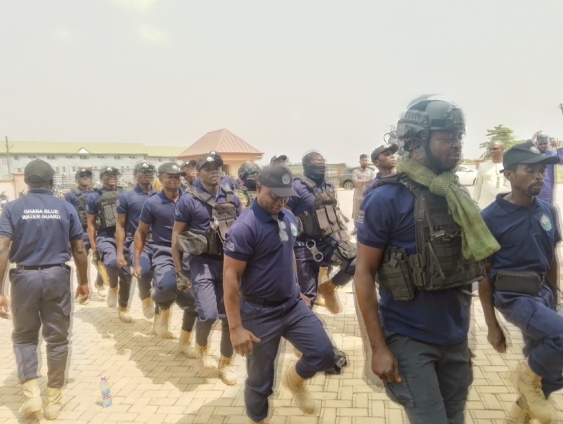
    “The OSP has commenced investigations into suspected corruption and corruption-related offenses in respect of an alleged embezzlement of GH¢1.3 billion from the Unified Petroleum Pricing Fund (UPPF) at the National Petroleum Authority (NPA).“The investigation primarily targets the following persons: the coordinator of the UPPF, Jacob Amoah; NPA staff Wendy Ashong Newman; NPA staff Freda Tandoh; and a former Chief Executive of the NPA, Mustapha Abdul-Hamid.”

    National Food and Buffer Stock Company (NAFCO), Hanan Abdul-Wahab, is standing trial over allegations of large-scale financial misconduct during his time in office. He was arrested on June 25, along with his wife. EOCO granted a GH¢30 million bail to his wife, while he remained in custody pending fulfillment of his GH¢60 million bail condition.The arrest, which took place simultaneously in Accra and Tamale, also led to the detention of a third, unnamed individual believed to be linked to the investigation.

    On Tuesday, July 8, the former NAFCO boss was released from the custody of the Economic and Organised Crime Office (EOCO) after being detained for 14 days. Abdul-Wahab Hanan was released after meeting a GH¢60 million bail condition backed by two guarantors.

    On June 25, Hanan and his spouse were taken into custody over suspected mismanagement of funds while he led the government agency. His wife had been granted bail earlier, set at GH¢30 million.

    Earlier reports indicated that Mr. Hanan had met the bail terms; however, he remained in EOCO custody, a situation that drew backlash from the opposition New Patriotic Party (NPP), which described the terms as harsh and unfair. A third suspect, an unnamed individual believed to be linked to the investigation, was also detained.

    While addressing journalists at a press briefing in Accra on Wednesday, October 22, as part of the Government Accountability Series, the Attorney General (A-G) and Minister for Justice, Dr. Dominic Ayine, revealed a list of luxury assets belonging to the former NAFCO boss.

    His assets, according to the A-G, include a five-bedroom house at Chain Homes valued at $1.625 million; a three-bedroom house at Cantonments purchased for $600,000; and multiple plots of land at the Airport Development Area worth $750,000. Other properties include a 17-bedroom boutique hotel in Gumani, Tamale, acquired for $250,000; a four-bedroom bungalow at Dzorwulu, Accra, valued at over GH¢4.14 million; and a 0.32-acre parcel of government land purchased for GH¢307,200.

    He added that the recent development was made possible through collaboration with EOCO after several properties and bank transactions were traced to Abdul-Wahab. However, Abdul-Wahab has denied all allegations leveled against him by the Attorney General. In a statement issued on Wednesday, October 22, Mr. Aludiba noted that he has instructed his lawyers to follow up on the allegations.

    “I wish to state, respectfully, that these claims are untrue and do not reflect the facts of the matter. I have no involvement in the issues being referred to, and I find the comments deeply unfortunate. I look forward to the opportunity to present my side and to have my day in court, where I am confident that the truth will be made clear,” the statement added.

  • Fire breaks out at Weija Junction, engulfs plastic recycling plant

    Fire breaks out at Weija Junction, engulfs plastic recycling plant


    A fire incident occurred at the Charkieh Plastics Factory site at Weija Junction, Greater Accra on Saturday, November 22. The Ghana National Fire Service (GNFS) dispatched a coordinated effort involving seven fire stations, in efforts to bring down the severity of the outbreak.

    Although the cause of the fire has not been disclosed, no one was injured in the incident. Ghana has recorded several fire incidents in the first eleven months.

    Last month, the Kwapong Nursing Training College in the Asunafo South District of the Ahafo Region was destroyed by a fire incident. The incident, which occurred on Friday, October 31, saw students rushing to safety. Meanwhile, authorities are working to ascertain the cause of the fire.

    This development comes barely twenty-four (24) hours after the newly opened China City Mall at Santasi in Kumasi, the Ashanti Regional capital, was destroyed by fire. Inaugurated in May 2025, the mall was left with no items to be recovered. No casualties have been recorded in the aftermath of the incident. Meanwhile, the cause of the fire is yet to be made known to the public.

    Earlier this month, a fire incident ravaged Kantamanto at the Tazani Lane section in Accra. Several shops selling wooden planks and hardware were razed after a fire broke out near Aayalolo School at 1:17 a.m. on Saturday, September 13. The GNFS confirmed in an update on its official page on Sunday, September 14: “The flames were confined at 6:26 a.m., brought under control by 6:37 a.m., and fully extinguished by 11:44 a.m.”

    The Service added, “Two firefighters sustained injuries in the operation, one from an electric shock and another from burns to the left arm. Both were treated and discharged, and are reported to be in stable condition.”

    In a related development, several houses at Darkuman Kokompe in Accra were destroyed following a fire incident in the early hours of Sunday, August 31. Reports indicated that victims were unable to salvage their belongings while awaiting emergency response. The cause of that fire is yet to be established.

    Earlier this month, another fire destroyed a Benz cargo truck transporting over 2,500 bags of rice from Côte d’Ivoire to Kumasi on the Adugyama–Bechem highway, near the Star Oil Filling Station, on Monday, August 25.

    Similarly, a popular pub and food joint at Nogora Junction, near the Ho Technical University, was reduced to ashes following a fire outbreak on Wednesday, August 13.

    On August 4, a fire ravaged the first floor of the Accra Tourist Information Centre at Cantonments. According to the GNFS, the blaze destroyed the contents of the first floor, though the ground floor and about eight offices, including the East Wing section, were salvaged.

    The first fire engine from the GNFS Headquarters arrived at 01:04 hours to find a fully developed fire spreading rapidly in all directions, aided by strong winds. Five additional appliances from Flagstaff House, Circle, Accra City, and Ministries fire stations, as well as the Rapid Intervention Vehicle (RIV) from Headquarters, were swiftly mobilized to support firefighting operations.

    Although the blaze was brought under control at 03:32 hours, firefighting efforts continued until 06:35 hours to suppress the flames and prevent further spread to adjoining properties. No injuries were recorded, but the Service has launched an investigation into the cause.

    Another inferno destroyed several makeshift wooden and metal structures at the Madina Washing Bay near Redco Flats on Sunday, August 3. The blaze consumed utility poles, traders’ wares, personal belongings, and structures worth several thousand cedis.

    The GNFS reported that while battling the fire, one firefighter sustained a minor leg injury. The Service received the distress call at 12:36 hours, and the first crew from the Madina Fire Station arrived within four minutes. Four additional fire engines from Legon, Abelemkpe, and GNFS Headquarters later joined to contain the blaze.

    Thanks to the swift response, the fire was confined at 13:42 hours and fully brought under control at 13:54 hours. Overhaul operations continued until 20:50 hours. An investigation into the cause is ongoing.

    Last month, a fire broke out at Madina Ritz Junction. Initial reports claimed that a two-month-old baby died in the incident, but the GNFS later clarified otherwise.

    “A verification team was dispatched to the scene this morning, and after engaging affected residents, particularly the women, and a Unit Committee Member of the area, the Service can confirm that no lives were lost. The Service has thus entreated the public and media outlets to disregard any reports suggesting otherwise, as they are inaccurate and misleading,” the GNFS posted on Facebook.

    The Service explained that the fire began after a gas explosion in one of the shops and quickly spread to adjacent containers. Firefighters from the Madina, Legon, and Abelemkpe stations responded promptly and contained the blaze.

    In April this year, another fire ripped through the Madina Redco Flats area, destroying more than 150 structures and claiming the life of a young Nigerian woman known as Beauty. The inferno, which started around 11:15 p.m., spread rapidly across 140 wooden kiosks and 20 metal containers. Although firefighters arrived within minutes, the victim was trapped and could not escape. Her remains were handed over to the Madina Police.

    Last year, about 50 stalls were reduced to ashes after the Madina Market in Accra caught fire. Deputy Director of Operations at GNFS, D.O.I. Kofi Forson, recounted the challenges they faced: “It was not easy for us, and there was a lack of access to where the fire was spreading, and because it happened in the night, the shops were closed, and we had to break through, and that made it tedious.”

    The GNFS has provided statistics on fire outbreaks in the first half of 2025, showing a slight increase compared to the same period in 2024. Ghana recorded 3,595 fire cases between January and June this year, compared with 3,576 cases during the same period last year — an increase of 19 cases, representing a 0.53% rise. The monthly breakdown is as follows: January (964), February (678), March (619), April (483), May (457), and June (394).

    The Greater Accra Region recorded the highest number of incidents (628), followed by Ashanti (581) and Central (408). The North East Region had the lowest number, with just 10 cases. In an interview on Tuesday, July 8, the Head of Public Relations at GNFS, Desmond Ackah, revealed that due to their improved and swift response, the Service saved over GH¢203 million worth of property in the last two quarters of 2025.

    The GNFS listed the main causes of fire incidents as electrical faults from illegal connections, poor wiring, and overloaded circuits; improper use of appliances such as overused extension cords and unattended devices; unattended cooking with gas, electric, or coal stoves; careless use of naked flames like candles, mosquito coils, lighters, and matches; gas leakages and poor handling of LPG cylinders; bush burning, especially in the dry season; vehicle fires due to poor maintenance or accidents; unsafe welding and other hot-work practices; and deliberate acts of arson.

    Meanwhile, the Service reported a significant improvement in its fight against prank calls. It recorded a 34.77% reduction, from 364,020 prank calls in the first half of 2024 to 237,470 in 2025. The GNFS attributed the decline to consistent public education campaigns and heightened awareness of the legal consequences of misusing emergency lines.

  • 600 sacks of Indian hemp burnt by police in Ho

    600 sacks of Indian hemp burnt by police in Ho

    600 fertiliser sacks of Indian hemp, weighing a total of 47,530kg and valued at about GH¢4.2 billion, have been destroyed by the Volta Regional Police Command. The destruction exercise, which occurred on Monday, November 17, followed an order from the Ho Circuit Court.


    This information was contained in a statement issued on Thursday, November 20, and signed by Chief Inspector Francis Kwaru Gomado, Head of the Public Affairs Unit of the Volta Region.


    Parts of the statement read, “the six hundred sacks contained a total of forty-seven thousand, five hundred and thirty kilograms (47,530kg) with an estimated face value of about 4.2 billion Ghana cedis.”


    In August, the Central East Regional Police Command has arrested two suspects in possession of 519 compressed parcels of dried leaves suspected to be Indian Hemp.

    The suspects, identified as Eric Nkyeke, 30, and Francis Klu, 28, were kept in the custody of the police. The Toyota Hilux pick-up with registration number GS 6849-21 was impounded at Nyanyano in the Gomoa East District.


    This was revealed in a statement issued by the command, the Nyanyano District police personnel. In June, the police nabbed two suspects for having in their possession 84 parcels of substances suspected to be Indian hemp.


    The police team, through an intelligence-led operation on June 15, intercepted an Opel Astra vehicle with registration number GT 6430-13 driven by suspect John Dzeble together with suspect Adzobi Mesiwotso on board.
    A search conducted on the vehicle revealed 86 compressed parcels of substances suspected to be Indian hemp, discreetly concealed in the inner compartments of the car, including the engine, doors, and boot.


    In addition to the compressed parcels, the officers retrieved a portable measuring scale machine and a roll of masking tape, also concealed, believed to have been used in the packaging of the substances
    The suspects, along with the exhibits, are currently in Police custody, assisting with investigations.


    The Oti Regional Police Command has commended the swift and professional action of the personnel involved in the arrest and reaffirmed its commitment to curbing drug trafficking and related criminal activities.


    The arrest comes after a recent incident where the police captured one Christopher Partey for unlawful possession of 40 parcels of a substance suspected to be narcotic drugs.


    The National Highway Patrol Unit of the Ghana Police Service made the arrest on Wednesday, June 11.


    The team intercepted a Ford Transit bus with registration number AS 524-16 near the outskirts of Ayikuma township while on routine patrol along the Accra–Somanya corridor.


    A search of the vehicle revealed 40 tightly wrapped parcels concealed in a fertilizer sack in the vehicle’s boot. Upon interrogation, Christopher Partey, a passenger on board, admitted ownership of the items.


    The exhibits retrieved have been handed over to the Drug Law Enforcement Unit at the Police Headquarters for further investigation.
    The suspect is currently in police custody, assisting investigations and will be put before the court.


    In April, a total of 189 Cadets were officially inducted into service to support Ghana’s ongoing efforts to combat narcotic drug trafficking and related crimes.


    The induction, held at the Eastern Naval Command, marked a significant collaboration between the Leadership Training School (LTS) and the Narcotics Control Commission (NACOC).


    The event, which featured the ceremonial swearing of an oath of allegiance, signified the commitment of the new recruits to serve the nation with dedication and uphold the values of integrity and national security.


    The training, led by the Commanding Officer of LTS, is designed to build the capacity of cadets by focusing on the fundamentals of narcotics law and enforcement.

    The course places particular emphasis on confidence-building, professional discipline, and a thorough understanding of legal procedures necessary for their roles in narcotics control.


    As part of the induction, NACOC leadership underscored the importance of adherence to institutional rules and the responsible handling of classified information.

    The Commission reiterated its mission to disrupt the narcotics trade and act as a stabilizing force in communities vulnerable to the influence of drug-related activities.


    NACOC reaffirmed its commitment to making Ghana an unattractive hub for drug trafficking, prioritizing public safety and the protection of the nation’s borders.

    Calls have also been made for increased government support to enhance the Commission’s operational capacity, including the recruitment of additional personnel and the provision of improved financial and logistical resources.


    The new cadets are expected to play a key role in reinforcing the Commission’s enforcement operations across the country.
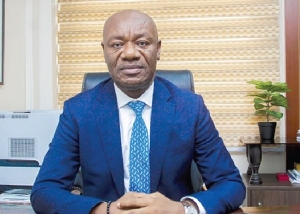
  • Close to 20k residents in Bono Region living with HIV – AIDS Commission

    Close to 20k residents in Bono Region living with HIV – AIDS Commission

    The Ghana AIDS Commission (GAC) has disclosed alarming statistics regarding the number of individuals living with HIV in the Bono Region.

    Speaking during the inauguration of the Bono Regional Committee of the Ghana AIDS Commission (RECCOM) in Sunyani on Thursday, November 20, the Regional Technical Coordinator, Ahmed Ibrahim Bambila, revealed that 19,979 residents in the Bono Region are living with HIV and AIDS.


    According to him, 875 new HIV infections have been recorded, highlighting an urgent need for attention and immediate action. The newly inaugurated nine-member committee, chaired by Bono Regional Minister Joseph Addae Akwaboa, has been tasked with coordinating HIV-related programmes in the region to help curb the spread of the virus.


    Meanwhile, the Ghana AIDS Commission has revealed that an average of 42 new HIV (Human Immunodeficiency Virus) infections are recorded daily among adults and children across the country.
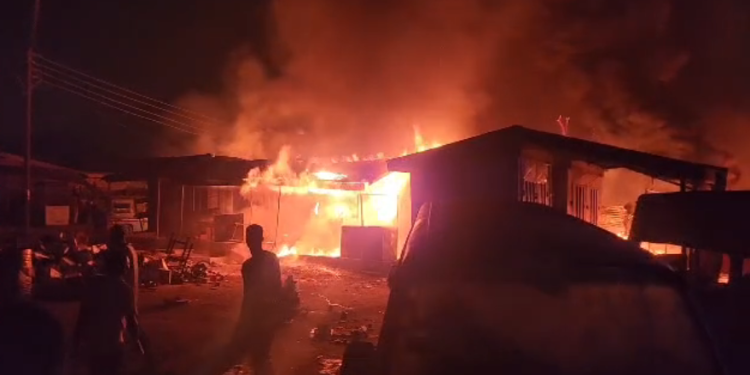

    According to the Commission’s 2024 National and Sub-National HIV Estimates and Projections, a total of 334,721 people are currently living with HIV in Ghana. Out of this figure, 105,460 are males, representing 31.5 percent, while 229,261 are females, accounting for 68.5 percent.


    The Bono, Bono East, and Ahafo Regional Technical Coordinator of the GAC, Mr. Ahmed Ibrahim Bimbilla, who disclosed this in an interview with the Ghana News Agency (GNA) in Sunyani, said the data provides crucial insight into the scale of the epidemic and guides effective planning.


    He revealed that 15,290 new HIV infections were recorded in the country, comprising 4,987 males, representing 32.6 percent, and 10,303 females, representing 67.4 percent.


    Mr. Bimbilla also noted that AIDS-related deaths currently stand at 12,614, consisting of 5,445 males and 7,159 females. He said approximately 229 deaths are prevented each week through the provision of Antiretroviral Therapy (ART) services.


    Providing a regional breakdown, he said the North East Region recorded the lowest HIV population with 1,717 cases, while Greater Accra, Ashanti, and Eastern recorded the highest figures of 77,821, 63,159, and 44,792 respectively.


    He added that seven regions known as Ahafo, Upper East, Northern, Upper West, Oti, Savannah, and North East each recorded HIV populations below 10,000.


    the According to him, HIV prevalence is highest in the Bono Region with 2.22 percent, followed by the Eastern Region with 2.08 percent and Ahafo with 1.88 percent, while the North East Region recorded the lowest prevalence at 0.43 percent.


    He further indicated that five regions, namely Oti, Upper East, Savannah, Northern, and North East, recorded prevalence rates below 1.0 percent.
    Mr. Bimbilla stated that the Greater Accra, Ashanti, and Eastern regions also recorded the highest number of new HIV infections, with 3,436, 2,997, and 2,019 cases, respectively, while the North East Region recorded the lowest with 97 cases.


    Eleven regions, including Bono, Volta, Bono East, Western North, Ahafo, Upper East, Northern, Upper West, Oti, Savannah, and North East, recorded fewer than 1,000 new infections.


    Commenting on the trend, Mr. Bimbilla described the decline in HIV prevalence, new infections, and AIDS-related deaths as a positive development, which he attributed to the growing uptake of ART services.


    He expressed optimism that the downward trend would help Ghana achieve epidemic control and urged continued efforts in public education, testing, and access to treatment to sustain progress toward eliminating HIV and AIDS.


    In 2024, the Director General of the Ghana AIDS Commission, Dr. Steve Kyeremeh Atuahene, partly attributed the rise in new HIV infections in Ghana at the time to individuals’ reluctance to disclose their HIV status to their spouses, fearing desertion.


    Dr. Atuahene emphasized that the refusal of some HIV-positive individuals to continue their medication was a significant factor in the spike. He explained, “The fear of the husband or wife deserting them leads some not to disclose their status. Some are afraid their spouse may discover they are taking daily medication, leading them to hide or discontinue their medicines.”


    According to the Ghana AIDS Commission, over 334,000 people live with HIV in Ghana. In 2023, the country reported 17,774 new cases, with 11,317 women and 6,457 men affected.


    This alarming trend has prompted the commission to address the underlying causes and increase awareness about the importance of medication adherence and status disclosure.


    Dr. Atuahene highlighted the increased vulnerability of females to HIV infections compared to males. He explained, “When a female has sex with a man, penile sex and the man ejaculates, the sperm which might contain HIV particles may remain in her for quite some time, whereas that of the male you hardly can see that. Secondly, the surface area of the vagina is much wider than that of the male, and thirdly, the mucus membrane of the vagina is much more fragile than that of the male.”


    Additionally, the Director General noted that universal male circumcision in Ghana serves as a protective factor against HIV transmission. “Women must be aware that they are more vulnerable and therefore they should protect themselves,” he emphasized.


    Dr. Atuahene also pointed out the significant difference in transmission rates between genders.


    “The transmission rate from woman to man is just about 2%, whereas it is more than 12% for a man. That is why women should not gamble with their health and their life by just accepting that ‘if he will give them more money to have sex without a condom, it’s okay for me.’ It shouldn’t be okay for you, especially when you might have untreated sexually transmitted diseases that can also heighten the chance of you getting HIV,” he warned.


    The Ghana AIDS Commission continues to advocate for increased awareness and preventive measures to combat the rise in HIV infections.
    By addressing issues such as status disclosure, medication adherence, and gender-specific vulnerabilities, the commission aims to reduce the incidence of HIV and improve the quality of life for those affected.

  • Democracy Hub leader Barker-Vormawor robbed at Achimota

    Democracy Hub leader Barker-Vormawor robbed at Achimota

    Democracy Hub convener Oliver Barker-Vormawor has been robbed of his valuable belongings near the Achimota Overhead on Wednesday, November 20. The valuables include a MacBook, iPad, Google Pixel 9, an amount of 9,500, credit cards, a house key, two wallets, Sony headphones, and books.

    In a Facebook post on Wednesday, Oliver Barker-Vormawor wrote, “Not less than 30 minutes ago, I was robbed near Achimota Overhead. My MacBook, iPad, Google pixel 9, Cash of 9500, Credit cards, House key, 2 Wallets, Sony Headphones, Books, All gone! Hmmm”.

    In recent years, the Police Service has made significant progress in tackling robberies and prosecuting offenders. Two months ago, the police arrested ten individuals and shot three others dead in efforts to crack down on a series of violent rural bank robberies across the country.
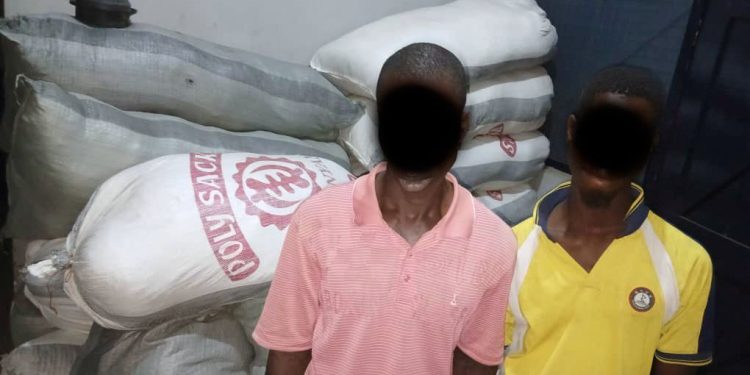
    https://www.facebook.com/share/p/1Art2dnS26

    Authorities allege that the 15-member gang had been behind a series of robberies in the Ahafo, Western, Central, Eastern, and Ashanti Regions. On Sunday, September 14, at 3:30 a.m., the ring invaded the Saint Martins De Porres Cooperative Credit Union with pump-action guns and AK-47 rifles. They escaped the premises with cash after holding the security guard and his wife hostage.

    Briefing the media on Wednesday, September 24, the Director-General of the Criminal Investigations Department (CID), Lydia Yaako Donkor, said the police recovered a large cache of weapons, vehicles, and valuables following the operation. One of their AK-47 rifles was traced to one Corporal Francis Adu Yaw of the Tepa District. The said police officer was killed on November 29, 2024, by armed robbers on the Bibiani-Goaso highway.

    The items seized included three AK-47 assault rifles; one single-barrel gun with one AAA round; seven pump-action guns with 96 rounds of AAA ammunition; three Bruni pistols with 40 rounds of ammunition; one M&P pistol with four rounds of ammunition; cash amounting to GH¢18,845, $104, 190 Liberian dollars, ₦5,800, and CFA 31,000; a quantity of assorted Ghanaian coins; six vehicles; four motorbikes; and several mobile phones and pieces of jewellery.

    According to the Director-General of the CID, the gang’s operations were successfully uncovered after six months of sustained intelligence operations.

    “Through sustained intelligence operations, the Ghana Police Service has successfully dismantled the notorious criminal syndicate who have been behind several robberies in various regions of the country,” she stated.

    In August this year, the Service announced the retrieval of items used by a gang of armed men during a gold shop robbery at Mpohor in the Western Region over the weekend.

    Weapons, ammunition, clothing, and other materials were among the exhibits. According to a Facebook post on Tuesday, August 19, the police stated that the retrieved items would aid in the ongoing investigation into the case.

    On Sunday, August 17, one person was arrested in connection with the robbery. The police explained that the retrieval was made possible after officers from the Kuntanase District in the Ashanti Region intercepted a suspicious white Toyota Sienta near the Aputuoagya–Bekwai road.

    Currently, the police are on a manhunt for eight others allegedly involved in the heist. They added that two men who were standing by the vehicle fled upon seeing the approaching patrol team.

    According to the police, a search of the vehicle led to the recovery of an AK-47 assault rifle, a locally manufactured firearm, two AK-47 magazines loaded with 30 rounds of ammunition each, and other materials believed to have been used during the robbery.

    “The Ghana Police Service, in its ongoing investigation into the Mpohor gold shop robbery case, has recovered weapons, ammunition, clothing items and some other exhibits linked to the case. As part of intensified anti-robbery patrols, officers from the Kuntanase District in the Ashanti Region intercepted a suspicious white Toyota Sienta near the Aputuoagya–Bekwai road.

    “Two men who were standing by the vehicle fled into the bush upon seeing the approaching police patrol team. A thorough search of the vehicle uncovered an AK-47 assault rifle, a locally manufactured firearm, two AK-47 magazines loaded with 30 rounds of ammunition each, additional packets of ammunition, cowrie shells, a Huawei smartphone, identity documents, and some clothing items.

    “A careful examination of the recovered exhibits against the CCTV footage of the Mpohor robbery revealed a striking resemblance between the clothing items (hooded tops) and the Wellington boots that were used during the robbery. The recovery of these items marks a significant step in the ongoing investigation and manhunt for the suspects,” parts of the statement read.

    On July 30, a shootout between suspected armed robbers and police officers at Atebubu in the Bono East Region led to the death of two suspects.

    According to the Ghana Police Service, the patrol team encountered a robbery attack on commuters along the Atebubu Highway. The suspects opened fire on the officers upon sighting them. Those struck during the exchange were rushed to a hospital but were pronounced dead on arrival, while others escaped into nearby bushes.

    A search of the scene led to the retrieval of a shotgun loaded with two live cartridges, four spent cartridges, and a machete. Intensive efforts are underway to apprehend the fugitives, police confirmed.

    On July 15, an intelligence-led operation by the Police Intelligence Directorate (PID) foiled a robbery attempt by five armed men targeting a foreign national at Cantonments. Police received credible intelligence that the men were lodging at a hotel in Labadi.

    While en route in a Toyota Yaris vehicle, the suspects opened fire on a police team after detecting surveillance. An officer sustained gunshot wounds, and in the ensuing shootout, two suspects died after being rushed to the Ghana Police Hospital.

    The injured officer, who suffered gunshot wounds to his arm and legs, has been hospitalized and is responding to treatment. Police retrieved two pump-action guns loaded with ammunition, live cartridges, three mobile phones, talismans, and other items from the scene.

    Section 149 of the Criminal Offences Act states that a person who commits robbery commits a first-degree felony. Per Section 150, “a person who steals a thing commits robbery (a) if in, and for the purpose of stealing the thing, that person uses force or causes harm to any other person, or (b) if that person uses a threat or criminal assault or harm to any other person, with intent to prevent or overcome the resistance of the other person to the stealing of the thing.”

    Section 124 of the Criminal Offenses Act also indicates that a person who steals commits a second-degree felony. Where the court that finds a person guilty of stealing is satisfied that, on not less than two previous occasions, the accused was found guilty of stealing, the court shall order that the whole or a part of the term of imprisonment imposed shall be spent in productive hard labour.

    A person subjected to such an order is disqualified from election to Parliament or a District Assembly within the meaning of the Local Government Act, 1993 (Act 462), for up to five years. Productive hard labour refers to labour in a state farm, state factory, or any other public co-operative or collective enterprise specified by the Minister.

    In July, the Police secured a conviction in a four-year-old armed robbery case that occurred in Atonsu, Kuwait, Kumasi. The Kumasi Circuit Court sentenced two individuals to 15 years imprisonment for their role in the violent incident. The convicts, Abass Kasim (26) and Daniel Morro, alias “China” (25), were part of a gang of five that attacked a resident in Atonsu Kuwait on July 31, 2021, around 2:30 a.m.

    The gang, wielding a pistol and cutlasses, shot the victim in the abdomen, inflicted multiple cutlass wounds, and robbed him of valuables including an iPhone 11 worth GHS 5,500, a Samsung phone worth GHS 500, two Apple Watches valued at GHS 3,000, two ladies’ handbags, jewellery, $600, and an unspecified amount of Ghana cedis. Following investigations, Abass Kasim was arrested on August 12, 2021. During interrogation, he confessed and led police to arrest Daniel Morro. A pistol used in the attack was later retrieved.

    On August 19, 2021, the suspects were arraigned before Kumasi Circuit Court 4 and remanded into custody after pleading not guilty. They reappeared on Wednesday, July 9, 2025, when they were convicted and sentenced to 15 years imprisonment each on charges including conspiracy to commit robbery, robbery, unlawful entry, abetment of crime, and possession of firearms without authority. The sentences are to run concurrently. They have since been transferred to the Central Prisons in Kumasi. Meanwhile, three accomplices remain at large.

    The police also reported another success after an armed robber, Paul Avortide, was sentenced to 19 years with hard labour for robbery. The 25-year-old, on May 21 at about 4:00 a.m., attacked a pregnant Nigerian woman, Ogechi Chidiebere, at Tsikpota near New Housing, Ho.

    Armed with a machete, he robbed her of GHS 3,000 and a Tecno Spark 30c phone valued at GHS 2,500 as she made her way to antenatal care. On June 19, police arrested Harmony Nbonu at Ho Main Market with the stolen phone. He confessed that Avortide had sold it to him for GHS 850. A coordinated operation led to Avortide’s arrest at Matse, a suburb of Ho, as he attempted to flee.

    After investigations, Avortide was charged with robbery under Section 149 of the Criminal Offences Act, while Nbonu was charged with Dishonestly Receiving under Section 146. They were arraigned before the Ho Circuit Court on Tuesday, July 1. Avortide pleaded guilty and was sentenced to 19 years in prison, while Nbonu was acquitted and discharged.

    Meanwhile, three individuals suspected in a robbery at Nyanikrom near Shama Junction on Wednesday, July 9, were apprehended. They are Francis Mensah, alias Francis Kwaw (34), Ebenezer Cofie (32), and Samuel Bentum (35). The Western Regional Police Command arrested them following targeted surveillance based on credible intelligence.

    Police revealed that the suspects, armed with insider information, planned to rob company officials returning from a bank in Takoradi with salary funds. On the said day, the suspects ambushed the company vehicle near Unique School Junction at Nyanikrom. They broke the vehicle’s window and made away with the cash. A swift police response led to the arrest of three suspects and the recovery of GHS 149,500.

    The suspects are currently in custody assisting with investigations. However, the company’s driver, Maxwell Kofi Yeboah, alleged to have conspired with them, is at large and being pursued. “The Western Regional Police Command assures the public that efforts are ongoing to apprehend the remaining suspect and bring all perpetrators to justice,” the police said.

    Despite these successes, the Police Service continues to suffer casualties in its fight against armed robbery. Several officers have lost their lives while on duty, though the exact number remains unclear. One such incident occurred in September 2024, when an officer was ambushed and killed by armed robbers at Kwame Peprakrom in the Central Region. In response, the government introduced a GHS 50,000 insurance scheme for officers who lose their lives while on duty.

  • Lands Ministry to investigate lapses in NAIMOS operations after fatal accident

    Lands Ministry to investigate lapses in NAIMOS operations after fatal accident

    The operations of the National Anti-Illegal Mining Operations Secretariat (NAIMOS) are set to undergo a thorough review by the Lands Ministry in the coming days, following the recent tragic accident that claimed the life of one of its members.


    Speaking to the media, the Director of Public Relations at the Ministry of Lands and Natural Resources, Mawusi Ama Mawuenyefia, disclosed that the upcoming review is intended to strengthen the fight against illegal mining, popularly known as galamsey.


    “The Minister has mentioned that we are going to look at it. We are going to review. For now, the cause is an accident; we do not suspect any foul play. Today, when the Minister met with the team, he mentioned that we probably need to review the modus operandi, so that is going to be done,” she stated.


    On Wednesday, November 19, NAIMOS was hit by tragedy following an accident near the Obuasi Airport area in the Ashanti Region that claimed the life of one taskforce member and left four others seriously injured.


    The incident occurred, while the team was carrying out a major anti-galamsey operation aimed at tackling illegal mining within the enclave. Confirming the development in a statement issued on November 19, 2025, the Ministry’s Media Relations Officer, Paa Kwesi Schandorf, said “tragically, one member of the taskforce has been confirmed dead, while the remaining four sustained serious injuries and are currently receiving medical care.”


    “The Ministry of Lands and Natural Resources regrets to announce that a team of five (5) members of the National Anti-Illegal Mining Operations Secretariat (NAIMOS) was involved in a fatal motor accident today near the Obuasi Airport area,” the statement added.


    Meanwhile, the Ministry has expressed deep sorrow over the death of the NAIMOS task force member. Lands Minister Emmanuel Armah-Kofi Buah extended his profound sympathies to the family of the deceased and offered heartfelt wishes for the speedy recovery of the injured officers.


    “We remain steadfast in our commitment to safeguarding the welfare of all frontline personnel and will ensure they receive the utmost support and care,” the statement concluded.


    Days ago, NAIMOS task force seized illegal mining equipment in a major swoop in Obuasi in the Amansie Central District of the Ashanti Region.
    Equipment seized during the operation conducted on Monday, November 17, included motorbikes, vehicles, water pumps, and other tools used for illegal mining activities. Makeshift shelters and assorted equipment at the site were also destroyed.


    The task force also stormed a concession at Anyankyireml, a site that had been taken over by groups of illegal miners. Although the concession is legally owned by Asante Gold Corporation, it has been occupied by these illegal miners, forcing the rightful owners to flee the site.


    However, the intervention of the NAIMOS team drove out the miners and secured the land for its rightful owners. Illegal mining continues to pose a major challenge to the country, with several foreign nationals implicated and multiple arrests made. In June, NAIMOS warned criminal groups to vacate galamsey areas.


    The John Dramani Mahama-led government established the National Anti-Illegal Mining Operations Secretariat in July as part of efforts to curb illegal mining activities in the country.


    Speaking during an update on Wednesday, July 23, the Minister for Lands and Natural Resources, Emmanuel Armah-Kofi Buah, disclosed that the newly established Secretariat would act as the brain of Ghana’s anti-illegal mining operations.


    “To coordinate the efforts of the military, police, and other security agencies, the ministry has established the National Anti-Illegal Mining Operations Secretariat (NAIMOS) as the operational nerve-centre for Ghana’s fight against illegal small-scale mining,” he stated.


    The Secretariat’s responsibility is to collaborate with other key institutions such as the Ministry of Transport, the Ministry of Finance (GRA–Customs Division), and the Ghana Ports and Harbours Authority as part of its mandate.


    This collaboration is expected to ensure that excavators and other earth-moving equipment entering the country are not diverted for illegal mining activities.


    “In collaboration with the Ministry of Transport and the Ministry of Finance (GRA–Customs Division), and the Ports and Harbours Authority, we have initiated a proactive tracking of all imports of excavators and earth-moving equipment from the point of entry,” he added.


    Illegal mining activities continue to pose a major challenge to the country. Several Chinese nationals have been involved in such illegal operations, leading to multiple arrests.


    Meanwhile, President John Dramani Mahama has disclosed that scientific tests are being carried out on new chemicals that could help restore polluted water bodies and rivers affected by illegal mining, popularly known as galamsey.


    Speaking at a high-level stakeholder engagement on galamsey in Accra on Friday, October 3, with members of Civil Society Organisations (CSOs), President Mahama said, “There are new chemicals that have come that allow you to treat water and take out the toxins and the heavy metals. One of them is called dowtine. The people came, and we sent them there. They took samples, tested. We are waiting for them to bring the results back.”


    He has asked Ghanaians to exercise patience regarding the longstanding battle against illegal mining (galamsey) activities. During a meeting with Civil Society Organisations (CSOs), President Mahama said declaring a state of emergency will not end the menace.


    According to him, government advisors believe the country can overcome galamsey by adopting best practices in small-scale mining, including technologies that help neutralize or remove harmful chemicals from water bodies.


    Additionally, the President pledged to honor the calls of many Ghanaians by declaring a state of emergency when his advisors give him the nod to do so.


    President Mahama believes that the country can eradicate the long-term canker if it deploys more troops and invests additional resources in the fight. He concluded that the battle seems to be a long one, but his administration is committed to ending it.


    “While we are fighting the menace, I am also saying we should uptake technology in order to protect the environment. So yes, let’s fight the illegal mining but at the same time, let’s bring the new technology that will help us protect our environment.


    “Now with the elephant in the room, state of emergency, yes, I have the power to do it, but the president acts on the advice of the National Security Authority, and as at now, this moment, the National Security Authority believes that we can win the fight against galamsey without declaring a state of emergency. I want to assure you that the day they advise me otherwise, that boss, now we need a state of emergency, I won’t hesitate,” he added.

  • Ofori-Atta, 7 others to appear before court over SML scandal on Nov. 24

    Ofori-Atta, 7 others to appear before court over SML scandal on Nov. 24

    The Criminal Court 3 has scheduled Monday, 24 November, to hear the corruption cases involving former Finance Minister Ken Ofori-Atta and six former senior officials of the Ghana Revenue Authority (GRA). Taking to the X platform, the OSP wrote, ” Court case update The Republic v Kenneth Ofori-Atta & 7 Ors. Accused persons will be arraigned before court on Monday, 24 November 2025. The Prosecution will seek the necessary court orders for service of the charge sheet on the fugitives who are outside of the jurisdiction”.

    The defendants, who face 78 charges, are standing trial for their roles in the Strategic Mobilisation Limited (SML) deal, which allegedly caused financial loss to the state.

    The others involved in the trial are Ernest Darko Akore, former Chief of Staff to the Finance Minister; Emmanuel Kofi Nti and Rev. Ammishaddai Owusu-Amoah, both former Commissioner-Generals of the GRA; Isaac Crentsil; Kwadwo Damoah, former Commissioner of the Customs Division; Evans Adusei, CEO of SML; and the Strategic Mobilisation Ghana Ltd company.

    During a press conference on Thursday, October 30, the Office of the Special Prosecutor (OSP) accused the former Finance Minister of approving payments to SML without any technical or operational justification. According to the OSP, Ofori-Atta failed to intervene even though SML openly lacked the necessary capacity, expertise, and tools to execute its contract. Instead, he allegedly remained complicit, approving payments from the Consolidated Fund, the Petroleum Revenue Account, and the Tax Refund Account.

    The OSP concluded, “Had he not been personally benefiting from SML’s unlawfully procured contracts, the openly displayed lack of capacity, expertise, and tools would have immediately triggered his intervention to halt payments and demand accountability. Instead, he looked on conspiratorially in silence while endorsing and approving payments to SML from the Consolidated Fund, Petroleum Revenue Account, and Tax Refund Account with no technical or operational basis,” the OSP said.

    Strategic Mobilisation Limited has been operating in Ghana for the past five years to oversee revenue in the oil (upstream) and mining (mineral) sectors. In 2024, the revenue arm of the government discontinued two contract transactions—the Audit and External Verification Service Contract (AEVS) with SML—and halted portions of the contract agreement.

    The GRA also suspended SML’s Upstream Petroleum and Minerals Revenue Audit until further notice, following a report from KPMG presented to then-President Akufo-Addo regarding irregularities in SML’s deals. Last week, President John Dramani Mahama ordered the termination of the SML deal after a comprehensive investigation conducted by the OSP, led by Mr. Kissi Agyebeng. The termination was communicated through a letter to the Finance Minister, Dr. Cassiel Ato Forson.

    Following the investigations, the anti-corruption agency identified procurement breaches and irregularities in contract awards, overreach beyond SML’s original mandate, inflated costs with questionable service delivery, and legal concerns. The SML contracts included multiple components, including a Transaction Audit and External Price Verification service agreement, a Measurement Audit for Downstream Petroleum Products contract, and later agreements for Upstream Petroleum and Minerals & Metals audit services.

    On 3 May 2024, the GRA terminated two of those contracts (Transaction Audit & External Price Verification) and suspended the Upstream Petroleum & Minerals Audit portion under the previous government. In June this year, following the OSP’s findings, the Measurement Audit for Downstream Petroleum Products—the main SML contract—was completely terminated, saving Ghana over GHS 1.2 billion.

    In an addendum shared on its X (formerly Twitter) handle, the OSP noted additional savings beyond the GHS 1.2 billion. According to the agency, Ghana has now saved more than GHS 2.6 billion and US$173 million. These additional savings resulted from avoiding payments tied to crude oil and gold export monitoring services that were never implemented.

    “Following the earlier announcement that Ghana saved over GHS 1.2 billion from the cancellation of the main SML revenue assurance contract, there are additional savings from the upstream and mineral sector components of the agreement. These contracts, based on a variable fee structure linked to exports of crude oil and gold, would have cost the State approximately US$173 million for crude oil and GHS 2.6 billion for gold exports over five years. SML did not commence work as the arrangement coincided with the KPMG audit. Owing to the criminal investigations by the OSP and the subsequent cancellation by the President, Ghana has now avoided these further costs,” the OSP noted.

    In a detailed press briefing, the OSP highlighted critical findings that exposed systemic breaches of public financial regulations and clear misuse of authority resulting in financial loss to the state.

    “There was no genuine need for contracting SML for the obligations it’s purported to perform,” the Special Prosecutor declared.

    Mr. Agyebeng has solidified the case against SML, alleging that former Finance Minister Ken Ofori-Atta approved payments without technical or operational justification. According to the OSP, Ofori-Atta failed to intervene despite SML’s lack of capacity, expertise, and tools, remaining complicit by approving payments from the Consolidated Fund, Petroleum Revenue Account, and Tax Refund Account.

    The investigation also revealed SML’s inability to perform the contracted revenue assurance services, including transaction audits and external price verification.

    Even after 15 months, SML reportedly “had no system in place to receive CCVRs” (customs control and valuation records), essential data needed to execute its tasks. Additionally, the existing data provider, West Blue, was under “no legal obligation to release the vital data” to SML. Consequently, the assigned work remained uncompleted, yet payments continued, resulting in financial loss to the state.

    Former Ken Ofori-Atta has been declared wanted by the OSP for causing financial loss to the state in several dealings, including the contractual arrangement between SML and the GRA, aimed at enhancing revenue assurance in the downstream petroleum sector, upstream petroleum production, and the minerals and metals resource value chain.

    Concerns over SML’s activities were first raised years ago by investigative journalist Manasseh Azure Awuni. The GRA-SML contract was originally intended to boost revenue assurance in key sectors, streamline revenue collection, and ensure transparency and efficiency.

    An in-depth audit by KPMG, commissioned by former President Nana Addo Dankwa Akufo-Addo, revealed procedural errors and regulatory violations in awarding the contract. Specifically, the GRA did not obtain approval from the Public Procurement Authority (PPA) and failed to seek parliamentary oversight before finalising the agreement with SML.

    The GRA entered into six service agreements with SML using the single-source procurement method without PPA approval. The first agreement, covering Transaction Audit Services, was signed on June 1, 2018, followed by a contract extension on January 1, 2019. On April 1, 2019, the GRA entered into another agreement for External Price Verification Services.

    On October 3, 2019, the parties signed a Consolidation Services Agreement, combining the Transaction Audit and External Verification Services.

    That same day, a separate agreement was signed for the Measurement Audit of Downstream Petroleum Products. Later, on July 29, 2020, an addendum to the Measurement Audit agreement was executed. The audit also revealed that SML owes the government over GHS 31 million in taxes.

  • ECOWAS Court’s verdict will not reinstate Torkonoo as Chief Justice – Lecturer

    ECOWAS Court’s verdict will not reinstate Torkonoo as Chief Justice – Lecturer

    The Economic Community of West African States (ECOWAS) Court will not give a ruling that will restore Gertrude Torkonoo to her position as Ghana’s Chief Justice.

    Speaking to the media on Wednesday, November 19, he noted that instead, the government will be directed to compensate her for violating her rights.

    “At this stage, what I feel is that the ECOWAS Court will not rule regarding her ability to come back to the position of Chief Justice, or even as a member of the Chief Justice . But it is likely to find a case of violation of her rights.
    “It is possible she might win one of those grounds, and the government may be asked to compensate for the rights that were violated. But it wouldn’t be about removing the currently installed Chief Justice and bringing her back,” he added.


    On Wednesday, November 19, the Deputy Attorney General, Justice Srem Sai, disclosed that the former Chief Justice Gertrude Torkornoo’s application seeking interim measures to halt the work of the committee that investigated her removal from office has been dismissed by the ECOWAS Court of Justice.

    According to him, the Court noted that the application did not satisfy the criteria for a grant of interim measures. He added, “The ECOWAS Court has, this morning, dismissed Mrs Justice Gertrude Torkornoo’s application for interim measures. The Court stated that the application did not satisfy the criteria for a grant of interim measures. More particularly, the Court held that.


    “The Applicant’s own conduct defeats her claim of imminent and irreparable harm. The Court is, therefore, satisfied that the Applicant has not demonstrated the existence of imminent or exceptional circumstance that will justify the urgency of the application filed almost 3 months after the act complained of.”


    The Court concluded that the former Chief Justice failed “to meet the requirement of urgency, the Court finds no basis to assess the remaining criteria for provisional measures, same being cumulative. The request for provisional measures as outlined by the Applicant, same not substantiated, is therefore dismissed.”


    In August, the legal team of former Chief Justice Gertrude Torkornoo revealed plans to sue the Committee of Inquiry that recommended their client’s removal from office.

    Speaking to the media on Saturday, September 6, Gertrude Torkornoo’s lead counsel and former Attorney-General, Nii Ayikoi Otoo, indicated that the court process will grant Gertrude Torkornoo the opportunity to clear her name.


    “This is an option we are looking for to get the records straight. When Dr. Danquah went to court to talk about Re and Akoto, and that there was the abuse of a fundamental human right, people did not take him seriously. But today, people are praising him for having fought that good fight. So, we will go to court at the right time,” Mr. Otoo said.


    President John Dramani Mahama announced the removal of the Chief Justice from office on Monday, September 1, after receiving recommendations from the committee probing petitions seeking the removal of Chief Justice Gertrude Araba Esaaba Sackey Torkornoo. Having violated Article 146 (9), as mentioned in the Committee’s report and recommendations, President Mahama dismissed Madam Torkonoo not only from her position as Chief Justice but also as a Supreme Court Judge.


    In a statement dated September 1, the Presidency justified the dismissal of Gertrude Torkonoo as in accordance with Article 146 (9) of the 1992 Constitution.


    “NOW THEREFORE, KNOW YE ALL MEN that I, JOHN DRAMANI MAHAMA, President of the Republic of Ghana, in pursuance of the said Article 146(9), do hereby REMOVE the said Chief Justice, Justice Gertrude Araba Esaaba Sackey Torkornoo, from the office of Chief Justice and Justice of the Supreme Court, with effect from the date hereof,” parts of the statement noted.


    According to Article 146 (9), “A Justice of a Superior Court or a Chairman of a Regional Tribunal shall not be removed from office except for stated misbehaviour or incompetence or on grounds of inability to perform the functions of his office arising from infirmity of body or mind.”

    In the case of Madam Torkonoo (Esq), the committee found her guilty of stated misbehaviour, including unlawful expenditure of public funds, abuse of discretionary power, and interference in judicial appointments. These findings were tied not just to her role as Chief Justice, but also to her conduct as a Justice of the Supreme Court.


    Therefore, the committee recommended her complete removal from both roles, and President Mahama was constitutionally obligated to act on that recommendation.

    Outlining the charges against the Chief Justice on unlawful expenditure of public funds, the Committee’s report suggested that, “In the opinion of the committee, the travel expenses which the Chief Justice heaped on the Judicial Service when she travelled on holidays in September 2023, first to Tanzania with her husband and second, to the United States of America with her daughter, together with the payment of per diem to the spouse and daughter of the Chief Justice, constituted unlawful expenditure of public funds.”


    “Those acts… constitute avoidable and reckless dissipation of public funds and, in the view of the committee, to have been occasioned by the overall head of the Judiciary and the Judicial Service, whose duty is to guard public resources allocated by the Government, is caught within the spectrum of stated misbehaviour.”


    According to the Committee, she abused her powers as a Chief Justice in the transfer of one Mr Baiden, adding, “The committee also stated without fear or favour that the Chief Justice unjustifiably breached the provisions in Article 295 (a) and (b) of the Constitution, 1992, in the way and manner that she transferred Mr. Baiden. It said her conduct amounted to misbehaviour.”


    On interference in judicial appointments, the Committee highlighted the Chief Justice’s deliberate actions of bypassing the designated system of selecting Supreme Court Judges. Hence, the Committee labelled her conduct as unacceptable and counted it as misconduct.


    “Justice Torkornoo… cannot lay claim to ignorance of the nomination process and procedure, notwithstanding the fact that the process and procedure are not spelt out in the Constitution but case law”“Therefore, to seek, wittingly, to outwit this known process and procedure for appointing Supreme Court Justices amounts to misbehaviour in the eyes of the Committee and the Committee finds it as such,” excerpts of the Committee report read.


    The committee, chaired by Supreme Court Justice Gabriel Scott Pwamang, includes Justice Samuel Kwame Adibu Asiedu, former Auditor-General Daniel Yaw Domelevo, Major Flora Bazwaanura Dalugo of the Ghana Armed Forces, and Professor James Sefah Dzisah of the University of Ghana.


    In July, an application for review regarding an ‘abuse of court processes’ by the former Chief Justice was dismissed by the Human Rights Division of the Accra High Court.

    The court, presided over by Justice Amoako on Thursday, July 31, revealed that several claims, such as illegal composition of the committee and wrongful conduct of adversarial proceedings, were already before the Supreme Court. Justice Amoako argued that relitigating these issues would result in duplication of litigation and abuse of court processes. As such, such claims were dismissed.

    The judge also dismissed reliefs such as an order of certiorari to quash the committee’s proceedings and nullify its sittings on the basis that the Chief Justice did not receive a fair hearing, on jurisdictional grounds.


    The judicial review application filed on June 9 this year sought nine reliefs, which included a series of declarations that the Article 146 committee set up to probe her removal from office had acted unlawfully. She wanted the court to prevent the committee from proceeding with its work without providing her with authenticated copies of the petitions seeking her removal and the subsequent responses.


    The Chief Justice notes that the president’s purported prima facie determination contained no reasons or justification and was entirely devoid of the elements of judicial or quasi-judicial reasoning expected under the Constitution.

    As the proceedings of the Article 146 committee are to be held in-camera in accordance with Article 146(8) of the Constitution, the court noted that it could not inquire into matters raised by the suspended Chief Justice.


    In response, Justice Gertrude Torkornoo proceeded to the ECOWAS Community Court in Abuja, Nigeria, seeking compensation worth $10 million over her suspension from office by His Excellency President John Dramani Mahama. This forms part of the 10 reliefs being requested.

    The Chief Justice’s recent suit follows several unsuccessful cases at the Supreme Court this year after her suspension.


    The former Chief Justice wanted the court to ensure she continues to enjoy the paraphernalia and entitlements of her office as the Chief Justice of Ghana pending the hearing and determination of the case. The measures are: “That the Republic of Ghana suspend the disciplinary removal from office as Chief Justice process against the Applicant, pending the hearing and determination of the complaint on the merits.” “That Ghana refrains from taking any other measures that may harm the rights claimed by the Applicant and/or aggravate or extend the dispute submitted to the Court, or compromise the implementation of any decision that the Court may render.”


    “Given the urgency of the situation, the Applicant respectfully requests the Court to hold a hearing on this request as soon as possible, and that the President of the Court ask Ghana to act in order to allow any order that the Court may issue on the Request for Assignment of Precautionary Measures to have its appropriate effect.”


    The other reliefs are as follows: “A declaration that the panel instituted by the Respondent (Ghana) to investigate and determine the allegations of misconduct against the Applicant was not constituted to guarantee its independence and impartiality and as such has violated the Applicant’s human right to fair hearing guaranteed by Article 7 of the African Charter on Human and Peoples’ Rights.”


    “A declaration that the purported suspension of the Applicant as the Chief Justice of the Republic of Ghana by the President of the Respondent State on 22 April 2025, constitutes a violation of her human right to fair, equitable and satisfactory conditions guaranteed by Article 15 of the African Charter on Human and Peoples’ Rights.”


    “A declaration that the purported suspension of the Applicant as the Chief Justice of the Republic of Ghana by the President of the Respondent State on 22 April 2025 has exposed her to public ridicule and odium locally and internationally and the said act constitutes a violation of her human right to dignity guaranteed by Article 5 of the African Charter on Human and Peoples’ Rights.”


    “A declaration that by subjecting the Applicant to an illegal and unfair investigation and trial since April 2025, the Respondent has inflicted injuries on her professional standing and image, thereby exposing her and her family to immeasurable public ridicule.”


    “An order to the Respondent Republic to act immediately to prescribe the rule of procedure to govern the investigation of allegations of misconduct against the Chief Justice of the Republic of Ghana in conformity with the right to fair hearing guaranteed by the Constitution of Ghana and the African Charter on Human and Peoples’ Rights.”


    “An order directing the Respondent to immediately lift the suspension and restore the Applicant to full office until the conclusion of fair constitutional proceedings.”


    “An order restraining the Respondent from continuing with the purported inquiry for the removal of the Applicant as the Chief Justice of the Republic of Ghana in its current form, until it conforms to fair hearing guarantees.”


    “An award of USD 10 million as compensation for moral and reputational damages suffered by the Applicant as a result of her illegal suspension and unfair investigation, and lastly, ‘Any other relief(s) as the Honourable Court deems just.’”


    On Thursday, August 14, the Bar Council of England and Wales and the Commonwealth Lawyers Association called for the immediate reinstatement of Ghana’s Chief Justice by President John Dramani Mahama and the Executive arm of government.


    “Immediately and without delay, reinstate the Chief Justice of Ghana to her Office, consistent with both the hitherto strong attachment to the rule of law demonstrated by Ghana and also the constitutional duties incumbent upon it.


    “And afford the Chief Justice due and fair process in the investigation and determination of the disciplinary matters brought against her, including but not limited to full and transparent access to that process by her legal representatives,” the group demanded in a joint statement issued on August 14.


    Additionally, the group asked the government for a proper and impartial investigation of the disciplinary charges against her, with her lawyers given full and transparent access to the proceedings. Also, both groups demanded the establishment of transparent procedural rules to guide the disciplinary process, including a definite timeframe within which the investigative committee must conclude its work and communicate its decision.

  • I was beaten because I refused him sex – Woman assaulted by husband in viral video alleges

    I was beaten because I refused him sex – Woman assaulted by husband in viral video alleges

    Harriet Amuzu, the woman captured in a viral video being beaten by her husband, has broken her silence. Speaking to the media on Thursday, November 19, she disclosed that the assault was triggered by her refusal to have sex with her husband, John Odartey Lamptey.

    According to her, she denied him any form of intimacy because they had been separated for five months. She noted that she left her husband’s residence at Ofankor in the Greater Accra Region due to his consistent abuse.

    However, she found herself at his residence that day because her husband informed her that their child was unwell. Harriet Amuzu added that, unknowingly to her, that was a trap set by her husband to lure her to his residence. She alleged that he did not take it lightly after she informed him she was leaving upon realizing she had been tricked.

    “I was at a funeral when he called to say our lastborn was not feeling well. I rushed home, only to find the children playing. When I asked, he said he lied because he wanted to have sex with me,” she recounted.

    She noted that her husband “He told me he had trapped me to kill me,” after she declared her intention to return to her residence. The victim further revealed, “He tore my dress and my undershorts, saying he bought them. He even tore the beads around my waist, leaving me naked. He beat me with the metal rod from a standing broom and stepped on me. At one point, he picked up a knife and threatened to cut off my hand.”

    Meanwhile, John Odartey Lamptey has been in police custody after he was arrested on Monday, November 17. According to a statement signed by the Public Relations Officer, Chief Inspector Brigitte Babanawo, on November 18, two of the suspect’s siblings attempted to attack a female tenant whom they suspected had recorded the incident, drawing the attention of authorities.

    “Following his arrest, two of his siblings, Grace Kushie Lamptey and Louis Odartey Lamptey, who attempted to attack a female tenant they suspected of recording and circulating the video, were also arrested, and the tenant was rescued to ensure her safety.”

    The Ministry of Gender, Children, and Social Protection has strongly condemned the violent assault, describing it as an act that infringes on the victim’s rights and is highly punishable by law. In a statement, the Ministry stressed that no individual has the right to subject another person to any form of abuse under any circumstances.

    “The Minister has also reached out to the Ghana Police Service to ensure that a thorough investigation is conducted and justice is served. We also encourage eyewitnesses with vital information to assist law enforcement agencies immediately,” a part of the statement read.

    A disturbing video that circulated last month also prompted the intervention of the military police. It was CCTV footage showing a muscular man assaulting a young male pharmacist and a young woman in a pharmacy. The incident, which took place at Burma Camp in Accra, came to light late on Wednesday, October 29. In the widely circulated video, the tall, dark-complexioned man was seen slapping the pharmacist.

    The abuser, whose name has been given as Warrant Officer Class One (WO1) Mensah Williams of the Ghana Air Force, was further seen attacking the woman with several blows to her head after she attempted to record the incident. Despite attempts by bystanders to intervene, Mensah Williams continued the assault.

    In response to the incident, the military police arrested Mensah Williams. He is currently in the custody of the Cantonments Police for further investigation and possible prosecution. The video sparked intense debate on social media, with many Ghanaians calling for swift and firm disciplinary action against the soldier.

    According to reports, the assaulted woman is the daughter of the former Provost Marshal of the Military Police. The Provost is a senior military officer responsible for law enforcement, discipline, and security within the armed forces. He coordinates and oversees investigations into crimes involving military personnel.

    Meanwhile, the Ghana Armed Forces (GAF) has condemned the act, assuring the general public that it will not condone any acts of assault on civilians and will not shield any soldier engaged in such conduct.

    In recent years, Ghana has recorded several assaults by security personnel, particularly those affiliated with the military. Earlier this month, residents of Bawku in the Upper East Region recounted terrifying encounters with military personnel, accusing them of using guns, stones, and metal objects to assault civilians during a late-night operation.

    On the night of Tuesday, March 18, heavily armed soldiers reportedly stormed homes in Bawku, conducting forced searches and physically assaulting residents. This military action is said to have been triggered by the fatal shooting of a Ghana Armed Forces officer on Monday, March 17. Reports indicate the officer was ambushed and killed by unidentified gunmen while walking.

    In July, the statue of the Bawku Naba, Naba Asigri Abugrago Azoka II, was allegedly destroyed by some members of the Ghana Armed Forces during a confrontation with locals in Bawku, Upper East Region. The statue, erected in 2024 in honor of the Zugraan (Overlord) of the Kusaug Traditional Area—Asigri Abugrago Azoka II—served as a strong emblem of tradition and communal pride.

    Reconstruction of the statue is expected to begin in the coming days following a directive from His Excellency, President John Dramani Mahama. The then Minister of Defence, Dr. Edward Omane Boamah, in collaboration with other security agencies, was tasked with overseeing the process and restoring calm in the area.

    This information was made known by Dr. Edward Omane Boamah during a durbar with all ranks of the Ghana Armed Forces at Burma Camp on Wednesday, July 17. “To assure that His Excellency President John Dramani Mahama, the Commander-in-Chief of the Ghana Armed Forces, remains committed to bringing an end to decades-old conflict. To address the recent happenings, the National Security Coordinator, myself, the Minister for the Interior, the Chief of the Defence Staff, and the IGP have all been tasked to play coordinated but differentiated roles to ensure that peace and calm are restored immediately, and this includes the restoration of the statue of the Zugraan of the Kusasis Traditional Area,” he added.

    The recent altercation in Bawku has reportedly led to the deaths of five locals. On Tuesday, July 15, some Members of Parliament in the Upper East Region called for the prosecution of the soldiers involved and compensation for the victims.

    Last month, a police-led intelligence operation resulted in the arrest of five individuals accused of trafficking 57 Nigerian nationals into Ghana under false pretenses, linking them to a broader human trafficking and cybercrime scheme. The suspects, identified as Joel Nosa, Collins Rotimi, Shadrack Lulu, Austin Amahuaro, and John Uloko, were arrested on Wednesday, October 22, during an operation by the CID’s Operations Unit at Adom Estates, Community 25, according to a statement from the Ghana Police Service.

    Investigations indicate the group belongs to a well-coordinated trafficking network that lured young Nigerians to Ghana with false promises of employment or educational opportunities. Upon arrival, however, the victims, aged 18 to 26, were reportedly forced into online romance scams and other forms of cybercrime.

    During the raid, officers recovered 77 assorted laptops, 38 mobile phones, two vehicles, three television sets, and several internet-enabled devices believed to have been used in the illegal activity. All items are undergoing forensic analysis.

    All 57 victims are currently receiving medical attention, psychosocial care, and temporary shelter under the supervision of the appropriate agencies. The statement added that the suspects are in police custody assisting with further investigations.

    The Ghana Police Service has also cautioned the public, especially young people, to be wary of enticing offers of jobs, education, or travel made through social media and other unverified channels.

    “We caution the general public to remain vigilant about offers of employment, educational opportunities, or travel arrangements made through social media or other unverified sources,” the statement read. The Service reaffirmed its commitment to combating human trafficking, cybercrime, and related offenses, and urged the public to report any suspicious activities to the nearest police station.

  • GAF screening in Accra resumes today with only 1.2k applicants expected daily

    GAF screening in Accra resumes today with only 1.2k applicants expected daily

    The Ghana Armed Forces’ (GAF) recruitment exercise in the Greater Accra Region, temporarily suspended a week ago, has resumed today, Thursday, November 20. President John Dramani Mahama, on Wednesday, November 12, ordered a halt to the exercise in response to a stampede that disrupted the screening process held at the El-Wak Sports Stadium in Accra.


    All six potential recruits who tragically lost their lives in the aftermath of the event are female. The unfortunate incident also left several others in critical condition.

    The tragedy occurred as thousands of young Ghanaians who had thronged the stadium forced their way through the entry points in an attempt to secure enlistment into the Service.


    To avert another possible tragedy, the Minister revealed that his ministry has put in additional safety measures to ensure a smooth and seamless process.

    To prevent a recurrence, five separate screening centres have been established to manage the flow of applicants. Only 1,200 applicants are expected to be screened daily.

    Speaking to the media, Director-General of Public Affairs at the GAF, Captain Veronica Adzo Arhin, noted, “The numbers that will be at El-Wak will not be more than 1,200. This is because we are going to have two groups there, each made up of 600 potential recruits”.

    Meanwhile, the nationwide recruitment exercise for the internal security services has begun and is expected to come to a close on Friday, December 19.

    The one-month recruitment exercise will receive applications for the Ghana Police Service, Ghana Prisons Service, Ghana National Fire Service, and the Ghana Immigration Service.


    Eligibility requirements for each Service include being Ghanaian by birth, of good character, physically and medically fit, and meeting specific height, age, and academic standards.

    Applicants are to purchase a voucher via 713*03# from any mobile network or at any Ghana Commercial Bank (GCB) branch. The nationwide recruitment exercise will come to a close on Friday, December 19.


    The general eligibility requirements for the Ghana Police Service are as follows: “All applicants for the 2025 Ghana Police Service recruitment must be Ghanaian by birth, of good character, and free of any criminal record. They should not have been dismissed from any public service or other employment, and must meet the age limits set for their chosen category by November 1, 2025.”

    Also, “Male applicants are required to be at least 5 feet 8 inches (173 cm) tall, while females must be at least 5 feet 4 inches (163 cm). Candidates must be physically and medically fit, have five passes in BECE including English and Mathematics, and be ready to undergo basic police and other specialised training.”


    However, the Police Service has five categories of entry, including general duty recruits, tradesmen, graduates (in general duty), medical professionals, and those in religious affairs. Under each of the above-listed categories are specific eligibility requirements as stated by the Interior Ministry.

    The common qualification across all tradesmen categories states that each applicant must not be more than 35 years old by November 1, 2025, and must possess a technical or vocational certificate (such as GES/COTVET, National Proficiency, City & Guilds, or NVTI) relevant to their trade.


    Ghana Prisons


    Recruitment into the Ghana Prisons Service also seeks professionals across several disciplines, including General Duties, Agriculture, Education, Legal, and Medical Services. All applicants are expected to be “Ghanaian by birth, of good character, and free from any criminal record. Candidates must have completed National Service, be computer literate, and physically and medically fit according to the Prisons Service standards.

    Applicants must be aged between 18 and 35 years as of November 1, 2025, and must not have been dismissed from any public service or other form of employment.

    Male applicants must be at least 1.68 metres (5 ft 6 in) tall, while females must be at least 1.57 metres (5 ft 2 in). Candidates must also have an active e-mail account, a mobile phone number, and be ready to undergo paramilitary and physical training.

    Medical professionals are additionally required to have completed one year post-housemanship in a registered hospital or clinic.”


    Applicants seeking entry into the General Duties of the Service are expected to hold a first degree (at least Second Class Lower Division) in Humanities or Social Sciences and have at least one year of post-qualification work experience.

    Additional qualifications are considered an advantage.
    Interested applicants for the Service’s Agriculture and Education sectors are also expected to possess a first degree (Second Class Lower or above) in fields such as Animal Science, Crop Science, Soil Science, General Agriculture, Agricultural Mechanic, Agribusiness, Agricultural Biotechnology, Agricultural Engineering, or Agricultural Economics, along with one year of post-qualification experience.

    Applicants for the Education sector must have qualifications in Basic Education, Early Childhood Education, or Guidance and Counselling, with at least one year of post-qualification experience.


    For legal officers, candidates are required to possess a law degree (LLB/BL) and must have been called to the Bar with at least one year of post-qualification experience. Medical professionals are mandated to possess a professional qualification, council registration, and some post-qualification experience.


    Ghana National Fire Service


    Eligible applicants for the Ghana Fire Service must be Ghanaian by birth, of good character, and free from any criminal record. They must not have been dismissed from any public service or other employment and must meet the age requirements for their category: 18–35 years for Officer Corps, 18–32 years for non-Tradesmen, and 18–35 years for Tradesmen/Artisans, as of November 1, 2025.


    Candidates must be physically and medically fit according to Fire Service standards and meet the minimum height requirement of 1.73 metres (5 ft 8 in) for males and 1.63 metres (5 ft 4 in) for females.

    Applicants must also have five credits at BECE and five passes at WASSCE/SSSCE, including English and Mathematics, or the equivalent trade qualifications for Tradesmen/Artisans. Additionally, applicants must not be bonded by any organisation.


    Ghana Immigration Service

    The Ghana Immigration Service (GIS) 2025 recruitment exercise is open to applicants under five main categories: General Duties (Graduate and Non-Graduate), Medical, Religious Affairs, and Tradesmen/Artisans. Categories A and B target university graduates ready for officer-level roles and diploma or secondary school graduates joining as recruits, respectively.


    All applicants interested in any of the five categories are expected to be Ghanaian citizens by birth, have no criminal record, be physically and medically fit, possess good character, not be bonded or dismissed from any public service, and meet the minimum height requirements of 1.68 metres for males and 1.57 metres for females.

  • Red Notice tag on Ofori-Atta is still in force – OSP clarifies

    Red Notice tag on Ofori-Atta is still in force – OSP clarifies

    The Office of the Special Prosecutor (OSP) has emphasised that the Red Notice issued by the INTERPOL Commission for former Finance Minister Ken Ofori-Atta remains in force. 

    According to the OSP the former Finance Minister wrote to the INTERPOL Commission requesting for the removal of the Red Notice placed on him. This information was disclosed by the OSP in a public notice issued on Wednesday, November 19.

    Parts of the notice red, “notified Ghanaian authorities that accused Kenneth Nana Yaw Ofori-Atta had applied for from INTERPOL’s Red Notice.” The statement added that, the OSP further gave a response to the  INTERPOL commission   on 22 October 2025.

    The OSP’s clarification comes after some media reports claimed that INTERPOL had removed the Red Notice from its website, adding that, “the proceedings are still pending and the Commission for the Control of INTERPOL’s Files is still studying the case.”

    Ofori-Atta appeared on Interpol’s website for “using public office for profit” after being declared wanted by the OSP in June. This was after he failed to appear before the Office of Special Prosecutor (OSP) on Monday, June 2.

    His lawyers are said to have formally communicated the development to the OSP and the Human Rights Court, submitting medical reports that detail his current condition and outline scheduled surgical procedures.

    The OSP during an engagement with the press on Tuesday, June 3, noted the failure of the former minister to inform the OSP of changes in medical procedure that were to have happened in March of this year.

    “He has failed to show any medical report that shows he is a medical risk.We want him physically, and we insist on it,” the OSP said, while noting that Mr Ofori-Atta cannot indicate the mode of investigation. His conduct is totally unacceptable. We will no longer tolerate him,” the OSP added.

    In February, the OSP declared Ofori-Atta wanted for causing financial loss to the state in several dealings, which include the following:

    Contractual arrangement between Strategic Mobilisation Ghana Limited and the Ghana Revenue Authority for the stated objective of the enhancement of revenue assurance in the downstream petroleum sector, upstream petroleum production, and minerals and metals resource value chain.

    Termination of a distribution, loss reduction, and associated network improvement project contract between the Electricity Company of Ghana Limited and Beijing Xhao Chen Technology BXC.

    Procurement of contractors and materials and activities and payments in respect of the National Cathedral project

    Activities and payments in respect of a contract awarded by the Ministry of Health initially commenced by the Ministry for Special Development Initiative to service Ghana Auto Group Limited for purchases and after-sales service and maintenance of 307 Mercedes-Benz Sprinter 304 5 CDI Ambulances for the National Ambulance Service.

    Payments out of and utilization of the tax refund account of the Ghana Revenue Authority.

    Later, the legal representatives of the former finance minister informed the OSP that their client is currently undergoing medical treatment in the United States and is unable to honor an invitation for questioning.

    Ofori-Atta then assured the OSP of its commitment to appearing for questioning on a fixed date, which influenced the OSP’s decision to temporarily take his name off the list in March.

    However, the office stressed that he is legally obligated to show up on June 2. Failure to do so, an Interpol Red Notice would be issued and extradition proceedings would be initiated in any country where he may be located.

    Ken Ofori-Atta then took legal steps to block the OSP from re-declaring him wanted. His lawsuit argues that the agency’s actions are baseless and unjustified.

    Ofori-Atta has dismissed allegations of financial misconduct and corruption, insisting that he has been cooperating with investigators through his legal representatives.

    In his court filing, he contends that the OSP’s actions have inflicted serious harm on his reputation and personal life. He is seeking a legal injunction to prevent further declarations against him until the case is fully resolved.

    The Human Rights Court has adjourned to June 18 for a ruling on the motion filed by the former Finance Minister, seeking to restrain the OSP from declaring him wanted, among other reliefs.

    INTERPOL Red Notice

    A Red Notice is a request to law enforcement worldwide to locate and provisionally arrest a person pending extradition, surrender, or similar legal action.

    It is based on an arrest warrant or court order issued by the judicial authorities in the requesting country. Member countries apply their own laws in deciding whether to arrest a person.

    INTERPOL cannot compel the law enforcement authorities in any country to arrest someone who is the subject of a Red Notice.

    Each member country decides what legal value it gives to a Red Notice and the authority of their law enforcement officers to make arrests.

    The Special Prosecutor, Kissi Agyebeng, has assured that efforts are ongoing in an attempt to bring the former Finance Minister, Ken Ofori-Atta, back to Ghana to face charges levelled against him despite the hurdles currently facing his office .


    Addressing the media, Kissi Agyebeng indicated that the process to bring the former Finance Minister to book seems slow due to the actions of other state security agencies prior to the former Minister’s exit from the country in 2024.


    He mentioned that state agencies, including the National Security, National Signals Bureau, and the National Intelligence Bureau (NIB), which were under the then Akufo-Addo administration, did not collaborate with his office.

    “When he left, the President was Nana Addo Danquah Akufo-Addo at the time he left. We were not getting the cooperation at the time from other security agencies. National Security, no (cooperation at the time), situation is different now, National Signal Bureau, no, at the time, the situation is different now, National Intelligence Bureau, zero, at the time, the situation is different now, I mean the security set up was against the OSP, so we will not be able to perform our job, this was the situation,” he disclosed.


    According to him, “We don’t control the airport, we don’t control the exit point. Let’s face facts, before John Dramani Mahama was sworn in on 7th January, Nana Akufo-Addo was the president, that was his cousin”.


    In October, Attorney General (A-G), Dr. Dominic Ayine, indicated that extraditing Ken Ofori-Atta to Ghana cannot be done solely based on a formal request.

    Speaking at the Government Accountability Series in Accra on Wednesday, October 22, Dr. Ayine emphasized that one of the key requirements for extradition is a comprehensive docket containing documents, evidence, and details related to the charges against the former Finance Minister.


    The Attorney-General, who also serves as the Minister for Justice, noted that his office is yet to receive the docket from the Special Prosecutor, Kissi Agyebeng.


    However, he added that the Office of the Attorney-General has already begun the formal processes and will conclude arrangements for Ofori-Atta’s return to Ghana once the Office of the Special Prosecutor finalizes its part.


    “Without the docket, we cannot make a request, so we’re still waiting for the docket. I have read everything said by the Special Prosecutor [Kissi Agyebeng] and his office. I respect his office and the autonomy of the office. But we in the Attorney General’s department cannot begin an extradition request with a letter. We need the evidence to do so. So, the formal processes have started,” he stated.

    Meanwhile, the Special Prosecutor, Kissi Agyebeng, has assured that efforts are ongoing in an attempt to bring the former Finance Minister, Ken Ofori-Atta, back to Ghana to face charges levelled against him despite the hurdles currently facing his office .


    Addressing the media, Kissi Agyebeng indicated that the process to bring the former Finance Minister to book seems slow due to the actions of other state security agencies prior to the former Minister’s exit from the country in 2024.


    He mentioned that state agencies, including the National Security, National Signals Bureau, and the National Intelligence Bureau (NIB), which were under the then Akufo-Addo administration, did not collaborate with his office.

    “When he left, the President was Nana Addo Danquah Akufo-Addo at the time he left. We were not getting the cooperation at the time from other security agencies. National Security, no (cooperation at the time), situation is different now, National Signal Bureau, no, at the time, the situation is different now, National Intelligence Bureau, zero, at the time, the situation is different now, I mean the security set up was against the OSP, so we will not be able to perform our job, this was the situation,” he disclosed.


    According to him, “We don’t control the airport, we don’t control the exit point. Let’s face facts, before John Dramani Mahama was sworn in on 7th January, Nana Akufo-Addo was the president, that was his cousin”.


    In October, Attorney General (A-G), Dr. Dominic Ayine, indicated that extraditing Ken Ofori-Atta to Ghana cannot be done solely based on a formal request.

    Speaking at the Government Accountability Series in Accra on Wednesday, October 22, Dr. Ayine emphasized that one of the key requirements for extradition is a comprehensive docket containing documents, evidence, and details related to the charges against the former Finance Minister.


    The Attorney-General, who also serves as the Minister for Justice, noted that his office is yet to receive the docket from the Special Prosecutor, Kissi Agyebeng.


    However, he added that the Office of the Attorney-General has already begun the formal processes and will conclude arrangements for Ofori-Atta’s return to Ghana once the Office of the Special Prosecutor finalizes its part.


    “Without the docket, we cannot make a request, so we’re still waiting for the docket. I have read everything said by the Special Prosecutor [Kissi Agyebeng] and his office. I respect his office and the autonomy of the office. But we in the Attorney General’s department cannot begin an extradition request with a letter. We need the evidence to do so. So, the formal processes have started,” he stated.

    The Special Prosecutor, Kissi Agyebeng, has assured that efforts are ongoing in an attempt to bring the former Finance Minister, Ken Ofori-Atta, back to Ghana to face charges levelled against him despite the hurdles currently facing his office .

    Addressing the media, Kissi Agyebeng indicated that the process to bring the former Finance Minister to book seems slow due to the actions of other state security agencies prior to the former Minister’s exit from the country in 2024.

    He mentioned that state agencies, including the National Security, National Signals Bureau, and the National Intelligence Bureau (NIB), which were under the then Akufo-Addo administration, did not collaborate with his office.

    “When he left, the President was Nana Addo Danquah Akufo-Addo at the time he left. We were not getting the cooperation at the time from other security agencies. National Security, no (cooperation at the time), situation is different now, National Signal Bureau, no, at the time, the situation is different now, National Intelligence Bureau, zero, at the time, the situation is different now, I mean the security set up was against the OSP, so we will not be able to perform our job, this was the situation,” he disclosed.

    According to him, “We don’t control the airport, we don’t control the exit point. Let’s face facts, before John Dramani Mahama was sworn in on 7th January, Nana Akufo-Addo was the president, that was his cousin”.

    In October, Attorney General (A-G), Dr. Dominic Ayine, indicated that extraditing Ken Ofori-Atta to Ghana cannot be done solely based on a formal request.

    Speaking at the Government Accountability Series in Accra on Wednesday, October 22, Dr. Ayine emphasized that one of the key requirements for extradition is a comprehensive docket containing documents, evidence, and details related to the charges against the former Finance Minister.

    The Attorney-General, who also serves as the Minister for Justice, noted that his office is yet to receive the docket from the Special Prosecutor, Kissi Agyebeng.

    However, he added that the Office of the Attorney-General has already begun the formal processes and will conclude arrangements for Ofori-Atta’s return to Ghana once the Office of the Special Prosecutor finalizes its part.

    “Without the docket, we cannot make a request, so we’re still waiting for the docket. I have read everything said by the Special Prosecutor [Kissi Agyebeng] and his office. I respect his office and the autonomy of the office. But we in the Attorney General’s department cannot begin an extradition request with a letter. We need the evidence to do so. So, the formal processes have started,” he stated.

  • Torkornoo’s bid to halt investigative committee’s work dismissed by ECOWAS Court

    Torkornoo’s bid to halt investigative committee’s work dismissed by ECOWAS Court

    Former Chief Justice Gertrude Torkornoo’s application seeking interim measures to halt the work of the committee that investigated her removal from office has been dismissed by the ECOWAS Court of Justice.

    This information was made public by Deputy Attorney General Justice Srem Sai on his Facebook page on Wednesday, November 19.

    According to him, the Court noted that the application did not satisfy the criteria for a grant of interim measures. He added, “The ECOWAS Court has, this morning, dismissed Mrs Justice Gertrude Torkornoo’s application for interim measures. The Court stated that the application did not satisfy the criteria for a grant of interim measures. More particularly, the Court held that.

    “The Applicant’s own conduct defeats her claim of imminent and irreparable harm. The Court is, therefore, satisfied that the Applicant has not demonstrated the existence of imminent or exceptional circumstance that will justify the urgency of the application filed almost 3 months after the act complained of “.

    The Court concluded that the former Chief Justice failed “to meet the requirement of urgency, the Court finds no basis to assess the remaining criteria for provisional measures, same being cumulative. The request for provisional measures as outlined by the Applicant, same not substantiated, is therefore dismissed.”

    In August, the legal team of former Chief Justice Gertrude Torkornoo revealed plans to sue the Committee of Inquiry that recommended their client’s removal from office.

    Speaking to the media on Saturday, September 6,Gertrude Torkornoo’s lead counsel and former Attorney-General, Nii Ayikoi Otoo, indicated that the court process will grant Gertrude Torkornoo the opportunity to clear her name.


    “This is an option we are looking for to get the records straight. When Dr. Danquah went to court to talk about Re and Akoto, and that there was the abuse of a fundamental human right, people did not take him seriously. But today, people are praising him for having fought that good fight. So, we will go to court at the right time,” Mr. Otoo said.


    President John Dramani Mahama announced the removal of the Chief Justice from office on Monday, September 1, after receiving recommendations from the committee probing petitions seeking the removal of Chief Justice Gertrude Araba Esaaba Sackey Torkornoo.


    Having violated Article 146 (9), as mentioned in the Committee’s report and recommendations, President Mahama dismissed Madam Torkonoo not only from her position as Chief Justice but also as a Supreme Court Judge.


    In a statement dated September 1, the Presidency justified the dismissal of Gertrude Torkonoo as in accordance with Article 146 (9) of the 1992 Constitution.


    “NOW THEREFORE, KNOW YE ALL MEN that I, JOHN DRAMANI MAHAMA, President of the Republic of Ghana, in pursuance of the said Article 146(9), do hereby REMOVE the said Chief Justice, Justice Gertrude Araba Esaaba Sackey Torkornoo, from the office of Chief Justice and Justice of the Supreme Court, with effect from the date hereof,” parts of the statement noted.


    According to Article 146 (9), “A Justice of a Superior Court or a Chairman of a Regional Tribunal shall not be removed from office except for stated misbehaviour or incompetence or on grounds of inability to perform the functions of his office arising from infirmity of body or mind.”


    In the case of Madam Torkonoo (Esq), the committee found her guilty of stated misbehaviour, including unlawful expenditure of public funds, abuse of discretionary power, and interference in judicial appointments. These findings were tied not just to her role as Chief Justice, but also to her conduct as a Justice of the Supreme Court.

    Therefore, the committee recommended her complete removal from both roles, and President Mahama was constitutionally obligated to act on that recommendation.


    Outlining the charges against the Chief Justice on unlawful expenditure of public funds, the Committee’s report suggested that, “In the opinion of the committee, the travel expenses which the Chief Justice heaped on the Judicial Service when she travelled on holidays in September 2023, first to Tanzania with her husband and second, to the United States of America with her daughter, together with the payment of per diem to the spouse and daughter of the Chief Justice, constituted unlawful expenditure of public funds.”


    “Those acts… constitute avoidable and reckless dissipation of public funds and, in the view of the committee, to have been occasioned by the overall head of the Judiciary and the Judicial Service, whose duty is to guard public resources allocated by the Government, is caught within the spectrum of stated misbehaviour.”


    According to the Committee, she abused her powers as a Chief Justice in the transfer of one Mr Baiden, adding, “The committee also stated without fear or favour that the Chief Justice unjustifiably breached the provisions in Article 295 (a) and (b) of the Constitution, 1992, in the way and manner that she transferred Mr. Baiden. It said her conduct amounted to misbehaviour.”


    On interference in judicial appointments, the Committee highlighted the Chief Justice’s deliberate actions of bypassing the designated system of selecting Spreme Court Judges. Hence, the Committee labelled her as unacceptable and counted it as misconduct.


    “Justice Torkornoo… cannot lay claim to ignorance of the nomination process and procedure, notwithstanding the fact that the process and procedure are not spelt out in the Constitution but case law”
    “Therefore, to seek, wittingly, to outwit this known process and procedure for appointing Supreme Court Justices amounts to misbehaviour in the eyes of the Committee and the Committee finds it as such,” excerpts of the Committee report read.


    The committee, chaired by Supreme Court Justice Gabriel Scott Pwamang, includes Justice Samuel Kwame Adibu Asiedu, former Auditor-General Daniel Yaw Domelevo, Major Flora Bazwaanura Dalugo of the Ghana Armed Forces, and Professor James Sefah Dzisah of the University of Ghana.


    In July, an application for review regarding an ‘abuse of court processes’ by the former Chief Justice was dismissed by the Human Rights Division of the Accra High Court.


    The court presided over by Justice Amoako on Thursday, July 31, revealed that several claims, such as illegal composition of the committee and wrongful conduct of adversarial proceedings, were already before the Supreme Court.


    Justice Amoako argued that relitigating these issues would result in duplication of litigation and abuse of court processes. As such, such claims were dismissed. The judge also dismissed reliefs such as an order of certiorari to quash the committee’s proceedings and nullify its sittings on the basis that the Chief Justice did not receive a fair hearing, on jurisdictional grounds.


    .), the committee found her guilty of the stated misbehaviour, including theThe judicial review application filed on June 9 this year sought nine reliefs, which included a series of declarations that the Article 146 committee set up to probe her removal from office had acted unlawfully.

    She wanted the court to prevent the committee from proceeding with its work without providing her with authenticated copies of the petitions seeking her removal and the subsequent responses.


    The Chief Justice notes that the president’s purported prima facie determination contained no reasons or justification and was entirely devoid of the elements of judicial or quasi-judicial reasoning expected under the Constitution.


    As the proceedings of the Article 146 committee are to be held in-camera in accordance with Article 146(8) of the Constitution, the court noted that it could not inquire into matters raised by the suspended Chief Justice.


    In response, Justice Gertrude Torkornoo proceeded to the ECOWAS Community Court in Abuja, Nigeria, seeking compensation worth $10 million over her suspension from office by His Excellency President John Dramani Mahama.


    This forms part of the 10 reliefs being requested. The Chief Justice’s recent suit follows several unsuccessful cases at the Supreme Court this year after her suspension.


    The former Chief Justice wanted the court to ensure she continues to enjoy the paraphernalia and entitlements of her office as the Chief Justice of Ghana pending the hearing and determination of the case.

    The measures are: “That the Republic of Ghana suspend the disciplinary removal from office as Chief Justice process against the Applicant, pending the hearing and determination of the complaint on the merits.”
    “That Ghana refrains from taking any other measures that may harm the rights claimed by the Applicant and /or aggravate or extend the dispute submitted to the Court, or compromise the implementation of any decision that the Court may render.”


    “Given the urgency of the situation, the Applicant respectfully requests the Court to hold a hearing on this request as soon as possible, and that the President of the Court ask Ghana to act in order to allow any order that the Court may issue on the Request for Assignment of Precautionary Measures to have its appropriate effect.”


    The other reliefs are as follows: “ A declaration that the panel instituted by the Respondent (Ghana) to investigate and determine the allegations of misconduct against the Applicant was not constituted to guarantee its independence and impartiality and as such has violated the Applicant’s human right to fair hearing guaranteed by Article 7 of the African Charter on Human and Peoples’ Rights.”


    “A declaration that the purported suspension of the Applicant as the Chief Justice of the Republic of Ghana by the President of the Respondent State on 22 April 2025, constitutes a violation of her human right to fair, equitable and satisfactory conditions guaranteed by Article 15 of the African Charter on Human and Peoples’ Rights.”


    “A declaration that the purported suspension of the Applicant as the Chief Justice of the Republic of Ghana by the President of the Respondent State on 22 April 2025 has exposed her to public ridicule and odium locally and internationally and the said act constitutes a violation of her human right to dignity guaranteed by Article 5 of the African Charter on Human and Peoples’ Rights.”


    “A declaration that by subjecting the Applicant to an illegal and unfair investigation and trial since April 2025, the Respondent has inflicted injuries on her professional standing and image, thereby ‘exposing her and her family to immeasurable public ridicule.”


    “An order to the Respondent Republic to act immediately to prescribe the rule of procedure to govern the investigation of allegations of misconduct against the Chief Justice of the Republic of Ghana in conformity with the right to fair hearing guaranteed by the Constitution of Ghana and the African Charter on Human and Peoples’ Rights.”


    “An order directing the Respondent to immediately lift the suspension and restore the Applicant to full office until the conclusion of fair constitutional proceedings.”


    “An order restraining the Respondent from continuing with the purported inquiry for the removal of the Applicant as the Chief Justice of the Republic of Ghana in its current form, until it conforms to fair hearing guarantees.”


    “An award of USD 10 million as compensation for moral and reputational damages suffered by the Applicant as a result of her illegal suspension and unfair investigation, and lastly, “Any other relief(s) as the Honourable Court deems just.”


    On Thursday, August 14, the Bar Council of England and Wales and the Commonwealth Lawyers Association called for the immediate reinstatement of Ghana’s Chief Justice by President John Dramani Mahama and the Executive arm of government.


    “Immediately and without delay, reinstate the Chief Justice of Ghana to her Office. consistent with both the hitherto strong attachment to the rule of law demonstrated by Ghana and also the constitutional duties incumbent upon it.


    “And afford the Chief justice due and fair process in the investigation and determination of the disciplinary matters brought against her, including but not limited to full and transparent access to that process by her legal representatives,” the group demanded in a joint statement issued on August 14.


    Additionally, the group asked the government for a proper and impartial investigation of the disciplinary charges against her, with her lawyers given full and transparent access to the proceedings.


    Also, both groups demanded the establishment of transparent procedural rules to guide the disciplinary process, including a definite timeframe within which the investigative committee must conclude its work and communicate its decision.

    https://web.facebook.com/share/p/1FdKG8kTjJ

  • Three illegal miners dead after being trapped underground at Prestea concession

    Three illegal miners dead after being trapped underground at Prestea concession

    Three illegal miners locally known as galamseyers have been confirmed dead after they were trapped at Prestea concession in the Western Region. They allegedly snuck into a dangerous, closed-off part of the mine, and became trapped there.


    This information was contained in a statement issued on Wednesday, November 19, by Heath Goldfields Ltd, legal owners of the Prestea concession.

    “Every loss of life, regardless of circumstance, is painful, and we stand with the affected families in grief and sympathy,” the company said.

    However, some miners have alleged that the deceased individuals were trapped by thick smoke after they accessed abandoned underground tunnels through restricted passages.

    Illegal mining activities continue to pose a major challenge to the country. Several Chinese nationals have been involved in such illegal operations, leading to multiple arrests.

    On Monday, November, 19 the National Anti-Illegal Mining Operations Secretariat (NAIMOS) task force seized illegal mining equipment in a major swoop in Obuasi in the Amansie Central District of the Ashanti Region.

    Equipment seized during the operation conducted on Monday, November 17, included motorbikes, vehicles, water pumps, and other tools used for illegal mining activities. Makeshift shelters and assorted equipment at the site were also destroyed.
    The task force also stormed a concession at Anyankyireml, a site that had been taken over by groups of illegal miners. Although the concession is legally owned by Asante Gold Corporation, it has been occupied by these illegal miners, forcing the rightful owners to flee the site.

    However, the intervention of the NAIMOS team drove out the miners and securing the land for its rightful owners. Illegal mining continues to pose a major challenge to the country, with several foreign nationals implicated and multiple arrests made. In June, NAIMOS warned criminal groups to vacate galamsey areas.

    The John Dramani Mahama-led government established the National Anti-Illegal Mining Operations Secretariat in July as part of efforts to curb illegal mining activities in the country.

    Speaking during an update on Wednesday, July 23, the Minister for Lands and Natural Resources, Emmanuel Armah-Kofi Buah, disclosed that the newly established Secretariat would act as the brain of Ghana’s anti-illegal mining operations.

    “To coordinate the efforts of the military, police, and other security agencies, the ministry has established the National Anti-Illegal Mining Operations Secretariat (NAIMOS) as the operational nerve-centre for Ghana’s fight against illegal small-scale mining,” he stated.

    The Secretariat’s responsibility is to collaborate with other key institutions such as the Ministry of Transport, the Ministry of Finance (GRA–Customs Division), and the Ghana Ports and Harbours Authority as part of its mandate.

    This collaboration is expected to ensure that excavators and other earth-moving equipment entering the country are not diverted for illegal mining activities.

    “In collaboration with the Ministry of Transport and the Ministry of Finance (GRA–Customs Division), and the Ports and Harbours Authority, we have initiated a proactive tracking of all imports of excavators and earth-moving equipment from the point of entry,” he added.

    Meanwhile, President John Dramani Mahama has disclosed that scientific tests are being carried out on new chemicals that could help restore polluted water bodies and rivers affected by illegal mining, popularly known as galamsey.

    Speaking at a high-level stakeholder engagement on galamsey in Accra on Friday, October 3, with members of Civil Society Organisations (CSOs), President Mahama said, “There are new chemicals that have come that allow you to treat water and take out the toxins and the heavy metals. One of them is called dowtine. The people came, and we sent them there. They took samples, tested. We are waiting for them to bring the results back.”

    He has asked Ghanaians to exercise patience regarding the longstanding battle against illegal mining (galamsey) activities. During a meeting with Civil Society Organisations (CSOs), President Mahama said declaring a state of emergency will not end the menace.

    According to him, government advisors believe the country can overcome galamsey by adopting best practices in small-scale mining, including technologies that help neutralize or remove harmful chemicals from water bodies.

    Additionally, the President pledged to honor the calls of many Ghanaians by declaring a state of emergency when his advisors give him the nod to do so.

    President Mahama believes that the country can eradicate the long-term canker if it deploys more troops and invests additional resources in the fight. He concluded that the battle seems to be a long one, but his administration is committed to ending it.

    “While we are fighting the menace, I am also saying we should uptake technology in order to protect the environment. So yes, let’s fight the illegal mining but at the same time, let’s bring the new technology that will help us protect our environment.

    “Now with the elephant in the room, state of emergency, yes, I have the power to do it, but the president acts on the advice of the National Security Authority, and as at now, this moment, the National Security Authority believes that we can win the fight against galamsey without declaring a state of emergency. I want to assure you that the day they advise me otherwise, that boss, now we need a state of emergency, I won’t hesitate,” he added.

  • Road accidents account for over one-third of emergency cases at KATH – Report

    Road accidents account for over one-third of emergency cases at KATH – Report

    Over one-third of emergency cases at Komfo Anokye Teaching Hospital (KATH) have been linked to road crashes, according to statistics from the facility.

    Speaking to the media, Deputy Medical Director of KATH, Dr. Yaw Opare Larbi noted that road crash victims brought to the emergency unit often do not survive because their injuries are very severe.

    “A little over 30 per cent of the cases that come to this facility, this Accident and Emergency Unit, are due to accidents, and most of the accidents, a few are domestic, but the majority of them are road traffic accidents.

    “Now in Ghana, we know that our statistics, a lot of our road accidents are from errors, driver errors, pedestrian errors. And then we know that we have some percentage that is attributable to maybe things like faulty vehicles or maybe road conditions, but a lot of the accidents are preventable,” he stated.
    Ghana has reported a surge in the number of fatalities recorded due to road crashes. In the first half of 2025, the National Road Safety Authority (NRSA) reported one thousand, five hundred and four (1,504) deaths, compared to one thousand, two hundred and thirty-seven (1,237) fatalities reported in the corresponding period in 2024, representing a 21.58 percent increase.
    According to provisional data released by the National Road Safety Authority in collaboration with the Police Motor Traffic and Transport Department (MTTD), a total of 7,289 road crashes were recorded between January and June this year.
    Per the data, a total of twelve thousand, three hundred and fifty-four (12,354) vehicles were involved in the road crashes. Owing to the road accidents, a total of eight thousand three hundred (8,300) individuals sustained injuries.
    Also, one thousand, three hundred and one (1,301) pedestrians were knocked down across the country. According to the recent data provided by the National Road Safety Authority, on average, eight (8) lives are lost every day due to road crashes.
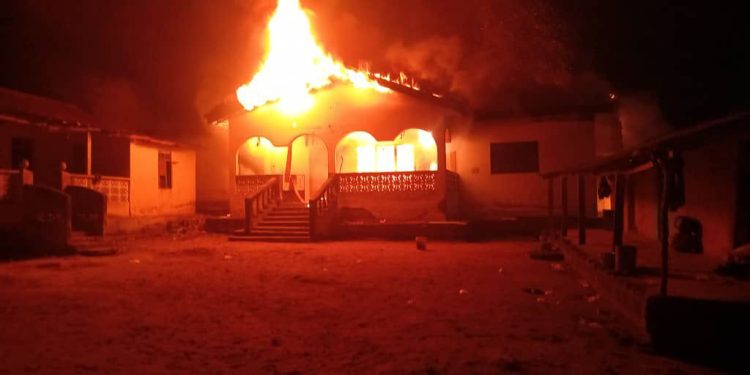
    Each day, forty (40) road crashes are recorded, and forty-six (46) individuals sustain injuries. Daily, sixty-nine (69) vehicles and motorcycles are involved in road crashes. To aid in combating road crashes, the National Road Safety Authority has called for stern enforcement of traffic regulations and public education.
    The NRSA has called for stricter enforcement of traffic regulations and increased public education to help curb the rising number of road accidents across the country. The Road Traffic Act 2004, an Act to consolidate and revise the Road Traffic Ordinance, 1952 (No. 55), provides for a more comprehensive regulation of road traffic and road use, to ensure safety on the roads and to provide for related matters.
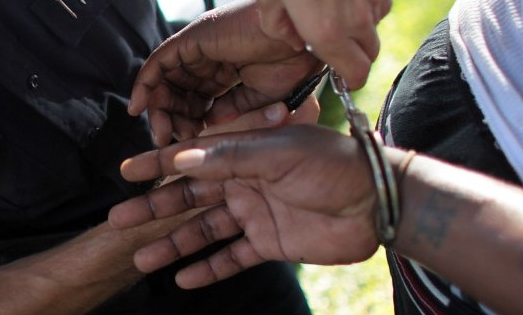
    A person who drives a motor vehicle dangerously on a road commits an offence and is liable on summary conviction, (a) where (i) a bodily injury does not occur, or (ii) a minor bodily injury does occur, to a person, other than the driver, to a fine not less than one hundred penalty units and not exceeding two hundred penalty units or to a term of imprisonment not exceeding nine months or to both the fine and imprisonment.
    (b) Where bodily injury of an aggravated nature occurs to a person, other than the driver, to a minimum fine of two hundred penalty units and not exceeding five hundred penalty units or to a term of imprisonment of not less than twelve months and not exceeding two years or to both the fine and the imprisonment; or (c) where death occurs, to a term of imprisonment for a term of not less than three years.
    (d) Where there is damage to state property, to a fine of not less than one hundred penalty units and payment for the damage caused in an amount determined by the Court.
    The Court may, on the conviction of a person under subsection (1), (a) order the payment of appropriate compensation to an injured person or to the estate of that person, or (b) order the withdrawal of the license for a period of not less than three years and not more than five years.
    A person who drives a motor vehicle on a road without due care and attention, or without reasonable consideration for other persons using the road, commits an offense and is liable on summary conviction to a fine not exceeding two thousand penalty units or to a term of imprisonment not exceeding five years or to both the fine and the imprisonment.
    A person commits an offense if without lawful authority or reasonable excuse, that person, (a) causes anything to be on or over a road, (b) interferes with a motor vehicle, trailer or cycle, or (c) interferes, directly or indirectly, with traffic equipment, where that it would be obvious to a reasonable person that to do so would be dangerous.
    A person who commits an offense under subsection (1) is liable on summary conviction to a fine not exceeding two hundred and fifty penalty units or to a term of imprisonment not exceeding twelve months or to both the fine and the imprisonment.

  • Cocoa smuggling drains almost $1bn from Ghana’s coffers – COCOBOD

    Cocoa smuggling drains almost $1bn from Ghana’s coffers – COCOBOD

    Cocoa smuggling to neighbouring Togo and Côte d’Ivoire between 2022 and 2025 has cost Ghana a total of US$1.1 billion, according to the Director of Special Services at COCOBOD, Jake Kudjo Samahar.

    During an interaction with stakeholders in the cocoa sector in the Oti and Volta regions,he disclosed that a total of 7,128.13 tonnes of cocoa were lost to smuggling between the 2020 and 2025 crop years in the Volta and Oti regions.

    Speaking to the media, he noted that the tonnage keeps decreasing each year, adding that the recorded losses have consistently dropped from the 2020/21 crop year to the 2024/25 crop year.

    “The tonnage recorded for 2020/21 crop year was 7,215.19, which reduced to 5,656.25 in 2021/22, further downward to 874.31 in the 2022/23 crop year, while 2023/24 recorded 468.75 tonnes with 2024/25 crop year recording 87.06 tonnes. We are losing a lot of revenue because if you look at within three years from 2022-2025, Ghana has lost almost $1.1 billion through cocoa smuggling into neighbouring Togo and Côte d’Ivoire,” he stated.

    Meanwhile, Finance Minister, Dr. Cassiel Ato Forson has linked the debt crisis facing the Ghana Cocoa Board (COCOBOD)to certain financial decisions taken by past officials.

    In an interview on Friday, November 14, Dr. Cassiel Ato Forson noted that the GH¢32 billion in arrears the sector is experiencing is the result of indiscriminate contract awards by the previous administration.

    According to him, these contracts were awarded during the tenure of the New Patriotic Party (NPP) without proper checks or budget allocations to fund them. He disclosed that despite these challenges, COCOBOD’s financial pressures have not eased, as its weakened balance sheet prevents it from meeting its obligations.

    “When COCOBOD awards a contract, they have to pay the contractors, not the Finance Ministry. The previous government awarded contracts anyhow, without any sources to pay for these contracts. The COCOBOD CEO inherited GH¢32 billion worth of arrears. He cannot pay it in one year because he doesn’t have the resources. COCOBOD cannot go out and borrow because of its balance sheet, so how is it supposed to pay that?”

    As part of efforts by the Board to combat the smuggling of cocoa from the country, informants who assist the Ghana Cocoa Board (COCOBOD) in its anti-smuggling operations will receive one-third of the value of any confiscated cocoa. According to the Board, these rewards will be paid without undue delay.

    In a statement, it wrote, “Under this arrangement, informants and anti-smuggling agents will receive one-third (1/3) of the assessed value of confiscated cocoa as their reward. This reviewed scheme is designed to ensure the sustainability of the anti-smuggling campaign while maintaining strong public participation in the collective effort to curb cocoa smuggling”.

    Individuals have been urged to contact the Special Anti-Smuggling Task Force through the hotline on 0308-040-107. The Board has assured that it will treat with strict confidentiality any information received from informants.Ghana continues to grapple with cocoa smuggling, a practice that undermines the country’s revenue.

    Meannwhile, Minister for Foreign Affairs, Honourable Samuel Okudzeto Ablakwa, and the Ambassador of the Kingdom of Morocco, Her Excellency Imane Ouaadil, on July 28, handed over two thousand (2,000) tons of fertilizer, equivalent to 40,000 bags of fertilizer, to the Ministry of Food and Agriculture.

    According to the Foreign Ministry, the fertilizer was donated to the West African country by the Kingdom of Morocco during the official visit of Mr Okudzeto Ablakwa to Morocco last month as part of the two countries’ commitment to sustainable agriculture to enhance food security.

    Deputy Minister for Food and Agriculture, John Setor Dumelo, received the donated fertilizers on behalf of the Minister for Food and Agriculture, Eric Opoku. He expressed gratitude to the Morrocan government for the donation. He assured that farmers will receive the fertilizers to aid crop production.

    “Yesterday, 40,000 bags of fertilizer was donated to Ghana by the Kingdom of Morocco through the Ministry of Foreign Affairs. On behalf of my boss Hon Eric Opoku, I want to say a big thank you to Hon Ablakwa and Her Excellency Ouaadil for this kind gesture. We at the Ministry of Agriculture will ensure the fertilizers get straight to the deserving farmers as soon as possible,” he wrote in a post on the X platform on July 29.

    Stakeholders in the agricultural sector have bemoaned the absence of a single chemical fertiliser plant in the country. The Institute for Fiscal Studies noted that the absence of such a plant is having an adverse impact on crop production and the contribution of the agricultural sector to the country’s economy i.e. the Gross Domestic Product (GDP). The sector’s contribution to the country’s GDP declined from 26.9% in 2010 to 22.7% in 2023.
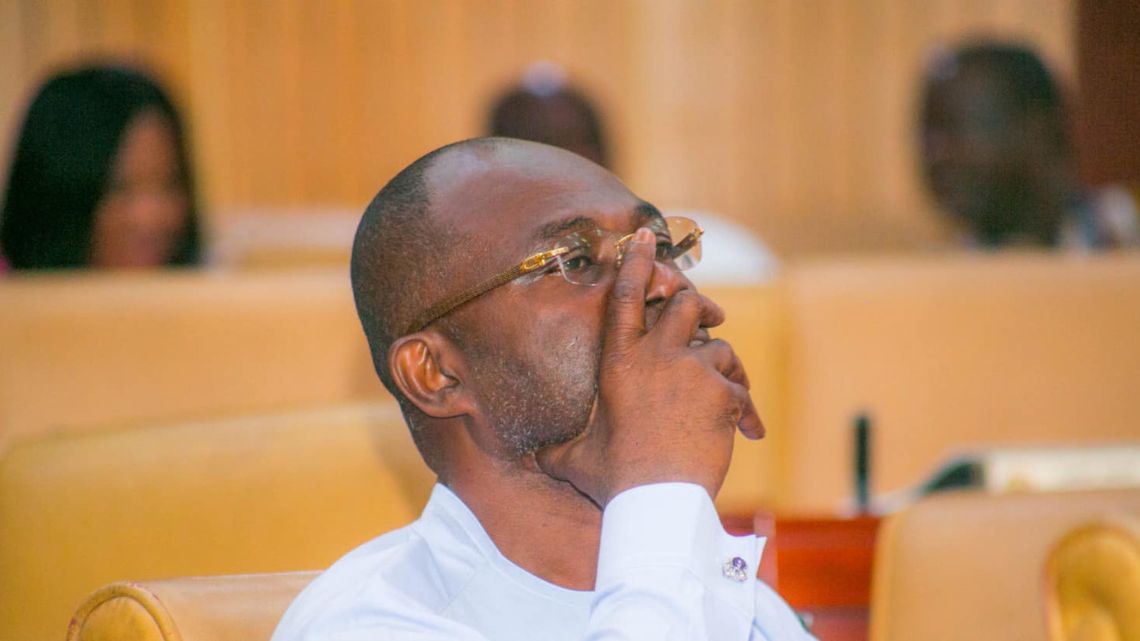
    In March this year, Senior Research Fellow at the Institute for Fiscal Studies, Dr. Said Boakye said, “We need to establish several fertiliser manufacturing plants to ensure that adequate and affordable fertiliser is available to farmers, which will help boost agricultural productivity.”

    “The sad reality is that Ghana lacks a single chemical fertiliser plant. In our rice studies, we have been comparing with Vietnam, where they have more than 7,000 plants. Vietnam’s success in achieving high agricultural productivity is largely due to fertilisers being readily available to farmers at no cost, along with incentivized prices,” he added.

    The Institute for Fiscal Studies has entreated the government to allocate significant funding to establish a fertiliser manufacturing plant.

    COCOBOD has noted that it would not secure any syndicated loan to finance cocoa purchases for the 2025/26 crop season. According to them, the shortage of cocoa beans on the global level has informed such a decision.

    “We’re not doing syndication…this year [2025], we’re not doing syndication. What has necessitated us not to do syndication is that we’re experiencing a global shortage of the cocoa bean.”

    He made these revelations during an interview with Accra-based radio station, Citi FM, on Monday, August 4. The Head of Public Affairs at COCOBOD, Jerome Kwaku Sam, stated explicitly stated, that the Board had not sought syndicated financing for the 2024/2025 season and had no intention of doing so this year.

    “…To be very honest, last year [2024], we didn’t do syndication, and this year [2025], we’re not doing syndication.

    Mr Sam further noted that the move also reflects a strategic effort to reduce costs under prevailing market conditions.

    “We’re not doing syndication whereby we’re going to incur additional expenses and what have you. That is out of the system or table for now,” he emphasized.

  • Continue doing whatever you’re doing to keep the cedi respected – President Mahama to BoG

    Continue doing whatever you’re doing to keep the cedi respected – President Mahama to BoG

    President John Dramani Mahama has lauded the efforts of the Bank of Ghana (BoG) for ensuring that Ghana’s currency commands repect both locally and internationally.

    Speaking at the Cedi@60 commemoration by the Bank of Ghana in Accra, themed “Sovereignty, Stability, and Economic Resilience” on Tuesday, November 18, President Mahama expressed delight, adding that “Whatever you are doing, continue doing so, so that the cedi is respected”.

    He noted, “I just want to say that the governor and all your team at the BoG, the Ministry of Finance, Ghanaians are grateful to you for the management of our currency”.

    The Ghanaian cedi marked its 60th anniversary on, Tuesday, October 28, symbolizing the nation’s economic independence. To commemorate the milestone, the Bank of Ghana (BoG) held an official launch at the Accra International Conference Center under the theme, “60 Years of the Cedi: A Symbol of Sovereignty, Stability, and Economic Resilience.”


    The celebration represents Ghana’s economic journey and resilience over the past six decades. Vice President Jane Naana Opoku-Agyemang graced the occasion alongside other government officials.


    Since its introduction on July 19, 1965, the cedi has undergone several reforms and redesigns to reflect the nation’s evolving economic landscape.


    Speaking at the event, the BoG Governor, Johnson Pandit Asiama, noted that the celebration aims to rekindle public confidence in the national currency.


    Ghana cedi’s strong performance was a central theme highlighted by President John Mahama during an interaction with potential investors in Singapore and Japan weeks ago.


    President Mahama emphasised the robust performance of the local currency to underscore Ghana’s macroeconomic stability and attractiveness as a destination for foreign capital.


    However, the cedi’s brief gains were short-lived after its rapid depreciation made it the worst-performing currency. According to Bloomberg’s recent report released on Thursday, September 4, the Ghana cedi is the worst-performing currency among all trading currencies, attributing the depreciation to a surge in demand for dollars by companies paying for imports.


    “A surge in demand for dollars by companies paying for imports has ended the Ghana cedi’s recent strong performance,” Bloomberg said.Bloomberg attributed the new development to the “strong gold prices,” while emphasizing that Ghana’s cedi has seen more than a ten percent (10%) depreciation in the current quarter.


    This, Bloomberg noted, has erased the fifty percent gain against the dollar in April and June. According to Bloomberg, the cedi traded 0.1 per cent weaker at GH¢11.9507 per dollar at 1:50 a.m. Despite the losses, it has gained 23 per cent so far this year.


    “Now, the currency, which had ranked first globally on the back of strong gold prices, has weakened by 13 per cent in the current quarter. Bloomberg data showed this was the steepest fall worldwide, erasing part of the 50 per cent gain recorded between April and June,” the report said.


    But Bloomberg has indicated that “Despite the losses, it has gained 23 per cent so far this year based on market data.” Reacting to Bloomberg’s report, the Bank of Ghana (BoG) noted, “The cedi should be stable within a reasonable range,” the central bank said in an emailed response.


    “Our role is to ensure fluctuations remain orderly, that they reflect fundamentals, and that they do not undermine confidence in the broader economy.”


    Bloomberg, in April this year, ranked the cedi as the best-performing currency with a sixteen percent (16%) gain against the dollar. What made the cedi earn the tag as the worst-performing currency is the steepest decline on the global level.


    The cedi’s appreciation in the last eight months helped ease inflationary pressures, pushing consumer inflation down to 21.2 per cent, the lowest in eight months at the time.


    Ghana’s import-dependent economy brings in a wide range of goods, from food to machinery, with demand typically rising toward the end of the year as businesses prepare for the Christmas season.


    The higher demand for dollars has piled pressure on the cedi, while the Bank of Ghana’s (BoG) limited supply of foreign exchange has added to the strain.


    Head of Market-Risk Management at UMB Bank, Mr. Hamza Adam, said banks that submitted dollar requests on behalf of clients to the Bank of Ghana last week received only half of what they asked for. “This week the central bank is trying to meet all demand,” he said by phone from Accra on September 3, 2025.


    Meanwhile, before Bloomberg reported on the cedi, BoG addressed the concerns of Ghanaians concerning the fast depreciation of the cedi, calling for calm. Bank of Ghana Governor, Dr. Johnson Asiama, during an interview with Joy Business, which was aired on Wednesday, August 27, mentioned that the current depreciation of the cedi was temporary, assuring a comeback soon.


    “The Bank of Ghana operates a managed floating system in terms of framework; therefore, these blips will happen. But the assurance is that this is a short-term issue, and the challenges are being addressed,” he assured.


    According to data from the Bank of Ghana, which was shared on 23rd August, the Ghana cedi had seen a five percent (5%) depreciation. Between August 23 and August 28, the Ghanaian cedi depreciated from GH¢10.43 to around GH¢11.00 per US dollar.


    The sharpest movement was between August 23 and 24, where the cedi depreciated from GH¢10.43 to GH¢10.90. The dollar was selling at GH¢10.43 on August 23, GH¢10.90 on August 24, and between August 25–27, it staggered between GH¢10.85–11.00.


    As of August 28, it had crossed GH¢11, sparking major concerns. On Dr. Johnson Asiama’s part, the current depreciation is a result of the temporary shortage of foreign exchange supply in the market, resulting from the effects of the currency appreciation coupled with other phenomena that, “…we are beginning to see those phenomena at play. Imports become a lot cheaper, so it’s just natural to begin to see pressure build up on the currency.”


    He said there is no need for panic as the economic indicators are obviously strong, giving signs of a cedi recovery soon enough. Dr. Asiama attributed the depreciating cedi to the decline in remittance inflows, sharp appreciation of the cedi, and limited interbank trading.


    “…what is happening is just because of the sharp appreciation, we are beginning to have some cash flow problems, specifically because we have seen some decline in terms of remittance inflows. Also, imports become a lot cheaper, so it’s just natural to begin to see pressure build up on the currency. Over the last two months, we have also seen very limited interbank trading,” he stated.


    The Ghana cedi saw a remarkable appreciation against major trading currencies worldwide over the past six months. During the presentation of the 2025 Mid-Year Fiscal Policy Review on July 24, the Minister for Finance, Dr. Cassiel Ato Forson, revealed that the cedi has recorded a remarkable turnaround in the first six months of 2025, appreciating by 42.6% against the US dollar.

    Dr. Forson described the cedi’s performance as “impressive” and the first of its kind in the history of Ghana’s economy. The cedi, which was initially always experiencing depreciation, is currently showing resilience against the dollar.


    He noted that the cedi, which was previously trading at about GH¢17.0 to the US dollar, had strengthened to GH¢10.4 as of July 23.


    “Mr. Speaker, the cedi’s performance in the first half of this year has been impressive! The Ghana cedi experienced significant appreciation against all major trading currencies in the first six months of 2025. I am happy to inform the House that our precious cedi, which once upon a time was trading at about GH¢17.0 to the US dollar, was trading at about GH¢10.4 as of yesterday, 23rd July, 2025,” he revealed.


    In high spirits, the minister adopted the catchphrase from Ghanaian highlife musician King Paluta’s energetic party anthem “For the Popping (Apicki),” released on December 27, 2024, and said, “This level of appreciation of the Ghana cedi has never happened in the history of our nation. Ghanafo, cedi no apicki! Apicki apicki apicki!”


    He continued that the strength of the cedi has not appreciated against just the US dollar but against the British pound as well. The cedi also gained 30.3% against the British pound and 25.6% against the euro during the same period.


    This marks a sharp contrast to the same period in 2024, when the cedi depreciated by 18.6% against the dollar, 17.9% against the pound, and 16.0% against the euro.


    “Similarly, the cedi, which was once trading at GH¢21.0 to the Great British Pound, was trading at about GH¢14.1 as of yesterday, 23rd July. Mr. Speaker, as of the end of June 2025, the cedi appreciated by 42.6% against the US dollar, 30.3% against the British pound, and 25.6% against the euro.


    With these gains over the past few months, Dr. Cassiel stated that all the losses in the previous years had been reversed. “Mr. Speaker, I repeat, so far, we have almost reversed all the cedi depreciation in 2022, 2023, and 2024,” he mentioned.


    However, Ghanaian economist, Professor Godfred Bokpin, has projected the local currency to stabilise between the range of GH₵13.5 and GH₵14 per U.S. dollar by December this year.


    Speaking to the media on Tuesday, September 16, he explained that the recent fluctuations of the value of the cedi are a natural market phenomenon influenced by supply and demand dynamics.


    He noted that increased government spending will keep the currency under pressure, urging Ghanaians to remain positive and hold on to the country’s core economic strengths (like productivity, revenue generation, exports, etc., which determine long-term stability.


    He stated, “We have our peak period and then we have our low period as well. In the peak period, when we experience what we call cash flow mismatch in terms of inflows and then outflows…businesses would import in anticipation of Christmas and all of that. So the demand will pick up.”

  • 3 victims out of ICU, 16 still in hospital after El-Wak recruitment stampede – GAF

    3 victims out of ICU, 16 still in hospital after El-Wak recruitment stampede – GAF

    The Ghana Armed Forces (GAF) has reported that victims injured in a stampede at the El-Wak Sports Stadium last Wednesday, November 12, during the military recruitment exercise are showing signs of recovery.

    Speaking to the media, Captain Veronica Adzo Arhin, Acting Director-General of the GAF’s Department of Public Relations, disclosed that three of the five most critically injured victims have stabilized and are no longer in the Intensive Care Unit (ICU), while sixteen others remain in the hospital receiving treatment.


    “The injured are doing well and receiving the best care. On the day of the incident, we had five people in the ICU. Three of them are now stable and have been moved to another ward. Of the 29 people brought to the hospital, 16 are still admitted. Others have gone home and continue to receive care. We are praying that no more lives are lost and are giving all patients the best attention possible,” Captain Arhin said.

    All six potential recruits who tragically lost their lives in the aftermath of the event are female. The unfortunate incident also left several others in critical condition.

    The tragedy occurred as thousands of young Ghanaians who had thronged the stadium forced their way through the entry points in an attempt to secure enlistment into the Service. To avert another possible tragedy, the Minister revealed that his ministry has put in additional safety measures to ensure a smooth and seamless process.

    The Ashanti Region also reported that at least five potential recruits reportedly collapsed during the Ghana Armed Forces (GAF) recruitment exercise at the Baba Yara Sports Stadium in Kumasi on Wednesday, November 12. One person was reportedly in critical condition and received treatment at the Emena Hospital in Oforikrom Municipality, while four others were admitted at the Ashanti South Government Hospital for treatment.

    To reduce overcrowding and prevent a potential stampede, authorities have asked some applicants to attend the exercise on Thursday and Friday.

    The Ghana Armed Forces announced an extension of the date for its originally scheduled one-month recruitment exercise. The national defence force’s recruitment exercise, which was expected to end on October 31, was extended to November 7. The one-month recruitment exercise will receive applications for the Ghana Police Service, Ghana Prisons Service, Ghana National Fire Service, and Ghana Immigration Service. 

    Eligibility requirements for each Service include being Ghanaian by birth, of good character, physically and medically fit, and meeting specific height, age, and academic standards. Applicants are to purchase a voucher via 713*03# from any mobile on all networks or at any Ghana Commercial Bank (GCB). The nationwide recruitment exercise will come to a close on Friday, December 19.

     The government has announced the commencement of recruitment for internal security agencies. The one-month recruitment exercise began on Monday, November 17 and will come to close on December 19. 

    The general eligibility requirements for the Ghana Police Service are as follows: “All applicants for the 2025 Ghana Police Service recruitment must be Ghanaian by birth, of good character, and free of any criminal record. They should not have been dismissed from any public service or other employment, and must meet the age limits set for their chosen category by November 1, 2025. Also, male applicants are required to be at least 5 feet 8 inches (173 cm) tall, while females must be at least 5 feet 4 inches (163 cm). Candidates must be physically and medically fit, have five passes in BECE including English and Mathematics, and be ready to undergo basic police and other specialised training.”

    However, the Police Service has five categories of entry, including general duty recruits, tradesmen, graduates (general duty), medical professionals, and religious affairs. Under each of the above-listed categories are specific eligibility requirements as stated by the Interior Ministry. The common qualification across all tradesmen categories states that each applicant must not be more than 35 years old by November 1, 2025, and must possess a technical or vocational certificate (such as GES/COTVET, National Proficiency, City & Guilds, or NVTI) relevant to their trade.

    Ghana Prisons

    Recruitment into the Ghana Prisons Service also seeks professionals across several disciplines, including General Duties, Agriculture, Education, Legal, and Medical Services. All applicants are expected to be “Ghanaian by birth, of good character, and free from any criminal record. Candidates must have completed National Service, be computer literate, and physically and medically fit according to the Prisons Service standards. Applicants should be aged between 18 and 35 years by November 1, 2025, and must not have been dismissed from any public service or other employment. Male applicants must be at least 1.68 metres (5 ft 6 in) tall, while females must be at least 1.57 metres (5 ft 2 in). Candidates must also have an active e-mail account, a mobile phone number, and be ready to undergo paramilitary and physical training. Medical professionals are additionally required to have completed one year post-housemanship in a registered hospital or clinic.”

    Applicants seeking entry into the general duties of the service are expected to hold a first degree (at least Second Class Lower Division) in Humanities or Social Sciences and have at least one year of post-qualification work experience. Additional qualifications are considered an advantage.

    Interested applicants for the service’s Agriculture and Education sectors are also expected to possess a first degree (Second Class Lower or above) in fields such as Animal Science, Crop Science, Soil Science, General Agriculture, Agricultural Mechanic, Agribusiness, Agricultural Biotechnology, Agricultural Engineering, or Agricultural Economics, along with one year of post-qualification experience. Applicants for the Education sector must have qualifications in Basic Education, Early Childhood Education, or Guidance and Counselling, with at least one year of post-qualification experience.

    For legal officers, candidates are required to possess a law degree (LLB/BL) and must have been called to the Bar with at least a year of post-qualification experience. Medical professionals are mandated to possess a professional qualification, council registration, and some post-qualification experience.

    Ghana National Fire Service

    Eligible applicants for the Ghana Fire Service must be Ghanaian by birth, of good character, and free from any criminal record. They must not have been dismissed from any public service or other employment and must meet the age requirements for their category: 18–35 years for Officer Corps, 18–32 years for non-Tradesmen, and 18–35 years for Tradesmen/Artisans, as of 1st November 2025. Candidates must be physically and medically fit according to Fire Service standards and meet the minimum height requirement of 1.73 metres (5 ft 8 in) for males and 1.63 metres (5 ft 4 in) for females. Applicants must also have five credits at BECE and five passes at WASSCE/SSSCE, including English and Mathematics, or the equivalent trade qualifications for Tradesmen/Artisans. Additionally, applicants must not be bonded by any organisation.

    Ghana Immigration Service

    The Ghana Immigration Service (GIS) 2025 recruitment exercise is open to applicants under five main categories: General Duties (Graduate and Non-Graduate), Medical, Religious Affairs, and Tradesmen/Artisans. Categories A and B target university graduates ready for officer-level roles and diploma or secondary school graduates joining as recruits, respectively. All applicants interested in any of the five categories are expected to be Ghanaian citizens by birth, have no criminal record, be physically and medically fit, possess good character, not be bonded or dismissed from any public service, and meet the minimum height requirement of 1.68 metres for males and 1.57 metres for females.

    The internal security recruitment announcement comes a few days after the Ghana Armed Forces (GAF) announced an extension of the date for its originally scheduled one-month recruitment exercise. The national defence force’s recruitment exercise, which was expected to end on October 31, has now been extended to November 7. GAF announced the new date in an official statement shared on November 1 via their official X (formerly Twitter) handle. The statement, titled “Extension of recruitment deadline” and signed by the Acting Director General, Public Relations, Evelyn Ntiamoah Asamoah, reads:

    “The Ghana Armed Forces has extended the deadline for the ongoing recruitment exercise by one week due to some technical challenges encountered on the recruitment portal during the initial period. The new deadline is 7 November 2025.”

    GAF announced its recruitment on Monday, September 29, in a statement signed by Acting Director General for Public Relations, Veronica Afei Arjun. It outlined a new development in which the recruitment exercise would be conducted in all sixteen (16) regions nationwide.

  • NAIMOS cracks down on galamsey in Obuasi, impounds equipment

    NAIMOS cracks down on galamsey in Obuasi, impounds equipment

    The National Anti-Illegal Mining Operations Secretariat (NAIMOS) task force has seized illegal mining equipment in a major swoop in Obuasi in the Amansie Central District of the Ashanti Region. 


    Equipment seized during the operation conducted on Monday, November 17, included motorbikes, vehicles, water pumps, and other tools used for illegal mining activities. Makeshift shelters and assorted equipment at the site were also destroyed.

    The task force also stormed a concession at Anyankyireml, a site that had been taken over by groups of illegal miners. Although the concession is legally owned by Asante Gold Corporation, it has been occupied by these illegal miners, forcing the rightful owners to flee the site.


    However, the intervention of the NAIMOS team drove out the miners and securing the land for its rightful owners. Illegal mining continues to pose a major challenge to the country, with several foreign nationals implicated and multiple arrests made. In June, NAIMOS warned criminal groups to vacate galamsey areas.


    The John Dramani Mahama-led government established the National Anti-Illegal Mining Operations Secretariat in July as part of efforts to curb illegal mining activities in the country.


    Speaking during an update on Wednesday, July 23, the Minister for Lands and Natural Resources, Emmanuel Armah-Kofi Buah, disclosed that the newly established Secretariat would act as the brain of Ghana’s anti-illegal mining operations.


    “To coordinate the efforts of the military, police, and other security agencies, the ministry has established the National Anti-Illegal Mining Operations Secretariat (NAIMOS) as the operational nerve-centre for Ghana’s fight against illegal small-scale mining,” he stated.


    The Secretariat’s responsibility is to collaborate with other key institutions such as the Ministry of Transport, the Ministry of Finance (GRA–Customs Division), and the Ghana Ports and Harbours Authority as part of its mandate.


    This collaboration is expected to ensure that excavators and other earth-moving equipment entering the country are not diverted for illegal mining activities.


    “In collaboration with the Ministry of Transport and the Ministry of Finance (GRA–Customs Division), and the Ports and Harbours Authority, we have initiated a proactive tracking of all imports of excavators and earth-moving equipment from the point of entry,” he added.


    Illegal mining activities continue to pose a major challenge to the country. Several Chinese nationals have been involved in such illegal operations, leading to multiple arrests.
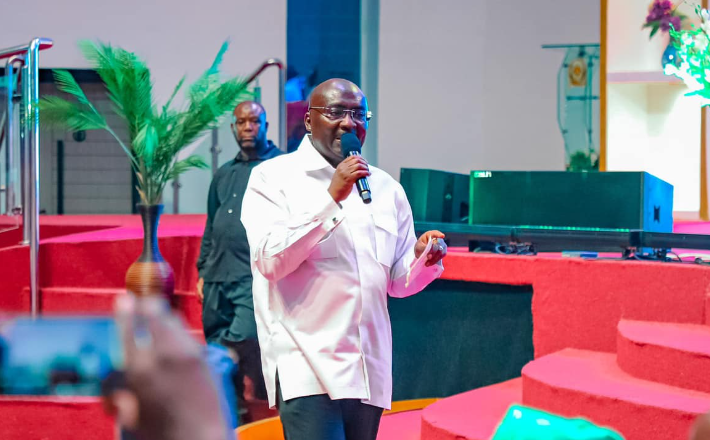

    Meanwhile, President John Dramani Mahama has disclosed that scientific tests are being carried out on new chemicals that could help restore polluted water bodies and rivers affected by illegal mining, popularly known as galamsey.


    Speaking at a high-level stakeholder engagement on galamsey in Accra on Friday, October 3, with members of Civil Society Organisations (CSOs), President Mahama said, “There are new chemicals that have come that allow you to treat water and take out the toxins and the heavy metals. One of them is called dowtine. The people came, and we sent them there. They took samples, tested. We are waiting for them to bring the results back.”


    He has asked Ghanaians to exercise patience regarding the longstanding battle against illegal mining (galamsey) activities. During a meeting with Civil Society Organisations (CSOs), President Mahama said declaring a state of emergency will not end the menace.


    According to him, government advisors believe the country can overcome galamsey by adopting best practices in small-scale mining, including technologies that help neutralize or remove harmful chemicals from water bodies.


    Additionally, the President pledged to honor the calls of many Ghanaians by declaring a state of emergency when his advisors give him the nod to do so.


    President Mahama believes that the country can eradicate the long-term canker if it deploys more troops and invests additional resources in the fight. He concluded that the battle seems to be a long one, but his administration is committed to ending it.


    “While we are fighting the menace, I am also saying we should uptake technology in order to protect the environment. So yes, let’s fight the illegal mining but at the same time, let’s bring the new technology that will help us protect our environment.


    “Now with the elephant in the room, state of emergency, yes, I have the power to do it, but the president acts on the advice of the National Security Authority, and as at now, this moment, the National Security Authority believes that we can win the fight against galamsey without declaring a state of emergency. I want to assure you that the day they advise me otherwise, that boss, now we need a state of emergency, I won’t hesitate,” he added.

  • PLAYBACK: President Mahama swears in Baffoe-Bonnie as Chief Justice

    PLAYBACK: President Mahama swears in Baffoe-Bonnie as Chief Justice

    President John Dramani Mahama has sworn in Justice Paul Baffoe-Bonnie as Ghana’s Chief Justice. The swearing-in ceremony occurred on Monday, November 18, at the presidency.

    His swearing-in comes after Parliament, following several deliberations, approved his nomination. The Speaker of Parliament, Alban Bagbin, confirmed his approval on Thursday, November 11, during the 15th Sitting of the 3rd meeting.

    “This Honorable house has accordingly approved the nomination of Justice Paul Baffoe-Bonnie as Chief Justice of the Republic, in accordance with Article 114 clause 1 of the 1992 Constitution respectively.

    “I will want to take this opportunity to, on behalf of the House congratulate the nominee on his approval by Parliament. I urge the nominee to take all that has happened right up from the day of the nomination up to his prior approval by Parliament into consideration in his tenure of office. Once again congratulations,” he added.

    Watch the livestream here:

    Parliament concluded his nomination after a headcount, where the Majority in Parliament counted 163 and the Minority 69.

    On Monday, November 10, Justice Paul Baffoe-Bonnie appeared before the Appointments Committee of Parliament for his vetting.

    In October, President John Dramani Mahama submitted Justice Baffoe-Bonnie’s name to the Council of State for consideration in accordance with Article 144(1) of the Constitution, which requires the President to act in consultation with the Council of State and with Parliament’s approval when appointing a Chief Justice.

    Justice Baffoe-Bonnie, the most senior member of the Supreme Court, was appointed to the apex court in June 2008 by then-President John Agyekum Kufuor. He studied law at the University of Ghana and was called to the Bar in 1983. His judicial career spans roles as a Circuit Court Judge in Kumasi, a High Court Judge at Duayaw Nkwanta, and a Court of Appeal Judge before his elevation to the Supreme Court.

    Born on December 26, 1956, in Goaso, Justice Baffoe-Bonnie had his secondary education at Konongo Odumase Secondary School before pursuing law at the University of Ghana and the Ghana Law School.

    However, speaking on the floor of Parliament on Friday, November 7, Minority Leader Alexander Afenyo-Markin said it would be inappropriate to proceed with the vetting of Acting Chief Justice Paul Baffoe-Bonnie while the former Chief Justice awaits a court verdict on her pending lawsuit.

    In October, Gertrude Torkornoo initiated legal action to prevent the vetting and appointment of Justice Baffoe-Bonnie as Ghana’s next Chief Justice. She is seeking the nullification of all activities carried out by the Justice Gabriel Scott Pwamang Committee, which was set up under Article 146 to review petitions seeking her removal from office.

    She further wants the court to overturn all proceedings undertaken by the said Committee and to declare the Presidential Warrant authorizing her dismissal as unlawful and without legal effect. The legal move came as Parliament’s Appointments Committee prepared to vet Justice Baffoe-Bonnie for the top judicial position.

    Afenyo-Markin emphasized that commencing the vetting of the appointed CJ would breach judicial propriety. According to him, given the ongoing disputes surrounding the revocation of the former Chief Justice from office, proceeding with the vetting process could undermine Articles 125 and 127 of the Constitution.

    “Proceeding to vet a new person to fill that office will be rendering the application of justice. We are not into blows; we are here to argue law and for you to determine. This kind of attack, ‘it will happen, it will happen,’ is inappropriate. They should take it easy,” Afenyo-Markin said.

    Article 125 gives judicial power only to the courts and not to Parliament or the Executive. Article 127, on the other hand, requires all other state institutions not to interfere with the Judiciary’s work but to protect its independence.

    But the Speaker of Parliament, Alban Bagbin, dismissed the motion presented by the Minority caucus. According to him, granting such a request would create a dangerous precedent, explaining that “any litigant could hold Parliament hostage—that is, file a case and freeze the work of Parliament and its committees.”

    He ruled that “there is no constitutional or standing order basis for Parliament to halt the process simply because there are pending cases in court. The motion is inadmissible and has been returned to the sponsor, the Minority Leader, Honorable Alexander Afenyo-Markin, as stated clearly by our Standing Orders.”

    The five-member committee, backed by Article 146, concluded its investigations last month and recommended the Chief Justice’s removal from office. Acting on the committee’s recommendations, President Mahama relieved Justice Gertrude Torkornoo of her duties with immediate effect on Monday, September 1.

    The Chief Justice was earlier suspended by President Mahama on Tuesday, April 22, after a prima facie case was established following multiple petitions calling for her removal.

    Among the petitions was one filed by a group known as Shining Stars of Ghana, alleging that she violated Article 144 of the Constitution by personally recommending judges for promotion to the Supreme Court. The group also claimed she ruled on a case involving the Speaker of Parliament without granting him a hearing, despite his refusal to respond to the suit.

    Another petition from a police officer who is also a lawyer accused the Chief Justice of manipulating evidence and abusing her authority during a Supreme Court session where he was reportedly reprimanded, arrested, and detained.

    Court records, however, show that the lawyer’s conduct during proceedings prompted a unanimous caution from the bench, not just from the Chief Justice.

    A third petition, submitted by a private individual, listed 21 alleged misconducts and four claims of incompetence, including the misuse of public funds—specifically, spending over GH¢261,000 and $30,000 on a family trip abroad in 2023, and misusing an additional GH¢75,580 and $14,000 during another foreign assignment without proper accountability.

    Subsequent reports indicate that two more petitions were later filed, intensifying pressure on the Judiciary.

    Chief Justice Gertrude Torkornoo, in her written response to President Mahama, strongly denied allegations of misconduct and abuse of office, describing them as baseless and lacking grounds for her removal.

    In July, an application for review filed by the embattled Chief Justice at the Human Rights Division of the Accra High Court was dismissed. The court, presided over by Justice Amoako on Thursday, July 31, ruled that several claims—such as the illegal composition of the committee and wrongful conduct of proceedings—were already before the Supreme Court.

    Justice Amoako stated that relitigating these issues would result in duplication and abuse of court processes and therefore dismissed the case.

    The Chief Justice’s judicial review application, filed on June 9, sought nine reliefs, including declarations that the Article 146 Committee acted unlawfully and violated her right to a fair hearing.

    As the Article 146 Committee’s proceedings are held in camera in accordance with Article 146(8) of the Constitution, the court noted that it could not inquire into certain matters raised by the suspended Chief Justice.

    Following these developments, Justice Gertrude Torkornoo proceeded to the ECOWAS Community Court in Abuja, Nigeria, seeking $10 million in compensation over her suspension.

    Her application includes 10 reliefs, among them a request for precautionary measures ensuring she continues to enjoy the entitlements of her office pending the final determination of the case.

    Meanwhile, government spokesperson Felix Kwakye Ofosu has refuted Justice Torkornoo’s claims, insisting that her suspension aligns with the Constitution.

    On Thursday, August 14, the Bar Council of England and Wales and the Commonwealth Lawyers Association jointly called for the immediate reinstatement of Ghana’s Chief Justice by President Mahama and the Executive arm of government.

    “Immediately and without delay, reinstate the Chief Justice of Ghana to her office, consistent with both the hitherto strong attachment to the rule of law demonstrated by Ghana and the constitutional duties incumbent upon them,” the statement said.

    The groups further urged a fair and transparent investigation into the disciplinary charges against her and the establishment of clear procedural rules with a definite timeframe for the Committee’s work.

  • Kwahuhemaa has not been abducted – Kwahu Traditional Council

    Kwahuhemaa has not been abducted – Kwahu Traditional Council

    Earlier reports circulating today, Monday, November 17, suggested that the Paramount Queen Mother of Kwahu, Nana Adwoa Gyamfuah III, had been abducted by National Security operatives who allegedly invaded the Abene Palace. Reacting to the incident, the Kwahu Traditional Council says such claims are false and misleading.


    The Council clarified that the National Security personnel were at the palace to enforce an interlocutory injunction issued by the Eastern Regional House of Chiefs.

    According to the Council, the injunction prohibits the self acclaimed Kwahuhene Baffour Osei Akoto, the Queen Mother, and others from interfering with the legitimate chief’s operations and duties.

    According to reports, the gunmen stormed the palace of the Paramount Chief of the Kwahu Traditional Council at Abene around 4 a.m. and took the official Toyota Land Cruiser of the Kwahuhene.

    Eyewitnesses said they heard gunshots at the palace prior to the abduction. Authorities are yet to issue an official statement, and the motive behind the raid and the abduction remains unclear.

    Last month, the Binduri District of the Upper East Region was thrown into mourning following a shooting incident which resulted in the death of three individuals and left five others injured.

    According to reports, gunmen attacked and invaded the residence of the victims on Sunday, October 26, and shot them. Among the three deceased individuals is a five-year-old child who died instantly.

    The Manager of Binduri-based Maxx Empire Radio and TV, George Bukari, is reported to be among those who sustained injuries in the aftermath of the incident.

    The incident has been linked to the long-running Bawku conflict. The conflict, which resurfaced in 2021, has claimed multiple lives and displaced several families. However, the government has, in several ways, initiated efforts to bring calm to the area. In July this year, the Ghana Armed Forces (GAF) deployed soldiers to conflict-prone areas such as Bawku, Binduri, Nalerigu, and Zebilla.

    This update comes less than a week after four individuals lost their lives in a deadly daylight attack at the district office of the National Health Insurance Authority (NHIA) in the region. The unfortunate incident also left several others injured. The deceased individuals include a bystander, an NHIA staff member, a mentally unstable man and Yahaya Bukari, headmaster of Garu D/A Junior High School.

    According to eyewitness accounts, the Garu District Office of the NHIA was invaded by four armed men on two motorbikes, who subsequently fired shots wildly. Two of the gunmen are said to have been masks.

    “Around 10am there about, we heard gunshots. Initially, we thought it was coming from the rural bank area, but later we found out that the attackers had gone to the health insurance office,” a witness stated.

    Speaking to the media, former Presiding Member of the Garu District Assembly and now Assembly Member for Kugri, Edward Ndebugri, recounted that the gunmen later targeted bystanders and fleeing residents.

    “There is a public school close to the health insurance office, and when the shooting started, the teachers and pupils began running helter-skelter. The gunmen chased them in the direction they fled, and when one of the teachers fell, they shot him dead,” he added.

    The assailants reportedly left the NHIA office with nothing. In response to the incident, heavily armed police and military personnel thronged key areas, including the District Health Insurance Office and the Presbyterian Hospital as of 2 p.m. on Monday.

    “The whole town is in shock. This is the first time we are witnessing such an incident. People are living in fear, and we are pleading with the security agencies to investigate and bring the perpetrators to justice,” the Assembly Member for Kugri appealed.

    The injured individuals are receiving treatment for gunshot wounds at the Garu Presbyterian Hospital. Meanwhile, police have launched investigations into the incident to determine the motive behind the attack.

    Earlier this month, an armed attack at the Gbintri inland checkpoint in the East Mamprusi Municipality of the North East Region has reportedly left an Assistant Immigration Control Officer II (AICOII), Rafiq Mohammed, dead and another officer, AICOII Oppong Daniel, also injured.

    While details of the attack remain unclear, reports suggest the incident took place at about 1:30 a.m. on Friday, October 3. However, AK-47 shell casings used by the attackers during the operation have been retrieved by the joint response team, led by Superintendent Francis Brobbey, Gambaga Municipal Police Commander, and DIS Moro Tanko Mohammed, North Regional Intelligence Officer of the GIS.

    Meanwhile, AICOII Oppong Daniel is receiving treatment at the Baptist Medical Centre in Nalerigu after sustaining multiple gunshot wounds in the incident.

    In July this year, the lifeless body of an immigration officer identified as Stephen King Amoah, also known as Nana Kofi, was discovered in a drainage system near GBC Satellite, opposite Comet Estate, Accra.

    The deceased is said to have gone missing five days (since July 3) before his tragic death. This was contained in a press statement by the Ghana Police Service on Thursday, July 10.

    Providing more details about the tragic incident, the police noted that the murderer(s) of the 38-year-old also set his body on fire.

    The deceased’s remains have been conveyed to the Police Hospital morgue after the relatives positively identified the body as Stephen.

    The police have disclosed that their preliminary investigations indicate the deceased had gone to meet his debtor, one Bright Aweh, who had promised to pay the outstanding debt owed on Thursday, July 3, in the evening.

    The victim never returned home that night, and his phone remained switched off throughout, raising concerns among family and friends who later reported him missing.

    “Investigations revealed that on 3rd July 2025, at about 8:00 p.m., the deceased left his residence at Ashongman Estate after receiving WhatsApp images of cash bundles from one Bright Aweh, who requested to meet him at a spot at Ashongman Estate to settle an outstanding amount.

    “According to the complainant, the deceased never returned home that night, and his phone remained switched off thereafter,” the police said.

    After the deceased’s family filed a complaint at the police station, Bright Aweh was arrested to assist with the investigation.

    He admitted that he met with the deceased and alleged that he gave a cash of GHS500,000 to the deceased, instructing him “to use part of the money to pay off some debts and hold the remaining amount for later collection.”

    But the police in their statement noted that “the suspect could not clearly explain the source of the funds and gave conflicting statements.”

    Meanwhile, the police pledged to get to the bottom of the case and ensure justice is served to the perpetrators.

    “The Regional Police Command strongly condemns such violent and criminal acts and assures the public that it is working diligently to uncover the full circumstances surrounding this incident and bring all responsible persons to justice,” it added.

    Subsequently, the Ghana Police announced the arrest of the prime suspect in the gruesome murder of immigration officer Stephen King Amoah, also known as Nana Kofi on August 4.

    This follows the discovery of weapons believed to have been used in the murder of Immigration Officer Stephen Amoah.

    During a press briefing on Monday, August 4, the Director-General of the CID, COP Lydia Yaako Donkor, revealed that bloodstains were found in the living room, on a burnt, blood-soaked carpet, and on a fufu pestle suspected to have been used in the murder by the suspect.

    According to the Police, the forensic conducted on Thursday, July 24, also exposed freshly sprayed walls, hinting at an attempted cleanup by the suspect.

    “The Kwabenya Teshie Police visited the suspect’s residence, and the forensic inspection revealed the following bloodstains in the living room and evidence of attempted cleanup, freshly sprayed walls, and an empty can of spray paint. A search of a secondary crime scene near the GBC satellite area also uncovered a burnt woolen carpet and partially burnt camouflage fabric.”

    “These items were photographed, retrieved and photocopied for forensic analysis. On 24th July, the police received a warrant to search a particular room in the suspect’s house. A search in the room revealed more bloodstains, which were photographed and samples collected for forensic analysis. A further search in the bushes about 100 metres from the suspect’s house also led to the retrieval of the…” the Police said.

    The Service has noted that in the coming days, undertake a DNA exercise on the bloodstains with samples from the deceased mother and son, aiding with the process.

    “I wish to say that the initial blood sample collected was positive for human blood. To aid the investigations, the deceased mother and son has provided sample for DNA profiling. In the face of these pieces of evidence the suspect who was initially charged with kidnapping has since been rearrested and formally charged with murder. He is currently on remand following his appearance with the Adabraka District Court and is scheduled to reappear on 8th August 2025.

    “A special operation is currently underway to identify and arrest his accomplices and we are following other vital leads to gather all necessary evidence against the suspect and his accomplices. The Ghana Police Service wishes to assure the public that the investigations is ongoing and every effort is being made to ensure that all the perpetrators are prosecuted,” she added.

    Meanwhile, recent reports suggested that the third suspect involved in the murder of Stephen King Amoah, an Immigration Officer, has succumbed to an illness.

    According to sources, the victim’s brother, Kwasi Amoako, revealed this information to the media.

    “Yesterday we went to court and I can confirm that the third suspect has passed on. I was told by the Police CID, the one who is in charge of the case. We thank God that our brother has started seeking justice for himself,” he is quoted to have said by MyJoyOnline.

    The police are yet to issue a formal statement on the suspect’s death. The Adabraka District Court on August 22, continued hearing the case after remanding the prime suspect into police custody for two weeks.

  • NPP official dies in motorbike crash at Assin Breku

    NPP official dies in motorbike crash at Assin Breku

    A fatal motorbike crash at Assin Breku in the Central Region has claimed the life of the polling station chairman for Ninkyiso, who is affiliated with the New Patriotic Party (NPP), on Friday, November 14.

    The accident occurred when the deceased, Yahya, was riding a motorbike en route to a campaign event for the party’s flagbearer hopeful, Bryan Acheampong. According to eyewitnesses, a speeding motorbike reportedly collided with the one carrying the constituency’s Nasara Coordinator, Vilinke Mohammed.

    Yahya gave up the ghost on Sunday, November 16, after he was admitted to the St. Francis Xavier Hospital in Assin Fosu, alongside Vilinke Mohammed. Meanwhile, Vilinke Mohammed, who remains in the hospital, is said to have sustained a life-threatening head injury.

    The incident also left one Kwaku Mensah injured. He was reportedly travelling from Manso to Assin Adiembra for a funeral. He is currently receiving medical attention at the St. Francis Xavier Hospital.

    Ghana has reported a surge in the number of fatalities recorded due to road crashes. In the first half of 2025, the National Road Safety Authority (NRSA) reported one thousand, five hundred and four (1,504) deaths, compared to one thousand, two hundred and thirty-seven (1,237) fatalities reported in the corresponding period in 2024, representing a 21.58 percent increase.

    According to provisional data released by the National Road Safety Authority in collaboration with the Police Motor Traffic and Transport Department (MTTD), a total of 7,289 road crashes were recorded between January and June this year.

    Per the data, a total of twelve thousand, three hundred and fifty-four (12,354) vehicles were involved in the road crashes. Owing to the road accidents, a total of eight thousand three hundred (8,300) individuals sustained injuries.

    Also, one thousand, three hundred and one (1,301) pedestrians were knocked down across the country. According to the recent data provided by the National Road Safety Authority, on average, eight (8) lives are lost every day due to road crashes.

    Each day, forty (40) road crashes are recorded, and forty-six (46) individuals sustain injuries. Daily, sixty-nine (69) vehicles and motorcycles are involved in road crashes. To aid in combating road crashes, the National Road Safety Authority has called for stern enforcement of traffic regulations and public education.

    The NRSA has called for stricter enforcement of traffic regulations and increased public education to help curb the rising number of road accidents across the country. The Road Traffic Act 2004, an Act to consolidate and revise the Road Traffic Ordinance, 1952 (No. 55), provides for a more comprehensive regulation of road traffic and road use, to ensure safety on the roads and to provide for related matters.

    A person who drives a motor vehicle dangerously on a road commits an offence and is liable on summary conviction, (a) where (i) a bodily injury does not occur, or (ii) a minor bodily injury does occur, to a person, other than the driver, to a fine not less than one hundred penalty units and not exceeding two hundred penalty units or to a term of imprisonment not exceeding nine months or to both the fine and imprisonment.

    (b) Where bodily injury of an aggravated nature occurs to a person, other than the driver, to a minimum fine of two hundred penalty units and not exceeding five hundred penalty units or to a term of imprisonment of not less than twelve months and not exceeding two years or to both the fine and the imprisonment; or (c) where death occurs, to a term of imprisonment for a term of not less than three years.

    (d) Where there is damage to state property, to a fine of not less than one hundred penalty units and payment for the damage caused in an amount determined by the Court.

    The Court may, on the conviction of a person under subsection (1), (a) order the payment of appropriate compensation to an injured person or to the estate of that person, or (b) order the withdrawal of the license for a period of not less than three years and not more than five years.

    A person who drives a motor vehicle on a road without due care and attention, or without reasonable consideration for other persons using the road, commits an offense and is liable on summary conviction to a fine not exceeding two thousand penalty units or to a term of imprisonment not exceeding five years or to both the fine and the imprisonment.

    A person commits an offense if without lawful authority or reasonable excuse, that person, (a) causes anything to be on or over a road, (b) interferes with a motor vehicle, trailer or cycle, or (c) interferes, directly or indirectly, with traffic equipment, where that it would be obvious to a reasonable person that to do so would be dangerous.

    A person who commits an offense under subsection (1) is liable on summary conviction to a fine not exceeding two hundred and fifty penalty units or to a term of imprisonment not exceeding twelve months or to both the fine and the imprisonment.

  • Queenmother of Kwahu reportedly abducted by gunmen

    Queenmother of Kwahu reportedly abducted by gunmen

    The Kwahuhemaa, Nana Adwoa Gyemfua, has reportedly been abducted by armed men in police uniforms claiming to be from the National Security on Monday, November 17.

    According to reports, the gunmen stormed the palace of the Paramount Chief of the Kwahu Traditional Council at Abene around 4 a.m. and took the official Toyota Land Cruiser of the Kwahuhene.

    Eyewitnesses said they heard gunshots at the palace prior to the abduction. Authorities are yet to issue an official statement, and the motive behind the raid and the abduction remains unclear.

    Last month, the Binduri District of the Upper East Region was thrown into mourning following a shooting incident which resulted in the death of three individuals and left five others injured.

    According to reports, gunmen attacked and invaded the residence of the victims on Sunday, October 26, and shot them. Among the three deceased individuals is a five-year-old child who died instantly.

    The Manager of Binduri-based Maxx Empire Radio and TV, George Bukari, is reported to be among those who sustained injuries in the aftermath of the incident.

    The incident has been linked to the long-running Bawku conflict. The conflict, which resurfaced in 2021, has claimed multiple lives and displaced several families. However, the government has, in several ways, initiated efforts to bring calm to the area. In July this year, the Ghana Armed Forces (GAF) deployed soldiers to conflict-prone areas such as Bawku, Binduri, Nalerigu, and Zebilla.

    This update comes less than a week after four individuals lost their lives in a deadly daylight attack at the district office of the National Health Insurance Authority (NHIA) in the region. The unfortunate incident also left several others injured. The deceased individuals include a bystander, an NHIA staff member, a mentally unstable man and Yahaya Bukari, headmaster of Garu D/A Junior High School.

    According to eyewitness accounts, the Garu District Office of the NHIA was invaded by four armed men on two motorbikes, who subsequently fired shots wildly. Two of the gunmen are said to have been masks.

    “Around 10am there about, we heard gunshots. Initially, we thought it was coming from the rural bank area, but later we found out that the attackers had gone to the health insurance office,” a witness stated.

    Speaking to the media, former Presiding Member of the Garu District Assembly and now Assembly Member for Kugri, Edward Ndebugri, recounted that the gunmen later targeted bystanders and fleeing residents.

    “There is a public school close to the health insurance office, and when the shooting started, the teachers and pupils began running helter-skelter. The gunmen chased them in the direction they fled, and when one of the teachers fell, they shot him dead,” he added.

    The assailants reportedly left the NHIA office with nothing. In response to the incident, heavily armed police and military personnel thronged key areas, including the District Health Insurance Office and the Presbyterian Hospital as of 2 p.m. on Monday.

    “The whole town is in shock. This is the first time we are witnessing such an incident. People are living in fear, and we are pleading with the security agencies to investigate and bring the perpetrators to justice,” the Assembly Member for Kugri appealed.

    The injured individuals are receiving treatment for gunshot wounds at the Garu Presbyterian Hospital. Meanwhile, police have launched investigations into the incident to determine the motive behind the attack.

    Earlier this month, an armed attack at the Gbintri inland checkpoint in the East Mamprusi Municipality of the North East Region has reportedly left an Assistant Immigration Control Officer II (AICOII), Rafiq Mohammed, dead and another officer, AICOII Oppong Daniel, also injured.

    While details of the attack remain unclear, reports suggest the incident took place at about 1:30 a.m. on Friday, October 3. However, AK-47 shell casings used by the attackers during the operation have been retrieved by the joint response team, led by Superintendent Francis Brobbey, Gambaga Municipal Police Commander, and DIS Moro Tanko Mohammed, North Regional Intelligence Officer of the GIS.

    Meanwhile, AICOII Oppong Daniel is receiving treatment at the Baptist Medical Centre in Nalerigu after sustaining multiple gunshot wounds in the incident.

    In July this year, the lifeless body of an immigration officer identified as Stephen King Amoah, also known as Nana Kofi, was discovered in a drainage system near GBC Satellite, opposite Comet Estate, Accra.

    The deceased is said to have gone missing five days (since July 3) before his tragic death. This was contained in a press statement by the Ghana Police Service on Thursday, July 10.

    Providing more details about the tragic incident, the police noted that the murderer(s) of the 38-year-old also set his body on fire.

    The deceased’s remains have been conveyed to the Police Hospital morgue after the relatives positively identified the body as Stephen.

    The police have disclosed that their preliminary investigations indicate the deceased had gone to meet his debtor, one Bright Aweh, who had promised to pay the outstanding debt owed on Thursday, July 3, in the evening.

    The victim never returned home that night, and his phone remained switched off throughout, raising concerns among family and friends who later reported him missing.

    “Investigations revealed that on 3rd July 2025, at about 8:00 p.m., the deceased left his residence at Ashongman Estate after receiving WhatsApp images of cash bundles from one Bright Aweh, who requested to meet him at a spot at Ashongman Estate to settle an outstanding amount.

    “According to the complainant, the deceased never returned home that night, and his phone remained switched off thereafter,” the police said.

    After the deceased’s family filed a complaint at the police station, Bright Aweh was arrested to assist with the investigation.

    He admitted that he met with the deceased and alleged that he gave a cash of GHS500,000 to the deceased, instructing him “to use part of the money to pay off some debts and hold the remaining amount for later collection.”

    But the police in their statement noted that “the suspect could not clearly explain the source of the funds and gave conflicting statements.”

    Meanwhile, the police pledged to get to the bottom of the case and ensure justice is served to the perpetrators.

    “The Regional Police Command strongly condemns such violent and criminal acts and assures the public that it is working diligently to uncover the full circumstances surrounding this incident and bring all responsible persons to justice,” it added.

    Subsequently, the Ghana Police announced the arrest of the prime suspect in the gruesome murder of immigration officer Stephen King Amoah, also known as Nana Kofi on August 4.

    This follows the discovery of weapons believed to have been used in the murder of Immigration Officer Stephen Amoah.

    During a press briefing on Monday, August 4, the Director-General of the CID, COP Lydia Yaako Donkor, revealed that bloodstains were found in the living room, on a burnt, blood-soaked carpet, and on a fufu pestle suspected to have been used in the murder by the suspect.

    According to the Police, the forensic conducted on Thursday, July 24, also exposed freshly sprayed walls, hinting at an attempted cleanup by the suspect.

    “The Kwabenya Teshie Police visited the suspect’s residence, and the forensic inspection revealed the following bloodstains in the living room and evidence of attempted cleanup, freshly sprayed walls, and an empty can of spray paint. A search of a secondary crime scene near the GBC satellite area also uncovered a burnt woolen carpet and partially burnt camouflage fabric.”

    “These items were photographed, retrieved and photocopied for forensic analysis. On 24th July, the police received a warrant to search a particular room in the suspect’s house. A search in the room revealed more bloodstains, which were photographed and samples collected for forensic analysis. A further search in the bushes about 100 metres from the suspect’s house also led to the retrieval of the…” the Police said.

    The Service has noted that in the coming days, undertake a DNA exercise on the bloodstains with samples from the deceased mother and son, aiding with the process.

    “I wish to say that the initial blood sample collected was positive for human blood. To aid the investigations, the deceased mother and son has provided sample for DNA profiling. In the face of these pieces of evidence the suspect who was initially charged with kidnapping has since been rearrested and formally charged with murder. He is currently on remand following his appearance with the Adabraka District Court and is scheduled to reappear on 8th August 2025.

    “A special operation is currently underway to identify and arrest his accomplices and we are following other vital leads to gather all necessary evidence against the suspect and his accomplices. The Ghana Police Service wishes to assure the public that the investigations is ongoing and every effort is being made to ensure that all the perpetrators are prosecuted,” she added.

    Meanwhile, recent reports suggested that the third suspect involved in the murder of Stephen King Amoah, an Immigration Officer, has succumbed to an illness.

    According to sources, the victim’s brother, Kwasi Amoako, revealed this information to the media.

    “Yesterday we went to court and I can confirm that the third suspect has passed on. I was told by the Police CID, the one who is in charge of the case. We thank God that our brother has started seeking justice for himself,” he is quoted to have said by MyJoyOnline.

    The police are yet to issue a formal statement on the suspect’s death.

    The Adabraka District Court on August 22, continued hearing the case after remanding the prime suspect into police custody for two weeks.

    The court has adjourned the case involving the murder of immigration officer, Stephen King Amoah, to October 9 following the police’s request for more time to gather the due evidence against the accused parties.

    The adjournment of the case was announced during the court hearing at the Adabraka District Court on Thursday, September 4, where the prosecutors prayed the court that the Ghana Police Service needed more time and specialised gadgets to advance investigations.

    According to them, a court order had been secured to facilitate the process and prayed that the suspects, Bright Aweh and Thomas Ziggah, remain in custody.

    However, Counsel for the suspects, Gordon Aboagye, expressed concerns about the state of his clients, who appeared visibly distressed, suggesting that they may have been held under harsh conditions while in custody.

    Referring to the need to uphold democratic principles, he prayed that the court reveal the detention location of the suspects in order for their families to visit them and check their well-being while in custody.

    “In line with democratic principles, families of the suspects should be aware of their location to enable visitation”

    “My Lord, my client has appeared in court limping and with bloodshot eyes. He has already been treated twice at the Police Hospital without improvement. We respectfully request that he be sent to Korle Bu Teaching Hospital for independent medical attention,” he argued.

    However, the prosecution objected, urging the defence to formally apply if it insists on the transfer of its client.

    He further appealed to the bereaved family to remain calm and allow the law to take its course. He commiserated with them for their loss.

    “We sympathise with the family of the deceased and plead with them to remain calm and allow the law to take its course,” he added.

    The court, on the other hand, admonished the family of the bereaved family to stay patient, assuring them that justice would be duly served.

    Meanwhile, a dramatic scene unfolded at the court when the aunt of the late officer performed rituals, breaking eggs and invoking curses on those she believes are responsible for his death.

    She reportedly said, “Anyone responsible for his death should also suffer the same fate. All your generation will suffer the same fate; the gods should deal ruthlessly with anyone responsible for his murder. The gods shouldn’t spare anyone involved.”

  • President Mahama to swear in Baffoe-Bonnie as Chief Justice today

    President Mahama to swear in Baffoe-Bonnie as Chief Justice today

    Justice Paul Baffoe-Bonnie will officially be sworn in by President John Dramani Mahama today, Monday, November 17, as Ghana’s Chief Justice. His swearing-in comes after Parliament, following several deliberations, approved his nomination.

    The Speaker of Parliament, Alban Bagbin, confirmed his approval on Thursday, November 11, during the 15th Sitting of the 3rd meeting.

    “This Honorable house has accordingly approved the nomination of Justice Paul Baffoe-Bonnie as Chief Justice of the Republic, in accordance with Article 114 clause 1 of the 1992 Constitution respectively.

    “I will want to take this opportunity to, on behalf of the House congratulate the nominee on his approval by Parliament. I urge the nominee to take all that has happened right up from the day of the nomination up to his prior approval by Parliament into consideration in his tenure of office. Once again congratulations,” he added.

    Parliament concluded his nomination after a headcount, where the Majority in Parliament counted 163 and the Minority 69.

    On Monday, November 10, Justice Paul Baffoe-Bonnie appeared before the Appointments Committee of Parliament for his vetting.

    In October, President John Dramani Mahama submitted Justice Baffoe-Bonnie’s name to the Council of State for consideration in accordance with Article 144(1) of the Constitution, which requires the President to act in consultation with the Council of State and with Parliament’s approval when appointing a Chief Justice.

    Justice Baffoe-Bonnie, the most senior member of the Supreme Court, was appointed to the apex court in June 2008 by then-President John Agyekum Kufuor. He studied law at the University of Ghana and was called to the Bar in 1983. His judicial career spans roles as a Circuit Court Judge in Kumasi, a High Court Judge at Duayaw Nkwanta, and a Court of Appeal Judge before his elevation to the Supreme Court.

    Born on December 26, 1956, in Goaso, Justice Baffoe-Bonnie had his secondary education at Konongo Odumase Secondary School before pursuing law at the University of Ghana and the Ghana Law School.

    However, speaking on the floor of Parliament on Friday, November 7, Minority Leader Alexander Afenyo-Markin said it would be inappropriate to proceed with the vetting of Acting Chief Justice Paul Baffoe-Bonnie while the former Chief Justice awaits a court verdict on her pending lawsuit.

    In October, Gertrude Torkornoo initiated legal action to prevent the vetting and appointment of Justice Baffoe-Bonnie as Ghana’s next Chief Justice. She is seeking the nullification of all activities carried out by the Justice Gabriel Scott Pwamang Committee, which was set up under Article 146 to review petitions seeking her removal from office.

    She further wants the court to overturn all proceedings undertaken by the said Committee and to declare the Presidential Warrant authorizing her dismissal as unlawful and without legal effect. The legal move came as Parliament’s Appointments Committee prepared to vet Justice Baffoe-Bonnie for the top judicial position.

    Afenyo-Markin emphasized that commencing the vetting of the appointed CJ would breach judicial propriety. According to him, given the ongoing disputes surrounding the revocation of the former Chief Justice from office, proceeding with the vetting process could undermine Articles 125 and 127 of the Constitution.

    “Proceeding to vet a new person to fill that office will be rendering the application of justice. We are not into blows; we are here to argue law and for you to determine. This kind of attack, ‘it will happen, it will happen,’ is inappropriate. They should take it easy,” Afenyo-Markin said.

    Article 125 gives judicial power only to the courts and not to Parliament or the Executive. Article 127, on the other hand, requires all other state institutions not to interfere with the Judiciary’s work but to protect its independence.

    But the Speaker of Parliament, Alban Bagbin, dismissed the motion presented by the Minority caucus. According to him, granting such a request would create a dangerous precedent, explaining that “any litigant could hold Parliament hostage—that is, file a case and freeze the work of Parliament and its committees.”

    He ruled that “there is no constitutional or standing order basis for Parliament to halt the process simply because there are pending cases in court. The motion is inadmissible and has been returned to the sponsor, the Minority Leader, Honorable Alexander Afenyo-Markin, as stated clearly by our Standing Orders.”

    The five-member committee, backed by Article 146, concluded its investigations last month and recommended the Chief Justice’s removal from office. Acting on the committee’s recommendations, President Mahama relieved Justice Gertrude Torkornoo of her duties with immediate effect on Monday, September 1.

    The Chief Justice was earlier suspended by President Mahama on Tuesday, April 22, after a prima facie case was established following multiple petitions calling for her removal.

    Among the petitions was one filed by a group known as Shining Stars of Ghana, alleging that she violated Article 144 of the Constitution by personally recommending judges for promotion to the Supreme Court. The group also claimed she ruled on a case involving the Speaker of Parliament without granting him a hearing, despite his refusal to respond to the suit.

    Another petition from a police officer who is also a lawyer accused the Chief Justice of manipulating evidence and abusing her authority during a Supreme Court session where he was reportedly reprimanded, arrested, and detained.

    Court records, however, show that the lawyer’s conduct during proceedings prompted a unanimous caution from the bench, not just from the Chief Justice.

    A third petition, submitted by a private individual, listed 21 alleged misconducts and four claims of incompetence, including the misuse of public funds—specifically, spending over GH¢261,000 and $30,000 on a family trip abroad in 2023, and misusing an additional GH¢75,580 and $14,000 during another foreign assignment without proper accountability.

    Subsequent reports indicate that two more petitions were later filed, intensifying pressure on the Judiciary.

    Chief Justice Gertrude Torkornoo, in her written response to President Mahama, strongly denied allegations of misconduct and abuse of office, describing them as baseless and lacking grounds for her removal.

    In July, an application for review filed by the embattled Chief Justice at the Human Rights Division of the Accra High Court was dismissed. The court, presided over by Justice Amoako on Thursday, July 31, ruled that several claims—such as the illegal composition of the committee and wrongful conduct of proceedings—were already before the Supreme Court.

    Justice Amoako stated that relitigating these issues would result in duplication and abuse of court processes and therefore dismissed the case.

    The Chief Justice’s judicial review application, filed on June 9, sought nine reliefs, including declarations that the Article 146 Committee acted unlawfully and violated her right to a fair hearing.

    As the Article 146 Committee’s proceedings are held in camera in accordance with Article 146(8) of the Constitution, the court noted that it could not inquire into certain matters raised by the suspended Chief Justice.

    Following these developments, Justice Gertrude Torkornoo proceeded to the ECOWAS Community Court in Abuja, Nigeria, seeking $10 million in compensation over her suspension.

    Her application includes 10 reliefs, among them a request for precautionary measures ensuring she continues to enjoy the entitlements of her office pending the final determination of the case.

    Meanwhile, government spokesperson Felix Kwakye Ofosu has refuted Justice Torkornoo’s claims, insisting that her suspension aligns with the Constitution.

    On Thursday, August 14, the Bar Council of England and Wales and the Commonwealth Lawyers Association jointly called for the immediate reinstatement of Ghana’s Chief Justice by President Mahama and the Executive arm of government.

    “Immediately and without delay, reinstate the Chief Justice of Ghana to her office, consistent with both the hitherto strong attachment to the rule of law demonstrated by Ghana and the constitutional duties incumbent upon them,” the statement said.

    The groups further urged a fair and transparent investigation into the disciplinary charges against her and the establishment of clear procedural rules with a definite timeframe for the Committee’s work.

  • Police, Prisons, and other security agencies’ recruitment exercise begins today

    Police, Prisons, and other security agencies’ recruitment exercise begins today

    The nationwide recruitment exercise for the security services, which begins today, Monday, November 17, will come to a close on Friday, December 19. The exercise, which was initially scheduled for Sunday, November 17, was rescheduled by the Ministry on Friday, November 14.

    Addressing the media, the Minister for the Interior, Muntaka Mubarak, explained that the change in dates is due to the stampede that occurred on Wednesday, November 12, during the Ghana Armed Forces (GAF) recruitment exercise at the El-Wak Sports Stadium.

    All six potential recruits who tragically lost their lives in the aftermath of the event are female. The unfortunate incident also left several others in critical condition.

    The tragedy occurred as thousands of young Ghanaians who had thronged the stadium forced their way through the entry points in an attempt to secure enlistment into the Service. To avert another possible tragedy, the Minister revealed that his ministry has put in additional safety measures to ensure a smooth and seamless process.

    The Ministry has assured the public that these additional safety measures will be implemented to prevent any further incidents as investigations into the tragedy continue.

    Meanwhile, the one-month recruitment exercise, which will run until December 19 and will receive applications for the Ghana Police Service, Ghana Prisons Service, Ghana National Fire Service, and Ghana Immigration Service.

    The one-month recruitment exercise will receive applications for the Ghana Police Service, Ghana Prisons Service, Ghana National Fire Service, and Ghana Immigration Service. 

    Eligibility requirements for each Service include being Ghanaian by birth, of good character, physically and medically fit, and meeting specific height, age, and academic standards. Applicants are to purchase a voucher via 713*03# from any mobile on all networks or at any Ghana Commercial Bank (GCB). The nationwide recruitment exercise will come to a close on Friday, December 19.

    The general eligibility requirements for the Ghana Police Service are as follows: “All applicants for the 2025 Ghana Police Service recruitment must be Ghanaian by birth, of good character, and free of any criminal record. They should not have been dismissed from any public service or other employment, and must meet the age limits set for their chosen category by November 1, 2025.”

    Also, “Male applicants are required to be at least 5 feet 8 inches (173 cm) tall, while females must be at least 5 feet 4 inches (163 cm). Candidates must be physically and medically fit, have five passes in BECE including English and Mathematics, and be ready to undergo basic police and other specialised training.”

    However, the Police Service has five categories of entry, including general duty recruits, tradesmen, graduates (general duty), medical professionals, and religious affairs. Under each of the above-listed categories are specific eligibility requirements as stated by the Interior Ministry.
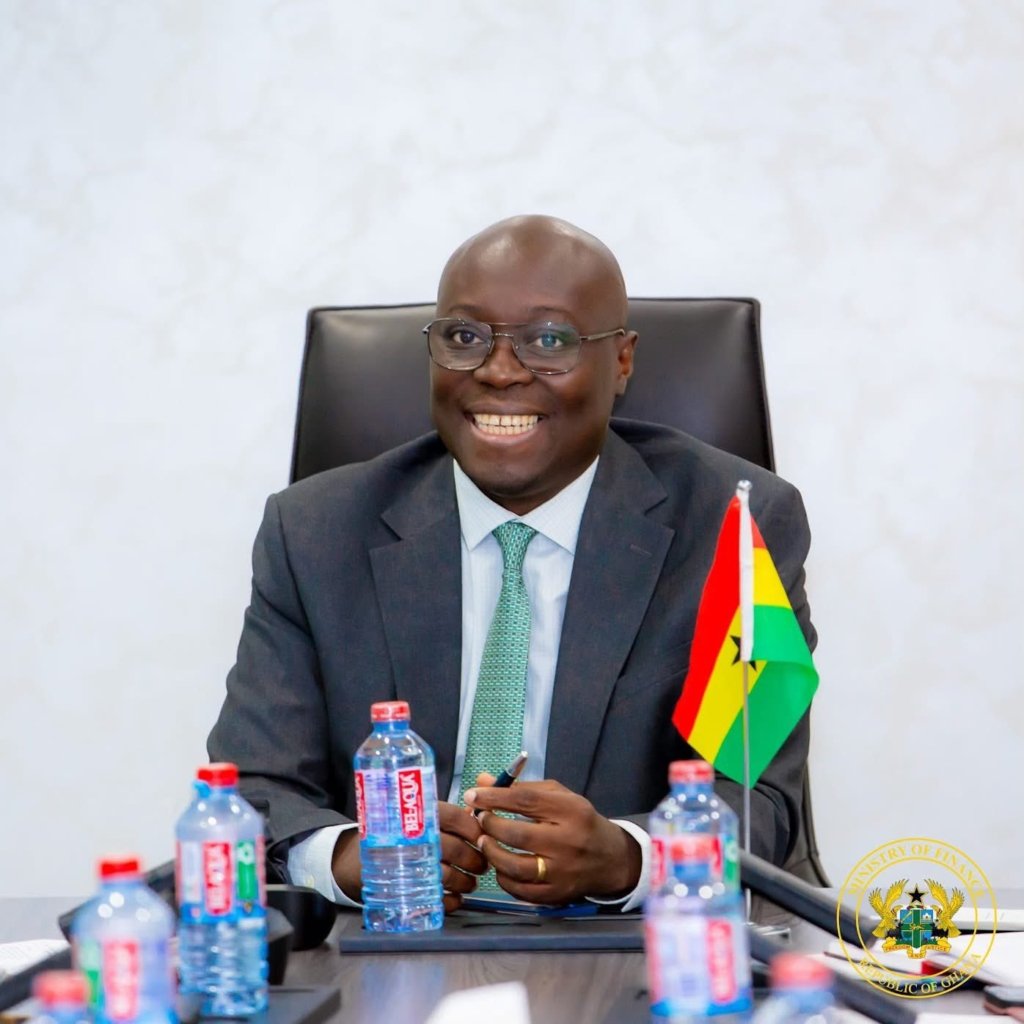
    The common qualification across all tradesmen categories states that each applicant must not be more than 35 years old by November 1, 2025, and must possess a technical or vocational certificate (such as GES/COTVET, National Proficiency, City & Guilds, or NVTI) relevant to their trade.

    Ghana Prisons

    Recruitment into the Ghana Prisons Service also seeks professionals across several disciplines, including General Duties, Agriculture, Education, Legal, and Medical Services. All applicants are expected to be “Ghanaian by birth, of good character, and free from any criminal record. Candidates must have completed National Service, be computer literate, and physically and medically fit according to the Prisons Service standards.

    Applicants should be aged between 18 and 35 years by November 1, 2025, and must not have been dismissed from any public service or other employment. Male applicants must be at least 1.68 metres (5 ft 6 in) tall, while females must be at least 1.57 metres (5 ft 2 in). Candidates must also have an active e-mail account, a mobile phone number, and be ready to undergo paramilitary and physical training. Medical professionals are additionally required to have completed one year post-housemanship in a registered hospital or clinic.”

    Applicants seeking entry into the General Duties of the Service are expected to hold a first degree (at least Second Class Lower Division) in Humanities or Social Sciences and have at least one year of post-qualification work experience. Additional qualifications are considered an advantage.

    Interested applicants for the Service’s Agriculture and Education sectors are also expected to possess a first degree (Second Class Lower or above) in fields such as Animal Science, Crop Science, Soil Science, General Agriculture, Agricultural Mechanic, Agribusiness, Agricultural Biotechnology, Agricultural Engineering, or Agricultural Economics, along with one year of post-qualification experience.

    Applicants for the Education sector must have qualifications in Basic Education, Early Childhood Education, or Guidance and Counselling, with at least one year of post-qualification experience.

    For legal officers, candidates are required to possess a law degree (LLB/BL) and must have been called to the Bar with at least one year of post-qualification experience. Medical professionals are mandated to possess a professional qualification, council registration, and some post-qualification experience.

    Ghana National Fire Service

    Eligible applicants for the Ghana Fire Service must be Ghanaian by birth, of good character, and free from any criminal record. They must not have been dismissed from any public service or other employment and must meet the age requirements for their category: 18–35 years for Officer Corps, 18–32 years for non-Tradesmen, and 18–35 years for Tradesmen/Artisans, as of 1st November 2025.

    Candidates must be physically and medically fit according to Fire Service standards and meet the minimum height requirement of 1.73 metres (5 ft 8 in) for males and 1.63 metres (5 ft 4 in) for females. Applicants must also have five credits at BECE and five passes at WASSCE/SSSCE, including English and Mathematics, or the equivalent trade qualifications for Tradesmen/Artisans. Additionally, applicants must not be bonded by any organisation.

    Ghana Immigration Service

    The Ghana Immigration Service (GIS) 2025 recruitment exercise is open to applicants under five main categories: General Duties (Graduate and Non-Graduate), Medical, Religious Affairs, and Tradesmen/Artisans.

    Categories A and B target university graduates ready for officer-level roles and diploma or secondary school graduates joining as recruits, respectively.

    All applicants interested in any of the five categories are expected to be Ghanaian citizens by birth, have no criminal record, be physically and medically fit, possess good character, not be bonded or dismissed from any public service, and meet the minimum height requirement of 1.68 metres for males and 1.57 metres for females.

  • Police, Prisons, and other security agencies’ recruitment postponed to Nov 17

    Police, Prisons, and other security agencies’ recruitment postponed to Nov 17

    The nationwide recruitment exercise for the security services has been postponed to Monday, November 17, from Saturday, November 15. Minister for the Interior, Muntaka Mubarak, announced today, Friday, November 14, ahead of the scheduled recruitment, while addressing the public.


    The change in dates, the minister explained, is a result of the stampede that occurred on Wednesday, November 12, during the Ghana Armed Forces (GAF) recruitment exercise at the El-Wak Sports Stadium.


    All six potential recruits who tragically lost their lives in the aftermath of the event are female. The unfortunate incident also left several others in critical condition.

    The tragedy occurred as thousands of young Ghanaians who had thronged the stadium forced their way through the entry points in an attempt to secure enlistment into the Service. To avert another possible tragedy, the Minister revealed that his ministry has put in additional safety measures to ensure a smooth and seamless process.


    The Ministry has assured the public that these additional safety measures will be implemented to prevent any further incidents as investigations into the tragedy continue.

    Meanwhile, the upcoming one-month recruitment exercise, which will run until December 15, will receive applications for the Ghana Police Service, Ghana Prisons Service, Ghana National Fire Service, and Ghana Immigration Service.


    The general eligibility requirements for the Ghana Police Service are as follows: “All applicants for the 2025 Ghana Police Service recruitment must be Ghanaian by birth, of good character, and free of any criminal record. They should not have been dismissed from any public service or other employment, and must meet the age limits set for their chosen category by November 1, 2025.”


    Also, “Male applicants are required to be at least 5 feet 8 inches (173 cm) tall, while females must be at least 5 feet 4 inches (163 cm). Candidates must be physically and medically fit, have five passes in BECE including English and Mathematics, and be ready to undergo basic police and other specialised training.”


    However, the Police Service has five categories of entry, including general duty recruits, tradesmen, graduates (general duty), medical professionals, and religious affairs. Under each of the above-listed categories are specific eligibility requirements as stated by the Interior Ministry.
    The common qualification across all tradesmen categories states that each applicant must not be more than 35 years old by November 1, 2025, and must possess a technical or vocational certificate (such as GES/COTVET, National Proficiency, City & Guilds, or NVTI) relevant to their trade.


    Ghana Prisons


    Recruitment into the Ghana Prisons Service also seeks professionals across several disciplines, including General Duties, Agriculture, Education, Legal, and Medical Services. All applicants are expected to be “Ghanaian by birth, of good character, and free from any criminal record. Candidates must have completed National Service, be computer literate, and physically and medically fit according to the Prisons Service standards. Applicants should be aged between 18 and 35 years by November 1, 2025, and must not have been dismissed from any public service or other employment. Male applicants must be at least 1.68 metres (5 ft 6 in) tall, while females must be at least 1.57 metres (5 ft 2 in). Candidates must also have an active e-mail account, a mobile phone number, and be ready to undergo paramilitary and physical training. Medical professionals are additionally required to have completed one year post-housemanship in a registered hospital or clinic.”


    Applicants seeking entry into the General Duties of the Service are expected to hold a first degree (at least Second Class Lower Division) in Humanities or Social Sciences and have at least one year of post-qualification work experience. Additional qualifications are considered an advantage.


    Interested applicants for the Service’s Agriculture and Education sectors are also expected to possess a first degree (Second Class Lower or above) in fields such as Animal Science, Crop Science, Soil Science, General Agriculture, Agricultural Mechanic, Agribusiness, Agricultural Biotechnology, Agricultural Engineering, or Agricultural Economics, along with one year of post-qualification experience.

    Applicants for the Education sector must have qualifications in Basic Education, Early Childhood Education, or Guidance and Counselling, with at least one year of post-qualification experience.


    For legal officers, candidates are required to possess a law degree (LLB/BL) and must have been called to the Bar with at least one year of post-qualification experience. Medical professionals are mandated to possess a professional qualification, council registration, and some post-qualification experience.


    Ghana National Fire Service


    Eligible applicants for the Ghana Fire Service must be Ghanaian by birth, of good character, and free from any criminal record. They must not have been dismissed from any public service or other employment and must meet the age requirements for their category: 18–35 years for Officer Corps, 18–32 years for non-Tradesmen, and 18–35 years for Tradesmen/Artisans, as of 1st November 2025.

    Candidates must be physically and medically fit according to Fire Service standards and meet the minimum height requirement of 1.73 metres (5 ft 8 in) for males and 1.63 metres (5 ft 4 in) for females. Applicants must also have five credits at BECE and five passes at WASSCE/SSSCE, including English and Mathematics, or the equivalent trade qualifications for Tradesmen/Artisans. Additionally, applicants must not be bonded by any organisation.


    Ghana Immigration Service


    The Ghana Immigration Service (GIS) 2025 recruitment exercise is open to applicants under five main categories: General Duties (Graduate and Non-Graduate), Medical, Religious Affairs, and Tradesmen/Artisans.


    Categories A and B target university graduates ready for officer-level roles and diploma or secondary school graduates joining as recruits, respectively.

    All applicants interested in any of the five categories are expected to be Ghanaian citizens by birth, have no criminal record, be physically and medically fit, possess good character, not be bonded or dismissed from any public service, and meet the minimum height requirement of 1.68 metres for males and 1.57 metres for females.
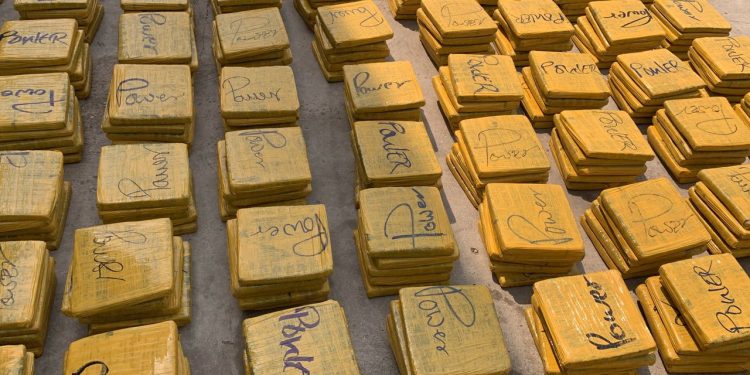
  • PLAYBACK: Interior Minister updates public on upcoming Fire Service, Immigration, other recruitments

    PLAYBACK: Interior Minister updates public on upcoming Fire Service, Immigration, other recruitments

    The Interior Minister, Honorable Muntaka Mohammed, engaged the press today, Friday, ahead of the upcoming Security Services recruitment.

    The update comes days after a stampede at the El-Wak Sports Stadium in Accra on Wednesday, November 12, claimed the lives of at least six individuals, with several others injured, during the ongoing recruitment exercise conducted by the Ghana Armed Forces (GAF).

    The incident occurred as thousands of young Ghanaians who had thronged the stadium forced their way through the entry points in an attempt to secure enlistment into the Service. The bodies of the deceased have been deposited at the 37 Military Hospital morgue, while several others are receiving emergency treatment.

    The one-month recruitment exercise is scheduled to begin on November 15 and end on December 15. This was stated in a formal statement issued by the Interior Ministry on Tuesday, November 4.

    The Ministry of the Interior wishes to inform the public that from 15th November to 15th December 2025, applications will be received for recruitment into the Ghana Police Service, Ghana Prisons Service, Ghana National Fire Service, and Ghana Immigration Service.

    The Ministry explained that, “This nationwide recruitment exercise forms part of the Ministry’s ongoing efforts to strengthen Ghana’s internal security architecture, enhance public safety, and promote effective service delivery across all security agencies. The Ministry, therefore, invites suitably qualified, disciplined, and patriotic Ghanaian citizens who desire to serve the nation with integrity, professionalism, and dedication to submit their applications within the stated period.”

    Watch the livestream below:

    The statement also warned interested applicants to avoid middlemen who may claim they can influence the recruitment process, adding that only shortlisted applicants will be contacted to proceed with the rest of the process.

    “Only shortlisted applicants will be contacted and invited for screening, aptitude test, and background verification.Applicants are cautioned not to deal with individuals or groups who claim they can influence the recruitment process for a fee. The Ministry of the Interior and its Agencies do not charge any fee at any stage of the exercise. Any applicant found to have submitted false information or forged documents will be disqualified and may face prosecution. Additionally, applicants who engage middlemen at any stage of the recruitment process will be automatically disqualified from the process,” parts of the statement noted.

    The general eligibility requirements for the Ghana Police Service are as follows: “ All applicants for the 2025 Ghana Police Service recruitment must be Ghanaian by birth, of good character, and free of any criminal record. They should not have been dismissed from any public service or other employment, and must meet the age limits set for their chosen category by November 1, 2025.

    Also, “Male applicants are required to be at least 5 feet 8 inches (173 cm) tall, while females must be at least 5 feet 4 inches (163 cm). Candidates must be physically and medically fit, have five passes in BECE including English and Mathematics, and be ready to undergo basic police and other specialised training”.

    However, the Police Service has five categories of entry, including general duty recruits, tradesmen, graduates (general duty), medical professionals, and religious affairs. Under each of the above-listed categories are specific eligibility requirements as stated by the Interior Ministry.The common qualification across all tradesmen categories states that each applicant must not be more than 35 years old by November 1, 2025, and must possess a technical or vocational certificate (such as GES/COTVET, National Proficiency, City & Guilds, or NVTI) relevant to their trade.

    Ghana Prisons

    Recruitment into the Ghana Prisons Service also seeks professionals across several disciplines, including General Duties, Agriculture, Education, Legal, and Medical Services. All applicants are expected to be “Ghanaian by birth, of good character, and free from any criminal record. Candidates must have completed National Service, be computer literate, and physically and medically fit according to the Prisons Service standards. Applicants should be aged between 18 and 35 years by November 1, 2025, and must not have been dismissed from any public service or other employment. Male applicants must be at least 1.68 metres (5 ft 6 in) tall, while females must be at least 1.57 metres (5 ft 2 in). Candidates must also have an active e-mail account, a mobile phone number, and be ready to undergo paramilitary and physical training. Medical professionals are additionally required to have completed one year post-housemanship in a registered hospital or clinic.”

    Applicants seeking entry into the general duties of the service are expected to hold a first degree (at least Second Class Lower Division) in Humanities or Social Sciences and have at least one year of post-qualification work experience. Additional qualifications are considered an advantage.

    Interested applicants for the service’s Agriculture and Education sectors are also expected to possess a first degree (Second Class Lower or above) in fields such as Animal Science, Crop Science, Soil Science, General Agriculture, Agricultural Mechanic, Agribusiness, Agricultural Biotechnology, Agricultural Engineering, or Agricultural Economics, along with one year of post-qualification experience. Applicants for the Education sector must have qualifications in Basic Education, Early Childhood Education, or Guidance and Counselling, with at least one year of post-qualification experience.

    For legal officers, candidates are required to possess a law degree (LLB/BL) and must have been called to the Bar with at least a year of post-qualification experience. Medical professionals are mandated to possess a professional qualification, council registration, and some post-qualification experience.

    Ghana National Fire Service

    Eligible applicants for the Ghana Fire Service must be Ghanaian by birth, of good character, and free from any criminal record. They must not have been dismissed from any public service or other employment and must meet the age requirements for their category: 18–35 years for Officer Corps, 18–32 years for non-Tradesmen, and 18–35 years for Tradesmen/Artisans, as of 1st November 2025.Candidates must be physically and medically fit according to Fire Service standards and meet the minimum height requirement of 1.73 metres (5 ft 8 in) for males and 1.63 metres (5 ft 4 in) for females. Applicants must also have five credits at BECE and five passes at WASSCE/SSSCE, including English and Mathematics, or the equivalent trade qualifications for Tradesmen/Artisans. Additionally, applicants must not be bonded by any organisation.

    Ghana Immigration ServiceThe Ghana Immigration Service (GIS) 2025 recruitment exercise is open to applicants under five main categories: General Duties (Graduate and Non-Graduate), Medical, Religious Affairs, and Tradesmen/Artisans.

    Categories A and B target university graduates ready for officer-level roles and diploma or secondary school graduates joining as recruits, respectively. All applicants interested in any of the five categories are expected to be Ghanaian citizens by birth, have no criminal record, be physically and medically fit, possess good character, not be bonded or dismissed from any public service, and meet the minimum height requirement of 1.68 metres for males and 1.57 metres for females.

    The internal security recruitment announcement comes a few days after the Ghana Armed Forces (GAF) announced an extension of the date for its originally scheduled one-month recruitment exercise.

    The national defence force’s recruitment exercise, which was expected to end on October 31, has now been extended to November 7. GAF announced the new date in an official statement shared on November 1 via their official X (formerly Twitter) handle. The statement, titled “Extension of recruitment deadline” and signed by the Acting Director General, Public Relations, Evelyn Ntiamoah Asamoah, reads:

    “The Ghana Armed Forces has extended the deadline for the ongoing recruitment exercise by one week due to some technical challenges encountered on the recruitment portal during the initial period. The new deadline is 7 November 2025.”

    GAF announced its recruitment on Monday, September 29, in a statement signed by Acting Director General for Public Relations, Veronica Afei Arjun.

    It outlined a new development in which the recruitment exercise would be conducted in all sixteen (16) regions nationwide.