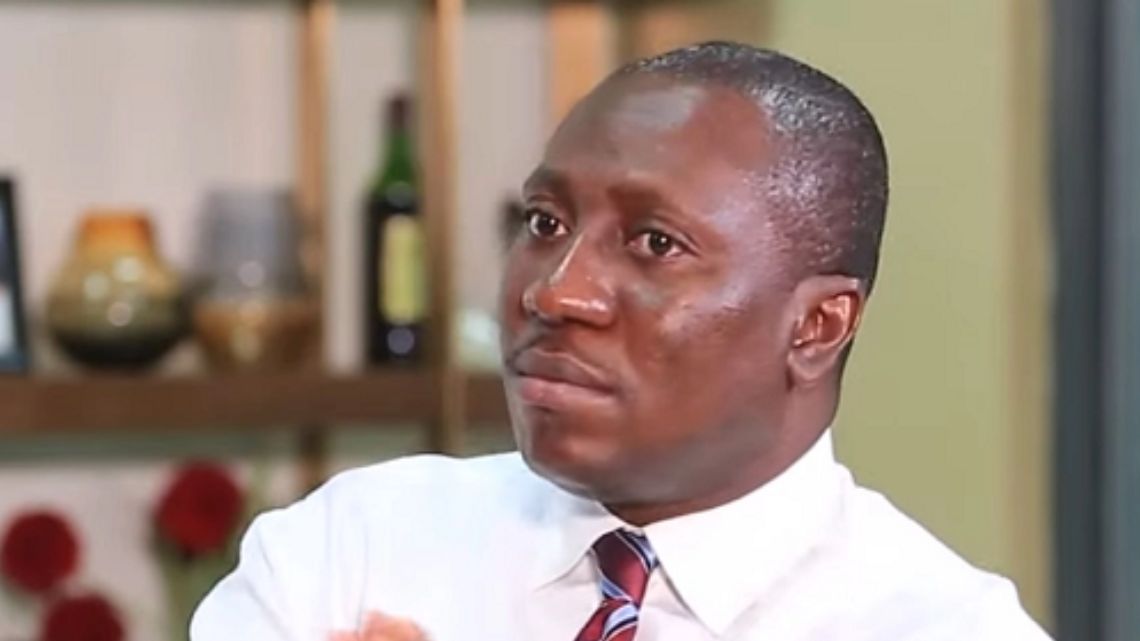
Finance Minister Dr. Cassiel Ato Forson will today, Thursday, November 13, present the 2026 Budget Statement and Economic Policy to Parliament.
The budget reading will outline strategies for economic growth, job creation, and post-International Monetary Fund (IMF) management.
Earlier, Finance Minister Dr. Ato Forson announced plans to present the budget in October, but the date was later changed to allow for broader consultations and public input. Under the Public Financial Management Act, the Finance Minister is mandated to present the national budget to Parliament not later than November 15 each year.
The 2026 Budget is expected to introduce tax reforms, including a reduction of VAT from 22% to 20%, and a review of levies such as the COVID-19 levy. With Ghana set to exit the IMF programme in May 2026, the budget will be crucial for ensuring fiscal stability.
Dr. Forson maintains that growth targets and fiscal policies remain unchanged as inflation continues to fall, reaching 9.4% in September 2025 — the first single-digit rate since 2021.
The presentation of the year-ahead budget is in accordance with the Public Financial Management Act, 2016 (Act 921) of Ghana, which was passed by Parliament and assented to on August 25, 2016.
The Act governs how public funds are managed across all government entities.
The Act mandates that the Finance Minister, acting on behalf of the President, lay before Parliament, not later than November 15 of each financial year, estimates of the revenues and expenditures of the government.
According to some analysts, the 2025 Budget largely followed the same plans, ideas, and policies set up by the erstwhile government. In July this year, the Finance Minister, Dr. Ato Forson, mentioned that the Mahama-led administration would present its 2026 Budget and Economic Statement to Parliament in October 2025, instead of November 2025.
With this, Parliament would have about an additional month to debate the 2026 Budget before the House goes on recess in late December. He noted that the new timeline for the presentation would aid thorough deliberation, allowing room for alterations before the budget comes into force at the beginning of 2026.
“We are aiming to present the 2026 budget to Parliament by the end of October 2025. Preparations are already underway. We want to avoid the delays and uncertainties of the past. This government is committed to proper planning and transparency,” he disclosed during an appearance on a special edition of PM EXPRESS with host Evans Mensah on July 24.
However, the Finance Ministry later announced in a statement in August that November 15 would be the new date for the budget presentation. In the same statement, it requested inputs from the general public to be considered in the 2026–2029 National Budget. The inputs, the Ministry said, were to be submitted electronically to bdru@mofep.gov.gh
This call was in line with the government’s responsiveness to the needs of the Ghanaian citizenry to deepen citizens’ participation in the budget process, as well as implement inclusive policies.
Consequently, the Finance Ministry has reportedly completed several rounds of stakeholder engagements and industry consultations to finalise the policies and programs that will feature in the 2026 Budget.
In earlier interviews, Dr Forson has listed economic growth, development and job creation, particularly for Ghana’s ballooning youth and deepening unemployment crisis, as the main focus of the 2026 Budget.
Sources also suggest that the Finance Minister is set to introduce new policy measures aimed at reforming the tax system and improving revenue mobilisation.
According to the Commissioner-General of the Ghana Revenue Authority (GRA), Anthony Sarpong, the 2026 Budget will include a review of the Value Added Tax (VAT), with the effective rate expected to be reduced from 22% to 20%.
This adjustment is part of ongoing reforms to simplify the VAT structure and make it more business-friendly.Additionally, Dr Forson is expected to review several tax levies, including the COVID-19 levy, as part of efforts to ease the tax burden on businesses and households.
With Ghana set to exit the IMF programme in May 2026, attention will also be on how the Finance Minister plans to manage the economy in the post-programme period.
The 2026 Budget will, therefore, be one of the government’s most significant economic policy documents, setting the tone for fiscal management and growth strategy after the IMF programme.
Another key area of interest for industry players and economists will be how Dr Ato Forson intends to manage the fiscal deficit and expenditure in 2026 while maintaining macroeconomic stability.
During the mid-year budget review, the Finance Minister announced the abolition of certain levies, including the e-levy, betting tax, and emissions levy, and provided projections for the country’s growth and other key indicators. He insisted that the government would stick to what was announced earlier this year. “We are not changing course. The growth target, the fiscal deficit, and the inflation target—all of it remains as announced in the 2025 Budget. We are sticking to it.” “The economy is responding well. We’ve seen 5.3% GDP growth in Q1, inflation is falling, and the cedi is stable. So there’s no need to revise the framework.”
His comments came a few weeks after the Ghana Statistical Service (GSS) announced the sixth consecutive reduction in the inflation rate this year so far. According to GSS, as of June, the country recorded a 13.7 percent rate, a 4.7 percent decline from the 18.4 percent rate reported in May.
This is also the lowest rate recorded since February 2022 at the time. Government Statistician Dr Alhassan Iddrisu, following the release of data on July 2, noted that the reduction in the rate was due to the decline in prices of foodstuffs and other items.
Subsequently, Ghana has recorded a single-digit inflation with September 2025’s falling to 9.4%, marking the country’s first return to single-digit inflation since August 2021.
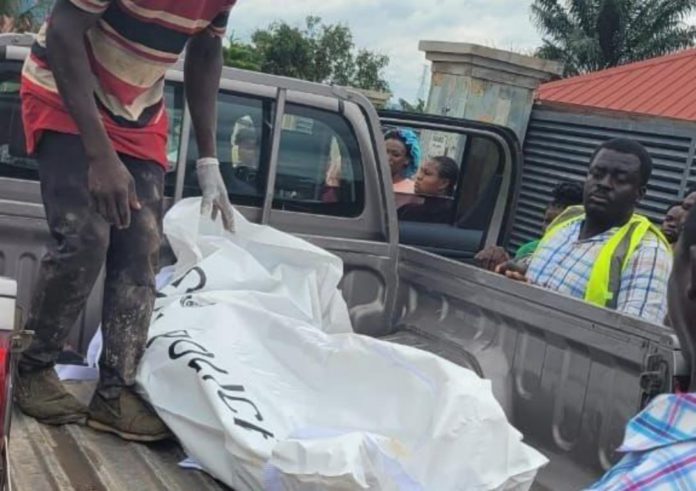
All six potential recruits who tragically lost their lives in the stampede at El-Wak Sports Stadium in Accra during the Ghana Armed Forces (GAF) recruitment exercise on Wednesday, November 12, were female.
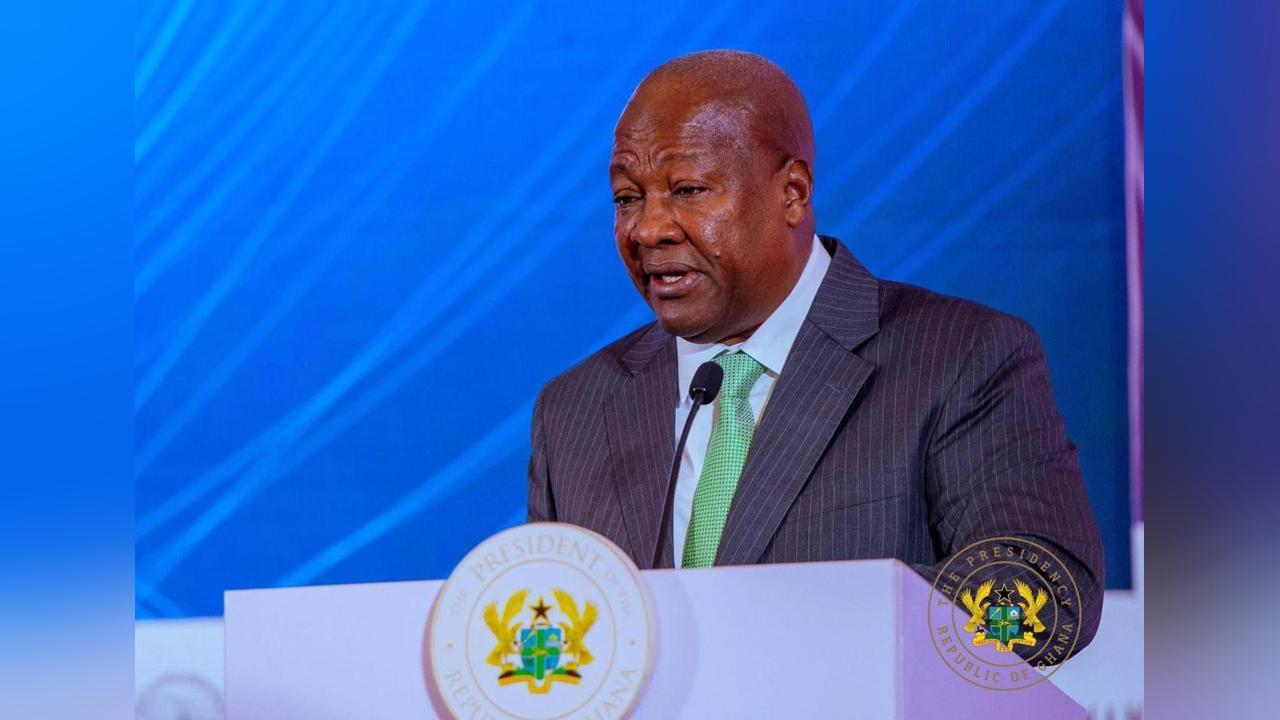
President John Dramani Mahama made the revelation at the launch of the Nkoko Nkitinkiti Poultry Initiative in Kumasi. The President described the incident as “a heartbreaking loss for the entire nation,” while extending his condolences to the bereaved families.
According to him, “The tragic news is that I have been informed by the military that six young women, who simply sought an opportunity to serve their nation, lost their lives in this heartbreaking incident. We are praying for the 12 others who remain in critical condition.”
Reports indicate that the incident occurred as thousands of young Ghanaians thronged the stadium, forcing their way through entry points in an attempt to secure enlistment into the Service. The bodies of the deceased have been deposited at the 37 Military Hospital morgue, while several others are receiving emergency treatment.
The Ashanti Region has also reported that at least five potential recruits reportedly collapsed during the Ghana Armed Forces (GAF) recruitment exercise at the Baba Yara Sports Stadium in Kumasi on Wednesday, November 11. One person is in critical condition and receiving treatment at the Emena Hospital in Oforikrom Municipality, according to reports, while four others are at the Ashanti South Government Hospital for treatment.
To reduce overcrowding and prevent a potential stampede, authorities have asked some applicants to attend the exercise on Thursday and Friday.
The Ghana Armed Forces announced an extension of the date for its originally scheduled one-month recruitment exercise. The national defence force’s recruitment exercise, which was expected to end on October 31, was extended to November 7.
GAF announced the new date in an official statement shared on November 1 via their official X (formerly Twitter) handle. The statement, titled “Extension of recruitment deadline” and signed by the Acting Director General, Public Relations, Evelyn Ntiamoah Asamoah, reads:
“The Ghana Armed Forces has extended the deadline for the ongoing recruitment exercise by one week due to some technical challenges encountered on the recruitment portal during the initial period. The new deadline is 7 November 2025.”
Before the extension, GAF, in a statement signed by Acting Director General for Public Relations, Veronica Afei Arjun, outlined a new development in which the recruitment exercise would be conducted in all sixteen (16) regions nationwide. It noted that this marks a significant change in the security force’s recruitment process, moving away from the traditional method that was largely centralised in a few selected centres such as Accra, Tamale, and Kumasi.
The new approach, GAF explained, is to ensure equal opportunity for applicants across the country, particularly those in remote or underserved areas who previously had to travel long distances and incur high costs.
“The Ghana Armed Forces wishes to inform the public that the 2025 Enlistment/Recruitment Exercise into the Ghana Armed Forces will commence in the coming days at all the regional capitals of the 16 Regions of the country. This approach offers equal opportunity for all potential applicants in the entire country,” parts of the statement read.
According to GAF, recruitment announcements will be made through its official website and Ghana’s two main state-owned national newspapers. GAF also warned the public to disregard recruitment advertisements circulating on social media, stressing that no member of the force would issue such notices or ads.
“The general public is kindly informed that any purported recruitment links on Facebook, Instagram, WhatsApp, or any other social media platforms inviting people for protocol recruitment are a scam and should be ignored. Additionally, no such enlistment/recruitment invitation will emanate from any member of the Ghana Armed Forces or its High Command and should be ignored as well,” it added. “The Ghana Armed Forces counts on the cooperation of the general public in this endeavour.”
The strong warning comes against the backdrop of fraudulent recruitment schemes that have increased in recent years, particularly on social media platforms like Facebook, WhatsApp, and Instagram. These scams often promise “protocol recruitment,” suggesting backdoor access in exchange for payment. Scammers typically impersonate senior officers, circulate fake enlistment links, and demand fees in return for guaranteed placement.
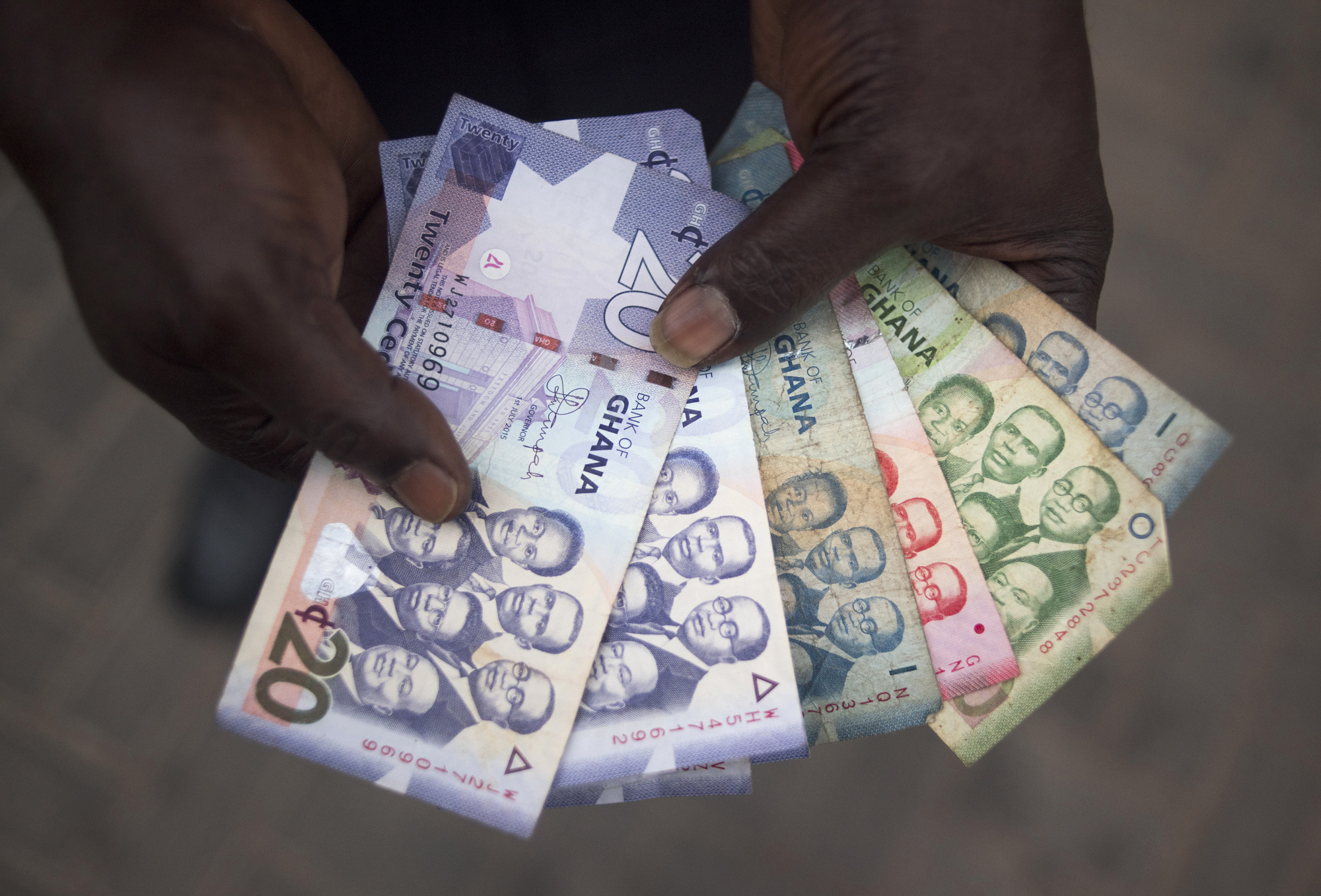
Over the years, some scammers have demanded protocol fees ranging from GH¢2,000 to GH¢10,000, depending on the promises made and the desperation of applicants. Victims often paid multiple instalments, believing they were securing officer roles or fast-tracked enlistment. Payments were usually made in cash or through mobile money without receipts, making prosecution difficult. GAF has repeatedly stressed that recruitment is free and that any demand for payment is illegal.
In a Facebook post on September 29, Deputy Defence Minister Brogya Genfi revealed that the government is set to recruit about twelve thousand (12,000) personnel to strengthen the country’s defence. He further disclosed that the cost of recruitment forms has been reduced by 40 percent to ensure wider access and fairness.
“The Ghana Armed Forces (GAF) is undergoing a massive expansion beginning this week. Over the next 3 years, GAF will recruit 12,000 personnel to reinforce our national defence capabilities. In line with H.E. the President and Commander-in-Chief John Dramani Mahama’s commitment to affordability, accessibility and fairness, the cost of the recruitment forms has been reduced by over 40% compared to the last recruitment,” the Minister said.
He stressed that the recruitment process remains free of charge and cautioned against fraud.
“Let this be clear: Recruitment into the Ghana Armed Forces is NOT for sale, and will NEVER be for sale under our #EagleEyes watch. Any individual or syndicate involved in fraudulent recruitment schemes will be dealt with without mercy. Take note that no recruitment will take place on social media. The process will be transparent and professional,” he emphasised. The Minister also cautioned prospective applicants to be ready for the demands of military life.
“All qualified applicants must be medically fit and be prepared to abandon all hope of normal life! We are building a force that reflects the strength, discipline, and unity of Ghana,” he concluded.
Meanwhile, the government has announced the commencement of recruitment for internal security agencies. The one-month recruitment exercise is scheduled to begin on November 15 and end on December 15. This was stated in a formal statement issued by the Interior Ministry on Tuesday, November 4.
The Ministry of the Interior wishes to inform the public that from 15th November to 15th December 2025, applications will be received for recruitment into the Ghana Police Service, Ghana Prisons Service, Ghana National Fire Service, and Ghana Immigration Service.
The Ministry explained, “This nationwide recruitment exercise forms part of the Ministry’s ongoing efforts to strengthen Ghana’s internal security architecture, enhance public safety, and promote effective service delivery across all security agencies. The Ministry, therefore, invites suitably qualified, disciplined, and patriotic Ghanaian citizens who desire to serve the nation with integrity, professionalism, and dedication to submit their applications within the stated period.”
The statement also warned interested applicants to avoid middlemen who may claim they can influence the recruitment process, adding that only shortlisted applicants will be contacted to proceed with the rest of the process.
“Only shortlisted applicants will be contacted and invited for screening, aptitude test, and background verification. Applicants are cautioned not to deal with individuals or groups who claim they can influence the recruitment process for a fee. The Ministry of the Interior and its Agencies do not charge any fee at any stage of the exercise. Any applicant found to have submitted false information or forged documents will be disqualified and may face prosecution. Additionally, applicants who engage middlemen at any stage of the recruitment process will be automatically disqualified from the process,” parts of the statement noted.
The general eligibility requirements for the Ghana Police Service are as follows: “All applicants for the 2025 Ghana Police Service recruitment must be Ghanaian by birth, of good character, and free of any criminal record. They should not have been dismissed from any public service or other employment, and must meet the age limits set for their chosen category by November 1, 2025. Also, male applicants are required to be at least 5 feet 8 inches (173 cm) tall, while females must be at least 5 feet 4 inches (163 cm). Candidates must be physically and medically fit, have five passes in BECE including English and Mathematics, and be ready to undergo basic police and other specialised training.”
However, the Police Service has five categories of entry, including general duty recruits, tradesmen, graduates (general duty), medical professionals, and religious affairs. Under each of the above-listed categories are specific eligibility requirements as stated by the Interior Ministry. The common qualification across all tradesmen categories states that each applicant must not be more than 35 years old by November 1, 2025, and must possess a technical or vocational certificate (such as GES/COTVET, National Proficiency, City & Guilds, or NVTI) relevant to their trade.
Ghana Prisons
Recruitment into the Ghana Prisons Service also seeks professionals across several disciplines, including General Duties, Agriculture, Education, Legal, and Medical Services. All applicants are expected to be “Ghanaian by birth, of good character, and free from any criminal record. Candidates must have completed National Service, be computer literate, and physically and medically fit according to the Prisons Service standards. Applicants should be aged between 18 and 35 years by November 1, 2025, and must not have been dismissed from any public service or other employment. Male applicants must be at least 1.68 metres (5 ft 6 in) tall, while females must be at least 1.57 metres (5 ft 2 in). Candidates must also have an active e-mail account, a mobile phone number, and be ready to undergo paramilitary and physical training. Medical professionals are additionally required to have completed one year post-housemanship in a registered hospital or clinic.”
Applicants seeking entry into the general duties of the service are expected to hold a first degree (at least Second Class Lower Division) in Humanities or Social Sciences and have at least one year of post-qualification work experience. Additional qualifications are considered an advantage.
Interested applicants for the service’s Agriculture and Education sectors are also expected to possess a first degree (Second Class Lower or above) in fields such as Animal Science, Crop Science, Soil Science, General Agriculture, Agricultural Mechanic, Agribusiness, Agricultural Biotechnology, Agricultural Engineering, or Agricultural Economics, along with one year of post-qualification experience. Applicants for the Education sector must have qualifications in Basic Education, Early Childhood Education, or Guidance and Counselling, with at least one year of post-qualification experience.
For legal officers, candidates are required to possess a law degree (LLB/BL) and must have been called to the Bar with at least a year of post-qualification experience. Medical professionals are mandated to possess a professional qualification, council registration, and some post-qualification experience.
Ghana National Fire Service
Eligible applicants for the Ghana Fire Service must be Ghanaian by birth, of good character, and free from any criminal record. They must not have been dismissed from any public service or other employment and must meet the age requirements for their category: 18–35 years for Officer Corps, 18–32 years for non-Tradesmen, and 18–35 years for Tradesmen/Artisans, as of 1st November 2025. Candidates must be physically and medically fit according to Fire Service standards and meet the minimum height requirement of 1.73 metres (5 ft 8 in) for males and 1.63 metres (5 ft 4 in) for females. Applicants must also have five credits at BECE and five passes at WASSCE/SSSCE, including English and Mathematics, or the equivalent trade qualifications for Tradesmen/Artisans. Additionally, applicants must not be bonded by any organisation.
Ghana Immigration Service
The Ghana Immigration Service (GIS) 2025 recruitment exercise is open to applicants under five main categories: General Duties (Graduate and Non-Graduate), Medical, Religious Affairs, and Tradesmen/Artisans. Categories A and B target university graduates ready for officer-level roles and diploma or secondary school graduates joining as recruits, respectively. All applicants interested in any of the five categories are expected to be Ghanaian citizens by birth, have no criminal record, be physically and medically fit, possess good character, not be bonded or dismissed from any public service, and meet the minimum height requirement of 1.68 metres for males and 1.57 metres for females.
The internal security recruitment announcement comes a few days after the Ghana Armed Forces (GAF) announced an extension of the date for its originally scheduled one-month recruitment exercise. The national defence force’s recruitment exercise, which was expected to end on October 31, has now been extended to November 7. GAF announced the new date in an official statement shared on November 1 via their official X (formerly Twitter) handle. The statement, titled “Extension of recruitment deadline” and signed by the Acting Director General, Public Relations, Evelyn Ntiamoah Asamoah, reads:
“The Ghana Armed Forces has extended the deadline for the ongoing recruitment exercise by one week due to some technical challenges encountered on the recruitment portal during the initial period. The new deadline is 7 November 2025.”
GAF announced its recruitment on Monday, September 29, in a statement signed by Acting Director General for Public Relations, Veronica Afei Arjun. It outlined a new development in which the recruitment exercise would be conducted in all sixteen (16) regions nationwide.
At least five potential recruits reportedly collapsed during the Ghana Armed Forces (GAF) recruitment exercise at the Baba Yara Sports Stadium in Kumasi today, Wednesday, November 11.
One person is in critical condition and receiving treatment at the Emena Hospital in Oforikrom Municipality, according to reports, while four others are at the Ashanti South Government Hospital for treatment.
To reduce overcrowding and prevent a potential stampede, authorities have asked some applicants to attend the exercise on Thursday and Friday.
Meanwhile, the GAF recruitment exercise in the Greater Accra region has recorded the deaths of at least six individuals following a stampede at the El-Wak Sports Stadium on Wednesday, November 12, with several others injured during the ongoing recruitment.
Reports indicate that the incident occurred as thousands of young Ghanaians who had thronged the stadium forced their way through the entry points in an attempt to secure enlistment into the Service. The bodies of the deceased have been deposited at the 37 Military Hospital morgue, while several others are receiving emergency treatment.
The Ghana Armed Forces announced an extension of the date for its originally scheduled one-month recruitment exercise. The national defence force’s recruitment exercise, which was expected to end on October 31, was extended to November 7.
GAF announced the new date in an official statement shared on November 1 via their official X (formerly Twitter) handle. The statement, titled “Extension of recruitment deadline” and signed by the Acting Director General, Public Relations, Evelyn Ntiamoah Asamoah, reads:
“The Ghana Armed Forces has extended the deadline for the ongoing recruitment exercise by one week due to some technical challenges encountered on the recruitment portal during the initial period. The new deadline is 7 November 2025.”
Before the extension, GAF, in a statement signed by Acting Director General for Public Relations, Veronica Afei Arjun, outlined a new development in which the recruitment exercise would be conducted in all sixteen (16) regions nationwide.
It noted that this marks a significant change in the security force’s recruitment process, moving away from the traditional method that was largely centralised in a few selected centres such as Accra, Tamale, and Kumasi.
The new approach, GAF explained, is to ensure equal opportunity for applicants across the country, particularly those in remote or underserved areas who previously had to travel long distances and incur high costs.
“The Ghana Armed Forces wishes to inform the public that the 2025 Enlistment/Recruitment Exercise into the Ghana Armed Forces will commence in the coming days at all the regional capitals of the 16 Regions of the country. This approach offers equal opportunity for all potential applicants in the entire country,” parts of the statement read.
According to GAF, recruitment announcements will be made through its official website and Ghana’s two main state-owned national newspapers. GAF also warned the public to disregard recruitment advertisements circulating on social media, stressing that no member of the force would issue such notices or ads.
“The general public is kindly informed that any purported recruitment links on Facebook, Instagram, WhatsApp, or any other social media platforms inviting people for protocol recruitment are a scam and should be ignored. Additionally, no such enlistment/recruitment invitation will emanate from any member of the Ghana Armed Forces or its High Command and should be ignored as well,” it added. “The Ghana Armed Forces counts on the cooperation of the general public in this endeavour.”
The strong warning comes against the backdrop of fraudulent recruitment schemes that have increased in recent years, particularly on social media platforms like Facebook, WhatsApp, and Instagram. These scams often promise “protocol recruitment,” suggesting backdoor access in exchange for payment. Scammers typically impersonate senior officers, circulate fake enlistment links, and demand fees in return for guaranteed placement.
Over the years, some scammers have demanded protocol fees ranging from GH¢2,000 to GH¢10,000, depending on the promises made and the desperation of applicants. Victims often paid multiple instalments, believing they were securing officer roles or fast-tracked enlistment.
Payments were usually made in cash or through mobile money without receipts, making prosecution difficult. GAF has repeatedly stressed that recruitment is free and that any demand for payment is illegal.
In a Facebook post on September 29, Deputy Defence Minister Brogya Genfi revealed that the government is set to recruit about twelve thousand (12,000) personnel to strengthen the country’s defence. He further disclosed that the cost of recruitment forms has been reduced by 40 percent to ensure wider access and fairness.
“The Ghana Armed Forces (GAF) is undergoing a massive expansion beginning this week. Over the next 3 years, GAF will recruit 12,000 personnel to reinforce our national defence capabilities. In line with H.E. the President and Commander-in-Chief John Dramani Mahama’s commitment to affordability, accessibility and fairness, the cost of the recruitment forms has been reduced by over 40% compared to the last recruitment,” the Minister said.
He stressed that the recruitment process remains free of charge and cautioned against fraud.
“Let this be clear: Recruitment into the Ghana Armed Forces is NOT for sale, and will NEVER be for sale under our #EagleEyes watch. Any individual or syndicate involved in fraudulent recruitment schemes will be dealt with without mercy. Take note that no recruitment will take place on social media. The process will be transparent and professional,” he emphasised. The Minister also cautioned prospective applicants to be ready for the demands of military life.
“All qualified applicants must be medically fit and be prepared to abandon all hope of normal life! We are building a force that reflects the strength, discipline, and unity of Ghana,” he concluded.
Meanwhile, the government has announced the commencement of recruitment for internal security agencies. The one-month recruitment exercise is scheduled to begin on November 15 and end on December 15. This was stated in a formal statement issued by the Interior Ministry on Tuesday, November 4.
The Ministry of the Interior wishes to inform the public that from 15th November to 15th December 2025, applications will be received for recruitment into the Ghana Police Service, Ghana Prisons Service, Ghana National Fire Service, and Ghana Immigration Service.
The Ministry explained, “This nationwide recruitment exercise forms part of the Ministry’s ongoing efforts to strengthen Ghana’s internal security architecture, enhance public safety, and promote effective service delivery across all security agencies. The Ministry, therefore, invites suitably qualified, disciplined, and patriotic Ghanaian citizens who desire to serve the nation with integrity, professionalism, and dedication to submit their applications within the stated period.”
The statement also warned interested applicants to avoid middlemen who may claim they can influence the recruitment process, adding that only shortlisted applicants will be contacted to proceed with the rest of the process.
“Only shortlisted applicants will be contacted and invited for screening, aptitude test, and background verification. Applicants are cautioned not to deal with individuals or groups who claim they can influence the recruitment process for a fee. The Ministry of the Interior and its Agencies do not charge any fee at any stage of the exercise. Any applicant found to have submitted false information or forged documents will be disqualified and may face prosecution. Additionally, applicants who engage middlemen at any stage of the recruitment process will be automatically disqualified from the process,” parts of the statement noted.
The general eligibility requirements for the Ghana Police Service are as follows: “All applicants for the 2025 Ghana Police Service recruitment must be Ghanaian by birth, of good character, and free of any criminal record. They should not have been dismissed from any public service or other employment, and must meet the age limits set for their chosen category by November 1, 2025. Also, male applicants are required to be at least 5 feet 8 inches (173 cm) tall, while females must be at least 5 feet 4 inches (163 cm). Candidates must be physically and medically fit, have five passes in BECE including English and Mathematics, and be ready to undergo basic police and other specialised training.”
However, the Police Service has five categories of entry, including general duty recruits, tradesmen, graduates (general duty), medical professionals, and religious affairs. Under each of the above-listed categories are specific eligibility requirements as stated by the Interior Ministry.
The common qualification across all tradesmen categories states that each applicant must not be more than 35 years old by November 1, 2025, and must possess a technical or vocational certificate (such as GES/COTVET, National Proficiency, City & Guilds, or NVTI) relevant to their trade.
Ghana Prisons
Recruitment into the Ghana Prisons Service also seeks professionals across several disciplines, including General Duties, Agriculture, Education, Legal, and Medical Services. All applicants are expected to be “Ghanaian by birth, of good character, and free from any criminal record. Candidates must have completed National Service, be computer literate, and physically and medically fit according to the Prisons Service standards.
Applicants should be aged between 18 and 35 years by November 1, 2025, and must not have been dismissed from any public service or other employment. Male applicants must be at least 1.68 metres (5 ft 6 in) tall, while females must be at least 1.57 metres (5 ft 2 in).
Candidates must also have an active e-mail account, a mobile phone number, and be ready to undergo paramilitary and physical training. Medical professionals are additionally required to have completed one year post-housemanship in a registered hospital or clinic.”
Applicants seeking entry into the general duties of the service are expected to hold a first degree (at least Second Class Lower Division) in Humanities or Social Sciences and have at least one year of post-qualification work experience. Additional qualifications are considered an advantage.
Interested applicants for the service’s Agriculture and Education sectors are also expected to possess a first degree (Second Class Lower or above) in fields such as Animal Science, Crop Science, Soil Science, General Agriculture, Agricultural Mechanic, Agribusiness, Agricultural Biotechnology, Agricultural Engineering, or Agricultural Economics, along with one year of post-qualification experience.
Applicants for the Education sector must have qualifications in Basic Education, Early Childhood Education, or Guidance and Counselling, with at least one year of post-qualification experience.
For legal officers, candidates are required to possess a law degree (LLB/BL) and must have been called to the Bar with at least a year of post-qualification experience. Medical professionals are mandated to possess a professional qualification, council registration, and some post-qualification experience.
Ghana National Fire Service
Eligible applicants for the Ghana Fire Service must be Ghanaian by birth, of good character, and free from any criminal record. They must not have been dismissed from any public service or other employment and must meet the age requirements for their category: 18–35 years for Officer Corps, 18–32 years for non-Tradesmen, and 18–35 years for Tradesmen/Artisans, as of 1st November 2025.
Candidates must be physically and medically fit according to Fire Service standards and meet the minimum height requirement of 1.73 metres (5 ft 8 in) for males and 1.63 metres (5 ft 4 in) for females. Applicants must also have five credits at BECE and five passes at WASSCE/SSSCE, including English and Mathematics, or the equivalent trade qualifications for Tradesmen/Artisans. Additionally, applicants must not be bonded by any organisation.
Ghana Immigration Service
The Ghana Immigration Service (GIS) 2025 recruitment exercise is open to applicants under five main categories: General Duties (Graduate and Non-Graduate), Medical, Religious Affairs, and Tradesmen/Artisans. Categories A and B target university graduates ready for officer-level roles and diploma or secondary school graduates joining as recruits, respectively.
All applicants interested in any of the five categories are expected to be Ghanaian citizens by birth, have no criminal record, be physically and medically fit, possess good character, not be bonded or dismissed from any public service, and meet the minimum height requirement of 1.68 metres for males and 1.57 metres for females.
The internal security recruitment announcement comes a few days after the Ghana Armed Forces (GAF) announced an extension of the date for its originally scheduled one-month recruitment exercise. The national defence force’s recruitment exercise, which was expected to end on October 31, has now been extended to November 7.
GAF announced the new date in an official statement shared on November 1 via their official X (formerly Twitter) handle. The statement, titled “Extension of recruitment deadline” and signed by the Acting Director General, Public Relations, Evelyn Ntiamoah Asamoah, reads:
“The Ghana Armed Forces has extended the deadline for the ongoing recruitment exercise by one week due to some technical challenges encountered on the recruitment portal during the initial period. The new deadline is 7 November 2025.”
GAF announced its recruitment on Monday, September 29, in a statement signed by Acting Director General for Public Relations, Veronica Afei Arjun. It outlined a new development in which the recruitment exercise would be conducted in all sixteen (16) regions nationwide.
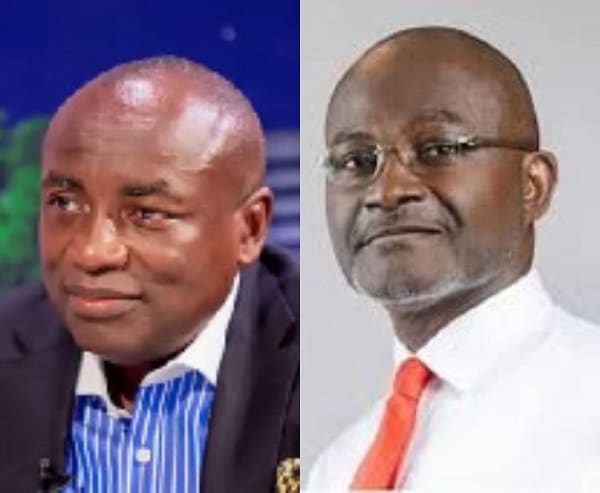
The former Deputy Executive Director of the National Service Authority (NSA), Gifty Oware Mensah, has been released after fulfilling the GH¢10 million bail requirement set by the court.
This information was made public by the Deputy General Secretary of the New Patriotic Party (NPP), Haruna Mohammed, on Wednesday, November 11. According to him, the former Executive Director of the NSA, Osei Assibey Antwi, remains in custody as he has yet to meet his GH¢800 million bail requirement.
During a recent interview with Channel One TV, he noted, “Madam Gifty Oware met the bail condition just yesterday, so she has been released except for her superior, who faces an 800 million bail condition. What kind of figure is that?”
The embattled former Deputy Executive Director of the National Service Authority (NSA) has pleaded not guilty to charges of causing a financial loss of over GH¢38 million to the state.
She was granted GH¢10 million bail by the Accra High Court on Wednesday, October 22. Mrs. Oware-Mensah faces five counts, while her former boss, the Executive Director of the National Service Authority (NSA), Osei Assibey Antwi, faces fourteen charges. In total, the alleged offenses connected to Mr. Antwi are valued at approximately GH¢615,117,744.02.
Last week, the court indefinitely adjourned the case after the duo failed to appear before it for a hearing. Explaining their absence, Mr. Assibey Antwi’s legal counsel noted that his client was busy cooperating with the police on a separate matter in Kumasi.
Mrs. Oware-Mensah’s lawyers disclosed that their client was unwell and unable to attend proceedings. Their charges include willfully causing financial loss to the state, stealing, money laundering, and using public office for profit.
The accusations include causing financial loss to the Republic, with the main charge suggesting that Mr. Antwi approved payments of allowances to over 60,000 ghost national service personnel, leading to a total loss of GH¢500,861,744.02.
He is also charged with several counts of theft amounting to GH¢8,256,000, which allegedly occurred between August 2023 and May 2024.
Prosecutors allege that Mr. Antwi diverted project funds by authorizing the withdrawal of GH¢106 million from the NSA’s Kumawu Farm Project account on five different occasions without using any of it for the intended purpose.
The state also contends that he engaged in money laundering by transferring GH¢8.26 million into his personal e-zwich account and taking control of the funds despite knowing they were criminal proceeds.
Court documents indicate that Oware-Mensah, who managed the Finance and Procurement units of the NSA, allegedly masterminded a sophisticated scheme centered on the Authority’s “marketplace” platform—a system intended to offer hire-purchase services to national service personnel.
Prosecutors claim she gained control of a private entity, Blocks of Life Consult, and created a list of 9,934 fictitious names within the NSA database.
She is said to have then approached the Agricultural Development Bank (ADB), falsely asserting that her company had supplied goods to those ghost beneficiaries and required a loan, using their fake allowances as collateral.
This deception allegedly led to a loan arrangement between ADB and the NSA, resulting in GH¢31.5 million being paid directly into her company’s account. Of that amount, she is accused of transferring over GH¢22.9 million to another company where she also served as a director. Investigations revealed that no goods were ever delivered to any service personnel.
Her actions, with interest included, are alleged to have cost the state a total of GH¢38,458,248.87. A couple of months ago, the Attorney-General (A-G) and Minister for Justice, Dr. Dominic Ayine, revealed that eight individuals, including three former officers of the National Service Authority (NSA), had admitted to their involvement in the misappropriation of funds at the National Service Scheme (NSS).
Providing an update on the case as part of the Government Accountability Series on Monday, July 28, Dr. Ayine disclosed that eight individuals wished to plead guilty in exchange for lighter punishment.
He explained that the office intended to file formal charges last week; however, this was postponed following new revelations regarding the ongoing case. The new evidence, he noted, is tied to a Bank of Ghana account linked to former NSA Director-General, Mr. Osei Assibey, suggesting potential embezzlement involving public funds.
According to him, a total of GH¢189 million was deposited into the account of Mr. Osei Assibey; however, GH¢80 million cannot be accounted for.
Furthermore, nearly GH¢2 million was allegedly withdrawn using two cheques that carried Mr. Assibey’s name and account information. The A-G stated that the office has reached out to the Bank of Ghana, the Ministry of Finance, and the Controller and Accountant-General’s Department for further information and documentation.
“The National Service Authority scandal case was due to be filed last week. However, we stumbled upon evidence of malfeasance involving an account at the Bank of Ghana. Out of the GH¢189 million transferred, GH¢80 million cannot be traced. Two cheques linked to the former Director-General were used to withdraw just under GH¢2 million,” Dr. Ayine stated.
He added that some of the accused have shown readiness to provide testimony against their fellow accused, with several vendors and service providers also reportedly willing to support the prosecution as witnesses.
Earlier this year, a non-profit investigative body, The Fourth Estate, released a report into payroll records from 2017 to 2023 and the 2024 National Service Year. The findings revealed serious irregularities within the NSA, uncovering how a 72-year-old Kenyan, Kwame Donkor, was wrongly listed as a beneficiary.
Mr. Donkor was enlisted on the payroll with a photo but not an official ID card, which is unusual. However, the photo belonged to Emmanuel Mutio, a Human Resource Manager at a private IT company in Kenya. The 72-year-old Kenyan had his name appear on the payroll 226 times as a registered beneficiary.
The Fourth Estate initially uncovered the issue in November 2024, but the NSA obtained a court order preventing them from publishing the findings. After the court lifted the injunction, the report was finally released.
In response, President John Dramani Mahama ordered a probe into the matter. Following the President’s directive, the NIB interrogated the former Deputy Director of the National Service Authority (NSA), Gifty Oware-Mensah, and Kwaku Ohene Djan, who is also a former Deputy Executive Director of the NSA.
The payroll fraud reportedly costs Ghana GH¢50 million monthly. In May, the Authority interdicted two of its officials in the Birim North District of the Eastern Region.
Reports circulating suggest that the death toll from the recent stampede during the ongoing Ghana Armed Forces (GAF) recruitment exercise at El-Wak Sports Stadium in Accra on Wednesday, November 12, has risen to twelve. Earlier, the military, through a statement, reported six confirmed deaths.
According to the report, the incident occurred as thousands of young Ghanaians who had thronged the stadium forced their way through the entry points in an attempt to secure enlistment into the Service. The bodies of the deceased have been deposited at the 37 Military Hospital morgue, while several others are receiving emergency treatment.
The Ghana Armed Forces announced an extension of the date for its originally scheduled one-month recruitment exercise. The national defence force’s recruitment exercise, which was expected to end on October 31, was extended to November 7.
GAF announced the new date in an official statement shared on November 1st via their official X (formerly Twitter). The statement titled “Extension of recruitment deadline” and signed by the Acting Director General, Public Relations, Evelyn Ntiamoah Asamoah, reads, “The Ghana Armed Forces has extended the deadline for the ongoing recruitment exercise by one week due to some technical challenges encountered on the recruitment portal during the initial period. The new deadline is 7 November 2025.”
Before the extension, GAF, in a statement signed by Acting Director General for Public Relations, Veronica Afei Arjun, outlined a new development in which the recruitment exercise would be conducted in all sixteen (16) regions nationwide.
It noted that it marks a significant change in the security force’s recruitment process, moving away from the traditional method that was largely centralised in a few selected centres such as Accra, Tamale, and Kumasi.
The new approach, GAF explained, is to ensure equal opportunity for applicants across the country, particularly those in remote or underserved areas who previously had to travel long distances and incur high costs.
“The Ghana Armed Forces wishes to inform the public that the 2025 Enlistment/Recruitment Exercise into the Ghana Armed Forces will commence in the coming days at all the regional capitals of the 16 Regions of the country. This approach offers equal opportunity for all potential applicants in the entire country,” parts of the statement read.
According to GAF, recruitment announcements will be made through its official website and Ghana’s two main state-owned national newspapers.
GAF also warned the public to disregard recruitment advertisements circulating on social media, stressing that no member of the force would issue such notices or ads.
“The general public is kindly informed that any purported recruitment links on Facebook, Instagram, WhatsApp or any other social media platforms inviting people for protocol recruitment are a scam and should be ignored. Additionally, no such enlistment/recruitment invitation will emanate from any member of the Ghana Armed Forces or its High Command and should be ignored as well,” it added.
“The Ghana Armed Forces counts on the cooperation of the general public in this endeavour.”
The strong warning comes against the backdrop of fraudulent recruitment schemes that have increased in recent years, particularly on social media platforms like Facebook, WhatsApp, and Instagram. These scams often promise “protocol recruitment,” suggesting backdoor access in exchange for payment.
Scammers typically impersonate senior officers, circulate fake enlistment links, and demand fees in return for guaranteed placement.
Over the years, some scammers have demanded protocol fees ranging from GH¢2,000 to GH¢10,000, depending on the promises made and the desperation of applicants.
Victims often paid multiple instalments, believing they were securing officer roles or fast-tracked enlistment. Payments were usually made in cash or through mobile money without receipts, making prosecution difficult.
GAF has repeatedly stressed that recruitment is free and that any demand for payment is illegal. In a Facebook post on September 29, Deputy Defence Minister Brogya Genfi revealed that the government is set to recruit about twelve thousand (12,000) personnel to strengthen the country’s defence.
He further disclosed that the cost of recruitment forms has been slashed by 40 percent to ensure wider access and fairness.
“The Ghana Armed Forces (GAF) is undergoing a massive expansion beginning this week. Over the next 3 years, GAF will recruit 12,000 personnel to reinforce our national defence capabilities. In line with H.E. the President and Commander-in-Chief John Dramani Mahama’s commitment to affordability, accessibility and fairness, the cost of the recruitment forms has been reduced by over 40% compared to the last recruitment,” the Minister said.
He stressed that the recruitment process remains free of charge and cautioned against fraud.
“Let this be clear: Recruitment into the Ghana Armed Forces is NOT for sale, and will NEVER be for sale under our #EagleEyes watch. Any individual or syndicate involved in fraudulent recruitment schemes will be dealt with without mercy. Take Note that no recruitment will take place on social media. The process will be transparent and professional,” he emphasised.
The Minister also cautioned prospective applicants to be ready for the demands of military life.
“All qualified applicants must be medically fit and be prepared to abandon all hope of normal life! We are building a force that reflects the strength, discipline, and unity of Ghana,” he concluded.
Meanwhile, the government has announced the commencement of recruitment for internal security agencies. The one-month recruitment exercise is scheduled to begin on November 15 and end on December 15. This was stated in a formal statement issued by the Interior Ministry on Tuesday, November 4.
The Ministry of the Interior wishes to inform the public that from 15th November to 15th December 2025, applications will be received for recruitment into the Ghana Police Service, Ghana Prisons Service, Ghana National Fire Service, and Ghana Immigration Service.
The Ministry explained that, “This nationwide recruitment exercise forms part of the Ministry’s ongoing efforts to strengthen Ghana’s internal security architecture, enhance public safety, and promote effective service delivery across all security agencies. The Ministry, therefore, invites suitably qualified, disciplined, and patriotic Ghanaian citizens who desire to serve the nation with integrity, professionalism, and dedication to submit their applications within the stated period.”
The statement also warned interested applicants to avoid middlemen who may claim they can influence the recruitment process, adding that only shortlisted applicants will be contacted to proceed with the rest of the process.
“Only shortlisted applicants will be contacted and invited for screening, aptitude test, and background verification.Applicants are cautioned not to deal with individuals or groups who claim they can influence the recruitment process for a fee.
“The Ministry of the Interior and its Agencies do not charge any fee at any stage of the exercise. Any applicant found to have submitted false information or forged documents will be disqualified and may face prosecution. Additionally, applicants who engage middlemen at any stage of the recruitment process will be automatically disqualified from the process,” parts of the statement noted.
The general eligibility requirements for the Ghana Police Service are as follows: “ All applicants for the 2025 Ghana Police Service recruitment must be Ghanaian by birth, of good character, and free of any criminal record. They should not have been dismissed from any public service or other employment, and must meet the age limits set for their chosen category by November 1, 2025.
Also, “Male applicants are required to be at least 5 feet 8 inches (173 cm) tall, while females must be at least 5 feet 4 inches (163 cm). Candidates must be physically and medically fit, have five passes in BECE including English and Mathematics, and be ready to undergo basic police and other specialised training”.
However, the Police Service has five categories of entry, including general duty recruits, tradesmen, graduates (general duty), medical professionals, and religious affairs. Under each of the above-listed categories are specific eligibility requirements as stated by the Interior Ministry.
The common qualification across all tradesmen categories states that each applicant must not be more than 35 years old by November 1, 2025, and must possess a technical or vocational certificate (such as GES/COTVET, National Proficiency, City & Guilds, or NVTI) relevant to their trade.
Ghana Prisons
Recruitment into the Ghana Prisons Service also seeks professionals across several disciplines, including General Duties, Agriculture, Education, Legal, and Medical Services.
All applicants are expected to be “Ghanaian by birth, of good character, and free from any criminal record. Candidates must have completed National Service, be computer literate, and physically and medically fit according to the Prisons Service standards.
Applicants should be aged between 18 and 35 years by November 1, 2025, and must not have been dismissed from any public service or other employment. Male applicants must be at least 1.68 metres (5 ft 6 in) tall, while females must be at least 1.57 metres (5 ft 2 in).
Candidates must also have an active e-mail account, a mobile phone number, and be ready to undergo paramilitary and physical training. Medical professionals are additionally required to have completed one year post-housemanship in a registered hospital or clinic.”
Applicants seeking entry into the general duties of the service are expected to hold a first degree (at least Second Class Lower Division) in Humanities or Social Sciences and have at least one year of post-qualification work experience. Additional qualifications are considered an advantage.
Interested applicants for the service’s Agriculture and Education sectors are also expected to possess a first degree (Second Class Lower or above) in fields such as Animal Science, Crop Science, Soil Science, General Agriculture, Agricultural Mechanic, Agribusiness, Agricultural Biotechnology, Agricultural Engineering, or Agricultural Economics, along with one year of post-qualification experience.
Applicants for the Education sector must have qualifications in Basic Education, Early Childhood Education, or Guidance and Counselling, with at least one year of post-qualification experience.
For legal officers, candidates are required to possess a law degree (LLB/BL) and must have been called to the Bar with at least a year of post-qualification experience. Medical professionals are mandated to possess a professional qualification, council registration, and some post-qualification experience.
Ghana National Fire Service
Eligible applicants for the Ghana Fire Service must be Ghanaian by birth, of good character, and free from any criminal record. They must not have been dismissed from any public service or other employment and must meet the age requirements for their category: 18–35 years for Officer Corps, 18–32 years for non-Tradesmen, and 18–35 years for Tradesmen/Artisans, as of 1st November 2025.
Candidates must be physically and medically fit according to Fire Service standards and meet the minimum height requirement of 1.73 metres (5 ft 8 in) for males and 1.63 metres (5 ft 4 in) for females. Applicants must also have five credits at BECE and five passes at WASSCE/SSSCE, including English and Mathematics, or the equivalent trade qualifications for Tradesmen/Artisans.
Additionally, applicants must not be bonded by any organisation. Ghana Immigration ServiceThe Ghana Immigration Service (GIS) 2025 recruitment exercise is open to applicants under five main categories: General Duties (Graduate and Non-Graduate), Medical, Religious Affairs, and Tradesmen/Artisans.
Categories A and B target university graduates ready for officer-level roles and diploma or secondary school graduates joining as recruits, respectively.
All applicants interested in any of the five categories are expected to be Ghanaian citizens by birth, have no criminal record, be physically and medically fit, possess good character, not be bonded or dismissed from any public service, and meet the minimum height requirement of 1.68 metres for males and 1.57 metres for females.
The internal security recruitment announcement comes a few days after the Ghana Armed Forces (GAF) announced an extension of the date for its originally scheduled one-month recruitment exercise.
The national defence force’s recruitment exercise, which was expected to end on October 31, has now been extended to November 7. GAF announced the new date in an official statement shared on November 1 via their official X (formerly Twitter) handle.
The statement, titled “Extension of recruitment deadline” and signed by the Acting Director General, Public Relations, Evelyn Ntiamoah Asamoah, reads:
“The Ghana Armed Forces has extended the deadline for the ongoing recruitment exercise by one week due to some technical challenges encountered on the recruitment portal during the initial period. The new deadline is 7 November 2025.” GAF announced its recruitment on Monday, September 29, in a statement signed by Acting Director General for Public Relations, Veronica Afei Arjun.
It outlined a new development in which the recruitment exercise would be conducted in all sixteen (16) regions nationwide.
A stampede at the El-Wak Sports Stadium in Accra on Wednesday, November 12, has claimed the lives of at least six individuals, with several others injured, during the ongoing recruitment exercise conducted by the Ghana Armed Forces (GAF).
Reports indicate that the incident occurred as thousands of young Ghanaians who had thronged the stadium forced their way through the entry points in an attempt to secure enlistment into the Service. The bodies of the deceased have been deposited at the 37 Military Hospital morgue, while several others are receiving emergency treatment.
The Ghana Armed Forces announced an extension of the date for its originally scheduled one-month recruitment exercise.
The national defence force’s recruitment exercise, which was expected to end on October 31, was extended to November 7. GAF announced the new date in an official statement shared on November 1st via their official X (formerly Twitter). The statement titled “Extension of recruitment deadline” and signed by the Acting Director General, Public Relations, Evelyn Ntiamoah Asamoah, reads,
“The Ghana Armed Forces has extended the deadline for the ongoing recruitment exercise by one week due to some technical challenges encountered on the recruitment portal during the initial period. The new deadline is 7 November 2025.”
Before the extension, GAF, in a statement signed by Acting Director General for Public Relations, Veronica Afei Arjun, outlined a new development in which the recruitment exercise would be conducted in all sixteen (16) regions nationwide.
It noted that it marks a significant change in the security force’s recruitment process, moving away from the traditional method that was largely centralised in a few selected centres such as Accra, Tamale, and Kumasi. The new approach, GAF explained, is to ensure equal opportunity for applicants across the country, particularly those in remote or underserved areas who previously had to travel long distances and incur high costs.
“The Ghana Armed Forces wishes to inform the public that the 2025 Enlistment/Recruitment Exercise into the Ghana Armed Forces will commence in the coming days at all the regional capitals of the 16 Regions of the country. This approach offers equal opportunity for all potential applicants in the entire country,” parts of the statement read.
According to GAF, recruitment announcements will be made through its official website and Ghana’s two main state-owned national newspapers.
GAF also warned the public to disregard recruitment advertisements circulating on social media, stressing that no member of the force would issue such notices or ads.
“The general public is kindly informed that any purported recruitment links on Facebook, Instagram, WhatsApp or any other social media platforms inviting people for protocol recruitment are a scam and should be ignored. Additionally, no such enlistment/recruitment invitation will emanate from any member of the Ghana Armed Forces or its High Command and should be ignored as well,” it added. “The Ghana Armed Forces counts on the cooperation of the general public in this endeavour.”
The strong warning comes against the backdrop of fraudulent recruitment schemes that have increased in recent years, particularly on social media platforms like Facebook, WhatsApp, and Instagram. These scams often promise “protocol recruitment,” suggesting backdoor access in exchange for payment.
Scammers typically impersonate senior officers, circulate fake enlistment links, and demand fees in return for guaranteed placement.
Over the years, some scammers have demanded protocol fees ranging from GH¢2,000 to GH¢10,000, depending on the promises made and the desperation of applicants. Victims often paid multiple instalments, believing they were securing officer roles or fast-tracked enlistment. Payments were usually made in cash or through mobile money without receipts, making prosecution difficult. GAF has repeatedly stressed that recruitment is free and that any demand for payment is illegal.
In a Facebook post on September 29, Deputy Defence Minister Brogya Genfi revealed that the government is set to recruit about twelve thousand (12,000) personnel to strengthen the country’s defence. He further disclosed that the cost of recruitment forms has been slashed by 40 percent to ensure wider access and fairness.
“The Ghana Armed Forces (GAF) is undergoing a massive expansion beginning this week. Over the next 3 years, GAF will recruit 12,000 personnel to reinforce our national defence capabilities. In line with H.E. the President and Commander-in-Chief John Dramani Mahama’s commitment to affordability, accessibility and fairness, the cost of the recruitment forms has been reduced by over 40% compared to the last recruitment,” the Minister said.
He stressed that the recruitment process remains free of charge and cautioned against fraud.
“Let this be clear: Recruitment into the Ghana Armed Forces is NOT for sale, and will NEVER be for sale under our #EagleEyes watch. Any individual or syndicate involved in fraudulent recruitment schemes will be dealt with without mercy. Take Note that no recruitment will take place on social media. The process will be transparent and professional,” he emphasised. The Minister also cautioned prospective applicants to be ready for the demands of military life.
“All qualified applicants must be medically fit and be prepared to abandon all hope of normal life! We are building a force that reflects the strength, discipline, and unity of Ghana,” he concluded.
Meanwhile, the government has announced the commencement of recruitment for internal security agencies. The one-month recruitment exercise is scheduled to begin on November 15 and end on December 15. This was stated in a formal statement issued by the Interior Ministry on Tuesday, November 4.
The Ministry of the Interior wishes to inform the public that from 15th November to 15th December 2025, applications will be received for recruitment into the Ghana Police Service, Ghana Prisons Service, Ghana National Fire Service, and Ghana Immigration Service.
The Ministry explained that, “This nationwide recruitment exercise forms part of the Ministry’s ongoing efforts to strengthen Ghana’s internal security architecture, enhance public safety, and promote effective service delivery across all security agencies. The Ministry, therefore, invites suitably qualified, disciplined, and patriotic Ghanaian citizens who desire to serve the nation with integrity, professionalism, and dedication to submit their applications within the stated period.”
The statement also warned interested applicants to avoid middlemen who may claim they can influence the recruitment process, adding that only shortlisted applicants will be contacted to proceed with the rest of the process.
“Only shortlisted applicants will be contacted and invited for screening, aptitude test, and background verification.Applicants are cautioned not to deal with individuals or groups who claim they can influence the recruitment process for a fee. The Ministry of the Interior and its Agencies do not charge any fee at any stage of the exercise. Any applicant found to have submitted false information or forged documents will be disqualified and may face prosecution. Additionally, applicants who engage middlemen at any stage of the recruitment process will be automatically disqualified from the process,” parts of the statement noted.
The general eligibility requirements for the Ghana Police Service are as follows: “ All applicants for the 2025 Ghana Police Service recruitment must be Ghanaian by birth, of good character, and free of any criminal record. They should not have been dismissed from any public service or other employment, and must meet the age limits set for their chosen category by November 1, 2025.
Also, “Male applicants are required to be at least 5 feet 8 inches (173 cm) tall, while females must be at least 5 feet 4 inches (163 cm). Candidates must be physically and medically fit, have five passes in BECE including English and Mathematics, and be ready to undergo basic police and other specialised training”.
However, the Police Service has five categories of entry, including general duty recruits, tradesmen, graduates (general duty), medical professionals, and religious affairs. Under each of the above-listed categories are specific eligibility requirements as stated by the Interior Ministry.The common qualification across all tradesmen categories states that each applicant must not be more than 35 years old by November 1, 2025, and must possess a technical or vocational certificate (such as GES/COTVET, National Proficiency, City & Guilds, or NVTI) relevant to their trade.
Ghana Prisons
Recruitment into the Ghana Prisons Service also seeks professionals across several disciplines, including General Duties, Agriculture, Education, Legal, and Medical Services. All applicants are expected to be “Ghanaian by birth, of good character, and free from any criminal record. Candidates must have completed National Service, be computer literate, and physically and medically fit according to the Prisons Service standards. Applicants should be aged between 18 and 35 years by November 1, 2025, and must not have been dismissed from any public service or other employment. Male applicants must be at least 1.68 metres (5 ft 6 in) tall, while females must be at least 1.57 metres (5 ft 2 in). Candidates must also have an active e-mail account, a mobile phone number, and be ready to undergo paramilitary and physical training. Medical professionals are additionally required to have completed one year post-housemanship in a registered hospital or clinic.”
Applicants seeking entry into the general duties of the service are expected to hold a first degree (at least Second Class Lower Division) in Humanities or Social Sciences and have at least one year of post-qualification work experience. Additional qualifications are considered an advantage.
Interested applicants for the service’s Agriculture and Education sectors are also expected to possess a first degree (Second Class Lower or above) in fields such as Animal Science, Crop Science, Soil Science, General Agriculture, Agricultural Mechanic, Agribusiness, Agricultural Biotechnology, Agricultural Engineering, or Agricultural Economics, along with one year of post-qualification experience. Applicants for the Education sector must have qualifications in Basic Education, Early Childhood Education, or Guidance and Counselling, with at least one year of post-qualification experience.
For legal officers, candidates are required to possess a law degree (LLB/BL) and must have been called to the Bar with at least a year of post-qualification experience. Medical professionals are mandated to possess a professional qualification, council registration, and some post-qualification experience.
Ghana National Fire Service
Eligible applicants for the Ghana Fire Service must be Ghanaian by birth, of good character, and free from any criminal record. They must not have been dismissed from any public service or other employment and must meet the age requirements for their category: 18–35 years for Officer Corps, 18–32 years for non-Tradesmen, and 18–35 years for Tradesmen/Artisans, as of 1st November 2025.Candidates must be physically and medically fit according to Fire Service standards and meet the minimum height requirement of 1.73 metres (5 ft 8 in) for males and 1.63 metres (5 ft 4 in) for females. Applicants must also have five credits at BECE and five passes at WASSCE/SSSCE, including English and Mathematics, or the equivalent trade qualifications for Tradesmen/Artisans. Additionally, applicants must not be bonded by any organisation.
Ghana Immigration ServiceThe Ghana Immigration Service (GIS) 2025 recruitment exercise is open to applicants under five main categories: General Duties (Graduate and Non-Graduate), Medical, Religious Affairs, and Tradesmen/Artisans.
Categories A and B target university graduates ready for officer-level roles and diploma or secondary school graduates joining as recruits, respectively. All applicants interested in any of the five categories are expected to be Ghanaian citizens by birth, have no criminal record, be physically and medically fit, possess good character, not be bonded or dismissed from any public service, and meet the minimum height requirement of 1.68 metres for males and 1.57 metres for females.
The internal security recruitment announcement comes a few days after the Ghana Armed Forces (GAF) announced an extension of the date for its originally scheduled one-month recruitment exercise.
The national defence force’s recruitment exercise, which was expected to end on October 31, has now been extended to November 7. GAF announced the new date in an official statement shared on November 1 via their official X (formerly Twitter) handle. The statement, titled “Extension of recruitment deadline” and signed by the Acting Director General, Public Relations, Evelyn Ntiamoah Asamoah, reads:
“The Ghana Armed Forces has extended the deadline for the ongoing recruitment exercise by one week due to some technical challenges encountered on the recruitment portal during the initial period. The new deadline is 7 November 2025.”
GAF announced its recruitment on Monday, September 29, in a statement signed by Acting Director General for Public Relations, Veronica Afei Arjun.
It outlined a new development in which the recruitment exercise would be conducted in all sixteen (16) regions nationwide.
The government has allocated GH¢30.8 billion to its flagship Big Push road construction initiative in the 2026 national budget. President John Dramani Mahama revealed this while cutting the sod for the Wa Big Push Project on Tuesday, November 11.
The allocation is more than double the funding for the same program this year, which was GH¢13.8 billion. According to President Mahama, the recent allocation is aimed at reviving stalled projects, specifically in the northern transport corridors, as well as developing new road networks.
“This initiative is a cornerstone of our long-term national development agenda,” he declared, emphasising that the success of the Big Push depends on quality work, fiscal discipline, and public accountability.
“To our contractors and engineers, let me be clear: the day of poor construction, inflated claims, and abandoned projects is over. Ghana deserves better. You must deliver quality on schedule and within budget, and the Ghanaian taxpayer must see value in every kilometre of road we construct,” President Mahama said.
Meanwhile, the Minister for Roads and Highways, Kwame Governs Agbodza, has projected a two-year timeline for the completion of all current and upcoming road projects under the government’s “Big Push” initiative.
In an interview with the media on Friday, July 31, Mr. Agbodza stated that the days when road projects were abandoned midway are over, as the government is committed to completing all ongoing and future works within the stipulated timeframe. According to him, all “Big Push” projects will begin by the end of August, excluding the Dambai Bridge, which will commence once its structural work has been finalised.
“The average Ghanaian has come to accept something that is completely unacceptable, because they see road projects start around their backyard, and no one can tell them when it will be completed. We want to reset. ‘Reset’ means we need to change that narrative. All the projects have been deliberately structured to span two years, 24 months, and we will not go beyond that,” he said.
“Sometimes, a contractor is awarded 100 kilometres of road. People forget that constructing 100 kilometres is not a small undertaking. There may be people who are more interested in how much it costs — they focus on the money involved. So contractors take the job, and for seven or eight years, they do nothing. We want to avoid that,” he added.
Parliament on July 30 unanimously endorsed the government’s proposal to divert all royalties received from oil revenues and mineral royalties to support the implementation of the Big Push Programme.
This comes after the government requested Parliament to approve committing funds to assist in the construction of certain road projects.
Mr. Isaac Adongo, the Chairman of the Parliament’s Finance Committee, while presenting the report by the Budget and Finance joint committee to the plenary, said, “The Committee has carefully considered the Referral, and it is of the opinion that the request is in the right direction.”
The Committee also noted that Parliament had already approved the policy and the allocation to the “Big Push” Programme in the 2025 Budget Statement. Granting the request would enable the government to enter into multi-year contracts to execute the road infrastructure projects under the programme.
“The Committee accordingly recommends to the House to approve the Request for the multi-year commitments for the selected road projects under the ‘Big Push’ Programme contained in the Mid-Year Fiscal Policy Review of the 2025 Budget Statement and Economic Policy of the Government of Ghana, in accordance with Section 33 of the Public Financial Management Act, 2016 (Act 921),” Mr. Adongo said.
The initiative, aimed at improving road infrastructure across the country, is estimated at GH¢13.8 billion, and it is expected to be completed by 2028 with support from the country’s own financial resources. According to the 2025 budget, GH¢5.75 billion is owed by the Road Fund, with an allocation of GH¢2.81 billion programmed for road maintenance.
This represents a 155.5% increase from the 2024 allocation of GH¢1.1 billion, underscoring the government’s emphasis on sustaining Ghana’s road network.
The Minister for Roads and Highways, Kwame Governs Agbodza, on Wednesday, July 30, revealed that his ministry has undertaken studies and prepared comprehensive engineering interventions and cost estimates for road projects under the Big Push Programme.
The Ministry of Finance has since issued commitment authorisations for some twenty-nine (29) road infrastructure projects under the Big Push Programme, which include: Upgrading of Akosombo-Gyakiti-Kudikope Road, Dualization of Winneba-Mankessim Road, Rehabilitation of Mankessim-Ajumako-Breman Asikuma-Agona Swedru, Construction of Enchi-Elubo Road, and Rehabilitation of Atimpoku-Asikuma Junction Road.
The government has also selected a number of abandoned road projects for which no dedicated funding was allocated by the previous administration.
These include rehabilitation and upgrading of Kasoa-Winneba Road, construction of Suame Interchange and local roads, reconstruction of Navrongo-Chuchuliga-Sandema Road, and upgrading of Tumu-Chuchuliga-Navrongo, including construction of a 36m-span reinforced concrete bridge over the Kanyibie River and a 24m-span reinforced concrete bridge over the Bechelihu River.
The government will, by the end of July, settle GH¢4 billion out of the large debt owed to road contractors. Currently, the government owes road contractors GH¢21 billion, according to the Roads Minister. President John Mahama emphasized his government’s commitment to infrastructure development under his administration’s 24-hour economy agenda.
He noted that prioritising road construction and the swift resumption of stalled road projects is key to promoting economic growth and productivity by ensuring adequate regional connectivity.
The announcement has been met with excitement and optimism by many stakeholders in the construction sector. The Ghana Institute of Engineers and the Association of Road Contractors have largely welcomed the president’s announcement, but they have called for transparency.
They have urged the government to publish clear timelines and payment schedules to ensure that contractors can plan and mobilise resources effectively.
In March this year, Deputy Minister for Roads and Highways, Alhassan Suhuyini, acknowledged the significant financial burden facing the government to clear outstanding debts owed to contractors and suppliers.
His remarks followed the presentation of the 2025 budget by Finance Minister Dr. Cassiel Ato Forson, who disclosed that the government’s total commitments to contractors stand at a staggering GH¢67.5 billion.
He emphasized the importance of prioritising road maintenance, a sector that has suffered due to poor upkeep. “The minister has stressed that a significant portion of these funds will be directed toward road maintenance. This is a smart move because our poor maintenance culture has resulted in roads deteriorating within 8 to 10 years instead of lasting longer,” he explained.
Mr. Suhuyini noted that, in addition to paying off some existing road maintenance debts, the government is looking at a broader infrastructure push. “With GH¢10 to GH¢13 billion allocated under the ‘Big Push’ initiative, several new road projects will commence, while some outstanding debts will also be retired,” he added.
The Investigative Committee that examined the circumstances surrounding the crash of the military Z-9 helicopter, which occurred on August 6 at Adansi in the Ashanti Region, has concluded that the incident was caused by a loss of altitude and lift resulting from a downdraft.
Thus, a sudden downward rush of air forced the helicopter down, reducing its ability to stay airborne. According to the committee, the tragedy was not the fault of the pilot, nor was it due to a technical problem.
This revelation became public on Tuesday, November 11, through a member of the Investigative Board, Captain Paul Forjoe. Captain Forjoe, who doubles as an investigator and retired pilot with the AAIBG, added that although the Z-9 helicopter met all requirements before embarking on its journey, the inadequacy of necessary safety devices such as warning systems, sensors, and protective mechanisms also played a role in the crash.
“The investigation determined that the accident was caused by the sudden loss of altitude and lift due to downdraft. This loss of altitude without change in power or pitch attitude is consistent with downdraft associated with changing environmental conditions over high terrain,”
“The crash could have been prevented if it had had enhanced equipment. And it could have put the pilot in a better situational awareness mode. And it could have put them in a much better place to have made better decisions, which could possibly have prevented this. “What they went through, even the best anywhere would have struggled to get out of, with the limited instruments they had. If you have all these other enhancements, it really helps,” he said.
Despite all this, the aircraft was in good condition to fly and met all safety requirements. The investigation has strongly recommended that aircraft with these additional safety enhancements be acquired immediately for the Air Force,” Captain Paul Forjoe stated.
The Investigative Board was chaired by the National Security Coordinator, with members drawn from the Ghana Air Force and the Aircraft Accident and Incident Investigation and Prevention Bureau of the Ghana Civil Aviation Authority (GCAA).
Ruling out potential human failures, Captain Forjoe noted that the captain of the helicopter, Squadron Leader Peter Baafemi Anala, exhibited all the requisite skills to handle the aircraft. He said Peter Anala had hands-on experience dating back to 2015. According to him, Peter Anala had a green instrument rating, making him both qualified and experienced.
“To rule out any potential human causes, we also examined the qualifications, experience, and competence of the crew. The captain has a postgraduate certificate in safety and accident investigations from Hansfield University, UK, in 2024. The captain was a qualified FAA, thus the Federal Aviation Administration Commercial and instrument-rated pilot from Crystal Academy from the USA in April 2015, 10 years ago. Within the Air Force, he was recategorized in March 2025 as a Cat C pilot. That the pilot was qualified to be a captain of the Z-9 helicopter and he had a green instrument rating.”
Meanwhile, the report by the Investigative Board blamed adverse weather and limited visibility as contributory factors to the tragic incident. The board further pointed to weak operational systems within the Ghana Air Force. According to the findings, no formal weather information was available to the pilot along the route. To prevent future occurrences, the board has called for improvements in the Ghana Air Force’s systems.
The unfortunate event claimed the lives of Dr. Edward Kofi Omane Boamah, Minister for Defence; then Minister for Environment, Science, Technology and Innovation, Dr. Ibrahim Murtala Mohammed; and then Acting Deputy National Security Coordinator in charge of Human Security, Alhaji Muniru Limuna Mohammed.
Others included then Vice Chairman of the National Democratic Congress, Samuel Sarpong; then Deputy Director-General of NADMO, Samuel Aboagye; Squadron Leader Peter Anala of the Ghana Air Force; Flying Officer Tsum Ampadu of the Ghana Air Force; and Sergeant Ernest Addo of the Ghana Air Force.
President John Mahama had earlier disclosed that the flight data and cockpit voice recorders of the Z-9 Air Force helicopter had been retrieved. He made this announcement during his national address on Thursday, August 7, a day after the incident.
In the United States, the authority responsible for investigating aircraft accidents is the National Transportation Safety Board (NTSB). The NTSB is an independent federal agency mandated by Congress to investigate every civil aviation accident in the U.S., as well as significant incidents in other modes of transportation, including railroad, transit, highway, marine, pipeline, and commercial space.
Since its establishment in 1967, the NTSB has investigated more than 153,000 aviation accidents and thousands of surface transportation events. Its mission is to determine probable causes, examine safety issues, and develop recommendations to prevent similar accidents in the future.
To date, the Board has issued more than 15,500 safety recommendations to over 2,470 recipients, with an implementation rate of 82 percent for the more than 12,700 recommendations that have been closed.
In Ghana, the Aircraft Accident and Incident Investigation and Prevention Bureau (AIB) is responsible for investigating plane crashes. On July 6, 2020, former President Nana Akufo-Addo granted executive approval for the laying before Parliament of the Aircraft Accident Investigation and Prevention Bureau Bill, 2020.
The bill sought to establish an autonomous bureau to conduct investigations into aircraft accidents and incidents in line with International Civil Aviation Organization (ICAO) Standards and Recommended Practices (SARPs).
Months ago, former Defence Minister Dominic Nitiwul confirmed that all four Z-9 helicopters were due for maintenance this year.
His comment came after former Majority Leader Osei Kyei-Mensah-Bonsu urged the government to immediately introduce insurance cover for all military helicopters in the aftermath of the crash that claimed eight lives, including two ministers of state, last week.
“The military copters are not insured, but given where we are today and the fact that cities are far between, and apart from ensuring routine servicing, given the fact that they have become regular means of transport for the president, ministers, and so on, the time has come for us to consider perhaps insuring these ones that serve other purposes other than just military purposes,” he said.
During an appearance on JoyNews’ PM Express on Wednesday, Mr. Nitiwul said, “In fact, those aircraft are due for servicing this year. But they are still allowed to fly anyway. But this year, they will take the three that are left to go and do the servicing.”
He stressed that despite the planned maintenance, the helicopters remain operational and not obsolete.
The former minister added that one of the aircraft developed a problem in 2019 or 2020 while en route from Boya in the North to Tamale. Military generals were onboard when it landed and sustained damage; however, all occupants survived, unlike the tragic incident of August 6.
He further disclosed that the Z-9EH helicopters, which were originally acquired in September 2015, are stationed in Takoradi and not in Accra because they belong to Ghana Gas. According to him, Ghana Gas purchased them for pipeline surveillance — an initiative started during President Atta Mills’ administration.
However, he said, on September 23, 2015, the Mahama government officially commissioned them for use by the Ghana Armed Forces.
“So literally, anytime for example there is service, it is the Ghana Gas that will give the Ministry of Defence (MOD) the money to do the servicing and all the kind of things they need to do,” the minister shared.
Ghana now has three Z-9 helicopters out of the four that were originally acquired in September 2015 as part of a strategic partnership with China. The missing one was destroyed on August 6 after a deadly crash.
The inadequacy of necessary safety devices, such as warning systems, sensors and protective mechanisms, played a role in the Z-9 helicopter crash, the investigative committee that probed the incident has disclosed.
This revelation became public on Tuesday, November 11, by a member of the Investigative Board, Captain Paul Forjoe. He disclosed that the Z-9 helicopter met all requirements before embarking on its journey.
“The crash could have been prevented if it had had enhanced equipment. And it could have put the pilot in a better situational awareness mode. And it could have put them in a much better place to have made better decisions, which could possibly have prevented this.
“What they went through, even the best anywhere would have struggled to get out of, with the limited instruments they had. If you have all these other enhancements, it really helps,” he said.
“Despite all this, the aircraft was in good condition to fly and met all safety requirements. Investigation has strongly recommended for aircrafts with these additional safety enhancements to be acquired immediately for the airforce, ” he added.
The Board was chaired by the National Security Coordinator, with members drawn from the Ghana Air Force and the Aircraft Accident and Incident Investigation and Prevention Bureau of the Ghana Civil Aviation Authority (GCAA).
Ruling out potential human failures, Captain Forjoe noted that the captain of the helicopter, Squadron Leader Peter Baafemi Anala, exhibited all the requisite skills to handle the aircraft. He said Peter Anala had hands-on experience dating back to 2015. According to him, Peter Anala had a green instrument rating, making him both qualified and experienced.
“To rule out any potential human causes, we also examined the qualifications, experience, and competence of the crew. The captain has a postgraduate certificate in safety and accident investigations from Hansfield University, UK, in 2024. The captain was a qualified FAA, thus the Federal Aviation Administration Commercial and instrument-rated pilot from Crystal Academy from the USA in April 2015, 10 years ago. Within the Airforce he was recategorized in March 2025 as a Cat C pilot. That the pilot was qualified to be a Captain of the Z-9 helicopter and he had a green instrument rating.”
Meanwhile, the report by the investigative board blamed adverse weather and limited visibility as contributory factors to the tragic incident. The board further pointed to weak operational systems within the Ghana Air Force. According to the findings, no formal weather information was available to the pilot along the route. To prevent future occurrences, the board has called for improvements in the Ghana Air Force’s systems.
The deceased from the crash include Dr. Edward Kofi Omane Boamah, Minister for Defence; Minister for Environment, Science, Technology and Innovation, Dr. Ibrahim Murtala Mohammed; Acting Deputy National Security Coordinator in charge of Human Security, Alhaji Muniru Limuna Mohammed; Vice Chairman of the National Democratic Congress, Samuel Sarpong; and Deputy Director-General of NADMO, Samuel Aboagye.
Others included Squadron Leader Peter Analaa of the Ghana Air Force, Flying Officer Tsum Ampadu of the Ghana Air Force, and Sergeant Ernest Addo of the Ghana Air Force.
President John Mahama had earlier disclosed that the flight data and cockpit voice recorders of the Z-9 Air Force helicopter had been retrieved. He made this announcement during his national address on Thursday, August 7, a day after the incident.
In the United States, the authority responsible for investigating aircraft accidents is the National Transportation Safety Board (NTSB). The NTSB is an independent federal agency mandated by Congress to investigate every civil aviation accident in the U.S., as well as significant incidents in other modes of transportation, including railroad, transit, highway, marine, pipeline, and commercial space.
Since its establishment in 1967, the NTSB has investigated more than 153,000 aviation accidents and thousands of surface transportation events. Its mission is to determine probable causes, examine safety issues, and develop recommendations to prevent similar accidents in the future.
To date, the Board has issued more than 15,500 safety recommendations to over 2,470 recipients, with an implementation rate of 82 percent for the more than 12,700 recommendations that have been closed.
In Ghana, the Aircraft Accident and Incident Investigation and Prevention Bureau (AIB) is responsible for investigating plane crashes. On July 6, 2020, former President Nana Akufo-Addo granted executive approval for the laying before Parliament of the Aircraft Accident Investigation and Prevention Bureau Bill, 2020.
The bill sought to establish an autonomous Bureau to conduct investigations into aircraft accidents and incidents in line with International Civil Aviation Organization (ICAO) Standards and Recommended Practices (SARPs).
Months ago, former Defence Minister Dominic Nitiwul confirmed that all four Z-9 helicopters were due for maintenance this year.
His comment came after former Majority Leader Osei Kyei-Mensah-Bonsu urged the government to immediately introduce insurance cover for all military helicopters in the aftermath of the crash that claimed eight lives, including two ministers of state, last week.
“The military copters are not insured, but given where we are today and the fact that cities are far between, and apart from ensuring routine servicing, given the fact that they have become regular means of transport for the president, ministers, and so on, the time has come for us to consider perhaps insuring these ones that serve other purposes other than just military purposes,” he said.
During an appearance on JoyNews’ PM Express on Wednesday, Mr. Nitiwul said, “In fact those aircraft are due for servicing this year. But they are still allowed to fly anyway. But this year, they will take the three that are left to go and do the servicing.”
He stressed that despite the planned maintenance, the helicopters remain operational and not obsolete.
The former minister added that one of the aircraft developed a problem in 2019 or 2020 while en route from Boya in the North to Tamale. Military generals were onboard when it landed and sustained damage; however, all occupants survived, unlike the tragic incident of August 6.
He further disclosed that the Z-9EH helicopters, which were originally acquired in September 2015, are stationed in Takoradi and not in Accra because they belong to Ghana Gas. According to him, Ghana Gas purchased them for pipeline surveillance — an initiative started during President Atta Mills’ administration.
However, he said, on September 23, 2015, the Mahama government officially commissioned them for use by the Ghana Armed Forces.
“So literally, anytime for example there is service, it is the Ghana Gas that will give the Ministry of Defence (MOD) the money to do the servicing and all the kind of things they need to do,” the minister shared.
Ghana now has three Z-9 helicopters out of the four that were originally acquired in September 2015 as part of a strategic partnership with China. The missing one was destroyed on August 6 after a deadly crash.
The factors that led to the crash of the Z-9 helicopter at Adansi in the Ashanti Region on August 6 have been made public by the government. Addressing the media on Tuesday, November 11, a member of the investigative board, Captain Paul Forjoe, disclosed that the Z-9 helicopter met all requirements before embarking on its journey.
“Despite all this, the aircraft was in good condition to fly and met all safety requirements. Investigation has strongly recommended for aircrafts with these additional safety enhancements to be acquired immediately for the airforce,” he added.
The board is chaired by the National Security Coordinator, with members drawn from the Ghana Air Force and the Aircraft Accident and Incident Investigation and Prevention Bureau of the Ghana Civil Aviation Authority (GCAA).
Ruling out potential human failures, Captain Forjoe noted that the captain of the helicopter, Squadron Leader Peter Baafemi Anala, exhibited all the requisite skills to handle the aircraft. He said Peter Anala had hands-on experience dating back to 2015. According to him, Peter Anala had a green instrument rating, making him both qualified and experienced.
“To rule out any potential human causes, we also examined the qualifications, experience, and competence of the crew. The captain has a postgraduate certificate in safety and accident investigations from Hansfield University, UK, in 2024. The captain was a qualified FAA, thus the Federal Aviation Administration Commercial and instrument-rated pilot from Crystal Academy from the USA in April 2015, 10 years ago. Within the Airforce he was recategorized in March 2025 as a Cat C pilot. That the pilot was qualified to be a Captain of the Z-9 helicopter and he had a green instrument rating.”
Meanwhile, the report by the investigative board blamed adverse weather and limited visibility as contributory factors to the tragic incident. The board further pointed to weak operational systems within the Ghana Air Force. According to the findings, no formal weather information was available to the pilot along the route. To prevent future occurrences, the board has called for improvements in the Ghana Air Force’s systems.
The deceased from the crash include Dr. Edward Kofi Omane Boamah, Minister for Defence; Minister for Environment, Science, Technology and Innovation, Dr. Ibrahim Murtala Mohammed; Acting Deputy National Security Coordinator in charge of Human Security, Alhaji Muniru Limuna Mohammed; Vice Chairman of the National Democratic Congress, Samuel Sarpong; and Deputy Director-General of NADMO, Samuel Aboagye.
Others included Squadron Leader Peter Analaa of the Ghana Air Force, Flying Officer Tsum Ampadu of the Ghana Air Force, and Sergeant Ernest Addo of the Ghana Air Force.
President John Mahama had earlier disclosed that the flight data and cockpit voice recorders of the Z-9 Air Force helicopter had been retrieved. He made this announcement during his national address on Thursday, August 7, a day after the incident.
In the United States, the authority responsible for investigating aircraft accidents is the National Transportation Safety Board (NTSB). The NTSB is an independent federal agency mandated by Congress to investigate every civil aviation accident in the U.S., as well as significant incidents in other modes of transportation, including railroad, transit, highway, marine, pipeline, and commercial space.
Since its establishment in 1967, the NTSB has investigated more than 153,000 aviation accidents and thousands of surface transportation events. Its mission is to determine probable causes, examine safety issues, and develop recommendations to prevent similar accidents in the future.
To date, the Board has issued more than 15,500 safety recommendations to over 2,470 recipients, with an implementation rate of 82 percent for the more than 12,700 recommendations that have been closed.
In Ghana, the Aircraft Accident and Incident Investigation and Prevention Bureau (AIB) is responsible for investigating plane crashes. On July 6, 2020, former President Nana Akufo-Addo granted executive approval for the laying before Parliament of the Aircraft Accident Investigation and Prevention Bureau Bill, 2020.
The bill sought to establish an autonomous Bureau to conduct investigations into aircraft accidents and incidents in line with International Civil Aviation Organization (ICAO) Standards and Recommended Practices (SARPs).
Months ago, former Defence Minister Dominic Nitiwul confirmed that all four Z-9 helicopters were due for maintenance this year.
His comment came after former Majority Leader Osei Kyei-Mensah-Bonsu urged the government to immediately introduce insurance cover for all military helicopters in the aftermath of the crash that claimed eight lives, including two ministers of state, last week.
“The military copters are not insured, but given where we are today and the fact that cities are far between, and apart from ensuring routine servicing, given the fact that they have become regular means of transport for the president, ministers, and so on, the time has come for us to consider perhaps insuring these ones that serve other purposes other than just military purposes,” he said.
During an appearance on JoyNews’ PM Express on Wednesday, Mr. Nitiwul said, “In fact those aircraft are due for servicing this year. But they are still allowed to fly anyway. But this year, they will take the three that are left to go and do the servicing.”
He stressed that despite the planned maintenance, the helicopters remain operational and not obsolete.
The former minister added that one of the aircraft developed a problem in 2019 or 2020 while en route from Boya in the North to Tamale. Military generals were onboard when it landed and sustained damage; however, all occupants survived, unlike the tragic incident of August 6.
He further disclosed that the Z-9EH helicopters, which were originally acquired in September 2015, are stationed in Takoradi and not in Accra because they belong to Ghana Gas. According to him, Ghana Gas purchased them for pipeline surveillance — an initiative started during President Atta Mills’ administration.
However, he said, on September 23, 2015, the Mahama government officially commissioned them for use by the Ghana Armed Forces.
“So literally, anytime for example there is service, it is the Ghana Gas that will give the Ministry of Defence (MOD) the money to do the servicing and all the kind of things they need to do,” the minister shared.
Ghana now has three Z-9 helicopters out of the four that were originally acquired in September 2015 as part of a strategic partnership with China. The missing one was destroyed on August 6 after a deadly crash.
A notorious galamsey operator, Iddrisu Zakari, also known as Yaayaa, who carries out illegal mining activities in the Osino area, has been apprehended by the National Inter-Ministerial Committee on Illegal Mining (NAIMOS).
His arrest, which occurred on Monday, November 10, at around 6:06 pm, came after he met with NAIMOS operatives to discuss the release of his associates. Iddrisu Zakari is currently in the custody of the Ghana Police Service for further interrogation.
Illegal mining continues to pose a major challenge to the country, with several foreign nationals implicated and multiple arrests made. In June, NAIMOS warned criminal groups to vacate galamsey areas.
Weeks ago, the Commanding Officer of NAIMOS, Colonel Dominic Buah, signaled an imminent and aggressive crackdown on illegal miners.
“I would like to send this warning to illegal miners, their assignees, and financiers that they are the first or prime enemies of the state, and they will be dealt with as such. There will be no room for them to escape or to hide. NAIMOS will smoke them out very soon. There’s no resting place for them,” he said at a stakeholder engagement at the Jubilee House on October 3, 2025.
Meanwhile, President John Dramani Mahama has emphasized that his government is not backing down in its fight against the longstanding menace of illegal mining (galamsey).
According to the President, the country will soon be cleared of the menace as the government plans to launch a programme in the coming days to reclaim degraded lands.
He added that youths in affected communities will be employed under the programme, each receiving a monthly stipend of GH₵1,500.
“We’re restoring degraded lands while creating thousands of jobs for young people in affected communities. I have asked the Minister of Finance to increase the budget allocation so that we can recruit more youth into forest tree planting and the Blue Water Guard to safeguard our water bodies.
“These youth are to be recruited from affected communities, and they will receive a monthly stipend of GHC1,500. I wish to commend journalists who persist in exposing environmental crime at great personal risk. Your bravery is noted, and it’s patriotic. I wish to assure you, as the President, that I will never give up the fight,” President Mahama said.
President Mahama made the remarks at the 2025 GJA/KGL National Awards held at the Manhyia Palace on Saturday, November 8. Speaking at a stakeholder engagement in Accra on October 3, the President said: “There are new chemicals that have come that allow you to treat water and take out the toxins and the heavy metals. One of them is called dowtine. The people came, and we sent them there. They took samples, tested. We are waiting for them to bring the results back.”
President Mahama urged patience in the long-running battle against galamsey, noting that declaring a state of emergency alone will not end the menace.
He said government advisors believe the country can overcome galamsey by adopting best practices in small-scale mining and technologies that neutralize or remove harmful chemicals from water bodies. He also pledged to act on calls for a state of emergency if his advisors recommend it.
“While we are fighting the menace, I am also saying we should uptake technology in order to protect the environment. So yes, let’s fight the illegal mining but at the same time, let’s bring the new technology that will help us protect our environment. Now with the elephant in the room, state of emergency, yes, I have the power to do it, but the president acts on the advice of the National Security Authority, and as at now, this moment, the National Security Authority believes that we can win the fight against galamsey without declaring a state of emergency. I want to assure you that the day they advise me otherwise, that boss, now we need a state of emergency, I won’t hesitate,” he added.
Despite renewed efforts, the canker continues to wreak havoc. The newly established National Anti-Illegal Mining Operations Secretariat (NAIMOS) task force narrowly escaped death in a mob assault at Hwidiem in the Ahafo Region on Saturday, November 1, during an operation that resulted in several arrests, including a Burkinabe national. Locals were seen in a viral video confronting the NAIMOS team and demanding the release of those arrested. NAIMOS spokesperson Paa Kwesi Schandorf described the attack as “extremely and profoundly disappointing,” saying the officials “survived clearly by the mercy of God. If you look at how they were charged, the rest of the team could have lost their lives.”
The government is currently briefing the nation on the findings of its detailed investigation into the August 6 Adansi helicopter crash.
The President received the report of the August 6 Adansi helicopter crash, which claimed the lives of eight gallant men in their service to the nation, on Monday, November 10.
Acting Minister for Defence, Dr Cassiel Ato Forson, who also serves as the Finance Minister, led the committee that investigated the crash yesterday, November 10, to present its report and findings to President John Mahama during a meeting of the National Security Council.
Watch the livestream below:
Officials say the report explained the cause of the crash, citing recommendations and measures to be taken to prevent similar future occurrences
The helicopter crashed into a forested mountainside in Ghana’s Ashanti Region on August 6, 2025. All eight people on board, consisting of five passengers and three crew members, were killed.
The presentation of the report comes after the government, in early October, announced that the report on the probe into the crash will be made ready in two weeks from the 11th day of October. About a month later, the report has now been presented to the president.
The committee was aided by aviation experts from China as well as other relevant institutions in decoding the black box.
The victims included The deceased are Dr Edward Kofi Omane Boamah, Minister for Defence; Alhaji Dr Murtala Mohammed, Member of Parliament for Tamale Central and Minister for Environment, Science, and Technology; Alhaji Muniru Mohammed Limuna, Acting Deputy National Security Coordinator; and Samuel Sarpong.
The others are: Vice Chairman of the National Democratic Congress; Samuel Aboagye, Deputy Director-General of NADMO; Squadron Leader Peter Anala of the Ghana Air Force; Flying Officer Tsum Ampadu of the Ghana Air Force; Sergeant Ernest Addo of the Ghana Air Force.
Ghana observed three days of national mourning, and a state funeral was held for those who died. An investigation was launched, and flight recorders were recovered. The investigation findings were presented to the National Security Council in November 2025.
In August the Ministry of Defence announced that it has officially begun a probe into the unfortunate incident, following the establishment of an investigative Board.
The Board is chaired by the National Security Coordinator, with membership drawn from the Ghana Air Force and the Aircraft Accident and Incident Investigation and Prevention Bureau of the Ghana Civil Aviation Authority (GCAA).
This was contained in a press statement issued by the Acting Defence Minister, Ato Forson.
“The Ministry of Defence hereby informs the public that the Investigation Board established to inquire into the recent Z-9 helicopter crash has formally commenced its work,” parts of the statement read.
According to the Ministry, “the United States of America is providing advice and assistance to the board through visiting investigators from the U.S. Air Force”.
The Ghana Armed Forces (GAF) earlier reported that its air force helicopter Z9, which took off on August 6th at 0912 hrs from Accra and headed for Obuasi, was off the radar.
Hours later, the Chief of Staff Julius Debrah confirmed the unfortunate demise of the 8 individuals comprising three crew and five passengers.
As part of the 3-day national mourning, the “Evening of Reflections and Memorials” took place at the Forecourt of the State House on Saturday, August 9. The event was open to all Ghanaians, including the general public, friends, and family of the departed.
On the first day of mourning, which began Thursday, August 7, a public laying of flowers and lighting of candles at the Ceremonial Garden at the front of the Presidency took place to honour victims of the tragic GAF helicopter crash.
Members of the public, families, and friends were present. President John Dramani Mahama and the Chief of Staff Julius Debrah shed tears while laying a wreath in honour of the eight victims.
The public laying of flowers and lighting of candles at the Ceremonial Garden at the front of the Presidency to honour victims of the tragic GAF helicopter crash continued on August 8. It was held at the Ceremonial Garden, Presidency.
This provided more time and space for citizens unable to attend Day 1 to pay their respects and join the national act of mourning. The samples of the remains of the deceased involved in the tragic Ghana Armed Forces helicopter crash in the Adansi Akrofuom District of the Ashanti Region on August 6 were transported to South Africa for DNA analysis to aid in their identification.
Per reports, the autopsy and identification procedures were to have been carried out by the 37 Military Hospital; however, the conditions of the bodies have called for advanced forensic processes.
Member of Parliament for Tamale Central and Minister for Environment, Science, and Technology, Alhaji Dr. Murtala Mohammed, and Acting Deputy National Security Coordinator Alhaji Muniru Mohammed Limuna, two out of the eight who perished in the August 6 helicopter crash, have been buried in accordance with Islamic Tradition, Custom, and Practices.
They were buried following the arrival of the DNA results on Saturday, August 9. On Sunday, August 10, Muslim Jannaza prayers were offered at the forecourt of the State House.
Following that, the deceased were buried at the Military Cemetery, Accra. The Chief Imam, Sheikh Osman Nuhu Sharubutu, led the prayers.
President John Dramani Mahama and Speaker of Parliament Rt. Hon. Alban Sumana Kingsford Bagbin attended the prayers, who were also attended by Ministers of State, Members of Parliament, religious leaders, and institutional heads, among many other Ghanaians.
At the burial site, President Mahama used the opportunity to thank all who were present and showed their sympathy to the family and country as a whole. He also expressed gratitude to the family for their patience in ensuring the DNA tests are carried out to aid the identification of the two deceased.
On“Today is not a day for talking; I want to thank you for your sympathy. I want to thank the two families for their patience. I want to thank the family for accepting my decision for the two brothers to be buried here. The families are free to visit anytime they want to do so,” he added.
Minister for Health Minister Akandoh and the Inspector General of Police, COP Christian Tetteh Yohuno, on Sunday, August 10, received the DNA results for the remaining six deceased in the August 6 helicopter crash.
The Asantehene, Otumfuo Osei Tutu II, is expected to conclude his mediation efforts in the long-standing Bawku chieftaincy conflict on Sunday, November 30, and Monday, December 1.
This information was contained in a statement issued by the Manhyia Palace on Monday, November 10. According to the statement, the Asantehene’s upcoming two-day mediation is a key part of his continuing work to bring the Kusasi and Mamprusi groups in Bawku together and resolve their long-running conflict.
On April 15, Otumfuo formally announced that the critical mediation sessions would take place from April 28 to May 1 at the Manhyia Palace in Kumasi.
However, the sessions were postponed due to the complexity of the dispute in the locality. In June, the Asantehene was expected to meet with the Kusaug as part of ongoing efforts to restore peace in Bawku.
Bawku, which had remained relatively peaceful for a period, saw conflict erupt once more in late 2024. The resurgence of violence was largely sparked by the return of Alhaji Seidu Abagre, a Mamprusi chief who had been enskinned in 2022, only to be exiled later when his enskinment was ruled illegal.
His return to Bawku followed the withdrawal of an arrest warrant against him by a Kumasi High Court in October 2024, reigniting tensions between the Kusasi and Mamprusi communities.
The renewed violence has resulted in deadly confrontations, including attacks on both civilians and security forces. Otumfuo Osei Tutu II’s involvement in the peace process has been met with widespread approval, with many hopeful that his leadership will play a critical role in restoring peace and stability to the troubled Bawku region.
Colonel Festus Aboagye (Retired), a distinguished security expert, has called for greater support for Otumfuo’s initiative, stressing the importance of embracing multi-track diplomacy to strengthen the peace process.
Colonel Aboagye urged a more inclusive approach to the mediation, calling for the involvement of various national stakeholders such as diaspora leaders, youth advocates, and women’s peacebuilding networks.
He believes that a broader, multi-dimensional strategy will result in a more sustainable and inclusive solution to the conflict. “Support Otumfuo Osei Tutu II’s mediation through multi-track diplomacy, incorporating diaspora leaders, youth influencers, and women’s peacebuilding networks,” he proposed.
He also cautioned that traditional diplomatic efforts alone might not be enough to resolve the deep divisions that have fueled the protracted conflict.
Meanwhile, the community of Binduri in the Upper East Region, along with surrounding districts, has recorded a series of murders in recent times, leaving residents in fear and panic.
The victims were killed by unknown armed men, prompting the police to launch investigations to arrest the perpetrators. In a recent update, the Ghana Police Service has offered a one-million Ghana Cedis reward for information leading to the arrest of Mark Agingre, a native of Binduri who has been labeled the prime suspect in the ongoing killings.
This announcement comes after a man, his wife, and their three children were murdered in Binduri, leaving another child in critical condition. The surviving child is currently receiving treatment at the Bolgatanga Government Hospital.
Earlier, on October 27, an elderly man and his two children were also killed by unknown assailants. Preliminary police investigations have linked these incidents to Mark Agingre.
The police have urged individuals with information on Mark Agingre’s whereabouts to contact 191, 18555, or report to the nearest police station.
Authorities have assured the public that the prime suspect and all others involved in the gruesome murders will be brought to justice. Taking to Facebook on Saturday, November 8, the police wrote, “Suspect Mark Agingre, a native of Binduri, is wanted by the Police for his involvement in a series of brutal murders in the Binduri District and nearby communities in the Upper East Region.
Suspect Agingre is wanted in connection with the murder of a man, his wife, and three children on 7th November 2025, which also left another child in critical condition at the Bolgatanga Government Hospital.”
It added, “He is further suspected of the murder of an elderly man and his two children on 27th October 2025 at Binduri. Preliminary investigations indicate that he may be behind several other targeted killings.
“A reward of One Million Ghana Cedis GH₵1,000,000.00 has been earmarked for anyone who is able to share relevant and credible information that will lead to the arrest of the suspect.
The post concluded, “Anyone with credible information on his whereabouts is urged to contact the nearest police station or call 191, 18555 immediately. The Police assure the public that every effort is being made to track down the suspect and bring him to justice.”
On Sunday, October 26, a shooting incident left three individuals dead and five others injured. Reports indicate that gunmen invaded the victims’ residence and shot them, including a five-year-old child who died instantly.
George Bukari, Manager of Binduri-based Maxx Empire Radio and TV, is reported to have sustained injuries. The incident has been linked to the long-running Bawku conflict, where ethnic tensions have periodically sparked violence, making the area one of the most heavily monitored in northern Ghana.
The government has, in several ways, sought to restore calm. In July, the Ghana Armed Forces (GAF) deployed soldiers to conflict-prone areas, including Bawku, Binduri, Nalerigu, and Zebilla.
Four other individuals were killed in a daylight attack at the Garu District Office of the National Health Insurance Authority (NHIA), which also left several others injured on Monday, October 20.
The deceased included a bystander, an NHIA staff member, a mentally unstable man, and Yahaya Bukari, headmaster of Garu D/A Junior High School.
Eyewitnesses reported that four armed men on two motorbikes fired shots wildly upon arriving at the office.
“Around 10 a.m., we heard gunshots. Initially, we thought it was coming from the rural bank area, but later we found out that the attackers had gone to the health insurance office,” a witness stated. Edward Ndebugri, former Presiding Member of the Garu District Assembly and current Assembly Member for Kugri, recounted that the gunmen targeted bystanders and fleeing residents.
“There is a public school close to the health insurance office, and when the shooting started, the teachers and pupils began running helter-skelter. The gunmen chased them, and when one of the teachers fell, they shot him dead,” he added.
The assailants reportedly left the NHIA office with nothing. In response, heavily armed police and military personnel patrolled key areas, including the District Health Insurance Office and the Presbyterian Hospital.
“The whole town is in shock. This is the first time we are witnessing such an incident. People are living in fear, and we are pleading with the security agencies to investigate and bring the perpetrators to justice,” the Assembly Member for Kugri appealed.
In April, the Ghana Police Service directed all regional commands to implement immediate protective measures for police officers and their families in the Upper East Region, particularly in Bawku, Pusiga, and Sindi.
The directive followed intelligence suggesting that unknown operatives, potentially linked to names such as “King Doormathin” and “Nectwart Ermonnel,” may be targeting police officers and their relatives.
“Recent developments suggest that police officers and their families, whether indigenous or non-indigenous, have become potential targets,” the internal message stated.
It instructed that all movements in these communities must be carried out under armored escort and warned that strict compliance is non-negotiable.
Although the identities and motives of the suspected individuals remain unclear, security analysts are actively investigating potential links to escalating unrest. Residents have been advised to remain vigilant and report any suspicious activity.
“We’re working to ensure safety in these communities, but cooperation from the public is vital,” a senior police official, speaking on condition of anonymity, told the Independent Ghana.
The government’s decision to approve a nine percent salary increase for all public sector workers under the Single Spine Salary Structure (SSSS) has drawn criticism from some labour unions.
The Senior Staff Association of Universities of Ghana (SSA-UoG) and the Teachers and Educational Workers’ Union (TEWU) of the TUC argue that the increment is inadequate, stressing that the rising cost of living far outweighs the proposed adjustment.
On Monday, November 10, the government announced that effective January 2026, the national daily minimum wage will also be increased from GH₵19.97 to GH₵21.77.
The review follows several deliberations by the National Tripartite Committee (NTC), which comprises representatives from the government, employers, and labour unions.
It was made official on Sunday, November 9, after the government, represented by the Fair Wages and Salaries Commission (FWSC) and the Ministry of Finance (MoF), and Organised Labour, signed the agreement.
During the signing ceremony, Finance Minister Dr. Ato Forson pledged the government’s commitment to upholding its side of the agreement while commending the efforts of Organised Labour.
“The country has gone through difficult times with high inflation and interest rates, but today both indicators have declined. The government is working to further reduce inflation from the current 8 percent to ease the burden on Ghanaians,” he said.
In July this year, Dr. Cassiel Ato Forson indicated that wages and salaries exceeded the budget by GH¢1.3 billion for the first six months of the year. Per the 2025 budget statement, compensation of employees, comprising wages and salaries, pensions, gratuities, and social security, has been programmed at GH¢76.2 billion for the entire year.
Presenting the 2025 Mid-Year Budget in Parliament on Thursday, July 24, the Finance Minister revealed that the government has faced significant pressures on the compensation budget in the first half of 2025, mainly due to wages and salaries.
The wage pressures, the minister said, were largely driven by last-minute recruitments undertaken by the previous government in the last quarter of 2024, especially in the education, health, and security sectors faced significant pressures on the compensation budget in the first half of 2025, mainly due to“In addition, ad-hoc reviews of conditions of service undertaken in previous years have distorted the Single Spine Pay Policy and further burdened the public wage bill,” the sector minister added.
In 2024, compensation of employees amounted to GH¢67,189 million (5.7% of GDP), above the target of GH¢63,683 million (6.2% of GDP) by 5.5 percent. Wages and salaries constituted 89.8 percent of the total compensation and amounted to GH¢60,352 million (5.1% of GDP), 5.9 percent above the target of GH¢57,005 million (5.6% of GDP), per the 2025 budget statement.
In February this year, Chief of Staff Julius Debrah issued a directive annulling all public service appointments and recruitments made after December 7, 2024 accounted for 89.8 percent.
A letter was circulated to heads of government institutions, instructing them to comply with the directive and submit a report by February 17, 2025, detailing the actions taken in response.
“Consistent with Government pronouncement in relation to near-end-of-tenure appointments and recruitments, I wish to bring to your attention that all appointments and recruitments made in the Public Services of Ghana after 7th December, 2024, are not in compliance with established good governance practices and principles.
“Accordingly, all Heads of Government Institutions are hereby requested to take the necessary steps to annul any such appointments or recruitments and submit a comprehensive report on the actions taken to this Office by 17th February 2025.
“Prior to the swearing-in of President-elect John Mahama, concerns were raised over last-minute appointments and financial transactions by the outgoing administration. The previous government defended these actions, stating, “these recruitment processes and payments have received the relevant statutory approvals and have not been proven to be illegal. It was decided that any specific allegation of illegality about any particular payment or recruitment should be brought to the attention of the Transition Team for a decision to be made.”
Minority Leader Alexander Afenyo-Markin urged President Mahama to reconsider and overturn the cancellation of these appointments. In response, the Minister of State responsible for Government Communications and a spokesperson for President John Dramani Mahama, Felix Kwakye Ofosu, defended the administration’s move to invalidate appointments made after December 7, citing procedural flaws in the recruitment process.
Speaking to the media in Accra on Wednesday, February 19, Kwakye Ofosu said, “Let me also put it on record that this action has been taken not because of a perception or a belief that they were NPP.
It is because we know that the recruitment processes were attended by irregularities.”
He pointed out cases where some individuals were issued retroactive appointment letters to falsely suggest they had been hired well before the elections, while others secured positions without going through interviews or even formally applying.
Kwakye Ofosu stressed that such irregularities could not be overlooked and reaffirmed the government’s commitment to launching a fresh recruitment exercise that would be open to all qualified Ghanaians, regardless of their political backgrounds.
“In due course, the government will do recruitment, and it will be open to all Ghanaians irrespective of political colouration. Indeed, your party identity will not be required. You will not be asked to show whether you’re NPP or NDC when that comes, but we will do it in a regular manner,” he explained.
He also guaranteed that individuals whose appointments had been nullified would still have the chance to apply again and participate in a fair recruitment process. “So even those who have had their employment revoked will still have the opportunity to reapply and go through due process,” Kwakye Ofosu added.
In his delivery to Parliament on Thursday, the Finance Minister revealed that more than 14,000 workers on the government’s payroll are unidentifiable and unverifiable by the Ghana Audit Service.
The minister noted that as part of the government’s fiscal consolidation strategy, the government has taken measures to sanitize public sector payroll and rid it of ghost names.
The government engaged the Ghana Audit Service to undertake a nationwide payroll audit across all 16 regions of the country. The Finance Minister revealed that the Ghana Audit Service has completed 91% of the payroll audit.
The Service has identified 53,311 separated staff—these are staff who are either retired, resigned, terminated, on leave without pay, or deceased, and yet remain on government payroll.
According to the sector minister, the Audit Services expects to recover GH¢150.4 million of unearned salaries from the separated staff over the 2023 and 2024 period.“Mr. Speaker, going forward, we will enforce the monthly payroll validation process and strictly apply sanctions to all who validate “ghosts” for payment of salaries.
Rt. Hon. Speaker, let me use this opportunity to strongly caution those who validate “ghosts” across the public service that they will be personally liable for the loss of public funds,” Dr Cassiel Ato Forson said. He assured that the Ministry of Finance will continue to monitor the payroll and put in place measures to prevent “ghost names” on the payroll.
By the end of August, the Ghana Audit Service, in partnership with EY and PWC, will complete the audit of arrears and payables as of the end of 2024. The Audit Service was tasked to audit and validate GH¢68.7 billion of arrears. The sector minister noted that about 87 percent of the audit has been completed.
The preliminary results show that a total of GH¢28.3 billion has been validated for payment. Also, an amount of GH¢3.6 billion has been rejected because of errors, duplications, and non-compliance with PFM and procurement rules. An amount of GH¢562.6 million is without adequate supporting documents, and GH¢27.3 billion is pending validation.
Dr Cassiel Ato Forson stated that “once finalized, we will update the House on the findings and outcomes.” In his delivery, Dr Cassiel Ato Forson noted that it has come to the attention of the Ministry of Finance that several contractors implementing some of these 55 stalled projects have drawn down on the loans with no work done to match the amounts drawn down.
Again, some contractors have submitted additional costs in excess of what Parliament approved. In light of this, the Ministry of Finance has commissioned a forensic audit into these projects. “Mr. Speaker, we will apprise the House when this audit is completed,” the sector minister assured.
A cloud of anxiety hangs over about 110 Ghanaian PhD students studying in the United Kingdom under the sponsorship of the Ghana Scholarships Secretariat (GSS), following the prolonged non-payment of their tuition fees and stipends for the past four years.
This was revealed in a statement dated November 9 and addressed to Ghana’s High Commissioner to the UK, Sabah Zita Benson, by the affected students. According to the statement, several students have already been evicted from their residences, some are being barred from attending classes, while others are facing deportation notices from the UK Home Office.
The cohort indicated that their stipends, ranging between £1,023 and £1,200 per month, have not been paid for several months, leaving many struggling to afford rent, food, and transportation.
“Some of our members are owed as much as 48 months in stipends, meaning they have not received any payment since the start of their PhD programme,” the statement noted.
Adding, “For nearly 10 months, we have had neither the progression review nor the renewal letters from the GSS. This has resulted in our inability to register for this academic year, of which we are already two months into the study year.”
They have called on President John Dramani Mahama and Ghana’s new High Commissioner to the UK, adding, “We are of the firm belief that students should not face the consequences for administrative errors and indiscretions made by public officials.”
In late 2024, some Ghanaian students at the University of Birmingham in the UK were warned of deportation following the revocation of their student visas. Recently, the government announced that debt owed to the University of Memphis (UofM) in the United States (US) had been reduced from $3.6 million to $1.35 million following a recent $1 million payment.
This development came as a relief to Ghanaian students studying at the University of Memphis. However, the University gave the government until October 15 to settle the remaining debt, or else Ghanaian students risk being evicted. This disclosure was made by Memphis-based media outlet ABC24 Memphis on Wednesday, August 27.
Ghanaian awardees in Memphis, most of whom are pursuing science, engineering, and business-related courses, faced the threat of eviction from university housing and possible deportation should the government miss the deadline.
In July, the government made a payment of $1.4 million to the school. Speaking to the media, the Registrar of the Ghana Scholarships Secretariat, Alex Kwaku Asafo-Agyei, on Wednesday, July 30, reiterated the government’s commitment to settling the outstanding debt owed to the University of Memphis to safeguard the education of Ghanaian students.
“We are on course with the issues regarding the Ghanaian students at the University of Memphis. Ghanaian students will not be deported; I give you that assurance. Because the audit is ongoing, we are not paying all,” he said.
The funds were released swiftly after the University of Memphis declared its intention to revoke the scholarships of Ghanaian students should the government of Ghana miss an August 9 deadline. The affected students appealed for urgent support from the government to avoid returning home and abandoning their studies. The leader of the Ghanaian student cohort, Fredrick Badu-Asamoah, expressed deep frustration over the situation.
“This situation is heartbreaking. We’re not here on personal funds—we’re here representing the Republic of Ghana. We’ve written to the Ministry of Foreign Affairs, the Ghana Embassy in Washington, and the Ghana Scholarships Secretariat, and efforts to reach the Presidency proved futile, and we’ve received no decisive intervention,” he said.
President of the University of Memphis, Dr. Bill Hardgrave, attributed Ghana’s delay in clearing outstanding debts to the change of government. The University also launched an appeal for donations through the Gary Shorb International Student Support Fund.
In response to the scholarship crisis, the Minister of Youth Development and Empowerment, George Opare Addo, revealed that the debt owed in terms of scholarships affects several schools across the world.
He said that an audit is underway to investigate the circumstances surrounding the scholarship debt crisis. “There is a debt of fees that we have across the world. And so my registrar now has to go around the world and negotiate with schools, and that is what we’ve been undertaking in the last four, five months. I keep sending him—go here, go there—because you keep getting threats all over the world: ‘We are going to sack your students,’” he said during an appearance on Joy News’ PM Express on Tuesday, July 23.
The previous New Patriotic Party (NPP) government left a startling GH¢700 million in unpaid scholarship debt, according to the Minister. He described the current situation as a “bad, bad, bad mess” that threatens the future of Ghanaian students abroad and the country’s international reputation.
“The current bill that I have is over GH¢700 million in debt that we have to find money to pay,” he said. Given the current state of the economy and the ballooning debt crisis, the Minister was asked whether the government had enough to pay—or was even willing to pay—the GH¢700 million.
In an empathetic response, he said, “It involves Ghanaian students; it involves lives. It involves our citizens. And so we must find the money to pay.” While admitting that Ghana currently does not have this money in cash, he said negotiations are ongoing. He also commended the Chief of Staff for his input during negotiations on the terms of the debt.
“The Chief of Staff has been very helpful. With the Finance Minister and the Chief of Staff, we are working closely to offset the debt… So yes, we will pay, but we have to negotiate.”
Some schools, Mr. Opare said, have shown a positive response, understanding that the debt was inherited from the previous government. “They know that we are a new government that has come in. We inherited these problems, and so we are aligning and fixing them gradually.”
He also responded to reports of students receiving threats of eviction from their schools. “You can’t blame this government for the mess we inherited. And most of these things have been outstanding for a year or two,” he continued.
Mr. Opare revealed that a meeting had been held with a group of students in London, and sadly, some of the affected students have decided to forfeit their stipends in exchange for a further stay abroad to continue their education or seek a job.
“They had the option of choosing between being paid their stipends and returning to Ghana or letting it go to stay. If I pay your fees, you must come back and help. So, do you want to stay? If you are going to stay there, I’m not going to pay your stipend, because you have already finished school. And so, a lot of them said, ‘Okay, let the stipends go.’”
“A lot of the students have opted out. We held a meeting with some of them in London and gave them some options.” Although he declined to disclose the options discussed, he revealed that a major issue lies with stipends owed to students who have already graduated.
“Somebody might have finished school for two years, and the government still owes him or her stipends, but per the law, once you finish, you must come back home. And a lot of them want to remain there,” he revealed.
He emphasised that a continued stay abroad after graduation without returning violates the terms of the scholarship. Ghanaian students studying abroad on government scholarships have, over the years, faced similar threats over unpaid debts.
This was a result of their failure to settle tuition fees. News of their impending deportation was contained in a statement from UK Visas and Immigration. According to the letter, which was sent to the affected students, they were given the option to leave voluntarily or face legal consequences, including possible detention and prosecution.
“You still have permission until 09 November 2024, and the current conditions of your stay will continue to apply until then. Please ensure that you comply with these conditions.
“You now have until 09 November 2024 to either leave the United Kingdom (UK) or make another application to stay here. You do not have a right of appeal or administrative review against the decision to cancel your permission.
“If you leave or are already outside the Common Travel Area (the UK, the Channel Islands, the Isle of Man, and the Republic of Ireland) before 9 November 2024, your permission will end immediately, and you will have to make a new application to re-enter the UK,” the letter added.
Even in schools in Russia and Algeria, Ghanaian students continue to wallow in debt due to unpaid fees by the government of Ghana. They have lived in foreign lands for nearly a year without stipends, while book and health allowances have not been paid for two academic years.
The life of a seafarer has always been one of adventure and sacrifice, navigating not just oceans but also the immense challenges of isolation and life at sea.
For seafarers from developing nations like Ghana and Small Island Developing States (SIDS), who power the global merchant fleet, these challenges are often magnified.
Now, a landmark change in international law is set to make their workplaces safer and more dignified.
The International Maritime Organization (IMO) has passed the STCW 2026 amendments, introducing the most significant update to seafarer training in a generation.
For the first time, it mandates comprehensive training to combat the silent epidemics of harassment and assault at sea, marking a pivotal shift towards safeguarding the mental and physical well-being of every crew member. What This Means for Seafarers Under the new convention, every seafarer will receive structured education on critical issues that have long been overlooked: • Understanding the Harm: Training will cover the full “continuum of harm,” from bullying and sexual harassment to sexual assault, ensuring seafarers can identify unacceptable behaviour in all its forms. • Confronting the Consequences: The curriculum will detail the profound impact of this misconduct not just on victims, but on the entire crew’s safety, mental health, and operational efficiency. It acknowledges that a harmed crew is an unsafe ship. • Addressing the Root Causes: Seafarers will learn how factors like the abuse of power, discrimination, extreme stress, isolation, fatigue, and substance abuse can create an environment where harassment thrives. • Empowering Bystanders: A key focus is on empowering every crew member with the knowledge of how to safely intervene and report incidents, transforming bystanders into active allies. • Trauma-Informed Support: Crucially, basic training will now include principles of a trauma-informed response, teaching seafarers how to provide initial, empathetic support to a colleague in distress. This is a transformative step. It equips seafarers with the tools to protect themselves and each other, fostering a culture of respect that is as crucial to safety as any lifeboat drill. Why Our Maritime Training Institution Need a Lifeline This progress, however, does not implement itself. The burden of delivering this advanced, sensitive training falls squarely on maritime training institutions indeveloping countries, like our renowned Regional Maritime University (RMU). For them, STCW 2026 presents a formidable challenge. The new requirements are not just about adding a page to a textbook. They demand a fundamental shift in teaching methodology, requiring: 1. Specialised Faculty: Instructors need to become experts in psychosocial topics like trauma-informed care and harassment prevention, far beyond traditional nautical sciences. This requires intensive “train-the-trainer” programs. 2. Modern Learning Environments: Teaching conflict resolution and trauma response effectively requires dedicated, safe spaces for role-playing and discussion, not just standard classrooms. 3. Updated Simulators and Tools: To properly teach the reinforced emergency preparedness and fatigue management standards, state-of-the-art simulators and monitoring technologies are essential. Without urgent support, there is a real risk that institutions in developing nations will be left behind, creating a two-tier system where their graduates are at a competitive disadvantage. The Call to Action To ensure a fair and equitable future for our seafarers, we must act now. Supporting institutions like the RMU is not an expense, but a critical investment in the global maritime industry’s safety and humanity. I call on international development partners, the IMO, and donor countries to provide: • Grant funding for curriculum development and simulator upgrades. • Fellowships and partnerships with global experts to train our instructors. • Direct technical assistance to bridge the resource gap. The STCW 2026 convention sets a new, higher standard for dignity at sea. Let us ensure that seafarers from Ghana, SIDS, and all developing nations are fully equipped to meet it, not just as compliant crew, but as leaders of a new, safer, and more respectful maritime world. Writer: Evans Ago Tetteh, Ph.D. Regional Maritime University
Justice Paul Baffoe-Bonnie has appeared before the Appointments Committee of Parliament today, Monday, November 10.
The vetting, which began at 11:00 a.m., seeks to find a replacement for former Chief Justice Gertrude Torkornoo, who was relieved of her duties by President John Dramani Mahama in September following recommendations from a committee that probed petitions seeking her removal.
Earlier, the Presidency justified its decision to dismiss the Chief Justice, citing findings from the Article 146 Committee of Inquiry.
According to a statement, the Committee found that the grounds of stated misbehavior under Article 146(1) had been established and recommended her removal from office.
“President John Dramani Mahama has, in accordance with Article 146(9) of the 1992 Constitution, removed the Chief Justice, Her Ladyship Justice Gertrude Araba Esaaba Sackey Torkonoo, from office with immediate effect.
“This follows receipt of the report of the Committee constituted under Article 146(6) to inquire into a petition submitted by a Ghanaian citizen, Mr. Daniel Ofori. After considering the petition and the evidence, the Committee found that the grounds of stated misbehaviour under Article 146(1) had been established and recommended her removal from office.
“Under Article 146(9), the President is required to act in accordance with the Committee’s recommendation,” parts of the statement read.
In October, President John Dramani Mahama submitted Justice Baffoe-Bonnie’s name to the Council of State for consideration in accordance with Article 144(1) of the Constitution, which requires the President to act in consultation with the Council of State and with Parliament’s approval when appointing a Chief Justice.
Justice Baffoe-Bonnie, the most senior member of the Supreme Court, was appointed to the apex court in June 2008 by then-President John Agyekum Kufuor. He studied law at the University of Ghana and was called to the Bar in 1983. His judicial career spans roles as a Circuit Court Judge in Kumasi, a High Court Judge at Duayaw Nkwanta, and a Court of Appeal Judge before his elevation to the Supreme Court.
Born on December 26, 1956, in Goaso, Justice Baffoe-Bonnie had his secondary education at Konongo Odumase Secondary School before pursuing law at the University of Ghana and the Ghana Law School.
If approved by Parliament, he will formally assume leadership of the Judiciary during a sensitive period following the removal of his predecessor. His appointment will mark a new phase for the Judiciary as it undergoes a leadership transition amid ongoing constitutional and ethical reforms.
However, speaking on the floor of Parliament on Friday, November 7, Minority Leader Alexander Afenyo-Markin said it would be inappropriate to proceed with the vetting of Acting Chief Justice Paul Baffoe-Bonnie while the former Chief Justice awaits a court verdict on her pending lawsuit.
In October, Gertrude Torkornoo initiated legal action to prevent the vetting and appointment of Justice Baffoe-Bonnie as Ghana’s next Chief Justice. She is seeking the nullification of all activities carried out by the Justice Gabriel Scott Pwamang Committee, which was set up under Article 146 to review petitions seeking her removal from office.
She further wants the court to overturn all proceedings undertaken by the said Committee and to declare the Presidential Warrant authorizing her dismissal as unlawful and without legal effect. The legal move came as Parliament’s Appointments Committee prepared to vet Justice Baffoe-Bonnie for the top judicial position.
Afenyo-Markin emphasized that commencing the vetting of the appointed CJ would breach judicial propriety. According to him, given the ongoing disputes surrounding the revocation of the former Chief Justice from office, proceeding with the vetting process could undermine Articles 125 and 127 of the Constitution.
“Proceeding to vet a new person to fill that office will be rendering the application of justice. We are not into blows; we are here to argue law and for you to determine. This kind of attack, ‘it will happen, it will happen,’ is inappropriate. They should take it easy,” Afenyo-Markin said.
Article 125 gives judicial power only to the courts and not to Parliament or the Executive. Article 127, on the other hand, requires all other state institutions not to interfere with the Judiciary’s work but to protect its independence.
But the Speaker of Parliament, Alban Bagbin, dismissed the motion presented by the Minority caucus. According to him, granting such a request would create a dangerous precedent, explaining that “any litigant could hold Parliament hostage—that is, file a case and freeze the work of Parliament and its committees.”
He ruled that “there is no constitutional or standing order basis for Parliament to halt the process simply because there are pending cases in court. The motion is inadmissible and has been returned to the sponsor, the Minority Leader, Honorable Alexander Afenyo-Markin, as stated clearly by our Standing Orders.”
The five-member committee, backed by Article 146, concluded its investigations last month and recommended the Chief Justice’s removal from office. Acting on the committee’s recommendations, President Mahama relieved Justice Gertrude Torkornoo of her duties with immediate effect on Monday, September 1.
The Chief Justice was earlier suspended by President Mahama on Tuesday, April 22, after a prima facie case was established following multiple petitions calling for her removal.
Among the petitions was one filed by a group known as Shining Stars of Ghana, alleging that she violated Article 144 of the Constitution by personally recommending judges for promotion to the Supreme Court. The group also claimed she ruled on a case involving the Speaker of Parliament without granting him a hearing, despite his refusal to respond to the suit.
Another petition from a police officer who is also a lawyer accused the Chief Justice of manipulating evidence and abusing her authority during a Supreme Court session where he was reportedly reprimanded, arrested, and detained.
Court records, however, show that the lawyer’s conduct during proceedings prompted a unanimous caution from the bench, not just from the Chief Justice.
A third petition, submitted by a private individual, listed 21 alleged misconducts and four claims of incompetence, including the misuse of public funds—specifically, spending over GH¢261,000 and $30,000 on a family trip abroad in 2023, and misusing an additional GH¢75,580 and $14,000 during another foreign assignment without proper accountability.
Subsequent reports indicate that two more petitions were later filed, intensifying pressure on the Judiciary.
Chief Justice Gertrude Torkornoo, in her written response to President Mahama, strongly denied allegations of misconduct and abuse of office, describing them as baseless and lacking grounds for her removal.
In July, an application for review filed by the embattled Chief Justice at the Human Rights Division of the Accra High Court was dismissed. The court, presided over by Justice Amoako on Thursday, July 31, ruled that several claims—such as the illegal composition of the committee and wrongful conduct of proceedings—were already before the Supreme Court.
Justice Amoako stated that relitigating these issues would result in duplication and abuse of court processes and therefore dismissed the case.
The Chief Justice’s judicial review application, filed on June 9, sought nine reliefs, including declarations that the Article 146 Committee acted unlawfully and violated her right to a fair hearing.
As the Article 146 Committee’s proceedings are held in camera in accordance with Article 146(8) of the Constitution, the court noted that it could not inquire into certain matters raised by the suspended Chief Justice.
Following these developments, Justice Gertrude Torkornoo proceeded to the ECOWAS Community Court in Abuja, Nigeria, seeking $10 million in compensation over her suspension.
Her application includes 10 reliefs, among them a request for precautionary measures ensuring she continues to enjoy the entitlements of her office pending the final determination of the case.
Meanwhile, government spokesperson Felix Kwakye Ofosu has refuted Justice Torkornoo’s claims, insisting that her suspension aligns with the Constitution.
On Thursday, August 14, the Bar Council of England and Wales and the Commonwealth Lawyers Association jointly called for the immediate reinstatement of Ghana’s Chief Justice by President Mahama and the Executive arm of government.
“Immediately and without delay, reinstate the Chief Justice of Ghana to her office, consistent with both the hitherto strong attachment to the rule of law demonstrated by Ghana and the constitutional duties incumbent upon them,” the statement said.
The groups further urged a fair and transparent investigation into the disciplinary charges against her and the establishment of clear procedural rules with a definite timeframe for the Committee’s work.
However, Attorney General Dr. Dominic Ayine has emphasized that his office can only act after the Committee concludes its work and submits its report to the President. “The suspension will, therefore, remain in effect until the inquiry committee completes its work and submits its report, to which His Excellency the President will adhere,” he stated.
Foreign Affairs Minister Samuel Okudzeto Ablakwa has announced that beginning Thursday, November 13, an ordinary Ghanaian passport fees will now be sold at GHC350 from GHC500.
The Minister made the announcement on Sunday, November 9, stating “New Passport Application Fee of GHS350 (a 30% reduction) comes into effect this Thursday, November 13, 2025. For God and Country”.
According to the government, the decrease to ensure citizens have access to essential public services as well as easing the financial burden on citizens. The reduction represents a more than 25% decrease.
Appearing before the floor of Parliament in March, Samuel Okudzeto Ablakwa noted “The government recognises concerns about the affordability of the new passport and is committed to ensuring that the cost remains reasonable while maintaining high security standards.
In our effort to make passports more accessible to all Ghanaians, and per the instruction I have received from the president, we are pleased to announce that the cost of the ordinary passport booklet, the 32-page, will be reduced from GH¢500 to GH¢350. We will, in the coming days, be presenting the amendment of the fees and charges to ensure that this reduction is approved by the House”.
Meanwhile, the Foreign Affairs Minister has reiterated his commitment to establishing a passport office in each of the sixteen regions nationwide. Speaking at the ceremony organised to hand over diplomatic passports to five distinguished Ghanaians, the Minister disclosed that, “But we still have seven regions without passport application centres. I am delighted to announce that by December, we will make sure every region without a passport application centre has one, starting with Bolgatanga this month”.
He revealed that the first of the new centres will be commissioned this month in Bolgatanga, as part of efforts to decentralise passport services and improve accessibility across the country.
The Minister disclosed during a ceremony to hand over diplomatic passports to five distinguished Ghanaians: travel vlogger Wode Maya, Grammy-nominated reggae artist Rocky Dawuni, broadcaster and entrepreneur Anita Erskine, contemporary visual artist Ibrahim Mahama, and British-Ghanaian entrepreneur Dentaa Amoateng MBE.
Mr Ablakwa noted that ongoing reforms within the Foreign Affairs Ministry have already transformed the passport acquisition process, with applicants now receiving their passports in record time through courier services, eliminating the need for stressful trips to collection centres.
“The Foreign Affairs Ministry has become very efficient, and Ghanaians are already confirming that now it is a smooth process. They are receiving their passports in record time and do not have to stress to pick them up at passport offices, because they are being delivered via courier services.
The minister announced in mid-September that a new passport application office would be opened in Bolgatanga. Speaking during a press briefing at the Government Accountability Series held in Accra on Monday, September 15, Minister for Foreign Affairs and Regional Integration, Samuel Okudzeto Ablakwa, revealed that as part of efforts to expedite passport application service, a centre will be launched in October after months of anticipation.
“I am glad to note that the Bolgatanga passport application centre will be fully operational next month, in October. I know our compatriots in the Upper East have been agitating for this, and I’m glad that next month your suffering will be over. We apologise to you for all the stress and the hustle, but the wait is over. Next month, I will personally be in Bolga to open this new PAC,” he noted.
He also added that seven new centres will be opened this year to expand coverage.
“Currently, we have 13 passport application centres in nine regions with a breakdown as follows: three in the Greater Accra Region, two in the Ashanti Region, two in the Northern Region, one in Upper West, one in Eastern, one in Central, one in Volta, one in Western, and one in the Bono Region,” the North Tongu MP continued.
Also, the Minister revealed that, following the introduction of the chip-embedded biometric passport regime, officially launched on April 28, 2025, by the Ministry of Foreign Affairs, over 161,824 chip-embedded passports have been printed and more than half delivered to respective applicants.
“As of 10th September 2025, a total of 161,824 chip-embedded passports have been printed, of which 122,895 have been delivered to applicants. Our reforms have also addressed the critical issue of delays in the processing of passport applications,” he added.
He said this had been made possible through the new passport operations, which provide 24-hour service.“Additionally, we have rolled out 24-hour passport operations, ensuring a shorter turnaround time for passport issuance and delivery within 15 days to any part of the world,” he noted.
On passport application booklet fees, the Minister assured that he will keep his promise of fighting for a reduction in price of the booklets, which were increased in 2024 by the Akufo-Addo-led administration with the justification that the adjustment was part of the 2023 fees Regulations, L.I. 2481, which aimed to align service costs with production expenses.
According to the Minister, his outfit has submitted proposals to Parliament and awaits Parliament’s response on the case. He said, “The ministry has also received the tenders for the passport head office and annexe building project and is currently evaluating them. I’m also pleased to inform this gathering that, in keeping our promise, we have submitted proposals to Parliament as contained in the new Fees and Charges Bill fora reduction in passport fees from 500 Ghana cedis to 350 Ghana cedis for the 32-page booklet.
“It is expected to come into force once Parliament resumes session and passes the new Fees and Charges Bill. Before Parliament went on break, it was laid, and you know, for laws it has to meet a 21-day count, and we couldn’t get to 21 days before we took the break, but when we resume, certainly the count will be on, and after 21 days, this will come into force”.
The Fees and Charges Bill is a legislative framework that governs how public institutions in Ghana set, adjust, and collect fees for services they provide. It’s designed to ensure transparency, consistency, and economic relevance in how citizens are charged for accessing government services.
The North Tongu MP also announced that the long-standing practice of applicants waiting about three months to receive their passports will soon be replaced with a same-day passport issuance service. This express delivery system is expected to greatly reduce the influence of middlemen, popularly known as “goro boys,” who charge applicants exorbitant fees to expedite application services.
“Meanwhile, we are also introducing a same-day passport delivery service for those with emergencies and members of the business community who may require super express service with a shorter turnaround time beyond the expedited service that we already render, and this is also contained in the new Fees and Charges.
“So when this new Fees and Charges matures, you will see that a new service provision will come into force where you can obtain a passport in a day without going through a middleman or a “goro boy” as they are infamously called, he added.
Meanwhile, in July, a total of 40,648 visas were issued by Ghana’s missions in Washington, D.C., and New York from January 2025 to date and out of this, 28,626 were multiple-entry visas to Ghana.
The Ministry of Foreign Affairs made this information known while debunking reports that it is responsible for the United States government’s revision of the reciprocity schedule for a considerable number of African countries, including Ghana, reducing the B1/B2 visa validity from 5 years multiple entry to 3 months single entry.
The government has approved an increase in the national daily minimum wage from GHS19.97 to GHS21.77, effective 2026, representing a 9 percent rise. In addition, all public sector workers under the Single Spine Salary Structure (SSSS) will have their salaries increased by nine percent during the same period.
The review follows several deliberations by the National Tripartite Committee (NTC), which comprises representatives from the government, employers, and labour unions.
It was made official on Sunday, November 9, after the government, represented by the Fair Wages and Salaries Commission (FWSC) and the Ministry of Finance (MoF), and Organised Labour, signed the agreement.
During the signing ceremony, Finance Minister Dr. Ato Forson pledged the government’s commitment to upholding its side of the agreement while commending the efforts of Organised Labour.
“The country has gone through difficult times with high inflation and interest rates, but today both indicators have declined. The government is working to further reduce inflation from the current 8 percent to ease the burden on Ghanaians,” he said.
In July this year, Dr. Cassiel Ato Forson indicated that wages and salaries exceeded the budget by GH¢1.3 billion for the first six months of the year.
Per the 2025 budget statement, compensation of employees, comprising wages and salaries, pensions, gratuities, and social security, has been programmed at GH¢76.2 billion for the entire year.
Presenting the 2025 Mid-Year Budget in Parliament on Thursday, July 24, the Finance Minister revealed that the government has experienced some significant pressures on the compensation budget for the first half of 2025, mainly emanating from wages and salaries.
The wage pressures, the minister said, were largely driven by last-minute recruitment undertaken by the previous government in the last quarter of 2024, especially in the education, health, and security sectors.faced significant pressures on the compensation budget in the first half of 2025, mainly due to
“In addition, ad-hoc reviews of conditions of service undertaken in previous years have distorted the Single Spine Pay Policy and further burdened the public wage bill,” the sector minister added.
In 2024, compensation of employees amounted to GH¢67,189 million (5.7% of GDP), above the target of GH¢63,683 million (6.2% of GDP) by 5.5 percent. Wages and salaries constituted 89.8 percent of the total compensation and amounted to GH¢60,352 million (5.1% of GDP), 5.9 percent above the target of GH¢57,005 million (5.6% of GDP), per the 2025 budget statement.
In February this year, Chief of Staff Julius Debrah issued a directive annulling all public service appointments and recruitments made after December 7, 2024.accounted for 89.8 percent of A letter was circulated to heads of government institutions, instructing them to comply with the directive and submit a report by February 17, 2025, detailing the actions taken in response.
“Consistent with Government pronouncement in relation to near end of tenure appointments and recruitments, I wish to bring to your attention that all appointments and recruitments made in the Public Services of Ghana after 7th December, 2024 are not in compliance with established good governance practices and principles.”
“Accordingly, all Heads of Government Institutions are hereby requested to take the necessary steps to annul any such appointments or recruitments and submit a comprehensive report on the actions taken to this Office by 17th February 2025.”Prior to the swearing-in of President-elect John Mahama, concerns were raised over last-minute appointments and financial transactions by the outgoing administration.
The previous government defended these actions, stating, “these recruitment processes and payments have received the relevant statutory approvals and have not been proven to be illegal. It was decided that any specific allegation of illegality about any particular payment or recruitment should be brought to the attention of the Transition Team for a decision to be made.”
Minority Leader Alexander Afenyo-Markin urged President Mahama to reconsider and overturn the cancellation of these appointments. In response, the Minister of State responsible for Government Communications and a spokesperson for President John Dramani Mahama, Felix Kwakye Ofosu, defended the administration’s move to invalidate appointments made after December 7, citing procedural flaws in the recruitment process.
Speaking to the media in Accra on Wednesday, February 19, Kwakye Ofosu said, “Let me also put it on record that this action has been taken not because of a perception or a belief that they were NPP. It is because we know that the recruitment processes were attended by irregularities.”
He pointed out cases where some individuals were issued retroactive appointment letters to falsely suggest they had been hired well before the elections, while others secured positions without going through interviews or even formally applying.
Kwakye Ofosu stressed that such irregularities could not be overlooked and reaffirmed the government’s commitment to launching a fresh recruitment exercise that would be open to all qualified Ghanaians, regardless of their political backgrounds.
“In due course, government will do recruitment and it will be open to all Ghanaians irrespective of political colouration. Indeed, your party identity will not be required. You will not be asked to show whether you’re NPP or NDC when that comes, but we will do it in a regular manner,” he explained.
He also guaranteed that individuals whose appointments had been nullified would still have the chance to apply again and participate in a fair recruitment process.
“So even those who have had their employment revoked will still have the opportunity to reapply and go through due process,” Kwakye Ofosu added.
In his delivery to Parliament on Thursday, the Finance Minister revealed that more than 14,000 workers on the government’s payroll are unidentifiable and unverifiable by the Ghana Audit Service.
The minister noted that as part of the government’s fiscal consolidation strategy, the government has taken measures to sanitize public sector payroll and rid it of ghost names.The government engaged the Ghana Audit Service to undertake a nationwide payroll audit across all 16 regions of the country.
The Finance Minister revealed that the Ghana Audit Service has completed 91% of the payroll audit.The Service has identified 53,311 separated staff—these are staff who are either retired, resigned, terminated, on leave without pay, or deceased, and yet remain on government payroll.
According to the sector minister, the Audit Services expects to recover GH¢150.4 million of unearned salaries from the separated staff over the 2023 and 2024 period.“Mr. Speaker, going forward, we will enforce the monthly payroll validation process and strictly apply sanctions to all who validate “ghosts” for payment of salaries.
Rt. Hon. Speaker, let me use this opportunity to strongly caution those who validate “ghosts” across the public service that they will be personally liable for the loss of public funds,” Dr Cassiel Ato Forson said.
He assured that the Ministry of Finance will continue to monitor the payroll and put in place measures to prevent “ghost names” on the payroll.By the end of August, the Ghana Audit Service, in partnership with EY and PWC, will complete the audit of arrears and payables as of the end of 2024.The Audit Service was tasked to audit and validate GH¢68.7 billion of arrears.
The sector minister noted that about 87 percent of the audit has been completed.The preliminary results show that a total of GH¢28.3 billion has been validated for payment. Also, an amount of GH¢3.6 billion has been rejected because of errors, duplications, and non-compliance with PFM and procurement rules.
An amount of GH¢562.6 million is without adequate supporting documents, and GH¢27.3 billion is pending validation.Dr Cassiel Ato Forson stated that “once finalized, we will update the House on the findings and outcomes.”
In his delivery, Dr Cassiel Ato Forson noted that it has come to the attention of the Ministry of Finance that several contractors implementing some of these 55 stalled projects have drawn down on the loans with no work done to match the amounts drawn down.
Again, some contractors have submitted additional costs in excess of what Parliament approved. In light of this, the Ministry of Finance has commissioned a forensic audit into these projects.
“Mr. Speaker, we will apprise the House when this audit is completed,” the sector minister assured.
Effective 2026, all public sector workers under the Single Spine Salary Structure (SSSS) will have their salaries increased by nine percent. As part of the government’s review, the national daily minimum wage will also be increased from GH₵19.97 to GH₵21.77, effective January 1 to December 31, 2026.
The review follows several deliberations by the National Tripartite Committee (NTC), which comprises representatives from the government, employers, and labour unions.
It was made official on Sunday, November 9, after the government, represented by the Fair Wages and Salaries Commission (FWSC) and the Ministry of Finance (MoF), and Organised Labour, signed the agreement.
During the signing ceremony, Finance Minister Dr. Ato Forson pledged the government’s commitment to upholding its side of the agreement while commending the efforts of Organised Labour.
“The country has gone through difficult times with high inflation and interest rates, but today both indicators have declined. The government is working to further reduce inflation from the current 8 percent to ease the burden on Ghanaians,” he said.
In July this year, Dr. Cassiel Ato Forson indicated that wages and salaries exceeded the budget by GH¢1.3 billion for the first six months of the year.
Per the 2025 budget statement, compensation of employees, comprising wages and salaries, pensions, gratuities, and social security, has been programmed at GH¢76.2 billion for the entire year.
Presenting the 2025 Mid-Year Budget in Parliament on Thursday, July 24, the Finance Minister revealed that the government has experienced some significant pressures on the compensation budget for the first half of 2025, mainly emanating from wages and salaries.
The wage pressures, the minister said, were largely driven by last-minute recruitments undertaken by the previous government in the last quarter of 2024, especially in the education, health, and security sectors.
faced significant pressures on the compensation budget in the first half of 2025, mainly due to“In addition, ad-hoc reviews of conditions of service undertaken in previous years have distorted the Single Spine Pay Policy and further burdened the public wage bill,” the sector minister added.
In 2024, compensation of employees amounted to GH¢67,189 million (5.7% of GDP), above the target of GH¢63,683 million (6.2% of GDP) by 5.5 percent.
Wages and salaries constituted 89.8 percent of the total compensation and amounted to GH¢60,352 million (5.1% of GDP), 5.9 percent above the target of GH¢57,005 million (5.6% of GDP), per the 2025 budget statement.
In February this year, Chief of Staff Julius Debrah issued a directive annulling all public service appointments and recruitments made after December 7, 2024.
accounted for 89.8 percent of A letter was circulated to heads of government institutions, instructing them to comply with the directive and submit a report by February 17, 2025, detailing the actions taken in response.
“Consistent with Government pronouncement in relation to near end of tenure appointments and recruitments, I wish to bring to your attention that all appointments and recruitments made in the Public Services of Ghana after 7th December, 2024 are not in compliance with established good governance practices and principles.”
“Accordingly, all Heads of Government Institutions are hereby requested to take the necessary steps to annul any such appointments or recruitments and submit a comprehensive report on the actions taken to this Office by 17th February 2025.”
Prior to the swearing-in of President-elect John Mahama, concerns were raised over last-minute appointments and financial transactions by the outgoing administration.
The previous government defended these actions, stating, “these recruitment processes and payments have received the relevant statutory approvals and have not been proven to be illegal. It was decided that any specific allegation of illegality about any particular payment or recruitment should be brought to the attention of the Transition Team for a decision to be made.”
Minority Leader Alexander Afenyo-Markin urged President Mahama to reconsider and overturn the cancellation of these appointments. In response, the Minister of State responsible for Government Communications and a spokesperson for President John Dramani Mahama, Felix Kwakye Ofosu, defended the administration’s move to invalidate appointments made after December 7, citing procedural flaws in the recruitment process.
Speaking to the media in Accra on Wednesday, February 19, Kwakye Ofosu said, “Let me also put it on record that this action has been taken not because of a perception or a belief that they were NPP. It is because we know that the recruitment processes were attended by irregularities.”
He pointed out cases where some individuals were issued retroactive appointment letters to falsely suggest they had been hired well before the elections, while others secured positions without going through interviews or even formally applying.
Kwakye Ofosu stressed that such irregularities could not be overlooked and reaffirmed the government’s commitment to launching a fresh recruitment exercise that would be open to all qualified Ghanaians, regardless of their political backgrounds.
“In due course, government will do recruitment and it will be open to all Ghanaians irrespective of political colouration. Indeed, your party identity will not be required. You will not be asked to show whether you’re NPP or NDC when that comes, but we will do it in a regular manner,” he explained.
He also guaranteed that individuals whose appointments had been nullified would still have the chance to apply again and participate in a fair recruitment process. “So even those who have had their employment revoked will still have the opportunity to reapply and go through due process,” Kwakye Ofosu added.
In his delivery to Parliament on Thursday, the Finance Minister revealed that more than 14,000 workers on the government’s payroll are unidentifiable and unverifiable by the Ghana Audit Service.
The minister noted that as part of the government’s fiscal consolidation strategy, the government has taken measures to sanitize public sector payroll and rid it of ghost names.
The government engaged the Ghana Audit Service to undertake a nationwide payroll audit across all 16 regions of the country. The Finance Minister revealed that the Ghana Audit Service has completed 91% of the payroll audit.
The Service has identified 53,311 separated staff—these are staff who are either retired, resigned, terminated, on leave without pay, or deceased, and yet remain on government payroll.
According to the sector minister, the Audit Services expects to recover GH¢150.4 million of unearned salaries from the separated staff over the 2023 and 2024 period.
“Mr. Speaker, going forward, we will enforce the monthly payroll validation process and strictly apply sanctions to all who validate “ghosts” for payment of salaries. Rt. Hon. Speaker, let me use this opportunity to strongly caution those who validate “ghosts” across the public service that they will be personally liable for the loss of public funds,” Dr Cassiel Ato Forson said.
He assured that the Ministry of Finance will continue to monitor the payroll and put in place measures to prevent “ghost names” on the payroll.
By the end of August, the Ghana Audit Service, in partnership with EY and PWC, will complete the audit of arrears and payables as of the end of 2024.
The Audit Service was tasked to audit and validate GH¢68.7 billion of arrears. The sector minister noted that about 87 percent of the audit has been completed.
The preliminary results show that a total of GH¢28.3 billion has been validated for payment. Also, an amount of GH¢3.6 billion has been rejected because of errors, duplications, and non-compliance with PFM and procurement rules. An amount of GH¢562.6 million is without adequate supporting documents, and GH¢27.3 billion is pending validation.
Dr Cassiel Ato Forson stated that “once finalized, we will update the House on the findings and outcomes.” In his delivery, Dr Cassiel Ato Forson noted that it has come to the attention of the Ministry of Finance that several contractors implementing some of these 55 stalled projects have drawn down on the loans with no work done to match the amounts drawn down.
Again, some contractors have submitted additional costs in excess of what Parliament approved. In light of this, the Ministry of Finance has commissioned a forensic audit into these projects. “Mr. Speaker, we will apprise the House when this audit is completed,” the sector minister assured.
Justice Paul Baffoe-Bonnie will be vetted by the Appointments Committee of Parliament for the position of Chief Justice today, Monday, November 10.
The vetting, scheduled to begin at 11:00 a.m., seeks to find a replacement for former Chief Justice Gertrude Torkornoo, who was relieved of her duties by President John Dramani Mahama in September following recommendations from a committee that probed petitions seeking her removal.
The Presidency justified its decision to dismiss the Chief Justice, citing findings from the Article 146 Committee of Inquiry.
According to a statement, the Committee found that the grounds of stated misbehavior under Article 146(1) had been established and recommended her removal from office.
“President John Dramani Mahama has, in accordance with Article 146(9) of the 1992 Constitution, removed the Chief Justice, Her Ladyship Justice Gertrude Araba Esaaba Sackey Torkonoo, from office with immediate effect.
“This follows receipt of the report of the Committee constituted under Article 146(6) to inquire into a petition submitted by a Ghanaian citizen, Mr. Daniel Ofori. After considering the petition and the evidence, the Committee found that the grounds of stated misbehaviour under Article 146(1) had been established and recommended her removal from office.
“Under Article 146(9), the President is required to act in accordance with the Committee’s recommendation,” parts of the statement read.
In October, President John Dramani Mahama submitted Justice Baffoe-Bonnie’s name to the Council of State for consideration in accordance with Article 144(1) of the Constitution, which requires the President to act in consultation with the Council of State and with Parliament’s approval when appointing a Chief Justice.
Justice Baffoe-Bonnie, the most senior member of the Supreme Court, was appointed to the apex court in June 2008 by then-President John Agyekum Kufuor. He studied law at the University of Ghana and was called to the Bar in 1983. His judicial career spans roles as a Circuit Court Judge in Kumasi, a High Court Judge at Duayaw Nkwanta, and a Court of Appeal Judge before his elevation to the Supreme Court.
Born on December 26, 1956, in Goaso, Justice Baffoe-Bonnie had his secondary education at Konongo Odumase Secondary School before pursuing law at the University of Ghana and the Ghana Law School.
If approved by Parliament, he will formally assume leadership of the Judiciary during a sensitive period following the removal of his predecessor. His appointment will mark a new phase for the Judiciary as it undergoes a leadership transition amid ongoing constitutional and ethical reforms.
However, speaking on the floor of Parliament on Friday, November 7, Minority Leader Alexander Afenyo-Markin said it would be inappropriate to proceed with the vetting of Acting Chief Justice Paul Baffoe-Bonnie while the former Chief Justice awaits a court verdict on her pending lawsuit.
In October, Gertrude Torkornoo initiated legal action to prevent the vetting and appointment of Justice Baffoe-Bonnie as Ghana’s next Chief Justice. She is seeking the nullification of all activities carried out by the Justice Gabriel Scott Pwamang Committee, which was set up under Article 146 to review petitions seeking her removal from office.
She further wants the court to overturn all proceedings undertaken by the said Committee and to declare the Presidential Warrant authorizing her dismissal as unlawful and without legal effect. The legal move came as Parliament’s Appointments Committee prepared to vet Justice Baffoe-Bonnie for the top judicial position.
Afenyo-Markin emphasized that commencing the vetting of the appointed CJ would breach judicial propriety. According to him, given the ongoing disputes surrounding the revocation of the former Chief Justice from office, proceeding with the vetting process could undermine Articles 125 and 127 of the Constitution.
“Proceeding to vet a new person to fill that office will be rendering the application of justice. We are not into blows; we are here to argue law and for you to determine. This kind of attack, ‘it will happen, it will happen,’ is inappropriate. They should take it easy,” Afenyo-Markin said.
Article 125 gives judicial power only to the courts and not to Parliament or the Executive. Article 127, on the other hand, requires all other state institutions not to interfere with the Judiciary’s work but to protect its independence.
But the Speaker of Parliament, Alban Bagbin, dismissed the motion presented by the Minority caucus. According to him, granting such a request would create a dangerous precedent, explaining that “any litigant could hold Parliament hostage—that is, file a case and freeze the work of Parliament and its committees.”
He ruled that “there is no constitutional or standing order basis for Parliament to halt the process simply because there are pending cases in court. The motion is inadmissible and has been returned to the sponsor, the Minority Leader, Honorable Alexander Afenyo-Markin, as stated clearly by our Standing Orders.”
The five-member committee, backed by Article 146, concluded its investigations last month and recommended the Chief Justice’s removal from office. Acting on the committee’s recommendations, President Mahama relieved Justice Gertrude Torkornoo of her duties with immediate effect on Monday, September 1.
The Chief Justice was earlier suspended by President Mahama on Tuesday, April 22, after a prima facie case was established following multiple petitions calling for her removal.
Among the petitions was one filed by a group known as Shining Stars of Ghana, alleging that she violated Article 144 of the Constitution by personally recommending judges for promotion to the Supreme Court. The group also claimed she ruled on a case involving the Speaker of Parliament without granting him a hearing, despite his refusal to respond to the suit.
Another petition from a police officer who is also a lawyer accused the Chief Justice of manipulating evidence and abusing her authority during a Supreme Court session where he was reportedly reprimanded, arrested, and detained.
Court records, however, show that the lawyer’s conduct during proceedings prompted a unanimous caution from the bench, not just from the Chief Justice.
A third petition, submitted by a private individual, listed 21 alleged misconducts and four claims of incompetence, including the misuse of public funds—specifically, spending over GH¢261,000 and $30,000 on a family trip abroad in 2023, and misusing an additional GH¢75,580 and $14,000 during another foreign assignment without proper accountability.
Subsequent reports indicate that two more petitions were later filed, intensifying pressure on the Judiciary.
Chief Justice Gertrude Torkornoo, in her written response to President Mahama, strongly denied allegations of misconduct and abuse of office, describing them as baseless and lacking grounds for her removal.
In July, an application for review filed by the embattled Chief Justice at the Human Rights Division of the Accra High Court was dismissed. The court, presided over by Justice Amoako on Thursday, July 31, ruled that several claims—such as the illegal composition of the committee and wrongful conduct of proceedings—were already before the Supreme Court.
Justice Amoako stated that relitigating these issues would result in duplication and abuse of court processes and therefore dismissed the case.
The Chief Justice’s judicial review application, filed on June 9, sought nine reliefs, including declarations that the Article 146 Committee acted unlawfully and violated her right to a fair hearing.
As the Article 146 Committee’s proceedings are held in camera in accordance with Article 146(8) of the Constitution, the court noted that it could not inquire into certain matters raised by the suspended Chief Justice.
Following these developments, Justice Gertrude Torkornoo proceeded to the ECOWAS Community Court in Abuja, Nigeria, seeking $10 million in compensation over her suspension.
Her application includes 10 reliefs, among them a request for precautionary measures ensuring she continues to enjoy the entitlements of her office pending the final determination of the case.
Meanwhile, government spokesperson Felix Kwakye Ofosu has refuted Justice Torkornoo’s claims, insisting that her suspension aligns with the Constitution.
On Thursday, August 14, the Bar Council of England and Wales and the Commonwealth Lawyers Association jointly called for the immediate reinstatement of Ghana’s Chief Justice by President Mahama and the Executive arm of government.
“Immediately and without delay, reinstate the Chief Justice of Ghana to her office, consistent with both the hitherto strong attachment to the rule of law demonstrated by Ghana and the constitutional duties incumbent upon them,” the statement said.
The groups further urged a fair and transparent investigation into the disciplinary charges against her and the establishment of clear procedural rules with a definite timeframe for the Committee’s work.
However, Attorney General Dr. Dominic Ayine has emphasized that his office can only act after the Committee concludes its work and submits its report to the President. “The suspension will, therefore, remain in effect until the inquiry committee completes its work and submits its report, to which His Excellency the President will adhere,” he stated.
President John Dramani Mahama has emphasised that his government is not backing down in its fight against the longstanding menace of illegal mining (galamsey).
According to the President, the country will soon be cleared of the menace as the government plans to launch a programme in the coming days to reclaim degraded lands. He added that youths in affected communities will be employed under the programme, each receiving a monthly stipend of GH₵1,500.
“We’re restoring degraded lands while creating thousands of jobs for young people in affected communities. I have asked the Minister of Finance to increase the budget allocation so that we can recruit more youth into forest tree planting and the Blue Water Guard to safeguard our water bodies.
“These youth are to be recruited from affected communities, and they will receive a monthly stipend of GHC1,500. I wish to commend journalists who persist in exposing environmental crime at great personal risk. Your bravery is noted, and it’s patriotic. I wish to assure you, as the President, that I will never give up the fight,” President Mahama said.
President Mahama made the remarks at the 2025 GJA/KGL National Awards held at the Manhyia Palace on Saturday, November 8.
Illegal mining continues to pose a major challenge to the country, with several foreign nationals implicated and multiple arrests made. Meanwhile, scientific tests are underway on new chemicals that could help restore polluted water bodies and rivers affected by galamsey.
Speaking at a stakeholder engagement in Accra on October 3, the President said: “There are new chemicals that have come that allow you to treat water and take out the toxins and the heavy metals. One of them is called dowtine. The people came, and we sent them there. They took samples, tested. We are waiting for them to bring the results back.”
President Mahama urged patience in the long-running battle against galamsey, noting that declaring a state of emergency alone will not end the menace.
He said government advisors believe the country can overcome galamsey by adopting best practices in small-scale mining and technologies that neutralise or remove harmful chemicals from water bodies. He also pledged to act on calls for a state of emergency if his advisors recommend it.
“While we are fighting the menace, I am also saying we should uptake technology in order to protect the environment. So yes, let’s fight the illegal mining but at the same time, let’s bring the new technology that will help us protect our environment.
“Now with the elephant in the room, state of emergency, yes, I have the power to do it, but the president acts on the advice of the National Security Authority, and as at now, this moment, the National Security Authority believes that we can win the fight against galamsey without declaring a state of emergency. I want to assure you that the day they advise me otherwise, that boss, now we need a state of emergency, I won’t hesitate,” he added.
Despite renewed efforts, the canker continues to wreak havoc. The newly established National Anti-Illegal Mining Operations Secretariat (NAIMOS) task force narrowly escaped death in a mob assault at Hwidiem in the Ahafo Region on Saturday, November 1, during an operation that resulted in several arrests, including a Burkinabe national. Locals were seen in a viral video confronting the NAIMOS team and demanding the release of those arrested. NAIMOS spokesperson Paa Kwesi Schandorf described the attack as “extremely and profoundly disappointing,” saying the officials “survived clearly by the mercy of God. If you look at how they were charged, the rest of the team could have lost their lives.”
Meanwhile, the Member of Parliament for Asutifi North, Ebenezer Kwaku Addo, has been accused of inciting the mob against the NAIMOS team.
NAIMOS has been active across the country, including raids in the Offin Shelterbelt Forest Reserve (Ashanti Region), Apemkro and Anwiafutu, and Ataso, where the team seized two excavators and destroyed water pumps and other illicit mining tools. In the Western Region, an intelligence-led operation on October 5, 2025, saw NAIMOS demolish a notorious illegal mining base at Aboso — known as ‘Gunway’ — dismantling makeshift structures used as hideouts and drug dens and confiscating mining equipment and quantities of hard drugs, including seven parcels of Indian hemp.
In June, NAIMOS warned criminal groups to vacate galamsey areas. Weeks ago, the Commanding Officer of NAIMOS, Colonel Dominic Buah, signalled an imminent and aggressive crackdown on illegal miners. “I would like to send this warning to illegal miners, their assignees and financiers that they are the first or prime enemies of the state, and they will be dealt with as such. There will be no room for them to escape or to hide. NAIMOS will smoke them out very soon. There’s no resting place for them,” he said at a stakeholder engagement at the Jubilee House on October 3, 2025.
The community of Binduri in the Upper East Region, along with surrounding districts, has recorded a series of murders in recent times, leaving residents in fear and panic. The victims were killed by unknown armed men, prompting the police to launch investigations to arrest the perpetrators.
In a recent update, the Ghana Police Service has offered a one million Ghana Cedis reward for information leading to the arrest of Mark Agingre, a native of Binduri who has been labeled the prime suspect in the ongoing killings.
This announcement comes barely seventy-two hours after a man, his wife, and their three children were murdered in Binduri, leaving another child in critical condition. The surviving child is currently receiving treatment at the Bolgatanga Government Hospital. Earlier, on October 27, an elderly man and his two children were also killed by unknown assailants. Preliminary police investigations have linked these incidents to Mark Agingre.
The police have urged individuals with information on Mark Agingre’s whereabouts to contact 191, 18555, or report to the nearest police station. Authorities have assured the public that the prime suspect and all others involved in the gruesome murders will be brought to justice.
Taking to Facebook on Saturday, November 8, the police wrote, ” Suspect Mark Agingre, a native of Binduri, is wanted by the Police for his involvement in a series of brutal murders in the Binduri District and nearby communities in the Upper East Region.
“Suspect Agingre is wanted in connection with the murder of a man, his wife, and three children on 7th November 2025, which also left another child in critical condition at the Bolgatanga Government Hospital.
It added,” He is further suspected of the murder of an elderly man and his two children on 27th October 2025 at Binduri. Preliminary investigations indicate that he may be behind several other targeted killings.
“A reward of One Million Ghana Cedis GH₵1,000,000.00 has been earmarked for anyone who is able to share relevant and credible information that will lead to the arrest of the suspect.
The post concluded,” Anyone with credible information on his whereabouts is urged to contact the nearest police station or call 191, 18555 immediately. The Police assure the public that every effort is being made to track down the suspect and bring him to justice”.
On Sunday, October 26, a shooting incident left three individuals dead and five others injured. Reports indicate that gunmen invaded the victims’ residence and shot them, including a five-year-old child who died instantly. George Bukari, Manager of Binduri-based Maxx Empire Radio and TV, is reported to have sustained injuries.
The incident has been linked to the long-running Bawku conflict, where ethnic tensions have periodically sparked violence, making the area one of the most heavily monitored in northern Ghana.
The government has, in several ways, sought to restore calm. In July, the Ghana Armed Forces (GAF) deployed soldiers to conflict-prone areas, including Bawku, Binduri, Nalerigu, and Zebilla.
Four other individuals were killed in a daylight attack at the Garu District Office of the National Health Insurance Authority (NHIA), which also left several others injured on Monday, October 20 .
The deceased included a bystander, an NHIA staff member, a mentally unstable man, and Yahaya Bukari, headmaster of Garu D/A Junior High School. Eyewitnesses reported that four armed men on two motorbikes fired shots wildly upon arriving at the office.
“Around 10 a.m., we heard gunshots. Initially, we thought it was coming from the rural bank area, but later we found out that the attackers had gone to the health insurance office,” a witness stated.
Edward Ndebugri, former Presiding Member of the Garu District Assembly and current Assembly Member for Kugri, recounted that the gunmen targeted bystanders and fleeing residents. “There is a public school close to the health insurance office, and when the shooting started, the teachers and pupils began running helter-skelter. The gunmen chased them, and when one of the teachers fell, they shot him dead,” he added.
The assailants reportedly left the NHIA office with nothing. In response, heavily armed police and military personnel patrolled key areas, including the District Health Insurance Office and the Presbyterian Hospital.
“The whole town is in shock. This is the first time we are witnessing such an incident. People are living in fear, and we are pleading with the security agencies to investigate and bring the perpetrators to justice,” the Assembly Member for Kugri appealed.
In April, the Ghana Police Service directed all regional commands to implement immediate protective measures for police officers and their families in the Upper East Region, particularly in Bawku, Pusiga, and Sindi. The directive followed intelligence suggesting that unknown operatives, potentially linked to names such as “King Doormathin” and “Nectwart Ermonnel,” may be targeting police officers and their relatives.
“Recent developments suggest that police officers and their families, whether indigenous or non-indigenous, have become potential targets,” the internal message stated. It instructed that all movements in these communities must be carried out under armored escort and warned that strict compliance is non-negotiable.
Although the identities and motives of the suspected individuals remain unclear, security analysts are actively investigating potential links to escalating unrest. Residents have been advised to remain vigilant and report any suspicious activity.
“We’re working to ensure safety in these communities, but cooperation from the public is vital,” a senior police official, speaking on condition of anonymity, told the Independent Ghana.
Speaker of Parliament, Alban Bagbin, has dismissed a motion presented by the Minority caucus calling for a halt in the vetting of Acting Chief Justice, Paul Baffoe-Bonnie.
According to the Speaker, granting such a request by the Minority would create a dangerous precedent, explaining that “any litigant could hold Parliament hostage, that is, file a case and freeze the work of Parliament and its committees.”
He ruled that “there is no constitutional or standing order basis for Parliament to halt the process simply because there are pending cases in court. The motion is inadmissible and has been returned to the sponsor, the Minority Leader, Honorable Alexander Afenyo-Markin, as stated clearly by our Standing Orders.”
Speaking on the floor of Parliament on Friday, November 7, the Minority Leader, Alexander Kwamena Afenyo-Markin, argued that it would be inappropriate to proceed with the vetting while former Chief Justice, Gertrude Torkornoo, awaits the verdict on her lawsuit presented to the court.
In October, Gertrude Torkornoo initiated a legal action seeking to prevent the vetting and appointment of Justice Baffoe-Bonnie as Ghana’s next Chief Justice. She is asking the court to nullify all activities carried out by the Justice Gabriel Scott Pwamang Committee, which was set up under Article 146 to review petitions seeking her removal from office.
She further wants the court to overturn all proceedings undertaken by the Committee and to declare the Presidential Warrant authorising her dismissal as unlawful and without legal effect. Her legal challenge came at a time when Parliament’s Appointments Committee was preparing to vet Justice Baffoe-Bonnie for the top judicial position.
Addressing the floor on Friday, November 7, Afenyo-Markin emphasised that commencing the vetting of the Acting Chief Justice would breach judicial propriety. According to him, given the ongoing disputes over the revocation of the former Chief Justice’s appointment, proceeding with the vetting process could undermine Articles 125 and 127 of the Constitution.
“Proceeding to vet a new person to fill that office will be rendering the application of justice. We are not into blows; we are here to argue law and for you to determine. This kind of attack, ‘it will happen, it will happen,’ is inappropriate. They should take it easy,” Afenyo-Markin said.
Article 125 vests judicial power solely in the courts, not in Parliament or the Executive. Article 127, on the other hand, requires all other state institutions to refrain from interfering with the Judiciary’s work and to protect its independence.
The lawsuit follows Chief Justice Torkornoo’s dismissal from office on September 1, 2025, by President John Mahama, after a constitutionally mandated committee found her guilty of misconduct and stated misbehaviour under Article 146.
The investigation, carried out in consultation with the Council of State, concluded that Justice Torkornoo had violated constitutional requirements, including the misuse of public funds, and therefore recommended her removal.
Justice Baffoe-Bonnie has been serving as Acting Chief Justice since April 22, 2025, following Torkornoo’s suspension. He was later nominated by the President in September to assume the substantive position.
His nomination aligns with Article 144(6) of the 1992 Constitution, which provides that: “Where the office of Chief Justice is vacant, or where the Chief Justice is for any reason unable to perform the functions of his office—(a) until a person has been appointed to, and has assumed the functions of, that office; or (b) until the person holding that office has resumed the functions of that office; as the case may be, those functions shall be performed by the most senior of the Justices of the Supreme Court.”
Appointed to the nation’s highest court in June 2008 by former President John Agyekum Kufuor, Justice Baffoe-Bonnie has served for over a decade, earning distinction as a seasoned judicial figure and now stepping into a critical leadership role during a sensitive period for the judiciary.
The change in leadership came after President John Dramani Mahama ordered the suspension of Chief Justice Gertrude Torkornoo following the submission of multiple petitions against her, prompting a formal inquiry into her conduct.
A statement signed by the Minister of Government Communications, Felix Kwakye Ofosu, and released on Tuesday, April 22, explained that the President’s decision was based on advice from the Council of State, in accordance with Article 146(6) of the Constitution.
The statement noted that: “There is a prima facie case for the Chief Justice to respond to.”
Following the development, a five-member committee was formed to assess the allegations contained in the petitions. The committee was chaired by Justice Gabriel Scott Pwamang of the Supreme Court, with members including Justice Samuel Kwame Adibu-Asiedu, Daniel Yaw Domelevo (former Auditor-General), Major Flora Bazwaanura Dalugo of the Ghana Armed Forces, and Professor James Sefah Dzisah of the University of Ghana.
The committee was tasked with conducting a thorough review to determine the merit of the claims and recommend appropriate action in line with constitutional procedures.
The five-member committee, backed by Article 146, concluded its investigations last month and recommended the Chief Justice’s removal from office. Acting on the committee’s recommendations, President Mahama relieved Justice Gertrude Torkornoo of her duties with immediate effect on Monday, September 1.
The Chief Justice was earlier suspended by President Mahama on Tuesday, April 22, after a prima facie case was established following multiple petitions calling for her removal.
Among the petitions was one filed by a group known as Shining Stars of Ghana, alleging that she violated Article 144 of the Constitution by personally recommending judges for promotion to the Supreme Court. The group also claimed she ruled on a case involving the Speaker of Parliament without granting him a hearing, despite his refusal to respond to the suit.
Another petition from a police officer who is also a lawyer accused the Chief Justice of manipulating evidence and abusing her authority during a Supreme Court session where he was reportedly reprimanded, arrested, and detained.
Court records, however, show that the lawyer’s conduct during proceedings prompted a unanimous caution from the bench, not just from the Chief Justice.
A third petition, submitted by a private individual, listed 21 alleged misconducts and four claims of incompetence, including the misuse of public funds — specifically, spending over GH¢261,000 and $30,000 on a family trip abroad in 2023 and misusing an additional GH¢75,580 and $14,000 during another foreign assignment without proper accountability.
Subsequent reports indicate that two more petitions were later filed, intensifying pressure on the judiciary.
Chief Justice Gertrude Torkornoo, in her written response to President Mahama, strongly denied allegations of misconduct and abuse of office, describing them as baseless and lacking grounds for her removal.
In July, an application for review filed by the embattled Chief Justice at the Human Rights Division of the Accra High Court was dismissed. The court, presided over by Justice Amoako on Thursday, July 31, ruled that several claims—such as the illegal composition of the committee and wrongful conduct of proceedings—were already before the Supreme Court.
Justice Amoako stated that relitigating these issues would result in duplication and abuse of court processes, and therefore dismissed the case.
The Chief Justice’s judicial review application, filed on June 9, sought nine reliefs, including declarations that the Article 146 committee acted unlawfully and violated her right to a fair hearing.
As the Article 146 committee’s proceedings are held in camera in accordance with Article 146(8) of the Constitution, the court noted it could not inquire into certain matters raised by the suspended Chief Justice.
Following these developments, Justice Gertrude Torkornoo proceeded to the ECOWAS Community Court in Abuja, Nigeria, seeking $10 million in compensation over her suspension.
Her application includes 10 reliefs, among them a request for precautionary measures ensuring she continues to enjoy the entitlements of her office pending final determination of the case.
Meanwhile, government spokesperson Felix Kwakye Ofosu has refuted Justice Torkornoo’s claims, insisting that her suspension aligns with the Constitution.
On Thursday, August 14, the Bar Council of England and Wales and the Commonwealth Lawyers Association jointly called for the immediate reinstatement of Ghana’s Chief Justice by President Mahama and the Executive arm of government.
“Immediately and without delay, reinstate the Chief Justice of Ghana to her office, consistent with both the hitherto strong attachment to the rule of law demonstrated by Ghana and the constitutional duties incumbent upon them,” the statement said.
The groups further urged a fair and transparent investigation into the disciplinary charges against her and the establishment of clear procedural rules with a definite timeframe for the committee’s work.
However, Attorney General Dr. Dominic Ayine has emphasised that his office can only act after the committee concludes its work and submits its report to the President. “The suspension will, therefore, remain in effect until the inquiry committee completes its work and submits its report, to which His Excellency the President will adhere,” he stated.
The solicitor representing Strategic Mobilisation Ghana Limited (SML), Cephas Boyuo, has stated that actions by former Finance Minister Ken Ofori-Atta played a role in hindering the successful implementation of SML’s performance-based contract with the government.
Addressing the media on Friday, November 7, Cephas Boyuo disclosed that SML did not receive any compensation tied to its performance for the first ten months, despite fulfilling its obligations under the agreement.
“If there is one person who has been a disservice to SML, it is Ofori-Atta. This contract is a performance-based contract. For 10 months from the inception of SML, they were never paid,” he stated.
His revelation comes at a time when the Special Prosecutor, Kissi Agyebeng, has accused the former Finance Minister of approving payments to SML without any technical or operational justification. According to the OSP, Ofori-Atta failed to intervene even though SML openly lacked the necessary capacity, expertise, and tools to execute its contract. Instead, he allegedly remained complicit, approving payments from the Consolidated Fund, the Petroleum Revenue Account, and the Tax Refund Account.
The OSP said during a press conference on Thursday, October 30: “Had he not been personally benefiting from the SML’s unlawfully procured contracts, the openly displayed by SML of a lack of capacity’s expertise and tools would have immediately triggered his intervention to halt payments to SML and demand accountability. Instead, he looked on conspiratorially in silence, while endorsing and approving payments to SML from the Consolidated Fund, Petroleum Revenue Account, and Tax Refund Account with no technical or operational basis.”
The OSP’s findings reveal SML’s clear inability to perform the revenue assurance services it was contracted for, which included key responsibilities such as transaction audits and external price verification. According to the investigation, the continuous “troubleshooting displayed during this period was born of the unlawful imposition of SML in the space and the still lingering reality of SML’s lack of capacity to carry out transaction audits and external price verification.”
Even after 15 months of engagement, SML reportedly “had no system in place to receive CCVRs” (customs control and valuation records), the essential data needed to execute its tasks. Additionally, the existing data provider, West Blue, was under “no legal obligation to release the vital data” to SML. As a result, the assigned work remained uncompleted, yet the company “continued to be paid,” reinforcing the OSP’s conclusion that the situation led to a financial loss to the state.
It is important to note that former Finance Minister Ken Ofori-Atta has been declared wanted by the OSP for causing financial loss to the state in several dealings, including the contractual arrangement between Strategic Mobilisation Ghana Limited and the Ghana Revenue Authority (GRA) for the stated objective of enhancing revenue assurance in the downstream petroleum sector, upstream petroleum production, and minerals and metals resource value chain.
The activities of SML came to light years ago after journalist Manasseh Azure Awuni raised concerns about contractual breaches in a deal involving the Ghana Revenue Authority (GRA) and Strategic Mobilisation Limited (SML). The original purpose of the GRA-SML contract was to boost revenue assurance in key sectors of Ghana’s economy, including the downstream petroleum sector, upstream petroleum production, and the minerals and metals value chain. The goal was to streamline revenue collection, ensuring greater transparency and efficiency in these high-revenue sectors.
Following these concerns, an in-depth audit was carried out by international firm KPMG, commissioned by former President Nana Addo Dankwa Akufo-Addo. The audit was launched to examine the contractual agreements between the Ghana Revenue Authority (GRA) and SML, with a particular focus on the procedures and approvals related to the contract.
The KPMG audit uncovered significant procedural errors and regulatory violations in awarding the contract. Specifically, the GRA did not obtain the required approvals from the Public Procurement Authority (PPA) and failed to seek parliamentary oversight before finalising the agreement with SML.
The Ghana Revenue Authority entered into six service agreements with Strategic Mobilisation Ghana Limited using the single-source procurement method without obtaining approval from the Public Procurement Authority (PPA). The first agreement, covering Transaction Audit Services, was signed on June 1, 2018. This was followed by a Contract Extension on January 1, 2019. On April 1, 2019, the GRA entered into another agreement with SML for External Price Verification Services. Subsequently, on October 3, 2019, the two parties signed a Consolidation Services Agreement, which combined the Transaction Audit and External Verification Services.
That same day, a separate agreement was also signed for the Measurement Audit of Downstream Petroleum Products. Later, on July 29, 2020, an Addendum to the Measurement Audit for Downstream Petroleum Products Agreement was executed. The audit report also revealed that SML owes the government over GHC31 million in taxes.
Strategic Mobilisation Limited has operated in Ghana for the past five years to check revenue in the oil (upstream) and mining (mineral) sectors. In 2024, the revenue arm of the government, the Ghana Revenue Authority (GRA), discontinued two contract transactions — the Audit and External Verification Service Contract (AEVS) with SML — and halted portions of the contract agreement. The GRA also suspended SML’s Upstream Petroleum and Minerals Revenue Audit until further notice.
The suspension came after then-President Akufo-Addo received a report from KPMG detailing irregularities in SML’s deals. Recently, President John Dramani Mahama ordered the termination of the SML deal following a comprehensive investigation conducted by the Office of the Special Prosecutor (OSP). The President issued the termination through a letter to the Finance Minister, Dr Cassiel Ato Forson.
Following the investigations, the anti-corruption agency discovered procurement breaches and irregularities in contract awards, contractual overreach beyond SML’s original mandate, lack of value for money due to inflated costs and questionable service delivery, as well as legal concerns.
The SML contracts included several components — a Transaction Audit and External Price Verification Service Agreement, a Measurement Audit for Downstream Petroleum Products contract, and later agreements for Upstream Petroleum and Minerals & Metals Audit Services.
In June this year, following the OSP’s findings, the Measurement Audit for Downstream Petroleum Products (the main SML contract) was completely terminated, saving Ghana over GHS 1.2 billion. In an addendum shared on its X (formerly Twitter) handle, the OSP noted that the total financial savings were even greater, announcing that Ghana had saved more than GHS 2.6 billion and US$173 million.
The additional savings, it said, arose from avoiding payments tied to crude oil and gold export monitoring services that were never implemented.
“Following the earlier announcement that Ghana saved over GHS 1.2 billion from the cancellation of the main SML revenue assurance contract, there are additional savings from the upstream and mineral sector components of the agreement. These contracts, which were based on a variable fee structure linked to exports of crude oil and gold, would have cost the State approximately US$173 million for crude oil and GHS 2.6 billion for gold exports over five years.
SML did not commence work as the arrangement coincided with the KPMG audit. Owing to the criminal investigations by the Office of the Special Prosecutor (OSP) and the subsequent cancellation by the President, Ghana has now avoided these further costs,” the OSP noted in its statement.
In a highly detailed press briefing following a comprehensive investigation, the OSP mentioned critical findings that exposed systemic breaches of public financial regulations and a clear misuse of authority that caused the state to lose money.
“There was no genuine need for contracting SML for the obligations it’s purported to perform,” the Special Prosecutor declared.
The Office of the Attorney General (A-G) is reviewing the assault case involving Minority Leader Alexander Afenyo-Markin for prosecutorial assessment and decision, according to Deputy AG Justice Srem Sai. Justice Srem Sai made this revelation on his official Facebook page on Friday, November 7.
“I can confirm that the docket on the case — The Republic v. Alexander Afenyo-Markin is at the Office of the Attorney-General awaiting prosecutorial review and decision. The case involves a complaint of assault,” he wrote.
The incident in question dates back to May, when Alexander Afenyo-Markin was seen assaulting a police officer during the New Patriotic Party’s (NPP) #SaveTheJudiciary demonstration. In a video shared on X (formerly Twitter) by @Popony_J, a group of police officers had created a barricade at the entrance of Parliament House to prevent protesters from entering the forecourt.
Afenyo-Markin, along with Director of Communications for the NPP Richard Ahiagbah, was among the protesters blocked by police. The Minority Leader appeared visibly upset and struck one of the officers on the head. While the reason for his actions has not been officially explained, it is believed that the Effutu MP may have been frustrated at being denied entry, as he was expected to deliver a petition to the Judiciary Service.
Tempers flared as the Minority Leader, Hon. Afenyo-Markin, was nearly denied entry into the forecourt of Parliament House for the presentation of a second petition to the Speaker.
The NPP led the #SaveTheJudiciary demonstration in response to President John Mahama’s suspension of Chief Justice Gertrude Torkornoo. The purpose of the protest was to defend judicial independence and push back against what participants described as executive interference in the judiciary.
The demonstration saw participation from several allied political parties, including the Liberal Party of Ghana (LPG), the National Democratic Party (NDP), the People’s National Party (PNP), and the Ghana Union Movement (GUM). The protest began at 5:00 a.m. with participants assembling at a park opposite the Supreme Court before marching through Accra and ending at Jubilee House, where they presented their petition.
Following the clash between Afenyo-Markin and the police, the Ghana Police Service, in a statement dated May 8, 2025, directed the Minority Leader to present himself to assist with investigations into the incident.
The Ghana Police Service confirmed that the Criminal Investigations Department (CID) had opened an inquiry into allegations that the Effutu MP assaulted a uniformed officer at the entrance to Parliament House. This followed a formal request submitted by the CID to the Speaker of Parliament, Alban Bagbin, who instructed Mr. Afenyo-Markin to cooperate with law enforcement officials.
In compliance with the Speaker’s directive, the Minority Leader appeared before the police on Wednesday, May 7, to provide his version of events. Later, police disclosed that a second investigation was underway based on a counter-complaint filed by Mr. Afenyo-Markin himself. According to the MP, he was not the aggressor but the victim of assault by the same officer involved.
Detailing the incident, Mr. Afenyo-Markin stated that while leading protesters to Parliament to submit a petition calling for stronger judicial independence, he was unexpectedly attacked by an officer identified as Constable Forson.
“The blow left me momentarily dazed and struggling to breathe,” he recounted. He added that he was quickly assisted by parliamentary security personnel and demonstrators nearby and was taken to a rest area before continuing with the petition presentation.
Reacting to the incident, the Chairman of the NPP in Bortianor Ngleshie Amanfro, Bright Ofori Ampofo, defended Minority Leader Alexander Afenyo-Markin regarding the events at the #SaveTheJudiciary protest.
Mr. Ampofo explained that Afenyo-Markin was forced to react after a police officer struck him during the demonstration. However, Ampofo maintains that the lawmaker’s conduct was a response to provocation.
He said, “Just when we were about to pass the barricade, this police officer rushed towards him, crouched, and punched him [Afenyo-Markin] in the chest.”
Mr. Ampofo emphasized the severity of the blow, stating that it was so intense that Afenyo-Markin nearly lost consciousness. “The honourable member almost passed out. We had to escort him to the entrance of Parliament where we gave him some water to help him recover. This caused a delay in presenting the petition for about 30 minutes,” he explained.
He further shared that Afenyo-Markin complained of dizziness after the incident and needed a brief rest before continuing with the protest. Mr. Ampofo noted that the Minority Leader was upset, saying that his security was inadequate. “He was even angry with us because he said we didn’t provide him enough security,” Ampofo remarked.
Mr. Ampofo also questioned the officer’s potential political ties, suggesting the attack may have been politically motivated. “I’m certain he’s an NDC police officer. Why would someone hit a prominent figure like Honourable Afenyo-Markin on the grounds of Parliament, his own turf?” Ampofo asked.
He concluded that Afenyo-Markin’s actions were purely in self-defense. “He was trying to protect himself. He thought another blow might follow, so he was attempting to shield himself, and we quickly got him out of the situation,” he said.
Seeking justice, the Inspector-General of Police (IGP), Christian Tetteh Yohuno, was officially petitioned by Afenyo-Markin to investigate the alleged assault by Constable Forson during the #SaveTheJudiciary protest. In the petition, Mr. Afenyo-Markin described the officer as “a tall, fair, and heavily built officer” stationed at the entrance of Parliament House to provide security during the protest. He alleged that the officer physically assaulted him at the parliamentary gate, calling for swift disciplinary measures.
Meanwhile, the Criminal Investigations Department (CID) of the Ghana Police revealed that it found no evidence to support the claim made by the Minority Leader that he was assaulted by the police officer.
In a statement, the CID emphasized: “The Criminal Investigation Department (CID) has forwarded the docket on the alleged assault of a police officer by the Minority Leader Alexander Afenyo-Markin to the Attorney-General, noting the MP’s failure to provide a medical report.”
Minority Leader, Alexander Afenyo-Markin, has said that it would be inappropriate to proceed with the vetting of Acting Chief Justice, Paul Baffoe-Bonnie, while former Chief Justice, Gertrude Torkornoo, awaits the court’s verdict on her pending lawsuit.
In October, Gertrude Torkornoo initiated a court action to prevent the vetting and appointment of Justice Baffoe-Bonnie as Ghana’s next Chief Justice. She is asking for the nullification of all activities carried out by the Justice Gabriel Scott Pwamang Committee, which was set up under Article 146 to review petitions seeking her removal from office.
She further wants the court to overturn all proceedings undertaken by the said Committee and to declare the Presidential Warrant authorizing her dismissal as unlawful and without legal effect. The legal move came as Parliament’s Appointments Committee readied to vet Justice Baffoe-Bonnie for the top judicial position.
Addressing the floor on Friday, November 7, the Minority emphasized that commencing the appointed CJ’s vetting would breach judicial propriety. According to him, given the ongoing disputes over the revocation of the former Chief Justice from office, proceeding with the vetting process could undermine Articles 125 and 127 of the Constitution.
“Proceeding to vet a new person to fill that office will be rendering the application of justice. We are not into blows; we are here to argue law and for you to determine. This kind of attack, ‘it will happen, it will happen,’ is inappropriate. They should take it easy,” Afenyo-Markin said.
Article 125 gives judicial power only to the courts and not to Parliament or the Executive. Article 127, on the other hand, requires all other state institutions not to interfere with the Judiciary’s work but to protect its independence.
The lawsuit follows her dismissal from office on September 1, this year, by President John Mahama, after a constitutionally mandated committee found her guilty of misconduct and stated misbehaviour under Article 146.
That investigation, carried out in consultation with the Council of State, concluded that Justice Torkonoo had violated constitutional requirements, including the misuse of public funds, and therefore recommended her removal.
Justice Baffoe-Bonnie has been serving as Acting Chief Justice since April 22, 2025, after Torkonoo’s suspension, and was later nominated by the President in September to assume the substantive position.
His elevation was in line with Article 144(6) of the 1992 Constitution, which provides that:
“Where the office of Chief Justice is vacant, or where the Chief Justice is for any reason unable to perform the functions of his office –(a) until a person has been appointed to, and has assumed the functions of, that office; or(b) until the person, holding that office has resumed the functions of that office;as the case may be, those functions shall be performed by the most senior of the Justices of the Supreme Court.”
Appointed to the nation’s highest court in June 2008 by former President John Agyekum Kufuor, Justice Baffoe-Bonnie has served for over a decade, earning distinction as a seasoned judicial figure and now stepping into a critical leadership role during a sensitive period for the judiciary.
Suspension of the Chief Justice
The change in leadership came after President John Dramani Mahama ordered the suspension of Chief Justice Gertrude Torkornoo. This action followed the submission of multiple petitions against her, prompting a formal inquiry into her conduct.
A statement signed by the Minister of Government Communications, Felix Kwakye Ofosu, and released on Tuesday, April 22, explained that the President’s decision was based on advice from the Council of State, in accordance with Article 146(6) of the Constitution.
The statement noted that:”There is a prima facie case for the Chief Justice to respond to.”
Investigation Committee Formed
In light of the development, a five-member committee has been formed to assess the allegations contained in the petitions. The committee was chaired by Justice Gabriel Scott Pwamang, also of the Supreme Court.
Other members include, Justice Samuel Kwame Adibu-Asiedu, Supreme Court Justice, Daniel Yaw Domelevo, Former Auditor-General, Major Flora Bazwaanura Dalugo, Ghana Armed Forces, and Professor James Sefah Dzisah, Associate Professor, University of Ghana
The committee was tasked with conducting a thorough review to determine the merit of the claims and recommend the next steps in accordance with constitutional procedures.
The five-member committee, backed by Article 146, concluded its investigations last month and recommended that the Chief Justice be removed from office. The President upon the recommendations received from the committee on Monday, September 1 relieved the suspended Chief Justice Getrude Tokornoo of her duties with immediate effect.
The Chief Justice was earlier suspended by President Mahama on Tuesday, April 22, after a prima facie case was established, following separate petitions calling for her removal.
A series of petitions filed against Chief Justice Torkornoo, beginning with one from a group known as Shining Stars of Ghana.
The group alleges she violated Article 144 of the Constitution by personally recommending judges for promotion to the Supreme Court, and further claims she ruled on a case involving the Speaker of Parliament without granting him a hearing, despite his refusal to respond to the suit.
A series of petitions filed against Chief Justice Torkornoo, beginning with one from a group known as Shining Stars of Ghana. The group alleges she violated Article 144 of the Constitution by personally recommending judges for promotion to the Supreme Court, and further claims she ruled on a case involving the Speaker of Parliament without granting him a hearing, despite his refusal to respond to the suit.
The group alleges she violated Article 144 of the Constitution by personally recommending judges for promotion to the Supreme Court, and further claims she ruled on a case involving the Speaker of Parliament without granting him a hearing, despite his refusal to respond to the suit.
Another petition from a police officer who is also a lawyer accuses the Chief Justice of manipulating evidence and abusing her authority, following an incident during a Supreme Court session where he was reportedly reprimanded, arrested, and detained.
However, court records suggest the lawyer’s conduct during proceedings prompted a unanimous caution from the bench, not just the Chief Justice.
A third petition, submitted by a private individual, lists 21 alleged misconducts and four claims of incompetence. Among the accusations is the misuse of public funds—specifically, that she spent over GH¢261,000 and $30,000 on a family trip abroad in 2023 and misused an additional GH¢75,580 and $14,000 during another foreign assignment without proper accountability.
Subsequent reports indicate two more petitions have been added to the list, intensifying pressure on the judiciary.
Chief Justice Gertrude Torkornoo, in her written response to President Mahama, strongly denied allegations of misconduct and abuse of office brought against her by a senior police officer, describing them as baseless and lacking grounds for her removal from office.
In July, an application for review regarding an ‘abuse of court processes’ by the embattled Chief Justice, Justice Gertrude Torkornoo, was dismissed by the Human Rights Division of the Accra High Court.
The court presided over by Justice Amoako on Thursday, July 31, revealed that several claims, such as illegal composition of the committee and wrongful conduct of adversarial proceedings, were already before the Supreme Court.
Justice Amoako argued that relitigating these issues would result in duplication of litigation and abuse of court processes. As such, such claims were dismissed.
The judge also dismissed reliefs such as an order of certiorari to quash the committee’s proceedings and nullify its sittings on the basis that the Chief Justice did not receive a fair hearing, on jurisdictional grounds.
The judicial review application filed on June 9 this year sought nine reliefs, which included a series of declarations that the Article 146 committee set up to probe her removal from office had acted unlawfully.
She wanted the court to prevent the committee from proceeding with its work without providing her with authenticated copies of the petitions seeking her removal and the subsequent responses.
The Chief Justice notes that the president’s purported prima facie determination contained no reasons or justification and was entirely devoid of the elements of judicial or quasi-judicial reasoning expected under the Constitution.
As the proceedings of the Article 146 committee are to be held in-camera in accordance with Article 146(8) of the Constitution, the court noted that it could not inquire into matters raised by the suspended Chief Justice.
In response, Justice Gertrude Torkornoo proceeded to the ECOWAS Community Court in Abuja, Nigeria, seeking compensation worth $10 million over her suspension from office by His Excellency President John Dramani Mahama.
This forms part of 10 reliefs being requested. The Chief Justice’s recent suit follows several unsuccessful cases at the Supreme Court this year after her suspension.
The suspended Chief Justice wants the court to ensure she continues to enjoy the paraphernalia and entitlements of her office as the Chief Justice of Ghana pending the hearing and determination of the case.
The measures are;“That the Republic of Ghana suspend the disciplinary/ removal from office as Chief Justice process against the Applicant, pending the hearing and determination of the complaint on the merits.”
“That Ghana refrains from taking any other measures that may harm the rights claimed by the Applicant and /or aggravate or extend the dispute submitted to the Court, or compromise the implementation of any decision that the Court may render.”
“Given the urgency of the situation, the Applicant respectfully requests the Court to hold a hearing on this request as soon as possible, and that the President of the Court ask Ghana to act in order to allow any order that the Court may issue on the Request for Assignment of Precautionary Measures to have its appropriate effect.”
The other reliefs are as follows;
“A declaration that the panel instituted by the Respondent (Ghana) to investigate and determine the allegations of misconduct against the Applicant was not constituted to guarantee its independence and impartiality and as such has violated the Applicant’s human right to fair hearing guaranteed by Article 7 of the African Charter on Human and Peoples’ Rights.”
“A declaration that the purported suspension of the Applicant as the Chief Justice of the Republic of Ghana by the President of the Respondent State on 22 April 2025, constitutes a violation of her human right to fair equitable and satisfactory conditions guaranteed by Article 15 of the African Charter on Human and Peoples’ Rights.”
“A declaration that the purported suspension of the Applicant as the Chief Justice of the Republic of Ghana by the President of the Respondent State on 22 April 2025 has exposed her to public ridicule and odium locally and internationally and the said act constitutes a violation of her human right to dignity guaranteed by Article 5 of the African Charter on Human and Peoples’ Rights.”
“A declaration that by subjecting the Applicant to an illegal and unfair investigation and trial since April 2025, the Respondent has inflicted injuries on her professional standing and image, thereby ‘exposing her and her family to immeasurable public ridicule.”
“An order to the Respondent Republic to act immediately to prescribe the rule of procedure to govern the investigation of allegations of misconduct against the Chief Justice of the Republic of Ghana in conformity with the right to fair hearing guaranteed by the Constitution of Ghana and the African Charter on Human and Peoples’ Rights.”
“An order directing the Respondent to immediately lift the suspension and restore the Applicant to full office until the conclusion of fair constitutional proceedings.”
“An order restraining the Respondent from continuing with the purported inquiry for the removal of the Applicant as the Chief Justice of the Republic of Ghana in its current form, until it conforms to fair hearing guarantees.”
“An award of USD 10 million as compensation for moral and reputational damages suffered by the Applicant as a result of her illegal suspension and unfair investigation, and lastly, “Any other relief(s) as the Honourable Court deems just.”
The suspended Chief Justice wants the court to ensure she continues to enjoy the paraphernalia and entitlements of her office as the Chief Justice of Ghana pending the hearing and determination of the case. The applicant has also requested the ECOWAS Court to assign four precautionary measures to the country.Meanwhile, the government’s spokesperson, Felix Kwakye Ofosu, has refuted claims made by Justice Torkornoo, noting that the Chief Justice’s suspension aligns with the constitution.
On Thursday, August 14, the Bar Council of England and Wales and the Commonwealth Lawyers Association called for the immediate reinstatement of Ghana’s Chief Justice by President John Dramani Mahama and the Executive arm of government.
“Immediately and without delay, reinstate the Chief Justice of Ghana to her Office. consistent with both the hitherto strong attachment to the rule of law demonstrated by Ghana and also, the constitutional duties incumbent upon them.
“And afford the Chief justice due and fair process in the investigation and determination of the disciplinary matters brought against her, including but not limited to full and transparent access to that process by her legal representatives,” the group demanded in a joint statement issued on August 14.
Additionally, the group asked the government for a proper and impartial investigation of the disciplinary charges against her, with her lawyers given full and transparent access to the proceedings.
Also both groups demanded the establishment of transparent procedural rules to guide the disciplinary process, including a definite timeframe within which the investigative committee must conclude its work and communicate its decision.
However, Attorney General Dr. Dominic Ayine has emphasised that his outfit can only intervene after the committee concludes its work and submits a report to President John Dramani Mahama.“The suspension will, therefore, remain in effect until the inquiry committee completes its work and submits its report, to which His Excellency, the President will adhere,” he said.
Manufacturers of Choice Irish Cream Flavoured Drink have been ordered by the Food and Drugs Authority (FDA) to recall their products from the market after tests revealed the presence of a sex-enhancing drug ingredient.
According to the FDA, in a statement issued in Accra on Wednesday, November 5, the ingredient, Sildenafil Citrate, which is used to treat erectile dysfunction, was added by 1 Africa Industries Limited.
The statement further noted that the substance has not been approved by the Authority and poses health risks to consumers. Last month, the Authority ordered a market recall of the herbal medicine, Omama Herbal Mixture.
This followed a collaborative market surveillance and laboratory testing exercise conducted by the FDA and the Ghana Police Service, which revealed that the medicine contained harmful substances.
In a statement issued by the FDA on Friday, October 31, the regulatory body warned the public to desist from patronising the medicine.
The FDA mentioned that, while the herbal mixture had been registered as a medication for malaria and loss of appetite, it “has been adulterated with Diazepam, Metronidazole, Paracetamol, and Niacinamide, which are all allopathic medicines,” warning that consumption of the mixture without a proper prescription has the potential to cause harm to consumers.
“The Food and Drugs Authority (FDA), in collaboration with the Ghana Police Service, carried out market surveillance and laboratory analysis of Omama Herbal Mixture. The laboratory analysis revealed that Omama Herbal Mixture… It is important to note that Omama Herbal Mixture is registered as a herbal medicinal product indicated for malaria and loss of appetite and is not expected to contain any allopathic medicines.
“The medicines found in Omama Herbal Mixture are dangerous when taken without a prescription and/or advice from a qualified health professional. The public is, therefore, advised not to patronise Omama Herbal Mixture,” parts of the statement read.
Consequently, to ensure public safety, the FDA noted that it was working in collaboration with the herbal company to recall the products from the market.
“Meanwhile, the FDA is working with Omama Herbal Group Limited to recall all products on the market for safe disposal and appropriate regulatory actions, including criminal prosecution. The FDA wishes to assure the public that it will not relent in its efforts to ensure public health and safety,” the statement added.
The FDA also admonished the public to help promote consumer safety by reporting any person, pharmacy, or entity found selling the herbal mixture.
“The public is advised to provide information on persons, pharmacies, and over-the-counter medicine sellers (OTCMS) offering Omama Herbal Mixture for sale to the nearest FDA office,” the statement concluded.
In a related development, the FDA, in early August, suspended the manufacture of Tasty Tom Enriched Tomato Mix following consumer complaints and an investigation into Nutrifoods Ghana Limited’s manufacturing plant, which revealed infractions related to standards and quality.
In a statement issued on August 3, the Food and Drugs Authority noted that “maintenance of critical manufacturing equipment was poor, and monitoring systems were inadequate to protect public health and safety.”
The lapses at the manufacturing plant affected the integrity of the canned products by compromising the sealing mechanisms, leading to contamination and bloating of the products in pouches.
“Mould was found on some of them, raising serious health and safety concerns, hence the suspension and product recall,” the statement added.
A market recall of all canned Tasty Tom Enriched Tomato Mix products, and specific batches of the product in pouches (the 380g and 1.05kg pouches), was earlier directed by the FDA.
On August 1, Nutrifoods Ghana Limited, following guidance from the FDA and National Security after incidents of bloating, recalled all batches of the Tasty Tom Enriched Tomato Mix in 210g and 400g cans, as well as 380g and 1.05kg pouches.
In a statement, the Business Head of the company, Jay Jagadip, revealed that in January 2025, the FDA suspended the can manufacturing lines for the 210g and 400g Tasty Tom Enriched Tomato Mix, and production had since ceased.
The company’s manufacturing activities were suspended until further notice to ensure full compliance with all regulatory recommendations. The company entreated consumers to return any of its packages they suspected to be affected.
“Moreover, if you have any of the Tasty Tom Enriched Tomato Mix that you suspect may be affected, please return them to the above locations or contact the above number as well.
We deeply regret any inconvenience caused to our consumers and trade partners because of this issue and recall. We at Nutrifoods Ghana Ltd are committed to delivering high-quality products meeting all the required stringent national food safety standards and ensuring our consumers are delighted with our products. We want to reassure our consumers and trade partners that we are doing our best to recover all affected products and replace them without difficulty,” the statement added.
The FDA has commenced internal investigations to ascertain if there were regulatory lapses, particularly because Nutrifoods had earlier in January 2025 been barred from manufacturing the product, in line with the Food and Drugs Authority’s commitment to transparency and accountability.
The FDA has noted that any dereliction of duty identified will be swiftly dealt with to strengthen the Authority’s regulatory oversight. Meanwhile, the Food and Drugs Authority has advised consumers, retailers, and wholesalers to take note of this directive and act accordingly.
“We will continue to exercise rigorous oversight in accordance with our mandate to protect public health and safety,” the Authority assured.
The Food and Drugs Authority (FDA)-Ghana was established in 1992 as the Food and Drugs Board (FDB) based on the 1992 Food and Drug Law (PNDCL 305B), later amended by the Food and Drugs Act of 1996. The legislation was revised in 2012 and integrated into the new Public Health Act 851, 2012, which established the Food and Drugs Authority.
The FDA’s legal mandate is found in Part 6 (Tobacco Control Measures), Part 7 (Organisation and Responsibilities of the FDA), and Part 8 (Clinical Trials) of the Public Health Act, 2012 (Act 851).
It is the national regulatory body responsible for the regulation of food, drugs, food supplements, herbal and homeopathic medicines, veterinary medicines, cosmetics, medical devices, household chemical substances, tobacco and tobacco products, blood and blood products, as well as the conduct of clinical trial protocols.
The Governing Board, which ensures the effective implementation of the Authority’s functions, has mission and vision statements aimed at protecting the health and safety of people in Ghana and positioning the FDA as a global centre of excellence for food and medical product regulation.
The FDA Executive Committee, headed by the Chief Executive Officer (CEO), is responsible for the daily operational management, service delivery, and strategic direction of the organisation.
Conscious of this mandate, the committee has established a Quality Management System to ensure operational consistency, improved productivity, reduced costs, increased efficiency, better service delivery, and enhanced reputation, ultimately leading to customer satisfaction.
The FDA’s Quality Management System (QMS) is a formalised framework with documented processes, procedures, and responsibilities for achieving quality policies and objectives. It coordinates and directs the organisation’s activities to meet customer and regulatory requirements while continually improving effectiveness and efficiency.
This has led to the creation of a Quality Management Systems Department (QMSD) responsible for establishing, implementing, and maintaining a quality management system in line with international standards such as ISO 9001, ISO 17025, WHO Prequalification, and the WHO Global Benchmarking Tool (WHO-GBT).
The FDA’s QMS is certified to ISO 9001:2015 for all its operations. Regulatory systems play a key role in assuring the quality, safety, and efficacy of medical products. Effective regulatory systems are an essential component of health systems and contribute to public health outcomes and innovation.
As part of a series of reforms being implemented under President John Dramani Mahama’s Reset Agenda, the Students Loan Trust Fund (SLTF) has announced a 50% increase in loan amounts available to tertiary students.
In this regard, regular students will now receive between GHC2,250 and GHC4,500 each academic year, and they will get the funds directly from the SLTF.
This was contained in a statement signed and dated Friday, November 7, by Dr. Saajida Shiraz, Chief Executive Officer of the SLTF. The Students Loan Trust Fund explained that the raise is to ensure that all groups of persons can pursue tertiary education without encountering financial challenges.
“Following President Mahama’s directive, loan amounts have been reviewed upward to reflect current economic realities and to provide meaningful support to students,” the statement said.
So far, beneficiaries amount to 35,608 across 130 public and private institutions nationwide. According to SLTF management, the latest disbursement reflects the John Mahama-led administration’s pledge to ensure inclusive access to education, regardless of students’ backgrounds.
The SLTF, conversely, has reiterated its resolve to release funds on time to allow students to gain admission into their preferred tertiary institutions without financial hindrance.
Earlier this year, the Fund approved financial aid for 9,433 students enrolled in 62 public and private tertiary institutions nationwide.
The Ministry of Education has also made accessible a registration portal to help first-year students at public tertiary institutions in Ghana apply for financial assistance under the government’s new No-Fee-Stress Policy.
Launching the portal on Monday, April 29, Education Minister Hon. Haruna Iddrisu described the policy as a bold and strategic move by the government to improve access to tertiary education and invest in the country’s future workforce.
The SLTF explained that the new system will make it easier for eligible students to register, submit their details, and be assessed for financial support.
For additional assistance, students are encouraged to call 0302751020 or visit any SLTF zonal office across the country.

Meanwhile, the government has clarified that first-year public university students who have already paid their academic fees for the current academic year will not receive cash refunds. Instead, the government will apply the equivalent amount as credit toward the students’ second-year fees.
Earlier, the Trust Fund announced a refund for first-year students at public tertiary institutions who have paid their academic user fees for the 2024/2025 academic year. The refund is expected to take place in June this year under the “No-Fee Stress” initiative. The Trust Fund emphasized that applications submitted will undergo thorough checks.
Dr. Shiraz added, “We urge all first-year students to apply promptly to secure their reimbursement.”
Students have been admonished to channel inquiries via the SLTF’s official website. The “No-Fee Stress” initiative was a major campaign promise by then-presidential candidate John Dramani Mahama, who pledged to absorb academic fees for all Level 100 students within the first 120 days of his administration.
In response, the government has allocated GH¢499.8 million under the 2025 national budget to support the policy.
The SLTF, established in December 2005 under the Trustee Incorporation Act 1962 (Act 106), is dedicated to managing financial resources efficiently to support students while upholding national principles.
In August, the Ghana Tertiary Education Commission (GTEC) allocated GH₵67,671,080 to settle five months’ arrears of the non-feeding component of teacher trainee allowances for 30,157 students in 47 public Colleges of Education.
The Chief Executive Officer (CEO) of the Students Loan Trust Fund (SLTF), Dr. Saajida Shiraz, in a Facebook post on Monday, August 5, disclosed this information.
According to the Students Loan Trust Fund, it began the disbursement on August 1 to individuals who had completed the verification of their personal and bank details.
“The Students Loan Trust Fund has received GH₵67,671,080 from the Ghana Tertiary Education Commission to be disbursed as the non-feeding component of teacher trainee allowances for five months to students enrolled in 47 public Colleges of Education. The last of this money was received on July 29, 2025.
“On August 1, 2025, we proceeded to pay teacher trainee allowances of five months to 30,157 students in 37 public Colleges of Education based on the data available to us at the time,” she wrote.
The Chief Executive Officer of the Students Loan Trust Fund stated that the Fund has initiated the necessary processes to make a second disbursement to students who have not yet received their allowances. “The Students Loan Trust Fund is committed to transparency in our operations. Please indulge us as we go through the necessary operational motions to ensure you receive the support due you from government,” she added.
Additionally, the CEO mentioned that the SLTF is actively working on No-Fee-Stress reimbursements, and the extended deadline is to ensure all students eligible for reimbursements are duly registered.
In June, the Ghana Education Service (GES) asked newly posted teachers to remain calm, as budgetary allocations have been made to settle their unpaid salaries. In a press release issued by the GES Public Relations Officer, Daniel Fenyi, on Tuesday, June 24, it was noted that all legitimately hired teachers who have yet to receive payment will soon be sorted out after the necessary validations and administrative processes are completed.
“It is important to note that significant progress has already been made. The Service assures all affected staff that every effort is being made to rectify the situation and ensure that all genuinely recruited teachers receive their due remuneration,” parts of the statement read.
Two journalists have sustained severe injuries following an alleged violent attack by a group of miners at Dadwene, a community near Obuasi in the Ashanti Region.
The victims were among a team of journalists who had accompanied the Environmental Protection Agency (EPA) on an anti-illegal mining operation at Dadwene.
The operation resulted in the closure of many shops at Anhwia Nkwanta. Speaking to the media, the EPA’s Chief Executive Officer (CEO), Professor Nana Ama Klutse, noted that as a result of the violent incident, the EPA officers and journalists were forced to retreat for safety, heading toward their vehicles.
However, one of the vehicles was involved in a collision after the team made their way through Afari. Giving further details, the EPA’s CEO disclosed that they were unable to retreat despite being accompanied by a military escort. She explained that the army officers could not retaliate due to the intensity of the situation.
According to her, the military escort advised them to flee the scene because their opponents were heavily armed illegal miners.
She added, “So we closed down many shops at Anhwia Nkwanta, and today (Thursday, November 6) we were on another route to close down some other shops. On our way near Obuasi, we saw galamsey happening on the ground, so we decided to have a look at what they were doing. When we stopped and walked into the area, as we were getting closer, they were running away, and all of them had left by the time we got there.
“So we looked around for what we could pick, and we did pick. While leaving, we saw that there were actually more of the excavators—three—that were inside a river body; they had mined in the river and blocked it in such a way that it had taken different tributaries around the area and flooded some places. It was messy. It was really a bad situation. So we had actually gone to the car and used another route to the place, and while we were there, the people also ran. We called them to come, and just before we could have a conversation, they sent news around, and soon we saw built men; a number of them came with guns.
“We had the military with us, and the national security was also with us, but then we saw that we couldn’t exchange fire or fight them, so we had to run for our lives. In the course of running and speeding on the road, we encountered this accident.
“One of the cars, which had some EPA staff and some of the journalists, had a head-on collision with a truck that was actually carrying some pipes for galamsey operations. Some of the heavily built men were dressed in black with ‘CID’ written at the back. The soldiers and the national security men asked them for their ID cards, but it became confrontational, and so we had to leave because they said they could not overpower them, so we had to leave.
“While they were having the confrontation, we got intel from Accra that we should leave immediately—where we were—and that even the route we planned to take, we should not use it again, and we should not return on the same route we came from Kumasi to Obuasi. So we had to use another route altogether, much longer, through the Western Region and the Central Region to Kumasi. But just before we reached Kumasi, that’s when we had the head-on collision.”
The Ashanti Regional Correspondent for Media General, Ibrahim Abubakar, reportedly escaped the incident. Adom News reporter and Channel One TV’s Ashanti Regional Correspondent, Doris Lonta, were also part of the team.
On Saturday, November 1, the Director of Operations at NAIMOS and his team narrowly escaped death in a mob assault at Hwidiem in the Ahafo Region. The officials came under violent attack while carrying out their day-to-day activities as part of efforts to crack down on illegal mining in the region.
Exhibits retrieved from the scene included a side-hand bag containing one (1) Smith & Wesson pistol, two (2) pistol magazines, twenty-one (21) rounds of 9mm ammunition, an unregistered Range Rover vehicle, an unregistered Toyota RAV4 vehicle, and several mobile phones. The operation also resulted in the arrest of several miners, including a Burkinabe national.
However, locals were seen in a video that has since gone viral, confronting the anti-mining task force and calling for the release of those arrested during the operation. Speaking to the media, NAIMOS spokesperson Paa Kwesi Schandorf described the attack as “extremely and profoundly disappointing,” adding, “It was a huge surprise that the locals became agitated, demanding the release of those arrested, and then began attacking the NAIMOS team.”
On Monday, November 3, the Inspector-General of Police (IGP), Mr. Christian Tetteh Yohuno, ordered an investigation into the incident.“The Inspector-General of Police (IGP), Mr. Christian Tetteh Yohuno, has directed the Criminal Investigations Department (CID) Headquarters to take over investigations into the attack on the Director of Operations of the National Anti-Illegal Mining Operations Secretariat (NAIMOS) and his team by thugs at Hwidiem in the Ahafo Region. The Member of Parliament for Asutifi North, Hon. Ebenezer Kwaku Addo, who is alleged to have incited the mob and obstructed the NAIMOS team, has been invited to assist in the ongoing investigation into the incident,” part of the statement read.
The John Dramani Mahama-led government established the National Anti-Illegal Mining Operations Secretariat in July as part of efforts to curb illegal mining activities in the country.
Speaking during an update on Wednesday, July 23, the Minister for Lands and Natural Resources, Emmanuel Armah-Kofi Buah, disclosed that the newly established Secretariat would act as the brain of Ghana’s anti-illegal mining operations.
“To coordinate the efforts of the military, police, and other security agencies, the ministry has established the National Anti-Illegal Mining Operations Secretariat (NAIMOS) as the operational nerve-centre for Ghana’s fight against illegal small-scale mining,” he stated.
The Secretariat’s responsibility is to collaborate with other key institutions such as the Ministry of Transport, the Ministry of Finance (GRA–Customs Division), and the Ghana Ports and Harbours Authority as part of its mandate.
This collaboration is expected to ensure that excavators and other earth-moving equipment entering the country are not diverted for illegal mining activities.
“In collaboration with the Ministry of Transport and the Ministry of Finance (GRA–Customs Division), and the Ports and Harbours Authority, we have initiated a proactive tracking of all imports of excavators and earth-moving equipment from the point of entry,” he added.
Illegal mining activities continue to pose a major challenge to the country. Several Chinese nationals have been involved in such illegal operations, leading to multiple arrests.
Meanwhile, President John Dramani Mahama has disclosed that scientific tests are being carried out on new chemicals that could help restore polluted water bodies and rivers affected by illegal mining, popularly known as galamsey.
Speaking at a high-level stakeholder engagement on galamsey in Accra on Friday, October 3, with members of Civil Society Organisations (CSOs), President Mahama said, “There are new chemicals that have come that allow you to treat water and take out the toxins and the heavy metals. One of them is called dowtine. The people came, and we sent them there. They took samples, tested. We are waiting for them to bring the results back.”
He has asked Ghanaians to exercise patience in the ongoing battle against illegal mining (galamsey). During a meeting with Civil Society Organisations (CSOs), President Mahama said declaring a state of emergency would not end the menace.
According to him, government advisors believe the country can overcome galamsey by adopting best practices in small-scale mining, including technologies that help neutralize or remove harmful chemicals from water bodies.
Additionally, the President pledged to honour the calls of many Ghanaians by declaring a state of emergency when his advisors give him the nod to do so.
President Mahama believes that the country can eradicate the long-term canker if it deploys more troops and invests additional resources in the fight. He concluded that the battle seems to be a long one, but his administration is committed to ending it.
“While we are fighting the menace, I am also saying we should uptake technology in order to protect the environment. So yes, let’s fight the illegal mining but at the same time, let’s bring the new technology that will help us protect our environment.
“Now with the elephant in the room, state of emergency, yes, I have the power to do it, but the president acts on the advice of the National Security Authority, and as at now, this moment, the National Security Authority believes that we can win the fight against galamsey without declaring a state of emergency. I want to assure you that the day they advise me otherwise, that boss, now we need a state of emergency, I won’t hesitate,” he added.
Encroachers and land guards have invaded portions of the 35-hectare land owned by the management of Sunyani Technical University (STU), according to the Pro Vice-Chancellor of the University, Professor Kwadwo Adinkra Appiah.
Professor Adinkra Appiah, who appeared before the Public Accounts Committee (PAC) on Thursday, November 6, indicated that efforts made by the institution to reclaim the land have proven futile.
As part of measures to recover the land, the Pro Vice-Chancellor mentioned that management constructed a fence wall in an attempt to keep the armed land guards off the university’s property. He added that anyone who goes to the land is confronted by individuals wielding machetes.
“We have built almost across, but unfortunately, on the other side, we didn’t have any presence, and that is where they started. It has been very difficult for us. We attempted to build a fence wall there, but they demolished it. Anything we put there, they demolish it. We even placed two metal containers there, thinking they would not touch them. But they have sold the lands around the container. If you attempt to go there, you will find people with machetes waiting to harm you,” Professor Appiah told the Committee.
This development comes at a time when chiefs within the enclave of the Ashanti Kingdom will have their titles stripped off if they employ the services of individuals who use threats or violence to protect lands under their care, the Asantehene, Otumfuo Osei Tutu II, has warned.
The Asantehene gave the stern warning on Wednesday, November 5, at the Manhyia Palace when the newly appointed Ashanti Regional Police Commander, DCOP Arthur Osei Akoto, visited the palace. Otumfuo Osei Tutu II fumed at the actions of these land guards, adding that such conduct was against the traditional governance system of Asanteman.
Otumfuo Osei Tutu II further called on individuals or chiefs involved in land disputes to seek amicable resolution through proper channels rather than resorting to violence or unauthorised security arrangements.
“I will destool any chief who engages the services of land guards. They know very well that they have no such authority. When those lands were entrusted to them upon their enstoolment, I never instructed them to hire land guards to protect them. I did not grant them the power to employ people to use guns and harm others.
“If you have any land disputes with anyone, bring it before me, and we will resolve it amicably, for peace to prevail,” the Asantehene said.
In July, the Asantehene issued a similar warning, declaring his readiness to destool any chief found harbouring or condoning the illegal activities of land guards within their jurisdictions. The Asantehene’s declaration came during the first Asanteman Council meeting following the culmination of the Silver Jubilee celebrations at the Manhyia Palace in Kumasi on Thursday, July 4, 2024.
Addressing the gathering, Otumfuo highlighted the alarming emergence of land guards in Asanteman, a phenomenon previously uncommon in the region. “A practice that didn’t have any place in Asanteman has started gaining roots — land guards,” Otumfuo remarked, expressing deep concern over the growing presence of these illegal operatives involved in land disputes. He disclosed that a committee comprising security agencies had been established to investigate and root out this unlawful practice.
The Asantehene minced no words in his threat, stating, “The police and the military will inform me about the locations where these practices are occurring. Any chief implicated in the report will face destoolment. Let us await the findings of the committee.”
Emphasizing the sanctity of land and the traditional methods for resolving disputes, Otumfuo questioned the necessity of resorting to land guards. “Lands do not move and cannot be taken anywhere. When I allocated land to you, I did not authorize the use of land guards,” he affirmed, underscoring the traditional principles guiding land ownership and dispute resolution in Asanteman.
In addition to addressing the menace of land guards, Otumfuo also touched on the issue of illegal mining within Asanteman, pointing out that some traditional leaders are complicit in these illicit activities. He pledged to investigate any chief implicated in reports of illegal mining and vowed swift destoolment for those found guilty.
The Asanteman Council, comprising traditional leaders and stakeholders, has expressed support for Otumfuo’s measures to safeguard the region against these emerging security threats. The Ashanti Regional Security Council has previously acknowledged the historical absence of land guards in the region due to the effective stewardship of stool lands vested in Otumfuo Osei Tutu II and his chiefs.
They reiterated the importance of utilizing accepted channels for resolving land disputes and called upon all parties involved to adhere to established protocols.
Ghana’s Land Act, 2020 (Act 1036), governs all categories of land—customary, public, and private—and aims to streamline land administration, reduce disputes, and enhance tenure security. The Act codifies various land interests, including allodial title, customary freehold, leasehold, and usufructuary rights, while also introducing reforms such as electronic conveyancing and protections for spousal property rights.
In 2024, the Ashanti Regional Coordinating Council (ARCC) advised individuals to follow legal procedures to settle their land issues. The ARCC emphasized that those who engage the services of land guards will face severe consequences.
In a statement, it wrote, “Any person found to engage the services of land guards will be apprehended, prosecuted, and arraigned before court.” The Council also warned that the land guards themselves would not be spared and would face the full force of the law.
The ARCC stressed the importance of using appropriate legal channels to address land disputes, noting that the activities of land guards often result in violence and pose a threat to law-abiding citizens.
“Based on this fact, the Ashanti Regional Security Council requests all citizens in the region to use the right procedures to address their land disputes rather than employ the use of land guards, whose activities always threaten law-abiding citizens and result in violence,” the statement read.
The Council urged the public to adhere strictly to this directive to ensure peace and stability in the region.
“It is the expectation of the Regional Security Council that the public will accept the above directives for strict compliance to ensure peace in the region,” the ARCC concluded.
The rule of law in some communities in the country has been sidelined when it comes to land disputes. Land guards are often contracted by individuals who do not believe in the legal system or who seek to capture lands belonging to others. These land guards frequently inflict pain on individuals and, in some cases, push them to their early graves. The Police Service is working assiduously to nip the activities of land guards in the bud.
Effective Monday, November 10, a special task force from the Accra Metropolitan Assembly (AMA) will visit businesses, shop owners, and property owners in Accra to recover all outstanding revenue owed to the Assembly.
The exercise forms part of efforts to improve revenue generation and enhance service delivery across the city. According to the Head of Public Affairs for the AMA, Gilbert Nii Ankrah, in a statement, all businesses, property owners, and outdoor advertising firms operating in Accra that are yet to settle their debts are urged to do so before the stated timeline. He further called on business owners to comply with the directive to avoid any inconveniences.
The statement added, “The Assembly urges all ratepayers to support this important exercise, as the funds collected will enable the AMA to continue delivering essential services such as sanitation, infrastructure development, and public safety for the benefit of all residents of Accra.”
It concluded, “For any clarification or reconciliation of bills, ratepayers may also contact the Metro Director of Finance at the AMA Head Office.”
Ratepayers who may not be available during the exercise have been directed by the Authority to leave behind valid receipts of payment covering Business Operating Permits (BOPs), Property Rates, and Outdoor Advertising Fees and Rents for verification by their caretakers. The Authority emphasised that individuals who flout the instruction will be penalised, adding that, “no excuses will be accepted from defaulters or their agents.”
The operation will also crack down on unauthorised outdoor advertisements. The task force has been mandated to remove all illegal billboards, with the offending companies bearing the cost of removal. “Companies found to have erected such billboards without the requisite permits will be surcharged with the cost of removal,” the Assembly stated.
AMA is one of the Two Hundred and Sixty-One (261) Metropolitan, Municipal and District Assemblies (MMDAs) in Ghana and among the Twenty-Nine (29) MMDAs in the Greater Accra Region.
It was established in 1898 but has undergone several changes in terms of name, size and number of Sub-Metros. When Ghana returned to constitutional rule in 1993, it derived its legal basis from Local Government Act, 1993, (Act 462) which currently has been amended as the Local Governance Act, 2016 (ACT 936), and under Legislative Instrument (L.I) 2034.
Earlier today, the AMA undertook an exercise to remove unauthorised structures along the Korle Bu stretch, including canopies, wooden and metal sheds, shipping containers, kiosks, and tables, as well as illegal signage and banners. These were mounted along road shoulders and pedestrian walkways. The operation, which began from the Mamprobi Plaza through to the Korle Bu Teaching Hospital on the Guggisberg Avenue, follows an earlier directive for traders to relocate to the designated Korle Bu New Lorry Station Market.
The exercise saw the removal of unauthorised structures, including canopies, wooden and metal sheds, shipping containers, kiosks, and tables, as well as illegal signage and banners that had been mounted along road shoulders and pedestrian walkways.
Similarly, the Electricity Company of Ghana (ECG) launched a similar “Operation All Must Pay” initiative to facilitate the retrieval of outstanding debts owed by customers across the nation and to prosecute offenders involved in illegal connections. The exercise, which came to a close on September 30 after it began on September 9, targeted residential, commercial, industrial, and government institutions such as Ministries, Departments, and Agencies (MDAs).
ECG further advised customers with arrears to pay their bills immediately to avoid disconnection and the payment of reconnection fees. It added that customers who are unable to access their bills should visit the nearest ECG office for assistance. Customers have been entreated to use their regular channels, including the ECG Mobile App, to pay their bills. Persons who do not have the App were directed to download it from the Google Play Store or call the ECG contact centre on 0302611611, or reach out through social media handles for assistance.
In May, the AMA launched an exercise targeting areas around the AMA Head Office, including Kinbu Road to Railways, ECG Junction to the King Tackie Tawiah Statue, and Opera Square to Adabraka. Prior to the decongestion exercise, the Accra Mayor engaged traders, urging them to leave the streets voluntarily.
The issue of congestion compelled transport operators to threaten strike action against the government and the Ghana Police Service. They gave authorities until Monday, May 19, to act or face a nationwide protest. However, the strike action was not executed.
According to the operators, the growing encroachment of roads and pavements by traders poses serious safety risks and disrupts the free flow of traffic. They are demanding the immediate enforcement of the Road Traffic Regulations, 2012 (L.I. 2180), particularly those relating to trading on roads and pavements.
Under Ghana’s Road Traffic Regulations, 2012 (L.I. 2180), specific provisions prohibit trading activities that obstruct pedestrian and vehicular movement. These regulations are designed to ensure the safety and free flow of traffic on public roads and pavements.
Chiefs within the enclave of the Ashanti Kingdom will have their titles stripped off if they employ the services of individuals who use threats or violence to protect lands under their care, the Asantehene, Otumfuo Osei Tutu II, has warned.
The Asantehene gave the stern warning on Wednesday, November 5, at the Manhyia Palace when the newly appointed Ashanti Regional Police Commander, DCOP Arthur Osei Akoto, visited the palace. Otumfuo Osei Tutu II fumed at the actions of these land guards, adding that such conduct was against the traditional governance system of Asanteman.
Otumfuo Osei Tutu II further called on individuals or chiefs involved in land disputes to seek amicable resolution through proper channels rather than resorting to violence or unauthorised security arrangements.
“I will destool any chief who engages the services of land guards. They know very well that they have no such authority. When those lands were entrusted to them upon their enstoolment, I never instructed them to hire land guards to protect them. I did not grant them the power to employ people to use guns and harm others.
“If you have any land disputes with anyone, bring it before me, and we will resolve it amicably, for peace to prevail,” the Asantehene said.
In July, the Asantehene issued a similar warning, declaring his readiness to destool any chief found harbouring or condoning the illegal activities of land guards within their jurisdictions. The Asantehene’s declaration came during the first Asanteman Council meeting following the culmination of the Silver Jubilee celebrations at the Manhyia Palace in Kumasi on Thursday, July 4, 2024.
Addressing the gathering, Otumfuo highlighted the alarming emergence of land guards in Asanteman, a phenomenon previously uncommon in the region. “A practice that didn’t have any place in Asanteman has started gaining roots — land guards,” Otumfuo remarked, expressing deep concern over the growing presence of these illegal operatives involved in land disputes. He disclosed that a committee comprising security agencies had been established to investigate and root out this unlawful practice.
The Asantehene minced no words in his threat, stating, “The police and the military will inform me about the locations where these practices are occurring. Any chief implicated in the report will face destoolment. Let us await the findings of the committee.”
Emphasizing the sanctity of land and the traditional methods for resolving disputes, Otumfuo questioned the necessity of resorting to land guards. “Lands do not move and cannot be taken anywhere. When I allocated land to you, I did not authorize the use of land guards,” he affirmed, underscoring the traditional principles guiding land ownership and dispute resolution in Asanteman.
In addition to addressing the menace of land guards, Otumfuo also touched on the issue of illegal mining within Asanteman, pointing out that some traditional leaders are complicit in these illicit activities. He pledged to investigate any chief implicated in reports of illegal mining and vowed swift destoolment for those found guilty.
The Asanteman Council, comprising traditional leaders and stakeholders, has expressed support for Otumfuo’s measures to safeguard the region against these emerging security threats. The Ashanti Regional Security Council has previously acknowledged the historical absence of land guards in the region due to the effective stewardship of stool lands vested in Otumfuo Osei Tutu II and his chiefs.
They reiterated the importance of utilizing accepted channels for resolving land disputes and called upon all parties involved to adhere to established protocols.
Ghana’s Land Act, 2020 (Act 1036), governs all categories of land—customary, public, and private—and aims to streamline land administration, reduce disputes, and enhance tenure security. The Act codifies various land interests, including allodial title, customary freehold, leasehold, and usufructuary rights, while also introducing reforms such as electronic conveyancing and protections for spousal property rights.
In 2024, the Ashanti Regional Coordinating Council (ARCC) advised individuals to follow legal procedures to settle their land issues. The ARCC emphasized that those who engage the services of land guards will face severe consequences.
In a statement, it wrote, “Any person found to engage the services of land guards will be apprehended, prosecuted, and arraigned before court.” The Council also warned that the land guards themselves would not be spared and would face the full force of the law.
The ARCC stressed the importance of using appropriate legal channels to address land disputes, noting that the activities of land guards often result in violence and pose a threat to law-abiding citizens.
“Based on this fact, the Ashanti Regional Security Council requests all citizens in the region to use the right procedures to address their land disputes rather than employ the use of land guards, whose activities always threaten law-abiding citizens and result in violence,” the statement read.
The Council urged the public to adhere strictly to this directive to ensure peace and stability in the region.
“It is the expectation of the Regional Security Council that the public will accept the above directives for strict compliance to ensure peace in the region,” the ARCC concluded.
The rule of law in some communities in the country has been sidelined when it comes to land disputes. Land guards are often contracted by individuals who do not believe in the legal system or who seek to capture lands belonging to others. These land guards frequently inflict pain on individuals and, in some cases, push them to their early graves. The Police Service is working assiduously to nip the activities of land guards in the bud.
Heads of state institutions cited for financial irregularities in the 2024 Auditor-General’s (A-G) Report appeared before the Public Accounts Committee (PAC) of Parliament for interrogation on Wednesday, November 5.
PAC’s sessions, which began weeks ago form part of efforts to promote accountability and transparency in the management of public funds.
The committee is probing the audited financial statements of various government ministries, departments, and agencies (MDAs).
So far, the Ministry of Education, the National Service Scheme, and several other ministries have appeared before the committee.
The Public Accounts Committee (PAC) of Ghana was established under Article 103 of the 1992 Constitution and formally constituted as part of Parliament’s Standing Committees. It has existed since the First Parliament of the Fourth Republic, which began in January 1993.
Its mandate is to review reports presented by the Auditor-General on the public accounts of Ghana, summon ministries, departments, and agencies (MDAs), as well as state-owned enterprises (SOEs), to explain financial infractions and irregularities, and in some cases, recommend sanctions, recoveries, or referrals for prosecution.
However, since its establishment, PAC has reportedly had no documented record of ensuring prosecution or imprisonment of culprits, though its recommendations can trigger EOCO investigations or action by the Attorney-General.
Watch the livestream below:
Over the years, the Committee has engaged several public institutions and their heads over reported financial irregularities, but little to no documentation of penalties has been recorded to serve as a deterrent. It will be recalled that in 2017, PAC recommended the prosecution of officials at the National Sports Authority for misappropriating funds, but no confirmed convictions followed.
Similarly, in 2021, the Committee traced non-existent staff under GETFund and MASLOC, yet no jail terms were recorded. In 2023, PAC recovered GH₵12.9 million, but this was through repayments rather than criminal penalties.
Meanwhile, more than GH¢12.9 billion in misappropriated public funds has been retrieved following collaboration between the Public Accounts Committee (PAC) and the Auditor-General’s Department.Addressing the media on Wednesday, October 1, Chairperson of PAC, Abena Osei-Asare, attributed the remarkable recovery to the collective efforts of the Auditor-General’s Department.
“One thing I am clear about is that what we are doing is yielding positive results. We have a report we will look at. Per the work of the Public Accounts Committee, and with the support of the Auditor-General, we have been able to retrieve GH¢12.9 billion. There is a whole report on that which we will be sharing with the public at the right time,” she said.
According to her, the Committee will make the report’s details public at the appropriate time. The Committee is scheduled to resume its sittings on Monday, October 27. Various ministries, departments, and agencies have been interrogated by PAC in recent weeks to address infractions highlighted in the 2024 Auditor-General’s Report.
On Monday, September 29, the Tamale Teaching Hospital (TTH) Director of Administration, Dr. Emmanuel Sena Kwasi Donkor, appeared before the Public Accounts Committee following a recent claim by the Auditor-General’s (A-G) Report revealing financial irregularities at the hospital.
The report suggests that the hospital paid salaries amounting to GHS 1,449,000 to a deceased staff member for a period of 26 months. Dr. Emmanuel Sena Kwasi Donkor affirmed the report, adding that the hospital has so far recovered GHS 303,558.68 of the total amount.
He explained that the banks previously handling the transactions had, through a letter, indicated that they had ceased processing them.
“We were able to recover some amounts. Before we got here, we had received letters from some banks stating that they had stopped transferring the funds to the government chest,” Dr. Donkor told the Committee.
He further urged Parliament to intervene and help the hospital recover the remaining funds.
“Maybe at the end of this session, we will make a prayer to this House for the House to make an order directing those banks to transfer,” he said.Dr. Donkor revealed that his outfit has submitted the names of the individuals implicated in the act to the Economic and Organised Crime Office (EOCO) for recovery.
“EOCO has written back requesting the files of the people involved, and we have submitted them,” he added.
Meanwhile, Ranking Member Samuel Atta-Mills raised serious concerns regarding the issue. “Habib Napare – date of separation was 2022. This guy had died. Didn’t you go to the funeral? And you validated this dead person for 26 months? And now you are coming to tell Parliament to do what?” Atta-Mills asked sharply.
Just a few days ago, a tense moment erupted during a Public Accounts Committee sitting when Chairperson Abena Osei-Asare sharply confronted the DVLA boss over privacy concerns tied to the authority’s proposed digital number plate system.
The exchange followed Mr. Kotey’s explanation that the new plates would contain Radio Frequency Identification (RFID) chips to enhance security and make it difficult for outsiders to tamper with or duplicate.
Mrs. Osei-Asare, however, raised concerns about whether the new plates would display vehicle owners’ surnames, warning that such information could expose personal data.
In response, Mr. Kotey said the DVLA would comply with Ghana’s Data Protection Law, noting that the system would only digitalize existing information without altering its basic format. When pressed for a clear answer on whether names would appear, he replied, “It depends on what the law says; we’ll go by it.”
That response immediately drew a sharp reaction from the PAC Chair, who retorted, “You don’t tell me it depends on what the law says. You are doing it, so you should be able to tell us what the law says. I’m asking a specific question: is it going to have the user’s surname on the number plate?”
Mr. Kotey later clarified that names do not appear on standard number plates, explaining that only personalized plates bear such identifiers. The Chair, however, maintained that the Committee’s inquiries were in the public interest and aimed at ensuring transparency and accountability in the rollout of the new digital number plate system.
Illegal mining activities, popularly known as galamsey, have claimed at least 17 lives between January and July 2025, according to the Minority in Parliament.
The Deputy Ranking Member on the Lands and Natural Resources Committee, Akwasi Konadu, in a statement on the floor of Parliament on Wednesday, November 5, noted that the deaths resulting from galamsey operations stem from the government’s failure to adopt strategic and effective measures to curb the menace.
He further urged the government to take decisive action and implement long-lasting solutions, as the challenge continues to threaten both lives and the environment.
He added, “From January to July 2025, Ghana recorded at least 17 deaths linked directly to galamsey activities. These are not mere statistics; these are Ghanaian lives — breadwinners, mothers, sons, and daughters lost to the reckless pursuit of unregulated mineral wealth.”
In October, a pit collapse at an illegal mining site at Kasotie in the Atwima Mponua District of the Ashanti Region on Wednesday night, October 1, claimed the lives of seven illegal miners who were trapped underground.
According to reports, the pit collapse, which occurred on Wednesday night, October 1, also left four injured, while several miners were feared trapped. Meanwhile, rescue efforts were undertaken by the National Disaster Management Organisation (NADMO) in collaboration with emergency services and local volunteers.
For years, the country’s efforts to nip the canker in the bud have not yielded the needed results. Among the recent measures taken to protect water bodies from illegal miners is the deployment of the National Anti-Illegal Mining Operations Secretariat (NAIMOS).
The Secretariat includes the Ghana Armed Forces, the Ghana Police Service, the Ghana Immigration Service, the National Intelligence Bureau (NIB), the Narcotics Control Commission, and the National Security Secretariat.
Addressing the security forces, the Minister for Lands and Natural Resources, Emmanuel Amarh Kofi-Buah, directed the team to ruthlessly counter the activities of galamsey operators as they are the enemies of the state.
“Any recalcitrant entering into these zones is not merely a trespasser. They are an enemy of the state. You are to be firm. You are to be resolute. You are to be ruthless.
“And please, take it from me, you will take no obstructionist instruction from any big man. Remember, the biggest man in Ghana is the President of the Republic, and he’s the one who has sent you,” Mr. Kofi-Buah charged.
The Ministry of Lands and Natural Resources on the other hand has reported that the government made over 500 arrests were made from January to May this year in response to efforts to combat illegal mining.
The sector minister, Emmanuel Armah-Kofi Buah, attributed the achievement to the government’s renewed efforts.According to him, the previous government faced challenges due to its inability to convict the suspects.
“From 2022 to 2024, out of 845 arrests we made, we couldn’t even prosecute. Only 35 were prosecuted, and that is 4%, and that is really the challenge we had to face,” he noted.
The John Dramani Mahama led government established the National Anti-Illegal Mining Operations Secretariat in July as part of efforts to curb illegal mining activities in the country. Speaking during an update on Wednesday, July 23, the Minister for Lands and Natural Resources, Emmanuel Armah-Kofi Buah, disclosed that the newly established Secretariat will act as the brain of Ghana’s anti-illegal mining operations.
“To coordinate the efforts of the military, police, and other security agencies, the ministry has established the National Anti-Illegal Mining Operations Secretariat (NAIMOS) as the operational nerve-centre for Ghana’s fight against illegal small-scale mining,” he stated.
The Secretariat’s responsibility is to collaborate with other key institutions such as the Ministry of Transport, the Ministry of Finance (GRA–Customs Division), and the Ghana Ports and Harbours Authority as part of its mandate.This collaboration is expected to ensure that excavators and other earth-moving equipment entering the country are not diverted for illegal mining activities.
“In collaboration with the Ministry of Transport and the Ministry of Finance (GRA–Customs Division), and the Ports and Harbours Authority, we have initiated a proactive tracking of all imports of excavators and earth-moving equipment from the point of entry,” he added.
Illegal mining activities continue to pose a major challenge to the country. Several Chinese nationals have been involved in such illegal operations, leading to multiple arrests.
Meanwhile, President John Dramani Mahama has disclosed that scientific tests are being carried out on new chemicals that could help restore polluted water bodies and rivers affected by illegal mining, popularly known as galamsey.
Speaking at a high-level stakeholder engagement on galamsey in Accra on Friday, October 3, with members of Civil Society Organisations (CSOs), President Mahama said, “There are new chemicals that have come that allow you to treat water and take out the toxins and the heavy metals. One of them is called dowtine. The people came, and we sent them there. They took samples, tested. We are waiting for them to bring the results back.”
He has asked Ghanaians to exercise patience regarding the longstanding battle against illegal mining (galamsey) activities. During a meeting with Civil Society Organisations (CSOs), President Mahama said declaring a state of emergency will not end the menace.
According to him, government advisors believe the country can overcome galamsey by adopting best practices in small-scale mining, including technologies that help neutralize or remove harmful chemicals from water bodies.
Additionally, the President pledged to honor the calls of many Ghanaians by declaring a state of emergency when his advisors give him the nod to do so.
President Mahama believes that the country can eradicate the long-term canker if it deploys more troops and invests additional resources in the fight. He concluded that the battle seems to be a long one, but his administration is committed to ending it.
“While we are fighting the menace, I am also saying we should uptake technology in order to protect the environment. So yes, let’s fight the illegal mining but at the same time, let’s bring the new technology that will help us protect our environment.
“Now with the elephant in the room, state of emergency, yes, I have the power to do it, but the president acts on the advice of the National Security Authority, and as at now, this moment, the National Security Authority believes that we can win the fight against galamsey without declaring a state of emergency. I want to assure you that the day they advise me otherwise, that boss, now we need a state of emergency, I won’t hesitate,” he added.
The lawyer for the companies involved in the Ghana Revenue Authority (GRA) vehicle procurement has stated that the prices of vehicles supplied to the Authority were not inflated, contrary to the assertion by the Commission on Human Rights and Administrative Justice (CHRAJ).
According to him, since the vehicle companies are business entities, they cannot buy the vehicles at a particular price and sell them to the GRA at the same cost. As such, they added normal business costs and profit to the initial price they bought them at before selling to the GRA.
“What CHRAJ is saying is that when they check the prices of the said vehicles at Toyota Ghana, they realise that the prices have been inflated by a certain amount by the various companies. But this is where they get it all wrong and completely mislead the public.
“So when they applied for sole sourcing, they went to Toyota and bought the vehicles and I cannot buy a vehicle from Toyota at GHS100 and sell it at GHS100. So what they did was that they procured these vehicles from Toyota, calculated all their cost margins and added their profit margins and sold it to GRA.
“That is what happened. Unless CHRAJ wants to say that from now every Ghanaian who wants a car by any state institution must go to Toyota to buy,” he added.
His clarification comes swiftly after the former GRA Commissioner-General, Dr. Ammishaddai Owusu-Amoah, was accused by CHRAJ of his alleged involvement in fraudulent and irregular contract awards to three vehicle companies, causing the state a financial loss of about USD 826,551, equivalent to GHS 9 million.
The companies he signed the deals with include Ronor Motors Ghana Limited, Telinno Ghana Limited, and Sajel Motors and Trading Company Limited.
The anti-corruption watchdog’s findings followed an investigation into a 2022 petition filed by the Movement for Truth and Accountability (MFTA).
According to CHRAJ, the contracts involved non-existent contractors, fraudulent duplication, and inflated prices. “The respondent, being the Entity Head, cannot escape liability,” the report stated.
Meanwhile, the Commissioner-General of the Ghana Revenue Authority, Anthony Sarpong, together with other top officials, has been summoned by the Office of the Special Prosecutor (OSP) for questioning over the controversial GRA–Strategic Mobilisation Ghana Limited (SML) revenue assurance contract.
The other GRA officials include the Assistant Commissioner in charge of Finance, Celestine Annan, and the Technical Assistant to the Commissioner-General, Kenneth Agyei-Duah.
Their invitation follows the recent arrest of the Acting Head of Legal Affairs at the GRA, Freeman Sarbah, for his alleged involvement in the controversial deal and for attempting to interfere with justice.
Strategic Mobilisation Limited has been operating in Ghana for the past five years to monitor revenue in the oil (upstream) and mining (minerals) sectors. In 2024, the government’s revenue arm discontinued two contract transactions — the Audit and External Verification Service Contract (AEVS) with SML — and halted portions of the contract.
The GRA also suspended SML’s Upstream Petroleum and Minerals Revenue Audit until further notice. The suspension came after the then-President, Nana Addo Dankwa Akufo-Addo, received a report from KPMG on SML’s deals.
Last week, President John Dramani Mahama ordered the termination of the SML deal following a comprehensive investigation conducted by the Office of the Special Prosecutor, led by Mr. Kissi Agyebeng.
The President issued the termination through a letter to the Finance Minister, Dr. Cassiel Ato Forson. Following the investigations, the anti-corruption agency discovered procurement breaches and irregularities in contract awards, contractual overreach beyond SML’s original mandate, lack of value for money due to inflated costs and questionable service delivery, as well as legal concerns.
The SML contracts included several components: a Transaction Audit and External Price Verification Service Agreement, a Measurement Audit for Downstream Petroleum Products Contract, and later agreements for Upstream Petroleum and Minerals & Metals Audit Services.
On May 3, 2024, the GRA terminated two of those contracts — the Transaction Audit and External Price Verification — and suspended the Upstream Petroleum and Minerals Audit portion under the erstwhile government.
In June this year, following the OSP’s findings, the Measurement Audit for Downstream Petroleum Products (the main SML contract) was completely terminated, saving Ghana over GHS 1.2 billion.
In an addendum shared on its X (formerly Twitter) handle, the OSP noted that additional savings had been made aside from the GHS 1.2 billion. The OSP announced that Ghana has saved more than GHS 2.6 billion and US$173 million.
The additional savings, it said, arose from avoiding payments tied to crude oil and gold export monitoring services that were never implemented.
“Following the earlier announcement that Ghana saved over GHS 1.2 billion from the cancellation of the main SML revenue assurance contract, there are additional savings from the upstream and mineral sector components of the agreement.
These contracts, which were based on a variable fee structure linked to exports of crude oil and gold, would have cost the State approximately US$173 million for crude oil and GHS 2.6 billion for gold exports over five years.
SML did not commence work as the arrangement coincided with the KPMG audit. Owing to the criminal investigations by the Office of the Special Prosecutor (OSP) and the subsequent cancellation by the President, Ghana has now avoided these further costs,” the OSP noted in its statement.
In a highly detailed press briefing following a comprehensive investigation, the OSP mentioned critical findings that exposed systemic breaches of public financial regulations and a clear misuse of authority that caused the state to lose money.
“There was no genuine need for contracting SML for the obligations it’s purported to perform,” the Special Prosecutor declared.
Mr. Agyebeng has solidified the case against the contentious Strategic Mobilisation Ghana Limited (SML) contract, alleging that former Finance Minister Ken Ofori-Atta approved payments without any technical or operational justification.
According to the OSP, Ofori-Atta failed to intervene even though SML openly lacked the necessary capacity, expertise, and tools to execute its contract. Instead, he allegedly remained complicit, approving payments from the Consolidated Fund, the Petroleum Revenue Account, and the Tax Refund Account.
The OSP’s investigation concluded, “Had he not been personally benefiting from SML’s unlawfully procured contracts, the openly displayed lack of capacity, expertise, and tools by SML would have immediately triggered his intervention to halt payments to SML and demand accountability. Instead, he looked on conspiratorially in silence while endorsing and approving payments to SML from the Consolidated Fund, Petroleum Revenue Account, and Tax Refund Account with no technical or operational basis”.
The OSP’s findings expose SML’s clear inability to perform the revenue assurance services it was contracted for, which included key responsibilities such as transaction audits and external price verification.
According to the investigation, the continuous “troubleshooting displayed during this period was born of the unlawful imposition of SML in the space and the still lingering reality of SML’s lack of capacity to carry out transaction audits and external price verification.”
Even after 15 months of engagement, SML reportedly “had no system in place to receive CCVRs” (customs control and valuation records), the essential data needed to execute its tasks. Additionally, the existing data provider, West Blue, was under “no legal obligation to release the vital data” to SML.
As a result, the assigned work remained uncompleted, yet the company “continued to be paid,” reinforcing the OSP’s conclusion that the situation led to a financial loss to the state.
It is important to note that former Finance Minister Ken Ofori-Atta has been declared wanted by the OSP for causing financial loss to the state in several dealings, including the contractual arrangement between Strategic Mobilisation Ghana Limited and the Ghana Revenue Authority for the stated objective of enhancing revenue assurance in the downstream petroleum sector, upstream petroleum production, and the minerals and metals resource value chain.
The activities of SML came to light years ago after Manasseh Azure Awuni raised concerns over contractual breaches in a deal involving the Ghana Revenue Authority (GRA) and Strategic Mobilisation Limited (SML).
The original purpose of the GRA–SML contract was to boost revenue assurance in vital sectors of Ghana’s economy, including the downstream petroleum sector, upstream petroleum production, and the minerals and metals value chain. The goal was to streamline revenue collection, ensuring greater transparency and efficiency in these high-revenue sectors.
Following these concerns, an in-depth audit was carried out by international firm KPMG, commissioned by former President Nana Addo Dankwa Akufo-Addo. The audit was launched to examine the contractual agreements between the Ghana Revenue Authority (GRA) and SML, with a particular focus on the procedures and approvals related to the contract.
The KPMG audit uncovered significant procedural errors and regulatory violations in awarding the contract. Specifically, the GRA did not obtain the required approvals from the Public Procurement Authority (PPA) and failed to seek parliamentary oversight before finalising the agreement with SML.
The Ghana Revenue Authority (GRA) entered into six service agreements with Strategic Mobilisation Ghana Limited (SML) using the single-source procurement method without obtaining approval from the Public Procurement Authority (PPA).
The first agreement, covering Transaction Audit Services, was signed on June 1, 2018. This was followed by a Contract Extension on January 1, 2019. On April 1, 2019, the GRA entered into another agreement with SML for External Price Verification Services.
Subsequently, on October 3, 2019, the two parties signed a Consolidation Services Agreement, which combined the Transaction Audit and External Verification Services.
That same day, a separate agreement was also signed for the Measurement Audit of Downstream Petroleum Products. Later, on July 29, 2020, an Addendum to the Measurement Audit for Downstream Petroleum Products Agreement was executed. The audit report also revealed that SML owes the government over GHS 31 million in taxes.
Workers and nearby residents at Klagon in the Tema West Municipality have been thrown into a state of panic after a three-storey building under construction collapsed today, Wednesday, November 5. The incident caused part of a nearby house to cave in, leaving a mother and her three children with serious injuries.
They are currently receiving treatment at the hospital. Meanwhile, excavators have been deployed to the scene by the Municipal Chief Executive (MCE) for Tema West, Ludwig Teye Totimeh, to clear the debris.
Speaking to the media after the unfortunate incident, the MCE noted that the building owner initiated the project without t without securing the necessary documentation.
“We want to let the general public know that once you start the permit process, it doesn’t mean you have the permit to start building. Whatever permit you apply for, engineers must assess the kind of structure you would want to construct and the location.
Last week, fourteen (14) construction workers were in critical condition after a three-storey building under construction at the Roman Ridge Engineering Centre in Accra collapsed. The incident, which occurred on Tuesday, October 28, sent workers and nearby residents into panic.
Earlier, the Ghana National Fire Service (GNFS) reported on Facebook that several individuals were trapped following the unfortunate incident. It noted that efforts were underway to rescue those trapped beneath the rubble.
“Happening Now… The building has collapsed at the Architectural Engineering Group, Roman Ridge. People trapped inside. Rescue team from GNFS Headquarters are putting up their best to rescue the victims. More details soon,” the GNFS wrote.
However, in a latest update, the Ghana National Fire Service (GNFS) reported that the 14 male construction workers were currently receiving treatment at the 37 Military Hospital and the Ridge Hospital.
Meanwhile, authorities are expected to launch an investigation to ascertain what caused the building’s collapse. Ghana has witnessed multiple fatalities and severe injuries resulting from devastating building collapses.
These incidents have raised significant concerns among professionals in the built environment about construction standards, prompting calls for immediate action.
In 2024, four individuals lost their lives after a three-storey building at Kasoa New Market in the Awutu Senya East Municipality in the Central Region collapsed.
Eyewitnesses described the tragic event, noting that the victims included young workers and trainees. “The sad incident happened at Kasoa. This three-storey building collapsed, and four people have died; may their souls rest in peace. This is so sad. Some are young girls learning a trade as well as workers. This happened at the Kasoa New Market.”
According to eyewitnesses, the three-storey building caved in while workers were on the second floor. Among the deceased was a carpenter who died on the spot. The other deceased persons lost their lives while being transported to the hospital.
A mason in his early forties lost his life on July 17, 2024, while working on a two-storey building in Sewua in the Ashanti Region. The deceased, Kwaku Gyemfi, was the lead constructor at the site. Witnesses reported that Gyemfi was attempting to reinforce collapsing pillars when the structure failed. His assistant had warned him of the impending collapse, but he was trapped before he could escape.
A school building in Adeiso in the Upper West Akim District of the Eastern Region collapsed on February 15, 2024, during a rainstorm. The collapse injured 10 out of 50 students present, with four suffering severe injuries.
Despite ongoing concerns about the building’s deteriorating condition, no preventive measures were taken. The incident occurred as students and teachers sought shelter during a sports event.
In West Legon, Accra, a two-storey shop complex collapsed during a fire incident, injuring four firefighters from the Legon Fire Station. The fire service had responded to a distress call about a blaze at the location.
The collapse occurred as they were working to extinguish the fire. Two of the injured firefighters were treated at the University of Ghana Medical Centre for their critical conditions.
Earlier this month, the Ghana National Fire Service (GNFS) spent more than two hours rescuing a construction worker trapped under a collapsed building at the Kasoa New Market in the Central Region. The old residential structure was reportedly undergoing renovation by masons hired by the building’s owner.
In a similar development, a pit collapse at an illegal mining site at Kasotie in the Atwima Mponua District of the Ashanti Region on Wednesday night, October 1, claimed the lives of seven illegal miners who were trapped underground.
According to reports, the pit collapse, which occurred on Wednesday night, October 1, also left four injured, while several miners were feared trapped. Meanwhile, rescue efforts were carried out by the National Disaster Management Organization (NADMO) in collaboration with emergency services and local volunteers.
For years, the country’s efforts to nip the canker in the bud have not yielded the needed results. Among recent measures taken to protect water bodies from illegal miners is the deployment of the National Anti-Illegal Mining Operations Secretariat (NAIMOS).
The Secretariat includes the Ghana Armed Forces, the Ghana Police Service, the Ghana Immigration Service, the National Intelligence Bureau (NIB), the Narcotics Control Commission, and the National Security Secretariat.
Addressing the security forces, the Minister for Lands and Natural Resources, Emmanuel Amarh Kofi-Buah, directed the team to ruthlessly counter the activities of galamsey operators as they are the enemies of the state.
“Any recalcitrant entering into these zones is not merely a trespasser. They are an enemy of the state. You are to be firm. You are to be resolute. You are to be ruthless.
“And please, take it from me, you will take no obstructionist instruction from any big man. Remember, the biggest man in Ghana is the President of the Republic, and he’s the one who has sent you,” Mr. Kofi-Buah charged.
The Ghana Statistical Service (GSS) has announced an 8.0% inflation rate for October 2025, down from 9.4% recorded in September.
This represents a 1.4 percentage point drop from the previous month and marks the lowest level since June 2021, sustaining ten consecutive months of consistent decline.
It also indicates a sharp improvement from the 23.8% recorded in December 2024. Addressing the media in Accra, Government Statistician, Dr. Iddrisu Alhassan, attributed the continuous drop in inflation to the stringent fiscal measures adopted in efforts to stabilize Ghana’s economy.
“For the first time since June 2021, Ghana has achieved single-digit inflation. This means that the rate at which prices of goods and services are increasing has slowed significantly. We’ve seen improvements across food, transport, and housing categories — key indicators of household welfare,” Dr. Alhassan noted.
Last month, a report by the Bank of Ghana (BoG) indicated that the government spent less than budgeted between January and July. According to the Bank of Ghana’s September 2025 Monetary Policy Report, the government spent GH¢131.1 billion, which is below the planned amount of GH¢152.6 billion.
Thus, government spending accounted for 9.4% of GDP, falling short of the target of 10.9%. The report noted that government spending was 14.1% below target but 9.3% higher than during the same period the previous year. The BoG attributed the gains to tighter fiscal discipline and improved expenditure control.
It further stated that, except for compensation of employees, all major spending categories came in below target. Salaries and wages for public sector workers recorded GH¢44.9 billion from the projected amount, while spending on infrastructure and development projects stood at GH¢10 billion, much lower than expected.
In September, Ghana’s public debt stock rose by GH¢15.8 billion in July 2025, bringing the overall debt to GH¢628.8 billion, equivalent to $59.9 billion. According to the BoG, this represents 44.9% of the country’s total economic output.
This increase followed three consecutive months of decline and was partly attributed to the earlier appreciation of the Ghanaian cedi. Ghana recorded GH¢613 billion in June and GH¢769.4 billion in March.
The fluctuations in the figures during that period were largely influenced by changes in the cedi’s exchange rate. Ghana’s external debt remained mostly unchanged in July at $29.0 billion. However, domestic debt climbed to GH¢323.7 billion, or 23.1% of GDP, from GH¢312.7 billion the previous month.
The Bank of Ghana also announced a 6.3% Gross Domestic Product (GDP) growth in the second quarter of 2025. While acknowledging global financial pressures at the 126th Monetary Policy Committee (MPC) meeting held on September 15, BoG Governor, Dr. Johnson Pandit Asiama, stated that Ghana recorded a 1.0% increase in GDP from the 5.3% growth in the first quarter.
“Ghana’s recovery is gaining momentum even as the global environment remains uncertain. Worldwide, growth is easing, and financial conditions are still tight amid trade tensions and geopolitical risks; yet domestically, improved fundamentals have strengthened confidence in our outlook. Real activity has firmed. Provisional data show GDP growth accelerated to 6.3 percent in Q2 2025, led by services and agriculture, with non-oil GDP expanding by 7.8 percent,” Dr. Asiama stated.
According to him, some short-term economic measurements, also known as high-frequency indicators, show that the economy is still growing. Among these, the Bank of Ghana’s Composite Index of Economic Activity was 6.1% higher in July than a year earlier.
“High-frequency indicators confirm this momentum: the Bank’s Composite Index of Economic Activity was up 6.1 percent year-on-year in July, and recent PMI readings alongside our business and consumer surveys point to improving sentiment,” he added.
In his update, he also touched on inflation, stating that it fell from 12.1% in July to 11.5% in August, marking a 0.6 percentage point drop in just one month — the eighth consecutive month of decline — and the lowest inflation rate since October 2021.
He added that, even though there was a decline in remittance inflows, the cedi remains one of the strongest-performing currencies globally. “On the price front, headline inflation fell further to 11.5 percent in August, its lowest since October 2021, supported by a tight monetary stance, fiscal consolidation, and better food supplies; core measures and expectations continue to re-anchor.
“External buffers have strengthened. For the first eight months of the year, Ghana recorded a trade surplus of US$6.2 billion, underpinned by robust gold exports and higher cocoa receipts. Gross international reserves stood at US$10.7 billion in August, covering about 4½ months of imports.
“Despite seasonal pressures and a moderation in remittance inflows in recent weeks, the cedi remains among the strongest currencies globally year-to-date, appreciating by about 21 per cent as of September 12. It now ranks alongside high performers such as the Russian ruble, Swedish krona, Norwegian krone, Swiss franc, euro, and British pound. This outperformance reflects prudent monetary policy, effective liquidity management, fiscal consolidation, and increased foreign exchange inflows,” he stressed.
The Bank of Ghana in late July projected that inflation was likely to decline further and fall within the medium-term target range of 6 to 10 percent during the third quarter of 2025, ahead of earlier expectations.
According to a statement released by the Chairman of the Monetary Policy Committee (MPC) and Governor of the Bank of Ghana, Dr. Johnson Asiama, on July 30, 2025, macroeconomic conditions had significantly improved, inflation expectations were broadly anchored, external buffers were strengthened, and confidence in the economy was returning.
“The July forecast also shows that headline inflation is expected to decline further in the third quarter of 2025 and trend within the medium-term target of 8±2 percent by the end of 2025, earlier than initial projections,” the statement indicated.
It further explained that the external sector outlook was positive, anchored on favourable commodity prices and improved remittance inflows, despite the resumption of external debt service. The statement added that the cedi has further strengthened against major trading currencies on the back of strong external sector performance and increased reserve accumulation.
Meanwhile, the BoG cautioned that there are upside risks to the inflation outlook, including potential supply chain challenges from global trade tensions and upward adjustments in utility tariffs.
Nonetheless, the central bank maintained that the impact of these risks on inflation is expected to be offset by an appropriately tight monetary policy stance and continued fiscal consolidation.
The International Monetary Fund (IMF) has projected a decrease in global inflation while predicting slower 2025 economic growth in the U.S. and other regions.
The Bretton Woods institution attributed this anticipated improvement to the debt restructuring programme implemented by the previous government, noting its positive impact in placing the country on a path toward debt sustainability.
During an IMF press briefing held on September 11 in Washington, D.C., Director of Communications, Julie Kozack, responded to a journalist’s question on Ghana’s debt sustainability and the impact of the restructuring agreement.
She explained that Ghana’s “debt service indicators” have improved significantly because of the restructuring. According to her, this development provides the country with greater space to recover economically and channel resources into key investments.
“The recent restructuring agreement has significantly improved debt service indicators for Ghana, and that has created more space for economic recovery and also much-needed investments in the economy,” she stated.
Kozack added that IMF research indicates Ghana’s public debt will decline from 82% of GDP in 2022 to around 60% in 2025, describing the trend as a “fairly steep reduction” that demonstrates progress toward fiscal stability.
“According to our latest assessment, public debt is expected to fall fairly sharply from 82% in 2022. We estimate or project that it will reach 60% of GDP in 2025. That is a fairly steep reduction in public debt and marks a significant step toward durably restoring fiscal sustainability,” she said.
The Commission on Human Rights and Administrative Justice (CHRAJ) has referred former GRA boss, Ammishaddai Owusu-Amoah, to the Attorney-General (A-G), Dr Dominic Ayine, for prosecution over procurement breaches and administrative lapses during his tenure.
In a 157-page report signed by Commissioner Dr. Joseph Whittal and dated October 28, CHRAJ based its judgment on Owusu-Amoah’s involvement in fraudulent and irregular contract awards to three vehicle companies, causing the state a financial loss of about USD 826,551, equivalent to GHS 9 million.
The companies he signed the deals with include Ronor Motors Ghana Limited, Telinno Ghana Limited, and Sajel Motors and Trading Company Limited. The anti-corruption watchdog’s findings followed an investigation into a 2022 petition filed by the Movement for Truth and Accountability (MFTA). According to CHRAJ, the contracts involved nonexistent contractors, fraudulent duplication, and inflated prices. “The respondent, being the Entity Head, cannot escape liability,” the report stated.
This development comes at a time when the Commissioner-General of the Ghana Revenue Authority (GRA), Anthony Sarpong, together with other top officials, has been summoned by the Office of the Special Prosecutor (OSP) for questioning over the controversial GRA–Strategic Mobilisation Ghana Limited (SML) revenue assurance contract.
CHRAJ indicts former GRA boss Ammishaddai Owusu-Amoah for causing GHC 8.97 million loss to the state in a vehicle supply contract; refers him and three companies to A-G for prosecution
The other GRA officials include the Assistant Commissioner in charge of Finance, Celestine Annan, and the Technical Assistant to the Commissioner-General, Kenneth Agyei-Duah. Their invitation follows the recent arrest of the Acting Head of Legal Affairs at the GRA, Freeman Sarbah, for his alleged involvement in the controversial deal, as well as for attempting to interfere with justice.
Strategic Mobilisation Limited has been operating in Ghana for the past five years to monitor revenue in the oil (upstream) and mining (minerals) sectors. In 2024, the revenue arm of the government discontinued two contract transactions — the Audit and External Verification Service Contract (AEVS) with SML — and halted portions of the contract agreement.
The GRA also suspended SML’s Upstream Petroleum and Minerals Revenue Audit until further notice. The suspension came after the then-President, Nana Addo Dankwa Akufo-Addo, received a report from KPMG on SML’s deals. Last week, President John Dramani Mahama ordered the termination of the SML deal following a comprehensive investigation conducted by the Office of the Special Prosecutor, led by Mr. Kissi Agyebeng. The President issued the termination through a letter to the Finance Minister, Dr. Cassiel Ato Forson.
Following the investigations, the anti-corruption agency discovered procurement breaches and irregularities in contract awards, contractual overreach beyond SML’s original mandate, lack of value for money due to inflated costs and questionable service delivery, as well as legal concerns.
The SML contracts included several components: a Transaction Audit and External Price Verification service agreement, a Measurement Audit for Downstream Petroleum Products contract, and later agreements for Upstream Petroleum and Minerals & Metals audit services.
On May 3, 2024, the GRA terminated two of those contracts — the Transaction Audit and External Price Verification — and suspended the Upstream Petroleum and Minerals Audit portion under the erstwhile government.
In June this year, following the OSP’s findings, the Measurement Audit for Downstream Petroleum Products (the main SML contract) was completely terminated, saving Ghana over GHS 1.2 billion.
In an addendum shared on its X (formerly Twitter) handle, the OSP noted that additional savings had been made aside from the GHS 1.2 billion. The OSP announced that Ghana has saved more than GHS 2.6 billion and US$173 million.
The additional savings, it said, arose from avoiding payments tied to crude oil and gold export monitoring services that were never implemented.
“Following the earlier announcement that Ghana saved over GHS 1.2 billion from the cancellation of the main SML revenue assurance contract, there are additional savings from the upstream and mineral sector components of the agreement. These contracts, which were based on a variable fee structure linked to exports of crude oil and gold, would have cost the State approximately US$173 million for crude oil and GHS 2.6 billion for gold exports over five years.
SML did not commence work as the arrangement coincided with the KPMG audit. Owing to the criminal investigations by the Office of the Special Prosecutor (OSP) and the subsequent cancellation by the President, Ghana has now avoided these further costs,” the OSP noted in its statement.
In a highly detailed press briefing following a comprehensive investigation, the OSP mentioned critical findings that exposed systemic breaches of public financial regulations and a clear misuse of authority that caused the state to lose money.
“There was no genuine need for contracting SML for the obligations it’s purported to perform,” the Special Prosecutor declared.
Mr. Agyebeng has solidified the case against the contentious Strategic Mobilisation Ghana Limited (SML) contract, alleging that former Finance Minister Ken Ofori-Atta approved payments without any technical or operational justification.
According to the OSP, Ofori-Atta failed to intervene even though SML openly lacked the necessary capacity, expertise, and tools to execute its contract. Instead, he allegedly remained complicit, approving payments from the Consolidated Fund, the Petroleum Revenue Account, and the Tax Refund Account.
The OSP’s investigation concluded, “Had he not been personally benefiting from the SML’s unlawfully procured contracts, the openly displayed by SML of a lack of capacity’s expertise and tools would have immediately triggered his intervention to halt payments to SML and demand accountability. Instead, he looked on conspiratorially in silence, while endorsing and approving payments to SML from the Consolidated Fund, Petroleum Revenue Account, and Tax Refund Account with no technical or operational basis,” the OSP said during a press conference on Thursday, October 30.
The OSP’s findings expose SML’s clear inability to perform the revenue assurance services it was contracted for, which included key responsibilities such as transaction audits and external price verification.
According to the investigation, the continuous “troubleshooting displayed during this period was born of the unlawful imposition of SML in the space and the still lingering reality of SML’s lack of capacity to carry out transaction audits and external price verification.”
Even after 15 months of engagement, SML reportedly “had no system in place to receive CCVRs” (customs control and valuation records), the essential data needed to execute its tasks. Additionally, the existing data provider, West Blue, was under “no legal obligation to release the vital data” to SML.
As a result, the assigned work remained uncompleted, yet the company “continued to be paid,” reinforcing the OSP’s conclusion that the situation led to a financial loss to the state.
It is important to note that former Finance Minister Ken Ofori-Atta has been declared wanted by the OSP for causing financial loss to the state in several dealings, including the contractual arrangement between Strategic Mobilisation Ghana Limited and the Ghana Revenue Authority for the stated objective of enhancing revenue assurance in the downstream petroleum sector, upstream petroleum production, and the minerals and metals resource value chain.
The activities of SML came to light years ago after Manasseh Azure Awuni raised concerns over contractual breaches in a deal involving the Ghana Revenue Authority (GRA) and Strategic Mobilisation Limited (SML).
The original purpose of the GRA-SML contract was to boost revenue assurance in vital sectors of Ghana’s economy, including the downstream petroleum sector, upstream petroleum production, and the minerals and metals value chain. The goal was to streamline revenue collection, ensuring greater transparency and efficiency in these high-revenue sectors.
Following these concerns, an in-depth audit was carried out by international firm KPMG, commissioned by former President Nana Addo Dankwa Akufo-Addo. The audit was launched to examine the contractual agreements between the Ghana Revenue Authority (GRA) and SML, with a particular focus on the procedures and approvals related to the contract.
The KPMG audit uncovered significant procedural errors and regulatory violations in awarding the contract. Specifically, the GRA did not obtain the required approvals from the Public Procurement Authority (PPA) and failed to seek parliamentary oversight before finalising the agreement with SML.
The Ghana Revenue Authority (GRA) entered into six service agreements with Strategic Mobilisation Ghana Limited (SML) using the single-source procurement method without obtaining approval from the Public Procurement Authority (PPA).
The first agreement, covering Transaction Audit Services, was signed on June 1, 2018. This was followed by a Contract Extension on January 1, 2019. On April 1, 2019, the GRA entered into another agreement with SML for External Price Verification Services. Subsequently, on October 3, 2019, the two parties signed a Consolidation Services Agreement, which combined the Transaction Audit and External Verification Services.
That same day, a separate agreement was also signed for the Measurement Audit of Downstream Petroleum Products. Later, on July 29, 2020, an Addendum to the Measurement Audit for Downstream Petroleum Products Agreement was executed. The audit report also revealed that SML owes the government over GHS 31 million in taxes.
Heads of state institutions cited for financial irregularities in the 2024 Auditor-General’s (A-G) Report appeared before the Public Accounts Committee (PAC) of Parliament for interrogation on Wednesday, November 5.
PAC’s sessions, which began weeks ago form part of efforts to promote accountability and transparency in the management of public funds.
The committee is probing the audited financial statements of various government ministries, departments, and agencies (MDAs).
So far, the Ministry of Education, the National Service Scheme, and several other ministries have appeared before the committee.
The Public Accounts Committee (PAC) of Ghana was established under Article 103 of the 1992 Constitution and formally constituted as part of Parliament’s Standing Committees. It has existed since the First Parliament of the Fourth Republic, which began in January 1993.
Its mandate is to review reports presented by the Auditor-General on the public accounts of Ghana, summon ministries, departments, and agencies (MDAs), as well as state-owned enterprises (SOEs), to explain financial infractions and irregularities, and in some cases, recommend sanctions, recoveries, or referrals for prosecution.
However, since its establishment, PAC has reportedly had no documented record of ensuring prosecution or imprisonment of culprits, though its recommendations can trigger EOCO investigations or action by the Attorney-General.
Watch the livestream below:
Over the years, the Committee has engaged several public institutions and their heads over reported financial irregularities, but little to no documentation of penalties has been recorded to serve as a deterrent. It will be recalled that in 2017, PAC recommended the prosecution of officials at the National Sports Authority for misappropriating funds, but no confirmed convictions followed.
Similarly, in 2021, the Committee traced non-existent staff under GETFund and MASLOC, yet no jail terms were recorded. In 2023, PAC recovered GH₵12.9 million, but this was through repayments rather than criminal penalties.
Meanwhile, more than GH¢12.9 billion in misappropriated public funds has been retrieved following collaboration between the Public Accounts Committee (PAC) and the Auditor-General’s Department.Addressing the media on Wednesday, October 1, Chairperson of PAC, Abena Osei-Asare, attributed the remarkable recovery to the collective efforts of the Auditor-General’s Department.
“One thing I am clear about is that what we are doing is yielding positive results. We have a report we will look at. Per the work of the Public Accounts Committee, and with the support of the Auditor-General, we have been able to retrieve GH¢12.9 billion. There is a whole report on that which we will be sharing with the public at the right time,” she said.
According to her, the Committee will make the report’s details public at the appropriate time. The Committee is scheduled to resume its sittings on Monday, October 27. Various ministries, departments, and agencies have been interrogated by PAC in recent weeks to address infractions highlighted in the 2024 Auditor-General’s Report.
On Monday, September 29, the Tamale Teaching Hospital (TTH) Director of Administration, Dr. Emmanuel Sena Kwasi Donkor, appeared before the Public Accounts Committee following a recent claim by the Auditor-General’s (A-G) Report revealing financial irregularities at the hospital.
The report suggests that the hospital paid salaries amounting to GHS 1,449,000 to a deceased staff member for a period of 26 months. Dr. Emmanuel Sena Kwasi Donkor affirmed the report, adding that the hospital has so far recovered GHS 303,558.68 of the total amount.
He explained that the banks previously handling the transactions had, through a letter, indicated that they had ceased processing them.
“We were able to recover some amounts. Before we got here, we had received letters from some banks stating that they had stopped transferring the funds to the government chest,” Dr. Donkor told the Committee.
He further urged Parliament to intervene and help the hospital recover the remaining funds.
“Maybe at the end of this session, we will make a prayer to this House for the House to make an order directing those banks to transfer,” he said.Dr. Donkor revealed that his outfit has submitted the names of the individuals implicated in the act to the Economic and Organised Crime Office (EOCO) for recovery.
“EOCO has written back requesting the files of the people involved, and we have submitted them,” he added.
Meanwhile, Ranking Member Samuel Atta-Mills raised serious concerns regarding the issue. “Habib Napare – date of separation was 2022. This guy had died. Didn’t you go to the funeral? And you validated this dead person for 26 months? And now you are coming to tell Parliament to do what?” Atta-Mills asked sharply.
Just a few days ago, a tense moment erupted during a Public Accounts Committee sitting when Chairperson Abena Osei-Asare sharply confronted the DVLA boss over privacy concerns tied to the authority’s proposed digital number plate system.
The exchange followed Mr. Kotey’s explanation that the new plates would contain Radio Frequency Identification (RFID) chips to enhance security and make it difficult for outsiders to tamper with or duplicate.
Mrs. Osei-Asare, however, raised concerns about whether the new plates would display vehicle owners’ surnames, warning that such information could expose personal data.
In response, Mr. Kotey said the DVLA would comply with Ghana’s Data Protection Law, noting that the system would only digitalize existing information without altering its basic format. When pressed for a clear answer on whether names would appear, he replied, “It depends on what the law says; we’ll go by it.”
That response immediately drew a sharp reaction from the PAC Chair, who retorted, “You don’t tell me it depends on what the law says. You are doing it, so you should be able to tell us what the law says. I’m asking a specific question: is it going to have the user’s surname on the number plate?”
Mr. Kotey later clarified that names do not appear on standard number plates, explaining that only personalized plates bear such identifiers. The Chair, however, maintained that the Committee’s inquiries were in the public interest and aimed at ensuring transparency and accountability in the rollout of the new digital number plate system.
The Special Prosecutor, Kissi Agyebeng, has assured that efforts are ongoing in an attempt to bring the former Finance Minister, Ken Ofori-Atta, back to Ghana to face charges levelled against him despite the hurdles currently facing his office .
Addressing the media, Kissi Agyebeng indicated that the process to bring the former Finance Minister to book seems slow due to the actions of other state security agencies prior to the former Minister’s exit from the country in 2024.
He mentioned that state agencies, including the National Security, National Signals Bureau, and the National Intelligence Bureau (NIB), which were under the then Akufo-Addo administration, did not collaborate with his office.
“When he left, the President was Nana Addo Danquah Akufo-Addo at the time he left. We were not getting the cooperation at the time from other security agencies. National Security, no (cooperation at the time), situation is different now, National Signal Bureau, no, at the time, the situation is different now, National Intelligence Bureau, zero, at the time, the situation is different now, I mean the security set up was against the OSP, so we will not be able to perform our job, this was the situation,” he disclosed.
According to him, “We don’t control the airport, we don’t control the exit point. Let’s face facts, before John Dramani Mahama was sworn in on 7th January, Nana Akufo-Addo was the president, that was his cousin”.
In October, Attorney General (A-G), Dr. Dominic Ayine, indicated that extraditing Ken Ofori-Atta to Ghana cannot be done solely based on a formal request.
Speaking at the Government Accountability Series in Accra on Wednesday, October 22, Dr. Ayine emphasized that one of the key requirements for extradition is a comprehensive docket containing documents, evidence, and details related to the charges against the former Finance Minister.
The Attorney-General, who also serves as the Minister for Justice, noted that his office is yet to receive the docket from the Special Prosecutor, Kissi Agyebeng.
However, he added that the Office of the Attorney-General has already begun the formal processes and will conclude arrangements for Ofori-Atta’s return to Ghana once the Office of the Special Prosecutor finalizes its part.
“Without the docket, we cannot make a request, so we’re still waiting for the docket. I have read everything said by the Special Prosecutor [Kissi Agyebeng] and his office. I respect his office and the autonomy of the office. But we in the Attorney General’s department cannot begin an extradition request with a letter. We need the evidence to do so. So, the formal processes have started,” he stated.
The clarification comes at a time when there are speculations that the Office of the Special Prosecutor and the Attorney General are dragging their feet on the matter. In June, Prof. Mrs. Angela Ofori-Atta, wife of the former Finance Minister, Ken Ofori-Atta, indicated that her husband will return to Ghana after his doctor’s approval.
Speaking to Joy News, she noted that Ofori-Atta’s absence is not an attempt to escape scrutiny, but a result of his current health condition. “He has never not been accountable. This is not Ken Ofori-Atta, who runs away from accountability. I don’t think there is any other home but Ghana, no, Ghana is home,” she stated. “So why are we holding back on the investigation? Why would he [the OSP] not give the video?” she added.
Ofori-Atta continues to be a central figure in a legal battle, despite his current health condition. Ofori-Atta appeared on Interpol’s website for “using public office for profit” after being declared wanted by the OSP.
This was after he failed to appear before the Office of Special Prosecutor (OSP) on Monday, June 2. His lawyers are said to have formally communicated the development to the OSP and the Human Rights Court, submitting medical reports that detail his current condition and outline scheduled surgical procedures.
The OSP during an engagement with the press on Tuesday, June 3, noted the failure of the former minister to inform the OSP of changes in medical procedure that were to have happened in March of this year. “He has failed to show any medical report that shows he is a medical risk.We want him physically, and we insist on it,” the OSP said, while noting that Mr Ofori-Atta cannot indicate the mode of investigation. His conduct is totally unacceptable. We will no longer tolerate him,” the OSP noted.
In February, the OSP declared Ofori-Atta wanted for causing financial loss to the state in several dealings, which include the following: Contractual arrangement between Strategic Mobilisation Ghana Limited and the Ghana Revenue Authority for the stated objective of the enhancement of revenue assurance in the downstream petroleum sector, upstream petroleum production, and minerals and metals resource value chain.
Termination of a distribution, loss reduction, and associated network improvement project contract between the Electricity Company of Ghana Limited and Beijing Xhao Chen Technology BXC. Procurement of contractors and materials and activities and payments in respect of the National Cathedral project.
Activities and payments in respect of a contract awarded by the Ministry of Health, initially commenced by the Ministry for Special Development Initiative to service Ghana Auto Group Limited for purchases and after-sales service and maintenance of 307 Mercedes-Benz Sprinter 304 5 CDI Ambulances for the National Ambulance Service.
Payments out of and utilization of the tax refund account of the Ghana Revenue Authority. Later, the legal representatives of the former finance minister informed the OSP that their client is currently undergoing medical treatment in the United States and is unable to honor an invitation for questioning.
Ofori-Atta then assured the OSP of its commitment to appearing for questioning on a fixed date, which influenced the OSP’s decision to temporarily take his name off the list in March.
However, the office stressed that he is legally obligated to show up on June 2. Failure to do so, an Interpol Red Notice would be issued and extradition proceedings would be initiated in any country where he may be located.
Ken Ofori-Atta then took legal steps to block the OSP from re-declaring him wanted. His lawsuit argues that the agency’s actions are baseless and unjustified.
Ofori-Atta has dismissed allegations of financial misconduct and corruption, insisting that he has been cooperating with investigators through his legal representatives.
In his court filing, he contends that the OSP’s actions have inflicted serious harm on his reputation and personal life. He is seeking a legal injunction to prevent further declarations against him until the case is fully resolved.
The Human Rights Court has adjourned to June 18 for a ruling on the motion filed by the former Finance Minister, seeking to restrain the OSP from declaring him wanted, among other reliefs.
INTERPOL Red Notice
A Red Notice is a request to law enforcement worldwide to locate and provisionally arrest a person pending extradition, surrender, or similar legal action.
It is based on an arrest warrant or court order issued by the judicial authorities in the requesting country. Member countries apply their own laws in deciding whether to arrest a person.
INTERPOL cannot compel the law enforcement authorities in any country to arrest someone who is the subject of a Red Notice.
A road accident that occurred at Alhassan Kura along the Buipe–Kintampo Highway on Tuesday, November 4, has left eight persons injured. The victims of the incident were in a Sprinter bus traveling from Dormaa Ahenkro in the Bono East Region to the Buipe market.
Unfortunately, the Sprinter bus, with registration number AS-9104-12 and driven by Mr. John Maccarthy, overturned on its side. This information was made public by the Ghana National Fire Service (GNFS) on its official Facebook page on Tuesday.
According to the Service, at 0944 hours, the Buipe Fire Station received a distress call reporting an accident at Alhassan Kura. “It added that the fire personnel promptly arrived at the scene at 1000 hours to find a Sprinter bus with registration number AS-9104-12, driven by Mr. John Maccarthy, overturned on its side.
The bus was traveling from Dormaa Ahenkro in the Bono East Region to the Buipe market with ten passengers on board.
“The crew successfully rescued eight injured persons and two unhurt victims at 1020 hours. During the operation, both victims and rescuers were attacked by bees, briefly hindering progress.
However, the officers acted professionally and ensured all victims were safely rescued and handed over to the ambulance team. The cause of the accident is currently under investigation,” it added.
Ghana has reported a surge in the number of fatalities recorded due to road crashes this year. A fatal accident at Asikuma Junction in the Asuogyaman District of the Eastern Region left five individuals dead and four others injured.
The unfortunate incident occurred after a grey Toyota Noah with registration number GX 422-25 collided with a tipper truck with registration number GT 725-19.
This was revealed by the Ghana National Fire Service (GNFS) on Tuesday, November 4. According to the post, a rescue team led by AstnO Fred Aganu was dispatched to the scene after receiving a distress call. With the help of the rescue team, out of a total of nine (9) casualties, four (4), including a minor, are receiving treatment at the Peki Government Hospital.
Last week, a tragic accident near the Anyinam Health Line on the Accra–Kumasi Highway left one person dead and three others injured. The incident occurred when a Toyota Hilux with registration number ER 2956-20 collided with a Howo trailer numbered GM 592-21.
On Saturday, October 25, a fatal crash involving a stationary tipper truck and a Sprinter bus at Atwedie, near Konongo on the Kumasi–Accra Highway, left at least 14 people severely injured.
The Sprinter bus, with registration number GR 6626-22, reportedly rammed into the stationary truck, causing the unfortunate incident. Less than forty-eight hours later, several individuals reportedly died in a road crash that occurred near the Kasoa tollbooth in the Central Region.
En route to Kasoa, the fully loaded minibus somersaulted multiple times after colliding with a Jeep 4×4, registration number GR 7673. The number of casualties is yet to be made public by authorities. Meanwhile, three individuals lost their lives in a fatal crash that occurred on Friday night, October 24, on the Tatale–Zabzugu road in the Northern Region.
More than ten others were injured in the aftermath of the incident. The victims in the crash were traders returning from the Kukpalgu market.
They encountered the unfortunate incident when the Kia truck, with registration number GW-5828-17, carrying them, collided with an abandoned motorking tricycle on the road.
The bodies of the deceased have been deposited at the Tatale District Hospital, while the injured are receiving treatment at the same facility.
In a similar development, the Founder and Leader of the All People’s Congress (APC), Hassan Ayariga, was involved in an accident after his Toyota V8 reportedly crashed into a commercial vehicle with registration number GS 3642-12 at the Ashaiman overhead in Accra. The near-fatal road accident, which occurred on Friday, October 24, left one individual injured.
According to eyewitnesses, Hassan Ayariga’s driver hit the commercial vehicle, causing the V8 to lose control and veer off the road into a gutter. Ghana has recorded a series of road accidents this year.
Some months ago, an accident at Bechem in the Bono Region claimed the lives of two individuals, including a church leader of the Seventh Day Adventist (SDA) Church. The fatal crash, which occurred on Sunday, August 10, left several others injured, including children.
According to reports, the victims, who were close to Aburaso, were returning from a camp meeting they attended in Kumasi. Reportedly, the tire of the bus carrying the individuals burst, causing the vehicle to somersault.
On Monday, July 28, a tragic road accident on the Atwedie stretch of the Kumasi–Accra Highway resulted in the deaths of sixteen members of the Saviour Church of Ghana. Days later, an accident at Asamankese in the Eastern Region on Wednesday, August 6, reportedly claimed the life of an individual. Officials have yet to confirm the casualties.
The unfortunate incident occurred after a tipper truck veered off the road, crashing into shops around the Dukes Filling Station. According to sources, several other individuals sustained injuries. Reports indicate that the tipper truck was overspeeding when it veered off the road. “It happened so fast—one moment the road was clear, the next, the truck was crashing into everything in its path,” an eyewitness recounted.
Following the incident, emergency services rushed to the scene to rescue individuals who were trapped. Medical assistance was also provided, according to reports.
Per reports, the Police Service has commenced investigations into the accident, with the driver of the tipper truck assisting. Local officials have reportedly assured support for the victims of the accident.
The deceased were reportedly returning from the church’s annual programme in the Eastern Region. Their deaths were confirmed after their bus collided with an oncoming fuel tanker. All 16 victims were laid to rest in a single large grave on Thursday, July 31, by the Obogu community and church leadership.
In the first half of 2025, the National Road Safety Authority (NRSA) reported one thousand five hundred and four (1,504) deaths, compared to one thousand two hundred and thirty-seven (1,237) fatalities recorded in the corresponding period in 2024, representing a 21.58 percent increase.
According to provisional data released by the National Road Safety Authority in collaboration with the Police Motor Traffic and Transport Department (MTTD), a total of 7,289 road crashes were recorded between January and June this year.
Per the data, a total of twelve thousand three hundred and fifty-four (12,354) vehicles were involved in the crashes. As a result, eight thousand three hundred (8,300) individuals sustained injuries.
Also, one thousand three hundred and one (1,301) pedestrians were knocked down across the country. According to recent data provided by the National Road Safety Authority, on average, eight (8) lives are lost every day due to road crashes. Each day, forty (40) road crashes are recorded, and forty-six (46) individuals sustain injuries. Daily, sixty-nine (69) vehicles and motorcycles are involved in crashes.

To aid in combating road crashes, the National Road Safety Authority has called for strict enforcement of traffic regulations and intensified public education. The Road Traffic Act, 2004, which consolidates and revises the Road Traffic Ordinance, 1952 (No. 55), provides for comprehensive regulation of road traffic and use to ensure safety and related matters.
A person who drives a motor vehicle dangerously on a road commits an offence and is liable on summary conviction:
(a) where (i) a bodily injury does not occur, or (ii) a minor bodily injury occurs to a person other than the driver, to a fine of not less than one hundred penalty units and not exceeding two hundred penalty units, or to imprisonment not exceeding nine months, or to both;
(b) where bodily injury of an aggravated nature occurs to a person other than the driver, to a fine of not less than two hundred penalty units and not exceeding five hundred penalty units, or to imprisonment of not less than twelve months and not exceeding two years, or to both;
(c) where death occurs, to imprisonment for not less than three years; and
(d) where there is damage to state property, to a fine of not less than one hundred penalty units and payment for the damage caused in an amount determined by the Court.
The Court may, on conviction, (a) order the payment of compensation to an injured person or the estate of that person, or (b) order the withdrawal of the license for a period of not less than three years and not more than five years.
A person who drives a motor vehicle on a road without due care and attention, or without reasonable consideration for other persons using the road, commits an offence and is liable on summary conviction to a fine not exceeding two thousand penalty units or imprisonment not exceeding five years, or to both.
A person commits an offence if, without lawful authority or reasonable excuse, that person (a) causes anything to be on or over a road, (b) interferes with a motor vehicle, trailer, or cycle, or (c) interferes, directly or indirectly, with traffic equipment where it would be obvious to a reasonable person that doing so would be dangerous.
A person who commits an offence under subsection (1) is liable on summary conviction to a fine not exceeding two hundred and fifty penalty units or to imprisonment not exceeding twelve months, or to both.
The court has granted a GH¢150,000 bail to the Member of Parliament for Asutifi North, Ebenezer Kwaku Addo, for his alleged involvement in a violent confrontation between thugs at Hwidiem in the Ahafo Region and the Director of Operations of the National Anti-Illegal Mining Operations Secretariat (NAIMOS).
As part of his bail conditions, he is required to obtain permission or give prior notice to the authorities handling his case before travelling outside the Greater Accra Region. He has been directed by the court to report to investigators once every two weeks until the order is reversed or the trial begins.
This development comes after Ebenezer Kwaku Addo, on Tuesday, November 4, appeared before the Criminal Investigations Department (CID) of the Ghana Police Service for questioning. Mr. Addo provided answers regarding the incident.
The MP has been accused of conspiring with some of his constituents to attack officials and obstruct the operations of the NAIMOS team. He has been provisionally charged with three offences: assault on a public officer, unlawful damage, and rioting with weapons.
However, Mr. Addo has debunked these allegations, emphasizing that he was only at the center of the recent confrontation between residents of his constituency because he chose to intervene to calm tensions.
The case has been adjourned to December 1. Meanwhile, authorities are on a manhunt for Zakaria Yakubu, one Alex, and others who are said to have played a role in the incident.
On Saturday, November 1, the Director of Operations at NAIMOS and his team narrowly escaped death in a mob assault at Hwidiem in the Ahafo Region. The officials came under violent attack while carrying out their day-to-day activities as part of efforts to crack down on illegal mining in the region.
Exhibits retrieved from the scene included a side-hand bag containing one (1) Smith & Wesson pistol, two (2) pistol magazines, twenty-one (21) rounds of 9mm ammunition, an unregistered Range Rover vehicle, an unregistered Toyota RAV4 vehicle, and several mobile phones. The operation also resulted in the arrest of several miners, including a Burkinabe national.
However, locals were seen in a video that has since gone viral, confronting the anti-mining task force and calling for the release of those arrested during the operation. Speaking to the media, NAIMOS spokesperson Paa Kwesi Schandorf described the attack as “extremely and profoundly disappointing,” adding, “It was a huge surprise that the locals became agitated, demanding the release of those arrested, and then began attacking the NAIMOS team.”
On Monday, November 3, the Inspector-General of Police (IGP), Mr. Christian Tetteh Yohuno, ordered an investigation into the incident. “The Inspector-General of Police (IGP), Mr. Christian Tetteh Yohuno, has directed the Criminal Investigations Department (CID) Headquarters to take over investigations into the attack on the Director of Operations of the National Anti-Illegal Mining Operations Secretariat (NAIMOS) and his team by thugs at Hwidiem in the Ahafo Region. The Member of Parliament for Asutifi North, Hon. Ebenezer Kwaku Addo, who is alleged to have incited the mob and obstructed the NAIMOS team, has been invited to assist in the ongoing investigation into the incident,” part of the statement read.
The John Dramani Mahama-led government established the National Anti-Illegal Mining Operations Secretariat in July as part of efforts to curb illegal mining activities in the country.
Speaking during an update on Wednesday, July 23, the Minister for Lands and Natural Resources, Emmanuel Armah-Kofi Buah, disclosed that the newly established Secretariat would act as the brain of Ghana’s anti-illegal mining operations.
“To coordinate the efforts of the military, police, and other security agencies, the ministry has established the National Anti-Illegal Mining Operations Secretariat (NAIMOS) as the operational nerve-centre for Ghana’s fight against illegal small-scale mining,” he stated.
The Secretariat’s responsibility is to collaborate with other key institutions such as the Ministry of Transport, the Ministry of Finance (GRA–Customs Division), and the Ghana Ports and Harbours Authority as part of its mandate.
This collaboration is expected to ensure that excavators and other earth-moving equipment entering the country are not diverted for illegal mining activities.
“In collaboration with the Ministry of Transport and the Ministry of Finance (GRA–Customs Division), and the Ports and Harbours Authority, we have initiated a proactive tracking of all imports of excavators and earth-moving equipment from the point of entry,” he added.
Illegal mining activities continue to pose a major challenge to the country. Several Chinese nationals have been involved in such illegal operations, leading to multiple arrests.
Meanwhile, President John Dramani Mahama has disclosed that scientific tests are being carried out on new chemicals that could help restore polluted water bodies and rivers affected by illegal mining, popularly known as galamsey.
Speaking at a high-level stakeholder engagement on galamsey in Accra on Friday, October 3, with members of Civil Society Organisations (CSOs), President Mahama said, “There are new chemicals that have come that allow you to treat water and take out the toxins and the heavy metals. One of them is called dowtine. The people came, and we sent them there. They took samples, tested. We are waiting for them to bring the results back.”
He has asked Ghanaians to exercise patience in the ongoing battle against illegal mining (galamsey). During a meeting with Civil Society Organisations (CSOs), President Mahama said declaring a state of emergency would not end the menace.
According to him, government advisors believe the country can overcome galamsey by adopting best practices in small-scale mining, including technologies that help neutralize or remove harmful chemicals from water bodies.
Additionally, the President pledged to honour the calls of many Ghanaians by declaring a state of emergency when his advisors give him the nod to do so.
President Mahama believes that the country can eradicate the long-term canker if it deploys more troops and invests additional resources in the fight. He concluded that the battle seems to be a long one, but his administration is committed to ending it.
“While we are fighting the menace, I am also saying we should uptake technology in order to protect the environment. So yes, let’s fight the illegal mining but at the same time, let’s bring the new technology that will help us protect our environment.
“Now with the elephant in the room, state of emergency, yes, I have the power to do it, but the president acts on the advice of the National Security Authority, and as at now, this moment, the National Security Authority believes that we can win the fight against galamsey without declaring a state of emergency. I want to assure you that the day they advise me otherwise, that boss, now we need a state of emergency, I won’t hesitate,” he added.
The West African Examinations Council (WAEC) has, for years, been battling exam malpractice among students and teachers despite stringent measures put in place by the Service.
In a recent interview, the Head of Public Affairs at WAEC, John Kapi, identified the Bono, Bono East, Ahafo, and Ashanti Regions as the leading hotspots for malpractice in the West African Senior School Certificate Examination (WASSCE).
High cases of exam irregularities have persistently been recorded in these regions, according to the Head of Public Affairs at WAEC. He added that the Central Region has also begun showing an alarming rise in recent times.
At least 14 individuals have been arrested across the country for their involvement in malpractice during the 2025 West African Senior School Certificate Examination (WASSCE) in September.
The suspects include teachers, students, and invigilators. Speaking to the media on Friday, September 5, the Head of Public Affairs at the West African Examinations Council, John Kapi, noted, “As part of our commitment to upholding the integrity and credibility of our examination, we have deployed… we had to employ a number of staff, as well as our own specialized personnel, to monitor the examination centres. Our monitoring teams have… of irregular activity at a number of the examination centres.”
Three of the suspects will spend a combined 20 months behind bars, the Kasoa-Ofaakor District Magistrate Court has ruled.
The convicts include a teacher at Ghana College SHS, Samuel Armah, and two university students, Kwame Oteng Nkansah and Amedeka James. Armah, who was an invigilator, has been sentenced to eight months in prison with a fine of 80 penalty units. He was caught dictating answers from his mobile phone to candidates during the Social Studies Paper 1.
Nkansah, who is a Level 100 student at Accra Technical University, impersonated one Quayson Francis Atta of Ghana College SHS. He therefore received a jail term of six months with a fine of 80 penalty units.
A Level 100 student of the University of Ghana, James, was sentenced to six months in prison after attempting to write the exam in place of his twin brother, Amedeka Justice.
On Monday, August 25, authorities caught an invigilator at the Forces SHTS with a phone loaded with exam questions during the ongoing WASSCE. His phone contained exam questions on Picture Making and Oral English.
On Wednesday, August 20, the West African Examinations Council commenced the 2025 WASSCE. A total of 461,640 candidates sat for the Oral English exam.
The practical papers commenced on August 4. The number of students who sat for this year’s exams saw a 0.22 percent increase compared to 2024, when a total of 460,611 candidates sat for the WASSCE. This year’s candidates comprise 207,381 males and 254,259 females.
Ahead of the exams, the Ghana Education Service (GES) released funds to cater for the 2025 WASSCE practical examinations for all Senior High Schools (SHSs) and Senior High Technical Schools (SHTSs) across the country.
An amount of GH¢15,849,920 was released, according to reports. In a statement issued on Saturday, July 27, and signed by the Head of Public Relations, Daniel Fenyi, the GES indicated that the funds were to provide all necessary materials and supplies for the practical exams.
“The Management of the Ghana Education Service (GES) announces that funds have been released to all Senior High Schools (SHS) and Senior High Technical Schools (SHTS) across the country to cover the fees for the 2025 WASSCE practicals.
“This payment ensures that all practical examinations scheduled for the 2025 WASSCE are fully supported, including the provision of the required materials and other essential resources,” the Service noted.
Additionally, the Service explained that the move is intended to shield guardians and parents from extra costs and create a conducive environment to ensure that students excel in the upcoming exams.
“With the release of the funds, GES seeks to facilitate a smooth and well-coordinated examination process that enables students to focus on their academic work while relieving parents and guardians of any such financial burden,” it stated.
The GES cautioned school authorities against diverting the funds from their intended purpose, warning that any misappropriation would attract strict sanctions in accordance with existing financial regulations and disciplinary procedures.
“Regional, district, and school authorities are, therefore, strongly urged to ensure the due application of the funds for their intended purpose to guarantee efficiency and accountability. Management will continue to monitor the utilization processes to ensure compliance and to maintain high standards in the administration of the examination.
“The Ghana Education Service appreciates the cooperation of all stakeholders in advancing quality education and remains dedicated to creating an enabling environment for the success of all students,” part of the release read.
In an unrelated event, the West African Examinations Council has cancelled and withheld the subject results and entire results of some two thousand, two hundred and twenty-eight (2,228) candidates who sat for the 2025 Basic Education Certificate Examination (BECE).
The Council made this known after revealing that it had released provisional results of candidates who sat for the BECE for School Candidates, 2025.
Following the completion of investigations into cases of irregularity detected during the conduct of the examination and marking of scripts, the 36th Meeting of the Final Awards and Examiners’ Appointment Committee for the BECE, held on Friday, August 15, 2025, approved the cancellation of the subject results of 718 candidates and the entire results of 177 candidates.
The committee also withheld the subject results of 1,240 candidates and the entire results of 93 candidates. Meanwhile, the subject results of some candidates from 119 schools have been cancelled. In addition, the subject results of some candidates from 87 schools have been withheld for further scrutiny.
The withheld results may be cancelled or released based on the outcome of investigations by September 6, 2025. WAEC has indicated that candidates whose results have been cancelled or withheld should visit their website for details and reasons for withholding or cancelling the results.
Meanwhile, the Council will dispatch the results of school candidates to their respective schools through the Metropolitan, Municipal, and District Directors of Education.
The results are also available on the Council’s official website, www.waecgh.org , for candidates who wish to access them online.
A total of 603,328 candidates, comprising 297,250 males and 306,078 females from 20,395 participating schools, entered for the school examination that commenced on June 11.
This includes 72 candidates with visual impairment, 239 with hearing impairment, and 161 candidates with other test accommodation needs. The examination was conducted at 2,237 centres across the country. Out of the total number, 2,526 candidates were absent.
Ahead of the exams, the Minister for Education, Haruna Iddrisu, entreated the candidates to remain focused and stay away from exam malpractices.
Barely 72 hours after the commencement of the exams, the West African Examinations Council announced that 10 individuals had been caught engaging in exam malpractice. “These 10 culprits have been handed over to law enforcement agencies. Their actions are criminal under WAEC law, and the police will now work to prosecute them in court. “There was one supervisor who had a mobile phone. He had taken smart shots of the questions and posted them on social media. In addition, six other invigilators were found with mobile phones containing pictures of the examination questions,” Head of Public Affairs John Kapi told JoyNews.
Two months ago, four persons were handed a 30-day prison sentence by the Kintampo Circuit Court in the Bono East Region for their involvement in examination malpractices during the recent BECE.
Presiding Judge Lily Amoah Kankan issued the ruling on Tuesday, June 17. Two others were fined, while three were remanded into police custody for further investigation. Diana Tii, a teacher at Krabonso D/A School, was caught distributing photocopied materials to candidates in the exam hall. In addition to her 30-day sentence, she signed a two-year bond to be of good behaviour.
Sylvester, also a teacher, was found to have aided one Diana, a candidate, in sneaking the photocopies into the exam hall. He received the same 30-day sentence.
Paul Busi, a student of Kintampo College of Health, was caught with Computing questions on his phone. After pleading guilty with remorse, he was fined 100 penalty units, equivalent to GHS1,200.
Edmond Merrato Boi, a teacher at Just Love International School in Kintampo, was caught solving Computing questions at the school’s dining hall. He pleaded guilty with explanation and was sentenced to 30 days in prison with hard labour.
Samuel Waabero, an administrator at the same school, was also caught solving Computing questions in the dining hall. He received the same sentence after pleading guilty with explanation.
Three other suspects are to reappear in court on July 2, 2025. Belinda Yaa Adjeiwaa, a fashion designer from Techiman, was found with photocopied answers to the Computing Paper 2. She has been remanded into police custody.
Haruna Mohammed, a teacher at Kintampo SHS, was caught with a mobile phone containing Social Studies questions during the exam. He is also on remand.
Sadique Abubakar, another teacher, was caught with answers to the Computing Paper 1 Objective Test. He was granted court bail of GHS10,000 with two sureties and is expected back in court on the same date.
The proprietor of The Big Six Educational Complex, located at Meduma in the Kwabre East Municipality, Afoakwa Sarpong, was also apprehended over an alleged case of assault and imprisonment.
On Monday, June 17, the Educational Director for Kwabre East Municipal, Nana Adu Mensah Asare, accompanied by Ms. Mavis Okyere Anane, Public Relations Officer of the Education Directorate, effected the arrest of Mr. Sarpong.
The arrest stemmed from a disturbing incident that occurred on June 16 during the just-ended BECE. Mr. Sarpong is said to have unlawfully prevented two Junior High School (JHS) candidates, whose names have been withheld, from writing the Mathematics paper, citing their failure to pay registration fees.
Preliminary reports indicate that the suspect confined the two candidates in a separate room at the examination centre and released them only after the examination had concluded. He has been handed over to the Mamponteng District Police Command.The number of candidates that registered for this year’s BECE (SC) is 5.99% higher than the 2024 entry figure.
Overall, 569,236 candidates participated in the 2024 BECE, comprising 282,703 boys and 286,533 girls from 19,505 schools. Special accommodations were provided for 59 visually impaired candidates, 263 with hearing impairments, and 161 others requiring specific assistance. The exam took place at 2,123 centres nationwide, though 3,845 candidates were marked as absent.
The BECE for Private Candidates had 1,390 participants—750 males and 640 females—taking the exam at 15 centres across the country’s regional capitals. Among them, 57 candidates did not show up for the exam. Some 33 school candidates and three private candidates had their results withheld due to investigations into possible irregularities. WAEC also flagged subject results from 149 schools, pending further investigations into reported malpractices.
Following thorough investigations, the Final Awards and Examiners’ Appointment Committee, at its 35th meeting on October 16, 2024, decided to nullify the subject results for 377 school candidates and three private candidates.
Also, two teachers were arrested in Jachie-Pramso, Ashanti Region, over alleged examination malpractice, following the earlier arrest of three teachers and two residents in Bekwai.
The Minister for the Interior, Muntaka Mubarak, today, Tuesday, November 4, addressed the public on the progress made so far regarding the violent incidents recorded during the 2020 and 2024 elections.
He outlined the measures taken by the government and provided updates on ongoing interventions to support victims, as well as measures adopted to deal with the perpetrators of the violence.
The 2020 and 2024 general elections were marred by shootings and clashes between political party supporters and security forces, leading to multiple fatalities and injuries.
Watch live stream here:
2020 and 2024 polls reportedly claimed the lives of eight and three, respectively.
In response, President Mahama tasked the IGP earlier this year, to follow up on these events for accountability and transparency.
Justice is expected to be served on perpetrators whose activities resulted in chaos during this period.
Electoral violence in Ghana has since been a challenge to the country. On Friday, July, the Electoral Commission (EC) held an election in 19 polling stations of the Ablekuma North to provide its constituents with a representative after the 2024 parliamentary elections.
However, the election, which was intended to be peaceful, turned chaotic a few hours in.
In a viral video, it is unknown what exactly transpired between the reporter and a group of police officers that led to him being slapped.
In line with internal disciplinary procedures, he was interdicted and referred to the Police Professional Standards Bureau (PPSB) for investigation.
The Police officer’s action has been condemned by all, including the mayor of Accra, Michael Kpakpo Allotey, who witnessed the unfortunate incident.
Engaging the media after the assault, Banahene Agyekum expressed distress and pain.
“Yes, (I won’t be able to continue work today) because my right eye is shaking and I don’t know what happened to my forehead. I have to go for a medical checkup,” he stated.
In line with internal disciplinary procedures, he was interdicted and referred to the Police Professional Standards Bureau (PPSB) for investigation.
The officer concerned has been withdrawn from the ongoing election duty at Ablekuma North.
The Police have assured the public that a thorough investigation will be conducted into the matter and further updates will be communicated.
It is unknown what exactly transpired between the reporter and a group of police officers that led to him being slapped.
The Police officer’s action has been condemned by all, including the mayor of Accra, Michael Kpakpo Allotey, who witnessed the unfortunate incident.
Engaging the media after the assault, Banahene Agyekum expressed distress and pain.
“Yes, (I won’t be able to continue work today) because my right eye is shaking and I don’t know what happened to my forehead. I have to go for a medical checkup,” he stated.
After the 2024 polls, Ablekuma North remained the only constituency in Ghana without a sitting MP, due to unresolved disagreements over the outcome of the parliamentary vote.
On December 10, 2024, three days after the national polls, the EC declared Ewurabena Aubynn of the NDC the winner of the Ablekuma North parliamentary seat, defeating the New Patriotic Party’s (NPP) Nana Akua Owusu Afriyieh.
However, the EC later revoked the announcement, revealing that results from 62 of the 281 polling stations had not been included in the initial collation.
Efforts to restart the collation in January 2025 were disrupted by multiple challenges.
These included interruptions due to the submission of unverified pink sheets and a violent intrusion at the collation centre that heightened security concerns.
The Electoral Commission (EC), after extensive deliberations, in July noted that it will hold the rerun election because the 19 scanned polling station results used for the collation, though approved by agents of both political parties, were not verified by the presiding officers responsible for those polling stations.
The EC arrived at this decision after it met with the representatives of the National Democratic Congress (NDC) and New Patriotic Party (NPP) on Tuesday, July 1.
Ahead of today’s election, the EC called on the Ghana Police Service to provide the needed security to ensure a safe environment for the conduct of the election.
Meanwhile, the Minister for the Interior, Mubarak Muntaka, has vowed to go after individuals who contributed to chaos during the Parliamentary rerun in the Ablekuma North constituency.
According to him, justice will be served regardless of the perpetrators’ political affiliation. He pledged while addressing the media on Monday, July 14, as part of the ‘Government Accountability Series’ programme.
“I can assure you that not my party, not any group, will we sit and allow to see the resurgence of vigilantism. I have spoken to the IGP firmly about the happenings in the Ablekuma North. Videos have been forwarded to him, and we have instructed him to act swiftly to bring the perpetrators to book.
“We’re not going to condone any actions by individuals within or outside our party going around to do the untoward. I can assure the public that we will ensure that under the leadership of H.E. John Dramani Mahama, no such group will be allowed to form,” he assured.
He urged security personnel who will be deployed to oversee the upcoming by-election in Akwatia constituency, Eastern Region, to remain alert while executing their duties.
The Minister for the Interior advised that they reflect on the recent violence that occurred during the parliamentary election rerun in the Ablekuma North constituency and work proactively to prevent a recurrence.
According to him, the government will work to ensure that such dramatic events do not repeat themselves in future elections.
“This is also a wake-up call for our security agencies to know that probably what happened [in Ablekuma North]…gives our security agencies the opportunity to even plan better towards Akwatia.
“All I can assure the people of Akwatia is that we will use Ablekuma North as a case study to review how we operate in Akwatia—to make sure that the citizens are free to cast their votes and express their will without fear or favour,” Muntaka added.
A fatal accident at Asikuma Junction in the Asuogyaman District of the Eastern Region has left five individuals dead and four injured. The unfortunate incident occurred after a grey Toyota Noah with registration number GX 422-25 collided with a tipper truck with registration number GT 725-19.
This was revealed by the Ghana National Fire Service (GNFS) on Tuesday, November 4. According to the post, a rescue team led by AstnO Fred Aganu was dispatched to the scene after receiving a distress call.
With the help of the rescue team, out of a total of nine (9) casualties, four (4), including a minor, are receiving treatment at the Peki Government Hospital. Ghana has reported a surge in the number of fatalities recorded due to road crashes.
Last week, a tragic accident near the Anyinam Health Line on the Accra-Kumasi Highway left one person dead and three others injured. The incident occurred when a Toyota Hilux with registration number ER 2956-20 collided with a Howo trailer numbered GM 592-21.
Ghana has recorded a series of road accidents this year. On Saturday, October 25, a fatal crash involving a stationary tipper truck and a Sprinter bus at Atwedie, near Konongo on the Kumasi–Accra Highway, left at least 14 people severely injured.
The Sprinter bus, with registration number GR 6626-22, reportedly rammed into the stationary truck, causing the unfortunate incident. Less than forty-eight hours later, several individuals reportedly died in a road crash that occurred near the Kasoa tollbooth in the Central Region.
En route to Kasoa, the fully loaded minibus somersaulted multiple times after colliding with a Jeep 4×4, registration number GR 7673. The number of casualties is yet to be made public by authorities.
Meanwhile, three individuals lost their lives in a fatal crash that occurred on Friday night, October 24, on the Tatale–Zabzugu road in the Northern Region. More than ten others were injured in the aftermath of the incident. The victims in the crash were traders returning from the Kukpalgu market.
They encountered the unfortunate incident when the Kia truck, with registration number GW-5828-17, carrying them collided with an abandoned motorking tricycle on the road. The bodies of the deceased have been deposited at the Tatale District Hospital, while the injured are receiving treatment at the same facility.
In a similar development, the Founder and Leader of the All People’s Congress (APC), Hassan Ayariga, was involved in an accident after his Toyota V8 reportedly crashed into a commercial vehicle with registration number GS 3642-12 at the Ashaiman overhead in Accra. The near-fatal road accident, which occurred on Friday, October 24, left one individual injured.
According to eyewitnesses, Hassan Ayariga’s driver hit the commercial vehicle, causing the V8 to lose control and veer off the road into a gutter. Ghana has recorded a series of road accidents this year. Some months ago, an accident at Bechem in the Bono Region claimed the lives of two individuals, including a church leader of the Seventh Day Adventist (SDA) Church. The fatal crash, which occurred on Sunday, August 10, left several others injured, including children.
According to reports, the victims, who were close to Aburaso, were returning from a camp meeting they attended in Kumasi. Reportedly, the tire of the bus carrying the individuals had a fracture, leading to a burst and causing the vehicle to somersault.
On Monday, July 28, a tragic road accident on the Atwedie stretch of the Kumasi–Accra Highway resulted in the deaths of sixteen members of the Saviour Church of Ghana. Days later, an accident at Asamankese in the Eastern Region on Wednesday, August 6, reportedly claimed the life of an individual. Officials have yet to confirm the casualties.
The unfortunate incident occurred after a tipper truck veered off the road, crashing into shops around the Dukes Filling Station. According to sources, several other individuals sustained injuries. Reports indicate that the tipper truck was overspeeding when it veered off the road. “It happened so fast—one moment the road was clear, the next, the truck was crashing into everything in its path,” an eyewitness recounted.
Following the incident, emergency services rushed to the scene to rescue individuals who were trapped. Medical assistance was also provided, according to reports.
Per reports, the Police Service has commenced investigations into the accident, with the driver of the tipper truck assisting. Local officials have reportedly assured support for the victims of the accident.
The deceased were reportedly returning from the church’s annual programme in the Eastern Region. Their deaths were confirmed after their bus collided with an oncoming fuel tanker. All 16 victims were laid to rest in a single large grave on Thursday, July 31, by the Obogu community and church leadership.
In the first half of 2025, the National Road Safety Authority (NRSA) reported one thousand, five hundred and four (1,504) deaths, compared to one thousand, two hundred and thirty-seven (1,237) fatalities recorded in the corresponding period in 2024, representing a 21.58 percent increase.
According to provisional data released by the National Road Safety Authority in collaboration with the Police Motor Traffic and Transport Department (MTTD), a total of 7,289 road crashes were recorded between January and June this year. Per the data, a total of twelve thousand, three hundred and fifty-four (12,354) vehicles were involved in the road crashes. As a result, a total of eight thousand, three hundred (8,300) individuals sustained injuries.
Also, one thousand, three hundred and one (1,301) pedestrians were knocked down across the country. According to recent data provided by the National Road Safety Authority, on average, eight (8) lives are lost every day due to road crashes. Each day, forty (40) road crashes are recorded, and forty-six (46) individuals sustain injuries. Daily, sixty-nine (69) vehicles and motorcycles are involved in road crashes.
To aid in combating road crashes, the National Road Safety Authority has called for strict enforcement of traffic regulations and intensified public education. The Road Traffic Act, 2004, an Act to consolidate and revise the Road Traffic Ordinance, 1952 (No. 55), provides for a more comprehensive regulation of road traffic and road use to ensure safety on the roads and to provide for related matters.
A person who drives a motor vehicle dangerously on a road commits an offence and is liable on summary conviction: (a) where (i) a bodily injury does not occur, or (ii) a minor bodily injury does occur to a person, other than the driver, to a fine not less than one hundred penalty units and not exceeding two hundred penalty units, or to a term of imprisonment not exceeding nine months, or to both the fine and imprisonment; (b) where bodily injury of an aggravated nature occurs to a person, other than the driver, to a minimum fine of two hundred penalty units and not exceeding five hundred penalty units, or to a term of imprisonment of not less than twelve months and not exceeding two years, or to both the fine and imprisonment; (c) where death occurs, to imprisonment for a term of not less than three years; and (d) where there is damage to state property, to a fine of not less than one hundred penalty units and payment for the damage caused in an amount determined by the Court.
The Court may, on the conviction of a person under subsection (1), (a) order the payment of appropriate compensation to an injured person or to the estate of that person, or (b) order the withdrawal of the license for a period of not less than three years and not more than five years.
A person who drives a motor vehicle on a road without due care and attention, or without reasonable consideration for other persons using the road, commits an offence and is liable on summary conviction to a fine not exceeding two thousand penalty units or to a term of imprisonment not exceeding five years, or to both the fine and imprisonment.
A person commits an offence if, without lawful authority or reasonable excuse, that person (a) causes anything to be on or over a road, (b) interferes with a motor vehicle, trailer, or cycle, or (c) interferes, directly or indirectly, with traffic equipment, where it would be obvious to a reasonable person that doing so would be dangerous.
A person who commits an offence under subsection (1) is liable on summary conviction to a fine not exceeding two hundred and fifty penalty units or to a term of imprisonment not exceeding twelve months, or to both the fine and imprisonment.
The Public Accounts Committee (PAC) of Parliament began hearings weeks ago to interrogate heads of state institutions cited for financial irregularities in the 2024 Auditor-General’s (A-G) Report. The interrogations forms part of efforts to promote accountability and transparency in the management of public funds.
The committee is probing the audited financial statements of various government ministries, departments, and agencies (MDAs).
Yesterday, Monday, November 3, the Ministry of Education and the National Service Scheme appeared before the committee and other ministries.
The Public Accounts Committee (PAC) of Ghana was established under Article 103 of the 1992 Constitution and formally constituted as part of Parliament’s Standing Committees. It has existed since the First Parliament of the Fourth Republic, which began in January 1993.
Its mandate is to review reports presented by the Auditor-General on the public accounts of Ghana, summon ministries, departments, and agencies (MDAs), as well as state-owned enterprises (SOEs), to explain financial infractions and irregularities, and in some cases, recommend sanctions, recoveries, or referrals for prosecution.
However, since its establishment, PAC has reportedly had no documented record of ensuring prosecution or imprisonment of culprits, though its recommendations can trigger EOCO investigations or action by the Attorney-General.
Watch the livestream below:
Over the years, the Committee has engaged several public institutions and their heads over reported financial irregularities, but little to no documentation of penalties has been recorded to serve as a deterrent. It will be recalled that in 2017, PAC recommended the prosecution of officials at the National Sports Authority for misappropriating funds, but no confirmed convictions followed.
Similarly, in 2021, the Committee traced non-existent staff under GETFund and MASLOC, yet no jail terms were recorded. In 2023, PAC recovered GH₵12.9 million, but this was through repayments rather than criminal penalties.
Meanwhile, more than GH¢12.9 billion in misappropriated public funds has been retrieved following collaboration between the Public Accounts Committee (PAC) and the Auditor-General’s Department.Addressing the media on Wednesday, October 1, Chairperson of PAC, Abena Osei-Asare, attributed the remarkable recovery to the collective efforts of the Auditor-General’s Department.
“One thing I am clear about is that what we are doing is yielding positive results. We have a report we will look at. Per the work of the Public Accounts Committee, and with the support of the Auditor-General, we have been able to retrieve GH¢12.9 billion. There is a whole report on that which we will be sharing with the public at the right time,” she said.
According to her, the Committee will make the report’s details public at the appropriate time. The Committee is scheduled to resume its sittings on Monday, October 27. Various ministries, departments, and agencies have been interrogated by PAC in recent weeks to address infractions highlighted in the 2024 Auditor-General’s Report.
On Monday, September 29, the Tamale Teaching Hospital (TTH) Director of Administration, Dr. Emmanuel Sena Kwasi Donkor, appeared before the Public Accounts Committee following a recent claim by the Auditor-General’s (A-G) Report revealing financial irregularities at the hospital.
The report suggests that the hospital paid salaries amounting to GHS 1,449,000 to a deceased staff member for a period of 26 months. Dr. Emmanuel Sena Kwasi Donkor affirmed the report, adding that the hospital has so far recovered GHS 303,558.68 of the total amount.
He explained that the banks previously handling the transactions had, through a letter, indicated that they had ceased processing them.
“We were able to recover some amounts. Before we got here, we had received letters from some banks stating that they had stopped transferring the funds to the government chest,” Dr. Donkor told the Committee.
He further urged Parliament to intervene and help the hospital recover the remaining funds.
“Maybe at the end of this session, we will make a prayer to this House for the House to make an order directing those banks to transfer,” he said.Dr. Donkor revealed that his outfit has submitted the names of the individuals implicated in the act to the Economic and Organised Crime Office (EOCO) for recovery.
“EOCO has written back requesting the files of the people involved, and we have submitted them,” he added.
Meanwhile, Ranking Member Samuel Atta-Mills raised serious concerns regarding the issue. “Habib Napare – date of separation was 2022. This guy had died. Didn’t you go to the funeral? And you validated this dead person for 26 months? And now you are coming to tell Parliament to do what?” Atta-Mills asked sharply.
Just a few days ago, a tense moment erupted during a Public Accounts Committee sitting when Chairperson Abena Osei-Asare sharply confronted the DVLA boss over privacy concerns tied to the authority’s proposed digital number plate system.
The exchange followed Mr. Kotey’s explanation that the new plates would contain Radio Frequency Identification (RFID) chips to enhance security and make it difficult for outsiders to tamper with or duplicate.
Mrs. Osei-Asare, however, raised concerns about whether the new plates would display vehicle owners’ surnames, warning that such information could expose personal data.
In response, Mr. Kotey said the DVLA would comply with Ghana’s Data Protection Law, noting that the system would only digitalize existing information without altering its basic format. When pressed for a clear answer on whether names would appear, he replied, “It depends on what the law says; we’ll go by it.”
That response immediately drew a sharp reaction from the PAC Chair, who retorted, “You don’t tell me it depends on what the law says. You are doing it, so you should be able to tell us what the law says. I’m asking a specific question: is it going to have the user’s surname on the number plate?”
Mr. Kotey later clarified that names do not appear on standard number plates, explaining that only personalized plates bear such identifiers. The Chair, however, maintained that the Committee’s inquiries were in the public interest and aimed at ensuring transparency and accountability in the rollout of the new digital number plate system.
The Criminal Investigations Department (CID) of the Ghana Police Service is expected to interrogate the Member of Parliament (MP) for Asutifi North, Ebenezer Kwaku Addo, today, Tuesday, November 4.
Ebenezer Kwaku Addo is to provide answers regarding a violent confrontation between thugs at Hwidiem in the Ahafo Region and the Director of Operations of the National Anti-Illegal Mining Operations Secretariat (NAIMOS).
The MP has been accused of conspiring with some of his constituents to attack officials and obstruct the operations of the NAIMOS team. However, Mr. Addo has debunked these allegations, emphasizing that he only found himself at the center of the recent confrontation between residents of his constituency because he decided to intervene to calm tensions.
On Saturday, November 1, the Director of Operations at NAIMOS and his team narrowly escaped death in a mob assault at Hwidiem in the Ahafo Region. The officials came under violent attack while carrying out their day-to-day activities as part of efforts to crack down on illegal mining in the region.
Exhibits retrieved from the scene include a side-hand bag containing one (1) Smith & Wesson pistol, two (2) pistol magazines, twenty-one (21) rounds of 9mm ammunition, an unregistered Range Rover vehicle, an unregistered Toyota RAV4 vehicle, and several mobile phones. The operation also resulted in the arrest of several miners, including a Burkinabe national.
However, locals were seen in a video that has since gone viral confronting the anti-mining task force and calling for the release of those arrested during the operation. Speaking to the media, NAIMOS spokesperson Paa Kwesi Schandorf described the attack as “extremely and profoundly disappointing,” adding, “It was a huge surprise that the locals became agitated, demanding the release of those arrested, and then began attacking the NAIMOS team.”
On Monday, November 3, the Inspector-General of Police (IGP), Mr. Christian Tetteh Yohuno, ordered an investigation into the incident.
“The Inspector-General of Police (IGP), Mr. Christian Tetteh Yohuno, has directed the Criminal Investigations Department (CID) Headquarters to take over investigations into the attack on the Director of Operations of the National Anti-Illegal Mining Operations Secretariat (NAIMOS) and his team by thugs at Hwidiem in the Ahafo Region. The Member of Parliament for Asutifi North, Hon. Ebenezer Kwaku Addo, who is alleged to have incited the mob and obstructed the NAIMOS team, has been invited to assist in the ongoing investigation into the incident,” part of the statement read.
The John Dramani Mahama-led government established the National Anti-Illegal Mining Operations Secretariat in July as part of efforts to curb illegal mining activities in the country.
Speaking during an update on Wednesday, July 23, the Minister for Lands and Natural Resources, Emmanuel Armah-Kofi Buah, disclosed that the newly established Secretariat would act as the brain of Ghana’s anti-illegal mining operations.
“To coordinate the efforts of the military, police, and other security agencies, the ministry has established the National Anti-Illegal Mining Operations Secretariat (NAIMOS) as the operational nerve-centre for Ghana’s fight against illegal small-scale mining,” he stated.
The Secretariat’s responsibility is to collaborate with other key institutions such as the Ministry of Transport, the Ministry of Finance (GRA–Customs Division), and the Ghana Ports and Harbours Authority as part of its mandate.
This collaboration is expected to ensure that excavators and other earth-moving equipment entering the country are not diverted for illegal mining activities.
“In collaboration with the Ministry of Transport and the Ministry of Finance (GRA–Customs Division), and the Ports and Harbours Authority, we have initiated a proactive tracking of all imports of excavators and earth-moving equipment from the point of entry,” he added.
Illegal mining activities continue to pose a major challenge to the country. Several Chinese nationals have been involved in such illegal operations, leading to multiple arrests.
Meanwhile, President John Dramani Mahama has disclosed that scientific tests are being carried out on new chemicals that could help restore polluted water bodies and rivers affected by illegal mining, popularly known as galamsey.
Speaking at a high-level stakeholder engagement on galamsey in Accra on Friday, October 3, with members of Civil Society Organisations (CSOs), President Mahama said, “There are new chemicals that have come that allow you to treat water and take out the toxins and the heavy metals. One of them is called dowtine. The people came, and we sent them there. They took samples, tested. We are waiting for them to bring the results back.”
He has asked Ghanaians to exercise patience regarding the longstanding battle against illegal mining (galamsey) activities. During a meeting with Civil Society Organisations (CSOs), President Mahama said declaring a state of emergency will not end the menace.
According to him, government advisors believe the country can overcome galamsey by adopting best practices in small-scale mining, including technologies that help neutralize or remove harmful chemicals from water bodies.
Additionally, the President pledged to honor the calls of many Ghanaians by declaring a state of emergency when his advisors give him the nod to do so.
President Mahama believes that the country can eradicate the long-term canker if it deploys more troops and invests additional resources in the fight. He concluded that the battle seems to be a long one, but his administration is committed to ending it.
“While we are fighting the menace, I am also saying we should uptake technology in order to protect the environment. So yes, let’s fight the illegal mining but at the same time, let’s bring the new technology that will help us protect our environment.
“Now with the elephant in the room, state of emergency, yes, I have the power to do it, but the president acts on the advice of the National Security Authority, and as at now, this moment, the National Security Authority believes that we can win the fight against galamsey without declaring a state of emergency. I want to assure you that the day they advise me otherwise, that boss, now we need a state of emergency, I won’t hesitate,” he added.
The President of the Ghana Journalists Association (GJA), Albert Kwabena Dwumfuor, has raised concerns about some aspects of the Cybersecurity (Amendment) Bill, 2025, which has been laid before Parliament for consideration. It seeks to update the existing Cybersecurity Act, 2020 (Act 1038).
The Bill is currently in a public consultation phase, led by the Cyber Security Authority (CSA), and has not yet been passed into law. Speaking at an event to mark the International Day to End Impunity for Crimes Against Journalists on Monday, November 3, Mr. Dwumfuor stressed the need for broader consultation to avert future challenges that could threaten media freedom and democratic governance.
“We call for broad engagement, public consultation, and education to fine-tune the bill to ensure that every sector directly impacted understands and makes the needed input in the public interest. If what the amendment seeks to cure will worsen the cyber ecosystem, then we must tread cautiously,” he added.
Vice President for Innovation and Technology at IMANI Africa, Selorm Branttie, has criticised the 2025 Cybersecurity (Amendment) Bill, describing it as ambiguous and potentially oppressive.
In an interview with Joy FM, he observed that several sections of the draft law are vaguely written and overly broad, making it challenging to separate minor online infractions from serious cyber offences.
Mr. Branttie warned that such lack of clarity could lead to misinterpretation and abuse, allowing ordinary digital activities to be unfairly criminalised.
“A lot of the lettering for the Cybersecurity Bill, for example, is ambiguous in terms of the kinds of offenses that are being discussed and the ramifications for you being seen as contravening some of these offences makes them draconian, makes it unsuitable for the current day and age and society that we have.
“You are looking at things that could either be minor or major, and bottling it up into just one category and then criminalising all of it,” he added.
Mr. Branttie noted that several Ghanaians maintain additional social media profiles or alternative online identities for valid purposes such as protecting their privacy or adhering to workplace policies.
He explained that, as the bill currently stands, such practices could easily be misconstrued as dishonest or unlawful. According to him, the absence of precise definitions and a clear categorisation of offences could give authorities undue power, potentially paving the way for the harassment of individuals, journalists, or political critics under the pretext of enforcing cybersecurity measures.
“It’s a dangerous to have laws like this, or some of the stipulations in laws like this dictating the what should be the government’s response or the security aparatus’ response to some of these things that happen digitally because in the wrong hands, this could be used to abuse the personal rights of many indivuduals and could be used to target people percieved as political opponents or people perceived as not liked by anybody who is in authority,” he explained.
Mr. Branttie called on Parliament to carefully revise the language of the bill before its approval to ensure it maintains a fair balance between strengthening national cybersecurity and upholding citizens’ online rights.
He recommended that legislators work closely with technical professionals, civil society groups, and private sector stakeholders to refine the scope of offences, classify their severity, and establish transparent oversight systems.
IMANI Africa, a policy think tank recognised for its advocacy in governance and technology, has long championed openness and fairness in the formulation of Ghana’s digital regulations.
The 2025 Cybersecurity (Amendment) Bill aims to update the Cybersecurity Act, 2020 (Act 1038) by addressing new digital threats, reinforcing the country’s online security systems, and expanding enforcement authority for state institutions.
Nonetheless, sections of the public and digital rights organisations caution that certain provisions, if not properly clarified, could threaten privacy, restrict free speech, and compromise data protection.
The draft legislation is presently under review by Parliament’s Communications Committee, with stakeholder engagements expected to continue in the coming weeks.
Ghana has witnessed a sharp rise in financial damage caused by online sextortion and blackmail, with losses hitting GH¢499,044 within the first four months of 2025.As per data by the Cyber Security Authority (CSA) this is nearly five times the GH¢103,663 recorded over the same period in 2024, pointing to an alarming trend in digital exploitation.
In its recent advisory, the Authority revealed a slight uptick in the number of reported incidents from January to April 2025, surpassing the 155 cases logged during the comparable period last year.
These schemes are typically launched through fake social media profiles—often using attractive images to entice users into romantic exchanges.
Once trust is established, victims are coerced into sharing intimate visuals, which are then weaponized to extort money. Perpetrators usually demand mobile money payments under threat of publishing the explicit material. But paying doesn’t always end the torment—victims often face continued harassment even after fulfilling ransom demands.
To cover their tracks, scammers frequently move chats to encrypted apps like WhatsApp, Telegram, or Signal, making detection more difficult.
The CSA has advised the public to exercise caution by avoiding interactions with unknown digital identities, refraining from sharing any explicit content online, and reporting any suspicious encounters through its round-the-clock support services.
Since the start of January 2023, victims targeted by online impersonation have incurred substantial losses amounting to GH¢49.5 million, as reported by the Cyber Security Authority (CSA).
Online impersonation, also known as identity theft, involves malicious actors adopting the persona of notable figures such as politicians, businesspeople, government officials, diplomats, or reputable brands.
This is done either for financial gain or to subject victims to harassment, intimidation, or threats. The CSA recently issued an official public warning, revealing that between January and July of 2023, they received a total of 58 reports regarding online impersonation cases. These incidents have resulted in victims collectively losing an alarming sum of GH¢49.5 million.
This development follows a joint operation carried out by the Economic and Organised Crime Office (EOCO), the Bank of Ghana (BoG), and the Cyber Security Authority (CSA). This operation involved raids on illicit lending applications at three separate locations in Accra, which led to the arrest of 422 suspects.
The task force’s investigations encompassed 270 cases involving cyberbullying, fraud, extortion, and the misuse of customer data. These investigations unveiled 150 unlicensed digital loan application platforms.
The operators of these platforms were found to be engaged in disconcerting practices, including issuing death threats and unauthorized sharing of private messages, images, and videos. These actions were made possible by exploiting permissions unwittingly granted by unsuspecting victims on their digital platforms.
Modus operandi
As detailed in the alert, impostors employ deceptive strategies by fabricating false profiles or accounts that mimic legitimate individuals or well-known brands. They use coercive techniques to push their unsuspecting victims, including associates and business partners, into making impulsive decisions without thorough consideration.
Online impersonation can manifest in various forms, such as job and recruitment scams. In these scenarios, scammers pretend to be government agencies or reputable employers, offering attractive job opportunities that demand victims to part with money or reveal personal information.
Another common scheme is advance fee fraud, where scammers pose as wealthy businesspeople, representatives of respected companies, government entities, or distant relatives. They convince victims to make upfront payments for goods, services, or financial gains that ultimately never materialize.
Furthermore, the investment scam involves impostors presenting themselves as investment service providers, financial advisors, or fund managers. They make alluring pledges of substantial profits with minimal risk, which ultimately serve as tactics to defraud victims.
Lastly, contract scams involve scammers impersonating entities responsible for awarding contracts, often masquerading as representatives of government agencies. They dangle the promise of non-existent contracts, demanding fees in exchange for these fictitious opportunities.
Recommendations
Consequently, the CSA strongly advises the general public to exercise caution when it comes to unsolicited communications, particularly those originating from unknown sources or individuals.
“Be suspicious of any promise of jobs, protocol advantage for recruitment slots, financial gains, gifts or lucrative opportunities. Genuine government officials would not contact anyone via social media to offer them a job or contract,” it said in the alert.
The public is strongly encouraged to exercise careful consideration and carry out thorough investigations to confirm the authenticity of both individuals and organizations before participating in any financial dealings.
Furthermore, individuals are advised to promptly report any suspicions regarding impersonators or scammers to the appropriate law enforcement authorities within the country.
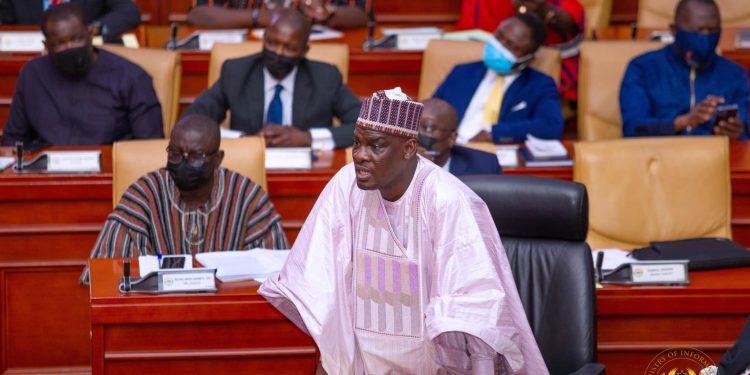
Alternatively, they can report such incidents to the Cyber Security Authority’s (CSA) 24-hour cybersecurity incident-reporting contact points. These avenues can be used to report cybercrimes, as well as to seek guidance and support for online activities.
The Commissioner-General of the Ghana Revenue Authority (GRA), Anthony Sarpong, together with other top officials, have been summoned by the Office of the Special Prosecutor (OSP) for questioning over the controversial GRA–Strategic Mobilisation Ghana Limited (SML) revenue assurance contract.
The other GRA officials include the Assistant Commissioner in charge of Finance, Celestine Annan; and the Technical Assistant to theCommissioner-General, Kenneth Agyei-Duah. Their invitation follows the recent arrest of the Acting Head of Legal Affairs at the GRA, Freeman Sarbah for his alleged involvement in the controversial deal as well as trying to interfere with justice.
The Strategic Mobilization Limited has been operating in Ghana for the past five years to check revenue in the oil (upstream) and mining (mineral) sectors. In 2024, the revenue arm of the government discontinued two contract transactions (the Audit and External Verification Service Contract (AEVS) with SML, as well as halting portions of the contract agreement.
The GRA also suspended the SML’s Upstream Petroleum and Minerals Revenue Audit until further notice. The suspension came after the then-President, Akufo-Addo received a report from KPMG against SML’s deals. Last week, President John Dramani Mahama ordered the termination of the SML deal following a comprehensive investigation conducted by the Office of the Special Prosecutor, led by Mr Kissi Agyebeng. The President issued the termination through a letter to the Finance Minister Dr Cassiel Ato Forson.
Following the investigations, the anti-corruption agency discovered procurement breaches and irregularities in contract awards, contractual overreach beyond SML’s original mandate, lack of value for money due to inflated costs and questionable service delivery, and legal concerns.
The SML contracts included several components, thus a Transaction Audit and External Price Verification service agreement, a Measurement Audit for Downstream Petroleum Products contract, and later agreements for Upstream Petroleum and Minerals & Metals audit services.
On 3 May 2024, GRA terminated two of those contracts (the Transaction Audit & External Price Verification) and suspended the Upstream Petroleum & Minerals Audit portion under the erstwhile government.
In June this year, following the OSP’s findings, the Measurement Audit for Downstream Petroleum Products (the main SML contract) was completely terminated, saving Ghana over GHS 1.2 billion.
In an addendum shared on its X (formerly Twitter) handle, the OSP noted that more has been saved in finances aside from the GHC 1.2billion. The OSP announced that Ghana has saved more than GHS 2.6 billion and US$173 million.
The additional savings, it said, arose from avoiding payments tied to crude oil and gold export monitoring services that were never implemented.
“Following the earlier announcement that Ghana saved over GHS 1.2 billion from the cancellation of the main SML revenue assurance contract, there an additional savings from the upstream and mineral sector components of the agreement. These contracts, which were based on a variable fee structure linked to exports of crude oil and gold, would have cost the State approximately US$173 million for crude oil and GHS 2.6 billion for gold exports over five years.
SML did not commence work as the arrangement coincided with the KPMG audit. Owing to the criminal investigations by the Office of the Special Prosecutor (OSP) and the subsequent cancellation by the President, Ghana has now avoided these further costs,” the OSP noted in its statement.
In a highly detailed press briefing following a comprehensive investigation, the OSP mentioned critical findings that exposed systemic breaches of public financial regulations and a clear misuse of authority that caused the state to lose money.
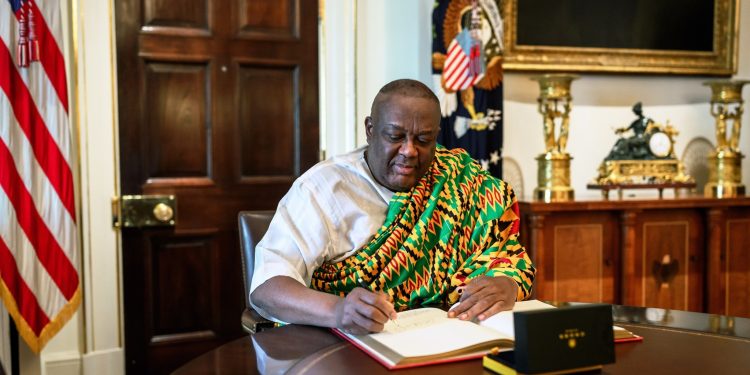
“There was no genuine need for contracting SML for the obligations it’s purported to perform,” the Special Prosecutor declared.
Mr Agyebeng has solidified the case against the contentious Strategic Mobilisation Ghana Limited (SML) contract, alleging that former Finance Minister Ken Ofori-Atta approved payments without any technical or operational justification.
According to the OSP, Ofori-Atta failed to intervene even though SML openly lacked the necessary capacity, expertise, and tools to execute its contract. Instead, he allegedly remained complicit, approving payments from the Consolidated Fund, the Petroleum Revenue Account, and the Tax Refund Account.
The OSP’s investigation concluded, “Had he not been personally benefiting from the SML’s unlawfully procured contracts, the openly displayed by SML of a lack of capacity’s expertise and tools would have immediately triggered his intervention to halt payments to SML and demand accountability. Instead, he looked on conspiratorially in silence, while endorsing and approving payments to SML from the Consolidated Fund, Petroleum Revenue Account, and Tax Refund Account with no technical or operational basis,” the OSP said during a press conference on Thursday, October 30.
The OSP’s findings expose SML’s clear inability to perform the revenue assurance services it was contracted for, which included key responsibilities such as transaction audits and external price verification.
According to the investigation, the continuous “troubleshooting displayed during this period was born of the unlawful imposition of SML in the space and the still lingering reality of SML’s lack of capacity to carry out transaction audits and external price verification.”
Even after 15 months of engagement, SML reportedly “had no system in place to receive CCVRs” (customs control and valuation records), the essential data needed to execute its tasks. Additionally, the existing data provider, West Blue, was under “no legal obligation to release the vital data” to SML.
As a result, the assigned work remained uncompleted, yet the company “continued to be paid,” reinforcing the OSP’s conclusion that the situation led to a financial loss to the state.
It is important to note that former Finance Minister Ken Ofori-Atta has been declared wanted by the OSP for causing financial loss to the state in several dealings, including the contractual arrangement between Strategic Mobilisation Ghana Limited and the Ghana Revenue Authority for the stated objective of enhancing revenue assurance in the downstream petroleum sector, upstream petroleum production, and minerals and metals resource value chain.
The activities of SML came to light years ago after Manasseh Azure Awuni raised contractual breaches in a deal involving the Ghana Revenue Authority (GRA) and Strategic Mobilisation Limited (SML).
The original purpose of the GRA-SML contract was to boost revenue assurance in vital sectors of Ghana’s economy, including the downstream petroleum sector, upstream petroleum production, and the minerals and metals value chain. The goal was to streamline revenue collection, ensuring greater transparency and efficiency in these high-revenue sectors.
Following concerns, an in-depth audit was carried out by international firm KPMG, commissioned by former President Nana Addo Dankwa Akufo-Addo. The audit was launched to examine the contractual agreements between the Ghana Revenue Authority (GRA) and SML, with a particular focus on the procedures and approvals related to the contract.
The KPMG audit uncovered significant procedural errors and regulatory violations in awarding the contract. Specifically, the GRA did not obtain the required approvals from the Public Procurement Authority (PPA) and failed to seek parliamentary oversight before finalising the agreement with SML.
The Ghana Revenue Authority (GRA) entered into six service agreements with Strategic Mobilisation Ghana Limited (SML) using the single-source procurement method without obtaining approval from the Public Procurement Authority (PPA).
The first agreement, covering Transaction Audit Services, was signed on June 1, 2018. This was followed by a Contract Extension on January 1, 2019. On April 1, 2019, the GRA entered into another agreement with SML for External Price Verification Services. Subsequently, on October 3, 2019, the two parties signed a Consolidation Services Agreement, which combined the Transaction Audit and External Verification Services.
That same day, a separate agreement was also signed for the Measurement Audit of Downstream Petroleum Products. Later, on July 29, 2020, an Addendum to the Measurement Audit for Downstream Petroleum Products Agreement was executed.
The audit report also revealed that SML owes the government over GHC31 million in taxes.