Author: Phoebe Martekie Doku

  • National Security operative sacked for involvement in galamsey

    National Security operative sacked for involvement in galamsey

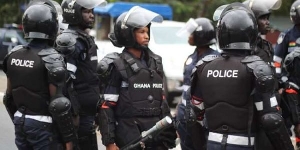
    The appointment of an operative of the National Security Coordinating Secretariat (NSCS) has been revoked over suspicion of involvement in illegal mining activities (galamsey).

    Issah Yakubu’s alleged activities were uncovered following an operation conducted on October 23 by the National Anti-Illegal Mining Operations Secretariat (NAIMOS) in collaboration with the Ashanti Regional Security Council (REGSEC). He is said to have been engaged in illegal mining activities within the Oda River Forest Reserve.

    During the operation, authorities arrested 15 illegal miners and nine armed individuals posing as National Security operatives after destroying  a well-organised illegal mining network in the reserve.

    Meanwhile, two of the suspects posing as National Security operatives have been detained and are assisting authorities with investigations.

    The galamsey menace continues to threaten not only Ghana’s water bodies, food crops, and forest reserves but also the country’s energy infrastructure. Earlier this month, Ghana Water Limited and the Electricity Company of Ghana (ECG) blamed illegal mining activities for the 200% tariff increment proposal under the 2025–2030 Multi-Year Tariff Order. The Director of Communications for ECG, William Boateng, made this publicon Tuesday, October 14.

    “They are digging and moving towards the roads and trenches, which is very dangerous. Anytime we have the slightest rainfall, the poles come down because the base has been weakened. That affects the stability of power supply.

    “It costs us more money to fix the fallen poles and restore the line. Beyond that, we are also losing unserved energy power that we’ve already purchased but cannot deliver to customers,” Mr. Boateng noted.In September, the Public Utilities Regulatory Commission (PURC) received proposals from eight utility companies calling for a significant adjustment in utility tariffs to ensure they can fully operate at capacity.Proposals from the electricity distributors and the water provider for the 2025–2029 tariff period cite rising operational costs and the need to maintain efficient service delivery.

    The eight companies include the Electricity Company of Ghana (ECG), Volta River Authority (VRA), Northern Electricity Distribution Company (NEDCo), Ghana Water Limited (GWL), Ghana Grid Company (GRIDCo), and Ghana National Gas Limited, among others.

    ECG is pushing for a massive 225% hike in its distribution service charge. For instance, a household consuming 150 kWh monthly would pay an additional GHS64, while a residence using 100 kWh per month would pay about GHS43 more in distribution charges. As part of ECG’s request, the current Distribution Service Charge (DSC) of 19 pesewas per kilowatt-hour should be raised to nearly 62 pesewas per kilowatt-hour.

    “The PURC will undertake the major adjustment in the fourth quarter of 2025 to reflect capacity charges, additional liquid fuel usage, and additional capex. The current charge is below industry benchmarks, and cedi depreciation has reduced its value. US$408 million spent on network upgrades and smart meters,” parts of ECG’s petition read.

    ECG has emphasized that the adjustment has long been overdue, noting that in 2022 it proposed 39.95 pesewas, but only 19.04 pesewas was approved.

    According to ECG, it has invested $48 million in network upgrades and smart metering systems to enhance power reliability, reduce outages, and align tariffs with international industry standards, yet these efforts have not yielded the expected cost recovery.

    Furthermore, ECG has projected an annual revenue of GHS9.5 billion between 2025 and 2029 if the new charges are approved. The proceeds, according to the utility company, would be allocated to cover operational costs, depreciation of assets, staff salaries, and the recovery of recent capital expenditures.

    Despite mounting pressure on government, President John Mahama insists that Ghana can eradicate the long-term canker if it deploys more troops and invests more resources in the fight. He concluded that the battle may be a long one, but his administration is committed to winning it.

    According to him, government advisors believe the country can overcome galamsey by adopting best practices in small-scale mining, including technologies that help neutralize or remove harmful chemicals from water bodies.

    “While we are fighting the menace, I am also saying we should uptake technology in order to protect the environment. So yes, let’s fight the illegal mining but at the same time, let’s bring in new technology that will help us protect our environment.

    “Now, with the elephant in the room State of Emergency yes, I have the power to do it, but the President acts on the advice of the National Security Council. And as at now, this moment, the National Security Council believes that we can win the fight against galamsey without declaring a State of Emergency. I want to assure you that the day they advise me otherwise that, boss, now we need a State of Emergency I won’t hesitate,” he added.

    Meanwhile, the Managing Director of Ghana Water Limited (GWL), Adam Mutawakilu Mutawakilu, has indicated that the declaration of a State of Emergency is not the remedy to ending illegal mining activities (galamsey) in the country.

    At a press conference in Accra on Monday, October 20, he stated that such a measure will escalate tensions in the country rather than provide a lasting solution to the galamsey menace.

    He explained that declaring a State of Emergency would only push illegal miners to other parts of the country, forcing the government to extend the declaration to all regions. This, he argued, would be unrealistic and unsustainable. To prevent that, he called on the government to introduce lasting solutions rather than temporary ones.

    “First and foremost, I don’t think that a State of Emergency will stop illegal mining. If you declare a State of Emergency in one area, they [illegal miners] would migrate to another area. At the end of the day, the whole of Ghana will be in a State of Emergency.

    “You declare a State of Emergency for how many years? There must be pragmatic measures, as President Mahama has outlined, to ensure sustainability. From my position at Ghana Water, I don’t believe a State of Emergency is the answer,” he said.


  • Govt to raise DACF allocation for PWDs by 2%

    Govt to raise DACF allocation for PWDs by 2%

    President John Dramani Mahama has pledged to increase the allocation of disability funds for Persons Living with Disabilities (PWDs) under the District Assemblies Common Fund (DACF) by two per cent. The upcoming increment expected to take place effective 2026, will raise the current three per cent to five per cent.

    The President made this announcement on Friday, October 24, during the launch of the Free Tertiary Education Programme for Persons with Disabilities. He disclosed that each Metropolitan, Municipal, and District Assembly (MMDA) will receive a Disability Desk to coordinate and address issues concerning persons with disabilities. According to him, the adjustment aims to assist persons with disabilities (PWDs) in meeting their needs.

    “Next year, in the District Assemblies Common Fund formula, we intend to increase the allocation to persons with disability from 3% to 5%. And the disability desk in every District Assembly will, in consultation with the local branch of the Ghana Federation of the Disabled will prepare a budget each year for how they intend to spend the 5% that has been allocated to them,” he said.

    In May, Metropolitan, Municipal, and District Chief Executives (MMDCEs) were cautioned against redirecting the funds meant for projects for personal interests.

    Speaking during his Thank You tour of the Bono East Region on Friday, May 30, President John Dramani Mahama stressed that anyone found liable will be dismissed.

    MMDCEs in the coming days are expected to receive 80% of the District Assembly Common Fund (DACF).

    The remaining 20% will be designated for projects managed by agencies such as the National Disaster Management Organization (NADMO), ensuring continued support for critical national initiatives.

    According to President Mahama, the Fund is to support district assemblies in executing their duties in the regions.

    He noted that although the initiative is a decentralized one, he indicated that each year, the government will assess the performance of each MMDCE to ensure accountability.

    He warned the MMDCEs that anybody who falls below the belt shall be sacked.

    “The Minister of Finance is about to release the first quarter of the District Assemblies Common Fund. As I said, 80% of the money is going directly to the regions for you to decide how to use it. So, MMDCEs, you have no excuse.

    “We will send you the guidelines, approved at the last Cabinet meeting, to show how the funds should be disbursed. This will serve as your Key Performance Indicators. Every year, we will assess your performance, and based on that, we will decide whether you stay or go,” he said.

    Meanwhile, Swiss Ambassador H.E. Simone Petra Giger expressed confidence in the government’s commitment to decentralization and reaffirmed Switzerland’s continued collaboration with Ghana in supporting local governance and national development.

    “Ghana has a long history of decentralization reforms. While this was a courtesy meeting, we also received a positive signal from the minister, indicating that Ghana is entering a new phase of decentralization, which I believe will benefit the country.

    “My visit today also signifies that Switzerland stands with Ghana, and we are here to stay. If Ghana is truly committed to taking the next step by granting more power and authority to local governments, we will be extremely happy to support that effort,” she stated.

    President John Dramani Mahama has shared that his government, in the coming years, will allow citizens to elect the next Municipal and District Chief Executives (MMDCEs).

    He explained that this is to allow citizens to have a direct say in choosing their local leaders.

    Addressing the MMDCEs during an orientation and training programme on Wednesday, July 18, in Accra, he noted that the upcoming system will be dependent on the recommendations by the National Review committee established by the government.

    “MMDCEs, you may be the last batch of MMDCEs appointed. The National Review committee is going round and will present its recommendation in August this year, and one of the major items that has come up is the election of the MMDCEs. There is no doubt that Ghanaians want the MMDCEs elected. Those who succeed you might have to go through elections,” he stated.

    President Mahama further called on all MMDCEs to declare their assets by July 15.

    “I wish to remind you that you are among the office holders required to declare your assets, and so I expect that by July 15, all of you will have declared your assets,” he said.

    The legal framework guiding asset declaration is the Public Office Holders (Declaration of Assets and Disqualification) Act, 1998 (Act 550). The Act mandates public officials to declare their assets before assuming office, every four years, and at the end of their term, submitting the forms no later than six months after any of these events.

    Importantly, Section 8 of the Act provides that allegations of non-compliance must be referred to the Commission on Human Rights and Administrative Justice (CHRAJ), which is empowered to investigate and take appropriate action.

    President John Dramani Mahama submitted his asset declaration forms to the Auditor General on February 18 and issued a firm order to his appointees to follow suit by March, warning of sanctions for defaulters.

    A report by The Fourth Estate revealed that several high-ranking officials have yet to fulfill their constitutional obligations. Out of 55 ministers and deputy ministers, nine have failed to declare their assets.

    Additionally, eight out of 32 presidential staffers and 37 out of 84 heads of state institutions appointed between January 15 and March 18 had not complied with the president’s directive.

    On May 6, the president sanctioned his appointees who missed the March 31 deadline by directing them to forfeit their three months’ salary, which he noted will be channeled into the Ghana Medical Trust Fund, also known as The MahamaCares, a landmark initiative aimed at providing financial assistance to individuals living with chronic diseases across the country.

    He gave a May 7 ultimatum, emphasizing that any official who fails to meet the deadline will be sacked. As no government official has been relieved of his or her duties, it is believed that all government officials have declared their assets.In the meantime, civil society groups and anti-corruption advocates have supported the full publication of asset declarations as a means to promote integrity and accountability.

    Meanwhile, Special Prosecutor, Kissi Agyebeng, has expressed his opposition to the declaration of assets by government officials as mandated by the Public Office Holders Act.

    Justifying his opposition, he indicated such an initiative puts public officers in a position where they expose themselves to unnecessary attention and potential threats against their lives and their loved ones.

    “I do not and I will not add my voice to calls for the publication of assets for public scrutiny. In our experience, it will be unhelpful and would merely subject public officers to inordinate public curiosity and a specter of the real likelihood of reprisals against the assets,” he said.

    To him, fighting corruption effectively in the country requires striking a balance between transparency and the protection of individual rights.

    “In my estimation, publication of who has declared or has not declared his assets in the context of a workable asset verification and treason model would be sufficient to assure the integrity of the asset declaration system,” he added.

  • Hassan Ayariga’s car crashes at Ashaiman overhead, leaving one injured

    Hassan Ayariga’s car crashes at Ashaiman overhead, leaving one injured

    Founder and leader of the All People’s Congress (APC), Hassan Ayariga’s  Toyota V8 has reportedly crashed with a commercial vehicle with registration number GS 3642-12 at the Ashaiman overhead in Accra. The near-fatal road accident which occurred on Friday, October 24, has left one individual injured.

    According to eyewitnesses, Hassan Ayariga’s driver hit the commercial vehicle, causing the V8 to lose control and veer off the road into a gutter. 

    Ghana has recorded a series of road accidents this year. Some months ago, an accident at Bechem in the Bono Region claimed the lives of two individuals, including a church leader of the Seventh Day Adventist (SDA) Church.

    The fatal crash, which occurred on Sunday, August 10, left several others sustaining injuries, including children. According to reports, the victims who were close to Aburaso were coming from a camp meeting they attended in Kumasi. Reportedly, the trye of the bus carrying the individuals had a fracture, leading to a burst, hence, causing the vehicle to somersault.

    On Monday, July 28, a tragic road accident on the Atwedie stretch of the Kumasi–Accra Highway resulted in the deaths of sixteen members of the Saviour Church of Ghana. Days after, an accident at Asamankese in the Eastern Region on Wednesday, August 6, reportedly claimed the life of an individual. Officials have yet to confirm any casualties.

    The unfortunate incident occurred after a tipper truck veered off its road, crashing into shops around the Dukes Filling Station. According to sources, many other individuals sustained injuries. Reports have it that the tipper truck was overspeeding when it veered off the road.

    “It happened so fast—one moment the road was clear, the next, the truck was crashing into everything in its path,” an eyewitness recounted.

    Following the incident, it is said that emergency services went to the scene to rescue individuals who were trapped. Medical assistance was also provided, according to reports. Per reports, the Police Service has commenced investigations into the accident, with the driver of the tipper truck providing assistance.

    Local officials have reportedly given assurance of aiding the victims of the accident. The deceased were reportedly returning from the church’s annual programme in the Eastern Region.

    Their deaths were confirmed after their bus crashed with an oncoming fuel tanker. All 16 victims were laid to rest in a single large grave on Thursday, July 31, by the Obogu community and church leadership.

    Ghana has reported a surge in the number of fatalities recorded due to road crashes. In the first half of 2025, the National Road Safety Authority (NRSA) reported one thousand, five hundred and four (1,504) deaths, compared to one thousand, two hundred and thirty-seven (1,237) fatalities reported in the corresponding period in 2024, representing a 21.58 percent increase.

    According to provisional data released by the National Road Safety Authority in collaboration with the Police Motor Traffic and Transport Department (MTTD), a total of 7,289 road crashes were recorded between January and June this year.

    Per the data, a total of twelve thousand, three hundred and fifty-four (12,354) vehicles were involved in the road crashes. Owing to the road accidents, a total number of eight thousand, three hundred (8,300) individuals sustained injuries.

    Also, one thousand, three hundred and one (1,301) pedestrians were knocked down across the country. According to the recent data provided by the National Road Safety Authority, on average, eight (8) lives are lost every day due to road crashes.

    Each day, forty (40) road crashes are recorded, and forty-six (46) individuals sustain injuries. Daily, sixty-nine (69) vehicles and motorcycles are involved in road crashes. To aid in combating road crashes, the National Road Safety Authority has called for stern enforcement of traffic regulations and public education.

    The NRSA has called for stricter enforcement of traffic regulations and increased public education to help curb the rising number of road accidents across the country.

    The Road Traffic Act 2004, an Act to consolidate and revise the Road Traffic Ordinance, 1952 (No. 55), provides for a more comprehensive regulation of road traffic and road use, to ensure safety on the roads and to provide for related matters.

    A person who drives a motor vehicle dangerously on a road commits an offence and is liable on summary conviction, (a) where (i) a bodily injury does not occur, or (ii) a minor bodily injury does occur, to a person, other than the driver, to a fine not less than one hundred penalty units and not exceeding two hundred penalty units or to a term of imprisonment not exceeding nine months or to both the fine and imprisonment.

    (b) Where bodily injury of an aggravated nature occurs to a person, other than the driver, to a minimum fine of two hundred penalty units and not exceeding five hundred penalty units or to a term of imprisonment of not less than twelve months and not exceeding two years or to both the fine and the imprisonment; or (c) where death occurs, to a term of imprisonment for a term of not less than three years.

    (d) Where there is damage to state property, to a fine of not less than one hundred penalty units and payment for the damage caused in an amount determined by the Court.

    The Court may, on the conviction of a person under subsection (1), (a) order the payment of appropriate compensation to an injured person or to the estate of that person, or (b) order the withdrawal of the licence for a period of not less than three years and not more than five years.

    A person who drives a motor vehicle on a road without due care and attention, or without reasonable consideration for other persons using the road, commits an offence and is liable on summary conviction to a fine not exceeding two thousand penalty units or to a term of imprisonment not exceeding five years or to both the fine and the imprisonment.

    A person commits an offence if without lawful authority or reasonable excuse, that person, (a) causes anything to be on or over a road, (b) interferes with a motor vehicle, trailer or cycle, or (c) interferes, directly or indirectly, with traffic equipment, where that it would be obvious to a reasonable person that to do so would be dangerous.

    A person who commits an offence under subsection (1) is liable on summary conviction to a fine not exceeding two hundred and fifty penalty units or to a term of imprisonment not exceeding twelve months or to both the fine and the imprisonment.

  • Police officer handed life term for murdering girlfriend

    Police officer handed life term for murdering girlfriend

    The Kumasi High Court has finally given its verdict regarding the Police Inspector Ahmed Twumasi, popularly known as ‘Taacum’ who murdered his girlfriend in Kumasi, Ashanti Region in 2023.

    After nearly three years of legal proceedings, Police Inspector Ahmed Twumasi has been sentenced to life imprisonment after the Court found him guilty of murder. The seven-member jury delivered a 5–2 majority verdict.

    Inspector Twumasi was apprehended in May 2023 after a specialized police operation led to his arrest at his hideout in Sekyere near Effiduase in the Ashanti region.

    He stands accused of fatally shooting 26-year-old Victoria Dapaah, also known as Maadwoa, multiple times in the abdomen and chest on April 20, 2023, around 9:50 p.m. According to reports their dispute was centered around GH¢5,000 debt. The police officer shot the deceased after she failed to repay the amount. 

     He has, however, confessed to the shooting but maintains that it was not deliberate.Despite facing court appearance on April 15, 2024, rumors of his demise circulated on social media. Authorities at the Kumasi Central Prisons allowed Luv FM’s Ohemeng Tawiah access to the cells where the remanded officer is held. Inspector Ahmed Twumasi, clad in a white T-shirt and khaki shorts, confirmed to prison officers that he was in good health and aware of the rumors surrounding his supposed death.

    Superintendent Richard Bukari, Public Relations Officer of the Kumasi Central Prisons, described the rumors of Twumasi’s death as regrettable in an interview with JoyNews.

    “I emphatically say it is not true. Ahmed Twumasi is hail and hearty in custody. Nothing has happened to him and I promise nothing will happen to him.Looking at him, he’s not even sick and I wonder under what circumstances Twumasi would be declared dead.

    “Taking note that he’s a state property, we would not do anything that would compromise his health, his security and his well-being in the prisons.So I say on authority that Twumasi is not dead; he is alive, healthy and undergoing his trial processes,” Superintendent Bukari noted.

    Prison authorities iinitiated investigations into the circulation of fake news, aiming to uncover the truth and take disciplinary action against those responsible.

    “We are not leaving it just there. We are going further to investigate the source of that info. Whoever would have generated such false information that is causing this upheaval in the general public would have to be dealt with according to the laws of Ghana.”

    This year, Ghana has witnessed several disturbing murder cases. In July, the lifeless body of an immigration officer identified as Stephen King Amoah, also known as Nana Kofi, was discovered in a drainage system near GBC Satellite, opposite Comet Estate, Accra, on Wednesday, July 9.

    The deceased is said to have gone missing five days (since July 3) before his tragic death. This was contained in a press statement by the Ghana Police Service on Thursday, July 10.

    Providing more details about the tragic incident, the police noted that the murderer(s) of the 38-year-old also set his body on fire.

    The deceased’s remains have been conveyed to the Police Hospital morgue after the relatives positively identified the body as Stephen.

    The police have disclosed that their preliminary investigations indicate the deceased had gone to meet his debtor, one Bright Aweh, who had promised to pay the outstanding debt owed on Thursday, July 3, in the evening.

    The victim never returned home that night, and his phone remained switched off throughout, raising concerns among family and friends who later reported him missing.

    “Investigations revealed that on 3rd July 2025, at about 8:00 p.m., the deceased left his residence at Ashongman Estate after receiving WhatsApp images of cash bundles from one Bright Aweh, who requested to meet him at a spot at Ashongman Estate to settle an outstanding amount.

    “According to the complainant, the deceased never returned home that night, and his phone remained switched off thereafter,” the police said.

    After the deceased’s family filed a complaint at the police station, Bright Aweh was arrested to assist with the investigation.

    He admitted that he met with the deceased and alleged that he gave a cash of GHS500,000 to the deceased, instructing him “to use part of the money to pay off some debts and hold the remaining amount for later collection.”

    But the police in their statement noted that “the suspect could not clearly explain the source of the funds and gave conflicting statements.”

    Meanwhile, the police have pledged to get to the bottom of the case and ensure justice is served to the perpetrators.

    In a similar incident, a 21-year-old student in his final year at Kwame Nkrumah University of Science and Technology (KNUST), Daniel Tuffuor, has been placed in police custody over allegations of involvement in the death of Joana Deladem Yabani.

     Joana Deladem Yabani was in her final year at the institution at the time.

    The Prempeh District Court granted prosecutors’ request to keep Tuffuor in custody to allow for further inquiries, which he later reappeared on March 17, 2025.

    Police launched their investigation after Joana’s lifeless body was discovered on campus on the morning of Thursday, February 27, 2025. University security immediately reported the incident to the police, leading to Tuffuor’s arrest later that day.

    After campus security received the report, they quickly moved her remains to the University Health Services, where medical professionals confirmed her death.

    “The University has officially informed her family, and we extend our deepest condolences to them during this difficult time,” the statement read.

    Authorities suspect that the deceased and the accused were in a romantic relationship at the time of the incident. The investigation is ongoing to determine the exact circumstances surrounding Joana’s death.

  • Health Ministry begins recruitment of nurses for Grenada

    Health Ministry begins recruitment of nurses for Grenada

    Experienced and qualified Registered Nurses seeking employment opportunities in Grenada, North America, can begin their applications today, Friday, October 24, as announced by the Ministry of Health.

    Applicants have been directed to apply through the Ministry of Health’s online recruitment portal. The Ministry emphasized that applications submitted after Tuesday, October 28 shall be rejected.


    Registered Nurses across several specialties, including Critical Care, Accident and Emergency, Public Health, and General Nursing have been encouraged by the Ministry to turn in their applications.


    Applicants must least five years of professional working experience and ensure they meet the regulatory requirements of the Nursing and Midwifery Council of Ghana. This information was contained in a statement dated Friday, October 24, by the Health Ministry.

    This development follows a bilateral agreement between the Government of Ghana and the Government of Grenada.
    The agreement seeks to strengthen the healthcare systems of both countries while promoting cultural exchange and knowledge sharing in the medical field.

    In recent times, Ghana has witnessed several protests from government employees, specifically, teachers, nurses, and doctors, over the delay in salaries.

    However, on Friday, October 17, Minister of Foreign Affairs, Samuel Okudzeto Ablakwa, signed the agreement on behalf of Ghana, while his Grenadian counterpart, Joseph Andall, signed on behalf of Grenada, during Grenada’s Prime Minister, Dickon Mitchell’s visit to the Presidency.


    President John Dramani Mahama, in a speech on Friday, October 17, during a state visit by Grenadian Prime Minister Dickon Mitchell at the Presidency in Accra, lauded the international recognition of Ghanaian health care professionals and the benefits the agreement stands to bring to both countries.


    He said, “In the health sector, Grenada’s interest in recruiting Ghanaian nurses and allied health professionals presents a valuable opportunity for structured collaboration between our two countries. Ghanaian health workers have gained international recognition for their professionalism and their compassion. And we’re keen to explore arrangements that address both our national needs and Grenada’s health priorities.


    He added, “I’m pleased that just yesterday, Thursday, October 16, our Foreign Minister, the Honorable Samuel Okudzeto Ablakwa, and Honorable Joseph Andall, Foreign Minister of Grenada, co-chaired the inaugural session of the Ghana-Grenada Political Consultations. I’m confident that this mechanism will produce practical outcomes that deepen political, economic, and cultural engagements between our two nations.”


    The signing of the MoU comes just days after the Health Minister, Mintah Akandoh, raised concerns about the ballooning and looming unemployment crisis the sector is anticipated to face, citing the government’s efforts to deal with the challenge.


    Early this month, a group of nurses and midwives, who identify as the Coalition of Unpaid Nurses and Midwives, took to the streets to protest over unpaid salaries for the last 10 months since their posting in December 2024.


    The Health Ministry responded to their request, promising to settle all arrears by next month.


    Speaking on the challenges facing employment in Ghana’s health sector, Mr Akandoh, during an appearance on The Point of View on Channel One TV on Wednesday, October 15, revealed that as more health practitioners graduate each year, the unemployment rate within the sector continues to rise.


    He said if measures aren’t taken immediately, Ghana could have as many as 180,000 unemployed trained health professionals by the end of 2028.
    According to the Minister, the current number of unemployed health workers stands at around 74,000. However, with thousands more graduating each year, the figure is expected to more than double within the next three years.


    “By the end of 2026, we will have an additional 23,000. By the end of 2027, we will have an additional 35,000. By the end of 2028, we will have about 47,000. So by the end of 2028, if we don’t employ anybody, this 74,000 is still outstanding — we will have not less than 180,000 trained and they will be at home,” he said.


    In light of this, he detailed that the government is working on a recruitment strategy, including collaborations with other international bodies and countries to ship them out in a policy called “managed migration”. Thirteen (13) countries have so far responded; however, most of them prefer to work with specialists.


    “So there is a strategy going forward. What we are seeking to do now is that gradually, the government will be employing some of them as we move along,” he said.“We are also looking at what we call managed migration, how we will be able to export some of them. About 13 countries have responded, but the difficulty is that most of these countries that have responded need a specialist,” he added.


    He also revealed that Ghana would need not less than GHS6 billion annually to clear the existing backlog of unemployed health professionals.


    The comments come amid growing pressure from unemployed nurses and midwives demanding placement, and criticism from the Minority in Parliament over how the government is handling health sector employment.


    Ranking Member on the Health Committee speaking during a media engagement, stated that, “there is no need for Cabinet to approve anything. Again, there’s no need for this clearance. The government should come and tell the people the truth.”


    The Minority accused the government of taking health workers for granted, saying their patience had run out. They emphasized that financial clearance for 15,000 health workers was already secured under the previous NPP administration in July 2024.


    About 8,000 of those workers were paid, and the remaining 7,000 should have been paid as well, especially since they were posted before the December 2024 handover.


    However, Mr Akandoh, during his interview with Channel One’s Bernard Avle, stated that the previous administration led by Akufo-Addo did not make any budget for the over 13,000 nurses they recruited.


    The Minister for Employment and Labour Relations, Abdul-Rashid Pelpuo, has stated that the salary delays affecting thousands of nurses, teachers, and junior doctors are due to lapses under the previous New Patriotic Party (NPP) administration.


    Speaking to the media on Wednesday, October 8, Dr. Pelpuo blamed the NPP’s poor recruitment practices and fiscal indiscipline for the current plight of nurses and doctors.


    “The situation is currently unfair, but it is a culmination of events that took place in the last regime before the current regime took over. People were engaged to work without due process. For you to work and be paid, you need clearance to show that there is money in the account and that your employment has been approved. That didn’t happen in this respect,” he said.


    “We are taking it up very seriously, and I can assure the nurses, teachers, and junior doctors who are caught up in the process that we are going to respond to them before the end of the year,” he stated.

  • Ofori-Atta vs OSP case adjourned to November 25

    Ofori-Atta vs OSP case adjourned to November 25

    The case involving former Finance Minister Kenneth Ofori-Atta and the Office of the Special Prosecutor (OSP) has been adjourned to November 25 by the Human Rights Division of the High Court.

    This was made public by the OSP on Friday, October 24, through its official website. According to the OSP, the court heard two motions on Thursday, October 23, adding that Counsel for the Mr. Ofori-Atta moved motions for (a) discoveries and (b) leave to amend the originating motion on notice. Both applications were opposed by counsel for the OSP.
    As such, both parties have been directed by the court to file and submit their written submissions by Friday midnight.


    “The Human Rights Division of the High Court heard two motions in the case Kenneth Ofori-Atta v. Office of the Special Prosecutor on Thursday, 23 October 2025. Counsel for the Mr. Ofori-Atta moved motions for (a) discoveries and (b) leave to amend the originating motion on notice. Both applications were opposed by counsel for the OSP.


    “The Court directed both parties to file and submit their written submissions by midnight, 24 October 2025. The matter has been adjourned to 25 November 2025 for ruling on the two applications.

    The suit, filed by the former Minister for Finance and a suspect in a number of investigations by the OSP, challenges the Office’s declaration of him as “wanted” and contests the Office’s legal authority to make such pronouncements public,” parts of the post read.


    In June, Prof. Mrs. Angela Ofori-Atta, wife of the former Finance Minister, Ken Ofori-Atta, indicated that her husband will return to Ghana after his doctor’s approval. Speaking to Joy News, she noted that Ofori-Atta’s absence is not an attempt to escape scrutiny, but a result of his current health condition.


    “He has never not been accountable. This is not Ken Ofori-Atta, who runs away from accountability. I don’t think there is any other home but Ghana, no, Ghana is home,” she stated. “So why are we holding back on the investigation? Why would he [the OSP] not give the video?” she added.


    Ofori-Atta remains a central figure in a legal battle, despite his current health condition. Ofori-Atta appeared on Interpol’s website for “using public office for profit” after being declared wanted by the OSP.
    This was after he failed to appear before the Office of Special Prosecutor (OSP) on Monday, June 2.

    His lawyers are said to have formally communicated the development to the OSP and the Human Rights Court, submitting medical reports that detail his current condition and outline scheduled surgical procedures.
    The OSP, during an engagement with the press on Tuesday, June 3, noted the failure of the former minister to inform the OSP of changes in medical procedure that were to have happened in March of this year.


    “He has failed to show any medical report that shows he is a medical risk.We want him physically, and we insist on it,” the OSP said, while noting that Mr Ofori-Atta cannot indicate the mode of investigation. His conduct is totally unacceptable. We will no longer tolerate him,” the OSP noted.


    In February, the OSP declared Ofori-Atta wanted for causing financial loss to the state in several dealings, which include the following:
    Contractual arrangement between Strategic Mobilisation Ghana Limited and the Ghana Revenue Authority for the stated objective of the enhancement of revenue assurance in the downstream petroleum sector, upstream petroleum production, and minerals and metals resource value chain.


    Termination of a distribution, loss reduction, and associated network improvement project contract between the Electricity Company of Ghana Limited and Beijing Xhao Chen Technology BXC.


    Procurement of contractors and materials and activities, and payments in respect of the National Cathedral project.


    Activities and payments in respect of a contract awarded by the Ministry of Health initially commenced by the Ministry for Special Development Initiative to service Ghana Auto Group Limited for purchases and after-sales service and maintenance of 307 Mercedes-Benz Sprinter 304 5 CDI Ambulances for the National Ambulance Service.

    Payments out of and utilization of the tax refund account of the Ghana Revenue Authority.


    Later, the legal representatives of the former finance minister informed the OSP that their client is currently undergoing medical treatment in the United States and is unable to honor an invitation for questioning.


    Ofori-Atta then assured the OSP of its commitment to appearing for questioning on a fixed date, which influenced the OSP’s decision to temporarily take his name off the list in March.


    However, the office stressed that he is legally obligated to show up on June 2. Failure to do so, an Interpol Red Notice would be issued and extradition proceedings would be initiated in any country where he may be located.


    Ken Ofori-Atta then took legal steps to block the OSP from re-declaring him wanted. His lawsuit argues that the agency’s actions are baseless and unjustified.


    Ofori-Atta has dismissed allegations of financial misconduct and corruption, insisting that he has been cooperating with investigators through his legal representatives.


    In his court filing, he contends that the OSP’s actions have inflicted serious harm on his reputation and personal life. He is seeking a legal injunction to prevent further declarations against him until the case is fully resolved.


    The Human Rights Court has adjourned to June 18 for a ruling on the motion filed by the former Finance Minister, seeking to restrain the OSP from declaring him wanted, among other reliefs.


    INTERPOL Red Notice


    A Red Notice is a request to law enforcement worldwide to locate and provisionally arrest a person pending extradition, surrender, or similar legal action.


    It is based on an arrest warrant or court order issued by the judicial authorities in the requesting country. Member countries apply their own laws in deciding whether to arrest a person.


    INTERPOL cannot compel the law enforcement authorities in any country to arrest someone who is the subject of a Red Notice.


    Each member country decides what legal value it gives to a Red Notice and the authority of its law enforcement officers to make arrests.

  • MoFFA gives unlicensed mortuaries, funeral homes seven days to legalize operations

    MoFFA gives unlicensed mortuaries, funeral homes seven days to legalize operations

    Unlicensed mortuaries and funeral facilities operating without valid licenses have a one-week ultimatum to legalize their operations. The Mortuaries and Funeral Facilities Agency (MoFFA) has threatened to shut down the operations of mortuaries and funeral homes that disregard its directive.

    This was revealed in a press release issued by the Agency on Wednesday, October 22.

    “All operators of facilities and practitioners are by this notice advised to take steps to regularise their operations or risk closure of their facilities,” the statement warned.

    Under Part Two of the Health Institutions and Facilities Act, 2011 (Act 829), MoFFA has been mandated to license and monitor all businesses that handle dead bodies.

    The directive comes at at time when Health Facilities Regulatory Agency (HeFRA)  has intensified efforts to crackdown on unlicensed operations of certain health facilities.

    Earlier this month, the Authority conducted an operation in the Ashanti Region to ensure compliance. Several unlicensed health facilities had their operations suspended following the operation. These health facilities are reported to have been operating without a valid license for the past six years. 

    ANKHOR Diagnostics and RASHBILL Eyecare, both located within the Komfo Anokye Teaching Hospital premises, are among the affected health facilities.

    Weeks ago, HeFRA shut down 17 health facilities across the country for operating under unsafe conditions and with expired licenses.

    Speaking to the media, HeFRA’s Chief Executive Officer, Dr. Winfred Baah, noted that his outfit will ensure that all health facilities operate in full compliance with the law and meet safety and quality standards.“No facility, whether private, corporate, or public, is above the law. We cannot allow anyone to offer clinical services to staff or the public without proper regulation and supervision,” he stressed.

    Recently, the Bono East Regional Police Command arrested a man for operating an unlicensed clinic in his residence at Yeji Zongo in the Bono East Region.

    According to a release shared on the Facebook page of the Ghana Police Service and signed by ASP Appiah Danquah, the suspect, identified as Hanson Osei, was arrested on 28th September 2025 after police, acting on intelligence, proceeded to his residence, where he had converted a chamber-and-hall room into a clinic.

    The police revealed that during interrogation, “the suspect admitted that he had been operating the clinic for the past eleven (11) years without authorization from any recognized medical school or licensing authority.”

    A search of the premises uncovered several used clinical items, including needles, malaria injection bottles, infusion rubber sachets, and other medical materials. The police therefore, put Mr. Hanson Osei before the Tuobodom District Court on 30th September 2025. He has since been remanded to reappear on 6th October 2025.

    Earlier in September, a man posing as a medical doctor at the Komfo Anokye Teaching Hospital (KATH) was reported to the police after arousing suspicions among hospital personnel.

    The middle-aged individual, known as Williams Cyril Kohen, underwent questioning by hospital staff during their regular rounds, leading to the verification of their concerns. Following this development, the suspect was handed over to the hospital’s police post, which subsequently transferred the case to the Central Police Command for further investigation.

    The hospital’s Public Relations Officer, Kwame Frimpong, conveyed that the institution had implemented security measures aimed at preventing such occurrences in the future.

    “At KATH, it is very difficult for people to come and claim that they are doctors and start working there because that is not how the thing works. We have a team-based system where all the team members are known and also remember that it is a training institution, so most of the time the people who join us are our former students and so it is a very close-knit community and the team members are known to each other.

    “So you cannot just be part of the team out of the blue. And because patients are allocated to teams, you cannot go to any patient when you are not part of the team. Again, we have this electronic medical records system where every member of the medical staff has a password specific to them, and you have to use this system to attend to patients, to review the cases, and to give prescriptions for medicine to be dispensed. Once you don’t have the password because you are not a staff or member of the medical teams you cannot even attend to the patient,” he stated.

    In 2019, the Medical and Dental Council arrested a suspected quack doctor at Anyinam in the Eastern Region. The suspect, Kankam Nkrumah, was caught red-handed at the consulting room of Yesukrom Medical Center practicing medicine without a license.

    Information gathered by Starr News indicated that the Investigative Unit of the Medical and Dental Council, led by the Administrative Manager, Bright Atsu Fuglo, and Desmond Asamoah, on January 21, 2019, stormed the community to undertake its routine headcount of licensed practitioners, medical doctors, physician assistants, and certified registered anesthetists at Anyinam.

    Nonetheless, during the exercise, they noticed the suspect, Nkrumah Kankam, sitting in the consulting room, allegedly practicing medicine without a license. He was questioned and subsequently arrested and handed over to the Anyinam Police.

    The Public Relations Officer of the Eastern Regional Police Command, DSP Ebenezer Tetteh, confirmed the arrest to Starr News when contacted. The police retrieved 15 patient folders and one stethoscope as exhibits while investigations continued.

    Also, in 2023, six people in the Kumasi metropolis were arrested for dealing in fake herbal products. Their arrest was carried out as a result of a collaboration between the Ashanti Regional Office of the Food and Drugs Authority (FDA) and the police.

    The swoop, which targeted dealers in unregistered herbal products, formed part of routine market surveillance conducted by the authority to clamp down on perpetrators.

    The culprits, who had been granted bail pending further investigations, included two community information center operators and four herbal product dealers.

    Mr. John Laryea Odai-Tettey, the Regional Head of the FDA, speaking to the media after the exercise, said the Public Health Act, 2012, mandated the FDA to ensure food, drugs, cosmetics, medical devices, chemical substances, blood, blood products, and tobacco were wholesome for public consumption.

    He said the authority had the responsibility to ensure the safety and quality standards of such products as prescribed by the Act. “It is our responsibility to ensure that products under our regulation and being sold for public consumption and use are registered, and that is why we embark on market surveillance to check the safety of the products,” he noted.

    He said beyond the registration of regulated products, his outfit had the duty to monitor the market to identify persons producing sub-standard versions of registered products.“Unfortunately, a lot of people do not go to accredited health facilities to seek healthcare, but rather patronize some of these products without verifying their safety,” he pointed out. Mr. Odai-Tettey said the activities of the perpetrators were inimical to public safety and called on the public to support the FDA to flush out such miscreants for the good of the general population.

    He said the doors of the FDA were open to manufacturers of herbal and other regulated products to submit their products for scrutiny to ensure they were safe for public consumption.

    Failure by manufacturers to submit their products for verification, he said, amounted to a violation of the Act, and he cautioned that the FDA would go after such recalcitrant manufacturers in the interest of public health.

    He advised the public to patronize products from registered and recognized dealers, such as pharmacies and licensed over-the-counter chemical sellers, for their own safety. Wholesalers and retailers of herbal products must also ensure they purchase from licensed manufacturers in order not to fall victim to FDA operations, he stated.

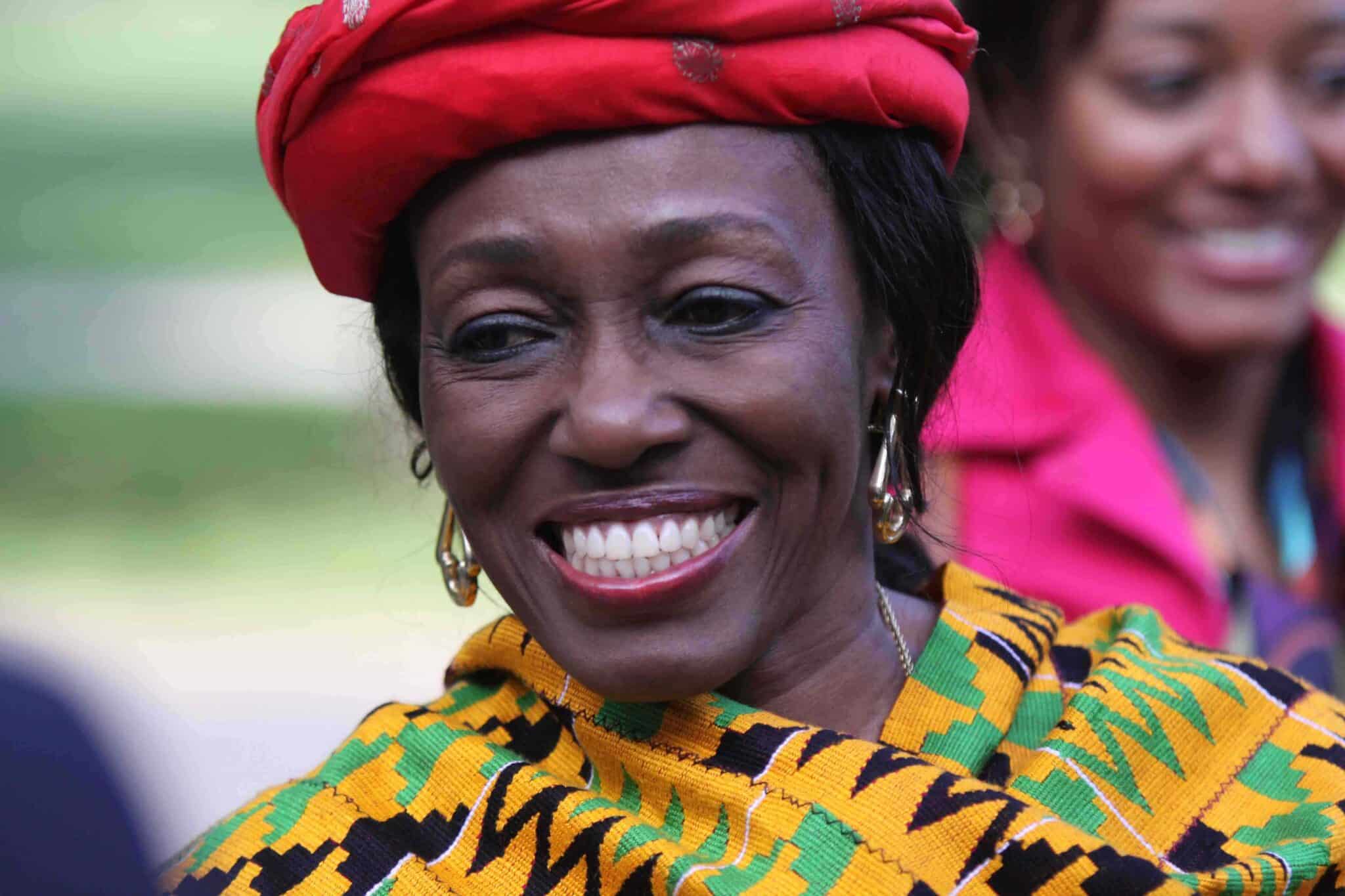
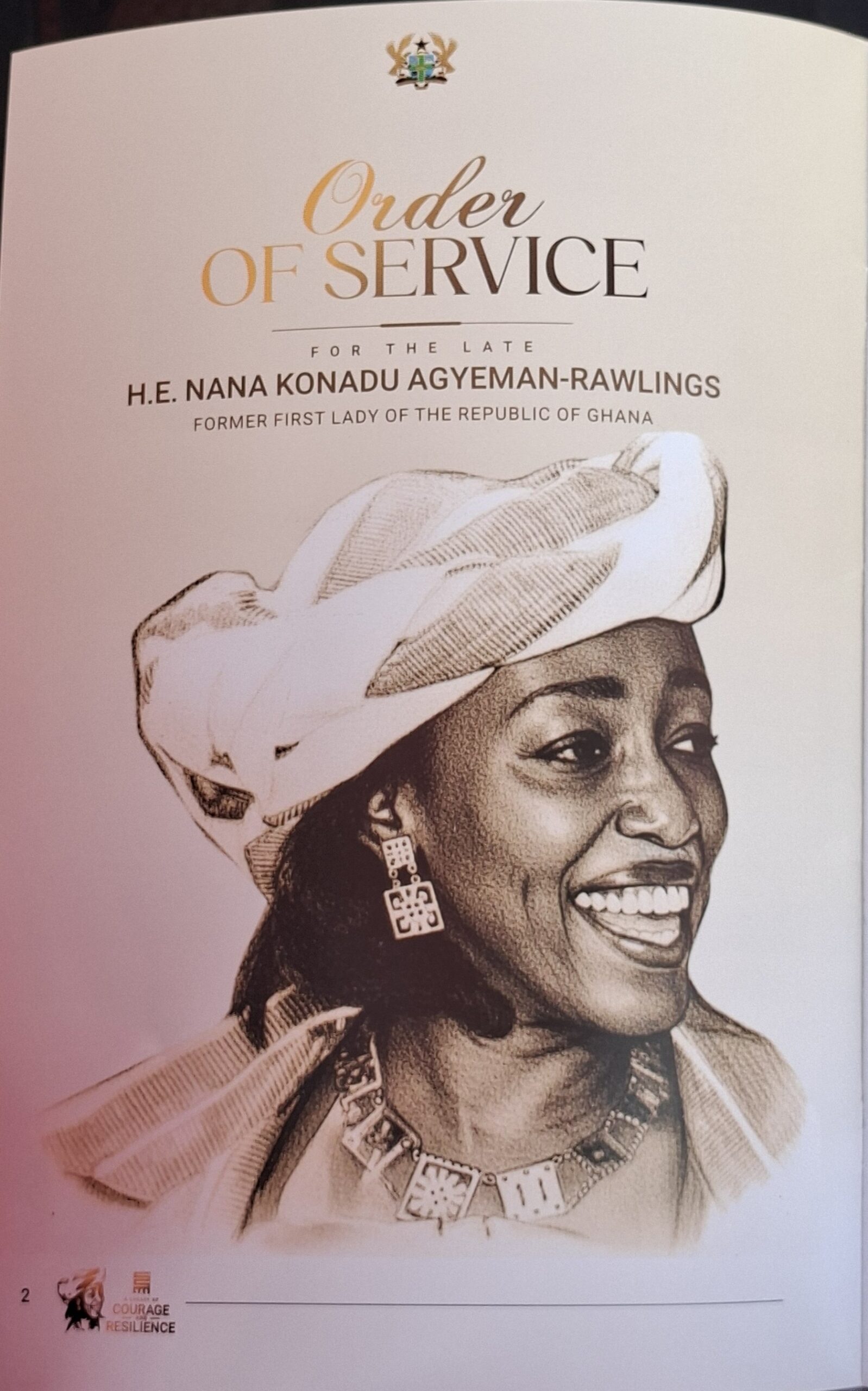
  • Three-day national mourning declared in honor of late Nana Konadu

    Three-day national mourning declared in honor of late Nana Konadu

    A three day of national mourning has been declared by President John Dramni Mahama in honor of former First Lady, Nana Konadu Agyeman-Rawlings. The President gave the directive through a statement dated Friday, October 24.


    The mourning period will begin today, Friday, October 24 and span through Sunday, October 26. President Mahama has also instructed that all national flags shall fly at half-mast at all public buildings, diplomatic missions, and government installations throughout the country and abroad. The statement further extended condolences to the bereaved family

    “Following the passing of H.E. Nana Konadu Agyeman-Rawlings, former First Lady of the Republic of Ghana, President John Dramani Mahama has, on behalf of the government, declared three days of national mourning from today, Friday 24 October to Sunday 26 October 2025.


    During this period, all national flags shall fly at half-mast at all public buildings, diplomatic missions, and government installations throughout the country and abroad. This is in honour of her memory and in recognition of her distinguished service to our nation.


    “Mrs Agyeman-Rawlings served Ghana with dedication and commitment, particularly in women’s empowerment, child welfare, and social development. The Government extends its deepest condolences to the family, her children, and all who mourn this irreplaceable loss. May her soul rest in perfect peace,” he added.

    Meanwhile, the New Patriotic Party (NPP) has expressed deep sorrow over the passing of the former First Lady, Nana Konadu Agyeman-Rawlings, which occurred on Thursday, October 23. The NPP described the late former First Lady, Nana Konadu Agyeman-Rawlings, as a woman who embodied strength and resilience.

    This was contained in a statement issued on Thursday, October 23, 2025, and signed by the party’s General Secretary, Justin Kodua Frimpong.

    “The late Mrs. Agyeman-Rawlings, Founder of the 31st December Women’s Movement and Ghana’s longest-serving First Lady, was an epitome of the strength and resilience of Ghanaian women, particularly in political leadership and socio-economic empowerment,” the statement said.

    The cause of her death is yet to be made known. However, reports suggest that she died at the Ridge Hospital in Accra in the early hours of Thursday. Meanwhile, the Rawlings family and government representatives have yet to issue an official statement regarding her passing at the time of this report.

    Born on November 17, 1948, in Cape Coast to the late J.O.T. Agyeman and his wife, Nana Konadu Agyemang Rawlings served as the First Lady of Ghana from June 4, 1979, to September 24, 1979, during the presidency of Jerry John Rawlings.

    She held the same position again from December 31, 1981, to January 7, 2001. She earned a Bachelor’s degree in Graphic Design at the University of Science and Technology (now KNUST), after specialising in Textiles. She furthered her education at the London College of Arts, where she obtained a Diploma in Interior Design.

    Nana Konadu Agyemang Rawlings did not stop there; she went on to pursue a Diploma in Advanced Personnel Management from Ghana’s Management Development and Productivity Institute in 1979. At GIMPA, she received a Certificate in Development. She later attended Johns Hopkins University in Maryland, USA, where she pursued a Senior Fellow Diploma in Policy Studies.

    Prior to her involvement in politics and social activism, she worked with the Ghana Tourist Board, the Union Trading Company (UTC) in Accra, and several other organizations.

    As a formidable advocate for women’s rights and social justice, she founded the 31st December Women’s Movement in 1982. The influential non-governmental movement aimed at promoting women’s education, economic empowerment, and legal reforms. Through Nana Konadu Agyemang Rawlings’ efforts, the Intestate Succession Law (PNDCL 111) was enacted to protect the inheritance rights of widows and children.

    In Ghanaian politics, she is recognized as the founder of the National Democratic Party (NDP), through which she ran for president in 2016. She was succeeded by Mohammed Frimpong, who led the party after she stepped down in 2024.

    She parted ways with the National Democratic Congress (NDC) in 2012, following her defeat to the late President John Atta Mills in the party’s 2011 flagbearer race. She was elected as the NDC’s First Vice Chairperson in 2009.

    In 2018, she launched her book titled It Takes a Woman, which captures her journey in politics and advocacy. Scores of Ghanaians have poured in with their tributes following her passing.

    Recently, she was seen at the Forecourt of the Jubilee House to honour the eight public servants who passed away following the helicopter crash that occurred on August 6 at Adansi in the Ashanti Region. She was also spotted during the Dote Yie funeral rites for the late Asantehemaa, Nana Konadu Yiadom III.

    Nana Konadu Agyemang Rawlings got married to the late Jerry John Rawlings in 1977 after they both met at Achimota School. The couple had four children — three daughters and one son.

    Their children include Zanetor Agyeman-Rawlings, a medical doctor and Member of Parliament for the Klottey Korle Constituency; Kimathi Rawlings; Yaa Asantewaa Rawlings; and Amina Rawlings. Unfortunately, Jerry John Rawlings passed away in November 2020 at the age of 73. He was confirmed dead after a short illness at the Korle Bu Teaching Hospital.

    Mrs. Nana Konadu Rawlings’ death comes at a time when the country is still recovering from the loss of eight victims in the tragic military helicopter crash. The deceased included Dr. Edward Kofi Omane Boamah, Minister for Defence; Minister for Environment, Science, Technology and Innovation, Dr. Ibrahim Murtala Mohammed; Acting Deputy National Security Coordinator in charge of Human Security, Alhaji Muniru Limuna Mohammed; Vice Chairman of the National Democratic Congress, Samuel Sarpong; and Deputy Director-General of NADMO, Samuel Aboagye.

    Others included Squadron Leader Peter Analaa of the Ghana Air Force, Flying Officer Tsum Ampadu of the Ghana Air Force, and Sergeant Ernest Addo of the Ghana Air Force.

    Meanwhile, investigations into the Z-9 helicopter crash have officially begun following the establishment of an investigative board, as announced by the Ministry of Defence.

    The board is chaired by the National Security Coordinator, with members drawn from the Ghana Air Force and the Aircraft Accident and Incident Investigation and Prevention Bureau of the Ghana Civil Aviation Authority (GCAA).

    President John Mahama earlier disclosed that the flight data and cockpit voice recorders of the Z-9 Air Force helicopter had been retrieved. He made this announcement during his national address on Thursday, August 7, a day after the incident.

    In the United States, the authority responsible for investigating aircraft accidents is the National Transportation Safety Board (NTSB). The NTSB is an independent federal agency mandated by Congress to investigate every civil aviation accident in the U.S. as well as significant incidents in other modes of transportation, including railroad, transit, highway, marine, pipeline, and commercial space.

    Since its establishment in 1967, the NTSB has investigated more than 153,000 aviation accidents and thousands of surface transportation events. Its mission is to determine probable causes, examine safety issues, and develop recommendations to prevent similar accidents in the future.

    To date, the Board has issued more than 15,500 safety recommendations to over 2,470 recipients, with an implementation rate of 82 percent for the more than 12,700 recommendations that have been closed.

    In Ghana, the Aircraft Accident and Incident Investigation and Prevention Bureau (AIB) is responsible for investigating plane crashes. On July 6, 2020, former President Nana Akufo-Addo granted executive approval for the laying before Parliament of the Aircraft Accident Investigation and Prevention Bureau Bill, 2020.

    The bill sought to establish an autonomous Bureau to conduct investigations into aircraft accidents and incidents in line with International Civil Aviation Organization (ICAO) Standards and Recommended Practices (SARPs).

  • Nana Konadu was a pillar in Ghanaian politics – NPP

    Nana Konadu was a pillar in Ghanaian politics – NPP

    The New Patriotic Party (NPP) has expressed deep sorrow over the passing of the former First Lady, Nana Konadu Agyeman-Rawlings, which occurred on Thursday, October 23. The NPP described the late former First Lady, Nana Konadu Agyeman-Rawlings, as a woman who embodied strength and resilience. 

    This was contained in a statement issued on Thursday, October 23, 2025, and signed by the party’s General Secretary, Justin Kodua Frimpong.

    “The late Mrs. Agyeman-Rawlings, Founder of the 31st December Women’s Movement and Ghana’s longest-serving First Lady, was an epitome of the strength and resilience of Ghanaian women, particularly in political leadership and socio-economic empowerment,” the statement said.

    The cause of her death is yet to be made known. However, reports suggest that she died at the Ridge Hospital in Accra in the early hours of Thursday. Meanwhile, the Rawlings family and government representatives have yet to issue an official statement regarding her passing at the time of this report.

    Born on November 17, 1948, in Cape Coast to the late J.O.T. Agyeman and his wife, Nana Konadu Agyemang Rawlings served as the First Lady of Ghana from June 4, 1979, to September 24, 1979, during the presidency of Jerry John Rawlings.

    She held the same position again from December 31, 1981, to January 7, 2001. She earned a Bachelor’s degree in Graphic Design at the University of Science and Technology (now KNUST), after specialising in Textiles. She furthered her education at the London College of Arts, where she obtained a Diploma in Interior Design.

    Nana Konadu Agyemang Rawlings did not stop there; she went on to pursue a Diploma in Advanced Personnel Management from Ghana’s Management Development and Productivity Institute in 1979. At GIMPA, she received a Certificate in Development. She later attended Johns Hopkins University in Maryland, USA, where she pursued a Senior Fellow Diploma in Policy Studies.

    Prior to her involvement in politics and social activism, she worked with the Ghana Tourist Board, the Union Trading Company (UTC) in Accra, and several other organizations.

    As a formidable advocate for women’s rights and social justice, she founded the 31st December Women’s Movement in 1982. The influential non-governmental movement aimed at promoting women’s education, economic empowerment, and legal reforms. Through Nana Konadu Agyemang Rawlings’ efforts, the Intestate Succession Law (PNDCL 111) was enacted to protect the inheritance rights of widows and children.

    In Ghanaian politics, she is recognized as the founder of the National Democratic Party (NDP), through which she ran for president in 2016. She was succeeded by Mohammed Frimpong, who led the party after she stepped down in 2024.

    She parted ways with the National Democratic Congress (NDC) in 2012, following her defeat to the late President John Atta Mills in the party’s 2011 flagbearer race. She was elected as the NDC’s First Vice Chairperson in 2009.

    In 2018, she launched her book titled It Takes a Woman, which captures her journey in politics and advocacy. Scores of Ghanaians have poured in with their tributes following her passing.

    Recently, she was seen at the Forecourt of the Jubilee House to honour the eight public servants who passed away following the helicopter crash that occurred on August 6 at Adansi in the Ashanti Region. She was also spotted during the Dote Yie funeral rites for the late Asantehemaa, Nana Konadu Yiadom III.

    Nana Konadu Agyemang Rawlings got married to the late Jerry John Rawlings in 1977 after they both met at Achimota School. The couple had four children — three daughters and one son.

    Their children include Zanetor Agyeman-Rawlings, a medical doctor and Member of Parliament for the Klottey Korle Constituency; Kimathi Rawlings; Yaa Asantewaa Rawlings; and Amina Rawlings. Unfortunately, Jerry John Rawlings passed away in November 2020 at the age of 73. He was confirmed dead after a short illness at the Korle Bu Teaching Hospital.

    Mrs. Nana Konadu Rawlings’ death comes at a time when the country is still recovering from the loss of eight victims in the tragic military helicopter crash. The deceased included Dr. Edward Kofi Omane Boamah, Minister for Defence; Minister for Environment, Science, Technology and Innovation, Dr. Ibrahim Murtala Mohammed; Acting Deputy National Security Coordinator in charge of Human Security, Alhaji Muniru Limuna Mohammed; Vice Chairman of the National Democratic Congress, Samuel Sarpong; and Deputy Director-General of NADMO, Samuel Aboagye.

    Others included Squadron Leader Peter Analaa of the Ghana Air Force, Flying Officer Tsum Ampadu of the Ghana Air Force, and Sergeant Ernest Addo of the Ghana Air Force.

    Meanwhile, investigations into the Z-9 helicopter crash have officially begun following the establishment of an investigative board, as announced by the Ministry of Defence.

    The board is chaired by the National Security Coordinator, with members drawn from the Ghana Air Force and the Aircraft Accident and Incident Investigation and Prevention Bureau of the Ghana Civil Aviation Authority (GCAA).

    President John Mahama earlier disclosed that the flight data and cockpit voice recorders of the Z-9 Air Force helicopter had been retrieved. He made this announcement during his national address on Thursday, August 7, a day after the incident.

    In the United States, the authority responsible for investigating aircraft accidents is the National Transportation Safety Board (NTSB). The NTSB is an independent federal agency mandated by Congress to investigate every civil aviation accident in the U.S. as well as significant incidents in other modes of transportation, including railroad, transit, highway, marine, pipeline, and commercial space.

    Since its establishment in 1967, the NTSB has investigated more than 153,000 aviation accidents and thousands of surface transportation events. Its mission is to determine probable causes, examine safety issues, and develop recommendations to prevent similar accidents in the future.

    To date, the Board has issued more than 15,500 safety recommendations to over 2,470 recipients, with an implementation rate of 82 percent for the more than 12,700 recommendations that have been closed.

    In Ghana, the Aircraft Accident and Incident Investigation and Prevention Bureau (AIB) is responsible for investigating plane crashes. On July 6, 2020, former President Nana Akufo-Addo granted executive approval for the laying before Parliament of the Aircraft Accident Investigation and Prevention Bureau Bill, 2020.

    The bill sought to establish an autonomous Bureau to conduct investigations into aircraft accidents and incidents in line with International Civil Aviation Organization (ICAO) Standards and Recommended Practices (SARPs).

  • BREAKING: Fmr First Lady Nana Konadu Agyemang Rawlings is dead

    BREAKING: Fmr First Lady Nana Konadu Agyemang Rawlings is dead

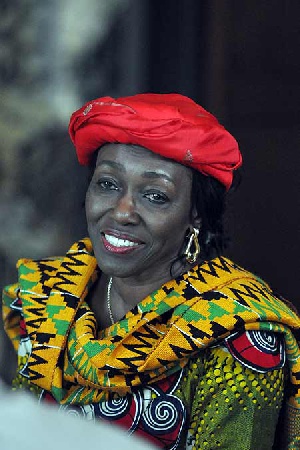
    Former First Lady Nana Konadu Agyemang Rawlings has been confirmed dead. This information was made public by the Presidency in a press statement today, Thursday, October 23. She passed away at the age of 76.

    The cause of her death is yet to be made known. However, reports suggest that she died at the Ridge Hospital in Accra in the early hours of Thursday. Meanwhile, the Rawlings family and government representatives have yet to issue an official statement regarding her passing at the time of this report.

    Born on November 17, 1948, in Cape Coast to the late J.O.T. Agyeman and his wife, Nana Konadu Agyemang Rawlings served as the First Lady of Ghana from June 4, 1979, to September 24, 1979, during the presidency of Jerry John Rawlings.

    She held the same position again from December 31, 1981, to January 7, 2001. She earned a Bachelor’s degree in Graphic Design at the University of Science and Technology (now KNUST), after specialising in Textiles. She furthered her education at the London College of Arts, where she obtained a Diploma in Interior Design.

    Nana Konadu Agyemang Rawlings did not stop there; she went on to pursue a Diploma in Advanced Personnel Management from Ghana’s Management Development and Productivity Institute in 1979. At GIMPA, she received a Certificate in Development. She later attended Johns Hopkins University in Maryland, USA, where she pursued a Senior Fellow Diploma in Policy Studies.

    Prior to her involvement in politics and social activism, she worked with the Ghana Tourist Board, the Union Trading Company (UTC) in Accra, and several other organizations.

    As a formidable advocate for women’s rights and social justice, she founded the 31st December Women’s Movement in 1982. The influential non-governmental movement aimed at promoting women’s education, economic empowerment, and legal reforms. Through Nana Konadu Agyemang Rawlings’ efforts, the Intestate Succession Law (PNDCL 111) was enacted to protect the inheritance rights of widows and children.

    In Ghanaian politics, she is recognized as the founder of the National Democratic Party (NDP), through which she ran for president in 2016. She was succeeded by Mohammed Frimpong, who led the party after she stepped down in 2024.

    She parted ways with the National Democratic Congress (NDC) in 2012, following her defeat to the late President John Atta Mills in the party’s 2011 flagbearer race. She was elected as the NDC’s First Vice Chairperson in 2009.

    In 2018, she launched her book titled It Takes a Woman, which captures her journey in politics and advocacy. Scores of Ghanaians have poured in with their tributes following her passing.

    Recently, she was seen at the Forecourt of the Jubilee House to honour the eight public servants who passed away following the helicopter crash that occurred on August 6 at Adansi in the Ashanti Region. She was also spotted during the Dote Yie funeral rites for the late Asantehemaa, Nana Konadu Yiadom III.

    Nana Konadu Agyemang Rawlings got married to the late Jerry John Rawlings in 1977 after they both met at Achimota School. The couple had four children — three daughters and one son.

    Their children include Zanetor Agyeman-Rawlings, a medical doctor and Member of Parliament for the Klottey Korle Constituency; Kimathi Rawlings; Yaa Asantewaa Rawlings; and Amina Rawlings. Unfortunately, Jerry John Rawlings passed away in November 2020 at the age of 73. He was confirmed dead after a short illness at the Korle Bu Teaching Hospital.

    Mrs. Nana Konadu Rawlings’ death comes at a time when the country is still recovering from the loss of eight victims in the tragic military helicopter crash. The deceased included Dr. Edward Kofi Omane Boamah, Minister for Defence; Minister for Environment, Science, Technology and Innovation, Dr. Ibrahim Murtala Mohammed; Acting Deputy National Security Coordinator in charge of Human Security, Alhaji Muniru Limuna Mohammed; Vice Chairman of the National Democratic Congress, Samuel Sarpong; and Deputy Director-General of NADMO, Samuel Aboagye.

    Others included Squadron Leader Peter Analaa of the Ghana Air Force, Flying Officer Tsum Ampadu of the Ghana Air Force, and Sergeant Ernest Addo of the Ghana Air Force.

    Meanwhile, investigations into the Z-9 helicopter crash have officially begun following the establishment of an investigative board, as announced by the Ministry of Defence.

    The board is chaired by the National Security Coordinator, with members drawn from the Ghana Air Force and the Aircraft Accident and Incident Investigation and Prevention Bureau of the Ghana Civil Aviation Authority (GCAA).

    President John Mahama earlier disclosed that the flight data and cockpit voice recorders of the Z-9 Air Force helicopter had been retrieved. He made this announcement during his national address on Thursday, August 7, a day after the incident.

    In the United States, the authority responsible for investigating aircraft accidents is the National Transportation Safety Board (NTSB). The NTSB is an independent federal agency mandated by Congress to investigate every civil aviation accident in the U.S. as well as significant incidents in other modes of transportation, including railroad, transit, highway, marine, pipeline, and commercial space.

    Since its establishment in 1967, the NTSB has investigated more than 153,000 aviation accidents and thousands of surface transportation events. Its mission is to determine probable causes, examine safety issues, and develop recommendations to prevent similar accidents in the future.

    To date, the Board has issued more than 15,500 safety recommendations to over 2,470 recipients, with an implementation rate of 82 percent for the more than 12,700 recommendations that have been closed.

    In Ghana, the Aircraft Accident and Incident Investigation and Prevention Bureau (AIB) is responsible for investigating plane crashes. On July 6, 2020, former President Nana Akufo-Addo granted executive approval for the laying before Parliament of the Aircraft Accident Investigation and Prevention Bureau Bill, 2020.

    The bill sought to establish an autonomous Bureau to conduct investigations into aircraft accidents and incidents in line with International Civil Aviation Organization (ICAO) Standards and Recommended Practices (SARPs).

  • We have not negotiated any plea deal with A-G – Wontumi’s lawyer

    We have not negotiated any plea deal with A-G – Wontumi’s lawyer

    The lawyer for the Ashanti Regional Chairman of the New Patriotic Party (NPP), Bernard Antwi Boasiako, popularly known as Chairman Wontumi, has emphasized that the Office of the Attorney-General has not received any plea bargain proposal from their camp.

    Andy Appiah-Kubi’s clarification comes in response to a recent claim made by the Attorney-General during the Government Accountability Series on Wednesday, October 22. According to the A-G, his office has taken delivery of several plea bargain proposals from Wontumi.

    But Andy Appiah-Kubi has stated that there is no iota of truth in the Attorney-General’s claim, explaining that the case is still at a premature stage and therefore does not require any plea bargain discussions. Meanwhile, Chairman Wontumi’s counsel has noted that there is no evidence to support the galamsey charges levelled against their client.

    Speaking to the media on Friday, October 10, Enoch Afoakwa noted that Chairman Wontumi is unshaken in his insistence on innocence in the face of all galamsey charges. He added, “So certainly his position has not changed. He still maintains his innocence. Once he has pleaded not guilty to the various counts that he has been charged with, his presumption of innocence under Article 19(2c) triggers — and that means he is presumed innocent until proven.”

    “When he was arraigned, he pleaded not guilty to all the several counts of allegations that have been levelled against him. So certainly his position has not changed. He still maintains his innocence. Once he has pleaded not guilty to the various counts that he has been charged with, his presumption of innocence under Article 19(2c) triggers — and that means he is presumed innocent until proven.”

    Chairman Wontumi appeared before the Criminal Investigations Department (CID) of the Ghana Police Service on Monday, October 6, over the alleged involvement of Akonta Mining in illegal mining (galamsey) activities.

    A week ago, Chairman Wontumi, who is said to be the owner of Akonta Mining, appeared at the CID with his lawyer, Andy Appiah-Kubi, following an order from the Attorney-General (A-G), Dr. Dominic Ayine.

    Speaking to the media, Wontumi’s legal counsel, Andy Kwame Appiah-Kubi, revealed that his client had been charged with mining-related offences. “The charges are related to mining. Wontumi has been charged with mining without a license and other related offenses,” he disclosed.

    Chairman Wontumi was released from police custody after spending three nights in detention on Friday, October 10. His release followed the fulfillment of bail requirements totaling GHS25 million, imposed in connection with two separate illegal mining cases currently before the court.

    On October 7, he was unable to meet the bail conditions set by the Criminal Division of the High Court in Accra. In one of the cases, the court granted him GHS15 million bail with two sureties, while in the other, an additional GHS10 million bail was set, also with two sureties — one of whom must justify with landed property.

    The court further directed Wontumi to report to investigators once every week for the first month and prohibited him from traveling outside the country without explicit approval.

    The NPP regional chairman is facing several mining-related charges, including engaging in illegal mining activities and aiding environmental degradation within the Tano Nimire Forest Reserve.

    A bail of GHS1 million with two sureties has been granted to the Ashanti Regional Chairman of the New Patriotic Party (NPP), Bernard Antwi Boasiako, popularly known as Chairman Wontumi.

    On Friday, October 3, Dr. Ayine had threatened to arrest him if he failed to surrender to the CID. According to the Attorney-General, little progress had been made in investigating the allegations, as key documents were withheld by some officials of the previous administration.

    In April, the Minister for Lands and Natural Resources, Emmanuel Armah-Kofi Buah, revoked Akonta Mining’s license for illegally mining within the Tano Nimiri Forest Reserve in the Western North Region. The Minister noted that the company had extended its illegal activities to both the Aboi and Tano Nimiri Forest Reserves, despite possessing a valid license to operate outside forest reserves.

    In response, the company refuted the claims, stating in a press release: “We are not responsible for the activities in the Tano Nimiri Forest Reserve. That responsibility lies solely with the Forestry Commission and the Ministry of Lands and Natural Resources.”

    The company added that the accusations were “a deliberate attempt by the Minister to tarnish the reputation of the company. The decision by the Minister to publicly accuse us and call for the revocation of our license without any investigation or hearing is not just unfair; it is a clear breach of natural justice and a politically motivated act.”

    Chairman Wontumi’s expected reappearance comes amid mounting pressure on the Mahama-led administration to end illegal mining activities in the country. The menace continues to threaten Ghana’s water bodies, food crops, forest reserves, and energy infrastructure.

    In a meeting with Civil Society Organisations (CSOs) on Friday, October 3, President John Dramani Mahama noted that he can only declare a state of emergency over the issue when his government’s advisors approve it.

    According to him, the advisors believe the country can overcome galamsey by adopting best practices in small-scale mining, including technologies that help neutralize or remove harmful chemicals from water bodies.

    President Mahama added that the country could eradicate the long-term problem if it deployed more troops and invested more resources in the fight. “While we are fighting the menace, I am also saying we should uptake technology in order to protect the environment. So yes, let’s fight illegal mining, but at the same time, let’s bring the new technology that will help us protect our environment.

    “Now with the elephant in the room, state of emergency, yes, I have the power to do it, but the president acts on the advice of the National Security Council. As of now, this moment, the National Security Council believes that we can win the fight against galamsey. Declaring a state of emergency… I want to assure you that the day they advise me otherwise, that boss, now we need a state of emergency, I won’t hesitate,” he said.

    Meanwhile, the Parliamentary Select Committee on Energy has issued a stern warning about the potential future repercussions of galamsey if the country fails to find a lasting solution. During a visit to the Anwomaso Thermal Power Station in Kumasi on Wednesday, October 1, Deputy Ranking Member Collins Adomako-Mensah revealed how Ghana’s power installations are being tampered with by illegal miners.

    According to him, electricity generation authorities—including the Ghana Grid Company (GRIDCo), the Bui Power Authority (BPA), WAPCO Gas Pipeline, and the Volta River Authority—risk shutting down due to attacks on their infrastructure.

    “When we were engaging the other participants, two things came up—one has to do with galamsey, and it is having a heavy, heavy toll on the energy sector, not just about water. GRIDCo complained about galamsey.

    “Their pylons, people are digging where they have a lot of their pylons. Yesterday we were at Bui, and the Bui water situation is deteriorating because of the galamsey situation surrounding their water bodies,” he said.

    In September, GRIDCo expressed grave concern over the encroachment on its transmission tower sites by galamsey operators, who are digging dangerously close to the foundations. Acting Deputy Chief Executive Officer of Engineering and Operations, Frank Otchere, stated that maintenance teams now face attacks when attempting to access certain areas.

    “Unfortunately, there are some areas that even when our maintenance teams go there, they get shot at. And some of them have had to run away,” he disclosed, adding that the situation has made it impossible for GRIDCo to operate in certain locations without security support.

    He added that galamseyers are weakening the towers, which are carefully engineered to withstand immense weight and pressure, and appealed for urgent assistance from national security agencies to protect transmission corridors and avert potential collapses.

    “This engagement aims to provide a platform for frank and constructive dialogue between the Government and civil society on the menace of illegal mining, with a view to harnessing collective expertise, perspectives, and solutions to address this national challenge,” the letter stated.

    Ongoing research by a forensic histopathologist and former Head of Pathology at KNUST and Komfo Anokye Teaching Hospital (KATH), Prof. Dr. Paul Poku Sampene Ossei, has revealed alarming trends in rising cases of spontaneous abortions among pregnant women in Ghana.

    Approximately 500 cases have been recorded, linked to severe contamination of placentas and the presence of heavy metals, such as lead and mercury, resulting from galamsey activities. A spontaneous abortion is the unintentional expulsion of an embryo or fetus from the uterus before it is viable.

    Speaking on JoyNews’ Newsfile on Saturday, September 27, Prof. Sampene warned that galamsey is poisoning unborn babies and endangering mothers. “I have about 500 cases where women go to the hospital and abort their babies because of the concentration of these heavy metals in their placenta,” he disclosed.

    According to him, his research involved over 4,000 placentas examined from different regions across Ghana. The results showed dangerous levels of heavy metal contamination on both the maternal and fetal sides. “The placentas are all contaminated, polluted with heavy metals,” he said.

    The dangers extend beyond pregnancy losses. Another effect of galamsey is the excessive use of alum to address the increasing turbidity of water. Ghana Water Company Limited, the nation’s largest water supplier, has resorted to using higher concentrations of alum. Prof. Sampene cautioned that high levels of aluminium hydroxide pose serious health risks.

    “One of the consequences of excessive alum use is kidney disease, which is already on the rise. Of course, people are talking about turbidity, and then the Water Company is saying that they are using more alum.

    “Alum is aluminium hydroxide. When taken at higher concentrations over a long period, it can cause kidney problems, irritate the respiratory tract, and lead to neurological defects. All these things have been proven, and we have to be very careful about them now. This goes apart from the effects we are seeing around,” he explained.

    Among recent measures to protect water bodies from illegal miners is the deployment of the National Anti-Illegal Mining Operations Secretariat (NAIMOS). The Secretariat includes the Ghana Armed Forces, the Ghana Police Service, the Ghana Immigration Service, the National Intelligence Bureau (NIB), the Narcotics Control Commission, and the National Security Secretariat.

    Addressing the security forces, the Minister for Lands and Natural Resources, Emmanuel Armah Kofi-Buah, directed the team to ruthlessly counter galamsey operators as they are enemies of the state.

    “Any recalcitrant entering into these zones is not merely a trespasser. They are an enemy of the state. You are to be firm. You are to be resolute. You are to be ruthless. And please, take it from me, you will take no obstructionist instruction from any big man. Remember, the biggest man in Ghana is the President of the Republic, and he’s the one who has sent you,” Mr. Kofi-Buah noted.

  • Ghana needs enough evidence to bring Ofori-Atta  home for trial – A-G

    Ghana needs enough evidence to bring Ofori-Atta home for trial – A-G

    Attorney General (A-G), Dr. Dominic Ayine, has indicated that extraditing former Finance Minister Ken Ofori-Atta to Ghana cannot be done solely based on a formal request.

    Speaking at the Government Accountability Series in Accra on Wednesday, October 22, Dr. Ayine emphasized that one of the key requirements for extradition is a comprehensive docket containing documents, evidence, and details related to the charges against the former Finance Minister.

    The Attorney-General, who also serves as the Minister for Justice, noted that his office is yet to receive the docket from the Special Prosecutor, Kissi Agyebeng.

    However, he added that the Office of the Attorney-General has already begun the formal processes and will conclude arrangements for Ofori-Atta’s return to Ghana once the Office of the Special Prosecutor finalizes its part.

    “Without the docket, we cannot make a request, so we’re still waiting for the docket. I have read everything said by the Special Prosecutor [Kissi Agyebeng] and his office. I respect his office and the autonomy of the office. But we in the Attorney General’s department cannot begin an extradition request with a letter. We need the evidence to do so. So, the formal processes have started,” he stated.

    The clarification comes at a time when there are speculations that the Office of the Special Prosecutor and the Attorney General are dragging their feet on the matter. In June, Prof. Mrs. Angela Ofori-Atta, wife of the former Finance Minister, Ken Ofori-Atta, indicated that her husband will return to Ghana after his doctor’s approval.


    Speaking to Joy News, she noted that Ofori-Atta’s absence is not an attempt to escape scrutiny, but a result of his current health condition.


    “He has never not been accountable. This is not Ken Ofori-Atta, who runs away from accountability. I don’t think there is any other home but Ghana, no, Ghana is home,” she stated. “So why are we holding back on the investigation? Why would he [the OSP] not give the video?” she added.


    Ofori-Atta continues to be a central figure in a legal battle, despite his current health condition. Ofori-Atta appeared on Interpol’s website for “using public office for profit” after being declared wanted by the OSP.


    This was after he failed to appear before the Office of Special Prosecutor (OSP) on Monday, June 2. His lawyers are said to have formally communicated the development to the OSP and the Human Rights Court, submitting medical reports that detail his current condition and outline scheduled surgical procedures.


    The OSP during an engagement with the press on Tuesday, June 3, noted the failure of the former minister to inform the OSP of changes in medical procedure that were to have happened in March of this year.


    “He has failed to show any medical report that shows he is a medical risk.We want him physically, and we insist on it,” the OSP said, while noting that Mr Ofori-Atta cannot indicate the mode of investigation. His conduct is totally unacceptable. We will no longer tolerate him,” the OSP noted.


    In February, the OSP declared Ofori-Atta wanted for causing financial loss to the state in several dealings, which include the following:


    Contractual arrangement between Strategic Mobilisation Ghana Limited and the Ghana Revenue Authority for the stated objective of the enhancement of revenue assurance in the downstream petroleum sector, upstream petroleum production, and minerals and metals resource value chain.


    Termination of a distribution, loss reduction, and associated network improvement project contract between the Electricity Company of Ghana Limited and Beijing Xhao Chen Technology BXC.


    Procurement of contractors and materials, activities, and payments in respect of the National Cathedral project
    Activities and payments in respect of a contract awarded by the Ministry of Health initially commenced by the Ministry for Special Development Initiative to service Ghana Auto Group Limited for purchases and after-sales service and maintenance of 307 Mercedes-Benz Sprinter 304 5 CDI Ambulances for the National Ambulance Service.


    Payments out of and utilization of the tax refund account of the Ghana Revenue Authority. Later, the legal representatives of the former finance minister informed the OSP that their client is currently undergoing medical treatment in the United States and is unable to honor an invitation for questioning.


    Ofori-Atta then assured the OSP of its commitment to appearing for questioning on a fixed date, which influenced the OSP’s decision to take his name off the list in March.


    However, the office stressed that he is legally obligated to show up on June 2. Failure to do so, an Interpol Red Notice would be issued and extradition proceedings would be initiated in any country where he may be located.


    Ken Ofori-Atta then took legal steps to block the OSP from re-declaring him wanted. His lawsuit argues that the agency’s actions are baseless and unjustified.


    Ofori-Atta has dismissed allegations of financial misconduct and corruption, insisting that he has been cooperating with investigators through his legal representatives.


    In his court filing, he contends that the OSP’s actions have inflicted serious harm on his reputation and personal life. He is seeking a legal injunction to prevent further declarations against him until the case is fully resolved.


    The Human Rights Court has adjourned to June 18 for a ruling on the motion filed by the former Finance Minister, seeking to restrain the OSP from declaring him wanted, among other reliefs.


    INTERPOL Red Notice


    A Red Notice is a request to law enforcement worldwide to locate and provisionally arrest a person pending extradition, surrender, or similar legal action.


    It is based on an arrest warrant or court order issued by the judicial authorities in the requesting country. Member countries apply their own laws in deciding whether to arrest a person.


    INTERPOL cannot compel the law enforcement authorities in any country to arrest someone who is the subject of a Red Notice.
    Each member country decides what legal value it gives to a Red Notice and the authority of their law enforcement officers to make arrests.

  • Odwira festival: One dead, four injured after shooting incident

    Odwira festival: One dead, four injured after shooting incident

    The ongoing Odwira Festival at Ahwerease in the Akuapem South Municipality of the Eastern Region has been marred by tragedy following a shooting incident that left one person dead and four others injured. The unfortunate incident, which occurred on Wednesday, October 22, reportedly followed a dispute between the Abokomahene and the Abimuhene of Ahwerease, escalating into an exchange of gunfire among some young men.A pump-action gun and a pistol used during the incident have been retrieved by the police, while thirty-four (34) individuals have been detained for their involvement in the shooting.

    Meanwhile, Eastern Regional Police Public Relations Officer, Superintendent Ebenezer Tetteh has warned against future occurrence, adding that his outfit will not tolerate acts of violence.

    The use of unlicensed guns has become a growing trend in Ghana, particularly during festivals. Illegal possession of small arms continues to pose a significant challenge across the country.

    However, Ghana has strengthened its global stance against nuclear weapons. In September, Ghana joined sixty-nine (69) other nations in efforts to reduce and ultimately eradicate dangerous weapons, particularly nuclear bombs, from the world.

    Announcing the development on Saturday, September 27, via the X platform, the Minister for Foreign Affairs, Samuel Okudzeto Ablakwa, stated that Ghana has officially ratified the Treaty on the Prohibition of Nuclear Weapons (TPNW). The move, according to the Minister, reflects Ghana’s commitment to supporting global peace and a stable security for the world. The Minister further applauded both the Cabinet and Parliament for their unanimous approval of the treaty.

    He also recalled how Ghana’s first president, Osagyefo Dr. Kwame Nkrumah, was a strong advocate of disarmament in 1962, adding that the late President would be proud of this groundbreaking step.

    “Yesterday, Ghana boldly demonstrated to the world that we shall be a Nuclear-Weapon-Free State by depositing our instrument of ratification on the Treaty on the Prohibition of Nuclear Weapons (TPNW) at the UN. I commend the Ghanaian Cabinet and Parliament for the unanimous ratification. As I indicated in my UN address, Ghana has been consistent across all political parties in advocating for total disarmament and creating a new world without nuclear weapons.

    “Ghana’s Founder, Osagyefo Kwame Nkrumah, who convened the 1962 World Without the Bomb conference in Accra, would be absolutely proud of this moment. It was an honour to meet with the inspiring Melissa Parke and Seth Shelden of the International Campaign to Abolish Nuclear Weapons (ICAN). ICAN won the 2017 Nobel Peace Prize for their groundbreaking work to attain a world without nuclear weapons. We shall triumph and end global impunity,” he wrote.

    Ghana’s final ratification of the TPNW was signed in 2017 and approved by Parliament in July 2025. Ghana has been instrumental in promoting Africa’s stance as a nuclear-free continent.

    The sixty-nine (69) countries that have ratified the treaty are: Antigua and Barbuda, Austria, Bangladesh, Barbados, Belize, Benin, Bolivia, Botswana, Brazil, Cabo Verde, Cambodia, Central African Republic, Chile, Colombia, Comoros, Congo, Cook Islands, Costa Rica, Côte d’Ivoire, Cuba, Democratic Republic of the Congo, Dominica, Dominican Republic, Ecuador, El Salvador, Fiji, Gambia, Ghana, Grenada, Guatemala, Guyana, Honduras, Indonesia, Ireland, Jamaica, Kazakhstan, Kenya, Kiribati, Laos, Lesotho, Liberia, Liechtenstein, and Madagascar.

    The others include: Malawi, Malaysia, Maldives, Mali, Malta, Mexico, Mongolia, Namibia, Nauru, Nepal, New Zealand, Nicaragua, Nigeria, Niue, Panama, Paraguay, Peru, Philippines, Saint Kitts and Nevis, Saint Lucia, Saint Vincent and the Grenadines, Samoa, San Marino, Seychelles, South Africa, Sri Lanka, the State of Palestine, Sudan, Thailand, Timor-Leste, Togo, Trinidad and Tobago, Tunisia, Uruguay, Venezuela, Vietnam, Zambia, and Zimbabwe.

    In Ghana, institutions such as the National Commission on Small Arms and Light Weapons (NACSA) have called on the judiciary to impose stricter punishments on individuals found in possession of unlicensed firearms.

    In 2024, NACSA reported one million illicit pump-action guns, AK-47s, pistols, and locally manufactured arms in circulation in Ghana. The Commission described these figures as a threat to national security.

    The Head of the National Arms Marking Programme at the time, Mr. Frank Boateng Asumani, stated: “Currently, we have 2.3 million small and light weapons in circulation, out of which 1.2 million are legally registered and the remaining 1.1 million cannot be accounted for.”

    Speaking to The Independent Ghana, the Deputy Director of Policy, Planning, Monitoring, and Evaluation (PPME) at NACSA, Gyebi Asante, stressed the urgent need to review existing laws governing firearms possession to better counter current security challenges.

    “We are advocating for the law to be reviewed to suit the current situation and also be able to align with our current dispensation. It is something we have taken steps to do. Already, we have a proposed Bill, the National Arms Bill, at the Ministry of Interior to look at the document and endorse it.

    “For example, the penal sanction, when you have a law that regulates the possession of arms that can kill, you must have a strong penal sanction that can deter people from going behind the law to buy these weapons, so the law as it is now is not deterrent enough,” he added.

    He emphasized that the current penal sanctions are insufficient to deter illegal arms possession. According to him, the existing law stipulates a maximum jail term of five years or a fine of up to 1,000 penalty units, equating to 12,000 Ghana cedis.

    He added that there is no minimum penalty established, allowing judges to exercise discretion in sentencing. This loophole, he indicated, has led to situations where individuals found guilty of illegal gun possession could potentially pay as little as 100 Ghana cedis or serve a mere two weeks in jail.

    “For example, it says that you can be jailed for not more than 5 years and you can also be fined for not more than 1,000 penalty units. A penalty unit is 12 Ghana cedis, which makes it 12,000 Ghana cedis, not beyond, but it doesn’t give a minimum.

    “If you are arrested for illegally possessing a gun, the judge uses his discretion and he can decide that go and pay 100 cedis and if you don’t pay you will go to jail for two weeks because the law does not give you any minimum requirement. We see that as a serious challenge and a gap in the law that must be addressed,” he added.

    Mr. Asante revealed that the Commission has submitted to the Ministry of Interior a proposal to amend the current Arms and Ammunition (Amendment) Act, 1972 (Act 604).

    The National Arms Bill aims to close the existing gaps in the law, ultimately working towards a safer environment for all Ghanaians. Additionally, he emphasized the urgent need for the bill to be enacted into law to ensure effective control and regulation of small arms and light weapons (SALW).

    Established by an Act of Parliament in 2007, NACSA’s mandate includes regulating the possession and control of small arms and light weapons, with a particular focus on curbing illegal production, trade, transfer, and cross-border movement of such weapons that contribute to crime and insecurity.

  • List of luxury assets allegedly owned by fmr NAFCO boss

    List of luxury assets allegedly owned by fmr NAFCO boss

    A list of luxury assets belonging to the former Chief Executive Officer of the National Food and Buffer Stock Company (NAFCO), Hanan Abdul-Wahab, has been made public by the Attorney General (A-G) and Minister for Justice, Dr. Dominic Ayine.

    His assets include a five-bedroom house at Chain Homes valued at $1.625 million, a three-bedroom house at Cantonments purchased for $600,000, and multiple plots of land at the Airport Development Area worth $750,000.

    Other properties include a 17-bedroom boutique hotel in Gumani, Tamale, acquired for $250,000; a four-bedroom bungalow at Dzorwulu, Accra, valued at over GHS 4.14 million; and a 0.32-acre parcel of government land purchased for GHS 307,200.

    The Attorney General made the disclosure while addressing journalists at a press briefing in Accra on Wednesday, October 22, as part of the Government Accountability Series. He added that the recent development was made possible through collaboration with the Economic and Organised Crime Office (EOCO) after several properties and bank transactions were traced to Abdul-Wahab.

    But Abdul-Wahab has denied all allegations leveled against him by the Attorney General. In a statement issued on Wednesday, October 22, Mr Aludiba noted that he has instructed his lawyers to follow up on the allegations.

    “I wish to state, respectfully, that these claims are untrue and do not reflect the facts of the matter. I have no involvement in the issues being referred to, and I find the comments deeply unfortunate.

    “I look forward to the opportunity to present my side and to have my day in court, where I am confident that the truth will be made clear,” the statement added.

    Abdul-Wahab is standing trial over allegations of large-scale financial misconduct during his time in office. He was arrested on June 25, along with his wife. EOCO granted a GHS 30 million bail to his wife while her husband remained in custody pending fulfillment of his GHS60 million bail condition.

    The arrest, which took place simultaneously in Accra and Tamale, also led to the detention of a third, unnamed individual believed to be linked to the investigation.

    On Tuesday, July 8, the former NAFCO boss was released from the custody of the Economic and Organised Crime Office (EOCO) after being detained for 14 days.

    Abdul-Wahab Hanan was released after meeting a GH¢60 million bail condition backed by two guarantors. On June 25, Hanan and his spouse were taken into custody over suspected mismanagement of funds while he led the government agency.

    His wife was granted bail earlier, set at GH¢30 million. Earlier reports indicated that Mr. Hanan had met the bail terms; however, he remained in the custody of EOCO, a situation that drew backlash from the opposition New Patriotic Party (NPP), which described the terms as harsh and unfair.

    A third suspect, an unnamed individual believed to be linked to the investigation, has also been detained.

    Meanwhile, EOCO and two others—the National Intelligence Bureau (NIB) and the Attorney General and Minister for Justice, Dr. Dominic Ayine (defendants)—have been dragged to court by the Bono Regional Chairman of the New Patriotic Party (NPP), Kwame Baffoe, popularly known as Abronye (plaintiff).

    Abronye’s legal case is over the detention of suspects for over 48 hours on the basis that they have not met their bail conditions.

    He wants the Supreme Court to declare that the continued detention of suspects by EOCO and NIB beyond 48 hours, solely on the basis that they have not met bail conditions—however excessive—constitutes a violation of Article 14(3) and is unconstitutional.

    Abronye has prayed the apex court to give a proper interpretation of Article 14(3) of the Constitution. The law states that “A person who is arrested, restricted or detained for the purpose of bringing him before a court in execution of an order of a court; or upon reasonable suspicion of his having committed or being about to commit a criminal offence under the laws of Ghana, and who is not released, shall be brought before a court within forty-eight hours after the arrest, restriction or detention.”

    He asserts that the arresting institutions, including EOCO and NIB, lack constitutional authority to detain any person beyond 48 hours without judicial authorisation, regardless of whether bail has been granted but not executed, and wants the court to declare so.

    Mr. Baffoe wants the court to tackle the issue of EOCO and NIB granting bail on excessive or punitive terms that deprive suspects of actual release. According to him, this “constitutes a constructive denial of bail” and “undermines the purpose and spirit of Article 14, especially clause 3.”

    The plaintiff is urging the court to issue an order directing EOCO and the NIB to take all necessary and lawful steps to ensure that all persons arrested and granted bail but unable to fulfil the bail conditions imposed are either released or brought before a court of competent jurisdiction within 48 hours of their arrest or detention.

    The defendants have within fourteen days after the service on them of the statement of the plaintiff’s case, inclusive of the day of service, to file or cause to be filed for them a statement of the defendant’s case in an action of the suit. Abronye’s legal redress comes after the detention and bail terms of some members of the erstwhile government.

  • Gifty Oware pleads not guilty in GHS38m NSA fraud trial

    Gifty Oware pleads not guilty in GHS38m NSA fraud trial

    The embattled former Deputy of the National Service Authority (NSA), Gifty Oware-Mensah, has pleaded not guilty to charges of causing a financial loss of over GH¢38 million to the state.

    She has been granted GH¢10 million bail by the Accra High Court on Wednesday, October 22. Mrs. Oware-Mensah has been slapped with five counts, while her former boss, the Executive Director of the National Service Authority (NSA), Osei Assibey Antwi, faces fourteen charges. In total, the alleged offenses connected to Mr. Antwi are valued at approximately GH¢615,117,744.02.


    Last week, the court indefinitely adjourned the case after the duo failed to appear before it for a hearing. Explaining their absence, Mr. Assibey Antwi’s legal counsel noted that his client was busy cooperating with the police on a separate matter in Kumasi.

    Mrs. Oware-Mensah’s lawyers disclosed that their client is unwell and unable to attend proceedings. Their charges include willfully causing financial loss to the state, stealing, money laundering, and using public office for profit.

    The accusations include causing financial loss to the Republic, with the main charge suggesting that he approved payments of allowances to over 60,000 ghost national service personnel, leading to a total loss of GH¢500,861,744.02.


    He is additionally charged with several counts of theft amounting to GH¢8,256,000, which allegedly occurred between August 2023 and May 2024.


    Prosecutors say Mr. Antwi diverted project funds, authorizing the withdrawal of GH¢106 million from the NSA’s Kumawu Farm Project account on five different occasions without using any of it for the intended purpose.


    The state also contends that he engaged in money laundering by transferring GH¢8.26 million into his personal e-zwich account and taking control of the funds despite knowing they were criminal proceeds.


    Court documents indicate that Oware-Mensah, who managed the Finance and Procurement units of the NSA, allegedly masterminded a sophisticated scheme centered on the Authority’s “marketplace” platform, a system intended to offer hire-purchase services to national service personnel.


    Prosecutors claim she gained control of a private entity, Blocks of Life Consult, and created a list of 9,934 fictitious names within the NSA database. She is said to have then approached the Agricultural Development Bank (ADB), falsely asserting that her company had supplied goods to those ghost beneficiaries and required a loan, using their fake allowances as collateral.


    This deception allegedly led to a loan arrangement between ADB and the NSA, which resulted in GH¢31.5 million being paid directly into her company’s account. Of that amount, she is accused of transferring over GH¢22.9 million to another company where she also served as a director.


    Investigations revealed that no goods were ever delivered to any service personnel. Her actions, with interest included, are alleged to have cost the state a total of GH¢38,458,248.87.

    A couple of months ago, Attorney-General (A-G) and Minister for Justice, Dr. Dominic Ayine, revealed that eight individuals, including three former officers of the National Service Authority (NSA), had admitted to their involvement in the misappropriation of funds at the National Service Scheme (NSS).


    Providing an update on the case as part of the Government Accountability Series on Monday, July 28, Dr. Ayine disclosed that eight individuals want to plead guilty in exchange for lighter punishment in this regard.


    He explained that the office intended to file formal charges last week; however, this was postponed following new revelations regarding the ongoing case.


    The new evidence, he noted, is tied to a Bank of Ghana account linked to former NSA Director-General, Mr. Osei Assibey, suggesting potential embezzlement involving public funds. According to him, a total of GH¢189 million was deposited into the account of Mr. Osei Assibey; however, GH¢80 million cannot be accounted for.


    Furthermore, nearly GH¢2 million was allegedly withdrawn using two cheques that carried Mr. Assibey’s name and account information.
    The A-G has stated that the office has reached out to the Bank of Ghana, the Ministry of Finance, and the Controller and Accountant-General’s Department for further information and documentation.


    “The National Service Authority scandal case was due to be filed last week. However, we stumbled upon evidence of malfeasance involving an account at the Bank of Ghana. Out of the GH¢189 million transferred, GH¢80 million cannot be traced. Two cheques linked to the former Director-General were used to withdraw just under GH¢2 million,” Dr. Ayine stated.


    He added that some of the accused have shown readiness to provide testimony against their fellow accused, with several vendors and service providers also reportedly willing to support the prosecution as witnesses.


    Earlier this year, a non-profit investigative body, The Fourth Estate, released a report into the payroll records from 2017 to 2023 and the 2024 National Service Year.


    The findings revealed serious irregularities within the NSA, uncovering how a 72-year-old Kenyan, Kwame Donkor, was wrongly listed as a beneficiary. Mr. Donkor was enlisted on the payroll with a photo and not an official ID card, which is unusual.


    However, the photo belonged to Emmanuel Mutio, a Human Resource Manager at a private IT company in Kenya. The 72-year-old Kenyan had his name appear on the payroll 226 times as a registered beneficiary.
    The Fourth Estate initially uncovered the issue in November 2024, but the NSA obtained a court order preventing them from publishing the findings.


    After the court lifted the injunction, the report was finally released. In response, President John Dramani Mahama ordered a probe into the matter.


    The NIB, upon the President’s directive, interrogated the former Deputy Director of the National Service Authority (NSA), Gifty Oware-Mensah, and Kwaku Ohene Djan, who is also a former Deputy Executive Director of the National Service Authority.

    The payroll fraud reportedly costs Ghana GHȼ50 million monthly. In May, the Authority interdicted two of its officials in the Birim North District, Eastern Region.

  • Anti-LGBTQ+ Bill could become law within six months – Ntim Fordjour

    Anti-LGBTQ+ Bill could become law within six months – Ntim Fordjour

    The Member of Parliament (MP) for Assin South, Rev. Ntim Fordjour, has indicated that Parliament could take less than three months to give a final verdict on the controversial Human Sexual Rights and Family Values Bill (anti-LBGTQ+).

    He explained that the current bill before Parliament will not go through extensive consultations and debates, as those processes have already been completed. According to him, the upcoming discussions will resume from where the previous deliberations ended. He made this known while speaking to the media on Wednesday, October 22.

    “Within 3 months to 6 months, we should be able to pass this bill. We’ve had bills more complex than this, which even came under a certificate of urgency. So, I don’t see why this should go beyond three months,” Rev. Fordjour said.

    The bill was presented to then President Nana Akufo-Addo, who was expected to sign it into law or refuse to assent to it within seven days.

    Initially tabled in 2021, the bill stalled following legal challenges at the Supreme Court questioning its constitutionality. Despite the pending case, the sponsors say reintroducing the motion ensures the process remains active.


    The bill has been criticized by rights organizations and other groups. Nonetheless, A coalition of ten Members of Parliament from both sides of the House has revived the contentious Anti-LGBTQ+ Bill, reopening one of Ghana’s most polarising national discussions.


    In a post shared on X by journalist Kwaku Asante on October 21, 2025, the group, co-led by Ningo-Prampram MP Sam George (NDC) and Assin South MP John Ntim Fordjour, announced the return of the Proper Human Sexual Rights and Ghanaian Family Values Bill, 2021.


    The proposed legislation criminalizes LGBTQ+ activities, advocacy, and funding, prescribing a maximum three-year jail term for same-sex acts and up to ten years for promoting or supporting such activities.


    The coalition members John Ntim Fordjour, Samuel Nartey George, Emmanuel Kwasi Bedzra, Helen Adjoa Ntoso, Nurideen Muhammed Mummuni, Vincent Ekow Assafuah, Alhassan Tampuli Sulemana, Rita Naa Odoley Sowah, Dr Tiah Abdul Kabiru Mahama, and Anthony Mmieh argue that the bill is intended to preserve Ghana’s cultural identity and protect family values.

    International bodies, including the United Nations and human rights organizations, have strongly criticized the bill, describing it as an infringement on human rights.

    The move marks an uncommon show of bipartisan unity in Parliament. Lawmakers are expected to engage in intense debates in the coming weeks as the Speaker refers the bill to the appropriate committee.
    Faith-based groups continue to throw their weight behind the legislation, while civil society organizations and rights advocates are mobilizing fresh opposition.


    Ten Members of Parliament have once again brought before the House the divisive Anti-LBGTQ+ Bill, reigniting heated national discussions over sexuality and cultural values.


    A post by Kwaku Asante on X on October 21, 2025, revealed that the coalition led by Ningo-Prampram MP Sam George and Assin South MP John Ntim Fordjour had reintroduced the Proper Human Sexual Rights and Ghanaian Family Values Bill, 2021.


    The proposed law seeks to outlaw LGBTQ+ practices and related advocacy or financing. Offenders could face up to three years in prison for engaging in same-sex acts and up to ten years for promoting or funding such activities.


    According to the document shared online, members of the coalition include John Ntim Fordjour, Samuel Nartey George, Emmanuel Kwasi Bedzra, Helen Adjoa Ntoso, Nurideen Muhammed Mummuni, Vincent Ekow Assafuah, Alhassan Tampuli Sulemana, Rita Naa Odoley Sowah, Dr Tiah Abdul Kabiru Mahama, and Anthony Mmieh.


    They argue that the legislation is essential to upholding Ghana’s moral and cultural heritage. The bill, first introduced in 2021, was stalled earlier this year due to court injunctions challenging its legality. Despite the pending court decision, the sponsors insist the new motion keeps the debate alive.


    The reintroduction reflects a rare bipartisan alignment in Parliament, as both NDC and NPP MPs rally behind it. The Speaker is expected to forward the bill to the appropriate committee for further scrutiny, as Parliament braces for passionate exchanges.


    Two female legislators, Deputy Minority Leader Patricia Appiagyei and Minister of Trade, Agribusiness, and Industry Elizabeth Ofosu Adjare, are introducing the Property Rights of Spouses Bill.


    Last year, the United States Department spokesperson Matthew Miller indicated that the US government will restrict foreign aid to Ghana if the Proper Human Sexual Rights and Family Values Bill, also known as the anti-LGBT Bill, is signed into law.


    Engaging the press, Mr Miller said, “If this bill becomes law, it will only have a chilling effect on investment. For instance, in Ghana, you’ve seen that same chilling effect bear fruit in Uganda, which passed a very similar law in the past. I can say that should the bill pass, it would potentially have ramifications for US assistance in the country.”


    He noted that both governments have had intensive conversations on the matter, which were done behind closed doors.


    The US provided over $211 million in assistance to Ghana in fiscal year 2022, supporting various sectors including agriculture, malaria prevention, and AIDS combat efforts.


    The United States has expressed deep concern over the passage of the stringent anti-LGBTQ+ legislation in Ghana, stating that it threatens constitutional freedoms.

  • Parliament to begin debate on Human Sexual Rights Bill today

    Parliament to begin debate on Human Sexual Rights Bill today

    Parliament will, in the coming days, commence deliberations on the controversial Human Sexual Rights and Family Values Bill, 2025, commonly referred to as the anti-LBGTQ+ bill.

    Speaking to the media, Rev. John Ntim Fordjour, MP for Assin South, explicitly noted that discussions will begin today, Wednesday, October 22, or Thursday, October 23.

    “Any time between today and tomorrow, I do not even think that it should go beyond today because it is already advertised and it’s a matter of urgent public interest. I expect that today at 2:00 p.m., when Parliament reconvenes, it should be one of the first bills that should be called for first reading. Consequential referral to the Committee on Constitutional, Legal and Parliamentary Affairs will be done by the Speaker,” he added.

    According to him, the Bill will undergo three stages: the first, second, and third, before a final decision is made on the matter. The new bill, passed on Wednesday, February 28, 2024, imposes a prison sentence of up to three years for anyone convicted of identifying as LGBTQ+. It also imposes a maximum five-year jail term for forming or funding LGBTQ+ groups.


    The bill was presented to then-President Nana Akufo-Addo, who was required to either sign it into law or decline to assent to it within seven days.

    Initially tabled in 2021, the bill stalled following legal challenges at the Supreme Court questioning its constitutionality. Despite the pending case, the sponsors say reintroducing the motion ensures the process remains active.


    The bill has been criticized by rights organizations and other groups. Nonetheless, A coalition of ten Members of Parliament from both sides of the House has revived the contentious Anti-LGBTQ+ Bill, reopening one of Ghana’s most polarising national discussions.


    In a post shared on X by journalist Kwaku Asante on October 21, 2025, the group, co-led by Ningo-Prampram MP Sam George (NDC) and Assin South MP John Ntim Fordjour, announced the return of the Proper Human Sexual Rights and Ghanaian Family Values Bill, 2021.


    The proposed legislation criminalizes LGBTQ+ activities, advocacy, and funding, prescribing a maximum three-year jail term for same-sex acts and up to ten years for promoting or supporting such activities.


    The coalition members John Ntim Fordjour, Samuel Nartey George, Emmanuel Kwasi Bedzra, Helen Adjoa Ntoso, Nurideen Muhammed Mummuni, Vincent Ekow Assafuah, Alhassan Tampuli Sulemana, Rita Naa Odoley Sowah, Dr Tiah Abdul Kabiru Mahama, and Anthony Mmieh—argue that the bill is intended to preserve Ghana’s cultural identity and protect family values.

    International bodies, including the United Nations and human rights organizations, have strongly criticized the bill, describing it as an infringement on human rights.

    The move marks an uncommon show of bipartisan unity in Parliament. Lawmakers are expected to engage in intense debates in the coming weeks as the Speaker refers the bill to the appropriate committee.
    Faith-based groups continue to throw their weight behind the legislation, while civil society organizations and rights advocates are mobilizing fresh opposition.


    Ten Members of Parliament have once again brought before the House the divisive Anti-LBGTQ+ Bill, reigniting heated national discussions over sexuality and cultural values.


    A post by Kwaku Asante on X on October 21, 2025, revealed that the coalition led by Ningo-Prampram MP Sam George and Assin South MP John Ntim Fordjour had reintroduced the Proper Human Sexual Rights and Ghanaian Family Values Bill, 2021.


    The proposed law seeks to outlaw LGBTQ+ practices and related advocacy or financing. Offenders could face up to three years in prison for engaging in same-sex acts and up to ten years for promoting or funding such activities.


    According to the document shared online, members of the coalition include John Ntim Fordjour, Samuel Nartey George, Emmanuel Kwasi Bedzra, Helen Adjoa Ntoso, Nurideen Muhammed Mummuni, Vincent Ekow Assafuah, Alhassan Tampuli Sulemana, Rita Naa Odoley Sowah, Dr Tiah Abdul Kabiru Mahama, and Anthony Mmieh.


    They argue that the legislation is essential to upholding Ghana’s moral and cultural heritage. The bill, first introduced in 2021, was stalled earlier this year due to court injunctions challenging its legality. Despite the pending court decision, the sponsors insist the new motion keeps the debate alive.


    The reintroduction reflects a rare bipartisan alignment in Parliament, as both NDC and NPP MPs rally behind it. The Speaker is expected to forward the bill to the appropriate committee for further scrutiny, as Parliament braces for passionate exchanges.


    Two female legislators, Deputy Minority Leader Patricia Appiagyei and Minister of Trade, Agribusiness, and Industry Elizabeth Ofosu Adjare, are introducing the Property Rights of Spouses Bill.


    Last year, the United States Department spokesperson Matthew Miller indicated that the US government will restrict foreign aid to Ghana if the Proper Human Sexual Rights and Family Values Bill, also known as the anti-LGBT Bill, is signed into law.


    Engaging the press, Mr Miller said, “If this bill becomes law, it will only have a chilling effect on investment. For instance, in Ghana, you’ve seen that same chilling effect bear fruit in Uganda, which passed a very similar law in the past. I can say that should the bill pass, it would potentially have ramifications for US assistance in the country.”


    He noted that both governments have had intensive conversations on the matter, which were done behind closed doors.


    The US provided over $211 million in assistance to Ghana in fiscal year 2022, supporting various sectors including agriculture, malaria prevention, and AIDS combat efforts.


    The United States has expressed deep concern over the passage of the stringent anti-LGBTQ+ legislation in Ghana, stating that it threatens constitutional freedoms.

  • A/R: Police arrest two suspects over gold robbery in Adumasa

    A/R: Police arrest two suspects over gold robbery in Adumasa

    Two persons, Atame Elijah and Nasiru Yakubu, have been arrested in connection to a gold robbery incident at the Bomfa Adumasa market, Ashanti South Region. The culprits were nabbed at their hideouts following a collaboration between community members and the police.

    This was made known by the Ashanti South Regional Police Command while speaking to the media on Tuesday, October 21. The police retrieved a bag containing some gold and money from at the hideout. Meanwhile, efforts are underway to arrest the remaining suspect.

    Six individuals sustained injuries following the robbery incident which occurred on Monday, October 20. The armed robbers stormed the community and attacked some gold buyers, firing several gunshots in the process. In the meantime, two of the culprits have been detained by the Konongo Divisional Police Command for further investigation.

    In a separate incident, the police in August announced the retrieval of items used by a gang of armed men during a gold shop robbery at Mpohor in the Western Region.


    Weapons, ammunition, clothing, and other materials were among the exhibits. According to a Facebook post on Tuesday, August 19, the police stated that the retrieved items would aid in the ongoing investigation into the case.


    On Sunday, August 17, one person was arrested in connection with the robbery. The police explained that the retrieval was made possible after officers from the Kuntanase District in the Ashanti Region intercepted a suspicious white Toyota Sienta near the Aputuoagya–Bekwai road.


    Currently, the police are on a manhunt for eight others allegedly involved in the heist. They added that two men who were standing by the vehicle fled upon seeing the approaching patrol team.


    According to the police, a search of the vehicle led to the recovery of an AK-47 assault rifle, a locally manufactured firearm, two AK-47 magazines loaded with 30 rounds of ammunition each, and other materials believed to have been used during the robbery.


    “The Ghana Police Service, in its ongoing investigation into the Mpohor gold shop robbery case, has recovered weapons, ammunition, clothing items and some other exhibits linked to the case. As part of intensified anti-robbery patrols, officers from the Kuntanase District in the Ashanti Region intercepted a suspicious white Toyota Sienta near the Aputuoagya–Bekwai road.


    “Two men who were standing by the vehicle fled into the bush upon seeing the approaching police patrol team. A thorough search of the vehicle uncovered an AK-47 assault rifle, a locally manufactured firearm, two AK-47 magazines loaded with 30 rounds of ammunition each, additional packets of ammunition, cowrie shells, a Huawei smartphone, identity documents, and some clothing items.


    “A careful examination of the recovered exhibits against the CCTV footages of the Mpohor robbery revealed a striking resemblance between the clothing items (hooded tops) and the wellington boots that were used during the robbery. The recovery of these items marks a significant step in the ongoing investigation and manhunt for the suspects,” parts of the statement read.


    The Ghana Police Service assured the public of its commitment to ensuring security, law, and order across the country.
    “The Police Administration commends the Kuntanase District patrol team for their dedication to duty. The investigation team continues to examine other exhibits and follow possible leads. At the same time, security operations have been intensified across the country to get the perpetrators arrested and brought to justice,” it assured.


    What the law says about robbery and stealing
    Section 149 of the Criminal Offenses Act states that a person who commits robbery commits a first-degree felony. Per Section 150, “a person who steals a thing commits robbery (a) if in, and for the purpose of stealing the thing, that person uses force or causes harm to any other person, or (b) if that person uses a threat or criminal assault or harm to any other person, with intent to prevent or overcome the resistance of the other person to the stealing of the thing.”


    Section 124 of the Criminal Offenses Act also indicates that a person who steals commits a second-degree felony. Where the court that finds a person guilty of stealing is satisfied that, on not less than two previous occasions, the accused was found guilty of stealing, the court shall order that the whole or a part of the term of imprisonment imposed shall be spent in productive hard labour.


    A person subjected to such an order is disqualified from election to Parliament or a District Assembly within the meaning of the Local Government Act, 1993 (Act 462), for up to five years. Productive hard labour refers to labour in a state farm, state factory, or any other public co-operative or collective enterprise specified by the Minister.


    In July, the Police secured a conviction in a four-year-old armed robbery case that occurred in Atonsu, Kumasi. The Kumasi Circuit Court sentenced two individuals to 15 years’ imprisonment for their role in the violent incident. The convicts, Abass Kasim (26) and Daniel Morro, alias “China” (25), were part of a gang of five that attacked a resident in Atonsu Kumasi on July 31, 2021, around 2:30 a.m.


    The gang, wielding a pistol and cutlasses, shot the victim in the abdomen, inflicted multiple cutlass wounds, and robbed him of valuables, including an iPhone 11 worth GHS 5,500, a Samsung phone worth GHS 500, two Apple Watches valued at GHS 3,000, two ladies’ handbags, jewelry, $600, and an unspecified amount of Ghana cedis. Following investigations, Abass Kasim was arrested on August 12, 2021. During interrogation, he confessed and led police to arrest Daniel Morro. A pistol used in the attack was later retrieved.


    On August 19, 2021, the suspects were arraigned before Kumasi Circuit Court 4 and remanded into custody after pleading not guilty. They reappeared on Wednesday, July 9, 2025, when they were convicted and sentenced to 15 years imprisonment each on charges including conspiracy to commit robbery, robbery, unlawful entry, abetment of crime, and possession of firearms without authority.
    The sentences are to run concurrently.

    They have since been transferred to the Central Prisons in Kumasi. Meanwhile, three accomplices remain at large.
    The police also reported another success after an armed robber, Paul Avortide, was sentenced to 19 years with hard labor for robbery. The 25-year-old, on May 21 at about 4:00 a.m., attacked a pregnant Nigerian woman, Ogechi Chidiebere, at Tsikpota near New Housing, Ho.


    Armed with a machete, he robbed her of GHS 3,000 and a Tecno Spark 30c phone valued at GHS 2,500 as she made her way to antenatal care. On June 19, police arrested Harmony Nbonu at Ho Main Market with the stolen phone.


    He confessed that Avortide had sold it to him for GHS 850. A coordinated operation led to Avortide’s arrest at Matse, a suburb of Ho, as he attempted to flee.


    After investigations, Avortide was charged with robbery under Section 149 of the Criminal Offenses Act, while Nbonu was charged with Dishonestly Receiving under Section 146. They were arraigned before Ho Circuit Court on Tuesday, July 1. Avortide pleaded guilty and was sentenced to 19 years in prison, while Nbonu was acquitted and discharged.


    Meanwhile, three individuals suspected in a robbery at Nyanikrom near Shama Junction on Wednesday, July 9, were apprehended. They are Francis Mensah, alias Francis Kwaw (34), Ebenezer Cofie (32), and Samuel Bentum (35). The Western Regional Police Command arrested them following targeted surveillance based on credible intelligence.


    Police revealed that the suspects, armed with insider information, planned to rob company officials returning from a bank in Takoradi with salary funds. On the said day, the suspects ambushed the company vehicle near Unique School Junction at Nyanikrom.
    They broke the vehicle’s window and made away with the cash. A swift police response led to the arrest of three suspects and the recovery of GHS 149,500.


    The suspects are currently in custody, assisting with investigations. However, the company’s driver, Maxwell Kofi Yeboah, alleged to have conspired with them, is at large and being pursued.

    “The Western Regional Police Command assures the public that efforts are ongoing to apprehend the remaining suspect and bring all perpetrators to justice,” the police said.


    Despite these successes, the Police Service continues to suffer casualties in its fight against armed robbery. Several officers have lost their lives while on duty, though the exact number remains unclear.

    One such incident occurred in September 2024, when an officer was ambushed and killed by armed robbers at Kwame Peprakrom in the Central Region. In response, the government introduced a GHS 50,000 insurance scheme for officers who lose their lives while on duty.

  • Two alleged criminals dead after police shootout in Offinso

    Two alleged criminals dead after police shootout in Offinso

    A shootout between a gang of robbers and the police at Mankranso, Ashanti Region, has resulted in the deaths of two suspected criminals. The deceased were pronounced dead on arrival at Bekwai Municipal Hospital after sustaining gunshot injuries from the incident. Efforts are underway to apprehend the other accomplices involved in the unfortunate incident.

    The shootout was instigated after the police invaded the hideout of robbers in search of one wanted suspect, Osman Majid Abdul Sadik, alias Cross, who is known for several robberies and killings in the Mankranso area.

    This development comes barely two weeks after eight police officers sustained injuries following a gunfire exchange between masked men at Sampa in the Bono Region on Sunday afternoon, October 5.


    A police officer was earlier reported to have lost his life as a result of the incident. The clash also left a police vehicle destroyed, caused hundreds of thousands of Ghana Cedis in commercial losses, and destroyed essential goods.


    Tensions between rival groups in the township are believed to have led to the incident. In a recent development, an armed attack at the Gbintri inland checkpoint in the East Mamprusi Municipality of the North East Region left an Assistant Immigration Control Officer II (AICOII), Rafiq Mohammed, dead, and another officer, AICOII Oppong Daniel, injured.


    AICOII Oppong Daniel was reported to be receiving treatment at the Baptist Medical Centre in Nalerigu after sustaining multiple gunshot wounds in the incident.


    While details of the attack remain unclear, reports suggest that the incident took place at about 1:30 a.m. on Friday, October 3. However, AK-47 shell casings used by the attackers during the operation have been retrieved by the joint response team, led by Superintendent Francis Brobbey, Gambaga Municipal Police Commander, and DIS Moro Tanko Mohammed, North Regional Intelligence Officer of the GIS.


    In recent years, the Police Service has made significant progress in tackling robberies and prosecuting offenders. In September, the Ghana Police Service arrested ten individuals and shot three others dead in its efforts to crack down on a series of violent rural bank robberies across the country. Authorities allege that the 15-member gang has been behind a series of robberies in the Ahafo, Western, Central, Eastern, and Ashanti Regions.


    On Sunday, September 14, at 3:30 am, the ring invaded the Saint Martin’s De Porres Cooperative Credit Union with pump-action guns and AK-47 rifles. They escaped the premises with cash after holding the security guard and his wife hostage.


    Briefing the media on Wednesday, September 24, the Director-General of the Criminal Investigations Department (CID), Lydia Yaako Donkor, said the police recovered a large cache of weapons, vehicles, and valuables following the operation.


    One of their AK-47 rifles has been traced to one Corporal Francis Adu Yaw of the Tepa District. The said police officer was killed on November 29, 2024, by armed robbers on the Bibiani-Goaso highway.


    The items seized included three AK-47 assault rifles; one single-barrel gun with one AAA round; seven pump-action guns with 96 rounds of AAA ammunition; three Bruni pistols with 40 rounds of ammunition; one M&P pistol with four rounds of ammunition; cash amounting to GH¢18,845, $104, 190 Liberian dollars, ₦5,800, and CFA 31,000; a quantity of assorted Ghanaian coins; six vehicles; four motorbikes; and several mobile phones and pieces of jewellery.


    According to the Director-General of the Criminal Investigations Department (CID), the gang’s operations were successfully undercovered after six months of sustained intelligence operations.
    “Through sustained intelligence operations, the Ghana Police Service has successfully dismantled the notorious criminal syndicate who have been behind several robberies in various regions of the country,” she stated.

    In August this year, Service announced the retrieval of items used by a gang of armed men during a gold shop robbery at Mpohor in the Western Region over the weekend.

    Weapons, ammunition, clothing, and other materials were among the exhibits. According to a Facebook post on Tuesday, August 19, the police stated that the retrieved items would aid in the ongoing investigation into the case.

    On Sunday, August 17, one person was arrested in connection with the robbery. The police explained that the retrieval was made possible after officers from the Kuntanase District in the Ashanti Region intercepted a suspicious white Toyota Sienta near the Aputuoagya–Bekwai road.

    Currently, the police are on a manhunt for eight others allegedly involved in the heist. They added that two men who were standing by the vehicle fled upon seeing the approaching patrol team.

    According to the police, a search of the vehicle led to the recovery of an AK-47 assault rifle, a locally manufactured firearm, two AK-47 magazines loaded with 30 rounds of ammunition each, and other materials believed to have been used during the robbery.

    “The Ghana Police Service, in its ongoing investigation into the Mpohor gold shop robbery case, has recovered weapons, ammunition, clothing items and some other exhibits linked to the case. As part of intensified anti-robbery patrols, officers from the Kuntanase District in the Ashanti Region intercepted a suspicious white Toyota Sienta near the Aputuoagya–Bekwai road.

    “Two men who were standing by the vehicle fled into the bush upon seeing the approaching police patrol team. A thorough search of the vehicle uncovered an AK-47 assault rifle, a locally manufactured firearm, two AK-47 magazines loaded with 30 rounds of ammunition each, additional packets of ammunition, cowrie shells, a Huawei smartphone, identity documents, and some clothing items.

    “A careful examination of the recovered exhibits against the CCTV footage of the Mpohor robbery revealed a striking resemblance between the clothing items (hooded tops) and the Wellington boots that were used during the robbery. The recovery of these items marks a significant step in the ongoing investigation and manhunt for the suspects,” parts of the statement read.

    On July 30, a shootout between suspected armed robbers and police officers at Atebubu in the Bono East Region led to the death of two suspects.

    According to the Ghana Police Service, the patrol team encountered a robbery attack on commuters along the Atebubu Highway. The suspects opened fire on the officers upon sighting them. Those struck during the exchange were rushed to a hospital but were pronounced dead on arrival, while others escaped into nearby bushes.

    A search of the scene led to the retrieval of a shotgun loaded with two live cartridges, four spent cartridges, and a machete. Intensive efforts are still underway to apprehend the fugitives, police confirmed.

    On July 15, an intelligence-led operation by the Police Intelligence Directorate (PID) foiled a robbery attempt by five armed men targeting a foreign national at Cantonments. Police received credible intelligence that the men were lodging at a hotel in Labadi.

    While en route in a Toyota Yaris vehicle, the suspects opened fire on a police team after detecting surveillance. An officer sustained gunshot wounds, and in the ensuing shootout, two suspects died after being rushed to the Ghana Police Hospital.

    The injured officer, who suffered gunshot wounds to his arm and legs, has been hospitalized and is responding to treatment. Police retrieved two pump-action guns loaded with ammunition, live cartridges, three mobile phones, talismans, and other items from the scene.

    Section 149 of the Criminal Offences Act states that a person who commits robbery commits a first-degree felony. Per Section 150, “a person who steals a thing commits robbery (a) if in, and for the purpose of stealing the thing, that person uses force or causes harm to any other person, or (b) if that person uses a threat or criminal assault or harm to any other person, with intent to prevent or overcome the resistance of the other person to the stealing of the thing.”

    Section 124 of the Criminal Offenses Act also indicates that a person who steals commits a second-degree felony. Where the court that finds a person guilty of stealing is satisfied that, on not less than two previous occasions, the accused was found guilty of stealing, the court shall order that the whole or a part of the term of imprisonment imposed shall be spent in productive hard labour.

    A person subjected to such an order is disqualified from election to Parliament or a District Assembly within the meaning of the Local Government Act, 1993 (Act 462), for up to five years. Productive hard labour refers to labour in a state farm, state factory, or any other public co-operative or collective enterprise specified by the Minister.

    Police efforts in combating robberyIn July, the Police secured a conviction in a four-year-old armed robbery case that occurred in Atonsu, Kuwait, Kumasi. The Kumasi Circuit Court sentenced two individuals to 15 years imprisonment for their role in the violent incident. The convicts, Abass Kasim (26) and Daniel Morro, alias “China” (25), were part of a gang of five that attacked a resident in Atonsu Kuwait on July 31, 2021, around 2:30 a.m.

    The gang, wielding a pistol and cutlasses, shot the victim in the abdomen, inflicted multiple cutlass wounds, and robbed him of valuables including an iPhone 11 worth GHS 5,500, a Samsung phone worth GHS 500, two Apple Watches valued at GHS 3,000, two ladies’ handbags, jewelry, $600, and an unspecified amount of Ghana cedis.

    Following investigations, Abass Kasim was arrested on August 12, 2021. During interrogation, he confessed and led police to arrest Daniel Morro. A pistol used in the attack was later retrieved.

    On August 19, 2021, the suspects were arraigned before Kumasi Circuit Court 4 and remanded into custody after pleading not guilty. They reappeared on Wednesday, July 9, 2025, when they were convicted and sentenced to 15 years imprisonment each on charges including conspiracy to commit robbery, robbery, unlawful entry, abetment of crime, and possession of firearms without authority.

    The sentences are to run concurrently. They have since been transferred to the Central Prisons in Kumasi. Meanwhile, three accomplices remain at large.

    The police also reported another success after an armed robber, Paul Avortide, was sentenced to 19 years with hard labour for robbery. The 25-year-old, on May 21 at about 4:00 a.m., attacked a pregnant Nigerian woman, Ogechi Chidiebere, at Tsikpota near New Housing, Ho.

    Armed with a machete, he robbed her of GHS 3,000 and a Tecno Spark 30c phone valued at GHS 2,500 as she made her way to antenatal care.

    On June 19, police arrested Harmony Nbonu at Ho Main Market with the stolen phone.He confessed that Avortide had sold it to him for GHS 850. A coordinated operation led to Avortide’s arrest at Matse, a suburb of Ho, as he attempted to flee.

    After investigations, Avortide was charged with robbery under Section 149 of the Criminal Offences Act, while Nbonu was charged with Dishonestly Receiving under Section 146. They were arraigned before Ho Circuit Court on Tuesday, July 1. Avortide pleaded guilty and was sentenced to 19 years in prison, while Nbonu was acquitted and discharged.

    Meanwhile, three individuals suspected in a robbery at Nyanikrom near Shama Junction on Wednesday, July 9, were apprehended. They are Francis Mensah, alias Francis Kwaw (34), Ebenezer Cofie (32), and Samuel Bentum (35). The Western Regional Police Command arrested them following targeted surveillance based on credible intelligence.

    Police revealed that the suspects, armed with insider information, planned to rob company officials returning from a bank in Takoradi with salary funds. On the said day, the suspects ambushed the company vehicle near Unique School Junction at Nyanikrom.They broke the vehicle’s window and made away with the cash. A swift police response led to the arrest of three suspects and the recovery of GHS 149,500.

    The suspects are currently in custody assisting with investigations. However, the company’s driver, Maxwell Kofi Yeboah, alleged to have conspired with them, is at large and being pursued.

    “The Western Regional Police Command assures the public that efforts are ongoing to apprehend the remaining suspect and bring all perpetrators to justice,” the police said.

    Despite these successes, the Police Service continues to suffer casualties in its fight against armed robbery. Several officers have lost their lives while on duty, though the exact number remains unclear.

    One such incident occurred in September 2024, when an officer was ambushed and killed by armed robbers at Kwame Peprakrom in the Central Region. In response, the government introduced a GHS 50,000 insurance scheme for officers who lose their lives while on duty.Meanwhile, the Police has assured the public of its commitment to ensuring security, law, and order across the country.

  • Bawa-Rock Ltd donates GHS250k to support education, healthcare in Obuasi

    Bawa-Rock Ltd donates GHS250k to support education, healthcare in Obuasi

    A gold trading and mining company based in Obuasi, Bawa-Rock Ltd, owned by Alhaji Rasheed Bawa Namoro, has made a series of donations totaling GH¢250,000 to improve education and healthcare in the municipality.

    The donations made on Wednesday, 15th October 2025, reaffirm the company’s long-standing commitment to the development of Obuasi and its surrounding communities.

    As part of the initiative, Bawa-Rock Ltd donated GH¢100,000 to the Galaxy Foundation to support its ongoing free surgical operations for underprivileged patients in Obuasi and nearby areas. The Executive Director of the Foundation, Mr. David Hagan, expressed profound gratitude to the company, describing the donation as “a life-saving intervention that will restore hope to hundreds of underprivileged individuals in need of critical medical attention.”

    Bawa-Rock Ltd supports education and healthcare in Obuasi with GHS250k

    In the area of education, the company presented various items valued at GH¢30,000 to the Obuasi Municipal Education Directorate to support the 2025 Best Teacher Awards. The items included a 65-inch television, gas cooker with oven, deep fryers, juicers, blender, microwave, and electric kettle — all aimed at recognizing and rewarding outstanding teachers in the municipality.

    Additionally, Bawa-Rock Ltd refurbished the computer laboratory at Boete M/A JHS ‘B’ in the Obuasi East Municipality and supplied it with 15 brand-new desktop computers and new furniture to enhance ICT teaching and learning.

    The headmaster of Boete M/A JHS ‘B’, Mr. Emmanuel Karikari, thanked the company for its timely intervention, noting that the school had been struggling to provide students with practical computer lessons due to a lack of equipment.

    “This gesture will go a long way to improve ICT education in our school and prepare our students for the digital age,” he said.

    The Obuasi Municipal Director of Education, Mr. Alfred Koomson, also expressed appreciation to Bawa-Rock Ltd, commending the company for its continuous support for education in the area. He urged other corporate organizations operating in Obuasi to emulate their example by investing in the development of the communities in which they operate.

    The presentations were made on behalf of the company by Mr. Eric Addae Boateng, the Business Development and Sustainability Lead at Bawa-Rock Ltd. He reiterated the company’s commitment to contributing to social and community development as part of its core business operations.

    “Bawa-Rock Ltd believes in giving back to the community that hosts us. Education and healthcare are two key pillars that drive our corporate social responsibility agenda, and we will continue to support initiatives that improve the lives of the people of Obuasi,” he stated.

    The series of donations further cements Bawa-Rock Ltd’s reputation as a socially responsible company committed to promoting sustainable development through partnerships and direct community impact — setting a strong example for responsible corporate citizenship within Ghana’s mining sector.

  • A/R: Six sustain injuries after robbery at Bomfa Adumasa

    A/R: Six sustain injuries after robbery at Bomfa Adumasa

    Six individuals sustained injuries following a robbery incident at Bomfa Adumasa in the Juaben Municipality of the Ashanti Region on Monday, October 20. The Assembly Member for the area, Andrew Agyapong, made this revelation while speaking to the media.

    According to him, the armed robbers stormed the community and attacked some gold buyers, firing several gunshots in the process. In the meantime, two of the culprits have been detained by the Konongo Divisional Police Command for further investigation.

    In recent years, the Ghana Police Service has made significant progress in tackling robberies and prosecuting offenders. In September, the Service announced the retrieval of items used by a gang of armed men during a gold shop robbery at Mpohor in the Western Region over the weekend.

    Weapons, ammunition, clothing, and other materials were among the exhibits. According to a Facebook post on Tuesday, August 19, the police stated that the retrieved items would aid in the ongoing investigation into the case.

    On Sunday, August 17, one person was arrested in connection with the robbery. The police explained that the retrieval was made possible after officers from the Kuntanase District in the Ashanti Region intercepted a suspicious white Toyota Sienta near the Aputuoagya–Bekwai road.

    Currently, the police are on a manhunt for eight others allegedly involved in the heist. They added that two men who were standing by the vehicle fled upon seeing the approaching patrol team.

    According to the police, a search of the vehicle led to the recovery of an AK-47 assault rifle, a locally manufactured firearm, two AK-47 magazines loaded with 30 rounds of ammunition each, and other materials believed to have been used during the robbery.

    “The Ghana Police Service, in its ongoing investigation into the Mpohor gold shop robbery case, has recovered weapons, ammunition, clothing items and some other exhibits linked to the case. As part of intensified anti-robbery patrols, officers from the Kuntanase District in the Ashanti Region intercepted a suspicious white Toyota Sienta near the Aputuoagya–Bekwai road.

    “Two men who were standing by the vehicle fled into the bush upon seeing the approaching police patrol team. A thorough search of the vehicle uncovered an AK-47 assault rifle, a locally manufactured firearm, two AK-47 magazines loaded with 30 rounds of ammunition each, additional packets of ammunition, cowrie shells, a Huawei smartphone, identity documents, and some clothing items.

    “A careful examination of the recovered exhibits against the CCTV footages of the Mpohor robbery revealed a striking resemblance between the clothing items (hooded tops) and the wellington boots that were used during the robbery. The recovery of these items marks a significant step in the ongoing investigation and manhunt for the suspects,” parts of the statement read.

    The Ghana Police Service assured the public of its commitment to ensuring security, law, and order across the country.

    “The Police Administration commends the Kuntanase District patrol team for their dedication to duty. The investigation team continues to examine other exhibits and follow possible leads while security operations have been intensified across the country to get the perpetrators arrested and brought to justice,” it assured.

    on July 30, a shootout between suspected armed robbers and police officers at Atebubu in the Bono East Region led to the death of two suspects.

    According to the Ghana Police Service, the patrol team encountered a robbery attack on commuters along the Atebubu Highway. The suspects opened fire on the officers upon sighting them. Those struck during the exchange were rushed to a hospital but were pronounced dead on arrival, while others escaped into nearby bushes.

    A search of the scene led to the retrieval of a shotgun loaded with two live cartridges, four spent cartridges, and a machete. Intensive efforts are still underway to apprehend the fugitives, police confirmed.

    On July 15, an intelligence-led operation by the Police Intelligence Directorate (PID) foiled a robbery attempt by five armed men targeting a foreign national at Cantonments. Police received credible intelligence that the men were lodging at a hotel in Labadi. While en route in a Toyota Yaris vehicle, the suspects opened fire on a police team after detecting surveillance. An officer sustained gunshot wounds, and in the ensuing shootout, two suspects died after being rushed to the Ghana Police Hospital.

    The injured officer, who suffered gunshot wounds to his arm and legs, has been hospitalized and is responding to treatment. Police retrieved two pump-action guns loaded with ammunition, live cartridges, three mobile phones, talismans, and other items from the scene.

    What the law says about robbery and stealing

    Section 149 of the Criminal Offences Act states that a person who commits robbery commits a first-degree felony. Per Section 150, “a person who steals a thing commits robbery (a) if in, and for the purpose of stealing the thing, that person uses force or causes harm to any other person, or (b) if that person uses a threat or criminal assault or harm to any other person, with intent to prevent or overcome the resistance of the other person to the stealing of the thing.”

    Section 124 of the Criminal Offences Act also indicates that a person who steals commits a second-degree felony. Where the court that finds a person guilty of stealing is satisfied that, on not less than two previous occasions, the accused was found guilty of stealing, the court shall order that the whole or a part of the term of imprisonment imposed shall be spent in productive hard labour.

    A person subjected to such an order is disqualified from election to Parliament or a District Assembly within the meaning of the Local Government Act, 1993 (Act 462), for up to five years. Productive hard labour refers to labour in a state farm, state factory, or any other public co-operative or collective enterprise specified by the Minister.

    Police efforts in combating robberyIn July, the Police secured a conviction in a four-year-old armed robbery case that occurred in Atonsu, Kuwait, Kumasi. The Kumasi Circuit Court sentenced two individuals to 15 years imprisonment for their role in the violent incident. The convicts, Abass Kasim (26) and Daniel Morro, alias “China” (25), were part of a gang of five that attacked a resident in Atonsu Kuwait on July 31, 2021, around 2:30 a.m.

    The gang, wielding a pistol and cutlasses, shot the victim in the abdomen, inflicted multiple cutlass wounds, and robbed him of valuables including an iPhone 11 worth GHS 5,500, a Samsung phone worth GHS 500, two Apple Watches valued at GHS 3,000, two ladies’ handbags, jewelry, $600, and an unspecified amount of Ghana cedis.Following investigations, Abass Kasim was arrested on August 12, 2021. During interrogation, he confessed and led police to arrest Daniel Morro. A pistol used in the attack was later retrieved.

    On August 19, 2021, the suspects were arraigned before Kumasi Circuit Court 4 and remanded into custody after pleading not guilty. They reappeared on Wednesday, July 9, 2025, when they were convicted and sentenced to 15 years imprisonment each on charges including conspiracy to commit robbery, robbery, unlawful entry, abetment of crime, and possession of firearms without authority.

    The sentences are to run concurrently. They have since been transferred to the Central Prisons in Kumasi. Meanwhile, three accomplices remain at large.

    The police also reported another success after an armed robber, Paul Avortide, was sentenced to 19 years with hard labour for robbery. The 25-year-old, on May 21 at about 4:00 a.m., attacked a pregnant Nigerian woman, Ogechi Chidiebere, at Tsikpota near New Housing, Ho.

    Armed with a machete, he robbed her of GHS 3,000 and a Tecno Spark 30c phone valued at GHS 2,500 as she made her way to antenatal care.On June 19, police arrested Harmony Nbonu at Ho Main Market with the stolen phone.

    He confessed that Avortide had sold it to him for GHS 850. A coordinated operation led to Avortide’s arrest at Matse, a suburb of Ho, as he attempted to flee.

    After investigations, Avortide was charged with robbery under Section 149 of the Criminal Offences Act, while Nbonu was charged with Dishonestly Receiving under Section 146. They were arraigned before Ho Circuit Court on Tuesday, July 1. Avortide pleaded guilty and was sentenced to 19 years in prison, while Nbonu was acquitted and discharged.

    Meanwhile, three individuals suspected in a robbery at Nyanikrom near Shama Junction on Wednesday, July 9, were apprehended. They are Francis Mensah, alias Francis Kwaw (34), Ebenezer Cofie (32), and Samuel Bentum (35). The Western Regional Police Command arrested them following targeted surveillance based on credible intelligence.

    Police revealed that the suspects, armed with insider information, planned to rob company officials returning from a bank in Takoradi with salary funds. On the said day, the suspects ambushed the company vehicle near Unique School Junction at Nyanikrom.

    They broke the vehicle’s window and made away with the cash. A swift police response led to the arrest of three suspects and the recovery of GHS 149,500.

    The suspects are currently in custody assisting with investigations. However, the company’s driver, Maxwell Kofi Yeboah, alleged to have conspired with them, is at large and being pursued. “The Western Regional Police Command assures the public that efforts are ongoing to apprehend the remaining suspect and bring all perpetrators to justice,” the police said.

    Despite these successes, the Police Service continues to suffer casualties in its fight against armed robbery. Several officers have lost their lives while on duty, though the exact number remains unclear.One such incident occurred in September 2024, when an officer was ambushed and killed by armed robbers at Kwame Peprakrom in the Central Region. In response, the government introduced a GHS 50,000 insurance scheme for officers who lose their lives while on duty.

  • Couple burnt to death at Sunyani Asuakwa

    Couple burnt to death at Sunyani Asuakwa

    A couple have been burnt to death following a fire incident that razed their residence at Asuakwa, a suburb of the Sunyani East municipality, on Monday, October 20. The 65-year-old Nana Ameyaw Ampofo and 49-year-old Grace Adu Boafoawaa were found burnt beyond recognition in their kitchen area.


    A Toyota Highlander and a pickup truck parked nearby were partially affected by the fire incident. Meanwhile, an investigation into the cause of the fire incident has been launched by the Bono Regional Police Command.

    The development comes a few hours after a fire broke out at Kantamanto Tazani Lane near Ecobank in Accra on Tuesday, October 21. It took the Ghana National Fire Service (GNFS) firefighters almost four hours to extinguish the fire, which brought down several commercial structures in the area to ashes.


    A total of seven fire engines and a turntable ladder were deployed from the Circle, Industrial Area, Accra Regional Headquarters, Madina, and Legon fire stations, with additional support from two appliances from the National Headquarters.


    The fire, which gutted several commercial structures, was confined at 4:49 a.m. after nearly three hours of intense firefighting.
    Acting Chief Fire Officer, Daniella Mawusi Ntow Sarpong, together with the Director of Operations, the Greater Accra Regional Commander, and other senior officers, visited the scene to assess the situation and provide operational support.


    As of now, no injuries have been reported, and firefighting operations continue to ensure the blaze is completely extinguished. After which, they will launch an investigation to ascertain the cause of the fire. Ghana has recorded a number of fire incidents since the beginning of the year. According to statistics on fire outbreaks in the first half of 2025. The data shows a slight increase compared to the same period in 2024.


    Ghana recorded 3,595 fire cases between January and June this year, compared with 3,576 cases during the same period last year — an increase of 19 cases, representing a 0.53% rise. The monthly breakdown is as follows: January (964), February (678), March (619), April (483), May (457), and June (394).


    The Greater Accra Region recorded the highest number of incidents (628), followed by Ashanti (581) and Central (408). The North East Region had the lowest number, with just 10 cases.


    In an interview on Tuesday, July 8, the Head of Public Relations at GNFS, Desmond Ackah, revealed that due to their improved and swift response, the Service saved over GH¢203 million worth of property in the last two quarters of 2025.


    The GNFS listed the main causes of fire incidents as: electrical faults from illegal connections, poor wiring, and overloaded circuits; improper use of appliances such as overused extension cords and unattended devices; unattended cooking with gas, electric, or coal stoves; careless use of naked flames like candles, mosquito coils, lighters, and matches; gas leakages and poor handling of LPG cylinders; bush burning, especially in the dry season; vehicle fires due to poor maintenance or accidents; unsafe welding and other hot-work practices; and deliberate acts of arson.


    Meanwhile, the Service reported a significant improvement in its fight against prank calls. It recorded a 34.77% reduction, from 364,020 prank calls in the first half of 2024 to 237,470 in 2025. The GNFS attributed the decline to consistent public education campaigns and heightened awareness of the legal consequences of misusing emergency lines.

    Earlier this year, fire ravaged several parts of Kantamanto.

    The fire on January 2 destroyed over 7,000 shops, leaving nearly 30,000 traders struggling financially.

    Also, an inferno destroyed several makeshift wooden and metal structures used for both commercial and residential purposes at Madina Washing Bay near Redco Flat on Sunday evening, August 3.

    The blaze destroyed utility poles, traders’ wares, personal belongings, and an unspecified number of structures worth several thousand cedis, according to the Ghana National Fire Service (GNFS).

    In a Facebook post, the Fire Service noted that while battling the inferno, one of its firefighters sustained a minor leg injury.

    The Ghana National Fire Service noted that it received the distress call at 12:36 hours and responded swiftly, with the first crew from Madina Fire Station arriving within 4 minutes at 12:40 hours to confront the fully developed fire.

    Also, four (4) fire engines from Legon, Abelempke, and GNFS Headquarters joined the operation to contain the blaze. According to the GNFS, thanks to the timely and coordinated efforts, the fire was confined at 13:42 hours and fully brought under control at 13:54 hours.

    Overhaul operations continued until 20:50 hours, with firefighters salvaging multiple adjoining structures and their contents. GNFS launched investigations into the cause of the fire.

    Also, months ago, a fire outbreak occurred at Madina Ritz Junction. It was earlier reported that a 2-month-old baby died as a result of the fire incident. However, GNFS, in a Facebook post on July 17, said that after engaging with some victims, particularly women, they confirmed that no lives were lost.

    “A verification team was dispatched to the scene this morning, and after engaging affected residents, particularly the women, and a Unit Committee Member of the area, the Service can confirm that no lives were lost.”

    The Fire Service entreated the public and media outlets to “disregard any reports suggesting otherwise, as they are inaccurate and misleading,” adding that it remains firmly committed to public safety, emergency responsiveness, and transparent communication.”

    The fire began after a gas explosion in one of the shops and quickly spread to adjacent containers, consuming everything in its path.

    The incident, which involved multiple wooden structures used for both residential and commercial purposes, was fully contained through the swift and professional response of firefighters from the Madina, Legon, and Abelemkpe Fire Stations.

    An investigation by the Service was launched to ascertain the cause of the fire, which destroyed several properties. It is yet to be reported the cause of the fire.

  • Declaring State of Emergency won’t end galamsey activities – GWL MD

    Declaring State of Emergency won’t end galamsey activities – GWL MD

    The Managing Director of Ghana Water Limited (GWL), Adam Mutawakilu Mutawakilu, has indicated that the declaration of a State of Emergency is not the remedy to ending illegal mining activities (galamsey) in the country.


    At a press conference in Accra on Monday, October 20, he stated that such a measure will escalate tensions in the country rather than provide a lasting solution to the galamsey menace.


    He explained that declaring a State of Emergency would only push illegal miners to other parts of the country, forcing the government to extend the declaration to all regions. This, he argued, would be unrealistic and unsustainable. To prevent that, he called on the government to introduce lasting solutions rather than temporary ones.


    “First and foremost, I don’t think that a State of Emergency will stop illegal mining. If you declare a State of Emergency in one area, they [illegal miners] would migrate to another area. At the end of the day, the whole of Ghana will be in a State of Emergency.


    “You declare a State of Emergency for how many years? There must be pragmatic measures, as President Mahama has outlined, to ensure sustainability. From my position at Ghana Water, I don’t believe State of Emergency is the answer,” he said.


    His comment comes amid mounting pressure on the Mahama-led government to declare a State of Emergency on the matter. However, President John Dramani Mahama, at a meeting with Civil Society Organizations (CSOs), emphasized that he will only declare a State of Emergency when his government’s advisors give him the nod.


    According to him, government advisors believe the country can overcome galamsey by adopting best practices in small-scale mining, including technologies that help neutralize or remove harmful chemicals from water bodies.


    “While we are fighting the menace, I am also saying we should uptake technology in order to protect the environment. So yes, let’s fight the illegal mining but at the same time, let’s bring in new technology that will help us protect our environment.

    “Now, with the elephant in the room State of Emergency yes, I have the power to do it, but the President acts on the advice of the National Security Council. And as at now, this moment, the National Security Council believes that we can win the fight against galamsey without declaring a State of Emergency. I want to assure you that the day they advise me otherwise that, boss, now we need a State of Emergency I won’t hesitate,” he added.


    President Mahama believes that the country can eradicate the long-term canker if it deploys more troops and invests more resources in the fight. He concluded that the battle may be a long one, but his administration is committed to winning it.


    The menace continues to threaten not only Ghana’s water bodies, food crops, and forest reserves but also the country’s energy infrastructure. Earlier this month, Ghana Water Limited and the Electricity Company of Ghana (ECG) blamed illegal mining activities for the 200% tariff increment proposal under the 2025–2030 Multi-Year Tariff Order. The Director of Communications for ECG, William Boateng, made this publicon Tuesday, October 14.


    “They are digging and moving towards the roads and trenches, which is very dangerous. Anytime we have the slightest rainfall, the poles come down because the base has been weakened. That affects the stability of power supply.


    “It costs us more money to fix the fallen poles and restore the line. Beyond that, we are also losing unserved energy power that we’ve already purchased but cannot deliver to customers,” Mr. Boateng noted.
    In September, the Public Utilities Regulatory Commission (PURC) received proposals from eight utility companies calling for a significant adjustment in utility tariffs to ensure they can fully operate at capacity.
    Proposals from the electricity distributors and the water provider for the 2025–2029 tariff period cite rising operational costs and the need to maintain efficient service delivery.


    The eight companies include the Electricity Company of Ghana (ECG), Volta River Authority (VRA), Northern Electricity Distribution Company (NEDCo), Ghana Water Limited (GWL), Ghana Grid Company (GRIDCo), and Ghana National Gas Limited, among others.


    ECG is pushing for a massive 225% hike in its distribution service charge. For instance, a household consuming 150 kWh monthly would pay an additional GHS64, while a residence using 100 kWh per month would pay about GHS43 more in distribution charges. As part of ECG’s request, the current Distribution Service Charge (DSC) of 19 pesewas per kilowatt-hour should be raised to nearly 62 pesewas per kilowatt-hour.


    “The PURC will undertake the major adjustment in the fourth quarter of 2025 to reflect capacity charges, additional liquid fuel usage, and additional capex. The current charge is below industry benchmarks, and cedi depreciation has reduced its value. US$408 million spent on network upgrades and smart meters,” parts of ECG’s petition read.


    ECG has emphasized that the adjustment has long been overdue, noting that in 2022 it proposed 39.95 pesewas, but only 19.04 pesewas was approved.


    According to ECG, it has invested $48 million in network upgrades and smart metering systems to enhance power reliability, reduce outages, and align tariffs with international industry standards, yet these efforts have not yielded the expected cost recovery.


    Furthermore, ECG has projected an annual revenue of GHS9.5 billion between 2025 and 2029 if the new charges are approved. The proceeds, according to the utility company, would be allocated to cover operational costs, depreciation of assets, staff salaries, and the recovery of recent capital expenditures.

  • U/E: Gunmen kill 4 at NHIA office in Garu

    U/E: Gunmen kill 4 at NHIA office in Garu

    Four individuals have lost their lives following a deadly daylight attack at the district office of the National Health Insurance Authority (NHIA) in the Upper East Region on Monday, October 20.

    The unfortunate incident has also left several others injured. The deceased individuals include a bystander, an NHIA staff member, a mentally unstable man and Yahaya Bukari, headmaster of Garu D/A Junior High School. 

    According to eyewitness accounts, the Garu District Office of the NHIA was invaded by four armed men on two motorbikes, who subsequently fired shots wildly. Two of the gunmen are said to have been masks.

    “Around 10am there about, we heard gunshots. Initially, we thought it was coming from the rural bank area, but later we found out that the attackers had gone to the health insurance office,” a witness stated. 

    Speaking to the media, former Presiding Member of the Garu District Assembly and now Assembly Member for Kugri, Edward Ndebugri, recounted that the gunmen later targeted bystanders and fleeing residents.

    “There is a public school close to the health insurance office, and when the shooting started, the teachers and pupils began running helter-skelter. The gunmen chased them in the direction they fled, and when one of the teachers fell, they shot him dead,” he added.

    The assailants reportedly left the NHIA office with nothing. In response to the incident, heavily armed police and military personnel thronged key areas, including the District Health Insurance Office and the Presbyterian Hospital as of 2 p.m. on Monday.

    “The whole town is in shock. This is the first time we are witnessing such an incident. People are living in fear, and we are pleading with the security agencies to investigate and bring the perpetrators to justice,” the Assembly Member for Kugri appealed.

    The injured individuals are receiving treatment for gunshot wounds at the Garu Presbyterian Hospital. Meanwhile, police have launched investigations into the incident to determine the motive behind the attack.

    Earlier this month, an armed attack at the Gbintri inland checkpoint in the East Mamprusi Municipality of the North East Region has reportedly left an Assistant Immigration Control Officer II (AICOII), Rafiq Mohammed, dead and another officer, AICOII  Oppong Daniel, also injured.

    While details of the attack remain unclear, reports suggest the incident took place at about 1:30 a.m. on Friday, October 3. However, AK-47 shell casings used by the attackers during the operation have been retrieved by the joint response team, led by Superintendent Francis Brobbey, Gambaga Municipal Police Commander, and DIS Moro Tanko Mohammed, North Regional Intelligence Officer of the GIS.

    Meanwhile, AICOII Oppong Daniel is receiving treatment at the Baptist Medical Centre in Nalerigu after sustaining multiple gunshot wounds in the incident.

    In July this year, the lifeless body of an immigration officer identified as Stephen King Amoah, also known as Nana Kofi, was discovered in a drainage system near GBC Satellite, opposite Comet Estate, Accra.

    The deceased is said to have gone missing five days (since July 3) before his tragic death. This was contained in a press statement by the Ghana Police Service on Thursday, July 10.

    Providing more details about the tragic incident, the police noted that the murderer(s) of the 38-year-old also set his body on fire.

    The deceased’s remains have been conveyed to the Police Hospital morgue after the relatives positively identified the body as Stephen.

    The police have disclosed that their preliminary investigations indicate the deceased had gone to meet his debtor, one Bright Aweh, who had promised to pay the outstanding debt owed on Thursday, July 3, in the evening.

    The victim never returned home that night, and his phone remained switched off throughout, raising concerns among family and friends who later reported him missing.

    “Investigations revealed that on 3rd July 2025, at about 8:00 p.m., the deceased left his residence at Ashongman Estate after receiving WhatsApp images of cash bundles from one Bright Aweh, who requested to meet him at a spot at Ashongman Estate to settle an outstanding amount.

    “According to the complainant, the deceased never returned home that night, and his phone remained switched off thereafter,” the police said.

    After the deceased’s family filed a complaint at the police station, Bright Aweh was arrested to assist with the investigation.

    He admitted that he met with the deceased and alleged that he gave a cash of GHS500,000 to the deceased, instructing him “to use part of the money to pay off some debts and hold the remaining amount for later collection.”

    But the police in their statement noted that “the suspect could not clearly explain the source of the funds and gave conflicting statements.”

    Meanwhile, the police pledged to get to the bottom of the case and ensure justice is served to the perpetrators.

    “The Regional Police Command strongly condemns such violent and criminal acts and assures the public that it is working diligently to uncover the full circumstances surrounding this incident and bring all responsible persons to justice,” it added.

    Subsequently, the Ghana Police announced the arrest of the prime suspect in the gruesome murder of immigration officer Stephen King Amoah, also known as Nana Kofi on August 4.

    This follows the discovery of weapons believed to have been used in the murder of Immigration Officer Stephen Amoah.

    During a press briefing on Monday, August 4, the Director-General of the CID, COP Lydia Yaako Donkor, revealed that bloodstains were found in the living room, on a burnt, blood-soaked carpet, and on a fufu pestle suspected to have been used in the murder by the suspect.

    According to the Police, the forensic conducted on Thursday, July 24, also exposed freshly sprayed walls, hinting at an attempted cleanup by the suspect.

    “The Kwabenya Teshie Police visited the suspect’s residence, and the forensic inspection revealed the following bloodstains in the living room and evidence of attempted cleanup, freshly sprayed walls, and an empty can of spray paint. A search of a secondary crime scene near the GBC satellite area also uncovered a burnt woolen carpet and partially burnt camouflage fabric.”

    “These items were photographed, retrieved and photocopied for forensic analysis. On 24th July, the police received a warrant to search a particular room in the suspect’s house. A search in the room revealed more bloodstains, which were photographed and samples collected for forensic analysis. A further search in the bushes about 100 metres from the suspect’s house also led to the retrieval of the…” the Police said.

    The Service has noted that in the coming days, undertake a DNA exercise on the bloodstains with samples from the deceased mother and son, aiding with the process.

    “I wish to say that the initial blood sample collected was positive for human blood. To aid the investigations, the deceased mother and son has provided sample for DNA profiling. In the face of these pieces of evidence the suspect who was initially charged with kidnapping has since been rearrested and formally charged with murder. He is currently on remand following his appearance with the Adabraka District Court and is scheduled to reappear on 8th August 2025.

    “A special operation is currently underway to identify and arrest his accomplices and we are following other vital leads to gather all necessary evidence against the suspect and his accomplices. The Ghana Police Service wishes to assure the public that the investigations is ongoing and every effort is being made to ensure that all the perpetrators are prosecuted,” she added.

    Meanwhile, recent reports suggested that the third suspect involved in the murder of Stephen King Amoah, an Immigration Officer, has succumbed to an illness.

    According to sources, the victim’s brother, Kwasi Amoako, revealed this information to the media.

    “Yesterday we went to court and I can confirm that the third suspect has passed on. I was told by the Police CID, the one who is in charge of the case. We thank God that our brother has started seeking justice for himself,” he is quoted to have said by MyJoyOnline.

    The police are yet to issue a formal statement on the suspect’s death.

    The Adabraka District Court on August 22, continued hearing the case after remanding the prime suspect into police custody for two weeks.

    The court has adjourned the case involving the murder of immigration officer, Stephen King Amoah, to October 9 following the police’s request for more time to gather the due evidence against the accused parties.

    The adjournment of the case was announced during the court hearing at the Adabraka District Court on Thursday, September 4, where the prosecutors prayed the court that the Ghana Police Service needed more time and specialised gadgets to advance investigations.

    According to them, a court order had been secured to facilitate the process and prayed that the suspects, Bright Aweh and Thomas Ziggah, remain in custody.

    However, Counsel for the suspects, Gordon Aboagye, expressed concerns about the state of his clients, who appeared visibly distressed, suggesting that they may have been held under harsh conditions while in custody.

    Referring to the need to uphold democratic principles, he prayed that the court reveal the detention location of the suspects in order for their families to visit them and check their well-being while in custody.

    “In line with democratic principles, families of the suspects should be aware of their location to enable visitation”

    “My Lord, my client has appeared in court limping and with bloodshot eyes. He has already been treated twice at the Police Hospital without improvement. We respectfully request that he be sent to Korle Bu Teaching Hospital for independent medical attention,” he argued.

    However, the prosecution objected, urging the defence to formally apply if it insists on the transfer of its client.

    He further appealed to the bereaved family to remain calm and allow the law to take its course. He commiserated with them for their loss.

    “We sympathise with the family of the deceased and plead with them to remain calm and allow the law to take its course,” he added.

    The court, on the other hand, admonished the family of the bereaved family to stay patient, assuring them that justice would be duly served.

    Meanwhile, a dramatic scene unfolded at the court when the aunt of the late officer performed rituals, breaking eggs and invoking curses on those she believes are responsible for his death.

    She reportedly said, “Anyone responsible for his death should also suffer the same fate. All your generation will suffer the same fate; the gods should deal ruthlessly with anyone responsible for his murder. The gods shouldn’t spare anyone involved.”

  • GTEC lists 50 unaccredited tertiary institutions operating in Ghana, abroad

    GTEC lists 50 unaccredited tertiary institutions operating in Ghana, abroad

    A list of 50 tertiary institutions has been made public by the Ghana Tertiary Education Commission (GTEC) for operating against approved standards. The Commission’s  Director-General, Prof. Ahmed Jinapor Abdulai, through a statement dated October 20 cautioned the public against engaging with these institutions. 

    “The Ghana Tertiary Education Commission (GTEC) wishes to formally notify all Heads of Tertiary Institutions that the institutions listed below are currently not recognised by the Commission due to various accreditation and quality assurance breaches.Treat this caution with the seriousness it deserves,” part of the statement read. 

    Among the institutions are: University Azteca, Mexico, Indian School of Management and Studies, India, Breyer State Theology University, USA, Debest College of Science, Arts and Business, Ghana, Osiri University, USA, Atlantic International University, USA, Atlantic International University, USA, Faith University Seminary (FUS), Ghana, Christian University College, Monrovia, Liberia, Rhema Bible Training College (RBTC), USA, Universidad Empresarial deCosta Rica, Costa Rica, Selinus University of Science and Literature, Italy. 

    Check below for the others.

    In September, the Ghana Tertiary Education Commission closed down Some 149 institutions running open distance learning across the country without accreditation.According to the Director-General of GTEC, Professor Ahmed Abdulai Jinapor, the centres of such institutions are “unfit for purpose.”


    At a two-day workshop in Accra last week on implementing Ghana’s Open and Distance Learning (ODL) policy for quality assurance and tertiary education stakeholders, he noted that the operations of several institutions fall short of being recognized as legitimate distance learning.


    “Unfortunately, distance education seems to be replaced with distance education. Distancing education manifesting in institutions moving across this country to replicate what is happening in traditional classrooms cannot be deemed as distance education.”


    “In fact, as we speak, the Ghana Tertiary Education Commission has flagged some 149 distance learning centers that we think are not fit for purpose. These centers are found in second cycle institutions, institutions that are overstretched as a result of the double track”
    “We have centers being organized in churches, public services, public works departments, and electricity companies. In fact, we cannot allow this to happen,” he stated.


    He further emphasized that distance learning is not merely an alternative to conventional education but a central pillar for expanding access, promoting equity, and fostering innovation in tertiary education.
    Consequently, the Commission gave institutions a grace period to follow the proper procedures and secure authorization to run these programmes in approved facilities.


    “As a commission, we’ve issued a moratorium to all these institutions to teach our students in these centers and to seek accreditation for facilities that are fit for purpose. Today, we are launching this particular policy involving quality assurance.”


    “What we’ve realized as a commission is that quality assurance in most of these institutions becomes overly transactional. Institutions do what they are supposed to do to please us and once we leave, then it’s business as usual. We cannot allow that,” he noted.


    Commonwealth Consultant for the Open Distance Learning Policy, Professor Olugbemiro Jegede, stressed the need for Ghana to reach a consensus on the definition of open distance learning and provide clear guidance for its implementation.


    “What are you doing? Which is fantastic. However, we must begin from the beginning. And that’s where we think it’s better for us, not only to listen to aspects of the policy that has been put out, we should actually come to a concerted, a negotiated agreement as to what distance-learning means.”


    “What does distance-learning mean? If I ask everybody, we’ll have more than 40 different answers. But we want to have a single, negotiated understanding of what distance-learning means, as well as what open-learning means. There’s a difference between distance-learning and open-learning,” he added.


    Last month, operations at the Nyarkotey University College of Holistic Medicine and Technology were brought to a halt following a directive by GTEC.


    The order came after GTEC’s investigations uncovered that Nyarkotey University College had been operating against the standards for tertiary education in the country. The university college was said to be offering an unapproved Bachelor of Technology (BTech) programme in Naturopathy and Holistic Medicine with various specializations.


    According to GTEC, the university does not hold the required accreditation. The college had also been instructed to cease promoting the school through advertising until all regulatory requirements are fully met. The Authority has demanded that Nyarkotey University College fast-track the necessary processes to acquire the proper certification as a condition for resuming its academic services.


    Speaking to the media on Friday, August 1, GTEC’s Director of Corporate Affairs, Jerry Sarfo, indicated that the university had been given until August 8 to provide evidence of compliance with the Authority’s order.


    “We have asked the institution to shut down and provide evidence of the same latest by the 8th of August, so they are to cease operations, as it were, and not admit any more students until they have sought accreditation. We have also advised that should they wish to continue operations, then they are to initiate their accreditation processes immediately so that they can go through the processes for that to be done. For now, they are supposed to shut down the institution.


    “Again, what we have asked them to do is that they pull down all adverts. They had a lot of advertisements; some of them they had placed on their billboards, some were on their website, and all that. They are to pull down all of those adverts, especially those advertising those tertiary education programmes there. So once the institution is being shut down, it goes down with all those things as well,” the GTEC’s Director of Corporate Affairs added.


    Meanwhile, the institution’s founder, Raphael Nyarkotey Obu, along with its registrar and director, was arrested on Wednesday, July 30, by GTEC and the Criminal Investigations Department (CID) of the Ghana Police Service. The institution’s founder had been stripped of the honorary title “Professor” and instructed to issue a public disclaimer disassociating himself from the title, as it lacks any legitimate basis.


    “We have informed Mr. Nyarkotey to desist from using the title ‘Professor,’ as there is no evidence he earned it. He is also to issue a public disclaimer to that effect,” Mr. Sarfo added.


    GTEC has been working to ensure that all tertiary institutions in the country meet the required accreditation standards. In April, the Commission raised alarm over the increasing trend of individuals adopting honorary titles such as “Doctor” and “Professor” after receiving such recognitions from institutions in Ghana and abroad.


    GTEC noted that these titles, often used by awardees, tend to confuse and mislead both the public and academic communities. The Commission said it is compelled to clarify its stance on the matter to safeguard academic integrity.


    “In light of this trend, the Commission has observed the use of the titles Doctor (Dr) and Professor (Prof) by recipients of such awards. These practices are deemed misleading and serve to misinform both the academic community and the general public. Consequently, the Commission seeks to clarify its position on this matter for the benefit of the public and those affected,” the Commission said in a statement.


    GTEC has explained that honorary degrees must only be awarded by accredited institutions recognized under Ghana’s higher education system. The Commission has also stressed that the title should be given only to individuals deemed fit.


    The Commission warned that using honorary titles as part of one’s official name or professional identity is improper and violates sections of the Education Regulatory Bodies Act, 2020 (Act 1023), along with other relevant laws.


    “The Mandate of GTEC: Section 8 (3) d of the Education Regulatory Bodies Act mandates the Commission to regulate the use of higher education nomenclature and titles, including ‘university,’ ‘college,’ ‘Emeritus,’ ‘Professor,’ ‘Doctor,’ ‘Chartered,’ and related terms,” the statement pointed out.


    GTEC urged individuals to take personal responsibility by avoiding the misuse of honorary titles and cautioned stakeholders in the education sector to act with restraint when conferring such distinctions.

    GTEC is mandated to impose sanctions on individuals or institutions involved in practices that could erode the value of academic credentials or mislead the general public. Its general function is to ensure the highest quality standards and relevance of teaching, learning, and research programmes and outcomes.


    The National Service Authority (NSA) in June raised concerns over some tertiary institutions’ reluctance to renew their licenses. As such, the NSA gave a 30-day ultimatum to the affected institutions to enable their students to be eligible for placement.


    The Authority, in a press release dated Tuesday, June 17, cautioned that unaccredited tertiary institutions that miss the deadline to regularize their status will negatively impact their students’ chances of participating in the 2025/26 national service.

    According to the Authority, it received 135,990 submissions for this year from 122 tertiary institutions; however, 3,597 submissions are pending verification of accreditation.


    “This figure is part of a total of 135,990 final-year Ghanaian students submitted by 122 tertiary institutions across the country. However, 3,597 of these submissions, representing graduates from 22 institutions, have not been processed, as those institutions are currently not accredited and remain unknown to the Ghana Tertiary Education Commission (GTEC).


    “NSA also urges institutions with expired accreditation to engage with GTEC and regularise their status within the next 30 days,” it added. The NSA is yet to give details of the tertiary institutions that currently possess expired accreditation.

  • MPs back in Parliament as  sessions resume today

    MPs back in Parliament as sessions resume today

    The Third Meeting of the First Session of the Ninth Parliament kicks off today, Tuesday, October 21, 2025, as Members of Parliament (MPs) return to session.

    During this session, one of the key agenda items will be the deliberations for the 2026 Budget Statement and Economic Policy.


    Member of Parliament-elect for Akwatia, and Professor Alidu Seidu, MP-elect for Tamale Central, are also expected to be sworn in.  Parliament was initially scheduled to resume sitting on October 14; however, the Speaker of Parliament, Alban Sumana Kingsford Bagbin, announced an indefinite suspension of Parliament through an official statement issued on October 6. 

    The statement cited “circumstances beyond control” without elaboration, sparking speculation among MPs and the public. The statement continued that the turnaround of events was in accordance with Order 58 of the Standing Orders of Parliament.


    Order 58 of the Standing Orders of Ghana’s Parliament empowers the Speaker to issue a formal notice of a parliamentary meeting. The exact wording is:


    “The Speaker shall give notice of a Meeting of Parliament by causing a notice to be published in the Gazette and in such other manner as the Speaker may determine.”


    Meanwhile, this final session of the year is expected to be intense, with Parliament set to debate and approve the 2026 Budget, address pending bills, including environmental and governance legislation, and also review committee reports on finance, infrastructure, and national policy.


    Meanwhile, Members of Parliament (MPs) were expected to reconvene in October, following their recess for the Second Meeting of the First Session of the Ninth Parliament of the Fourth Republic.


    This information was made known by the First Deputy Speaker, Honourable Bernard Ahiafor, on Friday, July 31. The legislators on Tuesday, May 17, began their official work following a recess for Easter celebrations last year.


    Parliament, from May to August this year, convened a total of 43 sittings; during this period, the legislative body passed several key bills, endorsed certain proposals, and debated several matters of national importance.


    On 24th July, Parliament wrapped up its debate on the Mid-Year Review Budget Statement and Economic Policy of the Government of Ghana for the 2025 financial year, which was presented by Finance Minister Dr Cassiel Ato Forson.


    In the course of the debate, the Deputy Majority Leader and Member of Parliament (MP) for Cape Coast South, George Kweku Ricketts-Hagan, acknowledged the government’s efforts while describing the budget’s content as commendable.


    According to him, Ghana now fully controls its gold resources. This, he described as a major and transformative achievement for the country.


    In his submission on the floor of the House, Minority Leader Alexander Afenyo-Markin contested the government’s celebratory claims regarding the performance of the local currency. He added that “2022 was a storm for the cedi, but I dare argue, despite all of this, the NPP government stabilized the cedi in 2023.”


    Also from the Minority side, Hon. Michael Kwesi Aidoo, Member of Parliament for Oforikrom, criticized the incumbent government for failing to address the real concerns of Ghanaians despite its claims of restoring the value of the cedi.


    He stressed, “Whenever you say anything about the issues of the economy, our colleagues will refer you to the dollar, that the dollar has reduced. Mr. Speaker, as I speak to you today, it has not reflected in our pockets.” To him, the Mid-Year Budget Review had nothing new except repetition of words.


    Also from the Minority Caucus, Member of Parliament for Takoradi, Kwabena Okyere Darko-Mensah, pushed back against the government’s assertion that its homegrown policies are fueling economic growth.


    He argued that the previous New Patriotic Party (NPP) administration’s policies have driven growth in agriculture and fisheries, hence boosting Gross Domestic Product (GDP).


    On Thursday, July 24, Finance Minister Dr. Cassiel Ato Forson delivered to Parliament the 2025 Mid-Year Budget Review. This was in accordance with Section 28 of the Public Financial Management Act, 2016 (Act 921), to inform the country on its economic performance and fiscal strategy halfway through the year.


    In his delivery, the sector minister noted that in less than 200 days the incumbent government has brought back clarity, certainty, stability, and purpose to the country’s economic policy direction. Dr. Cassiel Ato Forson revealed that in the first six months of the year, the government’s expenditure stood at GH¢109.7 billion, equivalent to 7.8% of the GDP.


    He noted that the current expenditure was 14.3% below the programmed amount of GH¢128.0 billion, equivalent to 9.1% of GDP. According to the sector minister, this reflects the government’s strong expenditure control.


    During the presentation of the 2025 budget statement, the minister noted that total expenditures (commitment) for 2025 have been programmed at GH¢270.9 billion, down from GH¢279.2 billion in 2024.


    Primary expenditure on a commitment basis (expenditures net of interest payments) is projected at GH¢206.8 billion in 2025 (14.8% of GDP), presenting a significant decline from 19.8% of GDP in 2024 and lower than the 2023 level of 15.6% of GDP.


    Providing a breakdown of the total expenditure in six months, the minister said that primary expenditure, or non-interest expenditures on a commitment basis, amounted to GH¢84.3 billion, or 6.0% of GDP. This is an improvement of about GH¢13.3 billion over the target of GH¢97.5 billion, which is 7.0% of GDP.
    The Finance Minister noted that although Ghana is relying on the domestic market for financing, “We have borrowed less than we planned, signifying strong expenditure control and fiscal discipline.”


    Presently, the government is revising both revenue and expenditure projections to reflect the impact of the additional revenue from the Energy Sector Levies (Amendment) Act, 2025 (Act 1141).


    Total expenditure on a commitment basis has been revised downward to GH¢269.5 billion from the original budget projection of GH¢270.9 billion. However, primary expenditure has been revised upwards to GH¢209.6 billion from the original budget projection of GH¢206.8 billion.


    Total revenue and grants have been revised upwards from the 2025 budget target of GH¢227.1 billion to GH¢229.9 billion, or from 16.2% of GDP to 16.4% of GDP, representing a nominal increase of 1.3%. “The additional revenue of GH¢2.9 billion will come from the increase in revenues from the amendment to the Energy Sector Levies Act,” the minister added.


    Interest payments have been revised downwards by GH¢4.3 billion, from the original budget projection of GH¢64.1 billion to GH¢59.9 billion. Domestic interest, on the other hand, has been revised downward by GH¢5.1 billion, mainly on account of gains from the reduction in the treasury bill rates as a result of the implementation of our prudent debt management policies.


    However, external interest payments have been revised upward by GH¢795 million to make additional provision for debt service due on post-cut-off date disbursements made by our bilateral creditors since 2023. Energy sector payments have also been revised upwards by GH¢2.9 billion to provision for fuel purchases for power generation.

    In June, Parliament gave the nod to the reinstatement of July 1 as a statutory public holiday following the amendment of the Public Holidays and Commemorative Days (Amendment) Bill, 2025, which amends Act 601.


    The amended Act grants an additional holiday for the Muslim community, Shaqq Day, a statutory public holiday to be observed the day after Eid-ul-Fitr. In the same vein, August 4 has been removed from the list of public holidays as Founders’ Day, and instead, September 21 will now be observed as Founders’ Day.


    In the same period, Parliament vetted and approved seven (7) justices of the Supreme Court nominated by President John Dramani Mahama.


    Parliament, before its recent recess, passed the following bills: the Fisheries and Aquaculture Bill 2025, the University for Development Studies Bill 2025, the Ghana Medical Trust Fund Bill 2025, also known as MahamaCares, and the Social Protection Bill 2025.


    The first two bills were approved by the House on July 19. Minister for Fisheries and Aquaculture Hon. Emelia Arthur was present in Parliament for the approval of the Fisheries and Aquaculture Bill 2025.


    The sector minister revealed to the House that the bill has been revised to reflect Ghana’s commitment to the Blue Economy agenda by harnessing marine and aquatic resources sustainably to support economic growth, social inclusion, food security, and environmental protection.


    Chairman of the Parliamentary Select Committee on Food, Agriculture, and Cocoa Affairs, Hon. Jasaw Seidu Godfred, while presenting the committee’s report, noted that the sustainable management, utilization, and exploitation of the fisheries and aquaculture resources require the existence of a robust legal framework that governs fishing activities, regulates resource extraction, and ensures compliance with international and national environmental standards.


    He indicated that the fisheries and aquaculture sectors contribute significantly to national development in areas such as job and wealth creation, poverty reduction, gross domestic product contribution, and foreign exchange.

  • OSP is working effortlessly for Ofori-Atta’s extradition – Senanu

    OSP is working effortlessly for Ofori-Atta’s extradition – Senanu

    Anti-corruption campaigner, Edem Sananu, has stated that the Office of the Special Prosecutor (OSP) is still working with the Attorney-General (A-G) to ensure the former Finance Minister Ken Ofori-Atta faces legal consequences following criminal charges leveled against him. 

    Speaking to the media on Monday, October 20, Edem Sananu revealed that the OSP is nearing the completion of its investigative report and docket to bring the former Finance Minister to Ghana to begin his trial.

    “My understanding from sources at the OSP is that they have been working to complete the investigative report and docket. And so you will not find any documentation that suggests that they were not willing to give information to the AGs. I find it incredulous that anybody would think that the OSP, I mean, the documentation available is the OSP that has been consistently following up on this issue,” he added.

    The clarification comes at a time when there are speculations that the Office of the Special Prosecutor is dragging its feet on the matter. In June, Prof. Mrs. Angela Ofori-Atta, wife of the former Finance Minister, Ken Ofori-Atta, indicated that her husband will return to Ghana after his doctor’s approval.

    Speaking to Joy News, she noted that Ofori-Atta’s absence is not an attempt to escape scrutiny, but a result of his current health condition.

    “He has never not been accountable. This is not Ken Ofori-Atta, who runs away from accountability. I don’t think there is any other home but Ghana, no, Ghana is home,” she stated. “So why are we holding back on the investigation? Why would he [the OSP] not give the video?” she added.

    Ofori-Atta continues to be a central figure in a legal battle, despite his current health condition. Ofori-Atta appeared on Interpol’s website for “using public office for profit” after being declared wanted by the OSP.

    This was after he failed to appear before the Office of Special Prosecutor (OSP) on Monday, June 2. His lawyers are said to have formally communicated the development to the OSP and the Human Rights Court, submitting medical reports that detail his current condition and outline scheduled surgical procedures.

    The OSP during an engagement with the press on Tuesday, June 3, noted the failure of the former minister to inform the OSP of changes in medical procedure that were to have happened in March of this year.

    “He has failed to show any medical report that shows he is a medical risk.We want him physically, and we insist on it,” the OSP said, while noting that Mr Ofori-Atta cannot indicate the mode of investigation. His conduct is totally unacceptable. We will no longer tolerate him,” the OSP noted.

    In February, the OSP declared Ofori-Atta wanted for causing financial loss to the state in several dealings, which include the following:

    Contractual arrangement between Strategic Mobilisation Ghana Limited and the Ghana Revenue Authority for the stated objective of the enhancement of revenue assurance in the downstream petroleum sector, upstream petroleum production, and minerals and metals resource value chain.

    Termination of a distribution, loss reduction, and associated network improvement project contract between the Electricity Company of Ghana Limited and Beijing Xhao Chen Technology BXC.

    Procurement of contractors and materials and activities and payments in respect of the National Cathedral project

    Activities and payments in respect of a contract awarded by the Ministry of Health initially commenced by the Ministry for Special Development Initiative to service Ghana Auto Group Limited for purchases and after-sales service and maintenance of 307 Mercedes-Benz Sprinter 304 5 CDI Ambulances for the National Ambulance Service.

    Payments out of and utilization of the tax refund account of the Ghana Revenue Authority.

    Later, the legal representatives of the former finance minister informed the OSP that their client is currently undergoing medical treatment in the United States and is unable to honor an invitation for questioning.

    Ofori-Atta then assured the OSP of its commitment to appearing for questioning on a fixed date, which influenced the OSP’s decision to temporarily take his name off the list in March.

    However, the office stressed that he is legally obligated to show up on June 2. Failure to do so, an Interpol Red Notice would be issued and extradition proceedings would be initiated in any country where he may be located.

    Ken Ofori-Atta then took legal steps to block the OSP from re-declaring him wanted. His lawsuit argues that the agency’s actions are baseless and unjustified.

    Ofori-Atta has dismissed allegations of financial misconduct and corruption, insisting that he has been cooperating with investigators through his legal representatives.

    In his court filing, he contends that the OSP’s actions have inflicted serious harm on his reputation and personal life. He is seeking a legal injunction to prevent further declarations against him until the case is fully resolved.

    The Human Rights Court has adjourned to June 18 for a ruling on the motion filed by the former Finance Minister, seeking to restrain the OSP from declaring him wanted, among other reliefs.

    INTERPOL Red Notice

    A Red Notice is a request to law enforcement worldwide to locate and provisionally arrest a person pending extradition, surrender, or similar legal action.

    It is based on an arrest warrant or court order issued by the judicial authorities in the requesting country. Member countries apply their own laws in deciding whether to arrest a person.

    INTERPOL cannot compel the law enforcement authorities in any country to arrest someone who is the subject of a Red Notice.

    Each member country decides what legal value it gives to a Red Notice and the authority of their law enforcement officers to make arrests.

  • Low turnout at Nkwanta SHTS as only four students report

    Low turnout at Nkwanta SHTS as only four students report

    The 2025 academic year for Senior High Schools (SHSs) has begun, with several first-year students reporting to their various schools. However, the Nkwanta Senior High Technical School (SHTS) is reporting a worryingly low turnout.


    School authorities at Nkwanta SHTS have recorded only four (4) first-year students as of Monday, October 20. The Headmaster, Emmanuel Atimemo, made this revelation while speaking to the media.

    The low turnout has been attributed to the ongoing conflict in the area, which erupted earlier this year. As a result, authorities at Nkwanta Senior High Technical School were forced to halt activities in June.

    But the Headmaster of Nkwanta SHTS has allayed parents’ fears, adding that, the area is now peaceful and calm.

    Nkwanta and its surrounding towns have experienced protracted conflict involving the Akyode, Adele, and Chala ethnic groups. The situation has escalated in recent years, resulting in the loss of lives and destruction of property. Consequently, a curfew was imposed on the area by the government.

    The violent incidents recorded on June 26 and 27 affected three students. Two female students of Nkwanta SHS were reportedly hit by gunshots while on their way to school, while a male student was killed by a stray bullet during mock examinations.

    In response, SHS schools in Nkwanta South were closed indefinitely, and the police apprehended eight individuals for their roles in the clashes. Four security posts were later established in Nkwanta and two other conflict-prone areas to ensure the safety of candidates participating in the 2025 West African Senior School Certificate Examination (WASSCE), which began on August 5.

    Following the attacks, the Minister for the Interior, Muntaka Mubarak, acting on advice from the North East Regional Security Council, imposed curfew hours in Nalerigu Township and its environs from 2 p.m. to 6 a.m., effective Sunday, July 27, until further notice.

    The curfew facilitated the evacuation of students from affected areas, particularly those targeted in the conflict. There is currently a total ban on carrying arms, ammunition, or any offensive weapons in the township; offenders will be arrested and prosecuted.

    On Saturday evening, July 26, unknown assailants claimed the lives of two male students of Nalerigu SHS in the Northern Region. The attackers reportedly stormed the school premises, entered the dormitory, and opened fire on the students; Lukman and Gideon. Dasmani Fuseini, Assembly Member for the Denugu Electoral Area and uncle to one of the deceased, confirmed the attack. The remains of the students are currently in police custody as families work to retrieve them for burial.

    Similarly, a total ban on arms and ammunition has been enforced in Nkwanta Township and its environs. The government has urged chiefs, opinion leaders, youth, and residents to exercise restraint and use non-violent means to ensure lasting peace in the area.

    Meanwhile, across the country, 483,800 students have been placed into various Senior High Schools out of 590,000 candidates. On Monday, September 1, the school placement portal was opened for new entrants to verify their school choices, biodata, and other relevant information ahead of the final placement, which concluded on Monday, September 8.

    Of these placements, 248,038 are females (51.4%) and 234,783 are males (48.6%). However, 107,509 candidates (18.2%) could not be matched with their initial school choices due to high demand for certain Category A schools.

    Under the Free Senior High School (FSHS) programme, private SHSs have admitted 25,000 first-year students, according to the Ghana National Council of Private Schools (GNACOPS). Speaking to the media on Thursday, October 16, GNACOPS Executive Director Obenfo Nana Kwasi Gyetuah stated that 70 private schools across Ghana have declared a total vacancy of 44,000, of which 25,000 students have already been placed.

    “But as we speak now, the government has been able to place 25,000 students in these schools. We are yet to complete the other schools for them to have the vacancies that they have declared”.

    As part of this initiative, the government has allocated GH₵994 annually per student for tuition in these private schools. Parents of boarding students are required to cover additional boarding costs. These schools, categorized under Category E in the placement process, will begin accepting applications from the 2025/2026 academic year. This initiative aims to ease congestion in public SHSs and promote quality education nationwide.

  • Deploying soldiers to galamsey sites won’t yield results – National Coalition to govt

    Deploying soldiers to galamsey sites won’t yield results – National Coalition to govt

    The National Coalition on Mining has advised the government to explore alternative approaches in its fight against illegal mining, popularly known as galamsey.

    Speaking to the media on Sunday, October 19, a member of the Coalition noted that involving the military and police in the fight will not achieve lasting results.


    He explained that Ghana has witnessed similar interventions under former Presidents Kufuor and Akufo-Addo, yet they did not yield any positive outcomes. As such, he urged the current government to implement strategic and sustainable measures in ending the menace.

    “Under former President Kufuor, we had Operation Flashout. During President Mahama’s first term, there was Operation Cowleg. Under President Akufo-Addo, we’ve had Operation Vanguard, Operation Halt One, and Operation Halt Two. If the military could stop galamsey, we wouldn’t still be having this conversation. That’s why we are calling for a shift in the measures being applied to tackle this problem,” he added.

    The menace continues to threaten not only Ghana’s waterbodies, food crops and forest reserves but also the country’s energy infrastructure.In a meeting with Civil Society Organisations (CSOs)on Friday, October 3, President John Dramani Mahama noted that he can only declare a state of emergency over the issue when his government’s advisors approve it.


    According to him, government advisors believe the country can overcome galamsey by adopting best practices in small-scale mining, including technologies that help neutralize or remove harmful chemicals from water bodies.


    President Mahama believes that the country can eradicate the long-term canker if it deploys more troops as well as invests more resources in the fight. He concluded that the battle seems to be a long one, but his administration is committed to fighting it.


    “While we are fighting the menace, I am also saying we should uptake technology in order to protect the environment. So yes let’s fight the illegal mining but at the same time, let’s bring the new technology that will help us protect our environment.


    “Now with the elephant in the room, state of emergency, yes, I have the power to do it, but the president acts on the advice of the National Security Council, and as at now, this moment, the National Security Council believes that we can win the fight against galamsey, declaring a state of emergency. I want to assure you that the day they advise me otherwise, that boss, now we need a state of emergency, I won’t hesitate,” he added.


    Meanwhile, the Parliamentary Select Committee on Energy has given a stern warning about the potential future repercussions of galamsey if the country fails to find a lasting solution to the menace.


    During a visit to the Anwomaso Thermal Power Station in Kumasi on Wednesday, October 1, Deputy Ranking Member, Collins Adomako-Mensah, startling revelation about how Ghana’s power installations are being tampered with by illegal miners.


    According to him, the country’s electricity generation authorities, including the Ghana Grid Company (GRIDCo), the Bui Power Authority (BPA), WAPCO Gas Pipeline, and the Volta River Authority, risk shutting down over attacks on their infrastructure.


    “When we were engaging the other participants, two things came up- one has to do with galamsey, and it is having a heavy, heavy toll on the energy sector, not just about water. Gridco complained about galamsey.


    Their pylons, people are digging where they have a lot of their pylons. Yesterday we were at Bui and the Bui water situation is deteriorating because of the galamsey situation surrounding their water bodies.


    He added, “Gridco complained about galamsey. Their pylons, people are digging where they have a lot of their pylons. Yesterday we were at Bui and the Bui water situation is deteriorating because of the galamsey situation surrounding their water bodies.”


    In September, GRIDCo expressed grave concern over the encroachment on its transmission tower sites by galamsey operators, who are digging dangerously close to the foundations.
    Acting Deputy Chief Executive Officer of Engineering and Operations, Frank Otchere, made this known at GRIDCo headquarters in Tema on Thursday, September 25.


    Mr. Otchere stated that maintenance teams now face attacks when they attempt to access certain areas.

    “Unfortunately, there are some areas that even when our maintenance teams go there, they get shot at. And some of them have had to run away,” he disclosed, adding that the situation has made it impossible for GRIDCo to operate in certain locations without security support.


    He added that the galamseyers are weakening the towers, which are carefully engineered to withstand immense weight and pressure.

    He appealed for urgent assistance from national security agencies to protect transmission corridors and avert the potential collapse of towers.


    “This engagement aims to provide a platform for frank and constructive dialogue between the Government and civil society on the menace of illegal mining, with a view to harnessing collective expertise, perspectives, and solutions to address this national challenge,” the letter stated.


    Ongoing research by a forensic histopathologist and former Head of Pathology at KNUST and Komfo Anokye Teaching Hospital (KATH), Prof. Dr Paul Poku Sampene Ossei, has revealed alarming trends in the rising cases of spontaneous abortions among pregnant women in Ghana.


    Approximately five hundred cases of spontaneous abortions (miscarriages) have been recorded in research that links these cases to severe contamination of placentas and the presence of heavy metals, such as lead and mercury, resulting from galamsey activities.


    A spontaneous abortion is the unintentional expulsion of an embryo or fetus from the uterus before it is viable.Speaking on JoyNews’ Newsfile on Saturday, September 27, Prof. Sampene warned that galamsey is poisoning unborn babies and endangering the lives of mothers.


    “I have about 500 cases where women go to the hospital and abort their babies because of the concentration of these heavy metals in their placenta,” he disclosed.


    According to him, his research involved over 4,000 placentas examined from different regions across Ghana. The results showed dangerous levels of heavy metal contamination on both the maternal and foetal sides. “The placentas are all contaminated, polluted with heavy metals,” he said.


    The dangers of these metals extend beyond pregnancy losses. Another effect of galamsey is the excessive use of alum to address the increasing turbidity of water.


    Ghana Water Company Limited, the nation’s largest water supplier, has resorted to using higher concentrations of alum. Prof. Sampene cautioned that high levels of aluminium hydroxide pose serious health risks.


    According to him, one of the consequences of excessive alum use is kidney disease, which is already on the rise. He warned that if left unchecked, “Ghana will be in big trouble.”


    “Of course, people are talking about turbidity, and then the Water Company is saying that they are using more alum. Alum is aluminium hydroxide, that is the full name, aluminium hydroxide, and this aluminium hydroxide, when taken for a long period, in fact at higher concentration, has a lot of what you call health effects. One of them is kidney problems.


    “When you use alum, that’s aluminium hydroxide, which is used to purify the water, especially when they are using that concentration, which I believe is so high, it’s going to cause kidney problems, it’s going to irritate the respiratory tract, and it’s going to cause what we call neurological defects.


    “All these things have been proven, have been studied, and proven to be important, and we have to be very careful about them now. This goes apart from the effects that we are seeing around,” he explained.


    Among the recent measures taken to protect water bodies from illegal miners is the deployment of the National Anti-Illegal Mining Operations Secretariat (NAIMOS).


    The Secretariat includes the Ghana Armed Forces, the Ghana Police Service, the Ghana Immigration Service, the National Intelligence Bureau (NIB), the Narcotics Control Commission, and the National Security Secretariat.


    Addressing the security forces, the Minister for Lands and Natural Resources, Emmanuel Amarh Kofi-Buah, directed the team to ruthlessly counter the activities of galamsey operators as they are the enemies of the state.


    “Any recalcitrant entering into these zones is not merely a trespasser. They are an enemy of the state. You are to be firm. You are to be resolute. You are to be ruthless. And please, take it from me, you will take no obstructionist instruction from any big man. Remember, the biggest man in Ghana is the President of the Republic, and he’s the one who has sent you,” Mr Kofi-Buah charged.

  • China’s zero-tariff only valuable if Ghana increases export competitiveness – Bokpin

    China’s zero-tariff only valuable if Ghana increases export competitiveness – Bokpin

    Economist and Professor of Finance at the University of Ghana Business School, Godfred Bokpin, has advised Ghanaian exporters to produce more quality goods that can compete in international markets to fully benefit from China’s zero-tariff policy for African countries.


    Speaking to the media on Sunday, October 19, he noted that although the latest development is encouraging, the government must cease the opportunity to advance Ghana’s economic growth.


    “Ordinarily, one could say this is good news. Whatever way you look at it, you can say good news. But whatever advantages or other benefits we talk about now they could be more theoretical, hypothetical. I am saying so because translating the intended objective into actual benefits will depend more on the hard work that has to be done by our exporters. When we talk about our exporters we are talking about the competitive advantage that we have also created to enable our exporters to be able to take advantage of such zero tariffs,” he added.


    Earlier this year, the Chinese government announced its intention to offer zero tariffs to some fifty-three African countries that maintain diplomatic ties with the Asia superpower, which forms part of China’s broader push to position itself as Africa’s principal trade and investment partner amid escalating global trade tensions.


    In a letter released on June 11 to African foreign ministers, Chinese President Xi Jinping said the zero-tariff policy aims to deepen China-Africa cooperation, promote modernisation across the continent, and support African countries in expanding their exports to China.


    Speaking during a bilateral meeting (Global Leaders’ Meeting on Women) at the Great Hall of the People in Beijing, October 13, President Mahama lauded China’s confidence in Africa.


    “I’m pleased to inform you that we have reached an agreement in principle, and both sides have targeted the end of October to formally sign off on the zero-tariff framework. China’s decision to grant zero-tariff access to Ghanaian and other African products signals strong confidence in the partnership between China and Africa,” he noted.


    He highlighted that the initiative plays a major role in boosting export growth. “The policy opens vast new markets for Ghanaian exporters, agro-processors, and manufacturers, creating fresh opportunities to expand trade and boost industrial growth,” he added.


    At the same event, Chinese President Xi Jinping reflected on the long-standing relationship between China and Ghana, marking the 65th anniversary of diplomatic ties.

    He reaffirmed China’s commitment to supporting Ghana in building a modern economy. He expressed his outfit’s readiness to work with Ghana to deepen cooperation across all sectors and to make greater contributions toward building an all-weather China–Africa community with a shared future in the new era.


    Xi emphasized that China and Ghana should jointly implement the outcomes of the Beijing Summit of the Forum on China-Africa Cooperation, explore diversified cooperation models, and expand collaboration in mining, energy, infrastructure, agriculture and fisheries, thereby promoting high-quality development of bilateral cooperation.

    In August, the United States (U.S.) President Donald J. Trump’s new executive order, issued on Friday, July 31, imposed a fifteen percent (15%) ad valorem tariff on Ghana’s exports.

    This means that Ghanaian goods shipped to the U.S. will be charged a 15% tax based on their price. Thus, a product at $100, would be $115 as a result of the $15 tariff. The U.S. government explains that the new development forms part of the efforts to protect its economy, as the country buys more goods from other countries than it sells to them.

    According to the Executive Order, “These modifications shall be effective with respect to goods entered for consumption, or withdrawn from warehouse for consumption, on or after 12:01 a.m.” The policy is expected to reflect on Ghanaian goods entering the U.S. in the coming days, which will affect many countries, including Nigeria, Zimbabwe, Zambia, Uganda, Mozambique, Mauritius, Malawi, Lesotho, and Madagascar.

    Also, countries such as South Africa and Libya face a 30 percent tariff, while Tunisia will face a 25 percent steeper duty. Meanwhile, the Ghana Export Promotion Authority (GEPA) and Ghana’s Trade Ministry are yet to react to the new tariff. The new tariff adjustment comes at a time when the Ghanaian government is implementing tax reforms to ensure the elimination of successive charges of taxation that increase the cost of goods and services.

    Although the measure is premised on the principle of reciprocity, President Trump insisted in the executive order that the United States had been unfairly disadvantaged by trade barriers erected by other countries. This policy affects numerous Ghanaian exports, notably those under the African Growth and Opportunity Act (AGOA), which previously allowed duty-free access to the U.S. market.

    Ghanaian officials have criticized the move, arguing that the U.S. cannot claim the tariffs are to protect domestic industries. Ghana is not facing the issue in isolation; as such, the African Union and the African Continental Free Trade Area (AfCFTA) are coordinating a collective response.

    Some African nations, such as Lesotho, could face import duties of up to 50 percent. The African Growth and Opportunity Act (AGOA), which was passed by the U.S. Congress in 2000 to provide duty-free access for African exports to the U.S. market, remains in effect but faces new scrutiny in light of the latest U.S. trade policy shift.

    In 2022, two-way trade between AGOA members and the US exceeded $46 billion, with $13.5 billion more in imports than exports. That year, AGOA recipients exported $30 billion worth of goods to the US, of which $10.2 billion were sold under the duty-free AGOA preference.

    However, with AGOA’s framework set to expire in September, there are growing concerns that the Trump administration’s stance may hinder any renewal. The U.S. government in May announced a new 10% tariff on exports, but the then U.S. Ambassador to Ghana, Virginia Palmer, insisted that the new global tariff adjustments could benefit Ghana, unlike other countries.

  • ECG’s 200% tariff proposal is a trap to kill our jobs – GUTA

    ECG’s 200% tariff proposal is a trap to kill our jobs – GUTA

    The Ghana Water Limited (GWL) has come under sharp criticism from several business associations following its proposal for a 200% tariff increase under the 2025–2030 Multi-Year Tariff Order.

    Among these groups are the Food and Beverages Association of Ghana (FABAG), the Ghana Union of Traders Association (GUTA), and the Ghana Plastic Manufacturers Association.

    In a joint statement, the group indicated that the proposal is a bid to collapse their businesses which they had built with hard work and dedication. The group indicated that they are yet to recover from persistent hikes in power tariffs which has forced the majority of them to downsize or shut down operations.

    “Ghanaian enterprises and citizens are being strangled by tariffs that defy economic logic, crush competitiveness, and create fertile ground for illegal connections and power theft,” the statement said.

    They stressed that, “When electricity becomes unaffordable, it becomes a target for illegal access,” FABAG warned. “We are fast creating a society where honest business owners are punished while defaulters thrive.”

    “No amount of higher tariffs can sustainably compensate for inefficiency, poor revenue collection, and corruption. The government and PURC must face the truth that this is not a pricing system, it’s a trap that kills jobs, discourages investment, and fuels criminality.”

    Additionally, the group noted that the current pricing system is a clear betrayal of the government’s own promise to make Ghana an industrial hub.

    In September, the Public Utilities Regulatory Commission (PURC) received proposals from eight utility companies calling for a significant adjustment in utility tariffs to ensure they can fully operate at their capacities.


    Proposals from the electricity distributors and the water provider for the 2025–2029 tariff period cite rising operational costs and the need to maintain efficient service delivery.


    The eight companies include the Electricity Company of Ghana (ECG), Volta River Authority (VRA), Northern Electricity Distribution Company (NEDCo), Ghana Water Limited (GWL), and the Ghana Grid Company (GRIDCo), Ghana National Gas Limited, among others.


    ECG is pushing for a massive 225% hike in its distribution service charge. For instance, a household consuming 150 kWh monthly would pay an additional GHS64, while a residence using 100 kWh per month would pay about GHS43 more in distribution charges.
    As part of ECG’s request, the current Distribution Service Charge (DSC) of 19 pesewas per kilowatt-hour should be raised to nearly 62 pesewas per kilowatt-hour.


    “The PURC will undertake the major adjustment in the 4th quarter of 2025 to reflect capacity charges, additional liquid fuel usage, and additional capex. The current charge is below industry benchmarks, and cedi depreciation has reduced its value. US$408m spent on network upgrades and smart meters,” parts of ECG’s petition read.


    ECG has emphasised that the adjustment has long been overdue, noting that in 2022 it proposed 39.95 pesewas, but only 19.04 pesewas was approved.


    According to ECG, it has invested $48 million in network upgrades and smart metering systems to enhance power reliability, reduce outages, and align tariffs with international industry standards, yet these efforts have not yielded the expected cost recovery.


    Furthermore, ECG has projected an annual revenue of GHS9.5 billion between 2025 and 2029 if the new charges are approved. The proceeds, according to the utility company, would be allocated to cover operational costs, depreciation of assets, staff salaries, and the recovery of recent capital expenditures.


    VRA is seeking a 59% increase to cover the rising costs of producing electricity. If approved, the current tariff of 45.0892 Ghana pesewas per kilowatt-hour will be increased to 71.8862 pesewas per kilowatt-hour for the Bulk Generation Charge.


    Speaking during a public hearing on Tuesday, September 9, Senior Economic Analyst at VRA, Evans Somuah Mensah, said, “Over the years, VRA has not been compensated for doing this work to assist the national connectivity system. We are saying that on an annual basis, VRA should be given compensation of $30.49 million for Akosombo power generation, and Kpone Thermal plant, a little bit of $30,000.


    “Justification for tariff increase, we are saying that we want to recover the cost of our power supply to the distribution companies, and recover the cost of transmission and also be compensated for the provisions of ancillary services. We are requesting the PURC to increase the existing tariff of BGC from 45.0892 Ghana pesewas per kilowatt-hour to 71.8862 Ghana pesewas per kilowatt-hour.”

    VRA has justified the increase as necessary to fully recover the cost of power generation supplied to distribution companies (DISCOs). It has noted that sustaining reliable electricity generation and meeting its operational and financial obligations will become increasingly difficult if its proposal is rejected.

    Ghana Water Limited has proposed a jump from GH¢5.28 per cubic metre to GH¢20.09 per cubic metre, seeking regulatory approval for a 281% increase in its water tariff.

    NEDCo has also called for its tariff to be increased to 153.03 pesewas per kilowatt-hour from the current 56.474 pesewas, representing a 171% rise. GRIDCo, meanwhile, is demanding that the current 5.6422 pesewas per kilowatt-hour on its transmission service tariff be raised to 12.9768 pesewas per kilowatt-hour.

    Ghana National Gas Limited is proposing to increase its tariff from US$1.10 to US$2.10 per million metric British thermal units (MMBtu).

    However, the onus lies on PURC to carefully review the requests, assess whether the increases are justified, and determine how the costs will be distributed. In July this year, electricity tariffs increased by 2.45% across the board, with no increase in water tariffs.

    The adjustments, according to PURC, were carried out in line with the Commission’s Quarterly Tariff Review Mechanism, which tracks and incorporates movements in key factors beyond the control of the Utility Service Providers (USPs).

    These factors include the exchange rate between the US dollar and the Ghana Cedi, the domestic inflation rate, the electricity generation mix, and the cost of fuel, mainly natural gas.

    According to the Commission, additional factors considered before concluding the hike in tariffs include outstanding debt of GHS488 million carried over from the previous three quarters, reserve capacity for grid stability and reliability, and the inclusion of 27% of the cost of alternative fuels such as Distillate Fuel Oil (DFO), Heavy Fuel Oil (HFO), and Light Crude Oil (LCO).

    The Commission expressed gratitude to stakeholders for their support as it continues to implement the Quarterly Tariff Reviews in accordance with its Rate Setting Guidelines to address changes in operational conditions of the service providers.

    Majority Leader Mahama Ayariga justified PURC’s decision to increase electricity tariffs. Speaking on the floor of Parliament on Friday, June 27, he noted that there is a need for ECG to be able to settle its growing debt.
    “You all know that the whole of last year and before that, there was an effort to prevent the PURC from adjusting the tariffs. So that whole period, there was no adjustment, and you know very well that bills were accruing; payments have to be made. ECG is accumulating huge [debt] and it has to be paid, so who is supposed to pay? Is it not the consumer?” he questioned.

    According to him, failure to address ECG’s indebtedness would render the company powerless in supplying power to its consumers.

    “And if you are not adjusting the tariffs to enable ECG to pay, ECG is going to collapse. They are no longer able to buy the input needed to keep the generators on, and we are going to have a power outage; the bills have to be paid.”

    “The bill has to be paid. So if PURC is doing its work, I do not think there is a basis for saying that because we have improved the economy, it doesn’t mean that the debt at ECG will just be whisked away. The bill has to be paid partly by consumers,” he asserted.

    Meanwhile, the Ghana Water Limited (GWL) and the ECG have blamed illegal mining activities (galamsey) for the 200% tariff increment proposal under the 2025–2030 Multi-Year Tariff Order. This was made public byt the Director of Communications for ECG, William Boateng on Tuesday, October 14.

    “They are digging and moving towards the roads and trenches, which is very dangerous. Anytime we have the slightest rainfall, the poles come down because the base has been weakened. That affects the stability of power supply.

    “It costs us more money to fix the fallen poles and restore the line. Beyond that, we are also losing unserved energy power that we’ve already purchased but cannot deliver to customers,” Mr. Boateng noted.In September, the Public Utilities Regulatory Commission (PURC) has received proposals from eight utility companies calling for a significant adjustment in utility tariffs to ensure they can fully operate at their capacities.

  • First-year SHS students report to school as academic year begins

    First-year SHS students report to school as academic year begins

    First-year Senior High School (SHS) students have begun reporting to schools across the country to commence the 2025 academic year. SHSs across various regions began receiving freshers on Saturday, October 18.

    483,800 have been placed into various Senior High Schools across the country out of the 590,000 candidates. On Monday September 1, the school placement portal was opened for new entrants students to verify their school choices, biodata, and other relevant information ahead of the final placement. The deadline for the fact-checking exercise was brought to a close on Monday, September 8.

    Of this figure,248,038 are females (51.4%), and 234,783 are males (48.6%). However, 107,509 candidates (18.2%) could not be matched with their initial school choices due to high demand for certain Category A schools.


    Meanwhile,Private Senior High Schools categorized under the Free Senior High School programme have so far admitted 25,000 first year students, as disclosed by the Ghana National Council of Private Schools (GNACOPS).


    Speaking to the media on Thursday, October 16, the Executive Director of GNACOPS, Obenfo Nana Kwasi Gyetuah, indicated that “We have integrated 70 private schools across the 16 regions in Ghana, and in totality, the vacancy that has been declared is 44,000.

    “But as we speak now, the government has been able to place 25,000 students in these schools. We are yet to complete the other schools for them to have the vacancies that they have declared”.

    As part of this initiative, the government has allocated GH₵994 annually for each student enrolled in these private schools. This allocation covers tuition for day students, while parents of boarders will be required to pay the additional costs associated with boarding.


    Over seventy (70) private schools have been featured under the Free Senior High School policy. Junior High School (JHS) graduates will be admitted into these private schools that fall in category E in the school selection process.


    These schools will be accepting applications starting from the 2025/2026 academic year. The new development aligns with the government’s efforts in easing congestion in public SHSs as well as promoting quality education across the country.

    In a press release issued on Sunday, July 20, by the Ghana National Council of Private Schools (GNACOPS) and signed by its National Executive Director, Oberto Nana Kwasi Gyetuah, the council has described the initiative as a historic and progressive move.

    “This progressive move marks a significant milestone in Ghana’s educational transformation journey. It underscores the Government’s commitment to inclusive, collaborative education delivery and reaffirms the important role of private schools in advancing national development goals,” part of the release read.

    The council further called on other private schools that are yet to be listed to remain patient, prepared, and compliant with regulatory standards. In May, Deputy Minister of Education Dr. Clement Apaak announced that the inclusion forms part of a broader plan to scale up capacity and gradually end the double-track system.

    “As part of our campaign promise, we have been working diligently to bring on board private senior high schools in the delivery of the Free SHS programme. Meetings have been held, engagements have been done, and we are very certain that with the diligence we expect from our side…” he noted.

    The double-track system was introduced in 2018 by the erstwhile government to accommodate the surge in student enrollment due to the Free SHS policy, addressing overcrowding in public schools.

    Under this system, students were divided into two groups Green Track and Gold Track attending school in shifts, with one track in session while the other was on break.

    The anticipated extension of the Free SHS policy, according to the Education Minister, Haruna Iddrisu, is a fulfillment of the government’s manifesto promise, adding that it is a step to ensure eligible students gain admission without delays.

    “We believe strongly that in fulfilling this manifesto campaign promise, this is going to serve as an artery in helping us bring an end to the double-track system,” the deputy minister said.

    According to him, the Education Ministry has received encouraging feedback from private schools, many of which have expressed readiness to meet the standards and requirements of the Free SHS framework.

    “… and the eagerness of the private schools to participate, the private schools will deliver in their participation,” he assured.

    He added that this collaboration would not only help expand capacity but also ensure a more equitable distribution of educational opportunities across the country.

    The Free Senior High School policy was introduced in 2017 by the Akufo-Addo-led government to make secondary education accessible to all eligible students without financial barriers.

    The policy was aimed at helping students who struggled to pay tuition, boarding, and other school-related expenses. However, the policy came with its challenges, such as overcrowding and congestion in schools, pressure on infrastructure and facilities, and increased pressure on teachers.

    This increased the number of enrollments in the senior high schools that were listed under the Free SHS policy. About 3.5 million students have benefited from the Free Senior High School (Free SHS) program since its launch.

    The immediate-past government revealed that it had spent over GH¢12 billion on the implementation of the Free SHS policy since its inception.
    Meanwhile, Asantehene Otumfuo Osei Tutu II has urged a reassessment of Ghana’s Free SHS initiative, recommending that households with sufficient means contribute financially so that government support can be directed toward students in real need.

    During a meeting with Education Minister Haruna Iddrisu, the Asantehene suggested a shared funding model, akin to previous arrangements where financial aid was granted to bright but disadvantaged students, while those with the ability to pay covered their own expenses.

    “Those who can afford to pay, let’s have a second look at the policy. If someone can afford it, let’s allow them to pay. In the old times, when you passed, the bursary would look for good but needy students and award them scholarships, and those who could afford to pay did so.”

    Otumfuo Osei Tutu II has recognized the positive impact of the Free SHS policy but stressed the importance of a national discussion to tackle its shortcomings and secure its future.

    “This Free SHS we are talking about, although we have implemented it, if we have a dialogue and find out that it will result in students coming home every now and then because there is no food, then it is not fit for purpose.”

    He also pointed out several pressing concerns affecting secondary schools, including overcrowded dormitories, a lack of well-equipped science and ICT laboratories, irregular food supplies, and insufficient school buses.

    “Our dormitories are overcrowded and lack science and ICT labs. Sometimes PTA makes contributions to support. The lack of school buses and the shortage of food should all be looked at. Let us implement it well so that students will stay in school and have enough to eat.”

  • Govt renegotiations with IPPs yield $300m in savings – Energy Minister

    Govt renegotiations with IPPs yield $300m in savings – Energy Minister

    Ghana has saved about $300 million following renegotiated agreements with Independent Power Producers (IPPs), as disclosed by Minister for Energy and Green Transition, John Abdulai Jinapor.

    According to him the renegotiation efforts is critical to safeguarding Ghana’s energy sector. “The IPPs, based on the numbers I’m seeing, I’m confident that we can save a lot of money. And so far, what the IPPs renegotiated team has done tells me that we’re saving about $300 million from the IPPs,” he said.

    The Minister made this revelation during a working visit to the Volta River Authority (VRA) in Accra on Friday, October 17. In July, the government nullified over two hundred (202) supply contracts worth more than $227 million. The value of the cancelled deals stands at $227.6 million, £1.17 million, and €4.08 million.

    This was disclosed by the Minister for Energy and Green Transition, John Jinapor, while speaking at the Government Accountability Series in Accra on Wednesday, July 16. He explained that the termination forms part of the government’s efforts to improve efficiency while avoiding losses within the energy sector.

    “To reduce ECG’s contingent liabilities and streamline inventory control and cost savings, the government initiated a comprehensive review of all ECG contracts.The review identified 347 supply contracts in which the suppliers had failed to deliver the contracted goods within the specified delivery periods,” he added.

    According to him, the contracts include new supplies that have yet to be shipped and don’t cover those stuck at the Tema port. He noted that aside from the 202 contracts, an additional 145 are pending risk to be terminated pending further assessment.

    “This action is in line with our commitment to clean up the energy sector, improve value for money, and ensure that procurement processes are strictly adhered to,” Mr. Jinapor said.

    Meanwhile, Finance Minister, Dr. Cassiel Ato Forson, has cautioned that without immediate reforms, the energy sector risks collapsing under the weight of growing debt.

    According to Dr. Forson, ECG successfully collects only 62% of the electricity it supplies, leaving nearly 40% unaccounted for either lost due to technical faults or unpaid. This shortfall has forced the government to provide continuous financial support, with budgetary transfers reaching $2.1 billion over the past two years.

    Dr. Forson emphasized that these inefficiencies are severely impacting the economy, as government support for the energy sector has reached unsustainable levels while ECG continues to struggle with operational and revenue challenges.

    ECG managed to raise GH¢1.6 billion in revenue in the first half of 2025, against a projected target of GH¢2.5 billion.

    Three months ago, a committee commissioned on January 30 to examine procurement irregularities and the prolonged detention of ECG’s equipment at the Tema Port revealed detailed severe procurement violations and found that approximately 1,328 containers remain unaccounted for.

    In March, the Energy Minister disclosed that 40 of the 1,328 missing containers belonging to the Electricity Company of Ghana (ECG) have been located in a warehouse at Kpone, near Tema. The facility is reportedly owned by an Indian national.

    The minister further revealed that the warehouse owner claimed to have legally purchased the containers last year. However, he emphasized that the matter remains under active investigation, with authorities determined to hold those responsible accountable.

    Mr. Jinapor commended the collaborative efforts of national security and law enforcement agencies in recovering the containers.

    Former Managing Director of the Electricity Company of Ghana (ECG), Samuel Dubik Mahama, earlier pledged his full cooperation with any investigative body seeking to uncover the circumstances surrounding the disappearance of the ECG containers at the Tema Port.

    Addressing the matter on the Citi Breakfast Show on Thursday, April 3, Dubik Mahama expressed shock and disappointment over the controversy but affirmed his readiness to engage with any official probe into the missing shipments.

    “The containers were never in the custody of the ECG. If they were in ECG’s custody, then you can hold ECG responsible but this is the case that they were still under the port authorities and so I am all for whatever investigations there will be and I am ready to sit with whoever to give my side of the story,” he stated.

    Key findings from the investigative report by the committee include:

    Prior to 2022, ECG maintained a dedicated fund that received weekly allocations to facilitate the clearance of shipments. However, this funding mechanism was discontinued due to financial constraints cited by the ECG board.

    Despite limited resources, ECG awarded contracts to two firms to clear the shipments, one of which was pre-financed by ECG.

    One of these companies reportedly lacked the necessary licensing to handle the contract, raising concerns over procurement violations.

    ECG’s procurement directorate was merged with its Housing and Estate unit, further complicating oversight mechanisms.

    The Director of Procurement had no prior experience in procurement and was not a registered member of any professional procurement body.

  • NSA corruption trial: Court adjourns as Osei Assibey Antwi, Gifty Oware fail to appear

    NSA corruption trial: Court adjourns as Osei Assibey Antwi, Gifty Oware fail to appear

    The criminal cases involving the former Executive Director of the National Service Authority (NSA), Osei Assibey Antwi, and his former deputy, Gifty Oware-Mensah, have been indefinitely adjourned. The Accra High Court’s decision follows the duo’s failure to appear before the court on Friday, October 17.

    Explaining their absence, Mr. Assibey Antwi’s legal counsel noted that his client was busy cooperating with the police on a separate matter in Kumasi. Mrs. Oware-Mensah’s lawyers disclosed that their client is unwell and unable to attend proceedings.

    The Attorney General formally charged the duo earlier this week for allegedly stealing and causing financial losses to the state. Osei Assibey Antwi has been slapped with fourteen serious charges.


    The accusations include causing financial loss to the Republic, with the main charge suggesting that he approved payments of allowances to over 60,000 ghost national service personnel, leading to a total loss of GH¢500,861,744.02.


    He is additionally charged with several counts of theft, amounting to GH¢8,256,000, which allegedly occurred between August 2023 and May 2024.


    Prosecutors say Mr Antwi diverted project funds, authorizing the withdrawal of GH¢106 million from the NSA’s Kumawu Farm Project account on five different occasions without using any of it for the intended purpose.


    The state also contends that he engaged in money laundering by transferring GH¢8.26 million into his personal e-zwich account and taking control of the funds despite knowing they were criminal proceeds.


    In total, the alleged offenses connected to Mr. Antwi are valued at approximately GH¢615,117,744.02. Gifty Oware-Mensah, on the other hand, has been charged with five offenses, including Stealing, Willfully Causing Financial Loss, Using Public Office for Profit, and Money Laundering.


    Court documents indicate that Oware-Mensah, who managed the Finance and Procurement units of the NSA, allegedly masterminded a sophisticated scheme centered on the Authority’s “marketplace” platform, a system intended to offer hire-purchase services to national service personnel.


    Prosecutors claim she gained control of a private entity, Blocks of Life Consult, and created a list of 9,934 fictitious names within the NSA database.


    She is said to have then approached the Agricultural Development Bank (ADB), falsely asserting that her company had supplied goods to those ghost beneficiaries and required a loan, using their fake allowances as collateral.


    This deception allegedly led to a loan arrangement between ADB and the NSA, which resulted in GH¢31.5 million being paid directly into her company’s account. Of that amount, she is accused of transferring over GH¢22.9 million to another company where she also served as a director.


    Investigations revealed that no goods were ever delivered to any service personnel. Her actions, with interest included, are alleged to have cost the state a total of GH¢38,458,248.87.


    A couple of months ago, Attorney-General (A-G) and Minister for Justice, Dr. Dominic Ayine, revealed that eight individuals, including three former officers of the National Service Authority (NSA), had admitted to their involvement in the misappropriation of funds at the National Service Scheme (NSS).


    Providing an update on the case as part of the Government Accountability Series on Monday, July 28, Dr. Ayine disclosed that eight individuals want to plead guilty in exchange for lighter punishment in this regard.


    He explained that the office intended to file formal charges last week; however, it has been postponed following new revelations regarding the ongoing case.


    The new evidence, he noted, is tied to a Bank of Ghana account linked to former NSA Director-General, Mr. Osei Assibey, suggesting potential embezzlement involving public funds.
    According to him, a total of GH¢189 million was deposited into the account of Mr. Osei Assibey; however, GH¢80 million can not be accounted for.


    Furthermore, nearly GH¢2 million was allegedly withdrawn using two cheques that carried Mr. Assibey’s name and account information.


    The A-G has stated that the office has reached out to the Bank of Ghana, the Ministry of Finance, and the Controller and Accountant-General’s Department for further information and documentation.

    “The National Service Authority scandal case was due to be filed last week. However, we stumbled upon evidence of malfeasance involving an account at the Bank of Ghana.“Out of the GH¢189 million transferred, GH¢80 million cannot be traced. Two cheques linked to the former Director-General were used to withdraw just under GH¢2 million,” Dr. Ayine stated.


    He added that some of the accused have shown readiness to provide testimony against their fellow accused, with several vendors and service providers also reportedly willing to support the prosecution as witnesses. Earlier this year, a non-profit investigative body, The Fourth Estate, released a report into the payroll records from 2017 to 2023 and the 2024 National Service Year.


    The finding revealed serious irregularities within the NSA, uncovering how a 72-year-old Kenyan, Kwame Donkor, was wrongly listed as a beneficiary. Mr Donkor was enlisted on the payroll with a photo and not an official ID card, which is unusual.

    However, the photo belonged to Emmanuel Mutio, a Human Resource Manager at a private IT company in Kenya. The 72-year-old Kenyan had his name appear on the payroll 226 times as a registered beneficiary.


    The Fourth Estate initially uncovered the issue in November 2024, but the NSA obtained a court order preventing them from publishing the findings.


    After the court lifted the injunction, the report was finally released. In response, President John Dramani Mahama ordered a probe into the matter.


    The NIB, upon the President’s directive, interrogated the former Deputy Director of the National Service Authority (NSA), Gifty Oware-Mensah, and Kwaku Ohene Djan, who is also a former Deputy Executive Director of the National Service Authority.
    The payroll fraud reportedly costs Ghana GHȼ50 million monthly. In May, the Authority interdicted two of its officials in the Brim North District, Eastern Region.


    Meanwhile, a new posting and management system designed to automate allowance payments and eliminate ghost names from the national service payroll has been introduced by the National Service Authority (NSA).


    Acting Chief Executive Officer of the Authority, Ruth Dela Seddoh, said the enhanced digital platform integrates directly with Ghana’s national identification database to verify personnel identities and ages against tertiary institution records, effectively eliminating ghost names and duplicate entries.


    He told the media on Tuesday, October 7, the system introduces end-to-end automation, from posting to allowance processing, to ensure only verified personnel are paid.


    “The payroll is automatically generated from verified and appraised personnel data, ensuring that only eligible and validated service personnel receive their allowances. The system checks, cross-checks, and confirms all records before processing payments,” she explained.


    Ruth Dela Seddoh disclosed that attendance monitoring has been upgraded through geofencing technology, which ensures personnel can only check in when they are physically at their designated workplaces, an initiative designed to curb absenteeism and eliminate proxy attendance.


    Apart from payroll improvements, the upgraded system incorporates a smart placement algorithm that automatically assigns personnel to institutions based on their qualifications, regional choices, and institutional requirements.


    The platform also simplifies approval processes, attendance validation, and report submission, minimizing delays and the need for manual handling.


    Every service personnel will now have access to a customized dashboard showing their posting information, institution details, duty records, and a digital certificate with a QR code for instant authentication.


    Institutions, on the other hand, will benefit from a new interface that enables them to request, supervise, and assess personnel with greater ease.


    Madam Seddoh emphasized that the redesigned platform marks a significant stride toward promoting transparency, accountability, and digital efficiency in the administration of national service.


    “Every click, every activity, and every approval is digitally recorded. It’s a complete audit trail that protects everyone and ensures consistency, transparency, and trust,” she said.
    The new system will link with the NSS Connect mobile app to deliver instant updates, alerts, and access to official information.

  • Govt to clear salary backlog of over 6k staff at GES in November

    Govt to clear salary backlog of over 6k staff at GES in November

    Six thousand two hundred and forty-nine (6,249) teaching and non-teaching staff of the Ghana Education Service (GES) are expected to receive salaries owed them by the government in November.

    Speaking to the media on Thursday, October 16, the Deputy Director-General of GES, Smile Gavua Dzisi, disclosed that the government has already initiated measures to ensure the affected individuals receive their payments within the stipulated time.

    “Following the approval from the cabinet on the extension of financial clearance granted in 2024,  through the sector minister, Hon. Haruna Iddrisu and his team, we have been given the green light and we have been directed to immediately complete the process of the mechanism and payments of all recruited staff who are yet to be paid.

    “And this payment will be done by the end of November 2025. These unpaid teaching and non-teaching staff of GES are about 6,249. We’re going to start the process after the press conference to ensure they will be paid by the end of November,” she assured.

    Earlier, the Education Minister announced that, government will absorb six thousand two hundred teachers into the education system and settle all arrears owed them.

    The announcement comes after a group of concerned and aggrieved teachers who have worked for months without salary petitioned the office of the Education Minister.

    Addressing the petition, Education Minister Haruna Iddrisu, during a pre-event briefing and regional stakeholder meeting on October 13 ahead of the ADEA Triennale 2025 launch later this month, revealed that the government has earmarked about one million cedis for the payment of teachers’ salaries. He also urged them to give their best to promote academic excellence across the country’s educational institutions.

    “A few weeks ago, my Chief Director and I received a petition from some teachers who were unhappy with the government over their delayed salaries. They have worked for several months without pay. I’m happy to announce that the Cabinet has given approval for the 6,200 teachers to be absorbed, and the process will begin in due course. They will receive their staff IDs, and as I assured them, they will also get their back pay.

    “But having demonstrated goodwill by doing this, we expect something in return, that they remain committed and dedicated to academic work,” the Minister highlighted.

    According to him, the government has approved one million dollars to absorb the teachers and a category of health workers.

    So, those 6,200 teachers, I think I can speak for both ministries in this matter, the Cabinet has given the Minister of Finance approval to vary the budget and spend about GH₵1.1 billion to absorb a category of health workers and teachers”, the Minister noted.

    The Tamale South Constituency MP also revealed steps the government is taking to deal with the confusion that comes with the school placement system. Three hundred and ninety-three thousand (393,000) candidates passed their Basic Education Certificate Examination (BECE) in 2025, making them eligible to enter Senior High School as the country’s education system demands.

    Due to the long-standing prestige attached to fewer than 100 top-tier Category A and B schools, the 76,000 vacancies available in these institutions cannot accommodate the large number of students who prefer them, creating intense pressure on the Computerised School Selection and Placement System (CSSPS).

    Consequently, Haruna Iddrisu, announced plans to promote fairness and improve access for all qualified candidates starting next year, 2026, by re-categorising some second-cycle schools, a move which has received the President’s approval.

    “When it comes to Category A, B, and C schools, every parent understandably wants their child in a Category A school. But in the past month, we haven’t expanded infrastructure in any Category A school to make that possible. My thinking, to ensure equity, is that from 2026 onwards, after consultations and discussions with the President, and with his support and blessing, we will convert at least 10 Category C schools to Category B schools, and 10 Category B schools to Category A schools”, the Minister said.

    The re-categorisation will, however, be backed by improved infrastructure facilities in the respective schools to promote a serene academic atmosphere.

    “This will be backed by infrastructure improvements, additional classroom blocks, dormitories for students, and quality enhancements through better teaching and learning materials and aids”, Mr Haruna continued.

    The Education Ministry has announced a transition from prepaid to postpaid meters across all government senior high schools nationwide.

    This was announced by the Education Minister, Haruna Iddrisu, during a speech at the 63rd Conference of Heads of Assisted Secondary Schools (CHASS) in Sunyani, held on Wednesday, October 8

    The move comes following complaints from headteachers over the unreliability of prepaid meters and the challenges that disrupted power flow causes to academic work.

    Ahead of the Minister’s announcement, CHASS National President, Alhaji Yakub A.B. Abubakar, highlighted some of the challenges faced by these headteachers, citing electricity supply disruptions due to prepaid meters.

    In response, the Minister said “….And I’m happy to announce that, first January 2026, all CHASS schools will be on post-paid meters. My colleague Hon Jinapor asked me to convey to you that it is possible and that all CHASS schools will be moved to postpaid so that you will not continue to endure the embarrassment of lights being off”, the minister disclosed.

    Over the years, the government-assisted Senior High Schools (SHS) have complained about the interruptions in power supply due to the use of pre-paid meters in the respective schools. Prepaid electricity meters work on a “pay-as-you-go” system, where users buy power in advance and consume only what they’ve paid for.

    Consequently, schools had to buy electricity upfront and later seek reimbursement from the Ministry of Education, and this created cash flow problems, especially when government funds were delayed.

    Headmasters emphasised that power interruptions affected students’ ability to study, especially during exam preparation periods.

    Schools like Mawuli SHS and Presec-Legon reported frequent blackouts when prepaid units ran out, disrupting evening studies and essential services. Mawuli SHS noted that “each time the units run out, we’re plunged into darkness,” which directly undermines academic performance.

    The Minister also disclosed that the Education Ministry has cleared the outstanding arrears owed to Primetime Limited, organisers of the National Science and Mathematics Quiz (NSMQ), from 2023 to date.

    The Ministry confirmed the disbursement in a statement released on Wednesday, October 8, issued by its Press Secretary, Hashim Haruna.

    The Ministry reaffirmed its commitment to promoting science and mathematics education through consistent financial support and broader participation.

    “The Ministry of Education has released an amount of GH¢9.5 million to Primetime Company to clear all the arrears owed to the organisers of the National Science and Mathematics Quiz competition,” the statement read.

    The Ministry also announced that the competition will now include more schools.

    “The number of schools in the competition has now been expanded to 177, up from 124 this year,” the statement added.

    The organisers of NSMQ released the timetable for the competition on October 1, which included the launch and balloting set for October 7, as well as the preliminaries slated for October 13 to 17.

    Two days later, the one-eighth stage will kick off from October 19 to 21, followed by the quarter-finals from October 23 to 25. The semi-finals will take place on October 27, and the grand finale, where the champions will be announced, is scheduled for three days later.

    However, CHASS initially announced its intention to boycott this year’s competition, citing financial constraints. In a statement dated October 3 and signed by CHASS National Secretary Baro Primus, the organisation informed the quiz organisers that Ghanaian senior high schools would not participate in the balloting or subsequent stages of the 2025 NSMQ.

  • Support Fund for helicopter crash victims’ children receives over GHS8m and $20k in donations

    Support Fund for helicopter crash victims’ children receives over GHS8m and $20k in donations

    8,600,905.00 and US$20,000.00 in donations have so far been received into the Support Fund established for the children of victims of the August 6 helicopter crash.

    These amounts were recorded between September 23 and October 12, 2025. This was contained in a statement by Dr Valerie Sawyerr, Senior Presidential Advisor on Governmental Affairs and Coordinator of the Fund.


    The Fund had accrued a total of GHS 7,292,135 and US$20,000 as of September 12 and 24. So far, the Fund has received contributions from various institutions and individuals, including Risk Management Ltd., Federated Commodities, Willbeck Consult, Sida Global Logistics & Engineering Ltd., the Ghana Gold Board (GoldBod), and the Ministry of Foreign Affairs. Other notable donors include the Metropolitan Chief Executive of Accra, Michael Kpakpo Allotey, Dr. Li and Chen Guo Wei, as well as 14 other individuals and organizations.


    The latest donors include the Ghana Civil Aviation Authority, BOST Energies, Bui Power Authority, Energy Commission, Ghana Cylinder Manufacturing Company Limited, as well as several individuals and agencies under the Ministry of Lands and Natural Resources.


    Between September 1 and September 11, the Fund had received GHS6,583,600 and US$20,000 in donations from Telco giant MTN, National Investment Bank (NIB) Ghana, Keda Ghana Ceramics Limited, Cynthia Naa Odotey, Nana Victoria Akyaa Afriyie-Abrokwa, Chase Group Foundation, Kay Simmon, Dela Radio, KGL Technology Charles Incoom, Ghana Commercial Bank (GCB).


    Concerned firms and individuals who would like to donate are to do so parties either to the cedi account or dollar account “via the following Stanbic Bank Ghana Limited accounts (Stanbic Heights Branch, Accra): Ghana Cedi (GHS) Account: 9040013628372 US Dollar (USD) Account: 9040013628534” adding that “Cheques and bank drafts should be made payable to: CHILDREN SUPPORT FUND 6825. MOMO payments can also be made via the attached payment platforms”.


    The Children Support Fund was set up by President John Mahama .He announced the creation of the fund during an address on Tuesday, August 12, while attending the funeral rites for the late Deputy National Security Coordinator, Alhaji Mohammed Muniru Limuna, which was held at Adenta but officially announced it while speaking at the State funeral organized for the victims at Black Star Square on Friday, August 15.
    .
    “At the funeral, we will announce a programme for creating a fund that will assist with the education of their children. Persons who want to contribute to the future of the children they’ve left behind would have the opportunity to do so.”


    President Mahama emphasised the need to protect the victims’ dependents from hardship, specifically mentioning the two-month-old child of the military pilot, Peter Bafemi.


    “It’s a difficult calamity. Because if you look at all those who died, they were at the prime of their lives and had so much responsibility, children still in school, and some even with infants as young as two months.

    “These responsibilities are what we have to take up to make sure that the absence of the parents does not adversely affect the innocent children,” he said.

    Following the announcement, several people have donated, both Ghanaians and foreigners. In a statement issued on Friday, 29 August 2025, by Dr Valerie Sawyerr, Senior Presidential Advisor on Governmental Affairs and Coordinator of the Fund. According to the presidency, 14 individuals and organizations have made donations to the Fund between August 19 and August 28.


    The donors include Ghana Airport Ltd, Kennedy Hedoe, Peter Adongo, Mensah Michael, Appaul Wiredu Lateef, Samuel Hodalor, Dauda Iddi, ARB Apex Bank PLC, STL Foundation, Olam Agric, Fidelity Bank Ghana, ADB Bank, GLICO General Insurance, and the National Insurance Commission.The Fund was officially launched by President John Dramani Mahama.


    As of August 27, the fund had accrued a total of GH₵3,576,600 and US$20,000. On Tuesday, August 27, families of six out of the eight deceased persons received GHC 2 million in donations from Ghana’s leading insurance company, GLICO General Insurance.


    The beneficiaries include the families of the Acting Deputy National Security Coordinator in charge of Human Security, Alhaji Muniru Limuna Mohammed; Vice Chairman of the National Democratic Congress, Samuel Sarpong; Deputy Director-General of NADMO, Samuel Aboagye; Wing Commander Peter Baafemi Analaa; Flight Lieutenant Manaen Twum Ampadu; and Flight Sergeant Mensah Ernest Addo.


    The families of the two ministers, Minister for Defense, Dr. Edward Kofi Omane Boamah, and Minister for Environment, Science, Technology, and Innovation, Dr. Ibrahim Murtala Mohammed, have also received benefits under the personal accident cover, as both were insured with the company.

    Speaking during the presentation, Andrew Achampong-Kyei, Managing Director of GLICO, urged the families of the deceased to take advantage of insurance packages as a safeguard against unforeseen circumstances.


    “I’ll encourage you all that it’s important we protect our lives. Having insurance should be part of our social fabric, so we safeguard our lives and investments,” he said.


    The Group Chief Executive Officer, Edward Forkuo Kyei, expressed sympathy to the grieving families while assuring them of the company’s support during these difficult times.


    “You are not standing alone; we are with you. It is for this reason we express our deepest condolences,” he noted. Meanwhile, President Mahama has expressed his gratitude to Stanbic Bank Ghana for donating GHS 500,000 to the Fund, as well as to companies including Procus GH Limited, GB Foods Ghana, Sunda FM Manufacturing Ltd, Sage Distribution Ltd, Quantum Oil Terminals, Quantum LPG Logistics Ltd, Newgas Cylinder Ltd, and Quantum Terminals PLC for their contributions.


    During the August 15 state burial, the President also announced posthumous promotions for three Ghana Air Force officers who perished in the crash. Squadron Leader Peter Analaa, Flying Officer Tsum Ampadu, and Sergeant Ernest Addo were all elevated to their next ranks as a tribute to their professionalism, sacrifice, and dedication.


    Their new ranks are Wing Commander Peter Baafemi Analaa, Flight Lieutenant Manaen Twum Ampadu, and Flight Sergeant Mensah Ernest Addo.


    On Friday, the government organized a State funeral to lay to rest six out of the eight victims of the Adansi helicopter crash. Dr. Ibrahim Murtala Mohammed and Alhaji Muniru Limuna Mohammed, however, had been buried earlier on Sunday, August 10.


    Janazah prayers were held at the Forecourt of the State House in Accra before their burial at the Military Cemetery in Tse Addo. At the State burial, tributes were read by the bereaved families, who reflected on the love, peace, and joy they had shared with the deceased.


    President Mahama, in his tribute, eulogized each of the victims, highlighting their contributions and outstanding qualities. “Each of these men had a story. Each had a family they cherished, a vision they pursued, and a heart that beat with love for Ghana,” the President said.


    The solemn and emotional ceremony brought together families, friends, mourners, and representatives of international organizations. Following the interfaith service at Black Star Square, the gathering proceeded to the Military Cemetery in Tse Addo, Greater Accra Region, where the burials took place.


    President Mahama, Vice President Professor Jane Naana Opoku-Agyemang, the families of the deceased, the Ghana Armed Forces, government officials, members of the National Democratic Congress (NDC), and other dignitaries took turns to lay wreaths in memory of the victims of the tragic incident.


    Investigations into the Z-9 helicopter crash have officially begun following the establishment of an investigative Board, as announced by the Ministry of Defense.

  • 25k students gain admission to private schools under Free SHS

    25k students gain admission to private schools under Free SHS

    Private Senior High Schools categorized under the Free Senior High School (SHS) programme have so far admitted 25,000 first year students, as disclosed by the Ghana National Council of Private Schools (GNACOPS).

    Speaking to the media on Thursday, October 16, the Executive Director of GNACOPS, Obenfo Nana Kwasi Gyetuah indicated that “We have integrated 70 private schools across the 16 regions in Ghana, and in totality, the vacancy that has been declared is 44,000.


    “But as we speak now, the government has been able to place 25,000 students in these schools. We are yet to complete the other schools for them to have the vacancies that they have declared”.


    As part of this initiative, the government has allocated GH₵994 annually for each student enrolled in these private schools. This allocation covers tuition for day students, while parents of boarders will be required to pay the additional costs associated with boarding.

    Over seventy (70) private schools have been featured under the Free Senior High School policy. Junior High School (JHS) graduates will be admitted into these private schools that fall in category E in the school selection process.

    These schools will be accepting applications starting from the 2025/2026 academic year. The new development aligns with the government’s efforts in easing congestion in public SHSs as well as promoting quality education across the country.


    In a press release issued on Sunday, July 20, by the Ghana National Council of Private Schools (GNACOPS) and signed by its National Executive Director, Oberto Nana Kwasi Gyetuah, the council has described the initiative as a historic and progressive move.


    “This progressive move marks a significant milestone in Ghana’s educational transformation journey. It underscores the Government’s commitment to inclusive, collaborative education delivery and reaffirms the important role of private schools in advancing national development goals,” part of the release read.


    The council further called on other private schools that are yet to be listed to remain patient, prepared, and compliant with regulatory standards. In May, Deputy Minister of Education Dr. Clement Apaak announced that the inclusion forms part of a broader plan to scale up capacity and gradually end the double-track system.


    “As part of our campaign promise, we have been working diligently to bring on board private senior high schools in the delivery of the Free SHS programme. Meetings have been held, engagements have been done, and we are very certain that with the diligence we expect from our side…” he noted.


    The double-track system was introduced in 2018 by the erstwhile government to accommodate the surge in student enrollment due to the Free SHS policy, addressing overcrowding in public schools.


    Under this system, students were divided into two groups Green Track and Gold Track attending school in shifts, with one track in session while the other was on break.


    The anticipated extension of the Free SHS policy, according to the Education Minister, Haruna Iddrisu, is a fulfillment of the government’s manifesto promise, adding that it is a step to ensure eligible students gain admission without delays.


    “We believe strongly that in fulfilling this manifesto campaign promise, this is going to serve as an artery in helping us bring an end to the double-track system,” the deputy minister said.


    According to him, the Education Ministry has received encouraging feedback from private schools, many of which have expressed readiness to meet the standards and requirements of the Free SHS framework.


    “… and the eagerness of the private schools to participate, the private schools will deliver in their participation,” he assured.


    He added that this collaboration would not only help expand capacity but also ensure a more equitable distribution of educational opportunities across the country.


    The Free Senior High School policy was introduced in 2017 by the Akufo-Addo-led government to make secondary education accessible to all eligible students without financial barriers.


    The policy was aimed at helping students who struggled to pay tuition, boarding, and other school-related expenses. However, the policy came with its challenges, such as overcrowding and congestion in schools, pressure on infrastructure and facilities, and increased pressure on teachers.


    This increased the number of enrollments in the senior high schools that were listed under the Free SHS policy. About 3.5 million students have benefited from the Free Senior High School (Free SHS) program since its launch.


    The immediate-past government revealed that it had spent over GH¢12 billion on the implementation of the Free SHS policy since its inception.
    Meanwhile, Asantehene Otumfuo Osei Tutu II has urged a reassessment of Ghana’s Free SHS initiative, recommending that households with sufficient means contribute financially so that government support can be directed toward students in real need.


    During a meeting with Education Minister Haruna Iddrisu, the Asantehene suggested a shared funding model, akin to previous arrangements where financial aid was granted to bright but disadvantaged students, while those with the ability to pay covered their own expenses.


    “Those who can afford to pay, let’s have a second look at the policy. If someone can afford it, let’s allow them to pay. In the old times, when you passed, the bursary would look for good but needy students and award them scholarships, and those who could afford to pay did so.”


    Otumfuo Osei Tutu II has recognized the positive impact of the Free SHS policy but stressed the importance of a national discussion to tackle its shortcomings and secure its future.


    “This Free SHS we are talking about, although we have implemented it, if we have a dialogue and find out that it will result in students coming home every now and then because there is no food, then it is not fit for purpose.”


    He also pointed out several pressing concerns affecting secondary schools, including overcrowded dormitories, a lack of well-equipped science and ICT laboratories, irregular food supplies, and insufficient school buses.


    “Our dormitories are overcrowded and lack science and ICT labs. Sometimes PTA makes contributions to support. The lack of school buses and the shortage of food should all be looked at. Let us implement it well so that students will stay in school and have enough to eat.”

  • Charges dropped against 3rd accused in Adu Boahen GHS49m trial

    Charges dropped against 3rd accused in Adu Boahen GHS49m trial

    Prosecution against the third accused person, Mildred Donkor, in the ongoing GHS49 million theft case involving former National Signals Bureau boss, Kwabena Adu-Boahene, and his wife, Angela Adjei-Boateng, has been discontinued by the Attorney General (A-G), Dr. Dominic Ayine.


    Ms. Donkor was formally discharged under Section 59 of the Criminal and Other Offenses (Procedure) Act, 1960 (Act 30). The development follows her declaration of willingness to testify for the state in the ongoing trial. This information was contained in a notice filed at the High Court in Accra on Wednesday, October 15.


    Kwabena Adu-Boahene stands as the first accused, while his wife, and their company, Advantage Solutions Limited, are the second and fourth accused respectively.


    Adu Boahen was arrested in March this year at the Kotoka International Airport (KIA) after allegedly trying to elude authorities using multiple passports.


    Attorney-General Dominic Ayine formally charged Mr Adu Boahene and his wife, Angela Adjei Boateng, with corruption offences to the tune of GH₵49 million on Wednesday, April 30, 2025.


    According to the writ filed at the High Court on Wednesday, April 30, Mr Adu-Boahene, who was responsible for overseeing critical national security infrastructure, including contracts with foreign companies, signed a deal with an Israeli company, ISC Holdings Limited, to purchase cyber defence software for $7 million.


    In total, Adu-Boahene is alleged to have transferred approximately GHS 49 million (around $7 million) from the NSB’s funds into his personal accounts, falsely justifying these transactions as payments for the cyber defence systems, together with his accomplice.


    “Further investigations have revealed that no cybersecurity system of the description in the January 30, 2020, contract was ever received by the Bureau of National Communication or by its successor agency, the National Signals Bureau, or by the Government of Ghana,” court documents indicated.


    Adu-Boahene’s wife, Angela Adjei Boateng, is one of three directors of Advantage Solutions Limited, the sole shareholder of BNC Communications Bureau Limited. Mildred Donkor is a former bank relationship officer for Adu-Buahene, his wife, and BNC Communications Bureau Limited.


    The AG, during a media address in March, detailed that on February 6, 2020, Adu Boahene authorized the transfer of GHC27.1 million from the National BNC’s account at Fidelity Bank to a private BNC account at UMB. The stated purpose of this transaction was to facilitate the acquisition of cyber defense system software from ISC Holdings in Israel for $7 million.


    Further scrutiny of the bank records showed that Mr. Adu Boahene instructed the private BNC to transfer GHC9,537,520, equivalent to $1,750,000 at the time, to ISC Holdings. However, the Attorney-General revealed that “Mr. Adu Boahene fraudulently attached a copy of the government of Ghana ISC contract as well as an invoice, which he held as an invoice issued by ISC Holdings.”


    In addition to the initial transaction, two further payments amounting to GHC21 million were transferred from the National BNC Director’s account at Fidelity Bank to the same private BNC account at UMB on March 18 and March 30, 2020. These payments were recorded as funding for the cyber defense system.


    However, upon closer examination, it was discovered that although a total of GHC49 million had been moved into the private BNC account—an amount equivalent to $7 million at the prevailing exchange rate—only a fraction of the money had been paid to ISC Holdings, raising concerns about the whereabouts of the remaining funds.
    Also, according to court documents, it’s alleged that Adu-Boahene, his wife, and Mildred “ran an elaborate criminal enterprise using A4 (Advantage Solutions Limited) as a holding company through which the stolen funds were funneled and laundered for their own benefit.”
    The documents added that as the holding company for several subsidiary companies, including the private BNC, A4 received a substantial portion of the stolen funds, which its shareholders and directors then invested in the business activities of the subsidiaries, including investments in treasury bills, real estate, the manufacturing of fertilizers, and the rental of luxury cars to VIP customers.
    In July the Former Director General of the National Signals Bureau (NSB), Mr Adu Boahene, along with three co-defendants including his wife made their formal court appearance in on the 18th day after the High Court in Accra, presided over by Justice John Nyante Nyadu, set July 18 as the date for the trial following a pre-trial hearing yesterday, July 3.
    The pre-trial was for the court to address a motion filed by the defendant’s legal team’s request to be granted access to national security accounts dating back to 1992. However, their request was dismissed over inadequate justification by the presiding judge.
    The Defense lawyer Samuel Atta Akyea during proceedings, raised concerns about missing evidence, specifically claiming that 83 pages of bank statements had not been disclosed to the defence.
    In response to Atta Akyea’s claims, Deputy Attorney-General, Justice Srem Sai, objected allegations that the Attorney-General’s office has lost evidence in the ongoing criminal case involving former National Signals Bureau (NSB) Director-General, Kwabena Adu-Boahene.
    These claims followed from the defence team representing Adu-Boahene and his co-accused at a case Management Conference held on Thursday, June 26 under the leadership of lawyer Samuel Atta Akyea, reiterated that the bank statements provided by the prosecution were incomplete, with essential pages allegedly missing.
    They suggested that these omissions might contain exculpatory evidence, and accused the Attorney-General’s office of “cherry-picking” documents to support its case while withholding material that could potentially clear the accused.
    Attorney-General’s office, in a statement shared on its official (X) on August 28, revealed that, his outfit is still in possession of the rightful evidence against the accused.
    Also, Justice Srem Sai continued that all the necessary documents needed to prove the charges levelled against all the accused have been filed. The said documents include contracts, bank records, property ownership documents, INTERPOL reports, and witness testimonies.
    “The Attorney-General’s office has not lost any evidence regarding the ongoing Republic v Adu-Boahene criminal trial.
    As of June 18, we had filed all the documents which we intend to rely on to prove the charges against the 4 Accused Persons in the case.
    The documents include contracts of sale, bank wire transfer records, bank account statements, company registration documents, property ownership records and purchase receipts, INTERPOL stolen vehicle records, investigative caution statements and charge statements of each Accused Person, records of asset non-declaration, a flow chart of money movements through a complex web of bank accounts, and testimonies of our 3 witnesses” he noted.
    According to him, Adu-Boahen’s legal team are in the wrong and illusory to believed government h as lost evidence in their against against their client. There is no cherry picking as all accused persons have been duly served.
    “Further, court-certified copies of each of these documents have been duly served on each of the Accused Persons. So, it is not even realistic that the documents could be lost to jeopardise the prosecution of the case”.
    On the current status of the case, the Deputy A-G revealed that before the court went on recess, three prosecution witnesses had already testified, proof that the case is still on track and not disrupted by a lack of evidence.
    ” …Before the start of the legal vacation on July 31, the first of our 3 prosecution witnesses had completed testifying and had been cross-examined by the lawyers of 3 of the 4 Accused Persons” adding that “The trial will resume in earnest in mid-October when the courts return from the legal vacation”.

  • Alan Kyerematen’s Movement for Change rebrands as United Party

    Alan Kyerematen’s Movement for Change rebrands as United Party

    The Movement for Change, led by Alan John Kwadwo Kyerematen, has officially transitioned into the United Party (UP Plus) after receiving approval from the Electoral Commission (EC). Party Chairman Abubakar Saddique Boniface stated that the unveiling represents the emergence of a new breed of political movement.

    “Today, we present to you the United Party or UP Plus. The UP Plus is a political organisation meant to bring real change to governance. We will make a difference because of our focus on universal values and respect for the leadership of competence. We are not just taking people to lead us, but people who are credible, competent, and have a vision,” he stated.

    Speaking at the unveiling event, Party leader Alan Kyerematen noted that the rebrand seeks to promote greater accountability, intensify the fight against corruption, and create prosperity for Ghanaians.

    “A new dawn that will bring about economic transformation, which will translate into massive job opportunities, usher in a golden age of business, and create prosperity for our country, Ghana.

    “A new dawn that will mobilise the collective strengths and talents of all Ghanaians for national development, irrespective of age, ethnicity, religion, or political affiliation.

    “A new dawn that will promote accountable and transparent governance and introduce a policy of zero tolerance for corruption. A new dawn that will at least protect the environment and promote sustainable development. Distinguished ladies and gentlemen, this is what underpins the establishment of the United Party,” he said.

    Mr. Kyerematen, who was once a staunch member of the New Patriotic Party (NPP), parted ways with the party on Monday, September 25, 2023, citing reasons such as electoral irregularities, unfair treatment, and bias during the superdelegates’ conference held on August 26, 2023.

    The Movement for Change, now UP Plus, which Mr. Kyerematen described as youth-led, aims to address the country’s challenges. The party formed alliances with other political movements and has declared its intention to contest the 2024 elections.

    Mr. Kyerematen first resigned from the NPP in 2008 following attacks on his supporters after the NPP held its 2007 presidential primaries. He had been an active member of the NPP since its establishment in 1992. On Wednesday, September 12, 2024, Alan Kyerematen officially submitted his nomination to contest Ghana’s 2024 presidential elections as an independent candidate.

    In 2024, Mr. Kyerematen chose a youthful running mate, Kwame Owusu Danso (KOD), who doubles as a lawyer, broadcast journalist, and youth activist. After filing his nomination, Mr. Kyerematen reiterated his commitment to being a “transitional leader” dedicated to securing the future for Ghana’s younger generation.

    “I am fighting for the youth to have the opportunity to lead this country,” Kyerematen stated. He also pledged that 50% of his appointees would be drawn from the youth, a move aimed at promoting fresh perspectives and dynamic leadership in government.

    Central to his campaign is his Great Transformational Plan (GTP), which addresses the immediate needs of Ghanaians, particularly the youth. The GTP focuses on economic transformation, job creation, and national development, offering a roadmap for addressing unemployment and underemployment, key concerns for millions of young voters.

    His development agenda goes beyond mere job creation, incorporating industrial transformation and tourism infrastructure development with private sector partnerships. This vision, he argues, will create long-term economic stability and reduce Ghana’s dependence on external financial institutions like the IMF and World Bank, a reliance for which both the NPP and NDC have faced criticism in recent years.

    The Afrafranto Alliance, a coalition of civil society groups and grassroots movements, has rallied behind Kyerematen’s candidacy, reflecting growing frustration with the promises of the major political parties. Many of these groups are led by young activists who see in Kyerematen a leader capable of transcending party lines and focusing on the nation’s future.

    Mr. Kyerematen proposed governance reforms aimed at improving transparency and reducing political cronyism. These include replacing the Council of State with a Second Chamber and establishing an Anti-Corruption Czar with prosecutorial powers. His pledge to limit his administration to just 40 ministers also sets him apart from the more bloated administrations of the past.

    Unfortunately, Mr. Kojo Alan Kyerematen obtained 31,202 votes, representing 0.28%, in the 2024 general elections. The flagbearer of the National Democratic Congress (NDC), John Dramani Mahama, was crowned the winner. This made him the first leader in the Fourth Republic to return to office after serving a term.

    Addressing the nation on Tuesday, the returning officer announced that former President John Mahama garnered 6,328,397 votes, representing 56.55%, while the New Patriotic Party’s (NPP) candidate, Vice President Dr. Mahamudu Bawumia, polled 4,657,304 votes, representing 41.61%.

    “Mahamudu Bawumia of the NPP obtained 4,657,304 being 41.61%, Daniel Augustus Lartey Jnr of the GCPP obtained 16,673 being 0.15%, Christian Kwabena Andrews of the Ghana Union Movement obtained 16,461 being 0.15%, Kofi Akpalu of the LPG obtained 5,219 being 0.09%, Mohammed Frimpong of the National Democratic Party obtained 4,413 being 0.04%.

    “Nana Akosua Frimpong of the CPP obtained 23,397 being 0.21%, Mr. John Dramani Mahama of the NDC obtained 6,328,397 being 56.55%, Mr. Hassan Ayariga of the APC obtained 17,461 being 0.16%, Mr. Kwasi Koranteng, independent candidate, obtained 3,320 being 0.03%, Mr. George Barima Adu, independent candidate, obtained 3,091 being 0.02%, Nana Kwame Bediako, independent candidate, obtained 84,478 being 0.75%, Mr. Kojo Alan Kyerematen, independent candidate, obtained 31,202 being 0.28%,” the EC noted.

    However, Jean Mensa clarified that the results were based on votes from 267 constituencies, with results from nine constituencies still pending. She assured that even if the results from these nine constituencies, which account for just over 947,000 votes, were included, the outcome would not alter Mahama’s victory.

    The margin between Mahama’s votes and Bawumia’s stands at 1,671,093. Mensa added that the results from the nine constituencies would be compiled and incorporated into the final record once available.

    The total valid votes cast in the election were 11,191,422, with 239,109 ballots rejected. The total votes cast were 11,430,531, while the electoral register contained 18,774,159 registered voters. The voter turnout, based on the 267 constituencies, was 60.9%.

  • Ghana’s confirmed Mpox cases hit 735

    Ghana’s confirmed Mpox cases hit 735

    An addition of 22 new cases has increased the confirmed number of monkeypox (Mpox) infections in Ghana to seven hundred and thirty-five (735) as of Wednesday, October 14.

    This was revealed by the Ghana Health Service (GHS) in a post on its official Facebook page the same day. The death toll from the infection currently stands at three, while three patients remain on admission and are receiving treatment.


    As of Thursday, September 18, the Ghana Health Service reported an addition of 10 new monkeypox (Mpox) cases, which shot the total confirmed cases to five hundred and sixty-five (565).

    However, according to a Facebook post on Wednesday, September 24, the Service has recorded another 18 new cases, pushing the total to 583.
    This reflects a surge from 519 confirmed cases reported on Thursday, September 11. Currently, two affected individuals are on admission.

    On August 28, 21 new cases brought the total to 467, while on August 25, the Service reported 22 cases, which pushed the cumulative figure at the time to 446.


    On August 20, 15 new cases were recorded, making the number at the time 424. Currently, there’s no patient on admission. As of August 14, four hundred and nine (409) total cases were confirmed after thirty-seven (37) new cases were recorded.


    According to previous reports, twenty-six (26) new cases of infection were confirmed on August 11, increasing the total to 372, compared to 346 cases reported on August 7. However, the national death toll stands at two.


    Unfortunately, all 16 regions have recorded cases of the disease so far in the country. The increasing number of cases in the country continues to raise concerns. In the meantime, the country can breathe a sigh of relief as 33,600 vaccines have been secured by the Health Ministry to strengthen Ghana’s fight against the monkeypox (Mpox) virus. “This is another milestone in safeguarding the health and well-being of our citizens,” the ministry said in a Facebook post.


    Months ago, the Ministry of Health received a significant boost in its fight against the ongoing Mpox outbreak following the donation of essential medical supplies and public health materials from the World Health Organization (WHO).


    During a brief ceremony held at the Ministry, the WHO Regional Director for Africa, Professor Mohamed Yakub Janabi, reaffirmed the organization’s commitment to supporting Ghana’s public health response and acknowledged the country’s commendable leadership in managing the outbreak.
    The donation, valued at USD 36,700, includes personal protective equipment (PPE) for frontline health workers, 780 GeneXpert cartridges to improve diagnostic capacity, and 9,000 risk communication posters along with 40 pull-up banners to support community sensitization efforts.
    The PPE will help enhance infection prevention and control, while the GeneXpert cartridges are expected to facilitate rapid and accurate testing, particularly at decentralized levels.
    The risk communication materials are aimed at promoting public awareness and behavioural change. The Minister for Health, Honourable Kwabena Mintah Akandoh, who received the items on behalf of the government, thanked the WHO for its continued support.
    He indicated that Ghana is keen to adopt vaccines as part of its response strategy and called on the WHO to expedite assistance in that regard. He also encouraged the public to maintain good hygiene practices and to seek prompt medical attention if they experience symptoms such as fever, cough, headache, or skin rashes.
    He noted that the Ministry remains committed to strengthening public health systems and working closely with partners to contain the outbreak and protect the health of all Ghanaians.
    Health officials explained that the Mpox disease primarily spreads through direct contact with an infected individual. Common signs include fever, skin rashes, and swollen lymph nodes.
    The Ghana Health Service is urging the public to avoid close interactions with symptomatic persons, maintain regular handwashing with soap and water, refrain from frequently touching the face, and use masks when caring for patients.
    The Service added that it is closely monitoring the outbreak, conducting contact tracing, and strengthening public education with the support of regional health directorates.
    Following the detection of twenty (20) new infections as of Wednesday, July 30, the Ghana Health Service (GHS) on Monday, July 27, reported the unfortunate demise of one of the individuals who had contracted the disease.
    Since Ghana recorded its first Mpox case in June 2022, with five cases, this is the first time any of the infected persons has succumbed to the disease. In its regular updates, the Ghana Health Service noted that as of July 22, twenty-three (23) new cases were recorded, pushing the total confirmed cases to 257 at the time.
    Ghana’s confirmed Mpox cases rose to 234 following the detection of sixteen (16) new cases as of July 18.The number of cases stood at 218 after twenty-one (21) new infections were detected as of July 14.
    The Ghana Health Service reported 197 confirmed cases following the detection of eleven (11) new infections as of July 11.The Service, while revealing this information, described the trend as a gradual yet manageable increase and called for sustained public vigilance.
    The country has seen a slight uptick in infections. Health officials, however, maintain that the overall situation remains under control. Although many cases are mild, early medical care is crucial to avoid complications.
    In light of the growing Mpox cases, the GHS is boosting nationwide information campaigns to ensure citizens remain aware and cautious. Preventive actions such as avoiding direct contact with sick individuals, practicing proper hygiene, and promptly seeking care when symptoms show are being emphasized.
    Officials stress the importance of swift case detection and notification, with field teams and community health workers diligently monitoring developments.
    The public is being encouraged to stay watchful, adhere to health precautions, and contribute to collective efforts to stop the virus from spreading.
    The government is engaging international organizations for assistance in procuring vaccines to help curb the rising number of cases being reported.
    The World Health Organization (WHO) in Ghana has provided laboratory PCR reagents to enhance the country’s diagnostic capacity. The donation was officially handed over to the Ghana Health Service (GHS) at the National Public Health Reference Laboratory.
    Receiving the supplies on behalf of the GHS, Acting Deputy Director General Dr. Caroline Reindorf Amissah expressed gratitude for WHO’s ongoing logistical and technical support. “We promise from our end to do our bit, collaborate, go out there, and look for the cases to make sure that this is really brought under control,” she stated.
    WHO Country Representative Dr. Fiona Braka emphasized that the organization hopes the reagents will enable rapid diagnosis and prompt public health responses. The supplies are capable of testing 3,400 suspected Mpox samples, and additional kits provided will allow clade determination for 625 confirmed positive cases.
    The monkeypox virus was first discovered in Denmark in 1958 in monkeys kept for research, according to the World Health Organization (WHO). A nine-month-old boy from the Democratic Republic of Congo in 1970 was the first person to contract the virus.
    According to the World Health Organization, following the eradication of smallpox in 1980 and the end of smallpox vaccination worldwide, Mpox steadily emerged in central, east, and west Africa.
    “Since then, mpox has been reported sporadically in central and east Africa (clade I) and west Africa (clade II). In 2003, an outbreak in the United States of America was linked to imported wild animals (clade II).
    Since 2005, thousands of cases have been reported in the Democratic Republic of the Congo every year. In 2017, mpox re-emerged in Nigeria and continues to spread between people across the country and in travellers to other destinations,” the WHO reports.
    In May 2022, an outbreak of Mpox appeared suddenly and rapidly spread across Europe, the Americas, and then all six WHO regions. Since 2022, there has also been an upsurge in Mpox cases and deaths in the Democratic Republic of the Congo.In some areas of the country, a new offshoot of clade I, called clade Ib, has been spreading person-to-person. As of mid-2024, the clade has also been reported in other countries.
    Over 120 countries have reported Mpox between January 2022 and August 2024, with over 100,000 laboratory-confirmed cases and more than 220 deaths among confirmed cases.
    Following the meeting of the International Health Regulations (2005) Emergency Committee regarding the upsurge of Mpox in 2024, held on June 5, 2025, the World Health Organization stated that “Over the past 12 months, the majority of mpox cases have continued to be reported from the African continent, largely driven by outbreaks of MPXV clade Ib in East African countries, including the DRC, where clade Ia is co-circulating.
    “Sierra Leone, however, is experiencing a rapidly evolving outbreak, which, based on available genomic sequencing results, appears to be driven by MPXV clade IIb.
    “Outside of the African region, there continues to be a steady report of monthly cases (between about 500 – 1000 monthly), from all regions, mostly reflecting ongoing circulation of MPXV clade IIb among men who have sex with men (MSM),” the WHO added.
    WHO Director-General Dr. Tedros Adhanom Ghebreyesus has declared Mpox a Public Health Emergency of International Concern (PHEIC) twice. The first was in May 2022, and the second time was in August 2024.
    The World Health Organization continues to work with member states and partners to prevent and respond to outbreaks of Mpox.
    This includes coordinating research on vaccines and treatments, strengthening country health systems, and working to facilitate equitable access to vaccines, therapeutics, diagnostics, and other tools.

  • Over 13k newly employed nurses to start receiving salaries next month – Akandoh

    Over 13k newly employed nurses to start receiving salaries next month – Akandoh

    Over 13,000 newly recruited nurses and midwives are expected to receive their first salaries in November, Health Minister Kwabena Mintah Akandoh has disclosed.

    Addressing the media on Wednesday, October 15, the Minister explained that the government has already begun processes to ensure that the newly recruited nurses and midwives receive their November salaries, after which their outstanding arrears will be cleared.

    “There will be some arrangement for the backlog but then from November all the 13,000 will be paid. From November we will pay the November salary and then we will communicate how we are going to stagger the payment.”

    According to him, before the National Democratic Congress (NDC) assumed office, there was no budgetary allocation by the Akufo-Addo government to cover the arrears owed to the newly recruited health workers. He added that the new administration was left with two options, thus to terminate the nurses’ appointments or allow them to continue working while finding ways to pay them.

    The Minister noted that he had no other option but to gradually onboard the nurses onto the payroll. As a result, some of the affected individuals have already received their March salaries.

    “So half of them were being paid. The reality is that we captured about 10,000 of them on the payroll, but only 7,000 were being paid. Some of them have received payments from March,” he said.

    He disclosed that the then Akufo-Addo government recruited over 13,000 newly recruited nurses and midwives onto the government payroll without any budgetary allocation.

    “The reality is that in 2024, government started to recruit nurses and midwives. So the summary is that they recruited about 13,500 nurses and midwives and issued clearance,” he said.

    “Once you issue clearance, you must make financial provision. Clearance is not just a paper… you issue clearance when indeed you can pay when you recruit the people.”

    The Minister explained that the clearances of 13,500 nurses and midwives had expired by December 2024, even though they began work in August of the same year. However, none of them were added to the government payroll during that period.

    “The clearance expired on 31st December 2024. What it means is that before the expiration… you must necessarily have all these 13,500 people on the payroll. As at the end of 31st December 2024, not a single one of the 13,500 people were on the payroll,” he said.

    “When we came, there were two options available because there was no allocation for these nurses and midwives. One — let them go home and look for the funding and extend the clearance and then they come and work. Two — you can allow them to work while you look at how you will pay them, because that was not captured as part of our budget,” he explained.

    Ghana, in recent times, has witnessed several protests from government employees, particularly teachers, nurses, and doctors. According to him, the former government handed over a poorly planned budget that made no provision for the payment of nurses, teachers, and doctors.

    As such, the Minister has called on the protesting groups to keep calm as the ruling National Democratic Congress (NDC) administration will work to rectify the anomalies.

    “We are taking it up very seriously, and I can assure the nurses, teachers, and junior doctors who are caught up in the process that we are going to respond to them before the end of the year,” he stated.

    On Tuesday, September 30, the Newly Posted Teachers group, comprising graduates from Colleges of Education and universities, submitted their petition to the Finance Ministry, calling on the government to clear debts owed them.

    The group had initially declared its intention to hit the streets over unpaid salaries on Tuesday, September 23. However, speaking to Citi News, the group’s Lead Convener, Simon Kofi Nartey, noted that the Ministry of Education and other relevant authorities were yet to respond to their earlier petitions, thus rescheduling the protest to September 30.

    Simon Kofi Nartey called on the government to settle their 12-month and 8-month salary arrears, respectively, within the given ultimatum. According to him, the group would have no option but to hit the streets if the government did not treat their demands with urgency.

    “It is rather unfortunate that, as we speak, nothing has been done about the concerns we raised at our press conference. We have no option but to take to the streets to let Ghanaians know what is happening. We have already met with the Greater Accra Regional Police Command and agreed on September 30 for the demonstration,” he said.

    Also, on October 3, the Junior Doctors’ Association of Ghana (JDA-GH) declared its intention to withdraw services nationwide over unpaid salaries and alleged unfair treatment from the government.

    However, the group made a U-turn on its nationwide strike, which was expected to commence on Tuesday, October 6. The decision to suspend the withdrawal of services followed constructive discussions with the Ministry of Health (MoH) and other key stakeholders.

    This was contained in a press statement issued by the Association’s leadership on Monday, October 6. According to the statement, “After careful consideration and following assurances from the Ministry of Health and relevant stakeholders, the Association has decided to suspend its planned industrial action to allow for the full implementation of the agreed resolutions.”

    The group lamented that over 200 junior doctors had been left unpaid for 10 to 14 months. According to the Association, some medical officers had been suspended without explanation, even though they were previously on the government payroll.

    It also emphasized that more than 800 medical officers were yet to be assigned to hospitals despite numerous engagements with authorities on the matter.

    “Despite goodwill shown towards the government, no solutions have been offered. The continued exploitation of junior doctors will no longer be tolerated,” the statement read.

    On Thursday, October 2, the Coalition of Unpaid Nurses and Midwives staged a protest to register similar sentiments. Over 7,000 nurses and midwives gathered at the Ministry of Finance and the Ministry of Health, lamenting over working without salaries for nine to ten months.

    Convenor of the coalition, Stephen Kwadwo Takyiah, described the situation as unfair and unsustainable. He added, “We are not comfortable hitting the streets, but it has become necessary. We are citizens, trained as professional nurses and midwives from nursing training colleges and universities.

    “We graduated in 2020, completed our rotations, and waited at home for three years. In July 2024, the Ministry of Health announced it had secured financial clearance from the Ministry of Finance for our employment.

    “The portals were opened, we registered, and by October 2024, we received postings and reported to work in December. Out of the 15,000 announced, about 13,000 took up postings.

    “But in April 2025, only some of our colleagues started receiving salaries. As we speak, just over 6,500 have been paid, while nearly 7,000 of us have worked for close to 10 months without pay.”

    In response, the Minister for Health, Hon. Kwabena Mintah Akandoh, urged the group to exercise patience, assuring them that the government had taken steps to address their concerns.

    Addressing the aggrieved group on Thursday, October 2, the Minister disclosed that the government would include funds to settle their unpaid salaries in next year’s budget.

    On June 2, members of the Ghana Registered Nurses and Midwives Association (GRNMA) withdrew from their posts over delays in their 2024 Collective Agreement.

    In response, the National Labour Commission (NLC) filed an ex parte application on Thursday, June 5. A 10-day injunction was placed on the nationwide strike after the Industrial and Labour Division of the High Court in Accra described the protest as illegal.

    The GRNMA disclosed that it had yet to formally receive a court order restraining its ongoing strike. Public Relations Officer of the GRNMA, Joseph Krampah, insisted that the group would proceed with the strike until an official injunction notice was served.

    Health Minister Mintah Akandoh, on the matter, revealed that the government was unable to meet the conditions of service for the Ghana Registered Nurses and Midwives Association (GRNMA), currently on strike, this year.

    Engaging the press, the sector minister announced that the conditions of service being requested were not captured in the 2025 budget statement, noting that it would “completely throw the economy off gear if implemented in the manner it currently exists.”

    “We are mindful of the serious economic consequences of unbudgeted expenditure and want to avoid the economic slippages that have led to hardship in the recent past,” the Health Minister revealed.

    The Minority in Parliament entreated the government to put in the necessary measures to ensure the strike action was called off. Dr. Afriyie Ayew urged the government to work towards providing the conditions of service negotiated by the previous administration.

    “It is our belief that governance is a continuous process; regardless of which party is in government, public servants are paid. Collective bargaining rights which are agreed on remain their rights regardless of which government takes over after elections.”

    The nationwide strike by the Ghana Registered Nurses and Midwives Association (GRNMA) took a heavy toll on healthcare delivery, with many lives lost as patients were left stranded.

    The Mortuary Workers Association of Ghana (MOWAG) bemoaned the sharp rise in mortality cases amid the ongoing strike by nurses and midwives.

    General Secretary of MOWAG, Richard Kofi Jordan, noted that the death rate had increased by approximately 100% to 150% due to the absence of nurses at post.

    “Looking at the number of deaths compared to the past and now, the death toll has increased significantly, and it is not surprising because of the impact of the nurses’ absence. On average, where we are to record about 10 a day, we are recording about 20 to 25. This tells you that the absence of our nurses is becoming so severe,” he said.

    Making reference to Korle Bu Teaching Hospital, he mentioned that “we know the average in Korle Bu; you can have about 50 this time. It has risen above that. Other facilities (like) KATH and all that, we are hearing it.”

    According to him, nurses who are no longer at post previously helped to reduce the daily death rate across medical facilities in Accra.

  • Employing 74k health workers will cost GHS6bn – Health Minister

    Employing 74k health workers will cost GHS6bn – Health Minister

    Ghana will require a minimum of GHS6 billion to hire all 74,000 unemployed health professionals awaiting recruitment into the public sector, as announced by Health Minister Kwabena Mintah Akandoh.


    Addressing the media on Wednesday, October 15, the Minister indicated that, “We will need not less than GHS6 billion to be able to absorb all the 74,000 health professionals at home at the moment.”

    In recent times, Ghana has witnessed several protests from government employees, particularly teachers, nurses, and doctors. According to him, the former government handed over a poorly planned budget that made no provision for the payment of nurses, teachers, and doctors.


    The Minister disclosed that the then Akufo-Addo government recruited over 13,000 newly trained nurses and midwives onto the government payroll without any budgetary allocation.


    He made this revelation while clarifying the challenges his ministry is facing in settling debts owed to government workers, particularly those in the health sector.


    “The reality is that in 2024, the government started to recruit nurses and midwives. So the summary is that they recruited about 13,500 nurses and midwives and issued clearance,” he said.


    “Once you issue clearance, you must make financial provision. Clearance is not just a paper… you issue clearance when indeed you can pay when you recruit the people.”


    The Minister explained that the clearances of 13,500 nurses and midwives had expired by December 2024, despite their commencement of work in August of the same year. However, none of them were added to the government payroll during that period.


    “The clearance expired on 31st December 2024. What it means is that before the expiration… you must necessarily have all these 13,500 people on the payroll. As at the end of 31st December 2024, not a single one of the 13,500 people were on the payroll,” he said.


    “When we came, there were two options available because there was no allocation for these nurses and midwives. One — let them go home and look for the funding and extend the clearance and then they come and work. Two — you can allow them to work while you look at how you will pay them, because that was not captured as part of our budget,” he explained.


    Meanwhile, the Education Minister has announced that government will absorb 6,200 teachers into the education system and settle all arrears owed them.


    This announcement comes after a group of concerned and aggrieved teachers who have worked for months without salary petitioned the office of the Education Minister.


    Addressing the petition, Education Minister Haruna Iddrisu, during a pre-event briefing and regional stakeholder meeting on October 13 ahead of the ADEA Triennale 2025 launch later this month, revealed that the government has earmarked about one million cedis for the payment of teachers’ salaries.

    He also urged them to give their best to promote academic excellence across the country’s educational institutions.


    “A few weeks ago, my Chief Director and I received a petition from some teachers who were unhappy with the government over their delayed salaries. They have worked for several months without pay. I’m happy to announce that the Cabinet has given approval for the 6,200 teachers to be absorbed, and the process will begin in due course.

    “They will receive their staff IDs, and as I assured them, they will also get their back pay. But having demonstrated goodwill by doing this, we expect something in return — that they remain committed and dedicated to academic work,” the Minister highlighted.


    According to him, the government has approved one million dollars to absorb the teachers and a category of health workers.


    “So, those 6,200 teachers — I think I can speak for both ministries in this matter — the Cabinet has given the Minister of Finance approval to vary the budget and spend about GH₵1.1 billion to absorb a category of health workers and teachers,” the Minister noted.


    The Tamale South Constituency MP also revealed steps the government is taking to address the challenges associated with the school placement system.

    Three hundred and ninety-three thousand (393,000) candidates passed their Basic Education Certificate Examination (BECE) in 2025, making them eligible to enter Senior High School as required by the country’s education system.


    Due to the long-standing prestige attached to fewer than 100 top-tier Category A and B schools, the 76,000 vacancies available in these institutions cannot accommodate the large number of students who prefer them, creating intense pressure on the Computerized School Selection and Placement System (CSSPS).


    Consequently, Haruna Iddrisu announced plans to promote fairness and improve access for all qualified candidates starting in 2026 by re-categorizing some second-cycle schools. This move has received the President’s approval.


    “When it comes to Category A, B, and C schools, every parent understandably wants their child in a Category A school. But in the past month, we haven’t expanded infrastructure in any Category A school to make that possible. My thinking, to ensure equity, is that from 2026 onwards, after consultations and discussions with the President, and with his support and blessing, we will convert at least 10 Category C schools to Category B schools, and 10 Category B schools to Category A schools,” the Minister said.
    The re-categorisation will, however, be backed by improved infrastructure facilities in the respective schools to promote a conducive academic environment.
    “This will be backed by infrastructure improvements, additional classroom blocks, dormitories for students, and quality enhancements through better teaching and learning materials and aids,” Mr. Haruna continued.
    The Education Ministry has also announced a transition from prepaid to postpaid meters across all government senior high schools nationwide.
    This was announced by Education Minister Haruna Iddrisu during a speech at the 63rd Conference of Heads of Assisted Secondary Schools (CHASS) in Sunyani, held on Wednesday, October 8.
    The move follows complaints from headteachers over the unreliability of prepaid meters and the frequent power disruptions that negatively affect academic work.
    Ahead of the Minister’s announcement, CHASS National President, Alhaji Yakub A. B. Abubakar, highlighted some of the challenges faced by these headteachers, citing electricity supply interruptions caused by prepaid meters.
    In response, the Minister said, “….And I’m happy to announce that, first January 2026, all CHASS schools will be on post-paid meters. My colleague Hon. Jinapor asked me to convey to you that it is possible and that all CHASS schools will be moved to postpaid so that you will not continue to endure the embarrassment of lights being off,” the Minister disclosed.

    Over the years, government-assisted Senior High Schools (SHS) have complained about interruptions in power supply due to the use of prepaid meters. Prepaid electricity meters operate on a “pay-as-you-go” system, where users purchase power in advance and consume only what they have paid for.


    Consequently, schools had to buy electricity upfront and later seek reimbursement from the Ministry of Education, creating cash flow challenges, especially when government funds were delayed.


    Headmasters emphasized that power interruptions affected students’ ability to study, particularly during examination preparation periods.
    Schools like Mawuli SHS and PRESEC-Legon reported frequent blackouts when prepaid units ran out, disrupting evening studies and essential services. Mawuli SHS noted that “each time the units run out, we’re plunged into darkness,” which directly undermines academic performance.


    The Minister also disclosed that the Education Ministry has cleared the outstanding arrears owed to Primetime Limited, organizers of the National Science and Mathematics Quiz (NSMQ), from 2023 to date.


    The Ministry confirmed the disbursement in a statement released on Wednesday, October 8, signed by its Press Secretary, Hashim Haruna.
    The Ministry reaffirmed its commitment to promoting science and mathematics education through consistent financial support and broader participation.


    “The Ministry of Education has released an amount of GH¢9.5 million to Primetime Company to clear all the arrears owed to the organizers of the National Science and Mathematics Quiz competition,” the statement read.


    The Ministry also announced that the competition will now include more schools. “The number of schools in the competition has now been expanded to 177, up from 124 this year,” the statement added.
    The organizers of NSMQ released the timetable for the competition on October 1, which included the launch and balloting set for October 7, as well as the preliminaries slated for October 13 to 17.


    Two days later, the one-eighth stage will kick off from October 19 to 21, followed by the quarter-finals from October 23 to 25. The semi-finals will take place on October 27, and the grand finale, where the champions will be announced, is scheduled three days later.


    However, CHASS initially announced its intention to boycott this year’s competition, citing financial constraints. In a statement dated October 3 and signed by CHASS National Secretary, Baro Primus, the organization informed the quiz organizers that Ghanaian senior high schools would not participate in the balloting or subsequent stages of the 2025 NSMQ.

  • No budgetary allocation was made for 13k nurses employed in 2024 – Akandoh

    No budgetary allocation was made for 13k nurses employed in 2024 – Akandoh

    Health Minister Kwabena Mintah Akandoh has disclosed that the then Akufo-Addo government recruited over 13,000 newly recruited nurses and midwives onto the government payroll without any budgetary allocation.

    He made this revelation while clarifying the challenges his ministry is facing in settling debts owed to government workers, particularly those in the health sector.

    “The reality is that in 2024, government started to recruit nurses and midwives. So the summary is that they recruited about 13,500 nurses and midwives and issued clearance,” he said.

    “Once you issue clearance, you must make financial provision. Clearance is not just a paper… you issue clearance when indeed you can pay when you recruit the people.”

    The Minister explained that the clearances of 13,500 nurses and midwives had expired by December 2024, even though they began work in August of the same year. However, none of them were added to the government payroll during that period.

    “The clearance expired on 31st December 2024. What it means is that before the expiration… you must necessarily have all these 13,500 people on the payroll. As at the end of 31st December 2024, not a single one of the 13,500 people were on the payroll,” he said.

    “When we came, there were two options available because there was no allocation for these nurses and midwives. One — let them go home and look for the funding and extend the clearance and then they come and work. Two — you can allow them to work while you look at how you will pay them, because that was not captured as part of our budget,” he explained.

    Ghana, in recent times, has witnessed several protests from government employees, particularly teachers, nurses, and doctors. According to him, the former government handed over a poorly planned budget that made no provision for the payment of nurses, teachers, and doctors.

    As such, the Minister has called on the protesting groups to keep calm as the ruling National Democratic Congress (NDC) administration will work to rectify the anomalies.

    “We are taking it up very seriously, and I can assure the nurses, teachers, and junior doctors who are caught up in the process that we are going to respond to them before the end of the year,” he stated.

    On Tuesday, September 30, the Newly Posted Teachers group, comprising graduates from Colleges of Education and universities, submitted their petition to the Finance Ministry, calling on the government to clear debts owed them.

    The group had initially declared its intention to hit the streets over unpaid salaries on Tuesday, September 23. However, speaking to Citi News, the group’s Lead Convener, Simon Kofi Nartey, noted that the Ministry of Education and other relevant authorities were yet to respond to their earlier petitions, thus rescheduling the protest to September 30.

    Simon Kofi Nartey called on the government to settle their 12-month and 8-month salary arrears, respectively, within the given ultimatum. According to him, the group would have no option but to hit the streets if the government did not treat their demands with urgency.

    “It is rather unfortunate that, as we speak, nothing has been done about the concerns we raised at our press conference. We have no option but to take to the streets to let Ghanaians know what is happening. We have already met with the Greater Accra Regional Police Command and agreed on September 30 for the demonstration,” he said.

    Also, on October 3, the Junior Doctors’ Association of Ghana (JDA-GH) declared its intention to withdraw services nationwide over unpaid salaries and alleged unfair treatment from the government.

    However, the group made a U-turn on its nationwide strike, which was expected to commence on Tuesday, October 6. The decision to suspend the withdrawal of services followed constructive discussions with the Ministry of Health (MoH) and other key stakeholders.

    This was contained in a press statement issued by the Association’s leadership on Monday, October 6. According to the statement, “After careful consideration and following assurances from the Ministry of Health and relevant stakeholders, the Association has decided to suspend its planned industrial action to allow for the full implementation of the agreed resolutions.”

    The group lamented that over 200 junior doctors had been left unpaid for 10 to 14 months. According to the Association, some medical officers had been suspended without explanation, even though they were previously on the government payroll.

    It also emphasized that more than 800 medical officers were yet to be assigned to hospitals despite numerous engagements with authorities on the matter.

    “Despite goodwill shown towards the government, no solutions have been offered. The continued exploitation of junior doctors will no longer be tolerated,” the statement read.

    On Thursday, October 2, the Coalition of Unpaid Nurses and Midwives staged a protest to register similar sentiments. Over 7,000 nurses and midwives gathered at the Ministry of Finance and the Ministry of Health, lamenting over working without salaries for nine to ten months.

    Convenor of the coalition, Stephen Kwadwo Takyiah, described the situation as unfair and unsustainable. He added, “We are not comfortable hitting the streets, but it has become necessary. We are citizens, trained as professional nurses and midwives from nursing training colleges and universities.

    “We graduated in 2020, completed our rotations, and waited at home for three years. In July 2024, the Ministry of Health announced it had secured financial clearance from the Ministry of Finance for our employment.

    “The portals were opened, we registered, and by October 2024, we received postings and reported to work in December. Out of the 15,000 announced, about 13,000 took up postings.

    “But in April 2025, only some of our colleagues started receiving salaries. As we speak, just over 6,500 have been paid, while nearly 7,000 of us have worked for close to 10 months without pay.”

    In response, the Minister for Health, Hon. Kwabena Mintah Akandoh, urged the group to exercise patience, assuring them that the government had taken steps to address their concerns.

    Addressing the aggrieved group on Thursday, October 2, the Minister disclosed that the government would include funds to settle their unpaid salaries in next year’s budget.

    On June 2, members of the Ghana Registered Nurses and Midwives Association (GRNMA) withdrew from their posts over delays in their 2024 Collective Agreement.

    In response, the National Labour Commission (NLC) filed an ex parte application on Thursday, June 5. A 10-day injunction was placed on the nationwide strike after the Industrial and Labour Division of the High Court in Accra described the protest as illegal.

    The GRNMA disclosed that it had yet to formally receive a court order restraining its ongoing strike. Public Relations Officer of the GRNMA, Joseph Krampah, insisted that the group would proceed with the strike until an official injunction notice was served.

    Health Minister Mintah Akandoh, on the matter, revealed that the government was unable to meet the conditions of service for the Ghana Registered Nurses and Midwives Association (GRNMA), currently on strike, this year.

    Engaging the press, the sector minister announced that the conditions of service being requested were not captured in the 2025 budget statement, noting that it would “completely throw the economy off gear if implemented in the manner it currently exists.”

    “We are mindful of the serious economic consequences of unbudgeted expenditure and want to avoid the economic slippages that have led to hardship in the recent past,” the Health Minister revealed.

    The Minority in Parliament entreated the government to put in the necessary measures to ensure the strike action was called off. Dr. Afriyie Ayew urged the government to work towards providing the conditions of service negotiated by the previous administration.

    “It is our belief that governance is a continuous process; regardless of which party is in government, public servants are paid. Collective bargaining rights which are agreed on remain their rights regardless of which government takes over after elections.”

    The nationwide strike by the Ghana Registered Nurses and Midwives Association (GRNMA) took a heavy toll on healthcare delivery, with many lives lost as patients were left stranded.

    The Mortuary Workers Association of Ghana (MOWAG) bemoaned the sharp rise in mortality cases amid the ongoing strike by nurses and midwives.

    General Secretary of MOWAG, Richard Kofi Jordan, noted that the death rate had increased by approximately 100% to 150% due to the absence of nurses at post.

    “Looking at the number of deaths compared to the past and now, the death toll has increased significantly, and it is not surprising because of the impact of the nurses’ absence. On average, where we are to record about 10 a day, we are recording about 20 to 25. This tells you that the absence of our nurses is becoming so severe,” he said.

    Making reference to Korle Bu Teaching Hospital, he mentioned that “we know the average in Korle Bu; you can have about 50 this time. It has risen above that. Other facilities (like) KATH and all that, we are hearing it.”

    According to him, nurses who are no longer at post previously helped to reduce the daily death rate across medical facilities in Accra.

  • Charles Bissue appointed to lead Ken Agyapong’s Campaign Team

    Charles Bissue appointed to lead Ken Agyapong’s Campaign Team

    Charles Cromwell Nanabanyin Onuawonto Bissue has been named head of the New Patriotic Party’s (NPP) presidential hopeful, Ken Ohene Agyapong’s, campaign team.

    This information was made known in a memorandum issued by Kennedy Agyapong to all campaign team members on Tuesday, October 14. Charles Bissue has been tasked with ensuring effective communication among the various directorates and operational teams.

    He is also expected to liaise with Kennedy Agyapong on official documentation and other campaign-related tasks.

    “All external campaign correspondence must now be routed through the Campaign Administrator’s office. Similarly, all internal communications, reports, or documents intended for my attention must first be submitted to him,” the memo stated.

    In a related development, former Vice President Dr. Mahamudu Bawumia, who is also vying for the NPP’s flagbearer seat, has begun a nationwide campaign. His campaign, which targets all 276 constituencies, was launched on Wednesday, October 15.

    Kennedy Agyapong picked the first spot on the party’s just-concluded ballot. The exercise, conducted on Friday, October 10, was to determine the order of candidates on the ballot paper ahead of the presidential election scheduled for January 31, 2026.

    So far, Kwabena Agyepong, former Vice President and 2024 Presidential Candidate Dr. Mahamudu Bawumia, former MP for Assin Central Kennedy Ohene Agyapong, former Minister of Education Dr. Yaw Osei Adutwum, and former Minister of Food and Agriculture Dr. Bryan Acheampong have all been cleared to campaign.

    Dr. Bryan Acheampong picked the second position, while Dr. Mahamudu Bawumia took the third. Dr. Yaw Osei Adutwum and Kwabena Agyepong took the fourth and fifth positions, respectively. Former General Secretary of the NPP, Kwabena Agyei Agyepong, officially filed his nomination forms on Tuesday, August 26.

    Party executives received the nomination forms from former Assin Central MP and presidential hopeful Kennedy Ohene Agyapong on Wednesday, August 27. Former Food and Agriculture Minister Bryan Acheampong has also filed his nomination forms.

    In the meantime, Dr. Mahamudu Bawumia has received strong backing from 268 former Metropolitan, Municipal, and District Chief Executives (MMDCEs), who paid him a visit in June to pledge their support.

    Former Energy Minister and running mate of the New Patriotic Party’s (NPP) 2024 presidential candidate, Dr. Matthew Opoku Prempeh, has also decided to throw his weight behind Dr. Mahamudu Bawumia ahead of the party’s presidential primaries in 2026.

    In an interview on Asempa FM on August 26, the former minister noted that he remains grateful to the former Vice President, who decided to make him his running mate despite advice from several individuals who urged him to do otherwise.

    According to Dr. Opoku Prempeh, popularly known as Napo, Dr. Bawumia was engaged countless times by some bigwigs in the party to pick someone else as his running mate. “I am not ungrateful. Look at this big party and upon all the people who were praying for the running mate slot, he ignored all of them and made me his running mate.”

    “I know it was a difficult situation, but a lot of people don’t know. Some bigwigs in the party went to Dr. Bawumia to tell him not to make me the running mate, but he ignored them. There are some names that if I mentioned, you would be shocked. Some even took him to offices to advise him against me, but still, he chose me,” he remarked.

    He thus said, “So, I cannot be ungrateful to him… For those who stood in the flagbearership contest, everyone knows Kennedy Agyapong is my friend, but I am still for Bawumia.”

    The New Patriotic Party (NPP) has made room for new additions to its already approximately 220,000 delegates who are eligible to vote in its presidential primaries slated for Saturday, January 31, next year.

    In a statement dated August 26, signed and shared by the Secretary of the Presidential Elections Committee, Williams Yamoah, the party announced that registration has been opened for an additional 60,000 new delegates, which includes nineteen new categories of people.

    This directive follows reforms adopted at the party’s National Annual Delegates Conference held in Accra on Saturday, July 19. The statement explained: “In accordance with Article 13(1)(11) of the Constitution of the New Patriotic Party (NPP), and pursuant to the motion on transitional provisions adopted at the National Annual Delegates Conference held in Accra on Saturday, July 19, 2025, the following new categories of Party officials and dignitaries have been included in the upcoming Presidential Primary voter register.”

    The updated voter register, also known as the party album, will now include several new categories of officials and dignitaries. These are all former regional and constituency executives, members of the National Council of Elders, 30 members of the National Council of Patrons, all past national officers, former party-card-bearing MPs and parliamentary candidates, as well as former party-card-bearing ministers and deputy ministers.

    Other groups added to the list are external branch executives, former external branch executives, and key members of the Tertiary Students Confederacy (TESCON), including presidents of recognised institutions, the National TESCON Coordinator, regional coordinators, and one TESCON patron from each institution.

    Additionally, 10 members from each Regional Council of Elders, 10 patrons from each region, and five members and patrons from each constituency have also been included.

    The statement directed that “all officers that fall under the categories above are requested to register their names with their respective organisational structures, including the National Secretariat, Regions, Constituencies and External Branches, as applicable, with immediate effect.”

    To make the registration process easier, the statement clarified that a digital link would be circulated to external branch executives for online registration. All other qualified members were advised to liaise with their respective regions and constituencies to register.

    However, the forms are to be accessed via the party’s official website. “The registration form may be downloaded from the Party’s official website. For ease of reference, a sample copy is hereby attached,” excerpts of the statement read.

    The statement further warned that the registration was strictly for the aforementioned categories of people, with a deadline set for Friday, September 19.

    “The deadline for registration is Friday, September 19, 2025. Please be advised that this registration exercise is exclusively open to officers and members who meet the aforementioned criteria. The Presidential Elections Committee shall undertake a comprehensive verification and validation of the Party’s album to ensure that only an authentic and credible register is used for the conduct of the presidential election,” the party cautioned, while expressing confidence in members’ cooperation.

    “We count on your usual cooperation and adherence to this directive in furtherance of the Party’s commitment to fairness, inclusiveness, and transparency.”

    The NPP is on a journey of reset, reinforcement, and healing following its historic defeat in the 2024 elections. Dr. Bawumia lost the 2024 presidential election, with John Dramani Mahama of the National Democratic Congress (NDC) securing 6,328,397 valid votes, representing 56.55%, against Dr. Mahamudu Bawumia’s 4,657,304 votes, representing 41.61%.

    Since the beginning of this year, the party has undertaken several reforms to position itself strongly against its main opponent, the NDC, and to recapture power.

    Among these reforms is the abolition of the electoral college in favour of a broader base of delegates. The party has also added 19 new delegate categories and granted amnesty to suspended members. The party’s suspended members have been reinstated, and all charges against those facing the disciplinary committee have been dropped.

    The National Council decided this during an emergency meeting held on July 25. In a statement dated August 16 and signed by the Acting National Chairman of the Party, Mr. Danquah Smith Buttey, members were informed that, as part of measures to ensure unity and cooperation, all banned members had been given the right to return.

    “This measure reflects the Party’s unwavering commitment to fostering internal cohesion, strengthening solidarity, and preparing collectively for the political tasks ahead. I write to inform you that the National Council, at its Emergency Meeting held on Friday, July 25, 2025, resolved, in the interest of unity and reconciliation, to grant a General Amnesty to all Party members who have been suspended or whose disciplinary cases are currently pending before the appropriate disciplinary bodies,” parts of the statement read.

    The party further urged all relevant bodies, including Regional and Constituency Executive Committees, to reinstate suspended members in accordance with laid-down rules and guiding principles.

    “We hereby serve notice that this directive lifts all such suspensions and nullifies any ongoing proceedings against affected members,” the statement added.

    However, the party clarified that this recall does not apply to members who willfully forfeited their membership. In cases where such individuals wish to return, they are required to submit a formal reinstatement request to the party’s secretariat. Upon acceptance, a two-year ban will be imposed, preventing them from contesting in any internal elections.

  • Court discharges suspect in Ahmed Suale’s murder case after A-G’s directive

    Court discharges suspect in Ahmed Suale’s murder case after A-G’s directive

    The suspect, Daniel Owusu Koranteng, in the murder of investigative journalist, Ahmed Hussain Suale, has been discharged by the Madina District Court. Daniel Owusu Koranteng, who is an investigative journalist, was facing charges for his alleged involvement in the murder of Ahmed Hussain Suale.


    According to investigators, Daniel Owusu Koranteng, who has pleaded not guilty and is on a GHC50,000 bail, accompanied two individuals who are at large to the residence of Ahmed Suale, leading to the journalist’s fatal shooting by unidentified assailants in January 2019.


    Daniel Owusu Koranteng first appeared in court on March 19 after he was charged only with murder. His charges were revised to include abetment to murder in April during a court hearing contrary to Section 46 of the Criminal and Other Offenses Act, 1960 (Act 29).


    However, the court has decided to discharge the suspect following a directive by the Attorney-General (A-G) to discontinue the case. This information was revealed by the prosecution led by Nana Afua Bamfoa Bamfo during a court proceeding on Tuesday, October 14. As such, the presiding judge, Susan Nyarkotey, consequently discharged Daniel Owusu Koranteng and brought the case to a close.

    Meanwhile, the A-G has directed the police to ensure that the two individuals who are on the run are arrested.

    The Attorney-General has further advised the Police to pursue the two assailants who remain at large since the evidence submitted to prosecute Daniel as an abettor is insufficient.

    The Attorney-General is said to have cited the lack of evidence gathered by the police investigators as the basis for dropping the case. The A-G allegedly noted that the fact that Daniel Owusu Koranteng’s phone was retrieved in the same area as Ahmed Suale before, during, and after the murder does not guarantee he was involved in the incident.

    Ahmed Suale’s murder sent shockwaves through Ghana’s media and investigative journalism community. His work, particularly with Tiger Eye PI, was instrumental in exposing corruption in African football, including in Ghana, making his assassination a case of both national and international interest.

    Presidential hopeful of the New Patriotic Party (NPP), Mr. Kennedy Agyapong, in June 2018, publicly displayed images of Ahmed Suale on his television station, NET2 TV, while urging Ghanaians to take action against the investigative journalist.

    Subsequently, Ahmed Suale held Koranteng responsible for sharing his pictures with the then Member of Parliament for Assin Central, Kennedy Agyapong. Ahmed Suale was killed following the publication of those images. Koranteng reportedly fled to the United Kingdom (U.K.) after the unfortunate incident; however, he was later apprehended in March upon his return to Ghana, following intelligence received by security agencies.

    So far, Koranteng has reportedly admitted to having a personal relationship with Mr. Agyapong but has denied sharing the deceased’s images with the former MP or anyone else, although he took the photographs.

    Meanwhile, Kwesi Botchwey Jnr, an aide to former Vice President Dr. Mahamudu Bawumia, has called for a stricter punishment for the investigators involved in the murder case as for doing a shoddy work.

    In an interview on Wednesday, October 15,  Kwesi Botchwey Jnr noted,  “It is a waste of judicial resources because prosecutors would have to go to court, file documents, disclosures, go through the process for 6 years and today we are told the investigators did not do their jobs properly.

    I think that for the first time, the investigators have to be sanctioned. It can’t be business as usual to serve as a deterrent to other investigators who also cook up ‘evidence’ to prosecutors”.

    Scores of Ghanaians, meanwhile, have called on the government to ensure justice is served in the case as assaults on journalists in the country remain a troubling issue.

    Also, President John Dramani Mahama has attributed the country’s decline in global rankings to issues related to assaults on journalists, including the murder of investigative journalist Ahmed Suale.

    He made this known while addressing members of the Ghana Journalists Association (GJA) during a courtesy call at the Jubilee House on Friday, September 5, 2025.

    “… We’ve seen a consistent decline in our international rankings, and that is an issue of concern for us. And part of it is because of issues to do with harassment of journalists and even the unfortunate murder of Ahmed Suale which caught international attention and I think that since then, other incidents that have occurred have diminished our ranking,” he said.

    He believes that these issues continues to persist due to the lack of legal sanctions against perpetrators.

    Acknowledging the role of journalists in the country, the President advocated for an environment that permits them to perform their duties freely and without fear of assault.

    “And so, we need to find a way of ensuring that when people do that kind of thing, they face sanctions or are punished because once there’s no deterrent, they continue to do it. Aside from that, educate and create awareness that Journalists are not enemies. They are reporting something that is happening, and so they must be given a free leverage to be able to do their reporting,” he said.

  • Taptap Send resumes remittance services to Ghana after suspension

    Taptap Send resumes remittance services to Ghana after suspension

    Money transfer service Taptap Send has resumed its services in Ghana after a month’s suspension by the Bank of Ghana (BoG). In a statement, the company called on its members to resume sending and receiving money through the platform from the UK, Europe, Canada, the USA, and the UAE to Ghana, effective immediately.

    “We love our customers dearly and cannot thank them enough for sticking with us and standing by us through this period.You, our customers, are the reason we’ve been the number one app for sending money to Ghana,” the statement said. 

    Check the statement below:

    Taptap Send is pleased to announce that money transfers to Ghana are now fully restored. After fruitful and positive engagement with the Bank of Ghana, the pause was lifted earlier than the initially imposed month-long timeline.
    Taptap Send is now fully operational, and customers can now resume sending money from the UK, Europe, Canada, the USA, and the UAE to their loved ones in Ghana with immediate effect.
    Taptap Send remains safe, secure, and fully compliant and has taken the opportunity to double down on its commitment to upholding the highest standards of compliance and excellence in service provision to Ghana and beyond.
    We would like to express our deepest and most sincere appreciation to our customers for their patience, love, and continued support in what has been a really difficult time of inconvenience. We love our customers dearly and cannot thank them enough for sticking with us and standing by us through this period.
    You, our customers, are the reason we’ve been the number one app for sending money to Ghana. We do not take this for granted, and we will continue to work tirelessly to always be there for you. We dey for you!
    Taptap Send is back. We have missed you and cannot wait to see you on the app again.
    Taptap Send, Pa pa no no!
    Taptap Send Ghana Team

    In September five money transfer operators including Taptap Send had their licenses temporarily suspended by the Bank of Ghana over breaches of the Updated Guidelines for Inward Remittance Services by Payment Service Providers issued in 2023.
    The central bank explained that the affected firms breached guidelines with regard to international money transfer operations and regulatory compliance for Inward Remittance Services for Payment Service Providers, 2023. In June, BoG drawn the attention of the general public to Money Transfer Organisations (MTOS) operating within the Remittance and the Ghana Forex Market without approval.

    Earlier this month, the Bank of Ghana (BoG) blew the alarm on the operations of Yellow Card Financial Inc., an unapproved digital payment platform.
    According to the central bank in a statement dated June 11, the unlicensed entity is actively promoting itself as a provider of digital payment services, cryptocurrency trading, and cross-border remittance solutions.
    The platform purports to enable users to make payments, send and receive electronic money and stable coins across borders, as well as convert stable coins into local currency.
    These activities, the central bank says, require appropriate licensing from the Bank of Ghana.
    The Bank of Ghana has also discovered that YellowPay is engaged in an ongoing collaboration with HanyPay, an entity that claims to be licensed by the Africa Diaspora Central Bank (ADCB).
    This partnership reportedly seeks to develop and integrate a new stable coin, AKL Lumi, into the global financial ecosystem.
    According to the central bank, this development raises significant regulatory concerns, as HanyPay is neither licensed nor authorized to operate within the jurisdiction of Ghana.
    In 2024, the Popular international money transfer service Taptap Send temporarily suspended its operations in Ghana.
    This pause raised concerns among users who depend on the platform to send money to loved ones in the country. In a statement issued in early November, the company apologized for the inconvenience and emphasized its efforts to restore service promptly.
    The platform explained that its teams are collaborating closely with local partners in Ghana to ensure a seamless reactivation of services. While the exact date for resuming transfers has not been disclosed, Taptap Send assured users of its ongoing commitment to delivering “exceptional service.”
    In the interim, Taptap Send reassured its customers that their funds remain fully secure. Money stored in Taptap Send wallets can still be withdrawn to personal bank accounts. The company emphasized that the service interruption is temporary and that all customer funds are safe.
    This pause in operations comes at a crucial time when remittances from the diaspora are vital to Ghana’s economy. Many Ghanaians are eager for a swift resolution, particularly as digital remittances play an increasing role in supporting families and communities.
    Launched in the summer of 2018, Taptap Send enables users to send money quickly and affordably to Africa, Asia, and the Caribbean. With operations in the UK, EU, US, Canada, and UAE, the service supports transfers to countries such as Senegal, Mali, Guinea, Ghana, Cameroon, the Ivory Coast, and several others.

  • Playback: Minority addresses the press over merger of AT Ghana, Telecel

    Playback: Minority addresses the press over merger of AT Ghana, Telecel

    The Minority in Parliament is addressing the press over the government’s decision to merge AT Ghana (formerly AirtelTigo) and Telecel Ghana.

    In September, Minister for Communication, Digital Technology, and Innovations, Samuel Nartey George, pledged job security for the staff of the two companies.

    Airtel Tigo’s merger with Telecel Ghana has been necessitated due to the former’s current financial crisis. In April this year, the Communications Minister revealed the huge financial losses AT Ghana was incurring and the need for swift action to be carried out to save the dwindling state entity.

    He called out the erstwhile government for being “ill-informed, reckless, and unpatriotic” following its symbolic purchasing of Airtel Tigo when it was wallowing in a $400 million debt, which was later downed following the Domestic Debt Restrusturing Programme (DDEP). Sam George lamented the firm’s monthly losses of GH₵20 million, describing it as “ …..is failing and obsolete; its systems haven’t been upgraded in five years and are no longer fit for purpose.”

    Consequently, having recorded losses of $10 million in just eight months, Sam George stressed that,

    “These losses are funded by taxpayers. That is money that should be building roads, water systems, and schools. We cannot keep pouring public funds into unsustainable operations”.

    According to the Minister, the consolidation with Telecel would help reduce costs, eliminate duplication, and build a stronger competitor in Ghana’s highly competitive telecom market. “It makes no sense for two networks to operate separately on the same tower, both paying twice while both struggle. A merger is the smart and sustainable choice,” he added.

    Already, more than 3.2 million AT Ghana subscribers are being seamlessly migrated onto Telecel’s network through a national roaming arrangement, a process the Minister described as “98% smooth.” Sam George explained that the integration process will be carried out in three phases: Technical migration, which is near completion, with roaming already operational. Human resource alignment, which ensures all staff are absorbed by the end of September.

    Watch the livestream:

  • DVLA halts road compliance fines  from Oct 15

    DVLA halts road compliance fines from Oct 15

    Effective Wednesday, October 15, the Driver and Vehicle Licensing Authority (DVLA) will suspend all fines issued by its Compliance Team on roads across the country. This was contained in a press statement issued by the Authority on October 14.


    The Authority’s decision to temporarily halt the exercise follows public feedback on how the fines were being enforced, as well as further internal consultations.

    According to the DVLA, “This suspension relates specifically to the fees and charges that were being enforced by the Compliance Team. It does not suspend the legal requirements for drivers and vehicles to operate on Ghana’s roads.”


    Meanwhile, the Authority has urged all drivers and vehicle owners to continue adhering to road safety laws and regulations despite the suspension.


    In August, the Authority announced a new vehicle number plate system aimed at tackling smuggling and preventing the registration of vehicles that evade import duties. This move comes in response to the rising cases of car smuggling into West Africa, including Ghana.

    On August 26, the Economic and Organised Crime Office (EOCO) Head of Legal and Prosecutions, Leo Antony Siamah, revealed during a media engagement that 100 stolen luxury vehicles shipped into Ghana through dubious means had been recovered.


    Mr. Siamah cautioned the public to exercise extreme vigilance when purchasing vehicles, particularly high-end ones, to avoid becoming unwitting accomplices in criminal activities.

    He further disclosed that the anti-graft agency is currently investigating about 300 additional cases of suspected stolen vehicles in collaboration with Interpol, the Federal Bureau of Investigation (FBI), and the Royal Canadian Mounted Police (RCMP).


    Earlier in May 2025, an INTERPOL-led operation codenamed “Safe Wheels” dismantled a major vehicle trafficking network in West Africa. The exercise detected about 150 stolen vehicles and seized over 75 across 12 countries, including Ghana and Nigeria.

    The two-week operation also launched 18 new investigations and exposed two organized crime syndicates. Most of the stolen vehicles were trafficked from Canada, with others originating from France, Germany, and the Netherlands.


    In response, DVLA Chief Executive Officer Julius Neequaye Kotey, in a statement shared on Facebook on Monday, August 25, 2025, announced that the new plates will be fitted with Radio Frequency Identification (RFID) technology and linked directly to a central database.

    This innovation, he explained, will make it impossible to register “Togo cars” or vehicles smuggled into the country without proper documentation.
    “The new system will ensure that every vehicle can be authenticated against our database. This way, smuggled cars or those that have avoided the payment of duties cannot slip through the cracks,” he explained.


    He emphasized that the new number plate system is designed not only to ensure compliance but also to enhance road safety. “The introduction of a new number plate system is a significant step forward for vehicle regulation and security. The new plates will be equipped with RFID technology and other features to modernize vehicle management and improve road safety,” he said.


    According to the DVLA, the new plates will also facilitate toll payment in the future, as the embedded chip will allow vehicles to make automatic, cashless payments at toll points. Instead of showing the year of registration, the plates will display a regional code to simplify the identification of a vehicle’s origin. Other security features include a reflective surface to improve visibility at night and in bad weather conditions.


    Mr. Kotey added that although the nationwide rollout is expected in 2026, work is still ongoing to finalize the design and ensure the plates meet both local and international security standards. “This is about more than just plates — it is about creating a secure, transparent, and modern vehicle management system that benefits both motorists and the general public,” he added.


    Beyond the new plates, the DVLA has also revealed that it will soon roll out an e-license as part of its broader digital transformation agenda to modernize service delivery and improve convenience for Ghanaian drivers.


    This was disclosed by Mr. Kotey on Tuesday, August 5, 2025, during the launch of the DVLA Lorry Terminal Project at Circle. He said: “The launch of the Lorry Terminal Project aims to bring DVLA services closer to drivers. The services provided are the acquisition of a driver’s license, renewal of a license, replacement of missing and expired licenses, and conversion of a foreign driver’s license.”


    According to him, the DVLA has significantly improved its operations by adopting digital solutions in line with global technological trends. He noted that the introduction of the e-license will enable drivers to prove their eligibility to drive without necessarily carrying their hardcopy license.

    “Most of us don’t carry our licenses with us, and it shouldn’t be the case that the police or any other party takes advantage of that. If I don’t have my license with me and I am a driver, I’m still a driver. I should have an app that allows me to identify myself as a legitimate driver on the street, and that’s what the e-license is about.”


    He clarified that the e-license will not replace the traditional one but will serve as a complement. “It is not here to replace the physical license but rather to provide an additional option to access your license on your Android or iPhone.”


    Meanwhile, the DVLA has cautioned the public against the misuse of Defective Vehicle (DV) plates. Shedding light on their proper usage, Mr. Kotey explained that DV plates are exclusively designated for car dealers and are only valid when a car has not yet been certified as roadworthy.

    “Only car dealers are supposed to use DV plates. It stands for ‘Defective Vehicle’ because the vehicle hasn’t yet been inspected by us for roadworthiness. That’s why we call it a DV plate. It’s not meant for any other person, only for dealers when they’re working on the vehicle,” the DVLA CEO stated.


    He further explained that, in partnership with the State Insurance Company (SIC), a two-week insurance cover is provided for cars at the ports. These vehicles are then given a DP sticker, after which they must be registered.

    “SIC is providing two weeks of insurance cover. After that, you must register your car because DV plates are not supposed to be used by ordinary citizens,” he clarified.


    The use of DV and DP plates is governed by the Road Traffic Act 683/04, as amended by Act 761/08, and the Road Traffic Regulations 2012, L.I. 2180.


    Speaking on the persistent presence of “goro boys”, unofficial middlemen who often pose as helpers at DVLA offices, Mr. Kotey acknowledged that they have long been part of the Authority’s environment.

    These individuals typically offer assistance with vehicle registration, licensing, and other administrative processes for a fee, despite not being officially employed by the DVLA.


    He noted that the operations of “goro boys” have spanned decades, from the era of the late Jerry John Rawlings to the present Mahama-led administration, forming an informal but persistent part of the Authority’s ecosystem.

  • Galamsey inflating our operational costs – ECG, GWL defend 200% tariff proposal

    Galamsey inflating our operational costs – ECG, GWL defend 200% tariff proposal

    The Ghana Water Limited (GWL) and the Electricity Company of Ghana (ECG) have blamed illegal mining activities (galamsey) for the 200% tariff increment proposal under the 2025–2030 Multi-Year Tariff Order. This was made public by the Director of Communications for ECG, William Boateng on Tuesday, October 14.


    “They are digging and moving towards the roads and trenches, which is very dangerous. Anytime we have the slightest rainfall, the poles come down because the base has been weakened. That affects the stability of power supply.

    “It costs us more money to fix the fallen poles and restore the line. Beyond that, we are also losing unserved energy power that we’ve already purchased but cannot deliver to customers,” Mr. Boateng noted.

    In September, the Public Utilities Regulatory Commission (PURC) received proposals from eight utility companies calling for a significant adjustment in utility tariffs to ensure they can fully operate at their capacities.


    Proposals from the electricity distributors and the water provider for the 2025–2029 tariff period cite rising operational costs and the need to maintain efficient service delivery.


    The eight companies include the Electricity Company of Ghana (ECG), Volta River Authority (VRA), Northern Electricity Distribution Company (NEDCo), Ghana Water Limited (GWL), and the Ghana Grid Company (GRIDCo), Ghana National Gas Limited, among others.


    ECG is pushing for a massive 225% hike in its distribution service charge. For instance, a household consuming 150 kWh monthly would pay an additional GHS64, while a residence using 100 kWh per month would pay about GHS43 more in distribution charges.
    As part of ECG’s request, the current Distribution Service Charge (DSC) of 19 pesewas per kilowatt-hour should be raised to nearly 62 pesewas per kilowatt-hour.


    “The PURC will undertake the major adjustment in the 4th quarter of 2025 to reflect capacity charges, additional liquid fuel usage, and additional capex. The current charge is below industry benchmarks, and cedi depreciation has reduced its value. US$408m spent on network upgrades and smart meters,” parts of ECG’s petition read.


    ECG has emphasised that the adjustment has long been overdue, noting that in 2022 it proposed 39.95 pesewas, but only 19.04 pesewas was approved.


    According to ECG, it has invested $48 million in network upgrades and smart metering systems to enhance power reliability, reduce outages, and align tariffs with international industry standards, yet these efforts have not yielded the expected cost recovery.


    Furthermore, ECG has projected an annual revenue of GHS9.5 billion between 2025 and 2029 if the new charges are approved. The proceeds, according to the utility company, would be allocated to cover operational costs, depreciation of assets, staff salaries, and the recovery of recent capital expenditures.


    VRA is seeking a 59% increase to cover the rising costs of producing electricity. If approved, the current tariff of 45.0892 Ghana pesewas per kilowatt-hour will be increased to 71.8862 pesewas per kilowatt-hour for the Bulk Generation Charge.


    Speaking during a public hearing on Tuesday, September 9, Senior Economic Analyst at VRA, Evans Somuah Mensah, said, “Over the years, VRA has not been compensated for doing this work to assist the national connectivity system. We are saying that on an annual basis, VRA should be given compensation $30.49 million for Akosombo power generation, and Kpone Thermal plant, a little bit of $30,000.


    “Justification for tariff increase, we are saying that we want to recover the cost of our power supply to the distribution companies, and recover the cost of transmission and also be compensated for the provisions of ancillary services. We are requesting the PURC to increase the existing tariff of BGC from 45.0892 Ghana pesewas per kilowatt-hour to 71.8862 Ghana pesewas per kilowatt-hour.”


    VRA has justified the increase as necessary to fully recover the cost of power generation supplied to distribution companies (DISCOs). It has noted that sustaining reliable electricity generation and meeting its operational and financial obligations will become increasingly difficult if its proposal is rejected.


    Ghana Water Limited has proposed a jump from GH¢5.28 per cubic metre to GH¢20.09 per cubic metre, seeking regulatory approval for a 281% increase in its water tariff.


    NEDCo has also called for its tariff to be increased to 153.03 pesewas per kilowatt-hour from the current 56.474 pesewas, representing a 171% rise. GRIDCo, meanwhile, is demanding that the current 5.6422 pesewas per kilowatt-hour on its transmission service tariff be raised to 12.9768 pesewas per kilowatt-hour.


    Ghana National Gas Limited is proposing to increase its tariff from US$1.10 to US$2.10 per million metric British thermal units (MMBtu)
    However, the onus lies on PURC to carefully review the requests, assess whether the increases are justified, and determine how the costs will be distributed. In July this year, electricity tariffs increased by 2.45% across the board, with no increase in water tariffs.


    The adjustments, according to PURC, were carried out in line with the Commission’s Quarterly Tariff Review Mechanism, which tracks and incorporates movements in key factors beyond the control of the Utility Service Providers (USPs).


    These factors include the exchange rate between the US dollar and the Ghana Cedi, the domestic inflation rate, the electricity generation mix, and the cost of fuel, mainly natural gas.


    According to the Commission, additional factors considered before concluding the hike in tariffs include outstanding debt of GHS488 million carried over from the previous three quarters, reserve capacity for grid stability and reliability, and the inclusion of 27% of the cost of alternative fuels such as Distillate Fuel Oil (DFO), Heavy Fuel Oil (HFO), and Light Crude Oil (LCO).


    The Commission expressed gratitude to stakeholders for their support as it continues to implement the Quarterly Tariff Reviews in accordance with its Rate Setting Guidelines to address changes in operational conditions of the service providers.


    Majority Leader Mahama Ayariga justified PURC’s decision to increase electricity tariffs. Speaking on the floor of Parliament on Friday, June 27, he noted that there is a need for ECG to be able to settle its growing debt.

    “You all know that the whole of last year and before that, there was an effort to prevent the PURC from adjusting the tariffs. So that whole period, there was no adjustment, and you know very well that bills were accruing; payments have to be made. ECG is accumulating huge [debt] and it has to be paid, so who is supposed to pay? Is it not the consumer?” he questioned.


    According to him, failure to address ECG’s indebtedness would render the company powerless in supplying power to its consumers.


    “And if you are not adjusting the tariffs to enable ECG to pay, ECG is going to collapse. They are no longer able to buy the input needed to keep the generators on, and we are going to have a power outage; the bills have to be paid.”


    “The bill has to be paid. So if PURC is doing its work, I do not think there is a basis for saying that because we have improved the economy, it doesn’t mean that the debt at ECG will just be whisked away. The bill has to be paid partly by consumers,” he asserted.

  • Two arrested for manipulating SHS placement process

    Two arrested for manipulating SHS placement process

    The Free Senior High School (SHS) Secretariat has announced the arrest of two individuals for manipulating the ongoing school placements.

    According to the Deputy National Coordinator of the Free SHS Secretariat, Dr. Belinda Glover, these individuals lured parents into giving them money to influence placement changes.

    “So far, we have about two that we have handed over to the police. Yes, and we have also announced that you can’t come here, wait more than two hours. Beyond two, you are in for business, and we are not here for business, so we will arrest you.

    “You can’t tell me that you have five children going to senior high at the same time, no. And you know, we follow up, we realize that these people are just collecting money from people, and then coming here and using us instead to make money,” she explained.

    This development comes shortly after several reports of bribery in the ongoing Senior High School placement. One individual, Gertrude Adzo Borklo, has claimed that the Computerised School Placement System (CSSPS), which uses the Basic Education Certificate Examination (BECE) results, is being manipulated by certain school authorities.

    However, in a statement issued on Thursday, September 25, Deputy Minister for Education, Dr. Clement Abas Apaak, described the claims as false and said they were based on a “conspiratorial narrative.” The Ministry further noted that all efforts to reach out to the claimant have been futile, indicating that Gertrude Adzo Borklo’s accounts appear to have been inactive for some time.

    Nonetheless, the Education Ministry is working with National Security, the Cyber Security Authority, and other agencies to track down and contact the individual. Other anonymous accounts, according to the Ministry, continue to circulate misleading claims about the school placement system.

    The statement emphasised that the placement process is entirely free of charge and called on victims to complain to the Ministry through its numbers 054 154 8223 (Calls) and 024 490 8957 (WhatsApp).

    “At no point is payment required to access this service. We call on members of the public to provide any information or evidence of persons, whether Ministry officials or third parties, who demand money for placements. The Ministry assures swift and decisive action against any individual found culpable,” the statement read.

    The Ministry reaffirmed its commitment to safeguarding the integrity of Ghana’s school placement system. There have been recent speculations that the Education Ministry solely depends on a rigid score system to place students in Senior High Schools, but the Ministry described the claims as misleading and inaccurate.

    In August, Deputy Education Minister Dr. Clement Apaak emphasized that multiple factors influence how students are assigned to specific SHSs. According to an official statement signed on Saturday, August 30, the Ministry noted that the CSSPS considers the aggregate and raw scores of students, the availability of vacancies in schools, and the popularity of specific programmes.

    The statement added that the Ministry does not demand or accept rewards from parents or guardians to guarantee placement, as speculated.

    “The Ministry confirms that this information is not only false but also maliciously misleading. The placement is based on a combination of factors, including aggregate and raw scores, availability of vacancies in the various schools, and programmes of study. Limited vacancies and high competition can affect placement. The Ministry unequivocally states that no form of payment or inducement is required or solicited from parents, guardians, or their representatives for the purpose of securing placement.

    “All interactions with the Ministry and Ghana Education Service (GES) officials are expected to adhere to the highest standards of integrity and transparency. The public is advised to be cautious and report any cases of extortion or bribery attempts related to student placements. Stakeholders are encouraged to report miscreants to the nearest police station,” parts of the statement read.

    The Ministry’s clarification was a rebuttal to claims that the system solely depends on a rigid score framework. Meanwhile, parents and prospective SHS students have lodged complaints over misplaced placements and difficulties accessing schools of choice. Others raised concerns about being assigned to schools far from preferred locations despite meeting required grades.

    On September 19, Deputy Education Minister Dr. Clement Apaak called for calm following reports of technical glitches in the placement process. During a visit to the Ghana National Association of Teachers (GNAT) Hall in Accra, he assured parents and students that all Senior High School placements would be finalized soon.

    “It’s a process. It has not ended. Be patient and be reassured that we anticipated a number of challenges, and that is why we decided to set a reporting date that gives you enough time and gives us enough time to address all the issues. So be assured that by the time our wards are expected to report, which is around this same time next month, October 18, many of these issues, if not all, will be resolved,” he added.

    On Wednesday, September 17, the GES opened the CSSPS portal to allow prospective SHS students to access their designated schools. As per a circular dated September 17, signed by the Acting Deputy Director-General for Quality and Access at GES, Dr. Munawaru Isshaque, freshers will report to their designated schools from October 18.

    The statement warned school authorities against enrolling students outside the placement list generated by the CSSPS Secretariat, stressing the need for transparency and impartiality during registration.

    “Admission of students should strictly follow the placement list generated by the CSSPS Secretariat. No school is permitted to admit students outside the official placement without prior written approval from GES,” parts of the circular read.

    A total of 483,800 students have been placed into various SHSs across the country out of 590,000 candidates. The school placement portal opened on Monday, September 1, for new entrants to verify their school choices, biodata, and other relevant information ahead of final placement. The fact-checking exercise closed on Monday, September 8. Of the placed students, 248,038 are females (51.4%) and 234,783 are males (48.6%).

    However, 107,509 candidates (18.2%) could not be matched with their initial school choices due to high demand for certain Category A schools.