Author: Phoebe Martekie Doku

  • No budgetary allocation was made for 13k nurses employed in 2024 – Akandoh

    No budgetary allocation was made for 13k nurses employed in 2024 – Akandoh

    Health Minister Kwabena Mintah Akandoh has disclosed that the then Akufo-Addo government recruited over 13,000 newly recruited nurses and midwives onto the government payroll without any budgetary allocation.

    He made this revelation while clarifying the challenges his ministry is facing in settling debts owed to government workers, particularly those in the health sector.

    “The reality is that in 2024, government started to recruit nurses and midwives. So the summary is that they recruited about 13,500 nurses and midwives and issued clearance,” he said.

    “Once you issue clearance, you must make financial provision. Clearance is not just a paper… you issue clearance when indeed you can pay when you recruit the people.”

    The Minister explained that the clearances of 13,500 nurses and midwives had expired by December 2024, even though they began work in August of the same year. However, none of them were added to the government payroll during that period.

    “The clearance expired on 31st December 2024. What it means is that before the expiration… you must necessarily have all these 13,500 people on the payroll. As at the end of 31st December 2024, not a single one of the 13,500 people were on the payroll,” he said.

    “When we came, there were two options available because there was no allocation for these nurses and midwives. One — let them go home and look for the funding and extend the clearance and then they come and work. Two — you can allow them to work while you look at how you will pay them, because that was not captured as part of our budget,” he explained.

    Ghana, in recent times, has witnessed several protests from government employees, particularly teachers, nurses, and doctors. According to him, the former government handed over a poorly planned budget that made no provision for the payment of nurses, teachers, and doctors.

    As such, the Minister has called on the protesting groups to keep calm as the ruling National Democratic Congress (NDC) administration will work to rectify the anomalies.

    “We are taking it up very seriously, and I can assure the nurses, teachers, and junior doctors who are caught up in the process that we are going to respond to them before the end of the year,” he stated.

    On Tuesday, September 30, the Newly Posted Teachers group, comprising graduates from Colleges of Education and universities, submitted their petition to the Finance Ministry, calling on the government to clear debts owed them.

    The group had initially declared its intention to hit the streets over unpaid salaries on Tuesday, September 23. However, speaking to Citi News, the group’s Lead Convener, Simon Kofi Nartey, noted that the Ministry of Education and other relevant authorities were yet to respond to their earlier petitions, thus rescheduling the protest to September 30.

    Simon Kofi Nartey called on the government to settle their 12-month and 8-month salary arrears, respectively, within the given ultimatum. According to him, the group would have no option but to hit the streets if the government did not treat their demands with urgency.

    “It is rather unfortunate that, as we speak, nothing has been done about the concerns we raised at our press conference. We have no option but to take to the streets to let Ghanaians know what is happening. We have already met with the Greater Accra Regional Police Command and agreed on September 30 for the demonstration,” he said.

    Also, on October 3, the Junior Doctors’ Association of Ghana (JDA-GH) declared its intention to withdraw services nationwide over unpaid salaries and alleged unfair treatment from the government.

    However, the group made a U-turn on its nationwide strike, which was expected to commence on Tuesday, October 6. The decision to suspend the withdrawal of services followed constructive discussions with the Ministry of Health (MoH) and other key stakeholders.

    This was contained in a press statement issued by the Association’s leadership on Monday, October 6. According to the statement, “After careful consideration and following assurances from the Ministry of Health and relevant stakeholders, the Association has decided to suspend its planned industrial action to allow for the full implementation of the agreed resolutions.”

    The group lamented that over 200 junior doctors had been left unpaid for 10 to 14 months. According to the Association, some medical officers had been suspended without explanation, even though they were previously on the government payroll.

    It also emphasized that more than 800 medical officers were yet to be assigned to hospitals despite numerous engagements with authorities on the matter.

    “Despite goodwill shown towards the government, no solutions have been offered. The continued exploitation of junior doctors will no longer be tolerated,” the statement read.

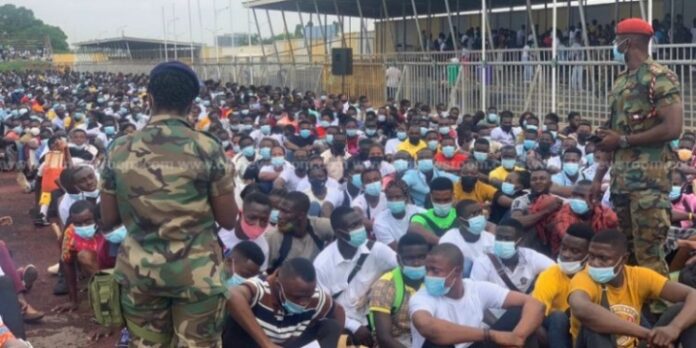
    On Thursday, October 2, the Coalition of Unpaid Nurses and Midwives staged a protest to register similar sentiments. Over 7,000 nurses and midwives gathered at the Ministry of Finance and the Ministry of Health, lamenting over working without salaries for nine to ten months.

    Convenor of the coalition, Stephen Kwadwo Takyiah, described the situation as unfair and unsustainable. He added, “We are not comfortable hitting the streets, but it has become necessary. We are citizens, trained as professional nurses and midwives from nursing training colleges and universities.

    “We graduated in 2020, completed our rotations, and waited at home for three years. In July 2024, the Ministry of Health announced it had secured financial clearance from the Ministry of Finance for our employment.

    “The portals were opened, we registered, and by October 2024, we received postings and reported to work in December. Out of the 15,000 announced, about 13,000 took up postings.

    “But in April 2025, only some of our colleagues started receiving salaries. As we speak, just over 6,500 have been paid, while nearly 7,000 of us have worked for close to 10 months without pay.”

    In response, the Minister for Health, Hon. Kwabena Mintah Akandoh, urged the group to exercise patience, assuring them that the government had taken steps to address their concerns.

    Addressing the aggrieved group on Thursday, October 2, the Minister disclosed that the government would include funds to settle their unpaid salaries in next year’s budget.

    On June 2, members of the Ghana Registered Nurses and Midwives Association (GRNMA) withdrew from their posts over delays in their 2024 Collective Agreement.

    In response, the National Labour Commission (NLC) filed an ex parte application on Thursday, June 5. A 10-day injunction was placed on the nationwide strike after the Industrial and Labour Division of the High Court in Accra described the protest as illegal.

    The GRNMA disclosed that it had yet to formally receive a court order restraining its ongoing strike. Public Relations Officer of the GRNMA, Joseph Krampah, insisted that the group would proceed with the strike until an official injunction notice was served.

    Health Minister Mintah Akandoh, on the matter, revealed that the government was unable to meet the conditions of service for the Ghana Registered Nurses and Midwives Association (GRNMA), currently on strike, this year.

    Engaging the press, the sector minister announced that the conditions of service being requested were not captured in the 2025 budget statement, noting that it would “completely throw the economy off gear if implemented in the manner it currently exists.”

    “We are mindful of the serious economic consequences of unbudgeted expenditure and want to avoid the economic slippages that have led to hardship in the recent past,” the Health Minister revealed.

    The Minority in Parliament entreated the government to put in the necessary measures to ensure the strike action was called off. Dr. Afriyie Ayew urged the government to work towards providing the conditions of service negotiated by the previous administration.

    “It is our belief that governance is a continuous process; regardless of which party is in government, public servants are paid. Collective bargaining rights which are agreed on remain their rights regardless of which government takes over after elections.”

    The nationwide strike by the Ghana Registered Nurses and Midwives Association (GRNMA) took a heavy toll on healthcare delivery, with many lives lost as patients were left stranded.

    The Mortuary Workers Association of Ghana (MOWAG) bemoaned the sharp rise in mortality cases amid the ongoing strike by nurses and midwives.

    General Secretary of MOWAG, Richard Kofi Jordan, noted that the death rate had increased by approximately 100% to 150% due to the absence of nurses at post.

    “Looking at the number of deaths compared to the past and now, the death toll has increased significantly, and it is not surprising because of the impact of the nurses’ absence. On average, where we are to record about 10 a day, we are recording about 20 to 25. This tells you that the absence of our nurses is becoming so severe,” he said.

    Making reference to Korle Bu Teaching Hospital, he mentioned that “we know the average in Korle Bu; you can have about 50 this time. It has risen above that. Other facilities (like) KATH and all that, we are hearing it.”

    According to him, nurses who are no longer at post previously helped to reduce the daily death rate across medical facilities in Accra.

  • Charles Bissue appointed to lead Ken Agyapong’s Campaign Team

    Charles Bissue appointed to lead Ken Agyapong’s Campaign Team

    Charles Cromwell Nanabanyin Onuawonto Bissue has been named head of the New Patriotic Party’s (NPP) presidential hopeful, Ken Ohene Agyapong’s, campaign team.

    This information was made known in a memorandum issued by Kennedy Agyapong to all campaign team members on Tuesday, October 14. Charles Bissue has been tasked with ensuring effective communication among the various directorates and operational teams.

    He is also expected to liaise with Kennedy Agyapong on official documentation and other campaign-related tasks.

    “All external campaign correspondence must now be routed through the Campaign Administrator’s office. Similarly, all internal communications, reports, or documents intended for my attention must first be submitted to him,” the memo stated.

    In a related development, former Vice President Dr. Mahamudu Bawumia, who is also vying for the NPP’s flagbearer seat, has begun a nationwide campaign. His campaign, which targets all 276 constituencies, was launched on Wednesday, October 15.

    Kennedy Agyapong picked the first spot on the party’s just-concluded ballot. The exercise, conducted on Friday, October 10, was to determine the order of candidates on the ballot paper ahead of the presidential election scheduled for January 31, 2026.

    So far, Kwabena Agyepong, former Vice President and 2024 Presidential Candidate Dr. Mahamudu Bawumia, former MP for Assin Central Kennedy Ohene Agyapong, former Minister of Education Dr. Yaw Osei Adutwum, and former Minister of Food and Agriculture Dr. Bryan Acheampong have all been cleared to campaign.

    Dr. Bryan Acheampong picked the second position, while Dr. Mahamudu Bawumia took the third. Dr. Yaw Osei Adutwum and Kwabena Agyepong took the fourth and fifth positions, respectively. Former General Secretary of the NPP, Kwabena Agyei Agyepong, officially filed his nomination forms on Tuesday, August 26.

    Party executives received the nomination forms from former Assin Central MP and presidential hopeful Kennedy Ohene Agyapong on Wednesday, August 27. Former Food and Agriculture Minister Bryan Acheampong has also filed his nomination forms.

    In the meantime, Dr. Mahamudu Bawumia has received strong backing from 268 former Metropolitan, Municipal, and District Chief Executives (MMDCEs), who paid him a visit in June to pledge their support.

    Former Energy Minister and running mate of the New Patriotic Party’s (NPP) 2024 presidential candidate, Dr. Matthew Opoku Prempeh, has also decided to throw his weight behind Dr. Mahamudu Bawumia ahead of the party’s presidential primaries in 2026.

    In an interview on Asempa FM on August 26, the former minister noted that he remains grateful to the former Vice President, who decided to make him his running mate despite advice from several individuals who urged him to do otherwise.

    According to Dr. Opoku Prempeh, popularly known as Napo, Dr. Bawumia was engaged countless times by some bigwigs in the party to pick someone else as his running mate. “I am not ungrateful. Look at this big party and upon all the people who were praying for the running mate slot, he ignored all of them and made me his running mate.”

    “I know it was a difficult situation, but a lot of people don’t know. Some bigwigs in the party went to Dr. Bawumia to tell him not to make me the running mate, but he ignored them. There are some names that if I mentioned, you would be shocked. Some even took him to offices to advise him against me, but still, he chose me,” he remarked.

    He thus said, “So, I cannot be ungrateful to him… For those who stood in the flagbearership contest, everyone knows Kennedy Agyapong is my friend, but I am still for Bawumia.”

    The New Patriotic Party (NPP) has made room for new additions to its already approximately 220,000 delegates who are eligible to vote in its presidential primaries slated for Saturday, January 31, next year.

    In a statement dated August 26, signed and shared by the Secretary of the Presidential Elections Committee, Williams Yamoah, the party announced that registration has been opened for an additional 60,000 new delegates, which includes nineteen new categories of people.

    This directive follows reforms adopted at the party’s National Annual Delegates Conference held in Accra on Saturday, July 19. The statement explained: “In accordance with Article 13(1)(11) of the Constitution of the New Patriotic Party (NPP), and pursuant to the motion on transitional provisions adopted at the National Annual Delegates Conference held in Accra on Saturday, July 19, 2025, the following new categories of Party officials and dignitaries have been included in the upcoming Presidential Primary voter register.”

    The updated voter register, also known as the party album, will now include several new categories of officials and dignitaries. These are all former regional and constituency executives, members of the National Council of Elders, 30 members of the National Council of Patrons, all past national officers, former party-card-bearing MPs and parliamentary candidates, as well as former party-card-bearing ministers and deputy ministers.

    Other groups added to the list are external branch executives, former external branch executives, and key members of the Tertiary Students Confederacy (TESCON), including presidents of recognised institutions, the National TESCON Coordinator, regional coordinators, and one TESCON patron from each institution.

    Additionally, 10 members from each Regional Council of Elders, 10 patrons from each region, and five members and patrons from each constituency have also been included.

    The statement directed that “all officers that fall under the categories above are requested to register their names with their respective organisational structures, including the National Secretariat, Regions, Constituencies and External Branches, as applicable, with immediate effect.”

    To make the registration process easier, the statement clarified that a digital link would be circulated to external branch executives for online registration. All other qualified members were advised to liaise with their respective regions and constituencies to register.

    However, the forms are to be accessed via the party’s official website. “The registration form may be downloaded from the Party’s official website. For ease of reference, a sample copy is hereby attached,” excerpts of the statement read.

    The statement further warned that the registration was strictly for the aforementioned categories of people, with a deadline set for Friday, September 19.

    “The deadline for registration is Friday, September 19, 2025. Please be advised that this registration exercise is exclusively open to officers and members who meet the aforementioned criteria. The Presidential Elections Committee shall undertake a comprehensive verification and validation of the Party’s album to ensure that only an authentic and credible register is used for the conduct of the presidential election,” the party cautioned, while expressing confidence in members’ cooperation.

    “We count on your usual cooperation and adherence to this directive in furtherance of the Party’s commitment to fairness, inclusiveness, and transparency.”

    The NPP is on a journey of reset, reinforcement, and healing following its historic defeat in the 2024 elections. Dr. Bawumia lost the 2024 presidential election, with John Dramani Mahama of the National Democratic Congress (NDC) securing 6,328,397 valid votes, representing 56.55%, against Dr. Mahamudu Bawumia’s 4,657,304 votes, representing 41.61%.

    Since the beginning of this year, the party has undertaken several reforms to position itself strongly against its main opponent, the NDC, and to recapture power.

    Among these reforms is the abolition of the electoral college in favour of a broader base of delegates. The party has also added 19 new delegate categories and granted amnesty to suspended members. The party’s suspended members have been reinstated, and all charges against those facing the disciplinary committee have been dropped.

    The National Council decided this during an emergency meeting held on July 25. In a statement dated August 16 and signed by the Acting National Chairman of the Party, Mr. Danquah Smith Buttey, members were informed that, as part of measures to ensure unity and cooperation, all banned members had been given the right to return.

    “This measure reflects the Party’s unwavering commitment to fostering internal cohesion, strengthening solidarity, and preparing collectively for the political tasks ahead. I write to inform you that the National Council, at its Emergency Meeting held on Friday, July 25, 2025, resolved, in the interest of unity and reconciliation, to grant a General Amnesty to all Party members who have been suspended or whose disciplinary cases are currently pending before the appropriate disciplinary bodies,” parts of the statement read.

    The party further urged all relevant bodies, including Regional and Constituency Executive Committees, to reinstate suspended members in accordance with laid-down rules and guiding principles.

    “We hereby serve notice that this directive lifts all such suspensions and nullifies any ongoing proceedings against affected members,” the statement added.

    However, the party clarified that this recall does not apply to members who willfully forfeited their membership. In cases where such individuals wish to return, they are required to submit a formal reinstatement request to the party’s secretariat. Upon acceptance, a two-year ban will be imposed, preventing them from contesting in any internal elections.

  • Court discharges suspect in Ahmed Suale’s murder case after A-G’s directive

    Court discharges suspect in Ahmed Suale’s murder case after A-G’s directive

    The suspect, Daniel Owusu Koranteng, in the murder of investigative journalist, Ahmed Hussain Suale, has been discharged by the Madina District Court. Daniel Owusu Koranteng, who is an investigative journalist, was facing charges for his alleged involvement in the murder of Ahmed Hussain Suale.


    According to investigators, Daniel Owusu Koranteng, who has pleaded not guilty and is on a GHC50,000 bail, accompanied two individuals who are at large to the residence of Ahmed Suale, leading to the journalist’s fatal shooting by unidentified assailants in January 2019.


    Daniel Owusu Koranteng first appeared in court on March 19 after he was charged only with murder. His charges were revised to include abetment to murder in April during a court hearing contrary to Section 46 of the Criminal and Other Offenses Act, 1960 (Act 29).


    However, the court has decided to discharge the suspect following a directive by the Attorney-General (A-G) to discontinue the case. This information was revealed by the prosecution led by Nana Afua Bamfoa Bamfo during a court proceeding on Tuesday, October 14. As such, the presiding judge, Susan Nyarkotey, consequently discharged Daniel Owusu Koranteng and brought the case to a close.

    Meanwhile, the A-G has directed the police to ensure that the two individuals who are on the run are arrested.

    The Attorney-General has further advised the Police to pursue the two assailants who remain at large since the evidence submitted to prosecute Daniel as an abettor is insufficient.

    The Attorney-General is said to have cited the lack of evidence gathered by the police investigators as the basis for dropping the case. The A-G allegedly noted that the fact that Daniel Owusu Koranteng’s phone was retrieved in the same area as Ahmed Suale before, during, and after the murder does not guarantee he was involved in the incident.

    Ahmed Suale’s murder sent shockwaves through Ghana’s media and investigative journalism community. His work, particularly with Tiger Eye PI, was instrumental in exposing corruption in African football, including in Ghana, making his assassination a case of both national and international interest.

    Presidential hopeful of the New Patriotic Party (NPP), Mr. Kennedy Agyapong, in June 2018, publicly displayed images of Ahmed Suale on his television station, NET2 TV, while urging Ghanaians to take action against the investigative journalist.

    Subsequently, Ahmed Suale held Koranteng responsible for sharing his pictures with the then Member of Parliament for Assin Central, Kennedy Agyapong. Ahmed Suale was killed following the publication of those images. Koranteng reportedly fled to the United Kingdom (U.K.) after the unfortunate incident; however, he was later apprehended in March upon his return to Ghana, following intelligence received by security agencies.

    So far, Koranteng has reportedly admitted to having a personal relationship with Mr. Agyapong but has denied sharing the deceased’s images with the former MP or anyone else, although he took the photographs.

    Meanwhile, Kwesi Botchwey Jnr, an aide to former Vice President Dr. Mahamudu Bawumia, has called for a stricter punishment for the investigators involved in the murder case as for doing a shoddy work.

    In an interview on Wednesday, October 15,  Kwesi Botchwey Jnr noted,  “It is a waste of judicial resources because prosecutors would have to go to court, file documents, disclosures, go through the process for 6 years and today we are told the investigators did not do their jobs properly.

    I think that for the first time, the investigators have to be sanctioned. It can’t be business as usual to serve as a deterrent to other investigators who also cook up ‘evidence’ to prosecutors”.

    Scores of Ghanaians, meanwhile, have called on the government to ensure justice is served in the case as assaults on journalists in the country remain a troubling issue.

    Also, President John Dramani Mahama has attributed the country’s decline in global rankings to issues related to assaults on journalists, including the murder of investigative journalist Ahmed Suale.

    He made this known while addressing members of the Ghana Journalists Association (GJA) during a courtesy call at the Jubilee House on Friday, September 5, 2025.

    “… We’ve seen a consistent decline in our international rankings, and that is an issue of concern for us. And part of it is because of issues to do with harassment of journalists and even the unfortunate murder of Ahmed Suale which caught international attention and I think that since then, other incidents that have occurred have diminished our ranking,” he said.

    He believes that these issues continues to persist due to the lack of legal sanctions against perpetrators.

    Acknowledging the role of journalists in the country, the President advocated for an environment that permits them to perform their duties freely and without fear of assault.

    “And so, we need to find a way of ensuring that when people do that kind of thing, they face sanctions or are punished because once there’s no deterrent, they continue to do it. Aside from that, educate and create awareness that Journalists are not enemies. They are reporting something that is happening, and so they must be given a free leverage to be able to do their reporting,” he said.

  • Taptap Send resumes remittance services to Ghana after suspension

    Taptap Send resumes remittance services to Ghana after suspension

    Money transfer service Taptap Send has resumed its services in Ghana after a month’s suspension by the Bank of Ghana (BoG). In a statement, the company called on its members to resume sending and receiving money through the platform from the UK, Europe, Canada, the USA, and the UAE to Ghana, effective immediately.

    “We love our customers dearly and cannot thank them enough for sticking with us and standing by us through this period.You, our customers, are the reason we’ve been the number one app for sending money to Ghana,” the statement said. 

    Check the statement below:

    Taptap Send is pleased to announce that money transfers to Ghana are now fully restored. After fruitful and positive engagement with the Bank of Ghana, the pause was lifted earlier than the initially imposed month-long timeline.
    Taptap Send is now fully operational, and customers can now resume sending money from the UK, Europe, Canada, the USA, and the UAE to their loved ones in Ghana with immediate effect.
    Taptap Send remains safe, secure, and fully compliant and has taken the opportunity to double down on its commitment to upholding the highest standards of compliance and excellence in service provision to Ghana and beyond.
    We would like to express our deepest and most sincere appreciation to our customers for their patience, love, and continued support in what has been a really difficult time of inconvenience. We love our customers dearly and cannot thank them enough for sticking with us and standing by us through this period.
    You, our customers, are the reason we’ve been the number one app for sending money to Ghana. We do not take this for granted, and we will continue to work tirelessly to always be there for you. We dey for you!
    Taptap Send is back. We have missed you and cannot wait to see you on the app again.
    Taptap Send, Pa pa no no!
    Taptap Send Ghana Team

    In September five money transfer operators including Taptap Send had their licenses temporarily suspended by the Bank of Ghana over breaches of the Updated Guidelines for Inward Remittance Services by Payment Service Providers issued in 2023.
    The central bank explained that the affected firms breached guidelines with regard to international money transfer operations and regulatory compliance for Inward Remittance Services for Payment Service Providers, 2023. In June, BoG drawn the attention of the general public to Money Transfer Organisations (MTOS) operating within the Remittance and the Ghana Forex Market without approval.

    Earlier this month, the Bank of Ghana (BoG) blew the alarm on the operations of Yellow Card Financial Inc., an unapproved digital payment platform.
    According to the central bank in a statement dated June 11, the unlicensed entity is actively promoting itself as a provider of digital payment services, cryptocurrency trading, and cross-border remittance solutions.
    The platform purports to enable users to make payments, send and receive electronic money and stable coins across borders, as well as convert stable coins into local currency.
    These activities, the central bank says, require appropriate licensing from the Bank of Ghana.
    The Bank of Ghana has also discovered that YellowPay is engaged in an ongoing collaboration with HanyPay, an entity that claims to be licensed by the Africa Diaspora Central Bank (ADCB).
    This partnership reportedly seeks to develop and integrate a new stable coin, AKL Lumi, into the global financial ecosystem.
    According to the central bank, this development raises significant regulatory concerns, as HanyPay is neither licensed nor authorized to operate within the jurisdiction of Ghana.
    In 2024, the Popular international money transfer service Taptap Send temporarily suspended its operations in Ghana.
    This pause raised concerns among users who depend on the platform to send money to loved ones in the country. In a statement issued in early November, the company apologized for the inconvenience and emphasized its efforts to restore service promptly.
    The platform explained that its teams are collaborating closely with local partners in Ghana to ensure a seamless reactivation of services. While the exact date for resuming transfers has not been disclosed, Taptap Send assured users of its ongoing commitment to delivering “exceptional service.”
    In the interim, Taptap Send reassured its customers that their funds remain fully secure. Money stored in Taptap Send wallets can still be withdrawn to personal bank accounts. The company emphasized that the service interruption is temporary and that all customer funds are safe.
    This pause in operations comes at a crucial time when remittances from the diaspora are vital to Ghana’s economy. Many Ghanaians are eager for a swift resolution, particularly as digital remittances play an increasing role in supporting families and communities.
    Launched in the summer of 2018, Taptap Send enables users to send money quickly and affordably to Africa, Asia, and the Caribbean. With operations in the UK, EU, US, Canada, and UAE, the service supports transfers to countries such as Senegal, Mali, Guinea, Ghana, Cameroon, the Ivory Coast, and several others.

  • Playback: Minority addresses the press over merger of AT Ghana, Telecel

    Playback: Minority addresses the press over merger of AT Ghana, Telecel

    The Minority in Parliament is addressing the press over the government’s decision to merge AT Ghana (formerly AirtelTigo) and Telecel Ghana.

    In September, Minister for Communication, Digital Technology, and Innovations, Samuel Nartey George, pledged job security for the staff of the two companies.

    Airtel Tigo’s merger with Telecel Ghana has been necessitated due to the former’s current financial crisis. In April this year, the Communications Minister revealed the huge financial losses AT Ghana was incurring and the need for swift action to be carried out to save the dwindling state entity.

    He called out the erstwhile government for being “ill-informed, reckless, and unpatriotic” following its symbolic purchasing of Airtel Tigo when it was wallowing in a $400 million debt, which was later downed following the Domestic Debt Restrusturing Programme (DDEP). Sam George lamented the firm’s monthly losses of GH₵20 million, describing it as “ …..is failing and obsolete; its systems haven’t been upgraded in five years and are no longer fit for purpose.”

    Consequently, having recorded losses of $10 million in just eight months, Sam George stressed that,

    “These losses are funded by taxpayers. That is money that should be building roads, water systems, and schools. We cannot keep pouring public funds into unsustainable operations”.

    According to the Minister, the consolidation with Telecel would help reduce costs, eliminate duplication, and build a stronger competitor in Ghana’s highly competitive telecom market. “It makes no sense for two networks to operate separately on the same tower, both paying twice while both struggle. A merger is the smart and sustainable choice,” he added.

    Already, more than 3.2 million AT Ghana subscribers are being seamlessly migrated onto Telecel’s network through a national roaming arrangement, a process the Minister described as “98% smooth.” Sam George explained that the integration process will be carried out in three phases: Technical migration, which is near completion, with roaming already operational. Human resource alignment, which ensures all staff are absorbed by the end of September.

    Watch the livestream:

  • DVLA halts road compliance fines  from Oct 15

    DVLA halts road compliance fines from Oct 15

    Effective Wednesday, October 15, the Driver and Vehicle Licensing Authority (DVLA) will suspend all fines issued by its Compliance Team on roads across the country. This was contained in a press statement issued by the Authority on October 14.


    The Authority’s decision to temporarily halt the exercise follows public feedback on how the fines were being enforced, as well as further internal consultations.

    According to the DVLA, “This suspension relates specifically to the fees and charges that were being enforced by the Compliance Team. It does not suspend the legal requirements for drivers and vehicles to operate on Ghana’s roads.”


    Meanwhile, the Authority has urged all drivers and vehicle owners to continue adhering to road safety laws and regulations despite the suspension.


    In August, the Authority announced a new vehicle number plate system aimed at tackling smuggling and preventing the registration of vehicles that evade import duties. This move comes in response to the rising cases of car smuggling into West Africa, including Ghana.

    On August 26, the Economic and Organised Crime Office (EOCO) Head of Legal and Prosecutions, Leo Antony Siamah, revealed during a media engagement that 100 stolen luxury vehicles shipped into Ghana through dubious means had been recovered.


    Mr. Siamah cautioned the public to exercise extreme vigilance when purchasing vehicles, particularly high-end ones, to avoid becoming unwitting accomplices in criminal activities.

    He further disclosed that the anti-graft agency is currently investigating about 300 additional cases of suspected stolen vehicles in collaboration with Interpol, the Federal Bureau of Investigation (FBI), and the Royal Canadian Mounted Police (RCMP).


    Earlier in May 2025, an INTERPOL-led operation codenamed “Safe Wheels” dismantled a major vehicle trafficking network in West Africa. The exercise detected about 150 stolen vehicles and seized over 75 across 12 countries, including Ghana and Nigeria.

    The two-week operation also launched 18 new investigations and exposed two organized crime syndicates. Most of the stolen vehicles were trafficked from Canada, with others originating from France, Germany, and the Netherlands.


    In response, DVLA Chief Executive Officer Julius Neequaye Kotey, in a statement shared on Facebook on Monday, August 25, 2025, announced that the new plates will be fitted with Radio Frequency Identification (RFID) technology and linked directly to a central database.

    This innovation, he explained, will make it impossible to register “Togo cars” or vehicles smuggled into the country without proper documentation.
    “The new system will ensure that every vehicle can be authenticated against our database. This way, smuggled cars or those that have avoided the payment of duties cannot slip through the cracks,” he explained.


    He emphasized that the new number plate system is designed not only to ensure compliance but also to enhance road safety. “The introduction of a new number plate system is a significant step forward for vehicle regulation and security. The new plates will be equipped with RFID technology and other features to modernize vehicle management and improve road safety,” he said.


    According to the DVLA, the new plates will also facilitate toll payment in the future, as the embedded chip will allow vehicles to make automatic, cashless payments at toll points. Instead of showing the year of registration, the plates will display a regional code to simplify the identification of a vehicle’s origin. Other security features include a reflective surface to improve visibility at night and in bad weather conditions.


    Mr. Kotey added that although the nationwide rollout is expected in 2026, work is still ongoing to finalize the design and ensure the plates meet both local and international security standards. “This is about more than just plates — it is about creating a secure, transparent, and modern vehicle management system that benefits both motorists and the general public,” he added.


    Beyond the new plates, the DVLA has also revealed that it will soon roll out an e-license as part of its broader digital transformation agenda to modernize service delivery and improve convenience for Ghanaian drivers.


    This was disclosed by Mr. Kotey on Tuesday, August 5, 2025, during the launch of the DVLA Lorry Terminal Project at Circle. He said: “The launch of the Lorry Terminal Project aims to bring DVLA services closer to drivers. The services provided are the acquisition of a driver’s license, renewal of a license, replacement of missing and expired licenses, and conversion of a foreign driver’s license.”


    According to him, the DVLA has significantly improved its operations by adopting digital solutions in line with global technological trends. He noted that the introduction of the e-license will enable drivers to prove their eligibility to drive without necessarily carrying their hardcopy license.

    “Most of us don’t carry our licenses with us, and it shouldn’t be the case that the police or any other party takes advantage of that. If I don’t have my license with me and I am a driver, I’m still a driver. I should have an app that allows me to identify myself as a legitimate driver on the street, and that’s what the e-license is about.”


    He clarified that the e-license will not replace the traditional one but will serve as a complement. “It is not here to replace the physical license but rather to provide an additional option to access your license on your Android or iPhone.”


    Meanwhile, the DVLA has cautioned the public against the misuse of Defective Vehicle (DV) plates. Shedding light on their proper usage, Mr. Kotey explained that DV plates are exclusively designated for car dealers and are only valid when a car has not yet been certified as roadworthy.

    “Only car dealers are supposed to use DV plates. It stands for ‘Defective Vehicle’ because the vehicle hasn’t yet been inspected by us for roadworthiness. That’s why we call it a DV plate. It’s not meant for any other person, only for dealers when they’re working on the vehicle,” the DVLA CEO stated.


    He further explained that, in partnership with the State Insurance Company (SIC), a two-week insurance cover is provided for cars at the ports. These vehicles are then given a DP sticker, after which they must be registered.

    “SIC is providing two weeks of insurance cover. After that, you must register your car because DV plates are not supposed to be used by ordinary citizens,” he clarified.


    The use of DV and DP plates is governed by the Road Traffic Act 683/04, as amended by Act 761/08, and the Road Traffic Regulations 2012, L.I. 2180.


    Speaking on the persistent presence of “goro boys”, unofficial middlemen who often pose as helpers at DVLA offices, Mr. Kotey acknowledged that they have long been part of the Authority’s environment.

    These individuals typically offer assistance with vehicle registration, licensing, and other administrative processes for a fee, despite not being officially employed by the DVLA.


    He noted that the operations of “goro boys” have spanned decades, from the era of the late Jerry John Rawlings to the present Mahama-led administration, forming an informal but persistent part of the Authority’s ecosystem.

  • Galamsey inflating our operational costs – ECG, GWL defend 200% tariff proposal

    Galamsey inflating our operational costs – ECG, GWL defend 200% tariff proposal

    The Ghana Water Limited (GWL) and the Electricity Company of Ghana (ECG) have blamed illegal mining activities (galamsey) for the 200% tariff increment proposal under the 2025–2030 Multi-Year Tariff Order. This was made public by the Director of Communications for ECG, William Boateng on Tuesday, October 14.


    “They are digging and moving towards the roads and trenches, which is very dangerous. Anytime we have the slightest rainfall, the poles come down because the base has been weakened. That affects the stability of power supply.

    “It costs us more money to fix the fallen poles and restore the line. Beyond that, we are also losing unserved energy power that we’ve already purchased but cannot deliver to customers,” Mr. Boateng noted.

    In September, the Public Utilities Regulatory Commission (PURC) received proposals from eight utility companies calling for a significant adjustment in utility tariffs to ensure they can fully operate at their capacities.


    Proposals from the electricity distributors and the water provider for the 2025–2029 tariff period cite rising operational costs and the need to maintain efficient service delivery.


    The eight companies include the Electricity Company of Ghana (ECG), Volta River Authority (VRA), Northern Electricity Distribution Company (NEDCo), Ghana Water Limited (GWL), and the Ghana Grid Company (GRIDCo), Ghana National Gas Limited, among others.


    ECG is pushing for a massive 225% hike in its distribution service charge. For instance, a household consuming 150 kWh monthly would pay an additional GHS64, while a residence using 100 kWh per month would pay about GHS43 more in distribution charges.
    As part of ECG’s request, the current Distribution Service Charge (DSC) of 19 pesewas per kilowatt-hour should be raised to nearly 62 pesewas per kilowatt-hour.


    “The PURC will undertake the major adjustment in the 4th quarter of 2025 to reflect capacity charges, additional liquid fuel usage, and additional capex. The current charge is below industry benchmarks, and cedi depreciation has reduced its value. US$408m spent on network upgrades and smart meters,” parts of ECG’s petition read.


    ECG has emphasised that the adjustment has long been overdue, noting that in 2022 it proposed 39.95 pesewas, but only 19.04 pesewas was approved.


    According to ECG, it has invested $48 million in network upgrades and smart metering systems to enhance power reliability, reduce outages, and align tariffs with international industry standards, yet these efforts have not yielded the expected cost recovery.


    Furthermore, ECG has projected an annual revenue of GHS9.5 billion between 2025 and 2029 if the new charges are approved. The proceeds, according to the utility company, would be allocated to cover operational costs, depreciation of assets, staff salaries, and the recovery of recent capital expenditures.


    VRA is seeking a 59% increase to cover the rising costs of producing electricity. If approved, the current tariff of 45.0892 Ghana pesewas per kilowatt-hour will be increased to 71.8862 pesewas per kilowatt-hour for the Bulk Generation Charge.


    Speaking during a public hearing on Tuesday, September 9, Senior Economic Analyst at VRA, Evans Somuah Mensah, said, “Over the years, VRA has not been compensated for doing this work to assist the national connectivity system. We are saying that on an annual basis, VRA should be given compensation $30.49 million for Akosombo power generation, and Kpone Thermal plant, a little bit of $30,000.


    “Justification for tariff increase, we are saying that we want to recover the cost of our power supply to the distribution companies, and recover the cost of transmission and also be compensated for the provisions of ancillary services. We are requesting the PURC to increase the existing tariff of BGC from 45.0892 Ghana pesewas per kilowatt-hour to 71.8862 Ghana pesewas per kilowatt-hour.”


    VRA has justified the increase as necessary to fully recover the cost of power generation supplied to distribution companies (DISCOs). It has noted that sustaining reliable electricity generation and meeting its operational and financial obligations will become increasingly difficult if its proposal is rejected.


    Ghana Water Limited has proposed a jump from GH¢5.28 per cubic metre to GH¢20.09 per cubic metre, seeking regulatory approval for a 281% increase in its water tariff.


    NEDCo has also called for its tariff to be increased to 153.03 pesewas per kilowatt-hour from the current 56.474 pesewas, representing a 171% rise. GRIDCo, meanwhile, is demanding that the current 5.6422 pesewas per kilowatt-hour on its transmission service tariff be raised to 12.9768 pesewas per kilowatt-hour.


    Ghana National Gas Limited is proposing to increase its tariff from US$1.10 to US$2.10 per million metric British thermal units (MMBtu)
    However, the onus lies on PURC to carefully review the requests, assess whether the increases are justified, and determine how the costs will be distributed. In July this year, electricity tariffs increased by 2.45% across the board, with no increase in water tariffs.


    The adjustments, according to PURC, were carried out in line with the Commission’s Quarterly Tariff Review Mechanism, which tracks and incorporates movements in key factors beyond the control of the Utility Service Providers (USPs).


    These factors include the exchange rate between the US dollar and the Ghana Cedi, the domestic inflation rate, the electricity generation mix, and the cost of fuel, mainly natural gas.


    According to the Commission, additional factors considered before concluding the hike in tariffs include outstanding debt of GHS488 million carried over from the previous three quarters, reserve capacity for grid stability and reliability, and the inclusion of 27% of the cost of alternative fuels such as Distillate Fuel Oil (DFO), Heavy Fuel Oil (HFO), and Light Crude Oil (LCO).


    The Commission expressed gratitude to stakeholders for their support as it continues to implement the Quarterly Tariff Reviews in accordance with its Rate Setting Guidelines to address changes in operational conditions of the service providers.


    Majority Leader Mahama Ayariga justified PURC’s decision to increase electricity tariffs. Speaking on the floor of Parliament on Friday, June 27, he noted that there is a need for ECG to be able to settle its growing debt.

    “You all know that the whole of last year and before that, there was an effort to prevent the PURC from adjusting the tariffs. So that whole period, there was no adjustment, and you know very well that bills were accruing; payments have to be made. ECG is accumulating huge [debt] and it has to be paid, so who is supposed to pay? Is it not the consumer?” he questioned.


    According to him, failure to address ECG’s indebtedness would render the company powerless in supplying power to its consumers.


    “And if you are not adjusting the tariffs to enable ECG to pay, ECG is going to collapse. They are no longer able to buy the input needed to keep the generators on, and we are going to have a power outage; the bills have to be paid.”


    “The bill has to be paid. So if PURC is doing its work, I do not think there is a basis for saying that because we have improved the economy, it doesn’t mean that the debt at ECG will just be whisked away. The bill has to be paid partly by consumers,” he asserted.

  • Two arrested for manipulating SHS placement process

    Two arrested for manipulating SHS placement process

    The Free Senior High School (SHS) Secretariat has announced the arrest of two individuals for manipulating the ongoing school placements.

    According to the Deputy National Coordinator of the Free SHS Secretariat, Dr. Belinda Glover, these individuals lured parents into giving them money to influence placement changes.

    “So far, we have about two that we have handed over to the police. Yes, and we have also announced that you can’t come here, wait more than two hours. Beyond two, you are in for business, and we are not here for business, so we will arrest you.

    “You can’t tell me that you have five children going to senior high at the same time, no. And you know, we follow up, we realize that these people are just collecting money from people, and then coming here and using us instead to make money,” she explained.

    This development comes shortly after several reports of bribery in the ongoing Senior High School placement. One individual, Gertrude Adzo Borklo, has claimed that the Computerised School Placement System (CSSPS), which uses the Basic Education Certificate Examination (BECE) results, is being manipulated by certain school authorities.

    However, in a statement issued on Thursday, September 25, Deputy Minister for Education, Dr. Clement Abas Apaak, described the claims as false and said they were based on a “conspiratorial narrative.” The Ministry further noted that all efforts to reach out to the claimant have been futile, indicating that Gertrude Adzo Borklo’s accounts appear to have been inactive for some time.

    Nonetheless, the Education Ministry is working with National Security, the Cyber Security Authority, and other agencies to track down and contact the individual. Other anonymous accounts, according to the Ministry, continue to circulate misleading claims about the school placement system.

    The statement emphasised that the placement process is entirely free of charge and called on victims to complain to the Ministry through its numbers 054 154 8223 (Calls) and 024 490 8957 (WhatsApp).

    “At no point is payment required to access this service. We call on members of the public to provide any information or evidence of persons, whether Ministry officials or third parties, who demand money for placements. The Ministry assures swift and decisive action against any individual found culpable,” the statement read.

    The Ministry reaffirmed its commitment to safeguarding the integrity of Ghana’s school placement system. There have been recent speculations that the Education Ministry solely depends on a rigid score system to place students in Senior High Schools, but the Ministry described the claims as misleading and inaccurate.

    In August, Deputy Education Minister Dr. Clement Apaak emphasized that multiple factors influence how students are assigned to specific SHSs. According to an official statement signed on Saturday, August 30, the Ministry noted that the CSSPS considers the aggregate and raw scores of students, the availability of vacancies in schools, and the popularity of specific programmes.

    The statement added that the Ministry does not demand or accept rewards from parents or guardians to guarantee placement, as speculated.

    “The Ministry confirms that this information is not only false but also maliciously misleading. The placement is based on a combination of factors, including aggregate and raw scores, availability of vacancies in the various schools, and programmes of study. Limited vacancies and high competition can affect placement. The Ministry unequivocally states that no form of payment or inducement is required or solicited from parents, guardians, or their representatives for the purpose of securing placement.

    “All interactions with the Ministry and Ghana Education Service (GES) officials are expected to adhere to the highest standards of integrity and transparency. The public is advised to be cautious and report any cases of extortion or bribery attempts related to student placements. Stakeholders are encouraged to report miscreants to the nearest police station,” parts of the statement read.

    The Ministry’s clarification was a rebuttal to claims that the system solely depends on a rigid score framework. Meanwhile, parents and prospective SHS students have lodged complaints over misplaced placements and difficulties accessing schools of choice. Others raised concerns about being assigned to schools far from preferred locations despite meeting required grades.

    On September 19, Deputy Education Minister Dr. Clement Apaak called for calm following reports of technical glitches in the placement process. During a visit to the Ghana National Association of Teachers (GNAT) Hall in Accra, he assured parents and students that all Senior High School placements would be finalized soon.

    “It’s a process. It has not ended. Be patient and be reassured that we anticipated a number of challenges, and that is why we decided to set a reporting date that gives you enough time and gives us enough time to address all the issues. So be assured that by the time our wards are expected to report, which is around this same time next month, October 18, many of these issues, if not all, will be resolved,” he added.

    On Wednesday, September 17, the GES opened the CSSPS portal to allow prospective SHS students to access their designated schools. As per a circular dated September 17, signed by the Acting Deputy Director-General for Quality and Access at GES, Dr. Munawaru Isshaque, freshers will report to their designated schools from October 18.

    The statement warned school authorities against enrolling students outside the placement list generated by the CSSPS Secretariat, stressing the need for transparency and impartiality during registration.

    “Admission of students should strictly follow the placement list generated by the CSSPS Secretariat. No school is permitted to admit students outside the official placement without prior written approval from GES,” parts of the circular read.

    A total of 483,800 students have been placed into various SHSs across the country out of 590,000 candidates. The school placement portal opened on Monday, September 1, for new entrants to verify their school choices, biodata, and other relevant information ahead of final placement. The fact-checking exercise closed on Monday, September 8. Of the placed students, 248,038 are females (51.4%) and 234,783 are males (48.6%).

    However, 107,509 candidates (18.2%) could not be matched with their initial school choices due to high demand for certain Category A schools.

  • Several unlicensed health facilities in Ashanti Region shut down by HeFRA

    Several unlicensed health facilities in Ashanti Region shut down by HeFRA

    Several unlicensed health facilities in the Ashanti Region have been shut down following a recent operation by the Health Facilities Regulatory Agency (HeFRA) on Monday, October 13.

    These health facilities are reported to have been operating without a valid license for the past six years. The crackdown is part of HeFRA’s nationwide efforts to regulate health facilities and ensure compliance.

    ANKHOR Diagnostics and RASHBILL Eyecare, both located within the Komfo Anokye Teaching Hospital premises, are among the affected health facilities.

    Weeks ago, HeFRA shut down 17 health facilities across the country for operating under unsafe conditions and with expired licenses. Speaking to the media, HeFRA’s Chief Executive Officer, Dr. Winfred Baah, noted that his outfit will ensure that all health facilities operate in full compliance with the law and meet safety and quality standards.
    “No facility, whether private, corporate, or public, is above the law. We cannot allow anyone to offer clinical services to staff or the public without proper regulation and supervision,” he stressed.


    Recently, the Bono East Regional Police Command arrested a man for operating an unlicensed clinic in his residence at Yeji Zongo in the Bono East Region. According to a release shared on the Facebook page of the Ghana Police Service and signed by ASP Appiah Danquah, the suspect, identified as Hanson Osei, was arrested on 28th September 2025 after police, acting on intelligence, proceeded to his residence, where he had converted a chamber-and-hall room into a clinic.


    The police revealed that during interrogation, “the suspect admitted that he had been operating the clinic for the past eleven (11) years without authorization from any recognized medical school or licensing authority.”

    A search of the premises uncovered several used clinical items, including needles, malaria injection bottles, infusion rubber sachets, and other medical materials. The police therefore, put Mr. Hanson Osei before the Tuobodom District Court on 30th September 2025. He has since been remanded to reappear on 6th October 2025.


    Earlier in September, a man posing as a medical doctor at the Komfo Anokye Teaching Hospital (KATH) was reported to the police after arousing suspicions among hospital personnel. The middle-aged individual, known as Williams Cyril Kohen, underwent questioning by hospital staff during their regular rounds, leading to the verification of their concerns. Following this development, the suspect was handed over to the hospital’s police post, which subsequently transferred the case to the Central Police Command for further investigation.


    The hospital’s Public Relations Officer, Kwame Frimpong, conveyed that the institution had implemented security measures aimed at preventing such occurrences in the future.


    “At KATH, it is very difficult for people to come and claim that they are doctors and start working there because that is not how the thing works. We have a team-based system where all the team members are known and also remember that it is a training institution, so most of the time the people who join us are our former students and so it is a very close-knit community and the team members are known to each other.

    “So you cannot just be part of the team out of the blue. And because patients are allocated to teams, you cannot go to any patient when you are not part of the team. Again, we have this electronic medical records system where every member of the medical staff has a password specific to them, and you have to use this system to attend to patients, to review the cases, and to give prescriptions for medicine to be dispensed. Once you don’t have the password because you are not a staff or member of the medical teams you cannot even attend to the patient,” he stated.


    In 2019, the Medical and Dental Council arrested a suspected quack doctor at Anyinam in the Eastern Region. The suspect, Kankam Nkrumah, was caught red-handed at the consulting room of Yesukrom Medical Center practicing medicine without a license.

    Information gathered by Starr News indicated that the Investigative Unit of the Medical and Dental Council, led by the Administrative Manager, Bright Atsu Fuglo, and Desmond Asamoah, on January 21, 2019, stormed the community to undertake its routine headcount of licensed practitioners, medical doctors, physician assistants, and certified registered anesthetists at Anyinam.


    Nonetheless, during the exercise, they noticed the suspect, Nkrumah Kankam, sitting in the consulting room, allegedly practicing medicine without a license. He was questioned and subsequently arrested and handed over to the Anyinam Police.

    The Public Relations Officer of the Eastern Regional Police Command, DSP Ebenezer Tetteh, confirmed the arrest to Starr News when contacted. The police retrieved 15 patient folders and one stethoscope as exhibits while investigations continued.


    Also, in 2023, six people in the Kumasi metropolis were arrested for dealing in fake herbal products. Their arrest was carried out as a result of a collaboration between the Ashanti Regional Office of the Food and Drugs Authority (FDA) and the police.

    The swoop, which targeted dealers in unregistered herbal products, formed part of routine market surveillance conducted by the authority to clamp down on perpetrators.

    The culprits, who had been granted bail pending further investigations, included two community information center operators and four herbal product dealers.


    Mr. John Laryea Odai-Tettey, the Regional Head of the FDA, speaking to the media after the exercise, said the Public Health Act, 2012, mandated the FDA to ensure food, drugs, cosmetics, medical devices, chemical substances, blood, blood products, and tobacco were wholesome for public consumption.

    He said the authority had the responsibility to ensure the safety and quality standards of such products as prescribed by the Act. “It is our responsibility to ensure that products under our regulation and being sold for public consumption and use are registered, and that is why we embark on market surveillance to check the safety of the products,” he noted.

    He said beyond the registration of regulated products, his outfit had the duty to monitor the market to identify persons producing sub-standard versions of registered products.
    “Unfortunately, a lot of people do not go to accredited health facilities to seek healthcare, but rather patronize some of these products without verifying their safety,” he pointed out. Mr. Odai-Tettey said the activities of the perpetrators were inimical to public safety and called on the public to support the FDA to flush out such miscreants for the good of the general population.


    He said the doors of the FDA were open to manufacturers of herbal and other regulated products to submit their products for scrutiny to ensure they were safe for public consumption.

    Failure by manufacturers to submit their products for verification, he said, amounted to a violation of the Act, and he cautioned that the FDA would go after such recalcitrant manufacturers in the interest of public health.

    He advised the public to patronize products from registered and recognized dealers, such as pharmacies and licensed over-the-counter chemical sellers, for their own safety. Wholesalers and retailers of herbal products must also ensure they purchase from licensed manufacturers in order not to fall victim to FDA operations, he stated.

  • We don’t fight fires with empty tanks – GNFS sets record straight

    We don’t fight fires with empty tanks – GNFS sets record straight

    The Ghana National Fire Service (GNFS) has dismissed claims suggesting that its personnel respond to fire scenes with empty tenders. The Public Relations Officer of the GNFS in the Northern Region, Assistant Divisional Officer II (ADOII) Hudu Baba, addressed the issue during a practical demonstration on Monday, October 13.

    According to him, the water runs out very quickly during operations, and it is not because the tenders do not contain water.

    “Anytime water is flowing through the pipes, we put water in the tanks for emergency purposes. How much more a vehicle that is in full motion and ready for duty? It has never been the case that we respond to fire emergencies without water,” he stated.

    Several shops selling wooden planks and hardware were razed after a fire incident broke out near Aayalolo School at 1:17 a.m. on Saturday, September 13. The GNFS confirmed in an update on its official page on Sunday, September 14: “The flames were confined at 6:26 a.m., brought under control by 6:37 a.m., and fully extinguished by 11:44 a.m.”

    The Service added, “Two firefighters sustained injuries in the operation, one from an electric shock and another from burns to the left arm. Both were treated and discharged, and are reported to be in stable condition.”

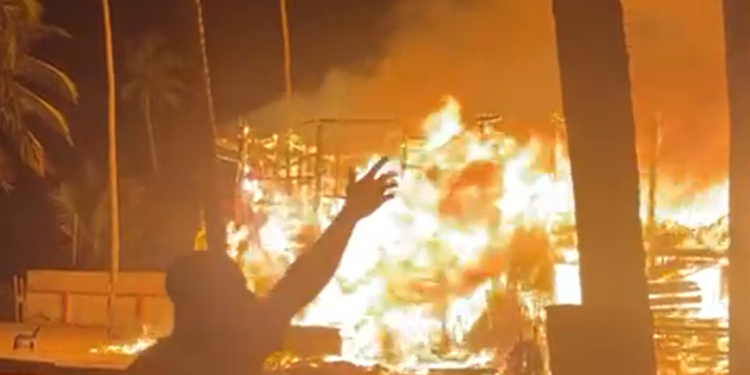
    In a related development, several houses at Darkuman Kokompe in Accra were destroyed following a fire incident in the early hours of Sunday, August 31. Reports indicated that victims were unable to salvage their belongings while awaiting emergency response. The cause of that fire is yet to be established.

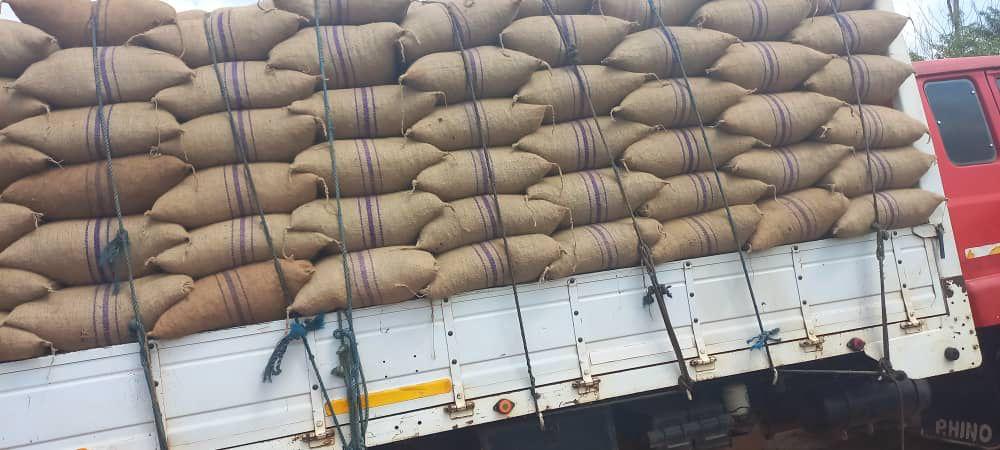
    Earlier this month, a fire destroyed a Benz cargo truck transporting over 2,500 bags of rice from Côte d’Ivoire to Kumasi on the Adugyama-Bechem highway, near the Star Oil Filling Station, on Monday, August 25. Similarly, a popular pub and food joint at Nogora Junction, near the Ho Technical University, was reduced to ashes following a fire outbreak on Wednesday, August 13.

    On August 4, a fire ravaged the first floor of the Accra Tourist Information Centre at Cantonments. According to the GNFS, the blaze destroyed the contents of the first floor, though the ground floor and about eight offices, including the East Wing section, were salvaged.

    The first fire engine from the GNFS Headquarters arrived at 01:04 hours to find a fully developed fire spreading rapidly in all directions, aided by strong winds. Five additional appliances from Flagstaff House, Circle, Accra City, and Ministries fire stations, as well as the Rapid Intervention Vehicle (RIV) from Headquarters, were swiftly mobilized to support firefighting operations. Although the blaze was brought under control at 03:32 hours, firefighting efforts continued until 06:35 hours to suppress the flames and prevent further spread to adjoining properties. No injuries were recorded, but the Service has launched an investigation into the cause.

    Another inferno destroyed several makeshift wooden and metal structures at the Madina Washing Bay near Redco Flats on Sunday, August 3. The blaze consumed utility poles, traders’ wares, personal belongings, and structures worth several thousand cedis. The GNFS reported that while battling the fire, one firefighter sustained a minor leg injury. The Service received the distress call at 12:36 hours, and the first crew from Madina Fire Station arrived within four minutes. Four additional fire engines from Legon, Abelemkpe, and GNFS Headquarters later joined to contain the blaze. Thanks to the swift response, the fire was confined at 13:42 hours and fully brought under control at 13:54 hours. Overhaul operations continued until 20:50 hours. An investigation into the cause is ongoing.

    Last month, a fire broke out at Madina Ritz Junction. Initial reports claimed that a two-month-old baby died in the incident, but the GNFS later clarified otherwise. “A verification team was dispatched to the scene this morning, and after engaging affected residents, particularly the women, and a Unit Committee Member of the area, the Service can confirm that no lives were lost. The Service has thus entreated the public and media outlets to disregard any reports suggesting otherwise, as they are inaccurate and misleading,” the GNFS posted on Facebook. The Service explained that the fire began after a gas explosion in one of the shops and quickly spread to adjacent containers. Firefighters from the Madina, Legon, and Abelemkpe stations responded promptly and contained the blaze.

    In April this year, another fire ripped through the Madina Redco Flats area, destroying more than 150 structures and claiming the life of a young Nigerian woman known as Beauty. The inferno, which started around 11:15 p.m., spread rapidly across 140 wooden kiosks and 20 metal containers. Although firefighters arrived within minutes, the victim was trapped and could not escape. Her remains were handed over to the Madina Police. Last year, about 50 stalls were reduced to ashes after the Madina Market in Accra caught fire. Deputy Director of Operations at GNFS, D.O.I Kofi Forson, recounted the challenges they faced:

    “It was not easy for us, and there was a lack of access to where the fire was spreading, and because it happened in the night, the shops were closed, and we had to break through, and that made it tedious,” he said.

    The GNFS has provided statistics on fire outbreaks in the first half of 2025, showing a slight increase compared to the same period in 2024. Ghana recorded 3,595 fire cases between January and June this year, compared with 3,576 cases during the same period last year—an increase of 19 cases, representing a 0.53% rise. The monthly breakdown is as follows: January (964), February (678), March (619), April (483), May (457), and June (394).

    The Greater Accra Region recorded the highest number of incidents (628), followed by Ashanti (581) and Central (408). The North East Region had the lowest number, with just 10 cases. In an interview on Tuesday, July 8, the Head of Public Relations at GNFS, Desmond Ackah, revealed that due to their improved and swift response, the Service saved over GH¢203 million worth of property in the last two quarters of 2025.

    The GNFS listed the main causes of fire incidents as electrical faults from illegal connections, poor wiring, and overloaded circuits; improper use of appliances such as overused extension cords and unattended devices; unattended cooking with gas, electric, or coal stoves; careless use of naked flames like candles, mosquito coils, lighters, and matches; gas leakages and poor handling of LPG cylinders; bush burning, especially in the dry season; vehicle fires due to poor maintenance or accidents; unsafe welding and other hot-work practices; and deliberate acts of arson.

    Meanwhile, the Service reported a significant improvement in its fight against prank calls. It recorded a 34.77% reduction, from 364,020 prank calls in the first half of 2024 to 237,470 in 2025. The GNFS attributed the decline to consistent public education campaigns and heightened awareness of the legal consequences of misusing emergency lines.

  • President Mahama directs 50% subsidy on dialysis at private hospitals

    President Mahama directs 50% subsidy on dialysis at private hospitals

    The government has announced plans to cover half of the cost for patients receiving dialysis treatment at private health facilities. This information was made known by the Minister of Health, Kwabena Mintah Akandoh, on Monday, October 14, during the inauguration of a 13-member governing board for the Ghana Medical Trust Fund, also known as ‘Mahama Cares’.


    “The current arrangement for payment of dialysis is that if you go to public health facilities, we have a maximum amount of money we pay per session—that’s around 499, something about 500 Ghana cedis. What we have realized is that there are people who also go to private facilities, and so, it’s a necessity; the President has directed us to give what is paid to the public facilities.


    “So, for example, if you go to private facility A and they are charging you 1,000 Ghana cedis, the government will pay the 500 Ghana cedis, and you top up, to be fair to everybody. So, the CEO for the National Health Insurance has been directed accordingly to take up that challenge,” he added.


    According to reports, out of every one million Ghanaians, 24 individuals suffer from end-stage renal disease. Earlier this year, the Mahama-led government laid before Parliament the Mahama Cares Bill.


    The Bill, which was opposed by the Minority, who warned that it could put a strain on the National Health Insurance Scheme (NHIS) budget and its operations, was passed following several deliberations.

    The Mahama Cares Fund aims to play a pivotal role in enhancing healthcare access for many Ghanaians, particularly those battling chronic diseases and unable to afford the necessary medical treatment.

    The fund is also designed to alleviate the financial burden faced by patients in need of life-saving medical care.

    In April, the government unveiled the Ghana Medical Trust Fund to provide financial aid to those battling chronic conditions such as kidney failure, cancer, and heart disease.


    The launch event took place at the University of Ghana Medical Centre (UGMC) in Accra on Tuesday, April 29, 2025. The ceremony saw the attendance of key stakeholders from the healthcare sector and the corporate world.


    President John Dramani Mahama, who officially introduced the fund, called on the private sector to support Mahama Cares as part of their corporate social responsibility.


    “I want to encourage corporate Ghana, businesses, the mines, the banks, and all the other companies, that this Ghana Medical Trust Fund is coming to your clients who save their monies in your banks or do business with you. Some of them are even your own staff.


    “So, as part of your Corporate Social Responsibility (CSR), if you give anything, consider that you are giving to your own staff or customers. So, I would like to encourage all corporations in Ghana, both private and public, to at the end of the year, donate some portion of their annual CSR to Ghana Medical Fund because it is going to do a lot of good to the country,” he stated.


    At the launch, President Mahama committed to donating the first six months of his salary to the Fund. Health Minister Mintah Akandoh has also announced a three-month salary donation to back the initiative.

    He further disclosed that several cabinet colleagues had joined the cause, including Trade, Agribusiness and Industry Minister Elizabeth Ofosu-Agyare and Gender Minister Naa Momo Lartey, who have both pledged one month’s salary each.


    To ensure broad-based participation, the President has directed all government appointees to contribute the equivalent of at least one month’s salary to the Fund.


    The Minister for Health, Kwabena Mintah Akandoh, expressed his support for the initiative, describing it as long overdue. He emphasized that the fund would ensure equitable access to healthcare, particularly for individuals facing financial barriers to treatment.


    “The draft bill for the Mahama Care is ready and will be submitted immediately Parliament resumes,” he confirmed.


    Akandoh also announced a significant policy change to strengthen the programme, revealing that the government has removed the capping of the National Health Insurance Fund. This, he explained, will unlock substantial resources for the fund.


    “Most importantly, the uncapping of the capping of the national health insurance firm has been removed. This move has unlocked substantial resources to ensure that a dedicated allocation of funds will now support the Mahama Care Programme,” he added.


    Vice President Professor Naana Jane Opoku-Agyemang has pledged four months of her salary to support the fund. In addition, the general public has been encouraged to make contributions through the short code *255#, accessible on all mobile networks.


    The initiative has received a boost with GHC2.2 million worth of medicines donated by the Pharmaceutical Manufacturers Association of Ghana (PMAG).


    Items donated by the organization include pain medication, blood tonics, anti-malaria drugs, cardiovascular and anti-diabetic medicines, as well as asthma management treatments.


    During the presentation of the items, PMAG President Dr. Samuel Tobbin stated, “This donation is not just about medicine; it’s about restoring hope and dignity to the thousands of Ghanaians who rely on public health support.


    “We believe that the Mahama Cares Initiative presents a timely opportunity to demonstrate the power of local industry in driving national development.”


    Telecel Ghana, Alive Industries, East Cantonment Pharmacy, and KMI Energies have joined the list of benefactors that have assisted the initiative with their donations.


    Telecel Ghana has pledged to support the initiative by equipping three healthcare centers with HPV testing kits, digital colposcopes, and biopsy instruments.


    The donation, which will also cover operational costs for these facilities over two years, is expected to enable the screening of at least 5,000 women in the first year, offering free diagnostic services to underserved communities.


    Additionally, Alive Industries has donated ₵500,000.00, East Cantonment Pharmacy has contributed ₵50,000.00, and KMI Energies has supported the initiative with ₵5,000.00.


    On Friday, May 16, service commanders of the Ghana Armed Forces (GAF) donated one month’s basic salary to support the initiative.
    Some 11 agencies under the Ministry of the Interior have collectively donated GH¢1 million to the Ghana Medical Trust Fund at a short ceremony at Jubilee House in Accra.

    The breakdown of the contributions made by the agencies is as follows: Ghana Police Service (GH¢580,000), Ghana Immigration Service (GH¢100,000), Ghana National Fire Service (GH¢50,000), National Disaster Management Organization (NADMO) (GH¢50,000), and the Ghana Prisons Service (GH¢50,000).


    Others include the Narcotics Control Commission (NACOC) (GH¢10,000), National Identification Authority (NIA) (GH¢50,000), Gaming Commission (GH¢50,000), Ghana Refugees Board (GH¢5,000), National Peace Council (GH¢5,000) and the Small Arms and Light Weapons Commission (GH¢10,000).


    The Minister for the Interior and National Security, Alhaji Mohammed Mubarak Muntaka, also made a personal contribution of GH¢50,000, while the Deputy Minister for the Interior, Mr. Ebenezer Okletey Terlabi, also donated GH¢30,000.

  • Govt expenditure falls short of target by 14% between Jan-July 2025 – BoG

    Govt expenditure falls short of target by 14% between Jan-July 2025 – BoG

    A recent report by the Bank of Ghana (BoG) has indicated that the government spent less than it had budgeted for between January and July.


    According to the Bank of Ghana’s September 2025 Monetary Policy Report, the government spent GH¢131.1 billion, which is less than the planned amount of GH¢152.6 billion.

    Thus, government spending accounted for 9.4% of GDP, falling short of the target of 10.9%.


    The report noted that the government spending was 14.1% below target but 9.3% higher than the same period in the previous year. The BoG report attributed the gains to tighter fiscal discipline and improved expenditure control.

    The report indicated that, except for compensation of employees, all major spending categories came in below target. Salaries and wages for public sector workers recorded GH¢44.9 billion from the projected amount. Spending on infrastructure and development projects was GH¢10 billion, much lower than what was expected.

    In September, Ghana’s public debt stock rose by GH¢15.8 billion in July 2025, bringing the overall debt to GH¢628.8 billion, which is equivalent to $59.9 billion.


    According to the BoG, the rise is equal to 44.9% of the country’s total economic output. This follows three consecutive months of declines and is partly attributed to the earlier appreciation of the Ghanaian cedi. Ghana recorded GH¢613 billion in June and GH¢769.4 billion in March.


    The fluctuations in the figures during that period were largely influenced by changes in the exchange rate of the cedi.
    Ghana’s external debt stayed mostly unchanged in July at $29.0 billion. However, domestic debt climbed to GH¢323.7 billion, or 23.1% of GDP, from GH¢312.7 billion in the previous month.


    The Bank of Ghana also announced a 6.3% Gross Domestic Product (GDP) growth in the second quarter of 2025. While acknowledging global financial pressures at the 126th Monetary Policy Committee (MPC) meeting held on September 15, BoG Governor Johnson Pandit Asiama stated that Ghana has seen a 1.0% increase in GDP from the previous 5.3% in the first quarter.


    “Ghana’s recovery is gaining momentum even as the global environment remains uncertain. Worldwide, growth is easing, and financial conditions are still tight amid trade tensions and geopolitical risks; yet domestically, improved fundamentals have strengthened confidence in our outlook.
    “Real activity has firmed. Provisional data show GDP growth accelerated to 6.3 percent in Q2 2025, led by services and agriculture, with non-oil GDP expanding by 7.8 percent,” Dr. Asiama stated.


    According to him, some short-term economic measurements, also known as high-frequency indicators, show that the economy is still growing. Among these, the Bank of Ghana’s Composite Index of Economic Activity was 6.1% higher in July than a year earlier.


    “High-frequency indicators confirm this momentum: the Bank’s Composite Index of Economic Activity was up 6.1 percent year-on-year in July, and recent PMI readings alongside our business and consumer surveys point to improving sentiment,” he added.


    In his update, he also touched on inflation, stating that it fell from 12.1% in July to 11.5% in August, marking a 0.6 percentage point drop in just one month, the eighth consecutive month of decline, and the lowest inflation rate since October 2021.

    He added that, even though there was a decline in remittance inflows, the cedi remains one of the strongest-performing currencies globally.“On the price front, headline inflation fell further to 11.5 percent in August, its lowest since October 2021, supported by a tight monetary stance, fiscal consolidation, and better food supplies; core measures and expectations continue to re-anchor.

    “External buffers have strengthened. For the first eight months of the year, Ghana recorded a trade surplus of US$6.2 billion, underpinned by robust gold exports and higher cocoa receipts. Gross international reserves stood at US$10.7 billion in August, covering about 4½ months of imports.

    “Despite seasonal pressures and a moderation in remittance inflows in recent weeks, the cedi remains among the strongest currencies globally year-to-date, appreciating by about 21 per cent as of September 12.
    “It now ranks alongside high performers such as the Russian ruble, Swedish krona, Norwegian krone, Swiss franc, Euro, and British pound. This outperformance reflects prudent monetary policy, effective liquidity management, fiscal consolidation, and increased foreign exchange inflows,” he stressed.


    The Bank of Ghana in late July projected that inflation was likely to decline further and fall within the medium-term target range of 6 to 10 percent during the third quarter of 2025, ahead of earlier expectations.


    According to a statement released by the Chairman of the Monetary Policy Committee (MPC) and Governor of the Bank of Ghana, Dr. Johnson Asiama, on July 30, 2025, macroeconomic conditions had significantly improved, inflation expectations were broadly anchored, external buffers were strengthened, and confidence in the economy was returning.


    “The July forecast also shows that headline inflation is expected to decline further in the third quarter of 2025 and trend within the medium-term target of 8±2 percent by the end of 2025, earlier than initial projections,” the statement indicated.


    It further explained that the external sector outlook was positive, anchored on favourable commodity prices and improved remittance inflows, despite the resumption of external debt service.


    The statement added that the cedi has further strengthened against major trading currencies on the back of strong external sector performance and increased reserve accumulation.


    Meanwhile, the BoG cautioned that there are upside risks to the inflation outlook, including potential supply chain challenges from global trade tensions and upward adjustments in utility tariffs. This notwithstanding, the central bank maintained that the impact of these risks on inflation is expected to be offset by an appropriately tight monetary policy stance and continued fiscal consolidation.

    The IMF has projected a decrease in global inflation while predicting slower 2025 economic growth in the U.S. and other regions. The Bretton Woods institution attributed this anticipated improvement to the debt restructuring programme implemented by the previous government, noting its positive impact in placing the country on a path toward debt sustainability.


    During the IMF press briefing held on September 11 in Washington, D.C., Director of Communications Julie Kozack responded to a journalist’s question on Ghana’s debt sustainability and the impact of the restructuring agreement.

    She explained that Ghana’s “debt service indicators” have improved significantly because of the restructuring.
    According to her, this development provides the country with greater space to recover economically and channel resources into key investments.

    “The recent restructuring agreement has significantly improved debt service indicators for Ghana, and that has created more space for economic recovery and also much-needed investments in the economy,” she stated.


    Kozack added that IMF research indicates Ghana’s public debt will decline from 82% of GDP in 2022 to around 60% in 2025, describing the trend as a “fairly steep reduction” that demonstrates progress toward fiscal stability.


    “According to our latest assessment, public debt is expected to fall fairly sharply from 82% in 2022. We estimate or project that it will reach 60% of GDP in 2025. That is a fairly steep reduction in public debt and marks a significant step toward durably restoring fiscal sustainability,” she said.

  • Gov’t to outlaw mining in water bodies and forest reserves

    Gov’t to outlaw mining in water bodies and forest reserves

    The government has beefed up its measures in response to illegal mining activities, locally known as galamsey, which are posing a serious threat to Ghanaian citizens.

    Addressing the Ghanaian community in Belgium, the Vice President, Prof. Naana Jane Opoku-Agyemang, indicated that the government will soon roll out a law that will prohibit all mining activities in Ghana’s water bodies and forest reserves.

    Ghana’s laws allow individuals to mine near water bodies; however, the Vice President emphasized that the proposed law will ensure that persons who flout it will be held accountable.

    “We’re working towards banning mining in water bodies. A bill is being prepared to reverse what you saw and to ensure that the people are moved out of these areas and properly placed.
    “What is even more disturbing is the fact that when some mine, they just leave the place bare,” she said.

    President John Dramani Mahama has asked Ghanaians to exercise patience regarding the longstanding battle against illegal mining (galamsey) activities. During a meeting with Civil Society Organisations (CSOs), President Mahama said declaring a state of emergency will not end the menace.

    According to him, government advisors believe the country can overcome galamsey by adopting best practices in small-scale mining, including technologies that help neutralise or remove harmful chemicals from water bodies.

    Additionally, the President pledged to honor the calls of many Ghanaians by declaring a state of emergency when his advisors give him the nod to do so.

    President Mahama believes that the country can eradicate the long-term canker if it deploys more troops as well as invests more resources in the fight. He concluded that the battle seems to be a long one, but his administration is committed to fighting it.

    “While we are fighting the menace, I am also saying we should uptake technology in order to protect the environment. So yes, let’s fight the illegal mining but at the same time, let’s bring the new technology that will help us protect our environment.
    “Now, with the elephant in the room, the state of emergency, yes, I have the power to do it, but the President acts on the advice of the National Security Authority, and as at now, this moment, the National Security Authority believes that we can win the fight against galamsey without declaring a state of emergency. I want to assure you that the day they advise me otherwise—that, boss, now we need a state of emergency—I won’t hesitate,” he added.

    Individuals present at the meeting included government officials and civil society leaders. The engagement comes at a time when there is mounting pressure on the Mahama-led administration to declare a state of emergency regarding the issue, due to its adverse effects on the environment.

    The menace continues to threaten not only Ghana’s water bodies, food crops, and forest reserves but also the country’s energy infrastructure. The Parliamentary Select Committee on Energy has given a stern warning about the potential future repercussions of galamsey if the country fails to find a lasting solution to the menace.

    During a visit to the Anwomaso Thermal Power Station in Kumasi on Wednesday, October 1, Deputy Ranking Member Collins Adomako-Mensah made a startling revelation about how Ghana’s power installations are being tampered with by illegal miners.

    According to him, the country’s electricity generation authorities, including the Ghana Grid Company (GRIDCo), the Bui Power Authority (BPA), WAPCO Gas Pipeline, and the Volta River Authority (VRA), risk shutting down over attacks on their infrastructure.

    “When we were engaging the other participants, two things came up—one has to do with galamsey, and it is having a heavy, heavy toll on the energy sector, not just about water. GRIDCo complained about galamsey. Their pylons—people are digging where they have a lot of their pylons. Yesterday we were at Bui, and the Bui water situation is deteriorating because of the galamsey situation surrounding their water bodies.”

    He added, “GRIDCo complained about galamsey. Their pylons—people are digging where they have a lot of their pylons. Yesterday we were at Bui, and the Bui water situation is deteriorating because of the galamsey situation surrounding their water bodies.”

    In September, GRIDCo expressed grave concern over the encroachment on its transmission tower sites by galamsey operators who are digging dangerously close to the foundations. Acting Deputy Chief Executive Officer of Engineering and Operations, Frank Otchere, made this known at the GRIDCo headquarters in Tema on Thursday, September 25.

    Mr. Otchere stated that maintenance teams now face attacks when they attempt to access certain areas.
    “Unfortunately, there are some areas that even when our maintenance teams go there, they get shot at. And some of them have had to run away,” he disclosed, adding that the situation has made it impossible for GRIDCo to operate in certain locations without security support.

    He added that the galamseyers are weakening the towers, which are carefully engineered to withstand immense weight and pressure. He appealed for urgent assistance from national security agencies to protect transmission corridors and avert the potential collapse of towers.

    “This engagement aims to provide a platform for frank and constructive dialogue between the Government and civil society on the menace of illegal mining, with a view to harnessing collective expertise, perspectives, and solutions to address this national challenge,” the letter stated.

    Ongoing research by a forensic histopathologist and former Head of Pathology at KNUST and Komfo Anokye Teaching Hospital (KATH), Prof. Dr. Paul Poku Sampene Ossei, has revealed alarming trends in the rising cases of spontaneous abortions among pregnant women in Ghana.

    Approximately five hundred cases of spontaneous abortions (miscarriages) have been recorded in research that links these cases to severe contamination of placentas and the presence of heavy metals such as lead and mercury, resulting from galamsey activities.

    A spontaneous abortion is the unintentional expulsion of an embryo or fetus from the uterus before it is viable. Speaking on JoyNews’ Newsfile on Saturday, September 27, Prof. Sampene warned that galamsey is poisoning unborn babies and endangering the lives of mothers.

    “I have about 500 cases where women go to the hospital and abort their babies because of the concentration of these heavy metals in their placenta,” he disclosed.

    According to him, his research involved over 4,000 placentas examined from different regions across Ghana. The results showed dangerous levels of heavy metal contamination on both the maternal and foetal sides. “The placentas are all contaminated, polluted with heavy metals,” he said.

    The dangers of these metals extend beyond pregnancy losses. Another effect of galamsey is the excessive use of alum to address the increasing turbidity of water.

    Ghana Water Company Limited, the nation’s largest water supplier, has resorted to using higher concentrations of alum. Prof. Sampene cautioned that high levels of aluminium hydroxide pose serious health risks.

    According to him, one of the consequences of excessive alum use is kidney disease, which is already on the rise. He warned that if left unchecked, “Ghana will be in big trouble.”

    “Of course, people are talking about turbidity, and then the Water Company is saying that they are using more alum. Alum is aluminium hydroxide, that is the full name, aluminium hydroxide, and this aluminium hydroxide, when taken for a long period—in fact, at higher concentration—has a lot of what you call health effects. One of them is kidney problems.
    “When you use alum, that’s aluminium hydroxide, which is used to purify the water, especially when they are using that concentration, which I believe is so high, it’s going to cause kidney problems, it’s going to irritate the respiratory tract, and it’s going to cause what we call neurological defects.
    “All these things have been proven, have been studied and proven to be important, and we have to be very careful about them now. This goes apart from the effects that we are seeing around,” he explained.

    Among the recent measures taken to protect water bodies from illegal miners is the deployment of the National Anti-Illegal Mining Operations Secretariat (NAIMOS). The Secretariat includes the Ghana Armed Forces, the Ghana Police Service, the Ghana Immigration Service, the National Intelligence Bureau (NIB), the Narcotics Control Commission, and the National Security Secretariat.

    Addressing the security forces, the Minister for Lands and Natural Resources, Emmanuel Amarh Kofi-Buah, directed the team to ruthlessly counter the activities of galamsey operators as they are the enemies of the state.

    “Any recalcitrant entering into these zones is not merely a trespasser. They are an enemy of the state. You are to be firm. You are to be resolute. You are to be ruthless.
    “And please, take it from me, you will take no obstructionist instruction from any big man. Remember, the biggest man in Ghana is the President of the Republic, and he’s the one who has sent you,” Mr. Kofi-Buah charged.

    Currently, more than 2,100 mining licences issued between 2017 and 2024 are under review by the Deputy Minister for Foreign Affairs, James Gyakye Quayson. However, the Deputy Minister has pledged to prosecute all persons found guilty of illegal mining.

  • Ghana passes fifth IMF review, paving way for next disbursement

    Ghana passes fifth IMF review, paving way for next disbursement

    Ghana is set to receive the next tranche of financial support under the $3 billion Extended Credit Facility arrangement, following the successful completion of the fifth review of its International Monetary Fund (IMF) programme.

    This was revealed by the Finance Minister, Dr. Cassiel Ato Forson, on Saturday, October 11, through his official platform on X.

    He wrote, “I am pleased to confirm that the Government of Ghana has reached a Staff-Level Agreement (SLA) with the International Monetary Fund (IMF) following the successful completion of the Fifth Review Mission under our three-year US$3 billion Extended Credit Facility (ECF) Programme.”

    According to the Minister, the achievement was made possible because the government passed all the IMF’s key economic tests and met its targets during the review period.

    “This follows our achievement of all six Quantitative Performance Criteria and four Indicative Targets for the review period. This milestone is a powerful validation of the disciplined and comprehensive economic recovery strategy we have pursued over the past nine months,” he stated.

    He emphasized, “We are beginning to see strong outcomes from President Mahama’s Reset Agenda: Economic growth has accelerated, with non-oil sectors, where most jobs are created, showing impressive expansion. Inflation has fallen sharply, returning to single-digit levels, while interest rates have declined significantly.

    “The Ghana cedi has demonstrated notable strength and stability, and our fiscal consolidation efforts are yielding results, reflected in a budget surplus and a substantial reduction in public debt.”

    Recently, the government announced its fifth bilateral restructuring agreement, with the Kingdom of Spain as the latest.

    This was announced by the Finance Minister, Cassiel Ato Forson, on Wednesday, October 8, after signing the agreement with Spain’s Ambassador to Ghana, H.E. Ángel Lossada Torres-Quevedo.

    “On behalf of the Republic of Ghana, I signed a Bilateral Debt Restructuring Agreement with the Kingdom of Spain, represented by their Ambassador to Ghana, H.E. Ángel Lossada Torres-Quevedo. To date, we have concluded five bilateral restructuring agreements with France, Finland, the United Kingdom, China EXIM Bank, and now Spain,” he shared on his X page.

    He added that this signing marks another important milestone in Ghana’s debt restructuring journey.

    Mr. Ato Forson is optimistic that Ghana will complete the process and close this challenging chapter in its economic management history by the end of this year, considering valuable lessons learned from this experience.

    He said the government is determined to maintain sound fiscal discipline and never again “allow ourselves to reach such unsustainable levels of debt.”

    “I remain confident that the measures we are implementing will safeguard our recovery and strengthen Ghana’s resilience,” Ato Forson expressed.

    On behalf of the Government and people of Ghana, Ato Forson expressed deep appreciation to Spain for their cooperation, understanding, and unwavering support throughout this process.

    Meanwhile, the government formally signed a bilateral debt restructuring agreement with the United Kingdom (UK) as part of efforts with the External Creditor Committee to unlock funds for ‘The Big Push’ initiative and other government programs.

    Taking to the X platform on Wednesday, September 24, the Finance Minister, Dr. Cassiel Ato Forson, revealed that the US$256 million deal signed between the two countries is a key step in managing Ghana’s debt better.

    “On behalf of the Republic of Ghana, I signed a Bilateral Debt Restructuring Agreement with the United Kingdom, represented by His Majesty’s Trade Commissioner for Africa, Mr. John Humphrey. The agreement covers about US$256 million and represents another important step in Ghana’s debt restructuring efforts,” he wrote.

    According to the Finance Minister, the UK’s participation will motivate other lenders to act fast and finalize their part of the debt restructuring.

    In addition, Ghana is working with UK Export Finance (UKEF) to reinstate financing for several priority projects, including the Bolgatanga–Bawku–Pulimakom Road Project, the Modernisation of the Komfo Anokye Teaching Hospital (KATH), the Obetsebi Lamptey Interchange and Ancillary Works Project Phase II, the construction of Phase 1 of the Tema–Aflao Road Project, and the Redevelopment and Modernisation of Kumasi Central Market.

    The deal was sealed in Accra on Wednesday, September 24, after UK Export Finance and His Majesty’s Trade Commissioner to Africa, John Humphrey, paid an official visit to Ghana. Also present at the signing ceremony were the UK High Commissioner to Ghana, H.E. Christian Rogg; the Chief Director of the Ministry of Finance, Mr. Patrick Nomo; and other officials.

    A couple of months ago, the government also brought to an end the series of engagements with China geared towards enhancing the debt restructuring efforts.

    Minister for Finance, Dr. Cassiel Ato Forson, who described the meetings as helpful and a big step forward in solving the country’s debt problems, revealed this information in a post on social media on Tuesday, July 1.

    According to him, these talks are part of the government’s efforts to fix the economy, reduce the country’s debt burden, and ensure that the lives of ordinary Ghanaians are protected.

    Dr. Forson added that the progress made in China puts Ghana in a stronger position to complete this difficult process and build a more stable and inclusive economy.

    In April this year, the sector minister announced Ghana’s preparedness to conclude bilateral agreements for the restructuring of its $5.1 billion official bilateral debt by June, a goal that Finance Minister Dr. Cassiel Ato Forson had described as “ambitious.”

    This followed the signing of a Memorandum of Understanding (MoU) with the Official Creditor Committee (OCC) on January 28.

    This information is outlined in the 2025 Budget Statement and Economic Policy, which highlights Ghana’s fiscal strategies, including debt restructuring efforts aimed at stabilizing the economy.

    Highlighting the importance of this process, the Finance Minister stated, “We look forward to the support of this august House in achieving this objective within the established timeframe.”

    The agreement formalizes the key terms of the restructuring, which were outlined in an Agreement in Principle (AIP) reached on January 12, 2024. It includes an extension of debt service repayments and provides approximately $2.8 billion in debt relief. Additionally, the MoU establishes a cut-off date of December 31, 2022, and imposes limits on disbursements during Ghana’s IMF-supported program from 2023 to 2026.

    The signing of the MoU paves the way for negotiations with individual OCC member countries. As part of the process, Ghana has commenced data reconciliation and validation exercises with several creditors in preparation for the bilateral agreements.

    In addition to official bilateral debt restructuring, the government is engaging commercial creditors, including Chinese commercial lenders, plurilateral institutions, and private banks, to restructure approximately $2.7 billion in commercial debt. Discussions on draft Non-Disclosure Agreements (NDAs) are already underway, with a financial proposal for restructuring expected to be presented soon.

    Furthermore, Ghana’s Domestic Debt Exchange Programme (DDEP), launched in December 2022, has significantly influenced the domestic debt market. The government has relied on short-term securities to finance the budget, raising GH¢45.4 billion in net proceeds from treasury bill issuances.

    The government remains committed to honoring its debt obligations, having successfully paid GH¢19.0 billion in DDEP bond coupons in 2024 and an additional GH¢9.5 billion in February 2025.

    The Finance Ministry believes these efforts, coupled with effective engagement with market participants, will enhance transparency, restore investor confidence, and stabilize the financial market.

  • Ghana close to full electrification with 90% access rate – Energy Minister

    Ghana close to full electrification with 90% access rate – Energy Minister

    The Minister of Energy and Green Transition, John Abdulai Jinapor, has disclosed that the government is close to providing power to all regions across the country. At the commissioning of the rural electrification expansion project in the Central Gonja District of the Savanna Region, the Minister noted that about 90% of Ghanaians now have access to electricity. 

    “Ghana currently has about 90% electricity access, one of the highest rates in Africa, and we are determined to reach 100%. No community should be left in the dark!,” he added.

    Thirteen additional rural communities in the Central Gonja District of the Savanna Region are set to gain access to electricity following the commissioning of the project. Meanwhile the has called on residents in the area to ensure the timely payment of their electricity bills in order to keep the lights on.

    He added “We can keep the power on if customers pay their electricity bills. It’s a shared responsibility. In Tamale, my own people have raised concerns and are agitating. I hear you, and we are willing to engage.

    “We want to be fair. Those who have not been able to pay their electricity bills, let’s put them on a payment plan, however, those who are hooking up illegally must desist from such acts. It’s not just unlawful, but it damages transformers and affects communities,” he said.

    “We are also implementing a loss reduction programme aimed at cutting down both commercial and technical losses. Already, as a result of NEDCo’s efforts, we’ve seen about a 10% improvement in collections and reduced losses. As Energy Minister, I will continue to provide every support to ensure this progress continues. Together, we are lighting up lives and building a stronger Ghana.”

    In the meantime, the World Bank and African Development Bank-led Mission 300 initiative has received massive support from Ghana. World Bank and African Development Bank-led Mission 300 initiative aims to ensure 300 African countries get access to electricity by 2030.

    Speaking at the Bloomberg Philanthropies Global Forum, President John Mahama expressed his support, stressing that under the National Energy Compacts every Ghanaian home, business, and community will have access to electricity.

    Additionally, he noted that the initiative will assist African countries in eradicating poverty as well as creating massive opportunities.

    “Ghana believes universal energy access is key to empowering businesses, reducing poverty, and creating equal opportunities.This goal can only be achieved through strong government–private sector partnerships, supported by an enabling environment for sustainable investment,” he added.

    The Energy Compacts are detailed guides that show how countries can attract investment, reforms and introduce new ideas to improve their energy sector.

    Ghana joins sixteen other African countries to endorse the National Energy Compacts. So far, 30 million individuals have gained access to electricity, with another 100 million expected to be connected soon.

    Meanwhile, the Electricity Company of Ghana (ECG) has launched the “Operation All Must Pay” initiative to facilitate the retrieval of outstanding debts owed by customers across the nation as well as prosecute offenders involved in illegal connection.

    The exercise, which will come to a close on September 30 after it began on September 9, targets residential, commercial, industrial, and government institutions, such as Ministries, Departments, and Agencies (MDAs).

    A statement released by the Electricity Company of Ghana states, “The exercise will include Bill distribution, Streetlight & SHEP meter capturing & reporting. This exercise will be monitored by special teams who will apprehend and prosecute customers who have connected electricity illegally, or attempt to interfere with the exercise, or undertake illegal self-reconnection after disconnection.”

    ECG further advised customers with arrears to pay their bills immediately to avoid disconnection, and payment of reconnection fees. It added that customers who are unable to access their bills should visit the nearest ECG Office for assistance.

    Customers have been entreated to use their regular channels including the ECG Mobile App to pay their bills. Persons who do not have the App have been directed to download it from Google Play Store, or call the ECG contact centre on 0302611611/Social Media handles, for assistance.

    In October last year, the Africa Centre for Energy Policy (ACEP) raised concerns over the Electricity Company of Ghana’s (ECG) monthly revenue losses, revealing that the company is losing approximately $67 million every month due to unpaid bills.

    ACEP attributed these losses to the ECG’s low revenue recovery rate. Kodzo Yaotse, Policy Lead for Petroleum and Conventional Energy at ACEP, emphasized that improving the ECG’s revenue collection must be a priority for both the government and the company itself.

    He warned that the continued failure to collect these revenues would only worsen Ghana’s growing energy sector debt and strain the Independent Power Producers (IPPs), who are already owed significant sums as part of the country’s legacy energy debt.According to reports, the ECG is drowning in debt, amounting to over GHC67 billion.

    The ECG has on numerous occasions embarked on revenue mobilization exercises but is yet to retrieve all the money owed the company.

    Effective Wednesday, October 1, electricity tariffs for all consumer categories will go up by 1.14 per cent, the Public Utilities Regulatory Commission (PURC) has announced. However, water tariffs will see no increase for the same period.

    According to a press statement by Acting Executive Secretary Shafic Suleman, the Commission indicated that the adjustment has become necessary due to factors such as the Ghana cedi–US dollar exchange rate, domestic inflation, the electricity generation mix, and fuel prices, especially natural gas.

    The review was in line with the Commission’s Quarterly Tariff Review Mechanism, which tracks key economic factors that affect the cost of delivering utility services.

    The PURC notes that the incoming hike will maintain the real value of tariffs and keep service providers financially stable. The Commission stated that it didn’t fully recover some costs in the previous quarter (Q3), due to currency changes or other factors.

    It added that it was short of 0.3980 GHS0.3980 per US$1 in the third quarter as such, it added this shortfall into the new tariff.Earlier in September this year, the Public Utilities Regulatory Commission (PURC) received proposals from eight utility companies calling for a significant adjustment in utility tariffs to ensure they can fully operate at their capacities.

    Proposals from the electricity distributors and the water provider for the 2025–2029 tariff period cited rising operational costs and the need to maintain efficient service delivery.

    The eight companies include the Electricity Company of Ghana (ECG), Volta River Authority (VRA), Northern Electricity Distribution Company (NEDCo), Ghana Water Limited (GWL), and the Ghana Grid Company (GRIDCo), Ghana National Gas Limited, among others.

    ECG is pushing for a massive 225% hike in its distribution service charge. For instance, a household consuming 150 kWh monthly would pay an additional GHS64, while a residence using 100 kWh per month would pay about GHS43 more in distribution charges.As part of ECG’s request, the current Distribution Service Charge (DSC) of 19 pesewas per kilowatt-hour should be raised to nearly 62 pesewas per kilowatt-hour.

    “The PURC will undertake the major adjustment in the 4th quarter of 2025 to reflect capacity charges, additional liquid fuel usage, and additional capex. The current charge is below industry benchmarks, and cedi depreciation has reduced its value. US$408m spent on network upgrades and smart meters,” parts of ECG’s petition read.

    ECG has emphasized that the adjustment has long been overdue, noting that in 2022 it proposed 39.95 pesewas, but only 19.04 pesewas was approved.

    According to ECG, it has invested $48 million in network upgrades and smart metering systems to enhance power reliability, reduce outages, and align tariffs with international industry standards, yet these efforts have not yielded the expected cost recovery.

    Furthermore, ECG has projected an annual revenue of GHS9.5 billion between 2025 and 2029 if the new charges are approved. The proceeds, according to the utility company, would be allocated to cover operational costs, depreciation of assets, staff salaries, and the recovery of recent capital expenditures.

  • Your child’s potential is not tied to a specific SHS – GES to parents

    Your child’s potential is not tied to a specific SHS – GES to parents

    Deputy Director-General in charge of Quality and Access at the Ghana Education Service (GES), Dr. Munawaru Issahaque has encouraged parents who are yet to come to terms with schools assigned to their wards to accept placements and prepare them for school.

    Speaking to the media he noted that the potential of their wards is not connected to the schools they are assigned to but rather to the guidance, discipline, and determination they exhibit throughout their educational journey. According to him, the  Computerised School Selection and Placement System (CSSPS) has not been compromised  therefore, their wards should accept reality and make the best of the outcome.

    “Prepare your child. If by today, tomorrow or the next day you realise that what change you want is not coming, you just have to understand that your child’s place is where he or she is. You prepare your prospectus so that Sunday you send the child to the school to ensure that they’re able to join their colleagues.

    “As we speak, between 95 to 99% are placed and they are not satisfied with one condition or the other. As we approach 15th, they will convince themselves that an opening that is for 76,000 people cannot take 340,000. The reality will dawn on us to pick what is available,” he said.

    He cautioned parents against paying money to individuals who have assured that they will assist them in getting their preferred choices. He added that “They are so desperate and they are willing to pay—but if anyone has one person that you know has taken money from you, I am here, you can let me know that person. I am available and we’ll talk to the person”.

    As per a circular dated Wednesday, September 17, signed by the acting Deputy Director-General for Quality and Access at the GES, Dr Munawaru Isshaque and addressed to all regional directors, freshers will report to their designated schools from October 18.

    The statement warned school authorities against enrolling students against the placement list generated by the CSSPS Secretariat, stressing the need for transparency and impartiality during the registration process.

    “Admission of students should strictly follow the placement list generated by the CSSPS Secretariat. No school is permitted to admit students outside the official placement without prior written approval from GES,” parts of the circular read.

    483,800 have been placed into various Senior High Schools across the country out of the 590,000 candidates. On Monday, September 1, the school placement portal was opened for new entrant students to verify their school choices, biodata, and other relevant information ahead of the final placement.

    The deadline for the fact-checking exercise was brought to a close on Monday, September 8. Of this figure,248,038 are females (51.4%), and 234,783 are males (48.6%).

    However, 107,509 candidates (18.2%) could not be matched with their initial school choices due to high demand for certain Category A schools.

    But one Gertrude Adzo Borklo has claimed that the Computerised School Placement System, the Basic Education Certificate Examination (BECE), is being manipulated by certain school authorities.

    However, in a statement issued on Thursday, September 25, and Deputy Minister for Education, Dr. Clement Abas Apaak, the Ministry described the claims as false and said they are based on a “conspiratorial narrative”.

    Additionally, the Ministry has noted that all efforts to reach out to the claimant have been futile, noting that Gertrude Adzo Borklo’s accounts appear to have been inactive for some time.

    Nonetheless, the Education Ministry is working with National Security, the Cyber Security Authority, and other agencies to track down and contact the individual.

    Other anonymous accounts, according to the Ministry, continue to circulate misleading claims about the school placement system. The statement emphasised that the placement process is entirely free of charge; therefore, it called on victims to complain to the Ministry through its numbers 054 154 8223 (Calls) and 024 490 8957 (WhatsApp).

    “At no point is payment required to access this service. We call on members of the public to provide any information or evidence of persons, whether Ministry officials or third parties, who demand money for placements. The Ministry assures swift and decisive action against any individual found culpable,” the statement read.

    The Ministry reaffirmed its commitment to safeguarding the integrity of Ghana’s school placement system. There have been recent speculations that the Education Ministry solely depends on a rigid score system to place students in Senior High Schools.

    But the Ministry has described the claims as misleading and inaccurate.In August, the Deputy Education Minister, Dr Clement Apaak, emphasized that multiple factors influence how students are assigned to specific Senior High Schools (SHSs).

    According to an official statement signed and issued by the Deputy Education Minister on Saturday August 30, the Ministry noted that the Computerised School Selection and Placement System (CSSPS) used in designating SHS graduates to various schools considers the aggregate and raw scores of students, the availability of vacancies in schools, and the popularity of specific programmes.

    The statement added that the Ministry does not demand or accept rewards from parents or guardians to guarantee that students are placed in schools of their choice, as speculated.

    “The Ministry confirms that this information is not only false but also maliciously misleading. The placement is based on a combination of factors, including aggregate and raw scores, availability of vacancies in the various schools and programmes of study. Limited vacancies and high competition can affect placement.

    The Ministry unequivocally states that no form of payment or inducement is required or solicited from parents, guardians, or their representatives for the purpose of securing placement.

    “All interactions with the Ministry and Ghana Education Service (GES) officials are expected to adhere to the highest standards of integrity and transparency.

    The public is advised to be cautious and report any cases of extortion or bribery attempts related to student placements. Stakeholders are encouraged to report miscreants to the nearest police station,” parts of the statement read.

    The Ministry’s clarification is a rebuttal to recent claims that the Ministry solely depends on a rigid score system to place students in Senior High Schools. Meanwhile, the Ministry has described the claims as misleading and inaccurate.

    Parents and prospective Senior High School students have lodged complaints over misplaced placements to difficulties in accessing schools of choice.Others have also raised concerns about being assigned to schools far from their preferred locations despite meeting the required grades.

    On September 19, the Deputy Education Minister, Dr. Clement Apaak, called for calm following reports of technical glitches in the placement process. During a visit to the Ghana National Association of Teachers (GNAT) Hall in Accra on Friday, September 19, the minister stated that the issue is being resolved and assured parents and students that all Senior High School placements would be finalized soon.

    He explained that the current challenge was anticipated and that measures have been put in place to address it promptly.

    “It’s a process. It has not ended. Be patient and be reassured that we anticipated a number of challenges, and that is why we decided to set a reporting date that gives you enough time and gives us enough time to address all the issues.“So be assured that by the time our wards are expected to report, which is around this same time next month, October 18, many of these issues, if not all, will be resolved,” he added.

  • No evidence ties Wontumi to galamsey charges – Lawyer claims

    No evidence ties Wontumi to galamsey charges – Lawyer claims

    Legal counsel for Bernard Antwi Boasiako, popularly known as Chairman Wontumi, says the embattled Ashanti Regional Chairman of the New Patriotic Party (NPP), has noted that there is no evidence to support the galamsey charges levelled against his client.

    Speaking to the media on Friday, October 10, Enoch Afoakwa noted that Chairman Wontumi is unshaken in his insistence on innocence in the face of all galamsey charges.

    He added, “So certainly his position has not changed. He still maintains his innocence. Once he has pleaded not guilty to the various counts that he has been charged with, his presumption of innocence under Article 19(2c) triggers — and that means he is presumed innocent until proven.”

    “When he was arraigned, he pleaded not guilty to all the several counts of allegations that have been levelled against him. So certainly his position has not changed. He still maintains his innocence. Once he has pleaded not guilty to the various counts that he has been charged with, his presumption of innocence under Article 19(2c) triggers — and that means he is presumed innocent until proven”.

    Chairman Wontumi, was released from police custody after spending three nights in detention on Friday, October 10.

    His release followed the fulfillment of bail requirements totaling GHS25 million, imposed in connection with two separate illegal mining cases currently before the court.

    On October 7, he was unable to meet the bail conditions set by the Criminal Division of the High Court in Accra.

    In one of the cases, the court granted him GHS15 million bail with two sureties, while in the other, an additional GHS10 million bail was set, also with two sureties—one of whom must justify with landed property.

    The court further directed Wontumi to report to investigators once every week for the first month and prohibited him from traveling outside the country without explicit approval.

    The NPP regional chairman is facing several mining-related charges, including engaging in illegal mining activities and aiding environmental degradation within the Tano Nimire Forest Reserve.

    A bail of GHS1 million with two sureties has been granted to the Ashanti Regional Chairman of the New Patriotic Party (NPP), Bernard Antwi Boasiako, popularly known as Chairman Wontumi.

    This development comes after Chairman Wontumi appeared before the Criminal Investigations Department (CID) of the Ghana Police Service on Monday, October 6, over alleged involvement of Akonta Mining in illegal mining (galamsey) activities.

    A week ago, Chairman Wontumi, who is said to be the owner of Akonta Mining, appeared at the CID with his lawyer, Andy Appiah-Kubi, following an order from the Attorney General (A-G), Dr. Dominic Ayine.

    Speaking to the media, Wontumi’s legal counsel, Andy Kwame Appiah-Kubi, revealed that his client had been charged with mining-related offences.

    “The charges are related to mining. Wontumi has been charged with mining without a license and other related offenses,” he disclosed.

    On Friday, October 3, Dr. Ayine had threatened to arrest him if he failed to surrender to the CID. According to the Attorney General, little progress had been made in investigating the allegations as key documents were withheld by some officials of the previous administration.

    In April, the Minister for Lands and Natural Resources, Emmanuel Armah-Kofi Buah, revoked Akonta Mining’s license for illegally mining within the Tano Nimiri Forest Reserve in the Western North Region.

    The Minister noted that the company had extended its illegal activities to both the Aboi and Tano Nimiri Forest Reserves, despite possessing a valid license to operate outside forest reserves.

    In response, the company refuted the claims, stating in a press release: “We are not responsible for the activities in the Tano Nimiri Forest Reserve. That responsibility lies solely with the Forestry Commission and the Ministry of Lands and Natural Resources.”

    The company added that the accusations were “a deliberate attempt by the Minister to tarnish the reputation of the company. The decision by the Minister to publicly accuse us and call for the revocation of our license without any investigation or hearing is not just unfair, it is a clear breach of natural justice and a politically motivated act.”

    Chairman Wontumi’s expected reappearance comes amid mounting pressure on the Mahama-led administration to end illegal mining activities in the country. The menace continues to threaten Ghana’s water bodies, food crops, forest reserves, and energy infrastructure.

    In a meeting with Civil Society Organisations (CSOs) on Friday, October 3, President John Dramani Mahama noted that he can only declare a state of emergency over the issue when his government’s advisors approve it.

    According to him, the advisors believe the country can overcome galamsey by adopting best practices in small-scale mining, including technologies that help neutralize or remove harmful chemicals from water bodies.

    President Mahama added that the country could eradicate the long-term problem if it deployed more troops and invested more resources in the fight. “While we are fighting the menace, I am also saying we should uptake technology in order to protect the environment. So yes, let’s fight illegal mining, but at the same time, let’s bring the new technology that will help us protect our environment.

    “Now with the elephant in the room, state of emergency, yes, I have the power to do it, but the president acts on the advice of the National Security Council. As of now, this moment, the National Security Council believes that we can win the fight against galamsey. Declaring a state of emergency… I want to assure you that the day they advise me otherwise, that boss, now we need a state of emergency, I won’t hesitate,” he said.

    Meanwhile, the Parliamentary Select Committee on Energy has issued a stern warning about the potential future repercussions of galamsey if the country fails to find a lasting solution. During a visit to the Anwomaso Thermal Power Station in Kumasi on Wednesday, October 1, Deputy Ranking Member Collins Adomako-Mensah revealed how Ghana’s power installations are being tampered with by illegal miners.

    According to him, electricity generation authorities—including the Ghana Grid Company (GRIDCo), the Bui Power Authority (BPA), WAPCO Gas Pipeline, and the Volta River Authority—risk shutting down due to attacks on their infrastructure.

    “When we were engaging the other participants, two things came up—one has to do with galamsey, and it is having a heavy, heavy toll on the energy sector, not just about water. GRIDCo complained about galamsey.

    “Their pylons, people are digging where they have a lot of their pylons. Yesterday we were at Bui, and the Bui water situation is deteriorating because of the galamsey situation surrounding their water bodies,” he said.

    In September, GRIDCo expressed grave concern over the encroachment on its transmission tower sites by galamsey operators, who are digging dangerously close to the foundations.

    Acting Deputy Chief Executive Officer of Engineering and Operations Frank Otchere stated that maintenance teams now face attacks when attempting to access certain areas.

    “Unfortunately, there are some areas that even when our maintenance teams go there, they get shot at. And some of them have had to run away,” he disclosed, adding that the situation has made it impossible for GRIDCo to operate in certain locations without security support.

    He added that galamseyers are weakening the towers, which are carefully engineered to withstand immense weight and pressure, and appealed for urgent assistance from national security agencies to protect transmission corridors and avert potential collapses.

    “This engagement aims to provide a platform for frank and constructive dialogue between the Government and civil society on the menace of illegal mining, with a view to harnessing collective expertise, perspectives, and solutions to address this national challenge,” the letter stated.

    Ongoing research by a forensic histopathologist and former Head of Pathology at KNUST and Komfo Anokye Teaching Hospital (KATH), Prof. Dr. Paul Poku Sampene Ossei, has revealed alarming trends in rising cases of spontaneous abortions among pregnant women in Ghana.

    Approximately 500 cases have been recorded, linked to severe contamination of placentas and the presence of heavy metals, such as lead and mercury, resulting from galamsey activities.A spontaneous abortion is the unintentional expulsion of an embryo or fetus from the uterus before it is viable.

    Speaking on JoyNews’ Newsfile on Saturday, September 27, Prof. Sampene warned that galamsey is poisoning unborn babies and endangering mothers. “I have about 500 cases where women go to the hospital and abort their babies because of the concentration of these heavy metals in their placenta,” he disclosed.

    According to him, his research involved over 4,000 placentas examined from different regions across Ghana. The results showed dangerous levels of heavy metal contamination on both the maternal and fetal sides. “The placentas are all contaminated, polluted with heavy metals,” he said.

    The dangers extend beyond pregnancy losses. Another effect of galamsey is the excessive use of alum to address the increasing turbidity of water. Ghana Water Company Limited, the nation’s largest water supplier, has resorted to using higher concentrations of alum. Prof. Sampene cautioned that high levels of aluminium hydroxide pose serious health risks.

    “One of the consequences of excessive alum use is kidney disease, which is already on the rise. Of course, people are talking about turbidity, and then the Water Company is saying that they are using more alum.

    “Alum is aluminium hydroxide. When taken at higher concentrations over a long period, it can cause kidney problems, irritate the respiratory tract, and lead to neurological defects. All these things have been proven, and we have to be very careful about them now. This goes apart from the effects we are seeing around,” he explained.

    Among recent measures to protect water bodies from illegal miners is the deployment of the National Anti-Illegal Mining Operations Secretariat (NAIMOS).

    The Secretariat includes the Ghana Armed Forces, the Ghana Police Service, the Ghana Immigration Service, the National Intelligence Bureau (NIB), the Narcotics Control Commission, and the National Security Secretariat.

    Addressing the security forces, the Minister for Lands and Natural Resources, Emmanuel Armah Kofi-Buah, directed the team to ruthlessly counter galamsey operators as they are enemies of the state.

    “Any recalcitrant entering into these zones is not merely a trespasser. They are an enemy of the state. You are to be firm. You are to be resolute. You are to be ruthless. And please, take it from me, you will take no obstructionist instruction from any big man. Remember, the biggest man in Ghana is the President of the Republic, and he’s the one who has sent you,” Mr. Kofi-Buah noted.

  • 824 new lawyers called to Ghana Bar 

    824 new lawyers called to Ghana Bar 

    The Ghana Bar welcomed eight hundred and twenty-four ( 824) newly qualified lawyers in a grand ceremony on Friday, October 10 at the Accra International Conference Centre.

    Dignitaries including Supreme Court Justice Avril Lovelace-Johnson, Attorney-General Dr Dominic Ayine, Deputy Attorney-General Dr Justice Srem-Sai, Director of Legal Education Prof Raymond Atuguba, and Ghana Bar Association President Efua Ghartey were spotted during the ceremony.

    Among the new lawyers are journalists and media professionals. They include Emmanuel Ebo Hawkson of Graphic Online, Serwaa Amihere of the EIB Network, Joseph Ackah-Blay of Media General, Sixtus Don-Ullo of 3News, and Yvonne Asare-Offei of the Ghana Broadcasting Corporation. 

    Also joining the legal profession six persons with disabilities and a Chinese-born entrepreneur based in Kumasi, Paul Chen.

    The administration of the professional oath and presentation of the qualifying certificates to the new lawyers were led by Acting Chief Justice Paul Baffoe-Bonnie. 

    Meanwhile, Acting Chief Justice Paul Baffoe-Bonnie has urged newly called lawyers to serve with dignity and integrity.

    He emphasized, “You have chosen a path that demands courage, but it is a path that leads to purpose and fulfilling greatness. Congratulations again, our newly qualified lawyers, may you serve with humility and serve with purpose, above all, let your integrity shine”.

    In a related development, President John Dramani Mahama, on Thursday, October 2, swore in twenty-one (21) High Court Judges as Justices of the Court of Appeal. The swearing-in ceremony took place at the Jubilee House in Accra.

    Speaking at the ceremony, President Mahama charged them to be transparent in the execution of their duties despite negative perceptions about the judiciary.

    “What we must guard against is cynicism, the corrosive belief that the courts no longer serve the people but only the powerful in society. In recent times, our courts have not escaped criticisms. Citizens have openly and sometimes harshly questioned judicial decisions.

    “But I want to say clearly criticism of judgments is not the end of hope; it is the evidence of hope. It shows that Ghanaians still believe in the courts, that justice still matters, and that verdicts have meaning in their lives,” he added.

    The appointees include Dormaahene Osagyefo Oseadeeyo Agyeman Badu II, Mr Justice Senyo Amedahe, a Koforidua High Court Judge, Justice Justin Dorgu, Justice George Boadi, Justice Ayitey Armah-Tetteh, Justice Olivia Boeng Owusu, Justice Douglas Seidu, Justice Ali Baba Bature, Justice Mariama Samo, Justice Abena Adzin Doku, Justice Mary Maame Akua Yanzu, and Justice Jennifer Anne Myers Ahmed.

    The rest are Justice John Bosco Nabarese, Justice Kwasi Anokye Gyimah, Justice Richmond Osei Hwere, Justice Apangano Achibonga, Justice Charity Akosua Asem, Justice Enyonam Adinyira, Justice Shiela Minta, Justice Bridget Kafui Antonio, and Justice Franklina Gesila Adanu.

    In September, President John Dramani Mahama announced the removal of the Chief Justice from office on Monday, September 1, after receiving recommendations from the committee probing petitions seeking the removal of Chief Justice Gertrude Araba Esaaba Sackey Torkornoo.

    Having violated Article 146 (9), as mentioned in the Committee’s report and recommendations, President Mahama dismissed Madam Torkornoo not only from her position as Chief Justice but also as a Supreme Court Judge.

    In a statement dated September 1, the Presidency justified the dismissal of Gertrude Torkornoo as being in accordance with Article 146 (9) of the 1992 Constitution.

    “NOW THEREFORE, KNOW YE ALL MEN that I, JOHN DRAMANI MAHAMA, President of the Republic of Ghana, in pursuance of the said Article 146(9), do hereby REMOVE the said Chief Justice, Justice Gertrude Araba Esaaba Sackey Torkornoo, from the office of Chief Justice and Justice of the Supreme Court, with effect from the date hereof,” parts of the statement noted.

    According to Article 146 (9), “A Justice of a Superior Court or a Chairman of a Regional Tribunal shall not be removed from office except for stated misbehaviour or incompetence or on grounds of inability to perform the functions of his office arising from infirmity of body or mind.”

    In the case of Madam Torkornoo, the committee found her guilty of stated misbehaviour, including unlawful expenditure of public funds, abuse of discretionary power, and interference in judicial appointments. These findings were tied not just to her role as Chief Justice, but also to her conduct as a Justice of the Supreme Court. Therefore, the committee recommended her complete removal from both roles, and President Mahama was constitutionally obligated to act on that recommendation.

    Outlining the charges of unlawful expenditure of public funds, the Committee’s report suggested that, “In the opinion of the committee, the travel expenses which the Chief Justice heaped on the Judicial Service when she travelled on holidays in September 2023, first to Tanzania with her husband and second, to the United States of America with her daughter, together with the payment of per diem to the spouse and daughter of the Chief Justice, constituted unlawful expenditure of public funds.”

    “Those acts… constitute avoidable and reckless dissipation of public funds and, in the view of the committee, to have been occasioned by the overall head of the Judiciary and the Judicial Service, whose duty is to guard public resources allocated by the Government, is caught within the spectrum of stated misbehaviour.”

    According to the Committee, she also abused her powers as Chief Justice in the transfer of one Mr. Baiden, adding, “The committee also stated without fear or favour that the Chief Justice unjustifiably breached the provisions in Article 295 (a) and (b) of the Constitution, 1992, in the way and manner that she transferred Mr. Baiden. It said her conduct amounted to misbehaviour.”

    On interference in judicial appointments, the Committee highlighted the Chief Justice’s deliberate actions of bypassing the designated system of selecting Supreme Court Judges. Hence, the Committee labelled her conduct as unacceptable and counted it as misconduct.

    “Justice Torkornoo… cannot lay claim to ignorance of the nomination process and procedure, notwithstanding the fact that the process and procedure are not spelt out in the Constitution but case law.”

    “Therefore, to seek, wittingly, to outwit this known process and procedure for appointing Supreme Court Justices amounts to misbehaviour in the eyes of the Committee and the Committee finds it as such,” excerpts of the report read.

    The committee, chaired by Supreme Court Justice Gabriel Scott Pwamang, also included Justice Samuel Kwame Adibu Asiedu, former Auditor-General Daniel Yaw Domelevo, Major Flora Bazwaanura Dalugo of the Ghana Armed Forces, and Professor James Sefah Dzisah of the University of Ghana.

    In July, an application for review regarding an ‘abuse of court processes’ by the embattled Chief Justice, Justice Gertrude Torkornoo, was dismissed by the Human Rights Division of the Accra High Court.

    The court, presided over by Justice Amoako on Thursday, July 31, ruled that several claims, such as the illegal composition of the committee and wrongful conduct of adversarial proceedings, were already before the Supreme Court.

    Justice Amoako argued that relitigating these issues would result in duplication of litigation and abuse of court processes. As such, the claims were dismissed. The judge also dismissed reliefs such as an order of certiorari to quash the committee’s proceedings and nullify its sittings on the basis that the Chief Justice did not receive a fair hearing, citing jurisdictional grounds.

    The judicial review application filed on June 9 this year sought nine reliefs, including a series of declarations that the Article 146 committee set up to probe her removal from office had acted unlawfully. She wanted the court to prevent the committee from proceeding with its work without providing her with authenticated copies of the petitions seeking her removal and the subsequent responses.

    The Chief Justice argued that the President’s prima facie determination contained no reasons or justification and was devoid of the judicial or quasi-judicial reasoning expected under the Constitution.

    As the proceedings of the Article 146 committee are to be held in-camera in accordance with Article 146(8) of the Constitution, the court noted that it could not inquire into matters raised by the suspended Chief Justice.

    In response, Justice Gertrude Torkornoo proceeded to the ECOWAS Community Court in Abuja, Nigeria, seeking compensation worth $10 million over her suspension from office by President Mahama.

    This forms part of the 10 reliefs being requested. The Chief Justice’s recent suit follows several unsuccessful cases at the Supreme Court this year after her suspension.

    The suspended Chief Justice also wants the court to ensure she continues to enjoy the paraphernalia and entitlements of her office as Chief Justice of Ghana pending the hearing and determination of the case.

    The measures requested are: “That the Republic of Ghana suspend the disciplinary removal from office as Chief Justice process against the Applicant, pending the hearing and determination of the complaint on the merits.

    “That Ghana refrains from taking any other measures that may harm the rights claimed by the Applicant and/or aggravate or extend the dispute submitted to the Court, or compromise the implementation of any decision that the Court may render.

    “Given the urgency of the situation, the Applicant respectfully requests the Court to hold a hearing on this request as soon as possible, and that the President of the Court ask Ghana to act in order to allow any order that the Court may issue on the Request for Assignment of Precautionary Measures to have its appropriate effect.”

    The other reliefs are as follows: “A declaration that the panel instituted by the Respondent (Ghana) to investigate and determine the allegations of misconduct against the Applicant was not constituted to guarantee its independence and impartiality and as such has violated the Applicant’s human right to fair hearing guaranteed by Article 7 of the African Charter on Human and Peoples’ Rights.

    “A declaration that the purported suspension of the Applicant as the Chief Justice of the Republic of Ghana by the President of the Respondent State on 22 April 2025 constitutes a violation of her human right to fair, equitable and satisfactory conditions guaranteed by Article 15 of the African Charter on Human and Peoples’ Rights.

    “A declaration that the purported suspension of the Applicant as the Chief Justice of the Republic of Ghana by the President of the Respondent State on 22 April 2025 has exposed her to public ridicule and odium locally and internationally and the said act constitutes a violation of her human right to dignity guaranteed by Article 5 of the African Charter on Human and Peoples’ Rights.

    “A declaration that by subjecting the Applicant to an illegal and unfair investigation and trial since April 2025, the Respondent has inflicted injuries on her professional standing and image, thereby exposing her and her family to immeasurable public ridicule.

    “An order to the Respondent Republic to act immediately to prescribe the rule of procedure to govern the investigation of allegations of misconduct against the Chief Justice of the Republic of Ghana in conformity with the right to fair hearing guaranteed by the Constitution of Ghana and the African Charter on Human and Peoples’ Rights.

    “An order directing the Respondent to immediately lift the suspension and restore the Applicant to full office until the conclusion of fair constitutional proceedings.

    “An order restraining the Respondent from continuing with the purported inquiry for the removal of the Applicant as the Chief Justice of the Republic of Ghana in its current form, until it conforms to fair hearing guarantees.

    “An award of USD 10 million as compensation for moral and reputational damages suffered by the Applicant as a result of her illegal suspension and unfair investigation, and lastly, any other relief(s) as the Honourable Court deems just.”

    On Thursday, August 14, the Bar Council of England and Wales and the Commonwealth Lawyers Association called for the immediate reinstatement of Ghana’s Chief Justice by President John Dramani Mahama and the Executive arm of government.

    “Immediately and without delay, reinstate the Chief Justice of Ghana to her Office, consistent with both the hitherto strong attachment to the rule of law demonstrated by Ghana and also the constitutional duties incumbent upon it.

    “And afford the Chief Justice due and fair process in the investigation and determination of the disciplinary matters brought against her, including but not limited to full and transparent access to that process by her legal representatives,” the group demanded in a joint statement issued on August 14.

    Additionally, the group asked the government for a proper and impartial investigation of the disciplinary charges against her, with her lawyers given full and transparent access to the proceedings.

    Both groups further demanded the establishment of transparent procedural rules to guide the disciplinary process, including a definite timeframe within which the investigative committee must conclude its work and communicate its decision.

  • U.S. is aware Ghana cannot be an option for Salvadoran national Abrego Garcia’s deportation – Ablakwa

    U.S. is aware Ghana cannot be an option for Salvadoran national Abrego Garcia’s deportation – Ablakwa


    The United States (U.S.) government has made a U-turn over its intentions to deport one  Salvadoran national Abrego Garcia to Ghana. This was revealed by the Minister of Foreign Affairs, Samuel Okudzeto Ablakwa on his official X platform on Friday, October 10.

    According to the Minister of Foreign Affairs, Samuel Okudzeto Ablakwa, the U.S’ Department of Homeland Security has taken the appropriate steps to inform Garcia’s lawyers and amend court submissions to reflect the fact that Ghana cannot be an option for Garcia’s deportation.

    “We also note with satisfaction that DHS has today taken the appropriate steps to inform Garcia’s lawyers and amend court submissions to reflect the fact that Ghana cannot be an option for Garcia’s deportation,” Ablakwa stated.

    A recent report indicated that Salvadoran native Kilmar Abrego Garcia is expected to be deported from the United States (U.S) to Ghana in the coming days. However, his coming to Ghana will be finalized after a court hearing on Friday to hear the government officials’ final verdict regarding his deportation.

    Per reports, Kilmar Abrego Garcia was wrongly deported to El Salvador by the Department of Homeland Security. However, he was later sent back to the U.S., to Eswatini, and Uganda. Abrego Garcia was later imprisoned in El Salvador’s CECOT mega-prison in March. Before Abrego Garcia’s deportation, he lived in Maryland with his wife and children.

    In 2019 the Trump administration argued he was a member of a violent transnational criminal gang, the Mara Salvatrucha (MS-13) gang, when a court ruled that he shouldn’t be sent back to El Salvador because it could have a toll on him.

    But Trump’s administration claims were shot down by his family and lawyers. This development comes at a time when President John Dramani Mahama has assured that Ghana will not be turned into a dumping ground for deportees, especially those with criminal records from the United States.

    While speaking at the swearing-in ceremony of newly appointed Ambassadors and High Commissioners in Accra on Wednesday, October 1, President Mahama disclosed that the deal between the two countries will protect Ghana’s interests.

    “I wish to assure my countrymen and women that our understanding with the U.S. does not undermine our sovereignty, security, or stability. Ghana will not, and I repeat, will not become a dumping ground for deportees, nor will we accept individuals with criminal backgrounds,” he added.

    His assurance follows criticism after the government hosted about fourteen (14) individuals deported from the U.S. The deportation agreement between the Government of Ghana and the United States drew massive scrutiny from the Minority in Parliament.

    Addressing the media on Wednesday, September 24, the Ranking Member on the Foreign Affairs Committee, Samuel Abu Jinapor, described the deal as unconstitutional, calling for its immediate suspension.

    The Minority Caucus has demanded a thorough review of the deal in Parliament, while seeking clarity on the processes and safeguards that guided its approval.

    “We therefore reiterate our call on the Government to suspend, with immediate effect, the unconstitutional implementation of this agreement until Parliament has duly exercised its constitutional mandate to ratify same.

    “We urge Government to provide full clarity on the processes, safeguards, and other broader implications associated with receiving these deportees, including the measures, if any, that have been taken to protect Ghana’s security interests,” he added.

    The Minority cited Article 75 of Ghana’s Constitution, which dictates that an international agreement must be approved by Parliament.

    They pointed to previous Supreme Court rulings, such as the one involving the Gitmo 2 detainees, as precedent for why executive-only agreements are unconstitutional.

    “The deal should have been brought to Parliament. It’s the same President Mahama who entered into a deal for the relocation of the Gitmo 2 to Ghana. What’s in it for our beloved country, Ghana?” NPP MP for Abirem, Charles Owiredu, wrote.

    The opposition also accused Mahama of hiding behind the Economic Community of West African States (ECOWAS) protocol on free movement, describing it as misleading. They argued that those protocols apply to voluntary travel, not forced deportations orchestrated by non-member states like the U.S.

    “Accepting forced deportations orchestrated by non-ECOWAS states contradicts the spirit of regional integration protocols designed for voluntary movement,” stated the Minority Caucus on the Foreign Affairs Committee.

    However, the Foreign Affairs Minister, Samuel Okudzeto Ablakwa, has explained that the decision was driven primarily by humanitarian concerns after observing the harsh treatment of deportees abroad.

    “We didn’t agree to this because we agree with President Trump’s immigration policies. We’re not doing the U.S. a favour. We’re doing our fellow Africans a favour; we’re offering them refuge, hope, and we want them to come back home and be comfortable.

    “We solidarised with them when we saw those images, the arrests, the violation of their rights, and their being detained against their will. It was purely on a humanitarian basis; we did not take any financial benefits. We’re doing this because we want to continue to position Ghana as the Mecca for Africans,” Ablakwa stressed.

    On Wednesday, September 10, the first batch of West African nationals arrived in Ghana following their deportation from the U.S. During a media encounter at the Jubilee House, President John Dramani Mahama said that the batch consisted of 14 individuals, mostly Nigerians, along with one Gambian national.

    “We were approached by the U.S. to accept third-country nationals who were being removed, and we agreed that West African nationals could be accommodated, since all our fellow West Africans do not require a visa to enter Ghana. So, if they travel from the U.S. to Accra, entry is not an issue. Bringing our West African colleagues back is therefore acceptable,” President Mahama explained.

    President Mahama did not explicitly detail the deal of Ghana serving as a transit hub for West African nationals deported from the U.S. Meanwhile, the government of Ghana has sent back home the fourteen (14) West African migrants who arrived in the country after their deportation from the United States (U.S).

    This was made known today, Tuesday, September 23, after an Accra High Court struck out a human rights case filed by eleven (11) of the 14 West African nationals against the government.

    During court proceedings lawyer for the applicants, Oliver Barker-Vormawor, revealed that the individuals returned to their home countries over the weekend despite safety concerns.

    “We had before the court two applications-one for a writ of habeas corpus and the other for an interim injunction preventing repatriation. Unfortunately, the court adjourned the matter to this morning without granting interim relief. Over the weekend, the applicants were deported, and as such, our applications have become moot. This is precisely the injury we sought to prevent,” Barker-Vormawor told the court.

    The eleven individuals include Nigerians Daniel Osas Aigbosa, Ahmed Animashaun, Ifeanyi Okechukwu, and Taiwo K. Lawson; Liberian national Kalu John; Togolese nationals Zito Yao Bruno and Agouda Richarla Oukpedzo Sikiratou; Gambian national Sidiben Dawda; and Malians Toure Dianke and Boubou Gassama.

    According to the applicants, they were forcibly transported to Ghana without prior notice. They allege that they were secretly moved from the U.S detention centers between September 5 and 6 in shackles. They wanted the court to temporarily stop them from being deported back to their home countries until the court decides on their case.

    Their submission further revealed that Ghanaian authorities allegedly confined them in a military facility.They cited Article 14(1) of Ghana’s 1992 Constitution, which guarantees personal liberty, as well as Article 23, which protects the right to administrative justice.

    They are arguing that Ghana is violating international law by trying to send them back to countries where their lives or freedom could be at risk. As a result, they have demanded that the Attorney-General, the Chief of Defence Staff, and the Comptroller-General of the Ghana Immigration Service at the Human Rights Division of the High Court appear before the court with valid reasons.

    A federal judge, Judge Tanya Chutkan, has expressed concern that the arrangement suggested complicity on the part of the Ghanaian government in the deportation process.

    Judge Chutkan granted an emergency hearing after lawyers for the deportees argued that their clients expected to be returned to Nigeria and Gambia, and feared torture or persecution if sent home. She instructed the Trump administration to submit a report outlining measures to prevent Ghana from returning the deportees to their home countries.

    According to her, concerns about their safety were not speculative but “real enough that the United States government agrees they shouldn’t be sent back to their home country.”Judge Chutkan described the arrangement as appearing to have been designed by U.S. officials “to make an end run” around legal requirements barring the government from deporting migrants to situations of danger.

    The deportations, she noted, form part of President Donald Trump’s broader strategy of relocating migrants to “third countries” to expedite removals and pressure undocumented immigrants to leave the U.S.

    It later emerged, following a lawsuit filed on Friday, September 12, by the American Civil Liberties Union (ACLU) and Asian Americans Advancing Justice, that five of the nationals deported to Ghana had U.S. legal protections preventing deportation to their home countries. One of them, a bisexual man, was already sent to Gambia and is reportedly in hiding.

    The others were held in an open-air facility managed by the Ghanaian military, which was described as having squalid conditions.

    The complaint alleged that the migrants were taken from a Louisiana detention facility, shackled, and flown on a U.S. military aircraft without being told their destination. Some were reportedly restrained in straitjackets for 16 hours.

    The U.S. Department of Justice, responding to Judge Chutkan’s request, argued that it no longer had custody of the migrants and therefore the court lacked authority to interfere in matters of diplomacy. They cited a Supreme Court ruling allowing deportations to third countries.

    U.S. Department of Homeland Security spokesperson Tricia McLaughlin rejected the claim that straitjackets were used during the flight, but declined to comment on allegations of circumventing immigration law.

    In January 2016, President Mahama welcomed two Yemeni nationals, Mahmud Umar Muhammad Bin Atef and Khalid Muhammed Salih Al-Dhuby, who had been detained at Guantanamo Bay for about 15 years.

    They were linked to Al-Qaeda activities, and their transfer to Ghana formed part of a bilateral agreement with the U.S.

    The Mahama government explained that the move was a humanitarian gesture and that the two men would stay in Ghana for two years. However, the deal was never submitted to Parliament as required by the Constitution.

    In June 2017, the Supreme Court ruled that the Gitmo 2 agreement was unconstitutional, ordering the government to present it to Parliament within three months or return the detainees to the U.S.

    A recent report indicates that Salvadoran native Kilmar Abrego Garcia is expected to be deported from the United States (U.S) to Ghana in the coming days. However, his coming to Ghana will be finalized after a court hearing on Friday to hear the government officials’ final verdict regarding his deportation.

    Per reports, Kilmar Abrego Garcia was wrongly deported to El Salvador by the Department of Homeland Security. However, he was later sent back to the U.S., to Eswatini, and Uganda. Abrego Garcia was later imprisoned in El Salvador’s CECOT mega-prison in March. Before Abrego Garcia’s deportation, he lived in Maryland with his wife and children.

    In 2019 the Trump administration argued he was a member of a violent transnational criminal gang, the Mara Salvatrucha (MS-13) gang, when a court ruled that he shouldn’t be sent back to El Salvador because it could have a toll on him.

    But Trump’s administration claims were shot down by his family and lawyers. This development comes at a time when President John Dramani Mahama has assured that Ghana will not be turned into a dumping ground for deportees, especially those with criminal records from the United States.

    While speaking at the swearing-in ceremony of newly appointed Ambassadors and High Commissioners in Accra on Wednesday, October 1, President Mahama disclosed that the deal between the two countries will protect Ghana’s interests.

    “I wish to assure my countrymen and women that our understanding with the U.S. does not undermine our sovereignty, security, or stability. Ghana will not, and I repeat, will not become a dumping ground for deportees, nor will we accept individuals with criminal backgrounds,” he added.

    His assurance follows criticism after the government hosted about fourteen (14) individuals deported from the U.S. The deportation agreement between the Government of Ghana and the United States drew massive scrutiny from the Minority in Parliament.

    Addressing the media on Wednesday, September 24, the Ranking Member on the Foreign Affairs Committee, Samuel Abu Jinapor, described the deal as unconstitutional, calling for its immediate suspension.

    The Minority Caucus has demanded a thorough review of the deal in Parliament, while seeking clarity on the processes and safeguards that guided its approval.

    “We therefore reiterate our call on the Government to suspend, with immediate effect, the unconstitutional implementation of this agreement until Parliament has duly exercised its constitutional mandate to ratify same.

    “We urge Government to provide full clarity on the processes, safeguards, and other broader implications associated with receiving these deportees, including the measures, if any, that have been taken to protect Ghana’s security interests,” he added.

    The Minority cited Article 75 of Ghana’s Constitution, which dictates that an international agreement must be approved by Parliament.

    They pointed to previous Supreme Court rulings, such as the one involving the Gitmo 2 detainees, as precedent for why executive-only agreements are unconstitutional.

    “The deal should have been brought to Parliament. It’s the same President Mahama who entered into a deal for the relocation of the Gitmo 2 to Ghana. What’s in it for our beloved country, Ghana?” NPP MP for Abirem, Charles Owiredu, wrote.

    The opposition also accused Mahama of hiding behind the Economic Community of West African States (ECOWAS) protocol on free movement, describing it as misleading. They argued that those protocols apply to voluntary travel, not forced deportations orchestrated by non-member states like the U.S.

    “Accepting forced deportations orchestrated by non-ECOWAS states contradicts the spirit of regional integration protocols designed for voluntary movement,” stated the Minority Caucus on the Foreign Affairs Committee.

    However, the Foreign Affairs Minister, Samuel Okudzeto Ablakwa, has explained that the decision was driven primarily by humanitarian concerns after observing the harsh treatment of deportees abroad.

    “We didn’t agree to this because we agree with President Trump’s immigration policies. We’re not doing the U.S. a favour. We’re doing our fellow Africans a favour; we’re offering them refuge, hope, and we want them to come back home and be comfortable.

    “We solidarised with them when we saw those images, the arrests, the violation of their rights, and their being detained against their will. It was purely on a humanitarian basis; we did not take any financial benefits. We’re doing this because we want to continue to position Ghana as the Mecca for Africans,” Ablakwa stressed.

    On Wednesday, September 10, the first batch of West African nationals arrived in Ghana following their deportation from the U.S. During a media encounter at the Jubilee House, President John Dramani Mahama said that the batch consisted of 14 individuals, mostly Nigerians, along with one Gambian national.

    “We were approached by the U.S. to accept third-country nationals who were being removed, and we agreed that West African nationals could be accommodated, since all our fellow West Africans do not require a visa to enter Ghana. So, if they travel from the U.S. to Accra, entry is not an issue. Bringing our West African colleagues back is therefore acceptable,” President Mahama explained.

    President Mahama did not explicitly detail the deal of Ghana serving as a transit hub for West African nationals deported from the U.S. Meanwhile, the government of Ghana has sent back home the fourteen (14) West African migrants who arrived in the country after their deportation from the United States (U.S).

    This was made known today, Tuesday, September 23, after an Accra High Court struck out a human rights case filed by eleven (11) of the 14 West African nationals against the government.

    During court proceedings lawyer for the applicants, Oliver Barker-Vormawor, revealed that the individuals returned to their home countries over the weekend despite safety concerns.

    “We had before the court two applications-one for a writ of habeas corpus and the other for an interim injunction preventing repatriation. Unfortunately, the court adjourned the matter to this morning without granting interim relief. Over the weekend, the applicants were deported, and as such, our applications have become moot. This is precisely the injury we sought to prevent,” Barker-Vormawor told the court.

    The eleven individuals include Nigerians Daniel Osas Aigbosa, Ahmed Animashaun, Ifeanyi Okechukwu, and Taiwo K. Lawson; Liberian national Kalu John; Togolese nationals Zito Yao Bruno and Agouda Richarla Oukpedzo Sikiratou; Gambian national Sidiben Dawda; and Malians Toure Dianke and Boubou Gassama.

    According to the applicants, they were forcibly transported to Ghana without prior notice. They allege that they were secretly moved from the U.S detention centers between September 5 and 6 in shackles. They wanted the court to temporarily stop them from being deported back to their home countries until the court decides on their case.

    Their submission further revealed that Ghanaian authorities allegedly confined them in a military facility.They cited Article 14(1) of Ghana’s 1992 Constitution, which guarantees personal liberty, as well as Article 23, which protects the right to administrative justice.

    They are arguing that Ghana is violating international law by trying to send them back to countries where their lives or freedom could be at risk. As a result, they have demanded that the Attorney-General, the Chief of Defence Staff, and the Comptroller-General of the Ghana Immigration Service at the Human Rights Division of the High Court appear before the court with valid reasons.

    A federal judge, Judge Tanya Chutkan, has expressed concern that the arrangement suggested complicity on the part of the Ghanaian government in the deportation process.

    Judge Chutkan granted an emergency hearing after lawyers for the deportees argued that their clients expected to be returned to Nigeria and Gambia, and feared torture or persecution if sent home. She instructed the Trump administration to submit a report outlining measures to prevent Ghana from returning the deportees to their home countries.

    According to her, concerns about their safety were not speculative but “real enough that the United States government agrees they shouldn’t be sent back to their home country.”Judge Chutkan described the arrangement as appearing to have been designed by U.S. officials “to make an end run” around legal requirements barring the government from deporting migrants to situations of danger.

    The deportations, she noted, form part of President Donald Trump’s broader strategy of relocating migrants to “third countries” to expedite removals and pressure undocumented immigrants to leave the U.S.

    It later emerged, following a lawsuit filed on Friday, September 12, by the American Civil Liberties Union (ACLU) and Asian Americans Advancing Justice, that five of the nationals deported to Ghana had U.S. legal protections preventing deportation to their home countries. One of them, a bisexual man, was already sent to Gambia and is reportedly in hiding.

    The others were held in an open-air facility managed by the Ghanaian military, which was described as having squalid conditions.

    The complaint alleged that the migrants were taken from a Louisiana detention facility, shackled, and flown on a U.S. military aircraft without being told their destination. Some were reportedly restrained in straitjackets for 16 hours.

    The U.S. Department of Justice, responding to Judge Chutkan’s request, argued that it no longer had custody of the migrants and therefore the court lacked authority to interfere in matters of diplomacy. They cited a Supreme Court ruling allowing deportations to third countries.

    U.S. Department of Homeland Security spokesperson Tricia McLaughlin rejected the claim that straitjackets were used during the flight, but declined to comment on allegations of circumventing immigration law.

    In January 2016, President Mahama welcomed two Yemeni nationals, Mahmud Umar Muhammad Bin Atef and Khalid Muhammed Salih Al-Dhuby, who had been detained at Guantanamo Bay for about 15 years.

    They were linked to Al-Qaeda activities, and their transfer to Ghana formed part of a bilateral agreement with the U.S.

    The Mahama government explained that the move was a humanitarian gesture and that the two men would stay in Ghana for two years. However, the deal was never submitted to Parliament as required by the Constitution.

    In June 2017, the Supreme Court ruled that the Gitmo 2 agreement was unconstitutional, ordering the government to present it to Parliament within three months or return the detainees to the U.S.

  • Free SHS Secretariat rejects claims of bribery in SHS placement

    Free SHS Secretariat rejects claims of bribery in SHS placement

    Allegations of bribery for placement at Senior High Schools (SHS) have been dismissed by the Deputy Ashanti Regional Coordinator for the Free Senior High School (Free SHS) Secretariat, Michael Owusu Baafi.


    Speaking to Citi News on Friday, October 10, 2025, Mr Owusu Baafi described the claims untrue and cautioned parents against engagement with middlemen.


    “Here we don’t pay money. We don’t pay money to get admission. We have schools available. When you come and you prefer any of those schools, we’ll put your ward in it. If you come through an agent, the agent will come here, we’ll do it for the agent for free, and maybe that person is the one coming to charge you.


    So, if you have any challenge, anything, come to the centre. Don’t go to a second party or a third party; we don’t do that,” he said.
    In September, Media Relations Officer for the Ministry of Education, Hashmin Mohammed, has debunked recent claims that authorities at Aburi Girls’ Senior High School collect over GHC15,000 from parents and guardians to admit students.


    He made this known while speaking to the media on Saturday, September 27. Hashmin Mohammed noted that investigations conducted by the ministry and the national security agencies found no evidence to support the allegation.


    He added, “I think prior to the placement itself, we ran a media campaign to educate the public that the BECE placement is free of charge. You need not pay any money to any person, whether a Ministry of Education official or a third party, and so far, issues that have emerged with regard to bribery, we have investigated all of them, and we have realised that there is no evidence”.


    One Gertrude Adzo Borklo has claimed that the Computerised School Placement System, the Basic Education Certificate Examination (BECE), is being manipulated by certain school authorities.


    However, in a statement issued on Thursday, September 25, and Deputy Minister for Education, Dr. Clement Abas Apaak, the Ministry described the claims as false and said they are based on a “conspiratorial narrative”.


    Additionally, the Ministry has noted that all efforts to reach out to the claimant have been futile, noting that Gertrude Adzo Borklo’s accounts appear to have been inactive for some time.

    Nonetheless, the Education Ministry is working with National Security, the Cyber Security Authority, and other agencies to track down and contact the individual.

    Other anonymous accounts, according to the Ministry, continue to circulate misleading claims about the school placement system. The statement emphasised that the placement process is entirely free of charge; therefore, it called on victims to complain to the Ministry through its numbers 054 154 8223 (Calls) and 024 490 8957 (WhatsApp).

    “At no point is payment required to access this service. We call on members of the public to provide any information or evidence of persons, whether Ministry officials or third parties, who demand money for placements. The Ministry assures swift and decisive action against any individual found culpable,” the statement read.

    The Ministry reaffirmed its commitment to safeguarding the integrity of Ghana’s school placement system. There have been recent speculations that the Education Ministry solely depends on a rigid score system to place students in Senior High Schools.


    But the Ministry has described the claims as misleading and inaccurate.In August, the Deputy Education Minister, Dr Clement Apaak, emphasized that multiple factors influence how students are assigned to specific Senior High Schools (SHSs).


    According to an official statement signed and issued by the Deputy Education Minister on Saturday August 30, the Ministry noted that the Computerised School Selection and Placement System (CSSPS) used in designating SHS graduates to various schools considers the aggregate and raw scores of students, the availability of vacancies in schools, and the popularity of specific programmes.


    The statement added that the Ministry does not demand or accept rewards from parents or guardians to guarantee that students are placed in schools of their choice, as speculated.

    “The Ministry confirms that this information is not only false but also maliciously misleading. The placement is based on a combination of factors, including aggregate and raw scores, availability of vacancies in the various schools and programmes of study. Limited vacancies and high competition can affect placement.


    The Ministry unequivocally states that no form of payment or inducement is required or solicited from parents, guardians, or their representatives for the purpose of securing placement.


    “All interactions with the Ministry and Ghana Education Service (GES) officials are expected to adhere to the highest standards of integrity and transparency.

    The public is advised to be cautious and report any cases of extortion or bribery attempts related to student placements. Stakeholders are encouraged to report miscreants to the nearest police station,” parts of the statement read.


    The Ministry’s clarification is a rebuttal to recent claims that the Ministry solely depends on a rigid score system to place students in Senior High Schools. Meanwhile, the Ministry has described the claims as misleading and inaccurate.

    Parents and prospective Senior High School students have lodged complaints over misplaced placements to difficulties in accessing schools of choice.Others have also raised concerns about being assigned to schools far from their preferred locations despite meeting the required grades.


    On September 19, the Deputy Education Minister, Dr. Clement Apaak, called for calm following reports of technical glitches in the placement process. During a visit to the Ghana National Association of Teachers (GNAT) Hall in Accra on Friday, September 19, the minister stated that the issue is being resolved and assured parents and students that all Senior High School placements would be finalized soon.

    He explained that the current challenge was anticipated and that measures have been put in place to address it promptly.

    “It’s a process. It has not ended. Be patient and be reassured that we anticipated a number of challenges, and that is why we decided to set a reporting date that gives you enough time and gives us enough time to address all the issues.“So be assured that by the time our wards are expected to report, which is around this same time next month, October 18, many of these issues, if not all, will be resolved,” he added.


    On Wednesday, September 17, the Ghana Education Service (GES) opened the Computerised School Selection and Placement System (CSSPS) portal to allow prospective Senior High School (SHS) students to access their designated schools.


    As per a circular dated Wednesday, September 17, signed by the acting Deputy Director-General for Quality and Access at the GES, Dr Munawaru Isshaque and addressed to all regional directors, freshers will report to their designated schools from October 18.


    The statement warned school authorities against enrolling students against the placement list generated by the CSSPS Secretariat, stressing the need for transparency and impartiality during the registration process.

    “Admission of students should strictly follow the placement list generated by the CSSPS Secretariat. No school is permitted to admit students outside the official placement without prior written approval from GES,” parts of the circular read.


    483,800 have been placed into various Senior High Schools across the country out of the 590,000 candidates. On Monday, September 1, the school placement portal was opened for new entrant students to verify their school choices, biodata, and other relevant information ahead of the final placement.


    The deadline for the fact-checking exercise was brought to a close on Monday, September 8. Of this figure,248,038 are females (51.4%), and 234,783 are males (48.6%).

    However, 107,509 candidates (18.2%) could not be matched with their initial school choices due to high demand for certain Category A schools.

  • Ghana has no plans to accept Salvadoran national Abrego Garcia – Ablakwa

    Ghana has no plans to accept Salvadoran national Abrego Garcia – Ablakwa

    The Minister of Foreign Affairs, Samuel Okudzeto Ablakwa, has stated that Ghana has no plans to accept Salvadoran national Kilmar Abrego Garcia, who is expected to be deported from the United States (U.S.).


    In a Facebook post on Friday, October 10, 2025, the Minister wrote, “Ghana is not accepting Abrego Garcia. He cannot be deported to Ghana,” the minister stated. “This has been directly and unambiguously conveyed to U.S. authorities.”


    According to the Minister, “In my interactions with U.S. officials, I made clear that our understanding to accept a limited number of non-criminal West Africans, purely on the grounds of African solidarity and humanitarian principles, would not be expanded”.


    A recent report indicates that Salvadoran native Kilmar Abrego Garcia is expected to be deported from the United States (U.S) to Ghana in the coming days. However, his coming to Ghana will be finalized after a court hearing on Friday to hear the government officials’ final verdict regarding his deportation.


    Per reports, Kilmar Abrego Garcia was wrongly deported to El Salvador by the Department of Homeland Security. However, he was later sent back to the U.S., to Eswatini, and Uganda. Abrego Garcia was later imprisoned in El Salvador’s CECOT mega-prison in March. Before Abrego Garcia’s deportation, he lived in Maryland with his wife and children.


    In 2019 the Trump administration argued he was a member of a violent transnational criminal gang, the Mara Salvatrucha (MS-13) gang, when a court ruled that he shouldn’t be sent back to El Salvador because it could have a toll on him.

    But Trump’s administration claims were shot down by his family and lawyers. This development comes at a time when President John Dramani Mahama has assured that Ghana will not be turned into a dumping ground for deportees, especially those with criminal records from the United States.


    While speaking at the swearing-in ceremony of newly appointed Ambassadors and High Commissioners in Accra on Wednesday, October 1, President Mahama disclosed that the deal between the two countries will protect Ghana’s interests.


    “I wish to assure my countrymen and women that our understanding with the U.S. does not undermine our sovereignty, security, or stability. Ghana will not, and I repeat, will not become a dumping ground for deportees, nor will we accept individuals with criminal backgrounds,” he added.


    His assurance follows criticism after the government hosted about fourteen (14) individuals deported from the U.S. The deportation agreement between the Government of Ghana and the United States drew massive scrutiny from the Minority in Parliament.


    Addressing the media on Wednesday, September 24, the Ranking Member on the Foreign Affairs Committee, Samuel Abu Jinapor, described the deal as unconstitutional, calling for its immediate suspension.


    The Minority Caucus has demanded a thorough review of the deal in Parliament, while seeking clarity on the processes and safeguards that guided its approval.


    “We therefore reiterate our call on the Government to suspend, with immediate effect, the unconstitutional implementation of this agreement until Parliament has duly exercised its constitutional mandate to ratify same.


    “We urge Government to provide full clarity on the processes, safeguards, and other broader implications associated with receiving these deportees, including the measures, if any, that have been taken to protect Ghana’s security interests,” he added.

    The Minority cited Article 75 of Ghana’s Constitution, which dictates that an international agreement must be approved by Parliament.


    They pointed to previous Supreme Court rulings, such as the one involving the Gitmo 2 detainees, as precedent for why executive-only agreements are unconstitutional.


    “The deal should have been brought to Parliament. It’s the same President Mahama who entered into a deal for the relocation of the Gitmo 2 to Ghana. What’s in it for our beloved country, Ghana?” NPP MP for Abirem, Charles Owiredu, wrote.


    The opposition also accused Mahama of hiding behind the Economic Community of West African States (ECOWAS) protocol on free movement, describing it as misleading. They argued that those protocols apply to voluntary travel, not forced deportations orchestrated by non-member states like the U.S.


    “Accepting forced deportations orchestrated by non-ECOWAS states contradicts the spirit of regional integration protocols designed for voluntary movement,” stated the Minority Caucus on the Foreign Affairs Committee.


    However, the Foreign Affairs Minister, Samuel Okudzeto Ablakwa, has explained that the decision was driven primarily by humanitarian concerns after observing the harsh treatment of deportees abroad.


    “We didn’t agree to this because we agree with President Trump’s immigration policies. We’re not doing the U.S. a favour. We’re doing our fellow Africans a favour; we’re offering them refuge, hope, and we want them to come back home and be comfortable.


    “We solidarised with them when we saw those images, the arrests, the violation of their rights, and their being detained against their will. It was purely on a humanitarian basis; we did not take any financial benefits. We’re doing this because we want to continue to position Ghana as the Mecca for Africans,” Ablakwa stressed.


    On Wednesday, September 10, the first batch of West African nationals arrived in Ghana following their deportation from the U.S. During a media encounter at the Jubilee House, President John Dramani Mahama said that the batch consisted of 14 individuals, mostly Nigerians, along with one Gambian national.


    “We were approached by the U.S. to accept third-country nationals who were being removed, and we agreed that West African nationals could be accommodated, since all our fellow West Africans do not require a visa to enter Ghana. So, if they travel from the U.S. to Accra, entry is not an issue. Bringing our West African colleagues back is therefore acceptable,” President Mahama explained.


    President Mahama did not explicitly detail the deal of Ghana serving as a transit hub for West African nationals deported from the U.S. Meanwhile, the government of Ghana has sent back home the fourteen (14) West African migrants who arrived in the country after their deportation from the United States (U.S).


    This was made known today, Tuesday, September 23, after an Accra High Court struck out a human rights case filed by eleven (11) of the 14 West African nationals against the government.

    During court proceedings lawyer for the applicants, Oliver Barker-Vormawor, revealed that the individuals returned to their home countries over the weekend despite safety concerns.


    “We had before the court two applications-one for a writ of habeas corpus and the other for an interim injunction preventing repatriation. Unfortunately, the court adjourned the matter to this morning without granting interim relief. Over the weekend, the applicants were deported, and as such, our applications have become moot. This is precisely the injury we sought to prevent,” Barker-Vormawor told the court.


    The eleven individuals include Nigerians Daniel Osas Aigbosa, Ahmed Animashaun, Ifeanyi Okechukwu, and Taiwo K. Lawson; Liberian national Kalu John; Togolese nationals Zito Yao Bruno and Agouda Richarla Oukpedzo Sikiratou; Gambian national Sidiben Dawda; and Malians Toure Dianke and Boubou Gassama.

    According to the applicants, they were forcibly transported to Ghana without prior notice. They allege that they were secretly moved from the U.S detention centers between September 5 and 6 in shackles. They wanted the court to temporarily stop them from being deported back to their home countries until the court decides on their case.

    Their submission further revealed that Ghanaian authorities allegedly confined them in a military facility.
    They cited Article 14(1) of Ghana’s 1992 Constitution, which guarantees personal liberty, as well as Article 23, which protects the right to administrative justice.


    They are arguing that Ghana is violating international law by trying to send them back to countries where their lives or freedom could be at risk. As a result, they have demanded that the Attorney-General, the Chief of Defence Staff, and the Comptroller-General of the Ghana Immigration Service at the Human Rights Division of the High Court appear before the court with valid reasons.


    A federal judge, Judge Tanya Chutkan, has expressed concern that the arrangement suggested complicity on the part of the Ghanaian government in the deportation process.


    Judge Chutkan granted an emergency hearing after lawyers for the deportees argued that their clients expected to be returned to Nigeria and Gambia, and feared torture or persecution if sent home. She instructed the Trump administration to submit a report outlining measures to prevent Ghana from returning the deportees to their home countries.


    According to her, concerns about their safety were not speculative but “real enough that the United States government agrees they shouldn’t be sent back to their home country.”Judge Chutkan described the arrangement as appearing to have been designed by U.S. officials “to make an end run” around legal requirements barring the government from deporting migrants to situations of danger.


    The deportations, she noted, form part of President Donald Trump’s broader strategy of relocating migrants to “third countries” to expedite removals and pressure undocumented immigrants to leave the U.S.


    It later emerged, following a lawsuit filed on Friday, September 12, by the American Civil Liberties Union (ACLU) and Asian Americans Advancing Justice, that five of the nationals deported to Ghana had U.S. legal protections preventing deportation to their home countries. One of them, a bisexual man, was already sent to Gambia and is reportedly in hiding.


    The others were held in an open-air facility managed by the Ghanaian military, which was described as having squalid conditions.

    The complaint alleged that the migrants were taken from a Louisiana detention facility, shackled, and flown on a U.S. military aircraft without being told their destination. Some were reportedly restrained in straitjackets for 16 hours.


    The U.S. Department of Justice, responding to Judge Chutkan’s request, argued that it no longer had custody of the migrants and therefore the court lacked authority to interfere in matters of diplomacy. They cited a Supreme Court ruling allowing deportations to third countries.


    U.S. Department of Homeland Security spokesperson Tricia McLaughlin rejected the claim that straitjackets were used during the flight, but declined to comment on allegations of circumventing immigration law.


    In January 2016, President Mahama welcomed two Yemeni nationals, Mahmud Umar Muhammad Bin Atef and Khalid Muhammed Salih Al-Dhuby, who had been detained at Guantanamo Bay for about 15 years.

    They were linked to Al-Qaeda activities, and their transfer to Ghana formed part of a bilateral agreement with the U.S.


    The Mahama government explained that the move was a humanitarian gesture and that the two men would stay in Ghana for two years. However, the deal was never submitted to Parliament as required by the Constitution.


    In June 2017, the Supreme Court ruled that the Gitmo 2 agreement was unconstitutional, ordering the government to present it to Parliament within three months or return the detainees to the U.S.

  • NPP Primaries: Ken Agyapong picks No.1, Bawumia takes third position on ballot

    NPP Primaries: Ken Agyapong picks No.1, Bawumia takes third position on ballot

    Flagbearer aspirant for the New Patriotic Party (NPP), Kennedy Agyapong, has picked the first spot on the party’s just concluded ballot.

    The exercise conducted today, Friday, October 10, was to determine who takes which number on the ballot paper ahead of the presidential election on January 31, 2026.


    So far, Kwabena Agyepong, former Vice President and 2024 Presidential Candidate, Dr. Mahamudu Bawumia, former MP for Assin Central, Kennedy Ohene Agyapong, former Minister of Education, Dr. Yaw Osei Adutwum, and former Minister of Food and Agriculture, Dr. Bryan Acheampong, have been cleared to campaign.

    Dr Bryan Acheampong picked the second position, and Dr. Mahamudu Bawumia took the third position. Dr Yaw Osei Adutwum and Kwabena Agyepong the fourth and fifth positions, respectively.
    Former General Secretary of the NPP, Kwabena Agyei Agyepong, officially filed his nomination forms on Tuesday, August 26.

    Party executives received the nomination forms from former Assin Central MP and presidential hopeful Kennedy Ohene Agyapong on Wednesday, August 27. Former Food and Agric Minister Bryan Acheampong has also filed his nomination forms.


    In the meantime, Dr. Mahamudu Bawumia has received strong backing from 268 former Metropolitan, Municipal, and District Chief Executives (MMDCEs), who paid him a visit in June to pledge their support.


    Former Energy Minister and running mate of the New Patriotic Party’s (NPP) 2024 presidential candidate, Dr Matthew Opoku Prempeh, has decided to throw his weight behind Dr Mahamudu Bawumia ahead of the party’s presidential primaries in 2026.


    In an interview on Asempa FM on August 26, the former minister noted that he remains grateful to the former Vice President who decided to make him his running mate despite the many individuals who advised him to do otherwise.


    According to Dr Opoku Prempeh, popularly known as Napo, Dr Bawumia was engaged countless times by some bigwigs in the party to pick someone else to be his running mate.“I am not ungrateful. Look at this big party and upon all the people who were praying for the running mate slot, he ignored all of them and made me his running mate.”


    “I know it was a difficult situation, but a lot of people don’t know. Some bigwigs in the party went to Dr Bawumia to tell him not to make me the running mate but he ignored them. There are some names that if I mentioned, you would be shocked. Some even took him to offices to advise him against me but still he chose me,” he remarked.


    He thus said; “So, I cannot be ungrateful to him… For those who stood in the flagbearership contest, everyone knows Kennedy Agyapong is my friend, but I am still for Bawumia.”


    The New Patriotic Party (NPP) has made room for new additions to its already approximately 220,000 delegates who are eligible to vote in its presidential primaries slated for Saturday, January 31, next year.


    In a statement dated August 26, signed and shared by the Secretary of the Presidential Elections Committee, Williams Yamoah, the party announced that registration has been opened for an additional 60,000 new delegates, which include nineteen new categories of people.

    This directive follows reforms adopted at the party’s National Annual Delegates Conference held in Accra on Saturday, July 19.
    The statement explained: “In accordance with Article 13(1)(11) of the Constitution of the New Patriotic Party (NPP), and pursuant to the motion on transitional provisions adopted at the National Annual Delegates Conference held in Accra on Saturday, July 19, 2025, the following new categories of Party officials and dignitaries have been included in the upcoming Presidential Primary voter register.”


    The updated voter register, also known as the party album, will now include several new categories of officials and dignitaries. These are all former regional and constituency executives, members of the National Council of Elders, 30 members of the National Council of Patrons, all past national officers, former party-card-bearing MPs and parliamentary candidates, as well as former party-card-bearing ministers and deputy ministers.


    Other groups added to the list are external branch executives, former external branch executives, and key members of the Tertiary Students Confederacy (TESCON), including presidents of recognised institutions, the National TESCON Coordinator, regional coordinators, and one TESCON patron from each institution.


    Additionally, 10 members from each Regional Council of Elders, 10 patrons from each region, and five members and patrons from each constituency have also been included.


    The statement directed that “all officers that fall under the categories above are requested to register their names with their respective organisational structures, including the National Secretariat, Regions, Constituencies and External Branches, as applicable, with immediate effect.”


    To make the registration process easier, the statement clarified that a digital link would be circulated to External Branch Executives for online registration. All other qualified members were advised to liaise with their respective regions and constituencies to register.


    However, the forms are to be accessed via the party’s official website.“The registration form may be downloaded from the Party’s official website. For ease of reference, a sample copy is hereby attached,” excerpts of the statement read.


    The statement further warned that the registration was strictly for the aforementioned categories of people, with a deadline set for Friday, September 19.


    “The deadline for registration is Friday, September 19, 2025. Please be advised that this registration exercise is exclusively open to officers and members who meet the aforementioned criteria. The Presidential Elections Committee shall undertake a comprehensive verification and validation of the Party’s album to ensure that only an authentic and credible register is used for the conduct of the presidential election,” the party cautioned, while expressing confidence in members’ cooperation.


    “We count on your usual cooperation and adherence to this directive in furtherance of the Party’s commitment to fairness, inclusiveness, and transparency.”


    The NPP is on a journey of reset, reinforcement, and healing following its historic defeat in the 2024 elections. Dr. Bawumia lost the 2024 presidential election, with John Dramani Mahama of the National Democratic Congress (NDC) securing 6,328,397 valid votes, representing 56.55%, against Dr. Mahamudu Bawumia’s 4,657,304 votes, representing 41.61%.


    Since the beginning of this year, the party has undertaken several reforms to position itself strongly against its main opponent, the NDC, and to recapture power.


    Among these reforms is the abolition of the electoral college in favour of a broader base of delegates. The party has also added 19 new delegate categories and granted amnesty to suspended members. The party’s suspended members have been reinstated, and all charges against those facing the disciplinary committee have been dropped.


    the National Council decided during an emergency meeting held on July 25. In a statement dated August 16 and signed by the Acting National Chairman of the Party, Mr. Danquah Smith Buttey, members were informed that, as part of measures to ensure unity and cooperation, all banned members had been given the right to return.


    “This measure reflects the Party’s unwavering commitment to fostering internal cohesion, strengthening solidarity, and preparing collectively for the political tasks ahead. I write to inform you that the National Council, at its Emergency Meeting held on Friday, July 25, 2025, resolved, in the interest of unity and reconciliation, to grant a General Amnesty to all Party members who have been suspended or whose disciplinary cases are currently pending before the appropriate disciplinary bodies,” parts of the statement read.


    The party further urged all relevant bodies, including Regional and Constituency Executive Committees, to reinstate suspended members in accordance with laid-down rules and guiding principles.


    “We hereby serve notice that this directive lifts all such suspensions and nullifies any ongoing proceedings against affected members,” the statement added.


    However, the party clarified that this recall does not apply to members who willfully forfeited their membership. In cases where such individuals wish to return, they are required to submit a formal reinstatement request to the party’s secretariat. Upon acceptance, a two-year ban will be imposed, preventing them from contesting in any internal elections.

  • Govt secures GHS130m for La General Hospital completion works

    Govt secures GHS130m for La General Hospital completion works

    An amount of GH¢130 million has been allocated by the government towards the completion of the La General Hospital project, according to the Minister of Health, Mr. Kwabena Mintah Akandoh.


    Addressing the media, Mr. Kwabena Mintah Akandoh noted that the Minister of Finance, Mr. Cassiel Ato Forson, has assured the swift release of the funds for the project.


    “As Minister of Health, I have a personal interest in this project because its completion will relieve the Ridge and LEKMA hospitals from pressure. I will monitor it closely to ensure it progresses steadily until completion,” he said.


    The La General Hospital faced intermittent stalls during the Akufo-Addo-led administration. However, the government has assured that it will be completed within two years.

    During a media interaction, Member of Parliament for the La Dadekotopon constituency, Rita Naa Odoley Sowah revealed ““…And so, erm, I believe in 2 years, we are about 30% work done so far—I believe in 2 years it should be completed so that we will be able to use the health facility so that it will not go to 2028”.

    However, she explained that the government is committed to following due process, including auditing and reviewing existing documents, to assess the project’s current state before officially resuming work.

    “When there’s a new government, we have to look into the documents of the old. Been in touch with the former Health Minister. We came into office January 7th… His Excellency appointed ministers, and so the ministers have to look through their documents,” adding that as the Member of Parliament for La Dadekotopon, she has been in constant communication with Health Minister Kwabena Mintah Akandoh to ensure the project is captured in the Ministry’s plans.

    “Despite that, I have been in touch with them to ensure that I went to him to ensure that he will not forget us, and he has assured us that he has not forgotten us because we were in this thing together, coming into the hospital premises to ensure that even work commenced here at the La General Hospital,” she continued.


    The La General Hospital was originally established as a Polyclinic in the 1960s. During the first term of President John Dramani Mahama, he upgraded the hospital to a General Hospital in 2015, expanding access to quality healthcare for residents of La and surrounding communities.

    The hospital operated for approximately 55 years before its transformation into a general hospital. It became a vital health facility in the Greater Accra Region, offering outpatient services, maternity care, and emergency treatment.


    Five years after the upgrade, the hospital was demolished by the government led by President Nana Addo Dankwa Akufo-Addo following concerns of safety and durability. There were structural assessments that deemed the building unsafe for continued use.

    The government promised to replace it with a more modern, ultra-standard hospital that would better serve the growing population and meet international healthcare standards.


    However, the reconstruction faced significant delays. Although the sod-cutting ceremony was held in 2020, actual construction did not begin until January 2024. The delay was attributed to funding challenges, particularly with securing insurance for the loan from the Chinese company Sinosure.

    These issues stalled progress for nearly two years, causing frustration among residents and stakeholders. The Majority Leader in Parliament explained that funding was withheld by sponsors after Ghana entered into an engagement with the International Monetary Fund (IMF). This made it difficult for the government to access approved funds.


    In February 2024, during his State of the Nation Address, President Akufo-Addo announced that construction had officially commenced and that a 15% advance mobilisation fee had been paid to the contractor.

    Following this announcement by the president, many labelled the move as a political gimmick focused on getting votes instead of genuinely showing a commitment to fulfilling long-standing healthcare promises.


    The new hospital is designed to be a 160-bed facility with advanced medical departments including surgical units, maternity and neonatal services, imaging centres, and a mortuary.

    Meanwhile, access to medical-grade oxygen for critical and emergency care at the LEKMA Hospital in the Greater Accra Region will now see a massive improvement following the commissioning of a 10,000-litre capacity oxygen plant.

    The plant was commissioned on Wednesday, June 18, by the Ghana Health Service (GHS) following a collaboration with the Ghanaian U.S. Embassy and technical support from a nonprofit organization for international health, Jhpiego.

    The newly launched plant adds to the ten oxygen plants to be installed in strategic health facilities across the country.

    Director of the Health Administration and Support Services Division, Dr. Ebo Hammond, at GHS, who was speaking at the commissioning event, lauded the government for its timely and impactful intervention.

    The US Embassy’s Chargé d’affaires, Rolf Olson, also commended the United States Government’s long-standing commitment to enhancing health systems in Ghana, particularly in maternal and neonatal care.

    He also revealed the US government’s plans to supply the plant with liquid oxygen for a year to ensure its continued operation.

    Also, the Country Director at Jhpiego, Dr. Pearl Nanka Bruce, noted that biomedical engineers and fire service personnel have undergone specialized training to ensure the plant’s proper maintenance.

    Recently, The LEKMA Hospital received medical equipment, consumables and pharmaceuticals from the 14th Chinese Medical Team to Ghana.

    The items were donated to support two critical initiatives: the minimally invasive surgery project (laparoscopic surgeries) and the Beautiful World Charity project.

    Health Minister Mintah Akandoh urged the leadership of LEKMA Hospital, under the capable direction of Dr. Akua Gyimah Asante, to ensure that this equipment is used effectively, maintained diligently, and serves its intended purpose, providing better health outcomes for the people of Ghana.

    This donation represents another tangible demonstration of support from the Chinese government to both the government of Ghana and the Ghanaian people.

    The U.S. Embassy has expressed commitment to strengthening health services through collaboration, innovation, and sustained investment in primary healthcare.

    As such, the Embassy under its Ghana Integrated Health Program (IHP) donated some 104 motorbikes to the Ghana Health Service (GHS) and the Christian Health Association of Ghana (CHAG).

    The donation is meant to strengthen primary healthcare, improve disease surveillance, and enhance maternal and child health outreach by equipping frontline workers with reliable means of transport.

    Of the total, 90 bikes were allocated to GHS and 14 to CHAG. Receiving the motorbikes on behalf of the Director-General of the Service, Director for Health Administration and Support Services at GHS, Dr. Ebo Hammond, expressed profound appreciation for the support and described the motorbikes as vital mobility tools that will boost frontline health workers’ ability to reach hard-to-access areas.

    Dr. Hammond highlighted that motorbikes form 90% of GHS’s transport fleet, making them especially effective when visiting hard-to-reach areas, and assured the U.S. Embassy of the effective use and maintenance of the donated items.

    He commended the US embassy for past interventions, especially during the COVID-19 pandemic. Delivering remarks on behalf of the U.S. Embassy, Ms. Kimberley Rosen emphasized the strong partnership between Ghana and the U.S. in healthcare delivery.

    She noted that the handover reflects America’s continued investment in Ghana’s health system, praising healthcare workers for their dedication.

  • IMF expected to approve Ghana’s 5th Programme Review today

    IMF expected to approve Ghana’s 5th Programme Review today

    The International Monetary Fund (IMF) is expected to review if Ghana has met the requirements for the fifth review of its loan and needs is eligible to receive financial assistance from the Monetary Fund.

    The IMF began its fifth review of Ghana’s performance under the Fund Programme on September 29. Two weeks ago, the Mission led by Chief Dr. Ruben Atoyan arrived in Accra and engaged in discussions with the technical staff of the Ministry of Finance and the Bank of Ghana, as well as Members of Parliament.

    One of the main topics the IMF discussed with the government is spending on building projects, as audit reports are currently not ready. There are still some unsettled bills from last year’s spending on building projects.

    Additionally, the team discussed whether the Bank of Ghana’s recent interest rate cuts are sufficient now that inflation (price rises) has dropped sharply, as well as how Ghana is managing its foreign reserves and how they are being spent.

    The review will assess economic data up to June 2025, with discussions focusing on inflation trends, reserve sustainability, arrears audits, weak private banks requiring recapitalisation, the state of state-owned banks, revenue shortfalls, arrears build-up in statutory funds, and gaps in social spending.

    This will be the IMF’s last but one review before Ghana’s programme with the global lender ends in May 2026, following the final review, which is slated for April 2026.

    Experts say this review is very important because Ghana might have trouble keeping its finances under control once the IMF program ends.

    Some donor partners are therefore pushing for “shock absorbers” to ensure stability beyond the IMF exit.

    Government, however, insists there is no cause for concern, maintaining that measures are already in place to ensure disciplined expenditure after the programme.

    If Ghana passes this review, the country is expected to receive about $360 million in October 2025, bringing total disbursements so far to about $2.3 billion since the programme began.

    The IMF Executive Board approved Ghana’s $3 billion Extended Credit Facility in May 2023. The programme aims to restore fiscal sustainability through revenue mobilisation and efficient spending, protect the vulnerable, implement structural reforms in tax and energy, and preserve financial stability.

    It also seeks to curb inflation, rebuild reserves under a flexible exchange rate regime, and create conditions for private investment, growth, and job creation.

    According to Joy Business, the review will be based on Ghana’s economic data up to June 2025. Key areas of discussion include inflation performance, sustainability of reserve build-up, audit of arrears, the recapitalisation needs of weak private sector banks, and state-owned banks such as NIB. This review has become necessary to alleviate fears among market analysts that Ghana may struggle to maintain fiscal discipline at the end of the programme.

    Development partners have therefore urged Ghana to adopt measures that will help stabilize the economy after the IMF program ends in May 2026. Fiscal policy shortfalls, particularly in the context of an appreciated currency, will also be reviewed, with adjustments needed to achieve the 1.5% of GDP primary surplus target. Other issues include arrears in the NHIL, GETFund, and Road Fund, as well as shortfalls in social spending.

    In July, the IMF announced that five banks, including the National Investment Bank (NIB), were struggling to meet their recapitalisation requirements. This was revealed in the IMF’s July 2025 Country Report, which presented details of Ghana’s Fourth Review under the Extended Credit Facility. The report also included assessments of Ghana’s banking sector, fiscal performance, and debt sustainability.

    “…a few banks (including one state-owned) are materially behind on their recapitalisation schedule due to slow progress against shareholder capital commitments, higher NPLs, and/or delayed booking of credit impairments and required provisioning identified under the BoG’s 2023 asset quality assessments,” parts of the report revealed.

    Recapitalisation requirements refer to the minimum amount of money (capital) a bank must maintain to remain financially stable and avoid collapse even when incurring losses. The report further noted that banks still struggling with recapitalisation requirements are under intensified monitoring by the Bank of Ghana (BoG) and subject to corrective measures aimed at accelerating their recapitalisation plans to achieve a Capital Adequacy Ratio (CAR) of 13% by the end of March 2025.

    “Parliamentary approval and implementation of the World Bank-funded segment of the GFSF could help some banks achieve CAR targets by end-2025, provided that they secure capital injections sufficient to reach capital levels eligible for access,” the Fund projected.

    The IMF further emphasised that “stepped-up efforts to improve the crisis management and resolution framework, enhance financial-sector safety nets, and address legacy issues at the specialised deposit-taking institutions are also important.”

    According to the reports, about 13 banks that faced capital deficits following the Domestic Debt Exchange Programme (DDEP) introduced by the previous government have now met their requirements, with some even exceeding their recapitalisation thresholds as of the end of 2024.

    The IMF noted that these banks are performing well and remain on track due to increased profits and support from the Ghana Financial Stability Fund (GFSF), which was set up in August 2023 under the Akufo-Addo-led administration to assist financial institutions impacted by the DDEP.

    It also added that these banks are likely to reach the required safety level of 13% CAR on their own without additional support by the end of 2025.

    “The Bank of Ghana has implemented risk containment measures to support banking system stability. It appropriately intensified monitoring and escalated measures at weak, undercapitalised banks to promote timely recapitalisation. The Ghana Financial Stability Fund (GFSF), established in August 2023, has provided targeted support to banks, contributing to improved profitability and recapitalisation progress,” the report noted.

    The IMF further stated that the government is working to support struggling banks as part of efforts to strengthen financial stability.

    “The authorities have taken intensified actions to address undercapitalised banks. Looking ahead, further strengthening financial sector stability requires fully implementing the plan to strengthen NIB, finalising the reform strategy to support state-owned banks’ viability and sustainability, and developing contingency plans to address weak banks that fail to recapitalise,” the report stated.

  • U.S plans to deport Salvadoran native Abrego Garcia to Ghana – Report

    U.S plans to deport Salvadoran native Abrego Garcia to Ghana – Report

    Salvadoran native Kilmar Abrego Garcia is expected to be deported from the United States (U.S.) to Ghana in the coming days, according to a notice from the agency to his attorneys.

    His transfer to Ghana will be finalized after a court hearing on Friday, where government officials are expected to deliver their final verdict regarding his deportation.

    Per reports, Kilmar Abrego Garcia was wrongly deported to El Salvador by the Department of Homeland Security. However, he was later sent back to the U.S., and subsequently to Eswatini and Uganda. Abrego Garcia was later imprisoned in El Salvador’s CECOT mega-prison in March. Before his deportation, he lived in Maryland with his wife and children.

    In 2019, the Trump administration argued that he was a member of a violent transnational criminal gang, the Mara Salvatrucha (MS-13), when a court ruled that he shouldn’t be sent back to El Salvador because it could have adverse effects on him. But the Trump administration’s claims were refuted by his family and lawyers.

    This development comes at a time when President John Dramani Mahama has assured that Ghana will not be turned into a dumping ground for deportees, especially those with criminal records from the United States.

    While speaking at the swearing-in ceremony of newly appointed Ambassadors and High Commissioners in Accra on Wednesday, October 1, President Mahama disclosed that the deal between the two countries would protect Ghana’s interests.

    “I wish to assure my countrymen and women that our understanding with the U.S. does not undermine our sovereignty, security, or stability. Ghana will not, and I repeat, will not become a dumping ground for deportees, nor will we accept individuals with criminal backgrounds,” he added.

    His assurance follows criticism after the government hosted about fourteen (14) individuals deported from the U.S. The deportation agreement between the Government of Ghana and the United States drew massive scrutiny from the Minority in Parliament.

    Addressing the media on Wednesday, September 24, the Ranking Member on the Foreign Affairs Committee, Samuel Abu Jinapor, described the deal as unconstitutional and called for its immediate suspension.

    The Minority Caucus has demanded a thorough review of the deal in Parliament while seeking clarity on the processes and safeguards that guided its approval.

    “We therefore reiterate our call on the Government to suspend, with immediate effect, the unconstitutional implementation of this agreement until Parliament has duly exercised its constitutional mandate to ratify same.

    “We urge Government to provide full clarity on the processes, safeguards, and other broader implications associated with receiving these deportees, including the measures, if any, that have been taken to protect Ghana’s security interests,” he added.

    The Minority cited Article 75 of Ghana’s Constitution, which dictates that an international agreement must be approved by Parliament.

    They pointed to previous Supreme Court rulings, such as the one involving the Gitmo 2 detainees, as precedent for why executive-only agreements are unconstitutional.

    “The deal should have been brought to Parliament. It’s the same President Mahama who entered into a deal for the relocation of the Gitmo 2 to Ghana. What’s in it for our beloved country, Ghana?” NPP MP for Abirem, Charles Owiredu, wrote.

    The opposition also accused Mahama of hiding behind the Economic Community of West African States (ECOWAS) protocol on free movement, describing it as misleading. They argued that those protocols apply to voluntary travel, not forced deportations orchestrated by non-member states like the U.S.

    “Accepting forced deportations orchestrated by non-ECOWAS states contradicts the spirit of regional integration protocols designed for voluntary movement,” stated the Minority Caucus on the Foreign Affairs Committee.

    However, the Foreign Affairs Minister, Samuel Okudzeto Ablakwa, has explained that the decision was driven primarily by humanitarian concerns after observing the harsh treatment of deportees abroad.

    “We didn’t agree to this because we agree with President Trump’s immigration policies. We’re not doing the U.S. a favour. We’re doing our fellow Africans a favour; we’re offering them refuge, hope, and we want them to come back home and be comfortable.

    “We solidarised with them when we saw those images, the arrests, the violation of their rights, and their being detained against their will. It was purely on a humanitarian basis; we did not take any financial benefits. We’re doing this because we want to continue to position Ghana as the Mecca for Africans,” Ablakwa stressed.

    On Wednesday, September 10, the first batch of West African nationals arrived in Ghana following their deportation from the U.S. During a media encounter at the Jubilee House, President John Dramani Mahama said that the batch consisted of 14 individuals, mostly Nigerians, along with one Gambian national.

    “We were approached by the U.S. to accept third-country nationals who were being removed, and we agreed that West African nationals could be accommodated, since all our fellow West Africans do not require a visa to enter Ghana. So, if they travel from the U.S. to Accra, entry is not an issue. Bringing our West African colleagues back is therefore acceptable,” President Mahama explained.

    President Mahama did not explicitly detail the terms of Ghana serving as a transit hub for West African nationals deported from the U.S. Meanwhile, the Government of Ghana has sent back home the fourteen (14) West African migrants who arrived in the country after their deportation from the United States (U.S.).

    This was made known today, Tuesday, September 23, after an Accra High Court struck out a human rights case filed by eleven (11) of the 14 West African nationals against the government. During court proceedings, the lawyer for the applicants, Oliver Barker-Vormawor, revealed that the individuals returned to their home countries over the weekend despite safety concerns.

    “We had before the court two applications—one for a writ of habeas corpus and the other for an interim injunction preventing repatriation. Unfortunately, the court adjourned the matter to this morning without granting interim relief. Over the weekend, the applicants were deported, and as such, our applications have become moot. This is precisely the injury we sought to prevent,” Barker-Vormawor told the court.

    The eleven individuals include Nigerians Daniel Osas Aigbosa, Ahmed Animashaun, Ifeanyi Okechukwu, and Taiwo K. Lawson; Liberian national Kalu John; Togolese nationals Zito Yao Bruno and Agouda Richarla Oukpedzo Sikiratou; Gambian national Sidiben Dawda; and Malians Toure Dianke and Boubou Gassama.

    According to the applicants, they were forcibly transported to Ghana without prior notice. They allege that they were secretly moved from U.S. detention centers between September 5 and 6 in shackles.

    They wanted the court to temporarily stop them from being deported back to their home countries until the court decided on their case. Their submission further revealed that Ghanaian authorities allegedly confined them in a military facility.

    They cited Article 14(1) of Ghana’s 1992 Constitution, which guarantees personal liberty, as well as Article 23, which protects the right to administrative justice.

    They are arguing that Ghana is violating international law by trying to send them back to countries where their lives or freedom could be at risk. As a result, they have demanded that the Attorney-General, the Chief of Defence Staff, and the Comptroller-General of the Ghana Immigration Service appear before the Human Rights Division of the High Court with valid reasons.

    A federal judge, Judge Tanya Chutkan, has expressed concern that the arrangement suggested complicity on the part of the Ghanaian government in the deportation process.

    Judge Chutkan granted an emergency hearing after lawyers for the deportees argued that their clients expected to be returned to Nigeria and Gambia and feared torture or persecution if sent home. She instructed the Trump administration to submit a report outlining measures to prevent Ghana from returning the deportees to their home countries.

    According to her, concerns about their safety were not speculative but “real enough that the United States government agrees they shouldn’t be sent back to their home country.” Judge Chutkan described the arrangement as appearing to have been designed by U.S. officials “to make an end run” around legal requirements barring the government from deporting migrants to situations of danger.

    The deportations, she noted, form part of President Donald Trump’s broader strategy of relocating migrants to “third countries” to expedite removals and pressure undocumented immigrants to leave the U.S.

    It later emerged, following a lawsuit filed on Friday, September 12, by the American Civil Liberties Union (ACLU) and Asian Americans Advancing Justice, that five of the nationals deported to Ghana had U.S. legal protections preventing deportation to their home countries. One of them, a bisexual man, was already sent to Gambia and is reportedly in hiding.

    The others were held in an open-air facility managed by the Ghanaian military, which was described as having squalid conditions. The complaint alleged that the migrants were taken from a Louisiana detention facility, shackled, and flown on a U.S. military aircraft without being told their destination. Some were reportedly restrained in straitjackets for 16 hours.

    The U.S. Department of Justice, responding to Judge Chutkan’s request, argued that it no longer had custody of the migrants and therefore the court lacked authority to interfere in matters of diplomacy. They cited a Supreme Court ruling allowing deportations to third countries.

    U.S. Department of Homeland Security spokesperson Tricia McLaughlin rejected the claim that straitjackets were used during the flight but declined to comment on allegations of circumventing immigration law.

    In January 2016, President Mahama welcomed two Yemeni nationals, Mahmud Umar Muhammad Bin Atef and Khalid Muhammed Salih Al-Dhuby, who had been detained at Guantanamo Bay for about 15 years. They were linked to Al-Qaeda activities, and their transfer to Ghana formed part of a bilateral agreement with the U.S.

    The Mahama government explained that the move was a humanitarian gesture and that the two men would stay in Ghana for two years. However, the deal was never submitted to Parliament as required by the Constitution.

    In June 2017, the Supreme Court ruled that the Gitmo 2 agreement was unconstitutional, ordering the government to present it to Parliament within three months or return the detainees to the U.S.

  • TEWU demands 50% raise in base pay for members from govt

    TEWU demands 50% raise in base pay for members from govt

    A 50 per cent increase in base pay has been proposed by the Teachers and Educational Workers’ Union (TEWU of TUC-Ghana) ahead of its meeting with the Ministry of Employment and Labour Relations.


    This was made known by the National Chairperson, Salamatu Mahamah Braimah, on Thursday, October 9, while speaking to the media. She attributed the proposed salary increment to the soaring cost of living, rising utility tariffs, and increased fuel prices.

    According to her, these factors are making it impossible for employees to sustain their livelihoods.
    “We are selling our labour, and as you know, each time things change, it means that our working conditions must change as well. So we are going into these negotiations with the mindset that there will be an improvement in the base pay. I think the minimum will be 50%. So even if the government gives us 100% we will say thank you, Mr Government or Mr President and walk away,” she said.


    However, the Ministry of Employment and Labour Relations is expected to engage the union in salary negotiations in the coming days. The Union began its nationwide strike on Friday, September 19, to protest the government’s inaction on addressing their long-standing concerns about conditions of service, but suspended the strike after an engagement with the National Labour Commission (NLC).


    The Union’s strike disrupted schools across the country, as the union resisted calls to suspend industrial action. Despite mounting pressure from the National Labour Commission, the union insisted it would only return to work after its demands were met.


    Meanwhile, the Minister for Employment and Labour Relations, Abdul-Rashid Pelpuo, has stated that the salary delays affecting thousands of nurses, teachers, and junior doctors are due to lapses under the previous New Patriotic Party (NPP) administration.


    Speaking to the media on Wednesday, October 8, Dr. Pelpuo blamed the NPP’s poor recruitment practices and fiscal indiscipline for the current plight of nurses and doctors.


    “The situation is currently unfair, but it is a culmination of events that took place in the last regime before the current regime took over. People were engaged to work without due process. For you to work and be paid, you need clearance to show that there is money in the account and that your employment has been approved. That didn’t happen in this respect,” he said.


    Ghana, in recent times, has witnessed several protests from government employees, specifically, teachers, nurses, and doctors. According to him, the former government handed over a poorly planned budget that didn’t make room to pay nurses, teachers, and doctors.


    As such, he called the protesting groups to call for calm as the ruling National Democratic Congress (NDC) administration will work to rectify the situation.


    “We are taking it up very seriously, and I can assure the nurses, teachers, and junior doctors who are caught up in the process that we are going to respond to them before the end of the year,” he stated.


    On Tuesday, September 30, Newly Posted Teachers group, comprising of graduates from Colleges of Education and universities submitted their petition to the Finance Ministry, which calls on the government to clear debts owed them.


    The group initially declared their intention to hit the streets over salaries owed them on Tuesday, September 23. However, speaking to Citi News, the group’s Lead Convener, Simon Kofi Nartey, noted that the Ministry of Education and other relevant authorities are yet to respond to their earlier petitions, thus rescheduling the protest to September 30.


    Simon Kofi Nartey called on the government to settle their 12 months and 8 months, respectively, within the given ultimatum. According to him, the group will have no option but to hit the streets if the government does not treat their demands with urgency.


    “It is rather unfortunate that, as we speak, nothing has been done about the concerns we raised at our press conference. We have no option but to take to the streets to let Ghanaians know what is happening. We have already met with the Greater Accra Regional Police Command and agreed on September 30 for the demonstration,” he said.


    Also on October 3, the Junior Doctors’ Association of Ghana (JDA-GH) declared its intention to withdrawn nationwide over unpaid salaries and alleged untreatment from the government.


    However, the group made a U-turn over its nationwide strike, which was expected to commence on Tuesday, October 6. The decision to suspend the withdrawal of services follows constructive discussions with the Ministry of Health (MoH) and other key stakeholders.


    This was contained in a press statement issued by the Association’s leadership on Monday, October 6. According to the statement, “After careful consideration and following assurances from the Ministry of Health and relevant stakeholders, the Association has decided to suspend its planned industrial action to allow for the full implementation of the agreed resolutions”.


    The group lamented that over 200 junior doctors have been left unpaid for 10 to 14 months. According to the Association, some medical officers have been suspended without explanation, even though they were previously on the government payroll.


    It also emphasized that more than 800 medical officers are yet to be assigned to hospitals despite numerous engagements with authorities on the matter.


    “Despite goodwill shown towards the government, no solutions have been offered. The continued exploitation of junior doctors will no longer be tolerated,” the statement read.


    On Thursday, October 2, the Coalition of Unpaid Nurses and Midwives staged a protest to register similar sentiments. Over 7,000 nurses and midwives who gathered at the Ministry of Finance and the Ministry of Health lamented over working without salaries for nine to ten months.


    Convenor of the coalition, Stephen Kwadwo Takyiah, described the situation as unfair and unsustainable. Adding, “We are not comfortable hitting the streets, but it has become necessary. We are citizens, trained as professional nurses and midwives from nursing training colleges and universities.


    “We graduated in 2020, completed our rotations, and waited at home for three years. In July 2024, the Ministry of Health announced it had secured financial clearance from the Ministry of Finance for our employment.


    “The portals were opened, we registered, and by October 2024, we received postings and reported to work in December. Out of the 15,000 announced, about 13,000 took up postings.


    “But in April 2025, only some of our colleagues started receiving salaries. As we speak, just over 6,500 have been paid, while nearly 7,000 of us have worked for close to 10 months without pay”.


    In response, the Minister for Health, Hon. Kwabena Mintah Akandoh, urged the group to exercise patience, as the government has taken steps to address their displeasure.


    Addressing the aggrieved group on Thursday, October 2, the Minister disclosed that the government will include funds to settle their unpaid salaries in next year’s budget.


    On June 2, members of the Ghana Registered Nurses and Midwives Association (GRNMA) withdrew from their posts over delays in their 2024 Collective Agreement.


    In response, the National Labour Commission (NLC) filed an ex parte application on Thursday, June 5. A 10-day injunction was placed on the nationwide strike after the Industrial and Labour Division of the High Court in Accra described the protest as illegal.


    The GRNMA disclosed that it had yet to formally receive a court order restraining its ongoing strike. Public Relations Officer of the GRNMA, Joseph Krampah, insisted that the group was proceeding with the strike until an official injunction notice was served.


    Health Minister Mintah Akandoh, on the matter, revealed that the government was unable to meet the conditions of service for the Ghana Registered Nurses and Midwives Association (GRNMA), currently on strike, this year.


    Engaging the press, the sector minister announced that the conditions of service being requested to be implemented were not captured in the 2025 budget statement; hence, it will “completely throw the economy off gear if implemented in the manner it currently exists.”


    “We are mindful of the serious economic consequences of unbudgeted expenditure and want to avoid the economic slippages that have led to the hardship in the recent past,” the Health Minister revealed.


    The Minority in Parliament entreated the government to put in the necessary measures to ensure the strike action was called off. Dr Afriyie Ayew told the government to work towards providing the conditions of service worked on by the previous government.


    “It is our belief that governance is a continuous process regardless of which party is in government public servants are paid, collective bargaining rights, which are agreed on, remain their rights regardless of which government takes over after elections.”The nationwide strike by the Ghana Registered Nurses and Midwives Association (GRNMA) took a heavy toll on the delivery of healthcare services, with many lives being lost due to patients being stranded.


    The Mortuary Workers Association of Ghana (MOWAG) bemoaned the evident rise in mortality cases amid the ongoing strike by nurses and midwives in the country.


    General Secretary of MOWAG, Richard Kofi Jordan, noted that the death rate has increased by approximately 100% to 150% due to nurses not being at post.


    “Looking at the [number] of deaths compared to the past and now, the death toll has increased significantly, and it is not surprising because of the impact of the nurse’s absence. On average, where we are to record about 10 a day, we are recording about 20 to 25. This tells you that the absence of our nurses is becoming so severe,” he said.


    Making reference to Korle-Bu Teaching Hospital, he mentioned that “we know the average in Korle Bu, you can have about 50 this time. It has risen above that. Other facilities (like) KATH and all that, we are hearing it.”
    According to him, the nurses who are no longer at their posts were mitigating the daily death rate across medical facilities in Accra.. Public

  • Ghana’s petroleum revenue drops sharply by 56% from Jan-June 2025 – PIAC report

    Ghana’s petroleum revenue drops sharply by 56% from Jan-June 2025 – PIAC report

    A recent report by the Public Interest and Accountability Committee (PIAC) on petroleum revenue utilisation has revealed that Ghana’s petroleum revenue dropped by 56% from January to June this year.

    The report indicated that the Petroleum Holding Fund (PHF) received US$370.34 million during the period, compared to US$840.77 million in 2024.
    According to PIAC, lower crude oil liftings and a drop in global oil prices contributed to the sharp decline. These factors, it noted, reduced export revenues from Ghana’s three producing fields, thus the Jubilee, TEN, and Sankofa-Gye Nyame (SGN).


    Corporate Income Taxes (CIT), Carried and Additional Participating Interest (CAPI), Royalties, Surface Rentals, and Interest on the PHF generated Ghana’s petroleum inflows for the first half of 2025.


    Meanwhile, Ghana’s ambition to establish a world-class petroleum and petrochemical complex has received a major boost following the signing of a Memorandum of Understanding (MoU) between the Petroleum Hub Development Corporation (PHDC) and Mannschaft Engineering and Infrastructure Systems, a Ghanaian firm.

    The agreement was concluded on Wednesday, August 13, 2025.
    The strategic partnership empowers Mannschaft Engineering and Infrastructure Systems to provide financial, logistical, and technical expertise to advance the transformative Petroleum Hub project.


    As part of the agreement, Mannschaft is required to contribute GH₵150 million as partial compensation for landowners whose properties fall within the 20,000-acre site designated for the project.

    The company will also play a critical role in resettling communities affected by Phase One of the initiative while providing additional financial, logistical, and technical support for construction. This commitment will see Mannschaft invest another GH₵150 million into the Petroleum Hub project.


    At the signing ceremony, Dr. Toni Aubynn, Acting Chief Executive Officer of the PHDC, expressed profound enthusiasm, describing the agreement as a monumental stride toward securing compensation and enabling the project’s commencement.


    “This partnership is a tremendous relief. Securing even half of the required funding for compensation alleviates significant pressure on the PHDC and accelerates our timeline for developing the Petroleum Hub.”


    Dr. Aubynn emphasised the transformative potential of the collaboration, expressing confidence that Mannschaft’s involvement would expedite construction and ensure high-calibre engineering and logistical services for Phase One.


    He commended Mannschaft, a Ghanaian enterprise, for its bold investment in the hub and urged other local firms to follow suit, reinforcing the project’s role as a catalyst for national development.
    “I am elated to witness this milestone, the culmination of extensive behind-the-scenes efforts. This MoU secures funding for Phase One compensation, and I am confident that both parties will uphold their commitments. The PHDC is fully dedicated to implementing measures to achieve the agreement’s objectives,” he added.


    On behalf of the Minister of Energy and Green Transition and His Excellency President John Mahama, Dr. Aubynn thanked Mannschaft for their consistent commitment to the project and expressed hope that the MoU would translate into tangible results.


    Maxwell Adu, Chief Executive Officer of Mannschaft Engineering and Infrastructure Systems, hailed the Petroleum Hub as a visionary endeavour to position Ghana as a leading energy and industrial hub in Africa.


    He affirmed that Mannschaft’s mission aligns seamlessly with the hub’s objectives, pledging to leverage the company’s expertise in energy and logistics to drive the construction of Phase One and contribute to a project poised to revolutionise Ghana’s energy sector.


    Following the signing of the MoU, Mannschaft will disburse GH₵150 million to the Lands Commission as partial compensation for affected landowners.


    Subsequently, the Lands Commission will issue an administrative fiat, formally declaring the acquisition of the designated land and outlining the process for compensating impacted individuals and families.

  • List of areas to be affected by ECG’s planned maintenance today

    List of areas to be affected by ECG’s planned maintenance today

    Several areas are expected to experience a blackout today, Thursday, October 9, due to the Electricity Company of Ghana’s (ECG) planned maintenance works across five regions. The exercise forms part of the Electricity Company of Ghana’s efforts to make electricity more stable and dependable across the country.


    The selected regions Greater Accra, Ashanti, Central, Volta, and Tema will have no lights between 9:00 a.m. and 5:00 p.m. today.


    For the Greater Accra Region, Otinibi, Danfa, Kerman, Oyibi, Amrahia, New Bortianor, Adanseman, Cassava Farm, Mr. Obeng Block Factory, Oshiyie, Dome Mega Church, Paa Dan, Israel, Alhaji, and surrounding areas will be affected by the maintenance exercise.


    Areas such as King Solomon, Santor, Aunty Araba, Agbeshie Laryea, Nelplast, Kubekro, Klagon, Mobole, Otsebreku, Okushibri, Apollonia, Jerusalem, Katamanso, Promised Land, Elegant Homes, Data Centre, and nearby localities will also be impacted.


    In the Ashanti Region, the maintenance will impact Atwima Agogo, Mfanse, Mankranso, Kunsu, Sepaase, Nkawie, Mpasaetia, Abuakwa Maakro, Abakomade, part of Tanoso, Pokukrom, Abuakwa, Kasapreko, Formulation, Asonomaso, Atwima Manhyia, Atwima Koforidua, Tabre, Ntensere, Asakraka, Asempaneye, Afari Military Hospital, Seidi, Hiawu-Besease, Kontomire, Nnerebehi, Mankranso, Boatenkrom, and Bonkwaso.


    Affected areas in the Central Region include Ankamu Junction, the Apam District Assembly area, Apam, Manford, and Gomoa Dago.

    The energy-distributing company has extended apologies to residents in the affected areas, emphasizing that the temporary power cut will aid in improving the quality of electricity supply in the country.

    ECG launched  the “Operation All Must Pay” initiative to facilitate the retrieval of outstanding debts owed by customers across the nation, as well as prosecute offenders involved in illegal connection.

    The exercise was brought to a close on September 30 after it began on September 9, targeting residential, commercial, industrial, and government institutions such as Ministries, Departments, and Agencies (MDAs)

    A statement released by the Electricity Company of Ghana states, “The exercise will include Bill distribution, Streetlight & SHEP meter capturing & reporting. This exercise will be monitored by special teams who will apprehend and prosecute customers who have connected electricity illegally, or attempt to interfere with the exercise, or undertake illegal self-reconnection after disconnection.”

    Meanwhile, Ghanaians risk paying significantly more for power consumed if the Public Utilities Regulatory Commission (PURC) approves a recent proposal submitted by the Electricity Company of Ghana (ECG).

    According to the power distribution company’s proposal for the 2025–2029 tariff period, the company is pushing for a massive 225% hike in its distribution service charge, citing currency depreciation and rising operational costs.

    As part of the ECG’s request, the current charge Distribution Service Charge (DSC) of 19 pesewas should be raised to nearly 62 pesewas per kilowatt-hour. The adjustment, if approved, will be implemented in October this year.

    “The PURC will undertake the major adjustment in the 4th quarter of 2025 to reflect capacity charges, additional liquid fuel usage and additional capex. The current charge is below industry benchmarks, cedi depreciation has reduced its value. US$408m spent on network upgrades and smart meters,” parts of ECG’s petition read.

    As a result, the more electricity consumers use, the greater the additional cost they will bear under the proposed increase. For instance, a household consuming 150 kWh monthly would pay an additional charge of GHS64, while a residence using 100 kWh per month would pay about GHS43 more in distribution charges.

    ECG has emphasised that the adjustment has long been overdue, noting that in 2022 it proposed 39.95 pesewas, but only 19.04 pesewas was approved.

    According to ECG, it has invested $48 million in network upgrades and smart metering systems to enhance power reliability, reduce outages, and align tariffs with international industry standards, yet these efforts have not yielded the expected cost recovery.Furthermore, ECG has projected an annual revenue of GHS9.5 billion between 2025 and 2029 if the new charges are approved. The proceeds, according to the utility company, would be allocated to cover operational costs, depreciation of assets, staff salaries, and the recovery of recent capital expenditures.

    In the meantime, the onus lies on the PURC to carefully review the request, assess whether the increase is justified, and determine how the cost will be distributed. In July this year, electricity tariffs increased by 2.45% across board with no increase on water tariffs.

    The adjustments according to PURC, was carried out in line with the Commission’s Quarterly Tariff Review Mechanism, tracks and incorporates movements in key factors which are beyond the control of the Utility ServiceProviders (USPs), namely the exchange rate between the US$ and the Ghana Cedi, domestic inflation rate, the electricity generation mix, and the cost of fuel, mainly natural gas.

    According to the Commission, the factors it took into consideration before concluding the hike in tariffs include the exchange rate, inflation rate, price of natural gas, electricity generation mix, outstanding debt of GHC488 million carried over from the previous three quarters.

    The others are reserve capacity for grid stability and reliability, as well as inclusion of 27% of the cost of alternative fuels such as Distillate Fuel Oil (DFO), Heavy Fuel Oil (HFO) and Light Crude Oil (LCO).

    The Commission expressed gratitude to stakeholders for their support as it continues to implement the Quarterly Tariff Reviews per its Rate Setting Guidelines to address changes in operational conditions of the service providers.

    Majority Leader Mahama Ayariga justified the Public Utilities Regulatory Commission’s (PURC) decision to increase electricity tariffs. Speaking on the floor of Parliament on Friday, June 27, the Majority Leader noted that there is a need for the Electricity Company of Ghana (ECG) to be able to settle its growing debt.

    “You all know that the whole of last year and before that, there was an effort to prevent the PURC from adjusting the tariffs. So that whole period, there was no adjustment, and you know very well that bills were accruing; payments have to be made.ECG is accumulating huge [debt] and it has to be paid, so who is supposed to pay? Is it not the consumer?” he questioned.

    According to him, failure to address ECG’s indebtedness would render the company powerless in supplying power to its consumers.

    “And if you are not adjusting the tariffs to enable ECG to pay, ECG is going to collapse. They are no longer able to buy the input needed to keep the generators on, and we are going to have a power outage; the bills have to be paid.”

    “The bill has to be paid. So if PURC is doing its work, I do not think there is a basis for saying that because we have improved the economy, it doesn’t mean that the debt at ECG will just be whisked away. The bill has to be paid partly by consumers,” he asserted.

  • COCOBOD to pay one-third of seized cocoa value to informants

    COCOBOD to pay one-third of seized cocoa value to informants

    Informants who assist the Ghana Cocoa Board (COCOBOD) in its anti-smuggling operations will receive one-third of the value of the confiscated cocoa. According to the Board, rewards will be paid without undue delay. 

    This was disclosed on COCOBOD’s on Wednesday, October 8. The announcement forms part of efforts by the Board to combat the smuggling of cocoa from the country. 

    “Under this arrangement, informants and anti-smuggling agents will receive one-third (1/3) of the assessed value of confiscated cocoa as their reward.This reviewed scheme is designed to ensure the sustainability of the anti-smuggling campaign while maintaining strong public participation in the collective effort to curb cocoa smuggling,” it wrote.

    Individuals have been urged to contact the Special Anti-Smuggling Task Force through the hotline on 0308-040-107. The Board has assured that it will treat with strict confidentiality any information received from informants.Ghana continues to grapple with cocoa smuggling, a practice that undermines the country’s revenue.

    Meanwhile, cocoa farmers will earn an extra GH₵400 per 64kg bag following a new price announced by the government for the 2025/2026 crop season.

    The new price, which is now GH₵3,625 per bag, equivalent to GH₵58,000 per tonne, represents a 12.27 per cent increase over the GH₵3,228.75 per bag price announced in August.

    This was revealed by the Minister for Finance, Cassiel Ato Forson, while speaking at an emergency meeting of the Producer Price Review Committee (PPRC) on cocoa in Accra on Thursday, October 2.

    The upward adjustment is believed to be an effort to match local prices with gains in the global cocoa market. Meanwhile, Ghana Cocoa Board (COCOBOD) has expressed its commitment to ensuring that cocoa farmers receive a meaningful and fair boost in their income, despite the hike in the dollar.

    Recently, the government disclosed its intention to reintroduce free fertilisers, aimed at supporting farmers to increase production.

    Finance Minister, Dr. Ato Forson, noted, “In preparation for the new season, COCOBOD has made available jute sacks and related logistics for the smooth take-off of the 2025/2026 crop Season.

    “Ladies and Gentlemen, and to the cocoa farmer, I am pleased to announce that President John Mahama’s administration has reintroduced the free cocoa fertiliser programme as an additional support to the Ghanaian cocoa farmer, beginning the 2025/2026 crop year.”

    Dr. Forson added that every single farmer will benefit from this initiative.“Beginning this crop year, President Mahama’s administration will supply free cocoa fertilisers (both liquid and granular), free insecticides, free spraying machines, free fungicides, and free flower inducers to farmers,” he added.

    Farmers were therefore cautioned against smuggling.“Government strongly advises cocoa farmers to apply these inputs solely for the purpose of improving cocoa yield and their income. Please do not smuggle them,” he said.

    Minister for Foreign Affairs, Honourable Samuel Okudzeto Ablakwa, and the Ambassador of the Kingdom of Morocco, Her Excellency Imane Ouaadil, on July 28, handed over two thousand (2,000) tons of fertilizer, equivalent to 40,000 bags of fertilizer, to the Ministry of Food and Agriculture.

    According to the Foreign Ministry, the fertilizer was donated to the West African country by the Kingdom of Morocco during the official visit of Mr Okudzeto Ablakwa to Morocco last month as part of the two countries’ commitment to sustainable agriculture to enhance food security.

    Deputy Minister for Food and Agriculture, John Setor Dumelo, received the donated fertilizers on behalf of the Minister for Food and Agriculture, Eric Opoku. He expressed gratitude to the Morrocan government for the donation. He assured that farmers will receive the fertilizers to aid crop production.

    “Yesterday, 40,000 bags of fertilizer was donated to Ghana by the Kingdom of Morocco through the Ministry of Foreign Affairs. On behalf of my boss Hon Eric Opoku, I want to say a big thank you to Hon Ablakwa and Her Excellency Ouaadil for this kind gesture. We at the Ministry of Agriculture will ensure the fertilizers get straight to the deserving farmers as soon as possible,” he wrote in a post on the X platform on July 29.

    Stakeholders in the agricultural sector have bemoaned the absence of a single chemical fertiliser plant in the country. The Institute for Fiscal Studies noted that the absence of such a plant is having an adverse impact on crop production and the contribution of the agricultural sector to the country’s economy i.e. the Gross Domestic Product (GDP). The sector’s contribution to the country’s GDP declined from 26.9% in 2010 to 22.7% in 2023.

    In March this year, Senior Research Fellow at the Institute for Fiscal Studies, Dr. Said Boakye said, “We need to establish several fertiliser manufacturing plants to ensure that adequate and affordable fertiliser is available to farmers, which will help boost agricultural productivity.”

    “The sad reality is that Ghana lacks a single chemical fertiliser plant. In our rice studies, we have been comparing with Vietnam, where they have more than 7,000 plants. Vietnam’s success in achieving high agricultural productivity is largely due to fertilisers being readily available to farmers at no cost, along with incentivized prices,” he added.

    The Institute for Fiscal Studies has entreated the government to allocate significant funding to establish a fertiliser manufacturing plant.

    COCOBOD has noted that it would not secure any syndicated loan to finance cocoa purchases for the 2025/26 crop season. According to them, the shortage of cocoa beans on the global level has informed such a decision.

    “We’re not doing syndication…this year [2025], we’re not doing syndication. What has necessitated us not to do syndication is that we’re experiencing a global shortage of the cocoa bean.”

    He made these revelations during an interview with Accra-based radio station, Citi FM, on Monday, August 4. The Head of Public Affairs at COCOBOD, Jerome Kwaku Sam, stated explicitly stated, that the Board had not sought syndicated financing for the 2024/2025 season and had no intention of doing so this year.

    “…To be very honest, last year [2024], we didn’t do syndication, and this year [2025], we’re not doing syndication.

    Mr Sam further noted that the move also reflects a strategic effort to reduce costs under prevailing market conditions.

    “We’re not doing syndication whereby we’re going to incur additional expenses and what have you. That is out of the system or table for now,” he emphasized.

  • Chinese, Burkinabè nationals arrested by NAIMOS for illegal mining

    Chinese, Burkinabè nationals arrested by NAIMOS for illegal mining

    Two Chinese nationals have been arrested following a recent operation by the National Anti-Illegal Mining Operations Secretariat (NAIMOS) Task Force on Wednesday, October 8.


    During the operation Burkinabè workers were also intercepted. The operations were conducted in the Western North and Western Regions. Speaking to the media, the Task Force warned: “NAIMOS will not hesitate to arrest and prosecute any foreign nationals or local sponsors found to be aiding or engaging in galamsey.”

    According to reports, the local chief, Nana Kwame Nkansah, granted the arrested Chinese nationals permission to operate under the cover of the Jomoro Community Mining Project.

    On October 7, NAIMOS destroyed a well-known illegal mining base at Aboso in the Western Region, referred to as ‘Gunway.’

    ‘Gunway’ is a neighbourhood known for harboring hardened illegal miners. It was raided through an intense intelligence effort on Monday, October 5, 2025.

    The operation resulted in the demolition of several makeshift structures that served as drug dens and hideouts within the crime-infested enclave at Aboso in the Prestea-Huni Valley District.

    Beyond the demolition, the taskforce confiscated multiple pieces of mining equipment used for illicit operations that have been destroying the environment.

    During the raid, some residents engaged in illegal mining, gambling, drug use, and narcotics trading surrendered to the NAIMOS officers on site.

    Authorities also recovered quantities of hard drugs from the suspects, including seven parcels of Indian hemp.

    A similar operation was conducted by NAIMOS in June this year, during which criminal groups were warned to vacate the ‘Galamsey’ area.

    However, despite persistent appeals from traditional leaders and locals, the offenders continued their illegal activities.

    Last week, the Commanding Officer in charge of Ghana’s National Anti-Illegal Mining Operations Secretariat (NAIMOS), Colonel Dominic Buah, signaled an imminent and aggressive crackdown on illegal miners in the country.

    According to him, they are the most wanted offenders in the country. Thus, his outfit would support the exposure of individuals destroying the country’s water bodies.

    “I would like to send this warning to illegal miners, their assignees and financiers that they are the first or prime enemies of the state, and they will be dealt with as such.

    “There will be no room for them to escape or to hide. NAIMOS will smoke them out very soon. There’s no resting place for them,” he said at a stakeholder engagement with Civil Society Organisations (CSOs) at the Jubilee House on Friday, October 3, 2025.

    Meanwhile, President John Dramani Mahama has disclosed that scientific tests are being carried out on new chemicals that could help restore polluted waterbodies and rivers due to illegal mining, popularly known as galamsey.

    Speaking at a high-level stakeholder engagement on Galamsey in Accra on Friday, October 3, with members of the Civil Society Organisations (CSOs), President Mahama said, “There are new chemicals that have come that allow you to treat water and take out the toxins and the heavy metals. One of them is called dowtine. The people came, and we sent them there. They took samples, tested. We are waiting for them to bring the results back.”

    He has asked Ghanaians to exercise patience regarding the longstanding battle against illegal mining (galamsey) activities. During a meeting with Civil Society Organisations (CSOs), President Mahama said declaring a state of emergency will not end the menace.

    According to him, government advisors believe the country can overcome galamsey by adopting best practices in small-scale mining, including technologies that help neutralize or remove harmful chemicals from water bodies. Additionally, the President pledged to honor scores of Ghanaians’ calls by declaring a state of emergency when his advisors give him the nod to do so.

    President Mahama believes that the country can eradicate the long-term canker if it deploys more troops as well as invests more resources in the fight. He concluded that the battle seems to be a long one, but his administration is committed to fighting it.

    “While we are fighting the menace, I am also saying we should uptake technology in order to protect the environment. So yes, let’s fight the illegal mining but at the same time, let’s bring the new technology that will help us protect our environment.

    “Now with the elephant in the room, state of emergency, yes, I have the power to do it, but the president acts on the advice of the National Security Authority, and as at now, this moment, the National Security Authority believes that we can win the fight against galamsey without declaring a state of emergency. I want to assure you that the day they advise me otherwise, that boss, now we need a state of emergency, I won’t hesitate,” he added.

    Individuals present at the meeting included government officials and civil society leaders. The engagement comes at a time when there is mounting pressure on the Mahama-led administration to declare a state of emergency regarding the issue, due to its adverse effects on the environment.

    The menace continues to threaten not only Ghana’s waterbodies, food crops, and forest reserves but also the country’s energy infrastructure.

    The Parliamentary Select Committee on Energy has given a stern warning about the potential future repercussions of galamsey if the country fails to find a lasting solution to the menace.

    During a visit to the Anwomaso Thermal Power Station in Kumasi on Wednesday, October 1, Deputy Ranking Member, Collins Adomako-Mensah, made a startling revelation about how Ghana’s power installations are being tampered with by illegal miners.

    According to him, the country’s electricity generation authorities, including the Ghana Grid Company (GRIDCo), the Bui Power Authority (BPA), WAPCO Gas Pipeline, and the Volta River Authority, risk shutting down over attacks on their infrastructure.

    “When we were engaging the other participants, two things came up—one has to do with galamsey, and it is having a heavy, heavy toll on the energy sector, not just about water. GRIDCo complained about galamsey. Their pylons, people are digging where they have a lot of their pylons. Yesterday we were at Bui, and the Bui water situation is deteriorating because of the galamsey situation surrounding their water bodies.

    He added, “GRIDCo complained about galamsey. Their pylons, people are digging where they have a lot of their pylons. Yesterday we were at Bui, and the Bui water situation is deteriorating because of the galamsey situation surrounding their water bodies.”

    In September, GRIDCo expressed grave concern over the encroachment on its transmission tower sites by galamsey operators, who are digging dangerously close to the foundations.

    Acting Deputy Chief Executive Officer of Engineering and Operations, Frank Otchere, made this known at GRIDCo headquarters in Tema on Thursday, September 25.

    Mr. Otchere stated that maintenance teams now face attacks when they attempt to access certain areas.

    “Unfortunately, there are some areas that even when our maintenance teams go there, they get shot at. And some of them have had to run away,” he disclosed, adding that the situation has made it impossible for GRIDCo to operate in certain locations without security support.

    He added that the galamseyers are weakening the towers, which are carefully engineered to withstand immense weight and pressure. He appealed for urgent assistance from national security agencies to protect transmission corridors and avert the potential collapse of towers.

    “This engagement aims to provide a platform for frank and constructive dialogue between the Government and civil society on the menace of illegal mining, with a view to harnessing collective expertise, perspectives, and solutions to address this national challenge,” the letter stated.

    Ongoing research by a forensic histopathologist and former Head of Pathology at KNUST and Komfo Anokye Teaching Hospital (KATH), Prof. Dr. Paul Poku Sampene Ossei, has revealed alarming trends in the rising cases of spontaneous abortions among pregnant women in Ghana.

    Approximately five hundred cases of spontaneous abortions (miscarriages) have been recorded in research that links these cases to severe contamination of placentas and the presence of heavy metals, such as lead and mercury, resulting from galamsey activities.

    A spontaneous abortion is the unintentional expulsion of an embryo or fetus from the uterus before it is viable. Speaking on JoyNews’ Newsfile on Saturday, September 27, Prof. Sampene warned that galamsey is poisoning unborn babies and endangering the lives of mothers.

    “I have about 500 cases where women go to the hospital and abort their babies because of the concentration of these heavy metals in their placenta,” he disclosed.

    According to him, his research involved over 4,000 placentas examined from different regions across Ghana. The results showed dangerous levels of heavy metal contamination on both the maternal and foetal sides. “The placentas are all contaminated, polluted with heavy metals,” he said.

    The dangers of these metals extend beyond pregnancy losses. Another effect of galamsey is the excessive use of alum to address the increasing turbidity of water.

    Ghana Water Company Limited, the nation’s largest water supplier, has resorted to using higher concentrations of alum. Prof. Sampene cautioned that high levels of aluminium hydroxide pose serious health risks.

    According to him, one of the consequences of excessive alum use is kidney disease, which is already on the rise. He warned that if left unchecked, “Ghana will be in big trouble.”

    “Of course, people are talking about turbidity, and then the Water Company is saying that they are using more alum. Alum is aluminium hydroxide, that is the full name, aluminium hydroxide, and this aluminium hydroxide, when taken for a long period, in fact at higher concentration, has a lot of what you call health effects. One of them is kidney problems.

    “When you use alum, that’s aluminium hydroxide, which is used to purify the water, especially when they are using that concentration, which I believe is so high, it’s going to cause kidney problems, it’s going to irritate the respiratory tract, and it’s going to cause what we call neurological defects.

    “All these things have been studied and proven to be important, and we have to be very careful about them now. This goes apart from the effects that we are seeing around,” he explained.

    Among the recent measures taken to protect water bodies from illegal miners is the deployment of the National Anti-Illegal Mining Operations Secretariat (NAIMOS).

    The Secretariat includes the Ghana Armed Forces, the Ghana Police Service, the Ghana Immigration Service, the National Intelligence Bureau (NIB), the Narcotics Control Commission, and the National Security Secretariat.

    Addressing the security forces, the Minister for Lands and Natural Resources, Emmanuel Amarh Kofi-Buah, directed the team to ruthlessly counter the activities of galamsey operators as they are the enemies of the state.

    “Any recalcitrant entering into these zones is not merely a trespasser. They are an enemy of the state. You are to be firm. You are to be resolute. You are to be ruthless.

    “And please, take it from me, you will take no obstructionist instruction from any big man. Remember, the biggest man in Ghana is the President of the Republic, and he’s the one who has sent you,” Mr. Kofi-Buah charged.

  • Balloting for NPP’s presidential primary slated for Oct. 10

    Balloting for NPP’s presidential primary slated for Oct. 10

    Balloting for the New Patriotic Party’s (NPP) upcoming presidential primary at the party’s national headquarters in Asylum Down, Accra on Friday, October 10.

    According to a statement signed by the Secretary to the Presidential Elections Committee, William Yamoah directed all flagbearer hopefuls to participate in the exercise.


    The upcoming exercise is to determine who takes which number on the ballot paper ahead of the presidential election on January 31, 2026.“The Chairman of the Committee has directed me to extend an invitation for your participation in a balloting process to determine your positions on the ballot paper for the upcoming January 31st presidential primary,” part of the statement read.

    So far, Kwabena Agyepong, former Vice President and 2024 Presidential Candidate, Dr. Mahamudu Bawumia, former MP for Assin Central, Kennedy Ohene Agyapong, former Minister of Education, Dr. Yaw Osei Adutwum, and former Minister of Food and Agriculture, Dr. Bryan Acheampong have been cleared to campaign.


    Former General Secretary of the NPP, Kwabena Agyei Agyepong, officially filed his nomination forms on Tuesday, August 26. Party executives received the nomination forms from former Assin Central MP and presidential hopeful Kennedy Ohene Agyapong on Wednesday, August 27. Former Food and Agric Minister Bryan Acheampong has also filed his nomination forms.


    In the meantime, Dr. Mahamudu Bawumia has received strong backing from 268 former Metropolitan, Municipal, and District Chief Executives (MMDCEs), who paid him a visit in June to pledge their support.


    Former Energy Minister and running mate of the New Patriotic Party’s (NPP) 2024 presidential candidate, Dr Matthew Opoku Prempeh, has decided to throw his weight behind Dr Mahamudu Bawumia ahead of the party’s presidential primaries in 2026.


    In an interview on Asempa FM on August 26, the former minister noted that he remains grateful to the former Vice President who decided to make him his running mate despite the many individuals who advised him to do otherwise.


    According to Dr Opoku Prempeh, popularly known as Napo, Dr Bawumia was engaged countless times by some bigwigs in the party to pick someone else to be his running mate.“I am not ungrateful. Look at this big party and upon all the people who were praying for the running mate slot, he ignored all of them and made me his running mate.”


    “I know it was a difficult situation, but a lot of people don’t know. Some bigwigs in the party went to Dr Bawumia to tell him not to make me the running mate but he ignored them. There are some names that if I mentioned, you would be shocked. Some even took him to offices to advise him against me but still he chose me,” he remarked.


    He thus said; “So, I cannot be ungrateful to him… For those who stood in the flagbearership contest, everyone knows Kennedy Agyapong is my friend, but I am still for Bawumia.”


    The New Patriotic Party (NPP) has made room for new additions to its already approximately 220,000 delegates who are eligible to vote in its presidential primaries slated for Saturday, January 31, next year.


    In a statement dated August 26, signed and shared by the Secretary of the Presidential Elections Committee, Williams Yamoah, the party announced that registration has been opened for an additional 60,000 new delegates, which include nineteen new categories of people.
    This directive follows reforms adopted at the party’s National Annual Delegates Conference held in Accra on Saturday, July 19.

    The statement explained: “In accordance with Article 13(1)(11) of the Constitution of the New Patriotic Party (NPP), and pursuant to the motion on transitional provisions adopted at the National Annual Delegates Conference held in Accra on Saturday, July 19, 2025, the following new categories of Party officials and dignitaries have been included in the upcoming Presidential Primary voter register.”


    The updated voter register, also known as the party album, will now include several new categories of officials and dignitaries.
    These are all former regional and constituency executives, members of the National Council of Elders, 30 members of the National Council of Patrons, all past national officers, former party-card-bearing MPs and parliamentary candidates, as well as former party-card-bearing ministers and deputy ministers.


    Other groups added to the list are external branch executives, former external branch executives, and key members of the Tertiary Students Confederacy (TESCON), including presidents of recognised institutions, the National TESCON Coordinator, regional coordinators, and one TESCON patron from each institution.


    Additionally, 10 members from each Regional Council of Elders, 10 patrons from each region, and five members and patrons from each constituency have also been included.

    The statement directed that “all officers that fall under the categories above are requested to register their names with their respective organisational structures, including the National Secretariat, Regions, Constituencies and External Branches, as applicable, with immediate effect.”


    To make the registration process easier, the statement clarified that a digital link would be circulated to External Branch Executives for online registration. All other qualified members were advised to liaise with their respective regions and constituencies to register.

    However, the forms are to be accessed via the party’s official website.
    “The registration form may be downloaded from the Party’s official website. For ease of reference, a sample copy is hereby attached,” excerpts of the statement read.


    The statement further warned that the registration was strictly for the aforementioned categories of people, with a deadline set for Friday, September 19.


    “The deadline for registration is Friday, September 19, 2025. Please be advised that this registration exercise is exclusively open to officers and members who meet the aforementioned criteria. The Presidential Elections Committee shall undertake a comprehensive verification and validation of the Party’s album to ensure that only an authentic and credible register is used for the conduct of the presidential election,” the party cautioned, while expressing confidence in members’ cooperation.


    “We count on your usual cooperation and adherence to this directive in furtherance of the Party’s commitment to fairness, inclusiveness, and transparency.”


    The NPP is on a journey of reset, reinforcement, and healing following its historic defeat in the 2024 elections. Dr. Bawumia lost the 2024 presidential election, with John Dramani Mahama of the National Democratic Congress (NDC) securing 6,328,397 valid votes, representing 56.55%, against Dr. Mahamudu Bawumia’s 4,657,304 votes, representing 41.61%.


    Since the beginning of this year, the party has undertaken several reforms to position itself strongly against its main opponent, the NDC, and to recapture power.


    Among these reforms is the abolition of the electoral college in favour of a broader base of delegates. The party has also added 19 new delegate categories and granted amnesty to suspended members.
    The party’s suspended members have been reinstated, and all charges against those facing the disciplinary committee have been dropped.


    the National Council decided during an emergency meeting held on July 25. In a statement dated August 16 and signed by the Acting National Chairman of the Party, Mr. Danquah Smith Buttey, members were informed that, as part of measures to ensure unity and cooperation, all banned members had been given the right to return.


    “This measure reflects the Party’s unwavering commitment to fostering internal cohesion, strengthening solidarity, and preparing collectively for the political tasks ahead. I write to inform you that the National Council, at its Emergency Meeting held on Friday, July 25, 2025, resolved, in the interest of unity and reconciliation, to grant a General Amnesty to all Party members who have been suspended or whose disciplinary cases are currently pending before the appropriate disciplinary bodies,” parts of the statement read.


    The party further urged all relevant bodies, including Regional and Constituency Executive Committees, to reinstate suspended members in accordance with laid-down rules and guiding principles.


    “We hereby serve notice that this directive lifts all such suspensions and nullifies any ongoing proceedings against affected members,” the statement added.


    However, the party clarified that this recall does not apply to members who willfully forfeited their membership. In cases where such individuals wish to return, they are required to submit a formal reinstatement request to the party’s secretariat. Upon acceptance, a two-year ban will be imposed, preventing them from contesting in any internal elections.

  • Unpaid dev’t fee could sideline Kwabena Agyepong from NPP’s flagbearer race – Report

    Unpaid dev’t fee could sideline Kwabena Agyepong from NPP’s flagbearer race – Report

    Reports suggest that the New Patriotic Party (NPP) presidential hopeful, Kwabena Agyepong, may be sidelined in the upcoming presidential primaries for failing to meet a crucial requirement.

    To participate in the NPP’s presidential primaries slated for January 2026, candidates have been directed to pay developmental fees that will assist in facilitating the elections.

    However, a Citi News report, Kwabena Agyepong, who doubles as the party’s former General Secretary, has yet to pay the mandatory fees required to secure his participation.


    In September, Kwabena Agyei Agyepong expressed strong disapproval of the GH¢4.6 million being collected from presidential aspirants.

    He described the act as “morally wrong,” and a deliberate attempt to disqualify contenders. Kwabena Agyepong argued that it is the party’s responsibility to finance the primaries and not those running for the presidential primaries.


    “If you are running presidential primaries, it is not the candidates who are supposed to finance the primaries. It is the party’s responsibility to do that. So I was shocked when this so-called development fee appeared.


    “There is a subtle attempt to bring back a fee that was rejected at the National Executive Committee meeting. At that meeting, some regional chairmen even suggested GH¢10 million, and another said GH¢5 million. I was shocked. Do they even appreciate what is happening in the country, to mention such huge sums?” he added.


    So far, Kwabena Agyepong, former Vice President and 2024 Presidential Candidate, Dr. Mahamudu Bawumia, former MP for Assin Central, Kennedy Ohene Agyapong, former Minister of Education, Dr. Yaw Osei Adutwum, and former Minister of Food and Agriculture, Dr. Bryan Acheampong have been cleared to campaign.

    Former General Secretary of the NPP, Kwabena Agyei Agyepong, officially filed his nomination forms on Tuesday, August 26. Party executives received the nomination forms from former Assin Central MP and presidential hopeful Kennedy Ohene Agyapong on Wednesday, August 27. Former Food and Agric Minister Bryan Acheampong has also filed his nomination forms.


    In the meantime, Dr. Mahamudu Bawumia has received strong backing from 268 former Metropolitan, Municipal, and District Chief Executives (MMDCEs), who paid him a visit in June to pledge their support.

    Former Energy Minister and running mate of the New Patriotic Party’s (NPP) 2024 presidential candidate, Dr Matthew Opoku Prempeh, has decided to throw his weight behind Dr Mahamudu Bawumia ahead of the party’s presidential primaries in 2026.


    In an interview on Asempa FM on August 26, the former minister noted that he remains grateful to the former Vice President who decided to make him his running mate despite the many individuals who advised him to do otherwise.


    According to Dr Opoku Prempeh, popularly known as Napo, Dr Bawumia was engaged countless times by some bigwigs in the party to pick someone else to be his running mate.“I am not ungrateful. Look at this big party and upon all the people who were praying for the running mate slot, he ignored all of them and made me his running mate.”


    “I know it was a difficult situation, but a lot of people don’t know. Some bigwigs in the party went to Dr Bawumia to tell him not to make me the running mate but he ignored them. There are some names that if I mentioned, you would be shocked. Some even took him to offices to advise him against me but still he chose me,” he remarked.


    He thus said; “So, I cannot be ungrateful to him… For those who stood in the flagbearership contest, everyone knows Kennedy Agyapong is my friend, but I am still for Bawumia.”


    The New Patriotic Party (NPP) has made room for new additions to its already approximately 220,000 delegates who are eligible to vote in its presidential primaries slated for Saturday, January 31, next year.


    In a statement dated August 26, signed and shared by the Secretary of the Presidential Elections Committee, Williams Yamoah, the party announced that registration has been opened for an additional 60,000 new delegates, which include nineteen new categories of people.


    This directive follows reforms adopted at the party’s National Annual Delegates Conference held in Accra on Saturday, July 19. The statement explained: “In accordance with Article 13(1)(11) of the Constitution of the New Patriotic Party (NPP), and pursuant to the motion on transitional provisions adopted at the National Annual Delegates Conference held in Accra on Saturday, July 19, 2025, the following new categories of Party officials and dignitaries have been included in the upcoming Presidential Primary voter register.”

    The updated voter register, also known as the party album, will now include several new categories of officials and dignitaries. ]

    These are all former regional and constituency executives, members of the National Council of Elders, 30 members of the National Council of Patrons, all past national officers, former party-card-bearing MPs and parliamentary candidates, as well as former party-card-bearing ministers and deputy ministers.


    Other groups added to the list are external branch executives, former external branch executives, and key members of the Tertiary Students Confederacy (TESCON), including presidents of recognised institutions, the National TESCON Coordinator, regional coordinators, and one TESCON patron from each institution.


    Additionally, 10 members from each Regional Council of Elders, 10 patrons from each region, and five members and patrons from each constituency have also been included.The statement directed that “all officers that fall under the categories above are requested to register their names with their respective organisational structures, including the National Secretariat, Regions, Constituencies and External Branches, as applicable, with immediate effect.”


    To make the registration process easier, the statement clarified that a digital link would be circulated to External Branch Executives for online registration. All other qualified members were advised to liaise with their respective regions and constituencies to register.However, the forms are to be accessed via the party’s official website.


    “The registration form may be downloaded from the Party’s official website. For ease of reference, a sample copy is hereby attached,” excerpts of the statement read.

    The statement further warned that the registration was strictly for the aforementioned categories of people, with a deadline set for Friday, September 19.


    “The deadline for registration is Friday, September 19, 2025. Please be advised that this registration exercise is exclusively open to officers and members who meet the aforementioned criteria. The Presidential Elections Committee shall undertake a comprehensive verification and validation of the Party’s album to ensure that only an authentic and credible register is used for the conduct of the presidential election,” the party cautioned, while expressing confidence in members’ cooperation.


    “We count on your usual cooperation and adherence to this directive in furtherance of the Party’s commitment to fairness, inclusiveness, and transparency.”


    The NPP is on a journey of reset, reinforcement, and healing following its historic defeat in the 2024 elections. Dr. Bawumia lost the 2024 presidential election, with John Dramani Mahama of the National Democratic Congress (NDC) securing 6,328,397 valid votes, representing 56.55%, against Dr. Mahamudu Bawumia’s 4,657,304 votes, representing 41.61%.

    Since the beginning of this year, the party has undertaken several reforms to position itself strongly against its main opponent, the NDC, and to recapture power.


    Among these reforms is the abolition of the electoral college in favour of a broader base of delegates. The party has also added 19 new delegate categories and granted amnesty to suspended members.


    The party’s suspended members have been reinstated, and all charges against those facing the disciplinary committee have been dropped.


    the National Council took the decision during an emergency meeting held on July 25. In a statement dated August 16 and signed by the Acting National Chairman of the Party, Mr. Danquah Smith Buttey, members were informed that as part of measures to ensure unity and cooperation, all banned members had been given the right to return.


    “This measure reflects the Party’s unwavering commitment to fostering internal cohesion, strengthening solidarity, and preparing collectively for the political tasks ahead.I write to inform you that the National Council, at its Emergency Meeting held on Friday, July 25, 2025, resolved, in the interest of unity and reconciliation, to grant a General Amnesty to all Party members who have been suspended or whose disciplinary cases are currently pending before the appropriate disciplinary bodies,” parts of the statement read.


    The party further urged all relevant bodies, including Regional and Constituency Executive Committees, to reinstate suspended members in accordance with laid-down rules and guiding principles.


    “We hereby serve notice that this directive lifts all such suspensions and nullifies any ongoing proceedings against affected members,” the statement added.


    However, the party clarified that this recall does not apply to members who willfully forfeited their membership. In cases where such individuals wish to return, they are required to submit a formal reinstatement request to the party’s secretariat. Upon acceptance, a two-year ban will be imposed, preventing them from contesting in any internal elections.

  • August 6 helicopter crash: Probe report to be ready in two weeks

    August 6 helicopter crash: Probe report to be ready in two weeks

    The Investigative Board tasked with probing the circumstances surrounding the August 6 helicopter crash in Adansi Akrofuom District of the Ashanti Region is expected to submit its findings within the next two weeks.

    According to Citi News, the preliminary report is currently under internal review. The committee was aided by aviation experts from China as well as other relevant institutions in decoding the black box.

    In August the Ministry of Defence announced that it has officially begun a probe into the unfortunate incident, following the establishment of an investigative Board.


    The Board is chaired by the National Security Coordinator, with membership drawn from the Ghana Air Force and the Aircraft Accident and Incident Investigation and Prevention Bureau of the Ghana Civil Aviation Authority (GCAA).


    This was contained in a press statement issued by the Acting Defence Minister, Ato Forson.


    “The Ministry of Defence hereby informs the public that the Investigation Board established to inquire into the recent Z-9 helicopter crash has formally commenced its work,” parts of the statement read.


    According to the Ministry, “the United States of America is providing advice and assistance to the board through visiting investigators from the U.S. Air Force”.


    The Ghana Armed Forces (GAF) earlier reported that its airforce helicopter Z9, which took off on August 6th morning at 0912 hrs from Accra and headed for Obuasi, was off the radar.


    Hours later, the Chief of Staff Julius Debrah confirmed the unfortunate demise of the 8 individuals comprising three crew and five passengers.
    The deceased are Dr. Edward Kofi Omane Boamah, Minister for Defence; Alhaji Dr Murtala Mohammed, Member of Parliament for Tamale Central and Minister for Environment, Science, and Technology; Alhaji Muniru Mohammed Limuna, Acting Deputy National Security Coordinator; Samuel Sarpong,

    The others are: Vice Chairman of the National Democratic Congress; Samuel Aboagye, Deputy Director-General of NADMO; Squadron Leader Peter Anala of the Ghana Air Force; Flying Officer Tsum Ampadu of the Ghana Air Force; Sergeant Ernest Addo of the Ghana Air Force.

    As part of the 3-day national mourning, the “Evening of Reflections and Memorials” took place at the Forecourt of the State House on Saturday, August 9. The event was open to all Ghanaians, including the general public, friends, and family of the departed.


    On the first day of mourning, which began Thursday, August 7, a public laying of flowers and lighting of candles at the Ceremonial Garden at the front of the Presidency took place to honour victims of the tragic GAF helicopter crash.

    Members of the public, families, and friends were present. President John Dramani Mahama and the Chief of Staff Julius Debrah shed tears while laying a wreath in honour of the eight victims.


    The public laying of flowers and lighting of candles at the Ceremonial Garden at the front of the Presidency to honour victims of the tragic GAF helicopter crash continued on August 8. It was held at the Ceremonial Garden, Presidency.

    This provided more time and space for citizens unable to attend Day 1 to pay their respects and join the national act of mourning. The samples of the remains of the deceased involved in the tragic Ghana Armed Forces helicopter crash in the Adansi Akrofuom District of the Ashanti Region on August 6 were transported to South Africa for DNA analysis to aid in their identification.


    Per reports, the autopsy and identification procedures were to have been carried out by the 37 Military Hospital; however, the conditions of the bodies have called for advanced forensic processes.


    Member of Parliament for Tamale Central and Minister for Environment, Science, and Technology, Alhaji Dr. Murtala Mohammed, and Acting Deputy National Security Coordinator Alhaji Muniru Mohammed Limuna, two out of the eight who perished in the August 6 helicopter crash, have been buried in accordance with Islamic Tradition, Custom, and Practices.

    They were buried following the arrival of the DNA results on Saturday, August 9. On Sunday, August 10, Muslim Jannaza prayers were offered at the forecourt of the State House.

    Following that, the deceased were buried at the Military Cemetery, Accra. The Chief Imam, Sheikh Osman Nuhu Sharubutu, led the prayers
    President John Dramani Mahama and Speaker of Parliament Rt. Hon. Alban Sumana Kingsford Bagbin attended the prayers, which were also attended by Ministers of State, Members of Parliament, religious leaders, and institutional heads, among many other Ghanaians.


    At the burial site, President Mahama used the opportunity to thank all who were present and showed their sympathy to the family and country as a whole. He also expressed gratitude to the family for their patience in ensuring the DNA tests are carried out to aid the identification of the two deceased.


    On“Today is not a day for talking; I want to thank you for your sympathy. I want to thank the two families for their patience. I want to thank the family for accepting my decision for the two brothers to be buried here. The families are free to visit anytime they want to do so,” he added.


    Minister for Health Minister Akandoh and the Inspector General of Police, COP Christian Tetteh Yohuno, on Sunday, August 10, received the DNA results for the remaining six deceased in the August 6 helicopter crash.


    They received the results at the Kotoka International Airport (KIA). Engaging the media, the Health Minister noted that the results have been received earlier due to the expedited efforts put in by the government.


    The government is set to create a special fund to support the children of the victims of the August 6th Adansi helicopter crash incident.


    President John Dramani Mahama announced during an address on Tuesday, August 12, at Adenta, while attending the funeral rites for the late Deputy National Security Coordinator, Alhaji Mohammed Muniru Limuna, one of the victims.


    President Mahama emphasized the need to protect the children of the 8 fallen heroes who lost their lives while on a national assignment.

  • Teachers, nurses are paying the price for NPP’s poor governance – Pelpuo

    Teachers, nurses are paying the price for NPP’s poor governance – Pelpuo

    The Minister for Employment and Labour Relations, Abdul-Rashid Pelpuo, has stated that the salary delays affecting thousands of nurses, teachers, and junior doctors are due to lapses under the previous New Patriotic Party (NPP) administration.

    Speaking to the media on Wednesday, October 8, Dr. Pelpuo blamed the NPP’s poor recruitment practices and fiscal indiscipline for the current plight of nurses and doctors.


    “The situation is currently unfair, but it is a culmination of events that took place in the last regime before the current regime took over. People were engaged to work without due process. For you to work and be paid, you need clearance to show that there is money in the account and that your employment has been approved. That didn’t happen in this respect,” he said.


    Ghana, in recent times, has witnessed several protests from government employees, specifically, teachers, nurses, and doctors. According to him, the former government handed over a poorly planned budget that didn’t make room to pay nurses, teachers, and doctors.

    As such, he called the protesting groups to call for calm as the ruling National Democratic Congress (NDC) administration will work to rectify the situation.


    “We are taking it up very seriously, and I can assure the nurses, teachers, and junior doctors who are caught up in the process that we are going to respond to them before the end of the year,” he stated.


    On Tuesday, September 30, Newly Posted Teachers group, comprising of graduates from Colleges of Education and universities submitted their petition to the Finance Ministry, which calls on the government to clear debts owed them.


    The group initially declared their intention to hit the streets over salaries owed them on Tuesday, September 23. However, speaking to Citi News, the group’s Lead Convener, Simon Kofi Nartey, noted that the Ministry of Education and other relevant authorities are yet to respond to their earlier petitions, thus rescheduling the protest to September 30.


    Simon Kofi Nartey called on the government to settle their 12 months and 8 months, respectively, within the given ultimatum. According to him, the group will have no option but to hit the streets if the government does not treat their demands with urgency.


    “It is rather unfortunate that, as we speak, nothing has been done about the concerns we raised at our press conference. We have no option but to take to the streets to let Ghanaians know what is happening. We have already met with the Greater Accra Regional Police Command and agreed on September 30 for the demonstration,” he said.

    Also on October 3, the Junior Doctors’ Association of Ghana (JDA-GH) declared its intention to withdrawn nationwide over unpaid salaries and alleged untreatment from the government.


    However, the group made U-turn over its nationwide strike, which was expected to commence on Tuesday, October 6. The decision to suspend the withdrawal of services follows constructive discussions with the Ministry of Health (MoH) and other key stakeholders.


    This was contained in a press statement issued by the Association’s leadership on Monday, October 6.
    According to the statement, “After careful consideration and following assurances from the Ministry of Health and relevant stakeholders, the Association has decided to suspend its planned industrial action to allow for the full implementation of the agreed resolutions”.


    The group lamented that over 200 junior doctors have been left unpaid for 10 to 14 months. According to the Association, some medical officers have been suspended without explanation, even though they were previously on the government payroll.

    It also emphasized that more than 800 medical officers are yet to be assigned to hospitals despite numerous engagements with authorities on the matter.


    “Despite goodwill shown towards the government, no solutions have been offered. The continued exploitation of junior doctors will no longer be tolerated,” the statement read.


    On Thursday, October 2, the Coalition of Unpaid Nurses and Midwives staged a protest to register similar sentiments. Over 7,000 nurses and midwives who gathered at the Ministry of Finance and the Ministry of Health lamented over working without salaries for nine to ten months.


    Convenor of the coalition, Stephen Kwadwo Takyiah, described the situation as unfair and unsustainable. Adding, “We are not comfortable hitting the streets, but it has become necessary. We are citizens, trained as professional nurses and midwives from nursing training colleges and universities.


    “We graduated in 2020, completed our rotations, and waited at home for three years. In July 2024, the Ministry of Health announced it had secured financial clearance from the Ministry of Finance for our employment.


    “The portals were opened, we registered, and by October 2024, we received postings and reported to work in December. Out of the 15,000 announced, about 13,000 took up postings.


    “But in April 2025, only some of our colleagues started receiving salaries. As we speak, just over 6,500 have been paid, while nearly 7,000 of us have worked for close to 10 months without pay”.

    In response, the Minister for Health, Hon. Kwabena Mintah Akandoh, urged the group to exercise patience, as the government has taken steps to address their displeasure.


    Addressing the aggrieved group on Thursday, October 2, the Minister disclosed that the government will include funds to settle their unpaid salaries in next year’s budget.


    On June 2, members of the Ghana Registered Nurses and Midwives Association (GRNMA) withdrew from their posts over delays in their 2024 Collective Agreement.

    In response, the National Labour Commission (NLC) filed an ex parte application on Thursday, June 5. A 10-day injunction was placed on the nationwide strike after the Industrial and Labour Division of the High Court in Accra described the protest as illegal.


    The GRNMA disclosed that it had yet to formally receive a court order restraining its ongoing strike. Public Relations Officer of the GRNMA, Joseph Krampah, insisted that the group was proceeding with the strike until an official injunction notice was served.


    Health Minister Mintah Akandoh, on the matter, revealed that the government was unable to meet the conditions of service for the Ghana Registered Nurses and Midwives Association (GRNMA), currently on strike, this year.


    Engaging the press, the sector minister announced that the conditions of service being requested to be implemented were not captured in the 2025 budget statement; hence, it will “completely throw the economy off gear if implemented in the manner it currently exists.”


    “We are mindful of the serious economic consequences of unbudgeted expenditure and want to avoid the economic slippages that have led to the hardship in the recent past,” the Health Minister revealed.


    The Minority in Parliament entreated the government to put in the necessary measures to ensure the strike action was called off.Dr Afriyie Ayew told the government to work towards providing the conditions of service worked on by the previous government.


    “It is our belief that governance is a continuous process regardless of which party is in government public servants are paid, collective bargaining rights which are agreed on remain their rights regardless of which government takes over after elections.”The nationwide strike by the Ghana Registered Nurses and Midwives Association (GRNMA) took a heavy toll on the delivery of healthcare services, with many lives being lost due to patients being stranded.


    The Mortuary Workers Association of Ghana (MOWAG) bemoaned the evident rise in mortality cases amid the ongoing strike by nurses and midwives in the country.


    General Secretary of MOWAG, Richard Kofi Jordan, noted that the death rate has increased by approximately 100% to 150% due to nurses not being at post.


    “Looking at the [number] of deaths compared to the past and now, the death toll has increased significantly, and it is not surprising because of the impact of the nurse’s absence. On average, where we are to record about 10 a day, we are recording about 20 to 25. This tells you that the absence of our nurses is becoming so severe,” he said.


    Making reference to Korle-Bu Teaching Hospital, he mentioned that “we know the average in Korle Bu, you can have about 50 this time. It has risen above that. Other facilities (like) KATH and all that, we are hearing it.”


    According to him, the nurses who are no longer at their posts were mitigating the daily death rate across medical facilities in Accra.

  • Ghana’s economic growth to hit 4.3% in December – World Bank

    Ghana’s economic growth to hit 4.3% in December – World Bank

    The World Bank has made a U-turn on its earlier prediction of Ghana’s 2025 economic growth, upgrading the forecast from its previous estimate to 4.3 percent.

    This was contained in the October 2025 edition of Africa’s Pulse Report, released by the Bank in Washington, D.C. In April this year, the World Bank projected Ghana’s economy to expand by 3.9%.

    The Bank attributed weather-related uncertainties as factors that could influence the country’s overall economic performance. Meanwhile, the World Bank expects Ghana’s December inflation to close at 15.4%.

    Earlier in September, the World Bank disbursed $360 million from its International Development Association (IDA) to Ghana.

    This funding was made possible through the Second Resilient Recovery Development Policy Financing operation, to support Ghana’s efforts to restore macroeconomic stability.


    Parliament gave the nod in July after the World Bank Board approved the facility in June. The World Bank Group is a family of five international organizations that provide leveraged loans to developing countries. It is the largest and best-known development bank in the world, serving as an observer at the United Nations Development Group.


    The Bank is headquartered in Washington, D.C., United States. Its objectives are to restore fiscal sustainability, support financial sector stability and private sector development, improve energy sector financial discipline, and strengthen social and climate resilience.


    The recent disbursement comes at a time when Ghana’s local currency, the cedi, has been ranked as the worst-performing currency in a recent report published by the global financial news outlet Bloomberg.


    Ghana cedi’s strong performance was a central theme highlighted by President John Mahama during an interaction with potential investors in Singapore and Japan weeks ago. President Mahama emphasised the robust performance of the local currency to underscore Ghana’s macroeconomic stability and attractiveness as a destination for foreign capital.


    However, the cedi’s brief gains were short-lived after its rapid depreciation made it the worst-performing currency. According to Bloomberg’s recent report released on Thursday, September 4, the Ghana cedi is the worst-performing currency among all trading currencies, attributing the depreciation to a surge in demand for dollars by companies paying for imports.


    “A surge in demand for dollars by companies paying for imports has ended the Ghana cedi’s recent strong performance,” Bloomberg said.Bloomberg attributed the new development to the “strong gold prices,” while emphasizing that Ghana’s cedi has seen more than a ten percent (10%) depreciation in the current quarter.


    This, Bloomberg noted, has erased the fifty percent gain against the dollar in April and June. According to Bloomberg, the cedi traded 0.1 per cent weaker at GH¢11.9507 per dollar at 1:50 a.m. Despite the losses, it has gained 23 per cent so far this year.


    “Now, the currency, which had ranked first globally on the back of strong gold prices, has weakened by 13 per cent in the current quarter. Bloomberg data showed this was the steepest fall worldwide, erasing part of the 50 per cent gain recorded between April and June,” the report said.


    But Bloomberg has indicated that “Despite the losses, it has gained 23 per cent so far this year based on market data.” Reacting to Bloomberg’s report, the Bank of Ghana (BoG) noted, “The cedi should be stable within a reasonable range,” the central bank said in an emailed response.


    “Our role is to ensure fluctuations remain orderly, that they reflect fundamentals, and that they do not undermine confidence in the broader economy.”


    Bloomberg, in April this year, ranked the cedi as the best-performing currency with a sixteen percent (16%) gain against the dollar. What made the cedi earn the tag as the worst-performing currency is the steepest decline on the global level.


    The cedi’s appreciation in the last eight months helped ease inflationary pressures, pushing consumer inflation down to 21.2 per cent, the lowest in eight months at the time.


    Ghana’s import-dependent economy brings in a wide range of goods, from food to machinery, with demand typically rising toward the end of the year as businesses prepare for the Christmas season.


    The higher demand for dollars has piled pressure on the cedi, while the Bank of Ghana’s (BoG) limited supply of foreign exchange has added to the strain.


    Head of Market-Risk Management at UMB Bank, Mr. Hamza Adam, said banks that submitted dollar requests on behalf of clients to the Bank of Ghana last week received only half of what they asked for. “This week the central bank is trying to meet all demand,” he said by phone from Accra on September 3, 2025.


    Meanwhile, before Bloomberg reported on the cedi, BoG addressed the concerns of Ghanaians concerning the fast depreciation of the cedi, calling for calm. Bank of Ghana Governor, Dr. Johnson Asiama, during an interview with Joy Business, which was aired on Wednesday, August 27, mentioned that the current depreciation of the cedi was temporary, assuring a comeback soon.


    “The Bank of Ghana operates a managed floating system in terms of framework; therefore, these blips will happen. But the assurance is that this is a short-term issue, and the challenges are being addressed,” he assured.


    According to data from the Bank of Ghana, which was shared on 23rd August, the Ghana cedi had seen a five percent (5%) depreciation. Between August 23 and August 28, the Ghanaian cedi depreciated from GH¢10.43 to around GH¢11.00 per US dollar.


    The sharpest movement was between August 23 and 24, where the cedi depreciated from GH¢10.43 to GH¢10.90. The dollar was selling at GH¢10.43 on August 23, GH¢10.90 on August 24, and between August 25–27, it staggered between GH¢10.85–11.00.


    As of August 28, it had crossed GH¢11, sparking major concerns. On Dr. Johnson Asiama’s part, the current depreciation is a result of the temporary shortage of foreign exchange supply in the market, resulting from the effects of the currency appreciation coupled with other phenomena that “…we are beginning to see those phenomena at play. Imports become a lot cheaper, so it’s just natural to begin to see pressure build up on the currency.”


    He said there is no need for panic as the economic indicators are obviously strong, giving signs of a cedi recovery soon enough. Dr. Asiama attributed the depreciating cedi to the decline in remittance inflows, sharp appreciation of the cedi, and limited interbank trading.


    “…what is happening is just because of the sharp appreciation, we are beginning to have some cash flow problems, specifically because we have seen some decline in terms of remittance inflows. Also, imports become a lot cheaper, so it’s just natural to begin to see pressure build up on the currency. Over the last two months, we have also seen very limited interbank trading,” he stated.


    The Ghana cedi saw a remarkable appreciation against major trading currencies worldwide over the past six months. During the presentation of the 2025 Mid-Year Fiscal Policy Review on July 24, the Minister for Finance, Dr. Cassiel Ato Forson, revealed that the cedi has recorded a remarkable turnaround in the first six months of 2025, appreciating by 42.6% against the US dollar.

    Dr. Forson described the cedi’s performance as “impressive” and the first of its kind in the history of Ghana’s economy. The cedi, which was initially always experiencing depreciation, is currently showing resilience against the dollar.


    He noted that the cedi, which was previously trading at about GH¢17.0 to the US dollar, had strengthened to GH¢10.4 as of July 23.
    “Mr. Speaker, the cedi’s performance in the first half of this year has been impressive! The Ghana cedi experienced significant appreciation against all major trading currencies in the first six months of 2025. I am happy to inform the House that our precious cedi, which once upon a time was trading at about GH¢17.0 to the US dollar, was trading at about GH¢10.4 as of yesterday, 23rd July, 2025,” he revealed.


    In high spirits, the minister adopted the catchphrase from Ghanaian highlife musician King Paluta’s energetic party anthem “For the Popping (Apicki),” released on December 27, 2024, and said, “This level of appreciation of the Ghana cedi has never happened in the history of our nation. Ghanafo, cedi no apicki! Apicki apicki apicki!”


    He continued that the strength of the cedi has not appreciated against just the US dollar but against the British pound as well. The cedi also gained 30.3% against the British pound and 25.6% against the euro during the same period.


    This marks a sharp contrast to the same period in 2024, when the cedi depreciated by 18.6% against the dollar, 17.9% against the pound, and 16.0% against the euro.


    “Similarly, the cedi, which was once trading at GH¢21.0 to the Great British Pound, was trading at about GH¢14.1 as of yesterday, 23rd July. Mr. Speaker, as of the end of June 2025, the cedi appreciated by 42.6% against the US dollar, 30.3% against the British pound, and 25.6% against the euro.


    With these gains over the past few months, Dr. Cassiel stated that all the losses in the previous years had been reversed. “Mr. Speaker, I repeat, so far, we have almost reversed all the cedi depreciation in 2022, 2023, and 2024,” he mentioned.

  • EC sets Nov 11 for by-elections on vacant local seats

    EC sets Nov 11 for by-elections on vacant local seats

    By-elections in selected Electoral Areas and Unit Committees nationwide will be conducted by the Electoral Commission (EC) on Tuesday, November 11.

    The elections will take place in over 1,500 polling stations across multiple regions, including Greater Accra, Ashanti, Volta, Central, Eastern, Bono, Ahafo, Western, Western North, and others.

    This information was contained in a press statement signed by the Chairperson, Jean Mensa.

    According to the Commission, the nomination process will commence on Monday, October 6, and end on Thursday, October 16. Submission times are from 9:00 a.m. to 12:00 p.m. and from 2:00 p.m. to 5:00 p.m. daily. Individuals who wish to contest must submit completed nomination forms in quadruplicate, accompanied by two recent passport-sized photographs with a red background.

    “In accordance with the Local Governance Act, 2016 (Act 936) with Amendment (Act 940), the Electoral Commission will on Tuesday, 11th November, 2025, conduct By-Elections for vacant Electoral Areas and Units arising as a result of the deaths or resignations of a number of Assembly and Unit Committee Members.

    “Nomination Forms may be obtained free of charge at the District Offices of the Electoral Commission or downloaded from the Electoral Commission’s website (www.ec.gov.gh/forms) from Monday, 6th October to Thursday, 16th October, 2025,” parts of the statement read.

    It added that qualified individuals will be those whose nominations have been endorsed by a certain number of local residents. The upcoming elections are in line with the Local Governance Act, 2016 (Act 936), as amended by Act 940, to fill vacancies created by the resignation or death of Assembly Members and Unit Committee Members.

    “Completed Nomination Forms must be delivered in quadruplicate by the Candidate personally or by the Proposer or Seconder, together with two (2) copies of a recent bust-sized photograph against a RED background, to the Returning Officer of the Electoral Area for which the Candidate seeks election from Monday, 13th October to Thursday, 16th October, 2025, between the hours of 9:00 a.m. and 12:00 p.m. and 2:00 p.m. to 5:00 p.m. on each day,” it added.

    Some of the notable districts and communities where elections will take place include Ablekuma Central, Weija-Gbawe, La-Nkwantanang, Adenta, Cape Coast, Komenda-Edina-Eguafo-Abirem, Mfantseman, Jomoro, Ellembelle, Nzema East, and Sekondi-Takoradi.

    The others are Asuogyaman, Yilo Krobo, Suhum, New Juaben, Adansi South, Obuasi Municipal, Bosomtwe, Offinso North, Keta, Ketu South, Ho, and Afadjato South.

    Find the list of all vacant Electoral Areas and Units with the corresponding number of polling stations below:

    Ghana recently witnessed a by-election this year on Tuesday, September 2. The National Democratic Congress’ (NDC) Bernard Bediako Baidoo was declared Member of Parliament (MP)-elect for the Akwatia Constituency.

    He polled 18,199 votes to beat the New Patriotic Party’s (NPP) Solomon Kwame Asumadu, who secured 15,235 votes. According to the Returning Officer of the Electoral Commission (EC), the total votes cast were 33,819, with 33,516 valid votes and 303 ballots rejected.

    The EC, on Tuesday, September 2, held a by-election in 119 polling stations within the Akwatia Constituency to provide constituents with a representative following the sudden passing of their former MP, Ernest Yaw Kumi.

    Ernest Kumi was confirmed dead on Monday, July 7, 2025. At the time of his passing, he had served the constituency for only six months.

    On Tuesday, September 2, more than 50,000 registered constituents in Akwatia cast their ballots to select an MP to represent the constituency in Parliament.

    The NDC elected legal practitioner Bernard Bediako Baidoo to contest the election, while the New Patriotic Party (NPP) selected the Chief Executive of Owuo Mining Company, Solomon Kwame Asumadu, as its parliamentary candidate for the by-election.

    However, David Ankomah, who sought to contest on the ticket of the Action People’s Party (APP), was disqualified by the Electoral Commission (EC) for failing to submit his tax clearance certificate. As a result, the disqualified candidate filed a lawsuit against the Electoral Commission.

    He has challenged the EC at the High Court for excluding him for failing to submit his tax clearance certificate. Ankomah argued that the Commission gave him too short a notice to produce the certificate through the Akwatia District Electoral Officer, which caused the delay in providing the required document.

    Additionally, he maintains that he completed all the necessary processes needed to participate in the race. He further prayed the Court to suspend the by-election until the case is determined.

    Meanwhile, over 5,500 police personnel were deployed to Akwatia to ensure law and order during the by-election. The police grouped the constituency into nine security zones to ensure effective coverage.

    About 600 officers were fully armed to swiftly respond to any disturbances that might occur during the exercise. Prior to the election, the National Democratic Congress and the New Patriotic Party allegedly refrained from signing a peace pact.

    This followed claims by the NPP that the NDC’s representatives presented constituency executives instead of national-level executives to sign the agreement.

    NPP National Organizer Henry Nana Boakye told reporters that the NDC had shown reluctance to commit to the peace declaration, accusing the party of deliberately stalling the process.

    Speaking to the media after the failed engagement, a Board Member of the Peace Council, Sheikh Armeyaw Shaibu, said, “In the spirit of mutual dialogue and mutual respect, the two parties agreed that we should suspend the meeting.”

    The by-election did not witness much chaos, unlike that which occurred during the Ablekuma North rerun election. In the coming days, constituents of Tamale Central will vote to elect a representative to Parliament.

  • BoG to pump $1.15bn to stabilise falling cedi

    BoG to pump $1.15bn to stabilise falling cedi

    Effective October, the Bank of Ghana (BoG) will begin selling portions of its gold reserves in exchange for foreign currency to banks and other market participants under its Domestic Gold Purchase Programme.

    According to the BoG, only approved banks will be permitted to participate in the auctions, which are scheduled to take place every week. Speaking at a meeting with heads of commercial banks in Accra, the Governor of the Bank of Ghana, Dr. Johnson Asiama, said the exercise will be fair and transparent to ensure equal access for all market participants.

    “Beginning October 2025, the Bank of Ghana will commence foreign exchange (FX) intermediation under the Domestic Gold Purchase Programme, with plans to sell up to US$1.15 billion for the month. These sales will be conducted on a spot basis through twice-weekly, price-competitive auctions open to all licensed banks,” he said.

    The Ghana cedi’s strong performance was a central theme highlighted by President John Mahama in an interaction with potential investors in Singapore and Japan, barely a week ago. President Mahama emphasised the robust performance of the local currency to underscore Ghana’s macroeconomic stability and attractiveness as a destination for foreign capital.

    However, the cedi’s brief gains have proven short-lived, after its rapid depreciation made it the worst-performing currency in a latest report by a global financial news outlet, Bloomberg. According to Bloomberg’s recent report released on Thursday, September 4, the Ghana cedi is the worst-performing currency among all trading currencies, attributing the depreciation to a surge in demand for dollars by companies paying for imports. “A surge in demand for dollars by companies paying for imports has ended the Ghana cedi’s recent strong performance,” Bloomberg said.

    Bloomberg explained that the new development is attributed to the“strong gold prices”, while emphasizing that Ghana’s cedi has seen more than a ten percent (10%) depreciation in the current quarter. This, Bloomberg noted has erased the fifty percent gain against the dollar in April and June, Bloomberg detailed. According to the Bloomberg the cedi traded 0.1 per cent weaker at GH¢11.9507 per dollar at 1:50 a.m. Despite the losses, it has gained 23 per cent so far this year.

    “Now, the currency, which had ranked first globally on the back of strong gold prices, has weakened by 13 per cent in the current quarter. Bloomberg data showed this was the steepest fall worldwide, erasing part of the 50 per cent gain recorded between April and June”, the report said.

    But Bloomberg has indicated that “Despite the losses, it has gained 23 per cent so far this year based on market data. Reacting to Bloomberg’s report, the Bank of Ghana (BoG), noted “The cedi should be stable within a reasonable range,” the central bank said in an emailed response. Our role is to ensure fluctuations remain orderly, that they reflect fundamentals, and that they do not undermine confidence in the broader economy”.

    Bloomberg in April this year, ranked the cedi as the best-performing currency with a sixteen per cent (16%) gain against the dollar. What made the cedi earn the tag as the worst-performing currency is as a result of it seeing the steepest decline on the global level. The cedi’s appreciation in the last eight months helped ease inflationary pressures, pushing consumer inflation down to 21.2 per cent, the lowest in eight months at the time.

    Ghana’s import-dependent economy brings in a wide range of goods, from food to machinery, with demand typically rising toward the end of the year as businesses prepare for the Christmas season. The higher demand for dollars has piled pressure on the cedi, while the Bank of Ghana’s (BoG) limited supply of foreign exchange has added to the strain.

    Head of Market-Risk Management at UMB Bank, Mr Hamza Adam, said banks that submitted dollar requests on behalf of clients to the Bank of Ghana last week received only half of what they asked for.

    “This week the central bank is trying to meet all demand,” he said by phone from Accra on September 3, 2025.

    Meanwhile, before Bloomberg reported on the cedi, BoG addressed the concerns of Ghanaians concerning the fast depreciation of the cedi, calling for calm. Bank of Ghana Governor, Dr. Johnson Asiama, during an interview with Joy Business, which was aired on Wednesday, August 27, mentioned that the current depreciation of the cedi was temporary, assuring a comeback soon.

    “The Bank of Ghana operates a managed floating system in terms of framework; therefore, these blips will happen. But the assurance is that this is a short-term issue, and the challenges are being addressed,” he assured.

    According to data from the Bank of Ghana which was shared on 23rd August, the Ghana cedi had seen a five percent (5%) depreciation. Between August 23 and August 28, the Ghanaian cedi depreciated from GH¢10.43 to around GH¢11.00 per US dollar.

    The sharpest movement was between August 23 and 24, where the cedi depreciated from GH¢10.43 to GH¢10.90. The dollar was selling at GH¢10.43 on August 23, GH¢10.90 on August 24, and between August 25–27, it staggered between GH¢10.85–11.00.

    As of August 28, it had crossed GH¢11 cedis, sparking major concerns. On Dr. Johnson Asiama’s part, the current depreciation is a result of the temporary shortage of foreign exchange supply in the market, resulting from the effects of the currency appreciation coupled with other phenomena that, “…we are beginning to see those phenomena at play. Imports become a lot cheaper, so it’s just natural to begin to see pressure build up on the currency”.

    He said there is no need for panic as the economic indicators are obviously strong, giving signs of a cedi recovery soon enough. Dr Asiamah attributed the depreciating cedi to the decline in remittance inflows, sharp appreciation of the cedi and limited interbank trading.

    ”…what is happening is just because of the sharp appreciation, we are beginning to have some cash flow problems, specifically because we have seen some decline in terms of remittance inflows. Also, imports become a lot cheaper, so it’s just natural to begin to see pressure build up on the currency

    “Over the last two months, we have also seen very limited interbank trading, he stated.”

    The Ghana cedi saw a remarkable appreciation against major trading currencies worldwide over the past six months. During the presentation of the 2025 Mid-Year Fiscal Policy Review, July 24, the Minister for Finance, Dr. Cassiel Ato Forson, revealed that the cedi has recorded a remarkable turnaround in the first six months of 2025, appreciating by 42.6% against the US dollar.

    Dr Forson described the cedi’s performance as “impressive” and the first of its kind in the history of Ghana’s economy. The cedi, which was initially always experiencing depreciation, is currently showing resilience against the dollar.

    He noted that the cedi, which was previously trading at about GH¢17.0 to the US dollar, had strengthened to GH¢10.4 as of July 23.

    “Mr. Speaker, the cedi’s performance in the first half of this year has been impressive! The Ghana cedi experienced significant appreciation against all major trading currencies in the first six months of 2025. I am happy to inform the House that our precious cedi, which once upon a time was trading at about GH¢17.0 to the US dollar, was trading at about GH¢10.4 as of yesterday, 23rd July, 2025,” he revealed. In high spirits, the minister adopted the catchphrase from Ghanaian highlife musician King Paluta’s energetic party anthem “For the Popping (Apicki),” released on December 27, 2024, and said, “This level of appreciation of the Ghana cedi has never happened in the history of our nation. Ghanafo, cedi no apicki! Apicki apicki apicki!”

    He continued that the strength of the cedi has not appreciated against just the US dollar but against the British pound as well. The cedi also gained 30.3% against the British pound and 25.6% against the euro during the same period.

    This marks a sharp contrast to the same period in 2024, when the cedi depreciated by 18.6% against the dollar, 17.9% against the pound, and 16.0% against the euro.

    “Similarly, the cedi, which was once trading at GH¢21.0 to the Great British Pound, was trading at about GH¢14.1 as of yesterday, 23rd July. Mr. Speaker, as of end-June 2025, the cedi appreciated by 42.6% against the US dollar, 30.3% against the British pound, and 25.6% against the euro,” he added.

    With these gains over the past few months, Dr Cassiel stated that all the losses in the previous years had been reversed. “Mr. Speaker, I repeat, so far, we have almost reversed all the cedi depreciation in 2022, 2023, and 2024,” he mentioned.

  • Wontumi detained overnight for failing to satisfy bail conditions

    Wontumi detained overnight for failing to satisfy bail conditions

    The Ashanti Regional Chairman of the New Patriotic Party (NPP), Bernard Antwi Boasiako, popularly known as Chairman Wontumi, has been detained by the High Court in Accra for failing to meet his bail conditions.

    Wontumi spent the night in police custody as efforts to fulfill the bail requirements by the High Court in Accra proved unsuccessful.

    On Tuesday, October 9, the High Court in Accra granted him bail of GHC15 million with three sureties. Presiding judge, Justice Audrey Kocuvie-Tay, directed that out of the three guarantors, two must justify their bail with ownership of land or property within the court’s jurisdiction.


    Prosecutors have accused Chairman Wontumi, who doubles as the owner of Akonta Mining, and his co-director, Kwame Antwi, of illegally authorizing mining operations without the necessary licenses.

    The case relates to activities that took place in 2024. Meanwhile, Wontumi pleaded not guilty to the charges. But the Deputy Attorney General, Dr. Srem-Sai, prayed the court to impose stringent bail conditions, arguing that such measures were necessary to prevent Wontumi from fleeing.


    “Gold mining is a capital-intensive business, and by their own admission, the accused is a man of substance. It is common knowledge that persons of substance are often greater flight risks,” Dr. Srem-Sai argued.


    On Monday, October 6, Chairman Wontumi appeared at the CID with his lawyer, Andy Appiah-Kubi, following an order from the Attorney General (A-G), Dr. Dominic Ayine. On Friday, October 3, Dr. Ayine had threatened to arrest him if he failed to surrender to the CID.


    According to the Attorney General, little progress had been made in investigating the allegations as key documents were withheld by some officials of the previous administration.


    In April, the Minister for Lands and Natural Resources, Emmanuel Armah-Kofi Buah, revoked Akonta Mining’s license for illegally mining within the Tano Nimiri Forest Reserve in the Western North Region.


    The Minister noted that the company had extended its illegal activities to both the Aboi and Tano Nimiri Forest Reserves, despite possessing a valid license to operate outside forest reserves.


    In response, the company refuted the claims, stating in a press release: “We are not responsible for the activities in the Tano Nimiri Forest Reserve. That responsibility lies solely with the Forestry Commission and the Ministry of Lands and Natural Resources.”


    The company added that the accusations were “a deliberate attempt by the Minister to tarnish the reputation of the company. The decision by the Minister to publicly accuse us and call for the revocation of our license without any investigation or hearing is not just unfair, it is a clear breach of natural justice and a politically motivated act.”


    Chairman Wontumi’s expected reappearance comes amid mounting pressure on the Mahama-led administration to end illegal mining activities in the country. The menace continues to threaten Ghana’s water bodies, food crops, forest reserves, and energy infrastructure.


    In a meeting with Civil Society Organisations (CSOs) on Friday, October 3, President John Dramani Mahama noted that he can only declare a state of emergency over the issue when his government’s advisors approve it.


    According to him, the advisors believe the country can overcome galamsey by adopting best practices in small-scale mining, including technologies that help neutralize or remove harmful chemicals from water bodies.


    President Mahama added that the country could eradicate the long-term problem if it deployed more troops and invested more resources in the fight. “While we are fighting the menace, I am also saying we should uptake technology in order to protect the environment. So yes, let’s fight illegal mining, but at the same time, let’s bring the new technology that will help us protect our environment.


    “Now with the elephant in the room, state of emergency, yes, I have the power to do it, but the president acts on the advice of the National Security Council. As of now, this moment, the National Security Council believes that we can win the fight against galamsey. Declaring a state of emergency… I want to assure you that the day they advise me otherwise, that boss, now we need a state of emergency, I won’t hesitate,” he said.


    Meanwhile, the Parliamentary Select Committee on Energy has issued a stern warning about the potential future repercussions of galamsey if the country fails to find a lasting solution.

    During a visit to the Anwomaso Thermal Power Station in Kumasi on Wednesday, October 1, Deputy Ranking Member Collins Adomako-Mensah revealed how Ghana’s power installations are being tampered with by illegal miners.


    According to him, electricity generation authorities—including the Ghana Grid Company (GRIDCo), the Bui Power Authority (BPA), WAPCO Gas Pipeline, and the Volta River Authority—risk shutting down due to attacks on their infrastructure.


    “When we were engaging the other participants, two things came up—one has to do with galamsey, and it is having a heavy, heavy toll on the energy sector, not just about water. GRIDCo complained about galamsey.


    “Their pylons, people are digging where they have a lot of their pylons. Yesterday we were at Bui, and the Bui water situation is deteriorating because of the galamsey situation surrounding their water bodies,” he said.


    In September, GRIDCo expressed grave concern over the encroachment on its transmission tower sites by galamsey operators, who are digging dangerously close to the foundations.


    Acting Deputy Chief Executive Officer of Engineering and Operations Frank Otchere stated that maintenance teams now face attacks when attempting to access certain areas.


    “Unfortunately, there are some areas that even when our maintenance teams go there, they get shot at. And some of them have had to run away,” he disclosed, adding that the situation has made it impossible for GRIDCo to operate in certain locations without security support.


    He added that galamseyers are weakening the towers, which are carefully engineered to withstand immense weight and pressure, and appealed for urgent assistance from national security agencies to protect transmission corridors and avert potential collapses.


    “This engagement aims to provide a platform for frank and constructive dialogue between the Government and civil society on the menace of illegal mining, with a view to harnessing collective expertise, perspectives, and solutions to address this national challenge,” the letter stated.


    Ongoing research by a forensic histopathologist and former Head of Pathology at KNUST and Komfo Anokye Teaching Hospital (KATH), Prof. Dr. Paul Poku Sampene Ossei, has revealed alarming trends in rising cases of spontaneous abortions among pregnant women in Ghana.


    Approximately 500 cases have been recorded, linked to severe contamination of placentas and the presence of heavy metals, such as lead and mercury, resulting from illegal small-scale mining activities, also known as galamsey.

    A spontaneous abortion is the unintentional expulsion of an embryo or fetus from the uterus before it is viable. Speaking on JoyNews’ Newsfile on Saturday, September 27, Prof. Sampene warned that galamsey is poisoning unborn babies and endangering mothers. “I have about 500 cases where women go to the hospital and abort their babies because of the concentration of these heavy metals in their placenta,” he disclosed.
    According to him, his research involved over 4,000 placentas examined from different regions across Ghana. The results showed dangerous levels of heavy metal contamination on both the maternal and fetal sides. “The placentas are all contaminated, polluted with heavy metals,” he said.
    The dangers extend beyond pregnancy losses. Another effect of galamsey is the excessive use of alum to address the increasing turbidity of water. Ghana Water Company Limited, the nation’s largest water supplier, has resorted to using higher concentrations of alum. Prof. Sampene cautioned that high levels of aluminium hydroxide pose serious health risks.
    “One of the consequences of excessive alum use is kidney disease, which is already on the rise. Of course, people are talking about turbidity, and then the Water Company is saying that they are using more alum.
    “Alum is aluminium hydroxide. When taken at higher concentrations over a long period, it can cause kidney problems, irritate the respiratory tract, and lead to neurological defects. All these things have been proven, and we have to be very careful about them now. This goes apart from the effects we are seeing around,” he explained.
    Among recent measures to protect water bodies from illegal miners is the deployment of the National Anti-Illegal Mining Operations Secretariat (NAIMOS).
    The Secretariat includes the Ghana Armed Forces, the Ghana Police Service, the Ghana Immigration Service, the National Intelligence Bureau (NIB), the Narcotics Control Commission, and the National Security Secretariat.
    Addressing the security forces, the Minister for Lands and Natural Resources, Emmanuel Armah Kofi-Buah, directed the team to ruthlessly counter galamsey operators as they are enemies of the state.
    “Any recalcitrant entering into these zones is not merely a trespasser. They are an enemy of the state. You are to be firm. You are to be resolute. You are to be ruthless. And please, take it from me, you will take no obstructionist instruction from any big man. Remember, the biggest man in Ghana is the President of the Republic, and he’s the one who has sent you,” Mr. Kofi-Buah charged.

  • NSS 2025/26: June registration canceled, portal reopens tomorrow

    NSS 2025/26: June registration canceled, portal reopens tomorrow

    The National Service Authority (NSA) has canceled online registration for the 2025/2026 service year submitted in June due to suspected irregularities in its Central Management System (CMS).
    In this regard, the Authority has announced that online registration for prospective national service personnel will begin on Wednesday, October 8, and end on Wednesday, October 15.

    Meanwhile, all national service personnel are expected to report to their assigned service stations on Saturday, November 1.
    This information was contained in a press release issued by the National Service Authority. The Authority has directed personnel to visit its new website, www.gnsa.gov.gh, for step-by-step guidelines for the online registration.

    “All previous registrations from June 2025 have been declared null and void. Every prospective service personnel must re-register on the new platform,” the statement noted.


    On June 18, the NSA’s Central Management System (CMS) was abruptly suspended by the Ministry of Youth Development and Empowerment following a directive from President John Dramani Mahama due to suspicions of irregularities.

    Speaking to JoyNews on Tuesday, September 9, the Acting Director General of the National Service Authority (NSA), Ruth Seddoh, revealed that the audit exposed more than 1,000 babies, some less than a year old, listed as National Service Personnel on NSA’s payroll.

    She explained, “If the system were foolproof, we wouldn’t have had children under one year without a Ghana Card being on our payroll. We had almost 1,000 kids under one year on our payroll, on our system.

    “But we were thinking that if the system were to be foolproof, the system would have detected that these people were minors. Because it is done, and it can be done. To the extent that the system can determine that these ones are below the age of 18, but that was not done.”


    This suspension delayed postings for the 2025/2026 national service personnel.


    The Authority is among several institutions being probed by the Office of the Special Prosecutor (OSP) for alleged irregularities. A recent report by the non-profit investigative body, The Fourth Estate, alleges that the former Director-General (D-G) of the NSA, Osei Assibey Antwi, was listed as a volunteer within the NSA while in office.


    In June, the National Service Authority released PIN codes for 132,393 prospective national service personnel.
    The NSA indicated that this year’s intake dropped by an average of 26% compared to the past three years, with a 36% decline in 2022/2023.


    The Authority also revealed that it received 135,990 submissions for this year from 122 tertiary institutions. It noted that 3,597 submissions are pending verification of accreditation.


    “This figure is part of a total of 135,990 final-year Ghanaian students submitted by 122 tertiary institutions across the country. However, 3,597 of these submissions, representing graduates from 22 institutions, have not been processed, as those institutions are currently not accredited and remain unknown to the Ghana Tertiary Education Commission (GTEC),” it added.


    Tertiary institutions have been granted a 30-day window to address their accreditation irregularities with GTEC. According to the report, the former Director-General of the NSA was enlisted with the 2022/2023 service year batch, a year after assuming the D-G position. Osei Assibey Antwi was assigned an EZWICH card with the number 1177042059 and posted to the Greater Accra region as a volunteer.


    However, the Fourth Estate reported that an Auditor-General’s investigation traced the former Director-General, listed as an NSA volunteer, to his company, Kumawu Farms, in the Ashanti Region, where he was paid GH¢516,000 every month for 16 months, amounting to GH¢8,256,000 in total.


    This revelation aligns with an earlier statement by the Attorney-General and Minister of Justice, Dr. Dominic Ayine, who provided an update on investigations by Operation Recover All Loot (ORAL) into financial irregularities within the Authority on Friday, June 13.


    “In the 2022/2023 service year, a total of eight million, two hundred and fifty-six thousand Ghana Cedis (GH¢8,256,000.00) was deposited into EZWICH account number 1177042059, which is registered in the name of suspect Osei Assibey. Investigations showed that he personally received these funds,” Dr. Ayine said.


    In July, Dr. Dominic Ayine revealed that eight individuals, including three former officers of the National Service Authority (NSA), have admitted to their involvement in the misappropriation of funds at the National Service Scheme (NSS).


    Providing an update on the case as part of the Government Accountability Series on Monday, July 28, Dr. Ayine disclosed that eight individuals want to plead guilty in exchange for lighter punishment.


    He explained that the office intended to file formal charges last week; however, this has been postponed following new revelations regarding the ongoing case.


    The new evidence, he noted, is tied to a Bank of Ghana account linked to former NSA Director-General Osei Assibey, suggesting potential embezzlement involving public funds.


    According to him, a total of GH¢189 million was deposited into the account of Mr. Osei Assibey; however, GH¢80 million cannot be accounted for. Furthermore, nearly GH¢2 million was allegedly withdrawn using two cheques that carried Mr. Assibey’s name and account information.


    The Attorney-General stated that the office has reached out to the Bank of Ghana, the Ministry of Finance, and the Controller and Accountant-General’s Department for further information and documentation. The National Service Authority scandal case was due to be filed last week.


    “However, we stumbled upon evidence of malfeasance involving an account at the Bank of Ghana. Out of the GH¢189 million transferred, GH¢80 million cannot be traced. Two cheques linked to the former Director-General were used to withdraw just under GH¢2 million,” Dr. Ayine stated.


    He added that some of the accused have shown readiness to provide testimony against their fellow accused, with several vendors and service providers also reportedly willing to support the prosecution as witnesses.


    Earlier this year, a non-profit investigative body, The Fourth Estate, released a report into payroll records from 2017 to 2023 and the 2024 National Service Year.


    The findings revealed serious irregularities within the NSA, uncovering how a 72-year-old Kenyan, Kwame Donkor, was wrongly listed as a beneficiary.

    Mr. Donkor was enlisted on the payroll with a photo but without an official ID card, which is unusual. However, the photo belonged to Emmanuel Mutio, a Human Resource Manager at a private IT company in Kenya. The 72-year-old Kenyan’s name appeared on the payroll 226 times as a registered beneficiary.


    The Fourth Estate initially uncovered the issue in November 2024, but the NSA obtained a court order preventing them from publishing the findings. After the court lifted the injunction, the report was finally released. In response, President John Dramani Mahama ordered a probe into the matter.


    The NIB, upon the President’s directive, interrogated the former Deputy Director of the NSA, Gifty Oware-Mensah, and Kwaku Ohene Djan, a former Deputy Executive Director of the NSA.


    The payroll fraud reportedly cost Ghana GH¢50 million monthly. In May, the Authority interdicted two of its officials in the Birim North District, Eastern Region.


    During a press briefing on Monday, March 24, the Attorney-General provided an update on the progress of the investigations, revealing significant findings, particularly regarding financial irregularities within the National Service Scheme.


    He disclosed that investigators had gathered substantial evidence pointing to corruption and financial mismanagement within the scheme.


    “I can confirm that investigation will conclude in the National Service and Sky Train scandals by the middle of April for prosecutions to proceed,” he said during the briefing.


    Dr. Ayine further indicated that authorities had traced suspicious financial transactions involving senior officials.


    “In the National Service scandal, eight suspects have been interrogated, and a good number of them have started ‘singing’ literally. We will give you details of their songs at the appropriate time,” he stated.


    Also in June, the office of the A-G revealed that a whopping GHC548,333,542.65 was lost to the criminal enterprise perpetrated by executives, directors, and staff at NSA.


    Providing a breakdown during a press briefing on June 13, the A-G stated, “In the 2022/2023 service year, 350,926,977.12 was lost to the state. For the 2023/2024 service year, 32,881,157.07 was lost to the republic.”


    He further added, “The criminal enterprise that resulted in this colossal loss of money involved the creation of ghost names in the NSA payroll system by some directors and staff, which was subsequently exploited to misappropriate state funds for their gain.”


    Former Deputy Executive Director of the NSA, Gifty Oware-Mensah, has been named as one of the suspects who will be charged and prosecuted.

    In May, two NSA officials in the Birim North District, Eastern Region, were interdicted by the Authority. An official release by the NSA on Wednesday, May 14, found the culprits guilty of their involvement in a “well-orchestrated act of systemic fraud” within the area.


    The NSA explained that the culprits falsified records to approve and process monthly allowances for 78 personnel: at least 29 in the 2024/2025 service year and 49 in the 2023/2024 service year.
    The Authority has noted that the suspension of the district manager and the MIS manager remains in effect pending the outcome of investigations.


    “The Management of the National Service Authority (NSA), through a collaboration with a whistleblower, has uncovered a well-orchestrated act of systemic fraud involving the District Manager and the MIS Manager in the Birim North District of the Eastern Region.

    During a meeting convened this morning, both individuals were presented with substantial evidence of their misconduct. In further discussions, the two officers admitted to their direct involvement in the fraudulent activity.

    As a result, the Management of the Authority has interdicted the two officers, pending further investigations,” parts of the release read.
    The Attorney-General has pledged to uphold justice by ensuring that all individuals involved are held accountable and made to answer before the law.

  • Wontumi to reappear in court on Tuesday October 28

    Wontumi to reappear in court on Tuesday October 28

    The Accra High Court has scheduled Tuesday, October 28, for the next hearing of Ashanti Regional NPP Chairman Bernard Antwi Boasiako, popularly known as Chairman Wontumi, who is standing trial for allegedly aiding individuals to conduct unlicensed mining operations at the Samreboi concession.

    Chairman Wontumi, owner of Akonta Mining Company Limited in the Western Region,

    He has been granted bail of GHC15 million with three sureties by the High Court in Accra. Presiding judge, Justice Audrey Kocuvie-Tay, directed that out of the three guarantors, two must justify their bail with ownership of land or property within the court’s jurisdiction.

    Prosecutors have accused Chairman Wontumi who doubles as the owner of Akonta Mining, and his co-director, Kwame Antwi, of illegally authorizing mining operations without the necessary licenses. The case relates to activities that took place in 2024. Meanwhile, Wontumi pleaded not guilty to the charges. 

    But Deputy Attorney General, Dr. Srem-Sai, has asked the court to impose stringent bail conditions to prevent him from fleeing.

    “Gold mining is a capital-intensive business, and by their own admission, the accused is a man of substance. It is common knowledge that persons of substance are often greater flight risks,” Dr. Srem-Sai argued.

    On Monday, October 6, Chairman Wontumi,appeared at the CID with his lawyer, Andy Appiah-Kubi, following an order from the Attorney General (A-G), Dr. Dominic Ayine.  On Friday, October 3, Dr. Ayine had threatened to arrest him if he failed to surrender to the CID.

    According to the Attorney General, little progress had been made in investigating the allegations as key documents were withheld by some officials of the previous administration.

    In April, the Minister for Lands and Natural Resources, Emmanuel Armah-Kofi Buah, revoked Akonta Mining’s license for illegally mining within the Tano Nimiri Forest Reserve in the Western North Region.

    The Minister noted that the company had extended its illegal activities to both the Aboi and Tano Nimiri Forest Reserves, despite possessing a valid license to operate outside forest reserves.

    In response, the company refuted the claims, stating in a press release: “We are not responsible for the activities in the Tano Nimiri Forest Reserve. That responsibility lies solely with the Forestry Commission and the Ministry of Lands and Natural Resources.”

    The company added that the accusations were “a deliberate attempt by the Minister to tarnish the reputation of the company. The decision by the Minister to publicly accuse us and call for the revocation of our license without any investigation or hearing is not just unfair, it is a clear breach of natural justice and a politically motivated act.”

    Chairman Wontumi’s expected reappearance comes amid mounting pressure on the Mahama-led administration to end illegal mining activities in the country. The menace continues to threaten Ghana’s water bodies, food crops, forest reserves, and energy infrastructure.

    In a meeting with Civil Society Organisations (CSOs) on Friday, October 3, President John Dramani Mahama noted that he can only declare a state of emergency over the issue when his government’s advisors approve it.

    According to him, the advisors believe the country can overcome galamsey by adopting best practices in small-scale mining, including technologies that help neutralize or remove harmful chemicals from water bodies.

    President Mahama added that the country could eradicate the long-term problem if it deployed more troops and invested more resources in the fight. “While we are fighting the menace, I am also saying we should uptake technology in order to protect the environment. So yes, let’s fight illegal mining, but at the same time, let’s bring the new technology that will help us protect our environment.

    “Now with the elephant in the room, state of emergency, yes, I have the power to do it, but the president acts on the advice of the National Security Council. As of now, this moment, the National Security Council believes that we can win the fight against galamsey. Declaring a state of emergency… I want to assure you that the day they advise me otherwise, that boss, now we need a state of emergency, I won’t hesitate,” he said.

    Meanwhile, the Parliamentary Select Committee on Energy has issued a stern warning about the potential future repercussions of galamsey if the country fails to find a lasting solution. During a visit to the Anwomaso Thermal Power Station in Kumasi on Wednesday, October 1, Deputy Ranking Member Collins Adomako-Mensah revealed how Ghana’s power installations are being tampered with by illegal miners.

    According to him, electricity generation authorities—including the Ghana Grid Company (GRIDCo), the Bui Power Authority (BPA), WAPCO Gas Pipeline, and the Volta River Authority—risk shutting down due to attacks on their infrastructure.

    “When we were engaging the other participants, two things came up—one has to do with galamsey, and it is having a heavy, heavy toll on the energy sector, not just about water. GRIDCo complained about galamsey.

    “Their pylons, people are digging where they have a lot of their pylons. Yesterday we were at Bui, and the Bui water situation is deteriorating because of the galamsey situation surrounding their water bodies,” he said.

    In September, GRIDCo expressed grave concern over the encroachment on its transmission tower sites by galamsey operators, who are digging dangerously close to the foundations.

    Acting Deputy Chief Executive Officer of Engineering and Operations Frank Otchere stated that maintenance teams now face attacks when attempting to access certain areas.

    “Unfortunately, there are some areas that even when our maintenance teams go there, they get shot at. And some of them have had to run away,” he disclosed, adding that the situation has made it impossible for GRIDCo to operate in certain locations without security support.

    He added that galamseyers are weakening the towers, which are carefully engineered to withstand immense weight and pressure, and appealed for urgent assistance from national security agencies to protect transmission corridors and avert potential collapses.

    “This engagement aims to provide a platform for frank and constructive dialogue between the Government and civil society on the menace of illegal mining, with a view to harnessing collective expertise, perspectives, and solutions to address this national challenge,” the letter stated.

    Ongoing research by a forensic histopathologist and former Head of Pathology at KNUST and Komfo Anokye Teaching Hospital (KATH), Prof. Dr. Paul Poku Sampene Ossei, has revealed alarming trends in rising cases of spontaneous abortions among pregnant women in Ghana.

    Approximately 500 cases have been recorded, linked to severe contamination of placentas and the presence of heavy metals, such as lead and mercury, resulting from galamsey activities.A spontaneous abortion is the unintentional expulsion of an embryo or fetus from the uterus before it is viable.

    Speaking on JoyNews’ Newsfile on Saturday, September 27, Prof. Sampene warned that galamsey is poisoning unborn babies and endangering mothers. “I have about 500 cases where women go to the hospital and abort their babies because of the concentration of these heavy metals in their placenta,” he disclosed.

    According to him, his research involved over 4,000 placentas examined from different regions across Ghana. The results showed dangerous levels of heavy metal contamination on both the maternal and fetal sides. “The placentas are all contaminated, polluted with heavy metals,” he said.

    The dangers extend beyond pregnancy losses. Another effect of galamsey is the excessive use of alum to address the increasing turbidity of water. Ghana Water Company Limited, the nation’s largest water supplier, has resorted to using higher concentrations of alum. Prof. Sampene cautioned that high levels of aluminium hydroxide pose serious health risks.

    “One of the consequences of excessive alum use is kidney disease, which is already on the rise. Of course, people are talking about turbidity, and then the Water Company is saying that they are using more alum.

    “Alum is aluminium hydroxide. When taken at higher concentrations over a long period, it can cause kidney problems, irritate the respiratory tract, and lead to neurological defects. All these things have been proven, and we have to be very careful about them now. This goes apart from the effects we are seeing around,” he explained.

    Among recent measures to protect water bodies from illegal miners is the deployment of the National Anti-Illegal Mining Operations Secretariat (NAIMOS).

    The Secretariat includes the Ghana Armed Forces, the Ghana Police Service, the Ghana Immigration Service, the National Intelligence Bureau (NIB), the Narcotics Control Commission, and the National Security Secretariat.

    Addressing the security forces, the Minister for Lands and Natural Resources, Emmanuel Armah Kofi-Buah, directed the team to ruthlessly counter galamsey operators as they are enemies of the state.

    “Any recalcitrant entering into these zones is not merely a trespasser. They are an enemy of the state. You are to be firm. You are to be resolute. You are to be ruthless. And please, take it from me, you will take no obstructionist instruction from any big man. Remember, the biggest man in Ghana is the President of the Republic, and he’s the one who has sent you,” Mr. Kofi-Buah charged.

  • Court grants Wontumi GHC15m bail over illegal mining charges

    Court grants Wontumi GHC15m bail over illegal mining charges

    Ashanti Regional New Patriotic Party (NPP) Chairman, Bernard Antwi Boasiako, popularly known as Chairman Wontumi, has been granted bail of GHC15 million with three sureties by the High Court in Accra.

    Presiding judge, Justice Audrey Kocuvie-Tay, directed that out of the three guarantors, two must justify their bail with ownership of land or property within the court’s jurisdiction.

    Chairman Wontumi, owner of Akonta Mining Company Limited in the Western Region, is standing trial for allegedly aiding individuals to conduct mining operations without the proper licence at the Samreboi concession.

    Prosecutors have accused Chairman Wontumi, who doubles as the owner of Akonta Mining, and his co-director, Kwame Antwi, of illegally authorizing mining operations without the necessary licenses. The case relates to activities that took place in 2024.

    Meanwhile, Wontumi pleaded not guilty to the charges.
    But Deputy Attorney General, Dr. Srem-Sai, has asked the court to impose stringent bail conditions to prevent him from fleeing.


    “Gold mining is a capital-intensive business, and by their own admission, the accused is a man of substance. It is common knowledge that persons of substance are often greater flight risks,” Dr. Srem-Sai argued.


    On Monday, October 6, Chairman Wontumi appeared at the CID with his lawyer, Andy Appiah-Kubi, following an order from the Attorney General (A-G), Dr. Dominic Ayine.

    On Friday, October 3, Dr. Ayine had threatened to arrest him if he failed to surrender to the CID. According to the Attorney General, little progress had been made in investigating the allegations as key documents were withheld by some officials of the previous administration.


    In April, the Minister for Lands and Natural Resources, Emmanuel Armah-Kofi Buah, revoked Akonta Mining’s license for illegally mining within the Tano Nimiri Forest Reserve in the Western North Region.


    The Minister noted that the company had extended its illegal activities to both the Aboi and Tano Nimiri Forest Reserves, despite possessing a valid license to operate outside forest reserves.


    In response, the company refuted the claims, stating in a press release: “We are not responsible for the activities in the Tano Nimiri Forest Reserve. That responsibility lies solely with the Forestry Commission and the Ministry of Lands and Natural Resources.”


    The company added that the accusations were “a deliberate attempt by the Minister to tarnish the reputation of the company. The decision by the Minister to publicly accuse us and call for the revocation of our license without any investigation or hearing is not just unfair, it is a clear breach of natural justice and a politically motivated act.”


    Chairman Wontumi’s expected reappearance comes amid mounting pressure on the Mahama-led administration to end illegal mining activities in the country. The menace continues to threaten Ghana’s water bodies, food crops, forest reserves, and energy infrastructure.


    In a meeting with Civil Society Organisations (CSOs) on Friday, October 3, President John Dramani Mahama noted that he can only declare a state of emergency over the issue when his government’s advisors approve it.


    According to him, the advisors believe the country can overcome galamsey by adopting best practices in small-scale mining, including technologies that help neutralize or remove harmful chemicals from water bodies.


    President Mahama added that the country could eradicate the long-term problem if it deployed more troops and invested more resources in the fight. “While we are fighting the menace, I am also saying we should uptake technology in order to protect the environment. So yes, let’s fight illegal mining, but at the same time, let’s bring the new technology that will help us protect our environment.


    “Now with the elephant in the room, state of emergency, yes, I have the power to do it, but the president acts on the advice of the National Security Council. As of now, this moment, the National Security Council believes that we can win the fight against galamsey. Declaring a state of emergency… I want to assure you that the day they advise me otherwise, that boss, now we need a state of emergency, I won’t hesitate,” he said.


    Meanwhile, the Parliamentary Select Committee on Energy has issued a stern warning about the potential future repercussions of galamsey if the country fails to find a lasting solution. During a visit to the Anwomaso Thermal Power Station in Kumasi on Wednesday, October 1, Deputy Ranking Member Collins Adomako-Mensah revealed how Ghana’s power installations are being tampered with by illegal miners.


    According to him, electricity generation authorities—including the Ghana Grid Company (GRIDCo), the Bui Power Authority (BPA), WAPCO Gas Pipeline, and the Volta River Authority—risk shutting down due to attacks on their infrastructure.


    “When we were engaging the other participants, two things came up—one has to do with galamsey, and it is having a heavy, heavy toll on the energy sector, not just about water. GRIDCo complained about galamsey.


    “Their pylons, people are digging where they have a lot of their pylons. Yesterday we were at Bui, and the Bui water situation is deteriorating because of the galamsey situation surrounding their water bodies,” he said.


    In September, GRIDCo expressed grave concern over the encroachment on its transmission tower sites by galamsey operators, who are digging dangerously close to the foundations.
    Acting Deputy Chief Executive Officer of Engineering and Operations Frank Otchere stated that maintenance teams now face attacks when attempting to access certain areas.


    “Unfortunately, there are some areas that even when our maintenance teams go there, they get shot at. And some of them have had to run away,” he disclosed, adding that the situation has made it impossible for GRIDCo to operate in certain locations without security support.


    He added that galamseyers are weakening the towers, which are carefully engineered to withstand immense weight and pressure, and appealed for urgent assistance from national security agencies to protect transmission corridors and avert potential collapses.


    “This engagement aims to provide a platform for frank and constructive dialogue between the Government and civil society on the menace of illegal mining, with a view to harnessing collective expertise, perspectives, and solutions to address this national challenge,” the letter stated.


    Ongoing research by a forensic histopathologist and former Head of Pathology at KNUST and Komfo Anokye Teaching Hospital (KATH), Prof. Dr. Paul Poku Sampene Ossei, has revealed alarming trends in rising cases of spontaneous abortions among pregnant women in Ghana.


    Approximately 500 cases have been recorded, linked to severe contamination of placentas and the presence of heavy metals, such as lead and mercury, resulting from galamsey activities.A spontaneous abortion is the unintentional expulsion of an embryo or fetus from the uterus before it is viable.


    Speaking on JoyNews’ Newsfile on Saturday, September 27, Prof. Sampene warned that galamsey is poisoning unborn babies and endangering mothers. “I have about 500 cases where women go to the hospital and abort their babies because of the concentration of these heavy metals in their placenta,” he disclosed.


    According to him, his research involved over 4,000 placentas examined from different regions across Ghana. The results showed dangerous levels of heavy metal contamination on both the maternal and fetal sides. “The placentas are all contaminated, polluted with heavy metals,” he said.


    The dangers extend beyond pregnancy losses. Another effect of galamsey is the excessive use of alum to address the increasing turbidity of water. Ghana Water Company Limited, the nation’s largest water supplier, has resorted to using higher concentrations of alum. Prof. Sampene cautioned that high levels of aluminium hydroxide pose serious health risks.


    “One of the consequences of excessive alum use is kidney disease, which is already on the rise. Of course, people are talking about turbidity, and then the Water Company is saying that they are using more alum.


    “Alum is aluminium hydroxide. When taken at higher concentrations over a long period, it can cause kidney problems, irritate the respiratory tract, and lead to neurological defects. All these things have been proven, and we have to be very careful about them now. This goes apart from the effects we are seeing around,” he explained.


    Among recent measures to protect water bodies from illegal miners is the deployment of the National Anti-Illegal Mining Operations Secretariat (NAIMOS).


    The Secretariat includes the Ghana Armed Forces, the Ghana Police Service, the Ghana Immigration Service, the National Intelligence Bureau (NIB), the Narcotics Control Commission, and the National Security Secretariat.


    Addressing the security forces, the Minister for Lands and Natural Resources, Emmanuel Armah Kofi-Buah, directed the team to ruthlessly counter galamsey operators as they are enemies of the state.


    “Any recalcitrant entering into these zones is not merely a trespasser. They are an enemy of the state. You are to be firm. You are to be resolute. You are to be ruthless. And please, take it from me, you will take no obstructionist instruction from any big man. Remember, the biggest man in Ghana is the President of the Republic, and he’s the one who has sent you,” Mr. Kofi-Buah charged.

  • Akonta Mining: Wontumi granted mining rights without official approval – Prosecutors

    Akonta Mining: Wontumi granted mining rights without official approval – Prosecutors

    The Ashanti Regional Chairman of the New Patriotic Party (NPP), Bernard Antwi Bosiako, popularly known as Chairman Wontumi, has been accused for aiding individuals to mine without proper licence operations at Samreboi concession.


    This was made known during a court proceeding today, Tuesday, October 7. Prosecutors have accused Chairman Wontumi, owner of Akonta Mining, and his co-director, Kwame Antwi, of illegally authorizing mining operations without the necessary licenses. The duo’s acts are criminal offenses under Ghana’s mining laws.


    According to prosecutors, one Henry Okum told investigators that he got permission from Chairman Wontumi to mine in the Samreboi area because he thought Wontumi owned the land.

    In Ghana, the Minister of Lands and Natural Resources, Emmanuel Armah-Kofi Buah, is solely responsible for authorizing mining licenses. Authorities are currently pursuing Kwame Antwi.
    Meanwhile, on Monday, October 6, he was granted bail in the sum of GH¢1 million with two sureties.


    Chairman Wontumi made an appearance at the Criminal Investigations Department (CID) of the Ghana Police Service with his lawyer, Andy Appiah-Kubi, on Monday, October 6, after an order from the Attorney General (A-G) Dr. Dominic Ayine.


    On Friday, October 3, Dr. Dominic Ayine threatened to arrest him if he failed to surrender himself to the CID. According to the Attorney General, little progress has been made in investigating the allegations as key documents have been withheld by some officials of the previous administration.


    In April, the Minister for Lands and Natural Resources, Emmanuel Armah-Kofi Buah, revoked the company’s mining license for illegally mining within the Tano Nimiri Forest Reserve in the Western North Region.


    The Minister explained that Akonta Mining has extended its illegal activities to the Aboi and Tano Nimiri Forest Reserves despite possessing a valid license to operate outside of forest reserves. Reacting to the Minister’s statement, the company refuted claims leveled against its operations.


    It emphasized in a press statement, “We are not responsible for the activities in the Tano Nimiri Forest Reserve. That responsibility lies solely with the Forestry Commission and the Ministry of Lands and Natural Resources”.


    The company added that such claims are a deliberate attempt by the Minister to tarnish the reputation of the company.


    “The decision by the Minister to publicly accuse us and call for the revocation of our license without any investigation or hearing is not just unfair, it is a clear breach of natural justice and a politically motivated act,” the company said.


    In May, the Special Police Anti-galamsey Taskforce from the National Police Headquarters apprehended 17 suspects in connection with illegal mining activities (galamsey) at Samreboi in the Western Region.

    The police nabbed the suspects, comprising seven Chinese nationals and 10 Ghanaians. The suspects were transported to Accra to assist with further investigations.


    The anti-galamsey task force is intensifying operations within the Aowin Tano and Tano Anwia areas near Enchi, focusing on identifying additional persons of interest and protecting the affected forest reserves. The Ghana Police Service announced that it remains resolute in its support for national efforts to combat illegal mining.


    There have been earlier anti-galamsey operations at Samreboi. About months ago, the Police arrested 58 suspects comprising 50 Ghanaians and 8 Chinese, and retrieved 85 excavators and 3 bulldozers to halt galamsey operations at Samreboi, along the Tano River, Wassa Dunkwa, Tigarikrom and surrounding communities in the Western Region.


    Similar anti-galamsey operations were carried out by various Regional Police Commands across the regions as follows:
    The Western Regional Police Command arrested 19 suspects and retrieved 3 excavators and 3 pump-action guns, among other exhibits.


    The Upper West Regional Police Command arrested 7 Ghanaian suspects and retrieved 11 changfangs and 3 motorbikes, among other exhibits.


    The Eastern South Regional Police Command Region arrested 24 suspects, including one Burkinabe, and retrieved 5 excavators, 3 single-barrel guns, and 1 pump-action gun, among other exhibits.


    The Western Central Regional Police Command arrested 85 suspects, comprising 76 Ghanaians and 9 Chinese, and also retrieved 11 excavators and other exhibits.


    The Eastern North Regional Police Command also arrested 15 suspects, including one Chinese, and retrieved 4 excavator control boards, 9 monitors, and one pistol, among other exhibits.
    Meanwhile, the prosecution of suspected illegal miners is being pursued by the police.


    On May 20, the Koforidua Circuit Court B granted 14 suspected illegal miners bail each in the sum of GHC350,000 with two sureties, with one to be justified with movable property.


    The suspects were arrested on May 15 for illegally mining at Akyem Muoso in the Eastern Region by the Eastern South Regional Police Command.


    At the time of the arrest, police retrieved a pump-action gun from one of the suspects, Zuberu Nuhoho, who failed to produce documentation for the weapon.


    Two excavator control boards were also retrieved from the mining site. The accused persons were arraigned before the Koforidua Circuit Court B on May 16.

  • Junior doctors suspend planned nationwide strike

    Junior doctors suspend planned nationwide strike

    The Junior Doctors’ Association of Ghana (JDA-GH) has made a U-turn over its nationwide strike, which was expected to commence today, Tuesday, October 6.

    The decision to suspend the withdrawal of services follows constructive discussions with the Ministry of Health (MoH) and other key stakeholders.


    This was contained in a press statement issued by the Association’s leadership on Monday, October 6.


    According to the statement, “After careful consideration and following assurances from the Ministry of Health and relevant stakeholders, the Association has decided to suspend its planned industrial action to allow for the full implementation of the agreed resolutions”.


    On Tuesday, October 7, the Junior Doctors’ Association of Ghana (JDA-GH) announced that it would withdraw all services nationwide in protest over unpaid salaries and alleged unfair treatment by the government.


    A statement signed by its President, Dr. Louisa Afia Nkrumah, and General Secretary, Dr. Rhoda Wun-nam Amadu, disclosed that on Friday, October 10, emergency services will also be withdrawn until further notice.

    It is noted that all patients who are currently in the hospital will continue to receive treatment until they are discharged.
    Explaining further, the statement said over 200 junior doctors have been left unpaid for 10 to 14 months.

    The statement added that some medical officers have been suspended without explanation, although they were previously on the government payroll.


    Over 800 medical officers are yet to be assigned to work at hospitals despite countless engagements with authorities regarding the matter.


    “Despite goodwill shown towards the government, no solutions have been offered. The continued exploitation of junior doctors will no longer be tolerated,” the statement read.


    Meanwhile, the Coalition of Unpaid Nurses and Midwives staged a protest on Thursday, October 2, to register similar sentiments. Over 7,000 nurses and midwives who gathered at the Ministry of Finance and the Ministry of Health lamented over working without salaries for nine to ten months.


    Convenor of the coalition, Stephen Kwadwo Takyiah, described the situation as unfair and unsustainable. Adding, “We are not comfortable hitting the streets, but it has become necessary. We are citizens, trained as professional nurses and midwives from nursing training colleges and universities.


    “We graduated in 2020, completed our rotations, and waited at home for three years. In July 2024, the Ministry of Health announced it had secured financial clearance from the Ministry of Finance for our employment.


    “The portals were opened, we registered, and by October 2024, we received postings and reported to work in December. Out of the 15,000 announced, about 13,000 took up postings.


    “But in April 2025, only some of our colleagues started receiving salaries. As we speak, just over 6,500 have been paid, while nearly 7,000 of us have worked for close to 10 months without pay”.


    In response, the Minister for Health, Hon. Kwabena Mintah Akandoh, urged the group to exercise patience, as the government has taken steps to address their displeasure.


    Addressing the aggrieved group on Thursday, October 2, the Minister disclosed that the government will include funds to settle their unpaid salaries in next year’s budget.


    On June 2 members of The Ghana Registered Nurses and Midwives Association (GRNMA) withdrew from their posts over delays in their 2024 Collective Agreement. In response, the National Labour Commission (NLC) filed an ex parte application on Thursday, June 5.


    A 10-day injunction was placed on the nationwide strike after the Industrial and Labour Division of the High Court in Accra described the protest as illegal.


    The GRNMA disclosed that it had yet to receive a court order restraining its ongoing strike. Public Relations Officer of the GRNMA, Joseph Krampah, insisted that the group was proceeding with the strike until an official injunction notice was served.


    Health Minister Mintah Akandoh, on the matter, revealed that the government was unable to meet the conditions of service for the Ghana Registered Nurses and Midwives Association (GRNMA), currently on strike, this year.


    Engaging the press, the sector minister announced that the conditions of service being requested to be implemented were not captured in the 2025 budget statement; hence, it will “completely throw the economy off gear if implemented in the manner it currently exists.”


    “We are mindful of the serious economic consequences of unbudgeted expenditure and want to avoid the economic slippages that have led to the hardship in the recent past,” the Health Minister revealed.


    The Minority in Parliament entreated the government to put in the necessary measures to ensure the strike action was called off. Dr Afriyie Ayew told the government to work towards providing the conditions of service worked on by the previous government.


    “It is our belief that governance is a continuous process regardless of which party is in government public servants are paid, collective bargaining rights which are agreed on remain their rights regardless of which government takes over after elections.”

    The nationwide strike by the Ghana Registered Nurses and Midwives Association (GRNMA) took a heavy toll on the delivery of healthcare services, with many lives being lost due to patients being stranded.


    The Mortuary Workers Association of Ghana (MOWAG) bemoaned the evident rise in mortality cases amid the ongoing strike by nurses and midwives in the country.


    General Secretary of MOWAG, Richard Kofi Jordan, noted that the death rate has increased by approximately 100% to 150% due to nurses not being at post.


    “Looking at the [number] of deaths compared to the past and now, the death toll has increased significantly, and it is not surprising because of the impact of the nurse’s absence. On average, where we are to record about 10 a day, we are recording about 20 to 25. This tells you that the absence of our nurses is becoming so severe,” he said.


    Making reference to Korle-Bu Teaching Hospital, he mentioned that “we know the average in Korle Bu, you can have about 50 this time. It has risen above that. Other facilities (like) KATH and all that, we are hearing it.”According to him, the nurses who are no longer at their posts were mitigating the daily death rate across medical facilities in Accra.

  • Wontumi appears in court today over illegal mining charges

    Wontumi appears in court today over illegal mining charges

    The Ashanti Regional Chairman of the New Patriotic Party (NPP), Bernard Antwi Boasiako, popularly known as Chairman Wontumi, is expected to appear before the court today, Tuesday, October 7, over alleged illegal mining (galamsey) activities involving his company, Akonta Mining Limited.

    On Monday, October 6, he was granted bail in the sum of GH¢1 million with two sureties.

    Chairman Wontumi made an appearance at the Criminal Investigations Department (CID) of the Ghana Police Service with his lawyer, Andy Appiah-Kubi, on Monday, October 6, after an order from the Attorney General (A-G) Dr. Dominic Ayine.

    On Friday, October 3, Dr. Dominic Ayine threatened to arrest him if he failed to surrender himself to the CID. According to the Attorney General, little progress has been made in investigating the allegations as key documents have been withheld by some officials of the previous administration.

    In April, the Minister for Lands and Natural Resources, Emmanuel Armah-Kofi Buah, revoked the company’s mining license for illegally mining within the Tano Nimiri Forest Reserve in the Western North Region.

    The Minister explained that Akonta Mining has extended its illegal activities to the Aboi and Tano Nimiri Forest Reserves despite possessing a valid license to operate outside of forest reserves. Reacting to the Minister’s statement, the company refuted claims leveled against its operations.

    It emphasised in a press statement, “We are not responsible for the activities in the Tano Nimiri Forest Reserve. That responsibility lies solely with the Forestry Commission and the Ministry of Lands and Natural Resources”.

    The company added that such claims are a deliberate attempt by the Minister to tarnish the reputation of the company.

    “The decision by the Minister to publicly accuse us and call for the revocation of our license without any investigation or hearing is not just unfair, it is a clear breach of natural justice and a politically motivated act,” the company said.

    Chairman Wontumi’s expected reappearance comes at a time when there is mounting pressure on the Mahama-led administration to end illegal mining activities in the country.

    The menace continues to threaten not only Ghana’s waterbodies, food crops and forest reserves but also the country’s energy infrastructure.In a meeting with Civil Society Organisations (CSOs)on Friday, October 3, President John Dramani Mahama noted that he can only declare a state of emergency over the issue when his government’s advisors approve it.

    According to him, government advisors believe the country can overcome galamsey by adopting best practices in small-scale mining, including technologies that help neutralize or remove harmful chemicals from water bodies.

    President Mahama believes that the country can eradicate the long-term canker if it deploys more troops as well as invests more resources in the fight. He concluded that the battle seems to be a long one, but his administration is committed to fighting it.

    “While we are fighting the menace, I am also saying we should uptake technology in order to protect the environment. So yes let’s fight the illegal mining but at the same time, let’s bring the new technology that will help us protect our environment.

    “Now with the elephant in the room, state of emergency, yes, I have the power to do it, but the president acts on the advice of the National Security Council, and as at now, this moment, the National Security Council believes that we can win the fight against galamsey, declaring a state of emergency. I want to assure you that the day they advise me otherwise, that boss, now we need a state of emergency, I won’t hesitate,” he added.

    Meanwhile, the Parliamentary Select Committee on Energy has given a stern warning about the potential future repercussions of galamsey if the country fails to find a lasting solution to the menace.

    During a visit to the Anwomaso Thermal Power Station in Kumasi on Wednesday, October 1, Deputy Ranking Member, Collins Adomako-Mensah, startling revelation about how Ghana’s power installations are being tampered with by illegal miners.

    According to him, the country’s electricity generation authorities, including the Ghana Grid Company (GRIDCo), the Bui Power Authority (BPA), WAPCO Gas Pipeline, and the Volta River Authority, risk shutting down over attacks on their infrastructure.

    “When we were engaging the other participants, two things came up- one has to do with galamsey, and it is having a heavy, heavy toll on the energy sector, not just about water. Gridco complained about galamsey.

    Their pylons, people are digging where they have a lot of their pylons. Yesterday we were at Bui and the Bui water situation is deteriorating because of the galamsey situation surrounding their water bodies.

    He added, “Gridco complained about galamsey. Their pylons, people are digging where they have a lot of their pylons. Yesterday we were at Bui and the Bui water situation is deteriorating because of the galamsey situation surrounding their water bodies.”

    In September, GRIDCo expressed grave concern over the encroachment on its transmission tower sites by galamsey operators, who are digging dangerously close to the foundations.

    Acting Deputy Chief Executive Officer of Engineering and Operations, Frank Otchere, made this known at GRIDCo headquarters in Tema on Thursday, September 25.

    Mr. Otchere stated that maintenance teams now face attacks when they attempt to access certain areas.

    “Unfortunately, there are some areas that even when our maintenance teams go there, they get shot at. And some of them have had to run away,” he disclosed, adding that the situation has made it impossible for GRIDCo to operate in certain locations without security support.

    He added that the galamseyers are weakening the towers, which are carefully engineered to withstand immense weight and pressure. He appealed for urgent assistance from national security agencies to protect transmission corridors and avert the potential collapse of towers.

    “This engagement aims to provide a platform for frank and constructive dialogue between the Government and civil society on the menace of illegal mining, with a view to harnessing collective expertise, perspectives, and solutions to address this national challenge,” the letter stated.

    Ongoing research by a forensic histopathologist and former Head of Pathology at KNUST and Komfo Anokye Teaching Hospital (KATH), Prof. Dr Paul Poku Sampene Ossei, has revealed alarming trends in the rising cases of spontaneous abortions among pregnant women in Ghana.

    Approximately five hundred cases of spontaneous abortions (miscarriages) have been recorded in research that links these cases to severe contamination of placentas and the presence of heavy metals, such as lead and mercury, resulting from galamsey activities.

    A spontaneous abortion is the unintentional expulsion of an embryo or fetus from the uterus before it is viable.Speaking on JoyNews’ Newsfile on Saturday, September 27, Prof. Sampene warned that galamsey is poisoning unborn babies and endangering the lives of mothers.

    “I have about 500 cases where women go to the hospital and abort their babies because of the concentration of these heavy metals in their placenta,” he disclosed.

    According to him, his research involved over 4,000 placentas examined from different regions across Ghana. The results showed dangerous levels of heavy metal contamination on both the maternal and foetal sides. “The placentas are all contaminated, polluted with heavy metals,” he said.

    The dangers of these metals extend beyond pregnancy losses. Another effect of galamsey is the excessive use of alum to address the increasing turbidity of water.

    Ghana Water Company Limited, the nation’s largest water supplier, has resorted to using higher concentrations of alum. Prof. Sampene cautioned that high levels of aluminium hydroxide pose serious health risks.

    According to him, one of the consequences of excessive alum use is kidney disease, which is already on the rise. He warned that if left unchecked, “Ghana will be in big trouble.”

    “Of course, people are talking about turbidity, and then the Water Company is saying that they are using more alum. Alum is aluminium hydroxide, that is the full name, aluminium hydroxide, and this aluminium hydroxide, when taken for a long period, in fact at higher concentration, has a lot of what you call health effects. One of them is kidney problems.

    “When you use alum, that’s aluminium hydroxide, which is used to purify the water, especially when they are using that concentration, which I believe is so high, it’s going to cause kidney problems, it’s going to irritate the respiratory tract, and it’s going to cause what we call neurological defects.

    “All these things have been proven, have been studied, and proven to be important, and we have to be very careful about them now. This goes apart from the effects that we are seeing around,” he explained.

    Among the recent measures taken to protect water bodies from illegal miners is the deployment of the National Anti-Illegal Mining Operations Secretariat (NAIMOS).

    The Secretariat includes the Ghana Armed Forces, the Ghana Police Service, the Ghana Immigration Service, the National Intelligence Bureau (NIB), the Narcotics Control Commission, and the National Security Secretariat.

    Addressing the security forces, the Minister for Lands and Natural Resources, Emmanuel Amarh Kofi-Buah, directed the team to ruthlessly counter the activities of galamsey operators as they are the enemies of the state.

    “Any recalcitrant entering into these zones is not merely a trespasser. They are an enemy of the state. You are to be firm. You are to be resolute. You are to be ruthless.

    “And please, take it from me, you will take no obstructionist instruction from any big man. Remember, the biggest man in Ghana is the President of the Republic, and he’s the one who has sent you,” Mr Kofi-Buah charged.+

  • Nigerian star Adekunle Gold drops sixth album, ‘Fuji’ 

    Nigerian star Adekunle Gold drops sixth album, ‘Fuji’ 

    Today, Global Afropop trailblazer Adekunle Gold releases his long-awaited sixth studio album, FUJI, available now worldwide on all digital platforms. Alongside the album, he shares “Believe” as the project’s focus track—an undeniable pop-Fuji anthem that captures the spirit of desire and devotion at the heart of the record.

    LISTEN HERE

    Fans can also pre-order a special limited-edition vinyl of FUJI on October 6th, 2024. Watch the album trailer  HERE. The album’s rollout includes a run of acclaimed singles, each with visuals:

    Obimo

    Coco Money

    Bobo


    Believe (focus track):
    Believe is the most pop-forward record on FUJI—a sleek, melody-driven track that flips a standout sample into an arms-raised chorus designed for global stages.

    Stripped of heavy Yoruba percussion but rich in harmonies and emotive vocal layers, the song embodies Adekunle Gold’s vision: pop music reimagined through a Fuji lens. The track serves as a gateway into the album’s narrative of hustle, rebirth, and expression.


    In his sixth and latest album FUJI, Adekunle Gold holds a mirror to his emotions in a way he has never done before. While previous projects explored desire, fame, and self-defined success, here Gold is pensive, honest, and precise, weighing the clashing emotions of triumph, grief, and reinvention.


    Across its tracks, FUJI oscillates between celebratory moments suffused with confidence and intimate reflections that reckon with loss—most notably the passing of his father—and the journey of rediscovering himself. It is a beautiful and ambitious sonic feast, weaving together soul, R&B, Afropop, Apala, and Fuji.


    At its core, FUJI is about openness. Rooted in a genre that historically thrived on unfiltered truth, Adekunle Gold lays his desires, fears, philosophies, and reflections bare, embodying the ethos of Fuji music while reimagining its form for today.


    Equally significant is Gold’s reconnection to his Yoruba heritage and royal lineage, which reframed his relationship with his identity and artistry. As with each stage of his career—from the storytelling of About 30 to the invention of Afro Pop Vol. 1 and the cultural reimaginings of Catch Me If You Can and Tequila Ever After—FUJI represents a man reborn.

    It is the sound of Adekunle Gold sitting inside his feelings, reconciling with the past, and emerging with a clearer vision for his artistry and legacy.


    Tracklist:

    1. Big Fish
      2. Don Corleone
      3. Bobo
      4. Coco Money
      5. Believe
      6.My Love Is The Same
      7.Love Is An Action
      8. Many People
      9. Attack
      10. Only God Can Save Me
      11. Lailo
      12. Oba
      13. Simile
      14. I’m Not Done
      15. Obimo Bonus

    Beyond music, Adekunle Gold continues his philanthropic mission through the Adekunle Gold Foundation. Its flagship initiative, 5 Star Care, launched earlier this year, provides free health insurance to 1,000 people living with sickle cell disease in Nigeria.

    Developed in partnership with the Lagos State Health Management Agency (LASHMA), Sickle Cell Advocacy and Management Initiative (SAMI), and the Lagos State Ministry of Health, the initiative underscores AG’s lifelong advocacy for care, dignity, and empowerment.

    ASSETS  HERE


    FOLLOW ADEKUNLE GOLD:
    Instagram | Twitter | YouTube | TikTok | Facebook

    MEDIA CONTACT:
    Savannah Falzarano – savannah@savannahfalzarano.com

  • Akonta Mining: Chairman Wontumi granted GHS1m bail

    Akonta Mining: Chairman Wontumi granted GHS1m bail

    A bail of GH₵1 million with two sureties has been granted to the Ashanti Regional Chairman of the New Patriotic Party (NPP), Bernard Antwi Boasiako, popularly known as Chairman Wontumi.

    This development comes after Chairman Wontumi appeared before the Criminal Investigations Department (CID) of the Ghana Police Service on Monday, October 6, over alleged involvement of Akonta Mining in illegal mining (galamsey) activities.

    Chairman Wontumi, who is said to be the owner of Akonta Mining, appeared at the CID with his lawyer, Andy Appiah-Kubi, following an order from the Attorney General (A-G), Dr. Dominic Ayine. He is expected to appear in court on Tuesday, October 7.

    Speaking to the media, Wontumi’s legal counsel, Andy Kwame Appiah-Kubi, revealed that his client had been charged with mining-related offences.

    “The charges are related to mining. Wontumi has been charged with mining without a license and other related offenses,” he disclosed.

    On Friday, October 3, Dr. Ayine had threatened to arrest him if he failed to surrender to the CID. According to the Attorney General, little progress had been made in investigating the allegations as key documents were withheld by some officials of the previous administration.


    In April, the Minister for Lands and Natural Resources, Emmanuel Armah-Kofi Buah, revoked Akonta Mining’s license for illegally mining within the Tano Nimiri Forest Reserve in the Western North Region.

    The Minister noted that the company had extended its illegal activities to both the Aboi and Tano Nimiri Forest Reserves, despite possessing a valid license to operate outside forest reserves.

    In response, the company refuted the claims, stating in a press release: “We are not responsible for the activities in the Tano Nimiri Forest Reserve. That responsibility lies solely with the Forestry Commission and the Ministry of Lands and Natural Resources.”


    The company added that the accusations were “a deliberate attempt by the Minister to tarnish the reputation of the company. The decision by the Minister to publicly accuse us and call for the revocation of our license without any investigation or hearing is not just unfair, it is a clear breach of natural justice and a politically motivated act.”


    Chairman Wontumi’s expected reappearance comes amid mounting pressure on the Mahama-led administration to end illegal mining activities in the country. The menace continues to threaten Ghana’s water bodies, food crops, forest reserves, and energy infrastructure.


    In a meeting with Civil Society Organisations (CSOs) on Friday, October 3, President John Dramani Mahama noted that he can only declare a state of emergency over the issue when his government’s advisors approve it.

    According to him, the advisors believe the country can overcome galamsey by adopting best practices in small-scale mining, including technologies that help neutralize or remove harmful chemicals from water bodies.


    President Mahama added that the country could eradicate the long-term problem if it deployed more troops and invested more resources in the fight. “While we are fighting the menace, I am also saying we should uptake technology in order to protect the environment. So yes, let’s fight illegal mining, but at the same time, let’s bring the new technology that will help us protect our environment.

    “Now with the elephant in the room, state of emergency, yes, I have the power to do it, but the president acts on the advice of the National Security Council. As of now, this moment, the National Security Council believes that we can win the fight against galamsey. Declaring a state of emergency… I want to assure you that the day they advise me otherwise, that boss, now we need a state of emergency, I won’t hesitate,” he said.


    Meanwhile, the Parliamentary Select Committee on Energy has issued a stern warning about the potential future repercussions of galamsey if the country fails to find a lasting solution. During a visit to the Anwomaso Thermal Power Station in Kumasi on Wednesday, October 1, Deputy Ranking Member Collins Adomako-Mensah revealed how Ghana’s power installations are being tampered with by illegal miners.


    According to him, electricity generation authorities—including the Ghana Grid Company (GRIDCo), the Bui Power Authority (BPA), WAPCO Gas Pipeline, and the Volta River Authority—risk shutting down due to attacks on their infrastructure.

    “When we were engaging the other participants, two things came up—one has to do with galamsey, and it is having a heavy, heavy toll on the energy sector, not just about water. GRIDCo complained about galamsey.

    “Their pylons, people are digging where they have a lot of their pylons. Yesterday we were at Bui, and the Bui water situation is deteriorating because of the galamsey situation surrounding their water bodies,” he said.


    In September, GRIDCo expressed grave concern over the encroachment on its transmission tower sites by galamsey operators, who are digging dangerously close to the foundations.

    Acting Deputy Chief Executive Officer of Engineering and Operations Frank Otchere stated that maintenance teams now face attacks when attempting to access certain areas.

    “Unfortunately, there are some areas that even when our maintenance teams go there, they get shot at. And some of them have had to run away,” he disclosed, adding that the situation has made it impossible for GRIDCo to operate in certain locations without security support.


    He added that galamseyers are weakening the towers, which are carefully engineered to withstand immense weight and pressure, and appealed for urgent assistance from national security agencies to protect transmission corridors and avert potential collapses.


    “This engagement aims to provide a platform for frank and constructive dialogue between the Government and civil society on the menace of illegal mining, with a view to harnessing collective expertise, perspectives, and solutions to address this national challenge,” the letter stated.


    Ongoing research by a forensic histopathologist and former Head of Pathology at KNUST and Komfo Anokye Teaching Hospital (KATH), Prof. Dr. Paul Poku Sampene Ossei, has revealed alarming trends in rising cases of spontaneous abortions among pregnant women in Ghana.

    Approximately 500 cases have been recorded, linked to severe contamination of placentas and the presence of heavy metals, such as lead and mercury, resulting from galamsey activities.
    A spontaneous abortion is the unintentional expulsion of an embryo or fetus from the uterus before it is viable.

    Speaking on JoyNews’ Newsfile on Saturday, September 27, Prof. Sampene warned that galamsey is poisoning unborn babies and endangering mothers. “I have about 500 cases where women go to the hospital and abort their babies because of the concentration of these heavy metals in their placenta,” he disclosed.


    According to him, his research involved over 4,000 placentas examined from different regions across Ghana. The results showed dangerous levels of heavy metal contamination on both the maternal and fetal sides. “The placentas are all contaminated, polluted with heavy metals,” he said.


    The dangers extend beyond pregnancy losses. Another effect of galamsey is the excessive use of alum to address the increasing turbidity of water. Ghana Water Company Limited, the nation’s largest water supplier, has resorted to using higher concentrations of alum. Prof. Sampene cautioned that high levels of aluminium hydroxide pose serious health risks.


    “One of the consequences of excessive alum use is kidney disease, which is already on the rise. Of course, people are talking about turbidity, and then the Water Company is saying that they are using more alum.

    “Alum is aluminium hydroxide. When taken at higher concentrations over a long period, it can cause kidney problems, irritate the respiratory tract, and lead to neurological defects. All these things have been proven, and we have to be very careful about them now. This goes apart from the effects we are seeing around,” he explained.


    Among recent measures to protect water bodies from illegal miners is the deployment of the National Anti-Illegal Mining Operations Secretariat (NAIMOS).

    The Secretariat includes the Ghana Armed Forces, the Ghana Police Service, the Ghana Immigration Service, the National Intelligence Bureau (NIB), the Narcotics Control Commission, and the National Security Secretariat.


    Addressing the security forces, the Minister for Lands and Natural Resources, Emmanuel Armah Kofi-Buah, directed the team to ruthlessly counter galamsey operators as they are enemies of the state.

    “Any recalcitrant entering into these zones is not merely a trespasser. They are an enemy of the state. You are to be firm. You are to be resolute. You are to be ruthless. And please, take it from me, you will take no obstructionist instruction from any big man. Remember, the biggest man in Ghana is the President of the Republic, and he’s the one who has sent you,” Mr. Kofi-Buah charged.

  • I never fabricated evidence – Godfred Dame refutes Jakpa’s CID complaint

    I never fabricated evidence – Godfred Dame refutes Jakpa’s CID complaint

    Former Attorney-General and Minister for Justice, Godfred Yeboah Dame, has categorically denied allegations by businessman Richard Jakpa, now Director of Special Operations at the National Security Secretariat, the third accused, in the controversial ambulance case against former Majority Leader and now Finance Minister, Dr Cassiel Ato Forson.


    Delivering a 50-point statement to the Criminal Investigations Department (CID) on Monday, October 6, 2025, Mr. Dame described the claims as “baseless,” “sour grapes,” and “a desperate ploy to obstruct justice.”

    He dismissed Jakpa’s accusations of fabrication of evidence in the case titled “Republic vrs. 1. Cassiel Ato Forson, 2. Dr. Sylvester Anemena, 3. Richard Jakpa.” He argued that “none of the ingredients of the offence have been made out in the charge against me.”


    Denial of the fabrication allegation


    According to the former Attorney-General, “I did not fabricate any evidence led in that criminal trial. I have not been shown any piece of evidence adduced in the matter, either by the prosecution or the defence, which is alleged to be fabricated by me.”


    He maintained that he “never attempted to influence the testimony of Richard Jakpa, and indeed, he was not influenced at all when giving evidence in the case in question.”


    Explaining the legal definition of the alleged offence, Mr Dame stated that “the offence of fabrication of evidence entails causing a circumstance to exist, making a false entry in a book, record, account or forging a document adduced as evidence at the trial, with intent to mislead a judge, juror or public officer acting in a judicial capacity. No act of mine borders on the doing of anything that will constitute fabrication of evidence.”


    He revealed that the so-called evidence relied upon by Jakpa was “a secret recording of a telephone conversation between himself and me on 26 March, 2024.”


    However, Mr. Dame clarified that “that telephone conversation actually took place on 9 April, 2024, and not 26th March, 2024, as he alleges. I am unable to respond to an allegation based on an alleged conversation on 26 March 2024 since no conversation took place between us on that day.”


    Context of the telephone call


    Mr Dame outlined that by the time of the said phone conversation, “the prosecution had long filed and made available to the defence, and even gone ahead to tender in evidence all the documents it sought to rely on.”


    He emphasized that the documents had been filed as early as “14th February, 2022,” and that the High Court had already ruled that a prima facie case had been established against the accused persons on “30th March, 2023.”


    By then, “the first accused, Dr. Ato Forson, had closed his case,” while the second accused’s case had been discontinued due to ill health. According to Dame, “the only accused person left was Richard Jakpa, who was in the process of testifying. He opened his defence by himself as he had fired his lawyer, Mr. Aubyn.”


    The former Attorney-General insisted that he called Jakpa merely “to discuss the possibility of adjourning proceedings for that day since I had to finish up preparations for an international arbitration hearing in London.”


    He further added, “I will produce evidence of this as well. In the course of the discussion, he revived his disagreement over the meaning of the contract in question and the implications of using Letters of Credit as payment for the ambulances, which were proven to be not fit for purpose. No fabrication, just resentment.”


    Mr. Dame described Jakpa’s complaint as one born out of personal frustration. He said: “This complaint by Richard Jakpa is just sour grapes as he felt aggrieved by my refusal to yield to his representations, in those meetings with Justice Kulendi, for me to discontinue his prosecution.”


    He added that Jakpa was “hugely disgruntled and resentful of me following my insistence on proceeding with this prosecution despite the pressure he and the other accused persons brought on me to halt their prosecution.”


    He further alleged that the first accused person, Dr. Cassiel Ato Forson, had personally visited his residence in 2023 “to make representations and impress upon me to stop his prosecution. This, I refused to oblige.”


    Role of Justice Kulendi


    Mr. Dame confirmed that all his encounters with Jakpa occurred either in open court or at the home of Supreme Court Justice Yonny Kulendi, whom he described as “a respected senior colleague for many years even before he was appointed to the Supreme Court.”


    He said, “The fact remains that there would have been no ‘Dame–Jakpa’ without Justice Kulendi.” He emphasized that his visits to the judge’s residence were out of respect, emphasising, “It is inconceivable for a lawyer, more so the Attorney-General, to refuse invitations by a Justice of the Supreme Court to visit or to decline to give him audience when requested.”


    However, he maintained that he “did not reasonably think that honouring invitations to his residence would entail any danger or prejudice” and that he “maintained independence of thought on all issues discussed in Justice Kulendi’s house, including matters related to Richard Jakpa’s prosecution.”


    High Court ruling on the matter


    Mr. Dame stressed that Jakpa’s allegations were not only false but had already been “judicially considered and pronounced upon by the High Court, Accra.”


    Citing pages 24, 31, and 32 of the High Court ruling delivered on June 6, 2024, by Justice Afia Serwaa Asare-Botwe, he quoted, “After listening to the conversation between A3 and A1, the issue of whether the Attorney-General actually told A3 to implicate A1 is not borne out by the evidence.

    “The declaration that A3 was innocent and going through ordeal … was not made by the Attorney-General, but was made by A3, to which the Attorney-General responded at minute 10:20, ‘I am not asking you to help me.”


    He added that the court further concluded, “After listening to the recording … there is no actual evidence that the Attorney-General as the prosecutor has behaved in such an egregious manner that the 1st Accused/Applicant’s right to a fair trial is in jeopardy.”


    Mr. Dame argued that the CID lacked the jurisdiction to reinvestigate matters already determined by a court of competent jurisdiction, emphasizing: “The instant complaint seeks to relitigate issues already adjudicated upon by the High Court, Accra, in respect of which there is no appeal. The matters in issue have become res judicata.”


    Timeline of contact with Jakpa


    Detailing his limited engagement with the businessman, the former Attorney-General stated:
    “I have never met Mr. Richard Jakpa anywhere apart from inside the courtroom and the residence of a Justice of the Supreme Court, His Lordship Justice Yonny Kulendi.”


    He explained that the first interaction occurred when Justice Kulendi visited his office on 18 January 2022, after Jakpa’s arraignment, to plead for the accused’s temporary release pending bail verification. He agreed out of respect for the judge.


    He noted that Jakpa later obtained his number from Justice Kulendi and sent him 68 WhatsApp messages, to which he replied only twice, a fact Jakpa admitted in court.


    Mr. Dame further stated: “In light of the above, I say that the allegation of fabrication of evidence is totally baseless and springs only from the fertile imagination of Richard Jakpa.”


    He maintained that his only motive in calling Jakpa on 9 April 2024 was procedural, connected to an adjournment request before he left for an arbitration hearing in London, one which Ghana ultimately won.

  • Akonta Mining: Wontumi to appear before court on Tuesday over galamsey allegations

    Akonta Mining: Wontumi to appear before court on Tuesday over galamsey allegations

    The Ashanti Regional Chairman of the New Patriotic Party (NPP), Bernard Antwi Boasiako, popularly known as Chairman Wontumi, is set to appear before the court on Tuesday, October 7, over alleged involvement of Akonta Mining in illegal mining activities (galamsey).

    He has been granted bail in the sum of GH¢1 million.

    Chairman Wontumi, who is said to be the owner of Akonta Mining, made an appearance at the Criminal Investigations Department (CID) of the Ghana Police Service with his lawyer, Andy Appiah-Kubi, on Monday, October 6, after an order from the Attorney General (A-G) Dr. Dominic Ayine.


    On Friday, October 3, Dr. Dominic Ayine threatened to arrest him if he failed to surrender himself to the CID. According to the Attorney General, little progress has been made in investigating the allegations as key documents have been withheld by some officials of the previous administration.


    In April, the Minister for Lands and Natural Resources, Emmanuel Armah-Kofi Buah, revoked the company’s mining license for illegally mining within the Tano Nimiri Forest Reserve in the Western North Region.


    The Minister explained that Akonta Mining has extended its illegal activities to the Aboi and Tano Nimiri Forest Reserves despite possessing a valid license to operate outside of forest reserves. Reacting to the Minister’s statement, the company refuted claims leveled against its operations.


    It emphasised in a press statement, “We are not responsible for the activities in the Tano Nimiri Forest Reserve. That responsibility lies solely with the Forestry Commission and the Ministry of Lands and Natural Resources”.


    The company added that such claims are a deliberate attempt by the Minister to tarnish the reputation of the company.


    “The decision by the Minister to publicly accuse us and call for the revocation of our license without any investigation or hearing is not just unfair, it is a clear breach of natural justice and a politically motivated act,” the company said.


    Chairman Wontumi’s expected reappearance comes at a time when there is mounting pressure on the Mahama-led administration to end illegal mining activities in the country.


    The menace continues to threaten not only Ghana’s waterbodies, food crops and forest reserves but also the country’s energy infrastructure.
    In a meeting with Civil Society Organisations (CSOs)on Friday, October 3, President John Dramani Mahama noted that he can only declare a state of emergency over the issue when his government’s advisors approve it.


    According to him, government advisors believe the country can overcome galamsey by adopting best practices in small-scale mining, including technologies that help neutralize or remove harmful chemicals from water bodies.


    President Mahama believes that the country can eradicate the long-term canker if it deploys more troops as well as invests more resources in the fight. He concluded that the battle seems to be a long one, but his administration is committed to fighting it.


    “While we are fighting the menace, I am also saying we should uptake technology in order to protect the environment. So yes let’s fight the illegal mining but at the same time, let’s bring the new technology that will help us protect our environment.


    “Now with the elephant in the room, state of emergency, yes, I have the power to do it, but the president acts on the advice of the National Security Council, and as at now, this moment, the National Security Council believes that we can win the fight against galamsey, declaring a state of emergency. I want to assure you that the day they advise me otherwise, that boss, now we need a state of emergency, I won’t hesitate,” he added.


    Meanwhile, the Parliamentary Select Committee on Energy has given a stern warning about the potential future repercussions of galamsey if the country fails to find a lasting solution to the menace.

    During a visit to the Anwomaso Thermal Power Station in Kumasi on Wednesday, October 1, Deputy Ranking Member, Collins Adomako-Mensah, startling revelation about how Ghana’s power installations are being tampered with by illegal miners.


    According to him, the country’s electricity generation authorities, including the Ghana Grid Company (GRIDCo), the Bui Power Authority (BPA), WAPCO Gas Pipeline, and the Volta River Authority, risk shutting down over attacks on their infrastructure.
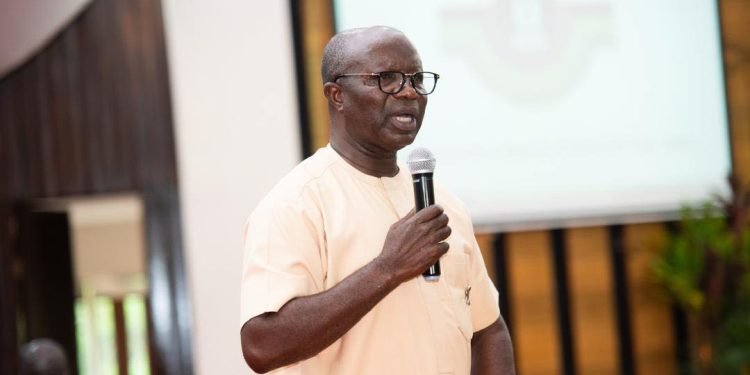

    “When we were engaging the other participants, two things came up- one has to do with galamsey, and it is having a heavy, heavy toll on the energy sector, not just about water. Gridco complained about galamsey.
    Their pylons, people are digging where they have a lot of their pylons. Yesterday we were at Bui and the Bui water situation is deteriorating because of the galamsey situation surrounding their water bodies.


    He added, “Gridco complained about galamsey. Their pylons, people are digging where they have a lot of their pylons. Yesterday we were at Bui and the Bui water situation is deteriorating because of the galamsey situation surrounding their water bodies.”


    In September, GRIDCo expressed grave concern over the encroachment on its transmission tower sites by galamsey operators, who are digging dangerously close to the foundations.


    Acting Deputy Chief Executive Officer of Engineering and Operations, Frank Otchere, made this known at GRIDCo headquarters in Tema on Thursday, September 25.


    Mr. Otchere stated that maintenance teams now face attacks when they attempt to access certain areas.


    “Unfortunately, there are some areas that even when our maintenance teams go there, they get shot at. And some of them have had to run away,” he disclosed, adding that the situation has made it impossible for GRIDCo to operate in certain locations without security support.


    He added that the galamseyers are weakening the towers, which are carefully engineered to withstand immense weight and pressure. He appealed for urgent assistance from national security agencies to protect transmission corridors and avert the potential collapse of towers.


    “This engagement aims to provide a platform for frank and constructive dialogue between the Government and civil society on the menace of illegal mining, with a view to harnessing collective expertise, perspectives, and solutions to address this national challenge,” the letter stated.


    Ongoing research by a forensic histopathologist and former Head of Pathology at KNUST and Komfo Anokye Teaching Hospital (KATH), Prof. Dr Paul Poku Sampene Ossei, has revealed alarming trends in the rising cases of spontaneous abortions among pregnant women in Ghana.


    Approximately five hundred cases of spontaneous abortions (miscarriages) have been recorded in research that links these cases to severe contamination of placentas and the presence of heavy metals, such as lead and mercury, resulting from galamsey activities.


    A spontaneous abortion is the unintentional expulsion of an embryo or fetus from the uterus before it is viable.Speaking on JoyNews’ Newsfile on Saturday, September 27, Prof. Sampene warned that galamsey is poisoning unborn babies and endangering the lives of mothers.


    “I have about 500 cases where women go to the hospital and abort their babies because of the concentration of these heavy metals in their placenta,” he disclosed.


    According to him, his research involved over 4,000 placentas examined from different regions across Ghana. The results showed dangerous levels of heavy metal contamination on both the maternal and foetal sides. “The placentas are all contaminated, polluted with heavy metals,” he said.


    The dangers of these metals extend beyond pregnancy losses. Another effect of galamsey is the excessive use of alum to address the increasing turbidity of water.


    Ghana Water Company Limited, the nation’s largest water supplier, has resorted to using higher concentrations of alum. Prof. Sampene cautioned that high levels of aluminium hydroxide pose serious health risks.


    According to him, one of the consequences of excessive alum use is kidney disease, which is already on the rise. He warned that if left unchecked, “Ghana will be in big trouble.”


    “Of course, people are talking about turbidity, and then the Water Company is saying that they are using more alum. Alum is aluminium hydroxide, that is the full name, aluminium hydroxide, and this aluminium hydroxide, when taken for a long period, in fact at higher concentration, has a lot of what you call health effects. One of them is kidney problems.


    “When you use alum, that’s aluminium hydroxide, which is used to purify the water, especially when they are using that concentration, which I believe is so high, it’s going to cause kidney problems, it’s going to irritate the respiratory tract, and it’s going to cause what we call neurological defects.


    “All these things have been proven, have been studied, and proven to be important, and we have to be very careful about them now. This goes apart from the effects that we are seeing around,” he explained.


    Among the recent measures taken to protect water bodies from illegal miners is the deployment of the National Anti-Illegal Mining Operations Secretariat (NAIMOS).


    The Secretariat includes the Ghana Armed Forces, the Ghana Police Service, the Ghana Immigration Service, the National Intelligence Bureau (NIB), the Narcotics Control Commission, and the National Security Secretariat.


    Addressing the security forces, the Minister for Lands and Natural Resources, Emmanuel Amarh Kofi-Buah, directed the team to ruthlessly counter the activities of galamsey operators as they are the enemies of the state.


    “Any recalcitrant entering into these zones is not merely a trespasser. They are an enemy of the state. You are to be firm. You are to be resolute. You are to be ruthless.


    “And please, take it from me, you will take no obstructionist instruction from any big man. Remember, the biggest man in Ghana is the President of the Republic, and he’s the one who has sent you,” Mr Kofi-Buah charged.

  • A/R: Unknown men kill man at Aketechieso mining site

    A/R: Unknown men kill man at Aketechieso mining site

    Unknown gunmen have shot to death a young man, Martin Issah at Aketechieso, a mining community in the Amansie Central District of the Ashanti Region on Sunday, October 5.

    According to reports, the deceased, who is believed to be in his late 30s, was returning from work at Adomanu with his brother Daniel Issah. The duo is said to have been ambushed by unknown gunmen at Aketechieso who were after their gold detector machine.

    Speaking to the media, the Assembly Member for the Aketechieso Amamuom Anakyirem Electoral Area, Krobea Asante disclosed that the armed men shot the deceased in the face, while his brother sustained gunshot wounds because he managed to flee the scene.

    He called on the government for an increased security presence in the area to avert future occurrences. In a separate development, a pit collapse at an illegal mining site at Kasotie in the Atwima Mponua District of the Ashanti Region on Wednesday night, October 1, has claimed the lives of seven illegal miners who were trapped underground.


    According to reports, the pit collapse which occurred on Wednesday night, October 1, also left four injured, while several miners are feared trapped. Meanwhile, rescue efforts are ongoing by the National Disaster Management Organisation (NADMO) in collaboration with emergency services and local volunteers.


    For years, the country’s efforts to nip the canker in the bud have not yielded the needed results. Among recent measures taken to protect water bodies from illegal miners is the deployment of the National Anti-Illegal Mining Operations Secretariat (NAIMOS).


    The Secretariat includes the Ghana Armed Forces, the Ghana Police Service, the Ghana Immigration Service, the National Intelligence Bureau (NIB), the Narcotics Control Commission, and the National Security Secretariat.
    Addressing the security forces, the Minister for Lands and Natural Resources, Emmanuel Amarh Kofi-Buah, directed the team to ruthlessly counter the activities of galamsey operators as they are the enemies of the state.
    “Any recalcitrant entering into these zones is not merely a trespasser. They are an enemy of the state. You are to be firm. You are to be resolute. You are to be ruthless.
    “And please, take it from me, you will take no obstructionist instruction from any big man. Remember, the biggest man in Ghana is the President of the Republic, and he’s the one who has sent you,” Mr Kofi-Buah charged.
    Earlier this month, the government announced plans to deploy soldiers to permanently guard 44 galamsey hotspots, including waterbodies and areas threatened by galamsey activities.
    Speaking to the media on Tuesday, September 16, the Minister of State in charge of Government Communications, Felix Kwakye Ofosu, noted, “All the 44 areas that are threatened by galamsey, there is going to be a permanent military presence,” he added.
    According to statistics from the Lands Minister, 1,400 persons have been arrested from January to August this year in the government’s efforts to crack down on galamsey.
    According to him, the achievement was attained through the government’s renewed efforts. He noted that the government has seized 440 excavators and more than 800 changfans.
    “We have seized 440 excavators and more than 800 changfans. We have mobilised Blue Water Guards in key regions, and they are making a difference,” Mr. Buah stated.
    The government’s recent move is a response to mounting calls for the declaration of a state of emergency on galamsey. Illegal mining activities continue to regress the country’s development, as they lead to the loss of lives, destruction of properties and the environment, and water bodies, among others.
    For years, the country’s efforts to nip the canker in the bud have not yielded the needed results. Among measures taken to protect water bodies from illegal miners is the deployment of river guards.
    The river guards are selected from communities most affected by illegal mining, ensuring they have a deep understanding of the local landscape and challenges.
    The government has issued an official order requiring all machinery used in mining operations to be registered with the Driver and Vehicle Licensing Authority (DVLA) by August 1st.
    A statement issued by the Ministry of the Interior on Tuesday, July 15, states that the state will proceed with confiscating unregistered mining equipment after the deadline.
    “The Government, as part of efforts to reform the mining sector in the country, requires that all machinery used in mining activities must be registered with the Driver and Vehicle Licensing Authority (DVLA) by 1st August 2025. Equipment that remains unregistered after this deadline will be confiscated by the State,” the Ministry stated on its website.
    Mr Mubarak has empowered the Ghana Police Service and DVLA to begin strict enforcement of the new rule from August 2. “The Ghana Police Service and DVLA have been directed to enforce this directive from 2nd August 2025 onward rigorously. The general public, especially those who use mining machinery, is advised to take note and comply with the directive,” he wrote.
    The Ministry reiterates its resolve to maintain national peace through effective internal security and law enforcement. Meanwhile, a similar directive came in months ago, where excavator owners and operators were asked to register their machines with the Driver and Vehicle Licensing Authority (DVLA) within two weeks or risk losing them to the state, as the government intensifies efforts to clamp down on illegal mining activities.
    The Chief Executive Officer (CEO) of the DVLA, Julius Neequaye Kotey, issued the directive in Accra, warning that effective June 1, any excavator not registered with the DVLA will be confiscated.
    Speaking at a press briefing, Mr. Kotey announced that the Ghana Police Service and the DVLA’s operational team commenced a nationwide enforcement after the deadline, arresting and impounding excavators being used at mining sites or for commercial purposes without proper documentation.
    “This exercise will help identify every excavator that enters the country and trace how it is being used. The goal is to ensure we can monitor and hold people accountable,” Mr. Kotey said.
    The directive fell in line with Section 38 of the Road Traffic Act, 2004 (Act 683), which mandates the registration of all motor vehicles and trailers, including farm and heavy-duty equipment. Despite the law, the DVLA found many unregistered excavators operating in mining areas, some of which have been used in illegal activities.
    Mr Kotey emphasised that the DVLA, with its 34 offices nationwide, could register all excavators and farm machinery within two weeks and was ready to strictly enforce the directive.“Excavators in the hands of illegal miners have worsened the destruction of our environment. This is why we must act,” Mr Kotey said.
    To further control the situation, the DVLA, in collaboration with key agencies like the Minerals Commission, National Security, the Ghana Ports and Harbours Authority (GPHA), and the Customs Division of the Ghana Revenue Authority (GRA), commenced tagging all newly imported excavators.
    In addition to tagging new imports, the Minerals Commission was tasked with leading a team to tag all excavators already in the country. Legal small-scale mining sites have also been geo-fenced, with their site coordinates integrated into the Ghana Mine Repository and Tracking software for better oversight.
    The move is part of the government’s broader efforts to combat illegal mining. Three months ago, Lands and Natural Resources Minister Emmanuel Armah-Kofi Buah announced the rollout of a system to monitor excavator imports and usage, involving port tagging and digital tracking in partnership with several state agencies.
    According to the sector minister. The third most valuable item imported into this country is excavators, and it is worth GHC6.2 billion. In April, a total of 47 individuals were arrested for engaging in illegal mining activities along the Tano River and within the Aboi, Subri, and Nimiri forests in the Western Region. This followed a special four-day intelligence-led operation that commenced on April 17, within the Samreboi enclave.
    According to the Ghana Police Service, the suspects include 39 Ghanaians and 8 Chinese nationals. The Police indicated that a significant amount of equipment and materials believed to have been used for the mining operations were retrieved.These include seventeen excavators, one bulldozer, four motorbikes, two Toyota Hilux vehicles, one Rav4 vehicle, four pump-action guns, one single-barreled gun, fifty-four live BB cartridges, and eight pumping machines.
    Prosecution began for the arrested suspects. On Tuesday, 41 of them were arraigned, with 29 remanded into Police custody to reappear before the court on April 30, 2025. Twelve others were also remanded to return to court on May 2, 2025.The remaining seven were put before the court on April 23, 2025. Two coordinated operations conducted on Friday, June 20, at Nikanika and Adeade in the Central Region led to the arrest of 3 suspects and the seizure of several pieces of mining equipment.
    The operations were executed by the Ghana Police Service through its Special Anti-Galamsey Task Force. The task force proceeded to a mining site at Nikanika. Although no operators were found at the scene, the team retrieved a single-barrel shotgun loaded with a cartridge and three water-pumping machines.
    The task force extended its operation to Adeade, where three suspects, Prosper Quansah, Chrispin Nartey, and Owusu Gambra, were arrested with an excavator on a lowbed trailer. One SANY excavator, four unregistered Haojin motorbikes, and one lowbed vehicle with registration number GN 2136-24 were seized from the scene.All exhibits were secured in police custody.
    Some 12 accused persons standing trial for engaging in illegal mining activities at Tumetu near Princess Town in the Ahanta West Municipality of the Western Region have been remanded into prison custody.While 10 of the accused persons were arrested at a palm plantation, two were arrested at the Elluabo Chavene Ghana Rubber Estate Limited (GREL) plantation.This was due to a coordinated police intelligence-led operation within the Ahanta West Municipality.
    The accused persons are Lord Yankey, Caleb Adu Kwaw, Stephen Agyei, Ebenezer Barnes, Mathew Somagevi, Paa Grant, Bashiru Kaviru, Joseph Borney, Aminu Issah, Kofi Sogah, Albert Normah, and Robert Mensah.Four water pumping machines, one tricycle with registration number M-20-WR 1045, and two motorbikes were retrieved from the sites, according to the police.
    All twelve accused persons admitted to the offence during police interrogations. They were subsequently put before the Takoradi Harbour Area Circuit Court ‘A’, and were remanded into prison custody at Sekondi and reappeared before the court on Tuesday, July 8.Also, fifteen individuals are in police custody for engaging in illegal mining activities at Manso Adubia.
    They were arrested following a special intelligence-led operation at Watreso and Preacher Krom.The suspects include Tahiru Ibrahim (24), Shaibu Idrissu, (23), Boateng Emmanuel (27), Jamon Kwaku Samuel (21), Yaro Patrick (29), Kofi Boakye (21), Gubong Mathew (45), Fatawu Zackari Seidu (26), and Abdul Malik Seidu (22).The others are Dauda Tahiru (23), Sampson Grace (21), Boolangkpuo Freda (24), Arima Hagar (26), Kwarteng Vasco (30), and Kwame Adutwum (24).
    Two excavator control boards, two automatic pump-action guns, two Musler 12 firearms, 59 BB cartridges, three AA cartridges, one water pumping machine, two power generators, one vulcanizing machine, and one Apsonic motorbike were seized from the site.

  • Gunfire exchange at Sampa leaves 8 police officers injured

    Gunfire exchange at Sampa leaves 8 police officers injured


    Eight police officers have sustained injuries following a gunfire exchange between masked men at Sampa in the Bono Region on Sunday afternoon, October 5.

    A police officer was earlier reported to have lost his life as a result of the incident. The clash also left a police vehicle destroyed, caused hundreds of thousands of Ghana Cedis in commercial losses, and destroyed essential goods.

    Tensions between rival groups in the township are believed to have led to the incident.

    In a recent development, an armed attack at the Gbintri inland checkpoint in the East Mamprusi Municipality of the North East Region left an Assistant Immigration Control Officer II (AICOII), Rafiq Mohammed, dead, and another officer, AICOII Oppong Daniel, injured.

    AICOII Oppong Daniel was reported to be receiving treatment at the Baptist Medical Centre in Nalerigu after sustaining multiple gunshot wounds in the incident.

    While details of the attack remain unclear, reports suggest that the incident took place at about 1:30 a.m. on Friday, October 3. However, AK-47 shell casings used by the attackers during the operation have been retrieved by the joint response team, led by Superintendent Francis Brobbey, Gambaga Municipal Police Commander, and DIS Moro Tanko Mohammed, North Regional Intelligence Officer of the GIS.

    In July this year, the lifeless body of an immigration officer identified as Stephen King Amoah, also known as Nana Kofi, was discovered in a drainage system near GBC Satellite, opposite Comet Estate, Accra.

    The deceased is said to have gone missing five days (since July 3) before his tragic death. This was contained in a press statement by the Ghana Police Service on Thursday, July 10.

    Providing more details about the tragic incident, the police noted that the murderer(s) of the 38-year-old also set his body on fire.The deceased’s remains have been conveyed to the Police Hospital morgue after the relatives positively identified the body as Stephen.

    The police have disclosed that their preliminary investigations indicate the deceased went to meet his debtor, Bright Aweh, who had promised to pay the outstanding debt on Thursday, July 3, in the evening.

    The victim never returned home that night, and his phone remained switched off throughout, raising concerns among family and friends who later reported him missing.

    “Investigations revealed that on 3rd July 2025, at about 8:00 p.m., the deceased left his residence at Ashongman Estate after receiving WhatsApp images of cash bundles from one Bright Aweh, who requested to meet him at a spot at Ashongman Estate to settle an outstanding amount.

    “According to the complainant, the deceased never returned home that night, and his phone remained switched off thereafter,” the police said.

    After the deceased’s family filed a complaint at the police station, Bright Aweh was arrested to assist with the investigation.

    He admitted that he met with the deceased and alleged that he gave a cash of GHS500,000 to the deceased, instructing him “to use part of the money to pay off some debts and hold the remaining amount for later collection.”

    But the police in their statement noted that “the suspect could not clearly explain the source of the funds and gave conflicting statements.”

    Meanwhile, the police pledged to get to the bottom of the case and ensure justice is served to the perpetrators.

    “The Regional Police Command strongly condemns such violent and criminal acts and assures the public that it is working diligently to uncover the full circumstances surrounding this incident and bring all responsible persons to justice,” it added.

    Subsequently, the Ghana Police announced the arrest of the prime suspect in the gruesome murder of immigration officer Stephen King Amoah, also known as Nana Kofi on August 4.

    This follows the discovery of weapons believed to have been used in the murder of Immigration Officer Stephen Amoah.

    During a press briefing on Monday, August 4, the Director-General of the CID, COP Lydia Yaako Donkor, revealed that bloodstains were found in the living room, on a burnt, blood-soaked carpet, and on a fufu pestle suspected to have been used in the murder by the suspect.

    According to the Police, the forensic conducted on Thursday, July 24, also exposed freshly sprayed walls, hinting at an attempted cleanup by the suspect.

    “The Kwabenya Teshie Police visited the suspect’s residence, and the forensic inspection revealed the following bloodstains in the living room and evidence of attempted cleanup, freshly sprayed walls, and an empty can of spray paint. A search of a secondary crime scene near the GBC satellite area also uncovered a burnt woolen carpet and partially burnt camouflage fabric.”

    “These items were photographed, retrieved and photocopied for forensic analysis. On 24th July, the police received a warrant to search a particular room in the suspect’s house. A search in the room revealed more bloodstains, which were photographed and samples collected for forensic analysis. A further search in the bushes about 100 metres from the suspect’s house also led to the retrieval of the…” the Police said.

    The Service has noted that in the coming days, undertake a DNA exercise on the bloodstains with samples from the deceased mother and son, aiding with the process.

    “I wish to say that the initial blood sample collected was positive for human blood. To aid the investigations, the deceased mother and son has provided sample for DNA profiling. In the face of these pieces of evidence the suspect who was initially charged with kidnapping has since been rearrested and formally charged with murder. He is currently on remand following his appearance with the Adabraka District Court and is scheduled to reappear on 8th August 2025.

    “A special operation is currently underway to identify and arrest his accomplices and we are following other vital leads to gather all necessary evidence against the suspect and his accomplices. The Ghana Police Service wishes to assure the public that the investigations is ongoing and every effort is being made to ensure that all the perpetrators are prosecuted,” she added.

    Meanwhile, recent reports suggested that the third suspect involved in the murder of Stephen King Amoah, an Immigration Officer, has succumbed to an illness.

    According to sources, the victim’s brother, Kwasi Amoako, revealed this information to the media.

    “Yesterday we went to court and I can confirm that the third suspect has passed on. I was told by the Police CID, the one who is in charge of the case. We thank God that our brother has started seeking justice for himself,” he is quoted to have said by MyJoyOnline.

    The police are yet to issue a formal statement on the suspect’s death.

    The Adabraka District Court on August 22, continued hearing the case after remanding the prime suspect into police custody for two weeks.

    The court has adjourned the case involving the murder of immigration officer, Stephen King Amoah, to October 9 following the police’s request for more time to gather the due evidence against the accused parties.

    The adjournment of the case was announced during the court hearing at the Adabraka District Court on Thursday, September 4, where the prosecutors prayed the court that the Ghana Police Service needed more time and specialised gadgets to advance investigations.

    According to them, a court order had been secured to facilitate the process and prayed that the suspects, Bright Aweh and Thomas Ziggah, remain in custody.

    However, Counsel for the suspects, Gordon Aboagye, expressed concerns about the state of his clients, who appeared visibly distressed, suggesting that they may have been held under harsh conditions while in custody.

    Referring to the need to uphold democratic principles, he prayed that the court reveal the detention location of the suspects in order for their families to visit them and check their well-being while in custody.

    “In line with democratic principles, families of the suspects should be aware of their location to enable visitation. My Lord, my client has appeared in court limping and with bloodshot eyes. He has already been treated twice at the Police Hospital without improvement. We respectfully request that he be sent to Korle Bu Teaching Hospital for independent medical attention,” he argued.

    However, the prosecution objected, urging the defence to formally apply if it insists on the transfer of its client.He further appealed to the bereaved family to remain calm and allow the law to take its course. He commiserated with them for their loss.

    “We sympathise with the family of the deceased and plead with them to remain calm and allow the law to take its course,” he added.

    The court, on the other hand, admonished the family of the bereaved family to stay patient, assuring them that justice would be duly served.

    Meanwhile, a dramatic scene unfolded at the court when the aunt of the late officer performed rituals, breaking eggs and invoking curses on those she believes are responsible for his death.

    She reportedly said, “Anyone responsible for his death should also suffer the same fate. All your generation will suffer the same fate; the gods should deal ruthlessly with anyone responsible for his murder. The gods shouldn’t spare anyone involved.”

    The case is now scheduled to continue on October 9.