Author: Phoebe Martekie Doku

  • 320 unclaimed bodies to be buried in mass ceremony at Korle-Bu Hospital on Jan 18

    320 unclaimed bodies to be buried in mass ceremony at Korle-Bu Hospital on Jan 18

    A mass burial is expected to be conducted for about three hundred and twenty (320) unclaimed bodies currently deposited at the Korle-Bu Teaching Hospital morgue in the coming days. 

    This information was disclosed by the Management of the Korle-Bu Teaching Hospital in a press release dated Tuesday, December 23. 

    According to the statement, the exercise is intended to reduce severe congestion at the facility. Consequently, management has urged relatives who have abandoned the bodies of their loved ones to report to the hospital ahead of the scheduled exercise on Saturday, January 18.

    “The Management of Korle Bu Teaching Hospital (KBTH) wishes to inform the general public that the Hospital Mortuary is currently congested and has reached full capacity. As a result, Management will conduct a mass burial of all unclaimed, unknown, and unidentified bodies at the mortuary. Relatives, next of kin, or any persons with interest in any of the bodies are requested to contact the Management of KBTH within twenty-one (21) days of this notice, on or before 18th January 2026, to make the necessary arrangements).

    “Records indicate that about 320 unclaimed bodies are expected to be included. All bodies remaining unclaimed after the deadline will be buried in accordance with approved procedures and relevant regulations,” the statement explained.

    In August, management of the Ghana Police Hospital conducted a mass burial for 300 unclaimed bodies deposited at the hospital’s morgue. In a statement signed by Public Affairs Officer, C/Inspr. Faustina Afia Nunekpeku, the hospital noted that the unidentified and unclaimed bodies were made up of paupers, unknown former patients, abandoned dead bodies, and accident and crime victims.

    “This solemn task is part of our ongoing efforts to ensure that the deceased are laid to rest with dignity in line with public health guidelines,” a part of the statement issued read.

    The hospital noted that the occurrence of such unclaimed bodies was a reminder of the importance of proper identification. It entreated the general public to be vigilant in safeguarding personal details, especially when travelling or engaging in daily activities.

    In light of this, the Ghana Police Hospital issued a number of preventive measures to avoid falling into the category of unknown deceased persons. These include carrying identification at all times. The hospital noted that regardless of age or location, individuals must have their national identification or that of any recognised organisation on them to help the police or others easily identify them whenever they are involved in any crisis.

    Members of the general public have also been entreated to share emergency contact information with close family and friends.

    “These contacts can be used to reach out in case of a medical emergency or any unforeseen incident. For those who live alone, we advise keeping a list of emergency contacts in easily accessible places,” the statement noted.

    Additionally, the hospital urged the public to stay abreast of legal and safety requirements in the country. The hospital stated that there is the need to “always keep updated on local guidelines regarding health, safety and public transport, particularly in rural or less-patrolled areas where emergency services may be delayed.”

    Furthermore, the Ghana Police Hospital advocated for families and friends to make a collective effort to “maintain regular communication and keep records of loved ones’ whereabouts, particularly the elderly, minors and individuals with mental health challenges who may be more vulnerable to disappearing without trace.”

    “…we believe that this serves as a reminder to all of us about the importance of securing our identification and taking necessary precautions for our safety. We urge the general public to adhere to these messages to ensure their safety and prevent such unfortunate incident,” it added.

    Management of the Ghana Police Hospital expressed sadness over its pending action; however, it emphasised the necessity of the mass burial. Members of the general public have been informed to contact the pathology department of the police hospital for identification of persons who might not have been seen for some time.

    “This is to avert a situation whereby such bodies are added to those earmarked for mass burial,” the hospital explained.

    In the first quarter of 2025, the Police Hospital undertook a mass burial of some 200 unclaimed and unidentified bodies. In a video, the Service explained that the exercise was part of efforts to decongest the hospital and ensure proper maintenance of its storage unit. The deadline for the identification and collection of bodies was February 28, 2025. As such, members of the public were urged to check with the Police Hospital Pathology Department to identify and claim any missing or deceased relatives.

    In February this year, the facility carried out a mass burial for some seven unclaimed bodies at the Very Important Personality (VIP) mortuary at Bogoso in the Western Region. These bodies had been deposited for about 20 months. The remains included victims of vehicular accidents, persons who had succumbed to crime-related injuries, and abandoned remains. The burial was held despite numerous efforts by the Police at Bogoso to identify the next of kin of the deceased.

    The Ghana Police Hospital is not the only health facility to have carried out mass burials in recent times, as many health institutions have bemoaned the number of bodies left unclaimed by families.

    In April this year, the Greater Accra Regional Hospital undertook a mass burial for some 69 identified bodies that were yet to be claimed. These bodies had remained in the mortuary for over nine months. A three-week ultimatum was issued for the bodies to be claimed. After the deadline elapsed, a mass burial was carried out in collaboration with the Accra Metropolitan Assembly and its environmental unit to decongest the mortuary and maintain public health standards.

    In 2024, the Tema General Hospital in the Greater Accra Region held a mass burial for three unclaimed bodies that had been deposited at the hospital’s morgue for over a year.

    The mortuary provides secure storage for deceased individuals until they are claimed by families or transferred for further procedures. It also ensures proper identification of bodies, maintains detailed records, and facilitates autopsies and post-mortem examinations in coordination with medical staff and relevant authorities. Additionally, it manages the release of bodies to families or funeral services, ensuring that all legal and procedural requirements are met, while offering guidance and support to grieving families.

    Meanwhile, mortuary workers have, in the past and in recent times, bemoaned poor working conditions and delays in the payment of salaries. A year ago, the Mortuary Workers Association of Ghana threatened to embark on strike action over the lack of adequate protective equipment, salary arrears dating back to 2020, and unpaid COVID-19 bonuses. The association withdrew its services in November.

    In May this year, the association initiated negotiations with the incumbent government to address its challenges. In June, it engaged the Fair Wages and Salaries Commission (FWSC) over the concerns of the workers. Reports indicate that the meeting, which involved representatives from the Ministry of Health, the Ministry of Finance, and teaching hospitals, ended on a positive note.

    It is reported that the Chief Executive of the Fair Wages and Salaries Commission, Dr George Smith-Graham, assured the association of his commitment to collaborating with relevant authorities to address their concerns.

  • Atlantic Lithium updates mining lease, submits to Parliament

    Atlantic Lithium updates mining lease, submits to Parliament

    Parliament has received a revised mining lease from the Africa-focused lithium exploration and development company, Atlantic Lithium Limited, for its flagship Ewoyaa Lithium Project.

    The revised mining lease was drafted following consultations led by the Minister of Lands and Natural Resources with relevant stakeholders.

    In the coming days, the Parliamentary Select Committee is expected to examine the lease in detail and make recommendations after its review. Ghana is increasingly viewing lithium as a strategic asset due to its importance in electric vehicles and renewable energy storage technologies.

    In April, Atlantic Lithium Limited expressed confidence in moving forward with the development of Ghana’s first lithium mine, despite a dramatic fall in global lithium prices that has threatened the project’s economic viability.

    The company’s Executive Chairman, Neil Herbert, insisted that with the right collaboration and supportive fiscal terms, the Ewoyaa Lithium Project located near Mankessim in Ghana’s Central Region can still be delivered successfully.

    “We are dedicated to working in a spirit of partnership with the Government of Ghana and our host communities to ensure Ewoyaa becomes a flagship project for the country and the region.

    “While current lithium prices present headwinds, we believe that through collaboration and prudent fiscal measures, we can advance Ewoyaa to production and deliver lasting value for all stakeholders,” he added.

    Atlantic Lithium’s optimism followed engagements with the Ghanaian government to request fiscal concessions necessary to sustain the project in light of tumbling lithium prices. Since the grant of the 15-year mining lease in October 2023, the price of lithium critical in electric vehicle (EV) battery production has plunged by more than 80 per cent from its peak in late 2022.

    The company, which has invested nearly US$70 million since 2016, is counting on discussions with government officials and key stakeholders to yield a revised fiscal framework aligned with current market conditions.

    Despite the global downturn in lithium prices, Atlantic Lithium says it remains committed to advancing the Ewoyaa project to production and ensuring it delivers broad-based benefits to Ghana, including job creation, skills transfer, and revenue generation.

    The project was expected to position Ghana among the top 10 producers of spodumene concentrate a key lithium-bearing mineral with an annual output projected at 360,000 tonnes, mainly for export to the United States.

    However, in addition to falling commodity prices, delays in parliamentary ratification of the lease have slowed progress toward the construction phase, which had initially been scheduled to begin by the end of 2024.

    In a formal statement, the company reaffirmed its commitment to working closely with both the government and local communities to deliver a long-term, sustainable mining operation.

    “Atlantic Lithium remains steadfast in its commitment to progressing the Ewoyaa project to production, working closely with the Government of Ghana and local communities,” the statement read.

    “The Company continues to engage in constructive discussions with all stakeholders to ensure that the project delivers long-term benefits for Ghana, including critical revenues, local employment and skills development.”

    Meanwhile, the Minister for Lands and Natural Resources, Emmanuel Armah-Kofi Buah, has laid before Parliament the Minerals and Mining Royalty Regulations, 2025, a new Legislative Instrument (L.I.) intended to adjust mining royalties.

    The proposed regulations establish a sliding-scale royalty framework, allowing royalty rates to adjust automatically in response to fluctuations in global commodity prices. The system aims to ensure the state derives maximum benefit during periods of high prices while offering relief to investors when prices fall.

    “Today, I’m proud to say that I have brought a regulation that gives us a sliding scale agreement. The advantage is that it allows the state to capture the benefit in good times, like in the gold sector, and I have to tell you we’ve done it across the mineral sector,” Mr Buah told journalists in Parliament last week.

    He explained that when Ghana initially struck its lithium deal, global lithium prices were around $3,000, which led to a 10 per cent royalty rate. With the new sliding-scale system, any price above that level would earn the government a higher share.

    “But today, with the sliding scale I’ve brought, even when we get to $2,500, which achieved 10%, when we get to $3,000, because of the sliding scale, $3,000 plus will go to 12%. In fact, if you do the calculation at that point, it means that $3,000, government is saving almost over $500 million,” he noted.

    According to the Minister, the proposed Minerals and Mining Royalties Regulations, 2025, will also safeguard mining companies during downturns, as royalty rates will automatically adjust downward when prices decline.

    Mr Buah stressed that the regulations provide predictability for investors, reducing uncertainty around fiscal terms.

    “What is important for investors? It gives them certainty. They are very sure that in Ghana, when the price tumbles, we will not be in trouble because the government automatically will reduce royalties. When prices go up, the government will also take advantage and capture the benefit,” he explained.

    The new regulations go beyond royalties by establishing a one per cent Community Development Fund to support infrastructure projects in the Mfantseman Municipality. The Minister noted that previous agreements did not include such provisions.

    “I’m very happy today that we’ve strengthened it. We’ve even had provision in the lithium agreement that I’ve laid today. Infrastructure provisions was not in the 2023 agreement. It is in now,” he added.

    The Legislative Instrument (L.I.) covers all mining agreements and aims to improve transparency, protect investor interests, and boost government earnings from Ghana’s mineral resources, subject to parliamentary approval.

    On the other hand, Kwaku Ampratwum-Sarpong, the Ranking Member of the Lands and Natural Resources Committee, contends that the agreement works against the public interest and diminishes trust in Ghana’s resource management system.

    In the same vein, an Act of Parliament (Act 1140) in 2025 established the Ghana Gold Board (GoldBod) to oversee, regulate, and undertake the buying, selling, assaying, refining, exporting, and related activities involving gold and other precious minerals in Ghana.

    Under Section 78 of Act 1140, the GoldBod assumed the rights, obligations, assets, liabilities, and workforce of the Precious Minerals Marketing Company (PMMC) Limited, an offshoot of the Ghana Diamond Marketing Board.

    The Ghana Diamond Marketing Board was established in 1963 and charged with purchasing and marketing Ghana’s diamonds. In 1965, through Legislative Instrument (LI) 401, it was incorporated as a state-owned enterprise.

    Following the promulgation of the Diamonds Decree (NRCD 32) in 1972, LI 916 was enacted to change the company’s name to the Diamond Marketing Corporation. In 1989, PNDC Law 219 again changed the name to the Precious Minerals Marketing Corporation, with expanded functions to grade, assay, and value gold, diamonds, and other precious minerals.

    In 2000, the Corporation was converted into a limited liability company under the Statutory Corporations (Conversion to Companies) Act (Act 461) and renamed Precious Minerals Marketing Company (PMMC) Limited, retaining its functions. In 2016, PMMC was appointed the national assayer by the Government of Ghana.

    To strengthen industry regulation and optimise national benefits, the Ghana Gold Board was established on April 2, 2025, following extensive stakeholder consultations. The initiative aims to maximise foreign exchange inflows, gold reserve accumulation, and value addition for sustainable economic growth and transformation.

  • The 10 constitutional reforms under consideration for Ghana

    The 10 constitutional reforms under consideration for Ghana

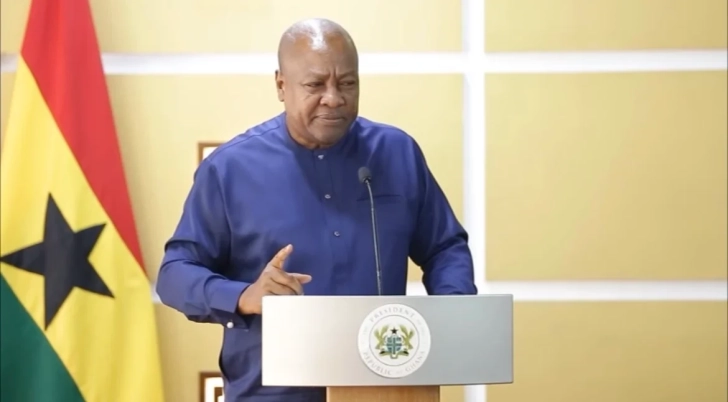
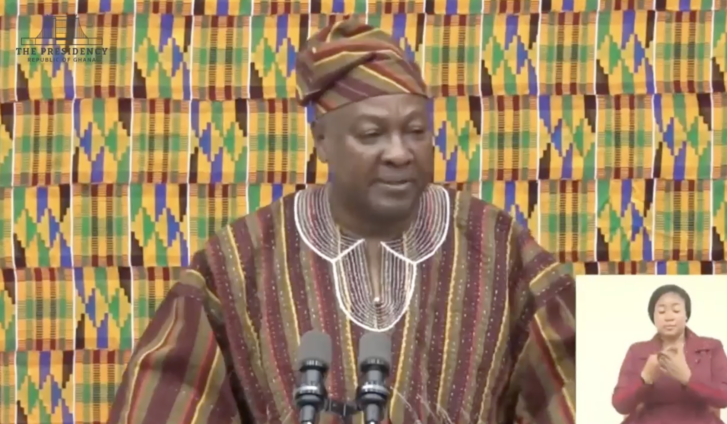
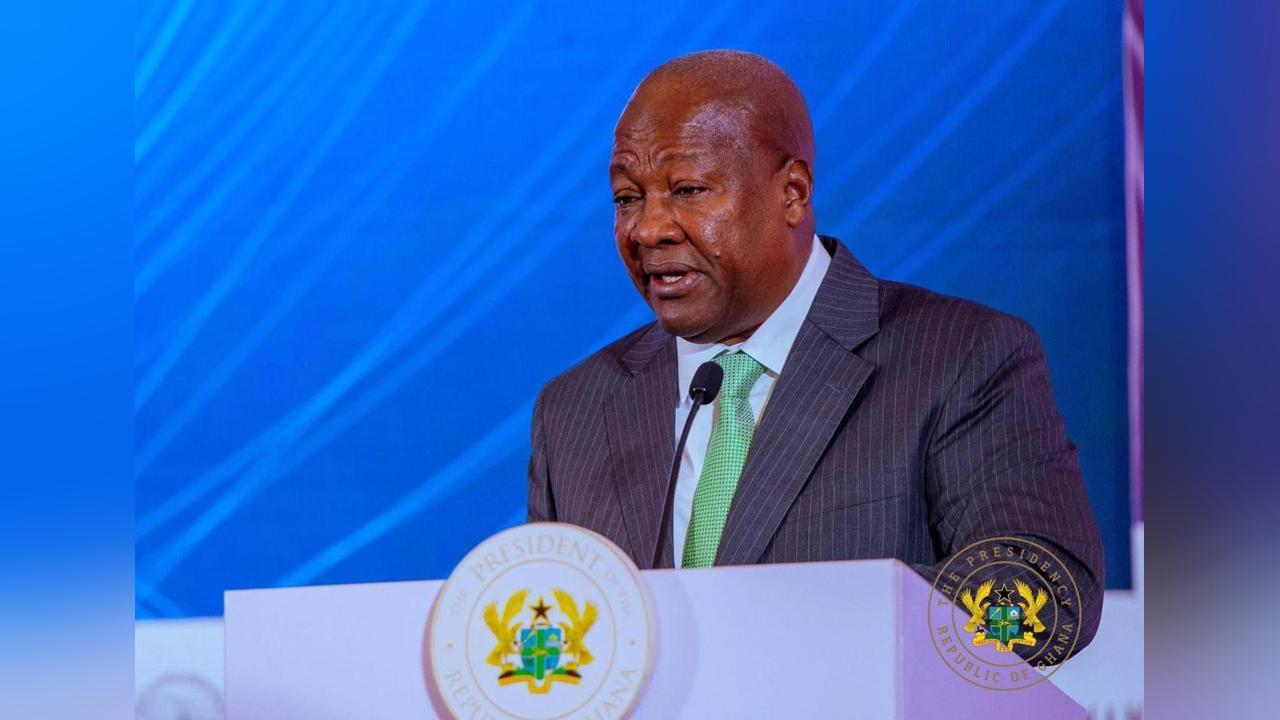
    President John Dramani Mahama on Monday, December 22, received the Constitutional Review Committee’s final report, which proposes far-reaching reforms to Ghana’s Constitution, including a leaner executive and stronger independent institutions.


    The committee has proposed 10 recommendations, including: extension of electoral terms, separation of Parliament from the Executive, cap on the size of government, reform of state land administration, strengthening independent constitutional bodies, and abolition of the death penalty.

    Others are: election of local government heads, citizen-initiated constitutional amendments, creation of an independent anti-corruption body, and parliamentary eligibility for dual citizens.


    Extension of electoral terms: The Constitutional Review Committee, chaired by Professor H. Kwasi Prempeh, has proposed a five-year presidential term, up from the current four-year term, to lower the cost and disruption of elections and give governments more time to implement policies.

    Separation of Parliament from the Executive: Currently in Ghana, the law allows the President to appoint ministers even if they are serving as Members of Parliament (MPs). However, the Committee has raised concerns about this arrangement, stating that it creates conflicts of interest and weakens legislative oversight.


    Cap on the size of government: The Committee has argued that the large number of ministers of state and their deputies creates inefficiency in the distribution of responsibilities. It has recommended that all future governments be limited to no more than 57 appointees.


    Reform of state land administration: It has been suggested that the Lands Commission be mandated to oversee the administration of state lands in efforts to promote transparency and accountability.


    Strengthening independent constitutional bodies: The Committee has also advocated that key constitutional bodies, including the Electoral Commission (EC), have appointments based on qualifications, experience, and competence, not political loyalty.

    Meanwhile, Deputy Minister for Roads and Highways, Alhassan Suhuyini, has backed a recent proposal by the Constitutional Review Committee calling for an increase in Ghana’s presidential term in office.

    Addressing the media on Tuesday, December 23, Alhassan Suhuyini argued that the four-year term given to Ghanaian presidents restricts the country’s development, as they are unable to deliver long-term policies and fully implement major development projects within the limited time frame.

    “I agree with the thinking that the four-year period has not helped us that much, and it is because of our level of development and the deficit that we have,” he said.

    The Constitutional Review Committee, chaired by Professor H. Kwasi Prempeh, has proposed a five-year presidential term, up from the current four-year term, to lower the cost and disruption of elections and give governments more time to implement policies.

    What does Ghana’s 1992 Constitution say about the presidential term?

    Under the Constitution, a President may serve a maximum of two terms, with each term lasting four years.

    Article 66 of the 1992 Constitution states as follows:

    (1) A person elected as President shall, subject to clause (3) of this article, hold office for a term of four years beginning from the date on which he is sworn in as President.

    (2) A person shall not be elected to hold office as President of Ghana for more than two terms.

    (3) The office of President shall become vacant—(a) on the expiration of the period specified in clause (1) of this article; or(b) if the incumbent dies, resigns from office, or ceases to hold office under article 69 of this Constitution.

    (4) The President may, by writing signed by him and addressed to the Speaker of Parliament, resign from his office as President.

    Additionally, the committee has also proposed that Members of Parliament (MPs) should stop doubling as ministers in government.

    However, members of the opposition New Patriotic Party (NPP) insist that President Mahama intends to seek a third term. Although the President, in late August, reaffirmed his commitment to Ghana’s two-term presidential limit—making it clear that he has no intention of extending his tenure—the Minority contends that the incumbent government is plotting a dubious move to keep President Mahama in power beyond the next term.

    During a bilateral meeting with Singaporean President Tharman Shanmugaratnam as part of his three-day state visit, President Mahama dismissed allegations that his government is plotting to stay beyond the constitutional limit, reiterating that he will not be on the ballot in 2028.

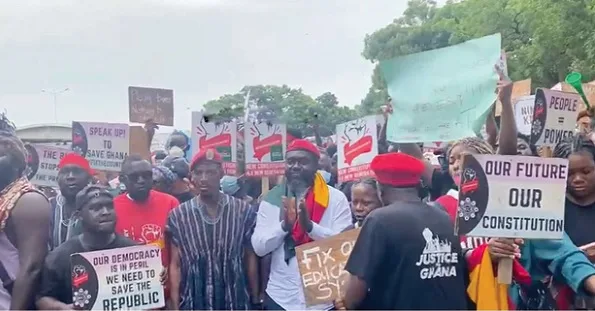
    After months of holding onto these claims, the Minority Caucus staged a protest in Parliament, chanting, “No Third Term, Mahama! We want peace, Mahama,” citing growing calls for a third term for the incumbent President from some members of the NDC, particularly on social media.

    Reacting to the protest, the Majority Leader in Parliament, Mahama Ayariga, described the Minority’s actions as political mischief intended to stir public fear and distract from substantive national issues.

    Find below the final recommendations from the Committee:

  • 4-year presidential term not enough for Ghana’s development – Alhassan Suhuyini

    4-year presidential term not enough for Ghana’s development – Alhassan Suhuyini

    Deputy Minister for Roads and Highways, Alhassan Suhuyini, has backed a recent proposal by the Constitutional Review Committee calling for an increase in Ghana’s presidential term in office.

    Addressing the media on Tuesday, December 23, Alhassan Suhuyini argued that the four-year term given to Ghanaian presidents restricts the country’s development, as they are unable to deliver long-term policies and fully implement major development projects within the limited time frame.

    “I agree with the thinking that the four-year period has not helped us that much, and it is because of our level of development and the deficit that we have,” he said.

    The Constitutional Review Committee, chaired by Professor H. Kwasi Prempeh, has proposed a five-year presidential term, up from the current four-year term, to lower the cost and disruption of elections and give governments more time to implement policies.

    On Monday, December 22, Professor H. Kwasi Prempeh presented the committee’s final report to President John Dramani Mahama. The report proposes far-reaching reforms to Ghana’s Constitution, including a leaner executive and stronger independent institutions.

    What does Ghana’s 1992 Constitution say about the presidential term?

    Under the Constitution, a President may serve a maximum of two terms, with each term lasting four years.

    Article 66 of the 1992 Constitution states as follows:

    (1) A person elected as President shall, subject to clause (3) of this article, hold office for a term of four years beginning from the date on which he is sworn in as President.

    (2) A person shall not be elected to hold office as President of Ghana for more than two terms.

    (3) The office of President shall become vacant—
    (a) on the expiration of the period specified in clause (1) of this article; or
    (b) if the incumbent dies, resigns from office, or ceases to hold office under article 69 of this Constitution.

    (4) The President may, by writing signed by him and addressed to the Speaker of Parliament, resign from his office as President.

    Additionally, the committee has also proposed that Members of Parliament (MPs) should stop doubling as ministers in government.

    However, members of the opposition New Patriotic Party (NPP) insist that President Mahama intends to seek a third term. Although the President, in late August, reaffirmed his commitment to Ghana’s two-term presidential limit—making it clear that he has no intention of extending his tenure—the Minority contends that the incumbent government is plotting a dubious move to keep President Mahama in power beyond the next term.

    During a bilateral meeting with Singaporean President Tharman Shanmugaratnam as part of his three-day state visit, President Mahama dismissed allegations that his government is plotting to stay beyond the constitutional limit, reiterating that he will not be on the ballot in 2028.

    After months of holding onto these claims, the Minority Caucus yesterday staged a protest in Parliament, chanting, “No Third Term, Mahama! We want peace, Mahama,” citing growing calls for a third term for the incumbent President from some members of the NDC, particularly on social media.

    Reacting to the protest, the Majority Leader in Parliament, Mahama Ayariga, described the Minority’s actions as political mischief intended to stir public fear and distract from substantive national issues.

  • Forensic audit of National Cathedral by PwC almost complete – A-G

    Forensic audit of National Cathedral by PwC almost complete – A-G

    An international auditing firm, PricewaterhouseCoopers (PwC), which was tasked with the financial probe into the National Cathedral, will make its findings public in the coming days.

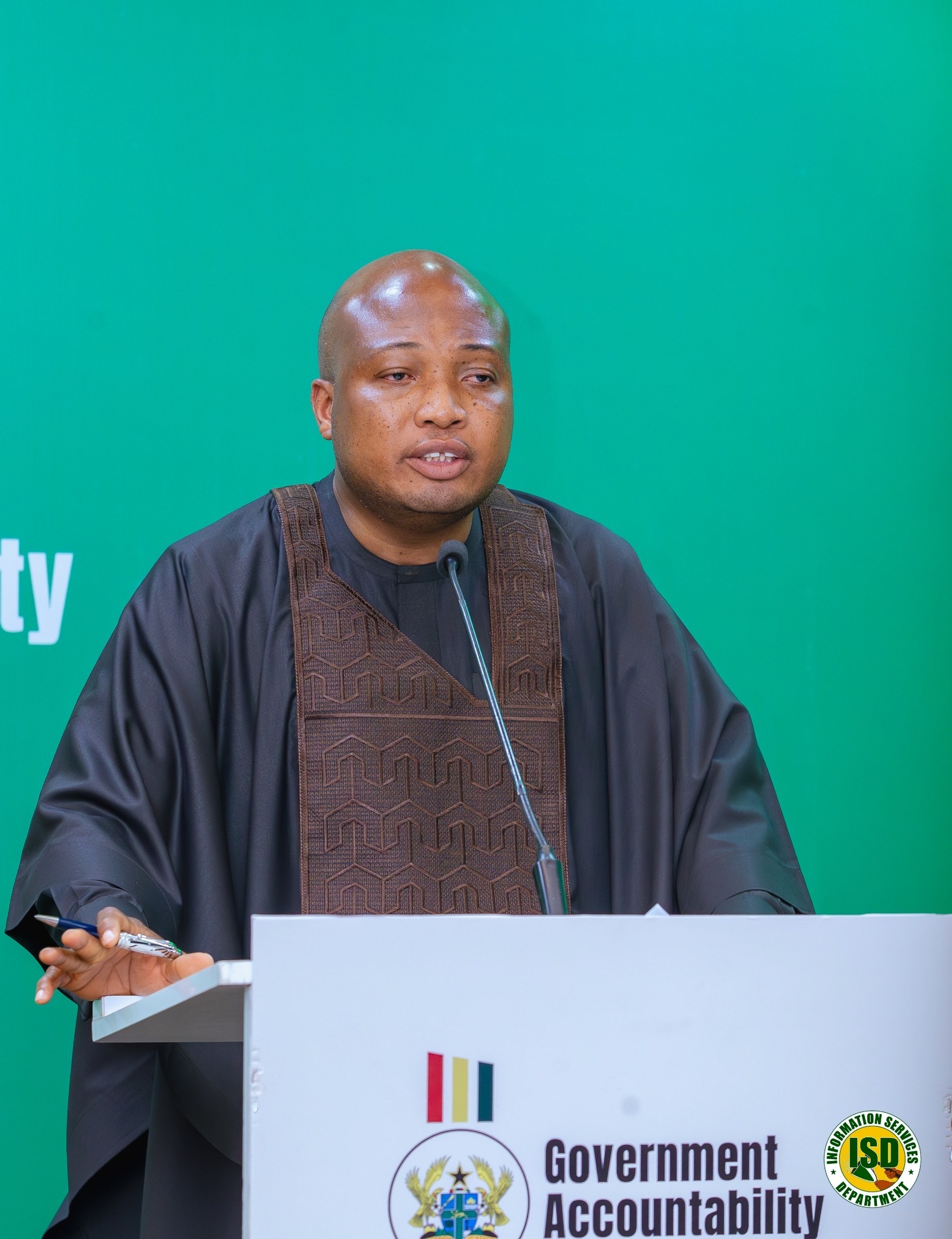
    Engaging the public at the Government Accountability Series forum on Monday, December 22, Dr. Dominic Ayine noted that PwC was engaged following consultations by President John Dramani Mahama with the Attorney-General, the Auditor-General, and the Minister for Finance.


    “After we met, and subsequently held discussions at the Ministry of Finance, it was decided that we should speedily engage a private audit firm to conduct the forensic audit,” he stated.


    According to him, the Attorney-General’s office is mandated to procure services related only to legal matters, and since the forensic audit of the National Cathedral is considered a non-legal service, it did not interfere in the process.


    “I cannot procure a forensic audit. Usually, if I am procuring services, they will be legal services, and there is no precedent of an Attorney-General procuring non-legal services. The last time I checked, they wrote to my office, this was last week, requesting a meeting with me to understand some issues that are germane to the audit work. They have done significant work and are getting to the end of their work,” he said.


    Earlier this year, President John Dramani Mahama tasked the audit firm Deloitte Touche with conducting an independent audit of the National Cathedral project.

    The report, which covered activities from December 2021 to December 2023, accused the Secretariat of procurement breaches, unsupported expenditures, and governance lapses.


    During a press briefing on Friday, July 18, Felix Kwakye Ofosu disclosed that the Secretariat spent 18,500 Ghana cedis on the expenses of one Kharis Psalmist; however, it failed to document the full cost rendered in its records.


    “A key example involves academic payment for Mr Kharis Psalmist who was lodged at the Movenpick Hotel from 16th to 28th February 2022 at a cost of 18,500 Ghana cedis. However, only 4,976.00 Ghana Cedis was recorded in the books with no documentation accounting for the remaining 13,524.00 Ghana Cedis, which reportedly a refund issued by the hotel but not traceable in the financial records,” he stated.


    As a result, the Attorney-General (AG) was instructed by President John Dramani Mahama to ensure all legal processes are initiated for the revocation of the board’s mandate.


    “The National Cathedral Ghana was registered limited by guarantee. In view of that, the Attorney General has been directed to take legal steps… and we expect that to be done in the coming days.”


    The report further explained that, contrary to the $58 million claimed by the former NPP government spent on the National Cathedral project, an outstanding $39 million owed to the contractor brings the total cost to $97 million. But the Executive Director of the National Cathedral Secretariat, Dr. Paul Opoku-Mensah, branded the report as false and incomplete.


    “While the government press conference made reference to audit findings, what was presented was not the actual audit report but rather audit queries that had been responded to in detail. This audit report does not exonerate anyone. However, it confirms that there has been no misuse of state funds. All payments made were supported by contracts and guided by legal and financial protocols,” the memo noted.


    The National Cathedral, originally proposed under the administration of former President Nana Addo Dankwa Akufo-Addo, was envisioned as a monumental Christian worship centre in Ghana.

    But the project progressed at a snail’s pace, spiralling costs and the use of public funds in a secular state. According to reports, a total amount of $58 million was spent on the project deemed to be Ghana’s most expensive.


    Over a year ago, Member of Parliament for North Tongu, Samuel Okudzeto Ablakwa, raised concerns with the Commission on Human Rights and Administrative Justice (CHRAJ), alleging irregularities in the project’s construction and the operations of the National Cathedral Secretariat.

    After investigating the case for several months, the Commission recommended that the Office of the Auditor-General intervene and conduct a forensic audit to ascertain whether funds allocated for the project were used for their intended purposes.


    The Commission highlighted that GHS225.9 million in “seed money” had been spent on activities including site preparation, contractor mobilization, and consultancy services as of May 31, 2022. CHRAJ’s detailed report recommended the potential prosecution of the board of trustees overseeing the National Cathedral project, citing their role in awarding the contract to Ribade Company Limited.


    The report highlighted multiple violations of procurement regulations and warned that the failure of those involved to address the issues could tarnish Ghana’s reputation both locally and internationally.

    The government, in April this year, dissolved the National Cathedral Secretariat after noting that it would no longer provide funding for the abandoned project.


    Meanwhile, the government has revealed its plans to repurpose the stalled National Cathedral project into a National Cultural Convention Centre (NCCC) to become a central hub for Ghana’s creative economy and cultural diplomacy.


    Under the new “SH0W24” plan, part of the 24-hour economy for the creative sector, the NCCC will be developed with support from the African Continental Free Trade Area (AfCFTA) Secretariat and host exhibitions, film festivals, trade expos, and major summits.

    The project, the government notes, offers a smart solution to infrastructure challenges without clashing with religious or national values.


    “At the national level, a bold flagship intervention is proposed: converting the National Cathedral site into the National Cultural Convention Centre (NCCC), in partnership with the AfCFTA Secretariat. This venue will serve as Africa’s premier cultural diplomacy and creative economy forum, hosting international exhibitions, film festivals, trade shows, and summits—filling a critical infrastructure gap without conflicting with national values or faith institutions,” the document stated.


    The National Cultural Convention Centre (NCCC) is a key component of a wider strategy to revitalise Ghana’s creative arts, culture, and tourism sectors as major drivers of economic transformation.

    Its development marks a major policy shift regarding the use of the contested National Cathedral site, which has faced public criticism due to delays, rising costs, and questions about its necessity.


    Under the SH0W24 initiative, the NCCC is expected to become the flagship infrastructure project for the creative economy, with the capacity to host global exhibitions, festivals, and large-scale cultural events.

    The first phase of SH0W24 (2025–2026) will focus on feasibility studies, while the centre is expected to be fully operational in Phase 3 (2028–2030). Phase 2 will see the rollout of the Ghana Cultural Passport, regional programmes, and creative districts aimed at energising local economies. Phase 3 will take things further, focusing on exports and cross-border cultural partnerships.


    In addition, the SH0W24 strategy includes the creation of a National Creators Academy, which will train young people in fields such as music, film, fashion, digital media, and cultural performance, using modern tools like AI and virtual reality, along with business and cultural education.

  • Wontumi Farms to be prosecuted over GHS24m EXIM Bank fraud – A-G

    Wontumi Farms to be prosecuted over GHS24m EXIM Bank fraud – A-G

    Wontumi Farms and its directors will appear in court for their involvement in financial crimes related to the Ghana Export-Import (EXIM) Bank, the Attorney-General (A-G) and Minister for Justice, Dr. Dominic Ayine, has announced.

    Wontumi Farms is one of the businesses managed by the Ashanti Regional Chairman of the New Patriotic Party (NPP), Bernard Antwi Boasiako, aka Chairman Wontumi.

    Their prosecution will commence after the Christmas break, to allow EXIM Bank to verify exactly how much money is at stake, as revealed by the A-G.


    Addressing the media on Monday, December 22, in Accra, the A-G disclosed that the company secured a GHS4 million loan from EXIM Bank using a forged document. He added that to support the loan application, Chairman Wontumi submitted a falsified receipt purportedly issued by Casama Enterprise.


    According to the A-G, Wontumi Farms’ illegal schemes were uncovered following the intervention of the Economic and Organised Crime Office (EOCO).

    He stated that EOCO found enough evidence to accuse the suspects of cheating, faking documents, and causing financial loss to the government.


    “In the face of the evidence we have gathered in this investigation, thoroughly conducted by EOCO, we have made the decision to prosecute Wontumi Farms and its directors with defrauding by false pretences, forgery and causing financial loss to the state in the sum of GHS24,255,735.


    “This figure represents the principal sum plus the interest that has accrued so far. By the time we file charges, which will be definitely after the Christmas break, it might be that this figure would have increased because the interest on the principal keeps compounding.


    “So we will get the exact figure of the amount that is involved in this criminal enterprise from the EXIM Bank before we file charges in court.”


    Chairman Wontumi has previously appeared in court over other matters earlier this year. Chairman Wontumi has been accused of aiding individuals to mine without a proper licence at the Samreboi concession.


    This was made known during a court proceeding on Tuesday, October 7. Prosecutors have accused Chairman Wontumi, owner of Akonta Mining, and his co-director, Kwame Antwi, of illegally authorizing mining operations without the necessary licenses.

    The duo’s acts are criminal offenses under Ghana’s mining laws.
    According to prosecutors, one Henry Okum told investigators that he got permission from Chairman Wontumi to mine in the Samreboi area because he thought Wontumi owned the land.


    In Ghana, the Minister of Lands and Natural Resources, Emmanuel Armah-Kofi Buah, is solely responsible for authorizing mining licenses.

    Authorities are currently pursuing Kwame Antwi. Meanwhile, on Monday, October 6, he was granted bail in the sum of GH¢1 million with two sureties.


    Chairman Wontumi made an appearance at the Criminal Investigations Department (CID) of the Ghana Police Service with his lawyer, Andy Appiah-Kubi, on Monday, October 6, after an order from the Attorney-General (A-G), Dr. Dominic Ayine.


    On Friday, October 3, Dr. Dominic Ayine threatened to arrest him if he failed to surrender himself to the CID. According to the Attorney-General, little progress has been made in investigating the allegations as key documents have been withheld by some officials of the previous administration.


    In April, the Minister for Lands and Natural Resources, Emmanuel Armah-Kofi Buah, revoked the company’s mining license for illegally mining within the Tano Nimiri Forest Reserve in the Western North Region.


    The Minister explained that Akonta Mining has extended its illegal activities to the Aboi and Tano Nimiri Forest Reserves, despite possessing a valid license to operate outside of forest reserves. Reacting to the Minister’s statement, the company refuted claims leveled against its operations.


    It emphasized in a press statement, “We are not responsible for the activities in the Tano Nimiri Forest Reserve. That responsibility lies solely with the Forestry Commission and the Ministry of Lands and Natural Resources.”


    The company added that such claims are a deliberate attempt by the Minister to tarnish the reputation of the company.


    “The decision by the Minister to publicly accuse us and call for the revocation of our license without any investigation or hearing is not just unfair, it is a clear breach of natural justice and a politically motivated act,” the company said.


    In May, the Special Police Anti-galamsey Taskforce from the National Police Headquarters apprehended 17 suspects in connection with illegal mining activities (galamsey) at Samreboi in the Western Region.


    The police nabbed the suspects, comprising seven Chinese nationals and 10 Ghanaians. The suspects were transported to Accra to assist with further investigations.


    The anti-galamsey task force is intensifying operations within the Aowin Tano and Tano Anwia areas near Enchi, focusing on identifying additional persons of interest and protecting the affected forest reserves.

    The Ghana Police Service announced that it remains resolute in its support for national efforts to combat illegal mining. There have been earlier anti-galamsey operations at Samreboi. Months ago, the police arrested 58 suspects, comprising 50 Ghanaians and eight Chinese, and retrieved 85 excavators and three bulldozers to halt galamsey operations at Samreboi, along the Tano River, Wassa Dunkwa, Tigarikrom, and surrounding communities in the Western Region.


    Similar anti-galamsey operations were carried out by various Regional Police Commands across the regions as follows: The Western Regional Police Command arrested 19 suspects and retrieved three excavators and three pump-action guns, among other exhibits.


    The Upper West Regional Police Command arrested seven Ghanaian suspects and retrieved 11 changfangs and three motorbikes, among other exhibits.


    The Eastern South Regional Police Command arrested 24 suspects, including one Burkinabe, and retrieved five excavators, three single-barrel guns, and one pump-action gun, among other exhibits.


    The Western Central Regional Police Command arrested 85 suspects, comprising 76 Ghanaians and nine Chinese, and also retrieved 11 excavators and other exhibits.


    The Eastern North Regional Police Command also arrested 15 suspects, including one Chinese, and retrieved four excavator control boards, nine monitors, and one pistol, among other exhibits. Meanwhile, the prosecution of suspected illegal miners is being pursued by the police.


    On May 20, the Koforidua Circuit Court B granted 14 suspected illegal miners bail, each in the sum of GHC350,000 with two sureties, with one to be justified with movable property.
    The suspects were arrested on May 15 for illegally mining at Akyem Muoso in the Eastern Region by the Eastern South Regional Police Command.


    At the time of the arrest, police retrieved a pump-action gun from one of the suspects, Zuberu Nuhoho, who failed to produce documentation for the weapon. Two excavator control boards were also retrieved from the mining site. The accused persons were arraigned before the Koforidua Circuit Court B on May 16.

  • President Mahama directs Finance Ministry to release GHS1bn to contractors

    President Mahama directs Finance Ministry to release GHS1bn to contractors

    Road contractors who have been owed by the state since 2017 are expected to receive what is due them in the coming days, following the intervention of President John Dramani Mahama.

    The Finance Minister is expected to disburse GH¢1 billion to the contractors before Christmas. Currently, the state owes road contractors GH¢21 billion, according to the Minister for Roads and Highways, Kwame Governs Agbodza.

    As part of the new development, the government is checking and confirming all the money claims being made by contractors to be sure they are legitimate and accurate. All these projects must be those that were officially approved and completed under the previous administration. This, he said, would help revive road construction projects that have been abandoned.

    This information was disclosed by the President on Sunday, December 21, while cutting sod for the Sunyani–Atronie–Acherensua Road Project in the Bono Region. According to the President, only contractors who submit their certificates on time will receive their outstanding money.

    He added, “I have directed the Finance Minister, Dr Ato Forson, to release GH¢1 billion to settle debts owed to contractors since 2017 before Christmas. All the contractors will be paid, and the deceased families should follow up to receive the money”.

    “I want to urge contractors to hurry up with their certificates to receive your money. Your money will only be delayed if you are lazy”.

    In 2024, the Cocoa Road Contractors threatened to boycott the upcoming general elections and stage a protest on election day. Their intended demonstration was a response to the Ministry of Agriculture and the Ghana Cocoa Board’s (COCOBOD) failure to settle over GH¢3 billion owed to them.

    Explaining their decision to protest, the contractors emphasized that all efforts to secure their payments have been unsuccessful. In an interview on Peace FM on November 27, 2024, the contractors stated that they would only rescind their plans if their demands are fully met.

    “We will boycott the elections and stage demonstrations on election day if our demands are not met,” one said.

    The Cocoa Road Contractors lamented COCOBOD’s repeated promises, which they claim have not been honoured. They have also urged their members to join the movement to ensure their grievances are addressed.

    “We have constructed these roads for a very long time without payment, so we demand our money as a matter of urgency,” a contractor stated.

    The Vice Chairman of the Ghana Chamber of Construction Industry (GCCI), Nana Opare Kwarfo, has expressed support for the contractors’ demands. He noted that their united stance could prompt the government to act swiftly on the matter.

    However, he cautioned that staging a protest on election day might have broader implications and should be reconsidered.

    He also appealed to contractors to remain calm, assuring them that the GCCI is actively engaging with the relevant authorities to resolve the issue.

    “Boycotting the elections and staging demonstrations will aggravate things, especially in the ongoing negotiation period, so we urge them to hold on with their agitations as we try to find solutions to their problems,” he said.

    In July, the Roads Minister, Kwame Governs Agbodza, revealed that the government will settle GH¢4 billion out of the large debt owed to road contractors.

    Parliament in July unanimously endorsed the government’s proposal to divert all royalties from oil revenues and mineral resources to support the implementation of the Big Push Programme.

    This decision followed a request by the government for parliamentary approval to commit funds for the construction of specific road projects. According to the Joint Committee on Budget and Finance, “The Committee has carefully considered the Referral, and it thinks that the request is in the right direction.

    The Committee also noted that Parliament had already approved the policy and the allocation to the ‘Big Push’ Programme in the 2025 Budget Statement. Granting the request would enable the Government to enter into multi-year contracts to execute the road infrastructure projects under the Programme.”

    “The Committee accordingly recommends to the House to approve the Request for the multi-year commitments for the selected road projects under the ‘Big Push’ Programme contained in the Mid-Year Fiscal Policy Review of the 2025 Budget Statement and Economic Policy of the Government of Ghana, under Section 33 of the Public Financial Management Act, 2016 (Act 921).”

    The initiative, aimed at improving road infrastructure nationwide, is estimated at GH¢13.8 billion. It is expected to be completed by 2028 with support from the country’s financial resources.

    According to the 2025 Budget, the Road Fund owes GH¢5.75 billion, with GH¢2.81 billion allocated for road maintenance. This represents a 155.5% increase from the 2024 allocation of GH¢1.1 billion, underscoring the government’s emphasis on sustaining Ghana’s road network.

    With Ghana’s economy valued at GH¢1.2 trillion, stakeholders are closely monitoring how the government balances infrastructure expansion with financial obligations.

  • Fire outbreak at Abuakwa Manhyia claims lives of baby, five others

    Fire outbreak at Abuakwa Manhyia claims lives of baby, five others

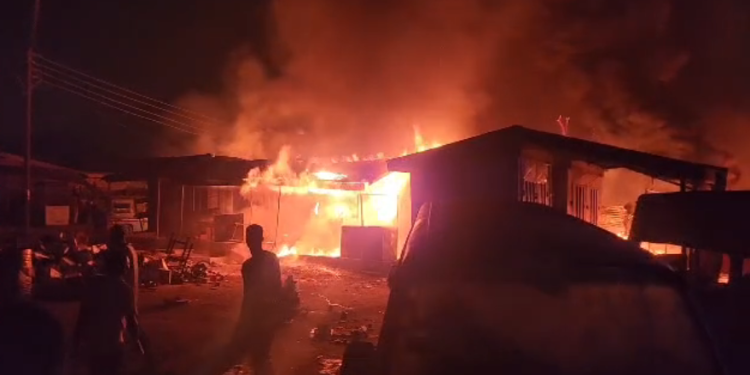
    A fire incident at Abuakwa Manhyia in the Atwima Nwabiagya South Municipality of the Ashanti Region has claimed the lives of a three-month-old baby and six others. The fire outbreak, which occurred at about 12:30 a.m. on Monday, December 22, swept through an apartment.

    This information was disclosed by the Assembly Member for Abuakwa Manhyia, Evans Opoku. Meanwhile, the cause of the incident is yet to be established. Ghana has recorded several fire incidents from January to November this year.

    Recently, a fire outbreak at Tsito–Awudome Gborkorpe in the Volta Region has destroyed a two-bedroom self-contained apartment.

    No casualties were reported from the incident, which occurred on Monday, December 8. several students at Kedjebi-Asato Senior High School (SHS) in the Oti Region were left unconscious after a fire gutted one of the boys’ dormitories on Tuesday morning, December 2.


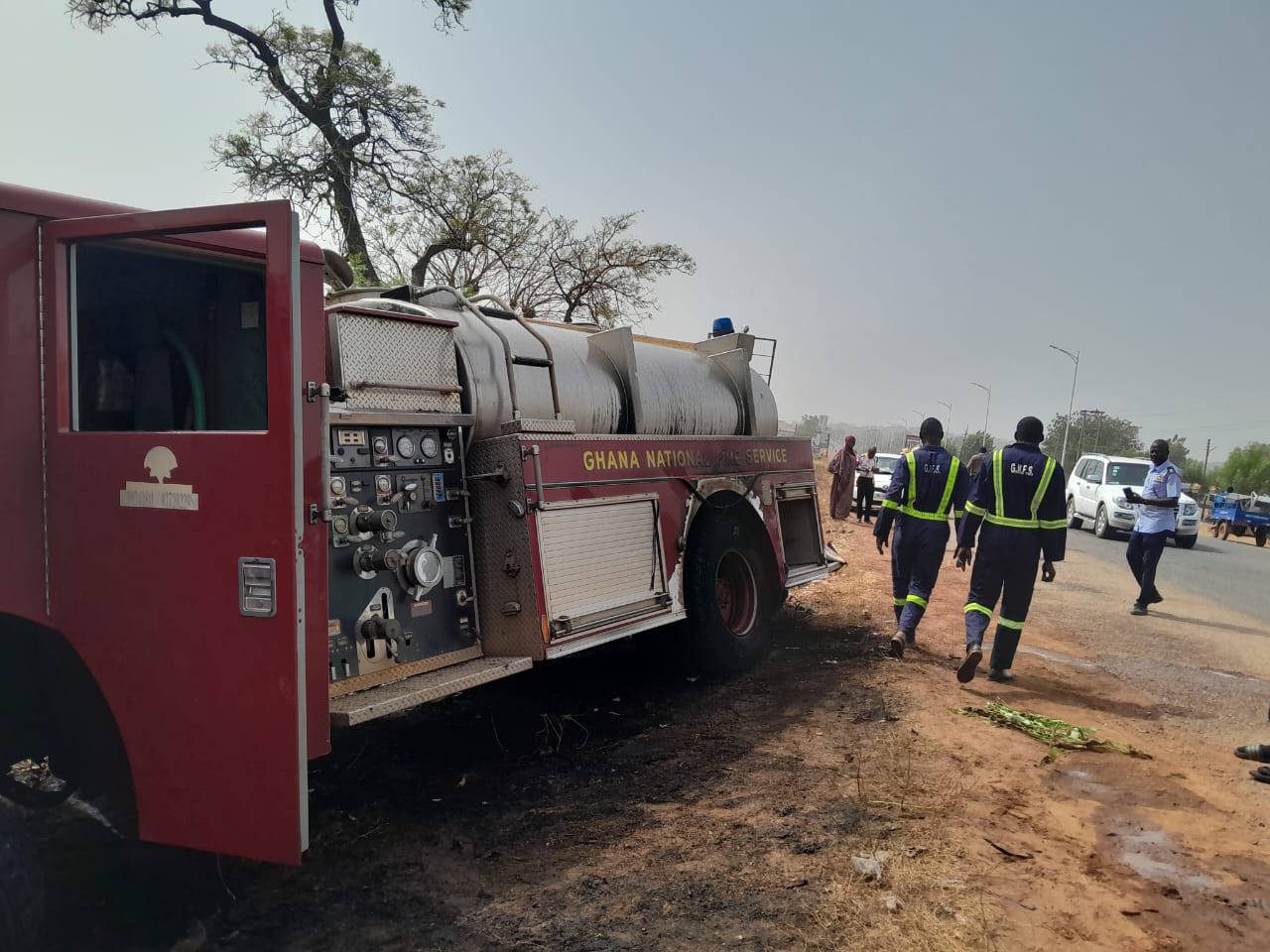
    The students passed out from exhaustion as a result of smoke inhalation during the fire. Unfortunately, all their belongings were destroyed. Meanwhile, the Ghana National Fire Service (GNFS) successfully brought the blaze under control.


    Last month, a four-bedroom apartment at Aboabo Number 2 in the Asokore Mampong Municipality in the Ashanti Region was razed by fire on Wednesday, November 27. A young man in the community, who attempted to help extinguish the fire, was electrocuted in the process.


    Speaking to the media, the Assembly Member for the area, Haruna Abdul Rashid, disclosed that the victim is currently receiving treatment at the hospital.

    He added that officers from the Electricity Company of Ghana (ECG) arrived at the scene to turn off the transformer to prevent the fire from spreading further.


    In the early hours of Wednesday, November 26, an 8-year-old girl lost her life after a devastating fire swept through the Dansoman Market.

    The little girl was trapped in the intense blaze and could not escape as the fire engulfed the area. Her charred body has been handed over to the Police for preservation and further investigation.


    Several wooden structures and shops, along with their contents, were destroyed. However, adjacent structures were saved due to the prompt intervention of firefighters.


    According to an update by the Ghana National Fire Service (GNFS), a crew from the Dansoman Fire Station arrived at the scene within two minutes after receiving a distress call at 00:02 hours, but the fire was already at an advanced stage.


    Because of the intensity of the blaze, eight fire engines were deployed to support two private water tankers from the Accra Metropolitan Assembly. The cause of the fire, however, is yet to be determined.


    On Saturday, November 22, a fire incident engulfed the Charkieh Plastics Factory site at Weija Junction in the Greater Accra Region. To contain the blaze, the Ghana National Fire Service dispatched a coordinated team from seven fire stations.


    Last month, the Kwapong Nursing Training College in the Asunafo South District of the Ahafo Region was gutted by fire. The incident, which occurred on Friday, October 31, forced students to flee to safety. Authorities are working to ascertain the cause.


    The newly opened China City Mall at Santasi in Kumasi, inaugurated in May 2025, was also destroyed by fire. No casualties were recorded, but the mall was completely ravaged, with no items salvaged. The cause has not yet been made public.

    Earlier this month, a fire ravaged parts of Kantamanto at the Tazani Lane section in Accra. Several shops selling wooden planks and hardware were destroyed after the fire broke out near Aayalolo School at 1:17 a.m. on Saturday, September 13.


    The GNFS confirmed in an update on Sunday, September 14: “The flames were confined at 6:26 a.m., brought under control by 6:37 a.m., and fully extinguished by 11:44 a.m.”


    The Service added that two firefighters sustained injuries—one from an electric shock and another from burns to the left arm. Both were treated, discharged, and are in stable condition.


    In a related development, several houses at Darkuman Kokompe in Accra were destroyed following a fire incident in the early hours of Sunday, August 31.

    Reports indicated that victims were unable to salvage their belongings while waiting for emergency response. The cause of the fire is yet to be established.


    Earlier in the month, another fire destroyed a Benz cargo truck transporting over 2,500 bags of rice from Côte d’Ivoire to Kumasi on the Adugyama–Bechem highway, near the Star Oil Filling Station, on Monday, August 25.

    Similarly, a popular pub and food joint at Nogora Junction near the Ho Technical University was reduced to ashes following a fire outbreak on Wednesday, August 13.


    On August 4, a fire ravaged the first floor of the Accra Tourist Information Centre at Cantonments. According to the GNFS, the blaze destroyed the contents on the first floor, though the ground floor and about eight offices, including the East Wing, were salvaged.


    The first GNFS engine from the Headquarters arrived at 01:04 hours to find a fully developed fire spreading rapidly in all directions, aided by strong winds. Five additional appliances from Flagstaff House, Circle, Accra City, and Ministries stations, as well as the Rapid Intervention Vehicle (RIV), were mobilised.


    Although the blaze was brought under control at 03:32 hours, firefighting efforts continued until 06:35 hours to suppress the flames and prevent further spread to nearby properties. No injuries were recorded, but investigations into the cause are ongoing.


    Another inferno destroyed several makeshift wooden and metal structures at the Madina Washing Bay near Redco Flats on Sunday, August 3. The blaze consumed utility poles, traders’ wares, personal belongings, and structures worth thousands of cedis.


    While battling the fire, one firefighter sustained a minor leg injury. The Service received a distress call at 12:36 hours, and the first crew from the Madina Fire Station arrived within four minutes. Four additional fire engines from Legon, Abelemkpe, and GNFS Headquarters later joined to contain the blaze.


    Thanks to the swift response, the fire was confined at 13:42 hours and fully brought under control at 13:54 hours. Overhaul operations continued until 20:50 hours. An investigation into the cause is underway.


    A fire also broke out at Madina Ritz Junction. Initial reports claimed that a two-month-old baby had died in the incident, but the GNFS later clarified that no lives were lost.


    “A verification team was dispatched to the scene this morning, and after engaging affected residents, particularly the women, and a Unit Committee Member of the area, the Service can confirm that no lives were lost.

    “The Service has thus entreated the public and media outlets to disregard any reports suggesting otherwise, as they are inaccurate and misleading,” the GNFS posted on Facebook.


    The Service explained that the fire began after a gas explosion in one of the shops and quickly spread to adjacent containers. Firefighters from the Madina, Legon, and Abelemkpe stations responded promptly and contained the blaze.


    In April this year, another fire ripped through the Madina Redco Flats area, destroying more than 150 structures and claiming the life of a young Nigerian woman known as Beauty.


    The inferno, which began around 11:15 p.m., spread rapidly across 140 wooden kiosks and 20 metal containers. Although firefighters arrived within minutes, the victim was trapped and could not escape. Her remains were handed over to the Madina Police.


    Last year, about 50 stalls were reduced to ashes after the Madina Market in Accra caught fire. Deputy Director of Operations at GNFS, D.O.I. Kofi Forson, recounted the challenges: “It was not easy for us. There was a lack of access to where the fire was spreading, and because it happened in the night, the shops were closed, and we had to break through, which made it tedious.”


    The GNFS has released statistics on fire outbreaks in the first half of 2025, showing a slight increase compared to the same period in 2024. Ghana recorded 3,595 fire cases between January and June this year, compared to 3,576 cases last year—an increase of 19 cases, representing a 0.53% rise.


    The monthly distribution is: January (964), February (678), March (619), April (483), May (457), and June (394). The Greater Accra Region recorded the highest number of incidents (628), followed by Ashanti (581) and Central (408). The North East Region had the lowest, with just 10 cases.


    In an interview on Tuesday, July 8, the Head of Public Relations at GNFS, Desmond Ackah, revealed that due to improved and swift responses, the Service saved over GH¢203 million worth of property in the last two quarters of 2025.


    The GNFS listed the main causes of fires as electrical faults—including illegal connections, poor wiring, and overloaded circuits; improper appliance use, such as overused extension cords and unattended devices; unattended cooking with gas, electric, or coal stoves; careless use of naked flames like candles, mosquito coils, lighters, and matches; LPG leakages and poor handling of cylinders; bush burning; vehicle fires caused by poor maintenance or accidents; unsafe welding and hot-work practices; and deliberate arson.


    Meanwhile, the Service reported a significant improvement in reducing prank calls. It recorded a 34.77% decrease—from 364,020 prank calls in the first half of 2024 to 237,470 in 2025. The GNFS attributed the decline to continuous public education and increased awareness of the legal consequences of misusing emergency lines

  • Police seize narcotics, arrest seven at Cape Coast

    Police seize narcotics, arrest seven at Cape Coast

    Seven suspects have been arrested in an intelligence-led swoop targeting narcotic drug peddling networks within the Cape Coast Metropolis on Saturday, December 13. The suspects have been identified as Robert Kobbina, Abu Issifu, Janet Mensah, Emmanuel Quarshie, Osei Boateng, Animful Emmanuel, and Charity Nkrumah.

    Led by the Central Regional Police Command, the operation raided hotspots believed to be hubs for the sale and use of prohibited substances. Meanwhile, the police also seized large quantities of cigarettes, tobacco products, lighters, and three jackpot gaming machines.

    This information comes at a time when more than 11 nationwide intelligence-led swoops have been conducted between March and December this year by the Narcotics Control Commission (NACOC), aimed at cracking down on illicit drug activities.

    Speaking to the media on Friday, December 19, the Acting Director of Public Affairs and International Relations at NACOC, PNCO Francis Opoku Amoah, indicated that during that period, the swoops were carried out in areas such as:

    “From March till now, we have conducted more than 11 swoops, which, in our line of work, is a good number because investigations take time. For us to have achieved this means we are doing well.

    “This year, we have carried out swoops in Fadama, Effiakuma in the Western Region, Atinkpoko, parts of the Ashanti Region, and other areas. It all depends on where the intelligence is coming from and the type of intelligence we receive,” he said.

    In September, 1,195 boxes of Tramadol Hydrochloride 120mg, locally known as ‘Red,’ were confiscated, with six individuals arrested following a joint operation by the Ghana Police Service and NACOC. The seizure took place at Gbintri, near Nalerigu in the North East Region, on Thursday, September 18.

    This information was contained in a statement signed by Deputy Superintendent of Police (DSP) Robert Anabiik Anmain of the Public Affairs Unit and issued by the North East Regional Police Command on September 21.

    The trucks, with registration numbers GR 1712-16 and AW 4417-14, were loaded with Tramadol en route to Gbintri from Sankase in the Republic of Togo.

    The suspects have been identified as Alhassan Braimah, Yakubu Muntaka, Abdulai Shakur, Mumuni Iddrisu, Mumuni Yakubu, and Moses Ayorik.

    “The North East Regional Police Command in collaboration with the Narcotics Control Commission (NACOC) in Nalerigu has intercepted 1,195 boxes of Tramadol Hydrochloride 120mg, popularly known as ‘Red,’ a restricted drug concealed in a truck and arrested six suspects at Gbintri near Nalerigu in the North East Region.

    “A search of the trucks uncovered the 1,195 boxes of Tramadol Hydrochloride 120mg, popularly known as ‘Red,’ concealed among other goods in the truck with registration number GR 1712-16. The exhibits have since been secured for evidential purposes.

    “During interrogation, the suspects admitted that the consignment was destined for Moses Ayorik at Gbintri for onward delivery to another individual at Gushegu,” part of the statement read.

    According to the statement, the apprehended individuals are in police custody assisting with investigations. In addition, efforts are underway to trace and arrest other individuals connected to the case.

    Officials of the Ghana Revenue Authority (GRA) at the Transit Terminal on Thursday, June 19, intercepted a shipment disguised as general merchandise and headed for Niger. The officials uncovered 100 cartons of Tramadol (50 of 250mg and 50 of 120mg), also known on the streets as “Red.”

    The operation, led by CRO William Kpodo and the monitoring team, has now been escalated to the Tema Collection’s Investigation Unit in collaboration with the Narcotics Board, Port Security, and the Joint Port Control Unit (JPCU).

    In March, the Ghana Revenue Authority (GRA) Customs Division intercepted contraband goods at Tema Port. Boxes containing opioids were confiscated before noon.

    There were 26 cartons of Rahol Tapentadol 250mg, 160 cartons of Tafradol Tapentadol 120mg, 40 cartons of Timaking Tapentadol 120mg, four cartons of Timaking Tapentadol 250mg, 190 cartons of Diazole Loperamide 2mg, and 320 cartons of Chlorpheniramine Maleate.

    The drugs were worth approximately GH₵20 million. The shipment was en route to Niger, its final destination. Engaging the media, Health Minister Mintah Akandoh condemned the use of land borders to smuggle drugs and announced that the impounded consignment would remain in the safe custody of the Authority.

    “There are only two designated areas for the import and export of medication—Tema Port and Kotoka International Airport. Drugs are not imported through our land borders,” he said.

    He called on stakeholders and security agencies to confiscate any drugs brought in through the land borders. The Health Minister indicated that authorities would swiftly seek a court order for the proper disposal of the consignment. Following the court order, the consignment was disposed of.

    Ghana is witnessing a surge in drug consumption and addiction among young people. As such, the Ministry of Youth Development and Empowerment, led by George Opare Addo, has introduced an initiative to address the rising issue of substance abuse among young people through a campaign dubbed “Ghana Against Drugs (GAD) – Red Means Stop,” which aims to combat the problem effectively.

    In a recent interview, the Minister for Youth Development and Empowerment, George Opare Addo, revealed that a survey conducted among tertiary students discovered that about 28 out of every 100 university or college students abuse codeine and cough syrup. On Thursday, August 28, he indicated that 12 in every 100 tertiary students are involved in cocaine abuse. The Minister further reported that 11% of participants admitted to overusing heroin.

    “Codeine and cough syrups stand at 28%. And then you will be amazed to know that 12% of our university and tertiary students are abusing cocaine and 11% heroin,” he added.

    According to him, more than half of the respondents admitted to consuming marijuana-infused products. In July, Minister for Health, Hon. Kwabena Mintah Akandoh, declared opioid abuse a national emergency.

    During the induction of a new cohort of pharmacists joining the Pharmacy Council of Ghana, the inductees were charged to support the government’s efforts in combating the opioid crisis, particularly the misuse of tramadol. Hon. Akandoh reminded the new pharmacists of their motto, “Amicus Humanis Generis” — Friends of the Human Race — urging them to uphold it with compassion, ethics, and excellence.

    The ceremony, held under the theme “The Future is Now: Young Pharmacists at the Forefront of Preventing Opioid Misuse in Ghana,” highlighted both the promise and responsibility that lie ahead for the nation’s newest healthcare professionals.

    Hon. Akandoh described the event as a “special day” marking the beginning of a crucial professional journey. “You have reached this milestone through dedication, hard work, and perseverance,” he said.

    The Minister emphasised the critical and evolving role of pharmacists in Ghana’s healthcare landscape, describing them as “frontline healthcare providers, educators, patient advocates, and guardians of public health.” He noted that pharmacists’ work has a direct impact on health outcomes and the well-being of the public.

    The Minister highlighted how pharmacists are central to the government’s broader health agenda, including the MahamaCares and Free Primary Health Care initiatives. These programmes, he said, rely on pharmacists to deliver accessible, quality healthcare and manage chronic diseases at the community level.

    The Ministry of Health extended its heartfelt congratulations to all newly inducted pharmacists and commended the Pharmacy Council for its unwavering commitment to excellence in healthcare delivery.

    In April, the Ministry of Health destroyed a significant consignment of illicit opioid-containing drugs that had entered Ghana under questionable circumstances.

    The consignment, which consisted of 128 boxes of Tafrodol, 92 boxes of Timaking Tapentadol, and 10 boxes of Rahol Tapentadol—totalling 230 boxes—posed serious risks to public health, particularly due to the potential for widespread misuse and addiction among the youth.

    The destruction of the drugs took place at Vigour-DW Enterprise, a waste management company based in Ashaiman, and was supervised by key regulatory and legal authorities.

    The operation was carried out in strict compliance with a court order. In a rare and highly symbolic gesture, the Ministry chose to publicly incinerate the drugs, sending a strong message to those involved in the illegal drug trade.

    Minister for Health, Hon. Kwabena Mintah Akandoh, emphasised that this action was only the beginning in the fight against illicit drug trafficking.

    “We will not stop here. After the safe disposal of this consignment, we will further investigate the clearing agent and the importer, and hand them over to the Attorney General for prosecution,” he stated firmly.

    A BBC Africa Eye investigation uncovered that Aveo Pharmaceuticals, based in Mumbai, has been producing unlicensed, highly addictive opioids that are illegally exported to West Africa.

    These drugs, packaged to resemble legitimate medications, contain a dangerous combination of tapentadol, a powerful opioid, and carisoprodol, a muscle relaxant banned in Europe due to its addictive properties.

    This combination, which is not licensed for medical use anywhere in the world, can cause severe side effects, including respiratory distress, seizures, and fatal overdoses.

    Despite these risks, the drugs have gained popularity as cheap, readily available street substances in Ghana, Nigeria, and Côte d’Ivoire.

    The Pharmaceutical Society of Ghana (PSGH) has condemned the illegal importation of dangerous opioids and called for a thorough investigation into the matter.

    The Society urged multiple agencies—including the Food and Drugs Authority (FDA), the Pharmacy Council, the Ghana Revenue Authority (GRA) Customs Division, the Criminal Investigation Department (CID) of the Ghana Police Service, the Narcotics Control Authority, and the National Intelligence Bureau—to probe the issue and hold those responsible accountable.

    “If any local pharmaceutical company is found to have breached regulatory protocols, appropriate sanctions should be enforced to maintain the integrity of the pharmaceutical supply chain in Ghana,” PSGH stated in a press release issued on February 24.

    Ghana’s Food and Drugs Authority (FDA) has revoked the Good Manufacturing Practices (GMP) certification of Aveo Pharmaceuticals, an Indian pharmaceutical company, after investigations linked it to the illegal distribution of opioid-based medications in West Africa.

    As part of the crackdown, the FDA has also directed Samos Pharma, a Ghana-based importer, to terminate all business relations with Aveo Pharmaceuticals and Westfin International.

    Additionally, the registration of six products from Masters Pharmaceutical Limited, which intended to use Aveo as a contract manufacturer, has been suspended.

    However, despite persistent appeals from traditional leaders and locals, the offenders continued their illegal activities.

  • Ghana steps up galamsey fight with deployment of 636 additional Blue Water guards

    Ghana steps up galamsey fight with deployment of 636 additional Blue Water guards

    The government has intensified the fight against illegal mining, locally known as galamsey, with the deployment of 636 additional Blue Water Guards personnel nationwide. This brings the total number of trained and deployed guards, as part of efforts to eradicate the menace, to 1,700.

    The Ministry of Lands and Natural Resources made the disclosure during the passing-out ceremony of the third batch of Blue Water Guards on Saturday, December 12, at the Ghana Navy Forward Operating Base in Ezilebo, Western Region. Speaking at the event, the Minister for Lands and Natural Resources, Emmanuel Armah-Kofi Buah, indicated that the ministry is working on diverse initiatives to ensure a lasting solution to the canker.

    He added, “The Blue Water Guards have become a critical frontline force in the fight against water pollution. They are working tirelessly to disrupt illegal mining activities along our rivers and streams.”

    “So far, we have trained about 1,700 Blue Water Guards across nearly seven regions. We are very proud of the pioneers who began this work. They are standing in the way of galamsey operators and making their activities increasingly difficult. We will remain resolute and continue this fight until our waters are restored.”

    The President John Dramani Mahama-led administration launched the Blue Water River Guard training programme in March, aimed at protecting the country’s water bodies. Under the initiative, 2,000 young men and women will be equipped with the skills necessary to combat illegal mining and preserve Ghana’s vital rivers.

    Illegal mining continues to pose a major challenge to the country, with several foreign nationals implicated and multiple arrests made. Meanwhile, President Mahama has disclosed that scientific tests are underway on new chemicals that could help restore polluted water bodies and rivers affected by galamsey.

    Speaking at a stakeholder engagement in Accra on October 3, the President said: “There are new chemicals that have come that allow you to treat water and take out the toxins and the heavy metals. One of them is called dowtine. The people came, and we sent them there. They took samples, tested. We are waiting for them to bring the results back.”

    President Mahama urged patience in the long-running battle against galamsey, noting that declaring a state of emergency alone will not end the menace.

    He said government advisers believe the country can overcome galamsey by adopting best practices in small-scale mining and technologies that neutralise or remove harmful chemicals from water bodies. He also pledged to act on calls for a state of emergency if his advisers recommend it.

    “While we are fighting the menace, I am also saying we should uptake technology in order to protect the environment. So yes, let’s fight the illegal mining, but at the same time, let’s bring new technology that will help us protect our environment.

    “Now with the elephant in the room, state of emergency, yes, I have the power to do it, but the President acts on the advice of the National Security Authority, and as at this moment, the National Security Authority believes that we can win the fight against galamsey without declaring a state of emergency. I want to assure you that the day they advise me otherwise, that boss, now we need a state of emergency, I won’t hesitate,” he added.

    According to him, his government is not backing down in its fight against the longstanding menace. Despite renewed efforts, the canker continues to wreak havoc. The newly established National Anti-Illegal Mining Operations Secretariat (NAIMOS) task force narrowly escaped death in a mob assault at Hwidiem in the Ahafo Region on Saturday, November 1, during an operation that resulted in several arrests, including a Burkinabe national.

    Locals were seen in a viral video confronting the NAIMOS team and demanding the release of those arrested. NAIMOS spokesperson, Paa Kwesi Schandorf, described the attack as “extremely and profoundly disappointing,” saying the officials “survived clearly by the mercy of God. If you look at how ]they were charged, the rest of the team could have lost their lives.”

    Meanwhile, the Member of Parliament for Asutifi North, Ebenezer Kwaku Addo, has been accused of inciting the mob against the NAIMOS team.

    NAIMOS has been active across the country, including raids in the Offin Shelterbelt Forest Reserve in the Ashanti Region, Apemkro and Anwiafutu, and Ataso, where the team seized two excavators and destroyed water pumps and other illicit mining tools.

    In the Western Region, an intelligence-led operation on October 5, 2025, saw NAIMOS demolish a notorious illegal mining base at Aboso — known as ‘Gunway’ — dismantling makeshift structures used as hideouts and drug dens, and confiscating mining equipment and quantities of hard drugs, including seven parcels of Indian hemp.

    In June, NAIMOS warned criminal groups to vacate galamsey areas. Weeks ago, the Commanding Officer of NAIMOS, Colonel Dominic Buah, signalled an imminent and aggressive crackdown on illegal miners.

    “I would like to send this warning to illegal miners, their assignees and financiers that they are the first or prime enemies of the state, and they will be dealt with as such. There will be no room for them to escape or to hide. NAIMOS will smoke them out very soon. There’s no resting place for them,” he said at a stakeholder engagement at the Jubilee House on October 3, 2025.

  • A-G’s bid to extradite Ofori-Atta will be tough – Legal practitioner

    A-G’s bid to extradite Ofori-Atta will be tough – Legal practitioner


    The Attorney-General (A-G), Dr. Dominic Ayine, would have a difficult time in getting former Finance Minister Ken Ofori-Atta back in Ghana to face corruption charges, private legal practitioner Austin Brako-Powers has noted. 

    Speaking to the media, he explained that the Attorney-General has made public statements that appear biased or unfair, and that has turned the issue into a political matter. Because of this politicisation, he believes Ghana’s case will look weaker and less credible when it is considered by authorities in the United States.

    He added, “I am saying that the Attorney-General will not be successful in extraditing Ken Ofori-Atta to this country. Based on the public commentaries of the Attorney-General and the Special Prosecutor [Kissi Agyebeng], they will not—mark it—be able to extradite Ken Ofori-Atta.”

    “This is a high-profile extradition case involving a former finance minister, a central figure in the previous administration. It will attract significant attention, and key questions around motive, fairness, and political neutrality will arise.

    “Added to that are the prejudicial public statements by the Attorney-General and the Special Prosecutor [Kissi Agyebeng], which risk undermining Ghana’s credibility as a requesting state”.

    His comments are a reaction to a recent announcement by the A-G, disclosing that the office had concluded all the necessary processes in ensuring that the former minister is extradited from the United States (U.S.). On Thursday, December 18, the A-G indicated that the extradition of former Finance Minister Ken Ofori-Atta and an alleged accomplice, Ernest Darko Kore, from the United States has formally been submitted by the Attorney General (A-G), Dr. Dominic Ayine.

    Speaking at the government’s Accountability Series held on Thursday, December 18, Minister for Justice and Attorney-General, Dr. Dominic Ayine, said the duo’s extradition processes were initiated by the Office of the Special Prosecutor (OSP) on November 19.

    He added that the Attorney General’s Department initially examined the documents related to the case; however, the International Cooperation Unit found that some parts of the paperwork were incomplete.

    Dr. Ayine added, “As a result, we communicated our observations to the Office of the Special Prosecutor in a letter dated November 25 and requested additional documentation to ensure completeness.”

    He noted that, in response, the OSP finalised the extradition request package on December 9 by providing supplementary documents and addressing the issues raised by the International Cooperation Unit.

    Dr. Ayine added that the completed extradition request was subsequently forwarded to the Ministry of Foreign Affairs on December 10 for onward transmission to the appropriate authorities in the United States, specifically the Department of Justice, to conclude the process.

    Adding, “At this point, it is left to the authorities of the United States, particularly the judicial authorities, to determine whether there is sufficient basis for the two accused persons to be extradited to Ghana to stand trial.”

    Ofori-Atta continues to be a central figure in a legal battle, despite his current health condition. Ofori-Atta appeared on Interpol’s website for “using public office for profit” after being declared wanted by the OSP.

    This followed his failure to appear before the Office of the Special Prosecutor (OSP) on Monday, June 2. His lawyers are said to have formally communicated the development to the OSP and the Human Rights Court, submitting medical reports that detail his current condition and outline scheduled surgical procedures.

    The OSP, during an engagement with the press on Tuesday, June 3, noted the failure of the former minister to inform the OSP of changes in medical procedures that were to have happened in March of this year.

    “He has failed to show any medical report that shows he is a medical risk. We want him physically, and we insist on it,” the OSP said, while noting that Mr. Ofori-Atta cannot indicate the mode of investigation. “His conduct is totally unacceptable. We will no longer tolerate him,” the OSP noted.

    Later, the legal representatives of the former finance minister informed the OSP that their client is currently undergoing medical treatment in the United States and is unable to honour an invitation for questioning.

    Ofori-Atta then assured the OSP of his commitment to appearing for questioning on a fixed date, w]hich influenced the OSP’s decision to temporarily take his name off the list in March.

    However, the office stressed that he is legally obligated to show up on June 2. Failure to do so would result in an Interpol Red Notice being issued and extradition proceedings being initiated in any country where he may be located.

    Ken Ofori-Atta then took legal steps to block the OSP from re-declaring him wanted. His lawsuit argues that the agency’s actions are baseless and unjustified.

    Ofori-Atta has dismissed allegations of financial misconduct and corruption, insisting that he has been cooperating with investigators through his legal representatives.

    In his court filing, he contends that the OSP’s actions have inflicted serious harm on his reputation and personal life. He is seeking a legal injunction to prevent further declarations against him until the case is fully resolved.

    The Human Rights Court adjourned to June 18 for a ruling on the motion filed by the former Finance Minister, seeking to restrain the OSP from declaring him wanted, among other reliefs. In February, the OSP declared Ofori-Atta wanted for causing financial loss to the state in several dealings.

    These dealings include contractual arrangements between Strategic Mobilisation Ghana Limited (SML) and the Ghana Revenue Authority, aimed at enhancing revenue assurance in the downstream petroleum sector, upstream petroleum production, and the minerals and metals resource value chain.

    They also include the termination of a distribution, loss reduction, and associated network improvement project contract between the Electricity Company of Ghana Limited and Beijing Xiao Chen Technology BXC.

    Other issues involve the procurement of contractors, materials, and activities, as well as payments related to the National Cathedral project.

    Additionally, activities and payments connected to a contract awarded by the Ministry of Health—initially commenced by the Ministry for Special Development Initiative—to service Ghana Auto Group Limited for the purchase, after-sales service, and maintenance of 307 Mercedes-Benz Sprinter 304 5 CDI ambulances for the National Ambulance Service are included.

    Finally, payments from and utilisation of the tax refund account of the Ghana Revenue Authority were also cited.

    INTERPOL Red Notice

    A Red Notice is a request to law enforcement worldwide to locate and provisionally arrest a person pending extradition, surrender, or similar legal action. It is based on an arrest warrant or court order issued by the judicial authorities in the requesting country. Member countries apply their own laws in deciding whether to arrest a person.

    INTERPOL cannot compel the law enforcement authorities in any country to arrest someone who is the subject of a Red Notice. Each member country decides what legal value it gives to a Red Notice and the authority of its law enforcement officers to make arrests.

  • Three nabbed for posing as Bagbin, IGP, and other top officials on social media

    Three nabbed for posing as Bagbin, IGP, and other top officials on social media

    Three individuals allegedly impersonating the Speaker of Parliament, Alban Bagbin, the Inspector General of Police (IGP), Christian Tetteh Yohuno, and other prominent personalities on social media have been nabbed by the Cyber Vetting and Enforcement Team.


    Gideon Awudi (25), Edem Soku (33), and Judith Soku (31) reportedly defrauded unsuspecting victims by posing as these top officials. They were arrested at Sogakope, Dzodzent, and Penyi after a tip-off.

    The suspects allegedly engaged in mobile money fraud, credit card fraud, airtime scams, and online sales fraud through social media platforms. The trio are currently assisting authorities with ongoing investigations.


    The arrests come against the backdrop of a worrying rise in cybercrime across the country. In October, the Cyber Security Authority (CSA) announced that Ghana recorded over GH¢19 million in losses to cybercrime between January and September this year, representing a 17 per cent increase compared to the same period last year.


    The Authority’s Head of Law Enforcement and Liaison, Colonel George Eduah Bessi, made this revelation during a cybersecurity awareness webinar organised by the Africa Centre for Digital Transformation.

    He expressed concern over the growing trend of online crime in Ghana, highlighting the dangers it poses to the economy. Earlier in the year, the authority reported a steep rise in cybercrime, with a record 2,008 cyber incidents, marking a 52 per cent increase from 2024.


    He said that among the crimes reported, online fraud was the most prevalent, accounting for about 36 per cent of cases, including mobile money scams, fake investment schemes, and phishing attacks.

    Cyberbullying, mostly targeted at women and children, represented 25 per cent of all reported incidents.


    Colonel Bessi noted that his outfit has ramped up efforts to create awareness and ensure regulatory compliance among users, urging individuals and businesses to adopt stronger cybersecurity practices.

    He commended the Africa Centre for Digital Transformation for its ongoing efforts, stressing that such initiatives are critical to sanitising the digital ecosystem and preventing future threats.


    “The rising losses highlight the urgent need for greater cybersecurity awareness across all sectors of Ghana’s digital economy,” he cautioned.


    His remarks come on the back of the government’s establishment of a $50 million fund to help fight cybercrime in the country. This was announced by President John Mahama in a speech at the launch of the 2025 National Cyber Security Awareness Month and the inauguration of the Joint Cyber Security Committee at the Accra International Conference Centre (AICC) on Wednesday, October 1.


    “We are establishing a $50 million FinTech Growth Fund to support Ghanaian innovators in developing digital solutions tailored to our local needs. This initiative is a key pillar of our Reset Ghana agenda, aimed at boosting the digital economy and strengthening our fight against cybercrime,” he said.


    He added that the fund forms part of his government’s Reset Ghana agenda, which seeks to build a strong and secure digital system.


    “As we expand digital public services and mobile money usage, we must reinforce the systems that safeguard them. This is why under the Reset Ghana agenda, my administration has prioritised digital transformation as a key part of our national development policy. And cybersecurity is at the core of that transformation,” President Mahama said.


    The President outlined four flagship digital programmes already underway. These include the One Million Coders Programme, which seeks to train young Ghanaians in software engineering, data analytics, and cybersecurity, and the Digital Jobs Initiative, a public-private partnership aimed at creating sustainable employment opportunities in technology.


    He added that the new FinTech Growth Fund will support local start-ups to design financial technology solutions that can serve both Ghana and the wider African market.


    “The FinTech Growth Fund will support local start-ups to design financial technology solutions that serve Ghana and can be scaled across the African continent. We are investing in innovation that reflects our realities and empowers our people,” he said.


    At the same event, Interior Minister Muntaka Mohammed Mubarak confirmed INTERPOL’s report that 68 suspected cybercriminals had been apprehended by the Cyber Crime Unit of the Ghana Police Service in a joint operation that led to the seizure of more than 800 electronic devices linked to online fraud and other illegal activities.


    The Asawase Member of Parliament highlighted the government’s commitment to fighting online crime.


    “Our cybercrime units successfully arrested 68 suspected cybercriminals, identified 108 victims, and seized over 885 electronic devices linked to illicit activities,” he said.


    “This remarkable achievement underscores the unwavering commitment of the Government of Ghana to safeguarding our digital space, protecting our citizens, and contributing to the global fight against cybercrime.”


    He also noted that Ghana’s security services are stepping up cyber intelligence and open-source monitoring efforts to track and neutralise threats before they escalate.


    “In this fast-evolving landscape, proactive intelligence gathering and threat monitoring are essential. To this end, the Ghana Police Service is employing cyber intelligence, open-source intelligence techniques, and internal data-sharing platforms to identify, track, and neutralise threats before they escalate,” the Minister stated.


    On Thursday, September 26, INTERPOL issued a statement, released on its official website, revealing that the operation dubbed Operation Contender 3.0 and funded by the United Kingdom’s Foreign, Commonwealth and Development Office under the African Joint Operation against Cybercrime project—discovered that criminal syndicates caused USD 450,000 in financial losses, with USD 70,000 recovered in cash.


    “Ghanaian authorities arrested 68 individuals, seized 835 devices and identified 108 victims. Their investigations revealed USD 450,000 in financial losses, with USD 70,000 recovered,” excerpts of the statement revealed.


    According to INTERPOL, the operation targeted criminal networks exploiting social media and dating platforms to carry out romance scams and sextortion.


    “The crackdown targeted transnational criminal networks exploiting digital platforms, particularly social media, to manipulate victims and defraud them financially. Specifically, the operation focused on romance scams, where perpetrators build online relationships to extract money from victims, and sextortion, in which victims are blackmailed with explicit images or videos,” the statement said.


    INTERPOL further explained: “…For romance scams, the suspects had used fake profiles, forged identities and stolen images to deceive victims. The scammers extracted payments using a range of schemes, including fake courier and customs shipment fees. In sextortion cases, offenders secretly recorded intimate videos during explicit chats and used them for blackmail.”


    At the continental level, these syndicates have caused an estimated $2.8 million in losses to 1,463 identified victims. During the operation, police identified IP addresses, digital infrastructure, domains, and social media profiles linked to members of the scam syndicates.

    These leads and subsequent arrests also resulted in the seizure of USB drives, SIM cards, and forged documents, as well as the takedown of 81 cybercrime infrastructures across Africa.


    The operation, which ran from July 28 to August 11, 2025, resulted in the seizure of 1,235 electronic devices continent-wide.


    Acting Executive Director of Police Services at INTERPOL, Cyril Gout, highlighted the growing threat, stating, “Cybercrime units across Africa are reporting a sharp rise in digital-enabled crimes such as sextortion and romance scams. The growth of online platforms has opened new opportunities for criminal networks to exploit victims, causing both financial loss and psychological harm.”


    He emphasised that collaboration between INTERPOL, its member countries, and private sector partners like Group-IB and Trend Micro was crucial to the operation’s success, enabling enhanced data sharing and swift enforcement actions that led to the takedown of 81 cybercrime infrastructures.


    “The transnational operation was strengthened by collaboration with private sector partners Group-IB and Trend Micro, resulting in enhanced data sharing and operational capabilities. The exchange of INTERPOL cyber activity reports facilitated swift enforcement actions from participating countries, underscoring the value of international cooperation in combating cybercrime,” INTERPOL highlighted.

  • Five Ghanaian coastal forts closed for maintenance

    Five Ghanaian coastal forts closed for maintenance

    The Ghana Museums and Monuments Board (GMMB) has announced the closure of five historic Ghanaian coastal forts until further notice.

    The affected sites are Fort Apollonia at Beyin in the Western Region, Fort St. Anthony at Axim, Fort Orange at Sekondi, James Fort at Jamestown, Accra, and Ussher Fort in Usshertown, Accra. 

    This was contained in a press release dated Friday, 19th December by the Board’s Acting Executive Director, Kwest Essel-Blankson. The statement explained that the closure is to allow for essential maintenance work, safety assessments and ongoing conservation activities aimed at preserving the structural integrity and historical value of these significant heritage sites.

    “We sincerely apologise for any inconvenience this may have caused and appreciate the understanding and cooperation of the public,” the statement from the Acting Executive Director added.

    These forts were originally built by Europeans as trading and slave posts along Ghana’s coast. Meanwhile, management of the Kwame Nkrumah Memorial Park in Accra has disclosed that the museum will be inaccessible to the public on Saturday, December 27, for maintenance works.However, the Acting Executive Director, Dr. Collins R. Nunyonameh, in a statement issued on Wednesday, December 10, indicated that the museum will resume its operations on Sunday, December 28.The statement added that the maintenance work is necessary to ensure the smooth running of the facility and improve the overall visitor experience.

    “We sincerely apologise for any inconvenience this temporary closure may cause. Your understanding and cooperation are deeply appreciated as we continue to uphold the standards and service experience that the Park is known for,” the statement said.

    The National Museum Gallery, closed since 2015, underwent full refurbishment, attracting over 35,000 visitors in 2023, including school children.

    The Kwame Nkrumah Memorial Park underwent an extensive Gh¢30 million renovation and modernization, culminating in its commissioning by President Akufo-Addo on July 4th, 2023.

    Originally established in 1991 and opened in 1992, the park had not undergone any renovations since its inception, leading to considerable deterioration. The refurbishment aimed to restore the park to its former glory and enhance its appeal to tourists, both locally and internationally.

    The memorial park has seen a substantial influx of both domestic and foreign tourists since its reopening, resulting in strong patronage and stimulating economic activity. On Tuesday, July 11, the facility formally opened its doors.

    In 2023, the then Deputy Minister for Tourism, Arts, and Culture, Mark Okraku-Mantey, stated that the renovated Kwame Nkrumah Memorial Park has the potential to earn Ghana GHS200,000 in revenue each week.

    The Deputy Minister for Tourism, Arts, and Culture, expressed his delight with the increase in visitor numbers and praised the beneficial impact on income creation.

    In an interview with the media, the Deputy Minister discussed the increased attendance and emphasized the park’s importance as a cultural and historical draw.

    “On the 15th we made ¢51,000, on the 16th we had ¢48,000. It is looking good, I mean averagely, you can see the figures. Averagely even if we make 13,000 a day for a week we can make about ¢200,000,” he noted.

    In emphasizing the importance of preserving Ghana’s cultural heritage, then President Akufo-Addo announced the construction of the country’s inaugural Kente museum at Bonwire in the Ashanti Region.In emphasizing the importance of preserving Ghana’s cultural heritage, then President Akufo-Addo announced the construction of the country’s inaugural Kente museum at Bonwire in the Ashanti Region.

    Earlier this year, the National Democratic Congress (NDC) government has allocated GHS22 million for the renovation of six forts and castles across the country.

    Among the six selected out of the 28 forts and castles across the various regions of Ghana is Fort Orange, located in Sekondi.The other four forts and castles are expected to be selected from the Volta, Greater Accra, Central, and Western Regions.

    It was built as a trading post on the Dutch Gold Coast in 1642, near Sekondi in the Western Region of Ghana. Fort Orange used to be a trading post until it was turned into a lodge for a while in the 1670s. It was enlarged into a fort in 1690.

    Speaking to the media, the Executive Director of the Ghana Museums and Monuments Board, Kwesi Essel Blankson, projected that the rehabilitation works on Fort Orange will be completed within a year.According to him, portions of the fort and castle’s facilities will be transformed into museums and tourism sites after the renovation works.

    “This project focuses on protecting these historically significant structures, which played a role in the gold trade and later the slave trade,” he added.

    He called on residents to maintain the structures after the rehabilitation to ensure they’re attractive and appealing to tourists.

    “After all is said and done, if the city is not clean, it will be very difficult to attract tourists because no tourist would want to spend on a dirty environment.”

    Developing the tourism sector is a part of the ruling National Democratic Congress’ (NDC) agenda. During the State of the Nation Address (SONA) on Thursday, February 27, President John Dramani Mahama committed to developing Osu Castle into an appealing tourist site.Earlier this year, the government launched its flagship initiative, The Black Star Experience.

    According to President Mahama, “Our goal is to establish the Blackstar Experience as a distinctively Ghanaian travel brand by offering carefully chosen cultural, historic, and creative arts experiences in partnership with the private sector, diplomatic missions, ministries, departments, and agencies.”

  • National Health Insurance Fund Amendment Bill approved by Parliament

    National Health Insurance Fund Amendment Bill approved by Parliament

    A Bill seeking to update the existing law that governs Ghana’s National Health Insurance Fund (NHIF) was approved by Parliament on Wednesday, December 19.

    If assented to by President John Dramani Mahama, 20% of the money collected by the NHIF will be deposited into the Ghana Medical Trust Fund, also known as MahamaCares.

    Mahama Cares is an initiative aimed at providing financial assistance to individuals living with chronic diseases across the country. The Bill, which was laid before Parliament on Monday, July 21, was opposed by the Minority; the caucus warned that it could put a strain on the National Health Insurance Scheme (NHIS) budget and its operations.

    The Mahama Cares Fund is expected to play a pivotal role in enhancing healthcare access for many Ghanaians, particularly those battling chronic diseases and unable to afford the necessary medical treatment.

    In April, the government unveiled the Ghana Medical Trust Fund to provide financial aid to individuals battling chronic conditions such as kidney failure, cancer, and heart diseases. The fund is designed to alleviate the financial burden faced by patients in need of life-saving medical care.

    The launch event took place at the University of Ghana Medical Centre (UGMC) in Accra on Tuesday, April 29, 2025. The ceremony was attended by key stakeholders from the healthcare sector and the corporate world.

    President John Dramani Mahama, who officially introduced the fund, called on the private sector to support Mahama Cares as part of their corporate social responsibility.

    “I want to encourage corporate Ghana, businesses, the mines, the banks, and all the other companies, that this Ghana Medical Trust Fund is coming to your clients who save their monies in your banks or do business with you. Some of them are even your own staff.
    “So, as part of your Corporate Social Responsibility (CSR), if you give anything, consider that you are giving to your own staff or customers. So, I would like to encourage all corporations in Ghana, both private and public, to at the end of the year, donate some portion of their annual CSR to Ghana Medical Fund because it is going to do a lot of good to the country,” he stated.

    At the launch, President Mahama committed to donating the first six months of his salary to the Fund.

    Health Minister Mintah Akandoh has also followed suit, announcing a three-month salary donation to support the initiative. He further disclosed that several Cabinet colleagues had joined the cause, including the Minister for Trade, Agribusiness and Industry, Elizabeth Ofosu-Agyare, and the Minister for Gender, Naa Momo Lartey, who have both pledged one month’s salary each.

    To ensure broad-based participation, the President has directed all government appointees to contribute the equivalent of at least one month’s salary to the Fund.

    So far, the Pharmaceutical Manufacturers Association of Ghana (PMAG) has donated GH₵2.2 million worth of medicines to contribute to the success of Mahama Cares. Items donated by the association include pain medication, blood tonics, anti-malaria drugs, cardiovascular and anti-diabetic medicines, and asthma management treatments.

    While presenting the items, PMAG President, Dr. Samuel Tobbin, remarked that the donation seeks to restore “hope and dignity to the thousands of Ghanaians who rely on public health support.”

    “We believe that the MahamaCares Initiative presents a timely opportunity to demonstrate the power of local industry in driving national development,” he added.

    Minister for Health, Kwabena Mintah Akandoh, expressed appreciation to PMAG for the donation, assuring the association that the medications would immediately be sent to the appropriate health facilities.

    The initiative continues to receive major support from stakeholders. Some 11 agencies under the Ministry of the Interior have collectively donated GH₵1 million to the initiative.

    The breakdown of contributions from the agencies is as follows: Ghana Police Service (GH₵580,000), Ghana Immigration Service (GH₵100,000), Ghana National Fire Service (GH₵50,000), National Disaster Management Organization (NADMO) (GH₵50,000), and the Ghana Prisons Service (GH₵50,000).

    Others include the Narcotics Control Commission (NACOC) (GH₵10,000), National Identification Authority (NIA) (GH₵50,000), Gaming Commission (GH₵50,000), Ghana Refugees Board (GH₵5,000), National Peace Council (GH₵5,000), and the Small Arms and Light Weapons Commission (GH₵10,000).

    The Minister for the Interior and National Security, Alhaji Mohammed Mubarak Muntaka, also made a personal contribution of GH₵50,000, while the Deputy Minister for the Interior, Mr. Ebenezer Okletey Terlabi, donated GH₵30,000.

    President Mahama has further committed to donating 50% of his annual salary to the Fund. Vice President Professor Naana Jane Opoku-Agyemang has pledged four months of her salary to support the initiative.

    Telecel Ghana has pledged to support the initiative by equipping three healthcare centres with HPV testing kits, digital colposcopes, and biopsy instruments. The donation, which will also cover operational costs for the facilities over a two-year period, is expected to enable the screening of at least 5,000 women in the first year, offering free diagnostic services to underserved communities.

    Additionally, Alive Industries has donated GH₵500,000.00, East Cantonment Pharmacy has contributed GH₵50,000.00, and KMI Energies has supported the initiative with GH₵5,000.00. Service commanders of the Ghana Armed Forces (GAF) also donated one month’s basic salary to support the Fund.

    To further ensure broad-based participation, the President has directed all government appointees to contribute at least one month’s salary to the Fund. In addition, members of the public have been encouraged to make donations through the short code *255#, accessible across all mobile networks.

  • Over 11 drug raids conducted nationwide between March and December – NACOC

    Over 11 drug raids conducted nationwide between March and December – NACOC

    More than 11 nationwide intelligence-led swoops have been conducted between March and December this year by the Narcotics Control Commission (NACOC), aimed at cracking down on illicit drug activities.

    Speaking to the media on Friday, December 19, the Acting Director of Public Affairs and International Relations at NACOC, PNCO Francis Opoku Amoah, indicated that during that period, the swoops were carried out in areas such as:

    “From March till now, we have conducted more than 11 swoops, which, in our line of work, is a good number because investigations take time. For us to have achieved this means we are doing well.


    “This year, we have carried out swoops in Fadama, Effiakuma in the Western Region, Atinkpoko, parts of the Ashanti Region, and other areas. It all depends on where the intelligence is coming from and the type of intelligence we receive,” he said.


    In September, 1,195 boxes of Tramadol Hydrochloride 120mg, locally known as ‘Red’, were confiscated, with six individuals arrested following a joint operation by the Ghana Police Service and the NACOC. The seizure took place at Gbintri, near Nalerigu in the North East Region, on Thursday, September 18.


    This information was contained in a statement signed by Deputy Superintendent of Police (DSP) Robert Anabiik Anmain of the Public Affairs Unit and issued by the North East Regional Police Command on September 21.

    The trucks, with registration numbers GR 1712-16 and AW 4417-14, were loaded with Tramadol en route to Gbintri from Sankase in the Republic of Togo.


    The suspects have been identified as Alhassan Braimah, Yakubu Muntaka, Abdulai Shakur, Mumuni Iddrisu, Mumuni Yakubu, and Moses Ayorik.


    “The North East Regional Police Command in collaboration with the Narcotics Control Commission (NACOC) in Nalerigu, has intercepted 1,195 boxes of Tramadol Hydrochloride 120mg, popularly known as “Red,” a restricted drug concealed in a truck and arrested six suspects at Gbintri near Nalerigu in the North East Region.


    “A search of the trucks uncovered the 1,195 boxes of Tramadol Hydrochloride 120mg, popularly known as “Red,” concealed among other goods in the truck with registration number GR 1712-16. The exhibits have since been secured for evidential purposes.

    During interrogation, the suspects admitted that the consignment was destined for Moses Ayorik at Gbintri for onward delivery to another individual at Gushegu,” part of the statement read.


    According to the statement, the apprehended individuals are in police custody assisting with investigations. In addition, efforts are underway to trace and arrest other individuals connected to the case.


    Officials of the Ghana Revenue Authority (GRA) at the Transit Terminal on Thursday, June 19, intercepted a shipment disguised as general merchandise and headed for Niger. The officials uncovered 100 cartons of Tramadol (50 of 250mg and 50 of 120mg), also known on the streets as “red.”


    The operation, led by CRO William Kpodo and the monitoring team, has now been escalated to the Tema Collection’s Investigation Unit in collaboration with the Narcotics Board, Port Security, and the Joint Port Control Unit (JPCU).


    In March, the Ghana Revenue Authority (GRA) Customs Division intercepted contraband goods at Tema Port. Boxes containing opioids were confiscated before noon.

    There were 26 cartons of Rahol Tapentadol 250mg, 160 cartons of Tafradol Tapentadol 120mg, 40 cartons of Timaking Tapentadol 120mg, four cartons of Timaking Tapentadol 250mg, 190 cartons of Diazole Loperamide 2mg, and 320 cartons of Chlorpheniramine Maleate.


    The drugs were worth approximately GH₵20 million. The shipment was en route to Niger, its final destination. Engaging the media, Health Minister Mintah Akandoh condemned the use of land borders to smuggle drugs and announced that the impounded consignment would remain in the safe custody of the Authority.


    “There are only two designated areas for the import and export of medication—Tema Port and Kotoka International Airport. Drugs are not imported through our land borders,” he said.


    He called on stakeholders and security agencies to confiscate any drugs brought in through the land borders. The Health Minister indicated that authorities would swiftly seek a court order for the proper disposal of the consignment. Following the court order, the consignment was disposed of.


    Ghana is witnessing a surge in drug consumption and addiction among young people. As such, the Ministry of Youth Development and Empowerment, led by George Opare Addo, has introduced an initiative to address the rising issue of substance abuse among young people through a campaign dubbed “Ghana Against Drugs (GAD) – Red Means Stop,” which aims to combat the problem effectively.


    In a recent interview, the Minister for Youth Development and Empowerment, George Opare Addo, revealed that a survey conducted among tertiary students discovered that about 28 out of every 100 university or college students abuse codeine and cough syrup. On Thursday, August 28, he indicated that 12 in every 100 tertiary students are involved in cocaine abuse. The Minister further reported that 11% of participants admitted to overusing heroin.


    “Codeine and cough syrups stand at 28%. And then you will be amazed to know that 12% of our university and tertiary students are abusing cocaine and 11% heroin,” he added.


    According to him, more than half of the respondents admitted to consuming marijuana-infused products. In July, Minister for Health, Hon. Kwabena Mintah Akandoh, declared opioid abuse a national emergency.


    During the induction of a new cohort of pharmacists joining the Pharmacy Council of Ghana, the inductees were charged to support the government’s efforts in combating the opioid crisis, particularly the misuse of tramadol. Hon. Akandoh reminded the new pharmacists of their motto, “Amicus Humanis Generis” — Friends of the Human Race — urging them to uphold it with compassion, ethics, and excellence.


    The ceremony, held under the theme “The Future is Now: Young Pharmacists at the Forefront of Preventing Opioid Misuse in Ghana”, highlighted both the promise and responsibility that lie ahead for the nation’s newest healthcare professionals.


    Hon. Akandoh described the event as a “special day” marking the beginning of a crucial professional journey. “You have reached this milestone through dedication, hard work, and perseverance,” he said.


    The Minister emphasised the critical and evolving role of pharmacists in Ghana’s healthcare landscape, describing them as “frontline healthcare providers, educators, patient advocates, and guardians of public health.” He noted that pharmacists’ work has a direct impact on health outcomes and the well-being of the public.


    The Minister highlighted how pharmacists are central to the government’s broader health agenda, including the MahamaCares and Free Primary Health Care initiatives. These programmes, he said, rely on pharmacists to deliver accessible, quality healthcare and manage chronic diseases at the community level.


    The Ministry of Health extended its heartfelt congratulations to all newly inducted pharmacists and commended the Pharmacy Council for its unwavering commitment to excellence in healthcare delivery.


    In April, the Ministry of Health destroyed a significant consignment of illicit opioid-containing drugs that had entered Ghana under questionable circumstances.

    The consignment, which consisted of 128 boxes of Tafrodol, 92 boxes of Timaking Tapertado, and 10 boxes of Rahol Tapentadol—totalling 230 boxes—posed serious risks to public health, particularly due to the potential for widespread misuse and addiction among the youth.


    The destruction of the drugs took place at Vigour-DW Enterprise, a waste management company based in Ashaiman, and was supervised by key regulatory and legal authorities.

    The operation was carried out in strict compliance with a court order. In a rare and highly symbolic gesture, the Ministry chose to publicly incinerate the drugs, sending a strong message to those involved in the illegal drug trade.


    Minister for Health, Hon. Kwabena Mintah Akandoh, emphasised that this action was only the beginning in the fight against illicit drug trafficking.


    “We will not stop here. After the safe disposal of this consignment, we will further investigate the clearing agent and the importer, and hand them over to the Attorney General for prosecution,” he stated firmly.


    A BBC Africa Eye investigation uncovered that Aveo Pharmaceuticals, based in Mumbai, has been producing unlicensed, highly addictive opioids that are illegally exported to West Africa.

    These drugs, packaged to resemble legitimate medications, contain a dangerous combination of tapentadol, a powerful opioid, and carisoprodol, a muscle relaxant banned in Europe due to its addictive properties.


    This combination, which is not licensed for medical use anywhere in the world, can cause severe side effects, including respiratory distress, seizures, and fatal overdoses.

    Despite these risks, the drugs have gained popularity as cheap, readily available street substances in Ghana, Nigeria, and Côte d’Ivoire.


    The Pharmaceutical Society of Ghana (PSGH) has condemned the illegal importation of dangerous opioids and called for a thorough investigation into the matter.

    The Society urged multiple agencies—including the Food and Drugs Authority (FDA), the Pharmacy Council, the Ghana Revenue Authority (GRA) Customs Division, the Criminal Investigation Department (CID) of the Ghana Police Service, the Narcotics Control Authority, and the National Intelligence Bureau—to probe the issue and hold those responsible accountable.


    “If any local pharmaceutical company is found to have breached regulatory protocols, appropriate sanctions should be enforced to maintain the integrity of the pharmaceutical supply chain in Ghana,” PSGH stated in a press release issued on February 24.


    Ghana’s Food and Drugs Authority (FDA) has revoked the Good Manufacturing Practices (GMP) certification of Aveo Pharmaceuticals, an Indian pharmaceutical company, after investigations linked it to the illegal distribution of opioid-based medications in West Africa.

    As part of the crackdown, the FDA has also directed Samos Pharma, a Ghana-based importer, to terminate all business relations with Aveo Pharmaceuticals and Westfin International.

    Additionally, the registration of six products from Masters Pharmaceutical Limited, which intended to use Aveo as a contract manufacturer, has been suspended.

    However, despite persistent appeals from traditional leaders and locals, the offenders continued their illegal activities.

  • Weija Water Treatment Plant to be temporarily shut down for maintenance today – GWL

    Weija Water Treatment Plant to be temporarily shut down for maintenance today – GWL

    The Weija Water Treatment Plant will be temporarily closed today, Friday, December 19, from 6:00 a.m. to 6:00 p.m. for critical maintenance works. This was disclosed in a statement issued by the Communications Department of Ghana Water Limited (GWL).

    The maintenance is to allow engineers to carry out essential technical works to ensure the water system continues to function properly.


    “We have deployed all necessary resources and will work diligently to complete the task on schedule,” parts of the statement read.

    Areas to be affected by the exercise include parts of the Greater Accra Region, specifically Accra Central, Dansoman, Mallam, Weija, Gbawe, McCarthy Hill, Kaneshie, Odorkor, Korle Bu, Mamprobi and Chorkor.

    Others include Abeka Lapaz, Tesano, Kokomlemle, Alajo, Nima, Maamobi, Dzorwulu, Abelemkpe and surrounding communities. The statement further apologised for any inconvenience the temporary disruption may cause.

    Meanwhile, in September, the Public Utilities Regulatory Commission (PURC) received proposals from eight utility companies calling for a significant adjustment in utility tariffs to ensure they can fully operate at their capacities. Proposals from the electricity distributors and the water provider for the 2025–2029 tariff period cite rising operational costs and the need to maintain efficient service delivery.

    The eight companies include the Electricity Company of Ghana (ECG), Volta River Authority (VRA), Northern Electricity Distribution Company (NEDCo), Ghana Water Limited (GWL), Ghana Grid Company (GRIDCo), Ghana National Gas Limited, among others.

    Ghana Water Limited has proposed a jump from GH¢5.28 per cubic metre to GH¢20.09 per cubic metre, seeking regulatory approval for a 281% increase in its water tariff. The company has blamed illegal mining activities (galamsey) for the 200% tariff increment proposal under the 2025–2030 Multi-Year Tariff Order.

    As part of efforts to recoup its sunk funds, Ghana Water Limited has arranged for 15 defaulting customers to appear in court in a few days. This forms part of the company’s large-scale legal campaign to recover more than GH¢32 million owed by long-term defaulters.

    The debt, the nation’s water supplier insists, undermines the effectiveness of its operations and the improvement of water service delivery.

    Ing. Paul C. Akpanya, Regional Chief Manager of Ghana Water Limited (Eastern Region), made this statement on Tuesday, December 9, in Koforidua in the Eastern Region, during the launch of GWCL’s large-scale legal campaign to recover over GH¢32 million owed by long-term defaulters.

    According to him, the 15 defaulters fall under Phase One of the campaign, with more rigorous and lawful measures expected to be adopted in the coming days to retrieve the debts.

    “We will go the extra mile within the remit of the law to recover every arrear owed the company. This is essential for sustaining our operations and improving service delivery to the public,” he said.

    GWL’s legal team said more names will be added as the campaign intensifies, targeting customers who have ignored repeated reminders, accumulated long-term arrears, or continued to refuse payment even after disconnection.

    The action also covers individuals and businesses that have opted to rely on alternative water sources, such as boreholes and wells, without settling their outstanding bills.

    The first batch of cases filed includes a mix of commercial and residential customers: Jilcom (Suhum Roundabout Shell Station), Petroleum & Construction Ltd., Constance Baafi, Ebenezer Larbi Opare, Yomboi E.A. Adu, Dora James Okyere, KAMA Group of Companies (Regional Director of Health), Paulina Donkor, Richard Boadu, Felicia Okyere Darko, F. A. Mpare, Taylor Posiah & Oduro, Patrick Ernest Obeng, and Kwame.

    This is not the first time Ghana Water Company Limited (GWCL) has threatened or taken legal action against defaulters. The company has a history of warning customers and even announcing plans to prosecute defaulters as far back as 2023 and 2024, prior to the current campaign in December 2025.

    In April 2023, GWCL issued a public warning that it would prosecute defaulting consumers who failed to settle their debts. The company stated that outstanding arrears were undermining its operations and that legal action was inevitable if payments were not made.

    Exactly a year later, in 2024, the water supplier issued another warning announcing that it would publish the names of defaulting customers by the end of May 2024 if they failed to pay. Officials stressed that if this measure failed, they would not hesitate to initiate legal proceedings against debtors.

    Meanwhile, GWCL’s naming approach is similar to that of the Bank of Ghana (BoG) in dealing with loan defaulters. The Bank of Ghana announced a ‘name and shame’ approach to promote responsible borrowing among wilful loan defaulters in a new directive. The financial institution announced this in a formal directive issued to all regulated financial institutions on August 14.

    In the directive, the Bank of Ghana instructed all regulated financial institutions to publish the names of individuals who deliberately refuse to repay loans (wilful loan defaulters), despite having the means, twice a year in national newspapers and on their websites.

    “All banks and other regulated lenders will be required to publish the names of such defaulters twice a year, on June 30 and December 31, in at least two national newspapers and on their official websites, using a format provided by the BoG.”

    These measures form part of BoG’s latest regulatory actions to curb rising non-performing loans (NPLs) and reduce risks to the profitability, liquidity, and solvency of the banking sector. The central bank has already notified all regulated financial institutions of the directives and published explanatory notes for the public.

    Additionally, the measures go beyond publication, as defaulters will also be barred from accessing loans from any accredited financial institution for up to five years.

    “People in Ghana who deliberately refuse to repay loans… could soon be banned from borrowing from any licensed bank or financial institution for up to five years.”

    “Borrowers listed as wilful defaulters on two or more occasions within ten years will face a mandatory five-year ban, or longer if the calculated prohibition period exceeds that duration,” it added.

    The restrictions also target directors of companies found to have engaged in fund diversion, misrepresentation, falsification of accounts, or fraudulent transactions.

    “Directors of companies that are wilful defaulters, where RFIs have identified siphoning/diversion of funds, misrepresentation, falsification of accounts, and fraudulent transactions with the directors’ consent or connivance, shall also be deemed wilful defaulters and prohibited from accessing credit for the same period as the defaulting company,” it said.

  • Accra–Kumasi expressway project gets parliamentary approval

    Accra–Kumasi expressway project gets parliamentary approval

    Parliament has approved the government’s partnership with a private company to build, operate, and maintain the Accra–Kumasi expressway.

    The approval formalises the concession agreement collaboration between the Ministry of Roads and Highways and Accra-Kumasi Expressway Limited, which aims at maintaining the expressway.

    The approval will pave the way for improvements to the existing road, which is plagued by potholes, uneven surfaces, and inadequate lighting, creating significant safety risks for drivers and commuters.

    The expressway project is Government of Ghana (GoG)-funded through the Ghana Infrastructure Fund (GIF).


    Meanwhile, Roads Minister Kwame Governs Agbodza has revealed that the budget allocated for construction work on the Accra-Kumasi bypass has increased by 100% due to galamsey pits and swampy terrain discovered in the area.


    The revelation comes as the Roads Minister was debunking reports that President John Dramani Mahama had asked contractors to stop work on the bypass.

    Speaking to Parliament on the matter on Tuesday, November 25, Mr. Agbodza stated, “Mr Speaker, let me put it on record. President Mahama’s government never asked any contractor working on the bypasses on the Accra–Kumasi road to stop work. Indeed, I called all the contractors and encouraged them to continue working.”


    He added, “However, what they told me was that at the time they were asked to go to site, they were not shown details of the alignment, and this was said in the presence of the Finance Minister. They said they flew a drone and showed them the drone image of the alignment. When they got to the site and started working, they saw galamsey pits and swamp areas. So as we speak, Mr Speaker, almost all the contract prices have increased by more than a hundred percent.”


    On July 30, Parliament unanimously endorsed the government’s proposal to divert all royalties from oil revenues and mineral royalties to support the implementation of the Big Push Programme.

    This followed a government request for Parliament’s approval to commit funds to assist in the construction of certain road projects.


    Chairman of Parliament’s Finance Committee, Mr. Isaac Adongo, while presenting the report by the Budget and Finance joint committee to the plenary, said, “The Committee has carefully considered the Referral, and it is of the opinion that the request is in the right direction.”


    He added that Parliament had already approved the policy and allocation to the “Big Push” Programme in the 2025 Budget Statement. Granting the request would enable the government to enter into multi-year contracts to execute the road infrastructure projects under the programme.


    “The Committee accordingly recommends to the House to approve the Request for the multi-year commitments for the selected road projects under the ‘Big Push’ Programme contained in the Mid-Year Fiscal Policy Review of the 2025 Budget Statement and Economic Policy of the Government of Ghana, in accordance with Section 33 of the Public Financial Management Act, 2016 (Act 921),” Mr. Adongo said.


    The initiative, aimed at improving road infrastructure across the country, is estimated at GHC13.8 billion and is expected to be completed by 2028 using the country’s own financial resources.

    According to the 2025 budget, GH¢5.75 billion is owed by the Road Fund, with GH¢2.81 billion programmed for road maintenance. This represents a 155.5% increase from the 2024 allocation of GH¢1.1 billion, underscoring the government’s emphasis on sustaining Ghana’s road network.


    The Minister for Roads and Highways, Kwame Governs Agbodza, on Wednesday, July 30, revealed that his ministry has undertaken studies and prepared comprehensive engineering interventions and cost estimates for road projects under the Big Push Programme.


    The Ministry of Finance has since issued commitment authorizations for twenty-nine road infrastructure projects under the programme, including the upgrading of Akosombo-Gyakiti-Kudikope Road, dualization of Winneba-Mankessim Road, rehabilitation of Mankessim-Ajumako-Breman Asikuma-Agona Swedru Road, construction of Enchi-Elubo Road, and rehabilitation of Atimpoku-Asikuma Junction Road.


    The government has also selected a number of abandoned road projects for which no dedicated funding was allocated by the previous administration.

    These include rehabilitation and upgrading of Kasoa-Winneba Road, construction of Suame Interchange and local roads, reconstruction of Navrongo-Chuchuliga-Sandema Road, and upgrading of Tumu-Chuchuliga-Navrongo, including construction of a 36m span reinforced concrete bridge over the Kanyibie River and a 24m span reinforced concrete bridge over the Bechelihu River.


    By the end of July, the government plans to settle GHC4 billion of the large debt owed to road contractors. Currently, the government owes road contractors GHC21 billion, according to the Roads Minister.


    President John Mahama emphasized his government’s commitment to infrastructure development under his administration’s 24-hour economy agenda. Prioritizing road construction and the swift resumption of stalled projects is seen as key to promoting economic growth and productivity by ensuring adequate regional connectivity.


    The announcement has been met with excitement and optimism by many stakeholders in the construction sector. The Ghana Institute of Engineers and the Association of Road Contractors have largely welcomed the president’s announcement but have called for transparency.

    They urged the government to publish clear timelines and payment schedules to enable contractors to plan and mobilize resources effectively.


    In March, Deputy Minister for Roads and Highways, Alhassan Suhuyini, acknowledged the significant financial burden facing the government to clear outstanding debts owed to contractors and suppliers. His remarks followed the presentation of the 2025 budget by Finance Minister Dr. Cassiel Ato Forson, who disclosed that the government’s total commitments to contractors stand at GH¢67.5 billion.


    Mr. Suhuyini emphasized the importance of prioritizing road maintenance, a sector that has suffered due to poor upkeep. “The minister has stressed that a significant portion of these funds will be directed toward road maintenance.

    “This is a smart move because our poor maintenance culture has resulted in roads deteriorating within 8 to 10 years instead of lasting longer”.


    He added, “In addition to paying off some existing road maintenance debts, the government is looking at a broader infrastructure push. With GH¢10 to GH¢13 billion allocated under the ‘Big Push’ initiative, several new road projects will commence, while some outstanding debts will also be retired.”

  • Request to extradite Ofori-Atta sent to U.S. authorities – A-G

    Request to extradite Ofori-Atta sent to U.S. authorities – A-G

    A request for the extradition of former Finance Minister Ken Ofori-Atta and an alleged accomplice, Ernest Darko Kore, from the United States has formally been submitted by the Attorney General (A-G), Dr. Dominic Ayine.

    Speaking at the government’s Accountability Series held on Thursday, December 18, Minister for Justice and Attorney General, Dr. Dominic Ayine, said the duo’s extradition processes were initiated by the Office of the Special Prosecutor (OSP) on November 19.

    He added that the Attorney General’s Department initially examined the documents related to the case; however, the International Cooperation Unit found that some parts of the paperwork were incomplete.

    Dr. Ayine added, “As a result, we communicated our observations to the Office of the Special Prosecutor in a letter dated November 25 and requested additional documentation to ensure completeness.”

    He noted that, in response, the OSP finalized the extradition request package on December 9 by providing supplementary documents and addressing the issues raised by the International Cooperation Unit.

    Dr. Ayine added that the completed extradition request was subsequently forwarded to the Ministry of Foreign Affairs on December 10 for onward transmission to the appropriate authorities in the United States, specifically the Department of Justice, to conclude the process.

    Adding, “At this point, it is left to the authorities of the United States, particularly the judicial authorities, to determine whether there is sufficient basis for the two accused persons to be extradited to Ghana to stand trial.”

    Ofori-Atta continues to be a central figure in a legal battle, despite his current health condition. Ofori-Atta appeared on Interpol’s website for “using public office for profit” after being declared wanted by the OSP.

    This followed his failure to appear before the Office of the Special Prosecutor (OSP) on Monday, June 2. His lawyers are said to have formally communicated the development to the OSP and the Human Rights Court, submitting medical reports that detail his current condition and outline scheduled surgical procedures.

    The OSP, during an engagement with the press on Tuesday, June 3, noted the failure of the former minister to inform the OSP of changes in medical procedures that were to have happened in March of this year.

    “He has failed to show any medical report that shows he is a medical risk. We want him physically, and we insist on it,” the OSP said, while noting that Mr. Ofori-Atta cannot indicate the mode of investigation. “His conduct is totally unacceptable. We will no longer tolerate him,” the OSP noted.

    Later, the legal representatives of the former finance minister informed the OSP that their client is currently undergoing medical treatment in the United States and is unable to honor an invitation for questioning.

    Ofori-Atta then assured the OSP of his commitment to appearing for questioning on a fixed date, which influenced the OSP’s decision to temporarily take his name off the list in March.

    However, the office stressed that he is legally obligated to show up on June 2. Failure to do so would result in an Interpol Red Notice being issued and extradition proceedings being initiated in any country where he may be located.

    Ken Ofori-Atta then took legal steps to block the OSP from re-declaring him wanted. His lawsuit argues that the agency’s actions are baseless and unjustified.

    Ofori-Atta has dismissed allegations of financial misconduct and corruption, insisting that he has been cooperating with investigators through his legal representatives.

    In his court filing, he contends that the OSP’s actions have inflicted serious harm on his reputation and personal life. He is seeking a legal injunction to prevent further declarations against him until the case is fully resolved.

    The Human Rights Court adjourned to June 18 for a ruling on the motion filed by the former Finance Minister, seeking to restrain the OSP from declaring him wanted, among other reliefs. In February, the OSP declared Ofori-Atta wanted for causing financial loss to the state in several dealings.

    These dealings include contractual arrangements between Strategic Mobilisation Ghana Limited (SML) and the Ghana Revenue Authority, aimed at enhancing revenue assurance in the downstream petroleum sector, upstream petroleum production, and the minerals and metals resource value chain.

    They also include the termination of a distribution, loss reduction, and associated network improvement project contract between the Electricity Company of Ghana Limited and Beijing Xhao Chen Technology BXC.

    Other issues involve the procurement of contractors, materials, and activities, as well as payments related to the National Cathedral project.

    Additionally, activities and payments connected to a contract awarded by the Ministry of Health—initially commenced by the Ministry for Special Development Initiative—to service Ghana Auto Group Limited for the purchase, after-sales service, and maintenance of 307 Mercedes-Benz Sprinter 304 5 CDI Ambulances for the National Ambulance Service are included.

    Finally, payments from and utilization of the tax refund account of the Ghana Revenue Authority were also cited.

    INTERPOL Red Notice

    A Red Notice is a request to law enforcement worldwide to locate and provisionally arrest a person pending extradition, surrender, or similar legal action. It is based on an arrest warrant or court order issued by the judicial authorities in the requesting country. Member countries apply their own laws in deciding whether to arrest a person.

    INTERPOL cannot compel the law enforcement authorities in any country to arrest someone who is the subject of a Red Notice. Each member country decides what legal value it gives to a Red Notice and the authority of its law enforcement officers to make arrests.

  • President Mahama approves GHS1bn fund to restore infrastructure and livelihoods in Bawku

    President Mahama approves GHS1bn fund to restore infrastructure and livelihoods in Bawku

    President John Dramani Mahama has stepped in to ensure a lasting solution to the long-standing dispute between the Kusasis and the Mamprusis in Bawku, in the Upper East Region.

    As part of these efforts, the Minister of Finance has been directed by President John Dramani Mahama to create a one-billion Ghana cedi (GH¢1bn) fund for the restoration of peace, rebuilding damaged infrastructure, and reviving economic activities in Bawku.

    The rebuilding of damaged infrastructure will target roads, health facilities, schools, dams, and irrigation systems to support all-year-round farming.


    The fund will be distributed and used gradually over three years, starting in 2026 and ending in 2028. This disclosure was contained in a statement issued by the Presidency on Wednesday, December 17.

    According to the government, the new development also aims to restore Bawku to its former status as a major economic and trading centre in northern Ghana.


    The recent development comes after the Asantehene, Otumfuo Osei Tutu II, presented findings and recommendations following his mediation talks with representatives of the Mamprugu and Kusasi on Wednesday, December 17. In April this year, President John Mahama tasked the Asantehene to resume mediation of the Bawku conflict, with sessions scheduled for April 28 to May 1, 2025.


    Otumfuo’s findings recognised Zugraan Asigri Abugrago Azoka as the legally rightful chief of Bawku and, therefore, the Paramount Chief of the Kusasi Traditional Area.

    The presentation ceremony, held at the Jubilee House in Accra yesterday, was attended by the Vice-President, Professor Naana Jane Opoku-Agyemang; the President of the National House of Chiefs, Ogyeahohoo Yaw Gyebi II; the Minister for the Interior, Muntaka Mohammed-Mubarak; senior government officials; and members of the National Peace Council, among other dignitaries.


    The Asantehene, in a 45-minute presentation, stated that “I’m here not to give a judgement of who was wrong and who was right. I’m here to present the facts as they are, so that we can have peace.”


    The mediation talks began months ago and were spearheaded by the Asantehene, Otumfuo Osei Tutu II. During the last gathering, he urged the factions involved in the Bawku chieftaincy dispute to cease power struggles and work towards lasting peace.


    He made the call on Monday, December 1, at the Manhyia Palace Jubilee Hall in Kumasi while speaking to representatives of the Mamprugu and Kusasi.


    “Whatever the outcome of the mediation, you will still have to live together as brothers and sisters,” he added.


    Otumfuo’s engagement with the groups aimed to find lasting solutions to end the ongoing feud, which resurfaced in 2024 in Bawku, in the Upper East Region.


    Bawku, which had remained relatively peaceful for a period, witnessed renewed conflict in late 2024. The resurgence of violence was largely sparked by the return of Alhaji Seidu Abagre, a Mamprusi chief who had been enskinned in 2022 but was later exiled when his enskinment was ruled illegal.


    His return to Bawku followed the withdrawal of an arrest warrant against him by a Kumasi High Court in October 2024, reigniting tensions between the Kusasi and Mamprusi communities. The renewed violence has resulted in deadly confrontations, including attacks on both civilians and security forces.


    Otumfuo Osei Tutu II’s involvement in the peace process has been met with widespread approval, with many hopeful that his leadership will play a critical role in restoring peace and stability to the troubled Bawku area.
    Colonel Festus Aboagye (Retired), a security expert, has called for greater support for Otumfuo’s initiative, stressing the importance of embracing multi-track diplomacy to strengthen the peace process.


    Colonel Aboagye urged a more inclusive approach to the mediation, calling for the involvement of national stakeholders such as diaspora leaders, youth advocates, and women’s peacebuilding networks.


    He believes a broader, multi-dimensional strategy will result in a more sustainable and inclusive solution to the conflict.


    “Support Otumfuo Osei Tutu II’s mediation through multi-track diplomacy, incorporating diaspora leaders, youth influencers, and women’s peacebuilding networks,” he proposed.


    He also cautioned that traditional diplomatic efforts alone may not be sufficient to resolve the deep divisions fuelling the protracted conflict.
    Meanwhile, the community of Binduri in the Upper East Region, along with surrounding districts, has recorded a series of murders in recent times, leaving residents in fear and panic.


    The victims were killed by unknown armed men, prompting the police to launch investigations to arrest the perpetrators. In a recent update, the Ghana Police Service offered a one-million Ghana cedi reward for information leading to the arrest of Mark Agingre, a native of Binduri, who has been labelled the prime suspect in the ongoing killings.


    This announcement followed the murder of a man, his wife, and their three children in Binduri, which left another child in critical condition. The surviving child is currently receiving treatment at the Bolgatanga Government Hospital.


    Earlier, on October 27, an elderly man and his two children were also killed by unknown assailants. Preliminary police investigations have linked the incidents to Mark Agingre.


    The police have urged individuals with information on his whereabouts to contact 191, 18555, or report to the nearest police station.


    Authorities have assured the public that the prime suspect and all others involved in the gruesome murders will be brought to justice.


    Taking to Facebook on Saturday, November 8, the police wrote, “Suspect Mark Agingre, a native of Binduri, is wanted by the Police for his involvement in a series of brutal murders in the Binduri District and nearby communities in the Upper East Region.

    Suspect Agingre is wanted in connection with the murder of a man, his wife, and three children on 7th November 2025, which also left another child in critical condition at the Bolgatanga Government Hospital.”


    It added, “He is further suspected of the murder of an elderly man and his two children on 27th October 2025 at Binduri. Preliminary investigations indicate that he may be behind several other targeted killings.


    “A reward of One Million Ghana Cedis GH¢1,000,000.00 has been earmarked for anyone who is able to share relevant and credible information that will lead to the arrest of the suspect.”


    The post concluded, “Anyone with credible information on his whereabouts is urged to contact the nearest police station or call 191, 18555 immediately. The Police assure the public that every effort is being made to track down the suspect and bring him to justice.”


    On Sunday, October 26, a shooting incident left three individuals dead and five others injured. Reports indicate that gunmen invaded the victims’ residence and shot them, including a five-year-old child who died instantly.


    George Bukari, Manager of Binduri-based Maxx Empire Radio and TV, is reported to have sustained injuries. The incident has been linked to the long-running Bawku conflict, where ethnic tensions have periodically sparked violence, making the area one of the most heavily monitored in northern Ghana.


    The government has, in several ways, sought to restore calm. In July, the Ghana Armed Forces (GAF) deployed soldiers to conflict-prone areas, including Bawku, Binduri, Nalerigu, and Zebilla.


    Four other individuals were killed in a daylight attack at the Garu District Office of the National Health Insurance Authority (NHIA), which also left several others injured, on Monday, October 20.

    The deceased included a bystander, an NHIA staff member, a mentally unstable man, and Yahaya Bukari, headmaster of Garu D/A Junior High School.


    Eyewitnesses reported that four armed men on two motorbikes fired shots indiscriminately upon arriving at the office.


    “Around 10 a.m., we heard gunshots. Initially, we thought it was coming from the rural bank area, but later we found out that the attackers had gone to the health insurance office,” a witness stated.


    Edward Ndebugri, former Presiding Member of the Garu District Assembly and current Assembly Member for Kugri, recounted that the gunmen targeted bystanders and fleeing residents.


    “There is a public school close to the health insurance office, and when the shooting started, the teachers and pupils began running helter-skelter. The gunmen chased them, and when one of the teachers fell, they shot him dead,” he added.


    The assailants reportedly left the NHIA office with nothing. In response, heavily armed police and military personnel patrolled key areas, including the District Health Insurance Office and the Presbyterian Hospital.


    “The whole town is in shock. This is the first time we are witnessing such an incident. People are living in fear, and we are pleading with the security agencies to investigate and bring the perpetrators to justice,” the Assembly Member for Kugri appealed.


    In April, the Ghana Police Service directed all regional commands to implement immediate protective measures for police officers and their families in the Upper East Region, particularly in Bawku, Pusiga, and Sindi.


    The directive followed intelligence suggesting that unknown operatives, potentially linked to names such as “King Doormathin” and “Nectwart Ermonnel,” may be targeting police officers and their relatives.
    “Recent developments suggest that police officers and their families, whether indigenous or non-indigenous, have become potential targets,” the internal message stated.

  • IMF to release $380m after approving Ghana’s fifth review

    IMF to release $380m after approving Ghana’s fifth review

    The Fifth Review of Ghana’s International Monetary Fund (IMF)-supported programme received approval from the IMF’s Executive Board on Wednesday, December 17.

    The new development will trigger the release of a sixth tranche of US$380 million, reflecting Ghana’s strong performance under the Extended Credit Facility (ECF) programme.

    Reacting to the approval, the Minister for Finance, Dr. Cassiel Ato Forson, noted that the approval represents meaningful progress in the country’s broader economic recovery agenda.

    Recently, the government announced its fifth bilateral restructuring agreement, with the Kingdom of Spain as the latest partner.

    This was announced by the Finance Minister, Dr. Cassiel Ato Forson, on Wednesday, October 8, after signing the agreement with Spain’s Ambassador to Ghana, H.E. Ángel Lossada Torres-Quevedo.

    “On behalf of the Republic of Ghana, I signed a Bilateral Debt Restructuring Agreement with the Kingdom of Spain, represented by their Ambassador to Ghana, H.E. Ángel Lossada Torres-Quevedo. To date, we have concluded five bilateral restructuring agreements with France, Finland, the United Kingdom, China EXIM Bank, and now Spain,” he shared on his X page.

    He added that the signing marks another important milestone in Ghana’s debt restructuring journey.

    Mr. Ato Forson is optimistic that Ghana will complete the process and close this challenging chapter in its economic management history by the end of the year, considering the valuable lessons learned from the experience.

    He said the government is determined to maintain sound fiscal discipline and never again “allow ourselves to reach such unsustainable levels of debt.”

    “I remain confident that the measures we are implementing will safeguard our recovery and strengthen Ghana’s resilience,” Ato Forson expressed.

    On behalf of the government and people of Ghana, Ato Forson expressed deep appreciation to Spain for its cooperation, understanding, and unwavering support throughout the process.

    Meanwhile, the government formally signed a bilateral debt restructuring agreement with the United Kingdom (UK) as part of efforts with the External Creditor Committee to unlock funds for ‘The Big Push’ initiative and other government programmes.

    Taking to the X platform on Wednesday, September 24, the Minister for Finance, Dr. Cassiel Ato Forson, revealed that the US$256 million deal signed between the two countries is a key step in improving Ghana’s debt management.

    “On behalf of the Republic of Ghana, I signed a Bilateral Debt Restructuring Agreement with the United Kingdom, represented by His Majesty’s Trade Commissioner for Africa, Mr. John Humphrey. The agreement covers about US$256 million and represents another important step in Ghana’s debt restructuring efforts,” he wrote.

    According to the Finance Minister, the UK’s participation will motivate other lenders to act swiftly and finalise their respective parts of the debt restructuring process.

    In addition, Ghana is working with UK Export Finance (UKEF) to reinstate financing for several priority projects, including the Bolgatanga–Bawku–Pulimakom Road Project; the modernisation of the Komfo Anokye Teaching Hospital (KATH); the Obetsebi Lamptey Interchange and Ancillary Works Project Phase II; the construction of Phase 1 of the Tema–Aflao Road Project; and the redevelopment and modernisation of the Kumasi Central Market.

    The deal was sealed in Accra on Wednesday, September 24, after UK Export Finance and His Majesty’s Trade Commissioner for Africa, John Humphrey, paid an official visit to Ghana. Also present at the signing ceremony were the UK High Commissioner to Ghana, H.E. Christian Rogg; the Chief Director of the Ministry of Finance, Mr. Patrick Nomo; and other officials.

    A couple of months ago, the government also brought to an end a series of engagements with China aimed at enhancing the debt restructuring efforts.

    The Minister for Finance, Dr. Cassiel Ato Forson, who described the meetings as helpful and a major step forward in addressing the country’s debt challenges, disclosed this in a social media post on Tuesday, July 1.

    According to him, the discussions form part of the government’s broader efforts to fix the economy, reduce the country’s debt burden, and protect the livelihoods of ordinary Ghanaians.

    Dr. Forson added that the progress made in China has placed Ghana in a stronger position to complete the difficult process and build a more stable and inclusive economy.

    In April this year, the sector minister announced Ghana’s readiness to conclude bilateral agreements for the restructuring of its US$5.1 billion official bilateral debt by June, a target the Finance Minister, Dr. Cassiel Ato Forson, described as “ambitious.”

    This followed the signing of a Memorandum of Understanding (MoU) with the Official Creditor Committee (OCC) on January 28.

    These details are outlined in the 2025 Budget Statement and Economic Policy, which highlights Ghana’s fiscal strategies, including debt restructuring measures aimed at stabilising the economy.

    Highlighting the importance of the process, the Finance Minister stated, “We look forward to the support of this august House in achieving this objective within the established timeframe.”

    The agreement formalises the key terms of the restructuring, which were outlined in an Agreement in Principle (AIP) reached on January 12, 2024. It includes an extension of debt service repayments and provides approximately US$2.8 billion in debt relief. Additionally, the MoU establishes a cut-off date of December 31, 2022, and imposes limits on disbursements during Ghana’s IMF-supported programme from 2023 to 2026.

    The signing of the MoU paves the way for negotiations with individual OCC member countries. As part of the process, Ghana has commenced data reconciliation and validation exercises with several creditors in preparation for bilateral agreements.

    Beyond official bilateral debt restructuring, the government is also engaging commercial creditors, including Chinese commercial lenders, plurilateral institutions, and private banks, to restructure approximately US$2.7 billion in commercial debt. Discussions on draft Non-Disclosure Agreements (NDAs) are already underway, with a financial proposal for the restructuring expected to be presented soon.

    Furthermore, Ghana’s Domestic Debt Exchange Programme (DDEP), launched in December 2022, has significantly influenced the domestic debt market. The government has relied on short-term securities to finance the budget, raising GH¢45.4 billion in net proceeds from treasury bill issuances.

    The government remains committed to honouring its debt obligations, having successfully paid GH¢19.0 billion in DDEP bond coupons in 2024 and an additional GH¢9.5 billion in February 2025.

    The Ministry of Finance believes these efforts, combined with effective engagement with market participants, will enhance transparency, restore investor confidence, and stabilise the financial market.

  • Bawku mediation: Otumfuo’s report misrepresents talks – Mamprugu Overlord

    Bawku mediation: Otumfuo’s report misrepresents talks – Mamprugu Overlord

    The Overlord of the Mamprugu Traditional Area, the Nayiri, Naa Bohugu Mahami Abdulai Sheriga, has described a chieftaincy mediation report presented by the Asantehene, Otumfuo Osei Tutu II, as a “procedurally flawed” and “unilaterally imposed” document.

    According to a statement dated Wednesday, December 17, and issued by the Mamprugu Traditional Council, the content of the document is contrary to the discussions held during the mediation.

    The statement further contended that such actions by Otumfuo contradict the fundamental purpose of mediation. It added that, “I must state clearly and without reservation that the so-called report and recommendations do not reflect my engagements with Otumfuo, nor those of my duly constituted mediation team.”

    “To say that I feel betrayed, disappointed, and deeply hurt would be a grave understatement,” he wrote, alleging that the report was “replete with factual inaccuracies” and displayed a “manifest imbalance” favouring one side’s narrative while omitting Mamprugu’s case.

    In April this year, President John Mahama tasked the Asantehene to resume mediation of the Bawku conflict, with sessions scheduled for April 28 to May 1, 2025. On Wednesday, December 17, the Asantehene, Otumfuo Osei Tutu II, presented the findings and recommendations following his mediation talks with representatives of the Mamprugu and Kusasi.

    Otumfuo’s findings recognised Zugraan Asigri Abugrago Azoka as the legally rightful chief of Bawku and, therefore, the Paramount Chief of the Kusasi Traditional Area. The presentation ceremony, held at the Jubilee House in Accra yesterday, was attended by the Vice-President, Professor Naana Jane Opoku-Agyemang; the President of the National House of Chiefs, Ogyeahohoo Yaw Gyebi II; the Minister for the Interior, Muntaka Mohammed-Mubarak; senior government officials; and members of the National Peace Council, among other dignitaries.

    The Asantehene, in a 45-minute presentation, stated that “I’m here not to give a judgement of who was wrong and who was right. I’m here to present the facts as they are, so that we can have peace.”

    The mediation talks began months ago and were spearheaded by the Asantehene, Otumfuo Osei Tutu II. During the last gathering, he urged the factions involved in the Bawku chieftaincy dispute to cease power struggles and work towards lasting peace.

    He made the call on Monday, December 1, at the Manhyia Palace Jubilee Hall in Kumasi while speaking to representatives of the Mamprugu and Kusasi.

    “Whatever the outcome of the mediation, you will still have to live together as brothers and sisters,” he added.

    Otumfuo’s engagement with the groups was aimed at finding lasting solutions to end the ongoing feud, which resurfaced in 2024 in Bawku in the Upper East Region.

    Bawku, which had remained relatively peaceful for a period, witnessed renewed conflict in late 2024. The resurgence of violence was largely sparked by the return of Alhaji Seidu Abagre, a Mamprusi chief who had been enskinned in 2022 but was later exiled when his enskinment was ruled illegal.

    His return to Bawku followed the withdrawal of an arrest warrant against him by a Kumasi High Court in October 2024, reigniting tensions between the Kusasi and Mamprusi communities. The renewed violence has resulted in deadly confrontations, including attacks on both civilians and security forces.

    Otumfuo Osei Tutu II’s involvement in the peace process has been met with widespread approval, with many hopeful that his leadership will play a critical role in restoring peace and stability to the troubled Bawku area.

    Colonel Festus Aboagye (Retired), a security expert, has called for greater support for Otumfuo’s initiative, stressing the importance of embracing multi-track diplomacy to strengthen the peace process.

    Colonel Aboagye urged a more inclusive approach to the mediation, calling for the involvement of national stakeholders such as diaspora leaders, youth advocates, and women’s peacebuilding networks.

    He believes a broader, multi-dimensional strategy will result in a more sustainable and inclusive solution to the conflict.

    “Support Otumfuo Osei Tutu II’s mediation through multi-track diplomacy, incorporating diaspora leaders, youth influencers, and women’s peacebuilding networks,” he proposed.

    He also cautioned that traditional diplomatic efforts alone may not be sufficient to resolve the deep divisions fuelling the protracted conflict.

    Meanwhile, the community of Binduri in the Upper East Region, along with surrounding districts, has recorded a series of murders in recent times, leaving residents in fear and panic.

    The victims were killed by unknown armed men, prompting the police to launch investigations to arrest the perpetrators. In a recent update, the Ghana Police Service offered a one-million Ghana cedi reward for information leading to the arrest of Mark Agingre, a native of Binduri, who has been labelled the prime suspect in the ongoing killings.

    This announcement followed the murder of a man, his wife, and their three children in Binduri, which left another child in critical condition. The surviving child is currently receiving treatment at the Bolgatanga Government Hospital.

    Earlier, on October 27, an elderly man and his two children were also killed by unknown assailants. Preliminary police investigations have linked the incidents to Mark Agingre.

    The police have urged individuals with information on his whereabouts to contact 191, 18555, or report to the nearest police station.

    Authorities have assured the public that the prime suspect and all others involved in the gruesome murders will be brought to justice.

    Taking to Facebook on Saturday, November 8, the police wrote, “Suspect Mark Agingre, a native of Binduri, is wanted by the Police for his involvement in a series of brutal murders in the Binduri District and nearby communities in the Upper East Region. Suspect Agingre is wanted in connection with the murder of a man, his wife, and three children on 7th November 2025, which also left another child in critical condition at the Bolgatanga Government Hospital.”

    It added, “He is further suspected of the murder of an elderly man and his two children on 27th October 2025 at Binduri. Preliminary investigations indicate that he may be behind several other targeted killings.

    “A reward of One Million Ghana Cedis GH₵1,000,000.00 has been earmarked for anyone who is able to share relevant and credible information that will lead to the arrest of the suspect.”

    The post concluded, “Anyone with credible information on his whereabouts is urged to contact the nearest police station or call 191, 18555 immediately. The Police assure the public that every effort is being made to track down the suspect and bring him to justice.”

    On Sunday, October 26, a shooting incident left three individuals dead and five others injured. Reports indicate that gunmen invaded the victims’ residence and shot them, including a five-year-old child who died instantly.

    George Bukari, Manager of Binduri-based Maxx Empire Radio and TV, is reported to have sustained injuries. The incident has been linked to the long-running Bawku conflict, where ethnic tensions have periodically sparked violence, making the area one of the most heavily monitored in northern Ghana.

    The government has, in several ways, sought to restore calm. In July, the Ghana Armed Forces (GAF) deployed soldiers to conflict-prone areas, including Bawku, Binduri, Nalerigu, and Zebilla.

    Four other individuals were killed in a daylight attack at the Garu District Office of the National Health Insurance Authority (NHIA), which also left several others injured, on Monday, October 20. The deceased included a bystander, an NHIA staff member, a mentally unstable man, and Yahaya Bukari, headmaster of Garu D/A Junior High School.

    Eyewitnesses reported that four armed men on two motorbikes fired shots indiscriminately upon arriving at the office.

    “Around 10 a.m., we heard gunshots. Initially, we thought it was coming from the rural bank area, but later we found out that the attackers had gone to the health insurance office,” a witness stated.

    Edward Ndebugri, former Presiding Member of the Garu District Assembly and current Assembly Member for Kugri, recounted that the gunmen targeted bystanders and fleeing residents.

    “There is a public school close to the health insurance office, and when the shooting started, the teachers and pupils began running helter-skelter. The gunmen chased them, and when one of the teachers fell, they shot him dead,” he added.

    The assailants reportedly left the NHIA office with nothing. In response, heavily armed police and military personnel patrolled key areas, including the District Health Insurance Office and the Presbyterian Hospital.

    “The whole town is in shock. This is the first time we are witnessing such an incident. People are living in fear, and we are pleading with the security agencies to investigate and bring the perpetrators to justice,” the Assembly Member for Kugri appealed.

    In April, the Ghana Police Service directed all regional commands to implement immediate protective measures for police officers and their families in the Upper East Region, particularly in Bawku, Pusiga, and Sindi.

    The directive followed intelligence suggesting that unknown operatives, potentially linked to names such as “King Doormathin” and “Nectwart Ermonnel,” may be targeting police officers and their relatives.

    “Recent developments suggest that police officers and their families, whether indigenous or non-indigenous, have become potential targets,” the internal message stated.

  • U/W: Two critically injured after gunmen attacked bus in Walewale

    U/W: Two critically injured after gunmen attacked bus in Walewale

    Gunmen on Tuesday, December 16, opened fire on a bus travelling from Bolgatanga in the Upper East Region to the Ashanti Region’s capital, Kumasi, inflicting serious injuries on the driver and a passenger.

    The victims are receiving medical attention at the Walewale Hospital. The bus is reportedly operated by Great Imperial Express and bears the registration number GY 3199-21. The cause of the attack is yet to be known, but it is rumoured to be connected to local disputes in the area.

    Meanwhile, police have initiated a probe into the incident to bring the perpetrators to book. The Upper East Region has recorded a number of gun attacks this year. The Binduri District of the region was previously thrown into mourning following a shooting incident that resulted in the death of three individuals and left five others injured.

    According to reports, gunmen invaded the residence of the victims on Sunday, October 26, and shot them. Among the three deceased was a five-year-old child who died instantly. The Manager of Binduri-based Maxx Empire Radio and TV, George Bukari, is reported to be among those who sustained injuries in the incident.

    The attack has been linked to the long-running Bawku conflict. The conflict, which resurfaced in 2021, has claimed multiple lives and displaced several families. However, the government has initiated efforts to restore calm in the area. In July this year, the Ghana Armed Forces (GAF) deployed soldiers to conflict-prone areas, including Bawku, Binduri, Nalerigu, and Zebilla.

    This update comes less than a week after four individuals lost their lives in a deadly daylight attack at the district office of the National Health Insurance Authority (NHIA) in the region. The incident also left several others injured. The deceased included a bystander, an NHIA staff member, a mentally unstable man, and Yahaya Bukari, headmaster of Garu D/A Junior High School.

    According to eyewitness accounts, the Garu District Office of the NHIA was invaded by four armed men on two motorbikes, who subsequently fired shots indiscriminately. Two of the gunmen are said to have worn masks.

    “Around 10 a.m. thereabout, we heard gunshots. Initially, we thought it was coming from the rural bank area, but later we found out that the attackers had gone to the health insurance office,” a witness stated.

    Speaking to the media, the former Presiding Member of the Garu District Assembly and current Assembly Member for Kugri, Edward Ndebugri, recounted that the gunmen later targeted bystanders and fleeing residents.

    “There is a public school close to the health insurance office, and when the shooting started, the teachers and pupils began running helter-skelter. The gunmen chased them in the direction they fled, and when one of the teachers fell, they shot him dead,” he added.

    The assailants reportedly left the NHIA office with nothing. In response, heavily armed police and military personnel thronged key areas, including the District Health Insurance Office and the Presbyterian Hospital, as of 2 p.m. on Monday.

    “The whole town is in shock. This is the first time we are witnessing such an incident. People are living in fear, and we are pleading with the security agencies to investigate and bring the perpetrators to justice,” the Assembly Member for Kugri appealed.

    The injured are receiving treatment for gunshot wounds at the Garu Presbyterian Hospital. Meanwhile, police have launched investigations to determine the motive behind the attack.

    Earlier this month, an armed attack at the Gbintri inland checkpoint in the East Mamprusi Municipality of the North East Region reportedly left an Assistant Immigration Control Officer II (AICOII), Rafiq Mohammed, dead, while another officer, AICOII Oppong Daniel, sustained injuries.

    While details of the attack remain unclear, reports suggest it occurred at about 1:30 a.m. on Friday, October 3. AK-47 shell casings used by the attackers were retrieved by a joint response team led by Superintendent Francis Brobbey, Gambaga Municipal Police Commander, and DIS Moro Tanko Mohammed, North Regional Intelligence Officer of the Ghana Immigration Service.

    Meanwhile, AICOII Oppong Daniel is receiving treatment at the Baptist Medical Centre in Nalerigu after sustaining multiple gunshot wounds.

    In July this year, the lifeless body of an immigration officer identified as Stephen King Amoah, also known as Nana Kofi, was discovered in a drainage system near GBC Satellite, opposite Comet Estate, Accra.

    The deceased had reportedly gone missing for five days before his death. This was contained in a press statement issued by the Ghana Police Service on Thursday, July 10. Police disclosed that the perpetrators also set the body of the 38-year-old on fire.

    The remains were conveyed to the Police Hospital morgue after relatives positively identified the body.

    Preliminary investigations revealed that the deceased had gone to meet his debtor, Bright Aweh, who had promised to settle an outstanding debt on Thursday, July 3. However, he never returned home, and his phone remained switched off, raising concerns among family members.

    “Investigations revealed that on 3rd July 2025, at about 8:00 p.m., the deceased left his residence at Ashongman Estate after receiving WhatsApp images of cash bundles from one Bright Aweh, who requested to meet him at a spot at Ashongman Estate to settle an outstanding amount.

    “According to the complainant, the deceased never returned home that night, and his phone remained switched off thereafter,” the police said.

    Bright Aweh was arrested to assist with investigations. He admitted meeting the deceased and claimed he handed over GHS500,000, instructing him “to use part of the money to pay off some debts and hold the remaining amount for later collection.”

    However, police noted that “the suspect could not clearly explain the source of the funds and gave conflicting statements.”

    Subsequently, police announced the arrest of the prime suspect in the murder on August 4. During a press briefing, the Director-General of the CID, COP Lydia Yaako Donkor, disclosed that bloodstains were found at the suspect’s residence, including on a burnt carpet and a fufu pestle believed to have been used in the murder.

    “The Ghana Police Service wishes to assure the public that investigations are ongoing and every effort is being made to ensure that all perpetrators are prosecuted,” she added.

  • Ghana Card to be used for motor insurance verification from Jan 2026

    Ghana Card to be used for motor insurance verification from Jan 2026

    The National Insurance Commission (NIC) has announced that from January 1, 2026, motorists in Ghana will have to provide their Ghana Cards to purchase or renew any motor insurance policy.

    Corporate clients, on the other hand, are required to submit their Tax Identification Number (TIN) for all motor insurance transactions.


    The new development, according to the Acting Commissioner of Insurance, Dr. Abiba Zakariah, is to ensure smooth regulation and transparency within the insurance sector.

    The NIC’s update comes at a time when Parliament has passed the Road Traffic Amendment Bill, 2025, giving formal approval for motorcycles, tricycles, and quadricycles to be used for commercial transport.

    Government officials say the move is expected to streamline operations within the transport industry and improve overall road safety.


    Approved on Wednesday, December 10, the amendment also adjusts Ghana’s legally permissible alcohol limit for drivers and introduces stricter sanctions designed to curb alcohol-related road offences.


    Presenting the rationale behind the changes, the Minister for Transport, Joseph Nikpe Bukari, told lawmakers that the updated law seeks to restore order to a sector that has long faced regulatory inconsistencies.


    “The Road Traffic Amendment Bill seeks to sanitise road transport services. We have had several issues involving road users, and this bill aims to introduce stricter punishment, enhance safety measures, and ensure the effective and efficient use of our roads,” he told MPs.


    The recently enacted law aims to formalise the operations of commercial riders, especially among the more than one million motorbike and tricycle operators who have worked outside formal regulations for years.


    Authorities say the reform will create fresh job opportunities for the youth while establishing clearer procedures for licensing, training, and regulatory oversight.


    The legislation also revises the legal limit for alcohol levels in drivers.
    Parliamentarians argue that the change is vital to ensure enforceable standards and to reduce preventable accidents caused by impaired driving.


    Road safety continues to be a critical challenge nationwide. Ghana records roughly 2,000 traffic-related deaths each year, with motorcycles playing a major role in accidents in both cities and surrounding communities.


    The Ministry of Transport notes that the new framework will mitigate these dangers through structured rider education, mandatory safety gear, and harsher penalties for violations.


    The amendments also complement wider transport sector reforms scheduled for 2025, which include enhanced safety regulations, evidence-based enforcement, and strengthened cooperation among law enforcement agencies.


    Following the bill’s approval, the Transport Ministry is set to release operational guidelines for commercial licensing and outline enforcement timelines in the near future.


    In July, the Ghana Medical Trust Fund Bill, 2025, also known as MahamaCares, was passed by Parliament.


    The Bill, which was laid before Parliament on Monday, July 21, was opposed by the Minority, whose caucus warned that it could put a strain on the National Health Insurance Scheme (NHIS) budget and its operations.


    It is currently playing a pivotal role in enhancing healthcare access for many Ghanaians, particularly those battling chronic diseases and unable to afford the necessary medical treatment.


    The Social Protection Bill, 2025, intended to aid the establishment of the Social Protection Fund, has also been successfully passed by Parliament.


    This will provide a legal framework for social protection programmes aimed at enhancing accessibility and equity in the delivery of social services to impoverished communities.


    “This bill will give legal backing and strengthen regulations of many social intervention initiatives in the country,” the Minister for Gender, Children and Social Protection, Agnes Naa Momo Lartey, said on the floor of Parliament on Thursday, July 31.


    The Bill was passed after it faced strong opposition from the Minority in Parliament on Wednesday, July 30, who claimed that the proceedings lacked the required quorum.


    However, it has paved the way for the establishment of the Social Protection Fund, aimed at providing financial resources to tackle emergencies and mobilise funds for social protection delivery.


    The programmes include the Livelihood Empowerment Against Poverty (LEAP), the Ghana School Feeding Programme, Basic Education Capitation Grants, and the National Health Insurance Exemption, among others.


    The Fisheries and Aquaculture Bill, 2025, has also been passed by Parliament after being taken through a certificate of urgency on July 16, 2025.
    Explaining the purpose of the Bill to the House, the Minister for Fisheries and Aquaculture, Hon. Emelia Arthur, noted that the Bill had been revised to reflect Ghana’s commitment to the Blue Economy agenda.


    She was of the view that this underscores the importance of harnessing marine and aquatic resources sustainably to support economic growth, social inclusion, food security, and environmental protection.


    Parliament also passed the University for Development Studies Bill, 2025, after taking the Bill through a certificate of urgency.


    Explaining the purpose of the Bill to the House, the Minister of Education, Honourable Haruna Iddrisu, noted that the Bill seeks to establish the University for Development Studies (UDS) through the re-enactment of P.N.D.C.L. 279.


    This, he said, will help restructure and empower the University for Development Studies to provide quality higher education to meet the diverse development needs of the country.


    Presenting the report of the Committee to the House, the Chairman of the Committee, Honourable Peter Nortsu-Kotoe, indicated that the Committee acknowledges the significant structural changes that have taken place since the establishment of UDS over the past 32 years.


    Accordingly, it has become necessary to review P.N.D.C.L. 279 to bring the law into conformity with current policy directions and best practices adopted in public universities in Ghana.

  • Agradaa slapped with GHS12k fine, GHS50k compensation for displaying pastor’s nude photos

    Agradaa slapped with GHS12k fine, GHS50k compensation for displaying pastor’s nude photos

    Evangelist Patricia Asieduaa, popularly known as Nana Agradaa, has been slapped with a fine of GHS12,000 for displaying nude photos of fellow pastor Emmanuel Appiah Fumum, also known as Osofo Biblical.


    She has been further ordered to pay GHS50,000 as compensation to the complainant. Agradaa’s conviction resulted from a plea bargain agreement with the State, concluding a legal battle that had dragged on for nearly three years.

    The case stems from claims that Nana Agradaa, a former fetish priestess turned evangelist, aired nude images of Pastor Emmanuel Appiah Fumum (widely known as Osofo Biblical) on her television channel and social media pages without his permission.


    Prosecutors say the images were broadcast during a live programme where panelists mocked the complainant—conduct they argue violates the Cybersecurity Act, 2020 (Act 1038), which prohibits the sharing of intimate images without consent.

    Nana Agradaa, who is already serving a 15-year prison sentence in a separate defrauding-by-false-pretence case, was present in court.


    Her lawyers raised concerns about recent media interviews granted by the complainant, in which he allegedly claimed their client had been in poor condition since her imprisonment.

    The presiding judge, however, advised the prosecution to caution the complainant against making such public statements.


    In 2022, Agradaa was accused of luring victims with claims that she possessed spiritual powers to double their money. Initially admitting guilt to charges including fraudulent advertising and obtaining money under false pretences, she spent two weeks on remand before being granted bail of GH₵150,000 with three sureties, one to be justified.


    She is said to have tricked members of the Godsway International Heaven Church into handing over their cash during a night vigil service at her church in Weija, Accra.


    Meanwhile, Ghanaian gospel musician Gifty Oppong Adorye, known in showbiz as Empress Gifty, dragged Evangelist Mama Pat to court for defaming her.


    In a video targeting Empress Gifty’s husband, Hopeson Adorye, Agradaa extended her attacks to the singer, accusing her of engaging in bestiality and unfaithful activities. According to Gifty, other bloggers leveraged Agradaa’s statements to spread false narratives about her.


    This, she said, has affected her family, as their children are being ridiculed by friends at school. In addition to the emotional impact, lawyers for Empress Gifty say her trip abroad scheduled for August has been jeopardised.


    The words used by Agradaa are interpreted to mean the following:
    a) The plaintiff is promiscuous and a prostitute.
    b) The plaintiff is a zoophile who flirts with dogs to earn money to cater for her husband.
    c) The plaintiff is an adulterous or unchaste wife who engages in extramarital affairs, most of them with pastors.
    d) Pastors who invite the plaintiff to their programmes have sexual intercourse with her in their offices before she mounts the pulpit to sing.
    e) The plaintiff is an imbecile.


    Consequently, Empress Gifty is claiming twenty million Ghana cedis in damages for slander. She is also seeking a perpetual injunction to restrain the defendant, her associates, agents, or anyone acting on her behalf from making further publications of the same or similar defamatory statements.


    Lawyers for the former chief priestess turned evangelist, Patricia Asieduaa Asiamah (Nana Agradaa), have also filed an appeal challenging the 15-year jail sentence handed down by the Circuit Court.


    This was disclosed by lead counsel Richard Asare Baffour on Monday, July 7.

    He stated:
    “We filed the petition of appeal this morning because the judgment delivered by the court is so unreasonable, and the evidence on record does not support it.


    “We have also stated that the trial as a whole is wrong in law, and we are saying that the judge demonstrated manifest bias by harassing and intimidating the accused.”


    Nana Agradaa is currently serving a 15-year prison sentence for charlatanic advertisement and defrauding by false pretence. The Circuit Court in Accra delivered the sentence after confirming that she was not pregnant.

  • I am not shielding Ofori-Atta from facing justice – Akufo-Addo clarifies

    I am not shielding Ofori-Atta from facing justice – Akufo-Addo clarifies

    Former President Nana Addo Dankwa Akufo-Addo has distanced himself from claims implying he is intervening to ensure former Finance Minister Ken Ofori-Atta goes scot-free despite corruption allegations leveled against him.


    According to reports, Akufo-Addo has reached out to President John Dramani Mahama regarding the safe passage of former Finance Minister Ken Ofori-Atta.

    But a statement from the office on Tuesday, December 16, emphasised that although Akufo-Addo has familial ties with the embattled former minister, that does not allow him to interfere with legal processes.


    “The office wishes to state emphatically that this publication is utterly false. It is a total fabrication by the supposed source. Nana Addo Dankwa Akufo-Addo has neither contemplated such a consideration nor expressly or impliedly made any request or representation to President John Dramani Mahama. Hopefully, this sets the record straight on the matter,” the statement concluded.


    Currently, the Office of the Special Prosecutor (OSP) and the Economic and Organised Crime Office (EOCO) are working to ensure Ofori-Atta faces the law.

    The long-awaited trial of Ghana’s former Finance Minister Ofori-Atta began on Thursday, December 11; however, it was conducted in absentia, sparking several questions about the US’s extradition process. It has been 11 months since the OSP put him on its wanted list with a 78-count indictment alleging corruption and financial loss to the state.


    Reacting to these concerns, Chargé d’Affaires at the U.S. Embassy in Accra, Rolf Olson, during a media roundtable with visiting Deputy Assistant Secretary for West Africa in the U.S. Department of State’s Bureau of African Affairs, William B.

    Stevens, on Friday, December 12, 2025, emphasised that the US government is always open to extradition requests from Ghana; however, because the process is structured and judicially driven, it usually takes time to complete.


    “We are always open to receiving extradition requests. That is an important part of any good bilateral relationship, and certainly of ours. The process of evaluating an extradition request on the American side is very well established, but it is not generally very quick. Once we receive a request, it goes through the various mechanisms we have in place,” he said.


    Meanwhile, during the trial at the Criminal Court 5 in Accra, the OSP told the court that while Mr. Ofori-Atta is currently outside Ghana and has cited health reasons for his absence, it has applied appropriate legal mechanisms, including summons and cooperation with international law enforcement where applicable, to ensure appearances as required by law.


    As of Monday, December 8, 2025, more than 3,100 people had signed a public petition addressed to the US Embassy in Accra demanding the extradition of former Finance Minister Ken Ofori-Atta.


    US-based Ghanaian Professor Stephen Kwaku Asare, also known as Kwaku Azar, initiated the petition on December 2, requesting that American authorities collaborate with the Ghanaian government to facilitate the extradition of Mr. Ofori-Atta, who has been formally charged with economic crimes and corruption-related offenses.


    It requests that the Embassy assist in confirming Mr. Ofori-Atta’s location, encourage cooperation between Ghanaian and US authorities, and expedite the processing of any official extradition request.


    However, commenting on whether the American government was willing to cooperate with local authorities to trigger any process in the US, Rolf Olson explained that processes for evaluating an extradition request on the American side are “very well-established and it is generally not very quick.”


    He added that if the US receives a request, it goes through the various mechanisms. “But the door is always open to requests. There is no individual case that can be prejudged because US judges make the decisions, so they can approve or disapprove a request.”


    Mr. Rolf Olson revealed that, since President Mahama took office this year, the US government has extradited nine Ghanaians, with the majority of the cases linked to romance scams or what is recently described as “elder crime.”

    “Since President Mahama took office at the beginning of the year, Ghana has extradited nine individuals to the United States. Most of them have been involved in cybercrime, or what is commonly referred to as elder crime. These individuals can victimise anyone, and perhaps they already have, though that remains to be established. If proven in court, they are the kind of people who should be in prison, not free to take advantage of others, particularly older persons. Although anyone could fall victim to such crimes, the idea of being targeted in this way is understandably horrifying,” he stressed.


    Meanwhile, before Ofori-Atta’s trial, the OSP announced on Monday, November 24, that it had postponed it to a later date.
    Although the OSP did not provide a reason for the adjournment, it indicated on the X platform on Monday that the new date would be made public.


    According to the OSP, “CR/0106/2026 Kenneth Nana Yaw Ofori-Atta & 7 Ors. This case has been adjourned as the Court would not sit on the originally scheduled date of 24 November 2025. A new date will be communicated to the Republic and the Accused Persons.”


    Although the OSP did not provide a reason for the recent adjournment, it indicated on the X platform on Monday that the new date will be made public.


    The OSP has emphasised that the Red Notice issued by the INTERPOL Commission for former Finance Minister Ken Ofori-Atta remains in force.


    According to the OSP, the former Finance Minister wrote to the INTERPOL Commission requesting the removal of the Red Notice placed on him.

    This information was disclosed by the OSP in a public notice issued on Wednesday, November 19. Parts of the notice read, “notified Ghanaian authorities that accused Kenneth Nana Yaw Ofori-Atta had applied for from INTERPOL’s Red Notice.”

    The statement added that the OSP further gave a response to the INTERPOL Commission on 22 October 2025.
    The OSP’s clarification comes after some media reports claimed that INTERPOL had removed the Red Notice from its website, adding that “the proceedings are still pending and the Commission for the Control of INTERPOL’s Files is still studying the case.”


    Ofori-Atta appeared on Interpol’s website for “using public office for profit” after being declared wanted by the OSP in June. This followed his failure to appear before the OSP on Monday, June 2.


    His lawyers are said to have formally communicated the development to the OSP and the Human Rights Court, submitting medical reports that detail his current condition and outline scheduled surgical procedures.


    The OSP, during an engagement with the press on Tuesday, June 3, noted the failure of the former minister to inform the OSP of changes in medical procedures that were to have happened in March of this year.


    “He has failed to show any medical report that shows he is a medical risk. We want him physically, and we insist on it,” the OSP said, while noting that Mr. Ofori-Atta cannot dictate the mode of investigation. “His conduct is totally unacceptable. We will no longer tolerate him,” the OSP added.

  • Supreme Court suspends Kpandai Parliamentary rerun election

    Supreme Court suspends Kpandai Parliamentary rerun election

    Controversies surrounding the Kpandai parliamentary seat have received a reaction from the Supreme Court. Today, Tuesday, December 16, the Supreme Court ordered that the parliamentary rerun election in the area, scheduled for Tuesday, December 30, be suspended until further notice.

    The legal team of New Patriotic Party (NPP) parliamentary candidate Matthew Nyindam has also been directed by the Supreme Court to follow due process in serving the National Democratic Congress (NDC) candidate, Daniel Nsala Wakpal. Meanwhile, Tuesday, January 13, 2026, has been set for the next hearing.

    Weeks ago, the Member of Parliament (MP) for the Kpandai constituency, Mathew Nyindam, filed an application challenging the recent High Court ruling on the 2024 parliamentary elections in the area.

    Earlier this year, the former Member of Parliament and NDC parliamentary candidate for Kpandai, Daniel Nsala Wakpal, submitted a petition to the Tamale High Court challenging the results of the 2024 parliamentary election in the constituency.

    According to the petitioner, the Kpandai parliamentary election was marred by irregularities in the voting and collation processes. He argued that Pink Sheets from many polling stations were not accurate or consistent.

    He stated: “The parliamentary election held in the Kpandai constituency on 7th December 2024 was not conducted in compliance with Regulations 39 of the Public Elections Regulations, 2020 (CI 127) and the principles laid down by Regulations 39, and that the said non-compliance affected the results of the elections.

    “The declaration and publication of the parliamentary election results held in the Kpandai constituency on 7th December 2024 were not made in compliance with Regulations 43 of the Public Elections Regulations, 2020 (C.I 127) and the principles laid down by Regulations 43, and that the said non-compliance affected the entire results of the parliamentary elections in the Kpandai constituency.”

    However, Mathew Nyindam has argued that “The Parliamentary Election Petition filed by the 1st Interested Party on 25th January 2025, in respect of the Parliamentary Election held at the Kpandai Constituency on 7th December 2024, was invalid and could not have properly invoked the jurisdiction of the High Court, Commercial Division, Tamale.”

    This will be the second time the country has had a rerun of elections after the 2024 general polls. Ablekuma North had remained the only constituency in Ghana without a sitting MP due to unresolved disagreements over the outcome of the parliamentary vote.

    In view of this, the Electoral Commission (EC) on Friday, July 11, held a rerun election in 19 polling stations in Ablekuma North to provide constituents with a representative. Ewurabena Aubynn polled 34,090 votes to beat the NPP’s Akua Afriyie, who secured 33,881 votes.

    On December 10, 2024, three days after the national polls, the EC declared Ewurabena Aubynn of the NDC the winner of the Ablekuma North parliamentary seat, defeating the NPP’s Nana Akua Owusu Afriyieh.

    However, the EC later revoked the announcement, revealing that results from 62 of the 281 polling stations had not been included in the initial collation.

    Efforts to restart the collation in January 2025 were disrupted by multiple challenges. These included interruptions due to the submission of unverified Pink Sheets and a violent intrusion at the collation centre that heightened security concerns.

    After extensive deliberations, the Electoral Commission in July announced that it would hold a rerun election because the 19 scanned polling station results used for the collation, though approved by agents of both political parties, were not verified by the presiding officers responsible for those polling stations.

    The EC arrived at this decision after meeting with representatives of the NDC and the NPP on Tuesday, July 1.

    Violence mars Ablekuma North rerun election

    At the Odorkor Methodist 1 polling station in the Ablekuma North constituency, some individuals engaged in a fisticuff with police personnel. Additionally, a JoyNews journalist was slapped by an unknown individual.

    Former Minister for Fisheries and Aquaculture Development and MP for the Ewutu Senya East constituency, Hawa Koomson, was also assaulted by a group of men. A journalist with GH One Television, Banahene Agyekum, was also slapped by a police officer.

    The Ghana Police Service has interdicted one of its officers who was caught on camera slapping GH One Television journalist Banahene Agyekum during the rerun election at Ablekuma North.

    In line with internal disciplinary procedures, the officer has been referred to the Police Professional Standards Bureau (PPSB) for investigation and withdrawn from the ongoing election duty at Ablekuma North.

    The police have assured the public that a thorough investigation will be conducted and that further updates will be communicated. It is unknown what exactly transpired between the reporter and a group of police officers that led to him being slapped.

    The police officer’s action has been condemned by many, including the Mayor of Accra, Michael Kpakpo Allotey, who witnessed the incident.

    Deputy Minister for Government Communications, Shamima Muslim, in reaction to the incident, commended the police for their swift action in reprimanding the officer and condemned the recent attacks against civilians and journalists during the Ablekuma North rerun election.

    “What we are happy about is the swift action that the Ghana Police itself has taken in interdicting the officer in question,” she said.

    “It is completely unwarranted. Government itself takes a very serious stance, especially on security agencies meting out unwarranted attacks on civilians under any circumstances,” she added.

    President of the Ghana Journalists Association (GJA), Albert Kwabena Dwumfuor, also condemned the attacks on journalists. Due to the chaos that erupted, Inspector General of Police Christian Tetteh Yohuno visited some polling stations in the constituency.

    The Minority in Parliament has also condemned the violence that occurred during the just-ended Ablekuma North rerun election, accusing members of the ruling NDC of instigating the violent acts.

    In a statement signed by Minority Leader Alexander Afenyo-Markin, the caucus said: “The most disturbing aspect of today’s violence is not just the brutality itself, but the deliberate endorsement and celebration of these attacks by senior government officials.

    “For example, Dr. Hanna Louisa Bissiw, National Women’s Organiser of the NDC and CEO of the Minerals Development Fund, provided perhaps the most damaging response with her statement that ‘violence begets violence’ and her suggestion that the brutal attacks were somehow justified.”

    “Even more shocking is the Facebook post by Malik Basintale, Acting Chief Executive Officer of the Youth Employment Agency (YEA) and Deputy National Communications Officer of the NDC, who apparently celebrated the man who attacked Hon. Mavis Hawa Koomson with the disturbing declaration, ‘From today, I name him the Flying Python. He shall be in charge of the 5k Airforce!’ This grotesque celebration of violence against a former Member of Parliament represents a new low in Ghana’s political discourse,” the statement added.

    The Minority also registered its displeasure with the conduct of the Ghana Police Service at the polling stations.

    “The Ghana Police Service’s response raises serious questions about their preparedness and commitment to protecting our electoral process. Security personnel were overwhelmed by the perpetrators, failing to prevent these attacks on political figures, party agents, and journalists. More concerning are allegations surrounding Chief Superintendent Lumor Frederick Senanu and his potential role in facilitating these disruptions.”

    The caucus stressed the need for increased protection for voters, electoral officers, journalists, and candidates, and called on the international community, civil society, and the media to closely monitor developments.

  • Supreme Court to hear bid challenging Kpandai parliamentary election ruling

    Supreme Court to hear bid challenging Kpandai parliamentary election ruling

    An application challenging the decision of the Tamale High Court that set aside the results of the Kpandai parliamentary election will be heard today, Tuesday, December 16, by the Supreme Court.


    Weeks ago, the Member of Parliament (MP) for the Kpandai constituency, Mathew Nyindam, filed an application challenging the recent High Court ruling on the 2024 parliamentary elections in the area.

    Earlier this year, the former Member of Parliament and National Democratic Congress (NDC) parliamentary candidate for Kpandai, Daniel Nsala Wakpal, submitted a petition to the Tamale High Court challenging the results of the 2024 parliamentary election in the constituency.


    According to the petitioner, the Kpandai parliamentary election was marred by irregularities in the voting and collation processes. He argued that Pink Sheets from many polling stations were not accurate or consistent.


    He stated: “The parliamentary election held in the Kpandai constituency on 7th December 2024 was not conducted in compliance with Regulations 39 of the Public Elections Regulations, 2020 (CI 127) and the principles laid down by Regulations 39, and that the said non-compliance affected the results of the elections.


    “The declaration and publication of the parliamentary election results held in the Kpandai constituency on 7th December 2024 were not made in compliance with Regulations 43 of the Public Elections Regulations, 2020 (C.I 127) and the principles laid down by Regulations 43, and that the said non-compliance affected the entire results of the parliamentary elections in the Kpandai constituency.”


    However, Mathew Nyindam has argued that “The Parliamentary Election Petition filed by the 1st Interested Party on 25th January 2025, in respect of the Parliamentary Election held at the Kpandai Constituency on 7th December 2024, was invalid and could not have properly invoked the jurisdiction of the High Court, Commercial Division, Tamale”.


    This will be the second time the country has had a rerun of elections after the 2024 general polls. Ablekuma North had remained the only constituency in Ghana without a sitting MP due to unresolved disagreements over the outcome of the parliamentary vote.


    In view of this, the Electoral Commission (EC) on Friday, July 11, held a rerun election in 19 polling stations in Ablekuma North to provide constituents with a representative. Ewurabena Aubynn polled 34,090 votes to beat the New Patriotic Party’s (NPP) Akua Afriyie, who secured 33,881 votes.


    On December 10, 2024, three days after the national polls, the EC declared Ewurabena Aubynn of the NDC the winner of the Ablekuma North parliamentary seat, defeating the NPP’s Nana Akua Owusu Afriyieh.


    However, the EC later revoked the announcement, revealing that results from 62 of the 281 polling stations had not been included in the initial collation.


    Efforts to restart the collation in January 2025 were disrupted by multiple challenges. These included interruptions due to the submission of unverified Pink Sheets and a violent intrusion at the collation centre that heightened security concerns.


    After extensive deliberations, the Electoral Commission in July announced that it would hold a rerun election because the 19 scanned polling station results used for the collation, though approved by agents of both political parties, were not verified by the presiding officers responsible for those polling stations.


    The EC arrived at this decision after meeting with representatives of the NDC and the NPP on Tuesday, July 1.


    Violence mars Ablekuma North rerun election


    At the Odorkor Methodist 1 polling station in the Ablekuma North constituency, some individuals engaged in a fisticuff with police personnel. Additionally, a JoyNews journalist was slapped by an unknown individual.


    Former Minister for Fisheries and Aquaculture Development and MP for the Ewutu Senya East constituency, Hawa Koomson, was also assaulted by a group of men. A journalist with GH One Television, Banahene Agyekum, was also slapped by a police officer.


    The Ghana Police Service has interdicted one of its officers who was caught on camera slapping GH One Television journalist Banahene Agyekum during the rerun election at Ablekuma North.


    In line with internal disciplinary procedures, the officer has been referred to the Police Professional Standards Bureau (PPSB) for investigation and withdrawn from the ongoing election duty at Ablekuma North.

    The police have assured the public that a thorough investigation will be conducted and that further updates will be communicated.
    It is unknown what exactly transpired between the reporter and a group of police officers that led to him being slapped.


    The police officer’s action has been condemned by many, including the Mayor of Accra, Michael Kpakpo Allotey, who witnessed the incident.


    Deputy Minister for Government Communications, Shamima Muslim, in reaction to the incident, commended the police for their swift action in reprimanding the officer and condemned the recent attacks against civilians and journalists during the Ablekuma North rerun election.


    “What we are happy about is the swift action that the Ghana Police itself has taken in interdicting the officer in question,” she said.


    “It is completely unwarranted. Government itself takes a very serious stance, especially on security agencies meting out unwarranted attacks on civilians under any circumstances,” she added.


    President of the Ghana Journalists Association (GJA), Albert Kwabena Dwumfuor, also condemned the attacks on journalists. Due to the chaos that erupted, Inspector General of Police Christian Tetteh Yohuno visited some polling stations in the constituency.


    The Minority in Parliament has also condemned the violence that occurred during the just-ended Ablekuma North rerun election, accusing members of the ruling NDC of instigating the violent acts.


    In a statement signed by Minority Leader Alexander Afenyo-Markin, the caucus said:
    “The most disturbing aspect of today’s violence is not just the brutality itself, but the deliberate endorsement and celebration of these attacks by senior government officials.

    “For example, Dr. Hanna Louisa Bissiw, National Women’s Organiser of the NDC and CEO of the Minerals Development Fund, provided perhaps the most damaging response with her statement that ‘violence begets violence’ and her suggestion that the brutal attacks were somehow justified.”


    “Even more shocking is the Facebook post by Malik Basintale, Acting Chief Executive Officer of the Youth Employment Agency (YEA) and Deputy National Communications Officer of the NDC, who apparently celebrated the man who attacked Hon. Mavis Hawa Koomson with the disturbing declaration, ‘From today, I name him the Flying Python. He shall be in charge of the 5k Airforce!’ This grotesque celebration of violence against a former Member of Parliament represents a new low in Ghana’s political discourse,” the statement added.


    The Minority also registered its displeasure with the conduct of the Ghana Police Service at the polling stations.


    “The Ghana Police Service’s response raises serious questions about their preparedness and commitment to protecting our electoral process. Security personnel were overwhelmed by the perpetrators, failing to prevent these attacks on political figures, party agents, and journalists. More concerning are allegations surrounding Chief Superintendent Lumor Frederick Senanu and his potential role in facilitating these disruptions.”


    The caucus stressed the need for increased protection for voters, electoral officers, journalists, and candidates, and called on the international community, civil society, and the media to closely monitor developments.

  • Ooni of Ife installs President Mahama as Aare Atayeto Oodua

    Ooni of Ife installs President Mahama as Aare Atayeto Oodua

    His Imperial Majesty, Oba Adeyeye Enitan Babatunde Ogunwusi, Ojaja II, the Ooni of Ife, has installed President John Dramani Mahama as Aare Atayeto Oodua of the Source.


    President Mahama earned the prestigious Yoruba chieftaincy title, Aare Atayeto Oodua, to wit, ‘A President who reorganises the global space for humanity,’ for his exceptional leadership and advocacy for global cooperation.

    The installation ceremony was held in Ile-Ife, Osun State, Nigeria, on Monday, December 15. The event featured traditional displays and decorations as part of the celebrations.


    Also, chiefs, dignitaries, and members of the Yoruba community gathered to witness the historic occasion. The Aare Atayeto Oodua of the Source title is meant to strengthen cultural and diplomatic ties between Ghana and Nigeria.

    In October 2015, the Offa Kingdom in Kwara State conferred the title Aare Atolase of Offa on President Mahama. President Mahama has repeatedly emphasized the need for united efforts to address pressing global issues such as climate change and economic inequality.


    In July this year, President John Dramani Mahama shared exciting developments following his efforts to resolve tensions between the Sahel countries and the Economic Community of West African States (ECOWAS) regional bloc.

    Addressing journalists on Friday, July 18, he disclosed that the three countries—Mali, Burkina Faso, and Niger—together with ECOWAS, have expressed willingness to rebuild their relationship.


    “We held an ECOWAS meeting barely three weeks ago, and happily, the whole mood has changed, and there is now an appetite for rapprochement between ECOWAS and the three countries,” the president said.


    In January 2025, Burkina Faso, Mali, and Niger formally broke away from the community due to diplomatic tensions after military takeovers and economic and social failures by past governments. The military juntas of these countries are led by Captain Ibrahim Traoré, General Assimi Goïta, and General Abdourahmane Tchiani, respectively.


    The trio accused ECOWAS of failing to safeguard member states and deviating from its founding principles and Pan-African spirit. In response, ECOWAS revealed that it did not receive formal notice before their withdrawal; therefore, it called for dialogue to address their concerns.

    “The ECOWAS Commission remains seized with the development and shall make further pronouncements as the situation evolves,” it added.


    President John Dramani Mahama extended invitations to the military leaders of Mali, Burkina Faso, and Niger to participate in the official launch of ECOWAS’s 50th anniversary celebrations, which took place in Accra on April 22.

    The invitation to the Sahelian states was part of Ghana’s broader efforts to rebuild relations and enhance cooperation for a stable and united West African region.


    International Relations Analyst Dr. Yaw Gebe endorsed President John Dramani Mahama’s decision, describing the gesture as a positive step toward regional reconciliation.

    He, however, advised ECOWAS to critically reflect on the underlying reasons behind the exit of the Sahel nations and emphasized the need for the bloc to adopt a more inclusive and problem-solving approach going forward.


    “My prayer and longing is that whatever the Nigerian President, Bola Tinubu, or President John Mahama are doing, they should be conscious of the problems or challenges these countries are facing. ECOWAS must be willing and ready to tackle those problems collectively. And that is a major shortcoming on the part of ECOWAS,” he said.


    Despite the formal withdrawal of Burkina Faso, Mali, and Niger from ECOWAS on January 29, citizens from these countries will still be able to use their national passports and identity cards bearing the ECOWAS logo for travel within the region.

    ECOWAS has assured that, in the interest of regional cooperation and to prevent unnecessary disruptions, all relevant authorities within and outside the bloc’s member states should continue to recognize these travel documents until further notice.


    Additionally, trade and economic activities involving these three nations will not face immediate restrictions. Goods and services from Burkina Faso, Mali, and Niger will continue to receive the same treatment under the ECOWAS Trade Liberalization Scheme (ETLS) and investment policy.

    Citizens from the affected countries will also retain their right to visa-free movement, residence, and establishment across ECOWAS states, ensuring that travel and cross-border activities remain unhindered.

    Furthermore, officials from Burkina Faso, Mali, and Niger working within ECOWAS will be given full support and cooperation in carrying out their assignments.


    These measures will remain in place as ECOWAS leaders work on defining the future relationship between the bloc and the three nations. A special structure has been put in place to facilitate discussions on the next steps.

    The regional body emphasized that these transitional arrangements aim to maintain stability, minimize confusion, and support the people and businesses affected by the withdrawal.

  • Bawumia did not contribute to  Ghana’s economic woes, Ofori-Atta did – Adwoa Safo

    Bawumia did not contribute to Ghana’s economic woes, Ofori-Atta did – Adwoa Safo

    Former Member of Parliament (MP) for Dome-Kwabenya, Sarah Adwoa Safo, has emphasized that former Vice President Dr. Mahamudu Bawumia cannot be held responsible for economic woes experienced during the Akufo-Addo-led administration.


    Speaking to the New Patriotic Party’s (NPP) delegates, Adwoa Safo argued that other key officials under the New Patriotic Party (NPP), particularly former Finance Minister Ken Ofori-Atta, played a role in the mismanagement of the economy.

    According to her, Dr. Bawumia had no authority to counter or reverse decisions taken by the top leadership of government. She further urged the NPP delegates to throw their support behind Dr. Mahamudu Bawumia as they gear up for the party’s presidential election on January 31, 2026.


    “Was Dr. Bawumia the finance minister? Were we not in government when some MPs said that because of the way our economy was being mismanaged, we should change the finance minister? Didn’t he damage everything before he was changed? So how can we blame this on Bawumia? He was only the driver’s mate and could not overrule the driver, even if the driver was not performing well,” she said.


    Meanwhile, flagbearer aspirant for the New Patriotic Party, Kennedy Agyapong, has picked the first spot on the party’s just concluded ballot. Dr. Bryan Acheampong picked the second position, while Dr. Mahamudu Bawumia took the third position. Dr. Yaw Osei Adutwum and Kwabena Agyepong picked the fourth and fifth positions, respectively.


    Former General Secretary of the NPP, Kwabena Agyei Agyepong, officially filed his nomination forms on Tuesday, August 26. Party executives received the nomination forms from former Assin Central MP and presidential hopeful, Kennedy Ohene Agyapong, on Wednesday, August 27.

    Former Food and Agriculture Minister, Bryan Acheampong, has also filed his nomination forms.


    In the meantime, Dr. Mahamudu Bawumia has received strong backing from 268 former Metropolitan, Municipal, and District Chief Executives (MMDCEs), who paid him a visit in June to pledge their support.


    Former Energy Minister and running mate of the New Patriotic Party’s (NPP) 2024 presidential candidate, Dr. Matthew Opoku Prempeh, has decided to throw his weight behind Dr. Mahamudu Bawumia ahead of the party’s presidential primaries in 2026.


    In an interview on Asempa FM on August 26, the former minister noted that he remains grateful to the former Vice President, who decided to make him his running mate despite many individuals advising him to do otherwise.


    According to Dr. Opoku Prempeh, popularly known as Napo, Dr. Bawumia was engaged countless times by some bigwigs in the party to pick someone else to be his running mate.


    “I am not ungrateful. Look at this big party, and upon all the people who were praying for the running mate slot, he ignored all of them and made me his running mate.


    “I know it was a difficult situation, but a lot of people don’t know. Some bigwigs in the party went to Dr. Bawumia to tell him not to make me the running mate, but he ignored them. There are some names that if I mentioned, you would be shocked. Some even took him to offices to advise him against me, but still he chose me,” he remarked.


    He thus said, “So, I cannot be ungrateful to him… For those who stood in the flagbearership contest, everyone knows Kennedy Agyapong is my friend, but I am still for Bawumia.”


    The New Patriotic Party (NPP) has made room for new additions to its already approximately 220,000 delegates eligible to vote in its presidential primaries slated for Saturday, January 31, next year.


    In a statement dated August 26, signed and shared by the Secretary of the Presidential Elections Committee, Williams Yamoah, the party announced that registration has been opened for an additional 60,000 new delegates, including nineteen new categories of people.


    This directive follows reforms adopted at the party’s National Annual Delegates Conference held in Accra on Saturday, July 19.
    The statement explained: “In accordance with Article 13(1)(11) of the Constitution of the New Patriotic Party (NPP), and pursuant to the motion on transitional provisions adopted at the National Annual Delegates Conference held in Accra on Saturday, July 19, 2025, the following new categories of party officials and dignitaries have been included in the upcoming presidential primary voter register.”


    The updated voter register, also known as the party album, will now include several new categories of officials and dignitaries. These include all former regional and constituency executives, members of the National Council of Elders, 30 members of the National Council of Patrons, all past national officers, former party-card-bearing MPs and parliamentary candidates, as well as former party-card-bearing ministers and deputy ministers.


    Other groups added are external branch executives, former external branch executives, and key members of the Tertiary Students Confederacy (TESCON), including presidents of recognised institutions, the National TESCON Coordinator, regional coordinators, and one TESCON patron from each institution.


    Additionally, 10 members from each Regional Council of Elders, 10 patrons from each region, and five members and patrons from each constituency have also been included.


    The statement directed that “all officers that fall under the categories above are requested to register their names with their respective organisational structures, including the National Secretariat, Regions, Constituencies, and External Branches, as applicable, with immediate effect.”


    To make the registration process easier, the statement clarified that a digital link would be circulated to External Branch Executives for online registration. All other qualified members were advised to liaise with their respective regions and constituencies to register.


    However, the forms are to be accessed via the party’s official website. “The registration form may be downloaded from the Party’s official website. For ease of reference, a sample copy is hereby attached,” excerpts of the statement read.


    The statement further warned that registration was strictly for the aforementioned categories of people, with a deadline set for Friday, September 19.


    “The deadline for registration is Friday, September 19, 2025. Please be advised that this registration exercise is exclusively open to officers and members who meet the aforementioned criteria. The Presidential Elections Committee shall undertake a comprehensive verification and validation of the party’s album to ensure that only an authentic and credible register is used for the conduct of the presidential election.


    “We count on your usual cooperation and adherence to this directive in furtherance of the party’s commitment to fairness, inclusiveness, and transparency,” the party cautioned.


    The NPP is on a journey of reset, reinforcement, and healing following its historic defeat in the 2024 elections. Dr. Bawumia lost the 2024 presidential election, with John Dramani Mahama of the National Democratic Congress (NDC) securing 6,328,397 valid votes, representing 56.55%, against Dr. Mahamudu Bawumia’s 4,657,304 votes, representing 41.61%.


    Since the beginning of the year, the party has undertaken several reforms to position itself strongly against its main opponent, the NDC, and to recapture power.


    Among these reforms is the abolition of the electoral college in favour of a broader base of delegates. The party has also added 19 new delegate categories and granted amnesty to suspended members.


    The National Council decided during an emergency meeting held on July 25. In a statement dated August 16 and signed by the Acting National Chairman of the party, Mr. Danquah Smith Buttey, members were informed that, as part of measures to ensure unity and cooperation, all banned members had been given the right to return.


    “This measure reflects the party’s unwavering commitment to fostering internal cohesion, strengthening solidarity, and preparing collectively for the political tasks ahead. I write to inform you that the National Council, at its emergency meeting held on Friday, July 25, 2025, resolved, in the interest of unity and reconciliation, to grant a general amnesty to all party members who have been suspended or whose disciplinary cases are currently pending before the appropriate disciplinary bodies,” parts of the statement read.


    The party further urged all relevant bodies, including Regional and Constituency Executive Committees, to reinstate suspended members in accordance with laid-down rules and guiding principles.


    “We hereby serve notice that this directive lifts all such suspensions and nullifies any ongoing proceedings against affected members,” the statement added.


    However, the party clarified that this recall does not apply to members who wilfully forfeited their membership. In such cases, individuals wishing to return are required to submit a formal reinstatement request to the party’s secretariat. Upon acceptance, a two-year ban will be imposed, preventing them from contesting in any internal elections.

  • W/R: Shooting incident at Adelekezu leaves one dead, properties destroyed

    W/R: Shooting incident at Adelekezu leaves one dead, properties destroyed

    A fatal shooting incident on Saturday, December 13, at a mining company in Adelekezu, near Dadwen in the Axim District, claimed the life of a young boy and led to the destruction of several properties.

    Authorities have arrested five suspects for their alleged involvement in the violence: Gyenyame Owusu, 38; Matthew Asamah, 24; Nana Yaw, 15; Yaw Opoku, 16; and Kojo Agyei, 21.


    Speaking to the media, the police explained that the incident stemmed from a dispute between local youths and the company’s private security personnel.

    According to the report, the youths attempted to seize a security officer’s pump-action gun, and in his effort to resist, the officer accidentally discharged the weapon, fatally hitting the boy. He was rushed to Axim Government Hospital but was pronounced dead on arrival.


    Enraged by the boy’s death, local youths returned to the site, setting two 4×4 SUVs and two tipper trucks on fire. A pickup truck and a Toyota Land Cruiser were also damaged during the violent attack.


    This tragic incident highlights the broader challenge of illegal possession of small arms, which continues to pose a significant threat to public safety in Ghana.

    While local disputes can escalate quickly into deadly confrontations, the government has also been taking steps to address weapons at a national and global level.


    In September, Ghana strengthened its global stance against dangerous weapons by joining 69 other nations in efforts to reduce and ultimately eradicate nuclear arms.

    Announcing the development on Saturday, September 27, via the X platform, the Minister for Foreign Affairs, Samuel Okudzeto Ablakwa, stated that Ghana had officially ratified the Treaty on the Prohibition of Nuclear Weapons (TPNW).

    The move, he explained, reflects Ghana’s commitment to global peace and security. The Minister applauded both the Cabinet and Parliament for their unanimous approval of the treaty and recalled the role of Ghana’s first president, Osagyefo Dr. Kwame Nkrumah, a long-time advocate for disarmament, noting that the late President would have been proud of this landmark achievement.


    “Ghana boldly demonstrated to the world that we shall be a Nuclear-Weapon-Free State by depositing our instrument of ratification on the TPNW at the UN.

    “We have been consistent across all political parties in advocating for total disarmament and a world without nuclear weapons. Ghana’s Founder, Osagyefo Kwame Nkrumah, who convened the 1962 World Without the Bomb conference in Accra, would be proud of this moment,”Mr. Ablakwa wrote.

    Ghana’s ratification of the TPNW, first signed in 2017 and approved by Parliament in July 2025, underscores the country’s role in promoting Africa as a nuclear-free continent.

    The 69 countries that have ratified the treaty include Antigua and Barbuda, Austria, Bangladesh, Barbados, Belize, Benin, Bolivia, Botswana, Brazil, Cabo Verde, Cambodia, Central African Republic, Chile, Colombia, Comoros, Congo, Cook Islands, Costa Rica, Côte d’Ivoire, Cuba, Democratic Republic of the Congo, Dominica, Dominican Republic, Ecuador, El Salvador, Fiji, Gambia, Ghana, Grenada, Guatemala, Guyana, Honduras, Indonesia.

    The others include: Ireland, Jamaica, Kazakhstan, Kenya, Kiribati, Laos, Lesotho, Liberia, Liechtenstein, Madagascar, Malawi, Malaysia, Maldives, Mali, Malta, Mexico, Mongolia, Namibia, Nauru, Nepal, New Zealand, Nicaragua, Nigeria, Niue, Panama, Paraguay, Peru, Philippines, Saint Kitts and Nevis, Saint Lucia, Saint Vincent and the Grenadines, Samoa, San Marino, Seychelles, South Africa, Sri Lanka, the State of Palestine, Sudan, Thailand, Timor-Leste, Togo, Trinidad and Tobago, Tunisia, Uruguay, Venezuela, Vietnam, Zambia, and Zimbabwe.


    At the national level, institutions such as the National Commission on Small Arms and Light Weapons (NACSA) have called on the judiciary to impose stricter penalties on individuals found in possession of unlicensed firearms.

    In 2024, NACSA reported that around one million illicit small arms, including pump-action guns, AK-47s, pistols, and locally manufactured weapons, were in circulation in Ghana. The Commission described these figures as a serious threat to national security.


    At the time, the Head of the National Arms Marking Programme, Mr. Frank Boateng Asumani, stated: “Currently, we have 2.3 million small and light weapons in circulation, out of which 1.2 million are legally registered, while the remaining 1.1 million cannot be accounted for.”


    Speaking to The Independent Ghana, the Deputy Director of Policy, Planning, Monitoring, and Evaluation at NACSA, Gyebi Asante, stressed the urgent need to review existing laws governing firearms possession to address current security challenges.


    “We are advocating for the law to be updated to suit the current situation and align with our current dispensation. We have already submitted a proposed National Arms Bill to the Ministry of Interior for review. The penal sanctions under the current law are not sufficient to deter illegal arms possession,” he said, noting that the maximum jail term of five years or a fine of 12,000 Ghana cedis is inadequate.


    According to Mr. Asante, the lack of a minimum penalty allows judges discretion to impose very light sentences, sometimes as little as a fine of 100 cedis or two weeks in jail.

    The proposed National Arms Bill aims to close these legal gaps, creating a safer environment for all Ghanaians and ensuring stricter regulation of small arms and light weapons (SALW).


    Established by an Act of Parliament in 2007, NACSA’s mandate includes regulating the possession and control of small arms, preventing illegal production, trade, and transfer, and curbing cross-border movement of weapons that contribute to crime and insecurity.

  • Kpandai Parliamentary rerun:  50% of constituents support  Nyindam – Global InfoAnalytics 

    Kpandai Parliamentary rerun: 50% of constituents support Nyindam – Global InfoAnalytics 

    Fifty percent (50%) of constituents have declared their support for the New Patriotic Party (NPP) candidate, Mathew Nyindam, ahead of the Kpandai rerun, according to a new poll conducted by Global InfoAnalytics.


    The poll shows that the National Democratic Congress (NDC) candidate, Daniel Nsala Wakpal, secured 46% of the vote against the embattled Member of Parliament (MP) for Kpandai.


    Regarding performance ratings, 32% of voters described Mathew Nyindam’s performance as very good or good, while 3% rated him as excellent.

    Additionally, 36% rated his performance as average, and 29% considered it poor or very poor. The poll further projected that independent candidate Donkor Eric Nipani would receive 1% of the vote, while 3% of respondents remain undecided, down from an initial 28%.


    Kpandai constituency is gearing up for a rerun of the 2024 parliamentary election in the coming days. According to the Electoral Commission (EC), the exercise will take place on Tuesday, December 30.


    Only the three (3) candidates who participated in the 2024 Parliamentary Election in the constituency will contest, according to a press release dated December 10 by the Deputy Director at the Research, Monitoring and Evaluation Department of the EC.


    “The Electoral Commission wishes to inform the General Public that following the Tamale High Court’s ruling on Monday, 24th November, 2025, ordering a rerun of the ‘Kandai Constituency Parliamentary Election within thirty (30) days’ and upon receipt of a letter from the Clerk to Parliament on Tuesday, 9th December, 2025, formally notifying the Commission of the occurrence of a vacancy in the Membership of Parliament, the seat of the Constituency in Parliament has become vacant.


    “The Electoral Commission will hold a rerun of the Parliamentary Election in the Kpandai Constituency on Tuesday, 30th December, 2025.


    “The rerun of the Kandai Constituency Parliamentary Election will be conducted for only the three (3) candidates who contested the 2024 Parliamentary Election in the said Constituency,” part of the statement read.


    Meanwhile, the Minority in Parliament has opposed the court ruling declaring the vacancy of the Kpandai constituency parliamentary seat in the Northern Region null.


    The Tamale High Court declared the Kpandai parliamentary election conducted in 2024 invalid on Monday, November 24. As a result, His Lordship Emmanuel Brew Plange directed the Electoral Commission (EC) to conduct a new poll in the constituency within 30 days.


    But addressing the media on Tuesday, December 9, Minority Chief Whip Frank Annoh-Dompreh noted, “Mr Speaker, there is a letter that was sent into the House to declare the Kpandai seat vacant. That letter is out of place, unfortunate, and goes against the rule of law. We strongly submit that the letter must be withdrawn by Parliament. We in the Minority will not agree to the writing of this letter”.


    However, the candidate at the centre of the Kpandai election challenge, Matthew Nyindam, has disclosed that the 2024 parliamentary election in the area was conducted in a free and fair manner.


    Despite the High Court directing a re-run of the election, Matthew Nyindam insisted that he and his team did not engage in any wrongdoing and are prepared to face the re-run.


    Speaking to the media on Tuesday, December 9, he noted, “I am so fine because I am not troubled. We’ve not cheated in this particular election. What I’ve realised is that there is a government that is so strong, and whatever they want to do, they will want to do it. They don’t care whether you are right or you are wrong.”


    Earlier this year, the former Member of Parliament (MP) and National Democratic Congress (NDC) parliamentary candidate for Kpandai, Daniel Nsala Wakpal, submitted a petition to the Tamale High Court challenging the results of the 2024 parliamentary election in the constituency.

    According to the petitioner, the Kpandai parliamentary election was marred by irregularities in the voting and collation processes. He argued that Pink Sheets from many polling stations were inaccurate or inconsistent.


    He stated: “The parliamentary election held in the Kpandai constituency on 7th December, 2024 was not conducted in compliance with Regulation 39 of the Public Elections Regulations, 2020 (C.I. 127) and the principles laid down by Regulation 39, and that the said non-compliance affected the results of the elections.


    “The declaration and publication of the parliamentary election results held in the Kpandai constituency on 7th December, 2024 were not made in compliance with Regulation 43 of the Public Elections Regulations, 2020 (C.I. 127) and the principles laid down by Regulation 43, and that the said non-compliance affected the entire results of the parliamentary elections in the Kpandai constituency.”


    But Matthew Nyindam has argued that, “The Parliamentary Election Petition filed by the 1st Interested Party on 25th January, 2025, in respect of the Parliamentary Election held at the Kpandai Constituency on 7th December, 2024, was invalid and could not have properly invoked the jurisdiction of the High Court, Commercial Division, Tamale.”


    This will be the second time the country has had a re-run of elections after the 2024 general polls. Ablekuma North remained the only constituency in Ghana without a sitting MP due to unresolved disagreements over the outcome of the parliamentary vote.


    The Electoral Commission on Friday, July 11, held a re-run election in 19 polling stations in Ablekuma North to provide constituents with a representative. Ewurabena Aubynn polled 34,090 votes to beat the New Patriotic Party’s (NPP) Akua Afriyie, who secured 33,881 votes.


    On December 10, 2024, three days after the national polls, the EC declared Ewurabena Aubynn of the NDC the winner of the Ablekuma North parliamentary seat, defeating the New Patriotic Party’s (NPP) Nana Akua Owusu Afriyieh.


    However, the EC later revoked the announcement, revealing that results from 62 of the 281 polling stations had not been included in the initial collation.


    Efforts to restart the collation in January 2025 were disrupted by multiple challenges. These included interruptions due to the submission of unverified Pink Sheets and a violent intrusion at the collation centre that heightened security concerns.


    After extensive deliberations, the Electoral Commission announced in July that it would hold a re-run election because the 19 scanned polling station results used for collation, although approved by agents of both political parties, had not been verified by the presiding officers responsible for those polling stations.


    The EC arrived at this decision after meeting with representatives of the National Democratic Congress (NDC) and the New Patriotic Party (NPP) on Tuesday, July 1.

  • One dead as bees swarm NDC supporters in Kpandai

    One dead as bees swarm NDC supporters in Kpandai

    A bee attack on supporters of the National Democratic Congress (NDC) in the Kpandai District after a campaign programme on Sunday, December 14, has claimed the life of an individual.

    The deceased has been identified as a chief from one of the communities in the district. He is said to have been attacked by the bees while riding a motorbike after the campaign had concluded.

    This information was disclosed by the NDC’s Secretary for the Kpandai Constituency, Mr. Robert. Meanwhile, investigations are ongoing to determine the exact circumstances surrounding the incident.

    The development in Kpandai comes at a time when the area is gearing up for a rerun of the 2024 parliamentary election. According to the Electoral Commission (EC), the exercise will take place on Tuesday, December 30.

    Only the three (3) candidates who participated in the 2024 Parliamentary Election in the constituency will contest, according to a press release dated December 10 by the Deputy Director at the Research, Monitoring and Evaluation Department of the EC.

    “The Electoral Commission wishes to inform the General Public that following the Tamale High Court’s ruling on Monday, 24th November, 2025, ordering a rerun of the ‘Kandai Constituency Parliamentary Election within thirty (30) days’ and upon receipt of a letter from the Clerk to Parliament on Tuesday, 9th December, 2025, formally notifying the Commission of the occurrence of a vacancy in the Membership of Parliament, the seat of the Constituency in Parliament has become vacant.

    “The Electoral Commission will hold a rerun of the Parliamentary Election in the Kpandai Constituency on Tuesday, 30th December, 2025.

    “The rerun of the Kandai Constituency Parliamentary Election will be conducted for only the three (3) candidates who contested the 2024 Parliamentary Election in the said Constituency,” part of the statement read.

    Meanwhile, the Minority in Parliament has opposed the court ruling declaring the vacancy of the Kpandai constituency parliamentary seat in the Northern Region null.

    The Tamale High Court declared the Kpandai parliamentary election conducted in 2024 invalid on Monday, November 24. As a result, His Lordship Emmanuel Brew Plange directed the Electoral Commission (EC) to conduct a new poll in the constituency within 30 days.

    But addressing the media on Tuesday, December 9, Minority Chief Whip Frank Annoh-Dompreh noted, “Mr Speaker, there is a letter that was sent into the House to declare the Kpandai seat vacant. That letter is out of place, unfortunate, and goes against the rule of law. We strongly submit that the letter must be withdrawn by Parliament. We in the Minority will not agree to the writing of this letter”.

    However, the candidate at the centre of the Kpandai election challenge, Matthew Nyindam, has disclosed that the 2024 parliamentary election in the area was conducted in a free and fair manner.

    Despite the High Court directing a re-run of the election, Matthew Nyindam insisted that he and his team did not engage in any wrongdoing and are prepared to face the re-run.

    Speaking to the media on Tuesday, December 9, he noted, “I am so fine because I am not troubled. We’ve not cheated in this particular election. What I’ve realised is that there is a government that is so strong, and whatever they want to do, they will want to do it. They don’t care whether you are right or you are wrong.”

    Earlier this year, the former Member of Parliament (MP) and National Democratic Congress (NDC) parliamentary candidate for Kpandai, Daniel Nsala Wakpal, submitted a petition to the Tamale High Court challenging the results of the 2024 parliamentary election in the constituency.

    According to the petitioner, the Kpandai parliamentary election was marred by irregularities in the voting and collation processes. He argued that Pink Sheets from many polling stations were inaccurate or inconsistent.

    He stated: “The parliamentary election held in the Kpandai constituency on 7th December, 2024 was not conducted in compliance with Regulation 39 of the Public Elections Regulations, 2020 (C.I. 127) and the principles laid down by Regulation 39, and that the said non-compliance affected the results of the elections.

    “The declaration and publication of the parliamentary election results held in the Kpandai constituency on 7th December, 2024 were not made in compliance with Regulation 43 of the Public Elections Regulations, 2020 (C.I. 127) and the principles laid down by Regulation 43, and that the said non-compliance affected the entire results of the parliamentary elections in the Kpandai constituency.”

    But Matthew Nyindam has argued that, “The Parliamentary Election Petition filed by the 1st Interested Party on 25th January, 2025, in respect of the Parliamentary Election held at the Kpandai Constituency on 7th December, 2024, was invalid and could not have properly invoked the jurisdiction of the High Court, Commercial Division, Tamale.”

    This will be the second time the country has had a re-run of elections after the 2024 general polls. Ablekuma North remained the only constituency in Ghana without a sitting MP due to unresolved disagreements over the outcome of the parliamentary vote.

    The Electoral Commission on Friday, July 11, held a re-run election in 19 polling stations in Ablekuma North to provide constituents with a representative. Ewurabena Aubynn polled 34,090 votes to beat the New Patriotic Party’s (NPP) Akua Afriyie, who secured 33,881 votes.

    On December 10, 2024, three days after the national polls, the EC declared Ewurabena Aubynn of the NDC the winner of the Ablekuma North parliamentary seat, defeating the New Patriotic Party’s (NPP) Nana Akua Owusu Afriyieh.

    However, the EC later revoked the announcement, revealing that results from 62 of the 281 polling stations had not been included in the initial collation.

    Efforts to restart the collation in January 2025 were disrupted by multiple challenges. These included interruptions due to the submission of unverified Pink Sheets and a violent intrusion at the collation centre that heightened security concerns.

    After extensive deliberations, the Electoral Commission announced in July that it would hold a re-run election because the 19 scanned polling station results used for collation, although approved by agents of both political parties, had not been verified by the presiding officers responsible for those polling stations.

    The EC arrived at this decision after meeting with representatives of the National Democratic Congress (NDC) and the New Patriotic Party (NPP) on Tuesday, July 1.

  • V/R: Two-bedroom apartment at Tsito–Awudome Gborkorpe destroyed by fire

    V/R: Two-bedroom apartment at Tsito–Awudome Gborkorpe destroyed by fire

    A fire outbreak at Tsito–Awudome Gborkorpe in the Volta Region has destroyed a two-bedroom self-contained apartment. No casualties were reported from the incident, which occurred on Monday, December 8. Meanwhile, the cause of the fire is currently under investigation.


    Ghana has recorded several fire incidents from January to November this year. Recently, several students at Kedjebi-Asato Senior High School (SHS) in the Oti Region were left unconscious after a fire gutted one of the boys’ dormitories on Tuesday morning, December 2.

    The students passed out from exhaustion as a result of smoke inhalation during the fire. Unfortunately, all their belongings were destroyed. Meanwhile, the Ghana National Fire Service (GNFS) successfully brought the blaze under control.


    Last month, a four-bedroom apartment at Aboabo Number 2 in the Asokore Mampong Municipality in the Ashanti Region was razed by fire on Wednesday, November 27. A young man in the community, who attempted to help extinguish the fire, was electrocuted in the process.


    Speaking to the media, the Assembly Member for the area, Haruna Abdul Rashid, disclosed that the victim is currently receiving treatment at the hospital. He added that officers from the Electricity Company of Ghana (ECG) arrived at the scene to turn off the transformer to prevent the fire from spreading further.


    In the early hours of Wednesday, November 26, an 8-year-old girl lost her life after a devastating fire swept through the Dansoman Market. The little girl was trapped in the intense blaze and could not escape as the fire engulfed the area. Her charred body has been handed over to the Police for preservation and further investigation.


    Several wooden structures and shops, along with their contents, were destroyed. However, adjacent structures were saved due to the prompt intervention of firefighters.

    According to an update by the Ghana National Fire Service (GNFS), a crew from the Dansoman Fire Station arrived at the scene within two minutes after receiving a distress call at 00:02 hours, but the fire was already at an advanced stage.


    Because of the intensity of the blaze, eight fire engines were deployed to support two private water tankers from the Accra Metropolitan Assembly. The cause of the fire, however, is yet to be determined.


    On Saturday, November 22, a fire incident engulfed the Charkieh Plastics Factory site at Weija Junction in the Greater Accra Region. To contain the blaze, the Ghana National Fire Service dispatched a coordinated team from seven fire stations.


    Last month, the Kwapong Nursing Training College in the Asunafo South District of the Ahafo Region was gutted by fire. The incident, which occurred on Friday, October 31, forced students to flee to safety. Authorities are working to ascertain the cause.


    The newly opened China City Mall at Santasi in Kumasi, inaugurated in May 2025, was also destroyed by fire. No casualties were recorded, but the mall was completely ravaged, with no items salvaged. The cause has not yet been made public.


    Earlier this month, a fire ravaged parts of Kantamanto at the Tazani Lane section in Accra. Several shops selling wooden planks and hardware were destroyed after the fire broke out near Aayalolo School at 1:17 a.m. on Saturday, September 13.


    The GNFS confirmed in an update on Sunday, September 14: “The flames were confined at 6:26 a.m., brought under control by 6:37 a.m., and fully extinguished by 11:44 a.m.”


    The Service added that two firefighters sustained injuries—one from an electric shock and another from burns to the left arm. Both were treated, discharged, and are in stable condition.


    In a related development, several houses at Darkuman Kokompe in Accra were destroyed following a fire incident in the early hours of Sunday, August 31. Reports indicated that victims were unable to salvage their belongings while waiting for emergency response. The cause of the fire is yet to be established.


    Earlier in the month, another fire destroyed a Benz cargo truck transporting over 2,500 bags of rice from Côte d’Ivoire to Kumasi on the Adugyama–Bechem highway, near the Star Oil Filling Station, on Monday, August 25. Similarly, a popular pub and food joint at Nogora Junction near the Ho Technical University was reduced to ashes following a fire outbreak on Wednesday, August 13.


    On August 4, a fire ravaged the first floor of the Accra Tourist Information Centre at Cantonments. According to the GNFS, the blaze destroyed the contents on the first floor, though the ground floor and about eight offices, including the East Wing, were salvaged.


    The first GNFS engine from the Headquarters arrived at 01:04 hours to find a fully developed fire spreading rapidly in all directions, aided by strong winds. Five additional appliances from Flagstaff House, Circle, Accra City, and Ministries stations, as well as the Rapid Intervention Vehicle (RIV), were mobilised.


    Although the blaze was brought under control at 03:32 hours, firefighting efforts continued until 06:35 hours to suppress the flames and prevent further spread to nearby properties. No injuries were recorded, but investigations into the cause are ongoing.


    Another inferno destroyed several makeshift wooden and metal structures at the Madina Washing Bay near Redco Flats on Sunday, August 3. The blaze consumed utility poles, traders’ wares, personal belongings, and structures worth thousands of cedis.


    While battling the fire, one firefighter sustained a minor leg injury. The Service received a distress call at 12:36 hours, and the first crew from the Madina Fire Station arrived within four minutes. Four additional fire engines from Legon, Abelemkpe, and GNFS Headquarters later joined to contain the blaze.


    Thanks to the swift response, the fire was confined at 13:42 hours and fully brought under control at 13:54 hours. Overhaul operations continued until 20:50 hours. An investigation into the cause is underway.


    A fire also broke out at Madina Ritz Junction. Initial reports claimed that a two-month-old baby had died in the incident, but the GNFS later clarified that no lives were lost.


    “A verification team was dispatched to the scene this morning, and after engaging affected residents, particularly the women, and a Unit Committee Member of the area, the Service can confirm that no lives were lost. The Service has thus entreated the public and media outlets to disregard any reports suggesting otherwise, as they are inaccurate and misleading,” the GNFS posted on Facebook.


    The Service explained that the fire began after a gas explosion in one of the shops and quickly spread to adjacent containers. Firefighters from the Madina, Legon, and Abelemkpe stations responded promptly and contained the blaze.


    In April this year, another fire ripped through the Madina Redco Flats area, destroying more than 150 structures and claiming the life of a young Nigerian woman known as Beauty.


    The inferno, which began around 11:15 p.m., spread rapidly across 140 wooden kiosks and 20 metal containers. Although firefighters arrived within minutes, the victim was trapped and could not escape. Her remains were handed over to the Madina Police.


    Last year, about 50 stalls were reduced to ashes after the Madina Market in Accra caught fire. Deputy Director of Operations at GNFS, D.O.I. Kofi Forson, recounted the challenges: “It was not easy for us. There was a lack of access to where the fire was spreading, and because it happened in the night, the shops were closed, and we had to break through, which made it tedious.”


    The GNFS has released statistics on fire outbreaks in the first half of 2025, showing a slight increase compared to the same period in 2024. Ghana recorded 3,595 fire cases between January and June this year, compared to 3,576 cases last year—an increase of 19 cases, representing a 0.53% rise.

    The monthly distribution is: January (964), February (678), March (619), April (483), May (457), and June (394). The Greater Accra Region recorded the highest number of incidents (628), followed by Ashanti (581) and Central (408). The North East Region had the lowest, with just 10 cases.


    In an interview on Tuesday, July 8, the Head of Public Relations at GNFS, Desmond Ackah, revealed that due to improved and swift responses, the Service saved over GH¢203 million worth of property in the last two quarters of 2025.


    The GNFS listed the main causes of fires as electrical faults—including illegal connections, poor wiring, and overloaded circuits; improper appliance use, such as overused extension cords and unattended devices; unattended cooking with gas, electric, or coal stoves; careless use of naked flames like candles, mosquito coils, lighters, and matches; LPG leakages and poor handling of cylinders; bush burning; vehicle fires caused by poor maintenance or accidents; unsafe welding and hot-work practices; and deliberate arson.


    Meanwhile, the Service reported a significant improvement in reducing prank calls. It recorded a 34.77% decrease—from 364,020 prank calls in the first half of 2024 to 237,470 in 2025. The GNFS attributed the decline to continuous public education and increased awareness of the legal consequences of misusing emergency lines.

  • Kwame Nkrumah Memorial Park to be inaccessible on December 27

    Kwame Nkrumah Memorial Park to be inaccessible on December 27

    Management of the Kwame Nkrumah Memorial Park in Accra has disclosed that the museum will be inaccessible to the public on Saturday, December 27, for maintenance works.

    However, the Acting Executive Director, Dr. Collins R. Nunyonameh, in a statement issued on Wednesday, December 10, indicated that the museum will resume its operations on Sunday, December 28.

    The statement added that the maintenance work is necessary to ensure the smooth running of the facility and improve the overall visitor experience.

    “We sincerely apologise for any inconvenience this temporary closure may cause. Your understanding and cooperation are deeply appreciated as we continue to uphold the standards and service experience that the Park is known for,” the statement said.


    The National Museum Gallery, closed since 2015, underwent full refurbishment, attracting over 35,000 visitors in 2023, including school children.

    The Kwame Nkrumah Memorial Park underwent an extensive Gh¢30 million renovation and modernization, culminating in its commissioning by President Akufo-Addo on July 4th, 2023. 

    Originally established in 1991 and opened in 1992, the park had not undergone any renovations since its inception, leading to considerable deterioration. The refurbishment aimed to restore the park to its former glory and enhance its appeal to tourists, both locally and internationally.

    The memorial park has seen a substantial influx of both domestic and foreign tourists since its reopening, resulting in strong patronage and stimulating economic activity. On Tuesday, July 11, the facility formally opened its doors.

    In 2023, the then Deputy Minister for Tourism, Arts, and Culture, Mark Okraku-Mantey, stated that the renovated Kwame Nkrumah Memorial Park has the potential to earn Ghana GHS200,000 in revenue each week.

    The Deputy Minister for Tourism, Arts, and Culture, expressed his delight with the increase in visitor numbers and praised the beneficial impact on income creation.

    In an interview with the media, the Deputy Minister discussed the increased attendance and emphasized the park’s importance as a cultural and historical draw.

    “On the 15th we made ¢51,000, on the 16th we had ¢48,000. It is looking good, I mean averagely, you can see the figures. Averagely even if we make 13,000 a day for a week we can make about ¢200,000,” he noted.


    In emphasizing the importance of preserving Ghana’s cultural heritage, then President Akufo-Addo announced the construction of the country’s inaugural Kente museum at Bonwire in the Ashanti Region.

    In emphasizing the importance of preserving Ghana’s cultural heritage, then President Akufo-Addo announced the construction of the country’s inaugural Kente museum at Bonwire in the Ashanti Region.

    Meanwhile, the National Democratic Congress (NDC) government has allocated GHS22 million for the renovation of six forts and castles across the country.


    Among the six selected out of the 28 forts and castles across the various regions of Ghana is Fort Orange, located in Sekondi.
    The other four forts and castles are expected to be selected from the Volta, Greater Accra, Central, and Western Regions.


    It was built as a trading post on the Dutch Gold Coast in 1642, near Sekondi in the Western Region of Ghana. Fort Orange used to be a trading post until it was turned into a lodge for a while in the 1670s. It was enlarged into a fort in 1690.


    Speaking to the media, the Executive Director of the Ghana Museums and Monuments Board, Kwesi Essel Blankson, projected that the rehabilitation works on Fort Orange will be completed within a year.
    According to him, portions of the fort and castle’s facilities will be transformed into museums and tourism sites after the renovation works.


    “This project focuses on protecting these historically significant structures, which played a role in the gold trade and later the slave trade,” he added.


    He called on residents to maintain the structures after the rehabilitation to ensure they’re attractive and appealing to tourists.


    “After all is said and done, if the city is not clean, it will be very difficult to attract tourists because no tourist would want to spend on a dirty environment.”


    Developing the tourism sector is a part of the ruling National Democratic Congress’ (NDC) agenda. During the State of the Nation Address (SONA) on Thursday, February 27, President John Dramani Mahama committed to developing Osu Castle into an appealing tourist site.
    Earlier this year, the government launched its flagship initiative, The Black Star Experience.


    According to President Mahama, “Our goal is to establish the Blackstar Experience as a distinctively Ghanaian travel brand by offering carefully chosen cultural, historic, and creative arts experiences in partnership with the private sector, diplomatic missions, ministries, departments, and agencies.”

  • Road accidents have claimed 2,600 lives from Jan to Nov 2025 – MTTD

    Road accidents have claimed 2,600 lives from Jan to Nov 2025 – MTTD

    The Director of Education, Research, and Training at the Police Motor Traffic and Transport Department (MTTD), Chief Superintendent Alexander Kwaku Obeng, has disclosed that between January and November, road accidents in Ghana claimed the lives of two thousand six hundred individuals (2,600). Out of this number, 1,937 were males and 492 females.


    Speaking to the media on Thursday, December 12, he noted that over 22,000 vehicles were involved in the crashes. He added that 13,000 people sustained injuries in the same period.

    Ghana has reported a surge in the number of fatalities resulting from road crashes this year. The National Road Safety Authority (NRSA) recorded one thousand five hundred and four (1,504) deaths, compared to one thousand two hundred and thirty-seven (1,237) fatalities reported in the same period in 2024, representing a 21.58 percent increase in the first half of 2025.


    According to provisional data released by the National Road Safety Authority in collaboration with the Police Motor Traffic and Transport Department (MTTD), a total of 7,289 road crashes were recorded between January and June this year. Per the data, a total of twelve thousand three hundred and fifty-four (12,354) vehicles were involved in these crashes.


    As a result of these incidents, eight thousand three hundred (8,300) individuals sustained injuries. Additionally, one thousand three hundred and one (1,301) pedestrians were knocked down across the country.


    According to recent data provided by the National Road Safety Authority, on average, eight (8) lives are lost every day due to road crashes. Each day, forty (40) road crashes are recorded, and forty-six (46) individuals sustain injuries. Daily, sixty-nine (69) vehicles and motorcycles are involved in road crashes.


    To help combat the rising number of road crashes, the National Road Safety Authority has called for stricter enforcement of traffic regulations and increased public education.

    The NRSA has emphasized the need for stronger enforcement to curb the alarming trend. The Road Traffic Act 2004, an Act to consolidate and revise the Road Traffic Ordinance, 1952 (No. 55), provides for more comprehensive regulation of road traffic and road use to ensure safety on the roads and to address related matters.


    A person who drives a motor vehicle dangerously on a road commits an offence and is liable on summary conviction:


    (a) where (i) a bodily injury does not occur, or (ii) a minor bodily injury occurs to a person other than the driver, to a fine of not less than one hundred penalty units and not exceeding two hundred penalty units, or to a term of imprisonment not exceeding nine months, or to both;


    (b) where bodily injury of an aggravated nature occurs to a person other than the driver, to a minimum fine of two hundred penalty units and not exceeding five hundred penalty units, or to a term of imprisonment of not less than twelve months and not exceeding two years, or to both;
    (c) where death occurs, to a term of imprisonment of not less than three years;


    (d) where there is damage to state property, to a fine of not less than one hundred penalty units and payment for the damage caused in an amount determined by the Court.


    The Court may, upon conviction of a person under subsection (1), (a) order the payment of appropriate compensation to an injured person or to the estate of that person, or (b) order the withdrawal of the driver’s license for a period of not less than three years and not more than five years.


    A person who drives a motor vehicle on a road without due care and attention, or without reasonable consideration for other persons using the road, commits an offence and is liable on summary conviction to a fine not exceeding two thousand penalty units or to a term of imprisonment not exceeding five years, or to both.


    A person commits an offence if, without lawful authority or reasonable excuse, that person:


    (a) causes anything to be on or over a road;
    (b) interferes with a motor vehicle, trailer, or cycle; or
    (c) interferes, directly or indirectly, with traffic equipment, where it would be obvious to a reasonable person that doing so would be dangerous.


    A person who commits an offence under subsection (1) is liable on summary conviction to a fine not exceeding two hundred and fifty penalty units or to a term of imprisonment not exceeding twelve months, or to both.


    Meanwhile, over one-third of emergency cases at the Komfo Anokye Teaching Hospital (KATH) have been linked to road crashes, according to statistics from the facility.


    Speaking to the media, Deputy Medical Director of KATH, Dr. Yaw Opare Larbi, noted that road crash victims brought to the emergency unit often do not survive because their injuries are very severe.


    “A little over 30 per cent of the cases that come to this facility, this Accident and Emergency Unit, are due to accidents, and most of the accidents, a few are domestic, but the majority of them are road traffic accidents.


    “Now in Ghana, we know that our statistics, a lot of our road accidents are from errors, driver errors, pedestrian errors. And then we know that we have some percentage that is attributable to maybe things like faulty vehicles or maybe road conditions, but a lot of the accidents are preventable,” he stated.

  • SML case: Former GRA boss, 4 others granted GHS50m bail with two sureties

    SML case: Former GRA boss, 4 others granted GHS50m bail with two sureties

    The former Commissioner-General of the Ghana Revenue Authority (GRA), Rev. Dr. Ammishaddai Owusu-Amoah (A4), and four others have been granted GH₵50 million bail, with two sureties to be justified.


    The other four accused persons are Emmanuel Kofi Nti (A3), Isaac Crentsil (A5), Evans Adusei (A7), and Strategic Mobilisation Ghana Limited (A8).

    They are standing trial alongside former Finance Minister Ken Ofori-Atta (A1) and his Chief of Staff Ernest Akore (A2) on corruption and corruption-related charges, including causing financial loss to the state for their roles in the Strategic Mobilisation Limited (SML) deal.


    The accused were expected to appear before Criminal Court 3 on Monday, November 24, to answer allegations leveled against them. The defendants face 78 charges.


    During a press conference on Thursday, October 30, the OSP accused the former Finance Minister of approving payments to SML without any technical or operational justification.


    According to the OSP, Ofori-Atta failed to intervene even though SML openly lacked the necessary capacity, expertise, and tools to execute its contract. Instead, he allegedly remained complicit, approving payments from the Consolidated Fund, the Petroleum Revenue Account, and the Tax Refund Account.


    The OSP stated, “Had he not been personally benefiting from SML’s unlawfully procured contracts, the openly displayed lack of capacity, expertise, and tools would have immediately triggered his intervention to halt payments and demand accountability.

    Instead, he looked on conspiratorially in silence while endorsing and approving payments to SML from the Consolidated Fund, Petroleum Revenue Account, and Tax Refund Account with no technical or operational basis.”


    Strategic Mobilisation Limited has been operating in Ghana for the past five years to oversee revenue in the oil (upstream) and mining (mineral) sectors.


    In 2024, the revenue arm of the government discontinued two contract transactions—the Audit and External Verification Service Contract (AEVS) with SML—and halted portions of the contract agreement.


    The GRA also suspended SML’s Upstream Petroleum and Minerals Revenue Audit until further notice, following a report from KPMG presented to then-President Akufo-Addo regarding irregularities in SML’s deals.


    Last week, President John Dramani Mahama ordered the termination of the SML deal after a comprehensive investigation conducted by the OSP, led by Mr. Kissi Agyebeng. The termination was communicated through a letter to the Minister of Finance, Dr. Cassiel Ato Forson.


    Following the investigations, the anti-corruption agency identified procurement breaches and irregularities in contract awards, overreach beyond SML’s original mandate, inflated costs with questionable service delivery, and legal concerns.


    The SML contracts included multiple components, such as a Transaction Audit and External Price Verification service agreement, a Measurement Audit for Downstream Petroleum Products contract, and later agreements for Upstream Petroleum and Minerals & Metals audit services.


    On May 3, 2024, the GRA terminated two of those contracts (Transaction Audit & External Price Verification) and suspended the Upstream Petroleum & Minerals Audit portion under the previous government.


    In June 2025, following the OSP’s findings, the Measurement Audit for Downstream Petroleum Products—the main SML contract—was completely terminated, saving Ghana over GHS 1.2 billion.


    In an addendum shared on its X handle, the OSP noted additional savings beyond the GHS 1.2 billion. According to the agency, Ghana has now saved more than GHS 2.6 billion and US$173 million. These additional savings resulted from avoiding payments tied to crude oil and gold export monitoring services that were never implemented.


    The OSP stated, “Following the earlier announcement that Ghana saved over GHS 1.2 billion from the cancellation of the main SML revenue assurance contract, there are additional savings from the upstream and mineral sector components of the agreement.


    These contracts, based on a variable fee structure linked to exports of crude oil and gold, would have cost the State approximately US$173 million for crude oil and GHS 2.6 billion for gold exports over five years.

    SML did not commence work as the arrangement coincided with the KPMG audit. Owing to the criminal investigations by the OSP and the subsequent cancellation by the President, Ghana has now avoided these further costs.”


    In a detailed press briefing, the OSP highlighted critical findings that exposed systemic breaches of public financial regulations and clear misuse of authority resulting in financial loss to the state.


    “There was no genuine need for contracting SML for the obligations it’s purported to perform,” the Special Prosecutor declared.


    Mr. Agyebeng has solidified the case against SML, alleging that former Finance Minister Ken Ofori-Atta approved payments without technical or operational justification.


    According to the OSP, Ofori-Atta failed to intervene despite SML’s lack of capacity, expertise, and tools, remaining complicit by approving payments from the Consolidated Fund, Petroleum Revenue Account, and Tax Refund Account.


    The investigation also revealed SML’s inability to perform the contracted revenue assurance services, including transaction audits and external price verification.

    Even after 15 months, SML reportedly “had no system in place to receive CCVRs” (customs control and valuation records), essential data needed to execute its tasks. Additionally, the existing data provider, West Blue, was under “no legal obligation to release the vital data” to SML.


    Consequently, the assigned work remained uncompleted, yet payments continued, resulting in financial loss to the state.
    Former Finance Minister Ken Ofori-Atta has been declared wanted by the OSP for causing financial loss to the state in several dealings, including the contractual arrangement between SML and the GRA, aimed at enhancing revenue assurance in the downstream petroleum sector, upstream petroleum production, and the minerals and metals resource value chain.


    Concerns over SML’s activities were first raised years ago by investigative journalist Manasseh Azure Awuni. The GRA-SML contract was originally intended to boost revenue assurance in key sectors, streamline revenue collection, and ensure transparency and efficiency.


    An in-depth audit by KPMG, commissioned by former President Nana Addo Dankwa Akufo-Addo, revealed procedural errors and regulatory violations in awarding the contract. Specifically, the GRA did not obtain approval from the Public Procurement Authority (PPA) and failed to seek parliamentary oversight before finalising the agreement with SML.


    The GRA entered into six service agreements with SML using the single-source procurement method without PPA approval. The first agreement, covering Transaction Audit Services, was signed on June 1, 2018, followed by a contract extension on January 1, 2019. On April 1, 2019, the GRA entered into another agreement for External Price Verification Services.


    On October 3, 2019, the parties signed a Consolidation Services Agreement, combining the Transaction Audit and External Verification Services. That same day, a separate agreement was signed for the Measurement Audit of Downstream Petroleum Products.

    Later, on July 29, 2020, an addendum to the Measurement Audit agreement was executed. The audit also revealed that SML owes the government over GHS 31 million in taxes.

  • Ghana’s Abu Trica arrested over alleged $8m U.S. romance swindle on elderly victims

    Ghana’s Abu Trica arrested over alleged $8m U.S. romance swindle on elderly victims

    31-year-old Ghanaian from Swedru, Frederick Kumi, popularly known as Abu Trica, has been arrested after he allegedly tricked elderly victims in the United States (U.S) into sending him money by pretending to be in a romantic relationship with them. He was arrested in Ghana on Thursday, December 12.

    Kumi has been charged with conspiracy to commit wire fraud, money laundering conspiracy, and a forfeiture specification. He risks being jailed for 20 years.

    According to the indictment, Kumi had been working with a criminal group since 2023, using Artificial Intelligence (AI) technology to create fake profiles and lure victims into online romantic relationships.

    The indictment further added that Abu Trica and his team contacted the elderly individuals through social media and dating platforms, where they requested money or valuables to sort out urgent medical bills, travel expenses, or investment opportunities. The criminal group’s co-conspirators in Ghana then received funds and valuables defrauded from the elderly victims.

    The Attorney General’s Office, Economic and Organised Crime Office (EOCO), Ghana Police Service, Ghana Cyber Security Authority, Narcotics Control Commission (NACOC), and the National Intelligence Bureau, among others, aided the U.S. in tracing Abu Trica. Meanwhile, these agencies are working to arrest co-conspirators and recover the defrauded funds.

    In October, four Ghanaian nationals—Isaac Oduro Boateng aka “Kofi Boat,” Inusah Ahmed aka “Pascal,” Derrick Van Yeboah aka “Van,” and Patrick Kwame Asare aka “Borgar”—were charged for their roles in an international criminal organization that stole more than $100 million from victims via romance scams and business email compromises.

    United States Attorney for the Southern District of New York, Jay Clayton, and Assistant Director in Charge of the New York Field Office of the Federal Bureau of Investigation (FBI), Christopher G. Raia, announced the unsealing of an indictment charging them.

    Boateng, 36; Ahmed, 40; Van Yeboah, 40; and Asare, 39, are charged with one count of wire fraud conspiracy, which carries a maximum sentence of 20 years in prison; one count of wire fraud, which carries a maximum sentence of 20 years in prison; one count of money laundering conspiracy, which carries a maximum sentence of 20 years in prison; one count of conspiracy to receive stolen money, which carries a maximum sentence of five years in prison; and one count of receipt of stolen money, which carries a maximum sentence of 10 years in prison.

    The charges contained in the indictment are merely accusations, and the defendants are presumed innocent unless and until proven guilty.

    Boateng, Ahmed, and Van Yeboah were extradited and arrived in the U.S. on August 7 and appeared before U.S. Magistrate Judge Robert W. Lehrburger. Asare, on the other hand, remains at large. The case has been assigned to U.S. District Judge Arun Subramanian.

    “As alleged, Isaac Oduro Boateng, Inusah Ahmed, Derrick Van Yeboah, and Patrick Kwame Asare led and participated in an international fraud ring that engaged in a massive conspiracy to defraud vulnerable people and steal from businesses,” said U.S. Attorney Jay Clayton.

    “Offshore scammers should know that we, the FBI, and our law enforcement partners will work around the world to combat online fraud and bring perpetrators to justice.”

    “The defendants have been brought to the United States to be held accountable for their alleged roles in scamming companies and vulnerable Americans out of over $100 million,” said FBI Assistant Director in Charge Christopher G. Raia.

    “Deceiving businesses using email compromise campaigns and tricking innocent elderly victims through fraudulent companionship in order to exploit their trust and finances is not merely appalling but illegal. The FBI will continue to ensure anyone who preys on companies and vulnerable Americans online is made to face the criminal justice system.”

    The indictment revealed that Boateng, Ahmed, Van Yeboah, and Asare were high-ranking members of a criminal organization based in Ghana that committed romance scams and business email compromises against individuals and businesses located across the U.S.

    Many of the conspiracy’s victims were vulnerable older men and women who were tricked into believing that they were in online romantic relationships with people who were, in fact, fake identities assumed by members of the conspiracy.

    Once members of the conspiracy had gained the trust of their victims, they deceived those victims into sending their money to the enterprise or into helping them launder funds from other victims.

    The conspirators also committed business email compromises to trick and deceive businesses into wiring funds to the enterprise. In total, the conspiracy stole and laundered more than $100 million from dozens of victims.

    After stealing the money, the fraud proceeds were then laundered to West Africa, where they were largely funneled to individuals called “chairmen,” who directed the activities of other members of the conspiracy. Boateng and Ahmed were considered chairmen of the organization.

    The maximum potential sentences in this case are prescribed by Congress and provided here for informational purposes only, as any sentencing of the defendants will be determined by a judge.

    Mr. Clayton praised the outstanding work of the FBI. He also thanked Ghana and the U.S. Department of Justice’s Office of International Affairs for their assistance.

    The Justice Department’s Office of International Affairs worked with the International Cooperation Unit of the Office of the Attorney-General of Ghana to secure the extraditions to the United States. Ghana’s Economic and Organized Crime Office, the Ghana Police Service – INTERPOL, Ghana’s Cyber Security Authority, and Ghana’s National Intelligence Bureau all provided significant assistance to ensure the success of these extraditions.

    The case is being prosecuted by the Office’s Complex Frauds and Cybercrime Unit. Assistant U.S. Attorneys Kevin Mead and Mitzi Steiner are in charge of the prosecution.

    There has been a surge in reports of Ghanaian nationals being involved in illegal activities abroad, especially romance scams.

    Last month, Ghana’s nightlife mogul and alleged crypto kingpin, Nana Kojo Boateng, popularly known as “Dada Joe Remix,” was extradited successfully to the United States to face romance scam charges.

    This was made known on the Embassy’s Facebook page on July 1, 2025, following a collaborative effort between the Embassy’s Diplomatic Security Service special agents and Ghanaian authorities who offered support to the FBI in the operation.

    Mr. Boateng has been charged with leading a fraud ring that targeted Americans through deceptive romance and inheritance ploys, resulting in multimillion-dollar losses. He is now in the U.S. to face prosecution.

    Last year, a Ghanaian national, Emmanuel Quamey, was sentenced to 48 months in prison for his involvement in defrauding vulnerable and elderly victims in the United States, according to asaaseonline.com.

    United States District Judge Carol Bagley Amon handed down the sentencing, which also includes a forfeiture order of $3.3 million and restitution totaling approximately $3.8 million to the victims.

    Quamey, who pleaded guilty in October 2023 to conspiring to receive stolen money, was part of a scheme laundering the proceeds of romance scams, exploiting victims’ trust and companionship desires, resulting in significant financial loss.

    Breon Peace, United States Attorney for the Eastern District of New York, underscored the seriousness of the crime, condemning romance scams as callous crimes preying on vulnerable victims.

    “Romance scams are callous crimes in which perpetrators steal money from vulnerable and elderly victims by taking advantage of the victims’ trust and desire to form human connections,” Peace stated.

    “This sentence serves as a warning to individuals like the defendant that there are real consequences to participating in these cruel scams. This Office and our law enforcement partners are committed to bringing these fraudsters to justice and getting the victims’ money back.”

    Special Agent-in-Charge Ivan J. Arvelo of Homeland Security Investigations (HSI), New York, commended the investigators for their efforts.

    According to court filings, between September 2019 and March 2023, Quamey and his co-conspirators orchestrated a scheme receiving over $3.8 million in fraud proceeds from vulnerable U.S. victims of romance scams. These scams involve scammers posing as potential romantic partners on social media or dating sites, tricking victims into sending money under false pretenses.

    Quamey’s role was to receive and launder the victims’ money, personally receiving approximately $3.3 million wired into bank accounts he controlled.

    Using multiple bank accounts in the United States and Ghana, Quamey and his co-conspirators transferred the victims’ money overseas to Ghana.

    “Romance scams are callous crimes in which perpetrators steal money from vulnerable and elderly victims by taking advantage of the victims’ trust and desire to form human connections,” Peace stated.

    “This sentence serves as a warning to individuals like the defendant that there are real consequences to participating in these cruel scams. This Office and our law enforcement partners are committed to bringing these fraudsters to justice and getting the victims’ money back.”

  • Mistreat our citizens and we will respond in equal measure – Ablakwa to Israeli Embassy

    Mistreat our citizens and we will respond in equal measure – Ablakwa to Israeli Embassy

    The Minister for Foreign Affairs, Samuel Okudzeto Ablakwa, has warned the Israeli Embassy against maltreating Ghanaian nationals.

    Speaking to the media on Thursday, December 11, Mr. Ablakwa noted that Ghana will respond with equal force if any of its citizens are deported.

    According to him, “If they deport ten Ghanaians, we will deport ten. If they deport twenty, we will deport twenty. If they deport fifty, we will deport fifty. We are not going to accept this.”


    His comments are in response to a recent incident in which several Ghanaian travellers, including four members of a parliamentary delegation en route to Tel Aviv for an international cybersecurity conference, were detained and deported by Israel Embassy officials.


    Mr. Ablakwa narrated, “We were told that the Ghanaian Embassy was uncooperative, but the facts simply do not support that. Out of the six people on the list that Israel provided, one is not even Ghanaian. He is Gabonese. Our embassy had every right to verify the identity of the individuals involved.

    “One of the people listed was seriously ill, and Israeli doctors themselves advised that she should not travel until she had recovered. How can you deport someone who is unwell and needs medical attention? Another individual had already been issued a travel certificate, so there was no reason to stop their entry into Israel.”


    But in their actions, Israeli officials indicated that six Ghanaians who were supposedly due for deportation failed to provide the necessary details needed by Ghana’s Embassy in Tel Aviv to issue travel certificates.

    The matter adds to broader concerns surrounding deportation practices. In September, eleven West African nationals filed two ex-parte applications at the Labour Division of the High Court in Accra, challenging their alleged detention in Ghana after being deported from the United States (U.S).


    The eleven individuals include Nigerians Daniel Osas Aigbosa, Ahmed Animashaun, Ifeanyi Okechukwu, and Taiwo K. Lawson; Liberian national Kalu John; Togolese nationals Zito Yao Bruno and Agouda Richarla Oukpedzo Sikiratou; Gambian national Sidiben Dawda; and Malians Toure Dianke and Boubou Gassama.


    According to the applicants, they were forcibly transported to Ghana without prior notice. They allege that they were secretly moved from the U.S. detention centers between September 5 and 6 in shackles.

    They want the court to temporarily stop them from being deported back to their home countries until the court decides on their case. Their submission further revealed that Ghanaian authorities allegedly confined them in a military facility.


    They cited Article 14(1) of Ghana’s 1992 Constitution, which guarantees personal liberty, as well as Article 23, which protects the right to administrative justice. They are arguing that Ghana is violating international law by trying to send them back to countries where their lives or freedom could be at risk.


    As a result, they have demanded that the Attorney-General, the Chief of Defence Staff, and the Comptroller-General of the Ghana Immigration Service appear before the Human Rights Division of the High Court with valid reasons. The court has fixed Tuesday, September 23, to hear the case.


    In the meantime, Minister of Foreign Affairs, Samuel Okudzeto Ablakwa, has disclosed that Ghana is anticipating the arrival of forty (40) West African deportees from the United States of America.

    Speaking to Channel One TV on Wednesday, September 17, Mr. Ablakwa noted, “I can reveal to you that we’re expecting another 40 in the next few days. We vet them before they come.”


    This revelation follows criticism from the Minority in Parliament, who accused the government of accepting 14 deportees without Parliamentary approval. Ablakwa, however, clarified that a Memorandum of Understanding (MoU) with the U.S., which does not require Parliamentary ratification, necessitated the arrangement.


    Opposition Members of Parliament (MPs) have argued that President Mahama’s deal with the U.S. was never ratified and therefore unlawful.

    The Minority cited Article 75 of Ghana’s Constitution, which dictates that an international agreement must be approved by Parliament. They pointed to previous Supreme Court rulings, such as the one involving the Gitmo 2 detainees, as precedent for why executive-only agreements are unconstitutional.


    “The deal should have been brought to Parliament. It’s the same President Mahama who entered into a deal for the relocation of the Gitmo 2 to Ghana. What’s in it for our beloved country, Ghana?” NPP MP for Abirem, Charles Owiredu, wrote.


    The opposition also accused Mahama of hiding behind the Economic Community of West African States (ECOWAS) protocol on free movement, describing it as misleading.

    They argued that those protocols apply to voluntary travel, not forced deportations orchestrated by non-member states like the U.S.


    “Accepting forced deportations orchestrated by non-ECOWAS states contradicts the spirit of regional integration protocols designed for voluntary movement,” stated the Minority Caucus on the Foreign Affairs Committee.


    But the Foreign Affairs Minister has explained that the decision was driven primarily by humanitarian concerns after observing the harsh treatment of deportees abroad.


    “We didn’t agree to this because we agree with President Trump’s immigration policies. We’re not doing the U.S. a favour. We’re doing our fellow Africans a favour; we’re offering them refuge, hope, and we want them to come back home and be comfortable.

    “We solidarised with them when we saw those images, the arrests, the violation of their rights, and their being detained against their will. It was purely on a humanitarian basis; we did not take any financial benefits. We’re doing this because we want to continue to position Ghana as the Mecca for Africans,” Ablakwa stressed.


    Responding to whether the deportees will remain in Ghana, Honourable Ablakwa said, “So the choice is theirs really. For 90 days, if they want to stay here, they can stay. But so far all of them have indicated that they want to go back after some time, and we have been facilitating that.”


    At the Government Accountability Series held at the Jubilee House on Monday, September 15, Ablakwa clarified that Ghana’s agreement with the United States to accept some West African deportees was not motivated by financial or material gain.


    “It is important to state that Ghana has not received any money, compensation, or any material benefit in relation to this understanding. Our decision is grounded purely on humanitarian grounds and principle,” he said.


    On Wednesday, September 10, the first batch of West African nationals arrived in Ghana following their deportation from the U.S. During a media encounter at the Jubilee House, President John Dramani Mahama said that the batch consisted of 14 individuals, mostly Nigerians, along with one Gambian national.


    “We were approached by the U.S. to accept third-country nationals who were being removed, and we agreed that West African nationals could be accommodated, since all our fellow West Africans do not require a visa to enter Ghana. So, if they travel from the U.S. to Accra, entry is not an issue. Bringing our West African colleagues back is therefore acceptable,” President Mahama explained.


    Mahama did not explicitly detail the deal of Ghana serving as a transit hub for West African nationals deported from the U.S. A federal judge, Judge Tanya Chutkan, has expressed concern that the arrangement suggested complicity on the part of the Ghanaian government in the deportation process.


    Judge Chutkan granted an emergency hearing after lawyers for the deportees argued that their clients expected to be returned to Nigeria and Gambia, and feared torture or persecution if sent home. She instructed the Trump administration to submit a report outlining measures to prevent Ghana from returning the deportees to their home countries.


    According to her, concerns about their safety were not speculative but “real enough that the United States government agrees they shouldn’t be sent back to their home country.” Judge Chutkan described the arrangement as appearing to have been designed by U.S. officials “to make an end run” around legal requirements barring the government from deporting migrants to situations of danger.


    The deportations, she noted, form part of President Donald Trump’s broader strategy of relocating migrants to “third countries” to expedite removals and pressure undocumented immigrants to leave the U.S.


    It later emerged, following a lawsuit filed on Friday, September 12, by the American Civil Liberties Union (ACLU) and Asian Americans Advancing Justice, that five of the nationals deported to Ghana had U.S. legal protections preventing deportation to their home countries. One of them, a bisexual man, was already sent to Gambia and is reportedly in hiding.


    The others were held in an open-air facility managed by the Ghanaian military, which was described as having squalid conditions.

    The complaint alleged that the migrants were taken from a Louisiana detention facility, shackled, and flown on a U.S. military aircraft without being told their destination. Some were reportedly restrained in straitjackets for 16 hours.


    The U.S. Department of Justice, responding to Judge Chutkan’s request, argued that it no longer had custody of the migrants and therefore the court lacked authority to interfere in matters of diplomacy. They cited a Supreme Court ruling allowing deportations to third countries.


    U.S. Department of Homeland Security spokesperson Tricia McLaughlin rejected the claim that straitjackets were used during the flight, but declined to comment on allegations of circumventing immigration law.


    In January 2016, President Mahama welcomed two Yemeni nationals, Mahmud Umar Muhammad Bin Atef and Khalid Muhammed Salih Al-Dhuby, who had been detained at Guantanamo Bay for about 15 years.

    They were linked to Al-Qaeda activities, and their transfer to Ghana formed part of a bilateral agreement with the U.S. The Mahama government explained that the move was a humanitarian gesture and that the two men would stay in Ghana for two years.

    However, the deal was never submitted to Parliament as required by the Constitution.
    In June 2017, the Supreme Court ruled that the Gitmo 2 agreement was unconstitutional, ordering the government to present it to Parliament within three months or return the detainees to the U.S.

  • Trial of Ofori-Atta and 7 co-accused begins today

    Trial of Ofori-Atta and 7 co-accused begins today

    Former Minister of Finance, Ken Ofori-Atta, and seven other accused persons are scheduled to appear before Criminal Court 5 in Accra today, Thursday, December 11.

    They are standing trial on corruption and corruption-related charges, including causing financial loss to the state. The accused were expected to appear before Criminal Court 3 on Monday, November 24, to answer allegations leveled against them.

    The defendants, who face 78 charges, are standing trial for their roles in the Strategic Mobilisation Limited (SML) deal, which allegedly caused financial loss to the state.


    The others involved in the trial include Ernest Darko Akore, former Chief of Staff to the Finance Minister; Emmanuel Kofi Nti and Rev. Ammishaddai Owusu-Amoah, both former Commissioner-Generals of the GRA; Isaac Crentsil; Kwadwo Damoah, former Commissioner of the Customs Division; Evans Adusei, CEO of SML; and Strategic Mobilisation Ghana Ltd.


    During a press conference on Thursday, October 30, the OSP accused the former Finance Minister of approving payments to SML without any technical or operational justification.

    According to the OSP, Ofori-Atta failed to intervene even though SML openly lacked the necessary capacity, expertise, and tools to execute its contract. Instead, he allegedly remained complicit, approving payments from the Consolidated Fund, the Petroleum Revenue Account, and the Tax Refund Account.


    The OSP stated, “Had he not been personally benefiting from SML’s unlawfully procured contracts, the openly displayed lack of capacity, expertise, and tools would have immediately triggered his intervention to halt payments and demand accountability. Instead, he looked on conspiratorially in silence while endorsing and approving payments to SML from the Consolidated Fund, Petroleum Revenue Account, and Tax Refund Account with no technical or operational basis.”


    Strategic Mobilisation Limited has been operating in Ghana for the past five years to oversee revenue in the oil (upstream) and mining (mineral) sectors.

    In 2024, the revenue arm of the government discontinued two contract transactions—the Audit and External Verification Service Contract (AEVS) with SML—and halted portions of the contract agreement.


    The GRA also suspended SML’s Upstream Petroleum and Minerals Revenue Audit until further notice, following a report from KPMG presented to then-President Akufo-Addo regarding irregularities in SML’s deals.

    Last week, President John Dramani Mahama ordered the termination of the SML deal after a comprehensive investigation conducted by the OSP, led by Mr. Kissi Agyebeng. The termination was communicated through a letter to the Finance Minister, Dr. Cassiel Ato Forson.


    Following the investigations, the anti-corruption agency identified procurement breaches and irregularities in contract awards, overreach beyond SML’s original mandate, inflated costs with questionable service delivery, and legal concerns.

    The SML contracts included multiple components, such as a Transaction Audit and External Price Verification service agreement, a Measurement Audit for Downstream Petroleum Products contract, and later agreements for Upstream Petroleum and Minerals & Metals audit services.


    On May 3, 2024, the GRA terminated two of those contracts (Transaction Audit & External Price Verification) and suspended the Upstream Petroleum & Minerals Audit portion under the previous government.

    In June 2025, following the OSP’s findings, the Measurement Audit for Downstream Petroleum Products—the main SML contract—was completely terminated, saving Ghana over GHS 1.2 billion.


    In an addendum shared on its X handle, the OSP noted additional savings beyond the GHS 1.2 billion. According to the agency, Ghana has now saved more than GHS 2.6 billion and US$173 million. These additional savings resulted from avoiding payments tied to crude oil and gold export monitoring services that were never implemented.


    The OSP stated, “Following the earlier announcement that Ghana saved over GHS 1.2 billion from the cancellation of the main SML revenue assurance contract, there are additional savings from the upstream and mineral sector components of the agreement.

    These contracts, based on a variable fee structure linked to exports of crude oil and gold, would have cost the State approximately US$173 million for crude oil and GHS 2.6 billion for gold exports over five years. SML did not commence work as the arrangement coincided with the KPMG audit. Owing to the criminal investigations by the OSP and the subsequent cancellation by the President, Ghana has now avoided these further costs.”

    In a detailed press briefing, the OSP highlighted critical findings that exposed systemic breaches of public financial regulations and clear misuse of authority resulting in financial loss to the state.


    “There was no genuine need for contracting SML for the obligations it’s purported to perform,” the Special Prosecutor declared.


    Mr. Agyebeng has solidified the case against SML, alleging that former Finance Minister Ken Ofori-Atta approved payments without technical or operational justification.

    According to the OSP, Ofori-Atta failed to intervene despite SML’s lack of capacity, expertise, and tools, remaining complicit by approving payments from the Consolidated Fund, Petroleum Revenue Account, and Tax Refund Account.


    The investigation also revealed SML’s inability to perform the contracted revenue assurance services, including transaction audits and external price verification. Even after 15 months, SML reportedly “had no system in place to receive CCVRs” (customs control and valuation records), essential data needed to execute its tasks. Additionally, the existing data provider, West Blue, was under “no legal obligation to release the vital data” to SML.

    Consequently, the assigned work remained uncompleted, yet payments continued, resulting in financial loss to the state.


    Former Finance Minister Ken Ofori-Atta has been declared wanted by the OSP for causing financial loss to the state in several dealings, including the contractual arrangement between SML and the GRA, aimed at enhancing revenue assurance in the downstream petroleum sector, upstream petroleum production, and the minerals and metals resource value chain.


    Concerns over SML’s activities were first raised years ago by investigative journalist Manasseh Azure Awuni. The GRA-SML contract was originally intended to boost revenue assurance in key sectors, streamline revenue collection, and ensure transparency and efficiency.


    An in-depth audit by KPMG, commissioned by former President Nana Addo Dankwa Akufo-Addo, revealed procedural errors and regulatory violations in awarding the contract. Specifically, the GRA did not obtain approval from the Public Procurement Authority (PPA) and failed to seek parliamentary oversight before finalising the agreement with SML.


    The GRA entered into six service agreements with SML using the single-source procurement method without PPA approval. The first agreement, covering Transaction Audit Services, was signed on June 1, 2018, followed by a contract extension on January 1, 2019. On April 1, 2019, the GRA entered into another agreement for External Price Verification Services.


    On October 3, 2019, the parties signed a Consolidation Services Agreement, combining the Transaction Audit and External Verification Services. That same day, a separate agreement was signed for the Measurement Audit of Downstream Petroleum Products. Later, on July 29, 2020, an addendum to the Measurement Audit agreement was executed. The audit also revealed that SML owes the government over GHS 31 million in taxes.

  • President Mahama officially scraps COVID-19 levy

    President Mahama officially scraps COVID-19 levy

    President John Dramani Mahama on Wednesday, December 10, officially assented to the COVID-19 Health Recovery Levy Repeal Act, 2025.

    Last month, Parliament approved the government’s decision to scrap the COVID-19 Health Recovery Levy, which was introduced during the pandemic era.

    Introduced on 31 March 2021 under Act 1068 during the tenure of former President Nana Addo Dankwa Akufo-Addo, the levy applied a 1% charge on the supply of goods and services in Ghana, excluding certain items, and on imports of goods and services.

    According to the New Patriotic Party (NPP), the levy was intended to help the government raise funds to fight the pandemic and support recovery efforts.

    However, presenting the 2026 Budget Statement and Economic Policy to Parliament on Thursday, November 11, Finance Minister Cassiel Ato Forson disclosed that the government has abolished the levy with immediate effect.

    According to him, the move will save individuals and businesses GH₵3.7 billion in taxes—money that can instead be invested back into their businesses or personal ventures.

    The Finance Minister further added that after months of detailed analysis and broad consultations with stakeholders, the Ministry has completed the design of a modernised Ghana Value Added Tax (VAT) system fit for the country’s economic transformation agenda.

    He mentioned that if approved by Parliament, the VAT reforms will make Ghana’s tax system more equitable, transparent, and business-friendly.

    “As the new VAT reforms will do the following, we will abolish the COVID-19 Health Recovery Levy, Mr Speaker; we will abolish the decoupling of GetFund and National Insurance Levies from the VAT tax base. The current VAT rate will be reduced from 21.9% to 20%.

    “In the 2025 budget, in the mid-year fiscal policy review, government made a firm promise to reform Ghana’s Value Added Tax (VAT) system to make it fairer, simpler, and more efficient. We pledged to remove distortions, address the cascading effects inherited in the VAT system, strengthen compliance, and create a tax regime that supports both businesses and fiscal stability. These distortions have negatively impacted overall welfare, increasing the deadweight loss in the economy and reducing VAT compliance.

    “Today, Mr Speaker, I am proud to report to this House that we have finally delivered on that promise. After months of detailed analysis and broad consultations with stakeholders, we have completed the design of a modernised VAT system fit for Ghana’s economic transformation agenda. Government is therefore submitting to this House today, for approval, a bold package of VAT reforms that will make our tax system more equitable, transparent, and business-friendly.

    “The new VAT reforms will do the following: we will abolish the COVID-19 Health Recovery Levy. We will abolish the decoupling of GetFund and National Insurance Levies from the VAT tax base. We will abolish VAT on the recognition of minerals. We will reduce the effective VAT rate from 21.9% to 20%. We will raise the VAT registration threshold from GH₵200,000 to GH₵750,000.

    “We will extend VAT zero rating on the supply of local manufacturing textiles to 2028. Mr Speaker, for emphasis, we promised to abolish the COVID Levy, and with the support of this House, I am proud to say that today, the COVID Levy is accordingly abolished. By abolishing the COVID-19 Levy, the government is putting GH₵3.7 billion in the pockets of individuals and businesses in 2026 alone,” he added.

    While delivering the 2025 Mid-Year Budget Statement to Parliament on Thursday, July 24, the Finance Minister assured Ghanaians that the VAT Act was undergoing a series of reforms to eliminate successive charges that increased the cost of goods and services.

    As such, the COVID-19 Levy, Ghana Education Trust Fund (GETFund), and National Health Insurance Scheme (NHIS) levies assented to by former President Akufo-Addo during the NPP-led government will be scrapped next year.

    He noted that his ministry would conclude the review process by the end of September, adding that the new bill would then be submitted to Parliament in October to be included in the 2026 Budget Statement.

    The new development is aimed at reducing financial burdens on Ghanaians, thus improving economic conditions. The current VAT flat-rate scheme, the minister asserts, should be replaced with a unified VAT rate for all businesses.

    Additionally, the VAT registration threshold will also be raised, a measure expected to exempt small and micro enterprises from registering for and paying VAT, as well as to encourage growth in the informal sector.

    To ensure compliance and transparency, the government plans to roll out fiscal electronic devices such as e-invoicing systems and electronic cash registers. Furthermore, public education campaigns and awareness programs will be implemented.

    “Rt. Hon. Speaker, the Ministry of Finance hopes to complete this process by September 2025, prepare a new VAT bill by October 2025, and submit it to Parliament as part of the 2026 Budget Statement. Mr Speaker, I would like to reassure Ghanaians that under the reforms, at a minimum, the COVID-19 levy will be abolished, the effective VAT rate will be reduced, and the punitive cascading effect of the GETFund and NHIS levies will be removed.

    “VAT flat rates will be removed, and a unified VAT rate will be implemented; the VAT registration threshold will be increased to exempt small and micro businesses; and compliance will be improved through public education, awareness creation, and the introduction of fiscal electronic devices,” he said.

    Earlier this year, President John Dramani Mahama’s administration repealed the betting tax, emissions tax, and other levies. The Electronic Transaction Levy (E-Levy), introduced in 2022, imposed a 1.5% tax on electronic transactions.

    Although it was later reduced to 1%, the levy remained unpopular, drawing criticism from businesses, consumers, and political stakeholders who argued that it stifled digital transactions and disproportionately affected low-income earners. Many contended that it placed an unnecessary burden on citizens.

    The removal of this tax was a core pledge in the NDC’s manifesto, aimed at reducing the cost of living and encouraging business expansion. With the repeal bill now signed into law, many Ghanaians can breathe a sigh of relief.

    Supporters of the repeal argue that eliminating these levies will promote digital transactions, stimulate economic activity, and improve disposable income for households and businesses.

  • Kpandai Parliamentary election rerun scheduled for Dec 30

    Kpandai Parliamentary election rerun scheduled for Dec 30

    A rerun of the Kpandai Constituency Parliamentary Election will be held on Tuesday, December 30, the Electoral Commission (EC) has announced.

    Only the three (3) candidates who participated in the 2024 Parliamentary Election in the constituency will contest, according to a press release dated December 10 by the Deputy Director at the Research, Monitoring and Evaluation Department of the EC.


    “The Electoral Commission wishes to inform the General Public that following the Tamale High Court’s ruling on Monday, 24th November, 2025, ordering a rerun of the “Kandai Constituency Parliamentary Election within thirty (30) days” and upon receipt of a letter from the Clerk to Parliament on Tuesday, 9th December, 2025, formally notifying the Commission of the occurrence of a vacancy in the Membership of Parliament, the seat of the Constituency in Parliament has become vacant.


    “The Electoral Commission will hold a rerun of the Parliamentary Election in the Kpandai Constituency on Tuesday, 30th December, 2025.


    “The rerun of the Kandai Constituency Parliamentary Election will be conducted for only the three (3) Candidates who contested the 2024 Parliamentary Election in the said Constituency,” part of the statement read.


    Meanwhile, the Minority in Parliament has opposed the court ruling declaring the vacancy of the Kpandai constituency parliamentary seat in the Northern Region null.


    The Tamale High Court declared the Kpandai parliamentary election conducted in 2024 invalid on Monday, November 24. As a result, His Lordship Emmanuel Brew Plange directed the Electoral Commission (EC) to conduct a new poll in the constituency within 30 days.


    But addressing the media on Tuesday, December 9, Minority Chief Whip Frank Annoh-Dompreh noted, “Mr Speaker, there is a letter that was sent into the house to declare the Kpandai seat vacant.

    That letter is out of place, unfortunate, and goes against the rule of law. We strongly submit that the letter must be withdrawn by Parliament. We in the minority will not agree to the writing of this letter”.


    However, the candidate at the centre of the Kpandai election challenge, Matthew Nyindam, has disclosed that the 2024 parliamentary election in the area was conducted in a free and fair manner.


    Despite the High Court directing a re-run of the election, Matthew Nyindam insisted that he and his team did not engage in any wrongdoing and are prepared to face the re-run.


    Speaking to the media on Tuesday, December 9, he noted, “I am so fine because I am not troubled. We’ve not cheated in this particular election. What I’ve realised is that there is a government that is so strong and whatever they want to do, they will want to do it. They don’t care whether you are right or you are wrong.”


    Earlier this year, the former Member of Parliament (MP) and National Democratic Congress (NDC) parliamentary candidate for Kpandai, Daniel Nsala Wakpal, submitted a petition to the Tamale High Court challenging the results of the 2024 parliamentary election in the constituency.


    According to the petitioner, the Kpandai parliamentary election was marred by irregularities in the voting and collation processes. He argued that Pink Sheets from many polling stations were inaccurate or inconsistent.


    He stated: “The parliamentary election held in the Kpandai constituency on 7th December 2024 was not conducted in compliance with Regulations 39 of the Public Elections Regulations, 2020 (CI 127) and the principles laid down by Regulations 39, and that the said non-compliance affected the results of the elections.


    “The declaration and publication of the parliamentary election results held in the Kpandai constituency on 7th December 2024 were not made in compliance with Regulations 43 of the Public Elections Regulations, 2020 (C.I 127) and the principles laid down by Regulations 43, and that the said non-compliance affected the entire results of the parliamentary elections in the Kpandai constituency.”


    But Matthew Nyindam has argued that, “The Parliamentary Election Petition filed by the 1st Interested Party on 25th January 2025, in respect of the Parliamentary Election held at the Kpandai Constituency on 7th December 2024, was invalid and could not have properly invoked the jurisdiction of the High Court, Commercial Division, Tamale.”


    This will be the second time the country has had a re-run of elections after the 2024 general polls. Ablekuma North remained the only constituency in Ghana without a sitting MP due to unresolved disagreements over the outcome of the parliamentary vote.


    The Electoral Commission on Friday, July 11, held a re-run election in 19 polling stations in Ablekuma North to provide constituents with a representative. Ewurabena Aubynn polled 34,090 votes to beat the New Patriotic Party’s (NPP) Akua Afriyie, who secured 33,881 votes.


    On December 10, 2024, three days after the national polls, the EC declared Ewurabena Aubynn of the NDC the winner of the Ablekuma North parliamentary seat, defeating the New Patriotic Party’s (NPP) Nana Akua Owusu Afriyieh.

    However, the EC later revoked the announcement, revealing that results from 62 of the 281 polling stations had not been included in the initial collation.


    Efforts to restart the collation in January 2025 were disrupted by multiple challenges. These included interruptions due to the submission of unverified Pink Sheets and a violent intrusion at the collation centre that heightened security concerns.


    After extensive deliberations, the Electoral Commission announced in July that it would hold a re-run election because the 19 scanned polling station results used for collation, although approved by agents of both political parties, had not been verified by the presiding officers responsible for those polling stations.


    The EC arrived at this decision after meeting with representatives of the National Democratic Congress (NDC) and the New Patriotic Party (NPP) on Tuesday, July 1.

  • Fmr Minister for Defence Omane Boamah’s final funeral rites to be held Dec 13

    Fmr Minister for Defence Omane Boamah’s final funeral rites to be held Dec 13

    The final funeral rites of the late former Minister for Defence and former Director of Elections and IT of the National Democratic Congress (NDC), Dr. Edward Omane Boamah, are slated for Saturday, December 13.

    The ceremony will be held at 12:00 noon at Jackson’s Park in Koforidua, according to a public announcement from the Presidency.


    Dr. Edward Kofi Omane was among eight individuals who lost their lives when a military Z-9 helicopter carrying them crashed at Adansi-Akrofum on Wednesday, August 6, in the Ashanti Region.

    The others who perished in the crash are:Former Vice Chairman of the National Democratic Congress (NDC), Samuel Aboagye; Former Deputy Director-General of NADMO, Squadron Leader Peter Anala of the Ghana Air Force; Flying Officer Tsum Ampadu of the Ghana Air Force; and Sergeant Ernest Addo of the Ghana Air Force.


    On Friday, the government organized a State funeral to lay to rest six out of the eight victims of the Adansi helicopter crash. Dr. Ibrahim Murtala Mohammed and Alhaji Muniru Limuna Mohammed had been buried earlier on Sunday, August 10.


    Janazah prayers were held at the Forecourt of the State House in Accra before the burials at the Military Cemetery in Tse Addo. During the State burial, tributes were read by the bereaved families, reflecting on the love, peace, and joy they had shared with the deceased.


    President Mahama, in his tribute, eulogized each of the victims, highlighting their contributions and outstanding qualities. “Each of these men had a story. Each had a family they cherished, a vision they pursued, and a heart that beat with love for Ghana,” the President said.


    The solemn and emotional ceremony brought together families, friends, mourners, and representatives of international organizations. Following the interfaith service at Black Star Square, the gathering proceeded to the Military Cemetery in Tse Addo, Greater Accra Region, where the burials took place.


    President Mahama, Vice President Professor Jane Naana Opoku-Agyemang, the families of the deceased, the Ghana Armed Forces, government officials, members of the National Democratic Congress (NDC), and other dignitaries took turns laying wreaths in memory of the victims of the tragic incident.


    Investigations into the Z-9 helicopter crash officially began following the establishment of an investigative Board, as announced by the Ministry of Defense.


    The Investigative Committee that examined the circumstances surrounding the crash concluded that the incident was caused by a loss of altitude and lift resulting from a downdraft.

    A sudden downward rush of air forced the helicopter down, reducing its ability to stay airborne. According to the committee, the tragedy was not the fault of the pilot, nor was it due to a technical problem.


    This revelation was made public on Tuesday, November 11, through a member of the Investigative Board, Captain Paul Forjoe.

    Captain Forjoe, who doubles as an investigator and retired pilot with the AAIBG, added that although the Z-9 helicopter met all requirements before embarking on its journey, the inadequacy of necessary safety devices, such as warning systems, sensors, and protective mechanisms, also contributed to the crash.


    “The investigation determined that the accident was caused by the sudden loss of altitude and lift due to downdraft. This loss of altitude without change in power or pitch attitude is consistent with downdraft associated with changing environmental conditions over high terrain,” he explained.


    “The crash could have been prevented if it had had enhanced equipment. And it could have put the pilot in a better situational awareness mode. And it could have put them in a much better place to have made better decisions, which could possibly have prevented this. What they went through, even the best anywhere would have struggled to get out of, with the limited instruments they had. If you have all these other enhancements, it really helps,” he added.


    Despite these findings, the aircraft was in good condition to fly and met all safety requirements. The investigation strongly recommended that aircraft with these additional safety enhancements be acquired immediately for the Air Force,” Captain Paul Forjoe stated.


    The Investigative Board was chaired by the National Security Coordinator, with members drawn from the Ghana Air Force and the Aircraft Accident and Incident Investigation and Prevention Bureau of the Ghana Civil Aviation Authority (GCAA).


    Ruling out potential human error, Captain Forjoe noted that the captain of the helicopter, Squadron Leader Peter Baafemi Anala, exhibited all the requisite skills to handle the aircraft. Peter Anala had hands-on experience dating back to 2015 and possessed a green instrument rating, making him both qualified and experienced.


    “To rule out any potential human causes, we also examined the qualifications, experience, and competence of the crew. The captain has a postgraduate certificate in safety and accident investigations from Hansfield University, UK, in 2024. The captain was a qualified FAA, thus the Federal Aviation Administration Commercial and instrument-rated pilot from Crystal Academy in the USA in April 2015, 10 years ago.

    “Within the Air Force, he was recategorized in March 2025 as a Cat C pilot. That the pilot was qualified to be a captain of the Z-9 helicopter and he had a green instrument rating,” Captain Forjoe explained.


    The Investigative Board also identified adverse weather and limited visibility as contributory factors to the tragic incident.

    The board further pointed to weak operational systems within the Ghana Air Force.

    According to the findings, no formal weather information was available to the pilot along the route. To prevent future occurrences, the board has called for improvements in the Ghana Air Force’s systems.

  • Supreme Court sets Jan 14 for ruling on Adu Boahen disclosure review

    Supreme Court sets Jan 14 for ruling on Adu Boahen disclosure review

    The Supreme Court will on Wednesday, January 14, decide whether to adjust portions of its earlier ruling in the case involving former National Signals Bureau boss, Kwabena Adu Boahen, and his wife, who are standing trial for money laundering and causing financial loss to the state.

    The request by the Deputy Attorney-General (A-G) seeks to ensure the Supreme Court reinstates a key aspect of the Practice Direction on Further Disclosures.


    The Practice Direction on Further Disclosures mandates the prosecution to disclose materials that are in its possession and “relevant” to the case.

    However, the Supreme Court revised this to require the prosecution to disclose materials that are in its possession and connected to the case.

    The adjustment by the Supreme Court followed an application by Adu Boahen and his wife, who had formally asked the Court to stop the High Court judge handling their criminal trial from continuing with the case.


    In October, prosecution against the third accused person, Mildred Donkor, in the ongoing GHS49 million theft case involving former National Signals Bureau boss, Kwabena Adu-Boahene, and his wife, Angela Adjei-Boateng, was discontinued by the Attorney-General (A-G), Dr. Dominic Ayine.


    Ms. Donkor was formally discharged under Section 59 of the Criminal and Other Offenses (Procedure) Act, 1960 (Act 30) after she declared her willingness to testify for the state in the ongoing trial.


    Kwabena Adu-Boahene is the first accused, while his wife and their company, Advantage Solutions Limited, are the second and fourth accused respectively.


    Adu Boahen was arrested in March this year at the Kotoka International Airport (KIA) after allegedly attempting to elude authorities using multiple passports.


    Attorney-General Dominic Ayine formally charged Mr. Adu Boahene and his wife, Angela Adjei Boateng, with corruption offences to the tune of GHS49 million on Wednesday, April 30, 2025.

    According to the writ filed at the High Court on April 30, Mr. Adu-Boahene, who was responsible for overseeing critical national security infrastructure, including contracts with foreign companies, signed a deal with an Israeli company, ISC Holdings Limited, to purchase cyber defence software for $7 million.


    In total, Adu-Boahene is alleged to have transferred approximately GHS49 million (approximately $7 million) from the NSB’s funds into his personal accounts, falsely justifying these transactions as payments for the cyber defense systems, together with his accomplice.


    “Further investigations have revealed that no cybersecurity system of the description in the January 30, 2020, contract was ever received by the Bureau of National Communication or by its successor agency, the National Signals Bureau, or by the Government of Ghana,” court documents indicated.


    Adu-Boahene’s wife, Angela Adjei Boateng, is one of three directors of Advantage Solutions Limited, the sole shareholder of BNC Communications Bureau Limited. Mildred Donkor is a former bank relationship officer for Adu-Boahene, his wife, and BNC Communications Bureau Limited.


    The A-G, during a media address in March, detailed that on February 6, 2020, Adu Boahene authorized the transfer of GHC27.1 million from the National BNC’s account at Fidelity Bank to a private BNC account at UMB.

    The stated purpose of this transaction was to facilitate the acquisition of cyber defense system software from ISC Holdings in Israel for $7 million.


    Further scrutiny of the bank records showed that Mr. Adu Boahene instructed the private BNC to transfer GHC9,537,520, equivalent to $1,750,000 at the time, to ISC Holdings. However, the Attorney-General revealed that “Mr. Adu Boahene fraudulently attached a copy of the government of Ghana ISC contract as well as an invoice, which he held as an invoice issued by ISC Holdings.”


    In addition to the initial transaction, two further payments amounting to GHC21 million were transferred from the National BNC Director’s account at Fidelity Bank to the same private BNC account at UMB on March 18 and March 30, 2020. These payments were recorded as funding for the cyber defense system.


    However, upon closer examination, it was discovered that although a total of GHC49 million had been moved into the private BNC account—an amount equivalent to $7 million at the prevailing exchange rate—only a fraction of the money had been paid to ISC Holdings, raising concerns about the whereabouts of the remaining funds.


    According to court documents, it is alleged that Adu-Boahene, his wife, and Mildred “ran an elaborate criminal enterprise using A4 (Advantage Solutions Limited) as a holding company through which the stolen funds were funneled and laundered for their own benefit.”


    The documents added that as the holding company for several subsidiary companies, including the private BNC, A4 received a substantial portion of the stolen funds, which its shareholders and directors then invested in the business activities of the subsidiaries, including investments in treasury bills, real estate, the manufacturing of fertilizers, and the rental of luxury cars to VIP customers.


    In July, the former Director-General of the National Signals Bureau (NSB), Mr. Adu Boahene, along with three co-defendants including his wife, made their formal court appearance on the 18th day after the High Court in Accra, presided over by Justice John Nyante Nyadu, set July 18 as the date for the trial following a pre-trial hearing on July 3.


    The pre-trial was held for the court to address a motion filed by the defendants’ legal team requesting access to national security accounts dating back to 1992.

    However, their request was dismissed due to inadequate justification by the presiding judge. During proceedings, the defence lawyer, Samuel Atta Akyea, raised concerns about missing evidence, specifically claiming that 83 pages of bank statements had not been disclosed to the defence.


    In response, Deputy Attorney-General Justice Srem Sai objected to allegations that the Attorney-General’s office had lost evidence in the ongoing criminal case involving former NSB Director-General, Kwabena Adu-Boahene.


    These claims emerged after the defence team reiterated during a Case Management Conference on June 26 that the bank statements provided by the prosecution were incomplete and that essential pages were missing.


    They suggested that these omissions might contain exculpatory evidence and accused the Attorney-General’s office of “cherry-picking” documents to support its case while withholding material that could potentially clear the accused.


    The Attorney-General’s office, in a statement shared on its official X page on August 28, stated that it is still in possession of all rightful evidence against the accused. Justice Srem Sai added that all necessary documents needed to prove the charges have been filed.


    The documents include contracts, bank records, property ownership documents, INTERPOL reports, and witness testimonies.


    “The Attorney-General’s office has not lost any evidence regarding the ongoing Republic v Adu-Boahene criminal trial. As of June 18, we had filed all the documents which we intend to rely on to prove the charges against the 4 Accused Persons in the case.


    “The documents include contracts of sale, bank wire transfer records, bank account statements, company registration documents, property ownership records and purchase receipts, INTERPOL stolen vehicle records, investigative caution statements and charge statements of each Accused Person, records of asset non-declaration, a flow chart of money movements through a complex web of bank accounts, and testimonies of our 3 witnesses,” he noted.


    According to him, Adu-Boahen’s legal team is wrong and misguided to believe that the government has lost evidence in the case against their client. He added that “there is no cherry picking as all accused persons have been duly served.”


    “Further, court-certified copies of each of these documents have been duly served on each of the Accused Persons. So, it is not even realistic that the documents could be lost to jeopardise the prosecution of the case.”


    On the current status of the case, the Deputy A-G revealed that before the court went on recess, three prosecution witnesses had already testified, proving that the case is still on track and not disrupted by any lack of evidence.


    “…Before the start of the legal vacation on July 31, the first of our 3 prosecution witnesses had completed testifying and had been cross-examined by the lawyers of 3 of the 4 Accused Persons,” he said, adding that, “The trial will resume in earnest in mid-October when the courts return from the legal vacation.”

  • Mobilisation payments not reason for Big Push roads delays – Kwakye Ofosu

    Mobilisation payments not reason for Big Push roads delays – Kwakye Ofosu

    Minister of State in charge of Government Communications, Felix Kwakye Ofosu, has noted that the government has made the necessary arrangements to ensure the successful implementation and full funding of the Big Push road agenda for 2025–2026.


    The clarification comes at a time when reports have emerged suggesting that the Big Push road agenda is stalling over missing mobilisation payments. According to him, President John Dramani Mahama will honor his promises of making Ghanaian roads safer, more efficient, and accessible for all citizens.

    “One of the major campaign promises that President John Dramani Mahama put before the people of Ghana was a Big Push agenda. And since we have been in power, at least GHC43 billion has been earmarked for that expenditure. GHC13.9 billion in 2025 and GHC30 billion in 2026.


    “Indeed, as I speak to you, there are about 30 different roads that are at various stages of construction. Some of those roads are roads that we inherited, that the NPP, as usual, left no money for, did not leave any funding mechanism for. So that has been packaged and added to new roads that are being constructed.


    “We have said that we will not pay mobilisation fees, because there are instances where contractors have been paid mobilisation [fees], and they have not done the work. However, if a contractor raises a certificate after doing work, and it is certified to reflect the actual work done, within a matter of 30 days, the certificates will be honoured.


    “And the Finance Minister [Dr Ato Forson] has made that very clear. So those who claim that Big Push is not being done because mobilisation has not been done are clearly wrong on that one. This year alone, another GHC30 billion has been allocated for Big Push roads to be contracted. Because roads are one of the biggest problems we have in this country,” he added.


    The government has allocated GH¢30.8 billion to its flagship Big Push road construction initiative in the 2026 national budget. President John Dramani Mahama revealed this while cutting the sod for the Wa Big Push Project on Tuesday, November 11.


    The allocation is more than double the funding for the same program this year, which was GH¢13.8 billion. According to President Mahama, the recent allocation is aimed at reviving stalled projects, specifically in the northern transport corridors, as well as developing new road networks.


    “This initiative is a cornerstone of our long-term national development agenda,” he declared, emphasising that the success of the Big Push depends on quality work, fiscal discipline, and public accountability.


    “To our contractors and engineers, let me be clear: the day of poor construction, inflated claims, and abandoned projects is over. Ghana deserves better. You must deliver quality on schedule and within budget, and the Ghanaian taxpayer must see value in every kilometre of road we construct,” President Mahama said.


    Meanwhile, the Minister for Roads and Highways, Kwame Governs Agbodza, has projected a two-year timeline for the completion of all current and upcoming road projects under the government’s “Big Push” initiative.


    In an interview with the media on Friday, July 31, Mr. Agbodza stated that the days when road projects were abandoned midway are over, as the government is committed to completing all ongoing and future works within the stipulated timeframe.

    According to him, all “Big Push” projects will begin by the end of August, excluding the Dambai Bridge, which will commence once its structural work has been finalised.


    “The average Ghanaian has come to accept something that is completely unacceptable, because they see road projects start around their backyard, and no one can tell them when it will be completed. We want to reset. ‘Reset’ means we need to change that narrative. All the projects have been deliberately structured to span two years, 24 months, and we will not go beyond that,” he said.


    “Sometimes, a contractor is awarded 100 kilometres of road. People forget that constructing 100 kilometres is not a small undertaking. There may be people who are more interested in how much it costs — they focus on the money involved. So contractors take the job, and for seven or eight years, they do nothing. We want to avoid that,” he added.


    Parliament on July 30 unanimously endorsed the government’s proposal to divert all royalties received from oil revenues and mineral royalties to support the implementation of the Big Push Programme.


    This comes after the government requested Parliament to approve committing funds to assist in the construction of certain road projects.


    Mr. Isaac Adongo, the Chairman of the Parliament’s Finance Committee, while presenting the report by the Budget and Finance joint committee to the plenary, said, “The Committee has carefully considered the Referral, and it is of the opinion that the request is in the right direction.”


    The Committee also noted that Parliament had already approved the policy and the allocation to the “Big Push” Programme in the 2025 Budget Statement. Granting the request would enable the government to enter into multi-year contracts to execute the road infrastructure projects under the programme.


    “The Committee accordingly recommends to the House to approve the Request for the multi-year commitments for the selected road projects under the ‘Big Push’ Programme contained in the Mid-Year Fiscal Policy Review of the 2025 Budget Statement and Economic Policy of the Government of Ghana, in accordance with Section 33 of the Public Financial Management Act, 2016 (Act 921),” Mr. Adongo said.


    The initiative, aimed at improving road infrastructure across the country, is estimated at GH¢13.8 billion, and it is expected to be completed by 2028 with support from the country’s own financial resources.

    According to the 2025 budget, GH¢5.75 billion is owed by the Road Fund, with an allocation of GH¢2.81 billion programmed for road maintenance.


    This represents a 155.5% increase from the 2024 allocation of GH¢1.1 billion, underscoring the government’s emphasis on sustaining Ghana’s road network.


    The Minister for Roads and Highways, Kwame Governs Agbodza, on Wednesday, July 30, revealed that his ministry has undertaken studies and prepared comprehensive engineering interventions and cost estimates for road projects under the Big Push Programme.


    The Ministry of Finance has since issued commitment authorisations for some twenty-nine (29) road infrastructure projects under the Big Push Programme, which include: Upgrading of Akosombo-Gyakiti-Kudikope Road, Dualization of Winneba-Mankessim Road, Rehabilitation of Mankessim-Ajumako-Breman Asikuma-Agona Swedru, Construction of Enchi-Elubo Road, and Rehabilitation of Atimpoku-Asikuma Junction Road.


    The government has also selected a number of abandoned road projects for which no dedicated funding was allocated by the previous administration.


    These include rehabilitation and upgrading of Kasoa-Winneba Road, construction of Suame Interchange and local roads, reconstruction of Navrongo-Chuchuliga-Sandema Road, and upgrading of Tumu-Chuchuliga-Navrongo, including construction of a 36m-span reinforced concrete bridge over the Kanyibie River and a 24m-span reinforced concrete bridge over the Bechelihu River.


    The government will, by the end of July, settle GH¢4 billion out of the large debt owed to road contractors. Currently, the government owes road contractors GH¢21 billion, according to the Roads Minister.

    President John Mahama emphasized his government’s commitment to infrastructure development under his administration’s 24-hour economy agenda.


    He noted that prioritising road construction and the swift resumption of stalled road projects is key to promoting economic growth and productivity by ensuring adequate regional connectivity.


    The announcement has been met with excitement and optimism by many stakeholders in the construction sector. The Ghana Institute of Engineers and the Association of Road Contractors have largely welcomed the president’s announcement, but they have called for transparency.


    They have urged the government to publish clear timelines and payment schedules to ensure that contractors can plan and mobilise resources effectively.


    In March this year, Deputy Minister for Roads and Highways, Alhassan Suhuyini, acknowledged the significant financial burden facing the government to clear outstanding debts owed to contractors and suppliers.


    His remarks followed the presentation of the 2025 budget by Finance Minister Dr. Cassiel Ato Forson, who disclosed that the government’s total commitments to contractors stand at a staggering GH¢67.5 billion.


    He emphasized the importance of prioritising road maintenance, a sector that has suffered due to poor upkeep. “The minister has stressed that a significant portion of these funds will be directed toward road maintenance. This is a smart move because our poor maintenance culture has resulted in roads deteriorating within 8 to 10 years instead of lasting longer,” he explained.


    Mr. Suhuyini noted that, in addition to paying off some existing road maintenance debts, the government is looking at a broader infrastructure push.

    “With GH¢10 to GH¢13 billion allocated under the ‘Big Push’ initiative, several new road projects will commence, while some outstanding debts will also be retired,” he added.

  • 15.92% water tariff for 2026 inadequate to keep taps flowing 24/7 – GWCL PRO

    15.92% water tariff for 2026 inadequate to keep taps flowing 24/7 – GWCL PRO

    The country’s water supplier, Ghana Water Company Limited (GWCL), has responded to the Public Utilities Regulatory Commission’s (PURC) approval of water and electricity tariffs for 2026.

    As part of PURC’s multi-year tariff review process covering 2026 to 2030, electricity tariffs have been adjusted by 9.86 percent, while water tariffs have been increased by 15.92 percent.

    Justifying the increases, the Public Utilities Regulatory Commission cited the investment requirements of utility providers, the need to ensure industry competitiveness, and the necessity of safeguarding consumer interests. PURC also attributed the adjustments to the cedi–dollar exchange rate, domestic inflation, the electricity generation mix, and rising fuel prices, especially natural gas.

    However, speaking to the media on Tuesday, December 9, GWCL’s Public Relations Officer, Stanley Martey, indicated that the 15.92% tariff increase is inadequate to ensure taps keep flowing often. He stressed that the adjustment fails to provide lasting solutions to GWCL’s major financial and operational problems.

    “Let’s admit that we can only keep the taps on 24/7 when we have built new treatment plants, when we have extended pipelines and all that. This tariff cannot do that,” he said.

    In October, electricity tariffs for all consumer categories increased by 1.14 percent. However, water tariffs saw no increase for the same period. According to a press statement by Acting Executive Secretary Shafic Suleman, the Commission indicated that the adjustment had become necessary due to factors such as the Ghana cedi–US dollar exchange rate, domestic inflation, the electricity generation mix, and fuel prices, especially natural gas.

    The review was in line with the Commission’s Quarterly Tariff Review Mechanism, which tracks key economic factors that affect the cost of delivering utility services.

    The PURC notes that the incoming hike will maintain the real value of tariffs and keep service providers financially stable. The Commission stated that it did not fully recover some costs in the previous quarter (Q3), due to currency changes or other factors.

    It added that it was short of GHS0.3980 per US$1 in the third quarter and therefore incorporated this shortfall into the new tariff.

    Earlier in September this year, the Public Utilities Regulatory Commission (PURC) received proposals from eight utility companies calling for a significant adjustment in utility tariffs to ensure they can fully operate at their capacities.

    Proposals from the electricity distributors and the water provider for the 2025–2029 tariff period cited rising operational costs and the need to maintain efficient service delivery.

    The eight companies include the Electricity Company of Ghana (ECG), Volta River Authority (VRA), Northern Electricity Distribution Company (NEDCo), Ghana Water Limited (GWL), the Ghana Grid Company (GRIDCo), Ghana National Gas Limited, among others.

    ECG pushed for a massive 225% hike in its distribution service charge. For instance, a household consuming 150 kWh monthly would pay an additional GHS64, while a residence using 100 kWh per month would pay about GHS43 more in distribution charges.

    As part of ECG’s request, the current Distribution Service Charge (DSC) of 19 pesewas per kilowatt-hour should be raised to nearly 62 pesewas per kilowatt-hour.

    “The PURC will undertake the major adjustment in the 4th quarter of 2025 to reflect capacity charges, additional liquid fuel usage, and additional capex. The current charge is below industry benchmarks, and cedi depreciation has reduced its value. US$408m spent on network upgrades and smart meters,” parts of ECG’s petition read.

    ECG has emphasised that the adjustment has long been overdue, noting that in 2022 it proposed 39.95 pesewas, but only 19.04 pesewas was approved.

    According to ECG, it has invested $48 million in network upgrades and smart metering systems to enhance power reliability, reduce outages, and align tariffs with international industry standards, yet these efforts have not yielded the expected cost recovery.

    Furthermore, ECG has projected an annual revenue of GHS9.5 billion between 2025 and 2029 if the new charges are approved. The proceeds, according to the utility company, would be allocated to cover operational costs, depreciation of assets, staff salaries, and the recovery of recent capital expenditures.

    VRA sought a 59% increase to cover the rising costs of producing electricity. If approved, the current tariff of 45.0892 Ghana pesewas per kilowatt-hour will be increased to 71.8862 pesewas per kilowatt-hour for the Bulk Generation Charge.

    Speaking during a public hearing on Tuesday, September 9, Senior Economic Analyst at VRA, Evans Somuah Mensah, said, “Over the years, VRA has not been compensated for doing this work to assist the national connectivity system. We are saying that on an annual basis, VRA should be given compensation $30.49 million for Akosombo power generation, and Kpone Thermal plant, a little bit of $30,000.

    “Justification for tariff increase, we are saying that we want to recover the cost of our power supply to the distribution companies, and recover the cost of transmission and also be compensated for the provisions of ancillary services. We are requesting the PURC to increase the existing tariff of BGC from 45.0892 Ghana pesewas per kilowatt-hour to 71.8862 Ghana pesewas per kilowatt-hour.”

    VRA has justified the increase as necessary to fully recover the cost of power generation supplied to distribution companies (DISCOs). It has noted that sustaining reliable electricity generation and meeting its operational and financial obligations will become increasingly difficult if its proposal is rejected.

    Ghana Water Limited has proposed a jump from GH¢5.28 per cubic metre to GH¢20.09 per cubic metre, seeking regulatory approval for a 281% increase in its water tariff.

    NEDCo has also called for its tariff to be increased to 153.03 pesewas per kilowatt-hour from the current 56.474 pesewas, representing a 171% rise. GRIDCo, meanwhile, is demanding that the current 5.6422 pesewas per kilowatt-hour on its transmission service tariff be raised to 12.9768 pesewas per kilowatt-hour.

    Ghana National Gas Limited is proposing to increase its tariff from US$1.10 to US$2.10 per million metric British thermal units (MMBtu). However, the onus lies on PURC to carefully review the requests, assess whether the increases are justified, and determine how the costs will be distributed.

    In July this year, electricity tariffs increased by 2.45% across the board, with no increase in water tariffs.

    The adjustments, according to PURC, were carried out in line with the Commission’s Quarterly Tariff Review Mechanism, which tracks and incorporates movements in key factors beyond the control of the Utility Service Providers (USPs).

    These factors include the exchange rate between the US dollar and the Ghana cedi, the domestic inflation rate, the electricity generation mix, and the cost of fuel, mainly natural gas.

    According to the Commission, additional factors considered before concluding the hike in tariffs include outstanding debt of GHS488 million carried over from the previous three quarters, reserve capacity for grid stability and reliability, and the inclusion of 27% of the cost of alternative fuels such as Distillate Fuel Oil (DFO), Heavy Fuel Oil (HFO), and Light Crude Oil (LCO).

    The Commission expressed gratitude to stakeholders for their support as it continues to implement the Quarterly Tariff Reviews in accordance with its Rate Setting Guidelines to address changes in operational conditions of the service providers.

    Majority Leader Mahama Ayariga justified PURC’s decision to increase electricity tariffs. Speaking on the floor of Parliament on Friday, June 27, he noted that there is a need for ECG to be able to settle its growing debt.

    “You all know that the whole of last year and before that, there was an effort to prevent the PURC from adjusting the tariffs. So that whole period, there was no adjustment, and you know very well that bills were accruing; payments have to be made. ECG is accumulating huge [debt] and it has to be paid, so who is supposed to pay? Is it not the consumer?” he questioned.

    According to him, failure to address ECG’s indebtedness would render the company powerless in supplying power to its consumers.

    “And if you are not adjusting the tariffs to enable ECG to pay, ECG is going to collapse. They are no longer able to buy the input needed to keep the generators on, and we are going to have a power outage; the bills have to be paid.

    “The bill has to be paid. So if PURC is doing its work, I do not think there is a basis for saying that because we have improved the economy, it doesn’t mean that the debt at ECG will just be whisked away. The bill has to be paid partly by consumers,” he asserted.

  • Minority opposes Parliament’s formal letter notifying EC of Kpandai seat vacancy

    Minority opposes Parliament’s formal letter notifying EC of Kpandai seat vacancy

    The Minority in Parliament has opposed a letter by Parliament formally notifying the Electoral Commission (EC) of the vacancy of the Kpandai constituency parliamentary seat in the Northern Region.


    On Monday, December 8, the Clerk to Parliament, Ebenezer Ahumah Djietror, wrote to the Electoral Commission, Jean Mensa, following a High Court ruling ordering a re-run in the area.

    The Tamale High Court declared the Kpandai parliamentary election conducted in 2024 invalid on Monday, November 24. As a result, His Lordship Emmanuel Brew Plange has directed the Electoral Commission (EC) to conduct a new poll in the constituency within 30 days.


    But addressing the media on Tuesday, December 9, Minority Chief Whip Frank Annoh-Dompreh, noted “Mr Speaker, there is a letter that was sent into the house to declare the Kpandai seat vacant. That letter is out of place, unfortunate, and goes against the rule of law. We strongly submit that the letter must be withdrawn by Parliament. We in the minority will not agree to the writing of this letter”.


    However, the candidate at the centre of the Kpandai election challenge, Matthew Nyindam, has disclosed that the 2024 parliamentary election in the area was conducted in a free and fair manner.


    Despite the High Court directing a re-run of the election, Matthew Nyindam insisted that he and his team did not engage in any wrongdoing and are prepared to face the re-run.


    Speaking to the media on Tuesday, December 9, he noted, “I am so fine because I am not troubled. We’ve not cheated in this particular election. What I’ve realised is that there is a government that is so strong and whatever they want to do, they will want to do it. They don’t care whether you are right or you are wrong.”


    Earlier this year, the former Member of Parliament (MP) and National Democratic Congress (NDC) parliamentary candidate for Kpandai, Daniel Nsala Wakpal, submitted a petition to the Tamale High Court challenging the results of the 2024 parliamentary election in the constituency.


    According to the petitioner, the Kpandai parliamentary election was marred by irregularities in the voting and collation processes. He argued that Pink Sheets from many polling stations were inaccurate or inconsistent.


    He stated: “The parliamentary election held in the Kpandai constituency on 7th December 2024 was not conducted in compliance with Regulations 39 of the Public Elections Regulations, 2020 (CI 127) and the principles laid down by Regulations 39, and that the said non-compliance affected the results of the elections.


    “The declaration and publication of the parliamentary election results held in the Kpandai constituency on 7th December 2024 were not made in compliance with Regulations 43 of the Public Elections Regulations, 2020 (C.I 127) and the principles laid down by Regulations 43, and that the said non-compliance affected the entire results of the parliamentary elections in the Kpandai constituency.”


    But Matthew Nyindam has argued that, “The Parliamentary Election Petition filed by the 1st Interested Party on 25th January 2025, in respect of the Parliamentary Election held at the Kpandai Constituency on 7th December 2024, was invalid and could not have properly invoked the jurisdiction of the High Court, Commercial Division, Tamale.”


    This will be the second time the country has had a re-run of elections after the 2024 general polls. Ablekuma North remained the only constituency in Ghana without a sitting MP due to unresolved disagreements over the outcome of the parliamentary vote.


    The Electoral Commission on Friday, July 11, held a re-run election in 19 polling stations in Ablekuma North to provide constituents with a representative. Ewurabena Aubynn polled 34,090 votes to beat the New Patriotic Party’s (NPP) Akua Afriyie, who secured 33,881 votes.


    On December 10, 2024, three days after the national polls, the EC declared Ewurabena Aubynn of the NDC the winner of the Ablekuma North parliamentary seat, defeating the New Patriotic Party’s (NPP) Nana Akua Owusu Afriyieh. However, the EC later revoked the announcement, revealing that results from 62 of the 281 polling stations had not been included in the initial collation.


    Efforts to restart the collation in January 2025 were disrupted by multiple challenges. These included interruptions due to the submission of unverified Pink Sheets and a violent intrusion at the collation centre that heightened security concerns.


    After extensive deliberations, the Electoral Commission in July announced that it would hold a re-run election because the 19 scanned polling station results used for the collation, though approved by agents of both political parties, were not verified by the presiding officers responsible for those polling stations.

    The EC arrived at this decision after meeting with representatives of the National Democratic Congress (NDC) and the New Patriotic Party (NPP) on Tuesday, July 1.

  • Upper West: Four students detained following riots at Wa Technical Institute

    Upper West: Four students detained following riots at Wa Technical Institute

    The violent disturbances at the Wa Technical Institute prompted police intervention in the Upper West Region, resulting in the arrest of four students allegedly involved in the unrest.

    This was disclosed by the Upper West Regional Police Commander, DCOP Francis Yiribaare, during a media engagement on Tuesday, December 9.


    Narrating the incident, DCOP Yiribaare explained that the chaos erupted after some students prevented school authorities from conducting an inspection exercise. According to him, the exercise was intended to check the use of unauthorized uniforms and mobile phones on campus.


    In resisting the exercise, the students vandalised school property, damaging six vehicles on the compound, and destroying window panes at the administration block and the multi-purpose hall.

    He added that the police arrived swiftly after receiving a distress call from the school.


    Riots in schools have become a growing concern for authorities, prompting tighter security measures and disciplinary actions. Violence in SHSs has become a trend in the country.

    Between January and February this year, Ghana recorded five violent clashes in SHSs. These incidents have witnessed students possessing weapons, destroying property, and others engaging in brutal confrontations.


    Stakeholders on the other hand, have bemoaned the growing indiscipline and insecurity on school campuses, prompting calls for an immediate intervention.


    Months ago, authorities at Sokode Senior High Technical School temporarily shut down the premises over a violent misunderstanding between students.


    Kinbu Secondary Technical and Accra Technical Centre School earlier this year were involved in a heated altercation. Away from Accra, Kumasi Technical Institute (KTI) and Kumasi Anglican Senior High School clashed after returning from an inter-school competition.


    One student sustained severe injuries as a result of the event; school properties and private cars belonging to teachers were also damaged. Salaga Senior High School in the Savannah Region observed the most violent clashes.


    The confrontation left a student with multiple stab wounds, with the police retrieving locally-produced pistol and ammunition from the scene. Students of Islamic Senior High School (ISSEC)also faced off with local youth, causing injuries and damage to multiple vehicles.

    Meanwhile, the Ministry of Education has granted school heads at SHS across the country the mandate to conduct searches on students. This was revealed by the Deputy Minister for Education, Clement Apaak on Saturday, May 24.


    Speaking to Citi News, Clement Apaak, noted that the action is a part of the government’s series of strategies to eradicate indiscipline in schools, specifically SHSs.


    The new development was ruled out under the previous New Patriotic Party (NPP)government.


    The instruction comes after the National Association of Graduate Teachers (NAGRAT) threatened to take matters in their hands should the GES fail to introduce drastic measures against notorious SHS students.


    NAGRAT, however, issued a May 31 deadline ultimatum emphasizing its decision to introduce tough disciplinary measures to protect teachers.
    In response, the Ministry of Education has directed the Ghana Education Service (GES) to implement a lasting solution in response to the rising cases of indiscipline in Senior High Schools (SHS).


    The Deputy Minister has also indicated that Parent Teachers Association (PTA) meetings will be reinstated to ensure teachers and parents collaborate as well as share concerns.


    He added that “The minister has directed the director general of education to work with the current Education Service council to provide immediate additional interventions towards addressing this canker which clearly doesn’t order well for teaching and learning even as we look forward to implementing recommendations as captured in the here yet to be published report of the national education forum”.


    However, the Deputy Minister explained that the decision to include corporal punishment would be made once the discussions with the stakeholders of education are finalized.


    “So we would not make an immediate pronouncement as to whether oral punishment should be one of the interventions until we see what is going to come out of the interaction between the director general and the council,” he added.

  • Kpandai: 2024 Parliamentary election was free and fair – Matthew Nyindam

    Kpandai: 2024 Parliamentary election was free and fair – Matthew Nyindam

    The candidate at the centre of the Kpandai election challenge, Matthew Nyindam, has disclosed that the 2024 Parliamentary election in the area was conducted under a free and fair process.

    Despite the High Court directing a re-run of the election, Matthew Nyindam insisted that he and his team did not engage in any wrongdoing and are prepared to face the re-run.

    Speaking to the media on Tuesday, December 9, he noted, “I am so fine because I am not troubled. We’ve not cheated in this particular election. What I’ve realised is that there is a government that is so strong and whatever they want to do, they will want to do it. They don’t care whether you are right or you are wrong.”

    Matthew Nyindam’s statement comes as the Parliamentary Service has formally notified the Electoral Commission (EC) of the High Court’s annulment of the Kpandai Parliamentary elections.

    The Tamale High Court declared the Kpandai parliamentary election conducted in 2024 invalid on Monday, November 24. As a result, His Lordship Emmanuel Brew Plange has directed the Electoral Commission (EC) to perform a new poll in the constituency within 30 days.

    Earlier this year, the former Member of Parliament (MP) and National Democratic Congress (NDC) Parliamentary Candidate for Kpandai, Daniel Nsala Wakpal, submitted a petition to the Tamale High Court challenging the results of the 2024 parliamentary election in the constituency.

    According to the petitioner, the Kpandai parliamentary election was marred by irregularities in the voting and collation processes. He argued that Pink Sheets from many polling stations were not accurate or consistent.

    He stated: “The parliamentary election held in the Kpandai constituency on 7th December 2024 was not conducted in compliance with Regulations 39 of the Public Elections Regulations, 2020 (CI 127) and the principles laid down by Regulations 39, and that the said non-compliance affected the results of the elections.

    “The declaration and publication of the parliamentary election results held in the Kpandai constituency on 7th December 2024 were not made in compliance with Regulations 43 of the Public Elections Regulations, 2020 (C.I 127) and the principles laid down by Regulations 43, and that the said non-compliance affected the entire results of the parliamentary elections in the Kpandai constituency.”

    But Matthew Nyindam has argued that, “The Parliamentary Election Petition filed by the 1st Interested Party on 25th January 2025, in respect of the Parliamentary Election held at the Kpandai Constituency on 7th December 2024, was invalid and could not have properly invoked the jurisdiction of the High Court, Commercial Division, Tamale.”

    This will be the second time the country has had a re-run of elections after the 2024 general polls. Ablekuma North had remained the only constituency in Ghana without a sitting MP due to unresolved disagreements over the outcome of the parliamentary vote.

    In view of this, the Electoral Commission on Friday, July 11, held a re-run election in 19 polling stations in Ablekuma North to provide constituents with a representative. Ewurabena Aubynn polled 34,090 votes to beat the New Patriotic Party’s (NPP) Akua Afriyie, who secured 33,881 votes.

    On December 10, 2024, three days after the national polls, the EC declared Ewurabena Aubynn of the NDC the winner of the Ablekuma North parliamentary seat, defeating the New Patriotic Party’s (NPP) Nana Akua Owusu Afriyieh. However, the EC later revoked the announcement, revealing that results from 62 of the 281 polling stations had not been included in the initial collation.

    Efforts to restart the collation in January 2025 were disrupted by multiple challenges. These included interruptions due to the submission of unverified Pink Sheets and a violent intrusion at the collation centre that heightened security concerns.

    After extensive deliberations, the Electoral Commission in July announced that it would hold a re-run election because the 19 scanned polling station results used for the collation, though approved by agents of both political parties, were not verified by the presiding officers responsible for those polling stations. The EC arrived at this decision after meeting with representatives of the National Democratic Congress (NDC) and the New Patriotic Party (NPP) on Tuesday, July 1.

    Violence mars Ablekuma North re-run election

    At the Odorkor Methodist 1 polling station in the Ablekuma North constituency, some individuals engaged in a fisticuff with police personnel. Also, a JoyNews journalist was slapped by an unknown individual.

    Former Minister of Fisheries and Aquaculture Development and Member of Parliament for Ewutu Senya East Constituency, Hawa Koomson, was also assaulted by a group of men. A journalist with GH One Television, Banahene Agyekum, was also slapped by a police officer.

    The Ghana Police Service has interdicted one of its officers who was caught on camera slapping a journalist with GH One Television, Banahene Agyekum, during the re-run election at Ablekuma North. In line with internal disciplinary procedures, he has been referred to the Police Professional Standards Bureau (PPSB) for investigation. The officer concerned has been withdrawn from the ongoing election duty at Ablekuma North.

    The police have assured the public that a thorough investigation will be conducted into the matter and further updates will be communicated. It is unknown what exactly transpired between the reporter and a group of police officers that led to him being slapped. The police officer’s action has been condemned by all, including the mayor of Accra, Michael Kpakpo Allotey, who witnessed the unfortunate incident.

    Deputy Minister for Government Communications, Shamima Muslim, in reaction to the incident, commended the police for its swift action to reprimand its officer for such unlawful acts and condemned the recent attacks against civilians and journalists during the Ablekuma North election re-run. She said: “What we are happy about is the swift action that the Ghana Police itself has taken in interdicting the officer in question. It is completely unwarranted. Government itself takes a very serious stance, especially on security agencies meting out unwarranted attacks to civilians under any circumstances.”

    President of the Ghana Journalist Association (GJA), Albert Kwabena Dwumfuor, also condemned the attack on journalists. Due to the chaos that erupted, Inspector General of Police Christian Tetteh Yohuno visited some polling stations in the constituency.

    The Minority in Parliament has also condemned the violence that took place during the just-ended Ablekuma North re-run election, accusing members of the ruling National Democratic Congress (NDC) of instigating violent activities.

    In a statement signed by Minority Leader Alexander Afenyo-Markin, the caucus said: “The most disturbing aspect of today’s violence is not just the brutality itself, but the deliberate endorsement and celebration of these attacks by senior government officials. For example, Dr. Hanna Louisa Bissiw, National Women’s Organiser of the NDC and CEO of the Minerals Development Fund, provided perhaps the most damaging response with her statement that ‘violence begets violence’ and her suggestion that the brutal attacks were somehow justified.

    “Even more shocking is the Facebook post by Malik Basintale, Acting Chief Executive Officer of the Youth Employment Agency (YEA) and Deputy National Communications Officer of the NDC, who apparently celebrated the man who attacked Hon. Mavis Hawa Koomson with the disturbing declaration, ‘From today, I name him the Flying Python. He shall be in charge of the 5k Airforce!’ This grotesque celebration of violence against a former Member of Parliament represents a new low in Ghana’s political discourse,” the statement added.

    The Minority has registered its displeasure with the operation of the Ghana Police Service at the polling stations. “The Ghana Police Service’s response raises serious questions about their preparedness and commitment to protecting our electoral process. Security personnel were overwhelmed by the perpetrators, failing to prevent these attacks on political figures, party agents, and journalists. More concerning are allegations surrounding Chief Superintendent Lumor Frederick Senanu and his potential role in facilitating these disruptions.”

    The caucus stressed the need for increased protection for voters, electoral officers, journalists, and candidates. It also called on the international community, civil society, and media to monitor developments closely.

  • President Mahama to receive detailed report on Bawku mediation efforts Dec 11

    President Mahama to receive detailed report on Bawku mediation efforts Dec 11

    President John Dramani Mahama is expected to officially receive the report on the Bawku Mediation on Thursday, December 11, at the Jubilee House in Accra.


    Institutions to witness the presentation are the National Peace Council, the Christian Council, the Office of the National Chief Imam, the Catholic Secretariat, UNDP, the British High Commission, and key regional authorities, including the Ministers for Upper East and North East, as well as representatives from the Upper East Regional House of Chiefs and National Security.

    Senior government officials, traditional leaders, the mediation team, and selected dignitaries are all expected to attend the ceremony.


    The mediation talks began months ago, spearheaded by the Asantehene, Otumfuo Osei Tutu II. During the last gathering, the Asantehene, Otumfuo Osei Tutu II, urged the factions involved in the Bawku chieftaincy dispute to cease power struggles and work towards lasting peace.


    He made the call on Monday, December 1, at the Manhyia Palace Jubilee Hall in Kumasi while speaking to representatives of the Mamprugu and Kusasi.


    “Whatever the outcome of the mediation, you will still have to live together as brothers and sisters,” he added. Otumfuo’s engagement with the groups was to find lasting solutions to end the ongoing feud, which resurfaced in 2024 in Bawku, Upper East Region.


    Bawku, which had remained relatively peaceful for a period, saw conflict erupt once more in late 2024. The resurgence of violence was largely sparked by the return of Alhaji Seidu Abagre, a Mamprusi chief who had been enskinned in 2022, only to be exiled later when his enskinment was ruled illegal.


    His return to Bawku followed the withdrawal of an arrest warrant against him by a Kumasi High Court in October 2024, reigniting tensions between the Kusasi and Mamprusi communities. The renewed violence has resulted in deadly confrontations, including attacks on both civilians and security forces.


    Otumfuo Osei Tutu II’s involvement in the peace process has been met with widespread approval, with many hopeful that his leadership will play a critical role in restoring peace and stability to the troubled Bawku region.


    Colonel Festus Aboagye (Retired), a distinguished security expert, has called for greater support for Otumfuo’s initiative, stressing the importance of embracing multi-track diplomacy to strengthen the peace process.


    Colonel Aboagye urged a more inclusive approach to the mediation, calling for the involvement of various national stakeholders such as diaspora leaders, youth advocates, and women’s peacebuilding networks.


    He believes that a broader, multi-dimensional strategy will result in a more sustainable and inclusive solution to the conflict. “Support Otumfuo Osei Tutu II’s mediation through multi-track diplomacy, incorporating diaspora leaders, youth influencers, and women’s peacebuilding networks,” he proposed.


    He also cautioned that traditional diplomatic efforts alone might not be enough to resolve the deep divisions that have fueled the protracted conflict.


    Meanwhile, the community of Binduri in the Upper East Region, along with surrounding districts, has recorded a series of murders in recent times, leaving residents in fear and panic.


    The victims were killed by unknown armed men, prompting the police to launch investigations to arrest the perpetrators. In a recent update, the Ghana Police Service has offered a one-million Ghana cedi reward for information leading to the arrest of Mark Agingre, a native of Binduri who has been labeled the prime suspect in the ongoing killings.


    This announcement comes after a man, his wife, and their three children were murdered in Binduri, leaving another child in critical condition. The surviving child is currently receiving treatment at the Bolgatanga Government Hospital.


    Earlier, on October 27, an elderly man and his two children were also killed by unknown assailants. Preliminary police investigations have linked these incidents to Mark Agingre.


    The police have urged individuals with information on Mark Agingre’s whereabouts to contact 191, 18555, or report to the nearest police station.


    Authorities have assured the public that the prime suspect and all others involved in the gruesome murders will be brought to justice.


    Taking to Facebook on Saturday, November 8, the police wrote, “Suspect Mark Agingre, a native of Binduri, is wanted by the Police for his involvement in a series of brutal murders in the Binduri District and nearby communities in the Upper East Region.
    Suspect Agingre is wanted in connection with the murder of a man, his wife, and three children on 7th November 2025, which also left another child in critical condition at the Bolgatanga Government Hospital.”


    It added, “He is further suspected of the murder of an elderly man and his two children on 27th October 2025 at Binduri. Preliminary investigations indicate that he may be behind several other targeted killings.


    “A reward of One Million Ghana Cedis GH₵1,000,000.00 has been earmarked for anyone who is able to share relevant and credible information that will lead to the arrest of the suspect.


    The post concluded, “Anyone with credible information on his whereabouts is urged to contact the nearest police station or call 191, 18555 immediately. The Police assure the public that every effort is being made to track down the suspect and bring him to justice.”


    On Sunday, October 26, a shooting incident left three individuals dead and five others injured. Reports indicate that gunmen invaded the victims’ residence and shot them, including a five-year-old child who died instantly.


    George Bukari, Manager of Binduri-based Maxx Empire Radio and TV, is reported to have sustained injuries. The incident has been linked to the long-running Bawku conflict, where ethnic tensions have periodically sparked violence, making the area one of the most heavily monitored in northern Ghana.


    The government has, in several ways, sought to restore calm. In July, the Ghana Armed Forces (GAF) deployed soldiers to conflict-prone areas, including Bawku, Binduri, Nalerigu, and Zebilla.


    Four other individuals were killed in a daylight attack at the Garu District Office of the National Health Insurance Authority (NHIA), which also left several others injured on Monday, October 20.
    The deceased included a bystander, an NHIA staff member, a mentally unstable man, and Yahaya Bukari, headmaster of Garu D/A Junior High School.


    Eyewitnesses reported that four armed men on two motorbikes fired shots wildly upon arriving at the office.


    “Around 10 a.m., we heard gunshots. Initially, we thought it was coming from the rural bank area, but later we found out that the attackers had gone to the health insurance office,” a witness stated.


    Edward Ndebugri, former Presiding Member of the Garu District Assembly and current Assembly Member for Kugri, recounted that the gunmen targeted bystanders and fleeing residents.


    “There is a public school close to the health insurance office, and when the shooting started, the teachers and pupils began running helter-skelter. The gunmen chased them, and when one of the teachers fell, they shot him dead,” he added.


    The assailants reportedly left the NHIA office with nothing. In response, heavily armed police and military personnel patrolled key areas, including the District Health Insurance Office and the Presbyterian Hospital.


    “The whole town is in shock. This is the first time we are witnessing such an incident. People are living in fear, and we are pleading with the security agencies to investigate and bring the perpetrators to justice,” the Assembly Member for Kugri appealed.


    In April, the Ghana Police Service directed all regional commands to implement immediate protective measures for police officers and their families in the Upper East Region, particularly in Bawku, Pusiga, and Sindi.


    The directive followed intelligence suggesting that unknown operatives, potentially linked to names such as “King Doormathin” and “Nectwart Ermonnel,” may be targeting police officers and their relatives.


    “Recent developments suggest that police officers and their families, whether indigenous or non-indigenous, have become potential targets,” the internal message stated.


    It instructed that all movements in these communities must be carried out under armored escort and warned that strict compliance is non-negotiable.


    Although the identities and motives of the suspected individuals remain unclear, security analysts are actively investigating potential links to escalating unrest. Residents have been advised to remain vigilant and report any suspicious activity.


    “We’re working to ensure safety in these communities, but cooperation from the public is vital,” a senior police official, speaking on condition of anonymity, told the Independent Ghana.

  • Bono Region: Police pick up 8 suspected robbers in sweep

    Bono Region: Police pick up 8 suspected robbers in sweep

    Eight suspected members of a notorious robbery syndicate have been nabbed by the Bono Regional Police Command in a swoop to crack down on criminal activities in the area. Out of the eight, five have already been taken to court.


    The suspects, identified as Johnson Amponsah Kwame Diawuo, 47; Shadrach Owusu, 25; Kwafo Samuel, 30; Latif Mustapha, 28; Mosby Owusu, 20; Kofi Iddrisa, 45; Kwabena Agon Azubilla Akalotey, 18; and Baba Kumi Foster, 35, were rounded up at different locations during the operations.

    This information was contained in a statement released on Monday, December 8, by the Command.


    In July, two individuals; Atame Elijah and Nasiru Yakubu were arrested in connection with a gold robbery incident at the Bomfa Adumasa market in the Ashanti South Region.

    The suspects were picked up from their hideouts after a collaborative effort between community members and the police.
    This was made known by the Ashanti South Regional Police Command while speaking to the media on Tuesday, October 21.

    The police retrieved a bag containing some gold and money from at the hideout. Meanwhile, efforts are underway to arrest the remaining suspect.


    Six individuals sustained injuries following the robbery incident which occurred on Monday, October 20. The armed robbers stormed the community and attacked some gold buyers, firing several gunshots in the process.

    In the meantime, two of the culprits have been detained by the Konongo Divisional Police Command for further investigation.
    In a separate incident, the police in August announced the retrieval of items used by a gang of armed men during a gold shop robbery at Mpohor in the Western Region.


    Weapons, ammunition, clothing, and other materials were among the exhibits. According to a Facebook post on Tuesday, August 19, the police stated that the retrieved items would aid in the ongoing investigation into the case.


    On Sunday, August 17, one person was arrested in connection with the robbery. The police explained that the retrieval was made possible after officers from the Kuntanase District in the Ashanti Region intercepted a suspicious white Toyota Sienta near the Aputuoagya–Bekwai road.


    Currently, the police are on a manhunt for eight others allegedly involved in the heist. They added that two men who were standing by the vehicle fled upon seeing the approaching patrol team.


    According to the police, a search of the vehicle led to the recovery of an AK-47 assault rifle, a locally manufactured firearm, two AK-47 magazines loaded with 30 rounds of ammunition each, and other materials believed to have been used during the robbery.


    “The Ghana Police Service, in its ongoing investigation into the Mpohor gold shop robbery case, has recovered weapons, ammunition, clothing items and some other exhibits linked to the case. As part of intensified anti-robbery patrols, officers from the Kuntanase District in the Ashanti Region intercepted a suspicious white Toyota Sienta near the Aputuoagya–Bekwai road.


    “Two men who were standing by the vehicle fled into the bush upon seeing the approaching police patrol team. A thorough search of the vehicle uncovered an AK-47 assault rifle, a locally manufactured firearm, two AK-47 magazines loaded with 30 rounds of ammunition each, additional packets of ammunition, cowrie shells, a Huawei smartphone, identity documents, and some clothing items.


    “A careful examination of the recovered exhibits against the CCTV footages of the Mpohor robbery revealed a striking resemblance between the clothing items (hooded tops) and the wellington boots that were used during the robbery. The recovery of these items marks a significant step in the ongoing investigation and manhunt for the suspects,” parts of the statement read.


    The Ghana Police Service assured the public of its commitment to ensuring security, law, and order across the country.”The Police Administration commends the Kuntanase District patrol team for their dedication to duty.

    The investigation team continues to examine other exhibits and follow possible leads. At the same time, security operations have been intensified across the country to get the perpetrators arrested and brought to justice,” it assured.


    What the law says about robbery and stealingSection 149 of the Criminal Offenses Act states that a person who commits robbery commits a first-degree felony. Per Section 150, “a person who steals a thing commits robbery (a) if in, and for the purpose of stealing the thing, that person uses force or causes harm to any other person, or (b) if that person uses a threat or criminal assault or harm to any other person, with intent to prevent or overcome the resistance of the other person to the stealing of the thing.”


    Section 124 of the Criminal Offenses Act also indicates that a person who steals commits a second-degree felony. Where the court that finds a person guilty of stealing is satisfied that, on not less than two previous occasions, the accused was found guilty of stealing, the court shall order that the whole or a part of the term of imprisonment imposed shall be spent in productive hard labour.


    A person subjected to such an order is disqualified from election to Parliament or a District Assembly within the meaning of the Local Government Act, 1993 (Act 462), for up to five years. Productive hard labour refers to labour in a state farm, state factory, or any other public co-operative or collective enterprise specified by the Minister.


    In July, the Police secured a conviction in a four-year-old armed robbery case that occurred in Atonsu, Kumasi. The Kumasi Circuit Court sentenced two individuals to 15 years’ imprisonment for their role in the violent incident.

    The convicts, Abass Kasim (26) and Daniel Morro, alias “China” (25), were part of a gang of five that attacked a resident in Atonsu Kumasi on July 31, 2021, around 2:30 a.m.


    The gang, wielding a pistol and cutlasses, shot the victim in the abdomen, inflicted multiple cutlass wounds, and robbed him of valuables, including an iPhone 11 worth GHS 5,500, a Samsung phone worth GHS 500, two Apple Watches valued at GHS 3,000, two ladies’ handbags, jewelry, $600, and an unspecified amount of Ghana cedis.

    Following investigations, Abass Kasim was arrested on August 12, 2021. During interrogation, he confessed and led police to arrest Daniel Morro. A pistol used in the attack was later retrieved.


    On August 19, 2021, the suspects were arraigned before Kumasi Circuit Court 4 and remanded into custody after pleading not guilty.

    They reappeared on Wednesday, July 9, 2025, when they were convicted and sentenced to 15 years imprisonment each on charges including conspiracy to commit robbery, robbery, unlawful entry, abetment of crime, and possession of firearms without authority.

    The sentences are to run concurrently. They have since been transferred to the Central Prisons in Kumasi. Meanwhile, three accomplices remain at large.

    The police also reported another success after an armed robber, Paul Avortide, was sentenced to 19 years with hard labor for robbery. The 25-year-old, on May 21 at about 4:00 a.m., attacked a pregnant Nigerian woman, Ogechi Chidiebere, at Tsikpota near New Housing, Ho.


    Armed with a machete, he robbed her of GHS 3,000 and a Tecno Spark 30c phone valued at GHS 2,500 as she made her way to antenatal care. On June 19, police arrested Harmony Nbonu at Ho Main Market with the stolen phone.


    He confessed that Avortide had sold it to him for GHS 850. A coordinated operation led to Avortide’s arrest at Matse, a suburb of Ho, as he attempted to flee.


    After investigations, Avortide was charged with robbery under Section 149 of the Criminal Offenses Act, while Nbonu was charged with Dishonestly Receiving under Section 146. They were arraigned before Ho Circuit Court on Tuesday, July 1. Avortide pleaded guilty and was sentenced to 19 years in prison, while Nbonu was acquitted and discharged.


    Meanwhile, three individuals suspected in a robbery at Nyanikrom near Shama Junction on Wednesday, July 9, were apprehended. They are Francis Mensah, alias Francis Kwaw (34), Ebenezer Cofie (32), and Samuel Bentum (35). The Western Regional Police Command arrested them following targeted surveillance based on credible intelligence.


    Police revealed that the suspects, armed with insider information, planned to rob company officials returning from a bank in Takoradi with salary funds.

    On the said day, the suspects ambushed the company vehicle near Unique School Junction at Nyanikrom.They broke the vehicle’s window and made away with the cash. A swift police response led to the arrest of three suspects and the recovery of GHS 149,500.


    The suspects are currently in custody, assisting with investigations. However, the company’s driver, Maxwell Kofi Yeboah, alleged to have conspired with them, is at large and being pursued.


    “The Western Regional Police Command assures the public that efforts are ongoing to apprehend the remaining suspect and bring all perpetrators to justice,” the police said.


    Despite these successes, the Police Service continues to suffer casualties in its fight against armed robbery. Several officers have lost their lives while on duty, though the exact number remains unclear.


    One such incident occurred in September 2024, when an officer was ambushed and killed by armed robbers at Kwame Peprakrom in the Central Region. In response, the government introduced a GHS 50,000 insurance scheme for officers who lose their lives while on duty.